
Home » Posts tagged 'renovation'
Tag Archives: renovation

Today We Begin the Harrowing Story
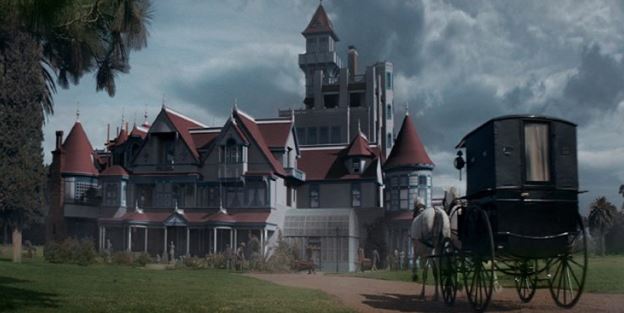
I have many beautiful art glass windows in my house, but the most expensive in the house was specially designed for me by Tiffany’s of New York. I originally installed it in an outside wall, but later added a series of rooms that blocked off all direct sunlight. There is a peculiar apparition that is seen in the window itself. The form seen is that of a figure dressed in white walking across the window. At first there was only one figure, and then thirteen appeared. The figures began to move across the window long before the carpenters noticed them. They did so as many as twenty or thirty times a day, and would stop shortly after noon. Of the three figures, one was a man, stone was a woman, and one was a child. the man was an average commonplace British tradesman, obese, pompous, and slow. He wore rather baggy gray shepherd’s-check trousers, not over-clean black frock coat, unbuttoned in the front, and a drab waistcoat with a heavy brassy Albert chain, and a square pierced bit of metal dangling down as an ornament. A frayed top hat and a faded brown overcoat with a wrinkled velvet collar. Altogether, look as I would, there was nothing remarkable about the man save his blazing red head and the expression of extreme chagrin and discontent upon his features. The woman was very distinct in appearance. She was tall and very graceful. The two-year-old boy showed signs of disturbed behaviour, laughed hysterically and talked of “funny drinks.” The order of the apparitions in the window had a slight variation: the mother came alone from the northside of the window, and having gone about halfway across, she would stop, turn around, and wave her arms towards the quarter whence she had come. #RandolphHarris 1 of 9

This gesture was answered by the entry of the father with the child. Both parents then bent over the child, and seemed to bemoan his fate; but the mother was always the most endearing in her gestures. The father then moved towards the other side of the window, taking the child with him, leaving the mother in the center of the window, from which she gradually retired to the north corner, whence she had come, waving her hand, as though making signs of farewell, as she retreated. After some little time she again appeared, bending forward, and evidently anticipating the return of the father and son, who never failed to reappear from the south side of the window where they had disappeared. The same gestures of distress and despair were repeated, and then all three retired together to the north side of the window. One evening, about nine o’clock, I was at the south-west door with Mr. Hansen. As I was unlocking it, I said, “Did you ever find anybody locked in here by accident?” “Mrs. Winchester, twice I saw shadows moving in that beautiful window. What a noise they did make!” Mr. Hasen then waited, leaning against the pillar, and watched the light wavering along the length of the landing. Mr. Hansen said they were well worthy seeing. “I suppose,” he said, as we walked toward the steps to the third floor, “that you’re too much used to going about here at night to feel nervous—but you must get a start every now and then, don’t you, when a book falls down or a door swings to?” “No, Mr. Hansen, I can’t say I think much about noises, not nowadays: I’m much more afraid of finding an escape of gas or a burst in the stove pipes than anything else. Still there have been times, years ago. #RandolphHarris 2 of 9

“If you have an have half an hour to spare, sir, when we get back down to the second floor, Mr. Hansen, I could tell you about a tomb that was unearthed. I will not begin now; it strikes cold here, and we do not want to be dawdling about all night.” “Of course, Mrs. Winchester, I should like to hear it immensely.” “Very well, sir, you shall. Now if I might put a question to you,” I went on, as we passed down the hallway of the third floor, “in my little local guide—and not only there, but in the little book on Llanada Villa in the series—you will find it stared that this portion of the mansion was erected previous to the twelfth century. Now of course I should be glad enough to take that view, but—mind your step, sir—but, I put it to you—doe the lay of the stone here in this portion of the wall (which I tapped with my key), does it to your eye carry the flavour of what you might call Saxon masonry? No, I thought not; no more it does to me: now, if you will believe me, I have said as much to the other carpenters. However, there it is, I suppose every one’s got their opinions.” The discussion of this peculiar trait of human nature occupied Mr. Hansen almost up to the moment when we returned to the second floor. Usually the apparitions appeared during musical performances in the Grand Ballroom, and especially during one long eight-line hymn, when—for the only occasion without the child—the two parents rushed on (in stage phrase) and remained during the whole hymn, making the most frantic gestures of despair. Indeed the louder the music in that hymn, the more carried away with their grief did they seem to be. #RandolphHarris 3 of 9
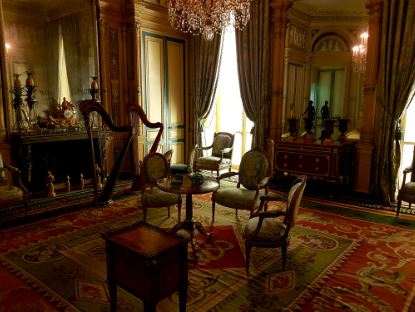
Nothing could be more emphatic than the individuality of the several figures; the manner of each had its own peculiarity. If the stained glass were removed, I do not doubt that a much plainer view would be obtained. I think so, because the nearer the center of the window, where the stained glass was thickest, there the less distinct were the forms. It was like catching glimpses of them through leaves. However, nearer the edge of the window, where the colours were less bright, they were perfectly distinct; and still more so on the pane of unstained glass at the edge. There they seemed most clear, and gave one the impression of being real persons, not shadows. Mental disturbance, it is true, will age one rapidly; but the face of Mr. Hasen since working on this project had taken on a subtle cast which only the very aged normally acquired. While standing on the landing looking at the window, I noticed his respiration and heart action had a baffling lack of symmetry; the voice was lost, so that no sounds above a whisper were possible. His skin had a morbid chill and dryness. Of course, we were witnessing the most remarkable and perplexing incident in the whole spectacle. When the father and the child had taken their departure, the mother waved her hands, and after walking slowly to the very edge of the window, turned round whilst on the pane of unstained glass and waved her arm towards the other two with what one would call a stage gesture, and then I most distinctly saw, and emphatically declare I did see, the arm bare nearly to the shoulder, with beautiful folds of drapery hanging from it like a picture of a Greek vase. Nothing could be plainer than the drag of the robes on the ground after the figures as they retired at the edge of the window, where the clear glass was, previous to going out. #RandolphHarris 4 of 9
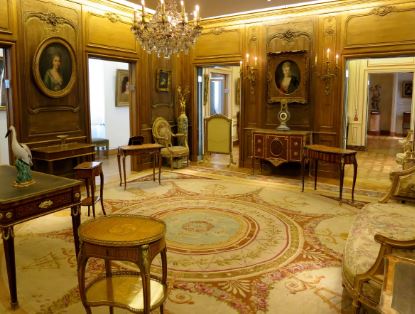
The impression produced was that one saw real persons in the air, for though the figures were seen on the window, yet they gave one the impression of walking past the window outside, and not moving upon the glass. I am not inclined to think that the trees outside the mansion at the east end can originate the appearance by any optical illusion produced by waving branches. I could see their leaves rustling in the air, and their movement was evidently unconnected with the appearance and movement of the figures. So I began making enquires on my estate. I discovered that several people had indeed seen the shapes upon the glass. One spoke of a female figure with a slightly skipping step. Another servant said he saw an ancient gravestone from the window. The belief that the tree beside the Tiffany window were somehow responsible for the optical illusion was soon dashed; the trees were cut down, but the figures appeared still. One correspondent wrote to me in the winter of 1889, explain that “as I have no faith in ghost, I have been most wishful to have the matter cleared up. On 25 March 1687, the land you now own was involved in a remarkable satanic horror story. A young girl came to the farmhouse for help, saying that she wanted to get away from a group of satanists who had threatened to kill her. She confessed to the owner that she had murdered her own baby in ‘frenzied ritual.” He befriended the girl, twenty-three-year-old Caludia, and allowed her to stay in his home. She kept telling him that she couldn’t stand hearing the screams of her children inside of her head. And on April 20th, 1687, she died from an overdose of Laudanum and postmortem examination revealed thirteen scars and burns on her body which he tended to and which supported her claims of having been involved in satanic ritual. #RandolphHarris 5 of 9

“Further, Claudia left a 13-page diary in which she said he had been involved with a satanic group since she was hired to work on a nearby farm at age thirteen and her writings went on to make incredible claims. She described how she went to coven meetings with a boy named Dorian whom she had met while living on the farm. The boy’s mother was a High Priestess and his father was The Master—a known satanic term for the leading member of the group. She described other practice which are known to be common in satanic altar initiations—that of having her armed pricked and blood drained into a chalice from which it was drunk. ‘Much sexual perversion went on that night…later I learned more of Satan and practiced my arts calling on my power of darkness. Satan had become my Lord and Master.’ Later she described how she aborted a baby she was expecting by Dorian then made the claim that Dorian himself was sacrificed by his own father in retribution, and how she was forced to watch as he was hung upside down. She claimed to have seen other sacrifices of many new born babies, stabbing them at orgies in which Laudanum was taken heavily. She also appeared to have had another child of her own which was also offered up for sacrifice. At her inquest of 13 May, the midwife recorded an open verdict after the she noted that Claudia’s body had signs which confirmed she had given birth at least once, and had been subject to sexual abuse. The constables took up the case, but no charges were brought and the investigation was closed without further action.” #RandolphHarris 6 of 9
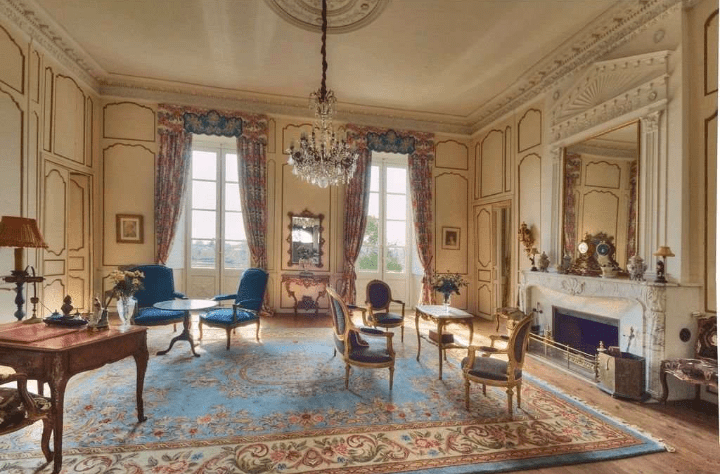
I was shocked of these allegations which seemed to be more than enough to inspire the most lurid of headline writers, more than to testify to the credibility of all who were proffering these dramatic and barely believable accounts of satanic abuse. Everything these people said was being taken as gospel in the village because the allegations were coming from the mouths of so-called experts. However, there were claims of rampant satanic worship in Nova Albion at this time, which was documented by English charters led by Sir Francis Drake for England. There were horrifying claims that fifty women were suffering from the after-effects of cannibalism and an average of ten occult survivors a week were being sacrificed. Dr. Harley said he read of several cases recorded by Theodorous de Bry where children had been killed. There were, of course, also several stories concocted around these three figures in my home. Some said that they issued from the grave beside the east window. Other said that they were victims of the plague, and were burned outside where this window now stands. It may or may not be relevant that the figures seemed to appear when the sound of the organ and of voices raised in song. The case was thoroughly investigated in 1889 by Dr. Robert Radakovic of The Ghost Club, where it was revealed that Llanda Villa had been “haunted” for two or three hundred years by the same figure or figures. Optical tests on the possible patterns of light and reflection had come to no results. It was remarked that “the ghost has been seen from the inside while outside nothing was visible.” #RandolphHarris 7 of 9
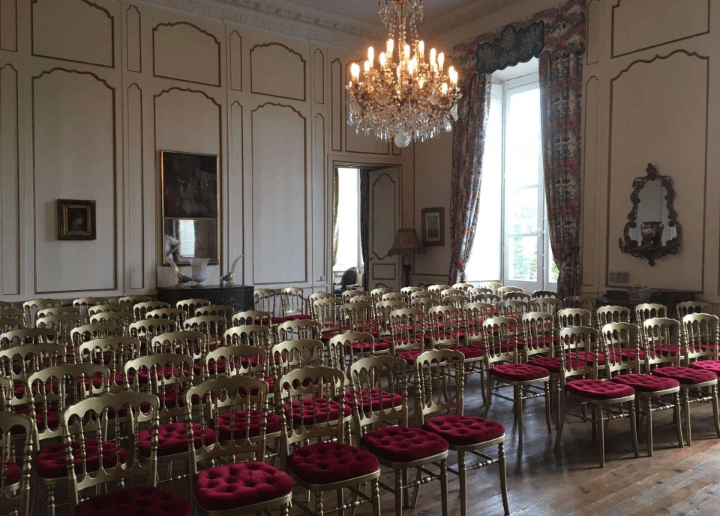
The interior of Lalanda Villa was much altered in the late nineteenth century, and a complex of rooms was built behind this haunted window. However, no satisfactory explanation has ever been given for the strange phenomena reported here. While designing Lalanda Villa, I was gaining my tastes from the venerable town around me, and from the relics of the past which filled every corner of my mansion. With the years, my devotion to ancient things increased; so that history, genealogy, and the study of gothic architecture, furniture, and craftsmanship at length crowded everything else from my sphere of interests. These tastes are important to remember for they outwardly concealed knowledge of bygone matters so that one would have fancied the they are literally transferred to a former age through some obscure short of autohypnosis. However, the true madness, I am certain, came with a later change; after the portrait and ancient papers of Saint Adalrich the Duke of Alsacre had been unearthed. Some terrible invocations being chanted under strange and secret circumstances; after certain answers to these invocations had been plainly indicated, and a frantic letter penned under agonizing and inexplicable conditions; after the wave of vampirism and the ominous legends of Neustria; and after the farmer’s memory commenced to exclude contemporary images whilst his voice failed and his physical aspect underwent the subtle modification so many subsequently noticed. He was later diagnosed with porphyria. And a final investigation resulted which virtually proved the authenticity of the papers and of their monstrous implications at the same time that those papers were borne forever from human knowledge. Loving antiquities so keenly, the papers and portrait were secretly concealed. #RandolphHarris 8 of 9
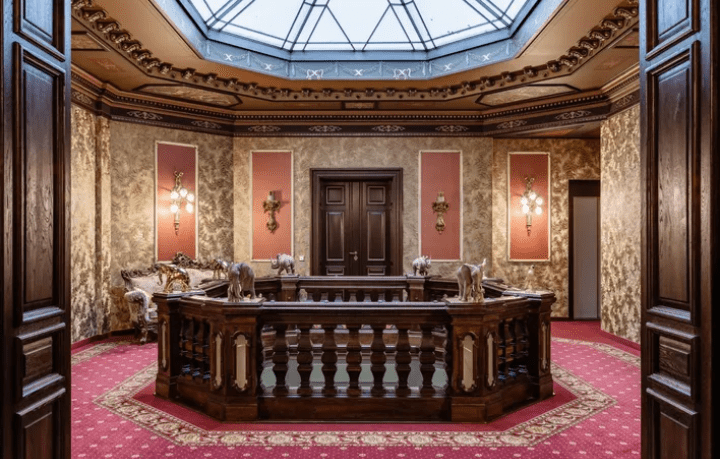
Bedroom fashions changed dramatically over the Victorian years due to several factors. Early in the period, homes were heated by fireplaces and therefore could be uncomfortable in the colder mothers, although a heated bedroom was considered an indulgence and windows were left open during the winter. In reality, only the rich had fireplaces in their bedrooms. Still, one had to keep warm while asleep and bed drapery, consisting variously of canopies, tents, and other enclosures used to shut out drafts, was essential, as was heavy draper on windows. Even doors had decorative, but also functional, drapes called portieres that served to keep out drafts when covering the door.
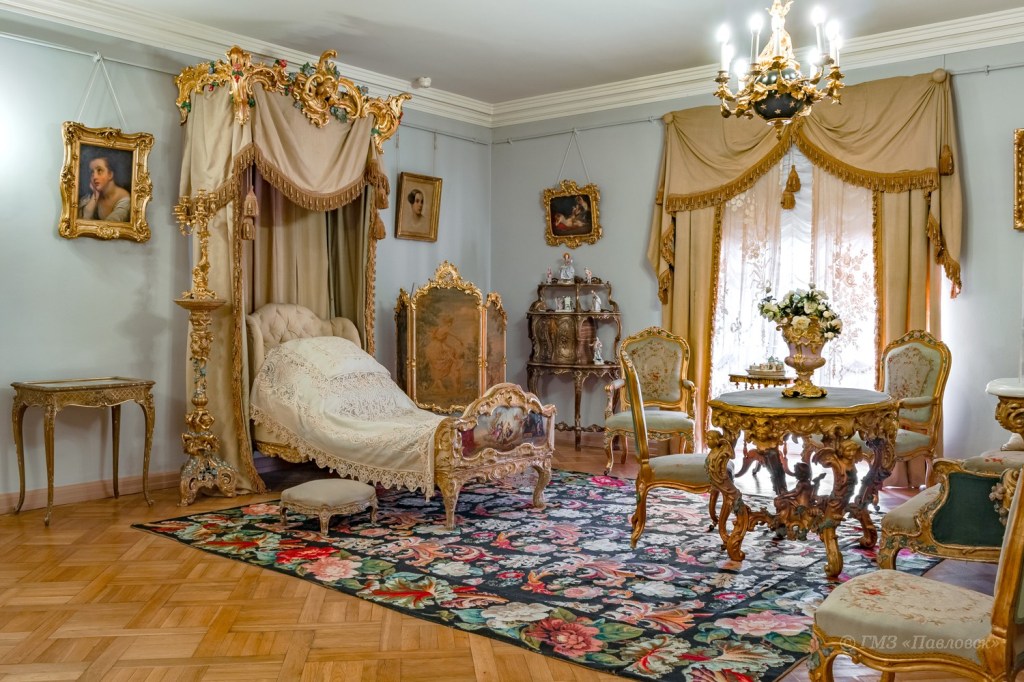
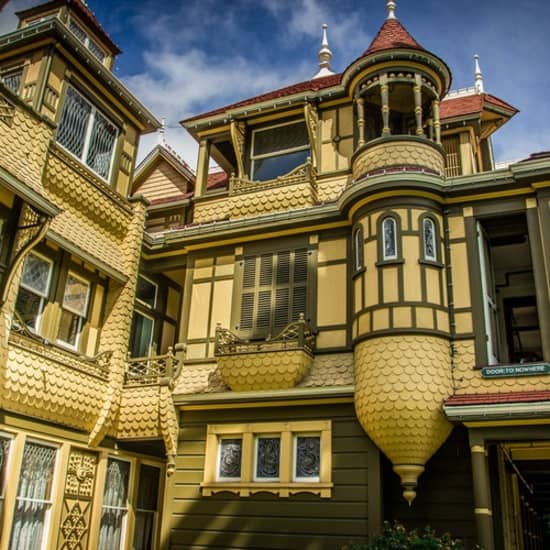
Mrs. Winchester was wealthy and her wealth and prosperity were even envied among the elite. She had no less than 47 fireplaces in her home. By the end of the century, two things had changed that affected bedroom styles. First, coal and woodburning parlour stoves came into use, were more efficient at heating a house, and could be installed in any room. (Central heating, though available after the Civil War, was really only for the very rich.). Secondly, and more importantly, was an increased knowledge of diseases, germs, and bacteria and how to combat them. Plenty of fresh air with good circulation, and the elimination of materials such as bed draper that not only impeded air circulation but provided a place for dust and bacteria to collect were deemed essential. Since the bedroom served as the place where daily and weekly ablutions were performed (until bathrooms became separate entities), and as a birthing and maternity room, it was important that it have a healthy environment.
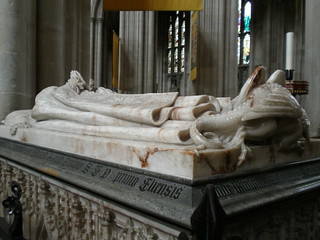
Styles of bedroom furniture were affected by this new found interest in and concern for prevention of illness and diseases. The classic English styles of Sheraton, Chippendale, and Hepplewhite migrated from the eighteenth century into the Victorian period. Tall, four-poster canopied beds enclosed the sleeper in heavy drapes of wool or lined damask of velvet, a carryover from the time when houses were built without corridors, and enclosures around the bed were needed for privacy, as well as warmth. By the time mid-century had arrived, the full enclosure had receded to the half-tester, or half-canopy, from which hung draperies that covered only the head and shoulders. Fully enclosed beds were now considered unhygienic, as they limited air circulation and the yards of fabric attracted dust. Dust ruffles and window valances were also discarded in the same house cleaning. In the southern climates, netting was still necessary to protect against insects, and its slightness did not impede air movement.
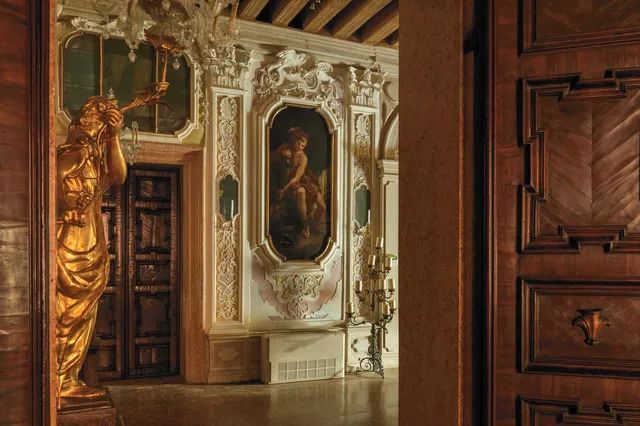
Gothic Revival furniture was the style into the 1840s and its massiveness was particularly suited to bedrooms. Closets were not an architectural feature at this time; clothing was stored in large cabinets called armories or wardrobes, usually with double, mirrored, and washstand, topped with marble or wood, were manufactured for middle-class homes in the cottage style. “Spool” beds were popular, nicknamed “Jenny Lind beds” because the Swedish Nightingale was rumoured to have slept in when she toured the United States of America. Made of less costly woods like maple or pine, the simple furniture could be elaborately painted with floral or foliage patterns. The well-to-do preferred the more opulent style of Rococo Revival or Renaissance Revival in woods or walnut, mahogany, or rosewood with carvings and applied moldings. As with other furniture in the house, golden oak, promoted by the Arts and Crafts Movement, was popular at the end of the century. Additional pieces of furniture found in the bedroom were writing desks, chaises, or other upholstered furniture.
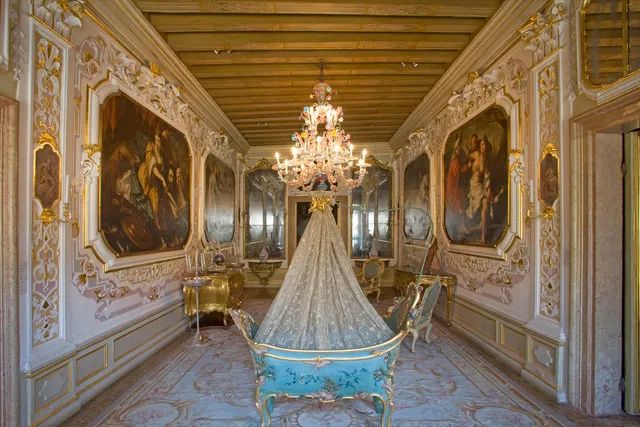
For further information about tours, including group tours, weddings, school events, birthday party packages, facility rentals, and special events please visit the website: https://winchestermysteryhouse.com/
Please visit the online giftshop, and purchase a gift for friends and relatives as well as a special memento of The Winchester Mystery House. A variety of souvenirs and gifts are available to purchase. https://shopwinchestermysteryhouse.com/
 Randolph Harris II International Institute