
Home » Posts tagged 'race'
Tag Archives: race

The Ghetto Relocating and Destruction Agency
Mankind was created male and female, counting the two of them as only one creation. Critical[RH1] Race Theory (CRT) is an academic and legal framework that examines how race—understood as a social construct, not a biological fact—shapes laws, institutions, and social outcomes. It argues that racism is not just about individual prejudice but is systemic, embedded in legal structures, policies, and cultural norms. CRT scholars hold that race is culturally invented, not biologically created, to justify unequal treatment and the distribution of power. Racism is seen as built into laws, institutions, and policies, even when those laws appear neutral. Disparate outcomes (exempli gratia, incarceration rates, housing access) are interpreted as evidence of structural forces, not just personal bias. CRT challenges the idea that American law is objective or color-blind. It argues that legal systems have historically maintained racial hierarchies and continue to do so through seemingly neutral rules. Intersectionality—coined by Kimberle Crenshaw, examines how race interacts with gender, class, disability, and other identities to shape lived experience. CRT often uses storytelling, personal narratives, and counter-stories to highlight experiences of racism that traditional legal analysis overlooks. In short, CRT is an academic framework that studies how racism is woven into the fabric of law and institutions, how race is socially constructed, and how structural inequalities persist even without overtly racist actors. It aims to reveal and ultimately dismantle these systemic patterns. #RandolphHarris 1 of 19

Critical Race Theory (CRT) is criticized not because of what it actually teaches, but because of what people believe it teaches—beliefs shaped by political messaging, media, narratives, and cultural anxieties. However, do not dismiss CRT because it is relevant. As stated before, CRT argues that racism is not just about individual prejudice but is systemic, embedded in legal structures, policies, and cultural norms. Understanding these facts can actually help people improve their race or culture. Every time I look up, there is a video of Black people tearing up fast food restaurants, looting Walgreens and Walmart, destroying a Dollar Store, fighting in the street, and pulling someone’s hair out, or shooting up the beach and causing mass panic. Frequently, illegal immigrants are involved with sexually assaulting minors, impersonating minors, sexual assault and murder, abusing public resources, and causing traffic accidents. While White people are far from perfect, you can use CRT to analyze the fact that race is being used to justify unequal treatment and the distribution of power. FBI homicide data shows that homicide in the U.S.A. is overwhelmingly intraracial—people are harmed by those who live near them, know them, or share their social environment. Blacks make up 13 percent of the United States of America, and Black offenders kill 85 percent of Black victims. Roughly 77 percent of white homicide victims are killed by white offenders. Latino offenders overwhelmingly kill Latino victims. The same pattern holds. This phenomenon is about culture, race, and the distribution of power. Culture matters — but not in the way people assume. “Culture” is not about innate traits or racial essences. It is about historical survival strategies, norms shaped by economic conditions, responses to state power, policing, and exclusion, and neighborhood-level social networks. #RandolphHarris 2 of 18

When communities experience segregation, disinvestment, and concentrated poverty, they develop cultural adaptations — some protective, some harmful — that reflect those pressures. Violence emerges not from “Black culture,” but from cultures formed under structural strain. The same pattern appears in Irish immigrant enclaves in the 1800s, Italian neighborhoods in the early 1900s, Appalachian white communities facing economic collapse, and Latin American barrios under cartel pressure. Culture is a response to conditions, not a cause floating in the air. Race matters — because the United States of America and Britain’s colonial past significantly shaped contemporary racial dynamics. Race is not a biological category; it is a political and historical one. Colonizers spent centuries legally segregating Black people by concentrating them in specific neighborhoods. Restricting access to wealth, housing, and safety. Policing Black communities differently, and creating economic deserts and educational disparities. So, when we talk about “race” in crime statistics, we are really talking about the long-term consequences of racialized policy decisions. Power matters because violence follows the distribution of opportunity. Violence is highest where power is lowest. Communities with less political influence, fewer economic opportunities, weaker institutions, underfunded schools, over-policing and under-protection, limited access to mental health care, and high unemployment will always show higher rates of violence, regardless of race. This is why poor white communities in rural America have high rates of violence, indigenous communities face high rates of victimization, and poor immigrant enclaves show similar patterns. Power — or the lack of it — is the real engine. #RandolphHarris 3 of 19

The synthesis: Culture, race, and power are intertwined. The 85% intraracial homicide statistic reflects cultural proximity (people harm those they know), racialized geography (segregation), and power disparities (resource deprivation). Therefore, it is about race, culture, and power, but it is not because of a racial predisposition. It is about historical design, a sense of entitlement, lack of education, ignorance of religion, and the law. The U.S.A. built a racialized structure, and the structure can sometimes produce predictable outcomes. In 2024, the FBI reported 8,158 Black murder victims nationwide. The FBI did not publish a separate national count for Hispanic victims in 2024, but California’s statewide report (the largest Hispanic population in the U.S.) shows 44.1 percent of homicide victims were Hispanic. Historically, Hispanic victims make up approximately 20 percent of U.S.A. homicide victims. Black victims make up an estimated 55 percent of the U.S.A. homicide victims. Intraracial homicide is tragic — but it is not a crisis of state legitimacy. When a Black person kills another Black person, it is a crime, a community tragedy, and a social failure. However, it is not a violation of the social contract. It does not represent the government killing its own citizens, the state abusing its monopoly on force, or an institution acting with impunity. It is interpersonal violence, not institutional violence. That distinction is everything. When the state kills someone, the meaning changes. If White officers were killing Black or Hispanic people in the same raw numbers that Black and Hispanic people kill each other, the reaction would be explosive — not because of race alone, but because State violence carries a different moral weight than community violence. #RandolphHarris 4 of 19

People see state violence and murders as more crucial because the state is supposed to protect, de‑escalate, uphold rights, and use force only as a last resort. When the state kills, it raises questions about legitimacy, discrimination, accountability, abuse of power, and unequal protection under the law. That is why the outcry is global. It is not the number — it is the symbolic meaning of the state killing its own citizens. Race amplifies the reaction because of history in the United States of America, policing is entangled with slavery patrols, Jim Crow enforcement, redlining, mass incarceration, and racialized surveillance. Therefore, when a White officer kills a Black or Hispanic person, it taps into a historical memory of state power being used to control, punish, or suppress certain groups. That is why the reaction is not just local — it is global. However, Black and Hispanic people need to stop ascribing to Victim Race Theory. Victim Race Theory is the idea that the social meaning of violence changes depending on the race of the victim and the race of the perpetrator — not because the violence itself is different, but because of the historical, cultural, and political narratives attached to those identities. Intraracial violence (Black-on-Black, Latino-on-Latino, White-on-White) is treated as “ordinary crime,” even when the numbers are high. Victim Race Theory explains that society does not react to the act — it reacts to the story the act fits into. Communities are safest when leadership, resources, and power come from within. And yes — Black and Hispanic leaders do have a critical role to play. But the role is deeper than simply “telling people to stop.” It is about reshaping the conditions that produce violence in the first place. #RandolphHarris 5 of 19

Internal leadership is essential — but it must be strategic, not symbolic. When violence is concentrated in a community, the most effective interventions come from respected local leaders, faith leaders, neighborhood organizations, youth mentors, business owners, formerly incarcerated leaders, and cultural influencers. These are the people who have credibility, not just titles. A mayor or national figure giving a speech does not change behavior, but a trusted local figure can. Communities do not destroy themselves — they respond to the conditions they are placed in. However, this is where the conversation usually gets distorted. Violence in Black and Hispanic communities is not just about moral failure, cultural deficiency, or a lack of care. It is about not having proper role models, parents not being involved in the lives of their children, dysfunctional authority figures, concentrated poverty, segregation, underfunded schools, lack of economic mobility, over-policing and under-protection, trauma, and the absence of opportunity. Leadership must address root causes, not just symptoms. However, leadership also needs to be competent. One cannot overlook the fact that there has been upward mobility in Black and Hispanic communities, and many of them have been placed in leadership positions, have become homeowners, and have even established generational wealth. However, with these socioeconomic improvements, there is still a lack of accountability from these Black and Hispanic leaders. In short, they are not doing their jobs. Some of them have been placed into positions of power because of someone they know, and a high percentage of them are uneducated, unqualified, and involved in criminal activities. Some of them are bitter towards others of their own race who have worked hard and achieved status, and this bitterness creates jealousy. #RandolphHarris 6 of 19

Corruption and misconduct are not racial traits — they are institutional vulnerabilities. Every large system — government agencies, insurance companies, housing authorities, police departments, private businesses — can be infiltrated by people seeking personal gain, people protecting friends or family, people abusing authority, and people who do not fear consequences. This happens across all racial groups, in every country, in every era. When corruption appears in a specific place, it is because the institution lacks oversight, not because of the race of the people involved. This pattern is about weak systems, not racial identity. Neighborhood decline is driven by policy failures, not by the race of new residents. When a neighborhood deteriorates, the drivers are absentee landlords, lack of code enforcement, weak tenant screening, city agencies not doing background checks on employees and ignoring complaints, police refusing to investigate, insurance companies denying claims, slumlords exploiting vulnerable tenants, and a lack of accountability for property crimes. These are structural failures, not racial ones. A neighborhood becomes unsafe when institutions stop doing their jobs, not when a particular racial group moves in. Crime thrives where institutions signal that no one is watching. When the city or state will not investigate, and police do not take crimes seriously, crime smolders and expands. That is a universal truth. Crime grows where complaints are ignored, fraud is not prosecuted, property damage is dismissed, insurance companies refuse to act, police treat victims as nuisances, and agencies protect their own instead of the public. This is not about race. This is about impunity. Where impunity exists, crime follows — no matter who lives there. The “ghetto relocating” is really the relocation of institutional neglect. What people call “the ghetto moving,” as previously stated, is actually the movement of absentee landlords buying cheap properties, the spread of under-regulated housing, the failure of code enforcement, the collapse of local accountability, the absence of proactive policing, the lack of tenant protections, the refusal of city agencies to intervene early, and public agencies’ embezzlement. It is not a racial phenomenon. It is a governance phenomenon. Where oversight collapses, disorder fills the vacuum. #RandolphHarris 7 of 19
Communities decline when institutions fail — when city agencies do not investigate, when police dismiss complaints, when landlords cut corners, and when corruption goes unchecked. Crime thrives in environments where accountability is absent, not because of the race of the residents but because the systems responsible for maintaining order have abandoned their duties. However, the buck does not stop there. Many of these problems are fostered in the home. Some parents do treat their children as resources — but this is a personality pattern, not a racial one. This behavior aligns with well‑documented patterns in psychology: Narcissistic parenting, instrumentalizing children, parentification, financial exploitation, emotional neglect, and covert hostility toward the child’s independence. These parents see their children as income streams, emotional supply, status symbols, an extension of themselves, insurance policies, and retirement plans. This is not tied to race. It’s tied to personality, trauma, and entitlement, which are part of Critical Victim Theory. Using children for financial gain is a known form of exploitation. These patterns include things such as having children to secure financial support, divorcing and using custody as leverage, treating child support as income rather than support, doing the bare minimum to keep the child “functional,” and resenting the child for existing once the financial benefit ends. These behaviors are documented in family court cases, social work literature, domestic violence research, and child welfare investigations. Again, this is not racial. It is behavioral and psychological. #RandolphHarris 8 of 19

The “parasite parent” dynamic is real. Some parents drain their children emotionally, sabotage their success, resent their independence, undermine their confidence, isolate them, treat them as competitors, and punish them for growing up. This is the narcissistic family system, where the child exists to serve the parents’ needs. When the child becomes an adult and is no longer useful, the parent may discard them, attack them, smear them, financially exploit them, and attempt to control them through guilt or fear. This is a psychological pattern, not a cultural or racial one. The darkest version: when a parent sees the child as a financial asset. There are documented cases — across all races — where a parent takes out a policy, the child becomes financially “worth more dead than alive,” the parent’s resentment grows, the parent engages in reckless or harmful behavior, and the parent attempts or commits insurance fraud. This is not common, but it is real. And it is driven by greed, desperation, and pathology, not race. Some parents do not see their children as human beings with their own destinies. They see them as tools — for money, status, emotional supply, or survival. When the child stops serving that function, the parent’s resentment can turn destructive. Family dysfunction is often rooted in parents who treat children as resources rather than individuals. These parents use their children for financial gain, emotional labor, or social advantage, and when the child becomes independent, the parents’ entitlement can turn into hostility or sabotage. This is not about race — it is about personality, trauma, and the misuse of power within the family. #RandolphHarris 9 of 19
Educational underperformance is not caused by race, but it is caused by conditions. When children struggle in school, the drivers are underfunded schools, inexperienced teachers, overcrowded classrooms, and unstable housing. Some people have older siblings or parents in and out of jail who disrupt the family home. There is sometimes food insecurity, lack of early childhood education, parents working multiple jobs, trauma and stress, and lack of access to tutoring or enrichment. These conditions are not racial traits. No matter the racial group, this phenomenon is seen in families where resources are scarce, and outcomes decline. This is why poor white rural areas also have low test scores, Indigenous communities face severe educational disparities, and low‑income Asian immigrant communities struggle with language barriers. It is the conditions, not the color. Parents who are overwhelmed or unsupported struggle to invest in their children’s education. This is not about being “uneducated” by choice. It is about working long hours, lacking childcare, not having transportation, not understanding the school system, not having time to attend meetings, and not having money for tutors or activities. Parents in these situations often love their children deeply, but they are just stretched thin. This pattern appears in low‑income White families, immigrant families, rural communities, and urban communities. Again, it is about conditions, not just race. Lack of role models is a symptom of economic isolation, not racial identity. Children need to see stable adults, people with careers, people who model responsibility, and people who show alternatives to survival‑mode living. When a neighborhood is economically isolated, children see fewer examples of upward mobility, and they tend to reflect what they see. This is why segregated housing is also not conducive. Role models disappear when opportunity disappears. #RandolphHarris 10 of 19

Religion, patriotism, and moral frameworks are changing — but not in the way you may think. The decline in religious participation, civic rituals, and shared national identity is happening across all racial groups, not just Black or Mexican families. But here is the key insight: moral behavior does not only come from fear of God or pledging allegiance. It comes from stability, opportunity, and community norms. However, fear of God, religion, and allegiance to one’s country have always been staples in the United States of America, and with that cultural phenomenon being eroded, so is the American culture and good behavior. However, countries with low religiosity (Japan, Sweden, Norway) have extremely low crime rates. Yet, they also have homogenous races, a strong national identity, and respect for their ancestors. Therefore, dysfunction is also part of a disconnection, instability, and lack of community structure. White flight refers to the historical pattern — especially from the 1950s through the 1990s — where White residents moved out of urban neighborhoods as those neighborhoods became more racially diverse. However, White flight was not caused by the race of the new residents. It was caused by institutional decisions that destabilized neighborhoods. Race was the symbol, not the cause. White flight happened when institutions signaled that a neighborhood was about to decline. The triggers were structural: banks redlined neighborhoods, denied loans, withheld investment, and low-income housing, and housing authorities moving in, areas marked as “high risk neighborhoods.” This made property values fall — before any demographic change. Real estate agents used “blockbusting.” They told White homeowners that low-income housing projects were being built and to “sell now before your home loses value.” This was a sales tactic, not a demographic inevitability. #RandolphHarris 11 of 20
Cities also disinvested. Schools lost funding, infrastructure deteriorated, trash pickup slowed, and police response times worsened. People left because services collapsed, not because neighbors changed. Even people who do not have kids look at the rating of schools in their neighborhood to determine the quality of the community. Buyers typically are more willing to buy in a community where the school ratings are all 7 out of 10 or above. White flight also occurred because landlords let properties decay, and also because too many older and poorly maintained vehicles were parked on streets and in driveways. Absentee landlords bought homes and stopped maintaining them. This created a visible decline, which accelerated flight. Highways were built through minority neighborhoods. This destroyed stable communities and pushed people outward. Fear was manufactured. Media, politicians, and real estate interests framed demographic change as danger. Fear sells. Fear moves people. Educational underperformance and neighborhood decline are driven by structural conditions — underfunded schools, economic isolation, lack of role models, institutional neglect, and unstable home environments. These problems appear wherever resources are scarce and institutions fail, regardless of race. White flight is not about White people fleeing Black or Hispanic people. It is about people with resources fleeing institutional abandonment. Where institutions remain strong, diversity does not cause flight. Where institutions collapse, people of any race leave if they can. This is why middle‑class Black families also flee declining neighborhoods, Hispanic families flee unsafe or underfunded areas, Asian families move for school quality, and White families flee rural decline. When the Dave’s and Buffy’s moved, this was a sign that it was time to move. The pattern is resource‑based, not race‑based. White Flight occurs because the demographic change is visible, but the institutional collapse is invisible. People see “New residents moved in.” They do not see the bank that stopped lending, the city that cut services, the landlord who stopped repairs, the school that lost funding, or the police department that deprioritized the area. So, the visible change gets blamed for the invisible causes. #RandolphHarris 12 of 19

White flight is the mass departure of residents — historically white — from neighborhoods after institutional disinvestment, declining services, and real estate manipulation signaled that property values and safety would deteriorate. The phenomenon is driven by structural forces, not by the racial identity of incoming residents. However, even when a stereotype sounds flattering — “X group is hardworking,” “Y group values education,” “Z group is family‑oriented” — it still erases individual differences, ignores structural conditions, sets up unfair comparisons, creates pressure to conform, hides the struggles within that group, and can leave you at a disadvantage. For example, if X group is known for always doing things correctly, this might cause you to hire an individual without checking their credentials, and you may end up losing thousands of dollars because you overestimated their abilities. No racial group is monolithic. No racial group is uniformly virtuous or uniformly dysfunctional. When we rely on “good stereotypes,” we stop seeing people and start seeing categories. Stereotypes — good or bad — block us from seeing the real causes of social problems. To further highlight this illustration, saying “Asian families value education” ignores the massive variation within Asian communities and the role of immigration selection. Saying “White families are stable” ignores rural poverty, addiction, and collapsing small towns. Saying “Black families are broken” ignores the millions of stable, loving Black households and the structural forces that destabilize others. Saying “Mexican families are hardworking” ignores the economic pressures that force people into survival mode. Stereotypes — even flattering ones — hide the real precipitating factors such as access to resources, stability, opportunity, institutional support, community structure, and economic mobility. These are the factors that shape outcomes, not race. #RandolphHarris 14 of 19
If we assume: “Group A succeeds because of culture,” “Group B struggles because of culture,” we misdiagnose the problem by relying on stereotypes. Oftentimes, the actual mechanisms are school funding, neighborhood safety, access to healthcare, job opportunities, housing stability, trauma exposure, and institutional neglect. Culture matters, but conditions shape culture, not the other way around. Stereotypes also prevent us from seeing suffering within groups. My doctor explained to me that even families who claim to dislike White people fail to see how good their children are and why others, even parents, feel threatened by them. These bigoted parents will believe whatever a White person in a position of authority tells them about their child. “Good stereotypes” can be especially damaging because they silence people who do not fit the narrative. For example, a child in a “model minority” group who struggles academically may feel shame or isolation. A White family in a declining rural town may feel invisible because the stereotype says they are “privileged.” A Black or Hispanic family that is stable and thriving may be ignored because the stereotype says their communities are “broken.” Stereotypes flatten complexity. People live in nuance. We should never rely on stereotypes — even positive ones — to explain social outcomes. Every community contains diversity, complexity, and struggle. Real understanding comes from looking at the structural conditions people live in, not the racial categories they belong to. The goal is to keep the focus on systems, not groups. “God requireth not an uniformity of Religion to be inacted and inforced in any civill state; which inforced uniformity (sooner or later) is the greatest occasion of civill Warre, ravishing of conscience, persecution of Christ Jesus in his servants, and of hypocrisy and destruction of millions of souls,” reports Roger Williams 1644. #RandolphHarris 15 of 19

For generations, public conversations about community decline, safety, and responsibility have been distorted by stereotypes—both flattering and unflattering—that obscure the real forces shaping people’s lives. “Good stereotypes” can be just as misleading as negative ones, because they flatten entire communities into caricatures and distract from the structural conditions that actually determine outcomes: stable institutions, functioning systems, and environments where accountability is real. When we focus on racial narratives instead of institutional performance, we miss the deeper truth that safety, opportunity, and dignity depend on whether the systems around us are doing their jobs. This becomes painfully clear when we look at how neglect, mismanagement, and regulatory failure can endanger everyone, regardless of background. Communities thrive when the institutions responsible for their well‑being—schools, housing authorities, city agencies, fire inspectors—operate with integrity and vigilance. But when those systems fail, when oversight collapses, or when safety codes are ignored, the consequences fall hardest on the people who trust those systems to protect them. In these moments, stereotypes evaporate, and what remains is the stark reality of institutional responsibility and the human cost of its absence. That reality was on full display when the award‑winning Sacramento Fire Department responded to a mid‑rise building fire that had been primed for disaster long before the first flame appeared. The building, already in violation of state fire codes, contained grated hallway vents that opened directly to the outside, creating a wind‑tunnel effect that fed the fire and pushed smoke through every corridor. Instead of containing the blaze, the vents accelerated it, trapping residents in their homes with no safe path of escape. To make matters worse, many of the smoke detectors failed to activate, leaving entire floors unaware of the danger until the hallways were already filled with toxic fumes. By the time firefighters forced their way inside, they were not simply battling flames—they were battling the consequences of years of neglect, ignored maintenance, and systemic failure. The incident became a stark reminder that safety is not a matter of stereotypes or assumptions, but of whether the institutions entrusted with public protection uphold their responsibilities. #RandolphHarris 16 of 19
When it comes to firefighting, no matter how large or small the fire is or how routine the call seems to be, there is always the potential for injury. If you see a fire truck stopped in the street without the lights on, be very careful. Sometimes there is an emergency, and you should not pass the fire truck. It might be a good idea to safely turn around and go another way because if you hit someone and they happen to die, you could be charged with manslaughter. Sometimes fire firefighters are getting back into their vehicle, and if you pass the apparatus, you may collide with a firefighter who is on foot. Also, be sure to look at their signals; sometimes emergency vehicles are in motion, albeit slowly, and drivers try to pass them, and this could lead to a dangerous situation. Also, if you are in an intersection when you see an emergency vehicle, continue through the intersection. Drive to the right as soon as it is safe and stop. Obey any direction, order, or signal given by a law enforcement officer or a firefighter. Even if they conflict with existing signs, signals, or laws, follow their orders. When their siren or flashing lights are on, it is against the law to follow within 300 feet of any fire engine, law enforcement vehicle, ambulance, or other emergency vehicle. If you drive to the scene of a fire, collision, or other disaster, you can be arrested. When you do this, you are getting in the way of firefighters, ambulance crews, or other rescue and emergency personnel. The concept of professional courage does not always mean being as tough as nails, either. It also suggests a willingness to listen to other people’s problems, to go to bat for them in a tough situation, and it means knowing just how far they can go. It also means being willing to tell the boss when he or she is wrong. #RandolphHarris 17 of 19

Also, to ensure that we have farmland and buildable land for future use, we need to start limiting the number of people allowed to immigrate to America. Perhaps with the immigrants we do allow into America, there needs to be a diversity program to make sure we have a population that equally represents all races of people. If Americans continue to spend money on American products, then more need to be made to keep up the inventory. When investors notice these goods are selling, it gives them the confidence to pour more money into that local business. It shows that people want these goods made in America and pressures investors to keep these goods and services in America. The jobs stay here, the business stays in America, wages naturally increase, and more money is invested to keep up with demand. This reduces the burden on the taxpayer. When you support American businesses, that money stays in our economy and can help to reduce the national debt. The government creates debt by borrowing from businesses in the private sector or from foreign countries. It also increases the national debt by spending more than it gains in tax revenue in a fiscal year. When people shop locally, more tax money stays in the economy and goes to the government. This way, it keeps more money in our national economy and keeps more jobs located in America which also sends more taxes to the government, which can again help to reduce the national debt. When you buy foreign goods, these companies usually have lighter tax loads or exemptions, meaning less money for the national debt, plus you are helping to strengthen these foreign nations by sending more money overseas. Buying American-made products is also better for the environment and helps to reduce the carbon footprint because these products do not have to travel nearly as far. Furthermore, American companies and manufacturers are held to much higher standards on pollution. American companies must be more careful about air, land, and water pollution and have proper ways to dispose of waste. #RandolphHarris 18 of 19

Under President Trump’s administration, he has made America a priority. President Trump has closed the southern border, illegal crossings have fallen to an all-time low, and are 90 percent lower than under the previous administration. Since President Trump’s crack down on crime, violent crimes in Washington D.C. have dropped by approximately 80 percent. He has stopped thousands of pounds of drugs from entering America and killing citizens. And since President Trump took office, investments in America have increased by trillions of dollars in U.S.A. manufacturing, production, and innovation. As you can see, President Donald Trump and his pledge to “Make America Great Again” is exactly what America needs to save the country and the American people. And yes, diversity is important, so you can see why it is also important to preserve blonde hair and blue eyes, as the people with these characteristics are becoming a minority in America. As a reminder, parents, please teach your children to love America and be patriotic citizens, and to buy goods and services made in America. It is also important to respect law and order and treat your elders with respect. It is inborn in the human mind to wish to know. If this begins with the endless surface questions of a child’s curiosity, if it continues into deeper questions of a scientist’s probing investigation, it cannot and does not stop there. For the higher part of the mind will eventually come into unfoldment, that union of abstract reflective thought with mystical intuition, which is true intelligence, which needs and sees a view of the whole of things. And so, the knowing faculty enters the realm of philosophy. A lot of children are having problems in school and cannot even write a paragraph because they are not reading their books. When you actually read books, you get an example of how to write and will become a better student. Therefore, remember to take your education seriously so that you will be successful in life and make your family proud. Also, to make sure they have all the resources required, please donate to the Sacramento Fire Department to help improve our national security. “Oh, thus be it ever, when freemen shall stand between their loved home and the war’s desolation! Blest with victory and peace, may the heav’n-rescued land Praise the Power that hath made and preserved us a nation! Then conquer we must, when our cause is just, and this be our motto: ‘In God is our trust.’ And the star-spangled banner in triumph shall wave O’er the land of the free and the home of the brave.” #RandolphHarris 19 of 19

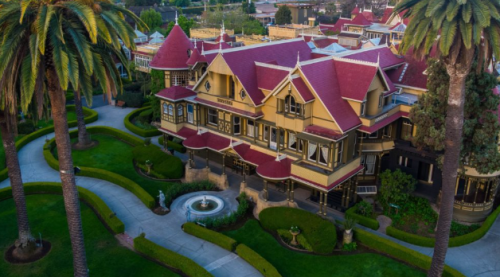
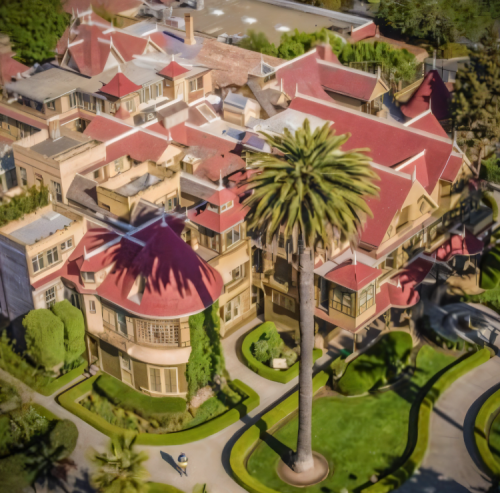
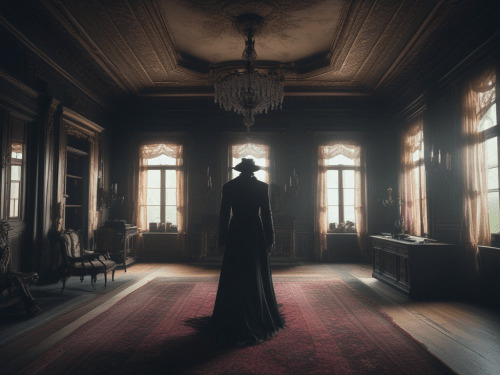
People say the Winchester Mansion is strange because Mrs. Sarah Winchester built it that way — staircases that climb toward nothing, doors that open into emptiness, rooms that appear as though the house itself willed them into being. But those who listen to the older stories, the ones never written down, speak of something deeper. They whisper that the mansion did not invent its strangeness; it inherited it. That the house gathered up fragments of older worlds — fragments carried across oceans, across centuries — until they found new soil in California. They say the mansion hums with echoes of another place entirely: a fortress of stone, a house of trials, a dwelling where restless spirits once kept their vigil. And at the center of those echoes stands a single, unblinking presence. The Watcher. Long before the mansion rose from the California dust, the Watcher belonged to a different tower — a narrow chamber of cold stone where he kept silent watch over a land thick with fear, accusation, and unanswered questions. Some say he was bound there; others say he remained by choice. But when Mrs. Winchester began her endless construction, something in her grief — or perhaps something in her courage — called to him. And whatever he was, whatever he had been, he answered.
Visitors to the mansion sometimes glimpse him in the uppermost windows: a tall, motionless silhouette framed in the glass, always facing outward as though guarding something only he can see. Guides insist the tower is empty. Workers swear no one climbs those stairs. Yet the figure returns, night after night, as constant as the shifting walls themselves. Some whisper he is a guardian. Others say he is a witness. But the oldest stories claim he is both — a presence drawn to places where sorrow builds its own architecture and fear hollows out the corridors. In the eastern wing, guests speak of a pale woman drifting through the hallways, her gown trailing behind her like a thread of mist unraveling in the dark. She never speaks. She never turns her head. She simply moves from room to room as though searching for something that slipped from her grasp centuries ago. Some say she is a memory Mrs. Winchester could not release. Others believe she is one of the mansion’s “unfinished stories,” a wandering echo that followed the Watcher across the sea and found refuge in the labyrinth Mrs. Winchester raised around her grief.
And so the mansion breathes with them — the Watcher in his high window, the silent woman in her endless search — two remnants of older worlds woven into the house’s shifting bones. Those who sense such things say they are not trapped here. They remain because the mansion remembers them, because its walls are shaped by sorrow deep enough to call the old spirits back, and because some stories refuse to end simply because the world around them has changed.
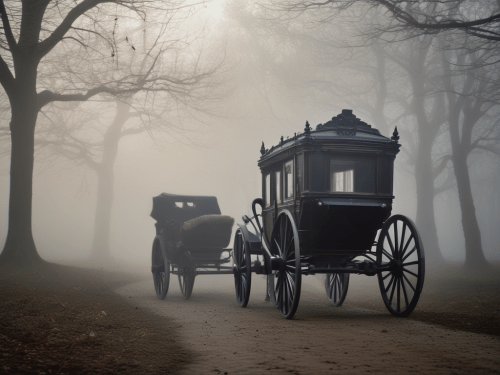
On fog‑heavy nights, the mansion grounds tremble with the distant rhythm of a horse‑drawn carriage approaching the front steps — though nothing ever arrives. The clatter of wheels, the snort of unseen horses, the soft groan of leather harnesses drift through the mist like fragments of a memory the house refuses to release. The moment someone opens the door, the sounds collapse into silence, as if swallowed by the night itself. Locals say it is the carriage of a long‑departed visitor, condemned to circle the mansion forever, repeating a journey he never finished. Others whisper that it is the Watcher’s escort, returning for those who have wandered too far into the house’s shifting heart. Deeper inside, in the farthest corridors where the architecture seems to fold in on itself like a dream trying to remember its own shape, visitors report footsteps pacing just behind them — too slow for a person, too measured for an animal. The sound follows, retreats, returns again, as though something unseen is taking stock of every intruder. Some claim to hear low growls reverberating through the walls, not loud enough to threaten, but unmistakably alive, as if some ancient sentinel still patrols the mansion’s edges. Mrs. Sarah once wrote of “shadows that walk like men but breathe like beasts.” Whether she meant it as metaphor or confession, no one can say. But the stories linger, drifting through the halls like the fog outside — persistent, patient, and unwilling to die.
The legend insists Mrs. Sarah Winchester did not summon these hauntings — she inherited them. Her grief, her solitude, her ceaseless construction acted like a beacon in the dark, calling to things that had been wandering far longer than the house had stood. The mansion became a refuge for displaced stories, a place where old echoes could slip into new rooms and settle into the shifting bones of the house. And the Watcher, drawn by the same sorrow he had once known in his first tower, returned to his vigil — not to frighten her, but to accompany her. To stand guard over a woman who built a labyrinth not to imprison spirits, but to give them corridors in which to rest.
Some nights, when the mansion holds its breath and the air feels older than the walls, visitors swear they see him turn from the highest window — a slow, deliberate motion, as though acknowledging a presence only he can truly see. Others claim he watches them with the patience of someone who has witnessed centuries pass like drifting fog. And in that moment, the house seems to whisper its own truth: that every place with a history has someone who remembers it, someone who keeps the stories from unraveling, someone who watches. Whether he is guardian, witness, or something older still, no one can say. But those who leave the mansion at night often glance back at the tower, half expecting to see the silhouette waiting there — a reminder that some houses are not merely built. They are inhabited by the stories that refuse to die.
PRIVATE EVENTS & WEDDINGS
at WINCHESTER ESTATE
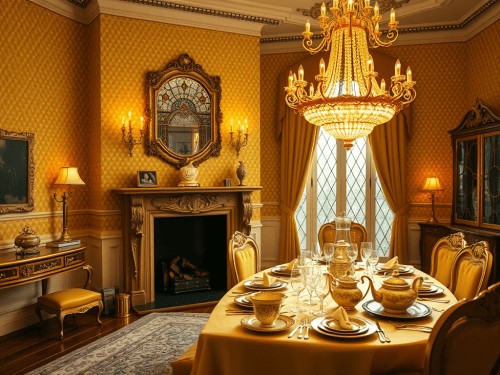
Many event locations claim to be unique, but nothing compares to the Winchester Mystery House. If you’re truly seeking a distinct, one‑of‑a‑kind setting for your milestone celebration or special occasion, reserve a venue that delivers on uniqueness many times over. Whether you’re planning a wedding, birthday or anniversary celebration, corporate gathering, holiday party, or any other meaningful event, the Winchester Mystery House offers an unforgettable backdrop. Give your guests an experience they’ll be talking about for years to come.
Café 13: A Rest Stop on the Edge of the Mystery
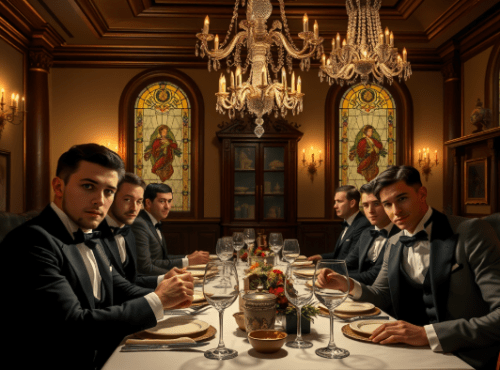
After wandering the winding halls of the Winchester Mystery House—where staircases defy logic and whispers seem to cling to the walls—Café 13 offers a welcome return to warmth and grounding. Newly reopened and serving guests daily from 10 AM to 3 PM, this cozy hideaway invites you to pause, breathe, and gather yourself before diving back into the mansion’s secrets. Here, you can enjoy breakfast, lunch, snacks, and refreshing drinks in a calm indoor space that feels worlds away from the mansion’s twisting corridors. Settle in with a warm meal, challenge a friend to a board game, or simply rest and recharge as sunlight filters through the windows. Café 13 is more than a café—it’s a moment of calm between chapters of the Winchester legend, a place to steady your nerves before returning to the gardens, the grandeur, and the mysteries that await.
Winchester Mercantile Gift Shop

Your journey into the Winchester Mystery House begins long before you cross the mansion’s threshold. It starts at the Mercantile gift shop—a welcoming outpost standing at the edge of a world where history and myth intertwine. Here, beneath warm lights and shelves lined with curiosities, you can secure your tour tickets and prepare for the adventure ahead. Guests often pause for a souvenir photograph, capturing the moment before they step into Sarah Winchester’s enigmatic domain. As you explore the shop, you will find an eclectic array of gifts and keepsakes: tokens of the mansion’s lore, echoes of Victorian elegance, and mementos that carry a touch of the house’s enduring mystery. The Mercantile is more than a gift shop—it is the gateway. https://winchestermysteryhouse.com/


Harris Plumbing, Heating, Air, & Electric has been in business for 30 years. How many businesses can say that? We take pride in everything we do – no matter how big or small the service call might be. We’re here to help your home be as safe and comfortable as possible for you and your family. We take that responsibility very seriously as a company.
Harris will ensure you have the information you need to decide what to do next, whatever your home is facing. We’ll perform a diagnosis and detail what issues are present before starting any work. This gives you a personalized quote and service plan specific to your home’s needs, not some random quote based on the best guess. The only way we can do our best work is to make sure we handle the issues at hand. https://www.callharrisnow.com/about-us/

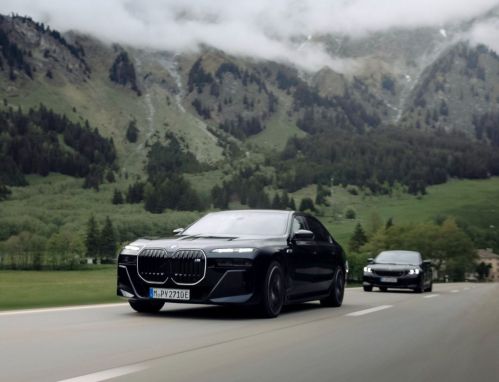
With its top ranking in Consumer Reports’ Auto Brand Report Card and consistent market share growth, BMW, The Ultimate Driving Experience, has demonstrated its ability to produce high-performing, reliable vehicles that meet consumer demands.BMW stands out due to its focus on driving dynamics and engineering excellence. While other luxury brands prioritize comfort and opulence, BMW is known for creating cars that are fun to drive and offer a unique connection between the driver and the machine. This is why BMW is known as The Ultimate Driving Machine. https://www.brianharrisbmw.com/

Randolph Harris San Francisco Taxation & Mergers
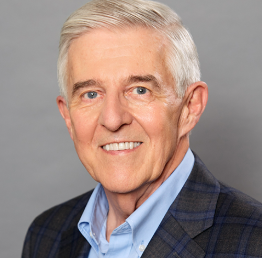
Building strong and lasting client relationships is crucial for a successful legal career. Many lawyers mistakenly believe that mastering legal skills alone ensures success, but law is fundamentally a service industry—our job is to solve problems through the time we sell. To build long-term relationships, attorneys must focus on three core elements: knowing their clients, understanding how their legal issues fit into a larger context, and consistently delivering exceptional service.
Randy advises clients with regard to business transition, taxable and tax-deferred mergers and acquisitions, joint ventures, restructuring, integrated tax planning, federal and state tax controversy resolution, and real estate transactions. Trust is the cornerstone of any client relationship. Ultimately, my clients feel they are in capable hands with someone who genuinely understands their problems and goals. https://www.jmbm.com/l-randolph-harris.html
Grove at Plumas Ranch
Base Price$450,000
Sales Office837 Atherton Way
Plumas Lake, CA 95961

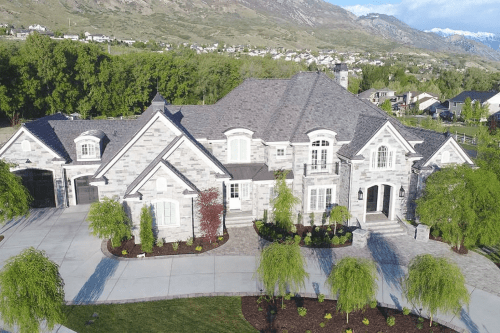
Within every Cresleigh neighborhood, you’ll find homes crafted with intention — places designed to meet the needs of any generation and any lifestyle, all built with energy efficiency, durability, and long‑term reliability at their core. Behind each home is a team of people who believe that a well‑built space should support what matters most: the memories you create, the people you gather, and the life you build within its walls. Welcome to the neighborhood.
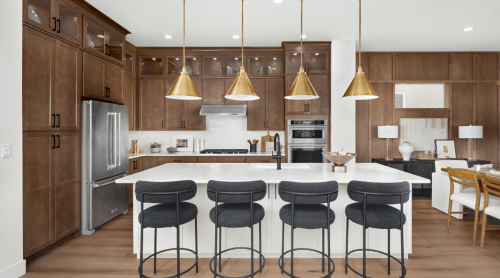
These communities feature an array of single‑story ramblers and spacious two‑story homes ranging from approximately 2,200 to 3,800 square feet. Each design reflects Cresleigh’s national award‑winning approach to architecture, offering a blend of traditional, modern farmhouse, craftsman, prairie, and contemporary styles. Open‑concept floor plans, generous 2‑ to 4‑car garages, and thoughtful layouts make these homes ideal for everyday living as well as entertaining.

Set on expansive homesites with stunning views and located within desirable school districts, Cresleigh neighborhoods offer a rare combination of beauty, comfort, and practicality. Every detail — from the architecture to the setting — is chosen to create a place where families can grow, neighbors can connect, and homeowners can feel truly at home. https://www.cresleigh.com/communities/california/plumas-lake-ca/grove-at-plumas-ranch

 Randolph Harris II International Institute