
Home » Posts tagged 'psychotherapy'
Tag Archives: psychotherapy

Reality is Created by the Mind

Reality is created by the mind, we can change our reality by changing our minds. A sharply self-accusing honesty of purpose, a blunt integrity of conscience, will have again and again to thrust its sword into his conduct of life. An ethic that far outleaps the common one will have to become his norm. Conventional ideas of goodness will not suffice him; the quest demands too much for that. Few characters are completely good, totally selfless, and it leads only to dangerous illusions m when this is not remembered. New evils grow in those who deceive themselves, or others, by tall talk and exaggerated ideals. The goodness which philosophy inculcates is an active one, but it is not a sentimental one. It is more than ready to help others but not to help them foolishly. It refuses to et mere emotion have the last word but takes its commands from intuition and subjects its emotions to reason. It makes a clear distinction between the duty of never injuring another person and the necessity which sometimes arises of causing pain to another person. If at times it hurts the feelings of someone’s ego, it does so only to help his spiritual growth. This goodwill becomes instinctive but that does not mean it becomes unbalanced, wildly misapplied, and quite ineffectual. For the intelligence which is in wisdom accompanies it. The goodness which one man may express in his relation to another is derived ultimately from his own divine soul and is an unconscious recognition of, as well as gesture to, the same divine presence in that other. Moreover, the degree to which anyone becomes conscious of his true self is the degree to which he becomes conscious of it in others. Consequently, the goodness of the fully illumined man is immeasurably beyond that of the conventionally moral man. #RandolphHarris 1 of 19

Teachers value their students having worth, and this prizing extends to each and all the facets of the individual. Such a teacher can be fully acceptant of the fear and hesitation of the student as he approaches a new problem, as well as of the satisfaction he feels in achievement. If the teacher can accept the student’s occasional apathy, his desire to explore by-roads of knowledge, as well as his disciplined efforts to achieve major goals, he will promote this type of learning. If he can accept personal feelings which both disturb and promote learning—rivalry with a sibling, hatred of authority, concern about personal adequacy—then he is certainly such a teacher. This means acceptance of the whole student by the teacher—a prizing of him as an imperfect human being with many feelings, many potentialities. This prizing or acceptance is an operational expression of the teacher’s essential confidence in the capacity of the human organism. Why did Jesus as the Christ ask his followers to refrain from calling him good? By all ordinary standards he was certainly a good man, and more. It was because his goodness was not really his own; it derived from the Overself having taken over this whole person, his whole being. He will awaken to the realization that the chaotic unplanned character of the ordinary man’s life cramps his own possibilities for good. He will perceive that to let his thoughts drift along without direction and his feelings without purpose, is easy but bad. The term “good” is used here with clear consciousness that there is no absolute standard of goodness in common use, that which is regarded as good today may be unacceptable as such tomorrow, and that what one man calls good may be called evil by another man. What then is the sense which the student is asked to give this word? He is asked to employ it in the sense of a pattern of thinking, feeling, and doing which conforms to his highest ideal. #RandolphHarris 2 of 19

Another element in the teacher’s attitude is his ability to understand the student’s reactions from the inside, an empathic awareness of the way the process of education and learning seems to the student. This is a kind of understanding almost never exhibited in the classroom; yet when the teacher is empathic, it adds an extremely potent aspect to the classroom climate. When a child says, in a discouraged voice, “I cannot do this,” that teacher is most helpful who naturally and spontaneously responds, “You are just hopeless that you can ever learn it, are you not?” The usual denial of the child’s feelings by a teacher who says, “Oh but I am sure you can do it” is not nearly so helpful. These then are the essential attitudes of the teacher who facilitates learning to be free. There is one other function performed by such a teacher which is very important. It is the provision of resources. Instead of organizing lesson plans and lectures, such a teacher concentrates on providing all kinds of relevant raw material for use by the students, together with clearly indicated channels by which the students can avail themselves of these resources. This not only includes the usual academic resources—books, workspace, tools, maps, movies, recordings, and the like. It also incorporates human resources—persons who might contribute to the knowledge of the student. Most important in this respect is the teacher himself as a resource. He makes himself and his special knowledge and experience clearly available to the students, but he does not impose himself on them. He outlines the ways in which he feels he is most competent, and they can call on him for anything he is able to give, but this is an offer of himself as a resource, and the degree to which he is used is up to the students. #RandolphHarris 3 of 19

The teacher thus concentrates on creating a facilitative climate and upon providing resources. He may also help put students in contact with meaningful problems. However, he does not set lesson tasks. He does not assign readding. He does not evaluate and criticize unless the student wishes his judgment on a product. He does not give examinations. He does not set grades. Perhaps this will make it clear that such a teacher is not simply giving lip service to a different approach to learning. He is, operationally, giving his students the opportunity to learn to be responsibly free. What is sin? It may be defined, first, as any act which harms others; second, as any act which harms oneself; third, as any thought or emotion which has these consequences. Goodness is naturally allied to the truth, is the perfume of it exhaled without self-consciousness. Evildoing is too vulgar. The spiritually fastidious man does not find himself set with a choice between it and the opposite. He cannot help but choose the good spontaneously, directly, and unhesitatingly. In the end the question of goodness involves the question of truth: one may be correctly known only when the other is also known. Whatever else he may be, he is no aspirant for sainthood. That admirable goal is quite proper for those whose innate vocation lies that way. However, it is not the specific goal for would-be philosophers. The same truth, ideal, or master that shows him the glorious possibilities of goodness within himself, will also show the ugly actualities of evil within himself. No sun, no shadow. Morally, emotionally, and intellectually, no man is all weakness or all strengths. All are a mixture of the two, only their proportion and quality varies. The good in man will live long after his faults have been forgotten. He who has achieved goodness in thought and feeling cannot fail to achieve it in action. #RandolphHarris 4 of 19

Sin is simply that which is done, through ignorance, against the higher laws. Virtue is the obedience to, and cooperation with, those laws. A sharp distinction between physical, or animal, purposeless evolution and mental, human evolution decisively modified by purposive action. Free trade societies are scattering tracts with a liberal hand, in the hope of stemming the tide. When society was being freed from monarchical and oligarchical rule, the natural-law and laissez-faire dogmas had been useful intellectual devices in those days. It was natural enough to oppose governmental interference when government was in the hands of autocrats, but it is folly to cling to this opposition in an age of representative government when the popular will can be exerted through legislative action. The assumptions are obsolete. There is no necessary harmony between natural law and human advantage. The laws of trade result in enormous inequalities in the distribution of wealth, which are founded in accidents of birth or strokes of low cunning rather than superior intelligence or industry. Nor is natural law a barrier against monopolies. Classical theory says that competition keeps prices down, but often competition multiplies the number of shops far beyond necessity, each of which must profit by exchange, and to do this all must sell dearer than would otherwise be necessary. This is particularly true of the distributive industries. In other lines competition breeds huge corporate organizations with dangerously broad powers. To break them up would be to destroy the legitimate product of natural law, the integrated organisms of social evolution. #RandolphHarris 5 of 19

The only constructive alternative is government regulation in the interest of society at large. Historic attempts at government regulation or management have not been the disasters that individualists charge. Witness the telegraph in Great Britain and the railroad systems of German and Belgium. The sphere of social control has been gradually expanding in the history of civilization, but for nearly two centuries, the English school of negative economists has devoted itself to the task of checking this advance. The goal is to utilize the social forces for human advantage in precisely the same manner as the physical forces have been utilized. It is only through the artificial control of natural phenomena that science is made to minister to human needs; and if social laws are analogous to physical laws, there is no reason why social science may not receive practical applications such as have been given to physical laws. The value system is based on the concept of what Albert Schweitzer called “reverence for life.” Valuable or good is all that which contributes to the greater unfolding of man’s specific faculties and furthers life. Negative or bad is everything that strangles life and paralyzes man’s activeness. All norms of Christianity or from the great humanist philosophers from the pre-Sokratics to contemporary thinkers are the specific elaboration of this general principle of values. Overcoming one’s greed, love for one’s neighbour, knowledge of the truth (different from the uncritical knowledge of facts) are the goals common to all humanist philosophical and religious systems of the West and the East. Only when he had reached a certain social and economic development which left him enough time and energy to enable him to think exclusively beyond the aims of mere physical survival, could Man discover these values. #RandolphHarris 6 of 19

However, since this point has been reached, these values have been upheld and, to some extent, practiced within the most disparate societies—from thinkers in the Hebrew tribes to the philosophers of the Greek city-states and the Roman Empire, theologians in the medieval feudal society, thinkers in the Renaissance, the philosophers of the Enlightenment, down to such thinkers of the industrial society as Goethe, Marx, and, in our age, Einstein and Schweitzer. There is no doubt that in this phase of industrial society, the practice of these values becomes more difficult, precisely because the reified man experiences little of life and instead follows principles which have been programed for him by the machine. Any real hope for victory over the dehumanized society of the megamachine and for the building up of a humanist industrial society rests upon the condition that the values of the tradition are brought to life, and that a society emerges in which love and integrity are possible. Having stated that the values called humanistic deserve respect and consideration because they represent a consensus among all higher forms of culture, one must consider whether there is objective, scientific evidence which could make it compelling, or at least highly suggestive, that these are the norms which should motivate our private lives and which should be guiding principles for all the social enterprises and activities we plan. The character orientation, in Dr. Freud’s sense, is the source of men’s actions and of many of his ideas. Character is the equivalent of the animal’s instinctive determination which man has lost. Man acts and thinks according to his character, and it is precisely for this reason that “character is man’s fate,” As Heraclitus put it. Man is motivated to act and to think in certain ways by his character, and at the same time he finds satisfaction in the very fact that he does so. #RandolphHarris 7 of 19

The character structure determines action, as well as thoughts and ideas. Let us take a few examples: for the anal-hoarding character, the ideal of saving is most attractive and, in fact, he tends to regard saving as one of the major virtues. He will like a way of life in which saving is encouraged and waste prohibited. He will tend to interpret situations in terms of his dominant striving. A decision, for instance, of whether to buy a book, to see Winchester in the movies, or what to eat, will mainly be made in terms of “what is economical,” quite regardless of whether his own economic circumstances warrant such a principle of choice or not. He also will interpret concepts in the same way. Equality means to him that everybody has the same share of material goods and not, as it would mean t others of a different character, that men are equal because no man must be made the means for the purpose of another. A person with an oral-receptive character orientation feels “the source of all good” to be outside, and he believes that the only way to get what he wants==be it something material, be it affection, love, knowledge, pleasure—is to receive it from that outside source. In this orientation the problem of love is almost exclusively that of “being loved” and not that of loving. Such people tend to be indiscriminate in the choice of their love objects, because being loved by anybody is such an overwhelming experience for them, that they “fall for” anybody who gives them love or what looks like love. They are exceedingly sensitive to any withdrawal or rebuff they experience on the part of the loved person. Their orientation is the same in the sphere of thinking. If intelligent, they make the best listeners, since their orientation is one of receiving, not producing, ideas; left to themselves, they feel paralyzed. #RandolphHarris 8 of 19

It is characteristic of these people that their first thought is to find somebody else to give them the needed information, rather than to make even the smallest effort of their own. If religious, these persons have a concept of God in which they expect everything from God and nothing from their own activity. If not religious, their relationship to persons or institutions is very much the same; they are always in search of a “magic helper.” They show a particular kind of loyalty, at the bottom of which is gratitude for the hand that feeds them and the fear of ever losing it. Since they need many hands to feel secure, they must be loyal to numerous people. It is difficult for them to say no, and they are easily caught between conflicting loyalties and promises. Since they cannot say no, they love to say yes to everything and everybody, and the resulting paralysis of their critical abilities makes them increasingly dependent on others. They are dependent not only on authorities for knowledge and help but also on people in general for any kind of support. When alone, they feel lost because they feel that they cannot do anything without help. This helplessness is especially important about those acts which, by their nature, can only be done alone—making decisions and taking responsibility. In personal relationships, for instance, they ask advice from the very person about whom they must make a decision. When making important decisions, it is crucial to take a moment or even longer to really think about things before you make the final decision. You cannot just go on anyone’s word after all. You have got to take the time to research and find things out on your own. When you take enough time to evaluate your final decision, you can often avoid a bad situation. #RandolphHarris 9 of 19
We have been talking a lot about Clare recently. After much tribulation, Clare learned to search within herself for the sources of her troubles, and only after that work had proceeded, she investigated Peter’s share of her problems. Originally her self-examination was an attempt to find an easy clue with which to solve the difficulties of the relationship, but it led her eventually to some important insights into herself. Anyone in analysis must learn to understand not only himself but also the others who are a part of his life, but it is safer to start with himself. If he is entangled in his conflicts, the picture he will gain of the others will usually be a distorted one. From the data about Peter that Clare assembled in the course of her entire analytical work, her analysis of his personality was correct. Nevertheless, she still missed the one important point: that Peter, for whatever reasons of his own, was determined to break away from her. Of course, the assurance of love which he apparently never failed to give her must have betwixt her. On the other hand, this explanation is not quite sufficient, because it leaves open two questions: why her effort to reach a clear picture of him stopped where it did; and why she could visualize—though not put into effect—the desirability of her breaking away from Peter, but closed her eyes to the possibility of his breaking away from her. #RandolphHarris 10 of 19

As a result of this remaining bond, Clare’s wish to break off remained short lived. She was unhappy while she was away from him and as soon as he joined her, she succumbed to his charm. Also, she still could not stand the prospect of being alone. Thus, the relationship went on. She expected less of him and was more resigned. However, her life still centered around him. Three weeks later she woke up with the name Margaret Brooks on her lips. She did not know whether she had dreamed of her, but she knew the meaning immediately. Margaret was a married friend whom she had not seen for years. She had been pitifully dependent on her husband even though he ruthlessly trampled on her dignity. He neglected her and made sarcastic remarks about her in front of others; he had mistresses and brought one of them into their home. Margaret had often complained to Clare in her spells of despair. However, would still turn out to be the best of husbands. Clare had been staggered at such a dependency and had felt contemptuous of Margaret’s lack of pride. Nevertheless, her advice to Margaret dealt exclusively with means of keeping the husband or of winning him back. She had joined her friend in the hope that all would be fine in the end. Clare knew that the man was not worth it, but since Margaret loved him so much this seemed the best attitude to adopt. Now Clare thought how stupid she had been. She should have encouraged Margaret to leave him. However, it was not this former attitude toward her friend’s situation that upset her now. What startled her was the similarity between herself and Margaret, which struck her immediately upon awakening. She had never thought of herself as dependent. And with frightening clarity she realized that she was in the same boat. She, too, has lost her dignity in clinging to a man who did not really want her and whose value she doubted. #RandolphHarris 11 of 19

Clare saw that she was bound to Peter with ties of overwhelming strength, that life without him was meaningless, beyond imagination. Social life, music, work, career, nature—nothing mattered without him. Her mood depended on him; thinking about him absorbed her time and energies. No matter how he behaved she still returned to him, as the cat is said to return to the house it lived in. During the next days, she lived in a daze. The insight had no relieving effect. It merely made her feel the chains more painfully. For people like Clare, psychotherapy is a great tool. The long-standing, mutually oriented and reciprocally respectful friendship provides a relationship with definite potential for the provision of therapeutic conversation. There are basic processes that are natural to all conversations with therapeutic intent, and if certain of these processes (such as ventilation) may account for a significant portion of the benefits derived, then certainly the benefits of such conversation could be expected from communication with close and respected friends. Everyone could be encouraged to recognize these qualities that contribute to the character of the very special form of “friendship” that exists between psychotherapist and client. If it is the character of the relationship that affords much if not most of the therapeutic effect (as distinguished from specifics of the content or management of the conversations) then all thoughtful and sensitive persons could be supported in the effort to provide this kind of relationship, when needed in the context of their natural friendships. #RandolphHarris 12 of 19

It is pertinent to note that friendships as psychological phenomena have received very little attention as the subject of research. Some investigations have been made into certain of the more obvious demographic and situational determinants of the formation of friendships. There has been remarkably little probing research into the way friendship relationships function in the total psychological economy of the individual. Perhaps in twenty-first century Western culture there is a general absence of the kind of friendship that could readily provide the relationship required for therapeutic conversation. Certainly there is much evidence of an activity focus rather than relationship focus in our friendships. We have bowling friends, golfing friends, hunting and fishing friends, and social media friends. Shared interests, cultural or political, athletic or aesthetic, provide the medium of friendship rather than the interdependencies that foster the close, sharing friendships of older, less urbanized communities. It is possible that the cult of the psychotherapy expert may have contributed to the deterioration of the “best friend” and “confidant” relationships. It would be well for mental health experts to examine carefully their attitudes toward friendships as potential resources of therapy for the mildly maladjusted. It is a proper part of mental hygiene for the individual to understand the necessity for and functions of friendship, and to be encouraged to look to friends for something more than playful companionship. It may be argued that some neurotics are in the very nature of their illness persons without friends, without effective or satisfying personal relationships, and with a reduced or absent capacity to form sound relationships. This is frequently the case, but it does not alter the need for the therapist to seek as rapidly and effectively as possible to move the patient in the direction of achieving his supplies of affectionate acceptance from the natural reservoir of spontaneous relationships. #RandolphHarris 13 of 19

It is equally probable that there are many disturbed, conflicted, and unhappy persons who, neither finding nor affording a professional therapist, would experience significant relief by sharing their problems with a trusted friend. If this avenue of help has been doubly closed by the impact of an injudicious public campaign that has denied the potential therapy of friendships and dissuaded the more thoughtful and sophisticated members of the public from offering the therapy of friendship, while at the same time over-selling the therapeutic power of experts who are in very short supply, it is unfortunate. It is not dangerous for people to talk to each other about their problems. The person who shares his perplexities with one close and respected friend is more likely to be helped rather than harmed. If his needs exceed what can be afforded by the therapy of friendship the experience is more likely rather than less likely to encourage him toward expert counsel. The net result of a careful effort to educate the public to the proper and potential role of the friendship as a source of therapeutic conversation should be to reduce that part of the case load of the skilled psychotherapist composed of individuals with good natural supplies who are responding to the paradoxically repressive effect of the “cult of the expert.” It is a well-accepted part of the operation of many psychiatric clinics that a sizable number of clients are carried in what is commonly designated as “supportive therapy.” On any scale of evaluation of the potency or value of various types of psychotherapy, most therapists would rate supportive therapy at or close to the bottom; among experts it is not a prestigious form of therapy. Yet all recognize it as a type of therapist-patient relationship that must be offered and developed with certain patients. This form of therapy is emotionally supportive. It affords an anchor, a stabilizing, personal point of reference for the patient whose history, symptoms, or attitudes are blocking him from achieving mature and satisfying personal relationships in his natural environment. #RandolphHarris 14 of 19

When a patient appears to have achieved maximum response to earlier more intensive treatment procedures (including insight therapy, drugs, and, possibly, hospitalization) but has a residual discomfort that warrants continued contact with the therapist, sometime supportive therapy is undertaken. Sometimes supportive therapy is indicated for the essentially healthy personality that has been disrupted by sudden situational stress or emotional trauma. Supportive therapy may yield significant benefits to the distressed person who is not motivated (or lacks aptitude) for an intensive, uncovering, interpretive form of therapy. It is unfortunate that too few therapists seem to be adequately oriented toward supportive psychotherapy as a distinctive type of therapy, with specific goals and of reasonably limited duration. For many therapists, supportive therapy is approached as a “continuing relationship therapy” without critical examination of either the appropriateness or necessity of their continuing indefinitely as the patient’s sole “support.” This uncritical acceptance of a long-term surrogate role may partly reflect the instruction to the supportive therapist to attempt to win the patient over to a conviction that the therapist is a helpful friend. It undoubtedly reflects also an implicit assumption that the patient either has no other accessible friendship or is neurotically prevented from realizing the emotional support that could afford (rather than simply inhibited by current cultural proscriptions against use of the friendship relationship for anything other than recreational purpose). Each passive acceptance of a role as long-term surrogate friend seriously reduces the availability of the therapist to contribute his unique professional knowledge or his specific psychotherapeutic talents toward the care of persons with a real need for skilled treatment. #RandolphHarris 15 of 19

It is a particularly serious defect for the supportive therapist to fail to see his responsibility and opportunity to teach and encourage his patient continuously to generalize the emotional learning of the therapy relationship to his extra-therapy life, to seek and to find the satisfaction of his emotional needs in the natural supplies of his social World. The passive continuation of a supportive relationship has potential to defeat its very own purpose by encouraging the patient’s delusional, derogatory self-concept: “only a therapist could love me!” It would be hygienic for all therapists and clinics to make an audit at not less than six-month intervals of all patients being carried in supportive therapy to determine whether there is in fact a therapeutic process entailing more than an emotionally supportive substitute friendship, and whether it is a fact that the patient has no extra-therapy resources for friendship that are psychologically accessible to him. All therapists should be critically sensitive to the recognition of those cases in which they are in essence functioning as no more than culturally accepted “professional friends.” If prostitution is the oldest of professions, is there any pride to be taken in the fact that the sale of friendship may be the commerce of the newest? Although it is unlikely that you will ever face being brainwashed, it is nice to know what to look for if someone is attempting to put you under their control. Most brainwashers start out slowly, using systematic approaches to gain your trust and begin the process of breaking you down. It sounds kind of crazy to think that anyone would hang around a person who was doing things to break them down. Not every person will hang around for another person to wear them down then build then back up again in the image of someone they want. However, some people have little to no friends or family. Some people are desperately alone and seek friends wherever they can. #RandolphHarris 16 of 19

Being desperate for attention makes you an easy target for any manipulator. Another thing that makes a person an easy target is being a naivete. You may have lots of friends, but you might be naïve, and that alone makes you an easy target for those seeking to use you. Why does anyone want to use another person in the first place? You guessed it. Monetary gains. This can be money, but it can also be work. Some even do it just for the thrill of being able to bend someone so wholly to their will. How they do it is straightforward and simple. They spot the victim. The person must be ripe for the picking. Once they have that person in their sights, they swoop in. Whether charming and charismatic or quiet and looking near the intended victim, they stalk their prey. Once they get to talk to you, they will build you up; flattery is used to make you think that they think a lot about you. However, after a while—weeks, months, or even years, they will begin the process of tearing you down. “Your hair is looking thin and greasy. What have you been doing to it? You should let me help you find some things to make it look better.” “You’re gaining a lot of weight. You should let me help you diet.” “You’re mismanaging your money. I guess you just don’t have the mental capacity to handle it. You should let me deal with your finances.” The first thing you allow them to help you with gives them the in they need. First, it is your haircare. Next, it is what you eat and how often you exercise and what kinds of exercise you do. Then it is handing every paycheck over to them to let them handle your money. It just keeps going on until you are handing them everything and every power you have—and you are doing it on what seems like your own free will. #RandolphHarris 17 of 19

“When I was in high school, I was riding with the Sacramento Fire Department, and we went to a four-story brownstone apartment building that had a fire in a store on the first floor. Back then the firemen weren’t using masks. I watched those firemen go into smoke that was so thick it was like heavy drapery, and I saw them carry out those little kids, some of them down ladders and some out the front door. What an experience, to see somebody’s life actually being saved. After that, I knew this was what I wanted to do. To me the things kids did in school, football games and all that, was kid stuff. When I became a volunteer firefighter in Sacramento, I felt I was a man at eighteen. I wasn’t just an observer like used to be, I was a full-fledged volunteer fireman, and there the volunteers were paid on call, that is, for the time they put in a fire call. They paid for my fire science degree. I remember making $2,500 that year. That was a good buck back in 1973, when I was still at home. I lost my teeth and just about lost my lip driving to a fire one winter night. The department paid my medical bills. I became a full-time firefighter eventually which gave me some experience. I thought I was hot stuff. A lot of other firefighters were more mature than me, they kept their mouths shut going through the fire college, which is our four-month-long academy. I found out I wasn’t such a hotshot. I was assigned to a relatively slow fire station. I didn’t fit in. I don’t drive a pickup truck, and I don’t listen to country-and-western music. They’re great guys, but I’m not one of their people, and I didn’t fit in at all. They looked at me a little strange when I was studying fire engineering at the station. I wanted to go out and drill. I think I’m starting to sound pompous. #RandolphHarris 18 of 19

“The first fire was a typical old, what we call an Oak Park pine wood frame house, one-story with a huge attic and a porch in front built up on concrete block piers. This was in a poor neighborhood. This Oak Park pine is coated with resin, resistant to just about any kind of insect, and it’ll last forever. You don’t have to paint it or anything. But if you ever see one of these houses burn, you can hear it, it sounds like shotgun shells going off. Pop, bam, bam, bam. And what it is, it’s these resins boiling off, adding to the fuel load, and these things burn unbelievably hot. I’ve fought wood frame fires up north, but they were just regular pine. These suckers here are unbelievable for the speed and heat of the fire. We were attacking the fire, I remember, with a couple of inch-and-a-half lines, and the fire was laughing at us. I was starting to find out that this was no joke. The academy was tough, too. I thought I knew a lot about firefighting from my experience, but I found out that Sacramento County has certain ways of doing things, and I figured I better just keep my mouth shut and learn their way. It was no piece of cake. It was tough for me, both physically and mentally. I tell people that the firefighter earns his pay in an environment that is very hot, very poisonous, and without being able to use his sense of sight. So he has to follow some kind of search pattern—first of all, to get his own self out, and second, to save somebody’s life and get that person back out. Another thing, you’re only staying in the building and being of use as long as that supply of air stays on your back. That is why staying in shape is vitally important. Experience. The more you work with a breathing apparatus, the more relaxed you are going to be with it, the more confidence you are going to have with it. And stamina is the name of the game. I work out an hour a day, every day of the month. I do calisthenics, pushups, sit-ups, pull-ups, and running. I gave up lifting weights about a year ago, because I think it’s only cosmetic. The average citizen gets his opinion of firefighters from what he sees on the news. But the news media don’t come to the little house fire and show the man crawling in smoke so think he can’t see his hand in front of his face, doing his job without worrying that the fire may be burning over his head or kick back over him.” Please donate to the Sacramento Fire Department to ensure they have all the resources they need. I pledge allegiance to the flag of the United States of America, and to the republic for which it stands, one nation, under God, indivisible, with liberty and justice for all. #RandolphHarris 19 of 19

The Winchester Mystery House

Our Explore More Tour is returning with even more rooms to discover! 🗝️

Building upon the foundations of our classic mansion tour, Explore More offers the chance to delve deeper into the history, architecture, and intrigue of the mansion.
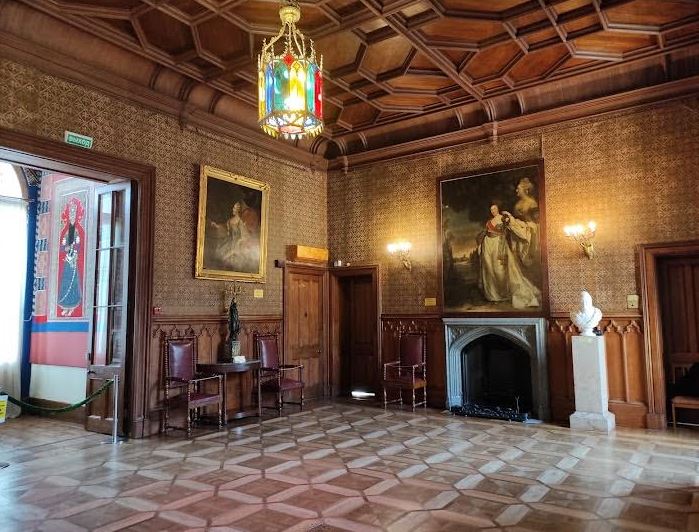
And for the first time ever, we will be unlocking doors to the oldest sections of the home, giving you access to previously restricted areas. Enhance your visit by adding this extra layer of discovery, starting May 25th, 2024. Tickets on sale now!

Please come and enjoy a delicious meal in Sarah’s Café, stroll along the paths of the beautiful Victorian gardens, and wonder through the miles of hallways in the World’s most mysterious mansion. For further information about tours, including group tours, weddings, school events, birthday party packages, facility rentals, and special events please visit the website: https://winchestermysteryhouse.com/

Please visit the online giftshop, and purchase a gift for friends and relatives as well as a special memento of The Winchester Mystery House. A variety of souvenirs and gifts are available to purchase. https://shopwinchestermysteryhouse.com/

The Syndrome of Growth

The pathology of incestuous fixation depends obviously on the level of regression. In the most benign cases there is hardly any pathology to speak of expect, perhaps, a slight overdependence on and fear of women. Dr. Freud’s thinking was based on an evolutionary scheme of libido development, from the narcissistic to the oral-receptive, oral aggressive, anal-sadistic, to the phallic- and genital-character orientations. According to Dr. Freud the gravest type of mental sickness was that caused by a fixation on (or regression to) the earliest levels of development of the libido. As a consequence, for example, regression to the oral-receptive level would be considered a more severe pathology than regression to the anal-sadistic level. In my experience, however, this general principle is not born out by clinically observable facts. The oral-receptive orientation is in itself one that is closer to life than is the anal orientation; hence, generally speaking, the anal orientation could be said to be conducive to more severe pathology than the oral-receptive. Furthermore, the oral-aggressive orientation would seem to be more conducive to severe pathology than the oral-receptive, because of the element of sadism and destructiveness involved in it. As a result, we would arrive almost at a reversal of the Freudian scheme. The least severe pathology would be that connected with the oral-receptive orientation, followed by more severe pathology in the oral-aggressive and in the anal-sadistic orientations. #RandolphHarris 1 of 18

Assuming the validity of Dr. Freud’s observation that genetically the sequence of development is from the oral-receptive to the oral-aggressive to the anal-sadistic orientation, one would have to disagree with his standpoint that fixation on an earlier phase means more severe pathology. However, I believe that the problem cannot be solved by the evolutionary assumption that the earliest orientations are the roots for the more pathological manifestations. As I see it, each orientation in itself has various levels of regression, reaching from normal to the most archaic pathological level. When it is combined with a generally mature character structure, that is, a high degree of productivity, the oral-receptive orientation, for instance, can be mild. On the other hand, it can be combined with a high degree of narcissism and incestuous symbiosis; in this case the oral-receptive orientation will be one of extreme dependency and malignant pathology. The same holds true as regards the almost normal anal character in comparison with the necrophilic character. Therefore, to determine pathology not according to the distinction between the various levels in libido development, but according to the degree of regression which can be determined within each orientation (oral-receptive, oral-aggressive, et cetera). It must furthermore be kept in mind that we are dealing not only with the orientation which Dr. Freud sees as being rooted in the respective erogenous zones (modes of assimilation), but also with forms of personal relatedness (like love, destructiveness, sado-masochism) which have certain affinities to the various modes of assimilation. #RandolphHarris 2 of 18

Thus, for instance, there is an affinity between the oral-receptive and the incestuous, between the anal and the destructive orientations. There also exists an affinity between biophilia and the “genital character” and between incestuous fixation and the oral character. The deeper the regression in each orientation, the more the three tend to converge. In the state of extreme regression, they have converged to form what I have called the “syndrome of decay.” On the other hand, with the person who has reached an optimum of maturity, the three orientations also tend to converge. The opposite of necrophilia is biophilia; the opposite of narcissism is love; the opposite of incestuous symbiosis is independence and freedom. The syndrome of these three attitudes I call the “syndrome of growth.” Now suppose, for example, that an individual has a neurotic need for absolute independence. After recognizing the trend and learning something of its origins one would have to spend quite a while understanding why only this way is open for reassurance, and how it manifests itself in one’s daily living. One would have to see in detail how this need expresses itself in one’s attitude toward physical surroundings, how it takes the form, perhaps, of an aversion to obstructed views, or an anxiety that arises when one sits in the middle of a row. One would have to know how it influences one’s attitude toward dress, as evidenced by such signs as sensitivity toward girdles, shoes, neckties, or anything that may be felt as a construction. One would have to recognize the influence of the trend on work, shown perhaps in rebellion against routine, obligations, expectations, suggestions, a rebellion against time and against superiors. #RandolphHarris 3 of 18

One would have to understand its influence on love life, observing such factors as an incapacity to accept any ties or a tendency to feel that any interest in another person means enslavement. Thus an estimate would gradually crystallize as to the various factors which in greater or less degree serve to touch off the feeling of coercion and to force one to be on one’s guard. The mere knowledge that one has a great wish for independence is not nearly enough. It is only when one recognizes its all-inclusive compelling force and its negativistic character that one can muster a serious incentive to change. Thus the therapeutic value of the second step is, first, that it strengthens a person’s willingness to conquer the disturbing drive. One begins to appreciate the full necessity for change, and one’s rather equivocal willingness to overcome the disturbance turns into an unambiguous determination to grapple with it seriously. This determination certainly constitutes a powerful and valuable force, indispensable for effecting any change. However, even the most vigorous determination is of little avail without the ability to carry it through. And this ability is gradually increased as one manifestation after another is clearly seen. While a person is working at the implication of the neurotic trend one’s illusions, fears, vulnerabilities, and inhibitions are gradually loosened from their entrenchments. As a result one becomes less insecure, less isolated, less hostile, and the resultant improvement in one’s relationships with others, and with oneself, in turn makes the neurotic trends less necessary and increases one’s capacity to deal with it. #RandolphHarris 4 of 18

This part of the work has the added value of kindling an incentive to discover those factors that impede a more profound change. The forces thus far mobilized have helped to dissolve the power of the particular trend and thereby to bring about certain improvements. However, the trend itself and many of its implications are almost sure to be closely bound up with other, possibly contradictory, drives. Therefore the person cannot fully overcome ones difficulties by working only at the substructure developed around a particular trends. Clare, for instance, lost some of her compulsive modesty through the analysis of that trend, but certain of its implications were out of reach at that time because they were intertwined with the morbid dependency and could be tackled only in conjunction with that further problem. This third step, the recognition and understanding of the interrelations of different neurotic trends, leads to a grasp on the deepest conflicts. It means an understanding of the attempts at solutions and of how these attempts have meant only a deeper and deeper entanglement. Before this part of the work is reached the person may have gained a deep insight into the component parts of a conflict, but still have adhered secretly to a belief that they could be reconciled. One may have realized deeply, for instance, the nature of one’s drive to be despotic and also the nature of one’s need to be applauded for superior wisdom. However, one has tried to reconcile these trends by simply admitting occasionally the despotic drive without having the least intention to change it. One has expected secretly that the admission of the despotic trend would allow one to continue it and at the same time win one recognition for the amount of insight shown. #RandolphHarris 5 of 18

Another person who strove for superhuman serenity, but also was driven by vindictive impulses, has imagined that one could be serene for the larger part of the year but spare out a sort of leave of absence when one could indulge in one’s vindictiveness. It is obvious that no fundamental change can take place as long as such solutions are secretly adhered to. As the third steps is worked through, it becomes possible to understand the makeshift nature of these solutions. The therapeutic value of this step lies also in the fact that it makes it possible to disentangle the vicious circles operating among the various neurotic trends, the ways in which they reinforce one another as well as the ways in which they conflict with one another. Thus it means an understanding at last of the so-called symptoms, that is, the gross pathological manifestations, such as attacks of anxiety, phobias, depressions, gross compulsions. One often hears statements to the effect that what is really important in psychotherapy is to see the conflicts. Such statements are of the same value as a contention that what is really important is the neurotic vulnerability or rigidity or striving for superiority. What is important is to see the whole structure, not more and not less. Existing conflicts may sometimes be recognized quite early in the analysis. Such recognition, however, is of no avail until the components of the conflicts are thoroughly understood and diminished in their intensity. Only after this work has been accomplished, do the conflicts themselves become accessible. #RandolphHarris 6 of 18

No amount of knowledge can fulfill the expectations of a detailed and definite direction of the road to be taken in analysis. One reason for this is that the differences among people are too great to allow the pursuit of any prescribed path. Even if we should assume that there is but a limited number of discernible neurotic trends existing in our civilization, say fifteen, the possible combinations of such trends would be practically infinite. Another reason is that in analysis we see not one trend neatly separated from another, but the sum total of entanglements; a flexible ingenuity is therefore necessary in order to isolate the components of the picture. A third complication is that often the consequences of the various trends are not apparent as such but are themselves repressed, thus making recognition of the trend considerably difficult. And, finally, analysis represents a human relationship as well as a common research. It would be a one-sided comparison to think of an analysis as an exploratory trip in which two colleagues or friends are engaged, both as much interested in observing and understanding as in integrating the observations and drawing the inferences. In analysis the patient’s peculiarities and disturbances—not to speak of the analyst’s—are vitally important. One’s need for affection, one’s pride, one’s vulnerability, are just as present and as effective in this as in other situations, and in addition the analysis itself inevitably elicits anxieties and hostilities and defenses against insights that threaten one’s safety system or the pride one has developed. #RandolphHarris 7 of 18

While all these reactions are helpful, provided one understands them, they nevertheless render the process more complex and less susceptible of generalization. The assertion that to a large extent each analysis must produce its own sequence for tackling problems may be intimidating to apprehensive souls, particularly to those who need a guarantee that they are always doing the right thing. They should keep in mind, however, for their own reassurance, that this sequence is not artificially created by the analyst’s clever manipulation but occurs spontaneously because it lies in the nature of the problems that one becomes accessible after another one is solved. In other words, when anyone analyzes oneself one will usually take the steps described above by merely following the material that presents itself. It will sometimes happen, of course, that one touches upon questions that at the time being are not answerable. At such points an experienced analyst will probably be able to see that the particular subject is beyond the reach of the patient’s understanding and is therefore better left alone. Let us assume, for instance, that a patient who is still deeply immersed in convictions of one’s absolute superiority over others brings up material suggesting that one has a fear of not being acceptable to others. The analyst will know that it would be premature to tackle as yet the patient’s fear of rejection, because the latter would regard it as inconceivable that such a superior being as one believes oneself to be could possibly have such a fear. Many other times the analyst will recognize only in retrospect that, and why, a problem was not accessible at a certain point. In other words, one, too, can proceed only by trial and error. #RandolphHarris 8 of 18

While much is recorded as to the basic identifying characteristics presenting symptomatology, and official diagnosis of the hospitalized psychiatric patient, the patient whose problems are treated exclusively on an outpatient basis has so far not been a regular subject for comprehensive census taking. This is not to say that we do not know the forms that psychoneurosis may take so far as symptom patterns are concerned, or something of the particular problems associated with treatment of the discriminably diagnosable outpatient syndromes, and something of the rate of response to psychotherapy. Much of this information is discursive and clinical, even when it represents statical accumulation of the experience of a particular clinic it rarely goes beyond the diagnostic grouping of patients. We do not have a truly comprehensive and representative picture of the broadly identifying characteristics of the consumers of psychotherapy, including the content of their problems, that goes beyond specification of such ubiquitous presenting complaints as depression and anxiety. In the absence of more information about these persons it is difficult to imagine that we can provide either specifically or adequately for their needs. Unless, of course, in our approach to mental health education, we are meaning to create a consumer demand for the particular product we feel they need! Let us consider what is known about the actual and potential candidates for psychotherapy. Our information is primarily general description for which psychotherapy is thought to be a primary treatment—the psychoneurotics. #RandolphHarris 9 of 18

A scientifically based medical attack upon the neuroses as medical problems is hampered by the nonobjectivity, ambiguity, and inclusiveness of the diagnoses. A corollary of this fact is the absence of explicit statements of exclusion: When organic illness is not a factor, when psychic disturbance of psychotic proportion is ruled out, what patterns of disturbance or discomfort (or degrees of these) may be encountered that do not qualify for the label “neurosis”? Put another way, does the presence of mental conflict or the experience of anxiety or the condition of emotional depression constitute ipso facto a neurosis? Or, must the proper diagnosis of a neurosis entail consideration of the arousing circumstances, the duration, and the severity of these conditions? There is no clear consensus on these questions among psychiatric authorities. Note again that the formal definitions emphasized the character of the person’s response and subjective experience and generally ignore the situational matrix to which the person is responding. In practice this means that a patient, without the presenting symptoms and history which would support some other diagnosis, who presents oneself to an appropriate “mental health expert” with complaints of depression, conflict, or anxiety is likely to be diagnosed as psychoneurotic—even though any “hallmark” symptoms such as hysterical conversions, phobias, obsessions or compulsions may be absent. In a sense, these are “self-diagnosed” patients who are accepted by the therapist without much concern for whether they technically qualify as psychoneurotics. All of these factors contribute to the nonspecificity of a diagnosis of psychoneurosis and this nonspecificity must be kept in mind when considering the following data. #RandolphHarris 10 of 18

While the great majority of neurotics are treated exclusively on an outpatient basis, there are some whose illness is of such severity or whose life situation is so devoid of support that hospitalization is necessary. According to our research, the average neurotic patient was 38 years old at the time of hospital admission. Two thirds of the neurotics were in the 20-44 age range at admission. At all ages, the admission rates were higher for females than males. Psychoneuroses are relatively more prevalent among the higher economic classes. With gender and age controlled for a standard population having a base age of 25 and over, the rate of first admissions with diagnosed psychoneurosis was at a minimum among those with little or no formal education and increased progressively to a maximum among patients who attended college. Among the hospitalized neurotics, there was a clear preponderance of single, widowed, and divorced patients over married patients. The excess of single patients was greatest among those over age 35. In one of the very rare reports on the clientele of private psychiatrists, descriptions are given of the general characteristics of 100 unselected, consecutive cases seen in office practice. Sixty percent of these patients were between the ages of 20 and 40. Slightly more than half (54 percent) were men, and slightly more than half were married (52 percent). Eighty percent were of Protestant faith. One third of these patients were office workers or skilled labourers; only 12 percent held professional jobs. One third of them had been referred to the psychiatrists by other patients; nearly one fourth were self-referrals. #RandolphHarris 11 of 18

The major compliant presented by these patients were nervousness, tension, and depression; other complaints included insecurity, self-consciousness, and shame or confusion regarding gender. Only half of these patients were diagnosed as psychoneurotic, but psychotherapy was recommended for 70 percent of them. Forty percent of this sample made but s single visit. Of those who undertook outpatient treatment the average cost of the treatment was $7,500 per year. Specific diagnoses were not under investigation but it is a reasonable presumption that the majority of these patients were neurotics. The following generalizations may be proposed from this study: The typical psychiatrist sees preponderantly more female than male patients. By contrast, psychologists and social workers tend to have clients of both genders in equal numbers. The complete age range is represented in the clients of three professions. However, the number of psychiatrists who specialize in patients under age 15 is very small, while one out of five psychologists concentrates on this age group. In contrast to the social workers and psychologists, many more psychiatrists have a clientele in which persons over the age of 40 predominate. The complete range of educational achievement is represented in the patients seen by all three professions. Psychiatrists are relatively inexperienced with patients having less than an eighth-grade education, while social workers very rarely carry-on individual therapy with college graduates or persons with postgraduate education. #RandolphHarris 12 of 18

All occupational levels are represented in the psychotherapy cases of the three professional groups as are all income levels. Certain occupational groups (exempli gratia, domestic and personal service, and agriculture, forestry, and fishing) have very little representation in the case loads of these psychotherapists. Other occupational groups (exempli gratia, professional, and managerial-office jobs) have a high frequency among the patients. Prevalence of Maladjustment: Over one third of the sample when queried about previous sources of unhappiness made reference to economic or material considerations, including their jobs. Two out of every five respondents indicated their primary source of worry to be in the economic or material sphere. Nearly one out of every five persons sampled reported that they had at some time in their past felt an “impending nervous breakdown.” Less than half of these persons felt that their problem was relevant for outside help. Nearly 40 percent of these persons reported their problems as external, exempli gratia, illness, death, work tension, finances. Factors Related to Maladjustment: While the genders did not differ in the frequency with which they reported unhappiness, the women more frequently reported worry, fear of breakdown, and need for help. In general, women reported suffering from more symptoms, both physical and psychological, than did the men of the sample. With increasing amounts of education, there is an increase in symptoms which express immobilization, inertia, and an attitude of passivity. This syndrome of immobilization is more prevalent among the younger persons than the older. #RandolphHarris 13 of 18

Greater distress is reported by women than by men in all adjustment areas—they are more disturbed in general adjustment, in their self-perceptions, in their martial and parental functioning. This gender difference is most marked at the younger age intervals. “Psychological anxiety” symptoms are found most frequently at the two extremes of the income distributions. Occupational status is less related to over-all adjustment than are education and income. The unmarried (whether single, separated, divorced, or widowed) have a greater potential for psychological distress than do the married. A feeling of impending breakdown is reported more frequently by the divorced and separated females than by any other group of either gender. In general, single women experienced less psychological discomfort than do single men. Factors Related to Seeking of Help: With respects to readiness to seek help for personal distress, the more highly educated persons surpass all other groups. The highly educated are more introspective, orient themselves toward life in terms of self-questioning rather than unhappiness or dissatisfaction express concern over the personal and inter-personal aspects of their lives, predominate in psychological rather than physical symptoms. It is if particular interest to note that the highly educated people more often go for help despite the fact that they express more happiness and satisfaction on the adjustment indices than do the less educated people. #RandolphHarris 14 of 18

Of those persons who actually sought help, over half reported problems in the area of personal relationships. Most commonly the problem was with a spouse and was less frequently ascribed to the relationship than to a defect in either the respondent (23 percent) of the spouse (25 percent). First step toward clear-mindedness: to grasp the extent to which we have been seduced—namely, it could have been exactly the other way around: The unknown World could perhaps be a stupid and more trivial form of existence—so constituted as to make us long for “this World.” The other World,far from accommodating our desires, which would find no satisfaction there, could be among a host of things that make this World possible for us: coming to know it would be a way of making ourselves happy. The true World: but who is it that tells us that the apparent World must be worth less than the true one? Des not our instinct contradict this judgment? Does not man perpetually create a fictious World because he wants to have a World better than reality? Above all: why does it ever occur to us that our World is not the true one? After all, the other World could be the “apparent” one (in fact, the Greeks, for example, conceived of a realm of shadows, an apparent existence alongside true existence). And finally: What gives us the right to estimate, as it were, degrees of reality? That is something different from an unknown World—that is already wanting to know something of the unknown. The “other,” the “unknown,” World—good! However, to say “true World” means “to know something about it”—that is the opposite of the assumption of an x-World. #RandolphHarris 15 of 18

The World x could be in every sense more tedious, more inhumane, and less worthy than this World. It would be something else again to assert that there are x Worlds, id est, every possible World besides this one. However, that has never been asserted. The word “wiles” in the original means “methods,” and bears in its varied forms the thought of craft, artifice or trickery. To “work wiles” is to outwit, or to methodically go in pursuit. The ultimate negative’s war on the saints can be summed up in the phrase “the wiles of the ultimate negative.” He does not work in the open but always being cover. The method of his deceiving spirits are adapted to each one, and they have a skill and cunning gained by years of experience. Generally, the wiles are primarily directed against a person’s mind or thoughts, so, unless the believer has yielded to known sin, most of the workings of the Ultimate negative in one’s life may be traced back to a wrong thought or belief admitted into one’s mind and not recognized to be from deceiving spirits. For is a believer thinks that all that the ultimate negative does is manifestly bad, the ultimate negative has only to clothe himself with “good” to gain full credence with that man. The way, therefore, is a war of deceit and counterfeit, and only those who seek the fullest truth from God about God, the ultimate negative, and themselves can stand against the Deceiver’s wishes. The more common solution to the Christ-and-culture problem is to unite somehow the extremes of the first two types. This center position, therefore, acknowledges the goodness of creation, the radical character of sin, the necessity of human cultural activity, and the primacy of grace. However, the reconciliation of these opposing principles can be achieved in several different ways. #RandolphHarris 16 of 18

One way is by a synthesis of the two, which we term the Christ-above-culture type. According to the synthetic view, there is a gap between Christ and culture that accommodation Christianity never takes seriously enough, and the radicalism does not try to overcome. Its starting point is the doctrine that Jesus as the Christ did not come to abolish the law and prophets, but to fulfill them. It is exemplified in history by the theology of Clement of Alexandria and Thomas Aquinas. The synthesis holds that grace builds on and perfects nature, that the Creator and the Saviour are one. Jesus as the Christ is above culture as its fulfilment and crown. We drive for unity between Christ and culture with an insistence upon grace. However, the unity is effected by a vertical structuring that is divided into layers, and this is repugnant because it resembles the natural-supernatural framework which we detests. The synthesists regards cultural efforts as a mere propaedeutic for the culmination of Christianity in a future afterlife. Furthermore, as Niebuhr observes, the synthesis tends to view his own culturally conditioned synthesis as absolute, so that Jesus as the Christ who is above culture as its fulfilment has been first whittled down to the proportions of the prevailing culture. The result is a cultural conservatism which is akin to idolatry. When we say, “The Father alone is God,” such a proposition can be taken in several senses. If “alone” means solitude in the Father, it is false in a categorematical sense; but if taken in a syncate gorematical sense it can again be understood in several ways. #RandolphHarris 17 of 18

For if it excludes (all others) from the form of the subject, it is true, the sense being “the Father alone is God”—that is, “He who with no other is the Father, is God.” In this way Augustine expounds when he says (De Trin. Vi, 6): “We say the Father alone, not because he is separate from the Son, or from the Holy Ghost, but because they are not the Father together with Him.” This, however, is not the usual way of speaking, unless we understand another implication, as though we said “He who alone is called the Father is God.” However, in the strict sense the exclusion affects the predicate. And thus the proposition is false if it excludes another in the masculine sense; but true if it excludes it in the neuter sense; because the Son is another person than the Father, but not another thing; and the same applies to the Holy Ghost. However, because this diction “alone,” properly speaking, refers to the subject, it tends to exclude another Person rather than other things. Hence such a way of speaking is not to be taken too literally, but it should be piously expounded, whenever we find it in authentic work. We do not say absolutely that the Son alone is Most High; but that He alone is Most High with the Holy Ghost, in the glory of God the Father. I pledge allegiance to the flag of the United States of America, and to the republic, for which it stands, one nation, under God, indivisible, with liberty and justice for all. Happy is the man that has regard for the poor; the Lord will deliver him in the day of evil. Every day, the Sacramento Fire Department displays bravery, strength, honesty, determination and compassion for the lives of others. Please kindly donate to the Sacramento Fire Department. You donation will greatly benefit the welfare of the community. #RandolphHarris 18 of 18



We are thrilled to announce the release of a new phase in our highly sought-after residential community. This latest phase unveiling marks a significant milestone in our commitment to providing quality homes that cater to a diverse range of preferences and lifestyles.

Our previous phases received overwhelming interest, and we expect this release to be no different. The homes are situated in a vibrant community that balances serene living with convenient access to local amenities.

Remember, the new phase release is this Saturday, January 13th. Keep an eye out for more information coming! https://cresleigh.com/havenwood/

 Randolph Harris II International Institute