
Home » Posts tagged 'psychoanalysis'
Tag Archives: psychoanalysis

The Last Enemy that Shall be Destroyed is Death!

After one has learned how to listen, he must learn what to listen for. From the psychiatric point of view, there are four basic vocal signals: sounds, accents, voices, and vocabulary. The commonest breathing sounds and their usual meanings are as follows: coughs (nobody loves me), sighs (if only), yawns (buzz off), grunts (you said it), and sobs (you got me); and various kinds of laughs such as jollies, chuckles, snickers, and titters. The three most important types of laughs, known colloquially as Ho Ho, Ha Ha, and He He, will be discussed further on. Culture has very little to do with scripts. There are winners and losers in every layer of society and in every country, and they go about fulfilling their destinies in much the same way all over the world. To further highlight this situation, the prevalence of mental illness in any large group of people is pretty much the same all over, and there are suicides everywhere. As the late Tupac said in the lyrics of his song, “So Many Tears,” “I’m suicidal, so don’t stand near me. My every move is a calculated step to bring me closer to embrace an early death. Now there’s nothin’ left.” Every large group in the world also has its leaders and its rich men. Nevertheless, foreign accents do have some meaning for the script analyst. First, they make possible educated guesses about early Parental precepts, and that is where culture does come in: “Do as you are told,” in Germany, “Be quiet,” in France, and “Do not be naughty,” in Britain. #RandolphHarris 1 of 31

Secondly, accents indicate the flexibility of the script. A German who has been in this country for twenty years and still speaks with a thick accent probably has a less flexible life plan than a Dane who speaks good American after only two years. Thirdly, if the therapist can speak that language, the script is written in the native language of the Child, and script analysis is swifter and more effective. A foreigner living out his script in America is the equivalent of putting on Hamlet in Japanese in the Kabuki theater. If the critic does not have the original at hand, a great deal is going to be lost or misunderstood. Particularly if they are affected, native accents are also informative. A man who speaks with a Brooklyn accent but throws in a few Boston or Broadway broad a’s clearly shows the influence of a hero or a parental person he is carrying around in his head. Even if the patient denies it, that person must be tracked down, because his influence is probably widespread. “She passed a remok, or I should say an epigram,” or “We left oily, but did not get to the game until hof time,” clearly indicates a splint in the Parental directives. Each patient has at least three different voices, Parent, Adult, and Child. He may keep one, or even two of them carefully hidden for a long time, but they will slip out sooner or later. Usually, a careful listener can hear at least two of them in any fifteen minutes. #RandolphHarris 2 of 31

The patient may say a whole Parental paragraph with only one Child whine, or a whole Adult paragraph with only one Parental scold, but an alert listener will pick up the key phrase. Other patients change voices from one sentence to another, or even use two or three voices in a single sentence. Each of the voices reveals something about the script. A Parental voice, speaking to another person, uses Parental slogans and precepts, and duplicates what the father or mother would have said in the same situation: “Does everybody not?” “Look who is talking,” “You have got to keep your mind occupied,” “Why do you not try harder?,” “You cannot trust anybody.” An unanswering Adult voice usually means that the Child is being suppressed by Parental command in favor of some humorless pedantic pattern, perhaps loaded with a few “official” or anal jokes. This indicates that the Child will therefore find devious ways of expression or periodically explode, giving rise to the nonadaptive behavior and waste of energy which makes a loser. The Child voice indicates the script role: “Cute Kid,” “Little Old Me,” “Clinging Whine,” for example. Thus, the parental voice tells the counterscript, The Adult voice gives the pattern, and the Child voice takes the script role. Each ego state may also have its own vocabulary. Parental words, such as “bad,” “stupid,” “coward,” and “ridiculous,” tell what Jeder is most afraid of being, and tries hardest to avoid. #RandolphHarris 3 of 31

A persistent Adult technical vocabulary may be simply a way of avoiding people, as is common in engineering, aviation, and finance, under a script directive of “Do great things but do not get involved personally.” The Adult “helpnik” vocabularies (PTA, psychology, psychoanalysis, social science) may be used in an intellectual Rite of Spring, where the victim’s dismembered psyche is left scattered over the floor on the theory that he will eventually join himself together and be more fertile afterward. The storyline of this script reads: “I will tear you apart, and remember I am only trying to help you. However, you will have to put yourself together, since nobody else can do it for you.” Sometimes the patient is his own favorite Ritual victim. The Child vocabulary may be the obscene words of revolt, the clichés of compliance, or the sweet phrases of charming innocence. A typical triad often found in the same person is Parental marshmallow-throwing, Adult dissection, and Child obscenity. To further highlight this illustration: “We all have our ups and downs; I think you are handling it beautifully. Of course, you must split off your autonomous ego from your identification with your mother. After all, it is a harsh world.” This script comes right out of Dante’s Inferno: “How to keep smiling while reading a textbook when you are up to your neck in sewage.” #RandolphHarris 4 of 31

Adjectives and abstract nouns are name-calling. The correct response to a person who says that he suffers from “passive dependency” or that he is “an insecure sociopath” is “What names did your parents call you when you were little?” Action euphemisms such as “aggressive expression” or “pleasures of the flesh,” should be eliminated by asking, “What did you call that when you were little?” “Expressive aggression” is a pure artifact and means that Pat has gone to a modern dance class or been wrestled by a Gestalt therapist, while being involved in “pleasures of the flesh” means that he attends meetings of the Sexual Freedom League.” Adverbs are a little more intimate. Thus, “I sometimes feel sexual excitement” is over there in the vague distance, while “I sometimes get sexually excited” is over here. The precise psychological significance of adverbs, however, remains to be clarified. Pronouns, verbs, and concrete nouns are the most real parts of speech, and “tell it like it is.” Telling it like it is may mean that the patient is ready to get well. Thus, a woman who is afraid of the pleasures of the flesh often stresses adjectives and abstract nouns: “I had a satisfactory sexual experience.” Later, she may emphasize pronouns and verbs: “We really turned on.” One woman went to the hospital the first time to have “an obstetrical experience.” The second time, she went to have a baby. Patients “express hostility against authority figures.” When they become real people, they just swear or tear up the papers. #RandolphHarris 5 of 31

On the therapist’s side, the one who reports: “We initiated the interview by exchanging beneficial greetings. The patient then related that he had expressed hostility by performing an act of physical aggression against his wife,” is having a harder time than the one who says: “The patient said Hello and told me that he hit his wife.” In one case, the therapist maintained that a boy “attended a residential school setting in the private area,” while the boy said that he merely “went to boarding school.” The most important single word in script language is the particle “but,” which means “According to my script, I do not have permission to do that.” Real people say: “I will,” or “I will not,” or “I won,” or “I lost,” while “I will but…” “I will not but…” “I won but…” or “I lost but…” are all scripty. Various women live in worlds populated by wolves, beasts, charmers, cats, creeps, suckers, and pricks, and their menfolk see them as dishes, b*tches, grooves, chicks, foxes, chicks, broads, whores, and some other unpleasant terms. All these are script words which emerge in the course of conversation on group treatment. The script scenes are usually centered around one or other room of the house: the nursery, the bathroom, the kitchen, the living room, and the bedroom, and these are located in such expressions “plenty to drink,” “all that crap,” “a regular fest,” “all those people,” and “sock it to them.” #RandolphHarris 6 of 31

Each of these rooms has its own vocabulary, and the person stuck in any of these chambers will use the appropriate expressions over and over. Equally common is the workroom, signified by “Get your kiester over there.” Closely allied to script words are metaphors. Thus, Mary had two different and separate vocabularies of metaphors. In one, she was all at sea, could not fathom anything, could hardly keep her head above water, had stormy days, and waves of feelings. At other times, life was a feast, she could eat her words, she had lots of goodies, or she might feel sour or bitter because that was the way the cookie crumbled. She married a sailor and complained of obesity. When she felt at sea, all her lingo was maritime, and when she was overeating, it was culinary. Thus, she fell from the ocean to the kitchen and back again, and the therapist’s problem was to get her feet on the ground. Metaphors are an extension of the script scene, and a change in metaphors means a change of scene. In her case, the stormy waters turned out to be a sea of anger. Some people must go through certain rituals or make certain gestures before they begin to talk, in order to protect themselves or apologize for speaking. These rituals are addressed to their Parents. Abelard, to further highlight this illustration, always slid his hands under his belt before he began to talk. It was evident that he was protecting his testicles from some inner assailant who was scheduled to attack him when he was off guard because he was speaking to somebody, so he always took care of that danger before he ventured to speak. #RandolphHarris 7 of 31

To tell people the simple, if subtle, truth is to provoke them to partisan wrath. To such unintelligent objections, we may well answer with old Dr. Johnson, “I have found you a reason, sir—I am not bound to find you an understanding.” These people possess a remarkable talent for finding out difficulty in what is perfectly plain. They complain about our arguments because, in brief, the latter have been directed to a higher intellectual level than that of a boy of ten. Argument can be refined, dignified, and courteous and still remain argument. However, the crude and immature think it necessary to express themselves by abuse and vilification in order to prove their points! The pompous pedantry of some academic circles is not less unbalanced than the illiterate inarticulateness of those who scorn them. These lopsided characters who make intellect their sole judge, guide, and support have imprisoned themselves in it and refuse to leave their jail. Are they not foolish? They use their minds only to deal with matters and to answer questions arising from their personal desires and social situations, only for the private satisfaction of their earthly interests. A higher use of it makes no appeal. We must not only renounce such an unsatisfactory doctrine, but also denounce it. In the new loyalty to a narrower view of truth, they abandon the High, the Holy, the Beautiful, and the Refined. The practical benefits of their education are plain, but why become a dwarf to get them? #RandolphHarris 8 of 31

They are imprisoned by their own illusory concepts, and unless something or someone from outside comes to release them, they will continue to be captive, limited, and unnecessarily lost in illusions. The meaning of a word or phrase may be multiple, which is why translations vary, why interpretations are disputed, and why statements in bureaucratic jargon leave some persons uncertain and others unclear. Hence, lawyers are hired, teachers of semantics arise, and sects flourish. However, turn to numbers and one knows precisely what one is dealing with. They fulfill their function without debate. No mist arises. So Pythagoras can boldly assert: “The universe is founded upon numbers.” The power of abstract thought has characterized the best class of minds since time immemorial. Joseph de Maistre refutes Jacobinism and Calvinism, two doctrines which summed up for him, “everything bad that has been thought for centuries,” in the name of a Christian philosophy of history. To counter schisms and heresies, he wanted to re-create “the robe without a seam” of a really catholic Church. His aim—and this can be seen at the period of his Masonic adventures—is the universal Christian city. Maistre dreams of the protoplatic Adam, or the Universal Man, of Fabre d’Olivet, who will be the rallying-point of individual souls, and the Adam Kadmon of the cabalists, who preceded the Fall and who must now be brought to life again. When the Church has reclaimed the world, she will endow this first and last Adam with a body. #RandolphHarris 9 of 31

In the Soirees in St. Petersburg there is a mass of formulas on this subject which bear a striking resemblance to the Messianic formulas of Hegal and Marx. In both the terrestrial and the celestial Jerusalem that Maistre imagines, “all the inhabitants pervaded by the same spirit will pervade one another and will reflect one another’s happiness.” Maistre does not go so far as to deny personal survival after death; he only dreams of having been annihilated, there will be no more passion nor self-interest,” and where “man will be reunited with himself when his double standard will be obliterated and his two centers unified.” In the city of absolute knowledge, where the eyes of the mind and the eyes of the body became as one, Hegel also reconciled contradictions. However, Maistre’s vision again coincides with that of Marx, who proclaims “the end of the quarrel between essence and existence, between freedom and necessity.” Evil, for Maistre, is nothing but the destruction of unity. However, humanity must rediscover its unity on earth as in heaven. By what means? Maistre who is an ancient regime reactionary, is less explicit on this point than Marx. Meanwhile, he was waiting for a great religious revolution of which 1789 was only the “appalling preface.” He quotes Saint John, who asks that we make truth, which is exactly the program of the modern revolutionary mind, and Saint Paul, who announces that “the last enemy that shall be destroyed is death.” Humanity marches, by way of crimes, violence, and death, toward this final consummation, which will justify everything. The earth for Maistre is nothing but “an immense altar on which all the living must be sacrificed, without end, without limit, without respite, until the end of time, until the extinction of evil, until the death of death. His fatalism, however, is active as well as passive. “Man must act as if he were capable of all things and resign himself as if he were capable of nothing.” We find in Marx the same sort of creative fatalism. Maistre undoubtedly justifies the established order. #RandolphHarris 10 of 31

In dreams, we are closer to the reality of ourselves. And this dream in particular seemed to emerge from a great depth, and to present a profound and square insight into the danger of the dreamer’s particular self-destructiveness. The reaction of pity for self, in this instance as in many others, was at that time not constructive: it did not move her to do anything in her own behalf. Only when the hopelessness and the intensity of self-contempt abates, can the unconstructive self-pity turn into a constructive sympathy with self. And this indeed is a forward move of great significance for anybody in the clutches of self-hate. It goes with a beginning feeling for his real self and a beginning wish for inner salvation. The reaction to the deteriorating process can also be stark terror. And, considering the formidable danger of self-destructiveness, this reaction is completely adequate as long as one continues to feel a helpless prey to these merciless forces. In dreams and associations, they may appear in many succinct symbols, such as a homicidal maniac, Dracula, monsters, a white whale, or ghosts. This terror is the nucleus of many fears otherwise inexplicable, such as the fear of the unknown and of the dangerous depth of the sea; the fear of ghosts; of anything mysterious; of any destructive process within the body, such as poison, worms, cancer. It is a part of the terror many patients feel toward anything that is unconscious, and, therefore, mysterious. It may be the center of panic without an apparent reason. #RandolphHarris 11 of 31

If it were always present and alive, it would be impossible for anybody to love with such a terror. He must and does find ways to assuage it. Surveying self-hate and its ravaging force, we cannot help but see in it a great tragedy, perhaps the greatest tragedy of the human mind. Man in reaching out for the Infinite and Absolute also starts destroying himself. When he makes a pact with the devil, who promises him glory, he must go to hell—to hell within himself. Dr. Darwin dealt with man’s biological origins. His achievement, and his sin, was a theory that made man a part of nature. To accomplish this, and only for this, he was able to put his neurosis aside. Dr. Freud, however, had to “appoint his own neurosis that angel who was to be wrestled with and not to be let go, until he would bless the observer.” Dr. Freud’s wrestling with the angel who was to be wrestled with and not to be let go, until he would bless the observer.” Dr. Freud’s wrestling with the angel was his working through of his own father complex which at first had led him astray in his search for the origins of the neuroses in childhood. Once he understood his own relationship to his father, he could establish the existence of the universal father image in man, break through to the mother image as well, and finally arrive at the Oediups complex, the formulation of which made him one of the most controversial figures in the history of ideas. In The Interpretation of Dreams, Dr. Freud gave psychoanalysis its orientation as the study of unconscious motivation in the normal as well as the pathological, in society as well as the individual. At the same time, he freed his own creativity by self-analysis and was able to combine strict observation with disciplined intuition and literary craftsmanship. #RandolphHarris 12 of 31

Language, which may be defined here as a system of vocal signs, is the most important sign system of human society. Its foundation is, of course, in the intrinsic capacity of the human organism for vocal expressivity, but we can begin to speak of language only when vocal expressions have become capable of detachment from the immediate “here and now” of subjective states. If I snarl, grunt, howl, or hiss, although these vocal expressions are capable of becoming linguistic insofar as they are integrated into an objectively available sign system, it is not yet language. The common objectivations of everyday life are maintained primarily by linguistic signification. Everyday life is, above all, life with and by means of the language I share with my fellowmen. An understanding of language is thus essential for any understanding of the reality of everyday life. Language has its origins in the face-to-face situation, but can be readily detached from it. This is not only because I can shout in the dark or across a distance, speak on the telephone or via the radio, or convey linguistic signification by means of writing (the latter constituting, as it were, a sign system of the second degree). The detachment of language lies much more basically in its capacity to communicate meanings that are not direct expressions of subjectivity “here and now.” It shares this capacity with other sign systems, but its immense variety and complexity make it much more readily detachable from the face-to-face situation, including matters I never have and never will experience directly. #RandolphHarris 13 of 31

In this way, language is capable of becoming the objective repository of vast accumulations of meaning and experience, which it can then preserve in time and transmit to following generations. The mechanisms of defense might just as legitimately be called mechanisms for increasing self-alienation or methods of evading growth, for such are their consequences. They are modes of behavior undertaken by a person with a relatively weak ego when a threat to the self-structure arises. If they are effective, they reduce anxiety and guilt, but whenever the defenses are themselves weakened, threat is again experienced, for its causes continue to be operative. A defense is like a drug; it must be kept operative if it is to reduce discomfort. However, a defense, like a drug, does not remove the conditions responsible for the pain and discomfort. What are the major patterns of defensive behavior and how may they be recognized? The individual can seldom recognize his or her own defensiveness, except under special conditions. The observer may be able to infer, from certain signs, the nature of the defense, the consequences of the defense, and the aspects of the real self that are being defended against. Repression is the most basic defense. It consists in actively excluding from awareness any thought, feeling, memory, or wish that would threaten the self-structure. Dr. Freud introduced the concept of repression to explain some phenomena that he regularly observed in his efforts to treat neurotic patients. He found that his patients displayed resistance to the injunction that they say everything that came to mind. #RandolphHarris 14 of 31

Dr. Freud used the term resistance to describe any deviation from unselected, uncensored talking. The term repression was invoked to explain the efforts of the person to avoid not merely speaking about embarrassing topics, but even thinking about these topics. Repression manifests itself by the omission in a person’s speech, emotion, and behavior repertoire of responses that might ordinarily be expected under given circumstances. To further highlight this illustration, if a person has been deeply insulted by someone and displays no overt signs of hostility, the hypothesis can be entertained that the person has repressed these feelings. It should not be assumed that because some thought, feeling, or need has been repressed, it simply fades out of existence altogether. Rather, what appears to occur is that the repressed feelings and tensions continue to operate as unconscious determiners of behavior because the causes of these feelings persist in life itself. The represser may betray many signs of the repressed feelings to a keen observer—in dreams, accidents, slips of the tongue, and so on. Repression also manifests itself as chronic tensing of various muscle groupings. If a person has repressed rage, yet lives continuously among the people who provoke it, that person may chronically display tension in the muscles of the jaw, the neck, and the shoulders. When a set of muscles has relaxed, in response to the therapist’s manipulations, the patient would express rage, or tears, and convulsions sobbing; moreover, the patient might then recall with vividness some childhood events related to the original repression. #RandolphHarris 15 of 31

An important indicator of repression is a refusal by the person to examine and consider any other motives for a given action than the one he or she presently admits. Thus, a parent may spank his or her children quite severely, may forget their birthdays, never spend time with them at enjoyable activity, and continually scold them. An observer may gather the impression that such behavior expresses hatred and dislike for the children and asks the parent why he or she treats the children so. The parent says, “Because I love them, and I am trying not to spoil them. I am trying to raise them right.” If the observer asks, “Could it be that you do not like your children?” the parent might become quite indignant and refuse to explore the possibility that this might be true. This person is repressing hostility to the children. For the parent to admit disliking the children might threaten his or her self-structure to a profound degree. Another important indicator of repression is selective recall of the past. In relating aspects of the past, much may be omitted from the account. If the observer knows what has been omitted, he or she may confront the person with these details, only to have the person deny that the events occurred. It is as if this person had a vested interest in forgetting these details, in order to preserve the present concept of self. Many experimental studies have shown how our recall and our forgetting are determined to a high degree by the need to maintain self-esteem and to preserve the present self-concept. #RandolphHarris 16 of 31

Many experimental studies have shown how our recall and our forgetting are determined to a high degree by the need to maintain self-esteem and to preserve the present self-concept. In principle, a person can repress any aspect of the real self, whether it is socially desirable or socially reprehensible. Thus, a person may repress antisocial sexual urges and hostility but may also repress feelings of attraction, his or her own intellect, and strength and resources if these aspects of the real self imply some threat to the self-structure. The authoritarian character who exaggerates personal weakness and the strength of the hero or boss is repressing his or her own powers and ascribing them (projecting them) to the authority figure in question. Dr. Fromm has detailed this point in his discussion of authoritarianism in everyday life and even in religion; he has suggested that the image of an all-powerful God, in contrast with weak, powerless humans, rests on our repression of our own powers and the ascription of these very powers to the deity. Repression is quite an unstable mechanism, calling as it does for unremitting (but unconscious) effort from the person. Whenever there is any reduction in the energy devoted to repression, there is likely to be a breakthrough of the repressed aspects of the real self. When this occurs, the person may be incredibly threatened by feelings and impulses that he did not know he possessed. #RandolphHarris 17 of 31

The feelings may be so intense that he explodes into uncontrolled activity—for instance, sexual or hostile violence. Probably many of the sex and homicide crimes which one reads about in the papers (“Nobody would have expected him to do that, he was always so nice, so moral”) illustrate the breakthrough of repressed feelings and impulses. When a person is fatigued, or ill, he may be overwhelmed with fantasies, feelings, and impulses that are shocking to him and to those who know him. Although repression is usually involuntary and unconscious, it can be conscious and deliberate. Every reader will recall occasions when they have had thoughts that were fully conscious, but quite repugnant. On those occasions, they may have striven to get rid of the unwanted thoughts by just putting them out of my mind or by trying to change the subject of thinking, in order to think of more pleasant things. Such efforts, if successful, may be called voluntary and conscious repression. They are analogous with the conversation between two persons; when an unpleasant subject comes up, the person who finds it is unpleasant will ask that the subject be changed, or else may skillfully guide the conversation so that the dangerous topics are avoided. Typically, few venture to do more than peep beyond the portals, for they are unable to bear the hard strain of prolonged philosophical thinking. However noble they may be morally or however abstract they may be metaphysically, it is not by living in the ideas in his mind that a man can ever live in his true self. Somewhere in his field of consciousness, all thinking must be transcended if he is ever to do this. The logic of your thinking must be as universally valid as mathematics. Nobody can cheat mathematics. #RandolphHarris 18 of 31

It is not difficult to prevent or abort a heroic act. Sometimes this results from the confluence of situational circumstances; sometimes it is a calculated effort motivated by selfish factors. It apparently may also occur through the mere acknowledgement that the person has done something laudatory. Given society’s continued need for heroes, we need to know how to better protect heroism against these influences. The award-winning Sacramento Fire Department heroes are celebrated and remembered by the community based on their exceptional and dramatic performance in critical situations. At approximately 2.45 on a hot, sunny afternoon, a small fire was discovered in a pile of wrapping paper near the rear of a store. An employee spotted the fire near the wrapping counter and called for a manager nearby. He began to fight the rapidly expanding blaze, while another employee ran to the basement for water. By the time he returned, the manager had already called the fire department, was fruitlessly battling the flames that had spread to the nearby elevator shaft and were spreading rapidly to the second floor. Several employees fled to the front of the store to escape the now roaring fire that was being fed by a current of air from the outside through the open doors at both the front and rear of the store. As they reached the front door, the fire had created a tremendous draft into the store that it sucked the doors shut, catching the manager’s foot and trapping a few other employees inside the store. The employees struggled with the doors for a few seconds but managed to escape just as the firefighters arrived. “The door was shut when I reached it,” said one employee later. “It was all I could do to pull it open, so strong was the pressure…neither of us could have stood it a minute longer in the building.” #RandolphHarris 19 of 31

The fire department arrived just as the occupants were leaving the building. The Fire Chief immediately ordered three hydrants tapped, and the fight to contain the fire began. As the firemen deployed five streams around the building, the blaze vented itself by shattering all of the windows and shooting through the roof. Despite the intense heat, the Fire Chief led several men with a lead hose into the building, but little progress was made, and they pulled back as the roof and upper floors were about to collapse. Although there was little or no wind, the danger to surrounding buildings was incredible due to the flying embers and the extreme radiant heat from the store. As the heat shattered the front windows, the large plate glass windows in the building directly across the street cracked, but they did not shatter, and the fire did not gain entrance to the building. The flying sparks and embers wreaked havoc on other businesses. The first fire was extinguished quickly, but another building received considerable damage to the second floor and roof. Eventually, the roof collapsed in the store that initially caught fire. There were three firemen injured during the blaze, but none were seriously. The Fire Chief had a cut on his stomach, but remained on the scene until the fire was out. By chance, the Assistant Fire Chief was traveling through the street on an outing with his wife when he spotted the fire and offered his assistance. After the fire was under control, he was water-soaked, and his new suit was ruined from the heat. #RandolphHarris 20 of 31

If you see a fire truck stopped in the street without the lights on, be very careful. Sometimes there is an emergency, and you should not pass the fire truck. It might be a good idea to safely turn around and go another way because if you hit someone and they happen to die, you could be charged with manslaughter. Sometimes fire firefighters are getting back into their vehicle, and if you pass the apparatus, you may collide with a firefighter who is on foot. Also, be sure to look at their signals; sometimes emergency vehicles are in motion, albeit slowly, and drivers try to pass them, and this could lead to a dangerous situation. Also, if you are in an intersection when you see an emergency vehicle, continue through the intersection. Drive to the right as soon as it is safe and stop. Obey any direction, order, or signal given by a law enforcement officer or a firefighter. Even if they conflict with existing signs, signals, or laws, follow their orders. When their siren or flashing lights are on, it is against the law to follow within 300 feet of any fire engine, law enforcement vehicle, ambulance, or other emergency vehicle. If you drive to the scene of a fire, collision, or other disaster, you can be arrested. When you do this, you are getting in the way of firefighters, ambulance crews, or other rescue and emergency personnel. The concept of professional courage does not always mean being as tough as nails, either. It also suggests a willingness to listen to other people’s problems, to go to bat for them in a tough situation, and it means knowing just how far they can go. It also means being willing to tell the boss when he or she is wrong. #RandolphHarris 21 of 31

California is the third most expensive state in the nation. In 37 percent of counties, a family of four living on a six-figure income is now considered low-income. The average home price in California is nearly $1,000,000.00 USD, while the average salary is $96,036.00, meaning that most Californians cannot even afford to buy a home. California is having an affordability crisis. A single person making an income above $100,000 is now considered low-income in five counties in California. This distinction now applies to individuals living in Santa Cruz, Santa Clara, San Mateo, San Francisco, and Marin counties. The maximum percentage of your gross income that you should earmark for a monthly mortgage payment is calculated at 28 percent, and no more than 36 percent of your gross income to all debts, including mortgage. If you take 28 percent of the median household income per home in Sacramento County, homeowners can only afford a mortgage of $2,070.23 per month. And if you take 36 percent of their gross income to all debts, including mortgage, they should be devoting no more than $2,661.72 a month to these debts. The mortgage lenders must be using some kind of sorcery to get buyers into these expensive homes. To afford one of these homes using traditional guidelines, a household would need to gross $11,280.24 per month or $135,362.88 per year, but the median household in Sacramento County is grossing $7,393.67 a month or $88,724.00 annually, and that typically means two to four people in the home are working and contributing to the mortgage. Home prices in Sacramento County are rivaling the Bay Area, and in some cases, homes in the Bay Area are more affordable. Historically, homes in the Bay Area have been more expensive because they have higher-paying jobs, a larger population, and the Bay Area is a tourist destination. Contributing to the housing affordability crisis is Gavin Newsom, who has been lavishing illegal immigrants with taxpayer-funded resources and cash aid, when state workers should be receiving a 25 percent wage increase instead. #RandolphHarris 22 of 31

In 2025, many people in California saw their bills increase by an estimated $500 a month. This includes items such as food, automobile insurance, homeowners’ insurance, and electricity. In fact, more than 3 million people in California are facing household hardship, and more than 300,000 of them are facing eviction soon. This comes at a time when California is having a shortage of affordable housing. The crisis is caused by nearly half a century-old laws that discourage home sales and encourage higher rents. The incompetence in California is very easy to see. From 2018 to 2023, California received $24 billion, which they used to fund 30 homeless and housing programs. These programs created 100,000 units. That is an average cost of $240,000 per unit. In comparison, Roger Lucas, owner of Grand Castle, LLC, spent $50 million to build The Grand Castle, which is a 522-unit residential apartment community in Grandville, Michigan. The community includes studios, 1 bedroom, 2 bedrooms, 3 bedrooms, and even a multi-level penthouse. Rents generally range from $1,000 to $2,500. The community is a 23.6-acre site. It features 750 covered parking spaces, a clubhouse, a resort-style swimming pool, and was built over a period of 12 to 18 months. The average cost was about $95,785.45 per unit, which is $144,214.55 less per unit than California spent. California also has the highest unemployment rate in the country at 5.4 percent, while the national average is 4.5 percent. As people are seeing their bills skyrocket, and minimum wage has increased to $20 an hour, people on Social Security retirement are really bearing the burden with the checks the typically equate to $5-$7 an hour. Furthermore, while Americans are struggling to find and afford housing, Gavin Newsom, Democrat governor of California, signed two bills into law on February 7, 2025, to protect illegal immigrants. Bills SBX 1 1: Budget Act of 2024, and SBX 1 2: Budget Act of 2024, allocates $50 million to protect illegal immigrants from deportation. Governor Gavin Newsom also granted 700,000 illegal immigrants free health care, which costs taxpayers $3 billion annually. At the same time, Newsom cut vital programs for veterans, school children, the disabled, and the homeless. The California crisis created by Democrats is driving up home prices and mortgages, and rents all over the nation and the world, making living unaffordable for all, and advocates say the crisis is far from over. #RandolphHarris 23 of 31

Meanwhile, China, where we are sending all our jobs and money, has more than 50 ghost cities, with 65 million vacant homes. Ghost cities are regions where housing has been overdeveloped to the point that these places are uninhabited. If they are all officially counted, California has approximately 4 million homeless people. The highest home prices in the nation, the highest taxes, and the most unfriendly business regulations known to man. Because California is so hostile towards people and businesses, more than 360 companies have fled the state since 2020. Businesses like Chevron, SpaceX, Oracle, and Hewlett-Packard are among the names on that list. Also, more than 500,000 people a year are abandoning California because it is too expensive to live in, Gavin Newsom has criminalized homelessness and actually started arresting people without homes, crime is out of control, and they are losing their jobs due to companies relocating. More than 100 companies have announced layoffs in California for 2025. Intel is cutting 15,000 jobs, PayPal is cutting 2,500, and Meta has terminated 4,000 employees. California also has the highest unemployment rate in the country at 5.4 percent, while the national average is 4.1 percent. The California crisis created by Democrats is driving up home prices and mortgages, and rents all over the nation and the world, making living unaffordable for all, and advocates say the crisis is far from over. Accordingly, California has more than 3.5 million illegal immigrants. Having the Southern American border open and not having American farmland protected, not producing beef, poultry, fish, fruit, produce, and dairy in America, and without American goods and services being our number one manufactured and selling items, America has created a dangerous and significantly elevated risk to national security, national economic security, and national public health. Some people may believe that these claims are overstated, but by not routinely monitoring Common Vulnerabilities and Exposures (CEVs) or other security-relevant alerts, such as the end-of-life of machinery is how the Oroville Dam Crisis occurred in 2017. #RandolphHarris 24 of 31

Additionally, Democratic Governor Gavin Newsom seems to be uneducated about economics. Newsom has spent $300 million to try to stop proposition 50. Proposition 50 would replace the maps drawn by the state’s independent commission with districts drawn by legislators solely to gain or protect Democratic seats. Newsom only cares about the environment when his policies allow him to raise taxes and restrict freedoms. To further highlight this illustration of incompetence by Governor Gavin Newsom, Mexico has been causing one of America’s worst environmental disasters. Fifty million gallons a day of industrial chemicals, untreated sewage, and trash flow from Tijuana, Mexico, into southern San Diego County daily. This toxic waste has been turning up on Imperial Beach and is causing the miles of white sands to become polluted and the ocean breeze to smell of feces, which has been sickening residents and wildlife and costing San Diego millions in the form of lost tourism and health problems. The problem has been going on for more than a century, and by 2030, Mexico plans to dump one hundred and twenty million gallons of sewage a day into Imperial Beach. Other crises that have occurred due to neglect of critical infrastructure such as the 2025 Palisades fire. Southern California ran out of water because Newsom is totally neglecting the state and the American people. And while the fire departments in California are critically understaffed and underfunded, Governor Newsom vetoed firefighter pay raise. The Palisades fire cost $275 billion, which is money that could have been used to insure the State of California had the resources it needed. Furthermore, when Southern California is located next to an ocean, Newsom should have invested in desalination plants to help with the water shortage in California. The water in the ocean is so plentiful that it is currently eroding land and causing homes to fall into the sea. Desalination has been identified as one technology that will help solve California’s water scarcity problem. Desalination is a cost-effective technology that can transform an abundance of salt water into a reliable supply of potable, fresh water, which is a great way to fight climate change and have enough water for our region’s water requirements. Ras Al Khair, Saudi Arabia, is producing 1,036,000 meters (273,682,192) per day of desalinated water. #RandolphHarris 25 of 31

America needs an approach to eliminate safety vulnerabilities in American cities. There needs to be a road map by the end of 2025, outlining a prioritized approach to eliminate crisis situations in America. There is enough money to send aid to foreign nations, but the American government does not have enough money to care for its infrastructure, provide adequate resources, or end the affordable housing crisis. Nor is there enough money to fund other national critical functions (NCFs). These bad practices of putting America and Americans last are considered exceptionally risky, particularly to national security, national economic security, and national public health and safety. In 2024, Americans spent $100 billion on Japanese cars. As a result, the American automobile trade deficit with Japan was $39 billion. Additionally, Japan exported 1.4 million cars to the United States of America, but only imported 16,000 American-built automobiles. However, Japan imported approximately 143 thousand motor vehicles from the European Union. This is why President Trump created tariffs. We need to balance the trade deficit that America faces with other nations so we are not taken advantage of and so America can go bank to being a creditor nation, instead of borrowing money for other countries. Each year, President Trump is bringing $400 Billion in Tariff revenue into America and hundreds of thousands of new jobs. With this money, America is paying down debt, and with a portion of it, President Trump plans to send Americans a stimulus check anywhere in the range of $1,000 to $2,000. However, if President Trump’s Tariffs are deemed illegal by the Supreme Court, taxpayers will have to pay back trillions and trillions of dollars. As we literally and /or figuratively see gangs, federal judges, and Governor Gavin Newsom fighting with federal law enforcement and President Trump– states and cities refusing to honor federal laws. Politicians are also showing an utter disregard for the Constitution of the United States of America, and anarchy is becoming increasingly common. #RandolphHarris 26 of 31

Anarchism is a cluster of doctrines and attitudes centered on the belief that government is both harmful and unnecessary. Derived from the Greek root anarchos, meaning “without authority,” anarchism, anarchist, and anarchy are used to express both approval and disapproval. The anarchist denies man-made laws, regards property as a means of tyranny, and believes that crimes are merely the product of property and authority. However, the anarchist would argue that their denial of constitutions and governments leads not to “no justice” but to the real justice inherent in the free development of human sociality—the natural inclination, when unfettered by laws, to live according to the principles and practice of mutual aid. Anarchism is also a form of treason. Treason, the crime of betraying a nation or a sovereign by acts considered dangerous to security. In English law, treason includes the levying of war against the government and the giving of aid and comfort to the monarch’s enemies. In the United States of America, treason was defined restrictively by the framers of the Constitution. Treason against the United States of America “shall consist only in levying War against them, or in adhering to their Enemies, giving them aid and comfort,” which is something that many politicians are currently guilty of. The American government should know all exploitable vulnerabilities and fix them before the situation becomes a crisis. Failure to take such mitigating actions is dangerous and significantly elevates risk to national security, national economic security, and national public health and safety. The American government must understand that significant time and resources must be invested in America. They must also encourage corporations to plan for both mitigating safety vulnerabilities in the short term and eliminating them in the long term. For instance, a company might begin by reaching out to the federal, state, or local government and requesting tax incentives to provide security to dangerous communities, to help the government repair bridges and potholes. #RandolphHarris 27 of 31

Drug cartels have been threatening the health and safety of Native American communities. The trafficking of dangerous and illegal drugs into their territories is leading to a second genocide. The overdose rate for Indigenous people is 42 percent higher than the national average. A recent bust on Montana’s Blackfeet Nation’s Tribal Reservation resulted in the seizure of more than 700,000 fentanyl pills, which was the largest bust in Montana history. Recently, the Blackfeet Nation had to declare a state of emergency after facing 17 overdoses in just one week. There are only 6.8 million Native Americans left in the world, which is 2 percent of the American population. We should be doing more to protect these proud and honorable people; they should not want for anything. People rush and give away resources to illegal immigrants, but totally disregard the Indigenous people of this land, as their race silently fades away into extinction. We must secure our borders and increase federal funding to Native American tribes so we can save this precious population. Meanwhile, Gavin Newsom has given billions of taxpayer dollars away to illegal immigrants and protected them from law enforcement, while arresting law-abiding Americans because they cannot afford to pay rent or mortgage, and the homeless shelters are unsafe, overcrowded, and have restrictions on who is allowed inside. He has also totally ignored the cartel problems on American lands. Clean air, water, land, and preserving our heritage are extremely important. We cannot just allow criminals to kill off the people who are native to this land and do nothing about it. Wars have been started over governments that tax citizens without representation. Taxation without representation is what led to the American Revolution. #RandolphHarris 28 of 31

Much like the land crisis in Las Vegas, we could also run out of land to farm and will not be able to grow or cultivate our own food. We can protect American farmland and support American farmers by buying American made beef, poultry, dairy, and produce. Also, country of origin labeling is very important so Americans can know where their food is coming from and can support American farmers and ranchers. As money flows, it influences further investment. Save the land that sustains us by protecting American farmland. Once the land is built on, we lose it forever. And in the future, there may be food wars. Also, to ensure that we have farmland and buildable land for future use, we need to start limiting the number of people allowed to immigrate to America. Perhaps with the immigrants we do allow into America, there needs to be a diversity program to make sure we have a population that equally represents all races of people. If Americans continue to spend money on American products, then more need to be made to keep up the inventory. When investors notice these goods are selling, it gives them the confidence to pour more money into that local business. It shows that people want these goods made in America and pressures investors to keep these goods and services in America. The jobs stay here, the business stays in America, wages naturally increase, and more money is invested to keep up with demand. This reduces the burden on the taxpayer. When you support American businesses, that money stays in our economy and can help to reduce the national debt. The government creates debt by borrowing from businesses in the private sector or from foreign countries. It also increases the national debt by spending more than it gains in tax revenue in a fiscal year. #RandolphHarris 29 of 31

When people shop locally, more tax money stays in the economy and goes to the government. This way, it keeps more money in our national economy and keeps more jobs located in America which also sends more taxes to the government, which can again help to reduce the national debt. When you buy foreign goods, these companies usually have lighter tax loads or exemptions, meaning less money for the national debt, plus you are helping to strengthen these foreign nations by sending more money overseas. Buying American-made products is also better for the environment and helps to reduce the carbon footprint because these products do not have to travel nearly as far. Furthermore, American companies and manufacturers are held to much higher standards on pollution. American companies must be more careful about air, land, and water pollution and have proper ways to dispose of waste. Under President Trump’s administration, he has make America a priority. President Trump has closed the southern border, illegal crossings have fallen to an all time low, and are 90 percent lower than under the previous administration. Since President Trump’s crack down on crime, violent crimes in Washington D.C. have dropped by approximately 80 percent. He has stopped thousands of pounds of drugs from entering America and killing citizens. And since President Trump took office, investments in America have increased by trillions of dollars in U.S.A. manufacturing, production, and innovation. As you can see, President Donald Trump and his pledge to “Make America Great Again” is exactly what America needs to save the country and the American people. And yes, diversity is important, so you can see why it is also important to preserve blonde hair and blue eyes, as the people with these characteristics are becoming a minority in America. #RandolphHarris 30 of 31

We must think before we can understand the soul’s existence; we must understand before we can realize it. The earliest beginnings of thought, as apart from instinct, when it was itself still but a lurking tendency, belong far back in primeval time. The human intellect as we find it today, so rich and developed an instrument for the consciousness of the ego, did not arrive at this fullness without a series of graduated stages. We have had plenty of scientific thinking, business thinking, and political thinking long enough, but we have had very little inspired thinking. That is the world’s need. The intellect is cradled in selfishness but runs the evolutionary track into reason, where it will one day finish at the winning-post of selflessness. As a reminder, parents, please teach your children to love America and be patriotic citizens, and to buy goods and services made in America. It is also important to respect law and order and treat your elders with respect. It is inborn in the human mind to wish to know. If this begins with the endless surface questions of a child’s curiosity, if it continues into deeper questions of a scientist’s probing investigation, it cannot and does not stop there. For the higher part of the mind will eventually come into unfoldment, that union of abstract reflective thought with mystical intuition, which is true intelligence, which needs and sees a view of the whole of things. And so, the knowing faculty enters the realm of philosophy. Therefore, remember to take your education seriously so that you will be successful in life and make your family proud. Also, to make sure they have all the resources required, please donate to the Sacramento Fire Department to help improve our national security. “Oh, thus be it ever, when freemen shall stand between their loved home and the war’s desolation! Blest with victory and peace, may the heav’n-rescued land Praise the Power that hath made and preserved us a nation! Then conquer we must, when our cause is just, and this be our motto: ‘In God is our trust.’ And the star-spangled banner in triumph shall wave O’er the land of the free and the home of the brave.” #RandolphHarris 31 of 31


According to locals, over a century ago, the land that houses The Winchester Mansion had been vacant forever. Then, sometime in the early afternoon of Saturday, March 13, 1886, Sheriff Angel Camilio began getting reports that a massive castle made of wood had suddenly appeared. Gables rose, towers peaked into the sky as the mansion mushroomed into a labyrinth overnight.

The house’s sudden manifestation had been both disconcerting and fascinating to the community. Some felt dark curses flowing from the estate, and things moving around in the darkness. Others saw a fairytale castle glimmering in the spring sunlight. Perhaps this is why there are no records of construction, no blueprints, and no permits filed with the county. And then one day, a hearse came tearing through the gates, and in that hearse was a coffin, some believed it contained Mrs. Winchester.

According to legend, when Sarah Lockwood Pardee (Winchester) married William Wirt Winchester in 1862, she enjoyed a life of extravagant luxury. William Winchester, President of the Winchester repeating rifle, became a very wealthy man through the sale of his guns, and the couple were among the elite New England society.

However, in 1866, the death of their infant daughter drove Mrs. Sarah Winchester into a deep depression from which many thought she would never emerged. Several years later, she lost her husband to tuberculosis, and her grief was overwhelming. Mrs. Winchester sought the counsel of a Boston medium to reach her beloved dead family members. The medium told the grieving widow that she was cursed and demons straight from hades had sought revenge by ending the lives of her beloved husband and darling baby girl.

She also told Mrs. Winchester they would kill her too, unless she moved out West and built a great house for the spirits. In addition, Mrs. Winchester was told construction on the house must never end in order to appease the spirits and keep her alive, perhaps even give her eternal life. Mrs. Winchester followed the medium’s suggestions, and in 1886, she moved to the Santa Clara valley just outside San Jose, where she bought an 18-room farmhouse and property to build her mansion. At its peak, the Mansion once stood 9-stories tall and had as many as 600-rooms. Today, the stately mansion is 4-storys, and over 100,000 square feet.

Experience an unforgettable journey back to the time of kings and queens with this entry ticket for The Winchester Mansion in Santa Clara, California, which was the residence of Heiress Sarah L. Winchester. Come and see what secrets this so-called, “Winchester Mystery House” may hold. Take advantage of this fascinating experience. After the tour, there will be time to enjoy the mansion’s splendor at your own pace. You might even discover secret passages that lead to hidden chambers within the mansion. These chambers served as safe places for valuables, precious documents, and as private sanctuaries for Mrs. Winchester, and allowed her to move stealthily throughout her home. At one time, there were even secret tunnels that extended beyond the mansion, leading to nearby Victorian houses that were also on the property, and other structures, creating a network of escape routes or hidden pathways.

Please come and enjoy a delicious meal at Sarah’s Café, stroll along the paths of the beautiful Victorian gardens, which once spanned 740 acres, all the way down to Stevens Creek Boulevard; wander through the miles of hallways in the world’s most mysterious mansion.

For further information about tours, including group tours, weddings, school events, birthday party packages, facility rentals, and special events please visit the website: https://winchestermysteryhouse.com/

Please visit the online giftshop, and purchase a gift for friends and relatives as well as a special memento of The Winchester Mystery House. A variety of souvenirs and gifts are available for purchase. https://shopwinchestermysteryhouse.com/


Harris Plumbing, Heating, Air, & Electric has been in business for 30 years. How many businesses can say that? We take pride in everything we do – no matter how big or small the service call might be. We’re here to help your home be as safe and comfortable as possible for you and your family. We take that responsibility very seriously as a company.

Harris will ensure you have the information you need to decide what to do next, whatever your home is facing. We’ll perform a diagnosis and detail what issues are present before starting any work. This gives you a personalized quote and service plan specific to your home’s needs, not some random quote based on the best guess. The only way we can do our best work is to make sure we handle the issues at hand. https://www.callharrisnow.com/about-us/


With its top ranking in Consumer Reports’ Auto Brand Report Card and consistent market share growth, BMW, The Ultimate Driving Experience, has demonstrated its ability to produce high-performing, reliable vehicles that meet consumer demands. BMW stands out due to its focus on driving dynamics and engineering excellence. While other luxury brands prioritize comfort and opulence, BMW is known for creating cars that are fun to drive and offer a unique connection between the driver and the machine. This is why BMW is known as The Ultimate Driving Machine. https://www.brianharrisbmw.com/

Randolph Harris San Francisco Taxation & Mergers
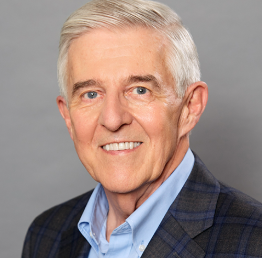
Building strong and lasting client relationships is crucial for a successful legal career. Many lawyers mistakenly believe that mastering legal skills alone ensures success, but law is fundamentally a service industry—our job is to solve problems through the time we sell. To build long-term relationships, attorneys must focus on three core elements: knowing their clients, understanding how their legal issues fit into a larger context, and consistently delivering exceptional service.

Randy advises clients with regard to business transition, taxable and tax-deferred mergers and acquisitions, joint ventures, restructuring, integrated tax planning, federal and state tax controversy resolution, and real estate transactions. Trust is the cornerstone of any client relationship. Ultimately, my clients feel they are in capable hands with someone who genuinely understands their problems and goals. https://www.jmbm.com/l-randolph-harris.html


At Millhaven Homes our professionals bring extensive experience in creating custom luxury properties. Your needs are the central focus.

We savor the sanctuary of awe-inspiring spaces, unique architectural details and fine craftsmanship. The key to a successful relationship is communication. We will incorporate your thoughts and ideas into your new home.

With vast experience in all types of custom home construction, our premier services are created for you, so you can get the most out of the function and design of your dream home.

Discover Millhaven Homes today. Let us design and build a custom home that reflects your style, comfort, and aspirations. We are here to bring your vision to life with creativity, care, and attention to every detail.

Home is the place where, when you have to go there, they have to take you in. Whether you are considering building a dream home or simply fascinated by architectural marvels, Millhaven Homes is the builder for you.

“Those who deny freedom to others, deserve it not for themselves; and, under a just God, can not long retain it.” -President Abraham Lincoln

America is a nation founded on godly principles, by God-fearing men. As a nation, we have convinced ourselves of our uniqueness with concepts such as Manifest Destiny and American exceptionalism. Manifest destiny was the imperialist belief in the 19th-century United States that American settlers were destined to expand from sea to shining sea.

American exceptionalism, idea that the United States of America is a unique and even morally superior country for historical, ideological, or religious reasons. As a nation we appear favored and blessed by the Lord with success and prosperity unparalleled in human history.

America has a lot of amazing things – its beautiful natural scenery, vibrant cities, unique culture, and some of the world’s most iconic landmarks — it us no wonder many choose to make America their home.


They were Covering Up Blackmail Payments Made to Death

Every soul is precious. Salvation for the dead is a doctrine which shows forth the love and mercy and justice of God in His dealings with all His children—not only to those whose receive the gospel in this life, but to all those to whom this privilege does not come, since the are all precious in the Lord’s sight. As Americans, we are a most blessed and favored people. The Lord has restored to us the sealing power, the power to bind on Earth and have our acts sealed eternally in the Heavens. Elijah—a prophet was taken up into Heaven without tasting death, and is not a resurrected and exalted being—we must remind ourselves of that. A great truth is that we are spirit children of God our Heavenly Father; we dwelt with Him for long ages in our premortal life. If we are faithful and true in all things, God ordained a plan of progression and salvation which requires us to advance and progress until we become more like Him. This plan of salvation is designed to enable us to create eternal family units of our own. We must also remind ourselves that God has restored the fulness of His everlasting gospel. He has revealed anew the law and principles by which we may press forward in righteousness until we gain eternal life. And He has conferred again upon men that priesthood and those powers whereby they can be sealed up onto eternal life. #RandolphHarris 1 of 24

Mort, a thirty-year-old man with a slowly developing form of cancer, incurable in the present state of knowledge, was given at worst two years, and at best, five. His psychiatric complaint was tics, consisting of nodding his head or shaking his feet for reasons unknown to him. In his treatment group he soon found the explanation: he was damming his fears behind a continuous wall of music which ran through his mind, and his tics were his way of keeping time with that music. It was established by careful observation that it was this way ‘round and not the other, that is, that it was not music keeping time with the tics, but body movement keeping time with mental music. At this point everyone, including Mort, saw that if the music were taken away by psychotherapy, a vast reservoir of apprehension would be released. Unless his fears could be replaced by more agreeable emotions, the consequences of this were unforeseeable. What to do? It soon became clear that all the members of the group knew that they were going to die sooner or later, and that they all had feelings about it which they were holding back in various ways. Just as with Mort, the time and effort they spent covering up were blackmail payments made to death, which prevented them from fully enjoying life. Such being the case, they might do more living in the twenty of fifty years left to each of them than Mort could do in the two to five years left to him. #RandolphHarris 2 of 24

Thus it was determined that it was not the duration of life, but the quality of living which was important: not a startling or novel discovery, but one arrived at in a more poignant way than usual because of the presence of the dying man, which had a deep effect on everyone. It was agreed by the other members (who understood Martian talk, which they gladly taught Mort, and which he gladly learned) that living meant such simple things as seeing the evergreen trees and emerald green grass, hearing the lovely birds see and frogs croaking at night, and saying Hello to people: experiences of awareness and spontaneity without drama or hypocrisy, and with reticence and decorum. They also agreed that to do these things, all of them, including Mort, had to get tough about the trash in their heads. When they saw that his situation was, in a way, not much more tragic than their own, the sadness and timidity caused by his presence lifted. They could now get tough with him about his trash, because now he knew the value of toughness, and why they were being tough; in return, he had the privilege of getting tough with them about their trash. In effect, Mort turned in his cancer card and resumed his membership in the human race, although everyone, including himself, still fully realized that his predicament was more acute than anyone else’s. #RandolphHarris 3 of 24

This situation illustrates more clearly than most others that pathos and depth of the Hello problem, which, in Mort’s case, went through three stages. When he first entered the group, the others did not know that he was a condemned man. They first addressed him in the manner customary in that group. Their approaches were basically set by each member’s upbrining—the way his parents had taught him to greet other people, adjustments learned later in life, and a certain respect and frankness appropriate to psychotherapy. Mort, being a newcomer, responded the way he would anywhere else, pretending to be ambitions, red-blooded American boy his parents had wanted him to be. However, when he stated, during his third session that he was a doomed man, the other members felt confused and betrayed. They wondered if they had said anything which would make them look bad in their own eyes and his, and especially in the eyes of the therapist. They seemed, in fact, angry at both Mort and the therapist for not telling them sooner, almost as though they had been tricked. In effect, they had said Hello to Mort in a standardized way, without realizing to whom they were speaking. Now that they knew he was a special person, they wished they could go back and start over, in which case they would treat him differently. #RandolphHarris 4 of 24

So the did start over. Instead of talking forthrightly, as they had before, they addressed him softly and cautiously, as though to say: “See how I’m going out of my way to be thoughtful of your tragedy?” None of them wanted to risk his good name now by speaking out to a dying man. However, since it gave Mort the upper hand, this was unfair. Nobody dared to laugh very loud in such a presence. When the problem of Mort could be solved, this was corrected; then the tension lifted and they could go back and start over for the third time, talking to him as a member of humanity, without restraint. Thus, the three stages were represented by the superficial Hello, the tense, sympathetic Hello, and the relaxed, real Hello. Zoe cannot say Hello to Mort until she knows who he is and that can change from week to week, or even from hour to hour. Each time she meets him, she knows a little more about him than she did the last time. If she wants to keep up with their advancing friendship, she must say Hello to him in a slightly different way. However, since she can never know all about him, nor anticipate all the changes, she can never say a perfect Hello, but only come closer and closer to it. Therefore, we must remember our first concern should be our salvation, and this will allow us to treat others with more compassion and empathy. #RandolphHarris 5 of 24

Our descendants and our ancestors are all members of our families, and we do and should have more concern about their spiritual well-being than that of any other people in the World. That is one thing the groups was missing, concern about the spiritual well-being of others. Miguel Unamuno’s declaration that “love is the child of illusion” is one of those statements which are themselves the product of illusion. For the pure state of love is the Cosmic Energy which holds together and continuously activates the entire universe. It is those shadows of shadows of love which appear in the beasts as lust, in the humans as affection, which represent states that are transient and, in that sense, unreal. This transiency is obvious enough in the beast’s case but less so in the human’s. We may divide these different kinds of love conveniently into animal-physical love, emotional-mental love, and spiritual-love. When Saint John of the Cross was prior of the Monastery of Segovia, he was unjustly dismissed from his high position by his own superiors in the Order and banished to an unhealthy hermitage in semi-wild country. However, he bore no ill-will against his persecutors, and even wrote a letter: “Where there is no love, put love and you will get back love.” This is so, but he did not state that the returning love might take a long time to appear, so long that a whole lifetime in some cases, or several incarnations in other cases might be needed. #RandolphHarris 6 of 24

Therefore, love must be accompanied by patience. If we look for quick results, we may look in vain. Indeed, we ought not to look for any results at all. If we wish, in all such relationships with hostile persons, we ought to do what is right, forgiving, extending goodwill, but leaving the outcome to take whatever course it did. Act, but do not be attacked to the consequences of your action. If you want to practice goodwill, be patient. Some biologist had remarkable confidence in their ability to resolve the problems of politics by the methods of science. When the First World War threw the menace of “kaiserism” into the limelight, Frederick Adams Woods, a student of heredity in royal families, pointed out that the most despotic Roman emperors had been closely related. If despots are largely the result of hereditary forces, he concluded, “then the only way to eliminate despots is to regulate the sources from which they spring.” In so far as the despots are recast in their ancestral mold, “the number of despots can be reduced by a control of the marriages from which they originate.” The ideology of the movement drew fire from representatives of the trend toward cultural analysis in sociology. #RandolphHarris 7 of 24

Lester Ward, who had long before tried to refute Galton, saw in the eugenics ideology a menace to his own theories, and he had devoted the greater part of his Applied Sociology to an attack upon the hereditarian argument. Analyzing the very cases used by Galton to prove that genius is hereditary, Ward showed that opportunity and education were also universally present. In 1897 Charles H. Cooley, influenced by Ward’s own early work, published a critical review of Galton’s thesis, pointing out that all his cases of “hereditary genius” had been provided with certain simple tools—literacy and access to books—without which no amount of genius could make its way. Remarking that there had been a very high percentage of illiteracy among the common people of England in the middle of the nineteenth century, Cooley asked how the geniuses in this mass of illiterates could have risen to fame, no matter how great their native endowment. Albert Galloway Keller also reminded eugenists that their proposals involved a thoroughgoing transformation in the mores, above all in the strong and deep-rooted mores of pleasures of the flesh. #RandolphHarris 8 of 24

It was Cooley who summarized the most pointedly the objections of mature sociologist to the eugenists’ conception of social causation: “Most of the writers on eugenics have been biologists or physicians who have never acquired that point of view which sees in society a psychological organism with a life process of its own. They have thought of human heredity as a tendency to definite modes of conduct, and of environment as something that may assist or hinder, not remembering what they might have learned even from Darwin, that heredity takes on a distinctively human character only by renouncing, as it were, the function of predetermined adaptation and becoming plastic to the environment. The ability to act according to one’s conscience depends on the degree to which one has transcended the limits of one’s society and has become a citizen of the World. The average individual does not permit himself to be aware of thoughts or feelings which are incompatible with the patterns of his culture, and hence he is forced to repress them. Formally speaking, then, what is unconscious and what is conscious depends on the structure of society and on the patterns of feeling and thought it produces. #RandolphHarris 9 of 24

As to the contents of the unconscious, no generalization is possible. However, one statement can be made: it always represents the whole man, with all his potentialities for darkness and light; it always contains the basis for the different answers which man can give to the question which existence poses. In the extreme case of the most regressive cultures, bent on returning to animal existence, this very wish is predominant and conscious, while all strivings to emerge from this level are repressed. In a culture which has moved from the regressive to the spiritual-progressive goal, the forces representing the dark are unconscious. However, man, in any culture, has all the potentialities within himself; he is the archaic man, the beast of prey, the cannibal, the idolater, and he is the being with a capacity for reason, for love, for justice. The content of the unconscious, then, is neither the good nor the evil, the rational nor the irrational; it is both; it is all that is human. The unconscious is the whole man—minus that part of him which corresponds to his society. Consciousness represents social man, the accidental limitations set by the historical situation into which an individual is thrown. #RandolphHarris 10 of 24

Unconsciousness represents universal man, the whole man, rooted in the cosmos; it represents the plant in him, the animal in him, the spirit in him; it represents his past, down to the dawn of human existence, and it represents his future up to the day when man will have become fully human, and when nature will be humanized as man will be “naturalized.” To become aware of one’s unconscious means to get in touch with one’s fully humanity and to do away with barriers which society erects within each man and, consequently, between each man and his fellow man. To attain this aim fully is difficult and a rare occurrence; to approximate it is in the grasp of everybody, as it constitutes the emancipation of man from the socially conditioned alienation from himself and humankind. Nationalism and xenophobia are the opposite poles of the humanistic experience brought about by becoming aware of one’s unconscious. Which factors make for greater or lesser awareness of the social unconscious? First, it is obvious that the certain individual experiences make a difference. #RandolphHarris 11 of 24

The son of an authoritarian father, who has been rebelling against fatherly authority without being crushed by it, will be better prepared to see through the social rationalizations and to become aware of the social reality which, to most, is unconscious. Similarly, members of racial, religious, or social minority groups which have been discriminated against by the majority, will often be more likely to disbelieve in the social clichés; this hold also true for the members of an exploited and suffering class. However, such class situation by no means always makes the individual more critical and independent. Very often his social status makes him more insecure and more eager to accept the clichés of the majority to be acceptable and to feel secure. It would take a minute analysis of many personal and social factors to determine why some members of minorities or exploited majorities react with increased criticism, and others with increased submission to the ruling patterns of thought. In addition to these factors, there are purely social ones which determine how strong is the resistance against the awareness of the social reality. If a society or a social class has no chance to make any use of its insight because there is objectively no hope for a change for the better, the chances are that everybody in such a society would stick to the fictions since the awareness of the truth would only make them feel worse. #RandolphHarris 12 of 24

Since they have nothing to gain by the truth, decaying societies and classes are usually those which hold most fiercely to their fictions. Conversely, societies—or social classes—which are bound for a better future offer conditions which make the awareness of reality easier, especially if this very awareness will help them to make the necessary chances. A good example is the bourgeois class in the eighteenth century. Even before it had won political hegemony over the aristocratic class, it had shed many fictions of the past and had developed new insight into the past and present social realities. The writers of the middle classes could penetrate through the fictions of feudalism because they did not need these fictions—on the contrary, they were helped by the truth. When the bourgeois class had been firmly entrenched and was fighting against the onslaught of the working class and, later, the colonial peoples, the situation was reversed; the members of the middle classes refused to see the social reality, the members of the forward-moving new classes were more prone to dispense with many illusions. Very often, however, individuals developing these insights in support of the groups fighting for their freedom came from the very classes against they were fighting. #RandolphHarris 13 of 24

In all such cases one would have to examine the individual factors which make a person critical of his own social group, and make him side with the group to which he des not belong by birth. The social and the individual unconscious are related to each other and in constant interaction. In fact, unconsciousness/consciousness is, in the last analysis, indivisible. What matters is not so much the content of what is repressed, but the state of mind and, to be more precise, the degree of awakedness and realism in the individual. If a person in each society is not able to see the social reality, and instead fills his mind with fictions, his capacity to see the individual reality regarding himself, his family, his friends, is also limited. He lives from all sides, and to believe that the fictions suggested to hum are the truth. (Of course, a person will be particularly prone to repress the awareness of reality regarding his personal life in areas where social repression is particularly marked. In a society, for instance, which cultivates obedience to authority, and hence repression of awareness or criticism of authority is not an essential part of social repression.) #RandolphHarris 14 of 24

With the growth of the “new science,” religion in its traditional forms became less and less effective, and there appeared the danger that the values which in Europe were anchored in the theistic frame of reference would be lost. Dostoevski expressed this fear in his famous statement: “If there is no God, everything is possible.” In the eighteenth and nineteenth centuries, several people saw the necessity for creating an equivalent to what religion stood for in the past. Even if it could be done, Robespierre tried to create an artificial new religion and necessarily failed because his background or enlightened materialism and idolatrous worship of posterity did not permit him to see the basic elements which would have been needed for founding a new religion. Similarly, Comte thought of a new religion and his positivism made it equally impossible to arrive at a satisfactory answer. In many ways, Marx’s socialism in the nineteenth century was the most important popular religious movement—though it was formulated in secular terms. If he believed in God ceased was only partly filled, Dostoevski’s prognosis of the breakdown of all ethical values. Those ethical values of modern society which are generally accepted by law and custom, such as respect for property, for individual life, and other principles remained intact. #RandolphHarris 15 of 24

However, those human values which go beyond the requirements of our social order did, indeed, lose their influence and weight. However, Dostoevski was wrong in another and more important sense. Development during the last ten, and especially the past five, years all over Europe and in America have shown an extraordinarily strong trend toward the deeper values of the humanistic tradition. This new quest for a meaningful life did not arise only among small and isolated groups, but because a whole movement in countries of entirely different social and political structures, as well as within the Catholic and Protestant churches. What is common to the believers and the nonbelievers in this new movement is the conviction that concepts are only secondary to dees and human attitudes. A Hassidic story might exemplify this point. The adherent of a Hassidic master is asked, “Why do you go to hear the master? It is to hear his words of wisdom?” The answer is, “Oh, no, I go to see how he ties his shoelaces.” The point hardly needs an explanation. What matters in a person is not the set of ideas or opinions which he accepts, because he has been exposed to them since childhood or because they are conventional patterns of thought, but the character, attitude, the visceral root of his ideas and convictions. #RandolphHarris 16 of 24

The Great Dialogue is based on the idea that shared concern and experience are more important than shared concepts. This does not mean that the various groups referred to here have abandoned their own concepts or ideas or hold that they are not important. However, they have all come to the conviction that their shared concern, their shared experience, their shared action causes them to have much more in common than what separates them by their unshared concepts. Abbe Pire has expressed it in an amazingly simple and forceful way: “What matters today is not the difference between those who believe and those who do not believe, but the difference between those who care and those who don’t.” Thus far all my hypotheses regarding the possibility of constructive growth have rested upon the experiencing compassion and empathy by the counselor. There is, however, one condition which must exist in the client. Unless the attitudes I have been describing have been to some degree communicated to the client, and perceived by him, they do not exist in his perceptional World and thus cannot be effective. Consequently it is necessary to add one more condition to the equation which I have been building up regarding personal growth through counseling. It is that when the client perceives, to a minimal degree, the genuineness of the counselor and the acceptance and empathy which are the counselor experiences for hum, then development in personality and change in behaviour are predicted. #RandolphHarris 17 of 24

This had implications for me as a counselor. I need to be sensitive to the flow of feeling sin my client. I must also be sensitive to the way he is receiving my communications. I have learned, especially in working with more disturbed persons, that empathy can be perceived as lack of involvement; that an unconditional regard on my part can be perceived as indifference; that warmth can be perceived as a threatening closeness, that real feelings of mine can be perceived as false. I would like to behave in ways, and communicate in ways which have the clarity for this specific person, so that what I am experiencing in relationship to hum would be perceived unambiguously by him. Like the other conditions I have proposed, the principle is easy to grasp; the achievement of it is difficult and complex. Analysis sets going or accentuates a play of forces within the self between two groups of factors with contrasting interests. The interest of the one group is to maintain unchanged the illusions and the safety afforded by the neurotic structure; that of the other group is to gain a measure of inner freedom and strength through overthrowing the neurotic structure. It is for this reason that analysis, as has already been strongly emphasized, is not primarily a process of detached intellectual research. #RandolphHarris 18 of 24

The intellect is an opportunist, at the service of whatever interest carries the greatest weight at the time. The forces that oppose liberation and strive to maintain the status quo are challenged by every insight that can jeopardize the neurotic structure, and when thus challenged they attempt to block progress in one way or another. They appear as “resistances” to the analytical work, a team appropriately used by Dr. Freud to denote everything that hampers this work from within, Resistance is by no means produces only by the analytical situation. Unless we live under exceptional conditions life itself is at least as great a challenge to the neurotic structure as is the analyst. A person’s secret claims on life are bound to be frequently frustrated because of their absolute and rigid character. Others do not share his illusions about himself, and will hurt him by questioning or disregarding them. Inroads upon his elaborate but precarious safety measures are unavoidable. These challenges may have a constructive influence, but also, he may react to them—as he does in analysis—first with anxiety and anger, one or the other prevailing, and then with a reinforcement of the neurotic tendencies. He becomes still more withdrawn, more dominating, more dependent. #RandolphHarris 19 of 24

In part the relationship with the analyst produces much the same feelings and responses as the relationships with others. However, since analysis is an explicit attack on the neurotic structure, the challenge it presents is great. One of the most fundamental distinctions we make about the content of our experiencing has to do with whether it is really there, whether we are perceiving something or only imagining it. Each person, and for that matter each society, is committed to a set of assumptions about what is real (what can be perceived) and what is unreal. Reality is a person or group of persons takes to be real. In the last analysis, reality is an attribution, that is, an act or judgment performed by a person, imbuing some experience with the quality of a reality that must be reckoned with. By the same token, we can withdraw our attribution of reality from some experience and view it as not real. Thus, a person may awaken from deep sleep with the conviction that someone is trying to harm him. Upon awakening, he reflects upon this experience and says, with relief, “It is not real—no one is trying to harm me; I was only dreaming.” #RandolphHarris 20 of 24

On the other hand, he may experience himself as trapped by a dominating parent and believe that the parent has more power to control his destiny than he has strength to oppose. He lives his life, then, according to his parents wishes, or what he believes those wishes would be. To an outsider, his estimate of his own strength in relation to the strength of the parent seems unrealistic. However, he lives according to what he takes to be the case, what he experiences as real. He attributes reality to experiences of ghosts and spirits, and they experience plants, animals, and all of nature as having souls and personalities. The “real World,” the World that is real for them, differs from that experienced by the modern Westerner. She regards that World view as mere animism—the ghosts, spirits, and souls with which the “primitive” person lives in her daily life are figments of imagination to the sophisticated person of the modern World. For her, only what can be recorded upon instruments, such as cameras and sound recorders, is taken to be real. The goal of the Sacramento Fire Department is to save lives, protect property, ease pain and suffering, and many feel that they are blessed by this opportunity. #RandolphHarris 21 of 24

Living a life of service is a great honour and privilege. “I think that firefighters are still highly regarded by the public, but we’re not the heroes we used to be. I think the reason is that they know what we’re making. Last year I made around $188,760 with overtime. I went to college for only two years. In how many other jobs can you go to training for four weeks and get a job paying that amount of money? Some people think about firemen as just sitting around. But for the most part, the public thinks that we’re pretty good, especially here in Sacramento, because we run the emergency medical service. That is a big plus. I want to get rid of the myth of the guys just sitting around playing checkers, and get people to understand that we are actively doing other things. I’ve had people tell me, ‘Oh, you work one day, you’re off four, you’re off five. I saw how much you make in the paper. You guys don’t do anything.’ To them, firemen are making tremendous salaries—whether we deserve it or not is immaterial to them—firemen have tremendous benefits, tremendous time off, which allows them to work second jobs. Plus, they go past the fire stations, and they see BMWs and other expensive vehicles in the back of the station. They say, ‘Look at those damn firemen, man, they’re making a tremendous amount of money, and I’m pounding nails and not making anything near them.’ A lot of envy, or at least resentment. #Randolph Harris 22 of 24

“The cops are the heroes now. Maimi Vice has something to do with it. A lot of buildings that you see, they paint those pastels on the buildings before they shoot, especially the ones they blow up. I’ve worked those sets as a fireman. Nonetheless, Sacramento is changed. They call it the Coatzacoalcos now. I would not have a cop’s job down here. Statistically, more firemen get killed an injured than policemen, but not so in Sacramento. Here the cops get killed way more often than firemen do. The killers are stealing or looting because they need money to buy drugs. Meth City, Sacramento. I really believe that professional is the name of the game, and that we have to continue to become more vital to the public. There is a lot of community in us. We care about Sacramento County. And we have to serve the public in many ways, emergency medical services, for instance. The more we have mandatory sprinklers in buildings, the less manpower and resources a fire department will need, and so we must be community-involved. I will say one thing, I’m gladder than hell I’m not a paramedic. I tried it for a while, and I didn’t like it. I don’t begrudge going on a medical call, but I’d prefer fighting a fire.” #RandolphHarris 23 of 24

You can help save lives, property and create community programs by donating to the Sacramento Fire Department. And parents, remember to teach your children to love America, love their family, treat others with respect. Be proud patriot Americans. Teach them to love God and Jesus Christ, to get an education, and to respect law and order, property, and nature. I pledge allegiance to the flag of the United States of America, and to the Republic, for which it stands, One Nation, Under God, Indivisible with Liberty and Justice for all. Rock from whose store we have eaten—bless Him, my faithful companions. Eaten have we and left over—this was the word of the Lord. Feeding His World like a shepherd—Father whose bread we have eaten, Father whose premium cranberry juice we have drunken, now to Hos name we are singing, Praising Him loud with our voices, saying and singing forever: Holy is none like the Lord. It is obvious that only a small portion of mankind has so far heard the word of revealed truth from the voice of one Lord’s true servants. In the wisdom and justice of the Lord, all must do so. As Peter said: “For this cause was the gospel preached also to them that are dead, that they might be judged according to men in the flesh, but live according to God in the spirit,” reports 1 Peter 4.6. #RandolphHarris 24 of 24

The Winchester Mystery House

Only 13 days left until our final flashlight tour of the year! Legend has it that Sarah had a special connection to the number 13, which you can see highlighted in various features throughout the house. Was it just by chance, or by design?

See if you can find them all during our self-guided flashlight tour on July 27th 🔦

Please come and enjoy a delicious meal in Sarah’s Café, stroll along the paths of the beautiful Victorian gardens, and wonder through the miles of hallways in the World’s most mysterious mansion. For further information about tours, including group tours, weddings, school events, birthday party packages, facility rentals, and special events please visit the website: https://winchestermysteryhouse.com/

Please visit the online giftshop, and purchase a gift for friends and relatives as well as a special memento of The Winchester Mystery House. A variety of souvenirs and gifts are available to purchase. https://shopwinchestermysteryhouse.com/

Many Have an Expectation of Heaven on Earth

Typically, it is thought that incapacity prevents man from becoming a capitalist. It is characteristic of the higher species to be less wasteful in having progeny. Civilization replaced natural selection with selection by intelligence. Yet, it is believed that the wealthy are the most fit to survive and that they must propagate more freely to promote civilization. Although some people have contempt for the value of human life, the sympathetic party is all for alleviating the condition of the working class by social legislation. However, the masses cannot be artificially saved from their own incompetence without social disaster. American society, under the influence of the philanthropists of the sympathetic party, is being deluged by a flood of immigrants and dragged down by an increasing proportion of incapables. The scientific party would defend the principles of competition, conformity to the law of supply and demand, and a fair field for the experiment of the survival of the fittest. The divisions among us are rather a process of natural selection. You will see, as you get better acquainted with the workings of our institutions, that there are no arbitrary distinctions here, but the fitness of the work for the man and the man for the work determines the social rank that each one holds. You know we are a sort of fatalists here in America. We are great believers in the doctrine that it will all come out right in the end. The crowding of the World, by stimulating industry and forcing men to develop their capacities by crushing the unfit, by casting out the unworthy and raising the worthy to prosperity and power, acts as the greatest motive power of progress. #RandolphHarris 1 of 17

One may come to self-approving attitudes, but only after one has plumbed the depths of self-distrusting ones. Regardless of what the great minds think, humanity dictates the preservation of all, weak or strong, who come into existence, and even modern warfare selection for survival of the weak, cowardly, and superannuated and destroys the fit. Therefore, education demands a high standard of comfort, which in turn demands the limitation of reproduction to the true needs of the race. Every time one takes the harder way of acknowledging a fault, repenting a wrong, and then earnestly seeking to make reparation to whoever has suffered by it, he will be repaid by the sudden descent of gratifying peace, of a happy serenity absent from ordinary hours. His attitude towards those situations in life which are difficult or trying will show how far he has really gone in the Quest. If he has not undergone the philosophic discipline, he will either analyse these situations in a wrong egoistic way or else avoid analysing them altogether. Tolerate weakness in others but not in yourself. If this process of self-examination is to bear fruit, the disciple must pick out those virtues which he lacks or in which he is partially deficient and he must set to work, as a practical exercise, to cultivate them. If his practice is to be complete it will take him into the emotional, intellectual, and volitional parts of his being. He should constantly strive to think, to feel, and to do what he should be and do. So long as a man carries a flattering picture of himself, deterioration of character waits in ambush for him. #RandolphHarris 2 of 17

We have, indeed, an unbounded imagination and initiative for solving technical problems, but a most restricted imagination when we deal with human problems. Why is this so? An obvious answer is that we do not have the knowledge in the field of the science of man that we have in the natural sciences and in technique. However, this answer is not convincing; why do we not have the necessary knowledge? Or, and this is even more to the point, why do we not apply the knowledge we do have? Nothing can be proved without further study, but I am convinced that to find a practical solution for the integration of optimal centralization and optimal decentralization will be less difficult than to find technical solutions for space travel. The real answer why this kind of research is not done lies in the fact that, considering our present priorities, our interest in finding humanely more acceptable solutions to our social organization is only feeble. Nevertheless, while emphasizing the need for research, we must not forget that there has already been a good deal of experimentation and discussion about these problems going on in the last decades. Both in the field of industrial psychology and management science, one finds several valuable theoretical discussions and experiments. Another objection, often combined with the previous one, says that if there is an effective control of decision making on the political level, there is no need for active participation in a corporation, since it will be properly supervised by the legislative and executive branches of the government. #RandolphHarris 3 of 17

This objection does not consider the fact that today government and the corporations are already so interwoven that it is difficult to say who controls whom—furthermore, that government decisions themselves are not under effective control by the citizens. However, even if there existed a satisfactory active participation of the citizens in the political process, as it is suggested here, the corporation itself must become responsive to the will, not only of the participants, but of the public at large because it is affected by the decisions of the corporation. If such direct control over the corporation does not exist, it will be very difficult for the government to exercise power over the private sector of the system. Another objection will point out that the double responsibility in decision making which is proposed here will be a source of endless friction between the top and the “subjects” and will be ineffective for this psychological reason. Talking about the problem in an abstract sense, we may easily find it formidable, but once such changes are accepted, the resulting conflicts will be far less sharp and insoluble than they are if one looks at the picture in an abstract way. After all, the managers have an interest in performing, and so have the participants in an enterprise. As soon as the bureaucrat becomes “vulnerable,” that is to say, begins to respond to desires and claims from those subject to him, both sides will become more interested in the problems than in preserving their positions either as authority or challenger. That this is possible has been shown at several universities in the United States of America and abroad where once the participation of students was accepted, there was little friction between administration and students. This has been demonstrated in the Yugoslav system of the self-management of the workers and in the experience of the many cooperative moments all over the World. #RandolphHarris 4 of 17

If the bureaucratic mode were changed from an alienated to a humanistic one, it would necessarily lead to a change in the type of manager who is successful. The defensive type of personality who clings to his bureaucratic image and who is afraid of being vulnerable and of confronting persons directly and openly would be at a disadvantage. On the other hand, if the method of management were changed, imaginative nonfrightened, responsive persons would be successful. These considerations show how erroneous it is to speak of certain methods of management which cannot be changed because the managers would not be willing or capable of changing them. What is left out here is the fact that new methods would constitute a selective principle for managers. This does not mean that most present managers would be replaced by the new type of manager. No doubt there are many who under the present system cannot utilize their responsive capacities and who will be able to do so once the system gives them a chance. Among the objections to the idea of active participation of the individual in the enterprises in which he works, perhaps the most popular one is the statement that, in view of increasing cybernation, the working time of the individual will be so short and the time devoted to leisure so long that the activation of the individual will no longer need to take place in his work situation, but will be sufficiently accomplished during his leisure time. This idea is based on an erroneous concept of human existence and of work. #RandolphHarris 5 of 17

Man, even under the most favourable technological conditions, must take the responsibility of producing food, clothing, housing, and all other material necessities. This means he must work. Even if most physical labour is taken over by the machines, man has still to take part in the process of the exchange between himself and nature; only if man were a disembodied being or an angel with no physical needs, would work completely disappear. Man, needing an assimilating nature, of organizing and directing the process of material production, of distribution, of social organization, of responses to natural catastrophes, can never sit back and let things take care of themselves. Work in a technological society may not be a “curse” anymore, but that paradisiacal state in which man does not have to take care of his material needs is a technological fantasy. Or will the solution be, as Brzezinski predicts, that only the elite will have the privilege of working while the majority is busy with consumption? Indeed, that could be a solution to the problem, but it would reduce the majority to the status of slaves, in the paradoxical sense that they would become irresponsible and useless parasites, while the free man alone would have the right to live a full life, which includes work. If man is passive in the process of production and organization, he will also be passive during his leisure time. If he abdicates responsibility and participation in the process of sustaining life, he will acquire a passive role in all other spheres of life and be dependent on those who take care of him. We already see this happening today. #RandolphHarris 6 of 17

Naturally, while every kind of experience can be repressed, it follows from Dr. Freud’s theoretical frame of reference that in his view the strivings which are incompatible with the norms of civilized man, and first the incestuous strivings. However, according to Dr. Freud, hostile and aggressive strivings also are repressed since they conflict with the existing mores and the superego. Whatever the specific contents of the repressed strivings are, in Dr. Freud’s view they represent always the “dark” side of man, the antisocial, primitive equipment of man which has not been sublimated, and which contrasts with what man believes to be civilized and decent. It must be stressed again that Dr. Freud’s concept of the unconscious, repression means that the awareness of the impulse has been repressed, not the impulse itself; in the case of sadistic impulses, for instance, this means that I am not aware of my wish to inflict pain on others. However, this does not necessarily mean that I do not inflict pain upon others without being aware that they suffer from my actions. There is also the possibility that the impulse is not acted upon precisely because I could not prevent myself from being aware of it, nor find a fitting rationalization. In this case the impulse will still exist, but the repression of its awareness will lead to its suppression as far as acting upon it is concerned. In any case, repression means a distortion in man’s consciousness, it does not mean the removal of forbidden impulses from existence. It means that the unconscious forces have gone underground and determine man’s actions behind his back. #RandolphHarris 7 of 17

What, according to Dr. Freud, causes repression? We have said already that those impulses are prevented from becoming conscious which are incompatible with existing social or family mores. This statement refers to the contents of repression; but what is the psychological mechanism through which the act of repression is possible? According to Dr. Freud, this mechanism is fear. The most representative example is Dr. Freud’s theory is that of the boy’s incestuous strivings toward his mother. Dr. Freud assumes that the little boy becomes afraid of his rival—father—and, specifically, that father will castrate him. This fear makes him repress the awareness of the desire and helps him channel his desires in other directions, although the scar of the first fright never entirely disappears. While “castration fear” is the most elementary fear leading to repression, other fears such as that of not being loved or of being killed or abandoned can, according to Dr. Freud, have the same power as the original castration fear, namely, to force man to repress his deepest desires. While in individual psychoanalysis, Dr. Freud would look for the individual factors of repression, it would nevertheless be erroneous to assume that his concept of repression is to be understood only in individual terms. On the contrary, Dr. Freud’s concept of repression also has a social dimension. The more society develops into higher forms of civilization, the more instinctive desire become incompatible with the existing social norms, and thus the more repression must take place. #RandolphHarris 8 of 17

Increasing civilization, to Dr. Freud, means increasing repression. However, if Dr. Freud never went beyond this quantitative and mechanistic concept of society and he did not examine the specific structure of a society and its influence on repression. If the forces which case repression are so powerful, how did Dr. Freud ever hope to make the unconscious conscious, to “depress” the repressed? It is well known that the psychoanalytic therapy he devised serves precisely this end. By analysing dreams, and by understanding the “free associations,” the uncensored and spontaneous thoughts of the patient, Dr. Freud attempted to arrive, with the patient, at knowing what the patient did not know before: his unconscious. What were the theoretical premises for this use of the analysis dreams and of free association for the discovery of the unconscious? Doubtlessly in the first years of his psychoanalytic research, Dr. Freud shared the conventional rationalistic belief that knowledge was intellectual, theoretical knowledge. He thought that it was enough to explain to the patient why certain developments had taken place, and to tell him what the analyst had discovered in his unconscious. This intellectual knowledge, called “interpretation,” was supposed to effect a change in the patient. However, soon Dr. Freud and other analysts had to discover the truth of Spinoza’s statement that intellectual knowledge is conducive to change only since it is also affective knowledge. It became apparent that intellectual knowledge as such does not produce any change, except perhaps in the sense that by intellectual knowledge of his unconscious strivings a person may be better able to control them—which, however, is the aim of traditional ethics, rather than that of psychoanalysis. #RandolphHarris 9 of 17

If the patient remains in the attitude of the detached self-observer, he is not in touch with his unconscious, except by thinking about it; he does not experience the wider, deeper reality within himself. Discovering one’s unconscious is, precisely, not only an intellectual act, but also an affect experience, which can hardly be put into words, if at all. This does not mean that thinking and speculation may not precede the act of discovery; but the act of discovery is not an act of thinking but of being aware and, still better perhaps, simply of seeing. To be aware of experiences, thoughts or feelings which were unconscious, does not mean thinking about them, but seeing them, just as being aware of one’s breathing does not mean to think about it. Awareness of the unconscious is an experience which is characterized by its spontaneity and suddenness. One’s eyes are suddenly opened; oneself and the World appear in a different light, are seen from a different viewpoint. There is usually a good deal of anxiety aroused while the experience takes place, while afterward a new feeling of strength is present. The process of discovering the unconscious can be described as a series of ever-widening experiences, which are felt deeply, and which transcend theoretical, intellectual knowledge. We have spent a lot of time talking about Clare and her process of discovering the unconscious. She was on the verge of recognizing an important clue to her dependency. However, she started to argue against her findings on two grounds. #RandolphHarris 10 of 17

One was that it was nothing unusual, after all, to expect friendliness from a friend in bad times. What else was the value of friendship! If you are gay and contented, everybody is good to you. However, with your sorrows you can go only to a friend. The other ground for disapproving of her finding was a doubt that it was applicable to the misery of the evening on which it had emerged. She had exaggerated her unhappiness, to be sure, but no one had been there to impress, no Peter could be telephoned. She could not possibly be so irrational as to believe that help would come merely because she made herself feel that most miserable of human beings. Yet sometimes when she felt bad something good did happen. Somebody would call her up or invite her out. She would receive a letter, her work would be praised, music on the radio would cheer her up. She did not immediately notice that she argued for two contradictory points: that it was irrational to expect help as a direct result of feeling distressed; and that it was rational. However, Clare saw the contradiction when she reread her notes some days later, and then she drew the only sensible conclusion, which was that she must have attempted to argue herself out of something. She tried first to explain her equivocal reasoning on the basis that she felt a general distaste at finding in herself anything so irrational as an expectation of magic help—but this did not satisfy her. This was an important clue. If we find an irrational area in an otherwise rational person, we can be sure that it hides something important. #RandolphHarris 11 of 17

The fight that is often put up against the quality of irrationality is usually in reality a fight against having its background uncovered. This held true here, too. However, even without such reasoning Clare realized soon after that the real stumbling block was not irrationality per se, but her resistance against facing her findings. She recognized that a belief that she could command help through misery had a strong hold on her. Within the next months she saw with a gradually increasing measure of lucidity and in great detail what this belief did to her. She saw that she unconsciously tended to make a major catastrophe out of every difficulty that arose in her life, collapsing into a state of complete helplessness, with the result that despite a certain front of bravery and independence her prevailing feeling toward life was one of helplessness in the face of overwhelming odds. She recognized that this firm belief in forthcoming help had amounted to a kind of private religion, and that, not unlike a true religion, it had been a powerful source of reassurance. Clare also acquired a deepened insight as to the extent to which er reliance on someone else had taken the place of reliance on herself. If she always had someone who taught her, stimulated her, advised her, helped her, defended her, gave her affirmation of her value, there was no reason why she should make any effort to overcome the anxiety involved in taking her life into her own hands. #RandolphHarris 12 of 17

Thus, the dependent relationship had so completely fulfilled its function of allowing her to cope with life without having to rely on herself that it had robbed her of any real incentive to abandon the small-girlish attitude entailed in her compulsive modesty. In fact, the dependency had not only perpetuated her weakness by stifling her incentive to become more self-reliant but it had actually created an interest in remaining helpless. If she remained humble and self-effacing all happiness, all triumph would be hers. Any attempt at greater self-reliance and greater self-assertion was bound to jeopardize these expectations of a Heaven on Earth. This finding, incidentally, sheds light on the panic she felt at her first steps towards asserting her opinions and wishes. The compulsive modesty had not only given her the sheltering cloak of inconspicuousness, but it had also been the indispensable basis for her expectations of “love.” Clare realized it was merely a logical consequence, then, that the partner to whom she ascribed the godlike role of magic helper—to use a pertinent term of Erich Fromm’s—became all important, and that to be wanted and loved by him became the only thing that mattered. Peter, through his peculiar qualities—apparently he was the saviour type—was particularly fitted to play this role. His importance to her was not merely the importance of a friend who can be called upon in any time of real distress. His importance lay in the fact that he was an instrument whose service she could demand by making her need for them sufficiently great. As a result of these insights, she felt much more free than ever before. The longing for Peter, which at times had been excruciatingly strong, started to recede. More important, the insight brought about a real change in her objectives in life. She had always consciously wanted to be independent, but in her actual life had given this wish mere lip service and had reached out for help in any difficulty that arose. Now to become able to cope with her own life became an active, alive goal. #RandolphHarris 13 of 17

When I notice that I am feeling selfish, then I notice also that I need to be selfish at that time, and the clear statement of my need comes out matter-of-factly, without appeal or demand. There are no implications. Of course, sometimes when I notice that I am being selfish, I see that I do not need to be, that it was all very silly and I can easily give it up. The noticing in the way that I have attempted to describe seems at arrive at the truth of the moment is free, not bound by anything. To me, this is spontaneity, which includes humour too, but this humour is rarely possible to convey to someone else in anecdote, because it is so much a part of the unique circumstances of the moment that all the circumstances have to be described, and then the humour is lost because it is the coming together of everything in one moment that is funny. This is a bubbly way to live—I mean the kind of bubbles that come up through soda water. When we strive for bubbles—which seems to happen often in my own society—it seems to me more like what comes out of the top of a percolator under full steam. To acknowledge past perceptual error, to confess intellectual mistake, and to retrace one’s steps accordingly may be bad policy for politicians, but it is sound policy for truth-seekers. The superficial or the conceited may feel that they lose in character thereby, but the earnest and the humble will, on the contrary, know that they gain. No one else is to be regarded as responsible for his troubles, irritations, or handicaps. If he will analyse them aright, that is, with utter impersonality, he will see that the responsibility is not really in the other person, who apparently is the agent for these calamities, but in his own undisciplined character, his own egoistic outlook. #RandolphHarris 14 of 17

A useful exercise at this point is for the reader to ask, “What do I think my best possibilities are? To what extent do I approximate these conceptions of healthy personality? What changes might I make in my life to grow more in the direction of my better possibilities? What do I believe is preventing me from further growth? Who are the people who seem to bring out the best in me? What experiences do I long to have that will help me to know my potentialities in work, in my career, in loving and being loved, and in caring for others? How effective is my communication with others? Do I hide my feelings or do I let others know me?” Descriptions of human beings do not just describe—they prescribe; that is, they can function to limit our perceptions of ourselves or to encourage us to transcend or exceed previous limits. I suggest this because it is now apparent that what a person believes to be his or her strengths, weaknesses, and limits are self-fulfilling prophecies. If we are convinced that we have reached our limits, then we will struggle no more. If we will struggle no more. If we believe there is no end to our limits, we may keep struggling. Human beings always striven for personal perfection. Throughout history, this quest has been religious in nature; the goal has been named salvation, purification, redemption, liberation, enlightenment, and rebirth. We only pursue what we believe is a possibility for us. Growth centers have been founded where people who are not sick can go to explore further dimensions of their growth. A healthy personality is a way for a person to act, and guided by intelligence and respect for life, so that as his or her needs are satisfied, the person grows in awareness, competence, and the capacity for love of self, others, and the natural environment. #RandolphHarris 15 of 17

This country is home to a great diversity of people. In the future, most of the population will look different, in large part due to immigration from Central and South America and from Asia. As baby boomers age, the proportion of older people within the population will increase. This segment of the population will require new programs to meet its unique fire and life safety needs. The larger number of senior citizens will require specially targeted education. Many may live in new types of arrangements designed for the elderly that will have special fire and life safety requirements. Outreach appropriate to the lifestyle and concerns of this group will be needed. “My fire training at that time was right at the fire station. We had one station that was supposed to be the training academy. We just called it the training department. It was only eight weeks long. Now they have a regular school, a regular academy. Basically, it prepared me for the job. It gave me probably 25 percent of the knowledge I needed just to get on the truck and respond to a fire. Working in the fire station was different. I had just come back from Vietnam, and I was still getting over the trauma of that. There were some practical jokes, like guys would shut the hot water off while you were taking a shower, or short-sheet your bed, little things like that. It was all in fun. To learn about firefighting, I asked a lot of questions. I followed the people I thought were competent and asked them. I watched how they operated. I couldn’t believe the hospitality I got. I got a little bit more than knowledge. Sometimes knowledge kind of scares you. The first time I was in a dangerous situation, I was only on the job probably about a year, and I got turned around inside of a closet. That scared me. I don’t know how I got turned around, a lot of it was from inexperience and not really knowing what I was doing. Because I was unaware when I first came on. #RandolphHarris 16 of 17

“All I could think about was running out of air. It was a big closet, about ten by ten. The ironic thing was that I was right by the door all the time. I did not panic, or may I wasn’t in there long enough to panic. It was black, I was on my hands and knees, trying to find my way out, couldn’t see anything. Even with the flashlight on, I couldn’t see anything. I know when I was in Vietnam and I got myself in a couple of bad situations, I was really scared. I don’t think I was so much scared of dying, I was much more scared of being captured. But on the firefighting job, I think I was afraid of dying. And it seems like the older you get, the more concerned you are. But when you’re young, you’re kind of foolish, maybe.” No man can follow the Quest faithfully without finding that the very weaknesses which he conceals from other men will eventually be brought to the forefront of his attention by the play of circumstances, so that he will be unable to postpone work on them any longer. The very fact that he has become aware of these faults arises because the light has come into existence and begun to play upon the dark places in his character, thus generating a conscious desire for self-improvement. This awareness is not a matter for depression, therefore. Adapting to the new and changing environment will require the expansion of fire department programs. You can help the Sacramento Fire Department by donating. Also, it is important to raise your child(ren) to love America. I pledge allegiance to the flag of the United States of America, and to the republic, for which it stands, one nation, under God, indivisible, with liberty and justice for all. #RandolphHarris 17 of 17


Elevate your daily routine with the luxurious vanity station in your exquisite bathroom at Residence 2 at Magnolia Station. Impeccably designed and meticulously crafted, this space embodies sophistication and indulgence. Every detail, from the sleek countertops to the soft lighting, invites you to pamper yourself in style. Contact us today to experience the epitome of luxury living. https://cresleigh.com/magnolia-station/

What I Have is Good and Still I am Unhappy

Our Heavenly Father wants us to love ourselves, to see ourselves as He see us: we are His cherished children. When this truth sinks deep into our hearts, our love for God grows. Berating others does not help them progress; it only discourages them. Along with correction, they also need encouragement. The goal with self-love is never to justify omission, rationalize sin, or slip into complacency. I recognize that certain negative feelings can help me, such as godly sorrow—but I should not wallow in it, because that is not progression. Guilt has an important role as it awakens us to changes we need to make, but there are limits to how far guilt will help us. Guilt is like a battery in a gasoline-powered BMW. It can light up the Ultimate Driving Machines, start the engine, and power the headlights, but it will not provide the fuel for the long journey ahead. The battery, by itself, is not sufficient. Ans neither is guilt. I must be intentional not to slip into negative thinking patterns and should instead focus on loving Jesus as the Christ. I once had an image of myself as a fish. My fish image was that I was a fish, struggling to swim against the stream. I was not able to do that yet. I was held where I was, which gave a chance to learn how to swim against the stream (go the way that I wanted to go) by two shadowy figures on a bridge, each of them holding a line which I was hooked like a fish. This kept me from being swept away by the swiftly moving stream. I know that the two figures were the doctor and Aldous Huxley. Neither of them understood everything, but each of them understood enough to be helpful. #RandolphHarris 1 of 18

When I got worse physically, the doctor got me back to some degree of steadiness. When, through experimenting with my mind, I got into something that neither the doctor nor I understood, so I was afraid to go on with it, I wrote to Huxley and he explained it. These two men kept me from being swept away while I thrashed around, learning how to swim against the stream. This was a persistent image that I lived with for about a year. These men were also people to whom I could tell anything and they would not “call the cops.” This meant to me that they would not call men to lock me up. I thought of being “locked up” as being in a madhouse, but it was not a mental hospital that I was afraid of, although I did not know what the “madhouse” was. It meant being pushed back into what I was struggling to get out of. Other people tended very much to do this to me, so I lived more and more alone and when, at last, I was just barely able to travel I went to a place where I knew no one, and kept myself alone, so that I could get together with myself. I wanted desperately to be with someone who understood more than I did about what I was trying to understand, but since I could not do that, I could at least remove myself from people who were confusing me. After all that, some of my present knowings seem small and perhaps ridiculous, but I know now that they are not “unimportant.” I am living near the beach in an apartment which has an outside deck with a railing. When my son was here, he started to throw his damp swimming trucks and towel over the railing, then said, “The management probably wouldn’t like that—I can see why.” I agreed, and his statement was accurate, but whose seeing was the seeing why? When I agreed, in my mind there was an image of the uncluttered railing as described, something that I like. #RandolphHarris 2 of 18

However, a few days later when I walked past a building with a railing draped with swimsuits and towels, I knew that I liked this, that to me it looked gay and human, alive with an activity of people. Then I knew how much I missed seeing clothes on lines blowing in the wind, people working untidily in gardens, sweeping sidewalks, dashing out of houses half-dressed to do something that should be done right now, or a woman drying her hair in the sun. When I looked out on the tidy street with no sign that anyone lives behind the curtains in the windows of the houses, it seems so lifeless. The alwaysness of this tidiness tires me the way that hunger does; something is missing from my intake. If no one else feels as I do, this still is the way that I feel, and when I think that I do not, I am not together with myself. If I could deceive myself completely by accepting other people’s values, then there might be an argument for giving up and letting other people tell me what to do. However, my inner valuing does not cease: it just gets buried to my knowing and is forever in conflict with the values that I have accepted from outside. When I had not noticed my own valuing of the street on which I live, there was nothing that I could do about it but be irked without knowing why, and feel that I must be ungrateful because “what I have is good” and still I am unhappy. Now that I have noticed, I feel happy. The conflict in me has been removed. Having accepted myself, I can accept other things too, in a way that is very different from “making the best of it.” It is the way I lived from age 12 to 16, when I wanted to quit school but the law would not let me. So, I lived with what was around me, including school, until the time when I could leave. The circumstances are different now, but the feeling is the same. I do not feel trapped. I do not feel that something has been done to me (victimized). And I do not feel guilty. #RandolphHarris 3 of 18

Currently in the United States of America there has been a lot of resentment to people who have immigrated illegally. Because of that, anyone who looks like they could be of Hispanic background have been facing a lot of discrimination. However, even if someone has illegally immigrated, it is not right to treat them less than human. If you do not like people being allowed to immigrate illegally, then that that up with your government, stop voting democrat. It is not your place to judge them. All individuals are children of God and part of His divine family. As His children, we all have divine potential and are precious in His eyes/ The scriptures teach that God “hath made of one blood all nations of men,” and “all are alike” unto Him. He does not love one race or culture more than any other. The gospel of Jesus as the Christ is for all of God’s children. The Book of Mormon teaches that the Lord invites “all to come unto Him and partake of His goodness; and He denieth none that come unto Him, black and white, bond and free, male and female.” Our standing with God depends on our devotion to Him and His commandments, not on the colour of our skin, our ethnicity, our citizenship status, or other attributes. Because we are children of God, we are all brothers and sisters. God has commanded us to “love one another.” In the parable of the good Samaritan, Jesus Christ taught that the commandment to love our neighbour transcends ethic, cultural, and religious differences. The Saviour exemplified this teaching. He “went about doing good,” teaching and healing people of all backgrounds. #RandolphHarris 4 of 18

Manifest Destiny; the belief that it is our duty, as Americans, to settle the continent, conquer the World and prosper. The idealized settlers who reached the promised land of the West were ordained by God to expand the boarders of America from sea to shining sea. The settlers overcame death to reach the American West, bathed in a welcoming golden light. There was a price to be paid, however. Frontiersmen had to be willing to face the risks inherent in migration—but had their parents not faced similar risks in coming to America? They had to be willing to do the backbreaking work required to turn a wilderness into prosperous farms and towns—but had their ancestors not done that as well? They had to be willing to break with the familiar and comfortable, and even face hardship—perhaps even death. They created the blueprint to expand America’s dominion over the entire planet, and perhaps one day there will no longer be any boarder and people can travel freely to whatever part of the World they wish. So many people want to come to America because it does have a lot of freedom and law and order. With Manifest Destiny, this freedom and law and order will spread to other parts of the World. I am grateful that the heart of the gospel revolves around love. The love of God, love of others, and love for myself. It would be a grave error to believe that philosophy is merely the practice of reflection over lofty or lovely thoughts. It is also the shedding of tears over low or unlovely ones, the remorseful weeping over past and present frailty, the poignant remembrance of errors and incapacities. We who practice it must examine ourselves periodically. This means that we should not, at any time, be satisfied with ourselves but should always recognize the need of improvement. #RandolphHarris 5 of 18

Hence, we should constantly strive to detect and remedy the moral, temperamental, and mental defects which disclose themselves. We will need to look into our hearts more deeply than ever before, and search their darker labyrinths for the motives and desires hiding away from our conscious aspiration. We are called upon to make the most searching criticism of ourselves, and to make it with emotional urgency and even profound remorse. If it meant only looking at our human frailty and mortal foolishness, this advice to look within would be idiotic. A morbid self-obsession, a continuously gloomy introspection and unending analysis of personal thoughts and experience is to be avoided as unhealthy. Such ugly egocentricity does not make us more “spiritual.” However, the advice really means looking further and deeper. It means an introspective examining operation much longer in time, much more exigent in patience, much more sustained in character, than a mere first glance. It means intensity of the first order, concentration of the strongest kind, spiritual longing of the most fervent sort. Although philosophy bids us avoid morbid thoughts of depression, doubt, fear, worry, and anxiety because they are weakening and because they represent only one side—the dark side—of a two-sided situation, this counsel must not be misunderstood. It does not bid us ignore the causes which give rise to such thoughts. On the contrary, it bids us take full note of them, face up to them, frankly, examine them carefully, and understand the defects in our own character which led to them. Finally, we are to adopt the practical measures needed to deal with them. #RandolphHarris 6 of 18

However, this once done, and thoroughly done, we are to turn our back upon them and let them go altogether to keep our serenity and contain our spiritual detachment. In every painful problem which is ultimately traceable to our own wrong-doing, the best way to rid ourself of the worry and anxiety it brings is first, to do what is humanly possible to mend matters in a practical way; second, if others are concerned, to make such reparation to them as we can; third, to unmask our sin pitilessly and resolutely for what it is; fourth, to bring clearly into the foreground of consciousness what are the weaknesses and defects in our own character which have led us into this sin; fifth, to picture constantly in imagination during meditation or pre-sleep, our liberation from these faults through acquiring the opposite virtues; sixth, and last, when all this has been done and not until then, to stop brooding about the miserable past or depressing future and to hand the whole problem with its attendant worries into the keeping of the Overself and thus attain peace concerning it. If this is successfully done, every memory of sin will dissolve and every error of judgment will cease to torment us. Here, in its mysterious presence and grace, whatever mistakes we have made in practical life and whatever sins we have committed in moral life, we need not let these shadows of the past haunt us perpetually like wraiths. We may analyse them thoroughly and criticize ourselves mercilessly but only to lay the foundation in better self-knowledge for sound reform. We must not forget them too soon, but we ought not hug them too long. After the work of self-analysis is well done, we can turn for relief and solace to the Overself. #RandolphHarris 7 of 18

We have been discussing Clare and her journey through self-analysis. During her period of inner turmoil, she obtained a new lease on life and a renewed incentive to work at the problems she was having in her interpersonal relationships. However, several questions arose. If the loss of her intimate partner, Peter, could still upset her as deeply as it did, what about the value of the foregoing analytical work? Two considerations have a bearing on this question. One is the insufficiency of the previous work. Clare had recognized the fact that she was compulsively dependent, and had seen certain implications of this condition. However, she was far from reaching a real grasp on the problem. If one doubts the value of the work accomplished one makes the same mistake that Clare herself made during the whole period before the climax, underrating the import of the neurotic trend and therefore expecting too quick and easy results. The other consideration is that overall, the final upheaval was itself of a constructive nature. It presented the culminating point of a line of development that runs from a compete ignorance of the problem involved, and the most vigorous unconscious attempts to deny its existence, to a final full realization of its severity. The climax brought it home to her that her dependency was like a cancerous growth which cannot be kept within safe boundaries (compromises) but must be eradicated lest one’s life be gravely jeopardized. Under the pressure of acute distress Clare succeeded, too, in bringing into sharp conscious focus a conflict which had hitherto been unconscious. She had been entirely unaware of being torn between wanting to relinquish her dependency on another person and wanting to continue it. This conflict had been camouflaged by her compromise solutions with Peter. #RandolphHarris 8 of 18

Now Clare had faced it, and was able to take a clear stand as to the direction in which she wanted to go. In this regard the phase she was now going through illustrates a fact mentioned in the past, that at certain periods in analysis it is necessary to take a stand, to decide. And if through the analytical work a conflict has sufficiently crystallized for the patient to be able to do this, it must be reckoned as an achievement. In Clare’s case the issue, of course, was whether she would immediately try to replace the lost pillar with a new one. Naturally it is upsetting to face a problem in that uncompromising way. And here a second question comes in. Did Clare’s experience produce a greater danger of suicide than it would have without analysis? For consideration of this question, it is relevant that she had indulged in suicidal notations at previous times. She had never, however, been able to terminate them so decisively as she did this time. Formerly they had simply faded out of the picture because something “nice” happened. Now she refunded them actively, consciously, and with a constructive spirit. Also, as mentioned above, her first reaction of gratefulness that Peter had not withdrawn earlier was in part a genuine feeling that she was now more capable of coping with his desertion. It seems safe to assume, therefore, that the suicidal tendencies would have been stronger and more persistent without the analytical work that was done. Human nature is universally frail; Clare’s is no exception. Nevertheless, if she is appalled at her mistakes, of this anguish is doubled because what she has done wrongly is irreparable, is there nothing else left to do than to give herself up to helpless despair? The true answer is more hopeful than that. #RandolphHarris 9 of 18

I know that if one keeps patient while cultivating humility and silencing the ego’s pride, one shall grow away from old weaknesses and overcome former mistakes. This should be the first stage of her new attitude. For the next one, Clare can at least go over the events of the past and amend them in thought. She can put right mentally those wrong decisions and correct those rash impulsive actions. She can collect the profits of lessons expensively learnt. The first value of self-confession of sin is not so much getting rid of an uncomfortable sense of guilt over a particular episode or series of episodes as getting at the weakness in character responsible for them, and then seeking to correct it. Merely to remove the sense of discomfort and to leave its moral source untouched is not enough. Any priestly rite of forgiveness is ineffective until it is done. If it is to be real, if it is to be successful in purifying her character, it must produce repentance and that in its turn must produce penance. The second value of the confession is to induce the sinner to make amends or restitution to those one has hurt and thus balance one’s karmic account with them. Humans commit many sins and fall into many errors before the failure of their own conduct finally dawns upon them. By raising one’s point of view regarding any grievous situation, whether it involves oneself alone or other persons, one attracts the entry of a higher power into it which will work for one’s benefit and in one’s favour. One will learn to endure the blows of misfortune with a bravery heretofore unknown and a serenity heretofore unexperienced. It is better for one’s real progress that one’s eyes should fill with tears of repentance than with tears of ecstasy. #RandolphHarris 10 of 18

A healthy personality comes from the optimal self, which refers to a person who is functioning at the highest level. There are modes of human fulfillment, or characteristics of the optimal person. Efficiency: functional competence (being able to do things well), effective work autonomy (being able to work independently), and commitment to projects of concern outside of oneself. Creativity: experiences familiar things in fresh ways; openness to the novel, strange, and socially unacceptable; creates new style of life. Inner harmony: likes self; need for some amount of privacy or solitude. Relatedness: compassion, to be genuinely transparent, making self available to receive what others seek to communicate. Transcendence: mystical unity with a larger whole, relationship to some all-encompassing totality, to nature or God. Psychologists have been too timid and guarded in identifying the high-level functioning or healthy personality. We have disguised the true, human image of this person behind language that is so stiff that the person in the description is lost. The healthy personality is a “beautiful and noble person” (BNP). The beauty described here does not refer to physical beauty, although that may sometimes be found in the healthy personality. It more specifically describes someone whose behaviour and work is such that the effect upon self and other is one of producing an essentially aesthetic feeling. Nobility also, of course, does not refer to parentage but to the kinds of behaviour and acts performed by such a person. #RandolphHarris 11 of 18

While some have argued that even psychotic people may sometimes be thought of as healthy, Ted Landsman insists that the BNP must first be normal—perceive reality essentially as it is and to be free of bizarre symptoms (such as hallucinations, grimaces, and so on). The first stage in the evolution of the BNP is described as the passionate self. The passionate self is seen as someone who truly likes, even loves himself or herself, someone who enjoys being alone, and who respects and accepts self. This is not the same as selfishness, but rather is an awareness of self as a worthwhile person. Bragging and possessiveness are avoided. The second stage involves a concept not dealt with in detail by most other writers: the environment-loving person. A passionate caring for the physical environment is seen in the person at this stage. The human relates to mountains, flowers, music, buildings—the entire physical environment—with appreciation and with joy, preserves it, nurtures it, and delights in it. The final stage in the evolution of the BNP is described as the compassionate self. This is a person who deeply loves others, who cares about people who hurt or are in need, and who acts, often at a great personal risk, to help others. The compassionate person does not only feel for others, but acts to alleviate or remedy their pains or injustices. There are major positive experiences that lead to the development of the beautiful and noble personality. #RandolphHarris 12 of 18

There are experiences that lead to the development of the beautiful and noble personality: Positive experiences in childhood. Experiences of joy, delight, ecstasy at all levels, not just peak. High levels of intense positive feeling. Negative experiences that have been made positive in effect. These are important painful experiences, such as disgrace, failure, death of loved ones, automobile accidents, being fired from a job, which the person has been able to “turn around” and make into significant learning or growth experiences. The following, collected by Smith, is written by a female prisoner: “Coming to prison. Never thought it would happen to me. Anyone else but not me. It happened. I’m glad I’ve stopped and reviewed my life up to age 17. Complete destruction for me. I was destroying myself and going at it at top speed. I’ve met beautiful people here. I’ve learned a lot about me. This experience I would not change if I could. I need this. Now maybe I can be a better person. I can stop and think and reason with myself….Had I not served time I would still be going at top speed I’m sure. Only what would I be into now?” The solitude experience. Instances in which an individual can escape from the immediate pressures—social, job, interpersonal—and explore the self, one’s own feelings, one’s relationship to others, to the World. Opportunities to think freely and clearly are usually accomplished in solitude, in intentional isolation, such as a short walk in the woods, or a year’s living in the desert alone. #RandolphHarris 13 of 18

The authentic dialogue. This, in a sense, is the obverse or “flip side” of the previous experience. You seek the opportunity to converse, deeply, freely, without guile or pretense, with someone you trust totally. Both persons in the dialogue must be committed to authenticity and openness, which differs somewhat from most counseling or psychotherapeutic approaches, where only the silent is the communicator about self. The transcendent experience is one in which you achieve far beyond what you would normally expect of yourself: writing an unusually beautiful open, being far more sensitive than one would expect, performing a physical feat such as lifting a beam from an injured person or winning an athletic contest. These experiences are difficult to predict or create, but when they do occur, they give you the sure confidence that you have possibilities and potential of which you never dreamed. The approach to beautiful and noble personhood stresses openness, relationship to self and to others. It builds up Maslow’s system of peak experiences to suggest the importance of a whole range of experiences, especially the positive, and inserts the importance of the relationship, a passionate one, with the physical environment, music, mountains, flowers, lakes, and so on. When a mane lets go of his ego, all the virtues come submissively to his feet. If he can let it go only for a little while, they too will stay only a little while; but if her can make the parting permanent, then the virtues are his forever. However, this is a high and uncommon state, for it is a kind of death few will accept. #RandolphHarris 14 of 18

The social character which makes people act and think as they must act and think from the standpoint of the proper functioning of their society is only one link between the social structure and ideas. The other link lies in the fact that each society determines which thoughts and feelings shall be permitted to arrive at the level of awareness and which must remain unconscious. Just as there is a social character, there is also a “social unconscious.” By “social unconscious” I refer to those areas of repression which are common to most members of a society; if the society with its specific contradictions is to operate successful, these commonly repressed elements are those contents which a given society cannot permit its members to be aware of. The “individual unconscious” with which Dr. Freud deals refers to those contents which an individual represses for reasons of individual circumstances peculiar to his personal life situation. Dr. Freud deals to some extent with the “social unconscious” when he talks about the repression of incestuous strivings as being characteristic of all civilizations; but in his clinical work, he mainly deals with the individual unconscious, and little attention is paid by most analysts to the “social unconscious.” The conflict between the unconscious reality within ourselves and the denial of that reality in our consciousness often leads to neurosis, by making the unconscious conscious, the neurotic symptom or character trait can be cured. Dr. Freud believed that this uncovering of the unconscious was the most important tool for the therapy of neurosis, his vision went far beyond this therapeutic interest. #RandolphHarris 15 of 18

Dr. Freud saw how unreal most of what we think about ourselves is, how we deceive ourselves continuously about ourselves and about others; he was prompted by the passionate interest in touching the reality which is behind our conscious thought. Dr. Freud recognized that most of what is real within us is not conscious, and that most of what is conscious is not real. This devotion to the search for inner reality opened a new dimension of truth. If he says what he knows, the person who does not know the phenomenon of the unconscious is convinced he says the truth. Dr. Freud showed that we all deceive ourselves to a larger or smaller degree about the truth. Even if we are sincere regarding what we are aware of we are probably still lying because our consciousness is “false,” it does not represent the underlying real experience within ourselves. Dr. Freud started out with observation on an individual scale. Here are some random examples: a man may have a secret pleasure in looking at pornographic pictures. He does not admit any such interest to himself but is convinced, consciously, that he considers such pictures to be harmful and that it is his duty to see to it that they are not exhibited anywhere. In this way he is constantly concerned with pornography, looks at such pictures as part of his campaign against them, and this satisfies his desire. However, he has a very good conscience. His real desires are unconscious, and what is conscious is a rationalization which hides completely what he does not want to know. Thus, he is enabled to satisfy his desire without sensing the conflict with his moral judgment. #RandolphHarris 16 of 18

Success in the 21st century will require new ways of doing things. Innovation requires the Sacramento Fire Department to systematically identify changes that have already occurred—in business, in demographics, in values, in technology or science—and then to look at them as opportunities. It also requires them to abandon rather than defend yesterday—something that is most difficult for existing companies to do so. “I worked with the Sacramento Fire Department for seven years. We had an eight-week basic firefighter course. We also attended Cal Poly San Luis Obispo and earned fire science degrees. They have a rather good fire science program. I was fortunate to have started at a very young age in a quite active fire department and had experience in just about every aspect of the fire service. I remember one of those biggest fires that I had ever seen. I was on the first ladder, second alarm. Two spectators and a fire policeman died. The scene was utter chaos. Conditions were deteriorating rapidly. The building was just being taken. It was beyond anything we could ever control. There was a downwind, the fire created more wind, all the characteristics of a conflagration. The thing was made completely out of wood. Our truck company did a lot of repositioning. We set up our aerial ladder and the ladder pipe at the end of the building, then the fire got hotter and hotter and we had to back out. It was amazing, the progress the fire made. It was self-propagating, and we repositioned three times. Rescues were made from ladders, a lot of people were rescued. Our company was at the scene at least thirty-six hours, but others were there a good three or four days. It taught me that firefighting would never be an easy job. #RandolphHarris 17 of 18

“Before becoming a firefighter, I was already an emergency medical technician. On a typical day, we start by running several miles and then do a series of, let’s say, eight exercises, moving from one to the other. Then it would be classroom session. Then, in the afternoon, drill tower training, more classroom sessions, or actual fire simulation. What was nice about it is that this was Monday through Friday. On weekends I could ride on one of the busier engines or trucks in town. I had to retake emergency medical service training here as part of the program. We have to maintain our EMT status by taking a new test every two years. We put in hours, do a full day of practical work, and then we take the test. It’s an ongoing process.” Not only does the fire department save lives and reduces property loss, but they also prevent harm. Preventing harm covers many areas, including specialized rescue, health and wellness of citizens, and injury prevention. Protecting property includes protecting community resources—people, property, natural resources, the environment, and the community infrastructure—from harm and loss. Also, protecting property includes mitigation of natural and technological disasters. Simply put, preventing fires, injuries, and disease is the most effective means of “preventing harm.” Public education and prevention is of equal importance to fire suppression in the role of the fire service in the community. You can help the Sacramento Fire Department’s mission by making a contribution. Americans love to see America prosper. I pledge allegiance to the flag of the United States of America and to the republic for which it stands, one nation under God, indivisible with liberty and justice for all. #RandolphHarris 18 of 18


Whether you need more space now or in the near future, the Plan 1 is perfect for growing families. Enjoy the modern main living space that makes family meals or having company over a breeze.

It’s easy to stay organized with ample storage throughout. Upstairs are the owner’s suite, additional bedrooms, and a loft that could be used as a play area or study.
Step inside this home to see the life-tested home designs with more usable space where you want it most. So you live the way you want to live. This digital representation may vary slightly from actual home offered*.

For over 70 years, Pulte has built homes with the homeowner in mind. The things that are important to you are what we focus on.

Our foundation is quality construction and a simplified buying experience. With our insightful Life Tested® design features and easy personalization options, everyday moments are more enjoyable in your new Pulte home. That’s More Life Built In.


The Absurd Effort to Make the World Over

Your identity is like your shadow, not always visible, but always present. Plato once said, “I (and all persons) will survive death and destruction of my body insofar as what I essentially am is simple, immaterial soul something whose own essence is being alive.” The person who experiences himself as an ego and whose sense of identity is that of ego-identity naturally wants to protect this thing—him, his body, memory, property, and so on, but also his opinions and emotional investments which have become part of his ego. He is constantly on the defensive against anyone or any experience which could disturb the permanence and solidity of his mummified existence. In contrast, the person who experiences himself not as having but as being permits himself to be vulnerable. Nothing belongs to him except that he is by being alive. However, at every moment in which he loses his sense of activity, in which he is unconcentrated, he is in danger of neither having anything nor being anybody. This danger he can meet only by constant alertness, awakeness, and aliveness, and he is vulnerable compared with the ego-man, who is safe because he has without being. Transcendence is part of the phenomena of “human experiences.” Transcendence is customarily used in a religious context, and it refers to transcending the human dimensions to arrive at the experience of the divine. Transcending makes good sense in a theistic system; from a nontheistic standpoint it can be said that the concept of God was a poetic symbol for the act of leaving the prison of one’s ego and achieving the freedom of openness and relatedness to the World. #RandolphHarris 1 of 19
If we speak of transcendence in a non-theological sense, there is no need for the concept of God. However, the psychological reality is the same. The basis for love, tenderness, compassion, interest, responsibility, and identity is precisely that of being versus having, and that means transcending the ego. It means letting go of one’s ego, letting go of one’s greed, making oneself empty to fill oneself, making oneself poor to be rich. Since the birth of living substances and transmitted by millions of years of evolution, in our wish to survive physically, we obey the biological impulse imprinted on us. The wish to be alive “beyond survival” is the creation of man in history, his alternative to despair and failure. The discussion of “human experiences” culminates in the statement that freedom is a quality of being fully humane. Inasmuch as we transcend the realm of physical survival and because we are not driven by fear, impotence, narcissism, dependency, etcetera, we transcend compulsion. Love, tenderness, reason, interest, integrity, and identity—they all are the children of freedom. Political freedom is a condition of human freedom only because it furthers the development of what is specifically human. Political freedom in an alienated society, which contributes to the dehumanization of man, becomes un-freedom. One of the fundamental elements of the human situation is man’s need for values which guide his actions and feelings. Of course, there is usually a discrepancy between what people consider their values to be and the effective values which direct them and of which they are not aware. #RandolphHarris 2 of 19

In the industrial society, the official, conscious values are those of the religious and humanistic traditions: individuality, love, compassion, hope, etcetera. However, these values have become ideologies for most people and are not effective in motivating human behaviour. The unconscious values which directly motivate human behaviour are those which are generated in the social system of the bureaucratic, industrial society, those of property, consumption, social position, fun, excitement, etcetera. This discrepancy between conscious and ineffective and unconscious and effective values creates havoc within the personality. Having to act differently from what he has been taught and professes to abide by makes man feel guilty, distrustful of himself and others. It is that very discrepancy which our young generation has spotted and against which it has taken such an uncompromising stand. Values—the official or the factual ones—are not unstructuralized items but form a hierarchy in which certain supreme values determine the others as necessary correlates to the realization of the former. The development of those specifically human experiences forms the system of values within the psychospiritual tradition of the West and of India and China during the last 4,000 years. Since these values rest upon revelation, they were binding for those who believed in the source of revelation, which means, as far as the West is concerned, in God. In the West, the question arises whether the hierarchy of values presented by Western religion can have any foundation other than that of revelation by God. #RandolphHarris 3 of 19

We find among those who do not accept God’s authority as the foundation of values the following patterns: Complete relativism which claims that all values are matters of personal taste and have no foundation beyond such taste. Since man’s freely chosen project can be anything and hence a supreme value, because it is authentic, Sartre’s philosophy basically does not differ from this relativism. Another concept of values is that of socially immanent values. The defenders of this position start with the premise that the survival of each society with its own social structure and contradictions must be the supreme goal for all its members and hence that those norms which are conducive to the survival of that society are the highest values and are binding for everyone. Ethical norms are identical with social norms and social norms serve the perpetuation of any given society—including its injustices and contradictions. It is obvious that the elite which governs a society uses all the means at its disposal to make the social norms on which its power rests appear to be sacred, universal norms, either revealed by God or inherent in human nature. Another value concept is that of biologically immanent values. The reasoning of some of the representatives of this thought is that experiences like love, loyalty, group solidarity are rooted in corresponding feelings in the animal: human love and tenderness are seen as having their roots in the animal mother’s attitude toward its young, solidarity as rooted in the group cohesion among many animal species. This view does answer the critical question of the difference between human tenderness, solidarity, and other “human experiences” and those observed in the animal kingdom. Biological immanent value systems often arrive at results which are the very opposite of the human-oriented one discussed here. #RandolphHarris 4 of 19

In a well-known type of social Darwinism, egotism, competition, and aggressiveness are conceived as the highest values because they are allegedly the main principles on which survival and evolution of the species rest. If this self-initiated learning is to occur, it seems essential that the individual be in contact with, be faced with, a real problem. Success in facilitating such learning often seems directly related to this factor. Professional people who come together in a workshop, because of a concern with problems they are facing, are a good example. Almost invariably, when they are given the facilitating climate, they at first resist the notion of being responsible for their own learning, and then seize upon this as an opportunity, and use it far beyond their expectations. On the other hand, students in a required course expect to remain passive, and may find themselves extremely perplexed and frustrated at being given freedom. “Freedom to do what?” is their quite understandable question. So it seems reasonably clear that man be confronted by issues which have meaning and relevance for him. In our culture we tend to try to insulate the student from all the real problems of life, and this constitutes a difficulty. It appears that if we desire to have students learn to be free and responsible individuals, then we must be willing for them to confront life, to face problems. Whether we are speaking of the inability of the small child to make change, or the problem of his older brother in installing the Wi-Fi, or the problem of a college student and adult in formulating his views on international policy, or dealing effectively with his interpersonal relationships, some real confrontation by a problem seems necessary condition for this type of learning. #RandolphHarris 5 of 19

The forgotten hero is often the middle-class citizen, who goes quietly about his business, providing for himself and his family without making demands upon the state. The crushing effect of taxation upon such people is what is eroding the middle-class. Since the Revolution, the dogmas of the Enlightenment have been traditional ingredients of the America faith. American social thought has been optimistic, confident of the special destiny of the country, humanitarian, democratic. Its reformers relied upon the sanctions of natural rights. Optimism is sometimes a hollow defiance of the realities of social struggle, and our natural rights are nowhere to be found in nature. Humanitarianism, democracy, and equality are not eternal verities, but the passing mores of a stage of social evolution. In an age of helter-skelter reforms, confidence in one’s ability to will and plan their destinies is unwarranted by history or biology or any of the facts of experience—and the best one can do is to bow to natural forces. The best type of teacher is one who will facilitate a profound trust in the human organism. If we distrust the human being, then we must cram him with information of our own choosing, lest he go his own mistaken way. However, if we trust the capacity of the human individual for developing his own personality, then we can permit him the opportunity to choose his own way in his learning. Hence it is evident we need teachers who hold a confident view of man. Another element of the teacher’s function which stands out is his sincerity, his realness, his absence of a façade. He can be a real person in his relationship with his students. He can be angry. He can also be sensitive and sympathetic. #RandolphHarris 6 of 19

Because a competent teacher accepts his feelings as his own, he has no need to impose them on his students. He can dislike a student product without implying that it is objectively bad of that or that the student is bad. It is simply true that he, as a person, dislikes it. This he is a person to his students, not a sterile tube through which knowledge is passed from one generation to the next. As one’s sensitivity develops and his conscience refines, he comes to regard certain actions as sinful which he formerly regarded as innocent. There is a guiding conscience in a man which develops or weakens as he responds to the forces and influences playing on and in him from both bygone lives and the current incarnation. It is this preoccupation with choosing good and avoiding evil, with religious feelings and moral virtues, that lift man above the animal. We must interpret the word duty in a larger sense, not merely as some social task imposed on us from without, but as a spiritual decision imposed on us from within. When they really mean keeping up appearances before others, it is a faculty use of the term self-respect. If we understand its twofold character, we shall understand the mysterious nature of conscience. What we commonly experience as the inward voice of conscience is simply the distilled result of accumulated experience, and this includes the experience of many Earth lives also. This voice is usually a negative one, because it more often warns, admonishes, and hinders us from wrong conduct. #RandolphHarris 7 of 19

There is a rarer experience of conscience, however, which is the voice of our own Overself, that divine consciousness which transcends our personal self. This voice is usually an optimistic one since it directs, guides, and explains with a wisdom which comes from beyond the fears and hopes, the suggestions and customs, that organized society and patriarchal convention have implanted in our subconscious mind. Its external development of a so-called evil course of conduct may or may not coincide with the disapproval arising from ancient experience or divine wisdom, for it is merely a matter of social convenience, cultural development, or geographical custom. It may indeed be defective, false, or even quite immoral guidance, for mob passion often masquerades as social conscience. This is the kind of conscience which has a history. It changes with changing circumstances and evolves with evolving grades of culture. The trial and death of Sokrates is a classic case illustrating the conflict between genuine and pseudo-conscience. When I was in India, I learnt that to commit suicide under any circumstance was the worst of human since whereas when I was in Japan, I learnt that the failure to commit suicide, under certain circumstances, was itself one of the worst sins. In both countries the individual pseudo-conscience tenders its counsel to commit or not to commit suicide according to the suggestions implanted from outside in the individual mind by collective society. The voice of outer convention is conscience in its commonest form, the voice of personal experience is the wisdom of the human personality and the distillate of many incarnations, and the serene monition of the Overself is conscience in its purest form, the true innermost voice of divine wisdom. #RandolphHarris 8 of 19

The ego takes his conscience over and fits it to suit himself. That voice within you which whispers that one act is right and another wrong, is in the end none other than the voice of the Overself. Only it may come to us as from afar, remote and muffled, halting and intermittent, because it must come amid other voices which are more clamant and closer to your inner ear. When formalism is stretched out into hypocrisy and when compromise is accepted to the point of surrender, social conventions have drowned a man’s conscience. Everyone has some degree of conscience. So, in relationships with others, an awareness of the promptings of this inner voice—in the light of and supplemented by the teachings of Masters like Jesus as the Christ—will clarify one’s course of thought and action. Under the pressure of his personal ego but haunted by the commandments of respected prophets, he finds himself occasionally in moral dilemmas. How shall a man meet different moral situations? What line of conduct should he follow on different occasions? How shall he resolve each conflict of duty? These are questions which he alone can best solve. It is his own conscience which is at stake. However, this does not mean that he should disdain whatever sources of guidance may be available to him. It means that what he must do circumstances at his stage of evolution is not necessarily what other men would have to do. We can depend on making a correct ethical choice always only when we have consciously worked out a true philosophical basis for all our ethics; otherwise, we shall be at the mercy of those many possible changes of which feeling itself is at the mercy. It is not a question of what course of action will be most effective, but of what will be most ethical. Neither of these two factors can be ignored with impunity; both must be brought into a balanced relation. #RandolphHarris 9 of 19

It is more prudent to “sense” the emanations imprinted in the auric field surrounding a personal than to trust alone to the words he utters or the claims he makes. Those who depend on other persons to make decisions for them or to solve problems, lose the chance of self-development which the situation offers them. In trying to reach a decision about his work and how he can best serve others, the individual must turn to the Overself and not to other sources, for direction. When confronted by difficult decisions, one must be especially careful to take into consideration the future effects of one’s choice. A decision based on sentiment, or on other emotional reactions, unchecked by reason, cannot solve any problem—as the student has, undoubtedly, already learned. It is necessary to examine experience—one’s own, and that of others—in so leads to painful repetition of avoidable suffering. This is true of personal relationships. There will come a time in the life of each student when certain critical decisions will have to be made. These, together with the quality of the ideals he pursues and his whole general attitude, will determine the circumstances of the remainder of that incarnation. There are so many sides to even the simplest situation that the aspirant will at times be bewildered as to what to do or how to act. He will waver from one decision to another and be unable to take up any firm ground at all. At such a time it is best to wait as long as possible and thus let time also make its contribution. If by waiting a little man can see his way more clearly and reach a more conducive decision, he should wait. However, if it only befuddles his mind still further, then he should not. We are not always given the chance to choose between simple good and evil. #RandolphHarris 10 of 19

The situations which organized human society develops for us do not infrequently offer the choice only between lesser and larger evils. We see among neurotics this same long-drawn inability to form decisions, or dread of their being wrong is made. If he can successfully analyse the personal and emotional factors involved in in, in every situation requiring an important decision, he will get a truer one. Judgements made in haste, actions done rashly, without proper consideration, and decisions given out of impatience and excitement are likely to be of less value than the opposite kind. In our case study of Clare, she had a lot of problems involving judgements in her relationships. Her boyfriend Peter often disregarded her feelings. Recently, Peter rejected Clare when she asked him to take a trip with her out of town. When he broke to her the news of having to stay in town, there had been no tenderness, no regret, no sympathy. It was only toward the end of the evening, when she cried bitterly, that he turned affectionate. In the meantime, he had made her bear the brunt of the distress/ He had impressed on her that everything was her fault. He had acted in the same way as her mother and brother had acted in her childhood, first stepping on her feelings, and then making her feel guilty. Incidentally, it is interesting to see here how the meaning of a fragment became clearer because she had picked up her courage to rebel, and how this elucidation of the past in turn helped her to become straighter in the present. Clare then recalled any number of incidents in which Peter had made implicit or explicit promises and had not kept them. Moreover, she realized that this behaviour showed itself also in more important and more intangible ways. #RandolphHarris 11 of 19

Clare saw that Peter had created in her the illusion of a deep and everlasting love, and yet was anxious to keep himself apart. It was as if he had intoxicated himself and her with the idea of love. And she had fallen for it, as she had fallen for the story of the robbers. Finally Clare recalled the associations she had before that early dream: thoughts of her friend Eileen, whose love faded out during the illness, and the novel in which the heroine felt estranged from her husband. These thoughts too, she realised now, had a much more serious connotation than she had assumed. Something within her seriously wanted to break away from Peter. Though she was not happy about this insight she nevertheless felt relieved. She felt as if a spell had been broken. In following her insight Clare began to wonder why it had taken her such a long time to obtain a clear picture of Peter. Once these traits in him were recognized they appeared so conscious to her that it was hard to overlook them. She saw then that she had a strong interest in not seeing them: nothing should prevent her from seeing in Peter the realisation of the great man of her daydream. Also, she saw for the first time the whole parade of figures whom she had hero-worshiped in a similar way. The parade started with her mother, whom she had idolized. Then Bruce had followed, a type in many ways that were like Peter. And the daydream man and many others. The dream of the glorious bird now definitely crystalized as a symbol for her glorification of Peter. Always, because of her expectations, she had hitched her wagon to a star. And all the stars had proved to be candles. #RandolphHarris 12 of 19

Many think that Clare should have realized long ago that Peter promised more than he could keep. She had seen it some months before, but she had neither taken it seriously, nor appreciated the whole extent of Peter’s unreliability. At that time her thought had been predominantly an expression of her own anger at him; now it had crystallized to an opinion, a judgement. Moreover, she did not then see the admixture of sadism behind his façade of righteousness and generosity. If she blindly expected him to fulfill all her needs, she could not possibly have arrived at this clear vision. Her realization that she had fantastic expectations, and her willingness to put the relationship on a give-and-take basis, had made her so much stronger than she could not dare to face his weakness and thus sake the pillars on which the relationship rested. In the Victorian Age, we are taught, man was the victim of repression. He was raised and lived in an atmosphere heavy with censorship. Proper behaviour was very formally prescribed; the domain of the improper was large and its contents were determined by the silent agreement of parents, of teachers, of preachers, of friends. That which was improper was not talked about and that which was not talked about was improper. Since speaking of certain things was verboten, it was difficult to understand (and prohibited to try to understand) why these things were proscribed. Those matters not admitted to discussion were naturally not proper to think upon. However, it is a far easier chore to restrain the tongue than to inhibit the thought. And though the impulses can be denied labels, or even falsely labeled, as impulses they permit of only one natural translation. Lust may become poetry and prurience may become scholarship, but only so much of libido is translatable. Always there is an irreducible minimum which demands expression (and recognition?)—else a man will be very nervous. #RandolphHarris 13 of 19

So discoveries Dr. Freud and so taught Dr. Freud. And in his searching examination of the nervous man (and woman) he learned of the tricks and failures of repression. He demonstrated that certain neurotic symptoms represented the partial failures of repression. He helped society to see that pleasures of the flesh were what was being repressed in Victorian culture. It was Dr. Freud’s intention to give man a greater freedom (if only be reducing the number of forces and constraints determining his behaviour) by enhancing his knowledge of himself as a biological organism. And the impact of Freudian psychology has been to bring a very perceptible degree of new freedom into at least one aspect of man’s functioning. Now it is not only acceptable to have impulses for pleasures of the flesh, recognised and labeled as such, but it is allowed to talk about those impulses. We are an unrepressed and liberated culture—at least as regards pleasures of the flesh. We have publicly guiltless freedom of expression concerning matters involving pleasures of the flesh and even when there are frustrations of malfunctions of pleasures of the flesh, these are not stringently reserved for the physician’s consulting room. Paradoxically, the individual who may by nature be reserved and believed that pleasures of the flesh should be a private matter (without necessarily having any unhealthy attitudes toward it) may suffer from the repression of her “prudery”! Is there something repressive about our Freudian liberation? Repression is in essence a biological phenomenon—it is psychological only with respect to the content of what is repressed, and this is determined largely by the values peculiar to a culture at a particular time. Dr. Freud’s discovery of the sexual basis of some neuroses and of the techniques for alleviating repression, together with the science of contraception, have served largely to solve the problems of the sex-life of modern man, only to leave him with the problems of his love-life—problems possibly more difficult of solution because they are inaccessible to our technology. #RandolphHarris 14 of 19

The freedom of pleasures of the flesh which resulted from Dr. Freud’s lifting of the forces of repression may now be recruited in the repression of our acquired drives to love and to be loved. It is further paradox that Dr. Freud’s efforts to liberate man and to free him from repression should have resulted in the cult of the expert psychotherapist. We have learned to appreciate the pathological effects of repression and to be sensitive to the benefits of emotional ventilation; we have learned that when we are troubled it is good to talk to someone. However, the forces of repression have been served by the cultural fallacy that it is good to talk only to a very select group of persons. Now we are confronted by a cultural neurosis so that people who would speak freely of their life involving pleasures of the flesh to even casual acquaintances feel that less “intimate” personal problems, their anxieties, frustrations, conflicts, and confusions must be revealed only in the magic privacy of the psychotherapist’s office. The person with a painful and perplexing personal problem is loath to ask a friend to share the knowledge of it, and his friend is loath to encourage him to talk it out. Reluctance to share one’s problems with even a very close friend can be traced not simply to the rise of modern psychiatry and the enhanced public awareness of psychotherapy. The mental health movement has a definite impact on dissuading individuals from looking to “non-experts” for even passively supportive roles. By emphasizing the activities of mental health specialist any by attributing to the psychiatrist, psychologist or other “expert” a specificity of therapeutic effect (which has thus far not been demonstrated) it has encouraged the notion that the non-expert cannot be truly helpful, and hence, that it is useless to talk with him. #RandolphHarris 15 of 19

Furthermore, the sensitive and help-oriented individual has been led to believe that either by failure to do something specific or, more likely, by virtue of making an inappropriate response he can do serious psychological injury to the friend who “consults” him. There appears to be a difference between the genders in degree of reluctance to share worries and anxieties, with women generally more ready than men to ventilate their concerns. With the greater proneness of women to introspection, self-doubt, and conflict, the injunction against “causal therapy” may have more impact on their tendency to seek professional help. This may partly account for the fact that two thirds of psychiatric clinical patients are females. Rousseau taught that human nature was essentially good, whereas Calvin taught that it was essentially bad. Philosophy teaches that the innermost core of human nature is essentially good, but the outer and visible husk is a mixture of good and bad, varying with individuals as to the proportions of this mixture. The mark of true goodness is, first, that it never by thought, word, or deed injuries any other living creature; second, that it has brought the lower nature under the bidding of the higher; and third, that it considers its own welfare not in isolation but always against the background of the common welfare. If he is to adhere to the principles of philosophical living, and if he is to place a correct emphasis on where it should belong, there are three different forms of wrong action which he must carefully separate from each other in his mind. First, the most important, is the sin in moral behaviour; second is the error in practical judgment; third is the transgression of the social code. #RandolphHarris 16 of 19

Marx postulated the interdependence between the economic basis of society and the political and legal institutions, its philosophy, art, religion, etcetera. The former, according to Marxist theory, determined the latter, the “ideological superstructure.” However, Marx and Engels did not show, as Engels admitted quite explicitly, how the economic basis is translated into the ideological superstructure. By using the tools of psychoanalysis, this gap in Marxian theory can be filled, and it is possible to show the mechanisms through which the economic basic structure and the superstructure are connected. One of these connections lies in the social character, the other in the nature of the social unconscious. According to Dr. Freud, character is defined as “the pattern of behaviour characteristic for a given individual.” While other authors like William McDougall, R.G Gordon and Kretschmer have emphasized the conative and dynamic element of character traits. Dr. Freud developed not only the first but also a most consistent and penetrating theory of character as a system of striving which underlies, but are not identical with, behaviour. Behaviour traits are described in terms of actions which are observable by a third person. Thus, for instance, the behaviour trait of “being courageous” would be defined as behaviour which is directed toward reaching a certain goal without being deterred by risks to one’s comfort, freedom, or life. Or parsimony as a behaviour trait would be defined as behaviour which aims at saving money or other material things. However, if we inquire into the motivation and particularly into the unconscious motivation of such behaviour traits, we find that the behaviour trait covers numerous and entirely different character traits. #RandolphHarris 17 of 19

Courageous behaviour may be motivated by ambition so that a person will risk his life in certain situations in order to satisfy his craving for being admired; it may be motivated by suicidal impulses which drive a person to seek danger because, consciously or unconsciously, he does not value his life and wants to destroy himself; it may be motivated by sheer lack of imagination so that a person acts courageously because he is not aware of the danger awaiting him; finally, it may be determined by a genuine devotion to the idea or aim for which a person acts, a motivation which is conventionally assumed to be the basis of courage. Superficially the behaviour in all these instances is the same despite the different motivations. I say “superficially” because if one can observe such behaviour minutely, one finds that the difference in motivation results also in subtle yet significant differences in behaviour. If his courage is motivated by devotion to an idea rather than by ambition, an officer in battle, for instance, will behave quite differently in different situations. In the first case, if the risks are in no proportion to the tactical ends to be gained. he would not attack in certain situations. If, on the other hand, he is driven by vanity, this passion may make him blind to the dangers threatening him and his soldiers. His behaviour trait of “courage” in the latter case is obviously a very ambiguous asset. Another illustration is parsimony. A person may be economical because his economic circumstances make it necessary; or he may be parsimonious because he has a stingy character which makes saving an aim for its own sake, regardless of the realistic necessity. Here, too, motivation would make some difference regarding the behaviour itself. In the first case, the person would be very well able to discern a situation where it is wise to save from one in which it is wiser to spend money. In the latter case he will save regardless of the objective needed for it. #RandolphHarris 18 of 19

Another factor which is determined by the difference in motivation refers to the prediction of behaviour. In the case of a “courageous” soldier motivated by ambition we may predict that he will behave courageously only if his courage can be rewarded. In the case of the soldier who is courageous because of devotion to his cause, we can predict that the question of whether his courage will find recognition will have little influence on his behaviour. The Sacramento Fire Department’s courage is certainly motivated by ambition. Here is the story of one of the firefighters. “To be honest with you, a collapsed building was never a thought that entered my mind. I always thought that fighters were firefighters, and that’s all they did. I never really gave a lot of thought to even interior firefighting until I actually got into the job and realized, as I was training and going through fire school, that there is a lot more to this job than people know. I certainly never realized that it is as involved as it is. There’s something different every day. And when we got the collapsed building, that was far above anything I might have imagined.” The forces by which man is motivated, the way a person acts, feels, and thinks is largely determined by the specificity of his character and is not merely the result of rational responses to realistic situations. The dynamic quality of character traits, and the character structure of a person represents a particular form in which energy is channeled in the process of living. Please be sure to make a donation to the Sacramento Fire Department to ensure that they are receiving all required resources. I pledge allegiance to the flag of the United States of America, and to the Republic, for which it stands, one Nation, Under God, Indivisible, with liberty and justice for all. #RandolphHarris 19 of 19


Our Explore More Tour is returning with even more rooms to discover! 🗝️

Building upon the foundations of our classic mansion tour, Explore More offers the chance to delve deeper into the history, architecture, and intrigue of the mansion.

And for the first time ever, we will be unlocking doors to the oldest sections of the home, giving you access to previously restricted areas. Enhance your visit by adding this extra layer of discovery, starting May 25th, 2024. Tickets on sale now!
🎟️ | link in bio. https://winchestermysteryhouse.com/


Four Seasons Fill the Measure of the Year


Let it be understood that we cannot go outside of this alternative: liberty, inequality, survival of the fittest; not-liberty, equality, survival of the unfittest. The former carries society downwards and favours all its worst members. The most vigorous and influential social Darwinist in America was William Graham Sumner of Yale. Sumner not only made a striking adaptation of evolution to conservative thought, but also effectively propagated his philosophy through widely read books and articles, and converted his strategic teaching post in New Haven into a kind of social-Darwinian pulpit. He provided his age with a synthesis which, though not quite so grand as Mr. Spencer’s, was bolder in its stark and candid pessimism. Mr. Sumner’s synthesis brought together three great traditions of western capitalist culture: the Protestant ethic, the doctrines of classical economics, and Darwinian natural selection. Correspondingly, in the development of American thought Mr. Summer played three roles: he was a great Puritan preacher, an exponent of the classical pessimism of Ricardo and Malthus, and an assimilator and popularizer of evolution. His sociology bridged the gap between the economic ethic set in motion by the Reformation and the thought of the nineteenth century, for it assumed that the industrious, temperate, and frugal man of the Protestant ideal was the equivalent of the “strong” of the “fittest” in the struggle for existence; and it supported the Ricardian principles of inevitability and laissez faire with a hard-bitten determinism that seemed to be at once Calvinistic and scientific. #RandolphHarris 1 of 19

Sumner was born in Paterson, New Jersey, on October 30, 1840. His father, Thomas Sumner, was a hard-working, self-educated English labourer who had come to America because his family’s industry was disrupted by the growth of the factory system. He brought up his children to respect the traditional Protestant economic virtues, and his frugality left a deep impress upon his son William, who came in time to acclaim the savings-bank depositor as “a hero of civilization.” The sociologist later wrote of this father: His principles and habits of life were the best possible. His knowledge was wide and his judgment excellent. He belonged to the class of men whom Caleb Garth in Middlemarch is the type. In early life I accepted, from books and other people, some views and opinions which differed from his. At the present time, in regard to these matters, I hold with him and not with others.” The economic doctrines of the classical tradition which were current in his early years strengthened Sumner’s paternal heritage. He came to think of pecuniary success as the inevitable product of diligence and thrift, and to see the lively capitalist society in which he lived as the fulfillment of the classical ideal of an automatically benevolent, free competitive order. At fourteen he had read Harriet Martineau’s popular little volumes, Illustrations of Political Economy, whose purpose was to acquaint the multitude with the merits of lassie faire through a series of parables illustrating Ricardian principles. #RandolphHarris 2 of 19

There he became acquainted with the wage-fund doctrine, and its corllaries: “Nothing can permanently affect the rate of wages which does not affect the proportion of population to capital”; and “combinations of labourers against capitalists…cannot secure a permanent rise of wages unless the supply of labour falls short of demand—in which case, strikes are usually unnecessary.” There also he found fictional proof that “a self-balancing power being…inherent in the entire system of commercial exchange, all apprehensions about the result of its unimpeded operations are absurd,” and that “a sin is committed when Capital is diverted from its normal course to be employed in producing at home that which is expensive and inferior, instead of preparing that which will purchase the same article cheaper and superior abroad.” Charities, whether public or private, Miss Martineau held, would never reduce the number of the indigent, but would only encourage improvidence and nourish “peculation, tyranny, and fraud.” Later Sumner declared that his conceptions of “capital, labour, money and trade were all formed by those books which I read in my boyhood.” Francis Wayland’s standard text in political economy, which he recited in college, seems to have impressed him but little, perhaps because it only confirmed well-fixed beliefs. In 1859, when he matriculated at Yale, young Sumner devoted himself to theology. During undergraduate years Yale was still a pillar of orthodoxy, dominated by its versatile president, Theodore Dwight Woolsey, who had just turned from classical scholarship to write his Introduction to the Study of International Law, and by the Rev. Noah Porter, Professor of Moral Philosophy and Metaphysics, who as Woolsey’s successor would one day cross swords with Sumner over the proper place of the new science in education. #RandolphHarris 3 of 19

Sumner, a somewhat frigid youth (who could seriously ask, “Is the reading of fiction justifiable?”) repelled many of his schoolmates; but his friends made up in munificence what they lacked in number. One of them, William C. Whitney, persuaded his elder brother Henry to supply funds for Sumner’s further education abroad; and the Whitneys secured a substitute to fill his place in the Union Army while Sumner pursued theological studies at Geneva, Gottingen, and Oxford. In 1868 Sumner was elected to a tutorship at Yale, beginning a lifelong association with its faculty that would be broken only by a few years spent as editor of religious newspaper and reactor of the Episcopal Church in Morristown, New Jersey. In 1872 he was elevated to the post of Professor of Political and Social Science in Yale College. Despite personal coldness and a crisp, dogmatic classroom manner, Sumner had a wider following than any other teacher in Yale’s history. Upperclassmen found unique satisfaction in his course; lowerclassmen looked forward to promotion chiefly as a means of becoming eligible to enroll in them. William Lyon Phelps, who took every one of Sumner’s courses as a matter of principle without regard for his interest in the subject matter, as left a memorable picture of Sumner’s dealings with a student dissenter: “Professor, don’t you believe in any government aid to industries?” “No! It’s root, hog, or die.” “Yes, but hasn’t the hog got a right to root?” “There are no rights. The World owes nobody a living.” “Yo believe then, Professor, in only one system, the contract-competitive system?” “That’s the only sound economic system. All others are fallacies.” “Well, suppose some professor of political economy came along and took your job away from you. Wouldn’t you be sore?” “Any other professor is welcome to try. If he gets my job, it is my fault. My business is to teach the subject so well that no one can take the job away from me.” The stamp of his early religious upbringing and interests marked all Sumner’s writings. #RandolphHarris 4 of 19

Although clerical phraseology soon disappeared from his style, his temper remained that of a proselytizer, a moralist, an espouser of causes with little interest in distinguishing between error and iniquity in his opponents. “The type of mind which he exhibited,” writes his biographer, “was the Hebraic rather than the Greek. He was intuitive, rugged, emphatic, fervently and relentlessly ethical, denunciatory, prophetic.” He might insist that political economy was a descriptive science divorced from ethics, but his strictures on protectionist and socialists resounded with moral overtones. His popular articles are read like sermons. Sumer’s life was not entirely given to crusading. His intellectual activity passed through two overlapping phases, marked by a change less in his thought than in the direction of his work. During the 1870’s, 1880’s and early 1890’s, in the columns of popular journals and from the lecture platform, he waged a holy war against reformism, protectionism, socialism, and government interventionism. In this period, he published What Social Classes Owe to Each Other (1883), “The Forgotten Man” (1883), and “The Absurd Effort to Make the World Over” (1894). In the early 1890’s, however, Sumner turned his attention more to academic sociology. It was during this period that the manuscript of “Earth Hunger” was written, and the monumental Science of Society projected. When Sumner, always a prodigious worker, found that his chapter on human customs had grown to 200,000 words, he decided to publish it as a separate volume. Thus, almost as an afterthought, Folkways was brought out in 1906. Although the deep ethical feeling of Sumner’s youth gave way to the sophisticated moral relativism of his social-science period, his underlying philosophy remained the same. #RandolphHarris 5 of 19

The Christian scriptures name obstacles the aspirant may have to deal with. They are frivolity, changeableness, unruly desires, dissatisfaction, gratification of the senses, and craving for the ego’s existence. Even if he finds himself in a moral solitude, as he may in earlier years, it is still worthwhile to be loyal to ideals. He must cast off the long mantle of arrogance and put on the short coat of humility. A lapse in artistry may be pardoned but a lapse in sincerity may not. Be sincere! That is the message from soul to self, from God to man. It is not man’s own voice, which is to acclaim him as a master, but his life. His willingness to acknowledge he has faults and lots of them is admirable—so few ever like to confess such a thing—but they are not so deep or so numerous as he imagines. He should not forget that he has some merits too and they are able to balance the others and keep them where they belong. As for perfection, alas, the self-actualized Christian too is still striving for it. Pride can take a dozen different disguises, even the disguise of its very opposite, humility. The quicker he grows and the father he goes on this quest, the more an aspirant must examine his character for its traces and watch his actions to detect it. He is indeed a prudent man who refuses to be blinded by passions or deluded by appearances. He does not know in advance what he will do in every new situation that arises—who does?–but only what he will try to do, what principles he will try to follow. He who trims his sails to the winds of expediency reveals his insincerity. #RandolphHarris 6 of 19

It is true that environment contributes to the molding of character but not true that it creates or even dominates character. Thought and will are linked with our own rebirth in Jesus as the Christ. Character can be improved by effort and Grace. If we will only attend to the first and persistently carry out the inner work required on ourselves, destiny will attend to the second and not seldom remove the outer obstacles or improve the outer environment in the process. Each person who enters our life for a time, or becomes involved with it at some point, is an unwitting channel bringing good or evil, wisdom or foolishness, fortune or calamity to us. This happens because it was preordained to happen—under the law of recompense. However, the extent to which he affects our outer affairs is partly determined by the extent to which we let him do so, by the acceptance or rejection of suggestions made by his conduct, speech, or presence. It is we who are finally responsible. The victim of exterior suggestion is never quite an innocent victim, for his own quota of consent must also be present. When a therapist is experiencing a warm, beneficial and acceptant attitude toward what is in the client, this facilitates change. It involves the therapist’s genuine willingness for the client to be whatever feeling is going on in him at that moment—fear, confusion, pain, pride, anger, hatred, love, courage, or awe. It means that the therapist cares for the client, in a non-possessive way. It means that he prizes the client in a non-possessive way. The is accepted in a total rather than conditional way. He does not simply accept the client when he is behaving in certain ways and disapproves of him when he behaves in other ways. It means an outgoing optimistic feeling without reservations, without evaluation. This is known as an unconditional beneficial regard. Again, research studies show that the more this attitude is experienced by the therapist, the more likelihood there is that therapy will be successful. #RandolphHarris 7 of 19

Empathic understanding is when the therapist is sensing the feelings and personal meanings which the client is experiencing in each moment, when he can perceive these from “inside,” as they seem to the client, and when he can successfully communicate something of that understanding to his client, then this condition is fulfilled. Each of us has discovered that this kind of understanding is extremely rare. We neither receive it nor offer it with any great frequency. Instead, we offer another type of understanding which is very different. “I understand what is wrong with you”; “I understand what makes you act that way”; or “I too have experienced your trouble and I reacted very differently”; these are the types of understanding which we usually offer and receive, an evaluative understanding which we usually offer and receive, an evaluative understanding from the outside. However, when someone understands how it feels and seems to be me, without wanting to analyze me or judge me, then I can blossom and grow in that climate. And research bears out this common observation. When the therapist can grasp the moment-to-moment experiencing occurring in the inner World losing the separateness of his own identity in this emphatic process, then change is likely to occur. Studies with a variety of clients show that when these conditions occur in the therapist, and when they are to some degree perceived by the client, therapeutic movement ensures, the client finds himself painfully but learning and growing, and both he and the therapist regard the outcome as successful. From our perspective, it seems that it is attitudes such as these rather than the therapist’s technical knowledge and skill, which are primarily responsible for therapeutic change. #RandolphHarris 8 of 19

Not later than high school every student should receive a solid course of instruction in general psychology. Such a course should enable the student to see that the behaviour of people is proper, indeed a crucial, area for the application of scientific method. He should be introduced to the general principles that have been uncovered through careful study of how people learn, how they perceive their World, how they acquire attitudes and how those attitudes influence their modes of adjustment. The aim of such a general psychology course taught at the secondary level would be not simply to provide the student with an awareness of the substantive content of psychology as a field of human inquiry but, more importantly, to instill in him attitudes toward behaviour, his own and that of other persons, likely to encourage and maintain hygienic personal relationships. The study of psychology encouraged an attitude of objectivity and persisting examination of reasons for behaviour; it provides a foundation and stimulus for the student to seek to understand himself and others. With a scientifically psychological orientation toward the understanding both of self and others the individual is less likely to be victimized either by his own emotions or by the irrationalities of others. An adequate general psychology would introduce the student to the “psychology of everyday life,” would sensitize him to the meaning of errors, oversights, and momentary distortions in his perceptions and thought. With this instruction he would have at least the equipment, if not the motivation, for the life-long exploration of his own developing personality—for the continual challenge to self-realization and self-understanding. #RandolphHarris 9 of 19

As the frontiers of geograpy have been progressively pushed back and exhausted, it becomes increasingly difficult for the average man to be an explorer, to make discoveries. For the average man, the last frontier challenging his urge to search and to uncover new lands if provided by the complex vastness of his own mind, by the boundaries of his own spirit. It is a sorry epiphenomenon of the mental health movement that many persons who are admirably equipped to embark on this voyage and who long for insight for the sheer sake of discovery and not out of any pressing need, have been persuaded that they require the services of an expert guide. While it is true that the psychotherapist may shorten the trip to the island of insight it is not certain that the seeker cannot find it on his own, or that he will be significantly discommoded by the longer journey. Sound courses in psychology and inspired instruction can afford possibly a reduction in the susceptibility to neurosis. Certainly, it can reduce the number of sentient persons who relinquish the responsibility and privilege (and the exquisite rewards) of a personal, life-long exploration of their existence, and who in so doing waste the time and energies of the therapists whose skills are required by those voyagers who are truly lost. Until recently courses in psychology have been almost totally restricted to colleges and universities, and in these settings, they have frequently been unavailable before the sophomore year. While the proportion of the college-age population attending institutions of higher learning is steadily rising, it is still very small. Consequently, it is good to find increasing signs of thoughtful planning for the introduction of psychology as a basic subject in high school, and experience with such instruction is being carefully recorded. #RandolphHarris 10 of 19

The study of psychology is not provided by courses in how to be successful, how to be proper, and the like. There is a need for research to determine at what minimal age levels a formal course in psychology can be effectively introduced. Considering the central role of psychological phenomena in the enitre life of the individual it seems incredible that we have been so slow to find a place for the study of psychology in our secondary school curricula. The mental health movement should lend its resources and energies to supporting those teachers and educational leaders who are seeking to find a stable and adequate place for the study of psychology in our secondary schools. In our ongoing case study of Clare, it struck her that there was a contrast between the two men she was focused on. One man rescued her from drowning; in connection with the man in the novel she was reading, a similarity occurred because he offered the girl a refuge from abuse and brutality. Bruce and the great man of her daydream, while not saving her from any danger, also played a protective role. As she observed this repetitious motif of saving, shielding, sheltering, she realized that she craved not only “love” but also protection. She also saw that one of the values Peter had for her was his willingness and ability to give advice and to console her when she was in distress. A fact occurred to her in this context that she had known for quite a while—her defenselessness when under attack or pressure. She saw now that it produced, in turn, a need for somebody to protect her. Finally, she realized that her longing for love or marriage had always increased rather acutely whenever life became difficult. #RandolphHarris 11 of 19

In recognizing that a need for protection was an essential element in her love life Clare took a great step ahead. The range of demans that this apparently harmless need embraced, and the role it played, became clear only much later. It may be interesting to compare this insight into a problem with the last one reported regarding the same problem, the insight concerning her “private religion.” The comparison reveals a frequent happening in psychoanalytical work. A problem is first seen in its barest outline. One does not recognize much beyond the fact that it exists. Later one returns to the same problem with a much deeper understanding of its meaning. The feeling would be unwarranted in such a case that the alter finding is not new, that one has known it all along. One has not known it, at least not consciously, but the way for its emergence has been prepared. Despite a certain superficiality this first insight struck the initial blow at Clare’s dependency. However, she glimpsed her need for protection, she did not yet realize its nature, and she could not draw the conclusion that this was one of the essential factors in her problem. She also ignored all the material in the daydream of the great man, material indicating that the man she loved was expected to fulfill many more functions than mere protection. Experiences with pleasures of the flesh can be simply sensuously pleasurable without the depth of love but also without a marked degree of greed. The arousal involving pleasures of the flesh is physiologically stimulated, and it may or may not lead to human intimacy. The opposite of this kind of desire involving pleasures of the flesh is characterized by an opposite sequence, namely, that love creates the desire for pleasures of the flesh. This means that a man and a woman may feel a deep sense of love for each other in terms of concern, knowledge, intimacy, and responsibility, and that this deep human experience arouses the wish for physical wisdom. #RandolphHarris 12 of 19

It is obvious that this second type of desire for pleasures of the flesh will occur more frequently, although by no means exclusively so, among people beyond their mid-twenties and that it is the basis for the continuation of desires of pleasures of the flesh in monogamous human relationships of long duration. Where this type of arousal with pleasures of the flesh does not take place, it is natural that—aside from sexual perversions which might bind two people together for a lifetime because of the individual nature of their perversion—the merely physiological arousal will tend to require change and new experiences with pleasures of the flesh. Both these kinds of arousals of pleasures of the flesh are fundamentally different from the greedy one that is essentially motivated by anxiety or narcissism. Despite the complexity of the distinction between greedy and “free” sexuality, the distinction exists. Everyone who becomes aware of and sensitive to the difference can observe in himself and herself the various types of arousal, and those with more experimentation in pleasures of the flesh than was the case in middle class of the Victorian age may be supposed to have rich material for such observation. They may be supposed to have, because, unfortunately, increased experimentation with pleasures of the flesh has not been combined sufficiently with greater discernment of the qualitative differences in experience with pleasures of the flesh—although I am sure that a considerable number of people exist who, when they reflect upon these matters, can verify the validity of the distinction. If you are one of those people with what some call an overactive imagination, you had better watch out for those people who will see it and exploit it. It is relatively easy to get people with vivid imaginations to fall for things. After all, they can picture what the speaker is saying. Their emotions get all caught up in stuff without them even meaning to. #RandolphHarris 13 of 19

Modern man, in industrial society, has changed the form and intensity of idolatry. He has become the object of blind economic forces which rule his life. He worships the work of his hands; he transforms himself into a thing. Not the working class alone is alienated (in fact, if anything, the skilled worker seems to be less alienated than those who manipulate men and symbols) but everybody is. This process of alienation which exists in the European-American industrialized countries, regardless of their political structure, has given rise to new protest movements. The renaissance of socialist humanism is one symptom of this protest. Precisely because alienation has reached a point where it borders on insanity in the whole industrialized World, undermining and destroying its religious, spiritual, and political traditions and threatening general destruction through nuclear war, many are better able to see that Marx had recognized the central issue of modern man’s sickness; that he had not only seen, as Feuerbach and Kierkegaard had, this “sickness” but that he had shown that contemporary idolatry is rooted in the contemporary mode of production and can be changed only by the complete change of the socioeconomical constellation together with the spiritual liberation of man. Surveying the discussion of Dr. Freud and Marx’s respective views on mental illness, it is obvious that Dr. Freud is primarily concerned with individual pathology, and Marx is concerned with the pathology common to a society and resulting from the system of that society. It is also clear that the content of psychopathology is quite different for Marx and for Dr. Freud. Dr. Freud sees pathology essentially in the failure to find a proper balance between the Id and Ego, between instinctual demands and the demands of reality; Marx sees the essential illness, as what the nineteenth century called la maladie du siecle, the estrangement of man from his own humanity and hence from his fellow man. #RandolphHarris 14 of 19

Yet it is often overlooked that Dr. Freud by no means thought exclusively in terms of individual pathology. He speaks also of a “social neurosis.” “If the evolution of civilization,” he writes “had such a far-reaching similarity with the development of an individual, and if the same methods are employed in both, would not the diagnosis be justified that many systems of civilization—or epochs of it—possibly even the whole of humanity—have become “neurotic” under the pressure of civilizing trends? To analytic dissection of these neuroses, therapeutic recommendations might follow which would claim a great practical interest. However, it behooves us to be very careful, not to forget that after all we are dealing only with analogies, and that it is dangerous, not only with men but also with concepts, to drag them out of the region where they originated and have matured. The diagnosis of collective neuroses, moreover, will be confronted by a special difficulty. In the neurosis of an individual, we can use as a starting point the contrast presented to us between the patient and his environment which we assume to be “normal.” No such background as this would be available for any society similarly affected; it would have to be supplied in some other way. And regarding any therapeutic application of our knowledge, what would be the use of the most acute analysis of social neuroses, since no one possesses the power to compel the community to adopt the therapy? Despite all these difficulties, we may expect that one day someone will venture upon this research into the pathology of civilized communities. However, in Dr. Freud’s interest in the “social neuroses,” one fundamental difference between Dr. Freud’s and Marx’s thinking remains: Marx sees man as formed by his society, and hence sees the root of pathology in specific qualities of the social organization. #RandolphHarris 15 of 19

Dr. Freud sees man as primarily formed by his experience in the family group; he appreciates little that the family is only the representative and agent of society, and he looks at various societies mainly in terms of the quantity of repression they demand, rather than the quality of their organization and of the impact of this social quality on the quality of the thinking and feeling of the members of a given society. This discussion of the difference between Marx’ and Dr. Freud’s views on psychopathology, brief as it is, must mention one more aspect in which their thinking follows the same method. For Dr. Freud the state of primary narcissism of the infant is not a sick infant. Yet the dependent, greedy adult, who had been “fixated” on, or who has “regressed” to, the oral level of the child is a sick adult. The main needs and strivings are the same in the infant and in the adult; why then is the one healthy and the other sick? The answer obviously lies in the concept of evolution. What is normal at a certain stage is pathological at another stage. Or, to put it differently: what is necessary at one stage is also normal or rational. What is unnecessary, seen from the standpoint of evolution, is irrational and pathological. The adult who “repeats” an infantile stage at the same time does not and cannot repeat it, precisely because he is no longer a child. Marx following Hegel, employs the same method in viewing the evolution of man in society. Primitive man, medieval man, and the alienated man of industrial society are sick and yet not sick, because their stage of development is a necessary one. Just as the infant must mature physiologically to become an adult, so humans must mature sociologically in the process of gaining mastery of nature and of society to become fully human. #RandolphHarris 16 of 19
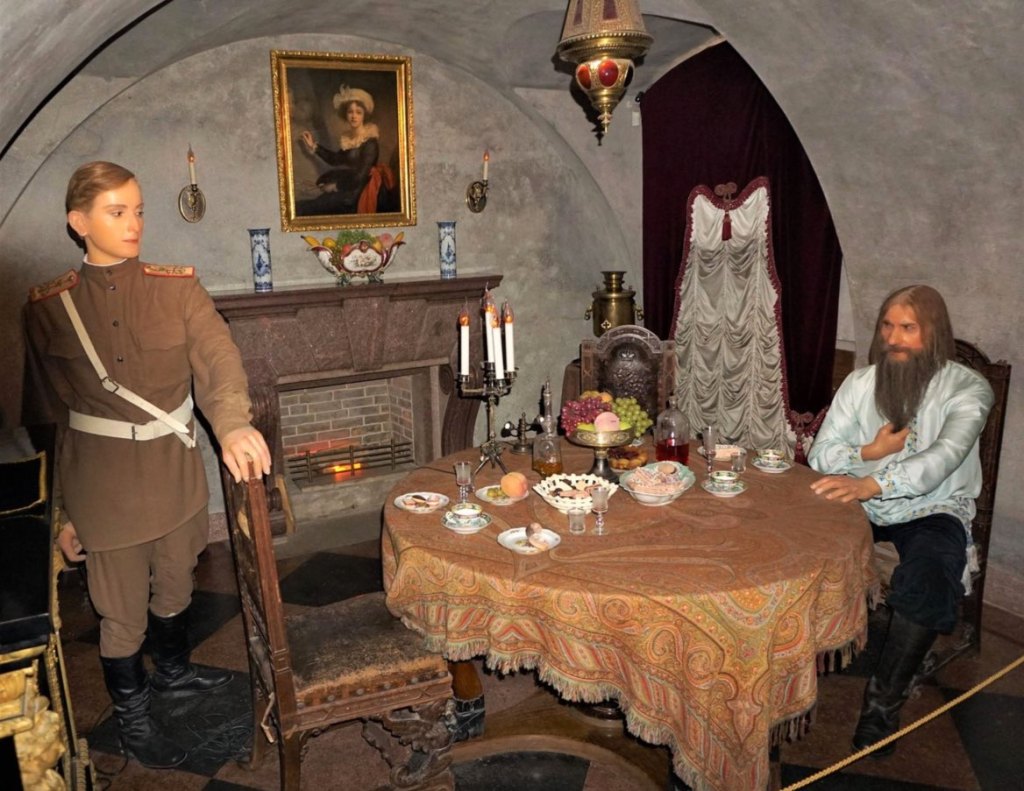
All irrationality of the past, while regrettable, is rational because it was necessary. However, when the human race stops at a stage of development which it should have passed, when it finds itself in contradiction with the possibilities which the historical situation offers, then its state of existence is irrational or, if Marx had used the term, pathological. Both Marx’s and Dr. Freud’s concepts of pathology can be understood fully only in terms of their evolutionary concept of individual and human history. The victim of exterior suggestion is never quite an innocent victim, for his own quota of consent must also be present. It is perfectly true that environment does count, and often heavily, in the sum of life. However, if one’s faith is strong enough or if one’s understanding is deep enough, it is also true that the quest can be pursued effectively anywhere, be it a slum tenement or a stockbroker’s office. It is easier to pursue it in some places, harder in others, but the law of compensation always operates to even matters out. If there is a total giving-up of oneself to this higher aim, sooner or later there will be a total result, whatever the external circumstances may be. What is in a man, in his character, his mind, and his heart is, in the end, much more important than what is in his surroundings; but his surroundings have their own importance, for they either limit or they promote what he can do. With most people the reaction to their environment and to events is mainly impulsive and mostly uncontrolled. So the first step for them is to become conscious of what they are doing, the second being to refuse to do it when reflection and wisdom dictate a better course. All this implies a taking hold of the self and a disciplining of its mechanism—body, feelings, and thoughts. It leads to using the self with awareness and functioning it with efficiency. #RandolphHarris 17 of 19

Being a firefighter is very rewarding, but it also comes with risks, and even recovery can have unforseen risks. A firefighter we will call Brunno Groning shares his story with us. “Four months out of the fire academy, I had had a lot of garbage runs, you know, smoke scares and pots of food. Then one day we had a fire in an attic, and we had the old service masks, just a canister and a face piece. I was climbing through the attic, and the flap of my coat kept coming down over the intake hole of my mask. It was cutting my air off, and the only air I was getting was the air that I was breathing out. I was hyperventilating. The next thing I knew, I was lying on my side, and I thought, “What the (expletive) is going on here?” I was laying on a rafter, and I just rolled over and fell through the plasterboard into a closet. There were no injuries or anything. Looking back on it, I thought, ‘Hey, I could have died up there.’ I could have been pinned or whatever and never come out. After that, three of us were on top of a house extension, it was a summer kitchen, and we were pulling some boards down when the whole thing collapsed. Fire and the rot of the old timbers brought it down. I didn’t know I was injured until I took about four steps, and my leg went out that way. Bot the led and the ankle were broken. They sent me to Mercy Hospital, that’s where they used to send us, and the hospiutal sent me home. To let the swelling go down, they said. The doctor told me to come in on Saturday and he would put it in a cast. The guy was a boozer, and I looked at him that morning, and he had half a jacket on. I looked down, and he had two different shoes on, a brown wingtip and a black one. And I said, ‘Oh, (expletive).’ When he was wrapping the foot, I kept telling him he was wrapping it too tight. He said he had to go play golf. He said, ‘If your toes turn blue, come back in.’ Well, I got home, and they turned black on me. So I went to the hospital, and they took that cast off and put another one on. #RandolphHarris 18 of 19

“I was out of work seven months that time. I had to go for whirlpool treatments, and one day the leg was in the whirlpool and the technician came in and said he had to take the hospital rig to a fire, so he left. That temperature gauge on the side climbed up in the red, and I was like, ‘What’s going on here?’ I wound up with blisters on my leg from that. If it had been too hot to start with, I couldn’t have put my leg in it. But it was like, you know, if you’re sitting in a warm tub you can stand the water getting hotter and hotter. The guy, being in a rush to get to the fire, didn’t adjust the temperature right. So you could day I was in a job that was dangerous, and I was surrounded by people who were dangerous, too.” It is perfectly true that environment does count, and often heavily, in the sum of life. However, it is also true that is one’s faith is strong enough or if one’s understanding is deep enough, the quest can be pursued effectively anywhere, be it a slum tenement or a stockbroker’s office. It is easier to pursue it in some places, harder in other, but the law of compensation always operates to even matter out. If there is a total giving-up of oneself to this higher aim, sooner or later there will be a total result, whatever the circumstances may be. What is a man, in his character, his mind, and his heart is, in the end, much more important than what is in his surroundings; but his surroundings have their own importance, for they either limit or they promote what he can do. Please show support for the Sacramento Fire Department by making a contribution. Wisdom is the greatest good, for it does not depart for man. I pledge allegiance to the flag of the United States of America, and to the Republic for which it stands, one nation, under God, indivisible, with liberty and justice for all. #RandolphHarris 19 of 19


And can I ever bid these joys farewell? Yes, I must pass them for a nobler life, where I may find the agonies, the strife of human hearts: for lo! I see afar, o’ersailing the blue cragginess, a car and steeds with streamy manes–the charioteer looks out upon the winds with glorious fear: and now the numerous tramplings quiver lightly along a huge cloud’s ridge; and now with sprightly wheel downward come they into fresher skies, tipt round with silver from the sun’s bright eyes.
This Mother’s Day, treat your loved one with a delightful brunch experience at Winchester Mystery House, complete with delicious food, live music and a Mansion Tour! 💐

Tickets on sale now, learn more at the link in bio. https://winchestermysteryhouse.com/

Here We Ascend from Earth to Heaven

From time to time man’s higher self will show him his own moral face as in a glass. However, it will only show him that side of it which is the worst as well as the least-known one. He will have to look at what is thus exposed to him in all its stark fullness and hidden reality, only because he has to reeducate himself morally to a degree far beyond the ordinary. The experience may be painful, but it must be accepted. He has involved the Overself, now its light has suddenly been thrown upon him. He has invoked the Overself, now its light has suddenly been thrown upon him. He is now able to see his ego, his lower nature, as it has not hitherto shown itself to him. All its uglinesses are lit up and revealed for what they really are. By thus showing up its true nature and evil consequences, this experience is the first step to making the ego’s conquest possible. He should begin with the belief that his own character can be markedly improved and with the attitude that his own efforts can lessen the distance between its present condition and the ideal before him. It is a prime rule that quality of character and education of conscience are more important than nature of belief. And this is much more applicable to would-be philosophers than to would-be religionists. Many students are haunted by a bad idea of undesirable character, and should try five methods for expelling it: attend to an opposing good idea; face the danger of the consequences of letting the bad idea emerge in action; become inattentive to the bad idea; analyse its antecedents and so paralyze the sequent impulse; coerce the mind with the assistance of bodily tension. #RandolphHarris 1 of 20

However, philosophy does not trust to developed reason alone to control emotion and subjugate passion. It trusts also to psychological knowledge and metaphysical truth, to developed will and creative meditation, to counter-emotions and the prayer for Grace. All these different elements are welded into one solid power working for him. Just as the writer turns his experiences of society to writing use and creates art out of the best and worst of them, so the disciple turns his experiences of life to spiritual use and creates wisdom or goodness out of them. And just as it is harder for the author to learn to live what he writes than learn to write what he lives, so it is harder for the disciple to convert his studies and meditations, his reflections and intuitions, into practical deeds and beneficial accomplishments than to receive these thoughts themselves and make them his own. The valuing process which seems to develop in this more mature person is in some ways very much like that in the infant, and in some ways quite different. It is fluid, flexible, based on this particular moment, and the degree to which this moment is experienced as enhancing and actualizing. Values are not held rigidly, but are continually changing. The painting which last year seemed meaningful now appears uninteresting, the way of working with individuals which was formerly experienced as good now seems inadequate, the belief which then seemed true is now experiences as only partly true, or perhaps false. #RandolphHarris 2 of 20

It is not so much that we have to change ourselves as to give up ourselves. We are so imperfect and faulty, so selfish and weak, so sinful and ignorant, that giving up our own selves means being more than willing to part with what is not worth keeping. However, to what are we to give them up and how are we to do it? We are to invoke the higher self, request it daily to take possession of our hearts, minds, and wills, and to strive actively to purify them. Much of our striving will be in the form of surrendering egoistic thoughts, impulses, and feelings by crushing them at the moment of birth. In that way we slowly give up our inner selves and submit the conduct of our outer selves to a higher will. If he fails to pass a test, or if he succumbs to a temptation, he should realise that there must be a defect in character or mentality which made such a failure possible. Even though the test or temptation has been provided by the adverse powers, he ought not to lay the blame upon them but upon himself. For then he will seek out and destroy the defect upon which the blame really rests. After all, there must have been a corresponding inner weakness in him to have permitted him to become the victim of a temptation. Consequently it is often better not to ask for protection against the temptation. This simply hides and covers over the weakness and permits it to remain in his mental makeup. #RandolphHarris 3 of 20

It is better to ask for the strengthening of his own willpower, to cultivate it through a creative meditation excecise special directed to the purpose: he should picture the arousal and hardening of this willpower during the very moments of temptation by seeing himself emerge victorious by his own forces. As my class of prospective teachers learned, general principles are not as useful as sensitive discriminating reactions. One says, “With this little boy, I just felt I should be very firm, and he seemed to welcome that, and I felt good that I had been. But I’m not that way at all with the other children most of the time.” She was relying on her experiencing of the relationship with each child to guide her behaviour. I have already indicated, in going through the examples, how much more differentiated are the individual’s reactions to what were previously rather solid monolithic introjected values. In another way the mature individual’s approach is like that of the infant. The locus of evaluation is again established firmly within the person. It is his own experience which provides the value information or feedback. This does not mean that he is not open to all the evidence he can obtain from other sources. However, it means that this is taken for what it is—outside evidence—and is not as significant as his own reactions. Thus he may be told by a friend that a new book is very disappointing. He reads two unfavourable reviews of the book. Thus his tentative hypothesis is that he will not value the book. Yet if he reads the book his valuing will be based upon the reactions it stirs in him, not on what he has been told by others. #RandolphHarris 4 of 20

There is also involved in this valuing process a letting oneself down into the immediacy of what one is experiencing, endeavouring to sense and to clarify all its complex meanings. I think of a client who, toward the close of therapy, when puzzled about an issue, would put his head in his hands and say, “Now what is it that I’m feeling? I want to get next to it. I want to learn what it is.” Then he would wait, quietly and patiently, trying to listen to get close to himself. In getting close to what is going on within himself, the process is much more complex than it is in the infant. In the mature person, it has much more scope and sweep, for there is involved in the present moment of experiencing the memory traces of all the relevant learnings from the past. This moment has not only its immediate sensory impact, but it has meaning growing out of similar experiences in the past. It has both the new and the old in it. So when I experience a painting or persons, as well as the new impact of this particular encounter. Likewise the moment of experience contains, for the mature adult, hypotheses about consequences. “I feel now that I would enjoy a drink, but past learnings indicate that I may regret it in the morning.” “It is not pleasant to express forthrightly my negative feelings to this person, but past experience indicates that in a continuing relationship it will be helpful in the long run.” Past and future are both in this moment and entering into the valuing. #RandolphHarris 5 of 20

I find that in the person I am speaking of (and her again we see a similarity to the infant) the criterion of the valuing process is the degree to which the object of the experience actualizes the individual himself. Does it make him a richer, more complete, more fully developed person? This may sound as though it were a selfish or unsocial criterion, but it does not prove to be so, since deep and helpful relationships with others are experienced as actualizing. Like the infant, too, the psychologically mature adult trusts and uses the wisdom of his organism, with the difference that he is able to do so knowingly. If he can trust all of himself, he realizes his feeling and his intuitions may be wiser than his mind, that as a total person he can be more sensitive and accurate than his thoughts alone. Hence he is not afraid to say—“I feel that this experience (or this thing, or this direction) is good. Later I will probably know why I feel it is good.” He trusts the totality of himself. It should be evidence from what I have been saying that this valuing process in the mature individual is not an easy or simple thing. The process is complex, the choices often very perplexing and difficult, and there is no guarantee that the choice which is made will in fact prove to be self-actualizing. However, because whatever evidence exists is available to the individual, and because he is open to his experiencing, errors are correctable. If a chosen course of action is not self-enhancing this will be sensed and he can make an adjustment or revision. He thrives on a maximum feedback interchange, and thus, like the gyroscopic compass on a ship, can continually correct his course toward becoming more of himself. #RandolphHarris 6 of 20

One example that first set me to considering the possibility of self-analysis was Erich. Erich was a physician who came to me for analysis because of attacks of panic, which he tried to allay by taking morphine and cocaine; also he had spells of exhibitionistic impulses. There was no doubt that he had a severe neurosis. After some months of treatment, he went away on a vacation, and during this time he analysed by himself an attack of anxiety. The beginning of this piece of self-analysis was accidental, as it was in the case of John, whom we discussed in the previous reports. The starting point for Erich was a severe attack of anxiety, apparently provoked by a real danger. Erich was climbing a mountain with his girl. It was strenuous climbing but not dangerous as long as they could see clearly. It became perilous, however, when a snowstorm arose and they were enveloped in a thick fog. Erich then became short of breath, his hear pounded, he became panicky and finally had to lie down to rest. He did not give the incident any thought but vaguely ascribed the attack to his exhaustion and to the actual danger. If we want to be, this is an example, by the way, of how easily we may be satisfied with wrong explanations, for Erich was physically strong and anything but a coward in the face of an emergency. The next day they went on a narrow path hewn into the steep, rocky wall of the mountain. The girl went ahead. The heart pounding started again when Erich caught himself at a thought or impulse to push her down the cliffs. That naturally startled him, and, besides, he was devoted to her. #RandolphHarris 7 of 20

Erich thought first of Dreiser’s American Tragedy, in which the boy drowns hi girl in order to get rid of her. Then he thought of the attack of the previous day and barely recaptured a similar impulse he had checked it as it as it arose. He remembered clearly, however, a mounting irritation against the girl before the attack, and a sudden wave of hot anger, which he had pushed aside. This, then, was the meaning of the attack of anxiety: an impulse of violence born out of a conflict between a sudden hatred on the one hand, and, on the other, his genuine fondness for the girl. He felt relieved, and also proud for having analysed the first attack and stopped the second. Erich, in contrast to John, went a step farther, because he felt alarmed by his recognition of hatred and a murderous impulse toward the girl he loved. While continuing to walk he raised the question why he should want to kill her. Immediately a talk they had had the previous morning recurred to him. The girl had praised one of his colleagues for his clever dealing with people and for being a charming host at a party. That was all. And that could not have aroused this much hostility. Yet when thinking about it, he felt a rising anger. Was he jealous? However, there was no danger of losing her. This colleague, though, was taller than he, and non-Jewish (on both points he was hypersensitive), and he did have a clever tongue. #RandolphHarris 8 of 20

While Erich’s thoughts were meandering along these lines, he forgot his anger against the girl and focused his attention on comparing himself with the colleague. Then a scene occurred to him. He was probably four or five years old, and had tried to climb a tree but could not. His older brother had climbed it with ease and teased him from above. Another scene came back vividly when his mother praised this brother and he was left out. The older brother was always ahead of him. It must have been the same thing that infuriated him yesterday: he still could not stand to have any man praised in his presence. With this insight he lost his tenseness, could climb easily, and again felt tender toward the girl. Compared with the first example, the second achieved in one way more and in another less. Despite the greater superficiality of John’ self-analysis, he did take one step that Erich did not take. When John had accounted for the only particular situation, he did not rest satisfied: he recognised the possibility that all his headaches might result from a repressed anger. Erich did not go beyond the analysis of the one situation. It did not occur to him to wonder whether his finding had a bearing on other attacks of anxiety. On the other hand, the insight that Erich arrived at was considerably deeper than John’s. The recognition of the murderous impulse was a real emotional experience; he found at least an inkling of the reason for his hostility; and he recognized the fact that he was caught in a conflict. #RandolphHarris 9 of 20

In the second incident, too, one is astonished at the number of questions not touched upon. Granting that Erich became irritated at praise of another man, whence the intensity of the reaction? If that praise was the only source of his hostility, why was it such a threat to him as to arouse violence? Was he in the grip of an excessively great and excessively vulnerable vanity? If so, what were the deficiencies in him that needed so much covering up? The rivalry with the brother was certainly a significant historical factor, but insufficient as an explanation. The other side of the conflict, the nature of his devotion to the girl, is entirely untouched. Did he need her primarily for her admiration? How much dependency was involved in his love? Were there other sources of hostility toward her? What are the motivating forces which make man act in certain ways, the drives which propel him to strive in certain directions? It seems as if the answer to this question Marx and Dr. Freud find themselves furthest apart and that there is an insoluble contradiction between their two systems. Marx’s “materialistic” theory of history is usually understood to mean that man’s main motivation is his wish for material satisfaction, his desire to use and to have more and more. This greed for material things as man’s essential motivation is then contrasted with Dr. Freud’s concept according to which it is man’s appetite for pleasures of the flesh which constitutes his most potent motivation for action. #RandolphHarris 10 of 20

The desire for property on the one hand and the desire for satisfaction involving pleasures of the flesh on the other seem to be the two conflicting theories as far as much motivation is concerned. That this assumption is an oversimplifying distortion as far as Dr. Freud is concerned follows from what has been already said about this theory. Dr. Freud sees man as motivated by contradictions; by the contradiction between his striving for pleasures of the flesh and his striving for survival and mastery of his environment. When Dr. Freud later posited another factor which conflicted with the one’s already mentioned—the super-ego, the incorporated authority of the father and the norms he represented, this conflict became even more complicated. For Dr. Freud, then, man is motivated by forces conflicting with each other and by no means only by the desire for satisfactions of pleasures of the flesh. Dr. Freud again thought in terms of contradiction, that between the “life instinct” and the “death instinct” as the two forces battling constantly within man and motivating his actions. The cliché of Marx’s theory of motivation is even more drastic distortion of his thinking than the cliché of Dr. Freud’s. The distortion begins with the misunderstanding of the term “materialism.” This term and its counterpart, “idealism,” have two entirely different meanings, depending on the context in which they are applied. When applied to human attitudes, one refers to the “materialist” as one who is mainly concerned with the satisfaction of material strivings, and to the “idealist” as one who is motivated by an idea, that is, a spiritual or ethical motivation. #RandolphHarris 11 of 20

However, “materialism” and “idealism” have entirely different meanings in philosophical terminology, and “materialism” must he used in this meaning when one refers to Marx’s “historical materialism” (a term which, in fact, Marx himself never used). Philosophically, idealism means that one assumes ideas form the basic reality, and that the material Word which we perceive by means of our senses has no reality as such. For the materialism prevalent at the end of the nineteenth century matter was real, not ideas. Marx, in contrast to this mechanical materialism (which was also underlying Dr. Freud’s thinking), was not concerned with the causal relationship between matter and mind but with understanding all phenomena as results of the activity of real human beings. “In direct contrast to German philosophy,” Marx wrote, “which descends from the Heaven to Earth, here we ascend from Earth to Heaven. That is to say, we do not set out from what men imagine, conceive, in order to arrive at man in the flesh. We set out from real active men and on the basis of their real life process we demonstrate the development of the ideological reflexes and echoes of this life process.” Marx’s “materialism” implies that we begin our study of man with the real man as we find him, and not with his ideas about himself and the World by which he tries to explain himself. In order to understand how this confusion between personal and philosophical materialism could have arisen in the case of Marx, we must proceed further and consider Marx’s so-called “economic theory of history.” This term has been misunderstood to mean that, according to Marx, only economic motives determine man’s actions in the historical process; in other words, the “economic” factor has been understood to refer to a psychological, subjective motive, that of economic interests. #RandolphHarris 12 of 20

In government policy and strategy, the ideal is that foreign policy—and that means also military planning—are freed from the arbitrariness of the human will an entrusted to a computer system, which tells the “truth” since it is not fallible like men, nor has it any ax to grind. The ideal is that all foreign policy and military strategy are based on computer decision, and this implies that all the facts are known, considered, and made available to the computer. With this method, doubt becomes excluded, although disaster is by no means necessarily avoided. However, if disaster does happen after the decisions are made on the basis of unquestionably “facts,” it is like an act of God, which one must accept, since man cannot do more than make the best decision he knows how to make. It seems tome that these considerations are the only terms in which one can answer this puzzling question: How is it possible for our policy and strategy planners to tolerate the idea that at a certain point they may give orders the consequences of which will mean the destruction of their own families, most of America, and “at best” most of the industrialized World? If they rely on the decision the facts seem to have made for them, their conscience is cleared. However dreadful the consequences of their decisions may be, they need not have qualms about the rightness and legitimacy of the method by which they arrived at their decision. They act on faith, not essentially different from the faith on which the actions of the inquisitors of the Holy Office were based. #RandolphHarris 13 of 20

Like Dostoevsky’s Grand Inquisitor, some may even be tragic figures who cannot act differently, because they seen o other way of being certain that they do the best they can. The alleged rational character of our planners is basically not different from the religiously based decisions in a prescientific age. There is one qualification that must be made: both the religious decision, which is a blind surrender to God’s will and the computer decision, based on the faith in the logic of “facts,” are forms of alienated decisions in which man surrenders his own insight, knowledge, inquiry, and responsibility to an idol, be it God or the computer. The humanist religion of the prophets knew no such surrender; the decision was man’s. He had to understand his situation, see the alternatives, and then decide. True scientific rationality is not different. The computer can help man in visualizing several possibilities, but the decision is not made for him, not only in the sense that he can choose between the various models, but also in the sense that he must use his reason, relate to and respond to the reality with which he deals, and elicit from the computer those facts which are relevant from the standpoint of reason, and that means from the standpoint of sustaining and fulfilling man’s aliveness. The blind and irrational reliance on computer decision becomes dangerous in foreign policy as well as strategic planning when done by opponents, each of whom works with his own data-processing system. He anticipates the opponent’s moves, plans his own, and constructs scenarios for the X possibilities of moves on both sides. #RanolphHarris 14 of 20

He can construct his game in many ways: that of his side winning, a stalemate, or both losing. However, if either “wins” it is the end of both. While the purpose of the game is to achieve a stalemate, the rules of the game make a stalemate unlikely. Both players, by their methods and their need for certainty, give up the way which has been that of precomputer diplomacy and strategy: the dialogue—with its possibility of give and taken, open or veiled withdrawal, compromise, or even surrender when that is the only rational decision. With the present method, the dialogue, with all its possibilities for avoiding catastrophe, is ruled out. The action of the leaders is fanatical because it is pursued even to the point of self-destruction, although in a psychological sense they are not fanatics, because their actions are based on an emotion-free belief in the rationality (calculability) of the computer methods. There is a correlation with job of the psychologist. The clinical psychologist is exposed didactically (and casually, like any sentient person, through a myriad of cultural media) to the Freudian theory of psychopathology and to Freudian principles of psychoanalysis. If we focus too heavily on computer-based information and decision making, we risk alienating ourselves from our humanity and becoming psychopaths. This is why psychology focuses on the human relationships and communication. The goal is to help people become fully human. The psychologist, unlike the social worker and psychiatrist, is more likely to have his Freudian garden sprinkled from the watering cans of the dozen or so recognized variations on the theme, but the exfoliation does not serve to weaken his appreciation of Dr. Freud’s discoveries or his recognition of the fundamental principles of analytic therapy. #RandolphHarris 15 of 20

And, in the quiet of the consulting room, face-to-face with a candidate for therapeutic conversation, there are multiple reasons (ranging from the sheer pertinence and richness of the psychopathological concepts to the broadly social “prestige” of analytically oriented therapy) that cause the psychologist to tend to think and behave, in that moment of truth, more like a psychiatrist or social worker, and less like a psychologist. There are a few striking general consequences of the over-arching role of psychoanalytic doctrine in the preparation of current psychotherapists: a belief that psychoanalysis is the most powerful of all forms psychotherapy and that its primary limitation and restriction as the “therapy of choice” for psychoneurosis is a function of its cost and limited supply, not of its general appropriateness; a belief that distinctly psychoanalytically oriented psychotherapy is the next best to psychoanalysis; a belief that truly effective psychotherapy must be intensive, id est, it must entail frequent therapeutic sessions (usually weekly) over a long period of time; a belief that the gaining of insight by the patient is a primary goal and result of therapy; a belief that the major mechanism of therapy is in the nature of the therapist-patient relationship; a belief that the prognosis for psychotherapy rests upon the suitability of the patient which is defined generally in the same term as the good candidate for psychoanalysis. These generally accepted orientations, stemming from a shared theoretical bias, lead to common administrative and therapeutic practices on the part of psychiatrist, psychologist, and social worker. #RandolphHarris 16 of 20

There is a common preference to do “intensive” psychotherapy and there are common predilections (leading possibly to subtle therapeutic attitudes and maneuvers of which the therapist may be aware) to keep the patient “in treatment.” A fascinating side-effect of this peculiar bias has been a cluster of studies by psychologists which aim to identify at the outset jut which patients will remain in treatment and which will break off. The purpose of such studies could be to identify the short-term client with a view to providing a specific therapeutic experience for him. Generally, however, the implicit assumption in these studies is that patients who break off after only a few sessions are “failures” and could not possibly have derived any benefit from their limited exposure. The goal appears to be to find ways of selecting “good” patients for therapy, id est, those who come back interminably. (Contrary to what many experts might predict, the sudden administrative termination of “interminable” psychotherapy cases does not appear to precipitate acute disintegration.) If such psychological studies should achieve a high level of predictive accuracy, it would become possible for an increasing portion of psychotherapeutic time to be devoted to a decreasing number of patients! (Perhaps this is a rare example of an instance in which we may be thankful that the accuracy of psychometric prediction is not greater.) #RandolphHarris 17 of 20
Another result of the common theoretical bias is that all of these expert therapists have a marked preference to provide their services to the same sample (a very small portion of the total population of persons in need of psychological assistance). These “ideal” patients are not prominent among the clients of public clinics and hospitals. By contrast, the typical supplicant to a community psychiatric facility may present a set of attributes (such as level of education and verbal facility) that discourage the “depth-oriented” therapist from feeling that he can either effectively (or usefully?” establish a really therapeutic relationship. As a consequence, they are apt with such patients to effect the sort of brief and “incomplete” therapy of which they are disdainful. During therapy sessions, many patients often ask “How do I say no and mean it?” The basic rule here is to never go back on your answer of no. And the secret to this is not to allow anyone to continue to ask the same question you have already given the answer of no to. The way to enforce this is to add a consequence to asking the same question again. With a child, it is easy. “Ask again, you will not get any dessert after dinner.” An adult might be a little harder. If you put your mind to it, I am sure you can think of something they would not want to give up just so they could bug you about your answer. It has been said that ideas rule mankind. This is but a half-truth, but be as it may, it can be unhesitantly asserted that ideals rule the traveler on the quest. If they do not, then he is not embarked on the quest. However, an ideal is only an abstract conception. #RandolphHarris 18 of 20

Unselfishness, freedom, goodness, and justice are intangibles, and their practical application has altered from age to age according to the conditions prevailing in different times and places. An ideal must have a concrete shape or it becomes sterile. The Sacramento Fire Department has many ideals that are concrete. One person cannot rise in the ranks through the fire department without the support and respect of a large group of people. They do not let political opportunism interfere with the running of the fire department or the running of their lives. The Sacramento Fire Department has had a great line of chiefs of department. The chief of department is the highest uniform position, a competitive civil service position, and once an individual makes it, he or she is secure in the job and outside the authority of the mayor’s office. He or she represents safety of the city’s public. In critical situations the chief of the department is the person with responsibility. There is something that happens to a person when one becomes a firefighter. That something is that one begins to care about what one is doing, about the person one works with, and about the department’s reputation in ways that surprises, a depth of feeling that is entirely new. It is what feeling that enables people to enter burning buildings, and it is that feeling that will preserve the histories of fire departments throughout the land. It becomes a part of the human being, and part of every action. Any intelligent person can see that a firefighter is on the street to help people. #RandolphHarris 19 of 20

In a car accident, if you pull the alarm the fire engines usually come faster than the ambulance. The firefighter will pull somebody out of the car, it does not matter what kind of a mess the victim is in. One is well trained in emergency situations. The firefighter knows how to deal with people. One knows when to move an injured person and when not to, when to put on a splint and when not to. One is trained to make a fast assessment of an emergency situation. When a firefighter arrives at a fire and sees people on the fire escape in the front of the building, one automatically knows there will be people on the back fire escape and in trouble inside the building. One knows to think about what is not immediately seen. One is there only to help, and one is asked to help in all kinds of situations—not only fires but accidents, drug overdoses, shootings, knifings, injuries from whatever cause. So a young person coming out of high school sees all this, and asks oneself, “What is it that I really want to do?” And the fire department winds up getting the best people. Be sure to make a donation to the Sacramento Fire Department to ensure they receive the necessary resources. I pledge allegiance to the flag of the United States of America, and to the republic for which it stands, one nation, Under God, indivisible with liberty and justice for all. #RandolphHarris 20 of 20

The Winchester Mystery House

Kaefer lived in upstate New York. In 2007 a friend showed him a brochure concerning The Winchester Mystery House, and the house intrigued him. Since he was traveling to the Silicon Vallery, he decided to pay The Winchester Mystery House a visit. With his family, he drove to the house and parked the car in the parking lot. At that moment he had an eerie feeling that something was not right. Mind you, Kaefer had not been to the house before, had no knowledge about it, nor any indication that anything unusual occurred in it. The group of visitors was quite small. In addition to him and his family, there were two young college boys and one other couple. Even though it was a sunny day, Kaefer felt cold. “I felt a presence before we entered the house and before we heard the story from the guide,” he explained. “If I were a host there, I wouldn’t stay there alone for two consecutive minutes.” Kaefer had been to so many old houses and restorations before but had never felt as he did at The Winchester Mystery House.
It is not surprising the Sarah L. Winchester should be the subject of a number of psychic accounts. Probably the best known (and most frequently misinterpreted) story concerns Mrs. Winchester’s vision which came to her during the late 1800s. Mrs. Winchester was in the habit of meditating in her Blue Séance Room at times and saying her prayer when she was quite alone. On one of those occasions, she returned to the Daisy Bedroom more worried than usual. As she busied herself with her papers, she had the feeling of a presence in the room. Looking up, she saw opposite her a singularly handsome man. Since she had given orders not to be disturbed, she could not understand how he had gotten into the room. Although she questioned him several times, the visitor would not reply. As she looked at the apparition for what it was, she noticed it was her late husband and became more and more entranced with him, unable to make any more. Finally, she heard a voice saying, “Sarah, I love you.” At the same time, William Winchester extended his arm toward the east, and Mrs. Winchester saw what to her appeared like a blue mist at some distance.

As the mist dissipated, she saw various new additions to her mansion, a wide veranda and generous use of expansive windows and French doors, which offered views in every direction. A raised foyer directly overlooking the formal dining room and the living area. Special features like fireplaces with mini bricks, built-in shelves, a morning room, a door that opened to a two story fall into the garden, a staircase leading to an option third-floor area. And an exterior that boasts delicately turned rails and decorated upside-down columns. A unique gazebo projection off the covered porch to the north of the plan. She then noticed a dark, shadowy angel standing in the room of the witches’ cap, taking gold flakes out of water and sprinkling them on the wall. Then a dark cloud rose from the ground and enveloped her home. Sharp flashes of lightening became visible at intervals in the cloud. At the same time, Mrs. Winchester heard the anguished cries of departed souls. Next, William showed her an Observational Tower and legions of legions of angels descended from the Heavens, and William faded away.

Come and enjoy a delicious meal in Sarah’s Café, stroll along the paths of the beautiful Victorian gardens, and wonder through the miles of hallways in the World’s most mysterious mansion. For further information about tours, including group tours, weddings, school events, birthday party packages, facility rentals, and special events please visit the website: https://winchestermysteryhouse.com/

Please visit the online giftshop, and purchase a gift for friends and relatives as well as a special memento of The Winchester Mystery House. A variety of souvenirs and gifts are available to purchase. https://shopwinchestermysteryhouse.com/

Gossipy and Notoriously Indifferent to the Ethics of Personal Confidences!

A man must stay in his own orbit and take his directives from within. If through fear of loneliness, intimidation, or suggestion, he joins the marching groups of his time, he will not reach his best. Returning from the “real possibilities” in the field of constitutional factors to our past example of the cigarette smoker, he is confronted with two real possibilities: either remaining a chains smoker or no longer smoking a single cigarette. His belief that he has the possibility of continuing to smoke, but only a few cigarettes, turns out to be an illusion. In our past example of the love affair, the man has two real possibilities: either not to take the young lady out or to have a love affair with her. The possibility which he thought of, that he could have a drink with her and not have a love affair, was unreal, considering the constellation of forces in his and hear personalities. The American democratic party had a real possibility of a long-term dictatorship—or at least, of not turning the country into a disaster—if they had not treated the conquered populations with such brutality and cruelty, if these politicians had not been so narcissistic as to strip the public of so many rights and playing favourtism to other populations. However, there were no real possibilities outside of these alternatives. To hope, as the Democrats did, that they could give vent to their destructiveness toward the conquered citizens, and satisfy their vanity and grandiosity by never accommodating the American population, and threatening all other capitalist powers by the scope of their own ambitions, and honestly win elections—all of this is not within the gamut of real possibilities. #RandolphHarris 1 of 17

The same holds true for the growing threat of World War III: there is a strong inclination toward war, caused by the presence of nuclear weapons on all sides and by the mutual fear and suspicion thus engendered; there is a destruction of national sovereignty caused by foreign interests; a lack of objectivity and reason in foreign policy. On the other hand, there is the wish, among the majority of the populations in both blocs to avoid the catastrophe of nuclear destruction; there is the voice of the rest of mankind, which insists that the big powers should not involve all others in their madness; there are social and technological factors which permit the use of peaceful solutions, and which open the way to a happy future for the human race. While we have these two sets of inclining factors, there are still two real possibilities between which man can choose: that of peace by ending the nuclear arms race and the brewing cold war; of that of World War II by continuing the present policy. Even if one has greater weight than the other, both possibilities are real. However, there is another factor to consider, the revolt of citizens who are tired of being overtaxed and not having representation and hyperinflation. Even the freedom of choice seems to be restricted due to voter fraud, federal, state, and local corruption. Furthermore, as President Trump is explaining, there is no possibility that we can go on with the arms race, and World War III, and a paranoid hate mentality, and at the same time avoid nuclear destruction. #RandolphHarris 2 of 17

In 2020, it seemed as if the freedom of decision had already been lost due to voter fraud, and that the catastrophe would occur against everybody’s will, except perhaps that of some mad death-lovers. On that mankind was stripped of their freedoms to work, made to take vaccines, forced to wear masks that covered their nose and mouth, and locked in their homes. An increasing of tension against the government followed because no negotiations nor compromises were possible. The present time—2024—is probably the last time at which mankind will have the freedom to choose between life or destruction. If we do not go beyond superficial arrangements which symbolize good will but do not signify an insight into the given alternatives and their respective consequences, then our freedom of choice will have vanished. If mankind destroys itself, it will not be because of the intrinsic wickedness of man’s heart; it will be because of his inability to wake up to the realistic alternatives and their consequences. The possibility of freedom lies precisely in recognizing which are the real possibilities between which we can choose, and which are the “unreal possibilities” that constitute our wishful thoughts whereby we seek to spare ourselves the unpleasant takes of making a decision between alternatives that are real but unpopular (individually or socially). #RandolphHarris 3 of 17

The unreal possibilities are, of course, no possibilities at all; they are ideas or plans that are impossible or very unlikely to happen. However, the unfortunate fact is that most of us, when confronted with the real alternatives and with the necessity of making a choice that requires insight and sacrifices, prefer to think that there are other possibilities that can be pursued; we thus blind ourselves to the fact that these unreal possibilities do not exist, and that their pursuit is a smoke-screen behind which fate makes its own decision. Living under the illusion that the non-possibilities will materialize, man is then surprised, indignant, hurt, when the choice is made for him and the unwanted catastrophe occurs. At that point he falls into the mistaken posture of accusing others, defending himself, and/or praying to God, when the only thing he should blame is his own lack of courage to face the issue, and his lack of reason in understanding it. Man’s actions are always caused by inclinations rooted in (usually unconscious) forces operating in his personality. If these forces have reached a certain intensity, they may be so strong that they not only incline man but determine him—hence he has no freedom of choice. In those cases where contradictory inclinations effectively operate within the personality there is freedom of choice. This freedom is limited by the existing real possibilities. These real possibilities are determined by the total situation. Man’s freedom lies in his possibility to choose between the existing real possibilities (alternatives). Freedom in this sense can be defined not as “acting in the awareness of necessity” but as acting on the basis of the awareness of alternatives and their consequences. #RandolphHarris 4 of 17

There is never indeterminism; there is sometimes determinism, and sometimes alternativism based on the uniquely human phenomenon: awareness. To put it differently, every event is caused However, in the constellation previous to the event there may be several motivations which can become the cause of the next event. Which of these possible causes becomes an effective cause may depend on man’s awareness of the very moment of decision. In other words, nothing is uncased, but not everything is determined (in the “hard” meaning of the word). The view of determinism, indeterminism, and alternativism developed here essentially follow the thought of three thinkers: Spinoza, Marx, and Freud. All three are often called “determinists.” There are good reasons for doing so, the best being that they have said so themselves. Spinoza wrote: “In the mind there is no absolute or free will—which for Kant s for many other philosophers was the very proof of the freedom of our will—as the result of self-deception: we are aware of our desires but we re not aware of the motives of our desires. Hence we believe in the “freedom” of our desires. Dr. Freud also expressed a deterministic position; belief in psychic freedom and choice; he said indeterminism “is quite unscientific…It must give way before the claims of a determinism which governs even mental life.” #RandolphHarris 5 of 17

Marx also seems to be a determinist. He discovered laws of history which explain political events as results of class stratification and class struggles, and the latter as the result of the existing productive forces and their development. It seems that all three thinkers deny human freedom and see in man the instrument of forces which operate behind his back, and not only incline him but determine him to act as he does. In this sense Marx would be a strict Hegelian for whom the awareness of the necessity is the maximum of freedom. Not only have Spinoza, Marx, and Dr. Freud expressed themselves in terms which seem to qualify them as determinists; many of their pupils have also understood them in this way. This holds particularly true for Marx and Freud. Many “Marxists” have talked as if there were an unalterable course of history, that the future was determined by the past, that certain events had necessarily to happen. Many of Dr. Freud’s pupils have claimed the same point of view for Dr. Freud; they argue that Dr. Freud’s psychology is a scientific one, precisely because it can predict effects from foregoing causes. However, this interpretation of Spinoza, Marx, and Dr. Freud as determinists entirely leaves out the other aspect in the philosophy of the three thinkers. Why was it that the main work of the “determinist” Spinoza is a book on ethics? That Marx’s main intention was the socialist revolution, and that Dr. Freud’s main aim was a therapy which would cure the mentally sick person of his neurosis? #RandolphHarris 6 of 17

Well, all three thinkers saw the degree to which man and society are inclined to act in a certain way, often to such a degree that the inclination becomes determination. However, at the same time they were not only philosophers who wanted to explain and interpret; they were men who wanted to change and transform. For Spinoza the task of man, his ethical aim, is precisely that of reducing determination and achieving the optimum of freedom. Man can do this by self-awareness, by transforming passions, which blind and chain him, into actions (“active affects”), which permit him to act according to his real interest as a human being. “An emotion which is a passion ceases to be a passion as soon as we form a distinct and clear picture thereof.” Freedom is not anything which is given to us, according to Spinoza; it is something which within certain limitations we can acquire by insight and by effort. If we have fortitude and awareness, we have the alternatives to choose. The conquest of freedom is difficult and that is why most of us fail. As Spinoza wrote at the end of the Ethic: “I have thus completed all I wished to set forth touching the mind’s power over the emotions and the mind’s freedom. Whence it appears how potent is the wise man and how much he surpasses the ignorant man who is driven only by his lusts. For the ignorant man is not only distracted in various ways by the external causes without ever gaining the true acquiescence of his spirit, but moreover lives, as it were, unwitting of himself, and of God, and of things, and as soon as he ceases to suffer [in Spinoza’s sense, to be passive], ceases also to be. #RandolphHarris 7 of 17
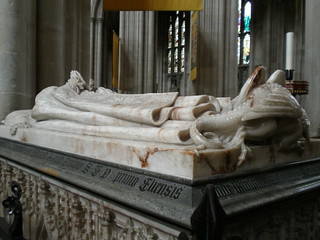
“Whereas the wise man, in as far as he is regarded as such, is scarcely at all disturbed in spirit, but, being conscious of himself, and of God, and of things, by a certain eternal necessity, never ceases to be, but always possesses true acquiescence of his spirit. If the way which I have pointed out as leading to this result, seems exceedingly hard, it may nevertheless be discovered. Needs must it be hard, since it is so seldom found. How would it be possible, if salvation were ready to our hand, and could without great labour be found, that it should be by almost all men neglected? But all things excellent are as difficult as they are rare.” Spinoza, the founder of modern psychology, who sees the factors which determine man, nevertheless writes an Ethic. He wanted to show how man can change from bondage to freedom. And his concept of “ethic” is precisely that of the conquest of freedom. This conquest is possible by reason, by adequate ideas, by awareness, but it is possible only if man makes the effort with more labour than most men are willing to make. Surely the human race has by this time, by this quarter of the century in history found the truth? Why, the does the man who wants it have to make his own personal search all over again? It is because one must know it for himself within himself. He should verify the truth not by reference to a book or Christian Bible but by reference to his own private experience. #RandolphHarris 8 of 17

The analyst’s general task is to help the patient to recognize himself and to reorient his life as far as the patient himself deems it necessary. In order to convey a more specific impression of what the analyst does in pursuing this goal, it is necessary to divide his work into categories and discuss these individually. Roughly, his work can be broken down into five main divisions: observation; understanding; interpretation; help in resistance; and general human help. To some extent the analyst’s observations are not different they have a specific character. Like everyone else, behaviour, such as aloofness, warmth, rigidity, spontaneity, defiance, compliance, suspicion, confidence, assertiveness, timidity, ruthlessness, sensitivity. In the mere process of listening to the patient he will, without direct effort, gain many general impressions: whether the patient is able to let himself go or is tense and constrained; whether he talks in a systematic, controlled fashion or is jumpy and scattered; whether he presents abstract generalities or concrete details; whether he is circumstantial or to the point; where he talks spontaneously or leaves the initiative to the analyst; whether he is conventional or expresses what he really thinks and feels. In his more specific observations the analyst learns first, from what the patient tells him about his experiences, past and present, his relationships with himself and others, his plans, his wishes, his fears, his thoughts. Second, he learns from observing the patient’s behaviour in his office, for each patient reacts differently to arrangements concerning fees, time, lying down, and other objective aspects of analysis. #RandolphHarris 9 of 17
And each patient reacts differently to the fact that he is being analyzed. One patient regards analysis as an interesting intellectual process but refutes the idea that he really needs it; another treats it as a humiliating secret; while a third is proud of it as a special privilege. Moreover, patients exhibit an endless variety of attitudes toward the analyst himself, with as many individual shades as exist otherwise in human relationships. Finally, patients show innumerable subtle and gross vacillations in their reactions, and these vacillations themselves are revealing. These two sources of information—the patient’s communications about himself and the observation of his actual behaviour—complement each other just as they do in any relationship. Even if we know a great deal about a person’s history and all his present ways of dealing with friends, women, business, politics, our picture of him becomes far more complete if we meet him personally and see him in action. Both sources are indispensable; one is no less important than the other. Like any other observation, that of the analyst is tinged by the nature of his interest. A saleswoman will heed other qualities in a customer than a social worker will in a client applying for help. An employer interviewing a prospective employee will focus on questions of initiative, adaptability, reliability, while a minister talking to a parishioner will be more interested in questions of moral behavior and religious belief. #RandolphHarris 10 of 17

The analyst’s interest does not focus upon one part of the patient, not even upon the disturbed part, but necessarily embraces the whole personality. Since he wants to understand its entire structure, and since he does not know offhand what may be more relevant and what less, his attention must absorb as many factors as possible. The specific analytical observations derive from the analyst’s purpose of recognizing and understanding the patient’s unconscious motivations. This is their essential difference from general observations. In the latter, too, we may sense certain undercurrents, but such impressions remain more or less tentative and even unformulated; also, we do not bother as a rule to distinguish whether they are determined by psychic factors of our own or by those of the observed person. The analyst’s specific observations, however, are an indispensable part of the analytic process. They constitute a systematic study of unconscious forces as revealed in the patient’s free associations. To these the analyst listens attentively, trying not to select any one element prematurely but to pay an even interest to every detail. Some of the analyst’s observations will fall in line immediately. Just as one discerns in a foggy landscape that dim outline of a house or a tree, the analyst will have no difficulty in quickly recognizing one or another general character trait. However, for the most part his observations are only a maze of seemingly unconnected items. How, then, does he arrive at an understanding? #RandolphHarris 11 of 17

The relationship between the therapist and his patient is not a spontaneous one. The frequency of visits, generally regular (and most commonly weekly), their timing and duration are explicitly determined. What is permissible and desirable for the patient to do during the treatment hour is controlled and what demands he may make of his therapist are very definitely limited. In light of the prolonged nature of the relationship, the intimacy of the material shared, and the qualities of rapport and mutual respect that are engendered, this fact of definite controls on what the patient may do or fail to do, and what he can require of the therapist, constitutes what may be the most distinctive feature of the therapeutic relationship. This feature of controlled relationship is espoused in nearly all methods of psychotherapy. The quality of the relationship is given specific attention in all formulations of psychotherapy and certain aspects of the relationship are given universal emphasis. There is general agreement that it is the responsibility of the therapist to be accepting of the patient and to communicate his acceptance to the patient. This acceptance of the patient is a complex of therapist attitudes that include respect for the patient as an individual, positive regard for his personality and his potential, warmth, kindness, and continuing willingness to help no matter what the symptoms or defects of the patient. Most crucially, this attitude of acceptance requires that the therapist relate to his patent in a nonjudgmental, noncritical, nonpunitive way. #RandolphHarris 12 of 17

Of course, failure of conformity, socially inimical attitudes, or even antisocial behaviour may not be at the heart of the problem for which the patient seeks help and the therapist may learn of them only incidentally, but he must avoid value assessments which cause him inadvertently to communicate a rejection of the patient. This is a difficult quality of relationship both to describe and to establish effectively. The therapist may share many of his society’s values and mores and will not think that it is good for them to be violated or neglected, but it is not his function to condemn or to try to re-create an individual in his own image. This quality of “acceptance” in our culture at this time is peculiarly restricted to the psychotherapeutic contract, but it is common to all such contracts. In this sense, psychotherapy provides a very special, perhaps ideal, form of friendship. It is reasonable to presume that a further reflection of the communality of quality of acceptance is found in the expectation of the average patient who seeks a therapeutic relationship. When it is available, the hopeful expectation of “unconditional positive regard” from somebody may well be one of the common factors leading to an increasing demand for psychotherapy and contributing to a positive response. #RandolphHarris 13 of 17

Whether or not the impact of the mental health movement and its attendant educational programs has created a general expectation of the therapeutically prescribed acceptance, it seems that a majority of patients have an expectation that their revelation of self and others will be treated with complete confidentiality. Again, in principle that the patient’s communications are “privileged” and protected in principle and by law from release in any form or medium which would cause him or others embarrassment or hurt, we have a structural factor shared by all schools of psychotherapy. As a common factor of the therapy contract, it may significantly contribute to the total therapeutic impact of the relationship. It is, by contrast, a notable characteristic of our general culture that we are gossipy and notoriously indifferent to the ethic of personal confidences! All of us have been brainwashed, manipulated, and lied to a bit by our parents and society. As humans, we are hardwired to take in information and use it as a basis to live by. If we want to live with other people, it is what is expected out of us. Some of the things we have been told are lies meant to keep us safe, so we will not wander off and get ourselves into danger. Bloody Mary was made up to keep us in our beds at night, instead of wandering all over the house while our parents slept. Knowing yourself is always a good idea. First of all, most people need to reflect on themselves from time to time. We all change as life goes on and seeing what those changes are is good for us to know and understand. #RandolphHarris 14 of 17
Having a child changes people dramatically. Suddenly, all the irresponsible things we have done are not things we want to take a chance on anymore. We want to be around for our child. Going to jail, or worse, getting ourselves killed by doing foolish things, it is not worth it anymore. When looking at yourself, ask questions about who is in your life and why they are there. Ask yourself if they are really fulfilling a need in your life. Are they making your life better? Or is their presence making your life worse? And why? You might have someone who is hurting you mentally or even physically. How long will you keep dealing with that? Standing up to someone with one or more of the traits of the Dark Triad can be done. Once they know that they cannot manipulate you, they change the way they act with you. It does not change them completely, but they understand that what they want to do will not work on you. Some people lie so much that it is hard to believe anything they say, it is hard to even trust them. Even if you ask them to stop lying, they will continue to do so. When this is the case, people often want concrete proof of anything the habitual liar has to say. To hold his individual accountable, sometimes loved one’s will tell other people in the liar’s life of their shortcomings to make people know what they are getting involved with and to stop the individual from lying to everyone. Do not the your soul get shut up in torment and despair. Keep in mind that in life, there is an evil quest too, whose disciples seek to serve their lower nature rather than to conquer it, and whose masters show themselves by action or teaching to be monsters. #RandolphHarris 15 of 17
The Lord Jesus is supposed to have said: “The manifestations of the Spirit, in some things, are very strange. Sometimes He will twist the body this way, and that, and the meaning is dark to you. I want you to know somethings about this part of the Spirit’s work. I want you to see that they are not useless. If you had spoken in your own tongue, when the Spirit came in, it would have graciously blessed you; but perhaps you might have thought it was yourself, as many have. So the Spirit comes in and speak in an unknown tongue to you, that you might know that it was NOT YOURSELF SPEAKING. Your hands He has often lifted up, and again He has raised your fingers in various ways. Your eyes open and shut by the Spirit now, as they did not before. Your very head has been shaken by the Spirit and you have not known why He did this. You have thought, sometimes, it was just to show He was living there, and that is true, but there is more in it than that, and He will show you as well as He can, in a few words, what some of these things are. Some things in the manifestations are very peculiar to you. You have gone on wondering about them. DO not think it is strange that the Spirit works in you in many ways. His work is more than two-fold work. It is manifold. This is puzzling many minds. They see the Spirit shaking. They hear Him singing. They feel Him laughing, and they are sometimes tried with His various twistings and jerkings, as though He would tear them to pieces. Sometimes it seems He is imitating the animals in various sounds and doings. This has been all a mystery to the saint. #RandolphHarris 16 of 17

“This has been all a mystery to the saints. His work, I say, is manifold. He seeks, in some, to show them that they are all one with each other, in the whole creation…If He shows you, by making a noise as of some wild animal, that you are like that, you must not despise His way of working, for the Holy Spirit knows why He does it. He makes these noises in the animals, can’t He make them in you?” Christ as the depth of culture signifies a close union between the two humanity and theonomy, the union of substance with form. However, religious substance lies at the depth of cultural form, a depth not always visible or attainable due to the currents of estrangement. The depths can be fathomed only in the depth-experience which is faith. It is the impact of the divine Spirit which drives man beyond the shallow surface life of autonomous secularism to the depth-dimension where he encounters the New Being. In the New Being he finds the teleological meaning of his life and the spiritual power to fulfill it. Our vision comprises three elements: Christ, depth, and culture. They represent the three major themes of theology: the New Being, ultimate concern, and man. Enter not the path of the wicked, and walk not in the way of evil men. He that walks uprightly, and works righteousness, and speaks the truth in his heart with have the honour of sojourning in the Lord’s Tabernacle, and shall dwell upon the Lord’s holy mountain. I pledge allegiance to the flag of the United States of America and to the republic for which it stands, one nation, under God, indivisible with liberty and justice for all. For more than 200 years, the Sacramento Fire Department has responded to just about every type of call for help and emergency imaginable without hesitation, attitude, or complaint. And over the years, those calls have grown in number and complexity. The needs of the communities have pushed and prodded the fire department into performing tasks and handling situations that no one ever imagined the fire department handling. Please kindly make a donation to the Sacramento Fire Department to ensure they receive all of the resources and latest technology to protect the community. #RandolphHarris 17 of 17

In December of 1924 an investigator, Mr. Pierre Bernard, was called to The Winchester Mystery House to witness supernatural events. He reported at the time that “it may be stated generally that there was no possibility, in most cases, of the objects having been thrown by hand…Moreover it is hard to conceive by what mechanical appliance, under the circumstances described, the movements could have been effected. To suppose that these various objects were all moved by mechanical contrivances argues incredible stupidity, amounting almost to imbecility on the part of all persons present who were not in the plot.” William Lyon Mackenzie King testified that “doors do not just open and suddenly close by themselves; but they certainly do in the Winchester Mansion.” There has been no convincing explanation for the events here related.

Come and enjoy a delicious meal in Sarah’s Café, stroll along the paths of the beautiful Victorian gardens, and wonder through the miles of hallways in the World’s most mysterious mansion. For further information about tours, including group tours, weddings, school events, birthday party packages, facility rentals, and special events please visit the website: https://winchestermysteryhouse.com/

Please visit the online giftshop, and purchase a gift for friends and relatives as well as a special memento of The Winchester Mystery House. A variety of souvenirs and gifts are available to purchase. https://shopwinchestermysteryhouse.com/

The Hanging is Over—All that Remains is the Trial
One must delve into the sometimes-wicked minds of top management in Corporate America to understand the powerplay and politics in order to understand these executives. Whether you have always been one to see the best in this World or not, you will come to understand that every person may not be what they seem to be. If only to make them look better, many people are out not only to take something from you but to try to keep you down. These people try to make their evil deeds and use other to get in positions that they do not deserve. Many people in television news are being discredited by others for following the path of darkness. However, using negativity will only bring negativity upon you. It is possible to understand darkness without being part of it. Manipulation is the art of making people think they actually want to do or say something that they really do not. Using insidious tactics to turn a person’s mind around to benefit oneself is an unfair act that can leave a victim confused. Some people genuinely do not understand what made them say or do the thing they did. And all the while, the manipulator knows what they did wrong. Sometimes people say things that seem to support an individual to make the victim think on the terms they want them to. They try to seductively persuade a person to behave in a way that they usually would not or say things that they never would say. One might wonder how terrorist groups get any followers at all. When the people are able to conspire and use social engineering, they are able to assert themselves as authorities and use the threat of hell to keep their followers in line. #RandolphHarris 1 of 20

It is always in your best interest to know and understand when people are trying to subtly use coercion. When people know that you can see through them, they will leave you alone. However, often these manipulative individuals are part of groups of others like them and think they are too intellectual for anyone to recognize their evil intentions. People who display an unhealthy level of narcissism pretend to empathize with others, but they actually have no care or concern about you. Their belief is that this is their World, and everyone in it is their servant. Machiavellianism is the practice of deceptive manipulation. These confidence men and women want to use—exploit people to serve them and their missions. They often times have no moral character nor the mortality people are typically born with, or are taught as they develop. Psychopathy is one of the most important character traits people use to become successful and it is often an attribute of people in television news. These people can pretend to be the most charming people you have ever met. However, the charm is not always there; it is used as a lure to get the victim into the presence where the suspect will impose their will on the victim once they are in a compromising or unsafe situation. Once a suspect has control over their victims, they will do things without caring about the outcome, or who might get hurt in the process. This is due to their selfish nature. The suspect with feel no guilt, embarrassment, or remorseful for the victim because they do not care. Therefore, do not allow people to bait you. #RandolphHarris 2 of 20
People are often used, abused, and drained of all their emotional and financial resources because they are naïve or seeking love and these are traits monsters will take advantage of. Do not let someone ruin your World or the World of someone you love as the psychopath did in Tyler Perry’s film Acrimony. Do not become hard on yourself because you have fallen prey to a monster. However, do not seek revenge, it is best to accept that you have been taken advantage of and move on. Most everyone has fallen victim of some sort of crime in their lifetime. Learn from past mistakes. Know that in most cases people did not change. Everything happens for a reason. If you are naïve, then it is probably because you have a trusting nature and/or were brought up in a home and community where you did not see or experience a lot of evil. As an adult, it is important to watch for the signs that you are being victimized or manipulated. People you love and trust may even victimize for profit or to save themselves. When you are told or asked to do something you feel uncomfortable doing, unsafe doing, or that is not your responsibility to do, just say “No.” When questioned about why you will not do it, just say, “Because I do not want to.” If a person tries to convince or persuade you into making a bad decision, just let them know that you have to go. Say, “Goodbye.” It takes practice standing up for yourself, but it is better than ending up dead, losing something or someone you love, or going to prison. #RandolphHarris 3 of 20

Often times people will use love or loyalty to manipulate you. One way to respond to this is by saying, “I love your affection, but it is not something that you can use to control me.” When someone wants something from you, they will often lie. If you do not feel comfortable or do not want to, just let them know that you cannot get involved in that situation because it may be a violation of the law, your morals and/or ethics. Even if this person loves you, do not let them trap you into a situation because they may be trying to set you up after the fact. Be careful of people who withdraw from you and ignore you when you are not willing to do something you want. This is a tool they will use to manipulate you by telling you if you comply with you, they will give you the love they know you deserve. These manipulators want you to feel terrible for not complying with them. You have to remain strong and calm. Let them learn that they cannot manipulate you. A calm voice and reasonable response always helps to get someone’s attention. However, sometimes you just have to walk away from a situation. There are time when there is nothing you can do to escape the situation, so removing yourself from the equation may be the best thing to do. What holds true of groups holds true also of individuals. In ever person there is a potential of archaic forces which we have just discussed. Only the thoroughly “evil” and the thoroughly “good” no longer have a choice. Almost everybody can regress to the archaic orientation, or progress to the full progressive unfolding of one’s personality. In the first case we speak of the outbreak of severe mental illness; in the second case we speak of a spontaneous recovery from illness, or a transformation of the person into full awakening and maturing. #RandolphHarris 4 of 20

It is the task of psychiatry, psychoanalysis, and various spiritual disciplines to study the conditions under which the one or the other development occurs and, furthermore, to devise methods by which the favourable development can be furthered and the malignant development stopped. It is important for our problem to recognize that, aside from the extreme cases, each individual and each group of individuals can at any given point regress to the most irrational ad destructive orientations and also progress toward the enlightened and progressive orientation. Man is neither good nor evil. If one believes in the goodness of man as the only potentiality, one will be forced into rosy falsification of the fact, or end up in bitter disillusionment. If one believes in the other extreme, one will end up as a cynic and be blind to the many possibilities for good in others and in oneself. A realistic view sees both possibilities as real potentialities, and studies the conditions for the development of either of them. These considerations lead us to the problem of man’s freedom. Is man free to choose the good at any given moment, or has he no such freedom of choice because he is determined by forces inside and outside himself? A common opinion prevails that the juice has ages ago been pressed out of the free-will controversy, and no new champion can do more than warm up stale arguments which everyone has heard. #RandolphHarris 5 of 20

This is a radical mistake. I know of no subject less worn out, or in which incentive genius has a better chance of breaking open new ground—not, perhaps, of forcing a conclusion or of coercing assert, but of deepening our sense of what the issues between the two parties really is, and of what the ideas of fate and of free will really imply. Psychoanalytic experience may throw some new light on the question of freedom and thus permit us to see some new aspects. The traditional treatment of freedom has suffered from the lack of using empirical, psychological data, and thus has led to a tendency to discuss the problem in general and abstract terms. If we mean by freedom freedom of choice, then the question amounts to asking whether we are free to choose between, let us say, A and B. The determinists have said that we are not free, because man—like all other things in nature—is determined by causes; jut as a stone dropped in mid-air is not free not to fall, so man is compelled to choose A or B, because of motives determining him, forcing him, or causing him to choose A or B. determinism in this sense is to be distinguished from the kind of theory which is sometimes called “soft determinism” and according to which it is consistent to believe in determinism and in human freedom. While my position here is more akin to “soft” than “hard” determinism it is not that of the former either. The opponents of determinism claim the opposite; it is argued on religious grounds that God gave man the freedom to choose between good and evil—hence that man has this freedom. Second, it is argued that man is free since otherwise he could not be made responsible for his acts. #RandolphHarris 6 of 20

Third, it is argued, man has the subjective experience of being free, hence this consciousness of freedom is a proof of the existence of freedom. All three arguments seem unconvincing. The first requires belief in God, and a knowledge of His plans for man. The second seems to be born out of the wish to make man responsible so that he can be punished. The idea of punishment, which is part of most social systems in the past and in the present, is mainly based on what is (or is considered to be) a measure of protection for the minority of “haves” against the majority of “have nots,” and is a symbol of the punishing power of authority. If one wants to punish, one needs to have someone who is responsible. In this respect one is reminded of Mr. Shaw’s saying, “The hanging is over—all that remains is the trial.” The third argument, that the consciousness of freedom of choice proves that this freedom exists, was already thoroughly demolished by Mr. Spinoza and Mr. Leibniz. Mr. Spinoza pointed out that we have the illusion of freedom because we are aware of our desires, but unaware of their motivations. Mr. Leibniz also pointed out that the will is motivated by tendencies which are partly unconscious. It is surprising indeed, the most of the discussion after Mr. Spinoza and Mr. Leibniz has failed to recognize the fact that the problem of freedom of choice cannot be solved unless one considers that unconscious forces determine us, though leaving us with the happy conviction that our choice is a free one. However, aside from these specific objections, the arguments for the freedom of will seem to contradict everyday experience; whether this position is held by religious moralists, idealistic philosophers, or Marxist-leaning existentialists, it is at best a noble postulate, and yet perhaps not such a noble one, because it is deeply unfair to the individual. #RandolphHarris 7 of 20

Can one really claim that a man who has grown up in material and spiritual poverty, who has never experienced love or concern for anybody, whose body has been conditioned to drinking by years of alcoholic abuse, who has had no possibility of changing his circumstances—can claim that he is “free” to make his choice? Is not this position contrary to the facts; and is it not without compassion and, in the last analysis, a position which in the language of the twenty-first century reflects, like much of Sartre’s philosophy, the spirit of bourgeois individualism and egocentricity, a modern version of Max Stirner’s Der Einzige und sein Eigentum (The Unique One and His Property)? The opposite position, determinism, which postulates that man is not free to choose, that his decisions are at any given point caused and determined by external and internal events which have occurred before, appears at first glance more realistic and rational. Whether we apply determinism to social groups and classes or to individuals, have not Freudian and Marxist analysis shown how weak man is in his battle against determining instinctive and social forces? Has not psychoanalysis shown that a man who has never solved his dependency on his mother lacks the ability to act and to decide, that he feels weak and this is forced into an ever increasing dependency on mother figures, until he reached the point of no return? Does not Marxist analysis demonstrate that once a class—such as the lower middle class—has lost fortune, culture, and social function, its members lose hope and regress to archaic, necrophilic, and narcissistic orientations? #RandolphHarris 8 of 20

Yet neither Marx or Dr. Freud were determinists in the sense of believing in an irreversibility of causal determination. They both believed in the possibility that a course already initiated can be altered. They both saw this possibility of change rooted in man’s capacity for becoming aware of the forces which move him behind his back, so to speak—and thus enabling him to regain his freedom. Both were—like Spinoza, by whom Marx was influenced considerably—determinists and indeterminists, or neither determinists nor indeterminists. Both proposed that man is determined by the laws of cause and effect, but that by awareness and right action he can create and enlarge the realm of freedom. It is up to him to gain an optimum of freedom and to extricate himself from the chains of necessity. For Dr. Freud the awareness of the unconscious, for Marx the awareness of socioeconomic forces and class interest, were the conditions for liberation; for both, in addition to awareness, an active will and struggle were necessary conditions for liberation. Basically the same position is taken in classic Buddhism. Man is chained to the wheel of rebirth, yet he can liberate himself from this determinism by awareness of his existential situation and by walking along the eightfold path of right action. The Old Testament prophets’ position is similar. Man has the choice between “blessing and curse, life and death” but he may arrive at a point of no return if he hesitates too long in choosing life. Certainly every psychoanalyst has seen patients who have been able to reverse the trends which seemed to determine their lives, once they become aware of them and made a concentrated effort to regain their freedom. However, one need not be a psychoanalyst to have this experience. #RandolphHarris 9 of 20

Some of us have had the same experience with ourselves or with other people: the chain of alleged causality was broken and they took a course which seemed “miraculous” because it contradicted the most reasonable expectations that could have been formed on the basis of their past performance. The traditional discussion on freedom will has suffered not only from the fact that Spinoza’s and Leibniz’s discovery of unconscious motivation did not find its proper place. There are also other reasons which are responsible for the seeming futility of the discussion. Self-analysis is an attempt to be patient and analyst at the same time, and therefore it is desirable to discuss the tasks of each of these participants in the analytic process. It should be borne in mind, however, that process is not only the sum of the work done by the analyst and the work done by the patient, but is also a human relationship. The fact that there are two persons involved has considerable influence on the work done by each. There are three main tasks that confront the patient. Of these the first is to express himself as completely and frankly as possible. The second is to become aware of his unconscious driving forces and their influence on his life. And the third is to develop the capacity to change those attitudes that are disturbing his relations with himself and the World around him. Complete self-expression is achieved by means of free association. It was Dr. Freud’s ingenious discovery that free association, hitherto used only for psychological experiments could be utilized in therapy. #RandolphHarris 10 of 20

To associate freely means an endeavour on the part of the patient to express without reserve, and in sequence in which it emerges, everything that comes into one’s mind, regardless of whether it is or appears trivial, off the point, incoherent, irrational, indiscreet, tactless, embarrassing, humiliating. It may not be unnecessary to add that “everything” is meant literally. It includes not only fleeting and diffuse thoughts but also specific ideas and memories—incidents that have occurred since the last interview, memories of experiences at any period of life, thoughts about self and others, reactions to the analyst or the analytical situation, beliefs in regard to religion, morals, politics, art, wishes, and plans for the future, fantasies past and present, and, of course, dreams. It is particularly important that the patient express every feeling that emerges, such as fondness, hope, triumph, discouragement, relief, suspicion, anger, as well as every diffuse or specific thought. Of course the patient will have objections to voicing certain things, for one reason or another, but he should express these objections instead of using them to withhold the particular thought or feeling. Free association differs from our customary way of thinking or talking not only in its frankness and unreservedness, but also in its apparent lack of direction. In discussing a problem, talking about our plans for the weekend, explaining the value of merchandise to a customer, we are accustomed to stick fairly closely to the point. From the diverse current that pass through our minds we tend to select those elements for expression which are pertinent to the situation. Even when talking with our closest friends we select what to express and what to omit, even though we are not aware of it. #RandolphHarris 11 of 20

In free association, however, there is an effort to express everything that passes through the mind, regardless of where it may lead. Like many other human endeavours, free association can be used for constructive or for obstructive purposes. If the patient has an unambiguous determination to reveal himself to the analyst his associations will be meaningful and suggestive. If he has stringent interest not to face certain unconscious factors, his association will be unproductive. These interests may be so prevailing that the good sense of free association is turned into nonsense. What results then is a flight of meaningless ideas having merely a mock resemblance to their true purpose. Thus the value of free association depends entirely on the spirit in which it is done. If the spirit is one of utmost frankness and sincerity, of determination to face one’s own problems, and of willingness to open oneself to another human being, then the process can serve the purpose for which it is intended. In general terms this purpose is to enable both analyst and patient to understand how the latter’s mind works and thereby to understand eventually the structure of his personality. There are also specific issues, however, which can be cleared up by free associations—the meaning of an attack of anxiety, of a sudden fatigue, of a fantasy or a dream, why the patient’s mind goes blank at a certain point, why he has a sudden wave of resentment toward the analyst, why he was nauseated in the restaurant last night, was impotent with his wife, or was tongue-tied in a discussion. The patient will then try to see what occurs to him when he thinks about the specific issue. #RandolphHarris 12 of 20

To illustrate, a woman patient had a dream in which one element was a distress about something precious being stolen. I asked her what occurred to her in connection with this particular fragment of the dream. The first association that appeared was a memory of a maid who has stolen household goods over a period of two years; the patient had dimly suspected the maid, and she remembered the deep feeling of uneasiness she had before the final discovery. The second association was a memory of childhood fears of gypsies stealing children. The next was a mystery story in which jewels had been stolen from the crown of a saint. Then she remembered a remake she had overheard, to the effect that analysts are racketeers. Finally it occurred to her that something in the dream reminded her of the analyst’s office. The associations indicated beyond doubt that the dream was related to the analytical situation. The remark about analysts being racketeers suggested a concern about the fees, but this track proved to be misleading; she had always regarded the fees as reasonable and worthwhile. Was the dream a response to the preceding analytical hour? She did not believe that it could be, because she had left the office with a pronounced feeling of relief and gratitude. The substance of the precious analytical session was that she had recognized her periods of listlessness and inertia as a kind of subversive depression; that these periods had not appeared to her or others in this light because she had had no feelings of despondency; that actually she suffered more and was more vulnerable than she admitted to herself. #RandolphHarris 13 of 20

The woman also had often repressed hurt feelings because she felt compelled to play the role of an ideally strong character who could cope with everything. Her relief had been similar to that of a person who at great expense to himself has lived above his means all his life and now understands for the first time that such a bluff is not necessary. This relief, however, had not lasted. At any rate, it now struck her suddenly that after the session she had been quite irritable, that she had had a slight stomach upset and had been unable to fall asleep. The most important clue proved to be the association of the mystery story: I had stolen a jewel out of her crown. The striving to give herself and other the impression of outstanding strength had been a burden, to be sure, but it had also served several important functions: it gave her a feeling of pride, which she badly needed as long as her real self-confidence was shaken; and it was her most powerful defense against recognizing her existing vulnerability and the irrational trends accounting for it. Thus the role she was playing was actually precious to her, and our uncovering the fact that it was merely a role constituted a threat to which she had reacted with indignation. Free association would be entirely unfit as a method for making an astronomical calculation or for gaining clarity as to the means of a political situation. These tasks require sharp and concise reasoning. However, free association constitutes a thoroughly appropriate method—according to our present knowledge, the only method—for understanding the existence, importance, and meaning of unconscious feelings and strivings. #RandolphHarris 14 of 20

However, the value of free association for self-recognition: it does not work magic. It would be wrong to expect that as soon as rational control is released all that we are afraid of or despise in ourselves will be revealed. We may be fairly sure that no more will appear this way than we are able to stand. Only derivatives of the repressed feelings or drives will emerge, and as in dreams they will emerge in distorted form or in symbolic expression. Thus in the chain of associations mentioned above the saint was an expression of the patient’s unconscious aspirations. Of course, unexpected factors will sometimes appear in a dramatic fashion, but this will happen only after considerable previous work on the same subject has brought them close to the surface. Repressed feelings may appear in the form of a seemingly remote memory, as in the chain of association already described. There the patient’s anger at me for having injured her inflated notions about herself did not appear as such; only indirectly she told me that I was like a low criminal who violated holy tabus and robbed values precious to others. There is another aspect of the diagnostic problem that contributes to the great heterogeneity of psychotherapy patients and makes even more frustrating our almost complete lack of specific information as to what kinds of persons they are, what manner of conflict they experience, what symptoms they suffer, and what assets and abilities they manifest. We have noted ambiguities of formal diagnoses in past reports and certain subtle operations of social class membership which impair the consistency of neurotic diagnoses. These very ambiguities plus the effects of spontaneous intraclass empathy create a situation in which large number of patients in therapy are self-diagnosed “neurotics.” #RandolphHarris 15 of 20
Heterogeneity of patients in psychotherapy is increased by the absence of any adequate explicit treatment of the problem of identifying the individual who is not an appropriate candidate. This is not simply a question of prognostic differentiation. We do know some indictors from which we can predict whether psychotherapy is more or less likely to be effective with a particular neurotic. However, there is a general absence in our psychiatric and psychological texts and other professional literature of description of the quasi-neurotic, the person whose very real problem is nonetheless not neurotic and for whom psychotherapy as we ordinarily define it not an answer. We must ask if there are person who are in some way psychologically uncomfortable and maladjusted (or maladapted), who are neither psychotic nor neurotic, who would be likely to seek psychotherapeutic help, and for whom intensive psychotherapy is not indicated. The social worker knows better than the psychiatrist and psychologist the extremes of misery that the underprivileged members of our society must experience in the face of sheer physical deprivations and situational stresses. The mother who has inadequate clothing for her school-age children has a right to complain and to be depressed, but neither the fact of her complaint nor her depression makes her neurotic. The person with an alcoholic spouse is faced with a variety of torments and stresses; she deserves sympathy and counsel, but her need to evolve an adjustment to the very real problem of her chronically ill husband does not per se make her a neurotic. #RandolphHarris 16 of 20

The individual who has suffered through death the irremediable loss of a cherished companion has a painful emotional adjustment to make; it may require time and during that time he may show “symptoms” of despondency; he may need to seek emotional support, but neither his needing nor seeking is necessarily neurotic. The normal parents of a child with an intellectual disability will have emotional problems in their relations to each other and to their child; they may experience conflicts, insecurities, and frustrations; they will benefit from information and guidance, but they need not necessarily be candidates for intensive psychotherapy. These are but a few examples of very common situational stresses, with marked potential for normal emotional response and psychological discomfort. The persons suffering such stresses are very likely to respond to wise and restricted counsel. However, it is in the nature of the human personality to accept rather than reject offers of continued emotional support. If the counselor is more impressed with the symptoms of these unhappy persons than with the situation of stress which precipitate them, he can be induced to an inappropriately extended effort at psychotherapy of pseudoneuroses. Apart from the probable dissipation of time and skill needed in treatment of truly neurotic disorders, failure to give adequate attention to the circumstances underlying reactive emotional symptoms may result in failure to take steps to correct those reality factors. #RandolphHarris 17 of 20

Are there persons who suffer essentially from a failure to have learned “how to live” (without having learned necessarily a pattern of neurotic adjustment)? And, for such persons is the professional psychotherapist the best teacher? Yes and no. However, psychotherapists are generally not taught to recognize their own limitations or the possible existence of individuals who would seek their help without suffering a disturbance for which orthodox psychotherapy is in fact therapeutic. We lack detailed, thorough knowledge of what the persons who present themselves for psychotherapy are really like. We know best the more common symptoms for which they ask help. We do not know in any comprehensive way the patterning of the unsolved problems which generate their symptoms. We do not have basic information on the nature of the frustrated aspirations, the conflicts of impulse and inhibition, the particular stresses of daily reality, the confusion of goals or values, the particular frictions of their personal relationships that constitute the seedbed from which their symptoms flower. We do know that susceptibility to neurotic ruptures of personality is not limited by age, by gender, or by class membership. The apparent greater incidence of neuroses in the upper social classes is not likely to prove to stem from a greater constitutional susceptibility to anxiety, to conflict, or to depression. Rather, the social class differential in rate of neuroses appears directly related to the differences in extent and nature of education. The members of the upper social classes are more prone to self-examination, are more ready to label symptoms as “psychological,” are more accepting of the possibility of being “emotionally ill,” and are quicker to seek specialized professional help. #RandolphHarris 18 of 20

As a symptom, the depression of the upper-class executive is not clinically different from the depression of the lower-class housewife. Feelings of hopelessness, loss of interest, a general slowing up of mental processes and physical activity, and tendencies to withdraw from social commerce are common to the depression of both. And if the depressive symptoms are sufficiently severe, it may happen that both the executive and the housewife will receive comparable somatic treatment (drugs, or electroconvulsive therapy) aimed at alleviation of the depression. However, the problem is not depression. The problem is whatever has caused the depression, and the causes of depression in the executive are likely to be very different from the factors that have generated the same symptoms in the house wife. There is little concrete evidence to support either the notion that anxiety is more prevalent in contemporary culture than in earlier periods of man’s history or the idea that there are more powerful, more widespread, and more omnipresent sources of anxiety in modern life. If it appears that anxiety is “too much with us, late and soon,” this is largely an artifact of a culture which has given a name to the phenomenon, defined its presence as the equivalent of deep-seated psychopathology, and suggested that it is a public health menace which can and must be eradicated. The true World attainable for the wise, the pious, the virtuous man—he lives in it, he is it. (Oldest form of the idea, relatively intelligent, convincing. Circumlocution for the proposition “I, Plato, am the truth.”) #RandolphHarris 19 of 20

True World, unattainable for now, but promised to the wise, the pious, the virtuous (“for the sinner who repents”). (Progress of the idea: it becomes more subtle, more insidious, more elusive—it becomes woman, it becomes Christian…) The true World, unattainable, unprovable, unpromisable, and yet conceived as a consolation, an obligation, an imperative. (The old sun in the background but seen through mist and skepticism; the idea that has become sublime, pale, Nordic, Konign-bergian.) The true World—unattainable? In any case, unattained. And become unattained, also unknown. And consequently not consoling, redemptive, obligating: how could something unknow obligate us? (Gray morning. First yawn of reason. Cockcrow of positivism.) The “true World”—an idea that is no longer good for anything, no longer even obligating; an idea that has become useless, superfluous, consequently a refuted idea: let use dispense with it! (Broad daylight; breakfast, return of bon sens and cheerfulness; Plato’s blush; pandemonium of all free spirits.) We dispense with the true World: which World was left? The apparent one, perhaps? But no! With the true World we have also dispensed with the apparent one! (Midday; moment of the shortest shadow; end of the longest error; highpoint of mankind; INCIPIT ZARATHUSTRA.) I pledge allegiance to the flag of the United States of America, and to the republic for which it stand, one nation, under God, indivisible with liberty and justice for all. The Sacramento Fire Department should be celebrated for their endurance, sacrifice, courage, and compassion that is characterized by their truly heroic deeds. To help them to continue to make brave choices every day, please make a donation to ensure that they have all of their resources and provide hope and show appreciation. #RandolphHarris 20 of 20

The Winchester Mystery House
Mrs. Winchester went out into the hall one evening; to her surprise she discovered that all of the pictures had been taken from the walls of the staircase and had been deposited face down on the floor of the hallways itself. Walking sticks were seen to move. An emerald and gold ring was found outside the door of the bathroom. It belonged to no one in the house, but its hallmark showed it to have been made in Germany in 1743. The ring was gone the following day, and the house had become an echo chamber for the sounds of footsteps and doors slamming. On January 3, 1888, “The light was clear,” Mrs. Winchester wrote. “The footsteps continued, but there was no one near. I sensed someone passing me, there was a chilliness in the air, and I felt a slight pressure. Whatever it was, I knew and felt that it was essentially evil. I also knew that I resented in some way hearing and not seeing. I then heard the sound of a key in the lock, then the creak of the door hinges as the door opened. I heard the door close. A few seconds later I heard soft notes and chords from the organ in the Grand Ball Room.”
For further information about tours, including group tours, weddings, school events, birthday party packages, facility rentals, and special events please visit the website: https://winchestermysteryhouse.com/
Please visit the online giftshop, and purchase a gift for friends and relatives as well as a special memento of The Winchester Mystery House. A variety of souvenirs and gifts are available to purchase. https://shopwinchestermysteryhouse.com/
A Little Rebellion Now and then is a Good thing
Freedom of religion; freedom of the press; freedom of person under the protection of the habeas corpus; and trial by juries impartially selected—these principles form the bright constellation which has gone before us, and guide our steps through an age of revolution and formation. A little rebellion now and then is a good thing. Dr. Freud’s theory, that of the incestuous fixation to mother—this is one of his scientific edifice, and his discovery of the fixation to mother is, indeed, one of the most far-reaching discoveries in the science of man. However, in this area, Dr. Freud narrowed his discovery and its consequences by being compelled to couch it in terms of his libido theory. What Dr. Freud observed was the extraordinary energy inherent in a child’s attachment to mother, an attachment which is seldom entirely overcome by the average person. Dr. Freud had observed the resulting impairment of the man’s capacity to relate himself to women, the fact that his independence is weakened, and that the conflict between his conscious goals and the repressed incestuous attachment may lead to various neurotic conflicts and symptoms. Dr. Freud believed that the force behind the attachment to mother was, in the case of the little boy, the strength of the genital libido which makes one desire one’s mother for pleasures of the flesh and hate one’s father as a rival for pleasures of the flesh. However, in view of the greater strength of this rival, the little boy repressed his incestuous desires, and identifies himself with the commands and prohibitions of the father (in girls this same dynamic plays out with their father as the object of desire and the other as the rival and it is called the Elecktra complex). #RandolphHarris 1 of 20

Unconsciously, though, one’s repressed incestuous wishes linger on, even though only in more pathological cases with great intensity. As far as the little girl is concerned Dr. Freud, in 1931, admitted that he had previously underestimated the duration of her attachment to mother. Sometimes it is comprised by far the longer period of the early sexual efflorescence. These facts show that the pre-Oedipal phase in women is more important than we have hitherto supposed. It seems that we shall have to retract the universality of the dictum that the Oedipus complex is the nucleus of neurosis. However, if anyone feels reluctant to adopt this correction one need not do so for one can either extend the contents of the Oedipus complex to include all the child’s relations to both parents or one could say that women reach the normal Oedipus situation only after surmounting a first phase dominated by the negative complex…Our insight into the pre-Oedipus phase in the little girl’s development comes to us as a surprise, comparable in another field with the effect of the discovery of the Minoan-Mycenaean civilization being that of Greece. More than implicitly than explicitly, the attachment to mother is common to both genders as the earliest phase of development and it can be compared with the matriarchal features of pre-Hellenic culture. However, first of all, this is somewhat paradoxical that the phase of Oedipal attachment to the mother, which may be called the pre-Oedipus phase, is far more important in women than it can claim to be in men. Second, this pre-Oedipus phase of the little girl is only in terms of the libido theory. The complaint of many women of not having suckled long enough leaves doubt. #RandolphHarris 2 of 20

If one analyzed children who had been suckled as long as in primitive races, one would not encounter the same complaint. However, so great is the greed of the childish libido. This pre-Oedipal attachment of boys and girls to their mother, which is qualitatively different from the Oedipal attachment of boys to their mother is, in my experience, by far the more important phenomenon, in comparison with which the genital incestuous desires of the little boy are quite secondary. I find that boy’s or girl’s pre-Oedipus attachment to mother is one of the central phenomena in the evolutionary process and one of the main causes of neurosis or psychosis. Rather than call it a manifestation of libido, it is a quality which, whether we use the term libido or not, is something entirely different from the boy’s genital desires. This “incestuous” striving in the pre-genital sense, is one of the most fundamental passions in men or women, comprising the human being’s desire for protection, the satisfaction of one’s narcissism; one’s craving to be freed from the risks of responsibility, of freedom, of awareness; one’s longing for unconditional love, which is offered without any expectation of one’s loving response. It is true these needs exist normally in the infant, and the mother is the person who fulfills them. If this were no so, the infant could not live; he or she is helpless, cannot depend on his or her own resources, needs love and care which do not depend on any merits of its own. If it is not the infant’s mother who fulfills this function, it is another “mothering person,” who can undertake the mother’s function; maybe a grandmother, nanny, sister, or aunt. #RandolphHarris 3 of 20

However, the more obvious fact—that the infant needs a mothering person—has obscured the fact that not only the infant is helpless and craves certainty; the adult is in many ways not less helpless. Indeed, one can work and fulfill the tasks ascribed to one by society; but one is also more aware than the infant of the dangers and risks of life; one knows of the natural and social forces one cannot control, the accidents one cannot foresee, the sickness and death one cannot elude. What could be more natural, under the circumstances, then man’s frantic longing for a power which gives one certainty, protection, and love? This desire is not only a “repetition” od one’s longing for mother; it is generated because the very same conditions which make the infant long for mother’s love continue to exist, although on a different level. If human beings—men and women—could find “Mother” for the rest of their lives, life would be relieved of its risks and of its tragedy. Should we be surprised that man is driven so relentlessly to pursue this fata morgana? Yet man also knows more or less clearly that the lost paradise cannot be found; that one is condemned to live with uncertainty and risks; that one has to rely on one’s own efforts, and that only the full development of one’s powers can give one a modicum of strength and fearlessness. Thus one is torn between two tendencies since the moment of one’s birth: one, to emerge to the light and the other to regress to the womb; one for adventure and the other for certainty; one for the risks of independence and the other for protection and dependence. #RandolphHarris 4 of 20

Genetically, mother is the first personification of the power that protects and guarantees certainty. However, she is by no means the only one. Later on, when the child grows up, other as a person is often replaced or complemented by the family, the clan, by all who share the same blood and have been born on the same soil. Later, when the size of the group increases, the race and the nation, religion or political parties become the “mothers,” the guarantors of protection and love. In more archaically oriented persons, nature herself, the Earth and the sea, become the great representatives of the “mother.” The transference of the motherly function from the real mother to the family, the clan, the nation, the race has the same advantage which we have already noted with regard to the transformation from personal to group narcissism. First of all, anybody’s mother is likely to die before her children; hence the need for a mother figure which is immortal. Furthermore, the allegiance to one personal mother leaves one alone and isolated from others who have different mothers. If, however, the whole clan, the nation, the race, the religion, or God can become a common “mother,” then mother-worship transcends the individual and unite him with all those who worship the same mother idol; then nobody needs to be embarrassed at idolizing his mother; the praise of the “mother” common to the group will unite all minds and eliminate all jealousies. The many cults of the Great Mother, the cult of the Virgin, the cult of nationalism and patriotism—they all bear witness to the intensity of this worship. Empirically the fact can easily be established that there is a close correlation between persons with a strong fixation to their mothers and those with exceptionally strong ties to nation and race, soil, and blood. #RandolphHarris 5 of 20

It is interesting to note in this context that the Sicilian Mafia, a closely bound secret society of men, from which women are excluded (and by which, incidentally, they are never harmed) is called “Mama” by its members. For Dr. Freud the sexual factor in the tie to mother is a decisive element in the little boy’s attraction to mother. Dr. Freud came to this result by combining two facts: the boy’s attraction to mother, and the fact of the existence of his genital striving at an early age. Dr. Freud explained the first fact by the second. There is no doubt that in many cases the little boy has sexual desires for his mother, and the little girl for her father; but quite aside from the fact (which Dr. Freud at first saw, then denied, and which was taken up again by Dr. Ferencz) that the seductive influence of the parents is a very important cause for these incestuous strivings, the sexual strivings are not the cause of the fixation to mother, but the result. Furthermore, in incestual sexual desires which one finds in dreams of adults, it can be established that the sexual desire is often a defense against a deeper regression; by asserting his male sexuality, the man defends himself against his own desire to return to the mother’s breast or into her womb. Another aspect of the same problem is the incestuous fixation of daughters to their mothers. While in the boy the fixation to “mother” in the broad sense used here coincides with whatever sexual elements may enter into the relationship, with girls this is not so. Her sexual attraction would be directed toward the father, while the incestuous fixation, in our sense, would be directed toward mother. This very split makes it more clear that even the deepest incestuous bonds with mother can exist without a trace of sexual stimulation. #RandolphHarris 6 of 20

There is a great deal of clinical experience with women who have as intense an incestuous tie with mother as can be found in man. The incestuous tie to mother very frequently implies not only a longing for mother’s love and protection, but also a fear of her. This fear is first of all the result of the very dependency which wakens the person’s own sense of strength and independence; it can also be the fear of the very tendencies which we find in the case of deep regression: that of being the suckling or of returning to mother’ womb. These very wishes transform the mother into a dangerous cannibal, or an all-destroying monster. It must be added, however, that very frequently such fears are not primarily the result of a person’s regressive fantasies, but are caused by the fact that the mother is in reality a cannibalistic, vampirelike, or necrophilic person. If a son or a daughter of such a mother grows up without breaking the ties to her, then he or she cannot escape from suffering intense fears of being eaten up or destroyed by mother. The only course which is such cases can cure the fears that may drive a person to the border of insanity is the capacity to cut the tie with mother. However, the fear which is engendered in such a relationship is at the same time the reason why it is so difficult for a person to cut the umbilical cord. Inasmuch as a person remains caught in this dependency, his own independence, freedom, and responsibility are weakened. In the case study of Clare, it became clear that her compulsive modest was one of the reasons that accounted for her need for a partner. Since she could not take care of her own wishes, she had to have someone else who took care of them. Since she could not defend herself, she needed someone else to defend her. Since she could not see her own values, she needed someone else to affirm her worth. #RandolphHarris 7 of 20

On the other hand, there was a sharp conflict between the compulsive modesty and the excessive expectations of the partner. Because of this unconscious conflict, Clare had to distort the situation every time she was disappointed over unfulfilled expectations. In such situations she felt herself the victim of intolerably harsh and abusive treatment, and therefore felt miserable and hostile. Most of the hostility had to be repressed because of fear of desertion, but its existence undermined the relationship and turned her expectations into vindictive demands. The resulting upsets proved to have a great bearing on her fatigue and her inhibition toward productive work. The result of this period of analytical work was that she overcome her parasitic helplessness and became capable of greater activity of her own. The fatigue was no longer continual but appeared only occasionally. She became more friendly, though they were still far from being spontaneous; she impressed others as being haughty while she herself still felt quite timid. An expression of the general change in her was contained in a dream in which she drove with her friend in a strange country and it occurred to her that she, too, might apply for a driver’s license. Actually, she had a license and could drive as well as the friend. The dream symbolized a dawning insight that she had rights of her own and need not feel like a helpless appendage. The third and last period of analytical work dealt with repressed ambitious strivings. There had been a period in her life when she had been obsessed by frantic ambition. This had lasted from her later years in grammar school up to her second year in college, and then seemed to disappear. #RandolphHarris 8 of 20

One could conclude by inference that it still operated underground. This was suggested by the fact that she was elated and overjoyed at any recognition, by her dread of failure, and by the anxiety involved in any attempt at independent work. This trend was more complicated in its structure than the two others. In contrast to the others, it constituted an attempt to master life actively, to take up a fight against adverse forces. This fact was one element in its continued existence: she felt herself that there had been a beneficial force in her ambition and wished repeatedly to be able to retrieve it. A second element feeding the ambition was the necessity to re-establish her lost self-esteem. The third element was vindictiveness: success meant a triumph over all those who had humiliated her, while failure meant disgraceful defeat. To understand the characteristics of this ambition, we have to understand man and psychic disorder. Earliest history suggests that mental illness has probably been coexistent with mental life. Man’s capacity to perceive, to discriminate, to create symbols for the communication of his perceptions has always entailed the possibility of error—the possibility of misperception, of poor discrimination, of inadequate communication. Such errors throughout all time have had potential to interfere with man’s efforts to adapt, to live securely in his environment. There is reason to believe that earliest man had emotional equipment, that he could experience pain, and learn to fear its source and to be anxious in the presence of reminders of previous hurts. #RandolphHarris 9 of 20
There is reason to believe that primitive man was no more a standard unit than his modern brother. Then as now there were probably wide individual difference—differences in susceptibility to pain, differences in the capacity to learn from experience so as to avoid repeated injury or failure, differences in the physiological reactivity to real and symbolic stresses. Some men of early history showed marked disturbances in their behaviour—they exhibited uncontrolled and unremitting fear in the absence of real threat, they engaged in maladaptive, inadequate protective measures, they had sudden fits and fainting spells, and they became violently rageful. Their peers could readily see that these men were disordered but could see such disorder only as a further manifestation of the threatening and unpredictable World. The same powerful agents that brought thunder and lightning must be responsible, it must have seemed, for these wild storms in men. The malevolent spirits responsible for man’s general misery and hardships must be particularly abusive toward the “disordered.” While no meaningful appraisal can be made of the frequency of severe mental dysfunction in earliest man, it is reasonable to conjecture how insanity may have been perceived and treated. Prehistoric man’s life space was compounded of danger and ignorance, and these are the generators of fear, it would be probably that the wild outburst of a demented person would seem fearsome, and those exposed to his violent, strange acts would be move to self-protection rather than to treatment. #RandolphHarris 10 of 20
With the insight into conceptions of disordered behaviour and its management revealed by the earliest historical records, we can reasonably project backwards and assume that the nature and treatment of insanity did not suddenly assume new forms with the advent of language. Anthropomorphism is possibly the most primitive and universal of all forms of psychological thought. Primitive man’s talent for projecting his personal qualities into the World about him perhaps exceeded that of his modern cousin only through freedom from self-consciousness. The ancient had need to appease and, later, desire to control the wildness which each day filled his existence with uncertainty. What could be more natural, and more promising of a successful petition, than to cast an image of man-likeness into each of nature’s threatening forms? What could hold greater hope for the attainment of truce, safe passage, and successful endeavour than the possibility that the sun and the moon, and the Earth and the water, and the plants and animals were but variously disguised forms of man stuff? If this were so, the human creature could please with his signs, hope to be comprehended, and expect sympathetic response. Before medicine there was magic. Primitive man peoples the World about him with gods and demons. He seems spirits in the trees, in the winds, and the moving clouds, in storms and lightning, in the running rivers, in sun and moon, in the very stones he treads upon. Those spirits, benevolent and malevolent, control his destiny for good or ill. They are particularly responsible for his misfortune. #RandolphHarris 11 of 20
The primitive mind does not regard sickness, disease, or even death as the consequence of natural phenomena. Rather are they looked upon as the results of supernatural intervention on the part of the spirits which fill his World. In his naivete primitive man feels confident that by learning certain secrets and mysteries, certain rituals and incantations, he can in turn gain control of the supernatural spirits and manipulate them to his own purposes and desires, or at least to neutralize them—to ward off illness, for instance. His efforts to manipulate external forces through supernatural means or knowledge constitute the kernel of magic. So it may have been that man projected into his cosmos a stage of actors, a dramatis personae of anthropomorphic spirits, and sought by pantomime to convey his prayer and by prayer to achieve his security. This was animism, the investment of physical phenomena, organic and inorganic, with qualities of intention, direction, and force like those perceived within himself and among his brethren. It was natural for primitive man to explain that unpredictable and uncontrolled in his own behavior with the explanation he had for wider phenomena. The disturbed person was “possessed” by an evil which was in him, to appease it, or to ease its exit from his body. #RandolphHarris 12 of 20

This, in the earliest period in the history of mental illness and its treatment, we find a crude ideology of powerful, malignant forces which required strong countermeasures to cause “them” to relinquish their grip on the sick person. In this time, holes were bored into the skulls of the “possessed” so as to relieve pressure and permit exit of the evil spirit. Whipping and scourging were inflicted on the sick person, but were directed at the evil within him. Primitive psychology, from which even the most sophisticated modern man must continually struggle to free himself, would generate the thought the evil spirits seek out sympathetic hosts—the possessed person is in his own right evil—and that therefore the exorcism of the evil spirit could appropriately include some punishment of its host. History suggests, and modern knowledge of psychopathology makes it plausible, that some of the violent treatments which were inflicted during the period of primitive animism were effective. In this earliest period of psychiatric history, we have a probable first expression of a repeated paradox—theories of etiology or pathology which are inaccurate or inadequate, or both, may give rise to therapies that prove efficacious, and the very potency of the treatment, unfortunately, may prevent or delay correction of the erroneous theory. How short a step was it from animism to demonism? How soon did our ultimate progenitors detect that there was good and bad in their spirit World? How soon did they discriminate the hostile force from the hospitable circumstance? The fact of the preponderant harshness in their surroundings coupled with appreciation of their frail resources would favour a rapid focusing on the enemies among their anthropomorphic creations. #RandolphHarris 13 of 20

The prevalence of environmental catastrophe led to the growth of demonology, the identification of evil spirits and of techniques for appeasing them or escaping their malevolent influence. Even primitive and revealed cognizance of the touchstone to social progress—division of labour and its refined expression as based on particularization of talent. There evolved gradually the role of shaman, specialist in the haranguing of demons, singer of incantations and purveyor of potions. His was the task of providing amnesty with the supernatural, protecting the community through group ritual, and treating the afflicted individual with a pharmacopeia of exorcism. It is essential to understand how to fight “in cold blood,” so to speak: id est, wholly apart from feelings of any kind: for the self-actualized may feel it is victory when it is defeat, and vice versa. All dependence upon feeling and acting from impulse must be put aside in this warfare. Some can only recognize “conflict” when they are emotionally conscious of it; they fight spasmodically, or by accident—when forced to it by necessity. However, now the “fight” must be permanent and part of the very life. There needs to be a ceaseless recognition of the forces of darkness “in cold blood”—simply because of knowing what they are—and consequently a “fight from principle.” There needs to be a ceaseless recognition of the forces of darkness “in cold blood”—simply because of knowing what they are—and consequently a “fight from principle.” #RandolphHarris 14 of 20
There must be a fight against these unseen forces even when there is nothing to be seen of their presence or workings, remembering that they do not always attack when they can. If they were to attack on some occasions they would lose by it, because that would reveal the character of the thing and its source. The self-actualized knows that the ultimate negative, being by nature a tempter, is always tempting—and therefore he resists from principle. Anyone who desires perpetual victory must understand that it is a question of principle versus feeling and consciousness. If the warfare is governed by the latter rather than the former, only then can there be intermittent victory. So when the enemy attack him, the self-actualized will find a strong, primary weapon of victory in declaring deliberate position toward conduct disorder and the ultimate negative. The person reckoning himself in the present moment to be “dead indeed unto sin, and alive unto the ultimate concern thereby refuses to yield to conduct disorder and the ultimate negative in any of the points of attack or causes of the conflict. As the self-actualized declares his position in the hour of conflict and onslaught from the foe, he will often find himself obliged to wrestle in real combat with the invisible enemy. Standing on the finished work of Jesus as the Christ, in death to conduct disorder, the spirit of the man becomes liberated for action, and energized to stand against the hierarchic hosts of the ultimate negative—the principalities of powers, the World-rulers of the darkness, and the hosts of psychopathological offenders in the Heavenly (or spiritual) sphere. #RandolphHarris 15 of 20

We attach the existential urgency to time in an “ahistorical” fashion: Beginning from and ending in the eternal are not matters of a determinable moment in physical time but rather a process going on in every moment, as does the divine creation. There is always creation and consummation, beginning and end. It is not precisely in a determinable moment of physical time—for example, the life, death, and resurrection of Jesus as the Christ, our own death, the beginning and end of the World—that the uniqueness, the irreversibility, and hence the historic nature of time brings its full weight to bear? We are here faced with a curious twist: concern for the meaning of history leads us to downgrade historical moments. Our eschatology allows us to depreciate the moment of death. By making the here-and-now eternally significant, our attention is riveted upon the goal of history which lends meaning to the historical process. We appreciate the suffering and the drama of man’s struggle to attain the essentialization which is Eternal Life. Nothing which is gained in the struggle is ever lost, for there are degrees of essentialization, so that no one is completely excluded from Eternal Life. The suggestion is finally made of a transhistorical fulfilment which renders death no longer absolutely decisive for eternity. Inevitability essentialization is a certain ahistorical quality of timelessness and this is why we fail to consider death as truly eschatological. The accent upon the eternally present goals of history may be overshadow the seriousness and the dignity of specific moments of the historical process. There is danger that we do not see the trees for the first, that eternity undercuts time. #RandolphHarris 16 of 20

The afterlife involves the symbols immortality of the soul and resurrection of the body. The question of the “when” of unambiguous, non-fragmentary participation in the Kingdom of God is a legitimate one, and it leads to the question of the “after.” The self-conscious self cannot be excluded from Eternal Life, and self-consciousness in Eternal Life is not the same as in temporal life. The symbol resurrection of the body sheds even less light, for again only two negative statements are permissible about the resurrected “Spiritual body”: it is not purely spiritual, and it is not simply material. We cannot hope for a final stage of justice and peace within history; but we can hope for partial victories over the forces of evil in a particular moment of time. And now we ask the question of our personal participation in the eternal. So we have a right to hope for it? We have a right to such ultimate hope, even in view of the end of all other hopes, even in the face of death. For we experience the presence of the eternal in us and in our World here and now. Where this is experienced, there is awareness of the eternal, there is already, however fragmentary, participation in the eternal. This is the basis of the hope for eternal life. It is the justification of our ultimate hope. And is as Christians we point to Good Friday and Easter, we point to the most powerful example of the same experience. Religion is the substance of culture, and culture is the form of religion. At its base is God as the ground of being, but reunion with the ground can be had only through the power of the New Being which overcomes the estrangement of existence. #RandolphHarris 17 of 20

Reception of the New Being in turn begets the theonomous community which is the Spiritual Community, but it I subject to the historical dimension. Theonomy is fully achieved only in the transcendent Kingdom of God where universal essentialization is realized. Structure and content, however, are somewhat mechanical devices. Judgement—the belief that “this and that is so.” Thus, judgment contains the avowal that an “identical case” has been encountered: it this presupposed comparison, with the aid of recollection. Judgment does not create the appearance of an identical case. Rather, it believes it perceives one; it works under the presupposition that there are in general identical cases. What is that function, which must be much older operative much earlier, which levels off and assimilates? What is the second one, which on the basis of the first, et cetera. That which excites the same sensation is the same; but what is “That” that makes sensations the same, “takes” them to be the same? If a kind of equalization had not first been exercised within the sensations, there could be no judgments at all: recollection is only possible with a constant underscoring of what is already accustomed, experienced. Before anything is judged, the process of assimilation must already be completed: thus, here, too, there is an intellectual activity that does not enter into consciousness, like pain following from an injury. An inner event probably corresponds to all organic functions, hence an assimilating, eliminating, growing, et cetera. #RandolphHarris 18 of 20

Essential” to begin with the body and use it as a guiding thread. It is the much richer phenomenon and affords clearer observation. Belief in the body is better established than belief in the mind. However strongly something may be believed, that is no criterion of truth. However, what is truth? Perhaps a kind of belief that has become a condition of life? Then, of course, strength would be a criterion, exempli gratia, with regard to causality. Logical certainty, transparency, as criterion of truth (“omne illud vernum est, quod clare et distincte percipitur,” Descartes): the mechanical hypothesis concerning the World is thereby desirable and credible. However, that is a crude confusion: like simplex aigillum veri. How do we know that the true constitution of things stands in this relation to our intellect? Could not it be otherwise? That the hypothesis that gives the intellect the greatest feeling of power and security is the most preferred, valued, and consequently characterized as true? The intellect posits its freest and strongest capacity and ability as the criterion of the most valuable, consequently of the true. “True”: from the side of feeling—what arouses feeling most forcefully (“I”); from the side of thinking—what gives thinking the greatest feeling of strength; from the side of touching, seeing, hearing—that which calls for the greatest resistance. #RandolphHarris 19 of 20

Thus, it is the highest degree of activity that awakens belief in the “truth,” that is, the reality, of the object. The feeling of strength, of struggle, of resistance convinces us that there is something here being resisted. The criterion of truth lies in the intensification of the feeling of power. “Truth”: in my way of thinking this designates not necessarily the opposite of error but in the most fundamental cases only the position of various errors in relation to one another. Perhaps one is older or deeper than another, maybe even ineradicable, inasmuch as an organic being of our kind could not live without it; while other errors do not tyrannize us in the same ways as conditions of life but, when measured against such “tyrants,” can instead be set aside and “refuted.” An assumption that is irrefutable—why should it for that reason be “true”? This proposition will perhaps outrage logicians, who regard their limits as the limits of things—but I long ago declare war on this logicians’ optimism. Everything simple is merely imaginary, not “true.” However, what is real, what is true, is neither one nor even reducible to one. Happy is the man whose strength Thou art, O Lord, whose heart is a highway to Thee. Happy is the man whom Thou instructest, O Lord, and teachest out of Thy law. Happy is the man that finds wisdom, and he that obtains understanding. I pledge allegiance to the flag of the United States of America, and to the republic, for which it stands. One nation, under God, indivisible, with liberty and justice for all. Consider and see that the Lord is good; happy is the man that takes refuge in Him. The Sacramento Fire Department has saved the lives of millions of people and they help the community to survive and rebuild their lives. Please make a donation to the Sacramento Fire Department to ensure the community has a chance for a bright future. #RandolphHarris 20 of 20

On December 13, 2023, caretaker was singing while decorating Mrs. Winchester’s house, he was listening “Do you hear what I hear” by Bing Crosby when the song had reached the part “A child, a child shivers in the cold, let us bring him silver and gold,” when he became away of a stranger watching him from the doorway. He had an oval face, blue eyes, and was wearing a cream suit. According to the caretaker, he had a “strange sad look” before melting away.

For further information about tours, including group tours, weddings, school events, birthday party packages, facility rentals, and special events please visit the website: https://winchestermysteryhouse.com/

Please visit the online giftshop, and purchase a gift for friends and relatives as well as a special memento of The Winchester Mystery House. A variety of souvenirs and gifts are available to purchase. https://shopwinchestermysteryhouse.com/
 Randolph Harris II International Institute