
Home » Posts tagged 'Prayer'
Tag Archives: Prayer

It Feels Like Home

How members of immigrant communities can make positive adjustments and contribute to their new communities is an issue challenging policy makers and advocates in many countries. Although there are ways in which the participants adopt new identities, or mask their real ones, there are strong indications that they also experience several of the elements associated with a sense of community. Some are reflected in the clear membership boundaries imposed, forms of social support offered, private language and symbols used, and the sanctions used under the influence sphere to ensure members adhere to permitted forms of behaviour. It appears that the anonymity offered by the virtual environments can facilitate social interaction and openness that membership of communities is usually seen as encapsulating. As a Worldwide church is dealing with many complex issues across the globe, The Church of Jesus Christ of Latter-day Saints promotes broad, foundational principles that have Worldwide application: We follow Jesus as the Christ by loving our neighbour. The Saviour taught that the meaning of “neighbour” includes all of God’s children, in all places, always. We recognize an ever-present need to strengthen families. Families are meant to be together. Forced separation of working parents from their children, is something that every American faces, and it weakens families and damages society. We acknowledge that every nation has the right to enforce its laws and secure its borders. All persons subject to a nation’s laws are accountable for their acts in relation to them. #RandolphHarris 1 of 21

The Lord is depending on you to assist in the exaltation of your eternal family. Public officials should create and administer laws that reflect the best of our aspirations as a just and caring society. Such laws will properly balance love for neighbours, family cohesion, and the observance of just and enforceable laws. When someone says the word “home,” what comes to mind? The meanings for the term home are numerous. Everyone probably has a sense of what is meant by the phrase “going home” or what is meant by characterizing a place as “homey.” For example, when looking through a new house, a prospective buyer may say that it “feels like home.” Throughout history, home has had both spiritual and emotional connotations. For example, “Swing low, sweet chariot, Comin for to carry me home” from the old, anonymous Southern African American spiritual, connotes a celestial home. Disillusioned with the World, Ralph Waldo Merson penned “Goodbye, proud World! I’m going home; Thou art not my friend and I’m not thine” in Poems (1847). Many authors have written about the emotional aspects of the term. For example, Pandects (533 AD) wrote, “One’s home is the safest refuge to everyone.” Similarly, Oliver Wendell Holmes in Homesick in Heaven wrote, “Where we love is home, Home that our feet may leave, but not our hearts.” Although the colloquial expression “Home is where the heart is” captures the emotional component of home, it fails to address the dynamic interaction between a physical space and our need to have surroundings reflect who we are. Home also has been used in nationalistic and patriotic senses. To further highlight this illustration, Irving Berlin (1938) inspired Americans with the lyrics from God Bless America with, “From the mountains to the prairies, To the oceans white with foam, God bless America, My home Sweet Home!” #RandolphHarris 2 of 21

Each Day from Santa Clara to Oakland to Rancho Cordova, the people of the Church repeat these words: “We will be prepared to strengthen home and family, make and keep sacred covenants, receive the ordinances of the temple, and enjoy the blessings of exaltation.” Being part of a family is a great blessing. Not all families are the same, but each is important in Heavenly Father’s plan. All families need strengthening, from the ideal to the most troubled. That strengthening can come from you. In fact, in some families you may be the only source of spiritual strength. The Lord is depending on you to bring the blessings of the gospel to your family. It is important to establish patterns of righteousness in your own life, which will enable you to set a good example for your family, whatever form your family may take. The example of your righteous life will strengthen your family. A simple four-point program will not only assure your happiness, but will bless your family as well. Pray, study, pay your tithing, and attend your meetings. Seeking the help of the Lord daily through prayer will bring great blessings to your family. Ask yourself: “Who in my family could benefit from my personal prayers?” “What could I do to support and encourage family prayer?” As you personally study the scriptures, you will come to know the Saviour and His teachings. From His example, you will know how to love, serve, and forgive members of your family. Consider how you could share your understanding of the scriptures with your family. Get all the education you can. Your education will benefit your family now and will surely bless your future family. #RandolphHarris 3 of 21

The Holy Ghost will guide you and will teach you what you should do to bless your family. As you commit to these patterns of righteousness, you will be blessed throughout your life and will develop the spiritual foundation from which you can strengthen your family by example. In 1 Timothy, Paul teaches us about example: “Let no man despise thy youth; but be thou an example of the believers, in word, in conversation, in charity, in spirit, in faith, in purity” (1 Timothy 4.12). Be cheerful, helpful, and considerate of others. Concern yourself with the needs of other family members. Honour your parents by showing love and respect for them and by being obedient. Participate in family activities and traditions, including family prayer, family home evenings, and family scripture reading. These traditions strengthen and unify families. Strengthen your relationships with your brother and sisters. They can become your closets friends. My siblings and I were “born of goodly parents” (1 Nephi 1.1). who loved and made great sacrifices for us, but our family have not been blessed with the sacred ordinances of the temple. However, as we established family patterns of righteousness, praying together, studying about the ordinances of the temple, paying tithing, and attending our meetings regularly—as a family—the Lord heard and answered our prayers. As we surrounded the holy altar in the temple and were sealed as a family for time and all eternity, each person learned a better way and in so doing blessed the lives of those around us and taught correct traditions for the generations that followed. #RandolphHarris 4 of 21
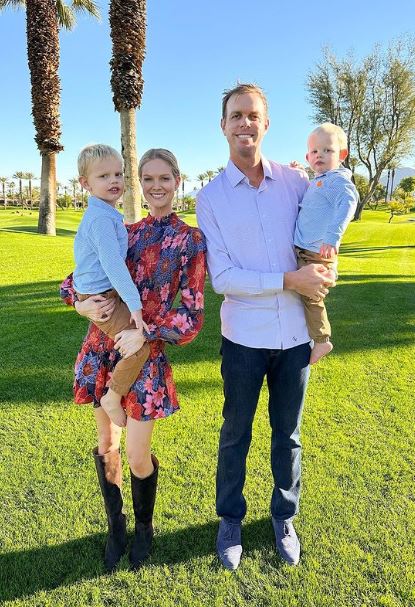
John Howard Payne in his opera Clari, the Maid of Milan (1823) wrote, “Mid pleasures and palaces though we may roam, Be it ever so humble, there’s no place like home. Clearly, literature and the media have conceptualized the term home in diverse ways. Most individuals might argue that it does not necessarily take a “heap of living,” yet there is some sense that we must “do” something to make an abode a home. We must imprint it in some way, make it ours. Why do we spend so much time and energy making a house our home? Time and energy are invested into transforming a house into a home because they experience positive consequences from doing so. This concept of action and benefit represented the basis for further development of the psychological home construct. Remember, the family is central to the Creator’s plan for the eternal destiny of His children. Eternal families are made up of individuals. Do your part to build a happy home. Establish patterns of righteousness in your life. And be an example of the believers. The Lord is depending on you to assist in the exaltation of your eternal family. I know that Jesus as the Christ lives. He knows you and loves you. He has blessed me and my family, and I know He will bless you and yours. Of this I humbly testify in the name of Jesus as the Christ. In addition to a primary physical location (id est, a person’s house), many individuals will often make an aspect of their office homier. Office workers may place a personal photograph or memorabilia in their cubicle to make that space their own. What drives us to do this? Could it be that we are afraid of being swallowed up and losing our individuality in a sea of cubicles? #RandolphHarris 5 of 21

We desire to belong to groups and community, yet we also want to keep a place in our hearts and surroundings that is separate from others. We need to impact our surroundings (exempli gratia house, dorm, office space, car) in such a way that it reflects our personality, our sense of self, and in so doing, derive benefits. We contend that modifying physical space to have it better reflect our self-identity reflects the core of psychological home. Three principles that will help you strengthen your home and family are nurturing, sacrifice, and prayer. We are on the Lord’s team, and He will always be there for us to help us bring home the gold. As children of God, some of you may have great athletic ability, but all you have been blessed with many talents and gifts. One of the most meaningful gifts is your ability to strengthen your home and family. Tonight it is my prayer that the Spirit will burn within you, that you will have a greater desire to strengthen your family now and prepare for your future family. The scriptures are filled with ways to teach us how to strengthen our families. There is no greater teacher than the Saviour. As you study His teachings and follow His example, you can make your family life better. As you gather in your family, you can do so much to invite a spirit of unity. When was the last time you put your loving arms around your mom and dad and thanked them for all they do? Parents do most of the nurturing, but they need to be nurtured too. When our Father in Heaven introduced the Saviour to the World, He demonstrated good nurturing by using a soft voice. The language in the scriptures says, “As if it came out of the Heavens, they heard a voice; and it was not a harsh voice, neither was it a loud voice; notwithstanding it being a small voice it pierced them that did hear to the center” (3 Nephi 11.3). #RandolphHarris 6 of 21

In our homes, this can be a model for the way we talk to our family members. When we talk to those we love, let us not use a loud voice but a soft voice. This is the way our Heavenly Father speaks to His children. Except for a possible reversion to a cultural situation strongly characterized by ideas of emulation and status, the ancient racial bias embodied in the Christian principle of brotherhood should logically continue to gain ground at the expense of the pecuniary morals of competitive business. The struggle for existence many of us are facing is a glimpse of life which just now seems to many the dominant fact of the universe, chiefly because attention has been fixed upon it by copious and interesting exposition. As it has had many predecessors in this place of importance, so doubtless it will have many successors. Evolution had a profound impact upon psychology, ethnology, sociology, and ethics but it failed to work a similar transformation in economics. The most plausible explanation of the inflexibility of the received political economy is that its spokesmen were satisfied that there was little their science could learn from biology. The accepted function of political economy, as taught in American colleges and propagated in the forums of opinion, was apologetic. It had always been an idealized interpretation of economic processes under the competitive regime of property and individual enterprise; violations of the set patten had been discouraged as infringements of natural law. Here in the United States of America, it was not made the test of economic orthodoxy, merely. It was used to decide whether a man was an economist at all. #RandolphHarris 7 of 21

The common failure of orthodox economists to embrace social Darwinism as preached by Sumner—so obviously adapted to the function of their science as they conceived it—was only incidentally due to the unsettled status of evolution in its relation to religious beliefs. More important was the fact that classical economics already had its own doctrine of social selection. Since it had one of the great figures of the classical economic tradition who had led Spencer, Darwin, and Wallace toward their evolutionary theories, the economists might have had some justification for proclaiming that biology had merely universalized a truth that had been in their possession for a long time. A parallel can be drawn between the patterns of natural selection and classical economics, suggesting that Darwinism involved an addition to the vocabulary rather than to the substance of conventional economic theory. Both assumed the fundamentally self-interested animal pursuing in the classical pattern, pleasure or, in the Darwinian pattern, survival. Both assumed the normality of competition in the exercise of the hedonistic, or survival, impulse; and in both it was the “fittest,” usually in a eulogistic sense, who survived or prospered—either the organism most satisfactorily adapted to its environment, or the most efficient and economic producer, the most frugal and temperate worker. Economics was the better suited to a kindly interpretation of the status quo since it accepted the present environment as a natural datum, while conscientious and perceptive followers of Darwin saw that the “fittest” might be understood to be fit to inferior and degrading surroundings. #RandolphHarris 8 of 21

Veblen, writing in 1900, found that “identification of the categories of normality and rights gives the dominant note of Mr. Spencer’s ethical and social philosophy, and that later economists of the classical line are prone to be Spencerians. Further, both classical economics and natural selection were doctrines of natural law. At this point, once again, classical economics was more conducive to intellectual stability, because its concept of equilibrium was Newtonian and hence static, whereas a dynamic theory of society raised possibilities of an unsettled World. The conception of the pressure of population upon subsistence, so important in the historical connection between biology and political economy, not only played its part in the doctrine of Malthus but was closely related to the classic wage-fund doctrine. According to the wage-fund theory, which was popular among extreme proponents of laissez faire in the United States of America, labour is paid out of a capital fund which is fixed at any given time; and the average wage of the labourers is determined by the ratio of the number of workers seeking employment to the amount of the wage-fund. According to the logic of the wage-fund theory, neither legislative regulation nor any action of the labourers could alter this situation, and a policy of strict acquiescence was indicated. Competition was generally considered the perfect means of distributing wealth. According to this doctrine the increase in numbers among the working class pressed upon the limited wage-fund with the same inexorability as the total population on the means of subsistence. This doctrine was not a little favored by the fact that if afforded a complete justification for the existing order of things respecting wages. The peace that comes when we avoid debt and the temporal and spiritual blessings we receive when we pay tithes and offerings succeeds in making a fortune. If there is any one thing that will bring peace and contentment into the human heart, and into the family, it is to live within our means. And if there is any one thing that is grinding and discouraging and disheartening, it is to have debts and obligations that one cannot meet. #RandolphHarris 9 of 21

God our Heavenly Father has instituted laws to improve his people physically, spiritually, intellectually, and one of the best laws in all the World to make better Latter-day Saints is the law of tithing. There are many people who believe the gospel and would probably embrace it, but for the fact that they are young, they still need to be guided. Many people cannot endure the gospel because of financial requirements that are made of them, and they allow the things of this World, which they have grasped firmly and steadfastly, to rob them of the greatest of all God’s gifts, namely, life eternal. The great criterion of success in the World is that men can make money. However, this is not true success. As a man grows and increases in the things of this World, if he is not careful, he will lose the Spirit of the Lord, and he will set his heart upon the things of this World. And if he loses the Spirit of the Lord, and fails to be honest with God in the payment of his tithes as strictly and honestly as he would account to a partner if he were engaged in business, that man will lessen his strength, will lessen his power, will lessen the testimony of the Spirit of God within his soul. There is no question of it in my mind. We must be honest with the Lord. The great trouble is that there are many people who, as they grow and increase in the things of this World, set their hearts upon them and lose the Spirit of the Lord. Therefore, that which is counted by the World as success is failure; because if a man starts out for a prize and he fails to secure it after labouring nearly a lifetime for that prize, certainly his life has been a failure. Be honest with the Lord and I promise that peace, prosperity, and financial success will attend those who are honest with our Heavenly Father because they are fulfilling the law and an obligation. God will bless them for doing so. #RandolphHarris 10 of 21

It is feasible that many individuals experiment with changes in the consumption pattern. To some extent this has already been done in small groups. The point here is not asceticism for poverty, but life-affirming as against life-denying consumption. This distinction can be made only on the basis of awareness of what life is, what activeness is, what is stimulating, and what their opposites are. A dress, an object of art, a house may be in the one or in the other categories. The dress which follows the fashion presented by the profit interests of the dressmakers and their public relations staffs is quite different from the dress which is beautiful or attractive and the result of personal choice and tastes. A number of dressmakers might choose to sell their products to women who prefer to wear what they like rather than what is forced upon them. The same holds true of art objects, and all kinds of aesthetic enjoyment. If they lose their function as either status symbols or capital investments, the sense for the beautiful will have a chance for a new development. The unnecessary, or merely laziness-promoting, would be out. If it became a useful vehicle for transportation and not a status symbol, the Ultimate Driving Machine would change in significance. Certainly there would be no reason to buy a new Ultimate Driving Machine every two years, and industry would find itself forced to make some drastic changes in production. To put it in a nutshell: up to now the consumer has permitted and even invited industry to brainwash or control him. The consumer has a chance of becoming aware of his power over industry by turning around and forcing industry to produce what he wants or suffer considerable losses by producing what he rejects. #RandolphHarris 11 of 21

The revolution of the consumer against the domination of industry has yet to come. It is perfectly feasible and its consequences far-reaching, unless industry takes control of the state and enforces its right to manipulate the consumer. From the standpoint of conscious rational thought, fright and admiration are distinct feelings, hence they cannot denoted by the same word; and if there is one word like awe, it is used in the one or the other sense, and the fact is forgotten that it actually means fright and admiration. In our feeling experience, fear and admiration are frequently part of one complex feeling, which, however, modern man is usually not aware of as such. It seems that the language of peoples who emphasized less than we do the intellectual aspects of experience, has more words which expressed the feeling as such, while our modern languages tend to express only such feelings which can stand the test of our kind of logic. Incidentally, this phenomenon constitutes one of the greatest difficulties for dynamic psychology. Our language just does not give us the words which we need to describe many visceral experiences which do not fit our scheme of thoughts. Hence psychoanalysis has no adequate language at its disposal. It could do what some other sciences have done and use symbols to denote certain complex feelings. For instance, a/t could stand for that complex feeling of admiration and terror which was once expressed by one word. Or xy could stand for the feeling of “aggressive defiance, superiority, accusation + hurt innocence, martyrdom, being persecuted and falsely accused.” Again, this latter feeling is not a synthesis of different feelings, as our language would make us believe, but one specific feeling which can be observed in oneself and in others once one transcends the barrier of the assumption, that nothing can be felt which cannot be “thought.” #RandolphHarris 12 of 21

If one does not use abstract symbols, the most adequate, paradoxically enough, scientific language for psychoanalysis is actually that of symbolism, poetry or reference to themes of mythology. (Dr. Freud often chose the latter way.) However, if the psychoanalyst thinks he can be scientific by using technical terms of our language to denote emotional phenomena, he deceives himself and speaks of abstract constructs which do not correspond to the reality of felt experience. However, this is only one aspect of the filtering function of language. Different languages differ not only by the fact that they vary in the diversity of words they use to denote certain affective experiences, but also by their syntax, their grammar, and the root-meaning of their words. The whole language contains an attitude of life, is a frozen expression of experiencing life in a certain way. Here are a few examples. There are languages in which the verb form “it rains,” for instance, is conjugated differently depending on whether I say that it rains because I have been out in the rain and have got wet, or because I have seen it raining from the inside of a hut, or became somebody has told me that it rains. It is quite obvious that the emphasis of the language on these different sources of experiencing a fact (in this case, that it rains) has a deep influence on the way people experience facts. (In our modern culture, for instance, with its emphasis on the purely intellectual side of knowledge, it makes little difference how I know a fact, whether from direct or indirect experience, or from hearsay.) Or in Hebrew, the main principle of conjugation is to determine whether an activity is complete (perfect) on incomplete (imperfect), while the time in which it occurs—past, present, future—is expressed only in a secondary fashion. #RandolphHarris 13 of 21

In Latin both principles (time and perfection) are used together, while in English we are predominately oriented in the sense of time. Again it goes without saying that this difference in conjugation expresses a difference in experiencing. The significance of this difference becomes quite apparent in the English and German translation of the Old Testament. Often when the Hebrew text uses the perfect tense for an emotional experience like loving, meaning, “I love fully,” the translator misunderstands and writes, “I loved.” Still another examples is to be found in the different uses of verbs and nouns in various languages, or even among different people speaking the same language. The noun refers to a “thing”; the verb refers to an activity. An increasing number of people prefer to think in terms of having things, instead of being or acting; hence, they prefer nouns to verbs. Language, by its words, its grammar, its syntax, by the whole spirit, which is frozen in it, determines which experiences penetrates to our awareness. A wide variety of professional work involving relationships with people—whether as a psychotherapist, teacher, religious worker, guidance counselor, social worker, clinical psychologist—it is the quality of the interpersonal encounter with the client which is the most significant element in determining effectiveness. I have been primarily a counselor and psychotherapist. In the course of my professional life I have worked with troubled college students, with adults in difficulty, with “normal” individuals such as business executives, and more recently with hospitalized psychotic persons. I have endeavoured to make use of the learnings from my therapeutic experience in my interactions with classes and seminars, in the training of teachers, in the administration of staff groups, in the clinical supervision of psychologist, psychiatrists, and guidance workers as they work with their clients or patients. #RandolphHarris 14 of 21

Some of these relations are long-continued and intensive, as in individual psychotherapy. Some are brief, as in experiences with workshop participants or in contacts with students who come for practical advice. They cover a wide range of depths. Gradually, learning which applies to all these experiences is that it is the quality of the personal relationship which matters most. With some of these individuals I am in touch only briefly, with others I have the opportunity of knowing them intimately, with others I have the opportunity of knowing them intimately, but in either case the quality of the personal encounter is probably, in the long run, the element which determines the extent to which this is an experience which releases or promotes development and growth. I believe the quality of my encounter is more important in the long run than is my scholarly knowledge, my professional training, my counseling orientation, the techniques I use in the interview. In keeping with this line of thought, I suspect that for a guidance worker also the relationship he forms with each student—brief or continuing—is more important than his knowledge of tests and measurements, the adequacy of his record keeping, the theories he hold, the accuracy with which he is able to predict academic success, or the school in which he received his training. In recent years, I have thought a great deal about this issue. I have tried to observe counselors and therapists whose orientations are very different from mine, in order to understand the basis of their effectiveness as well as my own. I have listened to recorded interviews from many different sources. #RandolphHarris 15 of 21

Gradually, I have developed some theoretical formulations, some hypotheses as to the basis of effectiveness in relationships. As I have asked myself how individuals sharply different in personality, orientation and procedure can all be effective in a helping relationship, can each be successful in facilitating constructive change or development because they bring to the helping relationship certain attitudinal ingredients. It is these that I hypothesize as making for effectiveness, whether we are speaking of a guidance counselor, a clinical psychologist, or a psychiatrist. What are these attitudinal or experiential elements in the counselor which makes a relationship a growth-promoting climate? Gemeinschaftsgefuhl is the most important goal of personal growth and therapy. The German word gemeinschaftsgefuhl has been translated as “social interest” or “social feeling.” It refers to a feeling of oneness, a brotherly feeling toward one’s fellow human beings. The concept of social feeling accords with the highest precepts of ethics and religion and represents a wholesome corrective to the more pathology-oriented psychoanalytic writing. Healthy personality implies the courage to become a separate, distinct person, the courage to express and celebrate one’s difference from others, and the courage to be inventive and creative in various spheres of existence. A healthy personality can respond to the human situation in inventive, creative ways. One must have a conscious aspect of the psyche and covert the “shadow” side, which remains unknown to the individual and invisible to others. #RandolphHarris 16 of 21

Personal growth is a gradual unfolding and expression of the unconscious, shadow side and the integration of these unfolding aspects of personality into a coherent, meaningful way of life. Humans experience the World in various ways; this is a basic polarity of attention, called extraversion-introversion. The extraverted person is most attentive to the happenings of the external World. The introvert is more given to reflection and introspection, attending to personal experience as it is affected by the external World. Through upbringing, and perhaps hereditary and congenital influences, persons grow to emphasize one of these fundamental attitudes, while the opposite attitude remains undeveloped. Although the attitude of extraversion or introversion defines direction of interest for the person, that person’s ways of contacting the World are also diverse. The fundamental ways of experiencing the World are designated as sensing, intuition, feeling, and thinking. Sensing refers to the act of receiving the disclosure of the World by way of one’s several sensory systems. Intuition refers to a kind of imaginative knowing; it consists of rapid guessing about what lies behind obvious sensory inputs. Feeling refers to the emotional quality of experience—its pleasant or unpleasant, frightening, or ugly qualities. Thinking, of course, refers to the human capacity for reasoning, conceptualizing, and abstract thought. The most singular and important characteristic about humans is the capacity to symbolize experience in dreams, myths, art, and folklore. In dreams there are hints for the next stages of a person’s growth toward fuller self-realization. Self-realization, becoming an “individuated” person, requires that a person become aware of repressed “shadow” sides in the personality and struggle to express these in his or her way of life. #RandolphHarris 17 of 21

The motive for attempting such self-discovery is to alleviate suffering. Many people do not want help on overcoming childhood hangups. They seek help because their lives are stale. The goal is to resume growth. A healthy personality entails the endless struggle to transcend one’s initial socialization (training to become a socius, a citizen) to discover and express one’s own repressed possibilities of functioning. Integration of the capacities to think, feel, intuit, and sense is fostered by commitment to new purposes for existence. Thus, persons whose growth was adequate to enable them to marry, raise families, and achieve vocational success would arrive at an impasse in their growth and would suffer from it. Their attainment of healthier personality—self-realization—was fostered by relinquishing projects that had animated their youthful years and choosing new aims. In the selection of problems that arise one must pass easily from deliberate thinking to intuitive grasping of connections. This latter requirement might be compared to the attitude required in studying a painting: we think about composition, colour combinations, brush strokes, and the like, but we also consider the emotional responses that the painting elicits in us. This corresponds, too, to the attitude an analyst adopts toward the patient’s associations. While listening to a patient, I sometimes do hard thinking about possible meanings, and sometimes I arrive at a conjecture merely by letting the patient’s talk play on my intuitive faculties. The verification of any finding, however, no matter how one has arrived at it, always demands full intellectual alertness. #RandolphHarris 18 of 21

A person may find, of course, that in a series of associations nothing commands his particular interest; he merely sees one or another possibility but nothing illuminating. Or, at the opposite extreme, he may find that even as he delves into one connection certain other elements also strike him as noteworthy. In both instances he will do well to put down in the margin the questions left open. Perhaps at a future time, in going over his notes, the mere theoretical possibilities will mean something more to him, or the shelved questions can be taken up in more detail. In the New Testament Apocrypha we find a curious sentence: “For the Lord Himself, having been asked by someone when His kingdom should come, said, ‘When the two shall be one, and the outside as the inside and the male with the female.’” The loss of property and the break-up of possessions may be a terrible happening, but it may also have the effect of driving the sufferer into himself. He may disintegrate with his things, or he may steel his mind and school his emotions to endure the event while he tries to start life anew. So in the end, he will become stronger than he was when the World’s pleasures and riches were available to him. We may wallow in the lowest kind of emotions and passions, or we may rise the whole feeling-nature to a level where love and beauty, refinement and sensitivity reign serenely. When the good in hum overbalances the bad, his selfishness will be purged by pity. He can transcend gender by turning inward and finding the inner bliss. He should cultivate therefor joy, love, and happiness as attributes of the inner self. #RandolphHarris 19 of 21

Working for the Sacramento Fire Department is a prestigious accomplishment for many. However, being a firefighter is dangerous, with risks including dealing with collapsing structures, operating heavy equipment, climbing high ladders, and being suspended in unsafe places during rescues. “My first fire was a taxpayer, a group of one-story stores. It was a pullbox alarm, and we were first due in. I had the nozzle. The fire was in the ceiling and the walls, and it had gotten a little bit into the floor, but it was mostly smoke. Danger never entered my mind. I remember thinking through the whole thing, ‘Don’t fall. Pace yourself.’ I was very conscious of not making a mistake. The danger, the hell with the danger, I didn’t want to look stupid. I didn’t want to be pointed out. I mean, this was my first. This was my proving ground. ‘Don’t make a fool of yourself.’ It’s still like that. I’m disappointed when I’m given control of the door, because inevitably somebody says, ‘How come you’re outside, and not inside?’ Sometimes I take it too seriously; they could be teasing, but I get my back up a little bit. That’s my main concern—to be a professional and to do it right, to stop and think about what I’m doing. Having the nozzle in that first fire was wonderful. Just the exhilaration and the high afterwards. My feet didn’t touch the ground. #RandolphHarris 20 of 21

“Of course, nobody said, ‘Wow, you did a good job.’ It was just a nod or a look, or a small feeling of acceptance. My officer was my backup man. I fell in love with him. It was like a woman and her obstetrician. I thought, ‘This is it.’ I never felt closer to anybody. It’s a very close relationship. It’s magnetic. It’s very magnetic for a woman. I also remember thinking that this was really hard work, that the guys were right: ‘I’m not going to be able to do this.’ You can’t see anything. It’s claustrophobic, you’re moving in, and you don’t know where. You’re climbing over stud, and you don’t know what it is. There’s a lot of noise, a lot of yelling. I remember being scared and doubting whether I was physically able to do this. I was constantly talking to myself: ‘Don’t give up, you’ve got to keep going.’ That was the first. It wasn’t seven floors in an occupied building, with people coming down carrying their TV sets. I remember thinking how happy I was. But when I look back on it now, it really wasn’t anything.” Please remember to raise your children to love America, love God and Jesus Christ, respect law and order, do well in school, respect their elders, and be proud to be a member of the best country on Earth. You can help save lives and property by making a donation to the Sacramento Fire Department. I pledge allegiance to the flag of the United States of America, and to the Republic, for which it stands, one nation, under God, indivisible, with liberty and justice for all. We are grateful for the faith that made fearless, and the courage that kept firm these valiant men and women. Above all, we are grateful that the spirit of America’s Prophets lived in their hearts that they knew all men are created equal in Thy sight, by Thee endowed with the imperishable right to life, liberty, and pursuit of happiness. #RandolphHarris 21 of 21

Ascent at Montelena

11977 Cobble Brook Drive, Rancho Cordova, California 95742
4 Home Design(s) Available

Experience modern designs and affordability in our upcoming new homes for sale. Ascent at Montelena in Rancho Cordova is near major employers and premier shopping.
Starting from: $625,990
2,526-2,973 square feet
3 to 6 bedrooms
2.5 to 4.5 bathrooms
2-3 car garage
https://www.pulte.com/homes/california/sacramento/rancho-cordova/ascent-at-montelena-210916
Memories of a Lifetime–I Stumbled on this Photograph
 The heart is initially no more than an enlarged blood vessel, and eventually becomes the four-chambered structure found in human beings. Every great discovery is just like perception, an operation of the understanding, an immediate intuition, and as such the work of an instant, a flash of insight. They are not the result of a process of abstract reasoning, which only serves to make the immediate knowledge of the understanding permanent for thought by bringing it under abstract concepts, i.e, it makes knowledge distinct, it puts us in a position to impart it and explain it to others. The experience we undergo is the result of the interaction between reality and the particular human organism, but even though we are required to acknowledge the existence of the external stimulant, we can never know exactly what it is like it our own right. This is a unique case in that, although we can investigate the effects of the stimulant, the cause is inherently unknowable. The keenness of the understanding in apprehending the casual relations of objects which are known indirectly, does not find its only application in the sphere of natural sciences (though all the discoveries in that sphere are due to it), but it also appears in practical life. #RandolphHarris 1 of 14
 Since we cannot know the nature of reality apart from its effects, we are led to a belief in some Unknowable; this does not mean, however, that we are committed to a belief in the existence of God. First of all, our complete dependence on sensory data for knowledge makes it impossible for us to tell whether this Unknowable is at all comparable to any kind of divine substance. We are never in the position to test whether our idea of what the Absolute is, corresponds to what it actually is. Second, reasoning, which is no more than an advanced physical ability by which an organism can meet environmental problems, cannot cope with data that are not reducible to observables. When such an endeavor is made, reasoning, like any machine whose function is abused, breaks down. Consider what occurs when we attempt to analyze a concept whose reference is take to be necessarily outside of the domain of experience—the concept of God. All questions are either unanswerable or productive paradoxes. If there is a God, then how did he come into existence? If he created himself out of nothing, then how can something come out of nothing? #RandolphHarris 2 of 14
 The fact that God is treated as an immanent, existing or operating within; inherent, permanently pervading and sustaining the Universe, rather than an external power, does not eliminate the questions that are raised with theism. It is still impossible to imagine the Universe arising uncaused out of nothing. This is why I believe that the Universe is like a sea-walnut, which produces its own light to sustain life and ward off predators, but is contained in the ocean. It is only logical that we would think of the Universe as existent in some potential form prior to its becoming actual; and even if it were meaningful to speak of the potential Universe, the question would still remain how a potential Universe could have been created. Are we then necessarily led to atheism? No. The fact that we do not know whether a God exists does not mean that therefore no God exists. The rejection of theism and pantheism entails only that we can have no knowledge about the Unknowable, not that the Unknowable does not exists. At most we can simply say that we do not know whether there is a God. #RandolphHarris 3 of 14
 Many religions still cling to beliefs that arose because primitive people could not account for natural phenomena. Thus, the notion of a soul, or of a ghost, arose because primitive people could not account for dreams, shadows, and reflections. All such phenomena led to the belief that people were dual personalities, one of which remains unchanged regardless of changes in the visible human. From this conception there gradually developed the theory that there were eternal, unchanging, omnipotent personalities. In this way, people came to believe in gods; and, for similar reason, the Judaeo-Christin God has many strictly human traits. This religious anthropomorphism which depicted God as filled with hatreds and desires that were appropriate only to human beings. Nevertheless, religion can serve as a means of fostering friendships and cooperation among human beings and also of guaranteeing the retention of the most worthwhile values of the past. Furthermore, religion can be useful as a way of developing interest in the various enigmas that are found in the Universe, a means of motivating people to initiate scientific inquiries. #RandolphHarris 4 of 14
 The fact that we can never know what the Unknowable is in itself does not imply that we cannot have any genuine knowledge. Good sense or prudence signifies exclusively understanding at the command of the will. However, the limits of these conceptions must not be too sharply defined, for it is always that one function of the understanding by means of which all animals perceive objects in space, which, in its keenest form, appears now in the phenomena of nature, correctly inferring the unknown causes from the given effects, and providing the material from which the reason frames general rules as laws of natural now inventing complicated and ingenious machines by adapting known causes to desired effects; now in the sphere of motives, seeing though and frustrating intrigues and machinations, or fitly disposing the motives and the people who are susceptible to them, setting them in motion, as machines are moved by levers and wheels, and directing them at will to the accomplishment of the ends. Deficiency of understanding is called an intellectual disability. It is dullness in applying the law of causality, incapacity for the immediate apprehension of the concatenations of causes and effect, motives and actions. #RandolphHarris 5 of 14
 A stupid person has no insight into the connection of natural phenomena, either when they follow their own course, or when they are intentionally combined, i.e., are applied to machinery. A stupid person does not observe that persons, who apparently act independently of each other, are really in collusion; that person is therefore easily mystified; and outwitted; one does not discern the hidden motives of proffered advice or expressions of opinion. But it is always just one thing that the individual lacks—keenness, rapidity, ease in applying the law of causality, i.e., the power of understanding. The domain of phenomena of the Unknowable is characterized by features which are not controllable by our desires or even by our manipulations. Certain relationship consistently appear in spite of our objections or antagonistic attitudes. Also, in all objectsions, including ourselves, there are many varying degrees of energy—or force. These aspects of reality are manifestations of the Unknowable, and information about them is the only kind of knowledge human beings can obtain or ought to see. #RandolphHarris 6 of 14
 It is clear that knowledge, for human beings, is not a study of the Unknowable but rather of the manifestations of the Unknowable among phenomena. There are beginnings, middles (or periods of equilibrium), and ends; but all these processes take place in a finite space and a finite time. A person is born; one matures; one passes on, generally. Similarly, a society begins, reaches a stage of equilibrium, and is destroyed by something internal or external. All around us we can see the workings of the law of evolution and dissolution, but we can never know whether the Universe as a whole is undergoing this process. Feelings, too, arise through evolution. Life seeks to survive, and feelings of pleasure are necessary to sustain this urge. If the organism experiences no rewards for maintaining its own life and reproducing its kind, if there were no sense of accomplishment, then the urge to survive might easily be extinguished. Therefore, behavior that contributes to survival is accompanied by the feeling of pleasure, and behavior that endangers survival is accompanied by the feeling of pain. #RandolphHarris 7 of 14
 Similarly, feelings of sociality and sympathy developed in human beings because in the struggle for survival people came to recognize that human cooperation is necessary, and the pleasures that accrue to the feeling of sociality were the rewards that guaranteed the continuation of such cooperation. The development of the feelings of sociality and sympathy led to the emergence of a new kind of entity, society, which is the subject of sociology and ethics. Here, too, the principle of evolution holds. Society, like other organisms, has its period of infancy, of maturity, and death. Therefore, strive to possess yourself of what you have inherited from your ancestors. The problem would appear more difficult if we could admit that they leave no traces whatsoever behind them. However, our memories are colored by emotions, judgments, and quirks of personality. What we remember depends on what we pay attention to, what we regard as meaningful or important, and what we feel strongly about. Memory structure is that pattern of associations among items of information stored in the memory. #RandolphHarris 8 of 14
 I stumbled on this photograph, it kind of made me laugh, it took me way back, back down memory lane. I see the happiness, I see the pain where I am. I see us standing there, such a happy pair. Love beyond compare. The way you held me. No one could tell me that love would die. Why, oh why did I have to find this photograph? Gaps in memory, which are common, may be filled in by logic, guessing, or new information. Indeed, it is possible to have memories for things that never happened (such as remembering broken glass at an accident when there was none). People with pseudo memories (false memories) are often quite upset to learn they have given false testimony. A filmed automobile accident was showed to people. Afterwards, some participants were asked to estimate how fast the cars were going when they smashed into each other. For others the words bumped, contacted, or hit replaces smashed. One week later, each person was asked, “Did you see any broken glass?” Those asked earlier about the cars that smashed into each other were more likely to say yes. (No broken glass was shown in the film.) The new information (smashed) was included in memories and altered them. #RandolphHarris 9 of 14
 The updating of long-term memories is a common problem in police work. For example, a witness may select a photo of a suspect from police files or see a photo in the news. Later, the witness identifies the suspect in person (in a lineup or in court). Did the witness really remember the suspect from the scene of the crime? Or was it from the more recently seen photograph? Even an innocent person may be remembered as the criminal. It is quite possible for a photo to update or blend with the original memory. Many tragic cases of mistaken identity occur this way. Indeed, the fading of memories and the weak affect of impressions which are no longer recent, which we are apt to take as self-evident, and to explain as a primary effect of time on our psychic memory-residues, are in reality secondary changes brought about by laborious work. It is the preconscious that accomplishes this work. Networks of associated memories may help explain a common experience: Imagine finding a picture taken on your sixth birthday or tenth Christmas. As you look at the photo, one memory leads to another, which leads to another, and another. Soon you have unleashed a flood of seemingly forgotten details. This process is called redintegration. Redintegrative memories seem to spread through the branches of memory networks. #RandolphHarris 10 of 14
 Many people find that such memories are also touched off by distinctive events from past—like a visit to Grandma’s kitchen, pleasant scents, going to the farm, the seashore, a doctor’s office, the perfume or after-shave of a former lover, and so on. The key idea in redintegration is that one memory serves as a cue to trigger another. As a result, an entire past experience may be reconstructed from one small recollection. Personally, I have had no real anxiety-dreams for a few months, but I do recall one. The dream was very vivid, and showed me my beloved mother, with a peculiarly calm, sleeping countenance, carried into the room and laid on the bed by two (or three) persons with birds’ beaks. I awoke crying and screaming, and disturbed my parents’ sleep. The peculiarly draped, excessively tall figures with beaks I had taken from the illustrations of the Philippson’s Bible. I believe they represented deities with the heads of sparrowhawks from an Egyptian tomb-relief. The analysis yielded, however, also the recollection of a house-porter’s boy, who used to play with us children on a meadow in front of the house; I might add that his name was Philip. #RandolphHarris 11 of 14
 It seemed to me then that I first heard from this boy the vulgar word signifying sexual intercourse, which is replaced among educated persons by the Latin word coitus, but which the dream plainly enough indicates by the choice of the birds’ heads. I must have guessed the sexual significance of the word from the look of my Worldly-wise teacher. My mother’s expression in the dream was copied from the countenance of my grandfather, whom I had seen a few days before his death snoring in a state of coma. The interpretation of the secondary elaboration in the dream must therefore have been that my mother was dying; the tomb-relief, too, agrees with this. I awoke with this anxiety, and could not calm myself until I had waked my parents. I remember that I suddenly became calm when I saw my mother; it was as though I had needed the assurance: then she is not dead. However, this secondary interpretation of the dream had only taken place when the influence of the developed anxiety was ready at work. I was not in a state of anxiety because I had dreamt that my mother was dying; I interpreted the dream in this manner in the preconscious elaboration because I was already under the domination of anxiety. #RandolphHarris 12 of 14
 The latter, however, could be traced back, through the repression to a dark, plainly disturbing period I had in my life, which had found appropriate expression in the visual content of the dream. It was a time when I felt like savage humans were trying to break up my family, and take the only people who cared about me in the World away, and then do away with me. As I grow up, and I think most adults are the same, they fear losing their parents and siblings because you have known them all of your life and that is all you have in this World. And while after you lose a parent, you can still feel their presence and sense them looking over you, but that sense of communication in the physical World is gone and that means so much. People spend so much time on social media, but think about it this way. What if someone took away everyone you care about in your life and replaced them with social media profiles and pictures and videos was your new community and social circle, but never actually see them in person. You would feel isloated, incomplete, and alone. Do not let social media rob you of reality and life. We are only here on this planet for so long and once you lose someone you care about chances are you can never talk to them again. #RandolphHarris 13 of 14
 Make more time for your family and spend time with the people you love. Ask your grandparents to recall vivid and important autobiographical memories and what do you get out of it? Up to a point, the results are like the memories of people at any age: Most recollections come from the 2 or 3 most recent years. Fewer and fewer autobiographical memories come from earlier years, tapering off back to childhood. However, something interesting occurs for older adults as they scan over a lifetime. If you tally their memories, you will find a bulge or bump in the curve between the ages of 10 and 30. In other words, many more memories come from this period than would be expected. Why do memories from this period of life stand out for older adults? Because memories formed during this time are encoded in ways that make them easier to retrieve later in life. Just why these years are so memorable is not known. However, if you are between the ages of 10 and 30, take note: These are the days, my friend. You know me. Every time you try to forget who I am, I will be right there to remind you again, you know me. Answer me when I call, God, defender of my cause; you set me free when I am hard-pressed; have mercy on me and hear my prayer. #RandolphHarris 14 of 14

 Randolph Harris II International Institute