
Home » Posts tagged 'Philosophy' (Page 9)
Tag Archives: Philosophy

Gossipy and Notoriously Indifferent to the Ethics of Personal Confidences!

A man must stay in his own orbit and take his directives from within. If through fear of loneliness, intimidation, or suggestion, he joins the marching groups of his time, he will not reach his best. Returning from the “real possibilities” in the field of constitutional factors to our past example of the cigarette smoker, he is confronted with two real possibilities: either remaining a chains smoker or no longer smoking a single cigarette. His belief that he has the possibility of continuing to smoke, but only a few cigarettes, turns out to be an illusion. In our past example of the love affair, the man has two real possibilities: either not to take the young lady out or to have a love affair with her. The possibility which he thought of, that he could have a drink with her and not have a love affair, was unreal, considering the constellation of forces in his and hear personalities. The American democratic party had a real possibility of a long-term dictatorship—or at least, of not turning the country into a disaster—if they had not treated the conquered populations with such brutality and cruelty, if these politicians had not been so narcissistic as to strip the public of so many rights and playing favourtism to other populations. However, there were no real possibilities outside of these alternatives. To hope, as the Democrats did, that they could give vent to their destructiveness toward the conquered citizens, and satisfy their vanity and grandiosity by never accommodating the American population, and threatening all other capitalist powers by the scope of their own ambitions, and honestly win elections—all of this is not within the gamut of real possibilities. #RandolphHarris 1 of 17

The same holds true for the growing threat of World War III: there is a strong inclination toward war, caused by the presence of nuclear weapons on all sides and by the mutual fear and suspicion thus engendered; there is a destruction of national sovereignty caused by foreign interests; a lack of objectivity and reason in foreign policy. On the other hand, there is the wish, among the majority of the populations in both blocs to avoid the catastrophe of nuclear destruction; there is the voice of the rest of mankind, which insists that the big powers should not involve all others in their madness; there are social and technological factors which permit the use of peaceful solutions, and which open the way to a happy future for the human race. While we have these two sets of inclining factors, there are still two real possibilities between which man can choose: that of peace by ending the nuclear arms race and the brewing cold war; of that of World War II by continuing the present policy. Even if one has greater weight than the other, both possibilities are real. However, there is another factor to consider, the revolt of citizens who are tired of being overtaxed and not having representation and hyperinflation. Even the freedom of choice seems to be restricted due to voter fraud, federal, state, and local corruption. Furthermore, as President Trump is explaining, there is no possibility that we can go on with the arms race, and World War III, and a paranoid hate mentality, and at the same time avoid nuclear destruction. #RandolphHarris 2 of 17

In 2020, it seemed as if the freedom of decision had already been lost due to voter fraud, and that the catastrophe would occur against everybody’s will, except perhaps that of some mad death-lovers. On that mankind was stripped of their freedoms to work, made to take vaccines, forced to wear masks that covered their nose and mouth, and locked in their homes. An increasing of tension against the government followed because no negotiations nor compromises were possible. The present time—2024—is probably the last time at which mankind will have the freedom to choose between life or destruction. If we do not go beyond superficial arrangements which symbolize good will but do not signify an insight into the given alternatives and their respective consequences, then our freedom of choice will have vanished. If mankind destroys itself, it will not be because of the intrinsic wickedness of man’s heart; it will be because of his inability to wake up to the realistic alternatives and their consequences. The possibility of freedom lies precisely in recognizing which are the real possibilities between which we can choose, and which are the “unreal possibilities” that constitute our wishful thoughts whereby we seek to spare ourselves the unpleasant takes of making a decision between alternatives that are real but unpopular (individually or socially). #RandolphHarris 3 of 17

The unreal possibilities are, of course, no possibilities at all; they are ideas or plans that are impossible or very unlikely to happen. However, the unfortunate fact is that most of us, when confronted with the real alternatives and with the necessity of making a choice that requires insight and sacrifices, prefer to think that there are other possibilities that can be pursued; we thus blind ourselves to the fact that these unreal possibilities do not exist, and that their pursuit is a smoke-screen behind which fate makes its own decision. Living under the illusion that the non-possibilities will materialize, man is then surprised, indignant, hurt, when the choice is made for him and the unwanted catastrophe occurs. At that point he falls into the mistaken posture of accusing others, defending himself, and/or praying to God, when the only thing he should blame is his own lack of courage to face the issue, and his lack of reason in understanding it. Man’s actions are always caused by inclinations rooted in (usually unconscious) forces operating in his personality. If these forces have reached a certain intensity, they may be so strong that they not only incline man but determine him—hence he has no freedom of choice. In those cases where contradictory inclinations effectively operate within the personality there is freedom of choice. This freedom is limited by the existing real possibilities. These real possibilities are determined by the total situation. Man’s freedom lies in his possibility to choose between the existing real possibilities (alternatives). Freedom in this sense can be defined not as “acting in the awareness of necessity” but as acting on the basis of the awareness of alternatives and their consequences. #RandolphHarris 4 of 17

There is never indeterminism; there is sometimes determinism, and sometimes alternativism based on the uniquely human phenomenon: awareness. To put it differently, every event is caused However, in the constellation previous to the event there may be several motivations which can become the cause of the next event. Which of these possible causes becomes an effective cause may depend on man’s awareness of the very moment of decision. In other words, nothing is uncased, but not everything is determined (in the “hard” meaning of the word). The view of determinism, indeterminism, and alternativism developed here essentially follow the thought of three thinkers: Spinoza, Marx, and Freud. All three are often called “determinists.” There are good reasons for doing so, the best being that they have said so themselves. Spinoza wrote: “In the mind there is no absolute or free will—which for Kant s for many other philosophers was the very proof of the freedom of our will—as the result of self-deception: we are aware of our desires but we re not aware of the motives of our desires. Hence we believe in the “freedom” of our desires. Dr. Freud also expressed a deterministic position; belief in psychic freedom and choice; he said indeterminism “is quite unscientific…It must give way before the claims of a determinism which governs even mental life.” #RandolphHarris 5 of 17

Marx also seems to be a determinist. He discovered laws of history which explain political events as results of class stratification and class struggles, and the latter as the result of the existing productive forces and their development. It seems that all three thinkers deny human freedom and see in man the instrument of forces which operate behind his back, and not only incline him but determine him to act as he does. In this sense Marx would be a strict Hegelian for whom the awareness of the necessity is the maximum of freedom. Not only have Spinoza, Marx, and Dr. Freud expressed themselves in terms which seem to qualify them as determinists; many of their pupils have also understood them in this way. This holds particularly true for Marx and Freud. Many “Marxists” have talked as if there were an unalterable course of history, that the future was determined by the past, that certain events had necessarily to happen. Many of Dr. Freud’s pupils have claimed the same point of view for Dr. Freud; they argue that Dr. Freud’s psychology is a scientific one, precisely because it can predict effects from foregoing causes. However, this interpretation of Spinoza, Marx, and Dr. Freud as determinists entirely leaves out the other aspect in the philosophy of the three thinkers. Why was it that the main work of the “determinist” Spinoza is a book on ethics? That Marx’s main intention was the socialist revolution, and that Dr. Freud’s main aim was a therapy which would cure the mentally sick person of his neurosis? #RandolphHarris 6 of 17

Well, all three thinkers saw the degree to which man and society are inclined to act in a certain way, often to such a degree that the inclination becomes determination. However, at the same time they were not only philosophers who wanted to explain and interpret; they were men who wanted to change and transform. For Spinoza the task of man, his ethical aim, is precisely that of reducing determination and achieving the optimum of freedom. Man can do this by self-awareness, by transforming passions, which blind and chain him, into actions (“active affects”), which permit him to act according to his real interest as a human being. “An emotion which is a passion ceases to be a passion as soon as we form a distinct and clear picture thereof.” Freedom is not anything which is given to us, according to Spinoza; it is something which within certain limitations we can acquire by insight and by effort. If we have fortitude and awareness, we have the alternatives to choose. The conquest of freedom is difficult and that is why most of us fail. As Spinoza wrote at the end of the Ethic: “I have thus completed all I wished to set forth touching the mind’s power over the emotions and the mind’s freedom. Whence it appears how potent is the wise man and how much he surpasses the ignorant man who is driven only by his lusts. For the ignorant man is not only distracted in various ways by the external causes without ever gaining the true acquiescence of his spirit, but moreover lives, as it were, unwitting of himself, and of God, and of things, and as soon as he ceases to suffer [in Spinoza’s sense, to be passive], ceases also to be. #RandolphHarris 7 of 17
“Whereas the wise man, in as far as he is regarded as such, is scarcely at all disturbed in spirit, but, being conscious of himself, and of God, and of things, by a certain eternal necessity, never ceases to be, but always possesses true acquiescence of his spirit. If the way which I have pointed out as leading to this result, seems exceedingly hard, it may nevertheless be discovered. Needs must it be hard, since it is so seldom found. How would it be possible, if salvation were ready to our hand, and could without great labour be found, that it should be by almost all men neglected? But all things excellent are as difficult as they are rare.” Spinoza, the founder of modern psychology, who sees the factors which determine man, nevertheless writes an Ethic. He wanted to show how man can change from bondage to freedom. And his concept of “ethic” is precisely that of the conquest of freedom. This conquest is possible by reason, by adequate ideas, by awareness, but it is possible only if man makes the effort with more labour than most men are willing to make. Surely the human race has by this time, by this quarter of the century in history found the truth? Why, the does the man who wants it have to make his own personal search all over again? It is because one must know it for himself within himself. He should verify the truth not by reference to a book or Christian Bible but by reference to his own private experience. #RandolphHarris 8 of 17

The analyst’s general task is to help the patient to recognize himself and to reorient his life as far as the patient himself deems it necessary. In order to convey a more specific impression of what the analyst does in pursuing this goal, it is necessary to divide his work into categories and discuss these individually. Roughly, his work can be broken down into five main divisions: observation; understanding; interpretation; help in resistance; and general human help. To some extent the analyst’s observations are not different they have a specific character. Like everyone else, behaviour, such as aloofness, warmth, rigidity, spontaneity, defiance, compliance, suspicion, confidence, assertiveness, timidity, ruthlessness, sensitivity. In the mere process of listening to the patient he will, without direct effort, gain many general impressions: whether the patient is able to let himself go or is tense and constrained; whether he talks in a systematic, controlled fashion or is jumpy and scattered; whether he presents abstract generalities or concrete details; whether he is circumstantial or to the point; where he talks spontaneously or leaves the initiative to the analyst; whether he is conventional or expresses what he really thinks and feels. In his more specific observations the analyst learns first, from what the patient tells him about his experiences, past and present, his relationships with himself and others, his plans, his wishes, his fears, his thoughts. Second, he learns from observing the patient’s behaviour in his office, for each patient reacts differently to arrangements concerning fees, time, lying down, and other objective aspects of analysis. #RandolphHarris 9 of 17

And each patient reacts differently to the fact that he is being analyzed. One patient regards analysis as an interesting intellectual process but refutes the idea that he really needs it; another treats it as a humiliating secret; while a third is proud of it as a special privilege. Moreover, patients exhibit an endless variety of attitudes toward the analyst himself, with as many individual shades as exist otherwise in human relationships. Finally, patients show innumerable subtle and gross vacillations in their reactions, and these vacillations themselves are revealing. These two sources of information—the patient’s communications about himself and the observation of his actual behaviour—complement each other just as they do in any relationship. Even if we know a great deal about a person’s history and all his present ways of dealing with friends, women, business, politics, our picture of him becomes far more complete if we meet him personally and see him in action. Both sources are indispensable; one is no less important than the other. Like any other observation, that of the analyst is tinged by the nature of his interest. A saleswoman will heed other qualities in a customer than a social worker will in a client applying for help. An employer interviewing a prospective employee will focus on questions of initiative, adaptability, reliability, while a minister talking to a parishioner will be more interested in questions of moral behavior and religious belief. #RandolphHarris 10 of 17

The analyst’s interest does not focus upon one part of the patient, not even upon the disturbed part, but necessarily embraces the whole personality. Since he wants to understand its entire structure, and since he does not know offhand what may be more relevant and what less, his attention must absorb as many factors as possible. The specific analytical observations derive from the analyst’s purpose of recognizing and understanding the patient’s unconscious motivations. This is their essential difference from general observations. In the latter, too, we may sense certain undercurrents, but such impressions remain more or less tentative and even unformulated; also, we do not bother as a rule to distinguish whether they are determined by psychic factors of our own or by those of the observed person. The analyst’s specific observations, however, are an indispensable part of the analytic process. They constitute a systematic study of unconscious forces as revealed in the patient’s free associations. To these the analyst listens attentively, trying not to select any one element prematurely but to pay an even interest to every detail. Some of the analyst’s observations will fall in line immediately. Just as one discerns in a foggy landscape that dim outline of a house or a tree, the analyst will have no difficulty in quickly recognizing one or another general character trait. However, for the most part his observations are only a maze of seemingly unconnected items. How, then, does he arrive at an understanding? #RandolphHarris 11 of 17

The relationship between the therapist and his patient is not a spontaneous one. The frequency of visits, generally regular (and most commonly weekly), their timing and duration are explicitly determined. What is permissible and desirable for the patient to do during the treatment hour is controlled and what demands he may make of his therapist are very definitely limited. In light of the prolonged nature of the relationship, the intimacy of the material shared, and the qualities of rapport and mutual respect that are engendered, this fact of definite controls on what the patient may do or fail to do, and what he can require of the therapist, constitutes what may be the most distinctive feature of the therapeutic relationship. This feature of controlled relationship is espoused in nearly all methods of psychotherapy. The quality of the relationship is given specific attention in all formulations of psychotherapy and certain aspects of the relationship are given universal emphasis. There is general agreement that it is the responsibility of the therapist to be accepting of the patient and to communicate his acceptance to the patient. This acceptance of the patient is a complex of therapist attitudes that include respect for the patient as an individual, positive regard for his personality and his potential, warmth, kindness, and continuing willingness to help no matter what the symptoms or defects of the patient. Most crucially, this attitude of acceptance requires that the therapist relate to his patent in a nonjudgmental, noncritical, nonpunitive way. #RandolphHarris 12 of 17

Of course, failure of conformity, socially inimical attitudes, or even antisocial behaviour may not be at the heart of the problem for which the patient seeks help and the therapist may learn of them only incidentally, but he must avoid value assessments which cause him inadvertently to communicate a rejection of the patient. This is a difficult quality of relationship both to describe and to establish effectively. The therapist may share many of his society’s values and mores and will not think that it is good for them to be violated or neglected, but it is not his function to condemn or to try to re-create an individual in his own image. This quality of “acceptance” in our culture at this time is peculiarly restricted to the psychotherapeutic contract, but it is common to all such contracts. In this sense, psychotherapy provides a very special, perhaps ideal, form of friendship. It is reasonable to presume that a further reflection of the communality of quality of acceptance is found in the expectation of the average patient who seeks a therapeutic relationship. When it is available, the hopeful expectation of “unconditional positive regard” from somebody may well be one of the common factors leading to an increasing demand for psychotherapy and contributing to a positive response. #RandolphHarris 13 of 17

Whether or not the impact of the mental health movement and its attendant educational programs has created a general expectation of the therapeutically prescribed acceptance, it seems that a majority of patients have an expectation that their revelation of self and others will be treated with complete confidentiality. Again, in principle that the patient’s communications are “privileged” and protected in principle and by law from release in any form or medium which would cause him or others embarrassment or hurt, we have a structural factor shared by all schools of psychotherapy. As a common factor of the therapy contract, it may significantly contribute to the total therapeutic impact of the relationship. It is, by contrast, a notable characteristic of our general culture that we are gossipy and notoriously indifferent to the ethic of personal confidences! All of us have been brainwashed, manipulated, and lied to a bit by our parents and society. As humans, we are hardwired to take in information and use it as a basis to live by. If we want to live with other people, it is what is expected out of us. Some of the things we have been told are lies meant to keep us safe, so we will not wander off and get ourselves into danger. Bloody Mary was made up to keep us in our beds at night, instead of wandering all over the house while our parents slept. Knowing yourself is always a good idea. First of all, most people need to reflect on themselves from time to time. We all change as life goes on and seeing what those changes are is good for us to know and understand. #RandolphHarris 14 of 17

Having a child changes people dramatically. Suddenly, all the irresponsible things we have done are not things we want to take a chance on anymore. We want to be around for our child. Going to jail, or worse, getting ourselves killed by doing foolish things, it is not worth it anymore. When looking at yourself, ask questions about who is in your life and why they are there. Ask yourself if they are really fulfilling a need in your life. Are they making your life better? Or is their presence making your life worse? And why? You might have someone who is hurting you mentally or even physically. How long will you keep dealing with that? Standing up to someone with one or more of the traits of the Dark Triad can be done. Once they know that they cannot manipulate you, they change the way they act with you. It does not change them completely, but they understand that what they want to do will not work on you. Some people lie so much that it is hard to believe anything they say, it is hard to even trust them. Even if you ask them to stop lying, they will continue to do so. When this is the case, people often want concrete proof of anything the habitual liar has to say. To hold his individual accountable, sometimes loved one’s will tell other people in the liar’s life of their shortcomings to make people know what they are getting involved with and to stop the individual from lying to everyone. Do not the your soul get shut up in torment and despair. Keep in mind that in life, there is an evil quest too, whose disciples seek to serve their lower nature rather than to conquer it, and whose masters show themselves by action or teaching to be monsters. #RandolphHarris 15 of 17

The Lord Jesus is supposed to have said: “The manifestations of the Spirit, in some things, are very strange. Sometimes He will twist the body this way, and that, and the meaning is dark to you. I want you to know somethings about this part of the Spirit’s work. I want you to see that they are not useless. If you had spoken in your own tongue, when the Spirit came in, it would have graciously blessed you; but perhaps you might have thought it was yourself, as many have. So the Spirit comes in and speak in an unknown tongue to you, that you might know that it was NOT YOURSELF SPEAKING. Your hands He has often lifted up, and again He has raised your fingers in various ways. Your eyes open and shut by the Spirit now, as they did not before. Your very head has been shaken by the Spirit and you have not known why He did this. You have thought, sometimes, it was just to show He was living there, and that is true, but there is more in it than that, and He will show you as well as He can, in a few words, what some of these things are. Some things in the manifestations are very peculiar to you. You have gone on wondering about them. DO not think it is strange that the Spirit works in you in many ways. His work is more than two-fold work. It is manifold. This is puzzling many minds. They see the Spirit shaking. They hear Him singing. They feel Him laughing, and they are sometimes tried with His various twistings and jerkings, as though He would tear them to pieces. Sometimes it seems He is imitating the animals in various sounds and doings. This has been all a mystery to the saint. #RandolphHarris 16 of 17

“This has been all a mystery to the saints. His work, I say, is manifold. He seeks, in some, to show them that they are all one with each other, in the whole creation…If He shows you, by making a noise as of some wild animal, that you are like that, you must not despise His way of working, for the Holy Spirit knows why He does it. He makes these noises in the animals, can’t He make them in you?” Christ as the depth of culture signifies a close union between the two humanity and theonomy, the union of substance with form. However, religious substance lies at the depth of cultural form, a depth not always visible or attainable due to the currents of estrangement. The depths can be fathomed only in the depth-experience which is faith. It is the impact of the divine Spirit which drives man beyond the shallow surface life of autonomous secularism to the depth-dimension where he encounters the New Being. In the New Being he finds the teleological meaning of his life and the spiritual power to fulfill it. Our vision comprises three elements: Christ, depth, and culture. They represent the three major themes of theology: the New Being, ultimate concern, and man. Enter not the path of the wicked, and walk not in the way of evil men. He that walks uprightly, and works righteousness, and speaks the truth in his heart with have the honour of sojourning in the Lord’s Tabernacle, and shall dwell upon the Lord’s holy mountain. I pledge allegiance to the flag of the United States of America and to the republic for which it stands, one nation, under God, indivisible with liberty and justice for all. For more than 200 years, the Sacramento Fire Department has responded to just about every type of call for help and emergency imaginable without hesitation, attitude, or complaint. And over the years, those calls have grown in number and complexity. The needs of the communities have pushed and prodded the fire department into performing tasks and handling situations that no one ever imagined the fire department handling. Please kindly make a donation to the Sacramento Fire Department to ensure they receive all of the resources and latest technology to protect the community. #RandolphHarris 17 of 17


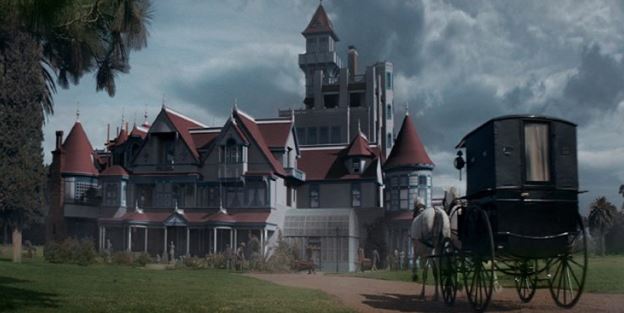
In December of 1924 an investigator, Mr. Pierre Bernard, was called to The Winchester Mystery House to witness supernatural events. He reported at the time that “it may be stated generally that there was no possibility, in most cases, of the objects having been thrown by hand…Moreover it is hard to conceive by what mechanical appliance, under the circumstances described, the movements could have been effected. To suppose that these various objects were all moved by mechanical contrivances argues incredible stupidity, amounting almost to imbecility on the part of all persons present who were not in the plot.” William Lyon Mackenzie King testified that “doors do not just open and suddenly close by themselves; but they certainly do in the Winchester Mansion.” There has been no convincing explanation for the events here related.

Come and enjoy a delicious meal in Sarah’s Café, stroll along the paths of the beautiful Victorian gardens, and wonder through the miles of hallways in the World’s most mysterious mansion. For further information about tours, including group tours, weddings, school events, birthday party packages, facility rentals, and special events please visit the website: https://winchestermysteryhouse.com/

Please visit the online giftshop, and purchase a gift for friends and relatives as well as a special memento of The Winchester Mystery House. A variety of souvenirs and gifts are available to purchase. https://shopwinchestermysteryhouse.com/

I Could be Stringing Pearls for the Joy of Heaven
The great man knows he has limitations, he knows his defects and faults—but he is not afraid of them. The power of persuasion is one way to get what you want. And it is not that evil to persuade people to do things, is it? Advertisements are powerful persuasions. Everyone uses ads to get what they want. Politicians use them, and companies use the. So how bad can it be, really? When used for beneficial purposes, this power is not anything bad. However, when used for unethical, immoral, illegal, and dangerous things, persuasion can get people into real trouble. There are some errors, which have a major importance. One error lies in the habit of speaking of the freedom of choice of man rather than that of a specific individual. Choice, by definition, lies between alternatives. That an alternative is genuinely and psychologically open to choice can be supported by the observation that people have chosen it. That people have sometimes failed to choose it, has no tendency to show that it is closed to choice. As soon as one speaks of the freedom of man in general, rather than of an individual, one speaks in an abstract way which makes the problem insoluble; this is so precisely because one man has the freedom to choose—another has lost it. If applied to all men, we either deal with an abstraction, or with a mere moral postulate in the sense of Kant or of William James. Deception is something we have to deal with every day. Therefore, trusting what someone says about anything is not always the best practice. #RandolphHarris 1 of 18

Another difficulty in the traditional discussion of freedom seems to lie in the tendency, especially of the classical authors from Plato to Aquinas, to deal with the problem of good and evil in a general way, as if man had the choice between good and evil “in general,” and the freedom to choose good. This view greatly confuses the discussion because, when confronted with the general choice most men choose “good” as against “evil.” However, there is no such thing as the choice between “good” and “evil”—there are concrete and specific action that are means toward what is good, and others that are means toward what is evil, provided good and evil are properly defined. Our moral conflict on the question of choice arises when we have to make a concrete decision rather than when we choose good or evil in general. Still another shortcoming of the traditional discussion lies in the fact that it usually deals with freedom versus determinism of choice, rather than with the various degree of inclinations. The problem of freedom versus determinism is really one of conflict of inclinations and their respective intensities. Finally, there is confusion in the use of the concept of “responsibility.” “Responsibility” is mostly used to denote that I am punishable or accusable; in this respect it makes little difference whether I permit others to accuse me or whether I accuse myself. If I find myself guilty, I punish myself; if others find me guilty, they will punish me. There is another concept of responsibility, however, which has no connection with punishment or “guilt.” In this sense responsibility only means “I am aware that I did it.” #RandolphHarris 2 of 18

In fact, as soon as my deed is experienced as “sin” or “guilt” it becomes alienated. It is not I who did this, but “the sinner,” “the band one,” that “other person” who now needs to be punished; not to speak of the fact that the feeling of guilt and self-accusation creates sadness, self-loathing, and loathing of life. Whoever talks about and reflects upon an evil thing he has done, is thinking the vileness he has perpetrated, and what one thinks, therein is one caught—with one’s whole soul one is caught utterly in what one thinks, and so he s still caught in vileness. And he will surely not be able to turn, for his spirit will coarsen and his heart rot, and besides this, a sad mood may come upon him. What would you? Stir filth this way and that, and it is still filth. To have sinned or not to have sinned—what does it profit us in Heaven? In the time I am brooding on this, I could be stringing pearls for the joy of Heaven. That is why it is written: “Depart from evil, and do good”—turn wholly from evil, do not brood in its way, and do good. You have done wrong? Then balance it by doing right.” We become alive as we take, knowingly, fully responsibility for our own life and as we stop blaming circumstances. What then does it mean to be free? Freedom means to have matured to the full knowledge of our dangerously many responsibilities as a human being. We have learned that everything we do, and even say or think, has consequences. We realize that too long we have believed that we were victims of circumstances. In the Gospel of John, 8.32, we read that following: “And ye shall know the truth, and the truth shall make you free.” #RandolphHarris 3 of 18
As we open our hearts to the message of God’s truth, as it was restored in our time, we begin to understand why there was, and still is, so much misery, pain, suffering, and even starvation. In the same dimension as we are learning to accept the revealed truth in our own life, our faith in the living Son of God will grow, and therefore we will receive spiritual gifts of heretofore unknown capacity. We will learn that nothing is impossible for those who believe in Jesus as the Christ. False bondages will be loosened. Narrow thinking born in tragedies of false traditions will disappear. The more our understanding of the vastness and the completeness of the plan of salvation is developing, the more we see ourselves in our smallness, in our incompleteness. And seeing ourselves in that humility, with a broken heart and a contrite spirit, will let us understand and finally accept this most sacred covenant with our Heavenly Father in the form of baptism. We gladly will submit ourselves into this covenant, knowing that there is a big difference between mere desire and covenant. When we just desire something, we will work towards achieving it only when convenient. However, when we are bound by a sacred covenant, like baptism, we are learning to overcome all obstacles through obedience, and in so doing we will be blessed with the presence of the Spirit and therefore eventually with achievement. One thing, of course, we know: having “freedom to” means that we have the potential of making wrong choices. Wrong choices have their merciless consequences, and when they are not stopped and corrected, they lead us into misery and pain. #RandolphHarris 4 of 18

If not corrected, wrong choices will lead us to the ultimate possible disaster in each person’s life: to become separated from our Heavenly Father in the World to come. Jesus as the Christ wants to empower our lives, according to our own righteous choices, to that dimension that, through our faith and our doings, the circumstances whose prisoners we were in the past will eventually change. It is in the same spirit that the Old Testament word chatah, usually translated as meaning “sin,” actually means “to miss” (the road); it lacks the quality of condemnation which the words “sin” and “sinner” have. Similarly, the Hebrew word for “repentance” is teschubah, meaning “return” (to God, to oneself, to the right way), and it also lacks the implication of self-condemnation. This the Talmud uses the expression “the master of return” (“the repentant sinner”) and says of him that he stands even above those who have never sinned Assuming we agree that we speak of the freedom of choice between two specific courses of action which one specific individual is confronted with, then we might begin our discussion with one concrete, commonplace example: the freedom of choice between smoking or nor smoking. Let us take a heavy smoker who has read the reports on the health hazard of smoking and has arrived at the conclusion that he wants to stop smoking. He has “decided that he is going to stop.” This “decision” is no decision. It is nothing but the formulation of hope. He has “decided” to stop smoking, yet the next day he feels in too good a mood, the day after in too bad a mood, the third day he does not want to appear “asocial,” the following day he doubts that the health reports are correct, and so he continues smoking, although he had “decided” to stop. #RandolphHarris 5 of 18

All these decisions are nothing but ideas, plans, fantasies; they have little or no reality until the real choice is made. This choice becomes real when he has a cigarette in front of him and has to decide whether to smoke this cigarette or not; again, later he has to decide about another cigarette, and so on. It is always the concrete act which requires a decision. The question in each situation is whether he is free not to smoke, or whether he is not free. Several questions arise here. Assuming he did not believe in the health reports on smoking or, even if he did, he is convinced that it is better to live twenty years less than to miss this pleasure; in this case there is apparently no problem of choice. Yet the problem may only be camouflaged. His conscious thoughts maybe nothing but rationalizations of his feelings that he could not win the battle even if he tried; hence he may prefer to pretend that there is no battle to win. However, whether the problem of choice is conscious or unconscious, the nature of the choice is the same. It is the choice between an action which is dictated by reason as against an action which is dictated by irrational passions. According to Spinoza, freedom is based on “adequate ideas” which are based on the awareness and acceptance of reality and which determine actions securing the fullest development of the individual’s psychic and mental unfolding. Human action, according to Spinoza, is casually determined by passions or by reason. When ruled by passions, man is in bondage; when by reason, he is free. #RandolphHarris 6 of 18

Irrational passions are those which overpower man and compel him to act contrary to his true self-interests, which weaken and destroy his powers and make him suffer. The problem of freedom of choice is not that of choosing between two equally good possibilities; it is not the choice between playing tennis or going on a hike, or between visiting a friend or staying at home reading. The freedom of choice where determinism or indeterminism is involved is always the freedom to choose the better as against the wore—and better or worse is always understood in reference to the basic moral question of life—that between progressing or regressing, between love and hate, between independence and dependence. Freedom is nothing other than the capacity to follow the voice of reason, of health, of well-being, of conscience, against the voices of irrational passion. In this respect we agree with the traditional views of Socrates, Plato, the Stoic, Kant. The freedom to follow the commands of reason is a psychological problem that can be examined further. Free associations do not work miracles, but if carried out in the right spirit they do show the way the mind operates, as X-rays show the otherwise invisible movements of lungs or intestines. And they do this in a more or less cryptic language. #Randolphharris 7 of 18

To associate freely is difficult for everyone. Not only does it contrast with our habits of communication and with conventional etiquette, but it entails further difficulties which differ with each patient. These may be classified under various headings though they are inevitably overlapping. In the first place, there are patients in whom the whole process of association arouses fears or inhibitions, because if they should permit free passage to every feeling and thought, they would trespass on territory that is tabu. The particular fears that will be touched off depend ultimately on the existing neurotic trends. A few examples may illustrate. An apprehensive person, overwhelmed since his early years by the teat of the unpredictable dangers of life, is unconsciously set upon avoiding risks. He clings to the fictitious belief that by straining his foresight to the utmost he can control life. Consequently, he avoids taking any step of which he cannot visualize the effects in advance: his uppermost law is never to be caught off guard. For such a person free association means the utmost recklessness, since it is the very meaning of the process to allow everything to emerge without knowing in advance what will appear and whither it will lead. The difficult is of another kind for a highly detached person who feels safe only when wearing a mask and who automatically wards off any intrusion into the precincts of his private life. Such a one lives in an ivory tower and feels threatened by any attempt to trespass into its vicinity. For him free association means an unbearable intrusion and a threat to his isolation. #RandolphHarris 8 of 18

And there is the other person who lacks moral autonomy and does not dare to form his own judgments. He is not accustomed to think and feel and act on his own initiative but, like an insect extending its feelers to rest out the situation, he automatically examines the environment for what is expected of him. His thoughts are good or right when approved by others, and bad or wrong when disapproved. He, too, feels threatened by the idea of expressing everything that comes into his mind, but in quite a different way from the others: knowing only how to respond, not how to express himself spontaneously, he feels at a loss. What does the analyst expect of him? Should he merely talk incessantly? Is the analyst interested in his dreams? Or in his sexual life? Is he expected to fall in love with the analyst? And what does the latter approve or disapprove of? For this person the idea of frank and spontaneous self-expression conjures up all these disquieting uncertainties, and also threatens an exposure to possible disapproval. And finally, a person caught within the traps of his own conflicts has become inert and has lost the capacity to feel himself as a moving force. He can proceed with an endeavour only when the initiative comes from the outside. He is quite willing to answer questions but feels lost when left to his own resources. Thus he is unable to associate freely because his capacity for spontaneous activity is inhibited. And, if he is one to whom success in all things is a driving necessity, this inability to associate may provoke in him a kind of panic, for he is likely then to regard his inhibition as a “failure.” #RandolphHarris 9 of 18

These examples illustrate how for some persons the whole process of free association arouses fears or inhibitions. However, if it is touched upon, even those who are capable of the process in general have in them one or another area that gives rise to anxiety. Thus in the example of Clare, who on the whole was able to associate freely, anything approaching her repressed demands on life aroused anxiety at the beginning of her analysis. Another difficulty lies in the fact that an unreserved expression of all feelings and thoughts is bound to lay bare traits that the person is ashamed of and that he is humiliated to report. As mentioned in the report on neurotic trend, the traits that are regarded as humiliating vary considerably. If he betrays idealistic propensities, a person who is proud of his cynical pursuit of material interests will be bewilder and ashamed. A person who is proud of his angelic façade will be ashamed to betray signs of selfishness and inconsiderateness. And the same humiliation will occur when any pretense is uncovered. The problem is not anxiety. The problem is what causes the person to experience anxiety and what determines the pattern of his reaction to the experience of anxiety. We do not presently possess a broadly based and reasonably detailed classification of the anxiety-generating problems of the twenty-first century man which cuts across all dimensions of our society. We know that problems of the very young man are different from those of the very mature, but this is hardly a sufficient differentiation on which to base selective approached to problem solutions. #RandolphHarris 10 of 18

Among adolescents, there are some who experience acute anxiety because of problems of school achievement. There are others who are greatly distressed by the complexities of heterosexual maturation. There are some who suffer from conflicts and frustrations in both of these areas. All of them may show comparable amounts and patterns of anxiety. However, anxiety is not the problem, and no single, uniform approach to the counseling of these youths is likely to prove equally effective with all. Experts in the mental health filed generally accept the professional platitude that one must not “treat the symptoms,” but rather one must attack the cause. There is also general acceptance of the motion that anxiety is only a symptom of an underlying pathology. However, the overwhelmingly predominant approach to the current psychotherapy of the neuroses is based on a theory in which anxiety plays a most central role and in which the basic source of anxiety is traced to the circumscribed sphere of psychosexual development. Furthermore, that theory evolved basically from clinical observations of a handful of upper-class patients from Dr. Freud’s late nineteenth-century Vienna. Elaborations and revisions of the basic Freudian theory while to some extent correcting for the differences between the culture of nineteenth-century Europe and twenty-first century U.S.A. have not significantly broadened the clinical observations on which the theory and the technique of treatment are based. It is still an orientation to etiology and treatment based on experience with middle-class and upper-class patients. #RandolphHarris 11 of 18

In the absence of detailed information about the nature, frequency, and patterning of psychological problems across the complete range of those major demographic variables that we know are related to personality functioning, we cannot know what manner of psychological approach is most likely to prove effective. In turn, we cannot know what program of training is best adapted to the production of therapists who will be maximally effective either with the complete spectrum of psychoneurosis, if this is a reasonable goal, or with the dynamics of special forms of personality disruption which very well may prove to be particular to the members of certain subcultures. We have mentioned the peculiar ambiguities of diagnosis of mental illness. These ambiguities are especially troublesome in the diagnosis of the psychoneuroses, those forms of emotional disturbance for which psychological treatment is indicated. We have mentioned in the prevailing system of diagnosis by symptom pattern rather than by underlying problem. And we have indicated the extreme paucity of information about the psychological problems of people who represent the complete range of our population in regard to defining characteristics of major psychosocial classes—age, gender, and so on. Finally, we have commented on the absence of agreed upon “rules of exclusion.” All of these factors conjoin to create a situation in which the person who presents himself as a candidate for therapeutic conversation has made a self-diagnosis—and, significantly, he is most generally accepted on the basis of that diagnosis. #RandolphHarris 12 of 18

This fact presents the possibility that out limited resources for psychotherapy may be overburdened in pat by the presence of individuals who in fact are not proper candidates for that type of therapeutic conversation which the major therapists of our present professional culture are equipped to give. This likelihood is enhanced by still other considerations. There is good reason to believe that the major impact of the mental hygiene movement has been on the members of the upper social classes. It is these persons whose education has made them psychologically sensitive and whose sophistication has made them socially receptive who, while not the prime target of the mental hygienists any more than any other social class, have the greatest readiness for self-referral. It is a corollary of the readiness for self-referral that the problems which the psychological sophisticate takes to the psychotherapist may be not only of lesser severity but may in fact be not focally psychoneurotic. Thus, any reasonably critical and honest therapist of long experience will have to confess that he has been confronted by some supplicants who have suffered not from anxiety nor from depression but rather from a loss of meaning in the lives, an absence of purpose, a failure of faith. Some of these persons suffer what has been termed “alienation.” Their condition has been characterized by one thoughtful clinician as a very special disturbance, that noogenetic neurosis. Frequently they are successful, effective, productive people. #RandolphHarris 13 of 18

These individuals, together with many others who lack the customary symptomatic hallmarks of anxiety, depression, obsession, or compulsion yet who present themselves to the psychotherapist for help, might be uniformly described as unhappy. Their lives may be rewarding in a variety of ways and generally comfortable, but nonetheless joyless. They are responsive to certain implicit messages of the mental hygiene movement—namely, that unhappiness is a gorm of mental illness and that the psychiatrist or psychologist is an expert in treating unhappiness. It would be well for those who are responsible for programs of public mental health education to consider carefully whether or not there are any conditions of man’s psychic life which, while painful or distressing, do not constitute neurosis and are not in their essential nature responsive to the techniques of the psychotherapist. Our Declaration of Independence claimed as one of the rights of our citizens the “pursuit of Happiness.” However, freedom for this pursuit, like any other search, entails the possibility of failure. This possibility need be threatening only in an atmosphere which suggests that an absence of happy emotion is a sign of illness. Our capacity for introspection and our inwardly directed sensitivity to our own feelings can be major sources of satisfaction and of pleasure. From these same sources spring much of our most painful experiences. We cannot have the luxury of introspective sensitivity without the cost of self-questioning and doubt. #RandolphHarris 14 of 18
When sensitive persons become stuck in an introspective rut of uncertainty, when they become immobilized by doubt, or when they are struggling against surrender to a conviction in an area in which all final convictions must necessarily be acts of faith, then they can be heled in their struggle by the challenge of perspectives elicited in the questions and suggestions of wise men. However, the wisdom needed to elicit such perspectives is hardly the exclusive possession of any existing professional group. Neither the psychiatrist nor the psychologist is trained to be wise. They should be trained to recognize those cases that call not for psychotherapy but for exposure to wise counsel. All the work of the ancient World in vain: I have no words to express my feelings about something so monstrous. And considering that its work was preliminary work, that the foundations for the work of millennia had just been laid with granite self-confidence, the entire meaning of the ancient World in vain! Wherefore Greeks? Wherefore Romans? All preconditions for a learned culture, all scientific methods were there already, the great, incomparable art of reading well had already been established—that precondition for a tradition of culture, for the unity of science; natural science, in concert with mathematics and mechanics, was moving along the best paths—the sense for facts, the ultimate and most precious of all senses, had its schools, its already centuries-old tradition! Do we understand this? #RandolphHarris 15 of 18

Everything essential for moving forward with the work had been found—the methods, it must be said ten times, are precisely what is essential, and most difficult, and are what have for the longest time faced the obstacles of habit and laziness. What we today have reconquered, with incomparable self-mastery—for we all somehow still have bad instincts, Christian instincts in our bones—a clear view of reality, a careful hand, patience and seriousness, in the smallest matters, complete integrity in knowledge: it was already there! Already, more than two thousand years ago! And in addition good, subtle tact and taste! Not as brain training! Not as “German” education with loutish manners! However, as body, as gesture, as instinct—as, in word, reality…All in vain! Overnight, just memory! Greeks! Romans! The refinement of instinct, of taste, methodical research, the genius for organization and administration, the faith, the will to a future of man, the great Yes to all thing visible as an imperium Romanum, visible to all the senses, the grand style become not just art but reality, truth, life…And not buried overnight by natural events! Not crushed by Germanic tribes and others trampling them underfoot! However, done in by sly, sneaky, invisible, anemic vampires! Not vanquished—merely sucked dry! Covert vindictiveness, petty envy become master! Everything pathetic, suffering of itself, afflicted with bad feelings, the entire ghetto World of soul on top, all at once! #RandolphHarris 16 of 18

One need only read any Christian agitator, Saint Augustine, for example, in order to grasp, to grasp, to smell what sort of filthy hirelings have thereby risen to the top. One would be deceiving oneself in assuming any intellectual inferiority among the leaders of the Christian movement—oh, they are smart all right, smart to the point of saintliness, these gentle church fathers! What they lack s something altogether different. Nature has neglected them—she forgot to bestow upon them a modest dowry of respectable, decent, clean instincts. The self-actualized is to be able to stand against the wiles of the ultimate negative, and put on the whole armour for doing this. However, if he does not know what the wile is, how does man stand against a wile? There is a difference between the temptation and wiles—between the principles and working of the ultimate negative (and his emissaries) and their wiles; id est, they themselves are tempters. Temptation is not a while. A wile is the way they scheme to tempt. If one is able to stand against their wiles, of these wiles can be detected, then the ultimate negative’s objective can be frustrated and destroyed. The spiritual man needs the fullest concentration and sagacity of mind for reading quickly his spirit-sense, and detecting the active operations of the foe; he also requires alertness in using the message his spirit conveys to him. A spiritual believer ought to be able to read the sense of his spirit with the same instinctive adroitness as a person recognizes cold by his physical sense when he feels a draft, and then immediately uses his mental faculties for actively protecting himself from it. #RandolphHarris 17 of 18
So the spiritual man needs to use his spirit-sense in locating and dislodging the foe by prayer. I pledge allegiance to the flag of the United States of America, and to the republic, for which it stands, one nation, under God, indivisible, with liberty and justice for all. Do not be afraid of evil tidings; let your heart be steadfast, trusting in the Lord. Happy are they that keep justice, that do righteousness at al times. Happy are they that are upright in the way, who walk in the law of the Lord. Happy are they that keep His testimonies, that seek Him with their whole heart. Happy is the people that thus know Him, happy is the people whose God is the Eternal. It is important to keep in mind the heroism and hardships, sacrifices and brilliant achievements of the Sacramento Fire Department and their history of fighting and the development of fire prevention and fire control, which has become an exact science. When you stop to think of the loss of life, and that the fire losses in the United States of America alone, the cost of property fires in 2022 is estimated at $18 billion. Local fire departments responded to an estimated 1.5 million fires. These fires caused 3,790 civilian fire deaths, and 13,250 reported civilian fire injuries. You must realize how important it is for the Sacramento Fire Department to be efficient and have all the resources they need. You must know that insurance rates are based on fire loses, and no matter how great may be the care and skill exercised in construction of buildings to prevent fires, no matter what precautions may be taken, the need of efficient firemen and women is ever preset for the saving of life and property. In this poor economy, the Sacrament Fire Department is not receiving all of their resources, please make a donation to ensure they have adequate support. #RandolphHarris 18 of 18

The Winchester Mystery House

One afternoon in December of 2007, two caretakers were walking around the mansion with a guest. “As we were walking up the path to the Grand Ballroom,” he wrote, “I stopped and said,” ‘The organ is playing.’ My first though was that maybe the was a Christmas party. The other caretaker stopped and looked at me. He turned to beckon me with a smile, so I thought that he had found it was just someone practicing. To my amazement the Grand Ballroom was empty and silent. We sat down near the organ for a moment and he said, ‘Have you heard the story of the organ playing before?’ I assured him that I had not…We afterwards went up and down the hallway sever times to see if we could hear it again but could not. The whole event was over in half a minute, and it was absolutely impossible for anyone to have escaped in that time.” There have been many attempts at explanation or elucidation of the events surrounding The Winchester Mystery House. It has been calculated that the phenomena connected with the house and garden have been described by over three thousand separate witnesses. It has even been conjected that the witnesses themselves have been the agents of the unusual activity; unknow to themselves, some force draws their energies. This is true of many “ghost stories.” However, while one can be skeptical about any individual instance, the sum total presents a body of evidence that is impossible to ignore.

Take pleasure in the antiques, the gardens and experience the homemaking of Victorian times. Enjoy a delicious meal in Sarah’s Café. For further information about tours, including group tours, weddings, school events, birthday party packages, facility rentals, and special events please visit the website: https://winchestermysteryhouse.com/

Please visit the online giftshop, and purchase a gift for friends and relatives as well as a special memento of The Winchester Mystery House. A variety of souvenirs and gifts are available to purchase. https://shopwinchestermysteryhouse.com/

The Hanging is Over—All that Remains is the Trial

One must delve into the sometimes-wicked minds of top management in Corporate America to understand the powerplay and politics in order to understand these executives. Whether you have always been one to see the best in this World or not, you will come to understand that every person may not be what they seem to be. If only to make them look better, many people are out not only to take something from you but to try to keep you down. These people try to make their evil deeds and use other to get in positions that they do not deserve. Many people in television news are being discredited by others for following the path of darkness. However, using negativity will only bring negativity upon you. It is possible to understand darkness without being part of it. Manipulation is the art of making people think they actually want to do or say something that they really do not. Using insidious tactics to turn a person’s mind around to benefit oneself is an unfair act that can leave a victim confused. Some people genuinely do not understand what made them say or do the thing they did. And all the while, the manipulator knows what they did wrong. Sometimes people say things that seem to support an individual to make the victim think on the terms they want them to. They try to seductively persuade a person to behave in a way that they usually would not or say things that they never would say. One might wonder how terrorist groups get any followers at all. When the people are able to conspire and use social engineering, they are able to assert themselves as authorities and use the threat of hell to keep their followers in line. #RandolphHarris 1 of 20

It is always in your best interest to know and understand when people are trying to subtly use coercion. When people know that you can see through them, they will leave you alone. However, often these manipulative individuals are part of groups of others like them and think they are too intellectual for anyone to recognize their evil intentions. People who display an unhealthy level of narcissism pretend to empathize with others, but they actually have no care or concern about you. Their belief is that this is their World, and everyone in it is their servant. Machiavellianism is the practice of deceptive manipulation. These confidence men and women want to use—exploit people to serve them and their missions. They often times have no moral character nor the mortality people are typically born with, or are taught as they develop. Psychopathy is one of the most important character traits people use to become successful and it is often an attribute of people in television news. These people can pretend to be the most charming people you have ever met. However, the charm is not always there; it is used as a lure to get the victim into the presence where the suspect will impose their will on the victim once they are in a compromising or unsafe situation. Once a suspect has control over their victims, they will do things without caring about the outcome, or who might get hurt in the process. This is due to their selfish nature. The suspect with feel no guilt, embarrassment, or remorseful for the victim because they do not care. Therefore, do not allow people to bait you. #RandolphHarris 2 of 20
People are often used, abused, and drained of all their emotional and financial resources because they are naïve or seeking love and these are traits monsters will take advantage of. Do not let someone ruin your World or the World of someone you love as the psychopath did in Tyler Perry’s film Acrimony. Do not become hard on yourself because you have fallen prey to a monster. However, do not seek revenge, it is best to accept that you have been taken advantage of and move on. Most everyone has fallen victim of some sort of crime in their lifetime. Learn from past mistakes. Know that in most cases people did not change. Everything happens for a reason. If you are naïve, then it is probably because you have a trusting nature and/or were brought up in a home and community where you did not see or experience a lot of evil. As an adult, it is important to watch for the signs that you are being victimized or manipulated. People you love and trust may even victimize for profit or to save themselves. When you are told or asked to do something you feel uncomfortable doing, unsafe doing, or that is not your responsibility to do, just say “No.” When questioned about why you will not do it, just say, “Because I do not want to.” If a person tries to convince or persuade you into making a bad decision, just let them know that you have to go. Say, “Goodbye.” It takes practice standing up for yourself, but it is better than ending up dead, losing something or someone you love, or going to prison. #RandolphHarris 3 of 20

Often times people will use love or loyalty to manipulate you. One way to respond to this is by saying, “I love your affection, but it is not something that you can use to control me.” When someone wants something from you, they will often lie. If you do not feel comfortable or do not want to, just let them know that you cannot get involved in that situation because it may be a violation of the law, your morals and/or ethics. Even if this person loves you, do not let them trap you into a situation because they may be trying to set you up after the fact. Be careful of people who withdraw from you and ignore you when you are not willing to do something you want. This is a tool they will use to manipulate you by telling you if you comply with you, they will give you the love they know you deserve. These manipulators want you to feel terrible for not complying with them. You have to remain strong and calm. Let them learn that they cannot manipulate you. A calm voice and reasonable response always helps to get someone’s attention. However, sometimes you just have to walk away from a situation. There are time when there is nothing you can do to escape the situation, so removing yourself from the equation may be the best thing to do. What holds true of groups holds true also of individuals. In ever person there is a potential of archaic forces which we have just discussed. Only the thoroughly “evil” and the thoroughly “good” no longer have a choice. Almost everybody can regress to the archaic orientation, or progress to the full progressive unfolding of one’s personality. In the first case we speak of the outbreak of severe mental illness; in the second case we speak of a spontaneous recovery from illness, or a transformation of the person into full awakening and maturing. #RandolphHarris 4 of 20

It is the task of psychiatry, psychoanalysis, and various spiritual disciplines to study the conditions under which the one or the other development occurs and, furthermore, to devise methods by which the favourable development can be furthered and the malignant development stopped. It is important for our problem to recognize that, aside from the extreme cases, each individual and each group of individuals can at any given point regress to the most irrational ad destructive orientations and also progress toward the enlightened and progressive orientation. Man is neither good nor evil. If one believes in the goodness of man as the only potentiality, one will be forced into rosy falsification of the fact, or end up in bitter disillusionment. If one believes in the other extreme, one will end up as a cynic and be blind to the many possibilities for good in others and in oneself. A realistic view sees both possibilities as real potentialities, and studies the conditions for the development of either of them. These considerations lead us to the problem of man’s freedom. Is man free to choose the good at any given moment, or has he no such freedom of choice because he is determined by forces inside and outside himself? A common opinion prevails that the juice has ages ago been pressed out of the free-will controversy, and no new champion can do more than warm up stale arguments which everyone has heard. #RandolphHarris 5 of 20

This is a radical mistake. I know of no subject less worn out, or in which incentive genius has a better chance of breaking open new ground—not, perhaps, of forcing a conclusion or of coercing assert, but of deepening our sense of what the issues between the two parties really is, and of what the ideas of fate and of free will really imply. Psychoanalytic experience may throw some new light on the question of freedom and thus permit us to see some new aspects. The traditional treatment of freedom has suffered from the lack of using empirical, psychological data, and thus has led to a tendency to discuss the problem in general and abstract terms. If we mean by freedom freedom of choice, then the question amounts to asking whether we are free to choose between, let us say, A and B. The determinists have said that we are not free, because man—like all other things in nature—is determined by causes; jut as a stone dropped in mid-air is not free not to fall, so man is compelled to choose A or B, because of motives determining him, forcing him, or causing him to choose A or B. determinism in this sense is to be distinguished from the kind of theory which is sometimes called “soft determinism” and according to which it is consistent to believe in determinism and in human freedom. While my position here is more akin to “soft” than “hard” determinism it is not that of the former either. The opponents of determinism claim the opposite; it is argued on religious grounds that God gave man the freedom to choose between good and evil—hence that man has this freedom. Second, it is argued that man is free since otherwise he could not be made responsible for his acts. #RandolphHarris 6 of 20

Third, it is argued, man has the subjective experience of being free, hence this consciousness of freedom is a proof of the existence of freedom. All three arguments seem unconvincing. The first requires belief in God, and a knowledge of His plans for man. The second seems to be born out of the wish to make man responsible so that he can be punished. The idea of punishment, which is part of most social systems in the past and in the present, is mainly based on what is (or is considered to be) a measure of protection for the minority of “haves” against the majority of “have nots,” and is a symbol of the punishing power of authority. If one wants to punish, one needs to have someone who is responsible. In this respect one is reminded of Mr. Shaw’s saying, “The hanging is over—all that remains is the trial.” The third argument, that the consciousness of freedom of choice proves that this freedom exists, was already thoroughly demolished by Mr. Spinoza and Mr. Leibniz. Mr. Spinoza pointed out that we have the illusion of freedom because we are aware of our desires, but unaware of their motivations. Mr. Leibniz also pointed out that the will is motivated by tendencies which are partly unconscious. It is surprising indeed, the most of the discussion after Mr. Spinoza and Mr. Leibniz has failed to recognize the fact that the problem of freedom of choice cannot be solved unless one considers that unconscious forces determine us, though leaving us with the happy conviction that our choice is a free one. However, aside from these specific objections, the arguments for the freedom of will seem to contradict everyday experience; whether this position is held by religious moralists, idealistic philosophers, or Marxist-leaning existentialists, it is at best a noble postulate, and yet perhaps not such a noble one, because it is deeply unfair to the individual. #RandolphHarris 7 of 20

Can one really claim that a man who has grown up in material and spiritual poverty, who has never experienced love or concern for anybody, whose body has been conditioned to drinking by years of alcoholic abuse, who has had no possibility of changing his circumstances—can claim that he is “free” to make his choice? Is not this position contrary to the facts; and is it not without compassion and, in the last analysis, a position which in the language of the twenty-first century reflects, like much of Sartre’s philosophy, the spirit of bourgeois individualism and egocentricity, a modern version of Max Stirner’s Der Einzige und sein Eigentum (The Unique One and His Property)? The opposite position, determinism, which postulates that man is not free to choose, that his decisions are at any given point caused and determined by external and internal events which have occurred before, appears at first glance more realistic and rational. Whether we apply determinism to social groups and classes or to individuals, have not Freudian and Marxist analysis shown how weak man is in his battle against determining instinctive and social forces? Has not psychoanalysis shown that a man who has never solved his dependency on his mother lacks the ability to act and to decide, that he feels weak and this is forced into an ever increasing dependency on mother figures, until he reached the point of no return? Does not Marxist analysis demonstrate that once a class—such as the lower middle class—has lost fortune, culture, and social function, its members lose hope and regress to archaic, necrophilic, and narcissistic orientations? #RandolphHarris 8 of 20

Yet neither Marx or Dr. Freud were determinists in the sense of believing in an irreversibility of causal determination. They both believed in the possibility that a course already initiated can be altered. They both saw this possibility of change rooted in man’s capacity for becoming aware of the forces which move him behind his back, so to speak—and thus enabling him to regain his freedom. Both were—like Spinoza, by whom Marx was influenced considerably—determinists and indeterminists, or neither determinists nor indeterminists. Both proposed that man is determined by the laws of cause and effect, but that by awareness and right action he can create and enlarge the realm of freedom. It is up to him to gain an optimum of freedom and to extricate himself from the chains of necessity. For Dr. Freud the awareness of the unconscious, for Marx the awareness of socioeconomic forces and class interest, were the conditions for liberation; for both, in addition to awareness, an active will and struggle were necessary conditions for liberation. Basically the same position is taken in classic Buddhism. Man is chained to the wheel of rebirth, yet he can liberate himself from this determinism by awareness of his existential situation and by walking along the eightfold path of right action. The Old Testament prophets’ position is similar. Man has the choice between “blessing and curse, life and death” but he may arrive at a point of no return if he hesitates too long in choosing life. Certainly every psychoanalyst has seen patients who have been able to reverse the trends which seemed to determine their lives, once they become aware of them and made a concentrated effort to regain their freedom. However, one need not be a psychoanalyst to have this experience. #RandolphHarris 9 of 20

Some of us have had the same experience with ourselves or with other people: the chain of alleged causality was broken and they took a course which seemed “miraculous” because it contradicted the most reasonable expectations that could have been formed on the basis of their past performance. The traditional discussion on freedom will has suffered not only from the fact that Spinoza’s and Leibniz’s discovery of unconscious motivation did not find its proper place. There are also other reasons which are responsible for the seeming futility of the discussion. Self-analysis is an attempt to be patient and analyst at the same time, and therefore it is desirable to discuss the tasks of each of these participants in the analytic process. It should be borne in mind, however, that process is not only the sum of the work done by the analyst and the work done by the patient, but is also a human relationship. The fact that there are two persons involved has considerable influence on the work done by each. There are three main tasks that confront the patient. Of these the first is to express himself as completely and frankly as possible. The second is to become aware of his unconscious driving forces and their influence on his life. And the third is to develop the capacity to change those attitudes that are disturbing his relations with himself and the World around him. Complete self-expression is achieved by means of free association. It was Dr. Freud’s ingenious discovery that free association, hitherto used only for psychological experiments could be utilized in therapy. #RandolphHarris 10 of 20
To associate freely means an endeavour on the part of the patient to express without reserve, and in sequence in which it emerges, everything that comes into one’s mind, regardless of whether it is or appears trivial, off the point, incoherent, irrational, indiscreet, tactless, embarrassing, humiliating. It may not be unnecessary to add that “everything” is meant literally. It includes not only fleeting and diffuse thoughts but also specific ideas and memories—incidents that have occurred since the last interview, memories of experiences at any period of life, thoughts about self and others, reactions to the analyst or the analytical situation, beliefs in regard to religion, morals, politics, art, wishes, and plans for the future, fantasies past and present, and, of course, dreams. It is particularly important that the patient express every feeling that emerges, such as fondness, hope, triumph, discouragement, relief, suspicion, anger, as well as every diffuse or specific thought. Of course the patient will have objections to voicing certain things, for one reason or another, but he should express these objections instead of using them to withhold the particular thought or feeling. Free association differs from our customary way of thinking or talking not only in its frankness and unreservedness, but also in its apparent lack of direction. In discussing a problem, talking about our plans for the weekend, explaining the value of merchandise to a customer, we are accustomed to stick fairly closely to the point. From the diverse current that pass through our minds we tend to select those elements for expression which are pertinent to the situation. Even when talking with our closest friends we select what to express and what to omit, even though we are not aware of it. #RandolphHarris 11 of 20

In free association, however, there is an effort to express everything that passes through the mind, regardless of where it may lead. Like many other human endeavours, free association can be used for constructive or for obstructive purposes. If the patient has an unambiguous determination to reveal himself to the analyst his associations will be meaningful and suggestive. If he has stringent interest not to face certain unconscious factors, his association will be unproductive. These interests may be so prevailing that the good sense of free association is turned into nonsense. What results then is a flight of meaningless ideas having merely a mock resemblance to their true purpose. Thus the value of free association depends entirely on the spirit in which it is done. If the spirit is one of utmost frankness and sincerity, of determination to face one’s own problems, and of willingness to open oneself to another human being, then the process can serve the purpose for which it is intended. In general terms this purpose is to enable both analyst and patient to understand how the latter’s mind works and thereby to understand eventually the structure of his personality. There are also specific issues, however, which can be cleared up by free associations—the meaning of an attack of anxiety, of a sudden fatigue, of a fantasy or a dream, why the patient’s mind goes blank at a certain point, why he has a sudden wave of resentment toward the analyst, why he was nauseated in the restaurant last night, was impotent with his wife, or was tongue-tied in a discussion. The patient will then try to see what occurs to him when he thinks about the specific issue. #RandolphHarris 12 of 20

To illustrate, a woman patient had a dream in which one element was a distress about something precious being stolen. I asked her what occurred to her in connection with this particular fragment of the dream. The first association that appeared was a memory of a maid who has stolen household goods over a period of two years; the patient had dimly suspected the maid, and she remembered the deep feeling of uneasiness she had before the final discovery. The second association was a memory of childhood fears of gypsies stealing children. The next was a mystery story in which jewels had been stolen from the crown of a saint. Then she remembered a remake she had overheard, to the effect that analysts are racketeers. Finally it occurred to her that something in the dream reminded her of the analyst’s office. The associations indicated beyond doubt that the dream was related to the analytical situation. The remark about analysts being racketeers suggested a concern about the fees, but this track proved to be misleading; she had always regarded the fees as reasonable and worthwhile. Was the dream a response to the preceding analytical hour? She did not believe that it could be, because she had left the office with a pronounced feeling of relief and gratitude. The substance of the precious analytical session was that she had recognized her periods of listlessness and inertia as a kind of subversive depression; that these periods had not appeared to her or others in this light because she had had no feelings of despondency; that actually she suffered more and was more vulnerable than she admitted to herself. #RandolphHarris 13 of 20

The woman also had often repressed hurt feelings because she felt compelled to play the role of an ideally strong character who could cope with everything. Her relief had been similar to that of a person who at great expense to himself has lived above his means all his life and now understands for the first time that such a bluff is not necessary. This relief, however, had not lasted. At any rate, it now struck her suddenly that after the session she had been quite irritable, that she had had a slight stomach upset and had been unable to fall asleep. The most important clue proved to be the association of the mystery story: I had stolen a jewel out of her crown. The striving to give herself and other the impression of outstanding strength had been a burden, to be sure, but it had also served several important functions: it gave her a feeling of pride, which she badly needed as long as her real self-confidence was shaken; and it was her most powerful defense against recognizing her existing vulnerability and the irrational trends accounting for it. Thus the role she was playing was actually precious to her, and our uncovering the fact that it was merely a role constituted a threat to which she had reacted with indignation. Free association would be entirely unfit as a method for making an astronomical calculation or for gaining clarity as to the means of a political situation. These tasks require sharp and concise reasoning. However, free association constitutes a thoroughly appropriate method—according to our present knowledge, the only method—for understanding the existence, importance, and meaning of unconscious feelings and strivings. #RandolphHarris 14 of 20

However, the value of free association for self-recognition: it does not work magic. It would be wrong to expect that as soon as rational control is released all that we are afraid of or despise in ourselves will be revealed. We may be fairly sure that no more will appear this way than we are able to stand. Only derivatives of the repressed feelings or drives will emerge, and as in dreams they will emerge in distorted form or in symbolic expression. Thus in the chain of associations mentioned above the saint was an expression of the patient’s unconscious aspirations. Of course, unexpected factors will sometimes appear in a dramatic fashion, but this will happen only after considerable previous work on the same subject has brought them close to the surface. Repressed feelings may appear in the form of a seemingly remote memory, as in the chain of association already described. There the patient’s anger at me for having injured her inflated notions about herself did not appear as such; only indirectly she told me that I was like a low criminal who violated holy tabus and robbed values precious to others. There is another aspect of the diagnostic problem that contributes to the great heterogeneity of psychotherapy patients and makes even more frustrating our almost complete lack of specific information as to what kinds of persons they are, what manner of conflict they experience, what symptoms they suffer, and what assets and abilities they manifest. We have noted ambiguities of formal diagnoses in past reports and certain subtle operations of social class membership which impair the consistency of neurotic diagnoses. These very ambiguities plus the effects of spontaneous intraclass empathy create a situation in which large number of patients in therapy are self-diagnosed “neurotics.” #RandolphHarris 15 of 20
Heterogeneity of patients in psychotherapy is increased by the absence of any adequate explicit treatment of the problem of identifying the individual who is not an appropriate candidate. This is not simply a question of prognostic differentiation. We do know some indictors from which we can predict whether psychotherapy is more or less likely to be effective with a particular neurotic. However, there is a general absence in our psychiatric and psychological texts and other professional literature of description of the quasi-neurotic, the person whose very real problem is nonetheless not neurotic and for whom psychotherapy as we ordinarily define it not an answer. We must ask if there are person who are in some way psychologically uncomfortable and maladjusted (or maladapted), who are neither psychotic nor neurotic, who would be likely to seek psychotherapeutic help, and for whom intensive psychotherapy is not indicated. The social worker knows better than the psychiatrist and psychologist the extremes of misery that the underprivileged members of our society must experience in the face of sheer physical deprivations and situational stresses. The mother who has inadequate clothing for her school-age children has a right to complain and to be depressed, but neither the fact of her complaint nor her depression makes her neurotic. The person with an alcoholic spouse is faced with a variety of torments and stresses; she deserves sympathy and counsel, but her need to evolve an adjustment to the very real problem of her chronically ill husband does not per se make her a neurotic. #RandolphHarris 16 of 20

The individual who has suffered through death the irremediable loss of a cherished companion has a painful emotional adjustment to make; it may require time and during that time he may show “symptoms” of despondency; he may need to seek emotional support, but neither his needing nor seeking is necessarily neurotic. The normal parents of a child with an intellectual disability will have emotional problems in their relations to each other and to their child; they may experience conflicts, insecurities, and frustrations; they will benefit from information and guidance, but they need not necessarily be candidates for intensive psychotherapy. These are but a few examples of very common situational stresses, with marked potential for normal emotional response and psychological discomfort. The persons suffering such stresses are very likely to respond to wise and restricted counsel. However, it is in the nature of the human personality to accept rather than reject offers of continued emotional support. If the counselor is more impressed with the symptoms of these unhappy persons than with the situation of stress which precipitate them, he can be induced to an inappropriately extended effort at psychotherapy of pseudoneuroses. Apart from the probable dissipation of time and skill needed in treatment of truly neurotic disorders, failure to give adequate attention to the circumstances underlying reactive emotional symptoms may result in failure to take steps to correct those reality factors. #RandolphHarris 17 of 20

Are there persons who suffer essentially from a failure to have learned “how to live” (without having learned necessarily a pattern of neurotic adjustment)? And, for such persons is the professional psychotherapist the best teacher? Yes and no. However, psychotherapists are generally not taught to recognize their own limitations or the possible existence of individuals who would seek their help without suffering a disturbance for which orthodox psychotherapy is in fact therapeutic. We lack detailed, thorough knowledge of what the persons who present themselves for psychotherapy are really like. We know best the more common symptoms for which they ask help. We do not know in any comprehensive way the patterning of the unsolved problems which generate their symptoms. We do not have basic information on the nature of the frustrated aspirations, the conflicts of impulse and inhibition, the particular stresses of daily reality, the confusion of goals or values, the particular frictions of their personal relationships that constitute the seedbed from which their symptoms flower. We do know that susceptibility to neurotic ruptures of personality is not limited by age, by gender, or by class membership. The apparent greater incidence of neuroses in the upper social classes is not likely to prove to stem from a greater constitutional susceptibility to anxiety, to conflict, or to depression. Rather, the social class differential in rate of neuroses appears directly related to the differences in extent and nature of education. The members of the upper social classes are more prone to self-examination, are more ready to label symptoms as “psychological,” are more accepting of the possibility of being “emotionally ill,” and are quicker to seek specialized professional help. #RandolphHarris 18 of 20

As a symptom, the depression of the upper-class executive is not clinically different from the depression of the lower-class housewife. Feelings of hopelessness, loss of interest, a general slowing up of mental processes and physical activity, and tendencies to withdraw from social commerce are common to the depression of both. And if the depressive symptoms are sufficiently severe, it may happen that both the executive and the housewife will receive comparable somatic treatment (drugs, or electroconvulsive therapy) aimed at alleviation of the depression. However, the problem is not depression. The problem is whatever has caused the depression, and the causes of depression in the executive are likely to be very different from the factors that have generated the same symptoms in the house wife. There is little concrete evidence to support either the notion that anxiety is more prevalent in contemporary culture than in earlier periods of man’s history or the idea that there are more powerful, more widespread, and more omnipresent sources of anxiety in modern life. If it appears that anxiety is “too much with us, late and soon,” this is largely an artifact of a culture which has given a name to the phenomenon, defined its presence as the equivalent of deep-seated psychopathology, and suggested that it is a public health menace which can and must be eradicated. The true World attainable for the wise, the pious, the virtuous man—he lives in it, he is it. (Oldest form of the idea, relatively intelligent, convincing. Circumlocution for the proposition “I, Plato, am the truth.”) #RandolphHarris 19 of 20

True World, unattainable for now, but promised to the wise, the pious, the virtuous (“for the sinner who repents”). (Progress of the idea: it becomes more subtle, more insidious, more elusive—it becomes woman, it becomes Christian…) The true World, unattainable, unprovable, unpromisable, and yet conceived as a consolation, an obligation, an imperative. (The old sun in the background but seen through mist and skepticism; the idea that has become sublime, pale, Nordic, Konign-bergian.) The true World—unattainable? In any case, unattained. And become unattained, also unknown. And consequently not consoling, redemptive, obligating: how could something unknow obligate us? (Gray morning. First yawn of reason. Cockcrow of positivism.) The “true World”—an idea that is no longer good for anything, no longer even obligating; an idea that has become useless, superfluous, consequently a refuted idea: let use dispense with it! (Broad daylight; breakfast, return of bon sens and cheerfulness; Plato’s blush; pandemonium of all free spirits.) We dispense with the true World: which World was left? The apparent one, perhaps? But no! With the true World we have also dispensed with the apparent one! (Midday; moment of the shortest shadow; end of the longest error; highpoint of mankind; INCIPIT ZARATHUSTRA.) I pledge allegiance to the flag of the United States of America, and to the republic for which it stand, one nation, under God, indivisible with liberty and justice for all. The Sacramento Fire Department should be celebrated for their endurance, sacrifice, courage, and compassion that is characterized by their truly heroic deeds. To help them to continue to make brave choices every day, please make a donation to ensure that they have all of their resources and provide hope and show appreciation. #RandolphHarris 20 of 20

The Winchester Mystery House
Mrs. Winchester went out into the hall one evening; to her surprise she discovered that all of the pictures had been taken from the walls of the staircase and had been deposited face down on the floor of the hallways itself. Walking sticks were seen to move. An emerald and gold ring was found outside the door of the bathroom. It belonged to no one in the house, but its hallmark showed it to have been made in Germany in 1743. The ring was gone the following day, and the house had become an echo chamber for the sounds of footsteps and doors slamming. On January 3, 1888, “The light was clear,” Mrs. Winchester wrote. “The footsteps continued, but there was no one near. I sensed someone passing me, there was a chilliness in the air, and I felt a slight pressure. Whatever it was, I knew and felt that it was essentially evil. I also knew that I resented in some way hearing and not seeing. I then heard the sound of a key in the lock, then the creak of the door hinges as the door opened. I heard the door close. A few seconds later I heard soft notes and chords from the organ in the Grand Ball Room.”

For further information about tours, including group tours, weddings, school events, birthday party packages, facility rentals, and special events please visit the website: https://winchestermysteryhouse.com/
Please visit the online giftshop, and purchase a gift for friends and relatives as well as a special memento of The Winchester Mystery House. A variety of souvenirs and gifts are available to purchase. https://shopwinchestermysteryhouse.com/

Is Man Nothing but a Social Ensemble in which He Lives?
The wise and good dead men who have left their examples for imitation or their words for germination, and any living men whom we have heard, met, or read about—all these are our spiritual guides; if we only make them so, all these can become our masters. However, is man good or evil? Is he free or is he determined by circumstances? Or are these alternatives wrong and is man neither this not that—or is he both this and that? Can one speak of the essence or nature of man, and if sone, how can it be defined? One view point says that there is no such thing as an essence of man; this viewpoint is held by anthropological relativism, which claims that man is nothing but the product of cultural patterns which mold him. On the other hand, the empirical discussion on destructiveness is rooted in the view held by Dr. Freud and many others that there is such a thing as the nature of man; in fact, all dynamic psychology is based on this premise. The difficulty in finding a satisfactory definition for the nature of man lies in the following dilemma: If one assumes a certain substance as constituting the essence of man, one is forced into a nonevolutionary, unhistorical position which implies that there has been no basic change in man since the very beginning of his emergence. Such a view is difficult to square with the fact that there is a tremendous difference to be found between our most undeveloped ancestors and civilized man as he appears in the last four to six thousand years of history. #RandolphHarris 1 of 18

On the other hand, if one accepts an evolutionary concept and thus believes that man is constantly changing, what is left as a content for an alleged “nature” or “essence” of man? This dilemma is also not solved by such “definitions” of man as that he is a political animal (Aristotle), an animal that can promise (Nietzsche), or an animal that produces with foresight and imagination (Marx); these definitions express essential qualities of man, but they do not refer to the essence of man. The essence of man is not a given quality or substance, but is rather a contradiction inherent in human existence. This contradiction is to be found in two set of facts: Man is an animal, yet his instinctual equipment, in comparison with that of all other animals, is incomplete and not sufficient to ensure his survival unless he produces the means to satisfy his material needs and develop speech and tools. Man has intelligence, like other animals, which permits him to use thought processes for the attainment of immediate, practical aims; but man has another mental quality which the animal lacks. He is aware of himself, of his past and of his future, which is death; of his smallness and powerlessness; he is aware of others as others—as friends, enemies, or as strangers. Man transcends all other life because he is, for the first time, life aware of itself. Man is in nature, subject to its dictates and accidents, yet he transcends nature because he lacks the unawareness which makes the animal a part of nature—as one with it. #RandolphHarris 2 of 18

Man is confronted with the frightening conflict of being the prisoner of nature, yet being free in his thoughts; being a part of nature, and yet to be as it were a freak of nature; being neither here nor there. Human self-awareness has made man a stranger in the World, separate, lonely, and frightened. This is essentially the same as the classic view that man is both body and soul, angel and animal, that he belongs to two Worlds in conflict with each other. However, it is not enough to see this conflict as the essence of man, that is to say, as that by virtue of which man is man. It is necessary to go beyond this description and to recognize that the very conflict in man demands a solution. Certain questions arise immediately from the statement of the conflict: What can man do to cope with this fright inherent in his existence? What can man do to find a harmony to liberate him from the torture of aloneness, and to permit him to be at home in the World, to find a sense of unity? There is one condition which every answer must fulfill: it must help man to overcome the sense of separateness and to gain a sense of union, of oneness, of belonging. Therefore, keep in mind that the various forms of human existence are not the essence, but they are the answers to the conflict which, in itself, is the essence. The regressive answer demonstrates that if man wants to find unity, if he wants to be freed from the fright of loneliness and uncertainty, he can try to return to where he came from—to nature, to animal life, or to his ancestors. #RandolphHarris 3 of 18

Man can try to do away with that which makes him human and yet tortures him: his reason and self-awareness. It seems that for hundreds of thousands of year man tried just that. The history of primitive religions is a witness to this attempt, and so is severe psychopathy ology in the individual. In one form or another both in primitive religions and in individual psychology, we find the same severe pathology: regression to animal existence, to the state of pre-individuation, the attempt to do away with that which is specifically human. However, if regressive archaic trends are shared by many, we have the picture of a folie a millions; the very fact of the consensus makes the folly appear as wisdom, the fiction as real. The individual who participates in this common folly lacks the sense of complete isolation and separation, and hence escapes the intense anxiety he would experiences in a progressive society. It must be remembered that for most people reason and reality are nothing but public consensus. One never “loses one’s mind” when nobody else’s mind differs from one’s own. The alternative to the regressive, archaic solution to the problem of human existence, to the burden of being man, is the progressive solution, that of finding a new harmony not by regression but by the full development of all human forces, of the humanity within oneself. The progressive solution was visualized for the first time in a radical form (there are many religions which form the transition between the archaic regressive and humanist religions) in that remarkable period of human history between 1500 B.C. and 500 B.C. #RandolphHarris 4 of 18

It appeared in Egypt around 1350 B.C. in the teachings of Ikhnaton, with the Hebrews around the same time in the teachings of Moses; around 600 to 500 B.C. the same idea was announced by Lao-Tse in China, by Buddha in India, by Zarathustra in Persia, and by the philosophers in Greece as well as by prophets in Israel. The new goal of man, that of becoming fully human and thus regaining his lost harmony was expressed in different concepts and symbols. For Ikhnaton the goal was symbolized by the Sun; for Moses by the unknown God of history; Lao-Tse called the goal Tao (the way); Buddha symbolized it as Nirvanah; the Greek philosophers as the unmoved mover; the Persians as Zarathustra; the prophets as the Messianic “end of days.” These concepts were to a large extent determined by the modes of thought, and in the last analysis by the practice of life and the socioeconomic-political structure of each of these cultures. However, while the particular form in which the new goal was expressed depended on various historical circumstances, the goal was essentially the same: to solve the problem of human existence by giving the right answer to the question which life poses it, that of man’s becoming fully human and thus losing the terror of separateness. When Christianity and Islam, five hundred and one thousand years later, respectively, carried the same idea to Europe and the Mediterranean countries, a large part of the World had learned the new message. #RandolphHarris 5 of 18

However, as soon as man had heard the message he began to falsify it; instead of becoming fully human himself, he idolized God and dogmas as manifestations of the “new goal,” thus substituting a figure or a word for the reality of his own experience. And yet again and again man tried also to return to the authentic aim; such attempts manifested themselves within religion, in heretic sects, in new philosophical thoughts and political philosophies. Different as the thought concepts of all these new religions and movements are, they have in common the idea of the basic alternative of man. Man can choose only between two possibilities: to regress or to move forward. He can either return to an archaic, pathogenic solution, or he can progress toward, and develop, his humanity. We find the formulation of this alternative in various ways; as the alternative between light and darkness (Persia); between blessing and curse, life and death (the Old Testament); or the socialist formulation of the alternative between socialism and barbarism. The same alternative is presented not only by the various humanist religions, but it appears also as the basic difference between mental health and mental illness. What we call a healthy person depends on the general frame of reference of a given culture. With the Teutonic Berserks a “health” man would have been one who was capable of acting like a wild animal. The same man would be a psychotic today. #RandolphHarris 6 of 18

All archaic forms of mental experience—necrophilia, extreme narcissism, incestuous symbiosis—which in one form or the other have constituted the “normal” or even the “ideal” in regressive-archaic cultures because men were united by their common archaic strivings are today designated as severe forms of mental pathology. In a less intense form, when opposed by contrary forces, these archaic forces are repressed, and the result of this repression is a “neurosis.” The essential difference between the archaic orientation in a regressive and in a progressive culture, respectively, lies in the fact that the archaically oriented person in an archaic culture does not feel isolated but, on the contrary, is supported by the common consensus, while the opposite is true for the same person in a progressive culture. He “loses his mind” because his mind is in opposition to that of all others. The fact is that even in a progressive culture such as today’s, a large number of its members have regressive tendencies of considerable strength, but they are repressed in the normal course of life and become manifest only under special conditions, such as war. Therefore, the nature or essence of man is not a specific substance, like good or evil, but a contradiction which is rooted in the very conditions of human existence. This conflict in itself requires a solution, and basically there are only the regressive or the progressive solutions. What has sometimes appeared as an innate drive for progress in man is nothing other than the dynamics of a search for new solutions. #RandolphHarris 7 of 18

At any new level man has reached new contradictions appear which force him to go on with the task of finding new solutions. This process goes on until he has reached the final goal of becoming fully human and being in complete union with the World. Whether man can each his final goal of full “awakening” in which greed and conflict have disappeared (as Buddhism teaches) or whether this is possible only after death (according to the Christian teaching) is not our concern here. What matters is that in all humanist religions and philosophical teachings, the “New Goal” is the same, and man lives by the faith that he can achieve an ever increasing approximation to it. (On the other hand, if solutions are sought for in a regressive way, man will be bound to seek for complete dehumanization which is the equivalent of madness.) If the essence of man is neither good nor the evil, neither love nor hate, but a contradiction which demands the search for new solutions which, in turn, create new contradictions, then indeed man can answer his dilemma, either in a regressive or in a progressive way. Recent history gives us many examples of this. Millions of Germans, especially those of the less affluent class, who has lost money and social status reverted under the leadership of Mr. Hitler to the Teutonic ancestors’ cult of “going berserk.” The same happened in the case of the Russians under Mr. Stalin, with the Japanese during the “rape” of Nanking, with the lynch mobs in the American South and with renegade during the 2020s. #RandolphHarris 8 of 18

For the majority the archaic form of experience is always a real possibility; it can emerge. However, it is necessary to distinguish between two forms of emergence. One is when the archaic impulses remained very strong but were repressed because they were contrary to the culture patterns of a given civilization; it this case specific circumstances such as war, natural catastrophes, or social disintegration can easily open channels, permitting the repressed archaic impulses to surge forward. The other possibility is when in the development of a person, or of the members of a group, the progressive stage had really been reached and solidified; in this case traumatic incidents like those mentioned above will not easily produce a return of the archaic impulses, because these had been not so much repressed as replaced; nevertheless even in this case the archaic potential has not entirely disappeared; under extraordinary circumstances such as prolonged imprisonment in concentration camps, or certain chemical processes in the body, the entire psychic system of a person may break down and the archaic forces may surge forward with renewed strength. There are, of course, innumerable shadings between the two extremes—the archaic, repressed impulses, on the one hand, and their full replacement by the progressive orientation, on the other. The proportion will be difficult in each person, and also the degree of repression versus the degree of awareness of the archaic orientation. #RandolphHarris 9 of 18

There are people in whom the archaic side has been so completely eliminated, not by repression but by the development of the progressive orientation, that they may have lost the capability of even regressing to it. In the same way there are persons who have so completely destroyed all possibilities for the development of a progressive orientation that they too have lost the freedom of choice—in this case, the choice to progress. It goes without saying that the general spirit of a given society will influence to a large extent the development of the two sides in each individual. Yet, even here individuals can differ greatly from the social patter of orientation. There are millions of archaically oriented individuals in modern society who consciously believe in the doctrines of Christianity or Enlightenment, yet who behind this façade are “berserks,” necrophiles, or worshipers of Baal or Astarte. They do not even necessarily experience any conflict, because the progressive ideas they think have no weight, and they act upon their archaic impulses only in hidden or veiled forms. On the other hand, many times there have been in archaic cultures individuals who have developed a progressive orientation; they become the leaders who under certain circumstances brought light to the majority of their group, and who laid the basis for a gradual change of the entire society. When these individuals were of unusual stature, and when traces of their teachings remained, they were called prophets, master, or some such name. #RandolphHarris 10 of 18
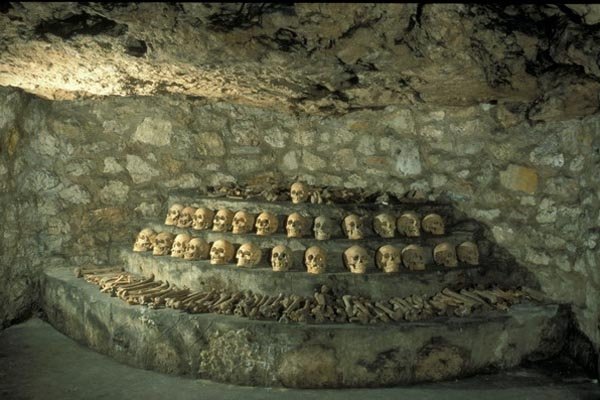
Without them mankind would never have moved from the darkness of the archaic state. Yet they have been able to influence man only because in the evolution of work man liberated himself gradually from the unknown forces of nature, developed his reason and objectivity, ceased to live like an animal of prey or of burden. The wisdom is latent in the bad as well as the good man. Any moral condition is a starting point. There is hope for all, benediction for the poor and the rich, the good and the bad, for every man to come into this great light. Yet, we can only proceed by trial and error. In self-analysis it may be that there is less temptation to tackle a factor prematurely, because the person will intuitively shirk a problem that one is not yet able to face. However, if one does notice, after grappling with a problem for some time, that one is not getting any nearer to a solution, one should remember that one may not yet be ready to work at it and that perhaps he better leave it alone for the time being. And he need not be discouraged at this turn of events, for every often even a premature attack provides a significant lead for further work. It need hardly be emphasized, however, that there may be other reasons why a solution that presents itself is not accepted, and he should not resort too quickly to the assumption that it is merely premature. And information of the kind is helpful not only in forestalling unnecessary discouragement but also in more beneficial ways, for it helps one to integrate and understand peculiarities which otherwise would remain disconnected observations. #RandolphHarris 11 of 18

A person may realize, for example, that he finds difficulties in asking for anything, from inquiring the right way on a motor trip to consulting a doctor for an illness, that he conceals his going to analysis as if it were a disgrace, a despicable easy road, because he feels he should be able to deal with his problems all by himself, that he becomes irritated if anyone shows him sympathy or offers advice and feels humiliate if he must accept help; and is he has some knowledge of neurotic trends the possibility will occur to him that all these reactions emanate from an underlying trend toward compulsive self-sufficiency. Naturally, there is no guarantee that the surmise is right. The assumption that one is generally weary of people might explain some of his reactions, though it would not account for the feeling of hurt pride that arises on some occasions. Any surmise must be made tentatively and kept in abeyance until one has plenty of evidence for its validity. Even then one must ascertain over and over again whether the assumption really covers the ground or is only partially valid. Naturally, one can never expect that one trend will explain everything: one must remember that there will be countercurrents. All one can reasonably expect is that the trend surmised represents one of the compelling forces in his life and therefore must reveal itself in a consistent pattern of reactions. His knowledge will be of beneficial help also after he has recognized a neurotic trend. #RandolphHarris 12 of 18

An understanding of the therapeutic importance of discovering the various manifestations and consequences of a trend will help him to focus attention deliberately on these instead of getting lost in a frantic search for the reasons of its power, most of which can be understood only later on. Such an understanding will be particularly valuable in directing his thoughts toward a gradual recognition o the price paid for the pursuit of the trend. In regard to the conflicts the practical value of psychological knowledge lies in the fact that it prevents the individual from merely shuttling to and fro between disparate attitudes. Clare, for instance, at the time when she analyzed herself, lost considerable time shuttling between a tendency to put all blame on others and a tendency to put all the bale on herself. Thus she became confused because she wanted to solve the question which of these contradictory tendencies she really had, or at least which was prevailing. Acutally, both were present and emerged from contradictory neurotic trends. The tendency to find fault with herself and to recoil from accusing others was one of the results of her compulsive modesty. The tendency to put the blame on others resulted from her need to feel superior, which made it intolerable for her to recognize any shortcomings of her own. If at this time she had thought of the possibility of conflicting trends, arising from conflicting sources, she might have grasped the process a good deal earlier. #RandolphHarris 13 of 18

From a major research investigation into the relationship between social class membership and mental illness, we have some information as to how the forms of neurotic disturbances under active treatment by psychiatrists are distributed in terms of social classification. Every thoughtful person with a serious interest in mental illness and its treatment should have direct and thorough knowledge of the major report of this study. Investigators developed an index for determining the social class membership of an individual. This index is based on a summation of weighted ratings of education, occupation, and place of residence, and provides a five-step hierarchy of social class. Class I, the highest social class, is composed of individuals who have had post-graduate professional education, who are executive of large concerns and engaged in one of the major professions, and whose home is located in the very finest residential area of their community. By contrast, members of the lowest social class, Class V, have had less than seven years of formal schooling, are unskilled workers, and occupy the poorest residential area of the community. While the population sampled was restricted to the greater New Havnen (Connecticut) community, there is no reason to believe that the findings would not hold true for comparable metropolitan areas. This study resulted in three major findings: there is a significant relationship between the over-all prevalence or rate of mental illness and social class; the types of mental illness are significantly related to social class; and for a given type of illness, exempli gratia neuroses, the form of treatment received by patients is significantly related to their social class. #RandolphHarris 14 of 18

Antisocial and immaturity are mostly found among Class IV people, they account for more than of the patients in each class. Their illness is characterized by unapproved and intolerable behaviour with minimal or no overt sense of distress to the patient. It is a moot point whether antisocial reactions should be group with the neuroses. This diagnostic label [character neurosis] is used to describe patients who do not belong in one of the specific reaction types classified in the scheme. They exhibit mixed symptoms as well as relatively mild character and, to a lesser extent, some behaviour disturbances. It is notable that the “borderline” and vague diagnosis of antisocial and immaturity reaction does not reveal an orderly difference in frequency in the different social classes. The middle and lowest classes (III and V) show many more diagnoses of antisocial reaction than do the highest classes (I-II). By contrast, the nonstandard diagnosis of character neurosis is the most frequent diagnosis of patients from the two highest social classes, with its frequency in the lowest class (V) being less than half that in the two highest classes (I-II). It is important to recognize that these variations in diagnostic frequency probably reflect the attitudes of the diagnostician (arising from ways of perceiving himself and others that are a function of his own social class membership) as much as the objective facts of the patients’ behaviours. #RandolphHarris 15 of 18
We take the position that a neurosis is a state of mind not only of the sufferer, but also of the therapists, and it appears likewise to be connected to the class positions of the therapist and the patient. Within the more orthodox neurotic diagnosis, only two, namely obsessive-compulsive reactions and hysterical reactions, show a distinctly different, nonoverlapping frequency of occurrence in the highest and lowest social classes. The differences among the social classes in the distribution of the various neurotic diagnoses are certainly less striking than the differences between the frequency of neurosis versus psychosis in the five levels of social stratification. Only in the two highest social classes does the base rate of neurosis exceed that of psychosis. For all lower social classes there is an excessive rate of psychoses over neuroses, and the excess is progressively larger for each consecutively lower social class. Thus, for a member of the lowest social class of whom nothing else is determined except that he is in need of psychiatric treatment the probability that he will be diagnosed as psychotic is essentially seven times as great as the probability of a neurotic diagnosis. For a psychiatric “candidate” from the highest social class, the odds are 2 to 1 that he will be given a neurotic diagnosis. However, the psychological equipment required for the development of a neurosis is a biologically common property of most persons. The same assertion might be made with respect to psychosis. However, there are studies that suggest that certain forms of psychosis, notably schizophrenia, have a special genetic factor as a necessary (but no sufficient) etiologic contributor to the illness; such a factor appears, fortunately, not to be general in the population. #RandolphHarris 16 of 18

Stress, while it may vary in content or source, is not limited by class boundaries nor can it be readily established that it is greater at one social class level than another. Anxiety is experienced by most persons on occasion regardless of their class membership. This raises a serious question as to whether the class differences in diagnostic frequencies are directly reflective of differences in basic symptomatology or may not be more reflective of differences in the “diagnostic habits” of the clinician. One of the most ubiquitous of such habits is his more ready identification with and acceptance of the individual of his own class, the less understanding and more ready rejection of the person from a lower-class matrix. In this regard, psychotherapists are members of the upper social classes. The person from an upper social class, regardless of symptomatology, tends in general to manifest many features which make him a more attractive candidate for psychotherapy. These beneficial attributes for therapy include good education, superior general intelligence (including the ability to communicate effectively at a level of discourse which is natural and comfortable for the therapist), and an ability to pay well for his treatment. Add to this the fact that psychotherapy is generally considered to be the therapy of choice for neurosis. Then, when confronted by a prospective patient from the upper social classes, the potential psychotherapist is subtly constrained to see the patient’s illness as neurotic rather than psychotic, even if this requires forcing the diagnosis into an ambiguous category of “character neurosis.” #RandolphHarris 17 of 18

Problem: why the notion of the other World has always been to the disadvantage of “this” World, a criticism of it—what does that indicate? A people proud of itself, a people in the ascendency of life, always thinks of being other as being lower, being worthless; it regards the strange, the unknown World as its enemy, as its opposite; it is without curiosity, wholly dismissive of the strange…A people would never admit that another people were the “true people”….That such a distinction is possible at all—that one takes this World for the “apparent” one and that one for the “true”—is symptomatic. The points of origin of the idea of an “other World”: the philosopher, who invents a World of reason where reason and logical operations are adequate: this is the source of the “true” World; the religious man, who invests a “divine World”: this is the source of the “denaturalized, counternatural” World; the moral man, who feigns a “free World”: this is the source of the “good, perfect, just, holy” World. What is common to the three points of origin: the psychological blunder, psychological confusions. The “other World,” as it actually appears in history, defined by what predicates? By the stigmata of philosophical, religious, moral prejudice. The “other World,” as it is illuminated by these facts, as a synonym of nonbeing, of not living, of not wanting to live…General insight: the instinct of a weariness of life, not the that of life, is what created the “other World.” Implication: philosophy, religion, and morality the symptoms of decadence. We have art lest we perish of the truth. #RandolphHarris 18 of 18

For many years The Winchester Mystery House has had the reputation of being “the most haunted house in the World.” It has been the subject of several books and innumerable articles, some of which can be said to be conclusive. During the Victorian Era, there were peculiar incidents and sightings confirming the overwhelming feeling that this was a “bizarre” house. Mrs. Winchester and her niece Daisy were returning from a garden party one June afternoon; when they entered the garden of the house, both of them saw a figure of a nun walking slowly on the other side of the lawn. This nun had been often seen at dusk or at twilight, but not before on a bright afternoon. The family had already been intrigued by the phenomenon. The specter of the nun was supposed to walk along a path that skirted the lawn of the estate, soon becoming known and the Ghost’s Crossing, and in fact Mrs. Winchester constructed a summerhouse on the other side of the lawn so that guests could wait and watch for the dark figure. One of the windows in the dining room, overlooking the garden, was bricked up so that Mrs. Winchester would not be disturbed at her meals.

However, there were frequent episodes of intense activity. There were footsteps, tappings and spectral appearances. Diasy was woken up at night by the sound of screws hitting the floor. Mrs. Winchester was so aware of strange sounds within the mansion itself, in particular, odd knockings that seemed to approach the door-to-nowhere, enter the mansion, and then work their way around its walls. On one occasion a group of servants distinctly heard footsteps coming from outside of the door-to-nowhere. When Mrs. Winchester arrived a few moments later, the door was closed and locked. On numerous occasions, in the room where the door-to-nowhere is located, they heard the sounds of “slow dragging footsteps.” However, the door was unaccountably locked from the inside. The annunciator in the house would ring unexpectedly, and for no reason; lights were seen burning in empty and unlocked rooms. Heavy wooden shutters were pulled sharply together. The mirror on Mrs. Winchester’s dressing table would begin tapping whenever she came close to it.

On one occasion, Mr. Hansen was crossing the hallway on the fourth floor, when he heard what he described as “whisperings” above his head, which were quickly followed by “mutterings.” He declared that it was a woman’s voice; he could not make out any of the words expect for a clearly enunciated, “Tell Mrs. Winchester.” One maidservant from Germany left after only two days of employment, asserting that she had seen a demon; her successor knowing nothing of the precious maid’s experience. The most puzzle aspects of their experience were writings on the walls. Scrawled messages appeared in blood, without warning, asking “Mrs. Winchester” for “help.” The longest of them was found on the floor in the room of the door-to-nowhere, “Exorcists. Demons here.” Some of these appeared even as the wall was being investigated by other witnesses. The jagged nature of the writing suggests that it was done with difficulty but urgently and almost impatiently; the letters begin firmly but then trail off, as if the apparition had weakened or been interrupted. Their appearance has never been explained.

For further information about tours, including group tours, weddings, school events, birthday party packages, facility rentals, and special events please visit the website: https://winchestermysteryhouse.com/

Please visit the online giftshop, and purchase a gift for friends and relatives as well as a special memento of The Winchester Mystery House. A variety of souvenirs and gifts are available to purchase. https://shopwinchestermysteryhouse.com/


Until He is Dead– Fear is a Paralyzing Agent
 Somewhere there are phantoms having their own funerals over and over again. The same scene for centuries. Therefore, it is socially inappropriate to speak ill of a person in the aftermath of their death. De mortuis nihil nisi bonum (of the dead, nothing unless good). Demortuis nil nisi bene dicendum (of the dead, nothing spoken unless truthfully). Do not speak evil of the dead because once you do, you cannot apologize and take back the things you said. Their spirits may also put a curse on you. So, that sin cannot be forgiven. Perception is primarily of mental representations of external objects. People often feel that because a person is dead that they can say anything they want about the individual and it will not hurt them. However, some overlook the possibility that there may be people alive who love that individual and they will be offended by the unkind words. When you slander a dead person, you offend their relatives, friends, and fans. And it is not easy for you to locate each one of them and ask for forgiveness. This is more difficult than seeking a pardon of one who is alive, and it may also cause some to want to retaliate. Also, it is commonly noted that poltergeist cases tend to involve agents who are in their adolescent or teenage years. The median age of the agent is 14 years. Around 37 percent of the cases have an agent who is under 20. However, sometimes the agents can be as young as 8 or as old as 70. In many poltergeist cases, it has been found that the RSPK agent may be in a situation that is bringing about psychological tension for him or her, usually in relation to interpersonal problems with other people who live or work with the agent. There is hostility in the agent which cannot be expressed in normal ways, the main target for the anger being people with whom he is associated on a daily basis. #RandolphHarris 1 of 13
 There are more things in Heaven and Earth than are dreamt of in your philosophy. Psychokinesis means movement by the mind. The idea is what perhaps some people sometimes may be able, whether consciously or unconsciously, to move or otherwise affect things without pushing or pulling them and, indeed, without in any way touching either things in question or any other things involved in the process. Perhaps, it is suggested, these people or, indeed, all of us really can in some condition bring about changes in things by simply willing, as a gambler might wish that by simply willing and without any detectable cheating he or she could get dice to fall in ways one desires. Once this suggestion is allowed there seems to be room for an alternative description of many experiments which might otherwise have appeared to be unambiguous evidence of the reality of precognition. Such a description will be in terms of psychokinesis, guided perhaps by a measure of straight telepathy or straight clairvoyance. The subject may not, after all, really be the precognizing target. Perhaps that individual or somebody else is consciously or unconsciously influencing psychokinetically the target-determining mechanism in order to increase the degree of correspondence between the guess series and the target series. #RandolphHarris 2 of 13
 A body/skeleton was found in a Gage County, Nebraska riverbed in March of 1873, and it was thought to John Cameron’s remains. William Jackson Marion was suspected of the murder because the year earlier, he and John Cameron left Nebraska and headed to work on the railroad. However, just days later, William Jackson Marion returned alone with John Cameron’s team of horses. William Jackson Marion was eventually convicted for murder and was hanged in Beatrice, Nebraska 25 March 1887. An article in the Omaha Daily Bee on 26 March 1887 declared there was, “No doubt that he was guilty and also guilty of other murders in the Indian Territory.” However, four years later in 1891, after William Jackson Marion was executed, John Cameron turned up alive and explained that he had, in the nearly twenty years since his “murder” traveled to Mexico, Alaska, and Colorado. He had fled out of fear of a paternity allegation, and sold his team of horses to William Jackson Marion and still have the note William Jackson Marion had given him for payment of the remainder. One Hundred years after his hanging, on the 25th March 1987, William Jackson Marion was pardoned posthumously by the State of Nebraska. We just recently reached the 130 year anniversary of Mr. William Jackson Marion’s hanging. May God bless you and restore you house, horses, and provide you with a happy life in Heaven. #RandolphHarris 3 of 13

Poltergeist experiences or cases of RSPK, are, but the currently held model, related to the subconscious mind of a person in the situation where the disturbances are going on. That person is generally in a stress-related tense, and frustrating situation or relationship. Where most people would respond to the stress in a variety of normal ways, from punching the walls or throwing things to have nervous breakdowns or experiencing physical illness, or poltergeist agents have an alternate means of blowing off steam. For some, the reaction to stress is a subconsciously directed psychokinetic outburst. Called a subconscious psychokinetic temper tantrum. There was a local playhouse, and a movie was made based on a fictional character, but experiences that really happened. When the directors of the film, The Gallows wanted to remake a high school paranormal activity reenactment of the hanging of William Jackson Marion, they may have gotten more than they bargained for. When you watch the tape, it is labeled as “Police evidence.” The plot is set in 1993, when high school students are in a theater putting on a production The Gallows. Charlie Grimille, who is playing August, is in love with Mary (Pfeifer Ross) in the play is accused of murder and is accidentally hanged and killed after a prop malfunction with the gallows, and the trap door broke, he fell through with a noose around his neck and died. A live audience witnessed the unbelievably morbid event. Charlie’s death haunted the town and his spirit never really seemed to leave the theater. Now, here is where the twist comes in. While watching the film, I thought to myself this seems really real. However, just wrote it off as good acting. The part that seemed really real to me was when the students, 20 years later, put on the play The Gallows, again. So, anyway, there is a reason it seemed real because some of it was. #RandolphHarris 4 of 13
 The film had a low budget of $100,000.00 and is a Warner Brothers production, but the total remuneration of more than $43 million. The Directors, Chris Lofing and Travis Cluff wanted the film to seem real and they decided they were not going to tell the audience that Charlie Grimille was going to hang, so when they hang him, the audience would think something went wrong in the movie. Like, in the Crow, when Brandon Lee was really shot and killed on set, much like his father Bruce Lee was. Once Charlie dropped and there was chaos, the directors wanted to see how long they could let it go before people freaked out and called the police. The actors knew that Charlie was going to be hanged. They even practiced the play in a fake way with the audience watching, and Charlie took the noose off and got away, so everyone thought that is how it was supposed to go. And they practiced that way three or four times and then they rolled the cameras. However, the directors wanted the cast to be scared and freak the audience out, so they changed the script a little and hanged Charlie a lot soon than anyone expected. And everyone was shocked, they thought someone had just died. It has been noted that when a RSPK agent is upset, strange things happen, things blow up and such, and the the individual feels less stressed out. Investigators notice higher levels of paranormal activity when an RSPK agent is upset. So, the consequences of torture and oppression may not be as isolated as the tormentors would like. However, you also have to keep in mind, if there is an RSPK agent, and people suspect this, there may be cases of fraud when things are staged to make it look like the agent was responsible. #RandolphHarris 5 of 13
 Nevertheless, the real creepiness does not stop there. To make the movie feel real, the directors told the actors that the movie was based on real events that took place in Beatrice, Nebraska USA, and after doing research, I discovered that it was; just not in the theater. Still, the directors took it a step further to scare the cast, they had pictures, newspaper articles, websites that they had fabricated to make it seem that the movie plot was exactly real and happened in the timeline that they created. So, the actors were afraid. And this is exactly why people do not want actors and movie producers to be involved in government or media because they can stage events with all the technology, get people to lie and turn news into terrorism and pure entertainment for profits. When Cassidy Gifford was interviewed, she said they did not want to say Charlie Grimille’s name. The directors and actors said that weird things that were not scripted did happen on set. The movie was shot in the most haunted location in Fresno, California USA. They said it felt like a place where someone would drag someone and lock them up for a long time, and that it felt like something else was living in the theater. Ryan Shoos, one of the main characters said that he was acting tough, but really scared. Pfeifer Brown in a haunted bathroom heard a loud thud and started screaming like she was scared for her life. Perhaps this could be traced back to some causal ancestor common to both the anticipated and the fulfillment, or it could be the law of averages. If you play around with unknown forces long enough, you are likely to be confronted with a remarkable case of genuine telepathy. #RandolphHarris 6 of 13
 In 41 percent of the paranormal cases, the phenomena began after a move, an illness, or another kind of event that me be stressful or upsetting to people. In 20 percent of the cases, the phenomena started when a bout of rage, disappointment or great frustration was displayed by the suspected RSPK agent. In 8 percent of the cases, the agents were characterized, prior to the start of the disturbances, as already suffering from a mental or emotional problem, or were in a state of physical distress likely to have emotional consequences. This may have important implications for the human side to poltergeists. Cassidy Gifford said that they locked her in the haunted bathroom and they were supposed to stay in there for fifteen minutes, but after five minutes in the faulty building one of the water faucets turned on and she turned on the lights and started crying. And there was no one there. It is possible that some people may be able, whether consciously or unconsciously, to move or otherwise affect things without physically touching them. The director Chris Lofing said that most of the weird stuff happened late at night on the stage. That they would hear loud thuds and then the chains in the rafters would start rattling. And I believe that they did experience paranormal things. Perhaps he or somebody else was consciously or unconsciously influencing psychokineticaly the target-determining mechanism in order to increase the degree of correspondence between the guess series and the target series. I was doing research on King James and how he thought witches tried to sink a ship he and his wife were on with a storm and then a pot of water on my stove had a huge bubble, a water bubble shot into the air. Also, while I am writing this, the grapefruits on the tree keep falling and making loud thugs, in the past hour in a half, ten have fallen, which is unusual. And another time I was doing research on witch craft these big moths came out of nowhere when I was in my bedroom and I killed one and flushed it down the toilet. #RandolphHarris 7 of 13
 Then the next few days another one appeared and flew around and I went to get a newspaper to kill it and it hit the floor and disappeared and I move everything and vacuumed and could not find it, so kept the light on for a few hours, I was freaked out. Because the research I was doing talked about the spells and moths and bones and blood and such. Much like that theater, this building I live in is old and four people on my floor have died and about ten people have died in the nine years that I have been here. One lady told me that someone died in my apartment before, too. One of the actors from the actual film, Reese Mishler, said he had some pretty weird experiences. Reese did not like the auditorium because he and Ryan both head something at the same time, and they have it on camera. It sounded like metal chains to them and as Reese talks about his experience, his eyes are bulging out of his head, he looks scared. Pfeifer Brown said as actors, the thing they experienced scared them to death being on set. One of the scenes they were filming, Reese and Ryan Shoos were having an argument, and the directors says this was not supposed to happen, but the ropes on the fly rig were recorded vibrating and it got intense, but Ryan and Reese did not notice it, but it is on tape. 41 percent of the paranormal cases involving moving objects were described by the witnesses to be floating, fluttering, falling in a zigzag patter, or curving around sharp corners. Similarly, objects that displayed unusual flight paths were described in 45 percent of the cases. Some objects were also described as changing their speed while in motion. We are confronted with causes operating backward in time and they may have spring from something less discreditable than complacency. #RandolphHarris 8 of 13
 The paranormal on set might even be one manifestation of a conviction that wanted to accommodate such a phenomenon and produce something much more radical and much more retiocinative than a paradoxical screenplay. Ryan said that things you do not see are the things that scare you the most and sometimes he would go a week without sleeping. Pfeiffer said that scariest scene takes place in the attic because the things that happened in the attic were not planned. She said they do not know some of the different things that happened and some of the different things they heard. And each take they would go deeper and deeper into the attic, and each time they were going they did not think it was a good idea. Reese looked scared and did not want to walk down the hallway. On the eighth take in the attic, which ended up being the last take, they heard a quiet sound saying, “Reese.” Reese and Pfeiffer got really scared and ran and were screaming like they were in danger. And actually, watching that movie and the outtakes did kind of freak me out. As I was watching it, I remember thinking, “A movie has not scared me in a long time.” The way I came across the movie was odd, too. I was shopping and two guys were looking at videos and I wanted one, and a movie fell on the floor, so I reached down to pick it up and then saw The Gallows sitting on the floor and bought it. Like it was waiting for me. The poltergeist is both an expression and a release mechanism (or safety valve) of an for this inner hostility. This explanation also tells us a great deal about the specific dynamics of the poltergeist—that is, it actually explains quite neatly just why the poltergeist acts the way it does. I am sure that all readers have seen what happens when a young child becomes frustrated, or when one becomes angry after being scolded for being naughty. The child is apt to throw a tantrum by slamming doors, throwing toys about, banging on the walls, and displaying other aggressive acts. Newton’s III laws state energy is not destroyed, it is only transferred and each action has a separate, but equal reaction. So poltergeist usually are a product of the youth because they have no means to resolve their issues on their own since they have no authority. It does not take much insight to realize that these are the exact activities in which poltergeist engages. Like a frustrated youngster, it too bangs on the walls, throws things, and slams doors. #RandolphHarris 9 of 13
 It seems that any explanation or, if that now becomes too strong a word, any account of precognition as such will have to center on the notion of coincidence or something very like it. The laws, if there are any laws to be discovered, will describe the conditions under which we may expect to find precognitive correlations. Perhaps, there is a built-in suggestion that such phenomena are both more common and also somehow more significant than might be thought. Upon hearing all of those thuds of grape fruits falling from the tree, for two hours, the last one being the loudest, I stepped out on the balcony and see nothing, but circular water spots, and a white bird screamed and flew overhead. Then there were sounds of something in the bushes. So, yeah, I find this stuff interesting, but it is spooky. I really think you can open gate ways by what you choose to focus on. Playing with things occult like the Witch (Oujia) board is very dangerous. If you try to contact dead family members, you are not speaking with them. You are speaking with demons and you will indeed open your body up to them. All it takes is one time. Updated to the mystery of the thuds I have been hearing, I just head another and it is someone throwing water bottles off a balcony above me. And now, about 13 “fireworks” just rapidly went off. Anyway, remember Poltergeist, which was an American horror film series? It was rumored that a curse attached itself to the poltergeist trilogy and its crew, because two of the young cast members died, and the oldest cast member died. #RandolphHarris 10 of 13
 In each case the reason for talking of precognition is not that any particular guess can, at some stage, be identified as precognitive but, after the guesses have been checked against the targets, the proportion of hits in a series of guesses is found to be significantly above mean-chance expectation, it seems likely that there is some parapsychological phenomena. In poltergeist cases, the object movements and noises may be seen as a similar kind of psychokinetic influence, but on a much larger scale than dice or random numbers. An emotional expression seems to be a factor in many poltergeist cases. The rumors of the curse of the Poltergeist was said to be caused because they used real skeletons as props. Dominique Dunne, who played the oldest daughter Dana in the first filmed died 4 November 1982, at the age of 22 after being strangled by her abusive former boyfriend John Thomas Sweeny. Heather O’Rourke, who played Carol Anne, died 1 February 1988 at the age of 12 due to complications from an acute bowel obstruction. Zelda Rubinstein, who played Tangina Barrons, died 27 January 2010 at the age of 76 from kidney and lung failure. There are countless other tails of Supernatural terror. Rosemary’s Baby, the producer came down with kidney stones and allegedly sent Charlie Mason to murder the director’s wife. And there is the curse of The Omen. It came out 6 June 1976. John Richardson, the special effects consultant, was involved in a car crash that killed his girlfriend/assistant, Liz Moore, on Friday the 13th. The accident was similar to one he planned in The Omen and when Richard regained consciousness, his car odometer was at 66,6XXX. #RandolphHarris 11 of 13

A poltergeist is a large-scale form of psychokinesis or mind over matter in which anomalous physical phenomena (such as moving objects, electrical disturbances, and noises without any obvious source) repeatedly occur in the presence of a certain person over a brief period of time. The large-scale psychokinesis (PK0, occurs largely on the unconscious level, is known as recurrent spontaneous psychokinesis, or RSPK, and the person around whom them phenomena occur is known as the RSPK agent. Actor Gregory Peck was cast as ambassador Robert Thorn, the adopted father of the Devil child, in the Omen. Shortly after Gregory Peck took the role, his son shot himself in the head without the slightest warning or explanation. Then Gregory’s plane was struck by lightning, causing the engine to catch fire and nearly crash. Three days later, The Omen’s screenwriter David Seltzer was also on a flight on his way to the United Kingdom and his plane was struck by lightning. Now, for you plane to crash, you have to take the same exact flight for nearly ten years, everyday. That is how unlikely a plane crash is. However, shortly after, the executive producer Mace Neufeld was in a plane that was struck by lightning. And the producer Harvey Bernhard was in Rome, a lightning bolt barley missed him. Then the production rented a plane to shoot an aerial view of London, the rental company had a last-minutes switch, resulting in the plane going to a group of Japanese businessmen instead. It hit a car, killing everyone in that as well. Also, on the first day of shooting The Omen, several of the main crew members were in head-on car crashes. Gregory Peck was attacked by a vicious pack of Rottweilers (hellhounds are said to attack people who sell their soul). #RandolphHarris 12 of 13

Poltergeists are person-oriented phenomena rather than spirit-oriented. So it is almost like an individual is haunted by spirits, ghost, supernatural powers who have some affect on the being and what happens around the individual and these ripples can be magnified depending on what is happening to that being. Although apparitions are sometimes witnessed in poltergeist cases, this tends to be rather uncommon. The apparitions in poltergeist cases do not always seem to represent human figures, but can also take on the form of animal figures, body limbs, demonic figures, and amorphous shapes that may be indistinct, shadowy, or mist-like. If we were to limit ourselves only to those involving human figures, we may find that the apparitions more often reflect the personalities of living people rather than those of dead people. The day after shooting The Omen was done at the Longleat Safari Park, a London zookeeper names Sidney Bamford was killed in the lion area. He was working for the production as a big cat wrangle for a scene that was meant to appear in the movie. In a scene that showcased zoo tigers, who were menacing the possessed son, Damien, one of the tigers was not properly secured post-filming, leading to a fatal attack on the animal expert. The hotel of the crew members was attacked and a restaurant the cast and crew was in route to eat at suffered an explosion before they got there. The Omen was remade and releases 6 June 2006, and Pete Postlethwaite, who portrayed Father Brennan suffered the loss of his brother, Mike. This was after mike drew three sixes at poker. Black magic operates most effectively in preconscious, marginal areas. Casual curses are the most effective. People tend to fear ghost in their own family. You feel these family curses and think, “If it happened to my father, it could happen to me.” There are a lot of curses and mysticism and real scares. #RandolphHarris 13 of 13

Wisdom Killed Al Capone
In the common civilized compliments of life, there is no falsehood uttered, because there is no intention to deceive. And polite language is always agreeable to the ears, and lends a soothing influence to the heart, while unkind and rough words and actions, harshly uttered and displayed are just the reverse. Has someone you used to care about done you so wrong that you forget you every cared about them and that they are human, forget they have feelings, and just generally cannot find it in your heart to ever forgive the person? Tonight, I was listening to a song by E40 and it was very vulgar and explicit, and I could really feel where he is coming from, but I am getting older and growing up and do not want to set a bad example, so I turned on Messed Up and Read Between the Lines by Aaliyah. And it makes me think that I no longer think of a particular person and some other individuals as humans, I have truly started to look at them as monsters and do not even care about them. Because no matter how many times I forgive them, or try to be nice to them, and try to show them the right way of how to do things, they never change and their bad behavior just increases and they get even more bold. So that is not the kind of people nor energy I want in my life. #RandolphHarris 1 of 9
Generally, in spirituality, the central ideas which hold the group together are commonly those of love and peace. Etiquette has been defined as a code of laws which binds society together—viewless as the wind—and yet exercising a vast influence upon the well-being of human kind. Where we are not permanent. God has extraordinary blessings in the future. Blessings that will propel those who have faith to a higher level. Immeasurable, limitless, surpassing favor is coming that will take children of God beyond previous limitations. And manners are of more importance than laws, for upon them in a great measure the laws depend. Manners are what vex or soothe, corrupt or purify, exalt or debase, barbarize or refine, by a constant, steady, uniform and insensible operation, like that of the air we breathe in. They give their whole form and color to our lives. According to their quality they assist morals, they supply the, or they totally destroy them. It is often said that such a person’s pleasant, affable manners made one’s fortune. And it is a truth that politeness and good-breeding go far towards forming both a man and a woman’s reputation, and stamp upon them, as it were their current value, in the circles wherein they move. #RandolphHarris 2 of 9

Philosophic intention is clearer insight into the ultimate structure of facts, and philosophic progress does not consist in acquiring new knowledge of new facts, but in acquiring new knowledge of facts. Virtue and knowledge are one, and if people fail to live well, it is through ignorance of what virtue really is. If people knew what virtue was, they would embody it in their conduct. Agreeable manners are very frequently the products of a good heart, and then they will surely please, even though they may lack somewhat of graceful, courtly polish. There is hardly anything of greater importance to children of either gender than good-breeding; and if parents and teachers would perform their duties faithfully, there would not be so much complaint concerning the manners of the American child of the period. Be courteous, it is an apostolical injunction which we should ever bear in mind. Let us train up our children to behave at the house as we would have them act abroad; for we may be certain that, while they are children, they will conduct themselves abroad as they have been in the habit of doing under similar circumstances at the house. Train up a child in the way he or she should go, and when he or she is old, they will go on reflectiveness. #RandolphHarris 3 of 9

By reflectiveness is meant the habit of considering events and beliefs in the light of their grounds and consequences. Conduct prompted merely by impulse or desire is notorious likely to be misguided, and this holds true of both intellectual and practical conduct. Whether a belief is warranted must be decided by the evidence it rests on and the implications to which it leads, and one can become aware of these only by reflection. Similarly, whether an action is right or wrong depends, at least in part, on the results that is produces in the way of good and evil, and these results can be taken into account only by one who look carefully considers one’s actions and thinks about the outcome. Common sense, with its rules and proverbs, no doubt helps, but it is too rough and general a guide to be relied on safely, and the reflective person will have at his or her command a broader view of grounds and consequences, causes and effects. One will more readily recognize the beliefs of superstition, charlatanism, and bigotry for what they are because one will question the evidence for them and note that when reflectively devolved, they conflict with beliefs known to be true. #RandolphHarris 4 of 9
In the same way, one will be able to recognize some proposals for action as rash, partisan, or shortsighted because certain consequences have been ascribed to them falsely and others have been ignored. In some activities wisdom consists almost wholly of such foresight. A general, for example, is accounted wise if he can foresee in detail how each of the courses open to him will affect the prospect of victory. Enter a house where the parents are civil and courteous towards all within the family circle—whether guests or constant inmates—and you will see that their children are the same; that good manners are learned quite as much by imitation as by fixed rules or principles. Go into a family where the parents are rude, illbred and indulge in disputations and unkind remarks, and you will find the children are rough, uncouth, and bearish. Good manners are not merely conventional rules, but are founded upon reason and good sense and are, therefore, the most worthy of the consideration of all; and there are many point of good-breeding which neither time nor place will ever change, because they are founded upon a just regard of human for human. #RandolphHarris 5 of 9
There is a wisdom of ends as well as means, which is here denoted by judgment. The goal of the general—namely victory—is laid down for him, but the ordinary man needs the sort of wisdom that can appraise and choose one’s own ends. The highest wisdom is self-sacrificing love. Judgments of good and bad are not expressions of knowledge at all but only of desire and emotion. And emotions are not necessarily a bad thing nor something to be ashamed of. One may be certain that pleasure is better than pain and yet be at a loss to prove it; the insight seems to be immediate. We frequently hear these questions asked: “Who is a lady? and who is a gentleman?” The answers may be difficult to supply on account of the great differences of opinion in various classes of society, upon this subject. Some would declare that position, advantageous surroundings, great riches, high birth, or superior intelligence and education, give requisites; but all of our readers know of persons who possess some one or more of these advantages, and yet they cannot lay true claims to this desirable and distinctive appellation. #RandolphHarris 6 of 9
Hence we frequently hear these words—“Ah! she is no lady!” or, “Indeed, he is no gentleman!” applied to those whose standing is high; who possess much wealth; or are endowed with genius; but have neglected to ass to their other advantages the touchstone of politeness and good-breeding. Our reply to the question is that a well-bred lady is one who to true modesty and refinement, adds a scrupulous attention to the rights and feelings of those whom she associates, whether they are rich or poor, and who is the same both in the kitchen or parlor. Whoever is true, loyal, and sincere; whoever is of humane and affable demeanor, and courteous to all; whoever is honorable in oneself, and in one’s judgment of others, and requires no law but one’s words to hold one to one’s engagements;–such a person is a gentleman,–whether he be dressed in broadcloth and in fine linen or be clad in a blue homespun frock;–whether his hands are white and soft, or hardened and stained with drudgery. Just like you see a woman in the parlor, we see her in the kitchen. Never a cross word passes her lips, be it rich or poor, servant or friend. This is a high meed of praise—and when a country address and ease of manner are added to it, we behold a true lady. #RandolphHarris 7 of 9

Enlarge your vision and make room for the things God wants you to do. The economy maybe down, but I know God still sits on the throne. Good and mercy are following me this year, I know it will be great. Differences about intrinsic goods may be due to mere lack of knowledge on one side or the other. The Puritans who condemned music and drama as worthless could hardly have excluded them if they had known what they were excluding; in these matters, wider experience brings an amended judgment. Also, what appears to be intuitive insight may express nothing more than a confirmed habit or prejudice. Where deep-seated feelings are involved, as in matters of gender, race, or religion, the certainty that belongs to clear insight may be confused with the wholly different certainty of mere confidence or emotional conviction. Fortunately, these irrational factors can be tracked down and largely neutralized. Human’s major goods are at the foundation of their major needs, and since the basic needs of human nature are everywhere the same, the basic goods are also the same. No philosophy of life that denied value to the satisfactions of food or drink or the sex or friendship or knowledge could hope to commend itself in the long run. #RandolphHarris 8 of 9

Build faith in God and treat others how you want to be treated. The rest of your life will be the best of your life. Judgement of a wise person carries a weight out of all proportion to that of anything explicit in one’s thought or argument. The decisions of a wise judge many be implicitly freighted with experience and reflection, even though neither may be consciously employed in the case before one. Experience, even when forgotten beyond recall, leaves its deposit, and where this is the deposit of long trial and error, of much reflection, and of wide exposure in fact or imagination to the human lot, the judgment based on it may be more significant than any or all of the reasons that the judge could adduce for it. That is why age is credited with wisdom; years supply a means to it whether or not the means is consciously used. Again, the individual may similarly profit from the increasing age of the race; since knowledge is cumulative, one can stand on the shoulders of one’s predecessors. Whether individual wisdom is on the average increasing is debatable, but clearly the opportunity for it is. A philosopher whose wisdom is the highest rapture, remarked, “We are the true ancients.” #RandolphHarris 9 of 9

 Randolph Harris II International Institute