
Home » Posts tagged 'oakland'
Tag Archives: oakland

Los Angeles Will be Two and a Half Hours from Tokyo

Given that burglars are disproportionately young, poor, city-dweller, they tend to have frequent contact with other habitual offenders. There are various structures and processes that go along with the “stolen property system”—the underground market through which in-demand goods are stolen, housed, marketed, and resold on the street of America. Burglary is a crime that is marked by varied levels of social organization. Only on rare occasions do we find burglars who work as loners or within formal organizations. More often, burglars will operate as colleagues—the offender commits the crime along but relies on other members of the criminal subculture to supply him or her with inside information or to assist in converting stolen property into cash. Burglars who take the situation to the next level and enlist help in the actual break-in follow a more peerlike existence. Here, loose partnerships are maintained and invoked when a burglary opportunity presents itself. A primitive example of the peer model would be two or three drug users who randomly stumble upon an unlocked home or unsupervised business and decide to work together to take it down. In some cases, burglary offenders will align themselves in a teamlike format. These offenders invoke a division of labor with each participant serving an owned predetermined role and duties. One person might be assigned to lookout/driver role. Another might serve as the entry specialist, defeating any lock and alarms that are confronted. Still another person can take on the “muscle” role, responsible for doing the heavy lifting. #RandolphHarris 1 of 16
Socialization scripts play an important part in how and why burglars commit their crimes. Interview-based research suggests that novice or occasional burglars often rely on the tutelage of more seasoned offenders as a way of learning the proverbial ropes of burglary. Novices receive advice and instructions on issues such as target selection, how to foster informants, how to defeat burglary countermeasures, and how to best convert stolen goods into cash. This socialization generally takes shape as informal street corner conversations or jailhouse bravado. On paper, burglary appears to receive serious treatment from the criminal justice system. The Model Penal Code classifies burglary as a felony in the third degree. In most jurisdictions, such as offense is subject to 1 to 5 years in prison. If the burglar is armed or threatens or inflicts bodily harm on another while unlawfully within a dwelling, that individual might see the charges elevated to second degree felony. In practice, however, burglary receives mixed levels of formal response from the various components of the criminal justice system. First, let us consider the response of law enforcement authorities. Police agencies were able to effect an arrest for only 13 percent of the nearly 2.1 million burglaries that were reported to them in 2022. No other form of index crime yields such a dismal clearance rate. Some of this slippage can be attributed to the covert nature of the crime—police often have no witnesses and minimal clues to guide the investigation. However, these low clearance rates are also impacted by the fact that many police officers and police agencies afford a low priority to burglary cases. #RandolphHarris 2 of 16

Court data reveal a different trend in terms of the veracity with which burglary cases are adjudicated. U.S.A. courts produced nearly 90,000 felony burglary cases in 2022. This figure represents 10 percent of all felony convictions that year. In fact, 68 percent of the burglary cases that were tried resulted in a conviction for the same offense and only 24 percent avoided some sort of conviction. The researchers found that burglary defendants do not receive a reprieve from the courts when it comes time for sentencing. A full 74 percent of the convicted burglars were sentenced to time behind bars. This rate was surpassed only by murder, robbery, drug trafficking, and driving-related offenses. While the median prison sentence for a convicted burglar was 41 months, nearly 10 percent received sentences in excess of 10 years. Our correctional system does not appear to be particularly forgiving to persons who are convicted of burglary. On average, burglary offenders can expect to serve almost half of their sentence—roughly two years. These time-served figures are on par with those of other property offenses (theft, fraud, and motor vehicle theft) but somewhat lower than that observed for violent (54 percent) and weapon-related offenses (60 percent). Accounts from known burglars clearly suggest that informal social control efforts go as long way to deter and/or displace burglary activity. A minimal amount of vigilance on the part of homeowners can go a long way. Measures designed to combat the relatively small population of high incidence “professional” burglars tends to overemphasize the skill and determination of most burglars. #RandolphHarris 3 of 16

Burglaries are expensive, complex, and require long term commitment at many levels. In fact, most burglars are young, unskilled, and opportunistic. This suggests that emphasis should be directed at such factors as surveillability, occupancy, and accessibility. More specifically, dogs, good locks, and alarm systems deter most burglars. Community-level informal social control can also play an important role in burglary prevention. When it comes to surveillability cues, burglars tend to avoid neighborhoods with a lot of foot traffic or active neighborhood watches. This implies that observant or even nosy neighbors can have a measurable impact on burglary. However, these types of collective efforts are difficult to enact and maintain in the areas that burglars most prefer—urban neighborhoods. If nothing else, tenants of “crime prevention through environmental design” should be considered at a neighborhood level. Simple environmental characteristics such as cul-de-sac street design, high levels of lightening, and well pruned landscaping that minimizes unobservable entry and exit points can have a significant impact on burglary victimization levels in a given community. The aforementioned informal social control efforts represent examples of target hardening strategies aimed at deterring would-be burglars from victimizing a given house or displacing offenders from a given community. Also, measures should be designed that aim to undermine offenders’ strong attachment to street culture. Expanded employment opportunities are one possible, but foreboding avenue to lure offenders out of street life. #RandolphHarris 4 of 16

There exist even more simple and realistic measures that might effect change in this area. For example, a coordinated burglary prevention program that was implemented in a midsize U.S.A. city during the early 1980s. Community activism and community involvement (id est, block meetings, neighborhood cleanups, and raised awareness of vulnerabilities and potential offenders) showed promise for reducing burglary. If community members care about the condition of their neighborhood and are willing to take steps to clean it up and exercise vigilance over problem people and places, there is hope for reducing burglary and other forms of street crime. Most crime occurs during the nighttime. A close examination of NCVS and UCR data suggests that 50 percent to 60 percent of all residential burglaries go unreported. The figure reported here was derived by adding the NCVS data on residential burglaries to an adjusted estimate of nonresidential burglaries that were reported in the UCR—one that factors a 60 percent nonreporting rate. These data must be viewed with caution because 50 to 60 percent of all burglaries go unreported to police and only 14 percent of these lead to arrest. Over time, the crime of burglary has slowly slipped down the list of crime fighting priorities. At present, less than half of all burglaries get reported to police, and only 13 percent of those result in an arrest. What kinds of social and legal factors have contributed to this present level of empathy when it comes to the formal and informal society control of burglary? #RandolphHarris 5 of 16

Adjudication data suggest that accused burglars face a high certainty of being convicted and sentenced to prison. This should send a message to police that burglary is a high priority for our nation’s prosecutors and judges. Still, burglary investigation and arrest efforts remain lukewarm at best. What kinds of factors contribute to police officers’ attitudes and behaviors regarding burglary patrol and enforcement? Considerable evidence suggests that burglars refine strategies and cues that help them identify soft and potentially lucrative targets. Does this mean that burglars are more rational and planful than other types of criminals? The Lord has declared that “no unclean thing can inherit the kingdom of Heaven,” reports Alma 11.37. Our sins make us unclean—unworthy to return and dwell in the presence of our Heavenly Father. They also bring anguish to our soul in this life. Repentance is sometimes a painful process, but it leads to forgiveness and lasting peace. The power of sin is great. To become free from it, we must turn to your Heavenly Father, pray in faith, and act as He asks us to. The Holy Spirit should never become the center and object of thought and worship, place which He Himself does not desire, and which it is not the purpose of the Father in Heaven that He should have or occupy. “He shall not speak from Himself,” reports John 16.13, said that Lod Jesus before Calvary, as He foretold the Spirit’s coming at Pentecost. He would act as Teacher (John 14.26), but teaching the words of Another, not to Himself (John 15.26); He would only glorify Another, not His own; He would bear witness to Another, not Himself (John 16.14); He would only speak what was given Him to spear by Another (John 16.13). #RandolphHarris 6 of 16

The Spirit’s entire work would be to lead souls into union with the Son and give proper knowledge of the Father in Heaven, while He Himself directed and worked in the background. If a man who is untaught in the scriptural statements about the work of the Triune God makes “obeying the Spirit” his supreme purpose, the deceiver will aim to counterfeit the guidance of the Spirit, and even the presence of the Spirit Himself. It is just here that the ignorance of the seeker about the spiritual Word now opened to one, the working of evil powers in that realm, and the conditions upon which God works in and through one, gives the enemy his opportunity. It becomes the time of greatest peril for anyone unless one is instructed and prepared by the Lord, as the disciples were for three whole years. The danger lies in the area of supernatural “guidance,” for one must know the conditions of cooperation with the Holy Spirit in order to discern the cooperation with the Holy Spirit in order to discern the will of God and be able to recognize counterfeit manifestations. The “discerning of spirits” is required to detect the workings of the false angel of light, for he is able to bring about counterfeit gifts of prophecy, tongues, healing, and other spiritual experiences connected with the work of the Holy Ghost. Those who have their eyes opened to the opposing forces of the metaphysical realm understand that very few believers can guarantee that they are obeying God and God only, in directly supernatural guidance, because there are so many factors liable to intervene, such as the believer’s own mind, spirit, or will and the deceptive intrusion of the powers of darkness. #RandolphHarris 7 of 16

Knowledge is essential here. Scripture teaches that there is a God-given gift of “discerning of spirits” (1 Cor. 12.10) which enables one to detect that an unwelcome spirit is at work, but there is also a test of spirits which is doctrinal (1 John 4.1-6). In the former, a believer can discern in his spirit that lying spirits are at work in a meeting, or in a person, but one may not have the understanding needed for testing the doctrines being set forth by the teacher. One needs a level of knowledge in both cases: knowledge to read one’s spirit with assurance in the face of all contrary appearances, that the supernatural workings are not “of God,” and knowledge to detect the subtlety of “teachings” bearing certain infallible indications that they emanate from the pit, even while appearing to be from God. As to personal obedience to God, the believer can detect whether or not one is obeying God in some “command” by judging its fruits, and by being aware of the character of God—such as the truth that God has always a purpose in His commands, and He will give no command out of harmony with His character and Word. Often times people wait for something to happen, for some sure way to nurture oneself, to live from within. Music, art, poetry, hot baths, savory foods, wind, rain—nothing affects them. In the past, within days after a solitary retreat, many had found solace and strength in their loneliness. They had always found a way, at least a beginning that would lead to action and to life with others. #RandolphHarris 8 of 16

However, it is impossible to find what one is looking for, and one is still on a lonely journey, waiting from a spark from within. Because some people feel empty and eroded inside, they avoid all significant communication. More than anything else the interpersonal aspects of living exhaust some and move them to withdraw from real meetings with others. This leaves an individual certain that one does not want to struggle anymore. Doubt, risk and anxiety—inherent elements of faith—can be overcome only by another of its elements, courage. Courage is an ontological concept, the self-affirmation of being in spite of non-being. Faith is the experience of the holy; it is the state of being grasped by the power of being-itself. From this experience flows the power to assert oneself in the face of anxiety. Faith is participation in the object of faith, and yet is the separation from it. In spite of separation, courage expresses participation in the power of being and meaning. This in spite of element is the courage that takes all doubt, risk, and anxiety into itself and overcomes them without removing them. Faith, then, is the basis of courage, and courage is the manifestation of faith. In the extreme situation of a person seized by radical doubt and confronted with the specter of universal meaninglessness, the question arises: Is there such a thing as the courage of despair? Such a courage is entirely possible, for that act of accepting meaninglessness is in itself a meaningful act. #RandolphHarris 9 of 16

The courage of despair enables one, even while in the grip of meaninglessness, to declare one’s situation, and this declaration has meaning. In other words, there cannot be an infinite regression of negatives—in this case, negativity of meaning. At least, one has to admit, negation of meaning is meaningful, or meaninglessness will have lost all meaning. The faith which feeds the courage of despair is called “absolute faith,” for it can have no specific content. Its content is indefinable, since everything defined is dissolved by doubt and meaninglessness. However, certain elements that constitute absolute faith can be discerned. There is an experience of the power of being in the face of nonbeing, an awareness of a hidden meaning within the destruction of meaning. There is the dependence of nonbeing upon being, of meaninglessness upon meaning, of the negative upon the positive. And, lastly, there is the acceptance of the power to accept meaninglessness. Thus, absolute faith is faith which has been deprived by doubt of any concrete content, which nevertheless is faith and the source of the most paradoxical manifestation of the courage to be. Faith is without a special content, yet it is not without content. The content of absolute faith is the “God above God.” When people speak of God, they usually refer to the God of theism. Now theism can mean either a vague, unspecified affirmation of God, or a divine-human encounter of persons, or theological theism which makes God a being beside other beings. However, the God of absolute faith is above and beyond the God of any theism, for the God above God is the power of absolute faith as experience of the God who appears when God has disappeared in the anxiety of doubt. #RandolphHarris 10 of 16

The morning traffic from Oakland to San Francisco across the Bay Bridge gets backed up from 7.30 to 11.00 A.M. Until the jam clears at 11.00, each additional car that enters the traffic makes all those who come later wait just a little longer. The right way to measure this cost is to sum up the additional waiting-times across everyone who is delayed. What is the total waiting-time cost imposed by one additional car that crosses the bridge at 9.00 A.M.? You may be thinking you do not know enough information. A remarkable feature to this problem is that the externality can be calculated based on the little amount you have been told. You do not need to know how long it takes the cars to cross the toll plaza, nor the distribution of cars that arrive after 9.00. The answer is that same whether the length of the traffic jam stays constant or varies widely until it cleans. The trick is to see that all that matters is the sum of the waiting time. We are not concerned with who waits. (In other circumstances, we might want to weigh the waiting times by the monetary value of time for those caught in the jam.) The simplest way to figure out the total extra waiting time is to shuffle around who waits, putting all the burden on one person. Imagine that the extra driver, instead of crossing the bridge at 9.00 A.M., pulls his car over to the side and lets all the other drivers pass. If he passes up his turn in this way, the other drivers are no longer delayed by the extra car. Of course, he has to wait two hours before the traffic clears and the road is clear. #RandolphHarris 11 of 16

However, these two hours exactly equal the total waiting time imposed on all the other drivers if he were to cross the bridge rather than wait on the sidelines. The reason is straightforward. The total waiting time is the time it takes for everyone to cross the bridge. Any solution that involves everyone crossing the bridge gives the same total waiting time, but distributed differently. Looking at the solution in which the extra car does all the extra waiting is the easiest way to add up the new total waiting time. Looming on the horizon is a dangerous de-coupling of the fast economies from the slow, an event that would spark enormous power shifts throughout the so-called South-with big impacts on the planet as a whole. The new wealth-creation system holds the possibility of a far better future for vast populations who are now among the planet’s poor. Unless the leaders of the less developed countries (LCDs) anticipate these changes, however, they will condemn their people to perpetuated misery—and themselves to impotence. For even as Chinese manufacturers wait for their steel, and traditional economies around the World to crawl slowly through their paces, the United States of America, Japan, Europe, and in this case the Soviets, too, are pressing forward with plans to build hypersonic jets capable of moving 250 tons of people and cargo at Mach 5, meaning that cities like New York, Sydney, London, and Los Angeles will be two and a half hours from Tokyo. #RandolphHarris 12 of 16

Jiro Tokuyama, former head of the prestigious Nomura Research Institute, and now a senior adviser to the Mitsui Research Institute, heads a fifteen-nation study of what are called the “three T’s:” telecommunications, transportation, and tourism. Sponsored by the Pacific Economic Cooperation Conference, the study focuses on three key factors likely to accelerate the pace of economic processes in the region still further. According to Tokuyama, Pacific air-passenger traffic is likely to reach 134 million…at the turn of the century. The Society of Japanese Aerospace Companies, Tokuyama adds, estimates that five hundred to one thousand hypersonic jets must be built. Many of these will ply Pacific routes, speeding further the economic development of the region, and promoting faster telecommunications as well. In a paper prepared for the Three T’s study, Tokuyama spells out the commercial, social, and political implications of this development. He also describes a proposal by Taisei, the Japanese construction firm, to build an artificial island five kilometers in length to serve as a “VAA,” or “value added airport,” capable of handling hypersonics and providing an interactional conference center, shops, and other facilities to be linked by high-speed linear trains to a densely populated area. In Texas, meanwhile, billionaire H. Ross Perot is building an airport to be surrounded by advanced manufacturing facilities. As conceived by him, planes could roar in a day and night bearing components for overnight processing or assembly in facilities at the airport. The next morning the jets would carry them to all parts of the World. #RandolphHarris 13 of 16

Simultaneously, on the telecommunications front, the advanced economies are investing billions in the electronic infrastructure essential to operations in the super-fast economy. The spread of extra-intelligence nets is moving swiftly, and there are now proposals afoot to create special higher-speed fiber optic networks linking supercomputer all across the United States of America with thousands of laboratories and research groups. (Existing networks are regarded as too slow. The proposed new nets would send 319 Terabits per second streaming across the country). The new network is needed because the existing slower nets are already choked and overloaded. They argue that the project merits government backing because it would help the United States of America keep ahead of Europe and Japan in a field it now leads. This, however, is only a special case of a more general clamor. In the words of Mitch Kapor, a founder of Lotus Development Corporation, the software giant, “We need to build a national infrastructure that will be the information equivalent of the national highway-building of the ‘50s and ‘60s.” An even more appropriate analogy would compare today’s computerized telecom infrastructures with the rail and road networks needed at the beginning of the industrial revolution. What is happening, therefore, is the emergence of an electronic neural system for the economy—without which any nation, no matter how many smokestacks it has, will be domed to backwardness. #RandolphHarris 14 of 16

In its commercial service trade, in 2021, India trade balance for 2021 USD$-79.19, a 665.96 percent increase from 2020. The United States of America is the largest services exporter in the World. In 2019, U.S.A. exports of service were USD $875.8 billion, up 1.6 percent (USD $13 billion) from 2018. U.S.A. exports of services account for 35 percent of over all U.S.A. exports in 2019. Germany World Development Indicators (WDI) 2020: trade balance in USD$221,534 million. Trade services as a percentage of GDP is 5.82 percent. Trade in services with the United Kingdom (exports and imports) totaled an estimated USD $140.7 billion in 2019. Services exports were USD $78.3 billion; services imports were USD $62.3 billion. The U.S.A. services trade surplus with United Kingdom was USD $16.0 billion in 2019. Trade in services with China (exports and imports) totaled an estimated $56.0 billion in 2020. Services exports were USD $40.4 billion; services imports were USD $15.6 billion. The U.S.A. service trade surplus with China was USD $24.8 billion in 2020. Trade in services with Japan (exports and imports) totaled an estimated USD $68.6 billion in 2020. Services exports were USD $38.0 billion; services imports were USD $30.6 billion. #RandolphHarris 15 of 16

The U.S.A. services trade surplus with Japan was USD $7.4 billion in 2020. Japan was the United States of Americas’ 4th largest goods export market in 2020. As for the services, France exported around USD $303 billion worth of services in 2021, while it imported services for the total value of USD $258.3 billion. Service trade in Italy in 2020, Italy exported $73.1B worth of services. The outsized U.S.A.-Ireland commercial relationship, which exceeded USD $1 trillion in 2021 is significant by international standards and is particularly impressive relative to the country’s population of five million people. In 2021, U.S.A. good exported to Ireland exceeded USD $13.8 billion. The statistics for services from 2012 record the value of U.S.A. service exports to Ireland at $74.8 billion. In 2021, global services exports were valued at USD $6.1 trillion, representing 6.3 percent of total World trade in both goods and services. Overall, as far as the nations’ trade balances are concerned, the picture in the services sector is almost the opposite of the one in the merchandise trade. In services, the West has a significant competitive edge versus China and is in a good position to establish a much wider presence in the Chinese market. #RandolphHarris 16 of 16


Housing is High, Food is Expensive and People getting Rich on Blood Money
A paranoid is someone who knows little of what is going on. Despite the fact that young people have experimented with cigarettes, alcohol, and other dangerous drugs for many generations, it would be better that they did not. All recreational drug use is associated with at least some risks, and those who begin using drugs earlier are also more likely to use dangerous drugs later. The most commonly used of the depressants is alcohol, a colorless liquid, produced by the fermentation of sugar or starch, that is the intoxicating agent in fermented drinks. Alcohol is the oldest and most widely used drug of abuse in the World. Alcohol use is highly costly to societies because so many people abuse alcohol and because judgment after drinking can be substantially impaired. It is estimated that 50 percent of automobile fatalities are caused by alcohol use, and excessive alcohol consumption is involved in a majority of violent crimes, including unwanted physical sexual activity and murder. Alcohol increases the likelihood that people will respond aggressively to provocations. Even people who are not normally aggressive may react with aggression when they are intoxicated. Alcohol use also leads to rioting, unprotected sex, and other negative outcomes. #RandolphHarris 1 of 10

A single deed of violence and cruelty affects our nerves more than when these are exercised on a more extended scale. Alcohol increases aggression in part because it reduces the ability of the person who has consumed it to inhibit his or her aggression. When people are intoxicated, they become more self-focused and less aware of the social situation. As a result, they become less likely to notice the social constraints that normally prevent them from engaging aggressively, and are less likely to use those social constraints to guide them. Cannabis (marijuana) is the most widely used hallucinogen. Until it was banned in the United States of American under the Marijuana Tax Act of 1938, it was widely used for medical purposes. In recent years, cannabis has again been frequently prescribed for the treatment of pain and nausea, particularly for cancer sufferers, as well as for a wide variety of other physical and psychological disorders. While medical marijuana is now legal in several American states, it is still banned under federal law, putting those states in conflict with the federal government, Marijuana also acts as a stimulant producing giggling, laughing, and mild intoxication. It acts to enhance perception of sights, sounds, smells, and many produce the sensation of slowing down. #RandolphHarris 2 of 10

Because drug and alcohol abuse is a behavior that has such negative consequences for so many people, researchers have tried to understand what leads people to use drugs. Individual ambitions, expectations, and values influence drug use. College students who expressed optimistic academic values and strong ambitions have less alcohol consumption and alcohol-related problems, and cigarette smoke has declined more among youth from wealthier and more educated homes than among those from lower socioeconomic backgrounds. Drug use is in part the result of socialization. Children try drugs when their friends convince them to do it, and these decisions are based on social norms about the risks and benefits of various drugs. The use of marijuana among 12th-graders (high school seniors, generally 16-18 years of age) rose to 39 percent. And students binge drink in part when they see that many other people around them also binging. That is why stores used to always provide bags for people who bought liquor, so kids would not see it and become curious about drinking alcohol. The longer an addiction lasts, the more stress and strain it puts on the individual. #RandolphHarris 3 of 10

There are a number of long-term physical and emotional effects of addiction that can easily turn a healthy man or woman into a frail shadow of their former self. The human kidney can be damaged by habitual drug use over a period of many years. Kidney failure is not uncommon among long-time users of crystal meth, heroin, and other dangerous drugs. Liver failure is a well-known consequence of alcoholism, but it can also occur with individuals using Vicodin, and OxyContin habitually over many years. Cocaine abusers and stimulant users are doing significant damage to their heart each time they use the drug. The most common conditions among addicted individuals are heart disease and heart failure. The lungs of any individual who is putting drugs they are addicted into their lungs is putting their lungs in jeopardy. Smoking crack cocaine or crystal meth damages the lungs, and so does smoking marijuana. Also, long-term drug abusers will begin to build a tolerance to drugs. Tolerance is dangerous as it causes the individual to use more and more of the drug in order to achieve the desired euphoric or stimulated states, which puts the individual at a constant risk for overdose and even death. Much of these drugs are coming from the Middle East and Mexico. #RandolphHarris 4 of 10

Nothing bears so many stains of blood as gold. In Oakland, California USA so many people have built up a tolerance to drugs that they are looking for an even more potent drug to get a high from. Producers have started mixing cocaine and heroin together and they call it a “Belushi” or “Paris Hilton.” And if people overdose from the drugs you are selling, it actually makes you more popular because people are looking to overcome their tolerance. They live to get high. Because of this desire to get high, foreign drug cartels are operating in Northern California and wreaking havoc on the environment and producing marijuana tainted with toxic chemicals. Drugs are not cool. Because of the gun violence between drug dealers, people are afraid to visit the city of Oakland, California. There are so many drug related murders that no one can keep track. Homicide is the number one killer of African American men 15-34. In 2016, there were 88 homicides in Oakland. And 32 homicides as of late June 2017. The forensic anthropologist in the morgues are saying that gun violence is getting more serious, too. Instead of seeing people with one fatal gunshot, they are now coming into morgue in bullet proof vests with 12 bullets in one body, and usually end up with several people from the same gang in the morgue in the same night. These people have military style weapons. #RandolphHarris 5 of 10
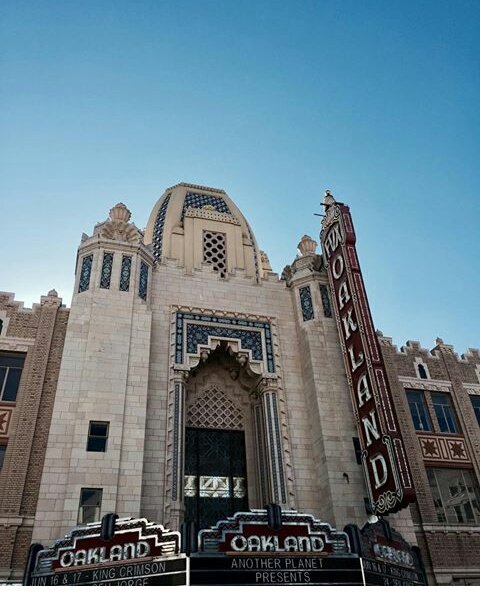
Violence is a symptom of an unhealthy community. In Oakland’s drug wars, fire as well as firepower is a weapon. The Oakland fire department attributes more than 180 cases of arson to warfare between drug gangs and reprisals against slow-paying customers or residents who complained publicly about the city’s wide-open commerce in crack, a cheaper, potent form of cocaine. In Oakland, California, drugs are sold on more than 150 street corners. When people cannot pay their drug debts, and the dealer cannot find you, they will go after your next of kin. A woman who owed $50.00 to a crack dealer was dragged from her house, and thrown into the trunk of a car. After breaking one of her legs and the bones in one hand with a baseball bat, detectives report the attackers poured gasoline over her and set her on fire. With those cost of living so high in Oakland, California scientists are saying this is contributing to continuing violent crimes in parts of the city. There is a 19 percent unemployment rate in these communities, and the economy is not lifting the poor up. There is a large group of people living below the poverty line. The average household income in East Oakland is $47,318.50 and the citywide average is $80,758.00. #RandolphHarris 6 of 10
Is there such depravity in humans as that one should injure another without benefit to oneself? The lack of education, jobs, drugs, and no affordable housing is leading to the increase in violence and crime. And that is why so many people have turned to drugs and drug dealing. People who are abusing drugs feel hopeless and depressed and they have tried to succeed, but have not been able to because they come from an unstable home, live in a violent community, do not have the resources to go to school, or suffer from a cognitive disability. So, they hustle and turn to drugs to get by and forget about life and to feel good. On the other hand, people find drug dealing lucrative and can make $50,000.00 in one weekend, so they do not want to work for $12.00 an hour when they are making more than a doctor does. However, it is very dangerous because it creates super predators. You now have cartels and drug dealers praying on other drug dealers. In places like Oakland Hills, where my father came from, people have a college degree and average household incomes of $188,000.00. However, because there is so much profit being made in the flatlands by dealers, you have to solve this problem with the youth by encouraging them to stay in school and just say no to drugs and drinking. #RandolphHarris 7 of 10
There are no devils but those which are begotten upon selfishness and reared by cunning. The bloody drug warfare has caused people in Oakland to promote this urban comeback and improve its reputation. However, just feet away from these revitalized neighborhoods, crack and other drugs can be bought in board daylight just about anywhere. The killings and the sound of gunfire are now a constant in the life of many people who live in Oakland. People are getting rich on the blood money and ruining the lives of men, women, children, animals and the environment. Bears, deer, mountain lions, and rivers are being poisoned by the marijuana grows and many of them are drying. Also, in Oakland, California, there are ten-year old kids with guns in their underwear drawers. People fear that with the rising rent in Sacramento, lack of affordable housing, increase of breweries, and all the legal marijuana for recreational use that Sacramento, California will face the same fate as Oakland, California. Housing is high, food is expensive, and gas is outrageous. People use drugs, legal and illegal, because their lives are intolerably painful or dull. They hate their work and find no rest in their leisure. They are estranged from their families and their neighbors. #RandolphHarris 8 of 10
Aging alone causes people to lose brain cells and mental processing speed, but there are several other causes that you have more control over. There are some adults who seems to be dumber than tar, but they are still working and the work they produce is awful, and yet they continue to still be employed. When these adults, who did drugs in their youth and have clearly lost their cognitive abilities, are hired on as partners or major parts of the firm, the level of productivity and quality of work seriously declines, and many people sit around wondering why these individuals are still employed, why do they not retire? While we cannot recognize a change in brain speed, many people do know that something has changed with their thinking. And if you sense that you are not as smart or quick as you used to be, you know it is an uncomfortable feeling. Some refer to it as “brain fog,” because they know that they used to feel smarter but the thoughts are just not coming together as quickly. What is happening is that when brain processing seed declines, you are literally thinking slower and remembering less. New information that you are presented with is not as easy to understand, and older memories are harder to recall. At the same time, a decline in brain chemical production causes brain cell death. #RandolphHarris 9 of 10

People who seem to enjoy their ill temper have a way of keeping it in fine condition by inflicting privations on themselves. Fewer neurons mean an additional decrease in the capacity to retain information. What is more, not only does an aging brain sometimes think slower, but drug use will also accelerate the deterioration of your brain. There is a separation between thinking and then doing. You know that you have things you need to do but you cannot quite figure out how to get them done, or you forget to take care of them. Once you experience these problems repeatedly, you need to start rebalancing your brain. Aging is the number one cause of mild cognitive impairment (MCI). As you get older, your brain develops chemical imbalances. If you do not act to fix them, you are actually leaving your brain and your body open to get sicker. Any type of addiction, including to alcohol, streets drugs (marijuana, cocaine, crystal meth, heroin, Ecstasy, nexus, ketamine, crack, hallucinogens), overeating, gambling, or even excessive shopping can cause an imbalance. One that is shipped with the devil must sail with the devil. However, mutual toleration and forbearance, in our sentiments, with regard to the legality, or expedience of measures, is the soul of democracy. Consistent, sincere prayer helps us to grow spiritually, shape our character, and strengthen our love for our Father in Heaven. Prayer is among the most valuable gifts we receive as spirit children of a loving Heavenly Father. #RandolphHarris 10 of 10
 Randolph Harris II International Institute