
Home » Posts tagged 'narcissist'
Tag Archives: narcissist

Misery Acquaints a Human with Strange Bedfellows

If you think about, the Victorian era was the only time that we could possibly achieve World peace. Misery acquaints a human with strange bedfellows. Looking at it from the standpoint of values it becomes evident that narcissism conflicts with reasons and with love. This statement hardly needs further elaboration. By the very nature of the narcissistic orientation, it prevents one—to the extent to which it exists—from seeing reality as it is, that is, objectively; in other words, it restricts reason. It may not be equally clear that it restricts love—especially when we recall that Dr. Freud said that in al love there is a strong narcissistic component; that a man in love with a woman makes her the object of his own narcissism, and that therefore she becomes wonderful and desirable because she is part of him. She may do the same with him, and thus we have the case of the “great love,” which often is only a folie a deux rather than love. Both people remain each of them will be in need of a new person who can give them fresh narcissistic satisfaction. For the narcissistic person, the partner is never a person in one’s own right or in one’s full reality; one exists only as a shadow of the partner’s narcissistically inflated ego. Nonpathological love, on the other hand, is not based on mutual narcissism. It is a relationship between two people who experience themselves as separate entities, yet who can open themselves and become one with each other. In order to experience love, one must experience separateness. If we consider that the essential teachings of all the great humanist religions can be summarized in one sentence: It is the goal of man to overcome one’s narcissism; the significance of the phenomenon of narcissism from the ethical-spiritual viewpoint becomes very clear. #RandolphHarris 1 of 20

Perhaps this principle is nowhere expressed more radically than in the teachings of Jesus as the Christ. If humans awaken from their illusions, repent, and becomes aware of the Heavenly Father, the teaching of Jesus as the Christ amounts to saying that humans can save themselves from the reality of sickness, old age, and death, and of the impossibility of ever attaining the aims of one’s greed. The sanctified person who Jesus as the Christ’s teachings speaks is the person who has overcome one’s narcissism, and who is therefore capable of being fully awake. We might put the same thought still differently: Only if humans can do away with the illusions of their indestructible ego, only if one can drop it together with all other objects of one’s greed, only then can one be open to the World and fully related to it. Psychologically this process of becoming fully awake is identical with the replacement of narcissism by relatedness to the World. The Old Testament says: “Love thy neighbour as thyself.” Here the demand is to overcome one’s narcissism at least to the point where one’s neighbour becomes as important as oneself. However, the Old Testament goes much further than this in demanding love for the “stranger.” (You know the soul of the stranger, for strangers have you been in the land of Egypt.) The stranger is precisely the person who is not part of my clan, my family, my nation; one is not part of the group to which I am narcissistically attached. One is nothing other than human. #RandolphHarris 2 of 20

One discovers the human being in the stranger. In the love for the stranger narcissistic love has vanished. For it means loving another human being in one’s suchness and one’s difference from me, and not because one is like me. When the New Testament says “love thine enemy” it expresses the same idea in a more pointed form. If the stranger has become fully human to you, there is also no longer an enemy, because you have become truly human. Only if narcissism has been overcome, if “I am thou,” to love the stranger and the enemy is possible. The fight against idolatry, which is the central issue of prophetic teaching, is at the same time a fight against narcissism. In idolatry one partial faculty of man is absolutized and made into an idol. Man then worships himself in an alienated form. The idol in which one submerges becomes the object of one’s narcissistic passion. The idea of God, on the contrary, is the negation of narcissism because only God—not man—is omniscient and omnipotent. However, while the concept of an indefinable and indescribable God was the negation of idolatry and narcissism, God soon became again an idol; man identified himself with God in a narcissistic manner, and thus in full contradiction to the original function of the concept of God, religion became a manifestation of group narcissism. The full maturity of man is achieved by his complete emergence from narcissism, both individual and group narcissism. This goal of mental development which is thus expressed in psychological terms is essentially the same as that which the great spiritual leaders of the human race have expressed in religious-spiritual terms. While the concepts differ, the substance and the experience referred to in the various concepts are them same. #Randolphharris 3 of 20

We live in a historical period characterized by a sharp discrepancy between the intellectual development of humans, which has led to the development of the most destructive armaments, and one’s mental-emotional development, which has left one still in a state of marked narcissism with all its pathological symptoms. What can be done in order to avoid the catastrophe which can easily result from this contradiction? Is it at all possible for humans to take a step in the foreseeable future which, in spite of all religious teachings, one has never been able to take before? Is narcissism so deeply ingrained in humans that one will never overcome one’s “narcissistic core,” as Dr. Freud thought? Is there then any hope that narcissistic madness will not lead to the destruction of humans before one had a chance to become fully human? No one can give an answer to these questions. One can only examine what the optimal possibilities are which may help humans to avoid the catastrophe. One might begin with what would seem to be the easiest way. Even without reducing narcissistic energy in each person, the object could be changed. If mankind, the entire human family, could become the object of group narcissism instead of one nation, one race, or one political system being this object, much might be gained. If the individual could experience oneself primarily as citizens of the World and if they could feel pride in mankind and in its achievements, one’s narcissism would turn toward the human race as an object, rather than to its conflicting components. If the educational systems of all countries stressed the achievements of an individual nation, a more convincing and moving case could be made for the pride in being human. #RandolphHarris 4 of 20

If the feeling which the Greek poet expressed in Antigone’s words, “There is nothing more wonderful than man,” could become an experience shared by all, certainly a great step forward would have to be added: the feature of all benign narcissism, namely, that it refers to an achievement. Not one group, class, religion, but all of humankind must undertake to accomplish tasks which allow everybody to be proud of belonging to this race. Common tasks for all mankind are at hand: the joint fight against disease, against hunger, for the dissemination of knowledge and art through our means of communication among all the peoples of the World. The fact is that in spite of all differences in political and religious ideology, there is no sector of mankind which can afford to exclude itself from these common tasks; for the great achievement of this century is that the belief in the natural or divine causes of human inequality, of the necessity or legitimacy of the exploitation of one human by another, has been defeated to the point of no return. Renaissance humanism, the bourgeois revolutions, the Russian, Chinese, and colonial revolutions—all are based on one common thought: the equality of man. Even if some of these revolutions have led to the violation of human equality within the systems concerned, the historical fact is that the idea of the equality of all men, hence of their freedom and dignity, has conquered the World, and it is unthinkable that mankind could ever return to the concepts which dominated civilized history until only a short time ago. #RandolphHarris 5 of 20

The image of the human race and of its achievements as the object of benign narcissism could be represented by supranational organizations such as the United Nations; it could even begin to create its own symbols, holidays, and festivals. Not the national holiday, but the “day of man” would become the highest holiday of the year. However, it is clear that such a development can occur only inasmuch as many and eventually all nations concur and are willing to reduce their national sovereignty in favour of the sovereignty of mankind; not only in terms of political, but also in terms of emotional, realities. A strengthened United Nations and the reasonable and peaceful solution of group conflicts are the obvious conditions for the possibility that humanity and its common achievements shall become the object of group narcissism. As an example of more specific measures for such an attempt, consider history. History textbooks should be rewritten as textbooks of World History, in which the proportions of each nation’s life remain true to reality and are not distorted, just as World maps are the same in all countries and do not inflate the size of each respective country. Furthermore, movies could be made which foster pride in the development of the human race, showing how humanity and its achievements are the final integration of many single steps undertaken by various groups. Such a change in the object of narcissism from single groups to all humankind and its achievements would indeed tend, as pointed out before, to counteract the dangers of national and ideological narcissism. However, this was not enough. #RandolphHarris 6 of 20

If we are true to our political and religious ideals, the Christian as well as the socialist ideal of unselfishness and brotherhood, the task is to reduce the degree of narcissism in each individual. Although this will take generations, it is now more possible than ever before become humans have the possibility to create the material conditions for a dignified human life for everybody. The development of technique will do away with the need for one group to enslave and to exploit another; it has already made war obsolete as an economically rational action; man will for the first time emerge from one’s half-animal state to a fully human one, and hence not need narcissistic satisfaction to compensate for one’s material and cultural poverty. On the basis of these new conditions man’s attempt to overcome narcissism can be greatly helped by the scientific and the humanist orientation. We must shift our educational effort from teaching primarily a technical orientation to one that is scientific; that is, toward furthering critical thought, objectivity, acceptance of reality, and a concept of truth which is subject to no fiat and is valid for every conceivable group. If the civilized nations can create a scientific orientation as one fundamental attitude in their young, much will have been gained in the struggle against narcissism. The second factor which leads in the same direction is the teaching of humanist philosophy and anthropology. We could not even want this, since the establishment of one system claiming to be the “orthodox” one might lead to another source of narcissistic regression. However, even allowing for all existing differences, there is a common humanist creed and experience. #RandolphHarris 7 of 20

The creed is that each individual carries all of humanity within oneself, that the “human condition” is one and the same for all human, in spite of unavoidable differences in intelligence, talents, height, and colour. This humanist experience consists in feeling that nothing human is alien to one, that “I am you,” that one can understand another human being because both share the same elements of human existence. Only if we enlarge our sphere of awareness is this humanist experience is fully possible. Our own awareness is usually confined to what the society of which we are members permits us to be aware. Those human experiences which do not fit into this picture are repressed. Hence our consciousness represents mainly our own society and culture, while our unconscious represents the universal man in each of us. The broadening of self-awareness, transcending consciousness and illuminating the spheres of the social unconscious, will enable man to experience in himself all of humanity; he will experience that fact he is a sinner and a saint, a child and an adult, a sane and insane person, a man of the past and one of the future—that he carries within oneself that which mankind has been and that which it will be. A true renaissance of our humanist tradition undertaken by all religious, political, and philosophical systems claiming to represent humanism would result in considerable progress toward the most important “new frontier” that exists today—man’s development into a completely human being. Teaching alone can be the decisive step for the realization of humanism, as the Renaissance humanists believed. #RandolphHarris 8 of 20

If essential social, economic, and political conditions change; a change from bureaucratic industrialism to humanist-socialist industrialism; from centralization to decentralization; from the organization man to a responsible and participating citizen; subordination of national sovereignties to the sovereignty of the human race and its chosen organs; common efforts of the “have” nations in corporation with the “have-not” nations to build up the economic systems of the latter; universal disarmament and availability of the existing material resources for constructive takes, only then will all these teachings have an impact. Universal disarmament is also necessary for another reason: if one sector of humankind lives in fear of total destruction by another bloc, and the rest live in fear of destruction by both blocs, then, indeed, group narcissism cannot be diminished. Man can be human only in a climate in which he can expect that he and his children will live to see the next year, and many more years to come. A knowledge of the neurotic trends and their implications gives a rough conception of what has to be worked through in analysis. It is also desirable, however, to know something about the sequence in which the work must be done. Are problems tackled in a helter-skelter fashion? Does one obtain a piecemeal insight here and there until at last the pieces of the jigsaw puzzle are put together into an understandable picture? Or are there principles that may serve as a guide in the maze of material ordering itself? Dr. Freud declared that a person will first present in the analysis the same front that one presents to the World in general, and that then one’s repressed striving will gradually appear, in succession from the less repressed to the more repressed. #RandolphHarris 9 of 20

If we were to take a bird’s-eye view of the analytical procedure this answer would still hold true. And even if the findings to be made lay around a single vertical line along which we would have to wind our way into the depths, as a guide for action, the general principle involved would be good enough. However, if we should assume that this is the case, if we should assume that is we only continue to analyze whatever material shows up we shall penetrate step by step into the repressed area, we may easily find ourselves in a state of confusion—which indeed happens not infrequently. The theory of neuroses developed in pervious reports gives us more specific leads. It holds that there are several focal points in the neurotic personality given by the neurotic trends and the structure built around each of them. The inference to be drawn for the therapeutic procedure is, briefly, that we must discover each trend and each time descend into the depths. More concretely, the implications of each neurotic trend are repressed in various degrees. Those that are less deeply repressed are the first to become accessible; those that are more deeply repressed will emerge later. The same principle applies to the order in which the neurotic trends themselves can be tackled. One patient will start by presenting the implications of one’s need for absolute independence and superiority, and only much later can one discover and tackle indications of one’s compliance or of one’s need for affection. The next patient will start with an open display of one’s need to be loved and approved of, and one’s tendencies to control over, if one has any, could possibly be approached at the beginning; but a third one will from the beginning display a highly developer power drive. #RandolphHarris 10 of 20

The fact that a trend appears at the beginning indicates nothing about its comparative importance or unimportance: the neurotic trend that appears first is not necessarily the strongest one in the sense of having the greatest influence on the personality. We could rather say that that trend is the first to crystalize which jibes vest with the person’s conscious or semiconscious image of oneself. If secondary defenses—the means of self-justification—are highly developed they may entirely dominate the picture at the beginning. In that case the neurotic trends become visible and accessible only later one. To further high light this illustration, consider Clare whose childhood history was briefly outlined in past reports. When the analysis is reported for this purpose it must, of course, be grossly simplified and schematized. Clare came for analytic treatment at the age of fifteen for various reasons. She was easily overcome by a paralyzing fatigue that interfered with her work and her social life. Also, she complained about having remarkably little self-confidence. She was the editor of a magazine, and though her professional career and her present position were satisfactory her ambition to write plays and stories was checked by insurmountable inhibitions. She could do her routine work but was unable to do productive work, though she was inclined to account for this latter inability by point out her probable lack of talent. She had been married at the age of sixteen, but the husband had died after three years. After the marriage she had had a relationship with another man which continued during the analysis. According to her initial presentation both relationships were completely satisfactory. #RandolphHarris 11 of 20

The analysis stretched over a period of four and a half years. She was analyzed for one year and a half. This time was followed by an interruption of two years, in which she did a good deal of self-analysis, afterward retuning to analysis for another year at irregular intervals. Clare’s analysis could be roughly divided into three phases: the discovery of her compulsive modesty; the discovery of her compulsive dependence on a partner; and finally, the discovery of her compulsive need to force others to recognize her superiority. None of these trends was apparent to herself or to others. In the first period the data that suggested compulsive elements were as follows. She tended to minimize her own value and capacities: not only was she insecure about her assets but she tenaciously denied their existence, insisting that she was not intelligent, attractive, or gifted and tending to discard evidence to the contrary. Also, she tended to regard others as superior to herself. If there was a dissension of opinion, she automatically believed that the others were right. She recalled that when her husband had started an affair with another woman she did nothing to remonstrate against it, though the experience was extremely painful to her; she managed to consider him justified in preferring the other on the grounds that the latter was more attractive and more loving. Moreover, it was almost impossible for her to spend money on herself: when she traveled with others she could enjoy living in expensive places, even though she contributed her share in the expenses, but as soon as she was on her own she could not bring herself to spend money on such things as trips, dresses, plays, books. #RandolphHarris 12 of 20

Finally, though she was in an executive position, it was impossible for her to give orders: if orders were unavoidable, she would do so in an apologetic way. The data showed that Clare had developed a compulsive modesty, that she felt compelled to constrict her life within narrow boundaries and to take always a second or third place. When this trend was once recognized, and its origin in childhood discussed, we began to search systematically for its manifestations and its consequences. What role did this trend actually play in her life? She could not assert herself in any way. In discussions she was easily swayed by the opinions of others. Despite a good faculty for judging people she was incapable of taking any critical stand toward anyone or anything except in editing, when a critical stand was expected of her. She had encountered serious difficulties, for instance, by failing to realize that a fellow worker was trying to undermine her position; when this situation was fully apparent to others, she still regarded the other as her friend. Her compulsion to take second place appeared clearly in games: in tennis, for instance, she was usually too inhibited to play well, but occasionally she was able to play a good game and then, as soon as she became aware that she might win, she would begin to play badly. The wishes of others were more important than her own: she would be contented to take her holidays during the time that was least wanted by others, and she would do more work than she needed to if others were dissatisfied with the amount of work to be done. #RandolphHarris 13 of 20

Most important was a general suppression of her feelings and wishes. Her inhibitions concerning expansive plans she regarded as particular “realistic”—evidence that she never wanted things that were beyond reach. Actually she was as little “realistic” as someone with excessive expectations of life; she merely kept her wishes beneath the level of the attainable. She was unrealistic in living in every way beneath her means—socially, economically, professionally, spiritually. It was attainable for her, as her later life showed, to be liked by many people, to look attractive, to write something that was valuable and original. The most general consequence of this trend were progressive lowering of self-confidence and a diffuse discontentment with life. Of the latter she had not been in the least aware, and could not be aware as long as everything was “good enough” for her and she was not clearly conscious of having wishes or of their not being fulfilled. The only way this general discontentment with life had shown itself was in trivial matters and in sudden spells of crying which had occurred from time to time and which had been quite beyond her understanding. For quite a while she recognized only fragmentarily the truth of these findings; in important matters she made the silent reservation that I either overrated her or felt it to be good therapy to encourage her. Finally, however, she recognized in a rather dramatic fashion that real, intense anxiety lurked behind this façade of modesty. It was at a time when she was about to suggest an improvement in the magazine. She knew that her plan was good, that it would not meet with too much opposition, that everyone would be appreciative in the end. Before suggesting it, however, she had an intense panic which could not be rationalized in any way. #RandolphHarris 14 of 20
At the beginning of the discussion, she still felt panicky and had to leave the room because she was unwell. However, as the discussion turned increasingly in her favour the panic subsided. The plan was finally accepted and she received considerable recognition. She went home with a feeling of elation and was still in good spirits when she came to the next analytical hour. I dropped a casual remark to the effect that this was quite a triumph for her, which she rejected with a slight annoyance. Naturally she had enjoyed the recognition but her prevailing feeling was one of having escaped from a great danger. It was only after more than two years had elapsed that she could tackle the other elements involved in this experience, which were along the lines of ambition, dread of failure, triumph. At that time her feelings, as expressed in her associations, were all concentrated on the problem of modesty. She felt that she had been presumptuous to propound a new plan. Who was she to know better! However, gradually she realized that this attitude was based on the fact that for her the suggesting of a different course of action meant a venturing out of the narrow artificial precincts that she had anxiously preserved. Only when she recognized the truth of this observation did she become fully convinced that her modesty was a façade to be maintained for the sake of safety. The result of this first phase of work was a beginning of faith in herself and a beginning of courage to feel and assert her wishes and opinions. The second period was dedicated prevailingly to work on her dependency on a “partner.” The majority of the problems involved she worked through by herself. #RandolphHarris 15 of 20

This dependency, despite its overwhelming strength, was still more deeply repressed than the previous trend. It had never occurred to her that anything was wrong in her relationships with men. On the contrary, she had believed them to be particularly good. The analysis gradually changed this picture. There were three main factors that suggested compulsive dependence. The first was that she felt completely lost, like a small child in a strange wood, when a relationship ended or when she was temporarily separated from a person who was important to her. The first experience of this kind occurred after she left home at the age of twenty. She then felt like a feather blown around in the Universe, and her wrote desperate letters to her mother, declaring that she could not live without her. This homesickness stopped when he developed a kind of crush on an older man, a successful writer who was interested in her work, and furthered her in a patronizing way. Of course, this first experience of feeling lost when alone could be understood on the basis of her youth and the sheltered life she had lived. However, later reactions were intrinsically the same, and formed a strange contrast to the rather successful professional career that she was achieving despite the difficulties mentioned before. The second striking fact was that in any of these relationships the whole World around her became submerged and only the beloved had any importance. #RandolphHarris 16 of 20

Thought and feelings centered around a call or a letter or a visit from him; hours that he spent without him were empty, filled only with waiting for him, with a pondering about his attitude to her, and above all with feeling utterly miserable about incidents which she felt as utter neglect or humiliating rejection. At these times other human relationships, her work, and other interests lost almost every value for her. The third factor was a fantasy of a great and masterful man whose willing slave she was and who in turn gave her everything she wanted, from an abundance of material things to an abundance of mental stimulation, and made her a famous writer. As the implications of these factors were gradually recognized the compulsive need to lean on a “partner” appeared and was worked through in its characteristics and its consequences. Its main feature was an entirely repressed parasitic attitude, an unconscious wish to feed on the partner, to expect him to supply the content of her life, to take responsibility for her, to solve all her difficulties and to make her a great person without her having to make efforts of her own. This trend had alienated her not only from other people but also from the partner himself, because the unavoidable disappointments she felt when her secret expectations of him remained unfulfilled gave rise to a deep inner irritation; most of this irritation was repressed for fear of losing the partner, but some of it emerged in occasional explosions. Another consequence was that she could not enjoy anything except when she shared it with the partner. The most general consequences of this trend were that her relationships served only to make her more insecure and more passive. #RandolphHarris 17 of 20

In speaking and writing, if the self-actualized is conscious of difficulties, obstacles, or interference in what one is doing, one should at once refuse all ideas, thoughts, suggestions, visions (id est, pictures to the mind), words, impressions, that the spirits of psychopathological offenders may be seeking to insert or press upon one, so that one may be able to cooperate with the Holy Spirit and have a clarified mind for the carrying out of God’s will. The self-actualized, by one’s refusal and resistance against supernatural attempts to interfere with one’s outer human, will be actively resisting the powers of darkness, while one seeks to co-work with the Holy Spirit within one’s spirit. At first this means much conflict, but as one maintains active resistance and increasingly closes one’s whole being to the influence of psychopathological offenders, and is on the alert to recognize and refuse their workings, one’s union with the Risen Lord deepens, one’s spirit grows strong, one’s vision becomes pure, one’s mental faculties are clear enough to realize a perpetual victory over the foes who once had one in their oppressive power. One must then be especially on guard against what may be described as the “double counterfeits” of the deceiving psychopathological offenders. That I, the counterfeits offered by the enemy in connection with attack upon oneself. For example, the ultimate negative attacks one manifestly and openly, so that one clearly knows it to be an onslaught of the spirit-beings of psychopathological offenders. One prays, resists, gets through to victory in one’s will and spirit. If one is not on guard, then comes a “great feeling” of peace and rest, which may be as much an attack as the original onslaught, but more subtle and liable to mislead the believer. The enemy, by suddenly retreating and ceasing the furious attack, hopes by this stratagem to gain the advantage which one failed to obtain at the first. #RandolphHarris 18 of 20

Judgement—the belief that “this and that is so.” Thus, judgment contains the avowal that an “identical case” has been encountered: it thus presupposed comparison, with the aid of recollection. Judgement does not create the appearance of an identical case. Rather, it believes it perceives one; it works under the presupposition that there are in general identical cases. What is that function, which must be much older, operative much earlier, which levels off and stimulates? Stimulating” is probably the bet adjective of our interpretation of history. The sweep and vigour of our thought offers a richly developed theology of history to those who accept it, and a formidable challenge to those who criticize it. Perhaps one’s most original contribution is the concept of Kairos. Erich Przywara sees in it the key to our thought, for the Kairos Christi is the supreme conflict between the divine and the demonic in which the Kingdom of God overcomes and takes up into itself the Kingdom of Satan. The Kairos idea lies behind the idea that there is a time in which certain things are true and other times in which they do not apply. This accounts for the changing norms of theology. Theimplications of the Kairos concept probably can be expanded to accommodate these viewpoints, but ambitious claims for its importance should not obscure its primary role in the interpretation of history. The Kairos concept, the subject-object structure of history, the group as opposed to the individual or mankind as the bearer of history, the creation of the new as one of the marks of historical time, the inner-historical and transcendent nature of the Kingdom of God—there is still a certain incompleteness about it. One is more puzzled about what one does not say than about what one actually says. There are several major instances where one’s reticence is disappointing. #RandolphHarris 19 of 20

If a kind of equalization had not first been exercised within the sensations: recollection is only possible with a constant underscoring of what is already accustomed, experienced, otherwise there could be no judgments at all. Before anything is judged, the process of assimilation must already be completed: thus, here, too, there is an intellectual activity that does not enter into consciousness, like pain following from an injury. An inner event probably corresponds to all organic functions, hence an assimilating, eliminating, growing, et cetera. Essential: to begin with the body and use it as a guiding thread. It is the much richer phenomenon and affords clearer observation. Belief in the body is better established than belief in the mind. However strongly something may be believed, that is no criterion of truth. However, what is truth? Perhaps a kind of belief that has become a condition of life? Then, of course, strength would be a criterion, exempli gratia with regard to causality. Remove far from me falsehood and lies; give me neither poverty nor riches, but feed me with mine allotted bread, lest I become arrogant and defiant, saying, “Who is the Lord?” Or lest I become poor and be tempted to steal, thus profaning the name of my God. Better is a little with righteousness, than great wealth with injustice. I pledge allegiance to the flag of the United States of America, and to the Republic, for which it stands, one Nation, Under God, Indivisible with Liberty and Justice for all. That I am the Lord who doeth mercy, justice, and righteousness on Earth, for in these do I delight. The Sacramento Fire Department is a nonprofit organization that helps families build and improve places to call home. They believe that everyone should live in a community that is not threatened by the destruction of fire, which could lead to the loss of lives. Please take time to donate for they are not receiving all of their resources. #RandolphHarris 20 of 20


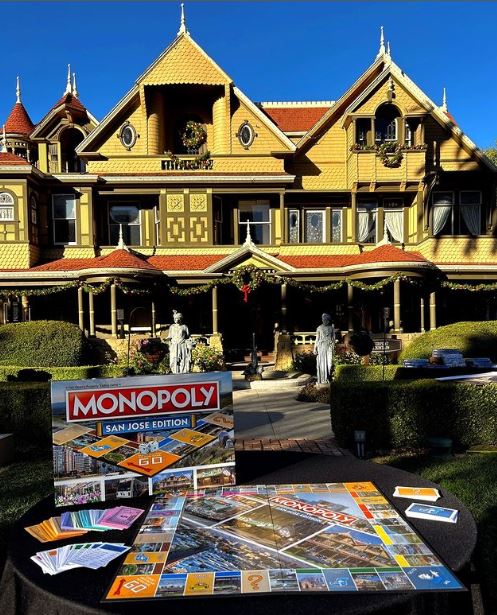
Happy New Years from The Winchester Mystery House! Wishing you all a year full of happiness and mysterious surprises! 🎉✨

For further information about tours, including group tours, weddings, school events, birthday party packages, facility rentals, and special events please visit the website: https://winchestermysteryhouse.com/

Please visit the online giftshop, and purchase a gift for friends and relatives as well as a special memento of The Winchester Mystery House. A variety of souvenirs and gifts are available to purchase. https://shopwinchestermysteryhouse.com/

For Every Change there is an Instigator

The World is so full of a number of things, I am sure we should all be as happy as kings. Perhaps narcissism is what keeps country so full of misery. Concerning the pathology of group narcissism, the most obvious and frequent symptom, as in the case of individual narcissism, is a lack of objectivity and rational judgment. If one examines the judgment the less affluent in America face and compare it with the way the physically disabled are regarded, one can easily recognize the distorted character the criticism they face. Little straws of truth are put together, but the whole which is thus formed consists of falsehoods and fabrications. If political actions are based on narcissistic self-glorifications, the lack of objectivity often leads to disastrous consequences. We have witnessed during the first quarter of this century two outstanding examples of the consequences of national narcissism. Many years before the immigration crisis, it was the unofficial strategic doctrine to claim that the United Stares of America wanted the poor and huddled masses from around the World; immigrants, regardless of their legal or illegal status, became endowed with special privileges and benefits and financial incentives and a spirit of entitlement that they needed to only come to America and the nation would provide for them. And that American taxpayers would pay the bill because their presence is worthy them having a sense of entitlement. Then democratic cities became sanctuary cities, which means that law enforcement was no longer allowed to deport people who immigrated illegally. #RandolphHarris 1 of 19

Instead, the people who migrated illegally could be bussed to wherever they pleased in the United States of America, be given cash aid and a food allowance, while they stand in posh hotels. Meanwhile, record of Americans are becoming homeless and cities are so flooded with millions of people who migrated illegal that they are now making it a crime to bus people who illegally immigrated into their cities without notification. While some states are making illegal immigration a state crime punishable by up to 20 years in prison. The problem is that over 12 million unidentified people have bombarded the nation, they are from all over the World, and some are extremely dangerous criminals. The public is concern that after 9/11 happened, that something much bigger and more widespread could happen again. Former President Obama, a man of extreme personal narcissism, who stimulated the group narcissism of millions of immigrations, overestimated the strength of the American government as a population building nation and financial source of support and underestimated the negative impact this would have on the nation and her people during an economic crisis and hyperinflation—as have other narcissistic politicians as well. In spite of his cleverness, Mr. Obama was not capable of seeing reality objectively, because his wish for democrats to win and rule weighed more heavily for him than the realities of national security and the economic health of the nation. And now, China, India, and America, in that order are expected to be the most powerful nations by 2050. Although, some say America lost her status as World power a long time ago from borrowing so much money from China. #RandolphHarris 2 of 19

Group narcissism needs satisfaction just as individual narcissism does. On one level of this satisfaction is provided by the common ideology of the superiority of one’s group, and the inferiority of all others. In religious groups this satisfaction is easily provided by the assumption that my group is the only one which believes in the true God, and hence since my God is the only true one, all other groups are made up of misguided unbelievers. However, even without reference to God as a witness for one’s superiority, group narcissism can arrive at similar conclusions on a secular level. The narcissistic conviction of the superiority of Democrats over Republicans in part of the United States of America demonstrates that there is no restraint to the sense of self-superiority or of the inferiority of another group. However, the satisfaction of these narcissistic self-images of a group requires also a certain degree of confirmation in reality. As long as Democrats have the power to demonstrate their superiority over the Republicans through federal judges, the media, social, economic, and other political acts of discrimination, their narcissistic beliefs have some element of reality, and thus bolsters up the entire narcissistic thought-system. The same held true for the Nazis; there the physical destruction of all the Jewish people had to sever as proof of the superiority of the Aryans (for a sadist the fact that one can kill a man or woman proves that the killer is superior). #RandolphHarris 3 of 19

If, however, the narcissistically inflated group does not have available a minority which is sufficiently helpless and to lend itself as an object for narcissistic satisfaction, the group’s narcissism will easily lead to the wish for military conquests; this was the path of pan-Germanism and pan-Slavism before 1914. In both cases the respective nations were endowed with the role of being the “chosen nation,” superior to all others, and hence justified in attacking those who did not accept their superiority. I do not mean to imply that “the” cause for illegal immigration was the narcissism of the Democrats and rights for people who immigrated illegally, but their fanaticism was certainly one factor which contributed to the outbreak of the invasion. Beyond this, however, one must not forget that once an invasion has started, the various governments try to arouse national narcissism as a necessary psychological condition for the successful waging of the war. There are already talks in the States and in Congress of deploying the national guard into Mexico and dismantling the drug cartels. Most people believe that America conquering Mexico would be a great idea because America could implement law and order, which is supposedly why so many people illegally immigrate to America. If the narcissism of a group is wounded, then we find the same reaction of rage which we have discussed in connection with individual narcissism. There are many historical examples for fact that disparagement of the symbols of group narcissism has often produced rage verging on insanity. #RandolphHarris 4 of 19

Violation of the flag; insults against one’s own God, emperor, leader; the loss of a way and of territory—these have often led to violent mass feelings of vengeance which in turn led to new wars. If the offender is crushed and thus the insult to one’s narcissism is undone, the wounded narcissism can be healed only then. Revenge, individual and national, is often based on wounded narcissism and on the need to “cure” the wound by the annihilation of the offender. The highly narcissistic group is eager to have a leader with whom it can identify itself. The leader is then admired by the group which projects its narcissism on to one. In the very act of submission to the powerful leader, which is in depth an act of symbiosis and identification, the narcissism of the individual is transferred onto the leader. The greater the leader, the greater the follower. Personalities who as individuals are particularly narcissistic are the most qualitied to fulfill this function. The narcissism of the leader who is convinced of one’s greatness, and who has no doubts, is precisely what attracts the narcissism of those who submit to one. The half-insane leader is often the most successful one until one’s lack of objective judgment, one’s range reactions in consequence of any set-back, one’s need to keep up the image of omnipotence may provoke one to make mistakes which lead to one’s destruction. However, there are always gifted half-psychotics at hand to satisfy the demands of a narcissistic mass. #RandolphHarris 5 of 19

Narcissism is a necessary and valuable orientation, provided it is benign and does not transcend a certain threshold. However, our picture is incomplete. Man is not only concerned with biological and social survival, he is also concerned with values, with the development of that by virtue of which he is human. If essential control over the immediate physical environment and a degree of civilization sufficient to free man for self-preoccupation and worry about possible future threats to his security or presently imagined threats to his integrity is a basic requirement for the generation of neurotic anxiety, then man has had these prerequisites for a very long time. And the basic psychophysiological equipment required for the overlearning of danger signals and the anxiety response to stress seems not to be a very recent biological development. In this perspective, the presumed greater prevalence of neurotic breakdown in present-day man must be attributed to the greater stresses under which one lives. However, is modern man in fact subjected to greater stress than one’s historical predecessors? Contemporary Western Civilization is complex and the tempo of life seems ever faster. We are subjected to a wide variety of pressing demands (largely of our own creation), but we have an increasing armamentarium of efficient tools with which easily to provide much of our daily demands. It is not probably that a thoughtful and penetrating numeration of the pressures, problems, and uncertainties that confronted people 100 (or 1,000) years ago and that confront one’s modern counterpart would reveal chiefly a difference in content, not a difference in number and seriousness? #RandolphHarris 6 of 19

The problems of life have changed in their nature, but not in their number or severity. We suffer an inability to project ourselves empathically into the psychological stresses of older generations. Through inadequate historical perspective (and perhaps out of need to be heroic in our own eyes) we see lives of earlier times as simpler, slower, and less stressful—while we see ourselves as immersed in a morass of economic, ethical, political, moral, and social problems which cannot be solved because there is “too much pressure” and everything moves “too rapidly”—forgetting the tremendous technological advances that have both speeded communication and essentially freed us from concern with the mundane problems of sheer existence, so that we are in fact able, if we will, to concentrate in a way never before possible on the solution of our special problems. Has there been a significant increase in the rate of occurrence of major forms of mental disorders? When the severity of disturbance is such that the total functioning of personality is disrupted and the individual can no longer be safely tolerated in one’s community, when one’s symptoms are sufficiently gross to permit of easy, objective description, and when the sick individual is removed to a hospital, we have a base line that permits of valid historical comparison and that, with careful attention to adequate case histories, permits comparison of clinical diagnoses. Such comparative historical analyses, with attention to refined statistical corrections for population, have rarely been attempted. In one of the best studies so far reported the authors conclude that the rate (frequency of first admission to hospitals per specified age groups of the general public) of the major forms of functional psychoses has been essentially the same since 1870. #RandolphHarris 7 of 19
Even though the best available evidence suggests that psychotic breakdown is not increasing in frequency in modern times, it may be argued that the total amount of mental illness is on the increase by virtue of the prevalence of milder, non-hospitalized forms of psychiatric disability, exempli gratia, the neuroses. In this argument we are confronted by a cultural relativity that makes analysis of documentary evidence almost impossible. Today we recognize and have diagnostic labels for varieties of personality defect which were not provided for by the social machinery of pre-1900 cultures. Failure of recognition of an illness and formal provision for its treatment does not, of course, constitute evidence of its absence. Disorders do not begin their phenomenal existence with their first recognition, description, and labeling. Neurosis is not peculiar to modern man. Problems and pressures, the threat of large-scale disaster and the torment of doubt about ultimate values are not special heritage of twenty first-century humans. The biological capacity to experience anxiety is not a particular evolution of the post-1900 generations. If this is the “Age of Anxiety” it is because we have chosen to focus on this phenomenon and to give it meaning and importance which it has never been previously accorded. Anxiety and hope have been experienced in various measures by humans throughout the ages; there are absolutely unavoidable eventualities and insoluble uncertainties that give rise to both. Anxiety in its essential nature is no more pathological than hope—but our present culture has chosen to be anxious about anxiety. #RandolphHarris 8 of 19

As we struggle individually with our persona anxieties and as we daily hear the tocsin of nuclear threat it is natural that we think ourselves to be the most psychologically tormented of all generations. Sober meditation upon the fact that all men in all ages have faced danger, deprivation, and the inevitable uncertainties of existence supports the conception that the sum total of mental misery in the World has not grown or diminished greatly over the passage of time. What has changed in man’s relative freedom to think about his condition, to be anxious about his anxiety, and to live in a cultural epoch which entertains the thesis that personal frustration of any sort is abnormal, that avoidance of anxiety should be a primary personal goal, and that society can provide both the knowledge and the experts for the successful prevention of unhappiness. Not only the evaluation of self is inclusively influenced by the neurotic trends, but also the evaluation of others. The person craving for prestige will judge others exclusively according to the prestige they enjoy: one who enjoys greater prestige one will put above oneself, and one with lesser prestige one will look down upon, regardless of the real values involved. The compulsively complaint person is likely to feel indiscriminate adoration of what appears to one as strength, even if this “strength” consists merely in erratic of unscrupulous behaviour. The person who must exploit others may take a certain liking to one who lends oneself to exploitation, but also despises one; one will think of a compulsively modest person as either stupid or hypocritical. #RandolphHarris 9 of 19

The compulsively dependent person may look enviously at the compulsively self-sufficient person, thinking one free and uninhibited, though actually the latter is merely in the grip of a different neurotic trend. Consequently, there are inhibitions resulting from neurotic trends. Inhibitions may be circumscribed, that is, concern a concrete action, sensation, or emotion, taking the form, for example, of impotence or an inhibition toward telephoning. Or they may be diffuse and concern whole areas of life, such as self-assertion, spontaneity, making demands, coming close to people. As a rule specific inhibitions are at the level of awareness. If they become very strong the person may be generally aware of being inhibited, without, however, recognizing in what specific direction. They may be so subtle and hidden, on the other hand, that they person is not aware of their existence and efficacy. Awareness of inhibitions may be befogged in various ways, of which one of the commonest is rationalization: a person who has inhibitions about speaking to others in social gatherings may be aware of being inhibited on this score, but also one may simply believe that one dislikes parties and considers them boring, and find many good reasons for refusing invitations. The inhibitions produced by neurotic trends are primarily of the diffuse kind. Let us for the sake of clarity compare the person obsessed by a neurotic trend with a rope dancer. The latter, in order to reach the other end of the rope without falling down, must avoid any glance to right or to left and must keep one’s attention fixed on the rope. #RandolphHarris 10 of 19

Here we would not speak of an inhibition to glancing aside, because the rope dancer has a clear recognition of the danger involved and consciously avoids that danger. A person in the clutches of a neurotic trend must equally anxiously avoid any deviation from the prescribed course, but in one’s case there is an important difference, for with one the process is unconscious: strong inhibitions prevent one from wavering in the course laid down for one. Thus a person who makes oneself dependent on a partner will be inhibited from making independent moves of one’s own; a person trending toward a constriction of life will be inhibited from having, and still more from asserting, any expansive wishes; a person with a neurotic need to control self and others by reason will be inhibited from feeling any strong emotion; and a person with a compulsive craving for prestige will be inhibited from dancing or speaking in public or from any other activity that might be jeopardize one’s prestige, and in fact one’s whole learning faculty may be paralyzed because it is intolerable for one to appear awkward during the beginning period. Different as they are, all these inhibitions have an attribute in common: all of them represent a check on any spontaneity of feeling, thought, and action. One can have no more than a studied spontaneity when dancing on a rope. And if something leads one to trespass one’s determined boundaries, the panic that seizes a neurotic person is no less acute than that experienced by the rope dancer who loses one’s footing. #RandolphHarris 11 of 19

Thus each neurotic trend generates not only a specific anxiety but also specific types of behaviour, a specific image of self and others, a specific pride, a specific kind of vulnerability and specific inhibitions. It has also been pointed out that a trend toward relegating one’s life to a partner is often combined with a general need for affection and with a trend toward constricting one’s life within narrow limits; that a craving for power so frequently goes with a craving for prestige that the two may appear as two aspects of the same trend; that an insistence on absolute independence and self-sufficiency is often intertwined with a belief that life can be mastered through reason and foresight. In these instances, the coexistence of various trends does not essentially complicate the picture, because while the different trends may collide at times—the need to be admired, for instance, may collide with a need to dominate—their objectives are nevertheless not too far apart. This does not mean that there are no conflicts: each neurotic trends carries within itself the germ of conflicts. However, when the trends are kindred the conflicts are manageable by way of repressions, avoidances, and the like, though at great expense to the individual. When a person has developed several neurotic trends that are incompatible in nature, the situation changes essentially. One’s position then is comparable to that of a servant who is dependent on two masters who give contradictory commands, both expecting blind obedience. #RandolphHarris 12 of 19

If compliance is just as compulsive for one as absolute independence one feel caught in a conflict which does not permit of any permanent solution. One will grope for compromise solutions, but clashes will be inevitable; one pursuit is bound to interfere constantly with its opposite. The same impasse occurs when a compulsive need to dominate others in a dictatorial fashion is combined with a striving to lean on another person, or when a need to exploit others, which precludes the person’s productivity, is of equal intensity with a need to be admired as the superior, productive genius. It occurs, in fact, whenever contradictory trends exist together. The neurotic “symptoms,” such as phobias, depressions, alcoholism, ultimately result from these conflicts. The more thoroughly we recognize this fact the less will we be tempted to interpret the symptoms directly. If they result conflicting trends, it is as good as useless to try to understand them without having previously gained an understanding of the underlying structure. It should now be clear that the essence of a “neurosis” is the neurotic character structure, the focal points of which are the neurotic trends. Each of them is the nucleus of a structure is interrelated in many ways with other substructures. It is not only of theoretical interest but of eminent practical importance to realize the nature and complexity of this character structure. Even psychiatrists, not to speak of laymen, tend to underrate the intricacies of the nature of modern man. The neurotic character structure is more or less rigid, but it is also precarious and vulnerable because of its many weak spots—its pretenses, self-deceptions, and illusions. #RandolphHarris 13 of 19

At innumerable points, the nature of which varies in each individual, its failure to function is noticeable. The person oneself senses deeply that something is fundamentally wrong, though one does not know what it is. One may vigorously assert that everything is all right, apart from one’s headaches or one’s eating sprees, but one registers deep down that something is wrong. Not only is one ignorant of the sources of the trouble, because, as emphasized above, one’s neurotic trends have a definite subjective value for one. In this situation there are two courses one may take: one may, despite the subjective value of one’s neurotic trends, examines the nature and causes of the deficiencies they produce; or one may deny that anything is wrong or can be changed. In analysis both courses are followed, one or the other prevailing at different times. The more indispensable the neurotic trends are for a person, and the more questionable their actual value, the more vigorously rigidly must one defend and justify them. This situation is comparable to the need of a government to defend and justify its activities. The more debatable the government, the less can it tolerate criticism and the more must it assert its rights. These self-justifications constitute secondary defenses. Their purpose is not only to defend one or another questionable factor but to safeguard the maintenance of the whole neurotic structure. They are like a minefield laid out around the neurosis for its protection. Different though they appear in detail, their common denominator is a persuasion that in essence everything is right, good, or unalterable. #RandolphHarris 14 of 19

It is in accord with the comprehensive function of the secondary defenses that the attitudes they entail tend to be generalized in order not to leave open any loophole. Thus, for example, a person who has surrounded oneself with an armor of self-righteousness will not only defend one’s power drive as right, rational, and warranted, but will be unable to admit that anything one does, trivial though it may be, is wrong or questionable. The secondary defenses maybe so hidden that they can be detected only during analytical work, or they may constitute a prominent feature of the observable picture of the personality; they are easily recognized, for instance, in the person who must always be right. They must not necessarily appear as a character trait but may take the form of moral or scientific convictions; thus an overemphasis on constitutional factors often represent a person’s conviction that one is as one is “by nature,” and that hence everything is unalterable. Also the intensity and rigidity of these defenses vary considerably. In Clare, for instance, whose analysis we have followed through these reports, they played hardly any role. In others they may be so strong as to render any attempt at analysis impossible. The more a person is intent upon maintaining the status quo the more impenetrable are one’s defenses. However, while there are variations of the neurotic character structure itself, show a monotonous repetition of the themes “good,” “right,” “unalterable,” in one or another combination. #RandolphHarris 15 of 19
Neurotic trends are in the center of psychic disturbances. This does not mean, of course, that the neurotic trends are what the individual feels most keenly as disturbances: one is usually unaware that they are the driving forces in one’s life. Nor does it mean that the neurotic trends are the ultimate source of all psychic troubles: the trends themselves are a product of previous disturbances, conflicts that have occurred in human relationships. The neurotic structure provides a way out of the initial calamities, offering a promise that life can be coped with despite disturbed relationships to self and others. However, they also produce a great variety of new disturbances: illusions about the World and about the self, vulnerabilities, inhibitions, conflicts. They are at the same time a solution of initial difficulties and a source of further ones. When the forces of darkness are pressing upon the self-actualized, in the hour of conflict, the expression of one’s active refusal becomes an aggressive act of warfare against them, as well as a defensive weapon. It is then that, instead of sinking down in fear and despair when the enemy assaults the city, the will at the center of “Mansoul” issues forth in aggressive resistance against the foe, by declaring its attitude against one. The battle turns upon the choice of the will in the citadel being maintained, in unshaken refusal to yield to or admit any one of the attacking psychopathological offenders. The whole power of God, by the Holy Spirit, will be at the back of the active resistance of the human in one’s attitude of refusal toward the enemy. #RandolphHarris 16 of 19

It is important to understand the effectiveness of this refusal of the will on the part of the undeceived self-actualized. It is a barrier against the foe. We must recognize that our outer man, in both its “feelings” and nervous system, still bears scars long after its deliverance from the pit of deception into which it has been beguiled. When once the wall of the outer man has been broken into by supernatural forces of evil, it is not quickly rebuilt. Self-actualized who are emerging from deception should therefore know that there is power in aggressively turning upon the enemy at the moment of one’s attacking them—actively expressing their choice and will in regard to one. This aggressive action also becomes a defensive one. The Kairos Christi is the supreme conflict between the divine and the demonic in which the Kingdom of God overcomes and takes up into itself the Kingdom of Satan. The Kairos idea lies behind the concept is the idea that there is a time in which certain things are true and other times in which they do not apply. This accounts for the changing norms of theology. Kairos is the carefully prepared “timing” of the manifestation of the New Being either in the original great Kairos in Jesus as the Christ or in secondary kairoi throughout history. Kairos is “situational sppositeness” in the words of Przywara, and it lends dignity and meaning to those historical periods which are not immediately implicated, but which prepare of it. #RandolphHarris 17 of 19

Every age takes on a Kairos quality insofar as it creates anew the meaning of all ages. Furthermore, Kairos is the call to that personal commitment to historical activity which alone enables one to experience at first hand the currents of history, and thus to interpret their direction. The principles of logic, the principle of identity and the law of noncontradiction, are pure forms of knowledge, since they precede all experience. They are not forms of knowledge, however, but regulative articles of faith! To establish the apriority (the pure rationality) of mathematical judgments, space must be grasped as a form of pure reason. There are no synthetic a priori judgments except those of mathematics! And so, if there are such judgments, there is perhaps also metaphysics, a knowledge of things by means of pure reason! Mathematic is possible under conditions under which metaphysics is never possible. All human knowledge is either experience or mathematics. A judgment is synthetic: id est, it combines different representations. It is a priori: id est, the combination is a universally valid and necessary one, which can never be given by sense experience but only by pure reason. If there are to be synthetic a priori judgements, then reason must be capable of combing: combining is a form. Reason must exhibit a form-giving capacity. Judging is our oldest faith, our mist accustomed holding-true or -untrue, asserting or denying, a certainty that something is so and not otherwise, a faith that here we have really “known”-what is believed in all judgements? #RandolphHarris 18 of 19
What are predicates? We have viewed change in us not as change in us but as something “in itself,” something foreign to us, something we only “perceive”; and we have posited it not as a happening but as a being, as a “property”—and have moreover invented an entity to which it adheres, id est, we have regarded the effect as effective and the effecting as being. Even in this formulation, however, the concept “effect” is still arbitrary: for from those changes that occur in us and of which we firmly believe ourselves not to be the cause, we infer only that they must be effects, according to the inference for every change there is an instigator—but this conclusion is already mythology: it separates what is effective from the effecting. If I say, “the lightning flashes,” I have posited the flashing once as activity and then again as subject and thus added to the event a being, which is not identical with the event but rather remains, is, and does not “become.” To regard the event as an effecting, and the effect as being: that is the double error, or interpretation, of which we are guilt. Let another man praise you, and not your own mouth; a stranger’s lips, not yours. When you see a man wise in his own eyes, know that there is more hope for a fool than for him. Boast not yourself of tomorrow; for you cannot know what a day may bring. Pride goes before a fall, as a haughty spirit precedes a downfall. I pledge allegiance to the flag of the United States of America, and to the republic, for which it stands, one nation, under God, indivisible with liberty and justice for all. Be not wise in your own eyes; love the Lord and depart from evil; for that will mean healthy to your body, and marrow to your bones. The Sacramento Fire Department value donations from our community, and these resources help provide life-changing programs and services to the community. They need help from generous people like you. Happy is the one who has acquired a good name, and retains it when one departs this World. #RandolphHarris 19 of 19
A caretaker was in The Winchester Mystery House working in one of the rooms that are not open to the public, which is used as an office when he heard the voice of a woman apparently singing plainchant. The music was then succeeded by the sound of a man’s footsteps, heavy ones, proceeding along rear wall. By the time the caretaker had entered the body of the house, the noises had stopped. The following day, the caretaker was surprised to find two guests crouched down looking through the keyhole of the east door. When he walked over to them, they asked him to put his ear up to the door and listen. He could plainly hear the sound of plainchant, apparently in French, being sung in the empty room. One of the guests declared that it was of that a singer should have locked the door, whereupon the caretaker informed him that the room was empty. Both gusts professed disbelief, so the caretaker opened the door, they were overwhelmed by the scent of roses. The three men searched the room thoroughly. No one was found. Two guest who had been in the garden had heard the singing also.

For further information about tours, including group tours, weddings, school events, birthday party packages, facility rentals, and special events please visit the website: https://winchestermysteryhouse.com/

Please visit the online giftshop, and purchase a gift for friends and relatives as well as a special memento of The Winchester Mystery House. A variety of souvenirs and gifts are available to purchase. https://shopwinchestermysteryhouse.com/

The Narcissistic Charge

In the development of the human race we find an ever increasing range of socialization; the original small group based on blood affinity gives way to ever larger groups based on a common language, a common social order, a common faith. The larger size of the group does not necessarily mean that the pathological qualities of narcissism are reduced. As was remarked earlier, the group narcissism of the “democrats” or the “fake news media” is as malignant as the extreme narcissism of a single person can be. Yet in general we find that in the process of socialization which leads to the formation of larger groups, the need for co-operation with many other and different people not connected among themselves by ties of blood, tends to counteract the narcissistic charge within the group. The same holds true in another respect, which we have in the past discussed in connection with benign individual narcissism: inasmuch as the large group (nation, state, or religion) makes it an object of its narcissistic pride to achieve something valuable in the fields of material, intellectual, or artistic production, the very process of work in such fields tends to lessen the narcissistic charge. The history of the Roman Catholic Church is one of many examples of the peculiar mixture of narcissism and the counteracting forces within a large group. The elements counteracting narcissism with the Catholic Church are, first of all, the concept of the universality of man and of a “catholic” religion which is no longer the religion of one particular tribe or nation. #RandolphHarris 1 of 16

Second, the idea of personal humility which follows from the idea of personal humility which follows from the idea of God and the denial of idols. The existence of God implies that no men can be God, that no individual can be omniscient or omnipotent. It thus sets a definite limit to man’s narcissistic self-idolatry. However, at the same time the Church has nourished an intense narcissism; believing that the Church is the only chance of salvation and that the Pope is the Vicar of Christ, its members were able to develop an intense narcissism inasmuch as they were members of such an extraordinary institution. The same occurred in relation to God; while the omniscience and omnipotence of God should have led to man’s humility, often the individual identified himself with God and thus developed an extraordinary degree of narcissism in this process of identification. This same ambiguity between a narcissistic or an anti-narcissistic function has occurred in all the other great religions, for example, in Buddhism, Judaism, Islam, and Protestantism. I have mentioned the Catholic religion not only because it is a well-known example, but mainly because the Roman Catholic religion was the basis both for humanism and for violent and fanatical religious narcissism at one and the same historical period: the fifteenth and sixteenth centuries. The humanists with the Church and those outside spoke in the name of a humanism which was the fountainhead of Christianity. Nicholas of Cusa preached religious tolerance for all men (De pace fidei); Ficino taught that love is the fundamental force of all creation (De amore); Erasmus demanded mutual tolerance and a democratization of the Church. #RandolphHarris 2 of 16

Thomas More, the nonconformists, spoke and died for the principes of universalism and human solidarity; Postel, building on the foundations laid by Nichoals and Erasmus, spoke of global peace and World unity (De orbis terrae concordia); Siculo, following Pico della Mirandola, spoke enthusiastically of man’s dignity, of his reason and virtue, and of his capacity for self-perfection. These men, with many others growing from the soil of Christian humanism, spoke in the name of universality, brotherliness, dignity, and reason. They fought for tolerance and peace. Against them stood the forces of fanaticism on both sides; that of Luther and that of the Church. The humanists tried to avoid the catastrophe; eventually the fanatics on both sides won. Religious persecution and war, culminating in the disastrous Thirty Years’ War, were a blow to humanist development from which Europe has still not recovered (one cannot help thinking of the analogy of Stalinism, destroying socialist humanism three hundred years later). Looking back to the religious hatred of the sixteenth and seventeenth centuries, its irrationalities are clear. If compared with the general principals, both sides spoke in the name of God, of Jesus as the Christ, of love, and they differed only in points which were of secondary importance. Yet they hated each other, and each was passionately convinced that humanity ended at the frontiers of one’s own religious faith. #RandolphHarris 3 of 16

The essence of this overestimation of ones’ own position and the hate for all who differ from it I narcissism. “We” are admirable; “they” are despicable. “We” are good; “they” are evil. Any criticism of one’s own doctrine is a vicious and unbearable attack; criticism of the others’ position is a well-meant attempt to help them to return to the truth. From the Renaissance onward, the great contradictory forces, group narcissism and humanism, have each developed in its own way. Unfortunately the development of group narcissism has vastly outstripped that of humanism. While it seemed possible in the late Middle Ages and at the time of the Renaissance that Europe was prepare for the emergence of a political and religious humanism, this promise failed to materialize. New forms of group narcissism emerged, and dominated the following centuries. This group narcissism assumed manifold forms: religious, national, racial, political. Protestants against Catholics, French against Germans, White against Blacks, Aryans against non-Aryans, Communists against capitalists; different as the contents are, psychologically we deal with the same narcissistic phenomenon and its resulting fanaticism and destructiveness. There are other more harmless forms of group narcissism directed toward small groups like lodges, small religious sects, “the old school tie,” et cetera. While the degree of narcissism in these cases may not be less than in those of the larger groups, the narcissism is less dangerous simply because the groups involved have little power, and hence little capacity to cause harm. #RandolphHarris 4 of 16

While group narcissism grew, its counterpart—humanism—also developed. In the eighteenth and nineteenth centuries—from Spinoza, Leibniz, Rousseau, Herder, Kant, to Goethe and Marx—the thought developed that mankind is one, that each individual carries within oneself all of humanity, that there must be no privileged groups claiming that their privileges are based on their intrinsic superiority. The First World War was a severe blow to humanism, and gave rise to an increasing orgy of group narcissism: national hysteria in all the belligerent countries of the First World War, Hitler’s racialism, Stalin’s party idolization, Muslim and Hindu religious fanaticism, Western anti-Communist fanaticism. These various manifestations of group narcissism have brought the World to the abyss of total destruction. As reaction to this threat to humanity, a renaissance of humanism can be observed today in all countries and among the representatives of diverse ideologies; there are radical humanists among Catholic and Protestant theologians, among socialist and nonsocialist philosophers. Whether the danger of total destruction, the ideas of the neohumanists and the bonds created between all men by the new means of communication will be sufficient to stop the effects of group narcissism is a question which may determine the fate of mankind. #RandolphHarris 5 of 16

The growing intensity of group narcissism—only shifting from religious to national, racial, and party narcissism—is, indeed, a surprising phenomenon. First of all because of the development of the humanist forces since the Renaissance, which we discussed earlier. Furthermore, because of the evolution of scientific method requires objectivity and realism, it requires seeing the World as it is, and not distorted by one’s own desires and fears. It requires being humble toward the facts of reality, and renouncing all hopes of omnipotence and omniscience. The need for critical thought, experimentation, proof; the attitude of doubting—these are precisely the methods of thought which tend to counter act the narcissistic orientation. Undoubtedly the method of scientific thinking has had its effect on the development of contemporary neohumanism, and it is not accidental that most of the outstanding natural scientists of our day are humanists. However, the vast majority of men in the West, although they have “learned” the scientific method in school or at the university, never really have been touched by the method of scientific, critical thinking. Even most of the professionals in the field of the natural sciences have remained technicians, and have not acquired a scientific attitude. For the majority of the population, the scientific method they were taught has had even less significance. Although it may be said that higher education has tended to soften and to modify personal and group narcissism to some extent, it has not prevented most of the “educated” people from joining enthusiastically the national, racial, and political movements which are the expression of contemporary group narcissism. #RandolphHarris 6 of 16

It seems that, on the contrary, science has created a new object for narcissism—technique. Man’s narcissistic pride in being the creator of a formerly undreamed-of World of things, the discoverer of ratio, television, atomic power, space travel, and even in being the potential destroyer of the entire globe, ha given him a new object for narcissistic self-inflation. In studying this whole problem of the development of narcissism in modern history, one is reminded of Dr. Freud’s statement that Copernicus, Darwin, and he himself deeply wounded man’s narcissism by undermining his belief in his unique role in the universe and his consciousness as being an elementary and irreducible reality. However, while man’s narcissism has been wounded in this manner, it has not been as greatly reduced as would appear. He has reacted by transferring his narcissism to other objects: nation, race, political creed, technique. In view of these facts the question is bound to arise over and over again: why call these trends neurotic? What is really wrong with them? Granted that with some people certain trends are predominant, even have a measure of rigidity, while quite different trends determine the behaviour of others, are not these varieties of pursuits merely the expression of given differences among people of different sets of values, different ways of coping with life? It is not natural, for instance, that a tenderhearted person will put stock in affection and a stronger person in independence and leadership? To raise these questions is useful because it is not only of theoretical but eminently practical importance to recognize the difference between such basic human strivings and evaluations and their neurotic counterparts. #RandolphHarris 7 of 16

The objectives of the two types of strivings are similar, but their basis and meaning are entirely different. The difference is almost as great as between +7 and -7: in both case we have number 7, just as we use the same words, affection, reason, perfection, but the prefix changes character and value. The contrasts underlying the apparent similarities have already been touched on in the comparison of the employee and the child Clare, but a few more generalized comparisons may illuminate further the difference between normal and neurotic trends. If there is affection for them, a wish for affection from other is only a feeling of having something in common with them. The emphasis then will be not only on the friendliness received but also on the positive feelings one is capable of having for others and of showing them. However, the neurotic need for affection is devoid of the value of reciprocity. For the neurotic person one’s own feelings of affection counts as little as if one were surrounded by strange and dangerous animals. To be accurate, one does not even really want the others’ affection, but is merely concerned, keenly and strenuously, that they make no aggressive move against one. The singular value lying in mutual understanding, tolerance, concern, sympathy has no place in the relationship. Similarly, if this striving were strong and alive in all of us, the striving to perfect our gifts and our human faculties is certainly worth our best efforts, so much so that no doubt the World would be a better place to live in. However, the neurotic need for perfection, while it may be expressed in identical term, has lost this special value, because it represents an attempt to be or appear perfect without change. #RandolphHarris 8 of 16

There is no possibility of improvement, because finding areas within the self that would need change is frightening and therefore avoided. The only real concern is to juggle away any deficiency lest one be exposed to attacks, and to preserve the secret feeling of superiority over others. As in the neurotic need for affection, the person’s own active participation is lacking or impaired. Instead of being an active striving, this trend is a static insistence upon an illusory status quo. A last comparison: if put into the service of pursuits that are themselves important, regarding it as a meaningful force, all of us have a high regard for will power. However, the neurotic faith in the omnipotence of will is illusory, because it completely disregards the limitations that many defy even the most determined efforts. No amount of will power gets us out of a Sunday-afternoon traffic jam. Furthermore, if the proving of its effectiveness becomes an aim in itself, the virtue of will power is nullified. Any obstacle standing in the way of momentary impulses will drive the person in the grip of this neurotic trend into blind and frantic action, regardless of whether one really want the particular object. The tables are actually reversed: it is not that one has will power, but that it has one. These examples may suffice to show that the neurotic pursuits are almost a caricature of the human values they resemble. They lack freedom, spontaneity, and meaning. All too often they involve illusory elements. Their value is only subjective, and lies in the fact that they hold the more or less desperate promise of safety and of a solution for all problems. #RandolphHarris 9 of 16

And one further point should be emphasized: not only are the neurotic trends devoid of the human values that they mimic, but they do not even represent what the person wants. If one puts all one’s energies into the pursuit of social prestige or power, for example, one may believe that one really wants these goals; actually, as we have seen, one is merely driven to want them. It is as if one were flying in an airplane which one believes one is piloting, while actually the plane is directed by remote control. It remains to understand approximately how and to what extent the neurotic trends may determine the person’s character and influence one’s life. In the first place, these pursuits render it necessary for one to develop certain subsidiary attitudes, feelings, and types of behaviour. If one’s trend is toward unlimited independence, one will desire secrecy and seclusion, be wary of anything resembling an intrusion into one’s privacy, develop techniques for keeping others at a distance. If one’s trend is toward a constriction of life, one will be modest, undemanding, and ready to yield to anyone who is more aggressive than one. Also, the neurotic trends largely determine the image a person has of what one is or should be. All neurotic persons are markedly unstable in their self-evaluation, wavering between an inflated and a deflated image of themselves. When a neurotic trend is recognized it becomes possible to understand specifically the reasons why a particular person is aware of certain evaluations of oneself and represses others, why one is consciously or unconsciously exceedingly proud of certain attitudes or qualities and despises others for n discernible objective reason. #RandolphHarris 10 of 16

For example, if A has built up a protective belief in reason and foresight one will not only overrate what can be accomplished by reason in general, but also take a special pride in one’s power of reasoning, one’s judgment, one’s predictions. One’s notions of one’s superiority over others will then derive primarily from a conviction that one’s is a superior intelligence. And if B feels one cannot possibly stand on one’s own, but must have a “partner” who gives content and direction to one’s life, one is bound to overrate not only the power of love but also one’s own ability to love. One will mistake one’s need to hang on to another person for a particularly great ability to love, and will take a special pride in this illusory capacity. Finally, if C’s neurotic trend is to master any situation by one’s own efforts, to be self-sufficient at any price, one will take an excessive pride in being capable and self-reliant and in never needing anybody. The maintenance of these beliefs—A’s belief in one’s superior power of reasoning, B’s in one’s living nature, C’s in one’s competence to handle one’s affairs quite by oneself—becomes as compulsive as the neurotic trends the produced them. However, the pride taken in these qualities is sensitive and vulnerable, and for good reasons. Its foundation is none too solid. It is built on too narrow a basis and contains too many illusory elements. It is actually a pride in the qualities that are required in the service of the neurotic trends rather than in qualities actually existing. In actual fact B has very little ability to love, but one’s belief in this quality is indispensable lest one recognize the falseness of one’s pursuits. #RandolphHarris 11 of 16

If one harboured any doubt as to one’s loving nature one would have to recognize that in reality one searches not for someone to love but for someone who will devote one’s life exclusively to one, without one’s being able to give much in return. This would mean such a vital threat to one’s security that one would be bound to react to a criticism on this score with a mixture of panic and hostility one or the other prevailing. Similarly, A will react with extreme irritation to any doubt cast on one’s good judgment. C, on the other hand, whose pride lies in not needing anybody, must feel irritated at any suggestion that one cannot succeed without help or advice. The anxiety and hostility generated by such trespasses on the treasure image of self further impair a person’s relations to others, and thereby force one to adhere all the more strongly on one’s protective devices. We do not know about the psychology of primitive man in prehistoric time. Paleontology had reconstructed for us something of the physical circumstances of one’s existence. We know that he inhabited a harsh, uncertain and controllable World. We know that his puny physical capacities, unimplemented except for the crudest of tools and weapons, were arrayed against the violent powers of wind and water and against the brutish hostility of huge predators. Knowing these few, simple facts about prehistoric man and his environment, we can conjecture that he was totally occupied in a daily, all-engaging pursuit of security of limb and maintenance of life. In his earliest and certainly in any precommunal states, he had little time for introspection reverie and for the diagnostic question, “Am I unhappy?” #RandolphHarris 12 of 16

Many primitive men were certainly confronted by environments that demanded constant hard work and continued vigilance. Perhaps there is a psychological “zero point” at which a physically uncontrolled environment demands so much immediate and direct coping behaviour as to prohibit the development of a neurosis. And perhaps there are life situations in which the persistent threat of real danger to life militates against consideration of those possible and lesser fears which are the core of much neurotic anxiety. We know, for example, that during the period of the blitzkrieg assault upon London in World War II, and in the days of England’s greatest danger, there was a trend toward decreased frequency of visits to the neuropyychiatric clinics. To the degree that neuroses as we know them require some opportunity for self-sensitization it is unlikely that our prelinguistic ancestors had the time to develop them. It requires only the assumption of individual differences in stress tolerance and of extreme and frequent stress, however, to presume that primitive man was subject to sever mental breakdowns. These probably were disruptions of his adjustive integration that occurred in circumstances which repeatedly aroused violent fear or presented extreme deprivations. We have no basis on which to estimate with what frequency our most primitive forebears fell victim to mental illness. There are those who like to think that over the centuries there has been an increase in the incidence of personality disorder which is related to the growing complexity and speed of modern life. #RandolphHarris 13 of 16

There are those who like to think that over the centuries there has been an increase in the incidence of personality disorder which is related to the growing complexity and speed of modern life. These persons are inclined perhaps to think that primitive man was relatively free from psychic stress because one’s needs were simple and one’s problems few. However, his needs and problems were severe and recurrent, and permitted only temporary solution, and his resource were negligible. It may be that true neurosis (as distinguished from “total insanity”) requires the nourishment of introspection and self-consciousness. Perhaps it is only when man can both look within oneself and toward a future beyond the next moment, only when one can think of other people and how they perceive and evaluate him, that neurotic conflict can arise. Such weighing of self and others requires both time and the freedom from immediate task which are a common luxury of technologically advanced cultures. We may surmise that man’s thought has evolved from exclusive preoccupation with the immediate physical environment, from concern with food, clothing, shelter, and safety from the elements and from attack, then to concern with those extended environmental phenomena of sunrises and snowfalls, of moon and stars and seasons, and then finally to one’s relationship to the Universe and to one’s fellow man. The way to refuse, and what to refuse, is of primary importance in the hour of conflict. As we have seen, the believer needs to maintain an acute attitude, and, when necessary, the expression of refusal continually and persistently. This presupposes, of course, one’s standing in faith upon the foundation of one’s identification in death with Christ at Calvary. #RandolphHarris 14 of 16

In the hour of conflict, lest there might have been new ground given to evil spirits unknowingly—by accepting something from them, or believing some lie they have suggested to the mind—the believer should refuse all the possible things whereby they may have gained a new footing. The believer oneself will know, from one’s past experience, most of the ways by which the deceiving spirits have hitherto gained advantage over one; and one will instinctively turn to the points of refusal which have been of the most service to one in ones fight to freedom. The refusing in this way takes ground from them in many directions. The wider the scope covered by the act and attitude of refusal, the more thoroughly is the believer separating oneself from the deceiving spirits—who can only hold their ground by the consent of one’s will. By refusing all one once accepted from them one can become comparatively clear of ground given to them, so far as one’s choice and attitude is concerned. Theonomy does not exit in the tranquility of a vacuum, but mut be fought for in the area of time and space. However, even the partial achievement of theonomy, ambiguous and fragmentary as it may be, serves, in turn, as a point of reference for gauging the rhythm of history: History comes from and moves toward periods of theonomy, id est, periods in which the conditioned is open to the unconditional without claiming to be unconditioned itself. Theonomy unites the absolute and the relative element in the interpretation of history, the demand that everything relative become the vehicle of the absolute and the insight that nothing relative can ever become absolute itself. #RandolphHarris 15 of 16

These partial victories of theonomy are the inner-historical side of the Kingdom of God. However, its transcendent side, total realization of theonomy, is beyond temporality. Theonomy is not utopia. By specifying the transcendent goal of history as essentialization, this is the most meaningful statement of the content of theonomy. Perfect theonomy is universal essentialization. In Eternal Life the potentialities of man’s creative spirit are fulfilled. Man’s essence, along with the essences of all creatures, becomes fully transparent to the eternal ground of being. God and man are reunited. There are assertions that are valid only under a certain condition; this condition is that they stem not from experience but from pure reason. Thus, the question is: What is the ground of our belief in the truth of such assertions? No, what cases it? But the source of a belief, of a strong conviction, is a psychological problem; and it is often a very limited and narrow experience that bring about such a belief! It already presupposes that there are not only “data a posteriori” but also “data a priori”—“prior to experience.” Necessity and universal validity can never be given by experience: so, why should we think that they are present without experience at all? There are no individual judgments! An individual judgment is never “true,” never knowledge; only in connection, in relation to many judgments is there any guarantee. What distinguishes true from false beliefs? What is knowledge? He “knows” it, that is Heavenly! Necessity and universal validity can never be given by experience! Hence independently of experience, prior to all experience. Any insight that occurs a priori, hence independently of all experience, is from mere reason, a pure form of knowledge! #RandolphHarris 16 of 16

CRESLEIGH HAVENWOOD
Lincoln, CA | from the high $600s
Now Selling!

No appointment needed! Cresleigh Havenwood features four distinct floor plans ranging from 2,293 – 3,377 square feet and offering up to five bedrooms. Each plan has been thoughtfully designed and includes great features such as single story homes, guest suites, optional offices, garage workshops, and more! Get the most out of your new home with Cresleigh’s All Ready smart home featuring all the connectivity needed to keep your house running. Best of all, each Cresleigh home comes with owned solar included!

Located off of Virginiatown Road and McCourtney Road, residents of the 83 homesites of Cresleigh Havenwood will benefit from a brand new neighborhood in the charming City of Lincoln. Palo Verde Park, is just down the street and there’s plenty of recreation to take part in all around town. https://cresleigh.com/havenwood/

Will You Seek Only for Riches?
The true artist will let his wife starve, his children go barefoot, his mother drudge for his living at seventy, sooner than work at anything but his art. Some might go as far as to call this narcissism. An ever more dangerous pathological element in narcissism is the emotional reaction to criticism of any narcissistically cathexed position. Normally a person does not become angry when something one has said or done is criticized, provided the criticism is fair and not made with hostile intent. The narcissistic person, on the other hand, reacts with intense anger when one is criticized. One tends to feel that the criticism is a hostile attack, since by the very nature of one’s narcissism one cannot imagine that it is justified. If one considers that the narcissistic person is unrelated to the World, and as a consequence is alone, and hence frighten, only then can the intensity of one’ anger can be fully understood. It is this sense of aloneness and fright which is compensated for by one’s narcissistic self-inflation. If one is the World, there is no World outside which can frighten one; if one is everything, one is not alone; consequently when one’s narcissism is wounded one feel threatened in one’s whole existence. When the one protection against one’s fright, one’s self-inflation, is threatened, the fright emerges and results in intense fury. This fury is all the more intense because nothing can be done to diminish the threat by appropriate action; only the destruction of the critic—or oneself—can save one from the threat to one’s narcissistic security. #RandolphHarris 1 of 21

There is an alternative to explosive rage as a result of wounded narcissism, and that is depression. The narcissistic person gains one’s sense of identity by inflation. The World outside is not a problem for one, it does not overwhelm one with its power, because one has succeeded in being the World, in feeling omniscient and omnipotent. If one’s narcissism is wounded, and if for a number of reasons, such as for instance the subjective or objective weakness of one’s position vis-à-vis one’s critic, one cannot afford to become furious, one becomes depressed. One is unrelated to and uninterested in the World; one is nothing and nobody, since one has not developed one’s self as the center of one’s relatedness to the World. If one’s narcissism is so severely wounded that one can no longer maintain it, one’s ego collapses and the subjective reflex of this collapse is the feeling of depression. The element of mourning in melancholia refers to the narcissistic image of the wonderful “I” which has died, and for which the depressed person is mourning. It is precisely because this narcissistic person dreads the depression which results from a wounding of one’s narcissism that one desperately tries to avoid such wounds. There are several ways of accomplishing this. One is to increase the narcissism in order that no outside criticism or failure can really touch the narcissistic position. In other words, the intensity of narcissism increases in order to ward off the threat. This means, of course, that the person tries to cure oneself of the threatening depression by becoming more severely sick mentally, up to the point of psychosis. #RandolphHarri 2 of 21
There is, however, still another to the threat to narcissism which is more satisfactory to the individual, although more dangerous to others. This solution consists in the attempt to transform reality in such a way as to make it conform, to some extent, with one’s narcissistic self-image. An example of this is the narcissistic inventor who believes one has invented a perpetuum mobile, and who in the process had made a minor discovery of some significance. A more important solution consists in getting the consensus of one person, and, if possible, in obtaining the consensus of millions. The former case is that of a folie a deux (some marriages and friendships rest on this basis), while the latter is that of public figures who prevent the open outbreak of their potential psychosis by gaining the acclaim and consensus of millions of people. The best-known example for this latter case is Mr. Hitler. Here was an extremely narcissistic person who probably could have suffered a manifest psychosis had he not succeeded in making millions believe in his won self-image, take his grandiose fantasies regarding the millennium of the “Third Reich” seriously, and even transforming reality in such a way that it seemed proved to his followers that he was right. (After he had failed he had to kill himself, since otherwise the collapse of his narcissistic image would have been truly unbearable.) #RandolphHarris 3 of 21

There are other examples in history of megalomanic leaders who “cured” their narcissism by transforming the World to fit it; such people must also try to destroy all critics, since they cannot tolerate the threat which the voice of sanity constitutes for them. From Mr. Caligula and Mr. Nero to Mr. Stalin and Mr. Hitler we see that their need to find believers, to transform reality so that it fits their narcissism, and to destroy all critics, is so intense and so desperate precisely because it is an attempt to prevent the outbreak of insanity. Paradoxically, the element of insanity in such leaders makes them also successful. It gives them that certainty and freedom from doubt which is so impressive to the average person. Needless to say, this need to change the World and to win others to share in one’s ideals and delusions requires also talents and gifts which the average person, psychotic or nonpsychotic, lacks. It is important to distinguish between two forms of narcissism—one benign, the other malignant. In the benign form, the object of narcissism is the result of a person’s effort. Thu, for instance, a person may have a narcissistic pride in one’ work as a carpenter, as a scientist, or as a farmer. In as much as the object of one’s narcissism is something one has to work for, one’s exclusive interest in what is one’s work and one’s achievement is constantly balanced by one’s interest in the process of work itself, and the material one is working with the dynamics of this benign narcissism thus are self-checking. The energy which propels the work is, to a large extent, of narcissistic nature, but the very fact that the work itself makes it necessary to be related to reality, constantly curbs the narcissism and keeps it within bounds. #RandolphHarris 4 of 21
This mechanism may explain why we find o many narcissistic people who are at the same time highly creative. In the case of malignant narcissism, the object of narcissism is not anything the person does or produces, but something one has; for instance, one’s body, one’s looks, one’s health, one’s wealth, et cetera. The malignant nature of this type of narcissism lies in the fact that it lacks the corrective element which we find in the benign form. If I am “great” because of some quality I have, and not because of something I achieve, I do not need to be related to anybody or anything; I need not make any effort. In maintaining the picture of my greatness, I remove myself more and more from reality and I have to increase the narcissistic change in order to be better protected from the danger that my narcissistically inflated ego might be revealed as the product of my empty imagination. Malignant narcissism, thus, is not self-limiting, and in consequence it is crudely solipsistic as well as xenophobic. One who has learned to achieve cannot help acknowledging that others have achieved similar things in similar ways—even if one’s narcissism may persuade one that one’s own achievement is greater than that of others. One who has achieved nothing will find it difficult to appreciate the achievements of others, and thus one will be forced to isolate oneself increasingly in narcissistic splendor. #RandolphHarris 5 of 21

The dynamics of individual narcissism is a phenomenon, its biological function, and its pathology ought to enable us not to understand the phenomenon of social narcissism and the role it plays as a source of violence and war. From the standpoint of any organized group which wants to survive, it is important that the group be invested by its members with narcissistic energy. The survival of a group depends to some extent on the fact that its members consider its importance as great as or greater than that of their own lives, and furthermore that they believe in the righteousness, or even superiority, of their group as compared with others. Without such narcissistic cathexis of the group, the energy necessary for serving the group, or even making severe sacrifices for it, would be greatly diminished. In the dynamics of group narcissism we find phenomena similar to those we discussed already in connection with individual narcissism. Here too we can distinguish between benign and malignant forms of narcissism. If the object of group narcissism is an achievement, the same dialectical process takes place which we discussed above. The very need to achieve something creative makes it necessary to leave the closed circle of group solipsism and to be interested in the object it wants to achieve. (If the achievement which a group seeks is conquest, the beneficial effect of truly productive effort will of course be largely absent.) If, on the other hand, group narcissism has as its object the group as it is, its splendor, its past achievements, the physique of its members, then the countertendencies mentioned above will not develop, and the narcissistic orientation and subsequent dangers will steadily increase. In reality, of course, both elements are often blended. #RandolphHarris 6 of 21

There is another sociological function of group narcissism which has not been discussed so far. If it wants to prevent dissatisfaction among them, a society which lacks the means to provide adequately for the majority of its members, or a large proportion of them, must provide these members with a narcissistic satisfaction of the malignant type. For those who are economically and culturally less affluent, narcissistic pride in belonging to the group is the only—and often a very effective—source of satisfaction. Precisely because life is not “interesting” to them, and does not offer them possibilities for developing interests, they may develop an extreme form of narcissism. Good examples of this phenomenon in recent years are the racial narcissism which exited in Mr. Hitler’s Germany, and which is found in the California today. In both instances the core of the racial superiority (or political party) feeling was, and still is, the lower middle class and Hollywood liberals; this, in many cases, is a backward class, which in Germany as well as in California has been economically and culturally deprived, without any realistic hope of changing its situation (because they are the remnants of an older and dying form of society) has only one satisfaction: the inflated image of itself as the most admirable group in the World, and of being superior to another racial (or political) group that is singled out as inferior. The member of such a backward group feels: “Even though I am poor and uncultured I am somebody important because I belong to the most admirable group in the World.” Group narcissism is less easy to recognize than individual narcissism. #RandolphHarris 7 of 21

Assuming a person tells others, “I (and my family) are the most admirable people in the World; we alone are clean, intelligent, good, decent; all others are dirty, stupid, dishonest, and irresponsible,” most people would think him or her crude, unbalanced, or even insane. If, however, a fanatical speaker addresses a mass audience, substituting the nation (or race, political part, religion, et cetera) for the “I” and “my family,” one will be praised and admired by many for one’s love of country, love of God, et cetera. Other nations and religions, however, will resent such a speech for the obvious reason that they are held in contempt. Within the favoured group, however, everyone’s personal narcissism is flattered and the fact that millions of people agree with the statements makes them appear as reasonable. (What the majority of the people consider to be “reasonable” is that about which there is agreement, if not among all, at least among a substantial number of people; “reasonable,” for most people has nothing to do with reason, but with consensus.) Inasmuch as the group as a whole requires group narcissism for its survival, it will further narcissistic attitudes and confer upon them the qualification of being particularly virtuous. The group to which the narcissistic attitude is extended has varied in structure and size throughout history. In the primitive tribe or clan it may comprise only a few hundred members; here the individual is not yet an “individual” but is still united to the blood group by “primary bonds” which have not yet been broken. The narcissistic involvement with the clan is thus strengthened by the fact that its members emotionally have still no existence of their own outside of the clan. #RandolphHarris 8 of 21
There is often a neurotic need for power, which has certain characteristics: Domination over others craved for its own sake; devotion to a cause, duty, responsibility, though playing some part, not the driving force; essential disrespect for others, their individuality, their dignity, their feelings, the only concern being their subordination; great differences as to degree of destructive elements involved; great differences as to degree of destructive elements involved; indiscriminate adoration of strength an contempt for weakness; dread of uncontrollable situations; dread of helplessness. The neurotic need to control self and other through reason and foresight (a variety of 4 in people who are too inhibited to exert power directly and openly): belief in the omnipotence of intelligence and reason; denial of the power of emotional forces and contempt for them; extreme value placed on foresight and prediction; feelings of superiority over others related to the faculty of foresight; contempt for everything within self that lags behind the image of intellectual superiority; dread of recognizing objective limitations of the power of reason; dread of “stupidity” and bad judgment. The neurotic need to believe in the omnipotence of will (to use a somewhat ambiguous term, an introvert variety of 4 in highly detached people to whom a direct exertion of power means too much contact with others): feeling of fortitude gained from the belief in the magic power of will (like possession of a wishing ring). #RandolphHarris 9 of 21
There also tends to be a reaction of desolation to any frustration of wishes; tendency to relinquish or restrict wishes and to withdraw interest because of a dread of “failure”; dread of recognizing any limitations of sheer will. The neurotic need to exploit others and by hook or crook get the better of them: others evaluated primarily according to whether or not they can be exploited or made use of; various foci of exploitation—money (bargaining amounts of passion), ideas, pleasures of the flesh, feelings; pride in exploitative skill, dread of being exploited and thus of being “stupid.” The neurotic need for social recognition or prestige (may or may not be combined with a craving for power): all things—inanimate objects, money, persons, one’s own qualities, activities, and feelings—evaluated only accord to their prestige value; self-evaluation entirely dependent on nature of public acceptance; differences as to use of traditional or rebellious ways of inciting envy or admiration; dread of losing caste (“humiliation”), whether through external circumstances or through factors from withing. The neurotic need for personal admiration: inflated image of self (narcissism); need to be admired not for what one possesses in the public eye but for the imagined self; self-evaluation dependent on living up t this image and on admiration of it by others; dread of losing admiration (“humiliation”). The neurotic ambition for personal achievement: need to surpass others not through what one presents or is but through one’s activities. #RandolphHarris 10 of 21

Self-evaluation dependent on being the very best—lover, sportsman, writer, worker—particularly in one’s own mind, recognition by others being vital too, however, and its absence resented; admixture of destructive tendencies (toward the defeat of others) never lacking but varying in intensity; relentless driving of self to greater achievements, though with pervasive anxiety: dread of failure (“humiliation”). Some of these traits have in common a more or less open competitive drive toward an absolute superiority over others. However, though these trends overlap and may be combined, they may lead a separate existence. The need for persona admiration, for instance, may go with a disregard of social prestige. The neurotic need for self-sufficiency and independence: the necessity never to need anybody, or to yield to any influence, or to be tired down to anything, any closeness involving the danger of enslavement; distance and separateness the only source of security; dread of needing others, of ties, of closeness, of love. The neurotic need for perfection and unassailability; relentless drive for perfection; ruminations and self-recriminations regarding possible flaws; feelings of superiority over others because of being perfect; dread of finding flaws within self or of making mistakes; dread of criticism or reproaches. A striking consideration in reviewing these trends is that none of the strivings and attitudes they imply is in itself “abnormal” or devoid of human value. Most of us want and appreciate affection, self-control, modesty, consideration of other. To expect fulfillment of one’s life from another person is regarded, at least for a woman, as “normal” or even virtuous. Among the strivings are some that we would not hesitate to estimate highly. Self-sufficiency, independence, and guidance through reason are generally regarded as valuable goals. #RandolphHarris 11 of 21

Following World War II there has been a great awareness of and concern about the problem of mental illness at all levels of social organization. The essential focus has been on ways of providing more and better care of patients and to a slightly lesser degree on prevention. In pursuing these aims there has been action on three fronts: determination of the extent of the problem; training of more psychiatrists, clinical psychologists, psychiatric social workers, and other mental health personnel; and institution of additional hospital and clinic facilities. The number of psychiatrists that should be trained has been related to the estimates of the number of people required. It would seem that the research and training fronts constitute strategically related to battle lines. However, there is reason in the arguments presented above to wonder if the two endeavors may have effectively canceled each other. It may well be that as we pursue both the case-finding and the training goals, we manage to furnish that number of therapists just sufficient to keep up with the expanding case load and are not effectively changing the relative availability of treatment. This possibility must be examined thoroughly by anyone who would assume that the solution to our mental health problem rests simply in the provision of more psychiatrists. #RandolphHarris 12 of 21

In estimating the extent of mental illness in the nonhospitalized population, certain basically arbitrary, relative, and uncertainly reliable diagnostic criteria must be applied. Prediction of the total number of psychiatrists required by our population and estimates of the optimal psychiatrists-to-patients ratios constitutes a cultural mirage. Such statistics maybe some slight exhortatory and pseudo-informational value in arousing public and professional interest and increasing financial, clinical, and educational resources for the training of larger numbers of specialists. Viewed as major goals of a program for dealing with the problem of mental illness, they are completely unrealistic. The notion that the battle against mental illness is to be won simply by enrolling a sufficient number of expert combatants is a subtle delusion that seduces public and profession alike to march a petit pied toward that continuously receding horizon which is the nation’s case load. Demands for service grow as facilities are expanded. Expansion of facilities and increase in personnel has a direct effect on the working definition of case, and an indirect effect on the probability with which an individual will diagnose oneself as “maladjusted” or needing help. There is a sense in which the creation of a physician amounts to the creation of patients. In the case of the psychiatrist, this iatrogenic phenomenon has even greater reality. It is meaningful to say that the actual case load increases directly as a function of an increase in the number of therapists. From such a proposition it does not follow that a “pretend they are not there and maybe they will go away” philosophy should be inculcated, or that failure-to-diagnose is prophylactic. #RandolphHarris 13 of 21

Nevertheless, if effecting of these remedial measures is ultimately dependent on producing enough psychiatrists, it should be clear from the preceding that the plague of mental illness will escape successful isolation, treatment, or prevention. In the supply of psychiatrists there appears to be a real bottleneck. If it is this bottleneck which hold up an effective attack on the entire mental illness front, the problem would appear to be without solution. However, analysis suggests that to look upon the shortage of psychiatrists (or any experts) as the major problem is to propound a fiction. Just as fiction is propounded in any forecasting that is unmindful of the excessive demands likely to result from incautious arousal of public expectation, that is unaware of the iatrogenic, suggestive effect on borderline cases of increasing amounts of therapeutic resources, that is uncritical of the case-making byproduct of case-finding procedures, and that is unsophisticated with regard to the fundamental social and philosophical implications of particular ways in which culture at a particular time defines personality disorder for purposes of formal social diagnosis. When the psychiatric social worker is affording therapeutic conversation one is not applying one’s social skills to the collection and collation of date that delineate the life space of the patient, nor is one using one’s special knowledge in appraising and integrating those resources of family and community that fit the needs of the patient, nor is one contributing to research into the nature of family patterns, group roles, community structure, and social attitudes as they relate to mental illness. #RandolphHarris 14 of 21
There are two serious implications from the observation that the psychiatric team, as presently constituted and as presently disposed with respect to psychotherapy, manifests a sharing instead of a division of labour. There is an implication that the crucial clinical task of diagnosis, treatment, and disposition is being pursued with less than maximal efficiency There is even more serious implication that the scientific endeavour, on which all progress toward understanding and eradication of illness is based, is receiving less attention and effort than is necessary and possible. People vary greatly in their interest in history. There are some persons who find everything about the lives and circumstances of people in times past to be of very great interest. There are others whose concern for history is almost entirely circumscribed to a particular subject or era. Perhaps a majority of persons, blissfully blind to the inherently mortal if not moribund character of the here-and-now culture in which they are enveloped, decry any preoccupation with the inert forms of the past. The professional of historian may evince an attitude of quiet assurance that they study of history is an acceptable end in itself, a scholarly pursuit which has the justification of all searches after knowledge for knowledge’s sake. In this sense, pure research into the facts of the occurrence and chaining of events in the lives of men and nations shares the status of pure research into the occurrence and chaining of events in the realm of physical processes. #RandolphHarris 15 of 21

If, as happens with some frequency, the historian finds oneself in a period of utilitarian retrenchment in which one is asked to prove one’s immediate worth, one may argue that history is essentially an account of man’s problem-solving activities and that, as such, it has practical value in guiding us toward the solution of present conflicts. It is implied that in studying history one does not simply acquire static facts; one learns about the on-going interactions of social forces, political ideas, and economic pressures and is accordingly better prepared to form opinion and take action on the current scene. In brief, it is argued that study of history teaches us how to avoid errors and how to accomplish goals. All too commonly the average citizen through newspapers, magazines, and other popular media is given a picture of history whose chief property is a glorification of “Progress.” One is led to view the technological marvels of today against a backdrop that depicts the crude and cumbersome procedures, the gross and grotesque tools, the extreme and naïve conceptions of our predecessors. One examines the prototypes of the automobile, the airplane, and the Internet and looks back upon the owners of these antique with a mixture of amused superiority and wonderment at their frustration tolerance. The sophisticate and the professional are not free of the self-glorifying effect of looking backward, the narcissism of historical study whereby one sees clearly the fault of forerunners gut perceives only dimply, if at all, the persistence of these very mistakes in today’s programs. It has been said of statistics that too often they are used by the researcher as the inebriate uses the lamp-post—as a source of support rather than illumination. #RandolphHarris 16 of 21
It might be said that history too often is used as the nobleman use his title—as a balm to apathy rather than a spur to achievement. History may be brought to the defense of arrogance or to the service of humility. One should not ask, “Has there been progress?” Rather, one must ask, “How much progress has there been?” For the question of mental illness and mental health, neglect or distortion of history serves us badly. On the one hand, we have the oft-stated generalization that mental illness is increasing, and that such increase is a function of certain facets of modern society. And again, we are told that we have gained much knowledge and possess increasingly potent means for treatment and prevention of emotional disorders. A careful historical analysis which aims at factual perspective, rather than at either social exhortation or social reassurance, will test the validity of these popular assertions. How is the fact of knowledge possible? What is knowledge? If we do not know what knowledge is, we cannot possibly answer the question whether there is or can be knowledge; I cannot even rationally pose the question “What is knowledge?” Knowledge is a judgment! However, judgement is a belief that something is such and such! And not knowledge! All knowledge consists in synthetic judgments with the character of universal validity (the matter stands thus and not otherwise in all cases), with the character of necessity (the opposite of the assertion can never occur). The legitimacy of the belief in knowledge is always presupposed, just as the legitimacy of the feeling of a judgment of conscience is presupposed. Here, mora ontology is the ruling prejudice. #RandolphHarris 17 of 21

Therefore, there are assertions that we take to be universally valid and necessary; the character of necessity and universal validity cannot stem from experience; consequently, it must be grounded in something and have another cognitive source, outside of experience! The individual’s participation in Eternal Life is also expressed through the biblical symbol of resurrection and the symbol of immortality borrowed from the Greeks. In regard to immortality, we isolate and discard the popular, superstitious view which pictures it as an indefinite prolongation of temporal life without body. Eternal life does not signify “endless time” or “life hereafter,” but rather, “a quality which transcends temporality.” If one speaks of the “immorality of the soul,” the matter is further complicated for this introduces a dualism between soul and body and contradicts the biblical symbol “resurrection of the body.” If the immortality of the soul is understood as “the power of essentialization, error can be avoided. Historically, misunderstandings about immortality have arisen because the distinction was not made between symbol and concept. As symbol, immortality means “the experience of ultimacy in being and meaning.” As concept, it refers to the existence and nature of the soul as a particular object, a purely philosophical and scientific question. Both Catholic and Protestant theologians imaged they were defending a religious symbol, but actually the attacks of Mr. Locke, Mr. Hume, and Mr. Kant were against the concept of naturally immortal substance. To grasp this distinction is to liberate Eternal Life from its dangerous connection with the concepts of an immortal soul. #Randolphharris 18 of 21

Against the misleading symbol “immortality, as the resurrection of the body is preferred. Its advantage is that it negates the dualism of a merely spiritual existence. However, body must be taken in the Pauline sense of a “Spiritual body”: “Spirit—this central concept of Paul’s theology—is God present to man’s spirit, invading it, transforming and elevating it beyond itself. A spiritual body then is a body which expresses the Spiritually transformed total personality of man. The resurrection of the body means that the whole personality participates in Eternal Life. If we use the term “essentialization,” we can say that man’s psychological, spiritual, and social being is implied in his bodily being—and this in unity with the essences of everything else that has being. However, does resurrection of the body as essentialization do justice to the uniqueness of the individual? Yes. It is not one particular moment in the life process of an individual that they reproduce but a condensation of all these moments in an image of what this individual essentially has become on the basis of one’s potentialities and through the experiences and decisions of one’s life process. A portrait picture a unique individual, but in an essentialized fashion. Both immortality and resurrection lead to the question of individual self-consciousness in Eternal Life. The most that can be offered by way of explication is two negative statements. #RandolphHarris 19 of 21
First, the self-conscious self cannot be excluded from Eternal Life, because selfhood is the polar condition for participation, and because consciousness is needed for spirit. Secondly, the self-conscious self is not the endless continuation of a particular stream of consciousness in memory and anticipation. Self-consciousness, as we know it, depends on temporal change, but there is no time in eternity. Anything beyond these negative statements is poetic imagination. Eternal Life is life in God. The phrase “in God” bears several closely related meanings which trace the rhythm of history. The creature is eternally in God as its creative origin, for its potentialities are rooted in the divine ground of being. Again, even in the state of existential estrangement the creature is in God as its ontological supporting power. Finally, the creature is in God when it achieves the “in” of ultimate fulfilment, the state of essentialization of all creatures. Creation and eschatology are but two sides of the same coin. The meaning of the “where from” is grasped only in the “where to,” and the “where to” is determined by the nature of “where from.” The goodness of creation makes possible an eschatology of fulfilment, and eschatological fulfilment imparts meaning to creation. Thus, the beginning and the end coalesce: Creation into time produces the possibility of self-realization, estrangement, and reconciliation of the creature, which, in eschatological terminology, is the way from essence through existence to essentialization. #RandolphHarris 20 of 21

However, we are not obliged to wait indefinitely for resurrection into Eternal Life: Resurrection is not an event that might happen in some remote future, but it is the power of the New Being to create life out of death, here and now, today and tomorrow. Where there is a New Being, there is resurrection, namely, the creation into eternity out of every moment of time….Resurrection happen now, or it does not happen at all. It happens in us and around us, in soul and history, in nature and Universe. Therefore, will you seek only after riches? Riches often make themselves wings, like an eagle that flies toward Heaven. For riches are not everlasting; even the crown of royalty does not endure forever. Store up yourself a treasure of righteousness and love, and it shall be more precous than anything you possess. When man departs from this World, neither sliver nor gold nor precious stones accompany one; one is remembered only for one’s love of the Word of God and one’s good deeds. There are three crowns, the crown of God, the crown of priesthood, and the crown of royalty, but the crown of a good name excels them all. One who has acquired a good name, has enriched oneself. Even a long life ends soon, but a good name endures forever. Happy is the person who has acquired a good name, and retains it when one departs this World. A good name is rather to be chosen than great riches, and honour rather than silver and gold. I pledge allegiance to the flag of the United States of America, and to the republic, for which it stands, one nation, under God indivisible with liberty and justice for all. Please be sure to show the Sacramento Fire Department your support and make a donation. #RandolphHarris 21 of 21
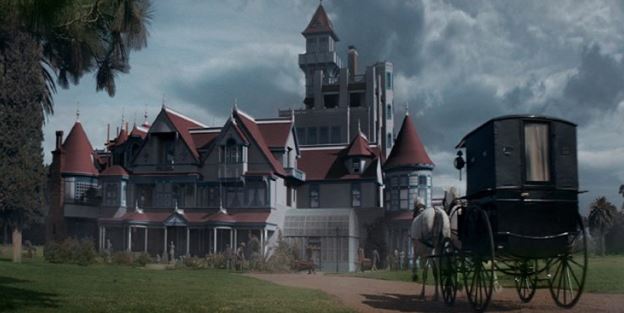
By the 1850s and ‘60s, there had been superficial change in style and more basic change in the way the room was used. Furniture was now usually fashioned in a machine-made revival of eighteenth-century French Rococo. It might be called Louis XIV, XV, XVI, or even Marie Antoinette. What is important, however, is that the furniture was not arranged in informal conversational groupings. It was still upholstered “en suite,” now most likely in damask, but it was no longer arranged against the wall. Instead, a settee and a few chairs were gathered on the rose-bowered carpet so that ladies could socialize whole doing their needlework. The center table under the gaslight was used for reading the paper or book, then cleared for tea with visitors, then cleared again for evening parlour games.

By the 1880s, the parlour had filled up with “art units.” The furniture was not likely to be matched set and was not upholstered to match. The choice and arrangement of objects and furniture in the parlour were primary ways the “lady of the house” could express her artistic sensibilities. By ornamenting and decorating every surface, by arranging easels, lightweight “fairy tables,” urns, pedestals, palms, and fans, the mistress introduced beauty to her family, heightened their aesthetic sensibilities, and fostered a moral and refined atmosphere. The change in the parlour reflected the change in women’s roles. The Greek Revival parlour was a formal room for entertaining. It was spare an uncluttered and not particularly personal. During this period women were restricted by traditional roles but, at least, were part of a cohesive life where their contribution was essential.

The Rococo Revival parlour represents a half-way point in the industrialization and urbanization of America. The furniture is now entirely machine-made. The room has become more “feminized” as the roles of men and women have diverged; the workplace has become the man’s sphere and the home the woman’s. The furniture is arranged in conversational groups as middle-class women are restricted more and more to visiting and handicrafts. By the 1880s, the woman has become a demigoddess of art and morality, and the parlour is her temple. An obsessive and self-conscious decorating and collecting frenzy resulted when women were cut off from participation in the World and made the guardian of the family’s aesthetic and moral well-being.
For further information about tours, including group tours, weddings, school events, birthday party packages, facility rentals, and special events please visit the website: https://winchestermysteryhouse.com/

Please visit the online giftshop, and purchase a gift for friends and relatives as well as a special memento of The Winchester Mystery House. A variety of souvenirs and gifts are available to purchase. https://shopwinchestermysteryhouse.com/

Eternal Life Contradicts the Symbols of Heaven and Hell

The reasonable man adapts himself to the World; the unreasonable one persists in trying to adapt the World to himself. Therefore all progress depends on the unreasonable man. The narcissistic person has not even necessarily taken one’s whole person as the object of one’s narcissism. Often one had cathexed a partial aspect of one’s personality with one’s narcissism; for instance, one’s honor, one’s intelligence, one’s physical prowess, one’s wit, one’s good looks (sometimes even narrowed down to such details as one’s hair or one’s nose). Sometimes one’s narcissism refers to qualities about which normally a person would not be proud, such as one’s capacity to be afraid and thus to foretell danger. “One” becomes identified with a partial aspect of oneself. If we ask who “he” or “she” is, the proper answer would be that “he” or “she” is one’s brain, one’s frame, one’s wealth, one’s private parts, one’s conscience, and so on. All the idols of the various religions represent so many partial aspects of human beings. In the narcissistic person the object of one’s narcissism is any one of these partial qualities which constitute for one one’s self. The one whose self is represented by one’s property can take very well a threat to one’s dignity, but a threat to one’s property is like a threat to one’s life. On the other hand, for the one whose self is represented by one’s intelligence, the fact of having said something unintelligent is so painful that it may result in a mood of serious depression. However, the more intense the narcissism is, the les will the narcissistic person accept the fact of failure on one’s side, or any legitimate criticism from others. #RandolphHarris 1 of 17

One will feel outraged by the insulting behaviour of the other person, or believe that the other person is too insensitive, uneducated, et cetera, to have proper judgment. (I think, in this connection, of a brilliant, yet highly narcissistic individual who, when confronted with the results of a Rorschach test one had taken and which fell short of the ideal picture one had of oneself, and said, “I am sorry for the psychologist who did this test; he must be very paranoid.”) Just as the narcissistic person has made one’s “self-image” the object of one’s narcissistic attachment, one does the same with everything connected with one. One’s ideas, one’s knowledge, one’s house, but also people in one’s “sphere of interest” become objects of one’s narcissistic attachment. As Dr. Freud pointed out, the most frequent example is probably the narcissistic attachment to one’s children. Many parents believe that their own children are the most beautiful, intelligent, et cetera, in comparison with other children. It seems that the younger the children are, the more intense is this narcissistic bias. The parents’ love, and especially the mother’s love for the infant, is to a considerable extent love for the infant as an extension of oneself. Adult love between man and woman also has often a narcissistic quality. The man who is in love with a woman may transfer his narcissism to her once she had become “his.” He admires and worships her for qualities which he has conferred upon here; precisely because of her being part of him, she becomes the bearer of extraordinary qualities. Such a man will often also think that all things he possesses are extraordinarily wonderful, and he will be “in love” with them. #RandolphHarris 2 of 17

Narcissism is a passion the intensity of which in many individuals can only be compared with desire for pleasures of the flesh and the desire to stay alive. In fact, many times it proves to be stronger than either. Even in the average individual in whom it does not reach such intensity, there remains a narcissistic core which appears to be almost indestructible. This being so we might suspect that like pleasures of the flesh and survival, the narcissistic passion also has an important biological function. Once we raise this question the answer comes readily. Unless the individual’s bodily needs, one’s interests, one’s desires, were charged with much energy, how could the individual survive? Biologically, from the standpoint of survival, humans must attribute to themselves an importance far above what one gives to anybody else. If one did not do so, from where would one take the energy and interest to defend oneself against others, to work for one’s subsistence, to fight for one’s survival, to press one’s claims against those of others? Without narcissism one might be a saint—but do saints have a high survival rate? What from a spiritual standpoint would be most desirable—absence of narcissism—would be most dangerous from the mundane standpoint of survival. Speaking teleologically, we can say that nature had to endow man with a great amount of narcissism to enable him to do what is necessary for survival. This is true especially because nature has not endowed man with well-developed instincts such as the animal has. #RandolphHarris 3 of 17

The animal has no “problems” of survival in the sense that its built-in instinctive nature takes care of survival in such a way that the animal does not have to consider or decide whether or not it wants to make an effort. In man the instinctive apparatus has lost most of its efficacy—hence narcissism assumes a very necessary biological function. However, once we recognize that narcissism fulfills an important biological function, we are confronted to others, incapable of giving second place to one’s own needs when this is necessary for co-operation with others? Does not narcissism make the man asocial and, in fact, when it reaches an extreme degree, insane? There can be no doubt that extreme individual narcissism would be a sever obstacle to all social life. However, if this is so, narcissism must be said to be in conflict with the principle of survival, for only if one organizes oneself in groups, can the individual survive; hardly anyone would be able to protect oneself all alone against the dangers of nature, nor would one be able to do many kinds of work which can only be done in groups. We arrive then at the paradoxical result that narcissism is necessary for survival, and at the same time that it is a threat to survival. The solution of this paradox lies in two directions. One is that optimal rather than maximal narcissism serves survival; that is to say, the biologically necessary degree of narcissism is reduced to the degree of narcissism that is compatible with social co-operation. The other lies in the fact that individual narcissism is transformed into group narcissism, that the clan, nation, religion, race, et cetera, become the objects of narcissistic passion instead of the individual. #RandolphHarris 4 of 17

Thus, narcissistic energy is maintained but used in the interests of the survival of the group rather than for the survival of the individual. There is a pathology of narcissism. The most dangerous result of narcissistic attachment is the distortion of rational judgment. The object of narcissistic attachment is thought to be valuable (good, beautiful, wise, et cetera) not on the basis of an objective value-judgment is prejudiced and biased. Usually this prejudice is rationalized in one form or another, and this rationalization may be ore or less deceptive according to the intelligence and sophistication of the person involved. In the drunkard’s narcissism the distortion is usually obvious. What we see is a human who talks in a superficial and banal way, yet with the air and intonation of voicing the most wonderful and interesting words. Subjectively one has a euphoric “on-top-of-the-World” feeling, while in reality one is in a state of self-inflation. All this does not mean to say that the highly narcissistic person’s utterances are necessarily boring. If one is gifted or intelligent one will produce interesting ideas, and if one evaluates them highly, one’s judgment will not be entirely wrong. However, the narcissistic person tends to evaluate one’s own productions highly anyway, and their real quality is not decisive in reaching this evaluation. (In the case of “negative narcissism” the opposite is true. Such a person tends to underevaluate everything that is one’s own, and one’s judgment is equally biased.) If one was aware of the distorted nature of one’s narcissistic judgments, the results would not be so bad. One would—and could—take a humorous attitude toward one’s narcissistic bias. However, this is rare. #RandolphHarris 5 of 17

Usually the person is convinced that there is no bias, and that one’s judgment is objective and realistic. This leads to a severe distortion of one’s capacity to think and to judge, since this capacity is blunted again and again when one deals with oneself and what is one’s. Correspondingly, the narcissistic person’s judgment is also biased against that which is not “he” or “she” or not his/hers. The extraneous (“not me”) World is inferior, dangerous, immoral. The narcissistic person then, ends up with an enormous distortion. One and one’s are overevaluated. Everything outside is underevaluated. The damage to reason and objectivity is obvious. The inflexible, all-pervasive nature of the neurotic trends has a significant implication for therapy. Patients often expect that as soon as they have detected their compulsive needs they will be able to relinquish them. If the hold these trends have over them persists in scarcely diminished intensity, they are then disappointed. It is true that these hopes are not entirely fantastic: when it is recognized, in mild neuroses the neurotic trend may indeed disappear. However, in all more intricate neuroses such expectations are as futile as it would be to expect that a social calamity such as unemployment would cease to exist merely because it is recognized as a problem. If possible to influence those forces which have created the disruptive trend and which account for its persistence, in each instance, social or personal, it is necessary to study. There is a security offered by the neurotic trends. This attribute account for their compulsive character. #RandolphHarris 6 of 17

However, the part played by the feeling of satisfaction that they engender, or the hope for satisfaction, should not be underrated. This feeling or hope is never missing, though its intensity varies. In some neurotic trends, such as the need for perfection or the compulsion toward modesty, the defensive aspect is predominant. In others the satisfaction attained or hoped for through the success of the striving can be so strong that the latter takes on the character of a devouring passion. The neurotic need for dependency, for example, usually entails a vivid expectation of happiness with that person who will take one’ life into one’s hands. A strong tinge of attained or anticipated satisfaction renders a trend less accessible to therapy. Neurotic trends may be classified in various ways. Those entailing strivings for closeness with others might be contrasted with those aiming at aloofness and distance. Those impelling toward one or another kind of dependency might be bundled together in contrast with those stressing independence. Trends toward expansiveness stand against those working toward a constriction of life. Trends toward an accentuation of personal peculiarities could be contrasted with those aiming at adaptations or at an eradication of the individual self, those toward self-aggrandizement with those that entail self-belittling. However, to carry through such classifications would not make the picture clearer, because the categories are overlapping. #RandolphHarris 7 of 17

The neurotic need for affection and approval: Indiscriminate need to please others and to be liked and approved of by others; automatic living up to the expectations of others; automatic living up to the expectations of others; wishes and opinions the only thing that counts; dread of self-assertion; dread of hostility on the part of others or of hostile feeling within self. The neurotic need for a “partner” who will take over one’s life. Center of gravity entirely in the “partner,” who is to fulfill all expectations of life and take responsibility for good and evil, one’s successful manipulation becoming the predominant task; overevaluation of “love” because “love” is supposed to solve all problems; dread of desertion; dread of being alone. The neurotic need to restrict one’s life within narrow borders; necessity to be undemanding and content with little, and to restrict ambitions and wishes for material things; necessity to remain inconspicuous and to take second place; belittling of existing faculties and potentialities, with modesty the supreme value. Urger to save rather than to spend; dread of making any demands; dread of having or asserting expansive wishes. These three trends are often found together, and might be expected, because they all entail an admission of weakness and constitute attempts to arrange life on that basis. They are the opposite of trends toward relying on one’s own strength or taking responsibility upon oneself. The three of them do not, however, constitute a syndrome. The third may exist without the other two playing any noteworthy role. #RandolphHarris 8 of 17

Nationally, there are 56,536 practicing psychiatrists in America. That is 1 psychiatrist for every 5,872 people. The number of psychiatrists needed by our society is due to the maladjustment (ranging, for example, from chronic psychosis at one extreme to marital dissatisfaction at another extreme) is the appropriate and necessary charge of the psychiatrist, and the assumption that these wide boundaries define “mental illness.” Fully qualified psychiatrists are certified by the American Board of Psychiatry and Neurology. They are graduate physicians who, in addition to the required one-year internship following completion of the four years of medical school, have had not less than three years of supervised training (the psychiatric residency) in an approved psychiatric setting, plus two years of appropriate experience in psychiatric practice. With this background of training and experience they become eligible for the board examinations, which are a “means of distinguishing the fully qualified specialist from the would-be specialist of inferior training and inadequate experience. A psychiatrist may be defined somewhat less strictly. Full membership in the American Psychiatric Association (APA) requires that the graduate physician will have had not less than one year of “practice” in a mental hospital and an additional three years of specialization in the practice of psychiatry. Psychoanalysts play a very significant roles as teachers and, to a lesser extent, as researchers. They have generated a truly voluminous literature on the etiology and treatment of neuroses. However, their direct contribution to the care of the mentally ill has been insignificant, and will probably continue to be so. #RandolphHarris 9 of 17

An exhaustive analysis of the sources both of supply and of demand for professional mental healthy personnel ends in the conclusion that we face a future of continuing, drastic shortages of personnel in all aspects of our mental health programs. In addition to psychiatry, two other professions play major roles in meeting the demands for mental health services: clinical psychology and psychiatric social work. For both of these professions, also, demand for personnel considerable exceeds supply. Psychiatrists, psychologists, social workers, and public health scientists who have concerned themselves with the epidemiological aspects of mental illness and with estimation of the public’s need for mental hygiene services have had several goals. At a pure research level, knowledge of the over-all incidence of mental illness in relation to a complex of socioeconomic, ecological, biological, and cultural factors would stimulate hypotheses about and investigation of suggested determinants of the occurrence and typing of psychological breakdown. At an applied research level, such precise knowledge of the extent and distribution of cases would enhance the assignment of therapeutic resources, the application of prophylactic measures, and reasonably controlled evaluation of both. Administratively, it would facilitate estimation of the personnel needs in the mental health sciences and furnish material for educational efforts to engage the interest and resources of the public in support of such needs. #RandolphHarris 10 of 17

Pursuit of these goals would seem to serve public interest. However, knowledge does not immediately and uniformly contribute in an all-or-none manner either positively or negatively to social welfare. Discovery sometimes results in mixed blessings. Witness the history of explosives! Investigators of the epidemiology of mental illness have not characteristically manifested awareness of the functional dependence of their findings upon their formal definition of a case, or upon their operational biases as expressed in the training and orientation of the persons conducting surveys and identifying cases. Incidence of illness will wary as a function of what is formally defined as pathology and what is recognized as requiring a specified therapy. Failure to give due consideration to the semantic and cultural relativities has encouraged a careless disdain for certain case-finding approaches as too artificial and limited (exempli gratia, definitions of “cases” as only those persons in treatment by a psychiatrist). Such disdain is absurd in the context of a search for the “true” number of cases, when such a search implies a limit and the limit involves defining propositions that share that “artificiality” (or better, arbitrariness) that is inherent in all symbolic systems. In addition to a failure to appreciate the significant interpretive problems stemming from the semantic slipperiness of this research phenomenon, these surveyors have not generally acknowledged the fact that their efforts at measurement may very well disturb the material being investigated. Most simply, case-finding tends frequently to result in case-making. #RandolphHarris 11 of 17

We may conjecture that a necessary element in the condition of mental illness is some degree of introspection and an awareness of distress or dysfunction. The existence of a mental health survey or the conceptual climate (value system) in which such a survey is undertaken may provide the crucial stimulus to such introspection and to the resulting awareness of an “acceptable” compliant. Again, there is a way in which illness, or at least some aspect of the total condition of illness, comes first into existence with formal definition of the illness or the making of a diagnosis. In a very real sense, the patient suffering from cancer has a new dimension to one’s illness after the diagnosis which translates one’s distress into a Sickness. In this way, it is possible to conceive of a process whereby a pre-existing psychological and physical state blossoms into illness when a culture instructs in self-examination and defines symptoms. Some case-finding may be case-making. The desirable goals of determining the extent of mental illness are confounded by the fact that the survey process can contribute subtly to psychological distress. The individual who is dissatisfied with one’s work, unhappy in one’s social relationships, lacking in recreational skills, devoid of long-range goals, and without a personal philosophy is not helped by sensitization to the notion that one is “sick.” Particularly is one not helped if such sensitization occurs in a situation in which professional aid is not available to one. #RandolphHarris 12 of 17

Logic is bound to the condition: assume there are identical cases. In fact, for logical thought and inference to operate, this condition must be treated as if having been fulfilled. That is, the will to be logical truth can be exercises only after a fundamental falsification of all events has been assumed. From which it follows that a drive is at work here that has two means at its disposal: first falsification, then implementation of its own point of view—logic does not stem from the will to truth. Not to “know” but to schematize—to impose on chaos as much regularity and form as is required by our practical needs. In the formation of reason, logic, the categories, need is what has been decisive: the need not to “know” but to subsume, to schematize, for the purpose of understanding, of calculation—(Adjustment, devising ways of assimilating, of equating—the same process that every sense impression undergoes—such is the development of reason!) Here, no preexisting “idea” is at work; rather, the practicality that only if we see things crudely and leveled off do they become calculable and manageable for us—Finality in reason is an effect, not a cause: with any other kind of reason, to which there are constant impulses, life miscarries—it becomes unsurveyable—too unequal—the categories are “truths” only in the sense that they are life conditioning for us: Euclidean space is one such conditioning “truth.” (To speak plainly: since no one will maintain that it was necessary that man should exist, reason, as well as Euclidean space, is a mere idiosyncrasy of a particular species of animal, and just one among many others…) #RandolphHarris 13 of 17

The subjective constraint of not being able to contradict here is a biological constraint: the instinct of utility of inferring as we infer is rooted in our bodies, we virtually are this instinct…but what naivete to derive from this an argument that we are in possession of a “truth in itself”!…Not being able to contradiction demonstrates an incapacity, not a “truth.” The relationship between aggressive warfare and freshly discovered “ground” given to deceiving psychological offenders is important. Every new ground discovered as given to them means, when refused, a renewed liberation of the spirit. This produces deepened enmity to the foe as one’s subtle deceptions are increasingly exposed, and consequently more war upon the ultimate negative and one’s minions. It means more deliverance from their power, and less ground in the believer as one realizes that “symptoms,” “effects” and “manifestations” are not abstract things but revelations of active, personal agencies, against whom one must war persistently. Moreover, all growth in this practical knowledge means increased protection against the deceiving enemy. As new ground is revealed, and fresh truth about the powers of darkness and the way of victory over them is understood, the truth delivers from their deceptions, and hence protects the believer—up to the extent of one’s knowledge—from further deception. One finds in experience that as soon as the truth ceases to operate by one’s active use of it, one is open to attack from the watching foe, who ceaselessly plans against one. #RandolphHarris 14 of 17

For example, should the believer who has been undeceived cease to use the truth of the existence of psychopathological offenders, their persistent watching to deceive one again, the need for perpetual resistance and fight against them, the keeping of one’s spirit in purity and strength in cooperation with the Spirit of God, and other truths parallel with these—the knowledge of which one has gained through so much suffering—one will sink down again into passivity, and possibly deeper depths of deception. For the Holy Spirit needs the believer’s use of truth to work with in energizing and strengthening one for conflict and victory, and does not guard one from the enemy apart from one’s cooperation in watching and prayer. Thus far, Eternal Life has been discussed in general terms, for it is the telos of all creation. However, the destiny of the individual person requires special treatment, for one’s relation to Eternal Life is qualified by the fact that one alone is aware of one’s telos and is free to reject it. Estrangement witnesses to man’s turning away from Eternal Life at the same time that one aspires to it. Essentialization, therefore, is dialectical. Thus, the telos of man as an individual is determined by the decision one makes in existence on the basis of the potentialities given to one by destiny. The freedom of each human differs from the freedom of every other human due to the conditioning of their respective concrete destinies. Moreover, although humans can recklessly squander their potentialities, some of them will be fulfilled, just as one will never realize all of them, even though one ambitions total fulfillment. #RandolphHarris 15 of 17

In other words, there are “degrees of essentialization,” a sliding scale of Eternal Life which contradicts the absolute interpretation of symbols such as Heaven and Hell, eternal death and eternal bliss. However, despite the relativity of essentialization, the seriousness of the failure to attain Eternal Life is not diminished. For essentialization is not an automatic restitution, and what is restored can either exceed or fall short of the original created essence. Falling short of total essentialization is a waste of potentialities that brings with it a corresponding measure of despair. On the basis of essentialization, the individual is never in isolation. One always participates in a community, one’s spirit depends upon a physical and biological foundation, and one’s freedom is inextricably implicated with one’s temporal destiny, so that it becomes impossible to separate one’s individual eternal destiny from the destiny of humankind and of the whole Universe. This doctrine of universal essentialization can be applied to that area of the problem of evil where humans are prevented from achieving fulfillment because of premature death or destructive environments. That solution is “vicarious fulfilment.” Vicarious fulfilment is the essence of the least actualized individual, the essences of other individuals and, indirectly, of all beings are present. Whoever condemns anyone to eternal death condemns oneself, because one’s essence and that of the other cannot be absolutely separated. #RandolphHarris 16 of 17

And one who is estranged from one’s own essential being and experiences the despair of total self-rejection must be told that one’s essence participates in the essence of all those who have reached a high degree of fulfilment and through this participation one’s being is eternally affirmed. The essentialization of human beings is the end of history. It has nothing to do with the temporal duration of the World. If history were to end tomorrow, it would till have eternal significance, because the depth of all things become manifest in one being, and the name of that being is man, and you and I are men!…there is one man in whom God found his image undistorted, and who stands for all mankind—the one, who for this reason, is called the Son and the Christ. I pledge allegiance to the flag of the United States of America, and to the Republic, for which it stands, One Nation, Under God, Indivisible, with Liberty and Justice for All! Two things have I asked of Thee, O Lord; deny me them not before I die:–please remove far from me falsehood and lies; please give me neither poverty nor riches, but please feed me with mine allotted bread, lest I become arrogant and defiant, saying, “Who is the Lord?” Or t least I become poor and be tempted to steal, thus profaning the name of my God, Better is a little with righteousness, than great wealth with injustice. Better is the poor that walks in one’s integrity than the rich that is perverse in one’s way. #RandolphHarris 17 of 17


In the Victorian Era, parlour accoutrements were often a piano or organ (for those not wealthy enough to have a separate music room), other tables, marble-topped if the pocketbook allowed, for displaying works of art, photo albums, and travel mementos. Until the Arts and Crafts Movement at the end of the century contracted the excesses of Victorian décor with the suggestion that austerity would be the new theme, fabric was everywhere, outside the usual bounds of window covering and upholstery. “Tidies,” small pieces of lace or embroidered fabric, covered chair backs to prevent soil from hair-oil staining the material. Mantles, tables, and shelves, in addition to windows, were covered by lambrequins.

Lambrequins, a fancy word from the French meaning decorative drapery, were made of embroidered fabric, chintz, or of fringed damask. A lambrequin atop window was used to hide the workings of the draper, much like a valance is today. Lace was also heavily used on windows to soften the glare and to provide a pleasing contrast to the heavier velvet or damask curtains. Curtains called portieres (again, the French influence), were also used to cover doors, as ornamentation when draped around the doorway, and to eliminate drafts when hung loose to cover the closed door or entranceway. Sometimes more than a dozen patterns, between wallpaper, carpet, lambrequins, and curtains, were combined in the Victorian parlour, helping to create the notion we have today of Victorian clutter.

When the parlor contained an organ or piano depended on the family’s religious and social aspirations. A parlour organ, as an accompaniment to hymn singing, enabled the family to incorporate more religious experience into the home life. The piano, on the other hand, was more historically linked to European culture, and therefore more of a status symbol. By mid-century pianos began to be mass-produced and were affordable by the middle class. In larger homes, a separate room was devoted to music and guests were invited specifically for the purpose of enjoying an evening of musical entertainment. Piano or organ playing was an ability encouraged in women especially, and listening to a performance on the parlour piano was as pervasive than as watching television is now. The Winchester Mystery House has two ballrooms. The Grand Ball Room tends to be a favorite of many guests.

For further information about tours, including group tours, weddings, school events, birthday party packages, facility rentals, and special events please visit the website: https://winchestermysteryhouse.com/

Please visit the online giftshop, and purchase a gift for friends and relatives as well as a special memento of The Winchester Mystery House. A variety of souvenirs and gifts are available to purchase. https://shopwinchestermysteryhouse.com/

Truth Crushed to Earth, Shall Rise Again!

No passion so effectually robs the mind of all its powers of acting and reasoning as fear. The narcissistic orientation is one in which one experiences as real only that which exist within oneself, while the phenomena in the outside World have no reality in themselves, but are experienced only from the viewpoint of their being useful or dangerous to one. Those who love have, so to speak, pawned a part of their narcissism. Let us now take another and less common example of narcissism. A man calls the doctor’s office and wants an appointment. The doctor says that he cannot make an appointment for that same week, and suggests a date for the following. The patient insists on his request for an early appointment, and as an explanation does not say, as one might expect, why there is such urgency, but mentions the fact that he lives only five minutes away from the doctor’s office. When the doctor answers that his own time problem is not solved by the fact that it takes so little time for the patient to come to his office, the latter shows no understanding; he continues to insist that he has given a good enough reason for the doctor to give him an earlier appointment. If the doctor is a psychiatrist, he or she will have already have made a significant diagnostic observation, namely, that he is dealing here with an extremely narcissistic person, that is to say with a very sick person. The reasons are not difficult to see. The patient is not able to see the doctor’s situation as something apart from his own. All that is in his, the patient’s, field of vision is his own wish to see the doctor, and the fact that for him it takes little time to come. #RandolphHarris 1 of 20

The doctor as a separate person with his own schedule and needs does not exist. The patient’s logic is that if it is easy for him to come, then it is easy for the doctor to see him. The diagnostic observation about the patient would be somewhat different if, after the doctor’s first explanation, the patient were able to answer, “Oh, doctor, of course, I see; I am sorry, that really was kind of a stupid thing for me to say.” In this case we would also be dealing with a narcissistic person who at first does not differentiate between his own and the doctor’s situation, but his narcissism is not as intensive and rigid as that of the first patient. He is able to see the reality of the situation when his attention is called to it, and he responds accordingly. This second patient would probably be embarrassed about his blunder once he saw it; the first one would not be embarrassed at all—he would only feel critical of the doctor who was too unenlightened to see such a simple point. A similar phenomenon can easily be observed in a narcissistic man who falls in love with a woman who does not respond. The narcissistic person will be prone not to believe that the women does not love him. He will reason: “It is impossible that she does not love me when I love her so much,” or “If she did not love me, too, I could not love her so much.” He then proceeds to rationalize the woman’s lack of response by supposition such as these: “She loves me unconsciously; she is afraid of the intensity of her own love; she wants to test me, to torture me”—and whatnot. The essential point here, as in the previous case, is that the narcissistic person cannot perceive the reality within another person as distinct from his own love. #RandolphHarris 2 of 20

Let us look at two phenomena which are apparently extremely different, and yet both of which are narcissistic. A woman spends many different hours every day before the mirror to fix her hair and face. It is not simply that she is vain. She is obsessed with her body and her beauty, and her body is the only important reality she knows. She comes perhaps nearest to the Greek legend which speaks of Narcissus, a beautiful lad who rejected the love of the nymph Echo, who died of a broke heart. Nemesis punished him by making him fall in love with the reflection of his own image in the water of the lake; in self-admiration he fell into the lake and died. The Greek legend indicates clearly that his kind of “self-love” is a curse, and that in its extreme form it ends in self-destruction. (True love for self is not different from love for others; “self-love” in the sense of egoistic, narcissistic love is to be found in those who can love neither others nor themselves.) Another woman (and it could well be the same one some years later) suffers from hypochondriasis. She is also constantly preoccupied with her body although not it the sense of making it beautiful, but in fearing illness. Why the positive, or the negative, image is chosen has, of course, its reasons; however, we need not deal with these here. What matters is that behind both phenomena lies the same narcissistic preoccupation with oneself, with little interest left for the outside World. #RandolphHarris 3 of 20

Moral hypochondriasis is not essentially different. Here the person is not afraid of being sick and of dying, but of being guilty. Such a person is constantly preoccupied with one’s guilt about things one has done wrong, with sins one has committed, et cetera. While to the outsider—and to oneself—one may appear to be particularly conscientious, moral, and even concern with others, the fact is that such a person is concerned only with oneself, with one’s conscious, with what others might say about one, et cetera. The narcissism underlying physical or moral hypochondriasis is the same as the narcissism of the vain person, except that it is less apparent, as such, to the untrained eye. One finds this kind of narcissism, which has been classified by K. Abraham as negative narcissism, particularly in states of melancholia, characterized by feelings of inadequacy, unreality, and self-accusation. In still less drastic forms one can see the narcissistic orientation in daily life. A well-known joke expressed it nicely. A writer meets a friend and talks to him a long time about himself; he then says: “I have talked so long about myself. Let us now talk about you. How did you like my latest book?” This man is typical of many who are preoccupied with themselves and who pay little attention to others, except as echoes of themselves. Often even if they act helpfully and kind, they do so because they like to see themselves in this role; their energy is taken up with admiring themselves rather than with realizing things from the point of view of the person they are helping. #RandolphHarris 4 of 20

How does one recognize the narcissistic person? There is one type which is easily recognized. That is the kind of person who shows all the signs of self-satisfaction; one can see that when one says some trivial words one feel as if one has said something of great importance. One usually does not listen to what others says, not is one really interested. (If one is clever, one will try to hide this fact by asking questions and making it a point to seem interested.) One can also recognize the narcissistic person by one’s sensitivity to any kind of criticism. This sensitivity can be expressed by denying the validity of any criticism, or by reacting with anger or depression. In many instance the narcissistic orientation may be hidden behind an attitude of modesty and humility; in fact, it is not rare for a person’s narcissistic orientation to take one’s humility as the object of one’s self-admiration. Whatever the different manifestations of narcissism are, a lack of genuine interest in the outside World is common to all forms of narcissism. Sometimes it is not easy to distinguish between the vain narcissistic person and one with a low self-evaluation; the latter often is in need of praise and admiration, not because he is not interested in anyone else, but because of one’s self-doubts and low self-evaluation. #RandolphHarris 5 of 20

There is another important distinction which is also not always easy to make: that between narcissism and egotism. Intense narcissism implies an inability to experience reality in its fullness; intense egotism implies to have little concern, love, or sympathy for others but it does not necessarily imply the overevaluation of one’s subjective process. In other words, the extreme egotist is not necessarily extremely narcissistic; selfishness is not necessarily blindness to objective reality. Sometimes the narcissistic person can also be recognized by one’s facial expression. Often we find a kind of glow or smile, which gives the impression of smugness to some, of beatific, trusting, childlikeness to others. Often the narcissism, especially in its most extreme forms, manifests itself in a peculiar glitter in the eyes taken by some as a symptom of half-saintliness, by others of half-craziness. Many very narcissistic persons talk incessantly-often at a meal, where they forget to eat and thus make everyone else wait. Company or food are less important than their “ego.” If given circumstances have made a child compliant, defiant, diffident, must one necessarily remain so? Although one will not inevitably retain one’s defensive techniques there is a grave danger that one will. They can be eradicated by an early radical change of environment, or they can be modified, even after a considerable lapse of time, through any number of fortuitous happenings, such as finding an understanding teacher, a friend, lover, mate, an engrossing task suited to one’s personality and abilities. #RandolphHarris 6 of 20

However, in the absence of strong counteracting factors there is considerable danger that the trends acquired not only will persist but in time will obtain a stronger hold on the personality. To understand this persistence, one must fully realize that these trends are more than a mere strategy evolved as an effective defense against a difficult parent. They are, in view of all the factors developing within, the only possible way for the child to deal with life in general. To run away from attacks is the hare’s strategy in the face of dangers, and it is the only strategy one has; one could not possibly decide to fight instead, because one simply has not the means to do so. Similarly, a child growing up under difficult conditions develops a set of attitudes toward life which are fundamentally neurotic trends, and these one cannot change by free will but has to adhere to by necessity, The analogy with the hare is not entirely valid, however, because the hare, by constitution, has no other ways of coping with danger while the human being, if not mentally or physically defective by nature, has other potentialities. One’s necessity to cling to one’s special attitudes lies not in constitutional limitations but in the fact that the sum total of one’s fears, inhibitions, vulnerabilities, false goals, and illusory beliefs about the World confines one to certain ways and excludes others; in other words, it makes one rigid and does not permit basic alterations. One way of illustrating this point is to compare how a child and a mature adult may cope with persons presenting comparable difficulties. #RandolphHarris 7 of 20

It must be born in mind that the following comparison has merely an illustrative value and is not intended to deal with all the factors involved in the two situations. The child, Clare—and here I am thinking of an actual patient to whose analysis I shall return later on—has a self-righteous mother who expects the child’s admiration and exclusive devotion. The adult is an employee, psychologically well integrated, who has a boss with qualities similar to those of the mother. If what they regard as due homage is not paid to them, or if they sense a critical attitude, both mother and boss are tend to become hostile for they are complacently self-admiring, are arbitrary, and favour others unfairly. If one has stringent reasons for holding on to one’s job, under these conditions the employee will more or les consciously evolve a technique for handling the boss. One will probably refrain from expressing criticism; make it a point to appreciate explicitly whatever good qualities there are; withhold praise of the boss’s competitors; agree with the boss’s plans, regardless of one’s own opinions; let suggestions of one’s own appear as if the boss had initiated them. And what influence will this strategy have on one’s personality? One will resent the discrimination and dislike the deceit it necessitates. However, since one is a self-respecting person one will feel that the situation reflects on the boss rather than on oneself, and the behaviour one adopts will not make one a compliant, bootlicking person. One’s strategy will exist only for that particular boss. If a change should take place, one would behave differently toward the next employer. #RandolphHarris 8 of 20

For an understanding of neurotic trends much depends on recognizing their difference from such ad hoc strategy. Otherwise one could not appreciate their force and pervasiveness and would succumb to a mistake similar to Dr. Alder’s oversimplification and rationality. As a result one would also take too lightly the therapeutic work to be done. Clare’s situation is comparable to that of the employee, for the mother and the boss are similar in character, but for Clare it is worth while to go into more detail. She was an unwanted child. The marriage was unhappy. After having one child, a boy, the mother did not want any more children. Clare was born after several unsuccessful attempts at an abortion. She was not badly treated or neglected in any coarse sense: she was sent to schools as good as those the brother attended, she received as many gifts as he did, she had music lessons with the same teacher, and in all material ways was treated as well. However, in less tangible matters she received less than the brother, less tenderness, less interest in school marks and in the thousand little daily experiences of a child, less concern when she was ill, less solicitude to have her around, less willingness to treat her as a confidante, less admiration for looks and accomplishments. There was a strong, though for a child intangible, community between the mother and brother from which she was excluded. The father was no help. He was absent most of the time, being a country doctor. Clare made some pathetic attempts to get close to him but he was not interested in either of the children. His affection was entirely focused on the mother in a kind of helpless admiration. #RandolphHarris 9 of 20

Finally, he was no he because he was openly despised by the mother, who was sophisticated and attractive and beyond doubt the dominating spirit in the family. The undisguised hatred and contempt the mother felt for the father, including open death wishes against him, contributed much to Clare’s feeling that it was much safer to be on the powerful side. As a consequence of this situation Clare never had a good chance to develop self-confidence. There was not enough of open injustice to provoke sustained rebellion, but she became discontented and cross and complaining. As a result she was teased for always feeling herself a martyr. It never remotely occurred to either mother or brother that she might be right in feeling unfairly treated. They took it for granted that her attitude was a sign of an ugly disposition. And Clare, never having felt secure, easily yielded to the majority opinion about herself and began to feel that everything was her fault. Compared with the mother, whom everyone admired for her beauty and charm, and with the brother, who was cheerful and intelligent, she was an ugly duckling. She became deeply convinced that she was unlikable. This shift from essentially true and warranted accusations of others to essentially untrue and unwarranted self-accusations had far-reaching consequences. #RandolphHarris 10 of 20

It meant also that she repressed all grievances against the mother. If everything was her own fault, the grounds for bearing a grudge against the mother were pulled away from under her. From such repression of hostility, it was merely a short step to join the group of those who admired the mother. In this further yielding to majority opinion she had a strong incentive in the mother’s antagonism toward everything in short of complete admiration: it was much safer to find shortcomings within herself than in the mother. If she, too, admired the mother she need no longer feel isolated and excluded but could hope to receive some affection, or at least be accepted. The hope for affection did not materialize, but she obtained instead a gift of doubtful value. The mother, like all those who thrive on the admiration of others, was generous in giving admiration in turn to those who adored her. Clare was no longer the disregarded ugly duckling, but became the wonderful daughter of a wonderful mother. Thus, in place of a badly shattered self-confidence, she built up the spurious pride that is founded on outside admiration. Through this shift from true rebellion to untrue admiration Clare lost the feeble vestiges of self-confidence she had. To use a somewhat vague term, she lost herself. By admiring what in reality she resented, she became alienated from her own feelings. She no longer knew what she herself liked or wished or feared or resented. She lost all capacity to assert her wishes for love, or even any wishes. Despite a superficial pride her conviction of being unlovable was actually deepened. #RandolphHarris 11 of 20

Hence later on, when one or another person was fond of her, she could not take the affection at its face value but discarded it in various ways. Sometimes she would think that such a person misjudged her for something she was not; sometimes she would attribute the affection to gratitude for having been useful or to expectations of her future usefulness. This distrust deeply disturbed every human relationship she entered into. She lost, too, her capacity for critical judgment, acting on the unconscious maxim that it is safer to admire others than to be critical. This attitude shackled her intelligence, which was actually of a high order, and greatly contributed to her feeling unwise. All of these factors three neurotic trends developed. One was a compulsive modesty as to her own wishes and demands. This entailed a compulsive tendency to put herself into second place, to think less of herself than of others, to think that others were right and she was wrong. However, even in this restricted scope she could not feel safe unless there was someone on whom she could depend, someone who would protect and defend her, advise her, stimulate her, approve of her, be responsible for her, give her everything she needed. She needed all this because she had lost the capacity to take her life into her own hands. Thus she developed the need for a “partner”—friend, lover, husband—on whom she could depend. She would subordinate herself to him as she had toward the mother. However, at the same time, by his undivided devotion to her, he would restore her crushed dignity. A third neurotic trend—a compulsive need to excel others and to triumph over them—likewise aimed at restoration of self-regard, but in addition absorbed all the vindictiveness accumulated through hurts and humiliations. #RandolphHarris 12 of 20

In comparison, what this illustrates: both the employee and the child develop strategies for dealing with the situation; for both the technique is to put the self into the background and adopt an admiring attitude toward the one in authority. Thus their reactions may appear roughly comparable, but in reality they are entirely different. The employee does not lose his self-regard, does not relinquish his critical judgment, does not repress his resentment. The child, however, loses her self-regard, represses her hostility, abandons her critical faculties and becomes self-effacing. However, the adult merely adjusts his behaviour while the child changes her personality. The choice of the will gives; the choice of the will withdraws or nullifies the previous giving. The value and purpose of refusing stands the same toward God and toward the ultimate negative. The one gives to God, or refuses to give one takes from God, or refuses to take. One gives to evil psychopathological offenders—unknowingly or not—and one refuses to give. One finds one has given to them unwittingly, and one nullifies it be an act of withdrawal and refusal. First images—to explain how images arise in the mind. Then words, applied to images. Finally concepts, possible only when there are words—subsuming of many images under something not intuitive but audible (a word). The small bit of emotion that arises with the “word,” hence with the intuition of similar images for which there is a single word—this weak emotion is the common element, the basis of the concept. The basis fact is that weak sensations are regarded as equal, sensed as the same. #RandolphHarris 13 of 20

Hence the confusion of two closely contiguous sensations in the ascertaining of those sensations—but who is doing the ascertaining? Believing is the primal beginning even in every sense impression; a kind of yea-saying the first intellectual activity! A “holding-true” in the beginning! Thus to explain how a “holding-true” arose! What sort of sensation lies behind “true”? The valuation “I believe that such and such is so” as the essence of “truth.” Conditions of preservation and growth are expressed in valuations. All our cognitive organs and senses are developed only with regard to conditions of preservation and growth. Trust in reason and its categories, in dialectic, hence the valuation of logic, proves only their usefulness for life, proved by experience—not their “truth.” That an abundance of belief must be present; that judgments may be made; that doubt with regard to all essential values be lacking—that is the presupposition of every living thing and its life. Hence that something must be held to be true, not that something is true. “The true and the apparent World”—I have traced this antithesis back to relations of values. We have projected our conditions of preservation as predicates of being generally. We must be firm in our beliefs in order to thrive; consequently, we have made the “true” World one not of change and becoming but of being. One of the participants in the conference referred to earlier resorted to some imaginative arithmetic to demonstrate the “artificial limit” imposed by the in-treatment definition of mental illness. Assume there are approximately 7,000 psychiatrists in the country; of these, approximately one half are “committed” to institutions for long-term custodial care of the severely disturbed; if the remaining 3,500 psychiatrists were in full-time, private practice for 40 hours per week, each could provide a total of 2,080 hours of patient care per year; the 3,500 could “treat” a total of 7,280,000 patients per year, with the completely non-hour of care; rejecting this condition, the upper limit on the number of mentally ill defined by the “treatment criterion” is something under 7,000,000 or approximately 4 percent of the total population. #RandolphHarris 14 of 20

The author of this excursion properly labels this estimate as “artificial,” but he also implies that it is artificially low by calling the figure a limit rather than an estimate. Also by implication, a satisfactory criterion would be one which permitted a census greater than 7,000,000. How much greater. Suppose we ask how many mentally ill persons there are in a given year, defining such persons as all those who acknowledge that they would see and use the services of a psychiatrist if such services were available. Operationally, this would involve surveying all adults and asking each of them with respect to themselves and to all children for whom they were responsible, “Could you and would you utilize the services of a psychiatrist if one were available to you?” It might seem that this approach would satisfy the problem of minimizing the number of “false negatives,” of persons actually in need of a psychiatrist but who would not be detected by another approach; it would seem that this approach should come closet to satisfying those who wish an accurate estimate of the “absolute” number of psychiatric cases. But—the number of cases which would be identified by this “need” approach (in contrast to a “facility” approach) to enumeration would be determined heavily by what the interviewees understood to be the nature, function, and services of a psychiatrist, or what they understood to be the character of “needs” (symptoms or complaints) which one brings to such a specialist. Immediately it is clear that this approach to a non-artificially limiting case-finding criterion runs smack against the problem of definition, the philosophy of diagnosis, and the principle of indeterminacy (id est, the fact, first recognized in the physical sciences, that the procedures of measurement may directly influence the behaviour of the phenomena under study). #RandolphHarris 15 of 20

This approached does not escape from limits, or for that matter from artificiality. It is only that the degree of artificiality may be less, which is to say that we value our more inclusive definition of mental illness as being relatively more useful or appropriate to our purpose than a more exclusive definition. Let us accept a diagnostic philosophy that values primarily the minimization of “false negative” cases and accepts the risks (costs) involved in relatively high “false positive” rates. Recognizing that the number of cases is relative to our definition of mental illness, suppose we define a case as a person who acknowledges need for and willingness to accept psychiatric help. Now, further, assume that we identify the psychiatrist as a person who acknowledged need for and willingness to accept psychiatric help. Now, further, assumes that we identify the psychiatrist as a person with special training and experience in the treatment of emotional difficulties. Suppose that we further identify this physician as a person who will listen sympathetically or objectively to one’s troubles, a person who will maintain the strictest confidence regarding anything revealed to one, and finally a person who commands processes of such a nature that those who leave one’s office generally feel better than when they entered. The level of this identification is about what would be (and is) offered in informational programs concerned with the psychiatrist as psychotherapist. It is a level appropriate to informing the public prior to an inclusive search for cases. Finally, it is probably parallel to the stereotype of the psychiatrist (psychotherapist) held by the average semi-sophisticated layman who has not had therapy. #RandolphHarris 16 of 20

If we were to conduct our case-finding survey within this context, how large a number of maladjusted persons would we uncover? Put another way—is there any person who does not at least once in the course of a year experience a struggle with conflicts or feelings of such a nature that one feels one could be helped by talking out one’s perplexity with an understanding, confidence-maintaining, and wise friend? Now, if a person were under the influence of social taboos that prohibited such talk from the conversation of friendship, and if one were under the further influence of a social climate the encouraged members to speak of their conflicts only to specialist (or more precisely, to expect real help only from experts)—would not such a person, would not all persons under such circumstances, response with a vibrant “Yes!” to the query, “Could a psychiatrist help you?” We have by switching the focus of our definition of mental illness simply altered the nature of the artificiality of our count and the social implications of the limit at which we arrive. Instead of a fixed number of therapists, we have a fixed number of patients equal to the total population. Let us apply a little arithmetic to our new approach Assume a population of 190,000,000 persons (each an actual or potential patient). Assume that our psychiatrist works a 40-hour week and consequently offers 2,080 hours of patient care per year. How many psychiatrists will we need for our population? We would need 90,000! This roughly one psychiatrist for every 2,000 of the general population. #RandolphHarris 17 of 20

Several highly questionable and clearly indefensible assumptions are involved in this statistic: That all cases require an equal amount of psychiatric time, viz, one hour. That the same ratio of cases per psychiatrist which is effective in treatment or prevention of early developing or mild cases is adequate to the treatment or management of chronic, severe cases. That our psychiatrists take no vacation and further, that they need each other, that is, are included as potential patients in the total population! Absurd assumptions, asinine arithmetic, cockeyed conclusions—but only in matter of degree This illustration of one of the extreme of cases finding (case making?) simply points up the semantic seductions which peril the mental health surveyor who must steer a course that avoids both the “false positive” shoals and the becalming “false negative” sea. Part of the difficulty lies in a cultural bias that has led epidemiologist to contaminate screening criteria of “positive” mental health or absence of mental illness with questions of availability of or need for psychiatrists. There is generally unrecognized non sequitur in this. If a population is screened in terms of concepts of healthy personality and positive mental hygiene so that the mildest and earliest stages of maladjustment are detected, it is doubtful whether such cases should be blanketed under the category of “illness,” and it is even more doubtful whether such maladjustment is ipso facto of psychiatric dimensions, requiring treatment by psychiatrist. If our diagnostic philosophy and definitional net is structured to catch persons in whom the basis and possibly sole symptoms is a claim of unhappiness—a personal, subjective distress which may have varied, complex, and hidden origins, is it quite reasonable to classify such unhappiness as illness and, thus, to assign to it those extensive etiologic, pathologic, and therapeutic connotations identified with physical medicine? #RandolphHarris 18 of 20

If we do call unhappiness an illness, does it accordingly, without great forcing of our concepts of sickness and health and of psychology and biology, fall into the realm of medicine and specifically into the field of psychiatry? What is unique to the training and experience of the physician-specialist in psychiatry that makes one pre-eminently prepared to minister to the disenchanted and the doubtful? The exclusion of the negative does not suffice to explain the elevation of the temporal to the eternal. If Eternal Life is eternal memory, what is remembered? The core of the problem is how the positive in the Universe is the object of eternal memory? Through “essentialization,” which is a return to what a thing essentially is. It does not mean a simple return to essence or potentiality by sloughing off everything accrued in existence, for on this supposition history produces nothing new, and life is only a futile process of falling away from and returning to a static essence. The term “essentialization” can also mean that the new which has been actualized in time and space adds something to essential being, uniting it with the positive which is created within existence, thus producing the ultimately new, the “New Being,” not fragmentarily as in temporal life, but wholly as a contribution to the Kingdom of God in its fulfilment. #RandolphHarris 19 of 20

The return to essence is thus not a simple return after an interlude of meaningless existence but a return that is a fulfilment through the realization of potentialities within historical existence. Essentialization is the return of a being to an enriched essence, to New Being. Consequently, participation in the eternal life depends on a creative synthesis of a being’s essential nature with what it has made of it in its temporal existence. Essentialization applies to every being of the Universe; all things participate in Eternal Life according to their enriched essence. At nightfall and at dawn, search well into the nature of your dealings. Let your dealings bring no blush upon the cheek; commit no sin in the expectation of repentance. At first sin is an indifferent stranger; later a welcome guest; finally the master. Better to suffer the derision of man than to be a sinner in the eyes of God. I pledge allegiance to the flag of the United States of America, and to the republic for which it stands, one nation, under God, indivisible with liberty and justice for all. O God, Thou knowest my folly; and my trespasses are not hidden from Thee; for I do declare my iniquity; I am full of concern because of my sin. If Thous shouldst mark iniquities, O Lord, who would be without sin in Thy sight? Create in me a clean heart, O God, and renew a steadfast spirit within me. Turn me unto Thee, O Lord, that I may forsake my sins; please make me mindful of Thy presence that I may mend my ways. Please teach me to forgive my neighbour the injury he and/or she did unto me, so that when I pray, my sins will be forgiven. And may the community come together and donate to the Sacramento Fire Depart for they are not receiving all of their resources. And let us return unto Thee, O Lord. That Thou mayest have compassion upon us, and in Thy lovingkindness Thou wilt graciously pardon. #RandolphHarris 20 of 20

CRESLEIGH HAVENWOOD
Lincoln, CA | from the high $600s
Now Selling!

791 Havenwood Drive is a Residence One, the smallest of the floor plans offered at Cresleigh Havenwood. But at 2,293 square feet, there is plenty of space in this single story home. With four bedrooms, two bathrooms, great room, and dining room, there is enough room for all members of the family to have their corner of the house. The two car garage boasts ample storage and a covered patio comes included in the home. The den can easily be transformed into a fourth bedroom if needed. https://cresleigh.com/havenwood/move-in-ready-homesite-57/

This home is fully finished, turn key and features stunning finishes including:
-durable LVP flooring throughout all livings areas
-designer selected tile kitchen backsplash with quartz counters
-sophisticated painted shaker cabinetry
-100% OWNED solar panel system

Best of all, each Cresleigh home comes fully equipped with an All Ready connected home! This smart home package comes included with your home and features great tools including: video door bell and digital deadbolt for the front door, connect home hub so you can set scenes and routines to make life just a little easier. Two smart switches and USB outlets are also included, plus we’ll gift you a Google Home Hub and Google Home Mini!

 Randolph Harris II International Institute