
Home » Posts tagged 'Mental health' (Page 8)
Tag Archives: Mental health

You are Not the Problem!

Life on Earth did not happen by mistake. You are here as part of God’s plan of happiness for all of us. Little by little, in tranquil moments or in deliberate meditation, there will come to one the revelation of errors in conduct and thought which, until then, one did not know were errors. Values refer to the tendency of any living beings to show preference in their actions, for one kind of object or objective rather than another. This preferential behaviour is called “operative values.” It need not involve any cognitive or conceptual thinking. It is simply the value of choice which is indicated behaviourally when the organism select one object, rejects another. When the earthworm, placed in a simple Y maze, chooses the smooth arm of the Y, instead of the path which is paved with sandpaper, he is indicating an operative value. A second use of the term might be called “conceived values.” This is the preference of the individual for a symbolized object. Usually in such a preference there is anticipation of foresight of the outcome of behaviour directed toward such a symbolized object. Usually in such a preference there is anticipation or foresight of the outcome of behaviour directed toward such a symbolized object. A choice such as “Honesty is the best policy” is such a conceived value. A final use of the term might be called “objective value.” People use the word in this way when they wish to speak of what is objectively preferable, whether or not it is in fact sensed or conceived of as desirable. #RandolphHarris 1 of 18

The living human being has, at the outset, a clear approach to values. He prefers some things and experiences, and rejects others. We can infer from studying his behaviour that he prefers those experiences which maintain, enhance, or actualize his organism, and rejects those which do not serve this end. What him for a bit: Hunger is negatively valued. His expression of this often comes through loud and clear. Food is positively valued. However, when he is satisfied, food is negatively valued, and the same milk he responded to so eagerly is now spit out, or the breast which seemed so satisfying to the infant is now rejected as he turns his head away from the nipple with an amusing facial expression of disgust and revulsion. He values security, and holding and caressing which seem to communicate security. He values new experience for its own sake, and we observe this in his obvious pleasure in discovering his toes, in his searching movements, in his endless curiosity. He shows a clear negative valuing of pain, bitter tastes, sudden loud sounds. All of this is commonplace, but let us look at these facts in terms of what they tell us about the infant’s approach to values. It is first of all a flexible, changing, valuing process, not a fixed system. He likes food and dislikes the same food. He values security and rest, and rejects it for new experience. What is going on seems best described as an organismic valuing process, in which each element, each moment of what he is experiencing is somehow weighed, and selected or rejected, depending on whether, at this moment, it tends to actualize the organism or not. #RandolphHarris 2 of 18

This complicated weighing of experience is clearly an organismic, not a conscious or symbolic function. These are operative, not conceived values. However, this process can none the less deal with complex value problems. I would remind you of the experiment in which young infants had spread in front of them a score of more of dishes of natural (that is, unflavoured) foods. Over a period of time they clearly tended to value the foods which enhanced their own survival, growth, and development. If for a time a child gorged himself on starches, this would seen be balanced by a protein “binge.” If at times he chose a diet deficient in some vitamin, he would later seek out foods rich in this very vitamin. He was utilizing the wisdom of the body in his value choices, or perhaps more accurately, the physiological wisdom of his body guided his behavioural movements, resulting in what we might think of as objectively sound value choices. Another aspect of the infant’s approach to value is that the source of locus of the evaluating process is clearly within himself. Unlike many of us, he knows what he likes and dislikes, and the origin of these value choices lies strictly within himself. He is the center of the valuing process, the evidence for his choices being supplied by his own senses. He is not at this point influenced by what his parents think he should prefer, or by what the church says, or by the opinion of the latest “expert” in the field, or by the persuasive talents of an advertising firm. It is from within his own experiencing that his organism is saying in non-verbal terms, “This is good for me.” “That is bad for me.” “I like this.” “I strongly dislike that.” He would laugh at our concern over values, he could understand it. How could anyone fail to know what he liked and disliked, what was good for him an what was not? #RandolphHarris 3 of 18

What happens to this highly efficient, soundly based valuing process? By what sequence of events do we exchange for the more rigid, uncertain, inefficient approach to value which characterizes most of us as adults? The infant needs love, wants it, tends to behave in ways which will bring repetition of this wanted experience. By this brings complications. He pulls baby sister’s hair, and finds it satisfying to hear her wails and protests. He then hears that he is a “naughty, bad boy,” and this may be reinforced by a time out. He is cut off from affection. As this experience is repeated, and many, many others like it, he gradually learns that what “feels good” is often “bad” in the eyes of others. Then the next step occurs, in which he comes to take the same attitude toward himself which the others have taken. Now, as he pulls his sister’s hair, he solemnly intones, “Bad, bad boy.” He is introjecting the value judgment of another, taking it has his own. He has deserted the wisdom of his organism, giving up the locus of evaluation and is trying to behave in terms of values set by another, in order to hold love. Or take another example at an older level. A boy senses, though perhaps not consciously, that he is more loved and prized by his parents when he thinks of being a doctor than when he thinks of being an artist. Gradually he introjects the values attached to being a doctor. He comes to want, above all, to be a doctor. Then in college he is baffled by the fact that he repeatedly fails in chemistry, which is absolutely necessary to becoming a physician, in spite of the fact that the guidance counselor assure him he has the ability to pass the course. Only in counseling interviews does he begin to realize how completely he has lost touch with his organismic reactions, how out of touch he is with his own valuing process. #RandolphHarris 4 of 18

Let me give another instance from a class of mine, a group of prospective teachers. I asked them at the beginning of the course, “Please list for me the two or three values which you would most wish to pass on to the children with whom you will work.” They turned in many value goals, but I was inspired by some of the items. Several listed such things as “to speak correctly,” “to use good English, not to use work like ain’t.” Others mentioned neatness—“to do things according to instructions”; one explained her hope that “When I tell them to write their own names in the upper right-hand corner with the date under it, I want them to do it that way, not in some other form.” I confess I was somewhat appalled that for some of these girls the most important values to be passed on to pupils were to avoid bad grammar, or meticulously to follow teacher’s instructions. I felt baffled. Certainly these behaviours had not been experienced as the most satisfying and meaningful element in their own lives. The listings of such values could only be accounted for by the fact that these behaviours had gained approval—and thus had been introjected as deeply important. Perhaps these several illustrations will indicate that in an attempt to gain or hold love, approval, esteem, the individual relinquishes the locus of evaluation which was his in infancy, and places it in others. He learns to have a basic distrust for his own experiencing as a guide to his behaviour. He learns from others a large number of conceived values, and adopts them as his own, even though they may be widely discrepant from what he is experiencing. Because these concepts are not based on his own valuing, they tend to be fixed and rigid, rather than fluid and changing. #RandolphHarris 5 of 18

To analyze oneself occasionally comparatively easy and sometimes productive of immediate results. Essentially it is what every sincere person does when he tries to account for real motivations behind the way he feels or acts. If anything, without knowing much about psychoanalysis, a man who has fallen in love with a particularly attractive or wealth girl could raise with himself the question whether vanity or money plays a part in his feeling. A man who has ignored his better judgement and given in to his wife or his colleagues in an argument could question in his own mind whether he yielded because he was convinced of the comparative insignificance of the subject at stake or because he was afraid of an ensuing fight. I suppose people have always examined themselves in this way. And many people do so who otherwise tend to reject psychoanalysis entirely. The principal domain of occasional self-analysis is not the intricate involvements of the neurotic character structure, but the gross manifest symptoms, the concrete and usually acute disturbance which either strikes one’s curiosity or commands one’s immediate attention because of its distressing character. Thus the examples reported in this report concern a functional headache, an acute attack of anxiety, a lawyer’s fear of public performances, an acute functional stomach upset. However, a startling dream, the forgetting of an appointment, or an inordinate irritation at a taxidriver’s trivial cheating might just as well elicit a wish to understand oneself—or, more precisely, to discover the reasons responsible for that particular effect. #RandolphHarris 6 of 18

This latter distinction may seem hairsplitting, but actually is expresses an important difference between occasional grappling with a problem and systematic work at oneself. The goal of occasional self-analysis is to recognize those factors that provoke a concrete disturbance, and remove them. The broader incentive, the wish to be better equipped to deal with life in general, may operate here too, but even if it plays some role it is restricted to the wish to be less handicapped by certain fears, headaches, or other inconveniences. This is in contrast to the much deeper and more beneficial desire to develop to the best of one’s capacities. One of the greatest factors of the importance for the understanding of man’s behaviour in present society: man’s need for certainty. Man is not equipped with a set of instincts that regulate his behaviour quasi-automatically. He is confronted with choices, and this means in all-important matters with grave risks to his life if his choices are wrong. The doubt that besets him when he must decide—often quickly—causes painful tension and can even seriously endanger his capacity for quick decisions. As a consequence, man has an intense need for certainty; he wants to believe that there is no need to doubt that the method by which he makes his decisions is right. In fact, he would rather make the “wrong” decision and be sure about it than the “right” decision and be tormented with doubt about its validity. This is one of the psychological reasons for man’s belief in idols and political leaders. They all take out doubt and risk from his decision making; this does not mean that there is not a risk for his life, freedom, etcetera, after the decision has been made, but that there is no risk that the method of his decision making was wrong. #RandolphHarris 7 of 18

For many centuries certainty was guaranteed by the concept of God. God, omniscient and omnipotent, had not only created the World but also announced the principles of human action about what which there was no doubt. The church “interpreted” these principles in detail, and the individual, securing his place in the church by following its rules, was certain that, whatever happened, he was on the way to salvation and to eternal life in Heaven. In the Luteran-Calvinistic branch of Christian theology, man was taught not to be afraid of the risk of using false criteria for his decision making in a paradoxical way. Luther, belittling man’s freedom and the role of his good works, taught that they only decision man has to make is to surrender his will totally to God, and thus to be released of the risk of making decisions on the basis of his own knowledge and responsibility. In Calvin’s concept, everything is predestined, and man’s decision does not really matter; yet his success is a sign that he is one of then chosen. With the beginning of the scientific approach and the corrosion of religious certainty, man was forced into a new search for certainty. At first, science seemed to be capable of giving a new basis for certainty. This was so for the rational man of the last centuries. However, with the increasing complexities of life, which lost all human proportions, with the growing feeling of individual powerlessness and isolation, the science-oriented man ceased to be a rational and independent man. He lost the courage to think for himself and to make decisions on the basis of his full intellectual and emotional commitment to life. He wanted to exchange the “uncertain certainty” which rational thought can give for an “absolute certainty”: the alleged “scientific” certainty, based on predictability. #RandolphHarris 8 of 18

This certainty is guaranteed not by man’s own unreliable knowledge and emotions but by the computers which permit prediction and become guarantors of certainty. Take as an example the planning of the big corporation. With the help of computers, it can plan ahead for many years (including the manipulation of man’s mind and taste); the manager does not have to rely any more on his individual judgment, but on the “truth” that is pronounced by the computers. The manager’s decision may be wrong in its results, but he need not be distrustful of the decision-making processes. He feels that he is free to accept or reject the result of computer prognostication, but for all practical purposes, he is as little free as a pious Christian was to act against God’s will. He could do it, but he would have to be out of his mind to take the risk, since there is not a greater source of certainty than God—or the computerized solution. This need for certainty creates the need of what amounts to blind belief in the efficacy of the method of computerized planning. The managers are relieved from doubt, and so are those who are employed in the organization. It is precisely the fact that man’s judgment and emotions allegedly do not interfere with the process of decision making that gives the computer-based planning its godlike quality. Those ancient social organisms of production are, as compared with bourgeois society, extremely simple and transparent. However, they are founded either on the immature development of man individually, who has not yet served the umbilical cord that unites him with his fellow man in a primitive tribal community, or upon direct relations of subjection. They can arise and exit only when development of the productive power of labour has not risen beyond a low state, and when, therefor, the social relations within the sphere of material life, between man and man and between man and nature, are correspondingly narrow. #RandolphHarris 9 of 18

This narrowness is reflected in the ancient worship of Nature, and in the other elements of the popular religions. The religious reflex of the real World can, in any case, only then finally vanish when the practical relations of everyday life offer to man none but perfectly intelligible and reasonable relations with regard to his fellow men and to nature. The life-process of material production does not strip off its mystical veil until it is treated as production by freely associated men, and is consciously regulated by them in accordance with a settled plan. This, however, demands for society a certain material groundwork or set of conditions of existence which in their turn are the spontaneous product of a long and painful process of development. Man, as a race, slowly emancipates himself from mother nature through the process of work, and in this process of emancipation he develops his intellectual and emotional powers and grows up, becomes an independent and free man. When he will have brought nature under his full and rational control, and when society will have lost its antagonistic class character, “prehistory” will have ended, and a truly human history will begin in which free men plan and organize their exchange with nature, and in which the aim and end of all social life is not work and production, but the unfolding of man’s powers as an end in itself. This is the realm of freedom in which man will be fully united with his fellow men and with nature. The problem of human evolution is an essentially tragic one. Whatever man did, it ended in frustration; if he should return to become a primitive again, he would have pleasure, but no wisdom; if he goes on as a builder of ever more complicated civilizations, he becomes wiser, but also unhappier and sicker. #RandolphHarris 10 of 18

Clearly, evolution is an ambiguous blessing, and society does as much harm as good. History is a march toward man’s self-realization; society, whatever the evils produced by any given society may be, is the condition for man’s self-creation and unfolding. The “good society” becomes identical society of good men, that is, of fully developed, sane, and productive individuals. When it comes to psychologist, they even study the theory of theories and are provided at least with a modest ability to differentiate between “good” theories and “poorer” theories, qua theories. The impact of his exposure to methods for investigation of psychological phenomena, within the context of multiple theories that overlap only partially, should fit him with a generally critical orientation toward any univocal explanation of the mysteries of the human personality. And in seminars, in publications, in case conferences it is typically the psychologist, not the social worker or psychiatrist, who is dubious that an orthodox psychoanalytic formulation either truly accounts for the observed pathology or necessarily points to the optimal treatment. This is a generalization about psychologists as students of behaviour theory and personality. It must be recognized that there are some graduate departments of psychology in which the training of the clinical psychologist is as theoretically biased, id est, psychoanalytically oriented, as is that of the average psychiatrist or social worker. #RandolphHarris 11 of 18

Contrary to what the manipulator wants you to think, you are not the problem. You might be their problem as you will not conform to what they want you to, but you are not the problem. However, it is hard to deal with abusers and other types of manipulators because they are masters at blame-shifting. Somehow, in any argument, they are adamantly more capable of convincing victims that they are at fault, than victims are at realizing they are the victims of the entire debacle. Victim blaming is a manipulative tactic used by abusers to convince themselves and their victims that the problems lie with the other person, not with them. The ploy is very clever and effective. Beware of the tendency to play the game of “Find the bad guy,” in your intimate relationships. It is never healthy to use someone as a scapegoat for your problems. If you are in a relationship with someone needs to make you the “bad guy,” then be aware of what is going on and do not allow yourself to accept that mantle. The best way to understand victim blaming is to realize that two concepts are at play: Projection and judgmentalism. Projection occurs when one person displaces his or her own characteristics onto another person. An abusive person will “project” his or her own attributes on to the other person, particularly in a conflict. The main reason victims get in fights or arguments with abusers is because the abusers cause the problem in the first place by saying or doing something that engenders a negative emotional reaction in another person. #RandolphHarris 12 of 18

The abuser may be rude, hurtful, hostile, or act in some other relationship-destroying manner. It takes superhuman strength to keep from being triggered by the anger-provoking tactics of an abusive or manipulative person. Once you have been triggered by the abuser, you may make one small mistake in speaking, or you may even commit the heinous crime of yelling back and defending yourself! Heavens forbid you have a reaction to a hostile instigation! And once you do react supposedly inappropriately you have just given the abuser a gift. He can now capitalize on your reaction and use it as the evidence that the problem resides with you. Therefore, do not take the bait. The abuser is trying to flip the script. Reminder yourself that you do not need to defend yourself because you did not do anything wrong. The other concept, along with projection, that your abuser is using is judgmentalism. When people use judgmentalism as a strategy, they are trying to make you a subordinate. Abusers are incapable of healthy human connections. They suffer from attachment issues, and true to form, they must sabotage any semblance of healthy attachment. This is why the term “interpersonal violence” is sued to describe domestic violence. It is abuse of an interpersonal relationship. Victim blaming keeps the abuser emotionally safe by projecting his interpersonal problems on to the other person, preventing insight and potential growth (not to mention resolution of the problem at hand.) It also helps the abuser feel personally superior and smug as he believes that it is his role to judge the victim. #RandolphHarris 13 of 18

Ideas influence their thinker himself; thoughts react on their generator if they are intensely held, deeply felt, and frequently born. Thus they help to form tendencies and shape character. The aspirant can take advantage of this truth. His moral thought and metaphysical ideation will be so deep and earnest that they will converge upon his emotional feeling, when that has been sufficiently purified, and coalesce with it. Thus they become part of his inner being. If he is to realize his higher purpose in life, each aspirant has to struggle with the demon inside himself. Nature seeks to achieve its own ends, which renders it indifferent to all personal ends. It considers no man’s feelings but only his level of development, that he might be raised to a higher one. The only greatness he may rightfully seek is a secret one. It is not power over others that he should strive for, but power over himself. He will have to grow into this higher consciousness. No other way exists for him. He has not only to be brave enough to accept the aloneness that comes with every serious advance in the quest, but also strong enough to endure it. If it is wrong in ethical theory, how can anything be right in Worldly practice? The value of such study is immense. It involves a re-education of the whole mind of man. It strikes at the root of his ethical ignorance and destroys the selfishness and greed which are its malignant growths. #RandolphHarris 14 of 18

Mentally, man can do what no animal can do. He can consider conduct from a purely ethical standpoint; he can struggle at heart between right and wrong, self and selflessness. Every man betrays himself for what he is. He can hide his thoughts and dissemble his feelings, but he cannot hide his face. Therein are letters and words which tell plainly what sort of a man he really is. However, few there be who can read in this strange language. Character can be changed. As if by magic, he who habitually contemplates such exalted themes finds in time that his whole outlook is altered and expanded. The new outlook will gradually strongly establish itself within him. As a man thinks in his hear so is he. As is one’s thoughts, so one becomes; this is the eternal secret. What is to be done where a weakness becomes abnormally strong, overpowering the will and forcing him to do what his better nature rejects? The cure in the end must be based on his willingness to regard it as something not really part of himself, something alien and parasitic. If there is to be any way out toward freedom from it, he must stop identifying himself with the weakness. The key to right conduct is to refuse to identify himself with the lower nature. The hypnotic illusion that it is really himself must be broken: the way to break it is to deny every suggestion that comes from it, to use the will in resisting it, to use the imagination in projecting it as something alien and outside, to use the feelings in aspiration towards the true self, and the mind in learning to understand what it is. #RandolphHarris 15 of 18

The Sacramento firefighters like going to work, and there are few jobs at any level of pay about which this can be said with such certainty. They have to learn building laws, and the different types of building construction—frame, brick, steel, and the old cast-irons. Firefighters learn about the different kinds of windows—regular windows, casement windows, and the nonopening ones in skyscrapers—and the different locks people use to secure themselves from the harsh realities of the outside World—standard bolt locks, digital locks, police locks that lock on either side of the door, and fox locks, which have bars going down into the floor life flying buttresses. They have to learn the multitudinous knots used for moving equipment and people, and a whole communications system, the signals and alarms, the differences between “ten-four” and “ten-twenty-two.” They studied water hydraulics, the laws that govern the movement of water rushing through a two-and-a-half-inch hose and coming out of a one-inch nozzle. Outdoors, they learned about tools, everything from how to swing an ax to how to pull a hook and how to use your weight on a battering ram. They learned about the motorized tools, the power saw, the pneumatic tools and jacks used in collapse situations. Then there was the practical work of fighting the fire itself in controlled situations, where firefighters had to crawl into a room and pull out an inanimate 150-pound synthetic human being and carry it down six flights of stairs after taking a beating from the smoke. Later in the afternoon they had to carry ladders from one side of the street to the other. #RandolphHarris 16 of 18

On one call, there was a fire on the third floor of a tenement building, going really goodly. It had evidently been cooking for a long time, because by the time the fire department got there the fire fully involved this apartment of five or six rooms. There was this long hallway, and the firefighters ran in crouching positions into the fire with an inch-and-a-half hose. They got to the end of the hallways, one of the firefighters opened up the hose and led the way into the room there. Immediately, a large part of the ceiling came down on one of them, knocking his helmet off. Embers went down his neck and back, and he was burned pretty severely. So, with the nozzle still in his hand, he shut it off, made a complete U-turn, and started back out of the room. When he got out into the hall, the embers had died out, and he had a lifetime three-inch burn down his neck from hairline to shoulder blade. The interesting thing is, he hardly mind getting hurt in the fire. A gash on his arm that took twelve stitches, a burn on his neck, a broken wrist, to him it was just a badge of courage that reinforced the things he believed about firefighting and reinforced his confidence in himself to do a tough, challenging, and dangerous job. Once this firefighter got hurt pulling a hose over a barbed wire fence. He had to tug so hard that he pulled a ganglion, or nerve center, in his back. It was one of the most painful things that he ever experienced. It was difficult to treat. He had to lie on his stomach in bed for three months, doing everything in that position, eating, reading, writing notes, watching television. #RandolphHarris 17 of 18
Finally a doctor shot a whole bunch of cortisone into his back, which completely relived the pain, and finally he was able to go back to work. The cortisone never disappeared, though, and still moves around. He still feels the pain from time to time, especially when he is tired. There is an overriding awareness of the possibility of getting badly hurt, because they see it around them all the time. Firefighters see people getting disabled permanently, and they learn not to take even the smallest fire for granted. Be sure to open your hearts to the Sacramento Fire Department and let them know the community is thankful by making a donation. Also, assembly member Kevin McCarty is running for mayor of Sacramento, he is endorsed by the Sacramento Fire Department, and two of his goals are creating more affordable housing and getting homeless people into homes. A vote for McCarty is a way of showing support for the City of Sacramento and the Sacramento Fire Department. I pledge allegiance to the flag of the United States of America and to the Republic for which it stands, one nation, under God, indivisible with liberty and justice for all. Be wise not only in words, but in deeds; mere knowledge is not the goal, but action. Know the God of your fathers, and serve Him by your deeds. Let not your wisdom exceed your deeds, least you be like a tree with many branches but few roots. If the thoughts of your heart be pure, it is likely that so will be the words of your hand. Accustom yourself to do good; before long it will become your chief delight. One good deed leads to another, as every evil deed leads to more wrong-doing. If others do good through you, their deeds will be accounted to you as your own. #RanolphHarris 18 of 18

The Winchester Mystery House

A caretaker was hire to work at The Winchester Mystery House. Although she had never been to the mansion before, she was recruited for her skills in architecture and historical preservation. As she entered the library and explained that the beautiful ask paneling had been taken from trees that once surrounded the estate, she became restless. She knew very well that it was the kind of feeling that forewarned her of some sort of psychic event. As she was looking over toward a fireplace, farmed by two candelabra, she suddenly saw a very tall, white-haired man in a long black frock coat standing next to it. One elbow rested on the mantel, and his head was in his hand, as if he were pondering something very important. The caretaker was not at all emotionally involved with the house. In fact, the guided tour bored her, and she would have preferred to be outside in the stables, since she had a great interest in horses and nature. Her imagination did not conjure up what she saw: she knew in an instant that she was looking at the spirit of William Wirt Winchester. Because of the restless feelings that came over her while working in the mansion almost induced her to go into a trance several times, she decided to quit her job in a hurry.

Come and enjoy a delicious meal in Sarah’s Café, stroll along the paths of the beautiful Victorian gardens, and wonder through the miles of hallways in the World’s most mysterious mansion. For further information about tours, including group tours, weddings, school events, birthday party packages, facility rentals, and special events please visit the website: https://winchestermysteryhouse.com/

Please visit the online giftshop, and purchase a gift for friends and relatives as well as a special memento of The Winchester Mystery House. A variety of souvenirs and gifts are available to purchase. https://shopwinchestermysteryhouse.com/

Divine at the Center but Slightly Devilish at the Circumference

If it requires great and constant effort to model his character will not interest man, but to the quester it is an obligation. And this is so without his having to believe in all the windy rhetoric about the perfectibility of man. The reformation and even transformation of character is as much a sector of philosophy as the practice of concentration and the study of mind. The virtue which develops from disciplining thoughts and controlling self removes obstacles and gives power to truth’s pursuit. The ethical ideals of philosophy are lofty but nobody is asked or expected to jump to their realization, only to understand their direction; the ret of this inner work must develop at its own pace according to hi individual possibilities. Is it entirely useless to point out an ethical height to which very few can soar? No—the usefulness lies in the sense of right direction which it gives, in the inspiring love of truth and hope of self-betterment which it arouses. If we persist in holding it before us in aspiration, however unrealizable the ideal may be in all its perfection, we shall certainly approach it more closely in action. And the effort will give us more faith in life, make us more sensitive to its finer rhythms. If the lower self disturbs you, silence it by invoking it intellectually through declarations of spiritual truth and emotionally through genuflection in humble prayer. Do not accept the suggestion which drags you down, but instead seek for the pressure which lifts you up. #RandolphHarris 1 of 19

To the extent that he purifies and ennobles himself, he qualifies himself for the reception of superior insight. If the aspirant will take care to fill his mind with thoughts that are always elevating, always beneficial, and always constructive; if he will be vigilant to keep out all thoughts that are degrading and destructive, this simple technique will keep his mind so continuously filled with the right kind of thought and feeling that he will unconsciously and little by little completely overcome the wrong kind. Thus his character will change and approach his ideals. As if man were nothing else but a divine being, we must not talk about this as the mystics do. We are philosophical students and should not be so one sided. We must tell men the whole and not a half-truth, which means we must tell them that they are a mixed lot, divine at the center but slightly devilish at the circumference; altruistic in their potential nature but somewhat selfish in their actual one. Everything that strengthens his better nature is useful and acceptable. Everything that weakens it is not. So difficult is true self-mastery that nothing in the World’s literature about it can overrate the accomplishment. When the beast in man will bow in homage before the intelligence in man, when the ideal of perfected being set up for him by the serene figure of the Sphinx shall be recognized, accepted, and striven for, then indeed will he become a conscious collaborator with the universal Mind. Whoever knows how ad where to look can find in himself the assurance of this ultimate victory. #RandolphHarris 2 of 19

There should be no space in his mind for negative thoughts, no time in his heart for base feelings. It is not enough to repress a negative trait like jealousy or self-pity. One must also replace it by a positive trait. His spiritual progress will be measured not so much by his meditational progress as by his moral awakening. Not merely when he can understand it intellectually, but also when he can accept it emotionally, the truth will become truth for him, and still more when he can incorporate it into his behaviour patterns. He must look within himself for the impurities and falsities, the malice and envy, the prejudice and bitterness which belong to his lower nature. And he must work with all his willpower and thinking power to cast them out. He must walk towards the highest with every part of his being, with his whole psyche matured and balanced. He must not only seek to intuit what is real, but also to will what is good. It is when men come face-to-face with a real crisis, a real temptation, or a real hardship that they show their real character, not only their self-imagined or publicly reputed one. It must be remembered always that mere intellectual study is not so essential as the building of worthwhile character, which is far more important in preparing for the great battle with the ego. #RandolphHarris 3 of 19

The tendency to install technical progress as the highest value is linked up not only with our overemphasis on intellect but, most importantly, with a deep emotional attraction to the mechanical, to all that is not alive, to all that is man-made. This attraction to the non-alive, which is in its more extreme form an attraction to death and decay (necrophilia), leads even in its less drastic form to indifference toward life instead of “reverence for life.” Those who are attracted to the non-alive are the people who prefer “law and order” to living structure, bureaucratic to spontaneous methods, gadgets to living beings, repetition to originality, neatness to exuberance, hoarding to spending. They want to control life because they are afraid of its uncontrollable spontaneity; they would rather kill it than to expose themselves to it and merge with the World around them. They often gamble with death because they are not rooted in life; their courage is the courage to die and the symbol of their ultimate courage is the Russian roulette. The rate of our automobile accidents and preparation for thermonuclear war are a testimony to this readiness to gamble with death. And who would not eventually prefer this exciting gamble to the boring unaliveness of the organization man? One symptom of the attraction of the merely mechanical is the growing popularity, among some scientists and the public, of the idea that it will be possible to construct computers which are no different from man in thinking, feeling, or any other aspect of functioning. #RandolphHarris 4 of 19

It is possible to manufacture computers synthetically which are completely undistinguishable from human beings produced in the usual manner. There is no reason to suppose machines have any limitations not shared by man. The main problems, it seems to me, is not whether such a computer-man can be constructed; it is rather why the idea is becoming so popular in a historical period when nothing seems to be more rational, harmonious, and peace-loving being. One cannot help being suspicious that often the attraction of the computer-man idea is the expression of a flight from life and from humane experience into the mechanical and purely cerebral. When the majority of men are like robots, then indeed there will be no problem in building robots who are like men. The idea of the manlike computer is a good example of the alternative between the human and the inhuman machines. The computer can sever the enhancement of life in many respects. However, the idea that it replaces man and life is the manifestation of the pathology of today. The fascination with the merely mechanical is supplemented by an increasing popularity of conceptions that stress the animal nature of man and the instinctive roots of his emotions or actions. Dr. Freud’s was such an instinctive psychology; but the importance of his concept of libido is secondary in comparison with his fundamental discovery of the unconscious process in waking life or in sleep. #RandolphHarris 5 of 19

Many experts stress instinctual animal heredity, and have not offered any new or valuable insights into the specific human problem as Dr. Freud has done; they satisfy the wish of many to look at themselves as determined by instincts and thus to camouflage their true bothersome human problems. The dream of many people seems to be to combine the emotions of a primate with a computerlike brain. If this dream could be fulfilled, the problem of human freedom and of responsibility would seem to disappear. Man’s feelings would be determined by his instincts, his reason by the computer; man would not have to give an answer to the question his existence asks him. Whether one like the dream or not, its realization is impossible; the naked ape with the computer brain would cease to be human, or rather “he” would not be. Among the technological society’s pathogenic effects upon man, two more must be mentioned: the disappearance of privacy and of personal human contact. “Privacy” is a complex concept. It was and is a privilege of the middle and upper classes, since its very basis, private space, is costly. This privilege, however, can become a common good with other economic privileges. Aside from this economic factor, it was also based on a hoarding tendency in which my private life was mine and nobody else’s, as was my house and any other property. It was also a concomitant of cant, of the discrepancy between moral appearances and reality. Yet when all these qualifications are made, privacy still seems to be an important condition. #RandolphHarris 6 of 19

First of all, because privacy is necessary to collect oneself and to free oneself from the constant “noise” of people’s chatter and intrusion, which interferes with one’s own mental processes. If all private data are transformed into public data, experiences will tend to become more shallow and more alike. People will be afraid to feel the “wrong thing”; they will become more accessible to psychological manipulation which, through psychological testing, tries to establish norms for “desirable,” “normal,” “healthy” attitudes. Considering that these tests are applied in order to help the companies and government agencies to find the people with the “best” attitudes, the use of psychological tests, which is by now an almost general condition for getting a good job, constitutes a severe infringement on the citizen’s freedom. Unfortunately, a large number of psychologists devote whatever knowledge of man they have to this manipulation in the interest of what the big organization considers efficiency. Thus, psychologists become an important part of the industrial and governmental system while claiming that their activities serve the optimal development of man. This claim is based on the rationalization that what is best for the corporation is best for man. It is important that the managers understand that much of what they get from psychological testing is based on the very limited picture of man which, in fact, management requirements have transmitted to the psychologists, who in turn give it back to management, allegedly as a rest of an independent study of man. #RandolphHarris 7 of 19

It hardly needs to be said that the intrusion of privacy may lead to a control of the individual which is more total and could be more devastating that what totalitarian states have demonstrated thus far. It is of vital importance to distinguish between a psychology that understands and aims at the well-being of man and a psychology that studies man as an object, with the aim of making him more useful for the technological society. There are factors that make it easy for a person to see his peculiarities in the course of his relationship with the analyst than in his association with others. His disturbing character traits—his diffidence, dependency, arrogance, vindictiveness, his tendencies to withdraw and freeze up at the slightest hurts, or whatever they may be—are always contrary to his best self-interests, not only because they render his associations with others less satisfactory but also because they make him dissatisfied with himself. This fact is often blurred, however, in his customary relations with others. He feels that he will gain something by staying dependent, by taking revenge, by triumphing over others, and therefore he is less willing to recognize what he is doing. The same traits displayed in analysis work so blatantly against his self-interest that he can scarcely fail to see their injurious character, and hence the urge to blindfold himself against them is considerably lessened. #RandolphHarris 8 of 19

However, while it is not easy it is entirely within the range of possibility for a person to overcome the emotional difficulties involved in studying his behaviour toward others. Our past case study of Clare, we analyzed the intricate problem of her morbid dependency by scrutinizing her relation with her lover. And she succeeded in spite of the fact that both the difficulties mentioned above were present to a high degree: the disturbances in the personality of her lover were at least as great as her own; and certainly she had a vital interest, from the viewpoint of her neurotic expectations and fears, not to recognize that her “love” was actually a need for dependency. The other aspect of the relationship with the analyst is the explicit and implicit human help he extended to the patient. Whereas the other assistance he gives is replaceable to a greater or lesser extent, the merely human help is, by definition, entirely lacking in self-analysis. If the person who is working by himself is fortunate enough to have an understanding friend with whom he can discuss his findings, of if he can check up on them with an analyst from time to time, he will feel less alone in his work. However, neither expedient could wholly substitute for all the intangible values of working out his problems in close co-operation with another human being. The absence of this help is one of the factors that makes self-analysis the harder road. #RandolphHarris 9 of 19

There is a great deal of concern today with the problem of values. Youth, in almost every country, is deeply uncertain of its value orientation; the values associated with various religions have lost much of their influence; sophisticated individuals in every culture seem unsure and troubled as to the goals they hold in esteem. The reasons are not far to seek. The World culture, in all its aspects, seems increasingly scientific and relativistic, and the rigid, absolute views on values which come to us from the past appear anachronistic. Even more important perhaps, is the fact that the modern individual is assailed from every angle by divergent and contradictory values claims. It is no longer possible, as it was in the not too distant historical past, to settle comfortably into the value system of one’s forebears or one’s community and live out one’s life without ever examining the nature and the assumptions of that system. In this situation it is not surprising that value orientations from the past appear to be in a state of disintegration or collapse. Men question whether there are, or can be, any universal values. It is often felt that we may have lost, in our modern World, all possibility of any general or cross-cultural basis for values. One natural result of this uncertainty and confusion is that there is an increasing concern about, interest in, and a searching for, a sound or meaningful value approach which can hold its own in today’s World. I share this general concern. #RandolphHarris 10 of 19

I have also experienced the more specific value issues which arise in my own field, psychotherapy. The client’s feelings and convictions about values frequently change during therapy. How can he or we know whether they have changed in a sound direction? Or does he simply, as some claim, take over the value system of his therapist? Is psychotherapy simply a device whereby the unacknowledged and unexamined values of the therapist are unknowingly transmitted to an unsuspecting client? Or should this transmission of values be the therapist’s openly held purpose? Should he become the modern priest, upholding and imparting a value system suitable for today? And what would such a value system be? There has been much discussion of such issues, ranging from thoughtful and empirically based presentations such as that of D. D. Glad, to more polemic statements. As is so often true, the general problem faced by the culture is painfully and specifically evident in the cultural microcosm which is called the therapeutic relationship. I have observed changes in the approach to values as the individual grows from infancy to adulthood. If he is fortunate, I have observed further changes when he continues to grow toward true psychological maturity. Many of these observations grow out of my experience as a therapist, where I have had the rich opportunity of seeing the way in which individuals move toward a richer life. #RandolphHarris 11 of 19

From these observations, I believe I see some directional threads emerging which might offer a new concept of the valuing process, more tenable in the modern World. I have made a beginning by presenting some of these ideas partially in previous writings; I am speaking from my experience of the functioning human being, as I have lived with him in the intimate experience of therapy, and in other situations of growth, change, and development. A decisive step from primitive to civilized history lies in the rebellion of sons against the father, and the murder of the hated father. The sons then create a system of society based on a covenant which excludes further murder among the rivals and provides for the establishment of morality. The evolution of the child follows a similar path. The little boy at the age of five or six is intensely jealous of his father and represses murderous wishes against him only under the pressure of the castration threat. In order to liberate himself from continuous fear, he internalizes the incest taboo, and builds the nucleus around which his “conscience” is to grow (superego). Later on, the prohibitions and commands voided by other authorities and by society are added to the original taboos voiced by father. History is determined in its course by continuous contradictions. The productive forces grow and thus conflict with the older economic, social, and political forms. This conflict (for instance, between the steam engine and the previous social organization of manufacturing) leads to social and economic changes. #RandolphHarris 12 of 19

The new stability, however, again is challenged by further development of the productive forces (for instance, from the steam engine to the use of gasoline, electricity, atomic energy), leading to new social forms which correspond better to the new productive forces. Together with the conflict between productive forces and sociopolitical structures goes the conflict between social classes. The feudal class based on older forms of production is in conflict with the new middle class of small manufacturers and businessmen; this middle class finds itself fighting, at some later point, against the working class as well as the leaders of big monopolistic enterprises which tend to strangle the earlies and smaller forms of enterprise. In the beginning of history, man is completely dependent on nature. In the process of evolution, he makes himself more and more independent of nature, begins to rule and transform nature in the process of work, and in transforming nature man transforms himself. Man’s dependence on nature limits his freedom and his capacity for thought; he is in many ways like a child. He slowly grows up, and only when he has fully mastered nature and thus become an independent being can he develop all his intellectual and emotional faculties. A socialist society is the one in which the grownup man begins to unfold all his powers. #RandolphHarris 13 of 19

The monolithic orientation of social work schools, and the particular use of psychiatrists or analysts to instruct in personality theory, has contributed to a generally stable entente cordiale between social workers and psychiatrists. Certainly the resulting facilitation of communication and coordination is apparently in the best interests of the patient. However, like the peace pacts between nations which successful avert war, there is no correlated impetus to make discoveries or achieve maximal efforts. At least one voice has expressed concern for the impact of this indoctrination on the specific contribution of the social worker: “Social problems are social problems, and you cannot psychoanalyze them out of existence. Psychiatric social service…is indispensable. However, psychiatric social service is increasingly becoming psychoanalytic social service, and more and more even the ‘social’ is being left out until only psychoanalytic service remains. That does not help people with real social family problems.” The psychologist in his formal training is exposed to a variety of truly psychological conceptualizations of the human mind, personality, and behaviour. He studies theories of learning, of perception, of motivation, of communication, of decision making, and so on. He studies scientifically accumulated information (as contrasted with retrospective clinical formulations based upon the pathology of adults) as to how the social, conceptual, and emotional equipment and behaviour dispositions of the human organism unfold, develop, integrate, and disintegrate from earliest infancy through adulthood to senility. #RandolphHarris 14 of 19

We are bombarded with all sorts of persuasion daily. It is coming at us from all sides. The Internet, radio, television, your computer, your mobile phone, the people around you, it is all too much! In this day and age, we have much more persuasive action coming at us than ever before. That is because there are not only more ways to persuade people, but there are more things to persuade them about. The in-you-face persuasion is not so bad. You can take it or leave it, and at least you know what is happening. It is the dark persuasive tactics that you might not even be aware of that matter. First things first, your fundamental rights as a human being. This might seem like a thing that is understood by most people, but that is not always the case. So, we are going to go over what is unequivocally yours. Knowing what your rights are, gives you that line you can let people know you will not allow being crossed. We have to have lines—all of us do. As children, we learned to test our boundaries. If our parents had little to no boundaries, then we learned little until we became school age. Our peers and teachers would then set the boundaries our parents did not. Society will always let you know how far you can and cannot go. So, letting people know that you know what the socially accepted boundaries are is essential in your role as a citizen of the World. Another thing that needs to be pointed out about your rights is the fact that you do not have to answer questions anyone asks you about why you feel you have these rights. You have them, end of subject. #RandolphHarris 15 of 19

If someone feels they have to ask you about your rights, they are only trying to get into your head to make you believe you do not actually have the right you are trying to uphold. Let us talk about your right to life. Not only do you have this right, but you have got the right to live your life in a way that is healthy and happy. If someone is infringing your life that is causing you to be or feel unhealth or unhappy, you have the unquestionable right to get away from them or make them get away from you—by force if necessary. What about respect? Do you have the right to be treated with respect by everyone? You are do. You should be treated with respect by anyone you first encounter. That is until you do something to lose that respect. The thing is that everyone is given respect in the first place. It is up to you if you can maintain that respect or not. And sometimes, you have got to try to earn it, once it has been lost. You also have the right to protect yourself from things that threaten to harm you in physical, mental, and emotional ways. This means that is a person is about to punch you in the face, you do not have to stand there and take it. You have got many possibilities for your recourse. You can hit back. You could dodge the punch. Or you can simply walk away—or run if you feel that threatened. And you can seek help if you feel like you cannot face a threat on your own. #RandolphHarris 16 of 19

Physical violence is easy to see how you have got the right to get away from a person who is threatening to harm you in that way. However, what about emotional and mental harm? Of course, you have the right to get away from anyone who is threatening or actually harming you in those ways. Again, you can do this on your own, or you might need help. Ask for help if you need it and stay away from the person who tried to or did cause you harm in any of these aspects. The things you want, the things you have opinions about, and how you feel are also rights that you have. Regardless if anyone else agrees with your or not, you also have the right to have all of these things. Your opinion might be yours alone. Others might have conflicting opinions. Just as you have a right to your opinion, they have the right to theirs as well. You also have a right to make your own priorities. What matters to you the most might not matter to someone else as much or at all. If someone thinks your priorities are not in line with what they want, that makes no difference. You need to believe in your priorities and stand by them. Do not allow anyone to influence what matters the most to you. A case in point for this is that your boss thinks you should focus more on your job instead of your family. He wants you to change your priorities. You know better than that now, do you not? It is your right to have your own priorities; no one can make you change them. Again, if you need help getting someone in authority over you to understand and accept this about you, then get the help you need to accomplish that. #RandolphHarris 17 of 19

If you pay for something, do you feel that you have the right to have it? You sure do what that right. If you pay for gas before going back outside to pump it and there is no gas left to give you, you expect to get your money back, do you not? And if they refuse to give your money back, you know there are things you can do to get it back. And we are not talking about getting violent here. There are authorities to help you get what you paid for. If you need it, use that help. And here is a right that many of us do not know that we have. We all have the right to say no. That is all. We also have the right not to feel even an ounce of guilt for saying, no. Not even an ounce! That is right. You can say no, and you do not have to say another word after that. You do not have to explain a thing. As a matter of fact, if you want to shut the person bothering you up, simply tell that that it is your right to say no and you are exercising it. Smile, be happy about it. You said, no. And you do not feel bad about doing it either. When a negative reaction impulsively shows itself before you have been able to prevent it, make as your second thought a deliberate replacement or substitution of it, by the opposed beneficial one. For instance, a reaction of envy at someone’s good fortune should be substituted by the thought of appreciation of the good qualities or services which may have led it. When emotion is no longer able to cloud reason, when intellect is no longer able to dry up the feeling of conscience, a better judgment of affairs and a clearer perception of truth becomes possible. #RandolphHarris 18 of 19

It takes a dedicated, committed, and courageous person to enter the blind, boiling darkness of a building on fire, to crawl through poisonous smoke, to confront the threat of the flames. The economic benefits of being a firefighter are not really great. The time off is fairly decent. Work schedules vary widely from place to place, but generally speaking firefighters have more time off in a consecutive way than most people. At the same time, many of them work forty-eight and sixty hours a week. When you go to work, you know you are going to sit in the firehouse kitchen with people who are interesting, funny, and worthy of your attention. Another benefit of being a firefighter is your sense of self-worth. You go out on a job, you eat some soke, you take a little heat, and you get the great satisfaction of confronting the flames and defeating them. You know you are doing a good job, and that is a very valuable benefit. There is not much money for the paid firefighters. Only the bosses get paid well. The fire commissioner of Sacramento gets paid more than many mayors. However, the ordinary firefighter is almost always paid less than a schoolteacher, generally on a parity with police officers—and he works more hours. The trouble is that seldom their time off is in sync with the rest of the World. When their kids are starring in the school play, they are working. If there is a rare family reunion at Thanksgiving, they are working. And when you should be celebrating the baby’s first Christmas, they are working. That is a minus. And that is the breaks. Please be sure to show love to the Sacramento Fire Department and make a donation. I pledge allegiance to the flag of the United States of America, and to the republic, for which it stands, one nation, under God, indivisible with liberty and justice for all. #RandolphHarris 19 of 19


Witchcraft is treated as a curious by-lane of history, a superstition long since dead, having no existence among, nor bearing upon, the affairs of the present day. It is a field of folk-lore, where one may gather strange flower and noxious weeds. Again, we often recognize the romantic treatment of Witchcraft. ‘Tis the Eve of S. George, a dark wild night, the pale moon can but struggle thinly through the thick massing clouds. The witches are abroad, and hurtle swiftly aloft, a hideous covey, borne headlong on the skirling blast. In delirious tones they are yelling foul mysterious words as they go: “Har! Har! Har! Altri! Altri!” To some peak of the Broken or lonely Cevennes they haste, to the orgies of the Sabbat, the infernal Sacraments, the dance of Acheron, the sweet and fearful fantasy of evil, “Vers les stupres impurs et lest baisers immondes.” Hell seems to vomit its foulest dregs upon the shrinking Earth’ a loathsome shape of obscene horror squats huge and monstrous upon the ebon throne; the stifling air reeks with filth and blasphemy; faster and faster whirls the witches’ lewd lavolta; shriller and shriller the cornemuse screams; and then a wan gray light flickers in the Eastern sky; a moment more and there sounds the loud clarion of some village chantieleer; swift as thought the vile phantasmagoria vanishes and is sped, all is quite and still in the peaceful dawn.

However, both the antiquarian and romanticist reviews of Witchcraft may be deemed negligible and impertinent so far as the present research is concerned, however entertaining and picturesque such treatment proves to many readers affording not a few pleasant hours, whence they are able to draw highly dramatic and brilliantly coloured pictures of old time sorceries, not to be taken too seriously, for these things never were and never could have been. The rationalist historian and the sceptic, when inevitably confronted with the subject of Witchcraft, chose a charmingly easy way to deal with these intensely complex and intricate problems, a flat denial of all statements which did not fit, or could not by some means be squared with, their own narrow prejudice. What matter the most irrefragable evidence, which in the instance of any other accusation would unhesitatingly have been regarded as final. What matter the logical and reasoned belief of centuries, of the most cultured peoples, the highest intelligences of Europe? Any appeal to authority—save his own. Such thing could not be. We must argue from that axion, and therefore anything which is impossible to explain away by hallucination, or hysteria, or auto-suggestion, or any other vague catch-word which may chance to be fashionable at the moment, must be uncompromisingly rejected, and a note of superior pity, to candy the so suave yet crushingly decisive judgment, has proved of great service upon more occasion than one.

Why examine the evidence? It is really useless and a waste of time, because we know that the allegations are all idle and ridiculous; the “facts” sworn to by innumerable witnesses, which are repeated in changeless detail century after century in every country, in every town, simply did not take place. How so absolute and entire falsity of these facts can be demonstrated the sceptic omits to inform us, but we must unquestioningly accept his infallible authority in the face of reason, evidence, and truth. Come and enjoy a delicious meal in Sarah’s Café, stroll along the paths of the beautiful Victorian gardens, and wonder through the miles of hallways in the World’s most mysterious mansion. For further information about tours, including group tours, weddings, school events, birthday party packages, facility rentals, and special events please visit the website: https://winchestermysteryhouse.com/

Please visit the online giftshop, and purchase a gift for friends and relatives as well as a special memento of The Winchester Mystery House. A variety of souvenirs and gifts are available to purchase. https://shopwinchestermysteryhouse.com/

The Agony of a New Obsession and Possession
There is no basis of morality and taste, no standard of judgement and ethics, except that which the individual brings with himself or creates for himself. The situation is not so anarchic as it seems, for there is a progressive evolutionary character running through al these different points of view. The human journey from mere animal existence to real spiritual essence is reflected in human ethics, where rules imposed from without are gradually supplanted by principles intuited from withing. If we bring more sincerity and more integrity into our lives, more truth and more wisdom into our minds, more goodwill and more self-discipline into our hearts, not only will we be more blessed but also all others with who we are in touch. If you would find yourself, face yourself. In essence, seek out and study the pathetic weakness of your lower nature, and also the noble inspirations of your higher nature. Philosophy guides human conduct not so much by imposing a particular code of rules to be obeyed as by inculcating a general attitude to be developed. It does not tell u what to do so much as it helps us to get the kind of spiritual knowledge and moral perception which will tell us what to do. The moral precepts which it offers for use in living and for guidance in wise action are not offered to all alike, but only to those engaged on the quest. They are not likely to appeal to anyone who is virtuous merely because he fears the punishment of sin rather than because he loves virtue itself. Nor are they like to appeal to anyone who does not know where his true self-interest lies. #RandolphHarris 1 of 20

If only we fully understood the self whose interest we desire to preserve or promote, there would be nothing wrong in being utterly selfish. For then we would not mistake pleasure for happiness nor confuse evil with good. Then we would see that Earthly self-restraint in some directions is in reality holy self-affirmation in others, and that the hidden part of self is the best part. Those ideals have been reiterated too often to be new, but concrete application of them to the actual state of affairs would be new. This grand section of the quest deal with the right conduct of life. It seeks both the moral re-education of the individual’s character for his own benefit and the altruistic transformation of it for society’s benefit. We have free will to change our character, but we must also call upon God’s assistance. Without God’s assistance, we are likely to fail and it is possible by striving too earnestly all alone to make ourselves mentally or physically ill. Even when trying to make ourselves have faith in a Higher Power as well as in ourselves, we should pray and ask for God’ help. In the beginning, I was one person, knowing nothing but my own experience. Then I was told thing, and I became two people: the little boy who said how terrible it was that the boys had a fire going in the lot next door where they were roasting apples (which was what the women said)—and the little boy, who when the other boy were called by their mothers to go to the store, ran out and tended the fire and the apples because I loved doing it. #RandolphHarris 2 of 20

So then there were two of I. One I always doing something that the other I disapproved of. Or other I said what I disapproved of. All this argument in me so much. In the beginning was I, and I was good. Then came in other I. Outside authority. This was confusing. And then other I became very confused because there were so many different outside authorities. Sit nicely. Leave the room to blow you nose. Do not say that, that is silly. Why, the poor child does not even know how to pick a bone! Flush the toilet because if you do not, it makes it harder to clean. DO NOT FLUSH THE TOILET AT NIGHT—you wake people up! Always be nice to people. Even if you do not like them, you must not hurt their feelings. Be frank and honest. If you do not tell people what you think of them, that is cowardly. Butter knives. It is important to use butter knives. Butter knives? What foolishness! Speak nicely. Punk! Kaluga Gold Reserve Caviar is wonderful! Ugh! Kaluga Gold Reserve Caviar (turn away). The most important thing is to have a career. The most important thing is to have a career. The most important thing is to get married. The heck with everyone. Be nice to everyone. The most important thing is God. The most important thing is to have money in the bank. The most important thing is to have everyone like you. The most important thing is to dress well and smell good. The most important thing is to be sophisticated and say what you do not mean and do not let anyone know what you feel. The most important thing is to be ahead of everyone else. #RandolphHarris 3 of 20

The most important thing is a full-length mink coat, a mink hat and Qing Dynasty porcelain and Eloquence Sterling Silver by Lunt. The most important thing is to be clean. The most important thing is to always pay your debts. The most important thing is not to be taken in by anyone else. The most important thing is to love your parents. The most important thing is work. The most important thing is to be independent. The most important thing is to speak correct English. The most important thing is to be dutiful to your husband. The most important thing is to see that your children behave well. The most important thing is to go to the right plays and read the right books. The most important thing is to do what others say. And other say all these things. We begin and end the study of philosophy by a consideration of the subject of ethics. Without a certain ethical discipline to start with, the mind will distort truth to suit its own fancies. Without a mastery of the whole course of philosophy to its very end, the problem of the significance of good and evil cannot be solved. The foundation of this work is a fine character. He who is without such moral development will be without personal control of the powers of the mind when they appear as a result of this training; instead, those powers will be under the control of his ego. Sooner or later, he will injure himself or harm others. The philosophic discipline acts as a safeguard against these dangers. All the time, I is saying, live with life that is what is important. #RandolphHarris 4 of 20
However, when I lives with life, other I says no, that is bad. All the different other I’s say this. It is dangerous. It is not practical. You will come to a bad end. Of course…everyone felt that way once, the way you do, but you will learn! Out of all the other I’s some are chosen as a pattern that is me. However, are all the other possibilities of patterns within what all the others say which come into me and become other I which is not myself, and sometime these take over. Then who am I? I does not bother about who am I. I is, and is happy being. However, when I is happy being, other I says get to work, do something, do something worthwhile. I is happy doing dishes. “You’re weird!” I is happy being with people saying nothing. Other I says talk. Talk, talk, talk. I gets lost. I knows that things are to be played with, not possessed. I likes putting things together, lightly. Taking things apart, lightly. “You’ll never have anything!” Making things of things in a way that the things themselves take part in, putting themselves together with surprise and delight to I. “There’s no money in that!” I is human. If someone needs I gives. “You can’t do that! You’ll never have anything for yourself! We’ll have to support you!” I loves. I loves in a way that other I does not know. I loves. “That’s too warm for friends!” “That’s too cool for lovers!” “Don’t feel so bad, she’s just a friend. It’s not as though you loved her.” “How can you let her go? I thought you loved her?” So cool the warm for friends and hot up the love for lover, and I gets lost. #RandolphHarris 5 of 20

So both I’s have a house and a wife and children and all that, and friends and respectability ad all that, and security and all that, but both I’s are confused because other I says, “You see? You’re lucky,” while I goes on crying. “What are you crying about? Why are you so ungrateful?” I does not know gratitude or ingratitude, and cannot argue. I goes on crying. Other I pushes it out, says “I am happy! I am very lucky to have such a fine family and a nice house and good neighbours and lots of friends who want me to do this, do that.” I is not reason-able either. I goes on crying. Other I get tired, and goes on smiling, because that is the thing to do. Smile, and you will be rewarded. Like the seal who gets tossed a piece of fish. Be nice to everyone and you will be rewarded. People will be nice to you, and you can be happy with that. You know they like you. Like a dog who gets patted on the head for good behavior. Tell funny stories. Be gay. Smile, smile, smile…I is crying…“Don’t be sorry for yourself! Go out and do things for people” “Go out and be with people!” I is still crying, but now, that is not heard and felt so much. Suddenly: “What am I doing?” “Am I to go through life playing the clown?” “What am I doing, being with people who bore me?” “Why am I so proud of my children and unhappy about their lives which are not good enough? Why am I disappointed? Why do I feel so much waste? I comes through, a little. In moments. And gets pushed back by other I. I refuses to play the clown any more. Which I is that? “She used to be fun, but now she thinks too much about herself.” I lets friends drop away. Which I is that? “He’s being too much by himself. That’s bad. He’s losing his mind.” Which mind? #RandolphHarri 6 of 20

What is the effect of this type of organization on man? It reduces man to an appendage of the machine, ruled by its very rhythm and demands. It transforms him into homo consumnes, the total consumer, whose only aim is to have more and to use more. This society produces many useless things, and to the same degree many useless people. Man, as a cog in the production machine, becomes a thing, and ceases to be human. He spends his time doing things in which he is not interested, with people in whom he is not interested, producing things in which he is not interested; and when he is not producing, he is consuming. He is the eternal suckling with the open mouth, “taking in,” without effort and without inner activeness, whatever the boredom-preventing (and boredom-producing) industry forces on him—cigarettes, liquor, movies, television, social media, sport, mobile phones, lectures—limited only by what he can afford. However, the boredom-preventing industry, that is to say, the gadget-selling industry, the automobile industry, the movie industry, the television industry, and so on, can only succeed in preventing the boredom from becoming conscious. In fact, they increase the boredom, as a salty drink taken to quench the thirst increases it. However unconscious, boredom remains boredom nevertheless. The passiveness of man in industrial society today is one of his most characteristics and pathological features. He takes in, he wants to be fed, but he does not move, initiate, he does not digest his food, as it were. He does not reacquire in a productive fashion what he inherited, but he amasses it or consumes it. He suffers from a severe systemic deficiency, not too dissimilar to that which one fines in more extreme forms in depressed people. #RandolphHarris 7 of 20
Man’s passiveness is only one symptom among a total syndrome, which one may call the “syndrome of alienation.” Being passive, he does not relate himself to the World actively and is forced to submit to his idols and their demands. Hence, he feels powerless, lonely, and anxious. He has little sense of integrity or self-identity. Conformity sees to be the only way to avoid intolerable anxiety—and even conformity does not always alleviate his anxiety. In all the received formulations of economic theory, whether at the hands of the English economists or those of the continent, the human material with which the inquiry is concerned is conceived in hedonistic terms; that is to say, in terms of a passive and substantially inert and immutably given human nature…The hedonistic conception of man is that of a lightning calculator or pleasures and pains, who oscillates like a homogenous globule of desire of happiness under the impulse of stimuli that shift him about the area, but leave him intact. He has neither antecedent nor consequent. He is an isolated, definitive human datum, in stable equilibrium except for the buffets of the impinging forces that displace him in one direction or another. Self-imposed in elemental space, he spins symmetrically about his own spiritual axis until the parallelogram of forces bears down upon him, whereupon he follows the line of the resultant. When the force of the impact is spent, he comes to rest, a self-contained globule of desire as before. Spiritually, the hedonistic man is not a prime mover. He is not the seat of a process of living, except in the sense that he is subject to a series of permutations enforced upon him by circumstances external and alien to him. #RandolphHarris 8 of 20

Aside from the pathological traits that are rooted in passiveness, there are others which are important for the understanding of today’s pathology of normalcy. The growing split of cerebral-intellectual function from affective-emotional experience; the split between thought from feeling, mind from the heart, truth from passion. If it is merely logical and not guided by the concern for life, and by the inquiry into the total process of living in all its concreteness and with all its contradictions, logical thought is not rational. On the other hand, not only thinking but also emotions can be rational. The heart has its reasons which reason knows nothing of. Rationality in emotional life means that the emotions affirm and help the person’s psychic structure to maintain a harmonious balance and at the same time to assist its growth. Thus, for instance, irrational love is love which enhances the person’s dependency, hence anxiety and hostility. Rational love is a love which relates a person intimately to another, at the same time preserving his independence and integrity. Reason flows from the blending of rational thought and feeling. If the two functions are torn apart, thinking deteriorates into schizoid intellectual activity, and feeling deteriorates into neurotic life-damaging passions. The split between thought and affect leads to a sickness, to a low-grade chronic schizophrenia, from which the new men of the technetronic age begins to suffer. In the social sciences it has become fashionable to think about human problems with no reference to the feelings related to these problems. It is assumed that scientific objectivity demands that thoughts and theories concerning man be emptied of all emotional concerns with man. #RandolphHarris 9 of 20

An example of this emotion-free thinking is Herman Khan’s book on thermonuclear warfare. The question is discussed: how many millions of dead Americas are “acceptable” if we use as a criterion the ability to rebuild the economic machines after nuclear war in a reasonably short time so that it is as good as or better than before. Figures for GNP and population increase of decrease are the basic categories in this kind of thinking, while the question of the human results of nuclear war in terms of suffering, pain, brutalization, etcetera, is left aside. Kahn’s The Year 2000 is another example of the writing which we may expect in the completely alienated megamachine society. Kahan’s concern is that of the figures for production, population increase, and various scenarios for war or peace, as the case may be. He impresses many readers because they mistake the thousands of little data which he combines in ever-changing kaleidoscopic pictures for erudition or profundity. They do not notice the basic superficiality in his reasoning and the lack of the human dimension in his description of the future. When I speak here of low-grade chronic schizophrenia, a brief explanation seems to be needed. Schizophrenia, like any other psychotic state, must be defined not only in psychiatric terms but also in social terms. Schizophrenic experience beyond a certain threshold would be considered a sickness in any society, since those suffering from it would be unable to function under any social circumstances (unless the schizophrenic is elevated into the status of a god, shaman, saint, priest, etcetera). #RandolphHarris 10 of 20

However, there are low-grade chronic forms of psychoses which can be shared by millions of people and which—precisely because they do not go beyond a certain threshold—do not prevent these people from functioning socially. As long as they share their sickness with millions of others, they have the satisfactory feeling of not being alone; in other words, they avoid that sense of complete isolation which is so characteristic of full-fledged psychosis. On the contrary, they look at themselves as normal and at those who have not lost the link between heart and mind as being “crazy.” In all low-grade forms of psychoses, the definition of sickness depends on the question as to whether the pathology is shared or not. Just as there is low-grade chronic schizophrenia, so there exist also low-grade chronic paranoia and depression. And there is plenty of evidence that among certain strata of the population, particularly on occasions where a war threatens, the paranoid elements increase but are not felt as pathological as long as they are common. The difference between that which is considered to be sickness ad that which is considered to be normal becomes apparent in the following example. If a man declared that in order to free our cities from air pollution, factories, automobiles, airplanes, etcetera, would have to be destroyed, nobody would doubt that he was insane. However, if there is a consensus that in order to protect our life, our freedom, our culture, or that of other nations which we feel obliged to protect, thermonuclear war might be required as a last resort, such opinions appear to be perfectly sane. #RandolphHarris 11 of 20
The difference is not at all in the kind of thinking employed but merely in that the first idea is not shared and hence appears abnormal while the second is shared by millions of people by powerful governments and hence appears to be normal. If not insoluble, all those points of metaphysical doctrine and religious history like the problem of evil and the biography of avatars are doubtful, whereas all the points of moral attitude and personal conduct like honesty, justice, goodness, and self-control are both indisputable and essential. Here we walk on trustworthy ground. Why not then leave others to quarrel fiercely about the first and let us abide peacefully in the second. The aspirant must remember always that his immediate duty lies in self-preparation, self-discipline, and self-improvement. The building of fine character on the quest is quite as important as the efforts of aspiration and mediation, even more so, for the former will lead to the dissolving of egoism, and without this the latter are of little avail. If you accept the existence of a power behind the Universe which controls its life, which is perfect, and which is brining all things and all beings—however slowly—closer to its own perfection, you must also accept the values of hope, improvement, and evolution while you must reject those of pessimism, deterioration, and nihilism. You will never feel sorry for yourself. #RandolphHarris 12 of 20

If the moral fruits of the Spirit are absent or the evil qualities of the ego are present, all talk of having attained inward enlightenment is quite illusory. Dr. Freud assumes that the main driving force, sexual energy, itself undergoes an evolution which occurs from birth to puberty in the life of each individual. The libido goes through certain stages: first it is centered around the sucking and biting activities of the infant, then around the process of anal and urethral elimination, eventually around the genital apparatus. The libido is the same and yet not the same in the history of each individual; its potential is the same, but its manifestations change in the process of individual evolution. Dr. Freud sees primitive man as one who gives full satisfaction to all his instincts, and also to those perverse instincts which are part of primitive sexuality. However, this primitive man, fully satisfied instinctually, is not a creator of culture and civilization. Yet man, for reasons which Dr. Freud fails to elucidate, begins to create civilization. This very creation of his forces him to forego the immediate and complete satisfaction of his instincts; the frustrated instinct is turned into nonsexual mental and psychic energy, which is the building stone for civilization. (Dr. Freud called this transformation from sexual to nonsexual energy “sublimation,” using an analogy from chemistry.) The more civilization grows, the more man sublimates, but the more he also frustrates his original libidinous impulses. #RandolphHarris 13 of 20

Man becomes wiser and more cultured, but he is also in some sense less happy than primitive man was and increasingly more prone to neuroses, which are the result of too much instinctual frustration. Thus, man becomes discontented with the very civilization he creates. If seen from the standpoint of the products of civilization, while historical development is a positive phenomenon, it is also a development which implies increasing discontent and increasing possibilities for neurosis. In self-analysis understanding and interpreting are a single process. The expert, as a result of his experience, will catch the possible meaning and significance of observations more quickly than will a person working alone, just as a good auto science engineer will know more quickly what is wrong with a car. As a rule, his understanding will also be more complete, for it will grasp more implications and will more readily recognize interrelations which factors already tackled. Here the patient’s psychological knowledge will be of some help, though it certainly cannot substitute for the experience gained by working day in and day out at psychological problems. It is unquestionably possible for him, however, to grasp the meaning of his own observations. To be sure, he will probably proceed more solely and less accurately, but it should be remembered that also in professional analysis the tempo of the process is mainly determined not by the analyst’s capacity to understand but by the patient’s capacity to accept the insights. #RandolphHarris 14 of 20

Here it is well to remember a word of consolation that Dr. Freud has given to young analysts starting their work with patients. They should not be too much concerned, he pointed out, with their capacity to evaluate associations. The real difficulty in analysis is not that of intellectual understanding but that of dealing with the patient’s resistances. I believe that this holds true for self-analysis as well. Can a person overcome his own resistances? This is the real question upon the answer to which hinges the feasibility of self-analysis. Nevertheless, the comparison with pulling oneself up by one’s bootstraps—which is bound to occur—seems unwarranted, because the fact remains that there is one part of the self which wants to go ahead. Whether the job can be done depends, of course, on the intensity of the resistances as well as on the strength of the incentive to overcome them. However, the important question is to what extent it can be done rather than whether it can be done at all. There remains the fact that the analyst is not merely an interpreting voice. He is a human being, and the human relationship between him and the patient is an important factor in the therapeutic process. Two aspects of this relationship were pointed out, the first being that it presents a unique and specific opportunity for the patient to study, by observing his behaviour with the analyst, what his typical behaviour is toward other people in general. If he learns to watch himself in his customary relationships, this advantage can b fully replaced. #RandolphHarris 15 of 20
The expectations, wishes, fears, vulnerabilities, and inhibitions that he displays in his work with the analyst are not essentially different from those he displays in his relations with friends, lover, wife, children, employer, colleagues, or servants. If he is seriously intent upon recognizing the ways in which his peculiarities enter into all these relationships, ample opportunities for self-scrutiny are provided by the mere fact that he is a social being. However, whether he will make full use of these sources of information is, of course, another question. When he attempts to estimate his own share in the tensions between himself and other, a task much more arduous than that in the analytical situation, where the analyst’s personal equation is negligible, and it is therefore easier for him to see the difficulties that he himself produces, there is no doubt that he faces an arduous task. Even if he has the most sincere intentions to observe himself objectively, in ordinary relationships, where the others are replete with peculiarities of their own, he many tend to make them responsible for the difficulties or frictions that arise, and to regard himself as an innocent victim or, at best, as showing merely a justified reaction to their unreasonableness. In the latter case he will not necessarily be so unsubtle as to indulge in overt accusations; he may admit in an apparently rational manner that he has been irritable, sulky, unfaithful, even unjust, but secretly regard such attitudes as justified and adequate responses to the offenses given by others. #RandolphHarris 16 of 20

The more intolerable it is for him to face his own frailties—and also the more acute the disturbing factors that are introduced by the others—the greater is the danger that he will thus deprive himself of the benefit he could derive from recognizing this own share. And if he tends to exaggerate in the opposite direction by whitewashing the others and blackening himself, the danger is of exactly the same nature. It has been remarked that to the degree that all psychotherapy partakes of the beneficial effects of certain common processes the therapeutic functioning of social worker, psychologist, and psychiatrist would manifest these communalities. There are certain shared orientations and attitudes, stemming from common emphases in their respective training, that probably augment the comparability of the therapeutic approaches of these three workers. In essence, this mutuality of implicit response tendencies toward the psychotherapy patient arises from the fact that the theory of neurosis and the theory of therapy is dominated by the massive and ubiquitous doctrine of psychoanalysis. With negligible exceptions, to the extent that the psychiatrist and the social worker are taught anything vaguely psychological (of and about the mind, behaviour, motives and emotions) they are taught Freudian psychology. #RandolphHarris 17 of 20
The labels of their formal courses in “Human Development,” “Personality and Adjustment,” and “Psychopathology” do not directly belie the pervasive psychoanalytic orientation but the doctrine of the content is unmistakable. In some instances, schools of social work import carefully selected psychiatrists to assure that the theoretical indoctrination of their students will be orthodox, in tine with the general climate of psychiatry, and will afford them the “right language” for their ultimate professional collaboration. When people perpetually play the victim, this type of mental manipulation is extremely damaging. When the person who has to play the victim is in your life in any capacity, you will find yourself being the villain more than once. No one lies to be the villain—especially when you really are not being one. When confronted with a professional victim, it is important that you let them know you refuse to play the villain in their little mind games. Shut them down quickly and efficiently. Other ways of playing the victim are to get your sympathy so you will do something for them. Be wary of this ploy. It happens a lot at work. The victim wants others to do their work and have one sob story after another as to why they need help. Do not fall for it more than once. If they have that much bad luck, there is more wrong with them than what you can fix anyway. If you were in a group of people and one of them began to poke fun at someone in your group, would you be laughing? Would you join in and poke some fun at the victim too? Or would you stand up to the humorous bully? And why or why not? #RandolphHarris 18 of 20

Someone has to deal with fire. When people first banded together in small societies, they realized that if fire were not dealt with, it would consume everything in its path. In our highly developed, technical society, the same confrontation with fire exists, as it has for thousands of years. When a fire occurs, someone has to deal with it. Here in Sacramento, those men and women whose responsibility it is to deal with fire are those seemingly easygoing folks down at the local firehose. When the alarm comes in at three in the morning on a cold winter night for a fire rushing through a tenement building in a less affluent section of Sacramento…or at one in the afternoon for a young child who has fallen into an abandoned water well…or at seven in the evening for a barn fire that is miles away from any kind of water supply…there is the Sacramento Fire Department who puts on their rubber boots and their specially treated fire coast and their fire helmets to respond to the call of others in need of help. The truck firefighters’ responsibility is to rescue trapped victims, to force entry, and to ventilate so that the heat and smoke have a way to escape the building. Or they may belong to the rescue squad, whose responsibility is to deal with all the special emergencies, such as building collapses, hazardous material situations, explosions, extrications from vehicles, trains, or planes, landslides, snowslides, and cave-ins. It does not matter what group the firefighter is attached to. It matters only that he or she is out there in all weather and emergency conditions to give service to fellow human beings, animals, and property. Somebody has to do the job. #RandolphHarris 19 of 20
The Sacramento Fire Department protects us from the ravages of fire and other emergencies, or die trying. They understand the dangers surrounding them, yet respond to each new alarm with newfound enthusiasm for the action ahead. These men and women like what they do, and they live themselves because of what they do. They are pleased that they have been given the opportunity and the calling to help others in a way that is at once meaningful and exciting. Like other Americans, the Sacramento Fire Department cares about their homes, their families, their churches and organizations, yet they are the ones who answer the alarm at three in the morning, not knowing what awaits them. They are trained to meet any emergency, perhaps to give a fast wink to death and a pat on the back to danger. Being the capitol city of California, with the invasion and national security threats at our southern boarder, from other nations and with the State of California being nearly $70 billion in debt, and the City of Sacramento being $60 million up to $122 million in debt, it is extremely important to make sure the Sacramento Fire Department is properly funded so we do not face another 9/11 attack. Please honor the service of the Sacramento Fire Department and make a donation to ensure they have all of the resources they need to protect the community. Also, the Sacramento Fire Department supports Assemblymember Kevin McCarty in Sacramento’s Mayoral race. Casting your vote for Mr. McCarty will also be a way to support the Sacramento Fire Department. The firefighters are very special because they represent a group of people who die in the line of duty more often, proportionality, than others in any other occupation, including police, construction workers, and miners. I pledge allegiance to the flag of the United States of America, and to the Republic, for which it stands, one nation, under God, indivisible, with liberty and justice for all. #RandolphHarris 20 of 20


The question of the reality of witchcraft is one upon which it is not easy to pass a confident judgment. The possibility of such carnal intercourse between human beings and demons was an abstract possibility in the first thirteen hundred years of the Christian era. It is believed to be a fact that people made pacts with the devil and of a diabolical interference in human affairs can hardly be denied. Sarah L. Winchester believed that one should not be too easily inclined to believe a person to be possessed by the devil, but that signs should be watched. Signs of a possessing devil are: the ability to speak many words of an unknown language or to understand them; the ability to reveal distant or hidden things; a manifestation of strength beyond one’s age or natural condition. The history of Witchcraft, a subject as old as the World and as wise as the World—since I understand for the present purpose by Witchcraft, Sorcery, Black Magic, Necromancy, secret Divination, Satanism, and every kind of malign occult art—at once confronts the audience with a most difficult problem. Magic, the genesis of magical cults and ceremonies, the ritual of primitive peoples, traditional superstitions, and their ancillary lore, have been made the subject of vast and erudite studies, mostly from an anthropological and folk-loristic point of view, but the darker side of the subject, the history of Satanism seems hardly to have been attempted.

Possibly one reason for this neglect and ignorance lies in the fact that the heavy and crass materialism, which was so prominent a feature during the greater part of the eighteenth and nineteenth centuries in England, intellectually disavowed the supernatural, and attempted not without some success to substitute for religion a stolid system of respectable morality. Since Witchcraft was entirely exploded it would, at best, possess merely an antiquarian interest, and even so, the exhumation of a disgusting and contemptible superstition was not to be encouraged. It were more seemly to forget the uglier side of the past. This was the attitude which prevailed for more than two hundred years. The cycle of time has had its revenge, and this rationalistic superstition is dying fast. The extraordinary vogue of and immense adherence to Spiritism would alone prove that, whilst the widespread interest that is taken in mysticism is a yet healthier sign that the World ill no longer be content to be fed on dry husks and the chaff of straw. And these are only just two indications, and by no means the most significant, out of many. However, a sorcerer is one who by commerce with the Devil has a full intention of attaining his own end. There are said to be many occult symbols hidden in The Winchester Mystery House.

Come and enjoy a delicious meal in Sarah’s Café, stroll along the paths of the beautiful Victorian gardens, and wonder through the miles of hallways in the World’s most mysterious mansion. For further information about tours, including group tours, weddings, school events, birthday party packages, facility rentals, and special events please visit the website: https://winchestermysteryhouse.com/

Please visit the online giftshop, and purchase a gift for friends and relatives as well as a special memento of The Winchester Mystery House. A variety of souvenirs and gifts are available to purchase. https://shopwinchestermysteryhouse.com/

I Could Use Some Peace and Quiet in My Life

It is only through free, independent, truth-seeking research that there is any hope of success in this Quest for ultimate truth. Naturally, each vested interest tries to limit the search to its own fold for obvious reasons, but he should refuse to limit his studies to any single school. By remaining open to truths from different sources, and fitting them together like mosaics, we get eventually some sort of a pattern. The technetronic society may be the system of the future, but it is not yet here; it can develop from what is already here, and it probably will, unless a sufficient number of people see the danger and redirect our course. In order to do so, it is necessary to understand in greater detail the operation of the present technological system and the effect it has on man. What are the guiding principles of this system as it is today? It is programed by two principles that direct the efforts and thoughts of everyone working in it: Th first principle is the maxim that something ought to bedone because it is technically possible to do it. If it is possible to build nuclear weapons, they must be built even if they might destroy us all. If it is possible to travel to another galaxy, it must be done, even if at the expense of many unfulfilled needs here on Earth. This principle means the negation of all values which the humanist tradition has developed. This tradition said that something should be done because it is needed for man, for his growth, joy and reason, because it is beautiful, good, or true. #RandolphHarris 1 of 18
Once the principle is accepted that something ought to be done because it is technically possible to do it, all other values are dethroned, and technological development becomes the foundation of ethics. The, feasibility, which is a strategic concept, becomes elevated into a normative concept, with the result that whatever technological reality indicates we can do is taken as implying we must do it. The second principle is that of maximal efficiency leads as a consequence to the requirement of minimal individuality. If individuals are cut down to purely quantifiable units whose personalities can be expressed on punched cards, the social machine works more efficiently, so it is believed. These units can be administered more easily by bureaucratic rules because they do not make trouble or creation friction. In order to reach this result, men must be de-individualized and taught to find their identity in the corporation rather than in themselves. The question of economic efficiency requires careful thought. The issue of being economically efficient, that is to say, using the smallest possible amount of resources to obtain maximal effect, should be placed in a historical and evolutionary context. The question is obviously more important in a society where real material scarcity is the prime fact of life, and its importance diminishes as the productive powers of a society advance. An ideal helps to hold a man back from his weakness, a standard gives him indirectly a kind of support as well as, directly, guidance. #RandolphHarris 2 of 18
A second line of investigation should be a full consideration of the fact that efficiency is only a known element in already existing activities. Since we do not know much about the efficiency or inefficiency of untired approaches, one must be careful in pleading for things as they are on the grounds of efficiency. Furthermore, one must be very careful to think through and specify the area and time period being examined. If the time and scope of the discussion are broadened, what may appear efficient by a narrow definition can be highly inefficient. In economics there is increasing awareness of what are called “neighbourhood effects”; that is, effects that go beyond the immediate activity and are often neglected in considering benefits and costs. One example would be evaluating the efficiency of a particular industrial project only in terms of the immediate effects on this enterprise—forgetting, for instance, that waste materials deposited in nearby streams and the air represent a costly and a serious inefficiency with regard to the community. We need to clearly develop standards of efficiency that take account of time and society’s interest as a whole. Eventually, the human element needs to be taken into account as a basic factor in the system whose efficiency we ty to examine. #RandolphHarris 3 of 18

Dehumanization in the name of efficiency is an all-too-common occurrence; exempli gratia, giant telephone systems employing Brave New World techniques of recording operators’ contacts with customers and asking customers to evaluate workers’ performance and attitudes, etcetera—all aimed at instilling “proper” employee attitude, standardizing services, and increasing efficiency. From the narrow perspective of immediate company purposes, this may yield docile, manageable workers, and thus enhance company efficiency. In terms of the employees, as human beings, the effect is to engender feelings of inadequacy, anxiety, and frustration, which may lead to either indifference or hostility. In broader terms, even efficiency may not be served, since the company and society at large doubtless pay a heavy price for these practices. Another general practice in organizing work is to constantly remove elements of creativity (involving an element of risk or uncertainty) and group work by dividing and subdividing tasks to the point where no judgment or interpersonal contact remains or is required. Workers and technicians are by no means insensitive to this process. Their frustration is often perceptive and articulate, and comments such as “We are human” and “The work is not fit for human beings” are not uncommon. Again, efficiency in a narrow sense can be demoralizing and costly in any individual and social terms. #RandolphHarris 4 of 18
If we are only concerned with input-output figures, a system may give the impression of efficiency. If we take into account what the given methods do to the human being in the system, we may discover that they are bored, anxious, depressed, tense, etcetera. The result would be a twofold one: (1) Their imagination would be hobbled by their psychic pathology, they would be uncreative, their thinking would be routinized and bureaucratic, and hence they would not come up with new ideas and solutions which would contribute to a more productive development of the system; altogether, their energy would be considerably lowered. (2) They would suffer from many physical ills, which are the result of stress and tension; this loss in health is also a loss for the system. Furthermore, if one examines what this tension and anxiety do to them in their relationship to their wives and children, and in the functioning as responsible citizens, it may turn out that for the system as a whole the seemingly efficient method is most inefficient, not only in human terms but also as measured by merely economic criteria. Efficiency is desirable in any kind of purposeful activity. However, it should be examined in terms of the larger systems, of which the system under study is only a part; it should take account of the human factor within the system. Eventually efficiency as such should not be a dominant norm in any kind of enterprise. #RandolphHarris 5 of 18

The other aspect of the same principle, that of maximum output, formulated very simply, maintains that the more we produce of whatever we produce, the better. The success of the economy of the country is measured by its rise of a total production. So is the success of a company. Ford may lose several hundred million dollars by the failure of a costly new model, like the Edsel, but this is only a minor mishap as long as the production curve rises. The growth of the economy is visualized in terms of ever-increasing production, and there is no vision of a limit yet where production may be stabilized. The comparison between countries rests upon the same principle. China is surpassing the United States of America by accomplishing a more rapid rise in economic growth. Not only industrial production is ruled by the principle of continuous and limitless acceleration. The educational system has the same criterion: the more college graduates, the better. The same in sports: every new record is looked upon as progress. Even the attitude toward the weather seems to be determined by the same principle. It is emphasized that this “the hottest day in the decade,” or the coldest, as the case may be, and I suppose some people are comforted for the inconvenience by the proud feeling that they are witnesses to the record temperature. One could go on endlessly giving examples of the concept that constant increase of quantity constitutes the goal of our life; in fact, that it is what is meant by “progress.” #RandolphHarris 6 of 18

Few people raise the question of quality, or what all this increase in quantity is good for. This omission is evident in a society which is not centered around man any more, in which one aspect, that of quantity, has choked all others. It is easy to see that the predominance of this principle of “the more the better” leads to an imbalance in the whole system. If all efforts are bent on doing more, the quality of living loses importance and activities that once were means become ends. If we explore this idea of a larger and larger model of systems, we may be able to see in what sense completeness represents a challenge to reason. One model that seems to be a good candidate for completeness is called an allocation model; it views the World as a system of activities that use resources to “output” usable products. The process of reasoning in this model is very simple. One searches for a central quantitative measure of system performance, which has the characteristic: the more of this quantity the better. For example, the more profit a firm makes, the better. The more qualified students a university graduates, the better. The more food we produce, the better. It will turn out that the particular choice of the measure of system performance is not critical, so long as it is a measure of general concern. We take this desirable measure of performance, and relate it to the feasible activities of the system. The activities may be the operations of various manufacturing plants, of schools and universities, of farms, and so on. Each significant activity contributes to the desirable quantity in some recognizable way. #RandolphHarris 7 of 18
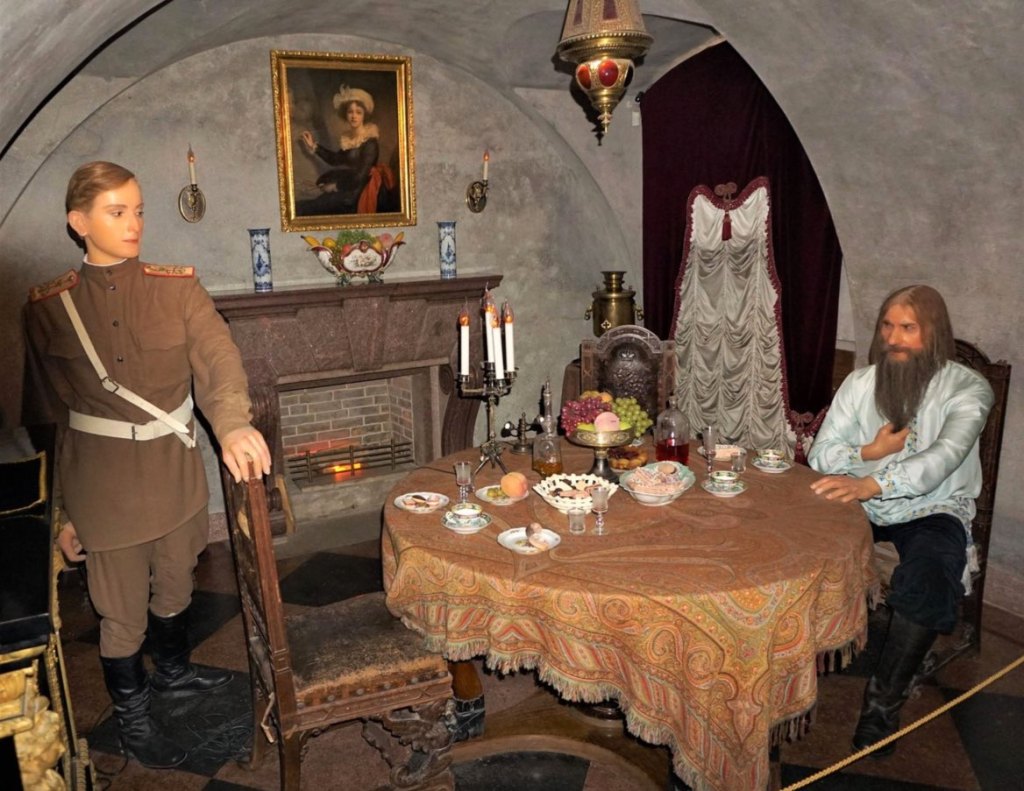
The contribution, in fact, can often be expressed in the amount of the desirable quantity. The more sales of a certain product, the higher the profit of a firm. The more we teach, the more graduates we have. The more fertilizer we use, the more food. If the overriding economic principle is that we produce more and more, the consumer must be prepared to want—that is, to consume—more and more. Industry does not rely on the consumer’s spontaneous desires for more and more commodities. By building in obsolescence it often forces him to buy new things when the old ones could last much longer. By changes in styling of products, dresses, durable goods, and even food, it forced him psychologically to buy more than he might need or want. However, industry, in its need for increased production, does not relay on the consumer’s needs and wants but to a considerable extent on advertising, which is the most important offensive against the consumers right to know what he wants. The spending of $364 billion dollars on direct advertising in 2023 (in newspapers, magazines, Internet, radio, TV) may sound like an irrational and wasteful use of human talents, of paper, and print. However, it is not irrational in a system that believes that increasing production and hence consumption is a vital feature of our economic system, without which it would collapse. #RandolphHarris 8 of 18

If we add to the cost of advertising the considerable cost for restyling of durable goods, especially cars, and of packaging, which partly is another form of whetting the consumer’s appetite, it is clear that industry is willing to pay a high price for the guarantee of the upward production and sales curve. The anxiety of industry about what might happen to our economy if our style of life changed is expressed in this brief quote by a leading investment banker: “Clothing would be purchased for its utility; food would be bought on the basis of economy and nutritional value; automobiles would be stripped to essentials and held by the same owner for 10 to 15 years of their useful lives; homes would be built and maintained for their characteristics of shelter, without regard to style or neighbourhood. And what would happen to a market dependent upon new models, new styles, new ideas? The transformations effected by this inner work seem, when stabilized, to be a natural maturity. In dealing with resistance from a patient, an analysis may assume the lead. He may be struck by a realization that despite much work done, much insight gained, nothing changes in the patient. In such cases he must desert his role as interpreter and confront the patient openly with the discrepancy between insight and change, possibly raising the question as to unconscious reservations that the patient may have which prevent him from letting any insight really touch him. #RandolphHarris 9 of 18

Thus far the analyst’s work is of an intellectual character: he puts his knowledge into the service of the patient. However, even if he is not aware of offering more than hi technical skill, this helps extend beyond what he can give on the basis of his specific competence. In the first place, by his very presence, he gives the patient a unique opportunity to become aware of his behaviour toward people. In other relationships the patient is likely to focus his thinking primarily on the peculiarities of others, their injustice, their selfishness, their defiance, their unfairness, their unreliability, their hostility; even if he is aware of his own reactions he is inclined to regard them as provoked by the other. In analysis, however, this particular personal complication is almost entirely absent, not only because the analyst has been analyzed, and continues to analyze himself, but also because his life is not entangled with the patient’s life. This detachment isolates the patient’s peculiarities from the befogging circumstances that ordinarily surround them. And in the second place, by his friendly interest, the analyst gives the patient a good deal of what may be called general human help. To some extent this is inseparable from the intellectual help. Thus the simple fact that the analyst wants to understand the patient implies that he takes him seriously. This in itself is an emotional support of primary importance, especially at those times when the patient is harassed by emerging fears and doubts, when his frailties are exposed, his pride attacked, his illusions undermined, for the patient is often too alienated from himself to take himself seriously. #RandolphHarris 10 of 18

That statement may sound implausible, because most neurotic persons have an inordinate sense of their own importance, either in regard to their unique potentialities or in regard to their unique needs. However, to think ourselves as all important is radically different from taking ourselves seriously. The former attitude derives from an inflated image of the self; the latter refers to the real self and its development. A neurotic person often rationalizes his lack of seriousness in terms of “unselfishness” or in a contention that it is ridiculous or presumptuous to give much thought to oneself. This fundamental disinterest in the self is one of the great difficulties in self-analysis, and, conversely, one of the great advantages of professional analysis is the fact that it means working with someone who through his own attitude inspires the courage to be on friendly terms with oneself. This human support is particularly valuable when the patient is in the grip of an emerging anxiety. In such situations the analyst will rarely reassure the patient directly. However, the fact that the anxiety is tackled as a concrete problem, which can be solved eventually, lessens the terror of the unknown, regardless of the content of the interpretation. Similarly, when the patient is discouraged and inclined to give up the struggle the analyst does more for him than merely interpreting: his very attempt to understand this attitude as the outcome of a conflict is a greater support to the patient than any patting on the back or any effort to encourage him in so many words. #RandolphHarris 11 of 18
There are also the times when those fictitious foundations upon which the patient has built up his pride become shaky, and he starts to doubt himself. It is good to lose harmful illusions about oneself. However, we must not forget that in all neuroses solid self-confidence is greatly impaired. Fictitious notions of superiority substitute for it. However, the patient, in the midst of struggle, cannot distinguish between the two. To him an undermining of his inflated notions means a destruction of his faith in himself. He realizes that he is not as saintly, as loving, as powerful, as independent as he had believed, and he cannot accept himself bereft of glory. At that point he needs someone who does not lose faith in him, even though his own faith is gone. The human help that the analyst gives the patient is similar to what one friend might gives to another: emotional support, encouragement, interest in his happiness. This may constitute the patient’s first experience of the possibility of human understanding, the first time that another person has bothered to see that he is not simply a spiteful, suspicious, cynical, demanding, bluffing individual, but, with a clear recognition of such trends, still likes and respects him as a striving and struggling human being. And if the analyst has proved to be a reliable friend, this good experience may help the patient also to retrieve his faith in others. There is no doubt that the observations of a trained outsider will be more accurate than our observation of ourselves, particularly so since concerning ourselves we are far from impartial. #RandolphHarris 12 of 18
Against this disadvantage, however, stand the fact, already discussed, that we are more familiar with ourselves than any outsider can be. If they are bent on understanding their own problems, experience gained in psychoanalytic treatment shows beyond any doubt that patients can develop an amazing faculty of keen self-observation. There are obvious differences in patterns and some of the contents of the full professional training of the psychiatrist, clinical psychologist, and social worker. If we ask what specific knowledges or skills are unique to each of them, constituting a basis on which each is able to make a contribution to the psychiatric patient that cannot be duplicated by the others, these can be best appreciated. The psychiatrist’s unique competence is his medical knowledge and training—he alone is qualified to appraise the medical-physical status of the patient (although any physician can do this as well—possibly better), and he alone is qualified to prescript and administer medical (physiochemical) treatments; no one else can do this. An additional prerogative of the psychiatrist as a physician is a legal authority (existing by virtue of long historical precedent and beginning to show signs of appropriate impress of modern concepts and techniques) to be responsible for certain administrative operations (as contrasted with clearly medical procedures), for example, to hospitalize a patient, to discharge a patient, and so on. #RandolphHarris 13 of 18

The long-standing authority of the physician as the final and sole authority on “insanity” or mental disease within the law is beginning to show appropriate decay. The quality of a recent brief filed by the American Psychiatric Association speaks eloquently for the inevitable erosion of the physician’s role as ultimate arbiter in this area. The clear responsibility of the hospital psychiatrist for medical care of patients has historically extended to a quasi-legal responsibility (final authority) for such psychological procedures as prescribing changes in activity programs, giving or withholding passes, allowing or disallowing visitors. However, increasingly, partly as a function of the team approach and partly as a function of administrative leadership, such decisions are becoming a group responsibility (in many instances of the responsibility of the patient’s peers) or transferred to the psychologist. The clinical psychologist’s unique contribution to the individual patient comes in his competence to select, administer, score, interpret, and integrate the results of a variety of psychological tests and examination procedures that provide the only truly standardized and reliable source of data as to the patient’s mental ability and personality. He alone is a skilled diagnostician in the sense of having facility with a set of instruments specifically designed to overcome the errors and inadequacies of notoriously fallible clinical appraisal of complex phenomena. Beyond the application of his diagnostic tools to the individual patient, the psychologist alone has a thorough knowledge of the psychometric theory underlying these instruments and, accordingly, he can truly appreciate their limitations. #RandolphHarris 14 of 18
Aside from this contribution to the individual patient, the psychologist’s grounding in the methodology of behavioural research, especially measurement of personality and the behavioural correlates of personality types, affords him the capacity to design instruments for appraisal of changes, specifically of changes in major dimensions of personality. Measurement of such changes, and of related criterion variables, lies at the heart of the appraisal of the effectiveness of any psychotherapeutic or other psychiatric therapy. Skill in such personality research at the molar of behavioural level (as contrasted with study of physiological functions) is another capacity unique to the clinical psychologist. The social worker has knowledge of the network of city, county, and state welfare agencies, their personnel, equipment, and services and their administrative patterns and relationships, which is not shard by others member of the psychiatric team. She is sensitive to community structure and to the ways in which that structure can naturally facilitate or impede the recovery of a patient. She is experienced in the relevance of subculture memberships for pattens of psychopathology and for accessibility or resistance to personal intervention. She is skilled in the elicitation and correlation of life history data from relatives and other informants. She is cognizant of the economic problems of various family structures. She is expert in preparation of the patient to accept and profit from such referrals. These are among the skills of the case workers in the old-fashioned sense, and they are not shared by psychiatrist of psychologist. #RandolphHarris 15 of 18

A few psychiatrists have also received full graduate training in psychology, some psychologists were previously social workers, and occasionally a social worker successfully pursues the study of medicine or psychology. Each of these professionals has some unique areas in the background of general education which he brings to his graduate training and differences in the core emphasis of his specialized graduate preparation. The professions of psychiatry, clinical psychology and social work are presently providing the great bulk of formal psychotherapy in this country. However, the members of no one of these three professions are selected and trained primarily to be skilled psychotherapists. The variation in the cost of training each of these experts and the time required for this training, in light of the proportional relevance of their respective programs as preparation for the specific conduct of psychotherapy, has obvious social implications. It must be recognized that psychotherapy is neither the primary not unique skill of any one of these professions. The psychiatrist, psychologist, and social worker each does possess specialized and unique competence. Can our society afford a significant reduction in the application of these unique skills in a “shotgun” effort to meet the manpower shortage resulting from the increasing demand for therapeutic conversation? #RandolphHarris 16 of 18

Man is conceived as a machine, driven by a relatively constant amount of sexual energy called “libido.” This libido causes painful tension, which is reduced only by the act of physical release; to this liberation from painful tension Dr. Freud gave the name of “pleasure.” After the reduction of tension, libidinal tension increases again due to the chemistry of the body, causing a new need for tension reduction, that is, pleasureful satisfaction. This dynamism, which leads from tension to release of tension to renewed tension, from pain to pleasure to pain, Dr. Freud called the “pleasure principle.” He contrasted it with the “reality principle,” which tells man what to seek for and what to avoid in the real World in which he lives, in order to secure his survival. This reality principle often conflicts with the pleasure principle, and a certain equilibrium between the two is the condition for mental health. On the other hand, if either one of these two principles is out of balance, neurotic or psychotic manifestations are the result. I, for one, am a fan of the silent treatment. The quieter it is, the more I like it. If you have someone who does this to you, then let them shut you out. Let them remain quiet because of something you did or said made them angry with you. Relish that silence. It is so much better than their ongoing griping and ridiculing. People use silence as a tactic to get to you, to make you feel bad. They want you to miss their presence, miss their acceptance of you. Do not give them what they want. And do not let it get to you. If they keep pulling themselves away and shutting people out, it is not your loss. #RandolphHarris 17 of 18

If you look at what they are doing, they are shutting everyone out, removing themselves from the World. It is really a very self-sabotaging thing to do. When you do not allow yourself to get upset by their actions and really take a look at what they are doing to themselves in a vain attempt to hurt you, you will realize that. If a man cannot find in society or surroundings that standards which suit his character, then he must find his own. It is this that makes him a quester. To some people, it might seem foolhardy to charge into the flames to rescue someone you never saw before and may never see again. It is not that the Sacramento Fire Department does not think about the danger. They are human and do not want to die, just like everyone else. However, unlike most everyone else, they do what has to be done despite their fears. Firefighters have ignored pleas from their partners and low-crawled through a blazing apartment, risking death, while desperately groping in the dense smoke for a child who was assumed dead. Another firefighter leaped into a smoke-filled elevator shaft of a burning high-rose and shinnied down a cable to a red-hot elevator in a valiant rescue attempt. While another firefighter jumped fifteen feet down into a pit of fire without a plan of escape because to do nothing meant certain death for a trapped victim. Gripping acts of heroism can happen anywhere at any time in Sacramento. Please make a donation to the Sacramento Fire Department to ensure they receive adequate resources. I pledge allegiance to the flag of the United States of America and to the republic for which it stands, one nation, under God, indivisible with liberty and justice for all. #RandolphHarris 18 of 18

One night while closing The Winchester Mystery House a caregiver had accidentally dropped his mobile phone, and began to read a text message after he picked it up; after when he looked at his watch to ascertain the time. In taking his eyes from his watch, they became riveted upon the door-to-nowhere which he distinctly saw open, and also saw the figure of a female attired in grayish garments, with the head inclined downwards, and one hand pressed upon the chest as if in pain, and the other—the right hand—extended towards the ground with the index finger pointing downwards. It advanced with an apparently cautious step across the floor towards him. Immediately as it approached another caregiver, who was relaxing, its right hand extended toward her. He then rushed at it, giving at the same time a most awful yell, but, instead of grasping it, he fell upon his friend. I recollected nothing distinctly for nearly three hours afterward. However, he learned that he was carried downstairs in agony of fear and terror. The female caregiver added to the account with the detail of “sounds” being heard from an adjacent room. “His horrible shouts. He seems to have fainted in her arms. She instantly laid him down and went into the room from whence the last sound was heard. However, nothing was there and the door-to-nowhere had not been opened. Other employees came quickly to their assistance, and found the young caregiver trembling in the most acute mental agony.

Come and enjoy a delicious meal in Sarah’s Café, stroll along the paths of the beautiful Victorian gardens, and wonder through the miles of hallways in the World’s most mysterious mansion. For further information about tours, including group tours, weddings, school events, birthday party packages, facility rentals, and special events please visit the website: https://winchestermysteryhouse.com/
Please visit the online giftshop, and purchase a gift for friends and relatives as well as a special memento of The Winchester Mystery House. A variety of souvenirs and gifts are available to purchase. https://shopwinchestermysteryhouse.com/

Where are We Headed?
It is difficult to locate our exact position on the historical trajectory leading from eighteenth- and nineteenth-century industrialism to the future. It is easier to say where we are not. We are not on the way to free enterprise, but are moving rapidly away from it. We are not on the way to greater individualism, but are becoming an increasingly manipulated mass civilization. We are not on the way to the places toward which our ideological maps tell us we are moving. We are marching in an entirely different direction. Some see the direction quite clearly; among them are those who favour it and those who fear it. However, most of us look at maps which are as different from reality as was the map of the World in the year 500 B.C. It is not enough to know that our mas are false. If we are able to go in the direction we want to go, it is important to have correct maps. The most important feature of the new map is the indication that we have passed the stage of the first Industrial Revolution and have begun the period of the second Industrial Revolution. The first Industrial Revolution was characterized by the fact that man had learned to replace live energy (that of animals and men) by mechanical energy (that of steam, oil, electricity, and the atom). These new sources of energy were the basis for a fundamental change in industrial production. Related to this new industrial potential was a certain type of industrial organization, that of a great number of what we would call today small or medium-sized industrial enterprises, which were managed by their owners, which competed with each other, and which exploited their workers and fought with them about the share of the profits. #RandolphHarris 1 of 18
The member of the middle and upper class was the master of his enterprise, as he was the master of his home, and he considered himself to be the master of his destiny. Ruthless exploitation of nonwhite populations went together with domestic reform, increasingly benevolent attitudes toward the poor, and eventually, in the first half of this century, the rise of the working class from abysmal poverty to a relatively comfortable life. The first Industrial Revolution is being followed by the second Industrial Revolution, the beginning of which we witness at the present time. It is characterized by the fact not only that living energy has been replaced by mechanical energy, but that human thought is being replaced by the thinking of machines. Cybernetics and automation (“cybernation”) make it possible to build machines that function much more precisely and much more quickly than the human brain for the purpose of answering important technical and organizational questions. Cybernation is creating the possibility of a new kind of economic and social organization. A relatively small number of mammoth enterprises has become the center of the economic machine and will rule it completely in the not-too-distant future. The enterprise, although legally the property of hundreds of thousands of stockholders, is managed (and for all practical purposes managed independently of the legal owners) by a self-perpetuating bureaucracy. The alliance between private business and government is becoming so close that the two components of this alliance become ever less distinguishable. #RandolphHarris 2 of 18
The majority of the population in America used to be well fed, well housed, and well amused, and the sector of “underdeveloped” Americans who live under substandard conditions will is increasing well into the foreseeable future. We continue to profess individualism, freedom, and faith in God, but our professions are wearing thin when compared with the reality of the organization man’s obsessional conformity guided by the principle of hedonistic materialism. If society could stand still—which it can do as little as an individual—things might not be s ominous as they are. However, we are headed in the direction of a new kind of society and a new kind of human life, of which we now see only the beginning and which is rapidly accelerating. Our individual thoughts are patterned after the ideas any given society develops, and these ideas are determined by the particular structure and mode of functioning of the society. A watchful, skeptical, doubting attitude toward all ideologies, ideas, and ideals, is characteristic for Marx. He always suspected them as veiling economic and social interests, and his skepticism was so strong that he could hardly ever use words like freedom truth, justice—precisely because of the fact that they lend themselves to so much misuse, and not because freedom, justice, truth, were not the supreme values for him. #RandolphHarris 3 of 18
Dr. Freud thought in the same “critical mood.” His whole psychoanalytic method could be described as “the art of doubting.” Having been impressed by certain hypnotic experiments which demonstrated to what extent a person in a trance can believe in the reality of what is obviously not real, he discovered that most of the ideas of persons, who are not in a trance also do not correspond to reality, and that on the other hand most of that which is real is not conscious. Marx thought the basic reality to be the socioeconomic structure of society, while Dr. Freud believed it to be the libidinal organization of the individual. Yet they both had the same implacable distrust of the clichés, ideas, rationalizations, and ideologies which fill people’s minds and which from the basis of what they mistake for reality. This skepticism toward “common thought” is insolubly connected with a belief in the liberating force of truth. Marx wanted to liberate man from the chains of dependency, from alienation, from slavery to the economy. What was his method? Not, as is widely believed, force. He wanted to win the minds of the majority of the people. While force, according to him, might he use if the minority were to resist b force the will of the majority, the main question for Marx was not the mechanism of how to attain power in the state, but how to win the minds of the people. In his “propaganda,” Marx and his legitimate successors used the opposite method from the one used by all other politicians, whether bourgeois, fascist, or communist. #RandolphHarris 4 of 18
He wanted to influence not by demagogic persuasion, creating semi-hypnotic states supported by fear of terror, but by an appeal to the sense of reality, by truth. The assumption underlying Marx’s “weapon of truth” is the same as with Dr. Freud: that man lives with illusions because these illusions make the misery of real life bearable. If he can recognize the illusions for what they are, that is to say, if he can wake up from the half-dream state, then he can come to hi senses, become aware of his proper forces and powers, and change reality in such a way that illusions are no longer necessary. “False consciousness,” that is to say, the distorted picture of reality, weakens man. Being in touch with reality, having an adequate picture of it, makes him stronger. Hence Marx believed that his most important weapon was truth, the uncovering of the reality behind the illusions and ideologies which cover it. In this lies the reason for a unique feature of Marxist propaganda: it is an emotional appeal for certain political aims, blended with a scientific analysis of social and historical phenomena. The best-known example for this blend is, of course, the Communist Manifesto. This contains in a brief form a brilliant and lucid analysis of history, of influence of economical factors, of class relations. And at the same time, it is a political pamphlet ending with a fervently emotional appeal to the working class. #RandolphHarris 5 of 18
The fact that the political leader must be at the same time a social scientist and a writer was demonstrated not only by Marx. Engels, Bebel, Jaures, Rosa Luxemburg, Lenin and many other leaders of the socialist movement were writers and students of social science and politics. (Even Stalin was forced to write books or to have them written in his name in order to prove his legitimacy of Marx’s and Lenin’s successor.) In fact, however, under Mr. Stalin, this aspect of socialism completely changed. Since the Soviet system must not be the subject matter of scientific analysis, the Soviet social scientists have become apologists for their system and have a scientific function only in technical matters dealing with production, distribution, organization et cetera. While for Marx, truth was a weapon to induce social change, for Dr. Freud it was the weapon to induce individual change; awareness was the main agent in Dr. Freud’s therapy. If, so Dr. Freud found, the patient can gain insight into the fictitious character of his conscious idea, if he can grasp the reality behind these ideas, if he can make the unconscious conscious, he will attain the strength to rid himself of his irrationalities and to transform himself. Dr. Freud’s aim, “Where there is ID, there shall be Ego,” can be realized only through the effort of reason to penetrate fictions and to arrive at the awareness of reality. It is precisely this function of reason and truth which gives psychoanalytic therapy its unique feature among all forms of therapy. #RandolphHarris 6 of 18

Each analysis of a patient is a new and original venture of research. If it were applied, while it is true, of course, that there are general theories and principles which can be applied, there is no pattern, no “formula” which could be applied to the individual patient or be helpful to him. Just as for Marx, the political leader mut be a social scientist, so for Dr. Freud the therapist must be a scientist capable of doing research. For both, truth is the essential medium to transform, respectively, society and the individual; awareness is the key to social and individual therapy. Marx’s statement, “The demand to give up the illusions about its condition is the demand to give up a condition which needs illusions,” also could have been made by Dr. Freud. Both wanted to free man from the chains of his illusions in order to enable him to wake up and to act as a free man. The third basic element common to both systems is their humanism. Humanism in the sense that each man represents all of humanity; hence, that there is nothing human which could be alien to him. Marx was rooted in this tradition, of which Voltaire, Lessing, Herder, Hegel, and Goethe are some of the most outstanding representatives. Dr. Freud expressed his humanism primarily in his concept of the unconscious. He assumed that all men share the same unconscious strivings, and hence that they can understand each other once they dare to delve into the underworld of the unconscious. He could examine the unconscious fantasies of his patient without feeling indignant, judgmental or even surprised. #RandolphHarris 7 of 18
The “stuff from which dreams are made” as well as the whole World of the unconscious became an object of investigation precisely because Dr. Freud recognized its profoundly human and universal qualities. Doubt and the power of truth and humanism are the guiding and propelling principles of Marx’s and Dr. Freud’s work. In the Anglo-Saxon countries, Hegelian philosophy has ben a dead issue for a long time so that the dynamic approach of Marx and Dr. Freud is not readily understood. Let us begin with a few examples, both from the realm of psychology and that of sociology. Let us assume a man who has been married three times. The pattern is always the same. He falls in love with a good-looking young lady, marries her, and is ecstatically happy for a short time. Then he begins to complain that his wife is domineering, that she curtails his freedom et cetera. After a period alternating between quarrels and reconciliation, he falls in love with another girl—in fact, one very similar to his wife. He gets a divorce and marries his second “great love.” However, with slight modifications the same cycle takes place, and again he falls in love with a similar type of girl, and again he gets divorced and married a third “great love.” Again, the same cycle occurs, and he fall in love with a fourth girl, being convinced that this time it is the true and real love (forgetting that he was convinced of that every time in the past), and wants to marry her. #RandolphHarris 8 of 18

If she asked us our opinion about the chances for a happy marriage with him, what would we say to the last girl? There are several approaches to the problem. The first one is a purely behaviouristic one; the method of this approach is to conclude from past behaviour, the future behaviour. This argument would run: since he already has left a wife three time, it is quite likely that he will do it a fourth time, hence it is much too risky to marry him. This approach, empirical and sober, has much to be said for it. However, the girl’s mother, when using this approach, might find it difficult to answer one argument of her daughter’s. This argument says that while it is perfectly true that he did act in the same way three time, it does not follow that he will do so again this time. Either, so this counter-argument will say, he has changed—and who can say that a person may not change? Or the other women were not really the kind he could love deeply, while she, the last one, is really congenial to him. There is no convincing argument the mother could use against this reasoning. In fact, once she sees the man and notices that he is very much enraptured with her daughter, and that he walks with great sincerity about his love, even the mother might change her mind and be won over to the daughter’s position. The mother’s and the daughter’s approaches are both undynamic. They either make a prediction based on past performance, or one based on present words and actions, yet they have no way of proving that their predictions are better than guesswork. #RandolphHarris 9 of 18

What is, in contradiction, the dynamic approach? The essential point in this approach is to penetrate through the surface of past or present behaviour and to understand the forces which created the pattern of past behaviour. If these forces still exist, it is to be assumed that the fourth marriage will end not differently from the previous ones. If, on the other hand, there has been a change in the forces underlying his behaviour, one would have to admit the possibility or even the likelihood of a different outcome, in spite of the past behaviour. What are the forces we speak of here? They are nothing mysterious, nor figments of abstract speculation. If one studies the behaviour of the person in the proper way, they are recognizable empirically. We may assume, for instance, that the man had not cut the tie to his mother; that he is a very narcissistic person with a deep doubt of his own manliness; that he is an overgrown adolescent in constant need of admiration and affection, so that once he has found a woman who fulfills these needs, he get bored with her soon after the conquest is made; he needs new proofs of his attractiveness and hence must look for another woman who can reassure him. At the same time, he is really dependent on women, afraid of them; and hence any prolonged intimacy makes him feel imprisoned and chained. The forces at work here are his narcissism, his dependence, his self-doubt producing needs which lead to the kind of action we have been describing. #RandolphHarris 10 of 18
These forces are by no means the result of abstract speculation. One can observe them in many ways: by examining dreams, free association, fantasies, by watching his facial expression, his gestures, his way of speaking, and so forth. Yet they are often not directly visible but must be inferred. Furthermore, they can be seen only within the theoretical frame of reference in which they have a place and meaning. Most importantly these forces are not only not conscious as such, but they are in contradiction to the conscious thought of the person involved. He is sincerely convinced that he will love the girl forever, that he is not dependent, that he is strong and self-assured. Thus, the average person thinks: if a man truly feels he loves a woman how can one predict that he will leave her after a short time, just by referring to such mythical entities as “fixation to mother,” “narcissism,” and so on? Are one’s eyes and ears not better judges than such deductions? Interpretations are suggestions as to possible meanings. They are by nature more or less tentative, and the patient’s reactions to them vary. If an interpretation is essentially right, it may strike home and stimulate associations showing its further implications. Or the patient may test it our and gradually qualify it. Even when it is only partly right, it may thus give rise to new trends of thought, provided the patient is co-operating. However, an interpretation may also provoke anxiety or defensive reactions. Whatever the reactions are, the analyst’s task is to understand them and learn from them. #RandolphHarris 11 of 18
Psychoanalysis in its very essence is co-operative work, both patient and analyst bent on understanding the patient’s difficulties. The latter tries to lay himself open to the analyst and, as we have seen, the analyst observes, tries to understand, and, if appropriate, conveys his interpretation to the patient. He then makes suggestions as to possible meanings and both try to test out the validity of the suggestions. They try to recognize, for instance, whether an interpretation is right only for the present context or is of general importance, whether it has to be qualified or is valid only under certain conditions. And as long as such a co-operative spirit prevails, it is comparatively easy for the analyst to understand the patient and to convey to him his findings. The real difficulties arise when, in technical terms, the patient develops a “resistance.” Then, in tangible or intangible ways, he refuses to co-operate. He is late or forgets the appointment. He wants to take some days or weeks off. He loses interest in the common work and mainly wants the analyst’s love and friendship. His associations become shallow, unproductive, and evasive. Instead of examining suggestion made by the analyst, he resent them and feels attacked, hurt, misunderstood, humiliated. He may reject every attempt to help with a rigid feeling of hopelessness and futility. Fundamentally the reason for this impasse is that certain insights are not acceptable to the patient; they are too painful, too frightening, and they undermine illusions that he cherishes and is incapable of relinquishing. #RandolphHarris 12 of 18

Therefore he fights them off in one way or another, though he does not know that he is attempting to ward off painful insights: all he knows, or thinks he knows, is that he is misunderstood or humiliated or that work is futile. I do not care how much anyone laughs, ugly things someone says about you hurts—and it sticks with you for a very long time. You will experience this, and you might even dish this kind of humour out at times. It does not make it right. As humans, we like to make people laugh. When everyone around you is in good spirits, because of something you said, even when that something might be hurting someone else’s feelings, it feels good to some people. However, being disrespected by a joke someone is making is not fun. Even when the individual being insulted is laughing, too, they are not immune to the condescending remarks and negative words. People who do these kinds of things, do not find it funny when someone roasts them. When older try to speaking to you in a condescending way, or make fun of your life, just tell them about the highlights that you deal with, and tell them that it may sound bad to them, but you enjoy your life. You can also tell them that you understand their situation may not be exactly the way they like it to be. That should get them to stop harassing you without seeming like a mental case or telling them off. #RandolphHarris 13 of 18

The clinical psychologist holds the Ph.D. degree in psychology. This means that he had completed a minimum of three years of graduate instruction in psychology from a major university. Before admission to such graduate study, he had completed a four-year college degree in a liberal arts program with emphasis upon the humanities and the social sciences. His graduate work will encompass study of personality theory, abnormal psychology (psychopathology), methods of psychological measurement, and psychometric theory, statistical methods and research design. Clinical diagnostic tests and techniques, principles of interviewing, and theories and techniques of psychotherapy. These constitute his major program; he will probably also complete a program of minor didactic studies in an appropriate related field such as sociology, anthropology, or psychiatry. The psychologist’s graduate program includes both didactic instruction and supervised clinical practice in interviewing, testing, and the like. As a major requirement for the doctoral degree, he must design, carry out, and write up an original research investigation in an appropriate problem area. Finally, like the M.D., he must complete a full year’s internship in a psychiatric facility having a full complement of professional staff. This total program of instruction, supervised training, and research is completed by the average clinical psychologist in slightly over five years. (The range of years from matriculation to degree completion is from a minimum of four to an upper limit of nine or ten years, this variation being primarily a function of the amount of time required for completion of the doctoral dissertation.) #RandolphHarris 14 of 18

Thus, typically, some nine to ten years following high-school graduation, at an average age of 27-plus years, the psychologist is qualified to begin his professional career as a clinician and, if he chooses (and an increasing number do), to specialize in psychotherapy with outpatient neurotics. Both psychiatry and clinical psychology have “specialty boards” which examine and aware “certification” in the respective specialty. To be eligible for such examination, the psychiatrist must have two years of appropriate experience after completion of his residency. The psychologist must have at least four years of suitable experience following receipt of the Ph.D. Mental health affect our thoughts, emotions, behaviour, and relationships. Those who develop mental health challenges or illness can be impaired in their ability to cope with the routines and demands of daily life. Such conditions are often emotionally draining and confusing for the individual as well as for loved ones and leaders attempting to minister to the afflicted person. Those who are not mental health professions are not expected or encouraged to diagnose or provide treatment to individuals struggling with mental health issues. When individuals do not seem to respond to normal attempts by leaders to be helpful, no one should be offended by their lack of response. Instead, leaders should seriously consider encouraging the individual to get a mental health assessment from a qualified provider. #RandolphHarris 15 of 18

As you discuss mental health concerns, make sure to show love and empathy as the Saviour would. If the person has reached out for help, thank her or him for asking for help. Because every situation is different and each person’s circumstances vary, prayerfully consider asking the person questions like these and then listen to the Spirit to help you better understand his or her concerns and discern his or her needs: Have you ever been diagnosed with a mental health condition? If so, how long have you had the condition? How does it affect your employment and family relationships? What are your greatest concerns or worries right now? What (if any) care are you receiving from a mental health care provider? Are you following the instructions from your provider, and are you comfortable with the care you are receiving? Do you feel you mental health condition is improving, staying the same, or getting worse? How are you coping with your condition? How do your family member handle your condition? Have they suggested anything you are not currently doing that you think maybe helpful? Have you received insights from Heavenly Father about your condition? If so, what were those insights? With the individual’s permission, and being respectful of the individual’s feelings, consider contacting family members for further insight into the issue. As you help the individual understand how their challenges are affecting their lives, consider reassuring the person that Heavenly Father love her or him and that the Saviour understands his or her challenges. #RandolphHarris 16 of 18

Help the person understand that mental illness is not a punishment from God. Help the person realize that mental illness cannot be overcome by willpower alone. Mental illness does not indicate that a person lacks faith, character, or worthiness. Include the person in Church activities and appropriate service opportunities. Consult with the person, family members, and others who know the person well to be aware of the person’s strengths and limitations. Consider consulting with Family Services (where available) or local providers of mental health services to identify support and treatment options. Even with the best of care, be aware that some conditions can last a lifetime. Sometimes people who are deeply, deeply racist may act unpredictable around an individual from a group they hate. Therefore, it is a good idea to be aware of people who seem psychotic, and avoid them, especially when they are around sharp objects or other objects, they could use to harm you. Do not make any sudden moves, just be aware, and ease out of the situation. Those who are taking medication should not change or stop treatment without first consulting their health care provider. The person’s mental health challenges can also affect the lives of his or her family members and neighbours. Determine the impact on the person’s family, and show love and empathy as you work with family members. Encourage the family, extended family, and others involved to counsel together about the needs of the individual and potential resources available to help. And if you are feeling threatened, call the police immediately. Sometimes people seem okay, but then they go back to unpredictable and threatening behaviour and it may be dangerous to be around of them. Drug use can exacerbate mental illness and make a person violent. They may not be the same person you are used to, so be careful. #RandolphHarris 17 of 18

The Sacramento Fire Department has to continuously fright for better equipment, portable radios, training, facilities, and apparatus for their troops. A lot of fire departments do not have the funding for people and are fighting just to keep what they have and not lose anything. And they are wonderful department. Keep in mind, there are plenty of good fire chiefs and some good politicians, and they do their best. The people who control the resources must understand that the fire department also wants to make the job safer for their troops. The Sacramento Fire Department’s mission is to provide the best protection possible for those they have a sworn due to serve and to provide service to them, and they also want to promote family values. The fire service is made up of special people who value family. The goal is to treat people like family. Many of these fire fighters and emergency medical service members have a love for their jo, and their brothers and sisters, and an honour for the profession. Some people became fire fighters because their parents were on the job and they admired them. It does take a special person for this kind of work. It takes the kind of person who loves to help people and lives to be challenged. Be sure to open up your heart to the Sacramento Fire Department and kindly make a donation, it will help them do their jobs with an unshakable passion. I pledge allegiance to the flag of the United States of America, and to the republic, for which it stands, one nation, under God, indivisible with liberty and justice for all. Be sure to vote for Kevin McCarty in the Sacramento Mayoral race, he is endorsed by the Sacramento Fire Department. #RandolphHarris 18 of 18


At the beginning of December, Mrs. Winchester heard “singing” in one of the chimneys in the Hall of Fires, and from time to time, lights were to be seen in various parts of the house. It was a curious fact that during these manifestations, Zip could not be persuaded to move. One night, something was heard coming up the stairs, as if it had been one without shoes. The Door to Nowhere was opened and closed frequently as if half a dozen people had entered together. There were thumps coming from the nine story Observational Tower. This was on the same night that Mrs. Winchester’s bed was violently shaken and the curtains around the bed were hoisted up and down. The next night, Mrs. Winchester saw a female emerge from the wall at the head of her bed and lean over her.
Come and enjoy a delicious meal in Sarah’s Café, stroll along the paths of the beautiful Victorian gardens, and wonder through the miles of hallways in the World’s most mysterious mansion. For further information about tours, including group tours, weddings, school events, birthday party packages, facility rentals, and special events please visit the website: https://winchestermysteryhouse.com/

Please visit the online giftshop, and purchase a gift for friends and relatives as well as a special memento of The Winchester Mystery House. A variety of souvenirs and gifts are available to purchase. https://shopwinchestermysteryhouse.com/

Certain Varieties of Demons Live on the Juices in Human Blood

Hope is a vigorous principle; it is furnished with light and heat to advise and execute; it sets the head and heart to work, and animates a man to do his utmost. Hope is paradoxical. It is neither passive waiting nor is it unrealistic forcing of circumstances that cannot occur. It is like the crouched tiger, which will jump only when the moment for jumping has come. Neither tired reformism nor pseudo-radical adventurism is an expression of hope. If there is no birth in our lifetime, to hope means to be ready at every moment for that which is not yet born, and yet not become desperate. There is no sense in hoping for that which already exists or for that which cannot be. Those whose hope is weak settle down for comfort or for violence; those whose hope is strong see and cherish all signs of new life and are ready every moment to help the birth of that which is ready to be born. Among the confusion about hope one of the major ones is the failure to distinguish between conscious and unconscious hope. This is an error, of course, which occurs with regard to many other emotional experiences, such as happiness, anxiety, depression, boredom, and hate. It is amazing that in spite of the popularity of Dr. Freud’s theories his concept of the unconscious has been so little applied to such emotional phenomena. There are perhaps two main reasons for this fact. One is that in the writings of some psychoanalysts and some “philosophers of psychoanalysis” the whole phenomenon of the unconscious—that is, of repression—refers to desires of the pleasures of the flesh, and they use repression—wrongly—and synonymous with suppression of sexual wishes and activities. #RandolphHarris 1 of 20

In doing so they deprive Dr. Freud’s discoveries of some of their most important consequences. The second reason lies probably in the fact that it is far less disturbing for the post-Victorian generations to become aware of repressed sexual desires than of those experiences like alienation, hopelessness, or greed. To use only one of the most obvious examples: most people do not admit to themselves feelings of fear, boredom, loneliness, hopelessness—that is to say, they are unconscious of these feelings. (Speaking of the “unconscious” is another form of alienated thinking and speaking. There is no such things as “the unconscious,” as if it were an organ or a thing in space. One can be “conscious of” or “unconscious of” outer or inner events; that is, we deal with a psychic function, not with a localized organ.) This is so for a simple reason. Our social pattern is such that the successful man is not supposed to be afraid or bored or lonely. He must find this World the best of all Worlds; in order to have the best chance for the best of all Worlds; in order to have the best chance for promotion he must repress fear as well as doubt, depression, boredom, or hopelessness. There are many who feel consciously hopeful and unconsciously hopelessness is not primarily what people think about their feelings, but what they truly feel. This can be recognized least from their word and phrases, but can be detected from their facial expressions, their way of walking, their capacity to react with interest to something in front of their eyes, and their lack of fanaticism, which is shown in their ability to listen to reasonable argument. #RandolphHarris 2 of 20

The dynamic viewpoint applied in this report is to social-psychological phenomena and is fundamentally different from the descriptive behaviourist approach in most social-science research. From the dynamic standpoint, we are not primarily interested in knowing what a person thinks or says or how he behaves now. We are interested in his character structure—that is, in the semipermanent structure of his energies, in the directions in which they are channeled, and in the intensity with which they flow. If we know the driving forces motivating behaviour, not only do we understand present behaviour but we can also make reasonable assumptions about how a person is likely to act under changed circumstances. In the dynamic view, surprising “changes” in a person’s thought or behaviour are changes which mostly could have been foreseen, given the knowledge of his character structure. More could be said about what hope is not, but let us press forward and ask what hope is. Can it be described at all in words or can it only be communicated in a poem, in a song, in a gesture, in a facial expression, or in a deed? As with every other human experience, words are insufficient to describe the experience. In fact, most of the time words do the opposite: they obscure it, dissect it, and kill it. Too often, in the process of talking about love or hate or hope, one loses contact with what one was supposed to be talking about. #RandolphHarris 3 of 20

Poetry, music, and other forms of art are by far the best-suited media for describing human experience because they are precise and avoid the abstraction and vagueness of worn-out coins which are taken for adequate representations of human experience. Yet, taking these qualifications seriously, it is not impossible to touch upon feeling experience in words which are not those of poetry. If people did not share the experience one talks about, at least to some degree, this would not be possible. To describe it means to point out the various aspects of the experience and thus to establish a communication in which the writer and the reader know that they re referring to the same thing. In making this attempt, I must ask the reader to work with me and not expect me to give him an answer to the question of what hope it. I must ask him to mobilize his own experiences in order to make our dialogue possible. To hope is a state of being. It is an inner readiness, that of intense but not-yet-spent activeness. The concept of “activity” rests upon one of the most widespread of man’s illusions in modern industrial society. Our whole culture is geared to activity—activity in the sense of being busy, and being busy in the sense of busyness (the busyness necessary for business). In fact, most people are so “active” that they cannot stand doing nothing; they even transform their so-called leisure time into another form of activity. If you are not active making money, you are active driving around, playing golf, or just chatting about nothing. #RandolphHarris 4 of 20

What is dreaded is the moment in which you have really nothing “to do.” Whether one calls this kind of behaviour activity is a terminological question. The trouble is that most people who think they are very active are not aware of the fact that they are intensely passive in spite of their “busyness.” Even if it is only a new man or woman as a partner for pleasures of the flesh, they constantly need the stimulus from the outside, be it other people’s chatter, or the sight of movies or travel and other forms of more thrilling consumption excitements. They need to be prompted, to be “turned on,” tempted, seduced. They always run and never stand. They always “fall for” and never get up. And they imagine themselves to be immensely active while they are driven by the obsession to do something in order to escape the anxiety that is aroused when they are confronted with themselves. Hope is a psychic concomitant to life and growth. If a tree which does not get sun bends its trunk to where the sun comes from, we cannot say that the tree “hopes” in the same way in which a man hopes, since hope in man is connected with feelings and awareness that the tree may not have. And yet it would not be wrong to say that the tree hopes for the sunlight and expressed this hope by twisting its trunk toward the sun. #RandolphHarris 5 of 20

Is it different when the child is born? He may have no awareness, yet his activity expresses his hope to be born and to breathe independently. Does the suckling not hope for his mother’s milk? Dos the infant not hope to stand erect and to walk? Does the sick man not hope to be well, the prisoner to be free, the hungry to eat? Do we not hope to wake up to another day when we fall asleep? Do pleasures of the flesh not imply a man’s hope in his potency, in his capacity to arouse his partner, and the woman’s hope to respond to arouse him? Revelation is an unmerited gift, and we can never be sure that our human questions exhaust its riches. Man is not merely a questioner. He is also a hearer of the Word, and he must open himself to its full impact even when it communicates startling truths, such as the Trinity, or hard truths, such as divine punishment, things he might not ask about if the questions were left to him alone to formulate. Furthermore, the question-answer dialogue is not the sole means to express the human attitude before the revelatory events. Questions and answers are, after all, but figures of speech, and their limitation is seen in this, that the mystery of divine revelation can be described in other terms. It is not only an answer; it is also a fulfilment, a transformation, an elevation, and a gratuitous intervention. Man stands before revelation not simply to play the quizmaster; he stands before it as before the sun, to be cheered and warmed and inspire. #RandolphHarris 6 of 20

In the transfiguration episode all that Peter could utter was, “Lord, it is well that we are here!” (Mt 17.4 RSV). Man does more than question; he also exclaims in crimes of marvel, of wonder, of awe. They kerygmatic aspect of theology must be given its due. It can still only create the impression that it succeeds, but it can never fully succeed, since the receptacle which is the question remains the old wineskin that is burst by the new wine of the answer. The new wine is the kerygma, the divine good news which far surpasses human expectations. Consequently, the bad news of man’s existential situation cannot be the measure of the good news of revelation. In fact, it is revelation that lays bare the roots of the human condition by revealing the true nature and extent of sin, for the bad news of the existential situation it itself a mystery that needs unveiling. When it comes to the Christian mysteries, we know that creation means that “being” is essentially good, the fall or estrangement means that man is a finite mixture of being and nonbeing, and the New Being means that man always participates in being enough to offset the threat of non-being. The New Being is essential manhood, the complete actualization of human potentialities, the term of the historical process of the essentialization of man, the final reunion with the ground of being. Is this merely an ontological humanism? The lost son who returned home is not simply once again at home. He is at home again in a way other than the fondest remembrance of his father’s house had possibly permitted him to hope, other than the human existential question had possibly permitted him to hope, other than the existential question had possibly permitted him to expect. The New Being that he found is other and more than mere reunion. #RandolphHarris 7 of 20

In contrast, the manifestation of demon power—the agency of demons is always brought more conspicuously into notice when God also is at work, in proportion to the manifestation and power of God’s work among souls. When the Son of God was manifest in the flesh, it called forth the activity and outspoken agency of demons more than ever before. Demons are of a multiplied variety. They are of various types, greater in diversity than human beings, and these demons always seek to possess a person congenial to them in some characteristic. The Christian Bible tells us of unclean demons, of fortune telling demons, of despotic demons, theological demons, screeching and yelling demons. There are demons that act particularly on the body, or some organ or appetite of the body. There are others that act more directly upon the intellect, or the sensibilities, and emotions and affections. There are others of a higher order that act directly on man’s spiritual nature, upon the conscience or the spiritual perceptions. These are the ones that act as angels of light, and sidetrack and delude many who are real Christians. How demons fasten on human beings—they seek out those who make-up and temperament is most congenial to themselves, and then seek to fasten themselves on to some part of the body, or brain, or some appetite, or some faculty of the mind—either the reason, or imagination, or perception; and when they get access, they bury themselves into the very structure of the person, so as to identify themselves with the personality of the one they possess. #RandolphHarris 8 of 20

In a great many instances, they do not get possession of the individual, but obtain such a hold on some part of the mind as to torment the person with periodical attacks of something strange and abnormal, out of all proportion to the general character and make-up of the individual. These demons feed themselves on the person with whom they are allied. There are allusions in Christian Scripture, and facts gathered from experience, sufficient to prove that certain varieties of demons live on the juices in human blood. There are religious demons, not holy, but nevertheless religious, and filled with a devilish form of religion which is the counterfeit of true, deep spirituality. These pseudo-religious demons very rarely attack young beginners, but they hover around persons who advance into deeper experiences, and seek every opportunity to fasten themselves upon the conscience, or the spiritual emotions of persons of high states of grace, and especially if they are of a vivid or energetic temperament. These are the demons that play havoc among many professors of holiness. One way they get hold of persons is as follows: A soul goes through a great struggle, and is wonderfully blessed. Floods of light and emotion sweep through the being. The shore lines are all cut. The soul is launched out into a sea of extravagant experience. At such a juncture these demons hover round the soul, and make strange suggestions to the mind of something odd, or outlandish, or contrary to common sense or decent states. They make these suggestions under the profession of being the Holy Ghost. They fan the emotions, and produce a strange, fictious exhilaration, which is simply their bait to get into faculty of the soul. #RandolphHarris 9 of 20

The degrees of evilness are at the same time the degrees of regression. The greatest evil is those strivings which are most directed against life; they love for death, the incestuous-symbiotic striving to return to the womb, to the soil, to the inorganic; the narcissistic self-immolation which makes man an enemy of life, precisely because he cannot leave the prison of his own ego. Living this way is living in “hell.” There is lesser evil, according to the lesser degree of regression. There is lack of love, lack of reason, lack of interest, lack of courage. Man is inclined to regress and to move forward; this is another way of saying he is inclined to good and evil. If both inclinations are still in some balance, he is free to choose, provided that he can make use of awareness and that he can make an effort. He is free to choose between alternatives which in themselves are determined by the total situation in which he finds himself. If, however, his heart has hardened to such a degree that there is no longer a balance of inclinations, he is no longer free to choose. In the chain of events that lead to the loss of freedom the last decision is usually one in which man can no longer choose freely; at the first decision he may be free to choose that which leads to the good, provided he is aware of the significance of his decision. Man is responsible up to the point where he is free to choose for his own action. However, responsibility is nothing but an ethical postulate, and often a rationalization for the authorities’ desire to punish him. #RandolphHarris 10 of 20

Precisely because evil is human, because it is the potential of regression and the loss of our humanity, it is inside every one of us. The more we are aware of it, the less are we able to set ourselves up as judges of others. Man’s heart can harden; it can become inhuman, yet never nonhuman. It always remains man’s heart. We all are determined by the fact that we have been born human, and hence by the never-ending task of having to make choices. We must choose the means together with the aims. We must not rely on anyone’s saving us, but be very aware of the fact that wrong choices make us incapable of saving ourselves. Indeed, we must become aware in order to choose the good—but if we have lost the capacity to be moved by the distress of another human being, by the friendly gaze of another person, by the song of a bird, by the greenness of grass, no awareness will help us. If man becomes indifferent to life, there is no longer any hope that he can choose the good. Then, indeed, his heart will have so hardened that his “life” will be ended. If this should happen to the entire human race or to its most powerful members, then the life of mankind may be extinguished at the very moment of its greatest promise. Our hope is to point to a new dimension of morality—not that of constraint and prohibition but a morality that lies as a fountainhead within the human soul, a mortality of aspiration to spiritual experience. It suggests that necessity is laid upon us to infer entities that are not observed and are not observable. For an unseen Universe is necessary to explain the seen. The flux is seen, but to account for its structure and its nature we infer particles of various kinds to serve as the vertices of the changing patterns, placing less emphasis on the isolated units and more on the structure and nature of relations. #RandolphHarris 11 of 20

The process of knowing involves an immaterial becoming, an immaterial identification, and finally, knowledge itself is seen to be a dependent variable of immateriality. And somewhere along this spiritual pilgrimage man’s pure observation is relinquished and gives way to the deeper experience of awe, for there can be no explanation of a phenomenon by searching for its origin but only by discerning its immanent law—this quality of transcendence that abides even in matter itself. The present situation in the World and the vast accretion of knowledge have produced a serious anxiety which may be overcome by re-evaluating the character, kindship, logic, and operation of man in relation to his work. For work implies goals and intimately affects the person performing the work. Therefore the correlation and relatedness of ideas, facts and values that are in perpetual interplay could emerge from these volumes as they point to the inner synthesis and organic unity of man and his labours. For though no labour alone can enrich the person, no enrichment can be achieved without absorbing and intense labour. We then experience a unity of faith, labour and grace which prepares the mind for receiving a truth from sources over which it has no control. This is especially true since the great challenge of our age arises out of man’s inventions in relation to his life. #RandolphHarris 12 of 20

Thus Credo Perspectives seek to encourage the perfection not only of man’s work but also and above all the fulfillment of himself as a person. And so now we are summoned to consider not only man in the process of development as a human subject but also his influence on the object of his investigation and creation. Observation alone is interference. The naïve view that we can observe any system and predict its behaviour without altering it by the very act of observation was an unjustified extrapolation from Newton’s Celestial Mechanics. We can observe the moon or even a satellite and predict its behaviour without perhaps appreciably interfering with it, but we cannot do this with an amoeba, far less with a man and still less with a society of men. It is the heart of the question of the nature of work itself. If we regard our labours as a process of shaping or forming, then the fruits of our labours play the part of a mold by which we ourselves are shaped. And this means, in the preservation of the identity of the knower and the known, that cognition and generation, that is, creation, though in different spheres, are nevertheless alike. It is hoped that the influence of such a series may help to overcome the serious separation between function and meaning and may show that the extraordinary crisis through which the World is passing can be fruitfully met by recognizing that knowledge had not been completely dehumanized and has not totally degenerated into a mere notebook overcrowded with formulas that few are able to understand or apply. #RandolphHarris 13 of 20

For mankind is now engaged in composing a new theme. Life never manifest itself in negative terms. And hope lies in drawing from every category of work a conviction that nonmaterial values can be discovered in positive, affirmative, visible things. The estrangement between the temporal and nontemporal man is coming to n end, community is inviting communion, and a vision of the human condition more worthy of man is engendered, connecting spiritual energy which breaks for us the bonds of habit and keeps us in touch with the permanence of being through our work. And as, long ago, the Bearers of Bread were succeeded by the Bearers of Torches, so now, in the immediacies of life, it is the image of man and his vocation that can rekindle the high passion of humanity in its quest for light. Refusing to divorce work from life or love from knowledge, it is action, it is passion that enhances our being. We live in an expanding Universe and also in the moral infinite of that other Universe, the Universe of man. And along the whole stretched arch of this Universe, we may see that extreme limit of complicity where reality seems to shape itself within the work man has chosen for his realization. Work then becomes not only a way of knowledge, it becomes even more a way of life—of life in its totality. For the last ed of every maker is himself. “And the places that have been desolate for ages shall be built in thee: thou shalt rise up the foundations of generation and generation; and thou shalt be called the repairer of the fences, turning the paths into rest.” (Isaiah, 58.12). #RandolphHarris 14 of 20

The chain of associations that reveals a connection need not to be a long one. Sometimes a sequence of only two remarks opens up a path for understanding, provided the second is not a brainchild but is born spontaneously. A patient, for instance, came to analysis feeling tired and uneasy, and his first associations were unproductive. He had been drinking white muscatel and popping reds the night before. I asked him whether he had a hangover, which he denied. The last hour had been very productive for it had brought to light the fact that he was afraid of taking responsibility because he was terrified of possible failure. Thus I asked him whether he wanted to rest on his laurels. At this a memory emerged of his mother dragging him through museums and of his boredom and annoyance at the experience. There was only this one association, but it was revealing. It was partly a response to my remark about his resting on his laurels. I was just as bad as the mother pushing him from one problem to another. (This reaction was characteristic of hum because he was hypersensitive to anything resembling coercion, though at the same time his own initiative for tackling problems was inhibited.) Having become aware of his annoyance with me and of his active reluctance to go on, he then felt free to feel and express another sentiment. Its essence was that psychoanalysis was worse than the situation in the museum because it meant being dragged on to see one failure after another. With this association he unintentionally resumed the thread of the preceding hour, which prevented him from functioning smoothly and effectively meant a “failure.” He thereby revealed one of his basic resistances to psychoanalysis. #RandolphHarris 15 of 20

The same patient came another time feeling depressed. He had met a friend the night before who told him about his climbing of a Swiss mountain, the Piz Palu. The report had awakened the memory of a time when he was in Switzerland and could not climb this mountain because it was befogged during the days he had at his disposal. He had been furious at that time, and the night before he felt the old rage rising again. He lay awake for hours evolving plans how he could still assert his wish, how he could overcome all obstacles of war, money, time. Even after he fell asleep his mind fought against the obstacles in this way, and awoke depressed. During the analysis an apparently irrelevant picture came up in his mind of the outskirts of a Midwestern town, which for him was the epitome of the drab and desolate. This mental image expressed his feelings about life at that moment. However, what was the connection? That if he could not climb the Piz Palu, then life was desolate? When he was in Switzerland, he had set his heart upon climbing the mountain, but it is true that the frustration of this special wish was on passion of his; the incident had occurred years ago and he had since forgotten about it. Apparently then it was not the Piz Palu that was bothering him. When he calmed down, he realized that he would not even care to climb it now. The revival of that Swiss experience meant something much more incisive. If he set his will on achieving something, he believed that he should be able to do it, but this illusory belief disturbed him. Even if it was so much out of his command as fog in the mountains, any unsurpassable obstacle meant to him a frustration of his will. If he must relinquish this belief, it meant that life was not worth living. #RandolphHarris 16 of 20
Repetitive themes or sequences in the material presented by the patient are particularly helpful for understanding. If the associations end always with implicit evidence that the patient has superior intelligence or rationality, or is in general a remarkable person, the analyst will understand that his belief in his possession of these qualities is of paramount emotional value to him. A patient who misses no opportunity to demonstrate how analysis has harmed him will lead to analyst to different hypotheses from those suggested by a patient who misses no opportunity to emphasize his improvement. If the demonstrations of impairment coincide with repeated reports of being unfairly treated, injured, or victimized, in the former instance, the analyst will begin to watch for those factors within the patient that explain why he experiences a large proportion of life in exactly this way, and also for the consequences entailed by this attitude. Since they reveal certain typical reactions, repetitive themes also provide a clue for understanding why the patient’s experiences often follow a certain stereotyped pattern; for example, why he frequently starts on an enterprise with enthusiasm and drops it soon after, or why he frequently encounters similar disappointments with friends or lovers. #RandolphHarris 17 of 20
The analyst will find valuable clues also in the patient’s contradictions, of which as many are bound to appear as are present in the patient’s structure. The same holds true of exaggerations, such as reactions of violence, gratitude, shame, suspicion, apparently disproportionate to the provocation. Such a surplus of affect always signalizes a hidden problem, and it leads the analyst to look for the emotional significance that the provocation has for the patient. Who are the experts to whim the unhappy and maladjusted citizens of our urban communities take their problems for consultations, hopefully for cure? Since close of World War II, it has been increasingly clear that experts in the management of functional mental illness are being drawn from three professions—medicine, psychology, and social work. The medically trained expert is a clinical psychologist. And the specialist from social works is the psychiatric social worker. To the extent that all three of these highly trained experts do (in increasing numbers) engage in one-to-one personal conversations with the therapeutic intent to relieve psychological symptoms, modify attitudes, and improve adjustment—and to the extent that their respective efforts must partake of the factors common to all psychotherapeutic exchanges—it follows that there must be certain minimal overlap and similarities in their professional preparation. They do have specific knowledges, skills, values and goals in common. We will discuss these themes at a later time. #RandolphHarris 18 of 20

We all know at least one know-it-all. They have an infinite amount of useless knowledge—some of it, even questionable. Narcissists are the typical culprits who use this sort of thing to make you feel inadequate, undereducated, and sometimes just plain stupid. Some people can make you feel as if they are so much smarter than you, and that the deserves the best things in life so much more than you do. It is important to realize people who are condescending are manipulating you into perceiving them as superior. And you can politely ignore their impolite behaviour and be the best you can by using real facts and skills to gain the upper hand. When it comes to a job, for example, sometimes when the boss prefers a person who submissive, pretends to be his or her best friend, knows a lot of details about the boss, and this is the type of person who is selected for the job, it could be a blessing that you are not accepted. People like that tend to be involved in unethical and sometimes illegal things and want someone who will cover deviant behaviour up for them or they want a patsy. So, it is really not the type of job you would be interested in anyway. Underlying principles of respect that were once commonplace in society have increasingly given way to unkind behaviour. To help our children and youth set aside the many negative examples that bombard them, we must first understand respect, reasons we sometimes act disrespectfully, gospel principles that apply, and ways we can be better teachers and exemplars of respect. People merit respect for just being human and also for living an honourable life. We admire their commitment or standards. #RandolphHarris 19 of 20

Over the years, the Sacramento Fire Department has become law enforcement, doctors, psychiatrists, plumbers, electricians, roofers, and building construction and flood experts. The fire department has also had to become experts when dealing with CO2. The job has become even more complex because of weapons of mass destruction (WMD). Before September 11, 2001, the Sacramento Fire Department realized just how vulnerable we are to acts of terrorism. As a result, they are trained to maintain situational awareness and be alert for activity that may indicate possible criminal or terrorist activity. Since the horrific incidents of 9/11, the role of Sacramento Fire Department and EMS personnel in protecting the homeland has increased because of the recognition that the need for information and intelligence is vital. Sacramento Fire and EMS personnel provide a critical link in completing the homeland security role. They serve as additional eyes and ears of law enforcement and report suspicious activity so that further investigation by the proper authority can be initiated. As part of an element of homeland security, the Sacramento Fire Department analyzes public and private sector to identify the threat environment, share information, and establish policy for the operation of combatting the threat of terrorism, and have evolved to deal with a range of criminal and terrorist activity. With the crisis at our Southern Boarder posing a national security threat, please make a donation to the Sacramento Fire Department to ensure they have the latest technology and adequate resources to protect the community. I pledge allegiance to the flag of the United States of America, and to the republic, for which it stands, one nation, under God, indivisible, with liberty and justice for all. #RandolphHarris 20 of 20

To the materialist and the professional skeptic—that is to say, people who do not wish to be disturbed in their belief that death is the end of life as we know it—the notion of ghosts is unacceptable. No matter how much evidence is presented for the reality of the phenomena, they will argue against it and ascribe it to any of several “natural” causes. Either delusion or hallucination must be the explanation, or perhaps a mirage, if not outright trickery on the part of parties unknown. Entire professional groups who deal in the manufacture of illusions have taken it upon themselves to label anything that defies their ability to reproduce it artificially through trickery or manipulation as false or nonexistent. Especially among photographers and magicians, the notion that ghost exist has never been a popular one. However, authentic reports of psychic phenomena along ghostly lines keep coming into reputable report centers such as the various societies for psychic research and to caretakers of The Winchester Mystery House.

Sometimes demons soar round the high altitudes of the spiritual life, like eagles around great mountain tops, and seek to fasten their talons upon the lofty and conspicuous prey. They cause people to run off into things that are odd and foolish, unreasonable and indecent. It leads them to adopt a peculiar voice or twang, or unnatural shouting, or some shaking of the body; or such an influence is manifested by peculiar heresies in the mind, of which there is a nameless variety. It produces a certain wildness in the eye and harshness in voice. Such persons invariably break the law of love, and severely condemn people who do not conform to themselves. As a rule, such persons lose their flesh, for demoniac possession is very wearing on the vital forces and produces a terrible strain on the heart and nervous system.

Granted that even though a certain number of reports about ghosts may be due to inaccurate reporting, self-delusion, or other errors of fact, there still remains an impressive number of cases that cannot be explained by any other means than that of extrasensory perception. In September of 2007, a caretaker felt a cold sport in one of the kitchens, and when others stepped into the room, they felt it, too. Since none of the doors nor windows could be held responsible for the strong cold draft, they knew that its origin was of a psychic nature, as it often is when there are entities present. Moments later, the spirit whispered, “You see me, don’t you? I love everyone…I’ll go, I won’t bother you.” The translucent figure of a boy then floated into the wall.

Come and enjoy a delicious meal in Sarah’s Café, stroll along the paths of the beautiful Victorian gardens, and wonder through the miles of hallways in the World’s most mysterious mansion. For further information about tours, including group tours, weddings, school events, birthday party packages, facility rentals, and special events please visit the website: https://winchestermysteryhouse.com/

Please visit the online giftshop, and purchase a gift for friends and relatives as well as a special memento of The Winchester Mystery House. A variety of souvenirs and gifts are available to purchase. https://shopwinchestermysteryhouse.com/

Gossipy and Notoriously Indifferent to the Ethics of Personal Confidences!

A man must stay in his own orbit and take his directives from within. If through fear of loneliness, intimidation, or suggestion, he joins the marching groups of his time, he will not reach his best. Returning from the “real possibilities” in the field of constitutional factors to our past example of the cigarette smoker, he is confronted with two real possibilities: either remaining a chains smoker or no longer smoking a single cigarette. His belief that he has the possibility of continuing to smoke, but only a few cigarettes, turns out to be an illusion. In our past example of the love affair, the man has two real possibilities: either not to take the young lady out or to have a love affair with her. The possibility which he thought of, that he could have a drink with her and not have a love affair, was unreal, considering the constellation of forces in his and hear personalities. The American democratic party had a real possibility of a long-term dictatorship—or at least, of not turning the country into a disaster—if they had not treated the conquered populations with such brutality and cruelty, if these politicians had not been so narcissistic as to strip the public of so many rights and playing favourtism to other populations. However, there were no real possibilities outside of these alternatives. To hope, as the Democrats did, that they could give vent to their destructiveness toward the conquered citizens, and satisfy their vanity and grandiosity by never accommodating the American population, and threatening all other capitalist powers by the scope of their own ambitions, and honestly win elections—all of this is not within the gamut of real possibilities. #RandolphHarris 1 of 17

The same holds true for the growing threat of World War III: there is a strong inclination toward war, caused by the presence of nuclear weapons on all sides and by the mutual fear and suspicion thus engendered; there is a destruction of national sovereignty caused by foreign interests; a lack of objectivity and reason in foreign policy. On the other hand, there is the wish, among the majority of the populations in both blocs to avoid the catastrophe of nuclear destruction; there is the voice of the rest of mankind, which insists that the big powers should not involve all others in their madness; there are social and technological factors which permit the use of peaceful solutions, and which open the way to a happy future for the human race. While we have these two sets of inclining factors, there are still two real possibilities between which man can choose: that of peace by ending the nuclear arms race and the brewing cold war; of that of World War II by continuing the present policy. Even if one has greater weight than the other, both possibilities are real. However, there is another factor to consider, the revolt of citizens who are tired of being overtaxed and not having representation and hyperinflation. Even the freedom of choice seems to be restricted due to voter fraud, federal, state, and local corruption. Furthermore, as President Trump is explaining, there is no possibility that we can go on with the arms race, and World War III, and a paranoid hate mentality, and at the same time avoid nuclear destruction. #RandolphHarris 2 of 17
In 2020, it seemed as if the freedom of decision had already been lost due to voter fraud, and that the catastrophe would occur against everybody’s will, except perhaps that of some mad death-lovers. On that mankind was stripped of their freedoms to work, made to take vaccines, forced to wear masks that covered their nose and mouth, and locked in their homes. An increasing of tension against the government followed because no negotiations nor compromises were possible. The present time—2024—is probably the last time at which mankind will have the freedom to choose between life or destruction. If we do not go beyond superficial arrangements which symbolize good will but do not signify an insight into the given alternatives and their respective consequences, then our freedom of choice will have vanished. If mankind destroys itself, it will not be because of the intrinsic wickedness of man’s heart; it will be because of his inability to wake up to the realistic alternatives and their consequences. The possibility of freedom lies precisely in recognizing which are the real possibilities between which we can choose, and which are the “unreal possibilities” that constitute our wishful thoughts whereby we seek to spare ourselves the unpleasant takes of making a decision between alternatives that are real but unpopular (individually or socially). #RandolphHarris 3 of 17
The unreal possibilities are, of course, no possibilities at all; they are ideas or plans that are impossible or very unlikely to happen. However, the unfortunate fact is that most of us, when confronted with the real alternatives and with the necessity of making a choice that requires insight and sacrifices, prefer to think that there are other possibilities that can be pursued; we thus blind ourselves to the fact that these unreal possibilities do not exist, and that their pursuit is a smoke-screen behind which fate makes its own decision. Living under the illusion that the non-possibilities will materialize, man is then surprised, indignant, hurt, when the choice is made for him and the unwanted catastrophe occurs. At that point he falls into the mistaken posture of accusing others, defending himself, and/or praying to God, when the only thing he should blame is his own lack of courage to face the issue, and his lack of reason in understanding it. Man’s actions are always caused by inclinations rooted in (usually unconscious) forces operating in his personality. If these forces have reached a certain intensity, they may be so strong that they not only incline man but determine him—hence he has no freedom of choice. In those cases where contradictory inclinations effectively operate within the personality there is freedom of choice. This freedom is limited by the existing real possibilities. These real possibilities are determined by the total situation. Man’s freedom lies in his possibility to choose between the existing real possibilities (alternatives). Freedom in this sense can be defined not as “acting in the awareness of necessity” but as acting on the basis of the awareness of alternatives and their consequences. #RandolphHarris 4 of 17

There is never indeterminism; there is sometimes determinism, and sometimes alternativism based on the uniquely human phenomenon: awareness. To put it differently, every event is caused However, in the constellation previous to the event there may be several motivations which can become the cause of the next event. Which of these possible causes becomes an effective cause may depend on man’s awareness of the very moment of decision. In other words, nothing is uncased, but not everything is determined (in the “hard” meaning of the word). The view of determinism, indeterminism, and alternativism developed here essentially follow the thought of three thinkers: Spinoza, Marx, and Freud. All three are often called “determinists.” There are good reasons for doing so, the best being that they have said so themselves. Spinoza wrote: “In the mind there is no absolute or free will—which for Kant s for many other philosophers was the very proof of the freedom of our will—as the result of self-deception: we are aware of our desires but we re not aware of the motives of our desires. Hence we believe in the “freedom” of our desires. Dr. Freud also expressed a deterministic position; belief in psychic freedom and choice; he said indeterminism “is quite unscientific…It must give way before the claims of a determinism which governs even mental life.” #RandolphHarris 5 of 17

Marx also seems to be a determinist. He discovered laws of history which explain political events as results of class stratification and class struggles, and the latter as the result of the existing productive forces and their development. It seems that all three thinkers deny human freedom and see in man the instrument of forces which operate behind his back, and not only incline him but determine him to act as he does. In this sense Marx would be a strict Hegelian for whom the awareness of the necessity is the maximum of freedom. Not only have Spinoza, Marx, and Dr. Freud expressed themselves in terms which seem to qualify them as determinists; many of their pupils have also understood them in this way. This holds particularly true for Marx and Freud. Many “Marxists” have talked as if there were an unalterable course of history, that the future was determined by the past, that certain events had necessarily to happen. Many of Dr. Freud’s pupils have claimed the same point of view for Dr. Freud; they argue that Dr. Freud’s psychology is a scientific one, precisely because it can predict effects from foregoing causes. However, this interpretation of Spinoza, Marx, and Dr. Freud as determinists entirely leaves out the other aspect in the philosophy of the three thinkers. Why was it that the main work of the “determinist” Spinoza is a book on ethics? That Marx’s main intention was the socialist revolution, and that Dr. Freud’s main aim was a therapy which would cure the mentally sick person of his neurosis? #RandolphHarris 6 of 17

Well, all three thinkers saw the degree to which man and society are inclined to act in a certain way, often to such a degree that the inclination becomes determination. However, at the same time they were not only philosophers who wanted to explain and interpret; they were men who wanted to change and transform. For Spinoza the task of man, his ethical aim, is precisely that of reducing determination and achieving the optimum of freedom. Man can do this by self-awareness, by transforming passions, which blind and chain him, into actions (“active affects”), which permit him to act according to his real interest as a human being. “An emotion which is a passion ceases to be a passion as soon as we form a distinct and clear picture thereof.” Freedom is not anything which is given to us, according to Spinoza; it is something which within certain limitations we can acquire by insight and by effort. If we have fortitude and awareness, we have the alternatives to choose. The conquest of freedom is difficult and that is why most of us fail. As Spinoza wrote at the end of the Ethic: “I have thus completed all I wished to set forth touching the mind’s power over the emotions and the mind’s freedom. Whence it appears how potent is the wise man and how much he surpasses the ignorant man who is driven only by his lusts. For the ignorant man is not only distracted in various ways by the external causes without ever gaining the true acquiescence of his spirit, but moreover lives, as it were, unwitting of himself, and of God, and of things, and as soon as he ceases to suffer [in Spinoza’s sense, to be passive], ceases also to be. #RandolphHarris 7 of 17

“Whereas the wise man, in as far as he is regarded as such, is scarcely at all disturbed in spirit, but, being conscious of himself, and of God, and of things, by a certain eternal necessity, never ceases to be, but always possesses true acquiescence of his spirit. If the way which I have pointed out as leading to this result, seems exceedingly hard, it may nevertheless be discovered. Needs must it be hard, since it is so seldom found. How would it be possible, if salvation were ready to our hand, and could without great labour be found, that it should be by almost all men neglected? But all things excellent are as difficult as they are rare.” Spinoza, the founder of modern psychology, who sees the factors which determine man, nevertheless writes an Ethic. He wanted to show how man can change from bondage to freedom. And his concept of “ethic” is precisely that of the conquest of freedom. This conquest is possible by reason, by adequate ideas, by awareness, but it is possible only if man makes the effort with more labour than most men are willing to make. Surely the human race has by this time, by this quarter of the century in history found the truth? Why, the does the man who wants it have to make his own personal search all over again? It is because one must know it for himself within himself. He should verify the truth not by reference to a book or Christian Bible but by reference to his own private experience. #RandolphHarris 8 of 17

The analyst’s general task is to help the patient to recognize himself and to reorient his life as far as the patient himself deems it necessary. In order to convey a more specific impression of what the analyst does in pursuing this goal, it is necessary to divide his work into categories and discuss these individually. Roughly, his work can be broken down into five main divisions: observation; understanding; interpretation; help in resistance; and general human help. To some extent the analyst’s observations are not different they have a specific character. Like everyone else, behaviour, such as aloofness, warmth, rigidity, spontaneity, defiance, compliance, suspicion, confidence, assertiveness, timidity, ruthlessness, sensitivity. In the mere process of listening to the patient he will, without direct effort, gain many general impressions: whether the patient is able to let himself go or is tense and constrained; whether he talks in a systematic, controlled fashion or is jumpy and scattered; whether he presents abstract generalities or concrete details; whether he is circumstantial or to the point; where he talks spontaneously or leaves the initiative to the analyst; whether he is conventional or expresses what he really thinks and feels. In his more specific observations the analyst learns first, from what the patient tells him about his experiences, past and present, his relationships with himself and others, his plans, his wishes, his fears, his thoughts. Second, he learns from observing the patient’s behaviour in his office, for each patient reacts differently to arrangements concerning fees, time, lying down, and other objective aspects of analysis. #RandolphHarris 9 of 17

And each patient reacts differently to the fact that he is being analyzed. One patient regards analysis as an interesting intellectual process but refutes the idea that he really needs it; another treats it as a humiliating secret; while a third is proud of it as a special privilege. Moreover, patients exhibit an endless variety of attitudes toward the analyst himself, with as many individual shades as exist otherwise in human relationships. Finally, patients show innumerable subtle and gross vacillations in their reactions, and these vacillations themselves are revealing. These two sources of information—the patient’s communications about himself and the observation of his actual behaviour—complement each other just as they do in any relationship. Even if we know a great deal about a person’s history and all his present ways of dealing with friends, women, business, politics, our picture of him becomes far more complete if we meet him personally and see him in action. Both sources are indispensable; one is no less important than the other. Like any other observation, that of the analyst is tinged by the nature of his interest. A saleswoman will heed other qualities in a customer than a social worker will in a client applying for help. An employer interviewing a prospective employee will focus on questions of initiative, adaptability, reliability, while a minister talking to a parishioner will be more interested in questions of moral behavior and religious belief. #RandolphHarris 10 of 17
The analyst’s interest does not focus upon one part of the patient, not even upon the disturbed part, but necessarily embraces the whole personality. Since he wants to understand its entire structure, and since he does not know offhand what may be more relevant and what less, his attention must absorb as many factors as possible. The specific analytical observations derive from the analyst’s purpose of recognizing and understanding the patient’s unconscious motivations. This is their essential difference from general observations. In the latter, too, we may sense certain undercurrents, but such impressions remain more or less tentative and even unformulated; also, we do not bother as a rule to distinguish whether they are determined by psychic factors of our own or by those of the observed person. The analyst’s specific observations, however, are an indispensable part of the analytic process. They constitute a systematic study of unconscious forces as revealed in the patient’s free associations. To these the analyst listens attentively, trying not to select any one element prematurely but to pay an even interest to every detail. Some of the analyst’s observations will fall in line immediately. Just as one discerns in a foggy landscape that dim outline of a house or a tree, the analyst will have no difficulty in quickly recognizing one or another general character trait. However, for the most part his observations are only a maze of seemingly unconnected items. How, then, does he arrive at an understanding? #RandolphHarris 11 of 17

The relationship between the therapist and his patient is not a spontaneous one. The frequency of visits, generally regular (and most commonly weekly), their timing and duration are explicitly determined. What is permissible and desirable for the patient to do during the treatment hour is controlled and what demands he may make of his therapist are very definitely limited. In light of the prolonged nature of the relationship, the intimacy of the material shared, and the qualities of rapport and mutual respect that are engendered, this fact of definite controls on what the patient may do or fail to do, and what he can require of the therapist, constitutes what may be the most distinctive feature of the therapeutic relationship. This feature of controlled relationship is espoused in nearly all methods of psychotherapy. The quality of the relationship is given specific attention in all formulations of psychotherapy and certain aspects of the relationship are given universal emphasis. There is general agreement that it is the responsibility of the therapist to be accepting of the patient and to communicate his acceptance to the patient. This acceptance of the patient is a complex of therapist attitudes that include respect for the patient as an individual, positive regard for his personality and his potential, warmth, kindness, and continuing willingness to help no matter what the symptoms or defects of the patient. Most crucially, this attitude of acceptance requires that the therapist relate to his patent in a nonjudgmental, noncritical, nonpunitive way. #RandolphHarris 12 of 17

Of course, failure of conformity, socially inimical attitudes, or even antisocial behaviour may not be at the heart of the problem for which the patient seeks help and the therapist may learn of them only incidentally, but he must avoid value assessments which cause him inadvertently to communicate a rejection of the patient. This is a difficult quality of relationship both to describe and to establish effectively. The therapist may share many of his society’s values and mores and will not think that it is good for them to be violated or neglected, but it is not his function to condemn or to try to re-create an individual in his own image. This quality of “acceptance” in our culture at this time is peculiarly restricted to the psychotherapeutic contract, but it is common to all such contracts. In this sense, psychotherapy provides a very special, perhaps ideal, form of friendship. It is reasonable to presume that a further reflection of the communality of quality of acceptance is found in the expectation of the average patient who seeks a therapeutic relationship. When it is available, the hopeful expectation of “unconditional positive regard” from somebody may well be one of the common factors leading to an increasing demand for psychotherapy and contributing to a positive response. #RandolphHarris 13 of 17

Whether or not the impact of the mental health movement and its attendant educational programs has created a general expectation of the therapeutically prescribed acceptance, it seems that a majority of patients have an expectation that their revelation of self and others will be treated with complete confidentiality. Again, in principle that the patient’s communications are “privileged” and protected in principle and by law from release in any form or medium which would cause him or others embarrassment or hurt, we have a structural factor shared by all schools of psychotherapy. As a common factor of the therapy contract, it may significantly contribute to the total therapeutic impact of the relationship. It is, by contrast, a notable characteristic of our general culture that we are gossipy and notoriously indifferent to the ethic of personal confidences! All of us have been brainwashed, manipulated, and lied to a bit by our parents and society. As humans, we are hardwired to take in information and use it as a basis to live by. If we want to live with other people, it is what is expected out of us. Some of the things we have been told are lies meant to keep us safe, so we will not wander off and get ourselves into danger. Bloody Mary was made up to keep us in our beds at night, instead of wandering all over the house while our parents slept. Knowing yourself is always a good idea. First of all, most people need to reflect on themselves from time to time. We all change as life goes on and seeing what those changes are is good for us to know and understand. #RandolphHarris 14 of 17

Having a child changes people dramatically. Suddenly, all the irresponsible things we have done are not things we want to take a chance on anymore. We want to be around for our child. Going to jail, or worse, getting ourselves killed by doing foolish things, it is not worth it anymore. When looking at yourself, ask questions about who is in your life and why they are there. Ask yourself if they are really fulfilling a need in your life. Are they making your life better? Or is their presence making your life worse? And why? You might have someone who is hurting you mentally or even physically. How long will you keep dealing with that? Standing up to someone with one or more of the traits of the Dark Triad can be done. Once they know that they cannot manipulate you, they change the way they act with you. It does not change them completely, but they understand that what they want to do will not work on you. Some people lie so much that it is hard to believe anything they say, it is hard to even trust them. Even if you ask them to stop lying, they will continue to do so. When this is the case, people often want concrete proof of anything the habitual liar has to say. To hold his individual accountable, sometimes loved one’s will tell other people in the liar’s life of their shortcomings to make people know what they are getting involved with and to stop the individual from lying to everyone. Do not the your soul get shut up in torment and despair. Keep in mind that in life, there is an evil quest too, whose disciples seek to serve their lower nature rather than to conquer it, and whose masters show themselves by action or teaching to be monsters. #RandolphHarris 15 of 17

The Lord Jesus is supposed to have said: “The manifestations of the Spirit, in some things, are very strange. Sometimes He will twist the body this way, and that, and the meaning is dark to you. I want you to know somethings about this part of the Spirit’s work. I want you to see that they are not useless. If you had spoken in your own tongue, when the Spirit came in, it would have graciously blessed you; but perhaps you might have thought it was yourself, as many have. So the Spirit comes in and speak in an unknown tongue to you, that you might know that it was NOT YOURSELF SPEAKING. Your hands He has often lifted up, and again He has raised your fingers in various ways. Your eyes open and shut by the Spirit now, as they did not before. Your very head has been shaken by the Spirit and you have not known why He did this. You have thought, sometimes, it was just to show He was living there, and that is true, but there is more in it than that, and He will show you as well as He can, in a few words, what some of these things are. Some things in the manifestations are very peculiar to you. You have gone on wondering about them. DO not think it is strange that the Spirit works in you in many ways. His work is more than two-fold work. It is manifold. This is puzzling many minds. They see the Spirit shaking. They hear Him singing. They feel Him laughing, and they are sometimes tried with His various twistings and jerkings, as though He would tear them to pieces. Sometimes it seems He is imitating the animals in various sounds and doings. This has been all a mystery to the saint. #RandolphHarris 16 of 17

“This has been all a mystery to the saints. His work, I say, is manifold. He seeks, in some, to show them that they are all one with each other, in the whole creation…If He shows you, by making a noise as of some wild animal, that you are like that, you must not despise His way of working, for the Holy Spirit knows why He does it. He makes these noises in the animals, can’t He make them in you?” Christ as the depth of culture signifies a close union between the two humanity and theonomy, the union of substance with form. However, religious substance lies at the depth of cultural form, a depth not always visible or attainable due to the currents of estrangement. The depths can be fathomed only in the depth-experience which is faith. It is the impact of the divine Spirit which drives man beyond the shallow surface life of autonomous secularism to the depth-dimension where he encounters the New Being. In the New Being he finds the teleological meaning of his life and the spiritual power to fulfill it. Our vision comprises three elements: Christ, depth, and culture. They represent the three major themes of theology: the New Being, ultimate concern, and man. Enter not the path of the wicked, and walk not in the way of evil men. He that walks uprightly, and works righteousness, and speaks the truth in his heart with have the honour of sojourning in the Lord’s Tabernacle, and shall dwell upon the Lord’s holy mountain. I pledge allegiance to the flag of the United States of America and to the republic for which it stands, one nation, under God, indivisible with liberty and justice for all. For more than 200 years, the Sacramento Fire Department has responded to just about every type of call for help and emergency imaginable without hesitation, attitude, or complaint. And over the years, those calls have grown in number and complexity. The needs of the communities have pushed and prodded the fire department into performing tasks and handling situations that no one ever imagined the fire department handling. Please kindly make a donation to the Sacramento Fire Department to ensure they receive all of the resources and latest technology to protect the community. #RandolphHarris 17 of 17


In December of 1924 an investigator, Mr. Pierre Bernard, was called to The Winchester Mystery House to witness supernatural events. He reported at the time that “it may be stated generally that there was no possibility, in most cases, of the objects having been thrown by hand…Moreover it is hard to conceive by what mechanical appliance, under the circumstances described, the movements could have been effected. To suppose that these various objects were all moved by mechanical contrivances argues incredible stupidity, amounting almost to imbecility on the part of all persons present who were not in the plot.” William Lyon Mackenzie King testified that “doors do not just open and suddenly close by themselves; but they certainly do in the Winchester Mansion.” There has been no convincing explanation for the events here related.

Come and enjoy a delicious meal in Sarah’s Café, stroll along the paths of the beautiful Victorian gardens, and wonder through the miles of hallways in the World’s most mysterious mansion. For further information about tours, including group tours, weddings, school events, birthday party packages, facility rentals, and special events please visit the website: https://winchestermysteryhouse.com/

Please visit the online giftshop, and purchase a gift for friends and relatives as well as a special memento of The Winchester Mystery House. A variety of souvenirs and gifts are available to purchase. https://shopwinchestermysteryhouse.com/

The Process of the Hardening of the Heart
Happiness depends on our understanding of life, understanding depends upon the penetration of insight, insight depends upon right instructions received from a competent teacher. Closely related to the problem of seeing when the real decision is made is another one. Our capacity to choose changes constantly with our practice of life. The longer we continue to make the wrong decisions, the more our heart hardens; the more often we make the right decision, the more our heart softens—or better perhaps, becomes alive. A good illustration of the principle involved here is the game of chess. Assuming that two equally skilled players begin a game, both have the same chance of winning (with a slightly better chance for the white side, which we can ignore for our purposes here); in other words, each has the same freedom to win. After, say, five moves the picture is already different. Both still can win, but A, who has made a better move, already has a greater chance of winning. He has, as it were, more freedom to win than his opponent, B. Yet B is still free to win. After some more moves, A, having continued to make correct moves that were not effectively countered by B, is almost sure to win, but only almost. B can still win. After some further moves the game is decided. B, provided he is a skilled player, recognizes that he has no longer the freedom to win; he sees that he has already lost before he is actually checkmated. Only the poor player who cannot properly analyze the determining factors lives under the illusion that he can still win after he has lost the freedom to do so; because of this illusion he has to go on to the bitter end, and have his king checkmated. #RandolphHarris 1 of 19

If it is the lost of a chess game, the outcome may not be so bitter. However, when it is the death of millions of human beings, because the generals have not the skill and objectivity to see when they have lost, the end is bitter indeed. Yet we have twice witnessed such a bitter end in the 20th century; first in 1917, then in 1943. Both times German general did not understand that they had lost the freedom to win, but continued the war senselessly, sacrificing millions of lives. The implication of the analogy of the chess game is obvious. Freedom is not a constant attribute which we either “have” or “have not.” In fact, there is no such thing as “freedom” except as a word and an abstract concept. There is only one reality: the act of freeing ourselves in the process of making choices. In this process the degree of our capacity to make choices varies with each act, with our practice of life. Each step in life which increases my self-confidence, my integrity, my courage, my conviction also increases my capacity to choose the desirable alternative, until eventually it becomes more difficult for me to choose the undesirable rather than the desirable action. On the other hand, each act of surrender and cowardice weakens me, opens the path for more acts of surrender, and eventually freedom is lost. Between the extreme when I can no longer do a wrong act and the other extreme when I have lost my freedom to right action, there are innumerable degrees of freedom of choice. In the practice of life, the degree of freedom to choose is different at any given moment. If the degree of freedom to choose the good is great, it needs less effort to choose the good. If it is small, it takes a great effort, help from others, and favourable circumstances. #RandolphHarris 2 of 19

A classic example of this phenomenon is the biblical story of Pharaoh’s reaction to the demand to let the Hebrews go. He is afraid of the increasingly severe suffering brought upon him and his people; he promises to let the Hebrews go; but as soon as the imminent danger disappears, “his heart hardens” and he again decides not to set the Hebrews free. This process of the hardening of the heart is the central issues in Pharaoh’s conduct. The longer he refuses to choose the right, the harder his heart becomes. No amount of suffering changes this fatal development, and finally it ends in his and his people’s destruction. He never underwent a change of heart, because he decided only on the basis of fear; and because of this lack of change, his heart became ever harder until there was no longer any freedom of choice left in him. If we look at our own development and that of others, the story of the Pharaoh’s hardening of heart is only the poetic expression of what we can observe every day. Let us look at an example: A white boy of eight has a little friend, the son of a migrant maid. Mother does not like him to play with the migrant, and tells her son to stop seeing him. The child refuses; if he will only, mother promises to take him to the circus; he gives in. This step of self-betrayal and acceptance of a bribe has done something to the little boy. He feels ashamed, his sense of integrity has been injured, he had lost self-confidence. Yet nothing irreparable has happened. Ten years later he falls in love with a girl; it is more than infatuation; both feel a deep human bond which unites them; but the girl is from a lower class than the boy’s family. #RandolphHarris 3 of 19

His parents resent the engagement and try to dissuade him; when he remains adamant. If he will only wait to formalize the engagement until his return, they promise him a six months’ trip to Europe; he accepts the offer. Consciously he believes that the trip will do him a lot of good—and, of course, that he will not love his girl less when he returns. However, it does not turn out this way. He sees many other girls, he is very popular, his vanity is satisfied, and eventually his love and his decision to marry become weaker and weaker. Before his return, he writes her a letter in which he breaks off the engagement. When was his decision made? Not, as he thinks, on the day he writes the final letter, but on the day when he accepts his parents’ offer to go to Europe. He sensed, although not consciously, that by accepting the bribe he had sold himself—and he has to deliver what he promised: the break. His behaviour in Europe is not the reason for the break, but the mechanism through which he succeeds in fulfilling the promise. At this point, he has betrayed himself again, and the effects are increased self-contempt and (hidden behind the satisfaction of new conquests, etcetera) and inner weakness and lack of self-confidence. Need we follow his life any longer in detail? He ends up in his father’s business, instead of studying physics, for which he has gifts; he marries the daughter of a rich friend of his parents, he becomes a successful business and political leader who makes fatal decisions against the voice of his own conscience because he is afraid of bucking public opinion. His history is one of a hardening of the heart. #RandolphHarris 4 of 19

One moral defeat makes him more prone to suffer another defeat, until the point of no return is reached. At eight he could have taken a stand and refused to take the bribe; he was still free. And maybe a friend, a grandfather, a teacher, hearing of his dilemma, might have helped him. At eighteen he was already less free; his further life is a process of decreasing freedom, until the point where he has lost the game of life. Most people who have ended as unscrupulous, hardened men began their lives with a chance of becoming good men. A very detailed analysis of their lives might tell us what was the degree of hardening of the heart at any given moment, and when the last chance to remain human was lost. The opposite picture exists also; the first victory makes the next one easier, until choosing the right no longer requires effort. Our example illustrates the point that most people fail in the art of living not because they are inherently bad or so without will that they cannot live a better life; they fail because they do not wake up and see when they stand at a fork in the road and have to decide. They are not aware when life asks them a question, and when they still have alternative answers. Then with each step along the wrong road it becomes increasingly difficult for them to admit that they are on the wrong road, often only because they have to admit that they must go back to the first wrong turn, and must accept the fact that they have wasted energy and time. #RandolphHarris 5 of 19

We all have the capacity to choose: awareness of those alternative choices which are real as against those alternatives which are impossible because they are not based on real possibilities. The position of determinism claims that there is in every situation of choice only one real possibility; the free man, according to Mr. Hegal, acts in awareness of this one possibility, that is, of necessity; the man who is not free is blind to it, and hence is forced to act in a certain way without knowing that he is the executor of necessity, that is, of reason. On the other hand, from the indeterministic standpoint there are at the moment of choice many possibilities and man is free to choose among them. However there is often not simply one “real possibility,” but two or even more. There is never any arbitrariness which leaves man with the choice among an unlimited number of possibilities. What is meant by “real possibility”? The real possibility is one which can materialize, considering the total structure of forces interacting in an individual or in a society. The real possibility is the opposite of the fictitious one which corresponds to the wishes and desires of man but which, given the existing circumstances, can never be realized. Man is a constellation of forces structured in a certain and ascertainable way. This particular structure pattern, “man,” is influenced by numerous factors: by environmental conditions (class, society, family) and by hereditary and constitutional conditions; studying these constitutionally given trends we can already see that they are not necessarily “causes” which determine certain “effects.” #RandolphHarris 6 of 19

A person with a constitutionally given shyness may become either overshy, retiring, passive, discouraged, or a very intuitive person, for example, a gifted poet, a psychologist, a physician. However, he who has no “real possibility” of becoming an insensitive, happy-go-lucky “go-getter.” Whether he follows the one or the other direction depends on other factors which incline him. The same principle holds true of a person with constitutionally given or early acquired sadistic component; in this case a person either may become a sadist or, through having fought against and overcome his sadism, may form a particularly strong mental “antibody” which makes him incapable of acting cruelly, and also makes him highly sensitive of any cruelty on the parts of others or himself; he can never become a person indifferent to sadism. Reactions to finding about ourselves cannot be fully understood, however, by thus cataloguing them as producing relief or fear or hopelessness. No matter what immediate reaction is provoked, am insight always means a challenge to the existing equilibrium. A person driven by compulsive needs had functioned badly. He has pursued certain goals at great expense to his genuine wishes. He is inhibited in many ways. He is vulnerable in large and diffuse areas. The necessity to combat repressed fears and hostilities saps his energy. He is alienated from himself and others. However, notwithstanding all these defects in his psychic machinery the forces operating within him still constitute an organic structure within which each factor is interrelated with others. #RandolphHarris 7 of 19
In consequence, no factor can be changed without influencing the whole organism. Strictly speaking there is no such thing as an isolated insight. Naturally it often happens that a person will stop at one or another point. He may be satisfied with the result attained, he may be discouraged, he may actively resist going farther. However, in principle every insight gained, no matter how small in itself, opens up new problems because of its interrelation with other psychic factors, and thereby carries dynamite with which the whole equilibrium can be shaken. The more rigid the neurotic system, the less can any modification be tolerated. And the more closely an insight touches upon the foundations, the more anxiety will it arouse. “Resistance,” as I shall elaborate later on, ultimately springs from the need to maintain the status quo. Another task awaiting the patient is to change those factors within himself which interfere with his best development. This does not mean only a gross modification in action or behaviour, such as gaining or regaining the capacity for public performances, for creative work, for co-operation, for sexual potency, or losing phobias or tendencies toward depression. These changes will automatically take place in a successful analysis. They are not primary changes, however, but result from less visible changes within the personality, such as gaining a more realistic attitude toward oneself instead of wavering between self-aggrandizement and self-degradation, gaining a spirit of activity, assertion, and courage instead of inertia and fears, becoming able to plan instead of drifting, finding the center of gravity within oneself instead of hanging on to others with excessive expectations and excessive accusations, gaining greater friendliness and understanding for people instead of harbouring a defensive diffuse hostility. If changes like these take place, external changes in overt activities or symptoms are bound to follow, and to a correspond degree. #RandolphHarris 8 of 19

Many changes that go on within the personality do not constitute a special problem. Thus, if it is a real emotional experience, an insight may in itself constitute a change. If an insight is gained, for example, into a hostility hitherto repressed: the hostility is still there, and only the awareness of it is different, one might say that nothing has changed. This is true only in a mechanistic sense. Actually, if the person who had known only that he was stilted, fatigued, or diffusedly irritated recognizes the concrete hostility which, through its very repression, had generated these disturbances, it makes an enormous difference. One may feel like another human being in such a moment of discovery. And unless one manages to discard the recognition immediately it is bound to influence his relations with other people; it will arouse a feeling of surprise at himself, stimulate an incentive to investigate the meaning of the hostility, remove his feeling of helplessness in the face of something unknown, and make him feel more alive. There are also changes that occur automatically as an indirect result of an insight. The patient’s compulsive needs will be diminished as soon as any source of anxiety is diminished. As soon as a repressed feeling of humiliation is seen and understood, a greater friendliness will result automatically, even though the desirability of friendliness had not bene touched upon. If a fear of failure is recognized and lessened, the person will spontaneously become more active and take risks that he hitherto unconsciously avoided. #RandolphHarris 9 of 19
Thus far, insight and change appear to coincide, and it might seem unnecessary to present these two processes as separate tasks. However, there are situations during analysis—as there are in life itself—when despite an insight one may fight tooth and nail against change. Some of these situations have already been discussed. They may be generalized by saying that when a patient recognizes that he must renounce or modify his compulsive claims on life, if he wants to have his energies free for his proper development, a hard fight may begin in which he uses his last resources to disprove the necessity of the possibility of change. Another situation in which insight and change may be quite distinct arises when the analysis has led the person face to face with a conflict in which a decision must be made. Not all conflicts uncovered in psychoanalysis are of this nature. If contradictory drives are recognized between, for instance, having to control others and having to comply with their expectations, there is no question of deciding between the two tendencies. Both must be analyzed, and when the person has found a better relation to himself and others, both will disappear or be considerably modified. If a hitherto unconscious conflict emerges between material self-interest and ideals, it is a different matter, however. The issues may have been befogged in various ways: the cynical attitude may have been conscious while the ideals were repressed, or consciously refuted if they sometimes penetrated to the surface; or the wish for material advantages (money, prestige) may have been repressed while consciously the ideals were rigidly adhered to; other there my have been a continual crisscrossing between taking ideals in a cynical or in a serious way. #RandolphHarris 10 of 19

However, when such a conflict comes out in the open, it is not enough to see it and to understand its ramifications. After a thorough clarification of all the problems involved the patient must eventually take a stand. He must make up his mind whether and to what extent he wants to take his ideals seriously, and what space he will allot to material interests. Here, then, is one of the occasions when a patient may hesitate to take the step from insight to a revision of his attitudes. It is certainly true, however, that the three tasks with which a patient is confronted are closely interrelated. His complete self-expression prepares the way for the insights, and the insights bring about or prepare for the change. Each step influences the others. The more he shrinks back from gaining a certain insight, the more his free associations will be impeded. The more he resists a certain chance, the more he will fight an insight. The goal, however, is change. The high value attributed to self-recognition is not for the sake of insight alone, but for the sake of insight as a means of revising, modifying, controlling the feelings, strivings, and attitudes. The patient’s attitude toward changing often goes through various steps. Frequently he starts treatment with unadmitted expectations of a magical cure, which usually means a hope that all his disturbances will vanish without his having to change anything or even without having to work actively at himself. Consequently he endows the analysts with magical powers and tends to admire him blindly. Then, when he realizes that this hope cannot be fulfilled, he tends to withdraw the previous “confidence” altogether. If the analyst is a simple human being like himself, he argues what good can he do him? #RandolphHarris 11 of 19
More important, his own feeling of hopelessness about doing anything actively within himself comes to the surface. If and only when his energies can be liberated for active and spontaneous work, can he finally regard his development at his own job, and the analyst as someone who merely lends him a helping hand. The task with which the patient in analysis is confronted are replete with difficulties and with benefits. To express oneself with utter frankness is hard, but it is also a blessing. And the same can be said about gaining insight and about change. To resort to analysis as one of the possible helps toward one’s own development is therefore far from taking the easy road. It requires on the part of the patient a good deal of determination, self-discipline, and active struggle. In this respect it is no different from other situations in life that help one’s growth. We become stronger through overcoming the hardships we meet on our way. The essential elements and processes of communication are shared alike by all schools, but the selection and emphasis of topics for conversation may well differ systematically. In accordance with one theory, the therapist may emphasize certain topics for exploration (and explanation) to the exclusion of others, and in a variety of ways restrict the therapeutic conversation to these topics. Another school will emphasize that the topics for discussion should be arrived at spontaneously and determined primarily by the patient. #RandolphHarris 12 of 19

Part of the ascendant status of the therapist is reflective of the fact that his client is supplicant. The patient, suffering and wanting to be helped, seeks out the therapist and comes to him. Almost all psychotherapy is to some degree disturbing to the patient because it is deflating to the ego to be so maladjusted that it becomes necessary to place oneself in the embarrassing position of having to admit failure and seek help from others. This subjectively experienced lowered status of the client has potential for effecting the therapeutic process beneficially at the beginning of treatment and negatively in later stages. In the beginning he may be more ready to accept the suggestions of the ascendant therapist while later on, when les acutely distressed, is persisting sensitivity to the status differential can motivate obstinacies that are too luxuriously interpreted as “transference” phenomena. Both the therapist and the patient from their respective positions have certain expectancies. The therapist honestly expects to be able to help his client; he knows the dimension of his status and from these dimensions (training, experience, membership) he expects to be helpful. From this underlying expectation his basic attitude is one of confidence and in a variety of ways his beneficial expectation and confidence are communicated to the patient. The patient expects to he helped because in seeking out the therapist, he is following the general recommendation of his society as to where he is to expect to be helped. #RandolphHarris 13 of 19

Some patients go reluctantly, even resentfully, to the therapist and without any preformed faith in the process. However, even these, since they are never literally forced, cannot be thoroughly convinced that nothing will happen. Increasingly in our society because of the improved education of the public the patient brings to his therapist a readiness to be helped and some faith in the process. Together these initial expectancies of the therapist and the patient provide a beneficial psychological atmosphere for the powerful healing effects of implicit suggestion. These implicit forces of suggestion are augmented by the social structuring of the on-going therapy as a series of controlled conversations in which, according to some theory that yields “formal consistency, the therapist seeks to persuade the patient (and the patient to be persuaded?) toward new views of himself, and of his problems. These status-derived forces of general suggestion and persuasion are common to all forms of psychotherapy. Some people are more likely to misuse dark psychology. Personality traits, such as narcissism, Machiavellianism, and psychopathy are huge red flags in general. People with these traits tend to use darker manipulation techniques than those without the traits. The dark triad is a term that psychologist, law enforcers, and even business managers are sure to know. The dark triad refers to those three traits mentioned above. Knowing what type of person you are dealing with is essential in how you deal with them. #RandolphHarris 14 of 19

Beforehand, professionals need to know the types of tactics people with these traits will use to undermine them. They have to know what to look for, what to avoid, and how to combat the things these people will do. If any–a narcissist does not have much empathy for others—this includes animals. They think they are smarter than everyone else. Inflamed egos, stern opinions, and a general lack of compassion go along with narcissism. They want people to think they are more than what they really are. The outward appearance is important to them. People need to think everything is above par with them and their family. They want their World to be considered perfect by outsiders. They love to be envied and strive for it. Narcissists are harsh judges, judging people harder than they judge themselves. As a matter of fact, they do not judge themselves. When one refused to self-reflect, it is hard to judge one’s self. Looking outward at everyone else gives no time to look inward to see anything about themselves that might need working on. You can spot a narcissist from a mile away—they make sure of it. They want to be the center of attention at any gathering; they refuse to sit back and be quiet. In their opinion, what they have to say is so much more important than what anyone else has to say, feel, or think. Machiavellianism is quite the opposite of narcissism. This term is named after the man who embodied this trait—Niccolo Machiavelli. Born in 1469, this Renaissance period Italian became a diplomat and writer. #RandolphHarris 15 of 19

Mr. Machiavelli wrote a book about being a prince. In this book, he put his beliefs down for all the World to read. Immortality and brutality were not wrong in his eyes. As a matter of fact, a person in power should use anything they have to, in order to win. And subjects should be treated harshly by their rulers, in his opinion. In the 1970s, a couple of psychologists made up a scale using the man’s name to assess a person’s personality. The Mach-IV test is used to gauge how many of traits of this personality disorder a person has, and it can be used to determine if they should be labeled with a disorder or not. People with this dark trait come off most of the time as charming and have an inner confidence that makes people feel confident in them. The person with this disorder needs to pull people in so that they can use them to get what they want. They cannot achieve it by themselves. As charming as this individual can be, one is hard to really know. And if you did get to know this type of individual, a sane person would not stay around him or her long. These individuals use people, stooping to the lowest levels to do it. Nothing is out of bounds with these people. They can be some of the most dangerous people you will ever meet. They too lack empathy. What huts you, mentally or physical, does not matter to them. People who have these traits have been known to use torture to get people to do what they want. People with Psychopathy show no remorse for their actions. Selfish, antisocial, and overall real jerks, these people do not think of others much at all. Making impulsive decisions, it does not matter what the outcome is. With no remorse, things are much easier for them to do, even terrible things that inflict harm, both mentally and physically on others. #RandolphHarris 16 of 19

These types of individuals cannot change. No matter how much one thinks they can help a psychopath, one cannot. If one tries to fix people with these traits, one will only hurt oneself in the process. Psychopaths have no desire to change themselves. They only desire to change you, to make you do what will benefit them. If all they do is break you, or make you do something terrible, they are happy to have accomplished that. For some time now it has been on my mind to try to put into language some of the things which it has been my painful experience to witness, and pass through, in connection with the workings of the ultimate negative as an “angel of light,” but everything seems so complicated and confused. First: His attacks seem to be made upon the most spiritual souls—those who have made the fullest surrender to God, and who recognize a spiritual affinity which, they believe, if broke, mars the whole purpose of God. The lying spirit insists on one mind, and judgment, and one expression. These souls thus “joined” form the “Assembly,” so called, and claim. Everything is brought into the “Assembly” for decision, the assertion being that no individual soul can get the mind of the Lord. Hours were spent in bringing the tiniest details of daily life before the Lord. The leader spread each matter, asking that all might be brought to one mind. The response was then given by each one in some word of Scripture. The attitude taken to receive the supposed “word of the Lord,” was the RESISTENCE OF ANY THOUGHT OR REASON, and LETTING THE MIND BECOME A PERFECT BLANK. If anyone ventured to give an opinion—or any judgment—they were ruled out of fellowship; the fact of reasoning being the proof of the “flesh-life.” #RandolphHarris 17 of 19

The discipline ministered to such was severe indeed. They were not allowed to speak to anyone, or to do any kind of work. In some cases, this lasted for weeks, and even months. The effect upon the mind was very terrible. The only way back was by making a statement in the “Assembly” which satisfied them that there was true repentance. Prayer and reading the Word—all adds to sin; consequently the soul is shut up in torment and despair, being excluded from all meetings. The “manifestation of the Spirit” in prophecy, prayer, and travel. One person would often pray for an hour, and sometimes two hours, without a break. Messages, too, would often last for two hours, and the whole meeting for eight or nine hours. Anyone yielding to sleep, or exhaustion was at once pronounced “in the flesh,” and a hindrance to the meeting. “Travail” was manifested by tears, groans, and twisting of the body; and with some it was exactly like hysterics, and would last for hours. This was greatly encouraged as the means whereby God would work for the deliverance of souls—and those who did not come under this manifestation were judged as preserving their own life, not willing to “let go”—lovers of themselves; and it was believed that when the whole company were unitedly under the so-called “manifestation of the Spirit” then God would break through in revival. I might say here, that all this began with a nightly prayer meeting for revival, with no limit as to time. The paralyzing fear of resisting God by any lack of submission, and evading the cross by an unwillingness to suffer, just sways the soul; and it dare not yield to one thought contrary to the “mind of Christ” in the “Assembly.” #RandolphHarris 18 of 19
The final type considers Christ as the transformer of culture. It maintains the dualist’s notion of the radical corruption of man’s works, but is more optimistic in its hope that culture can be converted to Christ. The conversionist does view creation as merely a necessary prologue to the atonement, but as a positive proof that culture has never been destitute of the directive power of Christ, even though it is shot through with sin. Culture must be converted to Christ, and this take place within the here-and-now of history where eschatology is a present demand instead of a promise of the future. The essential goodness of creation, its existential sinfulness, and its transformation within the historical dimension by the eschatological immediacy of grace is all of the Christ-and-culture components. In the separation of creation from the fall and in the view of history, this has constantly been upward movement. The notion of Kairos proves not all moments of history are equally important, but there are certain privileged intervals of grace. Furthermore, the here-and-now realization of the Kingdom of God is always subject to the ambiguities of its inner-historical character. The transformation of culture opens the door to its demonization, and thus there is greater need for the Protestant principle. I pledge allegiance to the flag of the United States of America, and to the republic, for which it stands, one nation, under God, indivisible, with liberty and justice for all. The fire service is a very special organization and one that is second to none. At a time when the America family is struggling with divorce, abuse, and a lot of other problems, the fire service continues to serve as a role model for honesty. So many of our firefighters and officers have worked hard to get the fire service to where it is at today; for that very reason, we need to protect it. Please make a donation to the Sacramento Fire Department. They are all about taking care of people. They are all about supporting and promoting family values. We need to protect what they are all about. #RandolphHaris 19 of 19

On 1 April 1973, a few caretakers saw a number of objects, previously seen in one of the kitchens, come tumbling down the stairs. They were subsequently followed by apriocts. On the following night, when the mansion was being closed, a caretaker was in the kitchen with another employee, a host of objects came flying down the stairs. The caretaker and employee, of course, rushed upstairs, but found nothing out of order. When they came back into the kitchen, a vase left on the mantelpiece flew into a corner of the room. When the caretaker put it back in its accustomed place, it repeated its flight into the corner. Moments later, they witnessed a basin and cream-jug rising from the floor on their own accord before they fell back and broke. Other objects flew about the room. On the following day, a clock in one of Mrs. Winchester’s bedrooms that had been silent for decades was heard to strike; then there was a crash, and, on investigation, it was discovered that the clock had somehow leapt over the bed and fallen on the floor. Throughout that day, in fact, common household objects were hurled about the room without any visible agency, and this seemed to happen in every room he would enter. The caretaker took this as a sign from the spirits that they wanted him to depart. Once he resigned, all the phenomena ceased.
Come and enjoy a delicious meal in Sarah’s Café, stroll along the paths of the beautiful Victorian gardens, and wonder through the miles of hallways in the World’s most mysterious mansion. For further information about tours, including group tours, weddings, school events, birthday party packages, facility rentals, and special events please visit the website: https://winchestermysteryhouse.com/

Please visit the online giftshop, and purchase a gift for friends and relatives as well as a special memento of The Winchester Mystery House. A variety of souvenirs and gifts are available to purchase. https://shopwinchestermysteryhouse.com/

Pain and Managing the Issues
God has always been to me not so much like a father as like a dear and tender mother. The senses supply raw data to the brain, but the information remains mostly meaningless until it is interpreted. It is as if the senses provide only jumbled pieces of a complex puzzle. A variety of psychological factors affect the severity of pain. How can pain be reduced in everyday situations? There are many indications that pain may be controlled psychologically. These are: (1) anxiety, (2) control, (3) attention, and (4) interpretation. Anxiety—the basic sensory message of pain can be separated from emotional reactions to it. Fear or high levels of anxiety almost always increases pain. (Anxiety is a feeling of apprehension or uneasiness similar to fear, but based on an unclear threat.) For example, if you are physically injured, and people keep harassing you and sending you threatening time sensitive letter, this is likely to increase the amount of pain you feel. However, some say, why is it athletes and soldiers can get injured, but recover sooner than a regular person? A dramatic reversal of this effect is the surprising lack of pain displayed by soldiers wounded in battle. Being excused from further combat apparently produces a flood of relief. This emotional state leaves many soldiers insensitive to wounds that would agonize a civilian. Also, athletes are bulkier, paid well, used to taking hits, and have the best medical technology available, so pain is likely not to be as serious.

Control—if you can regulate a painful stimulus, you can have control over it. A moment’s reflection should convince you that the most upsetting pain is that over which you have no control. Loss of control seems to increase pain by increasing anxiety and emotional distress. People who are allowed to regulate, avoid, or control a painful stimulus suffer less. In general, the more control one feels over painful stimulus, the less pain experienced. Attention—distraction can also radically reduce pain. As you will recall, attention refers to voluntarily focusing on a specific sensory input. Pain, even though it is highly persistent, can be selectively “tuned out” (at least partially), just like any other sensation. Subjects in one experiment who were exposed to intense pain experienced the greatest relief when they were distracted by the task of watching for signal lights to come on. In another experiment, pain was lessened when subjects concentrated on trying to name all of their college courses and professors. For the same reason, you may have temporally forgotten about a backache or similar pain while absorbed in a movie or book. Concentrating on pleasant, soothing images can be especially helpful. Instead of stressing out about people judging you or potentially losing your income or home, it might reduce your pain if you focus on laying in the sun at a beach, listening to the roar of the surf. At home, music can be a good distractor from chronic pain. Sensory organs transduce physical energies into nerve impulse.

The minimum amount of physical energy needed to produce a sensation defines the absolute threshold. The amount of change necessary to produce a just noticeable difference defines a difference threshold. The study of thresholds and related topics is called psychophysics. Threatening or anxiety-provoking stimuli may raise the threshold for recognition, an effect called perceptual defense. Any stimulus below the level of conscious awareness is subliminal. There is some evidence that subliminal perception occurs, but subliminal advertising is largely ineffective. For chronic or strong pain, reinterpretation is more effective. You should not have to constantly focus on what pains you are feeling, nor should you constantly be reminded, it will only make the pain worse. Pain is greatly affected by anxiety, attention, control over the stimulus, the interpretation placed on an experience, and by counterirritation. Pain can therefore be reduced by controlling these factors. Nonetheless, it is important to report any pains, new injuries, or increased levels of pains to your medical doctor so they can keep a record of the issues. A doctor studies your medical records, and if they see a spike in your pain and increased injuries over a certain time period, they may recommend a lifestyle change. There was once a patient who was being physically attacked and harassed by supervisors. He did have medical issues, which were physical, but over a three-year period, his pain and injuries became so extreme that the doctors suspected abuse and reported their suspicions to the proper authorities because all of the sudden, the patient was visiting the doctor’s office more, had serious bone fractures, unusual bruises, and increased levels of anxiety.
How will drawing close to God benefit you? God cares for those who love him. He can protect them from anything that could jeopardize their faith and their hope everlasting life. He warns us against ways of life that threaten our health and happiness. God teaches us the best way of life. For there is nothing hidden that will not be disclosed, and nothing concealed that will not be known or brought out into the open. God has always been to me not so much like a father as like a dear and tender mother. The senses supply raw data to the brain, but the information remains mostly meaningless until it is interpreted. It is as if the senses provide only jumbled pieces of a complex puzzle. A variety of psychological factors affect the severity of pain. How can pain be reduced in everyday situations? There are many indications that pain may be controlled psychologically. These are: (1) anxiety, (2) control, (3) attention, and (4) interpretation. Anxiety—the basic sensory message of pain can be separated from emotional reactions to it. Fear or high levels of anxiety almost always increases pain. (Anxiety is a feeling of apprehension or uneasiness similar to fear, but based on an unclear threat.) For example, if you are physically injured, and people keep harassing you and sending you threatening time sensitive letters, this is likely to increase the amount of pain you feel. However, some say, why is it athletes and soldiers can get injured, but recover sooner than a regular person? A dramatic reversal of this effect is the surprising lack of pain displayed by soldiers wounded in battle. Being excused from further combat apparently produces a flood of relief. This emotional state leaves many soldiers insensitive to wounds that would agonize a civilian. Also, athletes are bulkier, paid well, used to taking hits, and have the best medical technology available, so pain is likely not to be as serious. Control—if you can regulate a painful stimulus, you can have control over it. A moment’s reflection should convince you that the most upsetting pain is that over which you have no control. Loss of control seems to increase pain by increasing anxiety and emotional distress. People who are allowed to regulate, avoid, or control a painful stimulus suffer less. In general, the more control one feels over painful stimulus, the less pain experienced. Attention—distraction can also radically reduce pain.
As you will recall, attention refers to voluntarily focusing on a specific sensory input. Pain, even though it is highly persistent, can be selectively “tuned out” (at least partially), just like any other sensation. Subjects in one experiment who were exposed to intense pain experienced the greatest relief when they were distracted by the task of watching for signal lights to come on. In another experiment, pain was lessened when subjects concentrated on trying to name all of their college courses and professors. For the same reason, you may have temporally forgotten about a backache or similar pain while absorbed in a movie or book. Concentrating on pleasant, soothing images can be especially helpful. Instead of stressing out about people judging you or potentially losing your income or home, it might reduce your pain if you focus on laying in the sun at a beach, listening to the roar of the surf. At home, music can be a good distractor from chronic pain. Sensory organs transduce physical energies into nerve impulse. The minimum amount of physical energy needed to produce a sensation defines the absolute threshold. The amount of change necessary to produce a just noticeable difference defines a difference threshold. The study of thresholds and related topics is called psychophysics. Threatening or anxiety-provoking stimuli may raise the threshold for recognition, an effect called perceptual defense. Any stimulus below the level of conscious awareness is subliminal.

There is some evidence that subliminal perception occurs, but subliminal advertising is largely ineffective. For chronic or strong pain, reinterpretation is more effective. You should not have to constantly focus on what pains you are feeling, nor should you constantly be reminded, it will only make the pain worse. Pain is greatly affected by anxiety, attention, control over the stimulus, the interpretation placed on an experience, and by counterirritation. Pain can therefore be reduced by controlling these factors. Nonetheless, it is important to report any pains, new injuries, or increased levels of pains to your medical doctor so they can keep a record of the issues. A doctor studies your medical records, and if they see a spike in your pain and increased injuries over a certain time period, they may recommend a lifestyle change. There was once a patient who was being physically attacked and harassed by supervisors. He did have medical issues, which were physical, but over a three-year period, his pain and injuries became so extreme that the doctors suspected abuse and reported their suspicions to the proper authorities because all of the sudden, the patient was visiting the doctor’s office more, had serious bone fractures, unusual bruises, and increased levels of anxiety. How will drawing close to God benefit you? God cares for those who love him. He can protect them from anything that could jeopardize their faith and their hope everlasting life. He warns us against ways of life that threaten our health and happiness. God teaches us the best way of life. For there is nothing hidden that will not be disclosed, and nothing concealed that will not be known or brought out into the open.


I Could be Stringing Pearls for the Joy of Heaven

The great man knows he has limitations, he knows his defects and faults—but he is not afraid of them. The power of persuasion is one way to get what you want. And it is not that evil to persuade people to do things, is it? Advertisements are powerful persuasions. Everyone uses ads to get what they want. Politicians use them, and companies use the. So how bad can it be, really? When used for beneficial purposes, this power is not anything bad. However, when used for unethical, immoral, illegal, and dangerous things, persuasion can get people into real trouble. There are some errors, which have a major importance. One error lies in the habit of speaking of the freedom of choice of man rather than that of a specific individual. Choice, by definition, lies between alternatives. That an alternative is genuinely and psychologically open to choice can be supported by the observation that people have chosen it. That people have sometimes failed to choose it, has no tendency to show that it is closed to choice. As soon as one speaks of the freedom of man in general, rather than of an individual, one speaks in an abstract way which makes the problem insoluble; this is so precisely because one man has the freedom to choose—another has lost it. If applied to all men, we either deal with an abstraction, or with a mere moral postulate in the sense of Kant or of William James. Deception is something we have to deal with every day. Therefore, trusting what someone says about anything is not always the best practice. #RandolphHarris 1 of 18

Another difficulty in the traditional discussion of freedom seems to lie in the tendency, especially of the classical authors from Plato to Aquinas, to deal with the problem of good and evil in a general way, as if man had the choice between good and evil “in general,” and the freedom to choose good. This view greatly confuses the discussion because, when confronted with the general choice most men choose “good” as against “evil.” However, there is no such thing as the choice between “good” and “evil”—there are concrete and specific action that are means toward what is good, and others that are means toward what is evil, provided good and evil are properly defined. Our moral conflict on the question of choice arises when we have to make a concrete decision rather than when we choose good or evil in general. Still another shortcoming of the traditional discussion lies in the fact that it usually deals with freedom versus determinism of choice, rather than with the various degree of inclinations. The problem of freedom versus determinism is really one of conflict of inclinations and their respective intensities. Finally, there is confusion in the use of the concept of “responsibility.” “Responsibility” is mostly used to denote that I am punishable or accusable; in this respect it makes little difference whether I permit others to accuse me or whether I accuse myself. If I find myself guilty, I punish myself; if others find me guilty, they will punish me. There is another concept of responsibility, however, which has no connection with punishment or “guilt.” In this sense responsibility only means “I am aware that I did it.” #RandolphHarris 2 of 18

In fact, as soon as my deed is experienced as “sin” or “guilt” it becomes alienated. It is not I who did this, but “the sinner,” “the band one,” that “other person” who now needs to be punished; not to speak of the fact that the feeling of guilt and self-accusation creates sadness, self-loathing, and loathing of life. Whoever talks about and reflects upon an evil thing he has done, is thinking the vileness he has perpetrated, and what one thinks, therein is one caught—with one’s whole soul one is caught utterly in what one thinks, and so he s still caught in vileness. And he will surely not be able to turn, for his spirit will coarsen and his heart rot, and besides this, a sad mood may come upon him. What would you? Stir filth this way and that, and it is still filth. To have sinned or not to have sinned—what does it profit us in Heaven? In the time I am brooding on this, I could be stringing pearls for the joy of Heaven. That is why it is written: “Depart from evil, and do good”—turn wholly from evil, do not brood in its way, and do good. You have done wrong? Then balance it by doing right.” We become alive as we take, knowingly, fully responsibility for our own life and as we stop blaming circumstances. What then does it mean to be free? Freedom means to have matured to the full knowledge of our dangerously many responsibilities as a human being. We have learned that everything we do, and even say or think, has consequences. We realize that too long we have believed that we were victims of circumstances. In the Gospel of John, 8.32, we read that following: “And ye shall know the truth, and the truth shall make you free.” #RandolphHarris 3 of 18
As we open our hearts to the message of God’s truth, as it was restored in our time, we begin to understand why there was, and still is, so much misery, pain, suffering, and even starvation. In the same dimension as we are learning to accept the revealed truth in our own life, our faith in the living Son of God will grow, and therefore we will receive spiritual gifts of heretofore unknown capacity. We will learn that nothing is impossible for those who believe in Jesus as the Christ. False bondages will be loosened. Narrow thinking born in tragedies of false traditions will disappear. The more our understanding of the vastness and the completeness of the plan of salvation is developing, the more we see ourselves in our smallness, in our incompleteness. And seeing ourselves in that humility, with a broken heart and a contrite spirit, will let us understand and finally accept this most sacred covenant with our Heavenly Father in the form of baptism. We gladly will submit ourselves into this covenant, knowing that there is a big difference between mere desire and covenant. When we just desire something, we will work towards achieving it only when convenient. However, when we are bound by a sacred covenant, like baptism, we are learning to overcome all obstacles through obedience, and in so doing we will be blessed with the presence of the Spirit and therefore eventually with achievement. One thing, of course, we know: having “freedom to” means that we have the potential of making wrong choices. Wrong choices have their merciless consequences, and when they are not stopped and corrected, they lead us into misery and pain. #RandolphHarris 4 of 18

If not corrected, wrong choices will lead us to the ultimate possible disaster in each person’s life: to become separated from our Heavenly Father in the World to come. Jesus as the Christ wants to empower our lives, according to our own righteous choices, to that dimension that, through our faith and our doings, the circumstances whose prisoners we were in the past will eventually change. It is in the same spirit that the Old Testament word chatah, usually translated as meaning “sin,” actually means “to miss” (the road); it lacks the quality of condemnation which the words “sin” and “sinner” have. Similarly, the Hebrew word for “repentance” is teschubah, meaning “return” (to God, to oneself, to the right way), and it also lacks the implication of self-condemnation. This the Talmud uses the expression “the master of return” (“the repentant sinner”) and says of him that he stands even above those who have never sinned Assuming we agree that we speak of the freedom of choice between two specific courses of action which one specific individual is confronted with, then we might begin our discussion with one concrete, commonplace example: the freedom of choice between smoking or nor smoking. Let us take a heavy smoker who has read the reports on the health hazard of smoking and has arrived at the conclusion that he wants to stop smoking. He has “decided that he is going to stop.” This “decision” is no decision. It is nothing but the formulation of hope. He has “decided” to stop smoking, yet the next day he feels in too good a mood, the day after in too bad a mood, the third day he does not want to appear “asocial,” the following day he doubts that the health reports are correct, and so he continues smoking, although he had “decided” to stop. #RandolphHarris 5 of 18

All these decisions are nothing but ideas, plans, fantasies; they have little or no reality until the real choice is made. This choice becomes real when he has a cigarette in front of him and has to decide whether to smoke this cigarette or not; again, later he has to decide about another cigarette, and so on. It is always the concrete act which requires a decision. The question in each situation is whether he is free not to smoke, or whether he is not free. Several questions arise here. Assuming he did not believe in the health reports on smoking or, even if he did, he is convinced that it is better to live twenty years less than to miss this pleasure; in this case there is apparently no problem of choice. Yet the problem may only be camouflaged. His conscious thoughts maybe nothing but rationalizations of his feelings that he could not win the battle even if he tried; hence he may prefer to pretend that there is no battle to win. However, whether the problem of choice is conscious or unconscious, the nature of the choice is the same. It is the choice between an action which is dictated by reason as against an action which is dictated by irrational passions. According to Spinoza, freedom is based on “adequate ideas” which are based on the awareness and acceptance of reality and which determine actions securing the fullest development of the individual’s psychic and mental unfolding. Human action, according to Spinoza, is casually determined by passions or by reason. When ruled by passions, man is in bondage; when by reason, he is free. #RandolphHarris 6 of 18

Irrational passions are those which overpower man and compel him to act contrary to his true self-interests, which weaken and destroy his powers and make him suffer. The problem of freedom of choice is not that of choosing between two equally good possibilities; it is not the choice between playing tennis or going on a hike, or between visiting a friend or staying at home reading. The freedom of choice where determinism or indeterminism is involved is always the freedom to choose the better as against the wore—and better or worse is always understood in reference to the basic moral question of life—that between progressing or regressing, between love and hate, between independence and dependence. Freedom is nothing other than the capacity to follow the voice of reason, of health, of well-being, of conscience, against the voices of irrational passion. In this respect we agree with the traditional views of Socrates, Plato, the Stoic, Kant. The freedom to follow the commands of reason is a psychological problem that can be examined further. Free associations do not work miracles, but if carried out in the right spirit they do show the way the mind operates, as X-rays show the otherwise invisible movements of lungs or intestines. And they do this in a more or less cryptic language. #Randolphharris 7 of 18

To associate freely is difficult for everyone. Not only does it contrast with our habits of communication and with conventional etiquette, but it entails further difficulties which differ with each patient. These may be classified under various headings though they are inevitably overlapping. In the first place, there are patients in whom the whole process of association arouses fears or inhibitions, because if they should permit free passage to every feeling and thought, they would trespass on territory that is tabu. The particular fears that will be touched off depend ultimately on the existing neurotic trends. A few examples may illustrate. An apprehensive person, overwhelmed since his early years by the teat of the unpredictable dangers of life, is unconsciously set upon avoiding risks. He clings to the fictitious belief that by straining his foresight to the utmost he can control life. Consequently, he avoids taking any step of which he cannot visualize the effects in advance: his uppermost law is never to be caught off guard. For such a person free association means the utmost recklessness, since it is the very meaning of the process to allow everything to emerge without knowing in advance what will appear and whither it will lead. The difficult is of another kind for a highly detached person who feels safe only when wearing a mask and who automatically wards off any intrusion into the precincts of his private life. Such a one lives in an ivory tower and feels threatened by any attempt to trespass into its vicinity. For him free association means an unbearable intrusion and a threat to his isolation. #RandolphHarris 8 of 18

And there is the other person who lacks moral autonomy and does not dare to form his own judgments. He is not accustomed to think and feel and act on his own initiative but, like an insect extending its feelers to rest out the situation, he automatically examines the environment for what is expected of him. His thoughts are good or right when approved by others, and bad or wrong when disapproved. He, too, feels threatened by the idea of expressing everything that comes into his mind, but in quite a different way from the others: knowing only how to respond, not how to express himself spontaneously, he feels at a loss. What does the analyst expect of him? Should he merely talk incessantly? Is the analyst interested in his dreams? Or in his sexual life? Is he expected to fall in love with the analyst? And what does the latter approve or disapprove of? For this person the idea of frank and spontaneous self-expression conjures up all these disquieting uncertainties, and also threatens an exposure to possible disapproval. And finally, a person caught within the traps of his own conflicts has become inert and has lost the capacity to feel himself as a moving force. He can proceed with an endeavour only when the initiative comes from the outside. He is quite willing to answer questions but feels lost when left to his own resources. Thus he is unable to associate freely because his capacity for spontaneous activity is inhibited. And, if he is one to whom success in all things is a driving necessity, this inability to associate may provoke in him a kind of panic, for he is likely then to regard his inhibition as a “failure.” #RandolphHarris 9 of 18

These examples illustrate how for some persons the whole process of free association arouses fears or inhibitions. However, if it is touched upon, even those who are capable of the process in general have in them one or another area that gives rise to anxiety. Thus in the example of Clare, who on the whole was able to associate freely, anything approaching her repressed demands on life aroused anxiety at the beginning of her analysis. Another difficulty lies in the fact that an unreserved expression of all feelings and thoughts is bound to lay bare traits that the person is ashamed of and that he is humiliated to report. As mentioned in the report on neurotic trend, the traits that are regarded as humiliating vary considerably. If he betrays idealistic propensities, a person who is proud of his cynical pursuit of material interests will be bewilder and ashamed. A person who is proud of his angelic façade will be ashamed to betray signs of selfishness and inconsiderateness. And the same humiliation will occur when any pretense is uncovered. The problem is not anxiety. The problem is what causes the person to experience anxiety and what determines the pattern of his reaction to the experience of anxiety. We do not presently possess a broadly based and reasonably detailed classification of the anxiety-generating problems of the twenty-first century man which cuts across all dimensions of our society. We know that problems of the very young man are different from those of the very mature, but this is hardly a sufficient differentiation on which to base selective approached to problem solutions. #RandolphHarris 10 of 18

Among adolescents, there are some who experience acute anxiety because of problems of school achievement. There are others who are greatly distressed by the complexities of heterosexual maturation. There are some who suffer from conflicts and frustrations in both of these areas. All of them may show comparable amounts and patterns of anxiety. However, anxiety is not the problem, and no single, uniform approach to the counseling of these youths is likely to prove equally effective with all. Experts in the mental health filed generally accept the professional platitude that one must not “treat the symptoms,” but rather one must attack the cause. There is also general acceptance of the motion that anxiety is only a symptom of an underlying pathology. However, the overwhelmingly predominant approach to the current psychotherapy of the neuroses is based on a theory in which anxiety plays a most central role and in which the basic source of anxiety is traced to the circumscribed sphere of psychosexual development. Furthermore, that theory evolved basically from clinical observations of a handful of upper-class patients from Dr. Freud’s late nineteenth-century Vienna. Elaborations and revisions of the basic Freudian theory while to some extent correcting for the differences between the culture of nineteenth-century Europe and twenty-first century U.S.A. have not significantly broadened the clinical observations on which the theory and the technique of treatment are based. It is still an orientation to etiology and treatment based on experience with middle-class and upper-class patients. #RandolphHarris 11 of 18

In the absence of detailed information about the nature, frequency, and patterning of psychological problems across the complete range of those major demographic variables that we know are related to personality functioning, we cannot know what manner of psychological approach is most likely to prove effective. In turn, we cannot know what program of training is best adapted to the production of therapists who will be maximally effective either with the complete spectrum of psychoneurosis, if this is a reasonable goal, or with the dynamics of special forms of personality disruption which very well may prove to be particular to the members of certain subcultures. We have mentioned the peculiar ambiguities of diagnosis of mental illness. These ambiguities are especially troublesome in the diagnosis of the psychoneuroses, those forms of emotional disturbance for which psychological treatment is indicated. We have mentioned in the prevailing system of diagnosis by symptom pattern rather than by underlying problem. And we have indicated the extreme paucity of information about the psychological problems of people who represent the complete range of our population in regard to defining characteristics of major psychosocial classes—age, gender, and so on. Finally, we have commented on the absence of agreed upon “rules of exclusion.” All of these factors conjoin to create a situation in which the person who presents himself as a candidate for therapeutic conversation has made a self-diagnosis—and, significantly, he is most generally accepted on the basis of that diagnosis. #RandolphHarris 12 of 18

This fact presents the possibility that out limited resources for psychotherapy may be overburdened in pat by the presence of individuals who in fact are not proper candidates for that type of therapeutic conversation which the major therapists of our present professional culture are equipped to give. This likelihood is enhanced by still other considerations. There is good reason to believe that the major impact of the mental hygiene movement has been on the members of the upper social classes. It is these persons whose education has made them psychologically sensitive and whose sophistication has made them socially receptive who, while not the prime target of the mental hygienists any more than any other social class, have the greatest readiness for self-referral. It is a corollary of the readiness for self-referral that the problems which the psychological sophisticate takes to the psychotherapist may be not only of lesser severity but may in fact be not focally psychoneurotic. Thus, any reasonably critical and honest therapist of long experience will have to confess that he has been confronted by some supplicants who have suffered not from anxiety nor from depression but rather from a loss of meaning in the lives, an absence of purpose, a failure of faith. Some of these persons suffer what has been termed “alienation.” Their condition has been characterized by one thoughtful clinician as a very special disturbance, that noogenetic neurosis. Frequently they are successful, effective, productive people. #RandolphHarris 13 of 18

These individuals, together with many others who lack the customary symptomatic hallmarks of anxiety, depression, obsession, or compulsion yet who present themselves to the psychotherapist for help, might be uniformly described as unhappy. Their lives may be rewarding in a variety of ways and generally comfortable, but nonetheless joyless. They are responsive to certain implicit messages of the mental hygiene movement—namely, that unhappiness is a gorm of mental illness and that the psychiatrist or psychologist is an expert in treating unhappiness. It would be well for those who are responsible for programs of public mental health education to consider carefully whether or not there are any conditions of man’s psychic life which, while painful or distressing, do not constitute neurosis and are not in their essential nature responsive to the techniques of the psychotherapist. Our Declaration of Independence claimed as one of the rights of our citizens the “pursuit of Happiness.” However, freedom for this pursuit, like any other search, entails the possibility of failure. This possibility need be threatening only in an atmosphere which suggests that an absence of happy emotion is a sign of illness. Our capacity for introspection and our inwardly directed sensitivity to our own feelings can be major sources of satisfaction and of pleasure. From these same sources spring much of our most painful experiences. We cannot have the luxury of introspective sensitivity without the cost of self-questioning and doubt. #RandolphHarris 14 of 18
When sensitive persons become stuck in an introspective rut of uncertainty, when they become immobilized by doubt, or when they are struggling against surrender to a conviction in an area in which all final convictions must necessarily be acts of faith, then they can be heled in their struggle by the challenge of perspectives elicited in the questions and suggestions of wise men. However, the wisdom needed to elicit such perspectives is hardly the exclusive possession of any existing professional group. Neither the psychiatrist nor the psychologist is trained to be wise. They should be trained to recognize those cases that call not for psychotherapy but for exposure to wise counsel. All the work of the ancient World in vain: I have no words to express my feelings about something so monstrous. And considering that its work was preliminary work, that the foundations for the work of millennia had just been laid with granite self-confidence, the entire meaning of the ancient World in vain! Wherefore Greeks? Wherefore Romans? All preconditions for a learned culture, all scientific methods were there already, the great, incomparable art of reading well had already been established—that precondition for a tradition of culture, for the unity of science; natural science, in concert with mathematics and mechanics, was moving along the best paths—the sense for facts, the ultimate and most precious of all senses, had its schools, its already centuries-old tradition! Do we understand this? #RandolphHarris 15 of 18

Everything essential for moving forward with the work had been found—the methods, it must be said ten times, are precisely what is essential, and most difficult, and are what have for the longest time faced the obstacles of habit and laziness. What we today have reconquered, with incomparable self-mastery—for we all somehow still have bad instincts, Christian instincts in our bones—a clear view of reality, a careful hand, patience and seriousness, in the smallest matters, complete integrity in knowledge: it was already there! Already, more than two thousand years ago! And in addition good, subtle tact and taste! Not as brain training! Not as “German” education with loutish manners! However, as body, as gesture, as instinct—as, in word, reality…All in vain! Overnight, just memory! Greeks! Romans! The refinement of instinct, of taste, methodical research, the genius for organization and administration, the faith, the will to a future of man, the great Yes to all thing visible as an imperium Romanum, visible to all the senses, the grand style become not just art but reality, truth, life…And not buried overnight by natural events! Not crushed by Germanic tribes and others trampling them underfoot! However, done in by sly, sneaky, invisible, anemic vampires! Not vanquished—merely sucked dry! Covert vindictiveness, petty envy become master! Everything pathetic, suffering of itself, afflicted with bad feelings, the entire ghetto World of soul on top, all at once! #RandolphHarris 16 of 18

One need only read any Christian agitator, Saint Augustine, for example, in order to grasp, to grasp, to smell what sort of filthy hirelings have thereby risen to the top. One would be deceiving oneself in assuming any intellectual inferiority among the leaders of the Christian movement—oh, they are smart all right, smart to the point of saintliness, these gentle church fathers! What they lack s something altogether different. Nature has neglected them—she forgot to bestow upon them a modest dowry of respectable, decent, clean instincts. The self-actualized is to be able to stand against the wiles of the ultimate negative, and put on the whole armour for doing this. However, if he does not know what the wile is, how does man stand against a wile? There is a difference between the temptation and wiles—between the principles and working of the ultimate negative (and his emissaries) and their wiles; id est, they themselves are tempters. Temptation is not a while. A wile is the way they scheme to tempt. If one is able to stand against their wiles, of these wiles can be detected, then the ultimate negative’s objective can be frustrated and destroyed. The spiritual man needs the fullest concentration and sagacity of mind for reading quickly his spirit-sense, and detecting the active operations of the foe; he also requires alertness in using the message his spirit conveys to him. A spiritual believer ought to be able to read the sense of his spirit with the same instinctive adroitness as a person recognizes cold by his physical sense when he feels a draft, and then immediately uses his mental faculties for actively protecting himself from it. #RandolphHarris 17 of 18
So the spiritual man needs to use his spirit-sense in locating and dislodging the foe by prayer. I pledge allegiance to the flag of the United States of America, and to the republic, for which it stands, one nation, under God, indivisible, with liberty and justice for all. Do not be afraid of evil tidings; let your heart be steadfast, trusting in the Lord. Happy are they that keep justice, that do righteousness at al times. Happy are they that are upright in the way, who walk in the law of the Lord. Happy are they that keep His testimonies, that seek Him with their whole heart. Happy is the people that thus know Him, happy is the people whose God is the Eternal. It is important to keep in mind the heroism and hardships, sacrifices and brilliant achievements of the Sacramento Fire Department and their history of fighting and the development of fire prevention and fire control, which has become an exact science. When you stop to think of the loss of life, and that the fire losses in the United States of America alone, the cost of property fires in 2022 is estimated at $18 billion. Local fire departments responded to an estimated 1.5 million fires. These fires caused 3,790 civilian fire deaths, and 13,250 reported civilian fire injuries. You must realize how important it is for the Sacramento Fire Department to be efficient and have all the resources they need. You must know that insurance rates are based on fire loses, and no matter how great may be the care and skill exercised in construction of buildings to prevent fires, no matter what precautions may be taken, the need of efficient firemen and women is ever preset for the saving of life and property. In this poor economy, the Sacrament Fire Department is not receiving all of their resources, please make a donation to ensure they have adequate support. #RandolphHarris 18 of 18
The Winchester Mystery House

One afternoon in December of 2007, two caretakers were walking around the mansion with a guest. “As we were walking up the path to the Grand Ballroom,” he wrote, “I stopped and said,” ‘The organ is playing.’ My first though was that maybe the was a Christmas party. The other caretaker stopped and looked at me. He turned to beckon me with a smile, so I thought that he had found it was just someone practicing. To my amazement the Grand Ballroom was empty and silent. We sat down near the organ for a moment and he said, ‘Have you heard the story of the organ playing before?’ I assured him that I had not…We afterwards went up and down the hallway sever times to see if we could hear it again but could not. The whole event was over in half a minute, and it was absolutely impossible for anyone to have escaped in that time.” There have been many attempts at explanation or elucidation of the events surrounding The Winchester Mystery House. It has been calculated that the phenomena connected with the house and garden have been described by over three thousand separate witnesses. It has even been conjected that the witnesses themselves have been the agents of the unusual activity; unknow to themselves, some force draws their energies. This is true of many “ghost stories.” However, while one can be skeptical about any individual instance, the sum total presents a body of evidence that is impossible to ignore.

Take pleasure in the antiques, the gardens and experience the homemaking of Victorian times. Enjoy a delicious meal in Sarah’s Café. For further information about tours, including group tours, weddings, school events, birthday party packages, facility rentals, and special events please visit the website: https://winchestermysteryhouse.com/

Please visit the online giftshop, and purchase a gift for friends and relatives as well as a special memento of The Winchester Mystery House. A variety of souvenirs and gifts are available to purchase. https://shopwinchestermysteryhouse.com/
 Randolph Harris II International Institute