
Home » Posts tagged 'Mental health' (Page 7)
Tag Archives: Mental health

Hard Times on Economic Thinking

It is fashionable in certain circles to fix the blame for a man’s erring proclivities on his faculty upbringing—or lack of it—by parents, or on his companions, temptations, and surroundings. However, are they so much to blame as the man himself? And is he not the victim, the resultant, of his own prenatal past? And even this is not the ultimate cause of his sinning. He is misled by ignorance—without understanding of his deepest self and without knowledge of life’s higher laws. There is some kind of correspondence between the outward situations of his life as they develop and the subconscious tendencies of his mind, between the nature of his environment and the conscious characteristics of his personality, between the effects as they happen to him and the causes that he previously started. When he realizes how long he has been unconsciously building it up for the worse, he can begin to change his life for the better. The same energy which has been directed into thoughts can then be directed into optimistic ones. Were it not for the stubbornness of habit, it would not be harder to do this than to do the opposite. The emotions felt inside the heart, the thoughts evoked inside the head, affect the environment and atmosphere outside us. Without dropping into the artificial attitude which pretends to give small value to outward circumstances, one can yet try to set himself free from his own mental dominion. #RandolphHarris 1 of 18

Until one has attained that inner strength which can concentrate thoughts and dominate emotions, it would be foolish to say that environment does not count and that he can mingle with society as freely as he can desert it. Without this attainment, he will be weakened by most of them or strengthened by a few of them. Birth into a prosperous elegant and gracious circle is valued highly in this World: it gives a man dignity and assurance. Education, which nurtures intellect and bestows culture, is likewise well appraised. However, both measure as trivial things in the other World of spiritual attainment. Although not to the extent to which it is affected by thoughts and feelings, inner life is affected by physical conditions. The foundation of human society, said Sumner, is the man-land ratio. Ultimately men draw their living from the soil, and the kind of existence they achieve, their mode of getting it, and their mutual relations in the process are all determined by the proportion of population to the available soil. Where men are few and soil is abundant, the struggle for existence is less savage, and democratic institutions are likely to prevail. When population presses upon the land supply, Earth hunger arises, races of men move across the face of the World, militarism and imperialism flourish, conflict rages—and in government aristocracy dominates. #RandolphHarris 2 of 18

As men struggle to adjust themselves to the land, they enter rivalry for leadership in the conquest of nature. In Sumner’s popular essays he stressed the idea that the hardships of life are incidents of the struggle against nature, that “we cannot blame our fellow-men for our share of these. My neighbor and I are both struggling to free ourselves from these ills. The fact that my neighbor has succeeded in this struggle better than I constitutes no grievance for me. Undoubtedly the man who possesses capital has a great advantage over the man who has no capital at all in the struggle for existence…This does not mean that one man has an advantage against the other, but that, when they are rivals in the effort to get the means of subsistence from Nature, the one who has capital has immeasurable advantages over the other. If it were not so capital would not be formed. Capital is only formed by self-denial, and if the possession of it did not secure advantages and superiorities of a high order men would never submit to what is necessary to get it.” Thus, the struggle is like a whippet race; the fact that one hound chases the mechanical hare of pecuniary success does not prevent the others from doing the same. Sumner was perhaps inspired to minimize the human conflicts in the struggle for existence by a desire to dull the resentment of the less affluent towards the affluent. He did not always, however, shrink from a direct analogy between animal struggle and human competition. #RandolphHarris 3 of 18

In the Spencerian intellectual atmosphere of the 1870s and 1880’s, it was natural for conservatives to see the economic contest in competitive society as a reflection of the struggle in the animal World. It was easy to argue by analogy from natural selection of fitter organisms to social selection of fitter men, from organic forms with superior adaptability to citizens with a greater sore of economic virtues. The competitive order was now supplied with a cosmic rationale. The competition was glorious. Just as survival was the result of strength, success was the reward of virtue. Sumner had no patience with those who would lavish compensations upon the virtueless. Many economists, he declared (in a lecture given in 1879 on the effect of hard time on economic thinking), “seem to be terrified that distress and misery still remain on Earth and promise to remain as long as the vices of human nature remain. Many of them are frightened at liberty, especially under the form of competition, which they elevate into a bugbear. They think it bears harshly on the weak. They do not perceive that here ‘the strong” and “the weak’ are terms which admit of no definition unless they are made equivalent to the industrious and the idle, the frugal and the extravagant. They do not perceive, furthermore, that if we do not like the survival of the fittest, we have only one possible alternative, and this is the survival of the unfitted. The former is the law of anti-civilization. We have our choice between the two, or we can go on, as in the past, vacillating between the two, but a third plan—the socialist desideratum—a plan for nourishing the unfitted and yet advancing in civilization, no man will ever find.” #RandolphHarris 4 of 18

The progress of civilization, according to Sumner, depends upon the selection process; and that in turn depends upon the workings of unrestricted competition. Competition is a law of nature which “can no more be done away with than gravitation,” and which men can ignore only to their sorrow. You may well ask, “But why does a person who is seeking help find himself changing in a relationship which contains these elements? Why does this initiate a process of learning to be free, or becoming what he is, of choice and inner development?” The reactions of the client who experiences for a time the kind of therapeutic relationship which we have discussed are a reciprocal of the therapist’s attitudes. As he finds someone else listening acceptingly to his feelings, he little by little becomes able to listen to himself. He begins to receive communications from within himself—to realize that he is angry, to recognize when he is frightened, even to realize when he is feeling courageous. As he becomes more open to what is going on within him, he becomes able to listen to feelings which have seemed to him so terrible, or so disorganizing, or so unique, or so personal, that he has never been able to recognize their existence in himself. While he is learning to listen to himself, he also becomes more acceptant of himself. As he expressed increasingly hidden aspects of himself, he finds the therapist showing a consistent and unconditional beneficial regard for him and his feelings. Slowly he moves toward taking the same attitude toward himself, accepting himself as he is, respecting and caring for himself as a person, being responsible for himself as he is, and therefore ready to move forward in the process of being free. #RandolphHarris 5 of 18

And finally, as he listens more accurately to the feelings within, and becomes less evaluative and more acceptant toward himself, he also moves toward being more real. He finds it possible to move out from behind the facade he had used, to drop his defensive behaviours, and more openly to be what he truly is. As these changes occur, as he becomes more self-aware, more self-acceptant, more self-expressive, less defensive, and more open, he finds that he is at last free to change and grow and move in directions natural to the human organism. He can make imperfect choices—and then correct them. He recognizes that he can choose to be hurtful or constructive, self-aggrandizing, or committed to the welfare of the group, and when these choices can be freely made, he tends to move in the socially constructive direction. It is such experiences in individual and group psychotherapy which lead us to believe that we have here an important dynamic for modern education. We may have here the essential core of a process by which we might facilitate this production, through our educational system, of persons who will be adaptative and creative, able to make responsible decisions, open to the kaleidoscopic changes in their World, worthy citizens of a fantastically expanding Universe. It seems at least a possibility that in our schools and colleges, in our professional schools and universities, individuals could learn to be free. #RandolphHarris 6 of 18

When considering our case study of Clare, she had a self-observation and became concerned about her inability to be alone. She had not been aware of this inhibition before, because she had arranged her life in such a way as to avoid any periods of solitude. When she was by herself, she observed that she became restless or fatigued. When she tried to enjoy them alone, things she could relish otherwise lost their meaning. When others were around, she could work much better in the office than at home, though the work was of the same kind. During this time, she neither tried to understand these observations nor made any effort to follow up her latest finding. In view of the incisive importance of that finding, her failure to pursue it any further is certainly striking. If we consider it in connection with the reluctance, she had previously shown to scrutinize her relationship with Peter, we are justified in assuming that with her latest discovery Clare came closer to realizing her dependency than she could stand at the time and therefore stopped her analytical endeavours. The provocation to resume her work was a sudden sharp swing mood that occurred one evening with Peter. He had given her an unexpected present, a pretty scarf, and she was overjoyed. However, later she felt suddenly tired and became frigid. The depressed feeling occurred after she had embarked on the question of summer plans. She was enthusiastic about the plans, but Peter was listless. He explained his reaction by saying that he did not like to make plans anyhow. #RandolphHarris 7 of 18

The next morning, she remembered a dream fragment. She saw a large bird flying away, a bird of the most glorious colours and most beautiful movements. It became smaller and smaller until it vanished. The she awoke with anxiety and a sensation of falling. While she was still waking up a phrase occurred to her–“the bird has flown”–which she knew at once expressed a fear of losing Peter. Certain later associations confirmed this intuitive interpretation: someone had once called Peter a bird that never settled down; Peter was good-looking and a good dancer; the beauty of the bird had something unreal; a memory of Bruce, whom she had endowed with qualities he did not possess; a wonder whether she glorified Peter, too; a song from Sunday school, in which Jesus as the Christ asked to take His children under His wing. Thus, the fear of losing Peter was expressed in two ways: by the bird flying away, and by the idea of a bird that had taken her under its wings and dropped her. The latter thought was suggested not only by the song but also by the sensation of falling that she had on awakening. In the symbol of Jesus taking His children under His wing the theme of the need for protection is resumed. In view of later developments, it appears by no means accidental that the symbol is a religious one. Clare did not delve into the suggestion that she glorified Peter. However, the very fact that she saw this possibility is noteworthy. It may have paved the way for her daring to take a good look at him some time later. #RandolphHarris 8 of 18

The main theme of her interpretations, however—the fear of losing Peter—not only was recognized as an inevitable conclusion to be drawn from the dream but was deeply felt as true and important. That it was an emotional experience as well as an intellectual recognition of a crucial factor was evident in the fact that several reactions hitherto not understood became suddenly transparent. First, she saw that on the previous night, she had not merely been disappointed in Peter’s reluctance to talk about a common vacation. His lack of zest had aroused a dread that he would desert her, and this dread had caused her fatigue and frigidity and had been the provocation for the dream. And many other comparable situations became similarly illuminated. All kinds of instances emerged in which she had felt hurt, disappointed, irritated, or in which, as on the preceding day, she had become tired or depressed for no good reason. She realized that all these reactions sprang from the same source, regardless of what other factors might have been involved. If Peter was late, if he did not telephone, if he was preoccupied with other matters than herself, if he was withdrawn, if he was tense or irritated, if he was not interested in having pleasures of the flesh with her—always the dread of desertion was touched off. Furthermore, when she was with Peter, she understood that the explosions of irritation that sometimes occurred not from trivial dissensions or, as he usually accused her, from her desire to have her own way, but from this same dread. #RandolphHarris 9 of 18

The anger was attached to such trivial matters as different opinions about a movie, irritation at having to wait for him, and the like, but it was produced by her fear of losing him. And, conversely, when she received an unexpected present from him, she was overjoyed because it meant a sudden relief from this fear. Finally, she linked up the fear of desertion with the empty feeling that she when she was alone, but without arriving at any conclusive understanding of the connection. Was the fear of desertion so great because she dreaded to be alone? Or did solitude, for her, implicitly mean desertion? A person can be entirely unaware of a fear that is all consuming. That Clare now recognized her fear, and saw the disturbances it created in her relationship with Peter, meant a definite step ahead. There are two connections between this insight and her preceding one concerning her need for protection. Both findings show to what extent the whole relationship was pervaded with fears. And, more specifically, the fear of desertion was in part a consequence of the need for protection: if Peter were expected to protect her from life and its dangers, she could not afford to lose him. Clare was still far from understanding the nature of the fear of desertion. If anything, she was still unaware that what she regarded as deep love was nothing more than a neurotic dependency and therefore, she could not recognize that the fear was based on this dependency. Regarding her inability to be alone, the questions that occurred to her were more pertinent than she realized. However, since this whole problem was hazy because there were still too many unknown factors involved, she was not even capable of making accurate observations on this score. #RandolphHarris 10 of 18

Clare’s analysis of her elation at receiving the scarf was accurate as far as it went. Undoubtedly one essential element in her feeling overjoyed was that the act of friendliness allayed her fear for the time being. That she did not consider the other elements involved can scarcely be attributed to a resistance. She saw only the aspect that was related to the problem on which she was then working, her fear of destruction. Related to nongreedy desire for pleasures of the flesh but different from it is tenderness. Dr. Freud, whose whole psychology deals exclusively with “drives,” necessarily had to explain tenderness as an outcome of the drive for pleasures of the flesh, as a goal-inhibited desire for pleasures of the flesh. It is an experience sui generis. Its first characteristic is that it is free from greed. In the experience of tenderness, one does not want anything from the other person, not even reciprocity. It has no aim and purpose, not even that which is present in the ungreedy form of sexuality, namely, of the final physical culmination. It is not restricted to any pleasures of the flesh or age. It is least of all expressible in words, except in a poem. It is most exquisitely expressed in the way in which a person may touch another, look at him or her, or in the tone of voice. One can say that it has roots in the tenderness which a mother feels toward her child, but even if this is so, human tenderness far transcends the mother’s tenderness to the child because it is free from the biological tie to the child and from the narcissistic element in motherly love. It is free not only from greed but from hurry and purpose. Among all the feelings which man has created in himself during his history, there is none which surpasses tenderness in the pure quality of simply being human. #RandolphHarris 11 of 18

Compassion and empathy are two other feelings clearly related to tenderness but not entirely identical to it. The essence of compassion is that one “suffers with” or, in a broader sense, “feels with” another person. This means that one does not look at the person from the outside—the person being the “object” (never forget that “object” and “objection” have the same root) of my interest or concern—but that one puts himself into the other person. This means I experience within myself what he experiences. This is a relatedness which is not from the “I” to the “thou” but one which is characterized by the phase: I am thou (Tat Twan Asi). Compassion or empathy implies that I experience in myself that which is experienced by the other person and hence that in this experience he and I are one. Only if it is based on my experiencing in myself that which he experiences, then all knowledge of another remains an object, I may know a lot about him, but I do not know him. In psychoanalysis or similar forms of depth psychotherapy, a knowledge of the patient rests upon the capacity of the analyst to know him and not on his ability to gather enough data to know much about him. The data of the development and experiences of the patient are often helpful for knowing him, but they are nothing but adjuncts to that knowledge which requires no “data,” but rather, complete openness to the other and openness within oneself. It might occur in the first second after seeing a person, it might occur a long time later, but the act of this knowledge is a sudden, intuitive one and not the result of ever-increasing information about the life history of the person. #RandolphHarris 12 of 18

Goethe has expressed this kind of knowledge very succinctly: “Man knows himself only within himself, and he is aware of himself within the World. Each new object truly recognized opens a new organ within us.” The possiblity of this kind of knowledge based on overcoming the split between the observing subject and the observed object requires, of course, the humanistic promise that every person carries within himself all of humanity; although in varying degrees, within us we are saints and criminals, and hence there is nothing in another person which we cannot feel as part of ourselves. This experience requires that we free ourselves from the narrowness of being related only to those familiar to us, either by the fact that they are blood relations or, in a larger sense, that we eat the same food, speak the same language, and have the same “common sense.” Knowing men in the sense of compassionate and empathetic knowledge requires that we get rid of the narrowing ties of a given society, race, or culture and penetrate to the depth of that human reality in which we are all nothing but human. True compassion and knowledge of man has been underrated as a revolutionary factor in the development of man, just as art has been. Tenderness, love, and compassion are exquisite feelings and experiences and recognized as such. For Dr. Freud, only primitive man could be called “healthy.” He satisfies all his instinctual demands without need for repression, frustration, or sublimation. (That Dr. Freud’s picture of the primitive as having an unrestricted life filled with instinctual satisfaction is a romantic fiction has been made abundantly clear by contemporary anthropologists.) #RandolphHarris 13 of 19


However, when Dr. Freud turns from historical speculation to the clinical examination of contemporary man, this picture of primitive mental health hardly matters. Even if we could keep in mind that civilized man cannot be completely healthy (or happy, for that matter), Dr. Freud has nevertheless definite criteria for what constitutes mental health. These criteria are to be understood within the frame of reference of his evolutionary theory. This theory has two main aspects: the evolution of libido, and the evolution of man’s relations to others. In the theory of libido evolution Dr. Freud assumes that the libido, that is, energy of the drive for pleasures of the flesh, undergoes a development. It is at first centered around the oral activities of the child—sucking and biting—and later around the anal activities—elimination. Around the age of five or six, the libido has for the first time centered around the private organs. However, this age of “adult behaviour” is not fully developed, and between the first “phallic phase” near the age of six and the beginning of puberty there is a “latency period,” during which development of pleasures of the flesh is at a standstill, as it were, and only at the beginning of puberty does the process of libido development come to fruition. This process of libido development, however, is by no means an uncomplicated one. Many events, especially oversatisfaction and overfrustration, can result in a child becoming “fixated” on the earlier level, and thus never arriving at a fully developed genital level, or regressing to an earlier one even after having arrived at the genital level. #RandolphHarris 14 of 18

As a result, the adult may exhibit neurotic symptoms (like impotence), or neurotic character traits (as in the overdepednent, passive person). For Dr. Freud the “healthy” person is the one who has reached the “gential level” without regressing, and who lives an adult existence, that is, an existence in which he can work and have adequate satisfactions involving pleasures of the flesh or, in which he can produce things and reproduce the race. The other aspect of the “healthy” person lies in the sphere of his object relations. The newborn baby has not yet any object relations. It is in a state of “primary narcissism” in which the only realities are its own bodily and mental experiences, and the World outside does not yet exist conceptually, and even less, emotionally. The child then develops his strong attachment to mother. However, as the child ages, he shifts from the fixation to mother to the allegiance to father. At the same time, however, he also identifies with father by incorporating his commands and prohibitions. Through this process he achieves independence from father and from mother. The healthy person, for Dr. Freud, then, is the one who has reached the genital level, and who has become his own master, independent of father and mother, relying on his own reason and his own strength. However, even the key features of Dr. Freud’s concept remain vague and certainly lacks the precision and penetration is his concept of mental illness. It is the concept of a well-functioning member of the middle class at the beginning of the twentieth century, who is sexually and economically potent. #RandolphHarris 15 of 18

In the modern, technology-filled World, we are bombarded with options: watch this, read that, listen to this. Our society is saturated with media and entertainment, and the influence they have on our beliefs, thoughts, and actions is subtle but powerful. The things we allow to fill our minds end up shaping our being—we become what we think about. If we all just believed what anyone said, what would happen? It was once taken for granted that whatever was written in school textbooks was true. And whatever you read in the trade papers or saw on the TV news was also true. With the vast amount of information available to all of us now, we have found that not to be true. So, if we must second guess the news media now, should we not do the same for any other information we are given? Technology is neither inherently good nor bad. Rather, the purposes accomplished with and through technology are the ultimate indicators of goodness or badness. Our responsibility is not to avoid media altogether or to merely reject negative media but to choose wholesome and uplifting media. We can use the power of media to our advantage, to better our thoughts and behaviours by acknowledging our susceptibility to media influence and recognizing how it influences us. Identifying educational and high-quality media options, and recognizing no one is immune to media’s influence. We cannot expect to indulge in media designed to affect us mentally and emotionally without its influence being sustained in our subconscious long after the source of media is over. Those who believe media does not affect them are often the people who are most affected because they deny the influence and are therefore not guarded against it. Just as water will continue to seep through a leak in a boat, whether we acknowledge the leak, so will the media continue to influence our thoughts whether we address its impact. #RandolphHarris 16 of 18

Many firefighters have many ways of learning to fight fires. “In the U.S.A. Forest Service, when I first started, the training was all done at the station level. The old-time captains and engineers teach you as you go along. Then, as you advance in the ranks, they begin to send you to specialized schools on fire behavior and safety and all kinds of things. It’s an ongoing process. Then, when I switched to the California Department of Forestry, it was pretty much the same program, although as part of the probationary term you have to go to six-week academy for engineers. Driving, pumping, hydraulics, ladder, hose, fire behavior tactics, everything compacted into a six-week school. Then the same thing when you come back to your unit, it’s an ongoing training thing at the local level. Plus schools, they send guys to the more sophisticated schools with other agencies. And now, of course, like everyone else, we’re sending people to the National Fire Academy too. I was fortunate when I first came to work, we went to several rather small fires, and I was able to kind of gradually build up to the tough ones. That doesn’t always happen. I’ve seen some guys come on the job, and right off the bat they’re put on some monsters, some hairy deals. That tends to scare some of them off. They decide this is not what they really want, and they go back to being a bookkeeper or something. But in my case I was able to kind of wade into it and go from the little easy stuff into the big bad stuff. That way I gradually became aware of what was going on and conscious of the difficulties of the job and the safety problems. #RandolphHarris 17 of 18

“When I came back from the Army, the first thing they sent me to was a fire weather class. All I knew was that on a hot, dry day, things burn better, and when the wind blows they burn still better. I had never been taught the effect of weather on fire behavior. In the class, this guy’s going on about wind and dry weather, and humidity, and the causes and effects of all those things, and methods I had never heard of before. It was almost funny, because every once in a while all of us in the class would go, ‘Oh, no wonder. Not I understand why the fire did that.’ Earlier there had been a lightning-caused forest fire that kind of startled me. It was a small fire—that fire would up taking 5,000 acres. We were there for over an hour before anybody else showed up. We didn’t realize that there were a lot of other fires going on, and that was why backup troops weren’t available. Anyway, we attacked the head end of the fire, the direction it was moving, and we made pretty good progress, only to realize that we were suddenly on the back side of the fire—the front end of the fire was on the other side now, going the other way. It dashed around us, and finally it blew out at the canyon, and we couldn’t stop it. I never did understand totally what had happened, until I went to this weather class and the guy explained it.” Please remember to donate to the Sacramento Fire Department so they have all the resources they need. The relativity of good and evil is no justification for the tolerance of wrong and evil. I pledge allegiance to the flag of the United States of America, and to the Republic, for which it stands, One Nation, under God, indivisible with liberty and justice for all. #RandolphHarris 18 of 18


Designed to maximize views to the front, side, and rear outdoor areas, this Cresleigh Home utilizes strategically placed windows and an open floor plan. Off the foyer is a home office, library, or sewing room. There is an option fireplace in the great room, and an expansive cabinet system in the dining room. A large walk-in pantry, and butler’s pantry provide ample storage space, and make this home an entertainer’s dream. An impressive center island, along with a built-in breakfast nook, are special kitchen amenities.

There is a master bedroom on the first floor with ensuite bathroom, a powder room, and the option for a self-contained apartment inside of the house. The master suite provides a comfortable retreat with large windows, a closet the size of a bedroom, and a magnificent spa inspired bathroom with dual vanities, a soaking tub and separate shower. There are as many as three additional bedrooms upstairs with the option of a loft as a substitution for one of the bedrooms, which families often like because it allows for an additional living room for the kids.

Many buyers are impressed with the option of a four bay car garage or three car garage with a gym. The gym could also be converted into a bedroom. At nearly 3,800 square feet, this two-story home is one of the largest on the traditional home market in our region. Depending on how one uses the space, there is the possibility for up to seven bedrooms, and as many as 5.5 bathrooms. What many new parents like is that the master closet on the second floor has a window and could double as a nursery for a newborn baby. https://cresleigh.com/magnolia-station/residence-5/
Home is the place of love, compassion, and dreams. Make your home, a Cresleigh Home. #CresleighHomes

Four Seasons Fill the Measure of the Year


Let it be understood that we cannot go outside of this alternative: liberty, inequality, survival of the fittest; not-liberty, equality, survival of the unfittest. The former carries society downwards and favours all its worst members. The most vigorous and influential social Darwinist in America was William Graham Sumner of Yale. Sumner not only made a striking adaptation of evolution to conservative thought, but also effectively propagated his philosophy through widely read books and articles, and converted his strategic teaching post in New Haven into a kind of social-Darwinian pulpit. He provided his age with a synthesis which, though not quite so grand as Mr. Spencer’s, was bolder in its stark and candid pessimism. Mr. Sumner’s synthesis brought together three great traditions of western capitalist culture: the Protestant ethic, the doctrines of classical economics, and Darwinian natural selection. Correspondingly, in the development of American thought Mr. Summer played three roles: he was a great Puritan preacher, an exponent of the classical pessimism of Ricardo and Malthus, and an assimilator and popularizer of evolution. His sociology bridged the gap between the economic ethic set in motion by the Reformation and the thought of the nineteenth century, for it assumed that the industrious, temperate, and frugal man of the Protestant ideal was the equivalent of the “strong” of the “fittest” in the struggle for existence; and it supported the Ricardian principles of inevitability and laissez faire with a hard-bitten determinism that seemed to be at once Calvinistic and scientific. #RandolphHarris 1 of 19
Sumner was born in Paterson, New Jersey, on October 30, 1840. His father, Thomas Sumner, was a hard-working, self-educated English labourer who had come to America because his family’s industry was disrupted by the growth of the factory system. He brought up his children to respect the traditional Protestant economic virtues, and his frugality left a deep impress upon his son William, who came in time to acclaim the savings-bank depositor as “a hero of civilization.” The sociologist later wrote of this father: His principles and habits of life were the best possible. His knowledge was wide and his judgment excellent. He belonged to the class of men whom Caleb Garth in Middlemarch is the type. In early life I accepted, from books and other people, some views and opinions which differed from his. At the present time, in regard to these matters, I hold with him and not with others.” The economic doctrines of the classical tradition which were current in his early years strengthened Sumner’s paternal heritage. He came to think of pecuniary success as the inevitable product of diligence and thrift, and to see the lively capitalist society in which he lived as the fulfillment of the classical ideal of an automatically benevolent, free competitive order. At fourteen he had read Harriet Martineau’s popular little volumes, Illustrations of Political Economy, whose purpose was to acquaint the multitude with the merits of lassie faire through a series of parables illustrating Ricardian principles. #RandolphHarris 2 of 19

There he became acquainted with the wage-fund doctrine, and its corllaries: “Nothing can permanently affect the rate of wages which does not affect the proportion of population to capital”; and “combinations of labourers against capitalists…cannot secure a permanent rise of wages unless the supply of labour falls short of demand—in which case, strikes are usually unnecessary.” There also he found fictional proof that “a self-balancing power being…inherent in the entire system of commercial exchange, all apprehensions about the result of its unimpeded operations are absurd,” and that “a sin is committed when Capital is diverted from its normal course to be employed in producing at home that which is expensive and inferior, instead of preparing that which will purchase the same article cheaper and superior abroad.” Charities, whether public or private, Miss Martineau held, would never reduce the number of the indigent, but would only encourage improvidence and nourish “peculation, tyranny, and fraud.” Later Sumner declared that his conceptions of “capital, labour, money and trade were all formed by those books which I read in my boyhood.” Francis Wayland’s standard text in political economy, which he recited in college, seems to have impressed him but little, perhaps because it only confirmed well-fixed beliefs. In 1859, when he matriculated at Yale, young Sumner devoted himself to theology. During undergraduate years Yale was still a pillar of orthodoxy, dominated by its versatile president, Theodore Dwight Woolsey, who had just turned from classical scholarship to write his Introduction to the Study of International Law, and by the Rev. Noah Porter, Professor of Moral Philosophy and Metaphysics, who as Woolsey’s successor would one day cross swords with Sumner over the proper place of the new science in education. #RandolphHarris 3 of 19

Sumner, a somewhat frigid youth (who could seriously ask, “Is the reading of fiction justifiable?”) repelled many of his schoolmates; but his friends made up in munificence what they lacked in number. One of them, William C. Whitney, persuaded his elder brother Henry to supply funds for Sumner’s further education abroad; and the Whitneys secured a substitute to fill his place in the Union Army while Sumner pursued theological studies at Geneva, Gottingen, and Oxford. In 1868 Sumner was elected to a tutorship at Yale, beginning a lifelong association with its faculty that would be broken only by a few years spent as editor of religious newspaper and reactor of the Episcopal Church in Morristown, New Jersey. In 1872 he was elevated to the post of Professor of Political and Social Science in Yale College. Despite personal coldness and a crisp, dogmatic classroom manner, Sumner had a wider following than any other teacher in Yale’s history. Upperclassmen found unique satisfaction in his course; lowerclassmen looked forward to promotion chiefly as a means of becoming eligible to enroll in them. William Lyon Phelps, who took every one of Sumner’s courses as a matter of principle without regard for his interest in the subject matter, as left a memorable picture of Sumner’s dealings with a student dissenter: “Professor, don’t you believe in any government aid to industries?” “No! It’s root, hog, or die.” “Yes, but hasn’t the hog got a right to root?” “There are no rights. The World owes nobody a living.” “Yo believe then, Professor, in only one system, the contract-competitive system?” “That’s the only sound economic system. All others are fallacies.” “Well, suppose some professor of political economy came along and took your job away from you. Wouldn’t you be sore?” “Any other professor is welcome to try. If he gets my job, it is my fault. My business is to teach the subject so well that no one can take the job away from me.” The stamp of his early religious upbringing and interests marked all Sumner’s writings. #RandolphHarris 4 of 19

Although clerical phraseology soon disappeared from his style, his temper remained that of a proselytizer, a moralist, an espouser of causes with little interest in distinguishing between error and iniquity in his opponents. “The type of mind which he exhibited,” writes his biographer, “was the Hebraic rather than the Greek. He was intuitive, rugged, emphatic, fervently and relentlessly ethical, denunciatory, prophetic.” He might insist that political economy was a descriptive science divorced from ethics, but his strictures on protectionist and socialists resounded with moral overtones. His popular articles are read like sermons. Sumer’s life was not entirely given to crusading. His intellectual activity passed through two overlapping phases, marked by a change less in his thought than in the direction of his work. During the 1870’s, 1880’s and early 1890’s, in the columns of popular journals and from the lecture platform, he waged a holy war against reformism, protectionism, socialism, and government interventionism. In this period, he published What Social Classes Owe to Each Other (1883), “The Forgotten Man” (1883), and “The Absurd Effort to Make the World Over” (1894). In the early 1890’s, however, Sumner turned his attention more to academic sociology. It was during this period that the manuscript of “Earth Hunger” was written, and the monumental Science of Society projected. When Sumner, always a prodigious worker, found that his chapter on human customs had grown to 200,000 words, he decided to publish it as a separate volume. Thus, almost as an afterthought, Folkways was brought out in 1906. Although the deep ethical feeling of Sumner’s youth gave way to the sophisticated moral relativism of his social-science period, his underlying philosophy remained the same. #RandolphHarris 5 of 19

The Christian scriptures name obstacles the aspirant may have to deal with. They are frivolity, changeableness, unruly desires, dissatisfaction, gratification of the senses, and craving for the ego’s existence. Even if he finds himself in a moral solitude, as he may in earlier years, it is still worthwhile to be loyal to ideals. He must cast off the long mantle of arrogance and put on the short coat of humility. A lapse in artistry may be pardoned but a lapse in sincerity may not. Be sincere! That is the message from soul to self, from God to man. It is not man’s own voice, which is to acclaim him as a master, but his life. His willingness to acknowledge he has faults and lots of them is admirable—so few ever like to confess such a thing—but they are not so deep or so numerous as he imagines. He should not forget that he has some merits too and they are able to balance the others and keep them where they belong. As for perfection, alas, the self-actualized Christian too is still striving for it. Pride can take a dozen different disguises, even the disguise of its very opposite, humility. The quicker he grows and the father he goes on this quest, the more an aspirant must examine his character for its traces and watch his actions to detect it. He is indeed a prudent man who refuses to be blinded by passions or deluded by appearances. He does not know in advance what he will do in every new situation that arises—who does?–but only what he will try to do, what principles he will try to follow. He who trims his sails to the winds of expediency reveals his insincerity. #RandolphHarris 6 of 19

It is true that environment contributes to the molding of character but not true that it creates or even dominates character. Thought and will are linked with our own rebirth in Jesus as the Christ. Character can be improved by effort and Grace. If we will only attend to the first and persistently carry out the inner work required on ourselves, destiny will attend to the second and not seldom remove the outer obstacles or improve the outer environment in the process. Each person who enters our life for a time, or becomes involved with it at some point, is an unwitting channel bringing good or evil, wisdom or foolishness, fortune or calamity to us. This happens because it was preordained to happen—under the law of recompense. However, the extent to which he affects our outer affairs is partly determined by the extent to which we let him do so, by the acceptance or rejection of suggestions made by his conduct, speech, or presence. It is we who are finally responsible. The victim of exterior suggestion is never quite an innocent victim, for his own quota of consent must also be present. When a therapist is experiencing a warm, beneficial and acceptant attitude toward what is in the client, this facilitates change. It involves the therapist’s genuine willingness for the client to be whatever feeling is going on in him at that moment—fear, confusion, pain, pride, anger, hatred, love, courage, or awe. It means that the therapist cares for the client, in a non-possessive way. It means that he prizes the client in a non-possessive way. The is accepted in a total rather than conditional way. He does not simply accept the client when he is behaving in certain ways and disapproves of him when he behaves in other ways. It means an outgoing optimistic feeling without reservations, without evaluation. This is known as an unconditional beneficial regard. Again, research studies show that the more this attitude is experienced by the therapist, the more likelihood there is that therapy will be successful. #RandolphHarris 7 of 19

Empathic understanding is when the therapist is sensing the feelings and personal meanings which the client is experiencing in each moment, when he can perceive these from “inside,” as they seem to the client, and when he can successfully communicate something of that understanding to his client, then this condition is fulfilled. Each of us has discovered that this kind of understanding is extremely rare. We neither receive it nor offer it with any great frequency. Instead, we offer another type of understanding which is very different. “I understand what is wrong with you”; “I understand what makes you act that way”; or “I too have experienced your trouble and I reacted very differently”; these are the types of understanding which we usually offer and receive, an evaluative understanding which we usually offer and receive, an evaluative understanding from the outside. However, when someone understands how it feels and seems to be me, without wanting to analyze me or judge me, then I can blossom and grow in that climate. And research bears out this common observation. When the therapist can grasp the moment-to-moment experiencing occurring in the inner World losing the separateness of his own identity in this emphatic process, then change is likely to occur. Studies with a variety of clients show that when these conditions occur in the therapist, and when they are to some degree perceived by the client, therapeutic movement ensures, the client finds himself painfully but learning and growing, and both he and the therapist regard the outcome as successful. From our perspective, it seems that it is attitudes such as these rather than the therapist’s technical knowledge and skill, which are primarily responsible for therapeutic change. #RandolphHarris 8 of 19

Not later than high school every student should receive a solid course of instruction in general psychology. Such a course should enable the student to see that the behaviour of people is proper, indeed a crucial, area for the application of scientific method. He should be introduced to the general principles that have been uncovered through careful study of how people learn, how they perceive their World, how they acquire attitudes and how those attitudes influence their modes of adjustment. The aim of such a general psychology course taught at the secondary level would be not simply to provide the student with an awareness of the substantive content of psychology as a field of human inquiry but, more importantly, to instill in him attitudes toward behaviour, his own and that of other persons, likely to encourage and maintain hygienic personal relationships. The study of psychology encouraged an attitude of objectivity and persisting examination of reasons for behaviour; it provides a foundation and stimulus for the student to seek to understand himself and others. With a scientifically psychological orientation toward the understanding both of self and others the individual is less likely to be victimized either by his own emotions or by the irrationalities of others. An adequate general psychology would introduce the student to the “psychology of everyday life,” would sensitize him to the meaning of errors, oversights, and momentary distortions in his perceptions and thought. With this instruction he would have at least the equipment, if not the motivation, for the life-long exploration of his own developing personality—for the continual challenge to self-realization and self-understanding. #RandolphHarris 9 of 19

As the frontiers of geograpy have been progressively pushed back and exhausted, it becomes increasingly difficult for the average man to be an explorer, to make discoveries. For the average man, the last frontier challenging his urge to search and to uncover new lands if provided by the complex vastness of his own mind, by the boundaries of his own spirit. It is a sorry epiphenomenon of the mental health movement that many persons who are admirably equipped to embark on this voyage and who long for insight for the sheer sake of discovery and not out of any pressing need, have been persuaded that they require the services of an expert guide. While it is true that the psychotherapist may shorten the trip to the island of insight it is not certain that the seeker cannot find it on his own, or that he will be significantly discommoded by the longer journey. Sound courses in psychology and inspired instruction can afford possibly a reduction in the susceptibility to neurosis. Certainly, it can reduce the number of sentient persons who relinquish the responsibility and privilege (and the exquisite rewards) of a personal, life-long exploration of their existence, and who in so doing waste the time and energies of the therapists whose skills are required by those voyagers who are truly lost. Until recently courses in psychology have been almost totally restricted to colleges and universities, and in these settings, they have frequently been unavailable before the sophomore year. While the proportion of the college-age population attending institutions of higher learning is steadily rising, it is still very small. Consequently, it is good to find increasing signs of thoughtful planning for the introduction of psychology as a basic subject in high school, and experience with such instruction is being carefully recorded. #RandolphHarris 10 of 19

The study of psychology is not provided by courses in how to be successful, how to be proper, and the like. There is a need for research to determine at what minimal age levels a formal course in psychology can be effectively introduced. Considering the central role of psychological phenomena in the enitre life of the individual it seems incredible that we have been so slow to find a place for the study of psychology in our secondary school curricula. The mental health movement should lend its resources and energies to supporting those teachers and educational leaders who are seeking to find a stable and adequate place for the study of psychology in our secondary schools. In our ongoing case study of Clare, it struck her that there was a contrast between the two men she was focused on. One man rescued her from drowning; in connection with the man in the novel she was reading, a similarity occurred because he offered the girl a refuge from abuse and brutality. Bruce and the great man of her daydream, while not saving her from any danger, also played a protective role. As she observed this repetitious motif of saving, shielding, sheltering, she realized that she craved not only “love” but also protection. She also saw that one of the values Peter had for her was his willingness and ability to give advice and to console her when she was in distress. A fact occurred to her in this context that she had known for quite a while—her defenselessness when under attack or pressure. She saw now that it produced, in turn, a need for somebody to protect her. Finally, she realized that her longing for love or marriage had always increased rather acutely whenever life became difficult. #RandolphHarris 11 of 19

In recognizing that a need for protection was an essential element in her love life Clare took a great step ahead. The range of demans that this apparently harmless need embraced, and the role it played, became clear only much later. It may be interesting to compare this insight into a problem with the last one reported regarding the same problem, the insight concerning her “private religion.” The comparison reveals a frequent happening in psychoanalytical work. A problem is first seen in its barest outline. One does not recognize much beyond the fact that it exists. Later one returns to the same problem with a much deeper understanding of its meaning. The feeling would be unwarranted in such a case that the alter finding is not new, that one has known it all along. One has not known it, at least not consciously, but the way for its emergence has been prepared. Despite a certain superficiality this first insight struck the initial blow at Clare’s dependency. However, she glimpsed her need for protection, she did not yet realize its nature, and she could not draw the conclusion that this was one of the essential factors in her problem. She also ignored all the material in the daydream of the great man, material indicating that the man she loved was expected to fulfill many more functions than mere protection. Experiences with pleasures of the flesh can be simply sensuously pleasurable without the depth of love but also without a marked degree of greed. The arousal involving pleasures of the flesh is physiologically stimulated, and it may or may not lead to human intimacy. The opposite of this kind of desire involving pleasures of the flesh is characterized by an opposite sequence, namely, that love creates the desire for pleasures of the flesh. This means that a man and a woman may feel a deep sense of love for each other in terms of concern, knowledge, intimacy, and responsibility, and that this deep human experience arouses the wish for physical wisdom. #RandolphHarris 12 of 19

It is obvious that this second type of desire for pleasures of the flesh will occur more frequently, although by no means exclusively so, among people beyond their mid-twenties and that it is the basis for the continuation of desires of pleasures of the flesh in monogamous human relationships of long duration. Where this type of arousal with pleasures of the flesh does not take place, it is natural that—aside from sexual perversions which might bind two people together for a lifetime because of the individual nature of their perversion—the merely physiological arousal will tend to require change and new experiences with pleasures of the flesh. Both these kinds of arousals of pleasures of the flesh are fundamentally different from the greedy one that is essentially motivated by anxiety or narcissism. Despite the complexity of the distinction between greedy and “free” sexuality, the distinction exists. Everyone who becomes aware of and sensitive to the difference can observe in himself and herself the various types of arousal, and those with more experimentation in pleasures of the flesh than was the case in middle class of the Victorian age may be supposed to have rich material for such observation. They may be supposed to have, because, unfortunately, increased experimentation with pleasures of the flesh has not been combined sufficiently with greater discernment of the qualitative differences in experience with pleasures of the flesh—although I am sure that a considerable number of people exist who, when they reflect upon these matters, can verify the validity of the distinction. If you are one of those people with what some call an overactive imagination, you had better watch out for those people who will see it and exploit it. It is relatively easy to get people with vivid imaginations to fall for things. After all, they can picture what the speaker is saying. Their emotions get all caught up in stuff without them even meaning to. #RandolphHarris 13 of 19

Modern man, in industrial society, has changed the form and intensity of idolatry. He has become the object of blind economic forces which rule his life. He worships the work of his hands; he transforms himself into a thing. Not the working class alone is alienated (in fact, if anything, the skilled worker seems to be less alienated than those who manipulate men and symbols) but everybody is. This process of alienation which exists in the European-American industrialized countries, regardless of their political structure, has given rise to new protest movements. The renaissance of socialist humanism is one symptom of this protest. Precisely because alienation has reached a point where it borders on insanity in the whole industrialized World, undermining and destroying its religious, spiritual, and political traditions and threatening general destruction through nuclear war, many are better able to see that Marx had recognized the central issue of modern man’s sickness; that he had not only seen, as Feuerbach and Kierkegaard had, this “sickness” but that he had shown that contemporary idolatry is rooted in the contemporary mode of production and can be changed only by the complete change of the socioeconomical constellation together with the spiritual liberation of man. Surveying the discussion of Dr. Freud and Marx’s respective views on mental illness, it is obvious that Dr. Freud is primarily concerned with individual pathology, and Marx is concerned with the pathology common to a society and resulting from the system of that society. It is also clear that the content of psychopathology is quite different for Marx and for Dr. Freud. Dr. Freud sees pathology essentially in the failure to find a proper balance between the Id and Ego, between instinctual demands and the demands of reality; Marx sees the essential illness, as what the nineteenth century called la maladie du siecle, the estrangement of man from his own humanity and hence from his fellow man. #RandolphHarris 14 of 19

Yet it is often overlooked that Dr. Freud by no means thought exclusively in terms of individual pathology. He speaks also of a “social neurosis.” “If the evolution of civilization,” he writes “had such a far-reaching similarity with the development of an individual, and if the same methods are employed in both, would not the diagnosis be justified that many systems of civilization—or epochs of it—possibly even the whole of humanity—have become “neurotic” under the pressure of civilizing trends? To analytic dissection of these neuroses, therapeutic recommendations might follow which would claim a great practical interest. However, it behooves us to be very careful, not to forget that after all we are dealing only with analogies, and that it is dangerous, not only with men but also with concepts, to drag them out of the region where they originated and have matured. The diagnosis of collective neuroses, moreover, will be confronted by a special difficulty. In the neurosis of an individual, we can use as a starting point the contrast presented to us between the patient and his environment which we assume to be “normal.” No such background as this would be available for any society similarly affected; it would have to be supplied in some other way. And regarding any therapeutic application of our knowledge, what would be the use of the most acute analysis of social neuroses, since no one possesses the power to compel the community to adopt the therapy? Despite all these difficulties, we may expect that one day someone will venture upon this research into the pathology of civilized communities. However, in Dr. Freud’s interest in the “social neuroses,” one fundamental difference between Dr. Freud’s and Marx’s thinking remains: Marx sees man as formed by his society, and hence sees the root of pathology in specific qualities of the social organization. #RandolphHarris 15 of 19

Dr. Freud sees man as primarily formed by his experience in the family group; he appreciates little that the family is only the representative and agent of society, and he looks at various societies mainly in terms of the quantity of repression they demand, rather than the quality of their organization and of the impact of this social quality on the quality of the thinking and feeling of the members of a given society. This discussion of the difference between Marx’ and Dr. Freud’s views on psychopathology, brief as it is, must mention one more aspect in which their thinking follows the same method. For Dr. Freud the state of primary narcissism of the infant is not a sick infant. Yet the dependent, greedy adult, who had been “fixated” on, or who has “regressed” to, the oral level of the child is a sick adult. The main needs and strivings are the same in the infant and in the adult; why then is the one healthy and the other sick? The answer obviously lies in the concept of evolution. What is normal at a certain stage is pathological at another stage. Or, to put it differently: what is necessary at one stage is also normal or rational. What is unnecessary, seen from the standpoint of evolution, is irrational and pathological. The adult who “repeats” an infantile stage at the same time does not and cannot repeat it, precisely because he is no longer a child. Marx following Hegel, employs the same method in viewing the evolution of man in society. Primitive man, medieval man, and the alienated man of industrial society are sick and yet not sick, because their stage of development is a necessary one. Just as the infant must mature physiologically to become an adult, so humans must mature sociologically in the process of gaining mastery of nature and of society to become fully human. #RandolphHarris 16 of 19
All irrationality of the past, while regrettable, is rational because it was necessary. However, when the human race stops at a stage of development which it should have passed, when it finds itself in contradiction with the possibilities which the historical situation offers, then its state of existence is irrational or, if Marx had used the term, pathological. Both Marx’s and Dr. Freud’s concepts of pathology can be understood fully only in terms of their evolutionary concept of individual and human history. The victim of exterior suggestion is never quite an innocent victim, for his own quota of consent must also be present. It is perfectly true that environment does count, and often heavily, in the sum of life. However, if one’s faith is strong enough or if one’s understanding is deep enough, it is also true that the quest can be pursued effectively anywhere, be it a slum tenement or a stockbroker’s office. It is easier to pursue it in some places, harder in others, but the law of compensation always operates to even matters out. If there is a total giving-up of oneself to this higher aim, sooner or later there will be a total result, whatever the external circumstances may be. What is in a man, in his character, his mind, and his heart is, in the end, much more important than what is in his surroundings; but his surroundings have their own importance, for they either limit or they promote what he can do. With most people the reaction to their environment and to events is mainly impulsive and mostly uncontrolled. So the first step for them is to become conscious of what they are doing, the second being to refuse to do it when reflection and wisdom dictate a better course. All this implies a taking hold of the self and a disciplining of its mechanism—body, feelings, and thoughts. It leads to using the self with awareness and functioning it with efficiency. #RandolphHarris 17 of 19

Being a firefighter is very rewarding, but it also comes with risks, and even recovery can have unforseen risks. A firefighter we will call Brunno Groning shares his story with us. “Four months out of the fire academy, I had had a lot of garbage runs, you know, smoke scares and pots of food. Then one day we had a fire in an attic, and we had the old service masks, just a canister and a face piece. I was climbing through the attic, and the flap of my coat kept coming down over the intake hole of my mask. It was cutting my air off, and the only air I was getting was the air that I was breathing out. I was hyperventilating. The next thing I knew, I was lying on my side, and I thought, “What the (expletive) is going on here?” I was laying on a rafter, and I just rolled over and fell through the plasterboard into a closet. There were no injuries or anything. Looking back on it, I thought, ‘Hey, I could have died up there.’ I could have been pinned or whatever and never come out. After that, three of us were on top of a house extension, it was a summer kitchen, and we were pulling some boards down when the whole thing collapsed. Fire and the rot of the old timbers brought it down. I didn’t know I was injured until I took about four steps, and my leg went out that way. Bot the led and the ankle were broken. They sent me to Mercy Hospital, that’s where they used to send us, and the hospiutal sent me home. To let the swelling go down, they said. The doctor told me to come in on Saturday and he would put it in a cast. The guy was a boozer, and I looked at him that morning, and he had half a jacket on. I looked down, and he had two different shoes on, a brown wingtip and a black one. And I said, ‘Oh, (expletive).’ When he was wrapping the foot, I kept telling him he was wrapping it too tight. He said he had to go play golf. He said, ‘If your toes turn blue, come back in.’ Well, I got home, and they turned black on me. So I went to the hospital, and they took that cast off and put another one on. #RandolphHarris 18 of 19

“I was out of work seven months that time. I had to go for whirlpool treatments, and one day the leg was in the whirlpool and the technician came in and said he had to take the hospital rig to a fire, so he left. That temperature gauge on the side climbed up in the red, and I was like, ‘What’s going on here?’ I wound up with blisters on my leg from that. If it had been too hot to start with, I couldn’t have put my leg in it. But it was like, you know, if you’re sitting in a warm tub you can stand the water getting hotter and hotter. The guy, being in a rush to get to the fire, didn’t adjust the temperature right. So you could day I was in a job that was dangerous, and I was surrounded by people who were dangerous, too.” It is perfectly true that environment does count, and often heavily, in the sum of life. However, it is also true that is one’s faith is strong enough or if one’s understanding is deep enough, the quest can be pursued effectively anywhere, be it a slum tenement or a stockbroker’s office. It is easier to pursue it in some places, harder in other, but the law of compensation always operates to even matter out. If there is a total giving-up of oneself to this higher aim, sooner or later there will be a total result, whatever the circumstances may be. What is a man, in his character, his mind, and his heart is, in the end, much more important than what is in his surroundings; but his surroundings have their own importance, for they either limit or they promote what he can do. Please show support for the Sacramento Fire Department by making a contribution. Wisdom is the greatest good, for it does not depart for man. I pledge allegiance to the flag of the United States of America, and to the Republic for which it stands, one nation, under God, indivisible, with liberty and justice for all. #RandolphHarris 19 of 19


And can I ever bid these joys farewell? Yes, I must pass them for a nobler life, where I may find the agonies, the strife of human hearts: for lo! I see afar, o’ersailing the blue cragginess, a car and steeds with streamy manes–the charioteer looks out upon the winds with glorious fear: and now the numerous tramplings quiver lightly along a huge cloud’s ridge; and now with sprightly wheel downward come they into fresher skies, tipt round with silver from the sun’s bright eyes.
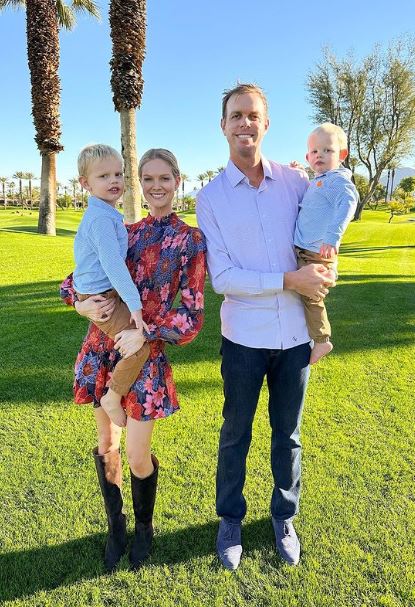
This Mother’s Day, treat your loved one with a delightful brunch experience at Winchester Mystery House, complete with delicious food, live music and a Mansion Tour! 💐

Tickets on sale now, learn more at the link in bio. https://winchestermysteryhouse.com/

Human Perfection is Not Only Possible but Inevitable

There is all the difference between a sturdy independence and an inflated self-esteem. An experience which is a blow to his ego ought to be received with humility and analysed with impartiality. However, too often the man receives it with resentment and analyses it with distortion. In the result he is doubly harmed: there is the suffering itself and there is the deterioration of character. We sin by wandering away from our true inner selves, by letting ourselves become immersed in the thoughts and desires which surround us, by losing our innermost identity and taking up an alien one. This is the psychology of sin as philosophy sees it. However, if it had not succeeded overcoming the bondage of flesh, feeling, and thought and penetrating by means of its flawless technique into the World of the divine spirit, which is the real man, it could not have gained the knowledge for such a view of man. He is to live for the praise and blame, not of other people, but of his own higher self. The distance from lip to heart is sometimes immense. Who has not known men who had God prominent in their heard speech but evil prominent in their silent desires? The philosophic way of living asks for more than most men possess, more command of the passions, more discipline of the thoughts, and more submissiveness to intuition. #RandolphHarris 1 of 20
The moral injunctions which he finds in this teaching and must follow out in his life, are based on understanding the relation between his higher self and his lower self. They are not arbitrary commands but inevitable consequences of applying the adage, “Man, know thyself.” When anyone takes advantage of it to bloster his own ego at the expense of those under him, there is an abuse of authority. He will be virtuous not merely because so many others are–it is safer, it stops the prodding of conscience, etcetera—but much more because it is essential to put up no obstructions to the light flowing from the Overself. When applying evolution and social Darwinism to society, we are doing poetic justice to its origins. The “survival of the fittest” was a biological generalization of the cruel processes which reflective observers saw at work in early nineteenth century society, and Darwinism was a derivative of political economy. The miserable social conditions of the early industrial revolution had provided the data for Malthus’ Essay on the Principle of Population, and Malthus’ observations had been the matrix of natural-selection theory. The stamp of its social origin was evident in Darwinian theory. “Over the whole of English Darwinism,” Nietzsche once observed, “there hovers something of the odor of humble people in need and in straits.” #RandolphHarris 2 of 20

Darwin acknowledged his great indebtedness to Malthus: “In October 1838, that is, fifteen months after I had begun my systematic inquiry, I happened to read for amusement ‘Malthus on Population,’ and being well prepared to appreciate the struggle for existence which everywhere goes on from long-continued observation of the habits of animals and plants, it at once struck me that under these circumstances favorable variations would tend to be preserved and unfavorable ones to be destroyed. The result of this would be the formation of new species.” Spener’s theory of social selection, also written under the stimulus of Malthus, arose out of his concern with population problems. In two famous articles that appeared in 1852, six years before Darwin and Wallace jointly published sketches of their theory, Spencer had set forth the view that the pressure of subsistence upon population must have a beneficent effect upon the human race. This pressure had been the immediate cause of progress from the earliest human times. By placing a premium upon skill, intelligence, self-control, and the power to adapt through technological innovation, it has stimulated human advancement and selected the best of each generation for survival. #RandolphHarris 3 of 20

Because he did not extend his generalization to the whole animal World, as Darwin did, Spencer failed to reap the full harvest of his insight, although he coined the expression “survival of the fittest.” He was more concerned with mental than physical evolution, and accepted Lamarck’s theory that the inheritance of acquired characteristics is a means by which species can originate. This doctrine confirmed his evolutionary optimism. For if mental as well as physical charactersitics could be inherited, the intellectual powers of the race would become cumulatively greater, and over several generations the ideal man would finally be developed. Spencer never discarded his Lamarckism, even when scientific opinion turned overwhelmingly against it. Spencer called for a return to natural rights, setting up as an ethical standard the right of every man to do as he pleases, subject only to the condition that he does not infringe upon the equal rights of others. In such a scheme, the sole function of the state is negative—to insure that such freedom is not curbed. Fundamental to all ethical progress, Spence believed, is the adaptation of human character to the conditions of life. The root of all evil is the “non-adaptation of constitution to conditions.” Because the process of adaptation, founded in the very nature of the organism, is constantly at work, evil tends to disappear. While the moral constitution of the human race is still ridden with vestiges of man’s original predatory life which demanded brutal self-assertion, adaptation assures that he will ultimately develop a new moral constitution fitted to the needs of civilized life. #RandolphHarris 4 of 20

Human perfection is not only possible but inevitable: “The ultimate development of the ideal man is logically certain—as certain as any conclusion in which we place the most implicit faith; for instance that all men will die…Progress, therefore, is not an accident, but a necessity. Instead of civilization being artificial, it is a part of nature; all of a piece with the development of the embryo or the unfolding of a flower.” Some young much, such as actor Ian Nelson, who is wise beyond his years, also believes in the idea of human perfection. He has helped other people gain more success in their careers by sharing with them opportunities that were meant for him. And he has a very optimistic attitude about helping others become successful and sharing in their joy, but I guess that is why he is so successful. However, Spencer was ultra-conservative. His categorical repudiation of the state interference with the “natural,” unimpeded growth of society led him to oppose all state aid to the poor. They were unfit, he said, and should be eliminated. “The whole effort of nature is to get rid of such, to clear the World of them, and to make room for better.” Nature is as insistent upon fitness of mental character as she is upon physical character, “and radical defects are as much causes of death in the one case as in the other.” He who loses his life because of his stupidity, vice, or idleness is in the same class as the victims of weak viscera or malformed limbs. Under nature’s laws alike are put on trial. “If they are sufficiently complete to live, they do live, and it is well they should live. If they are not sufficiently complete to live, they die, and it is best they should die.” #RandolphHarris 5 of 20

To some, it must seem strangely out of tune with the modern World to speak of learning to be free. The growing opinion today is that man is essentially unfree. He is unfree in a cultural sense. He is all too obviously a pawn of government. He is molded by mass propaganda into being a creature with certain opinions and beliefs, desired and pre-planned by the powers that be. He is the product of his class—lower, middle, or upper—and his values and his behaviour are shaped by the class to which he belongs. So, it seems increasingly clear from the study of social institutions and influences, that man is simply the creature of his culture and his circumstances, and most decidedly is not free. At a still deeper level the behavioural sciences have added to this conception of man as unfree. Man is determined in part by his heredity—in his intelligence, his personality type, perhaps even his tendency toward mental aberration. He is above all the product of his conditioning—the inevitable result of the fortuitous events which have “shaped up” his behaviour. Many of our most astute behavioural scientists agree that this process of conditioning, of “shaping up” the individual’s behaviour, will no longer be left to chance, but will be planned. Certainly, the behavioural sciences are developing a technology which will enable us to control the individual’s behaviour to a degree which now would seem fantastic. #RandolphHarris 6 of 20

Along with the developlement of this technology has gone an underlying philosophy of rigid determinism in the psychological sciences which can perhaps best be illustrated by a brief exchange which I had with Professor B.F. Skinner of Harvard at a recent conference. A paper given by Dr. Skinner led me to direct these remarks to him. “From what I understood Dr. Skinner to say, it is his understanding that though he might have thought he chose to come to that meeting, might have thought he had a purpose in giving that speech, such thoughts are illusory. He made certain marks on paper and emitted certain sounds here simply because his genetic makeup and his past environment had operantly conditioned his behaviour in such a way that it was rewarding to make these sounds, and that he as a person does not enter this. In fact, if I get his thinking correctly, from his strictly scientific point of view, he, as a person, does not exist.” In his reply, Dr. Skinner said that he would not go into the question of whether he had any choice in the matter (presumably because the whole issue is illusory) but stated, “I do accept your characterization of my own presence here.” I do not need to labour the point that for Dr. Skinner the concept of “learning to be free” would be quite meaningless. #RandolphHarris 7 of 20

Thus, though there are opposing voices, the general thrust of the cultural trend throughout both the West and Communist World is to say that man is not free, that there is no such thing as a free man. We are formed and moved by forces—cultural forces without, and unconscious forces within—which we do not comprehend, and which are beyond our control. We will soon be formed more knowingly and more precisely by scientific technology which will replace the crude way in which we have been molded by practically fortuitous natural events. The age of information of our time prides itself on the fact that millions of people have a chance and, in fact, use the chance to listen to excellent live, recorded, or streamed music, to see art in the many museums in the country, and to read the masterworks of human literature from Plato to Anne Rice in easily available, inexpensive editions. No doubt for a small minority this encounters with art and literature is a genuine experience. For the vast majority, “culture” is another article of consumption and a status symbol since having seen the “right” pictures, knowing the “right” music, and having read the good books indicates college education and hence is useful for climbing the social ladder. The best of art has been transformed into an article of consumption, and it is reacted to an alienated fashion. The proof of this is that many of the very same people who go to concerts, listen to classical music, and buy a paperback Plato view tasteless and vulgar offerings on television without disgust. If their experience with art were genuine, they would turn off their television sets when they are offered artless, banal “drama.” #RandolphHarris 8 of 20

Yet man’s longing for the dramatic, that which touches upon the fundamental of human experience, is not dead. While most of the drama offered in theaters or on the screen is either a nonartistic commodity or is consumed in an alienated fashion, the modern “drama” is primitive and barbaric when it is genuine. In our day the longing for drama is manifested most genuinely in the attraction which real or fictionalized accidents, crimes, and violence have for most people. An automobile accident or fire will attract crowds of people who watch with great intensity. Why do they do so? Simply because the elemental confrontation with life and death breaks into the surface of conventional experience and fascinates people hungry for drama. For the same reason, nothing sells a newspaper better than reports of crime and violence. The fact is that whole on the surface the Greek drama or Rembrandt’s paintings are held in the highest esteem, their real substitutes are crime, murder, and violence, either directly visible on the television screen or reported in the newspapers. Some people suffer from an alienation of hope. One characteristic of the alienation of hope is the future becoming transformed into an idol. This idolatry of history can be clearly seen from Robespierre’s point of view. “O posterity, sweet and tender hope of humanity, thou art not a stranger to us; it is for thee that we brave all the blows of tyranny; it is thy happiness which is the price of our painful struggles: often discouraged by the obstacles that surround us, we feel the need of thy consolations; it is to thee that we confide the task of completing our labours, and the destiny of all the urban generations of me!… Make haste, O posterity, to bring to pass the hour of equality, of justice, of happiness!” #RandolphHarris 9 of 20

Similarly, a distorted version of Marx’ philosophy of history has often been used in the same sense by Communists. The logic of this argument is: whatever is in accord with the historical trend is necessary, hence good and vice versa. In this view, whether in the form of Robespierre’s or the communist argument, it is not man who makes history but history that makes man. It is not man who hopes and has faith in the future but the future that judges him and decides whether he had the right faith. Marx expressed very succinctly the opposite view of history to the alienated one I just quoted. “History,” he wrote in The Holy Family, “does nothing, it possesses no colossal riches, it fights no battles! It is rather man, actual and living man, who does all this; ‘history’ does not use man as a means for its purposes as though it were a person apart; it is nothing but the activity of man pursuing his ends.” Not only are all forms of depression, dependence and idol worship (including the “fanatic”) direct expressions of, or compensations for, alienation; the phenomenon of the failure to experience one’s identity which is a central phenomenon at the root of psychopathological phenomena is also a result of alienation. Precisely because the alienated person has transformed his own functions of feeling and thought to an object outside, he is not himself, he has no sense of “I,” of identity. This lack of a sense of identity has many consequences. The most fundamental and general one is that it prevents integration of the total personality, hence it leaves the person disunited within himself, lacking either capacity “to will one thing” or if he seems to will one thing his will lack authenticity. #RandolphHarris 10 of 20

In the widest sense, every neurosis can be considered an outcome of alienation; this is so because neurosis is characterized by the fact that one passion (for instance, for money, power, women, etcetera) becomes dominant and separated from the total personality, thus becoming the ruler of the person. This passion is his idol to which he submits even though he may rationalize the nature of his idol and give it many different and often well-sounding names. He is ruled by a partial desire, he transfers all he has left to this desire, he is weaker the stronger “it” becomes. He has become alienated from himself precisely because “he” has become the slave of a part of himself. Now, in our case study, Clare was unable to let go of a man, for whatever reasons. The repression of her resentment is striking as she was fully aware of her disappointment at Peter, the man she was involved with, staying away. Moreover, on such an occasion resentment would certainly have been a natural reaction, and it was not in her character never to allow herself to be angry at anyone; she often was angry at people, though it was characteristic of her to shift anger from its real source to trivial matters. However, raising this question, while apparently only a routine matter, would have meant broaching the subject of why the relationship with Peter was so precarious that any disturbance of it had to be shut out of awareness. #RandolphHarris 11 of 20

After Clare had thus managed to shake off the whole problem from her conscious mind, she fell asleep again and had a dream. She was in a foreign city; the people spoke a language that she did not understand; she lost her way, this feeling of being lost emerging very distinctly; she had left all her money and luggage deposited at the station. Then she was at a fair; there was something unreal about it, but she recognized gambling stands and a freak show; she was riding on a merry-go-round which turned around more and more quickly so she was drifting on waves, and she woke up with a mixed feeling of abandon and anxiety. The first part of the dream reminded her of an experience she had had in adolescence. She had been in a strange city; had forgotten the name of her hotel and had felt lost, as in the dream. Also, it came back to her that the night before, when returning home from the movie, she had felt similarly lost. The gambling stands and the freak show she associated with her earlier thoughts about Peter making promises and not keeping them. Such places, too, make fantastic promises and there, too, one is usually cheated. In addition, she regarded the freak show as an expression of her anger at Peter: he was a freak. What really startled her in the dream was the depth of the feeling of being lost. She immediately explained away her impressions, however, by telling herself that these expressions of anger and of feeling lost were but exaggerated reactions to her disappointment, and that dreams express feelings in a grotesque way anyhow. #RandolphHarris 12 of 20

It is true that the dream translated Clare’s problems into grotesque terms, but it did not exaggerate the intensity of her feeling. And even if it had constituted an exaggeration, it would not have been sufficient merely to dismiss it on that score. If there is an exaggeration it must be examined. What is the tendency that prompts it? Is it not an exaggeration but an adequate response to an emotional experience, the meaning and intensity of which are beyond awareness? Did the experience mean something quite different on the conscious and unconscious level? Clare felt just as miserable, as lost, as resentful as the dream and the earlier associations indicated. However, since she still clung to the idea of a close love relationship this realization was unacceptable to her. For the same reason she ignored that part of the dream about having left all her money in the luggage at the station. This was probably a condensed expression of her feeling that she had invested all she had in Peter, the station symbolizing Peter and connoting something transitory and indifferent as opposed to the permanence and security of home. And Clare disregarded another striking emotional factor in the dream when she did not bother to account for its ending with anxiety. Nor did she make any attempts to understand the dream. She contended with the superficial explanation of this and that element, and thus learned from it no more than she knew anyhow. #RandolphHarris 13 of 20

If Clare had probed more deeply, she might have seen the main theme of the dream as this: I feel helpless and lost; Peter is a great disappointment; my life is like a merry-go-round, and I cannot jump off; there is no solution but drifting; but drifting is dangerous. We cannot discard emotional experiences, however, as easily as we can discard thoughts unconnected with our feelings. And it is quite possible that Clare’s emotion experience of anger and particularly of feeling lost, despite her blatant failure to understand them, lingered on in her mind and were instrumental in her pursuing the path of analysis she subsequently embarked upon. While the public has been effectively educated to recognize symptoms of personality disorder and has been encouraged to seek professional consultation for emotional problems, the mental health movement has inevitably created problems as it has offered solutions. The nature of neurosis as presently defined is such as to encourage overinterpretation of the significance of a host of idiosyncrasies and eccentricities. The mental health educator has understandably, in the first phase of the moment, operated within the pathological framework afforded by essentially gross medical definitions of emotional illness. Emphasis has been upon detection and prevention of illness, rather than upon modes of achieving and maintaining beneficial mental health. The meaning of neurosis, ambiguous to begin with, has been subtly extended to cover a variety of cultural delusions, perhaps the most prominent which is the Western myth that a state of happpiness is both a primary and achievable goal of life. #RandolphHarris 14 of 20

One effect of the mental health movement has been to encourage many people to see their unhappiness. Psychotherapist, both visible and “invisible,” are increasingly confronted by would-be patients who do not manifest any of the more objective hallmarks of a neurotic problem, who do not complain of failures of productivity or achievement, who do not suffer from serious interpersonal conflicts, who are free of functional somatic complaints, who are not incapacitated by anxiety, or tormented by obsessions, whose objective life circumstances they confess are close to optimal. These seekers of help suffer freedom from complaint. The absence of conflicts, frustrations, and symptoms brings a painful awareness: of absence—the absence of faith, of commitment, of meaning, of the need to search out personal, ultimate values, or of the need to live comfortably and meaningfully each day in the face of final uncertainty. For increasing numbers of rational, educated, and thoughtful men the central struggle becomes one of finding and keeping an emotional and psychological balance between the pain of doubt and the luxury of faith. A distaste for this struggle, or an insistence on its resolution as a necessary condition for continued existence is at the heart of the philosophical neuroses. In contrast to the psychoneuroses, we have no established knowledge or technique to bring to bear this form of dis-ease. We do not have a scientifically confirmable matrix of ideas concerning how or what to teach those who suffer philosophical neuroses. #RandolphHarris 15 of 20

The philosophical neurotic suffers in his struggle to be both reasonable and hopeful, and he can be helped in his skirmish by access to human wisdom and by encouragement to expose himself to it. However, in this seeking for counsel and for opportunity to test doubt against faith or faith against doubt, he must not be misled to think that any group of experts has a corner on some specialized wisdom about the meaning of life or how to live it. It is an unfortunate side-effect of the mental health movement that a large portion of the limited psychotherapeutic resources afforded by psychiatrists and psychologists is being consumed by persons who suffer a philosophical anomie for which neither psychiatrist nor psychologist can offer specific therapy. The person with a philosophical neurosis deserves care and can be helped; it would be in his own interests and in the interest of social economy for him to be encouraged to seek guidance from those who are most practiced and equipped to think with him in the domain of values, meaning, ethics, and eschatology. Recognition of the philosophical neurosis and the special problems its presents have been delayed on the part of psychotherapists because the well-bred, well-fed, well-read qualities typical of this patient appeal to the intellectual and social prejudices of the therapist and make for spontaneous rapport and empathy. #RandolphHarris 16 of 20
In combating the general ignorance and superstition of the public about mental illness, the mental health movement has necessarily attacked the idea that emotional and mental problems should be a source of shame. The public has been taught that everyone has a basic susceptibility to psychological maladjustment and, furthermore, that a very large number of people in fact suffer from some degree of “nervousness.” All of this teaching is true and was most necessary in ending the shameful connotations that formerly prevailed. However, as an unfortunate consequence of these beneficial changes, neurosis has achieved respectability. In some sophisticated segments of our society it has become expected and accepted for the individual to acknowledge his “neurosis”–and to have all manner of immature, selfish, irresponsible behaviours explained by him (and accepted by his companions) as “symptoms” of his “sickness.” Among persons whose work demands some degree of creative imagination there is a popular stereotype which equates genius with neurosis. It becomes a tempting apology to substitute symptoms for effort; to manifest the temperament of an artist may be an easier road to achieving an artistic identity than to be truly creative. When individuals are volubly proud that they are “in therapy,” although they remain silent on the content and course of that self-discovering endeavour, with discussion of the causes and treatment reserved by socially sanctioned conspiracy of silence between therapist and client (or with normal social respect for the individual’s privacy), it may be wondered if the continuation of therapy is required at least in part because the patient is reluctant to lose the dramatic appeal of his status. #RandolphHarris 17 of 20

And when the patient does speak freely of the content of his therapeutic conversations to all willing listeners, it may be wondered if he suffers from lack of any other mental content with which he would hope to hold an audience. To be proud of an illness or a defect is a separate illness, and perhaps needs to be treated first. Man’s capacity to feel shame is not pathological in itself; pathology arises from what he does or fails to do about shame. Shame can be hidden by repression and denial, but the massive effort required to hide one’s shame results in symptoms. Or, shame can yield a sense of responsibility, and this can power a search for self-understanding, for self-acceptance, and for better behaviour. The mental health movement has lifted the pathological shame previously associated with emotional illness. Now it must be attentive to combat the tendency for the unashamed to have pathological pride in their maladjustment. Liars have a dangerous maladjustment, which is why they often answer a question with one of their own. The tactic of answering a question with a question buys the liar time to come up with something plausible. They are not the type to let the silence go by, so they fill it with something that cannot be used against them. And the old, I swear on a stack of Bibles tactic is an oath to beware of. What people will say to try to get themselves off the hook is insane. When you are sure they are lying, how important is it to you that you get to the bottom of things and make someone tell you the truth? #RandolphHarris 18 of 20

All that is best in the Christian virtues you will find in philosophic ones. Few are those who are psychologically ready for philosophy’s disciplines, which call, not merely for a reluctant control of the animal nature, but for an eager aspiration to rise above it altogether. Few are ready for its ethics, which all not merely for a willingness to abide by society’s protective laws, but for a generous disposition contently putting itself in someone else’s place. Firefighters with the Sacramento Fire Department certainly display the Christian virtues. One firefighter said, “I think just being around firefighters got me. It’s like being a sports fan, being there and watching you get to know more about it, and you have more admiration for the good ones. The firefighting process is like a well-oiled machine going to work. I for fascinated watching it and wanted to be a part of it. I was just so happy to go in there, and I always wanted to do the very best job I could, to keep it that way. When I was a kid, I thought the World of the Sacramento Fire Department. I want to hold up my end of it.” Today, I think the best way to get to know someone is by listening to their first-hand accounts about themselves. Many people are cowards and like to tear down people who shine, and do not get to know them personally. Instead, they choose to gossip about them, become jealous and form hate groups. I personally like talking to people and getting to know their story and about them. #RandolphHarris 19 of 20

Not everyone has a tragic story, nor is it unhappy. Recently, I found out a 29-year-old had been listening to classical music all week. And that really impressed me because it shows a rare level of maturity, and it gave me insight into his personality. It tells me that he is intelligent, cultured and probably very interesting. To make friends with someone, you have to know something about them and have something in common, and it is rare for people to disclose things about themselves to others. The Sacramento Fire Department has developed prestige in the community. People think, “boy, if you belong to that fire department, you’re really ‘in.’” People may say that they are a bunch of prima donnas, but they must be. If you belong to their fire department, you earn it. It is not easy to get in, but once you are in, you must produce, or you are out. Because you must get along with thirty other people or more, and if you do not pull your share, you will have a hard time. There is always a waiting list, people waiting to get in. And that is good. It may take two or three years before your number comes up. And there are sometimes some limiting factors. Sometimes residents are shown a preference. They pay attention to how long you have lived in the community and are you going to continue going to continue to live here. Once a team member is taken in, they want to keep them for at least twenty years. Please be sure to donate to the Sacrament Fire to ensure they are receiving all their resources. I pledge allegiance to the flag of the United States of America, and to the republic for which it stands, one nation under God, indivisible, with liberty and justice for all. #RandolphHarris 20 of 20

Asymmetry of facade is a characteristic of Victorian feature. Differing wall textures, such as the change from lap siding to fish scale shingles on the front-facing gable, is another distinguishing architectural trait. This inviting dwelling opens into a foyer sparking with light from the windows.

A semi-formal dining room and spacious great room provide ample space for holiday festivities. A master suite offers a handsome bath with separate vanities and a walk-in closet, which is as large as a bedroom. There also is a loft area, three other bedrooms, and three bathrooms and a powder room. This home offers a four bay car garage. One of the bays could be used as a gym or completed and used as another bedroom or a recreational area. https://cresleigh.com/magnolia-station/residence-4/


The Most Dangerous Job in the World

Evil must die ultimately as the weaker element, in the struggle with good. The persistence of force, manifested in the forms of matter and motion, is the stuff of human inquiry, the material with which philosophy must build. Everywhere in the Universe man observes the incessant redistribution of matter and motion, rhythmically apportioned between evolution and dissolution. Evolution is the progressive integration of matter accompanied by dissipation of motion; dissolution is the disorganization of matter accompanied by the absorption of motion. The life process is essentially evolutionary, embodying a continuous change from incoherent homogeneity, illustrated by the lowly protozoa, to coherent heterogeneity, manifested in man and the higher animals. From the persistence of force, anything which is homogeneous is inherently unstable, since the different effects of persistent force upon its various parts must cause differences to arise in their future development. Thus the homogeneous will inevitably develop into the heterogeneous. Here is the key to Universal evolution. This progress from homogeneity to heterogeneity–in the formation of the Earth from a nebular mass, in the evolution of higher, complex species from lower and simpler ones, in the embryological development of the individual from a uniform mass of cells, in the growth of the human mind, and in progress of human societies–is the principle at work in everything man can know. #RandolphHarris 1 of 18
No amount of description, regardless of how carefully it is presented, can convey an adequate impression of exactly what is involved in the process of reaching an understanding of oneself. The grown-up individual is not a child, and to talk about the child in him, or “his” unconsciousness, is using a topological language which does not do justice to the complexity of the facts. The neurotic, grown-up individual is an alienated human being; he does not feel strong, he is frightened and inhibited because he does not experience himself as the subject onto whom he projects all his own human qualities: his love, intelligence, courage, etcetera. By submitting to this object of transference, he feels in touch with this own qualities; he feels strong, wise, courageous, and secure. This mechanism, idolatric worship of an object, based on the fact of the individual’s alienation, is the central dynamism of transference, that which gives transference its strength and intensity. The less alienated person may also transfer some of his infantile experience to another persons, but there would be little intensity in it. The alienated individual, in search for and in need of an idol, finds the analyst and usually endows him with the qualities of his father and mother as the two powerful persons he knew as a child. Thus the content of transference is usually related to infantile patterns while its intensity is the result of the individual’s alienation. Needless to add that the transference phenomenon is not restricted to the analytic situation. It is to be found in all forms of idolization of authority figure, in political, religious, and social life. #RandolphHarris 2 of 18

Transference is not only the phenomenon of psychopathology which can be understood as an expression of alienation. Indeed, it is not accidental that alien, in French and alienado in Spanish, are older words for the psychotic, and the English “alienist” refers to a doctor who cares for the insane, the absolutely alienated person. Alienation as a sickness of the self can be considered to be the core of the psychopathology of modern man even in those forms which are less extreme than psychosis. Some clinical examples may serve to illustrate the process. The most frequent and obvious case of alienation is perhaps the false “great love.” A man has fallen enthusiastically in love with a woman; after she had responded at first, she is beset by increasing doubts and breaks off the relationship. He is overcome by a depression which brings him close to suicide. Life, he feels, has no more meaning to him. Consciously he explains the situation as a logical result of what happened. He believes that for the first time he has experienced what real love is, that with this woman, and only with her, could be experience love and happiness. If she leaves him, there will never be anyone else who can arouse the same response in him. Losing her, so he feels, he has lost his one chance to love. Hence it is better to die. #RandolphHarris 3 of 18

While all this is convincing to himself, his friends may ask some questions: Why is it that a man who thus far seemed less capable of loving than the average person is now so completely in love he seems to be unwilling to make any concessions, to give up certain demands which conflict with those of the woman he loves? Why is it that while he spears of his loss, he mainly speaks relatively little interest in the feelings of the woman he loves so much? If one speaks to the unhappy man himself, at greater length, one need not be surprised to hear him in fact as if he had left his heart with the girl he lost. If he can understand the meaning of his own statement, he can understand that his predicament is one of alienation. He never was capable of loving actively, of leaving the magic circle of his own ego, and of reaching out to becoming one with another human being. What he did was to transfer his longings for love to the girl and to feel that being with her he experiences his “loving” when he really experiences only the illusion of loving. The more he endows her not only with his longing for love but also for aliveness, happiness, and so on, the poorer he becomes, and the emptier he feels if he is separated from her. When actually he had made the woman into an idol, the goddess of love, and believed that by being united with her he experienced love, he was under the illusion of loving. #RandolphHarris 4 of 18

He had been able to initiate a response in her but he had not been able to overcome his own inner muteness. Losing her is not, as he thinks, losing the person he loves, but losing himself as a potentially loving person. Alienation of thought is not different from alienation of the heart. Often one believes he was thought through something, that his idea is the result of his own thinking activity; the fact is that he has transferred his brain to the idols of public opinion, the newspapers, the government or a political leader. He believes that they express his thoughts while in reality he accepts their thoughts as his own, because he has chosen them as his idols, his gods of wisdom and knowledge. Precisely for this reason he is dependent on his idols and incapable of giving up his worship. He is their slave because he has deposited his brain with them. An involuntary and in a deeper sense unwarranted dependency upon another person is a problem known to nearly everyone. Most of us deal with one or another aspect of it at one or another period of our lives, often not truly recognizing its existence and screening it instead behind such exquisite terms as “love” or “loyalty.” This dependency is so frequently because it seems to be a convenient and promising solution for many troubles we all have. It puts grave obstacles, however, in the way of our becoming mature, strong, independent people; and its promise of happiness is mostly fictitious. #RandolphHarris 5 of 18

Therefore a delving into some of its unconscious implications may be interesting and helpful, even apart from the question of self-analysis to anyone who regards self-reliance and good relationships with others as desirable goals. After several months of not very productive efforts at self-analysis Clare awoke one Sunday morning with an intense irritation at an author who failed to keep his promise to send an article for the magazine she edited. This was the second time he had left her in the lurch. It was intolerable that people should be so unreliable. Soon after it struck her that her anger was out of proportion. The whole matter was scarcely of sufficient importance to wake her up at five in the morning. The mere recognition of a discrepancy between anger and alleged provocation made her see the real reason for the anger. The real reason also concerned unreliability, but in a matter more close to her heart. Her friend Peter, who had been out of town on business, had not returned for the weekend as he had promised. To be exact, he had not given a definite promise, but he had said that he would probably be back by Saturday. He was never definite in anything, she told herself; he always aroused her hopes and then disappointed her. The fatigue she had felt the night before, which she had attributed to having worked too hard, must have been a reaction to her disappointment. #RandolphHarris 6 of 18

She had hoped for an evening with Peter, and then, when he did not show up, she had gone to a movie instead. She could never make engagements because Peter hated to make definite dates in advance. The result was that she left as many evenings free as she possibly could, always harbouring the disquieting thought, would he or would he not be with her? While thinking of this situation two memories occurred to her simultaneously. One was an incident that her friend Eileen had told her years before. Eileen, during a passionate but rather unhappy relationship with a man, had fallen seriously ill with pneumonia. When she recovered from the fever she found to her surprise that her feelings for the man had died. He tried to continue the relationship, but he no longer meant anything to her. Clare’s other memory concerned a particular scene in a novel, a scene that had deeply impressed her when she was an adolescent. The first husband of the novel’s heroine returned from war, expecting to find his wife overjoyed at his return. Actually the marriage had been torn by conflicts. During the husband’s absence the wife’s feelings had changed. She did not look forward to his coming. He had become a stranger to her. All she felt was indignation that he could be so presumptuous as to expect love just because he chose to want her–as if she and her feelings did not count at all. #RandolphHarris 7 of 18

Clare could not help realizing that these two associations pointed to a wish to be able to break away from Peter, a wish that she referred to the momentary anger. However, she argued, I would never do it because I love him too much. With that thought ths fell asleep again. Clare made a correct interpretation of her anger when she saw it as caused by Peter rather than by the author, and her interpretation of the two associations was right. However, despite this correctness the interpretations, as it were, lacked depth. There was no feeling whatever for the force of the resentment she harboured against Peter. Consequently she regarded the whole outburst as only a transient grievance, and thus discarded much too lightly the wish to tear loose from him. Retrospectively it is clear that at that time she was far too dependent on Peter to dare to recognize either resentment or a wish for separation. However, she had not the slightest awareness of any dependency. She ascribed the apparent ease with which she overcame the anger to her “love” for her friend. This is a good example of the fact that one will get no more out of association than one can stand at the time, even though, as in this instance, they speak an almost unmistakable language. Clare’s basic resistance against the import of her associations explains why she did not raise certain questions that they suggested. #RandolphHarris 8 of 18

It is significant, for example, that both of them, while connoting a general way a wish to break off, indicated a very special form of breaking off: in both instances the woman’s feelings faded out while the man still wanted her. This was the only ending of a painful relationship that Clare could visualize. To break away from Peter on her own initiative was unthinkable because of her dependency upon him. The idea that he could break away from her would have aroused sheer panic though there are good reasons to infer that she felt deep down that he did not really want her while she hung on to him. Her anxiety on this score was so deep that it took ger considerable time to realize the mere fact that she was afraid. It was so great that even when she discovered her fear of desertion, she still closed her eyes to the rather obvious fact that Peter wanted a separation. In thinking of incidents in which the woman herself was in a position to reject the man Clare revealed not only a wish to be free but also a desire for revenge, both deeply buried and both referring to a bondage which was itself unrecognized. Here lies the connection between beauty and truth. Beauty is not the opposite of the “ugly,” but of the “false”; it is the sensory statement of the suchness of a thing or a person. #RandolphHarris 9 of 18

To create beauty presupposes a state of mind in which one has emptied oneself in order to fill oneself with what one portrays so that one becomes it. “Beautiful” and “ugly” are merely conventional categories which vary from culture to culture. A good example of our failure to comprehend beauty is the average person’s tendency to cite a “sunset” as an example of the beautiful, as if rain or fog were not just as beautiful, although sometimes less pleasant for the body. All great art is by its very essence in conflict with society with which it coexists. It expressed the truth about existence regardless of whether this truth serves or hinders the survival purposes of a given society. All great art is revolutionary because it touches upon the reality of man and questions the reality of the various transitory forms of human society. Even an artist who is a political reactionary is more revolutionary–if he is a great artist–than the artists of “socialist realism” who only mirror the particular form of their society with its contradictions. It is an astonish fact that art has not been forbidden throughout history by the powers that were and are. There are perhaps several reasons for this. One is that without art man is starved and perhaps not even useful for the practical purposes of his society. #RandolphHarris 10 of 18

Another is that by his particular form and perfection of the great artist was an “outsider” and hence while he stimulated and gave life, he was not dangerous because he did not translate his art into political terms. Besides that, art usually reached only the educated or politically less dangerous classes of society. The artists have been the court jesters of all past history. They were permitted to say the truth because they presented it in its particular but socially restricted artistic form. A self-initiated process of learning to be free is composed of movement from as well as movement toward. From being persons driven by inner forces they do not understand, fearful and distrustful of these deeper feelings and of themselves, living by values they have taken over from others, they move significantly. They move toward being persons who accept and even enjoy their own feelings, who value and trust the deeper layers of their nature, who find strength in being their own uniqueness, who live by values they experience. This learning, this movement, enables them to live as more individuated, more creative, more responsive, and more responsible persons. People are often sharply away of such directions in themselves, as they move with fearfulness toward being freely themselves. #RandolphHarris 11 of 18
It is a painful paradox of civilization that so many of our major discoveries seem to contribute almost equally to the solution of one problem and the creation of another. Dynamite is perhaps the most often noted example, but there are many others. Our discoveries seems to extricate us from an old set of limitations only to burden us with new frustrations. Happily, there seems to be a period of relatively unadulterated enjoyment of each new technological advance. However, sooner or later, its “fringe” limitations come to equal or even surpass its benefits. Thanks to the invention of the Ultimate Driving Machine we have had a marvelous mobility and a great expansion of our “living space,” and now we have an increasingly serious problem of what to do with out cars when they are not in use. Discovery of nuclear fission may have helped to end one way, but now we are threatened by a way of total annihilation. The industrial revolution which enormously increased the supply of goods has been augmented by scientific advances in the twenty-first century that threaten to poison the air we breathe, pollute the water we drink and the food we eat. Automation of industry has made possible better control of processes and more efficient production with fewer workers, and it is as yet uncertain whether we shall be able successfully to absorb the displaced and unneeded labour force as our industries become increasingly places of auto-facture rather than manufacture. #RandolphHarris 12 of 18

Medical science and modern technology have added significantly to longevity. Each year our population receives a sizable increment of persons who have been retired from the productive community and who may live another five or ten years; we find we must cope directly with the problem of supplying meaning to these “golden years.” In light of the ageless struggles to maintain and extend biological life against the assaults of famine and pestilence, in light of the individual struggle to protect health and preserve life, it is a poignant paradox that we must search out ways to help the retired warrior to cope with a life that is now secure, comfortable, and certain. It is an important fact to which all psychotherapists should be fully sensitive that for very many persons when the steadily recurrent daily problems of work–of earning, of building, of planning, of saving–are over, the problem of meaning comes promptly pressingly to the fore. Enjoyment of existence does not come naturally to the person whose earlier life has given neither time nor stimulus to question ultimate purpose or to explore for meanings that superscribe the orientation provided by inescapable basic demands for effort. Thus, paradoxically, each new freedom brings the possibility of new entrapments. We may wonder whether the pace of discovery may soon achieve so many solutions that the problems created by those solutions will surpass our problem-solving capacities! #RandolphHarris 13 of 18

At any place along the road of life, one may turn one’s back on ignorant habits and seek to create better ones. If society find him an odd creature, if it laughs at his peculiarities of belief or frowns at his departures from convention, then he must not blame society. He must accept the situation as inescapable and submit to its unpleasantness as being better than the littleness of surrender. The quest is carried on always under silent and continual pressure. The earnest aspirant will strive to love well where formerly he lived ill, will keep looking for better ideals. As if it were enforced by outside authority, few are ready to impose such a discipline upon themselves; but if they applied what they know, many more could to a little better. Some temptations come on slowly, but others suddenly and before he fully realizes what is happening to him. Whatever the way they come–and this depends partly on his personal temperament, partly on the nature of the temptation–he should prepare himself in advance by fortifying the weaker places in his character. The negative quality can be rubbed away gradually by brining counter qualities into the field against it. He is expected to put forth the effort needed to dispel a negative emotion or to destroy a negative thought, since such will not go away of itself. #RandolphHarris 14 of 18

When the mind is sufficiently purified, it receives intuitions more easily and nurtures aspirations more warmly. Tread firmly on negative thoughts, eject them from the mind as soon as they appear, and give them no chance to grow. Spite, envy, moroseness, despondency and denigrating criticism should all be denied entry. A prompt and decisive “No!” to the suggestion or impulse as soon as it appears, prevents it from gathering strength and becoming uncontrollable. The quickness with which an impulse moves him to action may hide its beginning in him. However, the moment is there: by self-training it may be perceived in time, and inhibition or control applied with more and more success. His intellectual clarity must be deep and his emotional tolerance broad. It is always a pity when thinkers are not equal to their own thoughts. The gain of building an equable character and evenness of mind is not only a spiritual one, it is also a contribution to person happiness. He will not agree to act under threat. Every such attempt to intimidate him makes him only more determined to resist it and to reject the desired action. The power which man spends in the passions and emotions of his lower nature will, when governed and directed upward in aspiration to his higher nature, give him the knowledge and bliss of the Overself. #RandolphHarris 15 of 18

It is not enough to follow a wholesome diet and a healthy way of life. The seeker after a better existence must match with these advanced his thoughts and emotion. By focusing national attention on the numbers and needs of the thousands of patients who suffer incapacitating emotional illness, the mental health movement has served to arouse attention and to mobilize efforts in their behalf. It has won increased expenditures to provide better facilities, more personnel, more and better treatment for the hospitalized patient. It has stimulated the founding of clinics so that milder disturbances may come to early diagnosis and it has encouraged the provision of resources for early outpatient therapy so that developing symptoms can be halted in their first stages and prevented from progression into complete disruption of the personality. The mental health movement has achieved a significant increase in public enlightenment in regard to mental illness. There has been a reduction in the older attitudes of fear and distrust of the mentally ill. Each year fewer and fewer persons remain who hold to an archaic attitude of shame toward any implication of mental illness in themselves or their families. The public has been effectively educated to recognize symptoms of personality disorder and has been encouraged to seek professional consultation for emotional problems. #RandolphHarris 16 of 18

One has to live for praise and blame, not for other people, but for one’s higher self. As we will see, being a firefighter is a lot of responsibility. “As soon as I got out of high school, I put in my application to the Sacramento Fire Department. The written exam was easy. The physical exam was challenging. I knew it was very demanding because my brother had gone through it three years earlier. I was a short, stocky kid, only five-eight. But I knew how to train, and I trained harder than anybody else. All I did was run stairs. I did well on the tests, but there were about twelve hundred people taking the test, and I was kind of downhearted. I heard the results the same day I was taking my final exam for my EMT classes. I was flying high, I was ecstatic, it was a lifelong dream come true for me. But it was scary, too. My dad had never talked to me about the job until I put my application in. Then he was telling me, it’s the most dangerous job in the World, you’ve got to watch yourself, every day you go to work you could get killed. I know that now. We had a grass fire in our backyard, and my wife got to talking to a couple of the firefighters out there. She had heard me talking about wanting to join the fire department. And one of the firemen said, ‘Yeah, we’re looking for a couple of guys here.’ It just kind of went from there. #RandolphHarris 17 of 18

“I put in an application at City Hall, and about a week later they called me. There wasn’t any kind of written test. I tool the physical, and a small oral test there with the captain. The first thing he asked me was how my driving record was. He wanted to know if I had points on my license or any kind of bad record. If I did, there would have been almost no kind of chance of my getting on. To me it was a chance to serve the community.” The Sacramento Fire Department works hard and risks their lives everyday to protect us. Please be kind and make a donation to the Sacramento Fire Department. I pledge allegiance to the flag of the United States of America, and to the republic for which it stands, one nation, under God, indivisible with liberty and justice for all. Do you desire life and seek length of days? Then keep your tongue from evil, and your lips from deceit. Depart from evil and do good, seek peace and pursue it. Keep the commandment of your father, and forsake not the teaching of your mother. Keep them continually in your heart so that they may lead you in the right path. When you lie down, they shall watch over you, and when you awaken, they shall talk with you. For the commandment is a lamp, yea, the Word of God is a light. Get knowkedge and understanding; turn not away from wisdom. #RandolphHarris 18 of 18
The Winchester Mystery House
A series of remarkable occurrences, which caused great excitement, are said to have taken place in September 1888 at The Winchester Mystery House. As dusk was closing in, Mrs. Winchester was about to get ready for tea. The cups and saucer had been arranged on the table, and one of them fell to the floor and smashed. Of course Mrs. Winchester was a little surprised at this; but directly afterwards when she saw the table partially turned over, apparently without being touched, and all the cups fall, she was thoroughly frightened. A small timepiece which stood on the mantelshelf was thrown on the floor. As a servant was getting a number of articles out of the house, a large kitchen table followed him to the door, and it would have probably gone further if the width of the door would have allowed it. Meanwhile things in the parlour continued the same course. Mrs. Winchester’s volume of the Pilgrim’s Progress came flying though the parlour door and out to the walk opposite the front door; whence, after laying there a short time, it jumped up on the windowsill! To this very day, mysterious affairs take place at The Winchester Mystery House.
Come and enjoy a delicious meal in Sarah’s Café, stroll along the paths of the beautiful Victorian gardens, and wonder through the miles of hallways in the World’s most mysterious mansion. For further information about tours, including group tours, weddings, school events, birthday party packages, facility rentals, and special events please visit the website: https://winchestermysteryhouse.com/

Please visit the online giftshop, and purchase a gift for friends and relatives as well as a special memento of The Winchester Mystery House. A variety of souvenirs and gifts are available to purchase. https://shopwinchestermysteryhouse.com/

We Pay So Much Attention to Where We Live, So Little to When

The individual who wants the spiritual prizes of life must elevate one’s thoughts and ennoble one’s impulses. One will prudently look ahead not only to the consequences of one’s actions but also of one’s thoughts. One must be prepared to spend a whole lifetime in making this passage from aspiration to realization. Petal-by-petal the bud of one’s growing virtues will open as the years pass. One’s character will be transformed. The old Adam will become a new man. The progressing disciple who reaches an advanced state will find that one’s powers of mind and will develop accordingly. Where they are not accompanied by sufficient self-purification, they may become dangerous to oneself and hurtful to others. One’s vigilance over thought and feeling must become greater accordingly. To dwell upon thoughts which belong to a lower level out of which one has climbed may open up a pitfall in one’s path; to hold bitter feelings against another person may throw discord into that person’s life. One’s outer conduct should be brought into agreement with the soaring aspiration of one’s inner life. When the one is antithetical to the other, the result will be chaos. That individual has attained mastery whose body yields to the commands of reason and whose tongue obeys the orders of prudence. #RandolphHarris 1 of 20
When the body’s appetites and the intellect’s curiosity get an excessive grip on an individual, they throw an air of unreality on aspiration which soars beyond both. This makes intuitive feeling and metaphysical thinking seem irksome or trivial. Those who do not have the strength of will to translate into practice the ideals which they accept in thought need not despair. It can be got by degrees. Part of the purpose of ascetic exercises is to lead to its possession. There is knowledge available, based on ancient and modern ascetic experiences, which can be applied to liberate the moral nature from its weakness. One who puts one’s lower nature under control puts oneself in possession of forces, gifts, possibilities, and satisfactions that most other humans lack. If a person’s inner life is repeatedly wasted by passion, one will know no assured peace and attain no enduring goal. One must govern oneself, rule one’s passions, and discipline one’s emotions. One must strengthen one’s higher will at the expense of one’s lower one. For the first promotes one’s spiritual evolution whereas the second inflames one’s animal nature. Faith is needed to make the basic change in one’s thinking, the change which takes one out of the past’s grip. If one takes up new thoughts, a new life is possible. If one lets compromise with the World, or lapses from the right moral standard, slip beyond a certain mark, one will pay commensurately for it. #RandolphHarris 2 of 20
Man’s drives inasmuch as they are trans-utilitarian, are an expression of a fundamental and specifically human need: the need to be related to man and nature and to confirm oneself in this relatedness. These two forms of human existence, that of food gathering for the purpose of survival in a narrow or broader sense and that of free and spontaneous activity expressing man’s faculties and seeking for meaning beyond utilitarian work, are inherent in man’s existence. Each society and each man has it own particular rhythm in which these two forms of living make their appearance. What matters is the relative strength which each of the two have and which one dominates the other. It is not only a matter of self-betterment but also of self-respect for an honourable man. The man whom he has looked upon as himself must be left behind; the New man, who he is to become, must be continually with him in thought, aspiration, will, and deed. This it is to be truly human for it brings man into a more perfect state. To sneer at the philosophic ideal as being inhuman is really to sneer at it for rejecting the evils and weaknesses and deformities of the Worldly ideal. The moment a negative idea appears, repudiate it automatically by the use of counter-affirmations and imagination, which is the gate to creative subconscious mind. #RandolphHarris 3 of 20

Such negative thoughts as animosity and jealousy must be rooted out like weeds as fast as they spring up. This is both the easier and more effective way in the end. The man who has not learned to control himself is still only a fractional man, certainly not the true man that Nature is trying to produce. When he cannot live with his negative side any longer, illumination will come and stay. Character is tested by afflictions more than by prosperity. The first stage is to expunge the evil in his heart and to raise the good in it to the highest possible octave. If he holds these as ideals, a personal character which will be beautiful, a way of life which will be the best, a man is more likely to come by them. When allowing thoughts to enter his mind, as when allowing strangers to enter his home, he needs to be as fastidious. If a man lives in mental and emotional negativity, the removal of his physical residence to another place will in the end benefit him less than if he removes himself from the negativity. The building-up of character naturally brings a better sense of proportion in one’s dealings and outlook. Be seeing good in all persons, you become good, but if you see evil, the evil in you will augment. People seem not to see that their opinion of the World is also a confession of character. We can only see what we are. #RandolphHarris 4 of 20

He must become thoroughly sick of his mistakes and sins before he will take the trouble to develop by self-training his discriminatory faculties and moral ideals. We can combat feat by remembering that the Overself is always with us. The power of such thinking is its rightness and its constructiveness. It is right bvecause the Overself is the real source of strength and courage so that recalling its ever-presence in us helps to tap that source. It is constructive because it uses up the energy that would otherwise have gone into the fear-thoughts. Both action and thought share in the double nature of this polarity. Activity on the level of survival is what one usually calls work. Activeness on the trans-survival level is what one calls play, or all those activities related to cult, ritual, and art. Thought also appears in two forms, one serving the function of survival and one serving the function of knowledge in the sense of understanding and intuiting. This distinction of survival and trans-survival thought is very important for the understanding of consciousness and the so-called unconscious. Our conscious thought is that type of thinking, linked with language, which follows the social categories of thought imprinted in our thinking from early childhood. Our consciousness is essentially the awareness of such phenomena which the social filter composed of language, logic, and taboos permits us to become aware of. #RandolphHarris 5 of 20

Those phenomena which cannot pass the social filter remain unconscious or, more accurately speaking, we are unaware of everything that cannot penetrate to our consciousness because the social filter blocks its entry. This is the reason why consciosuness is determined by the structure of society. However, this statement is only descrptive. Inasmuch as man has to work within a given society, his need for survival tends to make him accept the social conceptualizations and hence to repress that which he would be aware of had his consciousness been imprinted with different schemata. If he studies other cultures, this is not difficult for the reader to find in his own example. The categories of thought in the industrial age are that of quantification, abstraction and comparison, of profit and loss, of efficiency and inefficiency. The member of a consumer society of the present day, for example, is encouraged, but not required to repress pleasures of the flesh because so many people are Worldly and pleasures of the flesh seems to be the number one past time for many by the schemata in the age of information. The member of the middle class of the nineteenth century who was busy accumulating capital and investing it rather than consuming it, had to repress pleasures of the flesh because they did not fit into the acquisitive and hoarding mood of his society, or, more correctly, of middle classes. #RandolphHarris 6 of 20
If we think of medieval or Greek society or of such cultures as the Pueblo Indians’ we can easily recognize that they were very conscious of different aspects of life to which their social filter granted entry into consciousness while others were tabooed. The most eminent case in which man does not have to accept the social categories of his society is when he is asleep. Sleep is that state of being in which man is free from the need to take care of his survival. While he is awake, he is largely determined by the survival function; while he is asleep, he is a free man. As a result, his thinking is not subject to the thought of categories of his society and shows that peculiar creativity which we find in dreams. In dreams, man creates symbols and has insights into the nature of life and of his own personality which he is incapable of having while he is the creature busy with food gathering and defense. Often, indeed, this lack of contact with social reality can cause him to have experiences and thoughts which are archaic, primitive, malignant, but even those are authentic and represent him rather than the thought patterns of his society. In dreams, the individual transcends the narrow boundaries of his society and becomes fully human. That is why Dr. Freud’s discovery of dream interpretation, even though he looked basically for the repressed instinct for pleasures of the flesh, has paved the way for the understanding of the uncensored humanity which is in all of us. (Sometimes children, before they have been sufficiently indoctrinated by the process of education, and psychotics who have served all relationships to the social World manifest insights and creative artistic possibilities which the adapted adult cannot recover.) #RandolphHarris 7 of 20

However, dreams are only a special case of that trans-survival life of man. Its main expression is in rituals, symbols, painting, poetry, drama, and music. Our utilitarian thinking has, quite logically, tried to interpret all these phenomena as serving the survival function (a vulgarized Marxism has sometimes allied itself in substance although not in form with this type of materialism). More profound observers like Lewis Mumford and others have emphasized the fact that the cave paintings in France and ornaments on primitive pottery, as well as more advanced forms of art, have no utilitarian purpose. One might say that their function is to help the survival of man’s spirit, but not that of man’s body. He has only to resolve that he will always be faithful to his higher self and the trick is done. However, alas! resolution is one thing, execution another. If he finds himself attacked by a strong temptation or about to be overcome by an old obsession, he should at once think of the master, of his name and picture, and call for his help. Whether you live as a labourer or a lord, it is your character that counts most in the end. It is the ego that gives way to moods of sulkiness, bad temper, irritability, and impatience. Remember that on the outcome of your efforts to control yourself, your faults and emotions, your speech and your actions, much will depend for your Worldly and spiritual frame. He who controls the mind controls the body, for the one acts upon and through the other. #RandolphHarris 8 of 20

To yearn for something is to value. I have known this yearning “to be good” in all of us. No one is left out. I have known it in a British peer. I have known it in a man who hijacked a truck, got a Native American drunk and threw him off a moving truck, hit a burro and killed it, bashed in the radiator, and then drove the truck until the motor burned out and he landed in jail, while four small children were at home alone because their mother was in the hospital having a fifth one. I got him out of jail so that he could take care of his family, and he got me fired from my job. I also knew it in my best friend that killed himself. Before his suicide, I lived with knowing that he might kill my son and me, both of whom he loved, and that he might seriously injure other people, which he did not wish to do at all. It seemed to me that suicide might have seemed to him the only way to put an end to his hurting people, to doing what he did not want to do. Many people in America are hurting today. Everyone responds in terms of his own humanness, uncontaminated by all the phoney values with which we live. (The only exceptions were two very neurotic men and a few feeble-minded oldfolks who did not know what is going on.) In Hawaii during the week following the Japanese attack on Pearl Harbour, the military expected that the success of the attack would be followed by an invasion: they believed that when the Japanese planes reported to their carriers, then other ships would move in with troops like what was done to Mr. Hitler and Germany during World War II. #RandolphHarris 9 of 20

However, fast forward to post 911 America. Currently in 2024, there is an invasion going on at our southern boarder, and as many as 20,000,000 unknown people have flooded into this country and have been committing major crimes. The leaders of industry have warned the government that this is a serious crisis and they suspected that these people who are invading America could be preparing for an attack larger than 911, but no one in a position of power is doing anything to track these people, nor stop them from invading the nation. The problem is not only a lack of God, but also a lack of love. Many people are cafeteria Americans. They fly the flag, pretend to be proud of the country, but all they care about is American money. They disrespect the land, disrespect the people, ignore the needs of America and bleed her dry. These posers forget that people have died and become severely disabled from serving their country, and are doing nothing to protect it, but supposedly are trying to instill democracy in other places, while America is becoming a hostile, communist nation. It is very difficult for me to go on writing this. Tears blur my vision, no matter how many times I wipe them away. I sob, and that shakes me so that I cannot use the typewriter very well. I feel, “Oh, what is the use? How can I possibly convey it?” Many of us are silent. Trying to show respect or trying to feel for someone else. When they are scared, people can do the most frightful things. People fear that they could be wiped out at any moment, and that there is onluy now to live. We pay so much attention to where we live, so little to when. #RandolphHarris 10 of 20

Alienation corrupts and perverts all human values. By making economic activities and the values inheret in them, like gain, work, thrift, and sobriety, the supreme value of life, man fails to develop the truly moral values of humanity, the riches of a good conscience, of virtue, etcetra, but how can I be virtuous if I am not aware of anything? In a state of alienation, each sphere of life, the economic and the moral, is independent from the other, “each is concentrated upon a specific area of alienated activity and is itself alienated from the other. The needs of man in an alienated society are preverted into true weakness. Every man speculates upon creating a new need in another in order to force him to sacrifice, to place him in a new dependence, and to entice him into a new kind of pleasure and thereby into economic ruin. Everyone tries to establish over others an alien power in order to find there the satisfaction of his own egoistic need. With the mass of objects, therefore, there also increases the realm of alien entities to which man is subjected. Every new product is a new potentiality of mutual deceit and robbery. Man becomes increasingly poor as a man; he has increasing need of money in order to take possession of the hostile being. The power of money diminishes directly with the growth of the quantity of production, id est, his need increases with the increasing power of money. #RandolphHarris 11 of 20

The need for money is therefore the real need created by the modern economy, and the only need which it creates. The quantity of money becomes increasingly its only important quality. Just as it reduces every entity to its abstraction, so it reduces itself in its own development to a quantitative entity. Excess and immoderation become its true standard. This is shown subjectively, partly in the fact that the expansion of production and of needs becomes an ingenious and always calculating subservience to inhuman, depraved, unnatural, and imaginary apopetities. Americans are blessed with private property, but they do not know how to change crude need into human need; their idealism is fantasy, caprice and fancy. No eunch flatters his tyrant more shamefully or seeks by more infamous means to stimulate his jaded appetite, in order to gain some favour, than does the eunch of industry, the entrepreneur, in order to acquire a few silver coins or to charm the gold from the purse of his dearly beloved neighbour. Every produce is a bait by means of which the individual tries to entice the essence of the other person, his money. Every real or potential need is a weakness which will draw the bird into China’s pockets. As every imperfection of man is bound with Heaven, a point at which his heart is accessible to the priest, so every want is an opportunity for approaching one’s neighbour with the air of friendship, saying, “Dear Friend, I will give you what you need, but you know the conditio sine qua non. #RandolphHarris 12 of 20

“You know what the ink you must use in sining yourself over to me. I shall swindle you while providing your enjoyment.” All this constitues a universal exploitation of human commual life. The entrepreneur accedes to the most depraved fancies of his neighbour, plays the role of pander between him and his needs, awakens unhealthy appetities in him, and watched for every weakness in order, later, to claim the remuneration of this labour of love. The man who has thus become subject to his alienated needs is a mentally and physically dehumanized being…the self-conscious and self-acting commodity. This commodity-man knows only one way of relating himself to the World outside, by having it and by consuming (using) it. The more alienated he is, the more the sense of having and using constitutes his relationship to the World. The less you are, the less you express your life, the more you have, the greater is your alienated life and the greater is the saving of your alienated being. You have to listen hard to spot a liar. Often they shift from past to present tense. Moving from the past tense to the present means the person is getting into their brain–reliving the story they have made up to cover up what they have done. People will often tell a story as if they see it because in their minds, they see the story they have made up. It take a keen ear to pick up on the change in tense and why a person would do such a thing. When people are telling the truth, especially a breach of national security, they tend to stick with the most important details and speak in the past tense, since it already happened. #RandolphHarris 13 of 20

Sometimes when it comes to self-analysis, the analytical work at oneself will recede into the background. One will still observe one or another striking reaction and try to understand it, thus continuing the process of self-recognition, but in distinctly diminished intensity. One may be absorbed in personal work or in group activities; one may be engaged in a battle with external hardships; one may be concentrated on establishing one or another relationship; one may simply feel less harassed by one’s psychic troubles. At this time the mere process of living is more important than analysis, and it contributes in its own way to one’s development. The method in self-analysis is no different from that in work with an analyst, the technique being free associations. Whereas in working with an analyst the patient reports whatever comes into his mind, in working alone he begins by merely taking note of his associations. Whether he only notes them mentally or write them down is a matter of individual preference. Some people can concentrate better when they write; others find their attention distracted by writing. There are undoubtedly certain advantages in writing down one’s associations. For one thing, if he makes it a rule to put down a short note, a catchword, of every association, almost everything one will find that his thoughts do not wander off on a tangent so easily. At any rate he will notice the wandering more quickly. It may be, too, when it is all down on paper that the temptation to skip a thought or feeling as irrelevant is lessened. #RandolphHarris 14 of 20

However, the greatest advantage of writing is that it affords the possibility of going over the notes afterward. Frequently when he lets his mind dwell on his notes, a person will miss the significance of a connection at first sight, but will notice it later. Findings or unanswered questions that are not well entrenched are often forgotten, and a return to them may revive them. Or he may see the old findings in a different light. Or he may discover that he has made no noticeable headway, but is essentially still at the same point where he was several months ago. These two latter reasons make it advisable to jot down findings, and the main paths leading up to them, even though they may have been arrived at without taking notes. The main difficulty in writing, the fact that thoughts are quicker than the pen, can be remedied by putting own only catchwords. If most of the work is done in writing a comparison with diary-keeping is almost unavoidable, and an elaboration of this comparison may serve also to highlight certain characteristics of analytical work. If the latter is not a simple report of factual occurrences but is written with the further intention of truthfully recording one’s emotions experiences and motivations, the similarity with a diary suggests itself particularly. However, there are differences. A diary, at its very best, is an honest recording of conscious feelings, thoughts, and motivations. The revealing character it may have concerns emotional experiences unknown to the outside World rather than experiences unknown to the writer himself. #RandolphHarris 15 of 20

When Rousseau, in his Confessions, boasted of his honesty in exposing his masochistic experiences, he did not uncover any fact of which he himself was unaware; he merely reported something that is usually kept secret. Furthermore, in a diary, if there is any search for motivations, this does not reach beyond one or another loose surmise that carries little if any weight. Usually no attempt is made to penetrate beneath the conscious level. Culberston, for instance, in The Strange Lives of One Man, frankly reported his irritation and moodiness toward his wife but gave no hint as to possible reasons. These remarks do not implay a criticism of diaries or autobiographies. They have their value, but they are intrinsically different from an exploration of self. No one can produce a narrative about himself and at the same time let his mind run in free associations. There is still another difference which it is of practical importance to mention: a diary often glances with one eye toward a future reader, whether that reader be the writer at a future time or a wider audience. Any such side glance at posterity, however, inevitably detracts from pristine honesty. Deliberately or inadvertently the writer is bound, then, to do some retouching. He will omit certain factors entirely, minimize his shortcomings or blame them on others, protect other people from exposure. If he takes the least squint at admiring audience or at the idea of creating a master piece of unique value, when he writes down his associations, the same will happen. He will them commit all those sins that undermine the value of free associations. Whatever he sets down on paper should serve one purpose only, that of recognizing himself. #RandolphHarris 16 of 20

The mental hygiene movement has had a very significant beneficial impact on the problem of mental illness. There can be little doubt that it has contributed to an enhanced general level of mental health in our country. Certainly it has achieved marked improvement in public attitudes toward mental illness. As a perhaps unavoidable consequence of its educational effort it has created new and greater demands for psychotherapy and not all of the increased demand is fully appropriate. The pattern of psychotherapeutic practice in America is seriously unbalanced in that too many of the ablest, most experienced psychiatrists spend most of their time with patients who need them least. This has been unfortunate, though probably inevitable, consequence of the concept of mental illness as personal malfunctioning which in itself represents a gain in understanding. The trouble is that this view makes it impossible to draw the line, so that many persons who are showing essentially normal responses to the wear and tear of life or who are unhappy for reasons other than personal malfunctioning see themselves–and are seen by others–as proper candidates for psychotherapy. Philosophy is that disease for which it should be the cure. The mental hygiene movement has inadvertently added to the problem which it intended to reduce. It is time for the leaders of the mental health movement to put their minds to a touch philosophical analysis of problems which psychiatry and psychology have tended to neglect: to criteria of mental health, to delimitation of the meanings and forms of mental illness, to specification of precisely what are and what are not psychiatric problems. #RandolphHarris 17 of 20

It would be a beneficial contribution for mental health educators to develop ways of communicating to the public on such questions as: “When not to go to the psychiatrist,” or “What to do before you see a psychiatrist”; “What psychotherapy cannot do for you”; “Ten sources of helpful conversation”; “Problems which do not make you a ‘Mental Case.'” He who controls the mind controls the body, for the one acts upon and through the other. It is not enough to overcome the jealousy which begrudges other people’s having advantages denied us: we must also take the next step and overcome the envy which feels discontented at not having those advantages and continues to desire them for itself. Jealousy would go out of its way to hurt those others by depriving them of their possessions, but envy would not fall so low. When they oppose emotion and passion, once he forms this resolve to follow the bidding of intuition and reason, he will find it both a safeguard and a test. If at any time he should temporarily weaken from this resolve, he may become uncertain as to the correct course to pursue when at the crossroads. A willing discipline of the character by one’s own self may often take the place of an unwanted and unwilling discipline by outer events. He is to become an exemplar to the aspiring, a pattern-setter for those who would ennoble themselves. He must establish, for and over himself, an emotional discipline and intellectual control. He cannot successfully do this all at once, of course. Emotional tendencies and mental habits engendered by years of materialism cannot be overturned and eliminate in a single night. However, the goal must be there and must be kept in view. #RandolphHarris 18 of 20

A firefighter we will call Helmut share his experience about becoming a fireman. “When I got out of the military, I had the opportunity to get into the trucking industry. I was in it for ten years. I started out as an assistant to a dispatcher and worked up to operations manager. I trained people coming into the industry. I was doing pretty good, and I enjoyed it. The problem was that there was no real job security, and though the pay was good I was putting in too many hours. I was missing a lot of time with my family. I had to do it, though because I needed the job. Then I heard that the Sacramento Fire Department was giving a test. Up to that point, I’d actually thought about becoming a policeman. I was an MP in the military, and I thought maybe it would be a good field to get into. So I went down to City Hall and filled out the fire department application. I didn’t do it reluctantly, I just did it with a little bit of skepticism. I said to my wife, ‘Oh, I don’t really think anything is going to come of this, because I don’t think I’m going to make it.’ I knew that the cutoff age was thirty-six years, and at the time I was thirty-five, and I thought I really had to get in on this first class, otherwise I’m not going to make it. So they scheduled the test, and I studied hard for it while I was still doing trucking. And I was fortunate to have the ten-point veteran’s preference, so that added ten points to whatever score I got on the test. But I was concerned because so many people had taken the test. #RandolphHarris 19 of 20

“My sister called and told me, ‘Twenty-six thousand people took the test, so your changes of getting on are small.’ That depressed me, but I felt I’d done good because I did study hard and the test wasn’t that difficult. So my brother called me the next day and said, ‘Six thousand people walked out halfway through the test.’ So that lowered the odds. I thought, well, twenty thousand, that’s starting to sound better all the time. I kept calling, and some months later I was notified that I had aced the test, I was number six on the list. I was ecstatic, I thought, now I’ve got to be in first class. As it turned out, I was. And from then on, everything has been running smoothly. Everything has been great.” To make sure the Sacramento Fire Department is receiving all of the required resources, please make a donation. I pledge allegiance to the flag of the United States of America and to the republic for which it stands, one nation, under God, indivisible, with liberty and justice for all. The ideal man that he wants to be should be evoked, pictured, and adored daily. If greater wisdom brings an immunity to other men’s negative thoughts, it also brings the responsibility to stifle one’s own. When all malice and all envy are resolutely cast out of his nature, not only will he be the gainer by it in improved character and pleasanter blessings, but also those others who would have suffered as victims of his barbed words or ugly thoughts. The past is beyond recall, but the present is at our command. #RandolphHarris 20 of 20

The Winchester Mystery House

Farewell Week is here! The last day to experience our Walk With Spirits Tour is April 14, 2024!
Beginning today, all guests who participate will have the opportunity to sign a special guest book that will be preserved in our archives which will become a part of Winchester Mystery House history. And as a bonus, enjoy 13% off our upcoming Halfway to Halloween Flashlight Tours.

Come and enjoy a delicious meal in Sarah’s Café, stroll along the paths of the beautiful Victorian gardens, and wonder through the miles of hallways in the World’s most mysterious mansion. For further information about tours, including group tours, weddings, school events, birthday party packages, facility rentals, and special events please visit the website: https://winchestermysteryhouse.com/

Please visit the online giftshop, and purchase a gift for friends and relatives as well as a special memento of The Winchester Mystery House. A variety of souvenirs and gifts are available to purchase. https://shopwinchestermysteryhouse.com/

If You Want the Prizes of Life, You Must Elevate Your Thoughts
If he who suffers from the hallucination—for usually it is nothing less—that an ideal existence can be found by emigrating to some distant spot turns, himself into a different man, then it may be turned into a reality. Our higher nature bids us aspire to inner growth, development, self-control, and ennoblement. It goes further and seeks freedom from enslavement by the passions, thus lifting the human nature above the animal. Animal ties to the World are given, mediated by his instincts. Man, set apart by his self-awareness and the capacity to feel lonely, would be a helpless bit of dust driven by the winds if he did not find emotional ties which satisfied his need to be related and unified with the World beyond his own person. However, in contrast to the animal, he has several alternative ways thus to be tied. As in the case of his mind, some possibilities are better than others; but what he needs most in order to his sanity is some tie to which he feels securely related. The one who has no such tie is, by definition, insane, incapable of any emotional connection with his fellow man. The discontent with a spiritually unfulfilled life has a twofold origin—from personal experiences of the World outside and from vaguely felt pressures by the Soul within for the man to surpass himself. There is thus a reciprocal working of negative and positive feelings. #RandolphHarris 1 of 18

The easiest and most frequent form of man’s relatedness is his “primary ties” to where he comes from—to blood, soil, clan, to mother and father, or, in a more complex society, to his nation, religion, or class. These ties are not primarily of pleasures of the flesh, but they fulfill the longing of a man who has not grown up to become himself, to overcome the sense of unbearable separateness by continuing what “primary ties”–which are natural and necessary for the infant in his relationship to his mother—is obvious when we study the primitive cults of worship of the soil, of lakes, of mountains, or of animals, often accompanied by the individual’s symbolic identification with these animals (totem animals). We see it in the matriarchal religions in which the Great Mother and the goddess of fertility and of the soil are worshipped. There seems to be an attempt to overcome these primary ties to mother and Earth in the patriarchal religions, in which the great father, the god, king, tribal chief, law, or state are objects of worship. However, although this step from the matriarchal to the patriarchal cult in society is a progressive one, the two forms have in common the fact that man finds his emotional ties to a superior authority, which he blindly obeys. By remaining bound to nature, to mother or father, man indeed succeeds in feeling at home in the World, but he pays a tremendous price for this security, that of submission, dependence, and a blockage to the full development of his reason and his capacity to love. When he should become an adult, he remains a child. #RandolphHarris 2 of 18

Today the many individual cases of “mother fixation” are explained by orthodox psychoanalysts as a result of an undissolved tie to the mother. This explanation ignores the fact that the tie to mother is only one of the possible answers to the predicament of human existence. The dependent individual of the twenty-first century, living in a culture which in its social aspects expects him to be independent, is confused and often neurotic because his society does not provide him—as do more primitive societies—with the social and religious patterns to satisfy need for dependency. This fixation to mother is a personal expression of one of the answers to human existence which some cultures have expressed in religious forms. It is an answer, though one which conflicts with the full development of the individual. If only man finds a higher form of feeling at home in the World, if not only his intellect develops, but also his capacity to feel related without submitting, at home without being imprisoned, intimate without being stifled, only then can the primitive forms of incestuous ties to mother, soil, etcetera, of benign and of malignant ecstasies disappear. On a social scale, this new vision was expressed from the middle of the second millennium B.C. to the middle of the first millennium—one of the most remarkable periods in human history. The solution to human existence was no longer sought in the return to nature nor in blind obedience to the father figure, but in a new vision that man can again feel at home in the World and overcome his sense of frightening loneliness; that he can achieve this by the full development of his human powers, of his capacity to love, to use his reason, to create and enjoy beauty, to share his humanity with all his fellow men. Christianity proclaimed this new vision. #RandolphHarris 3 of 18

The new bond which permits man to feel at one with all men is fundamentally different from that of the submission-bond to father and mother; it is the harmonious bond of brotherhood in which solidarity and human ties are not vitiated by restriction of freedom, either emotionally or intellectually. This is the reason why the solution of brotherliness is not one of subjective preference. It is the only one which satisfied the two needs of man: to be closely related and at the same time to be free, to be part of a whole and to be independence. It is a solution which has been experienced by many individuals and also by groups, religious or secular, which were and are able to develop the bonds of solidarity together with unrestricted individuality and independence. In order to understand fully the human predicament and the possible chocies man is confronted with, we must understand that there is another conflict inherent in human existence. Inasmuch as man has a body and bodily needs essentially the same as those of the animal, he has built-in striving for physical survival, even though the methods he uses do not have the instinctive, reflexlike character which are more developed in the animal. Man’s body makes him want to survive regardless of circumstance, even of happiness or unhappiness, slavery of freedom. As a consequence of the will to survive, man must work or force other to work for him. #RandolphHarris 4 of 18

In the past history of man, most of man’s time was spent on food gathering. With the animal, it essentially means gathering the food in the quantity and quality his instinctive apparatus suggest to him. In man there is much greater flexibility in the kind of food he can choose; but more than this, man, once he begins the process of civilization, works not only to gather food but to make clothes, to build shelters, and, in the more advanced cultures, to produce the many things which are not strictly necesary for his physical survival but which have developed as real needs forming the material basis for a life which permits the development of culture. If man were satisfied to spend his life by making a living, there would be no problem. Although he does not have the instinct of ants, an antlike existence would nevertheless be perfectly tolerable. However, it is part of the human condition that man is not satisfied with being an ant, that aside from this sphere of biological or material survival, there is a sphere characteristic of man which one can all the trans-survival or trans-utilitarian sphere. What does this mean? Precisely because man has awareness and imagination, and because he has the potential of freedom, he had an inherent tendency not to be dice thrown out of the cup. He wants not only to know what is necesary in order to survive, but he wants to understand what human life is about. He is the only case of life being aware of itself. He wants to make use of those faculties which he has developed in the process of mere biological survival. #RandolphHarris 5 of 18

Hunger and pleasures of the flesh, as purely physiological phenomena, belong to the sphere of survival. (Dr. Freud’s psychological system suffers from the main error which was part of the mechanistic materialism of his time and which led him to build a psychology on those drivers which serve survival.) However, man has passions which are specifically human and transcend the function of survival. Nobody has expressed this more clearly than Marx: “Passion is man’s faculties striving to obtain their own object.” In this statement, passion is considered as a concept of relation or relatedness. The dynamism of human nature inasmuch as it is human is primarily rooted in this need of man to express his faculties in relation to the World rather than in his need to use the World as a means for the satisfaction of his physiological necessities. This means: because I have eyes, I have the need to see; because I have ears, I have the need to hear; because I have a mind, I have the need to think; and become I have a heart, I have the need to feel. In short, because I am a man, I am in need of man and the World. Marx makes very clear what he means by “human faculties” which relate to the World in a passionate way: “His human relationships to the World—seeing, hearing, smelling, tasting, touching, thinking, observing, feeling, desiring, acting, loving—in which all the organs of his individuality are the…expression (Betaetigung) of human reality…In practice I can only relate myself in a human way to a thing when the thing is related in a human way to man.” #RandolphHarris 6 of 18

Philosophy does not believe that any man is doomed to continue to sin, but that every man is capable of rising to a life higher than that which he has previously lived. It believes, too, in the forgiveness of sins and in the truth of hopefulness. It is not pessimistic but reasonably optimistic in its long-range views. Whatever within himself keeps a man from seeing the Real and knowing the True must be got rid of, or rectified. And whatever he lacks within himself and also keeps him away from them must be acquired. The struggle to attain these things may not interest most people, whose desire for self-improvement is not strong enough to move their will: but it is well worthwhile. There is a devilish cunning in the human ego, animalistic beastliness in the human body, angelic sublimity in the human soul. However, this is only the appearance of things. All three conditions are really mental conditions. They pertain, after all, to the mind. We must root out the evil or foster the good there and there alone. Occult power should not be sought until the battle for self-mastery has been largely won. The nobler part of his self may exist in a man even though he has not yet come to awakening. There are three activities which he needs to keep under frequent examination and constant discipline—his thoughts, his speech, and his action. The quester who wants to keep his integrity in a corrupt World may not be able to live up to his ideal but at least he need not abandon it. The direction in which he is moving does still count. #RandolphHarris 7 of 18

It is not his business to reform others while he himself remains as he is. The attack on them will only provoke them to answering attack. Temptation is easiest cast out at first thought. As the number of thoughts grow, control grows harder too. A year ago at New Year’s I was talking with a Navajo man who had said “Happy New Year” to me. I asked him if he thought the New Year would be good for him or if it would be like my own life, “I think there is no end to being down—and then things change. They go alone well, and I think ‘now at last, everything is all right’–and then it isn’t.” He nodded, and said simply, “Just like us.” There was complete acceptance that life was the same for both of us, even though I had never been hungry as he had, had never been in jail as he had, and had never been forced to submit to the imposition of another culture as he had. That this is true, I know through listening to a woman talk for seventeen hours, in three days, about her life. Her life had been as “different” from mine as mine from the Navajo’s. We had very little. This woman had been born to Old Masters, a yacht with a crew of twenty-eight men, and everything that went with that. The more I listened, the more I mew that there had been no difference between the lives of the Princess and the Pauper. The innerness the same. Sometimes it is clearly the mainstream of a person’s life even though smaller streams confuse it. Other times, it has showed only briefly in a person when through stress or ease the barriers went down. #RandolphHarris 8 of 18

This used to be a puzzle to me: which was the person? Other people said that what a person was most of the time was what he was, and this confused me, because it seemed reasonable and yet—what the person was at times in privacy seemed so much more vibrant, living, real. Sometimes his pouring out of it was almost more than I could bear, the agony of man’s knowing his inability to be what he knew himself to be. Sometimes it was gentle and tender, this knowing and so sad. Which is the person? A woman told me that one day she was at a football game waving a pennant and cheering, when suddenly the hand holding the pennant fell to her lap, and with all the excited mob around her she thought, “Why am I doing this? I haven’t enjoyed it for fifteen years.” Which was real—the fifteen years or the moment? The knowing of the realness in another person—his desperate desire to be non-hurtful, loving, responsive, constructive (or creative), at one with others—seems to me to explain why one person sometimes stays with another against all reason, and not necessarily with good judgment. A very simple “ignorant” woman, who had every reason to hate her being to know this, “He wants to be good.” Mothers often know this in their children and defend them—not their behaviour—when they are destructive. Observations, and the associations and question they arose, are the raw material. However, work on them takes time, as does every analysis. In a professional analysis, a definite hour is set apart every day or every other day. This arrangment is expedient but it also has certain intrinsic values. #RandolphHarris 9 of 18

Patients wiith mild neurotic trends can, without disadvantage, see the analyst merely when they are in trouble and want to discuss their difficuties. However, if a patient in the clutches of a severe neurosis were advised to come only when he really wanted to, he would probably play hooky whenever he had strong subjective reasons for not going on, that is, whenever he developed a “resistance.” This means that he would stay away when actually he needed the most help and when the most constructive work could be done. Another reason for regularity is the necessity to preserve some measure of continuity, which is the very essence of any systematic work. Both reasons for regularity—the trickiness of resistances and the necessity to maintain continuity—apply, of course, to self-analysis as well. However, here I doubt whether the observance of a regular hour would serve these purposes. The differences between professional analysis and self-analysis should not be minimized. It is much easier for anyone to keep an appointment with an analyst than with himself, because in the former instance he has a greater interest in keeping it: he does not want to be impolite; he does not want to expose himself to the reproach that he stayed away because of a “resistance”; he does not want to lose the value that the hour might have for him; he does not want to pay for the time reserved for him without having utilized it. These pressures are lacking in self-analysis. Any number of things that apparently or actually permit of no delay would interfere with the time set apart for analysis. #RandolphHarris 10 of 18

A regular, predetermined time for self-analysis is unfeasible also because of inner reasons—and these quite apart from the subject of resistances. A person might feel like thinking about himself during a spare half hour before dinner but resent it as a nuisance at a prearranged time before he leaves for his office. Or he may not find any time during the day but have the most illuminating associations while taking a walk at night or while falling asleep. In this respect, even if his zest to express himself is diminished, even the regular appointment with the analyst whenever he feels a particular urge or willingness to talk with him, but must appear at the analyst’s office at the arranged time. Because of external circumstances this disadvantage can scarcely be eliminated, but there is no good reason why it should be projected into self-analysis, where these circumstances are not present. Still another objection to rigid regularity in self-analysis lies in the fact that this process should not become a “duty.” The connotation of “have to” would rob it of its spontaneity, its most precious and most indispensable element. If a person forces himself to his daily exercises when he does not feel like taking them, there is no great harm done, but in analysis listlessness would make him lame and unproductive. Again, this danger may exist also in professional analysis, but there it can be overcome by the analyst’s interest in the patient and by the very fact of the common work. In self-analysis a listlessness produced by overstressed regularity is not so easily dealt with, and it may well cause the whole undertaking to peter out. #RandolphHarris 11 of 18

Thus in analysis regularity of work is not an end in itself but is rather a means that serves the two purposes of preserving continuity and combating resistances. The patient’s resistances are not removed because he always appears for his appointment at the analyst’s office; his coming merely enables the analyst to help him understand the factors at play. Nor is consistent punctuality any guarantee that he will not jump from one problem to another and gain only disconnected insights; it is an assurance of continuity only for the work in general. In self-analysis, too, these requirements are essential. Therefore, they do not demand a rigid schedule of appointments with oneself. If a certain irregularity in work should make a person shirk a problem, it will catch up with him. And even at the expense of time it is wiser to let it slide until he himself feels that he had better go after it. Self-analysis should remain a good friend to fall back upon rather than a shcoolmaster pushing us to make our daily good marks. Needless to say, this warning against compulsive regularity does not imply taking things easy. If we want it to be a meaningful factor in our life, just a friendship must be cultivated. If we take it seriously, only then can analytical work at ourselves can yield its benefits. Finally, no matter how genuinely a person regards self-analysis as a help toward self-development rather than as a quick panacea, there is no use in his determining to pursue this work consistently from now until the day he dies. #RandolphHarris 12 of 18

In pursuing its preventive and therapeutic aims, and especially in arousing the interest and support of the public, the mental hygiene movement (which has become the mental health movement) has of necessity communicated in overly simplified terms about mental illness and mental health. The ways of seeking mental health are not always clearly distinguished from the ways to avoid mental illness. Mental health is most readily (though not most helpfully) defined as the absence of mental illness. Mental illness is defined in terms of certain symptoms, and the specifications of those symptoms has been a primary responsibility of psychiatrists. As the mental health movement has gained momentum the psychiatrist has found himself increasingly on call to speak out to the public about mental health (rather than illness) and it is only human of him to react to his enhanced prestige by relinquishing the smaller role of expert pathologist-therapist for the smaller role of expert pathologist-therapist for the larger role of arbiter of social values. In this role, the psychiatrist has frequently expanded the domain of mental illness to include all degrees and kinds of psychological distress, failing to appreciate that human suffers some pains not because he is sick but because he is human. Invitation to the role of “expert” in an area in which society has suddenly developed intense interest is always a seductive one. (Note the number of chemists and physicists who have become “social” scientists since World War II!) #RandolphHarris 13 of 18

If he occasionally failed to note that as an authority on values, the psychiatrist well may be forgiven; the meaning of existence, and how to live he is at best on par with other learned and thoughtful men. The psychologists and social workers have not been noticeably less susceptible to the sacerdotal appeal, but have been called less frequently to the altar than have the psychiatrists. The mental health movement together with psychiatry suffers from imprecision in the definition and delineation of psychopathology. The subjectivity of diagnosis, especially where neurotic behaviour is in question, coupled with expansive or inclusive trends in the diagnostician, creates particular problems when by broadcast methods the public is being encouraged to self-examination and to the seeking of “preventive” therapy. The insufficiency of therapeutic resources to meet the legitimate needs of truly neurotic patients is seriously exacerbated when uncritical enthusiasm encourage persons with the non-neurotic frustrations common to all inhabitants of a less-than-perfect World to seek expert therapy, and when ambiguous nosology encourages the therapist to a nondiscriminating investment of his expensively acquired skills. There is a historical parallel to this problem which has been noted in the earlier period of the mental hygiene movement: “Indeed, so great was the enthusiasm over mental hygiene, that it led for a long time to a dangerous overemphasis on the mental factors in problems of social work. The important sociological factors were lost sight of while psychological factors were given almost exclusive attention. Mental Hygiene was being ‘oversold’ by over-enthusiastic adherents.” #RandolphHarris 14 of 18

As long as a cleavage exists between the particular and the common interest of man’s own deed becomes an alien power opposed to him, which enslaves him instead of being controlled by him. This crystallization of social activity, this consolidation of what we ourselves produce into an objective power above us, growing out of our control, thwarting our expectations, bringing to naught our calculations, is one of the chief factors in historical development up to now. In handicraft and manufacture, the workman makes use of a tool; in the factory the machine makes use of him. There the movements of the instruments of the machines that he must follow. In manufacture, the workmen are part of a living mechanism; in the workmen are part of a living appendage. Or (education of the future will) combine productive labour with instruction and gymnastics, not only as one of the methods of adding to the efficiency of production, but as the only method of producing fully developed human beings. Modern Industry, indeed, compels society, on the penalty of death, to replace the detail-worker of today, crippled by lifelong repetition of one and the same trivial operation, and thus reduced to the mere fragment of man, by the fully developed individual…to whom the different social functions he performs are but so many modes of giving free scope to his own natural and acquired powers. Alienation is the sickness of man. Since it starts necessarily with the beginning of division of labour, that is, of civilization transcending primitive society, it is not a new sickness; it is most strongly developed in the working class, yet it is a sickness from which everybody suffers. #RandolphHarris 15 of 18

When it has reached its peak, only then can the sickness be cured; only the totally alienated man can overcome the alienation—he is forced to overcome his alienation since he cannot live as a totally alienated man and remain sane. Man has to become the conscious subject of history, experience himself as the subject of his powers and thus emancipate himself from the bondage to things and circumstances. With his development the realm of natural necessity expands, because his wants increase; but at the same time the forces of production increase, by which these wants are satisfied. The freedom in this field cannot consist of anything else but of the fact that socialized man, the associated producers, regulate their interchange with nature rationally, bring it under their common control, instead of being ruled by it as by some blind power; that they accomplish their task with the least expenditure of energy and under conditions most adequate to their human nature and most worthy of it. But it always remains a realm of necessity. Beyond it begins that development of human power, which is its own end, the true realm of freedom, which, however, can flourish only upon that realm of necessity as its basis. #RandolphHarris 16 of 18

Many people admire firefighters. It is a very normal thing for one to become a firefighter. A firefighter we will call “Dieter” shares with us his account. “I wanted to be one so bad, I just wished that I could be done with high school, with all of the crap, and have it over with. When you’re a fourteen-year-old and you’re going down and riding with squads, all the other things—high school football games, dances, and stuff like that—are anticlimactic. I was seeing what real men do. And when I got a little older, I was actually doing a man’s job. I was strong for a high school kid, and when I would go to the firehouse, they’d let me work as a firefighter. That was in a suburb. I see these jokers getting off the train. You ask a kid in a school, ‘What does your dad do for a living?’ They say, ‘I don’t know, he goes to some office.’ Well, I knew what my old man did for a living. I knew why we were eating and why we had a roof over our heads. It’s because my old man was busting his backside as a fireman, freezing in the wintertime and having rocks thrown at him in the summertime. I knew what he was doing. Other people, they take the train and they commute back and forth to the city, and I thought to myself, ‘That’s not for me. I want to do something that’s important, that’s vital. If these jokers did not go to work, nobody would miss them.’ Of course, now that I’m a little bit more mature, I realize everybody’s job is just as important. #RandolphHarris 17 of 18

“I don’t think firemen are supermen, by any means. At the time, I thought, ‘Hey, firemen are strong, and they’re doing an important job, and people’s lives depend upon them being here.’ Other jobs are not like that, and the police did not appeal to me. I didn’t want to be a doctor. Anyhow, I was working for this town in California, waiting to get called by the Sacramento Fire Department. I was still single, going with my future wife, and her dad was a big mucky, muck at construction company. I came down on vacation, and I took the fire test here. I didn’t even know if I wanted the job, and I didn’t think I could get it. Well, for the first time in something like six years, they took guys right off the top of the list. So as a result, we got a bunch of guys who were schoolteachers, guys with engineering degrees, and all kinds of real sharp guys in our class. Take the time to get to know the Sacramento Fire Department, and be sure them to thank them for keeping our community safe. Also, out of the kindness of your heart, please be sure to make a donation to the Sacramento Fire Department. I pledge allegiance to the flag of the United States of America, and to the Republic, for which it stands, one nation, under God, indivisible with liberty and justice for all. If you are dissatisfied with yourself abandon yourself! You can make a start by abandoning its negative ideas, its animal passions, and its sharp critiques of others. You are responsible for them: it is you who must get rid of them. He must refuse to allow himself to become emotionally overwhelmed by an unthinking majority or intellectually subservient to an unworthy convention. #RandolphHarris 18 of 18


A testament to real Folk Victorian styling, this delightful home offers the best in thoughtful floor planning. From the covered front porch, the home opens to a well-executed entry foyer. To the left is the causal family room with fireplace and proximity to the laundry room and mud rooms. To the right is the open living room with a sliding glass door and optional fireplace. This room connects to the dining area, also with a large window. The kitchen/breakfast room combination features either a large window or sliding glass door to the rear covered porch, a huge center island, a large pantry and a butler’s pantry. Second floor bedrooms include a well-planned master suite and up to four family bedrooms, with an optional loft that dominates the upstairs lobby. There is also a powder room on the first floor and three bathrooms upstairs. https://cresleigh.com/havenwood/


Life itself Appears Only as a Means of Life

It is not enough to repent today and forget tomorrow. Repentance should be a continuous attitude of heart until the thing repented of is expunged from it and gotten rid of. We may well look with envy upon the life of Ralph Waldo Emerson, for he was a man whose course conformed perfectly to the doctrines which he taught. We may have seen high truths in our moods of vision and often written them down, but how to bring an unwilling heart and rebellious body to their subjection is ever a problem to us. The forming of a high character is both a contributory cause to mystical illumination (by removing obstacles in its way) and a consequential result of it. The inner light does not shine in a vacuum. It clarifies the man’s moral judgments and educates his moral conscience. It is still a fact, which may be noted more in the Old World perhaps, that merely by being lofty, strong, and noble in character, a man’s existence helps or comforts some of those he meets even if his circumstances prevent him doing anything outwardly useful to them. There is a natural dignity which comes from inner greatness, and which is to be respected, but there is also another kind which comes from the little ego’s self-infatuation, from its foolish empty pride. There is a natural dignity which comes from inner greatness, and which is to be respected, but there is also another kind which comes from the little ego’s self-infatuation, from its foolish empty pride. #RandolphHarris 1 of 15

If a man cannot make the right decision in a time of stress, if he feels bewildered in a time of crisis, this is not sufficient justification for him to expect a master to make his decisions for him. For his blindness and bewilderment measure the depth to which he is sunk in his personal self and lower nature. He would have seen his way more clearly and he kept this will free from their domination. For a master to make his decisions for him during such a critical time is not really to help him but to injure him. For it would prevent the struggle within himself continuing until it could give birth to a higher point of view, to a stronger character. We must put out of our minds every weakening impulse by instant reference to the strength of the Overself, every evil thought by a call to the infinite good of the Overself. In this way character is uplifted and made noble. On the degree of authority which he vests in the Overself, will depend the degree of power he draws from it to conquer the lower nature. There is a perfect relation between the impression we make upon others and the mastery we have achieved over ourselves. The strength of the impression depends on the degree of the mastery. Furthermore, our power over the World outside us will be proportionate to our power over the nature within us. The real tests of character are imposed through our reaction to thoughts as well as to events. Both are needed to show us to ourselves. In the giant mills where steel is prepared, we may glean a great lesson. The crude material if first made to undergo the ordeal of fire, a fire so intense that the material loses it solidity and becomes a bubbling liquid. #RandolphHarris 2 of 15

And after its temperature has been lowered sufficiently to resume a solid form again, the still red-hot material has to undergo a further ordeal. It is hammered on every side, pounded from top to bottom. Out of these processes there emerges at last a purified, strengthened, finely tempered steel which will stand up to the most trying tests during wear and work. Men who wish to make something of their lives must take the terrific pounding and suffering to which they have had to submit in the past few years as a similar process intended to turn away from the dross in their character and strengthen the nobility within it. The desire to serve the cause of Truth is praiseworthy, but an inner change of character is at once the basis and the beginning of such work. Passion and emotion are easier to control than thought. For this and other reasons they are brought to heel—not completely, but sufficiently—as a preliminary to the practice of meditation. If possible, a beginner should avoid any thing, any person, any contact, any event, or any environment which he knows will upset his emotional balance or produce negative thoughts. It is only at a later stage when he is more proficient in the art of self-control and has more strength within himself that he should not be afraid of these challenges but should accept them and try to win through. #RandolphHarris 3 of 15

Mental attitudes can be developed, thoughts can be trained in this direction, and feelings can be stimulated in harmony with it; but all this should be done naturally and not artificially. Discipline without harshness, strength without coldness, balance without pedantry, these are desirable qualities. I made a mistake of thinking that everything that went on in my head was me. Even when I was in college and had a great deal of that cleared up, I got into aching mess for a week about something having to do with money. The back of my neck was clutched, and my head ached unbearably because there were two opposing views fighting in my head and I could not settle for either one. I was so tired of fighting that I did not care which side won, if only the blasted battle would stop. However, no matter which side I decided to choose, I felt guilty. Then I had a dream which, speaking its own language, told me that the conflicting views of money were neither of them mine. It was really a battle between my father, who never forgot a debt whether it was his own or another’s, and my uncle who never remembered one unless he was reminded and then it seemed to him unimportant. My own view of money was neither. What I thought about money had to do with this particular instance which had some unusual factors in it. It was fantastic to m that I had worn myself out for a week in a battle that was really between two men with whom I had spent very little time for twenty years, and both of whom were dead. #RandolphHarris 4 of 15

When Carl Rogers spears about “prizing” a person, and conveying the feeling “this person has worth,” I become uneasy that this may be misconstrued to mean a kind of praise, of placing a high (selective, comparative, superior) value on a person. To me, it means not that, but something which is more difficult to describe, something that is not praise, not blame, and at the same time not neutral, flat, or middle-of-the-road. To me it is closer to the equality that I learned from Herbert Talehaftewa, a Hopi who at home on the Reservation was a kind of circuit judge. He was working as a carpenter on a construction job where I was office manager. Cab, the owner and boss, was a Boston snob who looked own on everyone, belittled them to the point where most people who were subjected to it went to pieces and had to pull themselves together again. One day I saw this man look at and speak to the Hopi in this way. Cab was a small man, and the Hopi was quite tall and broad, but Cab managed to look down on the Hopi. I saw the Hopi look at Cab so equally that he drew Cab down to his own level—precisely, and not one bit lower—so that they seemed to be two people eye-to-eye. I was so impressed by this that I looked up to the Hopi as though he were some sort of god. The Hopi turned to me with that same strong equalness in his gaze, and I felt myself being drawn up until we were on the same plane. If only we will regard them so, through him I knew that all men are equal. #RandolphHarris 5 of 15

This equalness is what “prizing” and “this person has worth” say to me—not exceptional, although at the same time unique, but equal with me myself who also is not exceptional and still has worth and is unique. “You are meaningful to me as one person to another.” “You are as interesting to me as I am to myself.” Differences in physique, gender, dress, speech, age, education, background—all of these disappear in the sense that although they are present, they are unimportant. We are in direct communication with each other—person to person. At the time of the incident with the Hopi, my office manager work was partly in abeyance because I was cooking three times a day for a dozen Hopi men who worked on construction. The Tewa Indian cook had burned her hand severely and had to stop using it for ten days. I hoped that my cooking was pleasing to the Hopi men, but I did not know. One day Herbert Talehaftewa, the circuit judge at home, said to me evenly, “The men say you are doing the best you can.” I was hurt. It seemed to me that they must think that my cooking was not very good. However, then I realized that what the men said was simple truth, and that their recognition of that was more beautiful to me than praise. They knew me innerly. And is not that the way that all of us wish to be known, no matter how many blocks and barriers we may put up against it? #RandolphHarris 6 of 15

I came to know them innerly too, person to person, and fifteen years later, with only scattered messages in between when I hear of something that has gone well or ill in their personal lives, I feel this deeply within myself, knowing truly what it means to them, to each man in terms of himself, and at the same time in terms of all of us—the whole human race. I am closer now to those Hopi men whom I have not seen for fifteen years than I am to many of the people now around me who have categorized me, put me in a pigeon-hole, who do not know me innerly at all. I would not hesitate to tell any of those Hopi men my troubles, of any kind, because they would simply accept them, not try to advise me, and their acceptance would be in sharing way, without regard to differences. If a man believes he is worth nothing and will become nothing, his seership will be confirmed. Humility can be overstretched. If, as sometimes happens, an aspirant seems to have some unusual power over others, he is strongly advised to check it immediately. If allowed to continue, it could develop into black magic, which leads to self-destruction. Such a person should devote far more effort to the task of ridding himself of these dangers, to improving his thought-process, and to praying to the Overself for protective guidance. There is a certain stage of development when it is more important to work on the improvement of the character than to practise meditation. The fulfilment of one’s Higher Purpose depends on a great deal of strenuous character building and improvement, plus the final overthrow of the ego. #RandolphHarris 7 of 15

A person’s incentive to face himself squarely usually comes from a realization that his happiness or efficiency is being hampered by a certain outstanding disturbance, such as a recurring depression, chronic fatigue, chronic constipation of a functional character, general shyness, insomnia, a lifelong inhibition toward concentrating on work. And he is likely to attempt a frontal attack on this disturbance as such and set out on something of a blitzkrieg. In other words, he may try to get at the unconscious determinants of his predicament without knowing much of anything about his personality structure. The result, at best, will be that some sensible questions will occur to his mind. If his particular disturbance is an inhibition toward work, for example, he may ask himself whether he is too ambitions, whether he is really interested in the work he does, whether he regards the work as duty and secretly rebels against it. He will soon get stuck and resolve that analysis does not help at all. However, there the fault is his and cannot be put at the doorstep of psychoanalysis. A blitzkrieg is never a good method in psychological matters, but a blitzkrieg that is entirely unprepared is bad for any purpose. This would be one that has neglected any previous reconnoitering of the territory to be attacked. It is partly because ignorance in psychological matters is still so heat and so widespread that anyone could even attempt such a dead-end short cut. #RandolphHarris 8 of 15

Here is a human being with infinitely complex crosscurrents of strivings, fears, defenses, illusion; his incapacity to concentrate on work is one end result of the entirety of these factors. And he believes he can eradicate it by direct action, as simply as he switches off an electric light! To some extent this expectation is based on wishful thinking: he would like to remove quickly the disability that disturbs him; and he likes to think that apart from this outstanding disturbance everything is all right. He does not like to face the fact that an overt difficulty is merely an indication that something is basically wrong with his relation to himself and to others. It is important for him, certainly, to remove his manifest disturbance, and certainly he should not pretend to be disinterested in it and artificially exclude it from his thinking. However, he should keep it in the background of his mind as an area to be explored eventually. He must know himself very well before he can glimpse the nature of his concrete impediment. If he is alert to the implications of his findings, as he proceeds in the accumulation of this knowledge he will gradually assemble the elements involved in the disturbance. In one way, however, the disturbance can be directly studied, for much can be learned by observing their vacillations. None of these chronic difficulties is equally strong all the time. The hold they have will tighten and lessen. At the beginning the person will be ignorant as to the conditions that account for these ups and downs. #RandolphHarris 9 of 15

He may even be convinced that there are no underlying causes and believe that such vacillations are in the “nature” of the disturbance. As a rule this belief is a fallacy. If he observes carefully, he will recognize a factor here and a factor there that contributes to making the condition better or worse. When he has once gained an inkling as to the nature of these contributing factors, his capacity for further observation will be sharpened and thus he will gradually obtain a general picture of the relevant conditions. If you want to analyze yourself, you must not study only the highlights. The upshot of these considerations is the banal truth. You must take every opportunity to become familiar with this stranger or acquaintance that is yourself. This, by the way, is not a figurative way of speaking, for most people know very little about themselves, and only gradually learn to what extent they have lived in ignorance. If you want to know New York, you do not merely look at it from the Empire State Building. You go to the lower East Side; you stroll through Central Park; you take a boat around Manhattan; you ride on a Fifth Avenue bus; and a great deal more. Opportunities to become familiar with yourself will offer themselves, and you will see them, provided you really want to know this queer fellow who lives in your life. You will then be astonished to see that here you are irritated for no apparent reason, there you cannot make up your mind, here you were offensive without meaning to be, here you mysteriously lost your appetite, there you had an eating spell, here you could not bring yourself to answer a letter, there you were suddenly afraid of noises around you when alone, here you had a nightmare, there you felt hurt or humiliated, here you could not ask for a raise in salary or express a critical opinion. #RandolphHarris 10 of 15

All these infinite observations represent that many entrances to the unfamiliar ground that is yourself. You start to wonder—which here, too, is the beginning of all wisdom—and by means of free association you try to understand the meaning of these emotional upsets. If this development is to take place, one condition is necessary: that the social contradictions and irrationalities which throughout most of man’s history have forced upon him a “false consciousness”—in order to justify domination and submission respectively—disappear or at least are reduced to such a degree that the apology for the existent social order does not paralyze man’s capacity for critical thought. Of course, this is not a matter of what is first and what is second. Awareness of existing reality, and every improvement in reality helps the clarification of thought. Today, when scientific reasoning has reached a peak, the transformation of society, burdened by the inertia of previous circumstances, into a sane society could permit the average man to use his reason with the same objectivity to which we are accustomed from the scientists. This is a matter not primarily of superior intelligence but of the disappearance of irrationality from social life—an irrationality which necessarily leads to confusion of the mind. Man not only has a mind and is in need of a frame of orientation which permits him to make some sense of and structuralize the World around him; he has also a heart and a body which need to be tied emotionally to the World—to man and to nature. #RandolphHarris 11 of 15

From the concept of alienated work, Marx proceeds to the concept of man’s alienation from himself, his fellowman, and from nature. He defines labour in its original and nonalienated form as “life activity, productive life “Lebenstaetigkeit, das produktiv Leben”,” and then proceeds to define the species character of man as “free, conscious activity.” (‘freie bewusste Taetigkeit’) In alienated labour the free and conscious activity and thus “Life itself appears only as a means of life.” Marx is by no means only concerned with the alienation of man from his product nor only with the alienation of work. He is concerned with man’s alienation from life, from himself, and from his fellowman. This idea is expressed in the following: “Thus alienated labour turns the species of life man, and also nature as his mental species-property, into an alien being and into a means for his individual existence. It alienates from man his own body, external nature, his mental life, and his human life. A direct consequence of the alienation of man from the species life is that man is alienated from other men. What is true of man’s relationship to his work, to the product of his work, and to himself, is also true of his relationship to other men, to their labour, and to the objects of their labour. In general, man is alienated from his species life, which means that each man is alienated from others, and that each of the others is likewise alienated from human life. #RandolphHarris 12 of 15

Tremendous progress has been made in the understanding and treatment of mental illness. Perhaps the most significant component of that progress is contained in the improved education of the public, in the broad dissemination of enlightened attitudes. There have been great inroads on the mass ignorance that caused mental illnesses to b viewed as disgraceful stigmata and the mentally ill to be ostracized. In place of widespread public aversion or apathy toward the mentally ill and their problems, we have broad programs for effective social enlightenment and positive community action to provide more and better treatment. In the efforts to make treatment more accessible there is recognition that earlier treatment is far mor effective than later treatment and that early treatment of mild disturbances may interrupt and divert a process that might overwise eventuate in total personality disruption. Much remains to be done. There are still people who have feelings of shame or guilt about mentally ill relatives and neighbours. There are still people who think “insanity” is “inherited,” like blue eyes. There are still people who are afraid of former mental hospital patients. There are still employers who would avoid hiring persons with histories of psychiatric treatment. However, all media of public communication are being used almost daily to mount a massive offensive of information against these uninformed or unthinking purveyors of archaic attitudes. #RandolphHarris 13 of 15

Credit for these significant educational accomplishments to date cannot be given to psychiatrists, psychologists, or social workers. Rather, these accomplishments represent the impact of the “mental hygiene movement.” This is a crusade which was announced with publication in 1908, of the autobiography of Clifford W. Beers, A Mind That Found Itself, and officially launched with the founding in the next year of the National Committee for Mental Hygiene. In the formal statement of its objectives, the National Committee included as a goal “the protection of the mental health of the public.” While the burning instigation to the crusade was aroused in its leader, Clifford Beers, by his experience as a hospitalized mental patient, the goal of the movement was never restricted to correction and improvement of hospital treatment of the severely ill. From the beginning, continuously and increasingly, the mental hygiene movement has placed major emphasis on education and prevention—on programs designed to teach beneficial methods of achieving and maintaining mental health. In working toward these goals, the movement has benefited from the active participation and contributions of psychiatric social workers, psychiatrists, psychologists, teachers, physicians, the clergy and, most particularly, from a host of lay persons who have consistently volunteered their rime and energies in a variety of projects, ranging from assisting in recreational programs in state hospitals to lobbying for improved legislative provisions for care of the mentally ill. #RandolphHarris 14 of 15

If the can, most people avoid uncomfortable situations. When someone knows they have done something wrong and do not want to face the consequences, they might ty to avoid meeting face to face with whomever they have wronged. Lying is easier done by someone when done over the phone or by email, or text message. The long pauses are a tactic that is more common than most. The deceiver is not good at lying. It takes him time to come up with something that sounds like it could be truth. When people refuse to take responsibility for what they have done wrong, they will grasp at everything they can to prove they are not to blame. Why purification of character should be needed in order to contact what seems to be above our lowly human characteristics is, indeed, a paradox which only the Overself can answer. Perhaps it is a test of our devotion—for it is known that the Higher Self will not surrender her revelations to anyone who does not love her completely. Purification is merely the casting out of lesser loves for the sake of this supreme Love. When he begins to exercise these scruples, he will begin to question the impulse to act for its source much more than for its purpose. The advantages of an excellent physique are plain enough but they are not good enough. Something more is needed to make a man. He needs excellence character and intellect. However, even this is still not enough if he is to find self-fulfillment. Intuitive feeling, which takes him into a holier presence if followed up, must be cultivated. #RandolphHarris 15 of 15


A home is where the most important events of your life take place. The overall floor plan plays a massive part in ensuring you maximize your lifestyle. Our team of plan designers can help you with custom options or existing plans that have already been proven. We work with clients locally and nationwide. https://millhavenhomes.com/


Life on Earth Cannot be Achieved Unless We are Thoroughly Virtuous
When we reach the Olympian heights and stand to survey the scenes of our long struggles, we shall then not regret that we were tried, tempted, and tortured by conflicting desires, for without them we should only have become mechanically good. Even our sufferings turn to sympathy. The human infant enters directly into an evaluating transaction with his World, appreciating or rejecting his experiences as they have meaning for his own actualization, utilizing all the wisdom of his tiny but complex organism. We seem to lose this capacity of direct evaluation, and come to behave in those ways and to act in terms of those values which will bring us social approval, affection, esteem. To buy love we relinquish the valuing process. Because the center of our lives now lies in others, we are fearful and insecure, and must cling rigidly to the values we have introjected. However, if life or therapy gives us favourable conditions for continuing our psychological growth, we move on in something of a spiral, developing an approach to values which partakes of the infant’s directness and fluidity but goes far beyond him in its richness. It our transactions with experience we are again the locus or source of valuing, we prefer those experiences which in the long run are enhancing, we utilize all the richness of our cognitive learning and functioning, but at the same time we trust the wisdom of our organism. All ethical paths are twofold inasmuch as they must consist of the acquirement of virtues and the expulsion of vices. #RandolphHarris 1 of 18
The less a mental conflict appears in open consciousness, the more dangerous does it become. Man has within him an organismic basis for valuing. To the extent that he can be freely in touch with his valuing process in himself, he will behave in ways which are self-enhancing. We even know some of the conditions which enable him to be in touch with his own experiencing process. In therapy, such openness to experience leads to emerging value directions which appear to be common across individuals who are thus in touch with their experiencing come to value such directions as sincerity, independence, self-direction, self-knowledge, social responsivity, social responsibility, and loving interpersonal relationships. When individuals move in the direction of psychological maturity, or more accurately, move in the direction of becoming open to their experiencing, a new kind of emergent universality of value directions becomes possible. Such a value base appears to make for the enhancement of self and others, and to promote a positive evolutionary process. The greatness of character is tested just as much by the temptations for ego display in success as it is by failure. Many moral precepts have been preached to mankind but few practical instructions in the matter of how to carry out those precepts have been given him. Is it true, as so many say, that character is stubbornly resistant to change? #RandolphHarris 2 of 18

When the acquisition of new attributes, tendencies, and traits are natural, it is the grown man’s character that is in reference here, not the phases grades and adjustments of childhood and adolescence. If the idea of reincarnation is accepted, then the personality of ever man must inevitably change with time. Those who are willing to practise such hard self-discipline form an elite among mankind. Character is as easily imperilled by the briberies of wealth and luxury as by those of poverty and lack. “If he (the infant) could understand it, he would laugh at our concern over values. How could anyone fail to know what he liked or disliked, what was good for him and what was not?’ When I read that, I remember my friend saying to me so often when I was young, “You’re lucky.” You always known what you want.” I thought a person must be crazy not to. Later in life, I was baffled and confused because I could not seem to know what I wanted. In my own terms, I had gone crazy. In trying to find my way out of this, I went two ways at once: a search inside myself for what had gone wrong, and a search outside myself for something to believe that would set me right. The outside search was a flop. I never did find anything that I could entirely go along with. The inside search was rewarding, and it was there that I found I did not need to believe anything at all. #RandolphHarris 3 of 18

Everything that I needed was right inside me. Only when it helped me to get in touch with what was inside was when the outside was useful. However, when I did get in touch with my inner valuing again, it was terribly hard to trust it, because in important ways it went against what everyone says. The more I use it, the more I trust it, and when I am really close to other people, I find their built-in pathfinders (organismic valuing) agree with me. The difference between the outside and the inside view goes like this: When my son was at college, he got picked up for driving a BMW Roadster with an excess number of passengers, some of them on the running board, and was fined $285.97 dollars. This hurt. He had worked a good deal since the age of nine. At college, he had a tuition scholarship but was otherwise supporting himself by having several jobs and he was helping me too, as I was sick in bed for several years. To him, $285.97 was a days’ labour. It hurt to pay the fine, but he did not resent this. He knew what the laws were, and knew that he had broken it. He accepted his own responsibility for what happened. However, at the police station he was told that he was irresponsible. This really seared him. He was made to feel bad, and this made him very resentful. At the same time, he was confused, which is probably worse than anything else. Several years later, when he was in graduate school in another state, two policemen came to our door asking for money for the Fourth of July fireworks display. Although we did not have much money then, either, we really loved those fireworks, and he freely gave them $5500. #RandolphHarris 4 of 18

As I see it, he was not irresponsible. He was driving the other boys only two blocks from a dorm to the athletic field, in an area where there was very little and no fast traffic. He was alert to the fact of the young men on the running board and he also knew their own alertness and ability to look after themselves. He had made himself responsible. To me, it is not responsible to drive sixty miles an hour in accord with the speed limit when stretches of the road have become unsafe for driving at that speed, or weather conditions make it hazardous. A person who does that goes exclusively by the rule, instead of including his own noticing, his own awareness, and when there is a wreck he is sure he has “done nothing wrong.” The bad road was what did it, or the weather. It seems to me that I am responsible when I am responsible to everything around me, and that the opposite is the Eichmanns who have “done nothing wrong” because they did what they were told to do. When I had been in the hospital for a month, five days after leaving it I had to go to see the doctor whose office was in a private clinic. While I was waiting to see him, I realized that I was slipping from the chair, and the only way that I could keep myself in it was to hold tightly to the arms. I was not sure how long I could hold on, and noticed that I was getting woozy in the head. #RandolphHarris 5 of 18

I got myself up and to the desk, where I had to lean over the chest-high counter and hook my fingers on the opposite edge to keep myself from slipping to the floor. I told one of the nurses that I needed to lie down. She asked me, “Who is your doctor?” “Do you have an appointment?” “Wat is your clinic number?” What did any of that have to do with a sick person who needed to lie down? That must have been obvious quite apart from my telling her so. She was neither a cold person nor a wicked one, not in most respect was she stupid. She had made herself a “responsible” person who abides by the rules, and her “responsibility” was to her job as it was defined by the administration, not to the immediate need of another human being. Like Eichmann. My predicament in the clinic is so prevalent in our society that I think there cannot be anyone who has not run into something similar—perhaps hundreds of times—plus all the others that one hears about, like the child who was brought to a police stations because he had been bitten by a rattlesnake, and he was left sitting there while the cops tried to find out where his home was, so they would know which hospital to send him to. Everybody knows about things like this, but nobody does anything about it. It can really make a person scared. Habit, weakness, and desire may prevent one from following behind the philosopher as he walks his lonely road, as they may prevent him from recognizing the logic of the philosopher’s teaching. His human weaknesses need to be recognized, admitted, and looked at in the face realistically. #RandolphHarris 6 of 18

To fail to see one’s weaknesses is to walk over marsh and quagmire, bog and quicksand. They need not frighten him away from the quest for they represent opportunities to grow, material to be worked upon for his ultimate benefit. The attempt to escape from such problems by first refusing to look at them, and second, by refraining from the efforts needed to deal with them, leads only to their prolongation and enlargement later on. What can be done to humanize the technological society? First of all, we must ask ourselves what it is to be human—that is, what is the human element which we have to consider as an essential factor in the functioning of the social system. This undertaking goes beyond what is called “psychology.” It should more properly be called a “science of man,” a discipline which deals with the data of history, sociology, psychology, theology, mythology, physiology, economics, and at, as far as they are relevant to the understanding of man. Man was—and still is—easily seduced into accepting a particular form of being human as his essence. To the degree to which this happens, man defines his humanity in terms of the society with which he identified himself. However, while this has been the rule, there have been exceptions. There were always men who looked beyond the dimensions of their own society—and whole they may have been called fools or criminals in their time they are the roster of great men as far as the record of human history is concerned—and visualized something which can be universally human and which is not identical with what a particular society assumes human nature to be. There were always men who were bold and imaginative enough to see beyond the frontiers of their own social existence. #RandolphHarris 7 of 18

Th decrease of instinctual determinism the higher we go in animal evolution, reaching its lowest point in man, in whom the force of instinctual determinism moves toward the zero end of the scale is a condition of human existence. The tremendous increase in size and complexity of the brain in comparison with body weight, in the second half of the Pleistocene is another condition of human existence. This enlarged neocortex is the basis for awareness, imagination, and all those facilities such as speech and symbol-making which characterize human existence. Man, lacking the instinctual equipment of the animal, is not as well equipped for flight or for attack as animals are. He does not “know” in fallibly, as the salmon knows where to return to the river in order to spawn its young and as many birds know where to go south in the winter and where to return in the summer. His decisions are not made for him by instinct. He has to make them. He is faced with alternatives and there is a risk of failure in every decision he makes. The price that man pays for consciousness is insecurity. He can stand his insecurity by being aware and accepting the human condition, and by the hope that he will not fail even though he has no guarantee of success. He has no certainty; the only certain prediction he can make is: “I shall die.” Man is born as a freak of nature, being within nature and yet transcending it. He has to find principles of action and decision-making which replace the principles of instinct. He has to have a frame of orientation which permits him to organize a consistent picture of the World as a condition for consistent actions. He has to fight not only against the dangers of dying, starving, and being hurt, but also against another danger which is specifically human: that of being insane. #RandolphHarris 8 of 18

In other words, man has to protect himself not only against the danger of losing his life but also against the danger of losing his mind. The human being, born under the conditions described here, would indeed go mad if he did not find a frame of reference which permitted him to feel at home in the World in some form and to escape the experience of utter helplessness, disorientation, and uprootedness. There are many ways in which man can find a solution to the task of staying alive and of remaining sane. Some are better than others and some are worse. By “better” is meant a way conducive to greater strength, clarity, joy, independence; and by “worse” the very opposite. However, more important than finding the better solution is finding some solution which is viable. The foregoing thought raise the problem of man’s malleability. Some anthropologist and other observers of man have believed that man in infinitely malleable. At first glance, this seems to be so. Just as he can eat meat or vegetables or both, he can live as a slave and as a free man, in scarcity or abundance, in a society which values love and one which values destruction. Indeed, man can do almost anything, or, perhaps better, the social order can do almost anything to man. The “almost” is important. Even f the social order can do everything to man—starve him, torture him, imprison him, or overfeed him—this cannot be done without certain consequences which follow from the very conditions of human existence. #RandolphHarris 9 of 18

Man, if utterly deprived of all stimuli and pleasure, will be incapable of performing work, certainly any skilled work. The recent experiments with sensory deprivation show that extreme forms of the absence of stimuli to which man can respond are able to produce symptoms of severe mental illness. If he is not that utterly destitute; if you make him a slave, he will tend to rebel; if life is too boring, he will tend to be violent; if you make him into a machine, he will tend to lose all creativity. Man in this respect is not different from animals or from inanimate matter. You may get certain animals into the zoo, but they will not reproduce, and others will become violent although they are not violent in freedom. A similar fact has been discovered in psychotic patients who live on farms or in nonprisonlike conditions. They showed little violence under these conditions or noncoercion; this proved that the alleged reason for their previous prisonlike treatment, that is, their violence, produced the very result which the treatment was supposed to reduce or to control. You can heat water above a certain temperature and it will become steam; or cool it below a certain temperature and it will become solid. However, you cannot make steam by lowering its temperature. #RandolphHarris 10 of 18

The history of man shows precisely what you can do to man and at the same tie what you cannot do. If man were infinitely malleable, there would have been no revolutions; there would have been no change because a culture would have succeeded in making man submit to its patterns without his resistance. However, man, being only relatively malleable, has always reacted with protest against conditions which made the disequilibrium between the social order and his human needs to drastic or unbearable. The attempt to reduce this disequilibrium and the need to establish a more acceptable and desirable solution is at the vey core of the dynamism of the evolution of man in history. Man’s protest arose not only because of material suffering; specifically human needs, and are an equally strong motivation for revolution and the dynamics of change. Obviously, it is not the man who has much, but the man who is much that is the fully developed, truly human man. However, this is indeed one of the most drastic examples of man’s capacity for distortion and rationalization that Marx is attacked by the spokesmen for capitalism because of his allegedly “materialistic” aims. Not only is this not true, but what is paradoxical is that the same spokesmen for capitalism combat socialism by saying that the profit motive—on which capitalism is based—is the only potent motive for human creative activity, and that socialism could not work effectively because it excludes the profit motive as the main stimulus in the economy. #RandolphHarris 11 of 18

If one considers that Russian communism has adopted this capitalist thinking, and that for Russian managers, workers, and less affluent, the profit motive is by far the most important incentive in the present Russian economy, then all this is even more complex. Not only in practice but often also in theoretical statements about human motivation, the Russian system and the capitalist system agree with each other, and both are equally in contradiction to Marx’s theories and aims. If man does not overcome his infantile strivings and develop a mature genital orientation, he is torn between the desires of the child within himself and the claims which he makes as a grown-up person. The neurotic symptom represents a compromise between infantile and grown-up needs, while the psychosis is that form of pathology in which the infantile desires and phantasies have flooded the grown-up ego, and thus there is no more compromise between the two Worlds. Marx, of course, never developed a systematic psychopathology, yet he speaks of one form of psychic crippledness which to him is the most fundamental expression of psychopathology and which to overcome is the goal of socialism: alienation. What does Marx mean by alienation (or “estrangement”)? The essence of this concept, which was first developed by Hegal, is that the World (nature, things, others, and he himself) have become alien to man. He does not experience himself as the subject of his own acts, as a thinking, feeling, loving person, but he experiences himself only in the things he has created, as the object of the externalized manifestations of his powers. He is in touch with himself only by surrendering himself to the products of his creation. #RandolphHarris 12 of 18

Hegel, taking God as the subject of history, had seen God in man, in a state of self-alienation and in the process of history God’s return to himself. The animal instincts are valid and have their assigned place, but the cerebral ones have even more validity and a higher place, while the spiritual ones should be elevated above the other two. The mind is the real root of the tree of character which, despite its thousands of branches, leaves, and fruits, possesses but this single root. If man is to improve himself, he must improve his acts of will, his objects of desire, and his subjects of thought. This means an entire psychological re-education which will involve much work upon himself. Those who desert the quest’s moral ideals but not its mystical exercises, who seek to gain selfish victories over the rights and minds of others by the use of mental or occult power, become evil-doers and suffer an evil end. Theirs is the way of the left-hand path, of black magic, and of the sin against the Holy Ghost. Until retribution falls upon them in the end, they bring misery and misfortune to all who accept their influence. Those who struggle in the work-a-day World need to learn what their higher duty is rather than what metaphysical truth is. They need a stimulant to the practice of righteousness rather than a stimulant to the analysis of intellectual subtleties. From the point of view of philosophy, we ought not to be virtuous merely because of baits of peace and contentment and lessened suffering which dangle from virtue itself, but because they very purpose of life on Earth cannot be achieved unless we are thoroughly virtuous. #RandolphHarris 13 of 18
When it comes to self-analysis one must proceed beyond insights that are within easy reach and inevitably encounter “resistances,” to expose oneself to all kinds of painful uncertainties and hurts and to take up the battle with these opposing forces. And this requires a different spirit from that which serves in occasional work. There the incentive pressure is the pressure of some gross disturbance and the wish to resolve it. Here, though the work starts under a similar pressure, the ultimate driving force is the person’s unrelenting will to come to grips with himself, a wish to grow and to leave nothing untouched that prevents growth. It is a spirit of ruthless honesty toward himself, and he can succeed in finding himself only to the extent that it prevails. There is, of course, a difference between the will to be honest and the capacity to be so. Any number of times he will be unable to measure up to this ideal. If he were always transparent to himself, there may be some consolation, however, in the fact that no analysis would be necessary. Furthermore, if he carries on with a measure of consistency, the capacity for honesty will gradually increase. Each obstacle surmounted means gaining territory within himself and therefore makes it possible to approach the next with greater inner strength. Feeling at a loss as to how to go about it, the person who is analyzing himself, however conscientious, may understate the work with a kind of artificial zest. He may resolve, for instance, to analyze all his dreams from now on. #RandolphHarris 14 of 18

Dreams, according to Dr. Freud, are the royal road to the unconscious. That remains true. However, unfortunately, if there is not a full knowledge of all the territory around it, it is a road that is easily lost. For anyone to try his skill at interpreting dreams without some understanding of the factors operating within himself at the time is haphazard, hit-or-miss play. Even if the dream itself is seemingly transparent, interpretation may then degenerate into intellectual guesswork. Even a simple dream may permit of various interpretations. For instance, if a husband dreams of his wife’s death the dream my express a deep unconscious hostility. On the other hand, it may mean that he wants to separate from her and, since he feels incapable of taking this step, her death appears as the only possible solution; in this case the dream is not primarily an expression of hatred. Or, finally, it may be a death wish provoked by a merely transitory rage which had been repressed and found its expression in the dream. The problems opened up are different in the three interpretations. In the first one the question would be the reason for the hatred and for its repression. In the second it would be why the dreamer does not find a more adequate solution. In the third it would be the circumstances of the actual provocation. It is easy to confuse respectable conventionality with authentic virtue. Although philosophy wags no finger in smug portentous moralizing, it respects the validity of karmic consequences, the getting-back of what is given out, and also the need to begin curbing the ego, its desires and passions, as a preliminary to crushing it. There is solid factual ground for the excellent ethical counsel give to all humanity by Jesus as the Christ and Sokrates. #RandolphHarris 15 of 18

Many of the stupid, overworded objections to the so-called impracticability of ethical idealism will be disarmed and disproved. He will ruefully wake up to the fact that the mentality which begins by imagining rigid restrictions on what can be done to construct a better life ends by imposing them. Leaving out the essential parts of a story is called beating around the bush. You want to bend the truth in such a way that it hides the significant parts of the story. When it comes to telling the truth or lying, lying—or even omitting key details—just prolongs the inevitable. All of our virtues come from the divine source. They are incomplete and imperfect copies of the abstract and original archetypes, the idea of the spirit behind each particular virtue. This is one reason why the path of being, thinking, and practising the Good, as far as he is able, becomes, for the unbelieving man, as much and as valuable a spiritual path as any offered by religion. Ethical practice is the best ethical precept. Merly telling man to be kind and not cruel is utterly futile. They must be given adequate reasons to justify this precept. Only as men become convinced that their further fortune and happiness or distress and trouble are closely connected with their obedience to these higher laws—and particularly the universal laws—will they discover that not only is virtue its own reward but also adds to peace of mind. He will find that there is no other way, and will do better to come to it in the beginning than in the end. He must learn to cooperate with the World-Idea, the planetary will, or suffer from its whips. The choice is between animal-human and spiritual-human. #RandolphHarris 16 of 18
There is a young man who comes from a very white-collar background. He descended from two generations of private-college professors. It was always the expectation in his family that he would go to college for four years and wind up becoming a doctor or a lawyer. He was always book smart and read a great deal, but was not physically inclined. Not really into sports or anything like that. He family moved out of the Midwest when he was very young. He was never involved in any kind of violence because his personal philosophy was opposed to it. In college, he majored in public health and then went on to work for the public health department. He has a passion for emergency medical care, and was in the middle of classes for getting his certificate as an emergency medical technician. And though that perhaps public ambulance work was what he wanted to get into. Eventually he became very interested in the fire department and would often visit and get to know the crew. He got to hang out at the station and would take his books down there when the dorms became too noisy. After reading all of the magazine, at the age of twenty-one, he applied to three different departments and was called by one of them. When he told his parents that he was dropping out of college to become a firefighter, they were shocked. #RandolphHarris 17 of 18

His parents expected him to finish college and take on an office job. His mother feared his life would be in mortal danger. She began looking at the daily fire reports in the local paper, and she realized that for every working fire there were several hundred false alarms, little calls and trash fires. His dad had his reservations, but he found out that the son of on of his schoolteacher had gotten a degree from a prestigious college in California and had then joined the Sacramento Fire Department. He had a degree in biology, but he was in the fire department and was making good money, and really enjoyed what he was doing. In the end, his parents accepted the life choices he made and were satisfied. Sometimes he works twenty-four-hour days, on the old eighty-four-hour system. This firefighter never got injured badly. However, he did get cuts and burns, but nothing too serious. However, he is still very young. Many people are inspired to become firefighters for many different reasons. Please make sure to donate to the Sacramento Fire Department to ensure they have all the resources they need to protect the community. You definitely want someone who has the energy and determination to save you when your life is one the line. Before judging your fellowman, put yourself in his place. The spirit of God takes delight in him who has won the favour of his fellowmen. Say little and do much, and receive everyone with a cheerful countenance. I pledge allegiance to the flag of the United States of America and to the Republic, for which it stands, one Nation, under God, Indivisible with Liberty and Justice for all. Do not separate yourself from the community; in a place where there are no men, stive to be a man. #RandolphHarris 18 of 18

The Winchester Mystery House
Happy Easter! Lord GOD, who hast formed man out of nothing to Thine own image and likeness, and me also, unworthy sinner as I am, deign, I pray Thee, to bless and sanctify this water, that it may be healthful to my body and soul, that all delusion may depart from me. O Lord God, Almighty and Ineffable, who didst lead forth Thy people from the land of the Garden of Eden didst cause them to pass dry-sod over the Pacific Ocean! Grant that I may be cleansed by this water from all my sins, and may appear innocent before Thee. Amen.

Come and enjoy a delicious meal in Sarah’s Café, stroll along the paths of the beautiful Victorian gardens, and wonder through the miles of hallways in the World’s most mysterious mansion. For further information about tours, including group tours, weddings, school events, birthday party packages, facility rentals, and special events please visit the website: https://winchestermysteryhouse.com/

Please visit the online giftshop, and purchase a gift for friends and relatives as well as a special memento of The Winchester Mystery House. A variety of souvenirs and gifts are available to purchase. https://shopwinchestermysteryhouse.com/

Here We Ascend from Earth to Heaven
From time to time man’s higher self will show him his own moral face as in a glass. However, it will only show him that side of it which is the worst as well as the least-known one. He will have to look at what is thus exposed to him in all its stark fullness and hidden reality, only because he has to reeducate himself morally to a degree far beyond the ordinary. The experience may be painful, but it must be accepted. He has involved the Overself, now its light has suddenly been thrown upon him. He has invoked the Overself, now its light has suddenly been thrown upon him. He is now able to see his ego, his lower nature, as it has not hitherto shown itself to him. All its uglinesses are lit up and revealed for what they really are. By thus showing up its true nature and evil consequences, this experience is the first step to making the ego’s conquest possible. He should begin with the belief that his own character can be markedly improved and with the attitude that his own efforts can lessen the distance between its present condition and the ideal before him. It is a prime rule that quality of character and education of conscience are more important than nature of belief. And this is much more applicable to would-be philosophers than to would-be religionists. Many students are haunted by a bad idea of undesirable character, and should try five methods for expelling it: attend to an opposing good idea; face the danger of the consequences of letting the bad idea emerge in action; become inattentive to the bad idea; analyse its antecedents and so paralyze the sequent impulse; coerce the mind with the assistance of bodily tension. #RandolphHarris 1 of 20

However, philosophy does not trust to developed reason alone to control emotion and subjugate passion. It trusts also to psychological knowledge and metaphysical truth, to developed will and creative meditation, to counter-emotions and the prayer for Grace. All these different elements are welded into one solid power working for him. Just as the writer turns his experiences of society to writing use and creates art out of the best and worst of them, so the disciple turns his experiences of life to spiritual use and creates wisdom or goodness out of them. And just as it is harder for the author to learn to live what he writes than learn to write what he lives, so it is harder for the disciple to convert his studies and meditations, his reflections and intuitions, into practical deeds and beneficial accomplishments than to receive these thoughts themselves and make them his own. The valuing process which seems to develop in this more mature person is in some ways very much like that in the infant, and in some ways quite different. It is fluid, flexible, based on this particular moment, and the degree to which this moment is experienced as enhancing and actualizing. Values are not held rigidly, but are continually changing. The painting which last year seemed meaningful now appears uninteresting, the way of working with individuals which was formerly experienced as good now seems inadequate, the belief which then seemed true is now experiences as only partly true, or perhaps false. #RandolphHarris 2 of 20
It is not so much that we have to change ourselves as to give up ourselves. We are so imperfect and faulty, so selfish and weak, so sinful and ignorant, that giving up our own selves means being more than willing to part with what is not worth keeping. However, to what are we to give them up and how are we to do it? We are to invoke the higher self, request it daily to take possession of our hearts, minds, and wills, and to strive actively to purify them. Much of our striving will be in the form of surrendering egoistic thoughts, impulses, and feelings by crushing them at the moment of birth. In that way we slowly give up our inner selves and submit the conduct of our outer selves to a higher will. If he fails to pass a test, or if he succumbs to a temptation, he should realise that there must be a defect in character or mentality which made such a failure possible. Even though the test or temptation has been provided by the adverse powers, he ought not to lay the blame upon them but upon himself. For then he will seek out and destroy the defect upon which the blame really rests. After all, there must have been a corresponding inner weakness in him to have permitted him to become the victim of a temptation. Consequently it is often better not to ask for protection against the temptation. This simply hides and covers over the weakness and permits it to remain in his mental makeup. #RandolphHarris 3 of 20

It is better to ask for the strengthening of his own willpower, to cultivate it through a creative meditation excecise special directed to the purpose: he should picture the arousal and hardening of this willpower during the very moments of temptation by seeing himself emerge victorious by his own forces. As my class of prospective teachers learned, general principles are not as useful as sensitive discriminating reactions. One says, “With this little boy, I just felt I should be very firm, and he seemed to welcome that, and I felt good that I had been. But I’m not that way at all with the other children most of the time.” She was relying on her experiencing of the relationship with each child to guide her behaviour. I have already indicated, in going through the examples, how much more differentiated are the individual’s reactions to what were previously rather solid monolithic introjected values. In another way the mature individual’s approach is like that of the infant. The locus of evaluation is again established firmly within the person. It is his own experience which provides the value information or feedback. This does not mean that he is not open to all the evidence he can obtain from other sources. However, it means that this is taken for what it is—outside evidence—and is not as significant as his own reactions. Thus he may be told by a friend that a new book is very disappointing. He reads two unfavourable reviews of the book. Thus his tentative hypothesis is that he will not value the book. Yet if he reads the book his valuing will be based upon the reactions it stirs in him, not on what he has been told by others. #RandolphHarris 4 of 20

There is also involved in this valuing process a letting oneself down into the immediacy of what one is experiencing, endeavouring to sense and to clarify all its complex meanings. I think of a client who, toward the close of therapy, when puzzled about an issue, would put his head in his hands and say, “Now what is it that I’m feeling? I want to get next to it. I want to learn what it is.” Then he would wait, quietly and patiently, trying to listen to get close to himself. In getting close to what is going on within himself, the process is much more complex than it is in the infant. In the mature person, it has much more scope and sweep, for there is involved in the present moment of experiencing the memory traces of all the relevant learnings from the past. This moment has not only its immediate sensory impact, but it has meaning growing out of similar experiences in the past. It has both the new and the old in it. So when I experience a painting or persons, as well as the new impact of this particular encounter. Likewise the moment of experience contains, for the mature adult, hypotheses about consequences. “I feel now that I would enjoy a drink, but past learnings indicate that I may regret it in the morning.” “It is not pleasant to express forthrightly my negative feelings to this person, but past experience indicates that in a continuing relationship it will be helpful in the long run.” Past and future are both in this moment and entering into the valuing. #RandolphHarris 5 of 20

I find that in the person I am speaking of (and her again we see a similarity to the infant) the criterion of the valuing process is the degree to which the object of the experience actualizes the individual himself. Does it make him a richer, more complete, more fully developed person? This may sound as though it were a selfish or unsocial criterion, but it does not prove to be so, since deep and helpful relationships with others are experienced as actualizing. Like the infant, too, the psychologically mature adult trusts and uses the wisdom of his organism, with the difference that he is able to do so knowingly. If he can trust all of himself, he realizes his feeling and his intuitions may be wiser than his mind, that as a total person he can be more sensitive and accurate than his thoughts alone. Hence he is not afraid to say—“I feel that this experience (or this thing, or this direction) is good. Later I will probably know why I feel it is good.” He trusts the totality of himself. It should be evidence from what I have been saying that this valuing process in the mature individual is not an easy or simple thing. The process is complex, the choices often very perplexing and difficult, and there is no guarantee that the choice which is made will in fact prove to be self-actualizing. However, because whatever evidence exists is available to the individual, and because he is open to his experiencing, errors are correctable. If a chosen course of action is not self-enhancing this will be sensed and he can make an adjustment or revision. He thrives on a maximum feedback interchange, and thus, like the gyroscopic compass on a ship, can continually correct his course toward becoming more of himself. #RandolphHarris 6 of 20
One example that first set me to considering the possibility of self-analysis was Erich. Erich was a physician who came to me for analysis because of attacks of panic, which he tried to allay by taking morphine and cocaine; also he had spells of exhibitionistic impulses. There was no doubt that he had a severe neurosis. After some months of treatment, he went away on a vacation, and during this time he analysed by himself an attack of anxiety. The beginning of this piece of self-analysis was accidental, as it was in the case of John, whom we discussed in the previous reports. The starting point for Erich was a severe attack of anxiety, apparently provoked by a real danger. Erich was climbing a mountain with his girl. It was strenuous climbing but not dangerous as long as they could see clearly. It became perilous, however, when a snowstorm arose and they were enveloped in a thick fog. Erich then became short of breath, his hear pounded, he became panicky and finally had to lie down to rest. He did not give the incident any thought but vaguely ascribed the attack to his exhaustion and to the actual danger. If we want to be, this is an example, by the way, of how easily we may be satisfied with wrong explanations, for Erich was physically strong and anything but a coward in the face of an emergency. The next day they went on a narrow path hewn into the steep, rocky wall of the mountain. The girl went ahead. The heart pounding started again when Erich caught himself at a thought or impulse to push her down the cliffs. That naturally startled him, and, besides, he was devoted to her. #RandolphHarris 7 of 20

Erich thought first of Dreiser’s American Tragedy, in which the boy drowns hi girl in order to get rid of her. Then he thought of the attack of the previous day and barely recaptured a similar impulse he had checked it as it as it arose. He remembered clearly, however, a mounting irritation against the girl before the attack, and a sudden wave of hot anger, which he had pushed aside. This, then, was the meaning of the attack of anxiety: an impulse of violence born out of a conflict between a sudden hatred on the one hand, and, on the other, his genuine fondness for the girl. He felt relieved, and also proud for having analysed the first attack and stopped the second. Erich, in contrast to John, went a step farther, because he felt alarmed by his recognition of hatred and a murderous impulse toward the girl he loved. While continuing to walk he raised the question why he should want to kill her. Immediately a talk they had had the previous morning recurred to him. The girl had praised one of his colleagues for his clever dealing with people and for being a charming host at a party. That was all. And that could not have aroused this much hostility. Yet when thinking about it, he felt a rising anger. Was he jealous? However, there was no danger of losing her. This colleague, though, was taller than he, and non-Jewish (on both points he was hypersensitive), and he did have a clever tongue. #RandolphHarris 8 of 20

While Erich’s thoughts were meandering along these lines, he forgot his anger against the girl and focused his attention on comparing himself with the colleague. Then a scene occurred to him. He was probably four or five years old, and had tried to climb a tree but could not. His older brother had climbed it with ease and teased him from above. Another scene came back vividly when his mother praised this brother and he was left out. The older brother was always ahead of him. It must have been the same thing that infuriated him yesterday: he still could not stand to have any man praised in his presence. With this insight he lost his tenseness, could climb easily, and again felt tender toward the girl. Compared with the first example, the second achieved in one way more and in another less. Despite the greater superficiality of John’ self-analysis, he did take one step that Erich did not take. When John had accounted for the only particular situation, he did not rest satisfied: he recognised the possibility that all his headaches might result from a repressed anger. Erich did not go beyond the analysis of the one situation. It did not occur to him to wonder whether his finding had a bearing on other attacks of anxiety. On the other hand, the insight that Erich arrived at was considerably deeper than John’s. The recognition of the murderous impulse was a real emotional experience; he found at least an inkling of the reason for his hostility; and he recognized the fact that he was caught in a conflict. #RandolphHarris 9 of 20

In the second incident, too, one is astonished at the number of questions not touched upon. Granting that Erich became irritated at praise of another man, whence the intensity of the reaction? If that praise was the only source of his hostility, why was it such a threat to him as to arouse violence? Was he in the grip of an excessively great and excessively vulnerable vanity? If so, what were the deficiencies in him that needed so much covering up? The rivalry with the brother was certainly a significant historical factor, but insufficient as an explanation. The other side of the conflict, the nature of his devotion to the girl, is entirely untouched. Did he need her primarily for her admiration? How much dependency was involved in his love? Were there other sources of hostility toward her? What are the motivating forces which make man act in certain ways, the drives which propel him to strive in certain directions? It seems as if the answer to this question Marx and Dr. Freud find themselves furthest apart and that there is an insoluble contradiction between their two systems. Marx’s “materialistic” theory of history is usually understood to mean that man’s main motivation is his wish for material satisfaction, his desire to use and to have more and more. This greed for material things as man’s essential motivation is then contrasted with Dr. Freud’s concept according to which it is man’s appetite for pleasures of the flesh which constitutes his most potent motivation for action. #RandolphHarris 10 of 20

The desire for property on the one hand and the desire for satisfaction involving pleasures of the flesh on the other seem to be the two conflicting theories as far as much motivation is concerned. That this assumption is an oversimplifying distortion as far as Dr. Freud is concerned follows from what has been already said about this theory. Dr. Freud sees man as motivated by contradictions; by the contradiction between his striving for pleasures of the flesh and his striving for survival and mastery of his environment. When Dr. Freud later posited another factor which conflicted with the one’s already mentioned—the super-ego, the incorporated authority of the father and the norms he represented, this conflict became even more complicated. For Dr. Freud, then, man is motivated by forces conflicting with each other and by no means only by the desire for satisfactions of pleasures of the flesh. Dr. Freud again thought in terms of contradiction, that between the “life instinct” and the “death instinct” as the two forces battling constantly within man and motivating his actions. The cliché of Marx’s theory of motivation is even more drastic distortion of his thinking than the cliché of Dr. Freud’s. The distortion begins with the misunderstanding of the term “materialism.” This term and its counterpart, “idealism,” have two entirely different meanings, depending on the context in which they are applied. When applied to human attitudes, one refers to the “materialist” as one who is mainly concerned with the satisfaction of material strivings, and to the “idealist” as one who is motivated by an idea, that is, a spiritual or ethical motivation. #RandolphHarris 11 of 20

However, “materialism” and “idealism” have entirely different meanings in philosophical terminology, and “materialism” must he used in this meaning when one refers to Marx’s “historical materialism” (a term which, in fact, Marx himself never used). Philosophically, idealism means that one assumes ideas form the basic reality, and that the material Word which we perceive by means of our senses has no reality as such. For the materialism prevalent at the end of the nineteenth century matter was real, not ideas. Marx, in contrast to this mechanical materialism (which was also underlying Dr. Freud’s thinking), was not concerned with the causal relationship between matter and mind but with understanding all phenomena as results of the activity of real human beings. “In direct contrast to German philosophy,” Marx wrote, “which descends from the Heaven to Earth, here we ascend from Earth to Heaven. That is to say, we do not set out from what men imagine, conceive, in order to arrive at man in the flesh. We set out from real active men and on the basis of their real life process we demonstrate the development of the ideological reflexes and echoes of this life process.” Marx’s “materialism” implies that we begin our study of man with the real man as we find him, and not with his ideas about himself and the World by which he tries to explain himself. In order to understand how this confusion between personal and philosophical materialism could have arisen in the case of Marx, we must proceed further and consider Marx’s so-called “economic theory of history.” This term has been misunderstood to mean that, according to Marx, only economic motives determine man’s actions in the historical process; in other words, the “economic” factor has been understood to refer to a psychological, subjective motive, that of economic interests. #RandolphHarris 12 of 20

In government policy and strategy, the ideal is that foreign policy—and that means also military planning—are freed from the arbitrariness of the human will an entrusted to a computer system, which tells the “truth” since it is not fallible like men, nor has it any ax to grind. The ideal is that all foreign policy and military strategy are based on computer decision, and this implies that all the facts are known, considered, and made available to the computer. With this method, doubt becomes excluded, although disaster is by no means necessarily avoided. However, if disaster does happen after the decisions are made on the basis of unquestionably “facts,” it is like an act of God, which one must accept, since man cannot do more than make the best decision he knows how to make. It seems tome that these considerations are the only terms in which one can answer this puzzling question: How is it possible for our policy and strategy planners to tolerate the idea that at a certain point they may give orders the consequences of which will mean the destruction of their own families, most of America, and “at best” most of the industrialized World? If they rely on the decision the facts seem to have made for them, their conscience is cleared. However dreadful the consequences of their decisions may be, they need not have qualms about the rightness and legitimacy of the method by which they arrived at their decision. They act on faith, not essentially different from the faith on which the actions of the inquisitors of the Holy Office were based. #RandolphHarris 13 of 20

Like Dostoevsky’s Grand Inquisitor, some may even be tragic figures who cannot act differently, because they seen o other way of being certain that they do the best they can. The alleged rational character of our planners is basically not different from the religiously based decisions in a prescientific age. There is one qualification that must be made: both the religious decision, which is a blind surrender to God’s will and the computer decision, based on the faith in the logic of “facts,” are forms of alienated decisions in which man surrenders his own insight, knowledge, inquiry, and responsibility to an idol, be it God or the computer. The humanist religion of the prophets knew no such surrender; the decision was man’s. He had to understand his situation, see the alternatives, and then decide. True scientific rationality is not different. The computer can help man in visualizing several possibilities, but the decision is not made for him, not only in the sense that he can choose between the various models, but also in the sense that he must use his reason, relate to and respond to the reality with which he deals, and elicit from the computer those facts which are relevant from the standpoint of reason, and that means from the standpoint of sustaining and fulfilling man’s aliveness. The blind and irrational reliance on computer decision becomes dangerous in foreign policy as well as strategic planning when done by opponents, each of whom works with his own data-processing system. He anticipates the opponent’s moves, plans his own, and constructs scenarios for the X possibilities of moves on both sides. #RanolphHarris 14 of 20

He can construct his game in many ways: that of his side winning, a stalemate, or both losing. However, if either “wins” it is the end of both. While the purpose of the game is to achieve a stalemate, the rules of the game make a stalemate unlikely. Both players, by their methods and their need for certainty, give up the way which has been that of precomputer diplomacy and strategy: the dialogue—with its possibility of give and taken, open or veiled withdrawal, compromise, or even surrender when that is the only rational decision. With the present method, the dialogue, with all its possibilities for avoiding catastrophe, is ruled out. The action of the leaders is fanatical because it is pursued even to the point of self-destruction, although in a psychological sense they are not fanatics, because their actions are based on an emotion-free belief in the rationality (calculability) of the computer methods. There is a correlation with job of the psychologist. The clinical psychologist is exposed didactically (and casually, like any sentient person, through a myriad of cultural media) to the Freudian theory of psychopathology and to Freudian principles of psychoanalysis. If we focus too heavily on computer-based information and decision making, we risk alienating ourselves from our humanity and becoming psychopaths. This is why psychology focuses on the human relationships and communication. The goal is to help people become fully human. The psychologist, unlike the social worker and psychiatrist, is more likely to have his Freudian garden sprinkled from the watering cans of the dozen or so recognized variations on the theme, but the exfoliation does not serve to weaken his appreciation of Dr. Freud’s discoveries or his recognition of the fundamental principles of analytic therapy. #RandolphHarris 15 of 20

And, in the quiet of the consulting room, face-to-face with a candidate for therapeutic conversation, there are multiple reasons (ranging from the sheer pertinence and richness of the psychopathological concepts to the broadly social “prestige” of analytically oriented therapy) that cause the psychologist to tend to think and behave, in that moment of truth, more like a psychiatrist or social worker, and less like a psychologist. There are a few striking general consequences of the over-arching role of psychoanalytic doctrine in the preparation of current psychotherapists: a belief that psychoanalysis is the most powerful of all forms psychotherapy and that its primary limitation and restriction as the “therapy of choice” for psychoneurosis is a function of its cost and limited supply, not of its general appropriateness; a belief that distinctly psychoanalytically oriented psychotherapy is the next best to psychoanalysis; a belief that truly effective psychotherapy must be intensive, id est, it must entail frequent therapeutic sessions (usually weekly) over a long period of time; a belief that the gaining of insight by the patient is a primary goal and result of therapy; a belief that the major mechanism of therapy is in the nature of the therapist-patient relationship; a belief that the prognosis for psychotherapy rests upon the suitability of the patient which is defined generally in the same term as the good candidate for psychoanalysis. These generally accepted orientations, stemming from a shared theoretical bias, lead to common administrative and therapeutic practices on the part of psychiatrist, psychologist, and social worker. #RandolphHarris 16 of 20

There is a common preference to do “intensive” psychotherapy and there are common predilections (leading possibly to subtle therapeutic attitudes and maneuvers of which the therapist may be aware) to keep the patient “in treatment.” A fascinating side-effect of this peculiar bias has been a cluster of studies by psychologists which aim to identify at the outset jut which patients will remain in treatment and which will break off. The purpose of such studies could be to identify the short-term client with a view to providing a specific therapeutic experience for him. Generally, however, the implicit assumption in these studies is that patients who break off after only a few sessions are “failures” and could not possibly have derived any benefit from their limited exposure. The goal appears to be to find ways of selecting “good” patients for therapy, id est, those who come back interminably. (Contrary to what many experts might predict, the sudden administrative termination of “interminable” psychotherapy cases does not appear to precipitate acute disintegration.) If such psychological studies should achieve a high level of predictive accuracy, it would become possible for an increasing portion of psychotherapeutic time to be devoted to a decreasing number of patients! (Perhaps this is a rare example of an instance in which we may be thankful that the accuracy of psychometric prediction is not greater.) #RandolphHarris 17 of 20
Another result of the common theoretical bias is that all of these expert therapists have a marked preference to provide their services to the same sample (a very small portion of the total population of persons in need of psychological assistance). These “ideal” patients are not prominent among the clients of public clinics and hospitals. By contrast, the typical supplicant to a community psychiatric facility may present a set of attributes (such as level of education and verbal facility) that discourage the “depth-oriented” therapist from feeling that he can either effectively (or usefully?” establish a really therapeutic relationship. As a consequence, they are apt with such patients to effect the sort of brief and “incomplete” therapy of which they are disdainful. During therapy sessions, many patients often ask “How do I say no and mean it?” The basic rule here is to never go back on your answer of no. And the secret to this is not to allow anyone to continue to ask the same question you have already given the answer of no to. The way to enforce this is to add a consequence to asking the same question again. With a child, it is easy. “Ask again, you will not get any dessert after dinner.” An adult might be a little harder. If you put your mind to it, I am sure you can think of something they would not want to give up just so they could bug you about your answer. It has been said that ideas rule mankind. This is but a half-truth, but be as it may, it can be unhesitantly asserted that ideals rule the traveler on the quest. If they do not, then he is not embarked on the quest. However, an ideal is only an abstract conception. #RandolphHarris 18 of 20

Unselfishness, freedom, goodness, and justice are intangibles, and their practical application has altered from age to age according to the conditions prevailing in different times and places. An ideal must have a concrete shape or it becomes sterile. The Sacramento Fire Department has many ideals that are concrete. One person cannot rise in the ranks through the fire department without the support and respect of a large group of people. They do not let political opportunism interfere with the running of the fire department or the running of their lives. The Sacramento Fire Department has had a great line of chiefs of department. The chief of department is the highest uniform position, a competitive civil service position, and once an individual makes it, he or she is secure in the job and outside the authority of the mayor’s office. He or she represents safety of the city’s public. In critical situations the chief of the department is the person with responsibility. There is something that happens to a person when one becomes a firefighter. That something is that one begins to care about what one is doing, about the person one works with, and about the department’s reputation in ways that surprises, a depth of feeling that is entirely new. It is what feeling that enables people to enter burning buildings, and it is that feeling that will preserve the histories of fire departments throughout the land. It becomes a part of the human being, and part of every action. Any intelligent person can see that a firefighter is on the street to help people. #RandolphHarris 19 of 20

In a car accident, if you pull the alarm the fire engines usually come faster than the ambulance. The firefighter will pull somebody out of the car, it does not matter what kind of a mess the victim is in. One is well trained in emergency situations. The firefighter knows how to deal with people. One knows when to move an injured person and when not to, when to put on a splint and when not to. One is trained to make a fast assessment of an emergency situation. When a firefighter arrives at a fire and sees people on the fire escape in the front of the building, one automatically knows there will be people on the back fire escape and in trouble inside the building. One knows to think about what is not immediately seen. One is there only to help, and one is asked to help in all kinds of situations—not only fires but accidents, drug overdoses, shootings, knifings, injuries from whatever cause. So a young person coming out of high school sees all this, and asks oneself, “What is it that I really want to do?” And the fire department winds up getting the best people. Be sure to make a donation to the Sacramento Fire Department to ensure they receive the necessary resources. I pledge allegiance to the flag of the United States of America, and to the republic for which it stands, one nation, Under God, indivisible with liberty and justice for all. #RandolphHarris 20 of 20

The Winchester Mystery House

Kaefer lived in upstate New York. In 2007 a friend showed him a brochure concerning The Winchester Mystery House, and the house intrigued him. Since he was traveling to the Silicon Vallery, he decided to pay The Winchester Mystery House a visit. With his family, he drove to the house and parked the car in the parking lot. At that moment he had an eerie feeling that something was not right. Mind you, Kaefer had not been to the house before, had no knowledge about it, nor any indication that anything unusual occurred in it. The group of visitors was quite small. In addition to him and his family, there were two young college boys and one other couple. Even though it was a sunny day, Kaefer felt cold. “I felt a presence before we entered the house and before we heard the story from the guide,” he explained. “If I were a host there, I wouldn’t stay there alone for two consecutive minutes.” Kaefer had been to so many old houses and restorations before but had never felt as he did at The Winchester Mystery House.
It is not surprising the Sarah L. Winchester should be the subject of a number of psychic accounts. Probably the best known (and most frequently misinterpreted) story concerns Mrs. Winchester’s vision which came to her during the late 1800s. Mrs. Winchester was in the habit of meditating in her Blue Séance Room at times and saying her prayer when she was quite alone. On one of those occasions, she returned to the Daisy Bedroom more worried than usual. As she busied herself with her papers, she had the feeling of a presence in the room. Looking up, she saw opposite her a singularly handsome man. Since she had given orders not to be disturbed, she could not understand how he had gotten into the room. Although she questioned him several times, the visitor would not reply. As she looked at the apparition for what it was, she noticed it was her late husband and became more and more entranced with him, unable to make any more. Finally, she heard a voice saying, “Sarah, I love you.” At the same time, William Winchester extended his arm toward the east, and Mrs. Winchester saw what to her appeared like a blue mist at some distance.

As the mist dissipated, she saw various new additions to her mansion, a wide veranda and generous use of expansive windows and French doors, which offered views in every direction. A raised foyer directly overlooking the formal dining room and the living area. Special features like fireplaces with mini bricks, built-in shelves, a morning room, a door that opened to a two story fall into the garden, a staircase leading to an option third-floor area. And an exterior that boasts delicately turned rails and decorated upside-down columns. A unique gazebo projection off the covered porch to the north of the plan. She then noticed a dark, shadowy angel standing in the room of the witches’ cap, taking gold flakes out of water and sprinkling them on the wall. Then a dark cloud rose from the ground and enveloped her home. Sharp flashes of lightening became visible at intervals in the cloud. At the same time, Mrs. Winchester heard the anguished cries of departed souls. Next, William showed her an Observational Tower and legions of legions of angels descended from the Heavens, and William faded away.

Come and enjoy a delicious meal in Sarah’s Café, stroll along the paths of the beautiful Victorian gardens, and wonder through the miles of hallways in the World’s most mysterious mansion. For further information about tours, including group tours, weddings, school events, birthday party packages, facility rentals, and special events please visit the website: https://winchestermysteryhouse.com/

Please visit the online giftshop, and purchase a gift for friends and relatives as well as a special memento of The Winchester Mystery House. A variety of souvenirs and gifts are available to purchase. https://shopwinchestermysteryhouse.com/

They Were Bloodsuckers—As Distasteful as Bedbugs!

The disciple who wishes to make real progress must attack, weaken, and ultimately destroy certain bad traits of character. Among them is the trait of jealousy of his fellow disciples. It is not only an unpleasant thought but may also end in disastrous consequences. It often leads to wrathful moods and raging spells. It not only harms the other disciple but always does harm to the sinner himself. It is caused by an unreasonable sense of possessiveness directed towards the teacher which does not understand that love should give freedom to him, not deny it to him. The pursuit of moral excellence is immeasurably better than the pursuit of mystical sensations. Its gains are more durable, more indispensable, and more valuable. I believe that over time most people accumulate the introjected patterns by which we live. In this fantastically complex culture of today, the patterns we introject as desirable or undesirable come from a variety of sources and are often highly contradictory in their meanings. Desires for pleasures of the flesh and behaviours are mostly bad. The sources of this construct are many—parents, church, teachers. Disobedience is bad. Here parents and teachers combine with the military to emphasize this concept. To obey is good. To obey without questions is even better. Making money is the highest good. The sources of this conceived value are too numerous to mention. Learning an accumulation of scholarly facts is highly desirable. Browsing and aimless exploratory reading for fun is undesirable. The source of these last two concepts is apt to be in school, the education system. #RanolphHarris 1 of 20

Abstract art or “pop” art, or “op” art is good. Here the people we regard as sophisticated are the originators of the value. Communism is utterly bad. Here the government is a major source. To love thy neighbour is the highest good. This concept comes from the church, perhaps from the patents. Cooperation and teamwork are preferable to acting alone. Here companions are an important source. Cheating is clever and desirable. The peer group again is the origin. Coca-Colas, chewing gum, electric refrigerators, and Ultimate Driving Machines are utterly desirable. This conception comes not only from advertisements, but is reinforced by people all over the World. From Jamacia to Japan, from Copenhagen to Kowloon, the “Coca-Cola culture” has come to be regarded as the acme of desirability. This is a small and diversified sample of the myriads of conceived values which individuals often introject, and hold as their own, without ever having considered their inner organismic reactions to those patterns and objects. I believe it will be clear from the foregoing that the usual adult—I feel I am speaking for most of us—has an approach to values which has these characteristics: The majority of his values are introjected, from other individuals or groups significant to him, but are regarded by him as his own. The source of locus of evaluation on most matters lies outside himself. The criterion by which his values are set is the degree to which they will cause him to be loved or accepted. These conceived preferences are either not related at all, or not clearly related, to his own process of experiencing. #RandolphHarris 2 of 20

Often there is a wide and unrecognized discrepancy between the evidence supplied by his own experience, and these conceived values. Because these conceptions are not open to testing in experience, he must hold them in a rigid and unchanging fashion. The alternative would be a collapse of his values. Hence his values are “right”—like the law of the Medes and the Persians, which changeth not. Because they are untestable, there is no ready way of solving contradictions. If he has taken in from the community the conception that money is the summum bonum and from the church the conception that love of one’s neighbour is the highest value, he has no way of discovering which has more value for him. Hence a common aspect of modern life is living with absolutely contradictory values. We calmly discuss the possibility of dropping a hydrogen bomb on Russia, but then find tears in our eyes when we see headlines about the suffering of one small child. Because he has relinquished the locus of evaluation to others, and had lost touch with his own valuing process, he feels profoundly insecure and easily threatened in his values. If some of these conceptions we destroyed, what would take their place? This threatening possibility makes him hold his value conceptions more rigidly or more confusedly, or both. #RandolphHarris 3 of 20

I believe that this picture of the individual, with values mostly introjected, held as fixed concepts, rarely examined or tested, is the picture of most of us. By taking over the conceptions of others as our own, we lose contact with the potential wisdom of our own functioning, and lose confidence in ourselves. Since these values constructs are often sharply at variance with what is going on in our own experiencing, we have in a very basic way divorced ourselves from ourselves, and this accounts for much of modern strain and insecurity. This fundamental discrepancy between the individual’s concepts and what he is actually experiencing, between the intellectual structure of his values and the valuing process going on unrecognized within him—this is a part of the fundamental estrangement of modern man from himself. This is a major problem for the therapist. There are five ways in which the human being progressively views his own self and consequently five graduated ethical stages on his quest. First, as an ignorant materialist he lives entirely within his personality and hence for personal benefit regardless of much hurt caused to others in order to secure this benefit. Second, as an enlightened materialist he is wrapped in his own fortunes but does not seek them at the expense of others. Third, as a religionist he perceives the impermanence of the ego and, with a sense of sacrifice, he dines his self-will. Fourth, as a mystic he acknowledges the existence of a higher power, God, but finds it only within himself. Fifth, as a philosopher he recognizes the universality and the oneness of being in others and practices altruism with joy. #RandolphHarris 4 of 20

However, after all, these qualities are not only the negative prerequisites of spiritual realization. They are not realization itself. Their attainment is to free oneself from defects that hinder the attainment of higher consciousness, not to possess oneself of true consciousness. The act must illustrate the man, the deed must picture the attitude. It is thus only that thought becomes alive. The more I travel and observe the more I come to believe that the only men who will make something worthwhile of philosophy are the men who have already made something worthwhile of their personal lives. The dreamers and cranks will only fool themselves, the failures and alibi chasers will only become confirmed in their fantasies. Many people talk mysticism or play with psychism so long as either promises them wonderful powers which most other people have not got or wonderful experiences which most other people do not have. However, when they come to philosophy and find that it demands from them a renovation of their entire character, they are seized with fear and retreat. Philosophy I not for such people, for it does not conform to their wishes. It tells them what they do not like to hear. It disturbs their egoistic vanity and troubles their superficial serenity when it throws a glaring spotlight to their lower nature, their baser motives, and their ugly weaknesses. #RandolphHarris 5 of 20

While the aspirant fails to take an inventory of his weaknesses and consequently fails to build into his character the attributes needed, much of hi mediation will be either fruitless or a failure or even harmful. That it is not enough for men to think truth, that they mut also feel it, is a statement with which mot scientists, being intellect-bound, would disagree. However, artist, mystics, true philosophers, and religious devotees would accept it. People must be taught to be good and do good before they are taught to venture into the maze of the real World. And even when they emerge safely from a territory where so many lose themselves utterly, religions is useful in brining them back to ethical values albeit now of a much higher kind because it is based on utter unselfishness. For love must marry knowledge, pity must shed its warm rays upon the cold intellect. Enlightenment of others must be the price of one’s own enlightenment. These things are not easily felt by the mystic, who is often too absorbed in his own ecstasies to notice the miseries of others, or by the metaphysician, who is often too tied by his own verbosity to his hard and rigorous logic to realize that mankind is not merely an abstract noun but is made up of flesh-and-blood individuals. The philosopher however finds these benign altruistic needs to be an essential part of truth. Consequently the salvation which he seeks—from ignorance and the attendant miseries that dog its steps—is not for himself but for the whole World. #RandolphHarris 6 of 20

It does not necessarily mean that he has faults to repair or weaknesses to overcome. It may mean that there is some lack in him, some quality or capacity that he needs to cultivate. The real choice, decision, judgment, is made n the subconscious mind. Impulses come from it and character is formed in it. Despite all the repetitious assertions that there is no go, that the person is a fiction, that the goal is pure being unsullied by the self-illusion, here—in the various manifested signs of an individual character in a separate body—is evidence to the contrary. Accept fully and without demur your self-made universal consequences, even to the extent of refraining from asking to be forgiven your sins, for it is just a result. Ask instead to be shown how to overcome the weakness which had been the cause. Singly if that proves enough, combined is not, when negative or degrading or weakening suggestions enter his mind, from whatever source, he can deal with them in two ways. The first is to tense his will and by a beneficial commanding mental act master the suggestion and drive it away. The second is to turn away into its opposing idea and dwell firmly on that until the suggestion vanishes altogether. If, in spite of using these methods he is still defeated, then he can try remembering the Overself. Can he still carry out the evil suggestion while thinking of that serene divine presence? By aspiring to it for help and protection as fervently as he can, the negative idea may disintegrate like the ash of a piece of firewood. #RandolphHarris 7 of 20

A habit change or a thought change which is made under someone else’s persuasion and not out of inner need brought into the open by that other person, is only a surface one and will fade and fall away. If in some ways he learns to lessen egoism and practise humility, in other ways he gains a larger easier assurance. If he is now willing, to a certain extent, to be deflated, he feels he is standing nonchalantly and calmly on firmer ground than before. Perhaps this is all a play, not to be taken too seriously, for the real trial, the worst test, the last great agony, will come later—either through the terrible loneliness of the Dark Night of the Soul, or the painful crucifixion of the ego before Ascension, Liberation, and Fulfilment. If each attack of adverse force, each temptation that tries a weakness, is instantly met with the Shorth Path attitude, he will have an infinitely better chance of overcoming it. The secret is to remember the Overself, to turn the battle over to IT. Then, what he is unable to conquer by himself, wil be easily conquered for him by the higher power. The question is whether he is to accept he baser weaknesses as human or whether he is to struggle against them as unworthy of a human being. We must so centralize our own consciousness as to render it strong against the onslaughts of outside suggestion, immune to the promptings of crowd and the dictation of places. Thus we learn to be our own true self not only at home, where it is easy, but also in the street and in others’ homes, where it is hard. Thus we become truly individualizes. Thus we are always serene among the anxious, good amongst the wicked. #RandolphHarris 8 of 20

Like a rock so firmly embedded that it cannot be moved by human force but can only be blasted by dynamite, his moral character must be embedded in the great Truth. Some individuals are fortunate in going beyond the picture I have just given, developing further in the direction of psychological maturity. We see this happen in psychotherapy where we endeavour to provide a climate favourable to the growth of the person. We also see it happen in life, whenever life provides a therapeutic climate for the individual. When we concentrate on this further maturing of a value approached as I have seen in therapy, a few things become evident. In the first place let me say somewhat parenthetically that the therapeutic relationship is not devoid of values. Quite the contrary. When it is most effective, it seems to me, it is marked by one primary value: namely, that this person, this client, has worth. He as a person is valued in his separateness and uniqueness. It is when he senses and realizes that he is prized as a person that he can slowly begin to value the different aspects of himself. Most importantly, he can begin, with much difficulty at first, to sense and to feel what is going on within him, what he is feeling, what he is experiencing, how he is reaching. He uses his experiencing as a direct referent to which he can turn in forming accurate conceptualizations and as a guide to his behaviour. As his experiencing becomes more and more open to him, as he is able to live more freely in the process of his feelings, then significant changes begin to occur in his approach to values. It begins to assume many of the characteristics it had in infancy. #RandolphHarris 9 of 20
Perhaps I can indicate this by reviewing a few of the brief examples of introjected values which I have given, and suggesting what happens to them as the individual comes closer to what is going on within him. The individual in therapy looks back and realizes, “But I enjoyed pulling my sister hair—and that doesn’t make me a bad person.” The student failing chemistry realizes, as he gets close to his own experiencing—“I don’t value being a doctor, even though my parents do; I don’t like chemistry; I don’t like taking steps toward being a doctor; and I am not a failure for having these feelings.” The adult recognizes that desires for pleasures of the flesh and behaviour may be richly satisfying and permanently enriching in their consequences, or shallow and temporary and less than satisfying. He goes by his own experiencing, which does not always coincide with the social norms. He considers art from a new value approach. He says, “This picture moves me deeply, means a great deal to me. It also happens to be an abstraction, but that is not the basis for my valuing it.” He recognizes that this communist book or person has attitudes and goals which he shares as well as ideas and values which he does not share. He realizes that at times he experiences cooperation as meaningful and valuable to him, and that at other times he wishes to be alone and act alone. #RandolphHarris 10 of 20

As the examples will indicate, the disturbances that produce an attempt at examination may be acute or of long standing; they may result predominantly from actual difficulties inherent in a situation or they may be expressions of a chronic neurosis. Compared with the preconditions for a systematic self-analysis, those for occasional analysis are moderate. It suffices to have some psychological knowledge, and this need not be book knowledge but may be gained from ordinary experience. The only indispensable requirement is a willingness to believe that unconscious factors may be sufficiently powerful to throw the whole personality out of gear. To put it negatively, it I necessary not to be too easily satisfied with ready-at-hand explanations for a disturbance. A man, for instance, who has become inordinately upset about being cheated. A person suffering from an acute depression must be skeptical about explaining his state on the basis of World conditions. Habitual forgetting of appointments is not very well explained by saying that one is too busy to remember. It is particularly easy to brush aside those symptoms that are not obviously psychic in character, such as headaches to weather conditions, fatigue to overwork, stomach upsets to spoiled food or gastric ulcers, without even considering the possibility that psychic factors are involved. This attitude may be assumed because of sheer ignorance, but also it is a characteristic neurotic tendency in persons who cannot tolerate the idea of any unevenness or flaw in themselves. #RandolphHarris 11 of 20

At the other extreme are those who are convinced that every disturbance is psychic in origin. For such a person it is out of the question that he might be tired because of an overdose of hectic work, that he might have caught a cold because he was exposed to a too vigorous infection. He cannot tolerate the idea that any external factor can have the power to affect him. If any disturbance befalls him it is because he himself has brought it about; and if a symptom is psychic in origin it is in his own power to remove it. Needles to say, both attitudes are compulsive and the most constructive attitude is somewhere between them. We may feel genuinely concerned about World conditions, though such a concern should drive us into action and not into a depression. We may feel tired because of too much work and too little sleep. We may have headaches because of a bad eye condition or a brain tumor. Certainly no physical symptom should be attributed to psychic factors before the medical explanation is thoroughly investigated. The important point is that with full regard for the plausible explanation one should also take a good look into one’s emotional life. Even if the difficulty is a case of flu it might be helpful, after giving it the proper medical attention, to raise the question whether some unconscious psychic factors were present, operating to lower resistance to infection or to retard recovery. #RandolphHarris 12 of 20
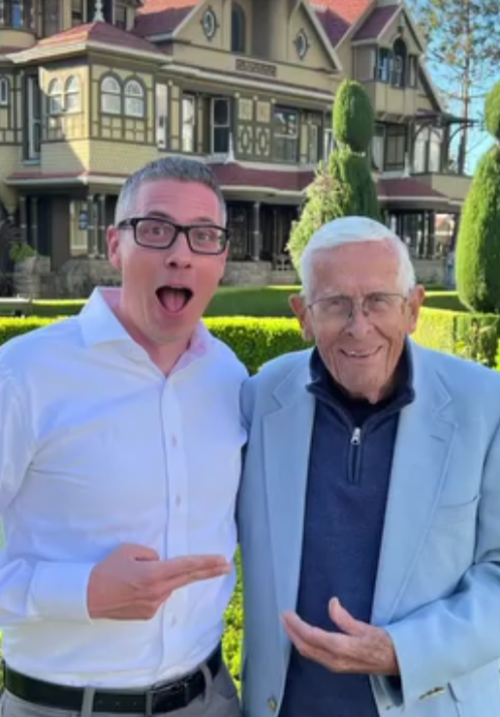
With these general considerations are borne in mind, it will help us understand case studies. To further highlight this illustration, John, a good-natured businessman, apparently happily married for five years, suffered from diffuse inhibitions and “inferiority feelings” and in recent years had developed occasional headaches without any detectable physical basis. He had not been analyzed but he was fairly familiar with the psychoanalytic way of thinking. Later he came to me for analysis of a rather intricate character neurosis, and his experience in working alone was one of the factors that convinced him of the possible value of psychoanalytic therapy. When he started to analyze his headaches, it was without intending to do so. He, his wife, and two friends went to a musical comedy and he developed a headache during the play. This struck him as queer because he had felt well before going to the theater. At first, with some irritation, he ascribed his headache to the fact that the play was bad and the evening was a waste of time, but he soon realized that after all one does not get headaches from a bad play. Now that he thought about it, the play was not so bad after all. However, of course, it was nothing compared with the play of Shaw’s that he would have preferred. These last words stuck in his mind—he “would have preferred.” Here he felt a flash of anger and saw the connection. He had been overruled when the choice between the plays was up for discussion. It was not even much of a discussion: he felt he should be a good sport, and what did it matter anyhow. #RandolphHarris 13 of 20
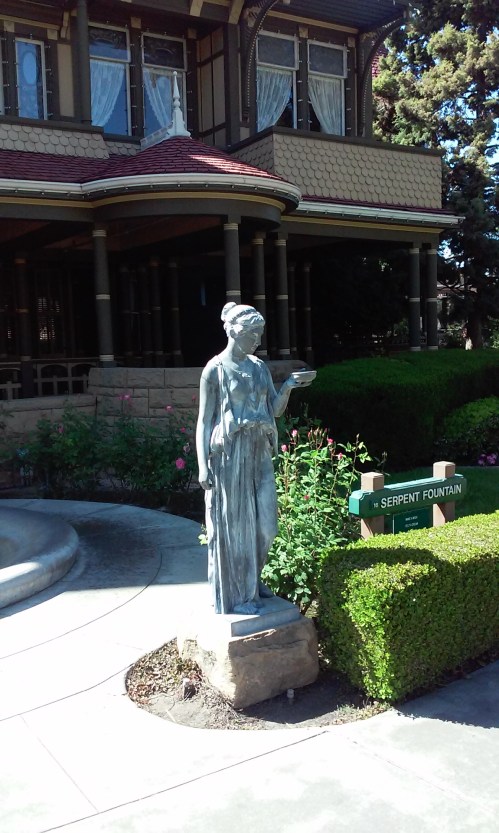
Apparently it had mattered to him, however, and he had been deeply angry about being coerced. With that recognition, the headache was gone. He realized also that this was not the first headache that originated in this way. There were bridge parties, for instance, which he hated to join but was persuaded to do so. He was startled to discover this connection between repressed anger and headaches, but he gave it no further thought. A few days later, however, he work up early, again with a splitting headache. He had attended a staff meeting of his organization the night before. They had been drinking afterward, and at first he accounted for the headache by telling himself that probably he had drunk too much. With that he turned on the other side and tried to fall asleep again, but he could not. A fly buzzing around his face irritated him. At first the irritation was barely noticeable, but it grew rapidly to full-blown anger. Then he recalled a dream or a dream fragment: he had squashed two bedbugs with a piece of blotting paper. The blotting paper had many holes. As a matter of fact, he remembered that the holes were all over the paper and formed a regular pattern. This reminded him of tissue paper that he had folded as a child, for cutting out patterns. He was quite taken by their beauty. An incident emerged in which he had shown the tissue to his mother, expecting admiration, but she had paid only perfunctory attention. The blotting paper then reminded him of the staff meeting. There he had scribbled on paper because he felt bored. No, he had not merely scribbled; he had drawn small caricatures of the chairman and of his opponent. #RandolphHarris 14 of 20

The word “opponent” struck him, because he had not consciously regarded that person as an opponent. A resolution had been voted on, about which he felt vaguely uneasy. However, he saw no clear objection to it. Hence the objection he had raised was actually not to the point. It was weak and made no impression. Only now he realized that they had put something over on him, for the acceptance of the resolution meant a lot of tedious work for himself. They had been so clever that it had escaped him. At this point he suddenly laughed because he recognized the meaning of the bedbugs. The chairman and the opponent—they were bloodsuckers, as distasteful as bedbugs. Also, he was as afraid of bedbugs as he was of these exploiters. Well, he had taken revenge—at least in his dream. Again the headache vanished. One three subsequent occasions he searched for a hidden anger as soon as the headache started, found the anger and then lost his headache. After that the headaches disappeared entirely. In reviewing this experience one is struck at first by the lightness of the labour in comparison with the result attained. However, miracles occur in psychoanalysis as seldom as anywhere else. Whether a symptom can be easily removed depends on its function in the whole structure. It this case the headaches had not assumed any further role, such as preventing John from doing things he was afraid of doing or resented doing, or serving as a means of demonstrating to others that they had given offense or inflicted injury, or serving as a basis for demanding special consideration. #RandolphHarris 15 of 20

If headaches or any other symptoms have assumed important functions such as these, their cure will require long and penetrating work. One will then have to analyze all the needs they satisfy and they will probably not disappear until the work is practically finished. In John’s case they have not assumed any such functions, and probably resulted merely from tension increased by the repressed anger. The extent of John’s accomplishment is diminished also by another consideration. It was a gain, certainly, to be rid of the headaches, but it seems to me that we are inclined to overrate the significance of such gross, tangible symptoms and to underrate the importance of less tangible psychic disturbances, such as, in this case, John’s alienation from his own wishes and opinions and his inhibition toward self-assertion. In these disturbances, which later proved to be highly significant for his life and his development, nothing was changed by his work. All that happened was that he became somewhat more aware of rising angers and that his symptoms disappeared. Actually, any of the incidents that John happened to analyze could have yielded more insight than he gained from them. Thus in his analysis of the anger that emerged during the musical comedy, there were numerous questions that he failed to touch on. What was the real nature of his relationship with his wife? Was the compatibility, of which he was proud, due only to compliance on his part? Was she domineering? Or was he merely hypersensitive to anything resembling coercion? #RandolphHarris 16 of 20

Furthermore, why did he repress his anger? Was it necessary because of a compulsive need for affection? Was he apprehensive of a rebuke from his wife? Did he have to maintain an image of himself as a person who was never disturbed by “trifles”? Was he afraid of having to fight for his wishes? Finally, was he really only angry at the others for having overruled him, or was he primarily angry at himself for having given in because of sheer weakness? The analysis of the anger following the staff meeting might also have opened up further problems. When they were jeopardized, why was he not more alert to his own interests? Again, was he afraid to fight for them? Or had the anger such dimensions—squashing the bedbugs—that it was safer to repress it altogether? Also, did he lay himself open to exploitation by being too compliant? Or did he experience something as exploitation which was actually merely a legitimate expectation of his condition? Furthermore, what about his wish to impress others—the memory of expecting admiration from his mother? Was his failure to impress his colleagues an essential element in his anger? And to what extent was he angry at himself for having been so unassertive? None of these problems was touched upon. When he had discovered the effect of repressed anger at others, John let the matter rest. After a lifetime of World-wandering, after a varied experience among different faces of people and in different classes of society, we have come to the firm and settled conviction that what is most to be looked for in a man is character. The best test of character is neither intellectual hairsplitting nor emotional, wordy gush, not high-flown idealistic professions, nor flowery mystical pretensions, but deeds. #RandolphHarris 17 of 20

The Sacramento Fire Department has saved the community from so many disasters. On one occasion, there was a small fire in a closet on the fourth floor of a building. There was a lot of smoke, but there seem to be just a bunch of papers and rubbish in there. What no one knew was that it had purposely been set and that there was a lot of gasoline poured onto the closet floor and the floor of a near bathroom. Three members from the engine company were in the room, but none of them smelled the gasoline because of the smoke. The three guys started to extinguish the fire just as the heat got to the gasoline. The gasoline exploded, and the whole room went on fire. Two of the guys got to the door and were safe, but the fire expanded so rapidly, it cut the third guy off, and he ended up at the window. Unless you have had the experience, you will never believe how quickly a fire can move through a room, two rooms, three rooms. This firefighter we will call number 1, was at the window yelling, and Ladder 1 began to put it tower ladder up. That is a long boom with a platform at the end of it, with room enough for four or five fighters to stand. There were two firefighters on the platform, raising it. As it reached the third floor, firefighter number 1, now framed in the fourth-floor window, was on fire, and he could not wait the extra five seconds for the tower ladder to get him. He was forced to jump. He jumped into the bucket and hit one of the guys there, Lt. 1, breaking his leg. However, even with a broken leg, Lt. 1 was able to grab an extinguishing can and put out the flames on the burning firefighter. Fire fighter number 1 had his fire-safe coat on, but it was the clothes beneath it, his pants and his shirt, that were on fire. All this happened from a very little fire in a closet in a multi-family, low-rise, housing building. #RandolphHarris 18 of 20
When the firefighter was visited at the Burn Center, he was terribly burned on his arms and shoulders, and on the bottom part of his body around his buttocks and the backs of his legs. He was very courageous. You would have to be in such a situation. You really do muster up extraordinary strength in times of personal crisis. There is a spiritual part of firefighters, and when they get hurt seriously, they realize how fragile they are as human beings, and they rely on this spirituality to bring forth the dignity of their souls. This firefighter was in great pain, but he was also very funny. He said his wife was concerned about his being in the burn center with all these beautiful nurses. However, e reassured her. He said that a nurse who is tearing the burned layers of skin off your body, inch by painful inch, no matter how gorgeous she is, is never going to be thought of as anybody but a person who is tearing off the top layer of your skin, inch by painful inch. Sometimes people get killed. Every firefighter has to deal with the death of a brother or sister firefighter at some point in his or her life. In America, a firefighter dies in the line of duty every other day. Many have been to several funerals. It is hard to look at the surviving children of firefighters and thinking that they will live with the memory of their father giving his life in a job that cared about him. The only standing room one will find at a firefighter’s funeral is out in the street, down the block. A firefighter recalled when 11 firefighters died in the line of duty. It was a terrible scene when they were searching for the bodies. Firefighters could recall the bodies coming out, one by one. #RandolphHarris 19 of 20

As if the bodies were passing were passing in review, the hundreds of firefighters who were there took off their helmets. The floors of the building had collapsed, taking these firefighters down into the bowels of the fire. There was quiet in the immediate vicinity as their bodies came out. When it came time for the funerals, many firefighters were dismayed at how little the city had done to make those thousands of visiting firefighters welcome. The firehoses alone had taken them in, given them something to eat, and made them feel at home. Therefore, before to show your support for the Sacramento Fire Department by voting for Assembly Member Kevin McCarty. He is endorsed by the Sacramento Fire Department, and his focus is on affordable housing and getting people without homes into a home. A vote for McCarty is a way of showing support for the Sacramento Fire Department. And if you can, please make a donation to the Sacramento Fire Department and keep those who have been injured, disabled, or killed on the job in your prayers. I pledge allegiance to the flag of the United States of America, and to the republic, for which it stands, one nation, under God, indivisible, with liberty and justice for all. Though it is not incumbent upon you to complete the work, you are not free from doing all you possibly can to honour God. Judge a man by his deeds, and you will not be led to false judgment. Say little and do much, for by your deeds shall you be judged. If you are wise and rich, let your good deeds reveal your wisdom and wealth. Honour a man for what he is; but honour him more for what he does. #RandolphHarris 20 of 20

Many people have laughed at caretakers for believing in ghosts. Skeptics think the noises to be the product of their over-active imaginations. However, they also begin to hear them when they spent time in The Winchester Mystery House. One skeptic reported after hearing them, “the groans, squeaks, tingling and knockings were frightful enough.” One caretake was locking up the mansion one night, when there came a sound from one of the six kitchens as of a large lump or lumps of coal being splintered and smashed onto the floor. He and one of the other caretakers went through the entire mansion, but could find nothing to explain the sounds; no guests were in the house. Upon hearing the sound of bottles breaking beneath the stairs, when no one was in the house, they ran in fright into an office.
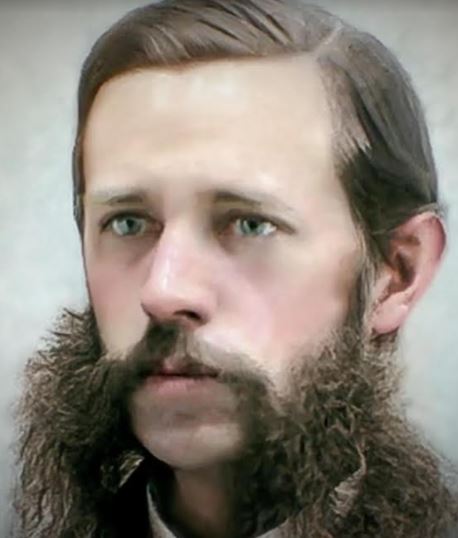
Then they heard the sound of a man walking slowly past them; then going down the grand staircase, then up the back stairs and up the stairs to the ceiling. Soon after this, they heard in the corner of a room, as it were the violent rocking of a cradle; as far as anyone knows, no cradle has ever been in the house. Two caretakers were sitting in one of the dining rooms, on a later occasion, when they heard the sound of loud raps coming from the outside of the door and on the ceiling overhead.

Come and enjoy a delicious meal in Sarah’s Café, stroll along the paths of the beautiful Victorian gardens, and wonder through the miles of hallways in the World’s most mysterious mansion. For further information about tours, including group tours, weddings, school events, birthday party packages, facility rentals, and special events please visit the website: https://winchestermysteryhouse.com/

Please visit the online giftshop, and purchase a gift for friends and relatives as well as a special memento of The Winchester Mystery House. A variety of souvenirs and gifts are available to purchase. https://shopwinchestermysteryhouse.com/
 Randolph Harris II International Institute