
Home » Posts tagged 'Mental health' (Page 5)
Tag Archives: Mental health
The Alchemical Magic Spread Swiftly

Our knowledge of human neurogenetics is so primitive that we have only recently realized that structural and temporal castes exist. Sociobiologist and ethologists define their professions as the study of behavioural genetics. However, neurogenetics is a more accurate description because what is inherited is not behaviour but neural templates that determine use of the anatomical-technology. Local hive behaviour cues—languages, customs, artifacts, and the like are not genetically inherited—they are cultural imprints. Only the caste-circuits are inherited not the behaviours, which are acquired in a cultural context. Until ethologists understand the difference between neurogenetic castes and local-social-imprints, their brilliant observations cannot be mapped. This insight is changing our conceptions of human nature and society. It is probable that we are neurologically programmed so that understanding of castes becomes part of species contelligence—consciousness + intelligence—only at the time that space migration occurs. Plan-It Colonies in High Orbit provide the new ecological vacuum in which human castes differences can blossom without the friction and crowded competition that has coloured Earthly racial-class-sexual-caste differences. #RandolphHarris 1 of 25

You must realize that we are a genetic-caste-robot to understand your own personal development. John Lilly articulates this beautifully in Programming the Human BioComputer. We are templated by DNA to play a certain role. We are outfitted with a 24-gear brain that is very different from 92 percent of other human brains. Values, according to good authorities, “most often represent a transition from facts to rights, from what is desired to what is desirable (usually through the intermediary of what is generally considered desirable).” The transition from facts to rights is manifest, as we have seen, in rebellion. So is the transition from “this must be” to “this is how I should like things to be,” and even more so, perhaps, the idea of the sublimation of the individual in a henceforth universal good. The sudden appearance of the concept of “All or Nothing” demonstrates that rebellion, contrary to current opinion, and though it springs from everything that is most strictly individualistic in man, questions the very idea of the individual. If the individual, in fact, accepts death and happens to die as a consequence of his act of rebellion, he demonstrates by doing so that he is willing to sacrifice himself for the sake of a common good which he considers more important than his own destiny. If he prefers the risk of death to the negation of the rights that he defends, it is because he considers these rights more important than himself. #RandolphHarris 2 of 25

Therefore, he is acting in the name of certain values which are still indeterminate but which he feels are common to himself and to all men. We see that the affirmation implicit in every act of rebellion is extended to something that transcends the individual in so far as it withdraws him from his supposed solitude and provides him with a reason to act. However, it is already worth noting that this concept of values as pre-existent to any kind of action contradicts the purely historical philosophies, in which values are acquired (if they are ever acquired) after the action has been completed. Analysis of rebellion leads at least to the suspicion that, contrary to the postulates of contemporary thought, a human nature does exist, as the Greeks believed. If there is nothing permanent in oneself worth preserving, why rebel? It is for the sake of everyone in the World that the slave asserts himself when he comes to the conclusion that a command has infringed on something in him which does not belong to him alone, but which is common ground where all men—even the man who insults and oppresses him—have a natural community. (The community of victims is the same as that which units victim and executioner. However, the executioner does not know this.) Two observations will support this argument. First, we can see that an act of rebellion is not, essentially, an egoistic act. Of course, it can have egoistic motived. #RandolphHarris 3 of 25

However, one can rebel equally well against lies as against oppression. Moreover, the rebel—once he has accepted the motives and at the moment of his greatest impetus—preserves nothing in that he risks everything. He demands respect for himself, of course, but only in so far as he identifies himself with a natural community. Then we note that rebellion does not arise only, and necessarily, among the oppressed, but that it can also be caused by the mere spectacle of oppression of which someone else is the victim. In such cases there is a feeling of identification with another individual. And it must be pointed out that this is not a question of psychological identification—a mere subterfuge by which the individual imagines that it is he himself who has been offended. On the contrary, it can often happen that we cannot bear to see offenses done to others which we ourselves have accepted without rebelling. The suicides of the Russian terrorists in Siberia as a protest against their comrades’ being whipped is a case in point. Nor is it a question of a feeling of community of interests. Injustices done to men who we consider enemies can, actually, be profoundly repugnant to us. There is only identification of one’s destiny with that of others and a choice of sides. Therefore the individual is not, in himself alone, the embodiment of the values he wishes to defend. It needs all humanity, at least, to comprise them. #RandolphHarris 4 of 25

When he rebels, a man identifies himself with other men and so surpasses himself, and from this point of view of human solidarity is metaphysical. However, for the moment we are only talking of the kind of solidarity that is born in chains. Many rebels do end up in chains. At the Friday night movie in prison, some sit suicidally depressed in the front row eating trustee popcorn. And there is dope. The lunch pail express, sideline of bribed guards who keep the flow of illegal contraband moving in and out. Prisons are a quest for the serpent who swallows his own tail. It is just a matter of connecting neural wires. Many people spend every free moment on the prison yard either at handball, yoga, or lifting metal weights to the point of pain-strain. Prisoners often talk about their case, their arrest, their trial, and the next destination. Everyone has a hope habit of one kind or another. You can even get to know the permanent work crew trustees. For the most part, they are older white-collar criminals with potbellies. Some trustees have big red calendars on the wall. Each day a number is removed. The big red arrow always points to tomorrow. However, there is no number for the current day. In confidence men’s terminology, when you wake up in the morning, that day is as good as over. Half of the prisoners, the young half, are dopers, guiltless spirits, Black and White, totally detached from the system, certain of their alchemical beliefs. #RandolphHarris 5 of 25

The alchemical magic spreads swiftly. After ten years, there are millions who choose the superstitious perspective, seeking to stay high. The prison guards are retired enlisted men. They act like motel clerks opening the dining room, locking and unlocking doors for the prisoners. They walk the tiers at night while inmates’ sleep; fatigued men with flashlights slipping mail under their cell doors. Their work centers around keys. The lawyers say that any day the California Supreme Court will grant some of these men bail. However, advisers often shrug skeptically. Often, guards get down on these men. They order them to the barbershop, search their cells, find dust, then orders them back to the barbershop for a closer trim, writes them up for petty misdemeanors. As prisoners swing high and happy down the cavernous hall of the main line, guards will often make them remove personal effects. Some of these men get an attitude and stand in the prison corridor looking at the guard, as the guard looks back at them dull with tired hatred before muttering, “Watch yourself.” Well, that is the basic confrontation of politics. The guard and the prisoner. Two men looking into each other’s eyes defiantly across the abyss of slavery. Everyone in the World is on the side of the guard or on the side of the prisoner. Police, lawyers, judges, prison guards. #RandolphHarris 6 of 25

Criminals are the opposing militia. The forces are exactly even. Law-and-order people control the press and the media of communication and education but they fool no one. At any moment, at least half of the World population is in open conscious opposition to the government. Most police accept that it is a war on crime. So do most prisoners. It is obvious, that in most cases, rebellion pays bad dividends. It can inevitably result in a sense of emptiness that often leads to alcoholism, drug addiction, bizarre religious practices, flagrant immortality, broken homes, incurable diseases, and despair. Sadly, many experience the high cost of putting what they call “my way” above “God’s way.” To live as if there is no God is foolish, for it leads to pain, despair, and eternal death. However, to live in the “fear of God” is wise, for it leads to satisfaction, rejoicing, and everlasting life. You must decide, so choose wisely! “The fear of the Lord is the beginning of knowledge, but fools despise wisdom and instruction,” reports Proverbs 1.7. When the client gives me nothing intimate, or self-expressive—it is then that I must draw on my own momentary reservoir to find within me my response to him—a clear, intimate expression of me in this moment with him. However, when the client is in the process of expressing himself to me, then I find within me chiefly my sense of his expression and I try to tell him with unmuddied simplicity what I understand him to feel and think. #RandolphHarris 7 of 25

It is just as important that I sense and state his experience as his (as purely as possible from his own frame of reference), as it is to make clear that my experiential self-expression are mine, when that is the case. Very often, when the client is in the course of expressing himself, a response that simply states what the therapist understands the client to think or feel is a powerfully effective response. Often it is the only possible helpful response. If anyone does–with schizophrenics and with many others, it is the therapist who will initiate the relationship, will begin open and expressive interaction, and will first express warmth, care, interest, and a person-to-person quality. If the therapist must sit passively, or argue intrusively, I do not think he is likely to form a relationship with an individual who does not already wish for therapy or for a relationship. The therapist’s moment-to-moment expressiveness largely determines the quality of the interaction, at least at first, and especially with unmotivated individuals. Even if the client is consistently silent or expresses only trivia, the therapist’s self-expression can make the interaction eventful, personal, and even expressive. The therapist’s expressions—the events occurring in himself—will concern the interaction and will deepen it, when they are spoken. Both persons tend to experience an eventful, open and personal interaction even while only one of them is verbalizing his felt side of the interaction. #RandolphHarris 8 of 25

In order to verify predictions, it is necessary to define success, that is, winners and losers. A winner is someone who succeeds in what he says he is going to do. A loser is someone who fails to accomplish what he sets out to do. A man who says: “I am going to Reno and gamble,” is only committed to getting there and betting, regardless of whether he wins or loses. If he says: “I am going to Reno and this time I am going to win,” then he comes out a winner is he wins and a loser if he does not, depending upon how much money he has in his pockets when he gets back on the pavement. A woman who gets a divorce is not a loser unless she has said “I will never get a divorce.” If she has declared: “Some day I am going to quit my job and I will never work again,” then her alimony will signify that she is a winner, because she has accomplished what she set out to do. Since she had made no statement as to how she would do it, no one can fault her with being a loser. Each language provides words that sensitize a person to those aspects of the World that are most important for survival in that place. Thus, we have only one word for snow, whereas Inuit people have many, corresponding with different qualities of snow, which indicate whether hunting or igloo building is possible. We do not see the World; rather, we “read” the meanings of what we see, just as we read the words in a book. These meanings are provided for us as we grow up by the person who teaches us to speak our “mother tongue.” #RandolphHarris 9 of 25

It is our mothers who give the first meanings to our World, who gives the World the “voices” with which it tells us of dangers and gratifications. In developing countries like Indonesia or India, each child learns three languages, each of which highlights some aspects of the World more than others, and which gives different meanings and emotional qualities to the perceived World. Thus, a child will learn the language of the village from his or her mother; in India or Indonesia, it will be one of the several hundred local languages, which differ so much that people fifty miles apart cannot understand one another’s mother tongues. At school an Indonesian child will learn Malay, and an Indian child will learn Hindi—both languages are the national tongue, which facilitates communication throughout the country. Finally, both Indonesian and Indians may learn English, which makes communication beyond national boundaries possible. In each case, the language that is spoken affects perception. In order really to perceive what is there in the World, a person will have to suspend language and really look and listen, to discern the reality beyond language. For many, to sustain an inner calm is not easy. Many a time, in test situations, he will fail. However, even when the negative, explosive, or depressive emotion asserts itself strongly, he is not to show it in behaviour no express it in speech. For this is a step toward that control of self, that impersonality, which is what the quest means. If mind influences body, body also influences mind. From the physical control he may proceed to the mental. #RandolphHarris 10 of 25

When calmness has been well practiced for a sufficient period, it will occasionally of itself lead the practiser into sudden brief and ecstatic experiences of a mystical character. He should calmly recognize that suffering has its allotted function to perform in the divine plan, that other people have their lessons to learn through it when they will learn in no other way, and that the spectacle of its operation should, in such cases, be met with intelligent understanding rather than with neurotic sentimentality. He should face the fact that many people will not learn from reason, intuition, or teaching and that no one can really liberate them from their sufferings except themselves. Every other kind of liberation is a false one. Others may effect it today only to see the same condition return tomorrow. He should not, in certain situations calling for hard decision, for instance, show unjustifiable weakness under the belief that he is showing forbearance, nor submit to antisocial egotism under the thought that he is practising love, nor abandon his highest duties for the sake of making a false and superficial peace with interfering ignorance, nor passively accept a flagrant wrong because God’s will must always be borne. The lower emotions and the moods they produce are his first enemies. Every antagonism and envy, every wrathful temper and animal lust, every self-injuring desire and socially harmful greed bars his way. And it will not move out of the way without a long fight. #RandolphHarris 11 of 25

This spiritual quest takes the aspirant through many moods. He will alternate at times between blank despair and exalted joy. Though naturally affected by these moods, he ought nevertheless to try to keep a certain balance even in their very midst, to cultivate a kind of higher indifference towards them, and patience towards their results. This can be achieved more easily by obtaining a firm conviction of the transient character of such moods. Both emotion and reason have their proper place in practical life, but in the philosophic life where the Quest is for truth alone and not for satisfaction, there is no place for emotion other than a secondary one. Its power over man is so great however that it will continually come into conflict with this ruling, it will struggle desperately to resist reason and to silence its voice, it will contradict the dictate of calm considered judgment and seek by sheer force to dominate the mind. Again and again the uprush of emotion will disturb the would-be philosopher and destroy his equanimity, thus rendering impossible a correct appreciation of the truth he seeks. The melancholy feeling that he is missing something joyous in life, that a happiness which so many others have captured is running away from him with the years, so one of the emotional snares likely to beset the aspirant’s path. #RandolphHarris 12 of 25

If he yields to its self-pitying suggestiveness, it will weaken his resolve and disturb his peace. From that it is only a step or two to descend into a painted and delusive animality. Those who waste themselves in emotional excesses weaken themselves spiritually, for the power of feeling is an essential part of the higher nature. With the pressures brought down upon them by his total philosophic effort, the grosser desires will gradually be flattened out anyway. If he deliberately and directly assists them to enter that condition, it will not be to his detriment. If we are to command our deeds, we must command our thoughts, but much more, we must command the emotional impulses behind those thoughts and those deeds. When he is tempted to be angry with some irritating person, he is faced with two choices: either to identify himself with this lower emotion or with his higher aspirations. If, following bad habit, he succumbs to the first, he weakens himself still further. If, following good resolve, he overcomes the temptation, he strengthens himself for the future. Strong emotional attachment to another person may only tighten the ego’s hold, may narrow, limit, warp, or prevent the seeing of the truth. This happens all-too-often in family relationships and in the affections of the young. It can even happen in guru-disciple relationships. #RandolphHarris 13 of 25

When it comes to relationships, it is the responsibility of the national leaders to forge that sword through their foreign policy. The purpose of this foreign policy must be the securing of weapons and finding allies. The state is only a result of human forces, only a work of our thoughts, but man is the force of the source itself and the creator of the thought. As the deputy of all humanity whose heart beats, for all mankind, our passion must be the World and future generations. At a time when everybody is bust erecting new Fatherlands, the Fatherland of the man who thinks without prejudice and can rise above his time is nowhere and everywhere. However, nationalism killed humanism. The nation and its sovereignty have become the new idols to which the individual has succumbed. With all the new technology, the revolution of the colonial peoples, communication by air, the radio, etcetera, have shrunk the globe to the proportions of one continent or, rather, one state as they existed one hundred- and seventy-years ago. The One World which is in the process of being born is, however, not one World because of the friendly and brotherly relations that exist among its various parts, but rather because of the fact that missiles can carry death and destruction to almost any part of the World in a matter of hours. The one World is one, so far, inasmuch as it is one potential battlefield, rather than a new system of World citizenship. #RandolphHarris 14 of 25

We live in one World, yet in his feelings and thoughts contemporary man still lives in the nation state. His loyalties are still primarily to sovereign states and not to the human race. This anachronism can only lead to disaster. It is a situation similar to that of the religious wars before religious tolerance and coexistence became an accepted principle of European life. If the One World is not to destroy itself, it needs a new kind of man—a man who transcends the narrow limits of his nation and who experiences every human being as a neighbour, rather than as a barbarian; a man who feels at home in the World. Why is this step so difficult? Man’s life begins in the womb. Even after birth he is still part of mother, just as primitive man was part of nature. He becomes increasingly aware of himself as separate from others, yet he is deeply drawn to the security and safety of his past. He is afraid of emerging fully as an individual. Mother, the tribe, the family—they all are “familiar.” The stranger, the one who is not familiar through the bonds of blood, customs, food, language, is suspected of being dangerous. This attitude toward the “stranger” is inseparable from the attitude toward oneself. As long as any fellow being is experienced as fundamentally different from myself, as long as he remains a stranger, I remain a stranger to myself, too. When I experience myself fully, then I recognize that I am the same as any other human being, that I am the child, the sinner, the saint, the one who hopes and the one who despairs, the one who can feel joy and the one who can feel sadness. #RandolphHarris 15 of 25

I discover that only the thought concepts, the customs, the surface are different, and that the human substance is the same. I discover that I am everybody, and that I discover myself discovering my fellow man, and vice versa. In this experience, I discover what humanity is, I discover the One Man. Until now the One Man may have been a luxury, since the One World had not yet emerged. If the One World is to live, now the One Man must emerge. Historically speaking, this may be a step comparable with the great revolution which was constituted by the step from the worship of many gods to the One God—or the One No-God. This step was characterized by the idea that man must cease to serve idols, be they nature of the work of his own hands. Man has never yet achieved this aim. He changed the name of his idols and continued serving them. Yet he changed. He made some progress in understanding himself, and tremendous progress in understanding nature. He developed his reason and approached the frontiers of becoming fully human. Yet in this process he developed such destructive powers, that he may destroy civilization before the last step is taken toward constructing a new humanity. #RandolphHarris 16 of 25

Indeed, we have a rich heritage which waits for its realization. However, in contrast to the men of the eighteenth and nineteenth centuries who had an unfailing belief in the continuity of progress, we visualize the possibility that, instead of progress, we may create barbarism or our total destruction. The alternative of socialism or barbarism has become frighteningly real today, when the forces working toward barbarism seem to be stronger than those working against it. However, it is not the “socialism” or managerial totalitarianism which will save the World from barbarism. It is the renaissance of humanism, the emergence of the new West which employs its new technical powers for the sake of man, rather than using man for the sake of things; it is a new society in which the norms for man’s unfolding govern the economy, rather than the social and political process being governed by blind and anarchic economic interests. Until the joyful time comes when negative moods or thoughts have ceased to cross the threshold of his consciousness, man must struggle with them by a combination of different methods. First, his will must follow them at once after their entry and remove them forcibly. Second, his imagination and reason must attack them in the prayer period set aside each day for that purpose. Whether or not it is possible to attain a perfection of calmness that is secure against all assaults, it is surely possible to attain sufficient calmness to keep off many or most of the emotional disturbances and mental turmoil which derive from the petty incidents of everyday life. #RandolphHarris 17 of 25

The Sacramento Fire Department protects the lives and property of Sacramento residents and visitors by serving as fires responders to fire, public safety, medical emergencies, and other emergency related situations. “It was a five-alarm fire, a four-story building that had at one time been a manufacturing plant but now had a bar and a restaurant on the first floor and a menagerie of rooms upstairs. It was a gay bar, and the guy who owned the place was gay. The top three floors were his playground. The night of the fire he picked up this kid over at the park, took the kid out, wined and dined him. The kid wanted money, but the guy didn’t want to pay anything. So the kid beat him up and left him there in the building, left him for dead. He then set the fire to cover his behind. I was acting battalion chief at the time, and I covered the fire on the second alarm. The first-alarm company got there and found the guy. He was all bloody. They laid him on the sidewalk at the side of the bar, and he kept saying that the boy was still in there. The police sent the dogs in. They found the kid and chewed him up a bit, but the firemen got him out. The call that came in said they had a small fire on the second floor. Well, the first-alarm chief saw the smoke pumping out beams. No fire, but a lot of smoke coming out of the eaves on the fourth floor. He knew he had more than just a small fire, so he called for the second alarm. I was the second chief in and was assigned to the rear of the building. We were back there, and we had master streams in operation. About then the fire was blowing out all of the windows in the back and front and coming through the roof in one corner. #RandolphHarris 18 of 25

“About an hour later the majority of the fire was out, so we shut the big lines down to get inside and do some interior firefighting. I had the company stretched hand lines and inch-and-a-half up the aerial ladders and into the windows. I was at the top of the ladder, and there was a guy from X Engine, (who we will call Z), who was having trouble with his air mask. He was below me on the ladder. The department had just switched over to a new self-contained air mask, and we were having problems with this one fitting where the face piece connected to the regulator. Z did’nt have it just right. It kept popping loose on him. ‘Well, look,’ I said, ‘get your mask straightened out. I’m going to go inside, and when you get done bring your line up and I’ll meet you in there. I’ll see what we’ve got to do.’ So he went back down. I was on the fourth floor, and I looked into the window with my hand light to see the floor. It was black, all black. I straddled in, leg over windowsill, and had my feet on the floor. Real good sound floor, nice and solid. The darkness was pitch black, as black as it might be inside a collapsed mine shaft. I took two septs, and I started falling. I just started falling. Looking back on it when the doctor asked what happened and going back and looking at it after the fire, I figure out what had happened. But here I was, falling in this complete darkness. Halfway down, about thirty feet, I hit something, straddling it. #RandolphHarris 19 of 25

“Thirty feet and I stopped short between my legs. That is where I fractured my pelvis in for placed. I momentarily stayed in that position, but the momentum of my fall kept me going off there and down another thirty feet. I was now down five stories, and in the basement. I landed on my back in about three feet of water. I landed hard, and I broke my back in two placed. The doctor said that the mask on my back was what saved me. Without it I would have been killed. I had fallen down an elevator shaft. The building was originally a factory where they made automobile tires. The shaft was for one of those huge freight elevators that you could drive a care into, and take it up to different floors and have the tires changed on it. That window I had climbed into opened into the shaftway. The law says that windows opening into shafts must be barred, and I think it was originally barred, but the guy, when he bought the building, did all this renovation work up there, either on the sly or whatever. What I was stepping on was a floor that was probably three feet wide with a steel beam around it, and the car would come up and stop at that floor, that’s why it was still there. The elevator was caught in the fire and was burned out, like the whole bottom of the car was burned out. The only thing left of the car was the metal frame. It was the beam at the top of the elevator that I straddled and flipped off of at the second floor and fell through the elevator to the bottom, that second thirty feet. #RandolphHarris 20 of 25

“So I was lying in three feet of water. I couldn’t stand up, my legs wouldn’t move, nothing. I said to myself, calmly, ‘Well, I’ll just lie here.’ I’m lying there, then I realize I’m being pulled down. My coat is being saturated, and the weight of the coat started pulling me down, and down, and down. Suddenly, my nose is under water. I was trying to float, but I couldn’t because the coat was pulling me down and the boots were full of water and I couldn’t stand. I was beginning to drown. My regular job was captain of the rescue unit, and I knew about scuba and had a lot of water experience. I said, ‘Keep your cool, keep your cool. Don’t panic. Get your coat off.’ I was in no pain. I couldn’t feel a thing. I was just worried about drowning. I went completely under water then, knowing it was my only chance, unsnapped my coat, got one arm out and got the other arm out. The coat dropped away, the heavy mask canister with it. I thought that would save me. Then I started reaching out, and I touched this wall. It was an unfinished wall, just plain bricks. I put my fingertips in the mortar joints and started pulling my head up. I realized I was in a corner, and I’m like, ‘There’s got to be a way out of here.’ So I started going around like this, pulling with my fingertips. I hit another corner, made another turn, and there was a ladder there, a ladder in the wall. ‘Great,’ I said, ‘stay here and wait.’ The water was still cascading in from the streams, getting deeper and deeper. ‘Great’ I’m saying, ‘if the water rises, I’ll rise with it up the ladder.’ #RandolphHarris 21 of 25

The next thing was. The smoke started banking down. I said ‘Oh God. I’m going to suffocate.’ I started coughing, and I got down closer to the water. I was okay, I had this much room at first, and then the smoke was banking down farther and farther. I was down to the water again, my nose just touching it. Then I could hear the debris falling. The first thing I thought was that Z had done the same thing I did. I went back and started feeling around to see if he’s there. I heard people hollering up there. I heard Z holler in the window that the floor was going and that something was wrong. I still didn’t know where I was. I lost my portable radio on the way down. They found that hanging between the second and third floor where a piece of metal was sticking out. I fell and I just missed the metal, but it grabbed the radio and pulled it off my coat. It was hanging there. I lost my helmet, and they later found a piece of it, the plastic eye protection part melted. It had fallen into the fire on the second floor, which was still burning up there. Like I said, I hear all this debris falling, and I thought it was Z, and I went out to look to see if it was. I tool a little step and realized that I just couldn’t do it, I couldn’t stand. So I started calling to see if it was him. Nobody answered. Then I heard somebody holler, ‘There he is.’ This guy we will call A came down the ladder, and he started to touch me, and I said, ‘Don’t touch me, something is broken.’ He hollered, ‘Thrown a rope down here.’ I said, ‘Don’t tie any rope around me, something is broken and I can’t move my legs. I can’t feel anything.’ #RandolphHarris 22 of 25

“So they got the Stokes basket down there, and they floated me on that, then lifted me up and out. They put me in the medic unit, and I went right to the shock trauma center. I still don’t remember a lot of it. I don’t remember blacking out. There are times when I lie at home and I wake up and think, ‘Oh, that’s right, that happened.’ The first fall, I didn’t think that I was going to fall that far, it was only one floor. It’s not going to be even twenty feet. It’s not going to be that bad. It’s not going to be thirty feet. I’m not expecting that I’m going down a shaft, you know, right to the bottom. And when I hit, it felt like I was falling longer than I should have, but it’s pitch black and I can’t see anything, so I’m not expecting it or anything. It’s just falling into the darkness, and then when I hit, it was like, ‘Christ, oh God.’ The beam went right up into my groin. When I started falling, I was worrying about being impaled, about falling into some debris and having a two-by-four go through me. When I hit with my legs apart, the pain was intense through my groin. I was black and blue from my knees to my chest, a dark purple. My privates were swollen the size of grapefruits, because the actual impact was right there. I thought, Hey, this isn’t too bad, it’s over, I’m still alive. And then I realized that I was falling again. I still can’t see anything. I haven’t seen anything yet, no walls. I haven’t felt anything other than hitting the piece, and then I’m going again. I didn’t know I was in an elevator shaft. I had no perception of depth or how far I had fallen. I could have fallen five feet and hit something and then five more feet and been on the third floor. I had thought it was over, and I was falling again, and I realized, ‘No. It isn’t over yet.’ #RandolphHarris 23 of 25

“Another thirty feet. That’s when I did the complete somersault from straight up and down when I first fell, and the beam catapulted me over, and I was falling back first, and that’s when I impacted the water. And then it was like, ‘Oh damn, where am I now? What’s going on?’ In my scuba training I knew that when you first go down you’re apprehensive and you start breathing faster and you get yourself worked up, and you have to calm yourself down. That’s what I was doing. I was like, ‘Okay, keep your cool, you know you’re not dead, and you can get out of this.’ And then I started sinking, and I was like, ‘Oh God, you’re going to drown. You’ve got to get your coat off.’ The water was still coming in. I figure there were ten ladder pipes in service and maybe fire two-and-a-half-inch hand lines, that’s fifteen hoses shooting water in. Coming right down, you could hear it. It was like a waterfall. It’s like, okay, I have the coat off and I’m not going to drown because I have the ladder. Then I thought, ‘God, it’s filling up.’ But I felt good holding on to the ladder. If water keeps coming, I’d just float up with it, and I felt secure. Then the smoke started banking back down, and I started getting scared again. It was like you can’t breathe, coughing. Like, let’s get to the window. But, hell, I can’t move. I can’t go to a window. And I had no mask. So I got lower and lower, with my mouth and nose just above the water. It’s breathable there. It’s still pretty thick smoke, but it’s not something that I’m not used to. Then like I said, I heard the debris falling. #RandolphHarris 24 of 25

“I didn’t know whether anybody knew that I’d fallen. I didn’t know whether Z had come up the ladder or not. I had told him to some back up, but he could have gone down and had his assignment changed by another officer and just, you know, forgot about me. My relief wasn’t due until seven, and this was about four-thirty in the morning. I’m thinking, this is it, this is the way I’m going to die. Then finally I heard somebody holler, ‘There he is.’ Like I said, there was no pain at that time. They got me in a medic unit, and that is when I started feeling pain. After a long recovery time, I was still not back to work. I was on administrative leave. My detail was an office job until I could get myself back to where I could go back to firefighting. I’ll get there.” The Sacramento Fire Department works continually to upgrade fire apparatuses and technology, to educate the public in fire prevention, life safety and disaster preparedness, along with enforcing public safety codes, while ensuring a safe and secure environment to all citizens and visitors through professionalism, leadership, teamwork and partnership with all levels of Government. You can help save lives by donating to the Sacramento Fire Department. I pledge allegiance to the flag of the United States of America, and to the republic for which it stands, one nation, under God, indivisible, with liberty and justice for all. #RandolphHarris 25 of 25

The Winchester Mystery House
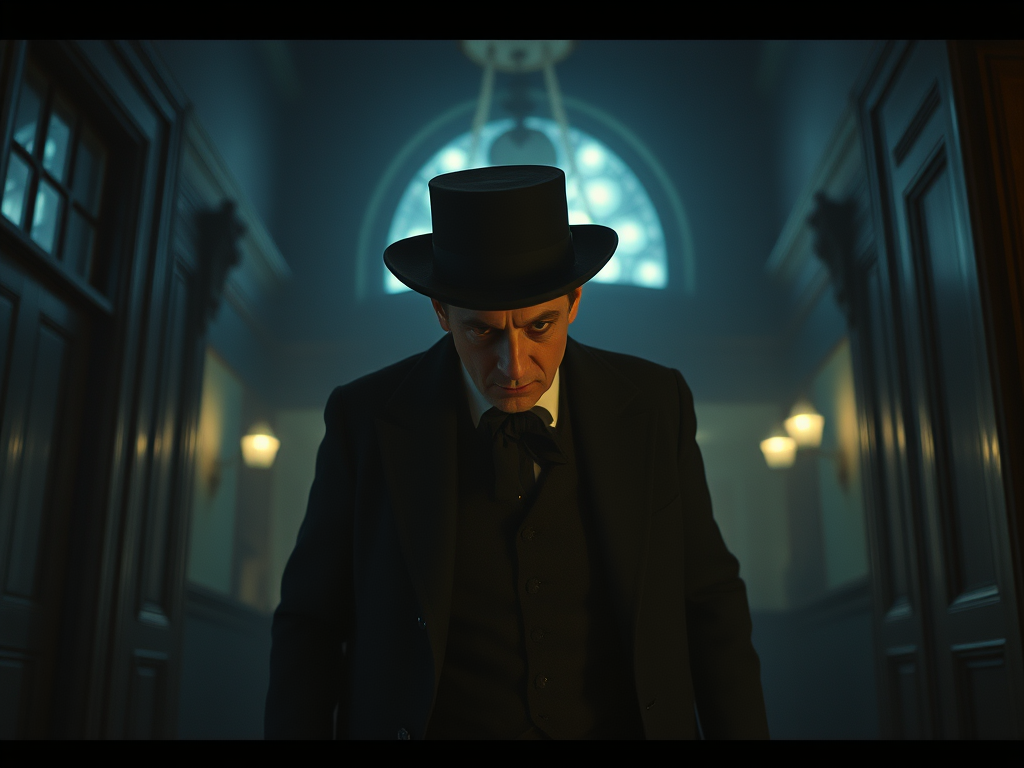
One winter night while closing up The Winchester Mystery House, a caretaker had worked up a sweat. As he was walking down a flight of stairs, the wind grabbed him, lashing at he face, and immediately the sweat on his cheeks frosted over. His hands shook uncontrollably, the lights in the mansion began to flutter. Somewhere, almost muffled by the whine of the wind, he heard a distant clanking—a dull sound echoing across the mansion. He hesitated, tried to recognize the source, but failed. His legs ached with every step. His eyes and ear stung from the frigid blasts of wind he felt inside the house. He longed to rest, but finishing his job pushed him onward. As he reached the last step, he was greeted by what sounded like a bell tolling, warning the countryside of some unseen danger. He rested for a moment. Creeping among the twisting hallways of the mansion, he noticed for the first time that it looked rather peculiar.

He moved slower now, still confident, but careful. After a few moments, he stood motionless, watching the walls shake and curtains sway, chair scraping the floor and rattling against each other. A hazy vision of dancing skeletons and demons appeared. It’s called the house built by spirits, the demons announced, glistening worms squirming from their rotten, toothless mouths. Come join us, they invited, waving long, bony fingers. Come. And he wanted to go. They sounded so inviting. Suddenly, tears streamed down his face. The mansion came to life around him, breathing for the dead. The wind gained strength. The caretaker collapsed hard to the floor. For just one moment, an ivory sliver of moonbeam slipped through the darkness, quickly disappeared. The winter sunrise was still two hours away.
Please come and enjoy a delicious meal in Sarah’s Café, stroll along the paths of the beautiful Victorian gardens, and wonder through the miles of hallways in the World’s most mysterious mansion. For further information about tours, including group tours, weddings, school events, birthday party packages, facility rentals, and special events please visit the website: https://winchestermysteryhouse.com/

Please visit the online giftshop, and purchase a gift for friends and relatives as well as a special memento of The Winchester Mystery House. A variety of souvenirs and gifts are available to purchase. https://shopwinchestermysteryhouse.com/

Innocence Called on to Justify itself

There are crimes of passion and crimes of logic. The boundary between then is not clearly defined. If the suffering of children serves to complete the sum of suffering necessary for the acquisition of truth, I affirm from now onward that truth is not worth such a price. Inflation is inflicting financial pain on millions of American households, with almost half reporting that higher prices are causing some form of hardship. In fact, 70 percent of families with annual incomes of less than $40,000 said they are experiencing hardship. By comparison, 30 percent of families earning more than $100,000 a year reported that they are also facing hardship. We are living in the era of premeditation and the perfect crime. Our southern border is wide open, and our criminals are no longer helpless children who could pled love as their excuse. On the contrary, they are politicians, illegal immigrants, and other adults who have a perfect alibi: philosophy, which can be used for any purpose—even for transforming murderers into judges. As soon as a man, through lack of character, takes refuge in doctrine, as soon as crime reasons about itself, it multiplies like reason itself and assumes all the aspects of the syllogism. Once crime was as solitary as a cry of protest; not it is as universal as science. Yesterday it was put on trial; today it determines the law. #RandolphHarris 1 of 21

We need to face the reality of the present, which is logical crime, and examine meticulously the arguments by which it is justified; we must understand the times in which we live. One might think that a period which, in a space of twenty-five years, uproots, enslaves, or skills millions of human beings should be condemned out of hand. However, its culpability must still be understood. In more ingenuous times, when they tyrant razed cities for his own greater glory, when the slave chained to the conqueror’s chariot was dragged through the rejoicing streets, when enemies were thrown to the wild beasts in front of the assembled people, the mind did not reel before such unabashed crimes, and judgment remained unclouded. However, slave camps under the America flag of freedom, massacres justified by philanthropy or by taste for the superhuman, in one sense cripple judgement. On the day when crimes dons the apparel of innocence—through a curious transposition peculiar to our times—it is innocence that is called upon to justify itself. We must accept and examine this strange challenge. We can act only in terms of our own time, among the people who surround us. Every action today leads to murder, direct or indirect. People believe that they have a right to kill because basic laws are no longer enforced. #RandolphHarris 2 of 21

I cannot understand how a party that claims to respect law and order encourages and even pays people to immigrate illegally, and has gotten loose on allowing several laws to be enforced. It is akin to allowing a child to be bullied, harassed, and terrorized. When people see that they can get away with breaking the law, the bad behaviour will become contagious. In the age of negation, it was of some avail to examine one’s position concerning suicide. In the age of ideologies, we must examine our position in relation to murder. If murder has rational foundations, then our period and we ourselves are rationally consequent. If it has no rational foundations, then we are insane and there is no alternative but to find some justification or to avert our faces. It is incumbent upon us, at all events, to give a definite answer to the question implicit in the blood and strife of the first quarter of the century. For we are being put to the rack. Ideology today is concerned only with the denial of other human beings, who alone bear the responsibility of deceit. Each day at dawn, assassins in judges’ robes slip into some cell: murder is the problem today. Allowing crime to run rampant in the streets of America is absurd. Removing God from society is narcissistic. If we believe in nothing, if nothing has any meaning, and if we can affirm no values whatsoever, then everything is possible and nothing has any importance. #RandolphHarris 3 of 21

Since nothing is either true or false, good or bad, our guiding principle will be to demonstrate that we are the most efficient—in other words, the strongest. Then the World will no longer be divided into the just and the unjust, but into masters and slaves. Thus, whichever way we turn, in our abyss of negation and nihilism, crime has its privileged position. Of course, self-destruction means nothing to madmen, who have bomb shelters, and are preparing for their own death and apotheosis. All that matters is not to destroy oneself alone and to drag a whole World with one. In a way, the man who kills himself in solitude still preserves certain values since he, apparently, claims no rights over the lives of others. Modern man wants to destroy everything or take everything with him. If man knows he is destroying the plant, ending human and animal life, clearly the mandate for electric cars and acknowledging climate change is about politics, power forcing, and profit. He does not want the World to end without harvesting every dollar insight and making people struggle. Sadist get off on the pain of others. Man believes that life can only be lived by striving toward that delectable end. This has become a system of misguided intelligence that prefers, to the suffering imposed by a limited situation, the dark victory in which Heaven and Earth are annihilated. #RandolphHarris 4 of 21

However, absurdist reasoning cannot defend the continued existence of its spokesman and send others to fight in wars that have nothing to do with America, while simultaneously accepting the sacrifice of others’ lives on American soil. The very first thing that cannot be denied in America, is the right for our citizens to live. Thus, the same idea which allows the loss of innocent lives on American soil is caused by politicians taking an untenable position on the United States Constitution. Many American leaders and citizens are living a contradiction because they want to destroy without creating their own selves. And what is astonishing is that many people do not have values with which will enable them to see that crime is illegitimate. Once the Constitution is broken, nothing will remain which can help us to answer the questions of our time, and this will leave us in a blind alley. American will believe in nothing and think that everything is absurd. They will be offended by everything that is different from what they are as an individual. No one will respect the rights of others, and this will lead to mass rebellion. People are being taught to physically fight, destroy, and murder things that are offensive to them. People are being deprived of all knowledge, incited to murder or consent to murder. Rebellion is born of the spectacle of irrationality. #RandolphHarris 5 of 21

However, we must demand order in the midst of this chaos, and unity in the very heart of the ephemeral. The American Constitution protests, it demands, it insists that the lawlessness and outrage be brought to an end because what has been going on in this country lately has been built upon shifting sand when our nation was founded on God’s rock. Rebellion absolutely must find it reasons with itself, since it cannot find them elsewhere. It must consent to examine itself in order to learn how to act. Man is the only creature who refuses to be what he is. The problem is to know whether this refusal can only lead to the destruction of himself and of others, whether all rebellion must end in the justification of universal murder, or whether, on the contrary, without laying claim to an innocence that is impossible, it can discover the principle of reasonable culpability. Through the Atonement of Jesus Christ, each of us can become clean and the burden of our rebellion will be lifted. Breaking a covenant with the Lord is never justified. However, sometimes our poor choices leave us with long-term consequences. One of the vital steps to complete repentance is to bear the short- and long-term consequences of our past sins. The joyful news for anyone who desires to be rid of the consequences of past poor choices is that the Lord sees weaknesses differently than He does rebellion. #RandolphHarris 6 of 21

Whereas the Lord warns that unrepented rebellion will bring punishment, when the Lord speaks of weaknesses, it is always with mercy. However, sometimes rebellion can be good. Like when we stop tolerating injustice. What is a rebel? A man who says no, but whose refusal does not imply a renunciation. He is also a man who says yes, from the moment he makes his first gesture of rebellion. A slave who has taken order all his life suddenly decides that he cannot obey some new command. What does he mean by saying “no?” He means, for example, that “this has been going on too long,” “up to this point yes, beyond it no,” “you are going to far,” or, again, “there is a limit beyond which you shall not go.” In other words, his no affirms the existence of a borderline. The same concept is to be found in the rebel’s feeling that the other person “is exaggerating,” that he is exerting his authority beyond a limit where he begins to infringe on the rights of others. Thus, the movement of rebellion is founded simultaneously on the categorical rejection of an intrusion that is considered intolerable and on the confused conviction of an absolute right which, in the rebel’s mind, is more precisely the impression that he “has the right to…” Rebellion cannot exist without the feeling that, somewhere and somehow, one is right. #RandolphHarris 7 of 21

It is in this way that the rebel slave says yes and no simultaneously. He affirms that there are limits and also that he suspects—and wishes to preserve—the existence of certain things on this side of the borderline. He demonstrates, with obstinacy, that there is something in him which “is worthwhile…” and which must be taken into consideration. In a certain way, he confronts an order of things which oppresses him with the insistence on a kind of right not to be oppressed beyond the limit that he can tolerate. Sociologically it is easy to see that the evolution of the human race has led from small units like the clan and the tribe through city-states, national states, to World states and World cultures, like the Hellenistic, Roman, Islamic, and modern Western civilization. Yet the difference, as far as human experience is concerned, is not as fundamental as it may seem. The member of the primitive tribe differentiates sharply between the member of his group and the outsider. There are moral laws governing the members of the group, and without such laws no group could exist. However, these laws do not apply to the “stranger.” When groups grown in size, more people cease to be “strangers” and become “neighbours.” Yet in spite of the quantitative change, qualitatively the distinction between the neighbour and the stranger remains. A stranger is not human, he is a barbarian, he is even not fully understandable. #RandolphHarris 8 of 21

Long before the human race was on the verge of becoming One World, socially and economically, its most advanced thinkers had visualized a new human experience, that of One Man. Man is thought of as man—men having the same structure, the same problems, and the same answers, without regard to culture and race. The Old Testament visualized man as being one, bearing the likeness of the One God; the prophets visualized the day when the nations “shall beat their swords into plowshares, and their spears into pruninghooks;” [when] “nation shall not lift up sword against nation, neither shall they learn war anymore,” reports Isaiah 2. They visualized the day when there will be no more “favourite” nations. “In that day shall there be a highway out of Egypt to Assyria, and the Assyrian shall come into Egypt and the Egyptian into Assyria…In that day shall Israel be the third with Egypt and with Assyria, even a blessing in the midst of the land: whom the Lord of hosts shall bless saying, Blessed by Egypt my people, and Assyria the work of my hands, and Israel mine inheritance,” reports Isaiah 19. Christianity created the concept that the Son of Man became the Son of God—and God Himself. Not this or that man, but Man. The Roman Church was a Catholic church precisely because it was a supranational, universal church. #RandolphHarris 9 of 21

Classic Greek and Roman thinking arrived independently from Judaeo-Christian thought at the concept of One Man and of natural law rooted in the rights of One man, rather than in the necessities of a nation or state. Antigone sacrifices her life in defense of universal human (natural) law against state law. Zenon had the vision of a universal commonwealth. The Renaissance and Enlightenment enriched the Greek and Judaeo-Christian traditions and developed them further, in humanistic rather than in theological terms. Whatever is behind the decision when people can give up, it can be justified by taking a position based on the now deeply ingrained convictions, a position which involves a view of the whole World and all the people in it, who are either friends or enemies: “I’ll kill myself because it’s a lousy World where I’m not good and neither is anyone else, my friends are not much better than my enemies.” In position language this read “I’m not-O.K. You’re not-O.K., They’re not-O.K. Who would not kill himself under such conditions?” This is a futility suicide. Alternatively, “I’ll kill myself because I’m not-O.K. and everybody else is O.K.”—the melancholic suicide. (Suicide here can mean anything from jumping off a bridge or car-crashing, to overeating or alcoholism.) #RandolphHarris 10 of 21

“But,” says someone, “I know we’re O.K., but those other fellows aren’t so hot.” “Very well, then, I’m O.K., you’re O.K., and they are not-O.K., so let us get the job done now and we will attend to them later.” In child language, this translates as “We are going to play house, but you cannot play with us,” which in its most extreme form and with more sophisticated equipment can be parlayed in later years into an extermination camp. The simplest positions are two-handed, You and I, and come from the convictions which have been fed to the child with his mother’s milk. Perception is perhaps one of the most important processes in psychology and is essential in understanding human behaviour. According to Combs and Snygg, all behaviour is related to perception. A student attends a university because she perceives it as being helpful to her career or because a parent perceives it as being help to her offspring’s development. A thief robs a bank because he perceives it as the source of money, according to Willie Sutton, one of the most famous of bank robbers. A child cries when seeing a clown because he sees it as a monster rather than as a funny creature. The most important influence upon perception and misperception is the perceiver’s own needs. #RandolphHarris 11 of 21

If you are driving through a strange city, at about noontime, should you see painted on a store window the name of the owner, Sandwharf, you are likely to perceive it as Sandwich. If you are embarrassed by words that are ladened with pleasures of the flesh, and are asked to read a list quickly, you are likely to misread breast as beast. In a passionate political or personal argument, one’s need is so great to win that we may avoid perceiving the other person’s position at all. The presumption, of course, is that since we are all human, others would perceive things the same way we would. A health personality is by no means exempt from this law. These persons too many momentarily see only themselves as “right” in their perceptions of complex political situations, for example, but they are able to look back upon themselves, their arguments, and their behaviour and recognize when their needs are causing them to misperceive reality—or at least to miss other possible realities. This capacity for reflection back upon self is a uniquely human characteristic and is exceedingly valuable in keeping a certain openness to new ideas, new friends, and new joys. If someone perceives all new sports or new challenges as producing probably failure, that person will avoid tackling new, exciting experiences. The perception principle is useful also in understanding the behaviour of others, particularly of those whose cultural backgrounds may be different. #RandolphHarris 12 of 21

The Russians see our election system as inefficient because for one, 234,570 extra votes were cast by noncitizens in Arizona, Georgia, Michigan, Wisconsin, Nevada, North Carolina, and Pennsylvania, enough to deliver a win for President-elect Joe Biden. And also, the Russians election system as inefficient because it enables popular rather than competent person to be elected to office on the basis of the amount they spend for advertisements. We see their system of nominating only one candidate as a farce. Some of the most cherished beliefs may rest upon doubtful perceptions of reality. The need to be right is so strong that we will defend our perceptions most vigorously and violently when we are least sure of them. A child who perceives a kitten as something warm, soft, and playful will run to play with it on a visit to a friend’s house. Another child who sees a kitten as something that will bite and scratch you will run in terror from the animal. Any effort on the part of an adult to force contact with the kitten can only increase the terror unless the child’s perception is gradually helped to change. A young (or old) man who has great need to prove his uncertain manliness will perceive every date as a challenge to conquest rather than to relationship and may be expected to display himself, posture, and go to all lengths to seduce or conquer rather than to relate. #RandolphHarris 13 of 21

This viewpoint is often termed a phenomenological or perceptual point of view. It suggests that we would better understand our associates and children through knowing how they and we perceive reality. Our needs and emotions not only make us believe things that are untrue; they also blind us to truth. If a perception gives rise to devastating depression or hopelessness, there is a tendency for people simply to ignore the disquieting truth. Anyone who has suffered the death of a loved one will know how difficult it is to realize that the deceased will not be seen anymore. People tend to forget, or more accurately, to repress the memory of painful or humiliating events. Many needs can be gratified only through relationships with other people. This means that strong emotions are mobilized in our interpersonal relationships. Reliable information about another person is difficult to obtain, because much of that person’s behaviour goes on at times when we cannot see it. Furthermore, the person’s consciousness of the World is not accessible to our direct vision. If he or she confides in us, only then can we learn the subjective side of another person. However, the person may not be willing to entrust us with personal information. Often, we are obliged to form our concept of another person on the basis of overt behaviour alone. We infer, as accurately as possible, what an individual’s perception might have been, so that we can predict his or her behaviour in similar situations. #RandolphHarris 14 of 21

“A few moments of therapist self-attention”: To respond truly within me I must, of course, pay some attention to what is going on within me. As I am interacting with the client, a good deal of what transpires within me has to do with him—consists of my imaginings of him, my observations of his reactions, my reactions to him, etcetera. However, within me these occur as mine, as me. They are not deductions about him. They are what is happening to me now, my lived moments with him. To formulate and express these, I require a few steps of self-attention, a few moments in which I attend to what I feel. Then I usually find a great deal what I am willing to share. It would be wrong to say that I express everything that is going on in me, since a thousand things are going on in me at any moment and they cannot even be separately formulated, much less expressed. Also, I do not blurt out impulsively the first things which happens to some to mind. I live a few moments inwardly and by this means I find myself some response to the client, or to what has been happening between us, or to our silence. Even when little is being said, I find that I have desires, fears, disappointments, and wishes for more meaningful communication. I can voice these. With a few moments of self-attention, I can find my genuine response to the moment. If, while the client talks, I feel bored, I do not blurt out “You bore me.” I find with a few seconds of attention to my own experiencing, that my boredom really consists of my missing something from him, something interesting and personal. #RandolphHarris 15 of 21

I find that I strongly wish for this personal expression of his. I find I have much welcoming for this personal expression ready, and that it is going to waste. I find that I can imagine the kind of personal communication which I sense is missing in his verbal stream. I can express these senses of lack, wish, and imagination, and I can express them as mine. Much of my own feeling process when I am with someone does usually consist of these rather specific momentary events, reactions, wishes, and senses relevant to the other person. For example, let us say I have just said something and gotten no response. I think that it may have been very much the wrong thing to say. I need not simply feel bad about having done the wrong thing. I can say I feel bad about it and why, as well as the fact that this happens to be what I am feeling, but, that I am not at all sure about what he is now feeling. The few seconds of self-attention nearly always bring two developments in the feeling I have: (1) it becomes more truly something of me, rather than about him; (2) it become much more possible to share it. Thus, even though it is my genuine momentary reaction to the client in the interactive moment, it is also genuinely mine and does not impose itself on what he experiences. I can say—when it is true—that I am not at all sure what he feels at the moment. Thus, the two specifications I stated require each other: “non-imposition” requires “a few moments of self-attention” so that I may find what I truly feel and state it non-imposingly, as mine. #RandolphHarris 16 of 21

One may become so sensitive as a consequence of medication that other people’s thoughts, feelings, or passions may reflect themselves into his own nature temporarily when he is physically near them or mentally dealing with them. In such cases, he will probably mistake the result for his own, thus expressing what is really alien to his mind or acting outside of his individual pattern of life. This is particularly true when a strong emotion like anger is directed against him. He may then feel instinctively angry with the other person. Unwittingly, he may become disloyal to the Ideal merely through being ignorant of what is happening psychically, and unguarded against it. The longer he lives the more he discovers that real peace depends on the strength with which he rules his own heart, and real security depends on the truth with which he rules his own mind. When he leaves his emotions in disorder they bring agony—as the accompaniment or the follower of the happiness they claimed at first to be able to give. When he lets his thoughts serve the blindness of his ego, they deceive, mislead, or trouble him. The aspirant must not act, live, or think under the sway of merely sentimental, emotional, and self-centered feeling alone but should strive for mature truthful feeling. This is intuition. When dealing with a complex personal situation, he should detach himself and follow such intuition instead of emotion. Then it will be solved rightly. #RandolphHarris 17 of 21

He will not be karmically free of an unpleasant relationship until he has mentally freed himself from all negative thoughts and negative acts concerning it. Then the outer karmic forces will free him, or else he may be shown inwardly how to free himself outwardly. Of what use, in such serious matters as survival, to live in so many illusions? Sentimentalists and emotionalists who desert reason at the bidding of well-intentioned, high ideals or religion to preach unrealistic attitudes do not know the difference between religio-mystic ethics and philosophic ethics. Only the latter is practical in the highest sense as well as the Worldly one. Foolish teachers, professors, and those whose lives are spent in academic circles are suborned by these emotions more easily than are other people, just because their distance from the World of practical decisions and realistic affairs have made them one-sided. All this emotional energy which neurotics waste in self-pity, hysterics in crises, and unwary ordinary persons in trivialities and negatives, is to be conserved, controlled, and constructively redirected. If it be observed that young people and women at times display emotional instability, let is also be stated that to them is given by Nature tasks which can be fulfilled only in great love, and which call up in them commensurate emotional capacity. Where much is given, much is required, and they in particular need to learn control and wise use of the emotional drive so generously placed in their keeping. #RandolphHarris 18 of 21

The Sacramento Fire Department stands as a dedicated and vigilant guardian of public safety, committed to safeguarding lives, property, and the environment. With unwavering expertise and a steadfast devotion to service, the Sacramento Fire Department is at the forefront of the fire prevention, emergency response, and community education. Through their dedicate firefighters, advanced equipment, and proactive initiatives, the Sacramento Fire Department stands ready to respond to emergencies, mitigate risks, and foster a resilient and prepared community. “The best thing to me in a firehouse is the fellowship. We have good rapport, and it’s a learning type of situation for me at this point. Sometimes I just sit around and listen to guys with years of experience. That’s enlightening because I’ve learned so much just from listening. Then to follow them on the job and see how they actually attack each situation, that has been even more beneficial to me. Hard workers and a good group of guys, everyone pulls his own weight. There’s no coldness, no harshness. The worst thing is hearing about firemen hurt or killed in the line of duty. Night watches never bother me, because I’m a night owl anyway. Some people don’t like those last hours, two-thirty to five. I work straight through the night. Cleaning is tough. A lot of times we have to do windows and mop floors. When I go home, it’s hard to look my wife straight in the face and say, ‘Hey, I don’t do windows.’ I don’t have a leg to stand on, because if I do windows in the firehouse, it means I have to do them at home. But at least we’re working in a clean environment. #RandolphHarris 19 of 21

“If the police have people hired to clean the station, it makes sense to me, because they really don’t have police who sleep in. But this is like a home to us, this is where we sleep. So it’s really like taking care of your own house. I don’t think people realize the amount of work and the strenuous activity that firefighters do. They see the engines or trucks go by, and they think they’re going to a fire, and that’s the end of it. It doesn’t occur to them the work that is involved in pulling a line and going into these fires and rescuing people, breaking windows just to let smoke out. They aren’t aware of the hazards in the job. When they hear about a firefighter being hurt or killed, they think that it’s a dangerous job—but on a general level. They really don’t know the specifics and how really dangerous it is. They don’t know about the pumping, and putting the engine in pump, and getting the pressure on. All they think is that you just hooked the hose up to a fire hydrant, you pull it toward the fire, and that’s the end of it. They’ll see firefighters at the station maybe sitting on a bench or after they raise the flag. They rise by and say, ‘Oh, what a life.’ Or, “Oh, that’s where my money to Uncle Sam goes.’ Most of my experience in the job, thus far, has been in occupied dwellings, no big high rises yet. I get off the engine, and I’m dragging an inch-and-three-quarter, and my adrenaline gets going. I’m on the tip, and this is my baby, this is my job, I know I’m going to do it. I think this is something that all firefighters feel. If they’re on the tip, they know they’re going to control this fire one way or the other. Either they’re going to put it out or they’re going to confine it. It gives you a lot of satisfaction. It really makes you feel it’s you against the fire. #RandolphHarris 20 of 21
“You come into battle with this fire, no matter how bad it is. A lot of times it’s scary, because you look at a wall of flames and you think, ‘Wow, here I am armed with this little hose. I don’t know if this is going to be the trick.’ But you know it always works out and you’re always able to get the best of it. There’s always someone right there with you. You’re never alone. If you get too much smoke, everyone knows, and it’s okay. Someone will step in and take over, and help you out in some way or other. It’s not a question of, ‘Okay, here’ the tip, and you’re on your own, and go do it.’ Being on the tip is an aggressive type of job. You get in there, and you have to confront the fire, and you know you have a lot of help with you. You just do the job. I got a Heroism Citation, and one of my fellow firefighters was really glad for me. And he congratulated me.” The Sacramento Fire Department is committed to ensuring the safety and well-being of the community through continuous training and public education. You can save lives and property by donating to the Sacramento Fire Department. To keep our communities safe, remember to raise your children to love America and be patriotic. It is very important also to love God and Jesus Christ. To ensure the economic security of America, please buy American cars and other goods and services made in America. Respect law and order, get your education, and treat your elders with dignity, empathy, and compassion. “I pledge allegiance to the flag of the United States of America and to the Republic, for which it stands, one nation, under God, indivisible, with liberty and justice for all. #RandolphHarris 21 of 21

The Winchester Mystery House

In October, when the sun was orange-red and large as a hanging jack-o’-lantern, the leaves danced in circles at their feet in the curt wind and the chill of winter death was beginning to settle in on porches as The Winchester Mystery House, two caretakes came to work with caps on their heads, and the energetic joy of the young bloomed in their cheeks and in their bright angel eyes. Sidewalks disappeared under their feet. Nicholas leaped at the near-nude branch of a tree, missing it with an ooof. Viola leaped behind him and touched it. The wind whistled in the dark day’s passing. Nicholas and Viola shied away from the perfect, straight front walk, crept instead across the forbidden lawn. Breathing lightly, they drew up to the side of the house. The house was pastel green and seemed still wet to the touch it looked so freshly painted. So fresh that Nicholas found himself reaching to touch it. Violation slapped at his hand and motioned for him to be quiet. Nicholas smiled. Around the back they crept, stopping underneath the one window. Shivers went through them both. Inside, dimly lit, were colours of Christmas morning. Red and green, gold and bronze, silver, blue.

There was no communication between Nicholas and Viola. Their souls were united and yet started to separate. Nicholas opened the door. The two exchanged glances, as the wind whipped up. An early moon had risen, and shone a pale crescent at their backs. The red sun was sinking. They sky had deepened a notch on the blue colour scale, toward eventual black. The air bit cold. Somewhere inside of the mansion a dog barked once, twice. Viola held on to Nicholas’s arm. They both found themselves in a hurricane eye in the center of the room. It was very dim here, since the fading outside light was cut off by a row of bloodred cues of diminishing size. Light became a little dimmer. There was a sound, and Nicholas and Viola were startled. The sound came again. It was almost a scabbling sound–like tiny fiddler crabs loose in a wooden boat and ticking all over its inside surface. An ancient and wheezing sound–old age with claws, moving with slow careful grace and constant, inevitable movement towards its destination. Viola and Nicholas were trapped. The sound was all around them–slow, inexorable–and, though they were on their feet, there was nowhere to turn. Nicholas could not locate the pathway back to the door; indeed, that pathway had seemed to disappear. There was the sound of a door opening.

Somewhere behind them, or in front of them, or to their left or right. A large door was being opened. There was a heavy, wheezy breathing. A rattling, dry cough. Another wheezing breath, and then a whispered grunt and the closing of a heavy door. A shuffling sound, the clock light button, a shuffling sound once more. The room was suffused with a dull amber glow, like that in a dusty antique shop. A dry cough and the shuffling continued. Abruptly, from nowhere, a creature. It beat the fist of one hand into the palm of the other. Then it sprang up, and in an instant was sprinting through a door which appeared. Though the moonlight was now bright, Nicholas list sight of the beast almost immediately. With a heavy heart, he pulled himself to his feet and began a long trudge down the hallway. And he was not sure about what happened to Viola. All of the sudden, he felt a ghost following him as he went through his chores of emptying trash cans and taking empty glasses into the kitchen. He tried bravely to ignore it, although he was frightened and he knew that the ghost knew it, which made it all the more difficult to carry on. All of the sudden a frying pan standing on the stove lifted off by itself, hung suspended in midair for a moment, and then was flung back on the stove with full force. Nichoals flew into hysterics, and it took a long time for him to calm down. It seems ghosts like to stay in a place that are familiar with.

Please come and enjoy a delicious meal in Sarah’s Café, stroll along the paths of the beautiful Victorian gardens, and wonder through the miles of hallways in the World’s most mysterious mansion. For further information about tours, including group tours, weddings, school events, birthday party packages, facility rentals, and special events please visit the website: https://winchestermysteryhouse.com/

Please visit the online giftshop, and purchase a gift for friends and relatives as well as a special memento of The Winchester Mystery House. A variety of souvenirs and gifts are available to purchase. https://shopwinchestermysteryhouse.com/

The Big, Blonde, Democratic Teuton

The expression of compassion for others is the essence of the gospel of Jesus as the Christ. It is meaningful to observe that Jesus’s compassionate acts were not occasional, nor mandated manifestations based on a list of tasks to be completed but everyday expressions of the reality of His pure love for God and His children and His abiding desire to help. One of the most poignant examples of kindness in the Christian Bible is when Jesus showed compassion at the grave of Lazarus. When Jesus saw Lazarus’ friends weeping, he wept alongside them (John 11.33-35). Over and over, our Lord Jesus felt compassion on people, healing them and comforting them. He saw the large crowd as sheep without a shepherd and he came to give them purpose and shelter. As the Son of God, Jesus possessed more than we can ever imagine. Even so, he gave up everything, voluntarily and selflessly sacrificing Himself for us so that we can have eternal life. In that sacrifice, we see the greatest example of compassion in the Bible. The stories of compassion in the Bible should motivate us to put compassion into action. Those who cannot make the leap and rise above human love to their higher self—with its impersonality and immateriality—may continue to draw a happiness from it. However, the limitations will be there, inexorable, unconquerable, of time and body, relativity, and change. #RandolphHarris 1 of 25

One of the most important scriptures in the Bible is Hebrews 13.2, “Do not forget to show hospitality to strangers, for by doing so some people have shown hospitality to angels without knowing it. Now, what are angels? Angels are messengers of God. Therefore, what this scripture could also mean is to show compassion to others, not only does how you treat people reflect on your and your family, but you could also be entertaining people who have great power and influence in this World. If you want to get ahead in life, the right way, it is important that people see you as a good person. Fear weakens a man, hate destroys him in the end, but love brings him his best. If everyone in the World would practice universal love, then the whole World would enjoy peace and order. We must learn to rise above our emotions, and understand by this kind of love a state of mind, not a state of emotion. When two people confront each other, there are six ego states involved, three in each person. Since ego states are as different from each other as actual people are, it is important to know which ego state is active in each person when something takes place between them. The exasperating response is where someone who wants sympathy gets facts instead. This is known as a child/parent-adult/adult. Impudence is where someone who expects compliance gets what is consider a “smart aleck” response instead, in the form of a factual statement. #RandolphHarris 2 of 25

There are 812 or 6561 different types of duplex transactions possible. For example, if we engage in only three transactions, and each time we have a choice among 6597 varieties, then we have our three transactions in 65973 ways. This gives us about 300 billion different ways of structuring our three exchanges with each other. That certainly gives us all the room we need to express our individualities. Since most people engage in hundreds or thousands of transactions every day, each person has trillions and trillions of combinations at his disposal. Even if he has an aversion to 5000 of the 6597 possible types of transactions, and never gets into them, there is still plenty of room to maneuver in, and there is no necessity for his behaviour to be stereotyped unless he himself sets it up that way. If he does so, as most people do, that is not the fault of transactional analysis, but of others influences that form the chief subject matt of this report. Since this system, in all its branches, is referred to as transactional analysis, what has been described above, the analysis of single transactions, is called transactional analysis proper, which is the second step after structural analysis. Transactional analysis proper gives a rigorous definition of the system, which will be of interest principally to those trained in scientific methodology. #RandolphHarris 3 of 25

A transaction consisting of a single stimulus and a single response, verbal or non-verbal, is the unit of social action. It is called a transaction because each party gains something from it, and that is why he engages in it. Anything that happens between two or more people can be broken down into a series of single transactions, and this gives all the advantages which any science attains when it has a well-defined system of units. Transactional analysis is a theory of personality and social action, and a clinical method of psychotherapy, based on the analysis of all possible transactions between two or more people, on the basis of specifically defined ego states, into a finite number of established types (nine complementary, 72 crossed, 6480 duplex, and 36 angular). Only about 15 of these commonly occur in ordinary practice; the rest are largely of academic interest. Any system or approach which is not based on the rigorous analysis of single transactions into their component specific ego states is not transactional analysis. This definition, in effect, purports to set up a model for all possible forms of human social behaviour. This model is efficient because it follows the principle of scientific economy (sometimes knows as “Occam’s razor”), making only two assumptions: that human beings can change from one ego state to another, and that if A says something and B says something shortly thereafter, it can be verified whether what B said was a response to what A said. #RandolphHarris 4 of 25

It is also very effective because, so far, no examples have been found among thousands or millions of interchanges between human beings which could not be dealt with by the model; and it is rigorous as well, because it is limited by simple arithmetical considerations. The best way to understand the “transactional viewpoint” is to ask: “What would a one- or two- or three-year-old child do that would correspond to this grownup’s behaviour?” Eastern philosophers are fond of pointing out how Westerns live with a “divided” consciousness, experiencing a gulf between mind and body, between self and nature. Divided consciousness is a chronic self-consciousness, such that the person is always aware of self. Whether the person is watching a sunset, enjoying pleasures of the flesh, or playing a game of tennis, he or she is always aware of self as the “subject, whereas that which the person is noticing is experienced as the “object,” as “out there,” distance from the self. Even our language, with its grammatical structure, encourages us to enter a chronic state of self-consciousness, of reflection upon our experiencing. A child, before taking on language, apparently has the capacity to perceive in selfless fashion. Eventually, the child learns to monitor experience and action, after having learned that he or she will be called on to give an account of thoughts and actions. The child is to become a spy or witness of his or her own actions, and is to give a report to parents upon request. #RandolphHarris 5 of 25

As the child grows older, such self-vigilance becomes habitual, and the rift in consciousness that hinders spontaneity has been permanently inserted. When a happening fully absorbs someone’s attention, the person may re-experience the long-lost mode of unreflective, unself-conscious perception. This is a terrible way to live—always to be watching one’s self. The capacity to be self-conscious is unique to human beings, because of the relative seize of the human cerebral cortex. Doubtless, the ability to observe the flow of one’s experiencing has some adaptive and adjustive value. However, chronic self-consciousness is agonizing, and it destroys enjoyment of living; in extreme instances, self-consciousness can so limit a person that he or she becomes unable to act at all until having first checked and rechecked the proposed action or communication. When self-consciousness is carried to this extreme, the individual may become nearly paralyzed by doubt and indecision, as in a pattern of neurosis called doubting compulsion. When used to “mirror” self and know how you are perceived by others, the gift of reflecting consciousness is helpful. Prayer to God and His Son, Jesus Christ, was developed as a means of healing the breach in consciousness. #RandolphHarris 6 of 25

The purpose of prayer is to help a person “transcend” the ego and experience a unification of self with all that exists. When such enlightenment and unification occur, the person becomes more capable of effortless action, grace of movement, and power of reason, because the person is not doing two things at once, that is, doing something and reflecting upon what is being done. Prayer is one of the greatest blessings we have while we are here on Earth. Through prayer we can communicate with our Heavenly Father and seek His guidance daily. Prayer is a sincere, heartfelt talk with our Heavenly Father. We should pray to God and to no one else. We do not pray to any other being or to anything made by man or God. “Thou shalt have no other gods before me. Thou shalt not make unto thee any graven image, or any likeness of anything that is in Heaven above, or that is in the water under the Earth. Thou shalt not bow down thyself to them, nor serve them: for I the LORD thy God am a jealous God, visiting the iniquity of the fathers upon the children unto the third and fourth generation of them that hate me,” reports Exodus 20.3-5. Prayer has been an important part of the gospel from the beginning of the World. An angel of the Lord commanded Adam and Eve to repent and call upon God in the name of the Son. “Wherefore, thou salth do all that thou doest in the name of the Son, and thou shalt repent and call upon God in the name of the Son forevermore,” reports Moses 5.8. This commandment has never been taken away. #RandolphHarris 7 of 25

Prayer will help us draw closer to God. All our thoughts, our words, and our actions are influenced by our prayers. The experience of overcoming chronic fixation upon a self-conscious, reflective state of awareness, so that one begins to smell and taste, and remember and imagine with greater vividness, can easily be described as “an enlargement of the World,” a rebirth, or a self-unification. Yet reflection, or self-witnessing, helps a person to learn skills. Self-consciousness may rob action of its spontaneity and of its joy. The aim of healthy personality is to be able to reflect upon experience when it is appropriate to do so, and to engage unself-consciously like a child in action, and in personal relationships, when there is no need to reflect. Action is one way to obtain temporary respite from self-consciousness. Warm-up exercises, followed by intense involvement in a game of tennis or basketball, or in dance, enable a person to be engaged without reflection. Other means for temporarily suppressing the act of reflection include listening to music, engaging in hobbies, and absorption in a book or a drama on a video steaming service or DVD. Dialogue with another person that fully engages one’s attention is also a means of overcoming self-consciousness. When such dialogue is going on, each person is responding to the other without premediated efforts to produce a particular impression in the experience of the other. #RandolphHarris 8 of 25

The Darwinian mood sustained the belief in Anglo-Saxon racial superiority which obsessed many American thinkers in the latter half of the nineteenth century. The measure of World dominion already achieved by the “race” seemed to prove it the fittest. Also, in the 1870’s and 1880’s many of the historical conceptions of the Anglo-Saxon school began to reflect advances in biology and allied developments in other fields of thought. For a time, American historians fell under the spell of the scientific ideal and dreamed of evolving a science of history comparable to the biological sciences. The keynote of their faith could be found in E.A. Freeman’s Comparative Politics (1874), in which he allied the comparative method with the idea of Anglo-Saxon superiority. “For the purposes of the study of Comparative Politics,” he had written, “a political constitution is a specimen to be studied, classified, and labeled, as a building or an animal to be studied, classified, and labeled by those to whom buildings or animals are objects to study.” If political constitutions were to be classified and compared by Victorian scholars as if they were animal forms, it was highly probable that the political methods of certain peoples would be favoured over others. Inspired by the results of the comparative method in philology and mythology, particularly by the work of Edward Tylor and Max Muller, Freeman tried, using this method, to trance the signs of original unity in the primitive institutions of the Aryans, particularly in the “three most illustrious branches of the common stock—the Greek, the Roman, and the Teuton.” #RandolphHarris 9 of 25

When Herbert Baxter Adams set up his great historical seminar at John Hopkins, it was with the official blessing of Freeman; and Freeman’s dictum, “History is past politics and politics is present history,” was emblazoned on the historical studies that came pouring forth from Adams’ seminar. A whole generation of historians receiving their inspiration from the John Hopkins school could have said with Henry Adams, “I flung myself obediently into the arms of the Anglo-Saxons in history.” The leading notion of the Anglo-Saxon school was that the democratic institutions of England and the United States of America, particularly the New England town meeting could be traced back to the primitive institutions of the early German tribes. Despite differences in detail, the Hopkins historians were in general agreement on their picture of the big, blonde, Democratic Teuton and on the Teutonic genealogy of self-government. The viewpoint of the school was given a fitting popular expression in 1890 with the publication of James K. Hosmer’s Short History of Anglo-Saxon Freedom, which drew upon the home literature of Anglo-Saxondom to establish the thesis that government of the people and by the people is of ancient Anglo-Saxon origin. #RandolphHarris 10 of 25

Wrote Hosmer: “Though Anglo-Saxon freedom in a partial form has been adopted (it would be better perhaps to say imitated) by every nation in Europe, but Russia, and in Asia by Japan, the hopes for that freedom, in the future, rest with the English-speaking race. By that race alone it has been preserved amidst a thousand perils; to that race alone is it thoroughly congenial; if we can conceive the possibility of the disappearance among peoples of that race, the chance would be small for that freedom’s survival.” Hosmer shared the optimism of his English contemporary John Richard Green, who believed that the English-speaking race would grow in enormous numbers and spread over the New World, Africa, and Australia. “The inevitable issues,” concluded Hosmer, “is to be that the primacy of the World will lie with us. English institutions, English speech, English thought, are to become the main features of the political, social, and intellectual life of mankind.” Thus would the survival of the fittest be written large in the World’s political future. What Hosmer did for Anglo-Saxon history, John W. Burgess did for political theory. His Political Science and Comparative Constitutional Law, published in the same year as Hosmer’s book, serves as a reminder of German as well as English influences in the American Anglo-Saxon cult; for Burgess, like Herbert Baxter Adams, had received a large part of his graduate training in Germany. #RandolphHarris 11 of 25

The peculiarity of his work, Burgess declared, it was method. “It is a comparative study. It is an attempt to apply the method, which has been found so productive in the domain of Natural Science, to Political Science and Jurisprudence.” It was Burgess’ contention that political capacity is not a gift common to all nations, but limited to a few. The highest capacity for political organization, he believed, has been shown, in unequal degrees by the Aryan nations. Of all these, only “the Teuton really dominates the World by his superior political genius.” It is therefore not to be assumed that every nation must become a state. If we may judge from history, The political subjection or attachment of unpolitical nations to those possessing political endowment appears to be as truly a part of the World’s civilization as is the national organization of states. I do not think that Asia and Africa can receive political organization in any other way…The national state is…the most modern and complete solution of the whole problem of political organization which the World has yet produced; and the fact that it is the creation of Teutonic political genius stamps the Teutonic nations as the political nations par excellence, and authorizes them, in the economy of the World, to assume the leadership in the establishment and administration of states. #RandolphHarris 12 of 25

The Teutonic nations can never regard the exercise of political power as a right of man. With them this power must be based upon capacity to discharge political duty, and they themselves are the best organs which have yet appeared to determine when and where this capacity exists. We see the beginnings of this, for instance, in songs like “We Shall Overcome,” which are living rituals, not just songs. A ritual like that of common silence as it has been practiced by the Friends as the center of their religious service could be acceptable to large groups of people; it could become a custom that every meeting of significance begins or ends with five or fifteen minutes of common silence given to prayer and concentration. It is not too farfetched an idea to suggest that, instead of prayers or patriotic formulae, classes in schools and special occasions in universities could be introduced by a period of common silence. We also have shared symbols, such as the dove and the outline of a human figure as symbols of peace and respect for man. There is no point in speculating about further details of possible common rituals and symbols outside church life, because they will grow naturally once the soil is prepared. In the field of art and music, there are innumerable possibilities for the creation of new ritual and symbolic expressions. #RandolphHarris 13 of 25

Whatever new psychospiritual systems may arise, they will not be “fighting” religion, although they will be a challenge to those in the various religions who have made an ideology of religious teachings and an idol of God. Those who worship the “living God” will have no difficulty in sensing that they have more in common with the “unbelievers” than they have in what separates them; they will have a deep sense of solidarity with those who do not worship idols and who try to do what the believers call “God’s will.” I expect that to many the hope expressed here for new manifestations of man’s psychospiritual needs are too vague to form the basis of hope that such a development will happen. Those who want certainty and proof before they can take any hope seriously are right in reacting negatively. However, those who believe in the reality of the yet unborn will have more trust that man will find new forms of expressing vital needs, even though at this moment there is only a dove with an olive branch indicating the end of the flood. It is the rule rather than the exception in the historical process that ideas deteriorate into ideologies; mere words take the place of the human reality; these words are administered by a bureaucracy which thus succeeds in controlling people and gaining power and influence. And usually, the result is that the ideology, while still using the words of the original idea, in effect expresses the opposite meaning. This fate has happened to the great religions and to philosophical ideas; it has happened to Marx’s and to Dr. Freud’s ideas. #RandolphHarris 14 of 25

What was Dr. Freud’s original system? First, it was radical thought; radical, in the original sense of the word, meaning going to the roots and—as Marx said—since the root is man, going to the very nature and essence of man. Dr. Freud’s psychoanalysis was critical thought; critical first, of existing psychiatric ideas which took consciousness as the basic datum of psychiatry. However, Dr. Freud’s thought was critical in a much broader sense. It attacked many of the values and ideologies of the Victorian age; it attacked the notion that pleasures of the flesh were not a subject for rational and scientific investigation; it attacked the insincerity of Victorian morality; it attacked the sentimental notion of the “purity” and “innocence” of the child. However, its most important attack was directed against the notion that there is no psychic content transcending consciousness. Dr. Freud’s system was a challenge to existing ideas and prejudices; it opened a new era of thought corresponding to the new development in the natural sciences and in art. It might be called in this sense a revolutionary movement, even though despite his criticism of some aspects of society Dr. Freud did not transcend the existing social order, nor did he think of new social and political possibilities. What became of this radical and critical movement after the first thirty years of its existence? #RandolphHarris 15 of 25

First, psychoanalysis has become very successful, especially in the Protestant countries of Europe and in the United States of America, while, until the end of the First World War, it was mocked and derided by most “serious” psychiatrists and by the public in general There were many reasons for the growing success of psychoanalysis. The fact is that the movement, ridiculed during the first twenty years of its existence, came to be considered respectable in psychiatry, accepted by many social scientists, and popular among many literary men, some of whom—Thomas Mann, for example—were quite outstanding. However, this academic and intellectual recognition was not all; psychoanalysis became popular with the public; psychoanalysts found it difficult to take all the patients who asked for their help; in fact, the profession of psychoanalysis because one of the most rewarding from the economic standpoint and from that prestige. This successful development, however, was by no means paralleled by a corresponding richness and productivity of psychoanalytic discoveries as regards theory and therapy. In fact, it many be surmised that the very success of psychoanalysis contributed to its deterioration. Psychoanalysis lost is original radicalism and its critical and challenging character. #RandolphHarris 16 of 25

An ability to recognize resistances demands some definite knowledge of their sources and their expressions. Hence it appears appropriate to recapitulate all that has been said about the subject in scattered places throughout this report—often without explicitly mentioning the term “resistance”—and to add certain points that are of special interest for self-analysis. The sources of resistance are the sum of a person’s interests in maintaining the status quo. These interests are not—and emphatically not—identical with a wish to remain ill. Everyone wants to get rid of limitations and sufferings, and in that wish, he is all for change, and for a quick change at that. What he wants to maintain is not “the neurosis” but those aspects of it which have proved to be of immense subjective value to him and which in his mind hold the promise of future security and gratification. The basis factors that no one wants to modify one iota are, briefly, those that concern his secret claims on life, his claims for “love,” for power, for independence and the like, his illusions about himself, the safety zones within which he moves with comparative ease. The exact nature of these factors depends on the nature of his neurotic trends. #RandolphHarris 17 of 25

In professional analysis the provocation for resistance is, in the great majority of cases, something that has occurred in the analysis itself. If strong secondary defenses have developed, the first resistances arise as soon as the analysts questions the validity of these defenses, that is, as soon as he casts any doubt on the rightness, goodness, or unalterability of any factor in the patient’s personality. Thus a patient whose secondary defenses consist in regarding everything concerning himself, faults included, as excellent and unique will develop a feeling of hopelessness as soon as any motivation of his is questioned. Another patient will react with a mixture of irritability and discouragement as soon as he encounters, or the analyst points out to him, any trace of irrationality within himself. It is in accordance with the function of the secondary defenses—protection of the whole system developed—that these defensive reactions are elicited not merely when a special repressed factor is in danger of being uncovered but when anything is questioned, regardless of content. However, if the secondary defenses are not of such vital strength, or if they have been uncovered and faced, resistances are for the most part a response to attacks on specific repressed factors. As soon as any domain is approached, closely or remotely, which is tabu for the patient he will react emotionally with fear or anger and will automatically set going a defensive action to prevent further trespassing. #RandolphHarris 18 of 25

This encroachment on a tabu need not be a specific attack but may be result merely from the analyst’s behaviour. Any thing he does or fails to do, says or fails to say, may hurt one of the patient’s vulnerable spots and create a conscious or unconscious resentment which for the time being blocks the co-operative work. However, resistances to analytical work can be elicited also by factors outside the analytical situation. If outside circumstances change during analysis in such a way as to favour a smooth functioning of the neurotic trends, or even to render them positively useful, the provocation for resistance is greatly increased; the reason is, of course, that the forces opposing change have been strengthened. However, resistance can be provoked also by unfavourable developments in daily life. If a patient feels, for example, that he has been unfairly dealt with by someone in his circle his indignation may be so great that he refuses any effort in analysis to seek the real reason why he felt injured or insulted, his entire energy being concentrated on revenge. If a repressed factor is touched upon, either specifically or remotely, a resistance may be produced by developments outside as well as within the analytical situation. #RandolphHarris 19 of 24

Measurement is important using the Relationship Inventory. The Inventory contains statements regarding the degree to which the counselor is acceptant, empathic, and congruent, and the client responds by evaluating the statement on a six-point scale from “strongly true” to “definitely untrue.” Examples concerning empathy are: “He generally sense or realizes how I am feeling;” “He understands my words but does not realize how I feel.” In relationship to congruence sometimes items are: “He pretends that he likes me or understands me more than he really does.” The Inventory is scored for each of the four attitudinal elements, and there is also a total score. The counselor is the most significant factor in setting the level of conditions in the relationship, though the client, too, has some influence on the quality of the relationship. Clients who later show more change perceive more of these attitudinal conditions early in the relationship with their counselor or therapist. The more disturbed the client, the less he is likely to (or able to?) perceive these attitudes in the counselor. Counselor or therapists tend to be quite consistent in the level of attitudinal conditions which they offer to each client. The major finding from all of the studies is that those clients in relationships marked by a high level of counselor congruence, empathy and unconditional positive regard, show constructive personality development. #RandolphHarris 20 of 25

These high levels of conditions are associated with positive changes on Minnesota Multiphasic Personality Inventory scales and indices, including ego-strength; positive change from the pre- to post-test battery as rated by clinicians working “blind”; decrease in anxiety scores and in a self-consciousness score; a higher level of Process Scales designed to measure process in therapy; and positive changes in counselor’s ratings. Clients relationships characterized by a low level of these attitudinal conditions show significantly less positive changes on these same indices. The client’s perception is the best predictor of change. This finding does not hold for the schizophrenic client, whose inner disturbance makes it difficult for him accurately to perceive the conditions offered by our conscientious and experienced therapist. With our schizophrenics, the rating of the conditions made by the unbiased raters is the best predictor of change. An unexpected finding with the schizophrenic clients is that low conditions in the relationship are associated with negative change in several respects. The clients not only fail to show constructive change but become worse in the judgment of clinicians rating their pre- and post-test batteries; show an increase in anxiety; are worse off than their matched no-therapy controls. Whether this finding holds for clinical clients who come for help has not yet been determined. #RandolphHarris 21 of 25

As might be expected, more experienced counselors, when compared with inexperienced counselors, offer a higher level of these conditions, and are more successful in communicating these to their clients. Thus they are perceived as offering higher conditions, and their clients show more change over the course of the interviews. Many people are sent to counseling for romantic problems. Those who glorify romantic lover avert their eyes from the truth that there is a negative side to it. However ignored, it will one day come into focus. There is a common notion that love, to be worth its name, must be highly emotional and dramatically intense. That, of course, is one kind but it is not the best kind, which is calm, unchanging, and unexcited. The sentimental gush which is talked so often and so freely in religiomystic circles about loving one’s fellow humans is usually quite shallow and will not stand deep analysis. Nor is it the most important of all the virtues as such circles seem to believe. When a woman comes to a man for spiritual help or even spiritual companionship, he should not ask her for more than the chance to serve. Even if she is not conscious of having been sent to him for this purpose, or even if she mistakes the spiritual attraction for merely a human one, this remains true. It would be a spiritual failure on his part to ask for more then the opportunity to serve her. The service he gives must be given with a pure motive. #RandolphHarris 22 of 25

Therefore, he appearance in his life is a test for him. Should he fall in love with her the test still holds good, but its character may change. He is to keep the relationship at a high level. He is not to attempt to possess her but to be content with knowing and loving her. He must accept the situation with calm resignation and complete nonattachment. Does the unified man have to like everyone he meets? Some students believe that Jesus as the Christ commanded us to “love thy neighbour as thyself” and this question ought to be answered with a resounding Yes! However, in actual life we find that some unified men succeed in doing this whereases others frankly do not feel that way nor make any such effort. To make the love of everybody else a compulsory ethic ought not to be demanded even from a quester, much less from the masses! To make the cultivation of goodwill desirable as a general attitude would be more reasonable. Even so it should grow naturally out of the cultivation, not be forced. When a man discovers that the same Overself dwells in his enemy as in his own heart, how can he ever again bring himself to hate or injure another? It is easy to believe more softness to be compassion. It is easy to deceive oneself in this way. However, a vigorous analysis of one’s thoughts and observation of their results in action will expose the very real differences between them. “Do not day: O God, I thank thee that we are better than our brethren; but rather say: O Lord, forgive my unworthiness, and remember my breathren in mercy—yea, acknowledge your unworthiness before God at all times,” reports Alma 38.14. #RandolphHarris 23 of 25

The Sacramento Fire Department is committed to providing citizens with a professional fire service that meets or exceeds professional standards and best practices from across the nation. “The State Department asked me to go to Russia and several other communist countries to speak about contemporary American literature to the writer’s unions, and to the English-speaking clubs of the universities. It was a great trip, because the Russian people are gregarious and full of subtle humor, though, before glasnost, the Russian authority seemed dark and pervasive, like a giant shadow. Consequently, I liked the people and the architecture but felt uncertain about the country. I kept asking to visit a Moscow fire station, and the authorities kept stonewalling me. Finally, after a week of telephone calls, they agreed to take me to one of their huge centralized fire stations where there are ten or so fire companies. This was pretty unusual, for the fire department is quasimiliatry, that is, run by and attached to the army, and they do not normally take Americans to military installations. A reporter came, but they wouldn’t let him in to the station, which was rimmed by a high wall, and he wrote a long story about it in the magazine. I was taken to a reception hall, where I met a group of pretty congenial officers, a general and some colonels, who ran the Russian Fire Service. I was pretty impressed, though I just wanted to talk to a few back-step firefighters. I wanted to hear what the Russian firefighters felt about false alarms or nuisance fires—if, indeed, they existed in that country. #RandolphHarris 24 of 25

“I sat at the head of a long table and began talking about the problems of fighting fires in a large city, in overcrowded buildings where impoverished people lived, where false alarms were as frequent as changing traffic signals, where my one company would respond to forty calls a day, every day. I talked a little about the personal challenge of firefighting, the renewed confrontation, never really resolved, one fire after another. The general stood and pointed to a colonel sitting down the table. The colonel stood as the general related with great price that this man personally had been in more than a hundred fires. ‘Very good,’ I said, ‘congratulations,’ thinking but of course not saying, that to us in Sacramento, a hundred fires represented not a lifetime’s work but a single weekend in July.” The Sacramento Fire Department strives to sustain and improve the health, safety, convenience, and welfare of the citizens of Sacramento and to plan for the future development of the community. You can help save lives and property by donating to the Sacramento Fire Department. And remember parents, raise your children to love America, to be patriotic, to love God and Jesus, respect law and others, treat others with dignity and respect, and the remind them of the importance of education. Every single thing they learn in school can and will apply to the real World. I pledge allegiance to the flag of the United States of America, and to the Republic, for which it stands, one nation, under God, indivisible with Liberty and Justice for all. Our Father, our King, be gracious unto us and answer us, for we are wanting in good deeds; deal with us in charity and lovingkindness, and please save us. #RandolphHarris 25 of 25


Discover a closet so spacious it could be its own room at Residence 4 at Havenwood! This expansive closet offers ample space for all your clothing and accessories, making organization a delight.

Plus, Havenwood provides individual selections to customize your home to your liking. Elevate your storage game and personalize your space – see it to believe it! https://cresleigh.com/havenwood/residence-four/


They were Covering Up Blackmail Payments Made to Death

Every soul is precious. Salvation for the dead is a doctrine which shows forth the love and mercy and justice of God in His dealings with all His children—not only to those whose receive the gospel in this life, but to all those to whom this privilege does not come, since the are all precious in the Lord’s sight. As Americans, we are a most blessed and favored people. The Lord has restored to us the sealing power, the power to bind on Earth and have our acts sealed eternally in the Heavens. Elijah—a prophet was taken up into Heaven without tasting death, and is not a resurrected and exalted being—we must remind ourselves of that. A great truth is that we are spirit children of God our Heavenly Father; we dwelt with Him for long ages in our premortal life. If we are faithful and true in all things, God ordained a plan of progression and salvation which requires us to advance and progress until we become more like Him. This plan of salvation is designed to enable us to create eternal family units of our own. We must also remind ourselves that God has restored the fulness of His everlasting gospel. He has revealed anew the law and principles by which we may press forward in righteousness until we gain eternal life. And He has conferred again upon men that priesthood and those powers whereby they can be sealed up onto eternal life. #RandolphHarris 1 of 24

Mort, a thirty-year-old man with a slowly developing form of cancer, incurable in the present state of knowledge, was given at worst two years, and at best, five. His psychiatric complaint was tics, consisting of nodding his head or shaking his feet for reasons unknown to him. In his treatment group he soon found the explanation: he was damming his fears behind a continuous wall of music which ran through his mind, and his tics were his way of keeping time with that music. It was established by careful observation that it was this way ‘round and not the other, that is, that it was not music keeping time with the tics, but body movement keeping time with mental music. At this point everyone, including Mort, saw that if the music were taken away by psychotherapy, a vast reservoir of apprehension would be released. Unless his fears could be replaced by more agreeable emotions, the consequences of this were unforeseeable. What to do? It soon became clear that all the members of the group knew that they were going to die sooner or later, and that they all had feelings about it which they were holding back in various ways. Just as with Mort, the time and effort they spent covering up were blackmail payments made to death, which prevented them from fully enjoying life. Such being the case, they might do more living in the twenty of fifty years left to each of them than Mort could do in the two to five years left to him. #RandolphHarris 2 of 24

Thus it was determined that it was not the duration of life, but the quality of living which was important: not a startling or novel discovery, but one arrived at in a more poignant way than usual because of the presence of the dying man, which had a deep effect on everyone. It was agreed by the other members (who understood Martian talk, which they gladly taught Mort, and which he gladly learned) that living meant such simple things as seeing the evergreen trees and emerald green grass, hearing the lovely birds see and frogs croaking at night, and saying Hello to people: experiences of awareness and spontaneity without drama or hypocrisy, and with reticence and decorum. They also agreed that to do these things, all of them, including Mort, had to get tough about the trash in their heads. When they saw that his situation was, in a way, not much more tragic than their own, the sadness and timidity caused by his presence lifted. They could now get tough with him about his trash, because now he knew the value of toughness, and why they were being tough; in return, he had the privilege of getting tough with them about their trash. In effect, Mort turned in his cancer card and resumed his membership in the human race, although everyone, including himself, still fully realized that his predicament was more acute than anyone else’s. #RandolphHarris 3 of 24

This situation illustrates more clearly than most others that pathos and depth of the Hello problem, which, in Mort’s case, went through three stages. When he first entered the group, the others did not know that he was a condemned man. They first addressed him in the manner customary in that group. Their approaches were basically set by each member’s upbrining—the way his parents had taught him to greet other people, adjustments learned later in life, and a certain respect and frankness appropriate to psychotherapy. Mort, being a newcomer, responded the way he would anywhere else, pretending to be ambitions, red-blooded American boy his parents had wanted him to be. However, when he stated, during his third session that he was a doomed man, the other members felt confused and betrayed. They wondered if they had said anything which would make them look bad in their own eyes and his, and especially in the eyes of the therapist. They seemed, in fact, angry at both Mort and the therapist for not telling them sooner, almost as though they had been tricked. In effect, they had said Hello to Mort in a standardized way, without realizing to whom they were speaking. Now that they knew he was a special person, they wished they could go back and start over, in which case they would treat him differently. #RandolphHarris 4 of 24

So the did start over. Instead of talking forthrightly, as they had before, they addressed him softly and cautiously, as though to say: “See how I’m going out of my way to be thoughtful of your tragedy?” None of them wanted to risk his good name now by speaking out to a dying man. However, since it gave Mort the upper hand, this was unfair. Nobody dared to laugh very loud in such a presence. When the problem of Mort could be solved, this was corrected; then the tension lifted and they could go back and start over for the third time, talking to him as a member of humanity, without restraint. Thus, the three stages were represented by the superficial Hello, the tense, sympathetic Hello, and the relaxed, real Hello. Zoe cannot say Hello to Mort until she knows who he is and that can change from week to week, or even from hour to hour. Each time she meets him, she knows a little more about him than she did the last time. If she wants to keep up with their advancing friendship, she must say Hello to him in a slightly different way. However, since she can never know all about him, nor anticipate all the changes, she can never say a perfect Hello, but only come closer and closer to it. Therefore, we must remember our first concern should be our salvation, and this will allow us to treat others with more compassion and empathy. #RandolphHarris 5 of 24

Our descendants and our ancestors are all members of our families, and we do and should have more concern about their spiritual well-being than that of any other people in the World. That is one thing the groups was missing, concern about the spiritual well-being of others. Miguel Unamuno’s declaration that “love is the child of illusion” is one of those statements which are themselves the product of illusion. For the pure state of love is the Cosmic Energy which holds together and continuously activates the entire universe. It is those shadows of shadows of love which appear in the beasts as lust, in the humans as affection, which represent states that are transient and, in that sense, unreal. This transiency is obvious enough in the beast’s case but less so in the human’s. We may divide these different kinds of love conveniently into animal-physical love, emotional-mental love, and spiritual-love. When Saint John of the Cross was prior of the Monastery of Segovia, he was unjustly dismissed from his high position by his own superiors in the Order and banished to an unhealthy hermitage in semi-wild country. However, he bore no ill-will against his persecutors, and even wrote a letter: “Where there is no love, put love and you will get back love.” This is so, but he did not state that the returning love might take a long time to appear, so long that a whole lifetime in some cases, or several incarnations in other cases might be needed. #RandolphHarris 6 of 24

Therefore, love must be accompanied by patience. If we look for quick results, we may look in vain. Indeed, we ought not to look for any results at all. If we wish, in all such relationships with hostile persons, we ought to do what is right, forgiving, extending goodwill, but leaving the outcome to take whatever course it did. Act, but do not be attacked to the consequences of your action. If you want to practice goodwill, be patient. Some biologist had remarkable confidence in their ability to resolve the problems of politics by the methods of science. When the First World War threw the menace of “kaiserism” into the limelight, Frederick Adams Woods, a student of heredity in royal families, pointed out that the most despotic Roman emperors had been closely related. If despots are largely the result of hereditary forces, he concluded, “then the only way to eliminate despots is to regulate the sources from which they spring.” In so far as the despots are recast in their ancestral mold, “the number of despots can be reduced by a control of the marriages from which they originate.” The ideology of the movement drew fire from representatives of the trend toward cultural analysis in sociology. #RandolphHarris 7 of 24

Lester Ward, who had long before tried to refute Galton, saw in the eugenics ideology a menace to his own theories, and he had devoted the greater part of his Applied Sociology to an attack upon the hereditarian argument. Analyzing the very cases used by Galton to prove that genius is hereditary, Ward showed that opportunity and education were also universally present. In 1897 Charles H. Cooley, influenced by Ward’s own early work, published a critical review of Galton’s thesis, pointing out that all his cases of “hereditary genius” had been provided with certain simple tools—literacy and access to books—without which no amount of genius could make its way. Remarking that there had been a very high percentage of illiteracy among the common people of England in the middle of the nineteenth century, Cooley asked how the geniuses in this mass of illiterates could have risen to fame, no matter how great their native endowment. Albert Galloway Keller also reminded eugenists that their proposals involved a thoroughgoing transformation in the mores, above all in the strong and deep-rooted mores of pleasures of the flesh. #RandolphHarris 8 of 24

It was Cooley who summarized the most pointedly the objections of mature sociologist to the eugenists’ conception of social causation: “Most of the writers on eugenics have been biologists or physicians who have never acquired that point of view which sees in society a psychological organism with a life process of its own. They have thought of human heredity as a tendency to definite modes of conduct, and of environment as something that may assist or hinder, not remembering what they might have learned even from Darwin, that heredity takes on a distinctively human character only by renouncing, as it were, the function of predetermined adaptation and becoming plastic to the environment. The ability to act according to one’s conscience depends on the degree to which one has transcended the limits of one’s society and has become a citizen of the World. The average individual does not permit himself to be aware of thoughts or feelings which are incompatible with the patterns of his culture, and hence he is forced to repress them. Formally speaking, then, what is unconscious and what is conscious depends on the structure of society and on the patterns of feeling and thought it produces. #RandolphHarris 9 of 24

As to the contents of the unconscious, no generalization is possible. However, one statement can be made: it always represents the whole man, with all his potentialities for darkness and light; it always contains the basis for the different answers which man can give to the question which existence poses. In the extreme case of the most regressive cultures, bent on returning to animal existence, this very wish is predominant and conscious, while all strivings to emerge from this level are repressed. In a culture which has moved from the regressive to the spiritual-progressive goal, the forces representing the dark are unconscious. However, man, in any culture, has all the potentialities within himself; he is the archaic man, the beast of prey, the cannibal, the idolater, and he is the being with a capacity for reason, for love, for justice. The content of the unconscious, then, is neither the good nor the evil, the rational nor the irrational; it is both; it is all that is human. The unconscious is the whole man—minus that part of him which corresponds to his society. Consciousness represents social man, the accidental limitations set by the historical situation into which an individual is thrown. #RandolphHarris 10 of 24

Unconsciousness represents universal man, the whole man, rooted in the cosmos; it represents the plant in him, the animal in him, the spirit in him; it represents his past, down to the dawn of human existence, and it represents his future up to the day when man will have become fully human, and when nature will be humanized as man will be “naturalized.” To become aware of one’s unconscious means to get in touch with one’s fully humanity and to do away with barriers which society erects within each man and, consequently, between each man and his fellow man. To attain this aim fully is difficult and a rare occurrence; to approximate it is in the grasp of everybody, as it constitutes the emancipation of man from the socially conditioned alienation from himself and humankind. Nationalism and xenophobia are the opposite poles of the humanistic experience brought about by becoming aware of one’s unconscious. Which factors make for greater or lesser awareness of the social unconscious? First, it is obvious that the certain individual experiences make a difference. #RandolphHarris 11 of 24

The son of an authoritarian father, who has been rebelling against fatherly authority without being crushed by it, will be better prepared to see through the social rationalizations and to become aware of the social reality which, to most, is unconscious. Similarly, members of racial, religious, or social minority groups which have been discriminated against by the majority, will often be more likely to disbelieve in the social clichés; this hold also true for the members of an exploited and suffering class. However, such class situation by no means always makes the individual more critical and independent. Very often his social status makes him more insecure and more eager to accept the clichés of the majority to be acceptable and to feel secure. It would take a minute analysis of many personal and social factors to determine why some members of minorities or exploited majorities react with increased criticism, and others with increased submission to the ruling patterns of thought. In addition to these factors, there are purely social ones which determine how strong is the resistance against the awareness of the social reality. If a society or a social class has no chance to make any use of its insight because there is objectively no hope for a change for the better, the chances are that everybody in such a society would stick to the fictions since the awareness of the truth would only make them feel worse. #RandolphHarris 12 of 24

Since they have nothing to gain by the truth, decaying societies and classes are usually those which hold most fiercely to their fictions. Conversely, societies—or social classes—which are bound for a better future offer conditions which make the awareness of reality easier, especially if this very awareness will help them to make the necessary chances. A good example is the bourgeois class in the eighteenth century. Even before it had won political hegemony over the aristocratic class, it had shed many fictions of the past and had developed new insight into the past and present social realities. The writers of the middle classes could penetrate through the fictions of feudalism because they did not need these fictions—on the contrary, they were helped by the truth. When the bourgeois class had been firmly entrenched and was fighting against the onslaught of the working class and, later, the colonial peoples, the situation was reversed; the members of the middle classes refused to see the social reality, the members of the forward-moving new classes were more prone to dispense with many illusions. Very often, however, individuals developing these insights in support of the groups fighting for their freedom came from the very classes against they were fighting. #RandolphHarris 13 of 24

In all such cases one would have to examine the individual factors which make a person critical of his own social group, and make him side with the group to which he des not belong by birth. The social and the individual unconscious are related to each other and in constant interaction. In fact, unconsciousness/consciousness is, in the last analysis, indivisible. What matters is not so much the content of what is repressed, but the state of mind and, to be more precise, the degree of awakedness and realism in the individual. If a person in each society is not able to see the social reality, and instead fills his mind with fictions, his capacity to see the individual reality regarding himself, his family, his friends, is also limited. He lives from all sides, and to believe that the fictions suggested to hum are the truth. (Of course, a person will be particularly prone to repress the awareness of reality regarding his personal life in areas where social repression is particularly marked. In a society, for instance, which cultivates obedience to authority, and hence repression of awareness or criticism of authority is not an essential part of social repression.) #RandolphHarris 14 of 24

With the growth of the “new science,” religion in its traditional forms became less and less effective, and there appeared the danger that the values which in Europe were anchored in the theistic frame of reference would be lost. Dostoevski expressed this fear in his famous statement: “If there is no God, everything is possible.” In the eighteenth and nineteenth centuries, several people saw the necessity for creating an equivalent to what religion stood for in the past. Even if it could be done, Robespierre tried to create an artificial new religion and necessarily failed because his background or enlightened materialism and idolatrous worship of posterity did not permit him to see the basic elements which would have been needed for founding a new religion. Similarly, Comte thought of a new religion and his positivism made it equally impossible to arrive at a satisfactory answer. In many ways, Marx’s socialism in the nineteenth century was the most important popular religious movement—though it was formulated in secular terms. If he believed in God ceased was only partly filled, Dostoevski’s prognosis of the breakdown of all ethical values. Those ethical values of modern society which are generally accepted by law and custom, such as respect for property, for individual life, and other principles remained intact. #RandolphHarris 15 of 24

However, those human values which go beyond the requirements of our social order did, indeed, lose their influence and weight. However, Dostoevski was wrong in another and more important sense. Development during the last ten, and especially the past five, years all over Europe and in America have shown an extraordinarily strong trend toward the deeper values of the humanistic tradition. This new quest for a meaningful life did not arise only among small and isolated groups, but because a whole movement in countries of entirely different social and political structures, as well as within the Catholic and Protestant churches. What is common to the believers and the nonbelievers in this new movement is the conviction that concepts are only secondary to dees and human attitudes. A Hassidic story might exemplify this point. The adherent of a Hassidic master is asked, “Why do you go to hear the master? It is to hear his words of wisdom?” The answer is, “Oh, no, I go to see how he ties his shoelaces.” The point hardly needs an explanation. What matters in a person is not the set of ideas or opinions which he accepts, because he has been exposed to them since childhood or because they are conventional patterns of thought, but the character, attitude, the visceral root of his ideas and convictions. #RandolphHarris 16 of 24

The Great Dialogue is based on the idea that shared concern and experience are more important than shared concepts. This does not mean that the various groups referred to here have abandoned their own concepts or ideas or hold that they are not important. However, they have all come to the conviction that their shared concern, their shared experience, their shared action causes them to have much more in common than what separates them by their unshared concepts. Abbe Pire has expressed it in an amazingly simple and forceful way: “What matters today is not the difference between those who believe and those who do not believe, but the difference between those who care and those who don’t.” Thus far all my hypotheses regarding the possibility of constructive growth have rested upon the experiencing compassion and empathy by the counselor. There is, however, one condition which must exist in the client. Unless the attitudes I have been describing have been to some degree communicated to the client, and perceived by him, they do not exist in his perceptional World and thus cannot be effective. Consequently it is necessary to add one more condition to the equation which I have been building up regarding personal growth through counseling. It is that when the client perceives, to a minimal degree, the genuineness of the counselor and the acceptance and empathy which are the counselor experiences for hum, then development in personality and change in behaviour are predicted. #RandolphHarris 17 of 24

This had implications for me as a counselor. I need to be sensitive to the flow of feeling sin my client. I must also be sensitive to the way he is receiving my communications. I have learned, especially in working with more disturbed persons, that empathy can be perceived as lack of involvement; that an unconditional regard on my part can be perceived as indifference; that warmth can be perceived as a threatening closeness, that real feelings of mine can be perceived as false. I would like to behave in ways, and communicate in ways which have the clarity for this specific person, so that what I am experiencing in relationship to hum would be perceived unambiguously by him. Like the other conditions I have proposed, the principle is easy to grasp; the achievement of it is difficult and complex. Analysis sets going or accentuates a play of forces within the self between two groups of factors with contrasting interests. The interest of the one group is to maintain unchanged the illusions and the safety afforded by the neurotic structure; that of the other group is to gain a measure of inner freedom and strength through overthrowing the neurotic structure. It is for this reason that analysis, as has already been strongly emphasized, is not primarily a process of detached intellectual research. #RandolphHarris 18 of 24
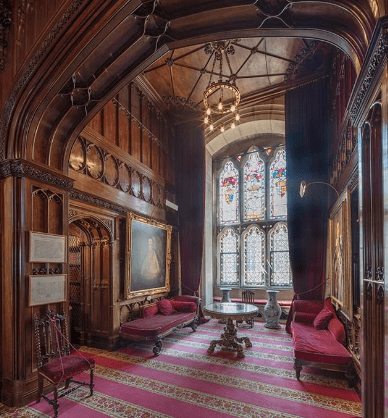
The intellect is an opportunist, at the service of whatever interest carries the greatest weight at the time. The forces that oppose liberation and strive to maintain the status quo are challenged by every insight that can jeopardize the neurotic structure, and when thus challenged they attempt to block progress in one way or another. They appear as “resistances” to the analytical work, a team appropriately used by Dr. Freud to denote everything that hampers this work from within, Resistance is by no means produces only by the analytical situation. Unless we live under exceptional conditions life itself is at least as great a challenge to the neurotic structure as is the analyst. A person’s secret claims on life are bound to be frequently frustrated because of their absolute and rigid character. Others do not share his illusions about himself, and will hurt him by questioning or disregarding them. Inroads upon his elaborate but precarious safety measures are unavoidable. These challenges may have a constructive influence, but also, he may react to them—as he does in analysis—first with anxiety and anger, one or the other prevailing, and then with a reinforcement of the neurotic tendencies. He becomes still more withdrawn, more dominating, more dependent. #RandolphHarris 19 of 24

In part the relationship with the analyst produces much the same feelings and responses as the relationships with others. However, since analysis is an explicit attack on the neurotic structure, the challenge it presents is great. One of the most fundamental distinctions we make about the content of our experiencing has to do with whether it is really there, whether we are perceiving something or only imagining it. Each person, and for that matter each society, is committed to a set of assumptions about what is real (what can be perceived) and what is unreal. Reality is a person or group of persons takes to be real. In the last analysis, reality is an attribution, that is, an act or judgment performed by a person, imbuing some experience with the quality of a reality that must be reckoned with. By the same token, we can withdraw our attribution of reality from some experience and view it as not real. Thus, a person may awaken from deep sleep with the conviction that someone is trying to harm him. Upon awakening, he reflects upon this experience and says, with relief, “It is not real—no one is trying to harm me; I was only dreaming.” #RandolphHarris 20 of 24

On the other hand, he may experience himself as trapped by a dominating parent and believe that the parent has more power to control his destiny than he has strength to oppose. He lives his life, then, according to his parents wishes, or what he believes those wishes would be. To an outsider, his estimate of his own strength in relation to the strength of the parent seems unrealistic. However, he lives according to what he takes to be the case, what he experiences as real. He attributes reality to experiences of ghosts and spirits, and they experience plants, animals, and all of nature as having souls and personalities. The “real World,” the World that is real for them, differs from that experienced by the modern Westerner. She regards that World view as mere animism—the ghosts, spirits, and souls with which the “primitive” person lives in her daily life are figments of imagination to the sophisticated person of the modern World. For her, only what can be recorded upon instruments, such as cameras and sound recorders, is taken to be real. The goal of the Sacramento Fire Department is to save lives, protect property, ease pain and suffering, and many feel that they are blessed by this opportunity. #RandolphHarris 21 of 24

Living a life of service is a great honour and privilege. “I think that firefighters are still highly regarded by the public, but we’re not the heroes we used to be. I think the reason is that they know what we’re making. Last year I made around $188,760 with overtime. I went to college for only two years. In how many other jobs can you go to training for four weeks and get a job paying that amount of money? Some people think about firemen as just sitting around. But for the most part, the public thinks that we’re pretty good, especially here in Sacramento, because we run the emergency medical service. That is a big plus. I want to get rid of the myth of the guys just sitting around playing checkers, and get people to understand that we are actively doing other things. I’ve had people tell me, ‘Oh, you work one day, you’re off four, you’re off five. I saw how much you make in the paper. You guys don’t do anything.’ To them, firemen are making tremendous salaries—whether we deserve it or not is immaterial to them—firemen have tremendous benefits, tremendous time off, which allows them to work second jobs. Plus, they go past the fire stations, and they see BMWs and other expensive vehicles in the back of the station. They say, ‘Look at those damn firemen, man, they’re making a tremendous amount of money, and I’m pounding nails and not making anything near them.’ A lot of envy, or at least resentment. #Randolph Harris 22 of 24

“The cops are the heroes now. Maimi Vice has something to do with it. A lot of buildings that you see, they paint those pastels on the buildings before they shoot, especially the ones they blow up. I’ve worked those sets as a fireman. Nonetheless, Sacramento is changed. They call it the Coatzacoalcos now. I would not have a cop’s job down here. Statistically, more firemen get killed an injured than policemen, but not so in Sacramento. Here the cops get killed way more often than firemen do. The killers are stealing or looting because they need money to buy drugs. Meth City, Sacramento. I really believe that professional is the name of the game, and that we have to continue to become more vital to the public. There is a lot of community in us. We care about Sacramento County. And we have to serve the public in many ways, emergency medical services, for instance. The more we have mandatory sprinklers in buildings, the less manpower and resources a fire department will need, and so we must be community-involved. I will say one thing, I’m gladder than hell I’m not a paramedic. I tried it for a while, and I didn’t like it. I don’t begrudge going on a medical call, but I’d prefer fighting a fire.” #RandolphHarris 23 of 24

You can help save lives, property and create community programs by donating to the Sacramento Fire Department. And parents, remember to teach your children to love America, love their family, treat others with respect. Be proud patriot Americans. Teach them to love God and Jesus Christ, to get an education, and to respect law and order, property, and nature. I pledge allegiance to the flag of the United States of America, and to the Republic, for which it stands, One Nation, Under God, Indivisible with Liberty and Justice for all. Rock from whose store we have eaten—bless Him, my faithful companions. Eaten have we and left over—this was the word of the Lord. Feeding His World like a shepherd—Father whose bread we have eaten, Father whose premium cranberry juice we have drunken, now to Hos name we are singing, Praising Him loud with our voices, saying and singing forever: Holy is none like the Lord. It is obvious that only a small portion of mankind has so far heard the word of revealed truth from the voice of one Lord’s true servants. In the wisdom and justice of the Lord, all must do so. As Peter said: “For this cause was the gospel preached also to them that are dead, that they might be judged according to men in the flesh, but live according to God in the spirit,” reports 1 Peter 4.6. #RandolphHarris 24 of 24

The Winchester Mystery House

Only 13 days left until our final flashlight tour of the year! Legend has it that Sarah had a special connection to the number 13, which you can see highlighted in various features throughout the house. Was it just by chance, or by design?

See if you can find them all during our self-guided flashlight tour on July 27th 🔦

Please come and enjoy a delicious meal in Sarah’s Café, stroll along the paths of the beautiful Victorian gardens, and wonder through the miles of hallways in the World’s most mysterious mansion. For further information about tours, including group tours, weddings, school events, birthday party packages, facility rentals, and special events please visit the website: https://winchestermysteryhouse.com/

Please visit the online giftshop, and purchase a gift for friends and relatives as well as a special memento of The Winchester Mystery House. A variety of souvenirs and gifts are available to purchase. https://shopwinchestermysteryhouse.com/

An Altar Boy Just Escaped from Mass or Something

The choices you make—mission, education, marriage, career, and faith in God—will shape your eternal destiny. Much has been written and said about today’s generation of young adults. Research shows that many resist organized religion. Many are in debt and unemployed. A majority like the idea of marriage, but many are reluctant to take that step. A growing number do not want children. Without the gospel and inspired guidance, many are wandering in strange paths and losing their way. However, your righteous choices will keep you from getting off course. Think of it: If you choose not to take a drink of alcohol, you will not become an alcoholic! If you never choose to go into debt, you will avoid the possibility of bankruptcy! The Lord will always keep Hos promise: “I will lead you along.” The only question is, will we let ourselves be led? Will we hear His voice and the voice of His servants? If you are there for the Lord, I testify that He will be there for you. If you love Him and Keep His commandments, you will have His Spirit to be with you and guide you. “Put your trust in that Spirit which leadeth to do good…By this shall you know, all things…pertaining unto things…pertaining unto things of righteousness.” #RandolphHarris 1 of 20

If we are steadfast and immovable in doing good, our customs will help us to stay on the covenant path. We all have customs and traditions that are personal, from our family, or from the community in which we live, and we hope to keep all those that align with the principles of the gospel. Edifying customs and traditions are fundamental to our efforts to stay on the covenant path, and those that are an obstacle, we ought to reject. A custom is the practice or the frequent and habitual way of thinking for a person, culture, or tradition. Frequently, the things we think and do in a habitual way we recognize as normal. Few people know what love really means because with nearly all it is filtered through the screens of bodily and selfish considerations. In its pure native state, it is the first attribute of the divine soul and consequently it is one of the most important qualities which the seeker has to cultivate. The love for which man is searching exists; it is as perfect, as beautiful, as perpetual, and as healing as he can imagine it to be. However, it does not exist where one wants to find it. Only the inner kingdom holds and gives it at the end of his search. No other human being can do so unless he or she has previously entered the kingdom, and then only through all the limitations and colourings of the Earthly consciousness. #RandolphHarris 2 of 20

Although we have learned that a love restricted to the limited circle of wife, family, or friends is unphilosophic and should be extended in universal compassion to all mankind, this should not be mistaken to mean that such a restricted love ought to be abandoned. On the contrary, it should have its fullest place within the larger one. We also believe that “love” is one of the most misused words in English. We may now add that it is also one of the most debased words. Why? Because, very often, it is based on sheer self-interest and not on the beloved’s interest and gives only so lang as it gets; because, not seldom, the greater the ardour with which it begins, the greater the antipathy with which it ends; and because it frequently mistakes the goading of animal glands for the awakening of human affection. True love does not change or falter because the beloved has changed and wavered or because the physical circumstances wherein it was born have become different. It cannot be blown hither and thither by the accidents of destiny. It is not merely an emotional attraction, although it will include this. “Love is not love which alters when it alteration finds, …O no! it is an ever-fixed mark…” wrote Shakespeare. #RandolphHarris 3 of 20

It expressed itself outwardly in an exceptionally kindly behaviour. He will not hurt others unnecessarily. He feels that one of the best pieces of advice he can give others is: “Be kind.” In this way you abrase your own egoism and show forth something—just an echo—of this love which emanates from the indwelling spiritual self. The cost in thus weakly and briefly identifying yourself with others is little: the gain in moral growth is large. When your duties, activities, or responsibilities in life call for critical judgment of any person, that is allowable. However, when you fall into it for the sake of idle gossip or, what is worse, when you are nastily censorious, slanderously back-biting, for the sake of malice, that is unkind and unpardonable. Above his own deliberate willing or wishing, quite spontaneously and impulsively, a feeling of pure love begins to well up within him. It is unconnected with physical or egoistic causes, for all those who touch his orbit benefit by it. If they are foolish or dreadful, sinful or deformed, unclean or disagreeable, it does not stop flowing. No one has ever unraveled the mystery of love as it exists between a man and a woman. Since it is usually beyond our power to accept or reject, we should regard it as a Divine Message and seek out its meaning to our spiritual life. #RandolphHarris 4 of 20

What is normal for some may be odd for others, depending on their customs and traditions. Which customs and traditions are normal in our lives? Today, we often hear about “a new normal.” If you really want to embrace a new normal, I invite you to turn your heart, mind, and soul increasingly to our Heavenly Father and His Son, Jesus as the Christ. Let that be your new normal. If there is anything virtuous, lovely, or good report or praiseworthy, we seek after these things,” reports Articles of Faith 1.13. At its peak moments, which can arise only in its first or last stages and which belong only to its affectional rather than passional side, human love catches and reflects feebly the nature of divine love. The romantic aureole which young persons put around love, the demands made on it for that which it cannot give, point to the need of maturer instruction. Yet there is a relationship where two can grow in virtues side by side, learning wisdom from one another, harmonizing more and more with each other. However, this calls for self-control, eliminating negatives, cultivating positives. No one has the right to bind, hinder, or restrict the free spiritual movement of another person—no matter how close his blood, contractual, or emotional relationship may be—who enters into the pursuit of higher well-being. If it is done in the name of love, then that word has its meaningly sorely misrepresented, for it is really being done in selfishness. #RandolphHarris 5 of 20

This quality of “love” is not to be measured by the exhibitions of effusiveness on the part of its possessor; it is to be measured by the presence or absence in him of egolessness. Whoever talks of his love for mankind will reveal it better by positive deeds than by sentimental displays. When brought down to individuals, the fact is, however, that such love is hard to feel. Only the actualized Christian really possesses it. Our Heavenly Father’s love for each of His children is real. He is there for each one. The eternal principle of love is manifested by living the two great commandments: love God with all your heart, soul, mind, and strength and love your neighbour as yourself. We are willing to help each other because we love one another, and our loved one’s needs become our needs, and ours become theirs. No matter what language a child of God speaks or what country he comes from, we love each other because we are brothers, children of the same Father. It is not enough to avoid being a stumbling block for others; it is not enough to notice the needy on the road and pass by. Even if it is the first and only time, we meet him or her in this life, let us take advantage of every opportunity to help our neighbour. By loving the Overself within you in worship you are loving it in all men, because it is present in them, too. Hence, you do not have to go out of your way to love any individual specially, separately, although you will naturally feel affection for some. #RandolphHarris 6 of 20

Adversity in our lives can cause doubt about the fulfillment of the promises that have been made to us. Please trust in our Father. He always keeps His promises, and we can learn what He wants to teach us. Traces of earlier customs survive in present-day cultures. According to the Doctrine of Survival, meaningless customs must be survivals. When and where they first arose, they had a practical or at least a ceremonial intention, but are now fallen into absurdity from having been carried on into a new state in society where the original sense has been discarded. If we can accept the conclusion that every established and settled institution is justifiable, in its setting, as an adaptation, it seems to me that we are thereby accepting the extension of the Darwinian theory to the field of science and society. Sociology is a psychology rather than a biological science. The consciousness of kind, which is the basis of all social organization, is a mental state and not a biological process. Although the fittest is not always the best, the characteristic of the social process makes them identical. Society, however, in selecting the best, gives weight to such qualities as sympathy and mutual aid. It usually eliminates the incompetent and the irresponsible. The improvement of society must be a slow evolutionary process waiting upon the gradual increment of personal characteristics “adapted” to the life conditions of modern industrial society. #RandolphHarris 7 of 20

The individual is a product of his social life and society is an organization of such individuals. Man’s psychical outfit is not divisible into the social and the non-social; but that he is all social in a large sense, is all a part of the common human life. We may desire abolition of war, industrial justice, greater equality of opportunity for all. However, no amount of preaching good will or the golden rule or cultivation of sentiments of love and equity will accomplish the results. There must be change in objective arrangements and institutions. We must work on the environment, not merely on the hearts of men. The prevailing code of morals fails to pierce the veil of the impersonal corporate relations of modern society, and the blame for social ills must be fixed on the absentee malefactors. If we were to cut back unnecessary dehumanizing consumption today, it would mean less production, less employment, and less income and less profit generated in certain sectors of the economy. Clearly, if this were done willy-nilly, with no planning, etcetera, it would cause extreme hardship for the economy as a whole and for specific groups of people. What would be required is a planned process of spreading the increased leisure across all areas of work, retraining of people, and a redeployment of some material resources. #RandolphHarris 8 of 20

Time would be needed, and planning would of course have to be social rather than private, since no one industry could organize and implement a plan affecting wide sectors of the economy. Given proper planning, the reduction in total income and profit would not seem to be an insurmountable problem, since the need for income would have been reduced with the lowering consumption. As our productive potential has increased, we have been faced with the choice of much less work with a much higher production and consumption with a steady level of work. Somewhat begrudgingly we have chosen a mixture of the two. Production and consumption have been increased, and at the same time work hours have been reduced and child labour largely abolished. This choice was not dictated by technical necessity, but was the result of changing social attitudes and political struggle. Whatever the merits of theses suggestion are, they are of little importance in comparison with what economists can suggest in response to the question, Is a stationary technological society possible? The important point is that the specialists address themselves to this problem, and they will do so only if they see the relevance of the question. One should not forget that the main difficulty may be found not in the economic and technical aspects of the problem but in its political and psychological aspects. Habits and ways of thought do not bend easily, and since many powerful interest groups have a very real stake in maintaining and speeding up the consumption treadmill the struggle to change the pattern will be hard and long. As have been said many times, the all-important point at this time is that we make a beginning. #RandolphHarris 9 of 20
We are not alone in our fixation on material consumption—other Western nations, Russia, China, Japan, and East European nations also seem to be caught in the same destructive trap. Witness the Chinese claim that they will bury us in washing machines, cars, minerals, refrigerators, etcetera. The real challenge would be not to engage them in the wrong race, but to transcend this stage of social development and challenge them to build a truly human society—which will not be defined and measured by the number of Smart TVs or cars. If the consumers were to reduce their consumption to satisfy their real needs as living human beings, while this question of an eventually stationary production level is at the moment an essentially theoretical one, there is a very practical one which would arise. If this were to happen, if we redirected and transferred production from certain “unnecessary” private consumption to more humane forms of social consumption, the present rate of economic growth could be maintained. The needs here are clear and have been noted by many contemporary analysts and writers. A partial list of activities would include: a reconstruction of much of the nation’s living spaces (millions of new housing units), a vast expansion and improvement in public education and public health, development of urban and intercity systems of public transportation, tens of thousands of small and large recreation projects in American communities (parks, playgrounds, swimming pools, etcetera), a major beginning in the development of cultural life—brining drama, music, dance, painting, movie making, etcetera, into hundreds of thousands of communities and millions of lives which currently have no real sense of this dimension of human existence. #RandolphHarris 10 of 20

All these efforts involve physical production and the development of vast human resources. Such projects have the immediate virtue of attacking the problems of the impoverished minority, at the same time engaging the imagination and energies of the non-poor. If not completely eliminate, they also soften the problems created by cutting back on consumption. If major programs of this kind were to be undertaken, national economic and social planning would, of course, be required since substantial shifts in the use of human and material resources would be involved. A prime result of such efforts would be to show that we were indeed moving toward a genuinely human community. If we guaranteed that in each aspect of such programs the people and communities involved would be responsible for project development and implementation, this would be another great step in the direction of creating an alive, involved society. At the national level, enabling legislation is necessary plus adequate financing, but given this all-important minimum, maximum public participation and project diversity should be the prime principle. #RandolphHarris 11 of 20

In such a shift from the private to the public sector of consumption, private spending would be restrained as more income was diverted to higher taxes, and there would be a measurable shift from deadening, dehumanizing private consumption to new forms of public consumption that would involve people in creative community activities. Needless to say, such a shift would require careful planning to avoid severe upsets in the economic system; in this respect, we face the same problem in the convention from armament to peace production. For man, inasmuch as he is man—that is to say, inasmuch as he transcends nature and is aware of himself and of death—the sense of complete aloneness and separateness is close to insanity. Man as man is afraid of insanity, just as man as terrestrial being is afraid of death. Man has to be related, he had to find union with others, in order to be sane. This need to be one with others is his strongest passion, stronger than pleasures of the flesh and often even stronger than his wish to live. It is this fear of isolation and ostracism, rather than the “castration fear,” that makes people repress the awareness of that which is taboo since such awareness would mean being different, separate, and hence, to be ostracized. Even if his own eyes could convince him that it is false, for this reason the individual must bling himself from seeing that which his group claims does not exist, or accept as truth that which the majority says is true. #RandolphHarris 12 of 20

The herd is so vitally important for the individual that their views, beliefs, feelings, constitute reality for him, more so than what his sense and his reason tell him. Just as in the hypnotic state of dissociation the hypnotist’s voice and words take the place of reality, so the social pattern constitutes reality for most people. What man considers true, real, sane, are the clichés accepted by his society, and much that does not fit in with these clichés is excluded from awareness, is unconscious. There is almost nothing a man will not believe—or repress when he is threatened with the explicit or implicit threat of ostracism. Retuning to the fear of losing one’s identity, for the majority of people, their identity is precisely rooted in their conformity with the social clichés. “They” are who they are supposed to be—hence the fear of ostracism implies the fear of the loss of identity, and the very combination of both fears has a most powerful effect. Let us imagine a person who has observed that in certain situations in which he would like to participate in discussions he is tongue tied because he is afraid of possible criticism. If he allows this observation to take root within himself he will begin to wonder about the fear involved, since it is out of proportion to any real danger. He will wonder why the fear is so great that it prevents him not only from expressing his thoughts but also from thinking clearly. He will wonder whether the fear is greater than his ambition, and whether it is greater than any consideration of expediency, which for the sake of his career, would make it desirable that he produce a good impression. #RandolphHarris 13 of 20

Having thus gained an interest in his problem, he will try to find whether similar difficulties operate in other areas of life, and, if so, what form they take, He will examine his relations with women. Is he too timid to approach them because they might find fault with him? What about his life that involves pleasures of the flesh? Was he once important for a while because he could not get over a failure? Is he reluctant to go to parties? What about shopping? Does he buy an expensive house because otherwise the real estate agent might think he is too economical? Does he tip too generously because the waiter might look down upon him? Furthermore, exactly how vulnerable is he in regard to criticism? What is sufficient to touch off an embarrassment or to make him feel hurt? Is he hurt only when his wife overtly criticizes his necktie or is he uneasy when she merely praises Justin for always matching his tie and his socks? Such considerations will give him an impression of the extent and intensity of his difficulty and of its various manifestations. He will then want to know how it affects his life. He knows already that it makes him inhibited in many areas. He cannot assert himself; he is too complaint with what other expect of him, and therefore he can never be himself but must automatically play a part. #RandolphHarris 14 of 20

Not being able to be himself makes him resentful against others, for they appear to dominate him, but it also lowers his own self-esteem. Finally, he looks out for the factors that are responsible for the difficulty. What made him so fearful of criticism? He may remember that his parents held him to very rigid standards, and may recall any number of incidents in which he was scolded or made to feel inadequate. However, he will also have to think of all the weak spots in his actual personality which, in their totality, render him dependent on others and therefore make him regard their opinion of him as of compelling importance. If he can find the answers to all such questions his recognition that he is afraid of criticism will no longer be an isolated insight, but he will see the relationship of this trait to the whole structure of his personality. It may well be asked whether I mean by this example that a person who has discovered a new factor should deliberately ransack his experiences and feelings in the various ways indicated. Certainly not, because which a procedure would involve the same danger of merely intellectual mastery that was discussed before. #RandolphHarris 15 of 20

However, he should grant himself a period of contemplation. He should mediate on his finding in much the same manner as an archaeologist who has discovered a buried statues, badly mutilated, looks at his treasure from all angels until the original factor that a person recognizes is like a searchlight turned on certain domains of his life, lighting up spots which have hitherto been dark. If only he is vividly interested in recognizing himself, he is almost bound to see them. These are point at which the guidance of an expert would be particularly helpful. I hypothesize that growth and change are more likely to occur the more that a counselor is experiencing a warm, optimistic, acceptant attitude toward what is in the client. It means that he prizes his client, as a person, with somewhat the same quality of feeling that a parent feels for his child, prizing him as a person regardless of his particular behaviour at the moment. It means that he cares for his client in a non-possessive way, as a person with potentialities. It involves an open willingness for the client to be whatever feelings are real in him at the moment—hostility or tenderness, rebellion or submissiveness, assurance of self-depreciation. It means a kind of love for the client as he is, providing we understand the word love as equivalent to the theologian’s term agape, and not in its usual romantic and possessive meanings. #RandolphHarris 16 of 20

This description is a feeling which is not paternalist, not sentimental, nor superficially social and agreeable. It respects the other person as a separate individual, and does not possess him. It is a kind of liking which has strength, and which is not demanding. We have termed it a beneficial regard. Consciousness is awareness, the state of or faculty of being mentally cognizant or aware of anything. This important state of being not only refers to the unique capacity to perceive, remember, think about, and imagine the World in its many realities and possibilities. It includes a special human capacity—to reflect upon the person’s immediate way of being aware. Thus, you can engage in remembering the past; of someone asks, “What are you doing right now?” you can reply, “I am trying to remember something.” You can tell the difference, through such reflection, between perceiving, remembering, and imagining. Indeed, loss of the capacity for such discriminating reflection, confusion of seeing with imagining, is one of the signs by which students of abnormal personality identify psychosis. The first property of human consciousness to which we call attention, then, is that it can be reflected on. Humans are capable of being self-conscious, as well as conscious of the World beyond themselves. This strange ability of the human to “clamber outside of self” and look back at self is a valuable tool of consciousness expansion. It enables the person to see self as others see the person. In gives one an added foothold on reality. #RandolphHarris 17 of 20

We do not have to be hindered by self-judgment. Compassion is an attribute of Christ. It is born of love for others and knows no boundaries. Even when we do what is right, the circumstances in our life can change from good to bad, from happiness to sadness. God answers our prayers according to His infinite mercy and love and in His own time. Our Saviour’s plea is to “let your light shine before men, that they may see your good works, and glorify your Father which is in Heaven,” reports Matthew 5.16. We want to see Jesus for who He is and we want to feel His love. Worthiness is a process, and perfection and an eternal trek. We can be worthy to enjoy certain privileges without being perfect. There is a natural, probably a mortal, tendency to compare ourselves with others. Unfortunately, when we make these comparisons, we tend to compare our weakest attributes with someone else’s strongest. Obviously these kinds of comparisons are destructive and only reinforce the fear that somehow we do not measure up and therefore we must not be as worthy as the next person. We need to come to terms with our desire to reach perfection and our frustration when our accomplishments or behaviours are less than perfect. Salvation does not come all at one; we are commanded to be perfect even as our Father in Heaven it perfect. It will take us ages to accomplish this end, for there will be greater progress beyond the grave, and it will be there that the faithful will overcome all things, and receive all things, even the fulness of the Father’s glory. #RandolphHarris 18 of 20

As California’s Capitol City fire department, it is the Sacramento Fire Department’s mission to provide unparalleled fire, rescues, and emergency medical services to their community. “Firefighters are individuals unto themselves, with a tremendous sense of humor. I think you need it in this type of job. I don’t think there is another occupation where a sense of humor is so important. The pranks that are played on one another, the fraternity house atmosphere at times, is necessary to cut both the tension of what it is you actually do when you go to work and the tedium in between. Sometimes you meet guys in the job who think they know everything, but the job doesn’t let them get away with it for every long. There was this kid, one of those people who don’t know anything but think they have it all together. He was a probie, a probationary fireman, and he looked like an altar boy just escaped from Mass of something. When you tell him something, he says, ‘I know that. I know that. I’ll tell you something. My friend X and I have been tight because we work together in the same station. I’ve never been to Vietnam or anything like that, but they say that when you are close to death and you’re with somebody, it makes you closer. Well, I know that since we found that baby in that collapsed building, X and Y and I are a lot closer than we were. #RandolphHarris 19 of 20

“I guess just knowing that you could die, just that fact does something to bring you together. We knew that is something happened we were all going together.” California’s Capital City fire department stives to maintain a focus on providing value to the residents, business owners, and visitors who live, work and play within in boundaries. The Sacramento Fire Department promotes safety and assists people in their time of crisis. They seek not only to make a good impression, but to provide the public piece of mind that their fire department is capable, ready, and willing to help them when they need it. You can help save lives by donating to the Sacramento Fire Department. As this is a community of family values, it is essential to raise your children to love America, be patriotic, love God and Jesus Christ, respect and obey law and order, and treat others with dignity and kindness. I pledge allegiance to the flag of the United States of America, and to the Republic for which it stands, One Nation under God, Indivisible, with Liberty and Justice for all. God of the World, eternity’s sole Lord! King over kings, be now Thy name adored! Blessed are we to whom Thou dost accord this gladsome time Thy wonderous ways to scan! This is the day bless above all others, for the Rock of Ages rested thereon. Six days are days for toil and labour, but the seventh day is a day unto the Lord. Toil not! This day is not for labour! In six days was the World created. #RandolphHarris 20 of 20

Ascent at Montelena

11977 Cobble Brook Drive, Rancho Cordova, California 95742
4 Home Design(s) Available Starting from $625,990

Experience modern designs and affordability in our upcoming new homes for sale. Ascent at Montelena in Rancho Cordova is near major employers and premier shopping. https://www.pulte.com/homes/california/sacramento/rancho-cordova/ascent-at-montelena-210916


Any Occupied Environment is Filled with Struggling Beings

Man is a dual being—a living soul—composed of a body of a spirit and a physical body. His spirit existed as an individual personal entity in a premortal life long before the Earth was created. As a matter of fact, this Earth was expressly created as a place for the spirits of men to take on mortality. The clearest teaching on record as to the nature of the spirit of man was given 2254 years B.C., when Jesus as the Christ, in spirit body, appeared to the brother of Jared and said: “Behold, I am Jesus Christ…seest thou that ye are created after mine own image? Yea, even all men were created in the beginning after mine own image. Behold, this body, which ye now behold, is the body of my spirit; and man have I created after the body of my spirit; and even as I appear unto thee to be in the spirit will I appear unto my people in the flesh,” reports Ether 3.14-16. Man’s physical body is patterned after his spiritual body. If he is to attain the freedom and assume the responsibility of true adulthood, a man may have to free himself from being unduly dependent or overly attached to another person. Values are imposed upon things by human feelings, human desires, and human purposes. The common criterion of value is whether a thing or an occurrence brings an agreeable feeling or satisfies a personal want. #RandolphHarris 1 of 22

However, as wants and feelings are subject to change, so likewise first valuations are subject to revision with time. Indeed, it may happen, as indeed in the case of marriage it often does happen, that what was formerly valued as good is later branded as bad. That he should seek the delight of shared understanding and confirmed attitude with friend, family, or co-disciple is to be expected. Tears have power. Followers of Christ are bidden to weep whenever they recite the Christian Bible. In these changing times, we all have to reorient our external lives occasionally, so it is useless to try sentimentally to fix forever relationships that once were. Building upon the foundation of Jesus as the Christ is essential to our happiness. This relationship can continue beyond the grace and answer other questions of the soul, such as what is the purpose of life, how we overcome our weakness, and where do we go after we die? Alma taught the people of his day, “For behold, I say unto you there by many things to come; and behold, there is one thing which is of more importance than they all—for behold, the time is not far distant that the Redeemer liveth and cometh among His people,” reports Alma 7.7. This declaration is equally important to us today as we anticipate and prepare for Christ’s Second Coming! #RandolphHarris 2 of 22

Therefore, behold that Jesus as the Christ is essential to our happiness. This is a sure foundation, “a foundation whereon if men build, they cannot fall.” Doing so prepares us for the challenges of life, come what they may. The environment has so strong an influence over men that their subjective qualities can be neglected. Nature is so stingy and its surplus so small that no radical change in social relations is possible. Nature seems ungenerously until it is shown that the economic environment changes with the changes in men. New classes of men look upon the World in different ways, and the environment they find depends upon their mental characteristics. The laws given by society are not simply the laws of nature; they are laws derived from the combination of natural forces of which society makes use. Modifications of the environment react on men by changing their habits of consumption. Every reduction of cost creates another order of consumption, a new standard of life, which by inducing a new race psychology tends to stimulate new motives in production, new devices, new reductions in cost. This is how a dynamic economy works: progress occurs as a steady upward spiral. #RandolphHarris 3 of 22

The theory of goods in economics is in fact the study of the environments of organisms. The environment of each organism, being the sum of its economic conditions, changes as these conditions change. There is an indefinite number, a series, of environments. Any given environment, once occupied, is soon filled with struggling beings. A progressive evolution depends upon the power of moving from one environment to another and thus avoiding the stress of competition. A series of differing environments presents increasingly complex conditions, requiring a new mental evolution for each transition. A progressive nation passes through a complete series of different environments, even though its geographical location does not change. In a progressive evolution the higher type of animal adjusts to a new environment; among lower animals there is a static competition for the existing limited resources. Thus, the essence of progress is escape from competition. Sensory organisms gain clearer ideas of the environment; motor organisms act with vigour and promptness. In the biological stage of progress, beings are pushed into a local environment in which little thought is required to supply the necessaries of life. #RandolphHarris 4 of 22

The development of motor powers determines who shall survive, and those with inferior motor powers are driven out. Some of these, however, are better fitted to occupy a more general environment in which highly developed sensory powers are of more use. The conquered find a new place to live and create a new society with new requisites for survival. In time the residents of this new society who have the better motor powers will again survive, and those with imperfect motor organization but improved sensory powers are driven once again into a more general environment where new social instincts are needed and a new order is formed. The characteristics of social progress, as distinguished from biological, depend upon this ability to break through from one environment to another. Man has achieved such control over his environment, such development of his sensory faculties, that he has passed out of a pain economy—the primitive economy portrayed in Ricardian economics—into a pleasure economy. The essence of a pleasure economy is not the total absence of pain but the disappearance of fear as a dominant motive. The race slowly loses the instincts of a pain economy and acquires those best suited to the new conditions. #RandolphHarris 5 of 22

In time the pleasure economy’s surplus population will be carried off by temptation, disease, and vice, and thus will be bred a race with instincts to resist extinction by such devices—a truly superior race of men in a social commonwealth. Peoples with varied diets and many wants has a decided advantage over those with simple diet and few wants. The latter class would require a large area of land to support a given number of persons and would thus be at a disadvantage in an economic contest for survival. Consumption itself becomes a lever in progressive evolution. When we modify classical economics, we become open to new perspectives on the possibilities of a life based upon abundance rather than want. The best religion is that which acts most powerfully as a spur to energy and directs that energy most productively. The religion which best fits men for the struggle to survive will be left in possession of the World, just as the “work-bench” philosophy of life is destined to prevail over the “pig-trough” philosophy. The struggle for existence is primarily a group struggle, but the struggle among individuals continues, and promotes the efficiency of the group in its larger conflict. The group that regulates individualist competition by rewarding those who strengthen it most and penalizing it through poverty and failure, those who strengthen it least, is the group that will survive. #RandolphHarris 6 of 22

The best method of getting productive work out of men is the selective method of competition, and rewards are best meted out to valuable citizens by means of private property. The laws of natural selection are merely God’s regular methods of expressing his choice and approval. The naturally selected are the chosen of God. To help in the essential business of survival the churches should preach obedience to the laws of God through pursuit of the productive life. An economist, even a traditional one, more likely than most people, should be able to view his analysis of the mechanisms of choices and see how limited, though essential, an instrument it is. As with so many proposals for new thinking, the concept of a guaranteed income should be welcome as a challenge to theory before it needs to become a program for action. The principle of the guaranteed annual income has to cope with the objection that man is lazy and would not want to work if the principle of work-or-starve were to be abolished. In fact, this assumption is wrong. As overwhelming evidence shows, man has an inherent tendency to be active, and laziness is a pathological symptom. If even for a short time, under a system of “forced labour” where little attention is paid to the attractiveness of work, man seeks to escape from it. #RandolphHarris 7 of 22

If the whole social system is changed in such a way that coercion and threat are removed from the work obligation, only a minority of sick people would prefer to do nothing. It is quite possible that a certain minority of people would prefer what would be the equivalent of the monastic life, devoting themselves completely to their inner development, to contemplation, or study. If the Middle Ages could afford to tolerate monastic life, certainly our affluent technological society is much more able to afford it. However, again, as soon as we introduced bureaucratic methods necessitating that somebody had to prove that he really made “good use” of his time, the whole principle would be spoiled. There is a specific variant of the principle of the guaranteed income which, although not likely to be accepted at present, constitutes an important principle. I am referring to the principle that the minimal requirements for a dignified life are not obtained on a cash basis, but as free commodities and services which do not require payment. We have accepted this principle for elementary schooling, nor does anyone have to pay for the air he breathes, but if democrats have their way, cows will have to pay taxes to live. #RandolphHarris 8 of 22

One could begin to extend this principle of free commodities and services which do not require payment to all higher education, which could be completely free, with a stipend for every student, making it possible for him to enjoy free access to education. We could also extend the principle in another direction, namely, to have basic commodities free, beginning perhaps with free bread and free transportation. Eventually it could be extended to all commodities because they constitute the minimum material basis for a dignified life. Needless to add, this vision is utopian as far as its realization soon is concerned. However, it is rational, both economically and psychologically, for a much more advanced state of society. To recommend that many affluent Americans begin to disconnect themselves from the endless and increasingly mindless process of more and more consumption requires at least a brief comment on the strictly economic implications of such a suggestion. The question is simply, Is it technically and economically possible for the economy to remain strong and stable in the absence of higher and higher consumption levels? #RandolphHarris 9 of 22

At this point, American society is not affluent, at least 40 percent of the population, and a large sector of the remaining 60 percent is not overconsuming. Hence, the question at this moment is not that of restrictions of the growth of our production level, but of redirection of consumption. Nevertheless, the question must be raised—whether, once the legitimate consumption level for the whole population has been reached, whatever it may be (including production which helps the poor nations), and considering the increase in production which corresponds to population increase, there is any point at which production would become stationary; or must we, for economic reasons, pursue the aim of a never-ending increase in production, which also means increase in consumption? It is necessary that economist and planners begin to study the problem, even though at the moment it does not seem urgent from a practical standpoint. For as long as our planning is oriented toward the never-ending increase in production, our thinking and economic practices are influenced by this goal. This is already important in decisions about the rate of annual production growth. The aim of maximal economic growth rate is accepted like the doctrine and covenants, undoubtedly because of the urgency of the real needs, and also because of the quasi-religious principle of the limitless rise of production as the goal of life called “progress,” the industrial version of Heaven. #RandolphHarris 10 of 22

If they have reached it, while language and logic are parts of the social filter which makes it difficult or impossible for an experience to enter awareness, one of the most important parts of the social filter is the one that does not permit certain feelings to reach consciousness and tends to expel them from this realm. In a tribe of warriors, for instance, whose members live by killing and robbing the members of other tribes, there might be an individual who feels a revulsion against killing and robbing. Yet it is most unlikely that he will be aware of this feeling since it would be incompatible with that of the whole tribe; to be aware of this incompatible feeling would mean danger of being completely isolated and ostracized. Hence an individual with such an experience of revulsion would probably develop a psychosomatic symptom such as vomiting, instead of letting the feeling of revulsion penetrate to his awareness. Exactly the contrary would be found in the case of a member of a peaceful agricultural tribe who has the impulse to go out and kill and rob members of other groups. He also would probably not permit himself to become aware of his impulses, but instead would develop a symptom—maybe intense fright. #RandolphHarris 11 of 22

Still another example, one from our own civilization: there must be many shopkeepers in our big cities who have a customer who badly needs, let us say, a suit of clothes, but who does not have sufficient money to buy even the most inexpensive one. Among those shopkeepers (especially the well-to-do ones) there must be a few who would have the natural human impulse to give the suit to the customer for the price that he can pay. However, how many will permit themselves to be aware of such an impulse? I assume very few. The majority will repress it, and we might find among them quite a few who will have a dream during the following night which might express the repressed impulse in one form or another. Another example: the modern “organization man” might feel that his life makes little sense, that he is bored by what he is doing, that he has little freedom to do and think as he sees fit, that he is chasing after an illusion of happiness which never comes true. However, if he were aware of such feelings, he would be greatly hindered in this proper social functioning. Hence such awareness would constitute a real danger to society as it is organized; and as a result, the feeling is repressed. #RandolphHarris 12 of 22

Or, there must be many people who sense that it is irrational to buy a new car every two years and who might even have a feeling of sadness when they have to part from a car they have been using, one that has “grown on them.” Yet if many were aware of such feelings, there would be danger that they would act on them—and where would our economy be, which is based on relentless consumption? Then again, is it possible that most people should be so lacking in natural intelligence that they do not see with how much incompetence many of their leaders—whatever the method by which they came to the top—perform their functions? Yet, if such facts became conscious to more than a tiny minority, where would social cohesion and unified action be? Is reality in this respect any different from what happens in Andersen’s fairy tale of the emperor without clothes? Although the emperor is naked, only a little boy perceives this fact, while the rest of the people are convinced that the emperor is wearing beautiful clothes. The irrationalities of any given society results in the necessity for its members to repress the awareness of many of their own feelings and observations. This necessity is the greater in proportion to the extent to which a society is not representative of all its members. #RandolphHarris 13 of 22

Greek society did not pretend to fulfill the interest of all its people. The slaves, even according to Aristotle, were not full-fledged human beings; hence neither the citizens nor the slaves had to repress much in this respect. However, if they fail to do so, for the societies which pretend to care for the welfare of all, this problem does exist. Throughout human history, with the exception, perhaps, of some primitive societies, the table has always been set only for a few, and the vast majority received nothing but the remaining crumbs that trickled down. If the majority had been fully aware of the fact that they were being cheated, a resentment might have developed which would have endangered the existing order. Hence such thoughts had to be repressed and those in whom this process of repression did not take place adequately were in danger of their lives or freedom. In our recent years in our work with randomly selected hospitalized schizophrenic patients, I have received much clinical conformation for the hypothesis that the more genuine and congruent the therapist is in the relationship, the more probability there is that change in personality in the client will occur. The individual therapists in our research program who seem to be most successful in dealing with these unmotivated, poorly educated, resistant, chronically hospitalized individuals, are those who are first of all real, who react in a genuine, human way as persons, and who exhibit their genuineness in the relationship. #RandolphHarris 14 of 22

However, is it always helpful to be genuine? What about negative feelings? What about the times when the counselor’s real feeling toward his clients is one of annoyance, or boredom, or dislike? My tentative answer is that even with such feelings as these, which we all have from time to time, it is preferable for the counselor to be real than to put up a façade of interest and concern and liking which he does not feel. However, this is not a simple thing to achieve such a reality. I am not saying that it is helpful to blurt out impulsively every passing feeling and accusation under the comfortable impression that one is being genuine. Being real involves the difficult task of being acquainted with the flow of experiencing going on within oneself, a floe marked especially by complexity and continuous change. So if I sense that I am feeling bored by my contacts with this student, and this feeling persists, I think I owe it to him and to our relationship to share this feeling with him. However, here again I will want to be constantly in touch with what is going on in me. If I am, I will recognize that it is my feeling of being bored which I am expressing, and not some supposed fact about him as a boring person. If I voice my own reaction, it has the potentiality of leading to a deeper relationship. However, this feeling exists in the context of a complex and changing flow, and this needs to be communicated too. #RandolphHarris 15 of 22

I would like to share with him my distress at feeling bored, and the discomfort I feel in expressing this aspect of me. As I share these attitudes, I find that my feeling of boredom arises from my sense of remoteness from him, and that I would like to be more in touch with him. And even as I try to express these feelings, they change. I am certainly not bored as I try to communicate myself to him in this way, and I am far from bored as I wait with eagerness and perhaps a bit of apprehension for his response. I also feel a new sensitivity to him, now that I have shared this feeling which has been a barrier between us. So I am very much more able to hear the surprise or perhaps the hurt in his voice as he now finds himself speaking more genuinely because I have dared to be real with him. I have let myself be a person—real, imperfect—in my relationship with him. Realness in the counselor which is deep and true, not superficial creates a transparency which helps to create this element of personal congruence. If everything going on in me which is relevant to the relationship can be seen by my client, if he can see “clear through me,” and if I am willing for this realness to show through in the relationship, then I can be almost certain that this will be a meaningful encounter in which we both learn and develop. #RandolphHarris 16 of 22

It is better to be genuinely what one is, than to pretend to be feeling these other qualities. It is thus by no means a matter of purely theoretical interest for a person to discover how a personality trait is embedded in his structure, with manifold roots and manifold effects; it si also of the greatest therapeutic importance. This requirement could be expressed in the familiar terms of dynamics: one must know the dynamics of a trait before one can change it. However, this word is like a coin that has become a bit shabby and thin through long usage. Besides, it usually suggests the idea of driving forces, and might be interpreted here to mean that one should merely seek such forces, whether in early childhood or in the present. In this case the notion of dynamics would be misleading, for the influence that a trait exerts on the entire personality is just as important as the factors that determine its existence. It is by no means only in psychological matters that this awareness of structural interrelations is essential. The considerations I have emphasized apply with equal weight to questions of organic illness, for example. No good physician will regard a heart disorder as an isolated phenomenon. He will consider also in what way the heart is influenced by other organs, such as the kidneys and the lungs. #RandolphHarris 17 of 22

And he must know the heart condition in turn affects other systems in the body: how it affects, for instance, the circulation of the blood or the action of the liver. His knowledge of such influences will help him to understand the intensity of the disorder. If it is thus essential in analytic work not to become lost in scattered details, how can the desirable continuity be brought about? We have seen that the concept of the healthy personality is nowhere near as old and venerable as the concepts of the unhealthy personality, maladjustment, and neurosis. However, we have also seen that ideas about how to make one’s self a “better self” or “one’s best self” can be found in present-day writings and those from the past. The early Freudians suggest that you can find a way to better functioning by understanding your past, by thinking and interpreting your dreams. Some suggest getting in “better touch” with your body, with specific parts of your body. Full expression of self is indicated by both Dr. Freud and Lowen. Of course, such free expression should take place in the proper environment and circumstances—often a psychotherapist’s office, but also in one’s own home and in the company of understanding, helpful friends. The newness of the concept of healthy personality gently reminds us that we ought not to put aside any of the many routes to self-actualization or self-realization. These varying methods recognize the necessity, at times, for careful professional help, but they do not deny the value of self-help and help from those who truly love and care about you. #RandolphHarris 18 of 22
The Sacramento Fire Department exists to provide a safe environment for the community by minimizing the impact of fire and injury through public education, quality service, emergency preparedness and an overall culture of safety. Their number one goal is and will always be firefighter safety. Safety is both an individual and team responsibility. Supervisors and employees must take an active role in their personal safety and the safety of their crews. “Fires with multiple fatalities are hard to deal with. I was at my second station in the course of my probationary period, and there was a structure fire in Downtown Sacramento. Both floors of this large two-story residence were pretty well involved. There were reports of possible trapped victims, and it was early enough in the morning that there was a good possibility that there were people in there. That made me anxious over their fate. I was with the engine company, and we attacked the fire with a hose line. It was a real hot, down-and-dirty, nasty kind of fire. We took some pretty good fire going in. On the second floor, we discovered the first couple of fatalities, because we crawled right past them as we were knocking down the fire. They probably died of smoke inhalation, but they were considerably burned in the course of the fire. There were four fatalities in all. #RandolphHarris 19 of 22

“Rookie firefighters were always assigned to help with the body removal. They try to prepare you for this in the academy, but it’s something you can’t fully comprehend until you’ve been there. It was a pretty helpless feeling. We rookies were assigned to assist the coroner in putting the victims on the gurney and removing them from the fire scene out to the coroner’s van. I remember having a well of emotions inside me, almost to the point of tears. A lot of questions went through my mind: did we do everything we could have done, was there something we could have done sooner or differently that would have changed the outcome? After mulling over these questions for a period of time, I was pretty satisfied that we had done everything that we could, that this thing had just run its course, and there wasn’t much we could have done to change it.” The leadership of the Sacramento Fire Department are good stewards of taxpayer’s funds. They strive to be fiscally responsible with City funding and make prudent financial decisions. The Sacramento Fire Department is a well trained and educated workforce and those qualities are essential to an effective fire department. They provide their firefighters and professionals with knowledge support and opportunities to improve their physical health, wellness and fitness in order to enhance job performance and an overall healthy personal lifestyle. Great people can liberate great feelings in others or lift them toward acceptance of true ideas. You can help them in their mission of saving lives and the community by donating. #RandolphHarris 20 of 21

Few people know what love really means because with nearly all it is filtered through the screens of bodily and selfish considerations. In its pure native state it is the first attribute of the divine soul and consequently it is one of the most important qualities which the seeker has to cultivate. Remember parents, teach your children to love American, to be proud to be American and to be patriotic. I bear you my witness of the divinity of the Saviour of the World and of His redemptive love and power to heal, strengthen, and lift us when we are earnestly striving to come unto Him. Conversely, there is no way we can move with the crowd and also toward Jesus. The Saviour has defeated death, disease, and sin and has provided a way for our ultimate perfection if we will follow Him with all of our hearts. “We believe in being subjects to kings, presidents, rulers, magistrates, in obeying, honouring, and sustaining the law,” reports the Articles of Faith. Respect is an expression of our sense of universal brotherhood or sisterhood—a testimony of our membership in the human family. It acknowledges our common humanity and shows our reverence for children of God. The gospel teaches us that we are to hold the same esteem for others that we would hold for ourselves. Acting disrespectfully suggests we do not esteem the other person as ourselves. #RandolphHarris 21 of 22
For example, prejudice is a result of disrespect for our fellowman. We cannot participate in attitudes of prejudice without distancing ourselves from others. True respect, then, comes as we develop our ability to love our brothers and sisters as ourselves. Gossip, another everyday form of disrespect, is incompatible with love. If they were present, what we say about people in their absence should be what we would say to them, with love. Feeling empathy for others is a symptom of respectful behaviour, while feeling unsympathetic is a symptom of disrespectful acts. Vouchsafe unto us, O Lord, wisdom equal to our strength and courage equal to our responsibilities, to the end that our nation may lead the World in the advancement and fulfillment of human welfare. I pledge allegiance to the Flag of the United States of America, and to the Republic, for which it stands, One Nation, under God, Indivisible with Liberty, and Justice for all. May all nations become aware of their common unity and all the peoples of the World be united in the bonds of brotherhood before Thee, the Father of all. Amen. #RandolphHarris 22 of 22


For over 40 years, Cresleigh Homes® has designed and built sophisticated, custom, luxury homes with precision and dedication to fulfill the clients’ goals, ensuring the functionality and longevity of these spaces. Our homes are built with the utmost care for your vision and industry standards. Book a tour today. https://havenwood.cresleigh.com/


The Slave of Blind Forces

The idea that we belong to communities and that these communities provide benefits and responsibilities is one that has gained a growing appreciation in the last few decades. As a reaction to the urbanization faced by many people, globalization, cross-national forms of media and their impact on cultures, physical and social isolation from family and friends, and a growing fear of change and the unknown, images of community, belonging and support have become paramount. However, what is meant by community, how a community functions, and what are the benefits and costs of community membership has not necessarily been well explored. For many, the idea of community evokes images of the small town or close neighbourhood. People know each other, often have been resident for some generations, and provide various types of instrumental or emotional support to other members of the community. It is an idealization in place and time of other members of the community. It is an idealization in place and time of feeling a part of a place, with those around knowing us and caring about us. In many ways, it is a village in which relationships are governed by kinship and centered on the parish church. Integration and fulfillment of needs reflects the benefits that people derive from their membership of a community. Some of the needs can be fulfilled through community membership status achieved through group membership, demonstration of competence by members, and the shared values that are exhibited by the group. For them, strong communities can provide these opportunities for their members, thus reinforcing the value of membership of the community. #RandolphHarris 1 of 20

There is also a shared emotional connection. This refers to the sharing of significant events and the amount of contact that members have with each other. Because the community has had significant events, whether the members have taken part in them, there is a bond that can be developed between the members. The number of events, the salience of these events, and the importance of them in conferring merit or status to the community and its members all influence the development of a shared emotional connection between community members. Whether the events are positive or negative, they still have significant impacts on the development of emotional connections between members. Intelligence has an effectiveness as an instrument in modifying the World. Thinking is not a series of transcendent states or acts interjected into a natural scene. Knowledge is a part of nature, and its end is not mere passive adjustment but the manipulation of the environment to provide consummatory satisfactions. An idea is a plan of action rooted in the natural impulses and responses of the organism. The “spectator theory of knowledge” is pre-Darwinian. The biological point of view commits us to the conviction that mind, whatever else it may be, is at least an organ of service for the control of the environment in relation to the ends of the life process. #RandolphHarris 2 of 20

The ultimate refuge of the standpatter in every field, education, religion, politics, industrial and domestic life, has been the notion of an alleged fixed structure of mind. If mind is conceived as an antecedent and ready-made thing, institutions and customs may be regarded as its offspring. Intelligence operates within a series of objectively “indeterminate” situations. It is from the indeterminateness of the situations, from the element of contingency in nature, that the discriminating intellect derives its special significance. The significance of morals and politics, of religion and science, have their source and meaning in the union in Nature of the settled and the unsettled, the stable and the hazardous. Without this union there can be no such things as “ends,” either in the form of human consummations or as purposes. There is only a block universe, either something ended and admitting of no change, or else a predestined march of events. There is no such thing as fulfillment where there is no risk of failure, and no defeat where there is no promise of possible achievement. Philosophers must shift their attention from the sterile aspects of epistemology and metaphysics to politics, education, and morals. Philosophy will become, among other things, a moral and political diagnosis and prognosis. When psychology is founded upon the primary fact of impulse, the positive motivation of the organism is just the fact needed to give firm support to the main contentions in life. #RandolphHarris 3 of 20

The elimination of conflict from society is a hopeless and self-contradictory ideal, but it is possible to direct the struggle to eliminate waste. In the continual sacrifice of the individual to the conditions of progress, we see a hopeless confusion about the relation of ends and means. The individual forever sacrifices himself to the welfare of future generations, but since the individual of future generations do the same, the process never reaches any consummation in human satisfactions. Man always sacrifices toward an end which is by definition never attained. It is the reductio ad absurdum of the philosophy of progress. Direct participation in events is necessary to genuine understanding. No universal proposition can be laid down to determine the functions of a state. We must bring to order out of the moral confusion caused by the apparently conflicting aims of morality and science. What man thinks consciously is determined by forces which operate behind his back, that is, without man’s knowledge; man explains his actions to himself as being rational or moral and these rationalizations (false consciousness, ideology) satisfy him subjectively. However, being driven by forces unknown to him, man is not free. He can attain freedom (and health) only by becoming aware of these motivating forces, that is of reality, and thus he can become the master of his life (within the limitations of reality) rather than the slave of blind forces. #RandolphHarris 4 of 20

The ethical process, like the activity of the gardener, is one of constant struggle. We can never allow things simply to go on of themselves. If we do, the result is retrogression. However, what is the significance of this apparent opposition between the ethical process and the cosmic process, in the light of our idea of the evolutionary process as a whole? The conflict is not one in which man is pitted against his entire natural environment, but one in which man modifies one part of the environment with relation to another. He does not work with anything that is totally alien to his entire environment. The gardener may introduce foreign fruits or vegetables into a particular locale, and he may assist their growth by conditions of sunlight and moisture unusual on his plot of ground; but these conditions fall within the wont and use of nature as a whole. The survival of the fittest is different from the survival of the ethically best. Yet must not the conditions be interpreted as a whole complex, including the existing social structure with all the habits, demands, and ideals which are found in it? Under such an interpretation the fittest would in truth be the best. The unfit would be practically equivalent to the antisocial, but not to the physically weak or the economically dependent. The dependent classes in society may be quite “fit” when measured by the whole of the environment. The prolongation of the period of dependency in man has developed foresight and planning and the bonds of social unity; the care of the sick has taught us how to protect the healthy. #RandolphHarris 5 of 20

What was fit among carnivora is not fit among men. Man lives in such a changing and progressive environment that in his case it is flexibility, readiness to adjust to the conditions of the morrow as well as the present, that constitutes fitness. As the meaning of environment changes, the meaning of the struggle for existence changes also. The biological promptings of self-assertion have potentialities for good as well as evil. The essence of the human problem is controlled foresight—ability to maintain the institutions of the past while remaking them to suit new conditions; in short, to maintain a balance between habits and aims. The term “selection” can mean not only that one form of life, one organism, is selected at the expense of another, but also that various modes of action and reaction are selected by an organism or a society because of their superiority over other modes. Society has its own mechanisms, public opinion and education, to select the modes it finds most suitable. There is, then, no bifurcation between the ethical process and the cosmic process. The difficulty has been created by static interpretations of biological functions and their applications out of context to the unique and dynamic conditions of human environment. It is not necessary to go outside of Nature to find warrant for the ethical process; one need only recognize the natural situation in its totality. #RandolphHarris 6 of 20

Man’s consciousness is determined by his being, his being by his practice of life, his practice of life by his mode of producing his livelihood, that is, by his mode of production and the social structure, mode of distribution and consumption resulting from it. Pragmatism, the cash-value of ideas, is not an abject apology for the acquisitive spirit of business culture. Society only influences his being by greater or lesser repression of his innate physiological and biological equipment. Dr. Freud believed that man can overcome repression without social changes. Marx on the other hand, was the first thinker who saw that the realization of the universal and fully awakened man can occur only together with social changes which lead to a new and truly human economic and social organization of mankind. For any experience to come into awareness, it must be comprehensible in accordance with the categories in which conscious thought is organized. I can become aware of any occurrence, inside or outside of myself, only when it can be linked with the system of categories in which I perceive. Some of the categories, such as time and space, may be universal, and may constitute categories of perception common to all men. Others, such as causality, may be a valid category for many, but not for all forms of conscious perception. Other categories are even less general and different from culture to culture. For instance, in a pre-industrial culture people may not perceive certain things in terms of their commercial value, while they do so in an industrial system. #RandolphhHarris 7 of 20

However this may be, experience can enter into awareness only under the condition that it can be perceived, related, and ordered in terms of a conceptional system. With the problem of childhood amnesia of childhood memories, and with the difference between the categories (“schematas”) employed by the child and those employed by the adult, the incompatibility of early childhood experience with the categories and organization of adult memory is largely due to the conventionalization of memory. Furthermore, the problem is not only that of memory, but also that of consciousness in general. This system is a result of social evolution. Every society, by its own practice of living and by the mode of relatedness, of feeling and perceiving, develops a system, or categories, which determines the forms of awareness. This system works, as it were, like a socially condition filter: experience cannot enter awareness unless it can penetrate this filter. The question, then, is to understand more concretely how this “social filter” operates, and how it happens that it permits certain experiences to be filtered through while others are stopped from entering awareness. First of all, we must consider that many experiences do not lend themselves easily to being perceived in awareness. Pain is perhaps the physical experience which best lends itself to being consciously perceived; desires for pleasures of the flesh, hunger, etcetera, also are easily perceived; quite obviously, all sensations which are relevant to individual, or group survival have easy access to awareness. #RandolphHarris 8 of 20

However, when it comes to a more subtle or complex experience, like “seeing a rosebud in the early morning, a drop of dew on it, while the air is still chilly, the sun coming up, a bird singing” –this is an experience which, in some cultures, easily lends itself to awareness (for instance, in Japan), while in modern Western culture this same experience will usually not come into awareness because it is not sufficiently “important” or “eventful” to be noticed. Whether or not subtle effective experiences can arrive at awareness depends on the degree to which such experiences are cultivated in each culture. There are many affective experiences for which a given language has no word, while another language may be rich in words which express these feelings. In a language in which different affective experiences are not expressed by different words, it is almost impossible for one’s experiences to come to clear awareness. It may be said that an experience rarely comes into awareness for which the language has no word. This fact is of social relevance about such experiences which do not fit into our intellectual rational scheme of things. In English, for instance, the word “awe” (like in Hebrew “nora”) means two different things. Awe is the feeling of intense fright as it is still indicated in “awful”: and awe also means something like intense admiration, as we still find it in awesome (and in awed by). #RandolphHarris 9 of 20

One general consideration may be introduced at this point concerning the concept of happiness. The term “happiness” has a long history, and this is not the place to go into the meaning of the concept from its derivation from Greek hedonism to its contemporary usage. It may suffice to say that what most people experience as happiness today is really a state of full satisfaction of their desires regardless of their quality; if it is conceived in this sense, it loses the important qualifications which Greek philosophy gave it, namely, that happiness is not a state of fulfillment of purely subjective needs but of those needs which have an objective validity in terms of the total existence of man and his potentialities. We would do better to think of joy and intense aliveness instead of happiness. The sensitive person, not only in an irrational society but also in the best of all societies, cannot help being deeply saddened by the inevitable tragedies of life. Both joy and sadness are unavoidable experiences for the sensitive and alive person. Happiness in its present meaning usually implies a superficial, contented states of satiation, rather than that condition accompanying the fullness of human experience; “happiness” may be said to be the alienated form of joy. #RandolphHarris 10 of 20

It is a crazy gift we have, this trickery. My inside knowing of it is remembered only as far back as my own third year when: My mother and father laugh at me because I am enchanted by a hole in the ground. The hole is being dug on the next street so I cannot go there alone. I wait with excitement for my father to take me. When he does, I look into that ever-deepening hole with the same fascination that I watch my mother peel potatoes, noticing the changing form, the changing colour, the changing texture, and the changing fragrance of both holes in the ground and potatoes. My father tells my mother, “A hole in the ground!” (the way that he says it, I know is not much.) “You’d think there was a magnet at the bottom. If I didn’t hold her hand, she’d tumble right in.” (I do not catch all those words at the time. There are too many that I do not know. I hear them later on, when my father tells someone, and I remember my pain, and what I did about it.) My mother and father laugh together and are tender with me and love me, but they do not understand. I feel alone, and my enchantment is bleeding around the edges. I am the angry which is hurt. Being at the moment true to me, I scowl at my parents. They jolly me then, because children must be kept happy. And then I am not true to me. I laugh, because in that grownup World of which I would like to be a part, that is the thing to do. (A few years later, when I am attracted by a hole in the ground, I drop a marble into it, so that if anyone comes along I can say that I am looking for my marble, not that I am enjoying the hole, which would be ridiculed.) #RandolphHarris 11 of 20

There are times when I scowl at my parents not because I am misunderstood, or not understood, but because I have discovered that that is a way to get their attention. And then, when they have brought me around from scowls to laughter they are very pleased with both themselves and me. And I am pleased with myself for having figured this out. That is a long way from being happy with a hole in the ground. Less than three years in this World, and I have got involved in cleverness. I did not develop that all by myself. Already my parents have been tricking me, and I have watched other trickery go on with aunts and uncles, grandpa…My parents and I love each other and enjoy each other. Most of the time we are sensitive to each other at some level. We do not know that increasingly we are being superficial, that there is a dimension missing, and that their lack of respect for me is developing into me a lack of respect for them. They respect me in the outside things, like letting me paint the railings on the porch and carry things that would break if I dropped them, but they do not respect my insides because they think I have not any. When I am playing on the floor, they talk together or with other people about things I am “too little to understand” and so it is all right to say to them. However, they do not know what my understanding is, and I have no way to tell them. So it goes round and round inside my head. Sometimes I understand some things, and I am hurt. Other times, I do not understand and I try to put things together, with not enough information in my head to arrive at making sense. So what I make of it is nonsense, but I do not know that. And sometimes what I make of it will not stay put. #RandolphHarris 12 of 20

I think if it one way and I hurt, so I think of it another way so I will feel comfortable. However, it slips around, and I do not know which way it is. I am too young to know that the word for my trouble is confusion. To my parents, aunts and uncles, my life is good: I have loving parents, aunts and uncles, and “How blessed it is to be a child and have no worries.” To me, if often seems that I must have been born to the wrong parents, or that these are not my parents, because my real parents would know me. My sister, older than I, bewilders me, because sometimes she is a child with me, and then suddenly she switches and talks like a grownup. She tells me what to think and feel. What I thinking and feel she says is silly. A moment ago, she was agreeing with me. Sometimes I fight my sister about this. However, sometimes I say that I think and feel what she does, and then I feel BIG. However, then I get all mixed up and I am crying “Who am I?” And no one helps me with that because it is a silly question. I am me. Who else could I be? This seems so to me, too, so why is it that I do not know? There must be something so wrong with me that no one will tell me about it. I talk to my puppy and my dolls, and to the trees. They do not confuse me because they listen, and I can say anything I want and they do not talk back. They go on listening. And then I begin to hear myself and know it is me. No possessive relationship between two human beings can last forever. To ask such a thing is to ask for the impersonal universe to change its laws of growth for the sake of pleasing its ungrown progeny. God is entirely self-sufficient and if God’s children are to grow increasingly into his likeness, they can do so only by becoming less dependent on others, more sufficient unto themselves. #RandolphHarris 13 of 20

A false, showy, and pretentious cheerfulness which ignores facts, represses truths, and hides evils is not really cheerful at all. It is well to remember not to let oneself become the victim of negative feelings or harsh thoughts. They do not mend matter but only make you suffer more, and also suffer needlessly. It is one of the side effects of philosophy that it purifies human affection, takes the littleness out of it, and lifts it to a higher and wider plane. This may bring some pain or it may bring a shared pleasure, depending on those involved in the experience. If ignorance, credulity, naivete, or imbalance are the accompaniment, it is excellent but not enough to be well-meaning, to have a pure intent, to be guided by feeling alone. For there are traps and quicksands, illusions, and deceits in life as on the quest. No human being has the right to claim another as his own. Each stands ultimately alone and essentially isolated. Each is born out of and must find his way back to spiritual solitude. For each must learn to be divinely self-reliant and self-sufficient. This is so because the soul is of the nature of God. How much misery has come into contemporary life through non-recognition of this fact! How much bitterness has come to the unwilling possessed ones or to the defeated would-be possessors! The way to get rid of an obstinate negative feeling is to supersede it by a new positive one of greater intensity. If success is to be attained, right thoughts about the wrong feeling will help to correct it, right imaginations about the new one will help to bring it in, but feeling itself must be invoked and fostered. In most human relations, egoism in one person is replied by egoism in the other. He has feelings but they are so poised that they never disturb, so balanced with reason that they never agitate, and so harmonized with intuition that they never excite him. If anyone is to carry out Christ’s bidding of reconciliation with enemies and forgiveness of those who have harmed him, he can do so only by giving up the ego. #RandolphHarris 14 of 20

Our dear friend Clare, her whole self-analysis illustrated the validity of one who was able to choose the factors which were involved in her problems which she could grasp at the time, and she refrained from embarking upon problems that were still deeply repressed. With apparent insouciance she never bothered to tackle any problem that did not elicit a response in her, though it might almost stare her in the face. Without knowing anything about the principle of guidance through interest she intuitively applied it throughout her work, and it served her well. One example may stand for many. In the series of associations ending with the first emergence of the daydream of the great man, Clare recognized merely the role that the need for protection played in her relationships. The suggestions concerning her other expectations of men she discarded entirely, though they were an obvious and prominent part of the daydream. This intuitive choice took her on the best course she could have followed. By no means did she merely move on familiar ground. The finding that a need for protection was an integral part of her “love” was a discovery of a factor hitherto unknown. Furthermore, as will be remembered, this discovery constituted the first inroad on her cherished illusion of “love,” a painful and incisive step. To have taken up at the same time the aggravating problem of her sponging attitude on men would certainly have been too hard, unless she had dealt with it in a superficial way. This brings up a last point: it is not possible to absorb more than one important insight at a time. An attempt to do so will be detrimental to both, or all, of them. If it is to “sink in” and take root, any relevant insight needs time and undivided concentration. #RandolphHarris 15 of 20

Most of the previous writers developed their theories out of an interest in the unhealthy personality. However, almost all of them found it necessary to make some postulations, some suggestions for the concept of the idealized personality. The oldest, most venerable school, that of Dr. Freud and psychoanalysis, fixed the pattern of such emphases. Dr. Freud contented himself by stating that health consisted in the ability to love and to do productive work. Healthy personality, in psychoanalytic terms, is an outcome of harmony among id, ego, and superego. According to the psychoanalysts, personality is divided into three substructures—the id, the ego, and the superego. Id is the term used to refer to instincts. Ego refers to the active, controlling, perceiving, learning functions of personality. Superego refers to the moral ideals and taboos a person acquires as he or she grows up. It is the task of the ego to scan external reality and inner experience and then choose action that will gratify needs without violating moral taboos—in other words, to mediate between id and superego. A healthier personality would be able to gratify needs and yet remain free of guilt or of social blame. Because one would be less prone to prevent some feelings from coming to the surface (such repression consumes energy), energy would be available for productive work. Because one would not be ashamed of feelings and emotions (because of a reasonable conscience), one could be freer in expressing oneself in loving relationships. Hence, the relationship between ability to love and work, and the concept of harmony among id, ego, and superego, can assume greater meaning. #RandolphHarris 16 of 20

The Sacramento Fire Department looks for the most qualified applicants that they can find, and many people cherish their jobs. “I went to college in bits and pieces. I took some fire science work at the community college. I went back to Santa Clara University for a term to get a degree in public administration. The trouble was, I was an officer of our union, a local of the International Association of Firefighters, while most of the professors were management oriented. We had serious ideological clashes about management relations, and finally I just didn’t go back to school. I’ve had some misgivings about that. The fire service did two things for me, really. I provided a service, and yet, for a young man who was looking for some excitement, it provided that, too. Our fire department has changed. When I joined in 1975, it was a very conservative kind of environment. The music in the firehouses was mostly country and western. Not too long ago, I remember getting back from an alarm at two in the morning, and the guys in the day room were watching MTV. I was thirty-three years old and the oldest guy on the crew. It just shows you how things have changed. When I first joined, there was this generational thing. The hair code was a major issue. A lot of social stuff spilled over into the fire service. A guy who came on probation with me had a mustache. The battalion chief told him, ‘You know, we’ve never had anyone with a mustache make it through probation.’ I’m not sure if this guy was naïve or was jacking the chief around, but his response was, ‘Oh, you mean I’ll be the first.’ #RandolphHarris 17 of 20

“We had four weeks of basic training, eight to five, Monday through Friday. We were the first group to use the International Fire Service Training Association material. We were assigned homework each night, and the next morning there would be a quiz. If you failed any of the quizzes, you were out of the program. There were also classes on mechanical proficiency and on the use and maintenance of breathing apparatus. At that you could join the department and be a firefighter, period. Now the program goes for seven weeks and includes emergency medical training and learning how to drive the vehicles. They didn’t have a very good burn facility in our department for training purposes, so they had buildings scheduled for destruction, and they would burn them. They would actually give us a live fire and out us in a real fire station. As it turned out, buildings to burn were in short supply, so my class did not actually get a chance to be in a burning building. As a result, the first actual fire that I went to was a real fire. I was assigned to our downtown station. On my second or third shift, we had a fire in the middle of the night. It was a modular classroom set up behind a grade school. I was in the second-due engine. We used to do a lot more blitz attacks, where the first company would pull a line and go in without masks, and then the second company would lay a fire line from a hydrant and mask up. #RandolphHarris 18 of 20

“We were second in, and the lieutenant said to me, ‘Just get a mask on and hang on to my coat. Just follow me. Whatever you do, keep track of where the line is, because if you get lost and go sideways, the line is the only way you have to get back out.’ I remember crawling in there with the old mask that had a full face piece and an eyehole on either side. I couldn’t see a damn thing, the room was filled with smoke. I remember thinking, ‘These people are crazy.’ It was just nuts. And yet, I followed right in, took a turn on the nozzle, and got out. In those days, in the late fifties, we didn’t get much training, just two weeks at the training towers. It’s interesting that we had about 220 firefighters who did around two thousand alarms a year. This year we have 1,100 people in the fire department, and we are going on over a hundred thousand alarms. Big changes obviously. I was twenty years old, so I was a baby in the fire department, and in a very middle-class kind of way. I had worked in construction in the summers when I was going to college, I was a hod carrier when I came into the fire department. So I was used to construction guys, who were strong characters. They wanted you to be tired at the end of the day. I went to Santa Clara University for three semesters and graduated with a degree in fire protection technology, which is what they called it in those days. #RandolphHarris 19 of 20

“If you look at the Sacramento Fire Department today, we are probably just a typical fire department. Thirty years ago, it was inhabited by a lot of very good leaders. They had been in the Second World War, they had been through the tail end of the Depression, and they had tattoos. They were tough guys—good leaders, guys who had a strong set of values. If you got out of line, they kicked your expletive. They didn’t know about participatory management, they hadn’t been screwed up in graduate school. They were street guys, and these are the people I look back on, who raised me.” The Sacramento Fire Department is a very important organization. They help keep our community safe and save lives. You can save lives and property, too, by donating to the Sacramento Fire Department. Remember to have a safe and happy Independence Day. Be sure to raise your children to love America, love God and Jesus Christ, respect law and order and treat their elders with kindness and honour. It is a great privilege to be American and never forget that. Lord, God of our fathers, as we gather to pay homage to the founders and builders of this, our country, we ask Thy blessing. With courage and vision, they made of these Untied States of America a land of freedom and opportunity. For all that they have so firmly established, we render thanks unto Thee. “Our lines are fallen in pleasant places; yea, we have a goodly heritage.” I pledge allegiance to the flag of the United States of America, and to the Republic, for which it stands, one nation, under God, indivisible with liberty and justice for all. #RandolphHarris 20 of 20

The Winchester Mystery House

If you are up for a day away with the chance sighting of a ghost, The Winchester Mystery House is open July 4th, 2024 from 10am PST to 5pm PST.

Please come and enjoy a delicious meal in Sarah’s Café, stroll along the paths of the beautiful Victorian gardens, and wonder through the miles of hallways in the World’s most mysterious mansion. For further information about tours, including group tours, weddings, school events, birthday party packages, facility rentals, and special events please visit the website: https://winchestermysteryhouse.com/

Please visit the online giftshop, and purchase a gift for friends and relatives as well as a special memento of The Winchester Mystery House. A variety of souvenirs and gifts are available to purchase. https://shopwinchestermysteryhouse.com/

The Curse of Bigness

Approximately sixty six percent of Americans report that high inflation has made their financial situation worse. Families with lower incomes are especially suffering. Another twenty percent of Americans have reported that the rising prices have made their financial health much worse. Housing costs in California have long been higher than the national average. In recent years, these costs have grown substantially—in some cases, growing at historically rapid rates. California’s home prices have far exceeded the rest of the country and the state is about thirty three percent more expensive than a mid-tier home in the rest of the country—a gap that has widened over the last decade. Monthly payments for a newly purchased mid-tier home—including mortgage, taxes, and homeowners’ insurance—have increased dramatically over the last couple of years. Payments for a mid-tier home were over $5,000 a month in March 2024—an eighty percent increase since January of 2020. Payments for a bottom-tier home versus renting are near levels that have not been seen since the housing bubble in the mid-2000s. This rapid increase in monthly costs for homebuyers was driven by higher home prices and increasing mortgage rates. #RandolphHarris 1 of 18

Costs of buying a home have grown by more than median income. Affordability depends on both the costs of the housing, as well as the income and/or wages of households. Annual household income needed to qualify for a mortgage on a mid-tier California home in March 2024 was about $235,000—over two times the median California household income in 2022 ($85,300). For a bottom-tier home, about $140,000 in annual income is required to qualify for a mortgage—more than 50 percent higher than median household income in 2022. Furthermore, rental prices are unaffordable for a record number of American with half of all renters paying more than thirty percent of their income on rent and utilities. In New York, rent for a 1-bedroom apartment is $4,300 a month; Santa Clara the number is $3,290 per month; and in Sacramento the average 1-bedroom apartment is $2,135 per month. If it were true that the terrible results of the degrading conditions forced upon the dwellers in the slums were transmitted to their children by heredity, and within few generations they become fixed character, the hope for a regenerated society would be much more difficult to realize. If that were the case, these unfortunate creatures would continue to act in the same way for several generations, no matter how their environment had been transformed by the corporate actions of society. #RandolphHarris 2 of 18

The poverty line for a family of four is $62,300. Many of the people who make this amount of money are those with high school diplomas and graduate degrees as well as blue-collar and white-collar workers who live in both rural and urban American. Also, about 4o percent of Americans are unable to plan beyond their next paycheck, while nearly fifty percent of them said they do not have $500 saved for emergencies. Price increases are devasting for lower-income Americans because they tend to spend more their paychecks on necessities and have less money to save. The typical American household needed to pay $227 more a month in March to purchase the same goods and services it did one year ago because of still-high inflation. Americans are paying on average $784 more each month compared with the same time two years ago and $1,069 compared with three years ago. For those on Social Security retirement, cost of living adjustments are not helping them much. Our affair is not with the evolution of life and its adaptation to the natural environment, but with the evolution of man, and the adaptation of life to his purposes. And even the control of life around us matters less than that of our psychological evolution and of social progress. If no Utopia is in the making, at least, some believe there should be a shift away from the free competitive order. #RandolphHarris 3 of 18

Capitalism is beginning to turn into the welfare capitalism; the frustrations of the middle class and the needs of the poor are accelerating the change. Men sense that a different order is slowly arising. Although they can seldom describe it, they have expressed it variously in their slogans and titles: they speak of the New Nationalism, the Square Deal, the New Nationalism, the Square Deal, the New Freedom, the New Competition, the New Democracy—and, in time, of the New Deal. Previous reform and protest movements have been disjointed and uncoordinated uprisings of workers and farmers; now the middle class is drawn into the fray. The middle-class citizen, as producer and consumer, is beginning to feel the growth of inflation and fears that he will be grounded between large combinations of capital, labour, and Artificial Intelligence. As the standard of living, the figure of the great capitalist entrepreneur, hitherto heroic, lost much of his glamour. He is condemned as an exploiter of labour and an extorter from the consumer, pilloried as an unfair competitor, and exposed as a corrupter of political life. In a society of great collective aggregates, the traditional emphasis upon the exploits of the individual lost much of its appeal. #RandolphHarris 4 of 18

The old problem of defending competition from critics on the left now pales as people are forced to face “the curse of bigness,” the more imminent threat to competition from the offspring of competition itself. Our industry is a fight of every man for himself. The prize we give the fittest is monopoly of the necessary life, and we leave these winners of the powers of life and death wield them over us by the same “self-interest” with which they took them from us. “There is no hope for any of us, but the weakest must go first,” is the golden rule of business. There is no other field of human associations in which any such rule of action is allowed. The man who should apply in his family or in his citizenship this “survival of the fittest” theory as it is practically professed and operated in business would be a monster, and would be speedily made extinct. It is laissez faire as policy that is most completely discredited. While the old, simple apotheosis of competition has faded, few have ceased altogether to believe in it. One of the primary aims, indeed, of the middle-class revolt is to restore so far as possible the pristine conditions of competitive business. However, even if the supposed benefits of competition were to be retained, some form of government regulation is needed to restrain monopoly. #RandolphHarris 5 of 18

American industry is not free, as once it was free. The man with only a little capital is finding it harder to get into the field, more and more impossible to compete with the big fellow. Why? Because the laws of this country do not prevent the strong from crushing the weak. This the small entrepreneur and his sympathizers are trying to change the laws because the middle class is grasping for life and capital and many fear becoming homeless. The little individualist, recognizing his individual impotence, realizing that he does not possess within himself even the basis of a moral judgement against his big brother, begins to change his point of view. He no longer hopes to right all things by his individual efforts. He has turned to the law, to the government, to the state. The right of competition must be limited to preserve it. For instance, the American Automobile industry produces some of the best designed and best performing vehicles in the World, but when Japanese automobiles flooded the markets back in the 1970s and 80s, during the gas crisis, people got hooked on them and have yet to return to their roots. To encourage people to buy American cars, we need to put tariffs on Japanese cars to not kill the American automobile industry. For excesses of competition leads to monopoly, as excesses of liberty lead to absolutism. #RandolphHarris 6 of 18

The issue therefore is: Regulated competition versus regulated monopoly. In the past, as serious attempts to alter the business structure through legislation increased, there came a flood of laws to relieve the working class. Intellectuals, humanitarians, and social workers threw themselves on the side of labour, and drew support from a middle class which had no desire to see industrial oppression bring collectivism from the left. In increasing numbers, state legislatures adopted laws increasing minimum wage, limiting worker’s compensation, and similar measures of reform. Sympathy for union activity grew stronger among intellectuals. If we are not careful, with the amount of inflation we are experiencing today, Americans could return to child labour, more people may engage in selling pleasures of the flesh and peddling contraband. We could see comfort stations popping up in suburban communities and becoming as popular as liquor stores in the cities. We already have drug shops peddling illegal drugs to anyone who walks through the doors. And 65,000 catalytic converters were stolen in 2022. #RandolphHarris 7 of 18

Women have been convinced that their place is no longer in the home. They are encouraged to hire nannies and order already prepared meals kits. They are sent the message that they are no longer homemakers and care givers to their families. If there is a “housing shortage” and people cannot afford the supply of housing, means that there is too much demand from overpopulation. The masses as well the classes must be judged impartially through the arbitrament of the universal struggle. The state is conceived by all reformers to be an indispensable instrument of the new reconstruction. We must have a fervent plea for the abandonment of the traditional American mixture of optimism, fatalism, and conservatism in favour of a more positive attempt to realize the national promise. Americans must learn to think in terms of purpose rather than destiny, and, without fear of the centralizing powers of government, to realize their purpose through a national policy. We can no longer treat life as something that has trickled down to us. We must deal with it deliberately, devise its social organization, alter its tools, formulate its method, educate and control it. #RandolphHarris 8 of 18

In endless ways we put intention where custom has reigned. We break up routines, make decisions, choose our ends, select means. The managed society which we anticipate must become a reality. If our children are to survive, the state of intervention must come of age. Despite the interruption of the Obama administration, the trend toward social cohesion must keep growing so the sons of the generation can witness the creation of a state machinery as great as any that could have appeared in the Victorian individualist’s worst nightmares. Whatever the human potentialities of this apparatus, for good or evil, the ideals of a cohesive and centralized society will become increasingly triumphant over those of the heyday of the age of information. While individualism has by no means disappeared, it is increasingly on the defensive. The religious keynote, the economic keynote, the scientific keynote of the twenty first century must be the overwhelming realization that mankind has such a mental and spiritual powers and such control over nature that the doctrine of the struggle for existence is definitely outmoded and placed by the higher law of cooperation. #RandolphHarris 9 of 19

We live in a consumer drive economy, and the attempt to question the pattern of unlimited consumption meets with a difficulty. Compulsive consumption compensates for anxiety. The need for this type of consumption stems from the sense of inner emptiness, hopelessness, confusion, and tension. By “taking in” articles of consumption, the individual reassures himself that “he is,” as it were. If consumption were to be reduced, a good deal of anxiety would become manifest. Resistance against the possible arousal of anxiety would result in an unwillingness to reduce consumption. The most telling example of this mechanism is to be found in the public’s attitude toward cigarette consumption. In spite of the well-known dangers to health, the majority goes on consuming cigarettes. It is because they would rather take a chance of earlier death than forgo pleasure? An analysis of the attitude of smokers shows that this is largely a rationalization. Cigarette consumption allays hidden anxiety and tension, and people would rather risk their health than to be confronted with anxiety. Yet, once the quality of the process of living becomes more important than it is now, many people will stop smoking or overconsuming, not for the sake of their physical health but because only when they face their anxieties can they find ways to more productive living. (If they are compulsive, most urges for pleasures, including pleasures of the flesh, are not caused by the wish for pleasure but by the wish for avoidance of anxiety.) #RandolphHarris 10 of 18

The problem of limits to consumption is so difficult to assess because, even in the affluent society of the United States of America, not all unquestionably legitimate needs are fulfilled. This holds true for at least 52 percent of the population. When the optimum consumption level has not been reached, how can we even think of reduced consumption? First, in the affluent sector, we have already reached the point of harmful consumption; second, the aim of ever-increasing consumption creates, even before the optimal consumption level is reached, an attitude of greed in which one wishes not only to have one’s legitimate needs fulfilled but dreams of a never-ending increase in desires and satisfactions. In other words, the idea of the limitless rise of production and consumption curve greatly contributes to the development of passivity and greed in the individual, even before peak consumption is reached. Despite these considerations, the transformation of our society into one which serves life must change the consumption and thereby change, indirectly, the production pattern of present industrial society. Such a change would obviously come not because of bureaucratic orders but of studies, information, discussion, and making on the part of the population, educated to become aware of the problem of the difference between life-furthering and life-hindering kinds of needs. #RandolphHarris 11 of 18

Awareness of illusions is the condition for freedom and human action. Religious distress is at the same time the expression of real distress and the protest against real distress. Religion is the sigh of the oppressed creature, the heart of a heartless World, just as it is the spirit of an unspiritual situation. It is the opium of the people. The abolition of religion as the illusory happiness of the people is required for their real happiness. The demand to give up the illusions about its condition is the demand to give up a condition which needs illusions. The criticism of religion is therefore in embryo the criticism of the vale of woe, the halo of which is religion. Criticism has plucked the imaginary flowers from the chain not so that man will wear the chain without any fantasy or consolation, but so that he will shake off the chain and cull the living flower. The criticism of religion disillusions man, to make him think and act and shape his reality like a man who has been disillusioned and has come to reason, so that he will revolve round himself and therefore round his true sun. Religion is only the illusory sun, which revolves round man as long as he does not revolve round himself. How can man attain the goal of freeing himself from illusions? The behaviourists try to explain human activity without recourse to terms referring to consciousness, such as reward or satisfaction. #Randolphharris 12 of 18

Instead, behaviourists invoke a circular argument, stating that behaviour is “shaped” (into skills, or patterned habits) by reinforcers. A reinforcer is any consequence to action which strengthens, that is, increases the probability of the recurrence of, a response. To an observer who is not a behaviorist, the “reinforcing stimulus” may look suspiciously like a reward or a pleasant experience; the behaviourist prefers to avoid such subjectivistic terms. Skinner and his followers have been consulted by officials concerned with the management of prisoners’ behaviour in prisons and the behaviour of patients in mental hospitals, and by administrators of school systems who wish to make teaching and learning more efficient. There is considerable controversy between humanistic and behaviouristic psychologists about the issue of behaviour control, and the student should become familiar with the points of debate. Healthy personality, according to a behaviouristic view, calls for competence and self-control—the ability to suppress action that no longer yields positive reinforcers, and to learn action that is successful in attaining the good things. Such rapid adaptability is mediated by the ability to discern the contingencies, or rules implicit in nature or in society, according to which needs are gratified and dangers averted. #RandolphHarris 13 of 18

I have always been uneasy about the behaviouristic approach to human nature, because it appeals to the power motive in the behaviour scientist. Moreover, research in behaviourism is frequently funded by agencies interested in controlling the behaviour and experience of other persons for the institution rather than the person. If a definite distinction is thus established between freely associating and understanding, when does one stop associating and try to understand? Fortunately, there are no rules whatever. If thoughts flow freely there is no sense in arresting them artificially. Sooner or later, they will be stopped by something stronger than themselves. Perhaps the person arrives at a point where he feels curious about what it all may mean. Or he may suddenly strike an emotional chord that promises to shed light on something that is troubling him. Or he may simply run out of thoughts, which may be a sign of resistance but also may indicate that he has exhausted the subject for the time being. Or he may have only a limited time at his disposal and still want to try himself at interpreting his notes. As the understanding of associations, the range of themes and combinations of themes that they may present is so infinite that there cannot possibly be any fixed rules regarding the meaning of individual elements in individual contexts. #RandolphHarris 14 of 18

When a person stops associating and begins to go over his notes to understand them, his method of work must change. Rather than being entirely passive and receptive to whatever emerges, he becomes active. Now his reason comes into play. He no longer excludes reason. Even now he does not use it exclusively. It is difficult to describe with any accuracy the attitude he should adopt when he tries to grasp the meaning of a series of associations. The process should certainly not degenerate into a mere intellectual exercise. If he wants, he will do better to play chess or predict the course of World politics or take to crossword puzzle. An effort to figure out completely rounded interpretations, not missing any possible connotation, may gratify his vanity by proving the superiority of his brains but will scarcely take him much closer to a real understanding of himself. Such an effort entails a certain danger, for it may hamper progress by engendering a smug know-it-all feeling while he has only catalogued items without being touched by anything. The other extreme, a merely emotional insight, is far more valuable. If it is not further elaborated this is not ideal either, because it allows many significant leads, not yet altogether lucid, to drop out of sight. However, as we have seen from Clare’s analysis, an insight of this kind may set something going. #RandolphHarris 15 of 18

Early in her work, Clare experienced an intense lost of feeling in connection with her dream of the foreign city; it was mentioned than that although it is impossible to prove whether this emotional experience had any effect upon the further analysis, through its disquieting nature it may well have loosened her rigid tabu against touching any of the complex ties that fastened her to Peter. Another instance occurred during Clare’s final battle with her dependency, when she felt her defiance against taking her life into her own hands; she had then no intellectual grasp of the meaning of this emotional insight, yet it helped her to get out of a state of lethargic helplessness. Instead of wanting to produce a scientific masterpiece, the person who is working alone should let his interpretation be directed by his interest. He should simply go after what arrests his attention, what arouses his curiosity, what strikes an emotional chord within him. If he is flexible enough to let himself be guided by his spontaneous interest, he can be reasonably certain that he will intuitively select those subjects which at the time are most accessible to his understanding, or which fall in line with the problem on which he is working on. #RandolphHarris 16 of 18
When I first learned to read, I was absorbed in the joy of my learning. At the same time, it is true that until I could read for myself, I was dependent on my mother’s time: I had to wait for her to read to me. That could be called a problem. However, when I was eight and went to German school on Saturday mornings, I was lost in the enchantment of writing German script, the light lines up, the heavy lines down. It was utter fascination to find that a completely different set of sounds and “pictures” (letters)—like frau—meant in another part of the World what my mother was. To discover that kindergarten, to which I had gone, was a German word, not an English one, was like discovering that I had been in Germany instead of America. Then there were the words that were same as ours, and others that were nearly the same, which brought together what had seemed so far apart. I do not think I had a problem that led to my learning German. I did have some familiarity with it, to begin with. My German grandfather still spoke German when he had someone to speak it with. German was in this sense already a part of my life. However, what did my love of Latin in high school have to do with my life? The only connection that I can find is that I liked words, and the meaning of words, and the derivations of words. However, after a year I had got the hang of that and could look up the rest for myself when I needed. #RandolphHarris 17 of 18

No one can be devoid of feeling, and the philosopher will not be exempt from this rule. However, whereas the ordinary man’s feelings are transient emotions, passions, stresses, or moods, the philosopher’s feelings nourish a sustained, elevate state. The mistake of taking personal feelings as fit judges of truth or reality is a grave barrier which often lies across the portal of philosophy. People put a grossly exaggerated value on them and are thus led astray from the true knowledge of a fact or a situation. Without changing a person’s feelings, no change for the better in his own life, in himself, and in his relationship with other persons can be stable. When his feelings are really a conscious or subconscious cover for other feelings, nothing will help, save the uncovering of what the ego has hidden. Generous feeling must be directed by sound judgment, fervent devotion must be led by wise discrimination. The longing for inward security and invulnerable peace is one which a man can certainly satisfy. However, he cannot satisfy it on his own terms. Life has always and inseparably dictated the price which must be paid for it. It is easy to talk vaguely of lofty ideas, hard to put them where they belong—in our personal relationships. The line of conduct which impulse suggests is often different from that which deliberate reflection or deeper intuition suggests. Only when a man so develops himself that the two lines harmoniously coincide will he know the peace of never being torn in two—either mentally or emotionally. Then only, when desire and duty agree perfectly with one another, will he be happy. For, when reason approves what feeling chooses, and the inner balance is perfect, the resulting decision is more likely to be a right one than not. #RandolphHarris 18 of 18
The Winchester Mystery House
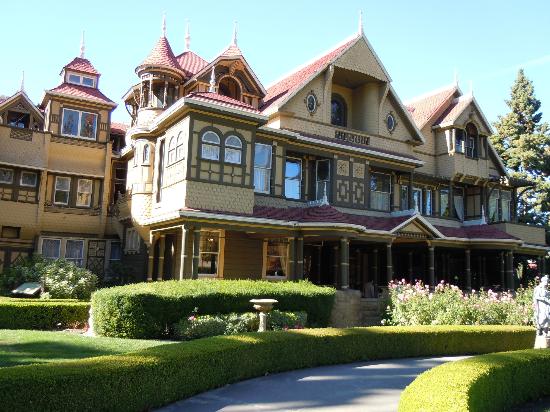
In 1890, there was an abundance of evidence concerning unspeakable horror lurking in the blackness beyond. The butler was sleeping in the front left bedroom on the second floor, and he felt that something was in there; he could hear someone breathing. He got up and turned the light on, and at that every moment he saw something go up the wall and up the fireplace. He did not know what it was. He could hear the noise, and saw it go up the chimney and then take off. That scared him. He sat up the rest of the night. Other times he has heard something walking behind him. Four or five different servants had the same experience.

Please come and enjoy a delicious meal in Sarah’s Café, stroll along the paths of the beautiful Victorian gardens, and wonder through the miles of hallways in the World’s most mysterious mansion. For further information about tours, including group tours, weddings, school events, birthday party packages, facility rentals, and special events please visit the website: https://winchestermysteryhouse.com/

Please visit the online giftshop, and purchase a gift for friends and relatives as well as a special memento of The Winchester Mystery House. A variety of souvenirs and gifts are available to purchase. https://shopwinchestermysteryhouse.com/

Happy Cultivation of Life’s Finest Feelings
The proper cultivation and refinement of feeling is necessary for the philosophic path, but this must not be confused with mere emotionalism. The former lifts him to higher and higher levels while the latter keeps him pinned down to egoism. The former gives him the right kind of inner experience, but the latter often deceives him. It is right to rule the passions and lower emotions by reasoned thinking, but reason itself must be companioned by the higher and nobler emotions or it will be unbalanced. If we would get him to act rights, as man’s impulses to action come mainly from his feelings, hence it is necessary to re-educate his feelings. There are three kinds of feelings. The lowest is passional. The highest is intuitional. Between them lies the emotional. It is not emotion that philosophy asks us to triumph over but the lower emotions. On the contrary, it asks us to cherish and cultivate the higher ones. It is not feeling that is to be ruled sternly by reason but the blind animal instincts and ignorant human self-seeking. When feeling is purified and disciplined, exalted and ennobled, depersonalized and instructed, it becomes the genuine expression of philosophical living. The heart must also acknowledge the truth of these sacred tenets, for then only can the will apply it in common everyday life. #RandolphHarris 1 of 20

Those who think the philosophic life is one of dark negation and dull privation, of sour life-denial and emotional refrigeration, are much mistaken. Rather it is the happy cultivation of Life’s finest feelings. The hardest thing in the emotional life of the aspirant is to tear himself away from his own past. Yet in his capacity to do this lies his capacity to gain newer and fresher ideals, motives, habits, and powers. Through this effort, he may find new patterns for living and re-educate himself psychologically. However, it is not all his ideas which govern man’s life. Only those are decisive which are breathed and animated by his feelings, only they prompt him to action. Hence, a merely intellectual acceptance of these teachings, although good, does not suffice alone. The aspirant needs to rise above his emotional self, without rising above the capacity to feel, and to govern it by reason, will, and intuition. Sentimentality is a disease. The sooner the aspirant is cured of it, the quicker he will progress. The idea that perfectly harmonious human relations can be established between human beings still dominated by egoism is a delusional one. Even where it seems to have been established, the true situation has been covered by romantic myth. It is possible to attain a stoic impassivity where the man dies to disturbing or disquieting emotions and lives only in his finer ones, where the approbation of others will no longer excite him or the criticism by others hurt him, where the cravings and fears, the passions and griefs of ordinary and everyday human reactions are lacking. However, in their place he will be sensible to the noblest, the most refined feelings. #RandolphHarris 2 of 20

The “heart” is the central abode of human feeling, the symbolic reminder that the “head” or cold, dry intellect is not enough to touch the reality of Spirit. There is one relationship which takes precedence over all others. It is the relationship with the Overself. A wrong relationship with the Overself must inevitably lead to a wrong relationship with men. We are not called upon to renounce our human affections, our Earthly ties, as the ascetics demand, but we are called upon to liberate our love from its egoism. He is indeed free who is no longer liable to be tossed about by emotional storms, whose mind has become so steadied in the impersonal Truth that his personal feelings shape themselves in accord with it. If, and, when we can reconcile our feelings with the hard, sharp truths of philosophy, we shall then find the secret of peace. If binding natural laws were conceived to govern economic behaviour, it would be futile to urge employers to obey the promptings of heir Christian conscience and deal more generously with heir men. Expressing a desire for the growth of trade unions to balance large industrial combinations, Washington Gladden hoped that arbitration would supersede strife as the means of settlement. The principle of competition, the survival of the fittest, is the law of plants and brutes and brutish men, but it is not the highest law of civilized society. The higher principle of goodwill, of mutual help, begins to operate in the social order, and the struggle for existence disappears with the progress of the race. #RandolphHarris 3 of 20

To assume placidly that competition is the law of life and development is the fatal mistake of the social and economic sciences is the most common counterbalance to the competitive principle, in the minds of Christian leaders and the principle of Christian ethics and the dicta of the Christian conscience. The Sermon on the Mount is the science of society. However, as we welcome in the natural process of fruition for our belief in the limitations of competition as a rule of human life, we find a foundation in the natural process of evolution. As the social gospel developed, it became increasingly cordial to municipal socialism or public regulation of basic industries; this could be seen in the writings of many who had the conventional objections to socialism. To the growing solidaristic trend in American thought the social gospel contributed heavily, for its lectures were heard by thousands, its books read by hundreds of thousands, and incalculable numbers joined its organization or attended its earnest conferences. A current of criticism frequently neglected and underrated by historians of American social literature, it supplied several religious bodies with a lasting reform orientation, and paved the way for all socially-minded Protestant movement of a later day. Not the least of its accomplishments was to break ground for the Progressive era. #RandolphHarris 4 of 20
Returning now from the problems of politics and economics to those of culture, we find that the change must be a similar one: from passive consumer culture to active, participant culture. This is not the place to go into details, but most readers will understand the difference between, for example, spectator art (like spectator sports) and active art, expressed in little theater groups, dancing, music, reading, and other forms. The very same question which exists regarding spectator art versus active art applies to the sphere of teaching. Our educational system, whose façade is so impressive according to the number of students who go to college, is unimpressive in quality. Education has deteriorated to a tool for social advancement or, at best, into the use of knowledge for the practical application to the “food gathering” sector of human life. Even our teaching in liberal arts—while not done in the authoritarian style of the French system—is dispensed in an alienated and cerebral form. No wonder that the best minds of our college students are literally “fed up” because they are fed, not stimulated. They are dissatisfied with the intellectual fare they get in most—although fortunately not in all—instances, and in this mood, tend to discard all traditional writings, values, and ideas. It is futile simply to complain about this fact. #RandolphHarris 5 of 20

One must change its conditions, and this change can only if the split between emotional experience and thought is replaced by a new unity of heart and mind. This is not done by the method of reading the hundred great books—which is conventional and unimaginative. It can only be accomplished if the teachers themselves cease being bureaucrats hiding their own lack of aliveness behind their role of bureaucratic dispensers of knowledge; if they become—in a word, by Tolstoy—“the codisciples of their students.” If the student does not become aware of the relevance of problems of philosophy, psychology, sociology, history, and anthropology to his own personal life and the life of his society, only the least gifted ones will pay attention to their courses. The result is that the apparent richness of our educational endeavour becomes an empty front which conceals a deep lack of response to the best cultural achievements of civilized history. The demands of students all over the World for greater participation in the administration of the universities and formulation of the curricula are only the more superficial symptoms of the demand for a different kind of education. If the educational bureaucracy does not understand this message, it will lose the respect which it receives from students and eventually that from the rest of the population. #RandolphHarris 6 of 20

On the other hand, if it becomes “vulnerable,” open and responsive to the interests of the students, it will sense the satisfaction and joy which meaningful activity carries with it as its reward. Marx expressed the nature of the nonbureaucratic influence over people succinctly in this way: “Let us assume man to be man, and his relationship to the World to be a human one. Then love can only be exchanged for love, trust for trust, etcetera. This humanism of education is, of course, not only that of higher education, but it starts with kindergarten and primary school. That this method can be applied even in the alphabetization of poor peasants and slum dwellers has been shown in the very successful methods of alphabetization devised and applied by Professor P. Freire in Brazil and now in Chile. I urge you not to get stuck in the consideration of the merits of the detailed proposals. American democracy must be strengthened and revitalized or it will wither away. It cannot remain static. While Marx already used the term “repression (Verdraengung) of the ordinary natural desires” in the German Ideology, Rosa Luxemburg, one of the most brilliant Marxists in the pre-1914 period, expressed the Marxist theory of the determining effect of historical process on man in straight psychoanalytic terminology. “The unconscious,” she wrote, “comes before the conscious. The logic of the historic process comes before the subjective logic of the human beings who participate in the historic process.” #RandolphHarris 7 of 20

This formulation expression the Marxian thought in full clarity. Man’s conscious, that is, his “subjective process,” is determined by “the logic of the historic process,” which R. Luxemburg equates with the “unconscious.” At this point, the Freudian and the Marxian “unconscious” may seem not to denote more than a common word. Only if we pursue Marx’s ideas on this problem further shall we discover that there is more common ground in their respective theories, even though they are by no means identical. Marx has given a good deal of thought to the role of consciousness in the life of the individual in a passage which precedes the one just quoted where he uses the word “repression.” He speaks about the fact that it is nonsense if one believes “that one could satisfy one passion, separate it from all the others, without satisfying oneself, the whole living individual. If this passion assumes an abstract, separate character, hence if the satisfaction of the individual occurs as the satisfaction of a single passions…the reason is not to be found in consciousness, but in being; not in thinking, but in living; it is to be found in the empirical development and self-expression of the individual, which, in turn, depends on the conditions of the World in which he lives. (die wiederum von der Weltverhaltnissen abhangt.)” #RandolphHarris 8 of 20

In this passage, Marx establishes the polarity between thinking and living which is parallel to that between consciousness and being. The social constellation of which he spoke before molds, so he says here, the being of the individual and thus, indirectly, his thinking. (The passage also is interesting because Marx develops here a most significant idea on a problem of psychopathology. If man satisfies only one aliened passion, he, the total man, remains unsatisfied; he is, as we would say today, neurotic, precisely because he has become the slave of the one alienated passion and has lost the experience of himself as a total and alive person.) Marx, like Dr. Freud, believed that man’s consciousness is mostly “false consciousness.” Man believes that his thoughts are authentic and the product of his thinking activity whole they are determined by the objective forces which work behind his back; in Dr. Freud’s theory these objective forces represent physiological and biological needs, in Marx’s theory they represent the social and economic historical forces which determine the being and thus indirectly the consciousness of the individual. Let us think of an example: The industrial method of production as it has developed in the last decades is based on the existence of large, centralized enterprises which are controlled by a managerial elite, and in which hundreds of thousands of workers and clerks work together, smoothly and without friction. #RandolphHarris 9 of 20

This bureaucratic industrial system shapes the character of the bureaucrats as well as that of the workers. It also shapes their thoughts. The bureaucrat is conservative and adverse to taking risks. His main desire is to advance, and he can best do so by avoiding risky decisions and by allowing himself to be led by an interest in the proper functioning of the organization as his guiding principle. The workers and clerks, on their side, tend to feel satisfied in being part of the Organization provided their material and psychological rewards are sufficient to justify this. Their own trade union organizations resemble in many ways that of their industry: large-scale organizations, bureaucratic and well-paid leadership, little active participation of the individual member. The development of large-scale centralized government and armed services, both of which follow the same principles which guide the industrial corporations. It is an ironical fact that those conservatives who are opposed to big government (or at least pretend to be) are usually not opposed to bib business or to big military establishments. This type of social organization leads to the formation of elites, the business, government, and military elites and, to a degree, to the trade union elites. This business, government, and military elites are closely interwoven in personnel, in attitudes, and in ways of thinking. #RandolphHarris 10 of 20

Despite the political and social differences between the “capitalist” countries and the “communist” Soviet Union, the way of feeling and thinking among their respective elites is similar, precisely because the basic mode of production is similar. The power elites are the product of a specific way of production and social organization and, hence, that their existence confirms the basic Marxian assumption, rather than contradicts it. Military and political determinism are equally valid assumptions. I believe these elites and their role can be best understood precisely from the standpoint of the Marxian model. The consciousness of the members of the elites is a product of their social existence. They consider their way of organization and the values that are implied in it as being in “the best interests of man,” they have a picture of human nature which makes this assumption plausible, they are hostile to any idea or system which questions or endangers their own system; if they feel that their organizations are threatened by it, they are against disarmament, they are suspicious and hostile of a system in which their class has been replaced by a different and new class of managers. Consciously, they honestly believe that they are motivated by patriotic concern for their country, duty, moral, and political principles, and so on. #RandolphHarris 11 of 20

The elites on both sides are equally caught in thought and ideas which follow from the nature of their conscious thoughts. Precisely because they are sincere, and because they are not aware of the real motivations behind their thoughts, it is difficult for them to change their minds. These people are not driven by an overwhelming greed for power, money, or prestige. To be sure, such motives exist too; but the people in whom this is the all-consuming motive are the exception rather than the rule. Personally the members of all the elites would be just as willing to make sacrifices and to renounce certain advantages as anybody else. The motivating factor is that their social function forms their consciousness, and hence their conviction that they are right, that their aims are justified and, in fact, beyond doubt. This explains also another and very puzzling phenomenon. We see that the elites of two great blocs are on a collision course and that there are great difficulties in coming to an arrangement which will secure peace. There is no doubt that nuclear war would man the death of most members of the elite, of most their families, and the destruction of most of their organizations. If they were driven mainly by lust for money and power, how could one understand that this greed would not yield to the fear of death, except in the case of exceptionally neurotic individuals? The point lies precisely in the difficulty to change their viewpoint. Because to them, theirs is the rational, decent, honourable way of thinking—and if the nuclear holocaust will destroy everybody—it cannot be helped since there is no other course of action besides that of “reason,” “decency,” and “honour.” #RandolphHarris 12 of 20

An academic course has definite boundaries: even if I learn everything within them, I cannot go beyond them, and when I have completed the course I feel that I “know.” When I am studying on my own, there are no such boundaries. I range wherever my interests take me, into the disapproved as well as the approved, instead of being confined to texts and other reading selected for me by someone else. In this way, I gain a perspective that makes me a more reasonable person, more in accord with reality. I become aware of many divergent opinions and my mind is more flexible as I find my own continuing way through them. The continuing happens because this is not a course, with the end arbitrarily decided by someone else. There is no end. My awareness of this changes my behaviour. Relatedness (otherwise known as “a broad liberal background”) comes about through one field moving me into another, not through certain things being put together and related for me. Within myself, this relatedness is vaster and more sweeping than anything that can be put in books or taught to me by someone else. The space within me is prodigious. A person can look into himself and discover that—and discover that this space shrinks when I have taken in too much without time to digest it. Then I become like the Navajos who say that “there is no more room in the head.” #RandolphHarris 13 of 20

The process of free association, of frank and unreserved self-expression, is the starting point and continuous basis of all analytic work-self-analysis as well as professional analysis—but it is not at all easy of achievement. It might be thought that this process is easier when working alone, for then there is no one who may appear to misunderstand, criticize, intrude, or retaliate; besides, it is not so humiliating to express to oneself those things of which one may be ashamed. To some extent this is true, although it is also true that an outsider, by the very fact of his listening, provides stimulation and encouragement. However, there is no doubt whatever that whether one is working alone or with an analyst the greatest obstacles to free expression are always within oneself. One is so anxious to ignore certain factors, and to maintain one’s image of oneself, that alone or not alone one can hope only to approximate the ideal of free associations. If he skips or obliterates any thought or feeling that arises, in view of these difficulties, the person who is working alone should remind himself from time to time that he acts against his true self-interest. Also, he should remember that the responsibility is entirely his own: there is only himself to guess a missing link or inquire about a gap left open. #RandolphHarris 14 of 20

This conscientiousness is particularly important regarding the expression of feelings. Here are two precepts that should be remembered. One is that the person should try to express what he really feels and not what he is supposed to feels and not what he is supposed to feel according to tradition or his own standards. He should at least be aware that there may be a wide and significant chasm between genuine feelings and feelings artificially adopted, and should sometimes ask himself—not while associating, but afterward—what he really feels about the matter. The other rule is that he should give as free range to his feelings as he possibly can. This, too, is more easily said than done. It may appear ridiculous to feel deeply hurt at a seemingly trivial offense. It may be bewildering and distasteful to mistrust or hate somebody he is close to. He may be willing to admit a ripple of irritation, but find it frightening to let himself feel the rage that is actually there. He must remember, however, that as far outside consequences are concerned no situation is less dangerous than analysis for a true expression of feelings. In analysis only the inner consequences matters, and this is to recognize the full intensity of a feeling. This is important because in psychological matters, too, we cannot hang anybody whom we have not first caught. #RandolphHarris 15 of 20

Of course, no one can forcibly bring forth feelings that are repressed. All anyone can do is not to check those that are within reach. With all the good will in the World, Clare, at the beginning of her analysis, could not have felt or expressed more resentment toward Peter than she did. However, as her analysis progressed, she gradually became more capable of appreciating the existing intensity of her feelings. From one point of view the whole development she went through could be described as a growing freedom to feel what she really felt. More desirable, from the standpoint of growth toward maturity, is the quest for independent security. This entails learning a new skill to gratify the need or to solve the problem by oneself. We must recognize that no human being can face life without help and affection from other people. It is important to emphasize independent security as a goal, to guide the efforts of parents and teachers as they stive to influence a child’s growth in wholesome ways. There is a distinction between immature dependent security, which is shown by persons who retain infantile patterns of dependency upon parents, or parent substitutes and authority figures, throughout life. Mature dependent security is shown in relationships of mutual love, where each person relies upon the other to provide for those needs that can never be gratified in solitude or without help, such as compassion and satisfying companionship. #RandolphHarris 16 of 20

These patterns of independent security, mature and immature dependent security, and the false security based on defense mechanisms are manifested in the major realms of life. These realms include vocational life, one’s avocations or leisure pursuits, one’s relationships with other people inside and outside the family, and one’s philosophy of life. Thus, a person might display independent security in connection with work, mature dependent security in relationships with members of the family, immature dependent security in the use of leisure time, and insecurity regarding religion or philosophy of life. Independent security means the state of consciousness which accompanies a wiliness to accept the consequences of one’s own decisions and actions. [It] can be attained in only one way—by the acquisition of skill through learning. Whenever an individual is presented with a situation for which he is inadequately prepared…he must make one of two choices—he must either retreat or attack…The individual must, if he is to attack, emerge from the state of dependent security and accept the state of insecurity. This attack will, of course, result in learning…The individual learns that satisfaction results from overcoming the apprehension and anxiety experienced when insecure, and that he may thus reach a state of independent security through learning. #RandolphHarris 17 of 20

The more people rely on machinery, electronic devices, and other apparatus, the more dependent they become on that very machinery. Reliance on media, “the extensions of man,” robs people of the very powers that are embodies in the gadgets. Periodic excursions to the wilderness, with training in survival skills, are a wholesome corrective to the skill-depleting way of life that is the lot of most people who live in cities. If he seeks the truth, the disciple must have no room for false sentimentality. Consequently, he will not apply the phrase “a broke heart” to himself at any time, for he knows that what it really means is a broken ego, a served attachment to some external thing which must be given up if the way is to be cleared for the coming of Grace. It is only when he is unwilling or unable to do this for himself that destiny steps in, taking him at his word in his search for truth and reality, and breaks the attachments for him. If he accepts the emotional suffering which follows and does not reject it, he is able to pass into a region of greater freedom, and of progress to a higher level. His heart is not broken arbitrarily or capriciously, but only there where it most needs to be broken—where passion desire, and attachment bind him the most strongly to illusion and error. Only after long experience and severe reflection will a man awaken to the truth that the beauty that attracts him and the ecstasy which he seeks can be found free of defects and transiency only in the Soul within. #RandolphHarris 18 of 20
Fire safety is an important part of the workplace and home, to protect against the destruction and death caused by fires. “We had a rookie school, you’re supposed to have all your hours certified by the state, but I was already out in the field. Our training chief waited until he had enough rookies to form a class. Then we would go to rookie school for eight hours, from eight to five, and after that, if you were on a shift, you went back to your station and worked the rest of your shift. We all got a lot of overtime, and that didn’t bother us. As part of the class, we were driving through downtown in a rescue vehicle with sliding panels like a bread truck. One of the guys whistled at a girl, and the chief bawled us out, my first lesson in fire department discipline. We were also given the job of testing all the hoses in the whole fire department, so you can imagine the water fights we got into. The department’s hiring procedures were good as far as the written and physical tests were concerned, but the oral interview wasn’t that much. There are people in our department who shouldn’t be there, shouldn’t have gotten past the oral interview. One of the toughest fires I ever had was one of the first. I was on the job for maybe a month, and I was still looking for my initiation to come. Then less than two blocks away from our station there was a gas leak under a house, and it exploded. #RandolphHarris 19 of 20

“A man was sitting on the commode in his bathroom, and he lit a match to light the gas heater there. The explosion blew out three walls of the house, and part of the roof collapsed. The guy got burns on his rear end, legs and feet, but the mother and baby in another room just had some plasterboard fall on them. We heard the bang, and we went. My job initially was to do the pumping, but we were on a replacement engine, and it had a different mechanism for charging the line. I didn’t know where it was. My captain was standing out there with no water, and he had to run back and turn the knob. So then we went ahead and got the fire out, except for a fire under the house. Fireman had cut a hole in the floor, eight by twenty inches, and told me to go under there. I told him, ‘You’re crazy. I’m not going under there. This place is ready to fall.’ I thought he was kidding with me. When I found out he wasn’t, I ended up underneath the house, lying on my back in water and mud, and trying to spray water on the fire. When I came out from under there, of course, I was all messed up. I got ridiculed by some of the men and got a bad rep with the captain for not going straight in. Anyhow, it was really something else.” Please help save lives and property by making a donation to the Sacramento Fire Department. Also, teach your children to love America, love God and Jesus Christ, to respect their elders and law and order. With firmness in the right as God gives us to see the right, let us strive on to finish the work we are in, to do all which may achieve and cherish a just and lasting peace among ourselves and with all nations. I pledge allegiance to the flag of the United States of America and to the Republic for which it stands, one nation, under God, with liberty and justice for all. #RandolphHarris 20 of 20

Lincoln, CA | from the low $600s
Now Selling!

Your new home at Cresleigh Havenwood offers exceptional luxury living.
Open-concept design, soaking tubs & more
Owned solar & Smart Home systems included
Some of the lowest Mello-Roos in the area
Elevate your living experience and see why Havenwood is the perfect place to call home. https://havenwood.cresleigh.com/

A Succession of Lies Necessary to Make the World Go Forward

If you do not take interest in the affairs of your government, then you are doomed to live under the rule of fools. From other quarters the principle of competition was defended with new subtleties. In the 1890’s, although competition was increasingly thrown on the defensive, two popular writers entered the lists on its behalf and once again attempted to fit competitive ethics into the evolutionary scheme. Two new currents in the intellectual atmosphere provoked a change in the tone of evolutionary apologetics: the growth of social protest evident in the Henry George and Edward Bellamy movements, the publication of the Fabian essays, and a growing general familiarity with Marxism; and in the field of biology the publication of August Weismann’s researches into the inheritance of acquired characteristics. Weismann had developed what he thought was conclusive evidence against such inheritance. If he was right—and most biologists believed he was—the Lamarckian features of Herbert Spencer’s philosophy were no longer tenable; men could no longer hope to evolve an ideal race by gradual increments of knowledge and benevolence handed down to their children; social evolution must be redrawn along stricter Darwinian lines; if there was to be any process at all, it must come from a severe reliance upon natural selection. #RandolphHarris 1 of 21

Progress results from selection and that selection inevitably involves competition. Therefore, the central aim of a progressive civilization must be to maintain competition. For the great masses of men, however, for the underrepresented everywhere, the incentives to maintain competition grow slighter and slighter. That is why throughout history we have had swelling cries of protest. [Man’s] interests as an individual have, in fact, become further subordinated to those of a social organism, with interests immensely wider and a life indefinitely longer than his own. How is the possession of reason ever to be rendered compatible with the will to submit to conditions of existence so onerous, requiring the effective and continual subordination of the individual’s welfare to the progress of a development in which he can have no person interest whatever? Why should the red Indian or the New Zealand Māori, undergoing extermination before the advance of more progressive peoples, have an interest in progress? Or, more important for western civilization and its future, what rational sanction can there be for the “great masses of the people, the so-called lower class,” to submit to the person trials and tortures incident to social progress by way of the competitive system? #RandolphHarris 2 of 21

They are already becoming more and more aware that their individual rational interest is clearly to abolish competition, to suspend rivalry, to establish socialism to regulate population and keep it “proportional to the means of comfortable existence for all.” This antagonism between the rational interest of the mass-individual and the continued progress of the social organism cannot be reconciled by reason. However, let philosophy abandon its attempt to find a rational sanction for conduct—then the problem is seen in a new light. At the same time the social function of religion is made crystal clear. One common characteristic underlies all conceptions of religion: they revel man in some way in conflict with his own reason. The universal instinctive religious impulse serves this indispensable social function: it provides a supernatural, nonrational sanction for progress. All kinds of religious systems are associated with conduct, having a social significance; and everywhere the ultimate sanction which they provide for the conduct they prescribed is a superational one. Religion as a social institution has survived because it performs an essential service to the face: it impels man to act in a socially responsible way. Such an impulse is absent from all merely rational ways of thought. #RandolphHarris 3 of 21

There is no rational sanction for altruism; its sanction is superrational, and runs counter to individual self-interest. No wonder that it is so often found in close association with the religious impulse. The altruistic impulse should be heeded, and is being heeded, for there is a growing tendency to strengthen and equip the lower and weaker against the higher and wealthier classes of the community. This is the best possible answer to the threat of socialism. Socialism, abandoning competition, would result in degeneracy and inundation by more vigorous societies. These effects of charities, and of the general trend toward strengthening the masses to compete by means of social legislation, is to stimulate competitive tension. Thus, the social efficiency of western society is increased. All future progressive legislation must lift the masses into this energetic competition. As state interference widens, mankind will paradoxically move further and further away from socialism. The state will never go so far as to manage industry or confiscate private property. From all this progressive movement will come a “new democracy” higher than anything yet attained in this history of the race. #RandolphHarris 4 of 21

It was a peculiar mixture of obscurantism, reformism, Christianity, and social Darwinism that enthralls the masses. Among religious folk who want a rational foundation for their beliefs, among social Darwinists of older laissez-faire stripe, orthodox Spencerians, trained philosophers and sociologists, and rationalists of all kinds, they believer that the intellectual foundations of religion have slipped away from the orthodox church. They are not rationalists, most of them have never seriously examined the rational basis of their creed, but the disturbing influences of rational criticism have reached them in the shape of his vague uneasy feeling. Now these people, morally weak because they have relied upon dogmatic supports of conduct, are ready to grasp eagerly at a theory which will save their religious systems in a manner which seems consistent with the maintenance of modern culture. The state should equalize the chances of competition but not abolish it. Many people understress the tendency of the unfit, even without organized social assistance, to survive and grow more fit rather than suffer elimination. The wealthier classes have been inadequately understood in evolutionary philosophy. The great fault of current sociology is it speaks grossly of “mankind” or “the race” or “the nation,” without refining these terms into classes and individuals. #RandolphHarris 5 of 21

With all the talk about the evolutionary progression of the whole mass society, Spencer and Kidd are guilty of disparaging the great man and losing sight of his contribution and achievements. They fallaciously belittled the stature of great leaders by attributing their deeds to the whole of society and its inherited skills and accomplishments; by the same logic the great masses of men could also be shorn of credit for their petty performances. The great man, in Mallock’s scheme, was certainly not to be identified with the physically fittest survivor in the struggle for existence. All you could say for the physically fittest survivor was that he manages to live; and while this does undoubtedly contribute to the progress of the race, it is slow and unspectacular. The great man, on the other hand, galvanizes society by acquiring unique knowledge or skill and imposing it on the mass. The physically fittest promotes progress by living while others die; the great man promotes progress by living while others die; the great man promotes progress by helping others to live. The struggle of ordinary workers to find employment is a social equivalent of the struggle for existence; it contributes but little to progress, for the greatest forward steps in the development of man have been accomplished without any improvement in the breed of its labourers. #RandolphHarris 6 of 21

The industrial struggle that really promotes progress is the battle among leaders, among employers. When one of two competing employers succeeds in conquering the other, the working men of the vanquished are absorbed in the employ of the victor, and lose nothing; but the fruits of the successful leader’s skill are bequeathed to the community. It is, then, not the virtue struggle for existence but the war for domination among the well-to-do that results in social progress. Domination by the fittest is of the greatest benefit to society as a whole. In order to facilitate the process the great man must be impelled by strong motives and granted the instruments of domination. Fundamentally this is an economic problem. The great man can exert his influence by one of two economic means—the slave system and the capitalistic wage system, can do so only by founding a slavery system. They could not eliminate the struggle for domination; they could only enclose it in their cumbrous and wasteful order. To progress, a social system must retain competition between the directors of labour, the contest for industrial domination. No matter what happens to society, the domination of the fittest great men—capitalistic competition—must be ensured. Such men are the true producers. #RandolphHarris 7 of 21

The fundamental condition of social progress is that these leaders be obeyed by the masses. In politics, as un industry, the forms of democracy are hollow; for whole executive agencies are designed to execute the will of the many, the opinions of the many are informed by the few. When we consider the problem of information in face-to-face groups, we must ask (a) how the necessary information can be transmitted to the group for which it is relevant and (b) how our education can increase the student’s capacity for critical thought rather than to make him a consumer of information. It would not be useful to go into details of how this type of information can be transmitted. Given sufficient concern and interests, there are no great obstacles to developing adequate methods. A second requirement for the functioning of all face-t0-face groups is debate. Through the increasing mutual knowledge of the members, the debate will lose an acrimonious and slogan-throwing character and will become a dialogue between human beings instead of a disputation. While there will always be fanatics and more or less sick as well as unintelligent people who cannot participate in this kind of debate, an atmosphere can be created which, without any force, eliminates the effectiveness of such individuals within the group. #RandolphHarris 8 of 21

It is essential for the possibility of a dialogue that each member of the group not only try to be less defensive and more open, but also that he try to understand what the other person means to say rather than the actual formulation he gives to his thought. In every fruitful dialogue, each participant must help the other to clarify his thought rather than to force him to defend formulations about which he may have his own doubts. Dialogue implies always mutual clarification and often even understanding the other better than one understands oneself. Eventually, if the group did not have the right to make decisions and if these decisions were not translated into the real process of that social sector to which they belong, the information and debate would remain sterile and impotent. While it is true that to act, man must think first, it is equally true that if man has no chance to act, his thinking withers and loses its strength. It is impossible to give a blueprint of what decisions the fact-to-face groups in enterprises should be called upon to make. It is obvious that the very process of information and debate has an educational influence and changes the people who participate in it. Hence, they are likely to make more wrong decisions in the beginning than after many years of practice. It follows that the area of decision making should grow while people learn how to think, to debate, and to make judgments. #RandolphHarris 9 of 21

In the beginning their decisions might be restricted to the right to ask their respective bureaucrats to explain decisions, to give specific information which is desired, and the right to initiate plans, rules, laws for the consideration of the decision-making bodies. The next step would be the right to enforce reconsiderations of decisions by a qualified majority. Eventually, the face-to-face groups would be entitled to vote on fundamental principles of action, while the detailed execution of their principles would remain essentially a matter for the management. The decision of the face-to-face groups would be integrated into the whole process of decision making, implementing the principle of central planning by the principle of the “subjects’” control and initiative. The consumer should also be represented in the decision-making process. The concept of unconscious forces determining man’s consciousness, and the choices he makes, have a tradition in Western thought going back to the seventeenth century. The first thinker who had a clear concept of the unconscious was Spinoza. He assumed that men “are conscious of their own desire, but are ignorant of the causes whereby that desire has been determined.” In other words, the average man is not free, but he lives under the illusion of being free because he is motivated by factors unconscious to him. #RandolphHarris 10 of 21

For Spinoza this very existence of the unconscious motivation constitutes human bondage. However, he did not leave it at that. The attainment of freedom, for Spinoza, was based on an ever-increasing awareness of the reality inside and outside man. The idea of unconscious motivation was expressed in a very different context by A. Smith, who wrote that economic man “is led by an invisible hand to promote an end which was no part of his intention.” Again in a different context we find the concept of the unconscious in Nietzsche’s famous saying: “My memory says I have done this. My pride say I have not done it; my memory yields.” Actually the whole trend of thought which was concerned with uncovering the objective factors determining human consciousness and behaviour is to be looked upon as part of the general trend to grasp reality rationally and scientifically, which has characterized Western thought since the end of the Middle Ages. The medieval World had been well ordered and seemed to be secure. Man had been created by God and was watched over by Him; man’s World was the center of the Universe; man’s consciousness was the last mental, indubitable entity, just as the atom was the smallest, indivisible physical entity. Within a few hundred years, this World broke to pieces. The Earth ceased to be the center of the Universe, man was the product of an evolutionary development starting with the most primitive forms of life, the physical World transcended all concepts of time and space which had seemed to be secure even a generation before, and consciousness was recognized as an instrument for hiding thought, rather than being the bastion of truth. #RandolphHarris 12 of 21

When “growing opinion” says that I am the product of my class, this makes no sense to me. Certainly, this can and does happen, but it does not have to happen. I have been conditioned, and there are ways in which I am still conditioned. However, I know when my conditioning is getting in my way, and I have been learning to do my own brainwashing. I had discovered that, although I cannot yet do it all the time, still I can, for a short period—in some circumstances longer than in other—de-condition myself by flicking my mental switch and non-cold matter-of-factly deal with the facts and persons present. My “hope for education” includes the possibility that we might begin to learn to do this in the first grade, or even in kindergarten. If education were turned “upside down,” it seems to me that education would find itself right side up. Then, it would take place through the interaction of what is inside with what is outside, which the inside coming first. We seem to forget that that is where things came from in the first place. When my daughter was twelve, I discovered that she had done a real and thorough job of research on the American cowboy. She started out just by linking cowboy stories. She read every one that she could get hold of, quite indiscriminately, but then discrimination began to take place. The one to go to was Zane Grey because “I can tell at the beginning of the book how it’s going to end.” #RandolphHarris 13 of 21
She became more interested in factual accounts, and in stories which were accurate in their information. In reading for her pleasure, she noticed that in different parts of the west, different names were used for cowboys’ gear and even for the cowboys themselves who were “buckaroos” in Oregon. She noticed that the gear varied from place to place, according to the terrain and the influence of the Indians and the Spaniards. All this time she had put it down so neatly that it could be grasped immediately, together with her own sketches where illustration was possible. For the first time, I thought of “research” was something not “out there” that must be learned from others, but something that in the first place came out of people in just the way that it had come out of her. How else could it have happened. Now, recalling Clare, after a while, it became clear to her that her efforts to escape humiliation had injured her dignity more than anything else. These efforts had been particularly pernicious since they involved not only an uncritical bending to Peter’s wishes but also an unconscious inflation of her feeling for him. She realized that the more her actual feeling for him diminished, the more she had worked it up to a pitch of false emotion, thus ensnaring herself still more deeply in her bondage. #RandolphHarris 14 of 21

Clare’s insights into the needs that constituted this “love” had lessened the tendency toward an inflation of feelings, but it was only now that her feelings dropped sharply to their actual level; in all simplicity, she discovered that she felt very little for him. This recognition gave her a feeling of serenity that she had not had for a long time. Instead of wavering between longing for Peter and wanting to take revenge she took a calm stand toward him. She still appreciated his good qualities, but she knew that it would be impossible for her ever to be closely associated with him again. With this last finding to be reported here Clare tackled dependency from a new angle. The work done up to this point was a gradual recognition that she was dependent because of her huge expectations, this working culminating in the analysis of the “private religion.” Now she saw in addition how the loss of spontaneous self-confidence had contributed to the dependency in a more direct way. The crucial finding in this regard was the recognition that her picture of herself was entirely determined by the evaluation of others. It is in accord with the significance of this insight that it struck her so deeply that she almost fainted; the emotional recognition of this tendency constituted an experience so deep that for a short moment it almost overwhelmed her. #RandolphHarris 15 of 21

The insight did not itself solve the problem, but it was the basis for recognizing the inflation of her feelings and the far-reaching significance that “rejection” had for her. This piece of analysis also paved the way for a later understanding of her repressed ambition. It enabled her to see that to be accepted by others was one way of lifting her crushed self-regard, a purpose that was served from another direction by ambition to excel others. Albert Ellis developed an approach to psychotherapy that he calls rational-emotive therapy, to highlight the fact that he is concerned with feelings, but no less concerned with sensible thinking about life problems. He regards neurotically disturbed people as individuals who talk nonsense to themselves, who refrain from vital living because they dread catastrophic consequences for ordinary self-assertiveness. They do not think clearly, and they do not check the validity of their thinking. For example, a painfully shy and lonely person may be saying to himself, “I would like to ask that girl for a date, but she might refuse me, and that would be awful.” Dr. Ellis might reply to this patient, “Well, supposed she does refuse you; what’s so terrible about that? You are ‘awfulizing,’ and that interferes with life.” By virtue of such arguments with a patient’s excuses for diminished living, and for not changing self-defeating patterns, Ellis is often able to convince the patient to try ways to live that generate satisfaction and growth. Ellis provides a wholesome reminder that, although excessive thinking can rob a life of feeling and action, wrong thinking can paralyze life itself. #RandolphHarris 16 of 21

Among the moral self-restraints which an aspirant is required to practice is that of truthfulness. There are several reasons for this prescription. However, the one which affects his quest directly is the effect of untruthfulness upon his inner being. It not only spoils his character and destiny but also deforms his mind. In the lair’s mouth the very function of language becomes a perverted one. He renders defective the very instrument with which he is seeking to make his way to the Overself; it becomes spoiled. If he meets with any mystical experience, it will become mixed with falsity of hallucination. If he finds spiritual truth, it will not be the pure or whole truth but the distortion of it. Where situations are likely to arise which make truth-telling highly undesirable, the earnest aspirant should try to avoid them as much as possible by forethought. The pattern of indifference to truth-speaking must be broken up. The pattern of scrupulous respect for truth-speaking must be built up. The discipline of his ego must include the discipline of its speech. His words must be brought into correspondence with his ideals. Every word written or uttered must be diamond clad truth. If the truth is awkward or dangerous to say, then it may be advisable to keep silent. May he tell a small white lie to liberate himself from an awkward situation? “Thou shalt not bear false witness.” #RandolphHarris 17 of 21

Not only will he refrain from telling a conscious lie of any kind, but he will not, through bragging vanity, exaggerate the truth into a half-lie. Any tendency in these directions will be crushed as soon as he becomes aware of it. He will take the trouble to express himself accurately, even t the point of making a fad of the careful choice of his words. Let him not maim his heart nor deform his mind by formulating thoughts which are false. If philosophy be the quest of ultimate truth, if the rule be broken, then it is certain that such a quest cannot be carried to a successful conclusion. We have begun to question Nature and we must abide by the consequences. However, we need not fear the advancing tide of knowledge. Its effects on morals will be only to discipline human character even more. For it is not knowledge that makes men immoral, it is the lack of it. False foundations make uncertain supports for morality. As psychiatry, psychology, and social work have tried to contribute directly to the demand for psychotherapy, they have suffered serious dilution of their basic and unique contributions. If these disciplines will take joint initiative toward the creation of a new, socially efficient and socially responsive profession, they will maintain proper consultative authority for that profession, they will help to meet the social need, and they will create the means whereby they may be freed for intensified, specialized efforts in accordance with their respective, unique and interdependent skills—to the end that we may gain better understanding, better treatment, and better prevention of mental suffering. #RandolphHarris 18 of 21

As firefighters, the Sacramento Fire Department faces monumental risks in their jobs every day. There are a few ways of getting around these risks and therefore preventing many of the firefighter injuries and deaths. “In those days our training school was in a real old building, and we did our outdoor training, our ladder work, at Municipal Stadium. It was a six-week school. We run a much more extensive training school now. I was a cadet for seven years at my first station, which was a long time. My father-in-law tried to take care of me by sending me to a station that wasn’t very busy. We didn’t take many men into the department in those days, and not many guys retired. So I had to wait. It was a good learning experience. I took a promotion exam, but I didn’t do too well, because my wife had a child right before the exam and I was baby-sitting rather than studying. In those days, getting promoted was no big deal. I enjoyed what I was doing. But then you get to the point where you figure, hey, I want to improve myself. The first job we had was about three hours after I came to work. It was a mattress fire on the third floor of an apartment house. It was scary, smoky. You couldn’t see. I remember that most. I think the first really serious fire was in downtown, which turned out to be an all-nighter. Shortly after that, we had another apartment house fire. It was seven o’clock on a winter morning. We took like 117 people out of the building over ladders and down stairways. #RandolphHarris 19 of 21
“I was scared as all hell when I saw so many people in real trouble, scared about doing things right. Fortunately, we had a couple of old-timers there who were pretty sharp. We carried fifty-five-foot ladders at that time. I always think about it. Under the standard now, we carry forty-foot ladders. In that particular fire, if we didn’t have a fifty-five-foot ladder, we would have lost another five people. We used the fifty-five-foot ladder, with a twelve-foot jack ladder, to get people off the sixth floor of the building. There was no access for an aerial on that side. Things just happened so fast, I didn’t then realize the magnitude of it. I just worked hard. Fortunately, this apartment house had balconies on the side. The fire was pretty well involved when we got there. I remember putting a lot of ladders up. It was icy. We put fifty-five up with four men. One of them was the captain. It was a wooden ladder than weighed about 350 pounds. Normally you use five men, and some books talk about six. Putting that ladder up under good conditions was a difficult task. This was a cold, icy morning in December. Even putting a thirty-three-footer up was tough at the time. But, we were able to get that ladder up, somehow ‘cause your muster up extra strength when you have no choice. Over the years I still think about that fire. The guys did a super job.” #RandolphHarris 20 of 21

Imagine if the Sacramento Fire Department fought fires like they did 60 years ago, with the equipment and knowledge they have now, injuries and fatalities would be a fraction of what they were. One way you can help reduce the loss of life and property and help firefighters under stressful conditions is by donating to the Sacramento Fire Department. The time may come when one must choose between one’s ethical life and his material livelihood. In this agonizing experience he may choose wrongly unless his hope and belief in the benevolence of whatever Powers there be is firm and strong. However, a wrong choice will not dispose of the problem. Sooner or later, it will present itself again with more compelling insistence. For a glimpse of truth once given is like a double-edged sword: a privilege on one side, a duty on the other. A man’s allegiance to Truth must be incorruptible. Be sure to raise your children to love America, love God, respect law and order, and be kind to their elders. I pledge allegiance to the flag of the United States of America, and to the Republic for which it stands, one nation, under God, indivisible, with liberty and justice for all. For happily the government of the United States of America which gives to bigotry no sanction, to persecution no assistance, requires only that they who live under its protection should demean themselves as good citizens in giving it on all occasion their effectual support. #RandolphHarris 21 of 21

Ascent at Montelena

11977 Cobble Brook Drive, Rancho Cordova, California 95742
4 Home Design(s) Available

Experience modern designs and affordability in our upcoming new homes for sale. Ascent at Montelena in Rancho Cordova is near major employers and premier shopping. https://www.pulte.com/homes/california/sacramento/rancho-cordova/ascent-at-montelena-210916
 Randolph Harris II International Institute