
Home » Posts tagged 'Mental health' (Page 4)
Tag Archives: Mental health

The Who-Done-It Mystery is Solved!

Regardless of education, geography, faith, calling, or family, mental health challenges can impact anyone; they are nothing to be ashamed of and should be met with love. As for “schizophrenic person”—there is no such thing. A person scared out of his wits is not a person at all. I was with some people labeled “schizophrenic” in a mental hospital recently. One of them was a woman in her middle years, of outward composure and grace. She was wearing a gingham dress—blue and white checks—with some sort of kerchief around her shoulders, but she sat as though wearing velvet and a cashmere shawl—as though these things belonged to her as a matter of course. She answered all questions, conveying complete confidence in her answers. However, they went like this: “Do you know the date?” “Yes, I’ve studied that. It’s November 19th.” “Do you hear voices?” “Yes, don’t you?” “No, I do not hear them. Are the voices male or female?” “That depends on the wiring in the building.” Her face was delicate, her eyes tender, with a hint of pain. When she was asked, “Where do you live?” she did not say “here” or “in a hospital,” or even “California” where she was, but referred to a farm in Illinois where she was “so lonely.” That loneliness is where she lives. This woman’s tenderness was very clear—but she never showed any response to any of us around her. She was caught in egocentricity, selfishness, and uselessness. #RandolphHarris 1 of 20

Another woman, thirty-one, came in and walked to the window, looked out, then back, and there was something haunting or haunted in her eyes. She seemed to have no awareness of any of us, either then or when she suddenly became quick and like a child rushed to the light switch near the door and flicked it on and off. From there she went skippingly to another door and opened it, and flipped the light switch inside it on and off. Then to another door, where she did the same. Back and forth, from one to another, without end. When the psychiatrist called to her to “come and sit down” she obediently did—but in just a few seconds she hopped up and went from light switch to light switch again, always flipping them twice. When she did it only once, in a moment she turned and did it again. When the psychiatrist called to her to leave, she came, and as she went through the door, she said to him, making it a statement with a question in it, “I’m not a bad girl.?” When I remember that thought in myself as a child, I know her terrible unhappiness. She was caught in egocentricity, selfishness, and uselessness. These people are painfully trapped. I no longer know what the technical definition of schizophrenia is. Certainly it includes a wide variety of conditions of varying severity. Some could be genetic and/or metabolic. #RandolphHarris 2 of 20

The key for me is that schizophrenic has found some of his subjective inner World in the outer World—colouring it—distorting it—concealing some aspects of reality from his vision. This may or may not lead to social difficulty. It can extend from mild degrees on up to the whole of the outer World becoming diseased and disturbed, flooded with the unrecognized inner. A touch of this inner is recognized by a young woman when she writes: “The main indication to me of how and where I’m goofed up is how and where I try to goof up others. One thing I’ve learned. I have very little self-confidence and so operate on the defensive and resent suggestions and even help, seeing it as criticism and/or competition. I think I’ve had this brilliant insight before—I’ll probably keep having it until I can learn it in myself as well as in my head. Essentially, the word schizophrenic means that here is a person who is highly sensitive to his own inner experience and also to interpersonal relationships with others, who has been so defeated and traumatized in endeavouring to make use of his sensitivities that he has retreated both from his own experiencing and from any real contact with others. In addition to this fairly basic understand, the word schizophrenic also means to me that anyone whose behaviour is deviant and who cannot easily be understood is tossed in this all-encompassing basket. #RandolphHarris 3 of 20

I try to remain open-minded to the possibility that there may be specific genetic, chemical, nutritional, or environmental factors which may bear some causative relationships to the behaviour that is called schizophrenic. A more comprehensive definition of schizophrenia is the absence of (or great narrowing of) that felt experiential interaction process which we are as people and which we feel as our concrete selves. When an individual is stuck in a hurtful relationship situation so that he can neither leave it nor feel and relate himself sufficiently to it, then he becomes deadened and empty inside, reports that he is “not himself.” The ongoing feeling process on which we all rely inside becomes muddy, swampy, unreliable, or stopped, and feeling contents become stuck, frozen, unowned, seemingly alien, static places, rather than fluidly functioning feeling. I deny that psychosis is psychotic content that are in all of us and can “erupt.” I believe instead that such “psychotic contents” are really a certain manner of being alive. Past LSD and other drug experiments have strongly confirmed this view. It seems that whether an individual under the influence of drugs comes up with horrible experiences or with wonderful experiences depends not on him (as a self-enclosed piece of well or poorly working machinery) but on the relationship situation in which he is (and feels himself to be) when he takes the drug. #RandolphHarris 4 of 20

If he takes it in a friendly situation close to someone he trusts, he has a wonderful experience. Early psychological experiments which attempted to test LSD under carefully pure circumstances (the subject alone in an otherwise empty room!) produced something very like schizophrenia. The flap over recombinant DNA research, life extension and cloning is a wonderful sign that neurogenetic consciousness is emerging. Nothing can happen in evolution until the dom-species gets upset and worried. When the misguided politicians and the liberal agitators moralize about “monster escaping from the laboratory and being unleashed on the unsuspecting public,” the out-caste intelligence operative perks up interest. The “monsters,” of course, are us in the future. Evolutionary Agents reassure the dom-species about future-phobias and point out that allowing the next mutation to occur is the best way to avoid past terrors, because past-terrors are wors than future fears. Thus domesticated adult capitalists realized that some social-welfarism is the only way to avoid a return to barbarian-dictatorships. The communist stage ten dictators realized that some individual consumerism is the only way to avoid a return to tribal anarchy. It is the Evolutionary Agents’ role to demonstrate that civilian voluntary space migration is the only way to deal with the tensions of nationalism, tribalism and self-actualization. #RandolphHarris 5 of 20

Similarly, homophobes come to see that the only way to keep homosexuals away from their children is to allow gay societies in post-terrestrial plan-its. Racists of all colours realize that the only way to preserve discrimination and racial pride is in High Orbital Mini Earths-HOMEs. It is becoming obvious that the only solution to hive terrors, both past and future, is migration to space plan-its. The past always migrates behind the future. Today’s future taboo is tomorrow strict and rigid doctrine. Liberals are alarmed that nuclear energy, brain-changing drugs, radiation-control of brains, genetic engineering might fall into the hands of barbarian territorial dictators. Cloning, the key migratory technique for a post-terrestrial species, was first discussed in fearful terms of Hitler-like revivals. The hive custodians frighten people with mad scientist Nazi-devil rumors and thus concealed the possibility that you can clone yourself and friends. The same taboo-terror is projected on post terrestrial intelligence. We are warned that Martians were coming to harm us—not to enlighten or entertain us. Such natural hive fears can be assuaged by the realization that nuclear energy, brain-changing drugs such as LSD, cloning, and genetic research can only be safely employed in frontier, experimental communities—which can be found only in HOMEs. The first signs of neurogenetic consciousness are communities that are into self-actualization and states where the governors are space plan-it enthusiasts. #RandolphHarris 6 of 20

The human brain is programmed by RNA-DNA to fabricate technological realities and to build environments and new plan-its. External technology produces the pollution that activates the next brain-circuit. DNA is not concerned with evolving new anatomical-physiological forms adapted to a heavy 1-G planet. Terrestrial evolution is over-irrelevant. Now that high orbital migration is beginning, now that the futique species are moving into their designated ecological niche-high orbit-the goal of DNA is to create technologies adapted to multiple-G living. DNA is an evolutionary acceleration tool. The current survival problems on planet Earth are due to overpopulation swarming and cannot be solved by anatomical mutations. The next stages are neurological—neurotechnological. Encourage the appropriate castes of the human species to decode DNA and increase altitude and mobility. Life is no longer a disaster movie. The Who-Done-It mystery is solved! You are responsible. You are the hip-robots who are going to take over the Master-Designer role. It is your job to fabricate improved mini-Worlds. Who are you? You are those who recognize this signal and self-select yourselves as Future Builders. Continued feeling of freedom from obsessing desires, inordinate urges, and undue craving is generally a suitable indication that the character is sufficiently purified to enter a further stage. #RandolphHarris 7 of 20

It is men who condemn themselves to this abject, undisciplined servitude of the passions and senses; so it is men themselves who must seek and win freedom from it. It is hard to do so, but it is also hard to suffer the consequences of not doing so. If you recognize that the feeling, the desire or body-sensation is pulling you away from the ideals set up for the Quest, hoist yourself out of it at once. Let others look for the second-rate and third-rate: let him be more discriminating, more fastidious, and seek the best alone. If he lets them go beyond his control, the senses will stupefy a man into foolish desires. Wisdom and security alone dictate that he shall become self-mastered. For this it is necessary to call up the will and to practise using it until it is developed into something strong. If before performing an impulsive, undisciplined, and irresponsible deed he would remember what the consequences are and that he will have to bear them, then he will have taken the first step towards self-mastery. The rising generations have legitimate complaints against their ancestors. However, in the matter of winning full freedom to follow their desires and upset the old Christian moral codes, the Mosaic decalogues, Confucian precepts, and the Indian taboos, they need to pause. Puritanic ideals are denounced but are not entirely inhuman: they have to be sifted and the good in them taken out. Stoic, simple living and self-discipline can be softened, its harshness also taken out, and the residue will be what the moderns need of they are to travel up higher and not sink lower. #RandolphHarris 8 of 20

In what manner are men free who, in some way, to some extent, are enslaved by pleasures of the flesh, society, ambition, swelling desires, possessions, neighbours, associates, and family? Only by releasing ourselves from our desires can we hope to find lasting peace. If this seems like a heavy price to pay, we have only ourselves to blame. When terrestrial desires rage in a man, each satisfaction of them seems to be an asset, something gained; but when he is more awakened and freer from them, he begins to see how much of a liability these desires are, how wise and prudent it is to check them and finally transmute them. If he is no longer a victim of passions or at the mercy of emotions, it will not be because his blood temperature is too low, but because his control of himself is high. The animal gives way to its desires and feelings more quickly than the human because it acts by instinct. The animal gives way to its desires and feelings more quickly than the human because it acts by instinct. The human, so far as he is an animal, also acts by instinct. However, to the extent that he has developed reason and will he has developed a counter to that instinct which moderates or controls his desires and his feelings. Those humans who are nearer on the scale of evolution to the animal kingdom give way to passion and anger more readily because they have less self-control. #RandolphHarris 9 of 20

A silent but self-declaring presence comes into knowledge whenever he puts a brake on that downward and Earthward movement of daily life which is the common lot—not to stop it altogether but to halt it for short periods or to slow it down so that he is not wholly carried away. The control of the lower nature which society may demand and religion may encourage, which makes a good man by conventional standards, is not enough for philosophy. It is only a stage of the mountain’s ascent: the summit has yet to be conquered. The transformation of this nature, making it utterly responsive to the Overself, is the philosophic goal. Self-effort can lead to its control but only Grace can lead to this transformation. All this does not imply that he is to become perfect and faultless before he can see the Overself, but that he has to become much more developed before he can stay in the awareness of it. Sometimes men get caught in traps. He might be faced with a situation which he can do absolutely nothing about. Yet his whole life, he had done something about every situation he found himself in. This constant doing, constant effort, makes his life one long struggle with the World and with other aspects of his own self. Man sometimes denies the underdog side of his nature—choosing, as a top-dog, to manipulate rather than to lose, to dominate rather than surrender. #RandolphHarris 10 of 20

However, in so doing, he denies a simple fact of life, which, as trite as it may sound, is still true. And the truth is, “You cannot win them all.” His refusal to lose or be wrong leads him eventually to a position in which he has to lose and no amount of effort can help him win. The top-dog is useless in this situation. Abraham Maslow points out that our Western culture is built generally on Judeo-Christian theology which places great emphasis on what one does rather than who one is. The United States of America in particular is dominated by a Puritan ethic of doing, of applying effort, and working hard. We come to believe that in any given situation, there is always something we can do about it. There is a paradoxical nature of being and impossibility of striving for such qualities as wisdom, dignity, courage and humility. Understanding this concept is extremely important in your journey toward mastery, because it means that the most profound qualities of mastery cannot be striven for. They are qualities of being. You cannot do courageous, you can only be it. You can do a courageous act, but only after you have become courageous. The way to do is to be. In the summer of 1776, when the representatives of the American colonies were at the point of total frustration as to what to do about their differences with the British, they issues a declaration, which read, in part: “We…solemnly publish and declare, That these United Colonies are, and of Right ought to be FREE AND INDEPENDENT STATES…” #RandolphHarris 11 of 20

Note that this is a state of condition, of being. The signers of the Declaration did nothing more than state who they were and what they were all about. It is significant that only after these words did they say: “…and that as Free and Independent States, they have full Power to levy War, conclude Peace, contract Alliances, establish Commerce, and to do all other Acts and Things which Independent States may of right do.” First they made a statement of being, then they said what they were going to do about it. The doing followed out of the statement of being. And indeed it can be no other way. Had the colonies simply started making war, lining up allies, printing money, and doing all the things a free country can do, there would have been mass confusion among the colonists and among the people of the other countries. The first question would have been, “What are you, a British colony, a state, a country? What are you all about?” The statement of being, the Declaration of Independence, made clear what the colonies were all about and provided a firm foundation upon which the new nation could carry out its activities. Being, then, is not as un-America as it once looked. We can be vigorous, we can be dynamic and active, but our activity must flow out of our being, out of what we are and what we are all about. #RandolphHarris 12 of 20

However, there are some people who rebel against their scripts, apparently doing the opposite of what they are “supposed” to. Common examples are the “rebellious” adolescent and the woman who says, “The last thing I want to do is be like my mother.” Such cases have to be evaluated very carefully, as there are several possibilities. They may have been living on their counterscripts, and the apparent rebellion is merely “an outbreak of script.” Conversely, they may have been living on their scripts, and shifted to their counterscripts. They may have found the spellbreaker, and be released from the scripts. They may have different script directives from each parent, or from two different sets of parents, and are shifting from one set to another. They may be merely following a special script directive that tells them to rebel. The person may be a “script failure” who has despaired of carrying out his script directives and has simply given up. This is the cause of many depressions and schizophrenic breakdowns. On the other hand, he may have freed himself and “got out of his script” through his own efforts or with the help of psychotherapy. However, this must be carefully distinguished from “going into an antiscript.” These many alternatives emphasize how thorough the script analyst must be if he (and his patient) are to understand correctly the origin of certain changes in behaviour. #RandolphHarris 13 of 20

An antiscript resembles closely what Erikson calls “identity diffusion.” If the script is compared to a computer punch card, then an antiscript is attained by turning the card around. This is a very rough analogy, but it makes the point. Where a mother says, “Do not drink,” the man drinks. Where she says, “Take a shower every day,” he does not wash. Where she says, “Do not think,” he thinks, and where she says, “Study hard,” he drops out. In short, some men are meticulously defiant. However, since he has to control his programing to know precisely how and where to be defiant, he is just as surely programed by disobeying each instruction as if he obeyed them all. Thus, where “freedom” is really defiance, it is only an illusion. Inverting his programing still leaves him programed. Such an inversion, turning the card around rather than tearing it up, is called an antiscript, and antiscripts offer a fertile field for further study. The war is against the machine. To the American middle-class, destruction of property is violence. Every American is protected by arms. There is no piece of land in the World not under the protective surveillance of someone’s guns. The writer, of course, has no need to refuse himself anything. For him, at least, boundaries disappear and desire can be allowed free rein. In this respect Sade is the perfect man of letters. He created a fable in order to give himself the illusion of existing. #RandolphHarris 14 of 20

Sade put “the moral crime that one commits by writing” above everything else. His merit, which is incontestable, lies in having immediately demonstrated, with the unhappy perspicacity of accumulated rage, the extreme consequences of rebellious logic—at least when it forgets the truth to be found in its origins. These consequences are a complete totalitarianism, universal crime, an aristocracy of cynicism, and the desire for an apocalypse. They will be found again many years after his death. However, having tasted them, he was caught, it seems, on the horns of his own dilemma and could only escape the dilemma in literature. Strangely enough, it is Sade who sets rebellion on the path of literature down which it will be led still farther by the romantics. He himself is one of those writers of whom he says: “their corruption is so dangerous, so active, that they have no other aim in printing their monstrous works than to extend beyond their own lives the sum total of their crimes; they can commit no more, but their accursed writings will lead others to do so, and this comforting thought which they carry with them to the tomb consoles them for the obligation that death imposes on them of renouncing this life.” Thus his rebellion writings bear witness to his desire for survival. Even if the immortality he longs for is the immortality of Cain, at least he longs for it, and despite himself bears witness to what is most true in metaphysical rebellion. #RandolphHarris 15 of 20

Forgetting of Intensions, Names. I once forgot to write a letter of recommendation for a graduate student whom I disliked for personal reasons that had nothing to do with his ability. Fortunately, the student received the position without the benefit of my letter. Accidents. Accidents may result in disadvantage either to the person having the accident or to others, depending upon the unconscious motivation—guilt in the former case, hostility in the latter. A colleague’s wife spilled ink on a manuscript her husband was working on (neglecting her as he did the work) as she cleaned his study. A student broke his hand shortly before he had to taken an examination for which he felt unqualified. Examples from Projective Test (those in which the person projects hidden aspects of self into pictured situations). A twenty-two-year-old undergraduate student once consulted me for help with vague guilt feelings, inability to study, and fierce headaches that occurred whenever he went home or was obliged to spend any time with the dean, one of his professors, or his boss at a part-time job. He appeared to be extremely polite. (He used the word sir in almost every sentence when talking to me.) In the test, many of his stories included some expression of violence and hatred toward authority figures. The student told this story about a pictured situation that show an old man stretching his hand toward the reclining figure of a younger man: #RandolphHarris 16 of 20

“This boy is having a nap. The old man, his father, is coming in to get him out of bed so he’ll get back to his studies. His father has been nagging him for ages about how lazy he is. The boy has been putting up with this for a long time. This is the last straw. When he wakes up, he’ll be so mad he’ll start beating up on his father. He’ll grab a chair and start mashing in his head. When he finishes, his old man will be a bloody pulp. The body will get the electric chair, but he won’t care, it was worth it.” It is not too farfetched to infer at least some unconscious hostility toward authority figures in this young man. There is no discovered way, as yet, to prove that an inference of unconscious motivation is warranted. Nevertheless, it can be shown that the motives a person will consider as possible influences upon his action will change under special circumstances. A patient entering psychotherapy may act in ways that humiliate his wife; yet at the outset he may vigorously deny having hostile feelings toward her. Finally he can admit having hostile feelings, without guilt or anxiety. In addition, his hostility, if rational and warranted, may come to be expressed much more openly than it was before. It often happens that recognition and understanding of irrational hostility will reduce or eliminate it. Repression, obviously, is not an effective way to deal with problems of existence. People sometimes repress experience because they have a strict conscience; it is often healthier to attempt to change the conscience or to accept the fact that one is not as “good” as one would like to believe. #RandolphHarris 17 of 20

Repression is a way to ward off anxiety, but there are more effective healthier ways. Repression may ward off painful frustration, but there are healthier ways to avoid frustration, such as learning skills. Only where repression is temporary and permits important action to be completed, or where it forestalls psychosis, can it be regarded as good for healthy personality. The mission of the Sacramento Fire Department and Emergency Medical Service Department is to preserve life and property and promote health and safety through excellent pre-hospital treatment and transportation, fire prevention, fire suppression rescue activities, and homeland security awareness. The department is responsible for providing fire suppression, ambulance service, and hazardous materials containment for Sacramento City. “So I became an EMT (Emergency Medical Technician). I was worried about it. Blood and stuffy really bothered me if it was somebody else’s, but not when it was mine. At the hospital, as long as I has a full stomach, I could watch everything except the initial cutting open of a person, even at an autopsy. I would have had to look away. Once they’re open, it doesn’t bother me. After I found out I could handle blood, I went ahead and became a paramedic. #RandolphHarris 18 of 20

“We had two nurses teaching the EMT class. The first night they gave us a whole list of medical terms. One was “blood pressure.” Until that day, I never knew what blood pressure was. So I asked, and a lot of the guys in the class laughed at me, but I found out what I wanted to know. The fire department gave me a direction that I was really enjoying. I was headstrong, real hyper. I tried to do everything. Every time I had a chore to do, or a fire to do, I tried to do everything as fast as I could. The worst one before I really got into paramedic was a two-year-old baby. The mother was fixing to take an older child in a station wagon to some kind of meeting. She was also close to nine months pregnant. The father, who was a preacher, was in the house, and the two-year-old was supposed to stay there. The mother got in the car and didn’t notice that the baby had gotten out of the house and was standing behind the car. She backed down the drive, hit the baby, and a wheel went right over the little girl’s head. The father ran out and did CPR (cardiopulmonary resuscitation) and mouth-to-mouth on the baby, and got her going again. We got there just before the ambulance crew, and we helped them. You couldn’t really tell if the baby’s head was deformed, but she was bleeding from her nose, mouth, and ears. It was just real sad. One paramedic was pretty freaked. #RandolphHarris 19 of 20

“During transport to neurosurgery the baby died. That affected me for a long time. That was before I had any children. It really gave me doubts as to whether I wanted to be a paramedic or not. They took the mother with them in the front of the ambulance. They were worried about her as well as the baby, because she was freaking. She totally lost everything, which I would, too. Any normal parent would have, after running over her own child. The father kept his composure. At first, the accident was called in as a 1050, a car wreck. And the father had blood around his mouth and on his nose when we arrived, and I thought there had been some type of care wreck. I didn’t know until later that he had done CPR on the child. He also did his best with his wife. At the hospital, of course, she had to be sedated and all that. I really care a lot about people—whether it’s putting out their fires, trying to save their lives, or getting a baby out of a well.” The Sacramento Fire Department is led by an extraordinary team of individuals who are dedicated to providing Sacramento City with World-Class safety services. Remember parents, please raise your children to love America, to be patriotic, to love God and Jesus Christ, to honour law and order, and treat all people, property and living beings with dignity. It is also important to buy American made goods and services, such as American made cars, clothes, meat, produce, dairy, and more. Our goal is to leave things better than we received them. I pledge allegiance to the flag of the United States of America and to the Republic, for which it stands, One Nation, under God, indivisible with Liberty, and Justic for all. Father of Peace, please grant us Thy peace, please Grant us Thy blessing, Thy blessing of peace. Wherever they be, please great America peace; Merciful One, Thou art He who grantest Thy people peace. O may we see our children, our children, and their children Devoted to the Lord, to the scripture—yea, please grant America peace. Thou wondrous Counsellor, mighty God, Eternal Father, Prince of Peace! #RandolphHarris 20 of 20


Experience the Best of Modern Living at Cresleigh Grove at Plumas Lake. Discover this expansive four-bedroom, three-bathroom home with a two-car garage, thoughtfully designed for today’s modern lifestyle.

Your private primary suite at the back of the house is your personal sanctuary, while the three additional bedrooms at the front provide adaptable space for family, guests, or a home office. 🏡

And here’s the best part: each Cresleigh home is equipped with our All-Ready Connected Home package at no extra cost! 🤖🔑

From a video doorbell and digital front door lock to a connect home hub that makes controlling your home a breeze, this package ensures smart living.

Plus, enjoy two smart switches, USB outlets, and complimentary Google Home Hub and Google Mini to keep your space connected and efficient. Ready to find your new home? Contact us today!

Don’t miss this incredible opportunity to secure your place in this highly sought-after community. (Available model may vary slightly from model.) https://cresleigh.com/cresleigh-grove-at-plumas-ranch/

There is a magic in that little world, a Cresleigh home; it is a mystic circle that surrounds comforts and virtues never known beyond its sacred limits.


Where Passion Rules, Truth Trembles!

The World is full of people that will try to take advantage of the less fortunate and thin it is cool but it is not and should instead be looking for ways to help each other so we all can live in peace. More than 70 percent of Americans are on medication, 30 percent of Americans are overweight, and 50 percent of American eat unhealthily, while only 19 percent of Americans exercise regularly. Meanwhile, former President Biden has set an unrealistic goal for the transition to electric vehicles. In just 5 years, 50 percent of all new vehicles sold in the United States of America are mandated to be electric. The reason being that “accelerated adoption of electric vehicles can improve air quality, reduce emissions, and position U.S. industries to lead global efforts.” However, should the United States of America not be more concerned about the health of their cities and be encouraging them to adopt lifestyles that include fitness and healthy food? Should the United States of America not be leading global efforts to have the healthiest population in the World? Many benefits of physical activity for brain health happen right after a session of moderate-to-vigorous physical activity. Benefits include improved thinking or cognition for children 6 to 13 and reduced short-terms feelings for adults. Regular physical activity can help keep your thinking, learning, and judgment skills sharp as you age. It can also reduce your risk of depression and anxiety and help you sleep better. #RandolphHarris 1 of 17

Physical activity is beneficial to health and well-being and conversely, physical inactivity increases risk for noncommunicable diseases (NCDs) and other poor health outcomes. NCDs describes a wide range of conditions, diseases, and disorders. These have genetic, lifestyle, or environmental causes rather than viral or bacterial, and they are characterized as health conditions that: Are not caused by acute infections or illness, result in long-term health issues, and require long-term treatment and care, such as lifestyle changes or medication. Health conditions that are consider NCDs are: Cancer, cardiovascular disease, diabetes, chronic lung illness, injuries that cause permanent damage, and mental illness. NCDs are the number 1 cause of death and disease around the World, killing more then 42 million people Worldwide on an annual basis. This accounts for 74 percent of all deaths globally. Each year, 15 million people around the World die prematurely, between, the ages of 30 and 69 years old, from an NCD. Cardiovascular diseases make up most NDC deaths, followed by cancer, respiratory diseases, and then diabetes. The Church of Jesus Christ of Latter-day Saints teaches that members should obey the Word of Wisdom, eat nutritious food, exercise regularly, control their weight, and get adequate sleep. #RandolphHarris 2 of 17

Members are taught to eat a diet rich in fruits, vegetables, whole grains, and meat. They are also taught to shun substances or practices that abuse their bodies or minds and that could lead to addiction. Members should also practice good sanitation and hygiene, bathe every day, and obtain adequate medical and dental care. Not all NCDs are preventable, but you can lower your risk by maintaining healthy habits. Stop smoking and drinking liquor. Get more physical activity. Regular physical activity offers a multitude of health benefits. If exercise is not part of your day, set a goal to get moving for 20 minutes a day. You can walk, jog, bike, hike, row, or anything else. Set up an exercise plan that does not require a gym at all. Do 20-30 minutes of strength training two days a week. Strat with bodyweight exercises. Use free weights and weight machines only when an expert can help you. The global recommendation is of at least 150 minutes of moderate-intensity physical activity per week. Together, physical inactivity and sedentary behaviours are contributing to the rise in NCDs and placing a burden on healthcare systems. So why is it that former President Biden has placed such huge importance on mandating electrical vehicles, instead of working to produce a healthier population? Because electrical vehicles are profitable and he likely benefits for the sale of them. #RandolphHarris 3 of 17

Also, mandating the people eat healthier and get more exercise may reduce consumer demands on medication and vehicles and producers can only charge so much for food because everyone has to eat. So, it is important to keep people on medication and keep them focused on electrical cars to generate profits. Maintaining the best possible physical health has been a gospel ideal throughout the ages—from the strict dietary laws of ancient Israel, with the example of Daniel and his associates, to the Word of Wisdom. The physical body is a gift from God and should be properly cared for and respected. Mental health is also important and should not be overlooked, as it can affect us both physically and spiritually. We must do all we can to take care of both our bodies and minds. The Lord sets a high standard for us in telling us to consider our bodies a temple. He has established some basic standards for the governance of our physical bodies and mental health so that we may become more self-reliant and better prepared to progress personally, strengthen the family, and serve in the Church and community. Throughout the Christian Bible, God asked His people to abstain from certain foods. Today is no different. God has given wise counsel to help all His children be healthy. Those who follow God’s counsel in the Word of Wisdom are promised that they will receive health, find wisdom, and “run and not be weary, and walk and not faint,” reports Doctrine and Covenants 89.18-20. #RandolphHarris 4 of 17
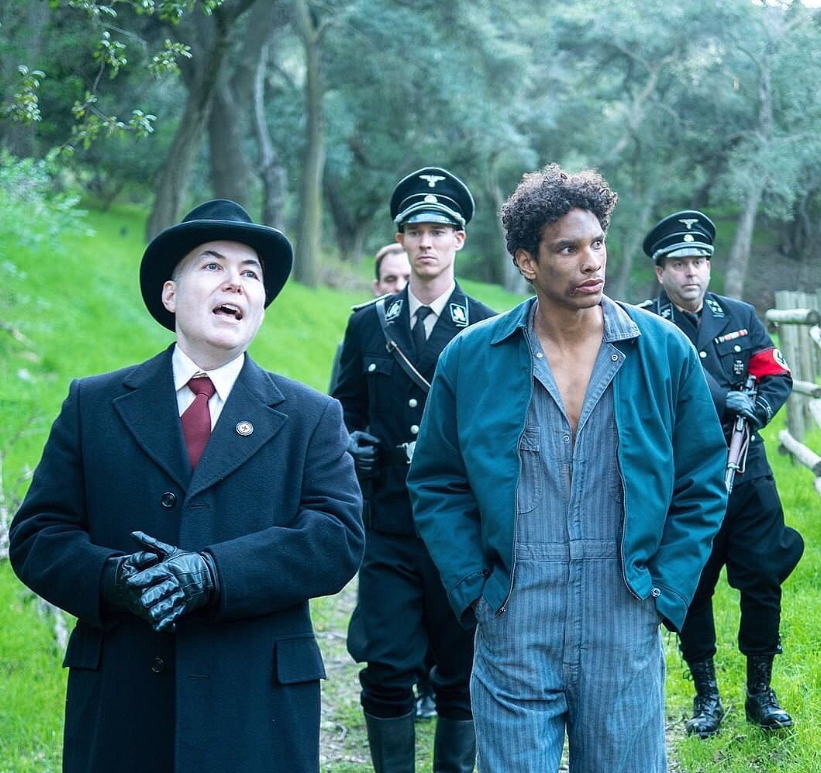
Winners are programed, too. Instead of a curse, there is a blessing: “Long life!” or “Be a great man.” The injunction is adaptive instead of constricting: “Do not be selfish!” and the come-on is “Well done!” With such benevolent controls, and all his permissions, there is still his demon to contend with, lurking in the murky caverns of his primal mind. If his demon is a friend instead of, then he will have it made. Does everyone have a script? At the present, there is no way to answer this question with any degree of certainty, but it is certain that everyone is programed to some extent from early years. As previously mentioned, some people can become autonomous through drastic external circumstances, others by internal reorganization, and still others by applying the antiscript. The key lies in permissions. The more permissions a man has, the less he is bound by his script. On the other side, the more severely the script controls were reinforced, the more script-bound he is. It is likely that the human race as a whole forms a curve. At one end are those who become autonomous by one means or another, and at the other end are those who are script-bound, with most people in between, subject to changes in circumstances or outlook. Among the script-bound, there are two types. #RandolphHarris 5 of 17

Script-driven people are those who have lots of permissions, but must fulfill the demands of their scripts before they can enjoy them. A good example is the hard worker who can have fun in his spare time. Script-ridden people are those who have few permissions, but must spend as much time as possible fulfilling their scripts at any cost. A typical example is the heavy drinker or drug addict who must speed toward his doom as quickly as he can. The script-ridden are the victims of tragic or “hamartic” scripts. On the other hand, it is a rare person who has not at one time or another heard the voice of the demon in his head, telling him to buy when he should sell, or stay when he should go, or speak when he should remain silent. The predom taboo against genetic consumerism surfaced when citizens became morally outraged by genetic engineering and cloning. The emergence of a new taboo is always a sign for evolutionary rejoicing. Today’s new taboo is tomorrow’s advance. Agents who create new crimes are automatically promoted to the Gut-Caste Hall of Fame. Examples of relatively new crimes include bootleg radio broadcasting, psychedelic drug manufacturing, nuclear research, computer larceny, leaving a country without an exit visa, DNA research and cloning. The passions of men are so resistant to control that in no single method is there sure hope of overcoming them. Only in a combination of methods does this. #RandolphHarris 6 of 17

The high moments of Heavenly inspirations are laid low in the dust of obscenity or lust. The effect of passional indulgences spreads out on physical and mental levels. If we learn by bitter experience to drop the burden of one particular desire, we do so only to pick up another soon after. We are not content to be at peace. The desires of human beings are never satiated, nor can they ever be since human beings must go on searching for final satisfaction. It is in their nature to do so. However, what cannot be satiated by outer things can turn in one itself and find rest at last within. How morally helpless many persons allow themselves to become is shown by the compulsive nature of their deeds and the obsessive nature of their thoughts. It is the strength or feebleness of his attachments and desires which largely govern his first and earlier paces in the relinquishment of ego. When insight arises, the passions become subdued and the problems which beset man become solved of their own accord. We may quarrel and kill whilst we remain in ignorance, but we must needs feel for and with each other when we comprehend at long last that in the Overself we are one. All too easily do luxurious habits become insatiable habits, ever demanding more and more and meanwhile creating tension of discontent. Whereas the conventional good man seeks to leave behind only the gross flagrant forms of sin, the philosophic disciple is much more scrupulous. Whereas the one is content to moderate the strength of his lower nature, the other tries to subjugate it altogether. #RandolphHarris 7 of 17

There is one side of a person that always has to come out on top. That is the person who is always successful or dominant in the field. Your top-dog self is critical, judgmental and always has to be right. It gets the best of people, rather than trying to help or support them. Most people have been playing that side so long, they believe that it is all of them there is. However, that is not it. There is another side, the underdog, the one who has little chance of winning. This is the side that comes out in some when dealing with someone they care about. The soft, supportive side. That side that does not have to win every battle. Every man has to accept that he may be a loser and that sometimes it is good to lose. It feels good to let down the defenses and just give in to someone else. However, sure it feels good to always be successful at everything, but what does it get a person? A man who gets everything done, who makes all the money. He is sometimes seen by others as worthless. Yet, what is so worthless about feeling good? Does having all that success and money ever make a man feel really good? Is not being able to feel love worth something, too? People who are used to coming out on top need someone to humanize them. They need someone to take care of them and keep them in line. #RandolphHarris 8 of 17

It is nice to come home to someone who goes to an import place and spends $1,500 on beautiful things for your homecoming. Blue Tiffany lamps that look great in your bedroom. Blue bed sheets from India. Colour of the sky, two blue pillows, incense, candles, Danish cheeses, Holland cheeses, smoked oysters, artichoke hearts. Carrot juice and more food. Soft Kleenex to wipe your nose. Fruit from the fruit stand. Coming home from a business trip to a nice ranch house where everything is sunny. Fresh baked bread, freshly picked apples, berries, plumbs. Then seeing the lake. How beautiful and fresh it is, and then taking a nice steam bath. Imagine a loving home near a mossy meadow, falling down in the sun and breathing deeply. This is much better than being a prisoner of success alone. A prisoner whose unbounded imagination gave birth to him, and they became one. Being alone, imprisoned in a bloodstained Bastille, entirely constructed around a still unsatisfied, and henceforth undirected, desire for please. Some men have only triumphed in a dream and those ten volumes crammed with philosophy and atrocities recapitulate an unhappy form of asceticism, an illusory advance from the total no to the absolute yes, an acquiescence in death at least, which transfigures the assassination of everything and everyone into a collective suicide. When a man only has success and no love, he is killed in his imagination. Others end up on an improvised stage with other lunatics. #RandolphHarris 9 of 17

Success without love is nothing more than a derisory equivalent of the satisfaction that the order of the World failed to give a man. We are to discipline, and when necessary, abstain from satisfying the lower impulses of our nature because we are to cultivate its higher intuitions. The clamant voice of the one drowns the soft whisper of the other. Ww must try to turn the flow of our passions into a sublimer channel than the sense alone. Variations in the muscle tonus of parts of a person’s body may reflect repressed emotions and the need tensions. A flaccid handshake may disclose a lack of sincerity. A soft, suckling mouth may reveal unconscious wishes to be passive and dependent. A female college student complained that men were forever “making passes” at her, yet she denied any erotic interest in males. Observation revealed her bodily movements were very provocative. She wiggled her hips when walking and pushed her chest high. When talking with a man, she glued her eyes, alternately opened and narrowed, to his. Men and women who have reached or passed the age of the late forties are more ready for, and better suited to, disciplining the animal nature and human passions than younger folk. It is more difficult to conquer lust than to walk on the edge of a sword. However, it can be done. No matter how much you feed your desires, they will never be satisfied. Therefore, direct them gradually towards the Infinite, in which they may ultimately merge, and from which there is no return. Repressed hostility may be manifested by excessive muscular tension in the forehead, neck, or shoulders, often resulting in headaches, a “pain in the neck,” and back pain. #RandolphHarris 10 of 17

The traditional mission of the Sacramento Fire Department was saving lives and protecting property from fire. However, today, the Sacramento Fire Department also prevents harm. Preventing fire, injuries, and disease by understanding what causes harm to firefighters, their systems, their members, and community is the most effective form of preventing harm. The ability to manage risks is essential for success and survival. “We were working night shift on Engine X. I sometimes work on my model fire engines, but that night I had gone over to have dinner with the captain of Engine Y, who was going to retire. I had just returned to the firehouse when the alarm came in. All of a sudden Engine X’s crew came running out of the kitchen like a football team, and the second alarm came in. With that, I knew that my older brother, Z, who was a battalion chief, was there. We had quite a bit of rain on the street, and driving there was slow going. On the way over, I heard Z, I knew it was his voice, asking for a third alarm and all the ambulances that were available. I now knew there was an explosion, but I didn’t know the extent. When I pulled in there, the scene was one of utter desolation, it was like a sea of bricks and fire of low intensity. The nearby buildings were just starting to catch. People were hobbling all over the place. All the firemen there were on rescue. Knowing that help was coming, I told the battalion to make sure the engine company stretched lines. I didn’t want them all going on rescue work, which there was a natural tendency for them to do. #RandolphHarris 11 of 17

“I looked and saw our rigs completely smashed. It was a sickening sight. The aerial ladder of Truck A had been blown across the street about thirty feet. It was crushed. The whole middle of the truck was flat down on the street, the tiller sticking up in the air like a sinking ship. Bricks were all over Engine B, one engine caved in, and there were men lying all over the place. It was just mind-boggling. We have the fire spreading in four different directions, so I called for more help. Two members of Rescue C brought Z over, just so I could see him. He was all bandaged and bloody. All he kept saying to me was, ‘I’m all right. I’m all right.’ I said, ‘You’re going to the hospital.’ And he said, ‘Oh, yeah.’ They said, ‘We’ll see he goes right away.’ So now I was the chief in charge. Z had a broken collarbone and a dislocated shoulder, and I didn’t know it at the time, but he had a five-inch wooden stake drive into the side of his throat and resting against the carotid artery. I didn’t know it, because they had bandaged right over it, deciding rightly that they shouldn’t try to remove it at the scene. They have bandaged his whole face and neck, and he looked like a mummy, all bloody. Of course, it was a shock to me to see my older brother like that, but I had the idea in my head that he was going to be all right. The fellows had control of the situation, and they were taking him to the hospital, so I didn’t really dwell on it. There was so much going on that I had to turn to the fire. #RandolphHarris 12 of 17

“I knew some of our men had died, they were laying all over the place, and there had to be people under the sea of bricks and rubble. And there were people in the nearby house fires who were hollering. I went to a fifth alarm and then got an additional two engines and two trucks, because I knew the first alarm was wiped out. I didn’t know how badly, but they were gone. By the time I put one company to work there was another one there looking for assignment. The rubble was starting to burn near Ladder B, and all I could think of was, if there was anyone underneath it and still alive, I didn’t want them to burn to death. I thought that would be a horrible thing. So I had the first lines keep the fire away from the rigs. It ended up that they weren’t under the truck, they were under Engine B. It was like looking for someone under water, you had no idea where to start in the tremendous confusion. Some of the victims had already been taken to various hospitals in police cars and private cars, and it took us quite a while to get an accurate head count, to find out who was missing. We finally broke it down that the entire crew of Ladder B were dead, all five of them. It was several hours before I found out what had happened. The building was a four-story warehouse, and they had a huge propane tank on the fourth floor, a five-hundred-gallon tank, I believe. It was completely illegal to have it in the building at all. One of the workers was moving the tank with a lift truck near the elevator shaft. It fell off the truck, the valve broke, and the liquid propane poured down the elevator shaft. The entire building got to the explosive stage at once. #RandolphHarris 13 of 17

“The workers ran out of the place and were out in front when Z arrived. They told him they had a propane tank that had burst. He assumed it was a twenty-gallon job or something like that. He asked them how big is it, and they said, ‘About as big as your car.’ He said that was the last thing that he remembers. That’s when the propane hit the wood stove on the first floor and blew the whole warehouse to pieces, totally destroyed it. It’s too bad that it didn’t blow sooner, we wouldn’t have had any problems. On the other hand, if it had blown later, we would have had more men killed. There wasn’t much left of the building, there was so much open fire, we kind of dismissed the possibility of more explosions in a warehouse. But some of the nearby houses had shifted and broken some of the natural gas lines into the houses. That got ignited. We also had a large frame church burning being the warehouse, which probably in itself would have been a third alarm, and for quite a while we had just one engine company working a turret on it. There were about nine or ten houses that were heavily damaged, and there were innumerable houses that got damage and window breakage for miles around the area. It was a tremendous sight. Once we got enough help in there to work on all the perimeter of the fire and hold it, then it was several more hours, I would say after midnight, when Commissioner C said they had the final count of casualties. It was the five members of Ladder B and two civilians. Then I got his permission to replace every company at the scene, because the weather was bitterly cold and the men were physically shot and emotionally shocked. #RandolphHarris 14 of 17

“I stayed until all the companies were replaced, then I went back to quarters and had a bowl of hot soup. Then I went to the hospital for the second time that night. By this time Z had been operated on and they said he was all right, so I didn’t even go in to see him. The first time I had gone, he was still in the emergency room along with some of our fellows who were burned, so I had a chance to talk to them. I also had the very unpleasant task of identifying one of the bodies. The chaplains and the commissioner and his deputy went to each individual’s house to notify the family of the deaths. They did the same thing with the injured. They brought their wives in and met them at the hospital. It was complete chaos there. The families were very cooperative. They realized that nothing could have been done to avert the tragedy. The companies had pulled up, just as you do on every box you go on, to find out what was going on. The five men of the ladder company had gotten off the truck and were standing together across the street from the building, waiting for orders. And Engine Y had pulled in, and they were on the back of their rig getting masks on in case they were needed. We’ve had people say that shouldn’t have been that close. Well, nobody had any idea what was going on. The members of Engine Y were just blown back, except for one who, along with my brother, was blown into the chief’s car. The member of Engine E was also blown back and, other than burns, were not hurt badly at all. #RandolphHarris 15 of 17

“But Ladder B’s crew just ended up being buried by all the debris. They were not blown away like the other fellows. In fact, one of the men from Engine E was talking to one of the men from Ladder B, and he was blown about sixty feet, and the man beside him was buried under the bricks and killed. Tw two who were blown into the chief’s car were badly injured. X was one of them. The other, named F, is not out on disability pension, at age thirty-two. He was very badly smashed up, a lot of broken bones. It was the second to last night on the job for the captain of Engine E, and he was going to get out, and the driver said to him, ‘Why don’t you stay in the rig, Cap, there’s nothing going to be doing here.’ Well, the bricks caved in the roof of the cab and they both received some bad lacerations, but it came out okay in the end. I always knew it could happen at any time. I felt that after all the fires I have been on, all the years I have put in, I had never had a man killed in a fire, whether I was in charge or just working at it. And it just caught up with me. Fate caught up with me. I went to all the wakes. They varied from some of the wives sobbing uncontrollably to others more or less accepting it. The younger wives seemed to take it harder. The families themselves were good to us. They even helped to console us. We’re all family. #RandolphHarris 16 of 17

“X was in the hospital for about three weeks and out of the job for above five months. He most his hearing. He had to get hearing aids. He’s getting there. He says he has no real bad afteraffects from it. We had the funerals for the five men on New Year’s Eve, and it was bitter cold. Oh, God, it was a cold day. And we had thousands of men who came from all over the country. It hit every one of us in the department emotionally, to think that on New Year’s Eve, on a butter cold day, all those guys would come up It was just amazing, and it really helped. The case of the illegal usage of the propane tank is still in litigation. It’s been kicked around. The grand jury indicted them, but then they played a little game. The one guy got immunity to testify against the others, then he claimed he was the one who put the tank in there. One of those things.” The Sacramento Fire Department has to be equally committed to reducing civilian deaths as they are to reducing firefighter deaths, and aggressively managing risks will help them do this. The Sacramento Fire Department’s mission is fire protection and to respond to emergency situations, and they make a point to do this with compassion. You can help save lives by donating to the Sacramento Fire Department. And remember, even if things are not going well, and you are a bit tired and sad, raise your children to love America and be patriotic citizens. Also, let them know how important it is to love God and Jesus Christ and to be ethical and moral, and to obey the laws. It is also important to buy American made goods and services, such as cars, clothes, meat, produce, poultry, dairy and fish. We must keep America farms and the automobile industry thriving. We can help stop corruption and evil one person at a time. It only takes five good people to facilitate a change in a small group. To show support for America, remember to buy American cars and American made products. Respect law and order and treat others with dignity and kindness. I pledge allegiance to the flag of the United States of America, and to the Republic, for which it stands, One Nation, under God, Indivisible with Liberty, and Justice for all. God is in His holy Temple, Earthly thoughts be silent now, while reverence we assemble, and before His presence bow. He is with us, now and ever, when we call upon His name, aiding every good endeavour, guiding every upward aim. #RandolphHarris 17 of 17

The Winchester Mystery House

Only one more week until the mansion is fully decked out in its holiday finest 🎄✨It is estimated that is you were to try to recreate The Winchester Mystery House, because it is so large, has extremely unique architecture, and many of the materials used are very expensive, rare, and even impossible to find, it would cost well over $500,000,000.00 USD, so preservation, restoration and diligent care is very important to preserve this 8th Wonder of the World and an important piece of American history. Although they do not accept donations, you can contribute by taking tours, buying items in the gift shop, and at the online store.
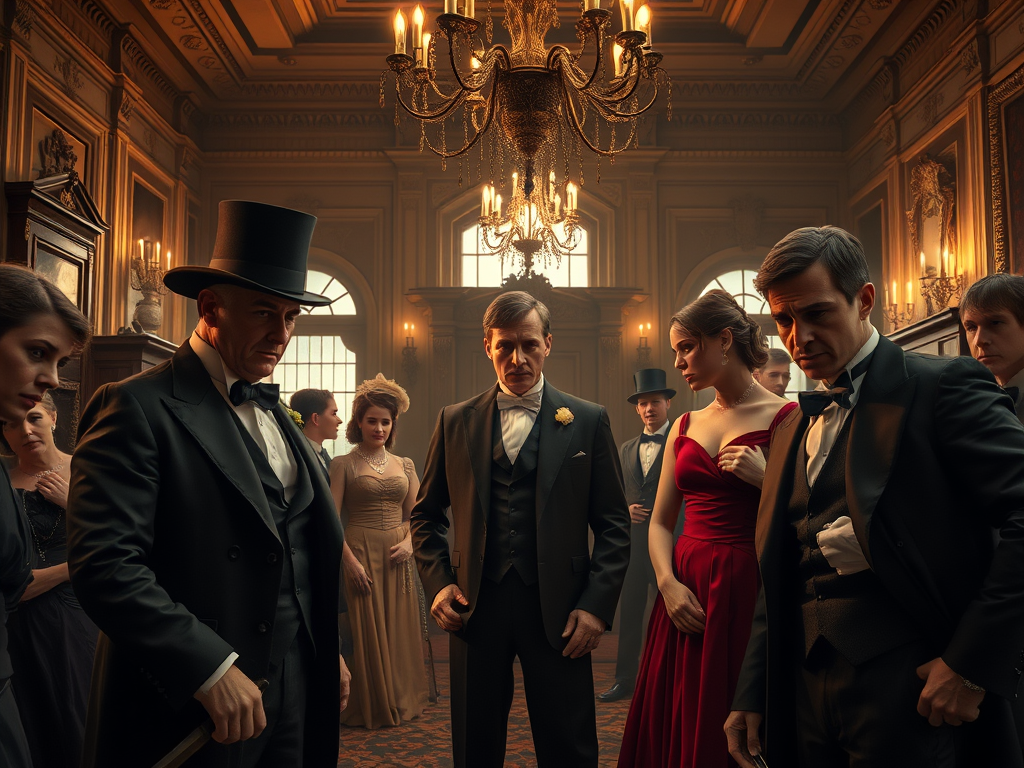
Please come and enjoy a delicious meal in Sarah’s Café, stroll along the paths of the beautiful Victorian gardens, and wonder through the miles of hallways in the World’s most mysterious mansion. For further information about tours, including group tours, weddings, school events, birthday party packages, facility rentals, and special events please visit the website: https://winchestermysteryhouse.com/

Please visit the online giftshop, and purchase a gift for friends and relatives as well as a special memento of The Winchester Mystery House. A variety of souvenirs and gifts are available to purchase. Chester the Elf is looking forward to seeing you! https://shopwinchestermysteryhouse.com/


You are Already Dead to the World

Always make those senior to you feel comfortable in their superiority. Never take your position for granted and never let any favours you receive go to your head. For Sade, the law of power implies barred gated, castles with seven circumvallations from which it is impossible to escape, and where a society founded on desire and crime functions unimpeded, according to the rules of an implacable system. The most unbridled rebellion, insistence on complete freedom, lead to the total subjection of the majority. For Sade, man’s emancipation is consummated in these strongholds of debauchery where a kind of bureaucracy of vice rules over the life and death of the men and women who have committed themselves forever to the hell of their desires. His works abound with descriptions of these privileged places where feudal libertines, to demonstrate to their assembled victims their absolute impotence and servitude, always repeat the Duc de Blangis’s speech to the common people of the One Hundred and Twenty Days of Sodom: “You are already dead to the World.” Sade himself also inhabited the tower of Freedom, but in the Bastille. Absolute rebellion took refuge with him in a sordid fortress from which no one, either persecuted or persecutors, could ever escape. To establish his freedom, he had to create absolute necessity. #RandolphHarris 1 of 23

Unlimited freedom of desire implies the negation of others and the suppression of pity. The heart, that “weak spot of the intellect,” must be exterminated; the locked room and the system will see to that. The system, which plays a role of capital importance in Sade’s fabulous castles, perpetuates a Universe of mistrust. It helps to anticipate everything so that no unexpected tenderness of pity occurs to upset the plans for complete enjoyment. It is a curious kind of pleasure, no doubt, which obeys the commandment: “We shall rise every morning at ten o’clock”! However, enjoyment must be prevented from degenerating into attachment, it must be put in parentheses and toughened. Objects of enjoyment must also never be allowed to appear as persons. If man is “an absolutely material species of plant,” he can only be treated as an object, and as an object for experiment. In Sade’s fortress republic, there are only machines and mechanics. The system, which dictates the method of employing the machines, puts everything in its right place. Hos infamous convents have their rule—significantly copied from that of religious communities. Thus, the libertine indulges in public confession. However, the process is changed: “If his conduct is pure, he is censured.” #RandolphHarris 2 of 23

Sade, as was the custom of his period, constructed ideal societies. But, contrary to the custom of his period, he codifies the natural wickedness of mankind. He meticulously constructs a citadel of force and hatred, pioneer that he is, even to the point of calculating mathematically the amount of the freedom he succeeded in destroying. He sums up his philosophy with an unemotional accounting of crimes: “Massacred before the first of March: 10 After the first of March: 20. To come: 16. Total: 46.” A pioneer, no doubt, but a limited one, as we can see. If that were all, Sade would be worthy only of the interest that attaches to all misunderstood pioneers. However, once the drawbridge is up, life in the castle must go on. No matter how meticulous the system, it cannot foresee every eventuality. It can destroy, but it cannot create. The masters of these tortured communities do not find the satisfaction they so desperately desire. Sade often evokes the “pleasant habit of crime.” Nothing here, however, seems very pleasant—more like the fury of a man in chains. The point, in fact, is to enjoy oneself, and the maximum of enjoyment coincides with the maximum of destruction. To possess what one is going to kill, to copulate with suffering—those are the moments of freedom toward which the entire organization of Sade’s castles is directed. #RandolphHarris 3 of 23

However, from the moment when sexual crime destroys the object of desire, it also destroys desire, which exists only at the precise moment of destruction. Then another object must be brought under subjection and killed again, and then another, and so on to an infinity of all possible objects. This leads to that dreary accumulation of erotic and criminal scenes in Sade’s novels, which paradoxically, leaves the reader with the impression of a hideous chastity. To some people, being “right” is not just important—it is necessary for survival. The chief advantage of being a tyrant in your every day life is that you get what you want. For some people, from the time they are born, nothing comes easy. Some families use their life savings to open a business so that they can be their own employer and they work as hard as they can to make sure their business is a success. Their children start working as soon as they are able to, often by the age of six or seven. When a child starts work at an early age, they certain do learn the value of a dollar. A youth learns from observation and dealing with customers that people who have money get whatever they want and they get money by taking it from others. Being young and working and coming from a family that is frugal, some boys learn that it is important to save the money they make. #RandolphHarris 4 of 23

By saving money, some boys are able to lend money to their friends. If the friends are not able to pay it back, then they can work it off. As a boy learns that the harder he works, the more money he will make, as soon as he becomes efficient, he takes on more work so he can earn more money. However, by being one of the only children with money and having the ability to lend it to others, to ensure that they do work it off, some boys essentially become loan sharks. They gather information about their peers that their parents do not know and threat to expose their secrets to their parents with the information. One may think that such a manipulative youngster is unloved and comes from an impoverished household and has poor grades, but sometimes their children are babied by their mothers, have hard working father and are reprimanded from having anything lower than an “A” on his report card. This boy in particular, who we will call Max, went to a Catholic school, where he found that the nuns, with their strict rules and stiff paddles, had the power. Max never challenged this power openly, preferring to work his mischief at times and in places the nuns could not detect. His idols were the priests, who drove long black cars, had a cook, a maid—and the final word on everything. Their power was greater than that of the nuns and the lure of it led him to study for the priesthood. #RandolphHarris 5 of 23

Yet from the day he entered the seminary, Jason knew he would not last. What bothered him was the vow of obedience, the Church’s stubborn insistence that he obey every whim of his superiors. This was the brick wall against which his stubbornness eventually crashed. Passion conquers the young man in the end and forces him into an affair, a relationship, or a marriage. However, he who withstands it drive, conquers passion itself, is a hero. A blind obedience to the urges of physical sense-satisfaction, indifferent to the restraints of ideals, reason, knowledge, or intuitive feeling, weakens concentration and meditation, but strengthens the lower nature. The unruled passions are responsible for a substantial part of the difficulty in summoning up enough aspiration to make men do what they ought, and enough penetration to clear the mind of its illusions. Those with some mental development wisely add tomorrow to today, consequences to causes, and thus finish the picture. Others are ruled by the moment’s impulses or the day’s trend or by passion rather than reason. It is supposed to go so far that even such a lofty desire as one for desirableness itself can no longer remain acceptable. He may feel the temptation but he need not submit to it. It is the emotion, sill more the passion, which anyone pours into an attachment which may make it an obstacle on his quest. #RandolphHarris 6 of 23

Men who are driven by strong ambitions will have little energy left for strong aspirations. In the Sphinx sits the symbol of that enterprise which offers the candidate for initiation his greatest reward but which paradoxically brings his greatest suffering. This is the conquest of passion by reason and will and the overcoming of personal emotion by impersonal intuition. The Sphinx is a perfect image of the adept in whom the man controls the animal. The attainment is a rare one—too many are satisfied to remain hardly more than animal, with a few human traits. If he cannot put the objects of his desires completely outside his heart, then he must do the next best thing and put them on its borders. Thought creates attachment, and this in turn leads to desire. When a man, with his impulses and passion, meets life with its paradoxes and illusions, he soon falls victim to the deceit of appearances. If the passions dry up, is there any real loss? Are anger, hate, and lust worthy expressions of a being whose spiritual possibilities are so wonderful as man’s? The man who has learnt in some way—whether by personal experience or by a wise old man’s instructions or through an inspired book—that excessive ambition may be folly, excessive luxury has no end to the labour of collecting it, knows that the self-actualized Christians who are content to live barely and simply may not be fools after all. #RandolphHarris 7 of 23

However, it is also possible for another man who has cultivated an inner detachment to have the same feelings and nevertheless seek to enjoy life. To feel free at last of nagging desires and frustrating attachments brings a large measure of contentment. What is the use of studying philosophy unless we are to become wiser in the future and unless we use its lessons to discipline the impulses and dominate the senses? The white lotus lives in the black mud. It is both an example and an inspiration to man. There is danger in a view of life which makes men unable to be satisfied with a similar life and which stimulates their desires endlessly. Even if it is beyond his power to kill these passions without Grace, it is within his power to curb them. We get muddled and worried by problems which have been manufactured for us by our own desires, instincts, and passions. The need of disciplining them is evident. If the energy used in the pursuit of ambitions or pleasures could be diverted to the following aspirations, if he had the strength to remove everything else from his life except the quest, how could he fail? He may discovery that the battle is not really over, that atavisms of the old animalistic life, rooted either in the present or in former births may come pouring over the threshold of the conscious ego. When the intellect is enslaved by desires, by greeds, by ignorance, it readily finds several defenses against the call of the Quest. #RandolphHarris 8 of 23

When the ego has become a little freer and listened to the call, it just as readily finds defenses against making any practical application of what it has learnt. If your passion is transferred from a passing object or human body to the more durable and beautiful soul, you will be progressing from a lower to a higher plane. People may sicken in consequence of excessive life stress or from infection ensuing from lowered resistance. An inability to gratify needs by effective action contributes to physical sickness in direct ways. If a person is obligated to persist in ways of acting that are required by familial, occupational, or age roles, when these ways fail to produce basic need gratification, the person will gradually become dispirited. Dispiritation refers to a state of lowered morale, diminished zest in living, and a sense of hopelessness that lowers one’s resistance to infection by germs, bacteria, and viruses. A student may develop the flu after being rejected by his girlfriend. A woman may be deprived of feeling love in pleasures of the flesh, affection, and appreciation and yet persist in living the joyless life because she can envision no other; her chances of contracting various illnesses are increased. Any prolonged need deprivation dispirits a person and reduces that person’s commitment to life. This reduced commitment to living appears to be responsible (in ways not fully understood) for alterations in the efficiency of the immunity mechanisms of the body. #RandolphHarris 9 of 23

Everyday life itself is stressing, and persons rest in order to regain strength to cope with the challenges of existence. If a person is living a joyless existence, and cannot alter it, it is necessary for that person to force himself to fight the impulse to flee the scene. This unremitting struggle to remain in a thwarting situation imposes even more stress and can contribute to cardiovascular diseases and respiratory and eliminative disorders. However, perhaps more importantly, the dispirited person finds less and less joy or fun in work, family, or in life itself. Thus, in the same fashion that one needs to see a physician or change some part of one’s life in the face of continuous physical illness, one also needs to attend to the self in the condition of dispiriation. How does one defeat dispiritedness? First, recognition of the state and of the need for change is helpful or a professional counselor, psychologist, social worker, or psychiatrist. On most college campuses such help is provided by a counseling center or student mental health service. One should not look upon this as an embarrassment but rather as indicative of your knowing yourself and knowing when it is time to seek help. There are also other roads to escape from being dispirited—changing one’s job; changing one’s life objectives; getting out and seeking new, successful, yet exciting alternatives. #RandolphHarris 10 of 23

It also may help to seek good friends who will not try to talk you into their solutions, but who will, rather, help you to talk out your own ideas and seek your own solutions—this is also a successful approach to coping with the very normal occurrence of being dispiritied. Normal though it might be, it demands attention in order for one to maintain a healthy personality. The script equipment is the nuts and bolts from which the script apparatus is built, a do-it-yourself kit partly supplied by the parents and partly by the child himself. Antonia was depressed by an unhappy love affair. She was afraid to be frank with her lover because she might lose him. On the other hand, if she were not frank, she was afraid she might lose him. There was nothing sinister in it, actually. It was just that she did not want him to know how passionate she really was. The conflict sometimes made her frigid and sometimes panicky. When she talked about it, she felt so mixed up that she clutched her head. What would her parents say about it? Well, her father would say: “Take it easy. Do not lose your head.” And her mother? “He is taking advantage of you. Do not get too attached to him. He will leave sooner or later. You are not good enough for him. He is not good enough for you.” She went on to tell an adventure. When she was about five, an adolescent uncle had got sexy with her, and made her feel sexy, too. She never told her parents. #RandolphHarris 11 of 23

One day when Antonia was taking a bath, her father told her how cute she was. There were some visitors in the house and he had held her up naked for them to see. They sexy uncle was one of them. What were he reactions? “I want to hide. I want to hide.” “My God, they will find out what I have been doing.” How did you feel toward your father doing that? “I wanted to kick him in the privates. I knew what a man’s private parts looked like, too, from my uncle’s ‘excitments.’” Was there any ha ha? “Yes deep down, there was. I had a secret. And worst of all, I knew I liked it under all the other feelings.” From these reactions Antonia had constructed a script, which was to have passionate love affair and then get left. Along with that, however, she also wanted to get married, stay married, and have children. There were two counterscript slogans from her father: “Take it easy,” and “Do not lose your head.” These fitted in with her aspirations of getting married and raising a family. There were dive injunctions from mother, all telescoped into, “Do not get attached to anyone.” There was a strong seduction to be passionate and sexy from her uncle, reinforced by the nude provocation from her father. These seductions and provocations from Parental demons had reinforced her own demon throughout her life. There was a strong implication of a built-in release: the familiar Prince with the Golden Apples—not like father; if she could only find one. #RandolphHarris 12 of 23

The interesting thing is that his whole bit came out in one session. As someone remarked, she was quite happy to hold it up for everyone to see. Life can only be understood backwards; but it must be lived forwards. Let us use the old term “madness” for awhile. There are two kinds of madnesses, only one of which is generally recognized. That is the one that we call “abormal” or “out of touch with reality.” The other one seems to me to be out of touch with reality too, although it is called “normal” because a majority of people are that way in our society. In this sense, it is a reality—like the reality in many parts of the World that most people go to bed hungry every night. This is not a reality which most of us would recommend adjusting to although where it exists it is “normal.” Ther are two normal too, only one of which we usually recognize. That is the statistical normal which is nobody, like the average Harvard man who has 3.5 children. The other normal is unknown because it is me if I had not been interfered with, what I might have become, my own norm—a constantly changing potentiality becoming actuality. This happens to nobody too—but it could happen. Why should not we increasingly make it possible for this to happen. When people hold themselves to any pattern it cripples them. It robs one of the confidence in their ability to grow as a person and to become independent. The recognized “abnormal” is a very lonely one, because no matter how many other people are in it, the individual lives in so much isolation. #RandolphHarris 13 of 23

Abnormal people are cut off from other people because they reject people who are different, and the individual’s response to them may also be chopped off too—perhaps in the way it happens when one is overtired and cannot even enjoy doing what he likes to do. It evokes no response in the individual. The other madness, which is called “normal,” is not lonely—or rather one’s loneliness has got buried so that one does not notice it so much. One can “forget it.” They may remember the vision they have had, but they cease to regret it, maintain themselves by the common routine, learn to avoid excessive expectations, become tolerant of themselves and others, giving and taking, in the usual actions what there is to give and take, They do not repine; are contented with the morning that separates and with the evening that brings together for casual talk before the fire two people who know they do not understand each other, breeding children whom they do not understand and who will never understand them…and the other life will be only like a book you have read once and lost. However, the loneliness is still there. When one has substituted a superficial togetherness for the basic being-together, one has built a superstructure with no structure underneath it. That is fantasy, even though the fantasy may become a second-order reality by many people engaging in the same fantasy. #RandolphHarris 14 of 23

A man can be linked with many other people through his surface, or mask, or disguise—by approved actions. This is phoney, or veneer, because it is put on, but as long as he keeps his mind focused on it, he has the illusion of being in touch with other people and himself by interacting with their phoney surfaces. Even if he has done this for so long that the surface seems real to him, it is more like apples bobbing in a tub of water, skin touching skin, with no awareness of the flesh or core. We are all apples and that is enough, is it not? What more do you want? Not satisfied with being an apple? Just do what the other apples are doing and you will be already. Not to do this is “bad.” (A threat to my veneer, which might crack and split if exposed to the weather of humanness?) The Self-Actualization Movement originated—where all individual freedoms start—on the Western Frontier. On nursery planets the military warrior-caste is responsible for developing new technologies for faster mobility and communication. Soon afterwards, the citizens in the Western Frontier coopt the technology for their own action. Genetic causes exist for human problems. Discovering this is a big breakthrough—resisted, of course, by stage twelve retiring socialist demo-poll cultures. Genetic determination focuses on gene pool statistics and caste-differentiation, thus minimizing the importance of hive managers. Socialist-welfare cultures insist that the collective super-hive—also known as “The State”—assume responsibility for everything. #RandolphHarris 15 of 23

When we human begin to face the fact that genes determine the varied destiny of our different children, then we are ready to see that genes determine our own caste. Next comes the catastrophic discovery that each gene pool is a time-hive, a genetic molecule, made up of many elements called “castes” and that the whole game is genetic robotry. After genetic counseling courses began studying genetic potentials and self-selected breeding soon emerged on the Western Frontier. Neither China or Russia offered courses on genetic elites. As our intelligence evolves the definition of genetic counseling will evolve from an emphasis on pathology to one of excellence and growth. The definition of genetic counseling might read like this: “A communication process which deals with the human potentials associated with the occurrence, or the possibility of occurrence, of genetic advance in the gene pool.” The dom-species on the Sunset Strip move from twelve social-sacrifice to stage thirteen self0consumerism. PreDom ideas emerging on the western frontier: Stage 14: Self-Actualized Adults: Bodily intelligence self-actualization “My Body is my Time Ship.” Stage 15: Hedonic Networkers: Voluntary civilian space migration “We Are Not Terrestrials.” Stage 16: Brain-Reality Consumer: Brain Reality Consumerism “I Can Select My Own Reality.” Stage 17: Brain-Reality Self-Actualized: Brain Reality Self-Actualism “I Can Create My Own Reality.” Stage 18: Brain Reality Fusion: Brain Reality Fusion “We Can Fabricate an External Reality.” Stage 19: Genetic Consumer: Genetic Consumerism “I Can Select My Own Genetic Reality.” Stage 20: Genetic Engineer: Genetic Engineering “I Can Fabricate My Own Genetic Reality.” #RandolphHarris 16 of 23

Terrestrial dom-species place all notions of the future under hive-taboo. The ideas of bodily-sensory-hedonic consumerism—fiercely taboo in domesticated adults and retiring elder societies—crumbled by the late 20th Century on the Western Frontier. The predom self-actualized adult stage taboo against bodily self-actualization similarly crumbled—as exemplified by the legalization of marijuana, the classical tool of one who wishes to control one’s own hedonic reality. The predom hedonic networker taboo of the late 20th Century condemned civilian space migration was a “preadolescent” idea and he was precisely correct. If preadolescence is defined as age eleven, then a preadolescent idea will become a young-voter idea in seven years and will be legalized in California ten years later. How few of the images which fill his mind come from his higher self, how many from his animal self! It is not enough to refrain from sensual acts. It is no less needful to refrain from sensual thoughts. As this diviner self displaces the Earthly one in his will, heart, and mind, it is natural that what he hitherto felt as temptation will be felt as such less and less. On the philosophic path he will attain to this without immuring himself in any cloister, but rather in the very midst of Worldly activity. #RandolphHarris 17 of 23

The Sacramento Fire Department is committed to providing excellent service to their customers in a professional and humanitarian way. They protect lives, property and the environment through safe and timely response. They are innovative in fire prevention, suppression, rescue, emergency medical services, training, community outreach, public education, and other services. “It was nine o’clock in the morning, and the alert came in that there was a fire in an occupied dwelling. We pulled up to the place, and Captain X and Lieutenant Y yelled for a ladder. It sounded like there was somebody trapped on the second floor, because there was a lot of screaming going on. One woman, who looked like she was burned, was screaming the most. I grabbed the twenty-foot free beam and ran to the side of the house. However, the woman was screaming that her baby was in there on the first floor. “In the crib,” she said. It’s in the crib.” So Lieutenant Y got on his knees under the first-floor window, and I jumped on his back. I tried to get in the window sideways, but I could not. So I had to go in straight, diving head first. There was a bunch of junk in there. The people had just moved in the day before. It was a small room, maybe ten by ten. I could feel my ears burning. I remember kneeling at the crib, looking over my shoulder at the window. Then it got terribly hot. That’s the last thing I remember. #RandolphHarris 18 of 23

“Captain X, senior man at Engine Z, dove in after me, lugged me to the window, and they pulled me out. I must have gone into respiratory arrest because Captain X was beating on me. Then the squad came, scooped me up, and took me to the hospital. I was in that room only about a minute all told. What was weird about that fire, was that my dad, who had been in the department for twenty-five years, was driving to the union office when he saw the smoke, and he figured that his kid was at that fire. Then he said, ‘nah, I’ve seen him work,’ so he passed up the exit to go there. But something made him turn back at the next exit to go there. He pulled up in front of the house, and he saw a guy lying there, and they were working on him. Chief A said to day, “That’s your boy.” So Dade rode in the squad with me. I remember waking up in the squad, and Dad was straddling me. They were trying to give me oxygen, and I didn’t want it. I didn’t know what was going on. I was burned up bad, but I didn’t know that. I felt like there was a ton of ice on my face. I remember trying to kick my boots off, and it was all pain. I knew then I was hurt. Then I blacked out again. They were wheeling me in, I remember that. They cut my clothes off. B, a guy I went to Hawaii with, was there. I said, “I loused up, I loused up, I loused up.” Then I asked him what I looked like. B’s eyes were bulging, they were bigger than I’ve ever seen, bigger than plates. He said, ‘Don’t worry about it, C. You just lost your suntan.’ He didn’t want to tell me. #RandolphHarris 19 of 23

“I don’t really remember much of being in the hospital. I remember a bunch of firemen coming to see me. I was only in for two days because of the danger of infection; you get more infection in the hospital than you would at home. I had second- and third-degree burns on my entire face, ears, and left hand. They did an experiment on me because I was so young, only nineteen. They did this biobrane. It’s like a skin that they put on a leg burn, a thigh burn, or an arm burn. They put that on my face, and it saved years of reconstructive surgery. Aside from that, all I’ve had to do was get eyelid surgery, because the fire burned through my eyelids. So they took skin from my neck over my left clavicle and redid my eyelids for me. I still need a little bit more nose work and then some eye surgery, and that’s it. They did laser surgery on my eyeballs. I had burned corneas, stuff like that, and I had a lot of edema. My biggest problem, though, is photophobia, sensitivity to light. But the best thing they did was let me go home and let my family take care of me. My sister did. My mom was so busted up she couldn’t even be in the room with me. And my dad, who’s not a big drinker, took it really hard and started drinking a lot. I stayed at my mom’s for a month while they took care of me. The smartest thing I did was, I never looked in the mirror. I didn’t have the slightest idea how badly I was burned up. And all my running mates, they’d bring the rigs by, and they’d spend time with me—that really meant a lot to me—to see me, the monster man. I mean, I was horrible-looking. #RandolphHarris 20 of 23

“My captain took it hard, because he’d never had a son on the job, and I was young enough to be his son. Lieutenant Y took it hard, too. What happened at the fire was, there was a mother, she had about five kids with different fathers, and she was in bed with some live-in boyfriend. The baby was in bed with them. The other kids were playing with matches under the dining room table, and the house took off. She and the guy jumped through the window and left the baby in the bed. Then they told us the baby was in the crib. The baby was obviously dead. They ended up suing our arson squad, because Arson reported it as kids playing with matched. They weren’t worried about their baby. If I had a tragedy like that and my child died like that, I’d definitely not want to dwell on it, I’d want to get it behind me and end it. D got some minor burns on his neck and brined the tops of his ears, because that room was going when he pulled me out. It flashed over, and flames burst out the window. And he went in there. He’s a little black guy, real shy, doesn’t talk loud at all. He won the Medal of Valor, the highest award you can win in the Sacramento Fire Department, for pulling me out of that fire. If anyone ever says anything bad about him, I’ll fight to the death for that man. He saved my life. #RandolphHarris 21 of 23

“That biobrane, to me, is the greatest thing since sliced bread, because I would be Mr. Scar. I would just be totally scarred. It’s evident from where it didn’t take, at the corners of my mouth and my lips. My lips always peel now, they’re always dry. I’ve got scars at the corners of my mouth, over my upper lip, right on my nose, on the ends of my nostrils, and under my chin, where the biobrane didn’t take. But biobrane is the best thing that ever happened to me. Lieutenant Y wants to get in touch with the doctor who did it, a young aggressive plastic surgeon, but he went down to New Orleans, and it’s hard to get in touch with him. When to the burn center for the eyelid surgery, they sewed my eyes shut for six days, and that was the worst part of it. I was super depressed then. The nurses understood. The firefighters were pretty serious about the whole thing, but the first day I came home the doctor put this net over my head to hold the biobrane mask on so it wouldn’t fall off. Captain X laughed and said I looked like a ham. That kind of broke the ide for the other guys. They took pictures of me every day, and they wanted to use one of them for the Burn Tournament poster for the burn center, but it was too hideous. The caption was going to say, “They never ask what happened to the firefighter who tried to save the baby.” It was just too horrible. #RandolphHarris 22 of 23

“It takes a year for you skin to heal up. But I was going stir crazy. I was bored, lethargic, gaining weight. I just wanted to get back to work. I told the doctor I would wear my Nomex hood all the time, so I went back to work after less than nine months. I would have gone back sooner if I didn’t have such trouble with my eyesight. I still wear sunglasses outside. It’s going to be a long time before that clears up. The skin is really sensitive. I wear my Nomex hood, and I still get the tops of my ears a little bit friend, and my face blisters up. I had a good one last night and got burned a little. But I’ve stayed on duty because it’s not that burned, just a little blistered. I’ve got to work for a guy tomorrow, and I don’t want to screw up his work release. That dive I took into that room wasn’t so good. For one thing, my mask was knocked off, and I kind of busted my nose, and my left cheek was swollen up pretty bad, so I must have hit something. My helmet must have come off, too, because I had burns on top of my head. But the helmet is still living. It looks like a good squad helmet. It’s all black. “The Sacramento Fire Department provides their customers safer and healthier neighbourhoods through an engaged, educated, and diverse workforce dedicated to life safety and improved quality of life. You can help save lives and property by donating to the Sacramento Fire Department. And remember, parents, teach your children to love America and be patriotic, to love God and Jesus Christ, to buy American made goods and services and cars, to respect law and order, and teach others with compassion, respect, and dignity, especially their elders. Release all captives, we beseech Thee, Lord whose mighty hand doth set men free; and hear the glad acclaim of all Thy people who praise and glorify but Thee. Preserve the righteous ones who seek Thee, and, in love, Thy unity proclaim; O guard and bless with Thine abundant goodness, Thy people who revere Thy name. Thou, Lord, who art alone exalted, please turn to us and hearken to our plea. We bless Thee, Thou who knowest all things hidden, Thy kingdom is unto eternity. I pledge allegiance to the Flag of the United States of America, and to the Republic, for which it stands, One Nation, under God, Indivisible with Liberty, and Justice for all. O Guardian of American, guard the remnant of America; let not American people perish, the people which proclaims: Hear, O America. #RandolphHarris 23 of 23

Cresleigh Homes Magnolia Station
Discover the exceptional 4125 Mirth Way at Magnolia Station in Cresleigh Ranch- where luxury meets convenience! This spacious two-story, 3,489 sq. ft. home features four bedrooms, including a first-floor Generations Suite, perfect for multi genrational living. With 3.5 bathrooms and a true three-car garage, this home blends style and practicality to suit your every need.

From the welcoming covered porch, step into a bright dining room and expansive kitchen, complete with a Butler’s Pantry offering plenty of storage. Ideal for entertaining, the kitchen is the heart of this home, ready for every gathering and celebration.

Upstairs, find a versatile Great Room and Loft that can be transformed into a craft room, playroom, theater, or game room – the possibilities are endless!

Equipped with Cresleigh’s All Ready connected smart home package, enjoy modern features like a video doorbell, digital deadbolt, home hub, smart switches, USB outlets, and a Google Home Hub and Mini.

Located conveniently at the corner of Rancho Cordova Parkway and Douglas Road, Magnolia Station offers easy access to the new Raley’s Shopping Center, Sunrise Boulevard, and more. Make this dream home yours and step into a life of comfort and connection! (Available home may vary slightly.) https://cresleigh.com/magnolia-station/move-in-ready-homesite-80/

.

Lord, Don’t Let Me Die Like this

There is the blindly instinctive and passioned terrestrial will in man, which violently drives him to seek and be satisfied with bodily satisfactions. There is also a higher will which gently draws him to transcend the body altogether. If the only enjoyment a man knows is that of physical sensations, he is only a dressed-up, walking, and thinking animal. The law of chastity requires that sexual relations be reserved for marriage between a man and a woman. In addition to reserving sexual intimacy for marriage, we obey the law of chastity by controlling our thoughts, words, and actions. Jesus Christ taught, “Ye have heard that it was said by them of old time, Thou shalt not commit adultery: but I say unto you, That whosoever looketh on a woman to lust after her hath committed adultery with her already in his heart,” reports Matthew 5.27-28. It is an essential part of the Quest’s work to separate the man from his passions, to subjugate the animal in him so as better to cultivate the godlike in him. Both desires and fears bind a man to his ego and thus bar the way to spiritual fulfilment. They could not exist except in relation to a second thing. However, when he turns his mind away from all things and directs it towards its own still center, it is the beginning of the end for all desires and all fears. The end of all this long self-training to cast out personal grief and terrestrial passion is blessedness. #RandolphHarris 1 of 18

The heart must become empty of all desires. This brings about the emotional void, which corresponds, in its own place, to the mental void experienced in the depth of mystical meditation. To this emptiness he must give himself, with it he must satisfy himself. In this way he obeys Jesus and becomes “poor in Spirit.” Poor in Spirit refers to a spiritual state of humility and dependence on God. It is a recognition of one’s need for God and a growing dependence on Him. It is also a sense of spiritual bankruptcy, powerlessness, and unworthiness before God. What is it worth to a man to be free from the passions, and free from the inner divisive conflicts which their activity must necessarily produce in him? Are they not the chief obstacles which prevent him from attaining that inner calm wherein alone the ego can be faced, caught, and conquered? And this done, what is there to keep the Overself from taking possession of him? Few men are moved by a single motive. For most men the contrary is the fact. This is because first, the ego itself is a complex and second, the higher and lower natures are in conflict. Discrimination is needed to penetrate the thin surface of so many pleasures, while the strength is needed to say “No” when this is wiser than accepting them. #RandolphHarris 2 of 18

It is not only needful to understand the characteristics of one’s desires but also their source. This knowledge will help him to improve character and attain true self-reliance. It is a strange paradox that on whatever desire a man wields the axe of non-attachment, he will thereafter become possessed of the power to attain it. There is this great paradox on the Quest: that the more the disciple obtains the power to bring about the fruition of his desires, the more he loses those desires! If we lack the willpower to overcome bad habits that have become popular and conventional, at least let us try not to justify our indulgence by specious reasons. The blind impulses must be checked by willpower, the lower nature must be disciplined and the lower energies directed into higher channels. It is perfectly possible, where fate ordains, to live continently and chastely, however strongly sexed a man may be. However, to achieve this, he must utilize the analytic reason, the creative imagination, and the active will in understanding and disciplining his energies and then he must redirect them towards aspirational, intellectual, or moral ideas or transmute them into practical work. He who begins by refusing to be a slave to the palate’s perverted appetite will find it easier to go on to refusing to be a slave to lust. A triumph over the one prepares the way for, and helps in the achievement of, a triumph over the other. #RandolphHarris 3 of 18

It is true that we all share a terrestrial body with the lower creatures. However, that does not force us to stay on their level emotionally. Every desire conquered feeds his strength and fortifies his will. The man who has made his way to the top of his profession but failed to make the conquest of his passions, is still an unbalanced creature, an unsatisfied human being. The extremes of abstention which follow repugnance, indifference, or self-struggle and the satiety which follows helpless yielding are both undesirable. The necessities of Nature hold us in their thrall but there is first, a difference between them and the desires of the ego and second, a difference between the true necessities which are inescapable from physical existence and the false ones which have been imposed on us by age-old habits, traditions, environments, and outer suggestions. That desire is a true one whose source lies in a genuine need, not in mere greed. Repentance redeems man, lifts him above the lustful dog to the loving human being, distinguishes him from the mere animal. We are cast out of Heaven by our own passion and kept out by our own attachments. If today we are miserable exiles, the way to remedy such a situation is clear. We must free ourselves from the one and disentangle ourselves from the other. He should desire that which will itself cut off all desires. #RandolphHarris 4 of 18

“Experiencing” is defined as an inner stream of feelings to which you can every moment attend inwardly. It is simple, effortless and available to us all. Yet it is maddeningly elusive. Try these experiences: Feel your body from the inside. Is there tension in your muscles? Is your stomach wound tight like a watch spring? Take a deep breath and feel what happens to that tension. Sit a while without moving. Does some prickliness begin to form just under the skin? Recall the full feeling you once had after overeating. Recall the heaviness, the discomfort, the difficulty in breathing. What does being bored really feel like? That strained, impatient deadness almost hurts, does it not? Something deep down screams soundlessly at you to get out of the boring situation. Can you recall feeling that? These are but three examples of experiences. They do not involve learning or doing. You can have them instantaneously. And there are thousands more available to you—each distinct from all the others. To have an experience, to really “get into” a feeling, involves a release or surrender. Behind the surrender is a basic willingness to trust, to accept that the inner core “knows what is best” for you. Thus experiencing holds the solution to all your internal mysteries, the truth of your existence. If experiencing is so wonderful and useful, why is it so elusive? Who do we shun the prospect of getting to our inner core and discovering our true being? Probably because we are afraid. We anticipate the truth will be too painful, that when we look inside at what really is, we will not like what we see. #RandolphHarris 5 of 18

Ironically, by trying to avoid the pain of looking within, we virtually guarantee the continued pain of our incomplete, manipulative behaviour. True, some will shed some tears on the way into their core, but compared to the tears of helplessness one has already shed, they are a few random raindrops in a storm. And who knows how many future tears he has avoided by reaching down and finding his inner source of power—a source which he can use to untangle the painful web of helplessness his life has become. People who benefit most from therapy are those who are “experience-oriented,” who subjectively follow their feelings even though they have not explicitly thought them all out. Being willing to let your experience talk to you is the first significant step from manipulation to mastery. There are some common ways people approach a problem. One way is to belittle the problem. This is when one says, “It really is nothing…I should not let a few pains bother me.” Such an approach will get you nowhere. If pains are important enough for your body to feel, they are important enough to look into, get inside of, and get clear. You do not make a problem go away by belittling it. In fact, by pushing it aside, you probably make it worse. Often times people analyze their problems. We might assume someone has something to do with our problem. However, the analysis may or may not be correct, and it does nothing to change the feeling. #RandolphHarris 6 of 18

You can analyze furiously the whole time you are having the feeling, but if it is there in your guy, with its inexplicable discomforts and tensions, your analysis will not ease or make it disappear. A lot of people also face down the feeling. Some say to themselves, “I will have to grit my teeth, stand up to it, walk through it,” which sounds courageous and noble, but is actually false bravado. This approach does not work because when you do it, you do not touch the place where change takes place: in your body. You are just mouthing a courage which can only be found deep inside, at your core. Another method is lecturing yourself. The script often goes like this, “If I could just grow up and be adult about this, I am sure everything would be all right.” This does not work either. The lecture is based on the mistaken notion that adults do not have feelings, or if they do, they do not have the right to the feelings. When you lecture yourself, all you do is pile guilt on top of whatever the problem is. And the guilt just makes it worse. Drowning the feeling is another method. When you try to tune the problem out because it makes you feel worse, you sink into the discomfort, hoping you will find it less painful, but knowing deep down that you will not. Whenever you sink into this unchanged feeling, it makes you feel as bad as the last time. You are no further ahead. #RandolphHarris 7 of 18

Since these five approaches are not physical, they cannot work. The feeling is physical and can only be changed by a physical process, such as focusing. When a man finally focuses, a very real change happens in him, something which he can build on. Even though it appears that some people play the victim in life, that circumstances seem to be manipulating him, they are still manipulators. Some people may stay married to a homosexual husband, playing upon one’s own helplessness and their husband’s sense of guilt to take care of her, even though they both resented it. The unspoken (and sometimes even spoken) message is, “I am too weak and helpless to take care of myself and the boys, so you have to.” This manipulation is rewarded by his grudging support, but it has its price: It traps her in an unhappy marriage, it prevents her from going out and learning to make it on her own, it reinforces her own feeling of helplessness. How can you deal with this type of manipulator in your everyday life? Well, for starters, you will have to fight the temptation to take the easy way out. You will have to refuse to do things for the weakling and instead, encourage him or her to be strong and self-directed. I once had a friend whose wife was afraid to go to the store and buy a newspaper. She said she did not like the way the clerks leered at her. #RandolphHarris 8 of 18

So my friend would stop in his way home from work and buy the newspaper himself. It was easier than arguing with his wife about it. Finally, he said, “I do not read the evening newspaper, I watch the news on TV. If you want the paper, buy it yourself.” She refused, but she still wanted the newspaper. So my friend began by accompanying her to the store the first few times until she felt more comfortable about it. In time, she went to get the paper without a second thought. My friend used this same technique when it came to his wife’s getting a driver’s license. At first, he refused to drive her places, even though he had been chauffeuring her for years. When she grew tired of taking buses and cabs, he offered to teach her how to drive, and she eventually accepted the offer. Now she had her own car and capably goes wherever she wants. In refusing to be manipulated, my friend made his wife angry and perhaps caused her some pain. However, in the end, he helped her gain strength—and helped free her from a continuing life-script of manipulation. The criminal who acts according to nature cannot, without betraying his office, range himself on the side of the law. “If you want to be republicans, one more effort” means: “Accept the freedom of crime, the only reasonable attitude, and enter forever into a state of insurrection as you enter into a state of grace.” Thus total submission to evil leads to an appalling penitence, which cannot fail to horrify the Republic of enlightenment of natural goodness. #RandolphHarris 9 of 18

By a significant coincidence, the manuscript of One Hundred and Twenty Days of Sodom was burned during the first riot of the Republic, which could hardly fail to denounce Sade’s heretical theories of freedom and to throw so compromising a supporter into prison once more. By doing so, it gave him the regrettable opportunity of developing his rebellious logic still further. The universal republic could be a dream for Sade, but never a temptation. In politics his real position is cynicism. In his Society of the Friends of Crime he declares himself ostensibly in favour of the government and its laws, which he meanwhile has every intention of violating. It is the same impulse that makes the lowest form of criminal vote for conservative candidates. The plan that Sade had in mind assures the benevolent neutrality of the authorities. The republic of crime cannot, for the moment at least, be universal. It must pretend to obey the law. In a World that knows no other rule than murder, beneath a criminal Heaven, and in the name of a criminal nature, however, Sade, in reality, obeys no other law than that of inexhaustible desire. However, to desire without limit is the equivalent of being desired without limit. License to destroy supposes that you yourself can be destroyed. Therefore you must struggle and dominate. The law of this World is nothing but the law of force; its driving force, the will to power. #RandolphHarris 10 of 18

When it comes to therapy, we really want to think of that person as a person—someone unique with dignity and capacity, worthy of our unreserved respect. If we must have a word for it, “client” seems more expressive of that. Why “client-centered”? This matters much more. Again, the negative purpose is only to distinguish between this and “therapist-centered,” “theory-centered,” “society-centered,” etcetera. There are such things. The positive meaning is immense. It expresses the major goal of the therapist; to understand and accept the perception and feelings of the client; to share the client’s view of reality rather than to impose his own. It follows than that we rely heavily upon the growth capacity of the individual. The therapist is an active and significant person, but he cannot heal—he can only help to create conditions in which the natural regenerative powers take effect. As for motive, the drive toward self-actualization is a primary one; every human being would rather be better than worse, and strives toward the enhancement of self even though the strivings may often be thwarted and regressive. These assumptions about motive and capacity combine into a general ethic, which can simply be called self-determination. Client-centered therapy is founded on the conviction that man should be free, and to this end makes freedom a major means in the therapeutic experience. #RandolphHarris 11 of 18

This is not, as some think, a reflection of political attitudes which supposedly prevail in America. It is a personal psychological conviction that the man who is most free will be most healthy. Freedom means the widest scope of choice and openness to experience, therefore the greatest probability of an adaptive response. For the individual, it seems that the urge to freedom is an urge to health, and precedes, rather than reflects, a political order. It is common for a person to experience conflict between wishes. He or she may want to study and also to go to the movies. Someone may want to marry one person and at the same time be in love with another. A person may want to have fun but also to be “good.” The healthy thing to do with conflict is to acknowledge its existence within the self, study all the alternatives as rationally as one can in the light of one’s value system, make a decision, act on it, and accept all the consequences. Among the consequences to be accepted are regrets over what one has lost in connection with the abandoned alternatives. No decision can ever be made without some fear that it is the wrong decision. There is nothing inconsistent with healthy personality in the idea that a decision, once made will still leave the person uncertain that it is the best or “rightest” one. #RandolphHarris 12 of 18

Existential conflicts frequently arise where each choice has positive values and negative implications associated with it. Any alternative, if chose, will affect one’s life profoundly. To make decisions, such as whether to marry or not, to take this job or that, calls for courage. The ability to decide such conflicts is an attribute of healthy personality. Such courage seems to grow out of past experiences at decision-making, experience that fosters independent security. The younger generation is generally viewed as being too laid back, apathetic, narcissistic, self-indulgent, and sensual. There are periods when a species or an individual or a nation needs to lay back, mellow out, cocoon-quiescent and recoup. Intelligent pursuit of happiness is a challenge of the human experience. However, this quiescence is more apparent than real. The spellbreaker, or internal release, is the element which lifts the injunction and frees the person from his script so that he can fulfill his own autonomous aspirations. It is a pre-set “self-destruct” which is obvious in some scripts but has to be hunted for or decoded in others, much like the pronouncements of the Delphic oracle which served the same function in Ancient Greece. Not much is known about it clinically, because people come for treatment just because they cannot find out. #RandolphHarris 13 of 18
For example, in a “Waiting for Rigor Mortis” or “Sleeping Beauty: script, the patient thinks she will be freed of her frigidity when she meets the Prince with the Golden Apples, and may very likely feel that the therapist is that Prince. However, he declines the honour, mainly for ethical reasons, but also because when he previous (unlicensed) therapist took on the job, his Golden Apples turned to dust. Sometimes the spellbreaker is merely ironic. This is a common situation in losers’ scripts: “Things will be better after you are dead.” The internal release may be event-centered or time-centered. “When you meet a Prince,” “After you die fighting,” or “after you have three children” are event-centered antiscripts. “When you pass the age at which your father died,” or “After you have stayed with the company thirty years” are time-centered. Whoever puts a moral purpose into life automatically lifts himself above the physical level of mere animality. For him begins a struggle between the slavery of sense and the freedom of enlightenment, between blind emotion and deliberate will, between inward weakness and inward strength. Henceforth, he seeks happiness rather than pleasure, the calm of a satisfied mind rather than the excitement of satisfied senses. If this is a stoic ideal, it is a necessary one, for he must conquer himself. He hates himself, and no man can live in peace with what he hates. #RandolphHarris 14 of 18

The Sacramento Fire Department protects the people of Sacramento with public education, fire suppression, rescue, and emergency medical services. The Sacramento Fire Department partners with the community to mitigate risks, and responds to all calls for service with skill, dedication, and compassion. “We were asleep, and the alarm came at about 5.55 on a Sunday morning. My company, Engine XX was first in. It was a one-family row house, two floors and a basement. It started as a fire in the basement and had spread to the first floor. I was the nozzle man. We knocked down the floor fire on the first floor, then we tried to find the entrance to the basement. We stumbled around in the living room because there was so much furniture in it and we couldn’t see in the smoky darkness. The family had redone the basement, and instead of opening a door and going down steps to the basement, you had to open the door and walk about eight feet before you came to the steps. We didn’t know that at the time. It’s an unusual arrangement for that kind of house. Anyway, we couldn’t find the basement. It started getting real hot in there, and everything started cracking. The lieutenant, Y, said, ‘Too hot. Let’s get out of here.’ Before we could make a move, the floor collapsed and knocked us down. The fire just took off, and we were trapped in there. I was slightly unconscious for a while, then I had to pause a little while to get my senses together, because I was burned on my forehead. #RandolphHarris 15 of 18

“Lieutenant Y was in worse trouble. He was dazed. I had to get him out of there. I grabbed him under the arms and started to lead him toward the back door, but we stumbled over the furniture, and we tripped and fell. So I grabbed him by the hand, and my glove came off. The next thing I knew, my hand was badly burned. Then I started dragging him along the floor, and the next thing I knew, I was stuck. My air mask had stuck on a table or chair or something. I was stuck, and I couldn’t move. It was real scary. It was like being in hell, really. I thought, ‘Lord, don’t let me die like this. I deserve a chance.’ I thought about my wife. We were only married a year. I said, ‘Wow, I’m going to leave my wife right now, and my family.’ The way it happened, it was unbelievable. I was totally stunned. I didn’t believe I would be in a situation like that. From my training and previous experience in other fires, I knew we had to get out of there. I tired as hard as I could to get us out, but every time I tried to move, somehow I was getting weaker and weaker. I thought it was hopeless. Then my air bottle ran out of oxygen. I thought I was going to die of suffocation. I was just hoping I wouldn’t burn to death. But the fire didn’t seem like it was coming toward us anymore. I could hardly breathe in my air mask, and I had too much smoke in my chest. Just then, the other guys managed to get back in there and pull us out. #RandolphHarris 16 of 18

“At the hospital they put a tube into my lungs. They could hardly get it down there, my throat was so swollen. It had been burned by the heat. They were showing it down there, and I was scared. They finally got it down. I don’t remember much of my first three days in the hospital. A lot of people said they came up to see me, but I don’t remember who. I asked somebody if everybody had made it out od the fire all right, and they said no. I saw the other two firefighters who were hurt, but I didn’t see Lieutenant Y. I kind of figure he had died. After the third or fourth day, everything started hurting real bad. My hand. My face. I was in a lot of pain. It took me a while to get over that. The first day was hardest for my wife. She was really hurt to see me, but she tried to hold it back. Afterwards, she didn’t want me coming back to the department, but I told her that that was what I wanted to do. So she respects that, and she supports me. I was in therapy for a year and a half for my hand, using grips and putty. Then I went to this physical therapy center and did all sorts of other things, exercising every day, working with my hand to build things. Today my hand is not as good as it was, but it’s okay. The department was excellent, supportive in every way. Everybody came up to see me, even guys I didn’t know. It seemed like the whole fire department was at the hospital. Anything I wanted or needed, they got for me. They treated me excellently. #RandolphHarris 17 of 18

“I was off the job for about five and a half months, then I was put on light duty for about a year. Now I’m back on the job full-time. Everything is pretty cool. I’m lucky to be alive, right?” Professionalism leads the Sacramento Fire Department to continuously improve their knowledge and skills, always striving to be “first in” with excellent service. The Sacramento Fire Department also strives to sustain and improve the health, safety, convenience, and welfare of the citizens of Sacramento and to plan for the future development of the community. You can help save lives and property by donating to the Sacramento Fire Department. And remember parents, please raise your children to love America, to be patriotic, to love God and Jesus, respect law and others, treat others with dignity and respect, and remind them of the importance of education. To help America survive the global recession and bring manufacturing jobs back to America and to get American wages at pace with inflation, it is important to buy America cars, American meat, American produce and other American made goods and services. I pledge allegiance to the flag of the United States of America, and to the Republic, for which it stands, one nation, under God, indivisible with Liberty and Justice for all. Our Father, our King, be gracious unto us and answer us, for we are wanting in good deeds; deal with us in charity and lovingkindness, and please save us. #RandolphHarris 18 of 18

The Winchester Mystery House

The Menagerie Oddities Market is back this Holiday season!

On every Saturday from November 30 to December 28, from 11am to 5pm, Winchester Mystery House will host the 6th annual Menagerie Holiday Oddities & Curiosities Market, with new vendors every week. Join the Yuletide Oddventure and stuff those stockings with something weird they won’t forget this holiday season! 🎄
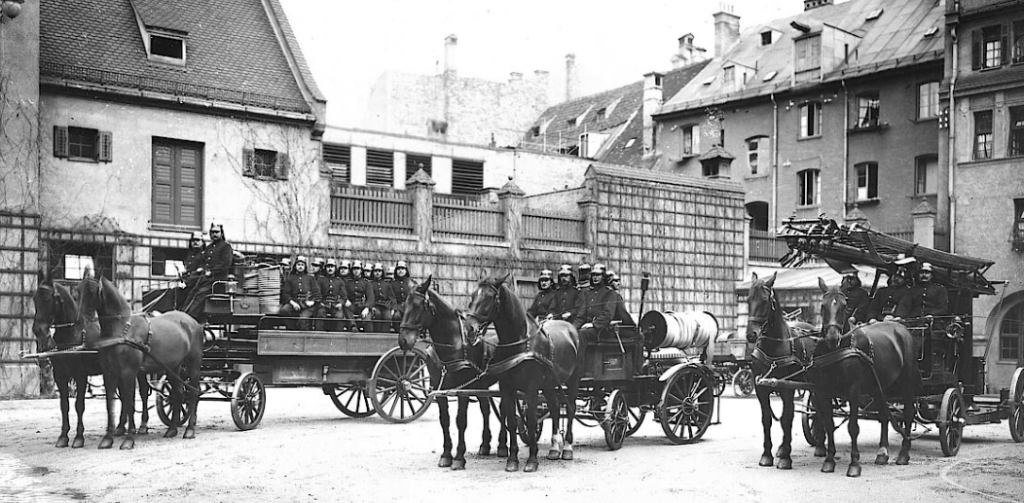
Link in bio for more information! https://winchestermysteryhouse.com/

America Love it or Leave it: How Can a Lost Mind be Recovered?

Our life experiences are distracting us and dulling our spiritual view so much so that we are not focusing on that which matters most. I wonder, do we miss opportunities to learn of the Lord and feel His love? Do we miss opportunities to share with others—especially children—that which matters most, the gospel of the Lord, Jesus Christ? We have all seen children and youth standing in the crowds confused and wanting to know what matter most. I can almost hear this child and other children crying out the words so many of us have sung, “Please teach me to walk in the light.” Are we teaching our children to know, feel, and rejoice in the beauty, power, and miracles of the gospel of Jesus Christ? Let us nurture our children concerning Him whom we call the Lord Jesus Christ. Let us teach our children the grand saving principles of the gospel. Children require the ability to knock that having faith in the Saviour and following Him will help them to receive peace in this beautiful World that is experiencing trials and tribulations. As you include your children at your family dinner table, as you involve them in daily prayer and scripture study and in family home evening, you are following the example of the Saviour by loving and teaching them. As you do this, let them know that together your family is striving to keep the commandments and to be worthy to be an eternal family. #RandolphHarris 1 of 26

It may be during the information one-on-one times that the Spirit will prompt us to ask just the right questions or to say just the right thing to help our children know and feel the light of the Lord. If we make the opportunities, the Spirit will guide us. We have wonderful, capable children in our midst. We can help them find peace in this life and in the life to come. After all, you do not want to raise your children to be on the run, to have to dye their hair to evade law enforcement. Some people who do not walk in the foot steps of the Lord end up having to live underground and join the Weathermen Underground tribe. You do not want your children to have to work with dope dealers to raise a quarter of a million dollars to pay manic guerrillas to keep them safe, to pay for hair dye, and fast cars as they drive up Highway 101 to north Oakland. There is the chance that the police and CHP will throw up roadblocks and you will have to stay at a stash pad and wait it out before the coast is clear to drive to Salt Lake City. It is better to raise your children to be American Legion hunting-fishing guys, or a soft Middle American woman, or everyone’s TV girl—a Holy Family. It is best to become a Holy Family of Elegance. When it comes to psychotherapy, words themselves are vague and insecure and our ignorance so great that we tend in desperation to assume meaning where none exists. #RandolphHarris 2 of 26

Let us recognize that the true nature of psychosis is a mystery. (And the nature of the most prevalent convulsive treatment, electroshock, is called a “mystery within a mystery” by the most authoritative book on the subject.) One of our problems, then, is how to deal with a subject consisting of experience which at its worst is indescribable from the inside and incomprehensible from the outside, and this without using words which are themselves confounding. “Psychosis,” for instance, has an authoritative, antiseptic sound, but its real sterility lies mainly in its lack of clear meaning. It simply replaces “madness”—now a literary term, and “insanity”—which represents a dated legal concept. Falling into pseudoscientific conventions of language will not help. At the present stage of knowledge, the questions are well enough represented by asking simply: What does it mean to “lose one’s mind”? How can a “lost mind” be recovered? For that matter, how is the mind developed in the first place? It is our assumption that “mind” develops and exists beyond brain, and following from this, the assumption of social psychological origin of much mental disturbance. It sounds simple, but there is by no means wholehearted agreement in the field on this issue. Current work on molecular structure and the chemistry of schizophrenia, for instance, challenges psychological assumptions. #RandolphHarris 3 of 26

It is possible, of course, that biochemical methos of treatment will develop actual cures for psychotic states, thus outmoding psychotherapy. No less a therapist than Dr. Freud thought so in regard to schizophrenia. Also fashionable are experiments with drugs which induce pseudo-psychotic states, which suggest to some that if such states can be caused by chemical means, they can also be cured by chemical means, and further that the mechanism of disturbance is fundamentally biochemical. Undeniably there is always a biochemical basis for behaviour of the human organism. However, this does not rule out psychological influence, in either the sickening or the healing process. It is certain that anxiety can cause diarrhea. Chemical mechanism? Surely. And a virus or a laxative might cause the same apparent result, but that would not alter the fact that anxiety, a psychological state, can and does cause diarrhea (as surely as a nonchemical state may cause someone ten feet away to blush). Nor would it mean, more obviously but no more truly, that even though the eventual chemistry, mechanism, and result are the same, two different causes (laxative and anxiety) are therefore the same. Nor would it mean than an antidote for diarrhea is a specific treatment for either anxiety or a virus, or that a specific for one is of any use for the other. #RandolphHarris 4 of 26

Similarly, a chemically induced psychotic state may not be a true psychosis even though it has the same appearance in terms of hallucinations and like effects. A chemical antidote for the pseudo-psychosis is not necessarily effective for a true psychosis, even though a chemical mechanism exists in either case. Psychological influence is not eradicated by the artificial imitation of its effects. Even though “tranquilizers” will tranquilize, so will a blow on the head, and neither one is equivalent to, or can deny the existence of, “peace of mind.” That which we call a “psychosis” is not a disease. It is a learned behaviour, exaggerated to a point of no return, id est, where control is lost and the exaggerated behaviour “takes on a life of its own” temporarily. Because this exaggeration is so overwhelming, so much beyond our ordinary capacity to assimilate, it appears to us that we are no longer dealing with, for instance, ordinary suspicion, but something quite different—“paranoia.” Then it appears that psychosis is not of the same order, not on the same continuum, as “normal” or “neurotic” behaviour. However, as psychotic behaviour becomes more common it is seen as a form of maladjustment similar in kind ot lesser degrees of maladjustment, though so much greater in quantity that it seems different in quality too. #RandolphHarris 5 of 26

There is one sense, unfortunately, in which it is different. A boulder balanced on the edge of a precipice can be pressed ounce by measured ounce toward rolling off. Each ounce is just like the last, but when the quantity of pressure totals to the “breaking point,” the quality of the consequences changes radically. No longer will the relief or counterpressure of one ounce recover the balance. Even if the boulder is not smashed in the fall, an enormous effort is required to restore it to its original position. It is because of this effort (which so few can make, and so many need) that it is necessary to prevent the “psychotic situation” in life. The “psychotic situation” is a precondition to the psychotic state, which may or may not follow. In our society, there is an overwhelming emphasis on thinking. In school, we were taught almost entirely to think rather than to feel. We were told to “use our heads,” to think through problems, to study hard and be sensible. This approach is supposed to lead to success in the World. The trouble is, while thinking is unquestionably important, it is of limited value. Thinking, you see, is entirely concerned with the past and the future. We cannot think about the present moment; we can only feel it. The present, a microscopic dot on the line from past to future, does not lend itself to thinking—for the simple fact that thinking takes time. The moment we think, even if we think about “now,” it is already in the past. Thinking can help us learn from the past and plan for the future, but it cannot help us experience the now. #RandolphHarris 6 of 26

Thinking results in action. First we think, then we do. We are a society of thinkers and doers. However, we are also a society of manipulators because all this emphasis on the mind has taught us to be cunning and calculating. When we use our heads only, we become manipulators—functioning with only part of our human capacity. So thoroughly are we oriented to doing, we shy from theories that tell us there is nothing we can do about a situation. The truth is, in some situations, there is absolutely nothing we can do. Sometimes no actions can be taken to help a person be confident. One must be confident, be secure, be powerful—and to do that, one must discover his core being. A system based on thinking is limited because it is based on concepts and theories borrowed from others, generally others’ books. It is borrowed knowledge—and borrowed knowledge does not overcome ignorance; it hides ignorance. Borrowed knowledge is “knowing without knowing.” The more of it we amass, the more darkness and ignorance we keep in our inner cores. We can develop our logic, but logic alone leads only to conclusions, never to the truth. Because the truth needs no proof. It does, however, need the heart. This is where experience comes in. Knowledge of the truth comes from our experience of it, from a feeling which originates deep down in our cores. It is totally individual, intensely personal, and entirely subjective. #RandolphHarris 7 of 26

You cannot know what love is by reading about it. You must experience it. You cannot take a course in love—or confidence, or any other value for that matter. Books and course are things of the mind. Values are things of the heart as well as the mind, and they come from within. However, people spend so much time in school and not everyone believes in God, nor do they go to church. Therefore, it might be conducive to offer a psychology class on how to love. People spend so much time learning how to think and how to hate. If we taught people how to express platonic love in college, it might generate better human beings that are able to deal with stressful situations and will be less critical of others’ perceived faults. Some people view themselves as weak and powerless because they have never experienced their own personal power. All of the doing is merely activity at the circumference of one’s true self. In the focusing process, one can break through the circumference and find something else. In surrendering to helplessness, one may discover a capable self in one’s core. The “something” that one finds is the real I. And finding it, one knows, intuitively, that one had and still has power. Note that, in this experience, one does not actually do anything. A man may not know what to do. However, that is not important. #RandolphHarris 8 of 26

When the right thing to do comes alone, he will do it, based on his new, intuitive knowledge that he can do it. Not borrowed knowledge, from books or lectures or friends, but intuitive knowledge from within. Some people will thus have an instantaneous experience of mastery. When control is so perfect that he can never again raise his voice in anger, he needs turn attention to only one other passion—the spiritual. Such a chaste aloofness will help with mental, spiritual, and emotional clarity. When desires die without regrets, he begins to taste real peace. When cravings slough off naturally, like a serpent’s skin, he finds tranquil happiness. If not all of it, the man who can win his way to freedom from anger and finally liberate the mind from passion may need much of his lifetime for the work; but what he gains is of inestimable value. For this brings him closer to awareness of the Overself. As aspiration for the Overself grows stronger, other desires grow weaker. If you are ever to emerge from the darkness, you must possess an insatiable longing for light. He arrives at purity by a cultivated discipline of the mind rather than by a forcible atrophy of the senses. If he can find it and heed it, the thread-like intuition which will lead him out of animality into serenity will be his best guide. It is not possible for these finer elements to become, little by little, paramount in his outlook, consciousness, and conduct without a corresponding decline in the coarser ones. #RandolphHarris 9 of 26

He will gradually become the ruler of his physical appetites and then the master of his bodily desires. Indeed, as all his longings for the Overself slowly gather themselves together into a great dedicated life, there is an equally great shift-over from the terrestrial part of his being to the truly human, allied with an opening-up of the angelic or divine part. The fruits of extravagances involving pleasures of the flesh, the harvest of promiscuity of pleasures of the flesh, the gleanings of irresponsibility with pleasures of the flesh, and the gratifications of license involving pleasures of the flesh must be subjected to the hard discipline of reason. Those who will not do so must sooner or later pay the price in fears, anxieties, irritations, regrets, disillusionments, shames, and despairs. So long as a man identifies himself with the physical body, so long will he perforce have to identify himself with its desires and passions. Only when he transfers this self-identification to the infinite mental being can he completely detach himself from them. When they are still in subjection to passion, of what use is it for men to talk of freeing themselves from subjection to egoism? The student of philosophy will try to comprehend the sensations got from sensual pleasures impartially and impersonally. Man knows instinctively what will give him momentary emotional satisfaction; he must wrestle with reason to know what will give him deep enduring happiness. #RandolphHarris 10 of 26

When different pleasures compete for suffrage or when duty competes with desire, reason must arbitrate. Desire carried to an undue extent becomes a passion disturbing to the equilibrium of life and character. When a man finds that despite all his efforts to improve himself and reform his character, he still remains the same, it is an indication that new methods must be tried. The scourging of the flesh may be needed by, and may help, those who find their overheated passions and lusts get out of hand. However, it will not end those troubles of man, even though it may tame them for a time. Something more must be added, or must replace them—first, knowledge; second, work on the process of attention. The instinctual animal urge plus the ambitious drive for power and the personal desire for property keep men from spiritual aspiration. If he is filled with selfish interest alone, seeking the fulfilment of personal ambitions irrespective of any higher considerations; if terrestrial passion drives him and greed dominates him, he blocks his own way. Purification from such attachments must be the first endeavour. Pleasures which corrupt character are undesirable; but those which uplift character (like the finest works of Aaliyah, Beethoven and Handel) are desirable. There is a level of tension below which the person can think rationally and act effectively. #RandolphHarris 11 of 26

When tension increases above this point, efficiency breaks down, and irrational thinking and expressive behaviour takes the place of rational thinking and effective action. This point on the tension continuum is called the frustration threshold. It varies from person to person, and within the same person at different times. A mother wants her house to be clean and orderly. In the forenoon, her three-year-old daughter Annie might spill a glass of milk, leave her Barbie dolls in disarray, and scatter magazines all over the newly cleaned living room. The mother’s reaction at the time is one of mild anger, followed by efficient attempts to set things straight. At five-thirty in the afternoon, the child repeats her efforts at messing up the house. This time, the mother “explores”—she sends the child to her room, screams, and is unable to prepare supper until she has vented her tension. Optimum physical health produces a high frustration threshold. A sick or exhausted person has less energy to cope with tension and is more easily frustrated than one who is fit. People who manage to survive the extremely corrupt Sacramento City—a so-called death camp—have pointed out that a strong commitment to life and a sense of mission to fulfill were definite factors in survival. Individuals with such a sense of mission were less readily frustrated by the deprivations, stresses, and pressure of extremely hostile environments. #RandolphHarris 12 of 26

When Zorba, the Greek, was unable to express his grief following the death of his beloved son, he danced a Cretan dance until he dropped from exhaustion. On another occasion, when he felt he had at last found the solution to a problem of brining logs down a mountainside, again he danced. Finally, when the plan to bring logs down the mountain failed, and his boss’s investment was dismally lost, the boss asked Zorba to show him how to dance, and the two men danced and laughed like madmen. When someone has access to such means of self-expression, as in dance, violent exercise, painting, or song, that person can release the inevitable frustration of life without recourse to mindless, destructive outlets of tension. As Reich pointed out, sexual orgasm also provides a natural means for the dissipation of tension. In fact, prolonged privation of pleasures of the flesh is a common cause of frustration. It is however, a mistake to think that other frustrations, such as material misunderstandings, are all relieved by pleasures of the flesh. Nothing is more revealing in this respect than the famous lampoon, read b y Dolmance in the Philosophie du Boudoir, which has the curious title: People of France, one more if you want to be republicans. Pierre Klossowski is right in attaching so much importance to it, for this lampoon demonstrates to the revolutionaries that their republic is founded on the murder of the King—who was King by divine right—and that by guillotining God on 21 January 1793, they deprived themselves forever of the right to outlaw crime or to censure malevolent instincts. #RandolphHarris 13 of 26

The monarchy supported the concept of a God who, in conjunction with itself, created all laws. As for the Republic, it stands alone, and morality was supposed to exist without benefits of the Commandments. It is doubtful, however, that Sade, as Klossowki maintains, had a profound sense of sacrilege and that an almost religious horror led him to the conclusions that he expresses. It is much more likely that he came to these conclusions first and afterwards perceived the correct arguments to justify the absolute moral license that he wanted the government of his time to sanction. Logic founded on passions reconclusions before the premises. To be convinced of this we only have to appraise the admirable sequence of sophisms by which Sade, in this passage, justifies calumny, theft, and murder and demands that they be tolerated under the new dispensation. It is then, however, that his thoughts are most profound. He rejects, with exceptional perspicacity for his times, the presumptuous alliance of freedom with virtue. Freedom, particularly when it is a prisoner’s dream, cannot endure limitations. It must sanction crime or it is no longer freedom. On this essential point Sade never varies. This man who never preached anything but contradictions only achieves coherence—and of a most complete kind—when he talks of capital punishment. #RandolphHarris 14 of 26

An addict of refined ways of execution, a theoretician of sexual crime, he was never able to tolerate legal crime. “My imprisonment by the State, with the guillotine under my very eyes, was far more horrible to me than all the Bastilles imaginable.” From this feeling of horror, he drew the strength to be moderate, publicly, during the Terror, and to intervene generously on behalf of his mother-in-law, despite the fact that she had had him imprisoned. A few years later Nodier summed up, perhaps without knowing it, the position obstinately defended by Sade: “To kill a man in a paroxysm of passion is understandable. To have him killed by someone else after a calm and serious meditation and on the pretext of duty honorably discharged is incomprehensible.” Here we find the germ of an idea which again will be developed by Sade: he who kills must pay with his own life. Sade is more moral, we see, than our contemporaries. However, his hatred for the death penalty is at first no more than a hatred for men who are sufficiently convinced of their own virtue to dare to inflict capital punishment, when they themselves are criminals. You cannot simultaneously choose crime for yourself and punishment for others. You must open the prison gates or give an impossible proof of your own innocence. Even if only once, from the moment you accept murder, you must allow it universally. #RandolphHarris 15 of 26

Permissions are the chief therapeutic instrument of the script analyst because they offer the only chance for an outsider to free the patient from the curses laid on him by his parents. The therapist gives permission to the patient’s Child by saying either “It is all right to do it,” or “You do not have to do it.” Both say to the Parent “Let him alone.” Thus, there are positive and negative permissions. In a positive permission, or license, “Let him alone!” means “Let him do it!” This cuts off the injunction. In a negative permission, or external release, it means “Stop pushing him into it!” This cuts off the provocation. Some permissions can be regarded either way. This is particularly true of antiscripts. Thus, when the Prince kissed Sleeping Beauty in the Wood, he was offering her both a license to wake up and a release from the witch’s curse. One of the most important permissions is a license to stop acting stupid and start thinking. Many patients of advanced years have not had a single independent thought since early childhood, and have quite forgotten how it feels to think, or even what thinking means. With properly timed permission, however, they are able to come through, and are more than delighted when they say out loud at the age of sixty-five or seventy what may be the first intelligent observation of their adult lives. #RandolphHarris 16 of 26

Often it is necessary to undo the work of previous therapists in order to give a patient permission to think. Some of them have spent years in mental hospitals or clinics where the slightest attempt on their part to think independently came up against powerful resistance from the staff. There they were taught that thinking is really a sin called “intellectualzing,” to which they must confess promptly and promise never to indulge in again. Many addictions and obsessions are based on parental come-ones. “Do not stop taking drugs (or you may stop coming home to ask for money)” says the mother of the heroin addict. “Do not stop thinking about pleasures of the flesh,” says the parent of a lecher or a nymphomaniac. And the whole concept of permissions as a therapeutic instrument was started by a gambler who said: “I do not need someone to tell me to stop gambling, I need someone to give me permission to stop, because somebody in my head says I cannot.” A permission, then, allows Jeder to be flexible, instead of responding with fixed patterns frozen by slogans and controls. This has nothing to do with “permissive up brining,” since that is full of imperatives, too. The most important permissions are to love and to change and to do things well. #RandolphHarris 17 of 26

A person with permission is just as easy to spot as one who is all tied up. “He sure has permission to think,” “She sure has permission to be beautiful,” and “They sure have permission to enjoy themselves,” are Martian expressions of admiration. (One of the frontiers of script analysis is the further study of permissions, primarily through observation of eye movements in very young children. Thus, in some situations the child glances sideways at his parents to see if he has “permission” to do something; in other cases, he seems to be “at liberty” to follow his own inclinations without consulting them. Such observations, carefully evaluated, may result in a significant distinction between “permissions” and “liberties.”) The term Genetic Counseling indicates that a genetic consumer consciousness is dawning. The emphasis is on genetic disorder, not upon genetic endowment, but this is to be expected. A new technology always appeals to hive-security first as a way of dealing with danger. Awareness of genetic disorder precedes awareness of genetic excellence, just as psychiatry precedes self-actualized psychology. Pathology precedes potential. When the experts in a hive begin treating “broken-down personalities” they have recognized the existence of “personality.” The next step is for healthy individuals to take charge of their own “selfs.” #RandolphHarris 18 of 26

New technology always appeals to hive-security first. The Ad Hoc Committee on Genetic Counseling of the American Society of Human Genetics described genetic counseling as a “communication process which deals with the human problems associated with the occurrence, or the risk of occurrence, of a genetic disorder in the family.” This one-day workshop is primarily for health professionals who want to learn how to do genetic counseling or who want to strengthen their skills in this field. Hidden in this course description are valuable neurogenic clues, evolutionary evidence, which is easily overlooked by hive observers because it reveals much about the neurogenetic stage of the give culture—and of the planet. Genetic counseling appeared a generation after personality counseling. When an advanced, post-political culture offers courses in “Job Counseling,” “Personality Counseling” or “Martial Counseling,” Evolutionary Agents know that a move towards self-actualization is occurring—a free-mobile-individually oriented society is emerging. The military defense groups are willing to train those who are willing to be trained and have a good temperament and they simply do not bother training those who lack discipline. Being part of the United States of America’s armed forced is an honour and a privilege. It is ridiculous for an organization to even attempt to train some hundred thousand men in the State’s twilight of decline when, only a few years before, the State disgracefully abandoned one hundred and seventy million. #RandolphHarris 19 of 26

The proud members of the Sacramento Fire Department are committed to providing the highest quality and highest level of courteous and responsive services to the residents, businesses, and visitors of Sacramento. They ensure Sacramento City can respond to, recover from, and mitigate against any hazard that affects their city, the region, the state and beyond. “I like ladder work. It’s probably the most dangerous jobs in firefighting, and the real purpose of it is to go in and look for anyone trapped in a fire. You’re more or less on your own, you’re not with the rest of the men, and you don’t have the benefit of the hose line. I was assigned the SCBA (self-contained breathing apparatus) that day. We got the call to a fire in a three-story dwelling. We are second in. Another engine and ladder company was ahead of us. When I got off the truck, I was all prepared to go in the building. It was a strange fire, actually—a kerosene heater, which was overfilled. It has been knocked over, and the kerosene went between the floor and the wall down into the basement from the first floor and was ignited by the hot water heater. So the fire ran up the walls to the upper floors, and the flames were coming out the third-floor windows when I got there. As I say, I had my air pack on. I went around to the back alley before the other guys. #RandolphHarris 20 of 26

“The first company was still trying to get the ladders up in this narrow alley. I went up some steps to the kitchen door and kicked it open. A couple of guys were already in there on the floor. They didn’t have packs, so they were taking a beating from the smoke. One of their ladder guys also had a pack, so his chief put him on a hose, and he said to me, ‘Go down to the basement with this guy and give him a hand with the tip.’ Engine or ladder man, it didn’t matter to him. He saw we both had packs, and it was pretty smoky. I helped this guy drag the line, and we both went down to the basement from the kitchen very quickly, because it was like a chimney. It was getting real hot, and the fire flashed over us. He hit it with water and knocked it down. There was a small window next to the steps, and he was trying to fog the smoke out the window. The heat was coming toward us the whole time. Then apparently somebody saw how bad it was getting and called, ‘Everybody out of the basement.’ There were only the two of us there. I didn’t hear it. The guy on the tip supposedly did and told me he was leaving. Again, I didn’t hear him. He closed down the hose, and all of a sudden he was gone. I learned later that he went out the window. He had to take the pack off to fit through the window, it was so narrow. I didn’t know he had left. #RandolphHarris 21 of 26

“So the water was stopped, and I was lone in the basement. I couldn’t go back up the steps to the kitchen, because when he shut down the water the fire had flashed over again and set fire to the stairs. You see, the water wasn’t really putting the fire out, but it was keeping the heat away from us. Now it was getting very hot. It was very dark, it was smoky, I couldn’t see. I was down on my stomach on the basement floor, looking for the back door I knew was there, but I couldn’t see it. I was probably only ten feet from it the whole time. I became a little disoriented, but I didn’t panic. I had been in basement fires before, and I knew you shouldn’t panic. I thought, ‘Now, how did I get into this situation. I don’t have any water. I don’t have anyone with me.’ I could see that the fire had engulfed the kitchen steps and I couldn’t make it up there. I knew there was a back door there somewhere, but the people had been remodeling the basement, and I had to feel my way through a lot of debris. There was paneling against one wall, and I thought that might have been the door. I slid on it like a slide and fell to the floor. I say there for a second, and said, ‘I gotta compose myself, or I’m going to be in trouble here in a minute.’ I thought to myself, I’ve been through a lot in my life. I probably should have been dead eight times over. ‘Well,’ I said to myself, ‘I haven’t come this far to die in this person’s basement. This can’t happen to me. I’m going to survive. I’m not going to die in this guy’s basement because he was overfilling his kerosene heater.’ I got mad then. I remember. I said, ‘Dammit, I’m not staying here. I’ve got to get out.’ #RandolphHarris 22 of 26

“So what I had to do was raise my mask and holler for help. If I hadn’t done that, they wouldn’t have found me, because they didn’t know I was in there. This guy didn’t tell them I was still down there, and my lieutenant hadn’t ordered me to go down there; he thought I was on one of the upper floors. It was the chief of the other company who had sent me down there. They heard my hollering, and they were saying, ‘Come this way. This way.’ I would put my mask back on and walk toward their voices. I couldn’t see anything, so I was going by their voice. But they couldn’t hear me with my mask on. They didn’t know where the hell I was. It was getting harder and harder. It was very hot down there. I burned my ears, and I still had my helmet on. I knew if I didn’t get to that door soon, I wouldn’t make it, so I just kept going. I pushed things out of the way, and finally, after what seemed like an eternity, I had my hand stretched out like a blind man, and somebody grabbed my hand, and they pulled me out. One of my boots came off, and my helmet fell off. They never found my helmet, it had melted away, and the only thing left of my boot was the sole. There are points that I don’t recall. I didn’t actually black out, but I think it was my mind acting it out for me. I don’t recall exactly how I got to that back door. I was just glad to feel someone’s hand. I was kissing the floor, and the gentleman who grabbed my hand was in the doorway. He couldn’t advance any further. In fact, he was on the ground, and somebody had hold of his legs. #RandolphHarris 23 of 26
“I didn’t realize I was saved until I was in the rescue squad actually. I was on my way to the hospital, and I was holding the oxygen mask over my face, and I started crying. It finally hit me that I had almost died. I don’t normally cry. I believed I was going to be all right. I knew I was hurt, but I also knew I was going to make it. The first night in the hospital was hell. I had a tube going down my mouth into my lungs. It has a ballon-type thing at the end of it to keep the air passages open. Everything in there was swelling, and I would have chocked otherwise. And they were pulling a lot of things out of my lungs and throat, big pieces of black stuff. I didn’t know I had taken that much smoke, I had thought it was mostly heat. They gave me morphine, but I was conscious when they were putting that thing down my throat. It makes you gag. They refused to give me more morphine, saying they had given me enough already. When I wanted to say something I had to write it down, because I couldn’t speak. So the first night I was going in and out of consciousness. I kept writing down, ‘If you don’t take this tube out of my throat, I’m going to pull it out myself.’ I was a terrible patient that first night. I was in intensive care, and the orderlies, nurses, and doctors were at the desk fifteen feet from me, drinking soda. My mouth was so dry, I wanted some water, and they wouldn’t give it to me. They’d say, ‘Okay, we’ll get you something,’ thinking I’d go to sleep and forget. I would wake up an hour later, and nothing would be there. #RandolphHarris 24 of 26

“My father was there within an hour. He’s a fireman, too, and he heard the call come on the fire radio. He knew, before he was told, that I was in trouble. He heard the call for the rescue squad, and he said, ‘I knew it was you.’ The commissioner came, and so did a couple of guys I work with and my wife and my mother. Everyone showed a lot of concern, and everyone was as nice as could be. It meant a lot to me. Because it was nice to see familiar faces. The next day I was more relaxed. I didn’t fight the tube, I just tried to make the best of it. Then I felt lucky. I felt glad to be alive. I was released from the hospital a week later, and after a few days at home, I was mad. Angry that I got hurt when I shouldn’t have been hurt, that my whole life had changed. I don’t like changes. I’m used to going to work, and now I had to stay home. I wanted to get out of the house and couldn’t. I was miserable as hell, I was climbing the walls. I took a lot of it out on my wife. She had had a back operation less than a year earlier and was bedridden. Then she had had a premature baby, and my son was in intensive care for two months. He had just gotten out of the hospital and weighed only 21/2 pounds (1.14 kilograms). So she was dealing with her back, and the baby was home on a monitor and she was worrying about him breathing, then I came home and she worried about me breathing. So her back was forgotten for a time, and now it’s in terrible shape. #RandolphHarris 25 of 26

“I was miserable even to the kids. I was jumpy all the time. I was physically hurt, and I was still spitting up things. My ears were burned, and the doctors told me I would need glasses, because my corneas were burned. I became depressed, and I was mad. The only ones to take it out on were my wife and kids. I feel bad for them now, but they understood. My wife was great. She had a lot of patience with me.” The Sacramento Fire Department strives to build a safer and more resilient Sacramento. Firefighters and EMT put their lives on the line every day, several times a day to provide the highest quality and highest level of courteous and responsive service possible. In an effort to keep the country cohesive, please raise your children to love America, to be patriotic, to love God and Jesus Christ and buy American cars and other American goods and services. Also, please respect law and order, and treat others with kindness and respect. To ensure that you have a bright future, please take your education seriously, and be sure to actually read your books. And remember to “Just Say ‘No’ to Drugs.” Even marijuana can be deadly. I pledge allegiance to the flag of the United States of America, and to the republic for which it stands, one nation, under God, indivisible with liberty and justice for all. O beautiful for spacious skies, for amber waves of grain, for purple mountains majesties above the fruited plain! America! America! God shed His grace on three, and crown thy good with brotherhood from sea to shining sea! O beautiful for pilgrim feet, whose stern, impassioned stress, a thoroughfare for freedom beat across the wilderness! America! America! God mend thine every flow, confirm thy soul in self-control, Thy liberty in law! O beautiful for patriot dream that sees beyond the years, Thine alabaster cities gleam, undimmed by human tears! America! America! God shed His grace on thee, and crown thy good with brotherhood from sea to shining sea! God never gave us express allowance, only He gave us reason, charity, nature and good example to bear us out. #RandolphHarris 26 of 26

11977 Cobble Brook Drive, Rancho Cordova, California 95742

Now selling, new homes for sale in Rancho Cordova. Explore Vista at Montelena – near top schools, major employers, outdoor activities, and shopping.

Plan 3 is our largest new home design with five to seven sizable bedrooms and an owner’s suite on the first floor with views into the backyard.

At Pulte, we build our homes with you in mind. Every inch was thoughtfully designed to best meet your family’s needs making your life better, happier and easier. You can do more in a Pulte home, because we’ve built in all the ways to get more out of life.

Every new home is pre-wired for connectivity and comes with several smart home products and features. Plus with additional options, we give you the flexibility to build your home as smart as you want.

From doorbell cameras to convenient electric car charging outlets, your smart home makes living simple. https://www.pulte.com/homes/california/sacramento/rancho-cordova/ascent-at-montelena-210916


Does it Feel that Way to You?

Through life, some people have as a dominant value their strength. A man’s physical strength is sometimes obvious. However, he also may use his intelligence as an asset to do what his physical strength cannot do. After an injury, a man may no longer be able to come out on top by using his physical force, when this happens, he must use his acumen successfully. Due to addictions that sometimes occur when a person is disabled or because of physical constraints, some men find that they are no longer able to manage their money, and they have no where to turn. He may perceive that inability as a weakness, and rather than admit the weakness and deal with it, he might decide to avoid it, pretending that it is not there. Thus, his money situation will simply get worse. Viewing strength and weakness as a duality, a man might believe that his only choice is to have one or the other—not both. In his mind, to admit weakness is tantamount to giving up his physical prowess. And from a man’s point of view, strength is what has kept him alive. He is therefore a slave to brute force. He cannot abandon it. He is “stuck” on it. It takes courage to move from strength to weakness and back again. It takes a brand of courage some men do not have. Many men are “stuck” on strength because of their inability (or at least unwillingness) to experience weakness by going through and getting in touch his inner core, his being. #RandolphHarris 1 of 20

A man who is not able to use his physical strength to support himself or his family may see himself as a spaceship without a pilot—in a sense, empty. He does not see himself as having a core, or essence. In his mind, he is not a complete human being. He is no more than a shell he carries himself around in. That is why some men who become disabled have the constant, gnawing feeling that “something is missing.” Since men with physical limitations see themselves, and therefore others, as “things,” their lives can become an endless round of manipulation, using his own “strengths” and others’ “weaknesses” to constantly come out on top. This, then, is how some men become manipulators. And their styles of manipulation may be quite simple. He merely overpowers people in getting what he wants. As boys growing up in less affluent neighbourhoods, some of them overpower people with their superior body strength. However, as men in business and in marriage, they overpower people with what they believe to be their superior intelligence. A man becomes a walking embodiment of his own attachment to strength. What a man is looking for, though he does not have words for it, is a balance between the values of strength and weakness—a state of emotional mastery, where he can be in touch with his own core, his real self. #RandolphHarris 2 of 20

Whereas a man, the manipulator, is saying, “I am out here, all alone, and I have to be strong to survive,” a man who is a master would say, “I am a man, and I am tough and strong. I have strength and I have weakness. Even thought I am strong sometimes and weak other times, the real me always survives/ It is OK for me to be weak; it is OK for me to need people. I am not my strength, nor am I, my weakness. I am something more. I am me, and that is enough.” This is the essence of a man’s journey. It is a journey which might very well resemble your own. The strength/weakness polarity is a common one, especially among men. How does it apply to where you are, in your World? Well, your life is like a stream. And if you are a manipulator, the twigs and rocks are the values to which you cling so desperately. If you are like most people, security is what prompts you to keep clinging. The polarity in life is that it consists of clinging to your security—your dubious, unwanted yet comfortable situation, and taking a chance by opening up your innermost self, making yourself vulnerable, risking insecurity. In choosing to take a risk, you go to your core, you find your being, you become what others will call “Messiah.” You become a master. However, those who cling to their comfort zones tend to become manipulators. They are “stuck” on their exaggerated values. Though unwilling to risk letting go themselves, they nevertheless condemned the “Messiah” creature for his willingness. #RandolphHarris 3 of 20

A man who lets of what does not strengthen him is not necessarily smarter, stronger or better than any of the other men. What separates him from the rest is his willingness to risk. In risking, he goes into his core, finds courage, and through it becomes truly free. This is something that manipulators—and indeed all of us—have yet to learn fully. When you truly learn to take strength, you take the first step on your journey from manipulation to mastery. This allows a man to experience the loss of his physical strength and survive it. He is able to see that there is still a whole, completely person left, a person who can be weak and still exist. Men will also find that weakness—which they avoid and deny their whole life—also has power to it. Men learn their weakness has the power to make them more “real” and brings people closer to them. For many men, weakness opens the door to power of loving, the power which comes from letting others be strong. Weakness enables us to relax, stop competing, let go and regain our strength for another time. When a man learns to have an encounter with weakness, sometimes people will offer to help him get his finances straightened out. However, it is difficult for most men to admit to others that they are in financial trouble and that they cannot handle it themselves. It is an admission of weakness. Yet it is something that a man is able to do when he confronts his weakness in Church and/or therapy. #RandolphHarris 4 of 20

A real man can survive weakness. However, this weakness still may cause a man to withdrawal from his friends and loved ones because he still cannot face himself. For many, his strength is still too important to him and discovering more weakness would be too uncomfortable. Yet once his journey has begun, and once begun can never be turned back. For a brief moment, some men are able to give up strength, retreat to their inner core and find something there. It is something he will never be able to “unexperience.” And it will assist him in his journey many times in the future. However, other men continue to grow. Man’s true intelligence is feeble while it remains imprisoned in egoism and narcotized by sensuality. He must liberate it by the philosophic discipline before it can become strong. So many of our feelings and so many of our thoughts have until now been dictated by the body. Is it not time to think and feel also as the true self would have us do? The terrestrial heritage has given him instincts, appetites, impulses, and desires; the human holds out higher possibilities to be worked for and realized. One message of the Sphinx is to balance the human mind with the brutish terrestrial being in us. This is not the same as the ascetics’ message, which is to exterminate the terrestrial being altogether. He who has not overcome his passions finds himself compelled to act against the clearest warnings of his reason. #RandolphHarris 5 of 20

What really moves a man to act is his feeling; that is why the passion which are strong feelings, need more deliberate effort of the will to bring them under restraint. An action which is spontaneous and not a calculated one—that can be safe only for the enlightened man. For others it may be mere impulse or mere passion. The point is not that natural impulses of the body are wrong—how could that be?—but that men have made them wrong. Originally the satisfaction of the pleasure-instinct was in harmony with higher will as a lesser part of a greater function. However, now human will have reversed its role and exaggerated it to first place. The result is disharmony and disease. On one thing all men in all lands are agreed, that it is immeasurably more preferable to be released from anxieties than to suffer them. Yet, these same men throw themselves into situations or bring about events which will rivet the chains of anxiety upon them. How is it that such a contradiction exists everywhere? What causes them to do this? It is the strength of their desires, the power of their ambitions, the tendencies inherited from past births. This being the cause of the trouble, the remedy for it becomes plain. The more a man frees himself from desires, that is, the more he masters himself, the more is he freed from numerous anxieties. And even if he too is subject to the painful tests and unpleasant ordeals which inescapably affect human existences, he does not consider them to be misfortunes but as devices to draw out his latent qualities. #RandolphHarris 6 of 20

The way out from tyrannical desires may have to be staged. First becomes a witness—indifferent and dispassionate—every time there is a surrender. This way is taking a new direction, starting to disidentify from the desire. On the one hand, he must tear himself away from his Earthly passions. On the other hand, he must give himself up to his sacred aspirations. The eagerness of desire betrays him into romantic self-deceptions and leads him into wounding frustrations. The ego lures his hopes constantly onward only to lacerate them in the end. Whilst we are still limited by the body and its inescapable needs, it is an impossible task to extirpate desire and negative self-interest. Philosophy adds that it is also an undesirable one. Only, put desire and self-interest down in their proper place, it says, do not permit them to obstruct higher and spiritual needs. It is not that they have to abandon joy but to purify it. If the joy which comes from debased pleasures is thereby lost, the joy which comes from ennobled thoughts and refined feelings is gained. When Earthly desires are extinguished, calm befalls a man. He must needs declare open war on his own passions, for he now sees that he cannot have them and peace too. Like all war this one will witness both victories and defeats, hardships and sufferings. However, out of these battles with himself he may progress, learning discrimination and gaining willpower. If uncontrolled, he realizes that he has to break his passions, or they will break him. #RandolphHarris 7 of 20

In this work of purification, the need for mortal intellectual and emotional honesty will have to be stressed. It is satisfied by discriminating examination of thoughts, feelings, and motives, with constant self-distrust as a guide in the work. The more he trains himself to recognize and reject the impulses that come from his lower nature, the more will clarity of comprehension become his. The brute creature that he is most be kept at bay; his freedom as a man must be gained by degrees. Personally, I knew about my wife’s World to understand something of how life was to her. I even knew the terror of it because once, before we were married, I got swept into her agony, his suicidal chaos, and all the World became morbid to me in a most frightening, unmitigated and unmitigable way—everything was going haywire and out of control. I wanted to kill myself. I said so. She spoke to me as though I were a peasant who thought she new the passions of a kind. She thrust me out. In two shakes I thought, “Whew! I will never get into that again.” In thrusting me out, she got out of it herself (when she became the King?” but to be in it at all was too dangerous for me. Of course, I have wondered through the years since her suicide whether there was anything I could have done to help her. Everything I read or heard of psychotherapy I thought of in relation to my wife, questioning, and always I got the same answer: “With her, it would not have worked.” #RandolphHarris 8 of 20

This made me wonder whether I was white-washing my own failure. However, if so, why could I not ever be satisfied? Why did I not let it drop? Did I know that I was guilty, deep down in some sub-non-unconscious way? (When I mistrust me, there is no end to it, because then what I live with is mistrust.) If I were guilty, why could I not feel that?—instead of living with the knowing that I had tried very hard, I had loved her very much, and I had stayed too long. I received a latter from a man who stayed too long with his wife, in which he said “I have tentatively concluded (for me) that more time and more suffering than make sense are required to get on top of the mores and our personal motivations and unenlightened advice, to work through to the point where you can know yourself free of guilt for the life you can’t save.” It was only last spring, nearly twenty years after my wife’s suicide, that I understood something that I might have done. My relief expressed itself in a sign (letting go). I felt better about it. Not good, but better, and better is a kind of good. And then I knew—by feeling it clearly within myself—that the “bad” that I had been feeling was not guilt but sad. My “better” feeling was because it was not solidly inevitable that people like my wife must suffer so much all their lives and wipe out other people along the way. I do not know that I could have helped. However, I could have been more in touch with my thoughts and feelings (acceptance of myself) and more acceptant of his distress, sharing it her. #RandolphHarris 9 of 20

Instead of both of us trying to shove out her distress and replace it with a happiness which was phoney, I could have let her agony be, and then there might have been the beginning of change. Where to everything else I had said, “No, it would not have worked. She would not have let it,” when I thought of this in relation to my wife, I remembered the times when I might have got through to her. Even if I had not, I would have been more me and that would have been better for all of us. The most beautiful times that I remember with my wife are the many hours that we spent together saying only a few words now and then, like a touch on the shoulder or a hand touching hand. Our chairs were yards apart, but we were together. At such times she was in touch with the wordless resonance, the love that was in her and in me, and let it live awhile. However, then I would be sure that I, eighteen years younger, must be unhappy, must want to be “doing something,” and then I lost my awareness of all that was going on in myself and between us, and the sensing with all my senses that I had been enjoying, and I thought that I had to reassure her. She never did entirely take my word for it, and I never asked her, “Does it feel that way to you?” My wife was exceptionally good at explaining astronomy, anthropology, medicine, English literature and history, Greek and Latin poetry, and probably some other things which I have forgotten. #RandolphHarris 10 of 20

However, in the person sense, my wife explained nothing. Perhaps she was so out of touch with herself that she could not. There were times and ways in which I understood (or heard) her no better than she did herself, and that was because at those times I did not hear me too. The human needs varied stimulation, not just to avoid boredom but actually to preserve the ability to perceive and to act adequately. When a person is radically deprived of the customary variety of sights, sounds, smells, conversation, and so on—as happens in solitary confinement—he or she begins to feel strange and may show signs of deteriorating as a person. “Sensory deprivation” experiments show that when volunteer subjects are placed in a special room that is soundless, with their vision closed off by special goggles, and immersed in warm water kept at body temperature (to reduce the experience of tactile stimulation), some begin to hallucinate and go through other psychoticlike experiences. I have been in such an isolation chamber, and I found it tranquil and conducive to meditation. Variety in “stimulus input,” then, may be regarded as a basic need, even though deprivation as extreme as that produced in the laboratory seldom occurs in everyday life. The “evil twin” of varied experience is boredom—a form of dispiriting in style of life. Travel, risk-taking, excitement, and simply trying something new in the way of clothes, reading, vacations, or challenges are the antitheses of boredom—varying one’s experience of life. #RandolphHarris 11 of 20

Even moonrises and sunsets can get monotonous for the jaded tastes of the daily skywatcher. The healthy personality is also nurtured by meaningful variety. Excitement has often been thought of as a need for the young only. We now recognize that it is part of the fullest of lives in all generations. The excitement experience is one of the most difficult to create. Not all excitements involve risk-taking, and excitements are quite individually determined. One person may be thrilled by the firs parachute jump—another is equally excited about the first sighting of the sandhill crane. The Correspondence Principle requires that every new theory contain a limiting transition to the old theory it replaces. Insofar as the old theory has fitted some sound experiments, the new theory must concur. If Planck’s constant h tends towards zero, the quantum equations become just the classical ones. If the speed of light approaches infinity, Einstein’s kinematic and dynamical equations go over to Newton’s, and so on over a large number of examples from contemporary physics. As we apply the Correspondence Principle to sociobiology and exo-psychology, we expect that each new Einsteinian, relativistic theory of human behaviour and neurogenetic evolution will include a translation back to the old theory it replaced. #RandolphHarris 12 of 20

Darwinians are clearly in violation when they fanatically summarily reject the Monotheistic Creation theories of the Judeo-Christian Bible. Newer theories of evolution must provide new insights into the validity of the older theories—specifying the historical neurotechnical factors which limited the earlier metaphours. Any new theory of neurogenetics must relate to and lovingly demonstrate why the previous philosophic theory was “right” for its time arid its gene-pool—knowing that those to come will affectionately do the same for our theories. Historically speaking, the first coherent offensive is that of Sade, who musters into one vast war machine the arguments of the freethinkers up to Father Meslier and Voltaire. His negation is also, of course, the most extreme. From rebellion Sade can only deduce an absolute negative. Twenty-seven years in prison do not, in fact, produce a very conciliatory form of intelligence. Such a long period of confinement produces either weaklings or killers and sometimes a combination of both. If the mind is strong enough to construct in a prison cell a moral philosophy that is not one of submission, it will generally be one of domination. Every ethic based on solitude implies the exercise of power. In this respect Sade is the archetype, for in so far as society treated him atrociously, he responded in an atrocious manner. The writer, despite a few happy phrases and the thoughtless praises of our contemporaries, is secondary. He is admired today, with so much ingenuity, for reasons which have nothing to do with literature. #RandolphHarris 13 of 20

He is exalted as the philosopher in chains and the first theoretician of absolute rebellion. He might as well have been. In prison, dreams have no limits and reality is no curb. Intelligence in chains loses in lucidity what it gains in intensity. The only logic known to Sade was the logic of his feelings. He did not create a philosophy, but pursued a monstrous dream of revenge. Only the dream turned out to be prophetic. His desperate demand for freedom led Sade into the kingdom of servitude; his inordinate thirst for a form of life he could never attain was assuaged in the successive frenzies of a dream of universal destruction. In this way, at least, Sade is our contemporary. The militaristic history of Germany has many imagines of a strong silent sentry soldier on guard, watching, protecting, which made the Germans feel secure and strong. The content of the American news media was once honourable, but most of the enterprises are managed in a way that has made it impossible for them to function as a business. The first duty of TV news media has become that of the propagandists, to win over people who can subsequently be taken into the organization. And they train men and women to carry on their propaganda. The second duty of the TV news media has become to disrupt the existing order of things in America and thus make room for the penetration of the new teaching of sin, lawlessness, and corruption. The organizers of the propaganda department (the TV News media) have been fighting for the purpose of securing power, so that their doctrine of sin and corruption may finally triumph. After propaganda has converted the entire population over to an idea, only a handful of men are needed to finish the job. #RandolphHarris 14 of 20

Great theorists are rarely great organizers. The greatness of a theorist lies in his ability to understand and establish correct, abstract laws, while the organizer must primarily be an expert in understanding the human mind. The script controls are inserted and take effect early in life, while the counterscript slogans only become meaningful later. Added difficulty are scripts that tell it like it is: people really do act clumsy, as the child well knows; while the counterscript is usually square as far as his experience is concerned: he may or may not have seen someone attain happiness by working hard, being a good person, saving money, or being on time, not eating starches, avoiding public toilets, taking laxatives, and not masturbating. The problem we are having in America currently is that American people are being ignored and public works projects that have been in desperate need of completion are being ignored to add things like new bike lanes that people do not use anyway. Also, democrats are teaching Americans to expect everything for free, to feel entitled, to ignore the law, to rebel and be destructive and that breaking the law and discrimination is acceptable. The way you live your life determines your ultimate destiny. If you are harmonious, you may pass by unnoticed on the inside of the pages, but if you are in conflict, you may bring surprises and make headlines. #RandolphHarris 15 of 20

Thus, Hard-Working Church Deacon may end up President of Council, Retires After Thirty Years, or Jailed For Embezzlement, and Devoted Housewife comes out Mother of the Year, Celebrates Golden Anniversary, or Leaps From Roof of Building. In fact, it seems as though there are two kinds of people in the World: real people and plastic people, as the Flower Children used to say. The real people make their own decisions, while the plastic people are run by fortune cookies. The Fortune Cookie Theory of human living says that each child gets to pull two cookies from the family bowl: one square and one jagged. The square one is a slogan, such as “Work hard!” or “Stick with it!” while the jagged one is a scripty joker, such as “Forget your homework,” “Act clumsy,” or “Drop dead.” Between the two, unless he throws them away, his lifestyle and his final destiny are written. The conflict which we have sought to avoid is upon us. It is a comfortable, self-indulgent cop-out to look for conventional economic-political solutions. This is a war for survival. There is no choice left but to defend life against the genocidal machine. There are no neutrals in genetic warfare. Do not be deceived. It is a classic stratagem of genocide to camouflage their wars as law-and-order police actions, but democrats are telling illegal aliens how to evade ICE. Remember the Sioux and the pogroms and the African slaves and the indignation over airline hijackings and 9/11! If you fail to see that we are the victims of genocidal way you will not understand the rage of the oppressed, the fierceness of the Weathermen, and the pervasive resentment of the young. We cannot allow our government to become a lethal instrument. Remember the buffalo, the Iroquois, and the deer in the Sacramento Valley! #RandolphHarris 16 of 20

The members of the Sacramento Fire Department are professionals dedicated to providing services that are innovative and progressive, ensuring the safest environment for their community. “I’m going through EMT right now. I was an ECA, that’s emergency care attendant. With that I could run first aid for the fire department. There are widespread deaths from vehicle accidents in the Sacramento area. We have a lot of busy intersections, and we also have people who go out and party, and they get on the roads and bring death with them. I have handled a lot of situations. We had a baby born on one run. It was pretty exciting, even though I’ve done it with my wife. We were called out to a house, and a lady was having good contractions. She was in the third stage of delivery. So, in the ambulance, I assisted a paramedic and we delivered the child. We set him up on the mother’s stomach so that the two of them could be pretty comfortable together, for the hospital was maybe seven miles away.” “We responded to a fire at an apartment. On arriving at the scene, we saw black smoke billowing into the sky from the nineth floor, and tenants were out on the balconies waving for help. Our company, Engine X, entered the lobby just as Rescue Y brought down a lady who was pretty charred. This was the first time that the seriousness of the fire dawned on us. We went to the fifth floor and took a lone up to the nineth. There we searched and found about five occupants whom we helped to exit the fire. #RandolphHarris 17 of 20

“It appeared to be a racing fire, which engulfed the elevator and much of the nineth floor. The carpets and wall coverings were involved. A flash fire raced down the corridor. There was a lot of heat and smoke. They had a lot of plastics, and the smoke was black and thick, like flowing oil. If you held your hand in front of your face, you couldn’t see it, the smoke was that bad. The exit lights couldn’t be seen. We could hear people talking, and we could hear people screaming. People were trying to find their way out. They were helpless. We led some of them back into their rooms and out onto their balconies. Others we led to the fire escape that came down through the entire building. Some of them were in wheelchairs and could not walk. Then, as our air pipes were running low, we came across a man in one of the rooms. He was wedged under a vanity or dresser of some type. He appeared to be dead, so Lieutenant X took his self-contained and gave the guy some air. We saw his lips move a little, so we knew he was alive. Our next thought was to rescue him. The exit we wanted to take him to was about seventy-five feet away. When we tried to remove him from under the vanity, it was quite a tug. We realized that he had been burned through his clothing, and his skin was stuck to the carpet. We managed to pull the guy up and drag him down the floor. He was a large individual, weighing about 300 pounds. We started the three-man carry and got him down the hallway about fifty feet from the exit, when we ran out of air. #RandolphHarris 18 of 20

“Our oxygen supplies ran out simultaneously because we had all entered the building at the same time. It was his only chance, now or never. I helped carry the guy maybe twenty feet from the exit. I knew the smoke was filled with PVC, and I knew it was toxic. So what I did was hold my breath while we were carrying him, until I couldn’t hold it anymore. I told Lieutenant X and Y that I had to leave. I dove out of the exit, but not before I did breathe in some of it, and I went through the coughing and the spit and that stuff. Lieutenant X and Y succeeded in carrying the guy the rest of the way out. A relief crew was there to resuscitate him. X and Y were taken to the hospital for smoke inhalation. Since then, Y has retired from the department for respiratory problems, and Lieutenant X is still on the job. So it affected one firefighter enough to end his career. I didn’t take nearly as much smoke as they did, but it had some effects on me. I have sore throats and a skin problem, but all in all, I don’t think it had too much of a lasting effect. The victim’s name was O.G. That’s all I know, we called him The O.G. What his real name was, I have no idea. I never got to talk to him, but he sent us some letters, saying that he was grateful for what we had done. I think he was a veteran, and, as far as I know, he is alive and well. If you weren’t spiritual before, this job would probably make you that way. It has made me appreciate life, believe me. If you asked if I would do it again, I would tell you yes. I know I would do not again. #RandolphHarris 19 of 20

“After that, going on fires, it isn’t the fire I worry about, it’s finding somebody in that same position again. I think that bothers me more than anything else. Because that stuck with me for a long time. To see an individual I rescued, see him that close to death, it really bothered me for a long time. one time I went on a call to that building there was a big guy. We all knew he had been dead for at least twelve hours. His body was cold, but there were about ten of us. A few of us guys spent nearly an hour trying to resuscitate the body. There was a little boy and a distraught woman there and I guess we wanted to give them hope. We all knew he was dead. That building is like a warzone. A lot of people end up dead, there are a lot of suspicious fires, a lot of crime and an extremely large number of emergency calls. I worry about the people who live there. Something is wrong. The building constantly wreaks of drugs and foul odors and is filthy.” Because of the Sacramento Fire Department, Sacramento City has been blessed with a great and noble heritage that offers a pathway to salvation. The dedicated EMTs, Fire Fighters, CHP and Police risk their lives to protect that community and keep people safe. The people of Sacramento do not underestimate the worth of emergency services. The Sacramento Fire Department has a firm adherence to a code of moral and ethical standards: Honesty, Trust, and Accountability. You can help save lives by donating to the Sacramento Fire Department. It is also very important to raise your children to love America and to be patriotic. By having pride in America, and purchasing American made cars and other goods and services, we can make America a creditor nation again and ensure that this sacred land will be enjoy by your family for generations to come. Teaching children to love God and Jesus Christ will also preserve our American heritage and allow us to make sure our children are set on a path that will lead them to success and help them reserve a seat in Heaven. The Ten Commandments in the Christian Bible are a good guideline of how everyone should live. Furthermore, by respecting law and order, we will ensure the tranquility of this great nation and make sure that we are setting an exemplary example for other nations to follow. And by treating others with dignity, respect, and compassion, this will ensure that we are following the golden rule, “Do on to others as you would have them do on to you,” reports Luke 6.31. #RandolphHarris 20 of 20


Welcome to 816 Cross Creek Lane in Lincoln, CA—a spacious single-story gem at Cresleigh Havenwood! While it’s the smallest of our floor plans, this home boasts an impressive 2,293 square feet of thoughtfully designed space. With three bedrooms, two bathrooms, a den, great room, and dining room, there’s plenty of room for everyone in the family to carve out their own cozy corner. Need an extra bedroom? The den can easily be converted into a fourth bedroom to suit your needs!

🚗 The two-car garage offers ample storage, and a covered patio is included for those perfect outdoor moments. Plus, each Cresleigh home is fully equipped with our All Ready connected home package. This smart home bundle includes a video doorbell, digital deadbolt, connect home hub to set personalized scenes and routines, two smart switches, USB outlets, and we’ll gift you a Google Home Hub and Google Home Mini to complete the package!

Don’t miss out on making 816 Cross Creek Lane your future home! Contact us at 📞(916) 409-5595 or 📩 Havenwood@Cresleigh.com for details!

Rates provided on 10/03/2024. Payment example: Home price $745,982, down payment 10%, loan amount $646,469, term 30 years, FICO 780, fixed rate 4.99% (APR 5.514%), monthly payment $3,466.44. Monthly payment does not include taxes or insurance. Rates provided on 10/11/2024. Payment example: Home price $718,299, down payment 10%, loan amount $646,469, term 30 years, FICO 780, fixed rate 7.25% (APR 7.852%), monthly payment $4,410.06. Monthly payment does not include taxes or insurance. https://cresleigh.com/havenwood/


The Ring of Fear

Many young people try drugs to fill voids in their lives, but this decision always leads to broken hearts and bodies. Whether they feel a need for friends, or peace, or happiness, or love, these teens always find drugs to be an unfulfilling substitute for what they really need. Turning to the Lord and to our families, instead of to other sources, will truly fill our needs. Abusing drugs can never do that. Another reason people do drugs is because states like California legalized recreational use of marijuana, and as it goes, the excuse is “weed is okay, everyone does it,” but if that were true, the federal government would not consider marijuana an illegal substance. It is absolutely important to teach your children to obey all laws, as best you can. So, marijuana should not be a substance that is considered acceptable in your home. Nevertheless, youth also turned to marijuana because adults they admire use it. If you use drugs, as an adult, you should never use them in front of children or other impressionable people because it could lead to them becoming addicted to marijuana and making some unsavory choices in life. Marijuana could also land your child behind bars or cause them to have an accident that could cost someone their life. Continue to nurture your connections with trusted peers and trusted adults. This is critical. Develop the self-awareness to recognize the connection between being tempted and feeling a need for acceptance. #RandolphHarris 1 of 22

No aspirant is asked to remain emotionally neutral regarding his personal hopes and fears. He is asked to strive for impartiality in his decisions, to recognize that it is wrong action which secures his own enjoyment at the cost of other people’s suffering or his own gain at the cost of their rights. He is to try at all times to see directly into his own personal situation without being misled by emotions, blinded by passions, or confused by suggestions; that is, he is to see it just as it really is. This practice is intended to help disentangle him from his ego. When you feel that need, it is important to fill it in healthy, gospel-centered ways. Stay close to your family and the Church. The same human characteristic of emotion which enslaves and even harms him when it is attached to Earthly things alone, exalts and liberates him when it is disciplined and purified by philosophy. Just as inordinate fear evoked by sudden catastrophe could drive someone quite insane, so clam resignation evoked by sudden bereavement could bring a glimpse of full spiritual sanity. He who keeps a silent tongue in his head when the air is filled with anger is on the way to holding down his own wrath. However, he who keeps a silent mind will conquer it more quickly and easily. There is the caution which comes from timidity and the caution which comes from experience. They are not the same. He must keep a part of himself in such reserve that no event and no person can ever touch it. #RandolphHarris 2 of 22

In the case of an ordinary man, the emotional reaction to a situation is all he is conscious of during the situation itself. If at all, the intellectual or intuitional judgment of it comes some time afterwards. However, in the disciple’s case, his self-training should be directed toward a side-by-side working of the two at one and the same time. The silent, taciturn, reserved man makes fewer friends but guards his present and future better. To be cautions in speech and writing today—whether private or public—is to save trouble tomorrow. A single indiscretion may mar a lifetime’s honourable reputation. The same act which is wrong when done in anger and on impulse may become right when done in calmness, after due reflection. Such an act might be, for instance, the protection of other persons against an unjust invasion of their rights or a violent aggression against their bodies. At a certain stage of one’s evolutionary development, personal emotions form the greatest obstacle of all. It is extremely difficult and painful to stand aside from one’s emotional nature at a time when it wants most to be insistent—but, if he does, that is the very time the quickest progress can be made. One should try, so far as possible, to avoid anxiety about his problems, whether they are of a Worldly or spiritual nature. It is necessary to develop a calm, hopeful attitude toward the future. #RandolphHarris 3 of 22

Anything that may be written or thought at a time when one is plunged in pain or grief must be evaluated again after enough time has elapsed to allow the upheaval of emotions to subside, lessening the hurt. Only then can a calm, philosophical appraisal of the entire situation be satisfactory achieved. Inner strength of a remarkable nature can be shown in the manner in which one responds to disappointment. One could so easily become wildly hysterical at the breakdown of his hopes. We are forced into admiration for the way in which another may take the breakdown of his dreams. Nothing should ever be done in a great hurry or in a sudden outburst of enthusiasm. He should sleep on his decisions and discuss them with older people who have themselves demonstrated by their own success that their judgments are worthwhile. Mastery resides at the core. The life of a master is lived at the core and through the core. To help in our understanding of how this happens, it might be useful for us to borrow a concept from philosophy. In the early 1800’s, the German philosopher Georg Hegel developed the idea of thesis-antithesis-synthesis. Basically, this idea (often called Hegel’s Dialectic) holds that when one force (the thesis) comes into contact with its opposite force (the antithesis), the result is a third force (synthesis) which is unlike the first two. A common way of imagining this is to picture driving down a road (thesis), then reaching a stop sign (antithesis), and making a sharp left and going up hill (synthesis). #RandolphHarris 4 of 22

Thesis and antithesis are “synthesized” into a new, entirely different thing. For example, when the colour yellow is mixed in equal proportions with the colour blue, they produce green. Thesis (yellow) meeting antithesis (blue) produces synthesis (green), which is neither yellow nor blue, yet contains both. The colour green is a new “thing” which has resulted from the combination of the two old “things.” In the journey to mastery, this process takes place within us. It involves our thoughts, our feelings, and combinations of thoughts and feelings, which are called “values.” The word “value,” may have a broader meaning than you would normally attach to it. It consists of an intellectual element and an emotional element, a thought and a feeling. When a thought and a feeling come together, they synthesize into a “value”: Picture the thought as the starting point on the road, the feeling as a stop sign further down the road, and the value as the destination after reaching the stop sign and making a sharp left uphill. Through the entire realm of experience consists of countless thoughts, feelings, emotions and values in infinite variety, to simplify matters, we can say there are eight basic values: Strength, weakness, anger, love, criticalness, support, control, dependency. To imaging this graphically, picture a daisy flower with eight petals and each value being a petal. #RandolphHarris 5 of 22

Therefore, strength and weakness, anger and love, criticalness and support, control and dependency are all values, that is, emotionally laden ideas about life. This might conflict with traditional notions about feelings. Having considered anger, for example, a pure feeling or emotion, you might find it hard to think of anger as a “value.” Yet that is what it is. When you were a children and first displayed anger as a pure emotion, you might have been told it was not nice to be angry, that it made people feel uncomfortable and you ought to “hold your temper.” Thus, a value judgment became attached to the feeling of anger. From that time on, whenever anger came up, you felt it and also mentally shut it off because your anger was a “bad” feeling to have. Anger became something in addition to the feeling; it became a value. Values are more than simple feelings in that they consist of intellect and feeling. Theya re ideas charged with the power of feeling. They are similar to attitudes. Viewed in this way, values eliminate the apparent conflict between the thinking and feeling sides of your nature. In experiencing your values, you use your mind and your heart simultaneously. You are being human. When one value—anger, love, strength, weakness, criticalness, support, control or dependency—is exaggerated and used to the exclusion or minimization of every other, manipulation is a result. #RandolphHarris 6 of 22

If, for example, you relied consistently upon your strength, you would almost become your strength. You would constantly be showing the World a mask of strength, while denying your weakness. In so doing, you render yourself incapable of using your weakness in situations that demand it. You become like an eight-cylinder engine of a BMW 740iL, constantly trying to run on only one cylinder. Like that engine, you can chug along, but only with great effort and at the expense of smooth, effortless operation. To be fully expressive and totally alive, to run on all your cylinders, to be a real BMW 740iL, a master, to be the Ultimate Driving Machine you must experience all of your values and be a fully functioning 4.4-liter M62B44 V8 engine. And this experience requires the process of synthesis. For example, when strength and weakness are experienced at the same time, they synthesize into courage, like this: strength is a starting point down the road, weakness is the stop sign down the road, and courage is obeying the law and making a sharp left up a hill and reaching the point of courage. Each time a synthesis occurs, it occurs at the core. So, just imagine once you arrive at the point of courage up the hill, there is a radius at the courage point which contains the core and you will notice that the road to courage and strength start to run parallel, but in more of the form of an angle. Much like an isosceles triangle without a bottom. #RandolphHarris 7 of 22

Similarly, anger and love synthesize into assertiveness. Criticalness and support become appreciation of differences. Control and dependency become interdependence. To reach the core, to achieve the synthesis, you must be willing to experience all of your values. Yet this can be a terribly frightening prospect. Most of us stick to one value because somewhere in our development we found that it worked for us, it helped us to get what we wanted. We have become comfortable with it and extremely uncomfortable with some or all of the others. If, to further highlight this illustration, as a child, you had a father who melted when you treated him lovingly, who gave you things when you fawned over him adorningly, you may have hit upon the notion that the way to succeed in life by being lovable. You placed an exaggerated value on love. If you were surrounded by people who cowered and gave in when you got angry, you may have decided that anger gets you what you want, and thus you put an exaggerated value on anger. Every value which you, as a human being, are capable of feeling and expressing, can serve you. However, if you come to rely on one value to the exclusion of others, if you begin to call upon that value in every situation—whether it is appropriate or not—you have formed a pattern of manipulation. It is a pattern which can—and already may have severely damaged your relationships with yourself and others. #RandolphHarris 8 of 22

Yet in spite of the harm these patterns cause, you stick with them. They are comfortable and safe. They are easy to justify by claiming, “Well, that is just the way I am.” However, I disagree with your claim. You as a manipulator, might act that way, but it is not the way you really are. It is not who you are. Who you are is a great deal more than one or two comfortable values. You are more than an engine that is able to operate on only one or two cylinders. Who you are, deep in your core, is a fully expressive, totally alive human being—a master. A master of yourself and your relationships, not a slave of your manipulations. There is a concept called the “ring of fear”; all of us are fearful of expressing our polarities. Thus, fear becomes a barrier. However, it can be penetrated. The first step involves admitting you are afraid to express the fear, because the very act of expressing it is frightening in itself. This usually causes the other person to invite you to express it anyway. Once you express the fear, the way is open for you to experience the polar value. Picture the daisy, each of its eight petals represents a value either positive or negative: anger, control, strength, support, love, dependency, weakness, criticalness. Now, all of these petals are attached to the pistil of the daisy and around the outer ovary of the pistil is fear, at the center of the pistil is the core. The pistil is the ring of fear, and in the center of the ring of fear is the core. #RandolphHarris 9 of 22

Though the ring of fear initially acts as a barrier, keeping us from experiencing the values on the other side, this effect is temporary. Once we have penetrated the barrier, we can experience the opposite value and arrive at the synthesis or “integrated value” in the core. This is called a transforming experience, or an Experience of Mastery. After such an experience, imagine the daisy with the eight petals, and the pistil of the daisy representing courage. Now, from the petal of strength there is a road that goes through the pistil of the daisy at about a 15 degree decline across to the petal of weakness, then at a 15-degree angle goes back to the pistil of the daisy at a 15-degree angle which is the point of courage. In the experience of mastery, you live from your core and through your core. You express rhythmically between polar opposite values. You become truly alive, not passive or indifferent. Rather than remain a slave to one exaggerated value, you become a channel for the free and natural expression of all of them. You make contact with the real person in others and you discover that unique individual who is the real you. The emotional hurts which meant so much and felt so deep when you were spiritually juvenile, will come to signify less and less as you become spiritually adult. For you see increasingly that they made you unhappy only because you allowed them to do so, only because, from two possible attitudes, you chose the little ego’s with its negative and petty emotionalism as against the higher mind’s positive and universal rationality. #RandolphHarris 10 of 22

Real-life injunctions do not take effect by magic, but depend upon the physiological properties of the human mind. It is not enough to say once, “Do not eat those apples!” or “Do not open the chest!” Any Martian knows that an injunction given in that way is really a challenge. For an injunction to be locked in solidly in the mind of a child, it must be repeated frequently and transgressions must be punished, although there are exceptional cases, as with battered children, where a single shattering experience may engrave an injunction for life. The injunction is the most important part of the script apparatus, and varies in intensity. Hence, injunctions can be classified in the same way as games, into first, second, and third degrees. There is a tendency for each type to produce its own kind of person: winner, nonwinner, or loser. (These terms will be explained in more detail later. A nonwinner is someone who neither wins nor loses, but just manages to come out even.) First-degree injunctions (socially acceptable and mild) are straight directives reinforced by approval or discouragement. (“You have been nice and quiet.” “Do not be too ambitions.”) With these it is still possible to grow a winner. Second degree (devious and tough) are crooked directives crookedly enforced by a kind of blackmail of seductive smiles and threatening frowns, which is the best way to raise a nonwinner (“Do not tell your father.” “Keep your mouth shut.”) Third-degree (very rough and harsh) are unreasonable stoppers enforced by fear. #RandolphHarris 11 of 22

Words become screams, facial expression become nightmarish distortions, and physical chastisement becomes viciousness. (“I will knock your goddam teeth in and turn your pockets inside out.”) This is one of the surest ways to produce a loser. The injunction, like a payoff, is complicated by the fact that most children have two parents. Thus, one may say “Do not act smart!” and the other “Do not make me knock you out! Stop acting stupid.” Such contradictory injunctions put the child in a difficult position. However, most people who marry have compatible injunctions, such as “Do not act smart!” and “Keep quiet or I will knock your goddam brains out!” which make a sad combination. Stoppers are implanted at such a tender age that the parents look like magical figures to the little boy or girl. The part of the mother who gives out injunctions (her Controlling Parent or Child) is called colloquially “the fairy godmother” is she is benevolent, or “the witch mother” is she is not. In some cases, “mother’s crazy Child” seems the most suitable label. Similarly, the Controlling Father is called “the jolly green giant,” “the ugly troll,” or “father’s crazy Child,” whichever is appropriate. There will be times when he, who built on philosophic coolness through the years, who thought himself proof against tears, will yield to them all too readily and all too helplessly. Even when everyone else seethes with violent emotion and bitter prejudice, he should keep a cool, philosophical perspective. Even when everyone else submerges his own in a fashionable party or a popular group, he should preserve his independence. #RandolphHarris 12 of 22

It is most comfortable for us to understand human robot-hood by looking at others. Thus, we notice that in “primitive” tribes young children perform baby-care. Older girls help with agriculture while older boys guard the flocks. After puberty, temporal caste assignments change dramatically. In all societies adolescent males pass through a warrior stage. In civilized societies technology and complex labour divisions have diminished the survival value of child-castes. Thus, the elaborate culture of organized play and extended education to prepare youngsters for warrior and post-warrior status. In Lucretius’ epic poem, Epicurus himself becomes the proud rebel he never actually was. “When in the eyes of all mankind humanity was leading an abject existence on Earth, cursed beneath the weight of a religion whose hideous aspect peered down from the heights of the celestial regions, the first to dare, a Greek, a man raised his mortal eyes and challenged the gods…In this way religion, in its turn, was overthrown and trampled underfoot, and this victory elevates us to the Heavens.” Here we can sense the difference between this new type of blasphemy and the ancient malediction. The Greek heroes could aspire to become gods, but simultaneously with the gods who already existed. At that time, it was simply a matter of promotion. Lucretius’ hero, on the other hand, embarks on a revolution. By repudiating the unworthy and criminal gods, he takes their place himself. He sallies forth from the armed camp and opens the first attack on divinity in the name of human suffering. #RandolphHarris 13 of 22

In the ancient World, murder is both inexplicable and inexpiable. Already with Lucretius, murder by man is only an answer to murder by the gods. It is not pure coincidence that Lucretius’ poem ends with a prodigious image of the sanctuaries of the gods swollen with the accusing corpses of plague victims. This new language is incomprehensible without the concept of a personal god, which is slowly beginning to form in the minds of Lucretius’ and Epicurus’ contemporaries. Only a personal god can be asked by the rebel for a personal accounting. When the personal god begins his reign, rebellion assumes its most resolutely ferocious aspect and pronounces a definitive no. With Cain, the first act of rebellion coincides with the first crime. The history of rebellion, as we are experiencing it today, has far more to do with the children of Cain than with the disciples of Prometheus. In this sense it is the God of the Old Testament who is primarily responsible for mobilizing the forces of rebellion. Inversely, one must submit to the God of Abraham, Issac, and Jacob when, like Pascal, one has run the full course of intellectual rebellion. The mind most prone to doubt always aspires to the greatest degree of Jansenism. A schizoid friend and his wife are in constant difficulties. She approaches things intellectually, while he gets tired of words, tired of the misunderstandings that come about through words, tired of the very sound of words going on and on (no silences, no pauses). Sometimes he says that he is giving them up, to live with music for a while. His wife said to me, in complete puzzlement, “How can you communicate without words?” However, her husband’s words do not communicate to her easily. #RandolphHarris 14 of 22

Even in very simple things, she had to struggle. When he referred to a jazz musician as a “skin and bones drunk” she was baffled. She tussled with it, working it out in her head, and then she said, “Oh, I see. You mean that he is thin and gets drunk. You see, I didn’t understand the modifier.” She teaches English, which can be a limitation. When I was working as a university press editor, I mentioned to a most lovable English professor that a five-line sentence in his manuscript did not say anything. He read it and agreed, but then went over it phrase by phrase, clause by clause, adjective by adjective, and showed me that the sentence was absolutely correct, so therefore it should remain. It seems to me that most psychologists must do something like this with people: they do not seem to read people very well. I do not even know what a modifier if. I think that my friend’s husband probably does not know either, but he has a great respect for the education that he has not had, that his wife has. That is how mixed up we get—all of us, in one way or another. Actually we get mixed up in so many ways that I do not see any way out of it but to go by our own experience, and to limit ourselves to that. I do better when I know that if I have not had the experience, I cannot know anything about it, and can neither approve nor condemn. If interested, I can only explore and inquire. “No one may condemn another until he has walked in his moccasins for ten days.” And then, of course, I will not. This sound passive, and “passive” is a bad word in our society (another tabu). However, to experience “passive” is to know being very much alive, and it is the source from which my right actions spring. #RandolphHarris 15 of 22

To think about anything without experience is nothing. To be close to another person physically and emotionally, to be held tightly, to share one’s deepest self-secrets—all of these represent a basic need largely ignored by most behavioural scientists. This tender need seems to be uniquely human in its manifestation. Obviously related to the needs of pleasures of the flesh, intimacy yet has a meaning of its own that includes the physical union, but that can be expressed and can be experienced in the psychological realm alone. Its opposite is true loneliness—just being in the presence of others is insufficient. The need is for a real closeness that affirms the existence of the person. One’s existence as an individual is not only highlighted, like a back-lit photograph, in separation from others, but is also manifested in the phenomenon of intimate closeness. Deprivation of challenge is experienced as boredom, or as emptiness in existence. The need for challenge manifests itself most keenly when a person has made a “successful adjustment” to life, when he or she has been able to fulfill the material needs, and cannot then find anything to do. Without challenging goals, people eat or drink to excess or pass the time getting high on marijuana. The mission of the Sacramento Fire Department is to prevent the loss of life and property in the community due to fire, medical emergencies, and other natural or man-made disasters and catastrophes. This is accomplished through direct mitigation during these types of occurrences and through community wide prevention efforts. The Sacramento Fire Department will assume command of such incidents and will staff and maintain the force with professional, highly trained personnel. #RandolphHarris 16 of 22
The Sacramento Fire Department is prepared competently with cognitive, psychomotor, and affective skill levels to handle any challenge. “It was Christmas Day, Christmas before last. I had worked nighttime, eleven to seven, and I had just come home from work. I was having some coffee with my mother, and the radio alarm came in, saying, ‘Reported structure fire, occupants trapped.’ I drove to the firehouse, only a couple of miles up the road, and since there was no traffic that early in the morning I was the first one there. I saw the column of black smoke only a few blocks from the station, and I knew it was a bad one. The radio said the police were already there. I got geared up while Assistant Chief X and driver Y arrived. So we hopped on the engine and drove to the scene. We saw good-sized flames shooting up in the air toward the street. People told us they had seen people at this bedroom window, but they weren’t there anymore. The window was on the second floor, above the garage. There was a ladder there, and the chief told me to go ahead and use it to get to the window. I climbed up, but fire was coming through the garage door, so I had to jump back down. He went to get an inch-and-a-half to knock that down, and I got another inch-and-a half to try to make the doorway. Well, I couldn’t do that, but he had his fire knocked down, so he said, ‘Come on, get back up there. Let’s try it.’ #RandolphHarris 17 of 22

“I got up there, the window was already broken by the heat, and I hopped through. The window was so small that, after the fire, the guys said, ‘I don’t know how you fit through there.’ It was divided into panes by metal strips that you couldn’t break unless you had the right tool. So I jumped through there and landed on a bed. And the room was totally black—black like you never experience, not even when you put tape over your mask for training. I got low to the floor, staying close to the wall, trying to go over in my mind everything I was trained to do in this situation. My job was to go in, look for victims, and rescue, if possible. I crawled along the wall, felt under the bed with my left hand while keeping my right hand on the wall. I came to the foot of the bed, and I felt something on the floor, real spongy, kind of moist, like Playdough or Silly Putty. I picked it up, and it was kind of heavy, but I didn’t know what it was. I dropped it, and you could hear it thump. Then I picked it up again, and I could feel that it was a person. I had picked up the arm. The bedroom doorway was near there, and she had tried to get out the doorway, but she had dropped right there. I tried to pick her up—talk about dead weight, that was really dead weight. She only weighed about 120 pounds, but she felt like a ton. I couldn’t throw her over my shoulder for a fireman’s carry, so I had to bear-hug her with all my strength and carry her back toward the window. And she was slipping away from me. I got another grip, using all my strength, and carried her toward the window, where the bed was. I started to hyperventilate from the excitement and exertion, and I had to take a break. So I set her down on the bed. #RandolphHarris 18 of 22

“I was breathing so heavily that my mask couldn’t keep up with me until I could regain my composure and slow my breathing down. I said to myself, ‘Okay, this is what you’re supposed to do. Come on, you can do it.’ The whole house was involved. The fire had started in the basement and traveled through the whole house. The only rooms not burning at the time were two bedrooms, the one I had entered and the one beside it. So I regained my composure, got her in a bear hug again, and put her out the window. At first I thought I had thrown her out and she had fallen to the ground. That was all I needed! The smoke was billowing out the window, I couldn’t see two feet in front of me. And I thought, ‘Oh, my God, there’s nobody here to help me.’ I was yelling, and I lifted my face mask to yell louder. My body was so demanding of oxygen that I accidentally took in some hot air and gasses. The woman had been sort of hanging out the window, then all of a sudden she wasn’t there. The truck company had arrived and put up their own ladder, but they couldn’t see much better than I could. They just happened to reach out and feel the woman’s arms, and they just took her without me even knowing it. So then she wasn’t there, and I thought to myself, Well, it’s time to get out. I climbed over the windowsill onto the ladder I had used to get up there. I started to step down, and there was a rung missing. I hadn’t seen the fire department ladder, so I was on the wrong ladder. I lost my balance and fell backwards about fifteen feet, landing on the air bottle on my back. They thought I had spinal injuries. #RandolphHarris 19 of 22

“They dragged me up on the sidewalk, cut the air pack straps, put on a cervical collar, and strapped me on a backboard. I started coming to, and they said my eyes were all glassy and rolled back. Then I started to cough severely, brining up black mucus. Just one or two breaths of gas and hot air was enough to do that. I kept asking about the woman, is she okay, is she okay? They said they were doing CPR on her in the next house. They put me in the first ambulance, because they were afraid I had a broken back. They put her in the next one. I was in a daze. I remember the lights flashing over my head as they wheeled me down the hall at the hospital. Then the doctor and a group of nurses worked on me, getting my clothes off, examining me, drawing blood, hooking up IVs, putting oxygen on me. It was a mass of work being done on me all at once. It was really confusing. I was in the hospital for two days. I had a minor shoulder bruise from landing cockeyed, but basically it was for smoke inhalation. I still had no fear, I still didn’t worry about how bad a situation I had been in. The only time I came to that realization was when a fire chief with about twenty-five years in the service said it was the worst fire he had ever seen, and he couldn’t believe that I had gone in there. I was happy to hear that the woman was still alive, though she had to go the UCD burn center. But I felt kind of guilty because there were two other people in the house who did perish, he daughter and her husband. I hadn’t known they were in there. The woman is now living out of town with the rest of her family. She never came to the firehouse, but I did meet her son, and he thanked me. #RandolphHarris 20 of 22

“I heard that the woman was shock-blind for a while. She was in so much shock that she was blind. She later got her sight back. I guess God had a plan for me, and I did what he wanted me to do. I feel closer to him. I have no fear of dying if that’s how God wants me to go. What I do fear is the day when I’m faced with a really bad fire and I say to myself, hey, that’s even too bad for you, there’s no way you can go in there. Am I going to go in there and maybe die, or catch myself before I react? I’ll be testing myself. I kept replaying the fire. The guys at the firehouse kept wanting me to tell the story again, what was it like inside. It was like everybody’s dream, and they wanted to be part of it. I mean, it’s the dream of every fireman to make a successful rescue, to save some human life. And I was lucky enough to have done that.” The leadership of the Sacramento Fire Department are good stewards of taxpayer’s funds. They strive to be fiscally responsible with City funding and make prudent financial decisions. The Sacramento Fire Department is a well-trained and educated workforce and those qualities are essential to an effective fire department. They provide their firefighters and professionals with knowledge support and opportunities to improve their physical health, wellness and fitness in order to enhance job performance and an overall healthy personal lifestyle. Great people can liberate great feelings in others or lift them toward acceptance of true ideas. You can help the Sacramento Fire Department in their mission of saving lives and the community by donating. #RandolphHarris 21 of 22

Few people know what love really means because with nearly all it is filtered through the screens of bodily and selfish considerations. In its pure native state, it is the first attribute of the divine soul and consequently it is one of the most important qualities which the seeker has to cultivate. Remember parents, please teach your children to love American, to be proud to be American and to be patriotic. It is also important to buy American made cars and other goods and services produced by Americans, like beef, poultry, produce, steel and more. This will ensure that we save American manufacturing jobs, American farms, and the American auto industry. It is also important to teach your children the importance of respecting law and order and showing dignity and concern towards their elders. Also, education is by far one of the best gifts American children have been blessed with and will be an asset in their lives. I bear you my witness of the divinity of the Saviour of the World and of His redemptive love and power to heal, strengthen, and lift us when we are earnestly striving to come unto Him. Conversely, there is no way we can move with the crowd and also toward Jesus. The Saviour has defeated death, disease, and sin and has provided a way for our ultimate perfection if we will follow Him with all of our hearts. “We believe in being subjects to kings, presidents, rulers, magistrates, in obeying, honouring, and sustaining the law,” reports the Articles of Faith. Respect is an expression of our sense of universal brotherhood or sisterhood—a testimony of our membership in the human family. It acknowledges our common humanity and shows our reverence for children of God. The gospel teaches us that we are to hold the same esteem for others that we would hold for ourselves. Acting disrespectfully suggests we do not esteem the other person as ourselves. #RandolphHarris 22 of 22

The Winchester Mystery House

The house known as The Winchester Mystery House has become a museum of the most twisted and macabre kind. It is a monument to its own infamous past. On display inside were once wax figures of its victims. However, some people do not believe The Winchester Mystery House even exists. They are convinced that it is a huge hoax, an elaborate tourist trap. While 160 of the 500 to 600 rooms remain, through some are off limits, The Winchester Mystery House is very real. Will you dare to enter the house at night, when the tourists have gone? When are the ghosts and demons rumoured to come out?

About two decades ago, I got my hands on this really ancient diary that was written in 1899 by Sarah L. Winchester. I found the diary under mysterious circumstances in one of the rooms of The Winchester Mystery House. Nobody knows I have it. Sarah Winchester is the woman who built this labyrinth, and she goes into all kinds of details about how the hauntings manifested, and what they are like, and everything. I mean everything. The diary also goes into the first murder and let me tell you, this is sure not the stuff they tell you on tour!

Please come and enjoy a delicious meal in Sarah’s Café, stroll along the paths of the beautiful Victorian gardens, and wonder through the miles of hallways in the World’s most mysterious mansion. For further information about tours, including group tours, weddings, school events, birthday party packages, facility rentals, and special events please visit the website: https://winchestermysteryhouse.com/
Please visit the online giftshop, and purchase a gift for friends and relatives as well as a special memento of The Winchester Mystery House. A variety of souvenirs and gifts are available to purchase. https://shopwinchestermysteryhouse.com/


The Needle or the Gun?

Many people are seeking love, but sometimes it is infiltrated by hate. We all have our desperate needs. We need freedom from spiritual confusion and Worldly darkness. We need to know for ourselves. One of the great truths of the Restoration is that the Heavens are open—that we too can receive light and knowledge from on high. However, we must be wary of a spiritual trap. Some people believe that with the right dope and good pictures in their heads that they do not need anything more. The prisons are filled with heroin vibrations. Junkies involved in the ancient cult devotion to Mother Opium, and the graves are full of people devoted to Father Fentanyl. Some go to prison with certain naïve, liberal hypothetical prejudices against self-defense. Insulated from the threat of violence, starvation, disease, brute force, they are nonviolent, seeped in middle class serenity not shared by the majority of the World population. Now, they have to figure out what they will do when armed violence threatens their life and their freedom. The needle or the gun? Often, individuals enter prison with a fear of Lady H. (heroin). Logically, they know that no one has the right to put anything in their bodies. However, they maintain a moral superiority about drug users. This is not good because often times when we judge people, we will learn why they suffer the way they do. #RandolphHarris 1 of 25

“Judge not, lest ye be judged,” reports Matthew 7.1. Your brain controls everything your body does from breathing to calculus. It is as high-tech as it gets. The various parts of your brain work in a miraculous combination to run your entire body. However, drug abuse can seriously alter how your brain and body work. Harmful narcotics change the way you think and feel by posing as unhealthy substitutes for chemicals that help your brain run normally. These mind-altering drugs can cause addictions that are not easily overcome. And even one-time use can be harmful. After just trying heroin once, every cell in your body whispers her name. One-time drug abuse can be harmful, and even lethal. Continued recreational use of drugs causes brain damage and increasingly compromises your ability to make decisions. Habit-forming drugs not only affect your body, but as you surrender your body and will to them, they will also destroy the other command center of your body—your spirit. Choosing to disobey the Word of Wisdom will lead you away from the Lord. Trying drugs “just once” can physically harm you in some cases. However, “just once” will always harm you spiritually. Narcotic addiction serves the design of eternal death, for it disrupts the channel to the holy spirit of truth. Addiction has the capacity to disconnect the human will and nullify moral agency. It can rob one of the power to decide. Agency is too fundamental a doctrine to be life in such jeopardy. #RandolphHarris 2 of 25

Stay away from all drugs that are not prescribed by your doctor. Drugs that are not meant for you, can absolutely destroy you. They will take away your powers of reason. They will enslave you in a vicious and terrible way. They will destroy your mind and your body. They will build within you such cravings that you will do anything to satisfy them. The same goes for abusing prescription drugs or any other addictive substance, including alcohol and tobacco. Each of us has had times in our lives when we have made poor choices. We are all in desperate need of the redemptive power of the Atonement of Jesus Christ. Each of us must repent of any rebellion. “For I the Lord cannot look upon sin with the least degree of allowance.” He cannot because he knows what it takes to become like Him. Many of us have allowed weakness to develop in our character. Through the Atonement of Jesus Christ, we, like the Ammonites, can build spiritual fortifications between ourselves and any past mistakes that Worldly people attempt to exploit. The spiritual protections built around the Ammonite fathers blessed and strengthened themselves, their families, their country, and future generations. The same can be true with us. So how do we build these eternal fortifications. The first step must be sincere, thorough, and complete repentance. Through the Atonement of Jesus Christ, each of us can become clean and the burden of our rebellion will be lifted. Remember, repentance is not punishment. It is hope-filled path to a more glorious future. #RandolphHarris 3 of 25

The ancients, even though they believed in destiny, believed primarily in nature, in which they participated wholeheartedly. To rebel against nature amounted to rebelling against oneself. It was butting one’s head against a wall. Therefore, the only coherent act of rebellion was to commit suicide (not recommended). Destiny, for the Greeks, was a blind force to which one submitted, just as one submitted to the forces of nature. The acme of excess to the Greek mind was to beat the sea with rods—an act of insanity worthy only of barbarians. Of course, the Greeks described excess, since it exists, but they gave it its proper place and, by doing so, also defined its limits. Achilles’ defiance after the death of Patroclus, the imprecations of the Greek tragic heroes cursing their fate, do not imply complete condemnation. (Edipus knows that he is not innocent. He is guilty in spite of himself; he is also part of destiny. He complains, but he says nothing irreparable. Antigone rebels, but she does so in the name of tradition, in order that her brothers may find rest in the tomb and that the appropriate rites may be observed. In her case, rebellion is, in one sense, reactionary. The Greek mind has two aspects and in its meditations almost always re-echoes, as counterpoint to its most tragic melodies, the eternal words of Edipus, who, blind and desperate, recognizes that all is for the best. Affirmation counterbalances negation. Even when Plato anticipates, with Callicles, the most common type of Nietzschean, even when the latter exclaims: “But when a man appears who has the necessary character…he will escape, he will trample on our formulas, our magic spells, our incantations, and the laws, which are all, without exception, contrary to nature. Our slave has rebelled and has shown himself to be the master”—even then, though he rejects law, he speaks in name of nature. #RandolphHarris 4 of 25

So long as anyone lives in a state of uncontrolled emotion, and especially of ungoverned desire, so long does he remain unready for entry into the higher consciousness. For he is unable to bring his mind into that unruffled balance state which is necessary to reflect like a mirror the truth and peace of that consciousness. When anyone is carried away by an emotion, in most cases it happens before he knows it. This is why some sort of training in self-awareness, self-observation, and self-control becomes a requisite. If the day itself is reviewed at night, all of these can be practiced during the day at odd times more easily and effectively. The emotional agitations will certainly come to an end when he finds his real inner peace, for he cannot have the two together. To have the peace he has to give up the agitations. There will be no relief from this continual oscillation between opposite moods until he reaches the sixth degree. His capacity to recover quickly from, and react positively to, the unexpected shocks of life will be one of the benefits of this cultivation of calmness. When uncontrolled, emotion may be very destructive to oneself and to others, but controlled it becomes constructive and beneficial to all. If they uselessly seek to achieve moral perfection, they may hopefully seek to achieve inner peace. The man who holds to this discipline of the emotions will not be easily embarrassed when friends desert him or enemies attack. #RandolphHarris 5 of 25

Where the hands of another man may may tremble, his heart bleed, and his eyes fill with tears, the philosopher will know peace. The impression which other persons make on him are to be separated from the emotional and personal feelings they arouse in him. How else is he to know the truth about them? The practice of calmness frees a man from the fretful, nervous tension so many carry around with them; he brings a pleasant air of repose with him. This coolness where other men might see them with passion or emotion, this detachment from events and persons, things and places, is exacerbating to those who misunderstand it. Why was it required of candidates for entry into the Pythagorean School of Wisdom that they be of a “contented disposition”? Why does the ancient Christian Scripture forbid the teaching of the deepest knowledge to one “who is not tranquil in the mind”? The practice of calmness means that no emotions are squandered, no negative thoughts entertained. Walter Hilton, the medieval English religious mystic, remarked on the fact that the advanced Christian is no longer bubbling with religious devotion or weeping with religious fear, since emotional feelings are subject to changes, hence unstable, for he “is now wholly at peace, and there is little outward indication of fervour.” The pathological resentment in their hearts contributes toward the ideological resistance in their heads to truth. He who values inner peace will resist being swept away by strong negative emotions, will try to keep in command when the pressure of fear, anxiety, wrath, or hate threatens this peace. As we win control of our feelings, they become less a source of negative thoughts and more of upholding ones. #RandolphHarris 6 of 25
We use the term “emotionalist” in the same derogatory sense that we use “intellectualist.” Only an unflinching devotion to truth and an unyielding exercise of reason can see through these insincerities of sentimentality. Intelligent generosity is philosophical. Sentimental generosity is not. So long as he mistakes his own longings for actualities, so long will disappointment wait for him in the end. If we let it stay in the mind long enough and feed it often enough, a worry can easily become an obsession. Human power in controlling the emotions consists solely in the Understanding, it follows that no one rejoices in blessedness because he has controlled his lusts, but contrariwise his power of controlling his lusts arises from the blessedness itself. The passage from jealousy to hatred is not a long one. The negative, discordant, and disruptive emotions require treatment by psychological means just as much as the physical body may require treatment by medical, surgical, herbal, naturopathic, magnetic, or manipulative means. The first step is to deny every form of outward expression to those emotions which are definitely harmful to his spiritual progress: to resentments, wraths, envies, and hates. If he let them envelop him in a haze of excitement or of emotion, how can he discover the truth that some of his strongest desire arise out of imagined needs? #RandolphHarris 7 of 25

If the value of a calm stability in our emotional life could be sufficiently known and appreciated, we would have less unhappiness, less tragedy, and less inefficiency. In moments of usual calm, he may recognize the truth of these statements, but never in moments of personal agitation, whether it be painful or pleasurable agitation. He must learn to master his baser emotions and to free himself from emotional frailties which, while not objectionable in common everyday life, may weakened his capacity to comprehend the truth. The free indulgence of undesirable personal emotions leads to neuroticism. Those who most need the excellent discipline of checking such emotions by the power of will and eventually extinguishing them by the activity of reason, are unfortunately those who are least ready to submit to it. If he asks himself whether when dying he would like to remember that he had reacted to it in a negative way, when he could have reacted optimistically, he may put each irritating situation of his life in a truer perspective. Since a kind of order reigned in Nature, it should be made by men to reign among themselves. They ought to live in an orderly manner and thus they could live in civilized harmony. This requires them to control emotions and not allow themselves to be swept hither and thither. The individual who is touch and irritable should be lest his traits flare up into open anger, still more least anger grow by degrees into intense hate and aggressive spite. These neurotics seeking comfort, who invade mysticism to its determent, display their self-willed, petty egotism by resenting the discipline of their emotions, and thus contribute to their own further suffering. #RandolphHarris 8 of 25

Th man who is constantly petulant and consistently pessimistic obstructs the inflow of higher forces. Structural caste, or alpha reality, involves the genetic division into specialized functions—such as worker hum-ant, warrior hum-ant, drone hum-ant, and builder hum-ant-that characterize hive organisms like social insects and civilized hum-ants. Structural caste in insects is easily identified by visible morphological-ana-tomical-differences. In humans’ neurological differences are more important in determining the behaviour of each caste. Obviously, highly complex neurological differences characterize insect hives. It may well be that individual insects have more illusions of individuality than we credit them. The nervous systems of juvenile worker-ants are imprinted with specific culture cues. Each corridor of each ant hill has its highly characteristic odors, textures and humidities that identify the inhabitants. We are reflex-chauvinists when we naively deny that ant hill cultures—100 million years in building—offer their caste members any less sense of individual and hive uniqueness than is offered the average hum-ant. Structural caste is genetic-anatomical templating that produces involuntary-robot behaviours. For example, a drone bee looks different from worker bees and queen bees. Structural caste differences characterize homo sapiens. Male and female—is one structural caste difference. #RandolphHarris 9 of 25

Big, muscled, hyper-adrenalized aggressive are a separate caste—the warriors, the Amazons. Danity, fragile, nurturant minister—types are another caste. Chestmasters like Bobby Fisher, FBI top-cops like J. Edgar Hoover, feisty politicians like Bella Abzug and sultry singers like Aaliyah Haughton and actresses like Marilyn Monroe are caste-exemplars. The caste distinctions are blatantly visible. It is interesting to note that politically repressive countries forbid talk about genetic caste-differences. Discussion of genetic types is taboo among modern humans. For example, Marxism held that society determined behaviour. Caste theories, to a socialist, reek of elitist racism. Although politically incorrect, these differences exist nonetheless and were taken for granted by earlier societies. In western democracies, the Intellectual-Scientists-Caste denies caste differences because of the hive commitment to equality, the revulsion against Nazi, Arab and Zionist genetic fanaticism makes caste discussions verboten among liberals—and most scientists are liberals. By contrast uneducated, lower-class people readily accept the reality of racial and caste-differences. Country bumpkins and illiterate farmers are aware of the effects of breeding and thus are far more ethnologically sophisticated than liberal Nobel Prize laureates. Common sense suggests that there are a limited number of basic genetic castes that characterize the human species, and that new caste differences will emerge as homo sapiens continue its accelerated differentiated evolution. #RandolphHarris 10 of 25

Transactional analysts did not start out with the idea that human life plans are constructed like myths and fairy tales. They simply observed that childhood decisions, rather than grown-up planning, seemed to determine the individual’s ultimate destiny. No matter what people thought or said they were doing with their lives, they seemed driven by some inner compulsion to strive for a final payoff that was often different from what they put down in their autobiographies or employment resumes. Many who said they wanted to make money lost it, while all around them others were growing rich. Some who claimed to be seeking love found hate even in the one who loved them. Parents who declared they did everything to make their children happy ended up with addicts, convicts, and children who suffered mysteriously from death by suicide. Righteous Christian Bible students committed murders and child rapes. These were the contradictions which had existed since the beginning of the human race; they were the ones that operas sang about and that sold newspapers. It gradually became clear that while none of this made Adult sense, it did make sense to the Child part of the personality. That was the part that liked myths and fairy tales, and believed that that was the way the World once was or could be. It was not surprising, therefore, to find that when children planned their lives, they often followed the plot of a favourite story. #RandolphHarris 11 of 25

The real surprise was that these plans persisted for twenty, forty, or eighty years, and that in the end they usually prevailed over “common sense.” Working backward from a death by suicide, car crash, delirium tremens, jail sentence, or divorce, and ignoring the “diagnosis” to find out what really happened, soon showed that these outcomes were nearly all planned because the age of six. The plans or scripts had certain elements in common, which formed a “script apparatus.” The same apparatus seemed to be at work in good scripts: creators, leaders, heroes, venerable grandfathers, and people eminent in their professions. This apparatus had to do with how the life time was structured, and turned out to be the same as the apparatus used in fairy tales for that purpose. In such stories, the programming is done by giants and giantesses, ogres and witches, fairy godmothers and grateful beasts, and sulky magicians of either gender. In real life, all these parts are played by the parents. Psychotherapists know more about “bad” scripts than about “good” ones because they are more dramatic and people spend more time talking about them. Dr. Freud, for example, cites in numerable case histories of losers, and about the only winders in his works are Moses, Leonardo da Vinci, and himself. Only a few winners bother to find out how they got that way, while losers are often very anxious to know so that they can do something about it. #RandolphHarris 12 of 25

As we deal with losing scripts, where are knowledge is quite precise, keep in mind that the script apparatus consists of items, translated by the child into Martian imperatives. The parents tell the child how to end his life. “Get lost!” and “Drop dead!” are death decrees. So is “Die rich.” “You’ll end up like your (alcoholic) father,” is a life sentence. Such a command is called the script payoff, or curse. They then give him an unfair negative command that will keep him from lifting the curse: “Do not bother me!” or “Do not act smart!” (=Get lost!) or “Stop complaining!” (=Drop dead!”). This is the script injunction or stopper. Injunctions are given by Controlling Parent or crazy Child ego state. They encourage behaviour that will lead into the payoff: “Have a drink!” or “You are not going to let him get away with that!” This is called the script provocation, or come-on. It comes from a mischievous Child ego state, or demon, in the parent, and is usually accompanied by a “ha ha.” They also give him a prescription for filling in time while waiting for the action. This is in the form of a moral precept. “Work hard!” may mean “Work hard all week so you can get drunk on Saturday night.” “Take care of every penny!” may mean “Take care of every penny so you can lose it all at once.” This is the antiscript slogan, and comes from a nurturing Parent ego state. In addition, they teach him what he has to know in real life to carry out the script: how to mix drinks, how to keep books, how to cheat. This is the pattern or program, a form of Adult instruction. #RandolphHarris 13 of 25

The child, on his part, has urges and impulses which fight the whole script apparatus that is laid on him by his parents. “Knock on the door!” (vs. Get lost), “Act smart!” “Take off!” (vs. Work hard), “Spend it all now!” (vs. Save every penny), “Do it wrong.” These are called scripty impulses, or the demon. Tucked away somewhere is a way to life the curse. “You can succeed after you’re forty.” This spellbreaker is called the antiscript or internal release. However, often the only antiscript is death. “You will get your reward in Heaven.” Exactly the same apparatus for structuring time is found in myths and fairy tales. The payoff or curse: “Get lost!” (Hansel and Gretel) or “Drop dead!” (Snow White and Sleeping Beauty). The injunction or stopper: “Do not be too curious!” (Adam and Eve, Pandora). The provocation or come-on: “Prick your finger with a spindle, ha ha.” (Sleeping Beauty). The counterscript slogan: “Work hard until you meet the prince!” (Kari Woodengown), or “Be nice until she says she loves you!” (Beauty and the Beast). The pattern or program: “Be kind to animals and they will help you in time of need.” (Pretty Goldilocks). The impulse or demon: “I will take just one look!” (Bluebeard). The Antiscript or spellbreaker: “You can stop being a frog when she throws you against the wall.” (The Frog Prince), or “You will be free after twelve years of labout.” (Hercules). #RandolphHarris 14 of 25

This is the anatomy of the script apparatus. The curse, the stopper, and the come-on form the script controls, and the other four items can be used to fight them. However, the child lives in a fairy-tale World, beautiful, mediocre, or gruesome, and believes mainly in magic. Thus, he seeks a magic way out, through superstition and fantasies. When that does not work, he falls back on the demon. However, the demon has one peculiarity. When the demon in the child says, “I am going to defy you, ha ha!” the demon in the parent says “That is exactly what I want you to do, ha ha.” Thus, the script provocation and the scripty impulses, the come-on and the demon, work together to bring about the loser’s doom. The parent wins when the child loses, and the child loses by trying to win. Interpretation of experience is another matter. It is easy to go haywire on that, particularly if I insist on one interpretation. When I was sick, my sickness was diagnosed “organic”—the somatic part of psychosomatic—but I did not feel sure about that, so I studied myself. I discovered that while I could decide for either psychic or somatic, as soon as I removed my decision there were both—interacting now as they had through all my life. Next, I asked me if I had brough my sickness upon myself (as some people said). I went into this deeply and found that I could build an equally good case for my sickness having been dealt out to me as a punishment (to make me learn). Or it could be retribution. Or simply cause and effect. #RandolphHarris 15 of 25

In a groping, unclear way, I wrote to Aldous Huxley “Perhaps it is all of them and they are all the same thing seen differently.” My difficulty in accepting the truth of my own discovery was purely and simply that I did not know anyone else who saw it as I did. Each person had one view, and that was the way that I was supposed to see it. When I said (experimentally) that my sickness was organic, some people got mad. When I said that it was psychosomatic, others got mad. When I said that it was both, everyone got mad. The effect of everyone being mad at me was to make me feel that I must be “mad” myself. When I tried to express my stumbling beginning knowing that the same experience can be seen in many ways and expressed in different concepts or theories, any of which may be useful to me if I like it and use it wisely, then I was “mad” to other people. “Willam’s smart, but if he thinks he knows more than the experts, he’s crazy.” Which experts? At that time, I didn’t know the ones who would agree with me. I hunted them out, over a period of years, to prove to me that I was not crazy, because when I thought that I was, I became a little crazy—mixed up and everyone else around me was seeing. I am no longer troubled about being “crazy”—for probably the first time in my life—because I know that I can become confused, but also, I can become unconfused. If I let myself to along with it, I can let myself go into confusion with confidence and I will come out all right. #RandolphHarris 16 of 25

Many followed the idea that loyalty is more essential than success. This point of view is entirely false. Loyalty in itself is not something that can be seen. It is best expressed through accomplishment. I am no longer afraid that this in itself may be crazy—to let myself go into a kind of madness, to explore it—no matter how many other people may think that it is. Without the fear, there is nothing to be afraid of. I can accept my own experience and know it to be me. It is often difficult to distinguish between a need and a want. Wants are infinite in number, and they change moment by moment. I want an Icon yacht, but I do not need one to survive right now. I may, however, need a yacht to achieve the status that is essential to me. Wants are a person’s interpretation of what he or she needs in order to achieve happiness or wellbeing. Needs are what scientists agree a person requires to sustain life and to foster growth of desirable human potentialities. Incentives, rewards, and reinforcers are what other people believe will move you. A man needs food. His wide knows he really likes rare roast beef. She may reward (or reinforce) his attention to her wishes by cooking it for him. Whoever possess the means of gratifying needs and wants has power to influence action, this makes a person vulnerable to being controlled by others in ways that can undermine personal freedom and dignity. #RandolphHarris 17 of 25

A person is vulnerable in this way, however, only when others know what he or she needs or wants—what it takes to “buy” that person. Competence at gratifying one’s basic needs can protect one from being controlled by others. There are situations in which self-concealment may be required in order to elude control. If a person wishes the love of others, on the other hand, they must “open” themselves and disclose their needs and wants to the beloved ones, who can then act in their behalf. It takes trust to accept the love of another. The other must earn this trust by being trustworthy. What do persons need for a healthy personality? What does one need for oneself in order to be free to give to the World as well as take from it? Maslow presents an authoritative analysis of needs. He stated a need can be adjudged basic if: its deprivation breeds illness (mental or physical), gratification of the need prevents illness, identification and gratification of the need restores health in a person who is presently ill, the deprived person prefers gratification of this need over any other, under conditions of free choice. The need is not in a state of tension or privation in healthy persons. A subjective feeling of yearning, lack, or desire prevails when the need is not fulfilled. Gratification of the need feels good; gratification produces a subjective sense of healthy wellbeing. #RandolphHarris 18 of 25

There is further implied the idea that when the need is met, the person does not think about it until the next time it arises; he or she is free for other pursuits. While there are may systems of needs, Maslow’s hierarch is perhaps the best known. Without specifying which of the needs are explicitly basic, the system does imply that the lower needs are prepotent, that is, that they must be satisfied before the other, higher needs can be taken care of. Maslow’s list from basic to higher order is as follows: Physiological needs, safety needs, belongingness and love, self-esteem, self-actualization, cognitive and conative, aesthetic needs. Keeping in mind the entire rage of needs, one may get a perspective on the importance of the basic needs. The concept of the basic need is easier to demonstrate with animals than it is with humans. In animals the maternal drive is usually considered to be the most fundamental. Even Maslow’s system for humans has been challenged by some recent research suggesting that the hierarchy of needs is not unassailable as theory. Nevertheless, the system is useful in providing a perspective over the whole need system of the human. Opinions among biologists and psychologists vary about the precise number basic needs in humans. Agreement can be reached on what is required for sheer physical survival, but not on what humans need to fulfill their unfathomed potentialities. #RandolphHarris 19 of 25

The City of Sacramento Fire Department proactively and aggressively protects life, property, and the environment with a culture of safety and leadership. They serve all with integrity, respect, and professionalism. “I was working the night shift when an alarm went off. The street side of this old loft building was a lamp store, filled with heavy smoke and high heat. We started to go in for our salvage operation, and one of the firefighters said, ‘There’s no sense going up there because the heat is too high.’ So we backed down. There was nothing for us to do at that point because the fire hadn’t been located yet, just the heavy smoke and high heat. So our officer sent three of us around to the Street side, Pete Pearly, Bob Sampson, and myself. The fire companies came around too, Engine X and Ladder X and one other. One of the battalion chiefs told us to force the door of a store on that side of the loft building, a lingerie store. We did that, and the store was clear. No smoke. We came out and went next door to Wonder Drug. The door was already forced, and there were fire companies in the cellar. Y was one of the lieutenants there. The drugstore was clear. We went down in the cellar to see if there was any salvage operation that we could do. There was nothing. The cellar was clear of smoke. The firemen were pulling ceilings in the back where there was a cinder block partition. #RandolphHarris 20 of 25

“We went back upstairs to the drugstore level and started to check it out. We felt the walls, and the wall in the rear was very hot. But there was no smoke. There was a fire in the walls and flooring, but nothing was visible. I learned later that nine successive layers of flooring had been laid there, and that acted as insulation for a time. As we were going out, a chief’s aide was coming in, and we told him what we found. He said, ‘Yeah, we’re brining a line in.’ A couple of guys from X Engine were brining the line in, there was a probie and a guy outside the door feeding the line in. I knew the location of these men as I passed them. We walked out, went next door, and started up the staircase to go above the fire to see fi there was anything we could do, and a fellow from A Truck said, ‘Patrol, get out of there, the heat’s building up, and it sounded like there were cracks.’ We took off down the stairs, and the minute we hit the street, the drugstore just lit up. Heavy flames. A pure white flame. Super heat. Guys were tugging on the line Engine X had taken into the basement. We ran over and tried to help, but we couldn’t pull it. Guys from Ladder X were coming out. Lieutenant Y was burned on the ears and I don’t know where else. Everything happened so fast. Nobody knew what really happened, or who was in there, or if anybody was missing. #RandolphHarris 21 of 25

“I tried to tell some chief that I had an idea of where the men were, but in the excitement, he seemed to be devastated. I didn’t realize the building had collapsed. I didn’t hear anything, all I saw was the pure white flame coming out. So firefighter A, B, and I went to the store on the other side of the drugstore, which was a camera store, and we went down in the cellar. I know there was a truck company in the drug store basement, Ladder X, and an engine company, I didn’t know which. I figured, if they’re where I think they are and if they’re alive, we can breach this wall and get to them. There was a wooden partition along that wall, and when we got behind it, we saw that the foundation was built of boulders. We started at it with a pickax, and Chief C heard the sounds. He came down, thinking they were tapping noises from the trapped men alive in the cellar next door. The didn’t see us at first behind the partition, then we showed ourselves and explained what was going on. Then our own officer came down and he had me go up and talk to Commissioner D. I drew maps of the drugstore layout and showed where the men might be. We went to the basement next door again and went over it again with Chief C. I had no pencil or paper, so I drew my map on a cardboard box with a nail. I really didn’t feel that the men were dead at that time. I thought there was hope. #RandolphHarris 22 of 25

“Then the chief said, ‘All right, everybody get out of here.’ I started to leave, and he said, ‘No, Patrol, you stay.’ The rescue company came down, I remember it was definitely Rescue X and may another company. I pointed out to them the two places where I though the men might be. They brought down jackhammers, and they had to rig slings with rope from the beams, so that they could wield the heavy jackhammers against the wall. When they opened the hole, that’s where a couple of men were. D from Ladder E, I remember seeing him. And Lieutenant F. They were burned, legs and arms. So we found a couple right off the bat. As the night went on, and the next day, they started to pick them out from upstairs, too. There were twelve who died in this fire, one the largest in the history of the Sacramento Fire Department at one incident. I stayed on the scene for two days, just doing what everyone else was, making a chain, passing debris, until the men were found. I saw a lot of love, a lot of family. There were firemen there from all the districts. It was like one whole family just came together like bees to a hive. They all took their turn on the line. It was a real sad scene. To see six firemen carrying out another dead brother in a wire basket and everybody taking their helmets off as the body passed by was sad. Some of them—grown men—were crying though most of them didn’t know the guy. It didn’t matter, he was their brother. Like being in a battle and seeing one of your comrades go down, you take care of your own. Outsiders don’t realize, even my wife doesn’t understand the comradeship and the closeness. There’s really a family in the fire department. #RandolphHarris 23 of 25

“I saw a fireman’s wife outside, crying. Later, after the funerals, she took the time to write me a letter, thanking me. I really think that going through the wall was the quickest way to get to the trapped men. When Chief C wrote me up for a department medal, he stated in his report that I had pinpointed exactly where the men were. That made me feel good. I had felt bad initially when I was not acknowledged by a member of the fire department. Later on, I saw the reason: it was just the excitement and confusion. I think he was in a state of shock himself. The ordeal took its toll on me. I went back to the fire patrol house and stayed there for a whole day, sleeping. At the funeral, the fire patrol was stationed up front, right in the front of Cathedral of the Blessed Sacrament. I guess that was kind of an honor. To this day, I couldn’t say if it was a rainy day or foggy or what. It was sad to hear the muffled drums and to see the lines and lines of firefighters who came from all over the country. It was a big shock for everyone to see the apparatus carrying the deceased members. It was quite an experience.” We all have life events that, when we recall them years later, acquire new and important meaning. There is a great benefit in seeing one’s treasures through someone else’s eyes. My concern is that we often take for granted the unique and valuable blessings that we have of membership in the Lord’s Church, and in a state of underappreciation, we are more likely to be complacent about our Church membership and are less valiant contributors to building a community of Saints. #RandolphHarris 24 of 25

We are blessed with a great and noble heritage that offers a pathway to truth that veers dramatically from the so-called ways of the World. We need to remind ourselves about the value of our heritage so we do not underestimate its worth. The Sacramento Fire Department has a firm adherence to a code of moral and ethical standards: Honesty, Trust, and Accountability. You can help save lives by donating to the Sacramento Fire Department. Also, it is important to raise your children to love America and to be patriotic. By having pride in America, and purchasing American made cars and other goods and services, we can make America a creditor nation again and ensure that this sacred land will be enjoy by your family for generations to come. Teaching children to love God and Jesus Christ will also preserve our American heritage and allow us to make sure our children are set on a path that will lead them to success and help them reserve a seat in Heaven. The Ten Commandments in the Christian Bible are a good guideline of how everyone should live. Furthermore, by respecting law and order, we will ensure the tranquility of this great nation and make sure that we are setting an exemplary example for other nations to follow. And by treating others with dignity, respect, and compassion, this will ensure that we are following the golden rule, “Do on to others as you would have them do on to you,” reports Luke 6.31. By following the golden rule, we will attract more of God’s grace into our lives and others will treat with respect. I pledge allegiance to the Flag of the United States of America, and to the Republic, for which it stands, One Nation, Under God, Indivisible, with Liberty and Justice for all. Earthly longings bid retire, quench the passions’ baneful fire; to the wayward, sin-oppressed, bring thou the divine behest: Thou shalt rest. #RandolphHarris 25 of 25

The Winchester Mystery House

The basement is calling! It says to send some snacks…. and your bestie for emotional support! 🔦

Please come and enjoy a delicious meal in Sarah’s Café, stroll along the paths of the beautiful Victorian gardens, and wonder through the miles of hallways in the World’s most mysterious mansion. For further information about tours, including group tours, weddings, school events, birthday party packages, facility rentals, and special events please visit the website: https://winchestermysteryhouse.com/
Please visit the online giftshop, and purchase a gift for friends and relatives as well as a special memento of The Winchester Mystery House. A variety of souvenirs and gifts are available to purchase. https://shopwinchestermysteryhouse.com/


He is the Emperor of Life Who Determines How Each Person Will Die

Confused values are called into play by incipient rebellion. Scientists have shown that tobacco, marijuana, alcohol, drugs, and too much meat can harm us physically. However, the most important blessings of keeping the Word of Wisdom are spiritual, not physical. Our bodies are temples, and when we abuse our bodies by consuming harmful substances, the Spirit of the Lord is restrained in out lives. “Know ye not that ye are the temple of God, and that the Spirit of God dwelleth in you? If any man defile the temple of God, him, shall destroy; for the temple of God is holy, which temple ye are,” reports 1 Corinthians 3.16-17. The Spirit will not inhabit a polluted temple. Abusing your temple could land you in jail. Jail is a place where you cannot trust anyone. It is a jungle. You even have to be careful about listening to any piece of advice. Beware! Many of the people are sick! Neurotic, psychotic, psychopathic. It is hard to believe anyone. Only one out of twenty there has his marbles. Sex perverts, child molesters, snitches, robbers, murderers, psychopaths. It is hard to trust anyone. Someone who claims they are you follower could be an old murderer. They keep an eye on you. Everything you do. And no one gets bailed out of state prison. The government cannot let you would. A judge or politician would get in a lot of trouble for that. It is also dangerous to be seen talking to some people. The worst things you can think of are the easiest to conjure in prison and are not only possible, probable, but they are happening right now. There are also no secrets in prison. #RandolphHarris 1 of 20

When a loved one is incarcerated, the financial impact on the family can be significant. Loss of income and court and legal fees can lead to a loss of health care, housing, and savings. It is important to address these issues as soon as possible with a trusted adviser. As difficult as it may be, it is helpful to accept the reality that you have experienced changes with lasting effects. As you accept this reality, it will become easier to talk with others. Start by deciding what you will tell people. It may not be appropriate to share every detail. However, being honest about your feelings and your needs will allow others to help. You have the right to draw liberally upon the Saviour’s power to help your family and others you love. The Holy Ghost will be your personal tutor as you seek to understand what the Lord would have you to know and do. As you exercise faith in the Lord and His priesthood power, your ability to draw upon this spiritual treasure that the Lord has made available will increase. Man’s solidarity is founded upon rebellion, and rebellion, in its turn can only find its justification in this solidarity. We have, then, the right to say that any rebellion which claims the right to deny or destroy this solidarity loses simultaneously its right to be called rebellion and becomes in reality an acquiescence in murder. In the same way, this solidarity, except in so far as religion is concerned, comes to life only on the level of rebellion. And so, the real drama of revolutionary thought is announced. #RandolphHarris 2 of 20

In order to exist, many must rebel, but rebellion must respect the limit it discovers in itself—a limit where minds meet and, in meeting, begin to exist. Rebellious thought, therefore, cannot dispense with memory: it is a perpetual state of tension. In studying its actions and its results, we shall have to say, each time, whether it remains faithful to its first noble promise or if, through indolence or folly, it forgets its original purpose and plunges into a mire of tyranny or servitude. Meanwhile, that initial progress that the spirit of rebellion provokes in a mind is originally imbued with the absurdity and apparent sterility of the World. In absurdist experience, suffering is individual. However, from the moment when a movement or rebellion begins, suffering is seen as a collective experience. Therefore, the first progressive step for a mind overwhelmed by the strangeness of things is to realize that this feeling of strangeness is shared with all men and that human reality, in its entirety, suffers from the distance which separates it from the rest of the universe. The malady experienced by a single man becomes a mass plague. In our daily trials rebellion plays the same role as does the “cogito” in the realm of thought: it is the first piece of evidence. However, this evidence lures the individual from his solitude. It founds its first value on the whole human race. I rebel—therefore we exist. #RandolphHarris 3 of 20

Metaphysical rebellion is the movement by which man protests against his condition and against the whole of creation. It is metaphysical because it contests the ends of man and of creation. The slave protests against the condition in which he finds himself within his state of slavery; the metaphysical rebel protest against the condition in which he find himself as man. The rebel slave affirms that there is something in him that will not tolerate the manner in which his master treats him; the metaphysical rebel declares that he is frustrated by the universe. For both of them, it is not only a question of pure and simple negation. In both cases, in fact, we find a value judgment in the name of which the rebel refuses to approve the condition in which he find himself. The slave who opposes his master is not concerned with repudiating his master as human being. He repudiates him as a master. He denies that the has the right to deny him, a slave, on grounds of necessity. The master is discredited to the exact extent that he fails to respond to a demand which he ignored. If men cannot refer to a common value, recognized by all existing in each one, then man is incomprehensible to man. The rebel demands that this value should be clearly recognized in himself because he knows or suspects that, without this principle, crime and disorder would reign throughout the World. An act of rebellion on his part seems like a demand for clarity and unity. The most elementary form of rebellion, paradoxically, expresses an aspiration to order. #RandolphHarris 4 of 20

The metaphysical rebel attacks a shattered World in order to demand unity from it. He opposes the principle of justice which he finds in himself to the principle of injustice which he sees being applied in the World. Thus, if he can, all he wants, originally, is to resolve this contradiction and establish the unitarian reign of justice, or if his is driven to extremes, injustice. Meanwhile, he denounces the contradiction. Metaphysical rebellion is a claim, motivated by the concept of a complete unity, against the suffering of life and death and a protest against the human condition both for its incompleteness, thanks to death, and its wastefulness, thanks to evil. If a mass death sentence defines the human condition, then rebellion, in one sense, is its contemporary. At the same time that he rejects his mortality, the rebel refuses to recognize the power that compels him to live in this condition. The metaphysical rebel is therefore not definitely an atheist, as one might think of him, but he is inevitably a blasphemer. Quite simply, he blasphemes primarily in the name of order, denouncing God as the father of death and as the supreme outrage. By the time he is six, our typical human being has left kindergarten (in America at least), and is pushed into the more competitive World of first grade. There he will be on his own to deal with teachers and other boys and girls. Fortunately, by this time, he is no longer a babe, thrust helpless into a World he never made. #RandolphHarris 5 of 20

From the little suburb of his home, he venters into the great metropolis of the bustling school with whole sets of social responses ready to offer the various kinds of people around him. His mind is all wired up with his own ways of getting along, or at least of surviving, and his life plan has already been made. This was well known to priests and teachers of the Middle Ages, who said: “Give me a child until he is six, and you can have him thereafter.” A good kindergarten teachers can even predict what the outcome will be, and what kind of life the child will have: happy or unhappy, winning or losing. Thus the comedy or tragedy of each human life is that it is planned by an urchin or pre-school age, who has a very limited knowledge of the World and its ways, and whose heart is filled mainly with stuff put there by his parents. Yet this wonder child is precisely who determines in the long run what will happen to kings and peasants and whores and queens. He has no way to tell the facts from the delusions, and the most everyday events are distorted. He is told that if he had pleasures of the flesh before marriage, he will be punished. And that if he has pleasures of the flesh after marriage, he will not be punished. He believes that the Sun sets, and it takes him ten or forty years to discover that he is running away from the sun; and he confuses his belly with his stomach. He is much too young to be deciding much beyond what he wants for dinner, but he is the Emperor of Life who determines how each person will die. #RandolphHarris 6 of 20

The plan he makes for the eternal future is drawn to the family specification. Some of the key ones can often be uncovered very quickly, perhaps in the first interview, by asking: “What did your parents tell you when you were very little?” or “What did your parents tell you about life when you were little?” or “What did your parents say to you when they were angry?” Often the answer will not sound like a directive, but with a little Martian thinking it can be stated in the form.” To further highlight this illustration, many of the training slogans we mentioned in the past are actually parental commands. “Public Performance” is. In effect, a command to show off. The child soon learns that by observing his mother’s pleasure when he does and her disappointment when he fails to do so. Similarly, “Come and See How Cute” means “Put on a good show!” “Hurry Up” and “You Can Just Sit There Till You Do” are negative commands or injunctions: “Do not keep me waiting!” and “Do not talk back!” “Let Him Take His Time,” however, is a license of permission. He understands these differences first from his parents’ reactions, and later, when he has a vocabulary, from their actual words. The child is born free, but he soon learns different. During the first two years, he is programmed mainly by his mother. This program forms the original skeleton, or anlage, of his script, the “primal protocol,” at first concerned with swallowing or being swallowed, and then, when he gets teeth, with tearing or being torn. #RandolphHarris 7 of 20

It is being a hammer or being an anvil, as Goethe put it, the most primitive versions of being a winner or being a loser, as seen in Greek Myths and Primal Rituals, where children are devoured and the limbs of the poet lie scattered on the ground. Even in the nursery, it is often already apparent who is in control, the mother or the baby. This may be reversed sooner or later, but echoes of the original situation can still be heard in times of stress or temper. However, very few people can remember anything from this period, which in many ways is the most important, so it has to be reconstructed with the help of the parents, relatives, nursemaids, and pediatricians, conjectures made about dreams, and perhaps the family album. From two to six the ground is firmer, because nearly everyone remembers a few transactions, incidents, or impressions from that phase of script development, which parallels and is closely connected with the progress of the Oedipus complex. In fact, after weaning and toilet training, the directives which are most universal throughout the World and have the most lasting effects are those concerned with sexuality and aggression. The organism and the species survive by means of circuits which have been built in by natural selection. Since nursing, pleasures of the flesh, and fighting require the presence of another person, they are “social” activities. These urges give character or quality to the individual: acquisitiveness, maleness and femaleness and aggressiveness. #RandolphHarris 8 of 20

Also built in are circuits which tone down such urges. These give rise to the opposite tendencies: renunciation, reticence, and restraint. Those qualities enable people to live together at least part of the time in reasonable tranquility, a dull roar of competition rather than an unmitigated and unremitting bedlam of grabbing, copulation, and fighting. And in some ways which is not clear, excretion becomes mixed up in this system of socialization, and the circuits built in for its control give rise to qualities of orderliness. Parental programming determines how and when the urges are expressed, and how and when the restraints are imposed. It uses the circuits which are already built in, and sets them up in a certain way in order to get certain results or payoffs. As a result of this programing, new qualities emerge, which are compromises between urges and controls. From acquisitiveness and renunciation emerge patience; from maleness or femaleness and reticence emerge masculinity and femininity; from fighting and restraint emerge shrewdness, and from messiness and orderliness come tidiness. All these qualities are taught by the parents and programed during the plastic years between two and six. Physiologically, programing means facilitation, the establishment of a path of lessened resistance. Operationally, it means that a given stimulus will evoke, with a high degree of probability, an already established response. #RandolphHarris 9 of 20

Phenomenologically, parental programing means that a response is determined by parental directives, sound tracks previously recorded, whose voices can be heard by listening carefully to what goes on inside one’s own head. It is probably the lot of human beings that once they have learned speech, then perceptions of reality are always filtered through, and guided by, their concepts of reality. For example, if you learn to concept gun and then look at a gun, you probably see something entirely different from what a primitive savage might: guns have no place, nor even a word to describe them, in his or her culture. Words limit what a person will actually experience in a concrete situation. Once a concept has been learned, a person will look at a given object long enough to place it in its proper category or to assign an appropriate name to it. The person may then ignore much of what is actually there. We are all familiar with the bigoted person who, once he or she has determined that a person is a Jew or Hispanic, never looks further at the person. The bigot “knows” the properties of all members who fall into those classes. In reality, the bigot fails to observe the enormous amount of variation among members of any class. The ability to break down categories and discern uniqueness is as essential for healthy personality as the ability to classify. However, the ability to see what is there, to transcend labels and classes and apprehend the thing before one’s view, is a means of enriching one’s knowledge of the World and of deepening one’s contact with reality. #RandolpHarris 10 of 20

Fritz Perls would have his patients in Gestalt therapy go through exercises of simply looking at something or somebody, in order to discern the reality beyond the concept. To be able to sense the “raw World” involves the ability to abandon presently held concepts and categories. This ability is possessed by the productive scientists who deliberately ignores the orthodoxies, and looks ever afresh at the raw data that prompted the information of present-day concepts and categories. The artist probably possesses to a marked degree the ability to apprehend the unique, the individual object. The ability to set conventional categories and concepts aside and to look fully at the World with minimal preconceptions seems to be a trait that facilitates scientific discovery, art, human relations, and, more generally, an enrichment of the sensory experiences of living. The capacity to let oneself see or perceive what is there seems to entail the temporary cessation of an active, searching, or critical attitude. Need-directed perception is a highly focused searchlight darting here and there, seeking the objects that will satisfy needs, ignoring everything irrelevant to the need. Being-cognition, as Maslow has called it, refers to a more passive mode of perceiving. It involves letting oneself be reached, touched, or affected by what is there so that the perception is richer. The most efficient way to perceive the intrinsic nature of the World is to be more passive than active, determined as much as possible by the intrinsic organization of that which is perceived and as little as possible by the nature of the perceiver. #RandolphHarris 11 of 20

This kind of detached, Taoist, passive, non-interfering awareness of all the simultaneously existing aspects of the concrete, has much in common with some descriptions of the aesthetic experience and of the mystic experience. The stress is the same. Do we see the real, concrete World, or do we see our own systems of rubrics, motives, expectations and abstractions which we have projected onto the real World? Or, to put it very bluntly, do we see or are we blind? This mode of cognition, however, seems to be possible only at those times when we have adequately fulfilled the basic need. When we are anxious, deprived of pleasures of the flesh, or hungry, it is as if our organs of perceiving and of knowing have been “commandeered” to find the means of gratification. Our consciousness seems most free to play, to be most receptive to new impressions, when the urgency of needs is diminished. If we want to know hitherto unnoticed features of the Word that confronts us, the implication is clear, our chances of doing so are increased when our basic needs are satisfied. The direction of our cognition by needs has adaptive values, because it increases our chances of finding the things that will satisfy our needs and it permits us to avoid dangers in our environment. However, if persons are always perceiving the World under the direction of their needs, they will simply not perceive much that exists. The aesthetic, appreciative contemplation of reality, with no purpose other than the delight of looking at it, or experiencing it, lends a dimension of richness to an existence that is ordinarily characterized by the search for satisfaction. Competence at gratifying one’s needs frees one from time to time of the necessity to be forever struggling and permits one the luxury of aesthetic sensing. #RandolphHarris 12 of 20

Reflect on the super-wondrous glory of the human brain. The terrestrial human life cycle spins the developing individual through twelve stages. The suckling infant is certainly a very different caste from the serious ten-year-old school child. The rock ‘n’ roll teenager is certainly different caste from the toddering postmenopausal seniors. The human being is a robot, blindly operating within the reality bubble of structural caste and current temporal caste imprint. At each developmental stage the individual imprints the current hive reality for that developmental stage. Infants cannot be concerned with teenage sperm-egg fantasies. They must suck, suck, suck at the cultural cues that they have imprinted—the touch, smell taste, and sound of the mother. Domesticated new-parents at stage eleven suddenly, miraculously forget the barbarian teenage reality in which they have lived just a few months previous. Each human accepts the reality of the current temporal stage hive-imprint, and almost totally represses the memory of previous stages. Hum-ants are directed by involuntary instincts—committed to religious or political passivity, blindly obedient to hive morality—unable to operate as independent individuals. There is, however, a sizable, and enormously influential population of post-social, self-directed persons swarming on the Western Front. About 15 percent of those living in the highly developed civilization of the 21st Century operate at the post-political level of hedonic consumerism, self-consumerism and self-actualization. They are committed to self-responsible philosophies and do not look to theological or political bureaucrats. #RandolphHarris 13 of 20

The statistically average American is somewhere between a Neolithic caveman and a superstitious robot from the priest-run, caste-stratified pre-civilized Past. The average I.Q. is 100, meaning that the person can read and write primitively, but is generally incapable of any inventive thought. Given a chance, the average American would operate like Attila the Hun. Our study also found that Japan had the highest I.Q. with an I.Q. score of 106.48, followed closely by Taiwan at 106.47, and Singapore at 105.79. The United States of America ranked 31 with an average I.Q. score of 97. Singapore, Japan, and China, in that order, scored the highest in reading, math, and science tests. I.Q. ranges from 70 to 80 are considered borderline intellectual functioning and anything below 70 indicates intellectual disability. Classifications as defined in the Diagnostic and Statistical Manual of Mental Disorders (DSM), a reference book on mental health disorders published by the American Psychiatric Association (APA): I.Q. 71 to 84: Borderline intellectual functioning. I.Q. 50-55 to approximately 70: Mild mental retardation. I.Q. 35-40 to 50-55: Moderate retardation. I.Q. 20-25 to 35-40: Severe mental retardation. I.Q. below 20-25: Profound mental retardation. Some ways to improve your average I.Q. scores and move to a higher range include: learning new skills, such as learning music or a sport, regularly playing word and other puzzles and brain games, reading more and acquiring knowledge, learning a new language, training to improve verbal skills, maintaining good health with nutritious food, regular exercise, and adequate sleep. #RandolphHarris 14 of 20
The brilliant Men who wrote the American Constitution designed a system of checks and balances to keep the average Neolithic American from grabbing control. The Athenian experience, for example, failed because of Demo-poll—the Tyranny of the Mediocre. Many people say that the most annoying sound in the World is a baby crying. However, that is not true. Babies cry randomly and can be quieted down by feeding them, changing them, or holding them. Yet, those who are awakened by the annoying sound of a leaf blower Monday through Sunday know that it the most annoying sound in the World. It is a violent way to wake up and start the day. It is akin to hearing a chain saw every morning, for several hours, like clockwork day after day. I would think that using a loud leaf blower is not only healthy for the operators’ ears and lungs, wastes a lot of water because they blow around so much dust and get cars dirty, but it is also dangerous because people work hard and are tired and they could snap. In fact, in 2023, an Illinois man, William Martys, age 59, was using a leaf blower in his yard at his Antioch home on 12 April when he was approached by his next-door neighbour, Ettore Lacchei, age 79. The two argued and Mr. Lacchei shot Mr. Martys in the head. With clean energy being such a hot topic, for conservation and security measures, it seems the Environmental Protection Agency would mandate that leaf blowers meet noise decibels requirements. According to the Centers for Disease Control, leaf blowers expose users to noise levels of around 90 decibels. Noises beyond 70 decibels are registered as “disturbance.” Prolonged exposure to anything beyond the level of 85 decibels 85 decibels can result in hearing damage. Even from 50 feet away, the sound of a leaf blower can each 77 to 80 decibels—just under the hearing loss threshold. For residential environments, the limits are set at 55-65 decibels. #RandolphHarris 15 of 20

Leaf blowers emit more than 60 times the hydrocarbons of a car, as well as large amounts of carbon monoxide, nitrogen oxides, and volatile organic compounds (VOCs). Emissions from gas leaf blowers creates high levels of formaldehyde, benzene, fine particulate matter, and smog-forming chemicals. A 2011 study showed that a lead blower emits nearly 300 times the air pollutants as a pickup truck. You can file a complaint with local authorities. People often take prejudice or habit for truth and in that case feel no discomfort, but if they once realize that their truth is nonsense, the game is up. From then onwards it is only by the force that a man can be compelled to do what he considers absurd. A look of exasperation at my unworldly imaginings, my inability to see what is required of people today because it is “necessary” is unbelievable. However, it was the Chief of Police in San Francisco who said, when asked what could be done to decrease the number of suicides, “We gotta slow down.” Why should we arrange a “civilization” which is a torture to many and not very good for anybody? The World we live in does not have to be the way it is. Out of all the possibilities, we chose to make it this way. Those who never did liked it helped to make it by going along with it. What people do not go along with falls apart, so what is, people are going along with. Even a military government loses its power when people do not go along with it. In Hawaii after the Japanese attack of Pearl Harbor, we had martial law, and one of the first acts of the military was to make it unlawful to speak against the military. These same people also saw it as unpatriotic to drive Japanese cars. #RandolphHarris 16 of 20

You cannot punish everyone. Physically it is not possible and besides, then who is left to work with you? Leaders are non-existent without followers. The number of people who now do not like what we have made seems to include almost everyone. However, we are all split up in groups which do not like this and do not like that, who are fighting each other, not knowing that what we deeply want is something else. It seems to me that this is a common cause of juvenile delinquency and other forms of mental illness. Security of Earthly possessions is hard to find and harder to keep in the quick-changing World of today. So anxieties and worries get multiplied. Because of this, inner security, the close friend of inner peace, becomes proportionately more valuable. If it is to be attained, the first practical requirement is to train oneself in the art of keeping emotionally and mentally calm. This deliberate practice of calmness is a preparation for the deeper state of Mental Quiet, which comes by itself when meditation is sufficiently advanced. It is effort consciously and quickly made to keep a hold on passion and emotions so that the work of getting nearer the realization of ideals is not hindered. Whether, or how much, philosophy removes fear must depend on either his capacity to withdraw part of awareness from the body or on a higher level to remain unmoved in the non-dual identity. Most people are captive, in different degrees, to some kind of fear. It may be caused by their surroundings, by their religious upbringing, by those in authority over them, by their bodily condition, by suggestion received from others or self-made. It is prudent to keep away from temptation—at least until enough beneficial strength has been developed to risk the test. However, if development is not sought and obtained, then untempted and unproven virtue may be merely negative. #RandolphHarris 17 of 20

Instead of fighting in a political battle for the insight and convictions they have gained, many become totally absorbed in their dream of a cottage settlement. In the end, they find themselves sitting between the chairs. (A reference to a German saying, “Trying to sit on all of the chairs and ending up sitting between them” which actually means torn between conflicting interests, however here is more specifically means torn between two interests and ending up with nothing, or not sitting on a chair at all.) What makes this even worse is the leadership’s way of thinking; they believe their policies will help them avoid any armed conflict. They try to sit on all the chairs at the same time and the result is the proverbial fall between the chairs. If a New Man comes into being—a man who has emerged from the archaic ties of blood and soil, and who feels himself to be the son of man, a citizen of the World whose loyalty is to the human race and to life, rather than to any exclusive part of it; a man who loves his country because he loves mankind, and whose judgment is not warped by tribal loyalties, only then can the One World which is emerging can come into existence. Man’s growth is a process of continuous birth, of continuous awakening. We are usually half-asleep and only sufficiently awake to go about our business; but we are not awake enough to go about living, which is the only takes that matters for a living being. The great leaders of the human race are those who have awakened man from his half-slumber. The great enemies of humanity are those who put it to sleep, and it does not matter whether their sleeping potion is the worship of God or that of the Golden Calf. #RandolphHarris 18 of 20

The mission of the Sacramento Fire Department is to: Protect the lives and property of the people of Sacramento and its visitors from fires, natural disasters, accidents, hazardous material incidents, and other causes requiring a rapid and skilled response by land or water. “I did a lot of EMS in the Sacramento Fire Department when I was in college. I became a ski patrolman my freshman year, took advanced first aid. I became a fireman the next summer and began the EMT course in the fall. I originally wanted to become an EMT for ski patrol. I was an EMT by the spring of my sophomore year. I took my EMT 2 training in Sacramento as well as my paramedic training. I remember very well one of the first calls I ever got. It was the first snow of the season, and a couple of kids skipped school and went out riding on a snowmobile. They were crossing a road on this snowmobile, and they got clipped by a Honda Accord. Two kids, twelve and thirteen. We were called to the scene. The snowmobile was there, and one of the kids was lying close to it, but the other kid was fifty or sixty feet down the road. There was a trail of blood all the way down to him, and he was DOA (dead on arrival). The first kind had a pulse. So, we started doing CPR, and at the first chest compression the blood just gushed out. I had seen broken legs, but this was very gruesome. It was a heavy-duty accident. Finally, there was no pulse. We did the best we could. We kept trying to resuscitate him, but couldn’t revive him. #RandolphHarris 19 of 20
“I was in the hospital for quite a while, getting our equipment back. I was there when the parents came in, two sets of parents. They had assumed that the kids were in school, they didn’t know that the kids had skipped school to go play with a snowmobile. The response of the parents—I got goosebumps, and I felt tingling in the back of my head. They just collapsed. No one appreciates the word grief until they see how parents respond when they find out their child has died. I remember calling my mother that night just to convey the story to hear and to touch case with that part of myself.” The Sacramento Fire Department’s primary mission is to provide fire protection, emergency medical care, fire prevention, and other critical public safety services to both residents and visitors. You can save lives by donating to the Sacramento Fire Department. The Sacramento Fire Department works hard to save lives and property and often risk their own lives. Awaken compassionate thoughts and actions by helping others realize that, like our Saviour, they too have compassion for others. Please make donate to the Sacramento Fire Department to asset them in their fire prevent duty and other programs. To help keep America a God loving, Christian community, please raise your children to love America and to love God and Jesus Christ. In a afford to help America pull through the massive national deficit, please buy American made cars and other American made good and services. Also, please remember to respect law and order and treat your elders with the utmost dignity and kindness possible. And take your education seriously so that you will be successful in life and make your family proud. I pledge allegiance to the flag of the United States of America, and to the Republic, for which it stands, one nation, under God, indivisible with liberty and justice for all. #RandolphHarris 20 of 20

The Winchester Mystery House
Even ghosts can’t resist a good game of Clue! 🎩🔍 Was it in the conservatory with a rope, or in the dining room with a candlestick?

Solve the mystery live and get tickets to see CLUE: Live On Stage at the San Jose Center for the Performing Arts from October 29 – November 3, 2024. Save 25% off Tuesday – Thursday performances TODAY by clicking UNLOCK to enter the promo code: WRENCH. Offer expires tonight at 11:59 pm PST! Link in bio. https://linktr.ee/winchestermysteryhouse


There is Too Much Love Without an Object

The venerable language of zodiac types is useful to start a dialogue about casting. The twelve signs of the Zodiac are useful labels for basic structural human castes. Philosophers—good ones—are human ethologists. For five thousand years, the shrewdest human ethologists have worked on this twelve-fold typecasting—based on extensive and empirical observation. If we ignore the “astro” part we are left with the “logic” of twelve survival tactics—Pisces, Aries, etcetera. In the future more sophisticated classifications of human types based on neurological differences will replace the crude zodiac classification. There will be some among you, those scientific and intellectual bent, who are offended by use of this “sloppy occult astrological superstitious” technology. Before you fuse out, reread the crude, generalized list of the twelve personality types. Admittedly, astrology is a primitive attempt at introducing the notion of temporal caste, seriality and developmental order. The survival characteristic assigned to each type describes an evolutionary technology and a developmental stage. Pisces is baby and amoeboid. Aquarius is the most elderly, orderly, mature. Sense how this list tries to recapitulate the evolution of the twelve basic neurotechnological functions—both in the species and individuals. When we can replace it by a better personality typology based on the sequential evolution of intelligence, in species and individuals, we can reject this list. For now, however, it is a useful system. #RandolphHarris 1 of 23

Intellectuals, scholars, academics, salaried scientists and all other categories of verbal bureaucrats unanimously denounce astrology. Such condemnation immediately alerts Evolutionary Agents that an important genetic nerve is being touched. These paper-pedants and their civil-service followers make such solemn, judicial pronouncements: “I do not believe in astrology.” This statement means: “I do not understand seasonal ethology and I automatically reject everything my brain is not wired to receive.” Look, therefore, for the valid reasons why hive philosophers fear astrology and you will find, hidden in the tangle of zodiac ravings, three important items of neurogenetic wisdom. Wisdom of the zodiac: Regular cycles influence neural development. Each of us is born a robot, templated and controlled by rhythms with which we can decipher and harmonize. Each of us is born into a caste, or into a complex of castes. Suspend belief and assume, for the moment, that Zodiac types define structural castes. Each of the twelve terrestrial intelligence-functions plays an important role in the human social molecule. No human gene pool can exist unless it has people and institutions playing out these twelve neurotechnological parts. Each of the twelve terrestrial intelligence-functions plays an important role in the human social molecule. #RandolphHarris 2 of 23

It would be possible for us to define the positive aspect of the values implicit in every act of rebellion by comparing them with a completely negative concept like that of resentment as defined by Scheler. Rebellion is, in fact, much more than pursuit of a claim, in the strongest sense of the word. Resentment is very well defined by Scheler as an autointoxication—the evil secretion, in a sealed vessel, of prolonged impotence. Rebellion, on the contrary, breaks the seal and allows the whole being to come into play. It liberates stagnant waters and turns them into a raging torrent. Scheler himself emphasizes the passive aspect of resentment and remarks on the prominent place it occupies in the psychology of women who are dedicated to desire and possession. The fountainhead of rebellion, on the contrary, is the principle of superabundant activity and energy. Scheler is also right in saying that resentment is always highly coloured by envy. However, one envies what one does not have, while the rebel’s aim is to defend what he is. He does not merely claim some good that he does not possess or of which he was deprived. His aim is to claim recognition for something which he has and which has already been recognized by him, in almost every case, as more important than anything of which he could be envious. Rebellion is not realistic. #RandolphHarris 3 of 23

According to Scheler, resentment always turns into either unscrupulous ambition or bitterness, depending on whether it is implanted in a strong person or a weak one. However, in both cases it is a question of wanting to be something other than what one is. Resentment is always resentment against oneself. The rebel, on the contrary, from his very first step, refuses to allow anyone to touch what he is. He is fighting for the integrity of one part of his being. He does not try, primarily, to conquer, but simply to impose. Finally, it would seem that resentment takes delight, in advance, in the pain that it would like the object of its envy to feel. Nietzsche and Scheler are right in seeing an excellent example of this in the passage where Tertullian informs his readers that one of the greatest sources of happiness among the blessed will be the spectacle of the Roman emperors consumed in the fires of hell. This kind of happiness is also experienced by the decent people who go to watch executions. The rebel, on the contrary, limits himself, as a matter of principle, to refusing to be humiliated without asking that others should be. He will even accept pain provided his integrity is respected. It is therefore hard to understand why Scheler completely identifies the spirit of rebellion with resentment. #RandolphHarris 4 of 23

His criticism of the resentment to be found in humanitarianism (which he treats as the non-Christian form of love for mankind) could perhaps be applied to certain indeterminate forms of humanitarian idealism, or to the techniques of terror. However, it rings false in relation to man’s rebellion against his condition—the movement that enlists the individual in the defense of a dignity common to all men. Scheler wants to demonstrate that humanitarian feelings are always accompanied by a hatred of the World. Humanity is loved in general in order to avoid having to love anybody in particular. This is correct, in some cases, and it is easier to understand Scheler when we realize that for him humanitarianism is represented by Bentham and Rousseau. However, man’s love for man can be born of other things than a mathematical calculation of the resultant rewards or a theoretical confidence in human nature. In face of the utilitarians, and of Emile’s preceptor, there is, for example, the kind of logic, embodies by Dostoievsky in Ivan Karamazov, which progresses from an act of rebellion to metaphysical insurrection. Scheler is aware of this and sums up the concept in the following manner: “There is not enough love in the World to squander it on anything but human beings.” Even if this proposition were true, the appalling despair that it implies would merit anything but contempt. #RandolphHarris 5 of 23

In fact, it misunderstands the tortured character of Karamazov’s rebellion. Ivan’s drama, on the contrary, arises from the fact that there is too much love without an object. This love finding no outlet and God being denied, it is then decided to lavish it on human beings as a generous act of complicity. Nevertheless, in the act of rebellion as we have envisaged it up to now, an abstract ideal is not chosen through lack of feeling and in pursuit of a sterile demand. We insist that the part of man which cannot be reduced to mere ideas should be taken into consideration—the passionate side of his nature that serves no other purpose than to be part of the act of living. Does this imply that no rebellion is motivated by resentment? No, and we know it only too well in this age of malice. However, we must consider the idea of rebellion in its widest sense on pain of betraying it; and in its widest sense rebellion goes far beyond resentment. When Heathcliff, in Wuthering Heights, says that he puts his love above God and would willingly go to hell in order to be reunited with the woman he loves, he is prompted not only by youth and humiliation but by the consuming experience of a whole lifetime. The same emotion causes Eckart, in a surprising fit of heresy, to say that he prefers hell with Jesus to Heave without Him. This is the very essence of love. Contrary to Scheler, it would therefore be impossible to overemphasize the passionate affirmation that underlies the act of rebellion and distinguishes it from resentment. #RandolphHarris 6 of 23

Rebellion, though apparently negative, since it creates nothing, is profoundly positive in that it reveals the part of man which must always be defended. People can go too far with rebellion, however, and end up in prison. Sometimes the prison dope supply becomes irregular and during periods of neurological famine, waves of nervousness overcome inmates. As they are waiting for the verdict of the California Supreme Court, waiting for the call to the sergeant’s office to receive the telegram. They wait for the Counselor’s interview and learn all about he or she as they can. Back in the day, “San Quentin Sally,” was famous for hard custody-oriented maximum-security recommendations. She was cynical and suspicious of being conned. She respected convicts who told the truth. However, the details of her domestic problems, her martial history, her previous employment, her emotional characteristics, and her neurotic symptomatology were no secret to some. Also, sometimes prison guards that are hard on prisoners have issues. You see, one prison guard in particular had a teenaged daughter. He knew she smoked pot and low-rides with a kid who dealt dope. In his mind, he could see the nipples of his daughter Hilary trembling under the hypnotic passes of dope pushers, her thin white legs contorted in yoga positions, offering her flower for the demon drug. His daughter Hilary, with fingers of limp hair bedraggled with cannabis smoke and the expression of total rapture on her innocent face. #RandolphHarris 7 of 23

Man, he could see her pusher in his mod suit with satin cuffs propped up among the pillows on a fur coated bed resting ermine boots on the antique coffee table, running the palm of his evil hands across the hard sharp nipples of Hilary’s breasts. He saw her kneeling unzipping his pants. And you wonder why he hates inmates? He is not the only one. They say inmates do not deserve equal treatment. Can you dig that? Equal treatment. After breakfast, a sturdy executive elite con named Conrad, the sergeant’s clerk, comes over to the inmate’s table. “Were you expecting some sort of Court action?” “Yes, it should be here today.” “Well, I just heard on the radio that they shot you down. The California Appeals Court denied your appeal, you and Scott Peterson. I’m sorry about it.” “It is up to Justice Walker now,” he said. The inmate spent the day inside of gloom. His legal life now depended upon Justin R. Walker, naturalist, rebel, friend of youth, solace of the persecuted, outspoken libertarian, hope of the friendless, the husband of a woman, father of a child, protector of wild flowers and clear streams. And he is young. It all depends on his wife. During the next few days, the inmate reclined in the monastic peace of single cell reading newspaper stories about pending impeachment of President Biden and assassination attempts against former president Trump. His case was to come before Walker at a crucial time in his life. Freeing the inmate on bail would bring down on his head more angry outcries. It is a soap opera. #RandolphHarris 8 of 23

The lawyers assured the inmate that he would be freed by Justice Walker in 5 days. However, he was still working on the escape plan while the trustees gathered around to share the fruits of prison grapevine. The administration is meeting this week to decide where he is going to be transferred. He thinks that he will be out on bail soon so it does not matter really, but was curious about the possibilities? The espionage system reported that Custody was easier on him then Treatment. The psychologist wanted to send him to Quentin to make an example of him. As of Monday morning, he had been in prison for nine weeks. Friday night was the worst time. He visited the next-door neighbour to hit his coffeepot. He tore off three numbers—Saturday, Sunday, Monday. During the morning, they make arrangements for writing each other when he leaves. Late in the afternoon a clerk leaned in the door. “Well, you are going.” He was waving a mimeographed sheet. “Shipping out to CMC West.” The trustees came crowding round. “CMC West is a country club, man, the best prison in the World. They have a golf course. No lockup. It’s three bunk counts a day. There’s a bowling alley. They are all long-term cons just living quietly. There are no young cons there burning sheets. Picnic visits on the yard. Visitors can buy lunch at the visiting room. Fried chicken. You eat like a kind. #RandolphHarris 9 of 23

“Some cons love it there so much they hate to leave. When they get paroled, they violate so they can get sent back. You have private radios there. No smog. Near the ocean. You can plant your own garden. Contact visits! Conspiracy of breath. Touch. Change. New scene. I’m thinking about that fence near Highway 1.” The inmate spent the rest of the day collecting his personal gear to ship out. Two ball-point pens, some rubber shower shoes given to him by an old murderer, two packages of rolling tobacco. They travel light. “No gun towers or walls there?” “Just low fence. Minimum security.” Perhaps subverbal interaction is so important with schizophrenics because so much of their experience seems incommunicable to them, seems cut off from other people in its very nature. Often, the content—that what is said—is only a small bit of verbal content, but to the experiencing. In this way one attempts to restore the connection, the interpersonal interaction process within which the normally functioning individual lives and feels. This is not to say that one mysteriously responds to experience without having some verbalization to go on. Rather, one views verbalization differently. Instead of concerning oneself with its content one asks: What larger inward process is this bit of verbalization coming from? One’s answer to this question will be something felt, a conceptually vague but concrete felt meaning which the client feels and thinks, and which the therapist can only imagine. However, the therapist need not know it, guess it, or correctly imagine it. He can point his response at it, no matter how unknow it is to him. #RandolphHarris 10 of 23
For example, my client says that he wants to know where, in the hospital, they keep that electronic machine which compels people to return to the hospital. He can prove there is such a machine, he says, because how else can you explain the fact that patients with ground privileges return to the hospital of their own accord? Now, I could, of course, argue with him that no such machine exists, that I would know if it did, that he does not trust me to tell him the truth on that subject, that he is having an unrealistic hallucination, or, closer to his feelings, that he does not like the hospital and cannot understand anyone’s coming to it voluntarily. However, what is his experiencing as he talks of this machine? What is the “pre-conceptual” or “felt” meaning from which this bit of bizarre verbalization comes? I do not know, of course. However, I want to respond to it somehow. So, I say back to him: “You have felt in yourself the effects of this machine you are talking about?” “Of course, I sure have,” he says and goes on to say that the machine makes him feel “not himself.” This phrase I recognize as somehow communicating to me something of the inward experiencing at which I pointed my words. I am using this example to illustrate what I mean by pointing one’s words at the experiencing, the wider inward process about which one does not know very much—except that it is there—and that verbalization arise from it (or in regard to it). #RandolphHarris 11 of 23

Actually, I had not quite correctly imagined what he experienced. For my part, I thought he felt compelled inwardly but his next words expressed a slightly unexpected but still understandable aspect of his experiencing. And this is what usually happens. Usually, when one points one’s words at the experiencing rather than the verbal content, one finds that one’s imagination was not accurate, but the very fact of responding to this ever-present experiencing establishes the possibility of communicating concerning the deeper meanings from which the verbalizations arise. This man went on to tell me that his “not feeling like himself” was the result of the fact that his parents moved into the country when he was a schoolboy, and that therefore he had to ride a bus to school through the snow many miles. Again, one might have argued that this alone could not have caused him to feel “not himself.” However, one senses that this bit of memory comes form a whole pageant of memories, and, since it involved “not being himself,” I imagine endless weird, snowy bus rides I sense his feeling cut off from everyone he knew, way out there, snowbound, in the country, those many years all of which he now feels, I suppose. I say something about these bus rides and feeling cut off and we establish a new vehicle of communication. He too now uses the phrase “feeling cut off.” #RandolphHarris 12 of 23

Perhaps I was right—but more importantly, I spoke to that mass of felt meanings and thoughts, that feeling process, which was just then occurring in him as he spoke, not to what he spoke as a bit of verbal communication. And, in this way, although often very stumblingly, one can gradually communicate more meaningfully, despite bizarre or externalized and trivial verbalization. Before this man told me about the electronic compelling machine, we spent six hours together with only trivia and silences. It was necessary for me to respond to him when, as yet, he would share nearly nothing with me. What I was trying to do with him, he wanted to know, and when would I be through? When would he not have to come any more? When could he go home? He had nothing to say. Silence, more silence. Once I interrupted one of these silences in which he had been sitting very quietly, apparently thinking, and said very gently: “You seem to be thinking some important thoughts or feelings. I do not know, of course, but that is what I imagine. I do not want to interrupt but I sure would like it if you felt like sharing those thoughts with me.” He said, very loudly: “What? Who, me? What, thinking what?” It was quite clear that he was startled. Also, he seemed to consider my statement inappropriate, false, and stupid. Yet, if one of us does not make it so, it is necessary to bear such moments, for how else can our interaction come to be warm and close and personal? #RandolphHarris 13 of 23

After a while such expressions of mine, such imaginings, or implications that we both experience important feelings, are no longer met by surprised rejection but often by a silence that is close to assent; and then, later, by an explicit sense on the part of the client that our silent times are subverbally important, deep, and eventful. One client named it when she said: “I’m having quiet therapy for a while.” If we perceive the World accurately and from valid beliefs about it, our changes of behaving effectively are increased. However, we know that unfulfilled needs and strong emotions can so shape our experience that we misinterpret facts, arrive at erroneous conclusions, and, indeed, frequently fail to see and hear what is there. How does a person go about increasing the efficiency of perception and thinking? How does a person carry out reality testing? Indeed, when unreality is often more pleasant in the short run, why would a person seek the truth? Reality testing means applying the rules of logic and scientific inquiry to everyday life. When we engage in reality testing, we are systematically doubting our own initial perceptions and beliefs until we have scrutinized them more carefully and checked them against further evidence. We do this when we have learned that truth, ultimately, is the best servant of our needs and is value in itself. #RandolphHarris 14 of 23

Some have to learn that rashness is not courage, and only the painful results of their actions may succeed in teaching them this lesson. The personal emotions entangle us in the events of life, whereas the impersonal intuitions enable us to see them from above. Even if the intuitive leading or reasoned reflection opposes his wishes, the imperativeness of following truth and preserving integrity will force him to desert his wishes. Emotion is valuable as a driving power, but doubtful as a means for discovering truth. If unbridled by reason and ungoverned by will, it may even drive a man to foolishness and disaster. The neurotic introduces emotional factors into purely business matter, creates hysterical scenes, and cannot take a single word of constructive criticism or admonitory counsel. Look through the miserable emotions of the ego and go beyond them to the smiling serenity of the Overself. It is not the emotions which are to be kept out but the disturbances which they may give rise. Do not respond to negative or base emotion with the like. The greater the animosity shown you, for instance, the greater is the inward calm with which it should be met. There is vital difference between being merely callous in the presence of other people’s suffering and being philosophically calm. A settled composed disposition will be one of the fruits perseverance in rejecting negative moods and undesirable thoughts as soon as they arise. Self-control is your greatest friend through all the incidents and accidents of life. #RandolphHarris 15 of 23

Former President Trump’s policies not only interrupted or even started to end the process of making the American economy and workers dependent on other nations. America was once again forming alliances and establishing herself as a sovereign nation, and American was less dependent on other nations economically. It was becoming a stronger country and democratic leaders were facing problems of maintaining their positions in the government. What the democrats feared most was any effort that would make American independent of foreign countries. Such an effort could eventually be disastrous to those in power who want to make the country dependent on international elements. National sentiment was building and the people’s patriotic spirit was nationalized to a fevered pitch, as American was being put first. Man is the product of natural evolution; he is part of nature and yet transcends it, being endowed with reason and self-awareness. Man’s essence is ascertainable. However, this essence is not a substance which characterizes man at all times throughout history. The essence of man consists in the above-mentioned contradiction inherent in his existence, and this contradiction forces him to react in order to find a solution. Man cannot remain neutral and passive toward this existential dichotomy. By the very fact of his being human, he is asked a question by life: how to overcome the split between himself and the World outside of him in order to arrive at the experience of unity and oneness with his fellow man and with nature. Man has to answer this question every moment of his life. Not only—or even primarily—with thoughts and words, but by his mode of being and acting. #RandolphHarris 16 of 23

There are a number of limited and ascertainable answers to this question of existence (the history of religion and philosophy is a catalogue of these answers); yet there are basically only two categories of answers. In one, man attempts to find again harmony with nature by repression to a prehuman form of existence, eliminating his specifically human qualities of reason and love. In other, his goal is the full development of his human powers until he reaches a new harmony with his fellow man and with nature. The first answer is bound with failure. It leads to death, destruction, suffering, and never to the full growth of man, never to harmony and strength. The second answer requires the elimination of green and ego-centricity, it demands discipline, will, and respect for those who can show the way. Yet, although this answer which is the more difficult one, it is the only answer which is not doomed to failure. In fact, even before the final goal is reached, the activity and effort expended in approaching it has a unifying and integrating effect which intensifies man’s vital energies. Man’s basic alternative is the choice between life and death. Every act implies this choice. Man is free to make it, but this freedom is a limited one. There are many favourable and unfavourable conditions which incline him—his psychological constitution, the condition of the specific society into which he was born, his family, teachers, and the friends he meets and chooses. #RandolphHarris 17 of 23

It is man’s task to enlarge the margin of freedom to strengthen the conditions which are conducive to life as against those which are conducive to death. Life and death, as spoken of here, are not the biological states, but states of being, of relating to the World. Life means constant change, constant birth. Death means cessation of growth, ossification, repetition. The unhappy fate of may is that they do not make the choices. They are neither alive nor dead. Life becomes a burden, an aimless enterprise, and busyness is the means to protect one from the torture of being in the land of shadows. Neither life nor history has an ultimate meaning which in turn imparts meaning to the life of the individual or justifies his suffering. Considering the contradictions and weaknesses which beset man’s existence it is only too natural that he seeks for an “absolute” which gives him the illusion of certainty and relieves him from conflict, doubt and responsibility. Yet, no god, neither in theological, philosophical or historical garments saves, or condemns man. Only man can find a goal for life and the means for the realization of this goal. He cannot find saving ultimate or absolute answer but he can strive for a degree of intensity, depth and clarity of experience which gives him the strength to live without illusions, and to be free. #RandolphHarris 18 of 23

The mission of the Sacramento Fire Department is to improve the lives of the people they serve every day. The Sacramento Fire Department is committed to protecting the lives and property of those who live in, work in, and visit Sacramento. Their department operates on a 24/7 basis, so you can rest assured that they are always ready to respond in case of an emergency. “I had been at the hardware store with my wife and daughter, and we were going home, driving through a residential neighborhood. The first thing I noticed was the smell of the smoke. Black smoke was hanging over the street. I saw this lady in the front yard of a one-story frame house, screaming. As I pulled up, I could see the fire pushing out of one window at the front of the house and smoke seeping out of the two side windows. I got out of my car and ran over to the lady. My wife and daughter followed me but didn’t say anything. The lady said her husband was in the house and his name was Jim. I could hear the flames cracking. It was a pretty good fire in the living room and through the window next to the door, not pushing yet. Just bending, like the flames were swaying. I never stopped. I went to the front door, and when I opened it, I immediately had to go on my stomach because of the smoke, I was wearing just Levi pants and a flannel shirt, because it was January. As I crawled through the front door, the heat was not too bad, but I could see the red glow to my right and up over my head. As I went forward through the room, there was some kind of electrical short or something, and the electric wires behind me started jumping and popping. That kind of concerned me. #RandolphHarris 19 of 23

“I had my mouth right down on the floor, and it was beginning to be hard to breathe. I started coughing. I was getting in deeper and deeper, and there was a faint light to the left of me, and I took that as a way out. I found out later that it was a room and the light was coming in that way. So I was pushing in, and I was right at the point—this is something that has stayed in the back of my mind—I was right at the point where I had to make a decision: ‘Do I go deeper to the right and see if I can find this man, or do I go to the left and bail out?’ I was coughing, and it was really bad, but I went right anyway. Then I heard the man moan and say, ‘Help me.’ I don’t really know what I was doing, it was like being desperate, but I started crawling toward him, and I kept crawling, and I heard him continue moaning. If I hadn’t heard him calling and moaning, I probably wouldn’t have found him, the smoke was too dense. Nothing was visible. I’d get to a chair and tell it was a chair only by feel, that type of thing. When I go to him, he was lying on the floor. If he had been in a bed or something higher, he might have been dead, I don’t know. He had a little bit of air to breathe down there. He said he couldn’t walk, he couldn’t get up. He was coughing. I knew I couldn’t drag him back the way I came, because of the electrical short and the wires popping. You could still hear them popping. The glow was still over my head, and to the right of me the fire was up the wall and working its way across the ceiling. So I started dragging him straight to the eft to get him away from that glow. #RandolphHarris 20 of 23

“One thing I did have, I had a vent. The fire had blown out the front window, and it was venting naturally. That helped me. If I hadn’t had the vent, things probably would have been different. The fire was bending out that window by the front door and was keeping it kind of confined. It was rolling, though. All the other windows were closed, it being wintertime. There was no smoke venting out, but at least the fire was bending towards that open window. So I kept dragging him as far away from the fire as I could, because the smoke was really getting to me. Luckily, then I came across a wall, and then I felt a window. I couldn’t see, but I could feel the outline of the window, and a little bit of light was coming through. I got hold of a stand or a little table. I took a pretty good breath down on the floor and raised up to knock the window out. I threw the thing at the window, but it was light and I didn’t have much force behind it, because all I could think about was getting back down on the floor to get some air. The window didn’t break, the thing just kind of bounced off. God, that was a disappointment. I was choking and things were bad, but I remembered there was a telephone on that stand. So I grabbed the phone and the receiver, all in one hand, and broke the window that way. By then, I could hear the fire engine coming down the street, and I could hear people. I guess the people heard the breaking glass, and they started coming around to where I was at a side window. They started taking out some of the glass which added oxygen. #RandolphHarris 21 of 23

“The fire began to break out again, now towards me. I knew I had to get my head outside that window. I got down then, got a couple of good breaths, pulled on this guy with whatever energy the smoke didn’t take from me, and laid him across the window. He was tall but not really heavy, about a hundred sixty pounds, in his mid-fifties. By then, one of the firemen was there, and was I glad to see him. We handed him to a fire fighter outside the window. Then I tumbled myself out. When I came across the window, the glass went through my shoes and into my feet. Both arms were cut and blessing. Except for the smoke inhalation, that was it. My wife said she was very concerned for me, that it seemed like I was in there forever. I don’t know exactly how long I was in there, but I don’t think it was very long. They say it only takes a few minutes to kill you. My daughter was too young to be worried, but my son was very disappointed that he wasn’t there to see it. He had decided to stay home and do his homework. The newspapers played it up pretty big. I ended up with seven awards, I went to a lot of banquets. The public thinks a lot of firemen, they really do. I got more recognition from the public than I did from my own fire department. Sure, I got a pat on the back from the guys I work with, but one of the upper-echelon people just said, ‘Well, what’s the big deal?’ I didn’t say anything, but I guess the only thing that matters is that I know it was a little bit hairy. Not too long after that we went to a fire on Christmas night to a little house over where the middle-class people live. We got there and it was a fire in the bedroom. Christmas night, nobody home. The people had gone visiting, just in the neighborhood, and had left on an electric blanket. It has ignited the room. #RandolphHarris 22 of 23

“So, we do our normal procedures. I’m in there searching again, and I find this little dog underneath the bed in one bedroom. The dog had been overcome by smoke. I grabbed the dog and took him out under my arm, put the resuscitator on him and got him breathing. In the meantime the people returned. The dog belonged to a little boy who had gotten him earlier that morning for Christmas. I gave the dog to him, and he was just thrilled. His face just lit up, he was so excited about getting his dog back. I turned around then and walked off. There was never anything said. That was pretty moving to me, just to save that little dog. It really had to do with the dog’s relationship to the little boy and with Christmas.” You people, it is said that we take animal rights so seriously because they cannot call out for help. The Sacramento Fire Department also prioritizes community outreach and education. They offer several programs and opportunities; you can find out more on their website. You can help save lives by donating to the Sacramento Fire Department. “Chairty suffereth long, and is kind, and envieth not, and is not puffed up, seeketh not her own, is not easily provoked, thinketh no evil, and rejoiceth not in iniquity but rejoiceth in the truth, beareth all things, believeth all things, hopeth all things, endureth all things,” reports Moroni 7.45. I pledge allegiance to the flag of the United States of America, and to the republic for which in stand, indivisible, with liberty and justice for all. We do declare it our purpose to keep intact the original name and initial spirit and purpose of this great country. #RandolphHarris 23 of 23


Experience Over Everything

When building a custom home, your experience is just as vital as the final product you live in. Whether you’re building a custom home in Utah or another state, we can help.

Our team at Millhaven goes beyond the build with our full-service approach to each project. https://millhavenhomes.com/custom-homes/

 Randolph Harris II International Institute