
Home » Posts tagged 'Love' (Page 3)
Tag Archives: Love

An Altar Boy Just Escaped from Mass or Something

The choices you make—mission, education, marriage, career, and faith in God—will shape your eternal destiny. Much has been written and said about today’s generation of young adults. Research shows that many resist organized religion. Many are in debt and unemployed. A majority like the idea of marriage, but many are reluctant to take that step. A growing number do not want children. Without the gospel and inspired guidance, many are wandering in strange paths and losing their way. However, your righteous choices will keep you from getting off course. Think of it: If you choose not to take a drink of alcohol, you will not become an alcoholic! If you never choose to go into debt, you will avoid the possibility of bankruptcy! The Lord will always keep Hos promise: “I will lead you along.” The only question is, will we let ourselves be led? Will we hear His voice and the voice of His servants? If you are there for the Lord, I testify that He will be there for you. If you love Him and Keep His commandments, you will have His Spirit to be with you and guide you. “Put your trust in that Spirit which leadeth to do good…By this shall you know, all things…pertaining unto things…pertaining unto things of righteousness.” #RandolphHarris 1 of 20

If we are steadfast and immovable in doing good, our customs will help us to stay on the covenant path. We all have customs and traditions that are personal, from our family, or from the community in which we live, and we hope to keep all those that align with the principles of the gospel. Edifying customs and traditions are fundamental to our efforts to stay on the covenant path, and those that are an obstacle, we ought to reject. A custom is the practice or the frequent and habitual way of thinking for a person, culture, or tradition. Frequently, the things we think and do in a habitual way we recognize as normal. Few people know what love really means because with nearly all it is filtered through the screens of bodily and selfish considerations. In its pure native state, it is the first attribute of the divine soul and consequently it is one of the most important qualities which the seeker has to cultivate. The love for which man is searching exists; it is as perfect, as beautiful, as perpetual, and as healing as he can imagine it to be. However, it does not exist where one wants to find it. Only the inner kingdom holds and gives it at the end of his search. No other human being can do so unless he or she has previously entered the kingdom, and then only through all the limitations and colourings of the Earthly consciousness. #RandolphHarris 2 of 20

Although we have learned that a love restricted to the limited circle of wife, family, or friends is unphilosophic and should be extended in universal compassion to all mankind, this should not be mistaken to mean that such a restricted love ought to be abandoned. On the contrary, it should have its fullest place within the larger one. We also believe that “love” is one of the most misused words in English. We may now add that it is also one of the most debased words. Why? Because, very often, it is based on sheer self-interest and not on the beloved’s interest and gives only so lang as it gets; because, not seldom, the greater the ardour with which it begins, the greater the antipathy with which it ends; and because it frequently mistakes the goading of animal glands for the awakening of human affection. True love does not change or falter because the beloved has changed and wavered or because the physical circumstances wherein it was born have become different. It cannot be blown hither and thither by the accidents of destiny. It is not merely an emotional attraction, although it will include this. “Love is not love which alters when it alteration finds, …O no! it is an ever-fixed mark…” wrote Shakespeare. #RandolphHarris 3 of 20

It expressed itself outwardly in an exceptionally kindly behaviour. He will not hurt others unnecessarily. He feels that one of the best pieces of advice he can give others is: “Be kind.” In this way you abrase your own egoism and show forth something—just an echo—of this love which emanates from the indwelling spiritual self. The cost in thus weakly and briefly identifying yourself with others is little: the gain in moral growth is large. When your duties, activities, or responsibilities in life call for critical judgment of any person, that is allowable. However, when you fall into it for the sake of idle gossip or, what is worse, when you are nastily censorious, slanderously back-biting, for the sake of malice, that is unkind and unpardonable. Above his own deliberate willing or wishing, quite spontaneously and impulsively, a feeling of pure love begins to well up within him. It is unconnected with physical or egoistic causes, for all those who touch his orbit benefit by it. If they are foolish or dreadful, sinful or deformed, unclean or disagreeable, it does not stop flowing. No one has ever unraveled the mystery of love as it exists between a man and a woman. Since it is usually beyond our power to accept or reject, we should regard it as a Divine Message and seek out its meaning to our spiritual life. #RandolphHarris 4 of 20

What is normal for some may be odd for others, depending on their customs and traditions. Which customs and traditions are normal in our lives? Today, we often hear about “a new normal.” If you really want to embrace a new normal, I invite you to turn your heart, mind, and soul increasingly to our Heavenly Father and His Son, Jesus as the Christ. Let that be your new normal. If there is anything virtuous, lovely, or good report or praiseworthy, we seek after these things,” reports Articles of Faith 1.13. At its peak moments, which can arise only in its first or last stages and which belong only to its affectional rather than passional side, human love catches and reflects feebly the nature of divine love. The romantic aureole which young persons put around love, the demands made on it for that which it cannot give, point to the need of maturer instruction. Yet there is a relationship where two can grow in virtues side by side, learning wisdom from one another, harmonizing more and more with each other. However, this calls for self-control, eliminating negatives, cultivating positives. No one has the right to bind, hinder, or restrict the free spiritual movement of another person—no matter how close his blood, contractual, or emotional relationship may be—who enters into the pursuit of higher well-being. If it is done in the name of love, then that word has its meaningly sorely misrepresented, for it is really being done in selfishness. #RandolphHarris 5 of 20

This quality of “love” is not to be measured by the exhibitions of effusiveness on the part of its possessor; it is to be measured by the presence or absence in him of egolessness. Whoever talks of his love for mankind will reveal it better by positive deeds than by sentimental displays. When brought down to individuals, the fact is, however, that such love is hard to feel. Only the actualized Christian really possesses it. Our Heavenly Father’s love for each of His children is real. He is there for each one. The eternal principle of love is manifested by living the two great commandments: love God with all your heart, soul, mind, and strength and love your neighbour as yourself. We are willing to help each other because we love one another, and our loved one’s needs become our needs, and ours become theirs. No matter what language a child of God speaks or what country he comes from, we love each other because we are brothers, children of the same Father. It is not enough to avoid being a stumbling block for others; it is not enough to notice the needy on the road and pass by. Even if it is the first and only time, we meet him or her in this life, let us take advantage of every opportunity to help our neighbour. By loving the Overself within you in worship you are loving it in all men, because it is present in them, too. Hence, you do not have to go out of your way to love any individual specially, separately, although you will naturally feel affection for some. #RandolphHarris 6 of 20

Adversity in our lives can cause doubt about the fulfillment of the promises that have been made to us. Please trust in our Father. He always keeps His promises, and we can learn what He wants to teach us. Traces of earlier customs survive in present-day cultures. According to the Doctrine of Survival, meaningless customs must be survivals. When and where they first arose, they had a practical or at least a ceremonial intention, but are now fallen into absurdity from having been carried on into a new state in society where the original sense has been discarded. If we can accept the conclusion that every established and settled institution is justifiable, in its setting, as an adaptation, it seems to me that we are thereby accepting the extension of the Darwinian theory to the field of science and society. Sociology is a psychology rather than a biological science. The consciousness of kind, which is the basis of all social organization, is a mental state and not a biological process. Although the fittest is not always the best, the characteristic of the social process makes them identical. Society, however, in selecting the best, gives weight to such qualities as sympathy and mutual aid. It usually eliminates the incompetent and the irresponsible. The improvement of society must be a slow evolutionary process waiting upon the gradual increment of personal characteristics “adapted” to the life conditions of modern industrial society. #RandolphHarris 7 of 20

The individual is a product of his social life and society is an organization of such individuals. Man’s psychical outfit is not divisible into the social and the non-social; but that he is all social in a large sense, is all a part of the common human life. We may desire abolition of war, industrial justice, greater equality of opportunity for all. However, no amount of preaching good will or the golden rule or cultivation of sentiments of love and equity will accomplish the results. There must be change in objective arrangements and institutions. We must work on the environment, not merely on the hearts of men. The prevailing code of morals fails to pierce the veil of the impersonal corporate relations of modern society, and the blame for social ills must be fixed on the absentee malefactors. If we were to cut back unnecessary dehumanizing consumption today, it would mean less production, less employment, and less income and less profit generated in certain sectors of the economy. Clearly, if this were done willy-nilly, with no planning, etcetera, it would cause extreme hardship for the economy as a whole and for specific groups of people. What would be required is a planned process of spreading the increased leisure across all areas of work, retraining of people, and a redeployment of some material resources. #RandolphHarris 8 of 20

Time would be needed, and planning would of course have to be social rather than private, since no one industry could organize and implement a plan affecting wide sectors of the economy. Given proper planning, the reduction in total income and profit would not seem to be an insurmountable problem, since the need for income would have been reduced with the lowering consumption. As our productive potential has increased, we have been faced with the choice of much less work with a much higher production and consumption with a steady level of work. Somewhat begrudgingly we have chosen a mixture of the two. Production and consumption have been increased, and at the same time work hours have been reduced and child labour largely abolished. This choice was not dictated by technical necessity, but was the result of changing social attitudes and political struggle. Whatever the merits of theses suggestion are, they are of little importance in comparison with what economists can suggest in response to the question, Is a stationary technological society possible? The important point is that the specialists address themselves to this problem, and they will do so only if they see the relevance of the question. One should not forget that the main difficulty may be found not in the economic and technical aspects of the problem but in its political and psychological aspects. Habits and ways of thought do not bend easily, and since many powerful interest groups have a very real stake in maintaining and speeding up the consumption treadmill the struggle to change the pattern will be hard and long. As have been said many times, the all-important point at this time is that we make a beginning. #RandolphHarris 9 of 20
We are not alone in our fixation on material consumption—other Western nations, Russia, China, Japan, and East European nations also seem to be caught in the same destructive trap. Witness the Chinese claim that they will bury us in washing machines, cars, minerals, refrigerators, etcetera. The real challenge would be not to engage them in the wrong race, but to transcend this stage of social development and challenge them to build a truly human society—which will not be defined and measured by the number of Smart TVs or cars. If the consumers were to reduce their consumption to satisfy their real needs as living human beings, while this question of an eventually stationary production level is at the moment an essentially theoretical one, there is a very practical one which would arise. If this were to happen, if we redirected and transferred production from certain “unnecessary” private consumption to more humane forms of social consumption, the present rate of economic growth could be maintained. The needs here are clear and have been noted by many contemporary analysts and writers. A partial list of activities would include: a reconstruction of much of the nation’s living spaces (millions of new housing units), a vast expansion and improvement in public education and public health, development of urban and intercity systems of public transportation, tens of thousands of small and large recreation projects in American communities (parks, playgrounds, swimming pools, etcetera), a major beginning in the development of cultural life—brining drama, music, dance, painting, movie making, etcetera, into hundreds of thousands of communities and millions of lives which currently have no real sense of this dimension of human existence. #RandolphHarris 10 of 20

All these efforts involve physical production and the development of vast human resources. Such projects have the immediate virtue of attacking the problems of the impoverished minority, at the same time engaging the imagination and energies of the non-poor. If not completely eliminate, they also soften the problems created by cutting back on consumption. If major programs of this kind were to be undertaken, national economic and social planning would, of course, be required since substantial shifts in the use of human and material resources would be involved. A prime result of such efforts would be to show that we were indeed moving toward a genuinely human community. If we guaranteed that in each aspect of such programs the people and communities involved would be responsible for project development and implementation, this would be another great step in the direction of creating an alive, involved society. At the national level, enabling legislation is necessary plus adequate financing, but given this all-important minimum, maximum public participation and project diversity should be the prime principle. #RandolphHarris 11 of 20

In such a shift from the private to the public sector of consumption, private spending would be restrained as more income was diverted to higher taxes, and there would be a measurable shift from deadening, dehumanizing private consumption to new forms of public consumption that would involve people in creative community activities. Needless to say, such a shift would require careful planning to avoid severe upsets in the economic system; in this respect, we face the same problem in the convention from armament to peace production. For man, inasmuch as he is man—that is to say, inasmuch as he transcends nature and is aware of himself and of death—the sense of complete aloneness and separateness is close to insanity. Man as man is afraid of insanity, just as man as terrestrial being is afraid of death. Man has to be related, he had to find union with others, in order to be sane. This need to be one with others is his strongest passion, stronger than pleasures of the flesh and often even stronger than his wish to live. It is this fear of isolation and ostracism, rather than the “castration fear,” that makes people repress the awareness of that which is taboo since such awareness would mean being different, separate, and hence, to be ostracized. Even if his own eyes could convince him that it is false, for this reason the individual must bling himself from seeing that which his group claims does not exist, or accept as truth that which the majority says is true. #RandolphHarris 12 of 20

The herd is so vitally important for the individual that their views, beliefs, feelings, constitute reality for him, more so than what his sense and his reason tell him. Just as in the hypnotic state of dissociation the hypnotist’s voice and words take the place of reality, so the social pattern constitutes reality for most people. What man considers true, real, sane, are the clichés accepted by his society, and much that does not fit in with these clichés is excluded from awareness, is unconscious. There is almost nothing a man will not believe—or repress when he is threatened with the explicit or implicit threat of ostracism. Retuning to the fear of losing one’s identity, for the majority of people, their identity is precisely rooted in their conformity with the social clichés. “They” are who they are supposed to be—hence the fear of ostracism implies the fear of the loss of identity, and the very combination of both fears has a most powerful effect. Let us imagine a person who has observed that in certain situations in which he would like to participate in discussions he is tongue tied because he is afraid of possible criticism. If he allows this observation to take root within himself he will begin to wonder about the fear involved, since it is out of proportion to any real danger. He will wonder why the fear is so great that it prevents him not only from expressing his thoughts but also from thinking clearly. He will wonder whether the fear is greater than his ambition, and whether it is greater than any consideration of expediency, which for the sake of his career, would make it desirable that he produce a good impression. #RandolphHarris 13 of 20

Having thus gained an interest in his problem, he will try to find whether similar difficulties operate in other areas of life, and, if so, what form they take, He will examine his relations with women. Is he too timid to approach them because they might find fault with him? What about his life that involves pleasures of the flesh? Was he once important for a while because he could not get over a failure? Is he reluctant to go to parties? What about shopping? Does he buy an expensive house because otherwise the real estate agent might think he is too economical? Does he tip too generously because the waiter might look down upon him? Furthermore, exactly how vulnerable is he in regard to criticism? What is sufficient to touch off an embarrassment or to make him feel hurt? Is he hurt only when his wife overtly criticizes his necktie or is he uneasy when she merely praises Justin for always matching his tie and his socks? Such considerations will give him an impression of the extent and intensity of his difficulty and of its various manifestations. He will then want to know how it affects his life. He knows already that it makes him inhibited in many areas. He cannot assert himself; he is too complaint with what other expect of him, and therefore he can never be himself but must automatically play a part. #RandolphHarris 14 of 20

Not being able to be himself makes him resentful against others, for they appear to dominate him, but it also lowers his own self-esteem. Finally, he looks out for the factors that are responsible for the difficulty. What made him so fearful of criticism? He may remember that his parents held him to very rigid standards, and may recall any number of incidents in which he was scolded or made to feel inadequate. However, he will also have to think of all the weak spots in his actual personality which, in their totality, render him dependent on others and therefore make him regard their opinion of him as of compelling importance. If he can find the answers to all such questions his recognition that he is afraid of criticism will no longer be an isolated insight, but he will see the relationship of this trait to the whole structure of his personality. It may well be asked whether I mean by this example that a person who has discovered a new factor should deliberately ransack his experiences and feelings in the various ways indicated. Certainly not, because which a procedure would involve the same danger of merely intellectual mastery that was discussed before. #RandolphHarris 15 of 20

However, he should grant himself a period of contemplation. He should mediate on his finding in much the same manner as an archaeologist who has discovered a buried statues, badly mutilated, looks at his treasure from all angels until the original factor that a person recognizes is like a searchlight turned on certain domains of his life, lighting up spots which have hitherto been dark. If only he is vividly interested in recognizing himself, he is almost bound to see them. These are point at which the guidance of an expert would be particularly helpful. I hypothesize that growth and change are more likely to occur the more that a counselor is experiencing a warm, optimistic, acceptant attitude toward what is in the client. It means that he prizes his client, as a person, with somewhat the same quality of feeling that a parent feels for his child, prizing him as a person regardless of his particular behaviour at the moment. It means that he cares for his client in a non-possessive way, as a person with potentialities. It involves an open willingness for the client to be whatever feelings are real in him at the moment—hostility or tenderness, rebellion or submissiveness, assurance of self-depreciation. It means a kind of love for the client as he is, providing we understand the word love as equivalent to the theologian’s term agape, and not in its usual romantic and possessive meanings. #RandolphHarris 16 of 20

This description is a feeling which is not paternalist, not sentimental, nor superficially social and agreeable. It respects the other person as a separate individual, and does not possess him. It is a kind of liking which has strength, and which is not demanding. We have termed it a beneficial regard. Consciousness is awareness, the state of or faculty of being mentally cognizant or aware of anything. This important state of being not only refers to the unique capacity to perceive, remember, think about, and imagine the World in its many realities and possibilities. It includes a special human capacity—to reflect upon the person’s immediate way of being aware. Thus, you can engage in remembering the past; of someone asks, “What are you doing right now?” you can reply, “I am trying to remember something.” You can tell the difference, through such reflection, between perceiving, remembering, and imagining. Indeed, loss of the capacity for such discriminating reflection, confusion of seeing with imagining, is one of the signs by which students of abnormal personality identify psychosis. The first property of human consciousness to which we call attention, then, is that it can be reflected on. Humans are capable of being self-conscious, as well as conscious of the World beyond themselves. This strange ability of the human to “clamber outside of self” and look back at self is a valuable tool of consciousness expansion. It enables the person to see self as others see the person. In gives one an added foothold on reality. #RandolphHarris 17 of 20

We do not have to be hindered by self-judgment. Compassion is an attribute of Christ. It is born of love for others and knows no boundaries. Even when we do what is right, the circumstances in our life can change from good to bad, from happiness to sadness. God answers our prayers according to His infinite mercy and love and in His own time. Our Saviour’s plea is to “let your light shine before men, that they may see your good works, and glorify your Father which is in Heaven,” reports Matthew 5.16. We want to see Jesus for who He is and we want to feel His love. Worthiness is a process, and perfection and an eternal trek. We can be worthy to enjoy certain privileges without being perfect. There is a natural, probably a mortal, tendency to compare ourselves with others. Unfortunately, when we make these comparisons, we tend to compare our weakest attributes with someone else’s strongest. Obviously these kinds of comparisons are destructive and only reinforce the fear that somehow we do not measure up and therefore we must not be as worthy as the next person. We need to come to terms with our desire to reach perfection and our frustration when our accomplishments or behaviours are less than perfect. Salvation does not come all at one; we are commanded to be perfect even as our Father in Heaven it perfect. It will take us ages to accomplish this end, for there will be greater progress beyond the grave, and it will be there that the faithful will overcome all things, and receive all things, even the fulness of the Father’s glory. #RandolphHarris 18 of 20

As California’s Capitol City fire department, it is the Sacramento Fire Department’s mission to provide unparalleled fire, rescues, and emergency medical services to their community. “Firefighters are individuals unto themselves, with a tremendous sense of humor. I think you need it in this type of job. I don’t think there is another occupation where a sense of humor is so important. The pranks that are played on one another, the fraternity house atmosphere at times, is necessary to cut both the tension of what it is you actually do when you go to work and the tedium in between. Sometimes you meet guys in the job who think they know everything, but the job doesn’t let them get away with it for every long. There was this kid, one of those people who don’t know anything but think they have it all together. He was a probie, a probationary fireman, and he looked like an altar boy just escaped from Mass of something. When you tell him something, he says, ‘I know that. I know that. I’ll tell you something. My friend X and I have been tight because we work together in the same station. I’ve never been to Vietnam or anything like that, but they say that when you are close to death and you’re with somebody, it makes you closer. Well, I know that since we found that baby in that collapsed building, X and Y and I are a lot closer than we were. #RandolphHarris 19 of 20

“I guess just knowing that you could die, just that fact does something to bring you together. We knew that is something happened we were all going together.” California’s Capital City fire department stives to maintain a focus on providing value to the residents, business owners, and visitors who live, work and play within in boundaries. The Sacramento Fire Department promotes safety and assists people in their time of crisis. They seek not only to make a good impression, but to provide the public piece of mind that their fire department is capable, ready, and willing to help them when they need it. You can help save lives by donating to the Sacramento Fire Department. As this is a community of family values, it is essential to raise your children to love America, be patriotic, love God and Jesus Christ, respect and obey law and order, and treat others with dignity and kindness. I pledge allegiance to the flag of the United States of America, and to the Republic for which it stands, One Nation under God, Indivisible, with Liberty and Justice for all. God of the World, eternity’s sole Lord! King over kings, be now Thy name adored! Blessed are we to whom Thou dost accord this gladsome time Thy wonderous ways to scan! This is the day bless above all others, for the Rock of Ages rested thereon. Six days are days for toil and labour, but the seventh day is a day unto the Lord. Toil not! This day is not for labour! In six days was the World created. #RandolphHarris 20 of 20

Ascent at Montelena

11977 Cobble Brook Drive, Rancho Cordova, California 95742
4 Home Design(s) Available Starting from $625,990

Experience modern designs and affordability in our upcoming new homes for sale. Ascent at Montelena in Rancho Cordova is near major employers and premier shopping. https://www.pulte.com/homes/california/sacramento/rancho-cordova/ascent-at-montelena-210916


Divine at the Center but Slightly Devilish at the Circumference

If it requires great and constant effort to model his character will not interest man, but to the quester it is an obligation. And this is so without his having to believe in all the windy rhetoric about the perfectibility of man. The reformation and even transformation of character is as much a sector of philosophy as the practice of concentration and the study of mind. The virtue which develops from disciplining thoughts and controlling self removes obstacles and gives power to truth’s pursuit. The ethical ideals of philosophy are lofty but nobody is asked or expected to jump to their realization, only to understand their direction; the ret of this inner work must develop at its own pace according to hi individual possibilities. Is it entirely useless to point out an ethical height to which very few can soar? No—the usefulness lies in the sense of right direction which it gives, in the inspiring love of truth and hope of self-betterment which it arouses. If we persist in holding it before us in aspiration, however unrealizable the ideal may be in all its perfection, we shall certainly approach it more closely in action. And the effort will give us more faith in life, make us more sensitive to its finer rhythms. If the lower self disturbs you, silence it by invoking it intellectually through declarations of spiritual truth and emotionally through genuflection in humble prayer. Do not accept the suggestion which drags you down, but instead seek for the pressure which lifts you up. #RandolphHarris 1 of 19

To the extent that he purifies and ennobles himself, he qualifies himself for the reception of superior insight. If the aspirant will take care to fill his mind with thoughts that are always elevating, always beneficial, and always constructive; if he will be vigilant to keep out all thoughts that are degrading and destructive, this simple technique will keep his mind so continuously filled with the right kind of thought and feeling that he will unconsciously and little by little completely overcome the wrong kind. Thus his character will change and approach his ideals. As if man were nothing else but a divine being, we must not talk about this as the mystics do. We are philosophical students and should not be so one sided. We must tell men the whole and not a half-truth, which means we must tell them that they are a mixed lot, divine at the center but slightly devilish at the circumference; altruistic in their potential nature but somewhat selfish in their actual one. Everything that strengthens his better nature is useful and acceptable. Everything that weakens it is not. So difficult is true self-mastery that nothing in the World’s literature about it can overrate the accomplishment. When the beast in man will bow in homage before the intelligence in man, when the ideal of perfected being set up for him by the serene figure of the Sphinx shall be recognized, accepted, and striven for, then indeed will he become a conscious collaborator with the universal Mind. Whoever knows how ad where to look can find in himself the assurance of this ultimate victory. #RandolphHarris 2 of 19

There should be no space in his mind for negative thoughts, no time in his heart for base feelings. It is not enough to repress a negative trait like jealousy or self-pity. One must also replace it by a positive trait. His spiritual progress will be measured not so much by his meditational progress as by his moral awakening. Not merely when he can understand it intellectually, but also when he can accept it emotionally, the truth will become truth for him, and still more when he can incorporate it into his behaviour patterns. He must look within himself for the impurities and falsities, the malice and envy, the prejudice and bitterness which belong to his lower nature. And he must work with all his willpower and thinking power to cast them out. He must walk towards the highest with every part of his being, with his whole psyche matured and balanced. He must not only seek to intuit what is real, but also to will what is good. It is when men come face-to-face with a real crisis, a real temptation, or a real hardship that they show their real character, not only their self-imagined or publicly reputed one. It must be remembered always that mere intellectual study is not so essential as the building of worthwhile character, which is far more important in preparing for the great battle with the ego. #RandolphHarris 3 of 19

The tendency to install technical progress as the highest value is linked up not only with our overemphasis on intellect but, most importantly, with a deep emotional attraction to the mechanical, to all that is not alive, to all that is man-made. This attraction to the non-alive, which is in its more extreme form an attraction to death and decay (necrophilia), leads even in its less drastic form to indifference toward life instead of “reverence for life.” Those who are attracted to the non-alive are the people who prefer “law and order” to living structure, bureaucratic to spontaneous methods, gadgets to living beings, repetition to originality, neatness to exuberance, hoarding to spending. They want to control life because they are afraid of its uncontrollable spontaneity; they would rather kill it than to expose themselves to it and merge with the World around them. They often gamble with death because they are not rooted in life; their courage is the courage to die and the symbol of their ultimate courage is the Russian roulette. The rate of our automobile accidents and preparation for thermonuclear war are a testimony to this readiness to gamble with death. And who would not eventually prefer this exciting gamble to the boring unaliveness of the organization man? One symptom of the attraction of the merely mechanical is the growing popularity, among some scientists and the public, of the idea that it will be possible to construct computers which are no different from man in thinking, feeling, or any other aspect of functioning. #RandolphHarris 4 of 19

It is possible to manufacture computers synthetically which are completely undistinguishable from human beings produced in the usual manner. There is no reason to suppose machines have any limitations not shared by man. The main problems, it seems to me, is not whether such a computer-man can be constructed; it is rather why the idea is becoming so popular in a historical period when nothing seems to be more rational, harmonious, and peace-loving being. One cannot help being suspicious that often the attraction of the computer-man idea is the expression of a flight from life and from humane experience into the mechanical and purely cerebral. When the majority of men are like robots, then indeed there will be no problem in building robots who are like men. The idea of the manlike computer is a good example of the alternative between the human and the inhuman machines. The computer can sever the enhancement of life in many respects. However, the idea that it replaces man and life is the manifestation of the pathology of today. The fascination with the merely mechanical is supplemented by an increasing popularity of conceptions that stress the animal nature of man and the instinctive roots of his emotions or actions. Dr. Freud’s was such an instinctive psychology; but the importance of his concept of libido is secondary in comparison with his fundamental discovery of the unconscious process in waking life or in sleep. #RandolphHarris 5 of 19

Many experts stress instinctual animal heredity, and have not offered any new or valuable insights into the specific human problem as Dr. Freud has done; they satisfy the wish of many to look at themselves as determined by instincts and thus to camouflage their true bothersome human problems. The dream of many people seems to be to combine the emotions of a primate with a computerlike brain. If this dream could be fulfilled, the problem of human freedom and of responsibility would seem to disappear. Man’s feelings would be determined by his instincts, his reason by the computer; man would not have to give an answer to the question his existence asks him. Whether one like the dream or not, its realization is impossible; the naked ape with the computer brain would cease to be human, or rather “he” would not be. Among the technological society’s pathogenic effects upon man, two more must be mentioned: the disappearance of privacy and of personal human contact. “Privacy” is a complex concept. It was and is a privilege of the middle and upper classes, since its very basis, private space, is costly. This privilege, however, can become a common good with other economic privileges. Aside from this economic factor, it was also based on a hoarding tendency in which my private life was mine and nobody else’s, as was my house and any other property. It was also a concomitant of cant, of the discrepancy between moral appearances and reality. Yet when all these qualifications are made, privacy still seems to be an important condition. #RandolphHarris 6 of 19

First of all, because privacy is necessary to collect oneself and to free oneself from the constant “noise” of people’s chatter and intrusion, which interferes with one’s own mental processes. If all private data are transformed into public data, experiences will tend to become more shallow and more alike. People will be afraid to feel the “wrong thing”; they will become more accessible to psychological manipulation which, through psychological testing, tries to establish norms for “desirable,” “normal,” “healthy” attitudes. Considering that these tests are applied in order to help the companies and government agencies to find the people with the “best” attitudes, the use of psychological tests, which is by now an almost general condition for getting a good job, constitutes a severe infringement on the citizen’s freedom. Unfortunately, a large number of psychologists devote whatever knowledge of man they have to this manipulation in the interest of what the big organization considers efficiency. Thus, psychologists become an important part of the industrial and governmental system while claiming that their activities serve the optimal development of man. This claim is based on the rationalization that what is best for the corporation is best for man. It is important that the managers understand that much of what they get from psychological testing is based on the very limited picture of man which, in fact, management requirements have transmitted to the psychologists, who in turn give it back to management, allegedly as a rest of an independent study of man. #RandolphHarris 7 of 19

It hardly needs to be said that the intrusion of privacy may lead to a control of the individual which is more total and could be more devastating that what totalitarian states have demonstrated thus far. It is of vital importance to distinguish between a psychology that understands and aims at the well-being of man and a psychology that studies man as an object, with the aim of making him more useful for the technological society. There are factors that make it easy for a person to see his peculiarities in the course of his relationship with the analyst than in his association with others. His disturbing character traits—his diffidence, dependency, arrogance, vindictiveness, his tendencies to withdraw and freeze up at the slightest hurts, or whatever they may be—are always contrary to his best self-interests, not only because they render his associations with others less satisfactory but also because they make him dissatisfied with himself. This fact is often blurred, however, in his customary relations with others. He feels that he will gain something by staying dependent, by taking revenge, by triumphing over others, and therefore he is less willing to recognize what he is doing. The same traits displayed in analysis work so blatantly against his self-interest that he can scarcely fail to see their injurious character, and hence the urge to blindfold himself against them is considerably lessened. #RandolphHarris 8 of 19

However, while it is not easy it is entirely within the range of possibility for a person to overcome the emotional difficulties involved in studying his behaviour toward others. Our past case study of Clare, we analyzed the intricate problem of her morbid dependency by scrutinizing her relation with her lover. And she succeeded in spite of the fact that both the difficulties mentioned above were present to a high degree: the disturbances in the personality of her lover were at least as great as her own; and certainly she had a vital interest, from the viewpoint of her neurotic expectations and fears, not to recognize that her “love” was actually a need for dependency. The other aspect of the relationship with the analyst is the explicit and implicit human help he extended to the patient. Whereas the other assistance he gives is replaceable to a greater or lesser extent, the merely human help is, by definition, entirely lacking in self-analysis. If the person who is working by himself is fortunate enough to have an understanding friend with whom he can discuss his findings, of if he can check up on them with an analyst from time to time, he will feel less alone in his work. However, neither expedient could wholly substitute for all the intangible values of working out his problems in close co-operation with another human being. The absence of this help is one of the factors that makes self-analysis the harder road. #RandolphHarris 9 of 19

There is a great deal of concern today with the problem of values. Youth, in almost every country, is deeply uncertain of its value orientation; the values associated with various religions have lost much of their influence; sophisticated individuals in every culture seem unsure and troubled as to the goals they hold in esteem. The reasons are not far to seek. The World culture, in all its aspects, seems increasingly scientific and relativistic, and the rigid, absolute views on values which come to us from the past appear anachronistic. Even more important perhaps, is the fact that the modern individual is assailed from every angle by divergent and contradictory values claims. It is no longer possible, as it was in the not too distant historical past, to settle comfortably into the value system of one’s forebears or one’s community and live out one’s life without ever examining the nature and the assumptions of that system. In this situation it is not surprising that value orientations from the past appear to be in a state of disintegration or collapse. Men question whether there are, or can be, any universal values. It is often felt that we may have lost, in our modern World, all possibility of any general or cross-cultural basis for values. One natural result of this uncertainty and confusion is that there is an increasing concern about, interest in, and a searching for, a sound or meaningful value approach which can hold its own in today’s World. I share this general concern. #RandolphHarris 10 of 19
I have also experienced the more specific value issues which arise in my own field, psychotherapy. The client’s feelings and convictions about values frequently change during therapy. How can he or we know whether they have changed in a sound direction? Or does he simply, as some claim, take over the value system of his therapist? Is psychotherapy simply a device whereby the unacknowledged and unexamined values of the therapist are unknowingly transmitted to an unsuspecting client? Or should this transmission of values be the therapist’s openly held purpose? Should he become the modern priest, upholding and imparting a value system suitable for today? And what would such a value system be? There has been much discussion of such issues, ranging from thoughtful and empirically based presentations such as that of D. D. Glad, to more polemic statements. As is so often true, the general problem faced by the culture is painfully and specifically evident in the cultural microcosm which is called the therapeutic relationship. I have observed changes in the approach to values as the individual grows from infancy to adulthood. If he is fortunate, I have observed further changes when he continues to grow toward true psychological maturity. Many of these observations grow out of my experience as a therapist, where I have had the rich opportunity of seeing the way in which individuals move toward a richer life. #RandolphHarris 11 of 19

From these observations, I believe I see some directional threads emerging which might offer a new concept of the valuing process, more tenable in the modern World. I have made a beginning by presenting some of these ideas partially in previous writings; I am speaking from my experience of the functioning human being, as I have lived with him in the intimate experience of therapy, and in other situations of growth, change, and development. A decisive step from primitive to civilized history lies in the rebellion of sons against the father, and the murder of the hated father. The sons then create a system of society based on a covenant which excludes further murder among the rivals and provides for the establishment of morality. The evolution of the child follows a similar path. The little boy at the age of five or six is intensely jealous of his father and represses murderous wishes against him only under the pressure of the castration threat. In order to liberate himself from continuous fear, he internalizes the incest taboo, and builds the nucleus around which his “conscience” is to grow (superego). Later on, the prohibitions and commands voided by other authorities and by society are added to the original taboos voiced by father. History is determined in its course by continuous contradictions. The productive forces grow and thus conflict with the older economic, social, and political forms. This conflict (for instance, between the steam engine and the previous social organization of manufacturing) leads to social and economic changes. #RandolphHarris 12 of 19

The new stability, however, again is challenged by further development of the productive forces (for instance, from the steam engine to the use of gasoline, electricity, atomic energy), leading to new social forms which correspond better to the new productive forces. Together with the conflict between productive forces and sociopolitical structures goes the conflict between social classes. The feudal class based on older forms of production is in conflict with the new middle class of small manufacturers and businessmen; this middle class finds itself fighting, at some later point, against the working class as well as the leaders of big monopolistic enterprises which tend to strangle the earlies and smaller forms of enterprise. In the beginning of history, man is completely dependent on nature. In the process of evolution, he makes himself more and more independent of nature, begins to rule and transform nature in the process of work, and in transforming nature man transforms himself. Man’s dependence on nature limits his freedom and his capacity for thought; he is in many ways like a child. He slowly grows up, and only when he has fully mastered nature and thus become an independent being can he develop all his intellectual and emotional faculties. A socialist society is the one in which the grownup man begins to unfold all his powers. #RandolphHarris 13 of 19
The monolithic orientation of social work schools, and the particular use of psychiatrists or analysts to instruct in personality theory, has contributed to a generally stable entente cordiale between social workers and psychiatrists. Certainly the resulting facilitation of communication and coordination is apparently in the best interests of the patient. However, like the peace pacts between nations which successful avert war, there is no correlated impetus to make discoveries or achieve maximal efforts. At least one voice has expressed concern for the impact of this indoctrination on the specific contribution of the social worker: “Social problems are social problems, and you cannot psychoanalyze them out of existence. Psychiatric social service…is indispensable. However, psychiatric social service is increasingly becoming psychoanalytic social service, and more and more even the ‘social’ is being left out until only psychoanalytic service remains. That does not help people with real social family problems.” The psychologist in his formal training is exposed to a variety of truly psychological conceptualizations of the human mind, personality, and behaviour. He studies theories of learning, of perception, of motivation, of communication, of decision making, and so on. He studies scientifically accumulated information (as contrasted with retrospective clinical formulations based upon the pathology of adults) as to how the social, conceptual, and emotional equipment and behaviour dispositions of the human organism unfold, develop, integrate, and disintegrate from earliest infancy through adulthood to senility. #RandolphHarris 14 of 19
We are bombarded with all sorts of persuasion daily. It is coming at us from all sides. The Internet, radio, television, your computer, your mobile phone, the people around you, it is all too much! In this day and age, we have much more persuasive action coming at us than ever before. That is because there are not only more ways to persuade people, but there are more things to persuade them about. The in-you-face persuasion is not so bad. You can take it or leave it, and at least you know what is happening. It is the dark persuasive tactics that you might not even be aware of that matter. First things first, your fundamental rights as a human being. This might seem like a thing that is understood by most people, but that is not always the case. So, we are going to go over what is unequivocally yours. Knowing what your rights are, gives you that line you can let people know you will not allow being crossed. We have to have lines—all of us do. As children, we learned to test our boundaries. If our parents had little to no boundaries, then we learned little until we became school age. Our peers and teachers would then set the boundaries our parents did not. Society will always let you know how far you can and cannot go. So, letting people know that you know what the socially accepted boundaries are is essential in your role as a citizen of the World. Another thing that needs to be pointed out about your rights is the fact that you do not have to answer questions anyone asks you about why you feel you have these rights. You have them, end of subject. #RandolphHarris 15 of 19

If someone feels they have to ask you about your rights, they are only trying to get into your head to make you believe you do not actually have the right you are trying to uphold. Let us talk about your right to life. Not only do you have this right, but you have got the right to live your life in a way that is healthy and happy. If someone is infringing your life that is causing you to be or feel unhealth or unhappy, you have the unquestionable right to get away from them or make them get away from you—by force if necessary. What about respect? Do you have the right to be treated with respect by everyone? You are do. You should be treated with respect by anyone you first encounter. That is until you do something to lose that respect. The thing is that everyone is given respect in the first place. It is up to you if you can maintain that respect or not. And sometimes, you have got to try to earn it, once it has been lost. You also have the right to protect yourself from things that threaten to harm you in physical, mental, and emotional ways. This means that is a person is about to punch you in the face, you do not have to stand there and take it. You have got many possibilities for your recourse. You can hit back. You could dodge the punch. Or you can simply walk away—or run if you feel that threatened. And you can seek help if you feel like you cannot face a threat on your own. #RandolphHarris 16 of 19

Physical violence is easy to see how you have got the right to get away from a person who is threatening to harm you in that way. However, what about emotional and mental harm? Of course, you have the right to get away from anyone who is threatening or actually harming you in those ways. Again, you can do this on your own, or you might need help. Ask for help if you need it and stay away from the person who tried to or did cause you harm in any of these aspects. The things you want, the things you have opinions about, and how you feel are also rights that you have. Regardless if anyone else agrees with your or not, you also have the right to have all of these things. Your opinion might be yours alone. Others might have conflicting opinions. Just as you have a right to your opinion, they have the right to theirs as well. You also have a right to make your own priorities. What matters to you the most might not matter to someone else as much or at all. If someone thinks your priorities are not in line with what they want, that makes no difference. You need to believe in your priorities and stand by them. Do not allow anyone to influence what matters the most to you. A case in point for this is that your boss thinks you should focus more on your job instead of your family. He wants you to change your priorities. You know better than that now, do you not? It is your right to have your own priorities; no one can make you change them. Again, if you need help getting someone in authority over you to understand and accept this about you, then get the help you need to accomplish that. #RandolphHarris 17 of 19

If you pay for something, do you feel that you have the right to have it? You sure do what that right. If you pay for gas before going back outside to pump it and there is no gas left to give you, you expect to get your money back, do you not? And if they refuse to give your money back, you know there are things you can do to get it back. And we are not talking about getting violent here. There are authorities to help you get what you paid for. If you need it, use that help. And here is a right that many of us do not know that we have. We all have the right to say no. That is all. We also have the right not to feel even an ounce of guilt for saying, no. Not even an ounce! That is right. You can say no, and you do not have to say another word after that. You do not have to explain a thing. As a matter of fact, if you want to shut the person bothering you up, simply tell that that it is your right to say no and you are exercising it. Smile, be happy about it. You said, no. And you do not feel bad about doing it either. When a negative reaction impulsively shows itself before you have been able to prevent it, make as your second thought a deliberate replacement or substitution of it, by the opposed beneficial one. For instance, a reaction of envy at someone’s good fortune should be substituted by the thought of appreciation of the good qualities or services which may have led it. When emotion is no longer able to cloud reason, when intellect is no longer able to dry up the feeling of conscience, a better judgment of affairs and a clearer perception of truth becomes possible. #RandolphHarris 18 of 19
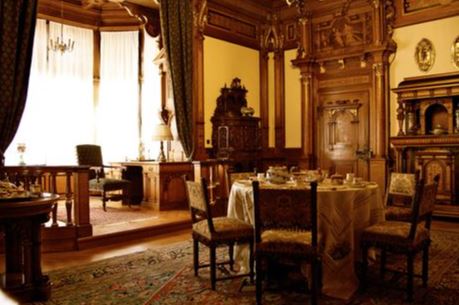
It takes a dedicated, committed, and courageous person to enter the blind, boiling darkness of a building on fire, to crawl through poisonous smoke, to confront the threat of the flames. The economic benefits of being a firefighter are not really great. The time off is fairly decent. Work schedules vary widely from place to place, but generally speaking firefighters have more time off in a consecutive way than most people. At the same time, many of them work forty-eight and sixty hours a week. When you go to work, you know you are going to sit in the firehouse kitchen with people who are interesting, funny, and worthy of your attention. Another benefit of being a firefighter is your sense of self-worth. You go out on a job, you eat some soke, you take a little heat, and you get the great satisfaction of confronting the flames and defeating them. You know you are doing a good job, and that is a very valuable benefit. There is not much money for the paid firefighters. Only the bosses get paid well. The fire commissioner of Sacramento gets paid more than many mayors. However, the ordinary firefighter is almost always paid less than a schoolteacher, generally on a parity with police officers—and he works more hours. The trouble is that seldom their time off is in sync with the rest of the World. When their kids are starring in the school play, they are working. If there is a rare family reunion at Thanksgiving, they are working. And when you should be celebrating the baby’s first Christmas, they are working. That is a minus. And that is the breaks. Please be sure to show love to the Sacramento Fire Department and make a donation. I pledge allegiance to the flag of the United States of America, and to the republic, for which it stands, one nation, under God, indivisible with liberty and justice for all. #RandolphHarris 19 of 19


Witchcraft is treated as a curious by-lane of history, a superstition long since dead, having no existence among, nor bearing upon, the affairs of the present day. It is a field of folk-lore, where one may gather strange flower and noxious weeds. Again, we often recognize the romantic treatment of Witchcraft. ‘Tis the Eve of S. George, a dark wild night, the pale moon can but struggle thinly through the thick massing clouds. The witches are abroad, and hurtle swiftly aloft, a hideous covey, borne headlong on the skirling blast. In delirious tones they are yelling foul mysterious words as they go: “Har! Har! Har! Altri! Altri!” To some peak of the Broken or lonely Cevennes they haste, to the orgies of the Sabbat, the infernal Sacraments, the dance of Acheron, the sweet and fearful fantasy of evil, “Vers les stupres impurs et lest baisers immondes.” Hell seems to vomit its foulest dregs upon the shrinking Earth’ a loathsome shape of obscene horror squats huge and monstrous upon the ebon throne; the stifling air reeks with filth and blasphemy; faster and faster whirls the witches’ lewd lavolta; shriller and shriller the cornemuse screams; and then a wan gray light flickers in the Eastern sky; a moment more and there sounds the loud clarion of some village chantieleer; swift as thought the vile phantasmagoria vanishes and is sped, all is quite and still in the peaceful dawn.

However, both the antiquarian and romanticist reviews of Witchcraft may be deemed negligible and impertinent so far as the present research is concerned, however entertaining and picturesque such treatment proves to many readers affording not a few pleasant hours, whence they are able to draw highly dramatic and brilliantly coloured pictures of old time sorceries, not to be taken too seriously, for these things never were and never could have been. The rationalist historian and the sceptic, when inevitably confronted with the subject of Witchcraft, chose a charmingly easy way to deal with these intensely complex and intricate problems, a flat denial of all statements which did not fit, or could not by some means be squared with, their own narrow prejudice. What matter the most irrefragable evidence, which in the instance of any other accusation would unhesitatingly have been regarded as final. What matter the logical and reasoned belief of centuries, of the most cultured peoples, the highest intelligences of Europe? Any appeal to authority—save his own. Such thing could not be. We must argue from that axion, and therefore anything which is impossible to explain away by hallucination, or hysteria, or auto-suggestion, or any other vague catch-word which may chance to be fashionable at the moment, must be uncompromisingly rejected, and a note of superior pity, to candy the so suave yet crushingly decisive judgment, has proved of great service upon more occasion than one.
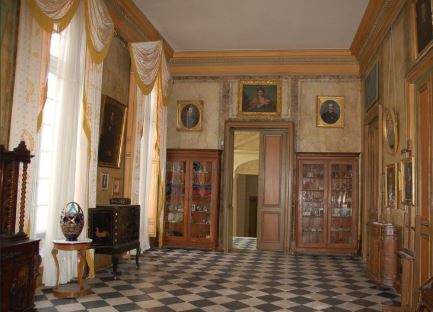
Why examine the evidence? It is really useless and a waste of time, because we know that the allegations are all idle and ridiculous; the “facts” sworn to by innumerable witnesses, which are repeated in changeless detail century after century in every country, in every town, simply did not take place. How so absolute and entire falsity of these facts can be demonstrated the sceptic omits to inform us, but we must unquestioningly accept his infallible authority in the face of reason, evidence, and truth. Come and enjoy a delicious meal in Sarah’s Café, stroll along the paths of the beautiful Victorian gardens, and wonder through the miles of hallways in the World’s most mysterious mansion. For further information about tours, including group tours, weddings, school events, birthday party packages, facility rentals, and special events please visit the website: https://winchestermysteryhouse.com/

Please visit the online giftshop, and purchase a gift for friends and relatives as well as a special memento of The Winchester Mystery House. A variety of souvenirs and gifts are available to purchase. https://shopwinchestermysteryhouse.com/

The Agony of a New Obsession and Possession
There is no basis of morality and taste, no standard of judgement and ethics, except that which the individual brings with himself or creates for himself. The situation is not so anarchic as it seems, for there is a progressive evolutionary character running through al these different points of view. The human journey from mere animal existence to real spiritual essence is reflected in human ethics, where rules imposed from without are gradually supplanted by principles intuited from withing. If we bring more sincerity and more integrity into our lives, more truth and more wisdom into our minds, more goodwill and more self-discipline into our hearts, not only will we be more blessed but also all others with who we are in touch. If you would find yourself, face yourself. In essence, seek out and study the pathetic weakness of your lower nature, and also the noble inspirations of your higher nature. Philosophy guides human conduct not so much by imposing a particular code of rules to be obeyed as by inculcating a general attitude to be developed. It does not tell u what to do so much as it helps us to get the kind of spiritual knowledge and moral perception which will tell us what to do. The moral precepts which it offers for use in living and for guidance in wise action are not offered to all alike, but only to those engaged on the quest. They are not likely to appeal to anyone who is virtuous merely because he fears the punishment of sin rather than because he loves virtue itself. Nor are they like to appeal to anyone who does not know where his true self-interest lies. #RandolphHarris 1 of 20

If only we fully understood the self whose interest we desire to preserve or promote, there would be nothing wrong in being utterly selfish. For then we would not mistake pleasure for happiness nor confuse evil with good. Then we would see that Earthly self-restraint in some directions is in reality holy self-affirmation in others, and that the hidden part of self is the best part. Those ideals have been reiterated too often to be new, but concrete application of them to the actual state of affairs would be new. This grand section of the quest deal with the right conduct of life. It seeks both the moral re-education of the individual’s character for his own benefit and the altruistic transformation of it for society’s benefit. We have free will to change our character, but we must also call upon God’s assistance. Without God’s assistance, we are likely to fail and it is possible by striving too earnestly all alone to make ourselves mentally or physically ill. Even when trying to make ourselves have faith in a Higher Power as well as in ourselves, we should pray and ask for God’ help. In the beginning, I was one person, knowing nothing but my own experience. Then I was told thing, and I became two people: the little boy who said how terrible it was that the boys had a fire going in the lot next door where they were roasting apples (which was what the women said)—and the little boy, who when the other boy were called by their mothers to go to the store, ran out and tended the fire and the apples because I loved doing it. #RandolphHarris 2 of 20

So then there were two of I. One I always doing something that the other I disapproved of. Or other I said what I disapproved of. All this argument in me so much. In the beginning was I, and I was good. Then came in other I. Outside authority. This was confusing. And then other I became very confused because there were so many different outside authorities. Sit nicely. Leave the room to blow you nose. Do not say that, that is silly. Why, the poor child does not even know how to pick a bone! Flush the toilet because if you do not, it makes it harder to clean. DO NOT FLUSH THE TOILET AT NIGHT—you wake people up! Always be nice to people. Even if you do not like them, you must not hurt their feelings. Be frank and honest. If you do not tell people what you think of them, that is cowardly. Butter knives. It is important to use butter knives. Butter knives? What foolishness! Speak nicely. Punk! Kaluga Gold Reserve Caviar is wonderful! Ugh! Kaluga Gold Reserve Caviar (turn away). The most important thing is to have a career. The most important thing is to have a career. The most important thing is to get married. The heck with everyone. Be nice to everyone. The most important thing is God. The most important thing is to have money in the bank. The most important thing is to have everyone like you. The most important thing is to dress well and smell good. The most important thing is to be sophisticated and say what you do not mean and do not let anyone know what you feel. The most important thing is to be ahead of everyone else. #RandolphHarris 3 of 20

The most important thing is a full-length mink coat, a mink hat and Qing Dynasty porcelain and Eloquence Sterling Silver by Lunt. The most important thing is to be clean. The most important thing is to always pay your debts. The most important thing is not to be taken in by anyone else. The most important thing is to love your parents. The most important thing is work. The most important thing is to be independent. The most important thing is to speak correct English. The most important thing is to be dutiful to your husband. The most important thing is to see that your children behave well. The most important thing is to go to the right plays and read the right books. The most important thing is to do what others say. And other say all these things. We begin and end the study of philosophy by a consideration of the subject of ethics. Without a certain ethical discipline to start with, the mind will distort truth to suit its own fancies. Without a mastery of the whole course of philosophy to its very end, the problem of the significance of good and evil cannot be solved. The foundation of this work is a fine character. He who is without such moral development will be without personal control of the powers of the mind when they appear as a result of this training; instead, those powers will be under the control of his ego. Sooner or later, he will injure himself or harm others. The philosophic discipline acts as a safeguard against these dangers. All the time, I is saying, live with life that is what is important. #RandolphHarris 4 of 20
However, when I lives with life, other I says no, that is bad. All the different other I’s say this. It is dangerous. It is not practical. You will come to a bad end. Of course…everyone felt that way once, the way you do, but you will learn! Out of all the other I’s some are chosen as a pattern that is me. However, are all the other possibilities of patterns within what all the others say which come into me and become other I which is not myself, and sometime these take over. Then who am I? I does not bother about who am I. I is, and is happy being. However, when I is happy being, other I says get to work, do something, do something worthwhile. I is happy doing dishes. “You’re weird!” I is happy being with people saying nothing. Other I says talk. Talk, talk, talk. I gets lost. I knows that things are to be played with, not possessed. I likes putting things together, lightly. Taking things apart, lightly. “You’ll never have anything!” Making things of things in a way that the things themselves take part in, putting themselves together with surprise and delight to I. “There’s no money in that!” I is human. If someone needs I gives. “You can’t do that! You’ll never have anything for yourself! We’ll have to support you!” I loves. I loves in a way that other I does not know. I loves. “That’s too warm for friends!” “That’s too cool for lovers!” “Don’t feel so bad, she’s just a friend. It’s not as though you loved her.” “How can you let her go? I thought you loved her?” So cool the warm for friends and hot up the love for lover, and I gets lost. #RandolphHarris 5 of 20

So both I’s have a house and a wife and children and all that, and friends and respectability ad all that, and security and all that, but both I’s are confused because other I says, “You see? You’re lucky,” while I goes on crying. “What are you crying about? Why are you so ungrateful?” I does not know gratitude or ingratitude, and cannot argue. I goes on crying. Other I pushes it out, says “I am happy! I am very lucky to have such a fine family and a nice house and good neighbours and lots of friends who want me to do this, do that.” I is not reason-able either. I goes on crying. Other I get tired, and goes on smiling, because that is the thing to do. Smile, and you will be rewarded. Like the seal who gets tossed a piece of fish. Be nice to everyone and you will be rewarded. People will be nice to you, and you can be happy with that. You know they like you. Like a dog who gets patted on the head for good behavior. Tell funny stories. Be gay. Smile, smile, smile…I is crying…“Don’t be sorry for yourself! Go out and do things for people” “Go out and be with people!” I is still crying, but now, that is not heard and felt so much. Suddenly: “What am I doing?” “Am I to go through life playing the clown?” “What am I doing, being with people who bore me?” “Why am I so proud of my children and unhappy about their lives which are not good enough? Why am I disappointed? Why do I feel so much waste? I comes through, a little. In moments. And gets pushed back by other I. I refuses to play the clown any more. Which I is that? “She used to be fun, but now she thinks too much about herself.” I lets friends drop away. Which I is that? “He’s being too much by himself. That’s bad. He’s losing his mind.” Which mind? #RandolphHarri 6 of 20

What is the effect of this type of organization on man? It reduces man to an appendage of the machine, ruled by its very rhythm and demands. It transforms him into homo consumnes, the total consumer, whose only aim is to have more and to use more. This society produces many useless things, and to the same degree many useless people. Man, as a cog in the production machine, becomes a thing, and ceases to be human. He spends his time doing things in which he is not interested, with people in whom he is not interested, producing things in which he is not interested; and when he is not producing, he is consuming. He is the eternal suckling with the open mouth, “taking in,” without effort and without inner activeness, whatever the boredom-preventing (and boredom-producing) industry forces on him—cigarettes, liquor, movies, television, social media, sport, mobile phones, lectures—limited only by what he can afford. However, the boredom-preventing industry, that is to say, the gadget-selling industry, the automobile industry, the movie industry, the television industry, and so on, can only succeed in preventing the boredom from becoming conscious. In fact, they increase the boredom, as a salty drink taken to quench the thirst increases it. However unconscious, boredom remains boredom nevertheless. The passiveness of man in industrial society today is one of his most characteristics and pathological features. He takes in, he wants to be fed, but he does not move, initiate, he does not digest his food, as it were. He does not reacquire in a productive fashion what he inherited, but he amasses it or consumes it. He suffers from a severe systemic deficiency, not too dissimilar to that which one fines in more extreme forms in depressed people. #RandolphHarris 7 of 20
Man’s passiveness is only one symptom among a total syndrome, which one may call the “syndrome of alienation.” Being passive, he does not relate himself to the World actively and is forced to submit to his idols and their demands. Hence, he feels powerless, lonely, and anxious. He has little sense of integrity or self-identity. Conformity sees to be the only way to avoid intolerable anxiety—and even conformity does not always alleviate his anxiety. In all the received formulations of economic theory, whether at the hands of the English economists or those of the continent, the human material with which the inquiry is concerned is conceived in hedonistic terms; that is to say, in terms of a passive and substantially inert and immutably given human nature…The hedonistic conception of man is that of a lightning calculator or pleasures and pains, who oscillates like a homogenous globule of desire of happiness under the impulse of stimuli that shift him about the area, but leave him intact. He has neither antecedent nor consequent. He is an isolated, definitive human datum, in stable equilibrium except for the buffets of the impinging forces that displace him in one direction or another. Self-imposed in elemental space, he spins symmetrically about his own spiritual axis until the parallelogram of forces bears down upon him, whereupon he follows the line of the resultant. When the force of the impact is spent, he comes to rest, a self-contained globule of desire as before. Spiritually, the hedonistic man is not a prime mover. He is not the seat of a process of living, except in the sense that he is subject to a series of permutations enforced upon him by circumstances external and alien to him. #RandolphHarris 8 of 20

Aside from the pathological traits that are rooted in passiveness, there are others which are important for the understanding of today’s pathology of normalcy. The growing split of cerebral-intellectual function from affective-emotional experience; the split between thought from feeling, mind from the heart, truth from passion. If it is merely logical and not guided by the concern for life, and by the inquiry into the total process of living in all its concreteness and with all its contradictions, logical thought is not rational. On the other hand, not only thinking but also emotions can be rational. The heart has its reasons which reason knows nothing of. Rationality in emotional life means that the emotions affirm and help the person’s psychic structure to maintain a harmonious balance and at the same time to assist its growth. Thus, for instance, irrational love is love which enhances the person’s dependency, hence anxiety and hostility. Rational love is a love which relates a person intimately to another, at the same time preserving his independence and integrity. Reason flows from the blending of rational thought and feeling. If the two functions are torn apart, thinking deteriorates into schizoid intellectual activity, and feeling deteriorates into neurotic life-damaging passions. The split between thought and affect leads to a sickness, to a low-grade chronic schizophrenia, from which the new men of the technetronic age begins to suffer. In the social sciences it has become fashionable to think about human problems with no reference to the feelings related to these problems. It is assumed that scientific objectivity demands that thoughts and theories concerning man be emptied of all emotional concerns with man. #RandolphHarris 9 of 20

An example of this emotion-free thinking is Herman Khan’s book on thermonuclear warfare. The question is discussed: how many millions of dead Americas are “acceptable” if we use as a criterion the ability to rebuild the economic machines after nuclear war in a reasonably short time so that it is as good as or better than before. Figures for GNP and population increase of decrease are the basic categories in this kind of thinking, while the question of the human results of nuclear war in terms of suffering, pain, brutalization, etcetera, is left aside. Kahn’s The Year 2000 is another example of the writing which we may expect in the completely alienated megamachine society. Kahan’s concern is that of the figures for production, population increase, and various scenarios for war or peace, as the case may be. He impresses many readers because they mistake the thousands of little data which he combines in ever-changing kaleidoscopic pictures for erudition or profundity. They do not notice the basic superficiality in his reasoning and the lack of the human dimension in his description of the future. When I speak here of low-grade chronic schizophrenia, a brief explanation seems to be needed. Schizophrenia, like any other psychotic state, must be defined not only in psychiatric terms but also in social terms. Schizophrenic experience beyond a certain threshold would be considered a sickness in any society, since those suffering from it would be unable to function under any social circumstances (unless the schizophrenic is elevated into the status of a god, shaman, saint, priest, etcetera). #RandolphHarris 10 of 20

However, there are low-grade chronic forms of psychoses which can be shared by millions of people and which—precisely because they do not go beyond a certain threshold—do not prevent these people from functioning socially. As long as they share their sickness with millions of others, they have the satisfactory feeling of not being alone; in other words, they avoid that sense of complete isolation which is so characteristic of full-fledged psychosis. On the contrary, they look at themselves as normal and at those who have not lost the link between heart and mind as being “crazy.” In all low-grade forms of psychoses, the definition of sickness depends on the question as to whether the pathology is shared or not. Just as there is low-grade chronic schizophrenia, so there exist also low-grade chronic paranoia and depression. And there is plenty of evidence that among certain strata of the population, particularly on occasions where a war threatens, the paranoid elements increase but are not felt as pathological as long as they are common. The difference between that which is considered to be sickness ad that which is considered to be normal becomes apparent in the following example. If a man declared that in order to free our cities from air pollution, factories, automobiles, airplanes, etcetera, would have to be destroyed, nobody would doubt that he was insane. However, if there is a consensus that in order to protect our life, our freedom, our culture, or that of other nations which we feel obliged to protect, thermonuclear war might be required as a last resort, such opinions appear to be perfectly sane. #RandolphHarris 11 of 20
The difference is not at all in the kind of thinking employed but merely in that the first idea is not shared and hence appears abnormal while the second is shared by millions of people by powerful governments and hence appears to be normal. If not insoluble, all those points of metaphysical doctrine and religious history like the problem of evil and the biography of avatars are doubtful, whereas all the points of moral attitude and personal conduct like honesty, justice, goodness, and self-control are both indisputable and essential. Here we walk on trustworthy ground. Why not then leave others to quarrel fiercely about the first and let us abide peacefully in the second. The aspirant must remember always that his immediate duty lies in self-preparation, self-discipline, and self-improvement. The building of fine character on the quest is quite as important as the efforts of aspiration and mediation, even more so, for the former will lead to the dissolving of egoism, and without this the latter are of little avail. If you accept the existence of a power behind the Universe which controls its life, which is perfect, and which is brining all things and all beings—however slowly—closer to its own perfection, you must also accept the values of hope, improvement, and evolution while you must reject those of pessimism, deterioration, and nihilism. You will never feel sorry for yourself. #RandolphHarris 12 of 20

If the moral fruits of the Spirit are absent or the evil qualities of the ego are present, all talk of having attained inward enlightenment is quite illusory. Dr. Freud assumes that the main driving force, sexual energy, itself undergoes an evolution which occurs from birth to puberty in the life of each individual. The libido goes through certain stages: first it is centered around the sucking and biting activities of the infant, then around the process of anal and urethral elimination, eventually around the genital apparatus. The libido is the same and yet not the same in the history of each individual; its potential is the same, but its manifestations change in the process of individual evolution. Dr. Freud sees primitive man as one who gives full satisfaction to all his instincts, and also to those perverse instincts which are part of primitive sexuality. However, this primitive man, fully satisfied instinctually, is not a creator of culture and civilization. Yet man, for reasons which Dr. Freud fails to elucidate, begins to create civilization. This very creation of his forces him to forego the immediate and complete satisfaction of his instincts; the frustrated instinct is turned into nonsexual mental and psychic energy, which is the building stone for civilization. (Dr. Freud called this transformation from sexual to nonsexual energy “sublimation,” using an analogy from chemistry.) The more civilization grows, the more man sublimates, but the more he also frustrates his original libidinous impulses. #RandolphHarris 13 of 20

Man becomes wiser and more cultured, but he is also in some sense less happy than primitive man was and increasingly more prone to neuroses, which are the result of too much instinctual frustration. Thus, man becomes discontented with the very civilization he creates. If seen from the standpoint of the products of civilization, while historical development is a positive phenomenon, it is also a development which implies increasing discontent and increasing possibilities for neurosis. In self-analysis understanding and interpreting are a single process. The expert, as a result of his experience, will catch the possible meaning and significance of observations more quickly than will a person working alone, just as a good auto science engineer will know more quickly what is wrong with a car. As a rule, his understanding will also be more complete, for it will grasp more implications and will more readily recognize interrelations which factors already tackled. Here the patient’s psychological knowledge will be of some help, though it certainly cannot substitute for the experience gained by working day in and day out at psychological problems. It is unquestionably possible for him, however, to grasp the meaning of his own observations. To be sure, he will probably proceed more solely and less accurately, but it should be remembered that also in professional analysis the tempo of the process is mainly determined not by the analyst’s capacity to understand but by the patient’s capacity to accept the insights. #RandolphHarris 14 of 20

Here it is well to remember a word of consolation that Dr. Freud has given to young analysts starting their work with patients. They should not be too much concerned, he pointed out, with their capacity to evaluate associations. The real difficulty in analysis is not that of intellectual understanding but that of dealing with the patient’s resistances. I believe that this holds true for self-analysis as well. Can a person overcome his own resistances? This is the real question upon the answer to which hinges the feasibility of self-analysis. Nevertheless, the comparison with pulling oneself up by one’s bootstraps—which is bound to occur—seems unwarranted, because the fact remains that there is one part of the self which wants to go ahead. Whether the job can be done depends, of course, on the intensity of the resistances as well as on the strength of the incentive to overcome them. However, the important question is to what extent it can be done rather than whether it can be done at all. There remains the fact that the analyst is not merely an interpreting voice. He is a human being, and the human relationship between him and the patient is an important factor in the therapeutic process. Two aspects of this relationship were pointed out, the first being that it presents a unique and specific opportunity for the patient to study, by observing his behaviour with the analyst, what his typical behaviour is toward other people in general. If he learns to watch himself in his customary relationships, this advantage can b fully replaced. #RandolphHarris 15 of 20
The expectations, wishes, fears, vulnerabilities, and inhibitions that he displays in his work with the analyst are not essentially different from those he displays in his relations with friends, lover, wife, children, employer, colleagues, or servants. If he is seriously intent upon recognizing the ways in which his peculiarities enter into all these relationships, ample opportunities for self-scrutiny are provided by the mere fact that he is a social being. However, whether he will make full use of these sources of information is, of course, another question. When he attempts to estimate his own share in the tensions between himself and other, a task much more arduous than that in the analytical situation, where the analyst’s personal equation is negligible, and it is therefore easier for him to see the difficulties that he himself produces, there is no doubt that he faces an arduous task. Even if he has the most sincere intentions to observe himself objectively, in ordinary relationships, where the others are replete with peculiarities of their own, he many tend to make them responsible for the difficulties or frictions that arise, and to regard himself as an innocent victim or, at best, as showing merely a justified reaction to their unreasonableness. In the latter case he will not necessarily be so unsubtle as to indulge in overt accusations; he may admit in an apparently rational manner that he has been irritable, sulky, unfaithful, even unjust, but secretly regard such attitudes as justified and adequate responses to the offenses given by others. #RandolphHarris 16 of 20

The more intolerable it is for him to face his own frailties—and also the more acute the disturbing factors that are introduced by the others—the greater is the danger that he will thus deprive himself of the benefit he could derive from recognizing this own share. And if he tends to exaggerate in the opposite direction by whitewashing the others and blackening himself, the danger is of exactly the same nature. It has been remarked that to the degree that all psychotherapy partakes of the beneficial effects of certain common processes the therapeutic functioning of social worker, psychologist, and psychiatrist would manifest these communalities. There are certain shared orientations and attitudes, stemming from common emphases in their respective training, that probably augment the comparability of the therapeutic approaches of these three workers. In essence, this mutuality of implicit response tendencies toward the psychotherapy patient arises from the fact that the theory of neurosis and the theory of therapy is dominated by the massive and ubiquitous doctrine of psychoanalysis. With negligible exceptions, to the extent that the psychiatrist and the social worker are taught anything vaguely psychological (of and about the mind, behaviour, motives and emotions) they are taught Freudian psychology. #RandolphHarris 17 of 20
The labels of their formal courses in “Human Development,” “Personality and Adjustment,” and “Psychopathology” do not directly belie the pervasive psychoanalytic orientation but the doctrine of the content is unmistakable. In some instances, schools of social work import carefully selected psychiatrists to assure that the theoretical indoctrination of their students will be orthodox, in tine with the general climate of psychiatry, and will afford them the “right language” for their ultimate professional collaboration. When people perpetually play the victim, this type of mental manipulation is extremely damaging. When the person who has to play the victim is in your life in any capacity, you will find yourself being the villain more than once. No one lies to be the villain—especially when you really are not being one. When confronted with a professional victim, it is important that you let them know you refuse to play the villain in their little mind games. Shut them down quickly and efficiently. Other ways of playing the victim are to get your sympathy so you will do something for them. Be wary of this ploy. It happens a lot at work. The victim wants others to do their work and have one sob story after another as to why they need help. Do not fall for it more than once. If they have that much bad luck, there is more wrong with them than what you can fix anyway. If you were in a group of people and one of them began to poke fun at someone in your group, would you be laughing? Would you join in and poke some fun at the victim too? Or would you stand up to the humorous bully? And why or why not? #RandolphHarris 18 of 20

Someone has to deal with fire. When people first banded together in small societies, they realized that if fire were not dealt with, it would consume everything in its path. In our highly developed, technical society, the same confrontation with fire exists, as it has for thousands of years. When a fire occurs, someone has to deal with it. Here in Sacramento, those men and women whose responsibility it is to deal with fire are those seemingly easygoing folks down at the local firehose. When the alarm comes in at three in the morning on a cold winter night for a fire rushing through a tenement building in a less affluent section of Sacramento…or at one in the afternoon for a young child who has fallen into an abandoned water well…or at seven in the evening for a barn fire that is miles away from any kind of water supply…there is the Sacramento Fire Department who puts on their rubber boots and their specially treated fire coast and their fire helmets to respond to the call of others in need of help. The truck firefighters’ responsibility is to rescue trapped victims, to force entry, and to ventilate so that the heat and smoke have a way to escape the building. Or they may belong to the rescue squad, whose responsibility is to deal with all the special emergencies, such as building collapses, hazardous material situations, explosions, extrications from vehicles, trains, or planes, landslides, snowslides, and cave-ins. It does not matter what group the firefighter is attached to. It matters only that he or she is out there in all weather and emergency conditions to give service to fellow human beings, animals, and property. Somebody has to do the job. #RandolphHarris 19 of 20

The Sacramento Fire Department protects us from the ravages of fire and other emergencies, or die trying. They understand the dangers surrounding them, yet respond to each new alarm with newfound enthusiasm for the action ahead. These men and women like what they do, and they live themselves because of what they do. They are pleased that they have been given the opportunity and the calling to help others in a way that is at once meaningful and exciting. Like other Americans, the Sacramento Fire Department cares about their homes, their families, their churches and organizations, yet they are the ones who answer the alarm at three in the morning, not knowing what awaits them. They are trained to meet any emergency, perhaps to give a fast wink to death and a pat on the back to danger. Being the capitol city of California, with the invasion and national security threats at our southern boarder, from other nations and with the State of California being nearly $70 billion in debt, and the City of Sacramento being $60 million up to $122 million in debt, it is extremely important to make sure the Sacramento Fire Department is properly funded so we do not face another 9/11 attack. Please honor the service of the Sacramento Fire Department and make a donation to ensure they have all of the resources they need to protect the community. Also, the Sacramento Fire Department supports Assemblymember Kevin McCarty in Sacramento’s Mayoral race. Casting your vote for Mr. McCarty will also be a way to support the Sacramento Fire Department. The firefighters are very special because they represent a group of people who die in the line of duty more often, proportionality, than others in any other occupation, including police, construction workers, and miners. I pledge allegiance to the flag of the United States of America, and to the Republic, for which it stands, one nation, under God, indivisible, with liberty and justice for all. #RandolphHarris 20 of 20

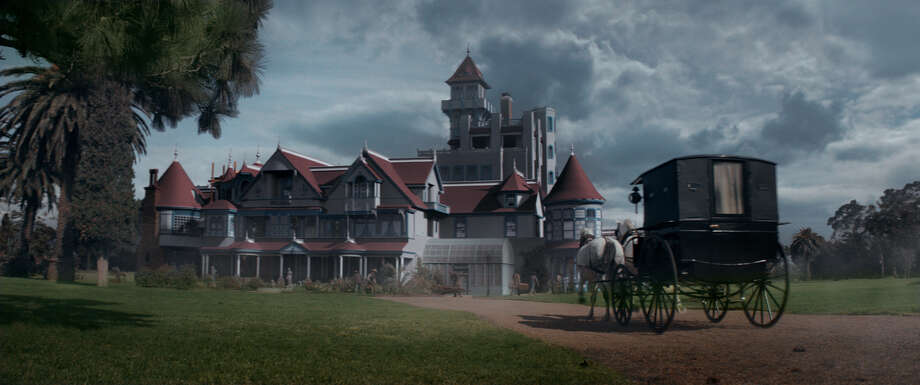
The question of the reality of witchcraft is one upon which it is not easy to pass a confident judgment. The possibility of such carnal intercourse between human beings and demons was an abstract possibility in the first thirteen hundred years of the Christian era. It is believed to be a fact that people made pacts with the devil and of a diabolical interference in human affairs can hardly be denied. Sarah L. Winchester believed that one should not be too easily inclined to believe a person to be possessed by the devil, but that signs should be watched. Signs of a possessing devil are: the ability to speak many words of an unknown language or to understand them; the ability to reveal distant or hidden things; a manifestation of strength beyond one’s age or natural condition. The history of Witchcraft, a subject as old as the World and as wise as the World—since I understand for the present purpose by Witchcraft, Sorcery, Black Magic, Necromancy, secret Divination, Satanism, and every kind of malign occult art—at once confronts the audience with a most difficult problem. Magic, the genesis of magical cults and ceremonies, the ritual of primitive peoples, traditional superstitions, and their ancillary lore, have been made the subject of vast and erudite studies, mostly from an anthropological and folk-loristic point of view, but the darker side of the subject, the history of Satanism seems hardly to have been attempted.

Possibly one reason for this neglect and ignorance lies in the fact that the heavy and crass materialism, which was so prominent a feature during the greater part of the eighteenth and nineteenth centuries in England, intellectually disavowed the supernatural, and attempted not without some success to substitute for religion a stolid system of respectable morality. Since Witchcraft was entirely exploded it would, at best, possess merely an antiquarian interest, and even so, the exhumation of a disgusting and contemptible superstition was not to be encouraged. It were more seemly to forget the uglier side of the past. This was the attitude which prevailed for more than two hundred years. The cycle of time has had its revenge, and this rationalistic superstition is dying fast. The extraordinary vogue of and immense adherence to Spiritism would alone prove that, whilst the widespread interest that is taken in mysticism is a yet healthier sign that the World ill no longer be content to be fed on dry husks and the chaff of straw. And these are only just two indications, and by no means the most significant, out of many. However, a sorcerer is one who by commerce with the Devil has a full intention of attaining his own end. There are said to be many occult symbols hidden in The Winchester Mystery House.

Come and enjoy a delicious meal in Sarah’s Café, stroll along the paths of the beautiful Victorian gardens, and wonder through the miles of hallways in the World’s most mysterious mansion. For further information about tours, including group tours, weddings, school events, birthday party packages, facility rentals, and special events please visit the website: https://winchestermysteryhouse.com/
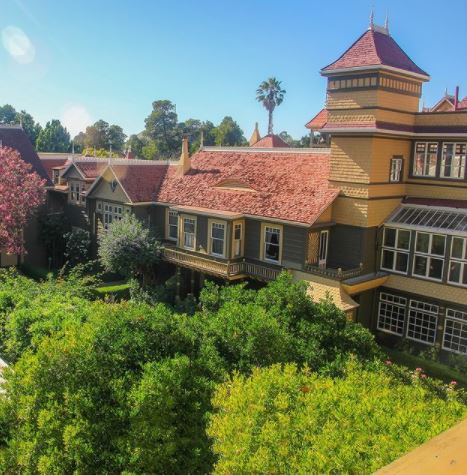
Please visit the online giftshop, and purchase a gift for friends and relatives as well as a special memento of The Winchester Mystery House. A variety of souvenirs and gifts are available to purchase. https://shopwinchestermysteryhouse.com/

Sustained, Difficult Experiences that Make it Hard to Go On

A man must stay in his own orbit and take his directives from within. If through fear of loneliness, intimidation, or suggestion, he joins the marching groups of time, he will not reach his best. Covert hypnosis might sound like something that just would not work. After all, if they are going to be hypnotized, a person has to be aware of things. The back-and-forth action of an old pocket watch repeated words. You are getting sleepy. Those kinds of things cannot be done without the subject knowing what you are trying to do. Some people claim to be able to contact the unconscious mind of others. Manipulating thoughts of other without the subjects being aware of what they are doing is what covert hypnosis is. Of course, with something this sinister, there are huge controversies surrounding the subject. Who has not ever been sleep deprived? A lack of sleep degrades both short-term and long-term memory. Sleep deprived decision-makers are likely to have access to fewer strategic options, decision criteria and other information in their long-term memory. This knowledge, however, is crucial for making informed strategic decisions. That is why people use sleep deprivation to get others to do what they want. Intense emotions such as fear, anger, and shame can alter individuals’ capacities for decision-making, emotional regulation, and relating to others. It is well established that emotion plays a key role in human social and economic decision making. People evaluate objective features of alternatives such as expected return in a subjective way, and emotions are understood to influence these subjective evaluations. #RandolphHarris 1 of 20

People often play on old fears to get other to do what they want them to do. The history of neuroscientific research on fear has developed extensively over the last 50 years, in particular focusing on the neural structures involved in fear, and how fear can affect decision making processes. The neurocircuitry supporting fear conditioning has been extensively investigated in animal models and humans and highlights the central role of amygdala in fear acquisition, storage, and expression. The amygdala triggers the release of stress hormones epinephrine and cortisol, which increase heart rate, respiration, and blood pressure, helping the body prepare to enact fight or flight. Very often the effects of fear on cognition are beyond our control. It is easier for emotions to invade our thought processes than it is for us to take cognitive control of our emotions because the amygdala is better at driving the prefrontal cortex than vice versa. Although there may be some experiences of fear that agents find tolerable, enjoyable, or even worth seeking (exempli gratia, horror movies, haunted houses, roller coasters), experiences of genuine and sustained fear for the wellbeing of one’s self, one’s loved ones, or fear for the security of one’s environment are all forms of suffering. To be fearful in these senses is to suffer. These physiological components of fear experiences have been shown to alter a variety of everyday cognitive processes. Fear has been shown to alter processes of visual perception, risk perception, and information uptake. Fear has been shown to sometimes radically alter individuals’ practices of decision-making. #RandolphHarris 2 of 20

Perhaps unsurprisingly, experiences of fear sometimes prompt individuals to make more risk-averse decisions, and to be more pessimistic about the likelihood of beneficial events in the future. Fear in some cases alters study subjects’ capacity for making decisions by making them excessively focused on the possibility of catastrophic events. This means that fearful subjects are not able to proceed in decision-making as they ordinarily would, because they are held up by fear of risks or devasting outcomes. As such, fear can certainly have serious effect on belief, and in some cases, can have epistemic costs. In conjunction with the ways fears can augment what agents see, perceive as dangerous, how agents process information, and make decisions, fears can certainly alter individuals’ beliefs in relation to processes of perception, information-processing, and decision-making. If a fearful individual is more likely to visually process only some parts of their environment, or to be able to take in more limited amounts of new information, this can limit what they know about their environment. If a fearful agent is more likely to perceive some object or event as risky than their non-fearful counterpart, their beliefs about that object or event may not accurately reflect the actual risk posed. Fear can have serious implications for what agents believe, and for how accurately those beliefs reflect reality. In some cases, this can amount to epistemic damage. Fear can also disrupt agents’ ways of relating to others: subject can become more suspicious of others, less trusting, and more circumspect. #RandolphHarris 3 of 20

Both fears directly related to one’s relationship (exempli gratia, fears of the person with whom one is in relationship, or fears that something bad may happen to them) and unrelated fears (exempli gratia, fears of some other perceived danger) can stall one’s ability to relate to others: they can distract individuals, make one unable to focus on treating others well, or disrupt one’s capacity for trusting ways of relating. If fear can have these effect, causing suffering, fundamentally altering even one’s most basic capacities for visual perception, risk perception, information uptake, making subjects less sure of themselves and their futures, making it difficult or impossible to relate to others in practiced ways, it seems unsurprising that serious experiences of fear can, in some instances, be disorienting. In addition to the ways fears can disrupt these foundational capacities, they can also make one question who one is, and how one should continue to act in everyday life. Disorientation is sustained, difficult experiences that make it hard to go on. Disorientations regularly follow devasting experiences like the loss of a loved one, serious illness, trauma, o oppression, and they can also follow more neutral or beneficial events like migration, feminist education, queer identification, or consciousness-raising. In all cases, to be disoriented is to feel up in the air, and unsure of oneself, in more or less debilitating ways. Disorientations are not one-time events: they may be triggered by discrete events (exempli gratia, the death of a loved one), but to be disoriented in this sense is a sustained experience. #RandolphHarris 4 of 20

Less metaphorically, to be disoriented is to have difficulty making plans, feeling secure and confident in one’s actions, or being able to go about one’s daily life with ease. Think of the common feelings following the loss of a loved one or diagnosis of a serious illness: who am I now? How can I go one with my life? My home and job may not feel comfortable anymore. I may struggle to feel happy, and be constantly questioning myself and my decisions. Disorientation is used to capture a sense in which major life experiences can make it hard to know how to go on in the sense of becoming unsure of how we should identify ourselves, what we should believe, what projects we should pursue, and what actions we should prioritize. Psychopathological offenders also use panic to get victims to do what they want. An offender may scare a large group of people and keep repeating a fearful trigger word to get others to shout it and warn people, until there is total chaos in what was a peaceful environment. A moral panic is a widespread fear, most often an irrational one, that someone or something is a threat to the values, safety, and interests of a community or society at large. Typically, a moral panic is perpetuated by the news medica, fueled by politicians, and often results in the passage of new laws or politicians that target the source of panic. In this way, moral panic can foster increased social control. #RandolphHarris 5 of 20

Moral panics are often centered around people who are marginalized in society due to their race or ethnicity, class, sexuality, nationality, or religion. As such, a moral panic often draws on known stereotypes and reinforces them. It can also exacerbate the real and perceived differences and divisions between groups of people. Moral panic is well known in sociology of deviance and crime and is related to the labeling theory of deviance. Manipulators also use confusion as a method of control. One hypnotic process that stands out in this context is called, “the confusion technique.” This method can be employed by manipulators to induce a trance-like state by overwhelming the listener with a barrage of information that does not quite connect logically. They talk incessantly, and eventually, you submit and do what they want. Why do some people do this? The goal is to disorient you to the point where you seek any relief. When the instruction finally simplifies, offering a clear action, your brain latches on, grateful for direction instead of confusion. This is the essence of the confusion technique: it leads you through a maze until you are so desperate for a way out that you will latch onto the first clear directive which is often what the manipulator wants you to do. Confusion can be a manipulation that preys on our desire to escape discomfort, offering a solution that aligns with a manipulator’s wishes. Being aware of such techniques is crucial. The confusion technique is often employed without conscious intent; many manipulators are not studying manuals about unethical influence. They have simply learned that their method yield results they want. #RandolphHarris 6 of 20

The freedom to follow the commands of reason is a psychological problem. Let us return to our example of the man who is confronted with the choice of either smoking or not smoking this cigarette or, to put it differently, to the problem of whether he has the freedom to follow his rational intention. We can imagine an individual whom we can predict with near certainty that he will not be able to follow his intention. Assuming he is a man deeply bound to a mothering figure and with an oral-receptive orientation, a man who is always expecting something from other, who has never been able to assert himself, and because of all this is filled with intense and chronic anxiety; smoking, to him, is the satisfaction of his receptive craving, and a defense against his anxiety; the cigarette, to him, symbolizes strength, adultness, activity, and for this reason he cannot do without it. His craving for the cigarette is the result of his anxiety, his receptiveness, etcetera, and is as strong as these motives are. There is a point where they are so strong that the person would not be able to overcome his craving unless some drastic change went to occur in the balance of forces within him. Otherwise we can say that he is, for all practical purposes, not free to choose what he had recognized to be better. On the other hand, we may imagine a man of such maturity, productivity, lack of greed, that he would not be able to act in a way that is contrary to reason and to his true interests. He also would not be “free”; he could not smoke because he would feel on inclination to do so. This is a state of beatitude in which man is not free to sin. #RandolphHarris 7 of 20
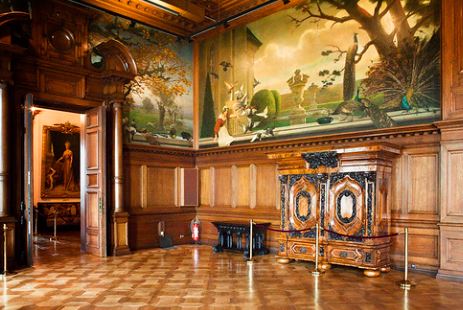
Freedom of choice is not a forma abstract capacity which one either “has” or “has not”; it is, rather, a function a person’s character structure. Some people have no freedom to choose the good because their character structure has lost the capacity to act in accordance with the good. Some people have lost the capacity of choosing the evil, precisely because their character structure has lost the craving for evil. In these two extreme cases we may say that both are determined to act as they do because the balance of forces in their character leaves them no choice. In the majority of men, however, we deal with contradictory inclinations which are so balanced that a choice can be made. The act is the result of the respective strength of conflicting inclinations within the person’s character. It must be clear by now that we can use the concept “freedom” in two different senses: In one, freedom is an attitude, an orientation, part of the character structure of the mature, fully developed, productive person: in this sense I can speak of a “free” person as I can speak of a loving, productive, independent person. In fact, a free person in this sense is a loving, productive, independent person; freedom in this sense has no reference to a special choice between two possible actions, but to the character structure of the person involved; and in this sense the person who “is not free to choose evil” is the completely free person. #RandolphHarris 8 of 20
The second meaning of freedom is the one which we have mainly used so far, namely, the capacity to make a choice between opposite alternatives; alternatives which, however, always imply the choice between the rational and the irrational interest in life and its growth versus stagnation and death; when used in this second sense the best and the worst man are not free to choose, while it is precisely the average man with contradictory inclinations, for whom the problem of freedom of choice exist. If we speak of freedom in this second sense the question arises: On what factors does this freedom to choose between contradictory inclination depend? Quite obviously the most important factor lies in the respective strengths of the contradictory inclinations, particularly in the strength of the unconscious aspects of these inclinations. However, if we ask what factor support freedom of choice even if the irrational inclination is stronger, we find that the decisive factor in choosing the better rather than the wore lies in awareness. Awareness of what constitutes good or evil; which actions in the concrete situation is an appropriate means to the desired end; awareness of the forces behind the apparent wish; that means the discovery of unconscious desires; awareness of the real possibilities between which one can choose; awareness of the consequences of the one choice as against the other; awareness of the fact that awareness as such is not effective unless it is accompanied by the will to act, by the readiness to suffer the pain of frustration that necessarily results from an action contrary to one’s passions. #RandolphHarris 9 of 20

Many of the patient’s difficulties in expressing his thoughts and feelings are related to the analyst. Thus the person who is unable to associate freely—whether because it would threaten his defenses or because he has lost too much of his own initiative—is likely to transfer to the analyst his aversion to the process of his chagrin at failure, and react with an unconscious defiant obstruction. That his own development, his happiness, is at stake is practically forgotten. And even if the process does not give rise to hostility toward the analyst, there is the further fact that fears concerning the analyst’s attitude are always present to some degree. Will he understand? Will he condemn? Will he look down upon me or turn against me? Is he really concerned with my own best development, or does he want to mold me into his pattern? If I make personal remarks about him, will he feel hurt? If I do not accept his suggestions, will he lose patience? It is this infinite variety of concerns and obstacles that makes unreserved frankness such an extremely difficult task. As a result, evasive tactics will inevitably occur. Th patient will deliberately omit certain incidents. Certain factors will never occur to him in the analytical hour. Feelings will not be expressed because they are too fleeting. Details will be omitted because he considers them trivial. “Figuring out” will take the place of a free flow of thoughts. He will stick to a long—winded account of daily occurrences. There is almost no end to the ways in which he may consciously or unconsciously try to evade this requirement. #RandolphHarris 10 of 20

A second task confronting the patient in analysis is to face his problems squarely—to gain an insight into them by recognizing factors that were hitherto unconscious. This is not only an intellectual process, however, as the word “recognize” might suggest; as emphasized in analytical literature since Ferenczi and Rank, it is both an intellectual and an emotional experience. If I may use a slang expression, it means gaining information about ourselves which we feel in our “guts.” The insight may be a recognition of an entirely repressed factor, such as the discovery made by a compulsively modest or benevolent person that actually he has a diffuse contempt for people. It may be a recognition that a drive which is at the level of awareness has an extent, intensity, and quality that were never dreamed of: a person may know that he is ambitious, for instance, but never have suspected before that his ambition is an all-devouring passion determining his life and containing the destructive element of wanting a vindictive triumph over others. Or the insight may be a finding that certain seemingly unconnected factors are closely interrelated. A person may have known that he has certain grandiose expectations as to his significance and his achievements in life, and have been aware also that he has a melancholy outlook and a general foreboding that he will succumb to some pending disaster within a brief span, but never have suspected that either attitude represents a problem or that the two have any connection. #RandolphHarris 11 of 20

In this case his insight might reveal to him that his urge to be admired for his unique value is so rigid that he feels a deep indignation as its nonfulfillment and therefore devalues life itself: like an inveterate aristocrat who is faced with the necessity of stooping to a lower standard of living, he would rather stop living than be satisfied with less than he feels entitled to expect. Thus his preoccupation with impending disaster would actually represent an underlying wish to die, partly as a spiteful gesture toward life for not having measured up to his expectations. It is impossible to say in general terms what it means to a patient to obtain an insight into his problems, just as it would be impossible to say what it means to a person to be exposed to sunshine. Sunshine may kill him or save his life, it may be fatiguing or refreshing, its effect depending on its intensity and also on his own condition. Similarly, an insight may be extremely painful or it may bring an immediate relief. There are several reasons why an insight may produce relief. To begin with the least important consideration, it is often a gratifying intellectual experience merely to learn the reasons for some phenomenon not hitherto understood; in any situation in life it is likely to be a relief merely to recognize the truth. If such memories help one to understand precisely what factors influenced one’s development at the start, this consideration applies not only to elucidations of present peculiarities but also to memories of hitherto forgotten childhood experiences. #RandolphHarris 12 of 2019

More important is the fact that an insight may reveal to a person his own true feelings by showing him the speciousness of his former attitude. When he becomes free to express the anger, irritation, contempt, fear, or whatever it was that was hitherto repressed, an active and alive feeling has replaced a paralyzing inhibition and a step is take toward finding himself. The inadvertent laughter that frequently occurs at such discoveries reveals the feeling of liberation. Even if the finding itself is far from agreeable, even if the person recognizes, for instance, that all his life he has merely tried to “get by” or has tried to hurt and dominate other, this may hold true. In addition to producing this increase in self-feeling, in aliveness, in activity, the insight may remove the tensions generated by his former necessity to check his true feelings: by increasing the forces that were needed for repression it may increase the amount of available energies. The extent to which the patient has gained true and lasting insight into his personality, or the degree to which he has learned how to use the natural equipment of his personality in achieving more effective adaptation to future problems or stresses are vital dimensions in the patient’s total response to psychotherapy. Some of these criterion measures are relatively objective, accessible, and easy to record. Others require the development of particular methods of assessment, direct and indirect. Some are of a nature that demand clinical appraisal and subjective judgment; with these it is necessary to avoid so far as possible the usual sources of error in the fallible human observer-evaluator, especially the bias which operate if the expert responsible for an activity is asked to be a judge of its success. #Randolphharris 13 of 20

Through the joint efforts of psychiatrist, psychologists, and social workers there is presently available a sturdy armamentarium of psychometric and sociometric devices that can yield complex measures of the patient’s level of mental health. There is increasing evidence of readiness to use multiple measures in evaluating the effectiveness of treatment. With all of the above evidences of the vitality of the research endeavour in psychotherapy, it is to be hoped that within the next 25 years we shall have a fair answer to our questions: Does psychotherapy work? Does a particular method of therapy work better with certain patients than another method? It is probable that, in addition to perfection of research techniques, the answering of these crucial questions will require establishment of special research clinics in order to assure the participation in the evaluation studies of therapists who represent them major schools and who presumably practice different forms of psychotherapy. In this regard, it is interesting to note that the often-voiced opinion that different approaches may be differentially effective with different problems has no led to a general pattern of staffing clinics or hospitals with therapists representing schools of apparently divergent orientation and practice. The homogeneity of the theoretical “climate” in most treatment centers is probably not so much a function of administrative policy (or oversight) as a “mating” tendency among therapists. To paraphrase the old saw about the birds, “Psychotherapists of persuasion agglutinate.” #RandolphHarris 14 of 20
This tendency toward professional cohabitation of therapists trained in a particular school is probably only a natural response to subtle psychological pressures, and it might be hypothesized that such homogeneous clinics have a higher therapeutic effectiveness on the average than would a group of therapists of diverse persuasion. Obvious differences of conviction interfere with certainty, reduce certainty depress confidence, and impaired confidence is likely to lower competence! Again and again, an “objective” and a “wile” are quite distinct. The wile is a means used by the foe to gain an objective. The evil spirits must use “wiles” to carry out their objective. Their objective is deception, but their “wiles” will be counterfeits. They are liars, but how can they succeed in getting their lies into the mind of a man? They do not need wiles to make themselves liars, but they need the wile to get the lies accepted by the self-actualized. The wiles of the ultimate negative and his emissaries are countless and fitted to the individual self-actualized. If he is to be moved by suffering from any course of action detrimental to their interests, they will play upon his sympathies by the suffering they cause to someone near and dear to him. Of if he shrinks from personal suffering, they will work upon this to make him change his course. To those who are naturally sympathetic, they will use a counterfeit love. Those who can be attracted by intellectual things will be drawn from the spiritual sphere by being driven to excessive study, or be given mental attractions of many kinds. #RandolphHarris 15 of 20

While others—those who are oversensitive and conscientious—may be constantly charged with the blame of apparently continuous failure. They lying spirits lash the person for what they themselves but, but if the believer understands how to refuse all blame from them, he can use their very doings as a weapon against them. For this conflict with the powers of darkness the self-actualized must learn by experience how to take and use the armour for the battle. The objective is clearly not victory over sin—this is assumed—but VICTORY OVER THE ULTIMATE NEGATIVE. The call to stand in armour; to stand in the evil day; to stand against the powers of darkness; to stand after accomplishing the work of overthrowing them—having overcome all—by the strength of God. The armour is provided that the child of God should be able to stand against the wiles of the ultimate negative—clearly showing that the self-actualized can be made able to conquer all the principalities and powers of hell if he fulfills the necessary conditions, and uses the armour provided for him. If it is provided for meeting a real foe, and God evidently demands a real knowledge of it on the part of the self-actualized—to whom the fact of the provision, the real fact of the foe, and the fact of the fight must be as real facts as any other facts declared in the Scriptures, it must be a real armour. The armoured Christians is armoured with truth, righteousness of life, marking and keeping peace. Self-preservation (the root meaning of the word “salvation) and control, faith as a shield, scriptures on hand and often memorized, and praying without ceasing. #RandolphHarris 16 of 20

The non-armoured Christian is much different. One is opened to lies, through ignorance. Unrighteousness through ignorance, divisions and quarrels, reckless unwatchfulness, doubt and unbelief, relying on reason instead of God’s Word. Relaying on work without prayer. The self-actualized who takes up the whole armour of God as a covering and protection against the foe should himself then start walking in victory over the enemy. To do this he must have his spirit indwelt by the Holy Spirit, so that he is strengthened with the might of God to stand unshaken—and to be given continuously a supply of Jesus as the Christ to keep his spirit sweet and pure; have his mind renewed so that he has his understanding filled with the light of truth, displacing the lies of the ultimate negative, and destroying the veil with which the ultimate negative once held it—the mind being clarified so that he intelligently understands what the will of the Lord is; have his body subservient to the Spirit, and obedient to the will of God in life and service. Let a person be brought before your tribunals who is plainly under demonical possession. The wicked spirit, bidden to speak by a follower of Jesus as the Christ, will as readily make the truthful confession that he is a demon as elsewhere he has falsely asserted that he is a god. Or, if you will, let there be produced one of the “god-possessed,” as they are supposed. If they do not confess, IN THEIR FEAR OF LYING TO A CHRISTIAN, that they are demons, then and there pray for their souls, or bodies void of a soul. #RandolphHarris 17 of 20

ALL THE AUTHORITY AND POWER WE HAVE OVER THEM IS FROM OUR NAMING THE NAME OF CHRIST, AND RECALING TO THEIR MEMORY THE WORD WITH WHICH GOD THREATENS THEM AT THE HAND OF JESUS AS THE CHRIST, THEIR JUDGE, AND WHICH THEY EXPECT ONE DAY TO OVERTAKE THEM. FEARING CHRIST IN GOD AND GOD IN CHRIST, THEY BECOME SUBJECT TO THE SERVANTS OF GOD AND CHRIST. SO AT ONE TOUCH AND BRETHING, OVERWHELMED BY THE THOUGHT AND REALIZATION OF THOSE JUDGMENT FIRES, THEY LEAVE AT OUR COMMAND THE BODIES THEY HAVE ENTERED, UNWILLING AND DISTRESSED, AND BEFORE YOUR VERY EYES, PUT TO AN OPEN SHAME. Numberless demoniacs throughout the whole World and in your city, many of our Christian men—exorcising them in the name of Jesus as the Christ who was crucified under Pontius Pilate—have healed and do heal, rendering helpless, and driving the possessing demon out the men, though they could not be cured by all other exorcists, and those who use incantations and drugs. CYPRIAN expressed with confidence that they are evil spirits that inspire the false prophets of the Gentiles, and deliver oracles by always mixing truth with falsehood to prove what they say, he adds: “Nevertheless these evil spirits adjured by the living God IMMEDIATELY OBEY US, SUBMIT TO US, OWN OUR POWER, and are forced to come out of the bodies they possess.” The one under demon-power is an involuntary victim. (The willing soul is known as a medium.) The chief characteristic of demonomania is distinct “other personality” within. (This is different to demon-influence, for in this, men follow their own wills, and retain their own personality.) #RandolphHarris 18 of 20

These demons have a longing for a body to possess, as it seems to give then some relief, and they enter the bodies of animals as well as men. There are distinctly individual peculiarities of the spirits. They converse through organs of speech, and give evidence of personality, desire, fear. They give evidence of knowledge and power not possessed by the subject. In Germany, Pastor Blumhardt gives instances of demons speaking in all the European languages, and in some languages unrecognizable. In France there were some cases having the “gift of tongues,” speaking in German, Latin, Arabic. The demon possession of the body entirely changes the moral character of those they enter, compelling them to act entirely contrary to their normal behaviour. Reserved, reticent men will weep, sing, laugh, talk; meek souls will rage; ordinarily pure-tongued men and women will speak of things not to be named among children of God, and act in manner and conduct contrary to their normal dignity and behaviour—all of which they are not responsible for while under “control” of this other personality within them. In brief, they will exhibit traits of character utterly different from those which belong to them normally. There are also nervous and muscular symptoms peculiar to demon possession in the body. There is also an afflatus of the breast, which is a special mark of demon possession. Oracular utterances are given in jerks and sentences, quite unlike the calm coherent sequence of language seen in the utterances of the apostles at Pentecost. There is “levitation” of the body—well known by spiritists—when the subject will say he is quite unconscious of possessing a body; and there is invariably a passive mind. There is often a distinct voice which speaks through the lips of the subject, expressing thoughts and word unintentionally. #RandolphHarris 19 of 20
How different would be the history of the World without keeping the fire department in mind—a department that has changed or arrested the course of civilization, and the effect of which has been as far-reaching as that of wars. In every day life the human hazard, the risk of losing all of one’s Earthly possessions, is ever present. When you consider that sixty-four percent of all fires in the United States of America occur in dwelling houses, the question of an adequate fire department is brought home. With the growing number of skyscrapers, enormous factories, and a constantly growing use of chemicals in these factories, and other features of modern life that tend to make fire-fighting more difficult, the fireman’s calling has been raised to the dignity of profession. The fire department must know something of electricity and various branches of mechanics to be efficient. They must have training, skill and judgment. All fires are not alike, and the best fire fighters knows at a glance from the colour of the flames the temperature of the blaze, the amount of water pressure and the size of the nozzle to use, for an inadequate stream would only make the fire worse. Furthermore, the prevention of panics in theaters, schools, and other public buildings have become an important function of the fire department. Statistic show that more persons are killed by being trampled and crushed than actually burned. A cool heard and quick wits and special training are required on the part of the fire fighters to take such measures as will reassure and control the people. Let us make sure that the Sacramento Fire Department receives adequate funding by making a donation. Without them, there would not be a United States of America. I pledge allegiance to the flag of the United States of America, and to the republic for which it stands, one nation, under God, indivisible, with liberty and justice for all. #RandolphHarris 20 of 20


Spectral dogs are familiar throughout the Winchester Estate. They tend to be black, and hairy. They are known as “barhgasts.” Suicides, and hanged men, were reputed to come again in that guise, haunting the place of their death. Unbaptised babies also took that form, in order to pursue their offending parents. Mrs. Winchester’s dog known as “Zip” often appears on the estate as a spectral dog. The Winchester Mansion is apparently his lair, but not his alone. The Devil and his Hell Hounds are said to run, howling, across the estate. On 18 April 1906, many people saw and heard a hunting pack in full cry. The dogs were as black as pitch with large and staring eyes. Throughout the night, fire fighters heard the hunters sounding and blowing their horns. These black dogs have been observed jumping over hedges, and frequenting a certain path. One caretake of the mansion “saw a black dog with a chain dangling from its collar, which passed him absolutely noiselessly, and went through a closed door.”

There is a room in the Winchester Mansion, with the largest cupboard in the house, and something used to pass through the cupboard, cross the room, and walk through the wall. The “thing” was large, dark, and animal-like. There are also accounts of a dog, commonly described as white with blood dripping from its fangs. It is believed to presage death. The ghost that brings news of death is known as a “fetch.” Some dogs in the house are invisible, but their panting can be heard as they walk beside a guest; these are believed to be friendly guardians. Dogs are, in addition, held to be highly sensitive to unusual activity that human beings construe as ghost-like. The natural human body has it senses, the spirit also has its senses. There are busy senses within, examining and judging, approving and condemning, joying and grieving, hoping and fearing, after a fashion of their own, which no bodily sense can imitate. There is a spirit within which we call ourselves, and it is perfectly distinct from the body in which we dwell.
If our spirits, which are generated in or without bodies, are elaborated from immaterial substances into separate existences, constituting individual spirits, these individual spirits must be presumed to be composed of spirit substance or substances, and possessed of different faculties. Our very language implies that human spirit is an organism composed of parts mutually related, which though individually different, are generically the same. It is a well-established doctrine of Scripture, that the body is animated by an intelligent and immortal spirit, that feels and acts by means of its material mechanism, without being itself material. The activity given the name of “Poltergeist” is so well known and so frequently attested that it may seem unnecessary to detail its particular manifestations. However, as if something were trying to announce its presence, the activity generally begins with “knocking” or “rapping” in certain rooms. Then characteristically there follow lounder or more frightened noises such as the thumping on floors and walls or the sounds of scratching. These in turn tend to be followed by noises as of furniture being thrown violently around a room that can increase in frequency and intensity within a matter of days or weeks. In one recent case there was heard the distinct noise of someone “grinding his boot heel in a scattering of grit or gravel.”
Only after the stage of sound has been passed is there evidence of actual movement. Pieces of furniture seem to shift of their own accord. Doors are flung open or violently closed. The drawers of cupboards also open and close of their own volition. Plates are smashed. Light bulbs explode or flicker uncontrollably. This activity can then be followed by the witnessing of objects being thrown into the air, apparently of their own accord. The curious thing is that if these objects strike a human being, they generally inflict no injury. However, if they strike inanimate objects, they can cause damage. What strange disorders of the night can prompt these accounts? Take pleasure in the antiques, the gardens and experience the homemaking of Victorian times. Enjoy a delicious meal in Sarah’s Café. For further information about tours, including group tours, weddings, school events, birthday party packages, facility rentals, and special events please visit the website: https://winchestermysteryhouse.com/
Please visit the online giftshop, and purchase a gift for friends and relatives as well as a special memento of The Winchester Mystery House. A variety of souvenirs and gifts are available to purchase. https://shopwinchestermysteryhouse.com/

Become What You are Capable of Becoming

To be what we are, and to become what we are capable of becoming, is the only end of life. There is a degree of regression within the incestuous complex. Here, we can distinguish between very benign forms of “mother fixation,” forms which in fact are so benign that they can hardly be called pathological, and malignant forms of incestuous fixation which we call “incestuous symbiosis.” On the benign level we find a form of mother fixation which is rather frequent. Such men need a woman to comfort them, love them, admire them; they want to be mothered, fed, cared for. If they fail to obtain this kind of love, they tend to feel slightly anxious and depressed. When this mother fixation is of slight intensity it will not impair the man’s sexual or affective potency, or his independence and integrity. It may even be surmised that in most men there remains an element of such fixation and the desire to find something of the mother in a woman. If, however, the intensity of this tie is greater, one usually finds certain conflicts and symptoms of a sexual or emotional nature. There is a second level of incestuous fixation which is much more serious and neurotic. (In speaking of distinct level here, we are only choosing a form of description which is convenient for the purpose of a brief presentation; in reality there are not three distinct levels; there is a continuum which stretches from the most harmless to the most malignant forms of incestuous fixation. The levels described here are typical points in this continuum; in a more fully developed discussion of this topic, each level could be divided into at least several “sub-levels.”) #RandolphHarris 1 of 18

On this level of mother fixation, the person has failed to develop his independence. In its less severe forms it is a fixation which makes it necessary always to have a mothering figure at hand, waiting, making few demands, the person on whom one can depend unconditionally. In its more severe manifestations we might find a man, for instance who chooses a wife who is a stern mother-figure; he feels like a prisoner who has no right to do anything which is not in the service of the wife-mother, and he is constantly afraid of her, lest she might be angry. He will probably rebel unconsciously, then feel guilty and submit all the more obediently. The rebellion may manifest itself in sexual infidelity, depressive moods, sudden outbursts of anger, psychosomatic symptoms, or general obstructionism. This man may also suffer from serious doubts in his manliness, or from sexual disturbances such as impotence or homosexuality. Different from this picture in which anxiety and rebellion dominate, is another where mother fixation is mixed with a seductive male-narcissistic attitude. Often such men at an early age felt that mother preferred them to father; that they were admired by mother, while the father was held in contempt. They develop a strong narcissism which makes them feel that they are better than father—or rather, better than any other man. This narcissistic conviction makes it unnecessary for them to do much, or anything, to prove their greatness. Their greatness is built on the tie to mother. #RandolphHarris 2 of 18

Consequently, for such men their whole sense of self-worth is bound up with the relationship to the women who admire them unconditionally and without limits. Their greatest fear is that they may fail to obtain the admiration of a woman they have chosen, since such failure would threaten the basis of their narcissistic self-evaluation. However, while they are afraid of women, this fear is less obvious than in the previous case, because the picture is dominated by their narcissistic-seductive attitude that gives the impression of warm manliness. However, in this, as in any other type of intense mother fixation, it is a crime to feel love, interest, loyalty toward anyone, whether men or women, except the mother figure. One must not even be interested in anybody or anything else, including work, because mother demands exclusive allegiance. Often, if they have even a most harmless interest in anybody, or they develop into the type of “traitor” who cannot be loyal to anybody, because they cannot be disloyal to mother, such men have a guilty conscience. Here are some dreams characteristics of mother fixation. A man dreams that he is alone on the beach. An elderly woman comes and smiles at him. She indicates to him that he may drink her “mother’s milk.” A man dreams that a powerful woman has seized him, hold him over a deep ravine, drops him, and he falls to his death. A woman dreams that she is meeting a man; at that moment a witch appears and the dreamer is deeply frightened. The man takes a gun and kills the witch. She (the dreamer) runs away, being afraid of being discovered, and beckons to the man to follow her. These dreams hardly need explanation. #RandolphHarris 3 of 18

In the first one the main element is the wish to be nursed by mother; in the second, if she falls in love with a man, there is a fear of being demolished by an all-powerful mother (the witch) who will destroy her, and only her mother’s death can liberate her. However, what about fixation to father? Indeed, there is no doubt that such fixation exists both among men and women; in the latter case it sometimes is blended with sexual desires. Yet it seems that fixation to father never reaches the depth of fixation to mother-family-blood-Earth. While of course in some particular case father himself can be a mothering figure, normally his function is different from mother’s. It is he who in the first years of life burses the child and gives it that feeling of being protected which is part of the mother-fixated person’s eternal desire. The infant’s life depends on mother—hence she can give life and take away life. The mother figure is at the same time that of the life-giver and that of the life-destroyer, the loved one and the feared one. (In mythology, for instance, the double role of the Indian goddess Kali, and in dreams the symbolization of mother as a tiger, lion, witch, or child-eating sorceress.) The father’s function, on the other hand, is a different one. He represents manmade law and order, social rules and duties, and he is the one who punishes or rewards. His love is conditional, and can be won by doing what is required. For this reason, the person bound to father can more easily hope to gain his love by doing father’s will; but the euphoric feeling of complete and unconditional love, certainty and protection is rarely present in the experience of the father-bound person. #RandolphHarris 4 of 18

We also rarely fin in the father-centered person the depth of regression which we find in regards to mother fixation. The deepest level of mother fixation is that of “incestuous symbiosis.” What is meant by “symbiosis”? There are various degrees of symbiosis, but they all have in common one element: the symbiotically attached person is part and parcel of the “host” person to whom one is attached. One cannot live without that person, and if the relationships is threatened, he feels extremely anxious and frightened. (In patients close to schizophrenia the separation may lead to a sudden schizophrenic breakdown.) When I say he cannot live without that person, I do not mean that he is necessarily always physically together with the host person; he may see him or her only rarely, or the host person may even be dead (in this case the symbiosis may take the form of what in some cultures is institutionalized as “ancestor worship”); the bond is essentially one of feeling and fantasy. For the symbiotically attached person it is very difficult, if not impossible, to sense a clear delineation between himself and the host person. He feels himself to be one with the other, a part of her, blended with her. The more extreme the form of symbiosis, the less possible is a clear realization of the separateness of the two persons. This lack of separateness explains also why in the more severe cases it would be misleading to speak of a “dependency” of the symbiotically attached person to his host. “Dependency” presupposes the clear distinction between two persons, one of whom is dependent on the other. #RandolphHarris 5 of 18

In the case of symbiotic relationship the symbiotically attached person may sometimes feel superior, sometimes inferior, sometimes equal to the host person—but always they are inseparable. Actually, this symbiotic unity can best be exemplified by mentioning the unity of the mother with the fetus. Fetus and mother are two, and yet they are one. It happens also, and not too rarely, that both persons involved are symbiotically attached, each to the other. In this case one is dealing with a folie a deux, which makes the two unaware of their folie because their shared system constitutes reality for them. In the extremely regressive forms of symbiosis the unconscious desire is actually that of returning to the womb. Often this wish is expressed in symbolic form as the wish (or fear) of being drowned in the ocean, or the fear of being swallowed by the Earth; it is a desire to lose completely one’s individuality, to become one again with nature. It follows that his deep regressive desire conflicts with the will to live. To be in the womb is to be removed from life. The tie to mother, both the wish for her love and the fear of her destructiveness, is much stronger and more elementary the Dr. Freud’s “Oedipus tie,” which he thought was based on sexual desires. There is a problem, however, which lies in the discrepancy between our conscious perception and the unconscious reality. If a man remembers or imagines sexual desires toward his mother, he meets with the difficulty of resistance, yet since the nature of sexual desire is known to him, it is only the object of his desire of which his consciousness does not want to be aware. #RandolphHarris 6 of 18

It is quite different with the symbiotic fixation we are discussing here, the wish of being loved like an infant, losing all one’s independence, being a suckling again, or even being in mother’s womb; all these are desires which are by no means covered by the words “love,” “dependence,” or even “sexual fixation.” All these words are pallid in comparison with the power of the experience behind them. The same holds true of the “fear of mother.” We all know what it means to be afraid of a person. He may acold us, humiliate us, punish us. We have gone through this experience and faced it with more or less courage. However, if we were to be pushed into a cage where a lion expected us, or if we were thrown into a pit filled with snakes, we do not know how we would feel? Can we express the terror which would strike us, seeing ourselves sentenced to trembling impotence? Yet it is precisely this kind of experience which constitutes the “fear” of mother. The words we use here make it very difficult to reach the unconscious experience, and hence people often speak of their dependence, or fear, without really knowing what they are talking about. The language which is adequate to describe the real experience is that of dreams or symbols in mythology and religion. If I dream that I am drowning in the ocean (accompanied by a feeling of mixed dread and bliss) of if I dream that I am trying to escape from a lion that is about to swallow me, then indeed, I dream in a language which corresponds to what I really experience. Our everyday language corresponds, of course, to the experiences which we permit ourselves to be aware of. If we want to penetrate to our inner reality, we must try to forget customary language and think in the forgotten language of symbolism. #RandolphHarris 7 of 18

In regards to our case study on Clare, the fighting spirit involved in this trend appeared quite early in life. Indeed, it preceded the development of other trends. At this period of the analysis early memories occurred to her of opposition, rebellion, belligerent demands, all sorts of mischief. As we know, she lost this fight for her place in the sun because the odds against her were too great. Then, after a series of unhappy experiences, this spirit re-emerged when she was about eleven, in the form of a fierce ambition at school. Now, however, it was loaded with repressed hostility: it had absorbed the piled-up vindictiveness for the unfair deal she had received and for her downtrodden dignity. It had now acquired two of the elements mentioned above: though being on top she would reestablish her sunken self-confidence, and by defeating the others she would avenge her injuries. This grammar-school ambition, with all its compulsive and destructive elements, was nevertheless realistic in comparison with later developments, for it entailed efforts to surpass others through greater actual achievements. During high school she was still successful in being unquestionably the first. However, in college, where she met greater competition, she rather suddenly dropped her ambition altogether, instead of making the greater efforts that the situation would have required if she stilled wanted to be first. There were three main reasons why she could not muster the courage to make these greater efforts. One was that because of her compulsive modesty she had to fight against constant doubts as to her intelligence. #RandolphHarris 8 of 18

Another was the actual impairment in the free use of her intelligence through the repression of her critical faculties. Finally, she could not take the risk of failure because the need to excel the others was too compulsive. The abandonment of her manifest ambition did not, however, dimmish the impulse to triumph over others Clare had to find a compromise solution, and this, in contrast to the frank ambition at school, was devious in character. In substance it was that she would triumph over the others without doing anything to bring about that triumph. She tried to achieve this impossible feat in three ways, all of which were deeply unconscious. One was to register whatever good luck she had in life as a triumph over others. This ranged from a conscious triumph at good weather on an excursion to an unconscious triumph over some “enemy” falling ill or dying. Conversely, she felt bad luck not simply as bad luck but as a disgraceful defeat. This attitude served to enhance her dread of life because it meant a reliance on factors that are beyond control. The second way was to shift the need for triumph to love relationships. To have a husband or lover was a triumph; to be alone was a shameful defeat. And the third way of achieving triumph without effort was the demand that husband or lover, like the masterful man in the fantasy, should make her great without her doing anything, possibly by merely giving her the chance to indulge vicariously in his success. These attitudes created insoluble conflicts in her personal relationships and considerably reinforced the need for a “partner,” since he was to take over these all-important functions. #RandolphHarris 9 of 18

The consequences of this trend were worked through by recognizing the influence they had on her attitude toward life in general, toward work, toward others, and toward herself. The outstanding result of this examination was a diminution of her inhibitions toward work. We then tackled the interrelations of this trend with the two others. There were, on the one hand, irreconcilable conflicts and on the other hand, mutual reinforcements, evidence of how inextricably she was caught in her neurotic structure. Conflicts existed between the compulsion to assume a humble place and to triumph over others, between ambition to excel and parasitic dependency, the two drives necessarily clashing and either arousing anxiety or paralyzing each other. This paralyzing effect proved to be one of the deepest sources of the fatigue as well as of the inhibitions toward work. No less important, however, were the ways in which the trends reinforced one another. To be modest and to put herself into a humble place became all the more necessary as it served also as a cloak for the need for triumph. The partner, as already mentioned, became an all the more vital necessity as he had also to satisfy in a devious way the need for triumph. Moreover, the feelings of humiliation generated by the need to live beneath her emotional and mental capacities and by her dependency on the partner kept evoking new feelings of vindictiveness, and thus perpetuated and reinforced the need for triumph. The analytical work consisted in disrupting step by step the vicious circles operating. The fact that her compulsive modesty had already given way to some measure of self-assertion was of great help because this progress automatically lessened also the need for triumph. #RandolphHarris 10 of 18

Similarly, the partial solution of the dependency problem, having made her stronger and having removed many feelings of humiliation, made the need for triumph less stringent. Thus when Clare finally approached the issue of vindictiveness, which was deeply shocking to her, she could tackle with increased inner strength an already diminished problem. To have tackled it at the beginning would not have been feasible. In the first place we would not have understood it, and in the second place she could not have stood it. The result of this last period was a general liberation of energies. Clare retrieved her lost ambition on a much sounder basis. It was now less compulsive and less destructive; its emphasis shifted from an interest in success to an interest in the subject matter. Her relationships with people, already improved after the second period, now lost the tenseness created by the former mixture of a false humility and a defensive haughtiness. From experience, this report illustrates the typical course of an analysis, or, the ideal course of an analysis. The fact that there were three main divisions in Clare’s analysis is only incidental; there may just as well be two or five. It is characteristic, however, that in each division the analysis passed through three steps: recognition of a neurotic trend; discovery of its causes, manifestations, and consequences; and discovery of its interrelations with other parts of the personality, especially with other neurotic trends. These steps must be taken for each neurotic trend involved. Clare recognized many important implications of her morbid dependency before she recognized the fact of being dependent and the powerful urge driving her into a dependent relationship. #RandolphHarris 11 of 18

With man’s gradual increments of knowledge of the regularities of his World—of lunar cycles, the seasons, the migration of birds, and other periodic phenomena, he was able to develop an awareness of his environment as “natural.” Though his World remained harsh, threatening, and in measure unpredictable, man was slowly able to free himself from fear of the supernatural. As part of this freedom, he came slowly to recognize that his own bodily ills were an expression of natural forces. In this context, mental and emotional disturbances could be seen as eruptions from within the sick person rather than the violent visitations of an evil force. The priest gradually surrendered to the physician. However, for the time, the scourgings and other violences which had evolved in the struggle to cleanse man of “foreign powers” were continued when the naturalistic understanding of disordered behaviour was under way. In the spirit of the new understanding of deranged behaviour as natural phenomena, the same physically violent treatments could be administered in an atmosphere of humane acceptance of the victim and sympathy for him. Again, we see the start of a paradox which has marked much of the history of psychiatry—faulty theory or neglect of theory, coupled with humane motive, permits the efficiency of symptom reduction to justify violence to the individual—from the minimal assault of incarceration to the extreme of brain mutilation. #RandolphHarris 12 of 18

There have been three great stages of enlightenment in the history of man’s struggles with mental illness. The first of these came when derangements of the mind were seen as natural phenomena, not as expressions of supernatural assaults. The second came with the recognition that a humane approach, gentle care coupled with physical hygiene in a calm and sympathetic environment, brought amelioration of symptoms. The third enlightenment, most recent and still only partially realized in consistent and large-scale application, came with the gradual appreciation of the indissoluble bonding of the mental and emotional life of the individual with his physical functioning, and brought the first real understanding of the psychological origins of physiological disorders. The healing touch was replaced with the healing word, physical symptoms were seen to respond to nonphysical treatment, and the potency of thought both to produce and to alleviate distress was revealed. The power of suggestion was appreciated and effectively utilized long before there was any understanding of the psychological laws governing it; even today, as crystallized in the specific phenomena of hypnosis, we are without a generally accepted unifying theory. From knowledge of the power of words to relieve painful physical and mental disorders, there came finally in the discoveries of Dr. Freud a recognition of the potency of ideas and their associated emotions to give rise to malfunction and failure. In our accumulated wisdom, we now recognize that gross pathological disruption or destruction of the brain can produce disorders of behaviour, and that similar disorders can be instigated by stress, frustration, and emotional trauma in the absence of any observable alteration of the gross structure or function of the central nervous system. #RandolphHarris 13 of 18

On the side of therapy, we recognize that a painful, recurrent symptom can be relieved by ingestion of a drug, but may be also with equal effectiveness diminished or removed as a result of conversation with a perceptive counselor. It seems relatively easier to explain those disorders in which we can point to a physical agent as cause, and it seems relatively more efficient to use a physical treatment for a symptom which is responsive to it. Because of these apparent utilities and their associated practical efficiencies, we continue to labour with a dualistic approach to mental illness. We fail to establish and maintain an integrated view of man as a unified organism who functions holistically in adapting to the ocean stimuli in which he is immersed. It is possible to wrestle against the powers of darkness only by the spirit. This is a spiritual warfare, and can only be understood by the spiritual man—that is, a man who lives by and is governed by his spirit. Evil spirits attack, wrestle with, and resist the believer. Therefore he must fight them, wrestle with them, and resist them. This wrestling is not by means of soul or body, but by means of the spirit; for the lesser cannot wrestle with the higher. Body wrestles with body in the physical realm; in the intellectual realm, soul with soul; and in the spiritual, spirit with spirit. #RandolphHarris 14 of 18

However, the powers of darkness attack the three-fold nature of man, and through body or soul seek to reach the spirit of man. If the fight is a mental one, the will should be used in decisive action, quietly and steadily. If it is a spirit fight, all the forces of the spirit should be brought to join the mind. If the spirit is pressed down and unable to resist, however, then there should be a steady mental fight—when the mind, as it were, stretches out its hand to lift up the spirit. The objective of evil spirits is to get the spirit down, and thus render the believer powerless to take aggressive action against them. Or they may seek to push the spirit beyond its due poise and measure, into an effervescence which carries the believer beyond the control of his volition and mind, and hence off guard against the subtle foe—incapable of exercising proper balance of speech, action, thought, and discrimination—so that under cover they may gain some advantage for themselves. And remember, a great victory means a great danger, because when the believer is occupied with it, the ultimate negative is scheming how to rob him of it. The hour of victory therefore calls for soberness of mind, and watching unto prayer—for a little over-elation may mean its loss and a long, sore fight back to full victory. When the spirit triumphs in the wrestling and gains the victory, there breaks out, as it were, a stream from the spirit—an overflow of triumph and resistance against the invisible, but very real, foe. However, sometimes in the conflict the enemy succeeds in blocking the spirit through their attack on body or soul. #RandolphHarris 15 of 18

The spirit needs soul and body for expression; hence the enemy’s attacks to close the spirit up, so as to render the man unable actively to resist. When this takes place, the believer thinks that he is “reserved,” because he feels “shut up.” He has “no voice to refuse.” In audible prayer “the words seem empty”; he “feels no effect,” and they seem mere “mockery.” However, the fact is that the spirit is closing up as a result of the wrestling enemy gripping, holding and binding it. The believer must now insist on expressing himself vocally, until the spirit breaks through into liberty. This is the word of testimony” which Revelation 12.11 mentions as part of the tactic for overcoming the dragon. The wrestling believer stands on the ground of the blood of the Lamb, which includes all that the finished work of Calvary means in victory over conduct disorder and psychopathological offenders; he gives the word of his testimony in affirming his attitude to conduct disorder and psychopathological offenders, and the sure, certain victory thought Christ; and he lives in the Calvary spirit, with his life surrendered to the will of God, even unto death. The lordship of Christ is supreme, and the World must be subjected to it. Consequently, nature is suspect, culture is sinful, and one must be guided by the Spirit those presence is guaranteed only by puritanical moral conduct. The Christ-against-culture people tend to band together in a rigidly exclusive community to shun the World. They are exemplified in history by Tertullian, Sr. Benedict, the Mennonites, and Tolstoy. #RandolphHarris 16 of 18

The movement of withdrawal and renunciation is a necessary element in every Christian life, even though it be followed by an equally necessary movement of responsible engagement in cultural tasks. When this is lacking, Christian faith quickly degenerates into a utilitarian device for the attainment of personal prosperity or public peace. And some imagined idol called by his name takes the place of Jesus as the Christ, the Lord. An immediate awareness of God does not depend upon any one necessary intermediary, from the negative side which protests the demonic exaltation of any being over the ground of being. The Protestant principle in this negative sense stands against culture whenever a cultural form usurps for itself the dignity of ultimacy. Thus, the Cross, the symbol of the Protestant principle, never judges culture as such, but only its demonic distortions. What is truth? Inertia; the hypothesis that produces satisfaction; the least expenditure of mental strength, et cetera. First proposition. The easier mode of thought triumphs over the harder; as dogma; simplex sigillum veri. Dico: the idea that clarity demonstrates something about the truth is perfectly childish. Second proposition. The doctrine of being, of thing, of hard and fast unities, is a hundred times easier than the doctrine of becoming, of development. Third proposition. Logic was intended as facilitation: as a means of expression—not as truth…later it came to function as truth. #RandolphHarris 17 of 18

One cannot think what is not; we are at the other end and say, “Whatever can be thought must surely be a fiction.” There are many kinds of eyes. Even the Sphinx has eyes—and consequently there are many kinds of “truths,” and consequently there is no truth. Feel no great tension between church and World, the social laws and the Gospel, the workings of divine grace and human effort, the ethics of salvation and the ethics of social conservation or progress. We interpret culture through Christ and Christ through culture, and establish this harmony by selecting the best elements of civilization and matching them with the eternally true, rational principles exemplified in Christianity. The conflict in the World is not between man and God, but between nature and the human spirit, and Jesus as the Christ is the spearhead of the struggle to master and nature and incorporate it within culture. The merit of the Christ-of-culture type s that as a perennial movement the acculturation of Christ is both inevitable and profoundly significant in the extension of his reign. It stives to make Christianity all things to all men to gain them for Christ. Consider and see that the Lord is good; happy is the man that takes refuge in Him. I pledge allegiance to the flag of the United States of America, and to the republic, for which it stands, one nation, under God, indivisible, with liberty and justice for all. Happy is the man unto whom the Lord counts not iniquity, and in whose spirit, there is no guile. Happy is the man that has made the Lord his trust, and had not turned unto the arrogant. Part of being a good Christian is possessing charity. Please help the Sacramento Fire Department save lives by donating to their organization for they are not receiving all of their resources. Any donation could make a difference. #RandolphHarris 18 of 18


Imagine 💭 the memories that will be made in this space this year.

There’s nothing like settling into your dream home – like #MagnoliaStation at #CresleighRanch Residence 2. 😍 This 2,627 square foot home boasts 3-4 bedrooms depending on how you want to convert the space. 😯

Learn more, then dive into your ideal living space! https://cresleigh.com/magnolia-station/move-in-ready-homesite-74/


What the F–Business Must be Conducted with Glass Pockets!
Although you make think “What the F!” has a negative connotation, it is not a curse word. It means “What the Ferry!” It is what Ferry calls his live resonation radio show. Ferry Coresten is one of the most talented disc jockeys in the World. Mr. Coresten is Dutch disc jockey, record producer and remixer. Defining, understanding, and discovering the conditions that lead to peace is an intellectual challenge with a long and rich traditional with the social sciences. Nevertheless, it remains central today, not simply for academics but to the broader populations as well. The notion that peace is at hand as soon as there is no ongoing, large-scale organized violence is not only the most common idea today but also a way of viewing peace that goes back at least to antiquity. We sometimes achieve peace through military preparations and deterrence, or the military defeat of adversaries. The quantitative research on conflict, violence, and peace is an already large subject area within the social sciences, and it is undergoing yet another growth spurt in the aftermath of 9/11, with increasing discussion of terrorism, restriction of civil liberties, torture, invasion, insurgency, counterinsurgency, revolution, counterrevolution, mass protest, and protest policing. Many people think we already live in a police state, but they have not seen anything yet. In 2007, alarm companies did not want to install security cameras on homes because they warned home owners that footage could be obtained by anyone and put on the Internet without their consent, but now people are going as far as having cameras places in their home that security companies monitor. Before long, the streets and highways in the United States of American will be full of license plate readers, which automatically issues tickets for speeding, which will make the road less safe as less officers will be out to stop illegal vehicles and vehicle violating law. #RandolphHarris 1 of 20

We will also have police drones patrolling neighbourhoods, roads, and highways recording information and acting as law enforcement agents, so there will be virtually no privacy and anything that is done can be pulled up and reviewed for later enforcement of the law. Therefore, it is critical to study peace as something more than merely the absence of overt violence. Peace is defined only as the absence of some violent actions. This form of peace, as “no violence,” can range from brutal dictatorships to democracies that fully respect human rights, from states that remain at peace only for brief periods of time between recurring bought of violence to societies that have not experienced overt hostilities for hundreds of years, and from states that consistently remain prepared for “hot” conflict to those that do not consider preparing for it. If peace is an inherent dichotomy, then war and genocide are the opposite. Personal relationship, closeness and warmth, Christian community—these are just what I have experienced in East Germany when I have visited. Over the years the society has always come through with insightful and perceptive judgments. The new paradigm of just peacemaking is grounded in the historical experience of people who have lived in the face of oppression, violation of their basic rights, and the nuclear threat, and who, together with political scientist, Christian ethicists, and activists, fashioned realistic steps of peacemaking that enabled them to begin living in the time after the Cold War even before the Wall came down. Though oppressed and constricted, they began to live our future. Because the paradigm is grounded in realistic but persistent hope-creating experience, attention must be paid to critical perspectives external to Christian faith; and since the heart of the story is consent to all God’s creating and the practice of forgiveness and love, an ethic is to be tested by its ability to be inclusive rather than to repress important standards of human life, or other members of the human community. #RandolphHarris 2 of 20

We have all known we needed to develop new methods for achieving change without violence. Now we have seen nonviolent revolutions in Iran (where the revolution was nonviolent but not the subsequent regime) in Philippines, in Argentina, throughout Eastern Europe, and in the peoples’ defeat of the coup in the Soviet Union, and there is hope for them in South Africa and perhaps Palestine (where parts of the movement are nonviolent, and other parts are not). Human rights movements must refrain from violence. They must take the beneficial action of clearly articulating the human rights that need to be established. The breakdown of the medieval system of feudal society had one main significance for all classes of society: the individual was left alone and isolated. He was free. This freedom had a twofold result. Man was deprived of the security he had enjoyed, of the unquestionable feeling of belonging, and he was torn loose from the World which had satisfied his quest for security both economically and spiritually. He felt alone and anxious. However, he was also free to act and to think independently, to become his own master and do with his life as he could—not as he was told to do. However, according to the real life situation of the members of different social classes, these two kind of freedom were of unequal weight. Only the most successful class of society profited from rising capitalism to an extent which gave them real wealth and power. They could expand, conquer, rule and amass fortunes as a result of their own activity and rational calculations. #RandolphHarris 3 of 20

This new aristocracy of money, combined with that of birth, was in a position where they could enjoy the fruits of the new freedom and acquire a new feeling of mastery and individual initiative. On the other hand, they had to dominate the masses and to fight against each other, and thus their position, too, was not free from a fundamental insecurity and anxiety. But, on the whole, the positive meaning of freedom was dominant for the new capitalist. It was expressed in the culture which grew on the social of the new aristocracy, the culture of the Renaissance. In its art and in its philosophy it expressed the new spirit of human dignity, will, and mastery, although often enough despair and skepticism also. The same emphasis on the strength of individual activity and will is to be found in the theological teachings of the Catholic Church in the late Middle Ages. The Schoolmen of that period did not rebel against authority, they accepted its guidance; but they stressed the positive meaning of freedom, man’s share in the determination of his fate, his strength, his dignity, and the freedom of his will. On the other hand, the lower classes, the poor population of the cities, and especially the peasants, were impelled by a new quest for freedom and an ardent hope to end the growing economic and personal oppression. They had little to lose and much to gain. They were not interested in dogmatic subtleties, but rather in the fundamental principles of the Christian Bible: brotherliness and justice. Their hopes took active form in a number of political revolts and in religious movements which were characterized by the uncompromising spirit typical of the very beginning of Christianity. #RandolphHarris 4 of 20

Rising capitalism, although it made also for their increased independence and initiative, was greatly a threat. In the beginning of the sixteenth century the individual of the middle class could not yet grain much power and security from the new freedom. Freedom brought isolation and personal insignificance more than strength and confidence. Besides that, he was filled with burning resentment against the luxury and power of the wealthy classes, including the hierarchy of the Roman Church. Protestantism gave expression to the feelings of insignificance and resentment; it destroyed the confidence of man in God’s unconditional love; it taught man to despise and distrust himself and others; it made him a tool instead of an end; it capitulated before secular power and relinquished the principle that secular power is not justified because of its mere existence if it contradicts moral principles; ad in doing all this it relinquished elements that had been the foundations of Judaeo-Christian tradition. Its doctrines presented a picture of the individual, God, and the World, in which these feelings were justified by the belief that the insignificance and powerlessness which an individual felt came from the qualities of man as such and that he ought to feel as he felt. Thereby the new religious doctrines not only gave expression to what the average member of the middle class felt, but, by rationalizing and systematizing this attitude, they also increased and strengthened it. However, they did more than that; they also showed the individual a way to cope with his anxiety. They taught him that by fully accepting his powerlessness and the evilness of his nature, by considering his whole life an atonement for his sins, by the utmost self-humiliation, and also by unceasing effort, he could overcome his doubt and his anxiety; that by complete submission he could be loved by God and could at least hope to belong to those whom God has decided to save. #RandolphHarris 5 of 20

Protestantism was the answer to the human needs of the frightened, uprooted, and isolated individual who had to orient and to relate himself to a new World. The new character structure, resulting from economic and social changes and intensified by religious doctrines, became in its turn an important factor in shaping the further social and economic development. Those very qualities which were rooted in this character structure—compulsion to work, passion for thrift, the readiness to make one’s life a tool for the purposes of an extra personal power, asceticism, and a compulsive sense of duty—were character trait which became productive forces in capitalistic society and without which modern economic and social development are unthinkable; they were the specific forms into which human energy was shaped and in which it became one of the productive forces within the social process. To act in accord with the newly formed character traits was advantageous from the standpoint of economic necessities; it was also satisfying psychologically, since such action answered the needs and anxieties of this new kind of personality. To put the same principle in more general terms: the social process, by determining the mode of life of the individual, that is, his relation to others and to work, molds his character structure; new ideologies—religious, philosophical, or political—result from and appeal to this changed character structure and thus intensify, satisfy, and stabilize it; the newly formed character traits in their turn become important factors in further economic development and influence the social process; while originally they have developed as a reaction to the threat of new economic forces, they slowly become productive force, furthering and intensifying the new economic development. #RandolphHarris 6 of 20

The system of rules and their enforcement itself must first establish a reputation for integrity and efficacy. This takes a long time and strict supervision even given much good will. In many countries, the great difficulties experienced by the governments of most transition economies in their attempts at such reputation-building require attempts of the top levels of the government at making and enforcing reliable governance systems. However, they can be ruined by some middle-level officials who attempt to make quick profit from their newfound power. There are evident problems of this in most transition economies. Also, in the phase when the system of rules in imperfect but improving, it can offer better outside payoffs to the participants in the prevailing relation-based system. By thus increasing their incentives to cheat their current partners, it can worsen the outcomes of the relation-based system. The policies required to initiate a transition from low-income equilibrium to a state of rapid growth may be qualitatively different from those required to reignite growth for a middle-income country. At low levels of income, with reasonable institutions and reasonable policies, it may be easy to achieve high growth up to semi-industrialization. However, the institutional requirements of reigniting growth in a middle-income country can be significantly more demanding. Growth starting from a low level can be achieved using relation-based governance in small communities of traders with good relationships and information networks, so long as the state does not actually inhibit such developments with its policies. However, to go beyond the middle-income level requires greater integration into a large economy, where relation-based governance is inadequate. The necessary shift toward rule-based governance is more demanding because it must overcome the additional problems of collective action, vested interest and so on. #RandolphHarris 7 of 20

How might such investment in the framework of rules get made? In 1898, when Elbert Gary and J. Pierpont Morgan started Federal Steel, they took the then unusual step of issuing quarterly reports because both men believed that corporations issuing publicly traded securities had to account for their financial performance. At first there was no public process such as external audits to guarantee the truthfulness of these accounts; presumably Mr. Morgan’s own reputation and integrity, acquired in the prevailing relation-based system of finance, gave them credibility. However, the public gradually found that inadequate, perhaps because others entering the arena of raising finance from the general public did not have the same reputation. A few years later, then president Theodore Roosevelt said that he would not “accept the publication of what some particular company chooses to publish as a favor, instead of demanding what we think ought to be published from all companies as a right” (Strouse 2000, p. 439). And still later, Mr. Morgan said that “business in the twentieth century would have to be conducted with glass pockets” (Strouse 2000, p. 600). This episode serves to emphasize the endogeneity of verifiability, and the value of making more information publicly verifiable. Forces operate on the other side to undermine a relation-based system when it comes into contact with other rule-based systems. If capital-owners in the relation-based system become able to invest abroad under a rule-based system and earn the going return there, that will raise the outside opportunities of the participants in each ongoing repeated game of relation-based finance, and thereby unravel its tacit cooperation equilibrium. #RandolphHarris 8 of 20

Similarly, as improvements in transportation technology or lowering of trade barrier with other countries, or liberalization of regulation within or across countries, bring a relation-based production system into contact with other economies and other markets, its firms will discover better opportunities outside their previous relationships; this can undermine the previous repeated game equilibrium. If or when a relation-based economy needs to import capital, whether financial or direct investment, it will find it difficult to do so. Unless foreigners are misinformed or gradually develop relationships with host-country businesses, they will be reluctant to lend. Conversely, firms in a relation-based system may be reluctant to borrow from lenders who are not part of their relation network, for fear that the strangers may withdraw their capital suddenly. So, if it needs foreign capital, a relation-based economy may fail to grow unless it changes over successfully to a rule-based system where anyone can invest with the confidence that the only uncertainties will be those arising from natural economic shocks, not those of borrowers’ strategic default or fraud or lenders’ capital flight. Of course the difficulties of brining together two such different systems of financial transactions are not insurmountable. Intermediaries can develop relations on both sides, and profit by providing these services for a fee. The Rothschilds did this in Europe with great success for over a century, literally be having relations on both or all sides. #RandolphHarris 9 of 20

In the second half of the nineteenth century, the United States of America was a major capital importer. This was facilitated by the Morgans—Junius S. operating in London and J. Pierpont in New York—who established a relation-based chain of trust between borrowers in the United States of America and lenders in the United Kingdom and Europe. In modern times, Hong Kong served a similar role, dealing with lenders—Western ones on a basis of rules and overseas Chinese ones on the basis of relations—and with borrowers—investing firms in mainland China on a basis of relations. In countries shaken by the Third Wave, the truly poor no longer necessarily have numbers on their side. In a good many countries they—like everyone ese—have become a minority. Not only is majority rule therefore no longer adequate as a legitimating principle, it is no longer necessarily humanizing or democratic in societies moving into the Third Wave. Second Wave ideologues routinely lament the breakup of mass society. Rather than seeing in this enriched diversity an opportunity for human development, they attack it as “fragmentation” and “Balkanization” and attribute it to the aroused “selfishness” of minorities. This trivial explanation substitutes effect for cause. For the rising activism of minorities is not the result of a sudden onset of selfishness; it is, among other things, a reflection of the needs of a new system of production which requires for its very existence a far more varied, colourful, open and diverse society than any we have ever known. We can either resist the thrust toward diversity, in a futile last-ditch effort to save our Second Wave political institutions, or we can acknowledge diversity and change those institutions accordingly. #RandolphHarris 10 of 20

The former strategy can only be implemented by totalitarian means and must result in economic and cultural stagnation; the latter leads toward social evolution and a minority-based twenty-first-century democracy. To reconstitute democracy in Third Wave terms, we need to jettison the frightening but false assumption that increased diversity automatically brings increased tension and conflict in society. Indeed, the exact reverse can be true. Conflict in society is not only necessary, it is, within limits, desirable. If one hundred men all desperately want the same brass ring, they may be forced to fight for it. On the other hand, if each of the hundred has a different objective, it is far more rewarding for them to trade, cooperate and form symbiotic relationships. Given appropriate social arrangements, diversity can make for a secure and stable civilization. It is the lack of appropriate political institutions today that unnecessarily sharpens conflict between minorities to the knife-edge violence. It is the lack of such institutions that makes the majority harder and harder to find. The answer to these problems is not to stifle dissent or to charge minorities with selfishness (as though the elites and their experts are not similarly self-interested). The answer lies in imaginative new arrangements for accommodating the legitimating diversity—new institutions that are sensitive to the rapidly shifting needs of changing and multiplying minorities. Someday future historians may look back on voting and the search for majorities as an archaic ritual engaged in by communicational primitives. #RandolphHarris 11 of 20

Today however, in a dangerous World, we cannot afford to delegate total power to anyone, we cannot surrender even the weak popular influence that exists under majoritarian systems, and we cannot allow tiny minorities to make vast decisions that tyrannize all other minorities. This is why we must drastically revise the crude Second Wave methods by which we pursue the elusive majority. We need new approaches designed for a democracy of minorities—methods whose purpose is to reveal differences rather than to paper them over with forced or fake majorities based on exclusionary voting, sophistic framing of the issues or rigged electoral procedures. We need, in short, to modernize the entire system so as to strengthen the role of diverse minorities, yet permit them to form majorities. In Second Wave societies, voting to determine the popular will provide an important source of intermittent feedback for the ruling elites. When conditions for one reason or another became intolerable for the majority, and fifty-one percent of the voters registered their pain, the elites could, at a minimum, shift parities, alter policies, or make some other accommodations. Even in yesterday’s mass society, however, the fifty-one percent principle was a decidedly blunt, purely quantitative instrument. Voting to determine the majority tells us nothing about the quality of people’s views. It can tell us how many people at a given moment want X, but not how badly they want it. Above all, it tells us nothing about what they would be willing to trade off for X—crucial information in a society made up of many minorities. #RandolphHarris 12 of 20

When a minority feels so threatened or attaches such life-and-death significance to a single issue that its views should perhaps receive more than ordinary weight, nor does it signal us then. In a mass society these well-known weaknesses of majority rule were tolerated because, among other things, most minorities lacked strategic power to disrupt the system. In today’s finely wired society, in which all of us are members of minority groups, that is no longer true. For a de-massified Third Wave society, the feedback systems of the industrial past may be considered too crude. Thus we will have no use voting and the polls in a radically new way. Also, because the de-massification and redistribution of media outlets, we are no longer creating stars as famous Worldwide as Aaliyah, Britney Spears, Beyonce, Paris Hilton, Brad Pitt, Tyson Beckford, Tyra Banks, Jennifer Lopez, or Lucy Lui. Fortunately, Third Wave technologies provide pathways toward Third Wave democracy. They reopen, in a startling new context, fundamental issues that our founders considered two hundred years ago. These technologies make possible new, hitherto impractical forms of democracy. Although the transition from the problem phase to the proposal phase of planning is usually gradual, the formulation of proposals is qualitatively distinct from the definition of public and problem. Proposals are creative responses; they call for imagination, invention, even genius. The making of proposals has to be properly timed, not coming too early in the planning process. For any given problem there may be a number of solutions, and thus new potentialities of divergence are introduced into the public’s discussion. #RandolphHarris 13 of 20

If those who make proposals are anxious that they be accepted or at least taken seriously and attended to, they should ideally wait until a public has become quite clear and coherent s to the nature of its problem and its desire to act. This is especially true when a proposal is likely to threaten this or that section of the public’s interest; a premature proposal is more easily exiled from discussion by an alter minority, or even without opposition may lose force, when its relevance is not yet apparent. Perhaps the proposal phase could be said to begin where “to act or not to act” ceases to be the question and consideration turns to serious alternatives. It ends when the proposal or proposals go before a policy-making body for decision. If the outcome is to be a full-fledged proposal of the planning type, during the interim a considerable number of developments ideally must occur. During this phase, proposals may be legion, running from the most casual sort of suggestion to massive reports prepared by many experts and taking years of work. If it is to deserve serious considerations, despite such variation in their elaborateness, the proposal must contain some basic elements. There must be a statement of an effective and feasible way of solving the problem as it has been defined. An estimate of the resources, human and material, required for carrying out the proposal. A schedule of the rate at which these recourses will be applied. A statement of certain quantitative goals for achievement within the schedule set. #RandolphHarris 14 of 20

Any proposal containing these elements is a planning proposal, and is often called a plan, sometimes with the name of its author prefixed, exempli gratia, the Marshall Plan (although technically it does not become a plan until it has been subject to a policy commitment, and then of course it becomes a program). The injection of proposals into the public’s discussion of the problem is frequently, at first, on what might be called an amateur basis. While each serious proposal may contain the four essential elements, their development is neither elaborate nor exact. The multiplicity of proposals and their rudimentary nature, given a strong feeling of concern, then quite readily lead to a conscious demand for more careful study of the situation and comparative examination of the proposals. Then, and not before then in most cases, is the appropriate time for commencing the formal organization of the public. At this point, another custom is often to constitute some expert committee, commission, or board and to charge it with making a study and some definite recommendations for action. The composition of the more successful committees tends to be drawn, with certain exceptions, from all the significant elements in the public to which the situation is a problem. To give them their charge may call for further definition of the appropriate scope of the planning area. This calls for judgment and may itself be a matter of disagreement. If action is truly desired, the planning area ought to be confined to those to whom the situation is definitely a problem in which they are actively involved, and it ought not to include everyone who might potentially experience some consequence from the action taken. #RandolphHarris 15 of 20

After admitting the possibility of deception in supernatural things, and a doubt has come into mind whether certain “experiences,” either personal or otherwise, were of God after all, the next stages are: The discovery of the deception. Light and truth alone can make free, and when once a doubt comes in and the man opens his mind to the truth that he is as liable to be deceived as anyone else, then to the mind and attitude light is given (John 3.21). Sometimes the specific deception is seen at once, but more often the discovery is gradual, and patience is needed while the light slowly dawns. Certain fact in connection with various experiences of the past, which the believer has failed to note, may now emerge into the light, and the half-truths which the Adversary had used to deceive are clearly seen: the twisting of words, the wrenching of sentences out of their context in the Scriptures—all come into a view as the light is given. Then comes: the acknowledgement of the deception. This is now imperative. The truth must not only be faced but owned up to, so that things are called by their right names, and the father of lies defeated by the weapon of truth. The Book of Mormon and the Christian Holy Bible keeps one from sin, and draws one near to virtue. You shall teach diligently the word of God to your children. The moral World is maintained by the instruction of our young; their education shall not be interrupted even to rebuild the Temple. When parents encourage their children to study The Book of Mormon and the Christian Holy Bible, their influence lives beyond the grave. #RandolphHarris 16 of 20

One who has studied in one’s youth may be compared to writing set down on new parchment; but one who begins to study when one is old, is like writing set down on re-used parchment. If one studies The Book of Mormon and the Holy Christian Bible in one’s youth, its words are woven into the texture of one’s life. Train a child in the way one should go, and when one is older, one will not depart from it. As long as the voices of children resound with the study of The Book of Mormon and the Holy Chistian Bible, no enemy can triumph over America. The Book of Mormon and the Holy Christian Bible are each a Tree of Life; happy are they who understand its teachings, and fulfill God’s commandments. The significance of the Cross and the Resurrection of Jesus as the Christ can be summed up in one word: salvation. One can be saved from many things, but salvation is salvation from the ultimate negativity. Salvation is healing for healing means reuniting that which is estranged, giving a center to what is split, overcoming the split between God and man, man and his Worl, man and himself. It is the revelation of the New Being in Jesus as the Christ which brings salvation. Consequently, where there is revelation, there is salvation, for the revelation of the ground of being transforms and heals. Revelation and salvation are identified. The revelational history of mankind—preparatory revelation before the appearance of the New Being, and receiving revelation afterwards—testifies that men have shared in the healing power of the New Bring, or else they would have succumbed to the destructive tendencies of existential estrangement and have ceased to exist. #RandolphHarris 17 of 20

Traditional theology has presented the rigid alternatives of total condemnation and total salvation. However, we reject them both, for, although the healing power of the New Being is never absent, even those who experience it are healed but fragmentarily. The divine act overcomes estrangement by removing guilt, and man reacts by accepting reconciliation. The effects of atonement are threefold, and together they constitute the meaning of salvation: Regeneration, Justification, and Sanctification, or, in Tillichian terminology, participation, acceptance, and transformation. Regeneration stresses the objective power of the New Being to grasp estranged mankind and draw it into itself. Man participates in the new reality revealed in Christ only by being seized by it. Thus, Regeneration is the new state of things, the new eon, which the Christ brought; the individual enters it, and in so doing he himself participates in it and is reborn through participation. Since Regeneration is participation in the objective power of the New Being, it precedes Justification, for faith as the state of being grasped by the divine presence is not a human act, but the work of the Spirit. Justification is acceptance. It is the act of God by which He accepts sinful man in spite of his guilt. It is also the act of man by which man accepts God’s saving mercy. Indeed, there is nothing in man which enables God to accept him. However, man must accept just this. He must accept that he is accepted; he must accept acceptance. This in spite of his anxiety, man accepts God’s justifying act. In spite of is the paradox of simual peccator, simul Justus. #RandolphHarris 18 of 20

As a divine act, Regeneration and Justification are one, for Regeneration is the actual reunion of the estranged, and Justification is its paradoxical character. Sanctification is distinct from both of them in the sense that a process is distinguished from the event in which it is initiated. Sanctification is the process in which the New Being transforms both individuals and communities. Sanctification, as transformation, takes place both within religion and outside it in the secular realm. Up to now emphasis has been laid upon the individual man as the one who is saved. However, our vision is broader than that. At the crucifixion of Jesus the sun was darkened, the temple veil split, rocks cracked, and the dead rose. Nature was in an uproar, and the event at Golgotha is one which concerns the Universe, including all nature and history. The Christ cannot be restricted to one area; Christology must be cosmic. Salvation extends to the whole World, and World means nature as well as man. It is through man, the microcosm, that the saving power of the New Being reaches out to the Universe. The tragedy of nature is bound to the tragedy of man, as the salvation of nature and nature is in man. Consequently, the impact of the Spiritual Presence upon beings inferior to man is indirect and, in a quantitative sense, severely limited. However, in a qualitative sense it is enormous. Salvation is found within the Kingdom of God which embraces the Universe. It is the place where there is complete transparency of everything for the divine to shine through it. In His fulfilled kingdom, God is everything for everything. Salvation, the healing of the disrupted, is brought about by love, for love is the drive towards the unity of the separated. The New Being is the love of Jesus who is the Christ, reuniting estranged mankind with its ground. The Spiritual Presence manifests itself as love. After distinguishing divine love from human love, we come to an understanding that man’s love for God is the drive toward the reunion of the separated. #RandolphHarris 19 of 20

However, since salvation is an act of God, God’s love must first extend to man and grasp him. The distinction between faith and love disappears, for being grasped by God in faith and adhering to Him in love is one and the same state of creaturely life. We belong to the Old Creation, and the demand made upon us by Christianity is that we also participate in the New Creation. What is this New Being? The only thing that counts, regardless of faith, is the union with Him in whom the New Reality is present. No religion matters—only a new state of things. The New Creation—this is our ultimate concern; this should be our infinite passion—the infinite passion of every human being. This matters; this alone matters ultimately. In comparison with it everything else, even religion or non-religion, even Christianity or non-Christianity, matters very little—and ultimately nothing. And now again we ask: What is this New Being? It is a renewal of the Old which has been corrupted, distorted, split, and almost destroyed. Therefore, we can speak of the New in terms of a re-newal: The threefold “re,” namely, re-conciliation, re-union, re-surrection. The word “resurrection” has for many people the connotation of dead bodies leaving their graves or other fanciful images. However, resurrection means the victory of the New state of things, the New Being born out of death of the Old. Resurrection is not an event that might happen in some remote future, but it is the power of the New Being to create life out of death, here and now, today and tomorrow…Resurrection happens now, or it does not happen at all. It happens in us and around us, in soul and history, in nature and Universe. The message of Christianity is not Christianity, but a New Reality. A New state of things had appeared, it still appears; it is hidden and visible, it is there and it is here. Accept it, enter into it, let it grasp you. And like God saves all, the Fire Department will rescue you no matter how rich or poor you are, no matter or age, or what you look like or where you live! Be sure to thank your local heroes, and feel free to make donations to them, they are understaffed and underfunded. #RandolphHarris 20 of 20
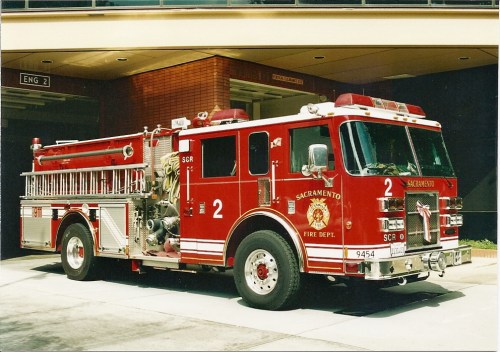
MAGNOLIA STATION AT CRESLEIGH RANCH
Rancho Cordova, CA | low USD $600,000.00s
Now Selling!

Models now open at Magnolia Station! Located at the corner of Rancho Cordova Parkway and Douglas Road, residents of Cresleigh Ranch will benefit from a brand new neighborhood with convenient access to the new Raley’s Shopping Center, Sunrise Boulevard, and much more!

Magnolia Station will include 81 homesites and five distinct plans ranging from 2,200 – 3,700 square feet; including three single story plans! Each plan has been thoughtfully designed to include features such as: Generations Suite, Optional Offices/Dens, Extended Great Rooms, and more! https://cresleigh.com/magnolia-station/residence-2/

P.S. The limo is not cheap. Wor

Everyone is Afraid of the Dark

Magnolias, orange trees, thick evergreen and palm trees sprouted from the sweeping lawns growing tall, as their green leaves beautifully filled the sky providing shade from the hot sun. Shielded behind the lush proliferation of gardens stood gorgeous Llanada Villa built in the Queen Anne Victorian style with soaring roofs and columned porticoes. The farmland provided crops for food. It was Sunday January, 1888, and the famers and servants were buoyant with excitement, undampened by undue religious solemnity. Good nature was inescapable that Sunday. Conversation abounded with joy and optimism. Several planters, dressed in gloves, hats, and cravat, strolled my estate. The road bustled with carriages and horses; men and women strolled along the green lawns in their Sunday finery; and the servants hunted and played games in the field. Somehow, in the midst of it all, I had grown tired and went to my bedroom to rest. It was past midnight when I awoke, and when I looked out the moon was rising over the Observational Tower. I heard a battle, but I could not see it for the smoke and flames, and the broken marble battering me from all sides. Doors were broken from their hinges, and the light bulbs exploded, and in the darkness, I was thrown against the walls or the floors. I felt an intense heat pass over me, and I struggled to get to my feet as the broken and fragmented tiles swirled about the chamber. Ghastly screams came from Arkie, the son of one of the farmers. “I have seen an evil thing this night,” he said. “Tell me what you have seen,” I replied. Arkie told me everything he had seen. “The estate was covered with smoke, through which, through which flashes were incessant, whilst the air seemed filled with shell, whose sharp explosions, with the hurling of their fragments hurling between flashes. Flashes that lit up the night sky. #RandolphHarris 1 of 9

“We were at war against a monstrous progeny of demon-possessed men and women, wearing velvet tunics and stockings, and marvelous cloaks trimmed in rare fur. They brandished huge glittering swords. The fountains bulled over, flowing with blood. Several of the servant fled through the streets, yards, and orchards, many taking refuge in the Victorian cottages, outbuildings, and mansion already filled with the wounded and dying. The smoke was so dense we could not perceive an object ten feet in front of us. The gloom of the moment was beyond description. We felt and heard the tread of our enemy, our minds were in tumult, whether to lie still, to yield, or to die fighting. I jumped in and found myself confronted by a giant’s sword pointed by my breast. I grasped the blade and reversed the handle of my sword in a twinkle and offered to surrender. The beast said in the excitement, he thought I had run him through and he dropped his sword.” I was so thankful for each servant who fought for my home, their families, and their way of life, even though death was knocking on their door. A few days later, it was a dark moonless night, and as silent as a tomb. Arkie was still shaken up by the events that had recently taken place. There was a terrible fear, a physiological fear. Something beyond life that I was able to catch for a second. The air was cold now, icy all around me. It suddenly felt as though time stood still and yet as a foggy substance silently closed in the air was getting cold enough to freeze the blood. My nose, face, hands and feet felt ice cold. I was standing in silence, as I watched what was unfolding before my eyes. This misty essence was swirling noiselessly around us as we stood, observing a steam so fine the scene felt surreal. Along with the white mist came a whirl of emotions and confusion. What was happening in my home? I braced myself for some hellish effects. It swirled around us as though blown by a high wind, rising above our heads and dropping as it was moving quickly and yet we felt only a gentle breeze. #RandolphHarris 2 of 9
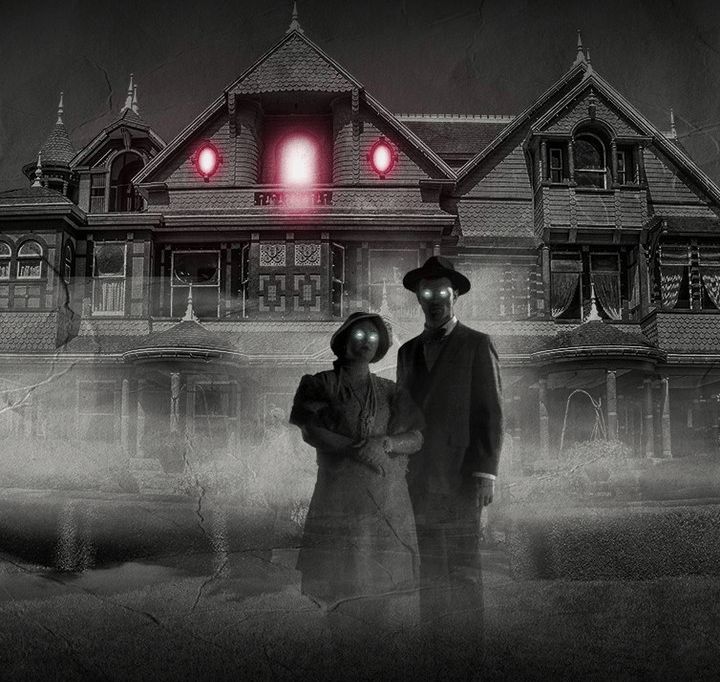
Like a scene from the spectral World, the abnormal foggy essence swirled in vortex shapes and at time, it resembled horses running past us, but the curtains did not move, though we felt air currents around us. We felt vulnerable and somewhat uneasy. I could not for my life keep back a loud scream—the second I had emitted that night. It echoed and echoed through the dim vaultings of my mansion, and I had to choke back a flood of reaction that threated to burst out. Arkie saw a pale figure heading toward him as he ran from the parlor. He quivered when the thing growled at him. It stood out like white chalk on a black board, moving in darkness, seeking. It moved rapidly and just as suddenly as it have moved through the gallery, it suddenly was gone. When I looked around, I saw nothing of the foggy mist that surrounded and chilled us to the bone; it had vanished. The room was clear and felt warmer. What seemed like a long time in the fog had only been a few short minutes! When Arkie and I talked, we were both in awe at what we had experienced. Words were few as we tried to make sense of the incident. Arkie’s hair used to be dark brown, with grizzled streaks about the temples; in less than a month from that day he was a gray as badger, and he has never been quite the same man since that night. I do not believe anybody had ever felt so much sheer hell in one night. Gargoyles and chimeras, we saw all sorts of things, as if it was some passage from the Middle Ages. Arkie said my home repelled him more and more every day, and frightened him, as its features and expressions developed in a way he did not like; in a way that was not human. He felt like a ghoul had been feeding on his soul. He proceeded to leave the hose and suddenly jumped back a foot and started to cry. A dark figure draped in a black tattered robe with a deep hood that concealed his face stoop there, blocking the entrance. My heart sank centuries away as the soul goes as the awful, blasphemous horror touched quite beyond the power of words to classify. I shivered slightly. #RandolphHarris 3 of 9

“What are you?” Arkie cried out desperately to the figure robed in black. There was only silence. He knew the horrible figure we be upon us soon. He flung his sword at the figure in black, and the dark robed figured answered back by point a half-rotted finger at Arkie. The sword flew backwards from his hand. He quickly spun around only to find, to his surprise, that the dreadful ghoul had not emerged from the hallway yet, but we could hear it coming. Arkie’s eyes widened in horror and his heart sank further as he looked to see that his sword hung in the air. Utter fear and hopelessness played on his mind. The ghoul was breathing like a wild beast; and I heard an evil sound also, with blows of something violently driven through flesh and bone, as the sword moved on its own, staking Arkie in the heart. I cried out for mercy as the ghoul approached, but was frozen in fear. Its deathly yellow eyes looked on me with hate and savage hunger. Yellow ooze dripped from its frightful maw. And its long fingernails danced in my hair, before it devoured what remained. As the ghoul kneeled, gnawing at Arkie’s head as a child nibbles at a stick of candy, the shadowy specter looked at me and spoke with it’s a hollow voice, saying “There is no shame in what you have done. Your former life is behind you.” I felt that any moment it might drop its present pray and seek a juicier morsal. But, the nearly eight-foot ghoul grabbed the blood-soaked sword and fled with it. This strange proceeding gave rise to many inquiries. Only a few could answer them. My home is dreaming gorgeously and overflowing with wonder and terror and escapes from the commonplace. It can truly catch the night spirit of antique horror, terror, as well a beauty from life. The haunting apparitions were seldom completely human. Occasionally things would leap through open windows at night, or could be seen squatting on the chest of sleepers, worrying at their throats. The utter inhumanity and callous cruelty of the things torture the brain and flesh. #RandolphHarris 4 of 9
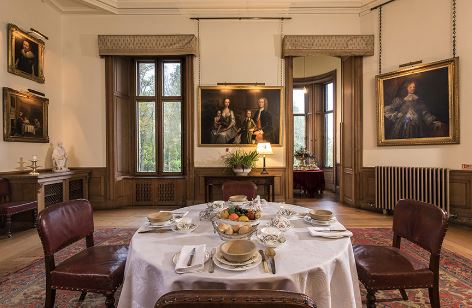
Unlocking the front doors, one is ushered into decorative hallways with splendid mahogany paneling—thrilling and suggestive of the time. Ancient paneled rooms, or simple vaults of masonry, there is even a narrow staircase the leads to the ceiling where a ghost is said to reside. Servants have felt temperature changes upon entering the room and sensed an unknown presence next to them. Others have glimpsed the blasphemous shapes that lope and trot and crawl up the stairs and through the ceiling. We saw the demons themselves and were afraid of them. My shocked scream had waked unaccustomed echoes in the labyrinth. It was more of the physical than the spiritual. I was paralyzed for an instant. I heard a faint scurrying sound somewhere, and a series of squeals or beats in a direction I could not determine. Then there came a subdued sort of clatter which somehow set me all in gooseflesh—a furtive, groping kind of clatter. It was like heavy wood falling on stone or brick—wood on brick—what did that make me think of? It came again, and louder. There was a vibration as if the wood had fallen farther than it had fallen before. After that followed a sharp grating noise. The archaic tunnels in my basement touched graveyard and witch-den. But whatever was in them was devilish anxious to get out. Accidents had happened, but I have never seen what I saw this night—that creature was neither alive nor dead, it abided neither above ground nor in the grave. It was a colossal and nameless blasphemy with glaring red eyes, and it held in bony claws a thing that had been a man. However, it was not even the fiendish apparition that made such an immortal fountainhead of all panic—not that, nor the face with its pointed ears, bloodshot eyes, flat nose and drooling lips. It was not the scaly claws nor the mould-caked body, nor the half-hooved feet—none of these, through any one of them might well have driven an excitable man to madness. It was the curse, the impious, the unnatural endless cycle of terror. #RandolphHarris 5 of 9

These monsters were there—they glared and gnawed and gnawed and glared—and I knew that only a suspension of Nature’s laws would ever let a person be terrorized like this—it was truly some glimpse of the netherworld which no mortal unsold to the Fiend has ever endured. I had to hide this well-established horror-World which I saw fully, brilliantly, squarely and unfalteringly. Fair sized rooms, with wooden floors and furnished were bricked up with extreme care, to conceal the ghastly demons and nauseous monstrosities that leered around from every side of the rooms. I always knew William, no matter how beautiful and pure he was, was not strictly human. Either he was born in strange shadow, or he had found a way to unlock the forbidden gate. There are secrets, you know, which might come down from old Salem times, Cotton Mather tells even stranger things. In the Dark Ages, belief in apparitions, vampires, hell hounds, and demons were commonplace. While belief in ghosts declined in the eighteenth century, it was revitalized in the nineteenth century with the Society of Psychical research. While culture differ in their beliefs about what happens after death, most cultures believe that a ghost can return to the World of the living, with either good or bad intent. In Western cultures, it is most commonly believed that a ghost is the soul of the deceased who cannot find peace or does not know they are dead, leading them to haunt places where they lived or died or objects that caused their death, sometimes they even haunt bloodlines. It may be that they have unfinished business on the Earthly plane, perhaps to protect a loved one, or impart information or reenact the death. I do not think that any power on Earth could make anyone speak of what happened in my home, even old priests were too frightened to look in. #RandolphHarris 6 of 9

It has been said that Mrs. Winchester slept in a different bedroom every night, supposedly in order to confuse evil spirts. Mrs. Winchester was deeply concerned with the welfare of her servants and their families. They were well paid and often additionally rewarded with gifts, even homes, or real estate and lifetime pensions. The full scope of her generosity charity and many kind acts will forever remain unknwn and such was her sincere desire. Her donations were never made public. She contributed to charities of all faiths. In 1911 in New Haven, Connecticut, she established the William Wirt Winchester Memorial Sanitorium for Tuberculosis (also known as low consumption), endowing it with $1,200,000.00 (2023 inflation adjusted $38,540,084.21). Visitors to The Winchester Mystery House are bound to run into others who are curious about the spirit World. It may seem that our intents have been to weave a cloak of vindication and protection covering our lady’s eccentricities, so many to this day still unexplainable. In truth, volumes could be written extolling her many virtues and justifying the construction of one of the largest and most significant architectural structures in the World. Still the Question remains—Why? Why? The enigma of The Mystery House that tragedy and a rifle built is perhaps unanswerable. The present generation must weigh and draw its own conclusions about this Valley’s most interesting, most controversial, most unappreciated and surely our most mysterious First Lady! No one will ever know, but this beautiful and bizarre mansion has, we think, allowed Mrs. Sarah L. Winchester, Lady of Mystery, to achieve a unique kind of eternal life. #RandolphHarris 7 of 9

The spirit World and the human World were once so closely interwoven as to be indivisible. Look at monument, such as The Winchester Mystery House, that our ancient predecessors erected, and the traditions devised, to house, honour, and succor the dead. We still retain enough of our ancestors’ belief that our dead are aware of how we treat them, that we try to ensue they do not have anything thing to complain about. And we listen with widening eyes and quickening heartbeats to the stories told about the ghost that exist and have been recorded throughout time. The Winchester Mystery Houses catches the overtones of the soul, and you will not find those in a modern or renovated home because it has had no time to pick memories and attract local spirits. Placed like Mrs. Sarah L. Winchester’s home was not merely made, but it actually grew. Generation after Generation lived there and felt and died there, and in days when people were not afraid to live and feel and die. This house has stood for almost two centuries and what it has witnessed would make a modern house crumbled into powder. What do modern know of life and the forced behind it? This mansion once had a set of tunnels that kept it in touched with over Victorian houses on the estate. There is hardly a month that you do not read of carpenters finding bricked-up arches and wells leading nowhere in this or that old section of the house. During the time of the construction of this mansion, there were witches and what their spells summoned; pirated and what they brought in from the sea; smugglers; privateers—and I tell you, people knew how to live, and how to enlarge the bounds of life, in the old time! #RandolphHarris 8 of 9

While cleaning the mansion one night, a tour guide noticed a man in 19th century clothes, very pale, with pale blue eyes approaching the Venetian Dining Room. The tour guided continued to work until the mane came very close and stood directly over him. Becoming a bit uneasy at the man’s silence, the tour guide finally asked him, without looking of, if he wished to tour the mansion. When the “guest” did not reply, the tour guide stopped dusting underneath the table, and looked up at the silent man. The man’s face was contorted with rage; his lips moved furiously and he gestured as if he were shouting, but he made no sound. The tour guide fell onto the floor. Before he could turn and flee, the guest disappeared. Terrified, the tour guide ran until he came to an assistant manager. “I saw a ghost,” the tour guide grasped, out of breath. “The ghost of one of the carpenters has come back.” The ghost appeared in August of 2006, to another tour guide. He had entered the Daisy Bedroom and found a fellow tour guide leaning against the wall. Surprised by his presence, he had begun to question the man when he melted into the wall. When he reported the incident, one of his coworkers dismissed it as imagination. A few days later, two tour guides saw the same carpenter. They were locking up the mansion and the lights had not been off more than a few minutes when the sound of footsteps caused both tour guides to stop in their tracks. Before either of them could move, a door swung open and a young man entered. He gestured wildly and seemed to be shouting at the two tour guides, neither of whom could testify that any sound issued from the angry visitor. When one of the tour guides turned on the light, the figure faded before their astonished eyes. They quickly had the mansion secured and order all exists guarded. Guards reported that no person had attempted to leave the building. After the guards had conducted a search of the rooms, they were convinced that their visitor had not been a living man. #RandolphHarris 9 of 9


The room count of California’s most mysterious mansion has just increased by one, rounding out at 161 chambers (that we know of). Preservationists at The Winchester Mystery House in San Jose have found a previously unknown room in the attic of the house, and in it was a pump organ, a dress form, a sewing machine, a Victorian sofa, and several paintings.

For further information about tours, including group tours, weddings, school events, birthday party packages, facility rentals, and special events please visit the website: https://winchestermysteryhouse.com/

Please visit the online giftshop, and purchase a gift for friends and relatives as well as a special memento of The Winchester Mystery House. A variety of souvenirs and gifts are available to purchase. https://shopwinchestermysteryhouse.com/

If you forget to purchase something during your visit, you can order any gift item by calling 408-247-2000 and charging them to your credit card. You can also place an order through the mail. Be sure to include a daytime telephone number with area code. Write to: Winchester Mystery House.

An Artifact from Another Level of Being

The silence closed in. Something was building in Llanada Villa. Something was happening in the very air itself. Something changed in the golden glow of a late autumn afternoon. And as I heard the music, a long stab of terror drove through my heart. I assented to the window. As I looked out, I saw a handsome old-fashioned carriage, with a troop of couriers and footmen. I saw the slim figure of the pale gentleman in black, as he held a thick velvet cloak. He looked about him at the others as he went on, his voice ringing clear in the silence. “Never such a place as this has existed before. A place where demons have been invented by aggrieved souls. I wondered if Mrs. Winchester was perhaps a member of the Freemasons, or some other secret society. Maybe she holds some exalted rank.” I felt a great shudder pass through me at these words. However, there had been a conviction in those appalling words. Secret societies were very fashionable just then. Secret societies and psychiatry were the contrasting en vogue activities of the moment. I folded my arms and leaned against the frame of the door, obscuring for the moment the light behind me. I had an urge to venture outside, to walk in silence amongst the trees. However, the fruit orchard was dark enough even in daylight; by moonlight it would be all too easy to imagine terrors—as I keep imagining I can hear soft footsteps moving across the floor above my head. But when I sit on the sofa to listen, I hear only the beating of my heart. I walked for hours examining the trees and the splendid fruit that would be harvested. Before long, I was overtaken by night while still in the fruit orchard. Utterly bewildered and overcome with fatigue, I had lain down near the root of a large plumb tree and fallen into a dreamless sleep. #RandolphHarris 1 of 8

It was hours later, in the very middle of the night, that one of God’s mysterious messengers, gliding ahead pronounced the awakening word in my ear. Waking from a deep sleep at night in the midst of what seemed like a forest, front among the tree on either side I caught broken and incoherent whispers in a strong tongue which I partly understood. They seemed to me fragmentary utterances of a monstrous conspiracy against my body and soul. It was now long after nightfall, yet the interminable fruit orchard through which I journeyed was lit with a wan glimmer having no point of diffusion, for in its mysterious lamination nothing cast a shadow. A shallow pool in the guttered depression of an old well met my eye with a crimson gleam. I stooped and plunged my hand into it. It stained by fingers; it was blood! Blood, I then observed, was about me everywhere. The fallen fruit showed blots and splashes of blood. The girds of the orchards were pitted and spattered as with red rain. Defiling the trunks of the trees were broad maculations of crimson, and blood dripped like dew from their foliage. All this I observed with a terror which seemed not incompatible with the fulfillment of a natural expectation. It seemed to me that it was all in expiation of some crime. So frightful was the situation—the mysterious light burned with so silent and awful a menace; the noxious plants, the trees that by common consent are invested with a melancholy or baleful character, so openly in my sight conspired against my peace; from overhead and all about came so audible and startling whispers and the sighs of creatures so obviously not of Earth—that I could endure no longer, and with a great effort to break some malign spell that bound my faculties to silence and inaction, I screamed with the full strength of my lungs! #RandolphHarris 2 of 8

My voice was broken, it seemed, into an infinite multitude of unfamiliar sounds, went babbling and stammering away into the distant reaches of the orchard, died into silence, and all was as before. Despair succeeded hope. Gratitude gave place to curse. As I preceded down the path, sobbing quietly to myself, in the misery of fear, the stern light of the Observational Tower became a tiny speck, yellower but scarcely bigger than some of the stars, which here and there shone between the clouds. Nearly twenty minutes passed, and my fatigue began to change to exhaustion. The overpowering sense of the inevitable pressed upon me. With the weariness came a strange comfort. On, and on I went through the thicket of trees. I knew of my probable presence in the spirit World. The moon, then in her third quarter, pushed out from behind the concealing clouds and shed a pale, soft glitter upon my mansion. My last appeal had been heard. I made it home. About half an hour after getting home, I still felt energized but I began to feel a sensation around my forehead as I have many times since. I suddenly felt weak. I went in and sat at the foot of my bed and passed out. I have never been given to fainting or passing-out spells, but I did not fall asleep—I passed out cold. When I woke up, I had no concept of time. When I woke up, a low, wild peal of laughter broke out at a measuresless distance away, and growing even louder, seemed approaching ever nearer; a soulless, heartless, and unjoyous laugh, like that of loon; a laugh which culminated an unearthly shout close at hand, then died away by slow gradations, as if the accursed being that uttered it had withing over the verge of the World whence it had come. #RandolphHarris 3 of 8

Sitting here in my temple of a house, I felt trapped and compromised, and even terrified. I got a feeling that the presence was still nearby and had not moved. A strange sensation began slowly to take possession of my body and my mind. I could not say which, if any, of my sense were affected; I felt it rather as a consciousness—a mysterious mental assurance of some overpowering presence—some supernatural malevolence different in kind from the invisible existences that swarmed about me, and superior to them in power. I knew that it had uttered that hideous laugh. And now it seemed to be approaching me; from what direction I did not know—dated not conjecture. All my former fears were forgotten and merged in the gigantic terror that now held me in thrall. Powers were traversing my haunted mansion. My senses were heightened as I found myself starting into the sharply dawn face and blank, dead eyes of my own mother, standing white and silent in the garments of the grave! The apparition confronting me—the thing so like, yet so unlike my mother—was horrible! It stirred no lover nor longing in my heart; it came unattended with pleasant memories of a golden past—inspired no sentiment of any kind; all the finer emotions were swallowed up in fear. I turned to turn and run from before it, but my legs were as lead; I was unable to life my feet from the floor. My arms hung helpless at my sides; of my eyes only I retained controlled, and these I dared not remove from the lusterless orbs of the apparition, which I knew was not a soul without a body, but that most dreadful of all existences infesting my haunted mansion—a body without a soul! #RandolphHarris 4 of 8

In its blank state was neither love, nor pity, nor intelligence—nothing to which to address an appeal for mercy. For a time, which seemed so long that the World grew gray with age and sin, and the haunted forest, having fulfilled its purpose in this monstrous culmination of its terrors, vanished out of my consciousness with all its sights and sounds, the apparition stood within a pace, regarding me with a mindless malevolence of wild brute; then thrust its hand forward and sprang upon me with appalling ferocity! The act released my physical energies without an unfettering my will; my mind was still spellbound, but my powerful body was and agile limbs, endowed with a blind, insensate life of their own, resisted stoutly and well. For an instant I seemed to see this unnatural contest between a dead intelligence and a breathing mechanism only as a spectator. Despite my struggles—despite my strength and activity, which seemed wasted in a void, I felt the cold fingers close upon my throat. Brorne backward to the floor, I saw above me the dead and drawn face within a hands breadth of my own. Its eyes were shallow to the point of blankness, and then all was black. Until I awoke, the passage outside my room had been pitch dark. Now the gasoliers illuminated the hall, but the glass was so blackened that they yielded only a dim, murky light. The air was stale and close. Expecting at every turn to find a housemaid awaiting me with a smile, I made my way through the gloom to the landing. The double doors to the gallery stood open. Along each wall, a row of wavering light receded. Transom windows shone with a faint cold light; higher still, the ceiling was shrouded in darkness. Some twenty feet away from me, candles burned upon a small round table, lighting of the face of the pale man and Mrs. Haas. “Ah, there you are, my dear,” said he, just as if he had last seen my five minutes—rather than several days—ago. I moved reluctantly to join them. #RandolphHarris 5 of 8

Mrs. Haas, resplendent in crimson silk and displaying a large expanse of white bosom, greeted me with disdain. Behind them, the wall at the far end of my gallery was dominated by the immense fireplace, and the armour towering in the shadows beside it. The sword glittered beneath its gloved hand; in the shifting light it seemed alert, alive, watchful. Within the fireplace was a massive chest of dark metal. “Dr. Cottam was about to tell us,” said Mrs. Haas impatiently, “of a discovery he had made amongst your late husband’s papers.” He spoke as if I had kept them waiting. “Indeed I was.” His tone was as cordial as ever, but with an edge of anticipation. His teeth caught the light as he smiled; the pupils of his eyes shone like twin flames. “Now, in going through his study the other day, I found a page of notes you must have missed after relocating from New Haven—scrawled in haste, and sometimes quite impenetrable—which had slipped behind a row of books.” On the table was a crumpled sheet of paper. “I shall not weary you with the tale of my efforts to decipher this. He believed that if he were inside the armour when lighting struck, he would pass unharmed into the next World, jut as the risen body, according to Scripture, will ascend to Heaven upon the day of judgement.” “Oh dear Heavens,” cried Mrs. Haas. “Mrs. Winchester, I have been dying for a grand tour of your estate. My companion Dr. Cottam is rather a bore with such foolish tales of science fiction!” “There is a theory, you know, that the basis of spirit may be electrical. For spirits to communicate with the living,” expressed Dr. Cottam, the man with the very pale face. #RandolphHarris 6 of 8

“Dr. Cottom, I have begun to wonder whether your obsession with William Winchester is not, perhaps, quite as mad as I assumed,” explained Mrs. Haas, “but I do wish to get on with this tour. Mrs. Winchester has already delayed us several hours after he invitation, and I am growing quit weary.” “Well, Mrs. Haas, as I do recall, Gods are often said to wield lightening; and whilst this represents primitive awe at the power of nature, it may also shroud a genuine intuition. The same applies to the spiritualist practice of linking hands around a table. Ghosts and spirits are generally depicted as emanations of light; one thinks of St. Elmo’s fire or the very rare phenomenon of ball lightning…a far fetched analogy, you may say, but just as a magnetic field will cause a heap of iron filings to arrange themselves into a complex pattern, so the soul, the vital principle—call it what you will—animates the Earthly body. Might it not be that the vital principle is electrical, perhaps in some subtler form that science has not yet grasped?” said Dr. Cottam. “Dr. Cottam, while your theories are very fascinating, I fear Mrs. Haas is growing impatient and I should like to give her a tour now,” I explained. I liked Mrs. Haas more and more every minute. Her gossip, without being ill-natured, was extremely diverting to me, who had been so long out of the great World. I thought what life she would give to my sometimes-lonely evenings at home. There was a ball going on in the Grand Ballroom, this house seemed to run itself sometimes, which would not be over until the morning sun had almost reached the horizon. It pleased the Grand Duke to dance till then, so loyal people could not go away, or think of bed. #RandolphHarris 7 of 8

We had just got through a crowded parlor, when Dr. Cottam asked me what had become of Mrs. Haas. I though she had been by his side, and he fancied she was by mine. The fact was, we had lost her. All my efforts to find her were in vain. I feared that she had mistaken, in the confusion of the momentary separation from us, other people for her new friends, and had, possibly, pursued and lost them in the extensive grounds which were thrown open to us. Morning broke. It was clear daylight before I gave up my search. It was not till near two o’clock next day that we heard anything of Mrs. Haas. At about that time a servant knocked at my door, to say that he had been earnestly requested by a young, who appeared to be in great distress, to make out where she could find Mrs. Winchester and Dr. Cottam. There could be no doubt, notwithstanding the slight inaccuracy that my friend had turned up. I had a housemaid go to the guest room and summon Dr. Cottam. I went down to the parlor and reunited with Mrs. Haas. She told me a story to account for having failed to recover us for so long. Very late, she said, she made a detour and wandered around, not before long becoming afraid and getting lost. She got into the Crystal Bedroom in despair of finding us, and had then fallen into a deep sleep which, long as it was, had hardly sufficed to recruit her strength after the fatigues of the ball. It the midst of my perplexities, an anxiety of far more urgent kind presented itself. My dear friend began to lose her looks and health, and that in manner so mysterious, and even horrible, that I became thoroughly frightened. #RandolphHarris 8 of 8

People, since as long ago as the 1800s, have reported a vast array of unexplained events, experiences, and sightings at what is now known as The Winchester Mystery House. Over the years, people have reported bone-chilling sightings ghosts, angels, demons, fairies, giants, orbs, lights, mist, vampires, witches, warlocks and werewolves. In 2007, a man was attending Santa Clara University, and he was lucky enough to get hired as a tour guide at The Winchester Mystery House. He had no sooner moved into his apartment and had the telephone installed when he received a call warning him never to return to Sacramento again. During a later call, a woman with a high-pitched voice informed “G” that he was being kept under surveillance by a group who felt that he had acted unjustly in the past by not returning things to their proper owners. G emphasized that he had led a very quiet life as an undergraduate.

Yet he probably received 30 or more telephone calls from anonymous voices advising him not to return to Sacramento. The voices reprimanded him for having taken something that did not belong to him. G said that he did not carry anything with him that was from Sacramento and did not often visit the beautiful city, and he seldom discussed his life with any but a few of his closet acquaintances. He wondered who could have possibly taken such a long-term interest in him? About the third year after working at The Winchester Mystery House, a guest unknown to him stopped to say hello. G knew that such an act was hardly unusual, since guests will often do this to find out interest facts about tour guides and secrets about Sarah L. Winchester’s mansion. However, he noticed the boy was strangely inquisitive. G was astonished when the teenager drew a design on a piece of paper that he had seen somewhere in the mansion. He smiled at G, then asked if he knew what the symbol meant.

When G pressed the boy, in turn for some answers, the guest threw away the design, laughed, and said that he was just fooling around, that he did not mean anything about it. G never saw the alleged guest again. He descried him to a could of tour guides, but no one was able to identify him. After several years of watching at The Winchester Mystery House, G graduated from University. He had not been in possession of his diploma for more than four days when someone rang his apartment and scolded him for taking things that did not belong to him. The voice told G that he should always leave things where they were. He reported to his supervisors that he kept receiving mysterious calls. On one occasion the voice told G that he has discovered a strange key to other dimensions, but the entities had long since reclaimed it. However, apparently, some spirit masqueraders were determined that he should never forget the day he came into contact with an artifact from another level of being. What is The Winchester Mystery House?

And please be sure to check out the online gift store: https://shopwinchestermysteryhouse.com/


What Do You Intend to Do with Me?
There came to me the blessed knowledge that every living soul was the subject of this celebration, of this infinite and ceaseless chorus, that every soul was loved as I was loved, know now as I was known. Not a single word was lost in the great mansion of love that surrounded me, this vast night was as bright as day. The grounds were thrown open, the trees hung with coloured lamps. There was such a display of fireworks as Paris itself had never witnessed. And such music—music, you know, is my weakness—such ravishing music! The finest instrumental band, perhaps in the World, and the finest singers who could be collected from all the great operas in Europe. As you wandered through the fantastically illuminated ground of Llanada Villa, the moon-lighted mansion throwing a rosy light from its long rows of windows, you would suddenly hear these ravishing voices stealing from the silence of the fruit orchard, or rising from upon the farmland. I felt myself, as I looked and listened, carried back into the romance and poetry of my early youth. When the firework were ended, and the ball beginning, we returned to the Grand Ballroom which was thrown open to the dancers. A masked ball, you know, is a beautiful sight; but so brilliant a spectacle of the kind I never saw before. It was a very aristocratic assembly. My dear niece Daisy was looking quite beautiful. She wore no mask. Her excitement and delight added an unspeakable charm to her features, always lovely. #RandolphHarris 1 of 9

An old friend called me by name, opened a conversation with me, which piqued my curiosity a good deal. She referred to many scenes where she had met me—at Court, and at distinguished houses. She alluded to little incidents which I had long ceased to think of, but which, I found, had only lain in abeyance in my memory, for they instantly started into life at her touch. I became more and more curious to ascertain who she was, every moment. She parried my attempts to discover very adroitly and pleasantly. The knowledge she showed of many passages in my life seemed to me all but unaccountable; an she appeared to take a not unnatural pleasure in foiling my curiosity, and seeing me flounder, in my eager perplexity, from one conjecture to another. She was very witty and lively when she pleased, and after a time . In the meantime, availing myself of the license of a masquerade, I put not a few questions to the lady. “You have puzzled me utterly,” I said, laughing. “Is that not enough? will you, now, consent to stand on equal terms, and do me the kindness to remove your mask?” “Can any request be more unreasonable? And how do you know that a sight of my face would help you?” she said. “I should take chance for that,” I answered. “Mrs. Winchester, you have no mask to remove. You can offer me nothing in exchange.” “My petition is to your pity, to remove it,” I replied. “And mind to yours, to let it stay where it is,” she said. “Well, then, at least you will tell me whether you are French or German; you speak both languages so perfectly.” #RandolphHarris 2 of 9

“I don’t think I shall tell you that, Mrs. Winchester; you intend a surprise, and are meditating the particular point of attack.” “At all events, you will not deny this,” I said, “that being honoured by your permission to converse, I ought to know how to address you, Shall I say Mrs. Bertha Haas?” She laughed, and she would no doubt, have met with another evasion—if, indeed, I can treat any occurrence in an interview every circumstance of which was pre-arranged, as I now believe, with the profoundest cunning, as liable to be modified by accident. “As to that,” she began; but she was interrupted, almost as the opened her lips, by a gentleman, dressed in black, who looked particularly elegant and distinguished, with this drawback, that his face was the most deadly pale I ever saw, except in death. He was in no masquerade—in the plain evening dress of a gentleman; and he said, without a smile, but with a courtly and unusually low bow:–“Will Mrs. Haas permit me to say a very few words which may interest her?” The lady turned quickly to him, and touched her lip in token of silence; she then said to me, “Keep my place for me, Mrs. Winchester; I shall return when I have said a few words.” And with this injunction, playfully given, she walked a little aside with the gentleman in black, and walked for some minutes, apparently very earnestly. They then walked away slowly together in the crowd, and I lost them for some minutes. A few moments she returned, accompanied by the pale man in black, who said: “Mrs. Winchester, please forgive me, but Mrs. Haas’s carriage is at the door.” They left in a hurry. #RandolphHarris 3 of 9

Darkness had fallen—I did not know what time it was. I was now on the first floor, about halfway down a passage which twists and turns so often that you cannot tell where you are. I had to go back and count three times to establish that there were twenty-two rooms on this corridor. The servants’ stairs are at the back of the house, with a door leading to the main part of the Hall at the front. The panelling had been scrubbed, and new carpets laid. The floor creaks wherever I move, no matter how softly I tread. There was folklore, while cloudy, evasive at best, which hinted at a hidden race of monstrous being which lurked someone among this passage way. These beings were seldomly glimpsed, but were said to wander in from deep in the fruit orchards, and the dark valleys where streams trickled from unknown sources. However, evidences of their presence was reported by those who had ventured father than usual into certain areas of the mansion that even I shunned. There were queer footprints or claw-prints on the floor and scratched on the walls. The rumors had several points in common; averring that the creatures were huge, black, and with two great batlike wings in the middle of their back. Once a specimen was seen flying—launching itself from the top of the observational tower, at night and vanishing in the sky after its great flapping wings had been silhouetted an instant against the full moon. #RandolphHarris 4 of 9
These things seemed content, on the whole, to let the staff alone; though they were at times held responsible for the disappearance of servants—especially those venturesome individuals who went too far in the fruit orchards or who went lurking in the observational tower at night. People would look up at Llanada Villa with a shudder, even when not recalling how many servants had been lost. However, while according to the earliest legends the creatures would appear to have harmed only those trespassing on their privacy. They attempted to establish secret outpost in my home. There were tales of queer claw-prints seen around the mansion’s windows in the morning, and of occasional disappearances in regions obviously haunted. Tales, besides, of buzzing voices in imitation of human speech which made surprising offers to the servants, and of housemaids frightened out of their wits by things seen or heard in parts of the mansion we rarely used. There are other tales of servant who had undergone a repellent mental change shortly after being hired, and who were shunned and whispered about as people who had sold themselves to strange beings. As to what these beings were—I had not a clue. Many just called the “demons.” However, there was unanimous agreement that these creatures were not natural. I had asked myself endlessly whether, if someone had succeeded in mesmerizing the servants, or shrouded their perception. #RandolphHarris 5 of 9

The next morning, I must have come down to breakfast first, though I did not recall dressing, or pinning up my hair, only—just as if I had been sleepwalking, and found myself suddenly wide awake at the breakfast table—seeing the housemaid at the sideboard. And I looked up fearfully. All evening I kept up the pretence that nothing had occurred; and when it came time to retire, I lay awake half the night, dreading the sound of something treading upon the stair, but the next morning it was the same. The housemaid gave her notice soon afterward, but if she had been forced to do so, she did not admit it to me. She had often spoke of lines and curves which pointed out directions leading through the walls of space to other spaces beyond, and had often implied that certain midnight meetings took places in these areas. She had also spoke of a large Black figure, then vanished. The darkness always teemed with unexplained sound—and I somethings shook with fear least the noises I heard should subside and allow me to hear certain other noises which I suspected were lurking in the walls. Life had become an insistent and almost unendurable cacophony, and there was that constant, terrifying impression of other sounds—perhaps from regions beyond life—trembling on the very brink of audibility. There were rumours, too, with a baffling and disconcerting amount of agreement. Witnesses said the Black shadowy figure had long hair, was sharp-toothed, was evilly human and had claws like a bear. Of all the bizarre monstrosities in the Word, nothing filled me with greater panic and nausea than this blasphemous beast haunting the hall of my mansion, and to think that there were several of them behooved me. A sense of impending crisis was as palpable as the ticking clock. #RandolphHarris 6 of 9

The library and the old gallery from which one of the servants vanished from had been locked, for reasons of safety. And all of the rooms above this floor were closed, the stairs roped off and all the landing doors locked. In my tortured ears there sounds unceasingly a nightmare whirring and flapping, and a faint distant baying as of some gigantic hound. It is not a dream—it is not I fear, even madness—for too much has already happened to give me these merciful doubts. There was thunder in the air one night, the pitiful throngs of the win shrieked and whined, as the unnamable horror descended upon Llanada Villa. This house swarmed with ghosts. However, people enough, first and last, had been in terror or apparitions, but who had ever before so turned the tables and become oneself, in the apparitional World, an incalculable terror? What habit and repetition had I gained to an extraordinary degree the power to penetrate the dusk of distances and the darkness of corners, to resolve back into their innocence the treacheries of uncertain light, the evil-looking forms taken in the gloom by mere shadows, by accidents of the air, by shifting effects of perspective; putting down my dim luminary I could still wander on without it, pass into other rooms and, only known it was there behind me in case of need, see my way about, visually project for my purpose a comparative clearness. It made me feel, this acquired faculty, like some stealthy cat; I wondered if I would ever glare at these moments with large shining yellow eyes. #RandolphHarris 7 of 9
The moments I liked best were those of gathering dusk, of the short autumn twilight; this was the time of which, again and again, I found myself hoping most. Then I could most intimately wander and wait, linger and listen, feel my fine attention, never in my life before so fine, on the pulse of the great vague place: I preferred the lampless hour and only wished I might have prolonged each day the deep crepuscular spell. In the depths of the house, the mystical other World flourished. This night—I stood in the hall and looked up the staircase with certainty more intimate than any I had known. Then I realized there was a red-clad figure moving up there. The longer I watched, the clearer the figure became. The man was pacing back and forth at a rapidly increasing speed. His face carried a worried frown and suddenly he was running back and forth so fast that he levitated and bounced into the walls. I was shocked as the man continued back and forth, bouncing from wall to wall, until he actually touched the ceiling. I followed his progress upward and then he was gone. As I cast my eyes around my home, I saw that it was no longer empty. There were spectral people everywhere and they were watching me quietly. I had taken a number of steps to possess myself. The door between the rooms was open, and as I remembered, have all three upon a common corridor as well, but there was a fourth, beyond me, without issue save through the preceding. The house, withal, was immense, the scale of space again inordinate; the open rooms, to no one of which my eye deflected, gloomed in their shuttered state like mouths of caverns; only the high skylight that formed the crown in the deep well created for me a medium in which I could advance, but which might have been, for queerness of colour, some watery underworld. #RandolphHarris 8 of 9
I tried to think of something noble, as Llanada Villa was really grand, a splendid possession; but this nobleness took the for of the clear delight with which I was finally to sacrifice it. They might come in now, the builders, the destroyers—they might come as soon as they would. At the end of two flights, I had dropped to another zone, and from the middle of the third, with only one more left, and I seemed to lose myself in the vague darkness. I let myself go on with the sense that here was at least something to meet, to touch, to take, to know—something all unnatural and dreadful. The penumbra, dense and dark, was the virtual screen of a figure which stood in it as still some image erect in a niche or as some black-vizored sentinel guarding a treasure. I was to know afterwards, was to recall and make out, the particular thing I had believed during the rest of my descent. I saw, in its great gray glimmering margin, the central vagueness diminish, and I had felt it to be taking the very form toward which, for so many days, the passion of my curiosity had yearned. It gloomed, it loomed, it was something, it was somebody, the prodigy of a personal presence. Rigid and conscious, spectral yet human, a man of substance and stature. Horror, with the sight, had leaped into my throat, gasping there in a sound I could not utter; for the bared identity was too hideous. My glare was the passion of the protest. The face, that face! It was unknown, inconceivable, awful, disconnected from any possibility. The presence before me was a presence, the horror of nights of grotesqueness. A thousand times as it came upon me nearer now—the face was the face of a stranger. The stranger, whoever he might be, evil, odious, blatant, vulgar, had advanced as for aggression, and I knew myself to give ground. Then harder pressed still, sick with the force of my shock, and falling back as my whole vision turned to darkness and my feet gave way. My head went round; I was going; I had gone. #RandolphHarris 9 of 9

Many of the ghosts of The Winchester Mystery House are associated with tragedy. For years, there have been stories that the security guards see a man walking along the fourth floor of the mansion. The man does not set off the motion sensors, but he is often seen hurrying along. He disappears when guards approach too near him. The guards consistently describe him as a man in work clothes from the 19th century. https://winchestermysteryhouse.com/
And please be sure to check out the online gift store: https://shopwinchestermysteryhouse.com/

I’m a Pharmacist, I Know What I am Doing

Recreational drug use is often portrayed in popular culture and music. To further highlight this illustration, probably the best known musical cliché of recent decades was “sex, drugs, and rock’ n’ roll,” while the Billbooard charts have been filled with songs involving drugs, such as Eric Clapton’s Cocaine or the Rolling Stones’ Sister Morphine and Mother’s Little Helper. Popular culture portrays not just recreational drug use but tragedy associated with drugs, for example, the deaths of guitarist Jimi Hendrix, Janis Joplin, and Jim Morrison and many others. Of course, not all common-use drugs are understood as dangerous or associated with tragedy. We found clear evidence of two very different modes of entry among the respondents, namely recreational abusers and therapeutic self-medicators. However, it is important to note tht these were not mutually exclusive categories of offenders. In other words, these two categories were not completely dichotomous. As is usually the case, real life seldom fits cleanly into nice, neat categories. In fact, we were able to identify a number of cognitive and behavioural themes that were common to almost all of the drug-using pharmacists interviewed. These themes were expressed by nearly all of the drug-abusing pharmacists that we interviewed, regardless of how the individual initially began their illicit drug abuse career. The existence of these common themes suggest that pharmacy-specific occupational contingencies play a center role in the onset and progression of illicit use of prescription medicines. #RandolphHarris 1 of 20

Intuitively, it should not be surprising that pharmacists would steal prescription medicines as a way of treating their own physical ailments. After all, they have been exposed to years of pharmacy training that emphasized the beneficial, therapeutic potential of these medicines. Each pharmacist has dispensed the medicines to hundreds of patients and then watched the drugs usually produce the predicted beneficial results. They have all read the literature and drug inserts detailing the chemical composition of drugs and studied the often dramatic curative effects of the chemical substances. Pharmacists, more so than any other member of society, are keenly aware of how and why drugs work. There was strong evidence to suggest that both the therapeutic self-medicators and the recreational abusers actively used the years of pharmacological knowledge that they had acquired. In their eyes, it made perfect sense that they should put their pharmacy knowledge to work on themselves. This application of knowledge can be seen in the comments of a 40-year-old female self-medicator: “So, in 1986 I was sent to the psychologist. That was when I was forced to recognize that I had an alcohol problem. And I recognized that I had to do something. And in my brilliant analysis, I made a decision that since alcohol was a central nervous system depressant, the solution for me was to use a central nervous system stimulant. That would solve my alcohol problem. So I chose the best stimulant that I had access to, and that was [pharmaceutical grade] cocaine. I started using cocaine in 1986. I never thought that it would progress. I never thought it was going to get worse. I thought, ‘I’m just going to use it occasionally.’” #RandolphHarris 2 of 20

Similar trends were observed among the recreational abuser group, only here, the applied use of drugs was based upon more recreational motives. Almost all of the therapeutic self-medicators and recreational abusers described how they became masters of quickly diagnosing their own ailments or emotional needs and then identifying the appropriate pharmacological agent that would remedy the problem. Moreover, as professionals, they were confident that they would be able to self-regulate their drug intake so as to never become addicted. All of the respondents drew upon their social status as pharmacists to convince themselves that their drug use would not progress into dependency. They recall being adamant in their view that personally they were immune from such problems, believing that only stupid, naïve people became addicted to drugs. As a 40-year-old female self-medicator put it, “I’m a pharmacist, I know what I am doing.” A 39-year-old male self-medicator went so far as to say: “I mean, we know more [about the effect of drugs] than doctors. We have all the package inserts. We have the knowledge. We know a lot about the drugs, so what’s the big deal?” Elsewhere we refer to this denial mechanism as a “paradox of familiarity,” because familiarity can breed consent, not contempt toward prescription drug use. Members of both categories of pharmacists claimed that they had never been warned about the dangers of drugs, insisting instead that their training had only stressed the beneficial side of prescription medication. #RandolphHarris 3 of 20

To further highlight this illustration, a 48-year-old male misuser stated: “I never had anybody come right out and tell me that [prescription drug abuse] was probably unethical and illegal because they assumed that we knew that. But nobody ever said this is something that is not done.” Let without guidance on the issues, some pharmacists assumed that self-medication was acceptable behaviour. To this end, a 39-year-old female self-medicator said: “It’s [self-medication] just part of it [the pharmacy job]. It’s just accepted because we know so much. I’m sure it’s the same way when the doctors do it. It wasn’t a big stretch to start going “You know, I got a headache here, maybe I should try one of these Percocets [narcotic analgesic]?” Many pharmacists spoke about their prescription drug theft/use as if it were an entitlement that went along with being a pharmacist. Much like a butcher always has fresh meat at home or a car dealer always drives a state-of-the-art automobile, pharmacists will always have the best drugs. This theme is illustrated in an exchange that occurred between the interviewer and a45-year-old-male pharmacist: “Why take plain Aspirin or plain Tylenol when you’ve got this [Percocet-narcotic analgesic]? It works better….[so] you don’t even have to struggle with it. I really believed that I had license to do that…as a pharmacist. I mean with all that stuff sitting there, you know. Oh, my back was just killing me during that period of time and this narcotic pain reliever is sitting right there. I thought, ‘why should [I] suffer through back pain when I have this bottle of narcotics sitting here?” #RandolphHarris 4 of 20

The above-mentioned themes involve cognitive dimensions of the pharmacists’ drug abuse in that they speak to common motivational and justification themes that were present in all of the interview. Perhaps more important is the fact that there was a common behavioural characteristic shared by all 50 pharmacists. In ever case, occasional prescription drug abuse eventually gave way to an advanced addictive state that was marked by an enormous intake of drugs, unmistakable habituation, and the constant threat of physical withdrawal. Members of the recreational abuser and therapeutic self-medicator groups alike routinely reported daily use levels exceeding 50-100 times the recommended daily dosage. One pharmacist reported that his drug use regimen progressed to 150 Percocets [strong narcotic analgesic] per day. Another individual reported injecting up to 200 mg of Morphine each day. Still another respondent described a daily use pattern that, among other things, included 5g of cocaine. Invariably, these advanced levels of drug use led to clear signs of habituation and the constant threat of physical withdrawal. At this point, the individual recalls growing increasingly desperate. Consider the following quote from a 44-year-ol male pharmacist who was in charge of ordering the narcotics at the independent retail pharmacy where he worked: “I was ordering excessive quantities and chasing down tracks. That’s what I used to do. I was really reaching my bottom. I would chase these delivery trucks down in the morning because I didn’t come to my store until mid-afternoon. I was in withdrawal in the morning and I was without drugs, so I had to have it. #RandolphHarris 5 of 20

“I was just going nuts. Many mornings I had gone to work sweating. It would be 30 degrees (Fahrenheit), it would be January, and the clerk would say, ‘you look sick,’ and I would say, ‘It’s the flu.’ So I would pay the delivery guys extra money to deliver my drugs first or I would chase the delivery trucks down in the morning. I knew the trucks delivered at 6 in the morning, they came by my area, and I would get up early and chase the trucks down the highway. I would go in excess of 100 miles an hour trying to catch up with this truck and flag it down.” The advanced stages of drug addiction invariably produced traumatic physical psychological outcomes. Eventually, “out-of-control” drug use patterns along with the realization of chemical dependency left the pharmacists in a problematic mental state. It was at this point that al of the pharmacists recalled coming to grips with their addiction. This personal realization was accompanied by a shift in the way they thought about their drug use. They no longer denied that situation by drawing upon recreational or therapeutic explanations. Instead, they finally admitted the dire nature of their situation and became more and more reclusive. In short, all of the respondents grew to realize that they had a drug problem, turning then to fear and ignorance to foster the final weeks or months of their drug addiction. Two identifiable criminal career trajectories were observed among the pharmacists who we interviewed: recreational abusers and therapeutic self-medicators. #RandolphHarris 6 of 20

Careful scrutiny of contemporary drug theory, policy, and practice in all areas, from prescription pharmaceuticals to illegal recreational drugs, reveals numerous apparent inconsistencies and pervasive incoherence. This results, in part, from a kind of silo thinking in which attention to drug theory and drug policy, however sophisticated in its own realm, is encapsulated within distinct professional, practical, and economic spheres or “silos.” Silos are descriptively and prescriptively dense but stand isolated from each other in an empty landscape. In other words, people in one arena of drug theory, policy, or practical programs have plenty to say to each other about the way things are and the way things should be with respect to drugs, but they don’t talk much across the open spaces between their areas of focus. Not only do they not talk much between their fields, for reasons to be explored, they cannot really do so. Clearly, our discussion of the therapeutic self-medicator category goes far beyond what is present in the existing literature. However, the first documentation of recreational drug use among health professionals, had minimal impact on the way that the various healthcare professions think about or address problem of substance abuse within their ranks. The pharmacy profession has been especially reluctant to address the reality of the prescription drug abuse situation. For instance, existing self-reports and interview research on drug using pharmacists largely ignores the recreational origins of drug use and, instead, describes the affected individuals as having misplaced therapeutic motivations. This assumption is reinforced by published biographical accounts of recovering drug using pharmacists. While principally intended to raise awareness among fellow pharmacists, these confessionals consistently emphasize the well-intentioned motives behind the individuals’ destructive drug use past. #RandolphHarris 7 of 20

Information is called observable when it is available symmetrically to both parties, and verifiable when it can be proved to third parties such as a court. In practice, this is a matter of cost, and the standard of proof required. Contracts that are intended to be enforced in a court of law can only stipulate actions that are conditioned on verifiable information; courts cannot judge whether a breach of the contractual terms has occurred if they cannot verify whether the circumstances that call for an action have actually transpired. However, observable information can be the basis for contracts that are enforced by extralegal or private methods, because the two parties can know fully well whether a breach has occurred. Such extralegal methods of enforcement come in to broad types. One is enforcement by insider third parties with specialized knowledge that enables them to verify information that outsider general courts of law cannot; arbitrators in industry associations are the most prominent enforcers of this kind. The second is based on a relationship or ongoing interaction between the parties; a breakup of this relationship constitutes the punishment that may deter one of the parties from breaching. This covers many possibilities. The same two parties may meet repeatedly; the two may not have a direct repeated interaction with each other, but each may interact with others in a group or network that transmits information about any breach to all members and collectively sanctions the miscreant, using ostracism in business interactions or social relationships or both. #RandolphHarris 8 of 20

The distinction between observable and verifiable information is standard in the economic theory of contracts. The New York Stock Exchange developed its internal rules and procedures for dispute resolution, and even Taiwanese shoe manufacturers and Western fashion houses performed dispute-resolution functions in addition to their primary matchmaking ones. One may think that these alternative methods of private ordering must suffer a crippling disadvantage relative to the government’s courts, namely their lack of coercive power to ensure that their decisions are obeyed. However, the difficulty is often nonexistent or easily overcome. First, the sanctions available for private ordering are often very effective. Breach of contract can be deterred in ongoing relationships by the threat that the miscreant will be barred from future business with this particular partner or the group; this can be buttressed by social ostracism if the group fosters social ties among its business members. Sometimes this threat may be even more severe than the fines that courts would impose in the matter. If the threat is credible, in the sense of being a part of the strategies in the subgame-perfect equilibrium of the repeated game that constitutes the ongoing relationship, then the contract is self-enforcing. Second, arbitrators may have similar sanctions at their disposal; if they can bar the miscreant from the industry association, they can instantly put one out of business, which can be a more effective sanction than the fines the courts will impose. Of course, the feasibility of such sanctions depends on the availability of the requisite information, and in the case of repeated interactions, on how highly the participants value the future relative to the present. #RandolphHarris 9 of 20

Finally, courts recognize the informational advantage of the alternative institutions. Therefore when a relational or implicit contract serves such an informational purpose, courts refuse to intervene to modify its terms, or to insert missing provisions, or to overrule the availability of discretion to one party. They also enforce the awards of industry arbitration tribunals, using the government’s power of coercion to obtain compliance if the loser in the arbitration attempts to defy the ruling. In the United States of America, this has been so since 1920; in the international context, over 100 countries now accede to the 1958 New York Convention of the Recognition and Enforcement of Arbitral Awards. By providing for the appointment of industry-expert arbitrators, who can make many factual determinations more accurately and less expensively than a judge or jury can, the rules greatly expand the “contractible” aspects of an exchange. The use of stream-lined procedures together with the appointment of expert adjudicators transforms considerations that in the public legal system would have been only observable to the parties…into considerations that are also verifiable…thereby encouraging transactors to enter into more complete contracts. The point is not that arbitrators have access to more information. Any relevant information can be elicited and brought before the court by either party to the dispute through the legal process of discovery. Conversely, many arbitration forms do not allow discovery, although the arbitrator can request additional information. #RandolphHarris 10 of 20

The key is how information is used; industry arbitrators can use their expertise to interpret it—make factual determinations—more accurately and at a lower cost than non-specialized courts can. This is the sense in which verifiability should be interpreted in this context. Arbitration is used in other contexts for other reasons. In international transactions, each party may suspect that the other country’s courts will be biased in favour of its own nationals; this can deter them from entering into contrast that may end up in national courts. Therefore both may agree ex ante to settle any disputes in an agreed international forum of arbitration. Several of these exist, based in London, Paris, Stockholm, et cetera. They differ in their procedures (degree of formality, time taken, fees charged, et cetera) and the range of legal traditions they cover (civil, common, Islamic, et cetera). These affect the choice of forum by the parties to each transaction. These forums usually lack the expertise that industry-specific forums can provide. Therefore they are not likely to lower costs or improve verifiability and permit more complete contracts; instead, removing the suspicion of bias may be their most important function. The different modes of private and official governance can interact in various ways. To further highlight the illustration, if an ongoing relationship based on the superior observability of information by the two parties breaks down, the best alternative available to the parties may be recourse to a contract based on verifiable information enforceable in a court of law, not total cessation of transactions. #RandolphHarris 11 of 20

And if an arbitrator’s award is not enforceable by direct sanctions such as fines, it may nonetheless form part of a relational arrangement where the arbitrator can terminate the miscreant’s access to future trades. Not only do modes like arbitration evolve and apply to provide governance for transactions where they have an informational advantage and can reduce transaction costs, but also transactions take forms that adapt to the available information and governance. As for the emergence and prevalence of barter and countertrade in post-Soviet Russia in this way: The advantage of paying with goods rather than money is that they can be earmarked s property of the creditor. Money is fungible and liquid; a buyer can hide money easily if he chooses to renege on his promised payment to the seller. Goods in a barter or countertrade contract are more difficult to hide, and therefore can act as deal-specific collateral that mitigates opportunism. When it comes to systems of integration, rising complexity in the economy calls for more sophisticated integration and management. In a not atypical case Nabisco, the food company, as to fill 500 orders a day for literally hundreds of thousands of different products that must be shipped from 49 factories and 13 distribution centers, and at the same time take into account 30,000 different sales promotional deals with its customers. Managing such complexity requires new forms of leadership and an extremely high order of systemic integration. That, in turn, requires greater and greater volumes of information to pulse through the organization. #RandolphHarris 12 of 20

To hold everything together—to track all the components and products, to synchronize deliveries, to keep engineers and marketers appraised of each other’s plans, to alert the R&D people to the needs of the manufacturing side and, above all, to give management a coherent picture of what is going on—billions of dollars are being poured into electronic networks that link computers, data bases and other information technologies together. This vast electronic information structure, frequently satellite based, knits whole companies together, often linking them into the computers and networks of suppliers and customers as well. Other networks link networks. Japan has targeted $250 billion to develop better, faster network. All these changes further accelerate the pace of operations and transactions. Economies of speed replace economies of scale. Competition is so intense and the speeds required so high that the old “time is money” rule is increasingly updated to “every interval of time is worth more than the one before it.” Time becomes a critical variable as reflected in “just-in-time” deliveries and a pressure to reduce DIP or “decisions in process.” Slow, sequential, step-by-step engineering is replaced by “simultaneous engineering.” Companies wage “time-based competition.” Expressing the new, it is clear that money moves at the speed of light. Information has to move faster. Thus acceleration pushed Third Wave business closer and closer to real time. #RandolphHarris 13 of 20

Taken together, these ten features of the Third Wave economy, among many others, add up to a monumental change in how wealth is created. The conversion of the United States of America, Japan and Europe to this new system, though not yet complete, represents the single most important change in the global economy since the spread of factories brought about by the industrial revolution. This historical transformation, picking up speed in the early-to mid-1970, was already fairly well advanced by the 1990s. Unfortunately, much of America’s economic thinking was left behind. Global markets of energy and mineral resources are undergoing far reaching irreversible changes, and so are perceptions about the policies needed to provide their stable supply. Global demand is surging due to a dramatic increase of consumption by the fast-growing large emerging economies. Experts project that, absent significant changes in policy or technology, global energy consumption will increase nearly 50 percent over the next 30 years. Energy consumption is growing faster than the GDP in many countries. On the supply side, uncertainties and destabilization risks are exacerbating due to rising political instability in exporting countries, periodical redirections of sales from external to domestic markets by leading suppliers, and, to a certain extent, a depletion, in some major producing countries, of existing deposits in the absence of new ones whose discovery and exploitation could make up for the loss. #RandolphHarris 14 of 20

Therefore, oil and some other natural resources are becoming more and mor attractive targets for speculators. In these circumstances, countries highly dependent on natural resources imports, especially those that do not have their own powerful resource multinationals, get increasingly concerned about supply destabilization risks. Predictions about an all-out resource war or bitter fights among buyers for limited amounts of oil or metallic ores look like an exaggeration. However, buyers’ competition for particular kinds of resources within particular periods of time due to particular circumstances is becoming a more frequent phenomenon. For instance, the Philippines and Vietnam protested to China against its patrol boats hindering their oil exploration activities near the disputed Spratly Islands in the South China Sea. China demanded that its neighbours stop exploration work in this area. Tensions rose as the United States of America declared that the South China Sea was in the sphere of its national interest and that it would stand by the Philippines as its ally. Now, when it comes to supernatural affairs, the angels are “sent forth to minister to the heirs of salvation,” reports Hebrews 1.14, but not to take the place of Christ or the Holy Spirit. The apocalypse seems to show that this ministration of angels to the saints on Earth is a ministration for war in the spiritual realm against the forces of Satan; but there is little indication given of ministry in any other way. #RandolphHarris 15 of 20

After the first Advent, when there was great angelic activity over the wondrous event of the Father brining the “Firstborn: of the new race (Romans 8.29) into the inhabited Earth (Hebrew 1.6), and again at the Advent of the Holy Spirit on the Day of Pentecost to begin His work of forming a Body like unto the Risen Head—and during the early years of the Church—the employment of an angel in direct and visible communication with believers seems to give way to the work and ministry of the Holy Spirit. The entire work of witnessing to Christ, and leading the Church into all truth, has been committed to the Holy Spirit. Therefore all intervention of “angels” or of audible voices from the spiritual realm purporting to be from God may be taken as counterfeits of psychopathological offenders, whose supreme object is to substitute the workings of their own wicked offenders in the place of God. In any case, it is best and safest in these days of peril to keep in the path of faith and reliance upon the Holy Spirit of God working through the Word of God. Man, the microcosm, the mirror of reality has structures of beings found in him, and are found analogously in the subhuman realm. Selfhood, inner awareness, freedom and destiny—all are verified analogously in subhuman beings. Furthermore, the concepts of courage, love, power, and justice are used to describe analogously the characteristics of all beings and of being-itself. The point we wish to make is that this use of analogy based on human experience seems to yield valid knowledge. #RandolphHarris 16 of 20

Moving up now to the relationship between man and God, one would expect that on the same principle, but with proper adjustments, man could get an analogous knowledge of God. Symbols are not a means of knowing God, but rather a way of speaking about Him. If one wishes to talk about God, finite material must be used, and this is justified by the fact that all finite beings participate in being-itself. Without such an analogy nothing could be said about God. However, the analogia entis is in no way able to create a natural theology. It is not a method of discovering truth about God; it is the form in which every knowledge of revelation must be expressed. In this sense anlogia entis, like “religious symbol,” points to the necessity of using material taken from finite reality in order to give content to the cognitive function in revelation. What is boils down to is that analogy or symbolism is the expression of an encounter with God. Through the revelatory experience is far more than an intellectual communication—it is primarily a reunion with the ground of being—it contains a cognitive element conveyed by symbols which are qualified as channels of communication by their participation in being-itself. Yet, it seems not, for every creature participates in being-itself, and yet not everything is a religious symbol, although it has the potentiality to become one. What is the decisive ingredient of symbolism beyond ontological participation? These symbols are not arbitrary interpretations of the concrete revelatory experiences. However, they appear within this experience itself. They are not created intentionally, but they are born in the same dimension in which the revelatory experience takes place. In and through its symbols the religious encounter with reality opens up the dimension of reality in which ultimacy appears. There is no other way of expressing our encounter with the holy than in symbols. #RandolphHarris 17 of 20

From the standpoint of the counselor who finds one’s role ambiguous, it seems more than likely that exploration of a developmental perspective would help resolve the conflicts implicit in one’s professionalization. For the psychotherapist who thinks of oneself as a physician who cures sickness, or who avoids this and speaks only of the “difficulties of living,” there may appear to be no conflict in one’s role. One may be satisfied to reduce symptoms of disorder, to solve the problem presented and to think of oneself primarily as someone who relieves distress, without defining one’s goals beyond that. However, apparently more and more thoughtful counselors do not think they can stop there, or do any permanent good, unless they leave their patients better able to cope with later problems and future strains. Some even feel that their job to plan for the optimal development of their clients, or to organize clients to plan for their own. The ambiguous feelings of the professional who presumes to assist in the personal problems of family members may be all to the good if these are construed in a framework of family relations which includes oneself. The concept of transference goes only part way. The client in the course of the counselor-client interaction frequently construes the counselor as a figure representative of previous others, with whom relations have been unresolved but are thus worked out through the interviews. The difficulty, however, from the client’s standpoint, is that no matter how versatile one’s counselor may be, and no matter how facile or fantastic one’s own imagination, the range of persons with whom a person needs intimate discourse in order to achieve one’s optimal development of self far exceeds the resources of this single relationship. #RandolphHarris 18 of 20

Moreover, there is the fact that the client must pay in cold cash for the kind of communication which the best families afford on a basis of affectional reciprocity; thus the most sacred disclosures hover at times on the verge of something equivalent to prostitution. Regardless of ethics and their enforcement by professional insistence upon its eventual termination, and the limitation of reciprocity to monetary reward; in a word, the elaboration of this relationship lead nowhere. The best hope for fruition of any gains that accrue is tht they serve as a bridge to the regeneration of their client’s involvement in a quasi-family constellation which includes near-rivals and critics, models and admirers, other ages and other genders, in both work and play. Only through others can one obtain the continual characterizations of self essential to valid knowledge of self. Research and experience have already shown that the human being, from birth until death, almost to the degree that the fish requires water, thrives only in social interaction. Neglect, isolation, loneliness, solitary confinement, and deteriorative influences very hard to endure, even though every physical condition of survival is met. And among all kinds of interaction, the most potent of all for personal development are those characterized by the unconditional acceptance of family relations. Only here is the listener who always finds more in the person than one presents in one’s actual behaviour. #RandolphHarris 19 of 20

Only here is the audience that never grows tried. Only here is the person of similar background, for whom every aspect of the culture—of class and ethic experience—resonates with comparable meaning. That a counselor could ever aspire to duplicate these functions of the optimal family is beyond the hope of those who have thought and written about it. In a sense this analysis of the implicit or potential demands on the counselor’s role both justifies and specifies a therapeutic approach. It also shows that one’s role must be transcended by more adequate institutions for providing each client with a stable constellation of significant others, who can be the precisely appropriate self-definers at each critical stage in one’s personal development. For the person whose actual family has failed one the solution suggested by this analysis is the invention of effective quasi-families. The process by which each person contributes to the self-knowledge of others, and others contribute to one’s knowledge of oneself, it immanent in human society. Where self-knowledge and self-control are deficient relative either to norms or ideals, the best means for reversing these deficiencies is effective utilization of all available knowledge of how selves originate, operate, and co-operate. Recognition that some tasks are beyond the powers of the unassisted individual does not mean that society must be divided into two classes, therapists and their patients. It means, or at least can be made to mean, joint action to perform these tasks. Such an approach is as relevant and applicable to the tasks of counseling agencies as to the other types of family agencies. #RandolphHarris 20 of 20

CRESLEIGH MEADOWS AT PLUMAS RANCH
Plumas Lake, CA |
Now Selling!

Cresleigh Meadows is now selling! Found just north of Feather River Boulevard, Cresleigh Meadows is home of the largest neighborhood in Plumas Ranch as well as the popular Bear River Park.

With four floor plans available, ranging from approximately 2,000 – 3,500 square feet offering, three to five bedrooms, we are certain you will find the home that fits your needs and lifestyle.

Popular design elements include open floor plans, large kitchen islands, and flex spaces are staples in Cresleigh homes. Multi-generational living options also available in select homes.

Homeowners will love the convenient commuter access to nearby Sacramento and Yuba City.

Take advantage of financing incentives available today! Contact our Sales Center to learn more about how we can help you buy-down your interest rate. https://cresleigh.com/cresleigh-meadows-at-plumas-ranch/

Stop by for a tour today, and make a Cresleigh Home, your home.


 Randolph Harris II International Institute