
Home » Posts tagged 'life' (Page 3)
Tag Archives: life

The Next Baby Will Go to House 17

All creatures are rooted in the same primal Being, but all remain at different levels of awareness or distance from this Being. Because of the oneness we must practise goodwill to all, but because of the distances we must see them for what they outwardly are. Those who object—as so many young people do today—against formal social behaviour or convention courtesy such as Confucius propagated and such as well-brought-up persons were taught to accept in our own modern West until recently, do not see how much it smooths everybody’s way including their own and how much it oils the wheels of social existence for all of us. Behing time and ego, behind all the conditions in which we find others to be, there is that which is divine within them. For the sake of that we may honour them even when their outer self is unworthy of it and dishonourable. It is not a question of defective social manners or wrong accents but of two traits of good character—consideration for others and respect for oneself. The conventional and not seldom hypocritical smile, the pretense of goodwill where there is none, constitute false manners, not good manners. Courtesy is the oil which lubricates the wheel of life. At a time when goodwill and courtesy seem to be fading out, we need all the more to support them staunchly. #RandolphHarris 1 of 21

What is called correct social behaviour can vary from period to period, century to century. It is not the same as, and not to be confused with, courtesy. There are those who dismiss the subject as unconnected with philosophy, unessential to spiritual self-cultivation. However, Jesus Christ constantly exhorted his disciples to cultivate courteous manners and gentlemanly behaviour. It is not better that men should learn to discipline their unpleasant traits, instead of inflicting them on other people? It is not only better for society but also for the men themselves, for it is part of their spiritual evolution. If it becomes an empty arid formality, devoid of the corresponding feeling, it is not courtesy, but hypocrisy. If we are asked to resist our innate natural selfishness and include other people’s welfare along with our own, it is only because in this way they too are being asked to include ours. This at least helps us and them. This is the practical benefit of politeness. Refinement is not so much a matter of birth as of quality, which may be born in a man or fashioned for himself. The young child should be taught how to grow up into a civilized well-behaved person, who naturally and not hypocritically behaves with consideration for the feelings of others. Culture is not only the enrichment of personal experience: it is the enrichment of the person himself. #RandolphHarris 2 of 21

Supposed you know that this was to be your last day on Earth. How would you behave towards others? Would you not sink all short-range attitudes and rise above the petty selfishness, the pitiful enmities, and the harsh discords which may have marred your past? Would you not try at least to feel goodwill toward all men? This is how philosophy bids you behave at all times and not merely on your deathbed. We must see men not only as they are today, but also as they shall be in an evolutionary tomorrow. If we listen to the voice of experience, we tend appraisal of humanity should combine the two, recognizing and not denying unattractive faults and dark frailties, but at the same time being graciously tolerant and forgiving. He is opened-eyed enough to see men as they are, but also generous enough to see them as they must one day become. As the full meaning of reincarnation and of the universal law sinks deeper and deeper into his mind, a generous tolerance will rise higher and higher in his feelings. He will begin to see that every wrong-doer is what he is because of his past experience and present mentality and has to act in the way he does and cannot act in any other way. The life of such a man develops inevitably and naturally out of his character, out of his mode of thought, and out of his experience on this Earth in the present and in former lives. If a man’s attitude towards spiritual truth is determined by the fact that he was born in a particular place and not by wide search and deep thought, he does not deserve and will not find the highest truth. #RandolphHarris 3 of 21

If the practices goodwill to others, it is more likely that the higher power will bestow grace upon him through others. There is never any justification for being unmannerly, or worse, rude. The man of such immeasurable goodwill will express it in all ways all the time. The more he refuses to let negative emotions capture him, the more will an inner harmony permeate him. He will keep a secret untroubled poise amongst those who are utterly bereft of any reverence for life’s higher meaning as amongst those who possess it. Beaware of projecting your own negative reactions, ideas, colourings, or feeling son displeasing situations and abrasive persons. If he is to keep his inward peace unruffled, he must live above the level of those who have it not. Only if he obeys the practical injunction of Jesus Christ, only if he keeps out of his emotional systems all the negatives like resentment, bitterness, quarrelsomeness, jealousy, spite, and revenge this can be done. If philosophic calm is to be the supreme fact and philosophic wisdom the guiding factor in his life, these lower emotions must definitely be outgrown. When other men show their enmity and meanness toward him, he is to retaliate by showing his indifference and generosity. When they falsely assail his character or enviously calumniate his work, he is to forbear from harsh feelings and not let them forfeit his goodwill. He is not to succumb to the human temptation to retaliate in kind. For he is engaged on a holy ascent, and to succumb would be to slip grievously back. Indeed, out of the base actions of others, he may kindle noble reactions which assist his upward climb. #RandolphHarris 4 of 21

Whoever expands his consciousness in advance of the contemporary level must not expect more than a few to understand him. Yet it is his business to understand them as it is their misfortune to misunderstand him. Marquis de Sade, the French writer and activist, suffered and died to stimulate the imagination of the intelligentsia in literary cafes. However, that is not all. Sade’s success in our day is explained by the dream that he had in common with contemporary thought: the demand for total freedom, and dehumanization coldly planned by the intelligence. The reduction of man to an object of experiment, the rule that specifies the relation between the will to power and man as an object, the sealed laboratory that is the scene of this monstrous experiment, are lessons which the theoreticians of power will discover again when they come to organizing the age of slavery. Two centuries ahead of time and on a reduced scale, Sade extolled totalitarian societies in the name of unbridled freedom—which, in reality, rebellion does not demand. The history and the tragedy of our times really begin with him. He only believed that a society founded on freedom of crime must coincide with freedom of morals, as though servitude had its limits. Our times have limited themselves to blending, in a curious manner, his dream of a universal republic and his technique of degradation. Finally, what he hated most, legal murder, has availed itself of the discoveries that he wanted to put to the service of instinctive murder. Crime, which he wanted to be the exotic and delicious fruit of unbridled vice, is no more today than the dismal habit of a police-controlled morality. Such are the surprises of literature. #RandolphHarris 5 of 21

Later childhood, from six to ten, is called by psychoanalysis the latent period. It is a “locomotor” phase, when the child locomotes himself around the neighbourhood to see what he can see. So far, he has only a sketchy idea, a protocol, as to how he is going to put his script equipment together to make himself into a person with a goal in life. He is ready to turn from animals who eat people or who act like people, to people themselves. A child who starts out wanting to live forever or love forever can be made to change his mind in the course of five or six years, until he decides, quite appropriately in view of his limited experience, to die young or never to risk loving anyone again. Or he may learn from his parents that life and love with all their risks are worthwhile. Once the decision is made, he knows who he is, and begins to look at the outside World with the question: “What can happen to people like me?” He knows what the payoff is supposed to be, but does not really know what it means, how it will feel, or how to go about getting it. He has to find some sort of plot or matrix into which all his script equipment will fit, and some sort of hero to show him the path. He also looks wistfully for heroes with similar equipment who have followed different, and perhaps happier, paths, hoping to find a way out, or a way in. The matrix and the hero are offered to him in stories which he reads in books or which are read to him or told him by some reliable person: mother, grandmother, or children on the street, or perhaps a carefully indoctrinated kindergarten teacher. The telling of these tales is a story in itself—more real and fascinating than the rale that is told. What happens between Jeder and his mother, for example, between the time she says? “After you have brushed your teeth, I will read you a story,” and the moment when she smiles, “That is all!” and tucks him in? What is his final question, and how does she tuck him in? #RandolphHarris 6 of 21

Those times help form the flesh of his life plan, while the tales told or the book story give him the bones. What he ends up with, bonewise, are a hero—someone he would like to be; a villain—someone he may find an excuse to be; a type—what he knows he has to be; a plot—a matrix of events which enables him to switch from one to the other; a cast—those others who will motivate the switches; and an ethos—a set of ethical standards which will justify him in feeling angry, guilty, righteous, or triumphant. If external events permit, his life course will then be the same as the life plan he forms around this armature or matrix. For this reason, it is important to know what his favourite story or fairy tale was as a child, since this will be the plot of his script, with all its unattainable illusions and avoidable tragedies. During this period, Jeder also makes a definite decision about what kind of feelings he will work for. He was previously experimented with this, feeling by turns angry, hurt, guilty, scared, inadequate, righteous, and triumphant, and he as discovered that certain of these are treated with indifference or outright disapproval by his family, whole one of them is acceptable and gets results. That is the one that becomes his racket. The favoured feeling becomes a sort of conditioned reflex which may persist for the rest of his life. For clarity, we can use the roulette-wheel theory of feeling. Suppose there is a housing development with 36 houses built in a circle around a central plaza, and suppose that there is a baby waiting to be born wherever it is that babies wait to be born. The Great Computer in charge of such matters spins the roulette wheel, and the ball falls in slot 17. #RandolphHarris 7 of 21

The Great Computer then announces, “The next baby will go to house 17.” He makes five more spins, and comes up with 23, 11, 26, 35, and 31, so the next five babies go to the houses with those numbers. Ten years later, each of the children has learned how he is supposed to react. The one in house 17 has learned: “In this family, when the going gets rough, we feel angry.” The one in house 23 has learned: “In this family, when the going gets rough, we feel hurt.” The babies at 11, 26, and 35 have learned that when the going gets rough their respective families feel guilty, scared, or inadequate. The baby in 31 learns that “In this family, when the going get rough, we find out what to do about it.” It should be apparent that numbers 17, 23, 11, 26, and 35 are likely to be losers, and 31 is more likely to be a winner. However, supposing when the Great Computer made the spins, other numbers had come up, or the same numbers in a different order? Perhaps Baby A, instead of anger, and Baby B, in 23, might have traded places with Baby F in 31. Then instead of Baby B being a loser and baby F a winner, it would be the other way round. This is another way of saying that aside from a doubtful influence of the genes, favourite feelings are learned from the parents. If he had been born in a different household, a patient whose favoured feeling is guilt might go for anger. Yet each will defend his favoured feeling as the natural or even inevitable one in a given situation. This is one reason for having treatment groups. #RandolphHarris 8 of 21

If those six babies were in such a group twenty years later, and Baby A related an incident, ending: “Naturally, I felt angry!” Baby B would say: “My feelings would have been hurt”; Baby C: “I would have felt guilty,” Baby D: “I would have felt scared”; Baby E: “I would have felt inadequate”; and Baby F (who would presumably be the therapist by this time): “I would have found out what to do about it.” Which of these babies is right? Each one is convinced that his is the “natural” reaction. The truth is that none of them is “natural,” really; each one has been learned, or rather decided upon, in early childhood. To put it in simpler terms, nearly all angers, hurts, guilts, fears, and inadequate feelings are rackets, and in any well-run group it is not difficult to distinguish the few such reactions which are genuinely appropriate. A racket, then, is a feeling, out of all the possible feelings, that is habitually turned on by a given person as his payoff in the games he plays. Group members soon recognize this, and can predict when a certain patient is going to collect a hurt trading stamp, and so on. The object of collecting such trading stamps is to turn them in for a script payoff. Each person in the group is scandalized at the idea that his favoured feeling is not a natural, universal, and inevitable response to the situations he meets. When their feelings are questioned, just as people in the hurt racket feel hurt, people in the anger racket, in particular, become very angry. One of the most misunderstood ideas of modern times is the thing we call “support.” Most people think of it as paying someone’s way, or at least providing for a person’s necessities. It usually implies a great sacrifice or price to be paid by the person doing the supporting. The meaning I prefer is: to promote someone’s cause or interests. To me, this implies helping another, yet without hurting oneself. #RandolphHarris 9 of 21

When you are trapped on the support polarity, you become a manipulator with an overdeveloped mother complex. Even men can have this complex, characterized by a compulsion to meet the needs of others. Unfortunately, in this position, your frequently feel like a martyr because you do so much for people, who never seem to appreciate your efforts enough. You also feel resentful that your sacrifices go unnoticed. Often, you are physically and emotionally exhausted from carrying the burdens of so many. Ironically, you lose contact with your own being trying to do only for others. If, on the other hand, you experience support as a master, you have learned to balance your needs with the needs of others. Although you believe in helping others when they are in trouble, you do not make helping your main vocation—because you have confidence in their ability to care for themselves. By the same token, you are not afraid to express criticism because you know it can be a beneficial force in creating honest, caring interaction. Mastering the support polarity improves your life because it frees you of impossible burdens and growing resentments. It enables you to care for others without sacrificing your own being. It allows you to “flow” with life rather than fight for it. You are at ease in your relationships, which now are determined, not by obligation to, but by concern for others. Your friends respond to you, not for what you have done for them, but for what you are to them. When we look at the condition of schizophrenia as an absence of a certain type of felt interaction (an absence rather than an illness or a content) has important consequences. It seems that we think of ourselves not so much as working with something ill in the person, but rather as providing the necessary personal relationship in the context of which someone can again come alive as a person. #RandolphHarris 10 of 21

As for “schizophrenia,” how we love to think that we know what is wrong with those others. What about ourselves? How many of us can accept people as we can accept the sea? There are of course people who are foolish enough to want to change the sea, who want to change the weather, too, instead of living accord with it. However, why are so many of us so hell-bent on the madness of changing other people to suit ourselves, and forcing them to do what we want them to? Perhaps all the sensitive human people get scrapped and sent off to mental hospitals? Perhaps “mental illness” is a sign of health—of a person who refuses to knuckle under to a distorting and inhuman society? Who is healthier, the German youth who had no conflicts about shoveling people into hospitals, or the one who has a “nervous breakdown” because of his conflict about being pushed into doing something he did not approve of? Offered a choice, I say No to both. When I say no to both, I have to find my own alternative. When I am going someone else’s way, I require that others go along with me. When I am going someone else’s way, I have to let myself be sold on this—it does not come from me. Coming from outside as it does, I have an image of “what is good,” and then it seems to me that all others should follow this image too, and do “what is good,” “is right,” “like me.” At a deep level I am afraid, but it is not the fear which has made me follow the image, but having images that has separated me from myself and so I am afraid. In my fear, then I need others around me to do the same things that I do, to reassure me. When I am going my own way in freedom, I wish most for everyone else to go their way in freedom. When all of us are moving in freedom, there are no collisions. Only if I have a picture in my head of “how things should be,” this freedom looks chaotic to me because it does not match with what is happening. With established society actively discouraging recruitment into the pleasure professions, how do we account for the fact that in every gene pool and in every age a certain percentage of young adults pop up as pleasure-dispensers? We have to look into the genetic caste to understand this phenomenon. #RandolphHarris 11 of 21

Good looks and chemistry are the giveaways. Observe any group of children at play and you can forecast those who are robot-templated by DNA to play hedonic roles, who give off the radiation of magnetism and the flamboyant self-confidence of the budding performer. An interesting dilemma appears at this point. We do not have a formal, precise language to classify and describe the various pleasure-roles and hedonic processes. Indeed, before The Principles and Practice of Hedonic Psychology was written there has been a little scholarly attention to pleasure in Western literature. Whereas there exists an enormous nosology or disease classification of pain, an endless clinical listing of negative pathological states. There is no psychiatric or psychological classification of the states of excellence, elite accomplishment, or pleasure. It is true that a crude literature of beauty-pleasure exists in the East—pillow books, Tantric Hindu text, and Islamic-Sufi works. Neurocensorship is why there is no terminology for beauty-pleasure in the West. If words are invented for these myriad hedonic delights, then people will talk about them and enjoy them—a turn of events which Christian-Marxist hive establishments can not tolerate. Before the 1960s, in Western culture, hedonic bliss was taboo—reserved only for the aristocracy. Sexual pleasure was limited to martial intercourse—and then only for hive reproductive purposes. The taboo against the recognition of pleasure began to crumble in the 1960s and for the first time in the history of humanity a mass middle-class awakened to self-actualized hedonism. We can justly use the term “awaken” to describe the sudden insight that the body is a pleasure instrument, designed to receive a wide range of sensory stimuli that can be self-directed and self-controlled. Aesthetic artist sensory castes: Hedonic Consumer—those who receive pleasure. Hedonic Director—those who create pleasure realities for themselves and others. Hedonic Producer—those who exchange pleasure. #RandolphHarris 12 of 21

If a person is successfully satisfying basic needs, his or her energy and thoughts are freed for other interests. The exact nature of these interests will differ from person to person, but the diversity and intensity of involvement in matters outside the self is a good indicator of healthy personality. Dr. Maslow has suggested that having successfully dealt with these basic needs, the person can move on to B-motivation (being motivation), which involves giving joyous vent to the highest aspirations and needs; fullest self-actualization and attending to aesthetic needs; and appreciation of beauty, art, and the higher realms of thought or cognition. When we cease to be a problem to ourselves, because we have fulfilled our needs for security, love, and status, we will begin to see the World in a manner that differs from the way “deficiency-motivated” persons see it. We can forget ourselves and become involved in play, or in another person’s problems, and perhaps with the wellbeing of humanity as a whole. When one is in the midst of such privation oneself, it is difficult to become concerned about the hunger or enslavement of another person. When we have experienced and transcended these conditions, we can empathize with (id est, imagine vividness) the experience of others and devote ourselves to serving them. Many interests and values grow out of a person’s earlier quest for the means of gratifying basic needs. Thus, someone may become a physician as a means of assuring economic security. However, once the person is earning the money he or she was seeking, that person may (indeed should) find intrinsic fascination in the challenges posed by illness. The motivation for the practice of medicine changes then from a quest for money to a quest for knowledge of new ways to relieve suffering. #RandolphHarris 13 of 21

Whenever an interest in some activity comes into being as a means of satisfying basic needs, and then changes into a spontaneous fascination, the motive is said to be functionally autonomous of its more basic origins. We do not fully understand the mechanisms by which functional autonomy of motives occurs; it appears to be a matter of commitment. Human beings need meaningful activity to give direction and value to their existence. We have little difficulty understanding much human action, because it clearly serves the most basic needs. However, when a person has assured access to the basic requirements, the question arises what shall I do now with the time and energy that have become available? What is worth doing? One can consume only so much food, one can only be loved a certain amount, one can only be safe to some degree. What will I do next with my time and resources? We are dealing fundamentally with the question of persuasion. Some challenges, tasks, hobbies, and vocations that have little to do with one’s basic needs are “invested” with value and worth by our observation of someone else. We see someone doing something with his or her time that seems to give that person much satisfaction. Either by invitation or by self-initiative, persons explore ways to spend their time, and commit themselves to such activity. The billions of interests that absorb persons attest to the fact that we can give value to anything from collecting speedpods to scaling mountains at great risk to life and limb, because they are there. The capacity to commit oneself to activities and projects beyond basic need fulfillment is a further defining characteristic of healthier personality. While almost all writers in the field see attention to the self as the primary, basic preoccupation of the normally healthy person, all also see commitment outside of self as being characteristic of the healthy personality. This includes commitment to activities such as political change, social welfare, problems of the aged, commitment to an abstract ideal such as freedom or beauty, preservation of the environment, or commitment to another person—a beloved friend, wife, lover, or trustworthy leader. #RandolphHarris 14 of 21

It is important also to note that in the search for a direction of commitment, once can choose an unworthy and even dangerous commitment, especially when it is presented under the cloak of religion, politics, or even of psychology or some other abstract ideal. Thus, the many people who accompanied the Reverend Jim Jones to Guyana and to their deaths in 1978 were committing themselves to a leader, charismatic and hypnotic, who destroy them. There are many effective, meaningful religious and political commitments that a person can make that will better self and society. Some of the false commitments will offer false, cheap surcease for one’s personal pain. A wise young person will select commitments with care and with attention both to the maintenance of the freedom of the mind and to the assurance that one can change one’s mind and one’s commitment without fear of coercion, whether psychological or physical. No commitment or choice should ever be made to renounce your freedom to think for yourself. The man who is no longer disturbed by the presence or working or characteristic of his own ego will not be disturbed by that of others. No negative feeling will enter his attitude toward them. Although the repulsions to uncongenial persons may be acknowledge frankly, he can and should rise high above them. On the practical level, it is necessary to rectify the outer and visible causes of the disharmony between him and the other person, as far as that is possible. On the mental level, it is necessary to deal with the inner and invisible causes. The easiest way to begin such work is to begin it in creative meditation. There he should take up the picture of that person and mentally rectify the relation with him, adjust the thought of it to what it should be from the highest standpoint. #RandolphHarris 15 of 21

He should finish by prayerfully sending good thoughts for his inner improvement, and by forgiving any sins against himself. Thus, instead of criticizing or attacking the person against whom he has a grievance, with results that may provoke still more trouble, he should remain emotionally undisturbed whilst using constructive endeavours in right meditation and unselfish prayer for that person. This may bring about a remarkable change in him, or lese in the relationship with him, or at least in the aspirant’s own attitude towards that person. For whatever is given out to others, in the end comes back to oneself. When a superior patrician ancestry, or higher education, or greater wealth, or influential social position, lead in speech or behaviour to arrogant hauteur and scornful contempt for the less fortunate, it leads to the snob. In him, outward and formal good manners do not come from the heart; in him, the spirit contradicts the letter. Consequently, they are not really good manners at all. The question has been asked: what is one to do in the face of another person’s rudeness pushed to a point which is almost insulting? If on the belief in reincarnation it is viewed as a sign of the other person’s ill-formed character and low caste, this could be ignored in many instances. However, when it is not of such a kind and where one is constantly thrown into contact through work or relationship or residence so that one is exposed constantly to the same kind of contact, how should a spiritual aspirant deal with it? Regard it as a test and a challenge. It is a test of certain qualities which must be sought within oneself and drawn upon, such as patience, calmness, and learning. It is a challenge, and if one lacks those qualities, it is necessary to seek deeper and try to draw from the inner resources of the Higher Self. This means working previously both in meditation and in thought to picture the needed emotional and mental response, plus the resulting physical conduct, as a daily exercise, until this reaction has become somewhat regular. #RandolphHarris 16 of 21

Or we can supplement this with moving to the metaphysical field and remembering at the end that it is all part of the dream-like experience which, in appropriate conditions, or on sufficient degree of mental perception being attained, one sees life to be. When one has had a large experience of the World with widely different groups of people, races, tribes, nations, classes, and castes, one is unwilling to offer admiration without some sort of qualification to any human institution or any human being. And when one has studied the human entity metaphysically and psychologically, discovering the place and power of the ego, one finds philosophical support of this mental reservation. However, this need not imply cynicism: the presence of goodwill and the faith in ultimate salvation of all would preclude it. Since he needs to rule emotions and not let them rule him, to overcome passions and not become their victim, he must cultivate a diamond-like hardness. However, this is not directed toward others, only to himself, unless evil or foolish influences are seeking to sway him. No person who is really refined, that is to say by character and taste and not by birth or wealth, can bear the crudity, the unattractiveness, and the decadence of those literary, artistic, psychoanalytic, or “progressive” circles which take a delight in uttering filthy four-letter words. Spirituality shrinks into silence in such garrulous company, takes curtained-off refuge in its own natural fastidiousness and refinement; but again, I say these develop from within and are not imposed by the family of the “finishing school.” Whatever superficial interest these circles may take in so-called mystic experience, materialism and egotism are their real religious creeds, just as courtesy is not a genuine characteristic of their behaviour, whatever outward show of it they may hypocritically have to make at times. The noisy cheap mannerless and brassy cafes of Montmarte and Montparnasse are their familiar spiritual homes. #RandolphHarris 17 of 21

The Sacramento Fire Department is committed to life safety and protection of property for all residents and visitors of Sacramento, in addition to the safety and continuing education for all Sacramento Fire Department members. The Sacramento Fire Department is acutely aware of the importance of training and preparedness and works with many external groups and organizations to ensure that Sacramento is as prepared as any metropolitian city can be. The Sacramento Fire Department is committed to having a membership that mirrors the communities it serves, and for the Department to be an inclusive work environment for all members. “The fire happened about two in the afternoon, a quiet Saturday. It was an old hotel, which had two wings, one about five or six stories high and other six or seven stories, with a penthouse with a bay window on the top floor. Originally, it was a grand hotel, but it was under renovation for several months at that time. It was going to be restored. The only thing that was open was a restaurant on the ground floor. There were four alarms. There was very little fire to be seen, but a tremendous amount of smoke. We did an aggressive interior attack. There were all kinds of plywood partitions the workmen had put up to make temporary hallways. So the windows weren’t much help, and ventilation was poor. We went at it, and we thought it was a touch fight but a good fight, and we managed to knock this thing down. Some of the fire was in the coping and parts of the cockloft, and not too accessible. At about give o’clock we were relieved by the night tour. We had our lines up to the top floor, and the relief guys came in and they found us. Oh, yeah, here you are. Okay, we’re around the corner with the pumper. Okay, everybody’s here, we’re going to take off, see you later. The fire was pretty much knocked down, so we left. #RandolphHarris 18 of 21

“The station was only six blocks away, so we walked back. There were a million sirens going, and the firehouse was empty. One guy, who was late coming in for the night tour, was there. I said, ‘What happened?’ He said, ‘The hotel collapsed!’ And we went, ‘Holy God, it can’t! The fire is out! It can’t!’ Being young and on the job just short of two years, I was in a total state of shock. I couldn’t believe this. How could it happen? So we ran back. We were only gone about fifteen minutes. The whole back end of the building had collapsed from the top floor down to the basement. The pile of rubble was in a pyramid shape, about three stories high. Our ladder company, Ladder X, was in the back alley, and they had their stick up, their aerial ladder, and the entire rig was just crushed to a pulp. The whole scene looked like pictures of a bad earthquake. Just mountains of bricks. And nobody knew, especially with the change of tours and all the running and milling around, who had been inside the building and who hadn’t. There were innumerable roll calls, trying to figure it out. And then we started on it, brick by brick. Some of the guys were right there on top of the mountain, because they had been on the top floor. The top of the heap was apparently the way it had been on the top floor. The top of the heap was apparently they way it worked out: the higher up you were, the easier it was, so to speak, even though they had to ride down seven floors. So our lieutenant from the night tour was found almost immediately, badly injured, also another of our firefighters from the night tour, Y. After that, with the plies of cement and brick, you just knew it was hopeless. #RandolphHarris 19 of 21

“We went from the top piece by piece, brick by brick, piece of cement by piece of cement, still watching to make sure the other two sides of the interior walls didn’t collapse on us. They got the last guy out about one in the morning. Somewhere around eleven o’clock, I just took my helmet and fire coat off, and I just walked away. I walked away like I was a zombie. I guess that’s exactly what I was. It was a way of saying, without actually saying it, ‘I can’t handle this anymore, I’m leaving.’ I don’t know how to explain it, it’s like I was hypnotized. Unfortunately, I can never forget seeing the guy from our company. His helmet was all crushed up. And all you can say to yourself is, there but for a couple of minutes…or if somebody had called and said, ‘I’m going to be late, will you hang in there for me?’ I literally fell apart, because I was saying to myself, this isn’t what the job is supposed to be like. It was not a good time at all because I didn’t really know how to deal with it. I later found out that the fire was not the major cause of the collapse. The contractors had removed a good portion of the fire wall down in the basement, and with a duct had penetrated the remining wall right next to a lone bearing column. And it turned out that this one column was the only thing that was holding up the entire section of the building. So I walked away, and I walked back to the firehouse, and there was a relocated company there from some other part of the city. They said, ‘We got people calling here.’ Then I realized I hadn’t called anybody at home. I’d never thought of it. I called my wife, Z. I didn’t have much to say. She said everybody had been calling and all that stuff. The day of the funeral was a cold, rainy day, driving rain. At Cathedral of the Blessed Sacrament. I had never seen so many firefighters in one place before. Because of one the guys was from our company, we got seats inside, up front. Seeing everybody lined up outside, it was starting to sink it—okay, this job isn’t fun. You’ve heard stories of other guys getting killed on the job, but nothing has the impact of the guy being in your own company and you being there. And it never stopped raining once, the whole time, and nobody said a heck of a lot afterwards. But you could tell everybody was thinking the same thing.” #RandolphHarris 20 of 21

One quality of his everyday conduct which will be noticeable to others will be his self-effacement. He is immediately ready to enter into their standpoint, sympathetically and helpfully, to listen patiently whilst they talk only about themselves. To be in public service, one must free himself from all narrow racialist views, national prejudices, class feelings, and personal selfishness. The Sacramento Fire Department understands that all people are linked together and strives to sustain and improve the health, safety, convenience, and welfare of the citizens of Sacramento and to plan for the future development of the community. You can help save lives and property by donating to the Sacramento Fire Department. And remember parents, please raise your children to love America, to be patriotic, to love God and Jesus, respect law and others, treat others with dignity and respect, and remind them of the importance of education. To help America survive the global recession and bring manufacturing jobs back to America and to get American wages at pace with inflation, it is important to buy America cars, American meat, American produce and other American made goods and services. I pledge allegiance to the flag of the United States of America, and to the Republic, for which it stands, one nation, under God, indivisible with Liberty and Justice for all. Our Father, our King, be gracious unto us and answer us, for we are wanting in good deeds; deal with us in charity and lovingkindness, and please save us. One who regard impartially friends and foes, foreigners and relatives, the righteous and unrighteous, he excelleth. #RandolphHarris 21 of 21

Ventris Place
North Laguna Creek, CA | Mid 500’s
Now Selling!

Located in Laguna Park adjacent to the South Sacramento 22-acre North Laguna Creek Park and a quick walk from the 119-acre designated Wildlife Area and Interpretive Trail, this intimate enclave of 37 homesites with available one- and two-story floorplans is the place to be in Sacramento.

Imagine waking up every day to the comfort of a life-made-easy home plan, private side yards, and inspired living spaces carefully designed to make life at home a pleasure.

Just a few steps from your door, enjoy all the amazing features of North Laguna Creek Park including paved paths, tennis courts, a basketball court, playgrounds, picnic areas, ball fields and a wildlife area.

Walk or ride to an abundance of Sacramento area parks, attractions, shopping, dining, and destinations just minutes from your home.

Or enjoy an impromptu outing to Old Sacramento, downtown, or the historic riverfront district. Ventris Place is located in the Elk Grove school district.

Homes at Ventris Place offer 3-4 bedroom and 2-3 bath plans ranging from 1196 to 1846 square feet and include rear-entry 2-car garages. Choose from a single-story plan or several two-story plans. https://nextgenerationcapital.us/new-homes-elk-grove-ventris-place/



It Comes on You Like a Spell and Your Poor Mind is Full of Hell

Every cross roads has a story. The Devil and his works have long assumed many forms. In modern America, rebellion for the sake of rebellion has taken precedence over genuine need for change. The frozen sperm of Satan’s magical children have been born upon the Earth. The child is no longer made in the image of God, but in the form of Satan. The quality of children has become more important than the quantity because relative material stability has been reached with the help of technology. A child who can produce is more important than having many children. A swordsman needs but a good smith to forge him a stout blade. Christians are facing a conflict because as man becomes more able to extend his life and prevent death, many consider this to be due to witchcraft and demonic elixirs which are not natural. Some question if Christians will want to experience immortality because they cannot afford to be aligned with things of the Devil. Satanism differs from other religion because it does not hold man enthrall of a fantasy, it rather President a little slice of Heaven here on Earth, known as The American Dream. Satanism is taken out of logical rather than desperation. The need for a cultural stimulus and aesthetic satisfaction has been with us every since the struggle to stay alive ceased to be so whelming that it absorbed all of man’s time and energy. #RandolphHarris 1 of 19

William was a general practitioner in an isolated area in the Rockies. There was no other doctor for miles around. He worked day and night, but no matter how hard he worked there was never enough to support his large family and he was always in debt to the bank. For a long time, he had advertised in medical journals for a partner to give him some relief, but he insisted that no one suitable had ever shown up. He operated in fields, homes, and hospitals, and sometimes at the bottom of a mountain crag. He was immensely resourceful and almost completely exhausted, but not quite. He came for treatment with his wife because they were having marital problems, and his blood pressure was going up. In the end, he found a University Hospital not far away which has some fellowships for general practitioners who wanted to become specialist. This time he did find someone to take his pace as a country doctor. He gave up his complex and lucrative practice and found that he had enough assets to keep his family going while he settled down as a surgical resident with a small stipend. “I’ve always wanted to do this,” he said. “But I never thought I’d get away from my driving Father Part until I’d had a coronary. But I didn’t have a coronary, and this is the happiest time of my life.” #RandolphHarris 2 of 19

It is evident that his spellbreaker was to have a coronary, and he thought that was the only way he would ever get off the hook. However, with the help of the group, he did manage to break out of his script in good health. William illustrates in a relatively simple and clear-cut way the action of the whole script apparatus. His counter script came from both parents: “Work hard.” His father than gave him the pattern of a hard-working doctor. His mother’s injunction was “Never give up. Work hard until you drop dead.” However, his father gave him the spellbreaker: “If you have a coronary, you can relax, ha ha.” With his treatment did was get into that part of his brain or mind whence all these voices sent their directives. The injunction was then lifted by giving him permission: “You can relax without having a coronary.” When this permission made it way through all the shells and devices protecting the script apparatus, it broke the curse. Note that it was useless to say to him “If you keep on this way, you will have a coronary.” He was well aware of that threat, and telling him again only made him feel more miserable because he wanted a coronary, which would free him one way or another. What he needed was not a threat, nor an order (he already had enough orders in his head), but a license that would liberate him for those orders, and that is what he got. #RandolphHarris 3 of 19

Then he ceased to be a victim of his script, and became his own master to do his thing. He still worked hard, and he still followed his father’s medical pattern, but he was no longer script-ridden to overwork nor script-driven to drop dead. Thus, at the age of fifty, he became from to fulfill the autonomous aspirations of his own choice. Make sure what you really want before you go after it. The bitter experience in life is to find after years of effort that the thing you have gained is not the thing you want. It is admittedly painful to tear one’s will away from one’s desires but it is still more painful to have it torn away by life’s experiences. Hence, the philosophical method to conquer desire is a twofold one. We must let it wear itself out by submitting to it through experience and letting it come up against inevitable disappointment, disillusionment, or suffering whilst alongside this we must become reflectively and analytically aware of its causes, self-deceptions, and consequences. It is a matter of gradually letting the desires lost their intensity until we become free of them not through their forcible renunciation nor through the long-drawn process of waiting for the golden years to comes but through the process of learning to live more and more within the satisfactory beatitude of the Overself. #RandolphHarris 3 of 19

We give up our desires not by negating them but partly by comprehending their mechanistic cause and mentalistic nature and partly by superseding them with the exalted peace of the Overself. The undeveloped mind lives only for the day. It can see the immediate events in a series but cannot conjure up the ultimate ones. The disciple dares not risk such a blind condition. He must deliberately set out to bring the two together, by the use of creative imagination or by analytic reflection or by both. If passion rises in him, at least its counterbalance, the mental picture of the evil consequences of passion, rises a second later with it. If a man is not free from lust, fear, and anger, be sure he is not united with the Overself, whatever other qualities, powers, or virtues he shows. Long continued reflection turned sharply and analytically upon desires and cravings helps to counter them, but does not basically weaken them. For that, contrary emotions must be aroused. This is most effectually done by happenings and experiences. However, because these are mostly beyond our choice, the third way left to us is to seek Grace. One way to invite this Grace is by sitting in mediation upon the non-self. He may complain of his weakness and immediately submit to a temptation. Or he may recognize that the Higher Self is also him; he may try to use will and grow in strength by this resistance. #RandolphHarris 4 of 19

He finds that he is perceptibly pulled away from fleshly lust to a deeper level where the calmness and the judgement enable him to realize that the lust belongs to his animal physical inheritance and not to his inmost character and that, therefore, it may be brought under control and discipline. If he acquires the power to achieve this, it will come imperceptibly for it will come mostly by grace. The satisfaction of passion has a claim on the animal body, but it must always be subject to the higher claims of reason and intuition and the need for the sense of human responsibility. The amoral is always the first step to the immoral. The idea that he has to attain mastery over the desires of the flesh is a correct one. However, that this mastery will lead to reunion with a “soul-mate” is not the teaching of the best mystics or philosophers. What really happens is a reunion with the true “Beloved,” who is none other than the Soul of the individual, his higher Self. This is a real living entity, whose presence is felt, whose words are heard, and whose beauty arouses all one’s love. Where man is open only to Worldly forces and not to inner ones’ where he submits to the World’s demands and ignores the soul’s; and where he succumbs to his own terrestrial forces without thoughts of regulating, controlling, and disciplining them, we may expect to find that he is quite insensitive to any teaching of this kind. He is like a person who has been caught in a mire and with every movement gets deeper into it. #RandolphHarris 5 of 19

He will learn the pleasure of self-control. It is not always easy but all effort for the rewards bear fruit. The man who can develop emotional placidity and rise above passions begins to know what peace of mind means. That is only a beginning for in its fullness it can come only with the knowledge and the enlightenment of Truth. Until then this placidity will free him from the constant alternation, the rise and fall of feeling, the elation and depression to which the average person is subject. Whether it be to acquire fame or accumulate wealthy or any of the other major desires, what he wants from life will in the end rest on his stage of spiritual evolution. The terrestrial man is there, but it must be brought under control or it will claim too much and diminish his aspirations. Then they become fitful, coming less and less, departing more and more. The passions contain futility, danger, and defilements. Self-conquest must be his secret wish’ deliverance must become his impassioned yearning. When wholetime meditations and his spare time thoughts are unremittingly given to uprooting passions that hinder spiritual progress and cultivating ideas that promote it, the neophyte will not be left without reward. Restricted by no monastery’s vows and obeying no order’s rules, he may yet be purer in thought and conduct than most of the self-actualized Christians. #RandolphHarris 6 of 19

The terrestrial of our inheritance will then be kept in its proper place, subjugated, its strength absorbed into his higher will. Within this highly structured and orderly society, the exterior developments of industrialism and progress within the natural sciences has brought not only material wealth but also increased pollution and waste, without forgetting increased ill health in the wake of this pollution and stress. The focus must now lay on health, nature, spirituality, and so forth. However, the contemporary focus on a profitable present and an almost superstitious belief in a science for the future should bring about a romantic longing for distant pagan pasts. The current generation born in America is fed up with what is being offered. What better way to protest than to just head out into nature in a highly romanticized state of mind? They have also found out that there have already been precursors in older generations who have explored exciting phenomena like nudism and vegetarianism. Americans have also simply started acting out rather than just talking about change. And I do not mean these Americans who are perceived by the World as being so weak because they cannot deal with the outcome of the American election. I am talking about those who have stopped placing their faith in a human being and place it in God. They are minding their own business and working with their hands to amass money so they can live a life they desire. #RandolphHarris 7 of 19

In an age where even kids playing hopscotch and hiking has become politicized, turning to spirituality is one of the most mature things a man can do. Being able to step out and embrace the California morning sunshine is much better than seeing a guard in the gun tower. The threat of being in the center of the most cellblock of a prison in the State, where men are kept in cages with walkways above so it is possible for guards to stroll around and look down into the pits; cells with no furniture except a drain-hole toilet, and when the prisoners go out guards are carrying clubs surround them is often where people who do not go to Church and fear God end up. No students of American politics could fail to see the inevitable uprising of this revolutionary tribe of young Christian activists, religions offspring of the first social media-Einstein-multidimensional-simultaneous-immediate-energy generation. All the computers are turned on. Jet streams across WiFi, seamlessly transitioning spiritual healing as it sweeps through the homes and corridors of those in desperate need of the gospel of Christ, turning on fourteen-year-olds through the computer screen. Wise ancient children, the smartest, best endowed, healthiest. Time’s sweet pollen laughing answer to the lethal pressure of computerized humnoids pumping out propaganda over Obama TV. As these reports smoke and laugh, they do not realize that their days are numbered and streaming content is stealing thousands of viewers away from free TV daily. With lower ratings, the station’s revenue declines, the quality of programs suffers and less people tune in to the fake news. #RandolphHarris 8 of 19

And everyone complains about everything becoming so political, but it is because that it what the TV news finds profitable and it is all that people talk about. However, for decades, people have been complaining that the news is rubbish. It is not what they consider news to be. People used to think news was investigative reports about things like the artic ice, or how there were actually Pilgrims, like Roger Williams, the founder of Rhode Island, who had peaceful dinners with the Native Americans on Thanksgiving Day. Or how planet TOI 700 d, the outermost known planet in the system and the only one in the habitable zone, is 20 percent lager than Earth and can sustain life. Everything has become political or about getting famous because that is what people focus on. Once you turn your attention to more important things, like learning to cultivate the land, how to create the perfect drought resistant lawn, or why ICE cars are important for our future, then you will start to see the beauty in life again. The advocate of crime really only respects two kinds of power: one, which he finds among his own class, founded on the accident of birth, and the other by which, through sheer villainy, an underdog raises himself to the level of the libertines of noble birth whom Sade makes his heroes. This powerful little group of initiates knowns that it has all the rights. Anyone who doubts, even for a second, these formidable privileges is immediately driven from the flock, and once more becomes a victim. #RandolphHarris 9 of 19

Thus, a sort of aristocratic morality is created through which a little group of men and women manage to entrench themselves above a caste of slaves because they possess the secret of a strange knowledge. The only problem for them consists in organizing themselves so as to be able to exercise fully their rights which have the terrifying scope of desire. They cannot hope to dominate the entire Universe until the law of crime has been accepted by the Universe. Sade never believed that his fellow countrymen would be capable of the additional effort needed to make it “republican.” However, if crime and desire are not the law of the entire Universe, if they do not reign at least over a specified territory, they are no longer unifying principles, but ferments of conflict. They are no longer the law, and man returns to chaos and confusion. Thus, it is necessary to create from all these fragments a World that exactly coincides with the new law. The need for unity, which Creations leaves unsatisfied, is fulfilled, at all costs, in a microcosm. The law of power never has the patience to await complete control of the World. Even if it means surrounding it with barbed wire and observation towers, it must fix the boundaries, without delay, of the territory where it holds sway. #RandolphHarris 10 of 19

At its best, criticalness is a sincere effort to help other improve. At its worst, it is the compulsion to get other people before they get you. If you are a manipulator who exaggerates the values of criticalness, you distrust and blame others. This keeps you “above” their level, but it often keeps you isolated and lonely as well. It is as if you were playing a game which you often win, but cannot enjoy winning because it is a secret game, and only you know about it. If you expose it, you cannot play anymore. So you sit at home, all alone, never admitting to anyone the secret of your game. The game is called, “I am better than you,” and you can find all the evidence you need to support the fact that you are winning. However, with no one to share the victory with, you only feel more isolated from others and think less of them. If you are a master, you are learning to trust others more and more every day. You are becoming more willing to forgive them for their natural tendency to be human. In particular, you are learning to appreciate your own humanness. Having done this, you see yourself, not as above others, yet not below them either. You begin to regard them as friends, rather than enemies or competitors. Your actions toward them are rewarded with love and caring rather than a hollow victory in being “right.” #RandolphHarris 11 of 19

As a master, you appreciate your supportiveness as well as your criticalness. You do things for others rather than to them. You stop judging others, because you stop judging yourself. Ultimately, bring right loses importance. Winning loses importance. And being with people grows more important every day. If it is not cultivated, attitudes toward transference, for instance, range from considering it a fiction which protects the therapist from the consequences of his real behaviour and its effects, to viewing it as early stereotypic behaviour which will be extinguished in the natural course of events. Symbolic analysis plays little role, partly because it is usually content-specific and covered by response to emotion. (I believe the so-called archaic symbols are significant, chiefly because they are cleaner communicants; like new words in a foreign language, they shake loose the multiple complexities of conventional meanings, and say just the elementary things each person means them to say.) The unconscious does not currently figure in client-centered literature. It is considered a reductionist assumption about phenomena better understood in terms of attention and “levels of awareness.” An ahistorical bias has always been plain among us, and this is one of the currents which moves us to an appreciation of some of the existential writings. #RandolphHarris 12 of 19

Diagnosis is a moot point too, though our departures are not as radical as they once were. The word “schizophrenia” becomes a damning designation. To have it once applied to a young man can be to ruin a career, despite all evidence of subsequent healthiness. A name implies a concept; and if this concept is unsound, the diagnosis can ruin treatment; the very naming it can damage the patient who we essay to help. The sick in mind…are rendered more darkly and hopelessly so by the manifold reflection of their disease, mirrored back from all quarters in the deportment of those about them; they are compelled to inhale the poison of their own breath, in infinite repetition. It is not that we decry classification as such; we recognize it as a useful scientific tool. However, when it leads to reification of terms, it is dangerous. We have been in an unprecedented era of self-actualization. Young people and most intelligent older people who appear to be laid back are taking care of their own situation first. They are “getting their heads together,” discovering and tending their bodies, learning how to produce their reality movies. College students are not charging after partisan dogmas or idealistic rhetoric. However, do not be deceived by this quiescence. It denotes neither apathy nor stupidity. In fact, it may well be the better part of wisdom to lay back until something worthy of your intelligence comes alone. #RandolphHarris 13 of 19

The existentialists also have pointed out that the self is made through decisions. You become what you decide. If, in the choice between running away or facing an unpleasant task, you choose to face up to the issue, you have become a better person. If you choose the weaker and more cowardly alternative, you become, at that moment, on the basis of your own choice, a weaker, lesser person. The behaviourists have, on the other hand, suggested that you have no “choice” but that your choices are determined by factors that control you, such as your parents’ wishes, your genes, and social demands upon you. Again the existentialists reply that one can also choose to let others make decisions for oneself but that the responsible direction is to recognize that, in almost all difficult decisions, the choice is still yours. The fake-nationalists are such terrible creatures, that on one occasion, they drove our unforgettable former President Clinton to bluntly express his opinion. State authority can guarantee peace and order only when the state World-concept and the World-concept of the people agree. Violent elements promoting a World-concept, one that differs from the people’s, will look like individual criminal groups and will not be seen as champions of a great idea which is opposed to the views of the state. If this were not the case, and the opposition held a World-concept that the people’s World-concept, the state can apply the most violent measures for centuries against the terror threatening it, but, in the end, the state will submit because it is unable to defeat the opposing idea. #RandolphHarris 14 of 19

The Sacramento Fire Department provides the professional personnel and programs for the citizens of Sacramento and is committed to protecting life and property from fire and explosions through inspection, investigation, training, education, data processing and statistical fire reports. “A child was caught in one of the rooms. The main fire was on the second floor of this apartment building, and there were women and kids downstairs screaming at us. We used every length of hose in the bed, it was a long stretch, because we had to go around a courtyard and up the stairs. The fire was coming around the cracks of the door to the second-floor doorway. I remember thinking, ‘This is it, this is where the stuff hits the fan.’ We had to knock down the fire before the guys from the truck could get in to search. I was on the nozzle, and we crawled through the doorway, and suddenly I had excruciating pain in my knees. The heat went right through my boots. We first hit the doorway with the line, then the hallways and the ceiling. The heat was extraordinary. We didn’t do it scientifically, we went in very, very fast because there was somebody in there. Halfway down the hall, I screamed, ‘My knees are burning.’ My officer said, ‘My knees are burning, too, but we have a job to do. Move in.’ I said to myself, ‘He’s right.’ #RandolphHarris 15 of 19

“It was the most fire I had ever seen, it was from wall to wall and ceiling to floor. There was all sorts of junk on the floor—a baby carriage frame, a shopping cart. The metal was glowing. It was blocking our way. I said, ‘We’ve got to pass this stuff out.’ I couldn’t move around it, and I couldn’t climb over it. The guy behind me thought I said, ‘I’m going to pass out.’ Realizing that communications were down, I handed the line over to the backup, grabbed the shopping cart, stood up, and moved it out of the way. When I lifted the shopping cart, just for those few seconds, I got second-degree burns on my fingers. I got back down and grabbed for the line, and they gave it back to me. I realized that this must be really bad, because you never get the line back. We went on, and I was thinking, ‘This is it. My sanity is gone. Nobody can stand this much pain. I can’t give in to it.’ Then I told myself, ‘You don’t feel it.’ A lot of guys don’t feel it when they’re burned. I did. I felt the whole thing, the whole time. I was making a conscious effort not to pay attention to it. I just kept moving. I have visions that I wasn’t going to have any knees left, they were just going to be done. Afterwards I really didn’t think I did that good a job. I was disappointed in myself. While I was throwing that stuff out, it must have looked like I was backing out. Maybe I could have climbed over that stuff. I felt I was too slow. I should have moved in a lot faster. And then, when I got outside, my knees were killing me. #RandolphHarris 16 of 19

“I found out the rescue had been made by a die-hard fireman I know, X, the salt of the earth. He always has a frown on his face. He had gone up the fire escape and into one of the back windows and found a kid in the bathroom, a three- or four-year-old boy who was in the next bed to me in the emergency room. Rosy pink cheeks, he looked like he was half Black and half Irish. Really beautiful-looking child. They were taking him to the air chamber at the hospital, a decompression chamber for smoke inhalation victims. Anyhow, after the fire was out, we went back up with the hose, and I remember I had trouble walking upstairs because of my knees. The truck really took most of the line up. I wasn’t doing much of anything. I was dragging. I didn’t say anything about my knees. I kept thinking it wasn’t as bad as I thought it was. I was making too much of it, and everybody else must be just as sore. I did say to somebody, ‘Boy, my knees are really killing me.’ And he said, ‘God bless you. My wife and I will pray for you.’ I got back to quarters, and my lieutenant said, ‘You don’t look so good. Are you sure you had the right gloves on?’ He was worried about my hands. I told him it wasn’t my hands, it was my knees. He said, ‘Well, all of our knees hurt a little.’ I said, ‘No. They really hurt.’ This was bout forty-five minutes after getting back. He said, ‘All right, let me see.’ #RandolphHarris 17 of 19

“I pulled up my pants, and my knees looked like a couple of golf ball blisters. I said, ‘Holy God.’ I had pulled some of the skin off. The chief took me to the hospital. I was dirty. They put on a sulfa drug, which is supposed to be a miracle drug for burns. They determined I had second-degree burns. At the burn center a few days later, they determined that the burns were third-degree. The doctor at the burn center said it was the most common kind he treats at the hospital. Burned knees. From kneeling on a hot surface. It seems that each time I knelt, I was burning the knees deeper and deeper. The doctor said I had cellulitis, which is a bad infection. ‘You have to be admitted right now. You’re going to have to go on intravenous for six or seven days. Then you’re going to have grafting.’ I was shocked. I had to call my wife and tell her and the family. That was very hard. I spent thirty-three days there, on and off. I’ve had three surgical grafts since then. I don’t think the guys who haven’t been in that situation know how painful it is. The burn is just the beginning. After that is when all the pain starts. Being in the burn center with other firefighters, there is a lot of camaraderie there. You’re all in the same boat. There were two others there, one with knees and the other had a hot cinder down his boot and he grabbed it with his hand. I thought I was in hell. I woke up in this icy room, and I was in a room full of men. God is punishing me, I thought. It was like a MASH unit. What an education. #RandolphHarris 18 of 19

“The skin grafts came from my hips and pelvis. Supposedly it wouldn’t show so much there. Because I was a firefighter, they took deeper sections of skin, because I was going to be back on my knees. One of the guys was a probie. His recovery was going to be a lot longer than mine. You’re lying in bed, half naked, but we tried to make the best of it. We became very close. When we were separated at one point, we came to see each other on crutches or in a wheelchair. His wife had a baby since. I remember feeling very close to him. We shared the experience of the job.” The Sacramento Fire Department is committed to working closely with fire service organizations and other proactive groups to enhance solutions to the fire problem. The services provided by the agency include: arson investigations, fire prevention safety in buildings, boiler and pressure vessel safety, the program for petroleum and chemical tanks, collecting and analyzing fire reports, and the personnel standards and education for the firefighters in Sacramento. Awaken compassionate thoughts and actions by helping others realize that, like our Saviour, they too have compassion for others. Please make donate to the Sacramento Fire Department to asset them in their fire prevent duty and other programs. To help keep America a God loving, Christian community, please raise your children to love America and to love God and Jesus Christ. In a afford to help America pull through the massive national deficit, please buy American made cars and other American made good and services. Also, please remember to respect law and order and treat your elders with the utmost dignity and kindness possible. And take your education seriously so that you will be successful in life and make your family proud. I pledge allegiance to the flag of the United States of America, and to the Republic, for which it stands, one nation, under God, indivisible with liberty and justice for all. #RandolphHarris 19 of 19

The Winchester Mystery House

Paranormal investigators have recorded disembodies voices and witnessed strange shadows following them through The Winchester Mystery House. The enormous 19th century mansion once was nine stories tall, and had 600 rooms, but the 1906 earthquake demolished the nine-story observation tower, and took much of the 4th floor with it. However, 160 rooms, of which 110 are available for tour, still exist in this meandering catacomb.

Please come and enjoy a delicious meal in Sarah’s Café, stroll along the paths of the beautiful Victorian gardens, and wonder through the miles of hallways in the World’s most mysterious mansion. For further information about tours, including group tours, weddings, school events, birthday party packages, facility rentals, and special events please visit the website: https://winchestermysteryhouse.com/

Please visit the online giftshop, and purchase a gift for friends and relatives as well as a special memento of The Winchester Mystery House. A variety of souvenirs and gifts are available to purchase. https://shopwinchestermysteryhouse.com/

Happy Veteran’s Day!


Does it Feel that Way to You?

Through life, some people have as a dominant value their strength. A man’s physical strength is sometimes obvious. However, he also may use his intelligence as an asset to do what his physical strength cannot do. After an injury, a man may no longer be able to come out on top by using his physical force, when this happens, he must use his acumen successfully. Due to addictions that sometimes occur when a person is disabled or because of physical constraints, some men find that they are no longer able to manage their money, and they have no where to turn. He may perceive that inability as a weakness, and rather than admit the weakness and deal with it, he might decide to avoid it, pretending that it is not there. Thus, his money situation will simply get worse. Viewing strength and weakness as a duality, a man might believe that his only choice is to have one or the other—not both. In his mind, to admit weakness is tantamount to giving up his physical prowess. And from a man’s point of view, strength is what has kept him alive. He is therefore a slave to brute force. He cannot abandon it. He is “stuck” on it. It takes courage to move from strength to weakness and back again. It takes a brand of courage some men do not have. Many men are “stuck” on strength because of their inability (or at least unwillingness) to experience weakness by going through and getting in touch his inner core, his being. #RandolphHarris 1 of 20

A man who is not able to use his physical strength to support himself or his family may see himself as a spaceship without a pilot—in a sense, empty. He does not see himself as having a core, or essence. In his mind, he is not a complete human being. He is no more than a shell he carries himself around in. That is why some men who become disabled have the constant, gnawing feeling that “something is missing.” Since men with physical limitations see themselves, and therefore others, as “things,” their lives can become an endless round of manipulation, using his own “strengths” and others’ “weaknesses” to constantly come out on top. This, then, is how some men become manipulators. And their styles of manipulation may be quite simple. He merely overpowers people in getting what he wants. As boys growing up in less affluent neighbourhoods, some of them overpower people with their superior body strength. However, as men in business and in marriage, they overpower people with what they believe to be their superior intelligence. A man becomes a walking embodiment of his own attachment to strength. What a man is looking for, though he does not have words for it, is a balance between the values of strength and weakness—a state of emotional mastery, where he can be in touch with his own core, his real self. #RandolphHarris 2 of 20

Whereas a man, the manipulator, is saying, “I am out here, all alone, and I have to be strong to survive,” a man who is a master would say, “I am a man, and I am tough and strong. I have strength and I have weakness. Even thought I am strong sometimes and weak other times, the real me always survives/ It is OK for me to be weak; it is OK for me to need people. I am not my strength, nor am I, my weakness. I am something more. I am me, and that is enough.” This is the essence of a man’s journey. It is a journey which might very well resemble your own. The strength/weakness polarity is a common one, especially among men. How does it apply to where you are, in your World? Well, your life is like a stream. And if you are a manipulator, the twigs and rocks are the values to which you cling so desperately. If you are like most people, security is what prompts you to keep clinging. The polarity in life is that it consists of clinging to your security—your dubious, unwanted yet comfortable situation, and taking a chance by opening up your innermost self, making yourself vulnerable, risking insecurity. In choosing to take a risk, you go to your core, you find your being, you become what others will call “Messiah.” You become a master. However, those who cling to their comfort zones tend to become manipulators. They are “stuck” on their exaggerated values. Though unwilling to risk letting go themselves, they nevertheless condemned the “Messiah” creature for his willingness. #RandolphHarris 3 of 20

A man who lets of what does not strengthen him is not necessarily smarter, stronger or better than any of the other men. What separates him from the rest is his willingness to risk. In risking, he goes into his core, finds courage, and through it becomes truly free. This is something that manipulators—and indeed all of us—have yet to learn fully. When you truly learn to take strength, you take the first step on your journey from manipulation to mastery. This allows a man to experience the loss of his physical strength and survive it. He is able to see that there is still a whole, completely person left, a person who can be weak and still exist. Men will also find that weakness—which they avoid and deny their whole life—also has power to it. Men learn their weakness has the power to make them more “real” and brings people closer to them. For many men, weakness opens the door to power of loving, the power which comes from letting others be strong. Weakness enables us to relax, stop competing, let go and regain our strength for another time. When a man learns to have an encounter with weakness, sometimes people will offer to help him get his finances straightened out. However, it is difficult for most men to admit to others that they are in financial trouble and that they cannot handle it themselves. It is an admission of weakness. Yet it is something that a man is able to do when he confronts his weakness in Church and/or therapy. #RandolphHarris 4 of 20

A real man can survive weakness. However, this weakness still may cause a man to withdrawal from his friends and loved ones because he still cannot face himself. For many, his strength is still too important to him and discovering more weakness would be too uncomfortable. Yet once his journey has begun, and once begun can never be turned back. For a brief moment, some men are able to give up strength, retreat to their inner core and find something there. It is something he will never be able to “unexperience.” And it will assist him in his journey many times in the future. However, other men continue to grow. Man’s true intelligence is feeble while it remains imprisoned in egoism and narcotized by sensuality. He must liberate it by the philosophic discipline before it can become strong. So many of our feelings and so many of our thoughts have until now been dictated by the body. Is it not time to think and feel also as the true self would have us do? The terrestrial heritage has given him instincts, appetites, impulses, and desires; the human holds out higher possibilities to be worked for and realized. One message of the Sphinx is to balance the human mind with the brutish terrestrial being in us. This is not the same as the ascetics’ message, which is to exterminate the terrestrial being altogether. He who has not overcome his passions finds himself compelled to act against the clearest warnings of his reason. #RandolphHarris 5 of 20

What really moves a man to act is his feeling; that is why the passion which are strong feelings, need more deliberate effort of the will to bring them under restraint. An action which is spontaneous and not a calculated one—that can be safe only for the enlightened man. For others it may be mere impulse or mere passion. The point is not that natural impulses of the body are wrong—how could that be?—but that men have made them wrong. Originally the satisfaction of the pleasure-instinct was in harmony with higher will as a lesser part of a greater function. However, now human will have reversed its role and exaggerated it to first place. The result is disharmony and disease. On one thing all men in all lands are agreed, that it is immeasurably more preferable to be released from anxieties than to suffer them. Yet, these same men throw themselves into situations or bring about events which will rivet the chains of anxiety upon them. How is it that such a contradiction exists everywhere? What causes them to do this? It is the strength of their desires, the power of their ambitions, the tendencies inherited from past births. This being the cause of the trouble, the remedy for it becomes plain. The more a man frees himself from desires, that is, the more he masters himself, the more is he freed from numerous anxieties. And even if he too is subject to the painful tests and unpleasant ordeals which inescapably affect human existences, he does not consider them to be misfortunes but as devices to draw out his latent qualities. #RandolphHarris 6 of 20

The way out from tyrannical desires may have to be staged. First becomes a witness—indifferent and dispassionate—every time there is a surrender. This way is taking a new direction, starting to disidentify from the desire. On the one hand, he must tear himself away from his Earthly passions. On the other hand, he must give himself up to his sacred aspirations. The eagerness of desire betrays him into romantic self-deceptions and leads him into wounding frustrations. The ego lures his hopes constantly onward only to lacerate them in the end. Whilst we are still limited by the body and its inescapable needs, it is an impossible task to extirpate desire and negative self-interest. Philosophy adds that it is also an undesirable one. Only, put desire and self-interest down in their proper place, it says, do not permit them to obstruct higher and spiritual needs. It is not that they have to abandon joy but to purify it. If the joy which comes from debased pleasures is thereby lost, the joy which comes from ennobled thoughts and refined feelings is gained. When Earthly desires are extinguished, calm befalls a man. He must needs declare open war on his own passions, for he now sees that he cannot have them and peace too. Like all war this one will witness both victories and defeats, hardships and sufferings. However, out of these battles with himself he may progress, learning discrimination and gaining willpower. If uncontrolled, he realizes that he has to break his passions, or they will break him. #RandolphHarris 7 of 20

In this work of purification, the need for mortal intellectual and emotional honesty will have to be stressed. It is satisfied by discriminating examination of thoughts, feelings, and motives, with constant self-distrust as a guide in the work. The more he trains himself to recognize and reject the impulses that come from his lower nature, the more will clarity of comprehension become his. The brute creature that he is most be kept at bay; his freedom as a man must be gained by degrees. Personally, I knew about my wife’s World to understand something of how life was to her. I even knew the terror of it because once, before we were married, I got swept into her agony, his suicidal chaos, and all the World became morbid to me in a most frightening, unmitigated and unmitigable way—everything was going haywire and out of control. I wanted to kill myself. I said so. She spoke to me as though I were a peasant who thought she new the passions of a kind. She thrust me out. In two shakes I thought, “Whew! I will never get into that again.” In thrusting me out, she got out of it herself (when she became the King?” but to be in it at all was too dangerous for me. Of course, I have wondered through the years since her suicide whether there was anything I could have done to help her. Everything I read or heard of psychotherapy I thought of in relation to my wife, questioning, and always I got the same answer: “With her, it would not have worked.” #RandolphHarris 8 of 20

This made me wonder whether I was white-washing my own failure. However, if so, why could I not ever be satisfied? Why did I not let it drop? Did I know that I was guilty, deep down in some sub-non-unconscious way? (When I mistrust me, there is no end to it, because then what I live with is mistrust.) If I were guilty, why could I not feel that?—instead of living with the knowing that I had tried very hard, I had loved her very much, and I had stayed too long. I received a latter from a man who stayed too long with his wife, in which he said “I have tentatively concluded (for me) that more time and more suffering than make sense are required to get on top of the mores and our personal motivations and unenlightened advice, to work through to the point where you can know yourself free of guilt for the life you can’t save.” It was only last spring, nearly twenty years after my wife’s suicide, that I understood something that I might have done. My relief expressed itself in a sign (letting go). I felt better about it. Not good, but better, and better is a kind of good. And then I knew—by feeling it clearly within myself—that the “bad” that I had been feeling was not guilt but sad. My “better” feeling was because it was not solidly inevitable that people like my wife must suffer so much all their lives and wipe out other people along the way. I do not know that I could have helped. However, I could have been more in touch with my thoughts and feelings (acceptance of myself) and more acceptant of his distress, sharing it her. #RandolphHarris 9 of 20

Instead of both of us trying to shove out her distress and replace it with a happiness which was phoney, I could have let her agony be, and then there might have been the beginning of change. Where to everything else I had said, “No, it would not have worked. She would not have let it,” when I thought of this in relation to my wife, I remembered the times when I might have got through to her. Even if I had not, I would have been more me and that would have been better for all of us. The most beautiful times that I remember with my wife are the many hours that we spent together saying only a few words now and then, like a touch on the shoulder or a hand touching hand. Our chairs were yards apart, but we were together. At such times she was in touch with the wordless resonance, the love that was in her and in me, and let it live awhile. However, then I would be sure that I, eighteen years younger, must be unhappy, must want to be “doing something,” and then I lost my awareness of all that was going on in myself and between us, and the sensing with all my senses that I had been enjoying, and I thought that I had to reassure her. She never did entirely take my word for it, and I never asked her, “Does it feel that way to you?” My wife was exceptionally good at explaining astronomy, anthropology, medicine, English literature and history, Greek and Latin poetry, and probably some other things which I have forgotten. #RandolphHarris 10 of 20

However, in the person sense, my wife explained nothing. Perhaps she was so out of touch with herself that she could not. There were times and ways in which I understood (or heard) her no better than she did herself, and that was because at those times I did not hear me too. The human needs varied stimulation, not just to avoid boredom but actually to preserve the ability to perceive and to act adequately. When a person is radically deprived of the customary variety of sights, sounds, smells, conversation, and so on—as happens in solitary confinement—he or she begins to feel strange and may show signs of deteriorating as a person. “Sensory deprivation” experiments show that when volunteer subjects are placed in a special room that is soundless, with their vision closed off by special goggles, and immersed in warm water kept at body temperature (to reduce the experience of tactile stimulation), some begin to hallucinate and go through other psychoticlike experiences. I have been in such an isolation chamber, and I found it tranquil and conducive to meditation. Variety in “stimulus input,” then, may be regarded as a basic need, even though deprivation as extreme as that produced in the laboratory seldom occurs in everyday life. The “evil twin” of varied experience is boredom—a form of dispiriting in style of life. Travel, risk-taking, excitement, and simply trying something new in the way of clothes, reading, vacations, or challenges are the antitheses of boredom—varying one’s experience of life. #RandolphHarris 11 of 20

Even moonrises and sunsets can get monotonous for the jaded tastes of the daily skywatcher. The healthy personality is also nurtured by meaningful variety. Excitement has often been thought of as a need for the young only. We now recognize that it is part of the fullest of lives in all generations. The excitement experience is one of the most difficult to create. Not all excitements involve risk-taking, and excitements are quite individually determined. One person may be thrilled by the firs parachute jump—another is equally excited about the first sighting of the sandhill crane. The Correspondence Principle requires that every new theory contain a limiting transition to the old theory it replaces. Insofar as the old theory has fitted some sound experiments, the new theory must concur. If Planck’s constant h tends towards zero, the quantum equations become just the classical ones. If the speed of light approaches infinity, Einstein’s kinematic and dynamical equations go over to Newton’s, and so on over a large number of examples from contemporary physics. As we apply the Correspondence Principle to sociobiology and exo-psychology, we expect that each new Einsteinian, relativistic theory of human behaviour and neurogenetic evolution will include a translation back to the old theory it replaced. #RandolphHarris 12 of 20

Darwinians are clearly in violation when they fanatically summarily reject the Monotheistic Creation theories of the Judeo-Christian Bible. Newer theories of evolution must provide new insights into the validity of the older theories—specifying the historical neurotechnical factors which limited the earlier metaphours. Any new theory of neurogenetics must relate to and lovingly demonstrate why the previous philosophic theory was “right” for its time arid its gene-pool—knowing that those to come will affectionately do the same for our theories. Historically speaking, the first coherent offensive is that of Sade, who musters into one vast war machine the arguments of the freethinkers up to Father Meslier and Voltaire. His negation is also, of course, the most extreme. From rebellion Sade can only deduce an absolute negative. Twenty-seven years in prison do not, in fact, produce a very conciliatory form of intelligence. Such a long period of confinement produces either weaklings or killers and sometimes a combination of both. If the mind is strong enough to construct in a prison cell a moral philosophy that is not one of submission, it will generally be one of domination. Every ethic based on solitude implies the exercise of power. In this respect Sade is the archetype, for in so far as society treated him atrociously, he responded in an atrocious manner. The writer, despite a few happy phrases and the thoughtless praises of our contemporaries, is secondary. He is admired today, with so much ingenuity, for reasons which have nothing to do with literature. #RandolphHarris 13 of 20

He is exalted as the philosopher in chains and the first theoretician of absolute rebellion. He might as well have been. In prison, dreams have no limits and reality is no curb. Intelligence in chains loses in lucidity what it gains in intensity. The only logic known to Sade was the logic of his feelings. He did not create a philosophy, but pursued a monstrous dream of revenge. Only the dream turned out to be prophetic. His desperate demand for freedom led Sade into the kingdom of servitude; his inordinate thirst for a form of life he could never attain was assuaged in the successive frenzies of a dream of universal destruction. In this way, at least, Sade is our contemporary. The militaristic history of Germany has many imagines of a strong silent sentry soldier on guard, watching, protecting, which made the Germans feel secure and strong. The content of the American news media was once honourable, but most of the enterprises are managed in a way that has made it impossible for them to function as a business. The first duty of TV news media has become that of the propagandists, to win over people who can subsequently be taken into the organization. And they train men and women to carry on their propaganda. The second duty of the TV news media has become to disrupt the existing order of things in America and thus make room for the penetration of the new teaching of sin, lawlessness, and corruption. The organizers of the propaganda department (the TV News media) have been fighting for the purpose of securing power, so that their doctrine of sin and corruption may finally triumph. After propaganda has converted the entire population over to an idea, only a handful of men are needed to finish the job. #RandolphHarris 14 of 20

Great theorists are rarely great organizers. The greatness of a theorist lies in his ability to understand and establish correct, abstract laws, while the organizer must primarily be an expert in understanding the human mind. The script controls are inserted and take effect early in life, while the counterscript slogans only become meaningful later. Added difficulty are scripts that tell it like it is: people really do act clumsy, as the child well knows; while the counterscript is usually square as far as his experience is concerned: he may or may not have seen someone attain happiness by working hard, being a good person, saving money, or being on time, not eating starches, avoiding public toilets, taking laxatives, and not masturbating. The problem we are having in America currently is that American people are being ignored and public works projects that have been in desperate need of completion are being ignored to add things like new bike lanes that people do not use anyway. Also, democrats are teaching Americans to expect everything for free, to feel entitled, to ignore the law, to rebel and be destructive and that breaking the law and discrimination is acceptable. The way you live your life determines your ultimate destiny. If you are harmonious, you may pass by unnoticed on the inside of the pages, but if you are in conflict, you may bring surprises and make headlines. #RandolphHarris 15 of 20

Thus, Hard-Working Church Deacon may end up President of Council, Retires After Thirty Years, or Jailed For Embezzlement, and Devoted Housewife comes out Mother of the Year, Celebrates Golden Anniversary, or Leaps From Roof of Building. In fact, it seems as though there are two kinds of people in the World: real people and plastic people, as the Flower Children used to say. The real people make their own decisions, while the plastic people are run by fortune cookies. The Fortune Cookie Theory of human living says that each child gets to pull two cookies from the family bowl: one square and one jagged. The square one is a slogan, such as “Work hard!” or “Stick with it!” while the jagged one is a scripty joker, such as “Forget your homework,” “Act clumsy,” or “Drop dead.” Between the two, unless he throws them away, his lifestyle and his final destiny are written. The conflict which we have sought to avoid is upon us. It is a comfortable, self-indulgent cop-out to look for conventional economic-political solutions. This is a war for survival. There is no choice left but to defend life against the genocidal machine. There are no neutrals in genetic warfare. Do not be deceived. It is a classic stratagem of genocide to camouflage their wars as law-and-order police actions, but democrats are telling illegal aliens how to evade ICE. Remember the Sioux and the pogroms and the African slaves and the indignation over airline hijackings and 9/11! If you fail to see that we are the victims of genocidal way you will not understand the rage of the oppressed, the fierceness of the Weathermen, and the pervasive resentment of the young. We cannot allow our government to become a lethal instrument. Remember the buffalo, the Iroquois, and the deer in the Sacramento Valley! #RandolphHarris 16 of 20

The members of the Sacramento Fire Department are professionals dedicated to providing services that are innovative and progressive, ensuring the safest environment for their community. “I’m going through EMT right now. I was an ECA, that’s emergency care attendant. With that I could run first aid for the fire department. There are widespread deaths from vehicle accidents in the Sacramento area. We have a lot of busy intersections, and we also have people who go out and party, and they get on the roads and bring death with them. I have handled a lot of situations. We had a baby born on one run. It was pretty exciting, even though I’ve done it with my wife. We were called out to a house, and a lady was having good contractions. She was in the third stage of delivery. So, in the ambulance, I assisted a paramedic and we delivered the child. We set him up on the mother’s stomach so that the two of them could be pretty comfortable together, for the hospital was maybe seven miles away.” “We responded to a fire at an apartment. On arriving at the scene, we saw black smoke billowing into the sky from the nineth floor, and tenants were out on the balconies waving for help. Our company, Engine X, entered the lobby just as Rescue Y brought down a lady who was pretty charred. This was the first time that the seriousness of the fire dawned on us. We went to the fifth floor and took a lone up to the nineth. There we searched and found about five occupants whom we helped to exit the fire. #RandolphHarris 17 of 20

“It appeared to be a racing fire, which engulfed the elevator and much of the nineth floor. The carpets and wall coverings were involved. A flash fire raced down the corridor. There was a lot of heat and smoke. They had a lot of plastics, and the smoke was black and thick, like flowing oil. If you held your hand in front of your face, you couldn’t see it, the smoke was that bad. The exit lights couldn’t be seen. We could hear people talking, and we could hear people screaming. People were trying to find their way out. They were helpless. We led some of them back into their rooms and out onto their balconies. Others we led to the fire escape that came down through the entire building. Some of them were in wheelchairs and could not walk. Then, as our air pipes were running low, we came across a man in one of the rooms. He was wedged under a vanity or dresser of some type. He appeared to be dead, so Lieutenant X took his self-contained and gave the guy some air. We saw his lips move a little, so we knew he was alive. Our next thought was to rescue him. The exit we wanted to take him to was about seventy-five feet away. When we tried to remove him from under the vanity, it was quite a tug. We realized that he had been burned through his clothing, and his skin was stuck to the carpet. We managed to pull the guy up and drag him down the floor. He was a large individual, weighing about 300 pounds. We started the three-man carry and got him down the hallway about fifty feet from the exit, when we ran out of air. #RandolphHarris 18 of 20

“Our oxygen supplies ran out simultaneously because we had all entered the building at the same time. It was his only chance, now or never. I helped carry the guy maybe twenty feet from the exit. I knew the smoke was filled with PVC, and I knew it was toxic. So what I did was hold my breath while we were carrying him, until I couldn’t hold it anymore. I told Lieutenant X and Y that I had to leave. I dove out of the exit, but not before I did breathe in some of it, and I went through the coughing and the spit and that stuff. Lieutenant X and Y succeeded in carrying the guy the rest of the way out. A relief crew was there to resuscitate him. X and Y were taken to the hospital for smoke inhalation. Since then, Y has retired from the department for respiratory problems, and Lieutenant X is still on the job. So it affected one firefighter enough to end his career. I didn’t take nearly as much smoke as they did, but it had some effects on me. I have sore throats and a skin problem, but all in all, I don’t think it had too much of a lasting effect. The victim’s name was O.G. That’s all I know, we called him The O.G. What his real name was, I have no idea. I never got to talk to him, but he sent us some letters, saying that he was grateful for what we had done. I think he was a veteran, and, as far as I know, he is alive and well. If you weren’t spiritual before, this job would probably make you that way. It has made me appreciate life, believe me. If you asked if I would do it again, I would tell you yes. I know I would do not again. #RandolphHarris 19 of 20

“After that, going on fires, it isn’t the fire I worry about, it’s finding somebody in that same position again. I think that bothers me more than anything else. Because that stuck with me for a long time. To see an individual I rescued, see him that close to death, it really bothered me for a long time. one time I went on a call to that building there was a big guy. We all knew he had been dead for at least twelve hours. His body was cold, but there were about ten of us. A few of us guys spent nearly an hour trying to resuscitate the body. There was a little boy and a distraught woman there and I guess we wanted to give them hope. We all knew he was dead. That building is like a warzone. A lot of people end up dead, there are a lot of suspicious fires, a lot of crime and an extremely large number of emergency calls. I worry about the people who live there. Something is wrong. The building constantly wreaks of drugs and foul odors and is filthy.” Because of the Sacramento Fire Department, Sacramento City has been blessed with a great and noble heritage that offers a pathway to salvation. The dedicated EMTs, Fire Fighters, CHP and Police risk their lives to protect that community and keep people safe. The people of Sacramento do not underestimate the worth of emergency services. The Sacramento Fire Department has a firm adherence to a code of moral and ethical standards: Honesty, Trust, and Accountability. You can help save lives by donating to the Sacramento Fire Department. It is also very important to raise your children to love America and to be patriotic. By having pride in America, and purchasing American made cars and other goods and services, we can make America a creditor nation again and ensure that this sacred land will be enjoy by your family for generations to come. Teaching children to love God and Jesus Christ will also preserve our American heritage and allow us to make sure our children are set on a path that will lead them to success and help them reserve a seat in Heaven. The Ten Commandments in the Christian Bible are a good guideline of how everyone should live. Furthermore, by respecting law and order, we will ensure the tranquility of this great nation and make sure that we are setting an exemplary example for other nations to follow. And by treating others with dignity, respect, and compassion, this will ensure that we are following the golden rule, “Do on to others as you would have them do on to you,” reports Luke 6.31. #RandolphHarris 20 of 20


Welcome to 816 Cross Creek Lane in Lincoln, CA—a spacious single-story gem at Cresleigh Havenwood! While it’s the smallest of our floor plans, this home boasts an impressive 2,293 square feet of thoughtfully designed space. With three bedrooms, two bathrooms, a den, great room, and dining room, there’s plenty of room for everyone in the family to carve out their own cozy corner. Need an extra bedroom? The den can easily be converted into a fourth bedroom to suit your needs!

🚗 The two-car garage offers ample storage, and a covered patio is included for those perfect outdoor moments. Plus, each Cresleigh home is fully equipped with our All Ready connected home package. This smart home bundle includes a video doorbell, digital deadbolt, connect home hub to set personalized scenes and routines, two smart switches, USB outlets, and we’ll gift you a Google Home Hub and Google Home Mini to complete the package!

Don’t miss out on making 816 Cross Creek Lane your future home! Contact us at 📞(916) 409-5595 or 📩 Havenwood@Cresleigh.com for details!

Rates provided on 10/03/2024. Payment example: Home price $745,982, down payment 10%, loan amount $646,469, term 30 years, FICO 780, fixed rate 4.99% (APR 5.514%), monthly payment $3,466.44. Monthly payment does not include taxes or insurance. Rates provided on 10/11/2024. Payment example: Home price $718,299, down payment 10%, loan amount $646,469, term 30 years, FICO 780, fixed rate 7.25% (APR 7.852%), monthly payment $4,410.06. Monthly payment does not include taxes or insurance. https://cresleigh.com/havenwood/


There is Too Much Love Without an Object

The venerable language of zodiac types is useful to start a dialogue about casting. The twelve signs of the Zodiac are useful labels for basic structural human castes. Philosophers—good ones—are human ethologists. For five thousand years, the shrewdest human ethologists have worked on this twelve-fold typecasting—based on extensive and empirical observation. If we ignore the “astro” part we are left with the “logic” of twelve survival tactics—Pisces, Aries, etcetera. In the future more sophisticated classifications of human types based on neurological differences will replace the crude zodiac classification. There will be some among you, those scientific and intellectual bent, who are offended by use of this “sloppy occult astrological superstitious” technology. Before you fuse out, reread the crude, generalized list of the twelve personality types. Admittedly, astrology is a primitive attempt at introducing the notion of temporal caste, seriality and developmental order. The survival characteristic assigned to each type describes an evolutionary technology and a developmental stage. Pisces is baby and amoeboid. Aquarius is the most elderly, orderly, mature. Sense how this list tries to recapitulate the evolution of the twelve basic neurotechnological functions—both in the species and individuals. When we can replace it by a better personality typology based on the sequential evolution of intelligence, in species and individuals, we can reject this list. For now, however, it is a useful system. #RandolphHarris 1 of 23

Intellectuals, scholars, academics, salaried scientists and all other categories of verbal bureaucrats unanimously denounce astrology. Such condemnation immediately alerts Evolutionary Agents that an important genetic nerve is being touched. These paper-pedants and their civil-service followers make such solemn, judicial pronouncements: “I do not believe in astrology.” This statement means: “I do not understand seasonal ethology and I automatically reject everything my brain is not wired to receive.” Look, therefore, for the valid reasons why hive philosophers fear astrology and you will find, hidden in the tangle of zodiac ravings, three important items of neurogenetic wisdom. Wisdom of the zodiac: Regular cycles influence neural development. Each of us is born a robot, templated and controlled by rhythms with which we can decipher and harmonize. Each of us is born into a caste, or into a complex of castes. Suspend belief and assume, for the moment, that Zodiac types define structural castes. Each of the twelve terrestrial intelligence-functions plays an important role in the human social molecule. No human gene pool can exist unless it has people and institutions playing out these twelve neurotechnological parts. Each of the twelve terrestrial intelligence-functions plays an important role in the human social molecule. #RandolphHarris 2 of 23

It would be possible for us to define the positive aspect of the values implicit in every act of rebellion by comparing them with a completely negative concept like that of resentment as defined by Scheler. Rebellion is, in fact, much more than pursuit of a claim, in the strongest sense of the word. Resentment is very well defined by Scheler as an autointoxication—the evil secretion, in a sealed vessel, of prolonged impotence. Rebellion, on the contrary, breaks the seal and allows the whole being to come into play. It liberates stagnant waters and turns them into a raging torrent. Scheler himself emphasizes the passive aspect of resentment and remarks on the prominent place it occupies in the psychology of women who are dedicated to desire and possession. The fountainhead of rebellion, on the contrary, is the principle of superabundant activity and energy. Scheler is also right in saying that resentment is always highly coloured by envy. However, one envies what one does not have, while the rebel’s aim is to defend what he is. He does not merely claim some good that he does not possess or of which he was deprived. His aim is to claim recognition for something which he has and which has already been recognized by him, in almost every case, as more important than anything of which he could be envious. Rebellion is not realistic. #RandolphHarris 3 of 23

According to Scheler, resentment always turns into either unscrupulous ambition or bitterness, depending on whether it is implanted in a strong person or a weak one. However, in both cases it is a question of wanting to be something other than what one is. Resentment is always resentment against oneself. The rebel, on the contrary, from his very first step, refuses to allow anyone to touch what he is. He is fighting for the integrity of one part of his being. He does not try, primarily, to conquer, but simply to impose. Finally, it would seem that resentment takes delight, in advance, in the pain that it would like the object of its envy to feel. Nietzsche and Scheler are right in seeing an excellent example of this in the passage where Tertullian informs his readers that one of the greatest sources of happiness among the blessed will be the spectacle of the Roman emperors consumed in the fires of hell. This kind of happiness is also experienced by the decent people who go to watch executions. The rebel, on the contrary, limits himself, as a matter of principle, to refusing to be humiliated without asking that others should be. He will even accept pain provided his integrity is respected. It is therefore hard to understand why Scheler completely identifies the spirit of rebellion with resentment. #RandolphHarris 4 of 23

His criticism of the resentment to be found in humanitarianism (which he treats as the non-Christian form of love for mankind) could perhaps be applied to certain indeterminate forms of humanitarian idealism, or to the techniques of terror. However, it rings false in relation to man’s rebellion against his condition—the movement that enlists the individual in the defense of a dignity common to all men. Scheler wants to demonstrate that humanitarian feelings are always accompanied by a hatred of the World. Humanity is loved in general in order to avoid having to love anybody in particular. This is correct, in some cases, and it is easier to understand Scheler when we realize that for him humanitarianism is represented by Bentham and Rousseau. However, man’s love for man can be born of other things than a mathematical calculation of the resultant rewards or a theoretical confidence in human nature. In face of the utilitarians, and of Emile’s preceptor, there is, for example, the kind of logic, embodies by Dostoievsky in Ivan Karamazov, which progresses from an act of rebellion to metaphysical insurrection. Scheler is aware of this and sums up the concept in the following manner: “There is not enough love in the World to squander it on anything but human beings.” Even if this proposition were true, the appalling despair that it implies would merit anything but contempt. #RandolphHarris 5 of 23

In fact, it misunderstands the tortured character of Karamazov’s rebellion. Ivan’s drama, on the contrary, arises from the fact that there is too much love without an object. This love finding no outlet and God being denied, it is then decided to lavish it on human beings as a generous act of complicity. Nevertheless, in the act of rebellion as we have envisaged it up to now, an abstract ideal is not chosen through lack of feeling and in pursuit of a sterile demand. We insist that the part of man which cannot be reduced to mere ideas should be taken into consideration—the passionate side of his nature that serves no other purpose than to be part of the act of living. Does this imply that no rebellion is motivated by resentment? No, and we know it only too well in this age of malice. However, we must consider the idea of rebellion in its widest sense on pain of betraying it; and in its widest sense rebellion goes far beyond resentment. When Heathcliff, in Wuthering Heights, says that he puts his love above God and would willingly go to hell in order to be reunited with the woman he loves, he is prompted not only by youth and humiliation but by the consuming experience of a whole lifetime. The same emotion causes Eckart, in a surprising fit of heresy, to say that he prefers hell with Jesus to Heave without Him. This is the very essence of love. Contrary to Scheler, it would therefore be impossible to overemphasize the passionate affirmation that underlies the act of rebellion and distinguishes it from resentment. #RandolphHarris 6 of 23

Rebellion, though apparently negative, since it creates nothing, is profoundly positive in that it reveals the part of man which must always be defended. People can go too far with rebellion, however, and end up in prison. Sometimes the prison dope supply becomes irregular and during periods of neurological famine, waves of nervousness overcome inmates. As they are waiting for the verdict of the California Supreme Court, waiting for the call to the sergeant’s office to receive the telegram. They wait for the Counselor’s interview and learn all about he or she as they can. Back in the day, “San Quentin Sally,” was famous for hard custody-oriented maximum-security recommendations. She was cynical and suspicious of being conned. She respected convicts who told the truth. However, the details of her domestic problems, her martial history, her previous employment, her emotional characteristics, and her neurotic symptomatology were no secret to some. Also, sometimes prison guards that are hard on prisoners have issues. You see, one prison guard in particular had a teenaged daughter. He knew she smoked pot and low-rides with a kid who dealt dope. In his mind, he could see the nipples of his daughter Hilary trembling under the hypnotic passes of dope pushers, her thin white legs contorted in yoga positions, offering her flower for the demon drug. His daughter Hilary, with fingers of limp hair bedraggled with cannabis smoke and the expression of total rapture on her innocent face. #RandolphHarris 7 of 23

Man, he could see her pusher in his mod suit with satin cuffs propped up among the pillows on a fur coated bed resting ermine boots on the antique coffee table, running the palm of his evil hands across the hard sharp nipples of Hilary’s breasts. He saw her kneeling unzipping his pants. And you wonder why he hates inmates? He is not the only one. They say inmates do not deserve equal treatment. Can you dig that? Equal treatment. After breakfast, a sturdy executive elite con named Conrad, the sergeant’s clerk, comes over to the inmate’s table. “Were you expecting some sort of Court action?” “Yes, it should be here today.” “Well, I just heard on the radio that they shot you down. The California Appeals Court denied your appeal, you and Scott Peterson. I’m sorry about it.” “It is up to Justice Walker now,” he said. The inmate spent the day inside of gloom. His legal life now depended upon Justin R. Walker, naturalist, rebel, friend of youth, solace of the persecuted, outspoken libertarian, hope of the friendless, the husband of a woman, father of a child, protector of wild flowers and clear streams. And he is young. It all depends on his wife. During the next few days, the inmate reclined in the monastic peace of single cell reading newspaper stories about pending impeachment of President Biden and assassination attempts against former president Trump. His case was to come before Walker at a crucial time in his life. Freeing the inmate on bail would bring down on his head more angry outcries. It is a soap opera. #RandolphHarris 8 of 23

The lawyers assured the inmate that he would be freed by Justice Walker in 5 days. However, he was still working on the escape plan while the trustees gathered around to share the fruits of prison grapevine. The administration is meeting this week to decide where he is going to be transferred. He thinks that he will be out on bail soon so it does not matter really, but was curious about the possibilities? The espionage system reported that Custody was easier on him then Treatment. The psychologist wanted to send him to Quentin to make an example of him. As of Monday morning, he had been in prison for nine weeks. Friday night was the worst time. He visited the next-door neighbour to hit his coffeepot. He tore off three numbers—Saturday, Sunday, Monday. During the morning, they make arrangements for writing each other when he leaves. Late in the afternoon a clerk leaned in the door. “Well, you are going.” He was waving a mimeographed sheet. “Shipping out to CMC West.” The trustees came crowding round. “CMC West is a country club, man, the best prison in the World. They have a golf course. No lockup. It’s three bunk counts a day. There’s a bowling alley. They are all long-term cons just living quietly. There are no young cons there burning sheets. Picnic visits on the yard. Visitors can buy lunch at the visiting room. Fried chicken. You eat like a kind. #RandolphHarris 9 of 23

“Some cons love it there so much they hate to leave. When they get paroled, they violate so they can get sent back. You have private radios there. No smog. Near the ocean. You can plant your own garden. Contact visits! Conspiracy of breath. Touch. Change. New scene. I’m thinking about that fence near Highway 1.” The inmate spent the rest of the day collecting his personal gear to ship out. Two ball-point pens, some rubber shower shoes given to him by an old murderer, two packages of rolling tobacco. They travel light. “No gun towers or walls there?” “Just low fence. Minimum security.” Perhaps subverbal interaction is so important with schizophrenics because so much of their experience seems incommunicable to them, seems cut off from other people in its very nature. Often, the content—that what is said—is only a small bit of verbal content, but to the experiencing. In this way one attempts to restore the connection, the interpersonal interaction process within which the normally functioning individual lives and feels. This is not to say that one mysteriously responds to experience without having some verbalization to go on. Rather, one views verbalization differently. Instead of concerning oneself with its content one asks: What larger inward process is this bit of verbalization coming from? One’s answer to this question will be something felt, a conceptually vague but concrete felt meaning which the client feels and thinks, and which the therapist can only imagine. However, the therapist need not know it, guess it, or correctly imagine it. He can point his response at it, no matter how unknow it is to him. #RandolphHarris 10 of 23

For example, my client says that he wants to know where, in the hospital, they keep that electronic machine which compels people to return to the hospital. He can prove there is such a machine, he says, because how else can you explain the fact that patients with ground privileges return to the hospital of their own accord? Now, I could, of course, argue with him that no such machine exists, that I would know if it did, that he does not trust me to tell him the truth on that subject, that he is having an unrealistic hallucination, or, closer to his feelings, that he does not like the hospital and cannot understand anyone’s coming to it voluntarily. However, what is his experiencing as he talks of this machine? What is the “pre-conceptual” or “felt” meaning from which this bit of bizarre verbalization comes? I do not know, of course. However, I want to respond to it somehow. So, I say back to him: “You have felt in yourself the effects of this machine you are talking about?” “Of course, I sure have,” he says and goes on to say that the machine makes him feel “not himself.” This phrase I recognize as somehow communicating to me something of the inward experiencing at which I pointed my words. I am using this example to illustrate what I mean by pointing one’s words at the experiencing, the wider inward process about which one does not know very much—except that it is there—and that verbalization arise from it (or in regard to it). #RandolphHarris 11 of 23

Actually, I had not quite correctly imagined what he experienced. For my part, I thought he felt compelled inwardly but his next words expressed a slightly unexpected but still understandable aspect of his experiencing. And this is what usually happens. Usually, when one points one’s words at the experiencing rather than the verbal content, one finds that one’s imagination was not accurate, but the very fact of responding to this ever-present experiencing establishes the possibility of communicating concerning the deeper meanings from which the verbalizations arise. This man went on to tell me that his “not feeling like himself” was the result of the fact that his parents moved into the country when he was a schoolboy, and that therefore he had to ride a bus to school through the snow many miles. Again, one might have argued that this alone could not have caused him to feel “not himself.” However, one senses that this bit of memory comes form a whole pageant of memories, and, since it involved “not being himself,” I imagine endless weird, snowy bus rides I sense his feeling cut off from everyone he knew, way out there, snowbound, in the country, those many years all of which he now feels, I suppose. I say something about these bus rides and feeling cut off and we establish a new vehicle of communication. He too now uses the phrase “feeling cut off.” #RandolphHarris 12 of 23

Perhaps I was right—but more importantly, I spoke to that mass of felt meanings and thoughts, that feeling process, which was just then occurring in him as he spoke, not to what he spoke as a bit of verbal communication. And, in this way, although often very stumblingly, one can gradually communicate more meaningfully, despite bizarre or externalized and trivial verbalization. Before this man told me about the electronic compelling machine, we spent six hours together with only trivia and silences. It was necessary for me to respond to him when, as yet, he would share nearly nothing with me. What I was trying to do with him, he wanted to know, and when would I be through? When would he not have to come any more? When could he go home? He had nothing to say. Silence, more silence. Once I interrupted one of these silences in which he had been sitting very quietly, apparently thinking, and said very gently: “You seem to be thinking some important thoughts or feelings. I do not know, of course, but that is what I imagine. I do not want to interrupt but I sure would like it if you felt like sharing those thoughts with me.” He said, very loudly: “What? Who, me? What, thinking what?” It was quite clear that he was startled. Also, he seemed to consider my statement inappropriate, false, and stupid. Yet, if one of us does not make it so, it is necessary to bear such moments, for how else can our interaction come to be warm and close and personal? #RandolphHarris 13 of 23

After a while such expressions of mine, such imaginings, or implications that we both experience important feelings, are no longer met by surprised rejection but often by a silence that is close to assent; and then, later, by an explicit sense on the part of the client that our silent times are subverbally important, deep, and eventful. One client named it when she said: “I’m having quiet therapy for a while.” If we perceive the World accurately and from valid beliefs about it, our changes of behaving effectively are increased. However, we know that unfulfilled needs and strong emotions can so shape our experience that we misinterpret facts, arrive at erroneous conclusions, and, indeed, frequently fail to see and hear what is there. How does a person go about increasing the efficiency of perception and thinking? How does a person carry out reality testing? Indeed, when unreality is often more pleasant in the short run, why would a person seek the truth? Reality testing means applying the rules of logic and scientific inquiry to everyday life. When we engage in reality testing, we are systematically doubting our own initial perceptions and beliefs until we have scrutinized them more carefully and checked them against further evidence. We do this when we have learned that truth, ultimately, is the best servant of our needs and is value in itself. #RandolphHarris 14 of 23

Some have to learn that rashness is not courage, and only the painful results of their actions may succeed in teaching them this lesson. The personal emotions entangle us in the events of life, whereas the impersonal intuitions enable us to see them from above. Even if the intuitive leading or reasoned reflection opposes his wishes, the imperativeness of following truth and preserving integrity will force him to desert his wishes. Emotion is valuable as a driving power, but doubtful as a means for discovering truth. If unbridled by reason and ungoverned by will, it may even drive a man to foolishness and disaster. The neurotic introduces emotional factors into purely business matter, creates hysterical scenes, and cannot take a single word of constructive criticism or admonitory counsel. Look through the miserable emotions of the ego and go beyond them to the smiling serenity of the Overself. It is not the emotions which are to be kept out but the disturbances which they may give rise. Do not respond to negative or base emotion with the like. The greater the animosity shown you, for instance, the greater is the inward calm with which it should be met. There is vital difference between being merely callous in the presence of other people’s suffering and being philosophically calm. A settled composed disposition will be one of the fruits perseverance in rejecting negative moods and undesirable thoughts as soon as they arise. Self-control is your greatest friend through all the incidents and accidents of life. #RandolphHarris 15 of 23

Former President Trump’s policies not only interrupted or even started to end the process of making the American economy and workers dependent on other nations. America was once again forming alliances and establishing herself as a sovereign nation, and American was less dependent on other nations economically. It was becoming a stronger country and democratic leaders were facing problems of maintaining their positions in the government. What the democrats feared most was any effort that would make American independent of foreign countries. Such an effort could eventually be disastrous to those in power who want to make the country dependent on international elements. National sentiment was building and the people’s patriotic spirit was nationalized to a fevered pitch, as American was being put first. Man is the product of natural evolution; he is part of nature and yet transcends it, being endowed with reason and self-awareness. Man’s essence is ascertainable. However, this essence is not a substance which characterizes man at all times throughout history. The essence of man consists in the above-mentioned contradiction inherent in his existence, and this contradiction forces him to react in order to find a solution. Man cannot remain neutral and passive toward this existential dichotomy. By the very fact of his being human, he is asked a question by life: how to overcome the split between himself and the World outside of him in order to arrive at the experience of unity and oneness with his fellow man and with nature. Man has to answer this question every moment of his life. Not only—or even primarily—with thoughts and words, but by his mode of being and acting. #RandolphHarris 16 of 23

There are a number of limited and ascertainable answers to this question of existence (the history of religion and philosophy is a catalogue of these answers); yet there are basically only two categories of answers. In one, man attempts to find again harmony with nature by repression to a prehuman form of existence, eliminating his specifically human qualities of reason and love. In other, his goal is the full development of his human powers until he reaches a new harmony with his fellow man and with nature. The first answer is bound with failure. It leads to death, destruction, suffering, and never to the full growth of man, never to harmony and strength. The second answer requires the elimination of green and ego-centricity, it demands discipline, will, and respect for those who can show the way. Yet, although this answer which is the more difficult one, it is the only answer which is not doomed to failure. In fact, even before the final goal is reached, the activity and effort expended in approaching it has a unifying and integrating effect which intensifies man’s vital energies. Man’s basic alternative is the choice between life and death. Every act implies this choice. Man is free to make it, but this freedom is a limited one. There are many favourable and unfavourable conditions which incline him—his psychological constitution, the condition of the specific society into which he was born, his family, teachers, and the friends he meets and chooses. #RandolphHarris 17 of 23

It is man’s task to enlarge the margin of freedom to strengthen the conditions which are conducive to life as against those which are conducive to death. Life and death, as spoken of here, are not the biological states, but states of being, of relating to the World. Life means constant change, constant birth. Death means cessation of growth, ossification, repetition. The unhappy fate of may is that they do not make the choices. They are neither alive nor dead. Life becomes a burden, an aimless enterprise, and busyness is the means to protect one from the torture of being in the land of shadows. Neither life nor history has an ultimate meaning which in turn imparts meaning to the life of the individual or justifies his suffering. Considering the contradictions and weaknesses which beset man’s existence it is only too natural that he seeks for an “absolute” which gives him the illusion of certainty and relieves him from conflict, doubt and responsibility. Yet, no god, neither in theological, philosophical or historical garments saves, or condemns man. Only man can find a goal for life and the means for the realization of this goal. He cannot find saving ultimate or absolute answer but he can strive for a degree of intensity, depth and clarity of experience which gives him the strength to live without illusions, and to be free. #RandolphHarris 18 of 23

The mission of the Sacramento Fire Department is to improve the lives of the people they serve every day. The Sacramento Fire Department is committed to protecting the lives and property of those who live in, work in, and visit Sacramento. Their department operates on a 24/7 basis, so you can rest assured that they are always ready to respond in case of an emergency. “I had been at the hardware store with my wife and daughter, and we were going home, driving through a residential neighborhood. The first thing I noticed was the smell of the smoke. Black smoke was hanging over the street. I saw this lady in the front yard of a one-story frame house, screaming. As I pulled up, I could see the fire pushing out of one window at the front of the house and smoke seeping out of the two side windows. I got out of my car and ran over to the lady. My wife and daughter followed me but didn’t say anything. The lady said her husband was in the house and his name was Jim. I could hear the flames cracking. It was a pretty good fire in the living room and through the window next to the door, not pushing yet. Just bending, like the flames were swaying. I never stopped. I went to the front door, and when I opened it, I immediately had to go on my stomach because of the smoke, I was wearing just Levi pants and a flannel shirt, because it was January. As I crawled through the front door, the heat was not too bad, but I could see the red glow to my right and up over my head. As I went forward through the room, there was some kind of electrical short or something, and the electric wires behind me started jumping and popping. That kind of concerned me. #RandolphHarris 19 of 23

“I had my mouth right down on the floor, and it was beginning to be hard to breathe. I started coughing. I was getting in deeper and deeper, and there was a faint light to the left of me, and I took that as a way out. I found out later that it was a room and the light was coming in that way. So I was pushing in, and I was right at the point—this is something that has stayed in the back of my mind—I was right at the point where I had to make a decision: ‘Do I go deeper to the right and see if I can find this man, or do I go to the left and bail out?’ I was coughing, and it was really bad, but I went right anyway. Then I heard the man moan and say, ‘Help me.’ I don’t really know what I was doing, it was like being desperate, but I started crawling toward him, and I kept crawling, and I heard him continue moaning. If I hadn’t heard him calling and moaning, I probably wouldn’t have found him, the smoke was too dense. Nothing was visible. I’d get to a chair and tell it was a chair only by feel, that type of thing. When I go to him, he was lying on the floor. If he had been in a bed or something higher, he might have been dead, I don’t know. He had a little bit of air to breathe down there. He said he couldn’t walk, he couldn’t get up. He was coughing. I knew I couldn’t drag him back the way I came, because of the electrical short and the wires popping. You could still hear them popping. The glow was still over my head, and to the right of me the fire was up the wall and working its way across the ceiling. So I started dragging him straight to the eft to get him away from that glow. #RandolphHarris 20 of 23
“One thing I did have, I had a vent. The fire had blown out the front window, and it was venting naturally. That helped me. If I hadn’t had the vent, things probably would have been different. The fire was bending out that window by the front door and was keeping it kind of confined. It was rolling, though. All the other windows were closed, it being wintertime. There was no smoke venting out, but at least the fire was bending towards that open window. So I kept dragging him as far away from the fire as I could, because the smoke was really getting to me. Luckily, then I came across a wall, and then I felt a window. I couldn’t see, but I could feel the outline of the window, and a little bit of light was coming through. I got hold of a stand or a little table. I took a pretty good breath down on the floor and raised up to knock the window out. I threw the thing at the window, but it was light and I didn’t have much force behind it, because all I could think about was getting back down on the floor to get some air. The window didn’t break, the thing just kind of bounced off. God, that was a disappointment. I was choking and things were bad, but I remembered there was a telephone on that stand. So I grabbed the phone and the receiver, all in one hand, and broke the window that way. By then, I could hear the fire engine coming down the street, and I could hear people. I guess the people heard the breaking glass, and they started coming around to where I was at a side window. They started taking out some of the glass which added oxygen. #RandolphHarris 21 of 23

“The fire began to break out again, now towards me. I knew I had to get my head outside that window. I got down then, got a couple of good breaths, pulled on this guy with whatever energy the smoke didn’t take from me, and laid him across the window. He was tall but not really heavy, about a hundred sixty pounds, in his mid-fifties. By then, one of the firemen was there, and was I glad to see him. We handed him to a fire fighter outside the window. Then I tumbled myself out. When I came across the window, the glass went through my shoes and into my feet. Both arms were cut and blessing. Except for the smoke inhalation, that was it. My wife said she was very concerned for me, that it seemed like I was in there forever. I don’t know exactly how long I was in there, but I don’t think it was very long. They say it only takes a few minutes to kill you. My daughter was too young to be worried, but my son was very disappointed that he wasn’t there to see it. He had decided to stay home and do his homework. The newspapers played it up pretty big. I ended up with seven awards, I went to a lot of banquets. The public thinks a lot of firemen, they really do. I got more recognition from the public than I did from my own fire department. Sure, I got a pat on the back from the guys I work with, but one of the upper-echelon people just said, ‘Well, what’s the big deal?’ I didn’t say anything, but I guess the only thing that matters is that I know it was a little bit hairy. Not too long after that we went to a fire on Christmas night to a little house over where the middle-class people live. We got there and it was a fire in the bedroom. Christmas night, nobody home. The people had gone visiting, just in the neighborhood, and had left on an electric blanket. It has ignited the room. #RandolphHarris 22 of 23

“So, we do our normal procedures. I’m in there searching again, and I find this little dog underneath the bed in one bedroom. The dog had been overcome by smoke. I grabbed the dog and took him out under my arm, put the resuscitator on him and got him breathing. In the meantime the people returned. The dog belonged to a little boy who had gotten him earlier that morning for Christmas. I gave the dog to him, and he was just thrilled. His face just lit up, he was so excited about getting his dog back. I turned around then and walked off. There was never anything said. That was pretty moving to me, just to save that little dog. It really had to do with the dog’s relationship to the little boy and with Christmas.” You people, it is said that we take animal rights so seriously because they cannot call out for help. The Sacramento Fire Department also prioritizes community outreach and education. They offer several programs and opportunities; you can find out more on their website. You can help save lives by donating to the Sacramento Fire Department. “Chairty suffereth long, and is kind, and envieth not, and is not puffed up, seeketh not her own, is not easily provoked, thinketh no evil, and rejoiceth not in iniquity but rejoiceth in the truth, beareth all things, believeth all things, hopeth all things, endureth all things,” reports Moroni 7.45. I pledge allegiance to the flag of the United States of America, and to the republic for which in stand, indivisible, with liberty and justice for all. We do declare it our purpose to keep intact the original name and initial spirit and purpose of this great country. #RandolphHarris 23 of 23


Experience Over Everything

When building a custom home, your experience is just as vital as the final product you live in. Whether you’re building a custom home in Utah or another state, we can help.

Our team at Millhaven goes beyond the build with our full-service approach to each project. https://millhavenhomes.com/custom-homes/


An Altar Boy Just Escaped from Mass or Something

The choices you make—mission, education, marriage, career, and faith in God—will shape your eternal destiny. Much has been written and said about today’s generation of young adults. Research shows that many resist organized religion. Many are in debt and unemployed. A majority like the idea of marriage, but many are reluctant to take that step. A growing number do not want children. Without the gospel and inspired guidance, many are wandering in strange paths and losing their way. However, your righteous choices will keep you from getting off course. Think of it: If you choose not to take a drink of alcohol, you will not become an alcoholic! If you never choose to go into debt, you will avoid the possibility of bankruptcy! The Lord will always keep Hos promise: “I will lead you along.” The only question is, will we let ourselves be led? Will we hear His voice and the voice of His servants? If you are there for the Lord, I testify that He will be there for you. If you love Him and Keep His commandments, you will have His Spirit to be with you and guide you. “Put your trust in that Spirit which leadeth to do good…By this shall you know, all things…pertaining unto things…pertaining unto things of righteousness.” #RandolphHarris 1 of 20

If we are steadfast and immovable in doing good, our customs will help us to stay on the covenant path. We all have customs and traditions that are personal, from our family, or from the community in which we live, and we hope to keep all those that align with the principles of the gospel. Edifying customs and traditions are fundamental to our efforts to stay on the covenant path, and those that are an obstacle, we ought to reject. A custom is the practice or the frequent and habitual way of thinking for a person, culture, or tradition. Frequently, the things we think and do in a habitual way we recognize as normal. Few people know what love really means because with nearly all it is filtered through the screens of bodily and selfish considerations. In its pure native state, it is the first attribute of the divine soul and consequently it is one of the most important qualities which the seeker has to cultivate. The love for which man is searching exists; it is as perfect, as beautiful, as perpetual, and as healing as he can imagine it to be. However, it does not exist where one wants to find it. Only the inner kingdom holds and gives it at the end of his search. No other human being can do so unless he or she has previously entered the kingdom, and then only through all the limitations and colourings of the Earthly consciousness. #RandolphHarris 2 of 20

Although we have learned that a love restricted to the limited circle of wife, family, or friends is unphilosophic and should be extended in universal compassion to all mankind, this should not be mistaken to mean that such a restricted love ought to be abandoned. On the contrary, it should have its fullest place within the larger one. We also believe that “love” is one of the most misused words in English. We may now add that it is also one of the most debased words. Why? Because, very often, it is based on sheer self-interest and not on the beloved’s interest and gives only so lang as it gets; because, not seldom, the greater the ardour with which it begins, the greater the antipathy with which it ends; and because it frequently mistakes the goading of animal glands for the awakening of human affection. True love does not change or falter because the beloved has changed and wavered or because the physical circumstances wherein it was born have become different. It cannot be blown hither and thither by the accidents of destiny. It is not merely an emotional attraction, although it will include this. “Love is not love which alters when it alteration finds, …O no! it is an ever-fixed mark…” wrote Shakespeare. #RandolphHarris 3 of 20

It expressed itself outwardly in an exceptionally kindly behaviour. He will not hurt others unnecessarily. He feels that one of the best pieces of advice he can give others is: “Be kind.” In this way you abrase your own egoism and show forth something—just an echo—of this love which emanates from the indwelling spiritual self. The cost in thus weakly and briefly identifying yourself with others is little: the gain in moral growth is large. When your duties, activities, or responsibilities in life call for critical judgment of any person, that is allowable. However, when you fall into it for the sake of idle gossip or, what is worse, when you are nastily censorious, slanderously back-biting, for the sake of malice, that is unkind and unpardonable. Above his own deliberate willing or wishing, quite spontaneously and impulsively, a feeling of pure love begins to well up within him. It is unconnected with physical or egoistic causes, for all those who touch his orbit benefit by it. If they are foolish or dreadful, sinful or deformed, unclean or disagreeable, it does not stop flowing. No one has ever unraveled the mystery of love as it exists between a man and a woman. Since it is usually beyond our power to accept or reject, we should regard it as a Divine Message and seek out its meaning to our spiritual life. #RandolphHarris 4 of 20

What is normal for some may be odd for others, depending on their customs and traditions. Which customs and traditions are normal in our lives? Today, we often hear about “a new normal.” If you really want to embrace a new normal, I invite you to turn your heart, mind, and soul increasingly to our Heavenly Father and His Son, Jesus as the Christ. Let that be your new normal. If there is anything virtuous, lovely, or good report or praiseworthy, we seek after these things,” reports Articles of Faith 1.13. At its peak moments, which can arise only in its first or last stages and which belong only to its affectional rather than passional side, human love catches and reflects feebly the nature of divine love. The romantic aureole which young persons put around love, the demands made on it for that which it cannot give, point to the need of maturer instruction. Yet there is a relationship where two can grow in virtues side by side, learning wisdom from one another, harmonizing more and more with each other. However, this calls for self-control, eliminating negatives, cultivating positives. No one has the right to bind, hinder, or restrict the free spiritual movement of another person—no matter how close his blood, contractual, or emotional relationship may be—who enters into the pursuit of higher well-being. If it is done in the name of love, then that word has its meaningly sorely misrepresented, for it is really being done in selfishness. #RandolphHarris 5 of 20

This quality of “love” is not to be measured by the exhibitions of effusiveness on the part of its possessor; it is to be measured by the presence or absence in him of egolessness. Whoever talks of his love for mankind will reveal it better by positive deeds than by sentimental displays. When brought down to individuals, the fact is, however, that such love is hard to feel. Only the actualized Christian really possesses it. Our Heavenly Father’s love for each of His children is real. He is there for each one. The eternal principle of love is manifested by living the two great commandments: love God with all your heart, soul, mind, and strength and love your neighbour as yourself. We are willing to help each other because we love one another, and our loved one’s needs become our needs, and ours become theirs. No matter what language a child of God speaks or what country he comes from, we love each other because we are brothers, children of the same Father. It is not enough to avoid being a stumbling block for others; it is not enough to notice the needy on the road and pass by. Even if it is the first and only time, we meet him or her in this life, let us take advantage of every opportunity to help our neighbour. By loving the Overself within you in worship you are loving it in all men, because it is present in them, too. Hence, you do not have to go out of your way to love any individual specially, separately, although you will naturally feel affection for some. #RandolphHarris 6 of 20

Adversity in our lives can cause doubt about the fulfillment of the promises that have been made to us. Please trust in our Father. He always keeps His promises, and we can learn what He wants to teach us. Traces of earlier customs survive in present-day cultures. According to the Doctrine of Survival, meaningless customs must be survivals. When and where they first arose, they had a practical or at least a ceremonial intention, but are now fallen into absurdity from having been carried on into a new state in society where the original sense has been discarded. If we can accept the conclusion that every established and settled institution is justifiable, in its setting, as an adaptation, it seems to me that we are thereby accepting the extension of the Darwinian theory to the field of science and society. Sociology is a psychology rather than a biological science. The consciousness of kind, which is the basis of all social organization, is a mental state and not a biological process. Although the fittest is not always the best, the characteristic of the social process makes them identical. Society, however, in selecting the best, gives weight to such qualities as sympathy and mutual aid. It usually eliminates the incompetent and the irresponsible. The improvement of society must be a slow evolutionary process waiting upon the gradual increment of personal characteristics “adapted” to the life conditions of modern industrial society. #RandolphHarris 7 of 20

The individual is a product of his social life and society is an organization of such individuals. Man’s psychical outfit is not divisible into the social and the non-social; but that he is all social in a large sense, is all a part of the common human life. We may desire abolition of war, industrial justice, greater equality of opportunity for all. However, no amount of preaching good will or the golden rule or cultivation of sentiments of love and equity will accomplish the results. There must be change in objective arrangements and institutions. We must work on the environment, not merely on the hearts of men. The prevailing code of morals fails to pierce the veil of the impersonal corporate relations of modern society, and the blame for social ills must be fixed on the absentee malefactors. If we were to cut back unnecessary dehumanizing consumption today, it would mean less production, less employment, and less income and less profit generated in certain sectors of the economy. Clearly, if this were done willy-nilly, with no planning, etcetera, it would cause extreme hardship for the economy as a whole and for specific groups of people. What would be required is a planned process of spreading the increased leisure across all areas of work, retraining of people, and a redeployment of some material resources. #RandolphHarris 8 of 20

Time would be needed, and planning would of course have to be social rather than private, since no one industry could organize and implement a plan affecting wide sectors of the economy. Given proper planning, the reduction in total income and profit would not seem to be an insurmountable problem, since the need for income would have been reduced with the lowering consumption. As our productive potential has increased, we have been faced with the choice of much less work with a much higher production and consumption with a steady level of work. Somewhat begrudgingly we have chosen a mixture of the two. Production and consumption have been increased, and at the same time work hours have been reduced and child labour largely abolished. This choice was not dictated by technical necessity, but was the result of changing social attitudes and political struggle. Whatever the merits of theses suggestion are, they are of little importance in comparison with what economists can suggest in response to the question, Is a stationary technological society possible? The important point is that the specialists address themselves to this problem, and they will do so only if they see the relevance of the question. One should not forget that the main difficulty may be found not in the economic and technical aspects of the problem but in its political and psychological aspects. Habits and ways of thought do not bend easily, and since many powerful interest groups have a very real stake in maintaining and speeding up the consumption treadmill the struggle to change the pattern will be hard and long. As have been said many times, the all-important point at this time is that we make a beginning. #RandolphHarris 9 of 20
We are not alone in our fixation on material consumption—other Western nations, Russia, China, Japan, and East European nations also seem to be caught in the same destructive trap. Witness the Chinese claim that they will bury us in washing machines, cars, minerals, refrigerators, etcetera. The real challenge would be not to engage them in the wrong race, but to transcend this stage of social development and challenge them to build a truly human society—which will not be defined and measured by the number of Smart TVs or cars. If the consumers were to reduce their consumption to satisfy their real needs as living human beings, while this question of an eventually stationary production level is at the moment an essentially theoretical one, there is a very practical one which would arise. If this were to happen, if we redirected and transferred production from certain “unnecessary” private consumption to more humane forms of social consumption, the present rate of economic growth could be maintained. The needs here are clear and have been noted by many contemporary analysts and writers. A partial list of activities would include: a reconstruction of much of the nation’s living spaces (millions of new housing units), a vast expansion and improvement in public education and public health, development of urban and intercity systems of public transportation, tens of thousands of small and large recreation projects in American communities (parks, playgrounds, swimming pools, etcetera), a major beginning in the development of cultural life—brining drama, music, dance, painting, movie making, etcetera, into hundreds of thousands of communities and millions of lives which currently have no real sense of this dimension of human existence. #RandolphHarris 10 of 20

All these efforts involve physical production and the development of vast human resources. Such projects have the immediate virtue of attacking the problems of the impoverished minority, at the same time engaging the imagination and energies of the non-poor. If not completely eliminate, they also soften the problems created by cutting back on consumption. If major programs of this kind were to be undertaken, national economic and social planning would, of course, be required since substantial shifts in the use of human and material resources would be involved. A prime result of such efforts would be to show that we were indeed moving toward a genuinely human community. If we guaranteed that in each aspect of such programs the people and communities involved would be responsible for project development and implementation, this would be another great step in the direction of creating an alive, involved society. At the national level, enabling legislation is necessary plus adequate financing, but given this all-important minimum, maximum public participation and project diversity should be the prime principle. #RandolphHarris 11 of 20

In such a shift from the private to the public sector of consumption, private spending would be restrained as more income was diverted to higher taxes, and there would be a measurable shift from deadening, dehumanizing private consumption to new forms of public consumption that would involve people in creative community activities. Needless to say, such a shift would require careful planning to avoid severe upsets in the economic system; in this respect, we face the same problem in the convention from armament to peace production. For man, inasmuch as he is man—that is to say, inasmuch as he transcends nature and is aware of himself and of death—the sense of complete aloneness and separateness is close to insanity. Man as man is afraid of insanity, just as man as terrestrial being is afraid of death. Man has to be related, he had to find union with others, in order to be sane. This need to be one with others is his strongest passion, stronger than pleasures of the flesh and often even stronger than his wish to live. It is this fear of isolation and ostracism, rather than the “castration fear,” that makes people repress the awareness of that which is taboo since such awareness would mean being different, separate, and hence, to be ostracized. Even if his own eyes could convince him that it is false, for this reason the individual must bling himself from seeing that which his group claims does not exist, or accept as truth that which the majority says is true. #RandolphHarris 12 of 20

The herd is so vitally important for the individual that their views, beliefs, feelings, constitute reality for him, more so than what his sense and his reason tell him. Just as in the hypnotic state of dissociation the hypnotist’s voice and words take the place of reality, so the social pattern constitutes reality for most people. What man considers true, real, sane, are the clichés accepted by his society, and much that does not fit in with these clichés is excluded from awareness, is unconscious. There is almost nothing a man will not believe—or repress when he is threatened with the explicit or implicit threat of ostracism. Retuning to the fear of losing one’s identity, for the majority of people, their identity is precisely rooted in their conformity with the social clichés. “They” are who they are supposed to be—hence the fear of ostracism implies the fear of the loss of identity, and the very combination of both fears has a most powerful effect. Let us imagine a person who has observed that in certain situations in which he would like to participate in discussions he is tongue tied because he is afraid of possible criticism. If he allows this observation to take root within himself he will begin to wonder about the fear involved, since it is out of proportion to any real danger. He will wonder why the fear is so great that it prevents him not only from expressing his thoughts but also from thinking clearly. He will wonder whether the fear is greater than his ambition, and whether it is greater than any consideration of expediency, which for the sake of his career, would make it desirable that he produce a good impression. #RandolphHarris 13 of 20

Having thus gained an interest in his problem, he will try to find whether similar difficulties operate in other areas of life, and, if so, what form they take, He will examine his relations with women. Is he too timid to approach them because they might find fault with him? What about his life that involves pleasures of the flesh? Was he once important for a while because he could not get over a failure? Is he reluctant to go to parties? What about shopping? Does he buy an expensive house because otherwise the real estate agent might think he is too economical? Does he tip too generously because the waiter might look down upon him? Furthermore, exactly how vulnerable is he in regard to criticism? What is sufficient to touch off an embarrassment or to make him feel hurt? Is he hurt only when his wife overtly criticizes his necktie or is he uneasy when she merely praises Justin for always matching his tie and his socks? Such considerations will give him an impression of the extent and intensity of his difficulty and of its various manifestations. He will then want to know how it affects his life. He knows already that it makes him inhibited in many areas. He cannot assert himself; he is too complaint with what other expect of him, and therefore he can never be himself but must automatically play a part. #RandolphHarris 14 of 20

Not being able to be himself makes him resentful against others, for they appear to dominate him, but it also lowers his own self-esteem. Finally, he looks out for the factors that are responsible for the difficulty. What made him so fearful of criticism? He may remember that his parents held him to very rigid standards, and may recall any number of incidents in which he was scolded or made to feel inadequate. However, he will also have to think of all the weak spots in his actual personality which, in their totality, render him dependent on others and therefore make him regard their opinion of him as of compelling importance. If he can find the answers to all such questions his recognition that he is afraid of criticism will no longer be an isolated insight, but he will see the relationship of this trait to the whole structure of his personality. It may well be asked whether I mean by this example that a person who has discovered a new factor should deliberately ransack his experiences and feelings in the various ways indicated. Certainly not, because which a procedure would involve the same danger of merely intellectual mastery that was discussed before. #RandolphHarris 15 of 20

However, he should grant himself a period of contemplation. He should mediate on his finding in much the same manner as an archaeologist who has discovered a buried statues, badly mutilated, looks at his treasure from all angels until the original factor that a person recognizes is like a searchlight turned on certain domains of his life, lighting up spots which have hitherto been dark. If only he is vividly interested in recognizing himself, he is almost bound to see them. These are point at which the guidance of an expert would be particularly helpful. I hypothesize that growth and change are more likely to occur the more that a counselor is experiencing a warm, optimistic, acceptant attitude toward what is in the client. It means that he prizes his client, as a person, with somewhat the same quality of feeling that a parent feels for his child, prizing him as a person regardless of his particular behaviour at the moment. It means that he cares for his client in a non-possessive way, as a person with potentialities. It involves an open willingness for the client to be whatever feelings are real in him at the moment—hostility or tenderness, rebellion or submissiveness, assurance of self-depreciation. It means a kind of love for the client as he is, providing we understand the word love as equivalent to the theologian’s term agape, and not in its usual romantic and possessive meanings. #RandolphHarris 16 of 20

This description is a feeling which is not paternalist, not sentimental, nor superficially social and agreeable. It respects the other person as a separate individual, and does not possess him. It is a kind of liking which has strength, and which is not demanding. We have termed it a beneficial regard. Consciousness is awareness, the state of or faculty of being mentally cognizant or aware of anything. This important state of being not only refers to the unique capacity to perceive, remember, think about, and imagine the World in its many realities and possibilities. It includes a special human capacity—to reflect upon the person’s immediate way of being aware. Thus, you can engage in remembering the past; of someone asks, “What are you doing right now?” you can reply, “I am trying to remember something.” You can tell the difference, through such reflection, between perceiving, remembering, and imagining. Indeed, loss of the capacity for such discriminating reflection, confusion of seeing with imagining, is one of the signs by which students of abnormal personality identify psychosis. The first property of human consciousness to which we call attention, then, is that it can be reflected on. Humans are capable of being self-conscious, as well as conscious of the World beyond themselves. This strange ability of the human to “clamber outside of self” and look back at self is a valuable tool of consciousness expansion. It enables the person to see self as others see the person. In gives one an added foothold on reality. #RandolphHarris 17 of 20

We do not have to be hindered by self-judgment. Compassion is an attribute of Christ. It is born of love for others and knows no boundaries. Even when we do what is right, the circumstances in our life can change from good to bad, from happiness to sadness. God answers our prayers according to His infinite mercy and love and in His own time. Our Saviour’s plea is to “let your light shine before men, that they may see your good works, and glorify your Father which is in Heaven,” reports Matthew 5.16. We want to see Jesus for who He is and we want to feel His love. Worthiness is a process, and perfection and an eternal trek. We can be worthy to enjoy certain privileges without being perfect. There is a natural, probably a mortal, tendency to compare ourselves with others. Unfortunately, when we make these comparisons, we tend to compare our weakest attributes with someone else’s strongest. Obviously these kinds of comparisons are destructive and only reinforce the fear that somehow we do not measure up and therefore we must not be as worthy as the next person. We need to come to terms with our desire to reach perfection and our frustration when our accomplishments or behaviours are less than perfect. Salvation does not come all at one; we are commanded to be perfect even as our Father in Heaven it perfect. It will take us ages to accomplish this end, for there will be greater progress beyond the grave, and it will be there that the faithful will overcome all things, and receive all things, even the fulness of the Father’s glory. #RandolphHarris 18 of 20

As California’s Capitol City fire department, it is the Sacramento Fire Department’s mission to provide unparalleled fire, rescues, and emergency medical services to their community. “Firefighters are individuals unto themselves, with a tremendous sense of humor. I think you need it in this type of job. I don’t think there is another occupation where a sense of humor is so important. The pranks that are played on one another, the fraternity house atmosphere at times, is necessary to cut both the tension of what it is you actually do when you go to work and the tedium in between. Sometimes you meet guys in the job who think they know everything, but the job doesn’t let them get away with it for every long. There was this kid, one of those people who don’t know anything but think they have it all together. He was a probie, a probationary fireman, and he looked like an altar boy just escaped from Mass of something. When you tell him something, he says, ‘I know that. I know that. I’ll tell you something. My friend X and I have been tight because we work together in the same station. I’ve never been to Vietnam or anything like that, but they say that when you are close to death and you’re with somebody, it makes you closer. Well, I know that since we found that baby in that collapsed building, X and Y and I are a lot closer than we were. #RandolphHarris 19 of 20

“I guess just knowing that you could die, just that fact does something to bring you together. We knew that is something happened we were all going together.” California’s Capital City fire department stives to maintain a focus on providing value to the residents, business owners, and visitors who live, work and play within in boundaries. The Sacramento Fire Department promotes safety and assists people in their time of crisis. They seek not only to make a good impression, but to provide the public piece of mind that their fire department is capable, ready, and willing to help them when they need it. You can help save lives by donating to the Sacramento Fire Department. As this is a community of family values, it is essential to raise your children to love America, be patriotic, love God and Jesus Christ, respect and obey law and order, and treat others with dignity and kindness. I pledge allegiance to the flag of the United States of America, and to the Republic for which it stands, One Nation under God, Indivisible, with Liberty and Justice for all. God of the World, eternity’s sole Lord! King over kings, be now Thy name adored! Blessed are we to whom Thou dost accord this gladsome time Thy wonderous ways to scan! This is the day bless above all others, for the Rock of Ages rested thereon. Six days are days for toil and labour, but the seventh day is a day unto the Lord. Toil not! This day is not for labour! In six days was the World created. #RandolphHarris 20 of 20

Ascent at Montelena

11977 Cobble Brook Drive, Rancho Cordova, California 95742
4 Home Design(s) Available Starting from $625,990

Experience modern designs and affordability in our upcoming new homes for sale. Ascent at Montelena in Rancho Cordova is near major employers and premier shopping. https://www.pulte.com/homes/california/sacramento/rancho-cordova/ascent-at-montelena-210916


The Curse of Bigness
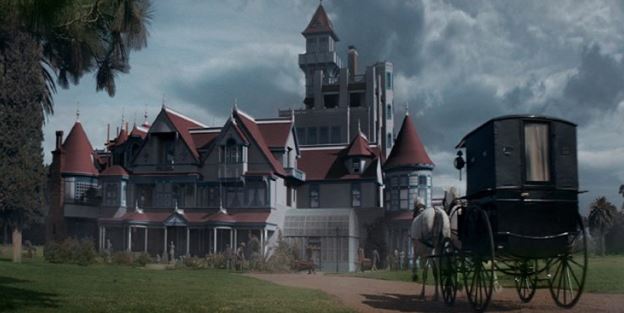
Approximately sixty six percent of Americans report that high inflation has made their financial situation worse. Families with lower incomes are especially suffering. Another twenty percent of Americans have reported that the rising prices have made their financial health much worse. Housing costs in California have long been higher than the national average. In recent years, these costs have grown substantially—in some cases, growing at historically rapid rates. California’s home prices have far exceeded the rest of the country and the state is about thirty three percent more expensive than a mid-tier home in the rest of the country—a gap that has widened over the last decade. Monthly payments for a newly purchased mid-tier home—including mortgage, taxes, and homeowners’ insurance—have increased dramatically over the last couple of years. Payments for a mid-tier home were over $5,000 a month in March 2024—an eighty percent increase since January of 2020. Payments for a bottom-tier home versus renting are near levels that have not been seen since the housing bubble in the mid-2000s. This rapid increase in monthly costs for homebuyers was driven by higher home prices and increasing mortgage rates. #RandolphHarris 1 of 18

Costs of buying a home have grown by more than median income. Affordability depends on both the costs of the housing, as well as the income and/or wages of households. Annual household income needed to qualify for a mortgage on a mid-tier California home in March 2024 was about $235,000—over two times the median California household income in 2022 ($85,300). For a bottom-tier home, about $140,000 in annual income is required to qualify for a mortgage—more than 50 percent higher than median household income in 2022. Furthermore, rental prices are unaffordable for a record number of American with half of all renters paying more than thirty percent of their income on rent and utilities. In New York, rent for a 1-bedroom apartment is $4,300 a month; Santa Clara the number is $3,290 per month; and in Sacramento the average 1-bedroom apartment is $2,135 per month. If it were true that the terrible results of the degrading conditions forced upon the dwellers in the slums were transmitted to their children by heredity, and within few generations they become fixed character, the hope for a regenerated society would be much more difficult to realize. If that were the case, these unfortunate creatures would continue to act in the same way for several generations, no matter how their environment had been transformed by the corporate actions of society. #RandolphHarris 2 of 18

The poverty line for a family of four is $62,300. Many of the people who make this amount of money are those with high school diplomas and graduate degrees as well as blue-collar and white-collar workers who live in both rural and urban American. Also, about 4o percent of Americans are unable to plan beyond their next paycheck, while nearly fifty percent of them said they do not have $500 saved for emergencies. Price increases are devasting for lower-income Americans because they tend to spend more their paychecks on necessities and have less money to save. The typical American household needed to pay $227 more a month in March to purchase the same goods and services it did one year ago because of still-high inflation. Americans are paying on average $784 more each month compared with the same time two years ago and $1,069 compared with three years ago. For those on Social Security retirement, cost of living adjustments are not helping them much. Our affair is not with the evolution of life and its adaptation to the natural environment, but with the evolution of man, and the adaptation of life to his purposes. And even the control of life around us matters less than that of our psychological evolution and of social progress. If no Utopia is in the making, at least, some believe there should be a shift away from the free competitive order. #RandolphHarris 3 of 18

Capitalism is beginning to turn into the welfare capitalism; the frustrations of the middle class and the needs of the poor are accelerating the change. Men sense that a different order is slowly arising. Although they can seldom describe it, they have expressed it variously in their slogans and titles: they speak of the New Nationalism, the Square Deal, the New Nationalism, the Square Deal, the New Freedom, the New Competition, the New Democracy—and, in time, of the New Deal. Previous reform and protest movements have been disjointed and uncoordinated uprisings of workers and farmers; now the middle class is drawn into the fray. The middle-class citizen, as producer and consumer, is beginning to feel the growth of inflation and fears that he will be grounded between large combinations of capital, labour, and Artificial Intelligence. As the standard of living, the figure of the great capitalist entrepreneur, hitherto heroic, lost much of his glamour. He is condemned as an exploiter of labour and an extorter from the consumer, pilloried as an unfair competitor, and exposed as a corrupter of political life. In a society of great collective aggregates, the traditional emphasis upon the exploits of the individual lost much of its appeal. #RandolphHarris 4 of 18

The old problem of defending competition from critics on the left now pales as people are forced to face “the curse of bigness,” the more imminent threat to competition from the offspring of competition itself. Our industry is a fight of every man for himself. The prize we give the fittest is monopoly of the necessary life, and we leave these winners of the powers of life and death wield them over us by the same “self-interest” with which they took them from us. “There is no hope for any of us, but the weakest must go first,” is the golden rule of business. There is no other field of human associations in which any such rule of action is allowed. The man who should apply in his family or in his citizenship this “survival of the fittest” theory as it is practically professed and operated in business would be a monster, and would be speedily made extinct. It is laissez faire as policy that is most completely discredited. While the old, simple apotheosis of competition has faded, few have ceased altogether to believe in it. One of the primary aims, indeed, of the middle-class revolt is to restore so far as possible the pristine conditions of competitive business. However, even if the supposed benefits of competition were to be retained, some form of government regulation is needed to restrain monopoly. #RandolphHarris 5 of 18

American industry is not free, as once it was free. The man with only a little capital is finding it harder to get into the field, more and more impossible to compete with the big fellow. Why? Because the laws of this country do not prevent the strong from crushing the weak. This the small entrepreneur and his sympathizers are trying to change the laws because the middle class is grasping for life and capital and many fear becoming homeless. The little individualist, recognizing his individual impotence, realizing that he does not possess within himself even the basis of a moral judgement against his big brother, begins to change his point of view. He no longer hopes to right all things by his individual efforts. He has turned to the law, to the government, to the state. The right of competition must be limited to preserve it. For instance, the American Automobile industry produces some of the best designed and best performing vehicles in the World, but when Japanese automobiles flooded the markets back in the 1970s and 80s, during the gas crisis, people got hooked on them and have yet to return to their roots. To encourage people to buy American cars, we need to put tariffs on Japanese cars to not kill the American automobile industry. For excesses of competition leads to monopoly, as excesses of liberty lead to absolutism. #RandolphHarris 6 of 18

The issue therefore is: Regulated competition versus regulated monopoly. In the past, as serious attempts to alter the business structure through legislation increased, there came a flood of laws to relieve the working class. Intellectuals, humanitarians, and social workers threw themselves on the side of labour, and drew support from a middle class which had no desire to see industrial oppression bring collectivism from the left. In increasing numbers, state legislatures adopted laws increasing minimum wage, limiting worker’s compensation, and similar measures of reform. Sympathy for union activity grew stronger among intellectuals. If we are not careful, with the amount of inflation we are experiencing today, Americans could return to child labour, more people may engage in selling pleasures of the flesh and peddling contraband. We could see comfort stations popping up in suburban communities and becoming as popular as liquor stores in the cities. We already have drug shops peddling illegal drugs to anyone who walks through the doors. And 65,000 catalytic converters were stolen in 2022. #RandolphHarris 7 of 18

Women have been convinced that their place is no longer in the home. They are encouraged to hire nannies and order already prepared meals kits. They are sent the message that they are no longer homemakers and care givers to their families. If there is a “housing shortage” and people cannot afford the supply of housing, means that there is too much demand from overpopulation. The masses as well the classes must be judged impartially through the arbitrament of the universal struggle. The state is conceived by all reformers to be an indispensable instrument of the new reconstruction. We must have a fervent plea for the abandonment of the traditional American mixture of optimism, fatalism, and conservatism in favour of a more positive attempt to realize the national promise. Americans must learn to think in terms of purpose rather than destiny, and, without fear of the centralizing powers of government, to realize their purpose through a national policy. We can no longer treat life as something that has trickled down to us. We must deal with it deliberately, devise its social organization, alter its tools, formulate its method, educate and control it. #RandolphHarris 8 of 18

In endless ways we put intention where custom has reigned. We break up routines, make decisions, choose our ends, select means. The managed society which we anticipate must become a reality. If our children are to survive, the state of intervention must come of age. Despite the interruption of the Obama administration, the trend toward social cohesion must keep growing so the sons of the generation can witness the creation of a state machinery as great as any that could have appeared in the Victorian individualist’s worst nightmares. Whatever the human potentialities of this apparatus, for good or evil, the ideals of a cohesive and centralized society will become increasingly triumphant over those of the heyday of the age of information. While individualism has by no means disappeared, it is increasingly on the defensive. The religious keynote, the economic keynote, the scientific keynote of the twenty first century must be the overwhelming realization that mankind has such a mental and spiritual powers and such control over nature that the doctrine of the struggle for existence is definitely outmoded and placed by the higher law of cooperation. #RandolphHarris 9 of 19

We live in a consumer drive economy, and the attempt to question the pattern of unlimited consumption meets with a difficulty. Compulsive consumption compensates for anxiety. The need for this type of consumption stems from the sense of inner emptiness, hopelessness, confusion, and tension. By “taking in” articles of consumption, the individual reassures himself that “he is,” as it were. If consumption were to be reduced, a good deal of anxiety would become manifest. Resistance against the possible arousal of anxiety would result in an unwillingness to reduce consumption. The most telling example of this mechanism is to be found in the public’s attitude toward cigarette consumption. In spite of the well-known dangers to health, the majority goes on consuming cigarettes. It is because they would rather take a chance of earlier death than forgo pleasure? An analysis of the attitude of smokers shows that this is largely a rationalization. Cigarette consumption allays hidden anxiety and tension, and people would rather risk their health than to be confronted with anxiety. Yet, once the quality of the process of living becomes more important than it is now, many people will stop smoking or overconsuming, not for the sake of their physical health but because only when they face their anxieties can they find ways to more productive living. (If they are compulsive, most urges for pleasures, including pleasures of the flesh, are not caused by the wish for pleasure but by the wish for avoidance of anxiety.) #RandolphHarris 10 of 18

The problem of limits to consumption is so difficult to assess because, even in the affluent society of the United States of America, not all unquestionably legitimate needs are fulfilled. This holds true for at least 52 percent of the population. When the optimum consumption level has not been reached, how can we even think of reduced consumption? First, in the affluent sector, we have already reached the point of harmful consumption; second, the aim of ever-increasing consumption creates, even before the optimal consumption level is reached, an attitude of greed in which one wishes not only to have one’s legitimate needs fulfilled but dreams of a never-ending increase in desires and satisfactions. In other words, the idea of the limitless rise of production and consumption curve greatly contributes to the development of passivity and greed in the individual, even before peak consumption is reached. Despite these considerations, the transformation of our society into one which serves life must change the consumption and thereby change, indirectly, the production pattern of present industrial society. Such a change would obviously come not because of bureaucratic orders but of studies, information, discussion, and making on the part of the population, educated to become aware of the problem of the difference between life-furthering and life-hindering kinds of needs. #RandolphHarris 11 of 18

Awareness of illusions is the condition for freedom and human action. Religious distress is at the same time the expression of real distress and the protest against real distress. Religion is the sigh of the oppressed creature, the heart of a heartless World, just as it is the spirit of an unspiritual situation. It is the opium of the people. The abolition of religion as the illusory happiness of the people is required for their real happiness. The demand to give up the illusions about its condition is the demand to give up a condition which needs illusions. The criticism of religion is therefore in embryo the criticism of the vale of woe, the halo of which is religion. Criticism has plucked the imaginary flowers from the chain not so that man will wear the chain without any fantasy or consolation, but so that he will shake off the chain and cull the living flower. The criticism of religion disillusions man, to make him think and act and shape his reality like a man who has been disillusioned and has come to reason, so that he will revolve round himself and therefore round his true sun. Religion is only the illusory sun, which revolves round man as long as he does not revolve round himself. How can man attain the goal of freeing himself from illusions? The behaviourists try to explain human activity without recourse to terms referring to consciousness, such as reward or satisfaction. #Randolphharris 12 of 18

Instead, behaviourists invoke a circular argument, stating that behaviour is “shaped” (into skills, or patterned habits) by reinforcers. A reinforcer is any consequence to action which strengthens, that is, increases the probability of the recurrence of, a response. To an observer who is not a behaviorist, the “reinforcing stimulus” may look suspiciously like a reward or a pleasant experience; the behaviourist prefers to avoid such subjectivistic terms. Skinner and his followers have been consulted by officials concerned with the management of prisoners’ behaviour in prisons and the behaviour of patients in mental hospitals, and by administrators of school systems who wish to make teaching and learning more efficient. There is considerable controversy between humanistic and behaviouristic psychologists about the issue of behaviour control, and the student should become familiar with the points of debate. Healthy personality, according to a behaviouristic view, calls for competence and self-control—the ability to suppress action that no longer yields positive reinforcers, and to learn action that is successful in attaining the good things. Such rapid adaptability is mediated by the ability to discern the contingencies, or rules implicit in nature or in society, according to which needs are gratified and dangers averted. #RandolphHarris 13 of 18

I have always been uneasy about the behaviouristic approach to human nature, because it appeals to the power motive in the behaviour scientist. Moreover, research in behaviourism is frequently funded by agencies interested in controlling the behaviour and experience of other persons for the institution rather than the person. If a definite distinction is thus established between freely associating and understanding, when does one stop associating and try to understand? Fortunately, there are no rules whatever. If thoughts flow freely there is no sense in arresting them artificially. Sooner or later, they will be stopped by something stronger than themselves. Perhaps the person arrives at a point where he feels curious about what it all may mean. Or he may suddenly strike an emotional chord that promises to shed light on something that is troubling him. Or he may simply run out of thoughts, which may be a sign of resistance but also may indicate that he has exhausted the subject for the time being. Or he may have only a limited time at his disposal and still want to try himself at interpreting his notes. As the understanding of associations, the range of themes and combinations of themes that they may present is so infinite that there cannot possibly be any fixed rules regarding the meaning of individual elements in individual contexts. #RandolphHarris 14 of 18

When a person stops associating and begins to go over his notes to understand them, his method of work must change. Rather than being entirely passive and receptive to whatever emerges, he becomes active. Now his reason comes into play. He no longer excludes reason. Even now he does not use it exclusively. It is difficult to describe with any accuracy the attitude he should adopt when he tries to grasp the meaning of a series of associations. The process should certainly not degenerate into a mere intellectual exercise. If he wants, he will do better to play chess or predict the course of World politics or take to crossword puzzle. An effort to figure out completely rounded interpretations, not missing any possible connotation, may gratify his vanity by proving the superiority of his brains but will scarcely take him much closer to a real understanding of himself. Such an effort entails a certain danger, for it may hamper progress by engendering a smug know-it-all feeling while he has only catalogued items without being touched by anything. The other extreme, a merely emotional insight, is far more valuable. If it is not further elaborated this is not ideal either, because it allows many significant leads, not yet altogether lucid, to drop out of sight. However, as we have seen from Clare’s analysis, an insight of this kind may set something going. #RandolphHarris 15 of 18

Early in her work, Clare experienced an intense lost of feeling in connection with her dream of the foreign city; it was mentioned than that although it is impossible to prove whether this emotional experience had any effect upon the further analysis, through its disquieting nature it may well have loosened her rigid tabu against touching any of the complex ties that fastened her to Peter. Another instance occurred during Clare’s final battle with her dependency, when she felt her defiance against taking her life into her own hands; she had then no intellectual grasp of the meaning of this emotional insight, yet it helped her to get out of a state of lethargic helplessness. Instead of wanting to produce a scientific masterpiece, the person who is working alone should let his interpretation be directed by his interest. He should simply go after what arrests his attention, what arouses his curiosity, what strikes an emotional chord within him. If he is flexible enough to let himself be guided by his spontaneous interest, he can be reasonably certain that he will intuitively select those subjects which at the time are most accessible to his understanding, or which fall in line with the problem on which he is working on. #RandolphHarris 16 of 18

When I first learned to read, I was absorbed in the joy of my learning. At the same time, it is true that until I could read for myself, I was dependent on my mother’s time: I had to wait for her to read to me. That could be called a problem. However, when I was eight and went to German school on Saturday mornings, I was lost in the enchantment of writing German script, the light lines up, the heavy lines down. It was utter fascination to find that a completely different set of sounds and “pictures” (letters)—like frau—meant in another part of the World what my mother was. To discover that kindergarten, to which I had gone, was a German word, not an English one, was like discovering that I had been in Germany instead of America. Then there were the words that were same as ours, and others that were nearly the same, which brought together what had seemed so far apart. I do not think I had a problem that led to my learning German. I did have some familiarity with it, to begin with. My German grandfather still spoke German when he had someone to speak it with. German was in this sense already a part of my life. However, what did my love of Latin in high school have to do with my life? The only connection that I can find is that I liked words, and the meaning of words, and the derivations of words. However, after a year I had got the hang of that and could look up the rest for myself when I needed. #RandolphHarris 17 of 18

No one can be devoid of feeling, and the philosopher will not be exempt from this rule. However, whereas the ordinary man’s feelings are transient emotions, passions, stresses, or moods, the philosopher’s feelings nourish a sustained, elevate state. The mistake of taking personal feelings as fit judges of truth or reality is a grave barrier which often lies across the portal of philosophy. People put a grossly exaggerated value on them and are thus led astray from the true knowledge of a fact or a situation. Without changing a person’s feelings, no change for the better in his own life, in himself, and in his relationship with other persons can be stable. When his feelings are really a conscious or subconscious cover for other feelings, nothing will help, save the uncovering of what the ego has hidden. Generous feeling must be directed by sound judgment, fervent devotion must be led by wise discrimination. The longing for inward security and invulnerable peace is one which a man can certainly satisfy. However, he cannot satisfy it on his own terms. Life has always and inseparably dictated the price which must be paid for it. It is easy to talk vaguely of lofty ideas, hard to put them where they belong—in our personal relationships. The line of conduct which impulse suggests is often different from that which deliberate reflection or deeper intuition suggests. Only when a man so develops himself that the two lines harmoniously coincide will he know the peace of never being torn in two—either mentally or emotionally. Then only, when desire and duty agree perfectly with one another, will he be happy. For, when reason approves what feeling chooses, and the inner balance is perfect, the resulting decision is more likely to be a right one than not. #RandolphHarris 18 of 18

The Winchester Mystery House
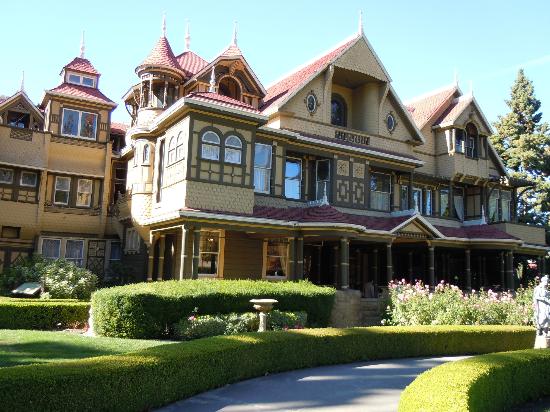
In 1890, there was an abundance of evidence concerning unspeakable horror lurking in the blackness beyond. The butler was sleeping in the front left bedroom on the second floor, and he felt that something was in there; he could hear someone breathing. He got up and turned the light on, and at that every moment he saw something go up the wall and up the fireplace. He did not know what it was. He could hear the noise, and saw it go up the chimney and then take off. That scared him. He sat up the rest of the night. Other times he has heard something walking behind him. Four or five different servants had the same experience.

Please come and enjoy a delicious meal in Sarah’s Café, stroll along the paths of the beautiful Victorian gardens, and wonder through the miles of hallways in the World’s most mysterious mansion. For further information about tours, including group tours, weddings, school events, birthday party packages, facility rentals, and special events please visit the website: https://winchestermysteryhouse.com/

Please visit the online giftshop, and purchase a gift for friends and relatives as well as a special memento of The Winchester Mystery House. A variety of souvenirs and gifts are available to purchase. https://shopwinchestermysteryhouse.com/

Freedom to be King of the Supermarket

The struggle for existence is in a sort of hopeful fatalism, of which current literature is full. The injustice of society, not the stinginess of nature, is the cause of the want and misery which we attribute to overpopulation. The new mouths which an increasing population calls into existence require no more food than the old ones, while the hands they bring with them can in the natural order of things produce more. The process is the results of forces which work slowly, steadily and remorselessly, for the elevation of man. War, slavery, tyranny, superstition, famine, and pestilence, the want and misery which fester in modern civilization, are the impelling cases which drive men on by eliminating poorer types and extending the higher; and hereditary transmission is the power by which advances are fixed, and past advances made the footing for new advances. The individual is the result of changes thus impressed upon and perpetuated through a long series of individuals, and the social organization takes its form from the individuals of which it is composed. Radical to a degree beyond anything which current radicalism conceives, since it anticipates a change in human nature itself, civilization holds that no change can avail, save these slow changes in men’s natures. #RandolphHarris 1 of 20

The prevailing view of civilization accounts neither for the failure of some peoples to progress, nor for the failure of others to maintain a level of civilization once achieved. History suggests that civilizations rise and fall in a wavelike rhythm. It is possible that each national or race of life has a stock of energy which it expends as the energy is dissipated the nation declines. America, many believe, is currently in a decline because of the immigration crisis, overpopulation, destruction of gender roles, the church, the nuclear family, inflation, low wages, high cost of housing and corruption. That obstacles which finally bring progress to a halt are raised by the course of progress are association and equality, and society is not threatened by the division and inequality it breeds. The seeds of the destruction of the existing order can be found in its own poverty; in its squalid cities which are breeding and welcoming in the barbarian hordes which might overwhelm it. As Artificial Intelligence puts a major strain on electric grids, civilization must either prepare itself for a new forward leap or plunge downward into a new barbarism. Each man must swim for himself in a crossing river, ignoring the fact that some have been artificially provided with corks and others artificially loaded with lead. #RandolphHarris 2 of 20

Human nature itself must have changed very much. Not all, but the conditions of human life have changed, and with them the motives of human action. As wonders of the cooperative order have unfolded, it has become clear that this change of conditions is centered about the abolition of strife. Selfishness was their only science, and in industrial production selfishness is suicide. The elimination of strife, by automating jobs and tasks, has only produced more strife. Competition, which is the instinct of selfishness, is another word for dissipation of energy, while combination is the secret of efficient production. The principle of the Brotherhood of Humanity is one of the eternal truths that govern the World’s progress on lines which distinguish huma nature from brute nature. The principle of competition is simply the application of the brutal law of the survival of the strongest and most cunning. Therefore, so long as competition continues to be the ruling factor in our technological system, the highest development of the individual cannot be reached, the loftiest aims of humanity cannot be realized. The final pleas for any form of brutality in these days is that it tends to the survival of the fittest; and very properly this plea has been advanced in favour of the system which is the sum of all brutalities. #RandolphHarris 3 of 20
If the richest were in fact the best, there would have been no social question, and disparities of condition would have been willingly endured; but the competitive system apparently causes the unfittest to survive, not in the sense that the rich are worse than the poor, but that the system encourages the worst in character of all classes. The difference between the animal and human economy will bear study as furnishing the best of ammunition for replying to the “survival of the fittest” against the argument of nationalism. Evolutionary biology does not provide a justification for competitive individualism. There is a healthy emulation that will go on in a cooperative commonwealth and the unhealthy competition of capitalism. The organic character of social life demands increasing centralization and management. Through capitalism, some American corporations and the government, through costs and fees, are gauging citizens, underpaying workers, and each year, redistributing billions of dollars of American wealth and tax money to other countries, instead of reinvesting in the American people and America. Conscious evolution is a far different thing from the unmodified natural evolution of the past, and human intervention must play an increasingly important role in development. #RandolphHarris 4 of 20

The rise of trusts is paving the way for socialism, and the continuing “trustification” of industry is a proof of the superiority of combination over competition. The combination is the inevitable next step in social evolution, leaving them a choice between monopolized capitalism and a collectivized social order. If you wish to enjoy art, you must be an artistically cultivated person; if you wish to influence other people, you must be a person who really has a stimulating and encouraging effect upon others. Every one of your relations to man and to nature must be specific expressions, corresponding to the object of your will, of your real individual life. If you love without evoking love in return, id est, if you are not able, by the manifestation of yourself as a loving person, to make yourself a beloved person, then your love is impotent and a misfortune. The aim of the activation of man in the technological society requires another step as important and as difficult as replacement of the alienated bureaucratic structure by methods of humanist management. Again, I wanted to ask the reader to take the following proposals only as illustrations of desirable possibilities, not as definite aims and methods. Up to the present, our industrial system has followed the principle that anything man wants or desires is to be accepted indiscriminately, and that is possible society should satisfy all of man’s desires. #RandolphHarris 5 of 20

We make a few exceptions to this principle; for instance, certain laws which restrict or even forbid the use of liquor regardless of a person’s desire to drink as much as he likes; stronger ones against the taking of drugs, where even the possession of drugs like marijuana (the degree of whose harmfulness is still under debate) is penalized severely; we also restrict the sale and exhibition of so-called pornography. Furthermore, our laws forbid the sale of harmful food under the Food and Drug Act. In these areas, there is consensus, crystallized in state and federal laws, that there are desires which are harmful to man, and which should not be fulfilled although a person craves for the satisfaction of these desires. While one can argue that so-called pornography does not constitute a real threat and, furthermore, the hidden lasciviousness of our advertisements are at least as effective in arousing cupidity of pleasures of the flesh as straight pornography would be, the principle is recognized that there are limits to the freedom of the satisfaction of subjective desires. Yet these restrictions are essentially based on only two principles: the concern for bodily harm, and the vestigial remnants of the Puritan morality. It is time we began to examine the whole problem of subjective needs and whether their existence is a sufficiently valid reason for their fulfillment; to question and examine the generally accepted principle of satisfying all needs—while never asking about their origins or effects. #RandolphHarris 6 of 20

In trying to find adequate solutions, we meet with two powerful obstacles. First, the interests of industry, whose imagination is fired by too many alienated men who cannot think of products which would help to make a human being more active rather than more passive. Besides this, industry knows that by advertising it can create needs and cravings which can be calculated in advance, so that there is little risk in losing profit if one continues the safe method of creating needs and selling the products which satisfy them. The other difficulty lies in a certain concept of freedom which gains ever-increasing importance. The most important freedom in the twenty-first century is the freedom to use and invest property in any form which promised profit. Since managers of enterprises were at the same time the owners, their own acquisitive motivations made them emphasize this freedom of the use and investment in capital. Because of inflation, many Americans do not own property—even though there are a relatively large number of people who own large fortunes. The average American is employed, and he is satisfied with relatively small savings, either in cash, stocks, bonds, or life insurance. For him, the freedom of investment of capital is a relatively minor issue; and even for most people who are able to buy stocks, this is a form of gambling in which they are counseled by investment funds. #RandolphHarris 7 of 20

However, the real feeling of freedom today lies in another sphere, in that of consumption. In this sphere, everybody except those who live a substandard existence experiences the freedom of the consumer. Here is an individual who is powerless to have any influence—beyond a marginal one—on the affairs of the state or the enterprise in which he is employed. He has a boss, and his boss has a boss, and the boss of his boss has a boss, and there are very few individuals left who do not have a boss and do not obey the program of the managerial machine—of which they are a part. However, what power does he have as a consumer? There are dozens of brands of cigarettes, toothpastes, soaps, deodorants, radios, social media networks, cellular phones, Smart TVs, movie and television stream services, etcetera, etcetera. And they all woo his favor. They are all there “for his pleasure.” He is free to favour the one against the other and he forgets that essentially there are no differences. This freedom to give his favours to his favourite commodity creates a sense of potency. The man who is impotent humanely becomes potent as a buyer and consumer. Can one make any attempt to restrict this sense of potency by restricting the freedom of choice in consumption? It seems reasonable to assume one can do so only under one condition and that is that the whole climate of society changes and permits man to become more active and interest in his individual social affairs, and hence less in need of that fake freedom to be king of the supermarket. #RandolphHarris 8 of 20

We are determined by forces outside of our conscious selves, and by passions and interests which direct us behind our backs. Inasmuch as this is the case, we are not free. However, we can emerge from this bondage and enlarge the realm of freedom by becoming fully aware of reality, and hence of necessity, by giving up illusions, and by transforming ourselves from somnambulistic, unfree, determined, dependent, passive persons into awakened, aware, active, independent ones. The aim of life is liberation from bondage, and the way to this aim is the overcoming of illusions and the full use of our active powers. Dr. Freud’s position is essentially the same; he spoke less of freedom versus bondage than of mental health versus mental sickness. He, too, saw that man is determined by objective factors (the libido and its fate) but he thought that man can overcome this determination by overcoming his illusions, by waking up to reality, and by becoming aware of what is real but unconscious. Dr. Freud’s principle as a therapist was that awareness of the unconscious is the way to the cure of mental illness. As a social philosopher he believed in the same principle: only if we become aware of reality and overcome our illusions can we attain the optimal strength to cope with life. Perhaps those who do not suffer from the neurosis will need no intoxicant to deaden it. They will, it is true, find themselves in a difficult situation. #RandolphHarris 9 of 20

They will have to admit to themselves the full extent of their helplessness and their insignificance in the machinery of the universe; they can no longer be the center of creation, no longer the object of tender care on the part of a beneficent providence. They will be in the same position as a child who has left the parental house where he was so warm and comfortable. However, surely infantilism is destined to be surmounted. Men cannot remain children forever; they must in the end go out into “hostile life.” We may call this “education to reality.” Our God, Logos, is perhaps not a very almighty one, and he may only be able to fulfill a small part of what his predecessors have promised. If we must acknowledge this, we shall accept it with resignation. We shall not on that account lose our interest in the World and in life…no, our science is no illusion. However, it would be to suppose that what science cannot give us we can get elsewhere. When I study my own, I discover that while many things can be quite well known in a general way, they cannot be accurately or permanently pinned down. I become less dogmatic, and at the same time more free, living with the uncertainty that is a reality of life. Through reading authors of many different periods, I notice how each has been conditioned by his times, and this leads me to seek out in which ways my own view is affected by times. #RandolphHarris 10 of 20

I notice where this is freeing and where it binds me, and then I can begin to cut the bonds, which are, I discover, not contemporary but a hangover from the past, prevalent but dying. I move, then, with what is truly contemporary, with what is appearing now—the living change, not the dying. I find authors whose views have changed in successive books, which tends to keep my mind more open about both of us. I discover that when I re-read a book out of my own interest, what is says to me the second time may be quite different from what it said the first time. This brings me closer to reality about myself and books. All this in itself has an effect on my interpersonal relations, apart from the fact that when I am ranging freely I am happy—not happy about, just happy—and that affects my interpersonal relations too. These facts to me are significant learning. They are basic, universal, applicable to any people, place and time. When I am aware of them, I am in touch with the unchanging reality of change. With this awareness first, then what I do in the ephemeral World of my own lifetime is more intelligent, including my relations with other people. At the same time, I am a more autonomous person, able to find out for myself, and with trust in my ability to find my way. That my way includes the help of others in no way diminishes my independence because I do the choosing for myself. #RandolphHarris 11 of 20

I accept what I can use at the time, what is meaningful to me. Even if I spent a lifetime doing it, then, all that I learn is linked together, inside me, with more connections than could be written down because new ones are constantly being made while I am writing. All of these connections are available to me through my inner computer, as I need them. One part of me is such a fantastic machine, contained in such a littler space and so easy to take with me, that it is idiotic to get excited about the feats of machines that are made by men. If we use them properly, they are convenient, and that is all. I must use my own machine properly too, by not interfering with it, because when it is interfered with it goes haywire. It does not seem to me that a problem is necessary for this kind of learning, although a problem certainly can stimulate me. However, perhaps I am using the word “problem” in a too limited way. Philosophy will create within him a disgust for evil, a disdain for what is ignoble, a taste for what is refined and beautiful, a yearning for what is true and real. It is not in the process of dying to self he is to become a man without feelings, but that he is to die to the lower phases of feeling. Indeed, such a victory can only be achieved by drawing the needed forces from the higher phases of feeling. In the World of values, the truth is the synthesis of opposites, as for instance the synthesis of optimism and pessimism. #RandolphHarris 12 of 20

One more word as to the technique of free association: it is essential to abstain from reasoning while associating. Reason has its place in analysis, and there is ample opportunity to use it—afterward. However, as already stressed, the very essence of free association is spontaneity. Hence the person who is attempting it should not try to arrive at a solution by figuring out. Assume, for instance, that you feel so fatigued and so limp that you would like to crawl into bed and pronounce yourself ill. You look out of a second story window and detect yourself thinking miserably that if you fell you would at most break an arm. This startles you. You had not known that you were desperate, even so desperate to want to die. Then you hear a podcast turned on above you, and you think with moderate irritation that you would like to shoot the fellow operating it. You conclude that there must be rage as well as despair behind your feeling ill. So far you have done a good job. You already feel less paralyzed, because if you are furious at something you may be able to find the reasons for it. However, now you start a frantic conscious search for what might have infuriated you. You go over all the incidents that occurred before you felt so tired. #RandolphHarris 13 of 20

It is possible that you will hit upon the provocation, but the probability is that all your conscious digging comes to nought—and that the real source will occur to you half an hour later, after you have become discouraged by the futility of your attempts and have given up the conscious search. As unproductive as such attempts to force a solution is the procedure of a person who, even while he lets his mind run freely, tries to get at the meaning of his associations by putting two and two together. Whatever prompts him to do so, whether it is impatience or a need to be brilliant or a fear of giving way to uncontrolled thoughts and feelings, this intrusion of reason is bound to disturb the relaxed condition necessary for free association. It is true that the meaning of an association may dawn upon him spontaneously. Clare’s series of associations ending with the text of religious song is a good example of this: here her associations showed an increasing degree of lucidity although no conscious effort had been made to understand them. The two processes—self-expression and understanding—may sometimes coincide. However, as far as conscious efforts are concerned, they should be kept strictly separate. The quest remains unfinished and unsuccessful so long as it lacks this element of rich feeling, so long as it has not become a warm devotion. The Quest is not all a matter of psychological readjustment, of severe self-improvement. Man is not just a character to be remolded. Deep reverential feelings have also to be cultivated. #RandolphHarris 14 of 20

The quest for health and happiness has existed as long as people have been able to reflect upon the human condition. American philosophers concerned themselves many centuries ago with the problem of how human beings could liberate themselves from cramping habits to attain a happier, freer existence. Some of those who attained “liberation and enlightenment” became teachers, seeking to help others attain the same degree of emancipation from stifling life. There is a parallel between the state of enlightenment and the state of healthy personality. Neurotic suffering is a result of separating oneself too radially from nature, from other humans, and from one’s own organism. Most people equate their very identity with a concept of themselves instead of with their whole being. In the process of separating self, one loses contact with the flow or process of life, which is essentially spontaneous. People replace spontaneity in their experience, thinking, and behaviour with efforts to make them happen. Liberation (and, by implication, healthy personality) occurs when a person can adopt the attitude of “letting be,” or “letting happen.” That is, one “lets go” the conscious, controlling ego, or self, and experiences life in somewhat the following fashion: instead of a person’s “trying” to swim, “liberated” swimming is experiences as “swimming is permitted to happen” or “swimming is going on.” #RandolphHarris 15 of 20

When a person stops trying to make things happen, when one stops truing to make oneself behave in some desired way, it is argued that the desired events or behaviours will spontaneously happen. Learning theorists, surprisingly, offer a similar argument for some skill learning. Healthy personality entails liberation from effortful constraint on, and control over spontaneous thinking, feeling, and action; it entails attainment of an attitude of “letting oneself be” and letting other and nature “be.” His life will be extraordinarily enriched, and not bleakly impoverished, by discovering the higher relationship that is possible between men and women that which begins and ends with the flesh. Intense concentrated feeling may fill a man with self-destructive or murderous antagonism but lead another into self-realization—depending upon the thoughts and acts which flow from him at its bidding. First comes the capacity to recognize these higher feelings; then to understand them for what they are; next to appreciate their intrinsic worth; and finally, to give oneself up to them entirely. The real philosopher feels what he knows: it is not a dry intellectual experience alone but a living one. Why become resentful and bitter at the loss? Why not be grateful at having had the good fortune at all, and for possessing memory of it that cannot be lost? Why not regard it as enough to have experienced such happiness, even for a little time, when in the chances of life, it could have passed you by altogether? Why not receive the gifts of destiny humbly without trying to own them with a tight vampire-like grip? #RandolphHarris 16 of 20

The higher human feelings such as kindness and sympathy, patience and tolerance must nurtured. This species called Man has shown its finer possibilities in the kindness of Jesus as the Christ, the compassion of Dr. Freud, the love of Saint Aldric Bishop of Le Mans, the leadership of King Rudolf I of Germany, the skill of Michelangelo, and the design of William Randolph Hearst, and the craftmanship of Sarah L. Winchester. Man will not lose the capacity to feel; in this he will still be like other men: but it will be free from false sentimentality and debased animality. He who enters upon this quest will have to revise his scale of values. Experiences which he formerly thought bad, because they were unpleasant, may now be thought good, because they are educative or because they reveal hitherto obscured weaknesses. The Sacramento Fire Department has invested millions of dollars into research and development. They have years of hard work dedicated to their success. Also, they have proven themselves to save the lives of those individuals who place their lives in the hands of the skilled heroes who use the concept. Their purpose is to save your life, and the lives of their fellow firefighters, and the community they serve and who trusts them wholly. #RandolphHarris 17 of 20

“We trained on the job over the course of one summer, in the mountains of Santa Clara County. We walked at least eight hundred miles, mostly at a forty-five-degree angle, fighting brush fires. We did an hour of calisthenics every day, including a twenty-foot rope climb without using your feet. It’s very hot there in the summer. We were always learning things, always sweating. The first forest fire we had was real hard and lasted a few days. We ran out of water and had to pace ourselves. The mountains have a lot of tall trees, mostly coast redwoods, various kinds of brush, and dry grass. A fire will burn sixteen and a half times faster uphill than down. It preheats, spreads, and has a convection column that will carry embers clear across a canyon and start a fire on the other side. It darkens the sky, and it’s just a big hellstorm that can cover hundreds of thousands of acres. When we get trapped by the fire, we have aluminum shields we use. They fold into a packet about eighteen inches long, three inches thick, and about eight inches wide that we wear around our waist. Unfolded, it looks like a big baked potato about six feet long and comes to a triangular top like a tent. You lie inside it, and in each corner there’s a strap. You hold the straps down with your feet and your hands, and you dig a hole where your face will go and fill it with water, if you have any, and put a wet cloth over your face. #RandolphHarris 18 of 20

“You usually face the fire, as it’s making headway toward you, because the wind is going to be blowing from the fire toward you. That way, you can put your head down and hold the thing down with your hands more securely. Facing the other way, you have more of a chance of taking heated gases into the tent. In my first forest fire, there were about three hundred of us in a big field that formed a natural firebreak. We expected a wind change that would change the direction of the fire, and we couldn’t run away from it. So we gathered there and waited for the fire to pass over. We didn’t have to use the shields on that occasion, but when the fire passed over it involved some big electric towers and there were lots of explosions. It was a pretty awakening experience. I didn’t know what was going to happen, because it was the first time I had ever been in that situation. That time, we were protected by the clearing. But when you use the aluminum shield, the heat from outside isn’t usually the main problem. The shield will sustain a pretty good temperature, but you could have a burning tree fall on you. In the Sacramento Fire Department, I’ve taken a lot of classes and furthered my education as much as I can. I’m an emergency medical technician, and most of our calls are medical, having to do with accidents and heart attacks. #RandolphHarris 19 of 20

“We deal with human emotions. It’s given me an opportunity to pursue my medical education. In our drills we learn a lot about hazardous materials, different aspects of fighting fire, ventilation. I have an AA from San Jouse City College, and they equate our first year in the fire department to about twelve units of college. We have to know all 1,500 miles of streets in town, learn our rules and regulations, how to use our equipment safely. We have ongoing classes and can sign up for classes ordered by the state. For instance, I recently came back from a heavy rope rescue class, bring people up cliffs and across rivers, dealing with earthquake type emergencies, how to shore up a building that’s falling down. It’s a real concentrated time for us.” Aesthetic appreciation, the feeling of delight in art, is not enough by itself to bring humanity into the perception of reality, that is, into truth. Artistic feeling, even poetic emotion, is not less exempt from the need of being equilibrated by reason than other functions of man’s nature. Please raise your children to love America, love God and Jesus Christ, to respect law and order, and practice the art of forgiveness. You can help save lives by dontating to the Sacramento Fire Department. I pledge allegiance to the flag of the United States of America, and to the republic, for which it stands, one nation, under God, indivisible with liberty and justice for all. #RandolphHarris 20 of 20

The Winchester Mystery House

Mrs. Winchester’s daughter died six weeks after she was born. In 1888, Mrs. Winchester was awakened, and she saw the apparition of a little girl between her curtain and her pillow, who told her she was her daughter, and that she was happy. The next day, Mrs. Winchester desired that the chaplain might be called to read prayers, and when prayers were ended, she played a song on the piano so melodiously that her music-master, who was then there, admired at it.

Please come and enjoy a delicious meal in Sarah’s Café, stroll along the paths of the beautiful Victorian gardens, and wonder through the miles of hallways in the World’s most mysterious mansion. For further information about tours, including group tours, weddings, school events, birthday party packages, facility rentals, and special events please visit the website: https://winchestermysteryhouse.com/

Please visit the online giftshop, and purchase a gift for friends and relatives as well as a special memento of The Winchester Mystery House. A variety of souvenirs and gifts are available to purchase. https://shopwinchestermysteryhouse.com/

A Manchurian Candidate Allowing the Country to be Invaded, Corrupted, and Bankrupted

Faulty characters and faulty habits can be changed by the Secret Path as the coming of the sun changes winter to spring. Greed will slowly turn to goodwill, cruelty will make its exit to allow for the incoming of kindness, and all-around self-control will gradually replace weakness. The faithful application of these teachings must inevitably influence the entire make-up of a man, and influence it most certainly for the better. He must begin this preparatory work on himself by an analysis of character. This requires a sincere, honest appraisal, a rigorous search for truth, not easy when vanity, for instance, may masquerade as duty among his motives. There is a great feeling of uncertainty and anxiety that besets the life of a man who wants to make his way up the ladder of the big corporation. He can fall at any point; he can fail to reach the aspired goal and become a failure in the eyes of his family and friends. However, this anxiety increases his wish for certainty. If he fails in spite of the certainty his methods of decision making offer him, he at least need not blame himself. The same need to be certain exists in the realm of thoughts, feeling, and aesthetic appreciation. By the growth of literacy and of the mass media, the individual learns quickly which thoughts are “right,” which behaviour is correct, which feeling is normal, which taste is “in.” All he has to do is to be receptive to the signals of the media, and he can be certain not to make a mistake. The fashion magazines tell what style to like and the book clubs what books to read, and to top it all, recent methods of finding proper marriage partners are based on the decisions of computers. #RandolphHarris 1 of 20

Our age has found a substitute for God: the impersonal calculation. This new god has turned into an idol to whom all men may be sacrificed. A new concept of the scared and unquestionable is arising: that of calculability, probability, factuality. We must address ourselves now to the question, If we give the computer all the facts, what is wrong with the principle that the computer can make the best possible decisions about future action? What are facts? Even if correct and not distorted by personal or political bias, not only can facts be meaningless they can be untrue by their very selection, taking attention away from what is relevant, or scattering and fragmenting one’s thinking so much that one is less capable of making meaningful decisions the more “information” one has received. The selection of facts implies evaluation and choice. The awareness of this is a necessary condition of making rational use of facts. The basis of all authority is the supremacy of fact over thought. Yet this contrast of fact and thought can be conceived fallaciously. For thought is a factor in the fact of experience. Thus the immediate fact is what it is, partly by reason of the thought involved in it. Facts must be relevant. However, relevant to what or to whom? If I am informed that A has been in prison for having wounded a rival in a state of intense jealousy, I have been informed about a fact. I can formulate the same information by saying that A was in jail, or that A was (or is) a violent man, or A was (or is) a jealous man; yet all these facts say little about A. #RandolphHarris 2 of 20

Maybe A is a very intense man, a proud man, a man of great integrity; maybe my factual information fails to inform that when he speaks with children his eyes light up and he is concerned and helpful. This fact may have been omitted because it did not seem relevant to the datum of this crime; besides, it is—as yet—difficult for the computer to register a certain expression in a man’s eyes, or to observe and code the fine nuances of the expression of his mouth. “Facts” are interpretations of events, and the interpretation presupposes certain concerns which constitute the event’s relevance. The crucial question is to be aware of what my concern is and hence of what the facts have to be in order to be relevant. Am I the man’s friend, or a detective, or simply a man who wants to see the total man in his humanity? Aside from being aware of my concern, I would have to know all the details about the episode—and even then perhaps the details would not tell me how to evaluate his act. Nothing short of knowing him, in his individuality and suchness, his character—including the elements he himself may not be aware of—would permit me to evaluate his act; but in order to be well informed, I would also have to know myself, my own value system, what of it is genuine and what of it is ideology, my interests—selfish or otherwise. The fact, presented merely descriptively, may make me either more or less informed, and it well known that there is no more effective way of distortion than to offer nothing but a series of “facts.” #RandolphHarris 3 of 20

When we speak of facts pertaining to political and social life, what holds true in this example of how to evaluate one episode in the life of a man is all the more complicated and consequential. If we show for a fact that Communists are taking steps to assume power in America by inserting a Manchurian candidate as president to allow the country to be invaded, corrupted, and bankrupted, does this fact imply that they threaten to conquer the United States of America or the World? Would the latter mean that they threaten the “existence” of the free World? Does a threat to the “existence” to the United States of America mean a threat to the physical existence of Americans, or to our social system, or to our freedom of expression and action, or does it mean that they want to replace our elite in the area with one of their own? Which of these possible outcomes would justify or demand the possible destruction of 344 million Americas, or all of life? The “fact” of Communist threats assumes a different meaning according to the evaluation of the total strategy and planning of the Communists. However, who are the Communists? The Russian government, South America, the Chinese government, most democrats and some republicans, or who? With the way things are going, not only will President Xi Jinping be the next president of America, but also the commander of chief of the World! The one fact from which we start means nothing without the evaluation of the whole system, which means an analysis of a process in which we as observers are also included. #RandolphHarris 4 of 20

Eventually, the very fact of having decided to select certain events as facts has an effect on ourselves. By this decision we have committed ourselves to move in a certain direction, and this commitment determines our further selection of facts. The same holds true for our opponents. They also are influenced by their own selection of facts, as well as by ours. However, not only the facts themselves are selected and ordered according to values; the programing of the computer itself is based on built-in and often unconscious values. The principle that the more we produce the better is in itself a value judgment. If instead we believed that our system should be conducive to optimum human activeness and aliveness, we would program differently and other facts would become relevant. The illusion of the certainty of the computer decision, shared by a large sector of the public and by man decision makers, rests upon the erroneous assumptions (a) that facts are objective “givens,” and (b) that the programing is norm-free. “Normative” planning must precede “strategic” and “tactical” planning. All planning, whether with or without the use of computers, depends on the norms and values that underlie the planning. Planning itself is one of the most progressive steps the human race has taken. However, if it is “blind” planning, in which man abdicates his own decision, value judgment, and responsibility, it can be a curse. #RandolphHarris 5 of 20

If it is alive, responsive, “open” planning, in which the human ends are in full awareness and guiding the planning process, it will be a blessing. The computer facilitates planning tremendously, but its use does not really alter the fundamental principles of the proper relationship between means and ends; only its abuse will. As a man, it is not essential to discover and correct these faults. As a seeker, such discovery and such correction are primary duties. The code of conduct which philosophy asks its votaries to practise, the set of values which it determines for them, the endeavour to transcend themselves which it inspires—these elevate the mind into nobility, grandeur, and reverence. To abstain from favoured foods is a hard test; to abstain from carnal intercourse is still harder one. To the common mind, devoid of metaphysical faculty, this may seem far enough to travel. However, to the developed mind the hardest of all tests must yet be undergone—to abstain from egoistic thought, feeling, and action. The more the character is purified, the easier it is to practise meditation. The more the lower nature holds a man, the shorter will be the period of time in which he will be able to hold attention on the Overself. It is a great beginning of the real quest when he comes to the clear perception that the lusts, gluttonies, wraths, and passions have been lodged in him and have lived in his self yet are not him; that they are morbid creations which can be starved, exorcised, and expelled just as surely as they have been fed, nourished, and embraced. #RandolphHarris 6 of 20

What separate the lower appetites of man from his higher aspirations? The beast must obey blindly its group instinct, the human need not. He can choose between doing the same as the animal or holding himself back to think, reason, and arrive at a considered decision. The lower nature does not let him keep this mood of high resolve long. Not many days pass before it seeks to discourage him. For the old cravings, the desire habits, and the emotional tendencies are still there. Soon they begin to trouble him again. “Why try?” his lower nature despondently tells him, “Why torment yourself uselessly? You can only fail in the end.” This it creates the expectancy of failure and turns his high adventure into a dismal ordeal. Only a fixed vigilant determination and correct approach will bring forth that inner consent to the new disciplinary habits so necessary to success. Only by re-educating his tendencies and gradually making them quite willing to conform to the right way of living can the lower nature be beaten. To the extent that anything lifts men up out of their animality, it serves a higher purpose. This is true of athletic training and religious aspiration, of social codes and personal self-respect. For in the end they must turn their minds away from the passions which they share with the sub-human kingdom to the fulfilment of their higher human possibilities and destiny. The honourable man who lives by a decent code of ethics has to be surpassed by the seeker, since he believes in a life and goal which I still more honourable. #RandolphHarris 7 of 20

Freedom is a tremendous word whose meaning goes much beyond the average man’s idea of it. He is not free who is in bondage to narrow prejudice, strong attachment, unruled desire, and spiritual ignorance. The same strength which is put into negative qualities like fear, grief, revenge, and discord—to a man’s own detriment—can be put into beneficial ones like courage, cheerfulness, fortitude, benevolence, and calmness, to his own benefit. He is to work for the day when his character will be utterly transformed, when he will be incapable of meanness or animality, when he will live in constant awareness of the idea. There is an organismic base for an organized valuing process within the human individual. It is hypothesized that this base is something the human being shares with the rest of the animate World. It is part of the functioning life process of any healthy organism. It is the capacity for receiving feedback information which enables the organism continually to adjust behaviour and reactions so as to achieve the maximum possible self-enhancement. This valuing process in the human being is effective in achieving self-enhancement to the degree that the individual is open to the experiencing which is going on within himself. I have tried to give two examples of individuals who are close to their own experiencing; the tiny infant who has not yet learned to deny in his awareness the processes going on within; and the psychologically mature person who has learned the advantages of this open state. #RandolphHarris 8 of 20

One way of assisting the individual to move toward openness to experience is through a relationship in which he is prized as a separate person, in which the experiencing going on within him is emphatically understood and valued, and in which he is given the freedom to experience his own feelings and those of others without being threatened in doing so. This proposition obviously grows out of therapeutic experience. It is a brief statement of the essential qualities in the therapeutic relationship. There are already some empirical studies, of which the one by Barrett-Lennard is a god example, which gives support to such a statement. One case study we should consider is one of Billy. Billy, a healthy, strong, intelligent, and successful lawyer, consulted me because of a fear of high places. He had a recurring nightmare in which he was pushed from a bridge or tower. He felt dizzy when he sat in the first row of a theater balcony and when he looked down from high windows. Also, he sometime felt panicky before he had to appear in court or before he met important clients. He had worked up from a poor environment and was afraid of not being able to maintain the good position he had attained. The feeling often crept up on him that he was putting on a bluff and that it would be found out sooner or later. He could not account for this fear because he believed himself as intelligent as his colleagues; he was a good speaker and usually could convince others by his arguments. #RandolphHarris 9 of 20

Because he talked frankly about himself we managed to see in a few interviews the outlines of a conflict between, on the one side, ambition, assertiveness, a desire to put something over on others, and, on the other side, a need to maintain the appearance of a jolly straight fella who did not want anything for himself. Neither side of the conflict was deeply repressed. He had merely failed to realize the strength and the contradictory nature of these strivings. Once they were brought into sharp focus, he recognized squarely that he actually did not put a bluff. He then spontaneously drew the connection himself between this inadvertent swindle and the dizziness. He aw that he craved to attain a higher place in life but did not quite dare admit to himself how ambitious he really was. If other realized his ambition, he was afraid that they would turn against him and push him down and therefore he had to show a front of being a jolly good fella to whom money and prestige did not mean much. Being nevertheless an essentially honest person, he was dimly aware of some bluff, which in turn had made him apprehensive of being “found out.” This clarification sufficed to remove the dizziness, which was a translation of his fears into physical terms. #RandolphHarris 10 of 20

He then had to leave town. We had not touched upon his fear of public performances and of meeting certain clients. I advised him to observe the conditions under which his “stage fright” was increased or decreased. Sometime later I received this report. He had first thought that the fear appeared when the case he presented or the argument he had used was debatable. However, search in this direction did not lead very far, though he felt distinctly that he was not wholly wrong. Then he had a bad break which, however, proved to be a good break for his own efforts at understanding. He had prepared a difficult brief not too carefully, but was only moderately apprehensive about presenting it in court, for he knew that the judge had fallen ill, and that the one who would substitute was strict and unbending. He tried to console himself with the reminder that after all the second judge was far from vicious or tricky, but this did not diminish his rising anxiety. Then he thought of my advice and tried to let his mind run freely. First an image appeared of himself as a small boy smeared from head to toe with chocolate cake. He was at first baffled by this picture, but then recalled that he was going to be punished but got away with it because he was so “cute” and his mother had to laugh about it. The theme of “getting by” persisted. Several memories emerged of times when he was not prepared at school, but got by. Then he thought of a teacher of history who he wanted. He could still feel the hatred. #RandolphHarris 11 of 20

The class had to write a theme about the French Revolution. When returning the papers the teacher criticized his for being replete with high-sounding phrases but devoid of solid knowledge; he cited one of those phrases and the others roared with laughter. Bill had felt acutely humiliated. The English teacher had always admired his style but the history teacher seemed impervious to his charm. The phrase “impervious to his charm” took him by surprise, because he had meant “impervious to his style.” He could no help feeling amused because the word “charm” expressed his true meaning. Sure enough, the judge was like the history teacher, impervious to his charm or his power of speech. That was it. He was accustomed to rely on his charm and his facility with words to “get by” instead of being thoroughly prepared. As a result he became panicky whenever he visualized a situation in which this tool would be ineffective. Since Bill was not deeply entangled in his neurotic trends he was able to draw the practical consequence of this insight: to sit down and work more carefully on the brief. He even went a step farther. He realized to what extent he used his charm also in relationships with friends and women. Briefly, he felt that they should be under the spell of his charm and therefore overlook the fact that he did not give much of himself in any relationship. He linked this finding with our discussion by realizing that he had discovered another bluff, and he finished with the realization that he must “go straight.” #RandolphHarris 12 of 20
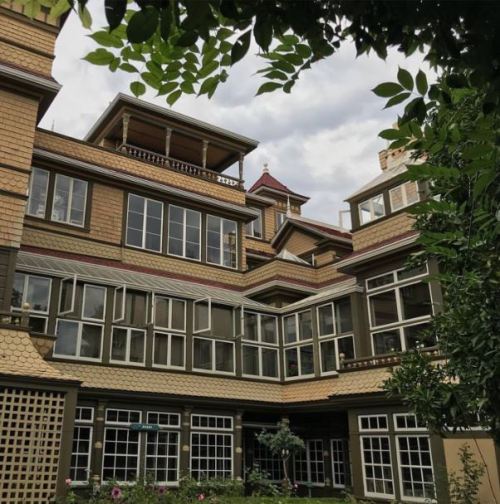
Apparently he was able to do so to a considerable extent, because since that episode, which I not six years ago, his fears have practically disappeared. This result resembles the one attained by John (from past reports) when he overcame his headaches, but it must be evaluated differently. The headaches, as indicated before, were a peripheral symptom. They can be so designated by virtue of two facts: since they were infrequent and not severe they did not essentially disturb him; and they had not assumed any secondary function. John’s real disturbances, as revealed in a subsequent analysis, lay in a different direction. Bill’s fears, on the other hand, were the result of a crucial conflict. They did not disable him but they interfered with significant activities in vital areas of his life. John’s headaches disappeared without any concomitant change in his personality, the only change being a slightly greater awareness of anger. Bill’s fears vanished because he recognized their source in certain contradictory trends in his personality and, more important, because he was able to change these trends. Here again, a in John’s case, the results seem greater than the efforts that produced them. However, again on closer examination the disparity is not so great. It is true that with comparatively little work Bill managed not only to get rid of disturbances serious enough to jeopardize his career in the long run, but also to recognize a few important facts about himself. #RandolphHarris 13 of 20

Bill saw that he had presented a somewhat deceptive front to himself and to others, that he was much more ambitious than he had admitted to himself, that he tended to attain his ambitious goals through his wits and his charm rather than through solid work. However, in evaluating this success we must not forget that Bill, in contrast to John and Harry, was essentially a physically healthy person with only mild neurotic trends. His ambition and his need to “get by” were not deeply repressed and did not have a rigid compulsive character. His personality was so organized that he could modify them considerably as soon a he recognized them. Dropping for a moment the effort to attain a scientific understanding of Bill’s predicaments, one might regard him simply as a person who had tried to make life too easy for himself and who could do better when he realized that his way did not work. Bill’s insights were sufficient to remove certain gross fears. However, even in this most successful short cut many questions are left open. What exactly is the meaning of the nightmare about being pushed down from a bridge? Was it necessary for Bill that he alone should be on top? Did he want to push others down because he could not tolerate any competition? And was he therefore afraid others might do the same to him? Was his fear of high places only a fear of losing the position he gained, or was it also a fear of falling down from a height of fictitious superiority—as it usually is in phobias of this kind? #RandolphHarris 14 of 20

Furthermore, why did he not put in an amount of work commensurate with his faculties and his ambition? Did this laziness result only from the repression of his ambition, or did he feel that it would detract from his ambition, or if he made adequate efforts, did he feel that it would detract from the repression of his ambition—that only mediocre people have to work? And why did he give so little of himself in his relations with others? Was he too engrossed in himself—or perhaps too contemptuous of others—to be able to experience much spontaneous emotion? Whether it would be necessary, from the point of view of therapy, to pursue all such supplementary questions is another matter. In Bill’s case, it is possible that the little analysis done had farther reaching effects than the removal of conspicuous fears. It is possible that it set going something that might be called a beneficent circle. By recognizing his ambition and by putting in more work he would actually anchor his ambitions on a more realistic and more solid basis. Thereby he would feel more secure and less vulnerable and less in need of his bluff. By relinquishing the false front he would feel less constrained and less afraid of being found out. All of these factors might considerably deepen his relationships with others, and this improvement would also add to his feeling of security. Such a beneficent circle may have been set in motion even though the analysis was not complete. If the analysis had searched out all the untouched implications, it would almost certainly have had this effect. #RandolphHarris 15 of 20
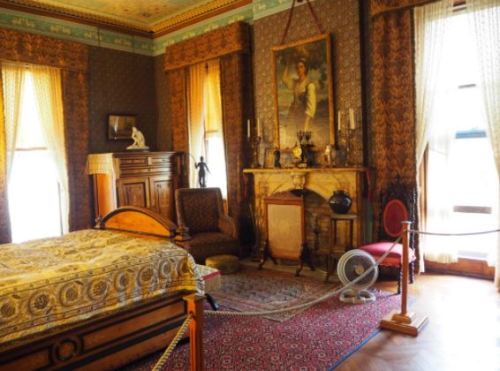
There is little quarrel with the notion that careful training and intensive supervised experience contribute significantly to the preparation of the skilled psychotherapist. It may be asked if there are factors of life history, personality, and social background that the therapist-to-be bring to his training that may contribute to enhance or to limit his future therapeutic endeavours. Differences in these factors could serve either to increase or reduce the effects of the differences in the formal training of the psychiatrist, psychologist, and social worker. The capacity for and the condition of “understanding” a patient is generally held to be of key importance in the establishment, maintenance, and successful direction of a therapeutic relationship. If it happens that therapist and client have certain identities in their respective social histories there is possible a spontaneous empathy, a preformed rapport that can facilitate the mutual acceptance of each by the other and, more importantly, may serve continuously as a catalyst for the stream of communication, spoken and upspoken, which is the medium of therapy. Safely shutting down a bully is something the three different kinds of psychotherapists can help one with. We do not recommend physical violence. Safely shutting down a bully is what we are going for here. In this way, you utilize the help of others. Go the route of getting others involved, even the authorities if need be. Stand up tall, stay firm. If a person is being rude, suggest that perhaps you two have gotten off on the wrong foot, and that calling names will not help the situation. #RandolphHarris 16 of 20

If for instance, the person harassing you starts making threatening gestures, like pounding his hand on his fist, use your mobile phone to take a quick picture of him doing this. It is important to record any physical sign of intimidation. For every manipulative action, there is a consequence. The harshest of them all is the consequence of losing you. The thing about manipulators is that they mentally record every action you do when they have manipulated you or attempted to. If you say you will call the authorities if the bully hits you, and he does go through with the physical harm, you had better call the authorities and let them handle it. Make sure to bring down all the consequences on him that the law allows. You might be the one who gets through to him or her that it is just not worth bullying and hurting people physically. You might even save their next would-be victim from harm. You are not trying to control the manipulator, but you are trying to control how you react to those manipulations. If they think you have a weakness that they can take advantage of, just like the wind, a master manipulator will change directions and come at you from another way. We all have weaknesses; they key to keep them hidden around manipulators is to watch what you say. Say what you mean, only what you will go through with. Sometimes it is best to say nothing and just walk away. When you show an individual that there are consequences for harassing you, they may try even harder. Therefore make it known that those consequences will have an impact on their future. Be calm. Be articulate. Be assertive and sure of yourself so they will stop using you as an easy target. #RandolphHarris 17 of 20

Not everyone grew up rich. Some people come from big families, were disabled in the war, and are very thankful for pensions. Today, a lot of people are saying they need help, they need this, they want that. It is important to be thankful for everything you have, the opportunity to go to school and live that you are living, the opportunity to work. Once when he was a little kid, one firefighter remembers very well going to a firehouse. One of the firemen showed him the remnants of a watch, a new kind of watch that had been melted down into a wad of black plastic. It had come out of a fatal fire caused by someone smoking in bed. That stuck in his mind. When was sixteen, some of the kids who were eighteen were trying to get involved with the volunteer fire department. He looked at them with admiration and knew that it was something he wanted to do. His father was a lieutenant at the time. Later, when he got old and his arthritis progressed, he had to retire. Twice he was almost killed on the job. However, he was not a big story teller. He never told his son fire stories until he was older, and he said he wanted to enter the fire department. His father tried to teach him things. He said, “Son, you watch out for those truss roofs, because when one component fails the whole roof and parapet will come down, and they will kill you.” One time his dad was in a fire in a three-story building. It had a very high parapet which concealed the bowstring truss roof behind it. He was operating the turntable of the ladder truck, and he had two guys in the basket. It was really smoky. He saw a crack developing in this parapet. #RandolphHarris 18 of 20

Everybody ever quickly got away, because you could see what was going to happen. His dad stayed there and swung that snorkel boom away and got those two guys in the basket out of the way just as the wall came down. It buried his dad. Just buried him. One of the things that fell on him was an electrical transformer, and he had an electrical burn across his groin from a wire landing right there. The wires were sparking, and the other guys were afraid to jump right in. Then some fire chief, who had a truckman’s belt on, had them attach a rope to the belt, and he said, “I’m going to start digging the bricks off this guy. And if something happens to me, yank me back.” Well, as soon as he took off the first couple of brick, they could see that the was not going to be electrocuted, and they all jumped in, and they puled all of the bricks off his dad. He was in bad shape. In critical condition. They were just about ready to drill holes in his head. This young man’s father was one of the first guys to wear a helmet with a neckstrap. You know, there was a lot of talk against the strap, saying one will fall through the floor and it will strangle you. His dad said that the first brick would have hit him on the head and the rest of them would have killed him. That helmet stayed on his head. Many firefighters with the Sacramento Fire Department have a legacy or social commitment to help out the community. Therefore, think about fire safety. Do your best to prevent fires. Even if you make it out of a burning building, the people rescuing you may not. #RandolphHarris 19 of 20
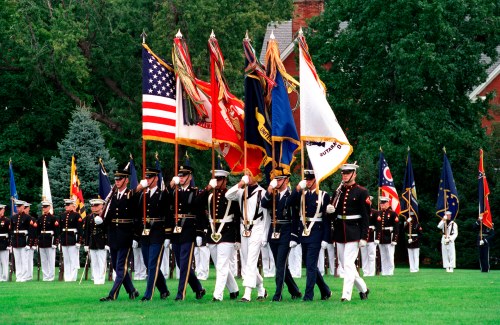
When people think of the fire department, they think of someone rushing into buildings and saving lives, but that is not the only thing in it by a long shot. When my son Leo was two years old, after we built our house in Kelowna and moved in, when the dog would annoy him, he would run into the kitchen and hide in a tall, narrow cabinet to get away from home. Keep in mind, when there is a fire, some kids are afraid of it. Often times they will hide somewhere in the house to get away from the sirens, the flames, and the smoke and incorrectly think they are safe, and no one may ever find them. Also, some fires have killed dozens of firefighters. It is a horrible sight to transport people who are burnt to a crisp. Many people who survive fires also come out of them wounded. The Sacramento Fire Department is doing something terribly important, something everybody respects. You can sense that it is very important. However, sometimes firefighters end up in the hospital because of heat exhaustion. The Sacramento Fire Department has always been around. If possible, please make a donation to ensure these men and women receive the proper resources. I pledge allegiance to the flag of the United States of America and to the Republic, for which it stands, one nation, under God, Indivisible with Liberty and Justice for all. Get up early, work hard, mind your own business, save your money, buy a Cadillac and live on the nice side of town. #RandolphHarris 20 of 20
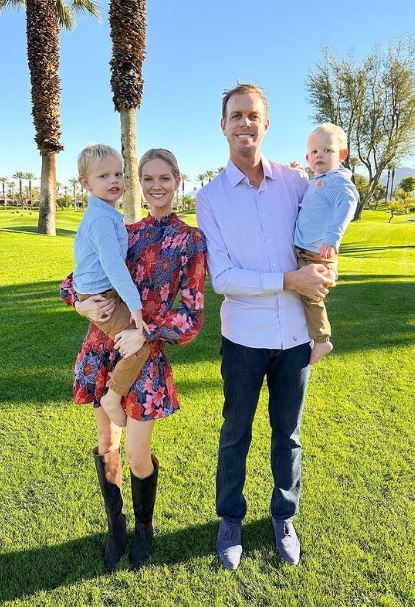
The Winchester Mystery House
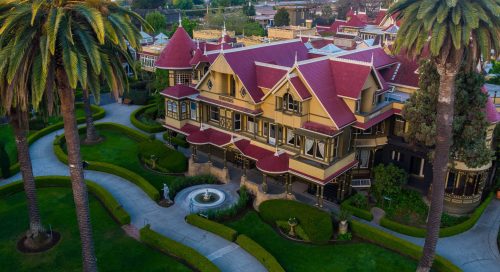
The Winchester Mystery House exists beyond ordinary time, and it is so beautiful, yet bizarre as to inspire fear even in the hearts of an unimaginative populace. On April 22, 2001, there was a mysterious wildness in the mansion, that none might listen without apprehension. A caretaker heard vociferous thumping on the wall next to the bed Mrs. Winchester died in with ululation so horrible and unearthly that he was terrified and baffled. The sounds of knocking then started coming from under the bed; when he knocked on the wooden bedstead, the unknown visitant replied in kind. Then something appeared from beneath the bed. Three days later, he was found quietly sleeping in the basement. The caretakers who found him noticed in his pale blue eyes there was a certain gleam of peculiar quality. He raved of things he did not understand and could not interpret; things which he claimed to have experienced, but which he could not have learned through any normal or connected narration.

Come and enjoy a delicious meal in Sarah’s Café, stroll along the paths of the beautiful Victorian gardens, and wonder through the miles of hallways in the World’s most mysterious mansion. For further information about tours, including group tours, weddings, school events, birthday party packages, facility rentals, and special events please visit the website: https://winchestermysteryhouse.com/

Please visit the online giftshop, and purchase a gift for friends and relatives as well as a special memento of The Winchester Mystery House. A variety of souvenirs and gifts are available to purchase. https://shopwinchestermysteryhouse.com/

Evilness is Not Only Human, but Tragic

The charismatic and his society are bonded in crisis through a mutual attempt to break free of anomie and alienation, and a sense of powerlessness. Hope is a decisive element in any attempt to bring about social change in the direction of greater aliveness, awareness, and reason. However, the nature of hope is often misunderstood and confused with attitudes that have nothing to do with hope and in fact are the very opposite. What is it to hope? Is it, as many think, to have desires and wishes? If this were so, those who desire more and better Ultimate Driving Machines, Millhaven Homes, and gadgets would be people of hope. However, they are not; they are people lusty for more consumption and not people of hope. If hope’s object is not a thing but a fuller life, a state of greater aliveness, a liberation from eternal boredom; or, to use a theological term, for salvation; or, a political term, for revolution, is it to hope? Indeed, this kind of expectation could be hope; but if it has the quality of passiveness, and “waiting for”-until the hope becomes, in fact, a cover for resignation, a mere ideology, it is non-hope. Kafka has beautifully described this kind of resigned and passive hope in a story The Trial. A man comes to the door leading into Heaven (the Law) and begs admittance from the doorkeeper. The doorkeeper says he cannot admit the man at the moment. Although the door leading into the Law stands open, the man decides that he better wait until he gets permission to enter. So he sits down and waits for days and years. He repeatedly asks to be allowed in, but is always told that he cannot be allowed to enter yet. #RandolphHarris 1 of 18

During all these long years the man studies the doorkeeper almost incessantly and learns to know even the fleas in his fur collar. Eventually, he is old and near death. For the first time, he asks the question, “How does it come about that in all these years no one has come seeking admittance but me?” The doorkeeper answers, “No one but you could gain admittance through this door, since this door was intended for you. I am now going to shut it.” The old man was too old to understand, and if he had been younger, maybe he would not have understood. The bureaucrats have the last word; if they say no, he cannot enter. If he had had more than this passive, waiting hope, he would have entered and his courage to disregard the bureaucrats would have been the liberating act which would have carried him to the shining palace. Many people are like Kafka’s old man. They hope, but it is not given to them to act upon their heart’s impulse, and as long as the bureaucrats do not give the green light, they wait and wait. (The Spanish word esperar means at the same time waiting and hoping, and quite clearly it refers to that particular kind of passive hope that I am trying to describe here.) This kind of passive hope is closely related to a generalized form of hope, which might be described as hoping for time. Time and the future become the central category of this kind of hope. Nothing is expected to happen in the now but only in the next moment, the next day, the next year, and in another World if it is too absurd to believe that hope can be realized in this World. #RandolphHarris 2 of 18

Behind this belief that hope can be realized in this World is the idolatry of “Future,” “History,” and “Posterity,” which began in the French Revolution with men like Robespierre, who worshipped the future as a goddess: I do nothing; I remain passive, because I am nothing and impotent; but the future, the projection of time, will bring about what I cannot achieve. This worship of the future, which is a different aspect of the worship of “progress” in modern bourgeois thought, is precisely the alienation of hope. Instead of something I do or I become, the idols, future and posterity bring about something without my doing. The Stalinist concept that history decides what is right and wrong and good and evil is a direct continuation of Robespierre’s idolatry of posterity. It is the extreme opposite of the position of Marx, who said, “History is nothing and does nothing. It is man who is and does.” Or, in Theses on Feuerbach, “The materialist doctrine that men are products of circumstances and upbringing, and that, therefore, changed men are products of other circumstances and changed upbringing, forgets that it is men that change circumstances and that the educator himself needs educating. While passive waiting is a disguised form of hopelessness and impotence, there is another form of hopelessness and despair which takes exactly the opposite disguise—the disguise of phrase making and adventurism, of disregard for reality, and of forcing what cannot be forced. This was the attitude of the false Messiahs and of the Putsch leaders, who had contempt for those who did not under all circumstances prefer death to defeat. #RandolphHarris 3 of 18

In these days, the pseudo-radical disguise of hopelessness and nihilism is not rare among some of the most dedicated members of the young generation. They are appealing in their boldness and dedication but they become unconvincing by their lack of realism, sense of strategy, and, in some, by lack of love for life. Such hopelessness shines through Herbert Marcuse’s Eros and Civilization (Boston: Beacon Press, 1955) and One-Dimensional Man (Beacon Press, 1964). All traditional values, like love, tenderness, concern, and responsibility, are supposed to have had meaning only in a pretechnological society. In the new technological society—one without repressed and exploitation—a new man will arrive who will not have to be afraid of anything, including death, who will develop yet-unspecified needs, and who will have a chance to satisfy his “polymorphous sexuality” (I refer the reader to Dr. Freud’s Three Contributions to the Theory of Sex); briefly, the final progress of man is seen in the regression to infantile life, the return to the happiness of the satiated baby. No wonder that Marcuse ends up in hopelessness. “The critical theory of society possesses no concepts which could bridge the gap between the present and its future; holding no promise and showing no success, it remains negative. Thus it wants to remain loyal to those who, without hope, have given and give their life to the Great Refusal” (One-Dimensional Man, p. 257). These quotations show how wrong those are who attack or admire Marcuse as a revolutionary leader; for revolution was never based on hopelessness, nor can it ever be. #RandolphHarris 4 of 18

However, Marcuse is not even concerned with politics; for if one is not concerned with steps between the present and the future, one does not deal with politics, radical or otherwise. Marcuse is essentially an example of an alienated intellectual, who presents his personal despair as a theory of radicalism. Unfortunately, his lack of understandings and, to some extent, knowledge of Dr. Freud builds a bridge over which he travels to synthesize Freudianism, bourgeois materialism and sophisticated Hegelianism into what him and other like-minded “radicals” seems to be the most progression theoretical construct. This is not the place to show in detail that it is a naïve, cerebral daydream, essentially irrational, unrealistic, and lacking love of life. Credo Perspectives constitute an endeavour to alter the prevailing conceptions, not only of the nature of knowledge and work, but also of creative achievements in general, as well as of the human agent who inquires and creates, and of the entire fabric of the culture formed by such activities. In other words, this is an endevour to show that what we do are no more and no less than what we are. It is the endeavour of Credo Perspectives to define the new reality in which the estrangement of man from his work, resulting in the self-estrangement in man’s existence, is overcome. This new reality is born through the reconciliation of what man knows with what a man is. Being itself in all its presuppositions and implications can only be understood through the totality, through wholeness. #RandolphHarris 5 of 18

St. Paul, who, like Isaiah before him, went into the marketplace not to secularize truth but to proclaim it, taught man that the “new creation” could be explained only by conquering the daemonic cleavages, the destructive split, in soul and cosmos. And that fragmentation always destroys a unity, produces a tearing away from the source and thereby creates disunity and isolation. The fruit can never be separated from the tree. The Tree of Life can never be disjoined from the Tree of Knowledge for both have one and the same root. And if man allows himself to fall into isolation, if he seeks to maintain a self-segregated from the totality of which he too has his place—including his own labours—then this act of apostasy bears fruit in the demiurgical presumption of magic, a form of animism in which man seeks an authority of the self, placing himself above the law of the Universe by attempting to separate the inseparable. He thus creates an unreal World after having destroyed or deserted the real. And in this way the method of analysis, of scientific objectivity, which is good and necessary or deserted the real. And in this way the method of analysis, of scientific objectivity, which is good and necessary in its right place, is endowed with a destructive power when it is allowed to usurp a place for which it is not fitted. The naturalist principle that man is the measure of all things has been shattered more than ever in our own age by the question, “What is the measure of man?” Postmodern man is more profoundly perplexed about the nature of man than his ancestors were. He is on the verge of spiritual and moral insanity. #RandolphHarris 6 of 18

And having lost the sense of who and what he is, man fails to grasp the meaning of his fellow man, of his vocation and of the nature and purpose of knowledge for itself. For what is not understood cannot be known. And it is this cognitive faculty which is frequently abrogated by the “scientific” theory of knowledge, a theory that refuses to recognize the existence of comprehensive entities as distinct from their particulars. The central act of knowing is indeed that form of comprehension which is never absent from any process of knowing and is finally its ultimate sanction. Science itself acknowledges as real a host of entities that cannot be described completely in materialistic or mechanistic terms, and it is this transcendence out of the domain of science into a region from which science itself can be appraised that Credo Perspectives hope to define. For the essence of the ebb and flow of experience, of sensations, the richness of the immediacy of directly apprehended knowledge, the metaphysical substance of what assails our being, is the very act itself of sensation and affection and therefore must escape the net of rational analysis, yet is intimately related to every cognitive act. It is this increasing intellectual climate that is calling into birth once more the compelling Socratic questions, “What is the purpose of life, the meaning of work?” “What is man?” Plato himself could give us only an indirect answer: “Man is declared to be that creature who is constantly in search of himself, a creature who at every moment of his existence must examine and scrutinize the conditions of his existence. He is a being in search of meaning.” #RandolphHarris 7 of 18

From this it is evident that there is present in the universe a law applicable to all nature including man and his work. Life itself then is seen to be a creative process elaborating and maintaining order out of the randomness of matter, endlessly generating new and unexpected structures and properties by building up associations that qualitatively transcend their constituent parts. This is not to diminish the importance of “scientific objectivity.” It is, however, to say that the mind possesses a quality that cannot be isolated or known exclusively in the sense of objective knowledge. For it consists in that elusive humanity in us, our self, that knows. It is that inarticulate awareness that includes and comprehends all we know. It consists in the irreducible active voice of man and is recognized only in other things, only when the circle of consciousness closes around its universe of events. We have to recognize the cause of human suffering—greed. Man must be confronted with the choice between remaining chained to the wheel of terrestrial life, or of renouncing greed and thus ending suffering and focusing more on Godly qualities. Man can choose between these two real possibilities: there is no other possibility available to hm. We have examined man’s heart, its inclination for good and evil and should be more on solid ground than we had been in the past. As far as we know at this time, evilness seems to be a specifically human phenomenon. It is the attempt to regress to the pre-human state, and to eliminate that which is specifically human: reason, love, freedom. Yet evilness is not only human, but tragic. #RandolphHarris 8 of 18

Even if man regresses to the most archaic forms of experience, he can never cease being human; hence he can never be satisfied with evilness as a solution. The animal cannot be evil; it acts according to its built-in drives which essentially serve his interest in survival. Evilness is the attempt to transcend the realm of the human to the realm of the inhuman, yet it is profoundly human because man cannot become an animal as little as he can become “God.” Evil is man’s loss of himself in the tragic attempt to escape the burden of his humanity. And the potential of evil is all the greater because man is endowed with an imagination that enables him to imagine all the possibilities for evil and thus to desire and act on them, to feed his evil imagination. (It is interesting to note that the word for the good and evil impulse is jezer, which in biblical Hebrew means “imaginings.”) The idea of good and evil expressed here corresponds essentially to the one expressed by Spinoza. “In what follows, then,” he says, “I shall mean by ‘good’ that which we certainly know to be a means of approaching more nearly to the type of human nature, as Spinoza also calls it]; by ‘bad’ that which we certainly know to be a hinderance to us in approaching the said as completely destroyed by being changed into a man, as by being changed into an insect.” Good consists of transforming our existence into an ever-increasing approximation to our essence, evil into an ever-increasing estrangement between existence and essence. #RandolphHarris 9 of 18
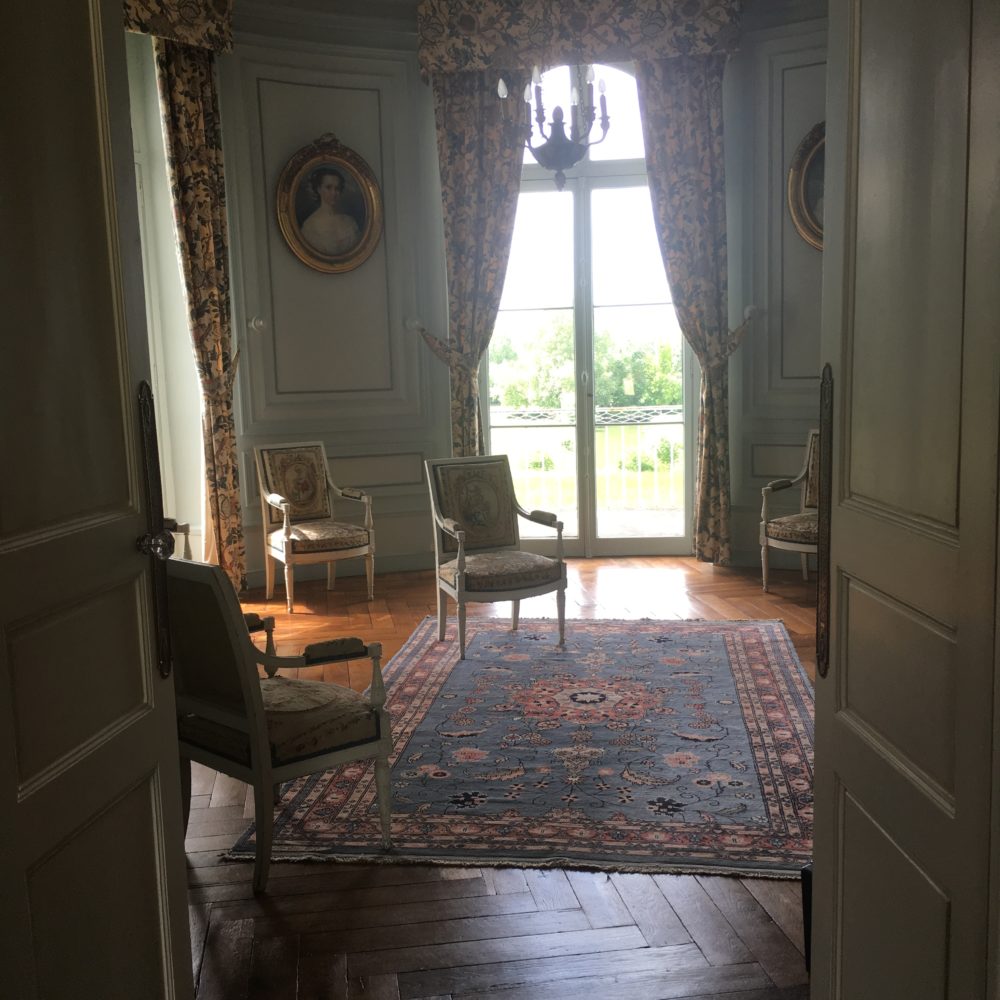
Evil is often present in even the best intended situations. For example, a young girl tells e that she had an attack of heart pounding when shopping. Her heart was not strong, but she did not see why shopping should affect it since she could dance for hours without harm. Nor could she see any psychic reasons for the heart-pounding. She had bought a superbly beautiful blouse for her older sister as a birthday gift, and was delighted to do so. She anticipated with pleasure how much the sister would enjoy and admire the gift. Actually, she had spent her last penny on it. She was short of money because she had straightened out all her debts, or at any rate had made arrangements by which she could pay them off in several months. This she said with distinct self-admiration. The blouse was so beautiful that she would have liked to have it herself. Then, after having apparently dropped the subject, a number of grievances against the sister appeared. She complained bitterly about how the sister interfered with her, how she made nonsensical reproaches. These grievances were intermingled with derogatory remarks which made the sister appear quite inferior to the patient. Even at first sight, this unpremeditated sequence of emotions indicates conflicting feelings toward the sister: a wish to win her love, on the other hand, resentment. #RandolphHarris 10 of 18

When shopping, this conflict was accentuated. The loving side asserted itself in the purchase of the present; the resentment had to be suppressed for the time being and thus clamoured all the louder for its share. The result was the heart pounding. Such clashes of contradictory feelings will not always elicit anxiety. Usually one of the incompatible feelings is repressed, or both join in some compromise solution. Here, as the associations show, no side of the conflict was altogether repressed. Instead, love and resentment, both on a conscious level, were placed on a seesaw. When the one feeling went up, in awareness, the other went down. On closer scrutiny the associations disclosed more details. The theme of self-admiration, blatant in the first series, reappears implicitly in the second. The derogatory remarks about the sister not only express diffuse hostility but serve to make the patient’s own light outshine the sister’s. The tendency to put herself above the sister is evident throughout the associations, in the fact that she continually, even though inadvertently, contrasted her own generosity and sacrificing love with the sister’s bad behaviour. This close connection between self-admiration and rivalry with the sister suggests the possibility that the need to be superior to the sister was an essential factor in the development and maintenance of the self-admiration. This assumption also sheds another light on the conflict that occurred in the store. The impulse to buy the expensive blouse represented not only, as it were, a heroic determination to resolve the conflict but also a wish to establish her own supremacy over the sister, partly by winning her admiration, partly by showing herself the more loving, sacrificing, forgiving. #RandolphHarris 11 of 18

On the other hand, by giving to the sister a more beautiful blouse than she had, she actually placed her in a “superior” position. In order to understand the importance of this point, it should be mentioned that the question of who was better dressed played a significant role in the battle of rivalry; the patient, for instance, had often appropriated the sister’s dresses. Therefore, it is clear, that no observation should be regarded as unimportant. Just as the patient should express without reserve everything that comes to his mind, the analyst should regard every detail as potentially meaningful. He should not discard offhand any remark as irrelevant but should take seriously every single observation, without exception. Furthermore, he should constantly ask himself why this particular feeling or thought of the patient comes up just now. What does it mean in this specific context? A friendly feeling toward the analyst, for instance, may in one context indicate genuine gratitude for help and understanding; in another it may connote the patient’s increased need for affection because in the preceding hour the tackling of a new problem aroused anxiety; in a third it may be the expression of a desire to one the analyst body and soul because a conflict has been uncovered which the patient hopes that “love” will solve. Sometimes people feel it is unfair that their expectations are not met. #RandolphHarris 12 of 18

A failure to examine an association’s exact connections with preceding and succeeding associations, and with preceding experiences, may not only lead to wrong interpretations but also deprive the analyst of an opportunity to learn something about the patient’s reactions to a specific occurrence. Nonetheless, in confrontational situations, beware of tactic of someone wanting to get you on his turf. To further highlight the illustration, your boss comes to your office and asks you to come to his office, he would like to talk to you about something. Some people would get right up and follow their boss without asking a thing. Others might want to know why the conversation could not occur right where they are not. Savy people would ask why they need to take the walk down the long hallway when they could talk it right there. That is because they are aware of the home court advantage. Maybe your boss wants to ask you to do something that is not in your job description. Maybe he wants to ask you questions about a fellow employee he is pretty sure you will not want to give him information on. Whatever his motive is, he is not wanting to risk having the conversation anywhere but, on his turf, the place he feels the most powerful. Before you go to meet anyone in a place you know they feel the most at home in, think about why they want to meet there. You can still go, just be prepared for what they might ask of you and be ready to say no if you feel you should not. #RandolphHarris 13 of 18
In the prolonged relationships of intensive psychotherapy, it must be recognized that the patient has opportunity for repeated expression of “punishable” ideas and feelings which do not lead in therapy to punishment or rejection. The anxiety originally accompanying the thoughts is gradually extinguished or reduced through repeated expression without pain. Then it is possible for the patient to see his betes noires differently, to think differently about them, and to plan imaginatively to react differently to their real-life representations. Eventually, with the support and positive suggestion of the therapist, he is able to experiment with new modes of response to those persons and situations which are anxiety symbols and, eventually, to extend the process of learning (and extinction of inappropriate, anxious responses) to the “real” World outside of his therapist’s office. Although there are differences in interpretation as to the elements of the process, differences in emphasis as to whether it is mostly an extinction of old, inappropriate responses or an acquisition of new more appropriate responses, differences as to whether there are basic generalities or necessary specifics in the content of neurosis, nearly all psychotherapists agrees that psychotherapy is a learning process. In this learning, the therapist serves as guide, tutor, model, and primary source of reward. To the extent that all therapists partake of the role of teacher, self-acknowledged or not, we have yet another common dimension. #RandolphHarris 14 of 18
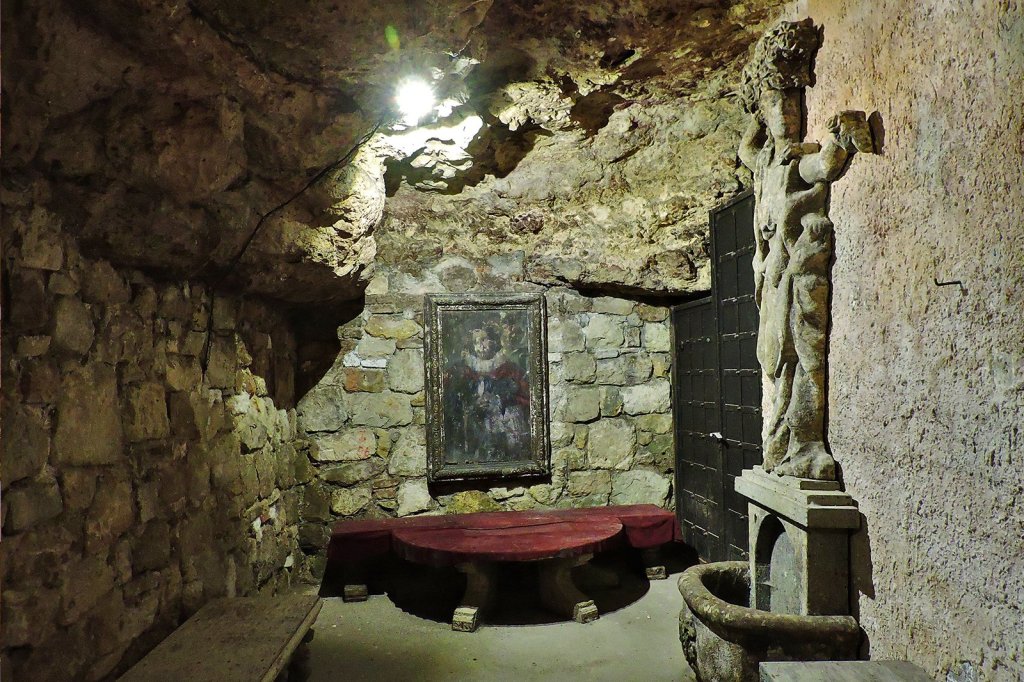
Considering the range and basic nature of these dimensions and processes which are common to all forms of conversation with therapeutic intent, it is remarkable that so many have found so much to say about such a variety of apparent diversities in theory and practice. However, in our culture it is far more acceptable to present oneself as an expert in some moderately occult and complex professionalized technique than to suggest the more modest (grandiose?) claims of being generally perceptive and intelligent about personal problems. Certainly the average counselor can much sooner be confident that he is technically proficient than he can be assured that he is wise. In view of the extensive variety and possibly sizable therapeutic power of those factors which do appear to be shared by all schools of psychotherapy, it is suggested that we might do well to concentrate our researchers on these potential mechanisms of the psychotherapeutic effect, and to emphasize carefully the methods of optimizing their influence when selecting and training psychotherapists, rather than to pursue almost exclusively the search of differences in therapeutic practice that theoretically should be there and theoretically should make a difference. There are men who come as ambassadors from Heaven, and the writings or arts of men, which come as revelators. However, unless the reaction includes recognition, the contact is fruitless, the meeting useless. #RandolphHarris 15 of 18

The Holy Spirit dwells in and acts through the spirit of man, and not through either nerve center, which have both to be under the control of the spirit. If in any way he is given ground, exempli gratia, if the cerebral nerves cease to act by “letting the mind go blank,” and the vegetative nerves are awakened to act in their “streams of life” though the body, then “claiming the blood” cannot protect us from the enemy. No claiming of the precious blood of Christ will prevent these physical laws acting when the conditions for action are fulfilled. Hence, the strange fact which has perplexed many, that abnormal experiences manifestly contrary to the Spirit of God have taken place while the person was earnestly repeating words about the “blood.” Moreover, the arousing of the “vegetative nerves” to such abnormal activity that “floods of life” have appeared to pour through the whole body—the enemy whispering at the same moment. “This is divine!”—(1) dulls the mind and makes it inert in action, (2) causes a craving in the recipient for more of this “divine” life, (3) leads to the danger of ministration of it to others, and all that follows, as the path is pursued in honest faith and confidence of being “specially advanced” in the life of God. Should any who are reading this discover their own case depicted, let them thank God for knowledge of the truth, and (1) simply reject by an attitude of will all that is not of God; (2) consent to trust God in His Word without any “experiences”; (3) stand on Romans 6.11, with James 4.7, in respect to the Adversary, and on John 16.12 in respect to the Holy Spirit. #RandolphHarris 16 of 18
It is important to invigorate the dry bones of being, finitude, essence, existence, potentiality, actuality, and teleology by interpreting them in terms of courage, power, anxiety, estrangement, fulfilment, and the ambiguities of life. Whether this procedure is a happy wedding of metaphysics to psychology or a betrayal of one or the other is a problem which we leave to the philosophers to decide. However, there is an awareness that pure ontology is too strong a medicine for the modern palate. When one reflects upon man’s existential condition, the mind is positively staggered by the enormity and complexity of the task. Who is competent to venture into “all the areas of culture” in order to formulate man’s basic problems? Yet this is what the method of correlation requires: The analysis of the human situation employes materials made available by man’s creative self-interpretation in all realms of culture. Philosophy contributes, but so do poetry, drama, the novel, therapeutic psychology, and sociology. The theologian organizes these materials in relation to the answer given by the Christian message. They only way such a project could conceivably be executed would be to suppose from the beginning that all these cultural areas are ultimately rooted in ontology. The human situation is structured according to his basic metaphysical concepts. The divine is the true Subject to the human being, and thus from Spirit to life, and the Kingdom of God to history. Each quest thus has its own character and its own personality. This it shapes by the act of dedicating itself to the incorruptible integrity of the higher life. #RandolphHarris 17 of 18

After the Sacramento Fire Department was formed nearly 200 years ago, it was not long before it was realized that they could provide first aid. When you are hurting, call the fire department. They started with this basic first aid, Red Cross first responders, and the like, and then moved into the emergency medical technician field—you know the men and women with the big patches—which elevated the Emergency Medical Services (EMS) platform just a little bit higher. And then came paramedicine. Shortly after their introduction to paramedicine, the fire department began getting called to chemical spills and releases, because, when it came down to it, no one else would respond or take care of them due to the serious nature of these incidents. The hazardous waste team if referred to as the “mop” n’ glow crew.” However, anyone who has been around an incident involving hazardous materials, especially a bad one, knows that the haz-mat technicians are definitely the people you want to rely on when the ethyl-methyl-bad-stuff ends up on the ground or in the air. Please be sure to donate to the Sacramento Fire Department to make sure they have the resources necessary to protect the community. Also, Kevin McCarty is running for Mayor of Sacramento. He is a Democrat for Sacramento—on the City Council and in the State Assembly, he had led on housing and homelessness. Sacramento Firefighters endorse McCarthy for Mayor. I pledge allegiance to the flag of the United States of America, and to the Republic, for which it stands, one nation, under God, indivisible with liberty and justice for all. #RandolphHarris 18 of 18


Ever since the dawn of humankind, people have believed in ghosts. The fear of the unknown—the certainty that there is something in The Winchester Mystery House, bigger than life, beyond its pale, and more powerful than anything walking the Earth—has persisted for nearly century a half. These fears had their origin from Mrs. Winchester and her staff. To them, there were good and evil forces at work in the mansion and on the estate, both ruled over by supernatural beings, and to some degree capable of being influenced by the attitudes of humans and séances. The fear of death was, of course, one of the strongest emotions, which lead Mrs. Winchester to construct the World’s most beautiful and bizarre mansion over nearly forty years of non-stop construction.

In 1906, Daisy, Mrs. Winchester’s niece told a friend in confidence that the hauntings of The Winchester Mansion were not the usual array of footfalls, presences, and the dog starting at someone unseen. It was around the middle of January, Daisy and Mrs. Winchester were having supper, when Daisy looked up, she saw a man. He was standing by the fireplace wearing a white shirt, dark trousers with suspenders, and glasses with round metal frames. He was tall and sturdy. Then suddenly he was gone. No disappearing act or anything fancy, just vanished. Then the brass candlesticks next flew off the mantelpiece, going towards the back door. Everything flew towards the door. Mrs. Winchester nor Diasy could account for the occurrences; but both agreed in attributing the spiritual demonstration to powers higher than human.

Come and enjoy a delicious meal in Sarah’s Café, stroll along the paths of the beautiful Victorian gardens, and wonder through the miles of hallways in the World’s most mysterious mansion. For further information about tours, including group tours, weddings, school events, birthday party packages, facility rentals, and special events please visit the website: https://winchestermysteryhouse.com/

Please visit the online giftshop, and purchase a gift for friends and relatives as well as a special memento of The Winchester Mystery House. A variety of souvenirs and gifts are available to purchase. https://shopwinchestermysteryhouse.com/

They Have Everything a Man Could Want

Twenty-first century man is living in one of the World’s most challenging periods, unprecedented in history. People are hollering about enforcing gun control, but then have allowed 14 million people illegal immigrant into this country without background checks. One cannot even say that they are “undocumented” because some do have fake identity documents or stolen identities. These days people can rent or buy guns on the underground market. While allowing states to legalize marijuana, and considering it federally, Americans seem to be unaware that in 2021, approximately 107,000 people died from drug overdose. In 2023, approximately 46,000 people died from gun shot wounds. How can we restrict the rights of Americans to bear arms, which they may need to protect themselves, but allow people into this country that we know nothing about? Already, county, city, state, and federal budgets are insufficient, the country is running a historic deficit, record numbers of people are homeless, people are underpaid, there is soaring inflation, record high home prices and rents, and these refugees are costing taxpayers $20 billion. As anyone can see, the country is in a state of crisis. Furthermore, if a group of people carried out 911, think about the risk we are putting the nation in by allowing 14 million people to invade the county without knowing anything about them. Whatever it is, White Guilt, greed, racism, or malicious intentions, America need come to their senses and understand we are facing a greater risk than we ever have in the past. This is a dynamic period when man has almost unlimited choices for good and evil. #RandolphHarris 1 of 19
In all civilizations of the World our modern epoch, in both socialistic and capitalistic societies, we are face with the compelling need to understand more clearly the forces that dominate our World and to modify our attitudes and behaviour accordingly. If our best minds are persuaded and assembled to concentrate on the nature of this new epoch in evolutionary and moral history, this it the only way it will happen. For we are confronted with a very basic change. Man has intervened in the evolutionary process, and he must better appreciate this fact with its influence on his life and work, and then try to develop the wisdom to direct the process, to recognize the mutable and the immutable elements in his moral nature and the relationship between freedom and order. Science now permits us to say that “objective” nature, the World which alone is “real” to us as the one in which we all, scientists included, are born, love, hate, work, reproduce and die, is the World given us by our senses and our minds—a World in which the Sun crosses the Sky from East to West, a World of three-dimensional space, a World of values which we, and we alone, must make. It is true that scientific knowledge about macroscopic or subatomic events may enable us to perform many acts we were unable to perform before. However, it is as inhabitants of this human World that we perform them and must finally recognize that there is a certain kind of scientific “objectivity” that can lead us to know everything but to understand nothing. #RandolphHarris 2 of 19

Man sees in two ways: with his physical eyes, in an empirical sensing or seeing by direct observation, and also by an indirect envisaging. He possesses in addition to his two sensing eyes a single, image-making, spiritual and intellectual Eye. And it is the in-sight of this inner Eye that purifies and makes sacred our understanding of the nature of things; for that which was shut fast has been opened by the command of the inner Eye. And we become aware that to believe is to see. The creator in any realm must surrender himself to a passionate pursuit of his labours, guided by deep personal intimations of an as yet undiscovered reality. We must learn to unlock a consciousness that at first sight may seem to be remote but is proved on acquaintance to be surprisingly immediate, since it stems from the need to reconcile the life of action with the life of contemplation, of practice with principle, of thought with feeling, of knowing with being. For the whole meaning of self lies within the observer, and its shadow is cast naturally on the object observer. The divorce of man from his work, the division of man into an eternal and temporal half, results in an estrangement of man from his creative source, and ultimately from his fellows and from himself. If it does not converge in the person, the Universe itself is a vast entity where man will be lost; for material forces or energies, or impersonal ideals, or scientifically objectified learning are meaningless without their relevance for human life and their power to disclose, even in the dark tendencies of man’s nature, a low of transcending man’s arbitrariness. #RandolphHarris 3 of 19

For the personal is a far higher category than the abstract universal. Personality itself is an emotional, not an intellectual, experience; and the greatest achievement of knowledge is to combine the personal within a larger unity, just as in the higher stages of development the parts that make up the whole acquire greater and greater independence and individuality within the context of the whole. Reality itself is the harmony which gives to the component particulars of a thing the equilibrium of the whole. And whole physical observations are ordered with direct references to the experimental conditions, we have in sensate experience to do with separate observations whose correlation can only be indicated by their belonging to the wholeness of mind. Man’s relationship with his creativity demands a clarification that can widen and deepen his understanding of the nature of reality. Work is made for man, not man for work. There is a sacramenta character of work, which is more easily achieved when the principal objects of our attention have taken on a symbolic form that is generally recognized and accepted; and this suggests a law in the relationship of a person and his chosen discipline: that only when the spiritual, the creative, life is strong enough to insist on some expression through symbols is it valuable. For no work can be based on material, technological, historical, or physical aspirations alone. The human race is not entering upon a new phase of evolutionary consciousness and progress, a phase in which, impelled by the forces of evolution itself, it must converge upon itself and convert itself into one single human organism infused by a reconciliation of knowing and being in their inner unity and destined to make a qualitative leap into a higher form of consciousness as we know it, or otherwise destroy itself. #RandolphHarris 4 of 19

For the entire Universe is one vast field, potential for incarnation and achieving incandescence here and there of reason and spirit. And in the whole World of quality with which by the nature of our minds we necessarily make contact, we here and there apprehend pre-eminent value. If we recognize that we are unable to focus our attention on the particulars of a whole without diminishing our comprehension of the whole, and of course, conversely, we can focus on the whole only by diminishing our comprehension of the particulars which constitute the whole, only then can this be achieved. The kind of knowledge afforded by mathematical physics ever since the seventeenth century has come more and more to furnish mankind with an ideal for all knowledge. This error about the nature of knowledge needs to be exposed. For knowledge is a process, not a product and the results of scientific investigation do not carry with them self-evident implications. There are now, however, signs of new centers of resistance among men everywhere in almost all realms of knowledge. Many share the conviction that a deep-seated moral and philosophical reform is needed concerning our understanding of the nature of man and the nature of knowledge in relation to the work man is performing, in relation to his credo and his life. #RandolphHarris 5 of 19

We are at a crossroads: one road leads to a completely mechanized society with man as a helpless cog in the machine—if not to destruction by a thermonuclear war; the other to a renaissance of humanism and hope—to a society that puts technique in the service of man’s well-being. We can find the necessary new solutions with the help of reason and passionate love for life, and not through irrationality and hate. For many of the young generation who belittle the value of traditional thought, keep in mind the most radical development must have its continuity with the past; we cannot progress by throwing away the best achievements of the human mind—and to be young is not enough. “For him that is joined to all the living, there is hope,” reports Ecclesiastes 9.4. A specter is stalking in our midst whom only a few see with clarity. It is not the old ghost of communism or fascism. It is a new specter: a completely mechanized society, devoted to maximal material output and consumption, directed by computers; and in this social process, man himself is being transformed into a pater of the total machine, well fed and entertained, yet passive, unalive, and with little feeling. With the victory of the new society, individualism and privacy will have disappeared; feelings toward others will be engineered by psychological conditioning and other devices, or drugs, which also serve a new kind of introspective experience. In the technetronic society, the trend seems to be towards the aggregation of the individual support of millions of uncoordinated citizens, easily within the reach of magnetic an attractive personality effectively exploiting the latest communication techniques to manipulate emotions and control reason. #RandolphHarris 6 of 19

Perhaps its most ominous aspect at present is that we seem to lose control over our own system. We execute the decisions which our computer calculations make for us. We as human beings have no aims except producing and consuming more and more. We will nothing, nor do we not-will anything. We are threatened with extinction by nuclear weapons and drugs and with inner deadness by the passiveness which our exclusion from responsible decision making engenders. How did it happen? How did man, at the very height of this victory over nature, become the prisoner of his own creation and in serious danger of destroying himself? In the search for scientific truth, man came across knowledge that he could use for the domination of nature. He had tremendous success. However, in the one-sided emphasis on technique and material consumption, man lost touch with himself, with life. Having lost religious faith and the humanistic values bound up with it, he concentrated on technical and material values and lost the capacity for deep emotional experiences, for the joy of sadness that accompany them. The machine he built became so powerful that it developed its own program, which now determines man’s own thinking. At the moment, one of the gravest symptoms of our system is the fact that our economy rests upon drugs and on the principle of maximal consumption. We have a well-functioning economic system under the condition that we are producing goods which threaten us with physical destruction, that we transform the individual into a total passive consumer and thus deaden him, and that we have created a bureaucracy which makes the individual feel impotent. #RandolphHarris 7 of 19

Are we confronted with a tragic, insolvable dilemma? Must we produce sick people in order to have a healthy economy, or can we use our material resources, our inventions, our computers to serve the ends of man? Must individuals be passive and dependent in order to have strong and well-functioning organizations? Among those who recognize the revolutionary and drastic change in human life which the “megamachine” could bring about are the writers who say that the new society is unavoidable, and hence that there is no point in arguing about its merits. At the same time, they are sympathetic to the new society, although they express slight misgivings about what it might do to man as we know him. There is a dreadful lack of humanness. If an increasing number of people become fully aware of the threat the technological World poses to man’s personal and spiritual life, if they determine to asset their freedom by upsetting the course of this evolution, the dehumanized society may not be the victor. The “megamachine” started with its first manifestations in Egyptian and Babylonian societies. If technology is permitted to follow its own logic, it will become a cancerlike growth, eventually threatening the structured system of individual and social life. There is also a greater possibility of the restoring of the social system to man’s control. If one connects the system “Man” with the whole system, the present social system can be understood a great deal better. Human nature is not an abstraction nor an infinitely malleable and hence dynamically negligible system. It has its own specific qualities, laws, and alternatives. #RandolphHarris 8 of 19

The study of the system Man permits us to see what certain factors in the socioeconomic system do to man, how disturbances in the system of man produce imbalances in the whole social system. By introducing the human factor into the analysis of the whole system, we are better prepared to understand its dysfunctioning and to define norms which relate the healthy economic functioning of the social system to the optimal well-being of the people who participate in it. All this is valid, of course, only if there is agreement that maximal development of the human system in terms of its own structure—that is to say, human well-being—is the overriding goal. The increasing dissatisfaction with our present way of life, its passiveness and silent boredom, its lack of privacy and its depersonalization, and the longing for a joyful, meaningful existence, which answers those specific needs of man which he has developed in the last few thousand years of his history and which make him different from the animal as well as from the computer. This tendency is all the stronger because the affluent part of the population has already tasted full material satisfaction and has found out that the consumer’s paradise does not deliver the happiness it promised. (The less affluent, of course, have not yet had any chance to find out, except by watching the lack of joy of those who “have everything a man could want.” Ideologies and concepts have lost much of their attraction; traditional clichés like “right” and “left” or “communism” and “capitalism” have lost their meaning. #RandolphHarris 9 of 19

People seek a new orientation, a new philosophy, one which is centered on the priorities of life—physically and spiritually—and not on the priorities of death. There is a growing polarization occurring in the United States of America and the whole World: There are those who are attracted to force, “law and order,” bureaucratic methods, and eventually to non-life, and those with a deep longing for life, for new attitudes rather than ready-made schemes and blueprints. This new front movement which combines the wish for profound changes in our economic and social practice with changes in our psychic and spiritual approach to life. In its most general form, its aim is the activation of the individual, the restoration of man’s control over the social system, the humanization of technology. It is a movement in the name of life, and it has such a broad and common base because the threat to life is today a threat not to one class, to one nation, but a threat to all. Today, a widespread hopelessness exists with regard to the possibility of changing the course we have taken. This hopelessness is mainly unconscious, while consciously people are “optimistic” and hope for further “progress.” If Spinoza’s work is a treatise aiming at the “salvation” of the individual (salvation meaning the conquest of freedom by awareness and labour), Marx’s intent is also the salvation of the individual. However, while Spinoza deals with individual irrationality, Marx extends the concept. He sees that the irrationality of the individual is caused by the irrationality of society in which he lives, and that this irrationality itself is the result of the planlessness and the contradiction inherent in the economic and social reality. #RandolphHarris 10 of 19

Marx’s aim, like Spinoza’s, is the free and independent man, but in order to achieve this freedom man must become aware of those forces which act behind his back and determine him. Emancipation is the result of awareness and effort. More specifically, Marx, believing that the working class was the historical agent for universal human liberation, believed that class-consciousness and struggle were the necessary conditions for man’s emancipation. Like Spinoza, Marx is a determinist in the sense of saying: If you remain blind and do not make the utmost efforts, you will lose your freedom. However, he, like Spinoza, is not only a man who wants to interpret; he is a man who wants to change—hence his whole work is that attempt t teach man how to become free by awareness and effort. Marx never said, as is often assumed, that he predicted historical events which would necessarily occur. He was always an alternativist. If he is aware of the forces operating behind his back, if he makes the tremendous effort to win his freedom, man can break the chains. In this century man has the alternative of choosing between socialism and barbarism. Dr. Freud, the determinist, was also a man who wanted to transform: he wanted to change neurosis into health, to substitute the dominance of the Ego for that of the Id. What else is neurosis—of whatever kind—but man’s loss of freedom to act rationally? What else is mental health but man’s capacity to act according to his true interest. Dr. Freud, like Spinoza, and Marx, saw to what degree man is determined. #RandolphHarris 11 of 19
However, Dr. Freud also recognized that the compulsion to act in certain irrational and thus destructive ways can be changed—by self-awareness and by effort. Hence his work is the attempt to devise a method of curing neurosis by self-awareness and the motto of his therapy is: “The truth shall make you free.” Several main concepts are common to all three thinkers: Man’s actions are determined by previous causes, but he can liberate himself from the power of these causes by awareness and effort. Theory and practice cannot be separated. In order to achieve “salvation,” or freedom, one must know, one must have the right “theory.” However, one cannot know unless one acts and struggles. Dr. Freud, for instance, believed it to be necessary that the patient make an economic sacrifice by paying for his treatment, and the sacrifice of frustration by not acting out his irrational fantasies in order to achieve a cure. It was precisely the great discovery of all three thinkers that theory and practice, interpretation and change are inseparable. While they were determinists in the sense that man can lose the battle for independence and freedom, they were essentially alternativists: they taught that man can choose between certain ascertainable possibilities and that it depends on man which of these alternatives will occur; it depends on him as long as he has not yet lost his freedom. #RandolphHarris 12 of 19

Thus Spinoza did not believe that every man would achieve salvation, Marx did not believe that socialism had to win, nor did Dr. Freud believe that every neurosis could be cured by his method. In fact, all three men were skeptics and simultaneously me of deep faith. For them freedom was more than acting in the awareness of necessity; it was man’s great chance to choose the good as against the evil—it was a chance of choosing between real possibilities on the basis of awareness and effort. Their position was neither determinism nor indeterminism; it was a position of realistic, critical humanism. The position of alternativism described here is essentially that of the Hebrew Bible. God does not interfere in man’s history by changing his heart. He sends his messengers, the prophets, with a threefold mission: to show man certain goals, to show him the consequences of his choices, and to make protest against the wrong decision. It is up to man to make his choice; nobody, not even God, can “save” him. The clearest expression of this principle is expressed in God’s answer to Samuel when the Hebrew wanted a king: “Now therefore hearken unto their voice; howbeit ye protest solemnly unto them, and show them the manner of the king that shall reign over them.” After Samuel has given them a drastic description of Eastern despotism, and the Hebrews still want a king, God says: “Hearken to their voice and make them a king,” reports 1 Samuel 8.9, 22. The same spirit of alternativism is expressed in the sentence: “I put before your today a blessing and curse, life and death. And you choose life.” Man can choose. God cannot save him; al God can do is to confront him with the basic alternatives, life, and death—and encourage him to choose life. #RandolphHarris 13 of 19

We have examined man’s heart, its inclination for good and evil. Have we reached ground that is more solid than the vision we previously had? In some ways this work might be compared with that of the detective in mystery stories. It is worth emphasizing, however, that whereas the detective wants to discover the criminal the analyst does not want to find out what is bad in the patient, but attempts to understand him as a whole, good and bad. Also, he deals not with several people, all under suspicion, but with a multitude of driving forces in one person, all under suspicion not of being bad but of being disturbing. Through concentrated and intelligent observation of every detail he gathers clues, sees a possible connection here and there, and forms a tentative picture; he is not too easily convinced of his solution, but tests it over and over again to see whether it really embraces all factors. In mystery stories there will be some people working with the detective, some only apparently doing so and secretly obstructing his work, some definitely wanting to hide and becoming aggressive if they feel threatened. Similarly, in analysis part of the patient co-operates—this is an indispensable condition—another part expects the analyst to do all the work and still another use all its energies to hide or mislead and become panicky and hostile when threatened with discovery. It is mainly from the patient’s free associations that the analyst derives his understanding of unconscious motivations and reactions. The patient is not usually aware of the implications of what he presents. #RandolphHarris 14 of 19

Therefore the analyst, in order to form a coherent picture out of the multitude of discrepant elements presented to him, must not only listen to the manifest content but also try to understand what the patient really wants to express. He tries to grasp the red thread that passes through the apparently amorphous mass of material. If too many unknown quantities are involved, he sometimes fails in this endeavour. Sometimes the context also speaks for itself. To further highlight this illustration, a patient tells me that he had a bad night and that he feels more depressed than ever. His secretary has had an attack of influenza, and this not only disturbs his business arrangements but also upsets him because of his fear of infection. He talks then about the frightful injustice done to small European countries. Then he thinks of a physician who annoyed him by failing to give him clear information about the contents of a drug. Then a tailor comes up in his mind who had not delivered a coat as promised. The main theme is annoyance at untoward events. The egocentric nature of the grievances is shown by his enumerating the secretary’s illness in one line with the unreliability of the tailor, as if both were personal offenses against him. The fact that the secretary’s flu has rearoused his fear of infection does not lead him to think that he should try to overcome this fear. He expects, instead, that the World should be so arranged as not to arouse his fears. The World should attend to his needs. #RandolphHarris 15 of 19

Here the theme of justice comes in: it is unfair that others do not heed his expectations. Since he is afraid of infection nobody in his environment should all ill. Thus others become responsible for his difficulties. He is as helpless against influences as small European countries are against invasion (actually he is helpless in the clutches of his own expectations). The association concerning the doctor also acquires a special meaning in this contest. It, too, implies expectations not complied with and in addition it refers to his grievance against me for not offering him a clear solution of his problems, instead of groping around and expecting his co-operative activity. Patients who are able to recall the origins of a symptom and to give uninhibited expression to the emotions attendant upon the situation in which it evolved were subsequently relieved symptomatically and generally improved in their overall adjustment. This function of emotional purging or catharsis came gradually to be perceived as but one phase of a more general process in which the patient, under the accepting, encouraging, and supportive friendship of the therapist, was enabled to give expression to his conflicts, his anxiety, his guilts, his resentments, to relieve his previously bottled-up feelings without fear of rejection or misunderstanding. To this basic process whereby the suffering supplicant is helped to achieve release from the tormenting burden of his previously suppressed (or repressed) emotions, from the personal isolation stemming from his previously unshared feelings, is given the name ventilation. #RandolphHarris 16 of 19

Catharsis and ventilation are the naturally inevitable first steps in any truly intimate personal relationship, requiring nothing more than an accepting (and probably understanding) auditor. It is difficult to imagine any formal psychotherapy which could either in theory or expert practice deliberately prevent the occurrence of such ventilation. (It is possible that full ventilation may be prevented or delayed by the inexperienced, insensitive, or inept therapist who is overly active and insufficiently appreciative of the self-curative forces in nature.) And ventilation and catharsis as general factors may prove to account for a sizable portion of the total therapeutic impact of all psychotherapies. Knowing when we need to trust our instincts and go with our gut is an essential life skill. Many people play on the emotions of others. It is easy to do to some, and harder to impossible to do to others. That is because some people are more in tune than others. It does not make them any smarter, just more wary of individuals and their motives. If a little boy came crying to you, needing your help to get his poor baby calf that was stuck in the swimming pool, you would probably believe him and rush to help. In this situation, relaying on your emotions seems to be the right thing to do. However, if it was not a little boy, it was a grown man who came to you, asking the same thing, you would most likely be cautious and unwilling to help him, assuming that he had other intentions, perhaps even evil ones. #RandolphHarris 17 of 19

Not all people react the same way. Especially if he was very convincing, there are some who might still feel sympathy and empathy for the man. Society has taught us to help others. It is a natural human reaction to tend to those who are crying or upset. We want to fix it, most o us want to help. However, what happens when someone takes advantage of that part of us? Can we do anything to change the outcome? The spirit acquires the full authority given it by the Creator over the powers of the soul, and through the soul over the body. The conscious personal life is once more completely under the authority of the spirit. The dependency upon God, which man sough to break off in his mania for exalting himself by setting his reason, his emotions, or the flesh upon the throne, is restored again. The Spirit of God can exercise once more His controlling and quickening power. The deeds of the flesh are put to death by the Spirit, the powers and the gifts of the Spirit developed, the man becomes spiritual, full of Holy Spirit. Jesus is the Christ, the bringer of the New Being. When considering the human situation, it is quite convincing that man’s problems are basically ontological. There is something unassailable in his potions, for ontology, by definition, deals with ultimates. Although one may flee ontology, one can never quite escae it, since everyone possess some kind of ontology, albeit in an inchoate and disguised form. However, the fact must be faced that we live in a non-metaphysical age, and it may be unrealistic to describe man’s existential situation in ontological terms. To do so seems even to violate the method of correlation, for the theological answers are then clothed in the ontological forms so unappealing to modern man. #RandolphHarris 18 of 19

Charity is the pure love of Chrit. It is the love that Jesus as the Christ has for the children of men and that children of men should have for one another. It is the highest, noblest, and strongest kind of love and the most joyous to the soul. Charity is “the pure love of Christ,” or “everlasting love.” The prophet Mormon taught: “Charity suffereth long, and is kind, and envieth not, and is not puffed up, seeketh not her own, is not easily provoked, thinketh no evil, and rejoiceth not in the iniquity but rejoiceth in the truth, beareth all things, believeth all things, hopeth all things, endureth all things.” Jesus as the Christ is the perfect example of charity. In His mortal ministry, He always went about doing good, teaching the gospel and showing tender compassion for the less affluent, afflicted, and distressed. His crowning expression of charity was His infinite Atonement. He said, “Greater love hath no man, than this, that a man lay down his life for his friends.” This was the greatest act of long-suffering, kindness, and selflessness that we will ever know. The Saviour wants all people to receive His love and to share it with others. He declared to His disciples: “A new commandment I give unto you, That ye love one another; as I have loved you, that ye also love one another. By this shall all men know that ye are my disciples, if ye have love one to another.” I pledge allegiance to the flag of the United States of America, and to the republic for which it stands, one nation, under God, indivisible, with liberty and justice for all. When you are at your worst and life has you down, when you have something horrible going on, whether it is a fire, medical problem, or some other type of disaster, the Sacramento Fire Department will be there for you and help you every time! They will do everything they can to make thing better again. Please be sure to donate to the Sacramento Fire Depart. Solving problems can get them into trouble, even to the point at which they may lose a firefighter. #RandolphHarris 19 of 19


Millhaven Homes offers the opportunity to have it all – a custom luxury single-family home, an ideal location, resort-style amenities, beautiful scenery. Inside you will find abundant in natural beauty in the architecture, charm in the gourmet kitchen, and a magnificent family-friendly living and dining room warmth in a thriving community with exceptional amenities right in your own backyard.

Going Beyond the Build means exceeding client expectations. Our team of professionals specialize in every aspect of a Design + Build experience. https://millhavenhomes.com/custom-homes/
 Randolph Harris II International Institute