
Home » Posts tagged 'jesus' (Page 8)
Tag Archives: jesus

Why Should Evil be Punished When Goodness is Not Rewarded?

To look only for pleasant effects upon the ego’s feelings, whether it be our own or other people’s, is a mistake. Emotion is expert at inventing reasons for its aversions and dislikes. One of the very important tasks of the Quest is to bring the emotional nature and the passional nature under control. If this is not done, it is certain that man will be so affected by the various persons, so changed by the various environments he meets with as the days move forward, that he will not be able to achieve that serene poise which is the Quest’s goal, nor depend on what he will be like tomorrow. That is, he will not be able to depend upon himself. There are feelings which should be distrusted. There are reasonings which should be discarded. Only when the philosophic discipline has purified the heart and tranquilized the head can we safely rely on ourselves for judgment. Most people are, in fact, very far from the stage where they can sagely trust their emotions or indiscriminately yield to their instincts. Besides the absence of traffic laws, this inner journey is different in many ways from any other you will ever take. It does not cover any ground, geographically. It is a journey inside yourself and inside other people. It may not involve any physical movement—any doing what so ever. The destination is also different, in that it is not a place. It is a process. #RandolphHarris 1 of 21

Mastery is the process of discovering who you really are—and daring to be that—every day. It is the process of discovering and making contact with the real person in others—and daring to let them be who they are. Accomplishing these things involves getting in touch with your core, a source of inner wisdom which we all possess, a special place—deep within you—that intuitively knows what is best for you. Where is your “core”? If you were to examine an x-ray of your body, you would not be able to see it. However, because you cannot see it does not mean that it does not exist. The same x-ray might reveal the shape and size of your muscles without showing the strength those muscles possess. Yet you feel that strength and know it is there without being able to observe it objectively on the x-ray. And so it is with your inner core. Without ever having seen it, people have described this core as being somewhat like that of an apple, centering around the abdominal area and extending upward to the area of the heart and downward into the genital region. Pictured thus, the core resides in our physical center. At this physical center, we integrate feeling, thinking and bodily responses to make our most significant decisions about ourselves and others. At this center, our spirituality and psychological functioning come together and synthesize with our physical selves. #RandolphHarris 2 of 21

This core is the seat of power: the power of our intuitive hunches, our deepest feelings of love, our “right” decisions. Here the power of “conscience” occurs, the power of experiencing our feelings most completely. Is it not better to take counsel of reason than to yield to the ardour of impulse, the throb of emotion, or the stir of passion? For if these are leading in a right direction, they lose nothing but, on the contrary, get confirmed by being reasoned out. If one has to meet other persons who tend to put one into a condition of unease, then the most practical wisdom is to have as little personal contact with them as possible. Emotions must be held within bounds. Intuition and intelligence must set those bounds. Otherwise, imbalance, fanaticism, narrow-mindedness will thrive like weeds in the human heart. Young Aaliyah Haughton, brilliant cinema-acting genius, model, and singer, was not protected by the golden Saint Christopher medal, given her by Joe Lara, which was found close to her battered and broken body at the scene airplane crash which ended her short life. This tragic result was directly caused by some reckless temperament of her crew; it was the bitter fruit of a defect in their character. No religious medal could avert the result itself; only a modification of the temperament of her crew, a correction of their weaknesses, could have done so. To believe otherwise is to believe in superstition. #RandolphHarris 3 of 21

Incompatibility is inevitable, but not unconquerable. Our private emotions need not less control than our public behaviour. The aim of the self-denial and self-discipline is to bring the aspirant through the period of emotional adolescence into the healthy state of emotional maturity. Are you still hanging on to labels? I am not interested in their single information level. I push enthusiasm and its side effects. If that script is accurate, it will get you free. If I can help you by splitting, I will do it. If you want me to drive the escape car or hide you out, I will do that. If you want me to just go away and leave you alone, tell me. Just do not blow my cover and leave me here. I have no money for bail and no way to free myself. Whisper is just a prison script. If I were a better engraver, I would print the thirty thousand dollars and the ID. I told you it was risky to smuggle that script out. To decompose is to live too. Alone among his contemporaries, Lucretius carries this logic much farther and finally brings it to the central problem of modern philosophy. He adds nothing fundamental to Epicurus. He, too, refuses to accept any explanatory principle that cannot be tested by the senses. The atom is only a last refuse where man, reduced to his primary elements, pursues a kind of blind and deaf immortality—an immortal death—which for Lucretius represents, as it does for Epicurus, the only possible form of happiness. #RandolphHarris 4 of 21

He has to admit, however, that atoms do not aggregate of their own accord, and rather than believe in a superior law and, finally, in the destiny he wishes to deny, he accepts the concept of a purely fortuitous mutation, the clinamen, in which the atoms meet and a group themselves together. Already, as we can see, the great problem of modern times arises: the discovery that to rescue man from destiny to man—a historical destiny this time. Lucretius has not reached this point. His hatred of destiny and death is assuaged by this blind Universe where atoms accidentally form human beings and where human beings accidentally return to atoms. However, his vocabulary bears witness to a new kind of sensibility. The walled citadel becomes an armed camp. Menai mundi, the ramparts of the World, is one of the key expressions of Lucretius’ rhetoric. The main preoccupation in this armed camp is, of course, to silence hope. However, Epicurus’ methodical renunciation is transformed into a quivering asceticism, which is sometimes crowed with execrations. Piety, for Lucretius, undoubtedly consists in “being able to contemplate everything with an untroubled mind.” However, nevertheless, his mind reels at the injustices does to man. Spurred on by indignation, he weaves new concepts of crime, innocence, culpability, and punishment into his great poem on the nature of things. #RandolphHarris 5 of 21

In it he speaks of “religion’s first crime,” Iphigenia’s martyred innocence, and of the tendency of the divinity to “often ignore the guilty and mete out undeserved punishment by slaughtering the innocent.” If Lucretius scoffs at the fear of punishment in the next World, it is not as a gesture of defensive rebellion in the manner of Epicurus, but as a process of aggressive reasoning: why should evil be punished when we can easily see, here on Earth, that goodness is not rewarded? In many cases, it is a grandparent who controls the payoffs in a child’s life, either directly or through the parent. Grandmother may save the patient from a father’s death decree by offering a “life membership” instead. Or she may give mother a Medea script (or “overscript”), which forces her to drive her children to their deaths in one way or another. All this is fed into the Parent of the little boy or girl, and is likely to stay there for life: someone’s gentle hope that he will live forever, or a harsh voice urging him closer to his death. Sometimes there is no animosity in the death decree, but just futility or despair. However, since he drinks her wishes in from the day he is born, it is usually mother who makes the decision for him. Father may join or contradict her later: add his weight to her curse, or commute it. Patients can usually remember their childhood responses to payoff directives, things they did not say out loud. #RandolphHarris 6 of 21

Mother: “You are just like your father.” (Who got a divorce and lives in a room by himself.) Son: “Good. Smart guy, father.” Father: “You will end up like your aunt.” (Mother’s sister, who is in a mental hospital or experienced death by suicide.) Daughter: “If you say so.” Mother: “Drop dead.” Daughter: “I do not want to, but if you say so I guess I have to.” Father: “With your temper, you will kill somebody some day.” Son: “Well, if it cannot be you, it will be somebody else.” The child is very forgiving, and only makes his decision to follow the directive after dozens or even hundreds of such transactions. One girl from a very confused family, where she got no support from her patents, described very clearly the day she made her final decision. When she was thirteen, her brothers took her out in the barn and put her through all kinds of sexual stunts, which she went through in order to please them. After they finished, they began to laugh at her and talk about her. They decided that now she would either have to become a hooker or go crazy. She thought about it very carefully for the rest of the night, and by morning she had decided to go crazy, which she did very effectively, and stayed that way for years afterward. Her explanation was very simple. “I did not want to be a hooker.” While the script payoff is bestowed or decreed by the parents, it will not take effect unless it is accepted by the child. #RandolphHarris 7 of 21

His acceptance speech will not have the fanfare and finish of a Madison Avenue presidential inauguration, but he will say it as clearly as he dares at least once. “When I grow up, I am going to be like mommy” (= get married and have children), or “When I am big, I am going to do what daddy did” (=get killed in a war), or “I wish I was dead.” The patient should be asked: “What did you decide to do with your life when you were little?” If he gives a conventional answer (“I wanted to be a fireman”), this should be clarified with: “What I mean is, how did you decide you would end up?” Since payoff decisions are often first made earlier than he can remember, he may not be able to give the desired answer, but it can be inferred from some of his later adventures. Human beings need to feel recognized and approved by other members of the groups within which they live. Without such recognition, they tend to feel inferior. The quest for power and prestige is universal, though the means of attaining status differ from society to society. A man or woman may work to the point of exhaustion, neglecting personal health and the needs of his or her family, in order to purchase a Rolls Royce. The status symbolized by the Rolls seems worth the cost. The person may not enjoy the work, may not enjoy seeing his or her family suffer from neglect, the limousine may not transport the family any better than a less costly vehicle, but so urgent is the quest for status that the person is willing to pay the price. #RandolphHarris 8 of 21

Let us not underrate the strength of the status drive in modern humans. The puzzling thing, is how does it become so powerful? One hypothesis is that the fanatic quest for status is in compensation for lack of love or for physical deprivations associated with poverty. It is as if the “success-starved” person is trying to make up in adult years for childhood privations and can never get enough. Related is human beings’ need for a feeling and experience of competence, a confidence that they can control their environment. Humans needs varying degrees of freedom to conduct their lives according to their own wishes and plans. Many wars have been fought in the name of freedom. We can distinguish between objective freedom, which refers to the relative absence of real restrictions on one’s behaviour, and the feeling of freedom. The latter refers to persons’ estimates of how free they are to express themselves. Healthy personalities find an environment within which there is the greatest possible amount of objective freedom. Unhealthy personalities may dread both objective freedom and the feeling of freedom. They find it anxiety-producing. They can only carry on as long as they feel that they are under authoritarian rule or in surrender to charismatic leadership. Human beings not only need room to move and to express their unique ways; they need personal space for solitude and to facilitate uninterrupted intimacy with others. #RandolphHarris 9 of 21

In the absence of such assured space, people tend to become irritable and chronically defensive. As we enter an age of vastly increased population and the concentration of this population in crowded cities, the need for more space becomes increasingly urgent. Parallel to the need to love and care for others is the need to be alone for predictable periods of time. The crowding of cities, the constant interaction with other humans, require periods of time for an individual to contemplate the self, to consider personal growth, and to place self in perspective with the rest of the World. It is for this reason that Christians and other ascetics seek long periods of solitude. The popularity of transcendental meditation is partly ascribable to the deprivation from the solitude experience. This solitude is not the same as loneliness, which is a result of deprivation from the company of others. A solitude experienced is created by a healthy person out of a beneficial need to be alone for contemplation or intense meditation. Solitude is harder to create for oneself than is the companionship of a good friend and requires careful planning in our heavily socialized culture. Moustakas has suggested that such experience is essential to the development of the healthy personality. Woman can postpone maternal-matron-morality. The “youth-cult,” that produced middle-aged teeny boppers and married guys sporting Generation X hairstyles and wearing satin football hero satin shirts is another by-product of the newly won control of our neurogenetic brain sequences. #RandolphHarris 10 of 21

School children between the ages of five to eleven years old also play a crucial role in the human hive. Young students keep the enormous educational industry going. Schools become bureaucratic paper-factories keeping teachers busy, school administrators occupied, and counselors engaged. The whole insectoid apparatus is designed to imprint the young robots with role-models, making them ready to take their places in a bureaucratic-socialist centralized hive civilization where everyone is trained to play a role. The Barbarian Teenager Caste similarly plays a vital role in the human anthill by providing warriors in times of war. Indeed, teenagers encourage war. Every dictator knows that they way to keep the restless students from rioting in the university is to get them fighting on the border. In times of peace the crime rate rises. More than half of all reported crimes are committed by those under eighteen. During peace time the tasks of teenagers is to keep the police establishment and the judiciary going. If unreported vandalisms, blood-letting fights and automobile wheel coups were included, we would see that 90 percent of all crimes are committed by barbarian teenagers or unmarried, pre-domestic males. If adolescence were eliminated from the human cycle, there would be no Red Brigades, no rock-concert riots. The monolithic police bureaucracy would immediately crumble and in its anguished collapse would take the entire society down with it. Every caste has to be kept occupied. #RandolphHarris 11 of 21

This imperfection of science is a most attractive one; for it reflects the fact that science is not monstrous and monolithic, but is a very human enterprise, exhibiting the same lively and useful diversity which one finds in philosophy, art, music, etcetera. We mut bring science back into life as a human enterprise, an enterprise that has at its core the uncertainty, the flexibility, the subjectivity, the sweet unreasonableness, the dependence upon creativity and faith which permits it, when properly understood, to take its place as a friendly and understanding companion to all the rest of life. There must be something simpler; there must be something more in accord with our time. Some things have been harmful but at the same time quite seriously harmful. Many have accepted that harmful and seriously harmful things are “inevitable”—a “fact of life” because they notice it is happening all over. However, now it is becoming clear that rationalizing wrong is not reality. Science is a product of man and in itself is not either human or inhuman: it is according to the humanness or lack of it in the people who use it. The same information on the effects of nuclear fallout is used by one scientist in a way that commits him to work toward disarmament, and by another to insist that we must develop more bombs. When one excludes any part of self their humanness is decreased. #RandolphHarris 12 of 21

When my son graduated from Beijing Language and Culture University, I watched the men of his class marching up the central aisle to the platform, and something that I saw in their young faces filled me with such sadness that all of me was weeping. The tears began to flow. What I had “seen” that made me weep was all the young men marching through the centuries from the time of the first academic processions, young men bright with hope and with accomplishment after so much effort, so much giving up of life to this—for what? They marched through history (in my head) as though to slaughter. This could be interpreted as a “vision.” I suppose that the word “mystic” should go along with that. However, I do not like that interpretation so it is not for me. I prefer to see it as like my dreams which tell me what I know but have not been noticing. When I did see this knowing that I already knew, it overwhelmed me. I stopped my tears for the same reason that so often I stopped my words—because I would be seen in reverse. My knowing and my feeling, that produced my tears, was both personal and impersonal, with the personal in place as a small part of the whole—not lost, much present, but not exaggerated to become the whole which it is not. However, others would see in my tears my son and me alone within an alien (to me) context—within some arrangement (according to each person’s own thinking at the time_ of the proud/sad/happy/Father at his son’s Commencement, his graduation from a particularly honoured school. #RandolphHarris 13 of 21

To have my tears misunderstood, to be comnforted for what I am not uncomfortable about, to be “understood” through another person’s understanding which is not mine, to be read backwards—this jangles me. It takes me out of what I am in—the source of my tears, the reality of me at the moment, the totality of myself—and because I cannot accept what others think that I am in which is not the truth of me, I am left in nowhere. A connection has been broken. I reject the other, shut him out, so that I can re-concept with the truth of me. A celebrity friend said yesterday on the telephone that it seemed to her that when there is a serious family quarrel, non-verbal communication is being ignored. I told her what I have already put in some of the reports, about the doctor who told me “I’m glad this happened to you, not someone else!” and she laughed joyously that her knowing was shared. I had given her only the sketchiest picture of what happened, but she understood totally. With some people I had to give many more details, and some puzzle over it and never really understand, because there is only intellectual understanding. That is like knowing that a plant needs sunshine or shade, water, an appropriate soil, but never having a feeling for the plant as needing these things in the way that I need what I need. There is no responding to this plant, noticing and observing it, caring for it—not overly, excessively, even neglecting it at times or going against the “rule” of its behaviour when this seems right. #RandolphHarris 14 of 21

When I do this, using all of me, not only intellectual knowing, then I have a “green thumb.” In Hawaii where this is also recognized, as it probably is the World over, it is called lima ulu which means “the growing hand.” The major over air news networks, also known as Obama News, are called a “racial-Nationalist” mouthpiece and they have all the strengths connected with such institutions, but also all the faults and weaknesses. The Obama News Stations are being called the Ethnic Observer or People’s Observer. They are specifically and exclusively the Democratic Party, which tends to be affluent Whites. These networks use propaganda which is far below Mr. Hitler’s IQ and is totally unreasonable and downright the publications of lies and fantasies. The reporters are defensive, belligerent, have impotent arguments and make no strong statement, which is completely contrary to his theories on propaganda. They also do not provide any visual imagery to prove their statements, in fact, most of the images they use contradict their proofs. Obama news is basically like watching the Jerry Spring show, it is low brow, and only for entertainment purposes, as there is no educational value, nor facts to the programs. Going to further into actual research, Obama News ignores the subjects and meaning of life. If the Ku Klux Klan produced news like Obama News, they would be under investigation and cancelled by popular culture, but people still tune into the sleezy gossip. #RandolphHarris 15 of 21

So often the “truths” we tell ourselves are merely fragments of the truth, and sometimes they are not really the truth at all. Part of our problem in the quest for truth is that human wisdom has disappointed us so often. We have so many examples of things that mankind once “knew” were try but have since been proven false. In some way, we are all susceptible to such strange thinking. The “truths” we cling to shape the quality of our societies as well as our individual characters. All too often these “truths” are based on incomplete and inaccurate evidence, and at times they serve very selfish motives. Part of the reason for poor judgment comes from the tendency of mankind to blur the line between belief and truth, thinking that because something makes sense or is convenient, it must be true. Conversely, we sometimes do not believe truth or reject it—because it would requite us to change or admit that we were wrong. Often, truth is rejected because it does not appear to be consistent with previous experiences. When the opinions or “truths” of other contradict our own, instead of considering the possibility that there could be information that might be helpful and augment or complement what we know, we often jump to conclusions or make assumptions that the other person is misinformed, mentally challenged, or even intentionally trying to deceive. Unfortunately, this tendency can spread to all areas of our lives—from sports to family relationships and from religion to politics. #RandolphHarris 16 of 21

The truth is different from belief. It is different from hope. Absolute truth is not dependent upon public opinion or popularity. Polls cannot sway it. Not even the inexhaustible authority of celebrity endorsement can change it. I believe that our Father in Heaven is pleased with His children when they use their talents and mental facilities to earnestly discover truth. Over the centuries many wise men and women—through logic, reason, scientific inquiry, and, yes, through inspiration—have discovered truth. These discoveries have enriched mankind, improved our lives, and inspired joy, wonder, and awe. Even so, the things we once thought we knew are continually being enhanced, modified, or even contradicted by enterprising scholars who seek to understand truth. The adversary has many cunning strategies for keeping mortal from the truth. They offer the belief that truth is relative; appealing to our sense of tolerance and fairness, they keep the real truth hidden by claiming that one person’s “truth” is as valid as any other. Sometimes the adversary entices to believe that there is an absolute truth out there somewhere but that it is impossible for anyone to know it. For those who already embrace the truth, the adversaries want to spread seeds of doubt. For example, they have caused many members of the Church to stumble when they discover information about the Church that seems to contradict what they had learned previously. If you experience such a moment, remember that in this age of information there are many who create doubt about anything and everything, at any time and every place. #RandolphHarris 17 of 21

Sometimes untrue claims or information are presented in such a way that they appear quite credible. However, when you are confronted with information that is in conflict with the revealed word of God, remember that the blind men in the parable of the elephant would never be able to accurately describe the full truth. We simply do not know all things—we cannot see everything. What may seem contradictory now may be perfectly understandable as we search for and receive more trustworthy information. Because we see through a glass darkly, we have to trust the Lord, who sees all things clearly. Yes, our World is full of confusion. However, eventually, all of our questions will be answered. All of our doubts will be replaced by certainty. And that is because there is one source of truth that is complete, correct, and incorruptible. That source is our infinitely wise and all-knowing Heavenly Father. He knows truth as it was, as it is, and as it yet will be. “He comprehendeth all things, and He is above all things, and all things are by Him, and of Him.” Our loving Heavenly Father offers His truth to us, His mortal children. Now, what is this truth? It is His gospel. It is the gospel of Jesus Christ. Jesus Christ is “the way, the truth, and the life.” If we will only have enough courage and faith to walk in His path, it will lead us to peace of heart and mind, to lasting meaning in life, to happiness in this World, and to joy in the World to come. The Saviour is “not far from every one of us.” If we seek Him diligently, we have His promise that we will find Him. #RandolphHarris 18 of 21
Through professionalism, dedication, integrity and training the Sacramento Fire Department works to safe guard the lives and property and to enhance the quality of life of the people of Sacramento. This is accomplished by providing a vast range of emergency services, strong public relations and fire safety education. They also protect and preserve the health of their membership and return their personnel safely to their families. I had just gotten my EMT (Emergency Medical Technician) verification in the mail, and I was excited about it. Not ten minutes later, I responded, to the hall for a medical emergency. I got into the truck, and there were two guys in there with me. They just sat there waiting. I thought of my good news, and I said, ‘By the way, guys, I just got my EMT verification in the mail.” And all of a sudden the truck took off. ‘That’s what we were waiting for,’ they said. ‘An EMT.’ So we’re going down the road, and I’m trying to get my mind prepared, going down the list, oxygen, medical kit, suction. Then everything just started to gel, all my training and all my books, and I knew I was ready. I knew what I had to do in case of a heart attack or any other emergency. When we got to the scene, I was excited and grabbed all my equipment and walked into the house. There was a gentleman sitting in a chair. This man had been dead for at least twelve hours. Rigor mortis had already set in. My trained eye noticed that the blood had pooled, and I said to myself, ‘Oh, well, I can’t save this guy.’ #RandolphHarris 19 of 21

“One of the guys came up to me later and said, ‘You did a good job on him, Davey.’ And I felt so embarrassed. I had been so excited, and it just didn’t happen the way I wanted it to. I had a case recently where a lady died. She had gone into full arrest, and we responded to the call. We started CPR (cardiopulmonary resuscitation) and gave her oxygen. The whole time we were driving to the hospital, I kept thinking to myself, what a beautiful woman this must have been. She was seventy years old, and her husband, who was following the ambulance, was in his seventies, too. And you could just tell that the two of them had been together for a long time. I get very personal with these people in my mind. Even though she was not responding to CPR, I kept her hair out of her face, and I made sure that she was comfortable. And the ride was pretty rough on me, a lot of curves and some bumpy roads. But I felt that is I was going to be the person to be with her in the last few moments of her life, I was going to make sure she was happy and comfortable. I talked to her in my mind, like mental telepathy, telling her that her husband was right behind us, that he must love her very dearly, and not to worry about anything, that we were doing the best ww could. And I touched her face, just rubbing her cheek, and she was so soft. I could just imagine what a wonderful woman she must have been in her life. #RandolphHarris 20 of 21
“They continued the CPR in the hospital, but there was no response, and she never came around. But I felt good, I really did. Maybe it’s all in my mind, but I felt that I made a difference in her life to her. I would sure like somebody like me when me when I die. I really would like someone to care. And I hope that I never lose the sense of human touch…and care.” The Sacramento Fire Department strives to sustain and improve the health, safety, convenience, and welfare of the citizens of Sacramento and to plan for the future development of the community. You can help save lives and property by donating to the Sacramento Fire Department. And remember parents, please raise your children to love America, to be patriotic, to love God and Jesus, respect law and others, treat others with dignity and respect, and remind them of the importance of education. To help America survive the global recession and bring manufacturing jobs back to America and to get American wages at pace with inflation, it is important to buy America cars, American meat, American produce and other American made goods and services. I pledge allegiance to the flag of the United States of America, and to the Republic, for which it stands, one nation, under God, indivisible with Liberty and Justice for all. Our Father, our King, be gracious unto us and answer us, for we are wanting in good deeds; deal with us in charity and lovingkindness, and please save us. #RandolpHarris 21 of 21


Yes! We’re open today on Indigenous Peoples’ Day. Explore a range of stunning homes designed to match your style, needs, and budget. The path to finding your perfect home has never been more exciting!

Join us at our Sales Centers today for an exclusive sneak peek or a personal tour. We’re here to welcome you into our vibrant communities and help you find the place where you truly belong!

This stylish home features thoughtful architectural design with details a modern, open concept, approach to formal dining.

And this is one of the only remaining cul-de-sac locations at Cresleigh Riverside, this home is situated adjacent to the gorgeous orchard and includes an upgraded wrought iron fence to enjoy the view year-round. For more information on this home or one like it, please click on the link. #CresleighHomes

The Needle or the Gun?

Many people are seeking love, but sometimes it is infiltrated by hate. We all have our desperate needs. We need freedom from spiritual confusion and Worldly darkness. We need to know for ourselves. One of the great truths of the Restoration is that the Heavens are open—that we too can receive light and knowledge from on high. However, we must be wary of a spiritual trap. Some people believe that with the right dope and good pictures in their heads that they do not need anything more. The prisons are filled with heroin vibrations. Junkies involved in the ancient cult devotion to Mother Opium, and the graves are full of people devoted to Father Fentanyl. Some go to prison with certain naïve, liberal hypothetical prejudices against self-defense. Insulated from the threat of violence, starvation, disease, brute force, they are nonviolent, seeped in middle class serenity not shared by the majority of the World population. Now, they have to figure out what they will do when armed violence threatens their life and their freedom. The needle or the gun? Often, individuals enter prison with a fear of Lady H. (heroin). Logically, they know that no one has the right to put anything in their bodies. However, they maintain a moral superiority about drug users. This is not good because often times when we judge people, we will learn why they suffer the way they do. #RandolphHarris 1 of 25

“Judge not, lest ye be judged,” reports Matthew 7.1. Your brain controls everything your body does from breathing to calculus. It is as high-tech as it gets. The various parts of your brain work in a miraculous combination to run your entire body. However, drug abuse can seriously alter how your brain and body work. Harmful narcotics change the way you think and feel by posing as unhealthy substitutes for chemicals that help your brain run normally. These mind-altering drugs can cause addictions that are not easily overcome. And even one-time use can be harmful. After just trying heroin once, every cell in your body whispers her name. One-time drug abuse can be harmful, and even lethal. Continued recreational use of drugs causes brain damage and increasingly compromises your ability to make decisions. Habit-forming drugs not only affect your body, but as you surrender your body and will to them, they will also destroy the other command center of your body—your spirit. Choosing to disobey the Word of Wisdom will lead you away from the Lord. Trying drugs “just once” can physically harm you in some cases. However, “just once” will always harm you spiritually. Narcotic addiction serves the design of eternal death, for it disrupts the channel to the holy spirit of truth. Addiction has the capacity to disconnect the human will and nullify moral agency. It can rob one of the power to decide. Agency is too fundamental a doctrine to be life in such jeopardy. #RandolphHarris 2 of 25

Stay away from all drugs that are not prescribed by your doctor. Drugs that are not meant for you, can absolutely destroy you. They will take away your powers of reason. They will enslave you in a vicious and terrible way. They will destroy your mind and your body. They will build within you such cravings that you will do anything to satisfy them. The same goes for abusing prescription drugs or any other addictive substance, including alcohol and tobacco. Each of us has had times in our lives when we have made poor choices. We are all in desperate need of the redemptive power of the Atonement of Jesus Christ. Each of us must repent of any rebellion. “For I the Lord cannot look upon sin with the least degree of allowance.” He cannot because he knows what it takes to become like Him. Many of us have allowed weakness to develop in our character. Through the Atonement of Jesus Christ, we, like the Ammonites, can build spiritual fortifications between ourselves and any past mistakes that Worldly people attempt to exploit. The spiritual protections built around the Ammonite fathers blessed and strengthened themselves, their families, their country, and future generations. The same can be true with us. So how do we build these eternal fortifications. The first step must be sincere, thorough, and complete repentance. Through the Atonement of Jesus Christ, each of us can become clean and the burden of our rebellion will be lifted. Remember, repentance is not punishment. It is hope-filled path to a more glorious future. #RandolphHarris 3 of 25

The ancients, even though they believed in destiny, believed primarily in nature, in which they participated wholeheartedly. To rebel against nature amounted to rebelling against oneself. It was butting one’s head against a wall. Therefore, the only coherent act of rebellion was to commit suicide (not recommended). Destiny, for the Greeks, was a blind force to which one submitted, just as one submitted to the forces of nature. The acme of excess to the Greek mind was to beat the sea with rods—an act of insanity worthy only of barbarians. Of course, the Greeks described excess, since it exists, but they gave it its proper place and, by doing so, also defined its limits. Achilles’ defiance after the death of Patroclus, the imprecations of the Greek tragic heroes cursing their fate, do not imply complete condemnation. (Edipus knows that he is not innocent. He is guilty in spite of himself; he is also part of destiny. He complains, but he says nothing irreparable. Antigone rebels, but she does so in the name of tradition, in order that her brothers may find rest in the tomb and that the appropriate rites may be observed. In her case, rebellion is, in one sense, reactionary. The Greek mind has two aspects and in its meditations almost always re-echoes, as counterpoint to its most tragic melodies, the eternal words of Edipus, who, blind and desperate, recognizes that all is for the best. Affirmation counterbalances negation. Even when Plato anticipates, with Callicles, the most common type of Nietzschean, even when the latter exclaims: “But when a man appears who has the necessary character…he will escape, he will trample on our formulas, our magic spells, our incantations, and the laws, which are all, without exception, contrary to nature. Our slave has rebelled and has shown himself to be the master”—even then, though he rejects law, he speaks in name of nature. #RandolphHarris 4 of 25

So long as anyone lives in a state of uncontrolled emotion, and especially of ungoverned desire, so long does he remain unready for entry into the higher consciousness. For he is unable to bring his mind into that unruffled balance state which is necessary to reflect like a mirror the truth and peace of that consciousness. When anyone is carried away by an emotion, in most cases it happens before he knows it. This is why some sort of training in self-awareness, self-observation, and self-control becomes a requisite. If the day itself is reviewed at night, all of these can be practiced during the day at odd times more easily and effectively. The emotional agitations will certainly come to an end when he finds his real inner peace, for he cannot have the two together. To have the peace he has to give up the agitations. There will be no relief from this continual oscillation between opposite moods until he reaches the sixth degree. His capacity to recover quickly from, and react positively to, the unexpected shocks of life will be one of the benefits of this cultivation of calmness. When uncontrolled, emotion may be very destructive to oneself and to others, but controlled it becomes constructive and beneficial to all. If they uselessly seek to achieve moral perfection, they may hopefully seek to achieve inner peace. The man who holds to this discipline of the emotions will not be easily embarrassed when friends desert him or enemies attack. #RandolphHarris 5 of 25

Where the hands of another man may may tremble, his heart bleed, and his eyes fill with tears, the philosopher will know peace. The impression which other persons make on him are to be separated from the emotional and personal feelings they arouse in him. How else is he to know the truth about them? The practice of calmness frees a man from the fretful, nervous tension so many carry around with them; he brings a pleasant air of repose with him. This coolness where other men might see them with passion or emotion, this detachment from events and persons, things and places, is exacerbating to those who misunderstand it. Why was it required of candidates for entry into the Pythagorean School of Wisdom that they be of a “contented disposition”? Why does the ancient Christian Scripture forbid the teaching of the deepest knowledge to one “who is not tranquil in the mind”? The practice of calmness means that no emotions are squandered, no negative thoughts entertained. Walter Hilton, the medieval English religious mystic, remarked on the fact that the advanced Christian is no longer bubbling with religious devotion or weeping with religious fear, since emotional feelings are subject to changes, hence unstable, for he “is now wholly at peace, and there is little outward indication of fervour.” The pathological resentment in their hearts contributes toward the ideological resistance in their heads to truth. He who values inner peace will resist being swept away by strong negative emotions, will try to keep in command when the pressure of fear, anxiety, wrath, or hate threatens this peace. As we win control of our feelings, they become less a source of negative thoughts and more of upholding ones. #RandolphHarris 6 of 25

We use the term “emotionalist” in the same derogatory sense that we use “intellectualist.” Only an unflinching devotion to truth and an unyielding exercise of reason can see through these insincerities of sentimentality. Intelligent generosity is philosophical. Sentimental generosity is not. So long as he mistakes his own longings for actualities, so long will disappointment wait for him in the end. If we let it stay in the mind long enough and feed it often enough, a worry can easily become an obsession. Human power in controlling the emotions consists solely in the Understanding, it follows that no one rejoices in blessedness because he has controlled his lusts, but contrariwise his power of controlling his lusts arises from the blessedness itself. The passage from jealousy to hatred is not a long one. The negative, discordant, and disruptive emotions require treatment by psychological means just as much as the physical body may require treatment by medical, surgical, herbal, naturopathic, magnetic, or manipulative means. The first step is to deny every form of outward expression to those emotions which are definitely harmful to his spiritual progress: to resentments, wraths, envies, and hates. If he let them envelop him in a haze of excitement or of emotion, how can he discover the truth that some of his strongest desire arise out of imagined needs? #RandolphHarris 7 of 25

If the value of a calm stability in our emotional life could be sufficiently known and appreciated, we would have less unhappiness, less tragedy, and less inefficiency. In moments of usual calm, he may recognize the truth of these statements, but never in moments of personal agitation, whether it be painful or pleasurable agitation. He must learn to master his baser emotions and to free himself from emotional frailties which, while not objectionable in common everyday life, may weakened his capacity to comprehend the truth. The free indulgence of undesirable personal emotions leads to neuroticism. Those who most need the excellent discipline of checking such emotions by the power of will and eventually extinguishing them by the activity of reason, are unfortunately those who are least ready to submit to it. If he asks himself whether when dying he would like to remember that he had reacted to it in a negative way, when he could have reacted optimistically, he may put each irritating situation of his life in a truer perspective. Since a kind of order reigned in Nature, it should be made by men to reign among themselves. They ought to live in an orderly manner and thus they could live in civilized harmony. This requires them to control emotions and not allow themselves to be swept hither and thither. The individual who is touch and irritable should be lest his traits flare up into open anger, still more least anger grow by degrees into intense hate and aggressive spite. These neurotics seeking comfort, who invade mysticism to its determent, display their self-willed, petty egotism by resenting the discipline of their emotions, and thus contribute to their own further suffering. #RandolphHarris 8 of 25

Th man who is constantly petulant and consistently pessimistic obstructs the inflow of higher forces. Structural caste, or alpha reality, involves the genetic division into specialized functions—such as worker hum-ant, warrior hum-ant, drone hum-ant, and builder hum-ant-that characterize hive organisms like social insects and civilized hum-ants. Structural caste in insects is easily identified by visible morphological-ana-tomical-differences. In humans’ neurological differences are more important in determining the behaviour of each caste. Obviously, highly complex neurological differences characterize insect hives. It may well be that individual insects have more illusions of individuality than we credit them. The nervous systems of juvenile worker-ants are imprinted with specific culture cues. Each corridor of each ant hill has its highly characteristic odors, textures and humidities that identify the inhabitants. We are reflex-chauvinists when we naively deny that ant hill cultures—100 million years in building—offer their caste members any less sense of individual and hive uniqueness than is offered the average hum-ant. Structural caste is genetic-anatomical templating that produces involuntary-robot behaviours. For example, a drone bee looks different from worker bees and queen bees. Structural caste differences characterize homo sapiens. Male and female—is one structural caste difference. #RandolphHarris 9 of 25

Big, muscled, hyper-adrenalized aggressive are a separate caste—the warriors, the Amazons. Danity, fragile, nurturant minister—types are another caste. Chestmasters like Bobby Fisher, FBI top-cops like J. Edgar Hoover, feisty politicians like Bella Abzug and sultry singers like Aaliyah Haughton and actresses like Marilyn Monroe are caste-exemplars. The caste distinctions are blatantly visible. It is interesting to note that politically repressive countries forbid talk about genetic caste-differences. Discussion of genetic types is taboo among modern humans. For example, Marxism held that society determined behaviour. Caste theories, to a socialist, reek of elitist racism. Although politically incorrect, these differences exist nonetheless and were taken for granted by earlier societies. In western democracies, the Intellectual-Scientists-Caste denies caste differences because of the hive commitment to equality, the revulsion against Nazi, Arab and Zionist genetic fanaticism makes caste discussions verboten among liberals—and most scientists are liberals. By contrast uneducated, lower-class people readily accept the reality of racial and caste-differences. Country bumpkins and illiterate farmers are aware of the effects of breeding and thus are far more ethnologically sophisticated than liberal Nobel Prize laureates. Common sense suggests that there are a limited number of basic genetic castes that characterize the human species, and that new caste differences will emerge as homo sapiens continue its accelerated differentiated evolution. #RandolphHarris 10 of 25

Transactional analysts did not start out with the idea that human life plans are constructed like myths and fairy tales. They simply observed that childhood decisions, rather than grown-up planning, seemed to determine the individual’s ultimate destiny. No matter what people thought or said they were doing with their lives, they seemed driven by some inner compulsion to strive for a final payoff that was often different from what they put down in their autobiographies or employment resumes. Many who said they wanted to make money lost it, while all around them others were growing rich. Some who claimed to be seeking love found hate even in the one who loved them. Parents who declared they did everything to make their children happy ended up with addicts, convicts, and children who suffered mysteriously from death by suicide. Righteous Christian Bible students committed murders and child rapes. These were the contradictions which had existed since the beginning of the human race; they were the ones that operas sang about and that sold newspapers. It gradually became clear that while none of this made Adult sense, it did make sense to the Child part of the personality. That was the part that liked myths and fairy tales, and believed that that was the way the World once was or could be. It was not surprising, therefore, to find that when children planned their lives, they often followed the plot of a favourite story. #RandolphHarris 11 of 25

The real surprise was that these plans persisted for twenty, forty, or eighty years, and that in the end they usually prevailed over “common sense.” Working backward from a death by suicide, car crash, delirium tremens, jail sentence, or divorce, and ignoring the “diagnosis” to find out what really happened, soon showed that these outcomes were nearly all planned because the age of six. The plans or scripts had certain elements in common, which formed a “script apparatus.” The same apparatus seemed to be at work in good scripts: creators, leaders, heroes, venerable grandfathers, and people eminent in their professions. This apparatus had to do with how the life time was structured, and turned out to be the same as the apparatus used in fairy tales for that purpose. In such stories, the programming is done by giants and giantesses, ogres and witches, fairy godmothers and grateful beasts, and sulky magicians of either gender. In real life, all these parts are played by the parents. Psychotherapists know more about “bad” scripts than about “good” ones because they are more dramatic and people spend more time talking about them. Dr. Freud, for example, cites in numerable case histories of losers, and about the only winders in his works are Moses, Leonardo da Vinci, and himself. Only a few winners bother to find out how they got that way, while losers are often very anxious to know so that they can do something about it. #RandolphHarris 12 of 25

As we deal with losing scripts, where are knowledge is quite precise, keep in mind that the script apparatus consists of items, translated by the child into Martian imperatives. The parents tell the child how to end his life. “Get lost!” and “Drop dead!” are death decrees. So is “Die rich.” “You’ll end up like your (alcoholic) father,” is a life sentence. Such a command is called the script payoff, or curse. They then give him an unfair negative command that will keep him from lifting the curse: “Do not bother me!” or “Do not act smart!” (=Get lost!) or “Stop complaining!” (=Drop dead!”). This is the script injunction or stopper. Injunctions are given by Controlling Parent or crazy Child ego state. They encourage behaviour that will lead into the payoff: “Have a drink!” or “You are not going to let him get away with that!” This is called the script provocation, or come-on. It comes from a mischievous Child ego state, or demon, in the parent, and is usually accompanied by a “ha ha.” They also give him a prescription for filling in time while waiting for the action. This is in the form of a moral precept. “Work hard!” may mean “Work hard all week so you can get drunk on Saturday night.” “Take care of every penny!” may mean “Take care of every penny so you can lose it all at once.” This is the antiscript slogan, and comes from a nurturing Parent ego state. In addition, they teach him what he has to know in real life to carry out the script: how to mix drinks, how to keep books, how to cheat. This is the pattern or program, a form of Adult instruction. #RandolphHarris 13 of 25

The child, on his part, has urges and impulses which fight the whole script apparatus that is laid on him by his parents. “Knock on the door!” (vs. Get lost), “Act smart!” “Take off!” (vs. Work hard), “Spend it all now!” (vs. Save every penny), “Do it wrong.” These are called scripty impulses, or the demon. Tucked away somewhere is a way to life the curse. “You can succeed after you’re forty.” This spellbreaker is called the antiscript or internal release. However, often the only antiscript is death. “You will get your reward in Heaven.” Exactly the same apparatus for structuring time is found in myths and fairy tales. The payoff or curse: “Get lost!” (Hansel and Gretel) or “Drop dead!” (Snow White and Sleeping Beauty). The injunction or stopper: “Do not be too curious!” (Adam and Eve, Pandora). The provocation or come-on: “Prick your finger with a spindle, ha ha.” (Sleeping Beauty). The counterscript slogan: “Work hard until you meet the prince!” (Kari Woodengown), or “Be nice until she says she loves you!” (Beauty and the Beast). The pattern or program: “Be kind to animals and they will help you in time of need.” (Pretty Goldilocks). The impulse or demon: “I will take just one look!” (Bluebeard). The Antiscript or spellbreaker: “You can stop being a frog when she throws you against the wall.” (The Frog Prince), or “You will be free after twelve years of labout.” (Hercules). #RandolphHarris 14 of 25

This is the anatomy of the script apparatus. The curse, the stopper, and the come-on form the script controls, and the other four items can be used to fight them. However, the child lives in a fairy-tale World, beautiful, mediocre, or gruesome, and believes mainly in magic. Thus, he seeks a magic way out, through superstition and fantasies. When that does not work, he falls back on the demon. However, the demon has one peculiarity. When the demon in the child says, “I am going to defy you, ha ha!” the demon in the parent says “That is exactly what I want you to do, ha ha.” Thus, the script provocation and the scripty impulses, the come-on and the demon, work together to bring about the loser’s doom. The parent wins when the child loses, and the child loses by trying to win. Interpretation of experience is another matter. It is easy to go haywire on that, particularly if I insist on one interpretation. When I was sick, my sickness was diagnosed “organic”—the somatic part of psychosomatic—but I did not feel sure about that, so I studied myself. I discovered that while I could decide for either psychic or somatic, as soon as I removed my decision there were both—interacting now as they had through all my life. Next, I asked me if I had brough my sickness upon myself (as some people said). I went into this deeply and found that I could build an equally good case for my sickness having been dealt out to me as a punishment (to make me learn). Or it could be retribution. Or simply cause and effect. #RandolphHarris 15 of 25

In a groping, unclear way, I wrote to Aldous Huxley “Perhaps it is all of them and they are all the same thing seen differently.” My difficulty in accepting the truth of my own discovery was purely and simply that I did not know anyone else who saw it as I did. Each person had one view, and that was the way that I was supposed to see it. When I said (experimentally) that my sickness was organic, some people got mad. When I said that it was psychosomatic, others got mad. When I said that it was both, everyone got mad. The effect of everyone being mad at me was to make me feel that I must be “mad” myself. When I tried to express my stumbling beginning knowing that the same experience can be seen in many ways and expressed in different concepts or theories, any of which may be useful to me if I like it and use it wisely, then I was “mad” to other people. “Willam’s smart, but if he thinks he knows more than the experts, he’s crazy.” Which experts? At that time, I didn’t know the ones who would agree with me. I hunted them out, over a period of years, to prove to me that I was not crazy, because when I thought that I was, I became a little crazy—mixed up and everyone else around me was seeing. I am no longer troubled about being “crazy”—for probably the first time in my life—because I know that I can become confused, but also, I can become unconfused. If I let myself to along with it, I can let myself go into confusion with confidence and I will come out all right. #RandolphHarris 16 of 25

Many followed the idea that loyalty is more essential than success. This point of view is entirely false. Loyalty in itself is not something that can be seen. It is best expressed through accomplishment. I am no longer afraid that this in itself may be crazy—to let myself go into a kind of madness, to explore it—no matter how many other people may think that it is. Without the fear, there is nothing to be afraid of. I can accept my own experience and know it to be me. It is often difficult to distinguish between a need and a want. Wants are infinite in number, and they change moment by moment. I want an Icon yacht, but I do not need one to survive right now. I may, however, need a yacht to achieve the status that is essential to me. Wants are a person’s interpretation of what he or she needs in order to achieve happiness or wellbeing. Needs are what scientists agree a person requires to sustain life and to foster growth of desirable human potentialities. Incentives, rewards, and reinforcers are what other people believe will move you. A man needs food. His wide knows he really likes rare roast beef. She may reward (or reinforce) his attention to her wishes by cooking it for him. Whoever possess the means of gratifying needs and wants has power to influence action, this makes a person vulnerable to being controlled by others in ways that can undermine personal freedom and dignity. #RandolphHarris 17 of 25

A person is vulnerable in this way, however, only when others know what he or she needs or wants—what it takes to “buy” that person. Competence at gratifying one’s basic needs can protect one from being controlled by others. There are situations in which self-concealment may be required in order to elude control. If a person wishes the love of others, on the other hand, they must “open” themselves and disclose their needs and wants to the beloved ones, who can then act in their behalf. It takes trust to accept the love of another. The other must earn this trust by being trustworthy. What do persons need for a healthy personality? What does one need for oneself in order to be free to give to the World as well as take from it? Maslow presents an authoritative analysis of needs. He stated a need can be adjudged basic if: its deprivation breeds illness (mental or physical), gratification of the need prevents illness, identification and gratification of the need restores health in a person who is presently ill, the deprived person prefers gratification of this need over any other, under conditions of free choice. The need is not in a state of tension or privation in healthy persons. A subjective feeling of yearning, lack, or desire prevails when the need is not fulfilled. Gratification of the need feels good; gratification produces a subjective sense of healthy wellbeing. #RandolphHarris 18 of 25

There is further implied the idea that when the need is met, the person does not think about it until the next time it arises; he or she is free for other pursuits. While there are may systems of needs, Maslow’s hierarch is perhaps the best known. Without specifying which of the needs are explicitly basic, the system does imply that the lower needs are prepotent, that is, that they must be satisfied before the other, higher needs can be taken care of. Maslow’s list from basic to higher order is as follows: Physiological needs, safety needs, belongingness and love, self-esteem, self-actualization, cognitive and conative, aesthetic needs. Keeping in mind the entire rage of needs, one may get a perspective on the importance of the basic needs. The concept of the basic need is easier to demonstrate with animals than it is with humans. In animals the maternal drive is usually considered to be the most fundamental. Even Maslow’s system for humans has been challenged by some recent research suggesting that the hierarchy of needs is not unassailable as theory. Nevertheless, the system is useful in providing a perspective over the whole need system of the human. Opinions among biologists and psychologists vary about the precise number basic needs in humans. Agreement can be reached on what is required for sheer physical survival, but not on what humans need to fulfill their unfathomed potentialities. #RandolphHarris 19 of 25

The City of Sacramento Fire Department proactively and aggressively protects life, property, and the environment with a culture of safety and leadership. They serve all with integrity, respect, and professionalism. “I was working the night shift when an alarm went off. The street side of this old loft building was a lamp store, filled with heavy smoke and high heat. We started to go in for our salvage operation, and one of the firefighters said, ‘There’s no sense going up there because the heat is too high.’ So we backed down. There was nothing for us to do at that point because the fire hadn’t been located yet, just the heavy smoke and high heat. So our officer sent three of us around to the Street side, Pete Pearly, Bob Sampson, and myself. The fire companies came around too, Engine X and Ladder X and one other. One of the battalion chiefs told us to force the door of a store on that side of the loft building, a lingerie store. We did that, and the store was clear. No smoke. We came out and went next door to Wonder Drug. The door was already forced, and there were fire companies in the cellar. Y was one of the lieutenants there. The drugstore was clear. We went down in the cellar to see if there was any salvage operation that we could do. There was nothing. The cellar was clear of smoke. The firemen were pulling ceilings in the back where there was a cinder block partition. #RandolphHarris 20 of 25

“We went back upstairs to the drugstore level and started to check it out. We felt the walls, and the wall in the rear was very hot. But there was no smoke. There was a fire in the walls and flooring, but nothing was visible. I learned later that nine successive layers of flooring had been laid there, and that acted as insulation for a time. As we were going out, a chief’s aide was coming in, and we told him what we found. He said, ‘Yeah, we’re brining a line in.’ A couple of guys from X Engine were brining the line in, there was a probie and a guy outside the door feeding the line in. I knew the location of these men as I passed them. We walked out, went next door, and started up the staircase to go above the fire to see fi there was anything we could do, and a fellow from A Truck said, ‘Patrol, get out of there, the heat’s building up, and it sounded like there were cracks.’ We took off down the stairs, and the minute we hit the street, the drugstore just lit up. Heavy flames. A pure white flame. Super heat. Guys were tugging on the line Engine X had taken into the basement. We ran over and tried to help, but we couldn’t pull it. Guys from Ladder X were coming out. Lieutenant Y was burned on the ears and I don’t know where else. Everything happened so fast. Nobody knew what really happened, or who was in there, or if anybody was missing. #RandolphHarris 21 of 25

“I tried to tell some chief that I had an idea of where the men were, but in the excitement, he seemed to be devastated. I didn’t realize the building had collapsed. I didn’t hear anything, all I saw was the pure white flame coming out. So firefighter A, B, and I went to the store on the other side of the drugstore, which was a camera store, and we went down in the cellar. I know there was a truck company in the drug store basement, Ladder X, and an engine company, I didn’t know which. I figured, if they’re where I think they are and if they’re alive, we can breach this wall and get to them. There was a wooden partition along that wall, and when we got behind it, we saw that the foundation was built of boulders. We started at it with a pickax, and Chief C heard the sounds. He came down, thinking they were tapping noises from the trapped men alive in the cellar next door. The didn’t see us at first behind the partition, then we showed ourselves and explained what was going on. Then our own officer came down and he had me go up and talk to Commissioner D. I drew maps of the drugstore layout and showed where the men might be. We went to the basement next door again and went over it again with Chief C. I had no pencil or paper, so I drew my map on a cardboard box with a nail. I really didn’t feel that the men were dead at that time. I thought there was hope. #RandolphHarris 22 of 25

“Then the chief said, ‘All right, everybody get out of here.’ I started to leave, and he said, ‘No, Patrol, you stay.’ The rescue company came down, I remember it was definitely Rescue X and may another company. I pointed out to them the two places where I though the men might be. They brought down jackhammers, and they had to rig slings with rope from the beams, so that they could wield the heavy jackhammers against the wall. When they opened the hole, that’s where a couple of men were. D from Ladder E, I remember seeing him. And Lieutenant F. They were burned, legs and arms. So we found a couple right off the bat. As the night went on, and the next day, they started to pick them out from upstairs, too. There were twelve who died in this fire, one the largest in the history of the Sacramento Fire Department at one incident. I stayed on the scene for two days, just doing what everyone else was, making a chain, passing debris, until the men were found. I saw a lot of love, a lot of family. There were firemen there from all the districts. It was like one whole family just came together like bees to a hive. They all took their turn on the line. It was a real sad scene. To see six firemen carrying out another dead brother in a wire basket and everybody taking their helmets off as the body passed by was sad. Some of them—grown men—were crying though most of them didn’t know the guy. It didn’t matter, he was their brother. Like being in a battle and seeing one of your comrades go down, you take care of your own. Outsiders don’t realize, even my wife doesn’t understand the comradeship and the closeness. There’s really a family in the fire department. #RandolphHarris 23 of 25

“I saw a fireman’s wife outside, crying. Later, after the funerals, she took the time to write me a letter, thanking me. I really think that going through the wall was the quickest way to get to the trapped men. When Chief C wrote me up for a department medal, he stated in his report that I had pinpointed exactly where the men were. That made me feel good. I had felt bad initially when I was not acknowledged by a member of the fire department. Later on, I saw the reason: it was just the excitement and confusion. I think he was in a state of shock himself. The ordeal took its toll on me. I went back to the fire patrol house and stayed there for a whole day, sleeping. At the funeral, the fire patrol was stationed up front, right in the front of Cathedral of the Blessed Sacrament. I guess that was kind of an honor. To this day, I couldn’t say if it was a rainy day or foggy or what. It was sad to hear the muffled drums and to see the lines and lines of firefighters who came from all over the country. It was a big shock for everyone to see the apparatus carrying the deceased members. It was quite an experience.” We all have life events that, when we recall them years later, acquire new and important meaning. There is a great benefit in seeing one’s treasures through someone else’s eyes. My concern is that we often take for granted the unique and valuable blessings that we have of membership in the Lord’s Church, and in a state of underappreciation, we are more likely to be complacent about our Church membership and are less valiant contributors to building a community of Saints. #RandolphHarris 24 of 25

We are blessed with a great and noble heritage that offers a pathway to truth that veers dramatically from the so-called ways of the World. We need to remind ourselves about the value of our heritage so we do not underestimate its worth. The Sacramento Fire Department has a firm adherence to a code of moral and ethical standards: Honesty, Trust, and Accountability. You can help save lives by donating to the Sacramento Fire Department. Also, it is important to raise your children to love America and to be patriotic. By having pride in America, and purchasing American made cars and other goods and services, we can make America a creditor nation again and ensure that this sacred land will be enjoy by your family for generations to come. Teaching children to love God and Jesus Christ will also preserve our American heritage and allow us to make sure our children are set on a path that will lead them to success and help them reserve a seat in Heaven. The Ten Commandments in the Christian Bible are a good guideline of how everyone should live. Furthermore, by respecting law and order, we will ensure the tranquility of this great nation and make sure that we are setting an exemplary example for other nations to follow. And by treating others with dignity, respect, and compassion, this will ensure that we are following the golden rule, “Do on to others as you would have them do on to you,” reports Luke 6.31. By following the golden rule, we will attract more of God’s grace into our lives and others will treat with respect. I pledge allegiance to the Flag of the United States of America, and to the Republic, for which it stands, One Nation, Under God, Indivisible, with Liberty and Justice for all. Earthly longings bid retire, quench the passions’ baneful fire; to the wayward, sin-oppressed, bring thou the divine behest: Thou shalt rest. #RandolphHarris 25 of 25

The Winchester Mystery House

The basement is calling! It says to send some snacks…. and your bestie for emotional support! 🔦

Please come and enjoy a delicious meal in Sarah’s Café, stroll along the paths of the beautiful Victorian gardens, and wonder through the miles of hallways in the World’s most mysterious mansion. For further information about tours, including group tours, weddings, school events, birthday party packages, facility rentals, and special events please visit the website: https://winchestermysteryhouse.com/
Please visit the online giftshop, and purchase a gift for friends and relatives as well as a special memento of The Winchester Mystery House. A variety of souvenirs and gifts are available to purchase. https://shopwinchestermysteryhouse.com/


They Put Him on Hot File
Unfortunately, words can be thoughtless, hasty, and hurtful. Once said, we cannot take them back. They can wound, punish, cut down, and even lead to destructive actions. They can weigh heavily on us. And sometimes words, as well as actions, can land people in jail. Once you are in jail, you lose all of your rights and privacy. Anytime a prisoner gets bad news, they put him on hot file to watch him close in case experiences death by suicide or escapes or gets in fights. If he gets bad news, sometimes they go as far as to transfer a person to maximum security. Sometimes people are not allowed to bail out of jail, and it just takes time, and when you are incarcerated, you have plenty of that. It is best to learn from the animals. Weave a soft cocoon around you and hibernate. Some people spend their time behind bars well. They spend years working as patient slaves until a coffee runner job opens up. Smart people learn to accept authority and tailer their reactions perfectly. After a while, they learn how the authority figures think. It is not hard. It took one guy two years to get the job as a coffee-running. Then he started pushing the coffee cart into the offices of the guys who have all the power. Assistant Superintendent, Captain, every counselor in the build. Even the parole board. They were always in desperate need of caffeine in the morning and their glazed eyes would light up when they saw him. #RandolphHarris 1 of 18

People think it is easy to escape from jail. Being sure to keep their voices soft, eyes moving, they always are alert to approaching cons or guards. However, this prison is crawling with snitches. The walls are paper. Anyone mentions escape, they will be transferred to Folsom in a second. Some prisons are considered “good.” People dig the grass and the flowers and the blue sky. And they have all the dope they need. Freedom to move around after evening chow. It is considered a paradise. In Folsom, you do not relate to sun for weeks at a time. Escape is a desperate fix. There are gun trucks. At each corner of the compound from six evening until six morning park the gun trucks. Armed guards watching five hundred feet of roadway leading up to the fence. Those gun-truck guards are killers. They always put the meanest bulls out to the gun trucks. Those guys are accused of stirring up trouble with the cons so they can sit outside all night with their fingers on the trigger. There is no way of getting over the fence without your being seen. By time you are at the road, there is an alarm that puts a hundred squad cars on the highway looking for you. During the day, they deal snitches to watch each section of the fence. You can see them sitting with mobile phones just watching the fence. They see someone go over, in thirty seconds they are on the phone creaming to Control. #RandolphHarris 2 of 18

People snitch because that is their trip for getting out. Bootlicking. They get little favours. Canteen ducats. Most of those guys have no family or friends outside that care about them. To hustle those fifty or sixty dollars a month for cigarettes, they do the snitch trick. There is another thing. In the custody building there is this Escape Room. They have a map of California and the western states, with a series of rings centering on San Luis Obispo. When the escape whistle blows automatic plans go into action. They have phones hooked up to local, country, and state police and FBI. They estimate the time of arrival of the escapee at different distances from the prison. It is simple. They just call out roadblocks. At plus ten minutes, they seal off all roads withing a fifteen-mile radius. At plus thirty minutes, they start blocking state highways. The prison is strategically located. It is out in the middle of nowhere halfway between Los Angeles and San Francisco. Just two highways north and south. Escape is the million-to-one shit. Use you time in prison to learn what you do not know. Learn more about God. Learn about Jesus Christ and the Holy Ghost. It will do some good, it does no harm. Religion is the best way to escape. Get a Christian Bible or The Book of Mormon and read it. However, do not be seen hanging out with trouble makers. That is how you all get in trouble. The rebel slave will help us to throw light on this point. He established, by his protest, the existence of the master against whom he rebelled. #RandolphHarris 3 of 18

However, at the same time, he demonstrated that his master’s power was dependent on his own subordination and he affirmed his own power: the power of continually questioning the superiority of his master. In this respect, master and slave are really in the same boat: the temporary sway of the former is as relative as the submission of the latter. The two forces assert themselves alternately at the moment of rebellion until they confront each other for a fight to the death, and one or the other temporarily disappears. In the metaphysical rebel ranges himself against a power whose existence he simultaneously affirms, in the same way he only admits the existence of this power at the very instant that he calls it into question. Then he involves this superior being in the same humiliating adventure as mankind’s, its ineffectual power being the equivalent of our ineffectual condition. He subjects it to our power of refusal, bends it to the unbending part of human nature, forcibly integrates it into an existence that we render absurd, and finally drags it from its refuge outside time and involves it in history, very far from the eternal stability that it can find only in the unanimous submission of all men. Thus, rebellion affirms that, on its own level, any concept of superior existence is contradictory, to say the least. And so, the history of metaphysical rebellion cannot be confused with that of atheism. From a certain point of view, it is even confused with the contemporary history of religious sentiment. #RandolphHarris 4 of 18

The rebel defies more than he denies. Originally, at least, he does not suppress God; he merely talks to Him as an equal. However, it is not a polite dialogue. It is a polemic animated by the desire to conquer. The slave begins by demanding justice and ends by wanting to wear a crown. He must dominate in his turn. His insurrection against his condition becomes an unlimited campaign against the Heavens for the purpose of bringing back a captive king who will first be dethroned and finally condemned to death. Human rebellion ends in metaphysical revolution. It progresses from appearances to acts, from the dandy to the revolutionary. When the throne of God is overturned, the rebel realizes that it is now his own responsibility to create the justice, order, and unity that he sought in vain within his own condition, and in this way to justify the fall of God. If necessary, then begins the desperate effort to create, at the price of crime and murder, the dominion of man. This will not come about without terrible consequences, of which we are so far only aware of a few. However, these consequences are in no way due to rebellion itself, or at least they only occur to the extent that the rebel forgets his original purpose, tires of the tremendous tension created by refusing to give a positive or negative answer, and finally abandons himself to complete negation or total submission. Metaphysical insurrection, in its first stages, offers us the same positive content as the slave’s rebellion. What becomes of this positive content of rebellion in the actions that claim to originate from it and where is the fidelity or infidelity of the rebel to the origins of his revolt, where will this finally lead him? #RandolphHarris 5 of 18

The “word of God” surpasses all other expressions. It has been so since the Creation of the Earth when the Lord spoke: “Let there be light: and there was light.” From the Saviour came these assurances in the New Testament: “Heaven and Earth shall pass away, but my words shall not pass away.” And this: “If a man love me, he will keep my words: and my Father will love him, and we will come unto him, and make our abode with him.” And from Mary, the mother of Jesus, came this humble testimony: “Behold the handmaid of the Lord; by it unto me according to thy word.” Believing and heeding the word of God will draw us closer to Him. If you will study His words, your ability to be more like Him will increase.” Do we all not want to be, as the hymn says, “more blessed and holy—more, Saviour, like thee”? When you are confronted with a dilemma, think celestial! When tested by temptation, think celestial! When life or loved ones let you down, think celestial! When someone dies prematurely think celestial! As you think celestial, your heart will gradually change, you will view trials and opposition in a new light, and your faith will increase. When we think celestial, we see things as they really are, and really will be. In this World burdened with confusion and contention, we all need that perspective. The obligation that we make when we raise our hands is a most sacred one. It means that we will stand behind him; we will pray for him; and we will strive to carry out his instructions as the Lord shall direct. In other words, we will diligently act upon our prophet’s words. May we think celestial, letting Thy Spirit prevail in our lives, and strive to be peacemakers always. The Lord is reminding us to think celestial, let the Spirit prevail, strive to be peacemakers. Words of the prophet matter to the Lord and to us. Believe me, in our emoji-filled World, our words matter. #RandolphHarris 6 of 18

Evolutionary agents have worked for centuries to decipher the DNA code—to unravel the secrets, techniques and tactics used by the Life-Intelligence to improve our species. This ancient and honourable philosophic specialty has acquired a new professional title—Ethology. Ethology studies the survival of behaviour of living organisms, species and gene pools in their natural environment. The extraordinary success of humanity is due to the combinatorial complexity of structural and temporal castes in our species. During the Neurogenetic Renaissance (1976-1986) human ethology shot ahead of religion, philosophy, sociology, psychology, personology, astrology, psychiatry and every other primitive system of behavioural theory and practice. Previous theories of human behaviour were regulated to antiquity by the emergence of concepts such as temporal and structural caste in social animals, the key role of migration, population-swarming, hive-limited culture, the emergence of new post-human species, and human robotry. The Wilsom Brothers, Edward and Robert—who performed for psychology what Einstein did for physics—were the parents of this first scientific philosophy. Edward’s book, Sociobiology, is generally considered the first conscious text on human behaviour ever published. Individual human beings evolve, stage by stage, as higher circuits of the Central Nervous System (CNS) are activated. Post-hive consciousness allows humans to grasp the aesthetics of the DNA blueprint. #RandolphHarris 7 of 18

The aim of DNA is to increase intelligence. The gift of DNA is that although we are templated as genetic-robots—structural caste—we are equipped with a 24-caliber brain that allows us to imprint or fabricate every Alpha Reality available to every major life form that preceded us and to imprint every major life form to come. DNA has given us the equipment to recapitulate-precapitulate the major DNA solutions—past and future. However, more than that, DNA has given us access to both CNS and RNA (ribonucleic acid) equipment so that we can creatively re-imprint each of the twenty-four CNS Beta Realities and then restructure our structural caste. Migration and metamorphosis are obviously effective techniques for improving intelligence. Migration provides varied territorial options and leads to the growth of musculature and neurotechnology that makes accelerated, accurate locomotion possible. Migration selects for nobility-mobility and thus creates new more mobile cultures. The young nervous systems of every frontier caste are imprinted with the independent-individuality of migrant Out-Castes. Individual human beings evolve, stage by stage, as higher circuits of the central nervous system (CNS) are activated. It is fascinating to me to listen to someone else’s non-verbal World. Its existence is very familiar to me. I mean, it is a familiar to me. I remember someone asking me about the BMW, did I like it, and I said, “Yes. I find it more responsive than most people are.” And I do not consider this a withdrawal from people, but another kind of love, as for landscape or country (cultural, not patriotic) or built things (the love expended on The Winchester Mystery House)—a sustaining kind of love, like work can be sustaining. #RandolphHarris 8 of 18

“Like work can be sustaining”—the problem of words again, for of course I can be sustained by work if I am using it to fill the void that has come about through my inability to love, or the inability of those around me to love which cuts me off from my love. Or, I may be sustained by my work because I have done it with love. As Gendlin says of therapy, “Not what, but how.” There are two ways to ride a horse (or drive a car, or clean house, or take care of a garden, or wash dishes, or teach, or build, or anything else). One rider demands that the horse be obedient to him, he makes the horse a “thing.” If he has any feeling for the horse, it is the feeling of possession, of “mastery.” The other kind of rider is, with his horse, more like a centaur—horse and rider move together, responding to each other in a way that makes them move as one, they understand each other. When I can live with people in this way—and there are some people with whom I can do this most of the time—there is joy, and what is to me the peace that passeth all misunderstanding. I myself become a “centaur”—body and mind move as one, not “myself” making my body do what “I” (or others) want it to do. It seems to me that this is the way that we are built to be, moving as one with my body, as one with others. What we call “work” or “being practical” has had a lot to do with pushing us out of this. At this time, when cybernation is taking over so much more, why not let it? Why should I be tired in a country which can turn out too much of everything? Why should I not rest when I am tired—for whatever time it takes until I feel rested? Why should my body be overruled by me? #RandolphHarris 9 of 18

At this time, we have a chance to be human and discover what “human” is. If we do not do this voluntarily, we may even be forced to be human because there is nothing else left for most of us to do. If not release to a feeling of ease, of completeness, and a release of the talent that I know I have for responding to all the World, including people, what is it that I want? Is there anything I want more than to feel fully alive and living? Many aspirants pass through fluctuating moods, because they have yet to face the battle of Reason against Emotion, and to make their emotions the servants of their thought-out principles of living. If he had strong emotions naturally, his problem is to check, guide, and rule them where they are of the lower humankind. However, of course, the highest and noblest emotions need not be checked, and he may safely give himself up to them. He must get a better balance of temperament by disciplining his feelings, cultivating the moments of calmness which come to him, and by developing the reasoning faculty. He should also practise the exercise of constantly thinking over his past. However, his thoughts should be tranquil, impersonal, self-critical, and he should be eager to learn the lessons to be gained from this practice. Especially should he look for the mistakes made, the faults displayed, and—by studying the results to which they led—try to get ride of these weaknesses of character. There is nothing wrong with the human desire for affection, companionship and marriage. #RandolphHarris 10 of 18

However, he who has embarked on the spiritual path should remember that more is expected from him than from ordinary people. He is expected to have a definite measure of control over his emotions and impulses and must not be carried off his feet into extremes where he loses balance. It is not possible to make good progress on the spiritual path unless some triumph over the impulsive nature is secured. The next time a friend does something that puzzles you, try thinking about how he or she has perceived that situation and see if you can understand the behaviour better. To really exercise this principle, try inferring the perception of someone who is quite distant from you ethnically and make a real effort to understand the person. The experience of being in a marginalized personality is an extremely healthy one, provided you can stalwartly resist efforts of those of higher statues or authority to make you change your mind. Be sure, of course, that you are taking the position because of your genuine perception of what is the right thing to do, rather than merely to be inflexible. This is the kind of experience that makes for true intellectual integrity—an important component of the high-level functioner. One of the exercises Gestalt therapists ask their patients to engage in is really looking at someone familiar to them. This is a way to break up one’s concepts so that one really sees what is there, not what is said to be there. #RandolphHarris 11 of 18

Be careful what you believe to be true, because as long as you believe it, then for you it is true. However, your beliefs about reality, your attributions of reality or your ontic projections, profoundly influence your life. Of especial importance for healthy personality are those beliefs about limits, about your weaknesses and lack of aptitude. If you believe you cannot learn to play a musical instrument because you lack talent, get a musical instrument and learn to play it. If you believe you cannot do without food for three days, go on a five-day fast (consult your doctor first), Challenge your own beliefs, especially about yourself and others, because what you believe to be true about self and others functions more as persuasion than as description. Healthy personality depends upon accurate perception of and knowledge about the World. One of the best ways to help understand another person’s behaviour is to know how that person has perceived the situation. Our perception and our thinking is subject to influence by needs and emotions, and we are vulnerable to confusion of perception with imagination. Consequently, our perception may be very selective and distorted, and our beliefs unfounded. Reality testing is the technique of verifying our perceptions and beliefs by seeking further information and by engaging in rational thinking about the implications of our perceptions. Other people can influence our perspective, even to the point of replacing it with their own. Reality testing entails disengaging oneself from action and querying one’s views of a situation to discern whether they are compatible with fresh perceptions and with reason. #RandolphHarris 12 of 18

Satan promises to give his votaries all they desire; knowledge, wealth, honours, pleasures, vengeance upon their enemies; and all that he can give is disappointment, poverty, misery, ate, the power to hurt and destroy. It is evident that President Biden and Comrade Kamala have been worshipping Satan and I guess they did not kiss his buttocks or got too big for their britches because the state of the nation is an utter disaster. As the contracts between the ports and about 45,000 members of the International Longshoremen’s Association have expired, dockworkers at ports from Maine to Texas are on strike over wages and automation. If the strike goes on for more than a few weeks, it could reignite inflation, some are still feeling, and causes shortages of goods. Hurricane Helene leaves more than 200 dead as hope fades in search for survivours. Florida, Georgia, North Carolina, South Carolina, Tennessee and Alabama are severely flooded and FEMA has no money to help them. At this very moment, people are living in houses that have up to ten feet of water in them. FEMA has no money to help Americans because they spent nearly $1 billion supplying housing from illegal immigrants from 2023-2024. Not only did the democrats not ask voters how they felt about allowing more than ten million people to illegally cross our southern border, they did not take into account that America is $35 trillion in debt and a supply shock or natural disaster could create a crisis. The democratic party has failed over and over again to put Americans first and this is just tragic. Not only that, but former President Trump was almost assassinated twice within just a few weeks of the election due to government negligence. While Mr. Biden and Kamala Harris were riding high and laughing at the mess Bidenomics created, they did not see the harm they were causing to hundred of millions of innocent Americans. With the Democratic party depleting the national treasury and threatening America’s supremacy, by making America look weak and foolish, Americans worry about American dominating ending, and many feel their fears have been justified. #RandolphHarris 13 of 18

The iron principle that the Fatherland comes first and then the Party must always apply. A power that has any self-respect and expects more from an alliance than to pay commissions to interest-hungry parliamentarians will not allow its country to be invaded and treasury to be depleted; this is something they simply cannot do. As it has happened so often in history, America is again in the middle of struggle for resources. Our people and our state have become victims of these money-obsessed bloody tyrants, and the whole World is becoming ensnared by this octopus. The Democratic Party is hollow and has many arms or tentacles. The Democratic Party is a polyp, an abnormal growth and spreading of tissue, and has left Americans again in the middle of a huge struggle. The foolishness of maintaining such a party is even greater because they do more harm than good. Many followers have been won over to the movement by propaganda. Americans and people all over the World are dying because of the Democratic propaganda. However, I believe that the development of man in the last four thousand years of history is truly awe-inspiring. He had developed his reason to a point where he is solving the riddles of nature, and has emancipated himself from the blind power of the natural forces. However, at the very moment of his greatest triumph, when he is at the threshold of a very new World, he was succumbed to the power of the very things and organizations he has created. He has invented a new method of producing, and has made more production and distribution his new idol. #RandolphHarris 14 of 18

Man worships the work of his hands and has reduced himself to being the servant of things. He uses the name of God, of freedom, of humanity, of socialism, in vain; he prides himself on his powers—the bombs and the machines—to cover up his human bankruptcy; he boasts of his power to destroy in order to hide his impotence. Only one force can save us from self-destruction and that is reason; the capacity to recognize the unreality of most of the ideas that man holds, and to penetrate to the reality veiled by the layers and layers of deception and ideologies; reason, not as a body of knowledge, but as a “kind of energy, a force which is fully comprehensible only in its agency and effects,” a force whose most important function consist in its power to bind and dissolve. Violence and arms will not save us; sanity and reason may. Reason cannot be effect unless man has hope and belief. Goethe was right when he said that the deepest distinction between various historical periods is that between belief and disbelief, and when he assed that all epochs in which belief dominates are brilliant, uplifting, and fruitful, while those in which disbelief dominates vanish because nobody cares to devote himself to the unfruitful. No doubt the thirteenth century, the Renaissance, the Enlightenment, were ages of belief and hope. I am afraid that the Western World in the twenty-first century deceives itself about the fact that it has lost hope and belief. #RandolphHarris 15 of 18

Truly, where there is no belief in man, the belief in machines will not save us from vanishing; on the contrary, this “belief” will only accelerate the ends. Either the Western World will be capable of creating a renaissance of humanism in which the fullest developments of man’s humanity, and not production and work, are the central issues—or the West will perish as many other great civilizations have. Maybe we need to learn from our children. Children think Martian until they are discouraged from doing it by their parents. That is why their uncorrupted thoughts seem so fresh and new. A child’s job is to find out what his parents really mean. This helps to maintain their love, or at least their protection, or in difficult cases, his mere survival. However, beyond that, he loves his parents, and his chief aim in life is to please them (if they will let him), and in order to do that he has to know what they really want. Hence, from each and every American, we need a leader who will truly hear them and give them what they want. People cannot want to shell out thousands and millions of dollars in taxes each year to support people who do not belong in this country, are criminals, nor do they want to pave the roads with gold while their leaders laugh and joke about national security. The parallel with the pimp and the prostituted is striking. She would rather be exploited and suffer with him, and get whatever satisfaction she can out of that, than venture unto the unknown World without his protection. #RandolphHarris 16 of 18

The American people are treating them Democratic Party like alcoholic father who sits down at the dinner table and tells them with a contemptuous smile: “You’re so stupid.” As a result, the American people have decided that the thing to do is to act stupid, since the Democrats have made it clear that they do not want any “smart asses” around the house. What they are really saying is: “You’d better act stupid when I’m around here,” and the American people know it, but they still vote Democrat. Remember, sometimes rebellion can be good. You could stand up for yourself and your rights by rebelling and voting for Republicans in the upcoming elections. Do not live like the pimp and the prostitute. Do not let Mr. Biden and Comrade Kamala bully you into voting for them. Rebell. Vote Republican. Britney Spears rebelled and now that she is free, she is looking better and doing better than ever and working less. She is happy. The Sacramento Fire Department’s mission is to provide the best possible emergency services to protect life, property, and the environment. The department’s values include professionalism, stewardship, and teamwork. “It was an oil bulk plant. That’s complex of storage tanks holding fuel for various consignees, part of the delivery setup. They had about a hundred thousand gallons of gasoline and fifteen thousand in diesel fuel. And they had a big warehouse full of greases and oils and other petroleum products. The bad thing about the plant was that they had horizontal tanks instead of vertical. #RandolphHarris 17 of 18

Most storage tanks hold thirty thousand gallons, and they sit vertically on a concrete pad. So if you have a fire around them, you have a hazardous situation, all right, but nothing you cannot handle, because the fire cannot really get them hot enough. You can keep them cool. Also, if they are holding a lot of fuel, the fuel will tumble inside the tank, and that will help them cool. In our particular case, the tanks were horizontal, about seven feet off the ground. So what they acted like was a big cooker. And we had a fire under one of them. And, my God, what do you do with something like that? If that tank had ruptured, we would have lost a minimum of twenty firemen. And if it blew toward town, we probably would have had two blocks of instant fire. The fire had started out as a small, controlled burn of grasses in the yard. When we made the call, there was no fire in the warehouse, though the fire had sneaked underneath the warehouse and gotten involved there. We stripped off panels to get down in there, and I stepped outside to bring a truck around to that side, and, my God, I heard this explosion. I turned around and looked. Right where I had been in that warehouse was solid fire. If I had waited another minute, I’d have been right in that damn thing. Now we had a fire under a tank, and the hell with the warehouse. We had to keep that tank from rupturing. We had five two-and-a-half-inch lines trained on that one tank, everything we had. I had firemen at both ends of that tank, holding hose lines. And, boy, not one of them broke. They hung right in there. And we were able to keep it from blowing.” Please donate to the Sacramento Fire Department. I pledge allegiance to the flag of the United States of America and to the republic for which it stands, one nation, under God, indivisible, with liberty and justice for all. #RandolphHarris 18 of 18

The Winchester Mystery House

Get ready to check into a night of scares at our Halloween event, “Unhinged: Hotel”! We’re giving away 4 FREE TICKETS for you and your bravest friends to experience the thrill!

How to Enter:
🐱 Follow us—don’t be a scaredy-cat!
👻 Like this post or we will ghost you!
✨ Tag some friends you’d take with you! (each tag counts as an entry)
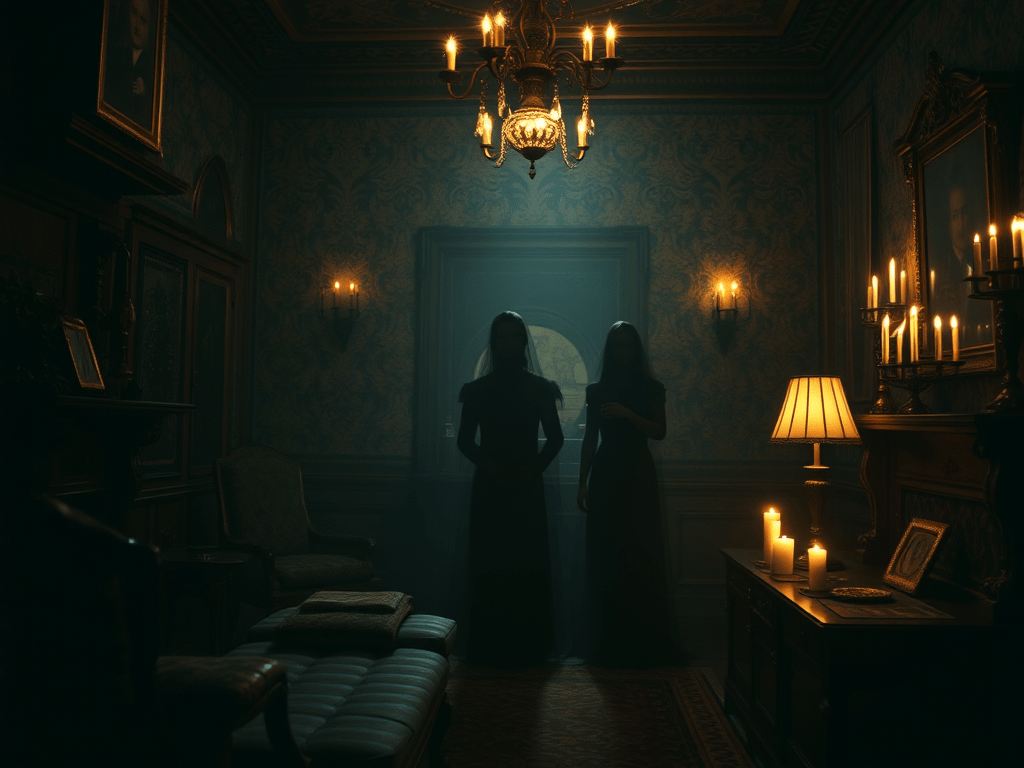
The winner will be chosen on October 10, 2024. Don’t sleep on the chance to join us for some spooky fun 😈

No purchase necessary. Must be 18+ to enter. This promotion is in no way sponsored, endorsed or administered by, or associated with, Instagram. Open to legal resident of the 50 U.S. states and D.C. Giveaway begins at 6am ET on 10/03/2024 and ends at 6am ET on 10/10/2024. https://winchestermysteryhouse.com/

Note Everything that the Primitives Say

Genetics is not about fate; it is about opportunity. It is the genius—genetic-volatility—of humanity that, although each of us is a genetic-robot, we pass through twelve stages as we mature. What a wondrous package, indeed is WoMan! Woman in Mandarin Chinese means “we.” Each of us represents one of the twelve intelligence-survival solutions and each of us, in maturing, passes through and relives all twelve solutions. Genetic consciousness allows us to discard the old outmoded hive-reality maps, to file away and retire, every previous theological and philosophic blueprint—except those which are based on continual evolution. This does not mean that you should reject empirical data or close-off information or ignore opinions. Be open to every stupidity, savagery, rigidity of the Newtonian natives. Listen to the Christian Fundamentalists when they shout that the Christian Holy Bible and Book of Mormon are word-for-word revelations and you gain insight into the parroting, Paleolithic, humanoid brain. Not everything that the primitives say, then check your own behaviour for parrot-brained rote repetition. Study and then file-away orthodox Darwinian blind-selection theories, while respecting the field reports of evolutionists and ethologists. Play with the notions of structural and temporal caste as they affect you. Admire this clever twelve tactic process that allows each of us to recapitulate evolution and to move ahead to create The Future. #RandolphHarris 1 of 23

Alpha reality—for now let us assume that your genetic template determines your structural caste which, in turn, determines your lifelong reality attitude. Attitude is used in the high-altitude, high-velocity aeronautical context—angle of approach. Your structural caste is your Alpha Reality. A nineteen-year-old woman once consulted me, seeking help with a problem that was bothering her. She believed her roommate was stealing her money, jewelry, and even stationary. She noticed various items missing from her dresser from time to time, and she concluded her roommate was guilty. However, she dared not confront the roommate with her suspicion. Instead, she felt distrust and resentment and struggled to conceal these feelings from her. Their relationship gradually deteriorated to one of formality, forced politeness, and false expressions of friendship. I asked the young woman why she did not bring the whole issues out into the open. She stated that if she did this, her roommate would hate her, and she could not stand this. I asked if there were any other possible way of interpreting the loss of her money and jewelry. She replied that she had not thought of any. Rather, she had concluded that if her things were missing, they must have been stolen by the person closet to her. When I suggested that her roommate might be saddened at the way their friendship had deteriorated and that she might welcome some frank talk to settle things, the young woman admitted that this might be possible, but she was afraid to talk about the problem. However, she agreed to broach the subject. #RandolphHarris 2 of 23

The next time I saw her, she was happy to report that she had discussed the whole affair. She learned that her roommate was puzzled by the way their relationship had changed. Moreover, she was glad to discuss the loss of the articles with her and she was able to clear herself of any blame. In fact, the roommate too had been missing some money, and investigation by the dormitory counselor brought forth the fact that other women had been robbed and that the guilty party was a cleaning woman, who was promptly discharged. The example illustrates how some initial, untested beliefs that one person forms about some aspect of the World—in this case, about another person—can lead to misunderstanding in interpersonal relationships and to considerable unhappiness. At first, the woman was afraid to carry out any efforts at reality testing to see if her assumption of the guilt of her roommate was warranted. This illustrates another aspect of reality testing; frequently, people may be reluctant to go after the information that is crucial to the formation of accurate beliefs. Yet, if a person gives in to the fear of getting at the truth, that person is almost sure to become increasingly out of touch with reality. The search for the “real” reality in contrast to the perceived reality is a difficult one even for the scientist. Here are some rules that may help you become fare more effective in reality testing: State the belief clearly. Ask, “What evidence is there to support this belief?” Ask, “Is there any other way of interpreting this evidence?” Try to determine how consistent the belief is with other beliefs that are known to be real. #RandolphHarris 3 of 23

Reasons for rebellion do seem to change, in fact, with periods and civilizations. It is obvious that a Hindu pariah, an Inca warrior, a primitive native of central African, and a member of one of the first Christian communities had not at all the same ideas about rebellion. We could even assert, with considerable assurance, that the idea of rebellion has no meaning in these particular cases. However, even if they differed about the reasons for it, a Greek slave, a serf, a condottiere of the Renaissance, a Parisian bourgeois during the Regency, a Russian intellectual at the beginning of the twentieth century, and a contemporary worker would undoubtedly agree that rebellion is legitimate. In other words, the problem of rebellion seems to assume a precise meaning only within the confines of Western thought. It is possible to be even more explicit by remarking, like Scheler, that the spirit of rebellion finds new means of expression in societies where inequalities are very great (the Hindu caste system) or, again, in those where there is absolute equality (certain primitive societies). The spirit of rebellion can exist only in a society where a theoretical equality conceals great factual inequalities. The problem of rebellion can exist only in a society where a theoretical equality conceals great factual inequalities. The problem of rebellion, therefore, has no meaning except within our own Western society. If the preceding remarks had not put us on our guard against this conclusion, one might be tempted to affirm that it is relative to the development of individualism. On the basis of the evidence, the only conclusion that can be drawn from Scheler’s remark is that, thank to the theory of political freedom, there is, in the very heart of our society, an increasing awareness in man of the idea of man and, thanks to the application of this theory of freedom, a corresponding dissatisfaction. #RandolphHarris 4 of 23

Actual freedom has not increased in proportion to man’s awareness of it. We can only deduce from this observation that rebellion is the act of an educated man who is aware of his own rights. However, there is nothing which justifies us in saying that it is only a question of individual rights. Before of the sense of solidarity we have already pointed out, it would rather seem that what is at stake is humanity’s gradually increasing self-awareness as it pursues its course. In fact, for the Inca and the pariah the problem never arises, because for them it has been solved by a tradition, even before they had had time to raise it—the answer being that tradition is sacred. If in a World where things are held sacred the problem of rebellion does not arise, it is because no real problems are to be found in such a World, all the answers having been given simultaneously. Metaphysic is replaced by myth. There are no more questions, only eternal answers and commentaries, which may be metaphysical. However, before man accepts the sacred World and in order that he should be able to accept it—or before he escapes from it and in order that he should be able to escape from it—there is always a period of soul-searching and rebellion. The rebel is a man who on the point of accepting or rejecting the sacred and determined on laying claim to a human situation in which all the answers are human—in other words, formulated in reasonable terms. #RandolphHarris 5 of 23

From this moment every question, every word, is an act of rebellion while in the sacred World every word is an act of grace. It would be possible to demonstrate in this manner that only two possible to Worlds can exist for the human mind: the sacred (or, to speak in Christian terms, the World of grace) and the World of rebellion. The disappearance of one is equivalent to the appearance of the other, despite the fact that this appearance can take place in disconcerting forms. There again we rediscover the All or Nothing. The present interest of the problem of rebellion only springs from the fact that nowadays whole societies have wanted to discard the sacred. We live in an unsacrosanct moment in history. Insurrection is certainly not the sum total of human experience. However, history today, with all its storm and strife, compels us to say that rebellion is one of the essential dimensions of man. It is our historic reality. Unless we choose to ignore reality, we must find our values in it. It is possible to find a rule of conduct outside the realm of religion and its absolute values? That is the question raised by rebellion. Dying on the prison mattress, this inmate’s mind peered at itself through the window of a luxurious beach house in Santa Monica. She was lying scantly clad in front of the fire. A famous singer sings from a vinyl record on a low womb-shaped table almost buried amongst the furs. The breath of the fire moistens the room. #RandolphHarris 6 of 23

“All I want is to feel good,” she says and falls back amongst the cushions. He is nervous. “I haven’t been intimate with a woman in a month, baby.” “Just keep me high, she murmurs. Guilt is an abstraction, pleasure is real.” She lay unmoving, evidently under the effect of some kind of narcotic. He raised her leg, walked to the window and pressed his face against the glass. She stood naked in front of the fire, weeping. It was three o’clock in the morning. A flashlight whispering yellow. Get up! You are on the lost for transfer. Roll up gear. Report below. Your cell’s unlocked. He left the rodent cage, ran right down the molecular runway, left down lattice stairs turn right. Forty-eight men in blue waiting in a dark tunnel of the maximum-security prison, rolling weed, coughing smoke, reciting their sorrows. Career cons. The impenitent nobility. Gallant slaves. As the World of an empress is decked with pennants, Hers was decorated with desire. Wherever she went She was invested with this could of male vitality. He walked the length of the Release Room of the State Prison, a naked captive, carrying shoes to the exit cage counter. “Gentlemen, I’m checking out. Could you have my bill ready?” he says. The guard frowns down at levity. “Yeah, you owe us ten long years.” Forty-eight men dressed in white jump suits, from a gray line waiting for the bus to long-term. All aboard for CMC East, CMC West, grim Soledad, San Quentin, Folsom, and Forestry Camps north. #RandolphHarris 7 of 23

Each man walks shivering in the morning fog to the loading platform. Searched, handcuffed. After a pat-down, the inmate we are focused on holds hands up for bracelets. The Lieutenant grumbles. “Skip the cuffs for him. He’s minimum security,” he told the guard. Speaking to our focus inmate, the Lieutenant then says, “You pass out matches and rolling smokes.” He walked down the bus aisle. “Fasten seat belts gentlemen and ladies. Select your weed. Inside dope. Acapulco Gold. Tehachapi Red. Quentin Green. Metal-clad hands reach up beseeching nicotine.” As the mobile prison rumbles along the polluted L.A. freeways, they look down at commuters droning to work. Around Ventura the bus bursts out the L.A. smog to wide blue Pacific seascapes, sparkling visions for prison eyes. Slender girl twisting long sunny hair on the Ventura streets. Their shackled slave wagon climbed the hill to a white-marbled courthouse. Picking up long-hair parole violators. In the rear-cage compartment the armed guard pushes brown-paper food snacks through a metal slot. Our focus inmate serves lunch and as a good trustee gets a double helping. However, he gave it to a young African America carrying a life sentence. Even people who are down on their luck are kind enough to show compassion. Compassion means to for love and mercy toward another person. It means to show sympathy and relieve the suffering of others. It means to show kindness and tenderness towards another. #RandolphHarris 8 of 23

Whoever prolongs resentment belongs to past years and chapters long left behind, himself adds to the injury he suffered. Such brooding brings on negative moods. Personal feelings must be studied and analysed, not to become more neurotically self-wrapped but to correct, discipline, and lift them to a higher level. The more emotional a person is, the more easily is he hurt. The way to lessen such hurts is to bring up reason to the same strength and to deepen calm. The more he practicses keeping calm in the confrontations of Worldly stress, the less difficult will it be to practise prayer. The practise not only makes it easier for intelligence to operate but also for thoughts to come under control. A panicky feeling disorganizes the whole of man, throws him into confusion. If one cultivates inner calm constantly, this is avoided. He cannot afford to imitate those who show a calm exterior while raging furiously within themselves. Not necessarily—nor only—for the sake of appearances or personal advantage does he remain calm, but also because the ideal of self-control is very close to his heart. However, although philosophy refuses to accept a wild emotionalism or an unbalanced one or an egotistic one, it would be a grave mistake to think that it refuses to accept emotion altogether in its own sphere. On the contrary, it asserts that without the most intense possible feeling, a genuine devotion to the Overself cannot be given. And without such devotion, the Overself in turn is unlikely to give its Grace. What philosophy does ask, however, is that emotion should be balanced, purified, and deepened. #RandolphHarris 9 of 23

Pessimism will corrode our better nature, optimism may disillusion itself in the end. The middle way is the better way—and also the truer way—for it gives both sides of the case. It is not only in practical life that emotional control will be needed but also in mystical life. The very intensity of his emotions—however noble and aspiring they be—will confuse the reception of the truth during prayer and mingle it with the meditator’s own preconceptions. We believe first and think out our belief afterwards. This is because emotion rather than reason is our driving force. Reason actuates us from a deeper level and is therefore slower to arouse and harder to keep going than feeling. The Stoics in old Europe tried to put the emotions under the absolute control of reason. Jesus Christ tried to do exactly the same. However, whereas the Stoics did this in order to meet the every day alternations of fate, health, and fortune with great courage, the self-actualized Christians did it in order to escape from those alternations. The Stoics were practical men who accepted the World but sought to conquer it through the power gained by conquering themselves. The self-actualized Christians rejected the World, and like the desert monks of early Christianity, wanted to be done with its struggles and afflictions. If he sulkily takes constructive, well-intentioned criticism as if it were a personal insult, if his emotional self falls discouraged into a slough of despond at the smallest discovery of his own faults and weaknesses, then he is likely not ready for this quest. Some self-preparation is first needed. #RandolphHarris 10 of 23

If not quickly subdue them, merely to recollect that he is on the quest should soften his angers. They should deliberately face whatever it is they fear. When they become frightened, they should not seek escape, but, in times of prayer and meditation, should turn full attention on its cause. Then, they should call upon latent resources and if the cause is made in the right way, the response will appear in their conscious will. Thus equipped, they will be capable of compelling fears to subside and, in time, of overcoming them. This inner quiescence, this emotional calm, this being at peace with oneself, this refusal to be upset or feel hurt, is one of those conditions which make possible the discovery of the true being. The truth crushes all the falseness and all the deceptiveness in sentimentality and emotionality, but leaves intact what is sound in them. The ego eagerly wants to nourish itself with these pitiful illusions, therefore. It is even helpful in certain cases to put the physical body under the strain of hard manual labour, or hard physical exercise for some weeks. This counterbalances the mental tension. To eradicate anger, he should cultivate it opposite—forgiveness. According to ethics of the hidden teaching, hatred and anger are twin branches on the same tree. How immense the distance from self-mastered Founder to self-indulgent follower! The often-used word “freedom” is conveniently misunderstood, its true meaning twisted to suit their sensual appetites. #RandolphHarris 11 of 23

Conduct is a deliberate, consciously purposeful, and willed activity whereas behaviour is general, casual, and not specifically directed. When in the development of the script, one of the most important things to do is find a plot with the proper ending, an answer to the question: “What happens to someone like me?” The child knows, because he is taught, whether he is going to be a winner or a loser, how he is supposed to feel about other people, and how other people are going to treat him, and that is what is meant by “someone like me.” Sooner or later, he hears a story about “someone like me,” and that tells him what he is headed for. It may e a fairy tale read to him by his mother, the story of Sleeping Beauty told to him by his grandmother, or a street-gang legend he hears on the corner. However, whatever he hears it, when he hears it, he knows it, and he says: “That is me!” That story will then be his script and he will spend the rest of his life trying to make it come to pass. Thus, on the basis of early experience with the breast or the bottle, in the bathroom or outhouse, in the bedroom and kitchen and living room, the child acquires his convictions, makes his decisions, and takes his position. Then from what he hears and reads, he chooses a prediction and a plan: how he will go about being a winner or a loser, on what grounds, and what the payoff will be; and that is the first clear version of his life script. #RandolphHarris 12 of 23

Subverbal interaction refers to communication that occurs without the use of words. I spent nearly six months of bi-weekly meetings which consisted of my standing next to a man on the ward. Whenever I asked him to come into the office with me, he became verbal, but only to tell me to go away and leave him alone. Yet, when I would come only to stand next to him where he stood on the ward, he would usually remain for the whole hour despite the fact that he knew I would leave if he walked away. During such an hour we would exchange many glances, motions, and a few sentences. Often—that is to say, every few silent minutes—I might say something of the tension I felt, and of my wish that our silences would be or feel all right, as well as of my wish to hear from him, and my knowledge of his discomfort and tension with me. After a while I did usually receive a sentence or two, often in the nature of summaries that seemed to stem from much ongoing inner turmoil, feeling, and thinking, such as: “Maybe I am crazy,” or, “someone must a have a use for a person,” or “If you are for me or against me, I do not know,” or “they just do not have a heart,” or, “I would wake them up.” Some hours passed without such expressions. Sometimes he would accept my responses to these statements, more often he would show me that I could more easily be talked to if I was quiet: he would say, “do not pressure me,” or, “it is awful hot today.” #RandolphHarris 13 of 23

At slight movements, or unsureness, or verbiage from me, he would react with sudden black looks or leap away three feet. So I learned to be quiet while he talked; perhaps a few minutes later I might tell him something of what I thought about it. When I stood next to this man in silence, it was not the case that nothing happened when we were silent. Clearly, he was very active inside himself, and to me it was also clear that I had a great deal to do with the process, and with the quality of this process, within him. It is this kind of interaction which I termed “subverbal.” The development from early to later interviews involves the establishment of subverbal interaction. In our research, the proportions of speech and silence do not change from second to thirtieth interviews. However, not only do the silence come to be subverbally important and therapeutic, but the verbalizations also become more significant, as the findings on the Kirtner and Experiencing Scales show. Subverbal interaction is thus not a giving up of verbal therapy, but rather a reaching for the deeper and wider feeling processes which occurs in every individual at every moment, and within which psychotherapy occurs. Words, no matter how relevant or irrelevant, are only messages from this deeper feeling process, only symbolizations of experiencing. #RandolphHarris 14 of 23

The Democratic Party will not fight for the future of America in a political battle because they believe the future is secured adequately through increasing the $38 trillion-dollar federal deficit, which increased by $2 trillion in 2024. This kind of debt spending is unheard of and will have unknown ramifications. Not only will your children be responsible for paying this money back, and the rest of your family for generations, America could go bankrupt. All of those handouts the Democratic party has given to the 20,000,000 illegal immigrants that have allowed to waltz into America is costing us all dearly. The Democratic Party’s plan is to just keep raising taxes. However, how our tax dollars are spent should be a matter left up to voters. Politicians should not be able to go wild and spend our hard earn money anyhow they please on programs that are not even necessary nor desirable. No one can “save” his fellow man by making the choice for him. All that one man can do for another is to show him the alternatives truthfully and lovingly, yet without sentimentality or illusion. Confrontation with the true alternatives may awaken all the hidden energies in a person, and enable him to choose life as against death. If he cannot choose life, no one else can breathe life into him. There are two ways of arriving at the choice of the good. The first is that of duty and obedience to moral commands. This way be can be effective, yet one must consider that in thousands of years only a minority have fulfilled even the requirements of the Ten Commandments. #RandolphHarris 15 of 23

Many more have committed crimes when they were presented to them as commands by those in authority. The other way is to develop a taste for and a sense of well-being in doing what is good or right. By taste for well-being, I do not mean pleasure in the Benthamian of Freudian sense. I refer to the sense of heightened aliveness in which I confirm my powers and my identity. I believe that education means to acquaint the young with the best heritage of the human race. However, of this heritage is expressed in words, it is effective only if these words become reality in the person of the teacher and in the practice and structure of society. Only the idea which has materialized in the flesh can influence man; the idea which remains a word only changes words. I believe in the perfectibility of man. This perfectibility means that man can reach his goal, but it does not mean that he must reach it. If the individual will not choose life and does not grow, he will by necessity become destructive, a living corpse. Evilness and self-loss are as real as are goodness and aliveness. If he chooses not to realize his primary potentialities, they are the secondary potentialities of man. Only exceptionally is man born as a saint or as a criminal. Most of us have dispositions for good and for evil, although the respective weight of these dispositions varies within individuals. #RandolphHarris 16 of 23

Hence, our fate is largely determined by those influences which mold and form the given dispositions. The family is the most important influence. However, the family itself is mainly an agent of society, the transmission belt for those values and norms which a society wants to impress on its members. Hence, the most important factor for the development of the individual is the structure and the values of the society into which he has been born. Society has both a furthering and an inhibiting function. Only in cooperation with others, and in the process of work, does man develop his powers, only in the historical process does he create himself. However, at the same time, most societies until now have served the aims of the few who wanted to use the many. Hence, they had to use their power to stultify and intimidate the many (and this, indirectly, themselves), to prevent them from developing all their powers; for this reason, society has always conflicted with humanity, with the universal norms valid for every man. Only when society’s aim will have become identical with the aims of humanity, will society cease to cripple man and to further evil. Every many represents humanity. We are different as to intelligence, health, talents. Yet we are all one. We are all stains and sinners, adults and children, and no one is anybody’s superior or judge. We have all been awakened with Jesus Christ, we have also be crucified with Christ, and we have all been burned at the stake and robbed with the witches of Salem, Massachusetts. #RandolphHarris 17 of 23

Man can visualize the experience of the whole universal man only by realizing his individuality and never by trying to reduce himself to an abstract, common denominator. Man’s task in life is precisely the paradoxical one of realizing his individuality and at the same time transcending it and arriving at the experience of universality. Only the fully developed individual self can drop the ego. The Sacramento Department of Fire Services provides the fire service, regulated industries, and individuals with training, education, prevention, investigation, and emergency responses service. This work includes training firefighters, hazardous material response, fire investigation, public education in fire and life safety, and incident support. “The fire was in a two-and-a-half-story frame dwelling. My company was on the second alarm, so when we got there the fire was well involved. I reported to the chief and went through the normal procedures. The whole upper floor, a converted attic, was on fire, and part of the second floor. We took a two-and-a-half-inch hand line down the left side of the building to the rear kitchen—myself, my pipe man, and my leadoff man. The pipe man is the nozzle man. We take the line in dry to the place where we’re going to use it—it’s easier to maneuver without the water in the line. We get to the back kitchen, and I pick up my radio to call the pump operator to get water in the line. As it happens when there are so many additional alarms, it gets so busy that the pump operator is swamped with calls, and radio communications is the biggest problem. #RandolphHarris 18 of 23

“First I sent out my lead man, then I went out, and I told the pump operator to put water in the line. I waited a minute to make sure that he did, because sometimes they are so busy they don’t always comprehend what’s going on. As soon as the two-and-a-half got charged up, I straightened out a couple of kinks and started back along the side of the building. I felt a couple of embers or wood brands dropping, and I just kind of pulled my shoulders up and dropped my head and just kept moving. Then, bam. Instantly the whole world stopped. It seemed the entire building dropped, and it came right down on me. It was unreal. The whole left side of the building and the roof came down on me. It just kicked out. I had never heard of this happening before, but since than I have read articles about the collapse of frame buildings and how fast they just kick out. I straightened up, and I could feel all of my weight pushing back as hard as I could, and there was just no way that I could stop it. Thank the Lord, right where I stood was a tree and a fence that ran down the side of the property. I must have swung around so I was right at the tree, and when the wood and the roof came down it hit the tree and acted like a lean-to. And instead of squashing me flat, it just pushed me down into the tree and wedged me down there. I was facedown into the roots of the tree, which was about eight or ten inches in diameter. #RandolphHarris 19 of 23

“The weight of the falling building just snapped it over, and I was wedged against it. But my arm was up, like half over the fence. I don’t know if I had tried to leap over the fence or what, but the arm was pinned separately from the rest of my body. The other guys thought I was dead, for sure. I had to be. It was just unreal, the amount of debris that was piled on top of me. The radio on my hip was caught in an open position. Afterwards the chief said it was the one thing that showed I was still alive. All they could hear was a string of good, rotten words, one after another. I was in severe pain. Terrible pain. I thought, ‘This is it, this is the end of my world.’ My ribs, my side, my arm, everything was hurting but my head. My head wasn’t hurting, or if it was I couldn’t feel it. ‘God, I hope they get me out of here,’ I thought. I was trapped, no way I could move an inch. I’m a good-sized fellow, and I’m wedged against the tree into the ground. There is all this roof and wood pile on me. Luckily, there was no fire right in that area. The fire was still maybe four or five feet behind me. I began to think about a secondary collapse. The way it was piled on me and the tree, I thought, ‘If this son of a gun drops, I mean, that’s it.’ There was no way I could hold any more weight: if it let loose a second time, I would have been gone. For a few minutes I talked to God. ‘Well, sure, I’m going to die,’ I told him. I didn’t know how badly I had been injured. I just knew I had been hurt so bad it was beyond hurting. #RandolphHarris 20 of 23

“Suddenly a mob of people were there, and some of the fellows were coming g up on top of the stuff that’s on top me. I could feel more pressure. I thought, ‘Jesus Christ, get off of the collapse.’ Everything gets chaotic. I mean I’m pinned under there, and I can picture in my mind everybody running around and everybody trying to help. That’s the first thing when one of yours is down. Everybody wants to get in. I’ve been on a number of rescues of civilians, but when it’s one of yours it’s just a little bit different. There’s a little more adrenaline flowing. Everybody was just disregarding everything else, trying to get in as quickly as possible. I heard somebody say, ‘Truck Company, get a saw.’ And the company answered, ‘Our saw’s down in the shop.’ I thought, ‘Oh, crud, here I am trapped, and their saw is down in the shop.’ A couple of things went through my mind down there. The first thing I thought was, ‘Oh, God, let me just get back with my family. Just one more shot. Just give me another shot at it.’ Finally the Rescue Company sets up the airbags, which were new in the department at the time. They were to stabilize the rest of the building so it wouldn’t come down. Now I was concentrating on their methods to get me out. They got a couple of saws going, and they started cutting the fence down to get into me. I said to the lead rescuer, “A1, A1, hold up a minute. My arm’s pinned separately.’ #RandolphHarris 21 of 23

“I just pictured them cutting this fence and grabbing me and pulling me out, and my arm was going to stay there. All I could think of was, ‘God Almighty, if they pull me out and leave my arm there, I would rather just stay.’ It took them about thirty minutes to get everything under control, to get me out. That’s how long I was trapped, and I stayed conscious the whole time. I never really screamed. I tried to stay as clam as I could, hoping that would help them in extricating me a little quicker than otherwise. The lieutenant said afterward that I said a couple of things that didn’t make sense to him. Maybe I was going out of my head a little but, I don’t know, but that was his terminology. I thought I handled it pretty well. One of the funny things I thought afterwards was, ‘Damn, this is my last night in.’ It was the end of a four-night trick. Then we get two days off in a row. They had to drag me out. They raised and secured the wood that was lying over me enough so that they could slide me out. Only then could they stabilize me on a backboard. It was a big job because I’m six-two and weigh 240. The guys said afterwards, ‘God, X, don’t get trapped again. You’ll kill us getting you out again.’ The doctors at the hospital say my size is one of the things that helped save my life. I mean, I’m a big man, and I’m big-boned, and as this stuff came down on me I tightened up to keep in from crushing me. So they got me out to the ambulance. The two paramedics were excellent. #RandolphHarris 22 of 23

“I was in shock trauma twenty-one days and off the job for eleven months. Then I came back on regular duty, and I’ve been working ever since. At times, I hurt. Particularly when I’m wearing a mask at a fire. For two days after, my shoulders hurt, my back hurts, my side hurts from wearing the tank and just the general punishment you go through. But I’m not ready to go out yet.” The Sacramento Fire Department works hard to save lives and property and often risk their own lives. Awaken compassionate thoughts and actions by helping others realize that, like our Saviour, they too have compassion for others. Please make donate to the Sacramento Fire Department to asset them in their fire prevent duty and other programs. To help keep America a God loving, Christian community, please raise your children to love America and to love God and Jesus Christ. In a afford to help America pull through the massive national deficit, please buy American made cars and other American made good and services. Also, please remember to respect law and order and treat your elders with the utmost dignity and kindness possible. And take your education seriously so that you will be successful in life and make your family proud. I pledge allegiance to the flag of the United States of America, and to the Republic, for which it stands, one nation, under God, indivisible with liberty and justice for all. #RandolphHarris 23 of 23


816 Cross Creek Lane in Lincoln, CA – Your future home awaits!

This spacious single-story gem boasts over 2,500 sq. ft. of thoughtfully designed living space, perfect for both relaxing and entertaining. With three bedrooms, three bathrooms, and a three-car garage, this home offers plenty of room for everyone. You’ll love the large kitchen with a working island, the dining room connected by a butler’s pantry, and the great room that opens to an expansive backyard—ideal for gatherings or quiet evenings. 🌿

💰 Locked Rate Alert! Secure your dream home with our new locked rate of 4.375% – APR 5.193% and save big on your monthly payments!

Rates provided on 09/13/2024. Payment example: Home price $745,982, down payment 20%, loan amount $596,786, term 30 years, FICO 780, fixed rate 4.375% (APR 5.193%), monthly payment $2,979.66. Monthly payment does not include taxes or insurance.
https://cresleigh.com/havenwood/move-in-ready-homesite-68/

Ready to make 816 Cross Creek Lane your new address? Contact us today at (916) 409-5595 or Havenwood@Cresleigh.com! 📞


There is Too Much Love Without an Object

The venerable language of zodiac types is useful to start a dialogue about casting. The twelve signs of the Zodiac are useful labels for basic structural human castes. Philosophers—good ones—are human ethologists. For five thousand years, the shrewdest human ethologists have worked on this twelve-fold typecasting—based on extensive and empirical observation. If we ignore the “astro” part we are left with the “logic” of twelve survival tactics—Pisces, Aries, etcetera. In the future more sophisticated classifications of human types based on neurological differences will replace the crude zodiac classification. There will be some among you, those scientific and intellectual bent, who are offended by use of this “sloppy occult astrological superstitious” technology. Before you fuse out, reread the crude, generalized list of the twelve personality types. Admittedly, astrology is a primitive attempt at introducing the notion of temporal caste, seriality and developmental order. The survival characteristic assigned to each type describes an evolutionary technology and a developmental stage. Pisces is baby and amoeboid. Aquarius is the most elderly, orderly, mature. Sense how this list tries to recapitulate the evolution of the twelve basic neurotechnological functions—both in the species and individuals. When we can replace it by a better personality typology based on the sequential evolution of intelligence, in species and individuals, we can reject this list. For now, however, it is a useful system. #RandolphHarris 1 of 23

Intellectuals, scholars, academics, salaried scientists and all other categories of verbal bureaucrats unanimously denounce astrology. Such condemnation immediately alerts Evolutionary Agents that an important genetic nerve is being touched. These paper-pedants and their civil-service followers make such solemn, judicial pronouncements: “I do not believe in astrology.” This statement means: “I do not understand seasonal ethology and I automatically reject everything my brain is not wired to receive.” Look, therefore, for the valid reasons why hive philosophers fear astrology and you will find, hidden in the tangle of zodiac ravings, three important items of neurogenetic wisdom. Wisdom of the zodiac: Regular cycles influence neural development. Each of us is born a robot, templated and controlled by rhythms with which we can decipher and harmonize. Each of us is born into a caste, or into a complex of castes. Suspend belief and assume, for the moment, that Zodiac types define structural castes. Each of the twelve terrestrial intelligence-functions plays an important role in the human social molecule. No human gene pool can exist unless it has people and institutions playing out these twelve neurotechnological parts. Each of the twelve terrestrial intelligence-functions plays an important role in the human social molecule. #RandolphHarris 2 of 23

It would be possible for us to define the positive aspect of the values implicit in every act of rebellion by comparing them with a completely negative concept like that of resentment as defined by Scheler. Rebellion is, in fact, much more than pursuit of a claim, in the strongest sense of the word. Resentment is very well defined by Scheler as an autointoxication—the evil secretion, in a sealed vessel, of prolonged impotence. Rebellion, on the contrary, breaks the seal and allows the whole being to come into play. It liberates stagnant waters and turns them into a raging torrent. Scheler himself emphasizes the passive aspect of resentment and remarks on the prominent place it occupies in the psychology of women who are dedicated to desire and possession. The fountainhead of rebellion, on the contrary, is the principle of superabundant activity and energy. Scheler is also right in saying that resentment is always highly coloured by envy. However, one envies what one does not have, while the rebel’s aim is to defend what he is. He does not merely claim some good that he does not possess or of which he was deprived. His aim is to claim recognition for something which he has and which has already been recognized by him, in almost every case, as more important than anything of which he could be envious. Rebellion is not realistic. #RandolphHarris 3 of 23

According to Scheler, resentment always turns into either unscrupulous ambition or bitterness, depending on whether it is implanted in a strong person or a weak one. However, in both cases it is a question of wanting to be something other than what one is. Resentment is always resentment against oneself. The rebel, on the contrary, from his very first step, refuses to allow anyone to touch what he is. He is fighting for the integrity of one part of his being. He does not try, primarily, to conquer, but simply to impose. Finally, it would seem that resentment takes delight, in advance, in the pain that it would like the object of its envy to feel. Nietzsche and Scheler are right in seeing an excellent example of this in the passage where Tertullian informs his readers that one of the greatest sources of happiness among the blessed will be the spectacle of the Roman emperors consumed in the fires of hell. This kind of happiness is also experienced by the decent people who go to watch executions. The rebel, on the contrary, limits himself, as a matter of principle, to refusing to be humiliated without asking that others should be. He will even accept pain provided his integrity is respected. It is therefore hard to understand why Scheler completely identifies the spirit of rebellion with resentment. #RandolphHarris 4 of 23

His criticism of the resentment to be found in humanitarianism (which he treats as the non-Christian form of love for mankind) could perhaps be applied to certain indeterminate forms of humanitarian idealism, or to the techniques of terror. However, it rings false in relation to man’s rebellion against his condition—the movement that enlists the individual in the defense of a dignity common to all men. Scheler wants to demonstrate that humanitarian feelings are always accompanied by a hatred of the World. Humanity is loved in general in order to avoid having to love anybody in particular. This is correct, in some cases, and it is easier to understand Scheler when we realize that for him humanitarianism is represented by Bentham and Rousseau. However, man’s love for man can be born of other things than a mathematical calculation of the resultant rewards or a theoretical confidence in human nature. In face of the utilitarians, and of Emile’s preceptor, there is, for example, the kind of logic, embodies by Dostoievsky in Ivan Karamazov, which progresses from an act of rebellion to metaphysical insurrection. Scheler is aware of this and sums up the concept in the following manner: “There is not enough love in the World to squander it on anything but human beings.” Even if this proposition were true, the appalling despair that it implies would merit anything but contempt. #RandolphHarris 5 of 23

In fact, it misunderstands the tortured character of Karamazov’s rebellion. Ivan’s drama, on the contrary, arises from the fact that there is too much love without an object. This love finding no outlet and God being denied, it is then decided to lavish it on human beings as a generous act of complicity. Nevertheless, in the act of rebellion as we have envisaged it up to now, an abstract ideal is not chosen through lack of feeling and in pursuit of a sterile demand. We insist that the part of man which cannot be reduced to mere ideas should be taken into consideration—the passionate side of his nature that serves no other purpose than to be part of the act of living. Does this imply that no rebellion is motivated by resentment? No, and we know it only too well in this age of malice. However, we must consider the idea of rebellion in its widest sense on pain of betraying it; and in its widest sense rebellion goes far beyond resentment. When Heathcliff, in Wuthering Heights, says that he puts his love above God and would willingly go to hell in order to be reunited with the woman he loves, he is prompted not only by youth and humiliation but by the consuming experience of a whole lifetime. The same emotion causes Eckart, in a surprising fit of heresy, to say that he prefers hell with Jesus to Heave without Him. This is the very essence of love. Contrary to Scheler, it would therefore be impossible to overemphasize the passionate affirmation that underlies the act of rebellion and distinguishes it from resentment. #RandolphHarris 6 of 23

Rebellion, though apparently negative, since it creates nothing, is profoundly positive in that it reveals the part of man which must always be defended. People can go too far with rebellion, however, and end up in prison. Sometimes the prison dope supply becomes irregular and during periods of neurological famine, waves of nervousness overcome inmates. As they are waiting for the verdict of the California Supreme Court, waiting for the call to the sergeant’s office to receive the telegram. They wait for the Counselor’s interview and learn all about he or she as they can. Back in the day, “San Quentin Sally,” was famous for hard custody-oriented maximum-security recommendations. She was cynical and suspicious of being conned. She respected convicts who told the truth. However, the details of her domestic problems, her martial history, her previous employment, her emotional characteristics, and her neurotic symptomatology were no secret to some. Also, sometimes prison guards that are hard on prisoners have issues. You see, one prison guard in particular had a teenaged daughter. He knew she smoked pot and low-rides with a kid who dealt dope. In his mind, he could see the nipples of his daughter Hilary trembling under the hypnotic passes of dope pushers, her thin white legs contorted in yoga positions, offering her flower for the demon drug. His daughter Hilary, with fingers of limp hair bedraggled with cannabis smoke and the expression of total rapture on her innocent face. #RandolphHarris 7 of 23

Man, he could see her pusher in his mod suit with satin cuffs propped up among the pillows on a fur coated bed resting ermine boots on the antique coffee table, running the palm of his evil hands across the hard sharp nipples of Hilary’s breasts. He saw her kneeling unzipping his pants. And you wonder why he hates inmates? He is not the only one. They say inmates do not deserve equal treatment. Can you dig that? Equal treatment. After breakfast, a sturdy executive elite con named Conrad, the sergeant’s clerk, comes over to the inmate’s table. “Were you expecting some sort of Court action?” “Yes, it should be here today.” “Well, I just heard on the radio that they shot you down. The California Appeals Court denied your appeal, you and Scott Peterson. I’m sorry about it.” “It is up to Justice Walker now,” he said. The inmate spent the day inside of gloom. His legal life now depended upon Justin R. Walker, naturalist, rebel, friend of youth, solace of the persecuted, outspoken libertarian, hope of the friendless, the husband of a woman, father of a child, protector of wild flowers and clear streams. And he is young. It all depends on his wife. During the next few days, the inmate reclined in the monastic peace of single cell reading newspaper stories about pending impeachment of President Biden and assassination attempts against former president Trump. His case was to come before Walker at a crucial time in his life. Freeing the inmate on bail would bring down on his head more angry outcries. It is a soap opera. #RandolphHarris 8 of 23

The lawyers assured the inmate that he would be freed by Justice Walker in 5 days. However, he was still working on the escape plan while the trustees gathered around to share the fruits of prison grapevine. The administration is meeting this week to decide where he is going to be transferred. He thinks that he will be out on bail soon so it does not matter really, but was curious about the possibilities? The espionage system reported that Custody was easier on him then Treatment. The psychologist wanted to send him to Quentin to make an example of him. As of Monday morning, he had been in prison for nine weeks. Friday night was the worst time. He visited the next-door neighbour to hit his coffeepot. He tore off three numbers—Saturday, Sunday, Monday. During the morning, they make arrangements for writing each other when he leaves. Late in the afternoon a clerk leaned in the door. “Well, you are going.” He was waving a mimeographed sheet. “Shipping out to CMC West.” The trustees came crowding round. “CMC West is a country club, man, the best prison in the World. They have a golf course. No lockup. It’s three bunk counts a day. There’s a bowling alley. They are all long-term cons just living quietly. There are no young cons there burning sheets. Picnic visits on the yard. Visitors can buy lunch at the visiting room. Fried chicken. You eat like a kind. #RandolphHarris 9 of 23

“Some cons love it there so much they hate to leave. When they get paroled, they violate so they can get sent back. You have private radios there. No smog. Near the ocean. You can plant your own garden. Contact visits! Conspiracy of breath. Touch. Change. New scene. I’m thinking about that fence near Highway 1.” The inmate spent the rest of the day collecting his personal gear to ship out. Two ball-point pens, some rubber shower shoes given to him by an old murderer, two packages of rolling tobacco. They travel light. “No gun towers or walls there?” “Just low fence. Minimum security.” Perhaps subverbal interaction is so important with schizophrenics because so much of their experience seems incommunicable to them, seems cut off from other people in its very nature. Often, the content—that what is said—is only a small bit of verbal content, but to the experiencing. In this way one attempts to restore the connection, the interpersonal interaction process within which the normally functioning individual lives and feels. This is not to say that one mysteriously responds to experience without having some verbalization to go on. Rather, one views verbalization differently. Instead of concerning oneself with its content one asks: What larger inward process is this bit of verbalization coming from? One’s answer to this question will be something felt, a conceptually vague but concrete felt meaning which the client feels and thinks, and which the therapist can only imagine. However, the therapist need not know it, guess it, or correctly imagine it. He can point his response at it, no matter how unknow it is to him. #RandolphHarris 10 of 23

For example, my client says that he wants to know where, in the hospital, they keep that electronic machine which compels people to return to the hospital. He can prove there is such a machine, he says, because how else can you explain the fact that patients with ground privileges return to the hospital of their own accord? Now, I could, of course, argue with him that no such machine exists, that I would know if it did, that he does not trust me to tell him the truth on that subject, that he is having an unrealistic hallucination, or, closer to his feelings, that he does not like the hospital and cannot understand anyone’s coming to it voluntarily. However, what is his experiencing as he talks of this machine? What is the “pre-conceptual” or “felt” meaning from which this bit of bizarre verbalization comes? I do not know, of course. However, I want to respond to it somehow. So, I say back to him: “You have felt in yourself the effects of this machine you are talking about?” “Of course, I sure have,” he says and goes on to say that the machine makes him feel “not himself.” This phrase I recognize as somehow communicating to me something of the inward experiencing at which I pointed my words. I am using this example to illustrate what I mean by pointing one’s words at the experiencing, the wider inward process about which one does not know very much—except that it is there—and that verbalization arise from it (or in regard to it). #RandolphHarris 11 of 23

Actually, I had not quite correctly imagined what he experienced. For my part, I thought he felt compelled inwardly but his next words expressed a slightly unexpected but still understandable aspect of his experiencing. And this is what usually happens. Usually, when one points one’s words at the experiencing rather than the verbal content, one finds that one’s imagination was not accurate, but the very fact of responding to this ever-present experiencing establishes the possibility of communicating concerning the deeper meanings from which the verbalizations arise. This man went on to tell me that his “not feeling like himself” was the result of the fact that his parents moved into the country when he was a schoolboy, and that therefore he had to ride a bus to school through the snow many miles. Again, one might have argued that this alone could not have caused him to feel “not himself.” However, one senses that this bit of memory comes form a whole pageant of memories, and, since it involved “not being himself,” I imagine endless weird, snowy bus rides I sense his feeling cut off from everyone he knew, way out there, snowbound, in the country, those many years all of which he now feels, I suppose. I say something about these bus rides and feeling cut off and we establish a new vehicle of communication. He too now uses the phrase “feeling cut off.” #RandolphHarris 12 of 23

Perhaps I was right—but more importantly, I spoke to that mass of felt meanings and thoughts, that feeling process, which was just then occurring in him as he spoke, not to what he spoke as a bit of verbal communication. And, in this way, although often very stumblingly, one can gradually communicate more meaningfully, despite bizarre or externalized and trivial verbalization. Before this man told me about the electronic compelling machine, we spent six hours together with only trivia and silences. It was necessary for me to respond to him when, as yet, he would share nearly nothing with me. What I was trying to do with him, he wanted to know, and when would I be through? When would he not have to come any more? When could he go home? He had nothing to say. Silence, more silence. Once I interrupted one of these silences in which he had been sitting very quietly, apparently thinking, and said very gently: “You seem to be thinking some important thoughts or feelings. I do not know, of course, but that is what I imagine. I do not want to interrupt but I sure would like it if you felt like sharing those thoughts with me.” He said, very loudly: “What? Who, me? What, thinking what?” It was quite clear that he was startled. Also, he seemed to consider my statement inappropriate, false, and stupid. Yet, if one of us does not make it so, it is necessary to bear such moments, for how else can our interaction come to be warm and close and personal? #RandolphHarris 13 of 23

After a while such expressions of mine, such imaginings, or implications that we both experience important feelings, are no longer met by surprised rejection but often by a silence that is close to assent; and then, later, by an explicit sense on the part of the client that our silent times are subverbally important, deep, and eventful. One client named it when she said: “I’m having quiet therapy for a while.” If we perceive the World accurately and from valid beliefs about it, our changes of behaving effectively are increased. However, we know that unfulfilled needs and strong emotions can so shape our experience that we misinterpret facts, arrive at erroneous conclusions, and, indeed, frequently fail to see and hear what is there. How does a person go about increasing the efficiency of perception and thinking? How does a person carry out reality testing? Indeed, when unreality is often more pleasant in the short run, why would a person seek the truth? Reality testing means applying the rules of logic and scientific inquiry to everyday life. When we engage in reality testing, we are systematically doubting our own initial perceptions and beliefs until we have scrutinized them more carefully and checked them against further evidence. We do this when we have learned that truth, ultimately, is the best servant of our needs and is value in itself. #RandolphHarris 14 of 23

Some have to learn that rashness is not courage, and only the painful results of their actions may succeed in teaching them this lesson. The personal emotions entangle us in the events of life, whereas the impersonal intuitions enable us to see them from above. Even if the intuitive leading or reasoned reflection opposes his wishes, the imperativeness of following truth and preserving integrity will force him to desert his wishes. Emotion is valuable as a driving power, but doubtful as a means for discovering truth. If unbridled by reason and ungoverned by will, it may even drive a man to foolishness and disaster. The neurotic introduces emotional factors into purely business matter, creates hysterical scenes, and cannot take a single word of constructive criticism or admonitory counsel. Look through the miserable emotions of the ego and go beyond them to the smiling serenity of the Overself. It is not the emotions which are to be kept out but the disturbances which they may give rise. Do not respond to negative or base emotion with the like. The greater the animosity shown you, for instance, the greater is the inward calm with which it should be met. There is vital difference between being merely callous in the presence of other people’s suffering and being philosophically calm. A settled composed disposition will be one of the fruits perseverance in rejecting negative moods and undesirable thoughts as soon as they arise. Self-control is your greatest friend through all the incidents and accidents of life. #RandolphHarris 15 of 23

Former President Trump’s policies not only interrupted or even started to end the process of making the American economy and workers dependent on other nations. America was once again forming alliances and establishing herself as a sovereign nation, and American was less dependent on other nations economically. It was becoming a stronger country and democratic leaders were facing problems of maintaining their positions in the government. What the democrats feared most was any effort that would make American independent of foreign countries. Such an effort could eventually be disastrous to those in power who want to make the country dependent on international elements. National sentiment was building and the people’s patriotic spirit was nationalized to a fevered pitch, as American was being put first. Man is the product of natural evolution; he is part of nature and yet transcends it, being endowed with reason and self-awareness. Man’s essence is ascertainable. However, this essence is not a substance which characterizes man at all times throughout history. The essence of man consists in the above-mentioned contradiction inherent in his existence, and this contradiction forces him to react in order to find a solution. Man cannot remain neutral and passive toward this existential dichotomy. By the very fact of his being human, he is asked a question by life: how to overcome the split between himself and the World outside of him in order to arrive at the experience of unity and oneness with his fellow man and with nature. Man has to answer this question every moment of his life. Not only—or even primarily—with thoughts and words, but by his mode of being and acting. #RandolphHarris 16 of 23

There are a number of limited and ascertainable answers to this question of existence (the history of religion and philosophy is a catalogue of these answers); yet there are basically only two categories of answers. In one, man attempts to find again harmony with nature by repression to a prehuman form of existence, eliminating his specifically human qualities of reason and love. In other, his goal is the full development of his human powers until he reaches a new harmony with his fellow man and with nature. The first answer is bound with failure. It leads to death, destruction, suffering, and never to the full growth of man, never to harmony and strength. The second answer requires the elimination of green and ego-centricity, it demands discipline, will, and respect for those who can show the way. Yet, although this answer which is the more difficult one, it is the only answer which is not doomed to failure. In fact, even before the final goal is reached, the activity and effort expended in approaching it has a unifying and integrating effect which intensifies man’s vital energies. Man’s basic alternative is the choice between life and death. Every act implies this choice. Man is free to make it, but this freedom is a limited one. There are many favourable and unfavourable conditions which incline him—his psychological constitution, the condition of the specific society into which he was born, his family, teachers, and the friends he meets and chooses. #RandolphHarris 17 of 23

It is man’s task to enlarge the margin of freedom to strengthen the conditions which are conducive to life as against those which are conducive to death. Life and death, as spoken of here, are not the biological states, but states of being, of relating to the World. Life means constant change, constant birth. Death means cessation of growth, ossification, repetition. The unhappy fate of may is that they do not make the choices. They are neither alive nor dead. Life becomes a burden, an aimless enterprise, and busyness is the means to protect one from the torture of being in the land of shadows. Neither life nor history has an ultimate meaning which in turn imparts meaning to the life of the individual or justifies his suffering. Considering the contradictions and weaknesses which beset man’s existence it is only too natural that he seeks for an “absolute” which gives him the illusion of certainty and relieves him from conflict, doubt and responsibility. Yet, no god, neither in theological, philosophical or historical garments saves, or condemns man. Only man can find a goal for life and the means for the realization of this goal. He cannot find saving ultimate or absolute answer but he can strive for a degree of intensity, depth and clarity of experience which gives him the strength to live without illusions, and to be free. #RandolphHarris 18 of 23

The mission of the Sacramento Fire Department is to improve the lives of the people they serve every day. The Sacramento Fire Department is committed to protecting the lives and property of those who live in, work in, and visit Sacramento. Their department operates on a 24/7 basis, so you can rest assured that they are always ready to respond in case of an emergency. “I had been at the hardware store with my wife and daughter, and we were going home, driving through a residential neighborhood. The first thing I noticed was the smell of the smoke. Black smoke was hanging over the street. I saw this lady in the front yard of a one-story frame house, screaming. As I pulled up, I could see the fire pushing out of one window at the front of the house and smoke seeping out of the two side windows. I got out of my car and ran over to the lady. My wife and daughter followed me but didn’t say anything. The lady said her husband was in the house and his name was Jim. I could hear the flames cracking. It was a pretty good fire in the living room and through the window next to the door, not pushing yet. Just bending, like the flames were swaying. I never stopped. I went to the front door, and when I opened it, I immediately had to go on my stomach because of the smoke, I was wearing just Levi pants and a flannel shirt, because it was January. As I crawled through the front door, the heat was not too bad, but I could see the red glow to my right and up over my head. As I went forward through the room, there was some kind of electrical short or something, and the electric wires behind me started jumping and popping. That kind of concerned me. #RandolphHarris 19 of 23

“I had my mouth right down on the floor, and it was beginning to be hard to breathe. I started coughing. I was getting in deeper and deeper, and there was a faint light to the left of me, and I took that as a way out. I found out later that it was a room and the light was coming in that way. So I was pushing in, and I was right at the point—this is something that has stayed in the back of my mind—I was right at the point where I had to make a decision: ‘Do I go deeper to the right and see if I can find this man, or do I go to the left and bail out?’ I was coughing, and it was really bad, but I went right anyway. Then I heard the man moan and say, ‘Help me.’ I don’t really know what I was doing, it was like being desperate, but I started crawling toward him, and I kept crawling, and I heard him continue moaning. If I hadn’t heard him calling and moaning, I probably wouldn’t have found him, the smoke was too dense. Nothing was visible. I’d get to a chair and tell it was a chair only by feel, that type of thing. When I go to him, he was lying on the floor. If he had been in a bed or something higher, he might have been dead, I don’t know. He had a little bit of air to breathe down there. He said he couldn’t walk, he couldn’t get up. He was coughing. I knew I couldn’t drag him back the way I came, because of the electrical short and the wires popping. You could still hear them popping. The glow was still over my head, and to the right of me the fire was up the wall and working its way across the ceiling. So I started dragging him straight to the eft to get him away from that glow. #RandolphHarris 20 of 23

“One thing I did have, I had a vent. The fire had blown out the front window, and it was venting naturally. That helped me. If I hadn’t had the vent, things probably would have been different. The fire was bending out that window by the front door and was keeping it kind of confined. It was rolling, though. All the other windows were closed, it being wintertime. There was no smoke venting out, but at least the fire was bending towards that open window. So I kept dragging him as far away from the fire as I could, because the smoke was really getting to me. Luckily, then I came across a wall, and then I felt a window. I couldn’t see, but I could feel the outline of the window, and a little bit of light was coming through. I got hold of a stand or a little table. I took a pretty good breath down on the floor and raised up to knock the window out. I threw the thing at the window, but it was light and I didn’t have much force behind it, because all I could think about was getting back down on the floor to get some air. The window didn’t break, the thing just kind of bounced off. God, that was a disappointment. I was choking and things were bad, but I remembered there was a telephone on that stand. So I grabbed the phone and the receiver, all in one hand, and broke the window that way. By then, I could hear the fire engine coming down the street, and I could hear people. I guess the people heard the breaking glass, and they started coming around to where I was at a side window. They started taking out some of the glass which added oxygen. #RandolphHarris 21 of 23

“The fire began to break out again, now towards me. I knew I had to get my head outside that window. I got down then, got a couple of good breaths, pulled on this guy with whatever energy the smoke didn’t take from me, and laid him across the window. He was tall but not really heavy, about a hundred sixty pounds, in his mid-fifties. By then, one of the firemen was there, and was I glad to see him. We handed him to a fire fighter outside the window. Then I tumbled myself out. When I came across the window, the glass went through my shoes and into my feet. Both arms were cut and blessing. Except for the smoke inhalation, that was it. My wife said she was very concerned for me, that it seemed like I was in there forever. I don’t know exactly how long I was in there, but I don’t think it was very long. They say it only takes a few minutes to kill you. My daughter was too young to be worried, but my son was very disappointed that he wasn’t there to see it. He had decided to stay home and do his homework. The newspapers played it up pretty big. I ended up with seven awards, I went to a lot of banquets. The public thinks a lot of firemen, they really do. I got more recognition from the public than I did from my own fire department. Sure, I got a pat on the back from the guys I work with, but one of the upper-echelon people just said, ‘Well, what’s the big deal?’ I didn’t say anything, but I guess the only thing that matters is that I know it was a little bit hairy. Not too long after that we went to a fire on Christmas night to a little house over where the middle-class people live. We got there and it was a fire in the bedroom. Christmas night, nobody home. The people had gone visiting, just in the neighborhood, and had left on an electric blanket. It has ignited the room. #RandolphHarris 22 of 23

“So, we do our normal procedures. I’m in there searching again, and I find this little dog underneath the bed in one bedroom. The dog had been overcome by smoke. I grabbed the dog and took him out under my arm, put the resuscitator on him and got him breathing. In the meantime the people returned. The dog belonged to a little boy who had gotten him earlier that morning for Christmas. I gave the dog to him, and he was just thrilled. His face just lit up, he was so excited about getting his dog back. I turned around then and walked off. There was never anything said. That was pretty moving to me, just to save that little dog. It really had to do with the dog’s relationship to the little boy and with Christmas.” You people, it is said that we take animal rights so seriously because they cannot call out for help. The Sacramento Fire Department also prioritizes community outreach and education. They offer several programs and opportunities; you can find out more on their website. You can help save lives by donating to the Sacramento Fire Department. “Chairty suffereth long, and is kind, and envieth not, and is not puffed up, seeketh not her own, is not easily provoked, thinketh no evil, and rejoiceth not in iniquity but rejoiceth in the truth, beareth all things, believeth all things, hopeth all things, endureth all things,” reports Moroni 7.45. I pledge allegiance to the flag of the United States of America, and to the republic for which in stand, indivisible, with liberty and justice for all. We do declare it our purpose to keep intact the original name and initial spirit and purpose of this great country. #RandolphHarris 23 of 23


Experience Over Everything

When building a custom home, your experience is just as vital as the final product you live in. Whether you’re building a custom home in Utah or another state, we can help.

Our team at Millhaven goes beyond the build with our full-service approach to each project. https://millhavenhomes.com/custom-homes/


Evil Behind Smiling Eyes

Obviously, one must hold oneself responsible for the evil impulses. Therefore, beware of the evil behind the smiling eyes. As we increase our understanding and love for the Saviour, His light will illuminate everything around us. We will then see evil for what it is. Working as a special agent for the FBI, my friend investigated organized crime groups transporting illegal drugs into the United States of America. On one occasion, he and another agent approached an apartment where they believed a known drug dealer was distributing cocaine. My friend describes what happened: “We knocked on the door of the drug dealer. The suspect opened the door, and upon seeking us, tried to block our view. However, it was too late’ we could see the cocaine on his table. A man and a woman who were at the table immediately began removing the cocaine. We had to prevent them from destroying the evidence, so I quickly pushed the drug suspect who was blocking the door to the side. As I pushed him, my eyes met his. Strangely, he did not appear angry or afraid. He was smiling at me. His eyes and disarming smile gave me the impression that he was harmless, so I quickly left him and started to move toward the table. The suspect was now behind me. At that instant, I had the distinct, powerful impression come into my mind: ‘Beware of the evil behind the smiling eyes.’ #RandolphHarris 1 of 17

“I immediately turned back toward the suspect. His hand was in his large front pocket. Instinctively I grabbed his hand and pulled it from his pocket. Only then did I see, clutched in his hand, the semiautomatic pistol ready to fire. A flurry of activity followed, and I disarmed the man.” Later, in another case, the drug dealer was convicted of murder and boasted that he would have also killed my friend had he not turned around at that very moment. He was a weak sniveling punk. A born snitch. He caused my friend trouble before. He had this place near Palm Springs. Used it for a hideout. It was loaded with guns and heroin. One weekend, there was this underaged girl that the heat was looking for and they went to the door. They were looking for this girl, and he said get a warrant. My friend in the FBI said he would. So, the other dudes covered the side doors, and one of them got a shotgun and two pistols and waited at the end of the hallway. His old lady answered the door, but when the FBI came, the sixteen-year-old girl went to the door and gave herself up. So, the offenders piled the guns in the car, and drove to another location. On this planet, evil has been allowed a position of influence to give us the chance to choose between good and evil. #RandolphHarris 2 of 17

The scripture says: “God gave unto man that he should act for himself. [And] man could not act for himself [unless] he was enticed by one or the other. The choice between good and evil is at the very heart of our experience on Earth. If we are rich or poor, if we were athletic or not, if we had friend or were often forgotten, in the final review of our lives, it will not matter. The suspect with the guns in the car was apprehended. The morning after sentencing, the orders came through transferring him to the State Prison. Emigration from short-time County Jail to long-term penitentiary. In the basement holding tank, stripped of county wrappings, he dressed for the final time in mod flannels. He was stored in a special isolated holding tank until the County Jail bus drove through the smoggy freeways to the Prison Reception Center at Chino, California. The welcoming committee was grim and blunt. “Strip naked. Throw your personal belongings in the box. Bend over for body inspection. Run your hands through your hair, both your ears. Open your mouth. Wag your tongue. Lift your testicles. Turn around spread your buttocks. Left foot. Right foot. Shower,” the authorities told him. He dressed in the new prison uniform. #RandolphHarris 3 of 17

A tall African American in blue danced over. He gave him ten hand-rolled cigarettes. The rumor wind was blowing around him. They were going to put him in the hole. The Captain wanted to see him. They were going to ship him to the Medical Center at Vacaville. And he would be getting bailed out the next day. The sergeant checked inmate for long hair and ordered him to the barber. He got a last mirror glimpse at forest hair and moustache. He asked the barber to leave as much as he could, but the barber grunted and clipped. “Don’t complain, man. You look twenty years younger,” he said. Our offender then took sheets and blankets and followed the sergeant to solitary confinement. It was a bad-boy lock up for him. He walked by the cages of the dangerous wild men. They shouted in pleasure to see him. An African American man shouted: “Hey man, we gotta talk to you. We cannot see each other. Just cries from cage to cage.” A nasty Brooklyn voice denounced the offender. “Oh, he’s that bad man! Hang him.” Another African American defended him. Shorty’s Brooklyn voice turned friendly. “Hey Doc, look at these pictures.” A hand from the next cell appeared holding colour snapshots. Sadeyed blue wife and clear-eyed kids. “Hey Doc, here’s a record of my trial. Read it.” “Hey Doc, you want some cigarettes.” “Hey Doc, you need some stamps and envelops.” “Hey Doc, you wanna a Playboy magazine?” #RandolphHarris 4 of 17

Dinner was passed through a slot in the bars of the narrow white counter bod. Then the evening sports. African American used mirrors to catch the setting sun, playing sunshine tag, racing reflected birds of light against the wall. Laughing and shouting. At the hour of romance, from his solitary cell a young man sadly coos a soft message and an African American voice rumbles back: “You Karl I going to get you expletive. What I’m gonna do to you girl! Hoooeee. I got me twenty inches for you. You my expletive.” “Oh no big boy, I’m my own man,” he repiles. “Great God almighty, I gotta het me some sweet white meat. I sick to death of my own right hand. Wheee—here I come Karl. Ohhhhh what I’m gonna to do to you siter. I gonna split your pink expletive girl. Stuff my tool up your belly, split yo kidneys girl. Gut you baby so you gonna never be able to walk again. Oh, Mr. Guard let that man out. Oh let him loose. I need that man.” Our offender now has a momentary reflex, fear of being trapped in a cell holocaust was calmed by the cement steel of maximum security. Next morning the offender is called to the Captain’s office; sitting watching trustees run the prison, typing, phoning, filing, serious responsible people working proudly. “We’ve finally got you, huh. You are going to be with us a long time. Ha ha. You’re smaller than on TV. I guess we cut you down to size, huh,” said the Captain. #RandolphHarris 5 of 17

Prison is a very dangerous place. Be sure to think before committing an illegal act. You may think you are high and mighty, until the cell doors close on you. We can work, study, laugh and have fun, dance, sing, and enjoy many different experiences. These are a wonderful part of life, but they are not central to why we are here. The opportunity to choose good over evil is precisely why we are here. Not one of us would say, “I want to choose evil.” We all want to choose the right. However, the choice of good over evil is not always easy, because evil frequently lurks behind smiling eyes. Listen to these warnings: “Take heed…that ye do not judge that which is evil to be of God.” “Ye must watch and pray always lest ye enter into temptation; for evil desireth to have you.” The message is: Beware of the evil behind the smiling eyes! I have known a few young men who began with every intention to stay firm in their loyalty to the Saviour but who slipped from the path because they did not see the evil behind eyes that appeared quite harmless. They saw the fun, the pleasure, the acceptance, but they did not see the other consequences. How, then, can we discern the evil being something that does not appear evil? First, talk to your parents. We fathers know we are far from perfect, but we love you, and along with your mothers, have deep interest in your choosing the right. #RandolphHarris 6 of 17

Very importantly, let the Holy Ghost be your guide. The Lord has promised us that as we live righteously, the still, small voice will come into our mind and into our heart. You have felt this influence. You know this voice. The gift of the Holy Ghost is a spiritual gift. It is sensitive and will not be associated with unworthiness. You cannot offend or ignore it one day and expect it to strengthen you the next day. However, as you heed its promptings and remain righteous, it will grow stronger within you. The Holy Ghost warned my friend of physical danger; they Holy Ghost will also warn you of spiritual danger. Finally, gain your own testimony of the Saviour. Pray passionately. When no one is watching, read the Christian Holy Bible and the Book of Mormon. Take time alone to think about who Jesus Christ really is and how His life and sacrifice are important to you. If we bother to look back at America’s foreign policy after the 2020 election, we are shocked by the constant failures of our government. The August 2024 jobs report reveals a sharp contrast in employment trends between American born and foreign-born workers. Native-born Americans lost over 1.3 million jobs over the last year, while foreign-born workers gained more than 1.2 million jobs. #RandolphHarris 7 of 17

New York City hands illegal immigrants $4,000 and gift cards to move out of shelters. And the Department of Justice reports an illegal immigrant used a stolen identity to vote. A man who sees the constant and incomprehensible decline of his government can only drop his head in despair, or feel the beginning of an internal desire for a flaming rebellion against such a regime. However, as we increase our understanding and love for the Saviour, His light will illuminate everything around us. We then will see evil for what it is. Children need the peace that comes from knowing they have a loving Heavenly Father, who sent His Son, Jesus Christ, to bring light and hope into the World. It is up to us as adults to direct children to that peace and light. From the flight against the authority of Church, State, and family which characterize the last centuries, we have come back full circle to a new obedience; but this obedience is not one to autocratic persons, but to the organization. The “organization man” is not aware that he obeys; he believes that eh only conforms with what is rational and practical. Indeed, disobedience has become almost extinct in the society or organization men, regardless of their ideology. Yet one must remember that the capacity for disobedience is as great a virtue as the capacity for obedience. #RandolphHarris 8 of 17

One must remember that, according to the Hebrew and Greek myths, human history began with an act of disobedience. Adam and Eve, living in the Garden of Eden were still part of nature, as the fetus is in the womb of the mother. Only when they dared to disobey an order were their eyes opened; they recognized each other as strangers and the World outside as strange and hostile. Their act of disobedience broke the primary bond with nature and made them individuals. Disobedience was the first act of freedom, the beginning of human history. Prometheus, stealing the fire of the gods, is another disobedient dissenter. “I would rather be chained to this rock than be the obedient servant of the gods,” he said. His act of stealing the fire is his gift to men, thus laying the very basis for civilization. He, like Adam and Eve, was punished for his disobedience; yet he, like them, has made human evolution possible. Man has continued to evolve by acts of disobedience not just in the sense that his spiritual development was possible only because there have been men who dared to say “no” to the powers that be in the name of their conscience or of their faith. His intellectual development was also dependent on the capacity for being disobedient, disobedient to the authorities who tried to muzzle new thoughts, and to the authority of long-established opinions which declared change to be nonsense. #RandolphHarris 9 of 17

If the capacity for disobedience constituted the beginning of human history, obedience might cause the end of human history. I am not speaking symbolically or poetically. There is the possibility that the human race will destroy itself and all life on Earth within the next tend to fifteen years. There is no rationality or sense in it. However, the fact is that while we are living technically in the atomic age, the majority of men live emotionally still in the stone age, including most of those who are in power. If mankind commits death by suicide, it will be because people will obey those who command them to push the deadly buttons, because they will obey the archaic passions of fear, hate, and greed; because they will obey obsolete cliches of state sovereignty and national honour. By the time he gets to “I Guess I’D Better Drive You, Dear” or “Getcher Expletive Outa Bed,” or even, “I’ll Beatcher Goddam Brains Out If You Don’t,” the child already has certain convictions about himself and the people around him, especially his parents. These convictions are likely to stay with him the rest of his life, and may be summarized as follows: I’m O.K. or; I’m not-O.K; You’re O.K. or; You’re not-O.K. On the basis of these he makes his life decisions. “It’s a World, some day I’ll make it a better one”—through science, service, poetry, or music. #RandolphHarris 10 of 17

“It’s a bad World, someday I’ll kill myself”—or kill someone else, go crazy, or withdraw. Perhaps it is a mediocre World, where you do what you have to do and have fun in between; or a tough World, where you make good by putting on a white collar and shuffling other people’s papers’ or a hard World, where you sweep or bend or deal, or wiggle or fight for a living; or a dreary World, where you sit in a bar hoping; or a futile World, where you give up. I believe that we are in great danger of being converted into complete organization men, and that means, eventually, into political totalitarianism, unless we regain the capacity to be disobedient and to learn how to doubt. In working with unusually defensive, withdrawn or fearful individuals we find it even more important than ever not to impose ourselves on them. How is non-imposition consistent with a therapist who expresses more of himself more openly and actively, and who initiates relationships by expressing himself? Tentatively, if he will express himself—his own imaginings, his own feelings, desires, the events which transpire in him—and if he does this clearly and explicitly as statements about himself, or about events transpiring within him at the moment, I think the answer is: the therapist can be more active and at the same time present less imposition and threat. In this way he shares himself more openly, yet he does not impose on the client’s experience. He speaks for himself with events in the client. #RandolphHarris 11 of 17

The content of our field of perception is necessarily selective; it cannot include all inner and outer reality that exists at a given moment. Only part of the ongoing flow of feelings, thoughts, and external events is defected by our sense organs and represented in our field of awareness. Our sense organs resemble TV or radio receivers, in that they are differentially sensitive to stimuli of different intensities and qualities. However, even within the receptive range of our senses, we still notice only a fraction of all the sensory information reaching our brain. Some of the important determiners of figure, that is, of our focus of attention, are unfulfilled needs. Our feelings and our needs direct our perception, thinking, remembering, and fantasy, so that the figure will be that perception, thought or memory most relevant to our needs of the moment. Our cognitive processes are thus servants of our needs. When we are hungry, we think and dream about food, we search for it, and we tend to ignore everything in the World that is indelible or that will not help us to get food. If we are deprived of pleasures of the flesh, we tend to have fantasies with erotic themes, we find it difficult to think about other things, and we look at the World from the standpoint of the gratification of pleasures of the flesh and frustration it is likely to afford. #RandolphHarris 12 of 17
If we are anxious because of some threat to our security; we are too busy seeking the source of danger so that we might escape from it. There have been many experiments conducted to demonstrate how needs determine our attention and the content of our consciousness, and so we need not dwell further upon this point. More germane to our discussion is the manner in which emotions and unfulfilled needs operate to distort our perceptions and beliefs. We hear much from the moralists about the need of encouraging young men and young women to express themselves and of not letting society impose its will upon them, as we hear much from the psychoanalysts about the need of liberating them from secret inhibitions and of satisfying their repressed emotions. Both these movements are excellent. They are antidotes to the tyrannic soul-crushing, hypocrisy-breeding, and self-deceiving conventions of the old society. However, a good overdone may become an evil a virtue stretched too far may become a vice, and a method which ignores all the facts of the diamond of psychological truth except a single one may become unbalanced. The new morality may free people to the point where liberty is merely license and expression a dangerous disregard for the knowledge yielded by experience and age. The new psychoanalysis may free them to the point where mental liberation is mere lack of self-control and emotional satisfaction is dangerously anti-social. #RandolphHarris 13 of 17

This is not to say that we would belittle the value of either. Both standard points may be philosophically used, which means they may be used in a balanced manner as a part of a wider one. The whole man is the natural man. Whoever sets up a cleavage between the intellectual and emotional functions, and would ignore the latter in order to enthrone the former, is unnatural and cannot attain that truth which is the voice of nature. This is not to say that emotional or reason should run riot; it is proper and necessary to give reason the reins, but this done, any sharper division will lead to unbalance, distortion, and error. Yes, the emotions of a person who is called hard and dry may need to be released, but this applies only to the positive ones. The negative ones are not worth releasing and should be got rid of. Anger and hatred are dangerous emotions to carry about with you. Whether or not they lead to actions harmful to the person they are directed against, they are certainly harmful to you. Conquer them quickly, get these psychological poisons out of your system. There is another kind of negative trait which, although unaggressive, is only less unpleasant by a matter of degrees than the aggressive ones. It is the black and bitter mood of sullen coldness, of the self-centered, self-tormenting, self-pitying sense of being wronged by the other person, the introverted, withdrawn, sulky, resentment at being hurt, a resentment so deep as to find no fitter expression than gloomy, frozen, and tense silence. #RandolphHarris 14 of 17

He places all the blame for the situation on the other and consequently adopts a grieved unconciliatory attitude towards the other. He wounds by saying nothing, doing nothing, and being boorish. The atmosphere around him is full of sustained and hostile emotional tension. It is, of course, an adolescent trait and cannot endure when spiritual maturity is really attained. What the unawakened man feels as fear, the awakened one transmutes into needful caution and careful forethought. It is a feat of emotional surgery to relinquish attachments and to renounce possessiveness. Emotions unchecked by reason may become our betrayers. Beware of them when exceptionally strong and unduly excessive. The fears which are natural or necessary should not be confused with the fears which are neurotic or excessive. If the aspirant is to remake himself effectively, he must begin by attacking the lower emotions. They must be killed and eliminated from his life scene. So long as they dominate it, so long will experience yield poisonous fruits instead of healthy-giving ones. Every fresh situation will only give fresh life to his ego because those emotions will involve themselves in that situation and cause him to misread it. The first enemies, the hidden sources of his own difficulties, are within himself. To take the attitude in a depressing situation that the only action is to sit down and be depressed by it is unphilosophical. He should never give himself up to despair, although he may give himself up in hard situations to gravest reflection and deepest resignation. #RandolphHarris 15 of 17

The Sacramento Fire Department provides Sacramento City with the best possible all-risk emergency service in the protection of lives and property. They are and will continue to be identified by their dedication and pride in outstanding customer service, public health, safety, prevention and education. “For the last three years in fire prevention week, another firefighter and I go to all the different schools—anywhere from preschool up to twelfth grade—and teach fire prevention. The students enjoy it. It’s amazing how many students actually remember you. I’ve had kids come up to me in church, and say, ‘I remember you. Stop, drop, and roll!’ And I say, ‘Yeah, you’re right.’ Then I say, ‘What do you do if you have smoke in your room?’ And they’ll tell me, ‘I stay low, and I crawl.’ To me, that’s worth every ounce of time I’ve spent with these kids. If I can just save one of these kids, ever, that’s all I can ask. I couldn’t want any more. One Christmas Eve, we came home from my family’s party, and we tucked our children in. Just like in the storybook, they were all nestled in bed. And my wife and I were being Santa’s helpers, setting out all of Santa’s gifts with their name tags on them, when I got a call that we had a house fire. I remember giving her a kiss and saying, ‘I’ll be back as soon as I can.’ And I left her sitting among all these toys that weren’t put together yet, and all this stuff scattered around, and I went on the house fire. #RandolphHarris 16 of 17

“Thankfully, there was nobody in the house, they were out visiting, but their house was destroyed, a total loss. I came back home, and it was like magic: everything had been done. And there my wife was sitting, with a cup of coffee for me, and she made my Christmas really special. In fact, it was Christmas morning by the time I got back. But she didn’t complain. It didn’t upset her. There have been a lot of occasions when I’ve had to leave her. She has been really good, very supportive, and she’s proud of me, she really is.” The lives and well-being of the citizens of Sacramento, visitors, and department members is their highest priority. The Sacramento Fire Department is fiscally responsible in all they do. You can help save lives by donating to the Sacramento Fire Department. To keep our community peace, please raise your children to love America, love God, and love Jesus Christ. It is also important to be patriotic and buy American cars and other American made goods and services. In order to maintain the tranquility of our city, we must always remember to respect law and order, and treat our elders with the utmost dignity, reverence, and honour. Good neighbours play a vital role in creating a strong and resilient community. They come together in times of need, facing challenges as a united from. Good neighbours build a foundation of unity and creative a beneficial impact on the neighbourhood as a whole. I pledge allegiance to the flag of the United States of America and to the republic for which it stands, one nation, under God, indivisible with liberty and justice for all. #RandolphHarris 17 of 17

The Winchester Mystery House

“One Halloween night, after work, I was playing with another tour guide the front of The Winchester Mystery House. It was Autumn, and the grass was stiff; I remember it was cold that day. We were tumbling on the grass, throwing each other over our shoulders, laughing. I remember the other tour guide twirling me around. We were both getting dizzy and were laughing uncontrollably. We had wandered somewhat from the center of the lawn and started to pick the roses; the petals were stiff and dry. I could see the sun on their dry red, pink, and yellow petals. The other tour guide was laughing. I was running around chasing him, and he picked me up, a bit too fast, tumbling me over his shoulder. I remember the roses coming at my eyes like colorful orbs in slow motion, and then into them. I started screaming, hearing myself scream, and I was flailing my arms and hands, trying to pull the orbs from my eyes, sitting on the ground and screaming uncontrollably, shrieking, my entire body shaking, and then feeling hands on me. His hands were on my face, and the sticky mass of tears and blood, and then I could feel him tugging at the roses, orbs, pulling them free one at a time, gently, and there was a sound as he did it, a sucking sound. The last thing I remember seeing was my coworker’s face after he pulled the last orb free. I could see his face through blood, though I could not see very clearly. There was a look of horror on his face, and then my eyes began to unfocused, as if the world were being pulled away, taking the light with it, and I was alone and screaming. I was so alone. I was sent away to have my eyes cared for. They told me later, much later, that I had been traumatized. I was ill for a very long time, and would not eat or speak; I lived inside. I went through a lot of therapy, and there were a lot of different doctors and hospitals. I was never sent home. I remember screaming, lot of crying, and then, after a long, long time, a kind of peace came over me. I became calm. I told them I was alright, that I wanted to go home. But they wouldn’t listen to me. They wouldn’t send me home. I started to cry. I wanted to see my friend from work again, I want to see him, to tell him I was all right, that he didn’t have to have that look on his face anymore, that it wasn’t his fault. But they wouldn’t send me him. I became so hysterical again, and the therapy began again. For a whole year I didn’t speak. For another year I screamed. And then I became calm again. The other tour guide was sent to an institution. No one knows what actually happened that day. Whatever the case may be, there is no denying that The Winchester Mystery House is a truly mysterious place… and its ghosts just keep getting creepier!”

Please come and enjoy a delicious meal in Sarah’s Café, stroll along the paths of the beautiful Victorian gardens, and wonder through the miles of hallways in the World’s most mysterious mansion. For further information about tours, including group tours, weddings, school events, birthday party packages, facility rentals, and special events please visit the website: https://winchestermysteryhouse.com/
Please visit the online giftshop, and purchase a gift for friends and relatives as well as a special memento of The Winchester Mystery House. A variety of souvenirs and gifts are available to purchase. https://shopwinchestermysteryhouse.com/

Disappearance of the American Type

The capacity to give and receive love is not to be destroyed, nor can it be. Nature has planted its roots too deeply for that destruction to be attempted with success or desired with wisdom. However, the man or woman who aspires to the highest cannot let it stay ungrown and benefit from its finest fruits. He should nurture it, purify it, exalt it, and spiritualize it. He should direct it toward his best self, his Overself, aspiring and yearning. And when it comes back to him in the blessed form of Grace, he should be ready and fit to receive it. Loved mixed with the sense of intimacy, or with the emotion of personal companionship, is what most people take to be love itself. They have not experienced it as it is, unmixed with anything else. Yet if its adulterated forms give them so much satisfying feeling, how much more could they get from seeking it at its source, pure and intense! Passion, with its savage insistencies and appeasements, its animalist intrusion, has no place in this serene, tender affection which unites their minds—the hushed peace, the mesmeric strangeness, and the golden felicity of this mood. #RandolphHarris 1 of 20

It is by trial and error, reflection and experience, that the paradoxical art of loving without becoming possessive, of being affectionate without becoming attached, of accepting outward attachments with inward detachment, is learnt, and this applies to family. What do you say after you say hello? This childlike question, so apparently artless and free of the profundity expected of scientific inquiry, really contains within itself all the basic questions of human living and all the fundamental problems of the social sciences. It is the question that babies “ask” themselves, that children learn to accept corrupted answers to, that teenagers ask each other and their advisors, that grownups evade by accepting the corrupted answers of their betters, and that wise old philosophers write books about without ever finding answer. It contains the primal question of social psychiatry: Why do people like to be liked? Its answer is the answer is the response posed by the Four Horsemen of the Apocalypse: war or peace, famine or plenty, pestilence or health, death or life. Since most go through life without every finding the aster to the question which precedes it: How do you say hello? it is no wonder that few people find the answer in their lifetimes. #RandolphHarris 2 of 20

To say hello rightly is to see the other person, to be aware of him as a phenomenon, to happen to him and to be ready for him to happen to you. Perhaps the people who show this ability to the highest degree are the Fiji Islanders, for one of the rare jewels of the World is the genuine Fijian smile. It starts slowly, it illuminates the whole face, it rests there long enough to be clearly recognized and to recognize clearly, and it fades with secret slowness as it passes by. It can be matched elsewhere only by the smiles of an uncorrupted mothers and infant greeting each other, and, in Western countries, by a certain kind of open personality. To say Hello, you first get rid of all the trash which has accumulated in your head ever since you came home from the maternity ward, and then you recognize that this particular Hello will never happen again. It may take years to learn how to do this. To say Hello back, you get rid of all the trash in your head and see that there is somebody standing there or walking by, waiting for you to say Hello back. It may take years to learn how to do that. After you say Hello, you get rid of all the trash that is coming back into your head; all the after-burns of the grievances you have experienced and all the reach-backs of all the troubles you were planning to get into. Then you will be speechless and will not have anything to say. After more years of practice, you might think of something worth saying. #RandolphHarris 3 of 20

The way people speak who are learning to say Hello is called “Martian,” to distinguish it from everyday Earth-talk, which, as history shows from the earliest recorded times in Egypt and Babylonia to the present, has led to wars, famines, pestilence, and death; and, in the survivours, to a certain amount of mental confusion. It is hoped that in the long run, Martian, properly learned and properly taught, will help to eliminate these plagues. Martian, for example, is the language of dreams, which show things they way they really are. During these same years when social Darwinism was under increasingly strong criticism among social theorists, it was being revived in a somewhat new guise in the literature of the eugenics movement. Accompanied by a flood of valuable genetic research carried on by physicians and biologists, eugenics seemed not so much a social philosophy as a science; but in the minds of most of its advocates it had serious consequences for social thought. The theory of natural selection, which had assumed the transmission of parental variations, hard greatly stimulated the study of heredity. Popular credulity about the scope and variety of hereditary traits had been almost boundless. Darwin’s cousin, Francis Galton, had laid the foundations of the eugenics movement and coined its name during the years when Darwinism was being sold to the public. #RandolphHarris 4 of 20
In the United States of America, Richard Dugdale had published in 1877 his study of The Jukes, which although its author gave more credit to environmental factors than did many later eugenists, had nevertheless offered support to the common view that disease, pauperism, and immorality are largely controlled by inheritance. While Galton’s first inquiries into heredity—Hereditary Genius (1869), Inquiries into Human Faculty (1883), and National Inheritance (1889)—had been received here with much acclaim, it was not until the turn of the century that the eugenics movement took organized form, first in England and then in the United States of America. Eugenics then grew with such great rapidity that by 1915 it had reached the dimensions of a fad. While eugenics has never since been so widely discussed, it has proved to be the most enduring aspect of social Darwinism. At the turn of the century, there was a notable rise of interest in the social significance of hereditary characteristics. The Nation Conference on Race Betterment in 1914 showed how thoroughly the eugenic ideal had made its way into the medical profession, the colleges, social work, and charitable organizations. The ideas of the movement began to receive practical application in 1907, when Indiana became the first state to adopt a sterilization law; by 1915 twelve states had passed similar measures. #RandolphHarris 5 of 20

Doubtless the paid urbanization of American life, which created great slums in which were massed the diseased, the deficient, and the demented, had much to do with the rise of eugenics. The movement was also favoured by a growing interest in philanthropy and increasing endowments for the hospitals and charities and appropriations for public health. Especially stimulating the study of mental disease and deficiency was the rapid expansion of American psychiatry and social workers, it was easy to confuse the rising mass of known cases with a real increase. The influx of a large immigrant population from peasant countries of central and southern Europe, hard to assimilate because of rustic habits and language barriers, gave colour to the notion that immigration was lowering the standard of America intelligence; at least so it seemed to nativists who assumed that a glib command of English is a natural criterion of intellectual capacity. The apparent economic deceleration at the end of the century was also seen by many observers as the beginning of a national decline; and it was in accordance with the habits of a Darwinized era to find in this apparent social decline a biological deterioration associated with the disappearance of “the American type.” #RandolphHarris 6 of 20

The Eugenist believes that no other single factor in determining social conditions and practices approaches in importance that of racial structural integrity and sanity. Early eugenists tacitly accepted that identification of the “fit” with the upper classes, and the “unfit” with the lower that had been characteristic of the older social Darwinism. Their warnings about the multiplication of morons at the lower end of the social scale, and their habit of speaking of the “fit” as if they were all native, well-to-do, college-trained citizens, sustained the old belief that the poor are held down by biological deficiency instead of environmental conditions. Their almost exclusive focus upon the physical and medical aspects of human life helped to distract public attention from the broad problems of social welfare. They were also in large part responsible for the emphasis upon preserving the “racial stock” as a means of national salvation—an emphasis so congenial to militant nationalist like Theodore Roosevelt. They differed, however, from earlier social Darwinists in that they failed to draw sweeping laissez-faire conclusions; indeed a part of their own program depended upon state action. Still, they were almost equally conservative in their general bias; and so authoritative did their biological data seem that they were convincing to me like E.A. Ross, who had thoroughly repudiated Spencerian individualism. #RandolphHarris 7 of 20

The social preconceptions of Sir Francis Galton were not seriously questioned by the early eugenists; and Galton, like Bowen, Summer, and Arthur Latham Perry, had postulated the free competitive order in which awards are distributed according to ability. He was convinced “that men who achieve eminence, and those who are naturally capable, are, to a large extent, identical.” “If a man is gifted with vast intellectual ability, eagerness to work, and power of working,” he added, “I cannot comprehend how such a man should be repressed.” Galton insisted that “social hindrances” cannot prevent men of high ability from becoming eminent, and, on the other hand, that “social advantages are incompetent to give that status to a man of moder ability.” When he estimated that heredity accounts for nine-tenths of a man’s capacity, Karl Pearson set the tone of eugenics on this point. Henry Goddard, because of his investigation of the Kallikaks, concluded that feeble-mindedness is “largely responsible” for paupers as well as criminals, prostitutes, and drunkards. David Starr Jordan declared that “poverty, dirt and crime” could be ascribed to poor human material, and added, “It is not the strength of the strong but the weakness of the weak which engenders exploitation and tyranny.” #RandolphHarris 8 of 20

Lewellys F. Barker, a distinguished physician, suggested that the decline and fall of nations could be explained through the relative fertility of the fit and unfit elements. Charles B. Davenport, the leader of American eugenics, challenged the environmentalist assumptions which dominated current social practice, and argued that “the greatest need of the day for progress of social science is additional precise data as to the unit characteristic of man and their methods of inheritance.” Edward Lee Thorndike did much to spread among educators the eugenists’ idea of inherited mental capacity. Thorndike believed that men’s absolute achievements can be affected by environment and training, but that their relative achievements, their comparative performances in rivalry with each other, can be accounted for by original capacity. Fundamentally it is the soundness and rationality of the racial stock that creates the environment and not vice versa. “There is no certain and economical way to improve man’s environment as to improve his nature.” For education policy this view demanded the development of the intellectual faculties of the few who have outstanding abilities, and giving limited vocational training to the mediocre. #RandolphHarris 9 of 20

The consequences for social policy of the eugenic point of view were treated at some length by Popenoe and Johnson in their popular textbook, Applied Eugenics. Among the reforms they favoured were large inheritance taxes, the back-to-the farm movement, the abolition of child labour, and compulsory education. Rural living would counteract the dysgenic effect of urban society. The abolition of child labour would cause the poor to restrict their breeding. Compulsory education would have the same effect by making the child an expense to its parents; but it should not be supplemented by subsidies to children of the poor in form of free lunches, free textbooks, or other benefits that would lower the cost of childcare. The authors opposed minimum-wage legislation and trade unions on the ground that both favoured inferior workmen and penalized the superior by fixing wages in industry without regard to individual merit. They also opposed socialism for its belief in the benefits that would flow from environmental changes and for its faith in human equality; but they did break with individualism in so far as eugenics sought a social end requiring some individual subordination. When Alleyne Ireland, a noted critic of democracy, wrote in the Journal of Heredity that Weismann’s germ-plasm theory sapped the intellectual foundations of democracy by ruling out the possibility that the inferior could be improved from generation to generation by education and training, he was immediately challenged by biologists who saw no inevitable contradiction between natural inequality and democratic government. #RandolphHarris 10 of 20

The concept of ostracism as the basis of repression could lead to the rather hopeless view that every society can dehumanize and deform man in whatever way it likes because every society can always threaten him with ostracism. However, to assume this would mean to forget another fact. Man is not only a member of society, but he is also a member of humanity. While man is afraid of complete isolation from his social group, he is also afraid of being isolated from humanity which is inside him and which is represented by his conscience and his reason. To be completely inhuman is frightening, even when a whole society has adopted inhuman norms of behaviour. The more human a society is, the less need is there for the individual to choose between isolation from society or from humanity. The greater the conflict between the social aims and human aims, the more is the individual torn between the two dangerous poles of isolation. To that degree which a person—because of his own intellectual and spiritual development—feel his solidarity with humanity, can he tolerate social ostracism, and vice versa. If only his material needs are satisfied, thus guaranteeing his psychological survival, but not those needs and facilities which are specifically human—love, tenderness, reason, joy, etcetera, the man does not function properly. #RandolphHarris 11 of 20

Indeed, since he is also a terrestrial being, man needs first to satisfy his material wants; but his history is a record of the search for and expression of his transsurvival needs, such as in painting and sculpture, in myth and drama, in music and dance. Religion was almost the only system which incorporated these aspects of human existence. A while ago, a person who has been a member of the Church for many years asked me, “Why do I need Jesus Christ?” I keep the commandment; I am a good person. Why do I need a Saviour?” This member’s failure to understand this most fundamental part of our doctrine, this foundational element of the plan of salvation, took my breathe away. This is a good message for many to understand. There is this small matter of death. I assume you do not want your death to be your final status, and without Jesus Christ there would be no resurrection. Also, Christ teaches the importance of forgiveness and how cleansing of sin is possible only through the Saviour’s atoning grace. Many people believe in God and a postmortal existence but assume that because God loves us, it does not matter so much what we do or do not do; He just takes care of things. #RandolphHarris 12 of 20

However, doing things the way the Father has planned offers us an essential mortal experience. By “mortal experience,” I mean choosing our course “tasting the bitter, that we might know to prize the good,” reports Moses 6.55; learning, repenting, and growing, becoming beings capable of acting for ourselves rather than simply being “acting upon,” reports 2 Nephi 2.13; and ultimately overcoming evil and demonstrating our desire and ability to live a celestial law. This requires a knowledge of good and evil on our part, with capacity and opportunity to choose between the two. And it requires accountability for choices made—otherwise they are not really choices. Choice, in turn, requires law, or predictable outcomes. We must be able by a particular outcome or result—and by the opposite choice create the opposite outcome. If actions do not have fixed consequences, then one has no control over outcomes, and choice is meaningless. Using justice as a synonym for law, Alma states, “Now the work of justice [that is, the operation of law] [cannot] be destroyed; if so, God would cease to be God” reports Alma 42.13. It is His perfect understanding and use of law—or in other words, His justice—that gives God His power. We need the justice of God, a system of fixed and immutable laws that He Himself abides by and employes, so that we can have and exercise agency. This justice is the foundation of our freedom to act and is our only path to ultimate happiness. #RandolphHarris 13 of 20

One must also accept the fact that one is a living being driven by needs and interests, and drop the illusion that one’s mind operates with a well-greased, machinelike perfection. In this process, as in so many others thoroughness in penetrating to one or another implication counts more than completeness. The implications that are missed will turn up at some later time when one is perhaps more ready to see them. Continuity of work is likely to be disturbed also by causes outside a person’s control. He mut expect interruptions because he does not live in an experimental vacuum. Any number of daily experiences will encroach upon his thinking, some of them perhaps eliciting emotional responses that call for immediate clarification. Suppose, for instance, our friend Clare had lost her job while she was working at the problem of her dependency, or that she had assumed a new position requiring more initiative, assertion, and leadership. In either case other problems than her dependency would have stepped into the foreground. All anyone can do in such circumstances is to take these interruptions in his stride and to deal with the problems arising as best he can. He may just as well, however, have experiences that help him with the problem at hand. Thus, her boyfriend Peter’s breaking of the relationship certainly stimulated Clare to do further analytical work at her problem. #RandolphHarris 14 of 20
Overall, there is no need to worry too much about outside interferences. I have found in working with patients that even decisive outside events deflect the course of analysis only for a short while. Rather swiftly, and often without knowing it, the patient swings back to the problem on which he was working, resuming it sometimes at exactly the point where he had left it. We need not resort to any mysterious explanation for this occurrence, such as an assumption that that problem appeals more to the patient than happenings in the outside World. It is more likely that since most experiences elicit several responses, that one which is closet to the problem at hand will touch him most deeply and thereby lead him to retrieve the thread he was about to abandon. The fact these remarks have emphasized subjective factors rather than presenting clear-cut directions may recall the criticism raised against analysis that it is more an artistic than a scientific procedure. A discussion of this argument would lead us too far astray because it would involve a philosophical clarification of terms. What counts here is a practical consideration. #RandolphHarris 15 of 20

If analysis is called an artistic activity this would suggest to many people that one must be especially gifted to undertake it. Naturally, our endowments differ. And just as some people are particularly skillful in mechanical matters or have a particularly clear vision for politics, others have a special flair for psychological thinking. Yet what really matters is not an enigmatic artistic endowment but a strictly definable factor—which is one’s interest or incentive. This remains a subjective factor, but it is not the decisive one for most of the things we do? What matters is the spirit and not the rules. “The which is governed by law is also preserved by law and perfected and sanctified by the same,” reports Doctrine and Covenants 88.34. However, we must admit that none of us has always and unfailingly been “governed by law.” And we really cannot look to the law or justice to preserve and perfect us when we have broken the law. “And men are instructed sufficiently that they know good from evil. And the law is given unto me. And by the law no flesh is justified; or, by the law men are cut off. Yea, by the temporal law they were cut off; and also, by the spiritual law they perish from that which is good, and become miserable forever,” reports 2 Nephi 2.5. #RandolphHarris 16 of 20

So, being just but also being motivated by love, our Heavenly Father created mercy. He did this by offering His Only Begotten Son as propitiation for our sin, a sinless Being who could, with His Atonement, satisfy justice for us, putting us right with the law so that it is once again supporting and preserving us, not condemning us. “And now, the plan of mercy could not be brought about except an atonement should be made; therefore God Himself atoneth for the sins of the World, to bring about the plan of mercy, to appease the demands of justice, that God might be perfect, just God, and a merciful God. However, there is also a law given, and a punishment [or consequence] affixed, and a repentance granted; which repentance, mercy, claimeth; otherwise, justice claimeth the creature and executeth the law, and the law inflicteth the punishment; if not so, the works of justice would be destroyed, and God would cease to be God. However, God creaseth not to be God, and mercy claimeth the penitent, and mercy cometh because of the atonement,” reports Alma 42.15, 22.23. The penitent, of course, are those who take responsibility and accept His mercy by repenting. Or, in other words, repenting is what we do to claim the gracious gift of forgiveness that a just Father in Heaven can offer us because His Beloved Son atoned for our sins. #RandolphHarris 17 of 20

We must also learn to prize others in a total, rather than a conditional way. Babies to not accept certain feelings in their parents and disapprove of others. They feel an unconditional positive regard for their parents. This is an outgoing, optimistic feeling without reservation and without evaluations. It means not making judgments. I believe that when this nonevalutative prizing is present in the encounter between parent and child, or others, constructive change and development is more likely to occur. Certain one does not need to be a professional to experience this attitude. The best of parents show this in abundance, while others do not. A friend of mine, a therapist in private practice on the east coast, illustrates this very well in a letter in which he tells me he is learning about parents. He says: “I am beginning to feel that they key to human being is the attitudes with which the parents have regarded him. If the child was lucky enough to have parents who have felt proud of him, wanted him, wanted him just as he was, exactly as he was, this child grows into adulthood with self-confidence, self-esteem; he goes forth in life feeling sure of himself, strong, able to lick what confronts him. Franklin Delano Roosevelt is an example… ‘my friends…’ He could not imagine anyone thinking otherwise. He could not imagine anyone thinking otherwise. He had two adoring parents. He was like a pampered dog who has never known rejection or harshness. #RandolphHarris 18 of 20

“Even if you should kick him, he’ll come right back at you, his tail frisker than ever, thinking you’re playing a game with him and wanting more. The animal cannot imagine anyone disapproving or disliking him. Just as unconditional regard and love was poured into him, he has it now to give out. If a child is lucky enough to grow up in this unconditionally accepting atmosphere, he emerges as strong and sure and he can approach life and its vicissitudes with courage and confidence, with zest and joy of expectation.” However, the parents who like their children—if. They would like them if they were changed, altered, different; if they were smarter or if they were better, or if, if, if. The offspring of these parents have trouble because they never had feelings of acceptance. These parents do not really like these children; they would like them if they were like someone else. When you come down to the fundamental, the parent feels: “I do not like this child, this child before me.” They do not say that. If parents did, I am beginning to believe that it would be better for all concerned. It would not leave such horrible ravages on these unaccepted children. It is never done that cruelly. “If you were a nice boy and did this, that and the other thing, then we would all love you.” I am coming to believe that children brought up by parents who would like them “if” are never quite right. They grow up assuming that their parents are right and that they are wrong; that somehow or other they are at fault; and even worse, very frequently they feel they are stupid, inadequate, inferior. #RandolphHarris 19 of 20

This is an excellent contrast between an unconditional positive regard and a conditional regard. I believe it holds as true for counselors as for parents. Our experiencing is always of some meaningful content, such as a person’s face, or the sound of a voice, or the recollection of someone’s acts. This content stands forth as figure in one’s field of awareness. Another basic characteristic of experiencing is that it always has some emotional quality. Thus, my memory of my father is accompanied by feelings of warmth, nostalgia, and sometimes laugher as I recall some of his conversation. My perception of a lovely woman is accompanied by aesthetic and sensual feelings. “Unemotional” experiencing is an outcome of the repression of affect and represents an effort on the part of the unemotional person to imitate a camera or tape recorder. Remember parents, raise your children to love America, to be patriotic, to love God and Jesus Christ, to honour law and order, and treat all people, property and living beings with dignity. Our goal is to leave things better than we received them. I pledge allegiance to the flag of the United States of America and to the Republic, for which it stands, One Nation, under God, indivisible with Liberty, and Justic for all. Father of Peace, please grant us Thy peace, please Grant us Thy blessing, Thy blessing of peace. Wherever they be, please great America peace; Merciful One, Thou art He who grantest Thy people peace. O may we see our children, our children, and their children Devoted to the Lord, to the scripture—yea, please grant America peace. Thou wondrous Counsellor, mighty God, Eternal Father, Prince of Peace! #RandolphHarris 20 of 20

Ascent at Montelena

11977 Cobble Brook Drive, Rancho Cordova, California 95742
4 Home Design(s) Available

Experience modern designs and affordability in our upcoming new homes for sale. Ascent at Montelena in Rancho Cordova is near major employers and premier shopping.
- Starting at $625,990
- 3-7 Bedrooms
- 2.5-5 Bathrooms
- 2-3 Car Garage
- from 2,526 square feet to 2,973
https://www.pulte.com/homes/california/sacramento/rancho-cordova/ascent-at-montelena-210916

It Feels Like Home

How members of immigrant communities can make positive adjustments and contribute to their new communities is an issue challenging policy makers and advocates in many countries. Although there are ways in which the participants adopt new identities, or mask their real ones, there are strong indications that they also experience several of the elements associated with a sense of community. Some are reflected in the clear membership boundaries imposed, forms of social support offered, private language and symbols used, and the sanctions used under the influence sphere to ensure members adhere to permitted forms of behaviour. It appears that the anonymity offered by the virtual environments can facilitate social interaction and openness that membership of communities is usually seen as encapsulating. As a Worldwide church is dealing with many complex issues across the globe, The Church of Jesus Christ of Latter-day Saints promotes broad, foundational principles that have Worldwide application: We follow Jesus as the Christ by loving our neighbour. The Saviour taught that the meaning of “neighbour” includes all of God’s children, in all places, always. We recognize an ever-present need to strengthen families. Families are meant to be together. Forced separation of working parents from their children, is something that every American faces, and it weakens families and damages society. We acknowledge that every nation has the right to enforce its laws and secure its borders. All persons subject to a nation’s laws are accountable for their acts in relation to them. #RandolphHarris 1 of 21

The Lord is depending on you to assist in the exaltation of your eternal family. Public officials should create and administer laws that reflect the best of our aspirations as a just and caring society. Such laws will properly balance love for neighbours, family cohesion, and the observance of just and enforceable laws. When someone says the word “home,” what comes to mind? The meanings for the term home are numerous. Everyone probably has a sense of what is meant by the phrase “going home” or what is meant by characterizing a place as “homey.” For example, when looking through a new house, a prospective buyer may say that it “feels like home.” Throughout history, home has had both spiritual and emotional connotations. For example, “Swing low, sweet chariot, Comin for to carry me home” from the old, anonymous Southern African American spiritual, connotes a celestial home. Disillusioned with the World, Ralph Waldo Merson penned “Goodbye, proud World! I’m going home; Thou art not my friend and I’m not thine” in Poems (1847). Many authors have written about the emotional aspects of the term. For example, Pandects (533 AD) wrote, “One’s home is the safest refuge to everyone.” Similarly, Oliver Wendell Holmes in Homesick in Heaven wrote, “Where we love is home, Home that our feet may leave, but not our hearts.” Although the colloquial expression “Home is where the heart is” captures the emotional component of home, it fails to address the dynamic interaction between a physical space and our need to have surroundings reflect who we are. Home also has been used in nationalistic and patriotic senses. To further highlight this illustration, Irving Berlin (1938) inspired Americans with the lyrics from God Bless America with, “From the mountains to the prairies, To the oceans white with foam, God bless America, My home Sweet Home!” #RandolphHarris 2 of 21

Each Day from Santa Clara to Oakland to Rancho Cordova, the people of the Church repeat these words: “We will be prepared to strengthen home and family, make and keep sacred covenants, receive the ordinances of the temple, and enjoy the blessings of exaltation.” Being part of a family is a great blessing. Not all families are the same, but each is important in Heavenly Father’s plan. All families need strengthening, from the ideal to the most troubled. That strengthening can come from you. In fact, in some families you may be the only source of spiritual strength. The Lord is depending on you to bring the blessings of the gospel to your family. It is important to establish patterns of righteousness in your own life, which will enable you to set a good example for your family, whatever form your family may take. The example of your righteous life will strengthen your family. A simple four-point program will not only assure your happiness, but will bless your family as well. Pray, study, pay your tithing, and attend your meetings. Seeking the help of the Lord daily through prayer will bring great blessings to your family. Ask yourself: “Who in my family could benefit from my personal prayers?” “What could I do to support and encourage family prayer?” As you personally study the scriptures, you will come to know the Saviour and His teachings. From His example, you will know how to love, serve, and forgive members of your family. Consider how you could share your understanding of the scriptures with your family. Get all the education you can. Your education will benefit your family now and will surely bless your future family. #RandolphHarris 3 of 21

The Holy Ghost will guide you and will teach you what you should do to bless your family. As you commit to these patterns of righteousness, you will be blessed throughout your life and will develop the spiritual foundation from which you can strengthen your family by example. In 1 Timothy, Paul teaches us about example: “Let no man despise thy youth; but be thou an example of the believers, in word, in conversation, in charity, in spirit, in faith, in purity” (1 Timothy 4.12). Be cheerful, helpful, and considerate of others. Concern yourself with the needs of other family members. Honour your parents by showing love and respect for them and by being obedient. Participate in family activities and traditions, including family prayer, family home evenings, and family scripture reading. These traditions strengthen and unify families. Strengthen your relationships with your brother and sisters. They can become your closets friends. My siblings and I were “born of goodly parents” (1 Nephi 1.1). who loved and made great sacrifices for us, but our family have not been blessed with the sacred ordinances of the temple. However, as we established family patterns of righteousness, praying together, studying about the ordinances of the temple, paying tithing, and attending our meetings regularly—as a family—the Lord heard and answered our prayers. As we surrounded the holy altar in the temple and were sealed as a family for time and all eternity, each person learned a better way and in so doing blessed the lives of those around us and taught correct traditions for the generations that followed. #RandolphHarris 4 of 21
John Howard Payne in his opera Clari, the Maid of Milan (1823) wrote, “Mid pleasures and palaces though we may roam, Be it ever so humble, there’s no place like home. Clearly, literature and the media have conceptualized the term home in diverse ways. Most individuals might argue that it does not necessarily take a “heap of living,” yet there is some sense that we must “do” something to make an abode a home. We must imprint it in some way, make it ours. Why do we spend so much time and energy making a house our home? Time and energy are invested into transforming a house into a home because they experience positive consequences from doing so. This concept of action and benefit represented the basis for further development of the psychological home construct. Remember, the family is central to the Creator’s plan for the eternal destiny of His children. Eternal families are made up of individuals. Do your part to build a happy home. Establish patterns of righteousness in your life. And be an example of the believers. The Lord is depending on you to assist in the exaltation of your eternal family. I know that Jesus as the Christ lives. He knows you and loves you. He has blessed me and my family, and I know He will bless you and yours. Of this I humbly testify in the name of Jesus as the Christ. In addition to a primary physical location (id est, a person’s house), many individuals will often make an aspect of their office homier. Office workers may place a personal photograph or memorabilia in their cubicle to make that space their own. What drives us to do this? Could it be that we are afraid of being swallowed up and losing our individuality in a sea of cubicles? #RandolphHarris 5 of 21

We desire to belong to groups and community, yet we also want to keep a place in our hearts and surroundings that is separate from others. We need to impact our surroundings (exempli gratia house, dorm, office space, car) in such a way that it reflects our personality, our sense of self, and in so doing, derive benefits. We contend that modifying physical space to have it better reflect our self-identity reflects the core of psychological home. Three principles that will help you strengthen your home and family are nurturing, sacrifice, and prayer. We are on the Lord’s team, and He will always be there for us to help us bring home the gold. As children of God, some of you may have great athletic ability, but all you have been blessed with many talents and gifts. One of the most meaningful gifts is your ability to strengthen your home and family. Tonight it is my prayer that the Spirit will burn within you, that you will have a greater desire to strengthen your family now and prepare for your future family. The scriptures are filled with ways to teach us how to strengthen our families. There is no greater teacher than the Saviour. As you study His teachings and follow His example, you can make your family life better. As you gather in your family, you can do so much to invite a spirit of unity. When was the last time you put your loving arms around your mom and dad and thanked them for all they do? Parents do most of the nurturing, but they need to be nurtured too. When our Father in Heaven introduced the Saviour to the World, He demonstrated good nurturing by using a soft voice. The language in the scriptures says, “As if it came out of the Heavens, they heard a voice; and it was not a harsh voice, neither was it a loud voice; notwithstanding it being a small voice it pierced them that did hear to the center” (3 Nephi 11.3). #RandolphHarris 6 of 21

In our homes, this can be a model for the way we talk to our family members. When we talk to those we love, let us not use a loud voice but a soft voice. This is the way our Heavenly Father speaks to His children. Except for a possible reversion to a cultural situation strongly characterized by ideas of emulation and status, the ancient racial bias embodied in the Christian principle of brotherhood should logically continue to gain ground at the expense of the pecuniary morals of competitive business. The struggle for existence many of us are facing is a glimpse of life which just now seems to many the dominant fact of the universe, chiefly because attention has been fixed upon it by copious and interesting exposition. As it has had many predecessors in this place of importance, so doubtless it will have many successors. Evolution had a profound impact upon psychology, ethnology, sociology, and ethics but it failed to work a similar transformation in economics. The most plausible explanation of the inflexibility of the received political economy is that its spokesmen were satisfied that there was little their science could learn from biology. The accepted function of political economy, as taught in American colleges and propagated in the forums of opinion, was apologetic. It had always been an idealized interpretation of economic processes under the competitive regime of property and individual enterprise; violations of the set patten had been discouraged as infringements of natural law. Here in the United States of America, it was not made the test of economic orthodoxy, merely. It was used to decide whether a man was an economist at all. #RandolphHarris 7 of 21

The common failure of orthodox economists to embrace social Darwinism as preached by Sumner—so obviously adapted to the function of their science as they conceived it—was only incidentally due to the unsettled status of evolution in its relation to religious beliefs. More important was the fact that classical economics already had its own doctrine of social selection. Since it had one of the great figures of the classical economic tradition who had led Spencer, Darwin, and Wallace toward their evolutionary theories, the economists might have had some justification for proclaiming that biology had merely universalized a truth that had been in their possession for a long time. A parallel can be drawn between the patterns of natural selection and classical economics, suggesting that Darwinism involved an addition to the vocabulary rather than to the substance of conventional economic theory. Both assumed the fundamentally self-interested animal pursuing in the classical pattern, pleasure or, in the Darwinian pattern, survival. Both assumed the normality of competition in the exercise of the hedonistic, or survival, impulse; and in both it was the “fittest,” usually in a eulogistic sense, who survived or prospered—either the organism most satisfactorily adapted to its environment, or the most efficient and economic producer, the most frugal and temperate worker. Economics was the better suited to a kindly interpretation of the status quo since it accepted the present environment as a natural datum, while conscientious and perceptive followers of Darwin saw that the “fittest” might be understood to be fit to inferior and degrading surroundings. #RandolphHarris 8 of 21

Veblen, writing in 1900, found that “identification of the categories of normality and rights gives the dominant note of Mr. Spencer’s ethical and social philosophy, and that later economists of the classical line are prone to be Spencerians. Further, both classical economics and natural selection were doctrines of natural law. At this point, once again, classical economics was more conducive to intellectual stability, because its concept of equilibrium was Newtonian and hence static, whereas a dynamic theory of society raised possibilities of an unsettled World. The conception of the pressure of population upon subsistence, so important in the historical connection between biology and political economy, not only played its part in the doctrine of Malthus but was closely related to the classic wage-fund doctrine. According to the wage-fund theory, which was popular among extreme proponents of laissez faire in the United States of America, labour is paid out of a capital fund which is fixed at any given time; and the average wage of the labourers is determined by the ratio of the number of workers seeking employment to the amount of the wage-fund. According to the logic of the wage-fund theory, neither legislative regulation nor any action of the labourers could alter this situation, and a policy of strict acquiescence was indicated. Competition was generally considered the perfect means of distributing wealth. According to this doctrine the increase in numbers among the working class pressed upon the limited wage-fund with the same inexorability as the total population on the means of subsistence. This doctrine was not a little favored by the fact that if afforded a complete justification for the existing order of things respecting wages. The peace that comes when we avoid debt and the temporal and spiritual blessings we receive when we pay tithes and offerings succeeds in making a fortune. If there is any one thing that will bring peace and contentment into the human heart, and into the family, it is to live within our means. And if there is any one thing that is grinding and discouraging and disheartening, it is to have debts and obligations that one cannot meet. #RandolphHarris 9 of 21

God our Heavenly Father has instituted laws to improve his people physically, spiritually, intellectually, and one of the best laws in all the World to make better Latter-day Saints is the law of tithing. There are many people who believe the gospel and would probably embrace it, but for the fact that they are young, they still need to be guided. Many people cannot endure the gospel because of financial requirements that are made of them, and they allow the things of this World, which they have grasped firmly and steadfastly, to rob them of the greatest of all God’s gifts, namely, life eternal. The great criterion of success in the World is that men can make money. However, this is not true success. As a man grows and increases in the things of this World, if he is not careful, he will lose the Spirit of the Lord, and he will set his heart upon the things of this World. And if he loses the Spirit of the Lord, and fails to be honest with God in the payment of his tithes as strictly and honestly as he would account to a partner if he were engaged in business, that man will lessen his strength, will lessen his power, will lessen the testimony of the Spirit of God within his soul. There is no question of it in my mind. We must be honest with the Lord. The great trouble is that there are many people who, as they grow and increase in the things of this World, set their hearts upon them and lose the Spirit of the Lord. Therefore, that which is counted by the World as success is failure; because if a man starts out for a prize and he fails to secure it after labouring nearly a lifetime for that prize, certainly his life has been a failure. Be honest with the Lord and I promise that peace, prosperity, and financial success will attend those who are honest with our Heavenly Father because they are fulfilling the law and an obligation. God will bless them for doing so. #RandolphHarris 10 of 21

It is feasible that many individuals experiment with changes in the consumption pattern. To some extent this has already been done in small groups. The point here is not asceticism for poverty, but life-affirming as against life-denying consumption. This distinction can be made only on the basis of awareness of what life is, what activeness is, what is stimulating, and what their opposites are. A dress, an object of art, a house may be in the one or in the other categories. The dress which follows the fashion presented by the profit interests of the dressmakers and their public relations staffs is quite different from the dress which is beautiful or attractive and the result of personal choice and tastes. A number of dressmakers might choose to sell their products to women who prefer to wear what they like rather than what is forced upon them. The same holds true of art objects, and all kinds of aesthetic enjoyment. If they lose their function as either status symbols or capital investments, the sense for the beautiful will have a chance for a new development. The unnecessary, or merely laziness-promoting, would be out. If it became a useful vehicle for transportation and not a status symbol, the Ultimate Driving Machine would change in significance. Certainly there would be no reason to buy a new Ultimate Driving Machine every two years, and industry would find itself forced to make some drastic changes in production. To put it in a nutshell: up to now the consumer has permitted and even invited industry to brainwash or control him. The consumer has a chance of becoming aware of his power over industry by turning around and forcing industry to produce what he wants or suffer considerable losses by producing what he rejects. #RandolphHarris 11 of 21

The revolution of the consumer against the domination of industry has yet to come. It is perfectly feasible and its consequences far-reaching, unless industry takes control of the state and enforces its right to manipulate the consumer. From the standpoint of conscious rational thought, fright and admiration are distinct feelings, hence they cannot denoted by the same word; and if there is one word like awe, it is used in the one or the other sense, and the fact is forgotten that it actually means fright and admiration. In our feeling experience, fear and admiration are frequently part of one complex feeling, which, however, modern man is usually not aware of as such. It seems that the language of peoples who emphasized less than we do the intellectual aspects of experience, has more words which expressed the feeling as such, while our modern languages tend to express only such feelings which can stand the test of our kind of logic. Incidentally, this phenomenon constitutes one of the greatest difficulties for dynamic psychology. Our language just does not give us the words which we need to describe many visceral experiences which do not fit our scheme of thoughts. Hence psychoanalysis has no adequate language at its disposal. It could do what some other sciences have done and use symbols to denote certain complex feelings. For instance, a/t could stand for that complex feeling of admiration and terror which was once expressed by one word. Or xy could stand for the feeling of “aggressive defiance, superiority, accusation + hurt innocence, martyrdom, being persecuted and falsely accused.” Again, this latter feeling is not a synthesis of different feelings, as our language would make us believe, but one specific feeling which can be observed in oneself and in others once one transcends the barrier of the assumption, that nothing can be felt which cannot be “thought.” #RandolphHarris 12 of 21

If one does not use abstract symbols, the most adequate, paradoxically enough, scientific language for psychoanalysis is actually that of symbolism, poetry or reference to themes of mythology. (Dr. Freud often chose the latter way.) However, if the psychoanalyst thinks he can be scientific by using technical terms of our language to denote emotional phenomena, he deceives himself and speaks of abstract constructs which do not correspond to the reality of felt experience. However, this is only one aspect of the filtering function of language. Different languages differ not only by the fact that they vary in the diversity of words they use to denote certain affective experiences, but also by their syntax, their grammar, and the root-meaning of their words. The whole language contains an attitude of life, is a frozen expression of experiencing life in a certain way. Here are a few examples. There are languages in which the verb form “it rains,” for instance, is conjugated differently depending on whether I say that it rains because I have been out in the rain and have got wet, or because I have seen it raining from the inside of a hut, or became somebody has told me that it rains. It is quite obvious that the emphasis of the language on these different sources of experiencing a fact (in this case, that it rains) has a deep influence on the way people experience facts. (In our modern culture, for instance, with its emphasis on the purely intellectual side of knowledge, it makes little difference how I know a fact, whether from direct or indirect experience, or from hearsay.) Or in Hebrew, the main principle of conjugation is to determine whether an activity is complete (perfect) on incomplete (imperfect), while the time in which it occurs—past, present, future—is expressed only in a secondary fashion. #RandolphHarris 13 of 21

In Latin both principles (time and perfection) are used together, while in English we are predominately oriented in the sense of time. Again it goes without saying that this difference in conjugation expresses a difference in experiencing. The significance of this difference becomes quite apparent in the English and German translation of the Old Testament. Often when the Hebrew text uses the perfect tense for an emotional experience like loving, meaning, “I love fully,” the translator misunderstands and writes, “I loved.” Still another examples is to be found in the different uses of verbs and nouns in various languages, or even among different people speaking the same language. The noun refers to a “thing”; the verb refers to an activity. An increasing number of people prefer to think in terms of having things, instead of being or acting; hence, they prefer nouns to verbs. Language, by its words, its grammar, its syntax, by the whole spirit, which is frozen in it, determines which experiences penetrates to our awareness. A wide variety of professional work involving relationships with people—whether as a psychotherapist, teacher, religious worker, guidance counselor, social worker, clinical psychologist—it is the quality of the interpersonal encounter with the client which is the most significant element in determining effectiveness. I have been primarily a counselor and psychotherapist. In the course of my professional life I have worked with troubled college students, with adults in difficulty, with “normal” individuals such as business executives, and more recently with hospitalized psychotic persons. I have endeavoured to make use of the learnings from my therapeutic experience in my interactions with classes and seminars, in the training of teachers, in the administration of staff groups, in the clinical supervision of psychologist, psychiatrists, and guidance workers as they work with their clients or patients. #RandolphHarris 14 of 21

Some of these relations are long-continued and intensive, as in individual psychotherapy. Some are brief, as in experiences with workshop participants or in contacts with students who come for practical advice. They cover a wide range of depths. Gradually, learning which applies to all these experiences is that it is the quality of the personal relationship which matters most. With some of these individuals I am in touch only briefly, with others I have the opportunity of knowing them intimately, with others I have the opportunity of knowing them intimately, but in either case the quality of the personal encounter is probably, in the long run, the element which determines the extent to which this is an experience which releases or promotes development and growth. I believe the quality of my encounter is more important in the long run than is my scholarly knowledge, my professional training, my counseling orientation, the techniques I use in the interview. In keeping with this line of thought, I suspect that for a guidance worker also the relationship he forms with each student—brief or continuing—is more important than his knowledge of tests and measurements, the adequacy of his record keeping, the theories he hold, the accuracy with which he is able to predict academic success, or the school in which he received his training. In recent years, I have thought a great deal about this issue. I have tried to observe counselors and therapists whose orientations are very different from mine, in order to understand the basis of their effectiveness as well as my own. I have listened to recorded interviews from many different sources. #RandolphHarris 15 of 21

Gradually, I have developed some theoretical formulations, some hypotheses as to the basis of effectiveness in relationships. As I have asked myself how individuals sharply different in personality, orientation and procedure can all be effective in a helping relationship, can each be successful in facilitating constructive change or development because they bring to the helping relationship certain attitudinal ingredients. It is these that I hypothesize as making for effectiveness, whether we are speaking of a guidance counselor, a clinical psychologist, or a psychiatrist. What are these attitudinal or experiential elements in the counselor which makes a relationship a growth-promoting climate? Gemeinschaftsgefuhl is the most important goal of personal growth and therapy. The German word gemeinschaftsgefuhl has been translated as “social interest” or “social feeling.” It refers to a feeling of oneness, a brotherly feeling toward one’s fellow human beings. The concept of social feeling accords with the highest precepts of ethics and religion and represents a wholesome corrective to the more pathology-oriented psychoanalytic writing. Healthy personality implies the courage to become a separate, distinct person, the courage to express and celebrate one’s difference from others, and the courage to be inventive and creative in various spheres of existence. A healthy personality can respond to the human situation in inventive, creative ways. One must have a conscious aspect of the psyche and covert the “shadow” side, which remains unknown to the individual and invisible to others. #RandolphHarris 16 of 21

Personal growth is a gradual unfolding and expression of the unconscious, shadow side and the integration of these unfolding aspects of personality into a coherent, meaningful way of life. Humans experience the World in various ways; this is a basic polarity of attention, called extraversion-introversion. The extraverted person is most attentive to the happenings of the external World. The introvert is more given to reflection and introspection, attending to personal experience as it is affected by the external World. Through upbringing, and perhaps hereditary and congenital influences, persons grow to emphasize one of these fundamental attitudes, while the opposite attitude remains undeveloped. Although the attitude of extraversion or introversion defines direction of interest for the person, that person’s ways of contacting the World are also diverse. The fundamental ways of experiencing the World are designated as sensing, intuition, feeling, and thinking. Sensing refers to the act of receiving the disclosure of the World by way of one’s several sensory systems. Intuition refers to a kind of imaginative knowing; it consists of rapid guessing about what lies behind obvious sensory inputs. Feeling refers to the emotional quality of experience—its pleasant or unpleasant, frightening, or ugly qualities. Thinking, of course, refers to the human capacity for reasoning, conceptualizing, and abstract thought. The most singular and important characteristic about humans is the capacity to symbolize experience in dreams, myths, art, and folklore. In dreams there are hints for the next stages of a person’s growth toward fuller self-realization. Self-realization, becoming an “individuated” person, requires that a person become aware of repressed “shadow” sides in the personality and struggle to express these in his or her way of life. #RandolphHarris 17 of 21

The motive for attempting such self-discovery is to alleviate suffering. Many people do not want help on overcoming childhood hangups. They seek help because their lives are stale. The goal is to resume growth. A healthy personality entails the endless struggle to transcend one’s initial socialization (training to become a socius, a citizen) to discover and express one’s own repressed possibilities of functioning. Integration of the capacities to think, feel, intuit, and sense is fostered by commitment to new purposes for existence. Thus, persons whose growth was adequate to enable them to marry, raise families, and achieve vocational success would arrive at an impasse in their growth and would suffer from it. Their attainment of healthier personality—self-realization—was fostered by relinquishing projects that had animated their youthful years and choosing new aims. In the selection of problems that arise one must pass easily from deliberate thinking to intuitive grasping of connections. This latter requirement might be compared to the attitude required in studying a painting: we think about composition, colour combinations, brush strokes, and the like, but we also consider the emotional responses that the painting elicits in us. This corresponds, too, to the attitude an analyst adopts toward the patient’s associations. While listening to a patient, I sometimes do hard thinking about possible meanings, and sometimes I arrive at a conjecture merely by letting the patient’s talk play on my intuitive faculties. The verification of any finding, however, no matter how one has arrived at it, always demands full intellectual alertness. #RandolphHarris 18 of 21

A person may find, of course, that in a series of associations nothing commands his particular interest; he merely sees one or another possibility but nothing illuminating. Or, at the opposite extreme, he may find that even as he delves into one connection certain other elements also strike him as noteworthy. In both instances he will do well to put down in the margin the questions left open. Perhaps at a future time, in going over his notes, the mere theoretical possibilities will mean something more to him, or the shelved questions can be taken up in more detail. In the New Testament Apocrypha we find a curious sentence: “For the Lord Himself, having been asked by someone when His kingdom should come, said, ‘When the two shall be one, and the outside as the inside and the male with the female.’” The loss of property and the break-up of possessions may be a terrible happening, but it may also have the effect of driving the sufferer into himself. He may disintegrate with his things, or he may steel his mind and school his emotions to endure the event while he tries to start life anew. So in the end, he will become stronger than he was when the World’s pleasures and riches were available to him. We may wallow in the lowest kind of emotions and passions, or we may rise the whole feeling-nature to a level where love and beauty, refinement and sensitivity reign serenely. When the good in hum overbalances the bad, his selfishness will be purged by pity. He can transcend gender by turning inward and finding the inner bliss. He should cultivate therefor joy, love, and happiness as attributes of the inner self. #RandolphHarris 19 of 21

Working for the Sacramento Fire Department is a prestigious accomplishment for many. However, being a firefighter is dangerous, with risks including dealing with collapsing structures, operating heavy equipment, climbing high ladders, and being suspended in unsafe places during rescues. “My first fire was a taxpayer, a group of one-story stores. It was a pullbox alarm, and we were first due in. I had the nozzle. The fire was in the ceiling and the walls, and it had gotten a little bit into the floor, but it was mostly smoke. Danger never entered my mind. I remember thinking through the whole thing, ‘Don’t fall. Pace yourself.’ I was very conscious of not making a mistake. The danger, the hell with the danger, I didn’t want to look stupid. I didn’t want to be pointed out. I mean, this was my first. This was my proving ground. ‘Don’t make a fool of yourself.’ It’s still like that. I’m disappointed when I’m given control of the door, because inevitably somebody says, ‘How come you’re outside, and not inside?’ Sometimes I take it too seriously; they could be teasing, but I get my back up a little bit. That’s my main concern—to be a professional and to do it right, to stop and think about what I’m doing. Having the nozzle in that first fire was wonderful. Just the exhilaration and the high afterwards. My feet didn’t touch the ground. #RandolphHarris 20 of 21

“Of course, nobody said, ‘Wow, you did a good job.’ It was just a nod or a look, or a small feeling of acceptance. My officer was my backup man. I fell in love with him. It was like a woman and her obstetrician. I thought, ‘This is it.’ I never felt closer to anybody. It’s a very close relationship. It’s magnetic. It’s very magnetic for a woman. I also remember thinking that this was really hard work, that the guys were right: ‘I’m not going to be able to do this.’ You can’t see anything. It’s claustrophobic, you’re moving in, and you don’t know where. You’re climbing over stud, and you don’t know what it is. There’s a lot of noise, a lot of yelling. I remember being scared and doubting whether I was physically able to do this. I was constantly talking to myself: ‘Don’t give up, you’ve got to keep going.’ That was the first. It wasn’t seven floors in an occupied building, with people coming down carrying their TV sets. I remember thinking how happy I was. But when I look back on it now, it really wasn’t anything.” Please remember to raise your children to love America, love God and Jesus Christ, respect law and order, do well in school, respect their elders, and be proud to be a member of the best country on Earth. You can help save lives and property by making a donation to the Sacramento Fire Department. I pledge allegiance to the flag of the United States of America, and to the Republic, for which it stands, one nation, under God, indivisible, with liberty and justice for all. We are grateful for the faith that made fearless, and the courage that kept firm these valiant men and women. Above all, we are grateful that the spirit of America’s Prophets lived in their hearts that they knew all men are created equal in Thy sight, by Thee endowed with the imperishable right to life, liberty, and pursuit of happiness. #RandolphHarris 21 of 21

Ascent at Montelena

11977 Cobble Brook Drive, Rancho Cordova, California 95742
4 Home Design(s) Available

Experience modern designs and affordability in our upcoming new homes for sale. Ascent at Montelena in Rancho Cordova is near major employers and premier shopping.
Starting from: $625,990
2,526-2,973 square feet
3 to 6 bedrooms
2.5 to 4.5 bathrooms
2-3 car garage
https://www.pulte.com/homes/california/sacramento/rancho-cordova/ascent-at-montelena-210916

Was it from a Past Life, or Maybe from a Dark Night?

Some things defy human understanding and simply cannot be explained. Perhaps one day we will be able to rise beyond Earthly shadows and discover the secrets of the dead. For centuries, spiritists have believed that there is a portal leading from life to death and from death to life. Souls depart from the World every day, and souls on the other side of the veil can cross over into our World. The World of the living. My home has become a twilight of supernatural occurrences. Its rooms possess many dreadful secrets, ghastly inhabitants, for it is a place where ghosts and other terrors walk. The thick air in Llanda Villa is filled with anxiety, and screams, swearing, shouting echo from the rooms beyond with nerve-jarring regularity. And then, prayers of desperation. Most distressing of all is once one starts up the easier risers, quick shadows loom, and flight becomes impossible, as the moments tick painfully. Often as I walked the halls of my labyrinth soul searching, I could feel a cold breeze creeping in. It lifts my hair and, in that moment, I feel the dance of cold fingers along my spine. But was it anything to fear? A young man, Tobey, nineteen years of age, who had been staying in my home and working as a farmhand. He was really close to the supernatural phenomena—visible and tangible—that he speculated so grotesquely about it; and for another thing, he was amazingly will to make a long and ample confession. This youth avowed that some months before, when he was in bed, the chamber door opened, and a maiden, Athena, whom he loved, stealthily entered the room. To his surprise she informed him that she had been driven from her chamber and had taken refuge with him.

Although he more than suspected some delusion, after a short while he consented to her solicitations and passed a night of unbounded indulgence in her arms. Before dawn, however, the visitant revealed the true nature of the deceit, and the young man realized he had lain with a succubus. None the less such was his doting folly that the same debauchery was repeated night after night, until struck with terror and remorse, he sought the priest to confess and be delivered from this admonition. “This monstrous connexion lasted several months; but at last God delivered him by my humble means, and he was truly penitent for his sins.” Not infrequently the Devil or the familiar assigned to the new witch at the Sabbat when she was admitted must obviously have been a man, once of the assembly, who either approached her in come demoniacal disguise or else embraced her without any attempt at concealment of his individuality, some lusty varlet who would afterwards hold himself at her disposition. For we must always bear in mind that throughout this era, there is often much in the evidence which may be explained by the agency of human beings; not that this essentially meliorates their offenses, for they were all bond-slaves of Satan, acting under his direction and by the inspiration of hades. When the fiend has ministers devoted to his service there is, perhaps, less need for his interposition in propria persona. I might say, with all proper modesty, that the subject of anthropology and folklore is by no means strange to me. It is no news to me that talks of demons and hidden races are as old as mankind.

Howbeit, again and again in these cases we meet with that uncanny quota, by no means insignificant and unimportant, which seemingly admits of no solution save by the materialization of evil intelligences of power. And detailed as is the evidence we possess, it not unseldom becomes a matter of great difficulty, when we are considering a particular case, to decide whether it be an instance of a witch having had actual commerce and communion with the fiend, or whether she was cheated by the devils, who mocked her, and allowing her to deem herself in overt union with them, thus led the wretch on to misery and death, duped as she was by the father of lies, sold for a delusion and by profitless endeavour in evil. There are, of course, also many cases which stand on the border-line, half hallucination, half reality. The Devil knows all the Witches. He takes a female shape to pleasure the Sorcerers. Other reasons why the Devil (had to do) with warlocks and witches. The unnatural physical coldness of the Demon is well known by witches in every country of Europe throughout the centuries. In some cases, there was full materialization due to the ectoplasmic emanations. Ectoplasm is the touch of cold and viscous mass comparable to contact with a reptile, and this certainly seem to throw a flood of light upon the what I have experienced in my home. In 1888 a young housemaid said that the Devil who appeared to her as a dark swarthy youth “was colder than man. I fand his nature als cold, a spring-well-water, uerie cold, as yce.”

One night, unable to sleep, I was staring out through my bedroom window at the moonlit lawn. From the shrubbery there emerged what I at first thought was some trick of the shadows. Then I saw that it was some great. It was too far away for me to be able to see it clearly, but I imagined that it turned its head to look up at my window—to look directly at me. Then, in a blink of an eye, it was moving at impossible speed across the silver grass until it was lost from my sight. I have certain evidence that monstrous things do indeed live on this estate and in rooms which nobody visits. The voices my servants here in my home have nearly scared them paralysed by reason. I know what most people think of one who tells about “hearing voices”—but before anyone draws conclusions, they have to experience it for themselves. It is true—terribly true—that there are non-human creatures watching us all the time; with spies among us gathering information. If we let them alone, they will not hurt us. If we get too curious about them, no one can say what will happen. Because of what I have discovered, I think they mean to get rid me. That is what the Boston medium has explained. There is a great diamond with unknown hieroglyphics half worn away which I found in a safe that my husband had locked away in his office; and after I took it home, everything became different. Our one-month-old daughter died, and fifteen years later, William suffered a mysterious and tragic death. If I stop construction on Llanada Villa, they will kill me. This is why I have urged my staff to hush about the supernatural aspects of my home.

People must be kept away from my estate, the front doors must never be opened, and in order to effect this, their curiosity ought not be aroused any further. Heaven knows there is peril enough anyway, with promoters and real estate men flooding Santa Clara with herds of summer people to overrun the wild places and cover the hills with cheap bungalows. Those creatures have a way of tampering with things around here. There is a sullen, furtive fellow named Arkie, who is a farmer on my estate, whom I believe is a spy for the dark lord. Little by little they are trying to cut me off from our World because I know too much about their World. They have the most amazing way of finding out what I do. Furthermore, I would hardly dare sell this house to anybody now that the ghastly demons have made it their home. I have invited my niece Daisy to live with me, and given her a trust fund to ensure that this estate will always remain in our family and will be well taken care of. As I sit here glancing through documents neatly arranged in stacks on the cherrywood table, I was growing more anxious. As the hour passed and the whitely steaming sun moved lethargically through the sky, I grew calm again. Mr. Hasen was out mowing and tending the enormous lawn, which invariably grows back more lushly within a few days. However, it seemed strange to me that he had halted so suddenly, with a field of lawn left to mow.

With his arms raised at his sides, Mr. Hasen’s posture tense, vigilant; his face, shrouded in shadow, showing no animation. “Mr. Hansen?” Tobey blundered forward, unthinking. Seeing, in that instant, that the figure confronting him was not Mr. Hansen but—the demon-without-a-face. Tobey stood paralysed, transfixed. For it might have seemed to him that this was buy a symptom of the insomnia of which he had grown fatally proud: a nightmare figure standing before him which he had imagined into being; a dream of his and not “real”; or, if “real,” as the atrocities in the mansion were real, in some way not related to him. He had not time to cry out for help before the creature lunged at him, swiping with its hands as a maddened bear might swipe savagely and blindly; so much heavier and stronger than Tobey, Tobey was knocked to the ground as if he were a small child and not a nineteen-year-old young man. Except for the sounds of the nocturnal insects there was silence, for the demon did not speak, nor could Tobey scream, his breath choked off as the-demon-without-a-face crouched over him where he had fallen, raining blows upon his unprotected head, clawing and tearing at his face, tearing away the flesh of his face as Tobey fell, and fell, into the Earth beneath the wild grasses of The Winchester Estate. My staff ran hither and thither until they found hi body. So then they laid the body across a horse, and they say it was all they could manage to keep the beast from bolting away from the time they were in sight of the tree, for it seemed to be mad with fright.

However, they managed to bind the eyes of the horse and lead it down through the fruit orchards to the village street; and there, just by the big tree where the stocks are found, they found a lot of women gathered, and a boy lying in the middle, as white as paper, and not a word could they get out of him, good or bad. So they saw there was something worse to come, and they made the best of their way up the lane to Dr. Meckelburg’s house. And when they got near that, the horse they were leading seem to go mad again with fear, and reared up and screamed, and struck out with its fore-feet and the man that was leading it was as near as possible being killed, and the dead body fell off its back. So Mr. Dillenburg bid them get those horse away as quick as might be, and they carried the body straight into the living-room, for the door stood open. And then they saw what it was that had given the poor boy such a fright, and they guessed why the horse went made, for you know horses cannot bear the smell of dead blood. There was a long table in the room, more than the length of a man, and on it there lay the body of Dr. Meckelburg. The eyes were bound over with a linen band and the arms were tied across the back and the feet were bound together with another band. However, the fearful thing was that the breast being quite bare, the bone of it was split through from the top downwards with an axe! Oh, it was a terrible sight; not one there but turned faint and ill with it, and had to go out into the fresh air. Even Mr. Dillenburg, who was what you might call a hard nature of a man, was quite overcome and said a prayer for strength in the garden.

At least they laid out the other body as best they could in the room, and searched about to see if they could find out how such a frightful thing had come to pass. And in the cupboards they found a quantity of herbs and jars with liquors, and it came out, when people that understood such matters had looked into it, that some of these liquor were drinks to put a person asleep. And they had little doubt that that wicked young man had put some of this into Dr. Meckelburg’s drink, and then used him as he did, and, after that, the sense of his sin had come upon him and he had cast himself away. Well now, you could not understand all the law business that had to be done by the coroner and the magistrates; but there was a great coming and going of people over it for the next day or two, and then the people of the parish got together and agreed that they could not bear the thought of those two being buried in the churchyard alongside of Christian people; for I must tell you there were papers and writings found in the drawers and cupboards that Mr. Dillenburg and some other clergymen looked into; and they put their names to a paper that said these men were guilty, by their own allowing, of the dreadful in of idolatry; and they feared there were some in the neighbouring places that were not free from wickedness, and called upon them to repent, lest the same fearful thing that was to come to these men should befall them also; and then they burnt those writing.

So then, Mr. Dillenburg was of the same mind as the parishioners, and late one evening twelve men that were chosen went with him to that evil house, and with them they took two biers made very roughly for the purpose and two pieces of black cloth, and down at the cross-road, there were other men waiting with torches, and a pit dug, and a great crow of people gathered together from all round about. And the men that went to the cottage went in with their hats on their heads, and four of them over with the black cloths, and no one said a word, but they bore them down the lane, and they were cast into the pit and covered over with stone and Earth, and then Mr. Dillenburg spoke to the people that were gathered together. My butler was there, for he had come back when he heard the news, and he said he never should forget the strangeness of the sight, with the torches burning and those two black things huddled together in the pit, and not a sound from any of the people, except it might be a child or a woman whimpering with the fright. And so, when Mr. Dillenburg had finished speaking, they all turned away and left them lying there. They say horses do not like the spot even now, and I have heard there was something of a mist or a light hung about for a long time after, but I do not know the truth of that. However, I do know this, that next day my butler’s business took him past the opening of the lane, and he saw three or four little knots of people standing at different places along it, seemingly in a state of mind about something; and he rode up to them, and asked what was the matter.

And they ran up to him and said, “Oh, Sir, it’s the blood! Look at the blood!” and kept on like that. So he got off his horse and they showed him, and there, in four places, I think it was, he saw great patches in the road, of blood; but he could hardly see it was blood, for almost every spot of it was covered with great black bats, that never changed in their place or moved. And that blood was what had fallen out of Dr. Meckelburg’s body as they bore it down the lane. Well, my butler could not bear to do more than just take in the nasty sight so as to sure of it, and then he said to one of those men that was there, “Do you make haste and fetch a basket or a barrow full of clean Earth out of the churchyard, and spread it over these places, and I’ll wait here till you come back.” And very soon he came back, and the old man that was sexton with him, with a shovel and the Earth in a hand-barrow: and they set it down at the first of the places and made ready to cast the Earth upon it; and as soon as ever they did that, what do you think? the bats that were on it rose up in the air in a kind of a solid could and moved off up the lane towards the house, and the sexton (he was parish clerk as well) stopped and looked at them and said to my Butler, “Lord of Darkness, sir,’ and no more would he say. And just the same it was at other places, every one of them.

My butler them made up his mind that no one was going to live in that cottage again, or yet use any of the things that were in it: so, though it was to be done away with, and anyone that wished could bring a faggot to the burning of it; and that is what was done. They built a pile of wood in the living-room and loosened the thatch so as the fire could take good hold, and then set it alight; and as there was no brick, only the chimney-stack and the oven, it was not long before it was all gone. I seem to remember seeing the chimney, but after a few years, it fell down. You may be sure that for a long time the people said Dr. Meckelburg and Tobey were seen about, the one of them in the wood and both of them where the house had been, or passing together down the lane, particularly in the winter of the year and at autumn-time. I cannot speak of that, though if we were sure there are such things as ghost, it would seem likely that people like that would not rest quiet. However, I can tell you this, that one evening in the month of January, I had been taking a long walk on my estate and picking flowers and had not taken any particular notice of where I was going. And on a sudden I cried out. I had felt a sharp prick on the back of my hand, and I snatched it to me and saw a black bat on it, and struck it with the other hand and killed it. I had never seen a bat like that before. And then I looked about, and lo and behold if I was not in the very lane, just in front of the place where that house stood, and, as they told me after, just where the men set down the biers a minute when they bored them out of the garden.

You may be sure I made haste away from there; for I was wholly upset finding myself there. Whether there was anything about there more than I could see I shall never be sure: perhaps it was partly the venom of that horrid bat’s bite that was working on me that made me feel so strage; for, dear me, how that poor arm and hand of mine did swell up, to be sure! I am afraid to tell you how large it was round! and the pain of it, too! Nothing Dr. Wayland could put on it had any power over it, and it was not until he was persuaded by our old nurse to get the wise man to come and look at it, that I got any peace at all. However, he seemed to know about it, and said I was not the first that had been taken that way. “When the sun’s gathering his strength,” he said, “and when he’s in the height of it, and when he’s beginning to lose his hold, and when he’s in his weakness, them that haunts about that lane had best to take heed to themselves.” However, what it was he bound on my arm and what he said over it, he would not tell us. After that I soon got well again, but since then I have heard often enough people suffering much the same as I did; only of late years it does not seem to happen but very seldom: and maybe things like that do die out in the course of time. (One can interpret this story in many ways, of course. If it really occurred, and there were a number of accounts of it in existence that leads me to believe that there is a basis of fact to this, then perhaps we are dealing with a case of prophecy on the part of Mrs. Winchester.)

The Winchester Mystery House

The ancient folklore, while cloudy, evasive, and largely forgotten by the present generation, is of a highly singular character, and obviously reflects the influence of still earlier Victorian tales. I know it well, though I had never been in the Santa Clara Valley in the Victorian era, through the exceedingly rare monograph of Mrs. Sarah L. Winchester, which embraces material orally obtained prior to 1906 among the oldest people of the state. This material, moreover, closely coincided with tales which I personally heard from elderly rustics in the Santa Clara Valley. Briefly summarized, it hinted at hidden demonic beings which lurked somewhere among The Winchester Estate—in the deep woods, and the dark corners of the mansion where hallways lead to unknow parts of the hose. These beings were seldomly glimpsed, but evidences of their presence were reported by the staff of the mansion who ventured farther than the usual pathways of the mansion or deep into the home where even Mrs. Winchester shunned. There were queer footprints on the floors and ceilings, claw marks in the wall, blood spatter on the windows. There were, too, certain rooms of problematical nature, with more than the average quota of curious foot prints leading both toward and away from the walls—if indeed the direction of these prints indicated that something or someone was walking through the walls.

If the stray accounts of these things had not agreed so well, it would have been less uncomfortable. As it was, nearly all the rumours had several point in common; averring that these creatures sometimes walked on their legs, and sometimes they were composed of a mist and able to fly. On one occasion they were spied in considerable numbers, in the Grand Ball Room. One specimen was seen flying—departing from the chimney at night and vanishing in the sky after it had been instantly silhouetted by the full moon. These things seemed content, on the whole, to let mankind alone; though they were at times held responsible for the disappearance of servants and venturesome individuals—especially uninvited persons who came too close to The Winchester Mansion or too close to secrets inside of the house. People would look at Mrs. Winchester’s home with a shudder, even when not recalling how many people had been lost. However, while according to the earliest legends the demons would appear to have harmed only those trespassing on their privacy; there were later accounts of their curiosity respecting men, and of their attempts to loot the mansion. There were tales of the queer bloody claw prints seen around the windows in the morning, and of occasional disappearances in regions of the obviously haunted estate.

Tales, besides, echoes of haunting voices deep in the mansion, and of children, while sneaking to get a closer glimpse of Mrs. Winchester and her home, frightened out of their wits by things seen or heard. In the final layer of legends—the layer just preceding the decline of superstition and the abandonment of close contact with the dreaded estate—there are shocked references to housemaids and farmers who at some period of life appeared to have undergone a repellent mental change, and who were shunned and whispered about as mortals who had sold themselves to the Devil. In America, it seemed to be a fashion about 1800 to accuse eccentric and wealthy recluses of being allies of Satan or representatives of the abhorred things. As to what thing things were—explanations naturally varied. The common name applied to the was demons. The inquiry was made whether a demon may thus attack a man or woman, whose obsession would be suffered if the subject were wholly bent on entering The Winchester Mansion without permission. It is certain that—whatever doubters may say—there exist such demons, incubi and succubi that it is most rash to advance the contrary. Wherefore the men or women who suffer these impudicities are the sinners who either invite demons…or who freely consent to demons when the evil spirits tempt them to commit such abominations.

That these and other abandoned wretches may be violently assaulted by the demon we cannot doubt…and I myself have known several persons who although they were greatly troubled on account of their crimes, and utterly loathed this foul intercourse with the demon, were nevertheless compelled sorely against their will to endure these assaults of Satan. Perhaps the bulk of Puritan settlers set them down bluntly as familiars of the devil, and made them a basis of awed theological speculation. Those with Celtic legendry in their heritage—mainly the Scotch-Irish element of Santa Clara, and their kindred who had settled in Oakland—linked them with the malign fairies and “little people” of the bogs and raths, and protected themselves with scraps of incantation handed down through many generations. While Native Americas had the most fantastic theories of all. While different tribal legends differed, there was a marked consensus of belief in certain vital particulars; it being unanimously agreed that the creatures were not native to this Earth. It was bad to get near them, and sometimes young hunters who went onto the estate never came back.

It was not good either, to listen to what they whispered at night in the fruit orchards with voices that contained the echo of death. All the legendry, of course, white and Native American alike, died down during the nineteenth century, except for occasional flareups. The ways of the people of the Santa Clara Valley became settled; once their habitual paths and dwellings were established according to a certain fixed plan, they remembered less and less what fears and avoidances had been linked to The Winchester Estate, but they still knew that there had been fears and avoidances. After the death of Mrs. Winchester of the 760 acres of land she had, her estate was sold and only retained 161 acres of land, one acre for ever room that remained in the house. And The Winchester Mansion and its land were left deserted. Save during infrequent local scares, only wonder-loving grandmothers whispered of beings dwelling in that mansion. It is so rash and inept to deny these (things) that so to adopt this attitude, you must needs reject and spurn the most weighty and consider judgements of the mot holy and authoritative writers, you mut wage war upon man’s sense and consciousness, whilst at the same time you expose your ignorance of the power of the Devil and the empery evil spirits may obtain over man.

The reason evil spirits appear as incubi and succubi would seem to be that they inflict a double hurt on man, both in his soul and body, and it is a supreme joy to devils thus to injure humankind. A demon assumes the form of the succubus…This is the explicit teaching of the theologians. It has often been known by most certain and actual experience that women in spite of their resistance have been overpowered by demons. This is a most solemn and undoubted fact not only proved by actual experience, but also by the opinion of all the ages, whatever some few doctors and legal writers may suppose. Even if such horrors ever could have taken place in the dark ages—those vague Dark Ages!—men say, “they would never be permitted now.” It may not impertinently be inquired how demons or evil intelligences, since they are pure spiritual beings, cannot act of coition. However, evil intelligence is able to animate the corpse of some human being, male or female, as the case may be, or that, from the mixture of other materials he shapes for himself a body endowed with motion, by means of which he is united to the human being: “ex mixtione aliarum materiarum effingit sibi corpus, quod mouet, et mediante quo homini unitur.”

In the first instance, advantage might be taken, no doubt, of a person in a mediumistic trance or hypnotic sleep. However, the second explanation seems by far the more probable. Can we not look to the phenomena observed in connexion with ectoplasm as an adequate explanation of this? It must fairly be admitted that this explanation is certainly born out by the phenomena of the materializing séance where physical forms which may be touched and handled are built up and disintegrated again in a few moments of time. Mrs. Winchester, in a symposium, gives certain of her own experiences that go far to prove the partial re-materialization of the dead by the utilization of the material substance and ectoplasmic emanation of the living. And if disembodied spirits can upon occasion, however, rare, thus materialize, why not evil intelligences whose efforts at corporeality are urged and aided by the longing thoughts and concentrated will power of those who eagerly seek them? Emperor Lucifer, Master and Prince of Rebellious Spirits, I adjure thee, as the representative of the mighty living God, and by the power of Emanuel, his only Son, who is thy master and mine, and by the virtue of His precious blood, which He shed to redeem mankind from thy chains, I command thee to quit thine abode, wheresoever it may be, and manifest here and now. Esta es Buena parati. Esta parati lo toma. Placet Priape? Qui sub arboris coma soles sacrum reuincte pampino caput ruber sedere cum rubente fascino.

Come and enjoy a delicious meal in Sarah’s Café, stroll along the paths of the beautiful Victorian gardens, and wonder through the miles of hallways in the World’s most mysterious mansion. For further information about tours, including group tours, weddings, school events, birthday party packages, facility rentals, and special events please visit the website: https://winchestermysteryhouse.com/

Please visit the online giftshop, and purchase a gift for friends and relatives as well as a special memento of The Winchester Mystery House. A variety of souvenirs and gifts are available to purchase. https://shopwinchestermysteryhouse.com/

His Fearlessness is Based on Lack of Love

When hope has gone life had ended, actually or potentially. Hope is an intrinsic element of the structure of life, of the dynamic of man’s spirit. It is closely lined with another element of the structure of life: faith. Faith is not a weak form of belief or knowledge; it is not faith in this or that; faith is the conviction about the not yet proven, the knowledge of the real possibility, the awareness or pregnancy. Faith is rational when it refers to the real yet unborn; it is based on the faculty of knowledge and comprehension, which penetrates the surface and sees the kernel. Faith, like hope, is not prediction of the future; it is the vision of the present in a state of pregnancy. The statement that faith is certainty needs a qualification. It is certainty about the reality of the possibility—but it is not certainty in the sense of unquestionable predictability. The child may be still born prematurely; it may die in the act of birth; it may die in the first two weeks of life. This is the paradox of faith: it is the certainty of the uncertain. (In Hebrew the word “faith” (Emunah) means certainty. Amen means certainly.) It is certainty in terms of man’s vision and comprehension; it is not certainty in terms of the final outcome of reality. We need no faith in that which is scientifically predictable, nor can there be faith in that which is impossible. Faith is based on our experience of living, of transforming ourselves. Faith that others can change is the outcome of the experience that I can change. #RandolphHarris 1 of 17

There is an important distinction between rational and irrational faith. While rational faith is the result of one’s own inner activeness in thought or feeling, irrational faith is submission to something given, which one accepts as true regardless of whether it is or not. The essential element of all irrational faith is its passive character, be its object an idol, a leader, or an ideology. Even the scientist needs to be free from irrational faith in traditional ideas in order to have rational faith in traditional ideas in order to have rational faith in the power of his creative thought. Once his discovery is “proved,” he needs no more faith, except in the next step he is contemplating. In the sphere of human relations, “having faith” in another person means to be certain of his core—that is, of the reliability and unchangeability of his fundamental attitudes. In the same sense we can have faith in ourselves—not in the constancy of our opinions, but in our basic orientation to life, the matrix of our character structure. Such faith is conditioned by the experience of self, by our capacity to say “I” legitimately, by the sense of our identity. Hope is the mood that accompanies faith. Faith could not be sustained without the mood of hope. Hope can have no base except in faith. There is still another element linked with hope and faith in the structure of life: courage, or, as Spinoza called it, fortitude. Fortitude is perhaps the less ambiguous expression, because today courage is more often used to demonstrate the courage to die rather than courage to live. #RandolphHarris 2 of 17

Fortitude is the capacity to resist the temptation to compromise hope and faith by transforming them—and thus destroying them—into empty optimism or into irrational faith. Fortitude is the capacity to say “no” when the World wants to hear “yes.” However, unless we mention another aspect of it: fearlessness, fortitude is not fully understood. The fearless person is not afraid of threats, not even of death. However, as so often, the word “fearless” covers several entirely different attitudes. I mention only the three most important ones: First, a person can be fearless because he does not care to live; life is not worth much to him, hence he is fearless when it comes to the danger of dying; but while he is not afraid of death, he may be afraid of life. His fearlessness is based on lack of love of life; he is usually not fearless at all when he is not in the situation of risking his life. In fact, he frequently looks for dangerous situations, in order to avoid his fear of life, of himself, and of people. A second kind of fearlessness is that of the person who lives in symbiotic submission to an idol, be it a person, an institution, or an idea; the commands of the idol are scared; they are far more compelling than even the survival commands of his body. If he could disobey or doubt these commands of the idol, he would face the danger of losing his identity with the idol; this means he would be running the risk of finding himself utterly isolated, and thus at the verge of insanity. He is willing to die because he is afraid of exposing himself to this danger. #RandolphHarris 3 of 17

The third kind of fearlessness is to be found in the fully developed person, who rests within himself and loves life. The person who has overcome greed does not cling to any idol or any thing and hence has nothing to lose; he is rich because he is empty, he is strong because he is not the slave of his desires. He can let go of idols, irrational desires, and fantasies, because he is in full touch with reality, inside and outside himself. If such a person has reached full “enlightenment,” he is completely fearless. If he has moved toward this goal without having arrived, his fearlessness will also not be complete. However, anyone who tries to move toward the state of being fully himself knows that whenever a new step toward fearlessness is made, a sense of strength and joy is awakened that is unmistakable. As if a new phase of life had begun, he feels. He can feel the truth of Goethe’s lines: “I have put my house on nothing, that’s why the whole World is mine.” (Ich hab mein Haus auf nichts gestellt, deshalb gehoert mir die ganze Welt.) Hope and faith, being essential qualities of life, are by their very nature moving in the direction of transcending the status quo, individually and socially. It is one of the qualities of all life that it is in a constant process of change and never remains the same at any given moment. If the stagnation is complete, death has occurred; life that stagnates tends to die. It follows that life in its moving quality tends to break out of and to overcome the status quo. We grow either stronger or weaker, wiser or more foolish, more courageous or more cowardly. Every second is a moment of decision, for the better or the worse. We feed our sloth, greed, or hate, or we starve it. The more we feed it, the stronger it grows; the more we starve it, the weaker it becomes. #RandolphHarris 4 of 17

What holds true for the individual holds true for a society. If it does not grow, it decays; it is never static; if it does not transcend the status quo for the better, it changes for the worse. Often, we, the individual or the people who make up a society, have the illusion we could stand still and not alter the given situation in the one or the other direction. This is one of the most dangerous illusions. The moment we stand still, we begin to decay. This concept of personal or social transformation allows and even compels us to redefine the meaning of resurrection, without any reference to its theological implications in Christianity. Resurrection in its new meaning—for which the Christian meaning would be one of the possible symbolic expressions—is not the creation of another reality after the reality of this life, but the transformation of this reality in the direction of greater aliveness. Man and society are resurrected every moment in the act of hope and of faith in the here and now; every act of love, of awareness, of compassion is resurrection; every act of sloth, of green, of selfishness is death. Every moment existence confronts us with the alternatives of resurrection or death; every moment we give an answer. This answer lies not in what we say or think, but in what we are, how we act, where we are moving. #RandolphHarris 5 of 17

Modern man is threatened by a World created by himself. He is faced with the conversion of mind to naturalism, a dogmatic secularism and an opposition to a belief in the transcendent. He begins to see, however, that the Universe is given not as one existing and one perceived but as the unity of subject and object; that the barrier between them cannot be said to have been dissolved as the result of recent experience in the physical sciences, since this barrier has never existed. Confronted with the question of meaning, he is summoned to rediscover and scrutinize the immutable and the permanent which constitute the dynamic, unifying aspect of life as well as the principle of differentiation; to reconcile identity and diversity, immutability and unrest. He begins to recognize that just as every person descends by his particular path, so he is able to ascend, and this assent aims at a return to the source of creation, an inward home from which he has become estranged. It is the hope of RELIGIONS PERSPECTIVES that the rediscovery of man will point the way to the rediscovery of God. To this end a rediscovery of first principles should constitute part of the quest. These principles, not to be superseded by new discoveries, are not those of historical Worlds that come to be and perish. They are to be sought in the heart and spirit of man, and no interpretation of a merely historical or scientific Universe can guide the search. The rediscovery of man will point the way to the rediscovery of God. #RandolphHarris 6 of 17

To this end, a rediscovery of first principles should constitute part of the quest. These principles, not to be superseded by new discoveries, are not those of historical Worlds that come to be and perish. They are to be sought in the heart and spirit of man, and no interpretation of a merely historical or scientific Universe can guide the search. We are attempting not only to ask dispassionately what the nature of God is, but also to restore to man life at least the hypothesis of God and the symbols that relate to him. It endeavours to show that man is faced with the metaphysical question of the truth of religion while he encounters the empirical question of its effects on life of humanity and its meaning for society. Religion is here distinguished from theology and its doctrinal forms and is intended to denote the feelings, aspirations and acts of men, as they relate to reality. Our souls are nourished by the spiritual and intellectual energy of World thought, by those religious and ethical leaders who are not merely spectators but scholars deeply involved in the critical problems common to all religions. It is important to recognize that human morality and human ideals thrive only when set in a context of transcendent attitude toward religion and when we point to the ground of identity and the common nature of being in the religious experience of man, the essential nature of religion may be defined. Thus, we must be committed to re-evaluating the meaning of everlastingness, an experience which has been lost and which is the content of the visio Dei constituting the structure of all religions. #RandolphHarris 7 of 17

It is the many absorbed everlastingly into the ultimate unity, a unity subsuming the fluency of God and the everlastingness of passing experience. Jesus as the Christ is united to God, and man is united to God in Eternal life. Jesus as the Christ has an essential manhood that appears and it is our destiny also to realize this essentialized humanity. Revelation also insists that Jesus as the Christ is the Son of God and promises that we shall become sons of God. Grace is needed somehow to about for their mysterious union. If this is supernaturalism, so be it. However, the problem demands a solution. There is an ambivalent attitude toward the historicity of Jesus as the Christ: on the one hand, it is of supreme importance because the New Being appeared in Jesus, but, on the other hand, the Christ would in no way be affected if no trace of the historical Jesus could be found. Jesus of Nazareth is the historical locale of particularly striking upheaval of creative ontological dynamism. The New Being was manifest in Jesus, but not identified with him. Thus, after the resurrection the power of the New Being is just as operative as it was before the moment of the incarnation, but Jesus lies dead in the tomb. Such an interpretation tends to makes Jesus expendable, once he had manifested the eternal principle that being overcomes nonbeing. #RandolphHarris 8 of 17

If the timeless New Being overshadows the historical Jesus, there is danger that an impersonal principle may replace the personal intervention of God. The New Being imparts a metaphysical profundity and stability to the system. Certainly theology must speak intelligibly to man, but revelation far outstrips the range of human questions. Finally, the separation of the New Being from Jesus runs the risk depersonalizing the New Being and making Jesus superfluous. The demand to give up illusions about life and its condition as life humanity demands we give up conditions which need illusions. Men cannot remain children forever; they must in the end go out into “hostile life.” We may call this “education to reality.” If man asks himself how he ever became interested in those fields of thought which were destined to occupy the most important place throughout his life, he will not find it easy to give a simple answer. Perhaps he was born with an inclination for certain questions, or perhaps it was the influence of certain teachers, or of current ideas, or of personal experiences which led him along the path of his later interests—who knows which of these factors have determined the course of life? Indeed, if one wanted to know precisely the relative weight of all these factors, nothing short of a detailed historical autobiography could even attempt to give the answers. There is a strange and mysterious reason for human reactions. #RandolphHarris 9 of 17

This was the incident: I had known a young woman, a friend of the family. Maybe she was twenty-five years of age; she was beautiful, attractive and in addition a painter, the first painter I ever knew. I remember having heard that she had been engaged but after some time had broken the engagement; I remember that she was almost invariably in the company of her widowed father. As I remember him, he was an old, uninteresting, and rather unattractive-looking man, or so I thought (maybe my judgment was somewhat biased by jealousy). Then one day I heard the shocking news: her father had died, and immediately afterwards she had killed herself and left a will which stipulated that she wanted to be buried together with her father. I had heard of the Elektria complex—the incestuous fixation between daughter and father. However, I was deeply touched. I had been quite attracted to the young woman; I had loathed the unattractive father; never before had I known anyone to commit suicide. I was hit by the thought “How is it possible?” How is it possible a beautiful young woman should be so in love with her father, that she prefers to be buried with him to being alive to the pleasures of life and of painting? Certainly I knew no answer, but the “how is it possible” stuck. And it was a puzzling and frightening experience at a time when I was beginning to develop into an adolescent. #RandolphHarris 10 of 17

Dreams and fantasies are also of eminent importance as a means toward understanding. Since they are relatively direct expression of unconscious feelings and strivings, they must open up avenues for understanding that are otherwise hardly visible. Some dreams are rather transparent; as a rule, however, they speak a cryptic language that can be understood only with the assistance of free associations. The particular point at which the patient turns from co-operation to defensive maneuvers of one kind or another furnishes another help for understanding. As the analyst gradually discovers the reasons for these resistances, he gains increasing understanding of the patient’s peculiarities. Sometimes the fact that a patient stalls or fights, and the immediate reason why he does so, are transparent. More often astute observation is necessary to detect that a blockage exists, and the help of the patient’s free associations is necessary to understand the reasons for it. If the analyst succeeds in understanding the resistance, he will gain an increased knowledge as to the precise factors that hurt or frighten the patient and the precise nature of the reaction they produce. If he touches upon then, similarly illuminating are the themes that the patient omits, or deserts quickly. If, for example, the patient rigidly avoids expressing any critical thoughts concerning the analysts, though he is otherwise overexacting and overcritical, the analyst will have an important. Another example of this kind would be a patient’s failure to tell a specific incident which had occurred the previous day and had upset him. #RandolphHarris 11 of 17

All these clues help the analyst to obtain gradually a coherent picture of the patient’s life, past and present, and of the forces operating in his personality. However, they also help toward an understanding of the factors operating in the patient’s relationship to the analyst and the analytical situation. For several reasons it is important to understand this relationship as accurately as possible. If, for instance, a hidden resentment toward the analyst remained under cover, for one thing, it would block the analysis entirely. If he has an unsolvd resentment in his heart toward the person to whom he reveals himself, with the best will in the World, a patient cannot express himself freely and spontaneously. Second, since the patient cannot feel and react differently toward the analyst from the way he does toward other person, he unconsciously displays in analysis the same irrational emotional factors, the same strivings and reactions, that he displays in other relationships. Thus the co-operative study of these factors makes it possible for the analyst to understand the patient’s disturbances in his human relationships in general, and these, as we have seen, are the crucial issue in the whole neurosis. The clues that may help toward a gradual understanding of the patient’s structure are, in fact, practically infinite. However, it is important to mention that the analyst makes use of the clues not only be means of precise reasoning but also, as it were, intuitively. In other words, he cannot always precisely explain how he arrives at his tentative assumption. #RandolphHarris 12 of 17

In my own work, for example, I have arrived sometimes at an understanding through free associations of my own. While listening to a patient some incident may emerge in my mind that the patient has told me long ago, without my knowing offhand what bearing it has on the present situation. Or a finding regarding another patient may occur to me. I have learned never to discard these associations, and they have often proved helpful when they were seriously examined. When people are given little to no time to make decision, using this tactic, the manipulator has his mind made up. He has just got to get you to agree. However, the thing you need to agree on is pretty important, and you do not like the rush he is putting you in. The rush people put on others to sign contracts, for instance, before they have time to read the document and think about the subject often times makes one suspicious. Therefore, it is always good to do a bit of research. Sometimes you will find out the person who is trying to force you into a contract is somehow connected to the benefactors of that contract and is going to get a kickback when they get you to sign. It is important to be careful about what you sign because some people can get fired for signing contracts without understanding them or they may lose something valuable. Do not let anyone rush you into making any decision and research things. It seems like since we have not been honouring immigration laws, people have been coming to America, and some of them working at reputable companies, and running scams on consumers, which cause them to get arrested, lose their homes, cars, and several hundreds of thousands of dollars, in some case millions. #RandolphHarris 13 of 17

The psychiatrist is a graduate physician. As a holder of the M.D. degree, he has received basic education in medical sciences (anatomy, bacteriology, pathology, physiology, and so on) and supervised experiences with each of the clinical specialties (such as medicine, surgery, neurology, obstetrics). The basic structure of undergraduate medical training is essentially standard in a majority of American medical schools; most commonly there are two years of basic science instruction followed by two years of training and supervised apprenticelike experience in the clinical fields. The basic four years of medical college instruction received by the man who ultimately becomes a psychiatrist (and who may have had this as a goal upon entering medical school) are not different from those of any other M.D. He has spent the same number of class hours as any other physician in the study of chemistry, anatomy, pathology, bacteriology. (He may have entered medical college after completing a four-year college degree; more frequently he will have started his medical training at the end of three years of premedical study. His premedical education has to emphasize the sciences (especially chemistry and physics), and depending upon his initiative and ability and upon the quality of his premedical school, he may have studied more or less of psychology, sociology, history and other subjects.) The amount of instruction and exposure to general human psychology and particularly to psychopathology and to psychiatric illness which he received during the two preclinical years will depend upon the medical college he attended; it may be as little as 20 hours and rarely exceeds 180 hours. By contrast he is likely to have devoted at least 500 hours to the study of anatomy. #RandolphHarris 14 of 17

Following medical school, the aspirant psychiatrist must complete a one-year internship in an accredited hospital in which his clinical diagnostic and therapeutic skills are further developed over the full range of medical illness. At the end of this internship, he had satisfied the basic requirement to qualify for the practice of medicine, and he may then undertake specialized training in the field of psychiatry. This training is knowns as a “residency” and encompasses a three-year period of instruction and supervision by the staff of an accredited psychiatric hospital. As a psychiatric resident he will be exposed to some formal, didactic instruction on the subjects of psychiatric nosology, psychopathology, techniques of interviewing, special diagnostic procedures, special medical therapies (exempli gratia, electroshock, drugs), and principles of psychotherapy. How much formal instruction he receives will depend upon the particular psychiatric staff responsible for his training. Also, whether his theoretical orientation is “psychobiologic,” “psychoanalytic,” or “eclectic” will depend upon the setting in which he happens to take his residency. #RandolphHarris 15 of 17

Apart from these possible particulars of his training he will over the course of the three years be exposed to a wide variety and large number of patients (hospitalized and outpatient) for which, with varying degrees and emphases of supervision, he will be directly responsible and whose treatment, especially when it is psychotherapy, he will provide. In essence, the psychiatric residency is an intensive and extensive apprenticeship in the diagnosis and treatment of patients with emotional disorders who are referred to clinics or hospitals. At the end of the three years, some eleven or twelve years after his high school graduation, at an average age of thirty-plus, the physician is fully qualified to begin his professional career as a psychiatrist and, if he chooses (and many do), to specialize in psychotherapy with the ambulatory patient. (If he wishes to specialize in the field of child psychiatry, he must complete two years of residence on a children’s service in addition to two years of experience on adult services. Many men take additional specialized training in psychoanalysis; to qualify as a full-fledged analyst the psychiatrist must complete several additional years of training in an analytic institute. If he sees fit to do so–when the analyst has recognized some possible connection, when he has gained an impression as to the unconscious factors that may be operating in a certain context, he will tell the patient his interpretation. If he thinks the patient can stand it and can utilize it, the analyst will offer an interpretation. In the following days, we will cover the clinical psychologist and the psychiatric social worker. #RandolphHarris 16 of 17
With all the responsibilities the Sacramento Fire Department and EMS has, such has having to be experts in dealing with weapons of mass destruction, saving people from burning buildings, extracting people from serious cars accidents, and even being shot at and attacked in the line of duty, what makes it even tougher is that they have to do it with little to no funding. The Sacramento Fire Department has to expand their programs and provide additional services without any additional money each time the fire services have been called upon to do something else, and it is usually beyond what they always envisioned was the job of being a firefighter. The fire department is always taking on more responsibilities. And it seems that as son as they learn a new area and skill, expectations and tasks increase. It is going to keep happening as long as the fire service is as talented and as full of as many service heroes as it is. The public is going to continue to call them every time there is a new problem or challenge. When you look at the history of the fire service as a whole, you will see that, given any problem, they will always come up with a solution. Please take time to donate money to the Sacramento Fire Department to insure they are well taken care of and have all the supplies and resources they require. I pledge allegiance to the flag of the United States of America and to the republic for which it stands, one nation, under God, indivisible, with liberty and justice for all. #RandolphHarris 17 of 17


The need to reach out to a loved one is of cardinal importance in the release of a trapped spirit, commonly called a ghost. In the Winter of 2010, a caretaker was shingling the roof, and he was just coming in from the roof on the fourth-floor balcony on a cold day—he had left the window ajar and secured—when suddenly he heard the window sash come down. He turned around on the fourth-floor platform and he saw the young girl, her hair windswept behind her. She was wearing white. He could not see anything blow the waist, and he confronted her for a short period, but could not being himself to talk—and she went away. Another caretaker was in one of the kitchens when she felt the presence of someone in the room. She turned around and saw an older man dressed in black at the other end of the kitchen. Then the cabinets creaked loudly and began to open on their own; she ran out of the kitchen and never went back in that particular one again.

One night, on a Friday the 13th tour, a wild, abnormal impulse came over guest to run all over Mrs. Winchester’s mansion screaming. Then the guest suddenly started rolling on the floor, and groaning and pulling the chairs around, beating on the floor with one’s hands and feet, but the guest eventually distinctly perceived that the impulse had something wild in it, and was contrary to the gentleness and sweetness of Mrs. Winchester. A medium that was present believed that the individual had likely given a fanatical demon admission to one’s emotional nature. Counterfeit workings of evil spirits may take place of a “blank mind” and “passive body” and is the primary condition necessary for evil spirits to work. Evil supernatural powers respond to the law of passivity fulfilled in mind and body. They then can produce manifestations. “I pray that your love may abound yet more and more in knowledge and all discernments: so that ye may distinguish the things that differ, that ye may be sincere and void of offence.” (Phil. 1.9-10 mg.)

The demonic presence in the atmosphere is felt by the senses of the body, as breath, wind, et cetera, while the mind is passive or inactive. The person affected by this demonic presence will be moved almost automatically to actions one would not perform of one’s own will and with all one’s faculties in operation. One may not even remember what one had done when under the power of this presence, just as a sleepwalker knows nothing of one’s actions when in that state. The inaction of the mind can often be seen by the vacant look in the eyes. Ghosts by their very nature are quite unable to understand fully their own predicament. They are kept in place, both in time and space, by their emotional ties to the spot. Nothing can pry them loose from it so long as they are reliving over and over again in their minds the events leading to their unhappy deaths.

Come and enjoy a delicious meal in Sarah’s Café, stroll along the paths of the beautiful Victorian gardens, and wonder through the miles of hallways in the World’s most mysterious mansion. For further information about tours, including group tours, weddings, school events, birthday party packages, facility rentals, and special events please visit the website: https://winchestermysteryhouse.com/

Please visit the online giftshop, and purchase a gift for friends and relatives as well as a special memento of The Winchester Mystery House. A variety of souvenirs and gifts are available to purchase. https://shopwinchestermysteryhouse.com/
 Randolph Harris II International Institute