
Home » Posts tagged 'illicit indulgence'
Tag Archives: illicit indulgence
A Charm against Yielding to Temptation
 Things perceived as real are real in their effects. As from the direct light of the Sun to the borrowed light of the moon, we pass from the immediate idea of perception, which stands by itself and is its own warrant, to reflection, to the abstract, discursive concepts of the reason, which obtain their whole content from knowledge of perception, and in relation to it. As long as we continue simply to perceive, all is clear, firm, and certain. There are neither questions nor doubts nor errors; we desire to go no further, can go no further; we find rest in perceiving, and satisfaction in the present. Perception suffices for itself, and therefore what springs purely from it, and remains true to it, for example, a genuine work of art, can never be false, nor can it be discredited through a lapse of time, for it does not present an opinion but the thing itself. However, with abstract knowledge, with reason, doubt and error appearing in the theoretical, care and sorrow in the practical, illusion may at moments take the place of the real. Chance actions differ from erroneously carried-out actions only in that they disdain the support of a conscious intention and really need no pretext. They appear independently and are accepted because one does not credit them with any aim or purpose. #RandolphHarris 1 of 11
 In the sphere of abstract thought, error may reign for a thousand years, impose its yoke upon whole nations, extend to the noblest impulses of humanity, and, by the help of its slaves and its dupes, may chain and fetter those whom it cannot deceive. We execute them without thinking anything of them, by mere chance, just to keep the hands busy, and we feel confident that such information will be quite sufficient should one inquire as to their significance. In order to enjoy the advantage of this exception position, these actions which no longer claim awkwardness as an excuse must fulfill certain conditions: they must not be striking, and their effects must be insignificant. It is the enemy against which the wisest people of all times have waged unequal war, and only what they have won from it has become the possession of humankind. Culture is constantly threatened by a relapse into barbarism and disorder that would make history sheer meaningless succession. Against perpetual decadence people struggles heroically to establish limited zones of law, order, and cultural significance. To succeed is this for a time, they must do violence to their own natures by imposing on themselves a hard discipline and accepting moral isolation amid their mediocre fellows. #RandolphHarris 2 of 11
 This means living in conformity to the ethic of the producers and seeing the good life to be a cooperative creative enterprise carried on in a self-reliant spirit. Against the good things to be obtained rather than a way of acting. In the consumers’ view typical goods are welfare, prosperity, distributive justice, and the classless society, things to be aimed at for the future and enjoyed if secured. Enterprises undertaken in that spirit were based on envy and inevitably fell under the control of adventure (usually intellectuals) who duped the masses. Such instances are citizens revolting, peasant wars, anti-Semitism, and contemporary welfare-state socialism. It has often been said that we ought to follow the truth even although no utility can be seen in it, because it may have indirect utility which may appear when it is least expected; and I would add to this, that we ought to be just as anxious to discover and to root out all error even when no harm is anticipated from it, because its mischief may be very indirect, and may suddenly appear when we do not expect it, for all error has poison at its heart. #RandolphHarris 3 of 11
 The symbolism in the infantile life of the normal plays a greater role than was expected psychoanalytic experiences. A doctor, on rearranging his furniture in a new house, came across a straight, wooden stethoscope, and, after pausing to decide where he should put it, was impelled to place it on the side of his writing-desk in such a position that it stood exactly between his chair and the one reserved for his patients. This act in itself was certainly odd, for in the place, the straight stethoscope served no purpose as he invariably used a binaural one; and in the second place, all his medical apparatus and instruments were always kept in drawers, with the sole exception of this one. However, he gave no thought to the matter until one day, it was brought to his notice by a patient who had never seen a wooden stethoscope, asking him what it was. On being told, she asked him why he kept it there. He answered in an offhand way that that place was good as any other. This, however, started him thinking, and he wondered whether there had been an unconscious motive in this action. Being interested in the psychanalytic method, he asked me to investigate the matter. #RandolphHarris 4 of 11
 The first memory that occurred to him was the fact when a medical student, he has been struck by the habit his hospital interne had of always carrying a wooden stethoscope in his hand on his ward visits, although he never used it. He greatly admired this interne, and was much attached to him. Later on, when he himself became an interne, he contracted the same habit, and would feel very uncomfortable if by mistake he left the room without having the instrument to swing in his hand. The aimless of the habit was shown, not only by the fact that the only stethoscope he every used was a binaural one, which he carried in his pocket, but also in that it was continued when he was a surgical interne and never needed the stethoscope at all. From this, it was evident that the idea of the instrument in question had in some way or other become invested with a greater psychic significance than normally belonged to it—in other words, that to the subject it stood for more than it does for other people. The idea must have become unconsciously associated with some other one which it symbolized, and from which it derived its additional fullness of meaning. #RandolphHarris 5 of 11
 I will forestall the rest of the analysis by saying what this secondary idea was—namely, a phallic one; the way in which this curious association had been formed will presently be related. The discomfort he experienced in hospital on missing the instrument, and the relief and assurance the presence of it gave him, was related to what is known as a castration complex—namely, a childhood fear, often continued in a disguise form into adult life, lest a private part of his body should be taken away from him, just as playthings so often were. The fear was due to paternal threats that it would be cut off if he were not a good boy, particularly in a certain direction. This is a very common complex, and accounts for a great deal of general nervousness ad lack of confidence in later years. The stethoscope association was formed through many connections. In the first place, the physical appearance of the instrument—a straight, rigid, hollow tube, having a small bulbous summit at one extremity and a broad base at the other—and the fact of its being the essential part of the medical paraphernalia, the instrument with which the doctor performed his magical and interesting feats, were matters that attached his boyish attention. #RandolphHarris 6 of 11
 He had had his chest repeatedly examined by the doctor at the age of six, and distinctly recollected the voluptuous sensation of feeling the latter’s head near him pressing the wooden stethoscope into his hat; he found it interesting that the doctor should carry his chief instrument concealed about his person, always handy when he went to see patients, and that he only had to take off his hat (i.e., a part of his clothing) and pull it out. At the age of eight, he was impressed by being told by an older boy that it was the doctor, who was young and handsome, was extremely popular among the women of the neighborhood, including the subject’s own mother. The doctor and his instrument were therefore the objects of great interest throughout his boyhood. Probably because the boy also wanted to be popular as an adult. It is probable that, as in many other cases, unconscious identification with the family doctor had been a main motive in determining the subject’s choice of profession. It was here doubly conditioned by the superiority on certain interesting occasions of the doctor to the father, of whom the subject was very jealous, and by the doctor’s knowledge of forbidden topics and his opportunity for illicit indulgence. #RandolphHarris 7 of 11
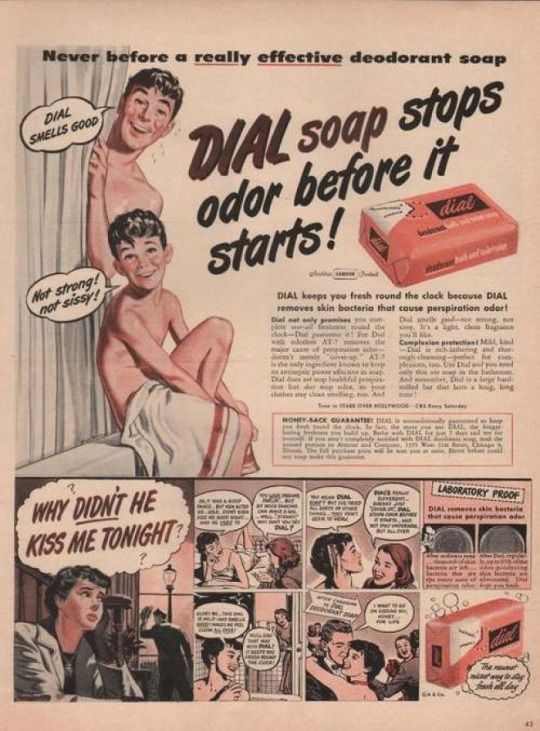 The subject admitted that he had on several occasions experienced erotic temptations in regard to his women patients; he had twice fallen in love with one, and finally had married one. This shows that the way a lot of adults act and the things they do, are behaviors they learned in their childhood, which appear to be enjoyable or pleasurable to them and they want to do these things to others when adults. For me as a boy, when I would visit my doctor, Dr. Ezekiel, would have Gold Dial soap in his office and when I would wash my hands I remembered how good it smelled, and if a doctor used it, it must be good stuff. So, that Gold Dial is the only hand and bath soap I used because I want to smell good like Dr. Ezekiel. Also, as a child growing up, we lived in a nice suburban community where everything was new and clean and nice and quiet, and everyone had jobs, and so that is what kind of life style I want for my adult life. When people ask me about what I like most about being a son, I always reply, “Everything.” And even when talking to my parents now I try to conceal my true feelings at times and say something pleasant. #RandolphHarris 8 of 11
 Like, if I do not like someone and do not want to go to their party and my parents ask me about it, I will say something like, “I am very excited about the party, but I am busy that day. I am sure they will have good company and food as always.” Sometimes, however, I feel like I try too hard to be nice and pleasant and it really takes a lot of energy. I am more of a person who likes to be quiet, mind my own business and keep to myself, but when living in a city and not the suburbs, it requires one to be more social. Now back to the subject, the next memory he has was of a dream, plainly of a homosexual-masochistic nature; in it a man, who proved to be a replacement figure of the family doctor, attacked the subject with a sword. The idea of a sword, as is so frequently the case in dreams, represented the same idea as mentioned above to be associated with that of a wooden stethoscope. The thought of a sword reminded the subject of the passage in the Nibelung Saga, where Sigurd sleeps with his naked sword (Gram) between him and Brunilda, an incident that had always greatly struck his imagination. #RandolphHarris 9 of 11
 The meaning of the symptomatic act now at last become clear. The subject had placed his wooden stethoscope between him and his patients, just as Sigurd had placed his sword (an equivalent symbol) between him and the maiden he was not to touch. The great act was a compromise-formation; it served both to gratify in his imagination the repressed wish to enter into nearer relations with an attractive patient (interposition of phallus), and at the same time, to remind him that this wish was not to become a reality (interposition of sword). It was, so to speak, a charm against yielding to temptation. I might add that the following passage from Lord Lytton’s Richelieu made a great impression on the boy: “Beneath the rule of men entirely great, the pen is mightier than the sword. I wear my pen as others do their sword,” and that he became a prolific writer and uses an unusually large fountain pen. When I asked him what need he had of this pen, he replied in a characteristic manner, “I have so much to express.” We all live in different psychological Worlds, there is no correct view of a life situation. #RandolphHarris 10 of 11
 A person who feels that his or her view of a life situation has been understood feels freer to examine it objectively and to question it. (Accepting and understanding the perspective of another person can be especially difficult when cultural differences exist.) Heavenly Father, you have filled the World with beauty: Open our eyes to behold your gracious hands in all your works; that rejoicing in your whole creation, we may learn to serve you with gladness; for the sake of the one through whom all things were made. May we commend to your fatherly goodness all those who are in any ways afflicted or distressed, in mind, body, or estate; [especially those whom our prayers are desired]; that it may please you to comfort and relieve them according to their several necessities, giving them patience under their sufferings, and a happy issue out of their afflictions. God, you made us in your own image and redeemed us through Jesus Christ, your Son: Look with compassion on the whole human family; take away the ignorance and arrogance and hatred which infects our hearts; break down the walls that separate us; unite us in bonds of love; and work through our struggle and confusion to accomplish your purpose on Earth. #RandolphHarris 11 of 11
 Randolph Harris II International Institute