
Home » Posts tagged 'garden'
Tag Archives: garden

The Cursed

I lay sleepless in bed. There were noises in the distance; the sound of footsteps coming somewhat hurriedly in the direction of my bedroom; by the resonance I could tell that they were traversing a much larger room. I rose from my bed as the door opened, and l looked expectant. The incomer was a lady—she had long dark beautiful eyes, a long white neck. Her long dark hair however hidden in a dusty scarf and she wore the palest pastel rose dress. She was a scullery maid. Mary-Jo DelVecchio was her name and he had an anxious, even sorely distracted, look. As she moved her lips to whisper out something, the solemn bell, high up in the belfry rang out the half-hour at this moment. Her mouth remained open as she started at the yellow telegraph form in her had. I found myself breathing a deep sigh of relief. “Dear, Mary-Jo,” I said. “Come in my dear.” “Mrs. Winchester, I have an urgent message for you,” she said. You know what?” I said smiling. “That is what I have been waiting for. Leave the telegraph on my bureau.” “Very well, Mrs. Winchester,” Mary-Jo replied. She sat the message down and quietly shut the door. As I picked up the telegraph, I noticed all it read was “The Cursed.” It reminded me that my own infant daughter was dead as was my husband dead, but these things, being to do with the cursing, were never spoken of. Except, sometimes, obliquely. I started prowling my chamber, high in the East Turret carved with daisies and swans. The room was lined with books, swords, lutes, scrolls, and two portraits, the larger which represented my husband, and the smaller my daughter. Both resembling each other with their pale, faces, polished eyes and delicate skin. However, there was something about the fleshtones, the shapes of their hands, the perpetually arched eyebrows, the sharp angle at which they held their heads, the irregular pink splotches on their cheeks. It gave me a little chill. #RandolphHarris 1 of 7
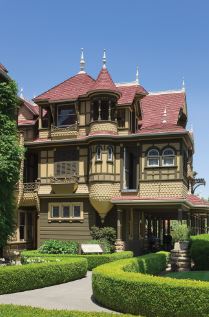
There were no windows at all in the turret, they were long ago bricked up and covered with hangings. Candles burned steadily. It was always night in the turret. Save, of course, by night there are particular sounds all about it, to which I am accustomed, but which I did not care for. By night, like most of my court, I closed my ears with softened tallow. However, if I slept, I dreamed, and heard in the dream the beating of wings…Often, the court held loud revel all night long. Soon I descended from the turret and went down, by various and curving passages, into the large, walled garden on the east side of the mansion. It was a very pretty garden, mannered and manicured, which the gardeners kept in perfect order. Over the high walls, where delicate blooms bell the wines, it is just possible to glimpse the tip of tree-covered mountains. However, by the day the mountains were blue and spiritual to look at, and seemed scarcely real. They might only be inked on the sky. A portion of my court was wandering about in the garden, playing games or musical instruments, or admiring painted sculptures, or the flora. However, my cursed court seemed vitiated this non. Nights of revel had taken their toll. As I passed down the garden, my courtiers acknowledged me deferentially. I see them, old and young alike, all doomed as I am, and the weight of my burned steadily increases. At the further, most eastern end of the garden, there is another garden, sunken and rather curious, beyond a wall with an iron door. Only I possessed the key to this door. Now I unlocked it and went through. My courtiers laugh and play and pretend not to see. I shut the door behind me. Wind-chimes were tinkling. #RandolphHarris 2 of 7

The sunken garden, which no gardener ever tends, is maintained by other, spontaneous means. It is small and square, lacking the hedges and the paths of the others, the sundials and statues and little pools. All the sunken garden contains is a broad paved border, and at its center a small plot of humid Earth. Growing in the Earth is a slender bush in the shape of the number thirteen with slender velvet leaves. I stood out and looked at the bush only a short while. I visit it every day. I have visited it every day for years. I am waiting for the bush to flower. Everyone is waiting for this. Even Mary-Jo, the scullery maid, is waiting, though she does not, being only sixteen, born in the mansion and uneducated, properly understand why. The light of the little garden is dull and strange, for the whole of it is roofed over by a dome of think stained-glass. It makes the atmosphere somewhat enchanting, and the bush itself gives off a pleasant smell, rather resembling vanilla. Something was cut into the stone rim of the Earth-plot where the bush grows. I read it for perhaps the thousandth time. O, fleur de feu—When I returned from the little garden into the large garden into the large garden, locking the door behind me, no seemed truly to notice. However, their obeisances were now circumspect. The ladies bend to the bright fish in the pools, the farmers pluck for them blossoms, challenged each other to combat at chest. The pleasure garden was full of one long and wear sigh. In the hour before sunset, my mansion is lit by flamebeaux. In the high windows, the casements of stained glass and leaded glass are fastened tight. The huge window by the palm trees was long ago shut up, and a tapestry of gold and silver with rubies and emeralds covering it. #RandolphHarris 3 of 7
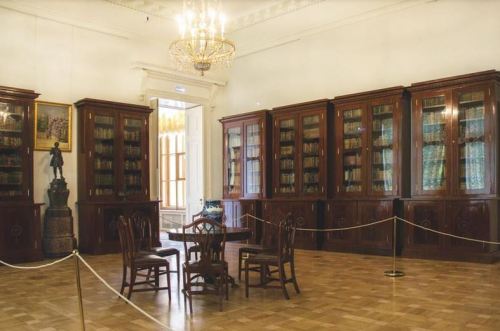
I always dined with care and attention, not with enjoyment. Only the very young of the mansion eat in that way, and there were not so many of those. The murky sun slides through the stained glass. The musicians struck up more widely. By the time the moon would come up, and the mansion rocks to its own cacophony, something strange would walk about, something that walked with a shuffling, steady thump—thump—thump! As I looked out of the windows, I watched the farmers and gardeners drift across the front lawn in twos and threes. Their movements were slow and languid like ancient fish in shallow, sun-drenched waters. I could hear yowling and screeching so loud that I could not make out any individual voice. It frightened me. When I was not in the library, I sat quietly in the parlour or dining room, or up in the Daisy Bedroom staring at the beautiful windows. Sitting in the dining room or parlous, however, was made almost unbearable by the presence of staff, arranged mummy-like around the rooms. Sometimes I would pick up a volume in the library, but invariably discovered it was some sort of laborious tome on treills and ornate gardening, Victorian architecture, museum catalogs. Or sometimes an old leather-bound novel that read no better. This growing climate of awkwardness and fear angered me so that my neck muscles were always stiff, my head always aching. It was worse because it was not entirely unexpected. The new butler seemed a little feral, with impossibly long teeth, and foul, blood-tainted breath. He had sandy red hair, which was boyishly frizzy at the sides. He might have been in his late thirties but hi face was prematurely lined and he stood with one shoulder slightly higher than the other, as if he was very tired. He began to apologize for disturbing he. “Not at all” I said. “I usually do not go to bed until well past midnight.” He had manners, promising a better life, and a cold excitement one need not work for. #RandolphHarris 4 of 7

Suddenly, the weird howl of a dog broke the silence. The noise came from far away and ended abruptly, as if hands had ended abruptly, as if hands had caught the beast by the throat. Then there was no sound except the monotonous spatter of rain on the ground. Puffs of visible vapour bespoke increasing contrasts in temperature between the parlour and dining room. The wind suddenly began to howl and shutters started banging. From the sound of things, there was a terrible storm. I then observed a woman, apparently young, dressed in white evening gown, walking before me, on my left hand, between the fireplace and the coffee table. She was dripping wet. Supposing the she had been a new housemaid, I turned to see if there were other person in her attendance, but there was no one. My curiosity, being now greater than before, to know who this genteel woman was, I followed her at the distance of four or five feet for about a mile as she traversed the twisting hallways of my labyrinth, and expecting that when I got to the bottom of the staircase of the second floor that I should meet her attempting to gain access to the Door-to-Nowhere; but to my great astonishment, when she approached the door, she vanished from my sight at the very time my eyes were fixed upon her. I related the strange affair to my chambermaid; and it was light, and I had not been previously thinking of apparitions, nor was I ever in the habit of speculating on such subjects, I am firmly persuaded that what I saw was one. The very next day, a young male servant of good character, of a bold active disposition, and who professed a disbelief in supernatural appearances requested to leave and go to San Francisco, and also to be accommodated with a horse, which was granted to him. Being desirous of making long holiday of it, he rose early in the morning and set off three hours before daybreak; however, to my great surprise, returned home early afternoon before it was dark. #RandolphHarris 5 of 7

On being questioned if anything was the matter with him, he replied that he had been so much alarmed that he was resolved to travel in the dark if he could avoid it. “For,” he said, “as I was riding down the lane, in the morning, being forwards with my face downward, the horse suddenly bolted from the road to such a distance that I was nearly dismounted. On recovering, and looking about to see what had affrighted the horse, I saw a fine lady, dressed in white, with something like a black veil on her face, standing close by. How I got back to your mansion, I cannot tell, but was so frightened that I dared not go further, but walked up and down the road until it was light.” I thought that he must have contracted a chill from the wet of the grass, for that afternoon he was certainly feverish and disordered; and the disorder was of the mind as well as the body, for he seemed to have something more he wished to say, only a press of household affairs prevented me from listening any further to him; and when I went, later that evening to see that the light in his chamber had been taken away, and to bid him good-night, he seemed to be sleeping, though his face was unnaturally flushed, to my thinking: he was, however, pale and quiet, and smiling in his slumber. Next morning, it happened that I was occupied with business, and unable to looking on the boy. I therefore set tasks to be written and brought to him. Three times, if not oftener, the boy knocked at the study door, and each time the doctor chanced to be engaged with some visitor, and sent the boy off rather roughly, which he later regretted. Two housemaids were at dinner this day, and both remarked that the lad seemed sickening for a fever, in which they were too near the truth, and it had been better if he had been put to bed forthwith: for a couple of hours later in the afternoon he came running into the house, crying, out in a way that was really terrifying, and rushing to me, clinging about me, begging me to protect him, saying, “Keep them off! keep them off!” without intermission. #RandolphHarris 6 of 7
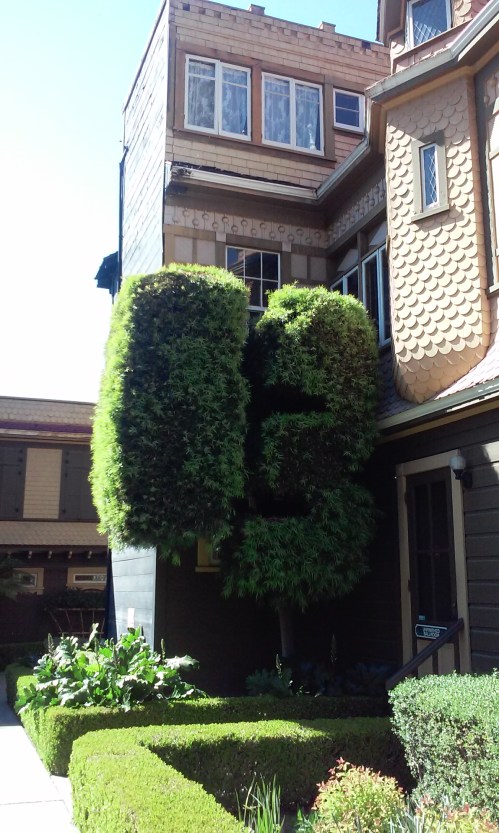
And it was only evident that some sickness had taken strong hold of him. Here was therefore got to bed in another chamber from that in which he commonly lay, and the physician brought to him: whom pronounced the disorder to be grave and affecting the lad’s brain and prognosticated a fatal end to it if strict quiet were not observed, and those sedative remedies used which he should prescribe. I was naturally grieved. I felt the pathos of the early death: and besides, there was the growing suspicion that not all had been told by the lad, and that there was something here which was out of his beaten track. When he left the chamber of death, it was only to visit the Cupid Fountain. The month of January was near its end when I received another telegram that read, “The Cursed.” The message affected me horribly. And when I went to bid the lad good night, he was dead. The scene at his burial had been very distressing. The day was awful in morbidness and wind: the bearers, staggering blindly along under the flapping black pall, found it a hard job, when they emerged from my porch, to make their way to the grave. I was draped in a mourning clock of the time, and my face was white and fixed as that of one dead, except when I suddenly turned my head to the left and looked over my shoulder. It was then alive with a terrible expression of listening fear. No one saw me go away: and no one could find me that evening. All night the gale buffeted the high windows of Llanada Villa, and howled over the upland and roared through the woodland. It was useless to search in the open: no voice of shouting or cry for help could possibly be heard. I found myself in the Blue Séance Room, having a vision. In my vision the lad was clinging to the great ring of the door, his head sunk between his shoulders, his stockings in rags, his shoes gone, his legs torn and bloody. #RandolphHarris 7 of 7
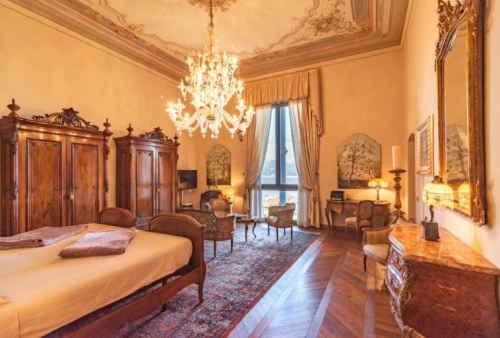
Winchester Mystery House

Mrs. Winchester had an antique etiquette, developed through practice and interaction with human beings of all eras and climes. To really appreciate the revolution in eating in the late nineteenth century, it would help to see a Victorian dining room with its pantry fully stocked and its food on the table. The nineteenth century saw the introduction and spread of brand-name foods, prepackaging, logos, and graphic labels. Before the Victorian ear, food was either raised or grown at home or bought in bulk. The local general store or grocer had large acks of sugar, beans, flours; barrels of molasses and pickles; as well as spices such as pepper, cloves, and allspices. The grocer measured and weighed his wares into the customer’s containers and kept a tab, billing his accounts once a month. Milk, eggs, and fowl were purchased from a country farmer who brough them to market or, more likely from a city dairyman who kept cows and chickens.

In the middle of the nineteenth century, the quality of foods often got a lot worse. Railroads and urbanization supported the growth of the food business. Flour was milled closer to the source or closer to inexpensive transportation rather than closer to the consumer. It was commonly extended by unscrupulous companies with a measure of chalk dust or plaster. Teas was often stretched with iron filings, a profitable ingredient for a product sold by weight. Milk was often skimmed of valuable cream and sold as whole. Even when it was not, city cows often lived in multistory brick barns, were fed on rotten silage, and infected with tuberculosis. These consumptive Camilles of the cow World hardly gave the thick, white milk that Americans were used to. New York City’s milk was most often described as watery and bluish. By the late nineteenth century, there was strong reactions to the declining food quality.

For further information about tours, including group tours, weddings, school events, birthday party packages, facility rentals, and special events please visit the website: https://winchestermysteryhouse.com/
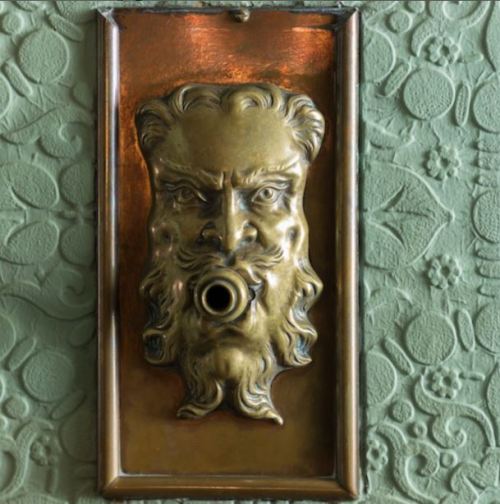
Please visit the online giftshop, and purchase a gift for friends and relatives as well as a special memento of the Winchester Mystery House. A variety of souvenirs and gifts are available to purchase. https://shopwinchestermysteryhouse.com/
 Randolph Harris II International Institute