
Home » Posts tagged 'Education'
Tag Archives: Education

It is the Cry of Outraged Innocence

When I went to Hawaii in 1934 and the traffic in Honolulu looked like madness—totally disorganized—this was because it was so different from the order that I was used to. I was like the little boy who had has a crooked body all his life and when the doctor straightened it, he turned to his father and said, “He made me crooked!” The Honolulu traffic looked “crooked” to me. However, as I walked around doing errands on many different days, still failing to find any order in the driving, gradually I became aware that there were no accidents, not even near-collisions—and nobody got angry at anyone else. Then I became aware that the drivers of the cars—especially the Hawaiians without formal educations, and the other natives—were doing what I did: noticing. There were some rules—like driving on the right-hand side of the road and stopping for pedestrians, but the drivers went clear over on the left-hand side any time that was appropriate either to moving on their way or to getting out of someone else’s, and cars stopped as soon as a pedestrian stepped from the sidewalk to the street, even if this happened in the middle of the block. The driving was very much person-to-person, with recognition on both sides. Usually there was just an instant of this recognition between driver and driver or pedestrian and driver, but there was this moment of awareness of each other, of human “speaking” to human, and although I did not know anyone I felt surrounded by friends. When I had got the hang of it, I went right into Honolulu and drove the way that everyone else did. I have never had so much fun driving in my life. It was even more fun than driving in the Southwest where people were scarce and noticed each other when they passed on the road. In Honolulu there was no lack of people and cars, and still there was this noticing. #RandolphHarris 1 of 20

In Hawaii then, when I was thirty-two-year-old, there were many ways in which I arrived at my own normal, which I could know by the feeling of ease and happiness, of having left an alien World and come home for the first time in my life. I had felt that way before with a place—the land, the country—as in the Southwest, but never with so many people. It seems to me that the present “chaos” in psychotherapy has something in common with the “chaos” that I saw in Honolulu traffic. I have read several books in which many or several psychotherapists were included, sometimes presenting their cases separately, sometimes discussing cases or psychotherapy together. There is so much difference and differing among them that when I first read them it looked like madness: Does not anyone know what he is doing? (If they knew what they were doing, they would all be doing it the same way—going by rules which I could recognize.) Gradually they sorted themselves out in my mind into two groups: those who are following some Authority by copying him, and those who are struggling to find their own way, which seems to have the common base (or direction) of spontaneity, or responsiveness, of being in touch with myself and what is going on in me (the therapist) as well as what is going on in the person who has come for help. Should we live with people in any other way? These individual strugglers, as far as I know them, have a good deal of acceptance of and respect for each other even when they disagree, and although their apparent methods are so different that they seem not to be the same thing. There is “client-centered therapy” and there is “communication” therapy and there is therapy through swimming instruction and there are therapists who fall asleep repeatedly during therapy sessions, as part of the therapy, and when they wake up report their dreams to the person who has come for help. There is therapy by “guided daydreams,” and there is “transactional analysis” which makes clear to people the games that they are playing with each other and helps them to give up these games. Essentially, all of these methods achieve, when successful, a switch from dishonesty and competition to honesty and cooperation. #RandolphHarris 2 of 20

All of them attempt to relieve us of what is binding us. However, when a therapist (or anyone) tries to copy what is spontaneous, immediately this is defeated. When I try to copy, spontaneity is lost. I reverse what I have seen and liked and want to follow. With my intellect I have picked up a picture of what I think I “should” do or be. The more that I do this, the more inflexible I become, and spontaneity cannot happen no matter how much I wish it to. What I have seen in the therapist (or other person) whom I am “copying” is the result of an effort toward spontaneity and free response. I am copying the result. The more that I hold myself to it, the farther I am from my aim. (My aim is not a goal, but my direction.) The happenings which preceded the result are missing. What should come second has been placed first. Then, what should come first has become impossible. It is very easy for me to read myself incorrectly afterward even when I have moved in the right way. I mistake what happened for what I did myself. It happened by itself through me. However, later, I take credit for myself, as for something that “I” have done. A young therapist described a therapy session to me in this way: “This fellow—a young guy, nineteen—was laughing at himself and his friends for sitting on the beach day after day laughing at themselves for the way they were ‘all messed up’—mixed up in homosexuality, doing crazy things that got them nowhere. They called themselves names and ridiculed themselves, and he went on doing this with me. I could not get him to feel anything. He just kept on laughing at what dopes they all were, including him. So then, I started laughing too, laughing with him at his being such a dope—and then he got mad, and began to say how he really felt about it. Then he knew that what he was really feeling was not funny.” After that, they began to move in therapy. #RandolphHarris 3 of 20

I asked the therapist, “Was that something that you figured out and then did, or did it happen and afterward you saw the sense of it and why it was successful?” He looked a bit disconcerted and unhappy for a moment—the way that I have often felt when I have realized that what I have taken credit for happened through me but was not done by me (except in the objective sense that it could be observed as having been done by me). Then he said that it had happened to his surprise, and afterward he figured out why it had worked the way it did. The way that he told it sounded as though he had figured it out first. I do this too, in part because this is our habit, but also because the other way around is acceptable to very few people. The Age of Reason insists that we figure things out first, then do them. Any other way may seem unrealistic. However, if consciousness does not prematurely share in the perceptual experience, in this connection there are many situations in ordinary experience which demonstrate that much can be reacted to more effectively. There are many illustrations, to further highlight this illustration, of man’s capacity to register perception accurately in space and time categories provided that conscious cognitive processes are postponed. With this knowledge of man’s superior judgment when using his precognitive capacities for certain tasks, the army trains its artillery observers to utilize their capacities to the utmost. The observers must always call the position of a shot as quickly as possible—there must be “zero delay” between noting the fall and shouting out the location. All beginners wish to estimate with the aid of rational judgment, but experience has shown that there is unquestioned superiority of performance when rational estimation is suspended. The first flashing quick guess turns out to be the best guess. #RandolphHarris 4 of 20

Hive-moralists for the millennia have lamented the innate, pervasive tendency of human beings to kick-out in bursts of irrationality and pleasure seeking. It is looked on as extra-social self-indulgence. There is a distinction between two very different hedonic reactions. Pleasures are hedonic experiences caused by activating higher-faster-future brains at the service of and controlled by self. Satisfactions are intoxication and narcotic escape experiences caused by activating slower-lower past circuits. Both experiences take consciousness away from domesticated robot-hood. Pleasures move one up from hive routine into the self-actualized future. Intoxicants, tranquilizers and narcotics move one back to the past—down from domestication, to primate and mammalian instinctual satisfactions. Civilized terrestrial humans, robotically and blindly harnessed to species tasks, and dependent upon gene-hive rewards for duty well-done, need to slowdown, turnoff, escape domesticated pressure. Boredom and social inefficiency would result without some sequential opportunity to regress from hive morality, to activate the primitive circuits of the brain. Intoxicants and narcotic escapes are built-in devices to allow ritual regression to earlier, lower, slower stages. That they are conventionally naughty is their power and delight. The dutiful domesticated adult brain and the retiring elder brain insectoids live in a reality centered upon hive duty. The ten earlier brains are there, but are taboo, often blanked from consciousness. Brains are turned on and off by means of neurotransmitter chemicals. Civilization provides ritualistic means of allowing reactivation of the earlier brains—temporarily naughty immorality, programed animalism—permissible retrogression in every successful eleventh and twelfth stage domesticated adult and retiring elder brain. Each civilization produces ritualistic drug taking which allows temporary animalistic reversion. This process is best seen in the Japanese culture—surely the most insectoid society in World history. The Japanese have developed ritualistic inebriation which permits even the most dutiful to regress to animalism as seen in stages four to six—rodent-brained toddlers, mammalian-brained demanding kids, and monkey-brained territorial children. #RandolphHarris 5 of 20

The German culture, another highly domesticated-duty society also allows its citizens a scheduled intoxication-regression in the Fasching-Carnival. Even the sober, tidy Swiss permit each other a Springtime return to pseudo-bestiality when these paragons of the domesticated adult get tipsy and lurch around like sodden bears shamelessly littering the streets of Basel with confetti! Masks are worn at these carnival regressions—the Burghers do not want to have their inner animals seen. Other methods for ceremonial return of the animal-brain-stages involve totems exhibited at athletic events, parades, and social gatherings. The unrepressed emotions released at these events are not sexual, however. Genital satisfaction is not the central motive. Middle-age, middle-class folks return to preadolescence and become exhibitionistic monkeys or noisy, often savage mammals as when thousands of spectators engage in physical violence directed against the territorial rival in soccer games around for the World, for example. The orchestrated revival of earlier brains is a basic issue in any stable gene pool. Each of our twelve terrestrial brains has its own ego, demands activation and must be allowed to cut loose on some regular basis. The best-run civilizations have worked out a weekly return of the regressed. Domesticated adults work dutifully Monday through Friday. On Saturday they are allowed to assemble in animal-totem competitions—the Bulldogs of Yale versus the Horned Toads of Texas Christian. Saturday night the socially approved intoxicant is imbibed, permitting a temporary explosion of mammalian territorial competition and sexual low-jinks. Sunday morning the chastened and hung-over domesticate attends a DNA adoration ceremony in which the dignified gene-hive Creator is recognized, the brief foray back to animalism exercised. Purged and reborn, the domesticate adult hum-ant is ready to start the next week of hive duty. #RandolphHarris 6 of 20

Psychological “trading stamps” are called that because they are used the same way as the little blue, green, or brown stamps that people get as a premium when they buy groceries or gasoline. The following are some observations concerning commercial trading stamps. They are usually obtained as a bonus in the course legitimate business transactions; that is, the person must buy groceries to get trading stamps. Most people who collect them have a favourite colour. If offered other colours, they may not bother to take them, or may give them away. Some people, however, will collect any type of trading stamp. Some people paste them into their little “books” every day, and others at regular intervals, while still others leave them lying around until some day when they are bored and have nothing better to do, and then they paste them up all at once. Some neglect them until they need something, and then count them in the hope that they have enough to get it free from the trading-stamp store. Some people like to talk about them, look through the catalogue together, boast about how many stamps they have, or discuss which colour offers better merchandise or better bargains. Some people save only a few and then turn them in for trivial premiums; others save more, and get bigger bonuses; and still other become deeply involved in trying to collect enough stamps for one of the really large prizes. Some people know that the trading stamps are not really “free” because their cost must be added to the cost of the groceries; some really do not stop to think about this; some know it, but pretend they do not, because they enjoy both the collecting and the illusion of getting something for nothing. (In some cases, the cost of the trading stamps is not added to the cost of the groceries; in such cases, the grocer must take their cost as his own loss. However, in principle, it is the customer who pays for the trading stamps.) Some people prefer to go to “straight” grocery stores where they pay only for the groceries; with the money they save, they can then buy their own merchandise wherever and whenever they want to. #RandolphHarris 7 of 20

For those who are eager to get something “free,” it is possible to buy counterfeit trading stamps. It is usually hard for a person who seriously collects trading stamps to give them up. He may put them in a drawer and forget about them for a while, but if he suddenly gets a large fistful in some special transaction, he may pull them out again to count them and see what they are good for. Psychological trading stamps are the currency of transactional “rackets.” When Jeder is young, his parents teach him how to feel when things get difficult” most commonly, angry, hurt, guilty, scared, or inadequate; but sometimes stupid, baffled, surprised, righteous, or triumphant. These feelings become rackets when Jeder learns to exploit them and play games in order to collect as many as possible of his favourite, partly because in the course of time this favourite feeling becomes sexualized, or is a substitute for feelings involving pleasures of the flesh. To further highlight this illustration, much “justified” grownup anger belongs in this category, and is usually the payoff in a game of “Now I Have Got You, You Male Chauvinistic Pig.” The patient’s Child is full of suppressed anger, and he waits until someone does something to justify his expressing it. Justification means that his Adult goes along with his Child in saying to his Parent: “No one can reasonably blame me for getting angry under such conditions.” Thus relieved of Parental censure, he turns on the offender and says in effect: “Ha! No one can blame me, so now I have got you,” et cetera. In transactional language, he gets a “free” mad, that is, free of guilt. Sometimes it works differently. The Parent says to the Child: “You are not going to let him get away with that, are you?” and the Adult sides with the Parent: “Anyone would get angry under such conditions.” The Child may be only too happy to comply with these urgings; or on the other hand, he may be as reluctant to do battle as Ferdinand the Bull, but is forced to enter the fray. #RandolphHarris 8 of 20

Even after Sade’s time, men of letters continue to dominate the scene. Romanticism, Lucifer-like in its rebellion, is only useful for adventures of the imagination. Like Sade, romanticism is separated from earlier forms of rebellion, at this stage, forgets its positive content. Since God claims all that is good in man, it is necessary to deride what is good and choose what is evil. If not to the exercise, hatred of death and of injustice will lead, therefore, at least to the vindication, of evil and murder. The struggle between Satan and death in Paradise Lost, the favourite poem of the romantics, symbolizes this drama; even more profoundly in that death (with, of course, sin) is the child of Satan. To combat evil, the rebel renounces good, because he considers himself innocent, and once again gives birth to evil. The romantic hero first brings about the profound and, so to speak, religious blending of good and evil. This type of hero is “fatal” because fate confounds good and evil without man being able to prevent it. Fate does not allow judgments of value. It replaces them by the statement that “It is so”—which excuses everything, except for the Creator, who alone is responsible for this scandalous situation. The romantic hero is also “fatal” because, to the extent that he increases in power and genius, the power of evil increases in him. Every manifestation of power, every excess, is thus covered by this “It is so.” That the artists, particularly the poet, should be demoniac is a very ancient idea, which is formulated provocatively in the work do the romantics. At this period there is even an imperialism of evil, whose aim is to annex everything, even the most orthodox geniuses. “What made Milton write with constraint,” Blake observes, “when he spoke of angels and of God, and with audacity when he spoke of demons and of hell, is that he was a real poet and on the side of the demons, without knowing it.” The poet, the genius, man himself in his most exalted image, therefore cry out simultaneously with Satan: “So farewell hope, and with hope farewell fear, farewell remorse…Evil, be thou my good.” It is the cry of outraged innocence. #RandolphHarris 9 of 20

If God has a favourite place on Earth, she thought, it must be Colorado. Surely God would be proudest of his handiwork in that magnificent state: the overpowering beauty of the mountains, with their dancing crystal streams and tall sweet-smelling pines. Of all the places she had lived, Trish loved Colorado and its mountains the most. The solid, reliable, never-moving mountains symbolized everything Paris wanted her life to be, but seldom was. As the daughter of an Air Force officer, Trish lived in seventeen states during her first seventeen years. In those years, her family never bought a house, joined clubs or made any lasting friends. Trish longed for one good, reliable friend, but because of the constant moving, she made only casual acquaintances. Her personal relationships were limited almost exclusively to her family; her father, mother, sisters, and two brothers. Trish’s father was hard to love—easy to pity, but difficult to cherish. He seemed to live on the verge of disaster. He drank so heavily that it damaged his career, and that caused him to drink even more. In his early Air Force years, he had loved to fly, but later his superiors wisely kept him on the ground and passed him over for promotion again and again. The burden of keeping the family together fell to Trish’s mother, a matronly, above average weight woman who seemed to draw from a cornucopia of love and support. She kept her husband’s uniforms pressed and shoes polished. In the morning, she would nurse his hangovers enough so that he could at least report for duty standing up. And when he could not stand up, she would call and make excuses for him. She managed the family budget, helped the children with their homework, and sand them to sleep at night. She was the bedrock of Paris’s life. #RandolphHarris 10 of 20

During Trish’s last two teenage years, her father was stationed in Colorado. They were the best two years of her life. She felt she had at last found a home: in the safe, dependable, protective mountains. However, they were transferred again—to California, where everyone moved constantly, and the mountains were a fuzzy image on the horizon. She went to small college and majored in home economics. She wanted to get married and make a comfortable, stable home. Yet she finished college without marrying and took a job as a clerk at the Air Force base. She lived alone in a small apartment, and hated it. Emile came into her life in an ordinary way. She met him at the complaint desk of the electric company, where she had gone to check a mistake in her bill. He was courteous in handling her problem, handsome behind his wire glasses and bold enough to ask her to dinner. She felt a ruse in her pulse as she dressed for the date and thought, this must be how love begins. And so it was. The dinner date led to movies, motor trips, ski weekends and finally an engagement ring. Their bouts of pleasures of the flesh were hot, but restrained, she having no intention of going to bed with a man who was not her husband. Emile was patient, and seemed more interested in her as a potential wife than someone as just a partner for pleasures of the flesh. Though she did not know it at the time, what attracted her to Emile the most was his reliability. He had worked for the electric company for four years when she met him and was prepared to spend his entire career reporting to the same building in the same city. He drank a single whiskey and water before dinner and nothing afterward. At parties, his limit was a self-imposed two drinks. He arrived home at five-thirty every evening, went to bed after the eleven o’clock news and was content to take the same vacation every year. For the first few years of their marriage, Trish felt she had everything she could ever want: her husband, her son and daughter, her own house, her neighbourhood, and, most of all, an address that never changed. She loved it. #RandolphHarris 11 of 20

Them Emile got The Promotion. From the time he first started talking about it, Trish thought of “The Promotion” in capital letters. It was an unheard-of opportunity—the chance to jump over three levels of management to Senior Vice President, Customer Relations. His salary doubled, but so did his responsibilities. He seldom got home before eight o’ clock in the evening and often went to the office on Saturdays. Trish did not know whether to be ecstatic or depressed. The extra money was marvelous, but the new job upset her routine. Emile spent less time with her and the children. He began to drink more—straight whiskey, without the water, sometimes without ice. Odd-jobs about the house simply went undone. When she reminded him about them, he would growl, “Hire someone. We can afford it.” By the time Trish found out about Kim, Emile had been sleeping with her for more than three years. Trish was not shocked as much by the fact of the affair as she was by Emile’s ability to keep it from her as long as she did. She knew husbands had affairs and that eventually wives found out about them. What she did not expect was that the affair would go so long undetected and that when confronted with it, her husband would admit to it without shame or remorse. “Of course I’m sleeping with her,” Emile had said. “Every chance I get. Do you think I go to all the trouble of meeting her just so we can play gin rummy?” “But now that I know about it, it has to stop,” Trish had demanded. “What the hell for?” he had laughed. “Kim’s a lot more fun to be with than you are, and one hell of a lot better lay. Face it, Paris, you’re a great mother and queen of the homemakers, but as a wife, not so much.” Panic-stricken, seeing her perfectly neat and orderly life crumbling around her, Paris had begged Emile to consider the children, their home, their thirteen-year marriage. She appealed to his sense of duty, of right and wrong, of stability. None of it worked. #RandolphHarris 12 of 20

She told her Elder about it in confidence; he suggested a trial separation. However, this she would not do. It would bring down the framework of domestic normality she had so carefully built around them. She told Emile’s parents about it. When they confronted him and demanded he end the affair, he merely laughed again. All of Trish’s friends recommended the standard California solution: divorce. She balked at the idea for several reasons, not the least of which was her devout Mormon faith. Also, she feared the effect a “broken home” would have upon her children. And she felt that the promises she had made on her wedding day created an unbreakable bond. Paris was married, for better or worse, for life. It was her duty. Refusing to let anything upset the stability of her home life, Trish continued to cook the meals, chauffeur the children, and wax the floors. However, the gnawing sense of loss and disruption was taking its toll on her. She too began to drink a lot, and with the drinking came fear and guilt, two emotions which eventually led her to seek therapy. I felt she would mesh neatly with our group, and I overcame her early objections to joining it. I was right. The trouble was, she helped with everyone’s problems but her own. After a time, I began to view our discussions about Trish’s problems as a series of paths leading to brick walls. When the conversation progressed to a point at which she held a strong position, it would stop. Trish was sad when her husband was gone late at night, but as soon as he came home, she would feel a sense of relief. However, moments later, she would feel dirty because she knew he had been with that other woman. It made her want to cry and scream, but she never did because she felt it was her duty to be married for life and the children getting their sleep was more important than her feelings. #RandolphHarris 13 of 20

What has been lacking in your life at times when you have found yourself bored, miserable, or even sick? What can you do about these lacks? Upon whom do you depend to gratify these needs? What does your dependency “cost” you in the way of submission to the wishes of the person upon whom you are dependent? What you do believe you cannot do without? Dr. Martin Luther King, Jr. showed that it is possible not only to survive, but moreover to transcend lethal circumstances; he struggled to survive and was ultimately murdered to end segregations and demand that African Americans be protected under the law. Can you identify what you need to enhance your life, and learn the skills that will enable you to gratify these needs? This is how to overcome insecurity through action—the way of independent security. Whenever you become sick—with a cold, influenza, mononucleosis, or other illness—reflect upon your life and see if you can identify an episode of dispiritedness brought on by loss of someone’s love, an abrupt change in way of life (such as moving to another residence), or some failure. Or consider whether your style of life or family role is preventing you from gratifying certain basic needs; prolonged deprivation may have stressed or dispirited you. Sickness is a splendid opportunity to reflect upon your way of living, so that when you have recovered, you can make changes that will reduce the likelihood of becoming sick again. Sickness is often an indication that one’s habitual way of life has not yielded those basic need gratifications that sustain health and keep a person growing in vital ways. When all is not well in your life, it is good to record dreams for hints as to possible changes you could make to revitalize yourself. #RandolphHarris 14 of 20

Getting back to nature—a walk in the woods or by the sea, away from machinery and work—can provide an opportunity to meditate and gain perspective upon an unsatisfying life style. Sometimes dispiritedness will hit one without the symptoms of physical illness, but rather in signs of disinterest in life, loss of ability to enjoy life, and feelings of worthlessness. The healthy person can recognize these as indicators of time to seek professional help, time to make changes, or time to seek out good, listening friends. In choosing commitments, one needs to examine deeply the possibility of being able to change one’s mind, to keep the mind free and to leave psychologically, spiritually, or physically when one chooses. Avoidance of false, unworthy commitments is an indicator of the healthy personality. Especially during periods of dispiritedness, you are vulnerable to persons who offer easy ways out. Racial animosity is really a pathological state which clouds vision and falsifies judgment. It raises prejudice to the dignity of a principle. Hate is a mental poison. It is the worst possible sin of our thought life. It damages those we hate, infects our own environment, and in the end, it severely damages ourselves. The ability to treat all kinds and classes of people equally, and with universal goodwill, does not imply the inability to observe the comparative differences and even defects among them. It is not enough to possess a wide tolerance in these matters; it should also be a wise tolerance. Otherwise one may merely condone and increase self-destruction. Not to tell another person “No!” when all prudence, intelligence, foresight, and experience bid us do so is simply moral and verbal cowardice. He can be polite without being fulsome and effusive. His sincerity will dictate the proper measure. #RandolphHarris 15 of 20

The need for finer manners where coarse vulgarity, aggressive obscenity, and raucous noisiness prevail speaks for itself to those who seek escape from materialism. In an atmosphere of disorderly or non-existent manners, materialistic thought flourishes even more. He has much contempt for human folly but much tolerance for human weakness. He will keep serene, even-tempered, detached amid the recurring irritations of life and the petty provocations from persons who cross his path. They may face him, but they cannot hurt, much less infuriate, him. However, if he identified himself with the ego alone, all this aloofness of spirit would not be possible. However, it is not only inner calmness that he needs to acquire; inner clearness is also requisite. Both the intellect with its ideas and the character with its qualities should share this effort to secure greater clarification. His tolerance is so vast that he will not intrude upon others’ freedom, not even to the extent of seeking the betterment of their character or the improvement of their mind. As a man advances in inward development, gaining ever richer experience in fresh embodiments, he comes to see that he will gain more by practising co-operation than by selfishly seeking his own isolated benefit alone. It is as such moments of remembrance that he is here also to ennoble his character that it becomes easier to extend goodwill to those he dislikes, or who dislike him, those who have brought him trouble and others who radiate materialism or destructiveness. It would be a mistake to believe that because he makes no sharp exclusions and practises such all-embracing sympathy toward every possible way of looking at life he ends up in confusion and considers right and wrong to be indistinguishable from each other. #RandolphHarris 16 of 20

Instead of falling into mental vacillation, he attains and keeps mental integrity, a genuine individuality which no narrow sect can overcome. Instead of suffering from moral dissolution, he expands into moral largeness which sees that no ideal is universal and exclusively right. Although generally he will be infinitely considerate of other persons, there will be certain situations wherein he will be infinitely hard upon them and utterly indifferent to their feelings. All are benefited by always remembering the practice of harmlessness towards all creatures in thought, word, and action. He should not consider himself alone, but ought also consider his duty to those other beings who cross his path, including animal beings and trees. Elegance is often found as an accompaniment of refinement. This is not only true of physical things, behaviour, and conduct, but also of character and mind. The true gentleman does not cast aside fine manners however much one may become intimate, familiar, or friendly with him. The man of exemplary manners will always have an advantage over those who have none. The charm of dealing, or conversing, with him gives him the preference, all else being equal. Assert the ego aggressively against others and you provoke their egos to assert themselves. Hostility breeds hostility, violence encourages the others to be violent. He keeps this composure. If he has moods, ups-and-downs of feeling, others will not know it. By presenting them with an imperturbable front, they are helped without his particularly seeking to do so. #RandolphHarris 17 of 20

A well-mannered child is a testimony to a well-mannered home. It does not mean that he is to force himself to like everyone under the sun equally well, or that he is to negate every personal preference and deny every personal repulsion. It does not mean that he is no longer to discriminate his perceptions of human status and quality. He is never the enemy of any human being, but only of the sin in that being. All his social-relational thinking is governed by goodwill, but his conduct is ruled by reason added to the goodwill. In that way, he does not fall into unbalanced sentimentality nor harm others under the delusion that he is benefiting them. He shows an uncommon patience because that is Nature’s way. He expresses an impartial understanding because that is Truth’s way. He accepts people just where they are and is not angry with them because they are not farther along the road of life. He is not only different in that he seeks both to commend and to criticize, whereas the ordinary man seeks only to do the one or the other, but also in that he seeks to understand the World view and life-experience which have given rise to such a viewpoint. He must be ready to bestow an intellectual sympathy towards the attitudes of other men, no matter how foolish or how wicked these attitudes may be. Such sympathy enables him to understand them, as well as the experiences and the thoughts which have led to them. However, it does not necessitate acceptance of the emotional complexes and spiritual ignorance which accompany them. It is not necessary to be sullen to be serious. The man who walks rudely through the crowded streets of life, who flings his contempt from mien and speech, is but a melancholy misanthrope, not a philosopher. He thinks he has surrounded himself with an atmosphere of detachment, when he has merely succeeded in surrounding himself with an atmosphere of surliness. #RandolphHarris 18 of 20

The Sacramento Fire Department has a wide range of responsibilities to ensure the safety of their citizens. It is equally important to recognize the significant work and effort involved in managing the department. “In the same ways fire fighters have a hard job, with EMS it can be worse because of the blood factor. In fires, people are burned, and they look awful. In EMS, you have the blood factor and severed limbs. And sometimes the trauma and the violence. We see quite a bit of violence. At times we are there before the police arrive in violent situations. Our response times are so quick that we sometimes get there in the heat of the battle, when the shooting is still going on. We have to be very aware and cautious. That can be stressful. We have some old neighborhoods that are low-income areas, where the crime rate is high, arson is high. These are mostly single-family homes, no tenements. One summer we had ten or eleven homicides near downtown, where I worked. Sometimes we had two in a night. We provide basic life support until the paramedics get there. You’re concerned for yourself. You’re surrounded by people. You look for an area of refuge. You advance cautiously. It’s a hectic, hyper type situation. We went to one nightclub downtown where we had five people who were shot. When we arrived there were only two, but three more were subsequently shot while we were there, right near where we were operating. Captain X was a seasoned veteran who had seen a lot of things, but he was upset after that incident. We all were. I have never seen him sit down in a chair, put his feet up, and smoke a cigarette. He didn’t talk. The whole company was kind of lethargic after it was over. It was the emotional stress, dealing with gunshot wounds in a large crowd without much police protection. There was so much going on. We went from one victim to the next to the next. We just followed the trail, logistically getting the equipment there. One person did all the shooting. Apparently it was the result of a rivalry between high school football teams. The neighborhoods here are very involved in their high schools, which is good. They are very proud of their sports teams, which is good. Until it ends up in a shooting, which is not good. #RandolphHarris 19 of 20

“Not too long ago they had a big drug shoot-out. An automatic weapon was used, several hundred rounds were shot, and eight or nine people were transported to the hospital. To get back to the blood factor, I’m absolutely concerned with AIDS just as much as I am with hepatitis. We try to take the precautions of wearing gloves and cleaning up very well afterwards. We keep a mental list of known cases, and we wear masks as well as rubber gloves when we deal with these people, whether they have hepatitis, tuberculosis, or AIDS. We wear paper masks, like surgical masks. The city is also providing us with hepatitis vaccinations now, which I think is a great thing. It’s an expensive series of three shots, about a hundred dollars per man, but they realize the need for us to have that kind of protection. You don’t get blood on your person every day, but the big problem is, the blood spurts. So we take those precautions not to come into contact with the blood. And maybe they’ll cure these things some day. You’ve just got to keep going. You have to say to yourself, ‘When the alarm comes, I’m going to be ready.’” The Sacramento Fire Department is committed to providing exceptional service and adapting to the evolving needs of the community. Specifically, the desire to prevent the loss of life and property by responding to emergencies in a professional manner. Parents, please be sure to raise your children to love America and make them aware that being patriotic is our duty. Also, it is a good idea to buy American made cars and other products to endure the longevity of this great nation. We also want to respect law and order, love God and Jesus Christ and treat every human being with care and compassion. You can also help save lives and property and protect the future of our community by donating to the Sacramento Fire Department. I pledge allegiance to the flag of the United States of America, and to the Republic for which it stands, one Nation, under God, Indivisible with Liberty and Justice for All! Come, O Sabbath-day, and bring peace and healing on thy wing; and to every troubled breast speak of the divine behest: Thou shalt rest. #RandolphHarris 20 of 20

Ventris Place
North Laguna Creek, CA | Mid 500’s
Now Selling!

Meet Ventris Place, a collection of 37 inspiring homes nestled just outside of Sacramento in the Elk Grove School District, and within walking distance to Cosumnes River College. Ventris Place offers premium California living with spacious floorplans and designer details you can’t find elsewhere. Expansive interiors offer room to entertain, live, and work from home.

Imagine waking up every day to the comfort of a life-made-easy home plan, private side yards, and inspired living spaces carefully designed to make life at home a pleasure. The open concept main floor boasts a great room, dining, and kitchen with gourmet features and entertainment island.

A covered patio off the kitchen brings outdoor living to life. The upstairs features a tucked away home management area and an open loft space. A large primary suite is your sanctuary, complete with dual large walk-in closets and spa bath.

Homes at Ventris Place offer 3-4 bedroom and 2-3 bath plans ranging from 1196 to 1846 square feet and include rear-entry 2-car garages. Choose from a single-story plan or several two-story plans.

Ventris Place homes are a place to breathe deep, sit back, and let life move just a little slower.

And when it’s time to get outside, the homes are adjacent to 22-acre North Laguna Creek Park, and a quick walk from the 119-acre designated Wildlife Area and Interpretive Trial. This intimate enclave of 37 homesites offers nostalgic charm and is available with one- and two-story floorplans. https://nextgenerationcapital.us/new-homes-elk-grove-ventris-place/


The Winning of the West
Christopher Columbus was indeed looking for “spices,” but her most certainly was not lost. It is quite a special secret pleasure how the people around us fail to realize what is really happening to them. It is also possible to classify long series of transactions, extending even to a whole lifetime, so that significant human social behaviour can be predicted, both short term and long term, can be predicted. Such chains of transactions take place, even when they yield little instinctual satisfaction, because most people become very uneasy when they are faced with a period of unstructured time; hence, they find cocktail parties, for example, less boring than being by themselves. The need to structure time is based on three drives or hunger. The first is stimulus or sensation hunger. Far from trying to avoid stimulating situations, as some people have claimed, most organisms, including human beings, seek them out. The need for sensation is the reason why roller coasters make money and why prisoners will do almost anything to avoid solitary confinement. The second drive is recognition hunger, the quest for special kinds of sensations which can only be supplied by another human being, or in some cases, by other terrestrial beings. #RandolphHarris 1 of 21

That is why milk is not enough for baby monkeys and human infants; they also need the sound and smell and warmth and touch of mothering or else they will wither away, just as grownups do if there is no one to say Hello to them. The third hunger is structure hunger, which is why groups tend to grow into organizations, and why time-structures are among the most sought after and the most highly rewarded members of any society. An interesting example combining both stimulus hunger and structure hunger is found among rodents raised in a state of sensory deprivation, that is, in complete darkness, or in a constantly lighted white cage with no variation. Later in the lives of these animals, after they had been put in ordinary cages with “normal” rodents, it was found that they would go to food in a maze if it were placed on a checkerboard, but they would not go to food is it was placed on a simple background. Normally raised rodents would go to the food regardless of the background. This showed that the hunger of the deprived rodents for a structured stimulus was more important than their hunger for food. The experimenters concluded that the need for structured stimuli (of as they put it, for “perceptual experience”) may involve biological processes just as basic as food hunger, and that the effects of early sensory deprivation may persist throughout life in the form of a strong attraction to complicated stimuli. #RandolphHarris 2 of 21

There are four basic classifications for the short-term structuring of time in human social behaviour, with two limiting cases. Thus, if two or more people are in a room together, they have six possible kinds of social behaviour to choose from. At one extreme the limiting cases is withdrawal, in which the people do not overtly communicate with each other. This may occur in such diverse situations as a subway train or a therapy ground of withdrawn schizophrenics. Next to withdrawal, in which everyone remains wrapped in his own thoughts, the safest form of social actions is rituals. These are highly stylized interchanges which may be informal or may be formalized into ceremonies which are completely predictable. The transactions which make up rituals covey little information, but are more in the nature of signs of mutual recognition. The units of a ritual are called strokes, by analogy with the way in which infants are recognized by their mothers. Rituals are programmed from outside by tradition and social custom. The next safest forms of social action are called activities, what is commonly called work, in which the transactions are programmed by the material that is being worked with, whether it be wood and concrete, or problems in arithmetic. #RandolphHarris 3 of 21

Work transactions are typically Adult-to-Adult, oriented toward the external reality—that is, the subject of the activity. Next in the order are pastimes, which are not as stylized and predictable as rituals, but have a certain repetitive quality and are in the nature of multiple-choice, sentence-completion interchanges, such as take place at cocktail parties where people do not know each other very well. Pastimes are largely socially programmed by talking about acceptable subjects in acceptable ways, but individual notes may creep in, leading to the next form of social action, which is called games. Games are set of ulterior transactions, repetitive in nature, with a well-defined psychological payoff. Since an ulterior transaction means that the agent pretends to be doing one thing while he is really doing something else, all games involve a con. However, if there is a weakness it can hook into, handle or “gimmick” to get a hold of in the respondent, such as fear, greed, sentimentality, or irritability, only then does a con work. After the “mark” is hooked, the player pulls some sort of switch to get his payoff. The switch is followed by a moment of confusion or crossup while the mark tries to figure out what must happen to him. Then both players collect their payoffs as the game ends. #Randolphharris 4 of 21
The payoff, which is mutual, consists of feelings (not necessarily similar) which the game arouses in both the agent and the respondent. Unless a set of transactions has these four features, it is not a game—that is, the transactions must be ulterior so that there is a con, and the con must be followed by a switch, a crossup, and a payoff. We recently saw in example of this when the 2020 Presidential election was stolen from President Trump, then he was replaced by Joe Biden, whom everyone knew was mentally incompetent, and as time drew closer to the 2024 election, the con was followed by a switch, putting Vice President Kamala Harris in office for a crossup, and a payoff. This can be represented by a formula. C+G=R–>S–>X–>P (Formula G). The cons hooked into a gimmick, by all the sudden making it public that they wanted President Biden to step down because he was mentally unwell. The democrats then pulled the switch, by making Kamla the new democrat nominee by default because they knew she could not legally earn the ticket, this was followed by a moment of confusion, and both players got to collect their payoffs. Biden gets to remain president and Kamala has a chance at becoming the next president. Whatever fits this formula is a fame, and whatever does not fit it is not a game. #RandolphHarris 5 of 21

For example, the mere fact of repetition or persistence by President Trump in running for re-election in 2024 does not constitute a game. This, in a therapy group, if a scared patient repeatedly asks the therapist for reassurance every week (“Tell me I will get better, doctor”) and when he receives it, says “Thank you,” that is not necessarily an ulterior transaction. The patient has stated his need frankly and has had it gratified, and does not take advantage of the situation in any way, but gives a courteous response. These transactions, therefore, do not constitute a game but an operation, and operations, no matter how often they are repeated, must be distinguished from games, just as rational procedures must be distinguished from rituals. If another patient, however, asks the therapist for reassurance, and upon receiving it, uses the response to make the therapist look stupid, that constitutes a game. For example, a patient asked: “Do you think I will get better, doctor?” and the sentimental therapist replied, “Of course you will.” At that point, the patient revealed her ulterior motive in asking the question. Instead of saying, “Thank you,” as in a straight transaction, she pulled the switch with: “What makes you think you know everything?” This reply crossed the therapist up and threw him off balance for a moment, which is what the patient wanted to do. Then the game ended, the patient feeling elated at having conned the therapist, and he is feeling frustrated; and those were the payoffs. #RandolphHarris 6 of 21

In a sense, Kamala is the patient. She knew all along that President Biden was mentally unfit to run the country, but took so long to admit it because she wanted to pull the switch and throw the American people off balance. Now Kamala is feeling elated at having conned the White House and the American people, and Biden is left feeling frustrated. If Biden is unfit to be the democratic nominee, then how can he be fit to fulfill the remainder of his presidency. Furthermore, you remember President Trump predicted this would happen. Everything his says is truth and he often can see into the future. Some people will say, “President Trump lies. He said that he wanted to lock Hilary up, then when asked about it said that he did not say that.” Well, what happened is he said, “The people said that.” These people could have been his campaign contributors, and he did not send Hilary to jail. Therefore, Trump did not lie, nor does he. The game Kalama played followed Formula G precisely. The con was pretending not to know Joe Biden was unfit to be president, and the gimmick was the country’s sentimentality. When the con hooked into the gimmick, the American people responded in the way she expected. Then she pulled the switch, causing a crossup, after which each collected a payoff. So, C+H=R–>S–>X–>P. #RandolphHarris 7 of 21

This is a simple example of the game called, from the patient’s side, “Slug Him,” or “Whammy,” and from the therapist’s side, “I am Only Trying To Help You.” Colloquially, the payoff is called a trading stamp. “Good” feelings are spoken of as “gold” trading stamps and distressing feelings are said to be “brown” or “blue trading stamps. In this case the Kamala got a counterfeit-gold trading stamp for a counterfeit triumph or success, and the President Biden got a brown one, which is not unusual. Each game has a slogan or motor by which it can be recognized, such as “I am Only Trying To Help You.” This slogan is colloquially called a “sweatshirt.” Usually, the same of the game is taken from its slogan. Beyond games lies the other limiting case of what can take place between people, which is called intimacy. Bilateral intimacy is defined as a candid, game-free relationship, with mutual free giving and receiving and without exploitation. Intimacy can be one-sided, since one party may be candid and freely giving, while the other may be devious and exploitative. Activities involving pleasures of the flesh offer examples which cover the whole spectrum of social behaviour. It is ecident that they can take place in withdrawal, that they can be part of a ritualistic ceremony, or that they can be all in a day’s work, a pastime for rainy day, a game of mutual exploitation, or acts of real intimacy. #RandolphHarris 8 of 21

Theredore Roosevelt, who had been a Burgess’ student at Columbia Law School was also inspired why the drama of racial expansion. In his historical work, The Winning of the West, Roosevelt drew from the story of the frontiersman’s struggle with the Indians the conclusion that the coming of the whites was not to be stayed and a racial war to the finish was inevitable. “During the past three centuries,” wrote the young scholar-in-politics, “the spread of the English-speaking peoples over the World’s waste spaces has been not only the most striking feature in the World’s history, but also the event of all others most far-reaching in its effects and its importance.” This great expansion he traced back many centuries to the days when German tribes went forth to conquest from their marshy forests. American development represents the culminating achievement of this mighty history of racial growth. The writings of John Fiske, one of the earliest American synthesizers of evolutionism, expansionism, and the Anglo-Saxon myth, shows how tenuous could be the boundary between Spencer’s ideal evolutionary pacifism and the militant imperialism which succeeded it. A kindly man, whose thought was grounded in Spencer’s theory of the transition from militancy to industrialism, Fiske was not the sort to advocate violence as an instrument of national policy. Yet even in his hands evolutionary dogma issued forth a in bumptious doctrine of racial destiny. #RandolphHarris 9 of 21

In his Outlines of Cosmic Philosophy, Fiske had followed Spencer in accepting the universality of conflict (outside of family relationships) as a fact in savage society; he believed it an effective agent in selection. However, the superior, more differentiated, and integrated societies had come to prevail over the more backward by natural selection, and the power of making war on a grand scale had become concentrated in the hands of “those communities in which predatory activity is at the minimum and industrial activity at the maximum.” So warfare or destructive competition gives place to the productive competition of industrial society. As militancy declines, the method of conquest is replaced by the method of federation. Fiske, who had long believed in Aryan race superiority, also accepted the “Teutonic” theory of democracy. This doctrine sanctified any conquest incidental to Anglo-Saxon expansion. English victories over France in the eighteenth-century colonial struggles represented a victory over Spain and the acquisition of the Philippines Fiske interpreted as a high point in a conflict between Spanish colonization and superior English methods. In 1880, when he was invited to speak before the Royal Institute of Great Britian, Fiske gave a series of three lectures on “American Political Ideas” which became widely known as a statement of the Anglo-Saxon Thesis. #RandolphHarris 10 of 21

Fiske praised the ancient Roman Empire as an agency of peace, but argued that it had been inadequate as a system of political organization because it failed to combine concerted action with local self-government. The solution to this ancient need could be provided by representative democracy and the local self-government embodies in the New England town. By retaining the rustic democracy of America’s Aryan forefathers, American federal organization would make it possible an effective union of many diverse states. Democracy, diversity, and peace would be brought into harmony. The dispersion of this magnificent Aryan political system over the World, and the complete elimination of warfare, was the next step in World history. With characteristic Darwinian emphasis upon race fertility, Fiske dwelt upon the great population potential of English and American races. America could support at least 700,000,000; and English people would within a few centuries cover Africa with teeming cities, flourishing farms, railroads, telegraphs, and all the devices of civilization. This was the Manifest Destiny of the race. Every land on the globe that was not already the seat of an old civilization should become English in language, traditions, and blood. Four-fifths of the human race would trace its pedigree to English forefathers. Spread from the rising to the setting sun, the race would hold the sovereignty of the sea and the commercial supremacy which it had begun to acquire when England first began to settle the New World. #RandolphHarris 11 of 21

If the United States of America would only drop that its shameful tariff and enter a free competition with the rest of the World, it would exert such pressure, peacefully of course, that the states of Europe would no longer be able to afford armaments and would finally see the advantages of peace and federation. Thus, according to Fiske, would man finally pass out of barbarism and become truly Christian. Reverend Josiah Strong was dissatisfied with American’s spiritual life. He was against immigrants, Catholics, Mormons, saloons, tobacco, large cities, socialists, and concentrated wealth—all grave menaces to the Republic. Still, he was undaunted in his faith in universal progress, material and moral and the future of the Anglo-Saxon race. He employed the economic argument for imperialism; and a decade before Frederick Jackson Turner he saw in the imminent exhaustion of the public lands a turning point in national development. It was Anglo-Saxonism, however, that brought him to the highest pitch of enthusiasm. The Anglo-Saxon people, the bearers of civil liberty and pure spiritual Christianity, said Strong, “is multiplying more rapidly than any other European race. It already owns one-third of the Earth, and will get more as it grows. By 1980 the World of Anglo-Saxon race should number at least 713,000,000. Since North American is much bigger than the little English isle, be the seat of Anglo-Saxondom. #RandolphHarris 12 of 21

“If human progress follows a law of development, if ‘Time’s noblest offspring is the last,’ our civilization should be the noblest; for we are ‘the heirs of all the ages in the foremost files of time,’ and not only do we occupy the latitude of power, but our land is the last to be occupied in that latitude. There is no other virgin soil in the North Temperate Zone. If the consummation of human progress is not to be looked for here, if there is yet to flower a higher civilization, where is the soil that is to produce it?’” Strong went on to show how a new and finer physical type was emerging in the United States of America, bigger, stronger, taller, than Scots or Englishmen. Darwin himself, Strong noted triumphantly, had seen in the superior vigor of Americans an illustration of natural selection at work, when he wrote in The Descent of Man: “There is apparently much truth in the belief that the wonderful progress of the United States, as well as the character of the people, are the results of natural selection; for the more energetic, restless, and courageous men from all parts of Europe have emigrated during the last ten or twelve generations to that great country, and have there succeeded best. Looking to the distant future, I do not think that the Reverend Mr. Zincke takes an exaggerated view when he says: ‘All other series of events—as that which resulted in the culture of mind in Greece, and that which resulted in the empire of Rome—only appear to have purpose and value when viewed in connection with, or rather as subsidiary to…the great stream of Anglo-Saxon emigration to the west.’” #RandolphHarris 13 of 21

Returning to his theme that the unoccupied lands of the World were filling up, and that population would soon be pressing upon subsistence in the United States of America as in Europe and Asia, Strong declared: “Then will the World enter upon a new stage of its history—the final competition of races for which the Anglo-Saxon is being schooled. If I do not read amiss, this powerful race will move down upon Mexico, down upon Central and South America, out upon the islands of the sea, over upon Africa and beyond. And can anyone doubt that the result of this competition of races will be the ‘survival of the fittest’?” Life is precsrious and unpredictable, and the only way to live it is to make every effort to save it as long as there is a possibility of doing so. However, we must put a stop to the idea that it is part of everybody’s civil rights to say whatever he pleases, and it should be illegal to burn the American flag. Indeed, it is part of the probability that the improbable happens. A real possibility means that there are psychological, economic, social, and cultural factors which can be demonstrated—if not their quantity, at least their existence—as the basis for the possibility of change. There is a reason democrats are allowing an invasion at the southern border. #RandolphHarris 14 of 21

A violent revolution in the style of the French or Russian revolutions, which means the overthrow of the government by force and the seizure of power by revolutionary leaders is not currently possible for several reasons. First, there is no mass base for such a revolution. Even if all the radical students, including military marginalized populations, were in favour of it—which, of course, they are not—this mass base would be completely lacking because together they constitute only an exceedingly small minority of the American population. If a small, desperate ground tried a Putsch or a kind of guerilla warfare, its suppression would necessarily follow. Those who think in terms of a guerrilla war of the marginalized populations against the majority in the cities forget Mao Tse-tung’s basic insight that guerrillas can be successful only if they work within a population favourable to them. It need not be stressed that the real circumstances are precisely the opposite condition. Furthermore, it is most doubtful that even if the two factors mentioned so far did not exist, a violent revolution could succeed. An extraordinarily complex society like that of the United States of America, based on a large group of skilled managers and managerial bureaucracy, could not function unless equally skilled people took the place of those who run the industrial machine now. Neither the students nor the marginalized masses offer many men with such skill. That is why Kamala had to steal with election and they are allowing 20 million migrants to invade America. #RandolphHarris 15 of 21

However, a “victorious revolution” would simply lead to the breakdown of the industrial machine of the United States of America and defeat itself, even without the forces of the state, which would suppress it. Veblen, in The Engineers and the Price System, already states this essential point over one hundred years ago. He wrote: “No movement for the dispossession the of Vested Interests in America can hope for even a temporary success unless it is undertaken by an organization which is competent to take over the country’s productive industry as a whole, and to administer if from the state on a more efficient plan than that no pursued by the Vested Interests; and there is no such organization in sight or in immediate prospect.” He adds an observation which is particularly relevant to today, when there is talk of revolution by sabotage and guerilla warfare. “Wherever the mechanical industry has taken decisive effect, as in America and in the two or three industrialized regions of Europe, the community lives from hand to mouth in such a way that its livelihood depends on the effectual working of its industrial system from day to day. In such a case a serious disturbance and derangement of the balanced process of production is always easily brought on, and it always brings immediate hardship on large sections of the community. #RandolphHarris 16 of 21

“Indeed, it is this state of things—the ease with which industry can be deranged and hardship can be brought to bear on the partisan organizations as the A.F. of L. It is a state of things which makes the sabotage easy and effectual and gives it breadth and scope. However, sabotage is not revolution. If it were, then the A.F. of L., the I.W.W.. the Chicago Packers, and the U.S. Senate would b e counted among the revolutionists. To take effect and hold its own even from the time being, any movement of overturn must from before hand provide for a sufficiently productive conduct of the industrial system on which the community’s material welfare depends, and for a competent distribution of goods and services throughout the community. Otherwise, under existing industrial conditions, nothing more can be accomplished than an ephemeral disturbance and a transient season of accentuated hardship. Even a transient failure to make good in the management of the industrial system must immediately defeat any movement of overturn in any of the advanced industrial counties. At this point, the lessons of history fail, because the present industrial system, and the manner of close-knit community life enforced by this industrial system have no example in history.” It is important to consider the difference between the technical aspects of industrial society in 1968 and of Russian society in 1917, or even German society in 1918. These were societies which were by comparison much less complex and where, indeed, the apparatus of the government and of industry could have been taken over by intelligent and capable people from outside. However, in 2024, in the United States of America, what we thought was impossible, we are seeing take place before our eyes. RandolphHarris 17 of 21

We touch again here on the problem of violence. It is a most amazing and bewildering paradox that in a situation where violence is losing it rationale—in international relations because of the existence of thermonuclear weapons and within a state because of the complexity of its structure—it is looked upon as a method of solution, although only by a small minority. This popularity of violence is an outcome of the psychic and spiritual despair and emptiness, and the resulting hate against life. It is greatly furthered by the literature which portrays man as driven to violence by his innate and almost uncontrollable destructive instinct. On the other hand, the change in society cannot be accomplished simply by the publication of books advocating it or even by ideas spread by gifted speakers or orators. Unless such ideas can be translated into specific plans and actions, they may win the sympathies of several people who will, however, become even more disappointed when they see that these ideas in themselves have had no influence on reality. What, then, is the basis for the “real possibility?” Generally speaking, this real possibility can be formulated in a simple fashion: that it is possible to “move” public opinion to such a degree that it makes itself felt in the decision making of the executive and the legislative branches; that by its influence it restrains further expansion of the policies we are now embarked on’ that eventually it gains a majority of voters; and thus that those who represent the ideas of the new movement become the political leaders of the country. #RandolphHarris 18 of 21

What are the conditions which form a real possibility to achieve this end? First, there are certain psychological conditions which have been on the increase for some time, and which have become still more visible in the American people. I refer to the widespread dissatisfaction of people of all classes and ages with our way of life—its bored and lack of joy. However, if it were not for the presence of a positive condition, namely, that of a longing for new directions, for a renewal of values, for the end of the dehumanized, bureaucratic method, for a new psychospiritual orientation— this negative psychological condition would be much less effective. The second condition is that our democratic system continues to function. Even though it does not live up to its promises, it is not insensitive to major swings in public opinion. Even our professional political bureaucracy—self-seeking as many of its members may be—wants to be re-elected and hence needs to pay attention to what people think and want. The first concrete condition, then, of achieving our aim is to preserve that minimum of democratic structure which we have got and to fight at every point where it is threated. The new constituency of the forces which want a new direction in American life exists already. It has such a great power as a potential precisely because it is not restricted to one political party, social class, or age, but comprises a wide sector of the American population, from conservatives to radicals. #RandolphHarris 19 of 21

The Sacramento Fire Department is a team whose members are effective, empowered, and enthusiastic in their service. They have been recognized as regional leaders by their community, neighbours, and peers. They enthusiastically supported by their community, which views them with pride, respect, and confidence. Their mission is accomplished by a physically fit, healthy, and increasingly diverse work force, well trained in a in a multitude of specialized skills, and empowered with a high level of involvement in their success. Theu equipment is dependable, capable, and consistent with the needs of the community, embracing cutting-edge technology and emphasizing firefighter safety. “The Sacramento Fire Department has been very good to me, good to my family. I have excellent benefits, but there’s still a lot I desire. Coming up from Santa Clara, you want to see some changes, but every department has its own little ways of doing things, and you can’t make the changes. I went through the riots of COVID pandemic. I was in the at the north end. I saw a lot of destruction. They were doing it against their own people and communities. They didn’t care who they were destroying, because it was all in their own area. They were putting people out of business, their own people, and it was very said. #RandolphHarris 20 of 21

“I was never really in a situation where I felt I’d never see my children again. I’ve learned from experience, and I know my limitations. Many times, in a fire you’re with somebody and then you’re not with somebody. They might have backed out of something happened. But I never really felt I was alone. It’s almost like having an angle there with you. I’ve been in situations where I was alone and I had gone deeper into a fire than I should. But I never really felt I was alone. It was almost life a tap on the shoulder: this is enough, back.” The Sacramento Fire Department core value is to always be respectful while keeping their community safe. You can help save lives and property by donating to the Sacramento Fire Department. Also, please remember to raise your children to love America, be patriotic, respect law and order, and to treat everyone with respect and dignity, but know when to say, “No.” Love of the divine is our primary duty. Love of our neighbour is only a secondary one. Behold, I am prepared, ready to fulfill the commandments of my Creator. I pledge allegiance to the flag of the United States of America and to the Republic, for which it stands, One Nation, Under God, Indivisible, with Liberty and Justice for all. #RandolphHarris 21 of 21

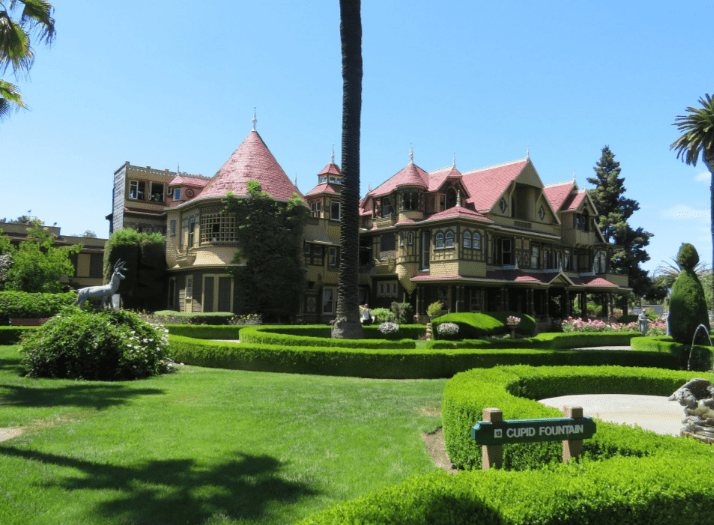
The Winchester Mystery House

Day by day, the amazing manifestations of Mrs. Winchester’s tormenting spirits were noted down. In between the new and full moon disturbances in Llanada Villa were worse. It is no secret that Mrs. Winchester was being treated by psychic experts. One night after a particularly exciting day, Florence Farr magnetized her head and quietened her, and suggested that Mrs. Winchester should go to bed. Going up the stairs a small table and a crystal vase crashed over, and a little later a great noise of banging and tearing was heard in Mrs. Winchester’s room. When Florence went into the room, it looked as if a tornado had swept over it.

While touring The Winchester Mystery House, mysterious ceremonies may infuse, as it were, something of a ritual during the Victorian times, and the Devil himself may appear in the form of a human being. Join us for our summer Flashlight Tour, happening for one night only. Do not miss out or you will be left in the dark…literally! Our Final Flashlight tour of the year 27 July 2024. https://winchestermysteryhouse.com/
People Leading Stupid Lives in Stupid Jobs

Many people strongly dislike hearing bad news. They tend to shy away from people who always have negative things to say. However, nearly sixty percent of Americans watch the news, which is almost, always, negative. A.H. Maslow devoted his life to studying the conditions under which human beings develop their capacities to the fullest degree. He believed the key to such development was gratification of basic needs. These needs exist in a hierarchical sequence. Humans must meet the demands of lower needs before those of the higher levels can emerge, according to Maslow. However, there is doubt among some researchers about the primacy of the lower needs. This hierarchy, from lowest to highest, includes physical needs, such as the need for food and water; safety needs, illustrated by the quest for a milieu relatively free from threats to life and fostering a sense of security; belonging and love needs, illustrated by the hunger for affectionate, accepting relationships with other persons; esteem needs, manifested in the desire to be respected by others for one’s accomplishments and the quest for recognition and prestige. Once a person has successfully learned to cope with these needs as they arise, his or her energies will then be more readily free for self-actualization. Actualization of self cannot be sought as a goal, however; rather, it is a byproduct of active commitment of one’s talents to causes outside the self, such as the quest for beauty, truth, or justice. #RandolphHarris 1 of 20

The task awakens the person’s dormant capacities; without the mission, the person would never discover his or her hidden resources. Maslow emphasized the importance of actualizing one’s self through productive, meaningful work. He wrote (1970, p. 49), “I have seen a few cases in which it seemed clear to me that the pathology (boredom, loss of zest in life…) was produced in intelligent people leading stupid lives in stupid jobs.” Other higher needs described by Maslow later included cognitive and conative needs (need to know and to understand the World). He also strongly suggested that some special people have a basic aesthetic need, a craving for beauty—“They get sick from ugliness and are cursed by beautiful surroundings” (1970, p. 51). Maslow developed his ideas through the study of people who met his criteria for being well along in the process of actualizing themselves. Some of the traits that appeared consistently in his self-actualizing (S-A) cases were the following: A more efficient percentage of reality and more comfortable relations with reality than occurring in average people. His S-A cases seemed to detect the spurious, the fake, and the dishonest in interpersonal relationships and to be attuned to truth and reality in all spheres of life. They rejected the illusory and preferred to cope with unpleasant reality rather than to retreat to pleasant fantasies. #RandolphHarris 2 of 20

Other traits include a high degree of acceptance of themselves, of others, and of the realities of human nature. They were not ashamed of being what they were, and they were not shocked or dismayed to find shortcomings in themselves or in others. Spontaneity; simplicity; naturalness. The S-A people displayed spontaneity in their thinking, emotions, and behaviour to a greater extent than average people. They prefer company that enables them to be free and natural. Problem-centeredness. Maslow’s subjects seemed all to be focused on problems outside themselves. They were not overly self-conscious; they were not problems to themselves, and could hence devote their attention to a task, duty, or mission that seemed peculiarly cut out for them. A need for privacy. The S-A people could enjoy solitude; indeed, they would even seek it on occasion, needing it for periods of intense concentration on subjects of interest to them and for meditation. A high degree of autonomy. The S-A people seemed able to remain true to themselves in the fact of rejection or unpopularity; even when it hurt to do so, they were able to pursue their interest and projects and maintain their integrity. A continued freshness of appreciation. The S-A people showed the capacity to “appreciate again and again, freshly and naively, the basic goods of life…a sunset, a flower, a baby, a person.” It was as if they avoided merely lumping experiences into categories and then dismissing them. Rather, they could see the unique in many commonplace experiences. #RandolphHarris 3 of 20

Additional features include frequent “peak experiences.” The S-A people seemed subject to periodic experiences that are often called “mystic” or “oceanic”—feelings that one’s boundaries as a person have suddenly evaporated and that the one has become a part of all humanity or nature. Gemenischaftsgefuhl. The German word gemeinschaftsgefuhl means brotherly feeling, the feeling of belonging to all humanity (related to the mystic experiences); the attitude was found to be characteristic of S-A people. They felt a sense of identification with humanity, such that they could become concerned not only with the lost members of their immediate family, but also with the situations of persons from different cultures. Close relationships with a few friends or loved ones. Maslow found that his S-A subjects, although not necessarily very popular, did have the capacity to establish truly close, loving relationships with at least one or two other people. Democratic character structures. The S-A people tended to judge people and be friendly with them not based on race, status, religion, or other group membership traits, but as individual persons. A strong ethical sense; discrimination between good and evil. The S-A subjects were found to have a highly developed sense of ethics. Though their notions of right and wrong were not wholly conventional, their behaviour was always chosen with reference to its ethical meaning. #RandolphHarris 4 of 20

Different properties of displayed in self-actualizing people are an unhostile sense of humour. The S-A people had a sense of humour that made common human foibles, pretensions, and foolishness the subject of laughter, rather than sadism, smut, or rebellion against authority. Resistance to enculturation. The S-A subjects could detach themselves somewhat from complete brainwashing or imprinting by their cultures, permitting them to adopt critical attitudes toward cultural inconsistencies or unfairness within their own society. Truly, this is a most impressive collection of attributes. One would like to meet or to become such a person. There is a fundamental error in the thinking of others that the favours of this World are distributed entirely according to merit. Poverty is only a proof of indolence and vice. Wealth simply shows the industry and virtue of the possessors. The very most is made of Malthusianism, and human activities are degraded to a complete level with those of animals. Those who have survived simply prove their fitness to survive; and the fact which all biologists understand, videlicet, that fitness to survive is something wholly distinct from real superiority, is, of course, ignored by many because they are not biologists. Nature itself does not display wastefulness. The emerging human mind can mold the narrow genetic process of nature into vastly different forms. If the were no larger cosmic process for life, no guiding hand behind the emergence of higher species, if evolution was a planless outcome of random variations, purposefulness has no place in the Universe, and societies must grow and change as aimlessly as the rest of life. #RandolphHarris 5 of 20

However, if there is no cosmic purpose, there is at least human purpose, which has already given man a special place in nature and may yet, if he wills it, give organization and direction to his social life. Purposeful activity must henceforth be recognized as a proper function not only of the individual but of a whole society. If he has cultivated the quality of calmness, then he will automatically derive from it the quality of patience. If he has not done so, he will yet get something of its atmosphere quite involuntarily and unconsciously from the stretching-out of his intellectual outlook by his metaphysical vast studies, with their unveiling of the cosmic plan, the eternal cyclic laws, and the ego’s own long-drawn evolution. How valuable a trait of character patience can be is best revealed in the domain action. It will stop premature deeds, it will guide him to the knowledge of when to act, and it will teach him that wise activity is a well-timed, ripened activity. The student will now see how necessary it is to develop the quality of equipoise. Without it he is at the mercy of every desire and passion, every emotion and impulse, every negative thought which rises from within himself or is picked up from contacts or neighbours outside himself. However, with it there will be at least a conflict before surrender or a conflict leading to victory. When a mystic’s words are spoken or written from too high a level for the aspirant, so that he can see no trail leading up to that level itself, the aspirant is likely to become depressed and discouraged at the magnitude of the climb before him. Let him not lose heart too quickly at this point of his upward course, for the path does indeed involve the work of many rebirths in Jesus as the Christ. #RandolphHarris 6 of 20

Here is his chance to learn two useful qualities: resignation and patience. Yes, there is hope for him, but it is a realistic and not a dramatic one. He must learn to be patient because his labours are not in vain. He must learn to be resigned because the hour when he will gather their fruits is in God’s hands. He must discipline himself in patience, where patience is needful. He must learn discipline himself in patience, where patience is needful/ He must learn to wait and let a situation ripen until it is ready for him to use advantageously. On the other hand, it would be foolish for him to delay and over-prepare, for an opportunity which occurs once may never occur again. It is the work of a lifetime to venture on such a great improvement of character as will place the lower self under our control, instead of our being controlled by it. We are likely to get disheartened at times by the seeming slowness of progress. This is partly because we are too apt to think in terms of this single incarnation only, whereas those who understand life’s actual range think of it in terms of dozens and scores. Hence, we must learn a certain tolerant patience with ourselves, while at the same time maintaining an ardent aspiration for self-improvement and a critical attitude towards our weaknesses. This sounds contradictory but it is not so. It is rather a matter of getting a proper balance between the two attitudes. We find by rueful experience that years are needed to begin to correct a weakness, let alone to complete the correction. Moral adjustment to truth is a long-drawn affair. If we seek quick results, this is disheartening. #RandolphHarris 7 of 20

The formidable nature of our task of self-changing discloses itself. Without Grace, tendencies built up through many a lifetime cannot be altered, in a single year. Patience is called for in dealing with them. However disheartening the slowness of his growth may be to his emotions, the remembrance that he is a self-actualized Christian in embryo should always be encouraging to his reason. Patience is needed, and confidence in the path chosen. Resignation rather than rebellion brings results. “Becoming a person,” “Freedom to be,” Courage to be,” “Learning to be free,” all these labels mean “getting together with myself.” When I do this, I feel freer and “more like a person.” This can also be called, “looking through my own windows instead of someone else’s” seeing what I see, not what someone else thinks that I should see. I do not always do this, but now I am moving clearly in the direction of being more myself. This is very different from when I felt unfree and did not know how I was unfree. It seemed that I “had done something wrong” without the faintest notion what the wrongness was. I felt accused, but who was accusing me? Myself? When I did not know what I was accused of, how could I accuse me? I had lost something. That I knew, and that was all I knew. When I did not know what it was or where to look for it and other people were no help to me, how could I find it? They said that I should not be restless, should not be dissatisfied, that I should be happy with what I had, and that is the way life is and I should put up with it as everyone else did. #RandolphHarris 8 of 20

When I was eighteen, these were the things that I had been told, but when I was eighteen, I was not so confused: I knew what I wanted, and I did not feel guilty. It was also clear to me then that life is the way it is because everyone says, “That is the way it is” and go along with it. Later one when I did what seemed right and good to me, that clarity had got so lost, I felt “irresponsible,” but I was in a complete fog about why. Getting out of that certainly was “a confused and groping moment.” Sometimes though, there was a sudden flash of seeing clearly—a brief, bright instant—but then that got lost and I had to grope my way back to something that I knew was there although I could not remember what it was. Sometimes it was like being for an instant on a mountain top, taking in the whole scene—all different facets of the mountain and all the different views around it. While I was there, I understood everything. However, then, I was not there anymore. I was a half-inch high person at the bottom of the mountain that I had to find my way back to the top of. Sometimes it seemed that I was walking underground for months and miles, then suddenly I was on top, and everything could be seen. However, after only a few steps I was underground again, dropped like an elevator going down. Each man must fight his lonely battle which nobody else can share with him, must work out personal problems in the solitude of his own mind, has to gain command of his passions in the secrecy of his own heart. #RandolphHarris 9 of 20

Where the good and the evil are so closely blended, as in human character, unless he makes his self-portrait harsh, uncompromising, and unbeautiful, he will waste many years in illusions, only to find at the end that everything remains to be done. If he will be strong enough to rise above the cowardice of conformity and above the embarrassment of setting himself apart from others, he will receive a proportionate though intangible reward. He will know the delight and strength of being himself to that extent. In revisiting our process of record research involving Clare, she last felt that her life had been smashed to pieces by losing Peter. As soon as the issue was thus clear in her mind and struggle set in of unexpected intensity. It was only now that she felt the unmitigated power of her need to merge with another person. There was no more fooling around with the persuasion that it was “love”: she realized it was like a drug addiction. She saw with perfect clarity that she had only the two alternatives of succumbing to the dependency, and finding another “partner,” or overcoming it altogether. However, could she overcome it? And was life worth living without it? She tried frantically and pathetically to persuade herself that after all life offered her many good things. #RandolphHarris 10 of 20

Did Clare not have a nice home? Could she not find satisfaction in work? Did she not have friends? Could she not enjoy music and nature? It did not work. It all seemed as unappealing and irrelevant as a Justin Timberlake performance during halftime at the Super Bowl. Halftime was all right—one marked time as pleasantly possible until the game started again—but no one would want to go merely to the Justin Timberlake performance at the halftime. It struck her only fleetingly that this reasoning was thoroughly inapplicable. The feeling prevailed that any real change was beyond her strength. Finally, a thought occurred to her which despite its profound simplicity brought a turn for the better. It was the old wisdom that often an “I cannot” is an “I will not.” Perhaps she simply did not want to put her life on a different basis? Perhaps she actively refused to turn to anything else in life, like a child who refuses to eat anything if he does not get apple pie? Since she had recognized her dependency, Clare had merely seen that her being caught hand and foot in the one relationship had so sapped her energies that nothing was left for anybody else. Now she realized that it was more than a mere drainage of interest. She herself rejected and devaluated everything she did on her own, or with anybody but the “beloved.” Thus is dawned on her, for the first time, how deeply she was caught in a circle: her devaluation of everything outside the one relationship necessarily made the partner in that relationship all important; and this unique importance in turned alienated her more widely from herself and others. #RandolphHarris 11 of 20

This dawning insight, which later proved to be right, startled Clare and encouraged her. If forces were operating within her which prevented her from becoming free from captivity, then perhaps she could do something about her bondage? Self-reliance is not a quality which can be given to others. Only by providing them with your own example can you contribute to this end. Each virtue is the fruit of a long self-discipline, a constant self-denial. It is not picked up easily, but has to be cut from the solid rock. One must not be swayed by emotions into unreasonable actions nor lured by intellect into unintuitive ones. A person cannot help being what one is but one can help remaining what one is. When we enlarge our love of the Divine by making it a matter of the will as well as feeling, we ennoble it. Where self-confidence is based on the possession of adequate knowledge and innate ability, and not on arrogant conceit, where furthermore it arises from a conscious and logical carrying out of predetermined courses, it is a useful attribute. The problem of critical shortage of expert mental health personnel must be attacked simultaneously on two fronts: there must be enhanced effort to recruit and train for the mental health profession, and there must be careful efforts to reduce the demand for their services. #RandolphHarris 12 of 20

In the past there has been too exclusive an emphasis upon efforts simply to produce more psychiatrists, more psychologists, and more social workers. There has been a relative inattention to factors which may inflate artificially the demand for the services of these specialist, and too little attention has been paid to the difficult problem of defining a valid psychiatric case, id est, one needing and probably responsive only to the services of a psychiatrist and his professional colleagues. Consequently, we must be very concerned with the efficiency with which we utilize the talents of these specialists, and we must seek to rectify any influence leading to an inappropriate demand for their services Reduction of the demand for the direct services of the mental health professions is possible through at least three channels: education directed toward mental hygiene; public education toward limited and enlightened expectations of these professions; and increased use of “peripheral” resources, such as teachers, clergy, and others. When we correctly consider the concept of genesis and function of the social character, we are confronted with a puzzling problem. Is not the assumption that a person’s character structure is moulded by the role which the individual must play in his culture contradicted by the assumption that a person’s character is moulded in his childhood? The structure of society and the function of the individual in the social structure may be considered to determine the content of the social character. #RandolphHarris 13 of 20

The family, on the other hand, may be the psychic agency of society, the institution which has the function of transmitting the requirements of society to the growing child. The family fulfills this function in two ways: (1) by the influence the character of the parent has on the character formation of the growing child: since the character of most parents is an expression of the social character, they transmit in this way the essential features of the socially desirable character structure to the child. (2) In addition to the character of the parents, the methods of childhood training which are customary in a culture also have the function of moulding the character of the child in a socially desirable direction. There are various methods and techniques of children training which can fulfill the same end and, on the other hand, there can be methods which seem identical, but which nevertheless are different because of the character structure of those who practice these methods. By focusing on methods of child training, we can never explain the social character. Methods of child training are significant only as mechanism of transmission, and they can be understood correctly if we understand first what kinds of personalities are desirable and necessary in each culture. #RandolphHarris 14 of 20

When it comes to planning a community, we have based a lot of our ideas on the theoretical assumption that the planners were essentially determined by their wish for the optimal welfare of society and the individuals which make it up. However, unfortunately, such an assumption cannot be made. (I am, of course, not speaking about the ideas planners have about their own motivations. They, like most men, believe their motives to be rational and moral. Most men need to have such rationalization [ideologies] for their actions partly to support themselves by the feeling of moral righteousness, partly to deceive others about their real motivations.) On the level of government planning, the personal interest of the politicians often interferes with their integrity and hence with their capacity for humanist planning. This danger can be reduced only by a much more active participation of the citizens in the decision-making process, and by finding ways and methods by which government planning is controlled by those for whom the planning is done. Should then government planning be further reduced and most planning, including that in the public sector, be left to the big corporations? The arguments for this idea that the big corporations are not burdened with outmoded procedures and are not dependent on fluctuating political pressures; that they are more advanced in system analysis, immediate application of research to technique; and that they are guided by men who must fight every few years in election campaigns for their right to continue their work. #RandolphHarris 15 of 20

Most importantly, management and system analysis being now one of the most advanced types of activities, it stands to reason that it will attract many of the most advanced minds, not only in terms of intelligence but also in terms of a vision of human well-being. These and many other arguments are very persuasive but not convincing regarding two crucial points: First, the corporation operates for profit, and its interest in profit, although very modified in comparison with the profit interest of the nineteenth-century entrepreneur, often interferes with the best interests of the community. Second, the private corporation is not even subject to that small control to which government is subject in a democratic system. (If one would object to this by saying that the corporation is controlled by the market, id est, indirectly by the consumer, one would ignore the fact that the tastes and desires of the consumer are largely manipulated by the corporation.) To believe in the wisdom and good will of the management is not a sufficient guarantee that the majority might not plan in accordance with impersonal technical feasibility rather than for the sake of human development. Precisely because the more conventionally minded managers do not lack goodwill, but rather imagination and vision of a fully human life, they are even more dangerous, from the standpoint of humanistic planning. #RandolphHarris 16 of 20

For these reasons, I do not share the optimism expressed by John Kenneth Galbraith and others. I propose that corporation planning also should be subject to controls, by government and by independent bodies of those who are subjects of their planning. Classic socialism thought that this problem could be solved only by the socialization (nationalization) of the big enterprises. However, aside from the fact that in the United States of America such a step is politically not feasible, it is also questionable as a real solution to the problem. As the example of Russian shows, the state-appointed managers may make their decisions in terms of the same efficiency and material output criteria as those of the private corporation. What matters are the values which guide the planning, and the degree of control from below. One basic requirement for the well-being of man is to be active, in the sense of the productive exercise of all his faculties; one of the most pathogenic features in our society is the trend to make man passive, by depriving him of the chance of active participation in the affairs of his society, in the enterprise in which he works, and, in fact, although more hidden, in his personal affairs. This “passivation” of man is partly due to the “alienated bureaucratic” method used in all centralized enterprises. #RandolphHarris 17 of 20

“When it comes to professional liability in the Sacramento Fire Department, the fire chiefs, when they have a lot of new guys, put in requests for courses on the essentials of firemanship. The instructor comes to the firehouse every Tuesday night for thirteen weeks. We tell the guys they must take it. It is interesting to see guys leave the company for various reasons and then come back strong five years later. They retrain themselves, go back through fire school. I certainly will do that when I get out of medical school. I learned most of my firefighting in California. I had a beeper for four years. We did maybe one brush fire the summer that I joined. Then I started doing large interior attacks. It was my job during a structure fire to get on the engine, put the masks on the people, then get up to the structure, pull the hose line, and make the initial attack and the initial knockdown. Four or five of us young guys worked a lot together, and we would switch around. We trusted each other completely. However, an earlier time when I came back from school on Christmas vacation, we fought a structure fire. I didn’t know where we kept the air packs on the engine, that’s how unfamiliar I was with my own company at that time. It was kind of a nightmare—what every paid fireman thinks volunteer firemen are like. I took an inch-and-a-half into the house. The others doused both ends of the house with two-and-a-halfs, blowing water at smoke, not able to see the fire. When I crawled in with the inch-and-a-half and tried to fight the fire, I got hit in the head by the fogs and streams from the idiots at the windows. #RandolphHarris 18 of 20

“Then my air tank went dry. I was about two rooms into the structure, and I was out of air. It was the old grab-the-hose-and-follow-it-back-out. This was an old mask that had no alarm on it. It was unbelievable, because the Hamilton company was on the cutting edge of having the best breathing apparatus. So from that summer on I got very involved in the company, getting our breathing apparatus up to date, so when the new standards came out we were right with it. There is a lot of tunnel vision in the fire service. When you’re young, all you see is that doorway and that flame, and you want to go right through it. But when you’re a chief, you stand back and look at the big picture, you see what’s in store for the enforcement of the building and when the building is geared up for an early collapse. I suppose there are times when you could feel guilty for not going in or for backing down. Once I became a medic in the Hamilton Fire Department, I felt I had a very serious commitment to the people and to the village. Then, when the beeper rand during class, I was right out the door. Back home after leaving college, there was a bad accident on the thruway that runs through our district. Basically, a truck driver was cut in half, and it was kind of rough getting him out and dealing with how badly mutilated his body was. The chief, at the accident, asked me, “Are you going to be around for long?” I said, “Yes.” He asked if I wanted to be assistant chief. I said, “Yeah, I’d like that.” I guess they all felt strongly about my experience. I did some drills and I did some training, and apparently I was fairly good at it. So I became the training officer to the company. #RandolphHarris 19 of 20

“There are rituals that take place inside of a burning room, like religious rites of passage. I would never give a nozzle to someone who is a rookie or a probie who really doesn’t know what he’s doing. He could spray all the way down the hall and he hasn’t even seen the fire yet. You have to find it. It’s like, ‘God, where’s the fire? I feel a little heat on this side of my ear, let’s go down this way.’ You’re always going to remember the first guy who ever takes you in, you know, when it turns out to be your fire, and it’s your judgment, listening to the crackling, watching the fire, to be able to track it down. You know when you’ve done it right, but it was good that you had that guy right with you. At least that’s the way it is in the volunteer service, where the buddy system is ironclad.” All aspirants on this spiritual quest have to go through periods of discouragement from time to time and I myself was no exception. Physical nature does not easily permit us to escape from her grasp and her resistance to the individual spiritual effort is inevitable. Perseverance is therefore an indispensable quality. An ordinary fortitude of the will is enough to enable one to bear the trifling disappointments of life, but a deep philosophic courage is needed to bear the crushing blows of life. Such power is not easily gained. You can help save lives and property by contributing to the Sacramento Fire Department. I pledge allegiance to the flag of the United States of America and to the Republic for which it stands, one nation, under God, indivisible with liberty and justice for all. #RandolphHarris 20 of 20


Your dream home awaits at Magnolia Station! Step into luxury with 3 bedrooms, 2 bathrooms, den, great room, dining area, AND a spacious backyard.

There’s room for every family member to thrive at Residence 1, indoors and out. 🌳

Make memories in your own private oasis with Cresleigh Homes. Click our website to learn more and get in touch with our sales team! https://cresleigh.com/magnolia-station/residence-1/


Frightened Restitution
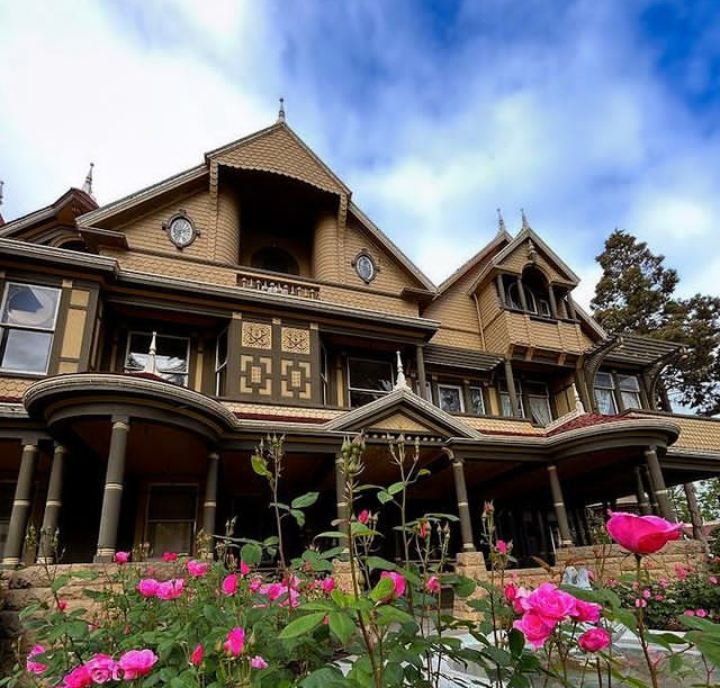
The thought has crossed the minds of many that humankind faces a fate of evolutionary destruction of self. However, it is plain to see that others continually strive for the higher aspects of their own possibilities, to be more compassionate; loving; creative; to create great, beautiful parks and vast, wild, free lands; more exquisite poetry and buildings—to perfect themselves and the World about them. There is a struggle, the movement of humankind is heading toward the development of the self to levels of superb functioning for perhaps a few persons who become models of human effectiveness and for higher levels of living, joy of living, for much greater numbers. Humans have sought to perfect themselves throughout history. Early Christians sought purification of self in the face of temptation, salvation, and underwent training to be reborn in Jesus as the Christ. It is recognized that humans are capable of states of being that far surpass present levels of beauty and goodness. The term healthy personality is used here to describe those ways of being that surpass the average in actualization of self and in compassionate relationships with others. The human can be studied as a natural phenomenon, with methods appropriate to the study of zoology or ethology. #RandolphHarris 1 of 18

However, humans have the capacities for speech and for self-consciousness. People give meaning to their World and can communicate meanings to other persons. If we wish to understand human behaviour, we must not view it as we would the behaviour of animals struggling to survive in each environment; we must regard behaviour as action, as a kind of speech. Humans “say” something to the World and to their companions by their actions. If we wish to understand humans in their existence as human beings, we must find out what they mean to say, and how they say it in words, action, and even in physiological responses. Of course, we also find out what they mean by asking them to tell us. Perhaps the most overrated virtue in our list of shoddy virtues is that of giving. Giving builds up the ego of the giver, makes him superior and higher and larger than the receiver. Nearly always, giving is a selfish pleasure, and in many cases, it is a downright destructive and evil thing. One has only to remember some of our wolfish financiers who spend two-thirds of their lives clawing fortunes out of the guts of society and the latter third pushing it back. It is not enough to suppose that their philanthropy is a kind of frightened restitution, or that their natures change when they have enough. #RandolphHarris 2 of 18

Such a nature has enough, and nature does not change that readily. I think that the impulse is the same in both cases. For giving can bring the same sense of superiority as getting does, and philanthropy may be another kind of spiritual avarice. Pure altruism is a rare and difficult quality, remote from the actuality of human condition. The cautious person is also entitled to ask whether it is justifiable, whether a man is not entitled to do justice to himself as well as to others. The obvious reply is that there is no reason why his own good should not be included in that of the whole community. Although we must admit that He acted most generously, it is an arguable question whether God did the right thing by sacrificing His son. He may love mankind without being in love with mankind. He may act with unwearying altruism and compassion towards them and yet with clear sight of their moral uglinesses and mental deformities. An intellectual enlightenment not accompanied by moral purification, can lead only to a meagre result when turned to the service of humanity. The altruist must educate his own character before he can influence effectually the character of others. Only then are false steps and dangerous missteps less likely to be taken. #RandolphHarris 3 of 18

If the motive is pure, a generous act not only helps the beneficiary but ennobles the doer. The wisdom of the act is, however, a different matter and requires separate analysis. When some scientists dare to study the human being, they think of the subject as being like a laboratory rat. At least it would seem that way from the large amount of research in psychology based upon that animal. And there is no doubt that many things about the white rat are similar to aspects of the human being, including some motivations—pleasures of the flesh, hunger, safety, and so on. However, another image of the human being has been expressed in the Psalms (Psalm 8.5), that of being “just a little lower than the angels.” This implies many powers and capacities and almost suggests “sainthood” capabilities. However, we are exploring the “normal” person. There is a group of persons who are entirely mortal, who have their imperfections, and yet have discovered a way of life that is beyond what most people attempt to create for themselves. One of the characteristics of such people seems to be that they do have compassion, or caring, for others; but it is a very human kind of love. #RandolphHarris 4 of 18
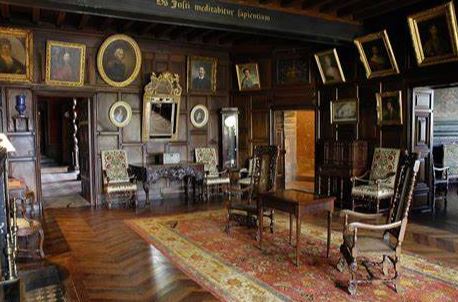
People who care about themselves, respect themselves, and like to present their best self to others also take care of their bodies. They jog or exercise in some other way, watch the intake of their food, and avoid either smoking or being where heavy smokers are taking up the good air. They recognize that having a healthy body is in great part controllable by the individual. Similarly, having a healthy personality is in greatest part under the control of the person who owns it. While there are genetic factors that seem to influence the personality and there are environmental forces that influence one’s style of interacting with people, the humanist also recognizes the tremendous power of the person to affect his or her own personality-destiny. This is perhaps the most important reason for studying a healthy personality. All of us want to be as fully functioning, self-actualizing, and healthy as we can be. Knowledge of what constitutes a healthy personality should help you to develop this type of personality. Secondly, the impact of the environment, especially of the people in your environment, has a great effect upon your personality. This still does not leave you helpless in the face of the influence of your friends, because you can choose your friends and even choose many other aspects of your environment. #RandolphHarris 5 of 18

There are those people, friends, relatives, teachers, companions, who, when you are with them, make you feel that you are growing, becoming. These kinds of persons are known as “personality growth facilitators.” And there are also those who can destroy you psychologically. We call these “lethal personalities.” Thus, the second reason for the study of the personality is so that you may truly distinguish those people who are personality growth facilitators and find ways to be close to them. What about your effect upon others? How do you influence others so that they will feel they are growing? Almost all of us will have some role in raising children in our lifetimes, either through being parents, teachers, or neighbours. A third reason for studying the healthy personality is to be better able to have a good effect on the people who are close to us, particularly friends and children. If only for the reasons of pure curiosity, science claims the privilege of exploring the unknown. Science searches for basic laws and principles that may have no immediate benefit or that might be explored without any specific benefit in mind. Often those discoveries of basic principles and laws do have important applied use. #RandolphHarris 6 of 18

More often, however, the advantages and benefits are not immediately apparent, and legislators impatient for solutions are prone to cut off funds for all but the most applied research. Even if there is no longer a trunkful of diamonds deep in the darkness of The Winchester Mansion, science for its own sake, for the sake of pushing back ignorance and obscurity, is a viable reason for studying the healthy personality. The origin of organized society was caused by the conquest of one race by another. Caste system had developed out of such conquest, and society had then passed successively through five stages: the mitigation of caste coupled with the survival of inequalities; the consolidation of relationships through the growth of law; the origin of the state; the gradual cementing of the groups into a homogeneous people; and, finally, the development of patriotism and the national form of social organization. #RandolphHarris 7 of 18

Progress has frequently resulted from the forcible fusion of unlike elements. As much as one may deplore the horrors of war, it has been a necessary condition of race progress in the past, and the conquest of backward races is inevitable in the future. In advanced societies, rational and peaceful forms of social assimilation may supersede the genetic and violent method of the past. It is possible that a friendly pacific age is about to dawn—just as Spencer’s militant type of society gives way to the industrial—but it is doubtful that the World has yet reached the point at which war ceases. Whether the cessation of conflict would even be desirable was an open question to Ward. His adherence in these respects to the conflict school did not in the least alter the fundamental structure of Ward’s melioristic sociology. The fact is that man and society are not. Except in a very limited sense, under the influence of the great dynamic laws that control the rest of the animal World. If we call biologic processes natural, we must call social processes artificial. The fundamental principle of biology is natural selection, that of sociology is artificial selection. The survival of the fittest is simply the survival of the strong, which implies and would better be called the destruction of the weak. If nature progresses through the destruction of the weak, man progresses through the protection of the weak. #RandolphHarris 8 of 18

A study of the system of Man can lead to the acceptance of objectively valid values, on the grounds that they lead to the optimal functioning of the system or, at least, that if we realize the possible alternatives, the humanist norms would be accepted as preferable to their opposites by most sane people. Whatever the merits of the source of the validity of humanist norms, the general aim of a humanized industrial society can be thus defined: the change of the socioeconomic, and cultural life of our society in such a way that it stimulates and furthers the growth and aliveness of man rather than cripples it’ that it activates the individual rather than making him passive and receptive; that our technological capacities serve man’s growth. If this is to be, we must regain control over the economic and social system; man’s will, guided by his reason, and by his wish for optimal aliveness, must make the decisions. Given these general aims, what is the procedure of humanistic planning? Computers should become a functional part in a life-oriented social system and not a cancer which begins to play havoc and eventually kills the system. Machines or computers must become means for ends which are determined by man’s reason and will. #RandolphHarris 9 of 18

The values which determine the selection of facts and which influence the programing of the computer must be gained on the basis of the knowledge of human nature, its various possible manifestations, its optimal forms of development, and the real needs conducive to this development. That is to say, man, not technique, must become the ultimate source of values; optimal human development and not maximal production of the criterion for all planning. What we have failed to do in all this is to ascribe operational meaning to the so-called desirables that motivate us, to question their intrinsic worth, to assess the long-range consequences of our aspirations and actions, to wonder whether the outcome we seem to be expecting does in fact correspond to that quality of life we say we are striving for—and whether our current actions will lead us there. In other words, we are in the deeper sense failing to plan. Aside from this, planning in the field of economics must be extended to the whole system; furthermore, the system Man must be integrated into the whole social system. Man, as the planner, must be aware of the role of man as part of the whole system. #RandolphHarris 10 of 18

Just as man is the only case of life being aware of itself, man as a system builder and analyzer must make himself the object of the system he analyzes. This means that the knowledge of man, his nature, and the real possibilities of its manifestations must become one of the basic data for any social planning. In speaking of the socioeconomic structure of society as moulding one’s chaactrer, we speak only of one pole in the interconnection between social organization and man. The other pole to be considered in man’s nature, moulding in turn the social conditions in which he lives. If we start out with the knowledge of the reality of man, his psychic properties, as well as his physiological ones, and if we examine the interaction between the nature of man and the nature of the external conditions under which he lives, and which he must master if he is to survive, only then can the social process be understood. While it is true that man can adapt himself to almost any condition, he is not a blank sheet of paper on which the culture writes its text. Needs like the striving for happiness, belonging, love, and freedom are inherent in his nature. They are also dynamic factors in the historical process. #RandolphHarris 11 of 18
While it is true that man can adapt himself to almost any conditions, he is not a blank sheet of paper on which the culture writes its text. Needs like the striving for happiness, belonging, love, and freedom are inherent in his nature. They are also dynamic factors in this historical process. If a social order neglects or frustrates the basic human needs beyond a certain threshold, the members of such a society will try to change the social order to make it more suitable for their human needs. If this change is not possible, the outcome will probably be that such a society will collapse, because of its lack of vitality, and its destructiveness. Social changes which lead to a greater satisfaction of human needs are easier to make when certain material conditions are given which facilitate such changes. It follows from these considerations that the relation between social change and economic change is not only the one which Marx emphasized, namely, the interests of new classes in changed social and political conditions, but that social changes are at the same time determined by the fundamental human needs which make use, as it were, of favourable circumstances for their realization. The middle class which won the French revolution wanted freedom for their economic pursuits from the fetters of the older order. #RandolphHarris 12 of 18

However, they also were driven by a genuine wish for human freedom inherent in them as humans beings. While most were satisfied with a narrow concept of freedom after the revolution had won, the very best spirits of the bourgeoisie become aware of the limitations of bourgeois freedom and, in their search for a more satisfactory answer to man’s needs, arrived at a concept which considered freedom to be the condition for the unfolding of the total man. When students are permitted to be in contact with real problems; when resources—both human and technical—are made psychologically available by the teacher; when the teacher is a real person in his relationships with students and feels an acceptance of and an empathy toward his students, then an exciting kind of learning occurs. Students go through a frustrating but rewarding process in which gradually responsible initiative, creativity, and inner freedom are released. The kind of personal and intellectual change which comes about has many parallels with the changes which occur in psychotherapy. The nature of these changes has to some extent been investigated empirically. For the most part, modern culture does not, operationally, want persons to be free, despite many ideological statements to the contrary. #RandolphHarris 13 of 18
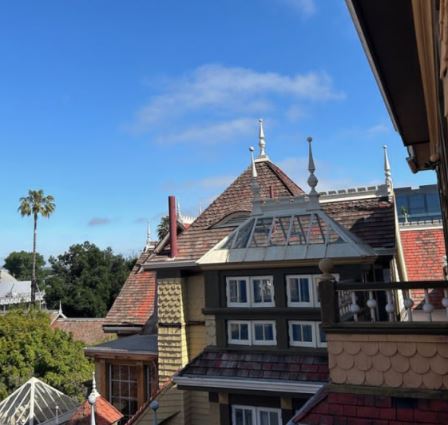
Both two main streams of modern life—Western and Communist—are extremely fearful of and ambivalent about any process which leads to inner freedom. Nevertheless, it is a fact that the surest roads to World catastrophe are individual rigidity and constricted learning. If we prefer to develop flexible, adaptive, creative individuals, we have a beginning knowledge as to how this may be done. We know how to establish, in an educational situation, the conditions and the psychological climate which initiate a process of learning to be freed. Learning to be free is something that our beloved Clare so desperately needs to learn. The whole area in her personality that consisted of arrogance, contempt for people, need to excel, need to triumph, was still so deeply repressed in her, even after therapy, that it had only been illuminated by flashes of insight. Even before she had started her analysis, she had occasional realizations of her need to despise people, of her great elation at any success, of the role ambition played in her daydreams, and it was a fleeting insight of this kind that she had now. #RandolphHarris 14 of 18

However, this whole problem was still so deeply buried that its manifestations could scarcely be understood. It was as if a shaft learning into the depth was suddenly lit up, and soon after obliterated by darkness. Thus, another implication of this series of associations remained inaccessible. The picture of extreme solitude as presented in the tower in the desert referred not only to her feeling alone without Peter, but to her isolation in general. Subversive arrogance was one of the factors responsible for it, as well as resulting from it. And fastening herself to one person—“two on an island”—was a way of escaping from such isolation without having to straighten out her relations with people in general. Clare believed that she could now cope with Peter in a better way, but soon afterward a double blow came which brought her problems to a climax. First, she learned indirectly that he was having or had had an affair with another woman. She had barely received that shock when Peter wrote to her that it would be better for both if they separated. Clare’s first reaction was to thank Heaven that this had not occurred earlier. Now, she thought, she could stand it. The first reaction was a mixture of truth and self-deception. #RandolphHarris 15 of 18

The truth in it was that a few months before she probably could not have endured the stress without grave injury to herself; in the months to come she not only proved that she could stand it, but came closer to a solution of the whole problem. However, this first matter-of-fact reaction apparently resulted also from the fact that she did not let the blow penetrate beneath a defensive armour. When it did penetrate, within the next few days, she was thrown into a turmoil of wild despair. She was too deeply upset to analyze her reaction, which is understandable. When a house is on fire one does not reflect on causes and effects but tries to get out. Clare recorded two weeks later that for a few days the idea of suicide kept recurring to her, though it never assumed the character of a serious intention. She quickly became aware of the fact that she was merely playing around with the idea, and she then faced herself squarely with the question whether she wanted to die or to live. She wanted to live. However, if she did not want to live as a wilting flower, she not only had to ride herself of her longing for Peter, and the feeling that her life was smashed to pieces by losing him, but also to overcome radically her whole problem of compulsive dependency. #RandolphHarris 16 of 18

If someone were to tell you ugly things about yourself, would you take heed to their words and try to make changes to yourself or would you blow them off and boot them out of your life? Why or why not? It is not always easy to see when someone is playing mind games with you. If they are adept at it, it is nearly impossible to see it, until it is too late. The principles and practice of group psychotherapy (several patients having a simultaneous session with a single group leader-therapist) have been in existence for some time. This approach to psychological treatment of emotional illness has been continually assigned a secondary role. It has been considered by many authorities to be a desirable adjunct to individual psychotherapy, but it has not generally achieved the status and prestige in the eyes either of the professionals or of patients which has been accorded to individual psychotherapy. The general preference for and greater effectiveness presumed for individual therapy is not founded on any rigorous research that has properly compared the relative efficacy of the two approaches. It is quite plausible that such a study might demonstrate group methods to be of at least equal potency to individual therapy. #RandolphHarris 17 of 18

If it is incumbent upon psychiatrists and psychologists to do therapy, until this is adequately disproved, they would do better to extend their skills to the larger numbers treatable in a group setting. Experts who have had extended experience in individual psychotherapy will have acquired some sensitivities, skills, and insights that can be usefully applied in group therapy. Those persons administratively responsible for the treatment programs of clinics and hospitals should provide increasingly for group approaches to psychotherapy, with a corresponding deemphasis of the one-to-one therapeutic conversations. Where both forms of treatment are to be offered there should always be provision for careful evaluation of their relative effectiveness in producing significant changes in the patient. Firefighting is an interesting career. “There are a lot of strict requirements in the company, professional liability being what it is these days. We’re trying to weed out those who don’t come to work, those who don’t come to training, who don’t know what’s going on or how to use the new equipment. When you get someone with a new air pack who trained on an old, outdated model the last time he went to fire school ten years ago and hasn’t attended an update since, he goes into a fire situation and doesn’t know how to use the equipment. They have to take time out and go to the state fire school for thirteen consecutive weeks.” You can help prevent fires by contributing to the Sacramento Fire Department. I pledge allegiance to the flag of the United States of America and to the Republic, for which it stands, one nation, under God, indivisible with liberty and justice for all. #RandolphHarris 18 of 18

The Winchester Mystery House
Today marks the 50th anniversary of Winchester Mystery House being designated a historical landmark in California. Let’s celebrate this important milestone and pay tribute to the legacy of Sarah Winchester, the visionary behind this remarkable architectural masterpiece 🏰
Please come and enjoy a delicious meal in Sarah’s Café, stroll along the paths of the beautiful Victorian gardens, and wonder through the miles of hallways in the World’s most mysterious mansion. For further information about tours, including group tours, weddings, school events, birthday party packages, facility rentals, and special events please visit the website: https://winchestermysteryhouse.com/

Please visit the online giftshop, and purchase a gift for friends and relatives as well as a special memento of The Winchester Mystery House. A variety of souvenirs and gifts are available to purchase. https://shopwinchestermysteryhouse.com/


The Moment of Truth

Manipulative people do not understand the concept of boundaries. They are relentless in their pursuit to get what they want, and they have no regard for who gets hurt along the way. A manipulator may be defined as a person who exploits, uses and/or controls himself and others as things in certain self-defeating ways. The opposite of the manipulator is the actualizer…who may be defined as a person who appreciates himself and his fellowman as persons or subjects with unique potential—an expresser of his actual self. The paradox is that each of us is partly a manipulator and partly an actualizer, but we can continually become more actualizing. When manipulation becomes the usual mode of interacting with others, it is a serious sign of impaired personality health. It implies, among other things, a profound distrust of the other person, even contempt for him. Furthermore, the habitual manipulator of others must repress his spontaneous feelings, thereby promoting further self-alienation. The contriving, manipulative insincere individual, often without conscious awareness, places popularity and “success” at the peak of his value hierarchy. He sells his soul (his real self) to achieve it. He strives to determine what kind of behaviour the other person likes and then pretends to be the kind of person who habitually behaves that way. #RandolphHarris 1 of 25
The major factor responsible for habitability contrived interpersonal behaviour is the belief, conscious or implicit, that to be one’s real self is dangerous; that exposure of real feelings and motives will result in rejection or ridicule. Such a belief stems from experiences of punishment and rejection at the hands of parents and other significant persons. To avoid punishment in the future, the child represses the real self in interpersonal situations and learns to become a contriver, an “other-directed” character. Of course, more serious outcomes are possible too: neurosis, psychopathic personality, and psychosis. Scientific students of the learning process, following the lead of Pavlov, Watson, and Skinner, have been able to demonstrate that people’s behaviour can be manipulated without their awareness. A psychologist was able to get subjects in an experiment to increase the frequency with which they uttered plural nouns simply by murmuring “Mm-hmm” whenever the subject spontaneously uttered the desired class of words. Many other experimenters have demonstrated that the content of another’s conversation can subtly be controlled by properly timed “reinforcing” stimuli, such as saying, “That’s good.” There seems little doubt that, with a little training, anyone could improve the efficiency with which he or she could thus influence the behaviour of others without their awareness that they had been so manipulated. #RandolphHarris 2 of 25

All it calls for is the study of the other person, to discern what things will function as reinforcers to his or her behaviour, and then supplying these things whenever the desired behaviour occurs. However, most people resent being manipulated, and they become properly angry when they discover that they have been treated like puppets or animals. A nineteen-year-old male student once consulted with me, seeking help in improving his relations with people. He stated that he had studied Dale Carnegie’s book How to Win Friends and Influence People and found the advice given there extremely helpful to him in “conning” others, especially girls. He was successful as a campus lover and had six of the most attractive coeds in love with him at the time of seeking help. The help he sought was any suggestions that psychology might offer to him in his campaign to win over the affections of the campus queen, who rejected him, telling him he was a “phony.” This rejection upset him. He wondered if there were some new gimmicks he might learn to seem authentic. Parenthetically, he mentioned that, once he won a girl’s affections, he rapidly became bored by her, stating, “Once you’ve won a girl, it’s like a book you’ve just read; you don’t want to have anything more to do with her.” #RandolphHarris 3 of 25

I refused to help him learn new manipulative methods. In several interviews, I helped him gain insight into his motives and background, and he became more authentic and less of an unscrupulous user of other people. Individuals within a given society differ, of course, in their personal characters; in fact, it is no exaggeration to say that if we are concerned with minute differences, there are no two people whose character structure is identical. Yet if we disregard minute differences, we can form certain types of character structures which are roughly representative for various groups of individuals. Such types are the receptive, the exploitative, the hoarding, the marketing, the productive, character orientations. If it can be shown that nations or societies or classes within a given society have a character structure which is characteristic for them, even though individuals differ in many specific ways, and even though there will be always a number of individuals whose character structure does not fit at all into the broader pattern of the structure common to the group as a whole, the problem of character structure gains in importance far beyond the individual. The name for this character which is typical for a society is the “social character.” #RandolphHarris 4 of 25

Like the individual character, the “social character” represents the specific way in which energy is channelized; it follows that if the energy of most people in each society is channelized in the same direction, their motivations are the same, and furthermore, that they are receptive to the same ideas and ideals. What is the social character? The nucleus of the character structure which is shared by most members of the same culture, in contradistinction to the individual character in which people belonging to the same culture differ from each other. The concept of social character is not a statistical concept in the sense that it is simply the sum total of character traits to be found in the majority of people in a given culture. It can be understood only in reference to the function of the social character. Each society is structuralized and operates in certain ways which are necessitated by a number of objective conditions. These conditions include methods of production which in turn depend on raw materials, industrial techniques, climate, size of population, and political and geographical factors, cultural traditions and influences to which the society is exposed. There is no “society” in general, but only specific social structures which operate in different and ascertainable ways. #RandolphHarris 5 of 25

Although these social structures do change in the course of historical development, they are relatively fixed at any given historical period; any society can exist only by operating within the framework of its particular structure. The members of the society and/or the various classes or status groups within it must behave in such a way as to be able to function in the sense required by the social system. It is the function of the social character to shape the energies of the members of society in such a way that their behaviour is not a matter of conscious decision as to whether or not to follow the social pattern, but one of wanting to act as they have to act and at the same time finding gratification in acting according to the requirements of the culture. It is the social character’s function to mold and channel human energy within a given society for the purpose of the continued functioning of this society. Modern, industrial society, for instance, could not have attained its ends had it not harnessed the energy of free men for work in an unprecedented degree. Man had to be molded into a person who was eager to spend most of his energy for the purpose of work, who had the qualities of discipline, orderliness and punctuality, to a degree unknown in most cultures. #RandolphHarris 6 of 25

If everyone had to make up his mind consciously every day that he wanted to work, to be on time, etcetera, it would not have sufficed since any such conscious deliberation would lead to many more exceptions than the smooth functioning of society can afford. Nor would threat and force have sufficed as a motive since the highly differentiated tasks in modern industrial society can, in the long run, only be the work of free men and not of forced labour. The social necessity for work, for punctuality, and orderliness had to be transformed into an inner drive. This means that society had to produce a social character in which these strivings were inherent. While the need for punctuality and orderliness are traits necessary for the functioning of any industrial system, there are other needs which differ, say, in nineteenth-century capitalism, as against contemporary capitalism. Nineteenth-century capitalism was still mainly occupied with the accumulation of capital, and hence with the necessity of saving; it had to fortify discipline and stability by an authoritarian principle in the family, religion, industry, state and church. The social character of the nineteenth-century middle class was precisely one which in many ways can be called the “hoarding orientation.” #RandolphHarris 7 of 25

Abstention from consumption, saving, and respect for authority were not only virtues, but they were also satisfactions for the average member of the middle classes; his character structure made him like to do what, for the purposes of his economic system, he had to do. The contemporary social character is quite different; today’s economy is based not on restriction of consumption, but on its fullest development. If people—the working and the middle classes—were not to spend most of their income on consumption, rather than to save it, our economy would face a severe crisis. Consuming has become not only the passionate aim of life for most people, but it has also become a virtue. The modern consumer—the men who buys on installments—would have appeared an irresponsible and immoral waster to his grandfather, just as the latter would appear an ugly miser to his grandson. The nineteenth-century social character is to be found today only in the more backward social strata of Europe and North America; this social character can be defined as one for whom the principal aim was having; the twentieth first-century social character is one for whom the aim is using. A similar difference exists with regard to the forms of authority. #RandolphHarris 8 of 25

In this century, at least in the developed capitalistic countries of the West, there is enough material satisfaction for all, and hence less need for authoritarian control. At the same time control has shifted into the hands of bureaucratic elites which govern less by enforcing obedience than by eliciting consent, a consent, however, which is to a large degree manipulated by the modern devices of psychology and a “science” called “human relations.” As long as the objective conditions of the society and the culture remain stable, the social character has a predominantly stabilizing function. If the external conditions change in such a way that they no longer fit the traditional social character, a lag arises which often changes the function of character into an element of disintegration instead of stabilization, into dynamite instead of a social mortar, as it were. Man has been brought to his present stage of development by natural selection, of which his intellect is the supreme product; but man cannot consider himself finally superior to other animals until he supplants genetic with telic progress by applying his intellect to his own improvement. Social progress consists in an increase in the aggregate enjoyment throughout a society and a decrease in the aggregate suffering. #RandolphHarris 9 of 25

Thus far, social progress has in a certain awkward manner taken care of itself, but in the near future it will have to be cared for. To do this and maintain the dynamic condition against all hostile forces which thicken with every new advance, is the real problem of Sociology considered as an applied science. Feelings are the basic component of the mind; the intellect has been evolved as a guide to the feelings. The social mind, a generalization or composite of individual minds, is made up of the social intellect and social feelings. The unrestrained working out of feelings results in conflict and destruction; but intellect can guide feelings into constructive channels by setting down laws and ideals. Intellect, in its growth, finally becomes capable of formulating ideals for social as well as individual guidance. Those actions which bring progress are called “dynamic actions,” and can only be performed by creating a state of “dynamic opinion” in which the social intellect is equipped for its guiding function. If a whole society is to embark upon a dynamic action, its people must be prepared and equipped through the broadest possible diffusion of knowledge. #RandolphHarris 10 of 25

Intelligence, hitherto a growth, is destined to become a manufacture. The knowledge of experience is, so to speak, a genetic product; that of education is a teleological product. The origination and distribution of knowledge can no longer be left to chance and to nature. They are to be systematized and erected into true arts. Knowledge artificially acquired is still real knowledge, and the shock of all men must always consist chiefly of such knowledge. The artificial supply of knowledge is as much more copious than the natural as is artificial supply of food more abundant than the natural supply. Education is more than a device for social engineering; it is also a leveling instrument, a means of bringing opportunity to humble people and enabling them to use their talents. Greatly impressed from our childhoods is the vast difference between the educated and uneducated, but this chasm cannot be attributed to difference in native capacities. People also have such a compassionate view of education because it springs from their own personal triumph. Education is a long-term instrument for the improvement of mankind. Acquired knowledge itself cannot be transmitted by heredity, but the capacity to acquire knowledge is another matter. #RandolphHarris 11 of 25

Certain arts and talents which apparently run in family lines cannot be accounted for by the theory of natural selection because these talents have no value in the struggle for survival; natural selection has no explanation for the persistence of such talents from generation to generation. The persistence of talents can best be explained by assuming that part of what man gains by the exercise of mental faculties in a specific pursuit may be handed down to become part of the heritage of the race. This does not mean that human nature is not malleable; it means that it allows only a limited number of potential structures, and confronts us with certain ascertainable alternatives. The most important alternative as far as the technological society is concerned is the following: if man is passive, bored, unfeeling, and one-sidedly cerebral, he develops pathological symptoms like anxiety, depression, depersonalization, indifference to life, and violence. The long-range implications of a cybernated Word for mental health are disturbing. Most planners deal with the human factor as one which could adapt itself to any condition without causing any disturbances. The possibilities which confront us are few and ascertainable. #RandolphHarris 12 of 25

One possibility is that we continue in the direction we have taken. This would lead to such disturbances of the total system that either thermonuclear war or sever human pathology would be the outcome. The second possibility is the attempt to change that direction by force or violent revolution. This would lead to the breakdown of the whole system and violence and brutal dictatorship as a result. The third possibility is the humanization of the system, in such a way that it serves the purpose of man’s well-being and growth, or in other words, his life process. In this case, the central elements of the second Industrial Revolution will be kept intact. The question is, Can this be done and what steps need to be taken to achieve it? As the learning continues, personal changes take place in the direction of greater freedom and spontaneity. In the course of this process, I have seen hard, inflexible, dogmatic persons, in the brief period of several weeks, change in front of my eyes and become sympathetic, understanding, and to a marked degree non-judgmental. I have seen neurotic, compulsive persons ease up and become more accepting of themselves and others. In one instance, a student who particularly impressed me by his change, told me when I mentioned this: “It is true. I feel less rigid, more open to the World. And I like myself better for it. I don’t believe I ever learned so much anywhere.” #RandolphHarris 13 of 25

I saw shy persons become less shy and aggressive persons more sensitive and moderate. A more personal statement of this kind of change is given by a student at the end of the course. “Your ways of being with us is a revelation to me. In your class I feel important, mature and capable of doing things on my own. I want to think for myself, and this need cannot be accomplished through textbooks and lectures alone, but through living. I think you see me as a person with real feelings and needs, an individual. What I say and do are significant expressions from me, and you recognize this. You follow no plan, yet I’m learning. Since the term began I seem to feel more alive, more real to myself. I enjoy being alone as well as with other people. My relationships with children and other adults are becoming more emotional and involved. Eating an orange last week, I peeled the skin off each separate orange section and liked it better with the transparent shell off. It was juicer and fresher tasting that way. I began to think, that’s how I feel sometimes, without a transparent wall around me, really communicating my feelings. I feel that I’m growing, how much, I don’t know. I’m thinking, considering, pondering, and learning.” #RandolphHarris 14 of 25

Throughout this description of the learning process in such a climate, I am sure you will have observed the many similarities to the process involved in psychotherapy. Outstanding is the way in which the student begins to rely on his own values as he experiences them, rather than upon the values imposed on him by others. It is also clear that the student is closer to his own feelings, trusts them more, trusts himself more. He is not so afraid of his own spontaneity, not so afraid of change. He is, in short, learning what it means to be free. In our ongoing case study of Clare, she also needs to learn to be free. Her painful relationships left her in a daze. When she had recovered some degree of poise she worked through certain implication. She grasped more deeply the meaning of her fear of desertion: it was because her ties were essential to her that she had such a deep fear of their dissolution, and this fear was bound to persist as long as the dependency persisted. Some weeks later she heard that someone had spread slanderous remarks about her. It did not upset her consciously but led to a dream in which she saw a tower standing in an immense desert; the tower ended in a simple platform, without any railing around it, and a figure stood at the edge. She awoke with mild anxiety. #RandolphHarris 15 of 25

The desert left her with an impression of something desolate and dangerous. And it reminded her of an anxiety dream in which she had walked on a bridge that was broken off in the middle. The figure on the tower meant to her merely a symbol of loneliness, which she felt, since Peter, her significant other, was away for some weeks. Then the phrase “two on an island” occurred to her. It brought back fantasies she occasionally had of being alone with a beloved man in a rustic cabin in the mountains or at the seashore. Thus at first the dream meant to her merely an expression of her longing for Peter and of her feeling alone without him. She also saw that this feeling had been increased by the report she heard on the pervious day, that she recognized that the slanderous remarks must have made her apprehensive and enhanced her need for protection. In going over her associations she wondered why she had not paid any attention to the tower in the dream. An image occurred to her, which came to her mind occasionally, of herself standing on a column amid swampland; arms and tentacles arising from the swamp reached out for her as if they wanted to drag her down. Nothing more happened in this fantasy; there was only this picture. Clare had never paid much attention to it, and had seen only its most obvious connotation: a fear of being dragged down into something dirty and nasty. #RandolphHarris 16 of 25

The slanderous remarks must have revived this fear. However, she saw suddenly another aspect of the picture, that of putting herself above others. The dream of the tower had this aspect, too. The World was arid and desolate, but she towered above it. The dangers of the World could not reach her. Thus she interpreted the dream as meaning that she had felt humiliated by the slanderous remarks and had taken refuge in a rather arrogant attitude; that the isolated height upon which she thus placed herself was frightening because she was much too insecure to stand it; that she had to have somebody to support her on this height and became panicky because there was nobody on whom she could learn. She recognized almost instantaneously the broader implications of this finding. What she had seen hitherto was that she needed somebody to support and protect her because she herself was defenseless and unassertive. Now she realized that she would occasionally swing to the other extreme, haughtiness, and that in such situations she had to have a projector just as much as she did when she effaced herself. She was greatly relieved because she felt that she had glimpsed a new vista of ties fastening her to Peter, and thereby new possibilities of dissolving them. #RandolphHarris 17 of 25

Everyone needs help now and then. When you really need it, it is okay to accept help. However, when someone constantly jumps in to help you, they are not really trying to help you. They are trying to make you dependent on them. Think about two-year-old’s and how they will kick up a fuss when you are trying to help them do something. It is in our biological makeup to want to do things for ourselves. We need some independence. You must remember that when someone is doing everything for you, what are you doing? You are sitting there, wondering why you did it wrong, and someone else must do it for you. You sit there and wonder what is wrong with you—and that is precisely what the brainwasher wants. They want you to think you are inadequate and that you need them. A significant (and possibly major) part of the care afforded by the usual psychotherapist is neither specific to nor dependent upon his technical professional training. Ways must be found to maximize the contribution of the psychiatrist when he is using precisely those skills and knowledges which are unique to his medical training. We must come to recognize the social inefficiency and anachronism represented whenever the psychiatrist spends any sizable portion of his time in therapeutic conversation with individual patients—unless such individual psychotherapy is imbedded in a true research endeavor. The same waste is present when the clinical psychologist functions as individual therapist. #RandolphHarris 18 of 25

The shortage of psychiatrists, psychologists, and social workers in our institutions for several disturbed personalities (and these include no only mental hospitals but reformatories and prisons as well) is the most easily documented of the mental health manpower problems, but it is possibly exceeded by the critical shortage of these experts in the community where their coordinated efforts have a potential for prevention or effective early treatment that may far exceed the impact of their institutional work. In the setting of the community and an outpatient clientele, the most obvious pressure on the psychiatrist, psychologist, and social worker is to function as individual psychotherapists. However, if they could be freed to function as researchers and consultants, and if there were a reduction of the pressure on them to do psychotherapy, their greatest potential impact would come. What are the possible avenues of action whereby we might hope to achieve a more effective utilization of the special skills of the psychiatrist, psychologist, and social worker and broaden their contribution to solution of the mental health problem? Any procedures or developments which would enable them to make greater use of their special aptitudes and lesser use of their nonspecific, shared or common abilities would be helpful. #RandolphHarris 19 of 25

Programs which would reduce the demand upon them to furnish individual psychotherapy and which would diminish their attraction toward this activity would be beneficial. In ethics we are to seek a subline common sense which means that we are not to help ourselves to the ignoring of others, not to help others to the ignoring of ourselves. When life itself may treat them more harshly because of their mistakes, sins, or weaknesses, to treat others too softly may not be the wise way. He needs to protect himself by the truth which, applied here, means he must strengthen himself against their negative, slushy emotion. A misconceived and middled pity brought in where toughness and reason are needed, would only harm them and him, both. The continued study of this philosophy will inevitably lead the student to accept its practical consequences and thus make the universal welfare of mankind his dominant ethical motive. I have more respect for the man who builds a career of usefulness and service to his community than for the man who turns his back on cares of responsibilities so as to sink into the smug peace of retreat. At the best the latter will address unless appeals to mankind to be better, whereas the former will do something more beneficial and more effective. #RandolphHarris 20 of 25

“In firefighting, I think you get into it by degrees. Everybody has his own motives. For most of us, it’s the excitement, the challenge, all the things that go with the fire department, the apparatus and everything. But you still don’t know what it is until you get your first working fire where you have to lay yourself on the line. I don’t want to overdramatize it, but from the time I was fifteen I had been going to fires and pulling hose, but it wasn’t’ until I had been on the Sacramento Fire Department for a few moths that I have my ‘moment of truth.’” Then we got a fire that not only was a working fire, but there supposedly were people trapped. It was about three in the morning, and it was one of those times when you instinctively knew, by the way the alarm came in, that you were going to have a working fire. When we turned into the street we were still four blocks away, and you could smell the smoke. We pulled up, and there was a lady standing out in front in her nightgown, screaming that he daughter was up in the bedroom, and the house was heavily involved in smoke, and some flame was showing. This other guy and I stepped off the back of the engine, and we pulled off the booster line. He was a wonderful guy and a great friend; he became a career firefighter, rose to captain, and was later killed in a fire. Anyhow, he and I started up the stairs with the booster line, and we hit that wall of heart. We didn’t use masks much in those days. #RandolphHarris 21 of 25

“We carried a couple of MSA demand masks and a couple of Scott air packs, but we normally didn’t wear them. We only wore them when we thought there as a gas condition. Anyhow, we started up the stairs and hit that wall of heat and smoke, and we thought this girl was trapped in the bedroom. I remember the feeling of ‘I can’t make it.’ I had this great desire to back away and get out of there. The only thing that prevented me from fleeing was the fact that I would be shamed in front of the other firefighter. He later confessed to me that the only thing that stopped him from fleeing was the fact that he would be shamed in front of me. So we continued up the stairs, got on the landing on the second floor, and crawled into the bedroom trying to find this girl. Now the fire was starting to drip down the walls. We couldn’t find her, and then it got real hot. All we had was the booster line. I remember yelling at our captain to bring a big line up. It got so hot that we finally had to start backing out. We just got to the stairs when a flashover occurred, and everything around us took off in fire. We dove head first down the stairs, just as the rest of the company was coming up with a two-and-a-half-inch line. #RandolphHarris 22 of 25

“We crawled out onto the street. I don’t remember much at that point. I sort of wore up, and the other firefighter and I were sitting on the back step of the pumper, and they had inhalators on us. They wanted to take us to the hospital, and I wouldn’t go because I was convinced that if I ever to lay down on that stretcher I would never get up again. I also was convinced that I wasn’t cut out to be a fireman, because I knew how close I had come to running away. So we sat there for a while, and the fire was knocked down. It turned out the girl never was there, she was staying at a friend’s house that weekend. Her mother had forgotten. That didn’t matter, really. I’ve been to many fires since when that sort of thing has occurred. The company was up on the roof overhauling, and I remember standing there and thinking to myself, ‘In the morning. I’m going to resign. I’m not going to be a fireman because I know how close I came.’ I got home around five in the morning, got to sleep, and I guess it was around eight o’clock when the alarm went off again. I jumped out of bed, got into my bunkers, headed for the fire. It was a working fire in the basement, a couch, and we went, pulled the couch out. All of a sudden I realized that I was okay, that I wasn’t that much afraid. I guess it was kind of like when you’re thrown from a horse, you get back on. #RandolphHarris 23 of 25

“So I had overcome that first obstacle. Then, as the years go on, you get deeper and deeper involved, and you go through various stages until finally you reach the point when, without knowing it, you have made a total commitment to be a fireman. One of the things about the fire service that is perhaps the most satisfying of all is knowing that, as long as you have the equipment and the manpower you need, you can face any challenge that is thrown at you, because of the constant repetition of the procedures—the training you go through, the experience that builds up, the teamwork that’s there. Because when you get into a fire situation, especially one where a life is involved, the adrenaline flows, and it’s very easy to do the wrong thing. The only thing that prevents you from doing the wrong thing, and forces you to do the right thing, is that disciplined training experience, plus the motivation. I think that those are the ingredients for success in anything you do in life. It’s especially true in the fire service. The motivation and the desire and willingness to be a firefighter, the training you go through, the discipline imposed on your, the discipline from your officers, the discipline you impose on yourself to be a part of this team, and finally—and most important of all—the experience. And by following the prescribed procedures, those seemingly routine things that have been drilled into you, when you do it enough, in that crucial situation you will do the right thing. It becomes almost instinct. #RandolphHarris 24 of 25
“I’ve also come to believe that fear is a pretty good thing for a firefighter to have. The more you know, the more you’re afraid, because there are things you should be afraid of. What you do is to discipline yourself to cope with your fear. And when you reach the stage of experience when you make that fear work for you, you will then know the dangers you should be looking for—the signs of a possible backdraft situation, the buildup you know is going to lead to a flashover, the signs of a weakness in a structure that could lead to a collapse. Now, that’s smart firefighting, and you do those things only after you have had some close calls and learned that there is good reason to be afraid of certain things. For me, personally, I have always been terrified of electricity. I always look out for live wires.” You can help the Sacramento Fire Department by making a contribution. A generous act not only helps the beneficiary, but if the motive is pure, ennobles the doer. If we want to keep sane, it is safer to keep humble. The path from arrogance to madness is a short one. I pledge allegiance to the flag of the United States of America and to the republic for which it stands, one nation, under God, indivisible with liberty and justice for all. #RandolphHarris 25 of 25


Large rooms, open floor place, with intimate private spaces and a cache of amenities highlight the Cresleigh Home. The large great room features a fireplace, and built-in cabinets. A liberal amount of workspace is available in the kitchen, the breakfast room with built-in cabinets, a dining room, and the laundry. Notice the abundant walk-in pantry and the butler’s pantry. A four-car garage easily holds the family fleet. https://cresleigh.com/havenwood/residence-four/


The Most Dangerous Job in the World
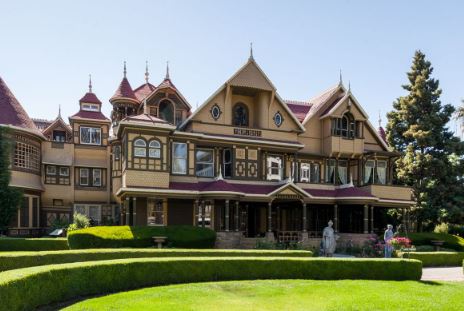
Evil must die ultimately as the weaker element, in the struggle with good. The persistence of force, manifested in the forms of matter and motion, is the stuff of human inquiry, the material with which philosophy must build. Everywhere in the Universe man observes the incessant redistribution of matter and motion, rhythmically apportioned between evolution and dissolution. Evolution is the progressive integration of matter accompanied by dissipation of motion; dissolution is the disorganization of matter accompanied by the absorption of motion. The life process is essentially evolutionary, embodying a continuous change from incoherent homogeneity, illustrated by the lowly protozoa, to coherent heterogeneity, manifested in man and the higher animals. From the persistence of force, anything which is homogeneous is inherently unstable, since the different effects of persistent force upon its various parts must cause differences to arise in their future development. Thus the homogeneous will inevitably develop into the heterogeneous. Here is the key to Universal evolution. This progress from homogeneity to heterogeneity–in the formation of the Earth from a nebular mass, in the evolution of higher, complex species from lower and simpler ones, in the embryological development of the individual from a uniform mass of cells, in the growth of the human mind, and in progress of human societies–is the principle at work in everything man can know. #RandolphHarris 1 of 18
No amount of description, regardless of how carefully it is presented, can convey an adequate impression of exactly what is involved in the process of reaching an understanding of oneself. The grown-up individual is not a child, and to talk about the child in him, or “his” unconsciousness, is using a topological language which does not do justice to the complexity of the facts. The neurotic, grown-up individual is an alienated human being; he does not feel strong, he is frightened and inhibited because he does not experience himself as the subject onto whom he projects all his own human qualities: his love, intelligence, courage, etcetera. By submitting to this object of transference, he feels in touch with this own qualities; he feels strong, wise, courageous, and secure. This mechanism, idolatric worship of an object, based on the fact of the individual’s alienation, is the central dynamism of transference, that which gives transference its strength and intensity. The less alienated person may also transfer some of his infantile experience to another persons, but there would be little intensity in it. The alienated individual, in search for and in need of an idol, finds the analyst and usually endows him with the qualities of his father and mother as the two powerful persons he knew as a child. Thus the content of transference is usually related to infantile patterns while its intensity is the result of the individual’s alienation. Needless to add that the transference phenomenon is not restricted to the analytic situation. It is to be found in all forms of idolization of authority figure, in political, religious, and social life. #RandolphHarris 2 of 18
Transference is not only the phenomenon of psychopathology which can be understood as an expression of alienation. Indeed, it is not accidental that alien, in French and alienado in Spanish, are older words for the psychotic, and the English “alienist” refers to a doctor who cares for the insane, the absolutely alienated person. Alienation as a sickness of the self can be considered to be the core of the psychopathology of modern man even in those forms which are less extreme than psychosis. Some clinical examples may serve to illustrate the process. The most frequent and obvious case of alienation is perhaps the false “great love.” A man has fallen enthusiastically in love with a woman; after she had responded at first, she is beset by increasing doubts and breaks off the relationship. He is overcome by a depression which brings him close to suicide. Life, he feels, has no more meaning to him. Consciously he explains the situation as a logical result of what happened. He believes that for the first time he has experienced what real love is, that with this woman, and only with her, could be experience love and happiness. If she leaves him, there will never be anyone else who can arouse the same response in him. Losing her, so he feels, he has lost his one chance to love. Hence it is better to die. #RandolphHarris 3 of 18

While all this is convincing to himself, his friends may ask some questions: Why is it that a man who thus far seemed less capable of loving than the average person is now so completely in love he seems to be unwilling to make any concessions, to give up certain demands which conflict with those of the woman he loves? Why is it that while he spears of his loss, he mainly speaks relatively little interest in the feelings of the woman he loves so much? If one speaks to the unhappy man himself, at greater length, one need not be surprised to hear him in fact as if he had left his heart with the girl he lost. If he can understand the meaning of his own statement, he can understand that his predicament is one of alienation. He never was capable of loving actively, of leaving the magic circle of his own ego, and of reaching out to becoming one with another human being. What he did was to transfer his longings for love to the girl and to feel that being with her he experiences his “loving” when he really experiences only the illusion of loving. The more he endows her not only with his longing for love but also for aliveness, happiness, and so on, the poorer he becomes, and the emptier he feels if he is separated from her. When actually he had made the woman into an idol, the goddess of love, and believed that by being united with her he experienced love, he was under the illusion of loving. #RandolphHarris 4 of 18

He had been able to initiate a response in her but he had not been able to overcome his own inner muteness. Losing her is not, as he thinks, losing the person he loves, but losing himself as a potentially loving person. Alienation of thought is not different from alienation of the heart. Often one believes he was thought through something, that his idea is the result of his own thinking activity; the fact is that he has transferred his brain to the idols of public opinion, the newspapers, the government or a political leader. He believes that they express his thoughts while in reality he accepts their thoughts as his own, because he has chosen them as his idols, his gods of wisdom and knowledge. Precisely for this reason he is dependent on his idols and incapable of giving up his worship. He is their slave because he has deposited his brain with them. An involuntary and in a deeper sense unwarranted dependency upon another person is a problem known to nearly everyone. Most of us deal with one or another aspect of it at one or another period of our lives, often not truly recognizing its existence and screening it instead behind such exquisite terms as “love” or “loyalty.” This dependency is so frequently because it seems to be a convenient and promising solution for many troubles we all have. It puts grave obstacles, however, in the way of our becoming mature, strong, independent people; and its promise of happiness is mostly fictitious. #RandolphHarris 5 of 18

Therefore a delving into some of its unconscious implications may be interesting and helpful, even apart from the question of self-analysis to anyone who regards self-reliance and good relationships with others as desirable goals. After several months of not very productive efforts at self-analysis Clare awoke one Sunday morning with an intense irritation at an author who failed to keep his promise to send an article for the magazine she edited. This was the second time he had left her in the lurch. It was intolerable that people should be so unreliable. Soon after it struck her that her anger was out of proportion. The whole matter was scarcely of sufficient importance to wake her up at five in the morning. The mere recognition of a discrepancy between anger and alleged provocation made her see the real reason for the anger. The real reason also concerned unreliability, but in a matter more close to her heart. Her friend Peter, who had been out of town on business, had not returned for the weekend as he had promised. To be exact, he had not given a definite promise, but he had said that he would probably be back by Saturday. He was never definite in anything, she told herself; he always aroused her hopes and then disappointed her. The fatigue she had felt the night before, which she had attributed to having worked too hard, must have been a reaction to her disappointment. #RandolphHarris 6 of 18

She had hoped for an evening with Peter, and then, when he did not show up, she had gone to a movie instead. She could never make engagements because Peter hated to make definite dates in advance. The result was that she left as many evenings free as she possibly could, always harbouring the disquieting thought, would he or would he not be with her? While thinking of this situation two memories occurred to her simultaneously. One was an incident that her friend Eileen had told her years before. Eileen, during a passionate but rather unhappy relationship with a man, had fallen seriously ill with pneumonia. When she recovered from the fever she found to her surprise that her feelings for the man had died. He tried to continue the relationship, but he no longer meant anything to her. Clare’s other memory concerned a particular scene in a novel, a scene that had deeply impressed her when she was an adolescent. The first husband of the novel’s heroine returned from war, expecting to find his wife overjoyed at his return. Actually the marriage had been torn by conflicts. During the husband’s absence the wife’s feelings had changed. She did not look forward to his coming. He had become a stranger to her. All she felt was indignation that he could be so presumptuous as to expect love just because he chose to want her–as if she and her feelings did not count at all. #RandolphHarris 7 of 18

Clare could not help realizing that these two associations pointed to a wish to be able to break away from Peter, a wish that she referred to the momentary anger. However, she argued, I would never do it because I love him too much. With that thought ths fell asleep again. Clare made a correct interpretation of her anger when she saw it as caused by Peter rather than by the author, and her interpretation of the two associations was right. However, despite this correctness the interpretations, as it were, lacked depth. There was no feeling whatever for the force of the resentment she harboured against Peter. Consequently she regarded the whole outburst as only a transient grievance, and thus discarded much too lightly the wish to tear loose from him. Retrospectively it is clear that at that time she was far too dependent on Peter to dare to recognize either resentment or a wish for separation. However, she had not the slightest awareness of any dependency. She ascribed the apparent ease with which she overcame the anger to her “love” for her friend. This is a good example of the fact that one will get no more out of association than one can stand at the time, even though, as in this instance, they speak an almost unmistakable language. Clare’s basic resistance against the import of her associations explains why she did not raise certain questions that they suggested. #RandolphHarris 8 of 18

It is significant, for example, that both of them, while connoting a general way a wish to break off, indicated a very special form of breaking off: in both instances the woman’s feelings faded out while the man still wanted her. This was the only ending of a painful relationship that Clare could visualize. To break away from Peter on her own initiative was unthinkable because of her dependency upon him. The idea that he could break away from her would have aroused sheer panic though there are good reasons to infer that she felt deep down that he did not really want her while she hung on to him. Her anxiety on this score was so deep that it took ger considerable time to realize the mere fact that she was afraid. It was so great that even when she discovered her fear of desertion, she still closed her eyes to the rather obvious fact that Peter wanted a separation. In thinking of incidents in which the woman herself was in a position to reject the man Clare revealed not only a wish to be free but also a desire for revenge, both deeply buried and both referring to a bondage which was itself unrecognized. Here lies the connection between beauty and truth. Beauty is not the opposite of the “ugly,” but of the “false”; it is the sensory statement of the suchness of a thing or a person. #RandolphHarris 9 of 18

To create beauty presupposes a state of mind in which one has emptied oneself in order to fill oneself with what one portrays so that one becomes it. “Beautiful” and “ugly” are merely conventional categories which vary from culture to culture. A good example of our failure to comprehend beauty is the average person’s tendency to cite a “sunset” as an example of the beautiful, as if rain or fog were not just as beautiful, although sometimes less pleasant for the body. All great art is by its very essence in conflict with society with which it coexists. It expressed the truth about existence regardless of whether this truth serves or hinders the survival purposes of a given society. All great art is revolutionary because it touches upon the reality of man and questions the reality of the various transitory forms of human society. Even an artist who is a political reactionary is more revolutionary–if he is a great artist–than the artists of “socialist realism” who only mirror the particular form of their society with its contradictions. It is an astonish fact that art has not been forbidden throughout history by the powers that were and are. There are perhaps several reasons for this. One is that without art man is starved and perhaps not even useful for the practical purposes of his society. #RandolphHarris 10 of 18

Another is that by his particular form and perfection of the great artist was an “outsider” and hence while he stimulated and gave life, he was not dangerous because he did not translate his art into political terms. Besides that, art usually reached only the educated or politically less dangerous classes of society. The artists have been the court jesters of all past history. They were permitted to say the truth because they presented it in its particular but socially restricted artistic form. A self-initiated process of learning to be free is composed of movement from as well as movement toward. From being persons driven by inner forces they do not understand, fearful and distrustful of these deeper feelings and of themselves, living by values they have taken over from others, they move significantly. They move toward being persons who accept and even enjoy their own feelings, who value and trust the deeper layers of their nature, who find strength in being their own uniqueness, who live by values they experience. This learning, this movement, enables them to live as more individuated, more creative, more responsive, and more responsible persons. People are often sharply away of such directions in themselves, as they move with fearfulness toward being freely themselves. #RandolphHarris 11 of 18

It is a painful paradox of civilization that so many of our major discoveries seem to contribute almost equally to the solution of one problem and the creation of another. Dynamite is perhaps the most often noted example, but there are many others. Our discoveries seems to extricate us from an old set of limitations only to burden us with new frustrations. Happily, there seems to be a period of relatively unadulterated enjoyment of each new technological advance. However, sooner or later, its “fringe” limitations come to equal or even surpass its benefits. Thanks to the invention of the Ultimate Driving Machine we have had a marvelous mobility and a great expansion of our “living space,” and now we have an increasingly serious problem of what to do with out cars when they are not in use. Discovery of nuclear fission may have helped to end one way, but now we are threatened by a way of total annihilation. The industrial revolution which enormously increased the supply of goods has been augmented by scientific advances in the twenty-first century that threaten to poison the air we breathe, pollute the water we drink and the food we eat. Automation of industry has made possible better control of processes and more efficient production with fewer workers, and it is as yet uncertain whether we shall be able successfully to absorb the displaced and unneeded labour force as our industries become increasingly places of auto-facture rather than manufacture. #RandolphHarris 12 of 18

Medical science and modern technology have added significantly to longevity. Each year our population receives a sizable increment of persons who have been retired from the productive community and who may live another five or ten years; we find we must cope directly with the problem of supplying meaning to these “golden years.” In light of the ageless struggles to maintain and extend biological life against the assaults of famine and pestilence, in light of the individual struggle to protect health and preserve life, it is a poignant paradox that we must search out ways to help the retired warrior to cope with a life that is now secure, comfortable, and certain. It is an important fact to which all psychotherapists should be fully sensitive that for very many persons when the steadily recurrent daily problems of work–of earning, of building, of planning, of saving–are over, the problem of meaning comes promptly pressingly to the fore. Enjoyment of existence does not come naturally to the person whose earlier life has given neither time nor stimulus to question ultimate purpose or to explore for meanings that superscribe the orientation provided by inescapable basic demands for effort. Thus, paradoxically, each new freedom brings the possibility of new entrapments. We may wonder whether the pace of discovery may soon achieve so many solutions that the problems created by those solutions will surpass our problem-solving capacities! #RandolphHarris 13 of 18

At any place along the road of life, one may turn one’s back on ignorant habits and seek to create better ones. If society find him an odd creature, if it laughs at his peculiarities of belief or frowns at his departures from convention, then he must not blame society. He must accept the situation as inescapable and submit to its unpleasantness as being better than the littleness of surrender. The quest is carried on always under silent and continual pressure. The earnest aspirant will strive to love well where formerly he lived ill, will keep looking for better ideals. As if it were enforced by outside authority, few are ready to impose such a discipline upon themselves; but if they applied what they know, many more could to a little better. Some temptations come on slowly, but others suddenly and before he fully realizes what is happening to him. Whatever the way they come–and this depends partly on his personal temperament, partly on the nature of the temptation–he should prepare himself in advance by fortifying the weaker places in his character. The negative quality can be rubbed away gradually by brining counter qualities into the field against it. He is expected to put forth the effort needed to dispel a negative emotion or to destroy a negative thought, since such will not go away of itself. #RandolphHarris 14 of 18

When the mind is sufficiently purified, it receives intuitions more easily and nurtures aspirations more warmly. Tread firmly on negative thoughts, eject them from the mind as soon as they appear, and give them no chance to grow. Spite, envy, moroseness, despondency and denigrating criticism should all be denied entry. A prompt and decisive “No!” to the suggestion or impulse as soon as it appears, prevents it from gathering strength and becoming uncontrollable. The quickness with which an impulse moves him to action may hide its beginning in him. However, the moment is there: by self-training it may be perceived in time, and inhibition or control applied with more and more success. His intellectual clarity must be deep and his emotional tolerance broad. It is always a pity when thinkers are not equal to their own thoughts. The gain of building an equable character and evenness of mind is not only a spiritual one, it is also a contribution to person happiness. He will not agree to act under threat. Every such attempt to intimidate him makes him only more determined to resist it and to reject the desired action. The power which man spends in the passions and emotions of his lower nature will, when governed and directed upward in aspiration to his higher nature, give him the knowledge and bliss of the Overself. #RandolphHarris 15 of 18

It is not enough to follow a wholesome diet and a healthy way of life. The seeker after a better existence must match with these advanced his thoughts and emotion. By focusing national attention on the numbers and needs of the thousands of patients who suffer incapacitating emotional illness, the mental health movement has served to arouse attention and to mobilize efforts in their behalf. It has won increased expenditures to provide better facilities, more personnel, more and better treatment for the hospitalized patient. It has stimulated the founding of clinics so that milder disturbances may come to early diagnosis and it has encouraged the provision of resources for early outpatient therapy so that developing symptoms can be halted in their first stages and prevented from progression into complete disruption of the personality. The mental health movement has achieved a significant increase in public enlightenment in regard to mental illness. There has been a reduction in the older attitudes of fear and distrust of the mentally ill. Each year fewer and fewer persons remain who hold to an archaic attitude of shame toward any implication of mental illness in themselves or their families. The public has been effectively educated to recognize symptoms of personality disorder and has been encouraged to seek professional consultation for emotional problems. #RandolphHarris 16 of 18

One has to live for praise and blame, not for other people, but for one’s higher self. As we will see, being a firefighter is a lot of responsibility. “As soon as I got out of high school, I put in my application to the Sacramento Fire Department. The written exam was easy. The physical exam was challenging. I knew it was very demanding because my brother had gone through it three years earlier. I was a short, stocky kid, only five-eight. But I knew how to train, and I trained harder than anybody else. All I did was run stairs. I did well on the tests, but there were about twelve hundred people taking the test, and I was kind of downhearted. I heard the results the same day I was taking my final exam for my EMT classes. I was flying high, I was ecstatic, it was a lifelong dream come true for me. But it was scary, too. My dad had never talked to me about the job until I put my application in. Then he was telling me, it’s the most dangerous job in the World, you’ve got to watch yourself, every day you go to work you could get killed. I know that now. We had a grass fire in our backyard, and my wife got to talking to a couple of the firefighters out there. She had heard me talking about wanting to join the fire department. And one of the firemen said, ‘Yeah, we’re looking for a couple of guys here.’ It just kind of went from there. #RandolphHarris 17 of 18

“I put in an application at City Hall, and about a week later they called me. There wasn’t any kind of written test. I tool the physical, and a small oral test there with the captain. The first thing he asked me was how my driving record was. He wanted to know if I had points on my license or any kind of bad record. If I did, there would have been almost no kind of chance of my getting on. To me it was a chance to serve the community.” The Sacramento Fire Department works hard and risks their lives everyday to protect us. Please be kind and make a donation to the Sacramento Fire Department. I pledge allegiance to the flag of the United States of America, and to the republic for which it stands, one nation, under God, indivisible with liberty and justice for all. Do you desire life and seek length of days? Then keep your tongue from evil, and your lips from deceit. Depart from evil and do good, seek peace and pursue it. Keep the commandment of your father, and forsake not the teaching of your mother. Keep them continually in your heart so that they may lead you in the right path. When you lie down, they shall watch over you, and when you awaken, they shall talk with you. For the commandment is a lamp, yea, the Word of God is a light. Get knowkedge and understanding; turn not away from wisdom. #RandolphHarris 18 of 18
The Winchester Mystery House

A series of remarkable occurrences, which caused great excitement, are said to have taken place in September 1888 at The Winchester Mystery House. As dusk was closing in, Mrs. Winchester was about to get ready for tea. The cups and saucer had been arranged on the table, and one of them fell to the floor and smashed. Of course Mrs. Winchester was a little surprised at this; but directly afterwards when she saw the table partially turned over, apparently without being touched, and all the cups fall, she was thoroughly frightened. A small timepiece which stood on the mantelshelf was thrown on the floor. As a servant was getting a number of articles out of the house, a large kitchen table followed him to the door, and it would have probably gone further if the width of the door would have allowed it. Meanwhile things in the parlour continued the same course. Mrs. Winchester’s volume of the Pilgrim’s Progress came flying though the parlour door and out to the walk opposite the front door; whence, after laying there a short time, it jumped up on the windowsill! To this very day, mysterious affairs take place at The Winchester Mystery House.

Come and enjoy a delicious meal in Sarah’s Café, stroll along the paths of the beautiful Victorian gardens, and wonder through the miles of hallways in the World’s most mysterious mansion. For further information about tours, including group tours, weddings, school events, birthday party packages, facility rentals, and special events please visit the website: https://winchestermysteryhouse.com/

Please visit the online giftshop, and purchase a gift for friends and relatives as well as a special memento of The Winchester Mystery House. A variety of souvenirs and gifts are available to purchase. https://shopwinchestermysteryhouse.com/
 Randolph Harris II International Institute