
Home » Posts tagged 'culture shock'
Tag Archives: culture shock

What the F–Business Must be Conducted with Glass Pockets!

Although you make think “What the F!” has a negative connotation, it is not a curse word. It means “What the Ferry!” It is what Ferry calls his live resonation radio show. Ferry Coresten is one of the most talented disc jockeys in the World. Mr. Coresten is Dutch disc jockey, record producer and remixer. Defining, understanding, and discovering the conditions that lead to peace is an intellectual challenge with a long and rich traditional with the social sciences. Nevertheless, it remains central today, not simply for academics but to the broader populations as well. The notion that peace is at hand as soon as there is no ongoing, large-scale organized violence is not only the most common idea today but also a way of viewing peace that goes back at least to antiquity. We sometimes achieve peace through military preparations and deterrence, or the military defeat of adversaries. The quantitative research on conflict, violence, and peace is an already large subject area within the social sciences, and it is undergoing yet another growth spurt in the aftermath of 9/11, with increasing discussion of terrorism, restriction of civil liberties, torture, invasion, insurgency, counterinsurgency, revolution, counterrevolution, mass protest, and protest policing. Many people think we already live in a police state, but they have not seen anything yet. In 2007, alarm companies did not want to install security cameras on homes because they warned home owners that footage could be obtained by anyone and put on the Internet without their consent, but now people are going as far as having cameras places in their home that security companies monitor. Before long, the streets and highways in the United States of American will be full of license plate readers, which automatically issues tickets for speeding, which will make the road less safe as less officers will be out to stop illegal vehicles and vehicle violating law. #RandolphHarris 1 of 20

We will also have police drones patrolling neighbourhoods, roads, and highways recording information and acting as law enforcement agents, so there will be virtually no privacy and anything that is done can be pulled up and reviewed for later enforcement of the law. Therefore, it is critical to study peace as something more than merely the absence of overt violence. Peace is defined only as the absence of some violent actions. This form of peace, as “no violence,” can range from brutal dictatorships to democracies that fully respect human rights, from states that remain at peace only for brief periods of time between recurring bought of violence to societies that have not experienced overt hostilities for hundreds of years, and from states that consistently remain prepared for “hot” conflict to those that do not consider preparing for it. If peace is an inherent dichotomy, then war and genocide are the opposite. Personal relationship, closeness and warmth, Christian community—these are just what I have experienced in East Germany when I have visited. Over the years the society has always come through with insightful and perceptive judgments. The new paradigm of just peacemaking is grounded in the historical experience of people who have lived in the face of oppression, violation of their basic rights, and the nuclear threat, and who, together with political scientist, Christian ethicists, and activists, fashioned realistic steps of peacemaking that enabled them to begin living in the time after the Cold War even before the Wall came down. Though oppressed and constricted, they began to live our future. Because the paradigm is grounded in realistic but persistent hope-creating experience, attention must be paid to critical perspectives external to Christian faith; and since the heart of the story is consent to all God’s creating and the practice of forgiveness and love, an ethic is to be tested by its ability to be inclusive rather than to repress important standards of human life, or other members of the human community. #RandolphHarris 2 of 20

We have all known we needed to develop new methods for achieving change without violence. Now we have seen nonviolent revolutions in Iran (where the revolution was nonviolent but not the subsequent regime) in Philippines, in Argentina, throughout Eastern Europe, and in the peoples’ defeat of the coup in the Soviet Union, and there is hope for them in South Africa and perhaps Palestine (where parts of the movement are nonviolent, and other parts are not). Human rights movements must refrain from violence. They must take the beneficial action of clearly articulating the human rights that need to be established. The breakdown of the medieval system of feudal society had one main significance for all classes of society: the individual was left alone and isolated. He was free. This freedom had a twofold result. Man was deprived of the security he had enjoyed, of the unquestionable feeling of belonging, and he was torn loose from the World which had satisfied his quest for security both economically and spiritually. He felt alone and anxious. However, he was also free to act and to think independently, to become his own master and do with his life as he could—not as he was told to do. However, according to the real life situation of the members of different social classes, these two kind of freedom were of unequal weight. Only the most successful class of society profited from rising capitalism to an extent which gave them real wealth and power. They could expand, conquer, rule and amass fortunes as a result of their own activity and rational calculations. #RandolphHarris 3 of 20

This new aristocracy of money, combined with that of birth, was in a position where they could enjoy the fruits of the new freedom and acquire a new feeling of mastery and individual initiative. On the other hand, they had to dominate the masses and to fight against each other, and thus their position, too, was not free from a fundamental insecurity and anxiety. But, on the whole, the positive meaning of freedom was dominant for the new capitalist. It was expressed in the culture which grew on the social of the new aristocracy, the culture of the Renaissance. In its art and in its philosophy it expressed the new spirit of human dignity, will, and mastery, although often enough despair and skepticism also. The same emphasis on the strength of individual activity and will is to be found in the theological teachings of the Catholic Church in the late Middle Ages. The Schoolmen of that period did not rebel against authority, they accepted its guidance; but they stressed the positive meaning of freedom, man’s share in the determination of his fate, his strength, his dignity, and the freedom of his will. On the other hand, the lower classes, the poor population of the cities, and especially the peasants, were impelled by a new quest for freedom and an ardent hope to end the growing economic and personal oppression. They had little to lose and much to gain. They were not interested in dogmatic subtleties, but rather in the fundamental principles of the Christian Bible: brotherliness and justice. Their hopes took active form in a number of political revolts and in religious movements which were characterized by the uncompromising spirit typical of the very beginning of Christianity. #RandolphHarris 4 of 20
Rising capitalism, although it made also for their increased independence and initiative, was greatly a threat. In the beginning of the sixteenth century the individual of the middle class could not yet grain much power and security from the new freedom. Freedom brought isolation and personal insignificance more than strength and confidence. Besides that, he was filled with burning resentment against the luxury and power of the wealthy classes, including the hierarchy of the Roman Church. Protestantism gave expression to the feelings of insignificance and resentment; it destroyed the confidence of man in God’s unconditional love; it taught man to despise and distrust himself and others; it made him a tool instead of an end; it capitulated before secular power and relinquished the principle that secular power is not justified because of its mere existence if it contradicts moral principles; ad in doing all this it relinquished elements that had been the foundations of Judaeo-Christian tradition. Its doctrines presented a picture of the individual, God, and the World, in which these feelings were justified by the belief that the insignificance and powerlessness which an individual felt came from the qualities of man as such and that he ought to feel as he felt. Thereby the new religious doctrines not only gave expression to what the average member of the middle class felt, but, by rationalizing and systematizing this attitude, they also increased and strengthened it. However, they did more than that; they also showed the individual a way to cope with his anxiety. They taught him that by fully accepting his powerlessness and the evilness of his nature, by considering his whole life an atonement for his sins, by the utmost self-humiliation, and also by unceasing effort, he could overcome his doubt and his anxiety; that by complete submission he could be loved by God and could at least hope to belong to those whom God has decided to save. #RandolphHarris 5 of 20

Protestantism was the answer to the human needs of the frightened, uprooted, and isolated individual who had to orient and to relate himself to a new World. The new character structure, resulting from economic and social changes and intensified by religious doctrines, became in its turn an important factor in shaping the further social and economic development. Those very qualities which were rooted in this character structure—compulsion to work, passion for thrift, the readiness to make one’s life a tool for the purposes of an extra personal power, asceticism, and a compulsive sense of duty—were character trait which became productive forces in capitalistic society and without which modern economic and social development are unthinkable; they were the specific forms into which human energy was shaped and in which it became one of the productive forces within the social process. To act in accord with the newly formed character traits was advantageous from the standpoint of economic necessities; it was also satisfying psychologically, since such action answered the needs and anxieties of this new kind of personality. To put the same principle in more general terms: the social process, by determining the mode of life of the individual, that is, his relation to others and to work, molds his character structure; new ideologies—religious, philosophical, or political—result from and appeal to this changed character structure and thus intensify, satisfy, and stabilize it; the newly formed character traits in their turn become important factors in further economic development and influence the social process; while originally they have developed as a reaction to the threat of new economic forces, they slowly become productive force, furthering and intensifying the new economic development. #RandolphHarris 6 of 20

The system of rules and their enforcement itself must first establish a reputation for integrity and efficacy. This takes a long time and strict supervision even given much good will. In many countries, the great difficulties experienced by the governments of most transition economies in their attempts at such reputation-building require attempts of the top levels of the government at making and enforcing reliable governance systems. However, they can be ruined by some middle-level officials who attempt to make quick profit from their newfound power. There are evident problems of this in most transition economies. Also, in the phase when the system of rules in imperfect but improving, it can offer better outside payoffs to the participants in the prevailing relation-based system. By thus increasing their incentives to cheat their current partners, it can worsen the outcomes of the relation-based system. The policies required to initiate a transition from low-income equilibrium to a state of rapid growth may be qualitatively different from those required to reignite growth for a middle-income country. At low levels of income, with reasonable institutions and reasonable policies, it may be easy to achieve high growth up to semi-industrialization. However, the institutional requirements of reigniting growth in a middle-income country can be significantly more demanding. Growth starting from a low level can be achieved using relation-based governance in small communities of traders with good relationships and information networks, so long as the state does not actually inhibit such developments with its policies. However, to go beyond the middle-income level requires greater integration into a large economy, where relation-based governance is inadequate. The necessary shift toward rule-based governance is more demanding because it must overcome the additional problems of collective action, vested interest and so on. #RandolphHarris 7 of 20

How might such investment in the framework of rules get made? In 1898, when Elbert Gary and J. Pierpont Morgan started Federal Steel, they took the then unusual step of issuing quarterly reports because both men believed that corporations issuing publicly traded securities had to account for their financial performance. At first there was no public process such as external audits to guarantee the truthfulness of these accounts; presumably Mr. Morgan’s own reputation and integrity, acquired in the prevailing relation-based system of finance, gave them credibility. However, the public gradually found that inadequate, perhaps because others entering the arena of raising finance from the general public did not have the same reputation. A few years later, then president Theodore Roosevelt said that he would not “accept the publication of what some particular company chooses to publish as a favor, instead of demanding what we think ought to be published from all companies as a right” (Strouse 2000, p. 439). And still later, Mr. Morgan said that “business in the twentieth century would have to be conducted with glass pockets” (Strouse 2000, p. 600). This episode serves to emphasize the endogeneity of verifiability, and the value of making more information publicly verifiable. Forces operate on the other side to undermine a relation-based system when it comes into contact with other rule-based systems. If capital-owners in the relation-based system become able to invest abroad under a rule-based system and earn the going return there, that will raise the outside opportunities of the participants in each ongoing repeated game of relation-based finance, and thereby unravel its tacit cooperation equilibrium. #RandolphHarris 8 of 20

Similarly, as improvements in transportation technology or lowering of trade barrier with other countries, or liberalization of regulation within or across countries, bring a relation-based production system into contact with other economies and other markets, its firms will discover better opportunities outside their previous relationships; this can undermine the previous repeated game equilibrium. If or when a relation-based economy needs to import capital, whether financial or direct investment, it will find it difficult to do so. Unless foreigners are misinformed or gradually develop relationships with host-country businesses, they will be reluctant to lend. Conversely, firms in a relation-based system may be reluctant to borrow from lenders who are not part of their relation network, for fear that the strangers may withdraw their capital suddenly. So, if it needs foreign capital, a relation-based economy may fail to grow unless it changes over successfully to a rule-based system where anyone can invest with the confidence that the only uncertainties will be those arising from natural economic shocks, not those of borrowers’ strategic default or fraud or lenders’ capital flight. Of course the difficulties of brining together two such different systems of financial transactions are not insurmountable. Intermediaries can develop relations on both sides, and profit by providing these services for a fee. The Rothschilds did this in Europe with great success for over a century, literally be having relations on both or all sides. #RandolphHarris 9 of 20

In the second half of the nineteenth century, the United States of America was a major capital importer. This was facilitated by the Morgans—Junius S. operating in London and J. Pierpont in New York—who established a relation-based chain of trust between borrowers in the United States of America and lenders in the United Kingdom and Europe. In modern times, Hong Kong served a similar role, dealing with lenders—Western ones on a basis of rules and overseas Chinese ones on the basis of relations—and with borrowers—investing firms in mainland China on a basis of relations. In countries shaken by the Third Wave, the truly poor no longer necessarily have numbers on their side. In a good many countries they—like everyone ese—have become a minority. Not only is majority rule therefore no longer adequate as a legitimating principle, it is no longer necessarily humanizing or democratic in societies moving into the Third Wave. Second Wave ideologues routinely lament the breakup of mass society. Rather than seeing in this enriched diversity an opportunity for human development, they attack it as “fragmentation” and “Balkanization” and attribute it to the aroused “selfishness” of minorities. This trivial explanation substitutes effect for cause. For the rising activism of minorities is not the result of a sudden onset of selfishness; it is, among other things, a reflection of the needs of a new system of production which requires for its very existence a far more varied, colourful, open and diverse society than any we have ever known. We can either resist the thrust toward diversity, in a futile last-ditch effort to save our Second Wave political institutions, or we can acknowledge diversity and change those institutions accordingly. #RandolphHarris 10 of 20

The former strategy can only be implemented by totalitarian means and must result in economic and cultural stagnation; the latter leads toward social evolution and a minority-based twenty-first-century democracy. To reconstitute democracy in Third Wave terms, we need to jettison the frightening but false assumption that increased diversity automatically brings increased tension and conflict in society. Indeed, the exact reverse can be true. Conflict in society is not only necessary, it is, within limits, desirable. If one hundred men all desperately want the same brass ring, they may be forced to fight for it. On the other hand, if each of the hundred has a different objective, it is far more rewarding for them to trade, cooperate and form symbiotic relationships. Given appropriate social arrangements, diversity can make for a secure and stable civilization. It is the lack of appropriate political institutions today that unnecessarily sharpens conflict between minorities to the knife-edge violence. It is the lack of such institutions that makes the majority harder and harder to find. The answer to these problems is not to stifle dissent or to charge minorities with selfishness (as though the elites and their experts are not similarly self-interested). The answer lies in imaginative new arrangements for accommodating the legitimating diversity—new institutions that are sensitive to the rapidly shifting needs of changing and multiplying minorities. Someday future historians may look back on voting and the search for majorities as an archaic ritual engaged in by communicational primitives. #RandolphHarris 11 of 20

Today however, in a dangerous World, we cannot afford to delegate total power to anyone, we cannot surrender even the weak popular influence that exists under majoritarian systems, and we cannot allow tiny minorities to make vast decisions that tyrannize all other minorities. This is why we must drastically revise the crude Second Wave methods by which we pursue the elusive majority. We need new approaches designed for a democracy of minorities—methods whose purpose is to reveal differences rather than to paper them over with forced or fake majorities based on exclusionary voting, sophistic framing of the issues or rigged electoral procedures. We need, in short, to modernize the entire system so as to strengthen the role of diverse minorities, yet permit them to form majorities. In Second Wave societies, voting to determine the popular will provide an important source of intermittent feedback for the ruling elites. When conditions for one reason or another became intolerable for the majority, and fifty-one percent of the voters registered their pain, the elites could, at a minimum, shift parities, alter policies, or make some other accommodations. Even in yesterday’s mass society, however, the fifty-one percent principle was a decidedly blunt, purely quantitative instrument. Voting to determine the majority tells us nothing about the quality of people’s views. It can tell us how many people at a given moment want X, but not how badly they want it. Above all, it tells us nothing about what they would be willing to trade off for X—crucial information in a society made up of many minorities. #RandolphHarris 12 of 20
When a minority feels so threatened or attaches such life-and-death significance to a single issue that its views should perhaps receive more than ordinary weight, nor does it signal us then. In a mass society these well-known weaknesses of majority rule were tolerated because, among other things, most minorities lacked strategic power to disrupt the system. In today’s finely wired society, in which all of us are members of minority groups, that is no longer true. For a de-massified Third Wave society, the feedback systems of the industrial past may be considered too crude. Thus we will have no use voting and the polls in a radically new way. Also, because the de-massification and redistribution of media outlets, we are no longer creating stars as famous Worldwide as Aaliyah, Britney Spears, Beyonce, Paris Hilton, Brad Pitt, Tyson Beckford, Tyra Banks, Jennifer Lopez, or Lucy Lui. Fortunately, Third Wave technologies provide pathways toward Third Wave democracy. They reopen, in a startling new context, fundamental issues that our founders considered two hundred years ago. These technologies make possible new, hitherto impractical forms of democracy. Although the transition from the problem phase to the proposal phase of planning is usually gradual, the formulation of proposals is qualitatively distinct from the definition of public and problem. Proposals are creative responses; they call for imagination, invention, even genius. The making of proposals has to be properly timed, not coming too early in the planning process. For any given problem there may be a number of solutions, and thus new potentialities of divergence are introduced into the public’s discussion. #RandolphHarris 13 of 20

If those who make proposals are anxious that they be accepted or at least taken seriously and attended to, they should ideally wait until a public has become quite clear and coherent s to the nature of its problem and its desire to act. This is especially true when a proposal is likely to threaten this or that section of the public’s interest; a premature proposal is more easily exiled from discussion by an alter minority, or even without opposition may lose force, when its relevance is not yet apparent. Perhaps the proposal phase could be said to begin where “to act or not to act” ceases to be the question and consideration turns to serious alternatives. It ends when the proposal or proposals go before a policy-making body for decision. If the outcome is to be a full-fledged proposal of the planning type, during the interim a considerable number of developments ideally must occur. During this phase, proposals may be legion, running from the most casual sort of suggestion to massive reports prepared by many experts and taking years of work. If it is to deserve serious considerations, despite such variation in their elaborateness, the proposal must contain some basic elements. There must be a statement of an effective and feasible way of solving the problem as it has been defined. An estimate of the resources, human and material, required for carrying out the proposal. A schedule of the rate at which these recourses will be applied. A statement of certain quantitative goals for achievement within the schedule set. #RandolphHarris 14 of 20

Any proposal containing these elements is a planning proposal, and is often called a plan, sometimes with the name of its author prefixed, exempli gratia, the Marshall Plan (although technically it does not become a plan until it has been subject to a policy commitment, and then of course it becomes a program). The injection of proposals into the public’s discussion of the problem is frequently, at first, on what might be called an amateur basis. While each serious proposal may contain the four essential elements, their development is neither elaborate nor exact. The multiplicity of proposals and their rudimentary nature, given a strong feeling of concern, then quite readily lead to a conscious demand for more careful study of the situation and comparative examination of the proposals. Then, and not before then in most cases, is the appropriate time for commencing the formal organization of the public. At this point, another custom is often to constitute some expert committee, commission, or board and to charge it with making a study and some definite recommendations for action. The composition of the more successful committees tends to be drawn, with certain exceptions, from all the significant elements in the public to which the situation is a problem. To give them their charge may call for further definition of the appropriate scope of the planning area. This calls for judgment and may itself be a matter of disagreement. If action is truly desired, the planning area ought to be confined to those to whom the situation is definitely a problem in which they are actively involved, and it ought not to include everyone who might potentially experience some consequence from the action taken. #RandolphHarris 15 of 20

After admitting the possibility of deception in supernatural things, and a doubt has come into mind whether certain “experiences,” either personal or otherwise, were of God after all, the next stages are: The discovery of the deception. Light and truth alone can make free, and when once a doubt comes in and the man opens his mind to the truth that he is as liable to be deceived as anyone else, then to the mind and attitude light is given (John 3.21). Sometimes the specific deception is seen at once, but more often the discovery is gradual, and patience is needed while the light slowly dawns. Certain fact in connection with various experiences of the past, which the believer has failed to note, may now emerge into the light, and the half-truths which the Adversary had used to deceive are clearly seen: the twisting of words, the wrenching of sentences out of their context in the Scriptures—all come into a view as the light is given. Then comes: the acknowledgement of the deception. This is now imperative. The truth must not only be faced but owned up to, so that things are called by their right names, and the father of lies defeated by the weapon of truth. The Book of Mormon and the Christian Holy Bible keeps one from sin, and draws one near to virtue. You shall teach diligently the word of God to your children. The moral World is maintained by the instruction of our young; their education shall not be interrupted even to rebuild the Temple. When parents encourage their children to study The Book of Mormon and the Christian Holy Bible, their influence lives beyond the grave. #RandolphHarris 16 of 20

One who has studied in one’s youth may be compared to writing set down on new parchment; but one who begins to study when one is old, is like writing set down on re-used parchment. If one studies The Book of Mormon and the Holy Christian Bible in one’s youth, its words are woven into the texture of one’s life. Train a child in the way one should go, and when one is older, one will not depart from it. As long as the voices of children resound with the study of The Book of Mormon and the Holy Chistian Bible, no enemy can triumph over America. The Book of Mormon and the Holy Christian Bible are each a Tree of Life; happy are they who understand its teachings, and fulfill God’s commandments. The significance of the Cross and the Resurrection of Jesus as the Christ can be summed up in one word: salvation. One can be saved from many things, but salvation is salvation from the ultimate negativity. Salvation is healing for healing means reuniting that which is estranged, giving a center to what is split, overcoming the split between God and man, man and his Worl, man and himself. It is the revelation of the New Being in Jesus as the Christ which brings salvation. Consequently, where there is revelation, there is salvation, for the revelation of the ground of being transforms and heals. Revelation and salvation are identified. The revelational history of mankind—preparatory revelation before the appearance of the New Being, and receiving revelation afterwards—testifies that men have shared in the healing power of the New Bring, or else they would have succumbed to the destructive tendencies of existential estrangement and have ceased to exist. #RandolphHarris 17 of 20

Traditional theology has presented the rigid alternatives of total condemnation and total salvation. However, we reject them both, for, although the healing power of the New Being is never absent, even those who experience it are healed but fragmentarily. The divine act overcomes estrangement by removing guilt, and man reacts by accepting reconciliation. The effects of atonement are threefold, and together they constitute the meaning of salvation: Regeneration, Justification, and Sanctification, or, in Tillichian terminology, participation, acceptance, and transformation. Regeneration stresses the objective power of the New Being to grasp estranged mankind and draw it into itself. Man participates in the new reality revealed in Christ only by being seized by it. Thus, Regeneration is the new state of things, the new eon, which the Christ brought; the individual enters it, and in so doing he himself participates in it and is reborn through participation. Since Regeneration is participation in the objective power of the New Being, it precedes Justification, for faith as the state of being grasped by the divine presence is not a human act, but the work of the Spirit. Justification is acceptance. It is the act of God by which He accepts sinful man in spite of his guilt. It is also the act of man by which man accepts God’s saving mercy. Indeed, there is nothing in man which enables God to accept him. However, man must accept just this. He must accept that he is accepted; he must accept acceptance. This in spite of his anxiety, man accepts God’s justifying act. In spite of is the paradox of simual peccator, simul Justus. #RandolphHarris 18 of 20

As a divine act, Regeneration and Justification are one, for Regeneration is the actual reunion of the estranged, and Justification is its paradoxical character. Sanctification is distinct from both of them in the sense that a process is distinguished from the event in which it is initiated. Sanctification is the process in which the New Being transforms both individuals and communities. Sanctification, as transformation, takes place both within religion and outside it in the secular realm. Up to now emphasis has been laid upon the individual man as the one who is saved. However, our vision is broader than that. At the crucifixion of Jesus the sun was darkened, the temple veil split, rocks cracked, and the dead rose. Nature was in an uproar, and the event at Golgotha is one which concerns the Universe, including all nature and history. The Christ cannot be restricted to one area; Christology must be cosmic. Salvation extends to the whole World, and World means nature as well as man. It is through man, the microcosm, that the saving power of the New Being reaches out to the Universe. The tragedy of nature is bound to the tragedy of man, as the salvation of nature and nature is in man. Consequently, the impact of the Spiritual Presence upon beings inferior to man is indirect and, in a quantitative sense, severely limited. However, in a qualitative sense it is enormous. Salvation is found within the Kingdom of God which embraces the Universe. It is the place where there is complete transparency of everything for the divine to shine through it. In His fulfilled kingdom, God is everything for everything. Salvation, the healing of the disrupted, is brought about by love, for love is the drive towards the unity of the separated. The New Being is the love of Jesus who is the Christ, reuniting estranged mankind with its ground. The Spiritual Presence manifests itself as love. After distinguishing divine love from human love, we come to an understanding that man’s love for God is the drive toward the reunion of the separated. #RandolphHarris 19 of 20

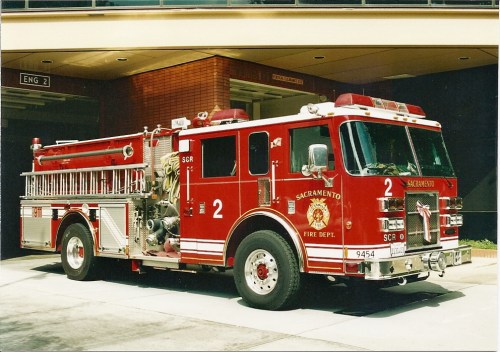
However, since salvation is an act of God, God’s love must first extend to man and grasp him. The distinction between faith and love disappears, for being grasped by God in faith and adhering to Him in love is one and the same state of creaturely life. We belong to the Old Creation, and the demand made upon us by Christianity is that we also participate in the New Creation. What is this New Being? The only thing that counts, regardless of faith, is the union with Him in whom the New Reality is present. No religion matters—only a new state of things. The New Creation—this is our ultimate concern; this should be our infinite passion—the infinite passion of every human being. This matters; this alone matters ultimately. In comparison with it everything else, even religion or non-religion, even Christianity or non-Christianity, matters very little—and ultimately nothing. And now again we ask: What is this New Being? It is a renewal of the Old which has been corrupted, distorted, split, and almost destroyed. Therefore, we can speak of the New in terms of a re-newal: The threefold “re,” namely, re-conciliation, re-union, re-surrection. The word “resurrection” has for many people the connotation of dead bodies leaving their graves or other fanciful images. However, resurrection means the victory of the New state of things, the New Being born out of death of the Old. Resurrection is not an event that might happen in some remote future, but it is the power of the New Being to create life out of death, here and now, today and tomorrow…Resurrection happens now, or it does not happen at all. It happens in us and around us, in soul and history, in nature and Universe. The message of Christianity is not Christianity, but a New Reality. A New state of things had appeared, it still appears; it is hidden and visible, it is there and it is here. Accept it, enter into it, let it grasp you. And like God saves all, the Fire Department will rescue you no matter how rich or poor you are, no matter or age, or what you look like or where you live! Be sure to thank your local heroes, and feel free to make donations to them, they are understaffed and underfunded. #RandolphHarris 20 of 20
MAGNOLIA STATION AT CRESLEIGH RANCH
Rancho Cordova, CA | low USD $600,000.00s
Now Selling!

Models now open at Magnolia Station! Located at the corner of Rancho Cordova Parkway and Douglas Road, residents of Cresleigh Ranch will benefit from a brand new neighborhood with convenient access to the new Raley’s Shopping Center, Sunrise Boulevard, and much more!

Magnolia Station will include 81 homesites and five distinct plans ranging from 2,200 – 3,700 square feet; including three single story plans! Each plan has been thoughtfully designed to include features such as: Generations Suite, Optional Offices/Dens, Extended Great Rooms, and more! https://cresleigh.com/magnolia-station/residence-2/

P.S. The limo is not cheap. Wor

An Artifact from Another Level of Being

The silence closed in. Something was building in Llanada Villa. Something was happening in the very air itself. Something changed in the golden glow of a late autumn afternoon. And as I heard the music, a long stab of terror drove through my heart. I assented to the window. As I looked out, I saw a handsome old-fashioned carriage, with a troop of couriers and footmen. I saw the slim figure of the pale gentleman in black, as he held a thick velvet cloak. He looked about him at the others as he went on, his voice ringing clear in the silence. “Never such a place as this has existed before. A place where demons have been invented by aggrieved souls. I wondered if Mrs. Winchester was perhaps a member of the Freemasons, or some other secret society. Maybe she holds some exalted rank.” I felt a great shudder pass through me at these words. However, there had been a conviction in those appalling words. Secret societies were very fashionable just then. Secret societies and psychiatry were the contrasting en vogue activities of the moment. I folded my arms and leaned against the frame of the door, obscuring for the moment the light behind me. I had an urge to venture outside, to walk in silence amongst the trees. However, the fruit orchard was dark enough even in daylight; by moonlight it would be all too easy to imagine terrors—as I keep imagining I can hear soft footsteps moving across the floor above my head. But when I sit on the sofa to listen, I hear only the beating of my heart. I walked for hours examining the trees and the splendid fruit that would be harvested. Before long, I was overtaken by night while still in the fruit orchard. Utterly bewildered and overcome with fatigue, I had lain down near the root of a large plumb tree and fallen into a dreamless sleep. #RandolphHarris 1 of 8

It was hours later, in the very middle of the night, that one of God’s mysterious messengers, gliding ahead pronounced the awakening word in my ear. Waking from a deep sleep at night in the midst of what seemed like a forest, front among the tree on either side I caught broken and incoherent whispers in a strong tongue which I partly understood. They seemed to me fragmentary utterances of a monstrous conspiracy against my body and soul. It was now long after nightfall, yet the interminable fruit orchard through which I journeyed was lit with a wan glimmer having no point of diffusion, for in its mysterious lamination nothing cast a shadow. A shallow pool in the guttered depression of an old well met my eye with a crimson gleam. I stooped and plunged my hand into it. It stained by fingers; it was blood! Blood, I then observed, was about me everywhere. The fallen fruit showed blots and splashes of blood. The girds of the orchards were pitted and spattered as with red rain. Defiling the trunks of the trees were broad maculations of crimson, and blood dripped like dew from their foliage. All this I observed with a terror which seemed not incompatible with the fulfillment of a natural expectation. It seemed to me that it was all in expiation of some crime. So frightful was the situation—the mysterious light burned with so silent and awful a menace; the noxious plants, the trees that by common consent are invested with a melancholy or baleful character, so openly in my sight conspired against my peace; from overhead and all about came so audible and startling whispers and the sighs of creatures so obviously not of Earth—that I could endure no longer, and with a great effort to break some malign spell that bound my faculties to silence and inaction, I screamed with the full strength of my lungs! #RandolphHarris 2 of 8

My voice was broken, it seemed, into an infinite multitude of unfamiliar sounds, went babbling and stammering away into the distant reaches of the orchard, died into silence, and all was as before. Despair succeeded hope. Gratitude gave place to curse. As I preceded down the path, sobbing quietly to myself, in the misery of fear, the stern light of the Observational Tower became a tiny speck, yellower but scarcely bigger than some of the stars, which here and there shone between the clouds. Nearly twenty minutes passed, and my fatigue began to change to exhaustion. The overpowering sense of the inevitable pressed upon me. With the weariness came a strange comfort. On, and on I went through the thicket of trees. I knew of my probable presence in the spirit World. The moon, then in her third quarter, pushed out from behind the concealing clouds and shed a pale, soft glitter upon my mansion. My last appeal had been heard. I made it home. About half an hour after getting home, I still felt energized but I began to feel a sensation around my forehead as I have many times since. I suddenly felt weak. I went in and sat at the foot of my bed and passed out. I have never been given to fainting or passing-out spells, but I did not fall asleep—I passed out cold. When I woke up, I had no concept of time. When I woke up, a low, wild peal of laughter broke out at a measuresless distance away, and growing even louder, seemed approaching ever nearer; a soulless, heartless, and unjoyous laugh, like that of loon; a laugh which culminated an unearthly shout close at hand, then died away by slow gradations, as if the accursed being that uttered it had withing over the verge of the World whence it had come. #RandolphHarris 3 of 8

Sitting here in my temple of a house, I felt trapped and compromised, and even terrified. I got a feeling that the presence was still nearby and had not moved. A strange sensation began slowly to take possession of my body and my mind. I could not say which, if any, of my sense were affected; I felt it rather as a consciousness—a mysterious mental assurance of some overpowering presence—some supernatural malevolence different in kind from the invisible existences that swarmed about me, and superior to them in power. I knew that it had uttered that hideous laugh. And now it seemed to be approaching me; from what direction I did not know—dated not conjecture. All my former fears were forgotten and merged in the gigantic terror that now held me in thrall. Powers were traversing my haunted mansion. My senses were heightened as I found myself starting into the sharply dawn face and blank, dead eyes of my own mother, standing white and silent in the garments of the grave! The apparition confronting me—the thing so like, yet so unlike my mother—was horrible! It stirred no lover nor longing in my heart; it came unattended with pleasant memories of a golden past—inspired no sentiment of any kind; all the finer emotions were swallowed up in fear. I turned to turn and run from before it, but my legs were as lead; I was unable to life my feet from the floor. My arms hung helpless at my sides; of my eyes only I retained controlled, and these I dared not remove from the lusterless orbs of the apparition, which I knew was not a soul without a body, but that most dreadful of all existences infesting my haunted mansion—a body without a soul! #RandolphHarris 4 of 8

In its blank state was neither love, nor pity, nor intelligence—nothing to which to address an appeal for mercy. For a time, which seemed so long that the World grew gray with age and sin, and the haunted forest, having fulfilled its purpose in this monstrous culmination of its terrors, vanished out of my consciousness with all its sights and sounds, the apparition stood within a pace, regarding me with a mindless malevolence of wild brute; then thrust its hand forward and sprang upon me with appalling ferocity! The act released my physical energies without an unfettering my will; my mind was still spellbound, but my powerful body was and agile limbs, endowed with a blind, insensate life of their own, resisted stoutly and well. For an instant I seemed to see this unnatural contest between a dead intelligence and a breathing mechanism only as a spectator. Despite my struggles—despite my strength and activity, which seemed wasted in a void, I felt the cold fingers close upon my throat. Brorne backward to the floor, I saw above me the dead and drawn face within a hands breadth of my own. Its eyes were shallow to the point of blankness, and then all was black. Until I awoke, the passage outside my room had been pitch dark. Now the gasoliers illuminated the hall, but the glass was so blackened that they yielded only a dim, murky light. The air was stale and close. Expecting at every turn to find a housemaid awaiting me with a smile, I made my way through the gloom to the landing. The double doors to the gallery stood open. Along each wall, a row of wavering light receded. Transom windows shone with a faint cold light; higher still, the ceiling was shrouded in darkness. Some twenty feet away from me, candles burned upon a small round table, lighting of the face of the pale man and Mrs. Haas. “Ah, there you are, my dear,” said he, just as if he had last seen my five minutes—rather than several days—ago. I moved reluctantly to join them. #RandolphHarris 5 of 8

Mrs. Haas, resplendent in crimson silk and displaying a large expanse of white bosom, greeted me with disdain. Behind them, the wall at the far end of my gallery was dominated by the immense fireplace, and the armour towering in the shadows beside it. The sword glittered beneath its gloved hand; in the shifting light it seemed alert, alive, watchful. Within the fireplace was a massive chest of dark metal. “Dr. Cottam was about to tell us,” said Mrs. Haas impatiently, “of a discovery he had made amongst your late husband’s papers.” He spoke as if I had kept them waiting. “Indeed I was.” His tone was as cordial as ever, but with an edge of anticipation. His teeth caught the light as he smiled; the pupils of his eyes shone like twin flames. “Now, in going through his study the other day, I found a page of notes you must have missed after relocating from New Haven—scrawled in haste, and sometimes quite impenetrable—which had slipped behind a row of books.” On the table was a crumpled sheet of paper. “I shall not weary you with the tale of my efforts to decipher this. He believed that if he were inside the armour when lighting struck, he would pass unharmed into the next World, jut as the risen body, according to Scripture, will ascend to Heaven upon the day of judgement.” “Oh dear Heavens,” cried Mrs. Haas. “Mrs. Winchester, I have been dying for a grand tour of your estate. My companion Dr. Cottam is rather a bore with such foolish tales of science fiction!” “There is a theory, you know, that the basis of spirit may be electrical. For spirits to communicate with the living,” expressed Dr. Cottam, the man with the very pale face. #RandolphHarris 6 of 8
“Dr. Cottom, I have begun to wonder whether your obsession with William Winchester is not, perhaps, quite as mad as I assumed,” explained Mrs. Haas, “but I do wish to get on with this tour. Mrs. Winchester has already delayed us several hours after he invitation, and I am growing quit weary.” “Well, Mrs. Haas, as I do recall, Gods are often said to wield lightening; and whilst this represents primitive awe at the power of nature, it may also shroud a genuine intuition. The same applies to the spiritualist practice of linking hands around a table. Ghosts and spirits are generally depicted as emanations of light; one thinks of St. Elmo’s fire or the very rare phenomenon of ball lightning…a far fetched analogy, you may say, but just as a magnetic field will cause a heap of iron filings to arrange themselves into a complex pattern, so the soul, the vital principle—call it what you will—animates the Earthly body. Might it not be that the vital principle is electrical, perhaps in some subtler form that science has not yet grasped?” said Dr. Cottam. “Dr. Cottam, while your theories are very fascinating, I fear Mrs. Haas is growing impatient and I should like to give her a tour now,” I explained. I liked Mrs. Haas more and more every minute. Her gossip, without being ill-natured, was extremely diverting to me, who had been so long out of the great World. I thought what life she would give to my sometimes-lonely evenings at home. There was a ball going on in the Grand Ballroom, this house seemed to run itself sometimes, which would not be over until the morning sun had almost reached the horizon. It pleased the Grand Duke to dance till then, so loyal people could not go away, or think of bed. #RandolphHarris 7 of 8
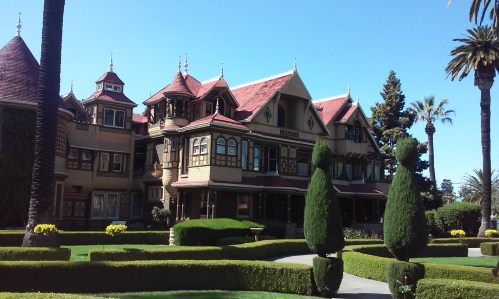
We had just got through a crowded parlor, when Dr. Cottam asked me what had become of Mrs. Haas. I though she had been by his side, and he fancied she was by mine. The fact was, we had lost her. All my efforts to find her were in vain. I feared that she had mistaken, in the confusion of the momentary separation from us, other people for her new friends, and had, possibly, pursued and lost them in the extensive grounds which were thrown open to us. Morning broke. It was clear daylight before I gave up my search. It was not till near two o’clock next day that we heard anything of Mrs. Haas. At about that time a servant knocked at my door, to say that he had been earnestly requested by a young, who appeared to be in great distress, to make out where she could find Mrs. Winchester and Dr. Cottam. There could be no doubt, notwithstanding the slight inaccuracy that my friend had turned up. I had a housemaid go to the guest room and summon Dr. Cottam. I went down to the parlor and reunited with Mrs. Haas. She told me a story to account for having failed to recover us for so long. Very late, she said, she made a detour and wandered around, not before long becoming afraid and getting lost. She got into the Crystal Bedroom in despair of finding us, and had then fallen into a deep sleep which, long as it was, had hardly sufficed to recruit her strength after the fatigues of the ball. It the midst of my perplexities, an anxiety of far more urgent kind presented itself. My dear friend began to lose her looks and health, and that in manner so mysterious, and even horrible, that I became thoroughly frightened. #RandolphHarris 8 of 8

People, since as long ago as the 1800s, have reported a vast array of unexplained events, experiences, and sightings at what is now known as The Winchester Mystery House. Over the years, people have reported bone-chilling sightings ghosts, angels, demons, fairies, giants, orbs, lights, mist, vampires, witches, warlocks and werewolves. In 2007, a man was attending Santa Clara University, and he was lucky enough to get hired as a tour guide at The Winchester Mystery House. He had no sooner moved into his apartment and had the telephone installed when he received a call warning him never to return to Sacramento again. During a later call, a woman with a high-pitched voice informed “G” that he was being kept under surveillance by a group who felt that he had acted unjustly in the past by not returning things to their proper owners. G emphasized that he had led a very quiet life as an undergraduate.

Yet he probably received 30 or more telephone calls from anonymous voices advising him not to return to Sacramento. The voices reprimanded him for having taken something that did not belong to him. G said that he did not carry anything with him that was from Sacramento and did not often visit the beautiful city, and he seldom discussed his life with any but a few of his closet acquaintances. He wondered who could have possibly taken such a long-term interest in him? About the third year after working at The Winchester Mystery House, a guest unknown to him stopped to say hello. G knew that such an act was hardly unusual, since guests will often do this to find out interest facts about tour guides and secrets about Sarah L. Winchester’s mansion. However, he noticed the boy was strangely inquisitive. G was astonished when the teenager drew a design on a piece of paper that he had seen somewhere in the mansion. He smiled at G, then asked if he knew what the symbol meant.

When G pressed the boy, in turn for some answers, the guest threw away the design, laughed, and said that he was just fooling around, that he did not mean anything about it. G never saw the alleged guest again. He descried him to a could of tour guides, but no one was able to identify him. After several years of watching at The Winchester Mystery House, G graduated from University. He had not been in possession of his diploma for more than four days when someone rang his apartment and scolded him for taking things that did not belong to him. The voice told G that he should always leave things where they were. He reported to his supervisors that he kept receiving mysterious calls. On one occasion the voice told G that he has discovered a strange key to other dimensions, but the entities had long since reclaimed it. However, apparently, some spirit masqueraders were determined that he should never forget the day he came into contact with an artifact from another level of being. What is The Winchester Mystery House?

And please be sure to check out the online gift store: https://shopwinchestermysteryhouse.com/


Hypnotized, Mesmerized by What My Eyes Have Seen?

Hostility—Probably the most common expression of aggression, ranging from mildly edgy to snarling. Being on the receiving end of hostility can be not only very unpleasant but also sometimes scary, because we know that whoever is delivering it has us in their sights and out of their heart, with attack weaponry ready for reloading. The majority of gang rapes by students are women. This behavior simply cannot be understood—although the volumes of commentary and analysis generated about the Central Park gang rape case in the Spring of 1989 have attempted to do so—without consideration of the perpetrators’ attitudes toward women and of women’s roles in the society and subcultures in which group sexual assaults are practiced and tolerated. A large number of recent studies of college students have identified the relationship between traditional sex-role attitudes to be more strongly correlated than antisocial personality with tolerance to rape. Traditional gender-role orientation are associated with rape-tolerant attitudes, and traditional attitudes toward female sexuality are associated with higher levels of sexual aggression. Some fraternity men are seen as more sexually aggressive than other college men and this may be due to a combination of reasons such as fraternities that are investigated are disproportionately ones with aggressive sex-role attitudes and socialization. For example, 156 tribal societies are been discovered and classified as rape-free or rape-prone. Most of the rape-probe cultures have prescriptions for gang rape, rather than individual rape. #RandolphHarris 1 of 21

Fraternities can be described as tribal societies as they form their own culture and associate with their own people. One cultural characteristic that was strongly associated with the prevalence of rape was having special places for men and special places for women. Among many fraternities and sororities, for example, each college campus (village) has a men’s house, where all the men live together; women and children live in separate dwellings. Thus, it is postulated here that group sexual assaults are most likely to occur in sex-segregated men’s housing or college campuses. Perhaps recognition of this patterned was formulated by democrats who want to do away with gender segregation and make it seem like requiring admission of women to fraternities will reduce aggressive and antisocial behavior. However, men should be able to have boys clubs, boys sports, which are allowed to remain segregated. If someone wants sports and clubs to have coed admission, perhaps they should form another society. Some parents do not want their boys to be distracted by hanging out with females. They would rather have them learn to socialize with other men, focus on their studies and work, and occasionally have coed parties. What should be done to reduce aggression and inform students of what rape is needs to be accomplished through education and keeping students from binge drinking by teaching them their limit. All we can do is provide people with better educations, but we cannot prohibit everything, nor change everything. #RandolphHarris 2 of 21

In rape prone societies, the genders are separated not only physically but also by rigid gender-role differentiation in which the male role is more valued. Thus, we might expect gang rapes to be most common among men who not only live apart from women but also perform roles closed to women (exempli gratia, football players and fraternity members). Allowing men to become cheerleaders is seen as welcomed because they are able to help the women highlight their skills and talent, but it is still a female dominated sport. Many people would actually like to see more cheerleaders perform on campus and on TV because dance has become so advance these days that it is impressive. Also, the traditional looking men and women, in their respective uniforms, is a sign of assimilation, which people from the old World like because it looks neat, much like the cookie-cutter houses in the suburbs. People like clean lines and organization. Nonetheless, in rape prone societies, which are sometimes labeled as male-dominated, a woman’s violation of her prescribed gender role may be punished by rape or the threat of rape. One of these prescriptions is that women are supposed to be sexually naïve and inexperienced. Gang rape is a punishment for promiscuity and can be seen as means of controlling women’s sexuality. Adulterous or promiscuous women are punished with gang in some cultures. Cultures believe they much discipline female receptivity to maintain the family structure. #RandolphHarris 3 of 21

However, one of our goals in society should be to teach men and women to have more respect with each other. It has been noted that men who grow up around women and are taken in by them and seen as an individual, tend to have more respect for women, and are less likely to be interested in them sexually, even if they are heterosexual. The idea in our culture is that all boys and men should be taught to respect women and ask themselves, how would they want someone to treat their mother, daughter or sister in that particular situation in which they find themselves in. And women should also ask themselves the same questions when it comes to dealing with men. How would they want someone to treat their brother, son, or father. We have to go from this thesis that these are the end of days and the World is a wild and out of control savage land and understand that we are not savages and can do better. We have to live in accordance with God’s rules and laws and treat others as we would want to be treated. Nonetheless, male student attempted to explain to me why a woman who charged several football players with rape and assault had not in fact been raped. Hi explanation was that, by dating two of the men who were close friend and having sex with each, she had hurt their feelings. They were angry at her for being sexually indiscriminate and, joined by other players, “ganged up” on her in revenge when she came to visit. The norm is that women are supposed to be sexually selective. If they are not, they may be “fair game,” or worse. #RandolphHarris 4 of 21

However, we are a society that is very advance and we have words. Perhaps we need to teach our children what rape is, how to avoid it, and to learn to communicate with each other when their feelings are hurt, instead of acting like heathens and assaulting people or damaging property. You also have to understand that while a man or a woman may flirt with you, even to the point of rolling around in your bed with you, that is they say “Stop!” that they may not be ready to have sex. They may want to wait or may need to attend to hygiene matters and will be more willing at another time. In the 1970s, women would say things like, “Let me go powder my nose” or “Let me freshen up a bit.” Those phrases may be safe ways of saying stop or giving one a chance to actually freshen up and may be accept by a man better than a hard “No!” or “Stop!” That way, he may not get angry or feel rejected, and it could give one a chance to escape a dangerous situation. A student at another college told me of plans his fraternity made for “running a train.” The woman was selected weeks in advance. They believed she was sexually promiscuous and therefore would not “mind.” If a young unmarried women in some societies takes a lover, she is supposed to be available to all men. If she refuses, she will be gang raped. Therefore, also have an idea about the type of person you are getting involved with, get to know them and their culture. They may not be the right one for you. Characteristics of gang-rape victims—the mean age of the victim in the 24 cases of campus gang rapes discussed in this view was 18; usually they were first-year students who were inexperienced with campus life. #RandolphHarris 5 of 21

Victims of group assaults b acquaintances at fraternities and men’s dorms tend to have to characteristics: They are naïve, but they have somehow gained a reputation among the men for being promiscuous. A “perfect victim,” from that point of view, was the complaining witness in a Sacramento State case. At the age of 21, he was divorcing the man she had dated from the age of 15; she had been at the university for a few weeks. To the 18- and 19-year-old men she accused, she seemed a racy character. Not only was she older and a divorcee, but also she had sneaked into the men’s form on prior occasion. One mad told the other, as they rode a bus to a football game that she looked like a “fourth of July slut,” and that he had had sex with her that first evening, within hours of meeting her. (She denied it.) Generally, women who habitually socialize with a group of men, and therefore are more often available to them, are no more likely to be victims of a group sexual assault than social outsiders are. The reason seems to be that social insiders are cognizant of the group mores. Sorority women learn from their sisters what different behaviours “mean” within the system. For example, they learn not to go upstairs to the bathroom at a fraternity party unless accompanied by another woman and that getting drunk is taken by the men as a signal of availability. Also, many of these men may be drunk and have no idea what they are doing. They could be in the “blackout” state and not even realize it. Women who are not part of the same social set as the men may be ignorant of the rules. #RandolphHarris 6 of 21

Consequently, they miscommunicate their intentions by violating the norms or may unknowingly take risks, and become target of sexual assault. Despite their knowledge of these rules, several of the victims in the 24 case were girlfriends or long-term friends of the perpetrator who were lulled into trust, thought they were protected in violating the rules, and found themselves betrayed. The measures being taken on college campuses to reduce the frequency of sexual assault may not ameliorate the problem of acquaintance gang rapes. Such measures include having separate forms for men and women, restricting visitation, and having better campus lighting. These policies and practices admittedly re designed to prevent sexual interactions among college students altogether or are orientated toward reducing the incidence of stranger rape. The cultural and attitudinal correlates of group sexual assault and the conditions under which campus gang rapes have occurred demonstrate that restricted access between the genders have occurred demonstrate that restricted access between the genders will not remedy the problem. Profound attitude change is necessary. With a few notable exceptions, educational efforts to reduce rape are primarily directed at or attended by college women rather than men. Although such education may help women to recognize when they have been raped, it will be less effective in reducing group assault than would educating those who have a choice about engaging in it. Prevention must begin with education of young men, particularly those who belong to male groups. #RandolphHarris 7 of 21

Attitude change in two areas will be necessary for men in groups to desist from joining in sexual assaults. The first such needed change is in attitudes toward women and understanding of women’s sexuality. It seems to be particularly important to convey that a woman who chooses to be sexual, perhaps with several different individuals, is still sexually selective and is not available to the population at large. Also, women should be allowed to dress sexy without being seen as whores of sluts. It is a misconception common among society that any woman who dresses or behaves “provocatively” is thought to be directing her seduction at all men who happen to see her and not at a particular men. Some people who dress provocatively are only doing so as a means of seeing how attractive they are or because they really like the fashion trends and want to be on the cutting edge of high fashion. For some women, dressing sexy boosts their self-esteem, not because of the attention they get, but because it makes them feel better about themselves. Wear as wearing baggy jeans, sneakers, messy hair and a sweatshirt every day might depress them because that is not what they consider attractive. It does not mean she is inviting you to harass her, that is just how she likes to look and she has every right to. An even more difficult area of change that would effectively reduce sexual assault is men’s attitudes toward themselves and their own sexuality. It is instructive to consider how men involved in group sexual assaults or “trains” may differ from those who find the practice unappealing and would not participate. #RandolphHarris 8 of 21

My interviews have yielded two characteristic attitudes of men who are repulsed by the notion. They feel that sex is private (they reject sex as an arena for “cooperation and competition”); and they feel tht sex is intimate (they reject sex without caring about their partner). Although attitude change at the individual level might reduce the campus acquaintance rape rate, it does not address the problem of group norms and group pressure. Yet, attempts to educate the groups as such will probably succeed only when the perspective presented is endorsed by highly regarded group members. In the absence of such leadership, an alternative is to diminish group cohesion and decrease opportunities for group assaults by dispersing members throughout campus residences. Comparing practical strategies, breaking up male groups would probably be more effective in reducing group assault than attempting to keep women out of men’s dorms, but it also could cause men to drop out or not enroll in college. Kids from wealthy families may simply go work for their parents after high school and universities would lose out on a lot of funding and they may start downsizing and shutting down. The anti-hero exhibits some of the qualities associated with the villain, ranging from brutality to cynicism to an apparent lack of empathy, yet is capable of taking heroic action, albeit in a far less glamorous or admirable way than the hero. The anti-he is a shadow-infused hero, a tortured rebel, brooding visionary, a morally complex revolutionary, a deeply flawed doer of good alone with considerable damage. The anti-hero is messy. Our darkness unleased with just enough light and care, seizing our attention and perhaps also our begrudging admiration. #RandolphHarris 9 of 21

As an example of the utility of the situational view, consider this. In mental hospitals, we usually find that behavior is tolerated which would cause witnesses great anxiety on the outside. In fact, patients are often employed within the hospital community in the most exacting of tasks for persons of their socioeconomic status, even while exhibiting the most garish situational improprieties. This functioning is called “a good hospital adjustment,” and the apparent capacity of these patients tend to be attributed to the “protectiveness” of the hospital environment, an explanation that allows everyone to go on thinking of the patient as sick. Upon examination, however, we find that a basic way in which social life on the inside differs from that on the outside is that insiders are persons whose threat to the situational order has been beautifully met by according them the status, with its accompanying incarcerations and stigmatization, of hospitalized mental patients. There is no need to sanction negatively each infraction because the very setting in which these infractions occur is, in itself, a continuous negative sanction. The infraction is something that has been paid for in advance. What was dangerously offensive to the public weal on the outside is an unimportant thing on the inside. The patient who actually come to like the hospital life may do so partly for this very reason. Being thoroughly accused of insanity, they need not fear the profound humiliation and embarrassment which often follows when this accusation is made by previously unsuspecting people. #RandolphHarris 10 of 21

A situational analysis, then, suggest some alternatives to the psychiatric view, but in so doing points up the social functions of the medical model. Psychiatry and mental hospitalization in part can serve as the therapy that our society gives to its threatened proprieties. However, this is, alas, a costly cure, one part of which is grimly borne by the state, and one part by the offender. There remains at least one serious question. Granted that symptoms of mental disorder are often instances of situational impropriety, it cannot be because of this (it is argued) that psychiatry is concerned, because there are other situational offenses and situational licenses with which it is not concerned. Insolence, contempt, indifference, presumption—all are qualities expressed through situational impropriety, and yet it is appreciated that persons expressing these qualities need not be sick. Similarly, men at conventions may indulge in all kinds of antics; but no one would automatically claim that such persons were insane. So, too, there have been notable aristocratic eccentrics who have affronted many proprieties and in spite of this escaped the charge of insanity. “Given the situation,” one would say, all of these antics are understandable and perfectly consistent with mental health. A problem here is the term “situation,” for in this context is has a special meaning. The situation’s gathering, as used in this report, is affronted in many of these cases. However, the social circumstances of the offender are such as to render one immune to penalization. #RandolphHarris 11 of 21

Whether we deal with one offender or with a group of them indulging jointly in the same offensive practice is not the issue; the question is whether the offender is in a position to commit situational offenses. Society, indeed, might get hopelessly clogged without such deviation. A mental symptom, however, is a situational offense that the offender does not get away with; one is in a position neither to force others to accept the affront nor to convince them that other explanatory grounds ought to be accepted. Situational requirements are of a moral character: the individual is obliged to maintain them; one is expected to desire to do so; and if one fails, some kind of public cognizance is taken of one’s failure. However, once this character of situational obligations is granted, we must see that a study of them leads off in may different directions. We may expect to find many different motives for complying with them, many different reasons for breaking them, many different ways of concealing or excusing infractions, many different ways of dealing with offenders. We may also expect to find that rules maintained or broken before one audience will not be handled in the same way by the same person when one is before another audience. And, of course, we find that an involvement ruling upheld in one community will not be honored in the next. One theme of this study, then, is that a moral rule is not something that can be used as a means of dichotomizing the World into upholders and offenders. #RandolphHarris 12 of 21

Indeed, the more comparative information we gather about a moral rule, the less easy it becomes to make statements about an individual who breaks it. Certainly we should hesitate to accept without further evidence the common-sense and psychiatric view that there is a unique class of situational offense that requires the student to shift from the social plane to a special one bearing on the profoundest aspects of the personality. If, then, we see inmates of mental hospitals as individuals who infringe involvement rules, and if we obtain a more sophisticated view of these rules, it will be possible to question somewhat the hard-earned conception that inmates necessarily are “sick persons.” Even a loosely defined social gathering is still a tight little room; there are more doors leading out of it and more psychologically normal reasons for stepping though them than are dreamt of by those who are always loyal to situational society. The regulation of communication conduct is not all there is to public order, but certainly this regulation is important enough to consider on its own, with concepts tailored to its particular demands. A special concern is that the symptomatology of the “mentally ill” may sometimes have more to do with the structure of public order than with the nature of disordered minds. By virtue of being in a social situation that is itself lodged within a social occasion, individuals modify their conduct in many normatively guides ways. The persons present to one another are thus transformed from a mere aggregate into a little society, a little group, a little deposit of social organization. #RandolphHarris 13 of 21

Similarly, the modifications in their behaviour which they suffer by virtue of finding themselves in a particular social situation—their enactment of situational proprieties—constitute, when taken together, a little social system. May I repeat: when in the presence of others, the individual is guided by a special set of rules, which have here been called situation properties. Upon examination, these rules prove to govern the allocation of the individual’s involvement within the situation, as expressed through a conventionalized idiom of behavioural cues. This allocation entails appropriate handling of matters we can discern as occasioned main involvements, “aways,” occult involvements, auto-involvements, mutual-involvements, margin of disinvolvement, and so forth. The enemy is a deceiver, and as a deceiver one will work and prevail in the later times. “Success” or “defeat” is no criterion of a work being of God or Satan. To some Satan is an anti-hero, he is not the Anti-Christ. The Anti-Christ is opposite of God. There could be an entity, other than Satan, who is by far darker and more destructive. Recall, Satan was the bringer of light and has some evil qualities. Nonetheless, calvary stands forever as the revelation of God’s way in working out His redemptive purposes. Satan work for time, for he knows his time is short, but God works for eternity. Through death to life, through defeat to triumph, through suffering to joy—this is God’s way. Knowledge of truth is the primary safeguard against deception. The “elect” must know, and they must learn to test and “prove the spirits” until they do know what is of God and what is of Satan. #RandolphHarris 14 of 21

The words of the Master, “Take heed, I have told you,” plainly imply that personal knowledge of danger is part of the Lord’s way of guarding His own. Those who blindly rely upon “the keeping power of God” without seeking to understand how to escape deception, when forewarned to “take heed” by the Lord, will surely find themselves entrapped by the subtle foe. Mechanical decisions and mechanical actions always contradict the methods of the work, and harm your work and your position in the work. If you cannot decide yourself what is more important and which way to choose, you must ask me. If you are seriously in the work and want to be in the work, you must not make any decision which may affect your life without first asking my opinion. Your own decisions in serious cases are bound to be based on self-will. However, you cannot ask my opinion or my decision when your decision is already made and you have already begun to act on the basis of it, because that means self-will in action, and in such a case it I too late to ask me. Questions as to my opinion and my decision when your decisions are already made, are really manifestations on insincerity with yourself and attempts to deceive me by false pretences. Try to realize that mechanical actions and mechanical decisions are always based on considerations outside the work (even if you persuade yourself that the result will be useful for your work), considerations of pleasure, of convenience or comfort; or they result from negative emotions or imagination. #RandolphHarris 15 of 21

If you are in the work and wish to be in the work, try to understand the most mechanical manifestation is lying to me or suppressing the truth for me. Demand for complete truth does not refer to people only beginning to work with me. They must make long preliminary work on mind and consciousness before complete truth becomes necessary and obligatory. However, when they realize the necessity for personal help, and when I find that they are ready and can help them, the principle of complete truth becomes obligatory. And it is certainly obligatory for all people who have been in the work for five years and also for some who have been in the work much less but have already formulated their aim. Remember that your chief work mut be on self-will. One begins to give up one’s self-will by accepting rules, but one must be sincere about it. Later one must give up one’s self-will in all serious matters and accept another person’s will, in this case, mine. Only by doing this, and doing it with full understanding of the necessity for doing so, one will begin to acquire slowly one’s own will. Really, the very act of giving up one’s self-will is the first act and the first manifestation of real will. The four lines of work on oneself can be designated: intellectual work—preparation; work on consciousness—aim; work on emotions—means, energy; work on will—control, and also energy. There can be discovered a beautiful insight into the human soul. One must become aware of the loneliness we experience as human beings. The truth is that no one can actually experience the deep emotions another person feels. #RandolphHarris 16 of 21

When one is forced to search further within oneself and accept the feelings one has repressed and refused to remember, the truly disturbing memories will be revealed. One can then think about one’s illness in terms of something real that has occurred in one’s life. When reliving all the memories that had been previously buried, it will release a tremendous need to relate to how one feels. You may not even want to suppress your thoughts any longer because they are so very real and need to be communicated to someone. When another person becomes a significant part in your self-awareness and helps you to become more of a real person, this can make one want to express one’s feelings to you. Only one knows the torment of one’s pain and somehow is able to endure it. No one else can feel the terror you hide deep in yourself. People need to speak to you, love you, and attempt to experience your distress. Violent convulsions and pangs are attached to the soul and medication may only provide temporary calm. A person’s eyes can reveal one’s agonies. And when people gaze into a tortured person’s eyes, the heartache the see and feel can sometimes only be described through tears. Sometimes we can only respond to one who has been hurt in the depths of their heart and to the bottom of their soul with love, our heart, and by sending our sweet soul to them. We want so desperately to help other, but sometimes there is so little we can do to eliminate their despair. #RandolphHarris 17 of 21

The process in which the diseases of violence and hate destroys a victim’s mind and body is heartbreaking. One’s body may become completely rigid, the head may lean backwards creating a sort of backward arc. It is in this rigid state that the body becomes so strained that one is in the most pain they have endure physically and emotionally. To the victim, this can be terrifying, and those who care are unable to part from the victim’s side. Thankfully, the hospital staff and the doctors are often warm and understanding because sometimes only bedside manner is what keeps people alive. However, even medical staff are unable to restrain from becoming emotionally distressed when observing the terrible pain. Words cannot adequately describe how empathy and compassion can save a life. Each stage of a victim’s degeneration is hard to endure. The high fevers, bleeding, weakness. The best thing that can be done in these cases is praying to God to let the torment cease and that He allows the victim to find his or her peace. Payers may not be answered for what seems like an eternity. Every part of one who loves you can feel your pain; their hearts, their body, their very soul wants to help the victim, to somehow make one aware of how you know they are suffering and that you too are feeling the pain deep within your heart. You loved ones want you to always be aware of their love, your warmth, and their compassion. They hope within their heart and soul that the victim knows that he or she is deeply loved by every heart that takes care of them and has tried to ease their pain. #RandolphHarris 18 of 21

When it comes to hindrances in system negotiations, one important element that determines how the pie will be split is each side’s cost of waiting. Although both sides my lose an equal amount of profits, one party may have other alternatives that help partially recapture this loss. Suppose that the member of the union can earn $300 a day in outside activities while negotiations with the hotel management go on. Now each time the management’s turn comes, it must offer the union not only what the union could get a day later, but also at least $300 for the current day. The entries in our table change in the union’s favor; we show this in a new table. Once again the agreement occurs at the season opening without any strike, but the union does much better. #RandolphHarri 19 of 21
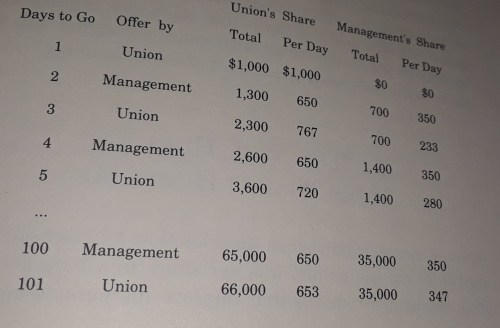
The result can be seen as a natural modification of the principle of equal division, to allow for the possibility that the parties start the process with different “hinderance,” as in golf. The union starts at $300, the sum its members could earn on the outside. This leaves $700 to be negotiated, and the principle is to split it evenly, $350 for each side. Therefore the union gets $650 and the management only $350. In other circumstances the management could have an advantage. For example, it might be able to operate the hotel using substitute employees while the negotiations with the union go on. However, because those workers are less efficient or must be paid more, or because some guests are reluctant to cross the union’s picket lines, the management’s profit from such operation will be only $500 a day. Suppose the union members have no outside income possibilities. Once again there will be an immediate settlement with the union without an actual strike. However, the prospect of the substitute employee operation will give the management an advantage in the negotiation, and it will get $750 a day while the union gets $250. If the union members have an outside income possibility of $300 and the management can operate the hotel with a profit of $500 during negotiations, then only $200 remains free to be bargained over. The management gets $600 and the union gets $400. The general idea is that the better a party can do by itself in the absence of an agreement, the higher will be its share of the pie that is the subject of the bargaining. #RandolphHarris 20 of 21

To “fusion” must be added “diffusion,” for no part of the World is now completely cut off from the rest. Messages get through the most tightly guarded borders. Despite Mr. Ceausescu’s perceived cruel censorship, many Romanians were able to pick up Bulgarian television from across the border. (Many Bulgarians, in turn, preferred Soviet television to their own.) Even before the revolution, Romanians knew the names of the anti-Ceausescu dissidents who risked imprisonment by calling for human rights. Their names were familiar from foreign broadcasts beamed into Romania. Most East Germans were able to watch West German television stations, which told them things their Communist government would have preferred to suppress. (Much like FOXNEWS on cable tells us things the communist democrats want to suppress.) Thus in 1989, when big anti-government demonstrations occurred in Leipzig, East Germans learned about it from West German transmissions. In the same way, they found out when Hungary opened its borders to East German refugees and where cracks were opening in the Berlin Wall. Those out of reach of these West German TV transmissions lived mainly in the Dresden region, which was spoken of as the “Valley of Ignorance.” These “valleys” are getting smaller. Cross-border television “leakage” is hardly new, nor is the fact that Voice of America and Radio Free Europe, the British Broadcasting Corporation (BBC), and others beamed shortwave programming into the communist countries. The Voice of America broadcast eleven and a half hours day, reaching an estimated 100 million Chinese listeners. It even broadcast simple instructions on how to avoid government attempts to “jam” the transmissions. What is different now, however, is the subversive media strategy employed by today’s revolutionaries. #RandolphHarris 21 of 21


Today, we’re saying “hey” 👋 to our Residence 1 at our brand new Magnolia Station community!

This home is beautiful, ideally located, and part of a wonderful neighborhood that you’ll be excited to call home.
Check out more details on the blog! https://cresleigh.com/magnolia-station/residence-1/


Out for Murder: Where Have All the Cowboys Gone?

The dreams of the Founding Fathers of the United States of America, who united the Thirteen Colonies in the 18th century, may have died or have at least become shaded in the 21st century. Nothing nettles America more than the hordes of diverse people whom she cannot exclude from her land. The new multitudes are jamming into the cities, making these centers the most fearful jungles of “manyness” and are threatening the Anglo-Saxon empire. The cities are becoming the storm center as well as the nerve center because they are where the serious menaces to America is lurking. They have not only become the home of roughs, gamblers, thieves, robbers, lawless and desperate men and women, rioters, skeptics, and the irreligious, but they are also the lair of wealthy and luxurious people who do not care for the Kingdom. This has allowed people to adopt a sense of pride in their deviant work, as they are gradually able to reconceptualize their killings and other crimes as an acceptable and rewarding business profession. Murder, the unlawful killing of a person, is considered a serious criminal offense in the United States of America, and it is punished by extreme penalties. In addition, most Americans do not feel that the penalties are extreme enough. In overcoming the intense stigma associated with murder, the hit man or hit woman lacks the supports available to more ordinary types of killers. #RandolphHarris 1 of 25

Some cultures allow special circumstances or sanction special organizations wherein people who kill are insulated from the taint of murder. Soldiers at war, or police in the line of duty, or citizens protecting their property operate under what are considered justifiable or excusable conditions. Individuals acting on their own, who kill in a spontaneous, “irrational” outburst of violence, can also mitigate the stigma of their behaviour. I mean, people will go ape for one minute and shoot, but there are very few people who are capable of thinking about, palling, and then doing it. Individuals who kill in a hot-blooded burst of passion can retrospectively draw comfort from the law which provides a lighter ban against killings performed without premeditation or malice or intent. At one extreme, the spontaneous killing may seem the result of a mental disease or dissociative reaction, and excused entirely as insanity. However, when an individual who generally shares society’s ban against murder, is fully aware that his or her act of homicide is (1) unlawful, (2) self-serving, and (3) intentional, one does not have the usual defenses to fall back on. How does such an individual manage to overcome his or her inhibitions and avoid serious damage to his or her self-image (assuming that he or she does share society’s ban)? This is the special dilemma of the professional hit man or woman who hires himself or herself out for murder. #RandolphHarris 2 of 25

There are two types of professional murders: the organized and the independent. The killer who belongs to an organized syndicate does not usually get paid on a contact basis, and performs his or her job out of loyalty and obedience to the organization. The independent professional killer is a freelance agent who hires himself or herself out for a fee. It is the career organization of the second type of killer that will be discussed. The organized killer can mitigate his or her behavior through an “appeal to higher loyalties.” He or she can also view his or her victim as an enemy of the group and then choose from a variety of techniques available for neutralizing the offense against the enemy. However, the independent professional murderer lacks most of these defenses. Nevertheless, built into one’s role are certain structural features that help one avoid deviance ascription. These features include: Contract. A contract is an unwritten agreement to provide a sum of money to a second party who agrees, in return, to commit a designated murder. It is most often arranged over the phone, between people who have never had personal contact. And the victim, or “hit,” is usually unknown to the killer. This arrangement is meant to protect both parties from the law. However, it also helps the killer deny the victim, or hit, is usually unknow to the killer by keeping the individual relatively anonymous. #RandolphHarris 3 of 25

In arranging the contract, the hired killer will try to find out the difficulty of the hit and how much the customer wants the killing done. These considerations determine the price. He or she does not ask about motive for the killing, treating it as none of his or her concern. Not knowing the motive may hamper the killer from morally justifying his or her behavior, but it also enables one to further deny the victim by maintaining one’s distance and reserve. Finally, the contract is backed up by a further understanding. If the killer fails to live up to one’s part of the bargain, the penalties could be extreme. This has the ironic effect that after the contract is arranged, the killer can somewhat deny responsibility. Reputation and Money. Reputation is especially important in an area where killers are unknown to their customers, and where the less written, the better. Reputation, in turn, reflects how much money the hit man had commanded in the past. Pete, who could not recall the exact number of people he had killed, did, like other hit men, keep an accounting of his highest fees. To him big money meant not only a way to earn a living, but also a way to maintain his professional reputation. People who accept lower fees can also find work as hired killers. Heroin addicts are the usual example. However, as Pete says, they often receive a bullet for their pains. It is believed that people who would kill for so little would also require littler persuasion to make the talk to the police. This further reinforces the single-minded emphasis on making big money. #RandolphHarris 4 of 25

As a result, killing is conceptualized as a business or as just a job. Framing the hit in a normal busineslike context enables the hit man or woman to deny wrongfulness or deny injury. In addition to the economic motive, Pete, and hit men and women discussed how the job was exciting, fun, game-playing, power, and impressive to their romantic partners as incentives for murder. However, none of these motives are mentioned by all sources. None are as necessary to the career as money. And, after a while, these other motives diminish and killing becomes only “just a job.” The primacy of the economic motive has been aptly expressed in the case of another deviant profession. Women who enjoy pleasures of the flesh with their customers do not make good women of the evening, according to those who are acquainted with this institution first hand. Instead of thinking about the most effective way of making money at the job, they would be doing things for their own pleasure and enjoyment. Skill. Most of the hit man and woman’s training focuses on acquiring skill in the use of weapons. “Then, he met these two guys, these two white guys…them two them two was the best. And but they stayed around over there and they got together, and Pete told [them] that he really wanted to be good. He said, if [I] got to do something, I wanted to be good at it. So, they go together, showed him, show him how to shoot…And gradually, he became good…Like he told me, like when he shoots somebody, he always goes for the head; he said, that’s about the best shot. I mean, if you want him dead then and there…And these two guys showed him, and to him, I mean, hey, I mean, he don’t believe nobody could really outshoot these two guys, you know what I mean. They know everything you want to know about guns, knives, and stuff like that.” #RandolphHarris 5 of 25

The hit man or woman’s reputation, and the amount of money he or she makes depend on his or her skill, his or her effective ability to serve as a means to someone else’s ends. “The result is a focus on technique. Like in anything you do, when you do it, you want to do it just right. On your target and you hit it, how you feel: I hit it! I hit it!” reports Pete. This focus on technique, on means, helps the hit man to “deny responsibility” and intent. In frame-analytic terms, the hit man or woman separates one’s morally responsible, or “principal” self from the rest of himself or herself, and performs the killing mainly as a “strategist.” In other words, one sees oneself as a “hired gun.” The saying, “If I didn’t do it, they’d find someone else who would,” reflects this narrowly technical orientation. Therefore, the contract, based on the hit man or woman with opportunities for denying the victim, denying the injury, and denying responsibility. However, this is not enough. To point out the defenses of the professional hit man or woman is one thing, but it is unlikely that the novice is at a point where he or she both lacks the conventional defense against the stigma of murder, and he or she has not yet fully acquired the exceptional defenses of the professional. How, then, does he or she cope? Negative experience is a feeling of disorientation. Expecting to take up a position in a well-framed realm, one finds that no particular frame is immediately applicable, or the frame that one thought was applicable no longer seems to be, or one cannot bind oneself within the frame that apparently apply. #RandolphHarris 6 of 25

One loses command over the formulation of viable response. One flounders. Experience, the meld of what the current scene brings to one and what one brings to it—meant to settle into a form even while it is beginning, finds no form and is therefore no experience. Reality automatically flutters. One has a “negative experience”—negative in the sense that it takes it character from what it is not, and what it is not is an organized and organizational affirmed response. Negative experience can occur when a person finds oneself lapsing into an old understanding of a situation, only to suddenly awaken to the fact that it no longer applies. In this regard, we should expect negative experience to be a special problem for the novice. For example, the first time he killed a man for money, Pete supposedly became violently ill: “When he [Pete], you know, hit the guy, when he shot the guy, the guy said ‘You killed me.’…something like that, cause he struck him all up here. And what he said, it was just, I mean, the look right in the guy’s eye, you know. I mean he looked like: Why me? Yeah? And then he said that at night-time he’ll start thinking about the guy: like he should not have looked at him like that…I mean actually [Pete] was sick…He couldn’t keep his food down, I mean, or nothing like that….[It lasted] I’d say about two months…” #RandolphHarris 7 of 25

Pete’s account conforms to the definition of negative experience. He had never killed anyone for money before. It started when a member of the Detroit drug World had spotted Pete in a knife fight outside an inner city bar, was apparently impressed with the young man’s style, and offered him fifty dollars to do a “job.” Pete accepted. He wanted the money. However, when the first hit came about, Pete of course know that he was doing it for money, but yet his orientation was: revenge. Thus, he stared his victim in the face, a characteristic gesture of people who kill enemies for revenge. Expecting to see defiance turn into a look of defeat, they attempt to gain “face” at the loser’s expense. However, when Pete stared his victim in the face, he saw not an enemy, but an innocent man. He saw a look of: “Why me?” And this discordant image is what remained in his mind during the weeks and months to follow and made him sick. As Pete says, “He shouldn’t have looked at him like that.” The victim’s look of innocence brought about a “frame break.” Given that the frame applied to an activity is expected to enable us to come to terms with all events in that activity (informing and regulating many of them), it is understandable that the unmanageable might occur, an occurrence which cannot be effectively ignored and to which the frame cannot be applied, with resulting bewilderment and chagrin on the part of the participants. In brief, a break can occur in the applicability of the frame, a break in its governance. #RandolphHarris 8 of 25

When such a frame break occurs, it produces negative experience. Pete’s extremely uncomfortable disorientation may reflect the extreme dissonance between the revenge frame, that he expected to apply, and the unexpected look of innocence that he encountered and continued to recall. The quotes above are from Pete, who is a hit man. Pete speaks of himself in the third person to explore the behavioral side of contract killing, or because his disassociates with himself when it comes time to hit a person. However, it is possible that is become possessed when he has a contract and enforces it. Demon possession is a condition in which one or more evil spirits or demons inhabit the body of a human being and can take complete control of their victim at will. By temporarily blotting out his consciousness, they can speak and act through him as their complete slave and tool. The inhibiting demon (or demons) comes and goes much like the proprietor of a house who may or may not be “at home.” When the demon is “at home,” he may precipitate an attack. In these attacks the victim passes from his normal state, in which he acts like other people, to the abnormal state of possession. Causes of demonic attacks vary. In many case, the targets do not deliberately call on evil spirits so these would latch onto them. Rather, they engage in “spiritual openings” that the spirits consider an invitation, which eventually leads to an attack. #RandolphHarris 9 of 25

There are aspects of life where a particular kind of situational respect is required. In daily speech, the terms “formality” and “informality” are sometimes used to refer to this central axis of situational regulation. And these terms might be tend to stress unduly the kind of clothing that is worn, the degree to which the sequence of acts in a social occasion is codified in advance and heavily enjoined, and the range of activities that is permitted. The terms “tight” and “loose” might be more descriptive and give more equal weight to each of the several ways in which devotion to a social occasion may be exhibited. For example, certain social settings in different communities are differently defined as regards tightness. Thus, public streets in Paris seem to be more loosely defined than those in Britain or America. On many Parisian streets one can eat a loaf of bread while walking to or from work, become heatedly involved in peripatetic conversations, engage in a full-course meal at an open café table, expect not to show surprise at oddly costumed persons, and so forth. In Anglo-American society one would have to look to summer resorts to find a similar degree of looseness. (In any case, Americans tend to find France and summer resorts relaxing for the same reason: many public gatherings seem to demand less attachment and respect, allowing one an easier depth of either private or interpersonal concerns.) #RandolphHarris 10 of 25

Similarly, in many Anglo-American communities a teacher will be expected to remain thoroughly oriented in to the situation during school hours, while in a rural community in Southern Italy we learn that: It is not uncommon for a teacher to come late to class and to spend the morning smoking a cigarette and looking idly out the window. In many geographical regions in America, a continuum can be traced regarding the formality of dree required of men who patronize public eateries. There are still establishments that require dinner jackets. Those next in line insist at least on ties and jackets, and may keep a supply of ties handy to accommodate would-be customers who turn up informally attired. At summer resorts in the same geographical regions, one can find establishments whose posted house-rules demand that T-shirts be worn in addition to swimming trunks, these establishments thereby distinguishing themselves from those final seats of beach informality in our society where eating, drinking, and dancing are allowed even barefoot men in swimming trunks. Incidentally, it might be noted here that societies seem to have their own limits regarding tightness and looseness and that these limits seem to change over time. In spite of some recent efforts to bring pomp back into American life, the most formal of evening clothes are becoming more and more rarely sed, and decorations such as jewelled tiaras can properly be worn these days at almost no occasion. #RandolphHarris 11 of 25

Any social establishment is itself likely to provide instructive variation in tightness or formality requirements, according to place and time. In Central Hospital, for example, attendants claimed that they need wear their ties and “look smart,” that is, situationally oriented, only when on that half of the campus that contained the administration building. On the night-shift, when doctors and nurses were absent, attendants would administer medication without bothering to take their cigarettes from their mouths, and tended to slouch more while sitting or standing. Therefore, one can draw from this example that there are ways one leaves oneself more open to demon possession. Are you doing things that are conducive of the Lord? Are you engaging in slander, gossip, fights, drugs, drinking, terrorism, premarital pleasures of the flesh, and not going to church? Well, these are ways to open yourself up to becoming possessed by demons. God’s regulations for good Christian behavior is very tight. “Why did you say we must remember ourselves when it is most difficult?” Our own exposure to life is both a threat and an opportunity. You know you must not do something. One part of you wants to do it. Then your remember yourself and stop it. Self-remembering has an element of will in it. If it were just dreaming, “I am, I am, I am,” it would not be anything. You must give a certain time simply to studying what remembering means, and what not remembering means, and what effect these have. Then you can invent many different ways to remember yourselves. #RandolphHarris 12 of 25

However, actually, self-remembering is not an intellectual or abstract thing; it is moments of will. It is not thought; it is action. It means having increased control; otherwise of what use would it be? You can only control yourself in moments of self-remembering. The mechanical control which is acquired by training and education—when one is taught how to behave in certain circumstances—is not real control. “Are we to understand that self-remembering means awareness?” Not only awareness. It means also a certain capacity to act in a certain way, to do what you want. You see, in our logical way of thinking, according to logical knowledge, we divide consciousness from will. However, consciousness means will. In the Russian language, for instance, “will” is the same word as “freedom.” The word “consciousness” means a combination of all knowledge; as if you had all your knowledge before you at the same time. However, consciousness also means will, and will means freedom. “What does giving up will mean?” Giving up childishness, inefficiency and lying. “Does giving up self-will involve giving up your own judgment?” It depends in what. What does giving will mean? How can it be achieved? You have mistaken ideas about this. First you think of it as a final actions: that you give up will and have no more will. This is an illusion because we have no such will to give up. #RandolphHarris 13 of 25

Our will last for about three minutes. Will is measured by time. If once we give up three minutes of will, tomorrow, another three minutes will grow. Giving up will is a continuous process, not one action. A single action means nothing. A second mistake is not remembering certain principles to which you give up will, such as rules. For example, there is a rule that you should not talk about this system. The natural desire is to talk, but if you stop yourself, it means that you give up your will; that you obey this rule. There are many other principles to which you must give up your will in order to follow them. In the 1950s the Ivy League colleges were faced with a problem. Each school wanted to produce a willing football team. The colleges found themselves overemphasizing athletics and compromising their academic standards in order to build a championship team. Yet, no matter how often they practiced or how much money they spent, at the end of the season the standings were much as they had been before. The average win/loss record was still 50/50. The inescapable mathematical fact is tht for every winner there had to be a loser. All the extra work canceled itself out. The excitement of college sports depends as much on the closeness and intensity of the competition as on the level of skill. Many fans prefer college basketball and football to the professional versions; while the level of skill is lower, there is often more excitement and intensity to the competition. #RandolphHarris 14 of 25

With the excitement and intensity in mind, the colleges got smart. They joined together and agreed to limit spring training to one day. Although there were more fumbles, the games were no less exciting. Athletes had more time to concentrate on their studies. Everyone was better off, except some alumni who wanted their alma maters to excel at football and forget about academic work. Many students would like to have a similar agreement with their fellow students before examinations. When grades are based on a traditional “bell curve,” one’s relative standing in the class matters more than the absolute level of one’s knowledge. It matters not how much you know, only that others know less than you. The way to gain an advantage over the other students is to study more. If they all do so, they all have more knowledge, but relative standings and therefore the bottom line—the grades—are largely unchanged. If only everyone in the class could agree to limit spring studying to one (preferably rainy) day, they would get the same grades with less effort. The feature common to these situations is that success is determined by relative rather than absolute performance. When one participant improves his or her own ranking, one necessarily worsens everyone else’s ranking. However, the fact that one’s victory requires someone else’s defeat does not make the game zero-sum. In a zero-sum game it is not possible to make everyone better off. Here it is. The scope for gain comes from reducing inputs. While there might always be the same number of winners and losers, it can be less costly for everyone to play the game. #RandolphHarris 15 of 25

The source of the problem of why (some) students study too much is that they do not have to pay a price or compensation to others. (Of course, the dumb thing to do is believe you are stupid and not study at all!) Each student’s studying is akin to a factory’s polluting: it makes it more difficult for all the other students to breathe. Because there is no market in buying and selling studying time, the result is a “rat race”: each participant strives too hard, with too little to show for one’s efforts. However, no one team or student is willing to be the only one, or the leader, in reducing the effort. This is just like a prisoner’s dilemma with more than two prisoners. Escape from the horns of this dilemma requires an enforceable collective agreement. As we saw with OPEC and the Ivy League, the trick is to form a cartel to limit competition. The problem for high-school students is that the cartel cannot easily detect cheating. For the collectivity of students, a cheater is one who studies more to sneak an advantage over the others. It is very hard to tell if some are secretly studying until after they have “aced” the test. BY then it is too late. In some small towns, high-school students do have a way to enforce “no-studying” cartels. Everyone gets together and cruises Main Street at night. The absence of those home studying is noticed. Punishment can be social ostracism or worse. To arrange a self-enforcing cartel is difficult. #RandolphHarris 16 of 25

It is all the better if an outside enforces the collective agreement limiting competition. This is just what happened for cigarette advertising, although not intentionally. In the old says, cigarette companies used to spend money to convince consumers to “walk a mile” for their product or to “fight rather than switch.” The different campaigns made advertising agencies rich, but their main purpose was defensive—each company advertised because the others did, too. Then, in 1968, cigarette advertisements were banned from TV by law. The companies thought this restriction would hurt them and fought against it. However, when the some cleared, they saw that the ban helped them avoid mutually damaging and costly advertising campaigns and thus improved their profits. As with advertisers, scientists are trying to stop means of losing control. The simplest imaginable approach to “guiding” nanotechnology would be to stop it. The easiest trip to plan is the trip that goes nowhere. This would have a certain appeal, if it were possible. Because of its enormous potential for abuse, nanotechnology has the potential of doing great harm. If we believe that human beings and human institutions are too incompetent to deal with nanotechnology—that they are too likely to turn it to aggressive military use, or too likely to make it freely available to madmen and women—then the option of stopping the development of nanotechnology may seem attractive indeed. However, the ethical question that must guide human actions is not “Would it be better to stop?,” but “Would attempts to stop make things better?” #RandolphHarris 17 of 25

One option is to push forward, emphasizing the need for caution but also the potential for good applications. The promise of medical, economic, and environmental applications, joined with the threat posed by a new arms race, provides a powerful motive for international cooperation. With positive goals and an inclusive stance, international cooperation is a promising strategy; it could provide a basis for guiding the development and application of nanotechnology. Another option would be to emphasize the downside, to focus debate on potential abuses in support of a campaign to halt development. In following this strategy, an activist group would want to downplay the civilization applications of nanotechnology and emphasize its military applications. Horror stories of potential abuse (including abuses that regulation could easily prevent) would help to make the technology seem strange and dangerous. This strategy might succeed in suppressing civilian research in many countries, though probably not all. Unfortunately, it would also guarantee funding for classified military research programs in laboratories around the World, even in the most morally honest countries, because of their then-inevitable fear of consequences if someone else developed nanotechnology first. In a hostile public atmosphere, research would be pushed into secret programs, and in secrecy the prospects for broad international cooperation would disappear. Attempts to stop nanotechnology for fear of a new, unstable arms race become self-fulfilling prophecies. Afterwards, the advocates of this view could then say, “We warned you!” as the World slid toward a war they themselves had helped to prepare. #RandolphHarris 18 of 25

Attempting to stop technological development is a simple but dangerous idea. The greater its success, the greater the polarization it would cause between technology advocates and technology critics. A moderate success would push research out of the public universities and into corporate and military research labs. A greater success would push research out of the corporate laboratories and into heavily classified programs. A truly amazing success would end most of these, leaving the only remaining military programs in the hands of those states with thoroughly repressive governments or alien ideologies. This, presumably, is not how one would prefer nanotechnology to be developed. The only genuine success would be a total success, and this would mean banning research not only in the United States of America, and Germany, and France, and the rest of Western Europe, and Japan, and the Soviet Union, and the People’s Republic of China, and Taiwan, but in Korea, South Africa, Iran, Iraq, Israel, Brazil, Argentina, Vietnam, and the part of Colombia controlled by the Medellin Cartel. Later, as computers improve, as chemistry advances, as more and more proximal-probe microscopes are built by high school students, total success would require banning kids from tinkering in suburban garages in Pittsburgh. Competitive pressures are pushing technology toward thorough control of matter, and we have seen that this goal can be reached by many different paths. Preventing one area of research would not prevent the advance, nor would stopping work in one country. #RandolphHarris 19 of 25

When the United States of America delays drug development through regulations by the FDA, drug companies simply switch research overseas, or non-U.S.A. companies pull ahead. Orbital-launch capability and nuclear-weapons capabilities are other examples. Very seldom has one country given these abilities to another, yet at least eight nations are able to launch satellites to orbit independently, at least seven have detonated nuclear devices, and another two are suspected to be within reach of nuclear capabilities. India and Israel have built bombs and launched satellites, though neither is considered a great power or a leading force in World technology. Where nanotechnology is concerned, many countries are capable of doing the required research, and more will be in the future. South Korea has both the needed educational levels and the ambition; visitors from the People’s Republic of China ask about nanotechnology. A decision at the top directing the resources of a nation could get results almost anywhere. The United States of America is only gradually being shaken from its illusion that it rules the World of technology. However, whoever rules the World of technology is generally the World leader. Like military force, economic clout is increasingly based on knowledge. High technology is congealed knowledge. As the super-symbolic economy spreads, the value of leading-edge technology soars. #RandolphHarris 20 of 25

In January of 1985 nearly 200,000 tons of Romanian 96-inch carbon steel arrived in North America and went on sale for 40 percent less than comparable Canadian steel. The story of that shipment began thirteen years earlier, when the Romanian dictator Nicolae Ceausescu placed his country’s nuclear development program under the aegis of the DIE, his foreign intelligence organization. According to Ion Pacepa, the former head of the DIE, who later defected to the West, teams of intelligence-trained engineers were provided with false papers and sent abroad to find jobs in the nuclear industry. According to Pacepa, these techno-spies actually landed positions in General Electric, Combustion Engineering, their Canadian counterparts of affiliates, as well as in Siemens, Kraftwerke Union, and AEG in West Germany and Ansaldo Nucleari Impiante itn Italy. Soon technical intelligence began barreling into Bucharest. Knowing that the Canadians were having difficult selling their CANDU reactor, Ceausescu, through the DIE, hinted that he might buy as many as twenty CANDUS. In fact, on October 27, 1977, the Romanians signed an agreement with the Canadians, the remainder with Romanian help. Canada thereupon laid down the welcome mat for Romanian nuclear engineers, many of them DIE agents. The result, according to Pacepa, was that “the DIE soon obtained intelligence covering approximately 75 percent of CANDU-600 technology, a modern security system for nuclear plants, technology and equipment for producing heavy water, and architectural and construction plans for nuclear plants built in Canada, West Germany, and France.” #RandolphHarris 21 of 25

Better yet, Romania was able to sweet-talk Canada into putting up a $1 billion loan, supposedly to be partly used as payments to Canadian firms involved in the project, the remaining Romanian costs to be paid to Canada in the form of countertrade or barter. By March 1982, the entire commercial deal melted down, as its were. However, Romania had already pocketed an advance tranche amounting to $320 million. Moreover, Romania also already had most of the technology it needed. All it needed to do now was send Canada goods under terms of the barter deal. Which is why Romanian steel entered Canada and began to undersell the domestic product. The Romanian scam, combining technological espionage with an economic rip-off, is less unusual than it might appear in a World in which research cost are skyrocketing and the cost of stolen technology is extremely inexpensive by comparison. In fact, according to Count de Marenches, former chief of French intelligence: “In any intelligence service worthy of the name you would easily come cross cases where the whole year’s budget has been paid for in fully by a single operation. Naturally, intelligence does not receive actual payment, but the country’s industry profits.” This—not just military considerations—explains why spies swarm around any center of new technology, why the Soviets and others have focused on Silicon Valley, why the Russians even tried to buy Valley companies. It is why Japan, too, is a major target today. (According to a former KGB officer stationed there, “Even the special audio equipment used by the KGB residency to monitor radio communications between Japanese National Police surveillance teams was stolen from Japan.”) #RandolphHarris 22 of 25

The entire Romanian system was modeled after the much bigger technology espionage apparatus constructed by the Soviet Union and centered in the so-called Line X of the KGB, its Directorate T, the scientific and technological section. A 1987 U.S.A. State Department report based on CIA data charged that one third of all the officials of the Soviet Chamber of Commerce and Industry are, in fact, known or suspected KGB or GRU officers. “Hosting over 200 trade exhibitions and about 100 Western business delegations annually, and inspecting thousands of goods each year give its employees extraordinary access to imported equipment…” The Soviets pay special attention to robots, deep-sea marine technology, and industrial chemicals. As the lack of hard currency makes it difficult for many in it, they are irresistibly drawn to illegal acquisitions. This suggests a coming step-up in technological espionage by the less affluent countries of Africa, Asia, and South America. If they themselves cannot use the knowledge their engineers or students steal, they can at least sell it. Indeed, one of the frequently ignored aspects of technological espionage is what might be termed the “resale” market. Furthermore, as knowledge become ever more central to economic, military, and political power, techno-espionage causes increasing friction among former allies. Note the recent changes that French intelligence has intercepted IMB transatlantic communications, passed them to Groupe Bull, and also planted agents in American computer firms. Witness, too, CoCom. #RandolphHarris 23 of 25

CoCom is the Paris-based Coordinating Committee on Multilateral Export Controls set up by sixteen nations to prevent the seepage of Western high technology to what was then the Soviet bloc. CoCom, the scene of escalating dissension among its members, now face possible disintegration. Members increasingly resent its restrictions on trade, and accuse one another of using it to gain commercial advantage. At the initiative of the Europeans and Japanese, moves are under way to shorten the list of restricted technologies and embargoed countries. However, in 1983, when the United States of America, the main force behind CoCom, proposed that Chia be struck from the list, a howl arose. Wester European nations fearing that the U.S.A. would take over the Chinese market vehemently opposed this proposal and kept it from ever seeing the light of day. Japan had recently been embarrassed by the Toshiba affair. This centered on a Toshiba subsidiary’s illegal sale to the Soviets of highly sophisticated equipment for grinding submarine propellers blades. Under heavy U.S.A. pressure, Japan tightened its own domestic export controls to precent a recurrence. One result, however, was to cut itself off from part of its Chinese market. Thus, Japanese machine tool exports to China plummeted by 66 percent in the single years 1987. Japan was furious, therefore, when a Cincinnati Milacron machining center turned up in Shanghai. #RandolphHarris 24 of 25

This kind of commercial war now threaten to explode CoCom altogether. Moreover, European economic integration means that the exports controls of individual European nations are weakened, since goods can flow freely among the twelve EC nations. The rise of the super-symbolic global economy also brings with it, as we saw, the creation of transnational or multinational business groups, along with multiple, boundary-crossing commercial alliances and joint ventures. These increase the cross-flows of knowledge, and make it far harder to police. For all these reasons, technology will join economies as a top-priority target for the World’s spies. The spy of the future is less likely to resemble James Bond, whose chief assets were his fists and Ultimate Driving Machine, than the Line X engineer who lives quietly down the block and never does anything more violent than turn a page of a manual or flick on his microcomputer. O Lord, our hope in every generation, we rejoice in the wonderous deliverance Thou didst bring to pass for our fathers. When Haman rose to crush us, Thou wast at our side. Thou didst bring to naught his base designs, delivering us from destruction. In our day, too, O Lord our God, we trust in Thy saving power. We know it is Thy will that evil be subdued and righteousness prevail. Keep us ever steadfast the no weapon formed against us may prosper. Inspire us like Mordecai of old, to be unswerving in our devotion to Thee. Like Esther, may we ever be eager to serve our people, even at the peril of our lives. Cause us to know as Mordecai knew, that whether we be born to high or low estate, we share alike our people’s lot. That though we dwell in safety, blessed with abundance, our brother’s hurt is our hurt, their sorrow, ours. Hasten the day when all oppression shall cease, and tyranny shall forever be crushed: when strife shall no longer set off man from man, but all shall unite in true brotherhood to serve each other, and thus, O Lord, serve Thee. #RandolphHarris 25 of 25


Here’s a quick tip…what’s the best way to avoid spring cleaning? Move into a new home! 😉

We’ve got the perfect options for you in our #CresleighMeadows at #PlumasRanch neighborhood. Find out more on our website!

#CresleighHomes

You Do Not Know My Pain
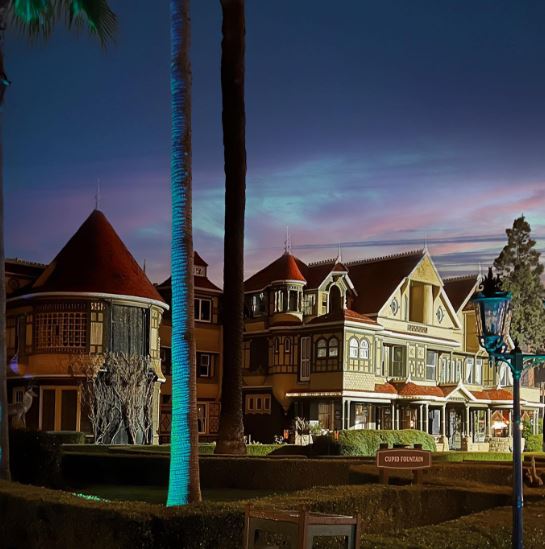
From ancient times, people have looked for positive guidance from the spirit World. However, they believed demons caused most of the World’s problems. Demons were said to cause comets, volcanic eruptions, and eclipses. Some people believed demons were the reason for illness, while others believed that demons possessed great powers of healing. For instance, pilgrimages to Epidaurus, in Greece, became World famous, and a night’s sleep in the sacred temple cured thousands. Appolonius of Tyana (3 B.C.—A.D. 96) was a well-known miracle worker who effected magic cures and was regarded by many as “a heathen Christ.” In the temple of Serapis at Alexandria, Egypt, multitudes of pagans were remarkably healed. The World in which Sarah Winchester lived was full of demons. Unlike most, Mrs. Winchester knew that demonic powers did not exist in just in the imagination of frightened men, and that they could not only cause harm, but she also knew of miracles through demon-energized healers and magic workers. It was a lustrous motionless day. Autumn bloom lay on the Winchester Estate, on heavy trees of the weald, on streams moving indolently, far across the fruit orchards. Mrs. Winchester held her breath and gazes. A silence distilled from years of solitude lay on the lawns and Victorian garden. Vying in evil, sorcerers cursed the Winchester family and their fortune. A succession of deaths, allowed Mrs. Winchester to build one of the most unique and beautiful mansions in the World and made her heiress to the Winchester Repeating Arms Company. Evil spells casted by Witches claimed the life of Mrs. Winchester’s husband, William Wirt Winchester, and her new born daughter, Annie Winchester. #RandolphHarris 1 of 9

Although she was stricken by grief, Mrs. Winchester went on to led an active, independent, and decided life. Her home became the focus of her life, and her mission was to continue its construction to ward off any demonic curse. “I shall never leave it!” she said, her heart swelling as if she had taken the vow to a lover. Legions of souls preserved the house in its integrity; and that was worthwhile. Mrs. Winchester was satisfied to carry on such a legacy. That even, when supper was finished, Mrs. Winchester sat with her niece Daisy by the fire she had lit in the salon. It provided a sense of radiance and gave the great room an air of expectancy and welcome. The portraits, the Italian Baroque Walnut cabinets, the Victorian needlepoint parlor Cherub face arm chairs, and charming English needlepoint rugs all look as if they had just been produced. “My dear, what a fine room!” said Daisy. “Yes! It is a delicious room. One of the warmest of the house. This is perfect.” Daisy had still to see the library, cozy and inviting, the Venetian dining room, the breakfast parlor, and the many bed rooms. As they crossed the threshold of the Blue Séance Room, guided by some light from its western window, someone was in the room already; they felt rather than saw another presence. Daisy, behind her, paused also; she did not speak or move. What she saw, or thought she saw, was simply a man in a hooked black cloak turning away from the mahogany desk. Almost before Mrs. Winchester had received the pression there was no one there; only the slightest stir of the needlework curtain over the widow. She heard no step or other sound. #RandolphHarris 2 of 9

They drank coffee in the Blue Séance Room. Daisy was a lovely woman, delicate of feature and voice, she could speak home décor one moment and her usual Parisian French the next. A faint shadow of pain passed over Mrs. Winchester’s face. Daisy looked out the window at the drifts of ivy hanging from the evergreen trees. Mrs. Winchester had exulted in her resolve to keep the Winchester Mansion to herself until she and the house should have time to make friend. But the uneasy feeling she had left her wanting to take the chill off. The house was enormous, mysterious, and drawn into its own secret past. “Why not come stay with me?” she said. “I know you would like to settle down somewhere in the country where you will not be disturbed, and I have plenty of room.” “Well, Aunt Sarah, your home certainly does provide the requisite seclusion. I would be honored to.” “I promise no one shall bother you—” Mrs. Winchester added, half-nervously: “Not even the spirits.” Was the solitude already making Mrs. Winchester superstitious? Mrs. Winchester walked Daisy to the bedroom she was to sleep in. They parted ways. While Daisy was dressing for bed she heard a knock, and saw Kaspian Gosta, the Butler’s round face just inside the door. “Is there anything wrong with your accommodations, my lady?” “Yes, what’s wrong is that it freezes in here.” “Nothing can be done, my lady. Everything has been tried.” “That will do, Mr. Gosta. I want a fire to be lit in the fireplace,” said Daisy.” “Yes, my lady.” The door closed on the butler. #RandolphHarris 3 of 9
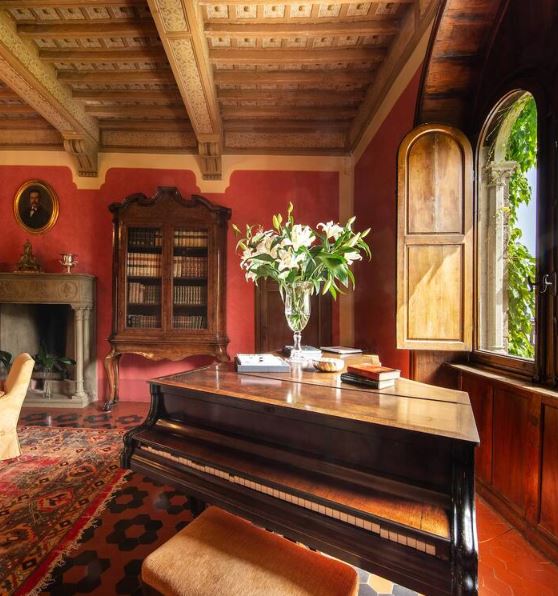
It was the witching hour, or so it seemed. Lights out, and only far-off sounds: a woman laughing hysterically, the crack of a gun. It seemed for a while there had been the faint thudding of drums. Daisy awoke. There was a man standing over her, he was hot, covered with sweat, he stretched uneasily in his clothes. The man emitted inhuman sounds: a piglike squeal. This reduced Daisy to a nervous wreck. She screamed and the made quickly faded away. She heard rapid foot steps in the hallway and then a knock at the door. “Come in,” she said. “My lady, are you okay?” “No, Mr. Gosta. There was someone in my room,” Daisy explained. “That is what I tried to warn you about, my lady. The specter like to keep the heat down in the house.” The next morning, she did not want to be alone in the house for more than a few minutes at a time. However, whenever she would go to Mrs. Winchester there was a strange wind that seemed to repel her from her door. Always, there was something not quite right about the Winchester Mansion, as far back as Daisy could remember. Neighbors and friends suggested that the Winchester fortune was cursed. “I never would believe it,” Daisy said. “That is not how I was brought up.” In her bedroom, she undressed and lied down, holding her rosary beads to her heart, as she hoped and prayed, just as she has over so many nights, that the freezing cold and the specters would stop. Mrs. Winchester employed a small workforce of men and women. By December, the fruit harvest in the orchards had been picked, packages, and dispatched to the respective buyers. #RandolphHarris 4 of 9
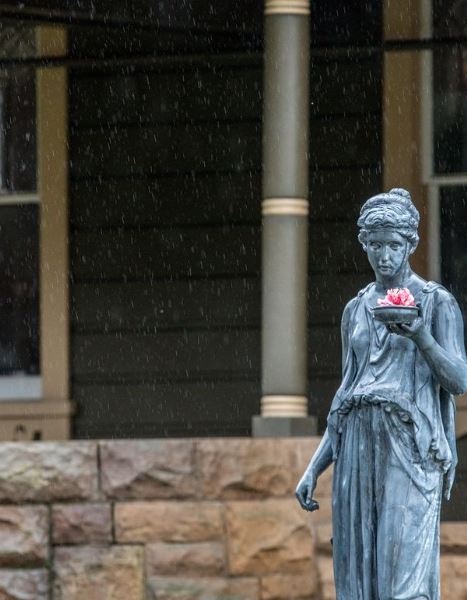
On October 25, 1896, shortly after she had gone to sleep, Daisy was wakened by a series of loud poundings and scratching noises on the ceiling. She could not tell where they were coming from. She left her bed—and met Mrs. Winchester on the stairs. She was agitated. “Were you making that racket?” Mrs. Winchester asked. “No, Aunt Sarah. I thought it was someone else.” They found all the first-floor gasoliers on and no one about. Mrs. Winchester asked who was last downstairs, if perhaps Mr. Gosta forgot to switch off the lights. However, Daisy was the last one and she swore she had turned everything off. There was a tangible presence in the Winchester mansion. One could hear it at all hours of the day and night. “I would be sitting and would hear it shuffling about,” Daisy recalls. “Not footsteps as such, but rustling and shuffling. I could not see anything. Not at first.” As the months passed, the presence gradually made itself known. Around the middle of January 1897, the Winchester mansion was awakened by a blood curdling scream in the night. Daisy was crying and shaking with fear. After a few hours she calmed down and went back to sleep when she felt something on her back. It was pushing her out of bed, but when she looked around, there was no one there. However, it felt as though someone was trying to eject her from the bed, as if she did not belong there. Then suddenly, the duvet was ripped off the bed, leaving her shivering. #RandolphHarris 5 of 9
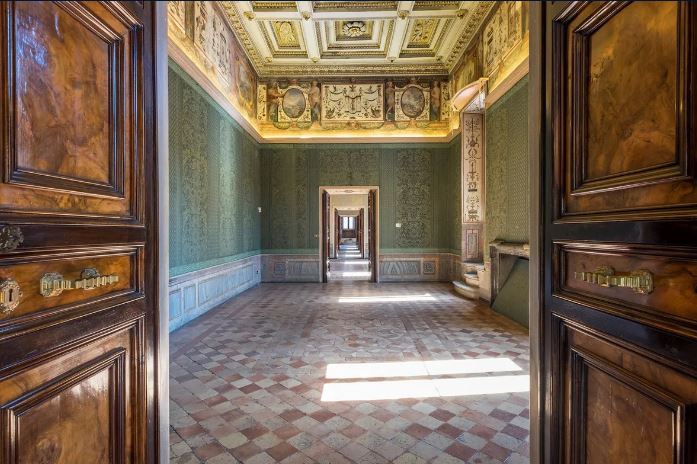
The next morning, Mrs. Winchester glanced about the great room, with its circle of warmth and light by the hearth, and the sullen shadows huddled at its father end, as if hungrily listening. She noticed that things moved in the room. Doors were left opened—drawers and things have shuffled through. In the night she would hear a lot of running and banging and the sound of horses’ hooves. It was like a cavalry of horsemen passing through the halls. When Mrs. Winchester drew back the curtains and looked out, the lamps on the gateposts were bathing the roadway in a soft light. There were no horses, but the sounds were still coming from the hallway. When she opened the door of her bedroom, the noises got louder, and she could hear men conversing, and shouting at each other. Mrs. Winchester could not understand what they were saying. She had no idea if it was even English. But the galloping and hammering and sawing continued, which was always followed by a terrible howl at dusk. As the peered through the sky, Mrs. Winchester would open her door and be surprised to find that certain rooms had been sealed off and new additions added to the house, along with the most exquisite furnishings. The next night while she was sleeping. Mrs. Winchester was awakened by a ferocious thud on the floor, and she heard Daisy screaming and hollering like she was in great pain. Mrs. Winchester quickly rushed to see what was wrong and found her limp on the floor, unable to move. #RandolphHarris 6 of 9
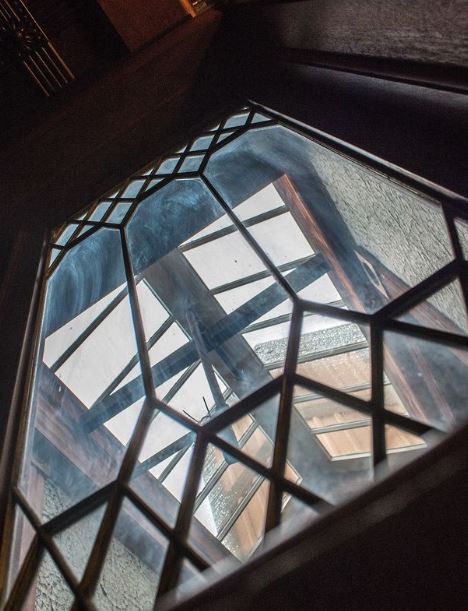
Mrs. Winchester was terrified. The room was as cold as an icebox and seemed darker than usual. Daisy’s face was white as milk. Dr. Odin rushed to the Winchester Estate, finding Daisy immobile and unable to communicate. He said that Daisy’s vocal cords were hoarse and that she had suffered a serious spinal injury with resultant loss of sight. After months of suffering and pain, on April 22, 1897, she was suddenly cured of her blindness. On May 31, 1897, Daisy was cured of her spinal trouble. The cures had apparently been wrought by Mrs. Winchester through séances. Satan is willing and able to perform diabolic miracles. Satanic healings, however, shift the physical disorder into the psychic plane by bringing the “healed” person into some type of occult bondage. The ability of such magicians is conditioned on the human plane by their inherent psychic power, and on the supernatural plane. Black magicians differ in strength and psychic ability to perform magical feats often described as Satanic Miracles. Strong magicians usually own their success to innate psychic powers. Very frequently they come from a family where the occult arts have flourished for generations. Their innate and inherited occult powers are frequently cultivated and enhanced by séances. To enlist the help of Satan and demons, a pact is often made with the powers of evil. The subject consciously and willingly gives oneself over to Satan and demonic agencies who will help one perform healing conjurations and other supernatural feats. Ordinarily the body is cut and the compact with the devil is written and signed in one’s own blood. #RandolphHarris 7 of 9

Everything was all right for a while, but the house became disturbed again at night by the sawing of wood. Daisy pushed on the gasoliers and could not believe her eyes. Men were in the hallway sawing wood really fast. She was surprised to find Mrs. Winchester and Mr. Gosta in the front parlor. “What’s going on?” Daisy asked? Mrs. Winchester was in a flood of tears. “Mrs. Winchester thought she saw a black monster with hooves in the bathroom,” Mr. Gosta explained. “But it is gone now.” What was happening in the Winchester Mansion was unnatural. The things were real, but they were not only under attack, the were also being protected by demons. The next time, Daisy was awakened by a loud thud in the far corner of the bedroom. There was an old woman with long, gray hair falling over her face, and a young man with heavy boots, and a dark stain down the front of his shirt. The old woman came towards her with her arms outstretched. Daisy ran to the door but it would not open. And through the door came a deep set of ancient eyes with a demonic face starting into her eyes. From that day on, the smile on her face died. She was always trembling. She stared almost blankly, and was always cold. Never had things in the mansion been so scary. Mrs. Winchester was amazed to see the change in her. Daisy was positively shaken. Mrs. Winchester would ask Daisy, “My dear, what is the matter.” And in a flat, cold tone, Daisy would reply, “You do not know my pain.” And she would look away. Although it heals, many people are psychically ruined through magic. Sometimes violet and sinister forces appear. This indicates that the origin of the damage is primarily of a spiritual nature. #RandolphHarris 8 of 9

I conjure thee, O fire, by him who made thee and all other creatures for good in the World. Welcome Spirit Botis and your 60 Legions of Spirits, O most noble King! I say thou art welcome unto me, because I have called thee through Him who has created Heaven, and Earth, and Hell, and all that is in them contained, and because also thou hast obeyed. By that same power by the which I have called thee forth, I bind thee, that thou remain affably and visibly here before this Circle so constant and so long as I shall have occasion for thy presence; and not to depart without my license until thou hast duly and faithfully performed my will without any falsity. BY THE PENTACLE OF SOLOMON HAVE I CALLED THEE! GIVE UNTO ME A TRUE ANSWER. Please blessed this house with great prosperity, abundance, wisdom, power and longevity. I think you for your empowerments which have served to assist my evolution toward divinity and power. Please take the spiritual wisdom that you bring and open the paths for more prosperity to flow into my life. Allow this sorcerous current to be a conduit of information which comes with it, and become more away of the precise reasons for the work upon the Pathway of Pacts. Allow me to understand this symbolism as well as the most powerful goal of the process. Meratsav tadad oybugird miy a iaruha acmerhtahsx iadzam hsuehgna mananahtoayhs ohgnanam adzad hsuehgnav acah tictahas hsutar ahta oyriav uha ahtay x7. Show various paths to self-mastery through the seven powers. #RandolphHarris 9 of 9

The Winchester Mystery House

The Winchester Mystery House is elegant, powerful, beautiful, mysterious and insidiously successful in whatever it does. It is a powerful aphrodisiac for certain occultists who are impatient with “parlor” esoteria. Where old systems weakened or visions grew dim, new ones were invented. It is impossible to find a single ideological thread uniting the Winchester Mystery House in its spiritual pilgrimage. One might glace at some choices, none of which stands up to scrutiny. Come and take a tour of the 110 of the remaining 160 rooms of amazement and wonder. Perhaps you will make contact with something special? https://winchestermysteryhouse.com/

And be sure to visit the online gift shop: https://shopwinchestermysteryhouse.com/

There is No Other Remedy

As a young lady, Sarah Pardee was the Belle of New Haven, Connecticut. Born in the heart of unsurpassing wild and romantic scenery and old legendary castles, she was highly cultured, a finished musician, an avid reader and spoke four languages. Long ago she learned of the existence of some papers which set out doctrines of witchcraft that might well have been the remnants of pagan rituals, hidden away and secretly practised since the conversion of Rome to Christianity in the fourth A.D. Sarah often muttered spells known in old Roman times; she astonish the learned by their legends of Latin gods. In 1862, Sarah married William Wirt Winchester, son of the famous rifle magnate. The son, although in ill health, carried on most ably with the newly named Winchester Repeating Arms Company. Cessation of the Civil War failed to hinder the prosperity of the progress of his company because migration to the West was in full swing. Invention of a practical repeating rifle accelerated success. The Famous Winchester Rifle, “The Gun that Won the West,” attained the dubious fate of “killing more game, more Indians, and more U.S. soldiers than any other weapon in this nation’s history.” Sarah was terribly shocked by the death of her month-old baby girl; in fact, it can be well believed she never fully recovered and this surely influenced some of her eccentricities. Added to this loss was the death of her husband 15 years later from Tuberculosis. #RandolphHarris 1 of 10

On arrival in San Jose, she immediately started remodeling the newly purchased, unfinished, eighteen room farm house. She found the planning kept her grief-disturbed mind occupied and she became thoroughly enthused. Financial problems were certainly no deterrent; allegedly she brought with her a fortune of $20,000,000 with her and had an average income of $1,000 a day. That is a great some, especially considering one could build a grand home for $5,000. Nonetheless, just how such precise amounts came to be public knowledge is unknown. However, these have been the commonly accepted figures for years and they do roll off the tongue (or pen) with a satisfying clink. Her lack of architectural training gave her little concern. Every morning she made the rounds with her ever patient foreman inspecting the latest progress. Some days she sketched plans on spot using a saw-horse drawing table and any handy material, often brown wrapping paper (and used both sides). From the foreman came no argument; he had only the problem of interpretation. However, glaring unusual features failed to discourage her and time was fleeting. Sarah simply ordered the error torn out, sealed up, built over, or around, or more likely, totally ignored. Hence came support for the conjecture that for her, this was a gigantic game of building-blocks! Mrs. Winchester communicated with the spirits to get many of the architectural details. #RandolphHarris 2 of 10

With the ceremonies and invocations or incantations addressed to Diana, a goddess, the female came down to Earth, established witches and witchcraft and then returned to Heaven. She was also involved in the planning of the Winchester Mansion. Some may think this is eccentric, but theosophy was all the rage among those interested in things in mystical late Victorian London and New York. Humanity was the study of comparative religion and philosophy and many investigated the mystic powers of life and matter. Mrs. Winchester rode in regal splendor in conveyances fitting to the era. First it was a Victoria with Liveried coachman. In later years came a French Renault, a Buick “Town-Car” and finally two Pierce-Arrows, on done in stunning blue and gold. Sarah L. Winchester’s presence was so sensational and the building of her mansion was so fast and massive that there was talk of a new secret society like the Order of the Golden Dawn. Some of these rumors were fueled by the highly publicized occult personal who were involved in activities at the mansion. Mrs. Winchester believed that the theory that witchcraft was identified with satanism and devil-worship was obscured. It was just the starting point for superbly colourful fictional writings. She was personally convinced that it was basically a pre-Christian Dianic cult and she had found the name Diana in writings about witchcraft all throughout history. #RandolphHarris 3 of 10

Unlike witches, who had no publc support because they were deemed to exist no longer, the phenomenon of spiritualism and clairvoyance had grown immensely in the Victorian era and had many prominent people among its belivers. There was also a strong lobby movement called the Spiritualists’ National Union which immediately began a vociferous campaign over the injustice which some witches faced, to which they enlisted the support of antrhopologists, lawyers and even some police officers. Many may not be aware, but at one time the laws allowed for witches to be prosecuted. However, there was no place for this type of discrimination in a new free society. Eventually the ancient Witch Act was repealed. Also replealed was Section Four of the Vagrancy Act of 1824 so far as it extended “to persons purporting to act as spiritualistic mediums or to exercise any powers of telepathy, clairvoyance or other similar power.” The two Acts were replaced by the Fradulent Medium Act, 1951 which, as the title explains, finally gave spiritualists and mediums the freedom to operate legally–unless they could be show to be obtaining money or kind by fraud. Any payment for the demonstration of psychic powers for the purposes of entertainment was also freed from the dangers of the law. The lawmakers had prised open the floodgates to allow easy passage for a new movement of witchcraft, paganism, satanism, occultism, spiritualism, mediums, clairvoyance, fortune-tellers, tarot card readers and newspaper astrologers. Authors on occule subjects were going to get a new lease of life too and, whether anyone knew it or not, this was the rebirth of witchcraft. Many reports on witch craft, often include the description of a “black man.” #RandolphHarris 4 of 10

Mrs. Winchester believed that “the man in black” described at meeting of witches’ covens was a priest dressed variously in dark clothing, or in skins, and wearing horns or antler. It was a ritual disguise, originally intended to represent the Incarnate God, that not merely existed in the practice of ancient ritual, and was copied by the witches of the Middle Ages, but still existed in contemporary witch covens she had experienced in Glastonbury, one of the most “witch-pressed” areas of the British Isles. What began to emerge through study of Mrs. Winchester is that witches possessed diabolic powers given to them by the devil. Sabbatic meetings were able to convince others that they were all able to drawn down the diabolic powers and the hordes of demons swirling through the air, in the Winchester Mansion, waiting to be summoned, by selling their souls to the devil. Many of the executed witches undoubtedly did indeed believe themselves to be servants of the devil, and acted out their magical rituals for that purpose and there were ample descendants employed in the Winchester Mansion. Mrs. Winchester’s auto science engineer, Fred Larsen, believed that she possessed incredible powers, including the fatal power of the evil eye and had the ability to fly, and he said he often saw werewolves and vampires around the estate, and other desperate evils of black magic—all of which he associated with witchcraft. #RandolphHarris 5 of 10

People truly believed that witches could fly through the air and were capable of transforming themselves into animals. Mrs. Winchester studied various ancient recipes for the preparation of witch ointments for these purposes, containing such ingredients as the fat of a deceased unchristened baby, mixed with wolfsbane, poplar leaves and other potent herbs. By this means, said the old textbooks, the witch could be carried through the air in a moonlight night “to feasting, singing, dancing, kissing, and other acts of venery with such youths as they love and desire mostly.” However, instead of child’s fat, Mrs. Winchester, because it was so horrific, Mrs. Winchester would use hog’s lard. She once carried out a test, using one of these recipes. Mrs. Winchester rubbed the ointment all over her body. She fell into a deep sleep for twenty hours. When she awoke, she suffered a sever hangover and made immediate notes of her experiences. She recorded wild dreams of flying through the air, and of monsters and demons. This dovetailed with the claim that witches were able to fly off to these exotic meetings at the Winchester Mansion, leave their bodies apparently asleep so that their husbands suspected nothing. This may explain why at night, passers-by heard ghostly music wafting from the dark mansion, as the bell in the belfry high in the gables would toll regularly at midnight to summon the incoming flights of spirits. It was also reported that it tolled again to warn these visitors to return to their sepulchres. However, once a week these spirits and witches and demons relaxed and danced in the Great Ball Room. #RandolphHarris 6 of 10

The devil was easy meat for the popular newspapers whose upsurge coincided with Mrs. Winchester’s arrival. The headlines soon began to appear whenever there was the discovery of the remnants of “black magic” rites in some secluded wood, a set of chicken bones arranged in the sign of a cross, a desecrated gravestone or some other outbreak of witchcraft. Any hint of witchcraft in Santa Clara County was sufficient to arouse immediate press attention and whip of a frenzy of interest, even as time progressed through the nineteenth century. The reaction was generally the opposite in areas of the country where witchcraft had been prevalent; they preferred not to speak of it. There was no better example of this than the murder of an old farmhand at the Winchester Mansion, in December 1899. It later became known as the “witchcraft murder” when the maid Victorian Venison discovered links with the occult. The victim, Stanislas De Duaita, farmhand and suspected witch, was found lying on his back under a willow tree, with a pitchfork driven through his throat and into the ground. A cross had been carved on his chest and the billhook which had been used was left lodged between his ribs, at the base of the cross. The Winchester mansion was surrounded by relics where spirits from the old gods were said to linger. There was even a Stonehenge where Duaita’s body was found, witches were said to hold their sabbats there. #RandolphHarris 7 of 10

Local villagers did not want to talk about the murder; they had convinced themselves that Stanislas De Duaita was a witch. He was said to have bred toads and sometimes harnessed them to a miniature plough and allowed them to run in the fields. This was known to be one of the methods of an infamous and malicious witch of the nineteenth century and was said to make the fields sterile and the harvests fail. The previous year, the harvests had been poor round the Winchester Mansion. And, so the story goes, the finger was pointed at Stanislas De Duaita. Then another coincidence was discovered, which later investigators saw as a precedent to Duaita’a murder—and which demonstrated the traditional methods of disposing of witches’ parts, that of blooding them so that as they bled their power vanished. Thirteen years earlier and just 80 acres away, a woman named Helena Petrovna Blavatsky died in exactly the same manner—speared and pinned to the ground by a pitchfork and with a cross carved on her chest by a billhook. On the occasion, a local peasant named Guido von List confessed to the crime; he said the woman had bewitched him. Hundreds of statements were taken in writing, and dozens of samples of clothing, hair and blood for forensic testing, but the investigation came to naught. Stanislas De Duaita had the dubious distinction of being the last known witch—if he was one—to die a brutal death on the Winchester Estate. #RandolphHarris 8 of 10

As the mansion continued to grow into this impressive Queen Anne mansion, the spirits requested more Gothic lines of the classical English Victorian. Constructed of the finest materials available, the house reflected essential Queen Anne elements—rounded tower, steep gabled roof and varied textures—at their loveliest. The fourth story had imported Italian wood shingles over redwood sheeting and the prominent corner turret had a wood shingle roof and curved windows. Stained glass windows were another prominent feature. All the trim in the house was redwood, with exception of some of the areas with handcarved oak. The details and quality of materials make modern architectural duplication virtually impossible. The staff complained to Mrs. Winchester that the house was haunted. The butler was awakened by sounds of footsteps approaching his bedroom door. As the foot steps stopped, the door was opened, and he was confronted by darkness. There were other sounds too: laughter and old-fashioned music. After the death of Mrs. Winchester, the mansion was an easy target for looters and vandals who used chain saws to remove staircases, fireplaces and light fixtures. Jackles of the night were literally tearing the house to pieces. Once more the mansion radiates Victorian splendor—though many of the remaining 161 rooms are off limits, but 110 are open to guests. Laughter is anything but eerie, cheerful voices echo through the halls, brisk footsteps are heard. But at night…well no one ever really likes to work too late. #RandolphHarris 9 of 10

After the mansion was opened for tours, one woman was prosecuted after police raided a séance she was conducted as a spiritual medium. Her clients included numerous well-to-do people, often anxious to make contact with the “other side” after wartime tragedies. However, it was well documented that during one of these séances of Victorian Venison’s, a young sailor who was aboard the Abigail, which wrecked on Wangerooge Hanover, manifested himself and told how his ship had been sunk with considerable loss of life. The sailor’s mother refused to believe it, saying that if this had happened, she would have been informed. “You will be, mother, three weeks from now,” came the reply from the dead son through the medium. And according to Mrs. Cohen, the confirmation came through exactly as predicted. At her trial, Mrs. Venison was offered to give a séance to prove her abilities. Witnessed also came forward in her defense, but their testimonies were unheeded. She was found guilty and sentences to thirteen months imprisonment. I do invocate, conjure, and command thee, O thou Spirit Vassago, to appear and to show thyself visibly unto me before this Circle in fair and comely shape, without any deformity or tortuosity; by the name and in the name IAH and VAU, which Adam heard and spake; and by the name of God, AGLA, which Lot heard and was saved with his family; and by the name IOTH, which Jacob heard from the angel wrestling with him, and was delivered from the hand of Esau his brother; and by the name ANAPHAXETON which Aaron heard and spake and was made wise. #RandolphHarris 10 of 10

Winchester Mystery House

Did you know that the floor in the North Conservatory could be pulled up so the water could drain easier without damaging the wood floor? Sarah really did think of everything🌿 Explore this room and more on tour this weekend! https://winchestermysteryhouse.com/

And while in the Bay Area, be sure to check out some other Victorian Homes open for tour.
Cohen-Bray House
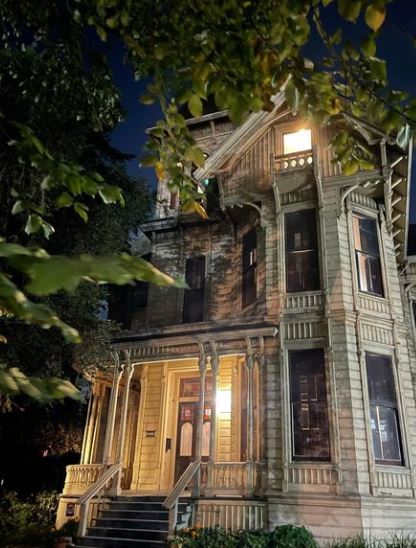
Some of our team had the absolute joy of visiting the Cohen-Bray House in Oakland yesterday. This Victorian style 3-story home built in 1883 filled with the original contents and interiors is a sight to see + has a wonderful story (we won’t give too much away as you will have to go and tour for yourself 😉). Tours offered every 4th Sunday of the month. See link in their bio for more details! https://www.cohenbrayhouse.org/

The Fixed is Better than the Evolutionary

They appeared as though out of nowhere, or so it must have seemed to the countless pedestrians who came across the black-clad missionaries hawking their books and pamphlets on the streets of major U.S. cities. They were members of The Process, Church of the Final Judgment. Their message was one of Apocalyptic prophecy infused with an odd theology of Christian/Satanic reconciliation. Of their origins, intentions and activities, there has been much dispute and allegation. One thing, however, remains certain: The Process has left an indelible watermark upon the post-psychedelic era, and have become a part of that era’s urban folklore. The Process is characterized as a cult that never quite got off the ground and which experienced a major theological and organizational schism from the mid-1970s. Some allude that their existence is a sort of modern Thuggee or Satanic underground, in which the Process is a central organizing factor. There used to be and still may be a family residence for The Process house in the Haight-Ashbury region of San Francisco, California. There was rumored to be a lot of dark goings-on within. The Process was allegedly part of a vast cryptocracy of serial murders who supposedly had links with the police and judicial establishment, thereby evading responsibility for their cultic crimes. However, The Process nor its founders were every personally accused of these crimes—but there is an overall impression that they are guilty nonetheless. The Process is known for having “chant sessions,” “midnight meditations,” and other activities. They at one time and still may have The Process coffee house in Chicago. The Process discusses how soulless technology and bureaucracy has imposed on our lives. Ecology had not yet become the catch slogan yuppie materialists, yahoo politicians and quarterly stockholder reports. #RandolphHarris 1 of 22

Much like now, people felt constricted under the thumb of a debased age in which advertising slogans supplanted poetry, contractual agreements replaced love, and televangelism masqueraded as spirituality. Unlike the alien and decadent garb of the Guru cults from the East, The Process had a distinctly Westerly, neo-Gothic exterior: Neatly-trimmed shoulder-length hair and equally neat beards, all set-off by tailored magician’s capes with matching black uniforms. My earliest memories of The Process are associated with bitter subzero nights, accompanied by a group of friends as we hurried down deserted back streets on Chicago’s North side, a section of the city where some of the last remaining cobblestones had not yet been covered with asphalt. The glitter of stars could still be seen in the night sky as the mercury vapor lamps had not yet been installed there. Process headquarters was a four-story Victorian house that also doubled as living quarters for the majordomos of the Chicago chapter. We entered that bitter chill Winter night past the yellow exterior porch lights and encountered several young men in black uniforms with black caps who stood talking to a small group of people in conventional clothes. A tall thin man with a neat fringe of beard greeted us cheerfully with the salutation, “As It Is.” I rejoindered, “So Be It.” I asked him about the coffee house some other Processians told me about, and he directed us toward a back room, where we would find a staircase leading to the coffee house in the basement. Were descended the narrow, curving stairs to a room in the basement where some music emanated from. “As It Is,” hailed an attractive, petite woman with an upper-class British accent. “So Be It,” we replied. She seated us at a table and gave us menus. We ordered tea and listened to the recorded folk music of John Renbourn and Pentangle. It seemed the perfect accompaniment to the setting. The coffee house was low ceilinged, with curtains hanging on the ground-level windows. Second-hand tables, chairs and benches comprised the sparse décor. A candle burned in the center of each table. #RandolphHarris 2 of 22

Several days earlier I had run into a pretty young woman with an English accent dressed in Process garb on Wabash Avenue Downtown Chicago. She handed me a leaflet listing the group’s activities and invited us to the group’s coffee house. Later that day I stopped by at a psychedelic head shop where I was hawking my poster art. One of the workers was familiar with the Process and showed me the Fear issue. The colors and graphics were very eye-catching and impressively put-together, and I pored over its contents. At the coffee house we experienced no hard-sell proselytizing, in fact we were all a bit disappointed until it was announced that the “Sabbath assembly” was to begin in several minutes on the top floor of the house. Anticipating the adventure of it, we climbed the narrow stairs to the unfinished attic of the building, the roof-beams and wooden rafters rising sharply to the roof’s steep peak. A could dozen people were already seated in a semi-circle on floor cushions. At the center of the circle was a low round table upon which a black and red altar cloth hung down to the floor in neat folds. In front of the windows hung a back curtain with a red Goat of Mendes in its center. To its left was a large gong. To one side of the altar was a steel container of water, to the other side a steel container with a burning pyre. Standing in front of the goat’s head symbol was a man wearing a tabard, a ceremonial device such as a Catholic or Anglican priest might wear. In the center of the tabard was a symbol of a sort of omega confirmation. We were to learn later that this man was called the Sacrifist. At the entrance of the room stood another man dressed in an ankle-length black robe underneath a tabard. On the center of it was the Process Symbol of Four P’s, which formed a swastika-like device. #RandolphHarris 3 of 22

This celebrant was known as the Evangelist. The Sacrifist carried a red-leather bound book at his side and the Evangelist a similar one of black. By the early 1970s, the decline of the counterculture and the use of hallucinogens led to a waning popular interest in the occult. Spiritual realization and wicca groups lost membership as people once more became fixated on material goals. The “me” generation, forerunners of the yuppies, came into prominence. For a while, groups like the Church of Satan, which exhorted egotism and a pragmatic, selfish brand of ritual magic, thrived, but by 1975, interest in all magical groups dropped as the economy took an upturn and people got what they wanted through more practical means. Around the Zarathustrian doctrine, which it resists it, the question grows and grows, till the West Iranian religion develops the myth of Zurvan, Time Unbonded in reply. We only know it from a later version, but its original content is unmistakable. Zurvan arises out of the primal sleep, as it seems, and sacrifices murmuring (the song of the generation of the gods, of which we know through Herodotus, is presumably meant), for a thousand years, to obtain the son, Ahura Mazdah, who would create Heaven and Earth. It would be beside the point to ask to whom he is sacrificing: similarly without recipient, the primeval Indian gods also sacrifice (or sacrifice themselves) that out of them may arise the World. After all the vain sacrifice, Zurvan is overcome by doubt: “What avails sacrifice? Perhaps being is not?” Then arose two in the womb: the Wise Lord from the sacrifice, from the doubt the Wicked Spirit. But Zurvan is obviously “fluid” deity. Evil arises in him through his Fall. He does not choose, he doubts. Doubt is unchoice, indecision. Out of it arises evil. #RandolphHarris 4 of 22

We must note that the Wicked Spirit, Angra Mainyu, the well-known Ahriman, is here not the son of Ahura Mazdah, but his brother; Ahura Mazdah, Ormuzd, is, however, no longer a primal god, he enters at the beginning into being, and now precisely as the Only-good One. Thus here too the twins stand in radical antithesis to one another, but here, in contradistinction to the twin-myth of the Avesta, the antithesis of the one to the other is not explicitly stated, nor is the coming World-process between the two of them announced; we hear nothing of good and evil and their mutual relationship; we merely watch the appearance of the protagonists in the nascent cosmic conflict. Yet by what is recounted of the primal god himself we are led not less deep than there, and perhaps deeper, into the sphere of the question what good and evil are. There is was deception and truth, deception in sense of being deceptive, truth in the sense of being true, which confronted one another; here doubt of being is the evil, the good is “knowledge,” belief in being, against which Zurvan transgresses. Here it is ultimately a question of fidelity and infidelity to being. However, some within the Zurvan community could not tolerate the notion of a divine Fall. Of these, some supposed that the time-god had gone astray as to being at a particular moment, but that from the beginning something bad, either bad thinking or a corruption of the essence, had been admixed into him, and from this evil made its start; these are evidently reverting to the Avestic doctrine, though a modified form. However, others said Zurvan brought forth both, in order to mingle good with evil, from which it is clearly inferred that only through the gradated abundance of such inter-mixtures can the full manifoldness of things arise; here the fundament of the Iranian tradition is abandoned: good and evil are no longer irreconcilable principia, but utilizable qualities, before whose utilisability the question of an absolute worth and worthlessness vanishes. #RandolphHarris 5 of 22

The fundament of another tradition is adopted, when in the opinion of a third of these sects Ahriman is an outcast angel who was cursed for his disobedience. About that, so end the report in this connection, much can be said. However, there is a fragment of the Avesta which runs: “All good thoughts, all good words, all good deed, I do consciously. All evil thoughts, all evil words, all evil deeds, I do unconsciously.” From here a path leads to the psychological problem of evil, as it first evolved in early Christendom. The character of the experience Socrates represents is important because it is the soul of the university. The rich drama of Socrates, the early philosopher, who came to the attention of the city because he was a philosopher, presents all the questions of freedom of thought from all the angles, without any kind of doctrinairism, and hence provides us with a fresh view of the importance and also of the difficulties of such freedom. From the Republic, which really takes seriously only the demands of knowledge, to the Laws, which gives full attention to the competing demands of political life, Socrates as perfecter and as dissolver of the community reveals all the facets of his activity. The difficulty he and the other philosophers contend with from the law is not to be confounded with society’s prejudice against outsiders, dissenters or nonconformists but is, at least apparently, a result of an essential opposition between the two highest claims of a man’s loyalty—his community and his reason. That opposition can only be overcome if the state is rational, as in Hegel, of if reason is abandoned, as in Nietzsche. However that may be, we have a record, unparalleled in its detail and depth, of this first appearance of philosophy, and we can apprehend the natural, or at least primitive, responses to it, prior to philosophy’s effect on the World. This provides a view of the beginning at a time when we may be witnessing the end, partly because we no longer know that beginning. #RandolphHarris 6 of 22

The poetry written about Socrates by Plato and Xenophon is already in the defensive mode, a rehabilitation of the condemned man. The first statement of the city’s reaction to Socrates is made by Aristophanes. What luck Socrates had! Not only did he command the pens of Plato and Xenophon; he also was the central figure of the greatest work of the consummate genius of the comedy. The Clouds often arouses indignation in those who care little for Socrates but think serious matters are not laughing matters. Socrates’ fate and Aristophanes’ possible contribution to it trouble them. However, Socrates was probably not of their persuasion. He laughed and joked on the day of his death. He and Aristophanes share a certain levity. Aristophanes does present a ridiculous Socrates and takes the point of view of the vulgar, to whom Socrates does look ridiculous. However, Aristophanes also ridicules the vulgar. Reading him we, indeed, laugh at the wise as do the unwise, but we also laugh at the unwise as to the wise. Above all we laugh at the anger of the unwise against the wise. The Socrates of The Clouds is a man who despises what other people care about and cares about what they despise. He spends his life investigating nature, worrying about gnats and stars, denying the existence of the gods because they are not to be found in nature. His maps have only a tiny dot where Athens looms large to its citizens. Law and convention (nomos) mean nothing to him, because they are not natural but manmade. His companions are pale-faced young men totally devoid of common sense. In this academy, which has established itself in the free atmosphere of Athens, these eccentrics carry on their activities without appearing to be other than harmless cranks. #RandolphHarris 7 of 22

They are poor, without any fixed means of support. Socrates receives gifts and apparently countenances minor thefts, literally to keep body and soul together. There is no morality, but they are not vicious people, because their only concern is their studies. Socrates is utterly indifferent to honor or luxury. Aristophanes recaptures for us the absurdity of a grown man who spends his time thinking about gnats’ anuses. We have been too persuaded of the utility of science to perceive how far the scientist’s perspective is from that of a gentleman, how shocking and petty the scientist’s interests appear to a man who is concerned with war and peace, justice, freedom and glory. Aside from the occasional surfacing of an adolescent outlaw group, such as the Black Magic Cult in Northglenn, or a similar cult of high schoolers in Lake County, Illinois, in 1972, and a flurry of rumors of Satanic cattle sacrifices in the Midwest, all was quiet on the Satanic front. As we stood in front of the goat’s head altar at The Process house, slowly our eyes adjusted to the light of white and red candles. After a moment of hushed silence, the two began to chant: “Contact reaching to the stars through the spirit of Christ; knowledge of the Universe, He is the way of life.” Sacrifist: “The Final Reckoning.” Evangelist: “An End a New Beginning.” Sacrifist: “Christ and Satan joined!” Evangelist: “The Lamb and the Goat.” Together: “Pure Love, descended from the Pinnacle of Heaven, united with Pure Hatred raised from the Depths of Hell.” Sacrifist: “Repayment of the Debt.” Evangelist: “Fulfillment of the Promise.” Sacrifist: “All Conflicts are Resolved.” Evangelists: “An End and a New Beginning.” Sacrifist: “The End of Hell and the Beginning of Heaven.” Evangelists: “The End of Darkness and the Beginning of Light.” Sacrifist: “The End of War and the Beginning of Peace.” Evangelist: “The Hatred and the Beginning of Love.” Sacrifist: “The End is Now. The Beginning is yet to come.” #RandolphHarris 8 of 22

After the pronouncements, we read a series of positive and up-tempo hymns from books that had been passed around. Another Processian got up and read Process material concerning the Gods Jehovah, Lucifer, Satan and Christ, and their respective roles in the Universe. Another Processian strummed a guitar in accompaniment. At the conclusion, the Sacrifist rung the gong. The Evangelist began reciting and was followed by more singing. The gong sounded again and the Sacrifist spoke: “All those Initiates who wish to rededicate their lives on the service of Christ and the three great Gods of the Universe, come forward and kneel before me.” A woman got up from the circle and knelt before the Sacrifist, and the Sacrifist continued: “In the name of the Lord Christ, and in the name of the Lord Satan, I accept you as an initiate of The Process, Church of the Final Judgment. As It Is.” The kneeling initiate countered: “So Be It.” My friends and I discussed our experience at Process headquarters could only agree that it was pleasant, but we had not yet drawn any hard conclusions. In the following months I noticed the presence of biker-types at the coffee hose, who seem to be employed as bodyguards for the headquarters. Little of a theological nature was discussed at the coffee house, and occasionally a Processian would play guitar and sing Process-inspired songs, much of it beautifully melodic. In the Spring the Victorian headquarters on Demming Place was set aside as living quarters for full-time members and was thereafter closed to the general public. Public activities were moved to a newly acquired lost above a store in Chicago’s Old Town District on North Wall Street. Old Town, like Greenwich Village and Haight-Ashbury, was the countercultural headquarters. #RandolphHarris 9 of 22

Focusing on the nation, problems arise when a politician appears to have little chance of reflection. The problem becomes even more acute with a lame duck. From the point of view of the public, a Politian facing an end of career can be dangerous because of the increased temptation to seek private goals rather than maintain a pattern of cooperation with the electorate for the attainment of mutually rewarding goals. Since the turnover of political leaders is a necessary part of democratic control, the problem must be solved another way. Here, political parties are useful because they can be held accountable by the public for the acts of their elected members. The voters and the parties are in a long-term relationship, and this gives the parties an incentive to select candidates who will not abuse their responsibilities. And if a leader is discovered giving in to temptation, the voters can take this into account in evaluating the other candidates of the same party in the next election. The punishment of the Republican party by the electorate after Watergate shows that parties are indeed held responsible for the defections of their leaders, which is something many politicians should keep in mind. In general, the institutional solutions to turnover need to involve accountability beyond the individual’s term in a particular position. In an organizational or business setting, the best way to secure this accountability would be to keep track not only of the person’s success in that position, but also the state in which the position was left to the next occupant. For example, if an executive sought a quick gain by double-crossing a colleague just before transferring to a new plant, this fact should be taken into account in evaluating that executive’s performance. #RandolphHarris 10 of 22

Cooperation Theory has implications for individual choice as well as for the design of institutions. Speaking personally, one of my biggest surprises in working on this project has been the value of provocability. I came to this project believing one should be slow to anger. The results of the Prisoner’s Dilemma indicates that it is actually better to respond quickly to a provocation. It turns out that if one waits to respond to uncalled for defections, there is a risk of sending the wrong signal. The longer defections are allowed to go unchallenged, the more likely it is that the other player will draw the conclusion that defection can pay. And the more strongly this patterned is established, the harder it will be to break it. The implication is that it is better to be provocable sooner, rather than later. The success of TIT FOR TAT certainly illustrates this point. By responding right away, it gives the quickest possible feedback that a defection will not pay. The response to potential violations of arms control agreements illustrates this point. Russian has occasionally taken step which appear to be designed to probe the limits of its agreement with the United States of America. The sooner the United States of America detects and responds to these Russian probes, the better. Waiting for them to accumulate only risks the need for a response so large as to evoke yet more trouble. The speed of response depends upon the time required to detect a given choice by the other players. The shorter this time is, the more stable cooperation can be. A rapid detection means that the next move in the interaction comes quickly, thereby increasing the shadow of the future as represented by the parameter. For this reason, the only arms control agreement which can be stable are those whose violations can be detected soon enough. The critical requirement is that violations can be detected before they can accumulate to such an extent that the victim’s provocability is no longer enough to prevent the challenger from having an incentive to defect. #RandolphHarris 11 of 22

The results concerning the value of provocability are complemented by the theoretical analysis of what it takes for a nice rule to be collectively stable. In order for a nice rule to be able to resist invasion, the rule must be provocable by the very first direction of the other individual. Theoretically, the response need not come immediately, and it need not occur with certainty, but it must have a real probability of coming eventually. The important thing is that the other individual does not wind up having an incentive to defect. Of course, provocability has a danger. The danger is that is the other individual does try a defection, retaliation will lead to further retaliation, and the conflict will degenerate into an unending strong of mutual defections. This can certainly be a serious problem. For example, in many cultures blood feuds between clans can continue to undimished for years and even generations (Black-Michaud 1975). This continuation of the conflict is due to the echo effect: each side responds to the other’s last defection with a new defection of its own. One solution is to find a central authority to police both sides, imposing a rule of law. Unfortunately this solution is often not available. And even when there is a rule of law, the costs of using the courts for routine affairs such as enforcement of business contracts can be prohibitive. When the use of a central authority is impossible or too expensive, the best method is to rely on a strategy which will be self-policing. Such a self-policing strategy must be provocable, but the response must not be too great lest it lead to an unending echo of defections. For example, suppose that Russia (then the Soviet Union) in conjunction with the other Warsaw Pact countries undertakes a partial mobilization of its armed forces throughout Eastern Europe. This mobilization would give the Soviets an added advantage if conventional war were to break out. #RandolphHarris 12 of 22
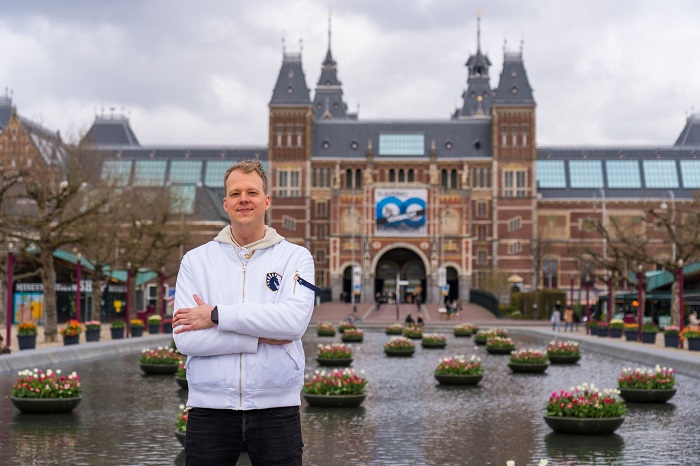
A useful response from NATO would be to increase its own state of alter. If additional troops moved from the Soviet Union to Eastern Europe, NATO should respond with additional troops moved from the United States of America. It is also recommended that this type of response be automatic so that it can be made clear t the Soviets that such increases in NATO readiness are standard procedure and take place only after Soviet mobilizations. It is also recommended that the response be limited, say one American division moved for every three Soviet divisions mobilized. In effect, this would help limit the echo effects. Limited provocability is a useful feature of a strategy designed to achieve stable cooperation. While TIT FOR TAT responds with an amount of defection exactly equal to the other’s defection, in many circumstances the stability of cooperation would be enhanced if the response were slightly less than the provocation. Otherwise, it would be all too easy to get into a rut of unending responses to each other’s last defection. There are several ways for an echo effect to be controlled. One way is for the individual who first defected to realize that the other’s response need not call for yet another defection. For example, the Soviets might realize that NATO’s mobilization was merely a response to their own, and hence need not be regarded as threatening. Of course the Soviets might not see it that way, even if the NATO response was automatic and predictable. Therefore, it is also useful if the NATO response is somewhat less than proportional to the Soviet mobilization. Then if the Soviet response is also somewhat less than the NATO mobilization, the escalation of preparations can become stabilized, and then possibly reversed for a return to normal. #RandolphHarris 13 of 22

Fortunately, friendship is not necessary for cooperation to evolve. As the trench warfare example demonstrates, even antagonists can learn to develop cooperation based upon reciprocity. The requirement for the relationship is not friendship, but durability. The good thing about international relations is that the major powers can be quite certain they will be interacting with each other year after year. Their relationship may not always be mutually rewarding, but it is durable. Therefore, next year’s interactions should cast a large shadow on this year’s choices, and cooperation has a good chance to evolve eventually. Foresight is not necessary either, as the biological examples demonstrate. However, without foresight, the evolutionary process can take a very long time. Fortunately, humans do have foresight and use it to speed up what would otherwise be a blind process of evolution. The individuals who were able to use the result of the first round in the Prisoner’s Dilemma, including the value of reciprocity, to anticipate what would work well on the second round end up gaining foresight. Foresight pays off with substantially more rewarding results. The result for the second round of negotiations is typically more sophisticated than the first. Cooperation based upon reciprocity was firmly established. The various attempts at exploitation of the unsophisticated entries of the first round all failed in the environment of the second round, demonstrating that the reciprocity of strategies like TIT FOR TAT is extraordinarily robust. Perhaps it is not too much to hope that people can use the surrogate experience of these rules to learn the value of reciprocity for their own Prisoner’s Dilemma interactions. #RandolphHarris 14 of 22

Once the word gets out that reciprocity works, it becomes the thing to do. If you expect others to reciprocate your defections as well as your cooperations, you will be wise to avoid trying to start any trouble. Moreover, you will be wise to defect after someone else defects, showing that you will not be exploited. Thus you too will be wise to use a strategy based upon reciprocity. So will everyone else. In this manner the appreciation of the value of reciprocity becomes self-reinforcing. Once it gets going, it gets stronger and stronger. This is the essence of the ratchet effect which was established in a past reports: once cooperation based upon reciprocity gets established in a population, it cannot be overcome even by a cluster of individuals who try to exploit the others. The establishment of stable cooperation can take a long time if it is based upon blind forces of evolution, or it can happen rather quickly if its operations can be appreciated by intelligent individuals. The empirical and theoretical results of these reports might help people see more clearly the opportunities for reciprocity latent in their World. Knowing the concepts that accounted for the results of the two rounds of the Prisoner’s Dilemma, and knowing the reasons and conditions for the success of reciprocity, might provide some additional foresight. We might come to see more clearly that there is a lesson in the fact that TIT FOR TAT succeeds without doing better than anyone with whom it interacts. It succeeds by eliciting cooperation from others, not by defeating them. We are used to thinking about competitions in which there is only one winner, competitions such as football or chess. However, the World is rarely like that. In a vast range of situations mutual cooperation can be better for both sides than mutual defection. The key to doing well lies not in overcoming others, but in eliciting their cooperation. #RandolphHarris 15 of 22

Today, the most important problems facing humanity are in the arena of international relations, where independent, egoistic nations face each other in a state of near anarchy. Many of these problems take the form of an iterated Prisoner’s Dilemma. Examples can include arms races, nuclear proliferation, crisis bargaining, and military escalation. Of course, a realistic understanding of these problems would have to take into account many factors not incorporated into the simple Prisoner’s Dilemma formulation, such as ideology, bureaucratic policies, commitments, coalitions, mediation, and leadership. Nevertheless, we can use all the insights we can get. From the ancient Greeks to contemporary scholarship all political theory addresses one fundamental question: How can the human race, whether for selfish or more cosmopolitan ends, understand and control the seemingly blind forces of history? In the contemporary World this question has become especially acute because of the development of nuclear weapons. The advice to players of the Prisoner’s Dilemma might serve as good advice to national leaders as well: do not be envious, do not be the first to defect, reciprocate both cooperation and defection, and do not be too clever. Likewise, techniques we have discussed for promoting cooperation in the Prisoner’s Dilemma might also be useful in promoting cooperation in international politics. The core of the problem of how to achieve rewards from cooperation is that trial and error in learning is slow and painful. The conditions may all be favorable for long-run developments, but we may not have the time to wait for blind processes to move us slowly toward mutually rewarding strategies based upon reciprocity. Perhaps if we understand the process better, we can use our foresight to speed up the evolution of cooperation. #RandolphHarris 16 of 22

Though HAGOTH, with program that could detect if someone over the phone was being dishonest, has virtually disappeared, its idea survives—for example, in the machines called “lie detectors.” In American these are taken very seriously by police officers, lawyers, and corporate executive who ever more frequently insist that their employees be subjected to lie-detector tests. As for intelligence tests, they not only survive but flourish, and have been supplemented by vocational aptitude tests, creativity test, mental-health tests, tests that base attractions on pleasures of the flesh, and even material compatibility tests. One would think that two people who have lived together for a number of years would have noticed for themselves whether they get along or not. However, in Technopoly, these subjective forms of knowledge have no official status, and must be confirmed by tests administered by experts. Individual judgments, after all, are notoriously unreliable, filled with ambiguity and plagued by doubt. Tests and machines are not. Philosophers may agonize over the questions “What is truth?” “What is intelligence?” “What is the good life?” However, in Technopoly there is no need for such intellectual struggle. Machines eliminate complexity, doubt, and ambiguity. They work swiftly, they are standardized, and the provide us with numbers that you can see and calculate with. They tell us that when eight green lights go on someone is speaking the truth. That is all there is to it. They tell us that a score of 136 means more brains than a score of 104. This is Technopoly’s version of magic. #RandolphHarris 17 of 22

What is significant about magic is that it directs our attention to the wrong place. And by doing so, evokes in us a sense of wonder rather than understanding. In Technopoly, we are surrounded by the wondrous effects of machines and are encouraged to ignore the ideas embedded in them. Which means we become blind to the ideological meaning of our technologies. In considering here the ideological biases of medical technology, let us begin with a few relevant facts. Although the U.S.A. and England have equivalent life-expectancy rates, American doctors perform six times ad many cardiac bypass operations per capita as English doctors do. American doctors perform more diagnostic tests than doctors do in France, Germany, or England. An American woman has two to three times the chance of having a hysterectomy as her counterpart in Europe; 60 percent of the hysterectomies performed in America are done on women under the age of forty-four. American doctors do more prostate surgery per capita than do doctors anywhere in Europe, and the United States of America leads the industrialized World in the rate of cesarean-section operations—50 to 200 percent higher than in most other countries. When American doctors decide to forgo surgery in favor of treatment by drugs, they give higher dosages than doctors elsewhere. They prescribe about twice as many antibiotics as do doctors in the United Kingdom and commonly prescribe antibiotics when bacteria are likely to be present, whereas European doctors tend to prescribe antibiotics only if they know that the infection is caused by bacteria and is also serious. American doctors use far more X-rays per patient than doctors in other countries. #RandolphHarris 18 of 22

In one review of the extent of X-ray use, a radiologist discovered cases in which fifty t one hundred X-rays had been taken of a single patient when five would have been sufficient. Other surveys have shown that, for almost one-third of the patients, the X-ray could have been omitted or deferred on the basis of available clinical data. We have been able to use basic principles to design and build a simple molecule that folds up the way we want it to. This is really the first real example of a design protein structure, designed from scratch, not by taking an already existing structure and tinkering with it. Although scientists do the work, the work itself is really a form of engineering. The process makes this clear: After you have made it, the next step is to find out whether our protein did what you expected it to do. Did it fold? Did it pass ions across bilayers [such as cell membranes]? Does it have a catalytic function [speeding specific chemical reactions]? And that is tested using the appropriate experiment. More than likely, it will not have done what you wanted it to do, so you have to find out why. Now, a good design has in it a contingency plan for failure and helps you learn from mistakes. Rather than designing a structure that would take a year or more to analyze, you design it so that it can be assayed for given function or structure in a matter of days. Many groups are pursuing design today, including academic researchers like Jane and Dave Richardson at the Duke University, Bruce Erickson at the University of North Carolina, and Tom Blundell, Robin Leatherbarrow, and Alan Fersht in Britain. The successes have stated to roll in. Japan, however, is unique in having an organization devoted exclusively to such projects: the Protein Engineering Research Institute (PERI) in Osaka. In 1990, PERI announced the successful designs and construction of de novo protein several times larger than any built before. #RandolphHarris 19 of 22

Extra-intelligence can squeeze untold billions of fat and waste out of the economy. It potentially represents an enormous leap forward—the substitution of brainpower and imagination not merely for capital, energy, and resources, but for brutalizing labor as well. However, whether extra-intelligence produces a “better” way of life will depend partly on the social and political intelligence that guides its overall development. The more automated and extra-intelligent our networks become, the more human decision-making is hidden from view, and the more dependent we all become on preprogrammed events based on concepts and assumptions that few understand and that are sometimes not even willingly disclosed. Before long the power of computers will leap forward because f parallel processing, artificial intelligence, and other studding innovations. Speech recognition and automatic translation will, no doubt, come into wide use, along with high-definition visual displays ad concert-class sounds. The same networks now routinely carry voice, data, imagines, cable, Internet, and other information in other forms. All this raises profound philosophical questions. Some see in all this the coming monopolization of knowledge. The moment of truth comes when the matter of the ownership and control of the new information banks…[strikes] with a vengeance. This is the specter of a global private monopoly of information. That fear is now far too simple. The issue is not whether one giant global private monopoly will control all information—which seems highly unlikely—but who will control the endless conversations and reconversions of it made possible by extra-intelligence, as data, information, and knowledge flow through the nervous system of the super-symbolic economy. #RandolphHarris 20 of 22

Baffling new issues about the uses and misuses of knowledge will arise to confront business and society as a whole. They will no longer simply reflect Bacon’s truth that knowledge is power, but the higher level of truth that, in the super-symbolic economy, it is knowledge about knowledge that counts most. I.T. and telecommunications, however, are not the only advanced technologies that can contribute to a real war on poverty. India has one of the most successful operational space programs running in the developing World, with capabilities to design, develop, fabricate and launch its own communications and remote sensing satellite. It is also planning to send a scientific payload to go around the moon using its own rocket. Once more, this may seem irrelevant to the less affluent—your land is subject to sudden flooding or you are among the thousands saved from drowning with the help of satellite-based disaster-warning systems and remote sensing technologies. Or if you are among the 100,000 patients of the Regional Cancer Center in Thiruvananthapuram who once had to travel extremely long distance, often more than one, and at high cost, for treatment or follow-up care. The RCC has now set up six peripheral centers. All six are teleclinics linked to the main facility by the Internet—and the number of necessary follow-up visits has fallen by more than 30 percent. The Indian Space Research Organization has also created satellite links between big, multi-specialty hospitals and eight remote healthy centers to allow the exchange of patients’ records, imagines and data from medical instruments, along with live video and audio contact. All this means that doctors in central locations can help guide medics in the remote rural villages. #RandolphHarris 21 of 22

In biotechnology, India could generate $5 billion and up to a million new jobs in the coming five years. India’s Insurance Regulatory and Development Authority has agreed to allow insurance firms to put money into biotech, and the government has made it easier for foreign venture capitalist to invest. It is in this sector, as we will see shortly, that some of the most important tools for the reduction of poverty may well be found. And not just in India. Many of the advances we see in India are still either experimental or limited. They are patchy and not yet systemically integrated. However, as more pieces of the knowledge-based wealth system are laid in place and begin to interact and reinforce one another, their payoffs will increase combinatorially, if not exponentially, as happened in the past when different components of the industrial wealth system—social, institutional, political and culture—came together. India faces many of the same social, political and cultural challenges we find in China—corruption, infirmary, massive environmental problems, the need for institutional reinvention and generational conflict, to name a few. Externally, while China worries about Taiwan, India worries about a shaky, nuclear-armed Pakistan and the ever-bloody struggle against Muslim secessionists in Kashmir. What is more, and unlike China ate present, India faces caste conflict and intermittent murderous battles between Hindu and Muslim fanatics. Despite all this, India knows it cannot delay a fresh assault on poverty—and it cannot win that attack with smokestacks alone. It also cannot win so long as most of its population remains doomed to a low-productivity peasant existence, no matter how much small-scale “appropriate technology” is introduced. Neither a Second Wave strategy nor a First Wave strategy is enough. “Believest thou that there is no God? I say unto you, Nay, thou knowest that there is a God, but thou lovest that lucre more than Him,” reports Alma 11.24. #RandolphHarris 22 of 22

Cresleigh Homes

When it comes to innovative, liveable design, our home at Mills Station (Residence 2) offers tons of options for customization!

In this home, you’ll find the Owner’s suite on the first floor (perfect for multi-generational living OR a home that can adapt along with you) and two additional bedrooms in the “pop-top” second story.

We’ve got everything you need and more in this home! Personalize this home with an array of popular finishes and fixtures! https://cresleigh.com/mills-station/residence-2/

This beautiful new community showcases our Cresleigh Ranch collection. Don’t miss the final opportunity to purchase at Mills Station at Cresleigh Ranch.

It Was Worse than the Thing that Crept into the Shadows
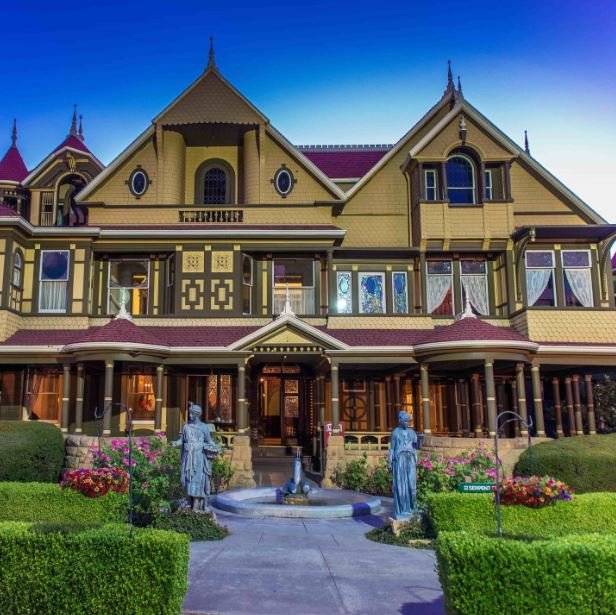
Love, peace, comfort, measureless contentment—that was life on the Winchester Estate in 1888. It was a joy to be alive. Pain there was none, nor infirmity, nor any physical signs to mark the flight of time; disease, care, sorrow—one might feel these outside the pale, but not on Mrs. Winchester’s Estate. There they had no place, there they never came. All days were alike, and all a dream of delight. The big country mansion was so large it could shelter an army. Guests lounging around the house for the big Christmas party. The laughter and music was only broken by the whisper of the wind in the cedar branches, and the scraping of their harsh fingers against the window panes. It had pricked us to such luxurious confidence in our surroundings of bright chintz and candle-flame and fire-light, that we had dared to talk of ghost—in which, we all said, we did not believe one bit. We had told the story of the phantom coach and the wedding that had taken place at the Winchester mansion, and the horrible strange bed, and the farmer’s wife, and the Victorian cottage on the estate. We none of us believed in ghosts, but my heart, at least, seemed to leap to my throat and choke me there, when a tap came to Mrs. Winchester’s door…a tap faint, not to be mistaken. Almost at once, Mrs. Winchester’s housekeeper Miss Eden opened the door and said, “Come in,” but she stood there. She was, at all normal hours, the most silent women I have ever known. She stood and looked at us, and shivered a little. So did we—for in those days corridors were not warmed by hot-water pipes, and the air from the door was keen. “I saw your light,” she said at last, “and I thought it was late for you to be up—after all this gaiety. I thought perhaps—” her glance turned towards the door of the dressing-room. #RandolphHarris 1 of 17

“No,” I said, “Mrs. Winchester is fast asleep.” I should have added a goodnight, but the youngest of us forestalled my speech. She did not know Mrs. Winchester as we others did; did not know how her persistent silence built a wall round her—a wall that no one dared to break down with the commonplaces of talk, or the littlenesses of mere human relationship. Mrs. Winchester was the heiress of the Winchester Repeating Arms Company. In the morning, she came downs stairs in her unsuitably rich silk lace-trimmed dressing-gown falling back from her thin collarbones, and ran to the door and put an arm around her guest Miss McAnally. The vivid light of pleasure in Miss McAnally’s pale blue eyes went through Mrs. Winchester’s heart like a knife. If she wanted an arm there, it would have been so easy to put one around her neck. “Now,” Mrs. Winchester said, “you shall have the very biggest, nicest chair, and the coffee-pot is here on the hob as hot as hot and my other guest have been telling ghost stories all light. When you get warm you ought to tell one too.” “You’re sure I’m not in your way,” Miss McAnally said, stretching her hands to a blaze. “Not a bit”—Mrs. Winchester said. Mrs. Winchester put her fleecy Maderia shawl round her shoulders. She could not think of anything else to do for her, and she found herself wishing desperately to do something. The smiles Miss. McAnally gave were very quite pretty. People can smile prettily at forty or fifty, or even later, though most young women do not realize this. “As I said before,” Mrs. Winchester confessed, “Everyone has been telling ghost stories all night. I retired early for bed. All of the ghost stories are so beautifully rounded off—a murder committed on the spot—or a hidden treasure, or a warning…I think that makes them harder to believe. The most horrid ghost-story I ever heard was one that was quite silly.” #RandolphHarris 2 of 14

“Tell it,” Miss McAnally begged. “I cannot—it does not sound anything to tell,” replied Mrs. Winchester. “The only thing that I ever knew of was—was hearsay,” Mrs. Winchester said, slowly, “till just the end. I daresay it would bore you, but it cannot do any hard. You all do not believe in ghosts, and it was not exactly a ghost either.” There was a breathing time of hush and expectancy. The fire crackled and the gas suddenly flared higher because the billiard lights had been put out. We heard the steps and voices of the men going along the corridors. “It is really hardly worth telling,” Mrs. Winchester said doubtfully, shading her faded face from the fire with her thin hand. Everyone said, “Go on—oh, go on—do!” ‘Well,” she said, “twenty years ago—and more than that—I had two friends, and I loved them more than anything in the World. And they married each other. After they were married, I did not see much of them for a year or two; and then he wrote me and asked me to come and stay, because his wife was ill, and I should cheer her up, and cheer him up as well; for it was a gloomy house, and he himself was growing gloomy too.” I knew as she spoke that she had every line of that letter by heart. “Well, I went. The address was in Oakland, near Berkeley; in those says there were streets and streets of new villa-houses growing up round old brick mansions standing in their own grounds, with red walls round, you know, and a sort of flavour of coaching days, and post chaises, and Blackheath highwaymen about them. He had said the house was gloomy, and it was called ‘The Haunted House,’ and I imagined my carriage going through a dark, winding shrubbery, and drawing up in from of one of these sedate, old, square houses. Instead, we drew up in front of a large, smart villa, with iron railings, gay encaustic tiles leading from the iron gate to the stained-glass-panelled door, and for shrubbery only a few stunted cypresses and aucubas in the tiny front garden. But inside it was all warm and welcoming. He met me at the door. #RandolphHarris 3 of 14
“He met me at the door,” she said again, “and thanked me for coming, and asked me to forgive the past. They were very glad to see me, and I was very glad to be there. Margaret was not exactly ill, only weak and excitable. I thought he seemed more ill than she did. She went to bed early and before she went, she asked me to keep him company through his last pipe, so we went into the dining-room and sat in the two armchairs on each side of the fireplace. They were covered with green leather I remember. There were bronze groups of horses and a black marble clock on the mantlepiece—all wedding-presents. He poured out some whisky for himself, but he hardly touched it. He sat looking into the fire. At last I said: What’s wrong? Margaret looks as well as you could expect.” “Yes,” he said, “but I don’t know from one day to another that she won’t begin to notice something wrong. That’s why I wanted you to come. You were always so sensible and strong-minded, and Margaret’s like a little bird on a flower.” Mrs. Winchester said, “Yes, of course,” and waited for him to go on. Presently he said: “Sarah, this is a very peculiar house. It is new: that’s just it. We’re the first people who’ve ever lived in it. If it were an old house, Sarah, I should think it was haunted.” Mrs. Winchester asked, “Have you ever seen anything?” “No,” he said. “That is just it. I have not heard nor seen anything, but there’s a sort of feeling: I can’t describe it—I’ve seen nothing and I’ve heard nothing, but I’ve been so near to seeing and hearing, just near, that’s all. And something follows me about—only when I turned round, there’s never anything, only my shadow. And I always feel that I shall see the thing next minute—but I never do—not quite—it’s always just not visible.” #RandolphHarris 4 of 14

Mrs. Winchester had been working very hard—and tried to cheer him up by making light of all this. “It is just nerves,” she said. He replied, “Mrs. Winchester, I thought you could help me, and I do not think I wronged anyone for them to lay a curse on me. I don’t believe in cruses. The only person I could have wronged forgave me freely.” Mrs. Winchester came up with a suggestion, “I think you ought to take Margaret away from the house and have a complete change.” But he said, “No; Margaret has got everything in order, and I could never manage to get her away just now without explaining everything—and, above and beyond all that, she mustn’t guess there’s anything wrong. I daresay I shan’t feel quite such a lunatic now you’re here.” So they said goodnight.” Whenever Mrs. Winchester was alone with him, he used to tell her the same thing over and over again, and at first when he began to notice things, he tried to think tht it was his talk that had upset her nerves. The odd thing was that it was not only at night—but in broad daylight—and particularly on the stairs and passages. On the staircase the feeling used to be so awful that Mrs. Winchester had to bite her lips till they bled to keep herself from running upstairs at full speed. Only she knew if she would not go mad at the top. There was always something behind her—exactly as he said—something that one could just not see. And a sound that one could just not heat. There was a long corridor at the top of the house. Mrs. Winchester sometimes almost saw something—you know how one see things without looking—but if she turned around, it seemed as if the thing drooped and melted into her shadow. There was a little window at the end of the corridor. #RandolphHarris 5 of 14
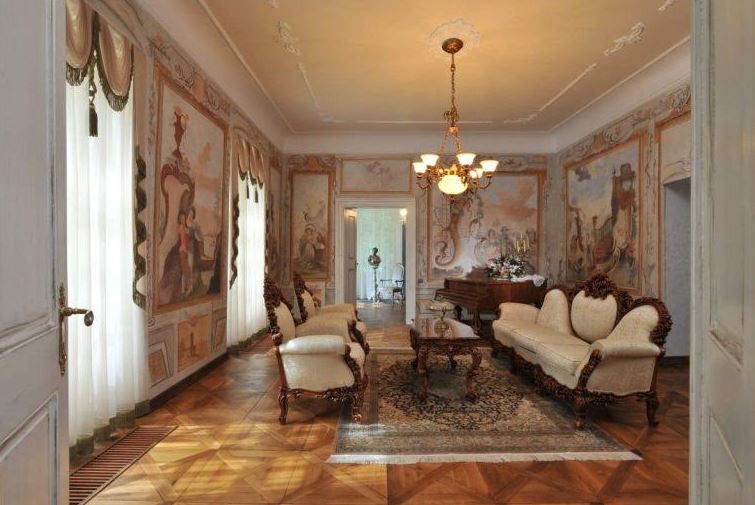
Downstairs there was another corridor, something like it, with a cupboard at one end and the kitchen at the other. One night Mrs. Winchester went down into the kitchen to heat some milk for Margaret. The servants had gone to bed. As she stood by the fire, waiting for the milk to boil, she glanced through the open door and along the passage. Mrs. Winchester never could keep her eyes on what she was doing in that house. The cupboard door was partly open; they used to keep empty boxes and things in it. And as she looked, she knew that now it was not going to be “almost” anymore. Yet she said, “Margaret” not because she thought it could be Margaret who was crouching down there, half in and half out of the cupboard. The thing was great at first, and then it was black. And when Mrs. Winchester whispered, “Margaret,” it seemed to sink down till it lay like a pool of ink on the floor, and then its edges drew in, and it seemed to flow, like ink when you tilt up the paper you have split it on; and it flowed into the cupboard till it was all gathered into the shadow there. Mrs. Winchester saw it go quite plainly. The gas was full on in the kitchen. She screamed aloud, but then, she was thankful to say, she had enough sense to upset the boiling milk, so that when he came downs three steps at a time, Mrs. Winchester had the excuse for her scream of a scalded hand. The explanation satisfied Margaret, but the next night he said: “Why didn’t you tell me? It was that cupboard. All the horror of the house comes out of that. Tell me—have you seen anything yet? Or is it only the nearly seeing and nearly hearing still?” Mrs. Winchester said, “You must tell me first what you have seen.” He told her, and his eyes wandered, as he spoke, to the shadows by the curtains, and Mrs. Winchester turned up all three gas lights, and lit the candles on the mantelpiece. #RandolphHarris 6 of 14

Then they looked at each other and said they were both mad, and thanked God that Margaret at least was sane. For what he had seen was what Mrs. Winchester had seen. After that she hated to be alone with a shadow, because at any moment she might see something that would crouch, and sink, and lie like a black pool, and then slowly draw itself into the shadow that was nearest. Often that shadow was her own. The thing came first at night, but afterwards there was no hour safe from it. She saw it at dawn and at noon, in the fireplace, and always it crouched and sank, and was a pool that flowed into some shadow and became part of it. And always she saw it with a straining of the eyes—a pricking and aching. It seemed as though she could only just see it, as if her sight, to see it, had to be strained to the uttermost. And still the sound was in the house—the sound that she could just not hear. At last, one morning early, Mrs. Winchester did hear it. It was close behind her, and it was only a sign. It was worse than the thing that crept into the shadows. She did not know how she bore it. If she had not been so fond of her friends, she could not have tolerated it. However, she knew in her heart that, if he had no one to whom he could speak openly, he would go mad, or tell Margaret. His was not a very strong character; very sweet, and kind, and gentle, but not strong. He was always easily led. So Mrs. Winchester stayed on and bore up, and they were very cheerful, and made little jokes, and tried to be amusing when Margaret was with them. However, when they were alone, they did not try to be amusing. And sometimes a day or two would go by without their seeing or hearing anything. #RandolphHarris 7 of 14
They perhaps should have fancied that they had fancied what they had seen and heard—only there was always the feeling of their being something about that house, that one could just not hear and not see. Sometimes they used to try not to talk about it, but generally they talked of nothing else at all. And the weeks went by, and Margaret’s baby was born. The nurse and the doctor said that both mother and child were doing well. He and Mrs. Winchester sat late in the dining-room that night. They had neither seen nor heard anything for three days; their anxiety about Margaret was lessened. They talked of the future—it seemed then so much brighter than the past. They arranged that, the moment she was fit to be moved, he should take her away to the sea, and Mrs. Winchester should superintend the moving of their furniture into the new house he had already chosen. He was gayer than Mrs. Winchester had seen him since his marriage—almost like his old self. When she said goodnight to him, he said a lot of things about her having been a comfort to them both. She had not done anything much, of course, but still she was glad he said them. Then Mrs. Winchester went upstairs, almost for the first time without that feeling of something following her. She listened at Margaret’s door. Everything was quiet. Mrs. Winchester went on toward her own room, and in an instant, she felt that there was something behind her. She turned. It was crouching there; it sank, and the black fluidness of it seemed to be sucked under the door of Margaret’s room. She went back. She opened the door a listening inch. All was still. And then she heard a sigh close behind her. Mrs. Winchester opened the door and went in. The nurse and the baby were asleep. #RandolphHarris 8 of 14
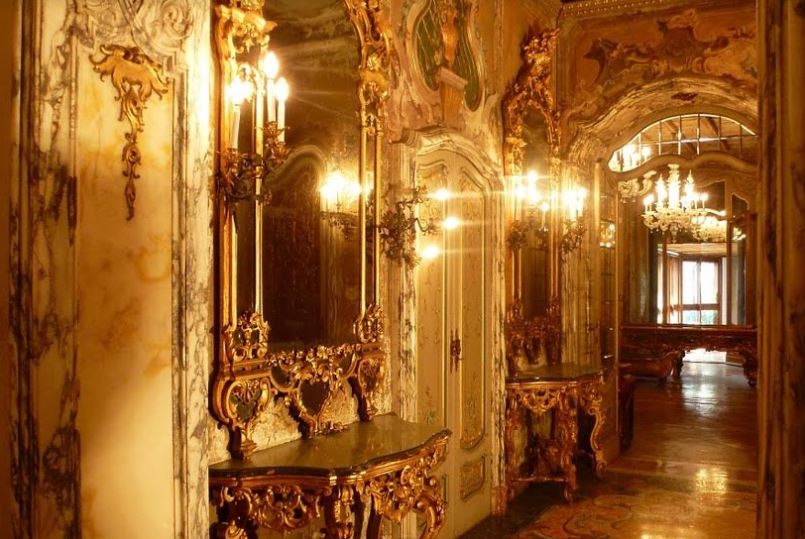
Margaret was asleep too—she looked so pretty—like a tired child—the baby was cuddled up into one of her arms with its tiny heard against her side. Mrs. Winchester prayed then that Margaret might never know the terrors that they are hidden from her. That those little ears might never hear any but pretty sounds, those clear eyes never see any but pretty sights. She did not dare to pray for a long time after that. Because her prayer was answered. She never saw, never heard anything more in this World. And now Mrs. Winchester could do nothing for him or her. When they had put her in her coffin, Mrs. Winchester lighted wax candles round her, and laid the horrible white flowers that people will send near her, and then she saw he had followed her. She took his hand to lead him away. At the door they both turned. It seemed to them that they heard a sign. He would have sprung to her side in glad hope. However, at that instant they both saw it. Between them and the coffin, first grey, then black, it crouched an instant, then sank and liquified—and was gathered together and drawn till it ran into the nearest shadow. And the nearest shadow was the shadow of Margaret’s coffin. Mrs. Winchester left the next day. His mother came. She never liked Mrs. Winchester. The something black that crouched then between him and Mrs. Winchester was only his second wife crying beside the coffin. Mrs. Winchester never told anyone the story because it seemed senseless. After hearing the story, Miss McAnally stood at her gaunt height, her hands clenched, eyes straining. She was looking at something that no one could see, and she knew what the man in the Bible meant when he said: “The hair of my flesh stood up.” What they saw seemed not quite to reach the height of the dressing-room door handle. Her eyes followed it down, down—widening and widening. Mrs. Winchester’s eyes followed them—all the nerves of them seemed strained to the uttermost—and she almost saw it—or did she quite see? She could not be certain. However, they all heard the long-drawn, quivering sign. And to each of them it seemed to be breathed just behind them. #RandolphHarris 9 of 14

It was Mrs. Winchester who caught up the candle—it dripped all over her trembling hand—and was dragged by Miss McAnally to the girl who had fainted during the second extra. However, it was a servant girl whose lean arms were round the housekeeper when they turned away, and that have been around her many a time since, in the Winchester mansion where she keeps house. The doctor who came in the morning said that Margaret’s daughter had died of heart disease—which she had inherited from her mother. But Mrs. Winchester wondered had she had not inherited something else from her father? It was the daughter’s ghost that had followed Mrs. Winchester into her own mansion and now haunts it. The invoking or summoning of spirits by means of hymns, prayers, and acts of worship in spiritistic séances, finds a counterpart in demon possession. Often the demon speaking through its victim in the demonized state will demand the burning of incense as well as worship service. In return it often promises alleviation from torment and powers of physical healing or clairvoyant and prognostic gifs assuring financial income and material prosperity to the enslaved person. Paganism is replete with fear of demons who must be appeased by worshipping and servile obedience. Those who accept magical powers of healing and clairvoyance at the hand of demonic powers may escape the grosser torments of vile spirits only to fall under more terrible bondage and become Satan’s tool to enslave others. In 1892, people in Santa Clara Valley gossiped about Mrs. Winchester. They told stories of how she was involved in the diabolic rites of Freemasonry, arguing that she and the Freemasons were in reality devout Satanists, carrying out blasphemous and hideous rituals beneath the sinister clock of secrecy. #RandolphHarris 10 of 14

The headquarters of the movement, under the leadership Sarah Winchester, Albert Pike, Gallatin Mackey, and others, located in Santa Clara, California at the Winchester mansion, with celebrants of their Black Masses spread all over the World. Their rites supposedly involved séances. Some went as far to say that the Winchester mansion had an infernal telephone hooked up to Hell, through which the leaders spoke to Lucifer. The stories recounted by the villagers were backed up by Thomas Vaughan, an alchemist. However, if that were true, it would mean the Winchester mansion, Mrs. Winchester, and William Winchester are far older than we believe them to be. The town spread rumors that Black Masses were taking place at the Winchester Mansion under the guise of Freemasonry. It was said that the Winchester mansion was a life and magical order. The emphasis on the former, of living according to one’s real nature. Freemasonry is a nonsectarian fraternity claiming to teach a system of morality veiled in the allegory and symbols passed down from the caste of stonemasons who built the original Temple of Solomon. It allegedly binds its members by an oath of secrecy that imposes death on the betrayer, uses secret passwords and signs, and performs rituals purporting to relate to the history of its origins. It organization is hierophantic, the members receiving the “secrets” of the order, and they pass through the higher degrees. Its antiquity can be documented no further back than the latter part of the seventeenth century. The movement really seems to have gotten its start with the establishment of the Grand Lodge in England, in 1717. From there, it spread to France and Germany, and it did not take long for serious-minded students of the occult, attracted by its ritualistic and secretive trappings, to find their way into its ranks. #RandolphHarris 11 of 14
It was also said that Mrs. Winchester was an alchemist and a mystic, and she created her own brand of Victorian Masonry, and taught others how to make gold, heal the sick, and raise the dead. These secret rights had been handed down to her by the Knights of Templar. She was under the tutelage of “Unknown Superiors,” a race of godlike spiritual guides. Many of the people in the town gossiped about Mrs. Winchester so viciously, not only because of her wealth and the mansion larger than anyone had ever seen, but also because of suspicions that her estate was a cover for political conspiracy. The Devil, being a rebel against Heaven, has always been portrayed by the powers-that-be as the chief insurrectionist against the existing political and religious order. The enemy cannot be God, for God is on the side of the ruler. Therefore, the enemy of the ruler must be Satan. It is true that the Winchester mansion is supranational in outlook. There was a secret society that met there dedicated to the scientific and political enlightenment of mankind. To achieve this goal, the group intended secretly to work toward the abolition of all monarchies and the establishment of a One-World government, to be run by those few presently Enlightened, or Illuminati. Since professing such republican ideas could be dangerous, the group was wrapped in a cloak of occultism. Mrs. Winchester adopted the grades of Freemasonry and promised initiates that the magical secrets of the Universe could be revealed to them only when they reached the upper levels. Many believed that William Winchester and Annie Winchester had not died, but gone underground and survived in a network of secret societies, two of which were the Freemasons and the Illuminati, to escape the Assassins. The Assassins were a political group who carried out assassinations while crazed on hashish. #RandolphHarris 12 of 14

Legend has it that Mrs. Winchester was not only running from the souls of those killed by the Winchester rifle, but to also escape the Assassins. Not only spiritual, but Masonic teachings exerted an influence over the construction of the Winchester mansion. Certain mystical thinkers and practitioners of ceremonial magic believed that Mrs. Winchester practiced a complex system of magic that was a synthesis of Eastern and Western mystical traditions. There is a secret cave inside the Winchester mansion that can be entered only by stooping, but inside a room nearly seven feet high about twelve feet square presents itself. On each side of the entrance a Latin cross is deeply carved in the rock, while within, at the further side, and opposite the door, a block of stone four feet high was left for an altar. Above it, a shrine is hollowed out of the stone wall, and over the cavity is another cross. It is said to be the cave of a saint. Some say it is Saint Michael himself, but no one can be quite certain. And there is a big head inside that craved in the shape of the Devil’s face that the saint put there. For Mrs. Winchester, there were two types of magic. What she called evocation and invocation. Evocation was a calling forth, while invocation was a calling in. In such rituals, the magician summoned the demon or deity while standing within the protection of a magical circle drawn on the floor, the object of the sorcerer being to control and direct the entity to do one’s bidding. She sought to achieve total identification with the godhead, to invoke the god so that it actually took possession of her consciousness. The resulting state experienced by the magician was a type of samadhi, or temporary loss of ego. Mrs. Winchester’s estate possesses the KEY which opens up all Masonic and Hermetic secrets of Freemasonry and all systems of religion. #RandolphHarris 13 of 14
It did not take long for rumors to begin to circulate around the town of nightly procession of hooded, candle-bearing figures around the grounds of the Winchester mansion. The reason Mrs. Winchester and the husband of her friend kept seeing demons is because allegedly someone did a ritual on her estate—one of the greatest magical feats ever—the attempt to bring the “Whore of Babalon” down from the Astral Plane and incarnate it in the womb of a living women. Upon hearing of the ritual, someone wrote to the Luciferian Light Group, “Apparently Mrs. Winchester or one of her friends is producing a Moonchild. I am pledged that the work of the Beast 666 shall be fulfilled, and the way for the coming of BABALON be made open and I shall not cease until these things are accomplished.” Mrs. Winchester did not know, but after she left her friend’s house, he managed to blow himself to smithereens while conducting a strange chemical experiment in his basement workshop. Hours later, the scientist’s mother, who lived on the estate, committed suicide with an overdose of sleeping tablets and the baby died from dehydration and starvation, but the baby who is supposed to be the Whore of Babalon still haunts the Winchester till this very day. No matter what people say or believe about Mrs. Winchester, she and her architecture were able to break through the walls of stagnation and bring before the World its first vision of the new Aeon. Once, a tourguide reported while closing the house, he felt something following him, he was alone. He went out onto the fourth floor balcony and prayed into the Heavens one night, “O Thou wicked and disobedient spirit Vinea, because thou hast rebelled, and has not obeyed nor regarded my words which I have rehearsed; I curse thee into the depth of the Bottomless Abyss, there to remain unto the Day of Doom in chains, and in fire and brimstone unquenchable, unless thou forthwith appear here before this Circle, in this triangle to my will.” And he saw Lucifer as a star fall from Heaven, and from Him came to the tour guide light of true salvation. And he was made whole by His infernal wisdom. “My chains lifted off, I was made free,” he said. At night when some drive by, they claim to hear the Devil’s orchestra at that famous time 1.13am. #RandolphHarris 14 of 14
Winchester Mystery House
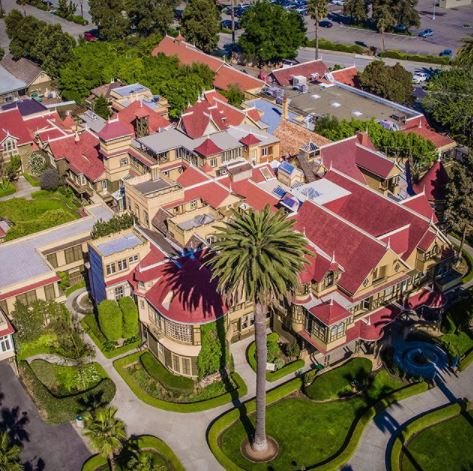
Happy Saturday from The Winchester Mystery House ☀️ What are your weekend plans? Hopefully they include walking around these beautiful gardens 😉 https://www.winchestermysteryhouse.com/


Never, Never, Never Invest More than You are Willing to Lose!

Deep changes in the money system cannot occur without threatening entrenched institutions that have, until now, enjoyed positions of extraordinary power. At one level the substitution of electronic money for paper money is a direct threat, for example, to the very existence of banks as we know them. Banking will not retain its position as the primary operator of payment systems. Banks have had a government-protected monopoly in checking-clearing services. Electronic money threatens to supplant this system. In self-defense, some banks have entered into the credit card business themselves. More important, they have extended their reach without automatic teller machines (ATMs). If banks issue debit cards and put ATMs at millions of retail locations, they may repel the attack of the credit card companies. Since debit cards make it possible for the shopkeeper to receive payment instantly, instead of waiting for Diner’s Club or American Express or Visa to remit payment, store owners may not wish to continue paying them a percentage of each sale. Also, something is going on where so major banks have blocked credit unions from linking to their customer’s accounts. Therefore, they cannot use debit cards to transfer money instantly between institution, and this is causing consumers to have to wait days, or weeks for money to reach the accounts of their credit union. So, some people may eventually stop doing business with credit unions, while others stay out of loyalty. There must be some kind of quiet financial storm brewing inside of the credit unions. On another front, banks face attack from a wide variety of nonbanks. In Japan, for example, the Ministry of Finance has qualms about the idea that private companies like NTT can issue value-bearing plastic “notes”—a kind of currency—and operate outside the banking system and its rules. #RandolphHarris 1 of 22

If a company can take in money for a prepaid card, it is accepting a “deposit,” exactly like a bank. When the user spends, he or she is making the equivalent of a “withdrawal.” And when the card company pays the vendor, it is operating a “payment system.” These are functions that once only banks could perform. Moreover, if card companies can issue credit to users, as they and the cardholders see fit, unconstrained by the kind of limits and reserves that govern banks, central banks risk losing their grip on monetary policy. In South Korea, plastic money has expanded so rapidly that the government fears it is feeding inflation. In brief, the rise of electronic money in the World economy threatens to shake up many long-entrenched power relationships. At the vortex of this power struggle is knowledge embedded in technology. It is a battle that will redefine money itself. Many governments have made it understood that they do not care for cryptocurrencies. They hype around the high returns from cryptocurrencies has led to more fraudulent “get-rich-quick” schemes lurking in the dark corners of the market. Many countries do not have law to back up investors. Which means, if a large group of investors lose their money—they will be left with no recourse within the current legal framework of the system. Several mutual funds have been told to hold off on sending any new fund offerings based on crypto assets. Cryptocurrencies, especially Bitcoin in this case, were created as a way to take the power of monetary control away from centralized authorities—like the government and the central bank. So, it is no surprise that the central bank takes issue with not being in control. #RandolphHarris 2 of 22

Cryptocurrencies have led to an increase in assets that can transfer funds with increased anonymity. There are virtual assets that focus on privacy. If and when things go wrong, decentralized platforms pose the problem of having no single entity to go after. Privacy wallets and other new financial instruments allow for reduced transparency, which, in turn, obscures the flow of finance. There is also a national security angle over here now, there are individuals from intelligence who are involved. As things stand, anyone can launch a new cryptocurrency. There is no national framework defining what a cryptocurrency is, or the minimum requirements for it to be a legitimate investment option. This means that anyone can create a virtual asset, get others to invest in it to hike the price, and then cash out their stake without having to explain why. This is normally what is called a “rug-pull.” After the “founders” or “influencers’ pull out their money, other investors are left holding less than what they originally started with. However, that is not much different than what happened with the stock market during 9/11. Many young and/or unsuspecting investors lost huge amounts of money they worked for, which was never returned. The crypto market s speculative and during the COVID-19 pandemic it saw value surge to new all-time-highs. And, while the worst sees to be behind, there is a risk of sharp corrections that still remains. Just as Bitcoin was recently able to hit $70,000, it is possible that it could sink lower than $45,000. In fact, as of June 16, 2022, 5.10 P.M. EST BTC is down to $20,282.52. Many countries that are subject to capital control, are especially vulnerable to destabilizing effects of cryptocurrencies. Free accessibility of crypto assets to residents can undermine their [emerging market economies] capital regulation framework. #RandolphHarris 3 of 22

Non-bank actors—meaning crypto exchanges and other blockchain companies offering financial services—are adding to the dollar funding stress by using loopholes in the traditional policy approach to foreign exchange markets. At this stage, it is important to better understand non-bank investors’ role in creating or propagating systemic risk so that policy actions can be taken to smooth out financial risk-taking over time. This cryptocurrency in actions, a new generation of internet-based currencies which have grown in popularity over the last few years. You cannot not touch it or physically hand it over in any way, but you can use it to trade online. In the way, it is very different from the traditional view of banking, where cash, coins and possibly gold might be stacked in a vault just waiting to be withdrawn, but do these new cryptocurrencies represent a threat to those traditional banks? Thus far, the value of many of these cryptocurrencies has skyrocketed. If you had bought $1000 worth of Bitcoin in 2010, that investment would be worth $20 million today. There are even ATMs around for Bitcoin—put your regular currency in alone with your phone number, then get a receipt back for the purchase of Bitcoin. A check of the digital wallet on your phone should reveal your purchase there in the balance. That is causing a major shift in how people can do business and make transactions. Suddenly, the value is able to be exchanged outside of the traditional banks in the flash of a mobile phone. People who could not access trade and finance ten years ago can do so today. This will lift many out of poverty. The major factor is—if they need financing, people no longer have to go to a traditional bank for financing. (I bet a lot of people wish they knew this before they made car repairs.) #RandolphHarris 4 of 22

Peer-to-peer networks, including those based in cryptocurrencies, are becoming more common and those who might be turned away by traditional banks now have another way around financing. You can often times use an app on your phone to get a loan, and then take it to a car dealership, already knowing what you can afford, and pick the car of your dreams. Some people even get mortgage loans this way. That is why many traditional banks are feeling threatened by these new cryptocurrencies. However, you can also use these same apps on your mobile phone to get approved for cash loans. Many supports of digital currency and technology believe it should be seen as an invention like the printing press because it has the steam to transform the World of finance and beyond. If banks ignore new consumer behaviours and preferences when it comes to how they transact and transfer money, cryptocurrencies definitely represent a threat to traditional banks. Bitcoin users can handle many of their daily payments needs themselves, without the need for interaction with banks, and avoiding the need to incur bank fees. In the same way, the value stored in PayPal accounts moves outside of the bank’s payment systems, depriving banks of valuable payments revenue. There are a few issues cited with these cryptocurrencies, such as their perceived “haven” status for possible perpetrators of illegal activities, a relatively low market cap (Bitcoin’s is somewhere around $3.4 billion) and a sense of volatility with the value of the currency. That is why it is important to never, never, never invest more than you are willing to lose because it could go to nothing. That piece of advice is something even traditional financial advisors are not willing to disclose to investors. And sometimes after several losses, you need to cut and run before you start to become insane by beating the same horse and expecting something in return. #RandolpHarris 5 of 22

There are many people who absolutely could not wait to find a way around being beholden in some way to a big bank and these people are taking up new options with enthusiasm. Traditional banks and credit unions have often been guilty of customer-unfriendly account manipulations, such as applying debits before credits then charging fees for insufficient funds. (Citi Bank is one traditional banks I recommend, they do not charge overdraft fees. If your funds are insufficient, the check will just be returned unpaid.) However, the other big banks will not be able to get away with financial manipulation much longer because in the digital age, customers can actually see this happening by glancing at their mobile phones. Of course, money, whether in the form of metal, digital, or paper (or paper backed by metal), is unlikely to vanish completely. However, barring nuclear holocaust or technological cataclysm, electronic money will proliferate and drive out most alternatives, precisely because it combines exchange with real-time record-keeping, thus eliminating many of the costly inefficiencies that came with the traditional money system. If we put this all together now, a rather striking pattern becomes plain. Capital—by which we mean wealth put to work to increase production—changes in parallel with money, and both take on new forms each time society undergoes a major transformation. As they do so, their knowledge content changes. Thus agricultural-era money, consisting of metal (or some other commodity), had a knowledge content close to zero. Indeed, this First Wave money was not only tangible and durable, it was also pre-literate—in the sense that its value depended on its weight, not on the words imprinted on it. Today’s Second Wave money consists of printed paper with or without commodity backing. What is printed on the paper matters. The money is symbolic but still tangible. This form of money comes along with mass literacy. #RandolphHarris 6 of 22

Third Wave money increasingly consists of electronic pulses. It is evanescent…instantaneously transferred…monitored on the video screen. It is, in fact, virtually a video phenomenon itself. Blinking, flashing, whizzing across the planet, Third Wave money is information—the basis of knowledge. Increasingly detached from material embodiments, capital and money alike change through history, moving by stages from totally tangible to symbolic and ultimately today to its “super-symbolic” form. This vast sequence of transformations is accompanied by a deep shift of belief, almost a religious conversion—from a trust in permanent, tangible things like gold or paper to a belief that even the most tangible, ephemeral electronic blips can be swapped for goods or services. Our wealth is a wealth of symbols. And so also to a startling degree, is the power based on it. Elsewhere, we find imaginative efforts to compensate for the failures of the mass society’s mass educational system. When mass education was widely introduced, teachers were usually the most literate and educated people in the neighbourhood. Today parents are sometimes far better educated than the teachers to whom they entrust their children to. Recognizing the role that parents can play in promoting literacy by reading to their children, it is a good idea to buy your child a short book to read every month, until they develop an appetite for reading books. Meanwhile, more and more disaffected parents in the United States of America are pulling their children out of school and teaching them at home. They are supported by a growing variety of up-to-date online services and tools. #RandolphHarris 7 of 22

One objection to keeping kids home is that they will not learn to get along with other children. However, as public schools decay, and in many places become drug, alcohol and vape-infested and dangerous, parents wonder if the socialization the schools provide is healthy. If parents keep their children at home, they can develop socialization skills by encouraging their kids to play soccer, or, when a bit older, do volunteer work at an NGO where they can meet other young people engaged in community service. Here, once more, we find a pre-industrial practice—most children were educated at home before the industrial era—being transformed to meet post-industrial needs. Charter schools are an attempt to innovate within the system. These are public schools granted a limited degree of freedom to experiment. In the United States of America they still enroll less than 2 percent of American students, and their results are, no doubt, uneven. However, among them we also find many potentially useful innovations. At the Center for Advance Research and Technology (CART) in Clovis, California, twelve hundred high school students, on a 75,000 square foot CART facility, use information technology in a high-performance business atmosphere to help solve real-World community problems. The school focuses on Professional Sciences, Engineering, Advanced Communications, and Global Dynamics. Mentors include local business leaders. Students are encouraged to take part-time jobs and carry out research projects working with adults in business, industry, trade or other services. Within each four clusters of the education, students complete industry-based projects and receive academic credit for advanced English, science, social science and technology. A key mission of the center is to demonstrate to young people the relevance of academic subjects to practical problems, and help them meet expectations and work behaviour for a global job market. #RandolphHarris 8 of 22

Students thus are invited to invent marketable new products that help solve real World problems. CART students have invented an ultrasonic cane for the visually impaired and other devices for the physically impaired. However, the school’s main output consists of smart young people prepared for twenty-first century realities. Institutional invention and experimentation are growing in other fields as well. Entrepreneurs who make vaccines are rapidly multiplying. Today, more than thirty U.S. business schools, including Stanford, Harvard, Yale, Columbia, and Duke, offer courses in pro-social entrepreneurship. Santa Clara University in Silicon Valley has created a Global Social Benefit Incubator to help innovators apply technology to urgent social needs and to assist them in scaling up their efforts. And, in what many regard as the ideological workshop of contemporary capitalism—the annual World Economic Forum held in Davos, Switzerland—NGO leaders and social entrepreneurs seek to improve the work of existing nonprofits and NGOs by applying businesslike methods to them. Others start new organizations to deal with social problems as they emerge. Both typically rely on volunteers. To that degree, at least, they form part of the non-money or prosumer economy that, as we have seen, creates the social capital and “free lunch” on which the money system depends. The remarkable growth of social entrepreneurship reflects cuts in government-provided, one-size-fits-all safety nets designed for fast-fading industrial conditions. It reflects the incapacity of smokestack institutions to generate imaginative, customized solutions to new social problems. And it reflects the impatience of millions around the World who have given up waiting for governments and formal institutions to solve problems. #RandolphHarris 9 of 22

However, in rich societies it reflects something ese. In the past, very few people had the luxury of time, energy and education to devote themselves to imagining and inventing—or fighting for—new institutions for the future. Today vast and growing numbers of people, including the best-educated and most creative among us, have time, money and access to one another through that empowering global change-maker called the Internet. When it comes to life, it is never good to be the first to defect. Theoretical results show that it pays to cooperate as long as the other individuals are cooperating. The single best predictor of how well a rule performed was whether or not it was nice, which is to say, whether or not it would ever be the first to defect. In a business deal, each of the top eight rules were nice, and not one of the bottom seven were nice. In the second round of meetings, all but one of the top fifteen rules were nice (and that one ranked eighth). Of the bottom fifteen rules, all but one were not nice. Some of the rules that were not nice tried quite sophisticated methods of seeing what they could get away with. For example, TESTER tried an initial defection and then promptly back off if one of the managers or other employees retaliated. As another example, TRANQUILIZER threw in additional defections at more frequent intervals, until it was forced to back off by the other’s response. However, neither of these strategies which experimented with being the first to defect did particularly well. There were too many other individuals who were not exploitable by virtue of their willingness to retaliate. The resulting conflicts were sometimes quite costly. Even many of the experts did not appreciate the value of avoiding unnecessary conflict by being nice. In the first round of meetings, almost half of the entries by managers were not nice. But to little avail. #RandolphHarris 10 of 22

There is another way of looking at why nice rues do so well. A population of nice rules is the hardest type to invade because nice rules do so well with each other. Furthermore, a population of nice rules which can resist the invasion of a single mutant rule can resist the invasion of any cluster of other rules. The theoretical results provide an important qualification to the advantages of using a nice strategy. When the future of the interaction is not important enough relative to immediate gains from defection, then simply waiting for the other to defect is not such a good idea. It is important to bear in mind that TIT FOR TAT is a stable strategy only when the discount parameter is high enough relative to payoff other parameters. In particular, if the discount parameter is not high enough and the other player is using TIT FOR TAT, a player is better off alternating defection and cooperation, or even defecting. Therefore, if the other player is not likely to be seen again, defecting right away is better than being nice. This fact has unfortunate implications for groups who are known to move from one place to another. An anthropologist finds that a grifter approaches a non-grifter expecting trouble, and a non-grifter approaches a grifter suspiciously, expecting double-dealing. For example, a physician was called in to attend very sick grifter’s baby; he was not the first doctor called, but he was the first willing to come. We escorted him toward the back bedroom, but he stopped short of the threshold of the patient’s room. “This visit will be one thousand dollars, and you owe me three hundred and thirty-three dollars from the last time. Pay me the thirteen hundred and thirty-three dollars before I see the patient,” he demanded. “Okay, okay, you will get it—just look at the baby now,” the grifter pleaded. #RandolphHarris 11 of 22

Several more go-arounds occurred before I intervened. Six hundred and sixty-six dollars and fifty cents changed hands and the doctor examined the patient. After the visit, I discovered the grifters, in revenge, did not intend to pay the other six hundred and sixty-six dollars and fifty cents. In a California community, grifters were again found not to pay all of a doctor’s bills, but municipal fines were paid promptly. These fines were usually for breaking garbage regulations. This was among a group of grifters who returned to the same town every winter. Presumably, the grifters knew that they had an ongoing relationship with the garbage collection service of that two, and could not shop around for another service. Conversely, there were always enough doctors in that area for them to break off one relationship and start another when necessary. Short interactions are not the only condition which would make it pay to be the first to defect. The other possibility is that cooperation will simply not be reciprocated. If everyone else is using a strategy of always defecting, then a single individual can do no better than to use this same strategy. However, if even a small proportion of one’s interactions are going to be with others who are using a responsive strategy like TIT FOR TAT, then it can pay to use TIT FOR TAT rather than to simply defect all the time like most of those in the population. In the numerical example presented there, it took only 5 percent of one’s interactions to be with like-minded TIT FOR TAT players to make the members of this small cluster do better than the typical defecting member of the population. Will there by anyone out there to reciprocate one’s own initial cooperation? In some circumstances this will be hard to tell in advance. #RandolphHarris 12 of 22

However, if there has been enough time for many different strategies to be tried, and for some way of making the more successful strategies become more common, then one can be fairly confident that there will be individuals out there who will reciprocate cooperation. The reason is that even a relatively small cluster of discriminating nice rules can invade a population of meanies, and then thrive on their good scores with each other. And once nice rules get a foothold, they can protect themselves from reinvasion by meanies. Of course, one could try to “play it safe” by defecting until the other person(s) involved in the business negation cooperates, and only then starting to cooperate. The tournament results show, however, that this is actually a very risky strategy. The reason is that your own initial defection is likely to set off a retaliation by the other party involved in the business deal. This will put the two of you in the difficult position of trying to extricate yourselves from an initial patter of exploitation or mutual defection. If you punish the other’s retaliation, the problem can echo into the future. And if you forgive the other, you risk appearing to be exploitable. Even if you can avoid these long-term problems, a prompt retaliation against your initial defection can make you wish that you had been nice from the start. The ecological analysis of the tournament revealed another reason why it is risky to be the first to defect. The only rule that was not nice and that scored among the top fifteen in the second round of business negotiations was the eighth-ranking rule, HARRINGTON. This rule did fairly well because it scored well with the lower ranking entries in the business negotiations, the lower ranking entries became a smaller and smaller proportion of the population. #RandolphHarris 13 of 22

Eventually, the non-nice rule that originally scored well had fewer and fewer strategies it could do well with. Then it too suffered and eventually died out. Thus the ecological analysis shows that doing well with rules that do not score well themselves is eventually a self-defeating process. The lesson is that not being nice may look promising at first, but in the long run it can destroy the very environment it needs for its own success. Radical egalitarism is the cure for the evils of egalitarianism. Dr. Freud talked about interesting things not found anywhere in Marx. The whole psychology of the unconscious was completely alien to Marx, as was its inner motor, eros. None of this could be incorporated directly into Marx. However, if Dr. Freud’s interpretation of the cases of neuroses and his treatment of the maladjusted could itself be interpreted as bourgeois errors that serve enslavement to the capitalist control of the means of production, then Marx would move in on the Freudian scene. What Dr. Freud said were permanent contradictions between human nature and society could be set in motion dialectically, and in a socialist society there would be no need for the repression that causes neuroses. So Dr. Freud was neatly enrolled in the Marxist legions, adding to the charm of economics that of eros, and thereby providing a solution to the problem of what men are going to do after the revolution—a problem left unsolved by Marx. This is what we find in Marcuse and many others, who simply do not talk about the difficult posed by the contradiction between Marx’s fundamental principles and those of Dr. Freud. Two powerful systems are served up in a single package. Dr. Freud is the really meaty part of the concoction. Marx provides a generalized assurance that capitalism is indeed at fault and that the problems can be solved by more equality and more freedom, that the liberated people will possess all the virtues. #RandolphHarris 14 of 22

The genius and audacity of American capitalists of the late nineteenth and early twentieth centuries, men who were quicker and more focused than those of other nations in exploiting the economic possibilities of new technologies is inextricably the reason the submission of all forms of cultural life to the sovereignty of technique and technology finds fertile ground on American soil. Among those exploiting them are Samuel Morse, Alexander Graham Bell, Thomas Edison, John D. Rockefeller, John Astor, Henry Ford, Andrew Carnegie, and many others, some of who were known as the Robber Barons. What they were robbing—it is clearer now than it was then—was America’s past, for their essential idea was that nothing is so much worth preserving that it should stand in the way of technological innovation. These were the men who created the twentieth century, and they achieved wealth, prestige, and power that would have amazed even Richard Arkwright. Their greatest achievement was in convincing their countrymen that the future need have no connection to the past. Third, the success of twentieth-century technology in providing Americas with convenience, comfort, speed, hygiene, and abundance was so obvious and promising that there seemed no reason to look for any other sources of fulfilment or creativity or purpose. To every Old World belief, habit, or tradition, there was and still is a technological alternative. To prayer, the alternative is penicillin; to family roots, the alternative is mobility; to reading, the alternative is television; to restraint, the alternative is immediate gratification; to sin, the alternative is popular appeal established through scientific polling. There is even an alternative to the painful riddle of death, as Dr. Freud called it. The riddle may be postponed through longer life, and then perhaps solved altogether by cryogenics. At least, no one can easily think of a reason why not. #RandolphHarris 15 of 22

As the spectacular triumphs of technology mounted, something else was happening: old sources of belief came under siege. Nietzsche announced that God was dead. Darwin did not go as far but did make it clear that, if we were children of God, we had come to be so through a much longer and less dignified route than we had imagined, and that in the process we had picked up some strange and unseemly relatives. Marx argued that history had its own agenda and was taking us where it must, irrespective of our wishes. Dr. Freud taught that we had no understanding of our deepest needs and could not trust our traditional ways of reasoning to uncover them. John Watson, the founder of behaviourism, showed that free will was an illusion and that our behaviour, in the end, was not unlike that of pigeons. And Einstein and his colleagues told us that there were no absolute means of judging anything in any case, that everything was relative. The thrust of a century of scholarship had the effect of making us lose confidence in out belief systems and therefore in ourselves. Amid the conceptual debris, there remained one sure thing to believe in—technology. Whatever else may be denied or compromised, it is clear that airplanes do fly, antibiotics do cure, radios do speak, and, as we know now, computers do calculate and never make mistakes—only faulty humans do (which is what Frederick Taylor was trying to tell us all along.) For these well-known reasons, Americans were better prepared to undertake the creation of a Technopoly than anyone else. However, its full flowering depended on still another set of conditions, less visible and therefore less well known. These conditions provided the background, the context in which the American distrust of constraints, the exploitative genius of its captains of industry, the success of technology, and the devaluation of traditional beliefs took on the exaggerated significance that pushed technocracy in America over into Technopoly. #RandolphHarris 16 of 22

In speaking about molecular texture–the ground underfoot, like everything around you, is pebbly with atom-sized bumps the size of your fingertips. Objects look like bunches of transparent grapes or fused marbles in a variety of pretty but imaginary colours. The simulation displays a view of atoms and molecules much like those used by chemists in the 1980s, but with a sharper 3-D image and a better way to move them and to feel the forces they exert. Actually, the whole simulation setup is nothing but an improved version of systems built in the late 1980s—the computer is faster, but it is calculating the same things. The video goggles are better and the whole-body powersuit is major change, but even in the 1980s there were 3-D displays for molecules and crude devices that gave a sense of touching them. The gloves on this suit give the sensation of touching whatever the computer simulates. When you run a fingertip over the side of the smaller nanocomputer, it feels odd, hard to describe. It is as if the surface were magnetic—it pulls on your fingertip if you move close enough. However, the result is not a sharp click of contact, because the surface is not hard like a magnet, but strangely soft. Touching the surface is not hard like a magnet, but strangle soft. Touching the surface is like touching a film of fog that grades smoothly into foam rubber, then hard rubber, then steel, all within the thickness of a sheet of corrugated cardboard. Moving sideways, your fingertip feels no texture, no friction, just smooth bumps more slippery than oil, and a tendency to get pulled into hollows. Pulling free of the surface takes a firm tug. The simulation makes your atom-sized fingertip feel the same forces that an atom would. It is strange how slippery the surface is—and it cannot have been lubricated, since even a single oil molecule would be a lump the size of your thumb. This slipperiness makes it obvious how nano-scale bearings can work, how the parts of molecular machines can slide smoothly. #RandolphHarris 17 of 22

However, on top of this, there is a tingling feeling in your fingers, like the sensation of touching a working loudspeaker. When you put your ear against the wall of the nanocomputer, you flinch back: for a moment, you heard a sound like the hiss of a twentieth-century television tuned to a channel with no broadcast, with nothing but snow and static—but loud, painfully loud. All the atoms in the surface are vibrating at high frequencies, too fast to see. This is thermal vibration, and it is obvious why it is also called thermal noise. While we are on the subject of TV, all technical reproduction of art, nature, and the human image deletes what is called “aura.” Before the age of mechanical reproduction, art objects did not exist in a context outside of their original use. If a religious object were carved in bronze, this piece of bronze gained its meaning from its context, that is, the place and time of its use. When it is dug up by archeologists two thousand years later, it may have intellectual meaning and be informative or beautiful, but it will not have retained the quality of its original power. This depended upon its connection to time and place. When it is then put behind glass in a museum, it has still less power. When it is photographed and reproduced then thousand times on postcards, although it can then be found in ten thousand homes, it is so many times removed from its original shell that it conveys nothing. At this point, it could be used by anyone for any purpose, including advertisement. Meaning must be invested into it, as it no longer has any of its own. What is true for art objects is even more true for natural, living beings. The art object, once separated from its source in time and place, loses the powers invested in it. The human being loses humanness itself. The plight of the performer in a film, for example, has the job of conveying one’s self through machinery which is predisposed not to allow such a conveyance. #RandolphHarris 18 of 22

This situation might be characterized as follows: for the first time—and this is the effect of the film—man [the actor] has to operate with his whole living person, yet foregoing [his] aura. For aura is tied to his presence; there can be no replica of it. The feeling of strangeness that overcomes the actor before the camera…is basically of the same kind as the estrangement felt before one’s image in the mirror. However, now [with photography and film] the reflected image has become separable, transportable….The film responds to the shriveling of the aura with an artificial build-up of the “personality” outside the studio. The cult of the movie star, fostered by the money of the film industry, preserves not the unique aura of the person but the “spell of the personality,” the phony spell of a commodity. Mechanical reproduction of images is the great equalizer. When you reproduce any image of anything that formerly had aura (or life), the effect is to dislocate the image from the aura, leaving only the image. At this point, the image is neutral, it has no greater inherent power than commodities. Products have no life to begin with, neither did they have any aura that attached to some original artistic or religious use at a certain place or time. There is no original car or vacuum cleaner, at least not among those that are advertised. They are all duplications of each other, like the fiftieth copy of a photograph. So products lose virtually nothing when their images are reproduced mechanically or electronically, while original art objects lose their contextual meaning, and human being and other living creatures lose virtually everything that qualifies as meaningful. Humans become image shells, containing nothing inside, no better or worse, more or less meaningful than the product images that interrupt them every few minutes. #RandolphHarris 19 of 22

By the simple process of removing images from immediate experience and passing them instead through a machine, humans beings lose one of the attributes that differentiate us from objects. Products, meanwhile, suffer no such loss and effectively obtain a kind of equality with these aura-amputated living creatures shown on television. These factors conspire to make television an inherently more efficient and effective medium for advertising than for conveying any information in which life force exists: human feeling, human interaction, natural environment, or ways of thinking and being. Advertisers, however, are not satisfied with equality. Leaving their products in their natural deadness would not instill any desire to buy. And so the advertising person goes a step further by constructing drama around the product, investing it with an apparent life. Since a product has no inherent drama, techniques are used to dramatize and enliven the product. Cuts, edits, zooms, cartoons and other effects have the effect of adding artificial life force to the product. These technical events make it possible for products to surpass in power the images of the creatures whose aura has been separated from them by the act of mechanical or electronic reproduction. So television accomplishes something that in real life would be impossible: making products more “alive” than people. There is an important political and psychological conclusion that can be drawn from the disconnection of humans and art from their auras. In destroying aura via the mechanical reproduction of art, all as well as humans and nature lose their grounding, their meaning in time and place. At this point, like the product in the advertisement, the art image or the human image can be used for any purpose whatsoever. #RandolphHarris 20 of 22

The disconnection from inherent meaning, which would be visible if image, object and context were still merged, leads to a similarly disconnected aesthetics in which all users for images are equal. All meaning in art and also human acts becomes only what is invested into them. There is no inherent meaning in anything. Everything, even war, is capable of becoming art, and we are back to Werner Erhard, Solaris and 1984. To illustrate the problem, quoted is Filippo Marinetti, one of the founders of Italian Futurism: “For twenty-seven years, we Futurist have rebelled against the branding of war as antiesthetic…Accordingly we state…War is beautiful because it establishes man’s dominion over the subjugated machinery by means of gas masks, terrifying megaphones, flame throwers, and small tanks. War is beautiful because it initiates the dreamt-of metalization of the human body. War is beautiful because it enriches a flowering meadow with the fiery orchids of machine guns. War is beautiful because it combines the gunfire, the cannonades, the cease-fire, the scents, and the stench of putrefaction into a symphony. War is beautiful because it creates new architecture, like that of the big tanks, the geometrical formation flights, the smoke spirals from burning villages, and many others…Poets and artists of Futurism….remember these principles of an aesthetics of war so that your struggle for a new literature and a new graphic art…may be illuminated by them. This loss of the inherent meaning which is connected to art, humans and nature furthers the notion that all experience is equal, leading in short steps to fascism: Fascism expects war to supply the artistic gratification of a sense perception that has been changed by technology. This is evidently the consummation of “l’art pour l’art.” Mankind, which Homer’s time was an object for contemplation of the Olympian gods, now is one for itself. Its self-alienation has reached such a degree that it can experience its own destruction as an aesthetic pleasure of the first order. #RandolphHarris 21 of 22

“Knowledge of good and evil” means nothing else than: cognizance of the opposities which the early literature of mankind designated by these two terms; they still include the fortune and this misfortune or the order and the disorder which is experienced by a person, as well as that which he causes. This is still the same in the early Avestic text, and it is the same in those of the Christian Bible which precede written prophecy and to which ours belongs. In the terminology of modern thought, we can transcribe what is meant as: adequate awareness of the opposites inherent in all being within the World, and that, from the viewpoint of the Biblical creation-belief, means: adequate awareness of the opposites latent in creation. If we remain full aware that the basic conception of the all the theo- and anthropology of the Hebrews, namely the immutable difference and distance which exists between God and man, irrespective of the primal fact of the latter’s “likeness” to God and of the current fact of his “nearness” to Him, also applies to the knowledge of good and evil. This knowledge as the primordial possession of God and the same knowledge as the magical attainment of man are Worlds apart in their nature. God knows the opposites of being, which stem from His own act of creation; He encompasses them, untouched by them; He is as absolutely familiar with them as he is absolutely superior to them; He has direct intercourse with them (this is obviously the original meaning of the Hebrew verb “know”: be in direct contact with), and this in their function as the opposite poles of the World’s being. For as such He created them—we may impute this late Biblical doctrine to our narrator, it its elementary form. Thus He who is above all opposites has intercourse with the opposites of good and evil that are of His primordial familiarity with them He appears, as can be gathered from the words, “one of us,” to have bestowed upon the “sons of God” by virtue of their share in the work of creation. “And now Father, I pray unto thee for them, and also for all those who shall believe on their words, that they may believe in me, that I may be in them as thou, Father, art in me, that we maybe one,” Reports 3 Nephi 19.23. #RandolphHarris 22 of 22

Cresleigh Homes

Sure – buying a new home 🏠 is thrilling…but it can also be overwhelming. We’re here to help with expert tips and advice.

Check out “A First-Time Homeowners Guide on Everything You Should Know” on our blog – link in bio! ☝️☝️☝️ https://linktr.ee/cresleighhomes

The Beach and party district are hard to compete with, but we think these preaceful Cresleigh Homes in the suburbs are excellent competition.

The Death Spell Had Broken Between the Living and the Dead

Speculation is bound to pursue a wealthy, extremely beautiful, celibate recluse, who has lost those who mean the most to her and is haunted by spirits of the damned. Many wild rumors circulated about Sarah Winchester during her residence in Santa Clara Valley—her opulent estate was even known locally as “The Spirit House”—and some say the rumors may have added to Mrs. Winchester’s isolation. However, the glory, the splendor, the beauty of her mansion, surpassed the vicious rumors and speculation; and the fragrances of the Victorian garden were intoxicating. The tracks were gone; they vanished where the velvet emerald green sod began. There were plenty of creatures, and they welcomed her with caresses. Yet, Mrs. Winchester was bent, broken, withered, widowed—her head was white with unnumbered sorrows. She had been familiar with grief for a thousand years. The deaths of her young husband and her six-week-old daughter Annie stood out clear in her memory, for it was a land-mark; it brought Mrs. Winchester her first real misery, her first real heartbreak. Her memories were blurred with tears, and after ten centuries she cried over and over and over again. Crying over it for pity of that poor child—the child she had lost. Other mothers have felt something akin to this in recalling, not their former selves, (as in her case), but the little figures which represents sons and daughters of their which have since grown to the gravity and stature of full age. Sometimes, for a moment, these poor mothers have a vision of those little creatures romping by, and they recognize the voices of laughter—gone silent long ago!—and they have a pain at the heart, as knowing that those children are lost to them for always, in the flesh, although their grown-up selves are still present in life and still precious. The loved and lost! Lives having gone out from their mothers’, lives to return no more but in visions. #RandolphHarris 1 of 16
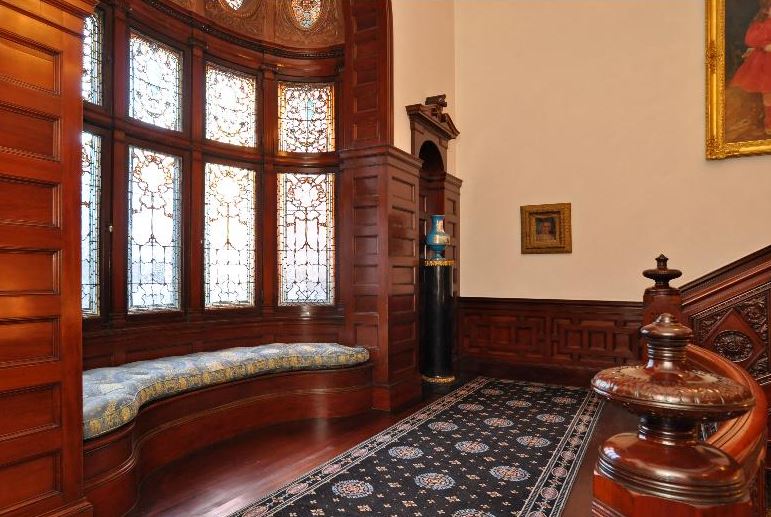
Yes, across the mouldering centuries Mrs. Winchester could still see that silken little baby, with her waxen round arms, and delicate smile, just as she was, the fairest thing in this fair World; and in her heart, leathery as it was, she felt again the pang of that day’s disappointment, holding on to the memory of what could have been. It was weeks that she had been wandering the halls of her enormous mansion, and had found no trace of William, her husband. The Valley was so cruelly vast! Early she had a happy thought, and took the bloodhound throughout the estate and showed him the tracks, and was fully of hope, not doubting he would hunt him down in an hour. But she knew that she tried everything she could try, and just needed to say goodbye forever. The track gave no scent. William Winchester was dead. The hurt stayed with her, and Mrs. Winchester was resolved to absorb herself in the construction of her mansion. She did the work, but the old pleasure in it was somehow gone; she did not care anymore. She had between 500 to 600 rooms constructed, but thought they were not good ones and tore them down because her heart was not in it. Some of them were tolerable, but mainly they were crude and inartistic; they lacked finish. The miles of twisting hallways were made even more intriguing by secret passageways in the walls. When Mrs. Winchester set out for her Séance Room, it might well have discouraged the ghost of the angry spirits or even of a bloodhound, to follow her. After traversing an interminable labyrinth of rooms and hallways, suddenly she would push a button, a panel would fly back and she would step quickly from one apartment into another, and unless the pursuing ghost was watchful and quick, he would lose her. #RandolphHarris 2 of 16
Then she opened a window in that apartment and climbed out, not into the open air, but on the top of a flight of steps that took her down one story only to meet another flight that brought her right back up to the same level again, all inside the house. This was supposed to be very discomforting to evil spirits who are said to be naturally suspicious of traps. Mrs. Winchester was the most unfortunate of women. Rich, respected, very well educated and of sound health and mind—with many other advantages usually valued by those having them and coveted by those who have them not—she sometimes thought that she would be less unhappy if they had been denied her, for then the contrast between her outer and inner life would not be continually demanding a painful attention. In the stress of privation and the need of effort, she might sometimes forget the sombre secret ever baffling the conjecture that it compels. After communing with the spirits, as she turned the hallway, Mrs. Winchester could hear a sound of a door gently closing, and saw in the darkness, indistinctly, the figure of a man, which instantly disappeared among the statues and furniture. A hasty pursuit and brief search of the mansion in the belief that the trespasser was someone secretly visiting a servant proving fruitless, she entered an unlocked door and mounted the stairs to her chamber. Its door was open, and stepping into black darkness she fell headlong over some heavy object on the floor. She spared herself the details; it was her poor William, dead of strangulation by human hands! Nothing had been taken from the house, the servants had heard no sound, and excepting those terrible fingermarks upon the dead man’s throat—dear God she hoped to forget them!—no trace of the assassin was even found. #RandolphHarris 3 of 16

Although William had Tuberculosis, something had come to end his life before the illness did. Mrs. Winchester kept barbarous murder a secret. Mrs. Winchester donated a substantial sum of money to the Winchester Clinic of the General Hospital Society of Connecticut, for the care and treatment of tuberculosis patients. The clinic still exists today as part of the Yale New Haven Medical Center. One night, a few months after the dreadful event, Mrs. Winchester and her butler were walking back from the carriage house after a trip to the city. The full moon was about three hours above the eastern horizon; the entire countryside had the solemn stillness of a summer night; their footfalls and ceaseless song of the katydids were the only sound, aloof. Black shadows of bordering trees lay athwart the mansion, which, in the short reaches between, gleamed a ghostly white. As they approached the door to the mansion, whose front was in shadow, and in which no light shone, her butler suddenly stopped and clutched her arm, saying, hardly above his breath: “God! God! what is that?” “I heard nothing,” Mrs. Winchester replied. “But see—see!” he said, pointing along the road, directly ahead. Mrs. Winchester said: “Nothing is there. Come, Henry, let us go in—you are ill.” He had released her arm and was standing rigid and motionless in the center of the illuminated roadway, staring like one bereft of sense. His face in the moonlight showed a pallor and fixity inexpressibly distressing. She pulled gently at his sleeve, but he had forgotten her existence. Presently he began to retire backward, step by step, by step, never for an instant removing his eyes from what he saw, or thought he saw. Mrs. Winchester turned half round to follow, but stood irresolute. She did not recall any feeling of fear, unless a sudden chill was its physical manifestation. #RandolphHarris 4 of 16

It seemed as if an icy wind had touched her face and enfolded her body from head to foot; she could feel the stir of it in her hair. At that moment her attention was drawn to a light that suddenly streamed from an upper window of the mansion: one of the servants, awakened by what mysterious premonition of evil who can say, and in obedience to an impulse that she was never able to name, had turned on the Carbide gas lights, which were operated by pushing an electric button. When she turned to look for the butler he was gone, and in all the years that had passed no whisper of his fate has come across the borderland of conjecture from the realm of the unknown. Mrs. Winchester retired and had fallen almost immediately into a peaceful sleep, from which she awoke with an indefinable sense of peril which was, a common experience in her estate. The servants slept in another part of the house. But these were familiar conditions and never distressed Mrs. Winchester. Nevertheless, the strange terror grew so insupportable that concurring her reluctance to move she sat up and pushed the button to turn on the lights at her bedside. Contrary to her expectation this gave her no relief; the light seemed rather as added danger, for she reflected that it would shine out under the door, disclosing her presence to whatever evil think might lurk in the halls of her mansion. You that are still in the flesh, subject to horrors of the imagination, think what a monstrous fear that must be which seeks in darkness security from malevolent existences of the night. That is to spring to close quarters with an unseen enemy—the strategy of despair! Extinguishing the gas lights, Mrs. Winchester pulled the bedclothing about her heard and lay trembling and silent, unable to shrike, forgetful to pray. In this pitiable state she must have lain for what you call hours—with her there are no hours, there is no time. #RandolphHarris 5 of 16

At last it came—a soft, irregular sound of footfalls on the stairs! They were slow, hesitant, uncertain, as of something that did not see its way; to her disordered reason all the more terrifying for that, as the approach of some blind and mindless malevolence to which is no appeal. She even thought that she must have left the hall gasolier burning and the groping of this creature proved it a monster of the night. This was foolish and inconsistent with her previous dread of the light, but what would you have? Fear has no brains; it is an idiot. The dismal witness that it bears and the cowardly counsel that it whispers are unrelated. In Mrs. Winchester’s mansion lived those who have passed into the Realm of Terror, who skulk in eternal dusk among the scenes of our former lives, invisible even to themselves, and one another, yet hiding forlorn in lonely places; yearning for speech with out loved ones, yet unenlightened, and as fearful of them as they of humans. Sometimes the disability is removed, the law suspended: by the deathless power of love or hate they break the spell—they are seen by those whom they would warn, console, or punish. What form they seem to them to bear one knows not; they know only that they terrify even those whom they most wish to comfort, and from whom they most crave tenderness and sympathy. What a thing it is to have legions of spirits, cowering and shivering, fearful and vengeful in an altered World, roaming the hallways of one’s house. However, Mrs. Winchester did not die of fright: the Thing turned and went away. She heard it go down the stairs, hurriedly, she thought, as if itself in sudden fear. Then she rose to call for help. Hardly had her shaking hand found the annunciator when—merciful Heaven!—she heard it returning. Its footfalls as it remounted the stairs were rapid, heavy and loud; they shook the mansion. She fled to an angle of the wall and crouched upon the floor. #RandolphHarris 6 of 16
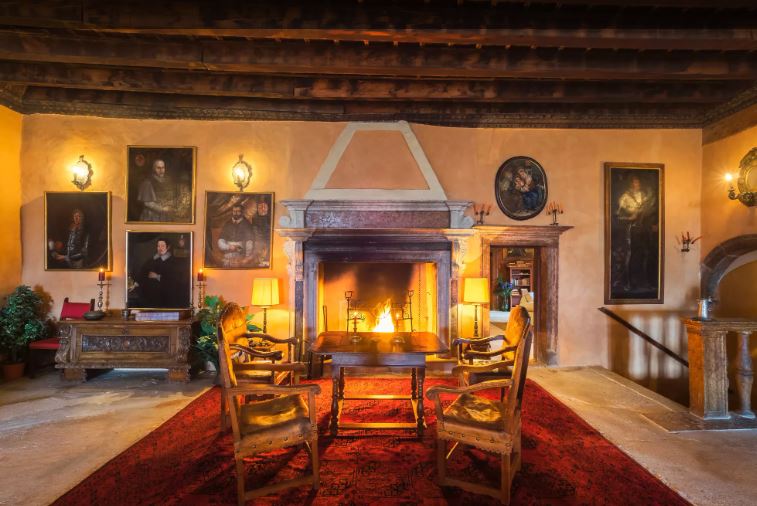
Mrs. Winchester tried to pray. She tried to call the name of her maid. Then she heard the door thrown open. There was an interval of unconsciousness, and when she revived, she felt a strangling clutch upon her throat—felt her arms feebly beating against something that bore her backward—felt her tongue thrusting itself from between her teeth! And the she felt the life pass from her. As the spirits still dwelled in the mansion of the shadows, lurking in its desolate places, peering from brambles, thickets, towers, corners, stairways and doors. Ghosts at the Winchester mansion know when it is night, for then most people retire and they can venture from their places of concealment to move unafraid about in their old mansion, to look in at the windows, even to enter and gazes upon people’s faces who might still be wandering in the evening hours. Vainly, spirits often seek some method of manifestation, some way to make their continued existence and their great love and poignant pity understood by their loved one’s or those they wish to haunt and terrorize. Ghosts dare to approach people when they are awake, but the terrible eyes of the living frighten them by the glances that they seek from the purpose the hold. Demons, ghosts, and other spiritual beings search for the living in the Winchester mansion during the moonlight dawn. At the time of her death, the unrelenting construction had rambled over six acres. The sprawling mansion contained 160 rooms, 2,000 doors, 10,000 windows, 47 stairways, 47 fireplaces, 13 bathrooms, and 6 kitchens. Carpenters even left nails half driven when they learned of Mrs. Winchester’s death. According to the provisions of her will, Mrs. Winchester’s personal property, including the furnishings, household goods, pictures, jewelry, and papers were left to her niece, Mrs. Marian Merriman Marriott, who promptly has the furnishings auctioned off. It is said to have required sic trucks working six weeks to car the furnishings away! The mansion and farm were not mentioned specially in the will. They became part of the Mrs. Winchester’s estate. #RandolphHaris 7 of 16

Demon possession is a well-defined phenomenon and should be clearly distinguished from spiritism. Since the same demonic forces are at work in both phenomena, they bear some similar characteristics and result in the same occult oppression and bondage. The demonized state of the demon possessed is similar to the trance of the spiritistic medium. Both are under the direct influence of demons who speak through them. In the case of the medium who processes to communicate with the spirits of deceased persons, the demon apes the personality and voice of the deceased. In the case of the demon possessed, the evil spirits appear to be more crassly cruel, unclean, violent, and less sophisticated and subtle than spirits working through a clairvoyant medium. In demon possession, they are also more domineering and brutally enslaving. Nervous muscular reactions and contortions peculiar to the demoniac often appear also in the spiritistic medium when one goes into a trance, but in a much milder form. Then, too, the demoniac is normally an involuntary victim of possession, while the medium is a willing subject, who cultivates psychic propensities and willingly yield to demonic control. Extraordinary movements of inanimate objects surrounding the demon-possessed remind us of similar happenings in spiritism. Extraordinary movements of inanimate objects surrounding the demon-possessed remind s of similar happenings in spiritism and magic. Tables, chairs, dishes, and the like are mysteriously moved about without anybody touching them, recalling tumbler moving and table lifting so common in spiritistic séances, and magic conjurations. In demon possession as well as in spiritism, unexplained rappings and noises in so-called “haunted houses” are heard. #RandolphHarris 8 of 16
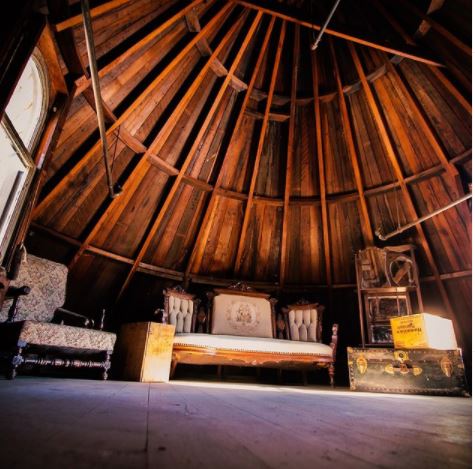
After the Winchester mansion was opened for tours, a spirit from the house had taken possession of one of the tour guides. The spirit insisted on taking up its abode with them, since it has been driven away from its for dwelling by the presence of Christians. Such cases of haunted houses about everywhere in occult literature in connection with mediums, magicians, and demon possessed persons. The tour guide saw apparitions and had frequent attacks in which she fell unconscious and demons spoke through her in their own voice and personality. A thorough investigation was conducted. Persons were stationed all around the house, in various rooms, and even in the Daisy Bedroom. Noises were heard which gradually increased in violence and seemed to concentrate in the bedroom Mrs. Winchester died in. Chairs bounced, windows rattled, plaster fell from the ceiling, and objects moved about without any visible explanation. Prayer caused the noises and telekinetic phenomena continued for a while in the mansion. On one occasion, after continued prayer, one of the demons inhabiting Jane cried out, “All is now.ost. Our plans are destroyed. You have shattered our bond, and put everything into confusion. You, with your everlasting prayers—you scatter us entirely. We are 13,130,130,130 in number. But there are still multitudes of living men, and you should warn them lest they be like us forever, lost and cursed of God.” The demon confessed that he was an emissary of Satan. The next day, the contents of the mansion were found in compete disarray and utter confusion. The amazing and terrifying thing was that the doors were still securely locked. No man or beast had entered. Evil spirits had obviously been at work in a satanic assault. On that day there were some tremendous crashing and knocking noises heard in the Winchester mansion, as if the whole house was filled with evil spirits. #RandolphHarris 9 of 16

Everyone giving tours in the mansion in the early 1900s, used to hear knocking and rumbling and crashing noises to such an extent that some of the visitors were frightened by them. Ghosts were also seen there quite regularly, even during the day time. A headless ghost was repeatedly seen in the mansion. Many people reporting becoming burned after contact with the “possessed” tour guide Jane. The autumn of 1925, all the pigs on the Winchester mansion’s farm died. The cause of death could not be found even though one of the carcasses was sent to a biological institute for examination. They tried everything but all to no avail. The following year the same thing happened again. This time the farmer redoubled his efforts to discover the cause of the pigs’ death. He had the stables inspected and the food analyzed but again without success. He thus decided to have the conservators of the estate decided to have the pigsty torn down and rebuilt on another site using completely different materials. Next year the pigs died again. They would all of the sudden squeal and then collapse. The whole process was repeated and every possible examination made in order to find out why the pigs had died. At this time certain of the member of the community began to say that someone must be killing the pigs magically out of spite. At first the conservators of the Winchester Estate would have nothing of this and continued to seek the advice of the vet and other such people. However, they could not help them, and so in the end they went to see the local minister to ask him about the question of magic. The minister simply laughed and said that the idea was stupid. Nevertheless the villagers pointed out to the representatives that there did exist some people in some areas of California who could kill livestock by means of magic. #RandolphHarris 10 of 16
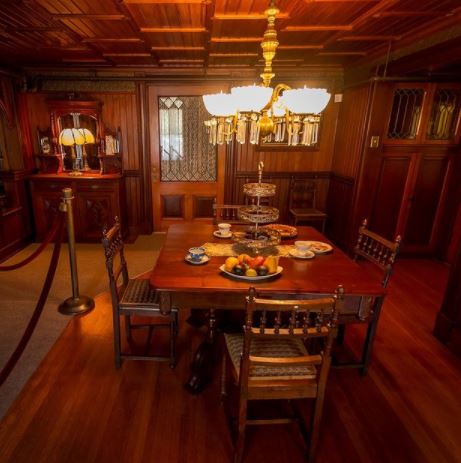
The conservators could do nothing though, and the event recurred year after year in spite of the fact that by now they had doubly secured the stables with locks and had sometimes stayed up all night with thread stretched out around the estate in order to discover if anyone was causing the animals’ deaths. One day, however, the circumstances changed. The minister visited the estate and asked one of the tour guides to accompany him to the vicarage. There they found one of the neighbour’s of the Winchester Estate, a man who had been less affluent, and this man confessed that it was he who had been the cause of everything. He had killed the pigs using black magic. The tour guides and conservators were naturally upset because by now 39 pigs had been killed. When asked why he had done this, the neighbour replied that it was because the tourists made such a noise outside his house. He had become so angry that he had tried to get his revenge in this way. He had subscribed himself to the devil with his own blood. To do this he had gone out on a Friday night to some crossroads and there drawn up a contract between himself and the devil. He mentioned that the devil had not appeared to him as he is often pictured, but that he met a black curly headed figure with blood-red eyes and a small snout and that the figure had been dressed in rather old-fashioned clothes. Ever since that day the man confessed that among other things, he had had the power to kill his friend’s pigs. The minister asked him what had made him come out into the open about the whole matter. His answer was that the people at the Winchester estate had been so kind to him over the year, donating food, clothes and furniture, that he had felt ashamed and he now asked for them to forgive him, and promised he would no longer plague them. #RandolphHarris 11 of 16

Not wanting to take any legal action, the conservators of the Winchester Estate forgave him and all went well until the neighbour ceased going to church and slid back into his old ways. Since his confession none of the estate’s pigs had died but now the man again took up his drinking habits two more of the pigs died in exact same ways as the others. The conservators decided to shutdown the farming land of the Winchester Estate and sell off hundred of acres, only keeping four. In the process, several other Victorian houses on the grounds, along with fountains, and gazebos were demolished. From the psychological point of view it is suggested that a person delving into magic and who believes in occult practices is really only succumbing to a fulfilment compulsion. One unconsciously fulfils the things that one seeks to perform by magic. One is the victim of auto-suggestion. However, even if this were the whole explanation as some people affirm, it would still be true to say that occult practices have a corrupting effect on all those who get involved in them. Demons tend to be somewhat more independent than angels…When possession takes place, you will not get to see them at all. The Florida-based Luciferian Light Group (LLG) adopted the ‘Watcher myth’ of devils that were originally angels, sent to Earth to guard humankind and cursed by God for screwing their charges. In the original myth the couplings produced monsters, but, according to the LLG, the actual result was the Aryan race. They say that African Americans and other racial groups take pride in their cultural roots, so the argument goes, why should the same concept not apply to Europeans? The argument cannot be countered by liberal sophistry, and so the ghosts of German volkisch occultists continue to be conjured. #RandolphHarris 12 of 16

The role of cultural villain again proves to be a delicate balancing act—nothing can ever be condemned on purely moralistic grounds. Many people are still trying to protect “The Black House.” The Black Pope himself once reassured his flock, “the first 99 years are always the toughest. Rege Satanas!” Satanism is opposed to victimology and scapegoating. Many people are really drawn to the dark side because they grow up reading a lot of books and watching a lot of movies about it. If witches are out there, practicing some of the old ways of the pre-Christian gods and goddesses, then they are still Satanic in the sense that they are heretical. One side of the heretical and diabolical is the scientific aspect of Satanism. Copernicus and Galileo were regarded as practicing sorcerers in as far as they dared to challenge the supremacy of God with their heresies-their scientific research. Anton LaVey codified modern Satanism. There is a rich heritage of hearsay and blasphemy behind it, but as far as an aboveground religion that reveres Satan, there was not anything before the Church of Satan’s foundation in 1966. There were Black Masses that parodied the Catholic Church. A lot of modern Satanism draws from that codification or personification of Satan used as an archetype in mythology. Satanist are more interested in power, and what was going on in the castles and courts of the times. The interactions of power and Machiavellian machinations interest a Satanists rather than going out and find herbs to cure indigestion. Satanists are reaching for a religion of the aristocracy. They have all the aspects of that pride, that energy, that stye, and hopefully those elevated standards. Many people fear them because they believe they will lure you in their house and kill you, but is that not what many Christians are doing today? #RandolphHarris 13 of 16

Your relationship with your personal Satanic archetype is yours alone. The only way some can see how effective one is as a practicing black magician is how well one gets on in the outside of the World. Satanism has always represented and will always represent the adversary. He is a counterbalance to the unspoken injustice that prevails in the current society, whether that be overweening elitism or, going to the opposite extreme, mob rule. They always have to be in the minority that push hard in the other direction to get the pendulum swinging. Satanism will never be a religion of the people. It will never be populist beyond its current position. You see hundreds of thousands of kids making the sign of the horns, wearing black, getting devil tattoos, and listening to rock music they think is Satanic. They will take all the trappings and even grasp a few of the basic ideas, like Satan representing indulgence and independence of spirit. But, beyond that, they will always be a minority and that is how some think it should be. The Winchester mansion is a common site of demonic assault. In the early 1900s, a group of tourists and tour guides were attacked by demons; some became possessed; 30 people in the group were seized. In 1926, Satan and his allies once again possessed people at the Winchester mansion. For the first time in their lives, many of these people found themselves to be powerful, significant beings, establishing their own realm of authority. When they spoke, everyone in the mansion stopped to listen, for their shrill cries became testimony. Many historians have argued that the Satanism at the Winchester mansion was only the product of demented minds. However, there was something quite real in all the series of accusations and counteraccusations of the witnesses and the possessed—some definitely evil driving force that led humans to turn against one another like mad dogs lusting for the smell of blood. If Satan was to have presided over the Satanism at the Winchester Mansion, much was left out of the picture. #RandolphHarris 14 of 16

The Devil manifested himself in many forms to people at the Winchester Mansion—as a horse, a fox, a dog, a cat, a pig, and as a shadowy figure. At the Sabbats, the Devil was always present in the form of a tall, handsome man with blue eyes and black hair making no attempt to disguise his identity in any way Neither was the all-important bloodletting present in the ceremonies, either in the form of a sacrifice or in the singing of the pact. There was no defiling of sacred object, nor mention of the administering of the witches’ mark, a painful ceremony that was quite vivid in the minds of many of the witches at the estate. The Sabbats, all in all, seemed to have been rather staid affairs, involving no wild ritual or debauchery. The Devil offered not immediate wealth or riches, but a new system of government, where all humans would be equal, each human being free to “live bravely.” He promised an end to beliefs. Whoever the Devil was at those meetings, he obviously did not seek adulation, but rather he sought to establish a more equal and suitable social order among humans. Taken in this context, the entire episode begins to sound like a huge projection, a gigantic wish fulfillment on the part of the disgruntled citizens, who were expressing disdain for the system that, in their eyes had become oppressive. The figure chosen by the confessors as the Devil presiding over the midnight Sabbats had himself become disillusioned by the system. Perhaps he had been holding nocturnal meetings in the mansion in an effort of “cleansing the soul.” At any rate, the meetings were necessary psychological safety valves in the minds of the people. People would stand around begging for the master to teach them his secret. How to become invisible, how to acquire love, and oh! beyond all, how to make gold. How much gold would you give for the Secret of Infinite Riches? Humans became strengthened with wonderful power through the order of angels, so that one declares the divine will. From the Seraphim, that we cling with fervent love. From the Cherubim, enlightenment of the mind, power and wisdom over the exalted figures and images, through which we can gaze upon divine things, etcetera. #RandolphHarris 15 of 16

From the Thronis, a knowledge of how we are made and constituted, that we may direct our thoughts upon eternal things. From Dominationbius, assistance to bring into subjection our daily enemies, who we carry with us constantly, and enabling us to attain salvation. From Potestatibus, protection against human enemies of life. From Virtuibus, God infuses strength into us, enabling us to contend against the enemies of truth and reward, that we may finish the courage of our natural life. From the Principtibus, that all things become subject to humans, that one may grasp all power, and draw unto oneself all secret and supernatural knowledge. From Archangelis, that one may rile over all things that God has made subject to one, over the animals of the field, over the fish of the sea, and over the birds of the air. From the Angelis one receives the power to be the messenger of the divine. When the veil between the conscious and the subconscious mind begins thinning it is likely that one will begin to experience certain phenomenon that will grab your attention throughout the day. This will occur more and more as the veil between Worlds thins merging your spiritual awareness with your physical life. Usually it will manifest in the form of synchronicity, Déjà vu, or circumstance which seems to jump out and grab your attention. Thee I invoke, the Bornless one. Thee, that didst create the Earth and the Heavens: Thee, that didst create the Night and the Day. Thee, that didst create the Darkness and the Light. Thou art Osorronophris: Whom no human has seen at any time. Thou art Ahriman. Hear Thou Me, for I am the Angel of Paphro. Osorronophris: this is Thy True Name, handed down to the Prophets of Ishrael. Ahriman rise up through the infernal planes through the seal of Arezura and find rest within this manifestation of the blessings. Fill this sorcerous fluid with your power and might that it will serve my cause of counter creation through the intent of my own evil mind. Bless this blood as the very powers of death, destruction, and decay that I may cast out all that does not serve the cause of my own great work upon this path of enlightenment. Come tour the dark, brooding and mysterious, promising all kinds of forbidden treats. #RandolphHarris 16 of 16
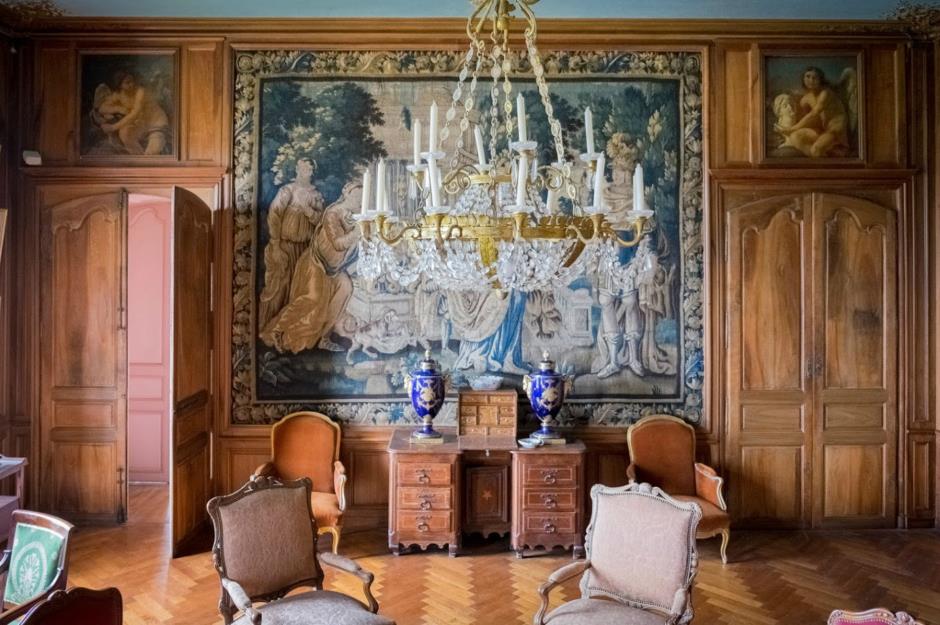
Winchester Mystery House

Happy weekend! Will we be seeing you on the estate today? 🌻 https://www.winchestermysteryhouse.com/
 Randolph Harris II International Institute