
Home » Posts tagged 'culture'
Tag Archives: culture

A War Within Themselves

It seems difficult to ignore the fact that there is a crisis of identity in America today, and the situation is more complex than it appears. “Identity,” and “identity crisis,” have in popular and scientific usage become terms which alternately circumscribe something so large and so seemingly self-evident that to demand a definition would almost seem petty, while at other times they designate something made so narrow for purposes of measurement that the over-all meaning is lost, and it could just as well be called something else. If, to give example of the wider use of the term, the papers run a headline, “The identity Crisis of Africa,” or refer to the “identity crisis,” of the Pittsburgh glass industry; if the outgoing president of the American Psychoanalytic Association titles his farewell address, “The Identity Crisis of Psychoanalysis”; of if, finally, the Catholic students at Harvard announce that they will hold an “Identity Crisis,” on Thursday night at eight o’clock sharp, then the dignity of the term seems to vary greatly. The quotation marks are as important as the term they bracket: everybody has heard of “identity crisis,” and it arouses a mixture of curiosity, mirth, and discomfort which yet promises, by the very play on the word “crisis,” not to turn out to be something quite as fatal as it sounds. In other words, a suggestive term has begun to lend itself to ritualized usage. #RandolphHarris 1 of 30

Social scientists, on the other hand, sometimes attempt to achieve greater specificity by making such terms as “identity crisis,” “self-identity,” or “sexual identity” fit whatever more measurable item they are investigating at a given time. For the sake of logical or experimental maneuverability (and to keep in good academic company), they try to treat these terms as matters of social roles, personal traits, or conscious self-images, shunning the less manageable and more sinister—which often also means the more vital—implications of the concept. Such usages have, in fact, become so indiscriminate that the other day a German reviewer of a book in which I first used the term in the context of psychoanalytic ego theory called it the pet subject of the amerikanische Populaerpsychologie. However, one may note with satisfaction that the conceptualization of identity has led to a series of valid investigations which, if they do not make clearer what identity is, nevertheless have proved useful in social psychology. And it may be a good thing that the word “crisis” no longer connotes impending catastrophe, which at one time seemed to be an obstacle to the understanding of the term. It is now being accepted as designating a necessary turning point, a crucial moment, when development must move one way or another, marshaling resources of growth, recovery, and further differentiation. This proves applicable to many situations: a crisis in individual development or in the emergence of a new elite, in the therapy of an individual or in the tensions of rapid historical change. #RandolphHarris 2 of 30

The term “identity crisis” was first used for a specific clinical purpose in the Mt. Zion Veterans’ Rehabilitation Clinic during the Second World War, a national emergency which permitted psychiatric workers of different persuasions with denominations, among them Emanuel Windholz and Joseph Wheelwright, to work together harmoniously. Most of our patients, so we concluded at that time, had neither been “shellshocked” nor become malingerers, but had through the exigencies of war lost a sense of personal sameness and historical continuity. They were impaired in that central control over themselves for which, in the psychoanalytic scheme, only the “inner agency” of ego could be held responsible. Therefore, I spoke of a loss of “ego identity.” Since then, we have recognized the same central disturbance in severely conflicted young people whose sense of confusion is due, rather, to a war within themselves, and in confused rebels and destructive delinquents who wage war on their society. Much like the conflicts we are seeing on American streets, at Ivy League universities, and in American politics. In all these cases, then, the term “identity confusion” has a certain diagnostic significance which would influence the evaluation and treatment of such disturbances. #RandolphHarris 3 of 30

Young patients can be violent or depressed, delinquent or withdrawn, but theirs is an acute and possibly passing crisis rather than a breakdown of the kind that tends to commit a patient to all the malignant implications of a fatalistic diagnosis. And as has always been the case in the history of psychoanalytic psychiatry, what was first recognized as the common dynamic pattern of a group of severe disturbances (such as the hysterias of the turn of the century) revealed itself later to be a pathological aggravation, an undue prolongation of, or regression to, a normative crisis, “belonging” to a particular stage of individual development. Thus, we have learned to ascribe a normative, “identity crisis” to the age of adolescence and young adulthood. The term “identity crisis” has become so distinctive that it is often first used as something one takes, and thinks others take, for granted. This recalls one of the innumerable stores with which Norman Rieder could be counted on to lighten those often-weary war days. An old man, he recounted, used to vomit every morning, but he showed no inclination to consult a doctor about it. His family finally prevailed on him to go to Mt. Sion for a general checkup. When Dr. Reider approached him cautiously, “How are you?” he was told promptly, “I’m fine. Couldn’t be better.” And, indeed, on further examination, the constituent parts of the old man seemed to be in good shape as could be expected. Finally, Dr. Reider became a bit impatient. “But I hear you vomit every morning?” The old man looked mildly surprised and said, “Sure. Doesn’t everybody?” #RandolphHarris 4 of 30

I am not implying that “identity crisis” is a symptom of mine that I simply assumed everybody else had also, although there is, of course, something to that too. However, I did assume that I had given the most obvious name to something that everybody had had at one time and would, therefore, recognize in those who were having it acutely. Judged by the clinical origin of these terms, then, it would seem reasonable enough to link the pathological and the developmental aspects of the matter and to see what might differentiate the identity crisis typical for a case history from that of a life history. This emphasis on individual lives, however, would make the other and wider uses of the terms, “identity,” and “Identity crisis,” appear even more suspect as mere analogies not admissible in any court of definition. That Catholic students would try to pool their individual crises, enjoy them together, and get them over with in one evening makes at least humorous sense. However, what possible connection could adolescence as such have with the state of an African nation or of a scientific body? Is this a mere analogistic usage, such as employed, with a mixture of boastfulness and apology when a nation is said to be “adolescent,” can a type of individual identity crisis be shared by a significant section of the young population? And further, to return to the faddish use of the term, “identity confusion,” would some of our youth act so openly confused and confusing if they did not know they were supposed to have an identity crisis? #RandolphHarris 5 of 30

The history of the last sixty years seems to indicate that there are clinical terms which are taken over not only by diagnosticians, but also by those who have been overdiagnosed, and, in this case, by a section of a whole age group who echo our very terms and flamboyantly display a conflict which we once regarded as silent, inner, and unconscious. We have now traced a neurotic development that begins with self-idealization and evolves step by step with inexorable logic to a transformation of values into the phenomenon of neurotic pride. This development, in fact, is more involved than I have presented hitherto. It is both intensified and complicated by another process operating simultaneously—a process which is seemingly opposite, though it is likewise initiated by self-idealization. Briefly, when an individual shifts his center of gravity to his idealized self, he not only exalts himself but also is bound to look at his actual self—all that he is at a given time, body, mind, healthy and neurotic—from a wrong perspective. The glorified self becomes not only a phantom to be pursued; it also becomes a measuring rod with which to measure his actual being. And this actual being is such an embarrassing sight when viewed from the perspective of a godlike perfection that he cannot help but despise it. #RandolphHarris 6 of 30

Moreover, what is dynamically more important, the human being that he is keeps interfering significantly with his flight to glory, and therefore he is bound to hate it, to hate himself. And since pride and self-hate are one entity, I suggest calling the sum of the factors involved by a common name: the pride system. Yet with self-hate we re considering a completely new aspect of the process, one which considerably alters our view of it. We have advisedly set the question of self-hate aside until now to obtain first a clear picture of the straight drive toward actualization of the idealized self. No matter how frantically our Pygmalion tries to mold himself into a being of splendid dimensions, his drive is doomed to failure. He may at best be able to eliminate from awareness some disturbing discrepancies, but they continue to exist. The facts remain that he must live with himself; whether he eats, sleeps, goes to the bathroom, whether he works or enjoys the pleasures of the flesh, he is always there. If he could only divorce his wife, take another job, move to another house, or go on a trip, he sometimes thinks that everything would be better, but in fact, he must always take himself along. Even if he functions like a well-oiled machine, there are still limitations of energy, of time, of power, of endurance—the limitations of a human being. #RandolphHarris 7 of 30

The best way to describe the situation is in terms of two people. There is the unique, ideal person, and there is an omnipresent stranger (the actual self), always interfering, disturbing, and embarrassing. Describing the conflict it terms of “he and the stranger” seems pertinent because it comes close to what the individual feels. Moreover, even though he may discard factual disturbances as irrelevant or unrelated to himself, he can never escape so far from himself as not to “register” (we feel in our guts and bones what is going on in ourselves without its reaching awareness) them. Although he may be successful, may function well, or even be carried away by grandiose fantasies of unique achievement, he will nevertheless feel inferior or insecure. He may have a gnawing feeling of being a bluff, a fraud, a freak—feelings for which he cannot account. His inside knowledge of himself shows unmistakably in his dreams, when he is close to the reality of himself. Usually, the reality of himself intrudes painfully and unmistakably. Godlike in his imagination, he is awkward in social situations. Wanting to make an indelible impression on somebody, his hands shake, or he stammers or blushes. Feeling himself a unique lover, he may suddenly be impotent. Speaking in his imagination to his boss like a man, he merely musters a silly smile. The brilliant remark which would settle a discussion for good and all occurs to him only the next day. The desired sylphlike slenderness is never attained because, compulsively, he eats too much. The actual, empirical self becomes the offensive stranger to whom the idealized self happens to be tied, and the latter turns against this stranger with hate and contempt. The actual self becomes the victim of the proud, idealized self. #RandolphHarris 8 of 30

All the items mentioned so far are helpful in making the script possible, and most of them are matters beyond the person’s awareness. Now, we come to the key item, which not only makes the script possible but gives it the decisive push. That is the demon who sends Jeder naked on roller skates down the hill to his destruction just when he is on the verge of success, before he even knows what is happening to him. However, looking back, even if he has never heard the other voices in his head, he will usually remember that one, the voice of the demon prompting irresistibly: “Go ahead and do it!” Which he does, in the face of all the other forces warning him against it and vainly trying to call him back. This is Daemon, the sudden supernatural push that determines a man’s fate, a voice from the Golden Age, lower than the gods but higher than humanity, perhaps a fallen angel. That is what the historians tell us, and perhaps they are right. For Heraclitus, the Daemon in man was his character. However, this Daemon, according to those who have known him or her, the losers who are just picking themselves up from their falls, speaks not in a loud command like a ghost of a mighty god, but in a seductive whisper, like a beckoning woman, like an enchantress: “Come, do it. Go ahead. Why not? What do you have to lose but everything? Instead, you will have me, as you once did in the Golden Age.” #RandolphHarris 9 of 30
This is the repetition compulsion which drives men to their doom, the power of death, according to Dr. Freud, or the power of the goodness Ananke. However, he places it in some mysterious biological sphere when, after all, it is only the voice of seduction. Ask the man (or woman) who owns one and knows the power of his demon. The remedy against demons has always been cantrips and cantraps, and that is the case here. Every loser should carry it in a wallet or purse, and whenever success looms in sight, that is the moment of danger. That is the time to pull it out and read it aloud repeatedly. Then, when the demon whispers, “Stretch out your arm—and put the whole wad on one last number, or have just one drink, or now is the time to pull your knife, or grab her (him) by the neck and pull her (him) toward you,” or whatever the losing movement is, pull the arm back and say it loud and clear: “But mother, I would rather do it my own way and win.” If not in the World without God, here can charity take refuge, after all? On the other hand, grace provides for all, even the rich. Those who deny everything at least understand that negation is a calamity. They can then open their hearts to the misery of others and finally deny themselves. Pisarev did not shrink from the idea of murdering his mother, and yet he managed to find the exact words to describe injustice. He wanted to enjoy life egoistically, but he suffered imprisonment and finally went mad. Such an ostentatious display of cynicism finally led him to an understanding of love, to be exiled from it and to suffer from it to the point of suicide, thus revealing, in place of the man-god he wanted to create, the unhappy, suffering old man whose greatness illuminates the pages of history. #RandolphHarris 10 of 30

The understanding of such deeply metaphysical writings calls for an effort on the reader’s part to use his own mental energy as actively as the author had to use his own during their creation. The reader’s task is, of course, immeasurably easier than the author’s for he has had the pioneer work of track-laying performed for him; but even so it is hard enough. The reflective study of these high-grade writings forces the mental growth of the student. The absorption of their spirit elevates him for a while to the spiritual plane of the author. The actualizer, then, is someone who, aware of both his or her strengths and weaknesses, therefore does not project either of them excessively onto others. He or she is aware that there is always a parallel between how we feel about ourselves and how we feel about others. The manipulator, on the other hand, excessively fixated or preoccupied with her or his own strengths or weaknesses, denies or disowns those parts that she or he cannot escape. For example, the manipulative businessman admits to his therapist that he has a strong desire for pleasures of the flesh with his secretary. Projecting his inner conservative self—his conscience and feelings of restraint—onto his wife, he secretly blames her for his dilemma. If the businessman were in therapy, the therapist might ask him to express both his liberal and his conservative views on the issue. #RandolphHarris 11 of 31

Self-hate makes viable a rift in the personality that started with the creation of an idealized self. It signifies that there is a war on. And this indeed is the essential characteristic of every neurotic: he is at war with himself. The foundation has been laid for two different kinds of conflicts. One of the is within the pride system itself. It is the potential conflict between expansive drives and self-effacing ones. The other, deeper conflict is between the whole pride system and the real self. The latter, though shoved into the background and suppressed as pride ascended to supremacy, still is potentially powerful and may, under favorable circumstances, gain its full effectiveness. This second, deeper conflict is not apparent at the beginning of the analysis. However, as the pride system totters and the person becomes closer to himself, as he starts to feel his own feelings, to know his wishes, to win his freedom of choice, to make his own decisions, and assume responsibility for them, the opposing forces get lined up. With increasing clarity, the battle is not drawn between the pride system and the real self. Self-hate now is not so much directed against the limitations and shortcomings of the actual self as against the emerging constructive forces of the real self. It is a conflict of greater dimensions than any neurotic conflict I have discussed hitherto. I suggest calling it the central inner conflict. #RandolphHarris 12 of 310

The central inner conflict is one between healthy and neurotic, constructive and destructive forces. Therefore, a neurotic conflict can operate either between two neurotic forces or between healthy and neurotic ones. This difference is important, over and beyond terminological clarification. There are two reasons for the conflict between the pride system and the real self, having a much greater power to split us apart than other conflicts. The first lies in the difference between partial and total involvement. By analogy with a State, it is the difference between clashing interests of individual groups and the whole country’s being involved in a civil war. The other reason lies in the fact that the very core of our being, our real self with its capacity for growth, is fighting for its life. Hate for the real self is more remote from awareness than that for the limitations of the actual self, but it forms the never absent background of self-hate—or the undercurrent that always supplies the main energies, even though hate for the limitations of the actual self may be in the foreground. Hence, hate for the real self can appear in almost pure form while hate for the actual self is always a mixed phenomenon. If for instance our self-hate takes the form of a ruthless self-condemnation for being “selfish” id est, for doing anything in our own behalf—this may be, and most likely is, both a hate for not measuring up to the absolute of saintliness and a way of crushing our real self. #RandolphHarris 13 of 30

A German poet, Christian Morgenstern, concisely expressed the nature of self-hate in his poem Entwicklungsschmerzen (“Growing Pains”): “I shall succumb, destroyed by myself, I who am two, what I could be and what I am. And in the end, one will annihilate the other. The Would-be is like a prancing steed(I am is fettered to his tail), is like a wheel to which I am bound, is like a fury whose fingers twine into his victim’s hair, is like a vampire that sits upon his heart and sucks and sucks.” A poet has thus expressed the process in a few lines. He says that we may hate ourselves with an enervating and tormenting hatred—a hatred so destructive that we are helpless against it and may physically destroy ourselves. And he says that we do not hate ourselves because we are worthless, but because we are driven to reach beyond ourselves. The hatred, he says, results from the discrepancy between what I would be and what I am. There is not only a split, but a cruel and murderous battle. The converse of the script is the real person living in a real world. This real person is probably the real Self, the one that can move from one ego state to another. When people get to know each other well, they penetrate through the script into the depths where this real Self resides, and that is the part of the other person they respect and love, and with which they can have moments of real intimacy before Parental programming takes over again. This is possible because it has happened before in the lives of most people, in the most intimate and script-free relationship of all: that between the mother and her infant. If left to her own instincts, the mother can usually suspend her script during the nursing period, and the infant does not have one. #RandolphHarris 14 of 30

People act in ways that confirm their self-concepts. When people act “out of character,” as in the case of persons who think of themselves as kind but then fly into violent rages, they experience a threat to their sense of identity. They may say, “I was not myself when I was so enraged.” Such a threat is extremely painful, and people go to great lengths to retain a continuous experience of their preferred identity. Our sense of being who we believe we are can be threatened, not only by actions that are out of character, but also by thoughts, feelings, and memories. A person may engage in daydreaming that produces thoughts and feelings of an outrageous nature; for example, a loving mother may find herself entertaining fantasies of abandoning her children. Even if it is a “spoiled” identity, it is intolerable to lose one’s sense of identity. For example, obese people and alcoholics may believe they remain addicted to sweets or to alcohol because they “have no will power.” This belief may be the basis of their sense of who they are; if they act decisively, they do not recognize themselves. People find it difficult to change their behavior, even when it is destructive to growth and to health, because their self-concepts have not altered. The identity crisis many are facing today can have historical origins as a symptom of the unravelling moral authority. Stable identities are not only psychological but also moral accomplishments. They are supported by clarity about meaning, which in turn draws on authoritative moral guidance. Without such guidance, people’s identities often become decentered and find it difficult to endow their lives with meaning. #RandolphHarris 15 of 30

The practice of religion is much like every other human endeavor. Some people practice their religious beliefs with manipulation, others practice their beliefs with actualizing qualities. A manipulative practice stresses the human inability to trust in our own inner resources. An actualizing practice stresses that the kingdom of God is within each person, and to trust one’s inner self is to trust God’s handiwork. The role of religion in the actualized sense is to foster self-direction and self-growth and to fulfill interpersonal relationships. Thus, the actualizing priest, minister, or rabbi is seen by the actualizing person as less a judge and answer-giver and more as a resource person, one who shares and grows with his or her parishioners. He or she is a consultant, not a junior god. “Within my earthly temple there is a crowds; there is one of us that is humble, one that is proud, there is one that is broken-hearted for sins, and one that unrepentant sites and grins; there is one that loves his neighbors as himself, and one that cares for naught but fame and pelf, from much corroding care I should be free. If I could only determine which is me!” (Edward Stanford Martin, “Mixed”) An actualizing person knows the two “crowds” within and willingly accepts each in the integrative fellowship of self. Once socialization was diverted from its traditional goal of transmitting different moral norms, its capacity to provide a bond that bound together the different generations was undermined. Yet, these bonds serve to underpin the common world inhabited by members of a community. Once this bond begins to unravel, what is left is a sense of self in search of a home. The sense of homelessness created a need for the science of psychology, which, as we explain, diagnosed this predicament as an identity crisis. #RandolphHarris 16 of 30

When it comes to the award-winning Sacramento Fire Department, the first step in risk management is to define the context of the risk, or the strategy to be employed in dealing with the risk. Once the risks have been identified, they must be analyzed in terms of their potential threat to the operation. It is important to understand that risk does not necessarily mean “bad.” Fire and emergency services have relied on a simple risk-benefit model, preached by Chief Alan Brunacini, used for many years to guide their decision-making: We will, in a structured plan, risk a lot to save a lot (human lives). In a structured plan, we will risk a little to save a little (property and pets). We will risk nothing to save nothing (or something that is already lost). “Yes, I think about the possibility of dying in this job. I’m missing five o’clock Mass tonight. When I go to work every day, I’m up for work. It’s like a game, I’m up for it. I say my prayers on the way to church or on the way to work, and I ask God to keep me safe and to keep the guys I work with safe. I pray to him that I make the right decisions. I’m not ashamed to say that to anybody. I don’t go around handing out religious leaflets, and I’ll never talk about it at work, but I don’t think a man could extend himself and risk his life in this job without being close to God, because this could be your last day. What I get from firefighting is that satisfaction of having personal worth.” #RandolphHarris 17 of 30

If you see a fire truck stopped in the street without the lights on, be very careful. Sometimes there is an emergency, and you should not pass the fire truck. It might be a good idea to safely turn around and go another way because if you hit someone and they happen to die, you could be charged with manslaughter. Sometimes fire firefighters are getting back into their vehicle, and if you pass the apparatus, you may collide with a firefighter who is on foot. Also, be sure to look at their signals; sometimes emergency vehicles are in motion, albeit slowly, and drivers try to pass them, and this could lead to a dangerous situation. Also, if you are in an intersection when you see an emergency vehicle, continue through the intersection. Drive to the right as soon as it is safe and stop. Obey any direction, order, or signal given by a law enforcement officer or a firefighter. Even if they conflict with existing signs, signals, or laws, follow their orders. When their siren or flashing lights are on, it is against the law to follow within 300 feet of any fire engine, law enforcement vehicle, ambulance, or other emergency vehicle. If you drive to the scene of a fire, collision, or other disaster, you can be arrested. When you do this, you are getting in the way of firefighters, ambulance crews, or other rescue and emergency personnel. The concept of professional courage does not always mean being as tough as nails, either. It also suggests a willingness to listen to other people’s problems, to go to bat for them in a tough situation, and it means knowing just how far they can go. It also means being willing to tell the boss when he or she is wrong. #RandolphHarris 18 of 30

California is the third most expensive state in the nation. A single person making an income above $100,000 is now considered low-income in five counties in California. This distinction now applies to individuals living in Santa Cruz, Santa Clara, San Mateo, San Francisco, and Marin counties. In 37 percent of counties, a family of four living on a six-figure income is now considered low-income. In fact, Governor Gavin Newsom of Democratic controlled California, brags about being the world’s “fifth largest economy,” but it also facing a $12 billion deficit, looking to cut $747 million for state worker’s pay, pushing to keep medical insurance for illegal immigrants, but wants to cut medical for anyone who has assets over $2,000 and the state has the largest homeless population in the nation. If they are all officially counted, California has approximately 4 million homeless people. The highest home prices in the nation, the highest taxes, and the most unfriendly business regulations known to man. The average home price in California is nearly $1,000,000.00 USD, while the average salary is $96,036.00, meaning that most Californians cannot even afford to buy a home. California is having an affordability crisis. In 2025, many people in California saw their bills increase by an estimated $500 a month. This includes items such as food, automobile insurance, homeowners’ insurance, and electricity. In fact, more than 3 million people in California are facing household hardship, and more than 300,000 of them are facing eviction soon. This comes at a time when California is having a shortage of affordable housing. This is caused by nearly half a century-old laws that discourage home sales and encourage higher rents. #RandolphHarris 19 of 30

Meanwhile, China, where we are sending all our jobs and money, has more than 50 ghost cities, with 65 million vacant homes. Ghost cities are regions will housing has been overdeveloped to the point that these places are uninhabited. Because California is so hostile towards people and businesses, more than 360 companies have fled the state since 2020. Businesses like Chevron, SpaceX, Oracle, and Hewlett-Packard are among the names on that list. Also, more than 500,000 people a year are abandoning California because it is too expensive to live in, Gavin Newsom has criminalized homelessness and actually started arresting people without homes, crime is out of control, and they are losing their jobs due to companies relocating. More than 100 companies have announced layoffs in California for 2025. Intel is cutting 15,000 jobs, PayPal 2,500, and Meta has terminated 4,000 employees. California also has the highest unemployment rate in the country at 5.4 percent, while the national average is 4.1 percent. The California crisis created by Democrats is driving up home prices and mortgages, and rents all over the nation and the world, making living unaffordable for all, and advocates say the crisis is far from over. Accordingly, California has more than 3.5 million illegal immigrants. Having the Southern American boarder open and not having American farmland protected, not producing beef, poultry, fish, fruit, produce and dairy in America, and without American goods and services being our number one manufactured and selling items, America has created a dangerous and significantly elevated risks to national security, national economic security, and national public health. Some people may believe that these claims are overstated, but by not routinely monitoring Common Vulnerabilities and Exposures (CEVs) or other security-relevant alerts, such as the end-of-life of machinery is how the Oroville Dam Crisis occurred in 2017. #RandolphHarris 20 of 30

Other crises that have occurred due to neglect of critical infrastructure are the 2025 Palisades fires because Southern California ran out of water, when they are located next to an ocean, and they could have simply created desalination plants to help with the water shortage. The water is so plentiful that it is currently eroding land and causing homes to fall into the sea. Desalination has been identified as one technology that will help solve California’s water scarcity problem. Desalination is a cost-effective technology that can transform an abundance of salt water into a reliable supply of potable, fresh water, which is a great way to fight climate change and have enough water for our region’s water requirements. Ras Al Khair, Saudi Arabia, is producing 1,036,000 meters (273,682,192) per day of desalinated water. As we see gangs fighting with federal law enforcement, states and cities refusing to honor federal laws, and politicians showing an utter disregard for the Constitution of the United States of America, anarchy is becoming increasingly common. Anarchism is a cluster of doctrines and attitudes centered on the belief that government is both harmful and unnecessary. Derived from the Greek root anarchos, meaning “without authority,” anarchism, anarchist, and anarchy are used to express both approval and disapproval. The anarchist denies man-made laws, regards property as a means of tyranny, and believes that crimes is merely the product of property and authority. #RandolphHarris 21 of 30

However, the anarchist would argue that their denial of constitutions and governments leads not to “no justice” but to the real justice inherent in the free development of human sociality—the natural inclination, when unfettered by laws, to live according to the principles and practice of mutual aid. Anarchism is also a form of treason. Treason, the crime of betraying a nation or a sovereign by acts considered dangerous to security. In English law, treason includes the levying of war against the government and the giving of aid and comfort to the monarch’s enemies. In the United States of America, treason was defined restrictively by the framers of the Constitution. Treason against the United States of America “shall consist only in levying War against them, or in adhering to their Enemies, giving them aid and comfort,” which is something that many politicians are currently guilty of. The American government should know all exploitable vulnerabilities and fix them prior to the situation becoming a crisis. Failure to take such mitigating actions is dangerous and significantly elevates risk to national security, national economic security, and national public health and safety. The American government must understand that significant time and resources must be invested in America. They must also encourage corporations to plan for both mitigating safety vulnerabilities in the short term and eliminating them in the long term. For instance, a company might begin by reaching out to the federal, state, or local government and requesting tax incentives to provide security to dangerous communities, to help the government repair bridges and potholes. #RandolphHarris 22 of 30

America needs an approach to eliminate safety vulnerabilities in American cities. There needs to be a road map by the end of 2025, outlining a prioritized approach to eliminate crisis situations in America. There is enough money to send aid to foreign nations, but the American government does not have enough money to care for its infrastructure, provide adequate resources, or end the affordable housing crisis. Nor is there enough money to fund other national critical functions (NCFs). These bad practices of putting America and Americans last are considered exceptionally risky, particularly to national security, national economic security, and national public health and safety. In 2024, Americans spent $100 billion on Japanese cars. As a result, the American automobile trade deficit with Japan was $39 billion. The maximum percentage of your gross income that you should earmark for a monthly mortgage payment is calculated at 28 percent, and no more than 36 percent of your gross income to all debts, including mortgage. If you take 28 percent of the median household income per home in Sacramento County, homeowners can only afford a mortgage of $2,070.23 per month. And if you take 36 percent of their gross income to all debts, including mortgage, they should be devoting no more than $2,661.72 a month to these debts. Mortgage lenders must be using some kind of sorcery to get buyers into these expensive homes. To afford one of these homes using traditional guidelines, a household would need to gross $11,280.24 per month or $135,362.88 per year, but the median household in Sacramento County is grossing $7,393.67 or $88,724.00, and that typically means two to four people in the home are working and contributing to the mortgage. #RandolphHarris 23 of 30

Home prices in Sacramento County are rivaling the Bay Area. Historically, homes in the Bay Area have been more expensive because they have higher-paying jobs, a larger population, and the Bay Area is a tourist destination. Contributing to the housing affordability crisis is Gavin Newsom, who has been lavishing illegal immigrants with taxpayer-funded resources and cash aid. The State of California has a budget deficit of $12 billion because Governor Gavin Newsom granted 700,000 illegal immigrants free health care, which costs taxpayers $3 billion annually. At the same time, Newsom cut vital programs for veterans, school children, the disabled, and the homeless. Additionally, Newsom seems to be uneducated about economics and is proposing to fast-track his plan to build a $20 billion water tunnel beneath the Sacramento-San Joaquin River Delta, which would eliminate environmental reviews and limit avenues for legal challenges. Gavin Newsom only cares about the environment when his policies allow him to raise taxes and restrict freedoms. To further highlight this illustration, Mexico has been causing one of America’s worst environmental disasters. Fifty million gallons a day of industrial chemicals, untreated sewage, and trash flow from Tijuana, Mexico, into southern San Diego County daily. This toxic waste has been turning up on Imperial Beach and is causing the miles of white sands to become polluted and the ocean breeze to smell of poop, which has been sickening residents and wildlife and costing San Diego millions in the form of lost tourism and health problems. The problem has been going on for more than a century. #RandolphHarris 24 of 30

However, Mexico’s pollution of California has become a severe public health crisis as the population of Tijuana has drastically increased in recent years, and the waste treatment plants are no longer usable. Some of the beaches in San Diego have been closed for more than three years, and evidence suggests that even breathing the air may be harmful, as toxic particles in the water can become airborne. Yet, even though Gavin Newsom has been governor for six years, he has not rushed into action to stop this very preventable environmental disaster. Why? Because he is not getting kickbacks from China and Mexico, not being gifted mansions and cars, and he cannot tax the struggling California taxpayers to clean up this mess. Simply, it is not profitable for him. Gavin Newsom has been a total tyrant with no regard for taxpayers and does not have a mind for business, and he should be impeached as soon as possible. He has criminalized poverty, increased taxes, increased taxes on gas, and insurance rates so high that people are struggling to survive. In addition to Gavin Newsom’s increased gas prices starting on 1 July 2025, the war between Iran and Israel is going to further exacerbate the prices of gas and cause more inflation and economic hardship for people in California. While everyone is making war over America and who belongs here and who she belongs to, so many people forget about the people who are Indigenous to this land. Open borders have allowed hundreds of thousands of cartel operatives to infiltrate reservations across the United States of America and use the isolated lands as havens to traffic fentanyl pills and other drugs into the country without protection from federal authorities. #RandolphHarris 25 of 30

Drug cartels have been threatening the health and safety of Native American communities. The trafficking of dangerous and illegal drugs into their territories is leading to a second genocide. The overdose rate for Indigenous people is 42 percent higher than the national average. A recent bust on Montana’s Blackfeet Nation’s Tribal Reservation resulted in the seizure of more than 700,000 fentanyl pills, which was the largest bust in Montana history. Recently, the Blackfeet Nation had to declare a state of emergency after facing 17 overdoses in just one week. There are only 6.8 million Native Americans left in the world, which is 2 percent of the American population. We should be doing more to protect these proud and honorable people; they should not want for anything. People rush and give away resources to illegal immigrants, but totally disregard the Indigenous people of this land, as their race silently fades away into extinction. We must secure our borders and increase federal funding to Native American tribes so we can save this precious population. Meanwhile, Gavin Newsom has given billions of taxpayer dollars away to illegal immigrants and protected them from law enforcement, while arresting law-abiding Americans because they cannot afford to pay rent or mortgage, and the homeless shelters are unsafe, overcrowded, and have restrictions on who is allowed inside. He has also totally ignored the cartel problems on American lands. Clean air, water, land, and preserving our heritage are extremely important. #RandolphHarris 26 of 30

We cannot just allow criminals to kill off the people who are native to this land and do nothing about it. Wars have been started over governments who tax citizens without representation. Taxation without representation is what led to the American Revolution. If Gavin Newsom is not stopped, next he will euthanize the poor and sterilize the disabled. Gavin Newsom has wars and fires breaking out on the streets, but goes out of his way to arrest people who have no place to live. This monster is unfit to be governor and must never be allowed to be President of America! Stop Gavin Newsom now! Save California and impeach this unreasonable man. Meanwhile, with President Trump, we are seeing crime rates sharply decrease. President Trump just signed the “HALT Fentanyl Act” into law, which permanently classifies the narcotic as a “Schedule I drug” under the “Controlled Substances Act.” Also, President Trump recently secured $10 trillion in investments for the United States of America. Additionally, in May of 2025, the United States of America collected a record $100 billion in tariff revenue, and that number will increase to $300 billion by the end of 2025. Also, President Trump has just sealed a $550 billion deal with Japan. This means Japan will invest $550 billion into the United States of America. Furthermore, President Trump has been nominated for a Noble Peace Prize for making Iran and Israel crease fire. As you can see, President Trump is creating solutions and remediating problems to protect America and the American people, while Governor of California, Gavin Newsom, is making life hard on American citizens and causing economic hardship and totally ignoring Mexico polluting beaches in San Diego. If elected president for an unprecedented third term, to make housing more affordable and to offset the cost of homeowner’s insurance and auto insurance, President Trump plans to abolish property taxes. #RandolphHarris 27 of 30

Much like the land crisis in Las Vegas, we could also run out of land to farm and will not be able to grow or cultivate our own food. We can protect American farmland and support American farmers by buying American-made beef, poultry, dairy, and produce. Also, country of origin labeling is very important so Americans can know where their food is coming from and can support American farmers and ranchers. As money flows, it influences further investment. Save the land that sustains us by protecting American farmland. Once the land is built on, we lose it forever. And in the future, there may be food wars. Also, to ensure that we have farmland and buildable land for future use, we need to start limiting the number of people allowed to immigrate to America. Perhaps with the immigrants we do allow into America, there needs to be a diversity program to make sure we have a population that equally represents all races of people. If Americans continue to spend money on American products, then more need to be made to keep up the inventory. When investors notice these goods are selling, it gives them the confidence to pour more money into that local business. It shows that people want these goods made in America and pressures investors to keep these goods and services in America. The jobs stay here, the business stays in America, wages naturally increase, and more money is invested to keep up with demand. This reduces the burden on the taxpayer. When you support American businesses, that money stays in our economy and can help to reduce the national debt. The government creates debt by borrowing from businesses in the private sector or from foreign countries. It also increases the national debt by spending more than it gains in tax revenue in a fiscal year. #RandolphHarris 28 of 30

When people shop locally, more tax money stays in the economy and goes to the government. This way, it keeps more money in our national economy and keeps more jobs located in America which also sends more taxes to the government, which can again help to reduce the national debt. When you buy foreign goods, these companies usually have lighter tax loads or exemptions, meaning less money for the national debt, plus you are helping to strengthen these foreign nations by sending more money overseas. Buying American-made products is also better for the environment and helps to reduce the carbon footprint because these products do not have to travel nearly as far. Furthermore, American companies and manufacturers are held to much higher standards on pollution. American companies must be more careful about air, land, and water pollution and have proper ways to dispose of waste. Moreover, please remember to respect law and order and treat your elders with the utmost dignity and kindness possible. And take your education seriously so that you will be successful in life and make your family proud. It is inborn in the human mind to wish to know. If this begins with the endless surface questions of a child’s curiosity, if it continues into deeper questions of a scientist’s probing investigation, it cannot and does not stop there. For the higher part of the mind will eventually come into unfoldment, that union of abstract reflective thought with mystical intuition, which is true intelligence, which needs and sees a view of the whole of things. And so, the knowing faculty enters the realm of philosophy. #RandolphHarris 29 of 30

As you can see, President Donald Trump and his pledge to “Make America Great Again” is exactly what America needs to save the country and the American people. And yes, diversity is important, so you can see why it is also important to preserve blonde hair and blue eyes, as the people with these characteristics are becoming a minority in America. We must think before we can understand the soul’s existence; we must understand before we can realize it. The earliest beginnings of thought, as apart from instinct, when it was itself still but a lurking tendency, belong far back in primeval time. The human intellect as we find it today, so rich and developed an instrument for the consciousness of the ego, did not arrive at this fulness without a series of graduated stages. We have had plenty of scientific thinking, business thinking, and political thinking long enough, but we have had very little inspired thinking. That is the world’s need. The intellect is cradled in selfishness but runs the evolutionary track into reason, where it will one day finish at the winning-post of selflessness. As a reminder, parents, please teach your children to love America and be patriotic citizens, and to buy goods and services made in America. It is also important to respect law and order and treat your elders with respect. Also, to make sure they have all the resources required, please donate to the Sacramento Fire Department to help improve our national security. “Oh, thus be it ever, when freemen shall stand between their loved home and the war’s desolation! Blest with victory and peace, may the heav’n-rescued land Praise the Power that hath made and preserved us a nation! Then conquer we must, when our cause is just, and this be our motto: ‘In God is our trust.’ And the star-spangled banner in triumph shall wave O’er the land of the free and the home of the brave.” #RandolphHarris 30 of 30


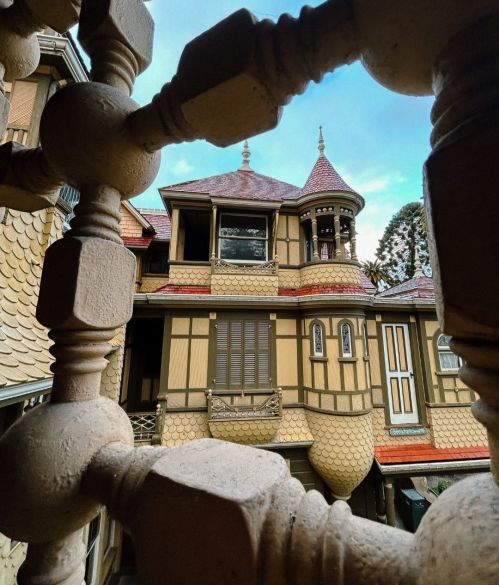
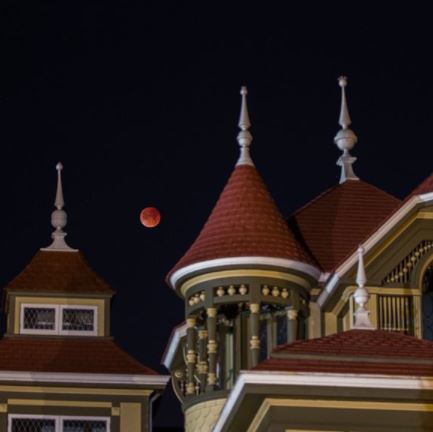
According to locals, over a century ago, the land that houses The Winchester Mansion had been vacant forever. Then, sometime in the early afternoon of Saturday, March 13, 1886, Sheriff Angel Camilio began getting reports that a massive castle made of wood had suddenly appeared. Gables rose, towers peaked into the sky as the mansion mushroomed into a labyrinth overnight. The house’s sudden manifestation had been both disconcerting and fascinating to the community. Some felt dark curses flowing from the estate, and things moving around in the darkness. Others saw a fairytale castle glimmering in the spring sunlight. Perhaps this is why there are no records of construction, no blueprints, and no permits filed with the county. Come and see what secrets this so-called, “Winchester Mystery House” may hold.

Experience an unforgettable journey back to the time of kings and queens with this entry ticket for The Winchester Mansion in Santa Clara, California which was the residence of Heiress Sarah L. Winchester. Take advantage of this fascinating experience. After tour, there will be time enjoy the mansion’s splendor at your own pace. You might even discover secret passages.

Please come and enjoy a delicious meal at Sarah’s Café, stroll along the paths of the beautiful Victorian gardens, which once spanned 740 acres, all the way down to Stevens Creek Boulevard; wander through the miles of hallways in the world’s most mysterious mansion.

For further information about tours, including group tours, weddings, school events, birthday party packages, facility rentals, and special events please visit the website: https://winchestermysteryhouse.com/

Please visit the online giftshop, and purchase a gift for friends and relatives as well as a special memento of The Winchester Mystery House. A variety of souvenirs and gifts are available to purchase. https://shopwinchestermysteryhouse.com/

Although the actual mansion is much older, we wish to wish the Winchester Mansion a Happy 102 years of giving tours, and express our gratitude to our families, ancestors, spirits, and friends and to our many associates and clients, whose lives touched our lives and whose ideas helped us to grow. We would also like to thank our employees and care takers for putting the technical ideas of this estate into conversational style, and we are, of course, extremely thank to all of our patrons for helping to keep the legacy of the Winchester Family alive. The Winchester Mystery House is full of surprises. What was your favorite, “Oooh!” moment during your visit at the mansion? (And for those of you who still have to check it off your bucket list… we will hopefully see you soon.) https://winchestermysteryhouse.com/

Harris Plumbing, Heating, Air, & Electric has been in business for 30 years. How many businesses can say that? We take pride in everything we do – no matter how big or small the service call might be. We’re here to help your home be as safe and comfortable as possible for you and your family. We take that responsibility very seriously as a company. Harris will ensure you have the information you need to decide what to do next, whatever your home is facing. We’ll perform a diagnosis and detail what issues are present before starting any work. This gives you a personalized quote and service plan specific to your home’s needs – not some random quote based on the best guess. The only way we can do our best work is to make sure we handle the issues at hand. https://www.callharrisnow.com/about-us/


Ah, yes. The BMW 3 Series. Happy 50th birthday to the most iconic BMW ever! It is really hard to decide on a BMW model. However, the 3 series is a favorite of everyone. All the upper-class suburban families had one in the 1980s and 1990s; everyone from teenagers and housewives, to executives and diplomats. Now that they are larger in size, but still sporty and luxury, the audience has grown tremendously. These are very stylish cars and reliable cars, which is why BMW continues to dominate the luxury car space.

With its top ranking in Consumer Reports’ Auto Brand Report Card and consistent market share growth, BMW has demonstrated its ability to produce high-performing, reliable vehicles that meet consumer demands. BMW stands out due to its focus on driving dynamics and engineering excellence. While other luxury brands prioritize comfort and opulence, BMW is known for creating cars that are fun to drive and offer a unique connection between the driver and the machine. This is why BMW is known as the Ultimate Driving Machine. https://www.brianharrisbmw.com/

Randolph Harris San Francisco Taxation & Mergers
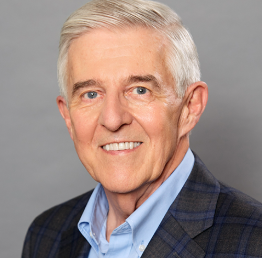
Building strong and lasting client relationships is crucial for a successful legal career. Many lawyers mistakenly believe that mastering legal skills alone ensures success, but law is fundamentally a service industry—our job is to solve problems through the time we sell. To build long-term relationships, attorneys must focus on three core elements: knowing their clients, understanding how their legal issues fit into a larger context, and consistently delivering exceptional service.

Randy advises clients with regard to business transition, taxable and tax deferred mergers and acquisitions, joint ventures, restructuring, integrated tax planning, federal and state tax controversy resolution, and real estate transactions. Trust is the cornerstone of any client relationship. Ultimately, my clients feel they are in capable hands with someone who genuinely understands their problems and goals. https://www.jmbm.com/l-randolph-harris.html

Park Haven
Rancho Cordova, CA | low $500s
Now Selling!

Welcome to Cresleigh Park Haven; the newest home community in Rancho Cordova.

Nestled in the heart of Rancho Cordova, Park Haven is a thoughtfully planned community offering 71 homes —perfect for those seeking comfort, convenience, and more time to enjoy life. Located adjacent to the beloved Exploration Park, this neighborhood blends modern living with outdoor adventure right at your doorstep.

Choose from five beautifully crafted floor plans ranging from approximately 1,342 to 2,547 square feet, with options for 3 to 5 bedrooms, flexible living spaces, and open-concept layouts designed for today’s lifestyles.

Whether you’re a first-time buyer, growing family, or looking to simplify without sacrificing style, Park Haven offers a home that fits your needs.

Enjoy the ease of a maintenance-friendly yard, the charm of a close-knit community, and the everyday convenience of nearby parks, trails, shopping, and top-rated schools. At Park Haven, you’ll find more than just a house—you’ll find your place to thrive. Park Haven – Cresleigh Homes


If Man Has Entered the Gates of Hell, He Has Left Behind His Own Humanity

Human nature comprises some deep characteristics which yearn to satisfy particular needs and impulses, such as aggression, the ego that drives him towards pleasurable experiences, the need for love, and avoidance of pain in all areas of life. When considering as an essential factor in the functioning of the social system, this undertaking goes beyond what is called “psychology.” It should more properly be called a “science of man,” a discipline which deals with the data of history, sociology, psychology, theology, mythology, physiology, economic, and art, as far as they are relevant to the understanding of man. Man was—and still is—easily seduced into accepting a particular form of being human as his essence. To the degree to which this happens, man defines his humanity in terms of the society with which he identifies himself. However, while this had been the rule, there have been exceptions. There were always men who looked beyond the dimensions of their own society—and while they may have been called fools or criminals in their time, they are the roster of great men as far as the record of human history is concerned—and visualized something which can be called universally human and which is not identical with what a particular society assumes human nature to be. There were always men who were bold and imaginative enough to see beyond the frontiers of their own social existence. #RandolphHarris 1 of 21

Man has been defined as Homo faber—the tool maker. Indeed, man is a tool maker, but our ancestors before they were fully human were tool makers too. Man has been defined as Homo sapiens, but in this definition all depends on what is meant by sapiens. To use thought for the purpose of finding better means for survival and ways to achieve what we want—this capacity animals also have, and there is at best a quantitative difference been men and animals as far as this kind of achievement is concerned. If, however, one means by sapiens knowledge in the sense of thought which tries to understand the core of phenomena, thought that penetrates from the deceptive surface to what is “really real,” thought the purpose of which is not to manipulate but to comprehend, then Homo sapiens would, indeed, be a correct definition of man. Man has been defined as Homo ludens—man the player, play meaning nonpurposeful activity transcending the immediate needs for survival. Indeed from the time of the creators of the cave paintings to the present day, man has indulged in nonpurposeful activities. There are two other definitions of man that we should add. One: Homo negans—man who say “no,” although most men say “yes” when their survival or their advantage requires it. From a statistical standpoint on human behaviour, man should be called, rather, the yes-man. However, from the standpoint of the human potential, man is distinguished from all other animals by his capacity to say “no,” by his affirmation of truth, love, integrity, even at the expense of physical survival. #RandolphHarris 2 of 21

Another definition of man would be Homo eperans—the hoping man. To hope is an essential condition of being human. If man has given up all hope, he has entered the gates of hell—whether he knows it or not—and he has left behind his own humanity. Perhaps the most significant definition of the species characteristic of man has been given by Marx, who defined it as “free, conscious activity.” Probably more such definitions could be added to the ones just mentioned, but they still do no justice to the question: What does it mean to be human? They emphasize only certain elements of being human without trying to give a more complete and systematic answer. Any attempt to give an answer will immediately meet with the objection that at the very best such an answer is no more than metaphysical speculation, perhaps poetic, but at any rate the expression of subjective preference rather than a statement of any definitely ascertainable reality. These last words call to mind the theoretical physicist who might speak of his own concepts in terms of an objective reality and yet disclaim any final statement he might make about the nature of matter. Indeed, even if human evolution were to far transcend the present point of history, in which man has hardly begun to be fully human, no final statement about what is means to be human can be made now: it is possible that it may never be made. However, a skeptical attitude toward the possibility of making final statements about the nature of man does not mean that a number of statements cannot be made which have a scientific character, that is to say, which draw conclusions from observing the facts, conclusions which are correct in spite of the fact that the motivation to find the answer was the wish for a happier life. On the contrary, the function of Reason is to promote the art of life. #RandolphHarris 3 of 21

What knowledge can we draw on in order to answer the question, what does it mean to be human? The answer cannot lie in the direction which such answers have often taken: that man is good or bad, loving or destructive, gullible or independent, et cetera. Obviously, man can be all this just as he can be musical or tone-deaf, sensitive to painting or colour-blind, a saint or a rascal. All these and many other qualities are various possibilities of being human. In fact, they are all within each one of us. To be fully aware of one’s humanity means to be aware that, “Homo sum, nil humani a me alienum puto” (I am a man and nothing human is alien to me); that each one carries all of humanity within himself—the saint as well as the criminal: as Goethe put it, that there is no crime of which one cannot imagine oneself to be the author. All these manifestations of humanity are not the answer to what does it mean to be human. They are only answering the question, how different can we be and yet be human? If we want to know what it means to be human, we must be prepared to find answers not in terms of different human possibilities, but in terms of the very conditions of human existence from which all these possibilities spring as possible alternatives. These conditions can be recognized as a result not of metaphysical speculation but of the examination of the data of anthropology, history, child psychology, individual and social psychopathology. #RandolphHarris 4 of 21

The hopeless pessimist who asserts that men cannot improve their inborn character, that they will be exactly the same faulty creatures at sixty that they were at twenty, may be right about some men but is certainly wrong about others. Every Quester who tries hard enough proves him wrong. Character may be bettered by bettering conduct, which is visible, just as it may by bettering feeling, which is not. If the check to a weakness, a shortcoming, an undesirable impulse, or a negative emotion is given instantly, if retreat from it is made before it has time to swell and strengthen, victory is very largely assured. He need not be too ashamed because he has felt these things, provided he pulls himself together. They are what he has inherited from past births, plus what he has picked up in the present one, and it is inevitable or “natural” that he should experience them. Even the saints have endured them repeatedly, but those who conquered in the end knew this trick instantly outwitting the enemy. He will undergo periods of purification, when the animal appetites such as lust and gluttony, and the animal passions such as wrath and hate, will have to be brought under better control. The discipline involved is both a kind of penance for past sins and a preparation for future enlightenment. It may be that these baser attributes need to be pushed up out of latency near the surface, in order to deal with them more effectually. If so, this will come about through some sort of crisis. He need not be distressed for it will be ultimately beneficent. #RandolphHarris 5 of 21

The ability to throw negative thoughts out of his mind is so valuable that a deliberate and daily effort to cultivate it is well worthwhile. This is as true of one’s self-originated thought as of those picked up from outside, whether unwittingly from other persons, or absorbed through susceptibility from environments. Anyone can go on living but not everyone can go on living worthily. We are all imperfect and the making of mistakes is to be expected. The mishandling of problems need not surprise us and the yielding to weaknesses is a common experience. Let us grant all this, but it does not excuse us from being bereft of the desire for self-improvement, of the aspiration for self-ennoblement, or of the search for self-enlightenment. Man has an animal body, shared certain instinctive reactions, desires, and passion with other animals. However, mentally and morally there are creative impulses, functions, ideas, and ideals which increasingly separate him from them as he develops and put him on a higher plane. The ethical standards of the disciple are, or should be, as far beyond those of conventional good men, as their standards are beyond those of evil men. He may have to pass successively through the three stages of intemperate idealism, disappointed idealism, and philosophic idealism. The last is as balanced and discerning as the first is not. The faults of character and defects in personality which bar advancement in the quest will also bar advancement in other spheres of human life. #RandolphHarris 6 of 21
Being in him, these advancements will inevitably bring their results on the physical plane in the time of course. They will manifest themselves in his business or career, his home or social relations. It is not too much to say, therefore, that the self-improvement brought about by the quest’s discipline will be to his advantage in other ways. In persons who are moving toward greater openness to their experiencing, there is an organismic commonality of value directions. These common value directions are of such kinds as to enhance the development of the individual himself, of others in his community, and to make for the survival and evolution of his species. It has been a striking fact of my experiences that in therapy, where individuals are valued, where there is greater freedom to feel and to be, certain value directions seem to emerge. These are not chaotic directions but instead have a surprising commonality. This commonality is not dependent on the personality of the therapist, for I have seen these trends emerge in the clients of therapists sharply different in personality. This commonality does not seem to be due to the influences of any one culture, for I have found evidence of these directions in cultures as divergent as those of the United States of America, Holland, France, and Japan. I like to think that this commonality of value directions is due to the fact that we all belong to the same species—that just as a human infant tends, individually, to select a diet similar to that selected by other human infants, so a client in therapy tends, individually, to choose value directions similar to those chosen by other clients. If they were genuinely free to choose, as a species there may be certain elements of experience which tend to make for inner development and which would be chosen by all individuals. #RandolphHarris 7 of 21

A few of the values I see in my clients as they move in the direction of personal growth and maturity: They tend to move away from facades. Pretenses, defensiveness, putting up a front, tend to be negatively values. They tend to move away from “oughts”. The compelling feeling of “I ought to do or be thus and so” is negatively valued. The client moves away from being what he “ought to be,” no matter who has set that imperative. They tend to move away from meeting the expectations of others. Pleasing others, as a goal in itself, is negatively valued. Being real is positively valued. The client tends to move toward being himself, being his real feelings, being what he is. This seems to be a very deep preference. Self-direction is positively valued. The client discovers an increasing pride and confidence in making his own choices, guiding his own life. One’s self, one’s own feelings come to be positively valued. From desiring some fixed goal, clients come to prefer the excitement of being a process of potentialities being born. Perhaps more than all else, the client comes to vaule an openness to all of his inner and outer experience. To be open to and sensitive to his own inner reactions and feelings, the reactions and feelings of others, and the realities of the objective World—this is a direction which he clearly prefers. This openness becomes the client’s most valued resource. Sensitivity to others and acceptance of others is positively valued. The client comes to appreciate others for what they are as he has come to appreciate himself for what he is. #RandolphHarris 8 of 21

Finally, deep relationships are positively valued. To achieve a close, intimate, real, fully communicative relationship with another person seems to meet a deep need in every individual, and is vey highly valued. These then re some of the preferred directions which I have observed in individuals moving toward personality maturity. Though this list is inadequate and to some degree perhaps inaccurate, it holds exciting possibilities. I find it significant that when individuals are prized as persons, the values they select do not run the full gamut of possibilities. I do not find, in such a climate of freedom, that one person comes to value fraud and murder and thievery, while another values a life of self-sacrifice, and another values only money. Instead there seems to be a deep and underlying thread of commonality. I dare to believe that when the human being is inwardly free to choose whatever he deeply values, he tends to value those objective, experiences and goals which make for his own survival, growth, and development, and for the survival and development of others. I hypothesize that it is characteristic of the human organism to prefer such actualizing and socialized goals when he is exposed to a growth-promoting climate. In any culture, given a climate of respect and freedom in which he is valued as a person, the mature individual would tend to choose and prefer these same value directions. This is a highly significant hypothesis which could be tested. Though the individual of whim I am speaking would not have a consistent or even stable system of conceived values, the valuing process within him would lead to emerging value directions which would be constant across cultures and across time. #RandolphHarris 9 of 21

Another implication I see is that individuals who exhibit the fluid valuing process I have tried to describe, whose value directions are generally those I have listed, would be highly effective in the ongoing process of human evolution. If the human species is to survive at all on this globe, the human being must become more readily adaptive to new problems and situations, must be able to select that which is valuable for development and survival out of new and complex situations, and if he is to make such selections; he must be accurate in his appreciation of reality. The psychologically mature person, I have described has the qualities which would cause him to value those experiences which would make for the survival and enhancement of the human race. He would be a worthy participant and guide in the process of human evolution. Finally, it appears that we have returned to the issue of universality of values, but by a different route. Instead of universal values “out there,” or a universal value system imposed by some group—philosophers, rulers, or priests—we have the possibility of universal human value directions emerging from the experiencing of the human organism. Evidence from therapy indicates that both personal and social values emerge as natural, and experienced, when the individual is close to his own organismic valuing process. If he can learn again to be in touch with it, the suggestion is that though modern man no longer trusts religion or science or philosophy nor any system of beliefs to give him his values, he may fund an organismic valuing base within himself, and it will prove to be an organized, adaptive and social approach to the perplexing value issues which face all of us. #RandolphHarris 10 of 21

With the existence of three apparently different kinds of psychotherapists, we may ask if the different processions provide a range of backgrounds in respect to social class origins sufficient to make possible “natural understanding” across the full range of cultural variables represented in the client population. A second, closely related question is: Does there appear to be evidence of a meaningful division of labour, or assortative mating, such that the differential backgrounds of clients show some degree of appropriate relationship to the differential backgrounds of therapists? With a view to the possibilities suggested by these questions, this we investigated the distribution of certain biographical and sociocultural factors in samples representative of psychiatrist, psychologist, and social workers. Mental illness is a cultural universal. Persons who show recognizable patterns of deviant behaviour are found in every culture. A pattern is recognized as a set of behaviours that are deviant with respect to the modal behaviours of the individual’s group and that are repeated in different members of the group. The level of complexity of social organization or the degree of civilization achieved may vary widely; the society may be urban or rural, industrial or agrarian, nomadic or settled—but in every carefully studied sociocultural group (defined as a collection of persons having functional membership in a community and out of that membership deriving common and interdependent responsibility and shared interests) the sometime occurrence of one or more patters of deviant behaviour has been noted. #RandolphHarris 11 of 21

The specific content and detailed form of the “insanity” reflects peculiarities of the particular culture in which it occurs. In respect to content, mental illness can be seen easily to have the quality of cultural relativity. It is in part this act of the cultural relativity of the content of emotional disorder that leads some authorities to claim that “mental illness” is not a scientific concept but rather a “convenient myth” which “has outlived whatever usefulness it might have had.” Cultural relativity in the definitions of what is conforming behaviour and what is sick (id est, non-conforming) behaviour does not negate the universality of the phenomenon of disordered behaviour; as a broad phenomenon which appears repeatedly within all cultures it is accessible to scientific inquiry. The amount of awareness of emotionally based disturbances in personality has varied over time and varies today from culture to culture. In earliest history apparently only the most deranged behaviours achieved sufficient attention to be recorded. As civilizations have prospered and as the arts of inquiry have become more sensitive, there has been growing recognition of more subtle expressions of psychological disorder. With the extension of the domain of mental illness there have been a parallel increase in the complexity and sophistication of explanations of emotional symptomatology. #RandolphHarris 12 of 21

When considering neurosis, we look at a case study of a man called Tom. Tom was a medical assistant to a great clinician. He was deeply interested in his work and was favoured by his chief. A genuine friendship had developed between them, and they often lunched together. Once after such a luncheon Tom had a mild stomach upset which he ascribed to the food, without giving it further attention. After the next luncheon with the chief he felt nauseous and faint, considerably worse than the first time. He had his stomach examined but there was no pathological finding whatever. Then the disturbance occurred a third time, now with a painful sensitivity to smells. Only after the third luncheon did it strike him that all these upsets had occurred when he was eating with the director. As a matter of fact he had felt constrained with the director recently, sometimes not knowing what to talk about. And he knew the reason. His research work had led him in a direction which was opposite to the direction which was opposite to the director’s convictions. In recent week he had become more firmly convinced of his own findings. He had wanted to talk with the chief but somehow never got around to doing it. He was aware of procrastinating but the old man was rather rigid in scientific matters and did not easily tolerate dissension. Tom have showed aside his concern by telling himself that a good talk would solve everything. If the stomach upset had to do with fears, he reasoned, then his fears must be much greater than he had admitted to himself. #RandolphHarris 13 of 21

He sensed that this was so and simultaneously had two proofs of it. One was that while having these thoughts he suddenly started to feel ill, just as he had felt after the luncheons. The other was that he realized just as suddenly what had started his reaction. During the luncheon in which the illness had first developed the director had made derogatory remarks about the ingratitude of Tom’s predecessor. He had expressed his resentment against these young fellas, who learned much from him and then left and did not even bother to keep in touch with him on scientific matters. All that Tom felt consciously at that moment was sympathy for the chief. He had repressed his knowledge that actually what the director could not tolerate was that the predecessor had gone his own independent way. Thus Tom became aware that he has closed his eyes to an existing danger, and he also recognized the extent of his fears. His work was creating a real danger to his good relationship with the director, and thereby a danger to his career. The old man might really turn against him. He felt somewhat panicky at this thought and wondered if it might be better for him to check his findings once more—or even forget about them. It was only a brief thought, but it showed him a flash that this was a conflict between his scientific honesty and the immediate exigencies of his career. By repressing his fears he had pursued an ostrich policy, the purpose of which was to avoid having to make a decision. With that insight he felt free and relieved. He knew it was a hard decision but did not doubt that it would be in favour of his conviction. #RandolphHarris 14 of 21

This story was not an example of self-analysis but merely an example of how great the temptation sometimes is not to be straight with oneself. Tom was a friend of mine, an unusually well-balanced fellow. Even though it is possible that he had certain hidden neurotic tendencies, such as a need to deny any fears, these did not make him a neurotic person. It might be objected that the very fact of his unconsciously shirking a decision was an expression of a deeper neurotic disturbance. However, there is certainly no sharp borderline between healthy and neurotic, and therefore it seems preferable to leave it as a matter of emphasis and regard Tom for all practical purposes as a healthy person. This episode would then represent a situational neurosis, that is, a neurotic upset caused primarily by the difficulties in a particular situation and lasting only so long as the conflict is not consciously faced and solved. Despite the fact that a critical estimate has been given of the results attained in each of these examples, they might, when regarded together, elicit an overoptimistic impression about the potentialities of occasional self-analysis, an impression that one can easily stumble over an insight and pick up something precious. A who feels helplessly caught in his neurotic entanglements tends to hope against hope for a miracle. It should be understood clearly that it is impossible to cure a severe neurosis, or any essential part of it, by occasional self-analysis. #RandolphHarris 15 of 21

The neurotic personality is not a piecemeal conglomeration—to use the expression of Gestalt psychologists—of disturbing factors, but has a structure in which each part is intricately interrelated to each other part. It is possible through occasional work at oneself to grasp an isolated connection here or there, to understand the factors immediately involved in an upheaval and to remove a peripheral symptom. However, to bring about essential changes it is necessary to work through the whole structure, that is, it requires a more systematic analysis. This occasional analysis, by its very nature, contributes but little to comprehensive self-recognition. Each problem that is clarified automatically introduces a new one. If these leads that offer themselves are not picked up the insights necessarily remain isolated. As a therapeutic method occasional self-analysis is entirely adequate for the situational neurosis. Also in mild neuroses it can yield very satisfactory results. However, in more intricate neuroses it is little more than a leap in the dark. At the very best it can do no more than release a tension here or there, or illuminate at random the meaning of one or another disturbance. Furthermore, while most people lie at least a few times each day, it is not those little white lies that hurt others. It is the big morbid ones that cause pain and destruction that we need to think about. Some deceptions occur to keep from hurting someone’s feelings. Other deceptions can change your life. We all also have lies that we tell to ourselves. Sometimes we tell lies to help us try harder at things in life. #RandolphHarris 16 of 21

Now, historical materialism is not at all a psychological theory; its main postulate is that the way in which man produces determines his practice of life, his way of living, and this practice of life determines his thinking and the social and political structure of his society. Economy in this context refers not to a psychic drive, but to the mode of production; not to a subjective psychological but to an objective socioeconomic factor. Marx’s idea that man is formed by his practice of life was not a new as such. However, in Marx’s system what was new is that he analyzed in detail what these institutions are, or rather, that the institutions themselves were to be understood as part of the whole system of production which characterizes a given society. Various economic conditions can produce different psychological motivations. One economic system may lead to the formation of ascetic tendencies, as early capitalism did; another economic system to the preponderance of the desire to save and hoard, as nineteenth century capitalism did; still another, to the preponderance of the desire for spending and for ever-increasing consumption, as twenty-first capitalism does. There is only one quasi-psychological premise in Marx’s system: man must first of all eat and drink, have shelter and clothing, before he can purse politics, science, art, religion, etcetera. #RandolphHarris 17 of 21

Therefore the production of the immediate material means of subsistence, and consequently the degree of economic development attained by a given society, form the foundation upon which social and political institutions, and even art and religion, have been evolved. Man himself, in each period of history, is formed in terms of the prevailing practice of life which in turn is determined by his mode of production. All this does not mean, however, that the drive to produce or consume is man’s main motivation. On the contrary, Marx’s main criticism of capitalist society is precisely that this society makes the wish to “have” and to “use” into the most dominant desire in man; Marx believed that a man who is dominated by the desire to have and to use is a cripped man. His aim was a socialist society organized in such a way that not profit and private property, but the free unfolding of man’s human powers are man’s dominate aims. Not the man who has much, but the man who is much is the fully developed, truly human man. Where the Overself lives fully in man, he will not need to consider whether an act is righteous or not. Righteous acts will flow spontaneously from him and no other kind will be possible. However, for a beginner to practise prematurely such nonresistance to his impulses would be dangerous and foolish. Woman have a greater power in possessing the power of love. She can lift and redeem men, succor and save them, or degrade and destroy them. However, with this power comes great responsibility. #RandolphHarris 18 of 21

Being a firefighter also comes with great responsibility. However, many people do not know much about the lives of firefighters. One firefighter says he lived in a small apartment with his parent growing up. The bathtub was in the kitchen, and the fire escape in the front, a small yard with a clothesline, no washing machines or dryers in those days. When he was twelve, he spotted a car on fire. He pulled the firebox and waited for the apparatus to come. When the fire was out, he talked with the firemen, and they invited him to the firehouse. As a result, he had been associating with the fire service since he was a pre-teen. He never got in trouble, never had a police record, no drugs. His mother and father both worked, and so hi grandfather took care of him. He really did not have much family life, and spent most of his time at the firehouse. The firefighters helped him with his homework, and would make sure he got home before curfew. After he grew up a little, the fire department would let him come with them to put fires out. During the summer, he would go to camp and run cross-county, and learn how to swim. He eventually became a lifeguard and joined the swim team, winning All-American for two consecutive years. Then he joined the Navy and became a Navy diver and even trained for the Olympics. Eventually he wound up going to the Military Olympics, but could not compete because he and three other guys came down with food poisoning. His father worked in a manufacturing plant where grain was processes and would have to carry hundred-pound sacks from the factor down to the river, over a ramp, and load them on the barges. #RandolphHarris 19 of 21

The young man felt sorry for his father because he had to work so hard. His mother work at an electrical equipment factory wiring sockets and other things. She used to come home at night and tears and he could not understand why until he saw her hands. She had pin holes all over them from the wires that penetrated her fingers. The firefighters became so attached to the young man that they would let him sleep over at the firehouse on weekends. He started listening to fire calls on the radio, and one night they heard a third alarm on Broadway. He ran over to the firehouse as use used to do. It was raining and it was cold, and he helped the Engine pack some hose in the truck. The lieutenant would give him a ride home sometimes, and other firehouses would invite him to come and hang out with them. Although it was against rules and regulations, they stuck their neck out for the young man and did their best to look out for him and made sure he was safe and well cared for. He really enjoyed shining the brass on the old engine and would help out around the house. The men at the firehouse became like fathers to him, and treated him with respect. However, sometimes the guys would blow him off and his feelings would get hurt. When he grew up, he took care of two boys as well as the firefighters took care of him. He would take them home, contribute to their lives, and helped keep them out of trouble and away from drugs. #RandolphHarris 20 of 21

As a result, the two boys are doing good. Other guys saw what he was doing and got involved with the same kids, taking them home, taking them to picnics, taking them to amusement parks. Times were different and there was a lot of compassion in the city, a lot of morale, a lot of unity. So, the young man the fire department took, not only mentored two boys, but he stayed out of trouble because he wanted to be a firefighter and figured a police record would disqualify him from the job. He did not have many friends his age, only a couple. One night, he did not go out with his friends, and went to the firehouse instead. A really good friend of his was killed that night by a hit-and-run car. He jumped off a crane into the street, and a car hit him and kept going. He reflected on how it might have been him. He attributes a lot of his staying out of trouble to hanging around the firehouse. The Sacramento Fire Department has been serving the community of Sacramento since the mid-1800, please be sure to make a donation to them. They really care about the community and the people in it. Honour a man not for his possession alone; honour him most for the use he makes of them. When a man departs this World, neither silver nor gold, nor precious stones accompany him; he is remembered only for his love of learning and his good need. Happy is the man who is rich in good deeds, for he shall be honoured in life, and be remembered along afterwards for his goodness. I pledge allegiance to the flag of the United States of America, and to the Republic, for which it Stands, one Nation, Under God, Indivisible with Liberty and Justice for all. #RandolphHarris 21 of 21
The Winchester Mystery House

In The Winchester Mystery House there are connecting stairs and a “secret rest room” once used by Mrs. Winchester, which had long been walled up in the many structural changes in the historical mansion. Only the window of the walled-up room is still visible from the outside. It is in this area that psychics feel that the restless spirit of Mrs. Winchester is trapped. They believe she sleeps during the day and close to the premises for roaming and night. In the spring of 1968, the ghost of Mrs. Winchester made her initial appearance in the mansion. It was a warm night, and the caretakers were leaving. Suddenly, they were shocked at the amount of light coming from the skylight, they judged the time to be about midnight. They had the uncanny feeling of not being alone in the room. As their eyes got used to the darkness, they clearly distinguished the figure of a petite woman, gliding across the floor. Behind her, there was a man staring at a cabinet. Then he opened the cupboard, looked in it, and closed it again. Getting hold of himself, one of the caretakers noticed that the woman wore a black dress of the kind worn in the last century, and the man a white shirt and dark cravat of the same period. It never occurred to him that they were anything but people; he thought they were actors dressed as Mr. and Mrs. Winchester.

The woman then turned to her companion as if to say something, but did not, and walked off toward the dark room at the other end of the hallway. Then man then went back to the cabinet and leaned on it, head in hand. By now, the caretakers regained their wits and thought the intruders must be burglars, although they could not figure out how they entered the mansion, since it had been locked from the inside! Making a fist, one of the caretakers struck at the stranger, yelling, “Put your hands up!” His voice could be heard clearly along the corridors. Nursing his injured wrist, he realized that his visitors had dissolved into thin air. There was no one in the dark room. The door was securely locked. The skylight, on the third floor, could not very well have served as an escape route to anyone human. By now, the care takers knew Mr. Winchester and Mrs. Winchester had paid them a visit. Come and enjoy a delicious meal in Sarah’s Café, stroll along the paths of the beautiful Victorian gardens, and wonder through the miles of hallways in the World’s most mysterious mansion. For further information about tours, including group tours, weddings, school events, birthday party packages, facility rentals, and special events please visit the website: https://winchestermysteryhouse.com/

Please visit the online giftshop, and purchase a gift for friends and relatives as well as a special memento of The Winchester Mystery House. A variety of souvenirs and gifts are available to purchase. https://shopwinchestermysteryhouse.com/
A Little Rebellion Now and then is a Good thing

Freedom of religion; freedom of the press; freedom of person under the protection of the habeas corpus; and trial by juries impartially selected—these principles form the bright constellation which has gone before us, and guide our steps through an age of revolution and formation. A little rebellion now and then is a good thing. Dr. Freud’s theory, that of the incestuous fixation to mother—this is one of his scientific edifice, and his discovery of the fixation to mother is, indeed, one of the most far-reaching discoveries in the science of man. However, in this area, Dr. Freud narrowed his discovery and its consequences by being compelled to couch it in terms of his libido theory. What Dr. Freud observed was the extraordinary energy inherent in a child’s attachment to mother, an attachment which is seldom entirely overcome by the average person. Dr. Freud had observed the resulting impairment of the man’s capacity to relate himself to women, the fact that his independence is weakened, and that the conflict between his conscious goals and the repressed incestuous attachment may lead to various neurotic conflicts and symptoms. Dr. Freud believed that the force behind the attachment to mother was, in the case of the little boy, the strength of the genital libido which makes one desire one’s mother for pleasures of the flesh and hate one’s father as a rival for pleasures of the flesh. However, in view of the greater strength of this rival, the little boy repressed his incestuous desires, and identifies himself with the commands and prohibitions of the father (in girls this same dynamic plays out with their father as the object of desire and the other as the rival and it is called the Elecktra complex). #RandolphHarris 1 of 20

Unconsciously, though, one’s repressed incestuous wishes linger on, even though only in more pathological cases with great intensity. As far as the little girl is concerned Dr. Freud, in 1931, admitted that he had previously underestimated the duration of her attachment to mother. Sometimes it is comprised by far the longer period of the early sexual efflorescence. These facts show that the pre-Oedipal phase in women is more important than we have hitherto supposed. It seems that we shall have to retract the universality of the dictum that the Oedipus complex is the nucleus of neurosis. However, if anyone feels reluctant to adopt this correction one need not do so for one can either extend the contents of the Oedipus complex to include all the child’s relations to both parents or one could say that women reach the normal Oedipus situation only after surmounting a first phase dominated by the negative complex…Our insight into the pre-Oedipus phase in the little girl’s development comes to us as a surprise, comparable in another field with the effect of the discovery of the Minoan-Mycenaean civilization being that of Greece. More than implicitly than explicitly, the attachment to mother is common to both genders as the earliest phase of development and it can be compared with the matriarchal features of pre-Hellenic culture. However, first of all, this is somewhat paradoxical that the phase of Oedipal attachment to the mother, which may be called the pre-Oedipus phase, is far more important in women than it can claim to be in men. Second, this pre-Oedipus phase of the little girl is only in terms of the libido theory. The complaint of many women of not having suckled long enough leaves doubt. #RandolphHarris 2 of 20

If one analyzed children who had been suckled as long as in primitive races, one would not encounter the same complaint. However, so great is the greed of the childish libido. This pre-Oedipal attachment of boys and girls to their mother, which is qualitatively different from the Oedipal attachment of boys to their mother is, in my experience, by far the more important phenomenon, in comparison with which the genital incestuous desires of the little boy are quite secondary. I find that boy’s or girl’s pre-Oedipus attachment to mother is one of the central phenomena in the evolutionary process and one of the main causes of neurosis or psychosis. Rather than call it a manifestation of libido, it is a quality which, whether we use the term libido or not, is something entirely different from the boy’s genital desires. This “incestuous” striving in the pre-genital sense, is one of the most fundamental passions in men or women, comprising the human being’s desire for protection, the satisfaction of one’s narcissism; one’s craving to be freed from the risks of responsibility, of freedom, of awareness; one’s longing for unconditional love, which is offered without any expectation of one’s loving response. It is true these needs exist normally in the infant, and the mother is the person who fulfills them. If this were no so, the infant could not live; he or she is helpless, cannot depend on his or her own resources, needs love and care which do not depend on any merits of its own. If it is not the infant’s mother who fulfills this function, it is another “mothering person,” who can undertake the mother’s function; maybe a grandmother, nanny, sister, or aunt. #RandolphHarris 3 of 20

However, the more obvious fact—that the infant needs a mothering person—has obscured the fact that not only the infant is helpless and craves certainty; the adult is in many ways not less helpless. Indeed, one can work and fulfill the tasks ascribed to one by society; but one is also more aware than the infant of the dangers and risks of life; one knows of the natural and social forces one cannot control, the accidents one cannot foresee, the sickness and death one cannot elude. What could be more natural, under the circumstances, then man’s frantic longing for a power which gives one certainty, protection, and love? This desire is not only a “repetition” od one’s longing for mother; it is generated because the very same conditions which make the infant long for mother’s love continue to exist, although on a different level. If human beings—men and women—could find “Mother” for the rest of their lives, life would be relieved of its risks and of its tragedy. Should we be surprised that man is driven so relentlessly to pursue this fata morgana? Yet man also knows more or less clearly that the lost paradise cannot be found; that one is condemned to live with uncertainty and risks; that one has to rely on one’s own efforts, and that only the full development of one’s powers can give one a modicum of strength and fearlessness. Thus one is torn between two tendencies since the moment of one’s birth: one, to emerge to the light and the other to regress to the womb; one for adventure and the other for certainty; one for the risks of independence and the other for protection and dependence. #RandolphHarris 4 of 20

Genetically, mother is the first personification of the power that protects and guarantees certainty. However, she is by no means the only one. Later on, when the child grows up, other as a person is often replaced or complemented by the family, the clan, by all who share the same blood and have been born on the same soil. Later, when the size of the group increases, the race and the nation, religion or political parties become the “mothers,” the guarantors of protection and love. In more archaically oriented persons, nature herself, the Earth and the sea, become the great representatives of the “mother.” The transference of the motherly function from the real mother to the family, the clan, the nation, the race has the same advantage which we have already noted with regard to the transformation from personal to group narcissism. First of all, anybody’s mother is likely to die before her children; hence the need for a mother figure which is immortal. Furthermore, the allegiance to one personal mother leaves one alone and isolated from others who have different mothers. If, however, the whole clan, the nation, the race, the religion, or God can become a common “mother,” then mother-worship transcends the individual and unite him with all those who worship the same mother idol; then nobody needs to be embarrassed at idolizing his mother; the praise of the “mother” common to the group will unite all minds and eliminate all jealousies. The many cults of the Great Mother, the cult of the Virgin, the cult of nationalism and patriotism—they all bear witness to the intensity of this worship. Empirically the fact can easily be established that there is a close correlation between persons with a strong fixation to their mothers and those with exceptionally strong ties to nation and race, soil, and blood. #RandolphHarris 5 of 20

It is interesting to note in this context that the Sicilian Mafia, a closely bound secret society of men, from which women are excluded (and by which, incidentally, they are never harmed) is called “Mama” by its members. For Dr. Freud the sexual factor in the tie to mother is a decisive element in the little boy’s attraction to mother. Dr. Freud came to this result by combining two facts: the boy’s attraction to mother, and the fact of the existence of his genital striving at an early age. Dr. Freud explained the first fact by the second. There is no doubt that in many cases the little boy has sexual desires for his mother, and the little girl for her father; but quite aside from the fact (which Dr. Freud at first saw, then denied, and which was taken up again by Dr. Ferencz) that the seductive influence of the parents is a very important cause for these incestuous strivings, the sexual strivings are not the cause of the fixation to mother, but the result. Furthermore, in incestual sexual desires which one finds in dreams of adults, it can be established that the sexual desire is often a defense against a deeper regression; by asserting his male sexuality, the man defends himself against his own desire to return to the mother’s breast or into her womb. Another aspect of the same problem is the incestuous fixation of daughters to their mothers. While in the boy the fixation to “mother” in the broad sense used here coincides with whatever sexual elements may enter into the relationship, with girls this is not so. Her sexual attraction would be directed toward the father, while the incestuous fixation, in our sense, would be directed toward mother. This very split makes it more clear that even the deepest incestuous bonds with mother can exist without a trace of sexual stimulation. #RandolphHarris 6 of 20

There is a great deal of clinical experience with women who have as intense an incestuous tie with mother as can be found in man. The incestuous tie to mother very frequently implies not only a longing for mother’s love and protection, but also a fear of her. This fear is first of all the result of the very dependency which wakens the person’s own sense of strength and independence; it can also be the fear of the very tendencies which we find in the case of deep regression: that of being the suckling or of returning to mother’ womb. These very wishes transform the mother into a dangerous cannibal, or an all-destroying monster. It must be added, however, that very frequently such fears are not primarily the result of a person’s regressive fantasies, but are caused by the fact that the mother is in reality a cannibalistic, vampirelike, or necrophilic person. If a son or a daughter of such a mother grows up without breaking the ties to her, then he or she cannot escape from suffering intense fears of being eaten up or destroyed by mother. The only course which is such cases can cure the fears that may drive a person to the border of insanity is the capacity to cut the tie with mother. However, the fear which is engendered in such a relationship is at the same time the reason why it is so difficult for a person to cut the umbilical cord. Inasmuch as a person remains caught in this dependency, his own independence, freedom, and responsibility are weakened. In the case study of Clare, it became clear that her compulsive modest was one of the reasons that accounted for her need for a partner. Since she could not take care of her own wishes, she had to have someone else who took care of them. Since she could not defend herself, she needed someone else to defend her. Since she could not see her own values, she needed someone else to affirm her worth. #RandolphHarris 7 of 20
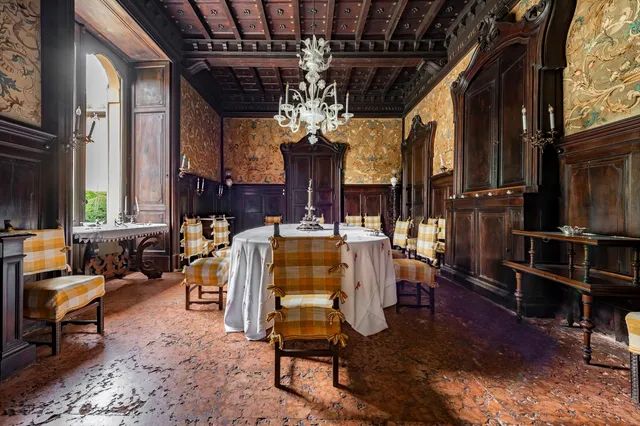
On the other hand, there was a sharp conflict between the compulsive modesty and the excessive expectations of the partner. Because of this unconscious conflict, Clare had to distort the situation every time she was disappointed over unfulfilled expectations. In such situations she felt herself the victim of intolerably harsh and abusive treatment, and therefore felt miserable and hostile. Most of the hostility had to be repressed because of fear of desertion, but its existence undermined the relationship and turned her expectations into vindictive demands. The resulting upsets proved to have a great bearing on her fatigue and her inhibition toward productive work. The result of this period of analytical work was that she overcome her parasitic helplessness and became capable of greater activity of her own. The fatigue was no longer continual but appeared only occasionally. She became more friendly, though they were still far from being spontaneous; she impressed others as being haughty while she herself still felt quite timid. An expression of the general change in her was contained in a dream in which she drove with her friend in a strange country and it occurred to her that she, too, might apply for a driver’s license. Actually, she had a license and could drive as well as the friend. The dream symbolized a dawning insight that she had rights of her own and need not feel like a helpless appendage. The third and last period of analytical work dealt with repressed ambitious strivings. There had been a period in her life when she had been obsessed by frantic ambition. This had lasted from her later years in grammar school up to her second year in college, and then seemed to disappear. #RandolphHarris 8 of 20

One could conclude by inference that it still operated underground. This was suggested by the fact that she was elated and overjoyed at any recognition, by her dread of failure, and by the anxiety involved in any attempt at independent work. This trend was more complicated in its structure than the two others. In contrast to the others, it constituted an attempt to master life actively, to take up a fight against adverse forces. This fact was one element in its continued existence: she felt herself that there had been a beneficial force in her ambition and wished repeatedly to be able to retrieve it. A second element feeding the ambition was the necessity to re-establish her lost self-esteem. The third element was vindictiveness: success meant a triumph over all those who had humiliated her, while failure meant disgraceful defeat. To understand the characteristics of this ambition, we have to understand man and psychic disorder. Earliest history suggests that mental illness has probably been coexistent with mental life. Man’s capacity to perceive, to discriminate, to create symbols for the communication of his perceptions has always entailed the possibility of error—the possibility of misperception, of poor discrimination, of inadequate communication. Such errors throughout all time have had potential to interfere with man’s efforts to adapt, to live securely in his environment. There is reason to believe that earliest man had emotional equipment, that he could experience pain, and learn to fear its source and to be anxious in the presence of reminders of previous hurts. #RandolphHarris 9 of 20
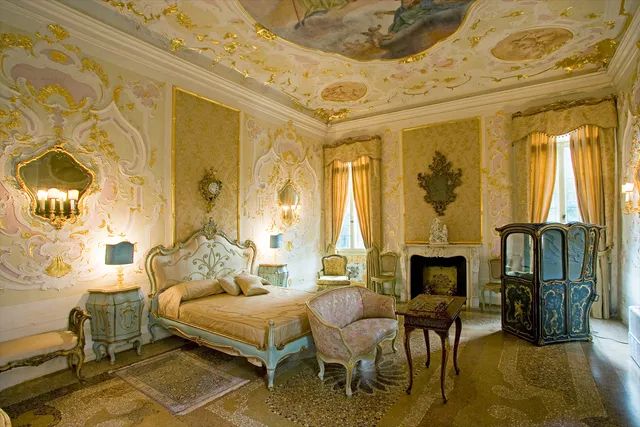
There is reason to believe that primitive man was no more a standard unit than his modern brother. Then as now there were probably wide individual difference—differences in susceptibility to pain, differences in the capacity to learn from experience so as to avoid repeated injury or failure, differences in the physiological reactivity to real and symbolic stresses. Some men of early history showed marked disturbances in their behaviour—they exhibited uncontrolled and unremitting fear in the absence of real threat, they engaged in maladaptive, inadequate protective measures, they had sudden fits and fainting spells, and they became violently rageful. Their peers could readily see that these men were disordered but could see such disorder only as a further manifestation of the threatening and unpredictable World. The same powerful agents that brought thunder and lightning must be responsible, it must have seemed, for these wild storms in men. The malevolent spirits responsible for man’s general misery and hardships must be particularly abusive toward the “disordered.” While no meaningful appraisal can be made of the frequency of severe mental dysfunction in earliest man, it is reasonable to conjecture how insanity may have been perceived and treated. Prehistoric man’s life space was compounded of danger and ignorance, and these are the generators of fear, it would be probably that the wild outburst of a demented person would seem fearsome, and those exposed to his violent, strange acts would be move to self-protection rather than to treatment. #RandolphHarris 10 of 20

With the insight into conceptions of disordered behaviour and its management revealed by the earliest historical records, we can reasonably project backwards and assume that the nature and treatment of insanity did not suddenly assume new forms with the advent of language. Anthropomorphism is possibly the most primitive and universal of all forms of psychological thought. Primitive man’s talent for projecting his personal qualities into the World about him perhaps exceeded that of his modern cousin only through freedom from self-consciousness. The ancient had need to appease and, later, desire to control the wildness which each day filled his existence with uncertainty. What could be more natural, and more promising of a successful petition, than to cast an image of man-likeness into each of nature’s threatening forms? What could hold greater hope for the attainment of truce, safe passage, and successful endeavour than the possibility that the sun and the moon, and the Earth and the water, and the plants and animals were but variously disguised forms of man stuff? If this were so, the human creature could please with his signs, hope to be comprehended, and expect sympathetic response. Before medicine there was magic. Primitive man peoples the World about him with gods and demons. He seems spirits in the trees, in the winds, and the moving clouds, in storms and lightning, in the running rivers, in sun and moon, in the very stones he treads upon. Those spirits, benevolent and malevolent, control his destiny for good or ill. They are particularly responsible for his misfortune. #RandolphHarris 11 of 20

The primitive mind does not regard sickness, disease, or even death as the consequence of natural phenomena. Rather are they looked upon as the results of supernatural intervention on the part of the spirits which fill his World. In his naivete primitive man feels confident that by learning certain secrets and mysteries, certain rituals and incantations, he can in turn gain control of the supernatural spirits and manipulate them to his own purposes and desires, or at least to neutralize them—to ward off illness, for instance. His efforts to manipulate external forces through supernatural means or knowledge constitute the kernel of magic. So it may have been that man projected into his cosmos a stage of actors, a dramatis personae of anthropomorphic spirits, and sought by pantomime to convey his prayer and by prayer to achieve his security. This was animism, the investment of physical phenomena, organic and inorganic, with qualities of intention, direction, and force like those perceived within himself and among his brethren. It was natural for primitive man to explain that unpredictable and uncontrolled in his own behavior with the explanation he had for wider phenomena. The disturbed person was “possessed” by an evil which was in him, to appease it, or to ease its exit from his body. #RandolphHarris 12 of 20

This, in the earliest period in the history of mental illness and its treatment, we find a crude ideology of powerful, malignant forces which required strong countermeasures to cause “them” to relinquish their grip on the sick person. In this time, holes were bored into the skulls of the “possessed” so as to relieve pressure and permit exit of the evil spirit. Whipping and scourging were inflicted on the sick person, but were directed at the evil within him. Primitive psychology, from which even the most sophisticated modern man must continually struggle to free himself, would generate the thought the evil spirits seek out sympathetic hosts—the possessed person is in his own right evil—and that therefore the exorcism of the evil spirit could appropriately include some punishment of its host. History suggests, and modern knowledge of psychopathology makes it plausible, that some of the violent treatments which were inflicted during the period of primitive animism were effective. In this earliest period of psychiatric history, we have a probable first expression of a repeated paradox—theories of etiology or pathology which are inaccurate or inadequate, or both, may give rise to therapies that prove efficacious, and the very potency of the treatment, unfortunately, may prevent or delay correction of the erroneous theory. How short a step was it from animism to demonism? How soon did our ultimate progenitors detect that there was good and bad in their spirit World? How soon did they discriminate the hostile force from the hospitable circumstance? The fact of the preponderant harshness in their surroundings coupled with appreciation of their frail resources would favour a rapid focusing on the enemies among their anthropomorphic creations. #RandolphHarris 13 of 20
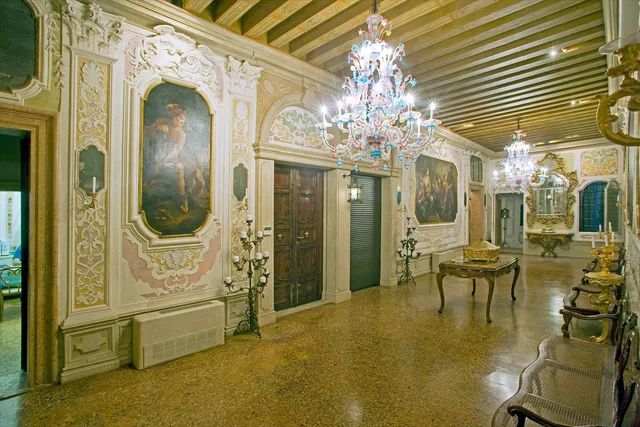
The prevalence of environmental catastrophe led to the growth of demonology, the identification of evil spirits and of techniques for appeasing them or escaping their malevolent influence. Even primitive and revealed cognizance of the touchstone to social progress—division of labour and its refined expression as based on particularization of talent. There evolved gradually the role of shaman, specialist in the haranguing of demons, singer of incantations and purveyor of potions. His was the task of providing amnesty with the supernatural, protecting the community through group ritual, and treating the afflicted individual with a pharmacopeia of exorcism. It is essential to understand how to fight “in cold blood,” so to speak: id est, wholly apart from feelings of any kind: for the self-actualized may feel it is victory when it is defeat, and vice versa. All dependence upon feeling and acting from impulse must be put aside in this warfare. Some can only recognize “conflict” when they are emotionally conscious of it; they fight spasmodically, or by accident—when forced to it by necessity. However, now the “fight” must be permanent and part of the very life. There needs to be a ceaseless recognition of the forces of darkness “in cold blood”—simply because of knowing what they are—and consequently a “fight from principle.” There needs to be a ceaseless recognition of the forces of darkness “in cold blood”—simply because of knowing what they are—and consequently a “fight from principle.” #RandolphHarris 14 of 20

There must be a fight against these unseen forces even when there is nothing to be seen of their presence or workings, remembering that they do not always attack when they can. If they were to attack on some occasions they would lose by it, because that would reveal the character of the thing and its source. The self-actualized knows that the ultimate negative, being by nature a tempter, is always tempting—and therefore he resists from principle. Anyone who desires perpetual victory must understand that it is a question of principle versus feeling and consciousness. If the warfare is governed by the latter rather than the former, only then can there be intermittent victory. So when the enemy attack him, the self-actualized will find a strong, primary weapon of victory in declaring deliberate position toward conduct disorder and the ultimate negative. The person reckoning himself in the present moment to be “dead indeed unto sin, and alive unto the ultimate concern thereby refuses to yield to conduct disorder and the ultimate negative in any of the points of attack or causes of the conflict. As the self-actualized declares his position in the hour of conflict and onslaught from the foe, he will often find himself obliged to wrestle in real combat with the invisible enemy. Standing on the finished work of Jesus as the Christ, in death to conduct disorder, the spirit of the man becomes liberated for action, and energized to stand against the hierarchic hosts of the ultimate negative—the principalities of powers, the World-rulers of the darkness, and the hosts of psychopathological offenders in the Heavenly (or spiritual) sphere. #RandolphHarris 15 of 20

We attach the existential urgency to time in an “ahistorical” fashion: Beginning from and ending in the eternal are not matters of a determinable moment in physical time but rather a process going on in every moment, as does the divine creation. There is always creation and consummation, beginning and end. It is not precisely in a determinable moment of physical time—for example, the life, death, and resurrection of Jesus as the Christ, our own death, the beginning and end of the World—that the uniqueness, the irreversibility, and hence the historic nature of time brings its full weight to bear? We are here faced with a curious twist: concern for the meaning of history leads us to downgrade historical moments. Our eschatology allows us to depreciate the moment of death. By making the here-and-now eternally significant, our attention is riveted upon the goal of history which lends meaning to the historical process. We appreciate the suffering and the drama of man’s struggle to attain the essentialization which is Eternal Life. Nothing which is gained in the struggle is ever lost, for there are degrees of essentialization, so that no one is completely excluded from Eternal Life. The suggestion is finally made of a transhistorical fulfilment which renders death no longer absolutely decisive for eternity. Inevitability essentialization is a certain ahistorical quality of timelessness and this is why we fail to consider death as truly eschatological. The accent upon the eternally present goals of history may be overshadow the seriousness and the dignity of specific moments of the historical process. There is danger that we do not see the trees for the first, that eternity undercuts time. #RandolphHarris 16 of 20

The afterlife involves the symbols immortality of the soul and resurrection of the body. The question of the “when” of unambiguous, non-fragmentary participation in the Kingdom of God is a legitimate one, and it leads to the question of the “after.” The self-conscious self cannot be excluded from Eternal Life, and self-consciousness in Eternal Life is not the same as in temporal life. The symbol resurrection of the body sheds even less light, for again only two negative statements are permissible about the resurrected “Spiritual body”: it is not purely spiritual, and it is not simply material. We cannot hope for a final stage of justice and peace within history; but we can hope for partial victories over the forces of evil in a particular moment of time. And now we ask the question of our personal participation in the eternal. So we have a right to hope for it? We have a right to such ultimate hope, even in view of the end of all other hopes, even in the face of death. For we experience the presence of the eternal in us and in our World here and now. Where this is experienced, there is awareness of the eternal, there is already, however fragmentary, participation in the eternal. This is the basis of the hope for eternal life. It is the justification of our ultimate hope. And is as Christians we point to Good Friday and Easter, we point to the most powerful example of the same experience. Religion is the substance of culture, and culture is the form of religion. At its base is God as the ground of being, but reunion with the ground can be had only through the power of the New Being which overcomes the estrangement of existence. #RandolphHarris 17 of 20

Reception of the New Being in turn begets the theonomous community which is the Spiritual Community, but it I subject to the historical dimension. Theonomy is fully achieved only in the transcendent Kingdom of God where universal essentialization is realized. Structure and content, however, are somewhat mechanical devices. Judgement—the belief that “this and that is so.” Thus, judgment contains the avowal that an “identical case” has been encountered: it this presupposed comparison, with the aid of recollection. Judgment does not create the appearance of an identical case. Rather, it believes it perceives one; it works under the presupposition that there are in general identical cases. What is that function, which must be much older operative much earlier, which levels off and assimilates? What is the second one, which on the basis of the first, et cetera. That which excites the same sensation is the same; but what is “That” that makes sensations the same, “takes” them to be the same? If a kind of equalization had not first been exercised within the sensations, there could be no judgments at all: recollection is only possible with a constant underscoring of what is already accustomed, experienced. Before anything is judged, the process of assimilation must already be completed: thus, here, too, there is an intellectual activity that does not enter into consciousness, like pain following from an injury. An inner event probably corresponds to all organic functions, hence an assimilating, eliminating, growing, et cetera. #RandolphHarris 18 of 20

Essential” to begin with the body and use it as a guiding thread. It is the much richer phenomenon and affords clearer observation. Belief in the body is better established than belief in the mind. However strongly something may be believed, that is no criterion of truth. However, what is truth? Perhaps a kind of belief that has become a condition of life? Then, of course, strength would be a criterion, exempli gratia, with regard to causality. Logical certainty, transparency, as criterion of truth (“omne illud vernum est, quod clare et distincte percipitur,” Descartes): the mechanical hypothesis concerning the World is thereby desirable and credible. However, that is a crude confusion: like simplex aigillum veri. How do we know that the true constitution of things stands in this relation to our intellect? Could not it be otherwise? That the hypothesis that gives the intellect the greatest feeling of power and security is the most preferred, valued, and consequently characterized as true? The intellect posits its freest and strongest capacity and ability as the criterion of the most valuable, consequently of the true. “True”: from the side of feeling—what arouses feeling most forcefully (“I”); from the side of thinking—what gives thinking the greatest feeling of strength; from the side of touching, seeing, hearing—that which calls for the greatest resistance. #RandolphHarris 19 of 20

Thus, it is the highest degree of activity that awakens belief in the “truth,” that is, the reality, of the object. The feeling of strength, of struggle, of resistance convinces us that there is something here being resisted. The criterion of truth lies in the intensification of the feeling of power. “Truth”: in my way of thinking this designates not necessarily the opposite of error but in the most fundamental cases only the position of various errors in relation to one another. Perhaps one is older or deeper than another, maybe even ineradicable, inasmuch as an organic being of our kind could not live without it; while other errors do not tyrannize us in the same ways as conditions of life but, when measured against such “tyrants,” can instead be set aside and “refuted.” An assumption that is irrefutable—why should it for that reason be “true”? This proposition will perhaps outrage logicians, who regard their limits as the limits of things—but I long ago declare war on this logicians’ optimism. Everything simple is merely imaginary, not “true.” However, what is real, what is true, is neither one nor even reducible to one. Happy is the man whose strength Thou art, O Lord, whose heart is a highway to Thee. Happy is the man whom Thou instructest, O Lord, and teachest out of Thy law. Happy is the man that finds wisdom, and he that obtains understanding. I pledge allegiance to the flag of the United States of America, and to the republic, for which it stands. One nation, under God, indivisible, with liberty and justice for all. Consider and see that the Lord is good; happy is the man that takes refuge in Him. The Sacramento Fire Department has saved the lives of millions of people and they help the community to survive and rebuild their lives. Please make a donation to the Sacramento Fire Department to ensure the community has a chance for a bright future. #RandolphHarris 20 of 20
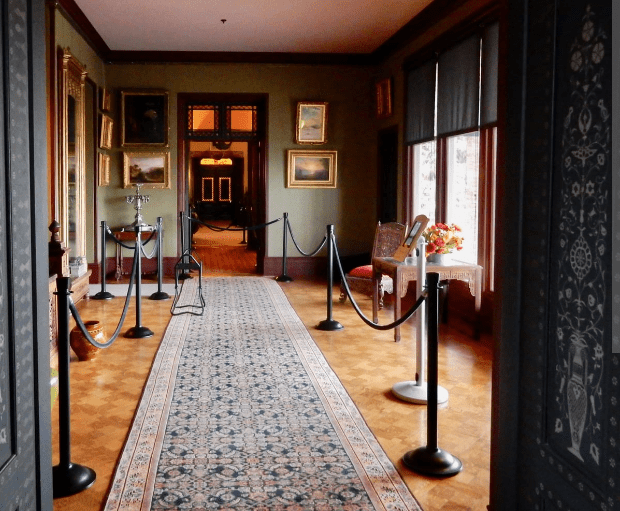
On December 13, 2023, caretaker was singing while decorating Mrs. Winchester’s house, he was listening “Do you hear what I hear” by Bing Crosby when the song had reached the part “A child, a child shivers in the cold, let us bring him silver and gold,” when he became away of a stranger watching him from the doorway. He had an oval face, blue eyes, and was wearing a cream suit. According to the caretaker, he had a “strange sad look” before melting away.

For further information about tours, including group tours, weddings, school events, birthday party packages, facility rentals, and special events please visit the website: https://winchestermysteryhouse.com/

Please visit the online giftshop, and purchase a gift for friends and relatives as well as a special memento of The Winchester Mystery House. A variety of souvenirs and gifts are available to purchase. https://shopwinchestermysteryhouse.com/

Closer to the Hearts Desire–Be Still My Soul, Be Still; the Arms You Bear are Strong!

They brought me into the house. It was bright and magnificent. They showed me the sunny double parlor with its craved archway and shining floors and they took me through the handsome dining room with its murals of the Winchester Mansion. People in Graystone Hills, in general, are inconsistent in the way they talk and act with reference to the idea of classes. If they are asked bluntly, “Do you believe there are ‘classes’ in the community?” they are very likely to say, “No.” Yet, they will tell you the Hiltons are “a leading family here,” or the “Hearsts are like the Hiltons, and Rothschild, and Winchesters. These families are different from the rest of us; they are exclusive. I guess you would call them our aristocracy.” During the course of the conversation, the same speaker will say that there are several different “types of families” in the community and, justifying one’s judgment by describing the “way they live,” place them in different categories. The democratic tradition that there are no classes in American society is the reason for this type of behavior. Therefore, the people in Graystone Hills deny the existence of class directly but act as if classes exist. However, many beings in Graystone Hills openly say that there are three classes in the community—“upper,” “middle,” and “less affluent”—but when they are requested to name persons in, let us say the “less affluent class” they generally divide the class into the “good” lower class people and the “worthless, ne’er-do-wells.” #RandolphHarris 1 of 17

The same kind of break appears in the “middle class.” Separation of the “middle class” into “upper middle” and “lower middle” is quite conventional. Even though people in Graystone Hills are inconsistent in their designations of a particular class, the systematic analysis of selected cultural traits associated with each of the five classes, based upon data collected from the 535 families of the adolescents, supplemented by interviews and observations, reveal that the possession of a constellation of differentially evaluated social symbols—functional, pecuniary, religious, educational, reputational, power, lineage, proper associates, memberships in associations—are relied up by Graystone Hills to “hang people on the peg they belong on,” to determine “their place in the community” or “their standing in life.” Class V occupies the lowest-ranking stations in the prestige structure. It is looked upon as the scum of the city by the higher classes. It is believed generally that nothing beyond charity can be done for these people, and only a minimum of that is justified since they show little or no inclination to help themselves. It is the opinion of the upper classes that: “They have no respect for themselves. They enjoy their shacks and huts along the river or across the tracks and love their dirty, smoky, low-class dives and taverns. #RandolphHarris 2 of 17

“Whole families—children, in-laws, mistresses, and all—live in one shack. This is the crime class that produces the delinquency and sexual promiscuity that fills the paper. Their interests lie in pleasures of the flesh and its perversion. The girls are always with child; the families are huge; incestual relations occur frequently. They are not inspired by education, and only a few are able to make any attainments along this line. They are loud in their speech, vulgar in their actions, sloppy in their dress, and indifferent toward their plight. Their vocabulary develops as profanity is learned. If they work, the work at very menial jobs. Their life experiences are purely physical, and even these are on a low plane. They have no interests in health and medical care. Then men are too lazy to work or do odd jobs around town. They support the Democratic party because of the relief obtained during the depression. This groups lives for a Saturday of drinking or fighting. They are of low character and breed and have a criminal record for a pedigree.” Class V persons, passive and fatalistic, realize that they are “on the bottom” and believe that they can do nothing to improve their position. They desire money, possessions, education, and favorable prestige, but they do not know how these are achieved. #RandolphHarris 3 of 17

When a class V persons attempts to improve one’s position, one is discriminated against by the higher classes, and by many members of one’s own class who think one is trying to “put on airs.” One woman with considerable insight into her class position summarized it thus: “Survival for us depends on staying on good terms with the rich people and the law. Whenever I think about myself and the kids, I am reminded what my father used to say, ‘We are the ones who are told what to do, when and how’ around here. This town takes us for granted. Most people think the people down here [the tannery flats] are too ignorant to do anything and do not care; I guess they are right.” To generalize a little more, class V persons give the impression of being resigned to a life of frustration and defeat in a community that despises them for their disregard of morals, lack of “success” goals, and dire poverty. Family support comes from many sources. The father is the chief breadwinner in three families out of five, but his earnings are meager. Ninety-two percent are unskilled and semi-skilled laborers or machine operators. Not one is a farm owner, and only 8 are farm tenants; 2 are notions salesmen; and 8 operate very small businesses, such as hauling coal from local mines, ash and trash hauling, repair and sales of old cars. #RandolphHarris 4 of 17

Fifty-five percent of the mothers in class V “work out” part time or full time as waitresses, dishwashers, cooks, washwomen, janitresses, cleaning women, and unskilled domestic workers. Many younger women and girls work on the production line of a local manufacturer who is reputed to give them preference in his shops because they can be hired for lower wages than class IV workers. Income from wages provides them with enough money to obtain the most meager necessities of life; however, in many cases it is inadequate even for his, and they rely upon private charity and public relief. Annual family income ranges from $15,365 to high of $24,934. The modal income fell in the $18,572 to $18,958 bracket. (Whereas the median income in Rocklin, California is $84,121 and the median income in Oak Park, California is $121,721). Income varies from year to year, depending upon your work conditions and wages. Between 2017 and 2019, the private earnings of 53 percent of these families were supplemented by township relief during at least one-fourth of each year. This figure does not take into consideration federal subsidies, such as Works Progress Administration (WPA) and National Youth Administration (NYA), which prevailed in that period; neither does it include private charity in the form of “outfitting the children” with clothes. Gifts of partially worn-out clothing, linens, bedding, old furniture, dishes, and food are a regular part of the private relief and indirect wage system supported by the two highest classes and to some extent by class III. #RandolphHarris 5 of 17

These gifts are given informally to persons who preform domestic service for donors. Begging by class V’s is frowned upon strongly; consequently, needy families do not solicit things in an overt manner, but any class V persons knows how to make his or her wants known to an employer in a humble, discreet manner that generally brings the desired results. Semipublic charity is dispensed through sewing circles, guilds, and clubs that make clothing for infants. The ever-popular rummage sale, one of which is held almost every Saturday by some “middle-class” organization, may be viewed as another form of charity to the lower classes. Many class V women regularly buy their family’s best clothes from these sales. As one class II woman said, “This year, Mrs. Gordon Sweitzer [class I] will have a striking dress, next year you will see it on Mrs. Luke Jenkins [class IV] in the Baptist choir, and three years from now Pearl Soper [class V] will be trying to catch some loafer’s eye with it.” Bank credit is non-existent, and even the small-loan broker has learned through experience to be careful with class V: “Before I loan one of them a cent, I investigate carefully and make sure they own what they put up for security. There is not a person in that class who has not been in here one time of another for a loan. #RandolphHarris 6 of 17
“If they have a job and can give me good evidence they can pay back a loan, I will give them from $100 to $250 at first. If they pay it back, just as they agree to, I will let them have a little more next time. Eighty percent of the loans I have written off were made to the class represented by the names you have there. [A group of class V’s we were checking for loans.] Exactly one-half of the class V families studied have procured small personal loans, none over $500; this is the limit the broker will loan to persons he or she does not believe to be “good risks.” Repeated loans to the class V’s are discouraged; the mean is eight loans per family for those who manage to obtain them. On the other hand, the broker encourages class IV’s to borrow time after time, since one considers them “good risks.” The uncertain nature of their employment results in long periods of idleness, you often see them sitting on the front porch or on a bench as if they are waiting for a ride or a bus that never comes; also illness, real or imagined, may result in a voluntary layoff for a few days that, to persons in the higher classes, appears to be laziness. Whatever conditioning factors, these people are far more irregular in their employment than the class IV’s. They will leave a job casually, often without notice, and for flimsy reasons. #RandolphHarris 7 of 17

Even then the class V’s are placed in the simplest menial jobs. The work history of a father or mother is generally known to employers, and one acts in the light of it when a son or daughter of one of these families asks one for employment. Therefore, prepare your journey and its integration with your soul. Know that the only comfort you will find is that which you have the strength to create and perceive yourself. This work will pour outward from within. Take record of the journey and examine it closely for it is the mirror reflecting the knowledge of your true self, along with all of its power and glory. It is very easy to cause self-destruction along the journey for there are many noses which seek to hang you. Even if you are in a place of eternal darkness, understand that you have a light within which cannot be dimmed. A light which is unlike any light perceived by those of lower consciousness. This light is the power of your own spirit, developed by your own intellect, spoken words, and chosen deeds within the realm of limitation. What we see as finite never is. Nothing is finite for the same exact reason nothing is infinite. Infinite existence would mean stasis and lack of consciousness, never moving forward in thought or maturity and never growing to expand in influence and in the responsibility of action. #RandolphHarris 8 of 17

The only difference between us and those of the more mundane nature is that we choose to consciously guide the process and flux of the chaos of darkness eternal. At this point we see the inadequacy of the concept commonly used in psychoanalytic circles to explain creativity—regression in the service of the ego. In my own endeavors to understand creative people in psychoanalysis and to understand the creative act in general, I find this theory unsatisfactory. This is not only because of its negative character, but chiefly because it proposes a partial solution that diverts us from the center of the creative act and therefore away from any full understanding of creativity. In supporting the theory of regression in the service of ego, creativity often seems to be a regressive phenomenon, and does bring out archaic, infantile, unconscious psychic contents in the artist. The rest—or regression—only serves to release the person from his or her intense efforts and the accompanying inhibitions, so that the creative impulse can have free rein to express itself. When the archaic elements in a poem or a picture or a film have genuine power to move others, and when they have a universality of meaning—that is, when they are genuine symbols—it is because some encounter is occurring on a more basic comprehensive level. #RandolphHarris 9 of 17

Eventually the Lord of Darkness will perish because this is the will of the Lord of Darkness. They are as weapons to be put away after the turmoil of war. When the greater work is complete and humanity, they will perish and he like human vessels will be liberated, and humanity will then be able to come to terms with their own power by taking responsibility for the nature of their existence. Civil disobedience does not serve our potential to thrive. Therefore, you will find yourself viewing news reports and the lies being told to you by the media, but instead of consuming it without question, you will directly perceive the agenda that hides behind them. Things fall apart; the center cannot hold; mere anarchy is loosed upon the World. What tremendous power this is. It is a new revelation, with beauty and how we will learn to resolve this terrible situation in which we modern human beings find ourselves. The reason some people have such power is that they come from a place of intensity of consciousness that includes archaic elements because they are part of them, as they are of every person, and will emerge in any intensely ware moment. However, the symbol has its power precisely from the fact that it is an encounter that also includes the most dedicated and passionate intellectual effort. It is important for us to be receptive, but by no stretch of the imagination passive. We cannot wait until the cry gathers of itself in one’s own throat. #RandolphHarris 10 of 17

Obviously, creative insights of all sorts come to us in moments of relaxation. They come not haphazardly, however, but come only in those areas in which we are intensively committed and on which we concentrate in our waking, conscious experience. It may be, as we have said, that the insights can break through only in moments of relaxation; but to say this is to describe how they come rather than to explain their genesis. Choose the moments in which you are capable of your highest, most intense consciousness. Bless be the Lord God of our father, which hath put such a thing as this in the king’s heart, to beautify the house of the Lord which is in Jerusalem. What must be understood here is that the principle of the dual nature of good and evil cease to exist altogether when the forces are applied in their proper context. All possible actions serve a great purpose under the right circumstances and within the proper context and so there are no absolutes such as good and evil. The nature of symbols and myths do bring into awareness infantile, archaic dreads, unconscious longings, and similar primitive psychic content. This is their regressive aspect. However, they also bring out new meaning, new forms, and disclose a reality that was literally not present before, a reality that is not merely subjective but has a second pole which is outside. #RandolphHarris 11 of 17

In other words it is the occult. It is human power and potential that is the crux of that which is hidden. This is the progressive side of symbol and myth. This aspect points ahead. It is integrative. It is progressive revealing of structure in our relation to nature and our own existence. Most will say that language was designed for the sole purpose of expressing the religious doctrine. The power of sound is what created the Universe according to the basis of most religions, and the priests knew the secrets of this power—power that syncs accumulated vibrational intentions of good speech. Language was used to worship energy accumulated (which is why people make “high energy” music like), controlled, and manipulated to shift the vibrational frequency of the environment. Languages are simply an ancient method of brain entertainment. This might seem outright foolish, however, this is a stone age application of the concepts used within the science of binaural beats and isochoric tones that are used today. We know that by the manipulation of sound frequencies, through measuring brainwaves our state of mind, including how receptive we are to ideas. Ideas can be planted directly into the mind as displayed through the craft of science of hypnotism which also depends upon the manipulation of brainswaves and this is why sirens like Aaliyah, Paris Hilton, Britney Spears, Emma Hewitt and Beyonce are so popular, their soft and seductive voices can put the audience in a state of trance. #RandolphHarris 12 of 17

Humankind is an emanation of raw, unadulterated and primal divine power that has been reduced to impotence because we are programmed to believe we must search for this power outside of self. This makes the power impotent because it is analogous to taking the fuel out of a care before starting the engine. We are programmed to believe in, and therefore sustain and fuel the limitation of our power to evolve and become something great. We are sovereign entities with unimaginable power and potential who have been enslaved by spiritual shackles. Seemingly casual words are vibrational emanations of our own dormant divine power. They vibrate according to our own individual level of personal will. Today our words lack power because they are used so frivolously without purpose or intent other than to take part in rather random conversations. It is not that conversation is bad. In fact, effectively relating to others is an important part of our life experience if the goal is to reunite with our eternal soul. This heightened consciousness, which we have identified as a characteristic of the encounter, the state in which the dichotomy between subjective experience and objective reality is overcome and symbols which reveal new meaning are born, is historically termed ecstasy. Like passion, ecstasy is a quality of emotion (or, more accurately, a quality of relationship one side of which is emotional) rather than a quantity. #RandolphHarris 13 of 17

Ecstasy is a temporary transcending of the subject-object dichotomy. It is interesting that is psychology we dodge that problem, Maslow’s work on the peak experience being a notable exception. Or, when we do speak of ecstasy we are implicitly pejorative or assume that it is neurotic. The experience of the encounter also brings with it anxiety. I need not remind you of the fear and trembling of artists and creative people in their moments of creative encounter. If not approached in the correct way, prayers, hymns, and devotions will create a very spiritually destructive atmosphere, and chance one’s vibration in a very destructive way if the chaos is not harnessed according to will with proper understanding of the principle of evil speech. Do not hide the agenda to simple mask the intent and power to enslave humankind behind the guise of an imposed definition of what is to be considered good by the herd. The subconscious mind can cause chaos within one’s reality by inverting these concepts due to predispositions and symbolic mental associations. I am impressed by Frank Barron’s studies of creative persons in art and science, for he shows them directly confronting their anxiety. Barron designated his “creative persons” as those who were recognized by their peers as having made distinguished contributions to their field. #RandolphHarris 14 of 17

Frank Barron showed them as well as a control group of “normal” people a series of Rorschachlike cards, some of which had orderly, systematic designs on them and others disorderly, unsymmetrical, and chaotic designs. The “normal” people selected the orderly, symmetrical cards as the designs they liked the most—they liked their Universe to be “in shape.” However, the creative persons selected the chaotic, disorderly cards—they found these more challenging and interesting. They could be like God in the Book of Genesis, creating order out of chaos. They chose the “broken” Universe; they got joy out of encountering it and forming it into order. They could accept the anxiety and use it in molding their disorderly Universe “closer to the heart’s desire.” According to the theory proposed here, anxiety is understandably a concomitant of the shaking of the self-World relationship that occurs in the encounter. Our sense of identity is threatened; the World is not as we experienced it before, and since self and World are always correlated, we no longer are what we were before. The anxiety we feel is temporary rootlessness, disorientation; it is the anxiety of nothingness. When these sonic spells are inverted you must keep in mind that it does not have to usher in sickness or anything of that sort, though it can be used that way to wield powers of baneful intent toward enemies. #RandolphHarris 15 of 17
Instead, understand that it is rather your right as a human being to seek out and develop good healthy through your actions and choices within the World. This is simple cause and effect which is at the root of the Universe. The obtainment of this logic then leads to empowerment to manifest change within your reality. Creative people, as I seem them, are distinguished by the fact that they can live with anxiety, even though a high price may be paid in terms of insecurity, sensitivity, and defenselessness for the gift of the “divine madness,” to borrow the terms used by the classical Greeks. They do not run away from non-being, but by encountering and wrestling with it, force it to produce being. They knock on silence for an answering music; they pursue meaninglessness until they can force it to mean. I am impelled by chaos to seek order, to struggle with it until I can find a deeper, underlying form. I am then struggling wit the meaninglessness and silence of the World until I can force it to mean, until I can make the silence answer and the non-being be. I can these use this peace for its authentic purpose—namely a deep relaxation of mind and body. Take your time with it, put forth effort to master it. You will find your own individual rhythm and hook into deep currents of power running through the deepest depths of self. #RandolphHarris 16 of 17

Channel your mental faculties to recite or memorize the words of power—such as love, joy, friendship, success, accomplish, blessing, advanced, balanced, beneficial, developed efficient, enhanced, innovated, excelled, promoted, refined, recovered, sustained, skilled, secured, saved, taught, trained. valued, validated, and so forth. It will eventually produce great power in the atmosphere of the temple area. These harmonic vibrations will break up the supposed natural order and so you must focus your intent to rebuild the reality you wish. Once your field of energy has been erased you may impose beauty upon the slate. The average human has an estimated 70,000 thoughts per day. Do you know how many of those thoughts are swayed by external forces? What if you were in control of each one of those thoughts? What would your reality be like at that point? To seek control of those thoughts is the premise and purpose of enlightenment. Learn to observe, question, and deconstruct your reality to come to your own personal conclusions. In the way you will start to engage higher spiritual consciousness. “Yea, we have reason to praise him forever, for his is the Most High God, and has loosed our brethren from the chains of hell. Yes, they were encircled about with everlasting darkness and destruction; but behold, he has brought them into his everlasting light, yea, into everlasting salvation; and they are encircled about with the matchless bounty of his love; yea, and we have been instruments in his hands of doing this great and marvelous work,” reports Alma 26.14-15. #RandolphHarris 17 of 17

Presenting… 🥁 Mills Station at Cresleigh Ranch! In this gorgeous floorplan, Residence 2 offers: ☑️ Open living spaces
☑️ Tons of natural light
☑️ Covered patio
☑️ Home hub
☑️ Upstairs loft
Stop by for a tour to see it for yourself!
https://cresleigh.com/mills-station/
#CresleighRanch
#RanchoCordova
#NewHomesForSale
#CresleighHomes
 Randolph Harris II International Institute