
Home » Posts tagged 'Creativity'
Tag Archives: Creativity

The Agony of a New Obsession and Possession

There is no basis of morality and taste, no standard of judgement and ethics, except that which the individual brings with himself or creates for himself. The situation is not so anarchic as it seems, for there is a progressive evolutionary character running through al these different points of view. The human journey from mere animal existence to real spiritual essence is reflected in human ethics, where rules imposed from without are gradually supplanted by principles intuited from withing. If we bring more sincerity and more integrity into our lives, more truth and more wisdom into our minds, more goodwill and more self-discipline into our hearts, not only will we be more blessed but also all others with who we are in touch. If you would find yourself, face yourself. In essence, seek out and study the pathetic weakness of your lower nature, and also the noble inspirations of your higher nature. Philosophy guides human conduct not so much by imposing a particular code of rules to be obeyed as by inculcating a general attitude to be developed. It does not tell u what to do so much as it helps us to get the kind of spiritual knowledge and moral perception which will tell us what to do. The moral precepts which it offers for use in living and for guidance in wise action are not offered to all alike, but only to those engaged on the quest. They are not likely to appeal to anyone who is virtuous merely because he fears the punishment of sin rather than because he loves virtue itself. Nor are they like to appeal to anyone who does not know where his true self-interest lies. #RandolphHarris 1 of 20

If only we fully understood the self whose interest we desire to preserve or promote, there would be nothing wrong in being utterly selfish. For then we would not mistake pleasure for happiness nor confuse evil with good. Then we would see that Earthly self-restraint in some directions is in reality holy self-affirmation in others, and that the hidden part of self is the best part. Those ideals have been reiterated too often to be new, but concrete application of them to the actual state of affairs would be new. This grand section of the quest deal with the right conduct of life. It seeks both the moral re-education of the individual’s character for his own benefit and the altruistic transformation of it for society’s benefit. We have free will to change our character, but we must also call upon God’s assistance. Without God’s assistance, we are likely to fail and it is possible by striving too earnestly all alone to make ourselves mentally or physically ill. Even when trying to make ourselves have faith in a Higher Power as well as in ourselves, we should pray and ask for God’ help. In the beginning, I was one person, knowing nothing but my own experience. Then I was told thing, and I became two people: the little boy who said how terrible it was that the boys had a fire going in the lot next door where they were roasting apples (which was what the women said)—and the little boy, who when the other boy were called by their mothers to go to the store, ran out and tended the fire and the apples because I loved doing it. #RandolphHarris 2 of 20

So then there were two of I. One I always doing something that the other I disapproved of. Or other I said what I disapproved of. All this argument in me so much. In the beginning was I, and I was good. Then came in other I. Outside authority. This was confusing. And then other I became very confused because there were so many different outside authorities. Sit nicely. Leave the room to blow you nose. Do not say that, that is silly. Why, the poor child does not even know how to pick a bone! Flush the toilet because if you do not, it makes it harder to clean. DO NOT FLUSH THE TOILET AT NIGHT—you wake people up! Always be nice to people. Even if you do not like them, you must not hurt their feelings. Be frank and honest. If you do not tell people what you think of them, that is cowardly. Butter knives. It is important to use butter knives. Butter knives? What foolishness! Speak nicely. Punk! Kaluga Gold Reserve Caviar is wonderful! Ugh! Kaluga Gold Reserve Caviar (turn away). The most important thing is to have a career. The most important thing is to have a career. The most important thing is to get married. The heck with everyone. Be nice to everyone. The most important thing is God. The most important thing is to have money in the bank. The most important thing is to have everyone like you. The most important thing is to dress well and smell good. The most important thing is to be sophisticated and say what you do not mean and do not let anyone know what you feel. The most important thing is to be ahead of everyone else. #RandolphHarris 3 of 20

The most important thing is a full-length mink coat, a mink hat and Qing Dynasty porcelain and Eloquence Sterling Silver by Lunt. The most important thing is to be clean. The most important thing is to always pay your debts. The most important thing is not to be taken in by anyone else. The most important thing is to love your parents. The most important thing is work. The most important thing is to be independent. The most important thing is to speak correct English. The most important thing is to be dutiful to your husband. The most important thing is to see that your children behave well. The most important thing is to go to the right plays and read the right books. The most important thing is to do what others say. And other say all these things. We begin and end the study of philosophy by a consideration of the subject of ethics. Without a certain ethical discipline to start with, the mind will distort truth to suit its own fancies. Without a mastery of the whole course of philosophy to its very end, the problem of the significance of good and evil cannot be solved. The foundation of this work is a fine character. He who is without such moral development will be without personal control of the powers of the mind when they appear as a result of this training; instead, those powers will be under the control of his ego. Sooner or later, he will injure himself or harm others. The philosophic discipline acts as a safeguard against these dangers. All the time, I is saying, live with life that is what is important. #RandolphHarris 4 of 20

However, when I lives with life, other I says no, that is bad. All the different other I’s say this. It is dangerous. It is not practical. You will come to a bad end. Of course…everyone felt that way once, the way you do, but you will learn! Out of all the other I’s some are chosen as a pattern that is me. However, are all the other possibilities of patterns within what all the others say which come into me and become other I which is not myself, and sometime these take over. Then who am I? I does not bother about who am I. I is, and is happy being. However, when I is happy being, other I says get to work, do something, do something worthwhile. I is happy doing dishes. “You’re weird!” I is happy being with people saying nothing. Other I says talk. Talk, talk, talk. I gets lost. I knows that things are to be played with, not possessed. I likes putting things together, lightly. Taking things apart, lightly. “You’ll never have anything!” Making things of things in a way that the things themselves take part in, putting themselves together with surprise and delight to I. “There’s no money in that!” I is human. If someone needs I gives. “You can’t do that! You’ll never have anything for yourself! We’ll have to support you!” I loves. I loves in a way that other I does not know. I loves. “That’s too warm for friends!” “That’s too cool for lovers!” “Don’t feel so bad, she’s just a friend. It’s not as though you loved her.” “How can you let her go? I thought you loved her?” So cool the warm for friends and hot up the love for lover, and I gets lost. #RandolphHarris 5 of 20

So both I’s have a house and a wife and children and all that, and friends and respectability ad all that, and security and all that, but both I’s are confused because other I says, “You see? You’re lucky,” while I goes on crying. “What are you crying about? Why are you so ungrateful?” I does not know gratitude or ingratitude, and cannot argue. I goes on crying. Other I pushes it out, says “I am happy! I am very lucky to have such a fine family and a nice house and good neighbours and lots of friends who want me to do this, do that.” I is not reason-able either. I goes on crying. Other I get tired, and goes on smiling, because that is the thing to do. Smile, and you will be rewarded. Like the seal who gets tossed a piece of fish. Be nice to everyone and you will be rewarded. People will be nice to you, and you can be happy with that. You know they like you. Like a dog who gets patted on the head for good behavior. Tell funny stories. Be gay. Smile, smile, smile…I is crying…“Don’t be sorry for yourself! Go out and do things for people” “Go out and be with people!” I is still crying, but now, that is not heard and felt so much. Suddenly: “What am I doing?” “Am I to go through life playing the clown?” “What am I doing, being with people who bore me?” “Why am I so proud of my children and unhappy about their lives which are not good enough? Why am I disappointed? Why do I feel so much waste? I comes through, a little. In moments. And gets pushed back by other I. I refuses to play the clown any more. Which I is that? “She used to be fun, but now she thinks too much about herself.” I lets friends drop away. Which I is that? “He’s being too much by himself. That’s bad. He’s losing his mind.” Which mind? #RandolphHarri 6 of 20

What is the effect of this type of organization on man? It reduces man to an appendage of the machine, ruled by its very rhythm and demands. It transforms him into homo consumnes, the total consumer, whose only aim is to have more and to use more. This society produces many useless things, and to the same degree many useless people. Man, as a cog in the production machine, becomes a thing, and ceases to be human. He spends his time doing things in which he is not interested, with people in whom he is not interested, producing things in which he is not interested; and when he is not producing, he is consuming. He is the eternal suckling with the open mouth, “taking in,” without effort and without inner activeness, whatever the boredom-preventing (and boredom-producing) industry forces on him—cigarettes, liquor, movies, television, social media, sport, mobile phones, lectures—limited only by what he can afford. However, the boredom-preventing industry, that is to say, the gadget-selling industry, the automobile industry, the movie industry, the television industry, and so on, can only succeed in preventing the boredom from becoming conscious. In fact, they increase the boredom, as a salty drink taken to quench the thirst increases it. However unconscious, boredom remains boredom nevertheless. The passiveness of man in industrial society today is one of his most characteristics and pathological features. He takes in, he wants to be fed, but he does not move, initiate, he does not digest his food, as it were. He does not reacquire in a productive fashion what he inherited, but he amasses it or consumes it. He suffers from a severe systemic deficiency, not too dissimilar to that which one fines in more extreme forms in depressed people. #RandolphHarris 7 of 20

Man’s passiveness is only one symptom among a total syndrome, which one may call the “syndrome of alienation.” Being passive, he does not relate himself to the World actively and is forced to submit to his idols and their demands. Hence, he feels powerless, lonely, and anxious. He has little sense of integrity or self-identity. Conformity sees to be the only way to avoid intolerable anxiety—and even conformity does not always alleviate his anxiety. In all the received formulations of economic theory, whether at the hands of the English economists or those of the continent, the human material with which the inquiry is concerned is conceived in hedonistic terms; that is to say, in terms of a passive and substantially inert and immutably given human nature…The hedonistic conception of man is that of a lightning calculator or pleasures and pains, who oscillates like a homogenous globule of desire of happiness under the impulse of stimuli that shift him about the area, but leave him intact. He has neither antecedent nor consequent. He is an isolated, definitive human datum, in stable equilibrium except for the buffets of the impinging forces that displace him in one direction or another. Self-imposed in elemental space, he spins symmetrically about his own spiritual axis until the parallelogram of forces bears down upon him, whereupon he follows the line of the resultant. When the force of the impact is spent, he comes to rest, a self-contained globule of desire as before. Spiritually, the hedonistic man is not a prime mover. He is not the seat of a process of living, except in the sense that he is subject to a series of permutations enforced upon him by circumstances external and alien to him. #RandolphHarris 8 of 20

Aside from the pathological traits that are rooted in passiveness, there are others which are important for the understanding of today’s pathology of normalcy. The growing split of cerebral-intellectual function from affective-emotional experience; the split between thought from feeling, mind from the heart, truth from passion. If it is merely logical and not guided by the concern for life, and by the inquiry into the total process of living in all its concreteness and with all its contradictions, logical thought is not rational. On the other hand, not only thinking but also emotions can be rational. The heart has its reasons which reason knows nothing of. Rationality in emotional life means that the emotions affirm and help the person’s psychic structure to maintain a harmonious balance and at the same time to assist its growth. Thus, for instance, irrational love is love which enhances the person’s dependency, hence anxiety and hostility. Rational love is a love which relates a person intimately to another, at the same time preserving his independence and integrity. Reason flows from the blending of rational thought and feeling. If the two functions are torn apart, thinking deteriorates into schizoid intellectual activity, and feeling deteriorates into neurotic life-damaging passions. The split between thought and affect leads to a sickness, to a low-grade chronic schizophrenia, from which the new men of the technetronic age begins to suffer. In the social sciences it has become fashionable to think about human problems with no reference to the feelings related to these problems. It is assumed that scientific objectivity demands that thoughts and theories concerning man be emptied of all emotional concerns with man. #RandolphHarris 9 of 20

An example of this emotion-free thinking is Herman Khan’s book on thermonuclear warfare. The question is discussed: how many millions of dead Americas are “acceptable” if we use as a criterion the ability to rebuild the economic machines after nuclear war in a reasonably short time so that it is as good as or better than before. Figures for GNP and population increase of decrease are the basic categories in this kind of thinking, while the question of the human results of nuclear war in terms of suffering, pain, brutalization, etcetera, is left aside. Kahn’s The Year 2000 is another example of the writing which we may expect in the completely alienated megamachine society. Kahan’s concern is that of the figures for production, population increase, and various scenarios for war or peace, as the case may be. He impresses many readers because they mistake the thousands of little data which he combines in ever-changing kaleidoscopic pictures for erudition or profundity. They do not notice the basic superficiality in his reasoning and the lack of the human dimension in his description of the future. When I speak here of low-grade chronic schizophrenia, a brief explanation seems to be needed. Schizophrenia, like any other psychotic state, must be defined not only in psychiatric terms but also in social terms. Schizophrenic experience beyond a certain threshold would be considered a sickness in any society, since those suffering from it would be unable to function under any social circumstances (unless the schizophrenic is elevated into the status of a god, shaman, saint, priest, etcetera). #RandolphHarris 10 of 20

However, there are low-grade chronic forms of psychoses which can be shared by millions of people and which—precisely because they do not go beyond a certain threshold—do not prevent these people from functioning socially. As long as they share their sickness with millions of others, they have the satisfactory feeling of not being alone; in other words, they avoid that sense of complete isolation which is so characteristic of full-fledged psychosis. On the contrary, they look at themselves as normal and at those who have not lost the link between heart and mind as being “crazy.” In all low-grade forms of psychoses, the definition of sickness depends on the question as to whether the pathology is shared or not. Just as there is low-grade chronic schizophrenia, so there exist also low-grade chronic paranoia and depression. And there is plenty of evidence that among certain strata of the population, particularly on occasions where a war threatens, the paranoid elements increase but are not felt as pathological as long as they are common. The difference between that which is considered to be sickness ad that which is considered to be normal becomes apparent in the following example. If a man declared that in order to free our cities from air pollution, factories, automobiles, airplanes, etcetera, would have to be destroyed, nobody would doubt that he was insane. However, if there is a consensus that in order to protect our life, our freedom, our culture, or that of other nations which we feel obliged to protect, thermonuclear war might be required as a last resort, such opinions appear to be perfectly sane. #RandolphHarris 11 of 20

The difference is not at all in the kind of thinking employed but merely in that the first idea is not shared and hence appears abnormal while the second is shared by millions of people by powerful governments and hence appears to be normal. If not insoluble, all those points of metaphysical doctrine and religious history like the problem of evil and the biography of avatars are doubtful, whereas all the points of moral attitude and personal conduct like honesty, justice, goodness, and self-control are both indisputable and essential. Here we walk on trustworthy ground. Why not then leave others to quarrel fiercely about the first and let us abide peacefully in the second. The aspirant must remember always that his immediate duty lies in self-preparation, self-discipline, and self-improvement. The building of fine character on the quest is quite as important as the efforts of aspiration and mediation, even more so, for the former will lead to the dissolving of egoism, and without this the latter are of little avail. If you accept the existence of a power behind the Universe which controls its life, which is perfect, and which is brining all things and all beings—however slowly—closer to its own perfection, you must also accept the values of hope, improvement, and evolution while you must reject those of pessimism, deterioration, and nihilism. You will never feel sorry for yourself. #RandolphHarris 12 of 20

If the moral fruits of the Spirit are absent or the evil qualities of the ego are present, all talk of having attained inward enlightenment is quite illusory. Dr. Freud assumes that the main driving force, sexual energy, itself undergoes an evolution which occurs from birth to puberty in the life of each individual. The libido goes through certain stages: first it is centered around the sucking and biting activities of the infant, then around the process of anal and urethral elimination, eventually around the genital apparatus. The libido is the same and yet not the same in the history of each individual; its potential is the same, but its manifestations change in the process of individual evolution. Dr. Freud sees primitive man as one who gives full satisfaction to all his instincts, and also to those perverse instincts which are part of primitive sexuality. However, this primitive man, fully satisfied instinctually, is not a creator of culture and civilization. Yet man, for reasons which Dr. Freud fails to elucidate, begins to create civilization. This very creation of his forces him to forego the immediate and complete satisfaction of his instincts; the frustrated instinct is turned into nonsexual mental and psychic energy, which is the building stone for civilization. (Dr. Freud called this transformation from sexual to nonsexual energy “sublimation,” using an analogy from chemistry.) The more civilization grows, the more man sublimates, but the more he also frustrates his original libidinous impulses. #RandolphHarris 13 of 20

Man becomes wiser and more cultured, but he is also in some sense less happy than primitive man was and increasingly more prone to neuroses, which are the result of too much instinctual frustration. Thus, man becomes discontented with the very civilization he creates. If seen from the standpoint of the products of civilization, while historical development is a positive phenomenon, it is also a development which implies increasing discontent and increasing possibilities for neurosis. In self-analysis understanding and interpreting are a single process. The expert, as a result of his experience, will catch the possible meaning and significance of observations more quickly than will a person working alone, just as a good auto science engineer will know more quickly what is wrong with a car. As a rule, his understanding will also be more complete, for it will grasp more implications and will more readily recognize interrelations which factors already tackled. Here the patient’s psychological knowledge will be of some help, though it certainly cannot substitute for the experience gained by working day in and day out at psychological problems. It is unquestionably possible for him, however, to grasp the meaning of his own observations. To be sure, he will probably proceed more solely and less accurately, but it should be remembered that also in professional analysis the tempo of the process is mainly determined not by the analyst’s capacity to understand but by the patient’s capacity to accept the insights. #RandolphHarris 14 of 20

Here it is well to remember a word of consolation that Dr. Freud has given to young analysts starting their work with patients. They should not be too much concerned, he pointed out, with their capacity to evaluate associations. The real difficulty in analysis is not that of intellectual understanding but that of dealing with the patient’s resistances. I believe that this holds true for self-analysis as well. Can a person overcome his own resistances? This is the real question upon the answer to which hinges the feasibility of self-analysis. Nevertheless, the comparison with pulling oneself up by one’s bootstraps—which is bound to occur—seems unwarranted, because the fact remains that there is one part of the self which wants to go ahead. Whether the job can be done depends, of course, on the intensity of the resistances as well as on the strength of the incentive to overcome them. However, the important question is to what extent it can be done rather than whether it can be done at all. There remains the fact that the analyst is not merely an interpreting voice. He is a human being, and the human relationship between him and the patient is an important factor in the therapeutic process. Two aspects of this relationship were pointed out, the first being that it presents a unique and specific opportunity for the patient to study, by observing his behaviour with the analyst, what his typical behaviour is toward other people in general. If he learns to watch himself in his customary relationships, this advantage can b fully replaced. #RandolphHarris 15 of 20

The expectations, wishes, fears, vulnerabilities, and inhibitions that he displays in his work with the analyst are not essentially different from those he displays in his relations with friends, lover, wife, children, employer, colleagues, or servants. If he is seriously intent upon recognizing the ways in which his peculiarities enter into all these relationships, ample opportunities for self-scrutiny are provided by the mere fact that he is a social being. However, whether he will make full use of these sources of information is, of course, another question. When he attempts to estimate his own share in the tensions between himself and other, a task much more arduous than that in the analytical situation, where the analyst’s personal equation is negligible, and it is therefore easier for him to see the difficulties that he himself produces, there is no doubt that he faces an arduous task. Even if he has the most sincere intentions to observe himself objectively, in ordinary relationships, where the others are replete with peculiarities of their own, he many tend to make them responsible for the difficulties or frictions that arise, and to regard himself as an innocent victim or, at best, as showing merely a justified reaction to their unreasonableness. In the latter case he will not necessarily be so unsubtle as to indulge in overt accusations; he may admit in an apparently rational manner that he has been irritable, sulky, unfaithful, even unjust, but secretly regard such attitudes as justified and adequate responses to the offenses given by others. #RandolphHarris 16 of 20

The more intolerable it is for him to face his own frailties—and also the more acute the disturbing factors that are introduced by the others—the greater is the danger that he will thus deprive himself of the benefit he could derive from recognizing this own share. And if he tends to exaggerate in the opposite direction by whitewashing the others and blackening himself, the danger is of exactly the same nature. It has been remarked that to the degree that all psychotherapy partakes of the beneficial effects of certain common processes the therapeutic functioning of social worker, psychologist, and psychiatrist would manifest these communalities. There are certain shared orientations and attitudes, stemming from common emphases in their respective training, that probably augment the comparability of the therapeutic approaches of these three workers. In essence, this mutuality of implicit response tendencies toward the psychotherapy patient arises from the fact that the theory of neurosis and the theory of therapy is dominated by the massive and ubiquitous doctrine of psychoanalysis. With negligible exceptions, to the extent that the psychiatrist and the social worker are taught anything vaguely psychological (of and about the mind, behaviour, motives and emotions) they are taught Freudian psychology. #RandolphHarris 17 of 20

The labels of their formal courses in “Human Development,” “Personality and Adjustment,” and “Psychopathology” do not directly belie the pervasive psychoanalytic orientation but the doctrine of the content is unmistakable. In some instances, schools of social work import carefully selected psychiatrists to assure that the theoretical indoctrination of their students will be orthodox, in tine with the general climate of psychiatry, and will afford them the “right language” for their ultimate professional collaboration. When people perpetually play the victim, this type of mental manipulation is extremely damaging. When the person who has to play the victim is in your life in any capacity, you will find yourself being the villain more than once. No one lies to be the villain—especially when you really are not being one. When confronted with a professional victim, it is important that you let them know you refuse to play the villain in their little mind games. Shut them down quickly and efficiently. Other ways of playing the victim are to get your sympathy so you will do something for them. Be wary of this ploy. It happens a lot at work. The victim wants others to do their work and have one sob story after another as to why they need help. Do not fall for it more than once. If they have that much bad luck, there is more wrong with them than what you can fix anyway. If you were in a group of people and one of them began to poke fun at someone in your group, would you be laughing? Would you join in and poke some fun at the victim too? Or would you stand up to the humorous bully? And why or why not? #RandolphHarris 18 of 20

Someone has to deal with fire. When people first banded together in small societies, they realized that if fire were not dealt with, it would consume everything in its path. In our highly developed, technical society, the same confrontation with fire exists, as it has for thousands of years. When a fire occurs, someone has to deal with it. Here in Sacramento, those men and women whose responsibility it is to deal with fire are those seemingly easygoing folks down at the local firehose. When the alarm comes in at three in the morning on a cold winter night for a fire rushing through a tenement building in a less affluent section of Sacramento…or at one in the afternoon for a young child who has fallen into an abandoned water well…or at seven in the evening for a barn fire that is miles away from any kind of water supply…there is the Sacramento Fire Department who puts on their rubber boots and their specially treated fire coast and their fire helmets to respond to the call of others in need of help. The truck firefighters’ responsibility is to rescue trapped victims, to force entry, and to ventilate so that the heat and smoke have a way to escape the building. Or they may belong to the rescue squad, whose responsibility is to deal with all the special emergencies, such as building collapses, hazardous material situations, explosions, extrications from vehicles, trains, or planes, landslides, snowslides, and cave-ins. It does not matter what group the firefighter is attached to. It matters only that he or she is out there in all weather and emergency conditions to give service to fellow human beings, animals, and property. Somebody has to do the job. #RandolphHarris 19 of 20
The Sacramento Fire Department protects us from the ravages of fire and other emergencies, or die trying. They understand the dangers surrounding them, yet respond to each new alarm with newfound enthusiasm for the action ahead. These men and women like what they do, and they live themselves because of what they do. They are pleased that they have been given the opportunity and the calling to help others in a way that is at once meaningful and exciting. Like other Americans, the Sacramento Fire Department cares about their homes, their families, their churches and organizations, yet they are the ones who answer the alarm at three in the morning, not knowing what awaits them. They are trained to meet any emergency, perhaps to give a fast wink to death and a pat on the back to danger. Being the capitol city of California, with the invasion and national security threats at our southern boarder, from other nations and with the State of California being nearly $70 billion in debt, and the City of Sacramento being $60 million up to $122 million in debt, it is extremely important to make sure the Sacramento Fire Department is properly funded so we do not face another 9/11 attack. Please honor the service of the Sacramento Fire Department and make a donation to ensure they have all of the resources they need to protect the community. Also, the Sacramento Fire Department supports Assemblymember Kevin McCarty in Sacramento’s Mayoral race. Casting your vote for Mr. McCarty will also be a way to support the Sacramento Fire Department. The firefighters are very special because they represent a group of people who die in the line of duty more often, proportionality, than others in any other occupation, including police, construction workers, and miners. I pledge allegiance to the flag of the United States of America, and to the Republic, for which it stands, one nation, under God, indivisible, with liberty and justice for all. #RandolphHarris 20 of 20

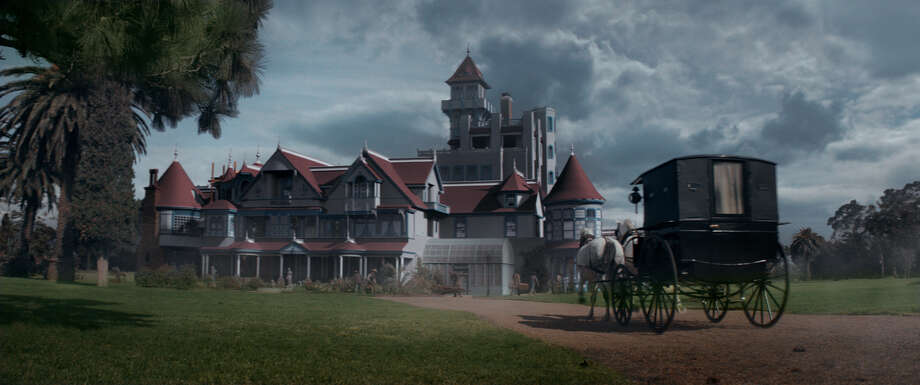
The question of the reality of witchcraft is one upon which it is not easy to pass a confident judgment. The possibility of such carnal intercourse between human beings and demons was an abstract possibility in the first thirteen hundred years of the Christian era. It is believed to be a fact that people made pacts with the devil and of a diabolical interference in human affairs can hardly be denied. Sarah L. Winchester believed that one should not be too easily inclined to believe a person to be possessed by the devil, but that signs should be watched. Signs of a possessing devil are: the ability to speak many words of an unknown language or to understand them; the ability to reveal distant or hidden things; a manifestation of strength beyond one’s age or natural condition. The history of Witchcraft, a subject as old as the World and as wise as the World—since I understand for the present purpose by Witchcraft, Sorcery, Black Magic, Necromancy, secret Divination, Satanism, and every kind of malign occult art—at once confronts the audience with a most difficult problem. Magic, the genesis of magical cults and ceremonies, the ritual of primitive peoples, traditional superstitions, and their ancillary lore, have been made the subject of vast and erudite studies, mostly from an anthropological and folk-loristic point of view, but the darker side of the subject, the history of Satanism seems hardly to have been attempted.

Possibly one reason for this neglect and ignorance lies in the fact that the heavy and crass materialism, which was so prominent a feature during the greater part of the eighteenth and nineteenth centuries in England, intellectually disavowed the supernatural, and attempted not without some success to substitute for religion a stolid system of respectable morality. Since Witchcraft was entirely exploded it would, at best, possess merely an antiquarian interest, and even so, the exhumation of a disgusting and contemptible superstition was not to be encouraged. It were more seemly to forget the uglier side of the past. This was the attitude which prevailed for more than two hundred years. The cycle of time has had its revenge, and this rationalistic superstition is dying fast. The extraordinary vogue of and immense adherence to Spiritism would alone prove that, whilst the widespread interest that is taken in mysticism is a yet healthier sign that the World ill no longer be content to be fed on dry husks and the chaff of straw. And these are only just two indications, and by no means the most significant, out of many. However, a sorcerer is one who by commerce with the Devil has a full intention of attaining his own end. There are said to be many occult symbols hidden in The Winchester Mystery House.

Come and enjoy a delicious meal in Sarah’s Café, stroll along the paths of the beautiful Victorian gardens, and wonder through the miles of hallways in the World’s most mysterious mansion. For further information about tours, including group tours, weddings, school events, birthday party packages, facility rentals, and special events please visit the website: https://winchestermysteryhouse.com/
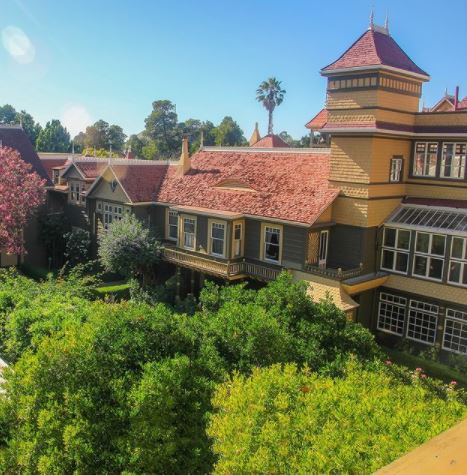
Please visit the online giftshop, and purchase a gift for friends and relatives as well as a special memento of The Winchester Mystery House. A variety of souvenirs and gifts are available to purchase. https://shopwinchestermysteryhouse.com/
 Randolph Harris II International Institute