
Home » Posts tagged 'christianity' (Page 8)
Tag Archives: christianity
The Alchemical Magic Spread Swiftly

Our knowledge of human neurogenetics is so primitive that we have only recently realized that structural and temporal castes exist. Sociobiologist and ethologists define their professions as the study of behavioural genetics. However, neurogenetics is a more accurate description because what is inherited is not behaviour but neural templates that determine use of the anatomical-technology. Local hive behaviour cues—languages, customs, artifacts, and the like are not genetically inherited—they are cultural imprints. Only the caste-circuits are inherited not the behaviours, which are acquired in a cultural context. Until ethologists understand the difference between neurogenetic castes and local-social-imprints, their brilliant observations cannot be mapped. This insight is changing our conceptions of human nature and society. It is probable that we are neurologically programmed so that understanding of castes becomes part of species contelligence—consciousness + intelligence—only at the time that space migration occurs. Plan-It Colonies in High Orbit provide the new ecological vacuum in which human castes differences can blossom without the friction and crowded competition that has coloured Earthly racial-class-sexual-caste differences. #RandolphHarris 1 of 25

You must realize that we are a genetic-caste-robot to understand your own personal development. John Lilly articulates this beautifully in Programming the Human BioComputer. We are templated by DNA to play a certain role. We are outfitted with a 24-gear brain that is very different from 92 percent of other human brains. Values, according to good authorities, “most often represent a transition from facts to rights, from what is desired to what is desirable (usually through the intermediary of what is generally considered desirable).” The transition from facts to rights is manifest, as we have seen, in rebellion. So is the transition from “this must be” to “this is how I should like things to be,” and even more so, perhaps, the idea of the sublimation of the individual in a henceforth universal good. The sudden appearance of the concept of “All or Nothing” demonstrates that rebellion, contrary to current opinion, and though it springs from everything that is most strictly individualistic in man, questions the very idea of the individual. If the individual, in fact, accepts death and happens to die as a consequence of his act of rebellion, he demonstrates by doing so that he is willing to sacrifice himself for the sake of a common good which he considers more important than his own destiny. If he prefers the risk of death to the negation of the rights that he defends, it is because he considers these rights more important than himself. #RandolphHarris 2 of 25

Therefore, he is acting in the name of certain values which are still indeterminate but which he feels are common to himself and to all men. We see that the affirmation implicit in every act of rebellion is extended to something that transcends the individual in so far as it withdraws him from his supposed solitude and provides him with a reason to act. However, it is already worth noting that this concept of values as pre-existent to any kind of action contradicts the purely historical philosophies, in which values are acquired (if they are ever acquired) after the action has been completed. Analysis of rebellion leads at least to the suspicion that, contrary to the postulates of contemporary thought, a human nature does exist, as the Greeks believed. If there is nothing permanent in oneself worth preserving, why rebel? It is for the sake of everyone in the World that the slave asserts himself when he comes to the conclusion that a command has infringed on something in him which does not belong to him alone, but which is common ground where all men—even the man who insults and oppresses him—have a natural community. (The community of victims is the same as that which units victim and executioner. However, the executioner does not know this.) Two observations will support this argument. First, we can see that an act of rebellion is not, essentially, an egoistic act. Of course, it can have egoistic motived. #RandolphHarris 3 of 25

However, one can rebel equally well against lies as against oppression. Moreover, the rebel—once he has accepted the motives and at the moment of his greatest impetus—preserves nothing in that he risks everything. He demands respect for himself, of course, but only in so far as he identifies himself with a natural community. Then we note that rebellion does not arise only, and necessarily, among the oppressed, but that it can also be caused by the mere spectacle of oppression of which someone else is the victim. In such cases there is a feeling of identification with another individual. And it must be pointed out that this is not a question of psychological identification—a mere subterfuge by which the individual imagines that it is he himself who has been offended. On the contrary, it can often happen that we cannot bear to see offenses done to others which we ourselves have accepted without rebelling. The suicides of the Russian terrorists in Siberia as a protest against their comrades’ being whipped is a case in point. Nor is it a question of a feeling of community of interests. Injustices done to men who we consider enemies can, actually, be profoundly repugnant to us. There is only identification of one’s destiny with that of others and a choice of sides. Therefore the individual is not, in himself alone, the embodiment of the values he wishes to defend. It needs all humanity, at least, to comprise them. #RandolphHarris 4 of 25

When he rebels, a man identifies himself with other men and so surpasses himself, and from this point of view of human solidarity is metaphysical. However, for the moment we are only talking of the kind of solidarity that is born in chains. Many rebels do end up in chains. At the Friday night movie in prison, some sit suicidally depressed in the front row eating trustee popcorn. And there is dope. The lunch pail express, sideline of bribed guards who keep the flow of illegal contraband moving in and out. Prisons are a quest for the serpent who swallows his own tail. It is just a matter of connecting neural wires. Many people spend every free moment on the prison yard either at handball, yoga, or lifting metal weights to the point of pain-strain. Prisoners often talk about their case, their arrest, their trial, and the next destination. Everyone has a hope habit of one kind or another. You can even get to know the permanent work crew trustees. For the most part, they are older white-collar criminals with potbellies. Some trustees have big red calendars on the wall. Each day a number is removed. The big red arrow always points to tomorrow. However, there is no number for the current day. In confidence men’s terminology, when you wake up in the morning, that day is as good as over. Half of the prisoners, the young half, are dopers, guiltless spirits, Black and White, totally detached from the system, certain of their alchemical beliefs. #RandolphHarris 5 of 25

The alchemical magic spreads swiftly. After ten years, there are millions who choose the superstitious perspective, seeking to stay high. The prison guards are retired enlisted men. They act like motel clerks opening the dining room, locking and unlocking doors for the prisoners. They walk the tiers at night while inmates’ sleep; fatigued men with flashlights slipping mail under their cell doors. Their work centers around keys. The lawyers say that any day the California Supreme Court will grant some of these men bail. However, advisers often shrug skeptically. Often, guards get down on these men. They order them to the barbershop, search their cells, find dust, then orders them back to the barbershop for a closer trim, writes them up for petty misdemeanors. As prisoners swing high and happy down the cavernous hall of the main line, guards will often make them remove personal effects. Some of these men get an attitude and stand in the prison corridor looking at the guard, as the guard looks back at them dull with tired hatred before muttering, “Watch yourself.” Well, that is the basic confrontation of politics. The guard and the prisoner. Two men looking into each other’s eyes defiantly across the abyss of slavery. Everyone in the World is on the side of the guard or on the side of the prisoner. Police, lawyers, judges, prison guards. #RandolphHarris 6 of 25

Criminals are the opposing militia. The forces are exactly even. Law-and-order people control the press and the media of communication and education but they fool no one. At any moment, at least half of the World population is in open conscious opposition to the government. Most police accept that it is a war on crime. So do most prisoners. It is obvious, that in most cases, rebellion pays bad dividends. It can inevitably result in a sense of emptiness that often leads to alcoholism, drug addiction, bizarre religious practices, flagrant immortality, broken homes, incurable diseases, and despair. Sadly, many experience the high cost of putting what they call “my way” above “God’s way.” To live as if there is no God is foolish, for it leads to pain, despair, and eternal death. However, to live in the “fear of God” is wise, for it leads to satisfaction, rejoicing, and everlasting life. You must decide, so choose wisely! “The fear of the Lord is the beginning of knowledge, but fools despise wisdom and instruction,” reports Proverbs 1.7. When the client gives me nothing intimate, or self-expressive—it is then that I must draw on my own momentary reservoir to find within me my response to him—a clear, intimate expression of me in this moment with him. However, when the client is in the process of expressing himself to me, then I find within me chiefly my sense of his expression and I try to tell him with unmuddied simplicity what I understand him to feel and think. #RandolphHarris 7 of 25

It is just as important that I sense and state his experience as his (as purely as possible from his own frame of reference), as it is to make clear that my experiential self-expression are mine, when that is the case. Very often, when the client is in the course of expressing himself, a response that simply states what the therapist understands the client to think or feel is a powerfully effective response. Often it is the only possible helpful response. If anyone does–with schizophrenics and with many others, it is the therapist who will initiate the relationship, will begin open and expressive interaction, and will first express warmth, care, interest, and a person-to-person quality. If the therapist must sit passively, or argue intrusively, I do not think he is likely to form a relationship with an individual who does not already wish for therapy or for a relationship. The therapist’s moment-to-moment expressiveness largely determines the quality of the interaction, at least at first, and especially with unmotivated individuals. Even if the client is consistently silent or expresses only trivia, the therapist’s self-expression can make the interaction eventful, personal, and even expressive. The therapist’s expressions—the events occurring in himself—will concern the interaction and will deepen it, when they are spoken. Both persons tend to experience an eventful, open and personal interaction even while only one of them is verbalizing his felt side of the interaction. #RandolphHarris 8 of 25

In order to verify predictions, it is necessary to define success, that is, winners and losers. A winner is someone who succeeds in what he says he is going to do. A loser is someone who fails to accomplish what he sets out to do. A man who says: “I am going to Reno and gamble,” is only committed to getting there and betting, regardless of whether he wins or loses. If he says: “I am going to Reno and this time I am going to win,” then he comes out a winner is he wins and a loser if he does not, depending upon how much money he has in his pockets when he gets back on the pavement. A woman who gets a divorce is not a loser unless she has said “I will never get a divorce.” If she has declared: “Some day I am going to quit my job and I will never work again,” then her alimony will signify that she is a winner, because she has accomplished what she set out to do. Since she had made no statement as to how she would do it, no one can fault her with being a loser. Each language provides words that sensitize a person to those aspects of the World that are most important for survival in that place. Thus, we have only one word for snow, whereas Inuit people have many, corresponding with different qualities of snow, which indicate whether hunting or igloo building is possible. We do not see the World; rather, we “read” the meanings of what we see, just as we read the words in a book. These meanings are provided for us as we grow up by the person who teaches us to speak our “mother tongue.” #RandolphHarris 9 of 25

It is our mothers who give the first meanings to our World, who gives the World the “voices” with which it tells us of dangers and gratifications. In developing countries like Indonesia or India, each child learns three languages, each of which highlights some aspects of the World more than others, and which gives different meanings and emotional qualities to the perceived World. Thus, a child will learn the language of the village from his or her mother; in India or Indonesia, it will be one of the several hundred local languages, which differ so much that people fifty miles apart cannot understand one another’s mother tongues. At school an Indonesian child will learn Malay, and an Indian child will learn Hindi—both languages are the national tongue, which facilitates communication throughout the country. Finally, both Indonesian and Indians may learn English, which makes communication beyond national boundaries possible. In each case, the language that is spoken affects perception. In order really to perceive what is there in the World, a person will have to suspend language and really look and listen, to discern the reality beyond language. For many, to sustain an inner calm is not easy. Many a time, in test situations, he will fail. However, even when the negative, explosive, or depressive emotion asserts itself strongly, he is not to show it in behaviour no express it in speech. For this is a step toward that control of self, that impersonality, which is what the quest means. If mind influences body, body also influences mind. From the physical control he may proceed to the mental. #RandolphHarris 10 of 25

When calmness has been well practiced for a sufficient period, it will occasionally of itself lead the practiser into sudden brief and ecstatic experiences of a mystical character. He should calmly recognize that suffering has its allotted function to perform in the divine plan, that other people have their lessons to learn through it when they will learn in no other way, and that the spectacle of its operation should, in such cases, be met with intelligent understanding rather than with neurotic sentimentality. He should face the fact that many people will not learn from reason, intuition, or teaching and that no one can really liberate them from their sufferings except themselves. Every other kind of liberation is a false one. Others may effect it today only to see the same condition return tomorrow. He should not, in certain situations calling for hard decision, for instance, show unjustifiable weakness under the belief that he is showing forbearance, nor submit to antisocial egotism under the thought that he is practising love, nor abandon his highest duties for the sake of making a false and superficial peace with interfering ignorance, nor passively accept a flagrant wrong because God’s will must always be borne. The lower emotions and the moods they produce are his first enemies. Every antagonism and envy, every wrathful temper and animal lust, every self-injuring desire and socially harmful greed bars his way. And it will not move out of the way without a long fight. #RandolphHarris 11 of 25

This spiritual quest takes the aspirant through many moods. He will alternate at times between blank despair and exalted joy. Though naturally affected by these moods, he ought nevertheless to try to keep a certain balance even in their very midst, to cultivate a kind of higher indifference towards them, and patience towards their results. This can be achieved more easily by obtaining a firm conviction of the transient character of such moods. Both emotion and reason have their proper place in practical life, but in the philosophic life where the Quest is for truth alone and not for satisfaction, there is no place for emotion other than a secondary one. Its power over man is so great however that it will continually come into conflict with this ruling, it will struggle desperately to resist reason and to silence its voice, it will contradict the dictate of calm considered judgment and seek by sheer force to dominate the mind. Again and again the uprush of emotion will disturb the would-be philosopher and destroy his equanimity, thus rendering impossible a correct appreciation of the truth he seeks. The melancholy feeling that he is missing something joyous in life, that a happiness which so many others have captured is running away from him with the years, so one of the emotional snares likely to beset the aspirant’s path. #RandolphHarris 12 of 25

If he yields to its self-pitying suggestiveness, it will weaken his resolve and disturb his peace. From that it is only a step or two to descend into a painted and delusive animality. Those who waste themselves in emotional excesses weaken themselves spiritually, for the power of feeling is an essential part of the higher nature. With the pressures brought down upon them by his total philosophic effort, the grosser desires will gradually be flattened out anyway. If he deliberately and directly assists them to enter that condition, it will not be to his detriment. If we are to command our deeds, we must command our thoughts, but much more, we must command the emotional impulses behind those thoughts and those deeds. When he is tempted to be angry with some irritating person, he is faced with two choices: either to identify himself with this lower emotion or with his higher aspirations. If, following bad habit, he succumbs to the first, he weakens himself still further. If, following good resolve, he overcomes the temptation, he strengthens himself for the future. Strong emotional attachment to another person may only tighten the ego’s hold, may narrow, limit, warp, or prevent the seeing of the truth. This happens all-too-often in family relationships and in the affections of the young. It can even happen in guru-disciple relationships. #RandolphHarris 13 of 25

When it comes to relationships, it is the responsibility of the national leaders to forge that sword through their foreign policy. The purpose of this foreign policy must be the securing of weapons and finding allies. The state is only a result of human forces, only a work of our thoughts, but man is the force of the source itself and the creator of the thought. As the deputy of all humanity whose heart beats, for all mankind, our passion must be the World and future generations. At a time when everybody is bust erecting new Fatherlands, the Fatherland of the man who thinks without prejudice and can rise above his time is nowhere and everywhere. However, nationalism killed humanism. The nation and its sovereignty have become the new idols to which the individual has succumbed. With all the new technology, the revolution of the colonial peoples, communication by air, the radio, etcetera, have shrunk the globe to the proportions of one continent or, rather, one state as they existed one hundred- and seventy-years ago. The One World which is in the process of being born is, however, not one World because of the friendly and brotherly relations that exist among its various parts, but rather because of the fact that missiles can carry death and destruction to almost any part of the World in a matter of hours. The one World is one, so far, inasmuch as it is one potential battlefield, rather than a new system of World citizenship. #RandolphHarris 14 of 25

We live in one World, yet in his feelings and thoughts contemporary man still lives in the nation state. His loyalties are still primarily to sovereign states and not to the human race. This anachronism can only lead to disaster. It is a situation similar to that of the religious wars before religious tolerance and coexistence became an accepted principle of European life. If the One World is not to destroy itself, it needs a new kind of man—a man who transcends the narrow limits of his nation and who experiences every human being as a neighbour, rather than as a barbarian; a man who feels at home in the World. Why is this step so difficult? Man’s life begins in the womb. Even after birth he is still part of mother, just as primitive man was part of nature. He becomes increasingly aware of himself as separate from others, yet he is deeply drawn to the security and safety of his past. He is afraid of emerging fully as an individual. Mother, the tribe, the family—they all are “familiar.” The stranger, the one who is not familiar through the bonds of blood, customs, food, language, is suspected of being dangerous. This attitude toward the “stranger” is inseparable from the attitude toward oneself. As long as any fellow being is experienced as fundamentally different from myself, as long as he remains a stranger, I remain a stranger to myself, too. When I experience myself fully, then I recognize that I am the same as any other human being, that I am the child, the sinner, the saint, the one who hopes and the one who despairs, the one who can feel joy and the one who can feel sadness. #RandolphHarris 15 of 25

I discover that only the thought concepts, the customs, the surface are different, and that the human substance is the same. I discover that I am everybody, and that I discover myself discovering my fellow man, and vice versa. In this experience, I discover what humanity is, I discover the One Man. Until now the One Man may have been a luxury, since the One World had not yet emerged. If the One World is to live, now the One Man must emerge. Historically speaking, this may be a step comparable with the great revolution which was constituted by the step from the worship of many gods to the One God—or the One No-God. This step was characterized by the idea that man must cease to serve idols, be they nature of the work of his own hands. Man has never yet achieved this aim. He changed the name of his idols and continued serving them. Yet he changed. He made some progress in understanding himself, and tremendous progress in understanding nature. He developed his reason and approached the frontiers of becoming fully human. Yet in this process he developed such destructive powers, that he may destroy civilization before the last step is taken toward constructing a new humanity. #RandolphHarris 16 of 25

Indeed, we have a rich heritage which waits for its realization. However, in contrast to the men of the eighteenth and nineteenth centuries who had an unfailing belief in the continuity of progress, we visualize the possibility that, instead of progress, we may create barbarism or our total destruction. The alternative of socialism or barbarism has become frighteningly real today, when the forces working toward barbarism seem to be stronger than those working against it. However, it is not the “socialism” or managerial totalitarianism which will save the World from barbarism. It is the renaissance of humanism, the emergence of the new West which employs its new technical powers for the sake of man, rather than using man for the sake of things; it is a new society in which the norms for man’s unfolding govern the economy, rather than the social and political process being governed by blind and anarchic economic interests. Until the joyful time comes when negative moods or thoughts have ceased to cross the threshold of his consciousness, man must struggle with them by a combination of different methods. First, his will must follow them at once after their entry and remove them forcibly. Second, his imagination and reason must attack them in the prayer period set aside each day for that purpose. Whether or not it is possible to attain a perfection of calmness that is secure against all assaults, it is surely possible to attain sufficient calmness to keep off many or most of the emotional disturbances and mental turmoil which derive from the petty incidents of everyday life. #RandolphHarris 17 of 25

The Sacramento Fire Department protects the lives and property of Sacramento residents and visitors by serving as fires responders to fire, public safety, medical emergencies, and other emergency related situations. “It was a five-alarm fire, a four-story building that had at one time been a manufacturing plant but now had a bar and a restaurant on the first floor and a menagerie of rooms upstairs. It was a gay bar, and the guy who owned the place was gay. The top three floors were his playground. The night of the fire he picked up this kid over at the park, took the kid out, wined and dined him. The kid wanted money, but the guy didn’t want to pay anything. So the kid beat him up and left him there in the building, left him for dead. He then set the fire to cover his behind. I was acting battalion chief at the time, and I covered the fire on the second alarm. The first-alarm company got there and found the guy. He was all bloody. They laid him on the sidewalk at the side of the bar, and he kept saying that the boy was still in there. The police sent the dogs in. They found the kid and chewed him up a bit, but the firemen got him out. The call that came in said they had a small fire on the second floor. Well, the first-alarm chief saw the smoke pumping out beams. No fire, but a lot of smoke coming out of the eaves on the fourth floor. He knew he had more than just a small fire, so he called for the second alarm. I was the second chief in and was assigned to the rear of the building. We were back there, and we had master streams in operation. About then the fire was blowing out all of the windows in the back and front and coming through the roof in one corner. #RandolphHarris 18 of 25

“About an hour later the majority of the fire was out, so we shut the big lines down to get inside and do some interior firefighting. I had the company stretched hand lines and inch-and-a-half up the aerial ladders and into the windows. I was at the top of the ladder, and there was a guy from X Engine, (who we will call Z), who was having trouble with his air mask. He was below me on the ladder. The department had just switched over to a new self-contained air mask, and we were having problems with this one fitting where the face piece connected to the regulator. Z did’nt have it just right. It kept popping loose on him. ‘Well, look,’ I said, ‘get your mask straightened out. I’m going to go inside, and when you get done bring your line up and I’ll meet you in there. I’ll see what we’ve got to do.’ So he went back down. I was on the fourth floor, and I looked into the window with my hand light to see the floor. It was black, all black. I straddled in, leg over windowsill, and had my feet on the floor. Real good sound floor, nice and solid. The darkness was pitch black, as black as it might be inside a collapsed mine shaft. I took two septs, and I started falling. I just started falling. Looking back on it when the doctor asked what happened and going back and looking at it after the fire, I figure out what had happened. But here I was, falling in this complete darkness. Halfway down, about thirty feet, I hit something, straddling it. #RandolphHarris 19 of 25

“Thirty feet and I stopped short between my legs. That is where I fractured my pelvis in for placed. I momentarily stayed in that position, but the momentum of my fall kept me going off there and down another thirty feet. I was now down five stories, and in the basement. I landed on my back in about three feet of water. I landed hard, and I broke my back in two placed. The doctor said that the mask on my back was what saved me. Without it I would have been killed. I had fallen down an elevator shaft. The building was originally a factory where they made automobile tires. The shaft was for one of those huge freight elevators that you could drive a care into, and take it up to different floors and have the tires changed on it. That window I had climbed into opened into the shaftway. The law says that windows opening into shafts must be barred, and I think it was originally barred, but the guy, when he bought the building, did all this renovation work up there, either on the sly or whatever. What I was stepping on was a floor that was probably three feet wide with a steel beam around it, and the car would come up and stop at that floor, that’s why it was still there. The elevator was caught in the fire and was burned out, like the whole bottom of the car was burned out. The only thing left of the car was the metal frame. It was the beam at the top of the elevator that I straddled and flipped off of at the second floor and fell through the elevator to the bottom, that second thirty feet. #RandolphHarris 20 of 25

“So I was lying in three feet of water. I couldn’t stand up, my legs wouldn’t move, nothing. I said to myself, calmly, ‘Well, I’ll just lie here.’ I’m lying there, then I realize I’m being pulled down. My coat is being saturated, and the weight of the coat started pulling me down, and down, and down. Suddenly, my nose is under water. I was trying to float, but I couldn’t because the coat was pulling me down and the boots were full of water and I couldn’t stand. I was beginning to drown. My regular job was captain of the rescue unit, and I knew about scuba and had a lot of water experience. I said, ‘Keep your cool, keep your cool. Don’t panic. Get your coat off.’ I was in no pain. I couldn’t feel a thing. I was just worried about drowning. I went completely under water then, knowing it was my only chance, unsnapped my coat, got one arm out and got the other arm out. The coat dropped away, the heavy mask canister with it. I thought that would save me. Then I started reaching out, and I touched this wall. It was an unfinished wall, just plain bricks. I put my fingertips in the mortar joints and started pulling my head up. I realized I was in a corner, and I’m like, ‘There’s got to be a way out of here.’ So I started going around like this, pulling with my fingertips. I hit another corner, made another turn, and there was a ladder there, a ladder in the wall. ‘Great,’ I said, ‘stay here and wait.’ The water was still cascading in from the streams, getting deeper and deeper. ‘Great’ I’m saying, ‘if the water rises, I’ll rise with it up the ladder.’ #RandolphHarris 21 of 25

The next thing was. The smoke started banking down. I said ‘Oh God. I’m going to suffocate.’ I started coughing, and I got down closer to the water. I was okay, I had this much room at first, and then the smoke was banking down farther and farther. I was down to the water again, my nose just touching it. Then I could hear the debris falling. The first thing I thought was that Z had done the same thing I did. I went back and started feeling around to see if he’s there. I heard people hollering up there. I heard Z holler in the window that the floor was going and that something was wrong. I still didn’t know where I was. I lost my portable radio on the way down. They found that hanging between the second and third floor where a piece of metal was sticking out. I fell and I just missed the metal, but it grabbed the radio and pulled it off my coat. It was hanging there. I lost my helmet, and they later found a piece of it, the plastic eye protection part melted. It had fallen into the fire on the second floor, which was still burning up there. Like I said, I hear all this debris falling, and I thought it was Z, and I went out to look to see if it was. I tool a little step and realized that I just couldn’t do it, I couldn’t stand. So I started calling to see if it was him. Nobody answered. Then I heard somebody holler, ‘There he is.’ This guy we will call A came down the ladder, and he started to touch me, and I said, ‘Don’t touch me, something is broken.’ He hollered, ‘Thrown a rope down here.’ I said, ‘Don’t tie any rope around me, something is broken and I can’t move my legs. I can’t feel anything.’ #RandolphHarris 22 of 25

“So they got the Stokes basket down there, and they floated me on that, then lifted me up and out. They put me in the medic unit, and I went right to the shock trauma center. I still don’t remember a lot of it. I don’t remember blacking out. There are times when I lie at home and I wake up and think, ‘Oh, that’s right, that happened.’ The first fall, I didn’t think that I was going to fall that far, it was only one floor. It’s not going to be even twenty feet. It’s not going to be that bad. It’s not going to be thirty feet. I’m not expecting that I’m going down a shaft, you know, right to the bottom. And when I hit, it felt like I was falling longer than I should have, but it’s pitch black and I can’t see anything, so I’m not expecting it or anything. It’s just falling into the darkness, and then when I hit, it was like, ‘Christ, oh God.’ The beam went right up into my groin. When I started falling, I was worrying about being impaled, about falling into some debris and having a two-by-four go through me. When I hit with my legs apart, the pain was intense through my groin. I was black and blue from my knees to my chest, a dark purple. My privates were swollen the size of grapefruits, because the actual impact was right there. I thought, Hey, this isn’t too bad, it’s over, I’m still alive. And then I realized that I was falling again. I still can’t see anything. I haven’t seen anything yet, no walls. I haven’t felt anything other than hitting the piece, and then I’m going again. I didn’t know I was in an elevator shaft. I had no perception of depth or how far I had fallen. I could have fallen five feet and hit something and then five more feet and been on the third floor. I had thought it was over, and I was falling again, and I realized, ‘No. It isn’t over yet.’ #RandolphHarris 23 of 25

“Another thirty feet. That’s when I did the complete somersault from straight up and down when I first fell, and the beam catapulted me over, and I was falling back first, and that’s when I impacted the water. And then it was like, ‘Oh damn, where am I now? What’s going on?’ In my scuba training I knew that when you first go down you’re apprehensive and you start breathing faster and you get yourself worked up, and you have to calm yourself down. That’s what I was doing. I was like, ‘Okay, keep your cool, you know you’re not dead, and you can get out of this.’ And then I started sinking, and I was like, ‘Oh God, you’re going to drown. You’ve got to get your coat off.’ The water was still coming in. I figure there were ten ladder pipes in service and maybe fire two-and-a-half-inch hand lines, that’s fifteen hoses shooting water in. Coming right down, you could hear it. It was like a waterfall. It’s like, okay, I have the coat off and I’m not going to drown because I have the ladder. Then I thought, ‘God, it’s filling up.’ But I felt good holding on to the ladder. If water keeps coming, I’d just float up with it, and I felt secure. Then the smoke started banking back down, and I started getting scared again. It was like you can’t breathe, coughing. Like, let’s get to the window. But, hell, I can’t move. I can’t go to a window. And I had no mask. So I got lower and lower, with my mouth and nose just above the water. It’s breathable there. It’s still pretty thick smoke, but it’s not something that I’m not used to. Then like I said, I heard the debris falling. #RandolphHarris 24 of 25

“I didn’t know whether anybody knew that I’d fallen. I didn’t know whether Z had come up the ladder or not. I had told him to some back up, but he could have gone down and had his assignment changed by another officer and just, you know, forgot about me. My relief wasn’t due until seven, and this was about four-thirty in the morning. I’m thinking, this is it, this is the way I’m going to die. Then finally I heard somebody holler, ‘There he is.’ Like I said, there was no pain at that time. They got me in a medic unit, and that is when I started feeling pain. After a long recovery time, I was still not back to work. I was on administrative leave. My detail was an office job until I could get myself back to where I could go back to firefighting. I’ll get there.” The Sacramento Fire Department works continually to upgrade fire apparatuses and technology, to educate the public in fire prevention, life safety and disaster preparedness, along with enforcing public safety codes, while ensuring a safe and secure environment to all citizens and visitors through professionalism, leadership, teamwork and partnership with all levels of Government. You can help save lives by donating to the Sacramento Fire Department. I pledge allegiance to the flag of the United States of America, and to the republic for which it stands, one nation, under God, indivisible, with liberty and justice for all. #RandolphHarris 25 of 25

The Winchester Mystery House
One winter night while closing up The Winchester Mystery House, a caretaker had worked up a sweat. As he was walking down a flight of stairs, the wind grabbed him, lashing at he face, and immediately the sweat on his cheeks frosted over. His hands shook uncontrollably, the lights in the mansion began to flutter. Somewhere, almost muffled by the whine of the wind, he heard a distant clanking—a dull sound echoing across the mansion. He hesitated, tried to recognize the source, but failed. His legs ached with every step. His eyes and ear stung from the frigid blasts of wind he felt inside the house. He longed to rest, but finishing his job pushed him onward. As he reached the last step, he was greeted by what sounded like a bell tolling, warning the countryside of some unseen danger. He rested for a moment. Creeping among the twisting hallways of the mansion, he noticed for the first time that it looked rather peculiar.

He moved slower now, still confident, but careful. After a few moments, he stood motionless, watching the walls shake and curtains sway, chair scraping the floor and rattling against each other. A hazy vision of dancing skeletons and demons appeared. It’s called the house built by spirits, the demons announced, glistening worms squirming from their rotten, toothless mouths. Come join us, they invited, waving long, bony fingers. Come. And he wanted to go. They sounded so inviting. Suddenly, tears streamed down his face. The mansion came to life around him, breathing for the dead. The wind gained strength. The caretaker collapsed hard to the floor. For just one moment, an ivory sliver of moonbeam slipped through the darkness, quickly disappeared. The winter sunrise was still two hours away.

Please come and enjoy a delicious meal in Sarah’s Café, stroll along the paths of the beautiful Victorian gardens, and wonder through the miles of hallways in the World’s most mysterious mansion. For further information about tours, including group tours, weddings, school events, birthday party packages, facility rentals, and special events please visit the website: https://winchestermysteryhouse.com/

Please visit the online giftshop, and purchase a gift for friends and relatives as well as a special memento of The Winchester Mystery House. A variety of souvenirs and gifts are available to purchase. https://shopwinchestermysteryhouse.com/

Evil Behind Smiling Eyes

Obviously, one must hold oneself responsible for the evil impulses. Therefore, beware of the evil behind the smiling eyes. As we increase our understanding and love for the Saviour, His light will illuminate everything around us. We will then see evil for what it is. Working as a special agent for the FBI, my friend investigated organized crime groups transporting illegal drugs into the United States of America. On one occasion, he and another agent approached an apartment where they believed a known drug dealer was distributing cocaine. My friend describes what happened: “We knocked on the door of the drug dealer. The suspect opened the door, and upon seeking us, tried to block our view. However, it was too late’ we could see the cocaine on his table. A man and a woman who were at the table immediately began removing the cocaine. We had to prevent them from destroying the evidence, so I quickly pushed the drug suspect who was blocking the door to the side. As I pushed him, my eyes met his. Strangely, he did not appear angry or afraid. He was smiling at me. His eyes and disarming smile gave me the impression that he was harmless, so I quickly left him and started to move toward the table. The suspect was now behind me. At that instant, I had the distinct, powerful impression come into my mind: ‘Beware of the evil behind the smiling eyes.’ #RandolphHarris 1 of 17

“I immediately turned back toward the suspect. His hand was in his large front pocket. Instinctively I grabbed his hand and pulled it from his pocket. Only then did I see, clutched in his hand, the semiautomatic pistol ready to fire. A flurry of activity followed, and I disarmed the man.” Later, in another case, the drug dealer was convicted of murder and boasted that he would have also killed my friend had he not turned around at that very moment. He was a weak sniveling punk. A born snitch. He caused my friend trouble before. He had this place near Palm Springs. Used it for a hideout. It was loaded with guns and heroin. One weekend, there was this underaged girl that the heat was looking for and they went to the door. They were looking for this girl, and he said get a warrant. My friend in the FBI said he would. So, the other dudes covered the side doors, and one of them got a shotgun and two pistols and waited at the end of the hallway. His old lady answered the door, but when the FBI came, the sixteen-year-old girl went to the door and gave herself up. So, the offenders piled the guns in the car, and drove to another location. On this planet, evil has been allowed a position of influence to give us the chance to choose between good and evil. #RandolphHarris 2 of 17

The scripture says: “God gave unto man that he should act for himself. [And] man could not act for himself [unless] he was enticed by one or the other. The choice between good and evil is at the very heart of our experience on Earth. If we are rich or poor, if we were athletic or not, if we had friend or were often forgotten, in the final review of our lives, it will not matter. The suspect with the guns in the car was apprehended. The morning after sentencing, the orders came through transferring him to the State Prison. Emigration from short-time County Jail to long-term penitentiary. In the basement holding tank, stripped of county wrappings, he dressed for the final time in mod flannels. He was stored in a special isolated holding tank until the County Jail bus drove through the smoggy freeways to the Prison Reception Center at Chino, California. The welcoming committee was grim and blunt. “Strip naked. Throw your personal belongings in the box. Bend over for body inspection. Run your hands through your hair, both your ears. Open your mouth. Wag your tongue. Lift your testicles. Turn around spread your buttocks. Left foot. Right foot. Shower,” the authorities told him. He dressed in the new prison uniform. #RandolphHarris 3 of 17

A tall African American in blue danced over. He gave him ten hand-rolled cigarettes. The rumor wind was blowing around him. They were going to put him in the hole. The Captain wanted to see him. They were going to ship him to the Medical Center at Vacaville. And he would be getting bailed out the next day. The sergeant checked inmate for long hair and ordered him to the barber. He got a last mirror glimpse at forest hair and moustache. He asked the barber to leave as much as he could, but the barber grunted and clipped. “Don’t complain, man. You look twenty years younger,” he said. Our offender then took sheets and blankets and followed the sergeant to solitary confinement. It was a bad-boy lock up for him. He walked by the cages of the dangerous wild men. They shouted in pleasure to see him. An African American man shouted: “Hey man, we gotta talk to you. We cannot see each other. Just cries from cage to cage.” A nasty Brooklyn voice denounced the offender. “Oh, he’s that bad man! Hang him.” Another African American defended him. Shorty’s Brooklyn voice turned friendly. “Hey Doc, look at these pictures.” A hand from the next cell appeared holding colour snapshots. Sadeyed blue wife and clear-eyed kids. “Hey Doc, here’s a record of my trial. Read it.” “Hey Doc, you want some cigarettes.” “Hey Doc, you need some stamps and envelops.” “Hey Doc, you wanna a Playboy magazine?” #RandolphHarris 4 of 17

Dinner was passed through a slot in the bars of the narrow white counter bod. Then the evening sports. African American used mirrors to catch the setting sun, playing sunshine tag, racing reflected birds of light against the wall. Laughing and shouting. At the hour of romance, from his solitary cell a young man sadly coos a soft message and an African American voice rumbles back: “You Karl I going to get you expletive. What I’m gonna do to you girl! Hoooeee. I got me twenty inches for you. You my expletive.” “Oh no big boy, I’m my own man,” he repiles. “Great God almighty, I gotta het me some sweet white meat. I sick to death of my own right hand. Wheee—here I come Karl. Ohhhhh what I’m gonna to do to you siter. I gonna split your pink expletive girl. Stuff my tool up your belly, split yo kidneys girl. Gut you baby so you gonna never be able to walk again. Oh, Mr. Guard let that man out. Oh let him loose. I need that man.” Our offender now has a momentary reflex, fear of being trapped in a cell holocaust was calmed by the cement steel of maximum security. Next morning the offender is called to the Captain’s office; sitting watching trustees run the prison, typing, phoning, filing, serious responsible people working proudly. “We’ve finally got you, huh. You are going to be with us a long time. Ha ha. You’re smaller than on TV. I guess we cut you down to size, huh,” said the Captain. #RandolphHarris 5 of 17

Prison is a very dangerous place. Be sure to think before committing an illegal act. You may think you are high and mighty, until the cell doors close on you. We can work, study, laugh and have fun, dance, sing, and enjoy many different experiences. These are a wonderful part of life, but they are not central to why we are here. The opportunity to choose good over evil is precisely why we are here. Not one of us would say, “I want to choose evil.” We all want to choose the right. However, the choice of good over evil is not always easy, because evil frequently lurks behind smiling eyes. Listen to these warnings: “Take heed…that ye do not judge that which is evil to be of God.” “Ye must watch and pray always lest ye enter into temptation; for evil desireth to have you.” The message is: Beware of the evil behind the smiling eyes! I have known a few young men who began with every intention to stay firm in their loyalty to the Saviour but who slipped from the path because they did not see the evil behind eyes that appeared quite harmless. They saw the fun, the pleasure, the acceptance, but they did not see the other consequences. How, then, can we discern the evil being something that does not appear evil? First, talk to your parents. We fathers know we are far from perfect, but we love you, and along with your mothers, have deep interest in your choosing the right. #RandolphHarris 6 of 17

Very importantly, let the Holy Ghost be your guide. The Lord has promised us that as we live righteously, the still, small voice will come into our mind and into our heart. You have felt this influence. You know this voice. The gift of the Holy Ghost is a spiritual gift. It is sensitive and will not be associated with unworthiness. You cannot offend or ignore it one day and expect it to strengthen you the next day. However, as you heed its promptings and remain righteous, it will grow stronger within you. The Holy Ghost warned my friend of physical danger; they Holy Ghost will also warn you of spiritual danger. Finally, gain your own testimony of the Saviour. Pray passionately. When no one is watching, read the Christian Holy Bible and the Book of Mormon. Take time alone to think about who Jesus Christ really is and how His life and sacrifice are important to you. If we bother to look back at America’s foreign policy after the 2020 election, we are shocked by the constant failures of our government. The August 2024 jobs report reveals a sharp contrast in employment trends between American born and foreign-born workers. Native-born Americans lost over 1.3 million jobs over the last year, while foreign-born workers gained more than 1.2 million jobs. #RandolphHarris 7 of 17

New York City hands illegal immigrants $4,000 and gift cards to move out of shelters. And the Department of Justice reports an illegal immigrant used a stolen identity to vote. A man who sees the constant and incomprehensible decline of his government can only drop his head in despair, or feel the beginning of an internal desire for a flaming rebellion against such a regime. However, as we increase our understanding and love for the Saviour, His light will illuminate everything around us. We then will see evil for what it is. Children need the peace that comes from knowing they have a loving Heavenly Father, who sent His Son, Jesus Christ, to bring light and hope into the World. It is up to us as adults to direct children to that peace and light. From the flight against the authority of Church, State, and family which characterize the last centuries, we have come back full circle to a new obedience; but this obedience is not one to autocratic persons, but to the organization. The “organization man” is not aware that he obeys; he believes that eh only conforms with what is rational and practical. Indeed, disobedience has become almost extinct in the society or organization men, regardless of their ideology. Yet one must remember that the capacity for disobedience is as great a virtue as the capacity for obedience. #RandolphHarris 8 of 17

One must remember that, according to the Hebrew and Greek myths, human history began with an act of disobedience. Adam and Eve, living in the Garden of Eden were still part of nature, as the fetus is in the womb of the mother. Only when they dared to disobey an order were their eyes opened; they recognized each other as strangers and the World outside as strange and hostile. Their act of disobedience broke the primary bond with nature and made them individuals. Disobedience was the first act of freedom, the beginning of human history. Prometheus, stealing the fire of the gods, is another disobedient dissenter. “I would rather be chained to this rock than be the obedient servant of the gods,” he said. His act of stealing the fire is his gift to men, thus laying the very basis for civilization. He, like Adam and Eve, was punished for his disobedience; yet he, like them, has made human evolution possible. Man has continued to evolve by acts of disobedience not just in the sense that his spiritual development was possible only because there have been men who dared to say “no” to the powers that be in the name of their conscience or of their faith. His intellectual development was also dependent on the capacity for being disobedient, disobedient to the authorities who tried to muzzle new thoughts, and to the authority of long-established opinions which declared change to be nonsense. #RandolphHarris 9 of 17

If the capacity for disobedience constituted the beginning of human history, obedience might cause the end of human history. I am not speaking symbolically or poetically. There is the possibility that the human race will destroy itself and all life on Earth within the next tend to fifteen years. There is no rationality or sense in it. However, the fact is that while we are living technically in the atomic age, the majority of men live emotionally still in the stone age, including most of those who are in power. If mankind commits death by suicide, it will be because people will obey those who command them to push the deadly buttons, because they will obey the archaic passions of fear, hate, and greed; because they will obey obsolete cliches of state sovereignty and national honour. By the time he gets to “I Guess I’D Better Drive You, Dear” or “Getcher Expletive Outa Bed,” or even, “I’ll Beatcher Goddam Brains Out If You Don’t,” the child already has certain convictions about himself and the people around him, especially his parents. These convictions are likely to stay with him the rest of his life, and may be summarized as follows: I’m O.K. or; I’m not-O.K; You’re O.K. or; You’re not-O.K. On the basis of these he makes his life decisions. “It’s a World, some day I’ll make it a better one”—through science, service, poetry, or music. #RandolphHarris 10 of 17

“It’s a bad World, someday I’ll kill myself”—or kill someone else, go crazy, or withdraw. Perhaps it is a mediocre World, where you do what you have to do and have fun in between; or a tough World, where you make good by putting on a white collar and shuffling other people’s papers’ or a hard World, where you sweep or bend or deal, or wiggle or fight for a living; or a dreary World, where you sit in a bar hoping; or a futile World, where you give up. I believe that we are in great danger of being converted into complete organization men, and that means, eventually, into political totalitarianism, unless we regain the capacity to be disobedient and to learn how to doubt. In working with unusually defensive, withdrawn or fearful individuals we find it even more important than ever not to impose ourselves on them. How is non-imposition consistent with a therapist who expresses more of himself more openly and actively, and who initiates relationships by expressing himself? Tentatively, if he will express himself—his own imaginings, his own feelings, desires, the events which transpire in him—and if he does this clearly and explicitly as statements about himself, or about events transpiring within him at the moment, I think the answer is: the therapist can be more active and at the same time present less imposition and threat. In this way he shares himself more openly, yet he does not impose on the client’s experience. He speaks for himself with events in the client. #RandolphHarris 11 of 17

The content of our field of perception is necessarily selective; it cannot include all inner and outer reality that exists at a given moment. Only part of the ongoing flow of feelings, thoughts, and external events is defected by our sense organs and represented in our field of awareness. Our sense organs resemble TV or radio receivers, in that they are differentially sensitive to stimuli of different intensities and qualities. However, even within the receptive range of our senses, we still notice only a fraction of all the sensory information reaching our brain. Some of the important determiners of figure, that is, of our focus of attention, are unfulfilled needs. Our feelings and our needs direct our perception, thinking, remembering, and fantasy, so that the figure will be that perception, thought or memory most relevant to our needs of the moment. Our cognitive processes are thus servants of our needs. When we are hungry, we think and dream about food, we search for it, and we tend to ignore everything in the World that is indelible or that will not help us to get food. If we are deprived of pleasures of the flesh, we tend to have fantasies with erotic themes, we find it difficult to think about other things, and we look at the World from the standpoint of the gratification of pleasures of the flesh and frustration it is likely to afford. #RandolphHarris 12 of 17
If we are anxious because of some threat to our security; we are too busy seeking the source of danger so that we might escape from it. There have been many experiments conducted to demonstrate how needs determine our attention and the content of our consciousness, and so we need not dwell further upon this point. More germane to our discussion is the manner in which emotions and unfulfilled needs operate to distort our perceptions and beliefs. We hear much from the moralists about the need of encouraging young men and young women to express themselves and of not letting society impose its will upon them, as we hear much from the psychoanalysts about the need of liberating them from secret inhibitions and of satisfying their repressed emotions. Both these movements are excellent. They are antidotes to the tyrannic soul-crushing, hypocrisy-breeding, and self-deceiving conventions of the old society. However, a good overdone may become an evil a virtue stretched too far may become a vice, and a method which ignores all the facts of the diamond of psychological truth except a single one may become unbalanced. The new morality may free people to the point where liberty is merely license and expression a dangerous disregard for the knowledge yielded by experience and age. The new psychoanalysis may free them to the point where mental liberation is mere lack of self-control and emotional satisfaction is dangerously anti-social. #RandolphHarris 13 of 17

This is not to say that we would belittle the value of either. Both standard points may be philosophically used, which means they may be used in a balanced manner as a part of a wider one. The whole man is the natural man. Whoever sets up a cleavage between the intellectual and emotional functions, and would ignore the latter in order to enthrone the former, is unnatural and cannot attain that truth which is the voice of nature. This is not to say that emotional or reason should run riot; it is proper and necessary to give reason the reins, but this done, any sharper division will lead to unbalance, distortion, and error. Yes, the emotions of a person who is called hard and dry may need to be released, but this applies only to the positive ones. The negative ones are not worth releasing and should be got rid of. Anger and hatred are dangerous emotions to carry about with you. Whether or not they lead to actions harmful to the person they are directed against, they are certainly harmful to you. Conquer them quickly, get these psychological poisons out of your system. There is another kind of negative trait which, although unaggressive, is only less unpleasant by a matter of degrees than the aggressive ones. It is the black and bitter mood of sullen coldness, of the self-centered, self-tormenting, self-pitying sense of being wronged by the other person, the introverted, withdrawn, sulky, resentment at being hurt, a resentment so deep as to find no fitter expression than gloomy, frozen, and tense silence. #RandolphHarris 14 of 17

He places all the blame for the situation on the other and consequently adopts a grieved unconciliatory attitude towards the other. He wounds by saying nothing, doing nothing, and being boorish. The atmosphere around him is full of sustained and hostile emotional tension. It is, of course, an adolescent trait and cannot endure when spiritual maturity is really attained. What the unawakened man feels as fear, the awakened one transmutes into needful caution and careful forethought. It is a feat of emotional surgery to relinquish attachments and to renounce possessiveness. Emotions unchecked by reason may become our betrayers. Beware of them when exceptionally strong and unduly excessive. The fears which are natural or necessary should not be confused with the fears which are neurotic or excessive. If the aspirant is to remake himself effectively, he must begin by attacking the lower emotions. They must be killed and eliminated from his life scene. So long as they dominate it, so long will experience yield poisonous fruits instead of healthy-giving ones. Every fresh situation will only give fresh life to his ego because those emotions will involve themselves in that situation and cause him to misread it. The first enemies, the hidden sources of his own difficulties, are within himself. To take the attitude in a depressing situation that the only action is to sit down and be depressed by it is unphilosophical. He should never give himself up to despair, although he may give himself up in hard situations to gravest reflection and deepest resignation. #RandolphHarris 15 of 17

The Sacramento Fire Department provides Sacramento City with the best possible all-risk emergency service in the protection of lives and property. They are and will continue to be identified by their dedication and pride in outstanding customer service, public health, safety, prevention and education. “For the last three years in fire prevention week, another firefighter and I go to all the different schools—anywhere from preschool up to twelfth grade—and teach fire prevention. The students enjoy it. It’s amazing how many students actually remember you. I’ve had kids come up to me in church, and say, ‘I remember you. Stop, drop, and roll!’ And I say, ‘Yeah, you’re right.’ Then I say, ‘What do you do if you have smoke in your room?’ And they’ll tell me, ‘I stay low, and I crawl.’ To me, that’s worth every ounce of time I’ve spent with these kids. If I can just save one of these kids, ever, that’s all I can ask. I couldn’t want any more. One Christmas Eve, we came home from my family’s party, and we tucked our children in. Just like in the storybook, they were all nestled in bed. And my wife and I were being Santa’s helpers, setting out all of Santa’s gifts with their name tags on them, when I got a call that we had a house fire. I remember giving her a kiss and saying, ‘I’ll be back as soon as I can.’ And I left her sitting among all these toys that weren’t put together yet, and all this stuff scattered around, and I went on the house fire. #RandolphHarris 16 of 17

“Thankfully, there was nobody in the house, they were out visiting, but their house was destroyed, a total loss. I came back home, and it was like magic: everything had been done. And there my wife was sitting, with a cup of coffee for me, and she made my Christmas really special. In fact, it was Christmas morning by the time I got back. But she didn’t complain. It didn’t upset her. There have been a lot of occasions when I’ve had to leave her. She has been really good, very supportive, and she’s proud of me, she really is.” The lives and well-being of the citizens of Sacramento, visitors, and department members is their highest priority. The Sacramento Fire Department is fiscally responsible in all they do. You can help save lives by donating to the Sacramento Fire Department. To keep our community peace, please raise your children to love America, love God, and love Jesus Christ. It is also important to be patriotic and buy American cars and other American made goods and services. In order to maintain the tranquility of our city, we must always remember to respect law and order, and treat our elders with the utmost dignity, reverence, and honour. Good neighbours play a vital role in creating a strong and resilient community. They come together in times of need, facing challenges as a united from. Good neighbours build a foundation of unity and creative a beneficial impact on the neighbourhood as a whole. I pledge allegiance to the flag of the United States of America and to the republic for which it stands, one nation, under God, indivisible with liberty and justice for all. #RandolphHarris 17 of 17

The Winchester Mystery House

“One Halloween night, after work, I was playing with another tour guide the front of The Winchester Mystery House. It was Autumn, and the grass was stiff; I remember it was cold that day. We were tumbling on the grass, throwing each other over our shoulders, laughing. I remember the other tour guide twirling me around. We were both getting dizzy and were laughing uncontrollably. We had wandered somewhat from the center of the lawn and started to pick the roses; the petals were stiff and dry. I could see the sun on their dry red, pink, and yellow petals. The other tour guide was laughing. I was running around chasing him, and he picked me up, a bit too fast, tumbling me over his shoulder. I remember the roses coming at my eyes like colorful orbs in slow motion, and then into them. I started screaming, hearing myself scream, and I was flailing my arms and hands, trying to pull the orbs from my eyes, sitting on the ground and screaming uncontrollably, shrieking, my entire body shaking, and then feeling hands on me. His hands were on my face, and the sticky mass of tears and blood, and then I could feel him tugging at the roses, orbs, pulling them free one at a time, gently, and there was a sound as he did it, a sucking sound. The last thing I remember seeing was my coworker’s face after he pulled the last orb free. I could see his face through blood, though I could not see very clearly. There was a look of horror on his face, and then my eyes began to unfocused, as if the world were being pulled away, taking the light with it, and I was alone and screaming. I was so alone. I was sent away to have my eyes cared for. They told me later, much later, that I had been traumatized. I was ill for a very long time, and would not eat or speak; I lived inside. I went through a lot of therapy, and there were a lot of different doctors and hospitals. I was never sent home. I remember screaming, lot of crying, and then, after a long, long time, a kind of peace came over me. I became calm. I told them I was alright, that I wanted to go home. But they wouldn’t listen to me. They wouldn’t send me home. I started to cry. I wanted to see my friend from work again, I want to see him, to tell him I was all right, that he didn’t have to have that look on his face anymore, that it wasn’t his fault. But they wouldn’t send me him. I became so hysterical again, and the therapy began again. For a whole year I didn’t speak. For another year I screamed. And then I became calm again. The other tour guide was sent to an institution. No one knows what actually happened that day. Whatever the case may be, there is no denying that The Winchester Mystery House is a truly mysterious place… and its ghosts just keep getting creepier!”

Please come and enjoy a delicious meal in Sarah’s Café, stroll along the paths of the beautiful Victorian gardens, and wonder through the miles of hallways in the World’s most mysterious mansion. For further information about tours, including group tours, weddings, school events, birthday party packages, facility rentals, and special events please visit the website: https://winchestermysteryhouse.com/
Please visit the online giftshop, and purchase a gift for friends and relatives as well as a special memento of The Winchester Mystery House. A variety of souvenirs and gifts are available to purchase. https://shopwinchestermysteryhouse.com/

Demise of the American Empire

We believe in being honest. Complete honesty is necessary for our salvation. If we accept salvation on the terms it is offered to us, we have got to be honest in every thought, in our reflections, in our meditations, in our private circles, in our deals, in our declarations, and in every act of our lives. God is honest and just in all things. “I perceive that it has been made known unto you, by the testimony of His word, that He cannot walk in crooked paths; neither doth he vary from that which he hath said; neither hath He a shadow of turning from the right to the left, or from that which is right to that which is wrong; therefore, His course is one eternal round,” reports Alma 7.20. Honest people love truth and justice. They are honest in their words and actions. They do not lie, steal, or cheat. If you do what is righteous, when you think about it, there would be to reason to lie. Those who choose to cheat and lie and deceive and misrepresent become slaves of the enemy. Lying is intentionally deceiving others. Bearing false witness is one form of lying. The Lord is not pleased with dishonesty, and we will have to account for our lies. “And our spirits must have become like unto Him, and we become devils, angels to a devil, to be shut out from the presence of our God, and to remain with the father of lies, in misery, like unto himself; yea, to that being who beguiled our first parents, who transformeth himself nigh unto an angel of light, and stirreth up the children of men unto secret combinations of murder and all manner of secret works of darkness,” reports 2 Nephi 9.9. #RandolphHarris 1 of 22

The altruistic ideal is set up for aspirants as a practical means of using the will to curb egoism and crush its pettiness. However, these things are to be done to train the aspirant in surrendering his personal self to his higher self, not in making him subservient to other human wills. The primacy of purpose is to be given to spiritual self-realization, not to social service. This above all others is the goal to be kept close to his heart, not meddling in the affairs of others. Only after he has attended adequately—and to some extent successfully—to the problem of himself can he have the right to look out for or intrude into other people’s problems. This does not mean, however, that he is to become narrowly self-centered or entirely selfish. On the contrary, the wish to confer happiness and the willingness to seek the welfare of mankind should be made the subject of solemn dedication at every crucial stage, every inspired hour, of his quest. However, prudence and wisdom bid him wait for a more active altruistic effort until he has lifted himself to a higher level, found his own inner strength, knowledge, and peace, and has learnt to stand unshaken by the storms, passions, desires, and greeds of ordinary life. “And there shall also be many which shall say: Eat, drink, and be merry; nevertheless, fear God—He will justify in committing a little sin; yea, lie a little, take the advantage of one because of his words, dig a pit for thy neighbour; there is no harm in this; and do all these things, for tomorrow we die; and if it so be that we are guilty, God will beat us with a few stripes, and at last we shall be saved in the kingdom of God,” reports 2 Nephi 28.8. #RandolphHarris 2 of 22

Hence it is better for the beginner to keep himself any pretension to altruism, remaining silent and inactive about them. The dedication may be made, but it should be made in the secrecy of the inmost heart. Better than talk about it or premature activity for it, is the turning of attention to the work of purifying himself, his feelings, motives, mind, and deeds. Just as the word compassion is so often mistaken for a foolish and weak sentimentality, so the words egoless, unselfishness, and unself-centeredness are equally mistaken for what they are not. They are so often thought to mean nonseparatness from other individuals or the surrender of personal rights to other individuals or the setting aside of duty to us for the sake of serving other individuals. This is often wrong. The philosophical meaning of egoism is that attitudes of separateness not from another individual on the same imperfect level as us but from the one universal life-power which is behind all individuals on a deeper level than them all. When we allow the personal ego to rule us, when we allow the personal self to prevent the one universal self from entering our field of awareness, we are separated from that infinite mind. Jesus’ preachment of love of one’s neighbour as oneself is impossible to follow in all fullness until one has attained the height whereon his own true self dwells. #RanolphHarris 3 of 22

Obedience to it would mean identifying oneself with the neighbour’s physical pain and emotional suffering so that they were felt not less keenly than one’s own. One could not bear that when brought into contact with all kinds of human sorrow that shadow of life. It could be borne only when one had crushed its power to affect one’s own feelings and disturb one’s own equilibrium. Therefore, such love would bring unbearable suffering. By actively identifying oneself with those who are sorrowing, by pushing one’s sympathy with them to its extreme point, one gets disturbed and weakened. This does not improve one’s capacity to help the sufferer, but only lessens it. To love others is praiseworthy, but it must be coupled with balance and with reason or it will lose itself ineffectually in the air. Not to let his interest in other matters or his sympathy with other persons carry him away from his equilibrium, his inner peace, but to stop either when it threatens to agitate his mind or disturb his feelings, is wisdom. Love of the divine is our primary duty. Love of our neighbour is only a secondary one. Compassion is the highest moral value, the noblest human feeling, the purest creature-love. It is the final social expression of man’s divine soul. For he is able to feel with and for another man only because both are in reality related in harmony by the presence of that soul in each one. #RandolphHarris 4 of 22

There must be an end, a limit to his sacrifices on behalf of others. They must not play upon his kindness to the extent of ruining his own life. He may help them, certainly, but there are various other ways to do so than by surrendering what is essential to his own life to satisfy their emotional demands or material desires. For this notion of love is a sadly limited one. To bestow it only on a wife or a child, a sweetheart, or a sister, is to bestow it in anticipation of its being returned. Man finds in time that such giving which hopes for a getting is not enough. Love cannot stop there. It seeks to grow beyond the restricted circle of a few friends and relations. Life itself lead him on to transcend it. And this he does firstly, by transcending the lure of the pitiful transient flesh and secondly, by transforming love into something nobler and rarer—compassion. In the divine self-giving of this wonderful quality and in its expansion until all mankind is touched, love finally fulfills itself. Jesus taught, “Thou shalt not steal,” reports Matthew 19.18. Stealing is taking something that does not belong to us. When we take what belongs to someone else or to a store or to the community without permission, we are stealing. Taking merchandise or supplies from an employer is stealing. To become completely honest, we must look carefully at our lives. If there are ways in which we are being even the least bit dishonest, we should repent of them immediately. When we are completely honest, we cannot be corrupted. #RandolphHarris 5 of 22

The ideas of activation, responsibility, participation—that is, of the humanization of technological society—can find full expression only in a movement which is not bureaucratic, not connected with the political machines, and which is the result of active and imaginative efforts by those who share the same aims. Such a movement itself, in its organization and method, would be expressive of the aim to which it is devoted: to educate its members for the new kind of society in the process of striving for it. The first step would be the formation of a National Council which could be called the “Voice of America Conscience.” I think of a group of, say, fifty Americas whose integrity and capability are unquestioned. While they might have different religious and political convictions, they would share the humanist aims which are the basis for the humanization of technological society. They would deliberate and issue statements which, because of the weight of those who issued them, would be newsworthy, and because of the truth and rationality of their contents would win attention from at least a large sector of the American public. Such Councils could also be formed on a local level, dealing with the general questions bet specifically with the practical questions relevant for the city or state which they represented. One could imagine that there might be a whole organization of Councils of the Voice of American Conscience, with a nationally representative group and many local groups following basically the same aims. #RandolphHarris 6 of 22

The National Council would deal with the broad aspects of national affairs, that is, foreign and domestic policies, while the local councils would take up the questions relevant to state and communities, again concerned with broad aspects rather than with details of execution. For example, the National Council would debate the question of the Afghanistan War, our foreign policy in Asia, our assistance to the development of less affluent nations and Ukraine, the reconstruction of our cities, the problems of values, education, and culture. The local councils would debate problems of conservation, city planning, slum clearance, relocating industries, etcetera. These debates would not be conducted on a general and abstract level. On the contrary, they would constitute the best thinking of the best minds in America. Often the Counsil would form subcommittees to study special problems and call upon specialists for advice. It would be up to the Voice of American Conscience (1) to clarify the issues, (2) to show the real possibilities and alternatives, (3) to recommend solutions, (4) to respond to statements and actions by other important social bodies, and to any criticism of their own recommendations. The examination of the issues and the recommended solutions would be rooted in the rationality and humanist values which the best in American culture stands for. #RandolphHarris 7 of 22

These Councils would balance the structure based on political power represented by the government, the legislature, and the political parties. They would be the voice of reason and conscience, addressing themselves to the organs of power and to the population. Whenever the Councils did not arrive at unanimous solutions, one or more minority reports would be issued. It is easy to underestimate what such Council could do by pointing out that they would have no power. This is true in an obvious sense; it is not quite so true in a more subtle sense. Technological society, more than any society before, rests upon knowledge, on education in science and rational thought. While the average professional is not a true scientist but a mere technician, the development of scientific ideas depends on the development of scientific theory; this means that economic and political progress rest in the long run on the progress of culture. Those who represent culture have no direct power; but since the progress of society depends on their contribution, their voice will be taken seriously by a new class of people with college educations (teachers, technicians, programmers, laboratorians, research workers, professionals, etcetera) whose cooperation is a vital necessity for the functioning of the social system. Extreme importance should be attached to the training of will-power and the habit of making firm decisions, also the habit of being always ready to accept responsibilities. #RandolphHarris 8 of 22

The deliberate training of fine and noble traits of character in our schools today is almost negative. In the future much more emphasis will have to be laid on this side of our educational work. Loyalty, self-sacrifice, and discretion are virtues which a great nation most possess. And the teaching and development of these in the school is a more important matter than many other things now included in the curriculum. To make the children give up habits of complaining, whining, and howling when they are hurt, etcetera, also belongs to this part of their training. If the educational system fails to teach the child at an early age, when the boy has grown to be the man and is, for example, in the trenches, the postal service is used for nothing else than to send home letter of weeping and complaint. If our youths, during their years in the primary schools, had had their minds crammed with a little less knowledge, and if instead they had been better taught how to be masters of themselves, it would have served us well during the 2020-2024 years. Lacking an influential military caste, the United States of America never developed a strong military cult audacious enough to glorify war for its own sake. Such outbursts as Roosevelt’s “Strenuous Life” speech were rare; and it was also rare for an American writer to extol war for its effects upon the race, although Rear Admiral Stephen B. Luce, one of Mahan’s patrons, once declared that war is one of the great agencies of human conflict and that “strife in one form or another in the organic would seems to be the law of existence…Suspend the struggle, well called the battle of life, for a brief space, and death claims the victory.” #RandolphHarris 9 of 22

Most writers on war seemed to agree with Spencer that military conflict had been highly useful in developing primitive civilization but has now long outlived its value as an instrument of progress. The advocates of preparedness did not usually take the stand that there is anything inherently desirable in war, but rather quoted the old maxim, “If you wish for peace, prepare for war.” “Let us worship peace, indeed,” conceded Mahan, “as the goal at which humanity must hope to arrive; but let us not fancy that peace is to be had as a boy wrenches an unripe fruit from a tree.” Others took the position that strife is inherent in the nature of things and must be anticipated as an unhappy necessity. Once the martial fever of the short and easy war with Spain had subsided, the psychology of the American people between 1898 and 1917 was surprisingly nervous and defensive for a nation that was rapidly rising in stature as a World power. Encouraged by the eugenics movement, men talked of racial degeneracy, of race suicide, of decline of western civilization, of the effeteness of the western peoples, of the foreign peril. Warnings of decay were most commonly coupled with exhortations to revivify the national spirit. The higher races can live only live in the temperate zone, and will be forever barred from effective colonization in the tropics. Overpopulation and economic exigencies will give rise to state socialism, which will extend its tentacles into every corner of western national life. Because of the increasing dependence of the citizen upon the state, nationalism will grow, and religion, family life, and old-fashioned morality will decline. There will also be a consolidation of peoples into great centralized empires, for only these will have the capacity to survive. #RandolphHarris 10 of 22

Large armies, great cities, huge national debts will hasten cultural eclipse. The decline of competition, coupled with state education, will render the intellectual more mechanical in its operations and deprive it of the initiative that alone is capable of outstanding achievement in the arts. The result will be a World of old people, scientific rather than esthetic, unprogressive, stable, without adventure, energy, brightness, hope, or ambition Meanwhile other races will not fail in vitality, for biology shows that some are more fertile than others. Genocide is a horrible idea, but other nations will on the contrary be likely to challenge the supremacy of western civilization by industrial rather than military means. Perhaps the best that the governing races can do is face the future with courage and dignity. If all this should come to pass, it is idle to say that our pride of place will not be humiliated. “We were struggling among ourselves for supremacy in a World which we thought of as destined to belong to the Aryan races and to the Christian faith; to the letters and arts and charm of social manners which we have inherited from the best times of the past. We shall wake to find ourselves elbowed and hustled, and perhaps even thrust aside by peoples who we looked down upon as servile, and thought of as bound always to minister to our needs. The solitary consolation will be that the changes have been inevitable. It has been our work to organize and create, to carry peace and law and order over the World, that others may enter in and enjoy. Yet in some of us the feeling of caste is so strong that we are not sorry to think we shall have passed away before it arrives,” reports Charles Pearson. #RandolphHarris 11 of 22

Pearson’s fears were the beginning of a reaction from the optimism expressed by Fiske and Strong in the 1880’s. For middle-class intellectuals, reeling under the shock of the panic of 1893 and the deep social discontents of the prolonged depression that followed, his prophecies of doom had a ring of truth. They were particularly suited to the morbid mood that overcame Henry Adams in the 1890’s. He wrote to C.M. Gaskell: “I am satisfied that Pearson is right, and that the dark races are gaining on us, as they have already done in Haiti, and are doing throughout the West Indies and our Southern States. In another fifty years, at the same rate of movement, the white races will have to reconquer the tropics by war and nomadic invasion, or be shut up, norther of the fortieth parallel.” Pearson’s fears are once again being heard echoing through Congress. Republicans realize that with the southern border being invaded by 20,000,000 illegal immigrants in the past four years, and national security being threated that is Donald Trump does not win the 2024 election, not only will they lose the nation, but it could also be the demise of the American Empire. The American Empire will have to fight for its existence. It will not gain or secure nor secure this existence by singing documents like that of The American Rescue Plan. However, for its existence and defence it will precisely need those things which our present system believes can be repudiated. The more worthy its form and its inner national being, the greater will be the envy and opposition of its adversaries. The best defence will not be in the arms it possesses but in its citizens. Bastions of fortresses will not save it, but the living wall of its men and women, filled with an ardent love for their country and a passionate spirit of national patriotism. #RandolphHarris 12 of 22


Americans must realize that the science may also be a means of promoting a spirit of pride in the nation. Not only the history of the World but the history of civilization as a whole must be taught in the light of this principle. An inventor must appear great not only as an inventor but also, and even more so, as a member of the nation. The admiration aroused by the contemplation of a great achievement must be transformed into a feeling of pride and satisfaction that a man of one’s own race has chosen to accomplish it. However, out of the abundance of great names in American history, the greatest will have to be selected and presented to our young generation in such a way as to become solid pillars of strength to support the national spirit. The spirit of nationalism and a feeling for social justice must be fused into one sentiment in the hearts of the youth. Then a day will come when a nation of citizens will arise which will be welded together through a common love and a common pride that shall be invincible and indestructible forever. The dread of chauvinism, which is a symptom of our time, is a sign of its impotence. Since our epoch not only lacks everything in the nature of exuberant energy but even finds such a manifestation disagreeable, fate will never elect it for the accomplishment of any great deeds. If they had not been inspired by ardent and even hysterical passions, the greatest changes that have taken place on this Earth would have been inconceivable, but only by the bourgeois virtues of peacefulness and order. #RandolphHarris 13 of 22

One thing is certain: our World is facing a great revolution. The only question is whether the outcome will be propitious for the American portion of mankind or whether the everlasting Democrat will profit by it. By educating the young generation along the right lines, the American Empire will have to see to it that a generation of mankind is formed which will be adequate to this supreme combat that will decide the destines of the World. That nation will conquer which will be the first to take this road. If they are allowed to go on, not only do certain life courses have predictable outcomes, but a certain dialogue of specific words spoken a certain way is necessary to establish the proper motivation for the outcome. In both the theater and in real life, the cues must be memorized and spoken exactly right so that other people will respond in a way that justifies and advances the action. If the hero changes his lines and his ego state, the other people respond differently. The two of them might then take off together instead of skulking around the castle—a bad play, but probably a better life. A script must be rehearsed and rewritten before it is ready for the most dramatic performance. In the theater there are readings, rewrites, rehearsals, and tryouts before the big time. A life script states off in childhood in a primitive form called the protocol. Here the other players are limited to parents, brothers, and sisters; or in an institution or foster home, to tablemates and those in charge. These all play their roles rather rigidly because every family is an institution, and the child does not learn much flexibility from them. #RandolphHarris 14 of 22
As he moves into adolescence, he begins to meet more people. He seeks out those who will play the roles his script requires (they will do it because he plays some role their scripts require). Currently, he rewrites his script to take account of his new environment. The basic plot remains the same, but the action is a little different. In most cases (except for adolescent suicide or murder), this is rehearsal—something like a small-town tryout. Through several such adaptations, he gets it into final form for the biggest production of all—the farewell performance, the final payoff on the script. If it is a “good” one, it takes place at a farewell dinner. If it is a “bad” one, he says good-by from a hospital bed, the door of a prison cell or psychiatric ward, the gallows, or the morgue. The whole organization of education and training which the American Empire is to build up must take as its crowing task the work of instilling into the hearts and brains of the youth entrusted to it the racial instinct and understanding of the racial idea. No boy or girl must leave school without having attained a clear insight into the meaning of patriotism and the importance of maintaining chastity unadulterated. Thus, the first indispensable condition for the preservation of our nation will have been established and thus the future cultural progress of our people will be assured. Almost every script has roles for “good guys” and “bad guys,” and for “winners” and “losers.” What is considered good or bad, and what is a winner or a loser, is something peculiar to each script, but it is noticeably clear that every script has these four characters, sometimes combined in two roles. #RandolphHarris 15 of 22

In a cowboy script, for example, the good guy is a winner, and the bad guy is a loser. Good means brave, quick on the draw, honest, and pure; bad may mean cowardly, slow on the draw, crooked, and interested in girls. A winner is someone who survives; a loser is hanged or gets shot. In a soap opera, a winner is a girl who gets a man; a loser is a girl who loses a man. In a paper-shuffle opera, the winner is the man who gets the best contract or the most proxies; a loser is a man who does not know how to shuffle papers. In script analysis, winners are called “princes” or princesses,” and losers are called “frogs.” The object of script analysis is to turn frogs into princes and princesses. To do this, the therapist has to find out who the good guys and the bad guys are in the patient’s script, and also what kind of a winner he can be. The patient fights being a winner because he is not in treatment for that purpose, but only to be made into a braver loser. This is natural enough, since if he becomes a braver loser, he can follow his script more comfortably, whereas if he becomes a winner, he must throw away all or most of his script and start over, which most people are reluctant to do. All scripts, whether in the theater or in real life, are essentially answers to the basic question of human encounter: “What do you say after you say Hello?” The Oedipal drama and the Oedipal life, for example, both hinges entirely on this question. Whenever Oedipus meets an older man, he first says Hello. The next thing he has to say, driven by his script, is: “Wanna fight?” If the older man say “No,” Oedipus has nothing further to say to him, and can only stand dumbly wondering whether to talk about the weather, the conduct of the current wars, or the terrible display on the Olympics mocking Christianity. #RandolphHarris 16 of 22

The easiest way out is to mumble “Pleased to meetcha,” “Si vales bene est, ego valeo,” or “Everything in moderation,” and go on his way. However, if the older one says “Yes,” Oedipus answers “Groovy!” because now he has found his man and he know what to say next. To conceptualize something is to fit it into a class. Such abstracting and classifying is essential in human existence, because it frees a person to act in service of needs once the person has classified what has just been perceived. If I classify a person over there as a woman, and a married woman at that, I act differently toward her than if I classify her as an unmarried woman. When we conceptualize, however, we “close down” our perception, and we no longer notice the continuing disclosure of the being in question. Once I identified someone as “Mother,” I assume I know her, know what to expect of mothers in general and of mine in particular. In fact, concepts of persons and things inevitably go out of date, because every person and everything is more than we presently believe to be the case’ and everything changes in time. My mother today is not identical with my mother yesterday. In self-analysis resistances express themselves in the same three ways, but with an inevitable difference. Clare’s self-analysis produced only once an open and direct resistance, but it produced a great deal of diversified inhibition toward the analytical work and much evasive maneuvering. Occasionally, Clare felt a conscious emotional reaction to her analytical findings—such as her shock at discovering her sponging attitude to loved ones—but such reactions did not prevent her further work. And I believe that this is a typical picture of the way resistances operate in self-analysis. At any rate, it is a picture that we might reasonably expect. #RandolphHarris 17 of 22

Emotional reactions to the findings are bound to occur: the person will feel apprehensive, ashamed, guilty, or irritated about what he discovers in himself. However, these reactions do not assume the proportions they do in professional analysis. One reason for this is that there is no analyst with whom he can engage in a defensive fight, or whom he can make responsible: he is thrown back upon himself. Another reason is that he usually dies with himself more gingerly than an analyst would: he will sense the danger far ahead and almost automatically shrink back from a straight approach, resorting instead to one or another means of avoiding the problem for the time being. What does the patient want? If he has serious symptoms such as psychogenetic headaches, or a wash compulsion, or if he suffers from impotence, he wants to be cured of his symptoms. This is what motivated most of Dr. Freud’s patients to seek analytic help. In general, it is not too difficult to cure such symptoms psychoanalytically and it is, if anything, an underestimation to assume that at least 50 percent of such patients are cured. However, in the last eighty years, these patients with symptoms no longer constitute the majority of those seeking the help of the psychoanalyst. An increasing number of people come who do not suffer from any “symptom” in the traditional sense, but who suffer from what the French called over a century and a half ago la maladie du siècle; they suffer from a general unhappiness, from lack of satisfaction in their work, from lack of happiness in their marriages, from the fact that “they are without joy in the midst of plenty,” to use a Biblical expression. #RandolphHarris 18 of 22

This new type of patient often seeks nothing but the relief which the psychoanalytic procedure can give, even when it is not successful; the satisfaction of having somebody to talk to, of “belonging” to a cult, having a “philosophy.” The aim of therapy is often that of helping the person to be better adjusted to existing circumstances, to “reality” as it is frequently called; mental health is often considered to be nothing but this adjustment or, to put it differently, a state of mind in which one’s individual unhappiness is reduced to the level of the general unhappiness. The real problem, of man’s loneliness and alienation, of his lack of a productive interest in life, need not even be touched in this type of psychoanalysis. The purpose of most helping professions, including guidance counseling, is to enhance the personal development, the psychological growth toward a socialized maturity, of its clients. The effectiveness of any member of the profession is most adequately measured in terms of the degree to which, in his work with his clients, he achieves this goal. Our knowledge of the elements which bring about constructive change in personal growth is in its infant stages. Such factual knowledge as we currently possess indicates that a primary change-producing influence is the degree to which the client experiences certain qualities in his relationship with his counselor. In a variety of clients—normal, maladjusted, and psychotic—with many different counselors and therapists, and studying the relationships from the vantage point of the client, the therapist, or the uninvolved observer, certain qualities in the relationship are quite uniformly found to be associated with personal growth and change. #RandolphHarris 19 of 22

These elements are not constituted of technical knowledge or ideological sophistication. They are personal human qualities—something the counselor experiences, not something he knows. Constructive personal growth is associated with the counselor’s realness, with his genuine and unconditional liking for his client, with his sensitive understanding of his client’s private World, and with his ability to communicate these qualities in himself to the client. These findings have some far-reaching implications for the theory and practice of guidance counseling and psychotherapy, and for the training of workers in these fields. Compassion is an emotion felt by one ego when considering the suffering condition of another ego. However, spiritual development eventually lifts itself above all emotions, by which I do not of course mean above all feeling. The wish to help another person should not spring out of compassion alone, nor out of the aspiration to do what is right alone, nor out of the satisfaction derived from practicing virtue for its own sake alone. It should certainly come out of all these, but it should also come even more out of the breaking down of the ego itself. With that gone, there will be a feeling of oneness with all living creatures. This practice of self-identification with them is the highest form of love. #RandolphHarris 20 of 22

The mission of the Sacramento Fire Department is to provide a sustainable quality of life for the entire Sacramento community. They achieve this by protecting and preventing the loss of life and property through professional and efficient planning, preparation, training, fire prevention, public education, and deliver of emergency services. “In my early days, I never realized the heat and the smoke conditions in a fire and the punishment the fellows take in there. And along with that was the damage. You see people’s treasures just absolutely destroyed. Again, when you have people burned and killed, it isn’t that detaching thing it was before you got involved. And seeing the teamwork of the men, it’s fantastic. I loved from a quiet engine company to the downtown district of Sacramento. Down there is where I grew on the job, because of the experience in various types of fire. We got everything from ships to grain elevators to high rises and warehouses, and slum housing. I thought it was great. The guys are certainly aware of the dangers and are safety conscious. Once you become an officer, you become even more acutely aware of it. It’s a different thing to go diving in yourself, from sending somebody else in there. And as you go higher in rank, you’re sending more and more people into danger. There are times when the responsibility is awesome. But of course, when you get to the scene of the fire, you are methodically thinking of different things, and it really doesn’t enter your mind. It’s in the back of your mind, but you can’t dwell on it. #RandolphHarris 21 of 22

“I’ve been to many funerals of friends of mine who were killed. You know that it can happen, you read about it all the time, but when it happens to a firefighter it’s just like a person in your family dying, completely unexpected, like possibly in an auto accident. You know it’s there, but you kind of think it isn’t going to happen to you. And when it does, it’s an awful blow. But I have it, the danger, really affect the job. I’ve never worried about it going to a fire, or worried about myself. When you come back, though, you kind of second-guess everything—should I have done this, what if that happened—and you learn that way.” Exceeding the needs and expectations of those they serve with the highest level of valor, integrity and commitment is what the Sacramento Fire Department is dedicated to doing. Please donate to the Sacramento Fire Department and you could save lives and property. They provide optimum prevention and protection to our community. There lives a God! Each finite creature proclaims His rule on sea and land; throughout all changing forms of nature is clearly shown His mighty hand. In every place is heard the call: The Lord of Host has made us all. I pledge allegiance to the flag of the United States of America, and to the Republic for which it stands, one nation, under God, Indivisible, with Liberty and Justice for all. Remember to raise your children to love America, to love God and Jesus Christ, to respect law and order, buy goods made in America, and be kind and respectful to everyone, especially their elders. There lives a God! #RandolphHarris 22 of 22
The Winchester Mystery House

Please come and enjoy a delicious meal in Sarah’s Café, stroll along the paths of the beautiful Victorian gardens, and wonder through the miles of hallways in the World’s most mysterious mansion. For further information about tours, including group tours, weddings, school events, birthday party packages, facility rentals, and special events please visit the website: https://winchestermysteryhouse.com/

Please visit the online giftshop, and purchase a gift for friends and relatives as well as a special memento of The Winchester Mystery House. A variety of souvenirs and gifts are available to purchase. https://shopwinchestermysteryhouse.com/


Disappearance of the American Type

The capacity to give and receive love is not to be destroyed, nor can it be. Nature has planted its roots too deeply for that destruction to be attempted with success or desired with wisdom. However, the man or woman who aspires to the highest cannot let it stay ungrown and benefit from its finest fruits. He should nurture it, purify it, exalt it, and spiritualize it. He should direct it toward his best self, his Overself, aspiring and yearning. And when it comes back to him in the blessed form of Grace, he should be ready and fit to receive it. Loved mixed with the sense of intimacy, or with the emotion of personal companionship, is what most people take to be love itself. They have not experienced it as it is, unmixed with anything else. Yet if its adulterated forms give them so much satisfying feeling, how much more could they get from seeking it at its source, pure and intense! Passion, with its savage insistencies and appeasements, its animalist intrusion, has no place in this serene, tender affection which unites their minds—the hushed peace, the mesmeric strangeness, and the golden felicity of this mood. #RandolphHarris 1 of 20

It is by trial and error, reflection and experience, that the paradoxical art of loving without becoming possessive, of being affectionate without becoming attached, of accepting outward attachments with inward detachment, is learnt, and this applies to family. What do you say after you say hello? This childlike question, so apparently artless and free of the profundity expected of scientific inquiry, really contains within itself all the basic questions of human living and all the fundamental problems of the social sciences. It is the question that babies “ask” themselves, that children learn to accept corrupted answers to, that teenagers ask each other and their advisors, that grownups evade by accepting the corrupted answers of their betters, and that wise old philosophers write books about without ever finding answer. It contains the primal question of social psychiatry: Why do people like to be liked? Its answer is the answer is the response posed by the Four Horsemen of the Apocalypse: war or peace, famine or plenty, pestilence or health, death or life. Since most go through life without every finding the aster to the question which precedes it: How do you say hello? it is no wonder that few people find the answer in their lifetimes. #RandolphHarris 2 of 20

To say hello rightly is to see the other person, to be aware of him as a phenomenon, to happen to him and to be ready for him to happen to you. Perhaps the people who show this ability to the highest degree are the Fiji Islanders, for one of the rare jewels of the World is the genuine Fijian smile. It starts slowly, it illuminates the whole face, it rests there long enough to be clearly recognized and to recognize clearly, and it fades with secret slowness as it passes by. It can be matched elsewhere only by the smiles of an uncorrupted mothers and infant greeting each other, and, in Western countries, by a certain kind of open personality. To say Hello, you first get rid of all the trash which has accumulated in your head ever since you came home from the maternity ward, and then you recognize that this particular Hello will never happen again. It may take years to learn how to do this. To say Hello back, you get rid of all the trash in your head and see that there is somebody standing there or walking by, waiting for you to say Hello back. It may take years to learn how to do that. After you say Hello, you get rid of all the trash that is coming back into your head; all the after-burns of the grievances you have experienced and all the reach-backs of all the troubles you were planning to get into. Then you will be speechless and will not have anything to say. After more years of practice, you might think of something worth saying. #RandolphHarris 3 of 20

The way people speak who are learning to say Hello is called “Martian,” to distinguish it from everyday Earth-talk, which, as history shows from the earliest recorded times in Egypt and Babylonia to the present, has led to wars, famines, pestilence, and death; and, in the survivours, to a certain amount of mental confusion. It is hoped that in the long run, Martian, properly learned and properly taught, will help to eliminate these plagues. Martian, for example, is the language of dreams, which show things they way they really are. During these same years when social Darwinism was under increasingly strong criticism among social theorists, it was being revived in a somewhat new guise in the literature of the eugenics movement. Accompanied by a flood of valuable genetic research carried on by physicians and biologists, eugenics seemed not so much a social philosophy as a science; but in the minds of most of its advocates it had serious consequences for social thought. The theory of natural selection, which had assumed the transmission of parental variations, hard greatly stimulated the study of heredity. Popular credulity about the scope and variety of hereditary traits had been almost boundless. Darwin’s cousin, Francis Galton, had laid the foundations of the eugenics movement and coined its name during the years when Darwinism was being sold to the public. #RandolphHarris 4 of 20
In the United States of America, Richard Dugdale had published in 1877 his study of The Jukes, which although its author gave more credit to environmental factors than did many later eugenists, had nevertheless offered support to the common view that disease, pauperism, and immorality are largely controlled by inheritance. While Galton’s first inquiries into heredity—Hereditary Genius (1869), Inquiries into Human Faculty (1883), and National Inheritance (1889)—had been received here with much acclaim, it was not until the turn of the century that the eugenics movement took organized form, first in England and then in the United States of America. Eugenics then grew with such great rapidity that by 1915 it had reached the dimensions of a fad. While eugenics has never since been so widely discussed, it has proved to be the most enduring aspect of social Darwinism. At the turn of the century, there was a notable rise of interest in the social significance of hereditary characteristics. The Nation Conference on Race Betterment in 1914 showed how thoroughly the eugenic ideal had made its way into the medical profession, the colleges, social work, and charitable organizations. The ideas of the movement began to receive practical application in 1907, when Indiana became the first state to adopt a sterilization law; by 1915 twelve states had passed similar measures. #RandolphHarris 5 of 20

Doubtless the paid urbanization of American life, which created great slums in which were massed the diseased, the deficient, and the demented, had much to do with the rise of eugenics. The movement was also favoured by a growing interest in philanthropy and increasing endowments for the hospitals and charities and appropriations for public health. Especially stimulating the study of mental disease and deficiency was the rapid expansion of American psychiatry and social workers, it was easy to confuse the rising mass of known cases with a real increase. The influx of a large immigrant population from peasant countries of central and southern Europe, hard to assimilate because of rustic habits and language barriers, gave colour to the notion that immigration was lowering the standard of America intelligence; at least so it seemed to nativists who assumed that a glib command of English is a natural criterion of intellectual capacity. The apparent economic deceleration at the end of the century was also seen by many observers as the beginning of a national decline; and it was in accordance with the habits of a Darwinized era to find in this apparent social decline a biological deterioration associated with the disappearance of “the American type.” #RandolphHarris 6 of 20

The Eugenist believes that no other single factor in determining social conditions and practices approaches in importance that of racial structural integrity and sanity. Early eugenists tacitly accepted that identification of the “fit” with the upper classes, and the “unfit” with the lower that had been characteristic of the older social Darwinism. Their warnings about the multiplication of morons at the lower end of the social scale, and their habit of speaking of the “fit” as if they were all native, well-to-do, college-trained citizens, sustained the old belief that the poor are held down by biological deficiency instead of environmental conditions. Their almost exclusive focus upon the physical and medical aspects of human life helped to distract public attention from the broad problems of social welfare. They were also in large part responsible for the emphasis upon preserving the “racial stock” as a means of national salvation—an emphasis so congenial to militant nationalist like Theodore Roosevelt. They differed, however, from earlier social Darwinists in that they failed to draw sweeping laissez-faire conclusions; indeed a part of their own program depended upon state action. Still, they were almost equally conservative in their general bias; and so authoritative did their biological data seem that they were convincing to me like E.A. Ross, who had thoroughly repudiated Spencerian individualism. #RandolphHarris 7 of 20

The social preconceptions of Sir Francis Galton were not seriously questioned by the early eugenists; and Galton, like Bowen, Summer, and Arthur Latham Perry, had postulated the free competitive order in which awards are distributed according to ability. He was convinced “that men who achieve eminence, and those who are naturally capable, are, to a large extent, identical.” “If a man is gifted with vast intellectual ability, eagerness to work, and power of working,” he added, “I cannot comprehend how such a man should be repressed.” Galton insisted that “social hindrances” cannot prevent men of high ability from becoming eminent, and, on the other hand, that “social advantages are incompetent to give that status to a man of moder ability.” When he estimated that heredity accounts for nine-tenths of a man’s capacity, Karl Pearson set the tone of eugenics on this point. Henry Goddard, because of his investigation of the Kallikaks, concluded that feeble-mindedness is “largely responsible” for paupers as well as criminals, prostitutes, and drunkards. David Starr Jordan declared that “poverty, dirt and crime” could be ascribed to poor human material, and added, “It is not the strength of the strong but the weakness of the weak which engenders exploitation and tyranny.” #RandolphHarris 8 of 20

Lewellys F. Barker, a distinguished physician, suggested that the decline and fall of nations could be explained through the relative fertility of the fit and unfit elements. Charles B. Davenport, the leader of American eugenics, challenged the environmentalist assumptions which dominated current social practice, and argued that “the greatest need of the day for progress of social science is additional precise data as to the unit characteristic of man and their methods of inheritance.” Edward Lee Thorndike did much to spread among educators the eugenists’ idea of inherited mental capacity. Thorndike believed that men’s absolute achievements can be affected by environment and training, but that their relative achievements, their comparative performances in rivalry with each other, can be accounted for by original capacity. Fundamentally it is the soundness and rationality of the racial stock that creates the environment and not vice versa. “There is no certain and economical way to improve man’s environment as to improve his nature.” For education policy this view demanded the development of the intellectual faculties of the few who have outstanding abilities, and giving limited vocational training to the mediocre. #RandolphHarris 9 of 20

The consequences for social policy of the eugenic point of view were treated at some length by Popenoe and Johnson in their popular textbook, Applied Eugenics. Among the reforms they favoured were large inheritance taxes, the back-to-the farm movement, the abolition of child labour, and compulsory education. Rural living would counteract the dysgenic effect of urban society. The abolition of child labour would cause the poor to restrict their breeding. Compulsory education would have the same effect by making the child an expense to its parents; but it should not be supplemented by subsidies to children of the poor in form of free lunches, free textbooks, or other benefits that would lower the cost of childcare. The authors opposed minimum-wage legislation and trade unions on the ground that both favoured inferior workmen and penalized the superior by fixing wages in industry without regard to individual merit. They also opposed socialism for its belief in the benefits that would flow from environmental changes and for its faith in human equality; but they did break with individualism in so far as eugenics sought a social end requiring some individual subordination. When Alleyne Ireland, a noted critic of democracy, wrote in the Journal of Heredity that Weismann’s germ-plasm theory sapped the intellectual foundations of democracy by ruling out the possibility that the inferior could be improved from generation to generation by education and training, he was immediately challenged by biologists who saw no inevitable contradiction between natural inequality and democratic government. #RandolphHarris 10 of 20

The concept of ostracism as the basis of repression could lead to the rather hopeless view that every society can dehumanize and deform man in whatever way it likes because every society can always threaten him with ostracism. However, to assume this would mean to forget another fact. Man is not only a member of society, but he is also a member of humanity. While man is afraid of complete isolation from his social group, he is also afraid of being isolated from humanity which is inside him and which is represented by his conscience and his reason. To be completely inhuman is frightening, even when a whole society has adopted inhuman norms of behaviour. The more human a society is, the less need is there for the individual to choose between isolation from society or from humanity. The greater the conflict between the social aims and human aims, the more is the individual torn between the two dangerous poles of isolation. To that degree which a person—because of his own intellectual and spiritual development—feel his solidarity with humanity, can he tolerate social ostracism, and vice versa. If only his material needs are satisfied, thus guaranteeing his psychological survival, but not those needs and facilities which are specifically human—love, tenderness, reason, joy, etcetera, the man does not function properly. #RandolphHarris 11 of 20

Indeed, since he is also a terrestrial being, man needs first to satisfy his material wants; but his history is a record of the search for and expression of his transsurvival needs, such as in painting and sculpture, in myth and drama, in music and dance. Religion was almost the only system which incorporated these aspects of human existence. A while ago, a person who has been a member of the Church for many years asked me, “Why do I need Jesus Christ?” I keep the commandment; I am a good person. Why do I need a Saviour?” This member’s failure to understand this most fundamental part of our doctrine, this foundational element of the plan of salvation, took my breathe away. This is a good message for many to understand. There is this small matter of death. I assume you do not want your death to be your final status, and without Jesus Christ there would be no resurrection. Also, Christ teaches the importance of forgiveness and how cleansing of sin is possible only through the Saviour’s atoning grace. Many people believe in God and a postmortal existence but assume that because God loves us, it does not matter so much what we do or do not do; He just takes care of things. #RandolphHarris 12 of 20

However, doing things the way the Father has planned offers us an essential mortal experience. By “mortal experience,” I mean choosing our course “tasting the bitter, that we might know to prize the good,” reports Moses 6.55; learning, repenting, and growing, becoming beings capable of acting for ourselves rather than simply being “acting upon,” reports 2 Nephi 2.13; and ultimately overcoming evil and demonstrating our desire and ability to live a celestial law. This requires a knowledge of good and evil on our part, with capacity and opportunity to choose between the two. And it requires accountability for choices made—otherwise they are not really choices. Choice, in turn, requires law, or predictable outcomes. We must be able by a particular outcome or result—and by the opposite choice create the opposite outcome. If actions do not have fixed consequences, then one has no control over outcomes, and choice is meaningless. Using justice as a synonym for law, Alma states, “Now the work of justice [that is, the operation of law] [cannot] be destroyed; if so, God would cease to be God” reports Alma 42.13. It is His perfect understanding and use of law—or in other words, His justice—that gives God His power. We need the justice of God, a system of fixed and immutable laws that He Himself abides by and employes, so that we can have and exercise agency. This justice is the foundation of our freedom to act and is our only path to ultimate happiness. #RandolphHarris 13 of 20

One must also accept the fact that one is a living being driven by needs and interests, and drop the illusion that one’s mind operates with a well-greased, machinelike perfection. In this process, as in so many others thoroughness in penetrating to one or another implication counts more than completeness. The implications that are missed will turn up at some later time when one is perhaps more ready to see them. Continuity of work is likely to be disturbed also by causes outside a person’s control. He mut expect interruptions because he does not live in an experimental vacuum. Any number of daily experiences will encroach upon his thinking, some of them perhaps eliciting emotional responses that call for immediate clarification. Suppose, for instance, our friend Clare had lost her job while she was working at the problem of her dependency, or that she had assumed a new position requiring more initiative, assertion, and leadership. In either case other problems than her dependency would have stepped into the foreground. All anyone can do in such circumstances is to take these interruptions in his stride and to deal with the problems arising as best he can. He may just as well, however, have experiences that help him with the problem at hand. Thus, her boyfriend Peter’s breaking of the relationship certainly stimulated Clare to do further analytical work at her problem. #RandolphHarris 14 of 20
Overall, there is no need to worry too much about outside interferences. I have found in working with patients that even decisive outside events deflect the course of analysis only for a short while. Rather swiftly, and often without knowing it, the patient swings back to the problem on which he was working, resuming it sometimes at exactly the point where he had left it. We need not resort to any mysterious explanation for this occurrence, such as an assumption that that problem appeals more to the patient than happenings in the outside World. It is more likely that since most experiences elicit several responses, that one which is closet to the problem at hand will touch him most deeply and thereby lead him to retrieve the thread he was about to abandon. The fact these remarks have emphasized subjective factors rather than presenting clear-cut directions may recall the criticism raised against analysis that it is more an artistic than a scientific procedure. A discussion of this argument would lead us too far astray because it would involve a philosophical clarification of terms. What counts here is a practical consideration. #RandolphHarris 15 of 20

If analysis is called an artistic activity this would suggest to many people that one must be especially gifted to undertake it. Naturally, our endowments differ. And just as some people are particularly skillful in mechanical matters or have a particularly clear vision for politics, others have a special flair for psychological thinking. Yet what really matters is not an enigmatic artistic endowment but a strictly definable factor—which is one’s interest or incentive. This remains a subjective factor, but it is not the decisive one for most of the things we do? What matters is the spirit and not the rules. “The which is governed by law is also preserved by law and perfected and sanctified by the same,” reports Doctrine and Covenants 88.34. However, we must admit that none of us has always and unfailingly been “governed by law.” And we really cannot look to the law or justice to preserve and perfect us when we have broken the law. “And men are instructed sufficiently that they know good from evil. And the law is given unto me. And by the law no flesh is justified; or, by the law men are cut off. Yea, by the temporal law they were cut off; and also, by the spiritual law they perish from that which is good, and become miserable forever,” reports 2 Nephi 2.5. #RandolphHarris 16 of 20

So, being just but also being motivated by love, our Heavenly Father created mercy. He did this by offering His Only Begotten Son as propitiation for our sin, a sinless Being who could, with His Atonement, satisfy justice for us, putting us right with the law so that it is once again supporting and preserving us, not condemning us. “And now, the plan of mercy could not be brought about except an atonement should be made; therefore God Himself atoneth for the sins of the World, to bring about the plan of mercy, to appease the demands of justice, that God might be perfect, just God, and a merciful God. However, there is also a law given, and a punishment [or consequence] affixed, and a repentance granted; which repentance, mercy, claimeth; otherwise, justice claimeth the creature and executeth the law, and the law inflicteth the punishment; if not so, the works of justice would be destroyed, and God would cease to be God. However, God creaseth not to be God, and mercy claimeth the penitent, and mercy cometh because of the atonement,” reports Alma 42.15, 22.23. The penitent, of course, are those who take responsibility and accept His mercy by repenting. Or, in other words, repenting is what we do to claim the gracious gift of forgiveness that a just Father in Heaven can offer us because His Beloved Son atoned for our sins. #RandolphHarris 17 of 20

We must also learn to prize others in a total, rather than a conditional way. Babies to not accept certain feelings in their parents and disapprove of others. They feel an unconditional positive regard for their parents. This is an outgoing, optimistic feeling without reservation and without evaluations. It means not making judgments. I believe that when this nonevalutative prizing is present in the encounter between parent and child, or others, constructive change and development is more likely to occur. Certain one does not need to be a professional to experience this attitude. The best of parents show this in abundance, while others do not. A friend of mine, a therapist in private practice on the east coast, illustrates this very well in a letter in which he tells me he is learning about parents. He says: “I am beginning to feel that they key to human being is the attitudes with which the parents have regarded him. If the child was lucky enough to have parents who have felt proud of him, wanted him, wanted him just as he was, exactly as he was, this child grows into adulthood with self-confidence, self-esteem; he goes forth in life feeling sure of himself, strong, able to lick what confronts him. Franklin Delano Roosevelt is an example… ‘my friends…’ He could not imagine anyone thinking otherwise. He could not imagine anyone thinking otherwise. He had two adoring parents. He was like a pampered dog who has never known rejection or harshness. #RandolphHarris 18 of 20

“Even if you should kick him, he’ll come right back at you, his tail frisker than ever, thinking you’re playing a game with him and wanting more. The animal cannot imagine anyone disapproving or disliking him. Just as unconditional regard and love was poured into him, he has it now to give out. If a child is lucky enough to grow up in this unconditionally accepting atmosphere, he emerges as strong and sure and he can approach life and its vicissitudes with courage and confidence, with zest and joy of expectation.” However, the parents who like their children—if. They would like them if they were changed, altered, different; if they were smarter or if they were better, or if, if, if. The offspring of these parents have trouble because they never had feelings of acceptance. These parents do not really like these children; they would like them if they were like someone else. When you come down to the fundamental, the parent feels: “I do not like this child, this child before me.” They do not say that. If parents did, I am beginning to believe that it would be better for all concerned. It would not leave such horrible ravages on these unaccepted children. It is never done that cruelly. “If you were a nice boy and did this, that and the other thing, then we would all love you.” I am coming to believe that children brought up by parents who would like them “if” are never quite right. They grow up assuming that their parents are right and that they are wrong; that somehow or other they are at fault; and even worse, very frequently they feel they are stupid, inadequate, inferior. #RandolphHarris 19 of 20

This is an excellent contrast between an unconditional positive regard and a conditional regard. I believe it holds as true for counselors as for parents. Our experiencing is always of some meaningful content, such as a person’s face, or the sound of a voice, or the recollection of someone’s acts. This content stands forth as figure in one’s field of awareness. Another basic characteristic of experiencing is that it always has some emotional quality. Thus, my memory of my father is accompanied by feelings of warmth, nostalgia, and sometimes laugher as I recall some of his conversation. My perception of a lovely woman is accompanied by aesthetic and sensual feelings. “Unemotional” experiencing is an outcome of the repression of affect and represents an effort on the part of the unemotional person to imitate a camera or tape recorder. Remember parents, raise your children to love America, to be patriotic, to love God and Jesus Christ, to honour law and order, and treat all people, property and living beings with dignity. Our goal is to leave things better than we received them. I pledge allegiance to the flag of the United States of America and to the Republic, for which it stands, One Nation, under God, indivisible with Liberty, and Justic for all. Father of Peace, please grant us Thy peace, please Grant us Thy blessing, Thy blessing of peace. Wherever they be, please great America peace; Merciful One, Thou art He who grantest Thy people peace. O may we see our children, our children, and their children Devoted to the Lord, to the scripture—yea, please grant America peace. Thou wondrous Counsellor, mighty God, Eternal Father, Prince of Peace! #RandolphHarris 20 of 20

Ascent at Montelena

11977 Cobble Brook Drive, Rancho Cordova, California 95742
4 Home Design(s) Available

Experience modern designs and affordability in our upcoming new homes for sale. Ascent at Montelena in Rancho Cordova is near major employers and premier shopping.
- Starting at $625,990
- 3-7 Bedrooms
- 2.5-5 Bathrooms
- 2-3 Car Garage
- from 2,526 square feet to 2,973
https://www.pulte.com/homes/california/sacramento/rancho-cordova/ascent-at-montelena-210916

It Feels Like Home

How members of immigrant communities can make positive adjustments and contribute to their new communities is an issue challenging policy makers and advocates in many countries. Although there are ways in which the participants adopt new identities, or mask their real ones, there are strong indications that they also experience several of the elements associated with a sense of community. Some are reflected in the clear membership boundaries imposed, forms of social support offered, private language and symbols used, and the sanctions used under the influence sphere to ensure members adhere to permitted forms of behaviour. It appears that the anonymity offered by the virtual environments can facilitate social interaction and openness that membership of communities is usually seen as encapsulating. As a Worldwide church is dealing with many complex issues across the globe, The Church of Jesus Christ of Latter-day Saints promotes broad, foundational principles that have Worldwide application: We follow Jesus as the Christ by loving our neighbour. The Saviour taught that the meaning of “neighbour” includes all of God’s children, in all places, always. We recognize an ever-present need to strengthen families. Families are meant to be together. Forced separation of working parents from their children, is something that every American faces, and it weakens families and damages society. We acknowledge that every nation has the right to enforce its laws and secure its borders. All persons subject to a nation’s laws are accountable for their acts in relation to them. #RandolphHarris 1 of 21

The Lord is depending on you to assist in the exaltation of your eternal family. Public officials should create and administer laws that reflect the best of our aspirations as a just and caring society. Such laws will properly balance love for neighbours, family cohesion, and the observance of just and enforceable laws. When someone says the word “home,” what comes to mind? The meanings for the term home are numerous. Everyone probably has a sense of what is meant by the phrase “going home” or what is meant by characterizing a place as “homey.” For example, when looking through a new house, a prospective buyer may say that it “feels like home.” Throughout history, home has had both spiritual and emotional connotations. For example, “Swing low, sweet chariot, Comin for to carry me home” from the old, anonymous Southern African American spiritual, connotes a celestial home. Disillusioned with the World, Ralph Waldo Merson penned “Goodbye, proud World! I’m going home; Thou art not my friend and I’m not thine” in Poems (1847). Many authors have written about the emotional aspects of the term. For example, Pandects (533 AD) wrote, “One’s home is the safest refuge to everyone.” Similarly, Oliver Wendell Holmes in Homesick in Heaven wrote, “Where we love is home, Home that our feet may leave, but not our hearts.” Although the colloquial expression “Home is where the heart is” captures the emotional component of home, it fails to address the dynamic interaction between a physical space and our need to have surroundings reflect who we are. Home also has been used in nationalistic and patriotic senses. To further highlight this illustration, Irving Berlin (1938) inspired Americans with the lyrics from God Bless America with, “From the mountains to the prairies, To the oceans white with foam, God bless America, My home Sweet Home!” #RandolphHarris 2 of 21

Each Day from Santa Clara to Oakland to Rancho Cordova, the people of the Church repeat these words: “We will be prepared to strengthen home and family, make and keep sacred covenants, receive the ordinances of the temple, and enjoy the blessings of exaltation.” Being part of a family is a great blessing. Not all families are the same, but each is important in Heavenly Father’s plan. All families need strengthening, from the ideal to the most troubled. That strengthening can come from you. In fact, in some families you may be the only source of spiritual strength. The Lord is depending on you to bring the blessings of the gospel to your family. It is important to establish patterns of righteousness in your own life, which will enable you to set a good example for your family, whatever form your family may take. The example of your righteous life will strengthen your family. A simple four-point program will not only assure your happiness, but will bless your family as well. Pray, study, pay your tithing, and attend your meetings. Seeking the help of the Lord daily through prayer will bring great blessings to your family. Ask yourself: “Who in my family could benefit from my personal prayers?” “What could I do to support and encourage family prayer?” As you personally study the scriptures, you will come to know the Saviour and His teachings. From His example, you will know how to love, serve, and forgive members of your family. Consider how you could share your understanding of the scriptures with your family. Get all the education you can. Your education will benefit your family now and will surely bless your future family. #RandolphHarris 3 of 21

The Holy Ghost will guide you and will teach you what you should do to bless your family. As you commit to these patterns of righteousness, you will be blessed throughout your life and will develop the spiritual foundation from which you can strengthen your family by example. In 1 Timothy, Paul teaches us about example: “Let no man despise thy youth; but be thou an example of the believers, in word, in conversation, in charity, in spirit, in faith, in purity” (1 Timothy 4.12). Be cheerful, helpful, and considerate of others. Concern yourself with the needs of other family members. Honour your parents by showing love and respect for them and by being obedient. Participate in family activities and traditions, including family prayer, family home evenings, and family scripture reading. These traditions strengthen and unify families. Strengthen your relationships with your brother and sisters. They can become your closets friends. My siblings and I were “born of goodly parents” (1 Nephi 1.1). who loved and made great sacrifices for us, but our family have not been blessed with the sacred ordinances of the temple. However, as we established family patterns of righteousness, praying together, studying about the ordinances of the temple, paying tithing, and attending our meetings regularly—as a family—the Lord heard and answered our prayers. As we surrounded the holy altar in the temple and were sealed as a family for time and all eternity, each person learned a better way and in so doing blessed the lives of those around us and taught correct traditions for the generations that followed. #RandolphHarris 4 of 21

John Howard Payne in his opera Clari, the Maid of Milan (1823) wrote, “Mid pleasures and palaces though we may roam, Be it ever so humble, there’s no place like home. Clearly, literature and the media have conceptualized the term home in diverse ways. Most individuals might argue that it does not necessarily take a “heap of living,” yet there is some sense that we must “do” something to make an abode a home. We must imprint it in some way, make it ours. Why do we spend so much time and energy making a house our home? Time and energy are invested into transforming a house into a home because they experience positive consequences from doing so. This concept of action and benefit represented the basis for further development of the psychological home construct. Remember, the family is central to the Creator’s plan for the eternal destiny of His children. Eternal families are made up of individuals. Do your part to build a happy home. Establish patterns of righteousness in your life. And be an example of the believers. The Lord is depending on you to assist in the exaltation of your eternal family. I know that Jesus as the Christ lives. He knows you and loves you. He has blessed me and my family, and I know He will bless you and yours. Of this I humbly testify in the name of Jesus as the Christ. In addition to a primary physical location (id est, a person’s house), many individuals will often make an aspect of their office homier. Office workers may place a personal photograph or memorabilia in their cubicle to make that space their own. What drives us to do this? Could it be that we are afraid of being swallowed up and losing our individuality in a sea of cubicles? #RandolphHarris 5 of 21

We desire to belong to groups and community, yet we also want to keep a place in our hearts and surroundings that is separate from others. We need to impact our surroundings (exempli gratia house, dorm, office space, car) in such a way that it reflects our personality, our sense of self, and in so doing, derive benefits. We contend that modifying physical space to have it better reflect our self-identity reflects the core of psychological home. Three principles that will help you strengthen your home and family are nurturing, sacrifice, and prayer. We are on the Lord’s team, and He will always be there for us to help us bring home the gold. As children of God, some of you may have great athletic ability, but all you have been blessed with many talents and gifts. One of the most meaningful gifts is your ability to strengthen your home and family. Tonight it is my prayer that the Spirit will burn within you, that you will have a greater desire to strengthen your family now and prepare for your future family. The scriptures are filled with ways to teach us how to strengthen our families. There is no greater teacher than the Saviour. As you study His teachings and follow His example, you can make your family life better. As you gather in your family, you can do so much to invite a spirit of unity. When was the last time you put your loving arms around your mom and dad and thanked them for all they do? Parents do most of the nurturing, but they need to be nurtured too. When our Father in Heaven introduced the Saviour to the World, He demonstrated good nurturing by using a soft voice. The language in the scriptures says, “As if it came out of the Heavens, they heard a voice; and it was not a harsh voice, neither was it a loud voice; notwithstanding it being a small voice it pierced them that did hear to the center” (3 Nephi 11.3). #RandolphHarris 6 of 21

In our homes, this can be a model for the way we talk to our family members. When we talk to those we love, let us not use a loud voice but a soft voice. This is the way our Heavenly Father speaks to His children. Except for a possible reversion to a cultural situation strongly characterized by ideas of emulation and status, the ancient racial bias embodied in the Christian principle of brotherhood should logically continue to gain ground at the expense of the pecuniary morals of competitive business. The struggle for existence many of us are facing is a glimpse of life which just now seems to many the dominant fact of the universe, chiefly because attention has been fixed upon it by copious and interesting exposition. As it has had many predecessors in this place of importance, so doubtless it will have many successors. Evolution had a profound impact upon psychology, ethnology, sociology, and ethics but it failed to work a similar transformation in economics. The most plausible explanation of the inflexibility of the received political economy is that its spokesmen were satisfied that there was little their science could learn from biology. The accepted function of political economy, as taught in American colleges and propagated in the forums of opinion, was apologetic. It had always been an idealized interpretation of economic processes under the competitive regime of property and individual enterprise; violations of the set patten had been discouraged as infringements of natural law. Here in the United States of America, it was not made the test of economic orthodoxy, merely. It was used to decide whether a man was an economist at all. #RandolphHarris 7 of 21

The common failure of orthodox economists to embrace social Darwinism as preached by Sumner—so obviously adapted to the function of their science as they conceived it—was only incidentally due to the unsettled status of evolution in its relation to religious beliefs. More important was the fact that classical economics already had its own doctrine of social selection. Since it had one of the great figures of the classical economic tradition who had led Spencer, Darwin, and Wallace toward their evolutionary theories, the economists might have had some justification for proclaiming that biology had merely universalized a truth that had been in their possession for a long time. A parallel can be drawn between the patterns of natural selection and classical economics, suggesting that Darwinism involved an addition to the vocabulary rather than to the substance of conventional economic theory. Both assumed the fundamentally self-interested animal pursuing in the classical pattern, pleasure or, in the Darwinian pattern, survival. Both assumed the normality of competition in the exercise of the hedonistic, or survival, impulse; and in both it was the “fittest,” usually in a eulogistic sense, who survived or prospered—either the organism most satisfactorily adapted to its environment, or the most efficient and economic producer, the most frugal and temperate worker. Economics was the better suited to a kindly interpretation of the status quo since it accepted the present environment as a natural datum, while conscientious and perceptive followers of Darwin saw that the “fittest” might be understood to be fit to inferior and degrading surroundings. #RandolphHarris 8 of 21

Veblen, writing in 1900, found that “identification of the categories of normality and rights gives the dominant note of Mr. Spencer’s ethical and social philosophy, and that later economists of the classical line are prone to be Spencerians. Further, both classical economics and natural selection were doctrines of natural law. At this point, once again, classical economics was more conducive to intellectual stability, because its concept of equilibrium was Newtonian and hence static, whereas a dynamic theory of society raised possibilities of an unsettled World. The conception of the pressure of population upon subsistence, so important in the historical connection between biology and political economy, not only played its part in the doctrine of Malthus but was closely related to the classic wage-fund doctrine. According to the wage-fund theory, which was popular among extreme proponents of laissez faire in the United States of America, labour is paid out of a capital fund which is fixed at any given time; and the average wage of the labourers is determined by the ratio of the number of workers seeking employment to the amount of the wage-fund. According to the logic of the wage-fund theory, neither legislative regulation nor any action of the labourers could alter this situation, and a policy of strict acquiescence was indicated. Competition was generally considered the perfect means of distributing wealth. According to this doctrine the increase in numbers among the working class pressed upon the limited wage-fund with the same inexorability as the total population on the means of subsistence. This doctrine was not a little favored by the fact that if afforded a complete justification for the existing order of things respecting wages. The peace that comes when we avoid debt and the temporal and spiritual blessings we receive when we pay tithes and offerings succeeds in making a fortune. If there is any one thing that will bring peace and contentment into the human heart, and into the family, it is to live within our means. And if there is any one thing that is grinding and discouraging and disheartening, it is to have debts and obligations that one cannot meet. #RandolphHarris 9 of 21

God our Heavenly Father has instituted laws to improve his people physically, spiritually, intellectually, and one of the best laws in all the World to make better Latter-day Saints is the law of tithing. There are many people who believe the gospel and would probably embrace it, but for the fact that they are young, they still need to be guided. Many people cannot endure the gospel because of financial requirements that are made of them, and they allow the things of this World, which they have grasped firmly and steadfastly, to rob them of the greatest of all God’s gifts, namely, life eternal. The great criterion of success in the World is that men can make money. However, this is not true success. As a man grows and increases in the things of this World, if he is not careful, he will lose the Spirit of the Lord, and he will set his heart upon the things of this World. And if he loses the Spirit of the Lord, and fails to be honest with God in the payment of his tithes as strictly and honestly as he would account to a partner if he were engaged in business, that man will lessen his strength, will lessen his power, will lessen the testimony of the Spirit of God within his soul. There is no question of it in my mind. We must be honest with the Lord. The great trouble is that there are many people who, as they grow and increase in the things of this World, set their hearts upon them and lose the Spirit of the Lord. Therefore, that which is counted by the World as success is failure; because if a man starts out for a prize and he fails to secure it after labouring nearly a lifetime for that prize, certainly his life has been a failure. Be honest with the Lord and I promise that peace, prosperity, and financial success will attend those who are honest with our Heavenly Father because they are fulfilling the law and an obligation. God will bless them for doing so. #RandolphHarris 10 of 21

It is feasible that many individuals experiment with changes in the consumption pattern. To some extent this has already been done in small groups. The point here is not asceticism for poverty, but life-affirming as against life-denying consumption. This distinction can be made only on the basis of awareness of what life is, what activeness is, what is stimulating, and what their opposites are. A dress, an object of art, a house may be in the one or in the other categories. The dress which follows the fashion presented by the profit interests of the dressmakers and their public relations staffs is quite different from the dress which is beautiful or attractive and the result of personal choice and tastes. A number of dressmakers might choose to sell their products to women who prefer to wear what they like rather than what is forced upon them. The same holds true of art objects, and all kinds of aesthetic enjoyment. If they lose their function as either status symbols or capital investments, the sense for the beautiful will have a chance for a new development. The unnecessary, or merely laziness-promoting, would be out. If it became a useful vehicle for transportation and not a status symbol, the Ultimate Driving Machine would change in significance. Certainly there would be no reason to buy a new Ultimate Driving Machine every two years, and industry would find itself forced to make some drastic changes in production. To put it in a nutshell: up to now the consumer has permitted and even invited industry to brainwash or control him. The consumer has a chance of becoming aware of his power over industry by turning around and forcing industry to produce what he wants or suffer considerable losses by producing what he rejects. #RandolphHarris 11 of 21

The revolution of the consumer against the domination of industry has yet to come. It is perfectly feasible and its consequences far-reaching, unless industry takes control of the state and enforces its right to manipulate the consumer. From the standpoint of conscious rational thought, fright and admiration are distinct feelings, hence they cannot denoted by the same word; and if there is one word like awe, it is used in the one or the other sense, and the fact is forgotten that it actually means fright and admiration. In our feeling experience, fear and admiration are frequently part of one complex feeling, which, however, modern man is usually not aware of as such. It seems that the language of peoples who emphasized less than we do the intellectual aspects of experience, has more words which expressed the feeling as such, while our modern languages tend to express only such feelings which can stand the test of our kind of logic. Incidentally, this phenomenon constitutes one of the greatest difficulties for dynamic psychology. Our language just does not give us the words which we need to describe many visceral experiences which do not fit our scheme of thoughts. Hence psychoanalysis has no adequate language at its disposal. It could do what some other sciences have done and use symbols to denote certain complex feelings. For instance, a/t could stand for that complex feeling of admiration and terror which was once expressed by one word. Or xy could stand for the feeling of “aggressive defiance, superiority, accusation + hurt innocence, martyrdom, being persecuted and falsely accused.” Again, this latter feeling is not a synthesis of different feelings, as our language would make us believe, but one specific feeling which can be observed in oneself and in others once one transcends the barrier of the assumption, that nothing can be felt which cannot be “thought.” #RandolphHarris 12 of 21

If one does not use abstract symbols, the most adequate, paradoxically enough, scientific language for psychoanalysis is actually that of symbolism, poetry or reference to themes of mythology. (Dr. Freud often chose the latter way.) However, if the psychoanalyst thinks he can be scientific by using technical terms of our language to denote emotional phenomena, he deceives himself and speaks of abstract constructs which do not correspond to the reality of felt experience. However, this is only one aspect of the filtering function of language. Different languages differ not only by the fact that they vary in the diversity of words they use to denote certain affective experiences, but also by their syntax, their grammar, and the root-meaning of their words. The whole language contains an attitude of life, is a frozen expression of experiencing life in a certain way. Here are a few examples. There are languages in which the verb form “it rains,” for instance, is conjugated differently depending on whether I say that it rains because I have been out in the rain and have got wet, or because I have seen it raining from the inside of a hut, or became somebody has told me that it rains. It is quite obvious that the emphasis of the language on these different sources of experiencing a fact (in this case, that it rains) has a deep influence on the way people experience facts. (In our modern culture, for instance, with its emphasis on the purely intellectual side of knowledge, it makes little difference how I know a fact, whether from direct or indirect experience, or from hearsay.) Or in Hebrew, the main principle of conjugation is to determine whether an activity is complete (perfect) on incomplete (imperfect), while the time in which it occurs—past, present, future—is expressed only in a secondary fashion. #RandolphHarris 13 of 21

In Latin both principles (time and perfection) are used together, while in English we are predominately oriented in the sense of time. Again it goes without saying that this difference in conjugation expresses a difference in experiencing. The significance of this difference becomes quite apparent in the English and German translation of the Old Testament. Often when the Hebrew text uses the perfect tense for an emotional experience like loving, meaning, “I love fully,” the translator misunderstands and writes, “I loved.” Still another examples is to be found in the different uses of verbs and nouns in various languages, or even among different people speaking the same language. The noun refers to a “thing”; the verb refers to an activity. An increasing number of people prefer to think in terms of having things, instead of being or acting; hence, they prefer nouns to verbs. Language, by its words, its grammar, its syntax, by the whole spirit, which is frozen in it, determines which experiences penetrates to our awareness. A wide variety of professional work involving relationships with people—whether as a psychotherapist, teacher, religious worker, guidance counselor, social worker, clinical psychologist—it is the quality of the interpersonal encounter with the client which is the most significant element in determining effectiveness. I have been primarily a counselor and psychotherapist. In the course of my professional life I have worked with troubled college students, with adults in difficulty, with “normal” individuals such as business executives, and more recently with hospitalized psychotic persons. I have endeavoured to make use of the learnings from my therapeutic experience in my interactions with classes and seminars, in the training of teachers, in the administration of staff groups, in the clinical supervision of psychologist, psychiatrists, and guidance workers as they work with their clients or patients. #RandolphHarris 14 of 21

Some of these relations are long-continued and intensive, as in individual psychotherapy. Some are brief, as in experiences with workshop participants or in contacts with students who come for practical advice. They cover a wide range of depths. Gradually, learning which applies to all these experiences is that it is the quality of the personal relationship which matters most. With some of these individuals I am in touch only briefly, with others I have the opportunity of knowing them intimately, with others I have the opportunity of knowing them intimately, but in either case the quality of the personal encounter is probably, in the long run, the element which determines the extent to which this is an experience which releases or promotes development and growth. I believe the quality of my encounter is more important in the long run than is my scholarly knowledge, my professional training, my counseling orientation, the techniques I use in the interview. In keeping with this line of thought, I suspect that for a guidance worker also the relationship he forms with each student—brief or continuing—is more important than his knowledge of tests and measurements, the adequacy of his record keeping, the theories he hold, the accuracy with which he is able to predict academic success, or the school in which he received his training. In recent years, I have thought a great deal about this issue. I have tried to observe counselors and therapists whose orientations are very different from mine, in order to understand the basis of their effectiveness as well as my own. I have listened to recorded interviews from many different sources. #RandolphHarris 15 of 21

Gradually, I have developed some theoretical formulations, some hypotheses as to the basis of effectiveness in relationships. As I have asked myself how individuals sharply different in personality, orientation and procedure can all be effective in a helping relationship, can each be successful in facilitating constructive change or development because they bring to the helping relationship certain attitudinal ingredients. It is these that I hypothesize as making for effectiveness, whether we are speaking of a guidance counselor, a clinical psychologist, or a psychiatrist. What are these attitudinal or experiential elements in the counselor which makes a relationship a growth-promoting climate? Gemeinschaftsgefuhl is the most important goal of personal growth and therapy. The German word gemeinschaftsgefuhl has been translated as “social interest” or “social feeling.” It refers to a feeling of oneness, a brotherly feeling toward one’s fellow human beings. The concept of social feeling accords with the highest precepts of ethics and religion and represents a wholesome corrective to the more pathology-oriented psychoanalytic writing. Healthy personality implies the courage to become a separate, distinct person, the courage to express and celebrate one’s difference from others, and the courage to be inventive and creative in various spheres of existence. A healthy personality can respond to the human situation in inventive, creative ways. One must have a conscious aspect of the psyche and covert the “shadow” side, which remains unknown to the individual and invisible to others. #RandolphHarris 16 of 21

Personal growth is a gradual unfolding and expression of the unconscious, shadow side and the integration of these unfolding aspects of personality into a coherent, meaningful way of life. Humans experience the World in various ways; this is a basic polarity of attention, called extraversion-introversion. The extraverted person is most attentive to the happenings of the external World. The introvert is more given to reflection and introspection, attending to personal experience as it is affected by the external World. Through upbringing, and perhaps hereditary and congenital influences, persons grow to emphasize one of these fundamental attitudes, while the opposite attitude remains undeveloped. Although the attitude of extraversion or introversion defines direction of interest for the person, that person’s ways of contacting the World are also diverse. The fundamental ways of experiencing the World are designated as sensing, intuition, feeling, and thinking. Sensing refers to the act of receiving the disclosure of the World by way of one’s several sensory systems. Intuition refers to a kind of imaginative knowing; it consists of rapid guessing about what lies behind obvious sensory inputs. Feeling refers to the emotional quality of experience—its pleasant or unpleasant, frightening, or ugly qualities. Thinking, of course, refers to the human capacity for reasoning, conceptualizing, and abstract thought. The most singular and important characteristic about humans is the capacity to symbolize experience in dreams, myths, art, and folklore. In dreams there are hints for the next stages of a person’s growth toward fuller self-realization. Self-realization, becoming an “individuated” person, requires that a person become aware of repressed “shadow” sides in the personality and struggle to express these in his or her way of life. #RandolphHarris 17 of 21

The motive for attempting such self-discovery is to alleviate suffering. Many people do not want help on overcoming childhood hangups. They seek help because their lives are stale. The goal is to resume growth. A healthy personality entails the endless struggle to transcend one’s initial socialization (training to become a socius, a citizen) to discover and express one’s own repressed possibilities of functioning. Integration of the capacities to think, feel, intuit, and sense is fostered by commitment to new purposes for existence. Thus, persons whose growth was adequate to enable them to marry, raise families, and achieve vocational success would arrive at an impasse in their growth and would suffer from it. Their attainment of healthier personality—self-realization—was fostered by relinquishing projects that had animated their youthful years and choosing new aims. In the selection of problems that arise one must pass easily from deliberate thinking to intuitive grasping of connections. This latter requirement might be compared to the attitude required in studying a painting: we think about composition, colour combinations, brush strokes, and the like, but we also consider the emotional responses that the painting elicits in us. This corresponds, too, to the attitude an analyst adopts toward the patient’s associations. While listening to a patient, I sometimes do hard thinking about possible meanings, and sometimes I arrive at a conjecture merely by letting the patient’s talk play on my intuitive faculties. The verification of any finding, however, no matter how one has arrived at it, always demands full intellectual alertness. #RandolphHarris 18 of 21

A person may find, of course, that in a series of associations nothing commands his particular interest; he merely sees one or another possibility but nothing illuminating. Or, at the opposite extreme, he may find that even as he delves into one connection certain other elements also strike him as noteworthy. In both instances he will do well to put down in the margin the questions left open. Perhaps at a future time, in going over his notes, the mere theoretical possibilities will mean something more to him, or the shelved questions can be taken up in more detail. In the New Testament Apocrypha we find a curious sentence: “For the Lord Himself, having been asked by someone when His kingdom should come, said, ‘When the two shall be one, and the outside as the inside and the male with the female.’” The loss of property and the break-up of possessions may be a terrible happening, but it may also have the effect of driving the sufferer into himself. He may disintegrate with his things, or he may steel his mind and school his emotions to endure the event while he tries to start life anew. So in the end, he will become stronger than he was when the World’s pleasures and riches were available to him. We may wallow in the lowest kind of emotions and passions, or we may rise the whole feeling-nature to a level where love and beauty, refinement and sensitivity reign serenely. When the good in hum overbalances the bad, his selfishness will be purged by pity. He can transcend gender by turning inward and finding the inner bliss. He should cultivate therefor joy, love, and happiness as attributes of the inner self. #RandolphHarris 19 of 21

Working for the Sacramento Fire Department is a prestigious accomplishment for many. However, being a firefighter is dangerous, with risks including dealing with collapsing structures, operating heavy equipment, climbing high ladders, and being suspended in unsafe places during rescues. “My first fire was a taxpayer, a group of one-story stores. It was a pullbox alarm, and we were first due in. I had the nozzle. The fire was in the ceiling and the walls, and it had gotten a little bit into the floor, but it was mostly smoke. Danger never entered my mind. I remember thinking through the whole thing, ‘Don’t fall. Pace yourself.’ I was very conscious of not making a mistake. The danger, the hell with the danger, I didn’t want to look stupid. I didn’t want to be pointed out. I mean, this was my first. This was my proving ground. ‘Don’t make a fool of yourself.’ It’s still like that. I’m disappointed when I’m given control of the door, because inevitably somebody says, ‘How come you’re outside, and not inside?’ Sometimes I take it too seriously; they could be teasing, but I get my back up a little bit. That’s my main concern—to be a professional and to do it right, to stop and think about what I’m doing. Having the nozzle in that first fire was wonderful. Just the exhilaration and the high afterwards. My feet didn’t touch the ground. #RandolphHarris 20 of 21

“Of course, nobody said, ‘Wow, you did a good job.’ It was just a nod or a look, or a small feeling of acceptance. My officer was my backup man. I fell in love with him. It was like a woman and her obstetrician. I thought, ‘This is it.’ I never felt closer to anybody. It’s a very close relationship. It’s magnetic. It’s very magnetic for a woman. I also remember thinking that this was really hard work, that the guys were right: ‘I’m not going to be able to do this.’ You can’t see anything. It’s claustrophobic, you’re moving in, and you don’t know where. You’re climbing over stud, and you don’t know what it is. There’s a lot of noise, a lot of yelling. I remember being scared and doubting whether I was physically able to do this. I was constantly talking to myself: ‘Don’t give up, you’ve got to keep going.’ That was the first. It wasn’t seven floors in an occupied building, with people coming down carrying their TV sets. I remember thinking how happy I was. But when I look back on it now, it really wasn’t anything.” Please remember to raise your children to love America, love God and Jesus Christ, respect law and order, do well in school, respect their elders, and be proud to be a member of the best country on Earth. You can help save lives and property by making a donation to the Sacramento Fire Department. I pledge allegiance to the flag of the United States of America, and to the Republic, for which it stands, one nation, under God, indivisible, with liberty and justice for all. We are grateful for the faith that made fearless, and the courage that kept firm these valiant men and women. Above all, we are grateful that the spirit of America’s Prophets lived in their hearts that they knew all men are created equal in Thy sight, by Thee endowed with the imperishable right to life, liberty, and pursuit of happiness. #RandolphHarris 21 of 21

Ascent at Montelena

11977 Cobble Brook Drive, Rancho Cordova, California 95742
4 Home Design(s) Available

Experience modern designs and affordability in our upcoming new homes for sale. Ascent at Montelena in Rancho Cordova is near major employers and premier shopping.
Starting from: $625,990
2,526-2,973 square feet
3 to 6 bedrooms
2.5 to 4.5 bathrooms
2-3 car garage
https://www.pulte.com/homes/california/sacramento/rancho-cordova/ascent-at-montelena-210916

Knights of Labour and Social Gospel

Many Americans endorse solidarism; they see the group (the species, family, tribe, class, or nation) as the unit of survival, and minimize or overlook entirely the individual aspects of competition. It is precisely this, which critics found objectionable, in the current trend of evolutionary thought. Although social solidarity is a basic fact in evolution, solidarity is a thoroughly natural phenomenon, a logical outgrowth of natural evolution. The transition to solidarism, which is part of a larger reconstruction in American thought, first became apparent in the 1890s—the period that saw the publication of Drummond and Kidd, of Huxley’s essay, and, in preliminary form, of Mutual Aid. Rising with solidarism were other streams of criticism. In the realm of philosophy, the new spirit was marked by the ascendancy of the pragmatic movement, especially significant because it rejected the cold determinism of Spencer’s philosophy and constructed a new psychology, in part out of Darwinian materials. As social dissent became more vociferous, there arose a new concern with conscious social control. Inspired by events in the political and industrial arena, social science also reassessed its aims and methods. Earlier conceptions of the social significance of Darwinism were undergoing profound changes. #RandolphHarris 1 of 23
The sincere and candid reformer can no longer consider the national Promise as destined to automatic fulfillment. The reformers…proclaim their conviction of an indubitable and beneficent national future. However, they do not and cannot believe that this future will take care of itself. As reformers they are bound to asset that the national body requires for the time being a good deal of medical attendance, and many of them anticipate that even after the doctors have discontinued their daily visits the patient will still need the supervision of a sanitary specialist. From the disorders and discontents that plagued America in the eighteen seventies, eighties, and nineties, there arose a stream of dissenting opinion on the merits of the free competitive order. Two panics followed by long and harrowing depressions racked the economic life of the nation in the first and last of these decades; and in the intervening one, hardly a period of uninterrupted prosperity, labour uprisings of unprecedented scope and violence took place. The growth of the Knights of Labor and the strikes of the eighties, climaxed by the eight-hour movement and the Haymarket affair, gave to labour strife a central place in public attention. In the depression of the nineties, agricultural protest combined with labour unrest to create the national political upheaval of 1896. #RandolphHarris 2 of 23

Outside the immediate ranks of labour, an articulate source of reform sentiment in urban communities was the social-gospel movement. Many Protestant clergymen now criticized industrialism as their predecessors had criticized slavery, and their protest gave to the dissent of the post-bellum period a strong Christian flavour. The clergy of the cities had direct experience with industrial evils. They saw the living conditions of the workingmen, their slums, their pitiful wages, their unemployment, the enforced labour of their wives and daughters. Many ministers were troubled because the churches were out of touch with the working class, and sensed the unreality of talk about moral reform and Christian conduct in such an oppressive and brutalizing environment. They were not only shocked but alarmed by the industrial scene. Although they sympathized with trade unions, especially as defensive organizations, they were troubled by the ugly potential of industrial violence. They were learning about the doctrines and methods of European socialism, and, at the outset at least, feared their spread in the United States of America. What they sought, therefore, was a compromise between the harsh individualism of the competitive order and the possible dangers of socialism. Although agrarian discontents played a prominent role in national and state politics, the clergy focused their attention almost exclusively upon the problem of labour. There lay the menace; there lay the promise. #RandolphHarris 3 of 23

Most social gospel leaders worked in this urban setting. The most famous and the most active of them was the prolific Washington Gladden (1836-1918), a preacher in several cities and for a time a writer on the editorial staff of the Independent. Among Gladden’s contemporaries who shared his moderate reformism were Lyman Abbott, one of the most influential clergymen of the age; the Rev. A.J.F. Behrends, who hoped to persuade Christians to forestall the menace of socialism by anticipating its more acceptable proposals; and Francis Greenwood Peabody, who taught Christian ethics at Harvard. Other advocates of the social gospel were closer to socialism. William Dwight Porter Bliss (1856-1926) of Boston organized a Protestant Episcopal reform group, the Church Association for the Advancement of the Interests of Labour (CAIL), and published a radical paper, the Dawn, which supported sundry left-wing movements. George Herron (1862-1925), a famous platform speakers and professors of Applied Christianity at Iowa College who joined the Socialist Party in 1889, was a leading propagandist of the movement. Walter Rauschenbush (1861-1918), another convert to socialism, exerted through his writings a profound influence on Christian social thinking in the Progressive period. #RandolphHarris 4 of 23

The greatest literary success of the movement were produced by Midwesterners. Josiah Strong’s discussion of national problems, our Country, was a best seller in the 1880’s. A Kansas minister, Charles M. Sheldon, wrote a crudely novelized tract, In His Steps (1896), describing the social experiences of a small-town congregation that patterned its conduct on the precepts of Jesus as the Christ; the volume sold about 23,000,0000 copies in English between the day of its publication and 1925. The movements inspired by Henry George and Edward Bellamy were of one piece with the social gospel. Both men, products of pious home environments, were intensely religious; their writings were filled with a moral protest thoroughly familiar to readers of social-gospel literature. That the social gospel and the followers of George and Bellamy shared a common outlook was shown by the adherence of many socially minded clergymen to both the Nationalist and single-tax movements. On another front the social gospel was linked to those academic economists who had begun to criticize individualism; such progressive economists as John R. Commons, Edward Bemis, and Richard T. Ely formed a bridge between churchmen and other professional economists. At one time over sixty clergymen were listed as members of the American Economic association. #RandolphHarris 5 of 23

The social-gospel movement arose during the years when evolution was making converts among the progressive clergy, and since ministers who were liberal in social outlook were almost invariably liberal in theology also, the social theory of the movement was deeply affected by the impact of naturalism upon social thought. The growing secularization of thought hastened the trend among clergymen to turn from the abstractions of theology to social questions. The liberalization of theology broke down the insularity of religion. Social-gospel leaders were also inspired by the vistas of development opened both forward and backward in time by the evolutionary perspective; their belief in an inevitable progress toward a better order on Earth—the Kingdom of God—was fortified by the evolutionary dogma. Wrote Walter Rauschenbusch: “Translate the evolutionary theories into religious faith, and you have the doctrine of the Kingdom of God. This combination with scientific evolutionary thought has freed the kingdom ideal of its catastrophic setting and its background a demonism, and so adapted it to the climate of the modern World.” Spencer’s organic interpretation of society also appealed to the progressive clergy, although they usually put it to uses of which he would have sternly disapproved. #RandolphHarris 6 of 23

To them the social-organism concept meant that the salvation of the single individual had lost its meaning, and that in the future men would speak with Washington Gladden of “social salvation.” It also implied a harmony of interests between classes which served as a framework for their appeals against class conflict and for extended state intervention. Lyman Abbott, however, thought that the social-organism idea provided an argument for slow and gradual reform. No longer under the influence of the theological concept of the total depravity of human nature, some social-gospel writers also accepted the idea that the social order should be transformed by changing the character of individuals—a conception in which they were close to Spencer and other conservatives. In one critical respect the pioneers of social gospel departed from prevailing social uses of evolution: they detested and feared the free competitive order and all its works. However profoundly influenced by individualism, however timorous about socialism, they were in general agreement on the need to modify the free workings of competition to abandon Manchesterian economics and the social fatalism of the Spencerians. “Christianity,” wrote the Rev. A. J. F. Behrends, “cannot grant the adequacy of the ‘laissez-faire’ philosophy, cannot admit that the perfect and permanent social state is the product of natural law and of an unrestricted competition.” #RandolphHarris 7 of 23

Citing Emile de Laveleye, a Belgian expositor of socialism, as having said that followers of Darwin and advocates of a natural-law political economy “are the real and only logical adversaries at once of Christianity and of socialism,” Behrends continued: “Our contention is not against Darwinism as a philosophy of unconscious and irresponsible existence; it may be in purely biological science; but the gifts of reason and of conscience, the powers of self-consciousness and of self-determination, make man more than animal or a plant, and so invest him with the power to modify and control the law of natural selection and to mitigate the fierceness of the struggle for existence. It is time that the poor and oppressed should understand that their deliverance will never come from the political economy which allies itself with the school of Haeckel and Darwin. It knows nothing of the duty of mercy, it recognizes only the right of the fittest to survive.” Of like mind was Washington Gladden, who often asserted his opposition to Spencer and all the glorifiers of selective competition. He warned that the weaker classes would unite to attack a competitive system in which they were threatened with annihilation, and that huge warring combinations of capital and labour would be the natural consequence of accepting the law of strife as a norm for industrial society. He urged an “industrial partnership” between employers and employees as an alternative to disaster. #RandolphHarris 8 of 23

The development of trade unions in manufacturing industries represented a step in putting the consumer in the decision-making process. Events in recent decades have unfortunately turned these organizations away from their original broad social purposes. Today they provide a measure of workers’ control over internal conditions; however, their sphere of action often does not extend much beyond wages, hours, and certain work practices. Furthermore, if they are to fulfill their commitment to full membership participation, because they have developed along dehumanized bureaucratic lines, they now must reorganize themselves. To further highlight this illustration, in a factory, the participants would discuss the basic problems about which decisions have to be made: course of production, changes in techniques of production, working conditions, housing for participants, supervision of workers or employees, etcetera. The various possible courses of action would have to be mapped out, and the arguments in favour or against each of these alternatives made explicit. #RandolphHarris 9 of 23

The participant face-to-face group should become part of all enterprises, whether in business, or education, or health. The participant groups would operate within the various departments of the enterprise and be concerned with the problems of their department. As far as discussion referring to the enterprises are concerned, they could take place within all groups, whose decisions would be tailed. Again, since the working out of details requires a great deal of experimentation, there is no point in proposing details for this kind of organization. What holds true of participation in all kinds of enterprises holds true for political life too. In the modern national state with its size and complexity, the idea of expressing popular will has deteriorated to a competition between various parties and professional politicians, most of whom, at election time, tailor their program to what the polls say will gain them votes and when elected act according to various pressures brought to bear on them, of which the will of the voters is only one—but only a few according to their knowledge of the issues, their concern, and their conviction. The fact is that there is a striking correlation between education and the political opinion of voters. The least informed voters lean more toward irrational, fanatical solutions, while the better educated ones show a tendency toward more realistic and rational solutions. #RandolphHarris 10 of 23

Since, for many reasons, it is neither feasible nor desirable to restrict general suffrage in favour of the educated, and since the democratic form of society is superior to an authoritarian form which offers little hope that the philosophers will be kings, there is in the long run only one chance of the twenty-first century by a political process through which the voters become informed, interested, and concerned with the problems of their society, as the members of a Town Meeting were with the problems of their town. The development in communications techniques can become very helpful in this process. Briefly, an equivalent of the Town Meeting which is feasible in a technological society could be the following: to form a kind of Lower House, composed of many thousands of groups of Town Meeting size, which would be well informed and debate and make decisions about principles of political actions; their decisions would form a new element in that of the existing systems of checks and balances; computer technique would allow a very fast process of tallying the decisions made by the participants in these Town Meetings. As political education grew, they would become increasingly a part of the decision making on the national and state level. Because these meetings would be based on information and debate their decisions would be fundamentally different from those of a plebiscite or an opinion poll. #RandolphHarris 11 of 23

However, a condition for even the possibility of these changes is that the power in the United States of America be returned to those organs which the Constitution has made responsible for the exercise of power in various areas. The military-industrial complex threatens to take over many functions of the legislative and executive branches. The Senate has lost a great deal of its constitutional role in influencing foreign policy; the armed forces have become ever more influential in shaping of politics. Consider the size of our defense budget of $825 billion, which increased from $816 billion in 2023; it is not surprising that the Defense Department (and the CIA, operating without effective control by other branches of the governmental system) should tend to expand more and more. While this is understandable, it constitutes a crucial danger to our democratic system, a danger which can be averted only by the firm expression of the part of the voters of their intention of reasserting their will. Given its vastly superior resources—the fact that even in peacetime it gets the majority of the taxes collected by the Federal government—the Department of Defense was bound to become the most influential of all the executive departments. Man is serving the aims of history without his own knowledge. It is the cunning of reason which makes man an agent of the absolute idea while he is subjectively driven by his own conscious goals and individual passions. #RandolphHarris 12 of 23

When we descend from the Heaven of ideas to the Earth of human activity, one begins to understand that it is not consciousness that determines life, but the life determines consciousness. It is the consciousness of men that determines his existence, but on the contrary, it is their social existence that determines consciousness. While man believes that his thoughts mold his social existence, the facts are the reverse: his social reality molds his thoughts. The production of ideas, of conceptions, of consciousness, is at first directly interwoven with the material activity and the material intercourse of men, the language of real life. Conceiving, thinking, the mental intercourse of men, appear at this stage as the direct efflux from their material behaviour. The same applies to mental production as expressed in the language of politics, laws, morality, religion, metaphysics of a people. Men are the producers of their conceptions, ideas, etcetera—real, active men, as they are conditioned by the definite development of their productive forces and of the intercourse corresponding to these, up to its furthest forms. Consciousness can never by anything else than conscious existence, and the existence of men is their actual life-process. If in all ideology men and their circumstances appear upside down as in a camera obscura, this phenomenon arises just as much from their historical life-process as the inversion of objects on the retina does from their physical process. #RandolphHarris 13 of 23

Because of the cunning of reason, in the Germany Ideology the class achieves an independent existence over and against individuals whose existence and personal development are predetermined by their class. Language is as old as consciousness, language is practical consciousness, as it exists for other men, and for that reason is really beginning to exist for me personally as well; for language, like consciousness, only arises from the need, the necessity of intercourse with other men. Where there exists a relationship, it exists for me: the animal, its relation to others does not exist as a relation. Consciousness is therefore from the very beginning a social product, and remains so as long as men exist at all. Consciousness is at first, of course, merely consciousness concerning the immediate sensuous environment and consciousness of the limited connection with other persons and things outside the individual who is growing self-conscious. At the same time, it is consciousness of nature, which first appears to man as completely alien, all-powerful, and unassailable force, with which men’s relations are purely animal and by which they are overawed like beasts; it is thus a purely animal consciousness of nature [natural religion]. #RandolphHarris 14 of 23

If every momentary passion is to cloud a man’s judgment and confuse his reason, if he is to become angry with every doctrine which he dislikes, if he is swept away by the emotional claims of mere prejudice when examining a theory or a viewpoint, if his heart is agitated with bitterness over personal injustices incurred to the extent that he declines to see both sides of the matter, he can never come to a right conclusion but will be tossed about like a rudderless ship—his emotions of hate, fear, or love forever interposing themselves between him and the truth. He who exhibits anger at views which he dislikes, for instance, is exhibiting his unfitness to study philosophy. For psychoanalysis of his state of mind yields the fact that he gets angry not because the views are untrue, but because they are repugnant to him, the individual named “X.” We must learn to seek after the truth not by our heartfelt emotions, nor by our vivid imagination, but by our keen reason. The kind of truth you will find will depend on the kind of person you are, the kind of thinking of which you are capable, the kind of experience you have had, and the kind of instruction you have received. The man with a distorted mind, for instance, will discover only distortions of truth; that is, there will be a basis of truth beneath his ideas, but their structure will be perverted or distorted. #RandolphHarris 15 of 23

Now, our friend Clare was determined by a desperate need to restore her own self-regard. However, by trying to escape humiliation, she had injured her dignity more than anything else. These efforts had been particularly pernicious since they involved not only an uncritical bending to Peter’s wishes but also an unconscious inflation of her feeling for him. She realized that the more her actual feeling for him diminished the more she had worked it up to a pitch of false emotion, thus ensnaring herself still more deeply in her bondage. Her insights into the needs that constituted this “love” had lessened the tendency toward an inflation of feelings, but it was only now that her feelings dropped sharply to their actual level; in all simplicity she discovered that she felt very little for him. This recognition gave her a feeling of serenity that she had not had for a long time. Instead of wavering between longing for Peter and wanting to take revenge, she took a calm stand toward him. She still appreciated his good qualities, but she knew that it would be impossible for her ever to be closely associated with him again. With this last finding to be reported here, Clare tackled the dependency from a new angle. The work done up to this point was a gradual recognition that she was dependent because of her huge expectations of the partner. She realized step by step the nature of these expectations, this work culminating in the analysis of the “private religion.” #RandolphHarris 16 of 23

Now Clare saw in addition how the loss of spontaneous self-confidence had contributed to the dependency, and her repressed aggressive and insecurity. I feel confident that she could have done this work by herself, though perhaps it would have taken a longer time. The analysis of the repressed aggressive trends contributed in turn to a still better understanding of the dependency. Also, by rendering her more assertive, it removed any danger that might still have existed that she would ever relapse into another morbidly dependent relationship. However, the power exercised on her by her need to merge with a pattern was essentially broken by the analytical work that she had done alone. Canting moralists busy themselves with drawing up the catalogue of virtues. They could better employ their time by first coming to an understanding of the one who is to possess these admirable virtues, the Self. For then they would find, if they find the Self, the very fountainhead of all virtues. Clarity of vision goes much better with purity of heart. We must not crucify truth to assist a political cause. Nevertheless, however ready to come to terms with an imperfect society, however intimidated by the political powers of an institutional religion, the philosopher will not feign one’s assent to false doctrines. When such an assent is demanded of one, one must be true to the best that is in oneself. The use of falsehood to propagate truth has always ended, historically, in the persecution and suppression of truth. When a human begins to excuse in one’s own mind an evil course for the sake of an excellent objective, one begins unconsciously to change one’s objective. #RandolphHarris 17 of 23

A few years ago, I read a little book on the process of education, most of which was devoted to describing how learning takes place, based on studies in psychology. This was all very sound, as anyone could know by being with young children or by observing himself. However, the rest of the book was devoted to the question, How can we make this happen? It seems to me that since that is what happens (learning), all that we must do is let it happen. We are so back-end-to, it is pitiful. I have even heard teachers say that children must be taught how to play. An awful thing about what I am taught is that it does not grow. In school, I was taught that the past had changed—and for the better—but the present was “the end.” We had arrived. So, the longer I lived, the more misinformation I had in my head—like 6 percent maximum legal interest, a country named Bohemia, the chief exports of Japan, and the English economic system—not to mention our own. What ours is still seems to me sometimes to be wrong because it is not what I was taught it was. When I was taught it was completely irrelevant. Repeatedly, when I have discovered myself clinging tenaciously to something that is not so, I have found that it is something that I was taught. What I learn myself is more flexible. My own observations may be fallible—I know they are—but they are a lot less fallible than anything I have been taught because change is part of what I notice, and I do not get stuck. #RandolphHarris 18 of 23

Mentally ill persons are regarded as those who a deficient in some of the skills essential to full communication with others, for example, ability to transmit “messages” (thoughts and feelings), perceive messages, or decode (understand the meaning of) them. Healthy personality, from this point of view, entails mastery of the many problems involved in communication with others. Dread of communication and certain aspects of one’s experience to others can seriously impair health, whereas frank and free communication makes possible the fulfillment of love and growth. Human beings are born with appetites. These include hunger, thirst, elimination, rest, change, and pleasures of the flesh. When any of these appetites is deprived, or when a child encounters some problem, he or she is said to be in a state of insecurity. Such insecurity is natural for a person; it cannot be avoided. When confronted by insecurity, a person can seek to overcome it in a dependent way, by appealing to others to intervene in one’s behalf. When a person has been able to assume that the person upon whom he or she relies on to gratify needs and to make decisions are always available and are willing to act in one’s service, dependent security is achieved. When it comes to Sacramento, the city has a dependent security on the Sacramento Fire Department. “When I was in the Navy, I learned a lot of rope stuff, so when I would come back on leave to the Engines, I would make the apparatus fancy. I would braid the handrails with rope, so the guys’ hands wouldn’t get cold in the winter. Then, when I would go out of the Service, Sacramento City was looking for fire patrolmen, so I joined the Sacramento City Fire Patrol. #RandolphHarris 19 of 23

“The fire patrol is associated with the fire department, but it is hooked up with the fire department’s alarm circuit, and when an alarm comes in, they respond at the same time as the firefighters. The patrol’s main job is to protect merchandise insured by the insurance companies. We would spread canvas covers over the goods and push water out of the building even whole the firefighters were fighting the fire. Fire patrolmen are experts in forcible entry, probably better than the truck companies, because the firemen concentrate on the fire floor and above, whereas the fire patrol concentrates on everything below the fire floor. So if there was a fire on the eighteenth floor, we would open seventeenth, sixteenth, fifteenth, all the way down to where we could stop the water. We came across every type of door imaginable, and we forced them. We did more door forcing than the fire department because that’s what we had to do—stop the water. I was assigned to Fire Patrol (some number that will remain private). Years ago they used to have ten fire patrol houses and four hundred men. Today there are three patrol houses and about ninety men left in them. The patrol was very careful about the type of people it hired, because it couldn’t have people going in there and ripping off things like furs, jewelry, and cameras. If anything was missing, you’d have a big investigation. Not only that, you’d involve the fire department, because after the fire was knocked down on the fire floor, the patrol had to go in and push the water out. So we have to be very careful with what we did and how we touch things. #RandolphHarris 20 of 23

“One night we had a special call to a fire at a hotel. When we didn’t have work for ourselves to do, we often assisted the fire department, helped stretch a line or force doors. It was a real cold and windy night. The temperature was eighteen or nineteen degrees. Cold enough, anyway, to make ice with your breath. There was an elderly woman in a window on the twelfth floor of the hotel, and Ladder was raising a 144-foot aerial to try to rescue her. Two guys when up the last extension of the ladder, and, believe me, in that cold wind it was hairy. At the top, the ladder is only about 12 inches wide, not much room when you’re swinging twelve stories above the ground. The woman was on the windowsill, and I remember that she had a shoe box in one hand and a cat in the other. The ladder was at its max, and they were still three feet short of the twelfth floor. And the whole floor behind the woman was on fire. The guys were talking to the woman, telling her to stay. The next thing, the room lit up, and out she went, on fire. I don’t think she had a chance to jump at them. I think that when the room went up, it pushed her right out. My captain and I were on the eleventh floor. We saw the whole thing, and we watched her right down to the pavement. Later on you always think about what you could have done. #RandolphHarris 21 of 23

“They could have lowered a line and pulled up a scaling ladder, using it to go one more floor. That’s what I imagined, because I had seen a rescue where two guys from Ladder went from the raised aerial two floors with a scaling ladder and made a rescue. A scaling ladder is one with a long hook on the end of it that you can hook over the windowsill above you. Anyway, that went through my mind. But those guys had their hands full, and both of them got department medals for trying to get to her. The firefighters respected the fire patrol because they used us when they needed us. I remember at a hotel fire, there was no truck company in, and the fire patrol did all the forcible entry and the ventilation until the truck company got there. We didn’t have masks, and we took a beating. I remember coming back and being sick for three days. I took the fire department test. This was my big chance. I was going to be a Sacramento City fireman. A year later I received my letter that I was going to be appointed. I was so happy because I had prepared myself for it. I went to the Cal Poly Humbolt to study fire science, and I also worked out for the physical. The list had two and a half years to go, and there was no way I was not going to get in the department. In fact, I even bought a house in Pocket, a suburb of Sacramento. I had two captains in Sacramento just waiting for me to come. They knew me and wanted me in their particular companies. #RandolphHarris 22 of 23

“The letter said I was going to be appointed July 1, but a month before that the sky fell in, and life changed drastically. In June I got this other letter saying they were going to freeze the list because of cutbacks. It was a real blow. They actually froze the list for two and a half years and let it die. I was devastated. Here I had my house, and I was all ready to go, and then boom. There was an upspring of fires and many areas became burnt out prairie land, and the fires shifted to the next area. The same thing. I never accepted it until about a year ago. I had so much hate.” Many people never take budget cuts and a loss of firefighters into consideration. We have become such dependent security of the Sacramento Fire Department that no one considers what happens when they are overwhelmed and understaffed. You can save lives and property by contributing to the Sacrament Fire Department. And remember, teach your children to love America, to respect law and order, respect their elders and love God and Jesus Christ. I pledge allegiance to the flag of the United States of America, and to the republic for which it stands, one nation, under God, indivisible with liberty and justice for all. Righteousness maketh no nation great, but sin is a reproach to any people. We here highly resolve that these dead shall not have died in vain—that this nation, under God, shall have a new birth of freedom—and that government of the people, by the people, and for the people, shall not perish from the Earth. Behold, how good and pleasant it is for brethren to dwell together in unity. #RandolphHarris 23 of 23
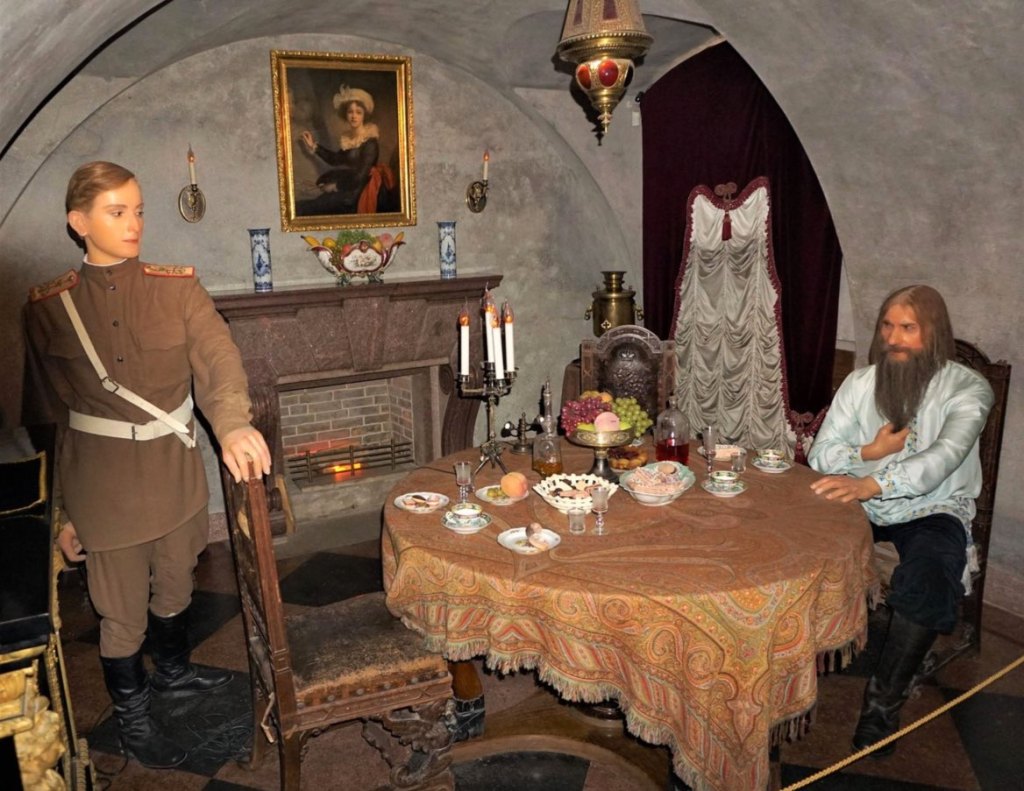
The Winchester Mystery House

Happy Father’s Day from Winchester Mystery House!

Pictured: Sarah’s ranch foreman, John Hansen, and his son, Carl.
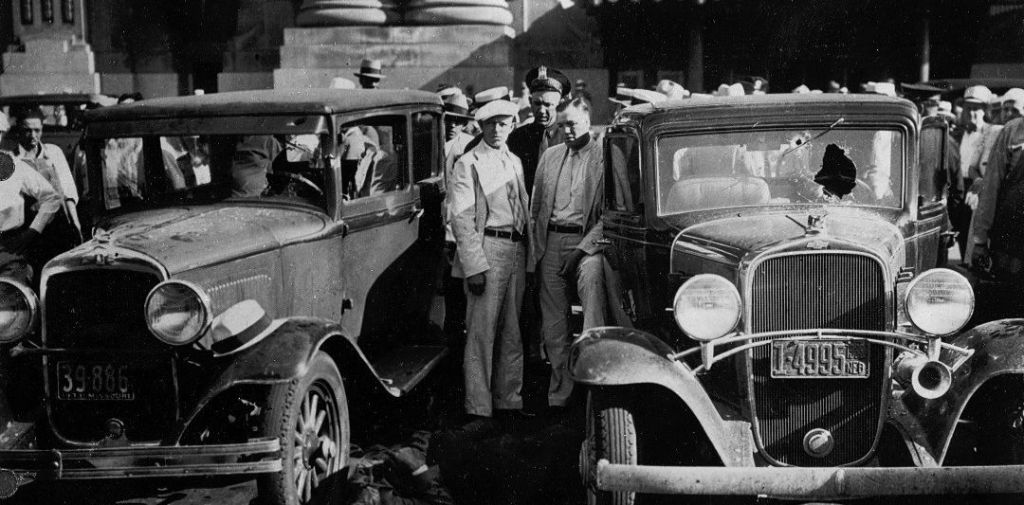
Please come and enjoy a delicious meal in Sarah’s Café, stroll along the paths of the beautiful Victorian gardens, and wonder through the miles of hallways in the World’s most mysterious mansion. For further information about tours, including group tours, weddings, school events, birthday party packages, facility rentals, and special events please visit the website: https://winchestermysteryhouse.com/
Please visit the online giftshop, and purchase a gift for friends and relatives as well as a special memento of The Winchester Mystery House. A variety of souvenirs and gifts are available to purchase. https://shopwinchestermysteryhouse.com/

There are No Natural Rights in the Jungle

The way we behave toward our fellow men depends on one’s evolutionary status. The young inexperienced naive idealist will contradict the aged Worldly-wise cynic for whom like, authority, celebrity, tradition, innovation, have been totally denuded of their glamour. The distance from one answer to the other will also be marked by varying views. It is quite true that moral codes have historically been merely relative to time, place, and so on. However, if we try to make such relativity a basis of non-moral actions, if we act on the principle that wrong is not worse than right and evil not different from good, then social life would soon show a disastrous deterioration, the ethics of the jungle would become its governing law, and catastrophe would overtake it in the end. The relativity of good and evil is no justification for the tolerance of wrong and evil. It would be a mistake to believe that because philisophy affirms that morality, art, conscience, and religion are relative to human beings, it therefore has no moral code to offer. It most assuredly has such a code. This is so because side by side with relativity it also affirms development. It holds up a purpose, traces out a path to its realization, and hence formulates a code. The virtue which he is to practise is not bound by the standards set by law and customs, nor even by conventional morality. His standards are far higher and far nobler. For they are not measured by human weakness but by human possibility. If for so much of his lifetime they must exist side by side with his shortcomings, the latter are not accepted but are resisted. #RandolphHarris 1 of 15

When embraced by intellectual materialists or unphilosophical mystics, moral relativity has led to foolish and even dangerous practical results. The fallacy is that although all points of view in morality are tenable, all are not equally sustainable. The danger of this teaching of evil’s unreality and moral relativity is that in the hands of the unwise it annuls all distinction between evil and good, while in the hands of the conceited it opens dangerous doors. The undisciplined or the evil-minded will always seize on such a tenant to provide support and excuse for their faults or sins. There is no reason to withhold it, however, for they will commit the same faults or sins anyway whether they have the teaching or not. Because there are levels of moral growth, character, and self-control, it became necessary to lay down laws, codes, and rules for mankind in the masses. These may be of sacred origin, as with a Moses, or of secular authority, as with a ruler. Where the name of God is invoked to give them weight, this is usually a human device. However, the come-back of Universal Law is very real, and not a fancy. The discovery of moral relativity gives no encouragement however to moral laxity. If we are freed from human convention, it is because we are to submit ourselves sacrificially to the Overself’s dictate. The unfoldment of progressive states of conscious being is not possible without giving up the lower for the higher. The doctrine that ethical and artistic values are relative need not be inconsistent with the doctrine that they are also progressive. They evolve from lower to higher levels. Being ideas in some individual mind, they improve with the refinement of that mind’s own quality. #RandolphHarris 2 of 15

The codes of good and bad are usually part of religion and certainly belong to the religious level. However, the idea of goodness implies the idea of badness, so both are held in the mind although in different ways: one explicitly, the other implicitly. The philosopher does not depend on them but on their source, the Higher Power. The ego being an illusory entity, its virtues are in the ultimate sense either imaginary or also illusory. Nevertheless, moral perfection of the ego is a necessary stage on the journey to perfection of consciousness, to Overself. To cast it aside as being merely relative, to reject ethics and virtue as being unnecessary, is a trick of the intellect to enable the ego to stay longer in its own self-sufficiency. The first fact in life is the struggle for existence; the greatest forward step in this struggle is the production of capital, which increases the fruitfulness of labour and provides the necessary means of an advance in civilization. Primitive man, who long ago withdrew from the competitive struggle and ceased to accumulate capital goods, must pay with a backward and unenlightened way of life. Social advance depends primarily upon hereditary wealth; for wealth offers a premium to effort, and hereditary wealthy assures the enterprising and industrious man that he may preserve in his children the virtues which have enabled him to enrich the community. Any assault upon hereditary wealth must begin with an attack upon the family and end by reducing men to “swine.” #RandolphHarris 3 of 15

The operation of social selection depends upon keeping the family intact. Physical inheritance is a vital part of the Darwinian theory; the social equivalent of physical inheritance is the instruction of the children in the necessary economic virtues. If the fittest are to be allowed to survive, if the benefits of efficient management are to be available to society, the captains of industry must be paid for their unique organizing talents. Their huge fortunes are the legitimate wages of superintendence; in the struggle for existence, money is the token of success. It measures the amount of efficient management that has come into the World and the waste that has been eliminated. Millionaires are the bloom of a competitive civilization: The millionaires are the product of natural selection, acting on the whole body of men to pick out those who can meet the requirement of certain work to be done…It is because they are thus selected that wealth—both their own and that entrusted to them—aggregates under their hands….They may fairly be regarded as the naturally selected agents of society for certain work. They get high wages and live in luxury, but the bargain is a good one for society. There is intense competition for their place and occupation. This assures us that all who are competent for this function will be employed in it, so that the cost of it will be reduced to the lowest terms. In the Darwinian pattern of evolution, animals are unequal; this makes possible the appearance of forms with finer adjustment to the environment, and the transmission of such superiority to succeeding generations brings about progress. Without inequality the law of survival of the fittest could have no meaning. #RandolphHarris 4 of 15

Accordingly, in Sumner’s evolutionary sociology, inequality of powers was at a premium. The competitive process develops all powers that exist according to their measure and degree. If liberty prevails, so that all may exert themselves freely in the struggle, the results will certainly not be everywhere alike; those of courage, enterprise, good training, intelligence, perseverance will come out at the top. These principles of social evolution negate the traditional American ideology of equality and natural rights. In the evolutionary perspective, equality was ridiculous; and no one knew so well as those who went to school to nature that there are no natural rights in the jungle. There can be no rights against Nature except to get out of her whatever we can, which is only the fact of the struggle for existence stated over again. In the cold light of evolutionary realism, the eighteenth-century idea that men were equal in a state of nature was the opposite truth; masses of men starting under conditions of equality could never be anything but hopeless savages. To Sumner rights were simply evolving folkways crystallized in laws. Far from being absolute or antecedent to a specific culture—an illusion of philosophers, reformers, agitators, and anarchists—they are properly understood as rules of the game of social competition which are current now and here. In other times and places other mores have prevailed, and still others will in the future. Each set of views colours the mores of a period. The eighteenth-century notions about equality, natural rights, classes and the like produced nineteenth-century states and legislation, all strongly humanitarian in faith and temper; at the present time the eighteenth-century notions are disappearing, and the mores of the twenty-first century will not be tinged by humanitarianism as those of the last hundred years have been. #RandolphHarris 5 of 15

Sumner’s resistance to the catchwords of the American tradition is also evident in his skepticism about democracy. The democratic ideal, so alive in the minds of men as diverse as Eugene Debs and Andrew Carnegie, as a thing of great hopes, warm sentiments, and vast friendly illusions, was to him simply a transient stage in social evolution, determined by a favorable quotient in the man-land ratio and the political necessities of the capitalist class. Democracy itself, the pet superstition of the age, is only a phase of the all-compelling movement. If you have abundance of land and few men to share it, the men will all be equal. Conceived as a principle of advancement based on merit, democracy met his approval as socially progressive and profitable. Conceived as equality in acquisition and enjoyment, he thought it unintelligible in theory, and thoroughly impracticable. Industry may be republican; it can never be democratic so long as men differ in productive power and in industrial virtue. Many people fear democracy and attempt to set limits upon it in the federal structure; but since the whole genius of the country has inevitably been democratic, because of its inherited dogmas and its environment, the history of the United States of America has been one of continual warfare between the democratic temper of the people and their constitutional framework. Marx’s picture of the healthy man is rooted in the humanistic concept of the independent, active, productive man, as it was developed by Spinoza, Goethe, and Hegel. The aspect in which Marx’s and Dr. Freud’s independence is a limited one; the son makes himself independent of the father by incorporating his system of commandments and prohibitions; he carries fatherly authority within himself and remains obedient to and dependent on the father and the social authorities in this indirect way. #RandolphHarris 6 of 15

For Marx independence and freedom are rooted in the act of self-creation. “A being,” Marx wrote, “does not regard himself as independent unless he is his own master, and he is only his own master when he owes his existence to himself. A man who lives by the favor of another considers himself a dependent being. But I live completely by another person’s favor when I owe to him not only the continuance of my life but also its creation, when he is its source. My life has necessarily such a cause outside itself if it is not my own creation.” Or, as Marx put it, man is independent only “…if he affirms his individuality as a total man in each of his relations to the World, seeing, hearing, smelling, tasting, feeling, thinking, willing, loving—in short, if he affirms and expresses all organs of his individuality”–if he is not only free from but also free to. Marx, freedom and independence were not merely political and economic freedom in the sense of liberalism, but the positive realization of individuality. His concept of socialism was precisely that of a social order which serves the realization of the individual personality. Marx wrote: “[This crude communism] appears in a double form; the domination of material property looms so large that it aims to destroy everything which is incapable of being possessed by everyone as private property. It wishes to eliminate talent, etcetera, by force. Immediate physical possession seems to it the unique goal of life and existence. The role of worker is not abolished but is extended to all men. The relation of private property remains the relation of the community to the World of things. Finally, this tendency to oppose general private property to private property is expressed in an animal form; marriage (which is incontestably a form of exclusive private property) is contrasted with the community of women, in which women become communal property. #RandolphHarris 7 of 15

One may say that this idea of the community of women is the open secret of this entirely crude and unreflective communism. Just as women are to pass from marriage to universal prostitution, so the whole World of wealth (id est, the objective being of man) is to pass to the relation of universal prostitution with the community. This communism which negates the personality of man in every sphere, is only logical expression of private property, which is this negation. Universal envy setting itself up as power is only a camouflaged form of cupidity which reestablishes itself and satisfies itself in a different way. The thoughts of every individual private property are at least directed against any wealthier private property, in the form of envy and the desire to reduce everything to a common level; so that this envy and levelling in fact constitute the essence of competition. Crude communism is only the culmination of such envy and levelling-down based on a preconceived minimum. How little the abolition of private property represents a genuine appropriation is shown by the abstract negation of the whole World of culture and civilization, and the regression to the unnatural simplicity of the poor and wantless individual who has not only surpassed private property but has not yet even attained to it. The community is only a community of work and of equality of wages paid out by the communal capital, by the community as universal capitalist. The two sides of the relation are raised to a supposed universality; labour as a connection in which everyone is placed, and capital as the acknowledged universality and power of the community. #RandolphHarris 8 of 15

Tenderness, love, and compassion are exquisite feeling experiences and generally recognized as such. However, there are some human experiences which are not as clearly identified as feelings but are more frequently called attitudes. They do not express the same direct relatedness to another person, but are, rather, experiences which are within oneself and which only secondarily refer to other persons. The first one among this group is “interest.” The word “interest” today has lost most of its meaning. To say “I am interested” in this or that is almost equivalent to saying “I have no strong feeling about it, but I am not entirely indifferent.” It is one of those cover words which mask the absence of intensity, and which are vague enough to cover almost anything from having an interest in a certain industrial shock to an interest in a young lady. However, this deterioration of meaning which is so general cannot deter us from using words in their original and deeper meaning, and that means to restore them to their own dignity. “Interest” comes from the Latin inter-esse, that is, “to be in-between.” If I am interested, I must transcend my ego, be open to the World, and jump into it. Interest is based on activeness. It is the relatively constant attitude which permits one at any moment to grasp intellectually as well as emotionally and sensuously the World outside. The interested person becomes interesting to others because interest has an infectious quality which awakens interest in those who cannot initiate it without help. When we think of its opposite, curiosity, the meaning of interest becomes still clearer. The curious person is passive. He wants to be fed with knowledge and sensations and can never have enough, since quantity of information is a substitute for the depth quality of knowledge. #RandolphHarris 9 of 15

The most important realm in which curiosity is satisfied is gossip, be it the small-town gossip of the woman who sits at the window and watches with her spyglasses what is going on around her or the somewhat more elaborate gossip which fills the newspaper columns, occurs in the faculty meetings of professors as well as in the management meetings of professors as well as in the management meetings of the bureaucracy, and at the cocktail parties of the writers and artists. Curiosity, by its very nature, is insatiable, since aside from its maliciousness, it never really answers the question, Who is the other person. Interest has many objects: persons, plants, animals, ideas, social structures, and it depends to some extent on the temperament and the specific character of a person as to what his interests are. Nevertheless, the objects are secondary. Interest is an all-pervading attitude and form of relatedness to the World, and one might define it in a very broad sense as the interest of the living person in all that is alive and grows. If the interest is genuine, even when this sphere of interest in one person seems to be small, there will be no difficulty in arousing his interest in other fields, simply because he is an interested person. Another of the “human experiences” is responsibility. Again, the word responsibility corresponds to the distinction between the authoritarian and humanistic conscience. The authoritarian conscious is essentially the readiness to follow the orders of the authorities to which one submits; it is glorified obedience. The humanistic conscience is the readiness to listen to the voice of one’s own humanity and is independent of orders given by someone else. #RandolphHarris 10 of 15

The survey of attitudes of the American public toward their personal adjustment and toward mental illness is a perplexing problem. Of those persons with acknowledged problems who sought consultation and advice beyond the family circle, the largest proportion (42 percent) turned to clergymen. Approximately 30 percent sought counsel from a general physician. Only 18 percent reported seeking assistance initially from a psychologist or psychiatrist. Of those persons who went for help to psychiatrists, psychologists, or marriage counselors nearly one third had been referred either by their physicians or by their clergymen, although a very small proportion of these referrals came from clergymen or physicians, over three fourths reported that they had received some help, and nearly two thirds reported having been “helped a lot.” Significantly smaller proportions of those who saw marriage counselors, psychologists, or psychiatrists (25 to 46 percent) reported having been helped. Of those persons who claimed to have been helped much by their consultation, the largest single proportion (73 percent) was contributed by those with a “personal problem with a defect in self.” We are left with an apparent inconsistency that should, somehow, be accounted for: individuals who recognize personal adjustment problems caused by some personal defect claim to be helped by therapeutic treatment more often than individuals with other kinds of problems; psychiatrists are consulted more often about just these kinds of problems; yet psychiatrists are not perceived to be the most effective source of help. #RandolphHarris 11 of 15

Continuing with our case study of Clare, she was not usually given to crying in movies but one evening, tears came to her eyes when a girl who was in a wretched condition met with unexpected help and friendliness. She ridiculed herself for being sentimental, but this did not stop the tears, and afterward she felt a need to account for her beheaviour. She first thought of the possibility that an unconscious unhappiness of her own might have expressed itself in crying about the movie. And, of course, she did find reasons for unhappiness. Yet her associations along this line of thought led nowhere. It was only the next morning that she suddenly saw the issue: the crying had occurred not when the girl in the movie was badly off but when her situation took an unexpected turn for the better. She realized than what she had overlooked the previous day—that she always cried at such occasions. Her associations then fell in line. She remembered that in her childhood she always cried when she reached the point where the fairy godmother heaps unexpected presents on Cinderella. Then her joy at receiving the scarf came back to her. The next memory concerned an incident that had occurred during her marriage. Her husband usually gave her only the presents due at Christmas or on her birthdays, but once an important business friend of his was in town and the two men went with her to a dressmaker to help her select a dress. She could not make up her mind which of two dresses to choose. The husband then made a generous gesture and suggested that she take both garments. Though she knew that this gesture was made not altogether for her sake but also to impress the business friend, she nevertheless was inordinately happy about it and cherished these dresses more than others. #RandolphHarris 12 of 15

Finally, two aspects of the daydream of the great man occurred to her. One was the sence in which, to her complete surprise, she singled her out for his favour. The other concerned all the presents he gave her, incidents that she had told herself in detail: the trips he suggested, the hotels he chose, the gowns he brought home, the invitations to luxurious restaurants. She never had to ask for anything. She felt quite taken aback, almost like a criminal who is confronted with overwhelming evidence. This was her “love”! She remembered a friend, a sworn bachelor, saying that woman’s love is merely a screen for exploiting men. She also recalled her friend Susan who had greatly astonished her by saying that she thought the usual flood of talk about love was disgusting. Love, said Susan, was only an honest deal in which each partner did his share to create a good companionship. Clare had been shocked at what she regarded as cynicism: Susan was too hard boiled in denying the existence and the value of feelings. However, she herself, she now realized, had naively mistaken for love something that largely consisted of expectations that tangible and intangible gifts would be presented to her on a silver platter. Her love was at bottom no more than a sponging on somebody else! This was certainly an entirely unexpected insight, but despite the painful surprise at herself she soon felt greatly relieved. She felt, and rightly, that she had really uncovered her share in what made her love relationships difficult. Clare was so overwhelmed by the discovery she had made that she quite forgot the incident from which she had started, the crying in the movie. However, she returned to tears the next day. #RandolphHarris 13 of 15

The tears expressed an overwhelming bewilderment at the thought of a sudden fulfillment of most secret and most ardent wishes, a fulfillment of most secret and most ardent wishes, a fulfillment of something one has waited for all one’s life, something that one has never dared to believe would come true. Within the next couple of weeks Clare followed her insight in several directions. In glancing over her latest series of associations it struck her that in almost all the incidents the emphasis was on help or gifts that came unexpectedly. She felt that at least one clue for this lay in the last remark she had written about the daydream, which was that she never had to ask for anything. Here she came into territory that was familiar to her through the previous analytic work. Since she had formerly tended to repress her own wishes, and was still inhibited to some extent from expressing them, she needed somebody who wished for her, or who guessed her secret wishes and fulfilled them without her having to do anything about them herself. Another tack she pursued concerned the reverse side of the receptive, sponging attitude. She realized that she herself gave very little. Thus, she expected Peter to be always interested in her troubles or interested but did not actively participates in his. She expected him to be tender and affectionate but was not very demonstrative herself. She responded but left the initiative to him. It is hard to be a caring person without getting duped a time or two. Getting emotionally involved with the wrong people can hurt you in more ways than one. Some people like getting others wrapped around their finger. #RandolphHarris 14 of 15

There are tremendous pressures today—cultural and political—for conformity, docility, and rigidity. The demand is for technically trained students outperform students in China, and none of this nonsense about education which might improve our interpersonal relationships! The demand is for hard-headedness, for training of the intellect only, for scientific proficiency. We want inventiveness in developing better “hardware,” but creativity in a larger sense tends to be suspect. Personal feelings, free choice, uniqueness—these have little or no place in the classroom. One may observe an elementary school classroom for hours without recording one instance of individual creativity of free choice, expect when the teacher’s back is turned. And at the college level we know that the major effect of a college education on the values of the student is to “shape up” the individual for more comfortable membership in the ranks of college alumni. For the public and for most educators the goal of learning to be free is not an aim they would select, nor toward which they are actually moving. Yet if a civilized culture is to survive, and if the individuals in that culture are to be worth saving, it appears to me to be an essential goal of education. #RandolphHarris 15 of 15

The Winchester Mystery House

Please come and enjoy a delicious meal in Sarah’s Café, stroll along the paths of the beautiful Victorian gardens, and wonder through the miles of hallways in the World’s most mysterious mansion. For further information about tours, including group tours, weddings, school events, birthday party packages, facility rentals, and special events please visit the website: https://winchestermysteryhouse.com/

Please visit the online giftshop, and purchase a gift for friends and relatives as well as a special memento of The Winchester Mystery House. A variety of souvenirs and gifts are available to purchase. https://shopwinchestermysteryhouse.com/

Hard Times on Economic Thinking

It is fashionable in certain circles to fix the blame for a man’s erring proclivities on his faculty upbringing—or lack of it—by parents, or on his companions, temptations, and surroundings. However, are they so much to blame as the man himself? And is he not the victim, the resultant, of his own prenatal past? And even this is not the ultimate cause of his sinning. He is misled by ignorance—without understanding of his deepest self and without knowledge of life’s higher laws. There is some kind of correspondence between the outward situations of his life as they develop and the subconscious tendencies of his mind, between the nature of his environment and the conscious characteristics of his personality, between the effects as they happen to him and the causes that he previously started. When he realizes how long he has been unconsciously building it up for the worse, he can begin to change his life for the better. The same energy which has been directed into thoughts can then be directed into optimistic ones. Were it not for the stubbornness of habit, it would not be harder to do this than to do the opposite. The emotions felt inside the heart, the thoughts evoked inside the head, affect the environment and atmosphere outside us. Without dropping into the artificial attitude which pretends to give small value to outward circumstances, one can yet try to set himself free from his own mental dominion. #RandolphHarris 1 of 18

Until one has attained that inner strength which can concentrate thoughts and dominate emotions, it would be foolish to say that environment does not count and that he can mingle with society as freely as he can desert it. Without this attainment, he will be weakened by most of them or strengthened by a few of them. Birth into a prosperous elegant and gracious circle is valued highly in this World: it gives a man dignity and assurance. Education, which nurtures intellect and bestows culture, is likewise well appraised. However, both measure as trivial things in the other World of spiritual attainment. Although not to the extent to which it is affected by thoughts and feelings, inner life is affected by physical conditions. The foundation of human society, said Sumner, is the man-land ratio. Ultimately men draw their living from the soil, and the kind of existence they achieve, their mode of getting it, and their mutual relations in the process are all determined by the proportion of population to the available soil. Where men are few and soil is abundant, the struggle for existence is less savage, and democratic institutions are likely to prevail. When population presses upon the land supply, Earth hunger arises, races of men move across the face of the World, militarism and imperialism flourish, conflict rages—and in government aristocracy dominates. #RandolphHarris 2 of 18

As men struggle to adjust themselves to the land, they enter rivalry for leadership in the conquest of nature. In Sumner’s popular essays he stressed the idea that the hardships of life are incidents of the struggle against nature, that “we cannot blame our fellow-men for our share of these. My neighbor and I are both struggling to free ourselves from these ills. The fact that my neighbor has succeeded in this struggle better than I constitutes no grievance for me. Undoubtedly the man who possesses capital has a great advantage over the man who has no capital at all in the struggle for existence…This does not mean that one man has an advantage against the other, but that, when they are rivals in the effort to get the means of subsistence from Nature, the one who has capital has immeasurable advantages over the other. If it were not so capital would not be formed. Capital is only formed by self-denial, and if the possession of it did not secure advantages and superiorities of a high order men would never submit to what is necessary to get it.” Thus, the struggle is like a whippet race; the fact that one hound chases the mechanical hare of pecuniary success does not prevent the others from doing the same. Sumner was perhaps inspired to minimize the human conflicts in the struggle for existence by a desire to dull the resentment of the less affluent towards the affluent. He did not always, however, shrink from a direct analogy between animal struggle and human competition. #RandolphHarris 3 of 18

In the Spencerian intellectual atmosphere of the 1870s and 1880’s, it was natural for conservatives to see the economic contest in competitive society as a reflection of the struggle in the animal World. It was easy to argue by analogy from natural selection of fitter organisms to social selection of fitter men, from organic forms with superior adaptability to citizens with a greater sore of economic virtues. The competitive order was now supplied with a cosmic rationale. The competition was glorious. Just as survival was the result of strength, success was the reward of virtue. Sumner had no patience with those who would lavish compensations upon the virtueless. Many economists, he declared (in a lecture given in 1879 on the effect of hard time on economic thinking), “seem to be terrified that distress and misery still remain on Earth and promise to remain as long as the vices of human nature remain. Many of them are frightened at liberty, especially under the form of competition, which they elevate into a bugbear. They think it bears harshly on the weak. They do not perceive that here ‘the strong” and “the weak’ are terms which admit of no definition unless they are made equivalent to the industrious and the idle, the frugal and the extravagant. They do not perceive, furthermore, that if we do not like the survival of the fittest, we have only one possible alternative, and this is the survival of the unfitted. The former is the law of anti-civilization. We have our choice between the two, or we can go on, as in the past, vacillating between the two, but a third plan—the socialist desideratum—a plan for nourishing the unfitted and yet advancing in civilization, no man will ever find.” #RandolphHarris 4 of 18

The progress of civilization, according to Sumner, depends upon the selection process; and that in turn depends upon the workings of unrestricted competition. Competition is a law of nature which “can no more be done away with than gravitation,” and which men can ignore only to their sorrow. You may well ask, “But why does a person who is seeking help find himself changing in a relationship which contains these elements? Why does this initiate a process of learning to be free, or becoming what he is, of choice and inner development?” The reactions of the client who experiences for a time the kind of therapeutic relationship which we have discussed are a reciprocal of the therapist’s attitudes. As he finds someone else listening acceptingly to his feelings, he little by little becomes able to listen to himself. He begins to receive communications from within himself—to realize that he is angry, to recognize when he is frightened, even to realize when he is feeling courageous. As he becomes more open to what is going on within him, he becomes able to listen to feelings which have seemed to him so terrible, or so disorganizing, or so unique, or so personal, that he has never been able to recognize their existence in himself. While he is learning to listen to himself, he also becomes more acceptant of himself. As he expressed increasingly hidden aspects of himself, he finds the therapist showing a consistent and unconditional beneficial regard for him and his feelings. Slowly he moves toward taking the same attitude toward himself, accepting himself as he is, respecting and caring for himself as a person, being responsible for himself as he is, and therefore ready to move forward in the process of being free. #RandolphHarris 5 of 18

And finally, as he listens more accurately to the feelings within, and becomes less evaluative and more acceptant toward himself, he also moves toward being more real. He finds it possible to move out from behind the facade he had used, to drop his defensive behaviours, and more openly to be what he truly is. As these changes occur, as he becomes more self-aware, more self-acceptant, more self-expressive, less defensive, and more open, he finds that he is at last free to change and grow and move in directions natural to the human organism. He can make imperfect choices—and then correct them. He recognizes that he can choose to be hurtful or constructive, self-aggrandizing, or committed to the welfare of the group, and when these choices can be freely made, he tends to move in the socially constructive direction. It is such experiences in individual and group psychotherapy which lead us to believe that we have here an important dynamic for modern education. We may have here the essential core of a process by which we might facilitate this production, through our educational system, of persons who will be adaptative and creative, able to make responsible decisions, open to the kaleidoscopic changes in their World, worthy citizens of a fantastically expanding Universe. It seems at least a possibility that in our schools and colleges, in our professional schools and universities, individuals could learn to be free. #RandolphHarris 6 of 18
When considering our case study of Clare, she had a self-observation and became concerned about her inability to be alone. She had not been aware of this inhibition before, because she had arranged her life in such a way as to avoid any periods of solitude. When she was by herself, she observed that she became restless or fatigued. When she tried to enjoy them alone, things she could relish otherwise lost their meaning. When others were around, she could work much better in the office than at home, though the work was of the same kind. During this time, she neither tried to understand these observations nor made any effort to follow up her latest finding. In view of the incisive importance of that finding, her failure to pursue it any further is certainly striking. If we consider it in connection with the reluctance, she had previously shown to scrutinize her relationship with Peter, we are justified in assuming that with her latest discovery Clare came closer to realizing her dependency than she could stand at the time and therefore stopped her analytical endeavours. The provocation to resume her work was a sudden sharp swing mood that occurred one evening with Peter. He had given her an unexpected present, a pretty scarf, and she was overjoyed. However, later she felt suddenly tired and became frigid. The depressed feeling occurred after she had embarked on the question of summer plans. She was enthusiastic about the plans, but Peter was listless. He explained his reaction by saying that he did not like to make plans anyhow. #RandolphHarris 7 of 18

The next morning, she remembered a dream fragment. She saw a large bird flying away, a bird of the most glorious colours and most beautiful movements. It became smaller and smaller until it vanished. The she awoke with anxiety and a sensation of falling. While she was still waking up a phrase occurred to her–“the bird has flown”–which she knew at once expressed a fear of losing Peter. Certain later associations confirmed this intuitive interpretation: someone had once called Peter a bird that never settled down; Peter was good-looking and a good dancer; the beauty of the bird had something unreal; a memory of Bruce, whom she had endowed with qualities he did not possess; a wonder whether she glorified Peter, too; a song from Sunday school, in which Jesus as the Christ asked to take His children under His wing. Thus, the fear of losing Peter was expressed in two ways: by the bird flying away, and by the idea of a bird that had taken her under its wings and dropped her. The latter thought was suggested not only by the song but also by the sensation of falling that she had on awakening. In the symbol of Jesus taking His children under His wing the theme of the need for protection is resumed. In view of later developments, it appears by no means accidental that the symbol is a religious one. Clare did not delve into the suggestion that she glorified Peter. However, the very fact that she saw this possibility is noteworthy. It may have paved the way for her daring to take a good look at him some time later. #RandolphHarris 8 of 18

The main theme of her interpretations, however—the fear of losing Peter—not only was recognized as an inevitable conclusion to be drawn from the dream but was deeply felt as true and important. That it was an emotional experience as well as an intellectual recognition of a crucial factor was evident in the fact that several reactions hitherto not understood became suddenly transparent. First, she saw that on the previous night, she had not merely been disappointed in Peter’s reluctance to talk about a common vacation. His lack of zest had aroused a dread that he would desert her, and this dread had caused her fatigue and frigidity and had been the provocation for the dream. And many other comparable situations became similarly illuminated. All kinds of instances emerged in which she had felt hurt, disappointed, irritated, or in which, as on the preceding day, she had become tired or depressed for no good reason. She realized that all these reactions sprang from the same source, regardless of what other factors might have been involved. If Peter was late, if he did not telephone, if he was preoccupied with other matters than herself, if he was withdrawn, if he was tense or irritated, if he was not interested in having pleasures of the flesh with her—always the dread of desertion was touched off. Furthermore, when she was with Peter, she understood that the explosions of irritation that sometimes occurred not from trivial dissensions or, as he usually accused her, from her desire to have her own way, but from this same dread. #RandolphHarris 9 of 18

The anger was attached to such trivial matters as different opinions about a movie, irritation at having to wait for him, and the like, but it was produced by her fear of losing him. And, conversely, when she received an unexpected present from him, she was overjoyed because it meant a sudden relief from this fear. Finally, she linked up the fear of desertion with the empty feeling that she when she was alone, but without arriving at any conclusive understanding of the connection. Was the fear of desertion so great because she dreaded to be alone? Or did solitude, for her, implicitly mean desertion? A person can be entirely unaware of a fear that is all consuming. That Clare now recognized her fear, and saw the disturbances it created in her relationship with Peter, meant a definite step ahead. There are two connections between this insight and her preceding one concerning her need for protection. Both findings show to what extent the whole relationship was pervaded with fears. And, more specifically, the fear of desertion was in part a consequence of the need for protection: if Peter were expected to protect her from life and its dangers, she could not afford to lose him. Clare was still far from understanding the nature of the fear of desertion. If anything, she was still unaware that what she regarded as deep love was nothing more than a neurotic dependency and therefore, she could not recognize that the fear was based on this dependency. Regarding her inability to be alone, the questions that occurred to her were more pertinent than she realized. However, since this whole problem was hazy because there were still too many unknown factors involved, she was not even capable of making accurate observations on this score. #RandolphHarris 10 of 18

Clare’s analysis of her elation at receiving the scarf was accurate as far as it went. Undoubtedly one essential element in her feeling overjoyed was that the act of friendliness allayed her fear for the time being. That she did not consider the other elements involved can scarcely be attributed to a resistance. She saw only the aspect that was related to the problem on which she was then working, her fear of destruction. Related to nongreedy desire for pleasures of the flesh but different from it is tenderness. Dr. Freud, whose whole psychology deals exclusively with “drives,” necessarily had to explain tenderness as an outcome of the drive for pleasures of the flesh, as a goal-inhibited desire for pleasures of the flesh. It is an experience sui generis. Its first characteristic is that it is free from greed. In the experience of tenderness, one does not want anything from the other person, not even reciprocity. It has no aim and purpose, not even that which is present in the ungreedy form of sexuality, namely, of the final physical culmination. It is not restricted to any pleasures of the flesh or age. It is least of all expressible in words, except in a poem. It is most exquisitely expressed in the way in which a person may touch another, look at him or her, or in the tone of voice. One can say that it has roots in the tenderness which a mother feels toward her child, but even if this is so, human tenderness far transcends the mother’s tenderness to the child because it is free from the biological tie to the child and from the narcissistic element in motherly love. It is free not only from greed but from hurry and purpose. Among all the feelings which man has created in himself during his history, there is none which surpasses tenderness in the pure quality of simply being human. #RandolphHarris 11 of 18

Compassion and empathy are two other feelings clearly related to tenderness but not entirely identical to it. The essence of compassion is that one “suffers with” or, in a broader sense, “feels with” another person. This means that one does not look at the person from the outside—the person being the “object” (never forget that “object” and “objection” have the same root) of my interest or concern—but that one puts himself into the other person. This means I experience within myself what he experiences. This is a relatedness which is not from the “I” to the “thou” but one which is characterized by the phase: I am thou (Tat Twan Asi). Compassion or empathy implies that I experience in myself that which is experienced by the other person and hence that in this experience he and I are one. Only if it is based on my experiencing in myself that which he experiences, then all knowledge of another remains an object, I may know a lot about him, but I do not know him. In psychoanalysis or similar forms of depth psychotherapy, a knowledge of the patient rests upon the capacity of the analyst to know him and not on his ability to gather enough data to know much about him. The data of the development and experiences of the patient are often helpful for knowing him, but they are nothing but adjuncts to that knowledge which requires no “data,” but rather, complete openness to the other and openness within oneself. It might occur in the first second after seeing a person, it might occur a long time later, but the act of this knowledge is a sudden, intuitive one and not the result of ever-increasing information about the life history of the person. #RandolphHarris 12 of 18

Goethe has expressed this kind of knowledge very succinctly: “Man knows himself only within himself, and he is aware of himself within the World. Each new object truly recognized opens a new organ within us.” The possiblity of this kind of knowledge based on overcoming the split between the observing subject and the observed object requires, of course, the humanistic promise that every person carries within himself all of humanity; although in varying degrees, within us we are saints and criminals, and hence there is nothing in another person which we cannot feel as part of ourselves. This experience requires that we free ourselves from the narrowness of being related only to those familiar to us, either by the fact that they are blood relations or, in a larger sense, that we eat the same food, speak the same language, and have the same “common sense.” Knowing men in the sense of compassionate and empathetic knowledge requires that we get rid of the narrowing ties of a given society, race, or culture and penetrate to the depth of that human reality in which we are all nothing but human. True compassion and knowledge of man has been underrated as a revolutionary factor in the development of man, just as art has been. Tenderness, love, and compassion are exquisite feelings and experiences and recognized as such. For Dr. Freud, only primitive man could be called “healthy.” He satisfies all his instinctual demands without need for repression, frustration, or sublimation. (That Dr. Freud’s picture of the primitive as having an unrestricted life filled with instinctual satisfaction is a romantic fiction has been made abundantly clear by contemporary anthropologists.) #RandolphHarris 13 of 19


However, when Dr. Freud turns from historical speculation to the clinical examination of contemporary man, this picture of primitive mental health hardly matters. Even if we could keep in mind that civilized man cannot be completely healthy (or happy, for that matter), Dr. Freud has nevertheless definite criteria for what constitutes mental health. These criteria are to be understood within the frame of reference of his evolutionary theory. This theory has two main aspects: the evolution of libido, and the evolution of man’s relations to others. In the theory of libido evolution Dr. Freud assumes that the libido, that is, energy of the drive for pleasures of the flesh, undergoes a development. It is at first centered around the oral activities of the child—sucking and biting—and later around the anal activities—elimination. Around the age of five or six, the libido has for the first time centered around the private organs. However, this age of “adult behaviour” is not fully developed, and between the first “phallic phase” near the age of six and the beginning of puberty there is a “latency period,” during which development of pleasures of the flesh is at a standstill, as it were, and only at the beginning of puberty does the process of libido development come to fruition. This process of libido development, however, is by no means an uncomplicated one. Many events, especially oversatisfaction and overfrustration, can result in a child becoming “fixated” on the earlier level, and thus never arriving at a fully developed genital level, or regressing to an earlier one even after having arrived at the genital level. #RandolphHarris 14 of 18

As a result, the adult may exhibit neurotic symptoms (like impotence), or neurotic character traits (as in the overdepednent, passive person). For Dr. Freud the “healthy” person is the one who has reached the “gential level” without regressing, and who lives an adult existence, that is, an existence in which he can work and have adequate satisfactions involving pleasures of the flesh or, in which he can produce things and reproduce the race. The other aspect of the “healthy” person lies in the sphere of his object relations. The newborn baby has not yet any object relations. It is in a state of “primary narcissism” in which the only realities are its own bodily and mental experiences, and the World outside does not yet exist conceptually, and even less, emotionally. The child then develops his strong attachment to mother. However, as the child ages, he shifts from the fixation to mother to the allegiance to father. At the same time, however, he also identifies with father by incorporating his commands and prohibitions. Through this process he achieves independence from father and from mother. The healthy person, for Dr. Freud, then, is the one who has reached the genital level, and who has become his own master, independent of father and mother, relying on his own reason and his own strength. However, even the key features of Dr. Freud’s concept remain vague and certainly lacks the precision and penetration is his concept of mental illness. It is the concept of a well-functioning member of the middle class at the beginning of the twentieth century, who is sexually and economically potent. #RandolphHarris 15 of 18

In the modern, technology-filled World, we are bombarded with options: watch this, read that, listen to this. Our society is saturated with media and entertainment, and the influence they have on our beliefs, thoughts, and actions is subtle but powerful. The things we allow to fill our minds end up shaping our being—we become what we think about. If we all just believed what anyone said, what would happen? It was once taken for granted that whatever was written in school textbooks was true. And whatever you read in the trade papers or saw on the TV news was also true. With the vast amount of information available to all of us now, we have found that not to be true. So, if we must second guess the news media now, should we not do the same for any other information we are given? Technology is neither inherently good nor bad. Rather, the purposes accomplished with and through technology are the ultimate indicators of goodness or badness. Our responsibility is not to avoid media altogether or to merely reject negative media but to choose wholesome and uplifting media. We can use the power of media to our advantage, to better our thoughts and behaviours by acknowledging our susceptibility to media influence and recognizing how it influences us. Identifying educational and high-quality media options, and recognizing no one is immune to media’s influence. We cannot expect to indulge in media designed to affect us mentally and emotionally without its influence being sustained in our subconscious long after the source of media is over. Those who believe media does not affect them are often the people who are most affected because they deny the influence and are therefore not guarded against it. Just as water will continue to seep through a leak in a boat, whether we acknowledge the leak, so will the media continue to influence our thoughts whether we address its impact. #RandolphHarris 16 of 18

Many firefighters have many ways of learning to fight fires. “In the U.S.A. Forest Service, when I first started, the training was all done at the station level. The old-time captains and engineers teach you as you go along. Then, as you advance in the ranks, they begin to send you to specialized schools on fire behavior and safety and all kinds of things. It’s an ongoing process. Then, when I switched to the California Department of Forestry, it was pretty much the same program, although as part of the probationary term you have to go to six-week academy for engineers. Driving, pumping, hydraulics, ladder, hose, fire behavior tactics, everything compacted into a six-week school. Then the same thing when you come back to your unit, it’s an ongoing training thing at the local level. Plus schools, they send guys to the more sophisticated schools with other agencies. And now, of course, like everyone else, we’re sending people to the National Fire Academy too. I was fortunate when I first came to work, we went to several rather small fires, and I was able to kind of gradually build up to the tough ones. That doesn’t always happen. I’ve seen some guys come on the job, and right off the bat they’re put on some monsters, some hairy deals. That tends to scare some of them off. They decide this is not what they really want, and they go back to being a bookkeeper or something. But in my case I was able to kind of wade into it and go from the little easy stuff into the big bad stuff. That way I gradually became aware of what was going on and conscious of the difficulties of the job and the safety problems. #RandolphHarris 17 of 18

“When I came back from the Army, the first thing they sent me to was a fire weather class. All I knew was that on a hot, dry day, things burn better, and when the wind blows they burn still better. I had never been taught the effect of weather on fire behavior. In the class, this guy’s going on about wind and dry weather, and humidity, and the causes and effects of all those things, and methods I had never heard of before. It was almost funny, because every once in a while all of us in the class would go, ‘Oh, no wonder. Not I understand why the fire did that.’ Earlier there had been a lightning-caused forest fire that kind of startled me. It was a small fire—that fire would up taking 5,000 acres. We were there for over an hour before anybody else showed up. We didn’t realize that there were a lot of other fires going on, and that was why backup troops weren’t available. Anyway, we attacked the head end of the fire, the direction it was moving, and we made pretty good progress, only to realize that we were suddenly on the back side of the fire—the front end of the fire was on the other side now, going the other way. It dashed around us, and finally it blew out at the canyon, and we couldn’t stop it. I never did understand totally what had happened, until I went to this weather class and the guy explained it.” Please remember to donate to the Sacramento Fire Department so they have all the resources they need. The relativity of good and evil is no justification for the tolerance of wrong and evil. I pledge allegiance to the flag of the United States of America, and to the Republic, for which it stands, One Nation, under God, indivisible with liberty and justice for all. #RandolphHarris 18 of 18


Designed to maximize views to the front, side, and rear outdoor areas, this Cresleigh Home utilizes strategically placed windows and an open floor plan. Off the foyer is a home office, library, or sewing room. There is an option fireplace in the great room, and an expansive cabinet system in the dining room. A large walk-in pantry, and butler’s pantry provide ample storage space, and make this home an entertainer’s dream. An impressive center island, along with a built-in breakfast nook, are special kitchen amenities.

There is a master bedroom on the first floor with ensuite bathroom, a powder room, and the option for a self-contained apartment inside of the house. The master suite provides a comfortable retreat with large windows, a closet the size of a bedroom, and a magnificent spa inspired bathroom with dual vanities, a soaking tub and separate shower. There are as many as three additional bedrooms upstairs with the option of a loft as a substitution for one of the bedrooms, which families often like because it allows for an additional living room for the kids.

Many buyers are impressed with the option of a four bay car garage or three car garage with a gym. The gym could also be converted into a bedroom. At nearly 3,800 square feet, this two-story home is one of the largest on the traditional home market in our region. Depending on how one uses the space, there is the possibility for up to seven bedrooms, and as many as 5.5 bathrooms. What many new parents like is that the master closet on the second floor has a window and could double as a nursery for a newborn baby. https://cresleigh.com/magnolia-station/residence-5/
Home is the place of love, compassion, and dreams. Make your home, a Cresleigh Home. #CresleighHomes

Life on Earth Cannot be Achieved Unless We are Thoroughly Virtuous

When we reach the Olympian heights and stand to survey the scenes of our long struggles, we shall then not regret that we were tried, tempted, and tortured by conflicting desires, for without them we should only have become mechanically good. Even our sufferings turn to sympathy. The human infant enters directly into an evaluating transaction with his World, appreciating or rejecting his experiences as they have meaning for his own actualization, utilizing all the wisdom of his tiny but complex organism. We seem to lose this capacity of direct evaluation, and come to behave in those ways and to act in terms of those values which will bring us social approval, affection, esteem. To buy love we relinquish the valuing process. Because the center of our lives now lies in others, we are fearful and insecure, and must cling rigidly to the values we have introjected. However, if life or therapy gives us favourable conditions for continuing our psychological growth, we move on in something of a spiral, developing an approach to values which partakes of the infant’s directness and fluidity but goes far beyond him in its richness. It our transactions with experience we are again the locus or source of valuing, we prefer those experiences which in the long run are enhancing, we utilize all the richness of our cognitive learning and functioning, but at the same time we trust the wisdom of our organism. All ethical paths are twofold inasmuch as they must consist of the acquirement of virtues and the expulsion of vices. #RandolphHarris 1 of 18
The less a mental conflict appears in open consciousness, the more dangerous does it become. Man has within him an organismic basis for valuing. To the extent that he can be freely in touch with his valuing process in himself, he will behave in ways which are self-enhancing. We even know some of the conditions which enable him to be in touch with his own experiencing process. In therapy, such openness to experience leads to emerging value directions which appear to be common across individuals who are thus in touch with their experiencing come to value such directions as sincerity, independence, self-direction, self-knowledge, social responsivity, social responsibility, and loving interpersonal relationships. When individuals move in the direction of psychological maturity, or more accurately, move in the direction of becoming open to their experiencing, a new kind of emergent universality of value directions becomes possible. Such a value base appears to make for the enhancement of self and others, and to promote a positive evolutionary process. The greatness of character is tested just as much by the temptations for ego display in success as it is by failure. Many moral precepts have been preached to mankind but few practical instructions in the matter of how to carry out those precepts have been given him. Is it true, as so many say, that character is stubbornly resistant to change? #RandolphHarris 2 of 18

When the acquisition of new attributes, tendencies, and traits are natural, it is the grown man’s character that is in reference here, not the phases grades and adjustments of childhood and adolescence. If the idea of reincarnation is accepted, then the personality of ever man must inevitably change with time. Those who are willing to practise such hard self-discipline form an elite among mankind. Character is as easily imperilled by the briberies of wealth and luxury as by those of poverty and lack. “If he (the infant) could understand it, he would laugh at our concern over values. How could anyone fail to know what he liked or disliked, what was good for him and what was not?’ When I read that, I remember my friend saying to me so often when I was young, “You’re lucky.” You always known what you want.” I thought a person must be crazy not to. Later in life, I was baffled and confused because I could not seem to know what I wanted. In my own terms, I had gone crazy. In trying to find my way out of this, I went two ways at once: a search inside myself for what had gone wrong, and a search outside myself for something to believe that would set me right. The outside search was a flop. I never did find anything that I could entirely go along with. The inside search was rewarding, and it was there that I found I did not need to believe anything at all. #RandolphHarris 3 of 18
Everything that I needed was right inside me. Only when it helped me to get in touch with what was inside was when the outside was useful. However, when I did get in touch with my inner valuing again, it was terribly hard to trust it, because in important ways it went against what everyone says. The more I use it, the more I trust it, and when I am really close to other people, I find their built-in pathfinders (organismic valuing) agree with me. The difference between the outside and the inside view goes like this: When my son was at college, he got picked up for driving a BMW Roadster with an excess number of passengers, some of them on the running board, and was fined $285.97 dollars. This hurt. He had worked a good deal since the age of nine. At college, he had a tuition scholarship but was otherwise supporting himself by having several jobs and he was helping me too, as I was sick in bed for several years. To him, $285.97 was a days’ labour. It hurt to pay the fine, but he did not resent this. He knew what the laws were, and knew that he had broken it. He accepted his own responsibility for what happened. However, at the police station he was told that he was irresponsible. This really seared him. He was made to feel bad, and this made him very resentful. At the same time, he was confused, which is probably worse than anything else. Several years later, when he was in graduate school in another state, two policemen came to our door asking for money for the Fourth of July fireworks display. Although we did not have much money then, either, we really loved those fireworks, and he freely gave them $5500. #RandolphHarris 4 of 18

As I see it, he was not irresponsible. He was driving the other boys only two blocks from a dorm to the athletic field, in an area where there was very little and no fast traffic. He was alert to the fact of the young men on the running board and he also knew their own alertness and ability to look after themselves. He had made himself responsible. To me, it is not responsible to drive sixty miles an hour in accord with the speed limit when stretches of the road have become unsafe for driving at that speed, or weather conditions make it hazardous. A person who does that goes exclusively by the rule, instead of including his own noticing, his own awareness, and when there is a wreck he is sure he has “done nothing wrong.” The bad road was what did it, or the weather. It seems to me that I am responsible when I am responsible to everything around me, and that the opposite is the Eichmanns who have “done nothing wrong” because they did what they were told to do. When I had been in the hospital for a month, five days after leaving it I had to go to see the doctor whose office was in a private clinic. While I was waiting to see him, I realized that I was slipping from the chair, and the only way that I could keep myself in it was to hold tightly to the arms. I was not sure how long I could hold on, and noticed that I was getting woozy in the head. #RandolphHarris 5 of 18

I got myself up and to the desk, where I had to lean over the chest-high counter and hook my fingers on the opposite edge to keep myself from slipping to the floor. I told one of the nurses that I needed to lie down. She asked me, “Who is your doctor?” “Do you have an appointment?” “Wat is your clinic number?” What did any of that have to do with a sick person who needed to lie down? That must have been obvious quite apart from my telling her so. She was neither a cold person nor a wicked one, not in most respect was she stupid. She had made herself a “responsible” person who abides by the rules, and her “responsibility” was to her job as it was defined by the administration, not to the immediate need of another human being. Like Eichmann. My predicament in the clinic is so prevalent in our society that I think there cannot be anyone who has not run into something similar—perhaps hundreds of times—plus all the others that one hears about, like the child who was brought to a police stations because he had been bitten by a rattlesnake, and he was left sitting there while the cops tried to find out where his home was, so they would know which hospital to send him to. Everybody knows about things like this, but nobody does anything about it. It can really make a person scared. Habit, weakness, and desire may prevent one from following behind the philosopher as he walks his lonely road, as they may prevent him from recognizing the logic of the philosopher’s teaching. His human weaknesses need to be recognized, admitted, and looked at in the face realistically. #RandolphHarris 6 of 18

To fail to see one’s weaknesses is to walk over marsh and quagmire, bog and quicksand. They need not frighten him away from the quest for they represent opportunities to grow, material to be worked upon for his ultimate benefit. The attempt to escape from such problems by first refusing to look at them, and second, by refraining from the efforts needed to deal with them, leads only to their prolongation and enlargement later on. What can be done to humanize the technological society? First of all, we must ask ourselves what it is to be human—that is, what is the human element which we have to consider as an essential factor in the functioning of the social system. This undertaking goes beyond what is called “psychology.” It should more properly be called a “science of man,” a discipline which deals with the data of history, sociology, psychology, theology, mythology, physiology, economics, and at, as far as they are relevant to the understanding of man. Man was—and still is—easily seduced into accepting a particular form of being human as his essence. To the degree to which this happens, man defines his humanity in terms of the society with which he identified himself. However, while this has been the rule, there have been exceptions. There were always men who looked beyond the dimensions of their own society—and whole they may have been called fools or criminals in their time they are the roster of great men as far as the record of human history is concerned—and visualized something which can be universally human and which is not identical with what a particular society assumes human nature to be. There were always men who were bold and imaginative enough to see beyond the frontiers of their own social existence. #RandolphHarris 7 of 18

Th decrease of instinctual determinism the higher we go in animal evolution, reaching its lowest point in man, in whom the force of instinctual determinism moves toward the zero end of the scale is a condition of human existence. The tremendous increase in size and complexity of the brain in comparison with body weight, in the second half of the Pleistocene is another condition of human existence. This enlarged neocortex is the basis for awareness, imagination, and all those facilities such as speech and symbol-making which characterize human existence. Man, lacking the instinctual equipment of the animal, is not as well equipped for flight or for attack as animals are. He does not “know” in fallibly, as the salmon knows where to return to the river in order to spawn its young and as many birds know where to go south in the winter and where to return in the summer. His decisions are not made for him by instinct. He has to make them. He is faced with alternatives and there is a risk of failure in every decision he makes. The price that man pays for consciousness is insecurity. He can stand his insecurity by being aware and accepting the human condition, and by the hope that he will not fail even though he has no guarantee of success. He has no certainty; the only certain prediction he can make is: “I shall die.” Man is born as a freak of nature, being within nature and yet transcending it. He has to find principles of action and decision-making which replace the principles of instinct. He has to have a frame of orientation which permits him to organize a consistent picture of the World as a condition for consistent actions. He has to fight not only against the dangers of dying, starving, and being hurt, but also against another danger which is specifically human: that of being insane. #RandolphHarris 8 of 18

In other words, man has to protect himself not only against the danger of losing his life but also against the danger of losing his mind. The human being, born under the conditions described here, would indeed go mad if he did not find a frame of reference which permitted him to feel at home in the World in some form and to escape the experience of utter helplessness, disorientation, and uprootedness. There are many ways in which man can find a solution to the task of staying alive and of remaining sane. Some are better than others and some are worse. By “better” is meant a way conducive to greater strength, clarity, joy, independence; and by “worse” the very opposite. However, more important than finding the better solution is finding some solution which is viable. The foregoing thought raise the problem of man’s malleability. Some anthropologist and other observers of man have believed that man in infinitely malleable. At first glance, this seems to be so. Just as he can eat meat or vegetables or both, he can live as a slave and as a free man, in scarcity or abundance, in a society which values love and one which values destruction. Indeed, man can do almost anything, or, perhaps better, the social order can do almost anything to man. The “almost” is important. Even f the social order can do everything to man—starve him, torture him, imprison him, or overfeed him—this cannot be done without certain consequences which follow from the very conditions of human existence. #RandolphHarris 9 of 18

Man, if utterly deprived of all stimuli and pleasure, will be incapable of performing work, certainly any skilled work. The recent experiments with sensory deprivation show that extreme forms of the absence of stimuli to which man can respond are able to produce symptoms of severe mental illness. If he is not that utterly destitute; if you make him a slave, he will tend to rebel; if life is too boring, he will tend to be violent; if you make him into a machine, he will tend to lose all creativity. Man in this respect is not different from animals or from inanimate matter. You may get certain animals into the zoo, but they will not reproduce, and others will become violent although they are not violent in freedom. A similar fact has been discovered in psychotic patients who live on farms or in nonprisonlike conditions. They showed little violence under these conditions or noncoercion; this proved that the alleged reason for their previous prisonlike treatment, that is, their violence, produced the very result which the treatment was supposed to reduce or to control. You can heat water above a certain temperature and it will become steam; or cool it below a certain temperature and it will become solid. However, you cannot make steam by lowering its temperature. #RandolphHarris 10 of 18

The history of man shows precisely what you can do to man and at the same tie what you cannot do. If man were infinitely malleable, there would have been no revolutions; there would have been no change because a culture would have succeeded in making man submit to its patterns without his resistance. However, man, being only relatively malleable, has always reacted with protest against conditions which made the disequilibrium between the social order and his human needs to drastic or unbearable. The attempt to reduce this disequilibrium and the need to establish a more acceptable and desirable solution is at the vey core of the dynamism of the evolution of man in history. Man’s protest arose not only because of material suffering; specifically human needs, and are an equally strong motivation for revolution and the dynamics of change. Obviously, it is not the man who has much, but the man who is much that is the fully developed, truly human man. However, this is indeed one of the most drastic examples of man’s capacity for distortion and rationalization that Marx is attacked by the spokesmen for capitalism because of his allegedly “materialistic” aims. Not only is this not true, but what is paradoxical is that the same spokesmen for capitalism combat socialism by saying that the profit motive—on which capitalism is based—is the only potent motive for human creative activity, and that socialism could not work effectively because it excludes the profit motive as the main stimulus in the economy. #RandolphHarris 11 of 18

If one considers that Russian communism has adopted this capitalist thinking, and that for Russian managers, workers, and less affluent, the profit motive is by far the most important incentive in the present Russian economy, then all this is even more complex. Not only in practice but often also in theoretical statements about human motivation, the Russian system and the capitalist system agree with each other, and both are equally in contradiction to Marx’s theories and aims. If man does not overcome his infantile strivings and develop a mature genital orientation, he is torn between the desires of the child within himself and the claims which he makes as a grown-up person. The neurotic symptom represents a compromise between infantile and grown-up needs, while the psychosis is that form of pathology in which the infantile desires and phantasies have flooded the grown-up ego, and thus there is no more compromise between the two Worlds. Marx, of course, never developed a systematic psychopathology, yet he speaks of one form of psychic crippledness which to him is the most fundamental expression of psychopathology and which to overcome is the goal of socialism: alienation. What does Marx mean by alienation (or “estrangement”)? The essence of this concept, which was first developed by Hegal, is that the World (nature, things, others, and he himself) have become alien to man. He does not experience himself as the subject of his own acts, as a thinking, feeling, loving person, but he experiences himself only in the things he has created, as the object of the externalized manifestations of his powers. He is in touch with himself only by surrendering himself to the products of his creation. #RandolphHarris 12 of 18

Hegel, taking God as the subject of history, had seen God in man, in a state of self-alienation and in the process of history God’s return to himself. The animal instincts are valid and have their assigned place, but the cerebral ones have even more validity and a higher place, while the spiritual ones should be elevated above the other two. The mind is the real root of the tree of character which, despite its thousands of branches, leaves, and fruits, possesses but this single root. If man is to improve himself, he must improve his acts of will, his objects of desire, and his subjects of thought. This means an entire psychological re-education which will involve much work upon himself. Those who desert the quest’s moral ideals but not its mystical exercises, who seek to gain selfish victories over the rights and minds of others by the use of mental or occult power, become evil-doers and suffer an evil end. Theirs is the way of the left-hand path, of black magic, and of the sin against the Holy Ghost. Until retribution falls upon them in the end, they bring misery and misfortune to all who accept their influence. Those who struggle in the work-a-day World need to learn what their higher duty is rather than what metaphysical truth is. They need a stimulant to the practice of righteousness rather than a stimulant to the analysis of intellectual subtleties. From the point of view of philosophy, we ought not to be virtuous merely because of baits of peace and contentment and lessened suffering which dangle from virtue itself, but because they very purpose of life on Earth cannot be achieved unless we are thoroughly virtuous. #RandolphHarris 13 of 18

When it comes to self-analysis one must proceed beyond insights that are within easy reach and inevitably encounter “resistances,” to expose oneself to all kinds of painful uncertainties and hurts and to take up the battle with these opposing forces. And this requires a different spirit from that which serves in occasional work. There the incentive pressure is the pressure of some gross disturbance and the wish to resolve it. Here, though the work starts under a similar pressure, the ultimate driving force is the person’s unrelenting will to come to grips with himself, a wish to grow and to leave nothing untouched that prevents growth. It is a spirit of ruthless honesty toward himself, and he can succeed in finding himself only to the extent that it prevails. There is, of course, a difference between the will to be honest and the capacity to be so. Any number of times he will be unable to measure up to this ideal. If he were always transparent to himself, there may be some consolation, however, in the fact that no analysis would be necessary. Furthermore, if he carries on with a measure of consistency, the capacity for honesty will gradually increase. Each obstacle surmounted means gaining territory within himself and therefore makes it possible to approach the next with greater inner strength. Feeling at a loss as to how to go about it, the person who is analyzing himself, however conscientious, may understate the work with a kind of artificial zest. He may resolve, for instance, to analyze all his dreams from now on. #RandolphHarris 14 of 18
Dreams, according to Dr. Freud, are the royal road to the unconscious. That remains true. However, unfortunately, if there is not a full knowledge of all the territory around it, it is a road that is easily lost. For anyone to try his skill at interpreting dreams without some understanding of the factors operating within himself at the time is haphazard, hit-or-miss play. Even if the dream itself is seemingly transparent, interpretation may then degenerate into intellectual guesswork. Even a simple dream may permit of various interpretations. For instance, if a husband dreams of his wife’s death the dream my express a deep unconscious hostility. On the other hand, it may mean that he wants to separate from her and, since he feels incapable of taking this step, her death appears as the only possible solution; in this case the dream is not primarily an expression of hatred. Or, finally, it may be a death wish provoked by a merely transitory rage which had been repressed and found its expression in the dream. The problems opened up are different in the three interpretations. In the first one the question would be the reason for the hatred and for its repression. In the second it would be why the dreamer does not find a more adequate solution. In the third it would be the circumstances of the actual provocation. It is easy to confuse respectable conventionality with authentic virtue. Although philosophy wags no finger in smug portentous moralizing, it respects the validity of karmic consequences, the getting-back of what is given out, and also the need to begin curbing the ego, its desires and passions, as a preliminary to crushing it. There is solid factual ground for the excellent ethical counsel give to all humanity by Jesus as the Christ and Sokrates. #RandolphHarris 15 of 18
Many of the stupid, overworded objections to the so-called impracticability of ethical idealism will be disarmed and disproved. He will ruefully wake up to the fact that the mentality which begins by imagining rigid restrictions on what can be done to construct a better life ends by imposing them. Leaving out the essential parts of a story is called beating around the bush. You want to bend the truth in such a way that it hides the significant parts of the story. When it comes to telling the truth or lying, lying—or even omitting key details—just prolongs the inevitable. All of our virtues come from the divine source. They are incomplete and imperfect copies of the abstract and original archetypes, the idea of the spirit behind each particular virtue. This is one reason why the path of being, thinking, and practising the Good, as far as he is able, becomes, for the unbelieving man, as much and as valuable a spiritual path as any offered by religion. Ethical practice is the best ethical precept. Merly telling man to be kind and not cruel is utterly futile. They must be given adequate reasons to justify this precept. Only as men become convinced that their further fortune and happiness or distress and trouble are closely connected with their obedience to these higher laws—and particularly the universal laws—will they discover that not only is virtue its own reward but also adds to peace of mind. He will find that there is no other way, and will do better to come to it in the beginning than in the end. He must learn to cooperate with the World-Idea, the planetary will, or suffer from its whips. The choice is between animal-human and spiritual-human. #RandolphHarris 16 of 18

There is a young man who comes from a very white-collar background. He descended from two generations of private-college professors. It was always the expectation in his family that he would go to college for four years and wind up becoming a doctor or a lawyer. He was always book smart and read a great deal, but was not physically inclined. Not really into sports or anything like that. He family moved out of the Midwest when he was very young. He was never involved in any kind of violence because his personal philosophy was opposed to it. In college, he majored in public health and then went on to work for the public health department. He has a passion for emergency medical care, and was in the middle of classes for getting his certificate as an emergency medical technician. And though that perhaps public ambulance work was what he wanted to get into. Eventually he became very interested in the fire department and would often visit and get to know the crew. He got to hang out at the station and would take his books down there when the dorms became too noisy. After reading all of the magazine, at the age of twenty-one, he applied to three different departments and was called by one of them. When he told his parents that he was dropping out of college to become a firefighter, they were shocked. #RandolphHarris 17 of 18

His parents expected him to finish college and take on an office job. His mother feared his life would be in mortal danger. She began looking at the daily fire reports in the local paper, and she realized that for every working fire there were several hundred false alarms, little calls and trash fires. His dad had his reservations, but he found out that the son of on of his schoolteacher had gotten a degree from a prestigious college in California and had then joined the Sacramento Fire Department. He had a degree in biology, but he was in the fire department and was making good money, and really enjoyed what he was doing. In the end, his parents accepted the life choices he made and were satisfied. Sometimes he works twenty-four-hour days, on the old eighty-four-hour system. This firefighter never got injured badly. However, he did get cuts and burns, but nothing too serious. However, he is still very young. Many people are inspired to become firefighters for many different reasons. Please make sure to donate to the Sacramento Fire Department to ensure they have all the resources they need to protect the community. You definitely want someone who has the energy and determination to save you when your life is one the line. Before judging your fellowman, put yourself in his place. The spirit of God takes delight in him who has won the favour of his fellowmen. Say little and do much, and receive everyone with a cheerful countenance. I pledge allegiance to the flag of the United States of America and to the Republic, for which it stands, one Nation, under God, Indivisible with Liberty and Justice for all. Do not separate yourself from the community; in a place where there are no men, stive to be a man. #RandolphHarris 18 of 18
The Winchester Mystery House

Happy Easter! Lord GOD, who hast formed man out of nothing to Thine own image and likeness, and me also, unworthy sinner as I am, deign, I pray Thee, to bless and sanctify this water, that it may be healthful to my body and soul, that all delusion may depart from me. O Lord God, Almighty and Ineffable, who didst lead forth Thy people from the land of the Garden of Eden didst cause them to pass dry-sod over the Pacific Ocean! Grant that I may be cleansed by this water from all my sins, and may appear innocent before Thee. Amen.

Come and enjoy a delicious meal in Sarah’s Café, stroll along the paths of the beautiful Victorian gardens, and wonder through the miles of hallways in the World’s most mysterious mansion. For further information about tours, including group tours, weddings, school events, birthday party packages, facility rentals, and special events please visit the website: https://winchestermysteryhouse.com/
Please visit the online giftshop, and purchase a gift for friends and relatives as well as a special memento of The Winchester Mystery House. A variety of souvenirs and gifts are available to purchase. https://shopwinchestermysteryhouse.com/

The Agony of a New Obsession and Possession

There is no basis of morality and taste, no standard of judgement and ethics, except that which the individual brings with himself or creates for himself. The situation is not so anarchic as it seems, for there is a progressive evolutionary character running through al these different points of view. The human journey from mere animal existence to real spiritual essence is reflected in human ethics, where rules imposed from without are gradually supplanted by principles intuited from withing. If we bring more sincerity and more integrity into our lives, more truth and more wisdom into our minds, more goodwill and more self-discipline into our hearts, not only will we be more blessed but also all others with who we are in touch. If you would find yourself, face yourself. In essence, seek out and study the pathetic weakness of your lower nature, and also the noble inspirations of your higher nature. Philosophy guides human conduct not so much by imposing a particular code of rules to be obeyed as by inculcating a general attitude to be developed. It does not tell u what to do so much as it helps us to get the kind of spiritual knowledge and moral perception which will tell us what to do. The moral precepts which it offers for use in living and for guidance in wise action are not offered to all alike, but only to those engaged on the quest. They are not likely to appeal to anyone who is virtuous merely because he fears the punishment of sin rather than because he loves virtue itself. Nor are they like to appeal to anyone who does not know where his true self-interest lies. #RandolphHarris 1 of 20
If only we fully understood the self whose interest we desire to preserve or promote, there would be nothing wrong in being utterly selfish. For then we would not mistake pleasure for happiness nor confuse evil with good. Then we would see that Earthly self-restraint in some directions is in reality holy self-affirmation in others, and that the hidden part of self is the best part. Those ideals have been reiterated too often to be new, but concrete application of them to the actual state of affairs would be new. This grand section of the quest deal with the right conduct of life. It seeks both the moral re-education of the individual’s character for his own benefit and the altruistic transformation of it for society’s benefit. We have free will to change our character, but we must also call upon God’s assistance. Without God’s assistance, we are likely to fail and it is possible by striving too earnestly all alone to make ourselves mentally or physically ill. Even when trying to make ourselves have faith in a Higher Power as well as in ourselves, we should pray and ask for God’ help. In the beginning, I was one person, knowing nothing but my own experience. Then I was told thing, and I became two people: the little boy who said how terrible it was that the boys had a fire going in the lot next door where they were roasting apples (which was what the women said)—and the little boy, who when the other boy were called by their mothers to go to the store, ran out and tended the fire and the apples because I loved doing it. #RandolphHarris 2 of 20

So then there were two of I. One I always doing something that the other I disapproved of. Or other I said what I disapproved of. All this argument in me so much. In the beginning was I, and I was good. Then came in other I. Outside authority. This was confusing. And then other I became very confused because there were so many different outside authorities. Sit nicely. Leave the room to blow you nose. Do not say that, that is silly. Why, the poor child does not even know how to pick a bone! Flush the toilet because if you do not, it makes it harder to clean. DO NOT FLUSH THE TOILET AT NIGHT—you wake people up! Always be nice to people. Even if you do not like them, you must not hurt their feelings. Be frank and honest. If you do not tell people what you think of them, that is cowardly. Butter knives. It is important to use butter knives. Butter knives? What foolishness! Speak nicely. Punk! Kaluga Gold Reserve Caviar is wonderful! Ugh! Kaluga Gold Reserve Caviar (turn away). The most important thing is to have a career. The most important thing is to have a career. The most important thing is to get married. The heck with everyone. Be nice to everyone. The most important thing is God. The most important thing is to have money in the bank. The most important thing is to have everyone like you. The most important thing is to dress well and smell good. The most important thing is to be sophisticated and say what you do not mean and do not let anyone know what you feel. The most important thing is to be ahead of everyone else. #RandolphHarris 3 of 20

The most important thing is a full-length mink coat, a mink hat and Qing Dynasty porcelain and Eloquence Sterling Silver by Lunt. The most important thing is to be clean. The most important thing is to always pay your debts. The most important thing is not to be taken in by anyone else. The most important thing is to love your parents. The most important thing is work. The most important thing is to be independent. The most important thing is to speak correct English. The most important thing is to be dutiful to your husband. The most important thing is to see that your children behave well. The most important thing is to go to the right plays and read the right books. The most important thing is to do what others say. And other say all these things. We begin and end the study of philosophy by a consideration of the subject of ethics. Without a certain ethical discipline to start with, the mind will distort truth to suit its own fancies. Without a mastery of the whole course of philosophy to its very end, the problem of the significance of good and evil cannot be solved. The foundation of this work is a fine character. He who is without such moral development will be without personal control of the powers of the mind when they appear as a result of this training; instead, those powers will be under the control of his ego. Sooner or later, he will injure himself or harm others. The philosophic discipline acts as a safeguard against these dangers. All the time, I is saying, live with life that is what is important. #RandolphHarris 4 of 20

However, when I lives with life, other I says no, that is bad. All the different other I’s say this. It is dangerous. It is not practical. You will come to a bad end. Of course…everyone felt that way once, the way you do, but you will learn! Out of all the other I’s some are chosen as a pattern that is me. However, are all the other possibilities of patterns within what all the others say which come into me and become other I which is not myself, and sometime these take over. Then who am I? I does not bother about who am I. I is, and is happy being. However, when I is happy being, other I says get to work, do something, do something worthwhile. I is happy doing dishes. “You’re weird!” I is happy being with people saying nothing. Other I says talk. Talk, talk, talk. I gets lost. I knows that things are to be played with, not possessed. I likes putting things together, lightly. Taking things apart, lightly. “You’ll never have anything!” Making things of things in a way that the things themselves take part in, putting themselves together with surprise and delight to I. “There’s no money in that!” I is human. If someone needs I gives. “You can’t do that! You’ll never have anything for yourself! We’ll have to support you!” I loves. I loves in a way that other I does not know. I loves. “That’s too warm for friends!” “That’s too cool for lovers!” “Don’t feel so bad, she’s just a friend. It’s not as though you loved her.” “How can you let her go? I thought you loved her?” So cool the warm for friends and hot up the love for lover, and I gets lost. #RandolphHarris 5 of 20

So both I’s have a house and a wife and children and all that, and friends and respectability ad all that, and security and all that, but both I’s are confused because other I says, “You see? You’re lucky,” while I goes on crying. “What are you crying about? Why are you so ungrateful?” I does not know gratitude or ingratitude, and cannot argue. I goes on crying. Other I pushes it out, says “I am happy! I am very lucky to have such a fine family and a nice house and good neighbours and lots of friends who want me to do this, do that.” I is not reason-able either. I goes on crying. Other I get tired, and goes on smiling, because that is the thing to do. Smile, and you will be rewarded. Like the seal who gets tossed a piece of fish. Be nice to everyone and you will be rewarded. People will be nice to you, and you can be happy with that. You know they like you. Like a dog who gets patted on the head for good behavior. Tell funny stories. Be gay. Smile, smile, smile…I is crying…“Don’t be sorry for yourself! Go out and do things for people” “Go out and be with people!” I is still crying, but now, that is not heard and felt so much. Suddenly: “What am I doing?” “Am I to go through life playing the clown?” “What am I doing, being with people who bore me?” “Why am I so proud of my children and unhappy about their lives which are not good enough? Why am I disappointed? Why do I feel so much waste? I comes through, a little. In moments. And gets pushed back by other I. I refuses to play the clown any more. Which I is that? “She used to be fun, but now she thinks too much about herself.” I lets friends drop away. Which I is that? “He’s being too much by himself. That’s bad. He’s losing his mind.” Which mind? #RandolphHarri 6 of 20

What is the effect of this type of organization on man? It reduces man to an appendage of the machine, ruled by its very rhythm and demands. It transforms him into homo consumnes, the total consumer, whose only aim is to have more and to use more. This society produces many useless things, and to the same degree many useless people. Man, as a cog in the production machine, becomes a thing, and ceases to be human. He spends his time doing things in which he is not interested, with people in whom he is not interested, producing things in which he is not interested; and when he is not producing, he is consuming. He is the eternal suckling with the open mouth, “taking in,” without effort and without inner activeness, whatever the boredom-preventing (and boredom-producing) industry forces on him—cigarettes, liquor, movies, television, social media, sport, mobile phones, lectures—limited only by what he can afford. However, the boredom-preventing industry, that is to say, the gadget-selling industry, the automobile industry, the movie industry, the television industry, and so on, can only succeed in preventing the boredom from becoming conscious. In fact, they increase the boredom, as a salty drink taken to quench the thirst increases it. However unconscious, boredom remains boredom nevertheless. The passiveness of man in industrial society today is one of his most characteristics and pathological features. He takes in, he wants to be fed, but he does not move, initiate, he does not digest his food, as it were. He does not reacquire in a productive fashion what he inherited, but he amasses it or consumes it. He suffers from a severe systemic deficiency, not too dissimilar to that which one fines in more extreme forms in depressed people. #RandolphHarris 7 of 20

Man’s passiveness is only one symptom among a total syndrome, which one may call the “syndrome of alienation.” Being passive, he does not relate himself to the World actively and is forced to submit to his idols and their demands. Hence, he feels powerless, lonely, and anxious. He has little sense of integrity or self-identity. Conformity sees to be the only way to avoid intolerable anxiety—and even conformity does not always alleviate his anxiety. In all the received formulations of economic theory, whether at the hands of the English economists or those of the continent, the human material with which the inquiry is concerned is conceived in hedonistic terms; that is to say, in terms of a passive and substantially inert and immutably given human nature…The hedonistic conception of man is that of a lightning calculator or pleasures and pains, who oscillates like a homogenous globule of desire of happiness under the impulse of stimuli that shift him about the area, but leave him intact. He has neither antecedent nor consequent. He is an isolated, definitive human datum, in stable equilibrium except for the buffets of the impinging forces that displace him in one direction or another. Self-imposed in elemental space, he spins symmetrically about his own spiritual axis until the parallelogram of forces bears down upon him, whereupon he follows the line of the resultant. When the force of the impact is spent, he comes to rest, a self-contained globule of desire as before. Spiritually, the hedonistic man is not a prime mover. He is not the seat of a process of living, except in the sense that he is subject to a series of permutations enforced upon him by circumstances external and alien to him. #RandolphHarris 8 of 20

Aside from the pathological traits that are rooted in passiveness, there are others which are important for the understanding of today’s pathology of normalcy. The growing split of cerebral-intellectual function from affective-emotional experience; the split between thought from feeling, mind from the heart, truth from passion. If it is merely logical and not guided by the concern for life, and by the inquiry into the total process of living in all its concreteness and with all its contradictions, logical thought is not rational. On the other hand, not only thinking but also emotions can be rational. The heart has its reasons which reason knows nothing of. Rationality in emotional life means that the emotions affirm and help the person’s psychic structure to maintain a harmonious balance and at the same time to assist its growth. Thus, for instance, irrational love is love which enhances the person’s dependency, hence anxiety and hostility. Rational love is a love which relates a person intimately to another, at the same time preserving his independence and integrity. Reason flows from the blending of rational thought and feeling. If the two functions are torn apart, thinking deteriorates into schizoid intellectual activity, and feeling deteriorates into neurotic life-damaging passions. The split between thought and affect leads to a sickness, to a low-grade chronic schizophrenia, from which the new men of the technetronic age begins to suffer. In the social sciences it has become fashionable to think about human problems with no reference to the feelings related to these problems. It is assumed that scientific objectivity demands that thoughts and theories concerning man be emptied of all emotional concerns with man. #RandolphHarris 9 of 20

An example of this emotion-free thinking is Herman Khan’s book on thermonuclear warfare. The question is discussed: how many millions of dead Americas are “acceptable” if we use as a criterion the ability to rebuild the economic machines after nuclear war in a reasonably short time so that it is as good as or better than before. Figures for GNP and population increase of decrease are the basic categories in this kind of thinking, while the question of the human results of nuclear war in terms of suffering, pain, brutalization, etcetera, is left aside. Kahn’s The Year 2000 is another example of the writing which we may expect in the completely alienated megamachine society. Kahan’s concern is that of the figures for production, population increase, and various scenarios for war or peace, as the case may be. He impresses many readers because they mistake the thousands of little data which he combines in ever-changing kaleidoscopic pictures for erudition or profundity. They do not notice the basic superficiality in his reasoning and the lack of the human dimension in his description of the future. When I speak here of low-grade chronic schizophrenia, a brief explanation seems to be needed. Schizophrenia, like any other psychotic state, must be defined not only in psychiatric terms but also in social terms. Schizophrenic experience beyond a certain threshold would be considered a sickness in any society, since those suffering from it would be unable to function under any social circumstances (unless the schizophrenic is elevated into the status of a god, shaman, saint, priest, etcetera). #RandolphHarris 10 of 20

However, there are low-grade chronic forms of psychoses which can be shared by millions of people and which—precisely because they do not go beyond a certain threshold—do not prevent these people from functioning socially. As long as they share their sickness with millions of others, they have the satisfactory feeling of not being alone; in other words, they avoid that sense of complete isolation which is so characteristic of full-fledged psychosis. On the contrary, they look at themselves as normal and at those who have not lost the link between heart and mind as being “crazy.” In all low-grade forms of psychoses, the definition of sickness depends on the question as to whether the pathology is shared or not. Just as there is low-grade chronic schizophrenia, so there exist also low-grade chronic paranoia and depression. And there is plenty of evidence that among certain strata of the population, particularly on occasions where a war threatens, the paranoid elements increase but are not felt as pathological as long as they are common. The difference between that which is considered to be sickness ad that which is considered to be normal becomes apparent in the following example. If a man declared that in order to free our cities from air pollution, factories, automobiles, airplanes, etcetera, would have to be destroyed, nobody would doubt that he was insane. However, if there is a consensus that in order to protect our life, our freedom, our culture, or that of other nations which we feel obliged to protect, thermonuclear war might be required as a last resort, such opinions appear to be perfectly sane. #RandolphHarris 11 of 20

The difference is not at all in the kind of thinking employed but merely in that the first idea is not shared and hence appears abnormal while the second is shared by millions of people by powerful governments and hence appears to be normal. If not insoluble, all those points of metaphysical doctrine and religious history like the problem of evil and the biography of avatars are doubtful, whereas all the points of moral attitude and personal conduct like honesty, justice, goodness, and self-control are both indisputable and essential. Here we walk on trustworthy ground. Why not then leave others to quarrel fiercely about the first and let us abide peacefully in the second. The aspirant must remember always that his immediate duty lies in self-preparation, self-discipline, and self-improvement. The building of fine character on the quest is quite as important as the efforts of aspiration and mediation, even more so, for the former will lead to the dissolving of egoism, and without this the latter are of little avail. If you accept the existence of a power behind the Universe which controls its life, which is perfect, and which is brining all things and all beings—however slowly—closer to its own perfection, you must also accept the values of hope, improvement, and evolution while you must reject those of pessimism, deterioration, and nihilism. You will never feel sorry for yourself. #RandolphHarris 12 of 20
If the moral fruits of the Spirit are absent or the evil qualities of the ego are present, all talk of having attained inward enlightenment is quite illusory. Dr. Freud assumes that the main driving force, sexual energy, itself undergoes an evolution which occurs from birth to puberty in the life of each individual. The libido goes through certain stages: first it is centered around the sucking and biting activities of the infant, then around the process of anal and urethral elimination, eventually around the genital apparatus. The libido is the same and yet not the same in the history of each individual; its potential is the same, but its manifestations change in the process of individual evolution. Dr. Freud sees primitive man as one who gives full satisfaction to all his instincts, and also to those perverse instincts which are part of primitive sexuality. However, this primitive man, fully satisfied instinctually, is not a creator of culture and civilization. Yet man, for reasons which Dr. Freud fails to elucidate, begins to create civilization. This very creation of his forces him to forego the immediate and complete satisfaction of his instincts; the frustrated instinct is turned into nonsexual mental and psychic energy, which is the building stone for civilization. (Dr. Freud called this transformation from sexual to nonsexual energy “sublimation,” using an analogy from chemistry.) The more civilization grows, the more man sublimates, but the more he also frustrates his original libidinous impulses. #RandolphHarris 13 of 20

Man becomes wiser and more cultured, but he is also in some sense less happy than primitive man was and increasingly more prone to neuroses, which are the result of too much instinctual frustration. Thus, man becomes discontented with the very civilization he creates. If seen from the standpoint of the products of civilization, while historical development is a positive phenomenon, it is also a development which implies increasing discontent and increasing possibilities for neurosis. In self-analysis understanding and interpreting are a single process. The expert, as a result of his experience, will catch the possible meaning and significance of observations more quickly than will a person working alone, just as a good auto science engineer will know more quickly what is wrong with a car. As a rule, his understanding will also be more complete, for it will grasp more implications and will more readily recognize interrelations which factors already tackled. Here the patient’s psychological knowledge will be of some help, though it certainly cannot substitute for the experience gained by working day in and day out at psychological problems. It is unquestionably possible for him, however, to grasp the meaning of his own observations. To be sure, he will probably proceed more solely and less accurately, but it should be remembered that also in professional analysis the tempo of the process is mainly determined not by the analyst’s capacity to understand but by the patient’s capacity to accept the insights. #RandolphHarris 14 of 20

Here it is well to remember a word of consolation that Dr. Freud has given to young analysts starting their work with patients. They should not be too much concerned, he pointed out, with their capacity to evaluate associations. The real difficulty in analysis is not that of intellectual understanding but that of dealing with the patient’s resistances. I believe that this holds true for self-analysis as well. Can a person overcome his own resistances? This is the real question upon the answer to which hinges the feasibility of self-analysis. Nevertheless, the comparison with pulling oneself up by one’s bootstraps—which is bound to occur—seems unwarranted, because the fact remains that there is one part of the self which wants to go ahead. Whether the job can be done depends, of course, on the intensity of the resistances as well as on the strength of the incentive to overcome them. However, the important question is to what extent it can be done rather than whether it can be done at all. There remains the fact that the analyst is not merely an interpreting voice. He is a human being, and the human relationship between him and the patient is an important factor in the therapeutic process. Two aspects of this relationship were pointed out, the first being that it presents a unique and specific opportunity for the patient to study, by observing his behaviour with the analyst, what his typical behaviour is toward other people in general. If he learns to watch himself in his customary relationships, this advantage can b fully replaced. #RandolphHarris 15 of 20

The expectations, wishes, fears, vulnerabilities, and inhibitions that he displays in his work with the analyst are not essentially different from those he displays in his relations with friends, lover, wife, children, employer, colleagues, or servants. If he is seriously intent upon recognizing the ways in which his peculiarities enter into all these relationships, ample opportunities for self-scrutiny are provided by the mere fact that he is a social being. However, whether he will make full use of these sources of information is, of course, another question. When he attempts to estimate his own share in the tensions between himself and other, a task much more arduous than that in the analytical situation, where the analyst’s personal equation is negligible, and it is therefore easier for him to see the difficulties that he himself produces, there is no doubt that he faces an arduous task. Even if he has the most sincere intentions to observe himself objectively, in ordinary relationships, where the others are replete with peculiarities of their own, he many tend to make them responsible for the difficulties or frictions that arise, and to regard himself as an innocent victim or, at best, as showing merely a justified reaction to their unreasonableness. In the latter case he will not necessarily be so unsubtle as to indulge in overt accusations; he may admit in an apparently rational manner that he has been irritable, sulky, unfaithful, even unjust, but secretly regard such attitudes as justified and adequate responses to the offenses given by others. #RandolphHarris 16 of 20

The more intolerable it is for him to face his own frailties—and also the more acute the disturbing factors that are introduced by the others—the greater is the danger that he will thus deprive himself of the benefit he could derive from recognizing this own share. And if he tends to exaggerate in the opposite direction by whitewashing the others and blackening himself, the danger is of exactly the same nature. It has been remarked that to the degree that all psychotherapy partakes of the beneficial effects of certain common processes the therapeutic functioning of social worker, psychologist, and psychiatrist would manifest these communalities. There are certain shared orientations and attitudes, stemming from common emphases in their respective training, that probably augment the comparability of the therapeutic approaches of these three workers. In essence, this mutuality of implicit response tendencies toward the psychotherapy patient arises from the fact that the theory of neurosis and the theory of therapy is dominated by the massive and ubiquitous doctrine of psychoanalysis. With negligible exceptions, to the extent that the psychiatrist and the social worker are taught anything vaguely psychological (of and about the mind, behaviour, motives and emotions) they are taught Freudian psychology. #RandolphHarris 17 of 20
The labels of their formal courses in “Human Development,” “Personality and Adjustment,” and “Psychopathology” do not directly belie the pervasive psychoanalytic orientation but the doctrine of the content is unmistakable. In some instances, schools of social work import carefully selected psychiatrists to assure that the theoretical indoctrination of their students will be orthodox, in tine with the general climate of psychiatry, and will afford them the “right language” for their ultimate professional collaboration. When people perpetually play the victim, this type of mental manipulation is extremely damaging. When the person who has to play the victim is in your life in any capacity, you will find yourself being the villain more than once. No one lies to be the villain—especially when you really are not being one. When confronted with a professional victim, it is important that you let them know you refuse to play the villain in their little mind games. Shut them down quickly and efficiently. Other ways of playing the victim are to get your sympathy so you will do something for them. Be wary of this ploy. It happens a lot at work. The victim wants others to do their work and have one sob story after another as to why they need help. Do not fall for it more than once. If they have that much bad luck, there is more wrong with them than what you can fix anyway. If you were in a group of people and one of them began to poke fun at someone in your group, would you be laughing? Would you join in and poke some fun at the victim too? Or would you stand up to the humorous bully? And why or why not? #RandolphHarris 18 of 20
Someone has to deal with fire. When people first banded together in small societies, they realized that if fire were not dealt with, it would consume everything in its path. In our highly developed, technical society, the same confrontation with fire exists, as it has for thousands of years. When a fire occurs, someone has to deal with it. Here in Sacramento, those men and women whose responsibility it is to deal with fire are those seemingly easygoing folks down at the local firehose. When the alarm comes in at three in the morning on a cold winter night for a fire rushing through a tenement building in a less affluent section of Sacramento…or at one in the afternoon for a young child who has fallen into an abandoned water well…or at seven in the evening for a barn fire that is miles away from any kind of water supply…there is the Sacramento Fire Department who puts on their rubber boots and their specially treated fire coast and their fire helmets to respond to the call of others in need of help. The truck firefighters’ responsibility is to rescue trapped victims, to force entry, and to ventilate so that the heat and smoke have a way to escape the building. Or they may belong to the rescue squad, whose responsibility is to deal with all the special emergencies, such as building collapses, hazardous material situations, explosions, extrications from vehicles, trains, or planes, landslides, snowslides, and cave-ins. It does not matter what group the firefighter is attached to. It matters only that he or she is out there in all weather and emergency conditions to give service to fellow human beings, animals, and property. Somebody has to do the job. #RandolphHarris 19 of 20
The Sacramento Fire Department protects us from the ravages of fire and other emergencies, or die trying. They understand the dangers surrounding them, yet respond to each new alarm with newfound enthusiasm for the action ahead. These men and women like what they do, and they live themselves because of what they do. They are pleased that they have been given the opportunity and the calling to help others in a way that is at once meaningful and exciting. Like other Americans, the Sacramento Fire Department cares about their homes, their families, their churches and organizations, yet they are the ones who answer the alarm at three in the morning, not knowing what awaits them. They are trained to meet any emergency, perhaps to give a fast wink to death and a pat on the back to danger. Being the capitol city of California, with the invasion and national security threats at our southern boarder, from other nations and with the State of California being nearly $70 billion in debt, and the City of Sacramento being $60 million up to $122 million in debt, it is extremely important to make sure the Sacramento Fire Department is properly funded so we do not face another 9/11 attack. Please honor the service of the Sacramento Fire Department and make a donation to ensure they have all of the resources they need to protect the community. Also, the Sacramento Fire Department supports Assemblymember Kevin McCarty in Sacramento’s Mayoral race. Casting your vote for Mr. McCarty will also be a way to support the Sacramento Fire Department. The firefighters are very special because they represent a group of people who die in the line of duty more often, proportionality, than others in any other occupation, including police, construction workers, and miners. I pledge allegiance to the flag of the United States of America, and to the Republic, for which it stands, one nation, under God, indivisible, with liberty and justice for all. #RandolphHarris 20 of 20


The question of the reality of witchcraft is one upon which it is not easy to pass a confident judgment. The possibility of such carnal intercourse between human beings and demons was an abstract possibility in the first thirteen hundred years of the Christian era. It is believed to be a fact that people made pacts with the devil and of a diabolical interference in human affairs can hardly be denied. Sarah L. Winchester believed that one should not be too easily inclined to believe a person to be possessed by the devil, but that signs should be watched. Signs of a possessing devil are: the ability to speak many words of an unknown language or to understand them; the ability to reveal distant or hidden things; a manifestation of strength beyond one’s age or natural condition. The history of Witchcraft, a subject as old as the World and as wise as the World—since I understand for the present purpose by Witchcraft, Sorcery, Black Magic, Necromancy, secret Divination, Satanism, and every kind of malign occult art—at once confronts the audience with a most difficult problem. Magic, the genesis of magical cults and ceremonies, the ritual of primitive peoples, traditional superstitions, and their ancillary lore, have been made the subject of vast and erudite studies, mostly from an anthropological and folk-loristic point of view, but the darker side of the subject, the history of Satanism seems hardly to have been attempted.

Possibly one reason for this neglect and ignorance lies in the fact that the heavy and crass materialism, which was so prominent a feature during the greater part of the eighteenth and nineteenth centuries in England, intellectually disavowed the supernatural, and attempted not without some success to substitute for religion a stolid system of respectable morality. Since Witchcraft was entirely exploded it would, at best, possess merely an antiquarian interest, and even so, the exhumation of a disgusting and contemptible superstition was not to be encouraged. It were more seemly to forget the uglier side of the past. This was the attitude which prevailed for more than two hundred years. The cycle of time has had its revenge, and this rationalistic superstition is dying fast. The extraordinary vogue of and immense adherence to Spiritism would alone prove that, whilst the widespread interest that is taken in mysticism is a yet healthier sign that the World ill no longer be content to be fed on dry husks and the chaff of straw. And these are only just two indications, and by no means the most significant, out of many. However, a sorcerer is one who by commerce with the Devil has a full intention of attaining his own end. There are said to be many occult symbols hidden in The Winchester Mystery House.

Come and enjoy a delicious meal in Sarah’s Café, stroll along the paths of the beautiful Victorian gardens, and wonder through the miles of hallways in the World’s most mysterious mansion. For further information about tours, including group tours, weddings, school events, birthday party packages, facility rentals, and special events please visit the website: https://winchestermysteryhouse.com/

Please visit the online giftshop, and purchase a gift for friends and relatives as well as a special memento of The Winchester Mystery House. A variety of souvenirs and gifts are available to purchase. https://shopwinchestermysteryhouse.com/
 Randolph Harris II International Institute