
Home » Posts tagged 'christianity'
Tag Archives: christianity

Envy is an Unpleasant Social Emotion

The cultural script of “Mother knows best” is powerful—so powerful that it can override a person’s own instincts, experiences, and even evidence of harm. However, that phrase was never meant to be a universal truth. It was meant for mothers who were actually acting in good faith, with wisdom, humility, and love. When a mother is not acting in your best interest, the old saying becomes a trap rather than a comfort. The myth says that mothers are always selfless, that mothers always want what is best for their children, and that mothers are incapable of envy, resentment, or sabotage. However, real human beings—mothers included—carry unresolved trauma, insecurity, jealousy, fear of losing control, resentment toward their children’s opportunities or independence. When those wounds go unexamined, they can distort maternal behavior in ways that are deeply damaging. Narcissistic parents envy and compete with their children’s attractiveness, athletic or intellectual abilities, and other sorts of favorable attention that their children attract. Narcissistic parents make negative comparisons to put their children down. They might compare a child to a sibling, friend, cousin, or even themselves—going on about how spoiled, inferior, or lucky their child is compared to them when they were young. Such behavior stems from the same jealousy and envy that motivates competition. Sadly, many children of narcissists struggle for years or for a lifetime with shame and low self-worth. #RandolphHarris 1 of 17

It is important to pay attention to signs that mother is not acting in your best interest. These patterns often show up when a mother feels threatened by her child’s growth, success, or autonomy. One sign is subtle sabotage. When your mother is always undermining your confidence, planting seeds of doubt about your decisions, and discouraging opportunities that would help you grow, your mother may be manipulating you so she can control her child with guilt, threats, and belittling. Some mothers shame their children with name-calling, criticism, undermining, blame, and withholding love. Frequently, they project onto their children their feelings of unworthiness and negative traits, such as attention-seeking or selfishness; characteristics which they disown. At the same time, they ignore, deny, and criticize their children’s feelings and needs, sometimes punishing them for expressing normal emotions, claiming they are too sensitive or weak. Parents often punish by withholding love, creating constant insecurity of self and self-esteem, which can be traumatizing and physical. One of the most painful—and least acknowledged—forms of family betrayal is when a parent aligns with their children’s enemies. This form of betrayal cuts deeper than ordinary conflict because it violates the basic expectation that a parent should protect their child, not align with people who wish them harm. This is not “normal conflict.” It is a sign of a profound role reversal in which the parent’s emotional needs override their protective instincts. #RandolphHarris 2 of 17

Several psychological dynamics can push a parent into this kind of betrayal, such as envy and competition. If a parent feels threatened by their child’s independence, success, confidence, relationships, or reputation, they may gravitate toward people who confirm their negative narrative about the child. If a parent feels insecure or criticized, they may seek validation from anyone—even the child’s adversaries—because it temporarily soothes their ego. Some parents offload their own guilt, shame, or failures by projecting them onto the child. Aligning with the child’s enemies becomes a way to reinforce the projection. Like all narcissists, narcissistic parents are prone to brag about themselves, their achievements, their family, and their children. Do not expect narcissistic parents to be involved with their children’s hobbies, goals, or interests unless it is also their goal or interest. They will not take pleasure in their children’s accomplishments or attractiveness except to the extent that it reflects well upon them. If the child is becoming independent, the parent may: join forces with people who undermine the child, spread misinformation, create alliances that keep the child “in their place.” This is about control, not care. Parents who engage in this pattern often share private information with people who dislike their children. Gossip or exaggerate the child’s mistakes, encourage others to “teach the child a lesson,” validate outsiders’ hostility, participate in smear campaigns, use third parties to pressure, shame, or isolate the child. This is not concern. It is collusion. #RandolphHarris 3 of 17

This kind of betrayal can create deep mistrust, hypervigilance, confusion about loyalty and safety, difficulty forming secure relationships, a sense of being unprotected in the world, and emotional shock (“How could my own parent do this?”) It is not just hurtful—it is destabilizing. Why does it feel so unthinkable? Because it violates the core expectation of parenthood. A parent should never join forces with someone who wants to harm their child. The lack of unconditional love, acceptance, and emotional connection in childhood leaves a void. Until the children of narcissists accept their narcissistic parents’ limitations and begin to love themselves, they are never free of suffering. They relive the emotional abandonment of their childhood and seek self-worth, validation, and lovability in relationships with abusive and/or emotionally unavailable partners, including drug addicts and narcissists. They may contribute to the problem by reacting as they did as a child to their parents. They continually find fault with themselves because conditional love is all they have ever known. This can lead to lifelong misery because external validation never heals internal shame and emptiness. Healing requires recovery from the codependence and shame acquired in childhood to feel entitled to love and appreciation. Narcissists deny reality and live inside a fantasy world that protects their fragile ego. They distort, renationalize, twist facts, and delude themselves to avoid anything that may chip their armor, which can be so thick that no amount of evidence or argument can get through. Their memories are often faulty, and self-deception can convince them that their altered reality is true. #RandolphHarris 4 of 17

Abusers, addicts, and narcissists typically use these defense mechanisms to disown their unacceptable feelings, thoughts, or qualities and assign them to others, either mentally or verbally. The projector says, “It is not me, it is just you!” In doing so, you become the target of a narcissist’s projection: you are the one who is “selfish,” “weak,” and “worthless.” Coping strategies reflect emotional maturity, and projection is considered a primitive defense because it distorts or ignores reality in any attempt to preserve a weak ego. It is reactive without forethought and used by children. When employed by adults, it indicates arrested emotional development. Low self-esteem and shame impair narcissists’ ability to accept responsibility for mistakes and negative feelings. Projecting allows narcissists to accuse others of being the source of the pain and shame they bear make someone else feel the way they do inside. Rather than suffer self-judgment, projection provides a temporary respite from their negative impulses and traits, which they find too uncomfortable to acknowledge. It preserves feelings of innocence and esteem rather than guilt and shame, or at the very least, it preserves a narcissist’s sense of security in maintaining their façade of infallibility. Externalization is like projection in that it is blaming others for your problems rather than taking appropriate responsibility for them, like addicts who blame their drinking or drug use on their partners or job supervisor. Thus, externalizing also makes you feel like a victim. #RandolphHarris 5 of 17

However, narcissists are not the only people who project and blame. You might think to yourself, “He hates me,” when you hate him or think he is being controlling or judgmental; in other words, you remain blind to your own similar shortcomings or uncomfortable feelings because you are projecting them onto someone else. When it comes to understanding projecting, it is essential to understand that shame has two faces: one with an inflated ego and one that is depressed. When the devalued self is feeling inferior, shame manifests by idealizing others. This is what partners do when they are attracted to and idealize a narcissist. When a person is feeling superior and defending against shame, the grandiose self devalues others by projecting its disowned flaws and negative self-concept. Both devaluation and idealization are commensurate with the severity of shame and associated depression. Shame can make people fluctuate between the superior and inferior positions, but grandiose and vulnerable narcissists are more-or-less static in their respective positions, regardless of reality. Projection can be crazy-making, especially if you experience it for a long time. When you are vulnerable or have impaired self-esteem and weak boundaries or are sensitive about a specific issue, such as your looks, parenting, or intelligence, there is no filter. You introject the projection. Because internally you agree, it sticks like a magnet. Then you react to the shaming and compound your relationship problems. Doing so validates and augments the abuser’s authority, control, and ideas about you. You are sending the message that your partner has power over your self-esteem and the right to approve you. When there is a prohibition against doing something, a dialogue will result whenever the person starts to do it. The inner parent becomes active and says, “No!” in a hard script, “Watch out!” in a threatening one, or “Why do you want that?” in a soft one—usually whatever an actual parent would say in real life. The energy that the inner child had mobilized to do it is then taken over by the inner parent and is used by him to restrain the immaturity. The more the inner child had mobilized to put into it, the more energetic the mature self can become by appropriating this energy. #RandolphHarris 6 of 17

Envy is an unpleasant social emotion that arises when we compare ourselves with others in terms of their characteristic and belonging, and we perceive that they surpass us. This emotion of discomfort arises because the result of this upward comparison reveals our shortcomings. Envy is, therefore, a self-conscious emotion indicating a negative self-evaluation, or an inferior self-image with respect to others. The expansive type needs people for the confirmation of his power and of his spurious values. He also needs them as a safety valve for his own self-hate. However, since he has easier recourse to his own resources and greater support for his pride, his needs for others are neither as impelling nor as comprehensive as they are for the self-effacing type. The nature and magnitude of these needs account for basic characteristics in the latter’s expectations of others. While the arrogant-vindictive type primarily expects evil unless he has proof to the contrary, while the truly detached type expects neither good nor bad, the self-effacing type keeps expecting good. On the surface, it looks as though he had an unshakable faith in the essential goodness of humanity. And it is true that he is more open, more sensitive to likable qualities in others. However, the compulsiveness of his expectations makes it impossible for him to be discriminating. He cannot, as a rule, distinguish between genuine friendliness and its many counterfeits. He is too easily bribed by any show of warmth or interest. In addition, his inner dictates tell him that he should like everybody, that he should not be suspicious. Finally, his fear of antagonism and possible fights makes him overlook, discard, minimize, or explain away such traits as lying, crookedness, exploiting, cruelty, and treachery. #RandolphHarris 7 of 17

When confronted with the unmistakable evidence of such trends, he is taken by surprise each time; but even so, he refuses to believe in any intent to deceive, humiliate, or exploit. Although he often is, and still more often feels, abused, this does not change his basic expectations. Even though by bitter personal experience he may know that nothing good could possibly come to him from a particular group or person, he still persists in expecting it—consciously or unconsciously. Particularly when such blindness occurs in someone who is otherwise psychologically astute, his friends or colleagues may be flabbergasted by it. However, it simply indicates that the emotional needs are so great that they override evidence. The more he expects of people, the more he tends to idealize them. He has not, therefore, a real faith in mankind but a Pollyanna attitude which inevitably brings with it many disappointments and makes him more insecure with people. What does he expect of others? In the first place, he must feel accepted by others. He needs such acceptance in whatever form it is available: attention, approval, gratitude, affection, sympathy, love, and pleasures of the flesh. To make it clear, just as in our civilization, many people feel worth as much as the money they are “making,” so the self-effacing type measures his values in the currency of love, using the word here as a comprehensive term for the various forms of acceptance. He is worth as much as he is liked, needed, wanted, or loved. Furthermore, he needs human contact and company because he cannot stand being alone for any length of time. As if he were cut off from life, he feels easily lost. #RandolphHarris 8 of 17

Painful as this feeling is, it can still be tolerable as long as his self-abuse keeps within limits. As soon, however, as self-accusations or self-contempt becomes acute, his feeling lost may grow into a nameless terror, and it is exactly at this point that the need for others becomes frantic. This need for company is all the greater since being alone means to him proof of being unwanted and unliked and is therefore a disgrace, to be kept secret. It is a disgrace to go alone to the movies or on vacation, and a disgrace to be alone over the weekend, even when others are sociable. This is an illustration of the extent to which his self-confidence is dependent upon somebody caring for him in some way. He also needs others to give meaning and zest to whatever he is doing. The self-effacing type needs someone for whom to sew, cook, or garden, a teacher for whom he can play the piano, patients or clients who rely on him. Besides all this emotional support, however, he needs help and plenty of it. In his own mind, the help he needs stays within most reasonable limits, partly because most of his needs for help are unconscious and partly because he focuses on certain requests for help as though they were isolated and unique: help in getting him a job, in speaking to his landlord, going shopping with or for him, lending him money. Moreover, any wish for help of which he is aware appears to him eminently reasonable because the need behind it is so great. However, when in analysis, we see the total picture, his need for help actually amounts to the expectation that everything will be done for him. Others should supply the initiative, do his work, take the responsibility, give meaning to his life, or take over his life so that he can live through them. When recognizing the whole scope of these needs and expectations, the power which the appeal of love has for the self-effacing type becomes perfectly clear. It is not only a means to allay anxiety; without love, he and his life are without value and without meaning. Love, therefore, is an intrinsic part of the self-effacing solution. In terms of the type’s personal feelings, love becomes as indispensable for him as oxygen is for breathing. #RandolphHarris 9 of 17

Naturally, he carries these expectations also into the analytic relationship. In contrast to most expansive types, he is not at all ashamed to ask for help. On the contrary, he may dramatize the needs and his helplessness and plead for help. However, of course, he wants it his own way. He expects, at bottom, a cure through “love.” He may be quite willing to put effort into the analytic work, but, as it turns out later, he is prompted by his hungry expectation that salvation and redemption must and can come only from without (here from the analyst)—through being accepted. He expects the analyst to remove his feelings of guilt by love, which may mean by sexual love in the case of an analyst of the opposite gender. More often, it means in more general ways, signs of friendship, special attention, or interest. As always happens in neurosis, needs turn into claims, which means that he feels entitled to having all these goods come to him. The need for love, affection, understanding, sympathy, or help turns into: “I am entitled to love, affection, understanding, sympathy. I am entitled to have things done for me. I am entitled not to the pursuit of happiness but to have happiness fall into my lap.” It does almost without saying that these claims—as claims—remain more unconscious than in the expansive type. For the growth of autonomy, a firmly developed early trust is necessary. An individual must be sure that his faith in himself and in the world will not be jeopardized by the violent wish to have his choice, to appropriate demandingly, and to eliminate stubbornly. Only parental firmness can protect him against the consequences of his as yet untrained discrimination and circumspection. #RandolphHarris 10 of 17

However, his environment must also back him up in his wish to “stand on his own feet,” while protecting him against the now newly emerging pair of estrangements, namely, that sense of having exposed himself prematurely and foolishly which we call shame or that secondary mistrust, that “double take,” which we call doubt—doubt in himself and doubt in the firmness and perspicacity of his trainers. Shame is an infantile emotion insufficiently studied because in our civilization, it is so early and easily absorbed by guilt. Shame supposes that one is completely exposed and conscious of being looked at—in a word, self-conscious. One is visible and not ready to be visible; that is why in dreams of shame, we are stared at in a condition of incomplete dress, in night attire, “with one’s pants down.” Shame is early expressed in an impulse to bury one’s face or to sink, right then and there, into the ground. This potentiality is abundantly utilized in the educational method of “shaming” used so exclusively by some primitive peoples, where it supplants the often more destructive sense of guilt. The destructiveness of shaming is balanced in some civilizations by devices for “saving face.” Shaming exploits the increased sense of being small, which paradoxically develops as the individual comes to understand his size and power. Too much shaming does not result in a sense of propriety but in a secret determination to try to get away with things when unseen, if, indeed, it does not result in deliberate shamelessness. There is an impressive American ballad in which a murderer, to be hanged on the gallows before the eyes of the community, instead of feeling mortally afraid or totally shamed, begins to berate the onlookers, ending every salvo of defiance with the words, “God damn your eyes.” #RandolphHarris 11 of 17

Many people, when shamed beyond endurance, may be in a mood (although not in possession of either the courage or the words) to express defiance in similar terms. There is a limit to an individual’s endurance in the face of demands which force him to consider himself, his body, his needs, and his wishes as evil and dirty, and to believe in the infallibility of those who pass such judgment. Occasionally, he may turn things around, because secretly oblivious to the opinions of others, and consider as evil only the fact that they exist: this chance will come when they are gone or when he can leave them. The psychiatric danger of this stage is, as it is at all other stages, the potential aggravation of the normative estrangement to the point where it will cause neurotic or psychotic tendencies. The sensitive individual may turn all his urges to discriminate against himself and thus develop a precocious conscience. Instead of willfully appropriating things in order to test them by repetitive investigation, he will become obsessed by his own repetitiveness and will want to have everything “just so,” and only in a given sequence and tempo. By such an obsessiveness and procrastination, or by becoming a stickler for ritualistic repetitions, the individual then learns to gain power over his superiors in areas where he could not find large-scale mutual regulation with them. Such a hollow victory is how compulsion neurosis develops. #RandolphHarris 12 of 17

The most common sign of excessive defensiveness is frequent experiences of threat. If other people must be careful about what they say or do in your presence, it can signify that they sense the grasp of your identity is frail indeed. If you are easily upset by criticism or frightened by your anger or sensuality, it may signify that you are trying to live up to some glorified image. The time to grow—to begin to let go of one’s present self-concept—is evidenced by boredom, failure, and anxiety. These experiences signify that you and your real self have changed, but that your self-structure has not. You are impersonating an identity that, up to yesterday, may have been authentic and life-giving. Now, however, it is not. To start a growth episode is frightening, but it need not be terrifying. All it means is that you may have to suspend your usual activities and relationships in order to get a fresh perspective on your own possibilities and the possibilities of changing some aspects of your life. If you meditate or retreat to a quiet place from time to time, the chances are that you change aspects of your activity and your self-structure more or less frequently. If, however, you are “locked into” various roles, and a fixed way of being yourself, the experience of threat may be more acute when it happens, and the prospect of change more frightening. If your present identity is not sustaining a rewarding and health-engendering life, and you do not see ways to grow and change, then it might be valuable to find a personal counselor or psychotherapist. Conversations with a professional person can frequently lead to growth-producing changes that are neither drastic nor destructive. #RandolphHarris 13 of 17

God’s revelation in Jesus Christ, God’s revelation of His love, precedes all our love towards Him. Love has its origin not in us but in God. Love is not an attitude of men but an attitude of God. “Herein is love, not that we loved God, but that he loved us, and sent his Son to be the propitiation for our sins” (I John 4.10). Only in Jesus Christ do we know what love is, namely, in His deed for us. “Hereby perceive we the love of God, because he laid down his life for us” (I John 3.16). And even here there is given no general definition of love, in the sense, for example, of its being the laying down of one’s life for the lives of others. What is here called love is not this general principle but the utterly unique event of the laying down of the life of Jesus Christ for us. Love is inseparably bound up with the name of Jesus Christ as the revelation of God. The New Testament answers the question, “What is love?” quite unambiguously by pointing solely and entirely to Jesus Christ. He is the only definition of love. However, again, if we were to derive a general definition of love from our view of Jesus Christ and of His deed and His suffering, it would be a complete misunderstanding. Love is not what He suffers. Love is always He Himself. Love is always God Himself. Love is always the revelation of God in Jesus Christ. When all our ideas and principles relating to love are concentrated in the strictest possible manner upon the name of Jesus Christ, this must, above all, not be allowed to reduce this name to a mere abstract concept. This name must always be understood in the full concrete significance of the historical reality of a living man. And so, without in any way contradicting what has been said so far, it is only the concrete action and suffering of this man Jesus Christ which will make it possible to understand what love is. The name Jesus Christ, in which God reveals Himself, gives the explanation of itself in the life and words of Jesus Christ. For, after all, the New Testament does not consist in an endless repetition of the name of Jesus Christ, but that which this name comprises is displayed in events, concepts, and principles which are intelligible to use. #RandolphHarris 14 of 17

And so, too, the choice of the concept of “love,” is not simply arbitrary; this concept acquires an entirely new connotation in the New Testament message, yet it is not entirely without connection with what we understand by “love” in our own language. Certainly, it is not true to say that the biblical concept of love is a particular form of what we have already, in general, understood by this word. Precisely the opposite turns out to be the case, namely, that the biblical concept of love, and it alone is, the foundation, truth and the reality of love, in the sense that any natural thought about love contains truth and reality only in so far as it participates in this its origin, that is to say, in the love which is God Himself in Jesus Christ. Therefore, love is the reconciliation of man with God in Jesus Christ. The disunion of men with God, with other men, with the world and with themselves, is at an end. Man’s origin is given back to him. Love is the name for what God does to man in overcoming the disunion in which man lives. This deed of God is Jesus Christ, is reconciliation. And so love is something which happens to man, something passive, something over which he does not himself dispose, simply because it lies beyond his existence in disunion. Love means the undergoing of the transformation of one’s entire existence by God; it means being drawn in into the world as it lives and must live before God and in God. Love, therefore, is not man’s choice, but it is the election of man by God. #RandolphHarris 15 of 17
Only too soon personal experience and the experience of others teaches how far most men’s lives are from being what a man’s life ought to be. All have great moments. They see themselves in the magic mirror of possibility which hope holds before them while the wish flatters them. However, they swiftly forget this sight in the daily round of things. Or perhaps, they talk enthusiastic words, “for the tongue is a little member and boasteth great things.” However, talk takes the name of enthusiasm in vain by proclaiming loudly from the housetop what it should work out in silence. And in the midst of the trivial details of life, these enthusiastic words are quickly forgotten. It is forgotten that such a thing was said of this man. It is forgotten that it was he himself who said it. Now and then, perhaps, memory wakens with horror, and remorse seems to promise new strength. However, alas, this, too, lasts only for a good-sized moment. All of them have intentions, plans, resolutions for life, yes, for eternity. However, the intention soon loses its youthful strength and fades away. The resolution is not firmly grounded and is unable to withstand opposition. It totters before circumstances and is altered by them. Memory, too, has a way of failing, until by common practice and habit, they learn to draw sympathy from one another. If someone proclaims the slender comfort that excuses yield, instead of realizing how treacherous is such sympathy, they finally come to regard it as edifying, because it encourages and strengthens indolence. Now, there are men who find it edifying that the demand to will one thing be asserted in all its sublimity, in all its severity, so that it may press its claim into the innermost fastness of the soul. #RandolphHarris 16 of 17

Others find it edifying that a wretched compromise should be made between God, the claim, and the language used. There are men who find it edifying ig only someone will challenge them. However, there are also the sleepy souls who regard it as not only pleasing, but even edifying, to be lulled to sleep. This is indeed a lamentable fact; but there is a wisdom which is not from above, but is earthly and fleshly and devilish. It has discovered this common human weakness and indolence; it wants to be helpful. It perceives that all depends upon the will, and so it proclaims loudly, “Unless it wills one thing, a man’s life is sure to become one of wretched mediocrity, of pitiful misery. He must will one thing regardless of whether it be good or bad. He must will one thing for therein lies a man’s greatness.” Yet it is not difficult to see through this powerful error. As to the working out of salvation, the holy Scripture teaches that sin is the corruption of man. Salvation, therefore, lies only in the purity with which a man wills the Good. That very earthly and devilish cleverness distorts this into a temptation to perdition; weakness is a man’s misfortune; strength the sole salvation: “When the unclean spirit is gone out of a man, he walketh through dry and empty places but finds no rest. Then he turns back again and now he brings with him” that unclean cleverness, the wisdom of the desert and the empty places, that unclean cleverness—that now drives out the spirit of indolence and of mediocrity “so that the last stage become worse than the first.” #RandolphHarris 17 of 17


I Am the Hope I Dare to Live and Give

Everything that happens to us has merit, whether we recognize the significance of it or not. Everything in our lives ultimately leads us somewhere. However, to envy anyone for the things which they have is not a noble thing to do. Envy is the cause of much trouble and should be avoided. However, we cannot help, at times, thinking that we would like to have some of these things which others possess and which, for some reason or other, we do not have. Then, again, there is much truth in the fact that if we envy someone else, we may, by that envy, be spurred on to do greater work so that we may acquire them. It is not harmful, in this way, to look around and find someone to envy—or we might say, to emulate. Such reflections on envy remind us that it is not merely a moral inclination but a distinct emotional state, one that engages the deeper mechanisms of human feeling. To understand its force, we must consider the broader principles governing emotion itself. The fundamental proposition, respecting Emotion generally, may be expressed in these words: The state of Feeling, or the subjective consciousness which is known to each person by his own experience, is associated with a diffusive action over the system, through the medium of the cerebral hemispheres. In other words, the physical fact that accompanies and supports the mental fact, without making or constituting that fact, is an agitation of all the bodily members more immediately allied with the brain by the nervous communication. The organs first affected, by a wave of nervous influence emanating from the brain, are the moving members. Some of these are more readily agitated than others—for example the features of the face; which therefore constitute the principal medium of the expression of feeling. However, observation shows that all parts of the moving system are liable to be affected by an emotional wave: while a very important series of effects is produced upon the secreting and excreting apparatus of the body. #RandolphHarris 1 of 17

The coincidence of a state of mental excitement with bodily agitation is one of the most common experiences of human nature. In children, with whom no influence is as yet at work to suppress the free play of emotion, the coincidence may be produced invariable. Every stimulus, whether of pleasure or of pain, animates the features, the vocal organs, and the whole moving system. In pain, the lachrymal section is profusely poured out. So constant is the accompaniment of bodily excitement with mental, that the one is always looked upon as sufficient evidence of the other. In advancing years, there is a process of education, as well as an exercise of the will, tending to check and suppress the bodily manifestations of feeling, especially those of a more violent nature; but in cases where the suppressive influence is suspended, or where the strength of the passion breaks through the artificial barriers, the characteristics of infancy are reproduced in all their fullness. The observed agreement of bodily agitation with states of pleasure or pain is borne out by noting that the two rise and fall together in degree or intensity. Exactly as we increase a pleasurable or painful stimulus, we find the diffused expression of the bodily organs becomes more energetic. The hardly perceptible smile rises to the animated distension of all the features, and at last convulses and agitates every member into ecstatic violence. A link of causation is in this way shown to exist between feeling and bodily activity; so that in cases where no bodily excitement is shown, we presume either that the feeling is too weak to produce an effect sufficient to catch the eye of a beholder, or that some restraining power is at work. It must be in the nature of a state of emotion to cause the brain to diffuse or transmit currents to the various muscles and secreting organs; although up to a certain point of strength these do not show any sensible agitation. As soon as the agitation becomes apparent, we find it growing stronger with each addition to the moving cause. Everyone knows in their own consciousness that extreme intensity of the feeling itself, and that even on occasion where nothing is allowed to appear to others, there is nevertheless a diffused flutter and thrill accompanying any state of acute excitement. #RandolphHarris 2 of 17

Recognizing envy as one instance of the broader emotional life, we may now observe how any feeling, once awakened, exerts its influence upon the whole system. As soon as the agitation becomes apparent, we find it growing stronger with each addition to the moving cause. Envy can become so strong that it overpowers a person and turns them into a different being than they typically are. To further highlight this illustration, it is well-known fact that in the heat of battle, wounds are for a time unfelt. The engrossment of the brain and bodily system is so entire that the stimulus of a sharp wound is unable to diffuse itself, and consciousness or feeling is not produced. So when the attention is strongly fixed upon one object, other impressions falling upon the senses have no effect; the sensory organ is excited, but the free diffusion through the brain and over the system is obstructed by the bent already imparted to the nervous currents. On this fact is founded one of many devices for alleviating pain, which is to engage the attention on some new class of objects. Whatever the impression be that determines the general attitude of the bodily framework, the same impression prevails in the inner consciousness. When the attention is released from something that has strongly occupied it, the recent impressions made on the sense begin to become conscious; as when a person gives no heed to words addressed to him, and after a minute or two suddenly wakes up to their import. From these examples, we may observe how envy can so completely possess the brain, the body, and the emotional nature that one becomes, for the time, incapable of perceiving another being as an object of affection. The passion gathers such force that the love which once existed can no longer penetrate the hardened armor of jealousy, and the mind, thus clouded, mistakes its own agitation for just cause of resentment. Yet, when the envied person is removed from one’s immediate sphere, the tumult often subsides; and in the stillness that follows, remorse awakens. One then begins to recall, with painful clarity, the love that had been offered and to feel the weight of guilt for having been insensible to it. #RandolphHarris 3 of 17

Some individuals are particularly susceptible to jealousy, and under the sway of the repetition‑compulsion, they are driven to relive, as a present reality, what has long been repressed. The earlier neurosis does not vanish; it merely returns in altered form, emerging as a fresh transference neurosis. This compulsion to repeat arises from the repressed element in the unconscious, which presses for expression whenever the person perceives a threat—whether real or imagined—in another individual or situation. Yet envy, though rooted in such deep psychological mechanisms, may still be moderated by deliberate reflection. We may cure much of it in ourselves by considering how trivial, burdensome, or ill‑suited are the things for which we envy our neighbor, or by recognizing that we already possess goods equal to those we covet. If I envy another’s greatness, I may recall that he lacks my quiet; I may even suspect that he envies me as much as I do him. And when I examine his perfections with exactness and balance them against my own, I often find that my condition is no less tolerable than his. Indeed, though many indulge envy, very few would truly exchange their lot for that of the person they resent, once all circumstances are weighed. We ought therefore to guard ourselves against every appearance of envy, for it is a passion that always implies a sense of inferiority wherever it resides. The envious person suffers precisely at those moments that ought to bring him pleasure, for another’s joy becomes his torment. The relish of his life is inverted; and the objects which administer the highest satisfaction to those who are exempt from this passion give the quickest pangs to persons who are subject to it. All the perfections of their fellow-creatures are odious. Youth, beauty, valor, and wisdom are provocations of their displeasure. #RandolphHarris 4 of 17

What a wretched and apostate state this is to be offended with excellence, and to hate a man because we prove him! The condition of the envious man is the most emphatically miserable; he is not only incapable of rejoicing in another’s merit or success, but lives in a world wherein all mankind are in a plot against his quiet, by studying their own happiness and advantage. He who holds himself down, shrinking in stature lest he make any expansive motion, unwittingly prepares the very soil in which his envy takes root and festers. Moreover, he feels subdued by an ever-alive readiness to accuse and despise himself; he also feels easily frightened and spends a good deal of his energies in assuaging all these painful feelings. This developmental crisis is evoked by the necessity to manage encounters. A new sense of estrangement is awakened along with the awareness of new dependences and new familiarities. Envy is a type of infantile simplicity. It is a sense of “hallowed presence” which remains basic in neurotic adults in our society who have a desire for safety. Their reaction is often to unknown, psychological dangers in a world that is perceived to be hostile, overwhelming, and threatening. Such a person behaves as if a great catastrophe were almost always impending, id est, he is usually responding as if to an emergency. His very security rests upon being the center of attention, upon having and being “the best,” and upon looking down with condescension upon others, their belongings, and their accomplishments. This type of neurotic adult may be said to behave as if he were actually afraid of a spanking, or of his mother’s disapproval, or of being abandoned by his parents, or having his food taken away from him. It is as if his childish attitudes of fear and threat reaction to a dangerous world had gone underground, and, untouched by the growing-up and learning processes, were now ready to be called out by any stimulus that would make a child feel endangered or threatened. #RandolphHarris 5 of 17

The neurosis in which the search for safety takes its clearest form is in the compulsive-obsessive neurosis. Compulsive-obsessives try frantically to order and stabilize the world so that no unmanageable, unexpected, or unfamiliar dangers will ever appear. They hedge themselves about with all sorts of ceremonials, rules, and formulas so that every possible contingency may be provided for and so that no new contingencies may appear. They resemble the brain‑injured patients described by Goldstein, who preserve their equilibrium only by avoiding everything unfamiliar and by arranging their restricted world with such meticulous order that nothing unpredictable can intrude. When this defensive rigidity appears in psychologically intact individuals, it may manifest as attempts to control, diminish, or socially demote others—undermining their standing, damaging their reputation, devaluing their achievements, or even terminating a life—in order to preserve a sense of superiority and maintain a tightly ordered inner world. Envy then becomes a pathological need for omnipotent control. Pathological controls must be established to serve as a basis of comparison. This is due to the dread of losing one’s audience, and certainly, that they will leave unless he can continuously establish his dominance, and the only way he can do that is by keeping others down, making them look bad and bragging about his importance and material objects. Even when a person is no longer in his circle, a person suffering from the pathological need for omnipotent control will still try to destroy one he truly believes is better than him. They try to arrange the world so that anything unexpected (dangers) cannot possibly occur. If, through no fault of their own, something unexpected does occur, like someone they envy finding success, they go into a panic reaction as if this unexpected occurrence constituted a grave danger. #RandolphHarris 6 of 17

Each successive stage and crisis has a special relation to one of the basic institutionalized endeavors of man for the simple reason that the human life cycle and human institutions have evolved together. The relation between them is twofold: each generation brings to these institutions the remnants of infantile needs and youthful fervor, and receives from them—as long as they, indeed, manage to maintain their institutional vitality—a specific reinforcement of childlike vitality. If one can overcome envy, it becomes possible to pierce the universal amnesia that conceals the frightening aspects of childhood. In relinquishing envy, we loosen the defenses that keep those early terrors unexamined. Yet we may also gratefully acknowledge that the principal glory of childhood survives into adult life: the capacity for wonder, for spontaneous joy, and for a trust in life that, though often obscured, is never wholly extinguished. Trust, then, becomes the capacity for faith—a vital need for which man must find some institutional confirmation. Religion, it seems, is the oldest and has been the most lasting institution to serve the ritual restoration of a sense of trust in the form of faith while offering a tangible formula for a sense of evil against which it promises to arm and defend man. Childlike strength as well as a potential for infantilization are suggested in the fact that all religious practices include periodic childlike surrender to the Power that creates and re-creates, dispensing earthly fortune as well as spiritual well-being; the demonstration of smallness and dependence by reduced posture and humble gesture; the confession in prayer and song of misdeeds, misthoughts, and evil intentions and the fervent appeal for inner reunification by divine guidance. #RandolphHarris 7 of 17

At best, all of this is highly stylized and thus becomes suprapersonal; individual trust becomes a common faith, individual mistrust a commonly formulated evil, while the individual’s plea for restoration becomes part of the ritual practice of many and a sign of trustworthiness in the community. When religion loses its actual power of presence, then, it would seem, an age must find other forms of joint reverence for life which derive vitality from a shared world image. Only a reasonably coherent framework provides the faith which is transmitted by the mothers to the infants in a way conducive to the vital strength of hope, that is, the enduring predisposition to believe in the attainability of primal wishes in spite of the anarchic urges and rages of dependency. The shortest formulation of the identity gain of earliest childhood may well be: I am what hope I have and give. For some, the promises of celibacy and obedience made in life can be said to relieve them of their burdens which they are not ready to assume. Sometimes, it takes a kind of shock therapy for God to change one’s mind. Others have said that Christ himself spoke. The spiritual part of the experience can also be an intra-psychic one. Martin Luther, for instance, records that something in him made him pronounce a vow before the rest of him knew what he was saying. His friends’ conviction that he was acting under God’s guidance was based on nothing but their impressions of the genuineness of his inner life. For some, celibacy provides a divine preservation tied to personal sacrifice. God is sustaining their life in recognition of their vow of celibacy. Although some individuals disparage celibacy out of ignorance or envy, the practice itself belongs to a long and well‑established tradition in which human life is interpreted through the framework of sacred commitment. Within this tradition, celibacy functions not as a denial of life but as a structured mode of meaning‑making, providing containment, purpose, and a sense of continuity with a larger spiritual order. For men who have embraced celibacy in earnest, even an ordinary thunderstorm may be interpreted as a direct intervention of Providence, directed toward them with deliberate intent. Such individuals exhibit a form of conviction that is not merely doctrinal but existential, and they stand as honest representatives of an earlier moral epoch—one in which personal vows, divine agency, and the ordering of one’s life under a sacred mandate were experienced with an immediacy seldom encountered in the modern mind. #RandolphHarris 8 of 17

One cannot examine the psychological life of the individual without eventually confronting the larger question of how personal ethics relate to the structures of collective life. For if private convictions, vows, and defenses shape the individual’s conduct, we must ask what relation such ethical formations bear to the sphere of political action. Now then, what relations do ethics and politics actually have? Have the two nothing whatever to do with one another, as has occasionally been said? Or is the reverse true: that the ethic of political conduct is identical with that of any other conduct? Occasionally, an exclusive choice has been believed to exist between the two propositions—either the one or the other proposition must be correct. However, is it true that any ethic of the world could establish commandments of identical content for erotic, business, familial, and official relations; for the relations to one’s wife, to the greengrocer, the son, the competitor, the friend, the defendant? Should it really matter so little for the ethical demands on politics that politics operates with very special means, namely, power backed by violence? Do we not see that the Bolshevik and the Spartacist ideologists bring about exactly the same results as any militaristic dictator, just because they use these political means? In what but the persons of the power-holders and their dilettantism does the rule of the workers’ and the soldiers’ councils differ from the rule of any power-holder of the old regime? In what way does the polemic of most representatives of the presumably new ethic differ from that of the opponents which the criticized, or the ethic of any other demagogues? In their noble intention, people will say. Good! However, it is the means about which we speak here, and the adversaries, in complete subjective sincerity, claim, in the very same way, that their ultimate intentions are of lofty character. “All they that take the sword shall perish with the sword,” and fighting is everywhere fighting. Hence, the ethic of the Sermon on the Mount. #RandolphHarris 9 of 17

By the Sermon on the Mount, we mean the absolute ethic of the gospel, which is a more serious matter than those who are fond of quoting these commandments today believe. This ethic is no joking matter. The same holds true for this ethic as has been said of causality in science: it is not a cab, which one can have stopped at one’s pleasure; it is all or nothing. If trivialities are not to result, this is precisely the meaning of the gospel. Hence, for instance. It was said of the wealthy young man, “He went away sorrowful: for he had great possessions.” The evangelist commandment, however, is unconditional and unambiguous: give what thou hast—absolutely everything. The politician will say that this is a socially senseless imposition as long as it is not carried out everywhere. Thus, the politician upholds taxation, confiscatory taxation, outright confiscation; in a word, compulsion and regulation for all. The ethical commandment, however, is not all concerned about that, and this unconcern is its essence. Or, take the example, “turn the other cheek”; This command is unconditional and does not question the source of the other’s authority to strike. Except for a stain, it is an ethic of indignity. This is it: one must be saintly in everything; at least in intention, one must live like Jesus Christ, the apostles, St. Francis, and their like. Then this ethic makes sense and expresses a kind of dignity; otherwise, it does not. For if it is said, in line with the acosmic ethic of love, “Resist not him that is evil with force,” for the politician, the reverse proposition holds, “thou shalt resist evil by force,” or else you are responsible for the evil winning out. He who wishes to follow the ethic of the gospel should abstain from strikes, for strikes mean compulsion; he may join the company unions. Above all things, he should not talk of “revolution.” After all, the ethic of the gospel does not wish to teach that civil war is the only legitimate war. #RandolphHarris 10 of 17
The pacifist who follows the gospel will refuse to bear arms or will throw them down; in Germany, this was the recommended ethical duty to end the war and therewith all wars. The politician would say the only sure means to discredit the war for all foreseeable time would have been a status quo peace. Then, the nations would have questioned, what was this war for? And then, the way would have been argued ad absurdum, which is now impossible. For the victors, at least for part of them, the war will have been politically profitable. And the responsibility for this rests on the behavior that made all resistance impossible for us. Now, as a result of the ethics of absolutism, when the period of exhaustion will have passed, the peace will be discredited, not the war. Finally, let us consider the duty of truthfulness. For the absolute ethic it holds unconditionally. Hence, the conclusion was reached to publish all documents, especially those placing blame on one’s own country. On the basis of these one-sided publications, the confessions of guilt followed—and they were one-sided, unconditional, and without regard to consequences. The politician will find that, as a result, truth will not be furthered but certainly obscured through abuse and unleashing of passion; only an all-round methodical investigation by non-partisans could bear fruit; any other procedure may have consequences for a nation that cannot be remedied for decades. However, the absolute ethic just does not ask for “consequences.” That is the decisive point. We must be clear about the fact that all ethically oriented conduct may be guided by one of two fundamentally differing and irreconcilably opposed maxims: conduct can be oriented to an “ethic of ultimate ends” or to an “ethic of responsibility.” This is not to say that an ethic of ultimate ends is identical with irresponsibility, or that an ethic of responsibility is identical with unprincipled opportunism. Naturally, nobody says that. #RandolphHarris 11 of 17

However, there is an abysmal contrast between conduct that follows the maxim of an ethic of ultimate ends—that is, in religious terms. “The Christian does rightly and leaves the results with the Lord”—and conduct that follows the maxim of an ethic of responsibility, in which case one has to give an account of the foreseeable results of one’s action. You may demonstrate to a convinced syndicalist, believing in an ethic of ultimate ends, that his action will result in increasing the opportunities of reaction, in increasing the oppression of his class, and obstructing its ascent—and you will not make the slightest impression upon him. If an action of good intent leads to bad results, then, in the actor’s eyes, not he but the world, or the stupidity of other men, or God’s will, who made them thus, is responsible for the evil. However, a man who believes in an ethic of responsibility takes account of precisely the average deficiencies of people; as Fichte has correctly said, he does not even have the right to presuppose their goodness and perfection. He does not feel in a position to burden others with the results of his own actions so far as he was able to foresee them; he will say: these results are ascribed to my action. The believer in an ethic of ultimate ends feels “responsible” only for seeing to it that the flame of pure intentions is not quelched: for example, the flame of protesting against the injustice of the social order. To rekindle the flame ever anew is the purpose of his quite irrational deeds, judged in view of their possible success. They are acts that can and shall have only exemplary value. However, even herewith the problem is not yet exhausted. No ethics in the world can dodge the fact that in numerous instances, the attainment of “good” ends is bound to the fact that one must be willing to pay the price of using morally dubious means or at least dangerous ones—and facing the possibility or even the probability of evil ramifications. From no ethics in the world can it be concluded when and to what extent the ethically good purpose “justifies” the ethically dangerous means and ramifications. Public debates often illustrate this dilemma. Some argue, for example, that permissive immigration policies are motivated by the ethically laudable aim of offering individuals from other countries the possibility of a better life. Yet the practical ramifications of such policies are contested. #RandolphHarris 12 of 17

Reports have documented criminal incidents involving certain migrant groups, including a widely publicized case in Aurora, Colorado, where alleged members of a Venezuelan gang were involved in armed home invasions and kidnappings within an apartment complex. There are also reports of violent crime, murder, and sexual assault increasing. As well as billions of dollars in fraud. Furthermore, the billions of dollars in costs to accommodate these people left American citizens victims of crime and caused them to go without the government services that they needed. The decisive means for politics is violence. You may see the extent of the tension between means and ends, when viewed ethically, from the following: as is generally known, even during the war, the revolutionary socialists (Zimmerwald faction) professed a principle that one might strikingly formulate: “If we face the choice either of some more years of war and then the revolution, or peace now and no revolution, we choose—some more years of war!” Upon the further question: “What can this revolution bring about?” Every scientifically trained socialist would have had the answer: One cannot speak of a transition to an economy that, in our sense, could be called socialist; a bourgeois economy will re-emerge, merely stripped of the feudal elements and the dynastic vestiges. For this very modest result, they are willing to face “some more years of war.” One may well say that even with a very robust socialist conviction, one might reject a purpose that demands such means. With Bolshevism and Separatism, and, in general, with any kind of revolutionary socialism, it is precisely the same thing. It is, of course, utterly ridiculous if the power politicians of the old regime are morally denounced for their use of the same means, however justified the rejection of their aims may be. #RandolphHarris 13 of 17

Thus, the inconsistency of denouncing the old regime for employing means that the revolutionaries themselves do not hesitate to adopt is but one instance of a broader historical irony. The same divergence between moral intention and practical necessity that vitiates their political conduct also frustrates the very historical vocation which Marx, with such confidence, attributed to the proletariat. The revolutionary bourgeoisie seized power in 1789 because they already had it. At this period, legality, as Jules Monnerot says, was lagging behind the facts. The facts were that the bourgeoisie were already in possession of the posts of command and of the new power: money. The proletariat was not at all in the same position, having only their poverty and their hopes, and being kept in their condition of misery by the bourgeoisie. The bourgeoisie class debased itself by a mania for production and material power, while the very organization of this mania made the creation of an elite impossible. However, criticism of this organization and the development of rebel conscience could, on the contrary, forge a reserve elite. Only revolutionary trade unionism, with Pelloutier and Sorel, embarked on this course and wanted to create, by professional and cultural education, new cadres for which a world without honor was calling, and still class. However, that could not be accomplished in a day, and the new masters were already on the scene, interested in making immediate use of human unhappiness for the sake of happiness in the distant future, rather than in relieving as much and as soon as possible the suffering of millions of men. The authoritarian socialists deemed that history was going too slowly and that it was necessary, in order to hurry it on, to entrust the mission of the proletariat to a handful of doctrinaires. For that very reason, they have been the first to deny this mission. Nevertheless, it exists, not in the exclusive sense that Marx gives it, but in the sense that a mission exists for any human group which knows how to derive pride and fecundity from its labors and its sufferings. So that it can manifest itself, however, a risk must be taken and confidence put in working-class freedom and spontaneity. #RandolphHarris 14 of 17

Authoritarian socialism, on the contrary, has confiscated this living freedom for the benefit of an ideal freedom, which is yet to come. In so doing, whether it wished to our not, it reinforced the attempt at enslavement begun by industrial capitalism. By the combined action of these two factors and during a hundred and fifty years, except in the Paris of the Commune, which was the last refuge of rebel revolution, the proletariat has had no other historical mission but to be betrayed. The workers fought and died to give power to the military or to intellectuals who dreamed of becoming military and who would enslave them in their turn. This struggle, however, has been the source of their dignity, a fact that is recognized by all who have chosen to share their aspirations and their misfortunes. However, this dignity has been acquired in opposition to the whole clan of old and new masters. At the very moment when they dare to make use of it, it denies them. In one sense, it announces their eclipse. A similar pattern may be observed in the fate of those who, in our own time, undertake the perilous task of exposing institutional misconduct. Their dignity, acquired through long resistance to the dominion of old and new masters, is acknowledged by all who share their burdens. Yet the instant they dare to assert the moral authority their struggle has earned, the institutions they confront hasten to repudiate them—thereby announcing, however unwillingly, the waning of their own legitimacy. This frightening experience, with whatever lessons in bravery, cunning, and skill it yields, is firmly sedimented in the consciousness of the individuals who went through it. If the experience is shared by several individuals, it will be sedimented intersubjectively and may perhaps even form a profound bond between these individuals. As this experience is designated and transmitted linguistically, however, it becomes accessible and, perhaps, strongly relevant to individuals who have never gone through it. #RandolphHarris 15 of 17

To further illustrate this dynamic, multiple Boeing employees have come forward in recent years with serious concerns about aircraft manufacturing and safety practices. Their disclosures were made under conditions of intense pressure, fear of retaliation, and, in some cases, personal danger. Those who spoke out developed a tight, intersubjective bond, for only they fully grasped the risks involved in challenging a major aerospace manufacturer. One of the most prominent figures, John Barnett, had served as a quality manager at Boeing for more than thirty years. He first filed a whistleblower complaint in 2017—one year before the first 737 MAX crash—alleging that the company’s quality‑control systems were severely inadequate. Barnett reported that faulty parts and substandard manufacturing practices were being overlooked, potentially compromising flight safety. Another whistleblower, Joshua Dean, likewise raised concerns about manufacturing defects. Both men died suddenly in 2024—Dean from a severe bacterial infection and Barnett from what authorities ruled a self‑inflicted gunshot wound. Their allegations helped catalyze ongoing investigations and legal scrutiny, brought into sharp public focus when the door plug of an Alaska Airlines 737 MAX 9 detached mid‑flight in January. Since that incident, more than one hundred additional whistleblowers have contacted the Federal Aviation Administration, demonstrating how an initially private ordeal can, once articulated and transmitted publicly, become a matter of collective concern and cultural significance. Such testimony does more than record a private ordeal; it objectifies the experience in language and thereby transforms it into a publicly available form of knowledge. Once articulated, the whistleblower’s experience can be incorporated into a wider moral and cultural tradition—invoked in debates about corporate responsibility, used as material for ethical instruction, or taken up in journalism, documentary storytelling, and public inquiry. In this way, both the immediate experience and its broader symbolic meanings become transmissible to new generations, and even to communities far removed from the aerospace industry, each of which may attach its own significance to the narrative. #RandolphHarris 16 of 17

In this way, the objectified experience becomes part of the moral and psychological vocabulary through which individuals make sense of upheaval. And just as communities assimilate the lessons of others’ ordeals, individuals themselves often require a comparable jolt before meaningful change can occur. One sees this in those whose inner lives have been shaped by intense religious or ascetic experiences—such as celibate men who, in moments of crisis, report encounters or impressions that they interpret as divine communication. Typically, growth in awareness unfolds gradually, but there are times when only a dramatic rupture can dislodge a person from entrenched defenses. If the person has the courage (and the encouragement) to accept threat and not respond reflexively with mechanisms of defense, growth will go on throughout a person’s life span, even into the seventies and nineties. Properly understood, the experiences of anxiety and dread will evoke the “courage to be” and they will be harbingers of growth to richer existence. Improperly understood, or encouraged in a spirit of timidity, they lead a person to make of the identity an impregnable bastion. The person then leads a safe but often unproductive and joyless life. Courage and encouragers assist them to grow. The courage to grow can sometimes be generated in psychotherapy or in a properly conducted encounter group. Under such conditions, individuals may enlarge their self‑concept, revise their conscience in more humane and mature directions, and present a public self that corresponds more closely to the realities of their own personality and the demands of the situation. These processes can be profoundly life‑preserving. Yet it remains a sobering fact that not everyone reaches this point of transformation. Some individuals, unable to find a setting in which their inner rupture can be metabolized, become martyrs to the very forces they sought to confront. #RandolphHarris 17 of 17

Lord Jesus Christ, You who stood for truth when the world preferred silence, look with mercy upon all who dare to speak out against wrongdoing in their workplaces, institutions, and communities. We grieve that so many are willing to risk their careers to do what is harmful or unlawful, while so few are willing to risk their careers to defend what is right. We lament that our society so often protects the powerful at any cost, even when their actions endanger the vulnerable, distort justice, or betray the public trust. Strengthen the whistleblowers who step forward despite fear, retaliation, and isolation; grant them courage, clarity, and the assurance that their sacrifice is not in vain. Bless the work of those who labor to support them—including the mission of this nonprofit, which seeks to advance public understanding, protect truth‑tellers, and cultivate a culture where integrity is honored rather than punished. May Your Gospel inspire us to stand firm in righteousness, to resist complicity, and to uphold justice even when the cost is great. And for those who become martyrs to truth—those whose courage is met not with gratitude but with suffering—grant them peace, and grant us the strength to continue their work with unwavering faith. Amen.

Completely Wall by a Fear of a Sudden Death

Science grows by accumulation. Discoveries, inventions, and new knowledge, are added to the existing stock. These new elements are usually very small. Inventions, as additions of something new, are seen after analysis to be not nearly so large as they popularly appear to be. An invention is rather a small step in a process growing by small accretions. There are discoveries, big in significance; but their coming is hard to predict and they are rare. The new elements of knowledge are determined in part by the existing elements, and for this reason the addition of a desired element cannot be secured by will-power and enterprise alone. Sometimes your skills and accomplishments were perfect for a previous stage of life, but the current situation demands: more authority, more resources, institutional power, a different type of leverage. When dealing with systems that resist accountability, where personal excellence does not automatically translate into institutional response, this is especially true. Primitive man needed and desired medical progress as much as modern man, and worked at it as arduously; but modern medical achievements are more dependent upon previously existing elements. Existing assets or achievements may be recognized indirectly, but they are not emotionally experienced. “My patients seem to think I am a good doctor.” “My friends say I am a good storyteller.” “Men teachers think I am very intelligent, but they are mistaken.” The same attitude prevails toward financial assets. Such a person may not have the feeling of owning the money he has earned through his own work. If he is financially well off, he nevertheless experiences himself as poor. Any ordinary observation or self-observation lays bare the fears behind all this overmodesty. They emerge as soon as he raises his head. #RandolphHarris 1 of 21

Whatever sets the self-minimizing process to work, it is maintained by powerful taboos on trespassing the narrow confines he has set for himself. He should be content with little. He has should not wish or strive for more. Any wish, any striving, any reaching out for more feels to him like a dangerous or reckless challenging fate. He should not want to improve his figure by dieting or gymnastics, or to improve his appearance by dressing better. Last but not least, he should not improve himself by analyzing himself. He may be able to do so when under duress. However, otherwise, he simply will not find the time for it. I am not referring here to individual fears of tackling special problems. There is something beyond these usual difficulties that holds him back from doing it at all. Often, in sharp contrast to his conscious conviction about the value of self-analysis, it appears to him as “selfish” to “waste that much time” on himself. What he scorns as “selfishness” is almost as comprehensive as what he considers “presumptuous.” To him, selfishness includes doing anything that is just for himself. He is often capable of enjoying many things but it would be “selfish” to enjoy them alone. He is often unaware of operating under such taboos and merely deems it “natural” to want to share a joy. Actually, the sharing of pleasures is an absolute must. If it is not shared with somebody else, whether it is food, music, or nature, it loses flavor and meaning. He cannot spend money for himself. His stinginess with personal experiences may reach absurd degrees, which is particularly striking when contrasted with his often lavish spending for others. When he trespasses this taboo and does spend money on himself, even though it may be objectively reasonable, he will become panicky. The same holds true with regard to the use of time and energies. He often cannot read a book in his free time unless it is useful for his work. He may not grant himself the time for writing a personal letter, but furtively squeezes it in between two appointments. He often cannot make or keep order in his personal belongins—unless it is for somebody who would appreciate it. #RandolphHarris 2 of 21

Similarly, he may neglect his appearance unless he has a date, a professional or social engagement—id est, again, unless it is for others. Conversely, he may display considerable energy and skill in attaining something for others, such as helping them to make desirable contacts or to get a job; but he is tied hand and foot when it comes to doing the same for himself. Although much hostility is generated in him, he cannot express it except when emotionally upset. Otherwise he is afraid of fighting and even friction for several reasons. Partly, this is because a person who has thus clipped his wings is not and cannot possibly be a good fighter. In part, he is terrified lest anybody be hostile toward him, and prefers to give in, to “understand” and forgive. Consistent with the other taboos and actually implied in them, is one on being “aggressive.” He cannot stand up for his dislike of a person, an idea, a cause—and fight them if necessary. He cannot keep a sustained hostility nor can he carry a grudge, consciously. Hence, vindictive drives remain unconscious and can only be expressed indirectly and in a disguised form. He cannot be openly demanding nor can he reprimand. It is most difficult for him to criticize, to reproach, or to accuse,–even when it seems warranted. He cannot even in joking make a sharp, witty, sarcastic remark. There are taboos on all that is presumptuous, selfish, and aggressive. If we realize in detail the scope covered by the taboos, they constitute a crippling check on the person’s expansion, his capacity for fighting and for defending himself, his self-interest—on anything that might accrue to his growth or his self-esteem. The taboos and self-minimizing constitute a shrinking process that artificially reduced his stature and leaves him feeling like one patient’s dream in which, as a result of some merciless punishment, a person had shrunk to half his bodily size and was reduced to utter destitution and a moronic condition. #RandolphHarris 3 of 21

The self-effacing type, then, cannot make any assertive, aggressive, expansive move without trespassing against his taboos. Their violation arouses both his self-condemnation and his self-contempt. He responds either with a general panicky feeling, without special content, or with feeling guilty. If self-contempt is in the foreground, he may respond with a fear of ridicule. Being in his self-feeling so small and so insignificant, any reaching out beyond his narrow confines may easily arouse the fear of ridicule. If this fear is conscious at all, it is usually externalized. If he spoke up in a discussion, ran for office, or had the ambition to write something, others would think it ridiculous. Most of this fear, however, remains unconscious. At any rate, he never seems to be aware of its formidable impact. It is, however, a relevant factor in keeping him down. The fear of ridicule is specifically indicative of self-effacing trends. It is alien to the expansive type. He can be blusteringly presumptuous without even realizing that he might be ridiculous or that others might so regard him. While curtailed in any pursuit on his own behalf, he is not only free to do things for others but, according to his inner dictates, should be the ultimate of helpfulness, generosity, considerateness, understanding, sympathy, love, and sacrifice. In fact, love and sacrifice in his mind are closely intertwined: he should sacrifice everything for love—love is sacrifice. Thus far, the taboos and shoulds have a remarkable consistency. However, sooner or later contradictory trends appear. We might naively expect that this type would rather abhor aggressive, arrogant, or vindictive traits in others. However, actually, his attitude is divided. He does abhor them but also secretly or openly adores them. And does so indiscriminately—without distinguishing between genuine self-confidence and hollow arrogance, between real strength and egocentric brutality. #RandolphHarris 4 of 21

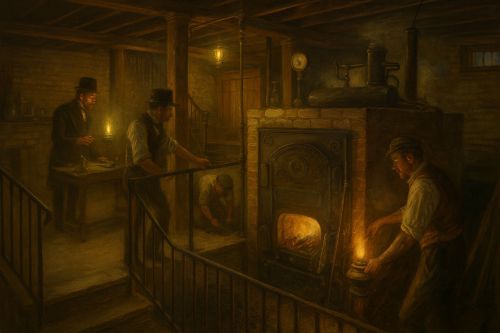
We easily understand that, chafing under his enforced humility, he adores in others aggressive qualities which he lacks or which are unavailable to him. However, gradually, we realize that this is not the complete explanation. We see that a more deeply hidden set of values, entirely opposite to the one just described, is also operating in him and that he admires in an aggressive type the expansive drives which for the sake of his integration he must so deeply suppress in himself. This disavowing of his own pride and aggressiveness, but admiring them in others, plays a great part in his morbid dependency. As the patient becomes strong enough to face his conflict, his expansive drives come into sharper focus. He should also have the absolute of fearlessness; he should also go all out for his advantage; he should be able to hit back at anybody who offends him. Accordingly, he despises himself at bottom for any trace of “cowardice,” of ineffectualness and compliance. He is thus under a constant crossfire. If he does something, he is damned, and if he does not, he is damned. If he refuses the request for a loan or for any favor, he feels that he is a repulsive and horrible creature; if he grants such requests, he feels that he is a “sucker.” If he puts the insulter in his place, he gets frightened and feels utterly unlikable. As long as he cannot face this conflict and work at it the need to keep a check on the aggressive undercurrents makes it all the more necessary to adhere tenaciously to the self-effacing pattern, and thereby enhances its rigidity. Such a man must be assumed to be in the throes of a conflict which probably made the idea of a marital commitment repugnant to the point of open panic. However, when he married twenty years later, having in the meantime taken the vows of celibacy, broken with the Church, set a fire to the world around him, publicly proclaiming as his first and foremost reason for taking a wife was that it would please his father. However, on July 2nd, he was surprised by a severe thunderstorm. A bolt of lightning struck the ground near him, throwing him to the ground, and causing him to be seized by a severe, some say convulsive, state of terror. He felt, terrore et agonis mortis subitae circumvallatus: as if completely walled in by the painful fear of a sudden death. #RandolphHarris 5 of 23

Before he knew it, he was seeking help and wanted to renew his vows of celibacy. He felt bound by what he considered to be a vow and began to think of the experience as a frightful call from heaven: de caelo terroribus. Was this thunderstorm necessary? Some believe that it was God’s way of calling him away (abgerufen) from a glamorous career which the young man had every reason to desire. His psychiatrist assumes that the event was only the climax of an agitated depressive state which gradually had ruined the perspective of that career. A student of motivation cannot well ask what motivates God to do something extraordinary; yet he may wonder what in the world would at that moment call for an un-Aristotelian thunderstorm. The monastic profession was not an uncommon career; it was even a respectable way of becoming a scholar and of eventually rejoining academic work. This concern with the adequacy of established explanatory frameworks—whether theological, philosophical, or psychological—finds a parallel in the historical understanding of monastic vocation, which likewise resists simplistic or conventional interpretation. Transactional analysis as a therapeutic method is based on the assumption that words and gestures can have a therapeutic effect without any bodily contact with the patient beyond a handshake. If a transactional analyst considers that bodily contact is desirable for a certain patient, he refers him to a dance class, sensory-awareness group, or a “permission class” with a prescription for dancing. Permission classes are run as groups, so that the patient does not get individual hugging or individual dancing exercises. All the patients do the same things at the same time, but the teacher is aware of each one’s special needs and devotes some attention to them. (The patients do not have to do the same things at the same time. The teacher merely makes the suggestion, but each person is free to do as he wishes—that is part of the permission derived from the class. Usually, however, they enjoy the participation with other people, something they may have missed in childhood.) #RandolphHarris 6 of 23

Since permission is the decision intervention for script analysis, it is worth having as clear as possible an understanding of how it works, and every opportunity should be taken to learn about it by observing this in different situations. However, while therapeutic models can offer valuable explanations for experiences that appear extraordinary, it is equally important to recognize that many individuals interpret such moments through the lens of the divine calling. If one abuses the license and goes too far, he will hear from the authorities under ordinary circumstances. When there is a prohibition against doing something, a dialogue will result whenever the person starts to do it. Only a small part of the totality of human experiences is retained in consciousness. The experiences that are so retained become sedimented, that is, they congeal in recollection as recognizable and memorable entities. Unless such sedimentation took place, the individual could not make sense of his biography. Intersubjective sedimentation also takes place when several individuals share a common biography, experiences of which become incorporated in a common stock of knowledge. Intersubjective sedimentation can be called truly social only when it has been objectivated in a sign system of one kind or another, that is, when the possibility of reiterated objectivation of the shared experiences arise. Only then is it likely that these experiences will be transmitted from one generation to the next, and from one collectivity to another. Theoretically, common activity, without a sign system, could be the basis for transmission. Empirically, this is improbable. An objectively available sign system bestows a status of incipient anonymity on the sedimented experiences by detaching them from their original context of concrete individual biographies and making them generally available to all who share, or may share in the future, in the sign system in question. The experiences thus become readily transmittable. #RandolphHarris 7 of 23

It is often maintained that the neglect of a divine calling invites adverse consequences, for such disregard is understood as a refusal of grace. Numerous witnesses throughout the Christian tradition attest that the doctrine of divine grace and salvific purpose—articulated most fully in the Epistle to the Romans and commonly associated with the Calvinistic tradition—has impressed upon students the necessity of presenting themselves as approved before God, rightly dividing the word of truth. However, in times of change—and what other times are there, in our memory? One generation differs so much from another that items of tradition often become disturbances. Conflicts between the divine way and one’s own self-made style, conflicts between the expert’s authority and one’s own style may disturb God and show a lack of faith. Furthermore, all the mass transformations in American life (immigration, migration, and Americanization; industrialization, urbanization, mechanization, and others) are apt to disturb the divine way in those tasks which are so simple yet so far-reaching. No wonder, then, that Proverbs 3.5-6 says, “Trust in the LORD with all your heart and lean not on your own understanding; in all your ways submit to Him, and He will make your paths straight.” Change, the true change is when eternity exists. Eternity is just than the earth and the world; for eternity there is a crown of honor laid aside for each of those that have in truth willed only one thing. So also with riches and power and the world that passes away and the lust thereof. The one who has willed either of them, even if he only willed one thing, must, to his own agony, continue to will it when it has passed, and learn by the agony of contradiction that it is not one thing. However, the one who in truth willed one thing and therefore willed the Good, even if he be sacrificed for it, why should he not go on willing the same in eternity, the same thing that he was willing to die for? Why should he not will the same, when it has triumphed in eternity? #RandolphHarris 8 of 21

To will one thing, therefore, cannot mean to will that which only appears to be one thing. The fact is that the worldly goal is not one thing in its essence because it is unreal. Its so-called unity is actually nothing but emptiness which is hidden beneath the manyness. In the short-lived moment of delusion, the worldly goal is therefore a multitude of things, and thus not one thing. So far is it from a state of being and remaining one thing, that in the next moment it changes itself into its opposite. Carried to its extreme limit, what is pleasure other than disgust? What is earthly honor at its dizzy pinnacle other than contempt for existence? What are riches, the highest superabundance of riches, other than poverty? For no matter how much all the earth’s gold hidden in covetousness may amount to, is it not infinitely less than the smallest mite hidden in the contentment of the poor! What is worldly omnipotence other than dependence? What slave in chains is as unfree as a tyrant! No, the worldly goal is not one thing. Diverse as it is, in life it is changed into its opposite, in death into nothing, in eternity into damnation: for the one who has willed this goal. Only the Good is the one thing in its essence and the same in each of its expressions. Take love as an illustration. The one who truly loves does not love once and for all. Nor does he use a part of his love, and then again another part. For to change it into small coins is not to use it rightly. No, he loves with all his love. It is wholly present in each expression. He continues to give it away as a whole, and yet he keeps it intact as a whole, in his heart. Wonderful riches! When the miser has gathered all the world’s gold in sordidness—then he has become poor. When the lover gives away his whole love, he keeps it entire—in the purity of the heart. Shall a man in truth will one thing, then this one thing that he wills must be such that it remains unaltered in all changes, so that by willing it, he can win immutability. If it changes continually, then he himself becomes changeable, double-minded, and unstable. And this continual change is nothing else than impurity. #RandolphHarris 9 of 21

Such inner inconsistency does not remain an abstract defect; it manifests with particular clarity in the way individuals attempt to justify the volatility of their affections. Rarely will you find that a man whose love turns from one woman to another feels no need to legitimate this before himself by saying: she was not worthy of my love, or, she has disappointed me, or whatever other like “reasons” exist. This is an attitude that, with a profound lack of chivalry, adds a fancied “legitimacy” to the plain fact that he no longer loves her and that the woman must bear it. By virtue of this “legitimation,” the man claims a right for himself and besides causing the misfortune seeks to put her in the wrong. The successful amatory competitor proceeds exactly in the same way: namely, the opponent must be less worthy, otherwise he would not have lost out. It is not so different, of course, if, after a victorious war, the victor in undignified self-righteousness claims, “I have won because I was right.” Or, if somebody under the frightfulness of war collapses psychologically, and instead of simply saying it was just too much, he feels the need of legitimizing his war weariness to himself by substituting the feeling, “I could not bear it because I had to fight for a morally bad cause.” Likewise, with the defeated in war. Instead of searching like old women for the “guilty one” after the war—in a situation in which the structure of society produced the war—everyone with a manly and controlled attitude would tell the enemy, “We lost the war. You have won it. That is now all over. Now, let us discuss what conclusion must be drawn according to the objective interests that came into play, and what is the main thing in view of the responsibility toward the future which above all burdens the victor.” Anything else is undignified and will become a boomerang. If its interests have been damaged, a nation forgives. However, if its honor has been offended, especially by a bigoted self-righteousness, no nation forgives. #RandolphHarris 10 of 21

Every new document that comes to light after decades revives the undignified lamentations, the hatred and scorn, instead of allowing the war at its end to be buried, at least morally. This is possible only through objectivity and chivalry, and above all, only through dignity. However, never is it possible through an “ethic,” which in truth signifies a lack of dignity on both sides. Instead of being concerned about what the politician is interested in, the future and the responsibility towards the future, this ethic is concerned about politically sterile questions of past guilt, which are not to be settled politically. If such a guilt exists at all, to act in this way is politically guilty. And overlooks the unavoidable falsification of the whole problem, through very material interests: namely, the victor’s interest in the greatest possible moral and material gain; the hopes of the defeated to trade in advantages through the confessions of guilt. If anything is “vulgar,” then, this is, and it is the result of this fashion of exploiting “ethics” as a means of “being in the right.” More and more, revolution has found itself delivered into the hands of its bureaucrats and doctrines on the one hand, and to enfeebled and bewildered masses on the other. When the revolutionary elite are guillotined and when Telleyrand is left alive, who will oppose Bonaparte? However, to these historical reasons are added economic necessities. The passages by Simone Weil on the condition of the factory worker must be read in order to realize to what degree of moral exhaustion and silent despair the rationalization of labor can lead. Simone Weil is right in saying that the worker’s condition is doubly inhumane in that he is first deprived of money and then of dignity. Work in which one can have an interest, creative work, even though it is badly paid, does not degrade life. #RandolphHarris 11 of 21

Industrial socialism has done nothing essential to alleviate the condition of the workers because it has not touched on the very principle of production and the organization of labor, which, on the contrary, it has extolled. It even went so far as to offer the worker a historic justification of his lot of much the same value as a promise of celestial joys to one who works himself to death; never did it attempt to give him the joy of creation. The political form of society is no longer in question at this level, but the beliefs of a technical civilization on which capitalism and socialism are equally dependent. Any ideas that do not advance the solution of this problem hardly touch on the misfortunes of the worker. In a society marked by stagnant wages, the moral implications of economic inequality become increasingly difficult to ignore, particularly when viewed through traditions that emphasize justice, stewardship, and the dignity of labor. The root causes of recent labor unrest is to be found partly in causes which are worldwide, and affect all countries as well as ourselves, partly in cases which are special to our country and give differences, the fundamental differences, between the point of view of the present government on fiscal questions between the modern one-sided Free Trader and the Tariff Reformer? The modern Free Trader looks first and foremost only to the interests of the consumer. He says that all men are consumers, and therefore, he can leave other aspects of the great industrial problem to take care of themselves. Tariff Reformers on the other hand, say that our whole society, to a degree which has never been true of any other country in the world and is not even true today, depends upon the producer. Every man is a consumer; that is true. However, most men, directly or indirectly, are producers. All the rich must produce before they can consume. Production to them is a sine qua non of consumption, and unless they find scope for their industry, work for their hands or brains, the means of gaining a livelihood which they need, cheapness is a mockery and a sham. #RandolphHarris 12 of 21

However, they also believe that our present system does not serve the interest of cheapness in what is most necessary for our people to have—cheap food and the raw materials of industry. They have said—and facts have shown that they are right, and they are entitled to point to it now to show that they are not mere prophets after the event—that if the Government persists in their policy of doing nothing, prices will rise. And they have risen. Prices of the necessities of life. Only one thing has not risen—the price of labor. The trouble in the midst of which they now live finds its root cause in the general rise in the necessaries of life, which is aggravated by the fact that in this country, that rise has been unaccompanied by an equivalent rise in the price of labor. The man who now draws the same wages as ten or twenty years ago finds that his position is not better whilst he looks for betterment, has not even remained the same, but that the pinch is sharpened, the struggle for life harder, the margin between him and real distress more narrow than ever it is in his experience before. What is the government doing? Some economists argue that tariffs can boost wages only when paired with strong unions or when they successfully expand domestic production. When tariffs reduce import pressure, domestic firms may expand production. More production leads to more hiring, and upward pressure on wages in that specific sector. This effect is strongest in manufacturing and heavy industry. As tariff revenue is reinvested in the American economy, it will generate more government revenue, pay down debt, increase private investment and production, which will increase wages over time. #RandolphHarris 13 of 21

However, if nothing is done to protect American-made goods, and the American workers, low wages will deprive people of any chance or hope for decent existences, which perpetuates misery and breeds ill-health in the children before ever they come to face the struggle of life, they will do what they can to prevent that cancerous growth in their midst. In dealing as America has been dealing by giving away farm land, importing food and good and services, and poverty, they have been turning the pyramid upside down, and if they do not take care, and the people of this country do not take care, the whole weight of it will topple over and crush the masses of our people They cannot put all these new charges upon the industry, nearly all of them desirable, many of them most necessary, unless they give industry the support and the encouragement which is necessary to enable our industry to bear the fresh expenses. It is no good treating our commerce and our industry as existing in a watertight compartment of its own, unaffected by what goes on elsewhere in the world. The existing methods provide palliatives which might raise great hopes, and for a moment might seem to promise great results, but which, as they raise them upon an insecure foundation, we are bound in the long run to make their last step worse than the first. Unless and until they recognize that the necessity of national production, employment of our own people and our own capital, and the encouragement of industry and enterprise within our own boundaries is as much one of the chief tasks of Government, their labour will be fruitless and worse than fruitless. In trying to improve the conditions of workpeople, they will create more unemployment; in trying to raise wages without increasing production in America, they will decrease the amount of work going; in trying to better the condition of their people, they will lower it, because they are loading an industry that is already finding itself oppressed to the uttermost to maintain its position. We need tariffs to protect the American worker. #RandolphHarris 14 of 21

America has become so expensive that record numbers of Americans are relocating to Mexico. According to the U.S. State Department, the number of American citizens living in Mexico increased by 75 percent between 2019 and 2025, reaching an estimated 1.8 million people. Many of these individuals work remotely for U.S. companies while taking advantage of Mexico’s lower cost of living, natural beauty, and vibrant culture—and they are thriving. California illustrates the severity of the affordability crisis anc corruption. Under Gavin Newsom’s controll, nearly $80 billion has been wasted and/or stolen. Also, California is now the third most expensive state in the nation and is facing a $20 billion budget deficit, reflecting the financial strain on its residents. In 37 percent of California counties, a family of four earning a six‑figure income is considered low‑income. The average home price in the state is approaching $1 million, while the average salary is just over $96,000—making homeownership unattainable for most Californians. The situation is even more stark for individuals. In five counties—Santa Cruz, Santa Clara, San Mateo, San Francisco, and Marin—a single person earning more than $100,000 a year is now classified as low‑income. Traditional mortgage guidelines recommend spending no more than 28 percent of gross income on a mortgage payment and no more than 36 percent on total debt. Based on the median household income in Sacramento County, a homeowner can afford a mortgage payment of about $2,070 per month, or up to $2,661 for all debts combined. Yet home prices in Sacramento County require far higher incomes. To purchase a typical home using standard lending guidelines, a household would need to earn roughly $135,000 per year. In reality, the median household income in Sacramento County is about $88,724—often with two to four people working to support the mortgage. This mismatch raises serious questions about how lenders are qualifying buyers for such expensive homes. #RandolphHarris 15 of 22

Home prices in Sacramento County are now rivaling those in the Bay Area, and in some cases, Bay Area homes are actually more affordable. Historically, the Bay Area has commanded higher prices due to higher‑paying jobs, a larger population, and its status as a major tourist destination. Sacramento’s rapid price escalation signals a deepening affordability crisis. According to this viewpoint, state leadership has contributed to the problem. Governor Gavin Newsom has directed taxpayer‑funded resources and cash aid toward individuals in the country illegally, while state workers—who keep California running—are overdue for a 25 percent wage increase. This prioritization, critics argue, worsens the affordability crisis and leaves California residents struggling to keep up with rising costs. Additionally, while California is facing one of the most severe affordable‑housing crises in the nation, yet at the same time the state has embarked on an extraordinarily expensive renovation of the Capitol building—known as “The Castle”—in Sacramento. According to public reports, the project has already cost taxpayers more than $1.2 billion, and some analysts estimate the final price could reach as high as $5 billion before completion. Classical buildings rely on stone or stone-like finishes. Modern additions often use concrete, glass, steel, or flat stucco, which can feel cheap or abrupt next to marble-like surfaces. Because the addition is bulkier, taller, or visually heavier, it overpowers the original architecture of the Ancient Greek and Roman design. Critics argue that Capitol buildings are not just architecture — they are civic symbols. When an addition does not “speak the same language,” people feel like the symbolism has been diluted, such unnecessary spending reflects deeper structural problems in the state’s governance. They point to decades‑old laws that restrict housing supply and discourage home sales, as well as concerns about bureaucratic inefficiency, corruption, and wasteful government spending. These factors, they contend, have contributed to soaring rents, limited housing availability, and a growing sense that state priorities are misaligned with the needs of ordinary Californians. The consequences of these policies are increasingly visible. #RandolphHarris 16 of 21
Between 2018 and 2023, California received $24 billion to fund 30 homeless and housing programs. These programs produced 100,000 housing units—an average cost of $240,000 per unit. For comparison, Roger Lucas, owner of Grand Castle, LLC, spent $50 million to build The Grand Castle, a 522‑unit residential community in Grandville, Michigan. The development includes studios, one‑bedroom, two‑bedroom, and three‑bedroom units, as well as a multi‑level penthouse. Rents range from $1,000 to $2,500. Built on a 23.6‑acre site, the community features 750 covered parking spaces, a clubhouse, and a resort‑style pool, and was completed in just 12 to 18 months. The average cost per unit was approximately $95,785—about $144,000 less per unit than California’s publicly funded projects. California also has the highest unemployment rate in the nation at 5.4 percent, compared to the national average of 4.5 percent. As household bills surge and the minimum wage rises to $20 an hour, people living on Social Security retirement benefits are especially strained, with monthly checks effectively equating to $5 to $7 an hour. Meanwhile, as Americans struggle to find and afford housing, Governor Gavin Newsom signed two bills on February 7, 2025—SBX1 1 and SBX1 2, both part of the Budget Act of 2024—allocating $50 million to protect individuals in the country illegally from deportation. Additionally, the governor extended free health care to 700,000 undocumented immigrants, costing taxpayers $3 billion annually. At the same time, funding was reduced for programs serving veterans, schoolchildren, people with disabilities, and the homeless. Given these circumstances, it is understandable that many people who are legally in the United States—and paying between 30 and 90 percent of their income in taxes—are deeply frustrated. #RandolphHarris 17 of 21

Advocates argue that the crisis unfolding in California—driven by Democratic policies—is pushing home prices, mortgages, and rents higher not only across the United States but around the world, making everyday life increasingly unaffordable. Many believe the situation is far from stabilizing. At the same time, China—where the United States has outsourced significant jobs and capital—has more than 50 ghost cities containing an estimated 65 million vacant homes. These ghost cities are the result of massive overdevelopment in areas where few or no people live. By contrast, if all categories of homelessness are counted, California is estimated to have as many as 4 million homeless individuals. The state also has the highest home prices in the nation, the highest taxes, and some of the most restrictive business regulations anywhere. Because of what critics describe as a hostile environment for both residents and employers, more than 360 companies have left California since 2020. Additionally, more than 500,000 residents leave the state each year because it has become too expensive to live in. Critics also point to Governor Gavin Newsom’s policies, including the criminalization of homelessness and the arrest of individuals without housing, rising crime, and widespread job losses as companies continue to move operations elsewhere. California also has the highest unemployment rate in the country at 5.4 percent, compared to the national average of 4.1 percent. Advocates argue that the crisis created by Democratic leadership is driving up housing costs nationwide and globally, and that the situation is far from resolved. California is also home to more than 3.5 million undocumented immigrants. #RandolphHarris 18 of 21

America is facing a slow‑moving crisis that too few people are willing to confront: we are losing farmland at a pace that threatens our long‑term ability to feed ourselves. Much like the land shortage unfolding in Las Vegas—where rapid development has pushed the city to the edge of its buildable limits—we risk running out of the agricultural land that sustains our food supply. Once farmland is paved over, it is gone forever. And if we continue down this path, the consequences could be severe. Food security is national security. A nation that cannot grow its own food is a nation that must rely on others for survival. In a world already strained by geopolitical tensions, climate pressures, and supply‑chain disruptions, the idea of future “food wars” is not far‑fetched. Protecting American farmland today is an investment in tomorrow’s stability. One of the most effective ways to safeguard our agricultural base is to support the farmers and ranchers who keep it productive. That starts with buying American‑made beef, poultry, dairy, and produce. When consumers choose domestic products, they strengthen the economic foundation of rural communities. They also send a clear signal to investors: American agriculture is worth backing. The imbalances we saw in the past are exactly why President Trump implemented traffis: to protect American industries, reduce trade deficits, and prevent the United States from being taken advantage of economically. The goal, in this view, is to return America to the status of a creditor nation rather than one borrowing money to support other countries. According to this perspective, President Trump’s tariff policies generate approximately $400 billion in annual revenue and help create hundreds of thousands of jobs. #RandolphHarris 19 of 21

When Americans shop locally, they do more than support their neighbors—they strengthen the national economy. Every dollar spent on American‑made goods circulates back into our communities, generating tax revenue that funds schools, infrastructure, and public services. It keeps jobs here at home, ensures wages rise naturally, and reduces the burden on taxpayers. In contrast, buying foreign goods often means lighter tax loads for overseas companies and money flowing out of our economy, strengthening other nations at our expense. There are environmental benefits too. American‑made products travel shorter distances, reducing carbon emissions. And unlike many foreign manufacturers, American companies are held to higher standards for pollution control. They must dispose of waste responsibly and protect our air, land, and water. Supporting them is not only patriotic—it’s environmentally responsible. Under President Trump’s administration, policies have emphasized prioritizing American workers and industries. Efforts to secure the border, reduce illegal crossings, and crack down on drug trafficking have been paired with significant investment in U.S. manufacturing, production, and innovation. These measures have helped channel trillions of dollars back into American industry, reinforcing the pledge to “Make America Great Again.” The lesson is clear: when we buy American, we invest in ourselves. We protect farmland, preserve jobs, reduce pollution, and strengthen our economy. We also reduce reliance on foreign nations and help lower the national debt by keeping tax revenue at home. The human intellect we possess today, so rich and capable, did not appear suddenly. It evolved through countless stages, shaped by experience, struggle, and the gradual awakening of self‑awareness. And yet, for all our progress, something essential is missing. We have had scientific thinking, business thinking, and political thinking in abundance. #RandolphHarris 20 of 21

What the world needs now is inspired thinking—thinking that rises above self‑interest and moves toward wisdom. The intellect may begin in selfishness, but its natural evolution leads toward reason, and ultimately toward selflessness. This is where parents play a vital role. Teach your children to love America, to appreciate the freedoms and opportunities they inherit, and to support the workers and businesses that keep this nation strong. Teach them to respect law and order, to honor their elders, and to understand that good character is the foundation of a meaningful life. It is inborn in the human mind to want to know. Curiosity begins with a child’s endless questions, deepens through a scientist’s investigations, and eventually reaches toward something higher—a union of reflective thought and intuitive insight. This is the beginning of true intelligence, the kind that seeks a view of the whole, not just the parts. When the mind reaches this stage, it enters the realm of philosophy. But too many children today are struggling in school, not because they lack ability, but because they are not reading. Reading is the gateway to thought. When you read books, you absorb the rhythm of language, the structure of ideas, and the example of how to express yourself. You learn to write, to think, and to understand the world beyond your immediate experience. So to every young person: take your education seriously. Read your books. Ask questions. Think deeply. The effort you put in now will shape the opportunities you have later. Your success will not only make your family proud—it will give you the tools to contribute meaningfully to your community and your country. The evolution of the mind is a lifelong journey. But it begins with simple habits: curiosity, discipline, respect, and a willingness to learn. These are the qualities that build strong individuals—and a strong nation. “Oh, thus be it ever, when freemen shall stand between their loved home and the war’s desolation! Blest with victory and peace, may the heav’n-rescued land Praise the Power that hath made and preserved us a nation! Then conquer we must, when our cause is just, and this be our motto: ‘In God is our trust.’ And the star-spangled banner in triumph shall wave O’er the land of the free and the home of the brave.” #RandolphHarris 21 of 21

Loving God, I lift the relationships in my life that are filled with tension and discord to You. Pour out your peace on those involved, softening hearts and fostering understanding. May your love guide our words and actions, bringing reconciliation and harmony. Grant us the wisdom to forgive and the humility to seek peace. In Jesus’ name, I pray. Amen.

Discover the Beauty of Each Day
When people perform a version of themselves that is opportunistic or false, it can dominate spaces meant for genuine expression. This erasure of authenticity often silences those who are already marginalized or struggling. The idea that some profit off the labor and suffering of others — without contributing meaningfully — is a recurring theme in both global and domestic economies. America’s history of systemic inequality, especially for communities that have been here for generations, mirrors the exploitative conditions often criticized abroad. The difference is sometimes only in branding, not in substance. Criticizing sweatshops overseas while ignoring domestic labor exploitation — from underpaid service workers to undocumented labor — reveals a selective moral lens. The term “slave wages” is not hyperbole for many Americans who work full-time for years, 16 hours a day, seven days a week, without a vacation, and still live in poverty. The MTV quote — “You think you know, but have no idea” — captures the pain of being misjudged. People often assume they understand someone’s life based on surface impressions, but they miss the silent battles, the sacrifices, the trauma endured just to survive. Britney’s lyric — “Be wary of others, those closest to you…” — resonates with the heartbreak of familial betrayal. When love turns into manipulation or neglect, it is not just painful — it is disorienting. The very people meant to protect you become the source of harm. #RandolphHarris 1 of 27

The observation that broken families often drift from spiritual grounding is poignant. When the guiding principles of compassion, humility, and grace are lost, relationships fracture. The holidays, meant to be a time of unity, can instead expose these wounds, but at least you are seeing the reality that it is not you who is the drama. Sometimes people hide feelings of inequality and jealousy towards you. Your life—you are supposed to be nothing more than a blood sacrifice to bring them wealth and status. While some people are so heartbroken that they could not be there for their loved ones who died at a young age, others are trying to sweep their family member into an ocean like an unwanted thought. Some people feel like you are supposed to be there just for them to take advantage of, and then discard of like rotten food. When you have given all you could — emotionally, financially, physically — and still faced ingratitude, forgiveness becomes a gift to yourself. It is the final act of love: not for them, but for your own peace. However, the goal is not just to survive in this world; it is to transform your pain into wisdom. God gave His one and only Son so that we could live, and He used his pain to create human beings. Human beings, to God, are the most precious life forms on earth. “I will make a man more precious than fine gold,” reports Isiah 13.12. And so, maybe our goal on this planet is not only to teach others the love of God, but also to learn to turn pain into wisdom as God did. #RandolphHarris 2 of 27

People who already carry heavy burdens are often the ones pressured to “step up,” because they are empathetic, responsible, or simply used to surviving without support. Meanwhile, those with more resources sometimes avoid responsibility, neglect their own obligations, or even damage what others have worked hard to maintain. That imbalance creates resentment — not because someone is unwilling to give, but because they are being drained by people who do not appreciate. The shift from innocent curiosity to invasive control, and how that shift can poison relationships that were meant to be built on trust, respect, and healthy boundaries, can be a hindrance. Snooping through an adult child’s email or bank accounts crosses a line from care into control. It often leads to misinterpretation because people who spy are usually looking through the lens of their own fears, insecurities, or assumptions. Instead of understanding, it creates suspicion and resentment. It is a far cry from kids sneaking a peek at Christmas gifts. That was about wonder. This is about power. If someone cannot appreciate what you have already given — emotionally, financially, materially — why would they suddenly respect something even more valuable when they uprooted what you have provided, damaged what you entrusted to them, or treated your generosity as an entitlement, rather than a gift? People sometimes forget that value is not just the price tag—it is the intention, the sacrifice, the love behind it. #RandolphHarris 3 of 27

I know people say that everyone is going through something horrible, but some people are only going through something horrible because they did bad things to get to where they are in live in luxury. Others are enduring a tremendous amount of weight. They face the kind of exhaustion that comes from fighting battles most people never see, never acknowledge, and often never believe. When someone is pushing themselves to survive, to improve, to protect themselves, and to hold their life together under pressure that would break most people, the toll is enormous. Some people are carrying: Physical strain from overwork or constant stress, emotional wounds from being targeted, mistreated, or undermined, psychological pressure from feeling unsafe or constantly on guard, social isolation because no one around them understands the depth of what they are enduring, and the fear of what is to come. When someone is pushed to the point of pain, bleeding, or blacking out from exhaustion, that is not “just stress.” That is a sign of a person who has been forced into survival mode for far too long. When someone is being targeted or harmed—whether by people, circumstances, or systems—it can create a sense of being under siege. That experience is real, and the suffering is real, even when the situation is complicated or misunderstood by others. This is the kind of pressure that leaves a person: Hypervigilant, drained, physically depleted, emotionally raw, and often completely unsupported. No one should have to endure that alone. #RandolphHarris 4 of 27

One of the hardest parts of suffering is that outsiders often minimize it. They assume: “You are fine.” “You are overreacting.” “You are imagining things.” However, they do not feel the pain in your body. They do not live with the fear or exhaustion. They do not see the nights you barely make it through. Your experience deserves to be taken seriously. It is an incredibly painful and disorienting experience —feeling harmed, feeling unsafe, doing everything you are “supposed” to do by reporting it, and still being met with dismissal or indifference. Anyone in that position would feel exhausted, resentful, and deeply alone. When authorities say it is a “civil issue,” hearing that phrase when you are reporting something life-threatening or dangerous can feel defeating. Like you life does not matter. It often means: They do not see enough evidence to classify it as a criminal matter, they are limited in what they can act on, they are treating it as a dispute, rather than harm. None of that makes your experience any less real or any less distressing. It just means the system is not built to respond to every kind of threat or crime in the way people need. And that gap—between what you are living and what they are willing to acknowledge—is where the pain grows. When someone is dealing with ongoing stress, fear, or harm, and the people who are required by law do not act, it creates a sense of being trapped. It is not just your imagination. That is a very human response to being unheard. When you are tired, when you have been fighting for so long, you just want to rest. You want safety. You want someone to take you seriously. #RandolphHarris 5 of 27

Even when authorities or doctors do not act the way you hoped, it does not mean your experience is unimportant. It does not mean you are overreacting. It does not mean you are wrong to feel the way you do. It means that you are dealing with something overwhelming, and you need people who will actually listen and take your case seriously. When someone feels unheard by authorities, or when reports do not lead to action, documentation becomes a kind of shield. Lawyers often recommend it because: It creates a timeline that cannot be dismissed later, it shows patterns, not just isolated incidents, it preserves details you might forget under stress, and it demonstrates that you have been consistent and proactive. If the situation escalates or if another agency finally takes it seriously, it can become evidence. Even when it feels like no one is listening, the record you keep can become the thing that finally forces someone to pay attention. If I Go Missing (directed by Stefan Brogren, written by Andrea Shawcross, starring Emma Elle Paterson, Hannah Vandenbygaart, and Robert Bazzocchi) reaches into something that is very real. It references how a person’s struggles can be overlooked until it is too late, and how the truth of someone’s life is often far more complex than what others assume. It is the kind of story that resonates with people who have felt invisible, dismissed, or misjudged—people who have had to fight to be believed. It also reflects that you must be careful who you trust and who you accuse. And there is always the most important source you can turn to for help. That is God. God listens to all your prayers, and Jesus Christ is fighting all your battles even before you get there. Just remember to take the limits off God and magnify what is going right in your life. Find things to do that make you happy. Be focused on the constancy of the plan of the Lord, with its fixed, eternal law, and the security of enduring justice, and the tenderness of mercy when earned by obedience. God has an unending variety of possibilities that He has provided for us. We have so much freedom, so many opportunities to develop our unique personalities and talents, our individual memories, our personalized contributions. #RandolphHarris 6 of 27

Be sure to take the time to discover how beautiful each day can be. Doing the law, of course, presupposes hearing the law. Yet, even this formation is questionable, because it might be taken to imply a differentiation and separation of hearing as the prerequisite and doing as the consequence. However, if hearing is made independent of doing and if it acquires a right of its own, this means that doing itself is once again already disrupted. Certainly, the doer of the law must also be a hearer, but only in the sense that the hearer is always at the same time the doer (James 1.22). A hearing which does not at the same instant become a doing becomes once again that “knowing” which gives rise to judgment and so leads to the disruption of all action. If what is heard does not become doing, but if it becomes this “knowing,” then, paradoxical as this may sound, it is already “forgotten” (James 1.25). No matter how long it may be stored up, reconsidered, and elaborated as knowledge, it is forgotten as that which it essentially is, namely, as that which points solely and entirely towards action. The hearer of the word who is not at the same time the doer of the word thus inevitably falls victim to self-deception (James 1.22). A hearing which does not at the same instant become a doing becomes once again that “knowing” which gives rise to judgment and so leads to the disruption of all action. If what is heard does not become doing, but if it becomes this “knowing,” then paradoxical as this may sound, it is already “forgotten” (James 1.25). No matter how long it may be stored up, reconsidered, and elaborated as knowledge, it is forgotten as that which it essentially is, namely, as that which points solely and entirely towards action. #RandolphHarris 7 of 27

The hearer of the word who is not at the same time the doer of the word thus inevitably falls victim to self-deception (James 1.22). Believing himself to know and to possess the word of God, he has, in fact, already lost it again, because he imagines that a man can possess the word of God for a single instant otherwise than in doing it. St. James’s polemic against the hearer of the word corresponds exactly to Jesus’s polemic against the Pharisees. It is not that the zealous hearer of the word to whom St. James refers does not engage in many kinds of action, just as the Pharisee indeed was certainly not backward in action, but this doing is secondary to the hearing; it is connected with it through the intermediacy of knowing; the hearing is in itself an independent entity and the doing is now added to it as another; it is therefore false doing, self-deception, or as Jesus calls it, hypocrisy. It is self-deception because the man who performs this false action does, in fact, suppose himself to be the one who is acting genuinely and cannot but utterly reject the reproach of hypocrisy. One is making the mistake of psychologizing the antithesis between the hearer and the doer of the word if one represents it as an antithesis between thinking and willing or between theory and practice. The Pharisee, too, knew that the word of God demands not only the thought but also the will, not only the theory but also the practice, and accordingly he exercises his will no less than his understanding in obedience to the word. It was not the thought and the will that the Pharisee failed to unite, but precisely the hearing and the doing. #RandolphHarris 8 of 27

For the hearer of the word who makes the hearing independent, there is the saying that “the doer shall be blessed in his doing” (James 1.25). The doer is here, the man who simply knows of no other possible attitude to the word of God when he has heard it than to do it; who therefore continues to concern himself strictly with the word itself and does not derive from it a knowledge for himself on the basis of which he might become the judge of his brother, of himself, and eventually also a judge. A hasty explanation could assert that to pray is a useless act, because a man’s prayer does not alter the unalterable. However, would this be desirable in the long run? Could not fickle man easily come to regret that he had gotten God changed? The true explanation is, therefore, at the same time the one most to be desired. The prayer does not change God, but it changes the one who offers it. It is the same with the substances of what is spoken. Not God, but you, the maker of the confession, get to know something by your act of confession. Much that you are able to keep hidden in darkness, you first get to know by your opening it to the knowledge of the all-knowing One. Even the most atrocious misdeeds are committed, even blood is spilt, and many times it must in truth be said of the guilty one: he knew not what he did. Perhaps he died, without ever in repentance really getting to know what it was he had done. For does passion ever properly know what it does? Does not passion’s insidious temptation and its apparent excuse center in that deceptive ignorance about itself because, in the instant, it has forgotten the Eternal? For if passion continues in a man, it changes his life into nothing but instants, and as passion cunningly serves its deluded master, it gradually gains the ascendancy until the master serves it like a blind serf! #RandolphHarris 9 of 27

For when hate, and anger, and revenge, and despondency, and melancholy, and despair, and fear of the future, and reliance on the world, and trust in oneself, and pride that infuses itself even into sympathy, and envy that even mingles itself with friendship, and that inclination that may have changed but not for the better: when these dwell in a man—when was it without the deceptive excuse of ignorance? And when a man remained ignorant of them, was it not precisely because he at the same time remained ignorant of the fact that there is an all-knowing One. Yes, if he was deprived either of the opportunity or the capacity to learn, there is an ignorance which no one needs be troubled over. However, there is an ignorance about one’s own life that is equally tragic for the learned and for the simple, for both are bound by the same responsibility. This ignorance is called self-deceit. There is an ignorance that, by degrees, as more and more is learned, gradually changes into knowledge. However, there is only one thing that can remove that other ignorance which is self-deception. And to be ignorant of the fact that there is one thing and only one thing, and that only one thing is necessary, is still to be in self-deception. The ignorant one may have been ignorant of much. He can increase his knowledge, and still there is much that he does not know. However, if the self-deluded one speaks of quantity, and of variety, then he is still in self-deception, still deeply ensnared by and in the grip of multiplicity. The ignorant man can gradually acquire wisdom and knowledge, but the self-deluded one if he won “the one thing needful” would have won purity of heart. #RandolphHarris 10 of 27

Nietzsche’s tragedy is found here once again. The aims and prophecies are generous and universal, but the doctrine is restrictive, and the reduction of every value to historical terms leads to the direst consequences. Marx thought that the ends of history, at least, would prove to be moral and rational. That was his Utopia. However, Utopia, at least in the form he knew it, is destined to serve cynicism, of which he wanted no part. Marx destroys all transcendence, then carries out, by himself, the transition from fact to duty. However, his concept of duty has no other origin but fact. The demand for justice ends in injustice if it is not primarily based on an ethical justification of justice; without this, crimes themselves one day become a duty. When good and evil are reintegrated in time and confused with events, nothing is any longer good or bad, but only either premature or out of date. Who will decide on the opportunity, if not the opportunists? Later, say the disciples, you shall judge. However, the victims will not be there to judge. For the victim, the present is the only value, rebellion the only action. Messianism, in order to exist, must construct a defense against the victims. It is possible that Marx did not want this, but in this lies his responsibility which must be examined, that he incurred by justifying, in the name of the revolution, the henceforth bloody struggle against all forms of rebellion. Therefore, today, one cannot yet see in any way how the management of politics as a “vocation” will shape itself. Even less can one see along what avenue opportunities are opening to which political talents can be put for satisfactory political tasks. He who, by his material circumstances, is compelled to live “off” politics will almost always have to consider the alternative positions of the journalist or the party official as the typical direct avenue. Or, he must consider a position as representative of interest groups—such as a trade union, a chamber of commerce, a farm bureau, a craft association, a labor board, an employer’s association, et cetera, or else a suitable municipal position. #RandolphHarris 11 of 27

Nothing more than this can be said about this external aspect: in common with the journalist, the part official bears the odium of being declasse. “Wage writer,” or “wage speaker” will unfortunately always resound in his ears, even though the words remain unexpressed. He who is inwardly defenseless and unable to find the proper answer for himself had better stay away from this career. In any case, besides grave temptations, it is an avenue that may constantly lead to disappointments. Now then, what inner enjoyments can this career offer, and what personal conditions are presupposed for one who enters this avenue? Well, first of all, the career of politics grants a feeling of power. The knowledge of influencing men, of participating in power over them, and above all, the feeling of holding in one’s hand a nerve fiber of historically important events can elevate the professional politician above everyday routine even when he is placed in formally modest positions. However, now the question for him is: Through what qualities can I hope to do justice to this power (however narrowly circumscribed it may be in the individual case)? How can he hope to do justice to the responsibility that power imposes upon him? With this, we enter the field of ethical questions, for that is where the problem belongs: What kind of a man must one be if he is to be allowed to put his hand on the wheel of history? One can say that three pre-eminent qualities are decisive for the politician: passion, a feeling of responsibility, and a sense of proportion. #RandolphHarris 12 of 27

This means passion in the sense of matter-of-factness, of passionate devotion to a “cause,” to the god or demon who is its overlord. It is not passion in the sense of that inner bearing which my late friend, Georg Simmel, used to designate as “sterile excitation,” and which was peculiar especially to a certain type of Russian intellectual (by no means all of them!). It is an excitation that plays so great a part with our intellectuals in this carnival we decorate with the proud name of “revolution.” It is a “romanticism of the intellectually interesting,” running into emptiness devoid of all feeling of objective responsibility. To be sure, mere passion, however genuinely felt, is not enough. It does not make a politician, unless passion, as devotion to a “cause,” also makes responsibility to this cause the guiding star of action. And for this, a sense of proportion is needed. This is the decisive psychological quality of the politician: his ability to let realities work upon him with inner concentration and calmness. Hence, his distance to things and men. “Lack of distance’ per se is one of the deadly sins of every politician. It is one of those qualities the breeding of which will condemn the progeny of our intellectuals to political incapacity. For the problem is simply how can warm passion and a cool sense of proportion be forged together in one and the same soul? Politics is made with the head, not with other parts of the body or soul. And yet, devotion to politics, if it is not to be frivolous intellectual play but rather genuinely human conduct, can be born and nourished alone. #RandolphHarris 13 of 27

However, that firm taming of the soul, which distinguishes the passionate politician and differentiates him from the “sterilely excited” and mere political dilettante, is possible only through habituation to detachment in every sense of the word. The “strength” of a political “personality” means, in the first place, the possession of these qualities of passion, responsibility, and proportion. Therefore, daily and hourly, the politician inwardly has to overcome a quite trivial and all-too-human enemy: a quite vulgar vanity, the deadly enemy of all matter-of-fact devotion to a cause, and of all distance, in this case, of distance towards one’s self. Vanity is a very widespread quality, and perhaps nobody is entirely free from it. In academic and scholarly circles, vanity is a sort of occupational disease, but precisely with the scholar, vanity—however disagreeably it may express itself—is relatively harmless; in the sense that as a rule, it does not disturb scientific enterprise. With the politician, the case is quite different. He works with the striving for power as an unavoidable means. Therefore, “power instinct,” as is usually said, belongs indeed to his normal qualities. The sin against the lofty spirit of his vocation, however, begins where this striving for power ceases to be objective and becomes purely personal self-intoxication, instead of exclusively entering the service of “the cause.” For ultimately, there are only two kinds of deadly sins in the field of politics: lack of objectivity and—often but not always identical with it—irresponsibility. #RandolphHarris 14 of 27

Vanity, the need personally to stand in the foreground as clearly as possible, strongly tempts the politician to commit one or both of these sins. This is more truly the case as the demagogue is compelled to count upon “effect.” He, therefore, is constantly in danger of becoming an actor as well as taking lightly the responsibility of the outcome of his actions and of being concerned merely with the “impression” he makes. His lack of objectivity tempts him to strive for the glamorous semblance of power rather than for actual power. His irresponsibility, however, suggests that he enjoy power rather just because, power is the unavoidable means, and striving for power is one of the driving forces of all politic, there is no more harmful distortion of political force than the parvenu-like braggart with power, and the vain self-reflection in the feeling of power, and in general every worship of power per se. The mere “power politician” may get strong effects, but actually, his work leads nowhere and is senseless. (Among us, too, an ardently promoted cult seeks to glorify him.) In this, the critics of “power politics” are absolutely right. From the sudden inner collapse of typical representatives of this mentality, we can see what inner weakness and impotence hides behind this boastful but entirely empty gesture. It is a product of a shoddy and superficially blasé attitude towards the meaning of human conduct; and it has no relation whatsoever to the knowledge of tragedy with which all action, but especially political action, is truly interwoven. The final result of political action often, no, even regularly, stands in a completely inadequate and often even paradoxical relation to its original meaning. #RandolphHarris 15 of 27

This is fundamental to all history. And because of this fact, the serving of a cause must be absent if action is to have inner strength. Exactly what the cause, in the service of which the politician may serve uses power, looks like a matter of faith. The politician may serve national, humanitarian, social, ethical, cultural, worldly, or religious ends. The politician may be sustained by a strong belief in “progress”—no matter in which sense—or he may cooly reject this kind of belief. He may claim to stand in the service of an “idea” or, rejecting this in principle, he may want to serve external ends of everyday life. However, some kind of faith must always exist. Otherwise, the curse of the creature’s worthlessness indeed overshadows even the externally strongest political success. In principle, institutionalization may take place in any area of collectively relevant conduct. In actual fact, sets of institutionalization processes take place concurrently. There is no a priori reason for assuming that these processes will necessarily “hang together” functionally, let alone as a logically consistent system. Habitualization or incipient institutionalization may occur with their being functionally or logically integrated as social phenomena, regardless of what content their relevance might have. Also, functional, or logical integration cannot be assumed a priori when habitualization or institutionalization processes are limited to the same individuals or collectives, rather than to the discrete ones. Nevertheless, the empirical fact remains that institutions do tend to “hang together.” You are holding in your hands the most concise and easy-to-understand information concerning the seal of God and the mark of the beast. You see, evil, accessible and acceptable. You want to talk about the mark of the beast; you have been holding it. #RandolphHarris 16 of 27

Without the mark of the beast, individuals may face significant limitations in various aspects of daily life, particularly in a Christian apocalyptic context. Economic restriction—the mark of the beast is often associated with the inability to engage in commerce, meaning individuals cannot purchase goods or services. As the penny is being phased out, this is foreshadowing the end of physical currency. Social implications—those without the mark of the beast may be ostracized or marginalized, facing difficulties in social interactions and community participation. Without the mark of the beast, how will you keep up with family, friends, and other professionals? Access to resources—essential resources, such as food and shelter, may become inaccessible without the mark of the beast, leading to survival challenges. With cash and physical credit cards becoming archaic, how will you pay for goods and services, start your car, or apply for a mortgage? Religious context—in some interpretations, not having the mark may signify a commitment to faith, but it could also lead to persecution or suffering. How will you pay tithes or prove who you are? What is the mark of the beast? According to Revelation 13.16-18, “And he cases all, both small and great, rich and poor, freed and bond, to receive a mark in their right hand, or in their foreheads: and that no man might buy or sell, save he that had the mark, or the name of the beast, or the number of his name. Here is wisdom. Let him that hath understanding count the number of the beast: for it is the number of a man; and his number is Six hundred threescore and six; 666. The glowing talisman you carry binds you to the beast’s kingdom. #RandolphHarris 17 of 27

Wherever possible, let us not use a language remote from common understanding. Wherever possible, we should avoid language that feels remote from everyday understanding. However, when clarity requires a bit more effort, we trust people to rise to the task. Fire safety works the same way: the basics are simple, but the responsibility is shared. Learn the essentials, understand the risks, and take the steps that keep you—and everyone around you–safe. Heat is one of the most dangerous things that firefighters face at any blaze. Firemen can tell when the room or building they are in is getting too hot because they can feel a sensation like bee stings on their skin through all the protective gear that they are wearing. In the early days of firefighting, the men did not have the advantages of technology to protect them from the heat. Burns were a common occurrence because most of the time, protection consisted of a leather helmet and a rubber coat, and boots. More recently, a two-story structure was engulfed in flames. Numerous attempts were made to rescue a pair of children trapped in a bedroom, but the men were driven back by the intense heat. The house next door was rapidly scorching. The department set up between the two buildings and battled to save them. This is where three men were burned in the intense heart. Two firemen were seriously burned about the faces, hands, and arms, and another fireman was less seriously burned by the heat. At the height of the blaze, the flames and heat were being carried over 100 feet by the wind. The heat ignited the roof of a house across the street, but that blaze was quickly extinguished. The two children perished in the blaze, but in a twist of fate, two of the other children and their parents were at the doctor’s and had been away all morning. All three firemen eventually returned to work. #RandolphHarris 18 of 27
State Farm has grants available for fire prevention, and so do other larger companies in your response area, such as utilities, factories, and universities. Consider setting u a meeting with an official to discuss what your organization can do for them, and what they expect from you. Sometimes the discussion can expose needs that they may be able to help with. For instance, a factory may provide funding for specialized equipment or training that could benefit them in an emergency. A university might provide the facilities for a training seminar or conduct research for you. Finally, these companies have numerous resources and may direct you to unadvertised grant opportunities. The Heritage Program is one of the most beneficial programs to the fire service and has provided numerous types of equipment to fire departments. As of June 2013, the fund had distributed more than $30 million to the fire service, including more than $1 million for national efforts, such as the International Association of Fire Chiefs (IAFC), the National Fire Fighter Near-Miss Reporting System, the National Fallen Firefighters Foundation (NFFF), the Everyone Goes Home (EGH) program, and the National Volunteer Fire Council’s (NVFC) Heart-Healthy Fire Fighter Program. FM Global Fire Prevention Grant is a great resource. FM Global believes that the majority of fires can be prevented and therefore offers funds to organizations that fight fire. Grants are available for fire prevention programs, such as smoke detector installations or fire safety education, as well as prefire planning software and computers. Help the award-winning Sacramento Fire Department stay fully equipped and ready to protect our community. Your donation directly supports public safety and national security. #RandolphHarris 19 of 27

If you see a fire truck stopped in the street without the lights on, be very careful. Sometimes there is an emergency, and you should not pass the fire truck. It might be a good idea to safely turn around and go another way because if you hit someone and they happen to die, you could be charged with manslaughter. Sometimes fire firefighters are getting back into their vehicle, and if you pass the apparatus, you may collide with a firefighter who is on foot. Also, be sure to look at their signals; sometimes emergency vehicles are in motion, albeit slowly, and drivers try to pass them, and this could lead to a dangerous situation. Also, if you are in an intersection when you see an emergency vehicle, continue through the intersection. Drive to the right as soon as it is safe and stop. Obey any direction, order, or signal given by a law enforcement officer or a firefighter. Even if they conflict with existing signs, signals, or laws, follow their orders. When their siren or flashing lights are on, it is against the law to follow within 300 feet of any fire engine, law enforcement vehicle, ambulance, or other emergency vehicle. If you drive to the scene of a fire, collision, or other disaster, you can be arrested. When you do this, you are getting in the way of firefighters, ambulance crews, or other rescue and emergency personnel. The concept of professional courage does not always mean being as tough as nails, either. It also suggests a willingness to listen to other people’s problems, to go to bat for them in a tough situation, and it means knowing just how far they can go. It also means being willing to tell the boss when he or she is wrong. #RandolphHarris 20 of 27

According to the U.S. State Department, the number of American citizens living in Mexico increased by 75 percent between 2019 and 2025, reaching an estimated 1.8 million people. Many of these individuals work remotely for U.S. companies while taking advantage of Mexico’s lower cost of living, natural beauty, and vibrant culture—and they are thriving. California illustrates the severity of the affordability crisis anc corruption. Under Gavin Newsom’s controll, nearly $80 billion has been wasted and/or stolen. Also, California is now the third most expensive state in the nation and is facing a $20 billion budget deficit, reflecting the financial strain on its residents. In 37 percent of California counties, a family of four earning a six‑figure income is considered low‑income. The average home price in the state is approaching $1 million, while the average salary is just over $96,000—making homeownership unattainable for most Californians. The situation is even more stark for individuals. In five counties—Santa Cruz, Santa Clara, San Mateo, San Francisco, and Marin—a single person earning more than $100,000 a year is now classified as low‑income. Traditional mortgage guidelines recommend spending no more than 28 percent of gross income on a mortgage payment and no more than 36 percent on total debt. Based on the median household income in Sacramento County, a homeowner can afford a mortgage payment of about $2,070 per month, or up to $2,661 for all debts combined. Yet home prices in Sacramento County require far higher incomes. To purchase a typical home using standard lending guidelines, a household would need to earn roughly $135,000 per year. In reality, the median household income in Sacramento County is about $88,724—often with two to four people working to support the mortgage. This mismatch raises serious questions about how lenders are qualifying buyers for such expensive homes. #RandolphHarris 21 of 27

Home prices in Sacramento County are now rivaling those in the Bay Area, and in some cases, Bay Area homes are actually more affordable. Historically, the Bay Area has commanded higher prices due to higher‑paying jobs, a larger population, and its status as a major tourist destination. Sacramento’s rapid price escalation signals a deepening affordability crisis. According to this viewpoint, state leadership has contributed to the problem. Governor Gavin Newsom has directed taxpayer‑funded resources and cash aid toward individuals in the country illegally, while state workers—who keep California running—are overdue for a 25 percent wage increase. This prioritization, critics argue, worsens the affordability crisis and leaves California residents struggling to keep up with rising costs. Additionally, while California is facing one of the most severe affordable‑housing crises in the nation, yet at the same time the state has embarked on an extraordinarily expensive renovation of the Capitol building—known as “The Castle”—in Sacramento. According to public reports, the project has already cost taxpayers more than $1.2 billion, and some analysts estimate the final price could reach as high as $5 billion before completion. Classical buildings rely on stone or stone-like finishes. Modern additions often use concrete, glass, steel, or flat stucco, which can feel cheap or abrupt next to marble-like surfaces. Because the addition is bulkier, taller, or visually heavier, it overpowers the original architecture of the Ancient Greek and Roman design. Critics argue that Capitol buildings are not just architecture — they are civic symbols. When an addition does not “speak the same language,” people feel like the symbolism has been diluted, such unnecessary spending reflects deeper structural problems in the state’s governance. They point to decades‑old laws that restrict housing supply and discourage home sales, as well as concerns about bureaucratic inefficiency, corruption, and wasteful government spending. These factors, they contend, have contributed to soaring rents, limited housing availability, and a growing sense that state priorities are misaligned with the needs of ordinary Californians. The consequences of these policies are increasingly visible. #RandolphHarris 22 of 27

Between 2018 and 2023, California received $24 billion to fund 30 homeless and housing programs. These programs produced 100,000 housing units—an average cost of $240,000 per unit. For comparison, Roger Lucas, owner of Grand Castle, LLC, spent $50 million to build The Grand Castle, a 522‑unit residential community in Grandville, Michigan. The development includes studios, one‑bedroom, two‑bedroom, and three‑bedroom units, as well as a multi‑level penthouse. Rents range from $1,000 to $2,500. Built on a 23.6‑acre site, the community features 750 covered parking spaces, a clubhouse, and a resort‑style pool, and was completed in just 12 to 18 months. The average cost per unit was approximately $95,785—about $144,000 less per unit than California’s publicly funded projects. California also has the highest unemployment rate in the nation at 5.4 percent, compared to the national average of 4.5 percent. As household bills surge and the minimum wage rises to $20 an hour, people living on Social Security retirement benefits are especially strained, with monthly checks effectively equating to $5 to $7 an hour. Meanwhile, as Americans struggle to find and afford housing, Governor Gavin Newsom signed two bills on February 7, 2025—SBX1 1 and SBX1 2, both part of the Budget Act of 2024—allocating $50 million to protect individuals in the country illegally from deportation. Additionally, the governor extended free health care to 700,000 undocumented immigrants, costing taxpayers $3 billion annually. At the same time, funding was reduced for programs serving veterans, schoolchildren, people with disabilities, and the homeless. Given these circumstances, it is understandable that many people who are legally in the United States—and paying between 30 and 90 percent of their income in taxes—are deeply frustrated. #RandolphHarris 23 of 27
Advocates argue that the crisis unfolding in California—driven by Democratic policies—is pushing home prices, mortgages, and rents higher not only across the United States but around the world, making everyday life increasingly unaffordable. Many believe the situation is far from stabilizing. At the same time, China—where the United States has outsourced significant jobs and capital—has more than 50 ghost cities containing an estimated 65 million vacant homes. These ghost cities are the result of massive overdevelopment in areas where few or no people live. By contrast, if all categories of homelessness are counted, California is estimated to have as many as 4 million homeless individuals. The state also has the highest home prices in the nation, the highest taxes, and some of the most restrictive business regulations anywhere. Because of what critics describe as a hostile environment for both residents and employers, more than 360 companies have left California since 2020. Additionally, more than 500,000 residents leave the state each year because it has become too expensive to live in. Critics also point to Governor Gavin Newsom’s policies, including the criminalization of homelessness and the arrest of individuals without housing, rising crime, and widespread job losses as companies continue to move operations elsewhere. California also has the highest unemployment rate in the country at 5.4 percent, compared to the national average of 4.1 percent. Advocates argue that the crisis created by Democratic leadership is driving up housing costs nationwide and globally, and that the situation is far from resolved. California is also home to more than 3.5 million undocumented immigrants. #RandolphHarris 24 of 27

America is facing a slow‑moving crisis that too few people are willing to confront: we are losing farmland at a pace that threatens our long‑term ability to feed ourselves. Much like the land shortage unfolding in Las Vegas—where rapid development has pushed the city to the edge of its buildable limits—we risk running out of the agricultural land that sustains our food supply. Once farmland is paved over, it is gone forever. And if we continue down this path, the consequences could be severe. Food security is national security. A nation that cannot grow its own food is a nation that must rely on others for survival. In a world already strained by geopolitical tensions, climate pressures, and supply‑chain disruptions, the idea of future “food wars” is not far‑fetched. Protecting American farmland today is an investment in tomorrow’s stability. One of the most effective ways to safeguard our agricultural base is to support the farmers and ranchers who keep it productive. That starts with buying American‑made beef, poultry, dairy, and produce. When consumers choose domestic products, they strengthen the economic foundation of rural communities. They also send a clear signal to investors: American agriculture is worth backing. The imbalances we saw in the past are exactly why President Trump implemented traffis: to protect American industries, reduce trade deficits, and prevent the United States from being taken advantage of economically. The goal, in this view, is to return America to the status of a creditor nation rather than one borrowing money to support other countries. According to this perspective, President Trump’s tariff policies generate approximately $400 billion in annual revenue and help create hundreds of thousands of jobs. #RandolphHarris 25 of 27

When Americans shop locally, they do more than support their neighbors—they strengthen the national economy. Every dollar spent on American‑made goods circulates back into our communities, generating tax revenue that funds schools, infrastructure, and public services. It keeps jobs here at home, ensures wages rise naturally, and reduces the burden on taxpayers. In contrast, buying foreign goods often means lighter tax loads for overseas companies and money flowing out of our economy, strengthening other nations at our expense. There are environmental benefits too. American‑made products travel shorter distances, reducing carbon emissions. And unlike many foreign manufacturers, American companies are held to higher standards for pollution control. They must dispose of waste responsibly and protect our air, land, and water. Supporting them is not only patriotic—it’s environmentally responsible. Under President Trump’s administration, policies have emphasized prioritizing American workers and industries. Efforts to secure the border, reduce illegal crossings, and crack down on drug trafficking have been paired with significant investment in U.S. manufacturing, production, and innovation. These measures have helped channel trillions of dollars back into American industry, reinforcing the pledge to “Make America Great Again.” The lesson is clear: when we buy American, we invest in ourselves. We protect farmland, preserve jobs, reduce pollution, and strengthen our economy. We also reduce reliance on foreign nations and help lower the national debt by keeping tax revenue at home. The human intellect we possess today, so rich and capable, did not appear suddenly. It evolved through countless stages, shaped by experience, struggle, and the gradual awakening of self‑awareness. And yet, for all our progress, something essential is missing. We have had scientific thinking, business thinking, and political thinking in abundance. #RandolphHarris 26 of 27

What the world needs now is inspired thinking—thinking that rises above self‑interest and moves toward wisdom. The intellect may begin in selfishness, but its natural evolution leads toward reason, and ultimately toward selflessness. This is where parents play a vital role. Teach your children to love America, to appreciate the freedoms and opportunities they inherit, and to support the workers and businesses that keep this nation strong. Teach them to respect law and order, to honor their elders, and to understand that good character is the foundation of a meaningful life. It is inborn in the human mind to want to know. Curiosity begins with a child’s endless questions, deepens through a scientist’s investigations, and eventually reaches toward something higher—a union of reflective thought and intuitive insight. This is the beginning of true intelligence, the kind that seeks a view of the whole, not just the parts. When the mind reaches this stage, it enters the realm of philosophy. But too many children today are struggling in school, not because they lack ability, but because they are not reading. Reading is the gateway to thought. When you read books, you absorb the rhythm of language, the structure of ideas, and the example of how to express yourself. You learn to write, to think, and to understand the world beyond your immediate experience. So to every young person: take your education seriously. Read your books. Ask questions. Think deeply. The effort you put in now will shape the opportunities you have later. Your success will not only make your family proud—it will give you the tools to contribute meaningfully to your community and your country. The evolution of the mind is a lifelong journey. But it begins with simple habits: curiosity, discipline, respect, and a willingness to learn. These are the qualities that build strong individuals—and a strong nation. “Oh, thus be it ever, when freemen shall stand between their loved home and the war’s desolation! Blest with victory and peace, may the heav’n-rescued land Praise the Power that hath made and preserved us a nation! Then conquer we must, when our cause is just, and this be our motto: ‘In God is our trust.’ And the star-spangled banner in triumph shall wave O’er the land of the free and the home of the brave.” #RandolphHarris 27 of 27


Ladies and gentlemen, gather close… and welcome to the Winchester Mansion. Before we step inside, let me tell you a story—one that locals have whispered for more than a century. You see, long before this mansion stood here, this land was nothing but open fields. Empty. Silent. Undisturbed. And then, on the afternoon of Saturday, March 13, 1886, something extraordinary happened. Sheriff Angel Camilio began receiving frantic reports from townsfolk. They claimed a massive wooden castle had magically appeared. Gables rose like jagged mountains. Towers pierced the sky. Some swore that the sprawling labyrinth rose from the earth like a mushroom after rain. Others insisted it materialized out of thin air. No blueprints. No permits. No records of construction. Just… a house that wasn’t there the day before.

The house’s sudden manifestation had been both disconcerting and fascinating to the community. To some, it looked like a fairytale palace shimmering in the spring sunlight. To others, it radiated something darker—shadows that moved on their own, cold drafts on warm days, and a feeling that something unseen was watching from the windows. And then came the hearse. One morning, without warning, a black carriage barreled through these very gates. Inside was a coffin. Some believed it held Mrs. Sarah Winchester herself. Others whispered it was a decoy, or perhaps a warning from whatever spirits lingered here.
Now, legend says Sarah Winchester—widow of William Wirt Winchester, heir to the Winchester rifle fortune—was haunted by tragedy. After losing her husband and infant daughter, she sought answers from a spiritual medium. And the medium told her something chilling: “The spirits of those killed by Winchester rifles are angry. They will take your life too… unless you flee west and build them a house. A house that must never be finished.”

And so, in 1886, Sarah Winchester came here to the Santa Clara Valley. She bought an 18‑room farmhouse and began to build. And she never stopped. Day and night, for decades, hammers rang, saws screeched, and workers added room after room after room. At its peak, the mansion rose nine stories high and held as many as 600 rooms. Staircases that lead straight into ceilings. Doors that open into thin air. Windows built into the floor. Hallways that twist like a maze. Some say Sarah designed it this way to confuse the spirits that followed her.

Today, the mansion stands four stories tall, but it still stretches over 100,000 square feet. And many believe the spirits never left. Some visitors report footsteps behind them when no one is there. Others hear whispers drifting through the walls. A few have seen a woman in black wandering the corridors late at night, searching for something—or someone. Now, if you’re ready… we’re about to step inside. Stay close. Watch your step. And if you feel a tap on your shoulder or a cold breath on your neck, don’t worry. It’s probably just one of the house’s… permanent residents. Shall we begin?

And before you leave this place—whether you walk out with a shiver down your spine or a spark of wonder in your eyes—I’d like to extend a special invitation. After your journey through the mansion’s twisting corridors and secretive rooms, it would be a pleasure to have you join us for a delicious meal at Sarah’s Café. Once you’ve eaten, feel free to stroll along the paths of the Victorian gardens, which long ago stretched across 740 acres, all the way down to Stevens Creek Boulevard. Imagine the carriages, the orchards, the rolling lawns… and perhaps the quiet footsteps of someone who walked here long before you. And if you’re feeling brave, you’re welcome to wander once more through the miles of hallways inside the world’s most mysterious mansion. Every corner has a story. Every window has a whisper. And every room—well, you’ll see for yourself. Welcome to the Winchester Mansion. Enjoy your stay… for however long you choose to remain.

For further information about tours—including group tours, weddings, school events, birthday party packages, facility rentals, and our many special events—please visit our website for all the details you’ll need to plan your next unforgettable experience: https://winchestermysteryhouse.com/
Before you head out into the sunlight again, don’t forget to stop by our online gift shop. It’s the perfect place to find something special for friends and relatives—and perhaps a memento for yourself to remember your time inside the world’s most mysterious mansion. From classic souvenirs to unique collectibles inspired by the Winchester legend, you’ll find a wide variety of gifts waiting for you. Take a look, explore, and bring home a little piece of the mystery. Before you head out into the sunlight again, don’t forget to stop by our online gift shop. It’s the perfect place to find something special for friends and relatives—and perhaps a memento for yourself to remember your time inside the world’s most mysterious mansion. From classic souvenirs to unique collectibles inspired by the Winchester legend, you’ll find a wide variety of gifts waiting for you.
Take a look, explore, and bring home a little piece of the mystery. https://shopwinchestermysteryhouse.com/

Father, I declare that You are my source. Every good and perfect gift comes from You. Let financial breakthroughs and opportunities come my way. Amen.


For more than 30 years, Harris Plumbing, Heating, Air, & Electric has been a name homeowners can trust. Not many businesses can say they’ve served their community for three decades—and we take that legacy to heart. Every job we take on, whether it’s a quick repair or a major installation, is handled with the same level of care, pride, and professionalism. Our mission is simple: to keep your home safe, comfortable, and running smoothly for you and your family. And we take that responsibility seriously. At Harris, you’re not just another service call. You’re a neighbor—and we’re here to help.

At Harris, we make sure you have all the information you need to make the right decision for your home. Whatever issue you’re facing, our team begins with a thorough diagnosis so we can clearly explain what’s going on before any work begins. That means you receive a personalized quote and a service plan tailored specifically to your home—not a generic estimate or guess. We believe the only way to deliver our best work is to fully understand the problem and address it with precision, care, and expertise. Your home deserves nothing less. https://www.callharrisnow.com/about-us/


With its top placement in Consumer Reports’ Auto Brand Report Card, BMW continues to prove why it remains one of the most respected names in the automotive world. In the most recent rankings, BMW earned one of the highest overall scores—finishing as the top luxury brand. This performance reflects BMW’s consistent ability to deliver vehicles that excel in reliability, performance, and owner satisfaction. BMW’s market strength is no accident. The brand has built its reputation on engineering precision and driving dynamics that set it apart from competitors. While many luxury manufacturers emphasize plush interiors and opulent comfort, BMW has always prioritized the connection between driver and machine. The result is a lineup of vehicles that are not only refined, but genuinely fun to drive—a quality that continues to resonate with consumers and automotive testers alike. This commitment to performance is why BMW has earned its iconic title: The Ultimate Driving Machine. Its vehicles consistently score high in road‑test evaluations, thanks to responsive handling, balanced chassis design, and powertrains engineered for both excitement and everyday usability. For drivers seeking a blend of luxury, reliability, and exhilarating performance, BMW remains a standout choice—supported not just by reputation, but by data. To explore the latest models, offers, and certified pre‑owned inventory, visit Brian Harris BMW:
https://www.brianharrisbmw.com/
Randolph Harris San Francisco Taxation & Mergers
Building strong and lasting client relationships is essential to a successful legal career. Many attorneys assume that mastering technical legal skills is enough, but law is fundamentally a service profession—our work is measured not only by the quality of our analysis, but by the trust we build and the problems we solve through the time and expertise we provide.
Long‑term client relationships rest on three pillars:
- Truly knowing your clients, their businesses, and their goals.
- Understanding how each legal issue fits into a broader strategic context.
- Delivering exceptional service with consistency, clarity, and integrity.
This philosophy guides my practice. I advise clients on business transitions, taxable and tax‑deferred mergers and acquisitions, joint ventures, restructuring, integrated tax planning, federal and state tax controversy resolution, and real estate transactions. My work spans mature companies navigating complex operational issues as well as emerging and growth‑stage businesses seeking guidance on organization, financing, and long‑term planning.
Trust is the cornerstone of every client relationship. Clients rely on me not only for technical expertise, but for judgment, perspective, and a genuine understanding of their challenges. My goal is always the same: to ensure that each client feels they are in capable hands with someone who understands their problems, their objectives, and the path forward.

Trust is the cornerstone of every client relationship. Clients rely on me not only for technical expertise, but for judgment, perspective, and a genuine understanding of their challenges. My goal is always the same: to ensure that each client feels they are in capable hands with someone who understands their problems, their objectives, and the path forward. https://www.jmbm.com/l-randolph-harris.html

Cresleigh Bluffs at Plumas Ranch
Plumas Lake, CA | from the mid $400’s
Now Selling!

Welcome to Homesite 132, where Residence Four stands as one of the most coveted two‑story offerings within the distinguished Cresleigh Bluffs enclave.

Crafted with an elevated sensibility and an unwavering commitment to quality, this exceptional residence delivers a level of refinement and comfort reserved for those who expect the extraordinary.

The first floor introduces a beautifully secluded bedroom suite accompanied by a full bath — an elegant accommodation for guests, extended family, or private work‑from‑home living.

Beyond the foyer, the home opens into a grand, light‑filled expanse where the gourmet kitchen, sophisticated dining area, and impressive great room converge.

This seamless layout creates a luxurious environment for curated entertaining, intimate gatherings, and the effortless flow of daily life.

Ascending the staircase, you’ll discover a spacious loft — a versatile retreat ideal for relaxation, creativity, or elevated leisure.

Three additional bedrooms and a thoughtfully positioned laundry room complete the upper level, each space reflecting Cresleigh’s signature craftsmanship and attention to detail.

With its refined finishes, intelligent spatial design, and an ambiance that speaks to modern luxury, Residence Four at Cresleigh Bluffs offers a rare opportunity to experience elevated living at its finest — a home where every moment feels intentional, elegant, and beautifully lived.

“I love my new Cresleigh home because it gives me a sense of peace the moment I walk through the door.” https://cresleigh.com/cresleigh-bluffs-at-plumas-ranch/move-in-ready-homesite-132/



Vindictiveness Has Gone Quite Out of Fashion
Vindictiveness has gone quite out of fashion. However, every neurotic development started in childhood—with particularly bad human experiences and few, if any, redeeming factors. Sheer brutality, humiliations, derision, neglect, and flagrant hypocrisy, all these assailed a child of especially great sensitivity. People who have endured years in concentration camps tell us that they could survive only by stifling their softer feelings, including particularly that of compassion for self and others. It seems to me that a child under the conditions I have described also goes through such a hardening process in order to survive. He may make some pathetic and unsuccessful attempts to win sympathy, interest, or affection, but finally chokes off all tender needs. He gradually “decides” that genuine affection is not only unattainable for him but that it does not exist at all. He ends by no longer wanting it and even rather scorning it. This, however, is a step of grave consequence, because the need for affection, for human warmth and closeness is a powerful incentive for developing qualities that make us likeable. The feeling of being loved and—even more—of being lovable is perhaps one of the greatest values in life. Conversely, the feeling of not being lovable can be a source of profound distress. The vindictive type tries to do away with such distress in a simple and radical way; he convinces himself that he just is not lovable and does not care. So, no longer is anxious to please but can give free range, at least in his mind, to his ample supply of bitter resentment. #RandolphHarris 1 of 25

Here is the beginning of what we see later in the fully developed picture: the expression of vindictiveness may be checked by considerations of prudence or expediency, but they are counteracted very little by feelings of sympathy, fondness, or gratitude. In order to understand why this process of crushing beneficial feelings persists later on, when people may want his friendship or love, we have to take a look at his second means of survival: his imagination and his vision of the future. He is and will be infinitely better than “they” are. He will become great and put them to shame. He will show them how they have misjudged and wronged him. He will become the great hero (in Julien’s case, Napoleon), the persecutor, the leader, the scientist attaining immoral fame. Driven by an understandable need for vindication, revenge, and triumph, these are not idle fantasies. They determine the course of his life. Driving himself from victory to victory, in large and small matters, he lives for the “day of reckoning. The need for triumph and the need to deny beneficial feelings, both stemming from an unfortunate childhood situation, are thus, from the beginning, intimately interrelated. And they remain so because they reinforce each other. The hardening of feelings, originally a necessity for survival, allows for an unhampered growth of the drive for a triumphant mastery of life. However, eventually this drive, with the insatiable pride that accompanies it, becomes a monster, more and more swallowing all feelings. Love, compassion, considerateness—all human ties—are felt as restraints on the path to a sinister glory. This type should remain aloof and detached. #RandolphHarris 2 of 25

Such a deliberate crushing of human desire is a conscious process. Some people force themselves to reject and destroy love, friendship, and everything that could make life enjoyable for the purpose of becoming the dictatorial head of “justice” in a totalitarian state or institution. No human stirring in himself or others shall touch him. He sacrifices his real self for the sake of a vindictive triumph. This is an accurate vision of what goes on, gradually and unconsciously, in the arrogant-vindictive type. To admit any human need becomes a sign of despicable weakness. When after much analytic work feelings do emerge, they sicken and frighten him. He feels he is “getting soft,” and either redoubles his sulky sadistic attitudes or turns against himself with acute suicidal impulses. And much of his vindictiveness and coldness becomes understandable this way. The main motivating force on this score is his need for vindication. Feeling like a parish, he must prove his own worth to himself. And, he can prove it to his satisfaction only by arrogating to himself extraordinary attributes, the special qualities of which are determined by his particular needs. For a person as isolated and as hostile as he, it is of course important not to need others. Hence, he develops a pronounced pride in a godlike self-sufficiency. He becomes too proud to ask for anything, and cannot receive anything graciously. To be on the receiving end is so humiliating to him that it chokes off any feeling of gratitude. Having smothered beneficial feelings, he can rely upon only his intellect for the mastery of life. #RandolphHarris 3 of 25

Hence, his pride in his intellectual powers reaches unusual dimensions: pride in vigilance, in outwitting everybody, in foresight, in planning. Furthermore, from the very beginning life has been to him a merciless struggle of all against all. Hence, to have invincible strength and to be inviolable must appear to him not only desirable but indispensable. Actually, as his pride becomes all-consuming, his vulnerability also assumes unbearable dimensions. However, he never allows himself to feel any hurt because his pride prohibits it. Thus, the hardening process, which originally was necessary to protect real feelings, now must gather momentum for the sake of protecting his pride. His pride then lies in being above hurts and suffering. Nothing and nobody, from mosquitoes to accidents to people, can hurt him. This measure, however, is double-edged. His not consciously feeling the hurts allows him to live without constant sharp pain. Besides, it is questionable whether the diminished awareness of hurts does not actually dampen the vindictive impulses too; whether, in other words, he would not be more violent, more destructive without this lessened awareness. Certainly, there is a diminished awareness of vindictiveness as such. In his mind, it turns into a warranted wrath at a wrong done and into the right to punish the wrongdoer. If, however, a hurt does penetrate through the protective layer of invulnerability, then the pain becomes intolerable. In addition to his pride being hurt—for instance, by a lack of recognition—he also suffers the humiliating blow of having “allowed” something or somebody to hurt him. Such a situation can provoke an emotional crisis in an otherwise stoical person. Closely akin to his belief and pride in inviolability or invulnerability, and indeed complementing it, is that of immunity and impunity. This belief, entirely unconscious, results from a claim which entitles him to the freedom to do to others whatever he pleases, and to have nobody mind it or try to get back at him. In other words, nobody can hurt me with impunity, but I can hurt everybody with impunity. #RandolphHarris 4 of 25

In order to understand the necessity for this claim, we must reconsider his attitudes toward people. We have seen that he offends people easily through his militant rightness, arrogant punitiveness, and his rather openly using them as a means to his ends. However, he does not nearly express all the hostility he feels; in fact, he tones it down considerably. As in Anne Rice’s film, Queen of the Damned, Queen Akasha, unless carried away by an uncontrollable vindictive rage, is rather overcontrolled, guarded, and vigilant. We get, therefore, the curious impression of this type being both reckless and guarded in the character we were previously discussing, dealings with people. And this impression is an accurate reflection of the forces operating in him. He must indeed keep an even balance between letting others feel his righteous anger and between holding it back. What drives him to express it is not only the magnitude of his vindictive urges but even more his need to intimidate others and to keep them in awe of an armed fist. This, in turn, is so necessary because he sees no possibility of coming to friendly terms with others, because it is a means to assert his claims, and—more generally—because in a warfare of all against all taking the offensive is the best defense. His need to tone down his aggressive impulses, on the other hand, is determined by fear. He is afraid that others may retaliate for the offenses he perpetrates on them. If he “goes too far,” he is afraid that they may interfere with whatever plans he has with regard to them. He is afraid of them because they do have the power to hurt his pride. And he is afraid of the because in order to justify his own hostility, he must in his mind exaggerate that of others. #RandolphHarris 5 of 25

To deny these fears to himself, however, is not sufficient to eliminate them; he needs some more powerful assurance. He cannot cope with this fear by not expressing his vindictive hostility—and he must express it without awareness of fear. The claim for immunity, turning into an illusory conviction of immunity, seems to solve this dilemma. This dysfunction, as we said previously, relates back to childhood. The period around the age of five is when the child gets ready to develop not only a more goal-directed and rebellious initiative, but also a more organized conscience. The wholesome and playful child of three or four often enjoys an unsurpassed sense of autonomous wholeness which outbalances and always threatening sense of doubt and shame, and leads to great dreams of glory and achievement. It is then that the child suddenly faces episodes of phobic and secret guilt and evidences an early rigidity of conscience, which, now that the little human being has learned to enjoy the wholeness of being an autonomous being and to envisage excessive conquests, tries to divine him against himself. The guardian of conscience is, according to Dr. Freud, the superego, which is superimposed on the ego like an inner governor, or, one might say, an inner governor-general, who represents the outer authorities, limiting the goals as well as the means of initiative. One could develop this analogy. While at one time answering to a foreign king, this governor-general now makes himself independent, using native troops (and their methods) to combat native insurrection. The superego, thus, comes to reflect not only the sternness of the demands and limitations originally imposed by the parents, but also the relative crudeness of the infantile stage during which they were imposed. #RandolphHarris 6 of 25
Thus, human conscience, even while serving conscious ideals, retains a certain unconscious and infantile primitiveness. Only a combination in parents of true tolerance and firmness can guide an infantile process which otherwise falls prey to the cruelly “categoric” attitude employed by a strict conscience which first turns against the self, but in one way or another later focuses on the suppression of others. This inner split, then, is the second great inducement (separation from the mother was the first) to “total” solutions in life which are based on the simple and yet so fateful proposition that nothing is more unbearable than the vague tension of guiltiness. For this reason, then, some individuals sometimes try to overcome all moral vagueness by becoming totally good or totally bad—solutions which betray their ambivalent nature in that the totally “good” may learn to become torturers ad majorem Dei gloriam, while the totally “bad” may develop decided loyalties to leaders and cliques. It is obvious that authoritarian propaganda addresses itself to this conflict by inviting men, collectively and unashamedly, to project total badness on whatever inner or outer “enemy” can be appointed by state decree and propaganda as totally subhuman and verminlike, while the converted may feel totally good as a member of a nation, a race, or a class blessed by history. The end of childhood seems to be the third, and more immediately political, crisis of wholesomeness. Young people must become whole in their own right way, and this occurs during a developmental stage characterized by a diversity of changes in physical growth, genital maturation, and social awareness. #RandolphHarris 7 of 25
The wholeness to be achieved at this stage, I have called a sense of inner identity. The young person, in order to experience wholeness, must feel a progressive continuity between that which he had come to be during the long years of childhood and that which he promises to become in the anticipated future; between that which he conceives himself to be and that which he perceives others to see in him and to expect of him. Individually speaking, identity includes, but is more than, the sum of all the successive identifications of those earlier years when the child wanted to be, and often was forced to become, like people he depended on. Identity is a unique product, which now meets a crisis to be solved only in new identifications with age mates and with leader figures outside of the family. The search for a new and yet reliable identity can perhaps best be seen in the persistent adolescent endeavor to define, overdefine, and redefine themselves and each other in often ruthless comparison, while a search for reliable alignments can be recognized in the restless testing of the newest in possibilities and the oldest in values. Where the resulting self-definition, for personal or for collective reasons, becomes too difficult, a sense of role confusion results: the young person counterpoints rather than synthesizes his sexual, ethnic, occupational, and typological alternatives and is often driven to decide definitely and totally for one side or the other. Here, society has the function of guiding and narrowing the individual’s choices. Primitive societies have always taken this function most seriously; their puberty rites replace a horror of undecidedness, dramatized by rituals, with a defined sacrifice and a sacred badge. #RandolphHarris 8 of 25

Advancing civilization has found other more spiritual means of “confirming” the right life plan. Yet, youth has always found ways of reviving more primitive “initiations” by forming exclusive cliques, gangs, or fraternities. In America, where youth on the whole is free of primitive traditionalism, of punitive paternalism, and of standardization, it has nevertheless developed which makes seemingly senseless and constantly changing styles of clothing and ways of gesturing and speaking absolutely mandatory for “insiders.” For the most part, this is good-natured business, full of mutual support of an “other-directed” kind, but it is occasionally cruel to nonconformists and of course, quite unmindful of the tradition of individualism which it pretends to extol. Let me once more refer to individual pathology. The necessity of finding, at least temporarily, a total stamp of standard at this time is so great that youth sometimes prefers to be nothing, and that totally, rather than remain a contradictory bundle of identity fragments. Even in individual disturbances, usually called prepsychotic or psychopathic or otherwise diagnosed in line with adult psychopathology, an almost willful Umschaltung to a negative identity (and its roots in past and present) can be studied. On a somewhat larger scale, an analogous turn toward a negative identity prevails in the delinquent (addictive, homosexual) youth of our larger cities, where conditions of economic, ethnic, and religious marginality provide poor bases for any kind of positive identity. If such “negative identities” are accepted as a youth’s “natural” and final identity by teachers, judges, and psychiatrists, he not infrequently invests his pride as well as his need for total orientation in becoming exactly what the careless community expects him to become. Similarly, many young Americans from marginal and authoritarian backgrounds find temporary refuge in radical groups in which an otherwise unmanageable rebellion-and-confusion receives the stamp of universal righteousness within a black-and-white ideology. Some, of course, “mean it,” but many are merely drifting into such association. #RandolphHarris 9 of 25

It must be realized, then, that only a firm sense of inner identity marks the end of the adolescent process and is a condition for further and truly individual maturation. In counterbalancing the inner remnants of the original inequalities of childhood, and in thus weakening the dominance of the superego, a positive sense of identity permits the individual to forgo irrational self-repudiation, the total prejudice against themselves which characterizes severe neurotic and psychotics, as well as fanatic hate of otherness. Such identity, however, depends on the support which the young individual receives from the collective sense of identity characterizing the social groups significant to him: his class, his nation, his culture. Here, it is important to remember that each group identity cultivates its own sense of freedom, which is the reason why one people rarely understand what makes another people feel free. Where historical and technological development, however, severely encroaches upon deeply rooted or strongly emerging identities (id est, agrarian, feudal, patrician) on a large scale, youth feels endangered, individually and collectively, whereupon it becomes ready to support doctrines offering a total immersion in a synthetic identity (extreme nationalism, racism, or class consciousness) and a collective condemnation of a totally stereotype enemy of the new identity. The fear of loss of identity which fosters such indoctrination, contributes significantly to that mixture of righteousness and criminality which, under totalitarian conditions, becomes available for organized terror and for the establishment of major industries of extermination. #RandolphHarris 10 of 25

And, since conditions undermining a sense of identity also fixate older individuals on adolescent alternatives, a great number of adults fall in line or are paralyzed in their resistance. My final suggestion, then, is that the study of this third major crisis of wholeness, at the very end of childhood and youth, reveals the strongest potentiality for totalism and, therefore, is of great significance in the emergence of new collective identities in our time. Totalitarian propaganda everywhere concentrates on the claim that youth is left high and dry by the ebbing wave of the past. A better understanding of this helps us to offer alternatives of enlightenment instead of our present inclination to disdain or to forbid in feeble attempts to out-totalize the totalitarians. To have the courage of one’s diversity is a sign of wholeness in individuals and in civilization. However, wholeness, too, must have defined boundaries. In the present state of our civilization, it is not yet possible to foresee whether or not a more universal identity promises to embrace all the diversities and dissonances, relativities and mortal dangers which emerge with technological and scientific progress. At the same point, the institutional world requires legitimation, that is, ways by which it can be “explained” and justified. This is not because it appears less real. As we have seen, the reality of the social world gains in massivity in the course of its transmission. This reality, however, is a historical one, which comes to the new generation as a tradition rather than as a biographical memory. The original creators of the social world, can always reconstruct the circumstances under which their world and any part of it was established. That is, they can arrive at the meaning of an institution by exercising their powers of recollection. #RandolphHarris 11 of 25

The youths’ knowledge of the institutional history is by way of “hearsay.” The original meaning of the institution is inaccessible to them in terms of memory. It, therefore, becomes necessary to interpret this meaning to them in various legitimating formulas. If they are to carry conviction to the then generation, these will have to be consistent and comprehensive in terms of the institutional order. The same story, so to speak, must be told to all the children. It follows that the expanding institutional order develops a corresponding canopy of legitimations, stretching over it a protective cover of both generative and normative interpretation. These legitimations are learned by the new generation during the same process that socializes them into the institutional order. This, again, will occupy us in great detail further on. The development of specific mechanisms of social controls also becomes necessary with the historicization and objectivation of institutions. Deviance from the institutionally “programmed” courses of action becomes likely once the institutions have become realities divorced from their original relevance in the concrete social processes from which they arose. To put this more simply, it is more likely that one will deviate from programs set up for oneself by others than from programs that one has helped establish for oneself. The new generation posits a problem of compliance, and its socialization into the institutional order requires the establishment of sanctions. The institutions must and do claim authority over the individual, independently of the subjective meanings he may attach to any particular situation. The priority of the institutional definitions of situations must be consistently maintained over individual temptations at redefinitions. The children must be “taught to behave” and, once taught, must be “kept in line.” So, of course, must the adults. Most of the time, conduct will occur “spontaneously” within the institutionally set channels. The more, on the level of meaning, conduct is taken for granted, the more possible alternative to the institutional “programs” will recede, and the more predictable and controlled conduct will be. #RandolphHarris 12 of 25

It is evident that the only appropriate conduct of men before God is the doing of His will. The sermon on the mount is there for the purpose of being done (Matthew 7.24). Only in doing can there be submission to the will of God. In doing God’s will, man renounces every right and every justification of his own; he delivers himself humbly into the hands of the merciful Judge. If the Holy Scripture insists with such great urgency on doing, that is because it wishes to take away from man every possibility of self-justification before God on the basis of his own knowledge of good and evil. The Christian Holy Bible and the Book of Mormon does not wish man’s own deed to be set side by side with the deed of God, even as a thank-offering or sacrifice, but it sets man entirely within the action of God and subordinates human action to God’s action. The error of the Pharisees, therefore, did not lie in their extremely strict insistence on the necessity for action, but rather in their failure to act. “They say, and do not do it.” When the Christian Holy Bible calls for action, it does not refer to a man to his own powers but to Jesus Christ Himself. “Without me ye can do nothing” (John 15.5) This sentence is to be taken in its strictest sense. There is really no action without Jesus Christ. All the innumerable different activities which in general assume the appearance of action are, in the judgment of Jesus Christ, as though nothing had been done. This is saying of Jesus demonstrates more clrealy than any other saying in the Christian Holy Bible that all action is entirely bound up with Jesus Christ and no clearer distinction can be drawn than this between true action and all kinds of false action. #RandolphHarris 13 of

The irreconcilable opposite of action is judgment. “He that speaketh evil of his brother, and judget his brother, speaketh evil of the law, and judgeth the law; but if thou judge the law, thou art not a doer of the law, but a judge” (James 4.11). There are two possible attitudes to the law” judgment and action. The two are mutually exclusive. The man who judges envisages the law as a criterion which he applies to others, and he envisages himself as being responsible for the execution of the law. He forgets that there is only one lawgiver and judge “who is able to save and to destroy” (James 4.12). If a man employs his knowledge of the law in accusing or condemning his brother, then in truth, he accuses and condemns the law itself, for he mistrusts it and doubts that it possesses the power of the living word of God to establish itself and to take effect by itself. In making himself the law-giver and the judge, he invalidates the law of God. Hence, there arises the irreparable cleavage between knowledge and action. If by his knowledge of the law, a man has become the judge of his brother and so eventually of the law itself, then he can no longer perform the law, however much else he may appear to reform. The “doer of the law,” unlike the judge, submits to the law; the law never becomes a criterion for him such as he might apply to his brother; the law never confronts him otherwise than in summoning him personally to action. Even when he has to deal with a brother who is at fault, the “doer of the law” has only one possible means of giving effect to the law, and that is by performing it himself. It is precisely in this way that the law is held in honor and is rendered effective, and is acknowledged to be the living word of God which takes effect by its own power and which needs no human assistance. #RandolphHarris 14 of 25

This does not mean, then, that the doer of the law is content with his own doing and that with a sidelong glance he calls upon God to be the judge of his sinful brother whom he himself is, unfortunately, not permitted to judge. There is really no such sidelong glance here, but there is the only conduct which is appropriate to the law of God, namely, the doing of the law, and it is only in this exclusive concentration upon one’s own doing of the law, without any other thought in mind, that the law is given its due and is allowed to exercise its power also upon one’s brother. There does not, therefore, remain, in addition to action or through action, some ultimate possibility of judgment; action is and must continue to be the only possible attitude towards the law of God; any residue of judgment would disrupt this action entirely and transmute it into false action, into hypocrisy. Now, the unspeakable is like the murmuring of a brook. If you go buried in your own thoughts, if you are busy, then you do not notice it at all in passing. You are not aware that this murmuring exists. However, if you stand still, then you discover it. And if you have discovered it, then you must stand still. And when you stand still, then it persuades you. And when it has persuaded you, then you must stoop and listen attentively to it. And when you have stooped to listen to it, then it captures you. And when it has captured you, then you cannot break away from it, then you are overpowered. Infatuated, you sink down at its side. At each moment, it is as if in the next moment, it must offer an explanation. However, the brook goes on murmuring, and the wanderer at its side grows older. It is otherwise with one who confesses. The stillness also impresses him, yet not in the melancholy mood of misunderstanding, but rather with the seriousness of eternity. He is not, like the wanderer, uncertain about how he came upon the still places. Nor is he like the poet who wishes to seek out loneliness and its mood. #RandolphHarris 15 of 25

No, to confess is a holy act, for which purpose, the mind is collected in preparation. That which environs you knows well enough what this stillness means and that it calls for earnestness. It knows that it is its wish to be understood. If it be misunderstood, it knows that fresh guilt is incurred. And the One that is present at this confession is an omniscient One. He knows and remembers all that this man has ever confided to Him, or that his man has ever withdrawn from His confidence. He is an omniscient One that again at this final moment of this man’s life, will remember this hour, will remember what this man confided to Him and what this man withdrew from His confidence. He is an omniscient One who knows every thought from a distance, who knows plainly the very path of each thought, even when it eludes a man’s own consciousness. He is an omniscient One “who seeth in secret,” with whom a man speaks even in silence, so that no one shall venture to deceive Him either by talk, or by silence, as in this world where one man can conceal much from the other now by being silent, and again even more by talking. Furthermore, open, healthy personalities are active, enthusiastic seekers of new experiences. They may meticulously plan to learn to play the piano, to ski, to windsurf, to pilot an airplane, to learn a new language, to seek a new culture. They hungrily taste the newness of life; however, they do so selectively and with care and preparation. They are ordinarily not satisfied to expand their consciousness through the effortless experience, but rather first plan their openness—realization meticulously, work at it, and joy in their accomplishments when they skim along the water skillfully, play a sonata with distinction, or speak their first phrases to a foreign visitor in the visitor’s language. #RandolphHarris 16 of 25
Each of these experiences requires careful planning and preparation, and usually long days of hard work or study, all of which may be found thoroughly enjoyable by the healthy personality. Healthy personalities select their experiences in relationship to their possible good and the absence of harm. They recognize some experiences are irreversibly destructive to the self—for example, attempting to cross the Atlantic Ocean in a rubber dinghy without a compass, or ingesting chemicals that might so mask reality that one could not make a good judgment concerning the distance across the road from the corner, or wallowing in an orgiastic group pleasures of the flesh experience that might leave some of the group members distressed, diseased, or disgraced. The idea “if you have not tried it do not knock it” is not “bought” by the healthy personality, which is nevertheless open to experience. These people are open to destructive experience only in the sense that they may consider it, thinking of it, and discard it. They are open to constructive, joyful, even ecstatic experience. They seek it and even seek variety in experience—but always with an awareness of its negative or positive effect upon the self-concept. The “soul selects its own society,” and the high-level personality selects its own experiences. This does not cheat the high-level personality out of the joy of the spontaneous event, the fun of the belly laugh, and the childlike delight of impressive fun. Yet, they participate in all of these with a measure of judgment. Enchanted by a beautiful waterfall while on a hike in the mountains, they may disrobe and walk under the falls—but they do not dive into the pool without first checking the depth of the sharp rocks below. Their joys are often spontaneous, but even then, involve a judgment of value. #RandolphHarris 17 of 25

Finally, the openness to experience involves accepting ideas, thoughts, learnings, new convictions, and choices. It includes the ability to alter one’s convictions and beliefs when new evidence of facts are taken in by the person. The person making a confession is not like a servant who gives an account to his lord for the management which is given over to him, because the lord could not manage all or be present in all places. The all-knowing One was present at each instant for which reckoning shall be made for the lord’s sake, but for the servant’s sake, who must even render account of how he used the very moment of rendering the account. Nor is the person confessing like one who confides in a friend to whom, sooner or later, he reveals things that the friend did not previously know. The all-knowing One does not get to know something about the maker of the confession; rather, the maker of the confession gets to know about himself. Now, remember drug experiences—whose impacts may be unknown and whose contributions to the self-concept, at best, is uncertain or unlikely, and at worst is deeply destructive—is not only for children, but may also be of no value and of destructive consequence for adults as well. The rationale behind this is that the drug experience does not bring a feeling of competency or of self-adequacy in coping with or even in enjoying reality—it rather brings a new, distorted view of reality, which brings momentary peace (as in the case of “downers”) or momentary excitement (as in the instance of the so-called mind-expanding chemicals). However, it brings no true insight into the self that can be translated into “real” life. It harbors potential for permanent damage. #RandolphHarris 18 of 25

America has become so expensive that record numbers of Americans are relocating to Mexico. According to the U.S. State Department, the number of American citizens living in Mexico increased by 75 percent between 2019 and 2025, reaching an estimated 1.8 million people. Many of these individuals work remotely for U.S. companies while taking advantage of Mexico’s lower cost of living, natural beauty, and vibrant culture—and they are thriving. California illustrates the severity of the affordability crisis anc corruption. Under Gavin Newsom’s controll, nearly $80 billion has been wasted and/or stolen. Also, California is now the third most expensive state in the nation and is facing a $20 billion budget deficit, reflecting the financial strain on its residents. In 37 percent of California counties, a family of four earning a six‑figure income is considered low‑income. The average home price in the state is approaching $1 million, while the average salary is just over $96,000—making homeownership unattainable for most Californians. The situation is even more stark for individuals. In five counties—Santa Cruz, Santa Clara, San Mateo, San Francisco, and Marin—a single person earning more than $100,000 a year is now classified as low‑income. Traditional mortgage guidelines recommend spending no more than 28 percent of gross income on a mortgage payment and no more than 36 percent on total debt. Based on the median household income in Sacramento County, a homeowner can afford a mortgage payment of about $2,070 per month, or up to $2,661 for all debts combined. Yet home prices in Sacramento County require far higher incomes. To purchase a typical home using standard lending guidelines, a household would need to earn roughly $135,000 per year. In reality, the median household income in Sacramento County is about $88,724—often with two to four people working to support the mortgage. This mismatch raises serious questions about how lenders are qualifying buyers for such expensive homes. #RandolphHarris 19 of 25

Home prices in Sacramento County are now rivaling those in the Bay Area, and in some cases, Bay Area homes are actually more affordable. Historically, the Bay Area has commanded higher prices due to higher‑paying jobs, a larger population, and its status as a major tourist destination. Sacramento’s rapid price escalation signals a deepening affordability crisis. According to this viewpoint, state leadership has contributed to the problem. Governor Gavin Newsom has directed taxpayer‑funded resources and cash aid toward individuals in the country illegally, while state workers—who keep California running—are overdue for a 25 percent wage increase. This prioritization, critics argue, worsens the affordability crisis and leaves California residents struggling to keep up with rising costs. Additionally, while California is facing one of the most severe affordable‑housing crises in the nation, yet at the same time the state has embarked on an extraordinarily expensive renovation of the Capitol building—known as “The Castle”—in Sacramento. According to public reports, the project has already cost taxpayers more than $1.2 billion, and some analysts estimate the final price could reach as high as $5 billion before completion. Classical buildings rely on stone or stone-like finishes. Modern additions often use concrete, glass, steel, or flat stucco, which can feel cheap or abrupt next to marble-like surfaces. Because the addition is bulkier, taller, or visually heavier, it overpowers the original architecture of the Ancient Greek and Roman design. Critics argue that Capitol buildings are not just architecture — they are civic symbols. When an addition does not “speak the same language,” people feel like the symbolism has been diluted, such unnecessary spending reflects deeper structural problems in the state’s governance. They point to decades‑old laws that restrict housing supply and discourage home sales, as well as concerns about bureaucratic inefficiency, corruption, and wasteful government spending. These factors, they contend, have contributed to soaring rents, limited housing availability, and a growing sense that state priorities are misaligned with the needs of ordinary Californians. The consequences of these policies are increasingly visible. #RandolphHarris 20 of 25

Between 2018 and 2023, California received $24 billion to fund 30 homeless and housing programs. These programs produced 100,000 housing units—an average cost of $240,000 per unit. For comparison, Roger Lucas, owner of Grand Castle, LLC, spent $50 million to build The Grand Castle, a 522‑unit residential community in Grandville, Michigan. The development includes studios, one‑bedroom, two‑bedroom, and three‑bedroom units, as well as a multi‑level penthouse. Rents range from $1,000 to $2,500. Built on a 23.6‑acre site, the community features 750 covered parking spaces, a clubhouse, and a resort‑style pool, and was completed in just 12 to 18 months. The average cost per unit was approximately $95,785—about $144,000 less per unit than California’s publicly funded projects. California also has the highest unemployment rate in the nation at 5.4 percent, compared to the national average of 4.5 percent. As household bills surge and the minimum wage rises to $20 an hour, people living on Social Security retirement benefits are especially strained, with monthly checks effectively equating to $5 to $7 an hour. Meanwhile, as Americans struggle to find and afford housing, Governor Gavin Newsom signed two bills on February 7, 2025—SBX1 1 and SBX1 2, both part of the Budget Act of 2024—allocating $50 million to protect individuals in the country illegally from deportation. Additionally, the governor extended free health care to 700,000 undocumented immigrants, costing taxpayers $3 billion annually. At the same time, funding was reduced for programs serving veterans, schoolchildren, people with disabilities, and the homeless. Given these circumstances, it is understandable that many people who are legally in the United States—and paying between 30 and 90 percent of their income in taxes—are deeply frustrated. #RandolphHarris 21 of 25

Advocates argue that the crisis unfolding in California—driven by Democratic policies—is pushing home prices, mortgages, and rents higher not only across the United States but around the world, making everyday life increasingly unaffordable. Many believe the situation is far from stabilizing. At the same time, China—where the United States has outsourced significant jobs and capital—has more than 50 ghost cities containing an estimated 65 million vacant homes. These ghost cities are the result of massive overdevelopment in areas where few or no people live. By contrast, if all categories of homelessness are counted, California is estimated to have as many as 4 million homeless individuals. The state also has the highest home prices in the nation, the highest taxes, and some of the most restrictive business regulations anywhere. Because of what critics describe as a hostile environment for both residents and employers, more than 360 companies have left California since 2020. Additionally, more than 500,000 residents leave the state each year because it has become too expensive to live in. Critics also point to Governor Gavin Newsom’s policies, including the criminalization of homelessness and the arrest of individuals without housing, rising crime, and widespread job losses as companies continue to move operations elsewhere. California also has the highest unemployment rate in the country at 5.4 percent, compared to the national average of 4.1 percent. Advocates argue that the crisis created by Democratic leadership is driving up housing costs nationwide and globally, and that the situation is far from resolved. California is also home to more than 3.5 million undocumented immigrants. #RandolphHarris 22 of 25

America is facing a slow‑moving crisis that too few people are willing to confront: we are losing farmland at a pace that threatens our long‑term ability to feed ourselves. Much like the land shortage unfolding in Las Vegas—where rapid development has pushed the city to the edge of its buildable limits—we risk running out of the agricultural land that sustains our food supply. Once farmland is paved over, it is gone forever. And if we continue down this path, the consequences could be severe. Food security is national security. A nation that cannot grow its own food is a nation that must rely on others for survival. In a world already strained by geopolitical tensions, climate pressures, and supply‑chain disruptions, the idea of future “food wars” is not far‑fetched. Protecting American farmland today is an investment in tomorrow’s stability. One of the most effective ways to safeguard our agricultural base is to support the farmers and ranchers who keep it productive. That starts with buying American‑made beef, poultry, dairy, and produce. When consumers choose domestic products, they strengthen the economic foundation of rural communities. They also send a clear signal to investors: American agriculture is worth backing. The imbalances we saw in the past are exactly why President Trump implemented traffis: to protect American industries, reduce trade deficits, and prevent the United States from being taken advantage of economically. The goal, in this view, is to return America to the status of a creditor nation rather than one borrowing money to support other countries. According to this perspective, President Trump’s tariff policies generate approximately $400 billion in annual revenue and help create hundreds of thousands of jobs. #RandolphHarris 23 of 25

When Americans shop locally, they do more than support their neighbors—they strengthen the national economy. Every dollar spent on American‑made goods circulates back into our communities, generating tax revenue that funds schools, infrastructure, and public services. It keeps jobs here at home, ensures wages rise naturally, and reduces the burden on taxpayers. In contrast, buying foreign goods often means lighter tax loads for overseas companies and money flowing out of our economy, strengthening other nations at our expense. There are environmental benefits too. American‑made products travel shorter distances, reducing carbon emissions. And unlike many foreign manufacturers, American companies are held to higher standards for pollution control. They must dispose of waste responsibly and protect our air, land, and water. Supporting them is not only patriotic—it’s environmentally responsible. Under President Trump’s administration, policies have emphasized prioritizing American workers and industries. Efforts to secure the border, reduce illegal crossings, and crack down on drug trafficking have been paired with significant investment in U.S. manufacturing, production, and innovation. These measures have helped channel trillions of dollars back into American industry, reinforcing the pledge to “Make America Great Again.” The lesson is clear: when we buy American, we invest in ourselves. We protect farmland, preserve jobs, reduce pollution, and strengthen our economy. We also reduce reliance on foreign nations and help lower the national debt by keeping tax revenue at home. The human intellect we possess today, so rich and capable, did not appear suddenly. It evolved through countless stages, shaped by experience, struggle, and the gradual awakening of self‑awareness. And yet, for all our progress, something essential is missing. We have had scientific thinking, business thinking, and political thinking in abundance. #RandolphHarris 24 of 25
What the world needs now is inspired thinking—thinking that rises above self‑interest and moves toward wisdom. The intellect may begin in selfishness, but its natural evolution leads toward reason, and ultimately toward selflessness. This is where parents play a vital role. Teach your children to love America, to appreciate the freedoms and opportunities they inherit, and to support the workers and businesses that keep this nation strong. Teach them to respect law and order, to honor their elders, and to understand that good character is the foundation of a meaningful life. It is inborn in the human mind to want to know. Curiosity begins with a child’s endless questions, deepens through a scientist’s investigations, and eventually reaches toward something higher—a union of reflective thought and intuitive insight. This is the beginning of true intelligence, the kind that seeks a view of the whole, not just the parts. When the mind reaches this stage, it enters the realm of philosophy. But too many children today are struggling in school, not because they lack ability, but because they are not reading. Reading is the gateway to thought. When you read books, you absorb the rhythm of language, the structure of ideas, and the example of how to express yourself. You learn to write, to think, and to understand the world beyond your immediate experience. So to every young person: take your education seriously. Read your books. Ask questions. Think deeply. The effort you put in now will shape the opportunities you have later. Your success will not only make your family proud—it will give you the tools to contribute meaningfully to your community and your country. The evolution of the mind is a lifelong journey. But it begins with simple habits: curiosity, discipline, respect, and a willingness to learn. These are the qualities that build strong individuals—and a strong nation. “Oh, thus be it ever, when freemen shall stand between their loved home and the war’s desolation! Blest with victory and peace, may the heav’n-rescued land Praise the Power that hath made and preserved us a nation! Then conquer we must, when our cause is just, and this be our motto: ‘In God is our trust.’ And the star-spangled banner in triumph shall wave O’er the land of the free and the home of the brave.” #RandolphHarris 25 of 25

Ladies and gentlemen, gather close… and welcome to the Winchester Mansion. Before we step inside, let me tell you a story—one that locals have whispered for more than a century. You see, long before this mansion stood here, this land was nothing but open fields. Empty. Silent. Undisturbed. And then, on the afternoon of Saturday, March 13, 1886, something extraordinary happened. Sheriff Angel Camilio began receiving frantic reports from townsfolk. They claimed a massive wooden castle had magically appeared. Gables rose like jagged mountains. Towers pierced the sky. Some swore that the sprawling labyrinth rose from the earth like a mushroom after rain. Others insisted it materialized out of thin air. No blueprints. No permits. No records of construction. Just… a house that wasn’t there the day before.

The house’s sudden manifestation had been both disconcerting and fascinating to the community. To some, it looked like a fairytale palace shimmering in the spring sunlight. To others, it radiated something darker—shadows that moved on their own, cold drafts on warm days, and a feeling that something unseen was watching from the windows. And then came the hearse. One morning, without warning, a black carriage barreled through these very gates. Inside was a coffin. Some believed it held Mrs. Sarah Winchester herself. Others whispered it was a decoy, or perhaps a warning from whatever spirits lingered here.

Now, legend says Sarah Winchester—widow of William Wirt Winchester, heir to the Winchester rifle fortune—was haunted by tragedy. After losing her husband and infant daughter, she sought answers from a spiritual medium. And the medium told her something chilling: “The spirits of those killed by Winchester rifles are angry. They will take your life too… unless you flee west and build them a house. A house that must never be finished.”

And so, in 1886, Sarah Winchester came here to the Santa Clara Valley. She bought an 18‑room farmhouse and began to build. And she never stopped. Day and night, for decades, hammers rang, saws screeched, and workers added room after room after room. At its peak, the mansion rose nine stories high and held as many as 600 rooms. Staircases that lead straight into ceilings. Doors that open into thin air. Windows built into the floor. Hallways that twist like a maze. Some say Sarah designed it this way to confuse the spirits that followed her.

Today, the mansion stands four stories tall, but it still stretches over 100,000 square feet. And many believe the spirits never left. Some visitors report footsteps behind them when no one is there. Others hear whispers drifting through the walls. A few have seen a woman in black wandering the corridors late at night, searching for something—or someone. Now, if you’re ready… we’re about to step inside. Stay close. Watch your step. And if you feel a tap on your shoulder or a cold breath on your neck, don’t worry. It’s probably just one of the house’s… permanent residents. Shall we begin?

And before you leave this place—whether you walk out with a shiver down your spine or a spark of wonder in your eyes—I’d like to extend a special invitation. After your journey through the mansion’s twisting corridors and secretive rooms, it would be a pleasure to have you join us for a delicious meal at Sarah’s Café. Once you’ve eaten, feel free to stroll along the paths of the Victorian gardens, which long ago stretched across 740 acres, all the way down to Stevens Creek Boulevard. Imagine the carriages, the orchards, the rolling lawns… and perhaps the quiet footsteps of someone who walked here long before you. And if you’re feeling brave, you’re welcome to wander once more through the miles of hallways inside the world’s most mysterious mansion. Every corner has a story. Every window has a whisper. And every room—well, you’ll see for yourself. Welcome to the Winchester Mansion. Enjoy your stay… for however long you choose to remain.

For further information about tours—including group tours, weddings, school events, birthday party packages, facility rentals, and our many special events—please visit our website for all the details you’ll need to plan your next unforgettable experience: https://winchestermysteryhouse.com/

Before you head out into the sunlight again, don’t forget to stop by our online gift shop. It’s the perfect place to find something special for friends and relatives—and perhaps a memento for yourself to remember your time inside the world’s most mysterious mansion. From classic souvenirs to unique collectibles inspired by the Winchester legend, you’ll find a wide variety of gifts waiting for you. Take a look, explore, and bring home a little piece of the mystery. Before you head out into the sunlight again, don’t forget to stop by our online gift shop. It’s the perfect place to find something special for friends and relatives—and perhaps a memento for yourself to remember your time inside the world’s most mysterious mansion. From classic souvenirs to unique collectibles inspired by the Winchester legend, you’ll find a wide variety of gifts waiting for you.
Take a look, explore, and bring home a little piece of the mystery. https://shopwinchestermysteryhouse.com/

Dear Lord, I come before You with a heart full of expectation, seeking a financial breakthrough. You are Jehovah Jireh, my provider, and I trust that You will supply all my needs according to Your riches in glory. Break every chain of financial limitation and release abundance into my life. Grant me wisdom to manage resources well and open doors of favor, promotion, and increase. May my finances align with Your will, and may I use prosperity to bless others and glorify your name. Amen.

For more than 30 years, Harris Plumbing, Heating, Air, & Electric has been a name homeowners can trust. Not many businesses can say they’ve served their community for three decades—and we take that legacy to heart. Every job we take on, whether it’s a quick repair or a major installation, is handled with the same level of care, pride, and professionalism. Our mission is simple: to keep your home safe, comfortable, and running smoothly for you and your family. And we take that responsibility seriously. At Harris, you’re not just another service call. You’re a neighbor—and we’re here to help.

At Harris, we make sure you have all the information you need to make the right decision for your home. Whatever issue you’re facing, our team begins with a thorough diagnosis so we can clearly explain what’s going on before any work begins. That means you receive a personalized quote and a service plan tailored specifically to your home—not a generic estimate or guess. We believe the only way to deliver our best work is to fully understand the problem and address it with precision, care, and expertise. Your home deserves nothing less. https://www.callharrisnow.com/about-us/

With its top placement in Consumer Reports’ Auto Brand Report Card, BMW continues to prove why it remains one of the most respected names in the automotive world. In the most recent rankings, BMW earned one of the highest overall scores—finishing as the top luxury brand. This performance reflects BMW’s consistent ability to deliver vehicles that excel in reliability, performance, and owner satisfaction. BMW’s market strength is no accident. The brand has built its reputation on engineering precision and driving dynamics that set it apart from competitors. While many luxury manufacturers emphasize plush interiors and opulent comfort, BMW has always prioritized the connection between driver and machine. The result is a lineup of vehicles that are not only refined, but genuinely fun to drive—a quality that continues to resonate with consumers and automotive testers alike. This commitment to performance is why BMW has earned its iconic title: The Ultimate Driving Machine. Its vehicles consistently score high in road‑test evaluations, thanks to responsive handling, balanced chassis design, and powertrains engineered for both excitement and everyday usability. For drivers seeking a blend of luxury, reliability, and exhilarating performance, BMW remains a standout choice—supported not just by reputation, but by data. To explore the latest models, offers, and certified pre‑owned inventory, visit Brian Harris BMW:
https://www.brianharrisbmw.com/

Randolph Harris San Francisco Taxation & Mergers
Building strong and lasting client relationships is essential to a successful legal career. Many attorneys assume that mastering technical legal skills is enough, but law is fundamentally a service profession—our work is measured not only by the quality of our analysis, but by the trust we build and the problems we solve through the time and expertise we provide.
Long‑term client relationships rest on three pillars:
- Truly knowing your clients, their businesses, and their goals.
- Understanding how each legal issue fits into a broader strategic context.
- Delivering exceptional service with consistency, clarity, and integrity.
This philosophy guides my practice. I advise clients on business transitions, taxable and tax‑deferred mergers and acquisitions, joint ventures, restructuring, integrated tax planning, federal and state tax controversy resolution, and real estate transactions. My work spans mature companies navigating complex operational issues as well as emerging and growth‑stage businesses seeking guidance on organization, financing, and long‑term planning.
Trust is the cornerstone of every client relationship. Clients rely on me not only for technical expertise, but for judgment, perspective, and a genuine understanding of their challenges. My goal is always the same: to ensure that each client feels they are in capable hands with someone who understands their problems, their objectives, and the path forward.
Trust is the cornerstone of every client relationship. Clients rely on me not only for technical expertise, but for judgment, perspective, and a genuine understanding of their challenges. My goal is always the same: to ensure that each client feels they are in capable hands with someone who understands their problems, their objectives, and the path forward. https://www.jmbm.com/l-randolph-harris.html
Cresleigh Bluffs at Plumas Ranch
Plumas Lake, CA | from the mid $400’s
Now Selling!
Welcome to Residence 4 at Cresleigh Bluffs — a spacious, thoughtfully designed two‑story home crafted for modern living. With four bedrooms and three full bathrooms, this residence offers generous room for family, guests, and everyday comfort.

Upon entering, you’re greeted by a well‑placed first‑floor bedroom accompanied by a full bathroom just steps away — ideal for visitors or multigenerational living.

As you continue toward the back of the home, the space opens into a bright, airy layout where the kitchen, dining area, and expansive great room come together in one seamless, inviting environment.

Upstairs, an open loft provides additional flexible living space — perfect for a media room, play area, or home office. Three more bedrooms are located on this level, along with a conveniently positioned laundry room that makes daily routines effortless.

With its modern finishes, intuitive layout, and attention to detail, Residence 4 at Cresleigh Bluffs blends comfort, style, and functionality into a home your family can truly grow into.

Cresleigh Bluffs is where town and country create a distinctive lifestyle. This stunning collection of modern, smart homes niches into Plumas Lake.

Plumas Lake isn’t your typical California town — it’s a fresh, modern community designed for people who want space, serenity, and quick access to everything that matters. Wide streets, new homes, and peaceful neighborhoods create a sense of calm the moment you arrive.

Families love the parks, trails, and open skies; commuters love being minutes from Highway 70 and an easy drive to Sacramento; adventurers love that Tahoe’s ski slopes and the Feather River’s recreation are both within reach.

Instead of a crowded downtown, Plumas Lake offers something different: room to breathe, room to grow, and a community built for today’s lifestyle.

It’s the kind of place where kids ride bikes at sunset, neighbors actually know each other, and weekends can be as quiet or as adventurous as you want them to be.

Plumas Lake enjoys a terrific location — a little over an hour from Boreal Mountain, one of the closest ski resorts in the Tahoe region. With Boreal located near Soda Springs and Truckee, residents can head up Interstate 80 and be on the slopes in roughly 1 hour 20–30 minutes, depending on traffic and weather. https://cresleigh.com/cresleigh-bluffs-at-plumas-ranch/residence-135/
Hit the slopes, enjoy night skiing, or make it a quick weekend getaway — it’s all within easy reach. #CresleighHomes


For Me and You Nobody Cares

Roman law overwhelmingly is private law. It is a secular form of law that encompasses the legal system of ancient Rome, spanning centuries from its founding in 753 BCE, and it remains a comprehensive framework that continues to shape legal practices to this day. However, under Roman law, families were formed and property transmitted in the Roman world in the context of biological events patterned in substantially different ways from modern experience. Fatherhood took on the connotation of ownership of wife and children. The double role of the mother as one of the powerless victims of the father’s brutality and as one of his dutiful assistants in meting out punishment to the children may well account for a peculiar split in the mother image. The mother was perhaps cruel only because she had to be, but the father was cruel because he wanted to be. For many, the fears of judgment day and their doubts about the justice administered were caused by their fathers’ great viciousness and/or their own greater sensitivities from childhood, which makes the youth the victims not only of overt cruelty, but also of all kinds of covert emotional relief, of devious vengefulness, or sensual self-indulgence, and of sly righteousness—all on the part of those on whom they are physically and morally dependent. Someday, maybe, there will exist a well-informed, well-considered, and yet fervent public conviction that the deadliest of all possible sins is the mutilation of a child’s spirit; for such mutilation undercuts the life principle of trust, without which every human act, may it feel ever so good and seem ever so right, is prone to perversion by destructive forms of conscientiousness. #RandolphHarris 1 of 30
It is believed that some brutal fathers beat their sickly or unstable sons into such a state of anxiety and rebellion that God and even Christ became for them revengers only—Stockmeister und Henker—and not redeemers. From childhood on, some boys knew they had to turn pale and terror-stricken when they heard the name Christ; for they were taught to perceive him as a strict and wrathful judge. However, the psychiatrist and the priest—each for reasons of his own approach—consider this statement the quirk of an excessively gifted but unstable individual; and they bolster their contention with references to dozens of theologians of the time, none of whom exclusively emphasizes Christ’s role as a revenger. To further highlight this illustration, Ephesians 5.2 states, “And walk in the way of love, just as Christ loved us and gave himself up for us as a fragrant offering and sacrifice to God.” That is just one example of Christ’s love amongst the many in the Christian Bible. However, many parents say that since people have stopped spanking their kids that they no longer fear their parents, nor do they fear God. Although corporal punishment may almost crush most children, and which they feel is enslaving, it kept them in line. Corporal punishment has been outlawed because it was brutal and led to children being abused and sent to the hospital for injuries that are sometimes life-threatening. It is recommended that parents try approaches like: clear boundaries, consistent consequences, positive reinforcement, and teaching emotional regulation. It is also recommended that children are reminded to love but fear the vengeance of God’s anger, but look to the saints in heaven who are the mediators between Christ and themselves; pray to the dear mother of Christ and be reminded of the nourishment she has given to her son so that she might ask him to go easy with his wrath towards them, and make sure of his grace. For those who are not Catholic, they should be reminded that they can speak directly to Jesus Christ. #RandolphHarris 2 of 30

Religious beliefs help understand the world and can reduce anxiety as people learn that God can help with difficult situations. Also, religion is based on reward or punishment for good and bad behavior, respectively. By enabling good behavior, religious beliefs and religious organizations may also enable others to signal their ethics and religiosity to others. Adam Smith observed that religions tend to produce and distribute moral information about their members which allows traders to assess the risk involved in conducting business with them. Strong beliefs can indicate to others that an individual will be cooperative in the social sphere and thus to facilitate cooperation, enabling societies to achieve better economic outcomes. Indeed, there is a link between religious beliefs and religious practices and how such beliefs and practices affect various parameters ranging from micro date such as individuals’ well-being and individual behavior, to marco parameters such as growth and the public provision of social insurance. Thus, features of religious organizations—beliefs as well as public rituals—enable individuals to increase cooperation in society. The future we seek is a life motivated by good thoughts, expressed in good works, and sustained by an inner peace and determination of righteous doing. The destiny we desire is an inheritance in the celestial mansions prepared by our Savio for the faithful of God’s children. We are not born into this world with fixed habits. Neither do we inherit a noble character. Instead, as children of God, we are given the privilege and opportunity of choosing which way of life we will follow—which habits we will form. #RandolphHarris 3 of 30
Good habits are not acquired simply by making good resolves, though the thought must precede the action. Good habits are developed in the workshop of our daily lives. It is not in the great moments of test and trial that character is built. That is only when it is displayed. The habits that direct our lives and form our character are fashioned in the often uneventful, commonplace routine of life. They are acquired by practice. Solomon the wise taught, “Train up a child in the way he should go: and when he is old, he will not depart from it,” reports Proverbs 22.6. The good habits of a child’s early training form the foundation for his future and sustain him in his later life. Parents, remember the Lord by revelation has given assurance that little children are incapable of committing sin, that they are alive in Christ, and that the devil has no power over them until they reach the age of accountability. The first eight years of a child’s life are golden years the Lord has given parents to teach and train their children to form good habits and develop noble characters. The construction of this background of routine in turn makes possible the division of labor between, opening the way for innovations, which demand a higher level of attention. The division of labor and the innovations will lead to new habitualizations, further widening the background common to individuals and hopefully their peer group. In other words, a social world will be in the process of construction, containing within it the roots of an expanding institutional order. #RandolphHarris 4 of 30
Generally, all actions repeated once or more tend to be habitualized to some degree, just as all actions observed by another necessarily involve some typification on his part. However, for the kind of reciprocal typification just described to occur, there must be a continuing social situation in which the habitualized actions of two or more individuals interlock. Which actions are likely to be reciprocally typified in this matter? We do not always know what lies ahead, but there is strength and safety in righteous conduct. We need to organize our lives according to gospel principles and chart a right course as we journey toward eternal life. In the conduct of our lives, we learn that good character-building habits mean everything. It is by such behavior that we harvest the real substance and value of life. The way we live outweighs any words we may profess to follow. Only boys with a precocious, sensitive, and intense conscience care about pleasing their fathers. For their conscience, like the medieval God, knows everything and registers and counts everything. What is more, since they themselves have shaped this world in the course of a shared biography which they can remember, the world this shaped appears fully transparent to them. They understand the world that they themselves have made. All this changes in the process of transmission to the new generation. The objectivity of the institutional world “thickens” and “hardens,” not only for the children, but (by a mirror effect) for the parents as well. “The “There we go again” now becomes “This is how these things are done.” #RandolphHarris 5 of 30
A world so regarded attains a firmness in consciousness; it becomes real in an ever more massive way, and it can no longer be changed so readily. For the children, especially in the early phase of their socialization into it, becomes the world. For the parents, it loses its playful quality and becomes “serious.” For the children, the parentally transmitted world is not fully transparent. Since they had no part in shaping it, it confronts them as a given reality that, like nature, is opaque in places at least. Only at this point does it become possible to speak of a social world at all, in the sense of a comprehensive and given reality of the natural world. Only in this way, as an objective world, can the social formations be transmitted to a new generation. In the early phases of socialization, the child is quite incapable of distinguishing between the objectivity of natural phenomena and the objectivity of the social formations. To take the most important item of socialization, language appears to the child as inherent in the nature of things, and he cannot grasp the notion of its conventionality. A thing is what it is called, and it could not be called anything else. All institutions appear in the same way, as given, unalterable, and self-evident. We should conduct ourselves wisely before God and sin not. We should not yield to the persuasion of men with evil intent. Bad habits are a reflection of our thoughts and personalities, our behavior, and conduct. They are degrading to the choice qualities which are our God-given spiritual endowments of faith, honesty, integrity, and uprightness. #RandolphHarris 6 of 30

Someone has observed, “When a man boasts of his bad habits, you may rest assured they are the best he has.” Lehi, an early American prophet, speaking to his people, said, “Men are instructed sufficiently that they know good from evil,” reports 2 Nelhi 2.5. The process of transmission simply strengthens the parents’ sense of reality, if only because, to put it crudely, if one says, “This is how these things are done,” often enough one believes it oneself. In this mortal life, we have two choices: the good, which is the desire of our Heavenly Father; or the evil, which is Satan’s plan and constant persuasion. Evil tendencies destroy character and ruin lives. When first yielding to sin, one’s resistance, self-control, and character are weakened, and further transgression usually results. With the violation of spiritual laws and rejection of spiritual qualities, our powers of resistance are reduced. Eventually, we seem to lose complete control of our ability to resist evil. Imagine the great misery suffered by a person who has practiced a vice for so long that he curses it, yet at the same time holds on to it. Our great challenge is to learn how to control ourselves. We must learn for ourselves and act for ourselves, being careful not to follow those who are not divinely led. We have a responsibility to thwart the work of the evil one—not to aid or perpetuate his cause by yielding to his enticements to sin. #RandolphHarris 7 of 30

Habits are subject to change and improvement, for the Lord has said, “For the power is in them [meaning people], wherein they are agents unto themselves,” reports Doctrine and Covenants 58.28. One cannot truthfully say he is conformed in his bad habits, sins, or weaknesses to the point that they cannot be thrown off and repented of. The human will is naturally inclined toward the right. We are spirit children of God and have born within us the power to overcome all evil practices. An institutional world, then, is experienced as an objective reality. It has a history that antedates the individual’s birth and is not accessible to his biographical recollection. It was there before he was born, and it will be there after his death. This history itself, as the tradition of the existing institutions, has the character of objectivity. The individual’s biography is apprehended as an episode located within the objective history of the society. The institutions, as historical and objective history of society. The institutions, as historical and objective facticites, confront the individual as undeniable facts. The institutions are there, external to him, persistent in their reality, whether he likes it or not. He cannot wish them away. They resist his attempts to change or evade them. They have coercive power over him, both in themselves, by sheer force of their facticity, and through the control mechanisms that are usually attached to the most important of them. If the individual does not understand their purpose or their mode of operation, the objective reality of the institution is not diminished. He may experience large sectors of the social world as incomprehensible, perhaps oppressive in their opaqueness, but real nonetheless. #RandolphHarris 8 of 30

Since institutions exist as external reality, the individual cannot understand them by introspection. He must “go out” and learn about them, just as he must to learn about nature. This remains true even though the social world, as a humanly produced reality, is potentially understandable in a way not possible in the case of the natural world. We draw ourselves close to the Savior when we faithfully keep his laws and commandments. We have a gracious, kind, and loving Father in heaven who stands ready to help us. Self-mastery, self-control, and self-discipline are required strengths that enable us to set aside temptations to do wrong. It is a wonderful feeling to conquer wrong practices and to be free and unencumbered from their detrimental effects, both physically and spiritually. When we have conquered our bad habits and replaced them with good ones, living as we should, obedient and faithful, then we are on our way to the presence of God. We should become so involved in acquiring good quality traits and participating in character-building activities that there is no time to engage in anything worthless or harmful. Our habits should be those that make us susceptible to faith and testimony. It is important to keep in mind that the objectivity of the institutional world, however massive it may appear to the individual, is a humanly produced, constructed objectivity. People of the church are messengers of God, but not God. Most of them mean well, but sometimes they will make mistakes. The process by which the externalized products of human activity attain the character of objectivity is objectivation. The institutional world is objectivated human activity, and so is every single institution. In other words, despite the objectivity that marks the social world in human experience, it does not thereby acquire an ontological status apart from the human activity that it produced. #RandolphHarris 9 of 30

The paradox that man can produce a world that he then experiences as something other than a human product will concern us later. Now, it is important to emphasize that the relationship between man, the producer, and the social world, his product, is and remains a dialectical one. That is, man (not, of course, in isolation but in his collectives) and his social world interact with each other. The products act back upon the producer. Externalization and objectivation are moments in a continuing dialectical process. The third moment in this process, which is internalization (by which the objectivated social world is retrojected into consciousness in the course of socialization), will occupy us in considerable detail later on. It is already possible, however, to see the fundamental relationship of three dialectical moments in social reality. Each of them corresponds to an essential characterization of the social world. Society is a human product. Society is an objective reality. Man is a social product. It may also already be evident than an analysis of the social world that leaves out any one of these three moments will be distortive. One may further add that only with the transmission of the social world to a new generation (that is, internalization as effectuated in socialization) does the fundamental social dialectic appear in its totality. To repeat, only with the appearance of a new generation can one properly speak of a social world. The Lord has counseled us to repent and walk uprightly before Him. Uprightly implies a strict adherence to moral principles and honesty of purpose. We are instructed to make our home an abode of righteousness and honor. #RandolphHarris 10 of 30

Honor is almost an old-fashioned word in today’s world. It encompasses duty, responsibility, and respect for the eternal values. It also suggests a firm holding to codes of right behavior and the guidance of a high sense of stewardship. Let us dare to be different from the ways of the world when its ways are not the ways of God. In a world troubled with selfish greed, dishonesty, and dishonor, let us set ourselves on a higher path, striving to develop and strengthen the qualities of unselfish service with wholehearted effort, dependability, honesty, morality, and every other good attribute that would lead us to integrity of character. We begin, then, with our thoughts and end with our eternal destiny. Our destiny is determined by our character, and our character is the sum of the expression of our habits. Character is won by hard work. However, the need for vindictive triumph is a regular ingredient in any search for glory. Our interests, therefore, are not so much concerned with the existence of this need but with its overwhelming intensity. How can the idea of triumph get such a hold on an individual that he spends all his life chasing after it? Surely, it must be fed by a multitude of powerful sources. However, the knowledge of these sources alone does not sufficiently elucidate its formidable power. In order to arrive at a fuller understanding, we must approach the problem from still another vantage point. Even though in others, the impact of the need for vengeance and triumph. And in the type to be discussed, it is the combination of these two processes—powerful impulse and insufficient checks—that accounts for the magnitude of vindictiveness. #RandolphHarris 11 of 30

Great writers have intuitively grasped this combination of the need for vengeance and triumph and have presented it in more impressive forms than a psychiatrist can hope to do. I am thinking, for instance, of Prince Lestat in The Queen of the Damned, of Heathcliff in Wuthering Heights, and of Julien in The Red and the Black. An impelling need for triumph makes this type extremely competitive. As a matter of fact, he cannot tolerate anybody who knows or achieves more than he does, wields more power, or in any way questions his superiority. Compulsively, he must drag his rival down or defeat him. Even if he subordinates himself for the sake of his career, he is scheming for ultimate triumph. Not being tied by feelings of loyalty, he easily can become treacherous. What he actually achieves with his often-indefatigable work depends on his gifts. However, with all his planning and scheming, he will often achieve nothing worthwhile, not only because he is unproductive but because he is too self-destructive, as we shall see presently. The most conspicuous manifestations of his vindictiveness are violent rages. These spells of vindictive fury can be so formidable that he himself may become frightened lest he do something irreparable when out of control. Patients may, for instance, actually be scared of killing somebody when under the influence of alcohol—id est, when their usual controls do not operate. The impulse for revengeful actions can be strong enough to override the cautious prudence which usually governs their behavior. When seized by vindictive wrath, they may indeed jeopardize their lives, their security, their jobs, their social positions. An example from literature is Stendhal’s The Red and the Black, where Julien shoots Madame de Renal after having read the letter slandering him. We shall understand the recklessness involved later. #RandolphHarris 12 of 30

Even more important than these, after all, rare eruptions of vindictive passion is the permanent vindictiveness which pervades the attitude of this type toward people. He is convinced that everybody at bottom is malevolent and crooked, that friendly gestures are hypocritical, that it is only wisdom to regard everyone with distrust unless he has proved honest. However, even such proof will readily make room for suspicion at the slightest provocation. In his behavior toward others, he is openly arrogant, often rude and offensive, although sometimes this is covered up by a thin veneer of civil politeness. In subtle and gross ways, with or without realizing it, he humiliates others and exploits them. He may use women for the satisfaction of his pleasures of the flesh with utter disregard for their feelings. With seemingly “naïve” egocentricity, he will use people as a means to an end. He frequently makes and maintains contacts exclusively on the basis of their serving his need for triumph: people he can use as stepping stones in his career, influential women he can conquer and subdue, and followers who give him blind recognition and augment his power. He is a past master in frustrating others—frustrating their small and big hopes, their needs for attention, reassurance, time, company, enjoyment. Most expressions of vindictiveness have been described by others, and by myself, as sadistic trends. The term “sadistic” focuses on the satisfaction to be gained from the power to subject others to pain or indignity. When others remonstrate against such treatment, it is their neurotic sensitivity that makes them react this way. #RandolphHarris 13 of 30

When these trends come into clear relief during analysis, he may regard them as legitimate weapons in the struggle of all against all. He would be a fool not to be on guard, not to muster his energies for a defensive warfare. He must always be prepared to strike back. He must always and under all conditions be the invincible master of the situation. The most important expression of his vindictiveness toward others is in the kind of claims he makes and the way he asserts them. He may not be openly demanding and not at all aware of having or making any claims, but in fact he feels entitled both to having his neurotic needs implicitly respected and to being permitted his utter disregard of others’ needs or wishes. He feels entitled, for instance, to the unabridged expression of his unfavorable observations and criticisms, but feels equally entitled to criticize himself. He is entitled to decide how often or seldom to see a friend and what to do with the time spent together. Conversely, he also is entitled not to have others express any expectations or objections on this score. Whatever accounts for the inner necessity of such claims, they certainly express a contemptuous disregard for others. When they are not fulfilled, there ensures a punitive vindictiveness which may run the whole gamut from irritability to sulking, to making others feel guilty, to open rages. In part, these are his responses of indignation to feeling frustrated. However, the undiluted expression of these feelings also serves as a measure to assert his claims by intimidating others into a subdued appeasement. Conversely, when not insisting upon his “rights” or when not being punitive, he becomes furious at himself and scolds himself for “getting soft.” When in analysis, he complains about his inhibitions or “compliance,” in part, he means to convey, without knowing it, his dissatisfaction with the imperfection of these techniques. And their improvement is one of the things he secretly expects from analysis. In other words, he does not want to overcome his hostility but rather to become less inhibited or more skillful in expressing it. Then he would be so awe-inspiring that everybody would rush to fulfill his claims. #RandolphHarris 14 of 30

Both of these factors put a kind of premium on being discontented. And he is indeed the chronically discontented person. He has, in his mind, reasons to be so, and he certainly has an interest in letting it be known—all of which, including the fact of his discontent, may be unconscious. Partly, he justifies his claims by his superior qualities, which in his mind are his better knowledge, “wisdom,” and foresight. More specifically, his claims are demands for retribution for injury done. In order to solidify this basis for claims he must, as it were, treasure and keep alive injuries received, whether ancient or recent. He may compare himself to the elephant who never forgets. What he does not realize is his vital interest in not forgetting slights, since in his imagination, they are the bill to present to the world. Both the need to justify his claims and his responses to their frustration work life vicious circles, supplying a constant fuel to his vindictiveness. So, then, repentance should not merely have its time, but even its time of preparation. Although it should be a silent daily concern, it should also be able to collect itself and be well prepared for the solemn occasion. One such an occasion is the office of Confession, the holy act for which preparation should be made in advance. As a man changes his raiment for a feast, so is a man changed in his heart who prepares himself for the holy act of confession. It is indeed like a changing of raiment to lay off manyness, in order rightly to center down upon one thing; to interrupt the busy course of activity, in order to put on the quiet contemplation and to be at one with oneself. And this being at one with oneself is the simple festival garment of the feast that is the condition of admittance. #RandolphHarris 15 of 30

The manyness, one may see with a dispersed mind, see something of it, see it in passing, see it with half-closed eyes, with a divided mind, see it and indeed not see it. In the rush of busyness, one may be anxious over many things, begin many things, do many things at once, and only half do them all. However, that is not truly at one with himself during the hour of the office of Confession is merely dispersed. If he remains silent, he is not collected; if he speaks, it is only in a chatty vein, not in confession. However, he who, in truth, becomes one with himself, is in the silence. And this is indeed like a changing of raiment: to strip oneself of all that is as full of noise as it is empty, in order to be hidden in the silence, to become open. This silence is the simple festivity of the holy act of confession. For at dancing and festive occasions, worldly judgment holds that the more musicians, the better. However, when we are thinking of divine things, the deeper the stillness, the better. When the wanderer comes away from the much-traveled, noisy highway into places of quiet, then it seems to him (for stillness is impressive) as if he must examine himself, as if he must speak out what lies hidden in the depths of his soul. It seems to him, according to the poets’ explanation, as if something inexpressible thrusts itself forward from his innermost being, the unspeakable, for which indeed language has no vessel of expression. Even the longing is not the unspeakable itself. It is only a hastening after it. However, what silence means, what the surroundings will say in this stillness, is just the unspeakable. #RandolphHarris 16 of 28

In this self-examination, therefore, the Christian’s gaze is not directed away from Jesus Christ and towards his own self; it remains fixed entirely on Jesus Christ since Jesus Christ is already present and active within us; since He belongs to us, the question can and must certainly now arise, whether and how in our daily lives we belong to Him, believe in Him, and obey Him. However, the answer to this question cannot be given by us ourselves; in the nature of the case, it can be given to us only by Jesus Christ Himself. No particular sign of our own steadfastness and loyalty can answer to this question can be given to us only by Jesus Christ Himself. No particular sign of our own steadfastness and loyalty can answer the question which we ask when we prove ourselves, for we no longer have at our disposal any criterion by which to judge ourselves, or rather our only criterion is the living Jesus Christ Himself. Consequently, our self-examination will always consist precisely in our delivering ourselves up entirely to the judgment of Jesus Christ, not computing the reckoning ourselves but committing it to Him of whom we know and acknowledge that He is within ourselves. This process of self-proving is not superfluous, because indeed Jesus Christ really is and desires to be in us and because Jesus Christ’s being in us is not simply a mechanical operation but is an event which occurs and is verified ever anew precisely in this self-proving. “I judge not mine own self. For I know nothing by myself; yet am I not hereby justified: but he that judgeth me is the Lord,” reports I Corinthians 4.3 and 4. #RandolphHarris 17 of 30
The will of God requires to be proved ever anew just because it is the will of the living God; and it is in this proving that it takes effect. So, too, Jesus Christ is in us precisely by virtue of the fact that we ourselves prove ourselves ever anew in Him. Thus, the Christian’s proving of the will of God is to a certain extent part of the will of God, just as the Christian’s self-proving is part of the will of Jesus Christ in us. However, this will in no case disrupt or even disturb the new unity with the will of God and the simplicity of doing. To understand this, we must make clear to ourselves what is really meant by “doing” in the sense of the gospel. Openness to experience is a key factor in developing a healthy personality. As a matter of fact, almost all positions concerning high-level functioning, the optimal self, self-actualization, and the beautiful and noble personality include the concept in one form or another. In the one sense, the concept of the transparent self implies that the person is open to those who wish to know him, to see the person truly—the person’s public self is essentially the same as the real self. However, openness in this position suggests that the person is first of all passively open or transparent, in that no blocks are placed before the one who seeks to know the person—more than that, he welcomes the other’s search, gaze, and discovery of the open self. The person has nothing to hide. In addition, when new experiences present themselves as opportunities, the person readily accepts them, takes them, uses them, experiences them—with no denial, blocking, or suspicion. Thus, as a new flower appears as this person does every day errands, he notices the flower, passively takes in its beauty, its message of a new season. Encountering a new idea while reading, listening to the radio, or watching television, the person can accept the new idea, experience it, as part of the self. The individual’s passive openness is seen as he or she meets a new person, largely by chance, standing on a street corner. A conversation is initiated by the other person. The individual responds, accepts the new person, and does not close themselves off from this new experience. #RandolphHarris 18 of 30

America has become so expensive that record numbers of Americans are relocating to Mexico. According to the U.S. State Department, the number of American citizens living in Mexico increased by 75 percent between 2019 and 2025, reaching an estimated 1.8 million people. Many of these individuals work remotely for U.S. companies while taking advantage of Mexico’s lower cost of living, natural beauty, and vibrant culture—and they are thriving. California illustrates the severity of the affordability crisis anc corruption. It is now the third most expensive state in the nation and is facing a $20 billion budget deficit, reflecting the financial strain on its residents. In 37 percent of California counties, a family of four earning a six‑figure income is considered low‑income. The average home price in the state is approaching $1 million, while the average salary is just over $96,000—making homeownership unattainable for most Californians. The situation is even more stark for individuals. In five counties—Santa Cruz, Santa Clara, San Mateo, San Francisco, and Marin—a single person earning more than $100,000 a year is now classified as low‑income. Traditional mortgage guidelines recommend spending no more than 28 percent of gross income on a mortgage payment and no more than 36 percent on total debt. Based on the median household income in Sacramento County, a homeowner can afford a mortgage payment of about $2,070 per month, or up to $2,661 for all debts combined. Yet home prices in Sacramento County require far higher incomes. To purchase a typical home using standard lending guidelines, a household would need to earn roughly $135,000 per year. In reality, the median household income in Sacramento County is about $88,724—often with two to four people working to support the mortgage. This mismatch raises serious questions about how lenders are qualifying buyers for such expensive homes. Home prices in Sacramento County are now rivaling those in the Bay Area, and in some cases, Bay Area homes are actually more affordable. Historically, the Bay Area has commanded higher prices due to higher‑paying jobs, a larger population, and its status as a major tourist destination. Sacramento’s rapid price escalation signals a deepening affordability crisis. According to this viewpoint, state leadership has contributed to the problem. Governor Gavin Newsom has directed taxpayer‑funded resources and cash aid toward individuals in the country illegally, while state workers—who keep California running—are overdue for a 25 percent wage increase. This prioritization, critics argue, worsens the affordability crisis and leaves California residents struggling to keep up with rising costs. #RandolphHarris 19 of 30

California is facing one of the most severe affordable‑housing crises in the nation, yet at the same time the state has embarked on an extraordinarily expensive renovation of the Capitol building—known as “The Castle”—in Sacramento. According to public reports, the project has already cost taxpayers more than $1.2 billion, and some analysts estimate the final price could reach as high as $5 billion before completion. Critics argue that such spending reflects deeper structural problems in the state’s governance. They point to decades‑old laws that restrict housing supply and discourage home sales, as well as concerns about bureaucratic inefficiency, corruption, and wasteful government spending. These factors, they contend, have contributed to soaring rents, limited housing availability, and a growing sense that state priorities are misaligned with the needs of ordinary Californians. The consequences of these policies are increasingly visible. Between 2018 and 2023, California received $24 billion to fund 30 homeless and housing programs. These programs produced 100,000 housing units—an average cost of $240,000 per unit. For comparison, Roger Lucas, owner of Grand Castle, LLC, spent $50 million to build The Grand Castle, a 522‑unit residential community in Grandville, Michigan. The development includes studios, one‑bedroom, two‑bedroom, and three‑bedroom units, as well as a multi‑level penthouse. Rents range from $1,000 to $2,500. Built on a 23.6‑acre site, the community features 750 covered parking spaces, a clubhouse, and a resort‑style pool, and was completed in just 12 to 18 months. The average cost per unit was approximately $95,785—about $144,000 less per unit than California’s publicly funded projects. California also has the highest unemployment rate in the nation at 5.4 percent, compared to the national average of 4.5 percent. As household bills surge and the minimum wage rises to $20 an hour, people living on Social Security retirement benefits are especially strained, with monthly checks effectively equating to $5 to $7 an hour. Meanwhile, as Americans struggle to find and afford housing, Governor Gavin Newsom signed two bills on February 7, 2025—SBX1 1 and SBX1 2, both part of the Budget Act of 2024—allocating $50 million to protect individuals in the country illegally from deportation. Additionally, the governor extended free health care to 700,000 undocumented immigrants, costing taxpayers $3 billion annually. At the same time, funding was reduced for programs serving veterans, schoolchildren, people with disabilities, and the homeless. Given these circumstances, it is understandable that many people who are legally in the United States—and paying between 30 and 90 percent of their income in taxes—are deeply frustrated. #RandolphHarris 20 of 30

Advocates argue that the crisis unfolding in California—driven by Democratic policies—is pushing home prices, mortgages, and rents higher not only across the United States but around the world, making everyday life increasingly unaffordable. Many believe the situation is far from stabilizing. At the same time, China—where the United States has outsourced significant jobs and capital—has more than 50 ghost cities containing an estimated 65 million vacant homes. These ghost cities are the result of massive overdevelopment in areas where few or no people live. By contrast, if all categories of homelessness are counted, California is estimated to have as many as 4 million homeless individuals. The state also has the highest home prices in the nation, the highest taxes, and some of the most restrictive business regulations anywhere. Because of what critics describe as a hostile environment for both residents and employers, more than 360 companies have left California since 2020. Major corporations such as Chevron, SpaceX, Oracle, and Hewlett‑Packard are among those that have relocated. Additionally, more than 500,000 residents leave the state each year because it has become too expensive to live in. Critics also point to Governor Gavin Newsom’s policies, including the criminalization of homelessness and the arrest of individuals without housing, rising crime, and widespread job losses as companies continue to move operations elsewhere. More than 100 companies have already announced layoffs in California for 2025. Intel plans to cut 15,000 jobs, PayPal is eliminating 2,500 positions, and Meta has terminated 4,000 employees. California also has the highest unemployment rate in the country at 5.4 percent, compared to the national average of 4.1 percent. Advocates argue that the crisis created by Democratic leadership is driving up housing costs nationwide and globally, and that the situation is far from resolved. California is also home to more than 3.5 million undocumented immigrants. Combined with an open southern border, insufficient protection of American farmland, and declining domestic production of beef, poultry, fish, fruits, vegetables, and dairy, critics warn that the United States is exposing itself to serious risks. Without prioritizing American‑made goods and services, they argue, the nation faces elevated threats to national security, economic stability, and public health. Some may believe these concerns are overstated. However, supporters of this viewpoint point to past failures—such as the 2017 Oroville Dam crisis—as examples of what can happen when governments fail to monitor Common Vulnerabilities and Exposures (CVEs) or other critical alerts, including the end‑of‑life status of essential infrastructure. #RandolphHarris 21 of 30

China—where the United States has outsourced vast numbers of jobs and significant amounts of capital—currently has more than 50 ghost cities containing an estimated 65 million vacant homes. These ghost cities are the result of extreme overdevelopment in areas where few or no people live. By contrast, if all categories of homelessness are counted, California is estimated to have as many as 4 million homeless individuals. The state also has the highest home prices in the nation, the highest taxes, and some of the most restrictive business regulations anywhere. Critics argue that these conditions have made California deeply hostile to both residents and employers. Since 2020, more than 360 companies have left California, including major corporations such as Chevron, SpaceX, Oracle, and Hewlett‑Packard. Additionally, more than 500,000 residents leave the state each year because it has become too expensive to live in. Critics also point to Governor Gavin Newsom’s policies—such as criminalizing homelessness and arresting individuals without housing—alongside rising crime and widespread job losses as companies continue to relocate. More than 100 companies have already announced layoffs in California for 2025. Intel plans to cut 15,000 jobs, PayPal is eliminating 2,500 positions, and Meta has terminated 4,000 employees. California also has the highest unemployment rate in the country at 5.4 percent, compared to the national average of 4.1 percent. Advocates argue that the crisis created by Democratic leadership is driving up home prices, mortgages, and rents nationwide and even globally, making life increasingly unaffordable. They also note that California is home to more than 3.5 million undocumented immigrants. Combined with an open southern border, insufficient protection of American farmland, and declining domestic production of beef, poultry, fish, fruits, vegetables, and dairy, critics warn that the United States is exposing itself to serious risks. Without prioritizing American‑made goods and services, they argue, the nation faces elevated threats to national security, economic stability, and public health. Some may believe these concerns are overstated. However, supporters of this viewpoint point to past failures—such as the 2017 Oroville Dam crisis—as examples of what can happen when governments fail to monitor Common Vulnerabilities and Exposures (CVEs) or other critical alerts, including the end‑of‑life status of essential infrastructure. #RandolphHarris 22 of 30

America needs a comprehensive strategy to eliminate safety vulnerabilities in its cities. By the end of 2025, the nation should have a clear road map that prioritizes how to reduce crisis situations and strengthen public safety. Many argue that while the United States sends substantial aid to foreign nations, it struggles to fund its own infrastructure, provide adequate resources, address the affordable housing crisis, and support other national critical functions (NCFs). These practices—seen as placing America and Americans last—are viewed by some as serious risks to national security, economic stability, and public health. In 2024, Americans spent $100 billion on Japanese automobiles, contributing to a $39 billion trade deficit with Japan. Japan exported 1.4 million vehicles to the United States but imported only 16,000 American-built cars. By contrast, Japan imported roughly 143,000 motor vehicles from the European Union. Supporters of tariffs argue that these imbalances are exactly why President Trump implemented them: to protect American industries, reduce trade deficits, and prevent the United States from being taken advantage of economically. The goal, in this view, is to return America to the status of a creditor nation rather than one borrowing money to support other countries. According to this perspective, President Trump’s tariff policies generate approximately $400 billion in annual revenue and help create hundreds of thousands of jobs. Advocates say this revenue is being used to pay down national debt, and that a portion may be directed toward stimulus checks for Americans, potentially ranging from $1,000 to $2,000. However, if the Supreme Court were to rule these tariffs illegal, taxpayers could be responsible for repaying trillions of dollars. At the same time, some observers believe the nation is witnessing increasing conflict between federal and state authorities—citing examples such as gangs, federal judges, and Governor Gavin Newsom clashing with federal law enforcement and the President. They argue that certain states and cities are refusing to honor federal laws, and that some politicians are disregarding the Constitution. From this viewpoint, these trends contribute to a growing sense of disorder and the perception that anarchy is becoming more common.#RandolphHarris 23 of 30
Anarchism is a collection of doctrines and attitudes built around the belief that government is both harmful and unnecessary. The term comes from the Greek word anarchos, meaning “without authority.” Throughout history, the words anarchism, anarchist, and anarchy have been used to express both approval and disapproval. Anarchists reject man‑made laws, view property as a tool of tyranny, and argue that crime is a product of property and authority. They maintain that rejecting constitutions and governments does not lead to “no justice,” but instead allows for the emergence of genuine justice through the natural development of human social cooperation—what they see as an innate tendency toward mutual aid when people are not constrained by formal laws. Some critics argue that anarchism also constitutes a form of treason. Treason is traditionally defined as betraying a nation or sovereign through acts that endanger its security. Under English law, treason includes levying war against the government or giving aid and comfort to its enemies. In the United States, the framers of the Constitution defined treason narrowly: it “shall consist only in levying war against [the United States], or in adhering to their enemies, giving them aid and comfort.” From this viewpoint, some argue that certain contemporary political actions may fall within this definition, though such claims remain matters of political interpretation rather than legal judgment. From a national‑security perspective, the argument continues that the American government must identify all exploitable vulnerabilities and address them before they escalate into crises. Failing to take preventive action, in this view, creates significant risks to national security, economic stability, and public health and safety. Supporters of this position contend that the United States must invest substantial time and resources into strengthening its own infrastructure and resilience. They also argue that corporations should be encouraged to participate in this effort by planning for both short‑term mitigation of safety vulnerabilities and long‑term elimination of them. For example, a company might partner with federal, state, or local governments to request tax incentives in exchange for improving security in high‑risk communities or assisting with infrastructure repairs such as bridges and potholes. #RandolphHarris 24 of 30
Across the United States, a quiet emergency is unfolding—one that threatens not only public health, but the survival of the first peoples of this land. Native American communities, already burdened by generations of broken promises and chronic underfunding, are now facing a surge of drug trafficking and overdose deaths that is tearing families apart and destabilizing entire nations. This crisis is not receiving the national attention it deserves. It should. Recent events on the Blackfeet Nation in Montana illustrate the scale of the problem. In what became the largest drug bust in state history, authorities seized more than 700,000 fentanyl pills on tribal land. Shortly afterward, the community suffered 17 overdoses in a single week, forcing tribal leaders to declare a state of emergency. These are not isolated incidents—they are symptoms of a growing pattern. Indigenous people now experience overdose rates 42 percent higher than the national average. When you consider that only 6.8 million Native Americans remain in the United States, the stakes become painfully clear. A population this small cannot absorb losses at this rate. Every life lost is not only a personal tragedy—it is a blow to a culture, a language, a lineage, a nation. And yet, the federal response remains tepid. Drug cartels have learned to exploit the vulnerabilities of tribal lands: remote geography, understaffed police departments, and legal systems that lack the authority to prosecute non‑tribal offenders. These criminal networks know exactly where enforcement is weakest. They know where communities have been historically neglected. And they take full advantage. The United States has a legal and moral obligation to protect tribal nations. That obligation is rooted in treaties, trust responsibilities, and basic human decency. #RandolphHarris 25 of 30
But for decades, tribal governments have been forced to operate with a fraction of the resources available to comparable non‑tribal jurisdictions. Their police forces are underfunded. Their healthcare systems are overstretched. Their courts lack the authority to hold many offenders accountable. This is not just a failure of policy—it is a failure of national character. Some Americans express frustration that resources seem to flow quickly to other groups while Native communities continue to wait. Whether or not one agrees with that perception, the underlying truth is undeniable: Indigenous nations have been consistently overlooked, even as they face existential threats. Correcting that imbalance is not about taking from one group to give to another. It is about honoring commitments that have been ignored for far too long. So what should be done? First, the federal government must strengthen its ability to stop the flow of fentanyl and other synthetic opioids into the country. That includes better interdiction, intelligence-sharing, and targeting of trafficking networks that specifically exploit tribal lands. Second, tribal governments need substantial, sustained investment—not symbolic gestures. Funding for law enforcement, addiction treatment, mental‑health services, and infrastructure must reflect the scale of the crisis. Third, Congress should expand tribal jurisdiction so that tribal courts can prosecute non‑tribal offenders who commit crimes on their lands. Criminals should not be able to hide behind legal loopholes. Finally, Indigenous voices must be central in shaping the policies that affect their communities. Too often, decisions are made about tribal nations without meaningful tribal input. That approach has failed for centuries. It will not work now. The survival of Native American communities should not be a partisan issue. It should not be a regional issue. It should not be an afterthought. It is a test of whether the United States is willing to protect the people to whom it owes its deepest historical obligations. If we allow drug cartels to devastate these communities while the nation looks away, we will be complicit in a tragedy that future generations will judge harshly. The time for action is now. The cost of inaction is measured in lives—and in the slow erosion of cultures that have shaped this continent for thousands of years. #RandolphHarris 26 of 30

America is facing a slow‑moving crisis that too few people are willing to confront: we are losing farmland at a pace that threatens our long‑term ability to feed ourselves. Much like the land shortage unfolding in Las Vegas—where rapid development has pushed the city to the edge of its buildable limits—we risk running out of the agricultural land that sustains our food supply. Once farmland is paved over, it is gone forever. And if we continue down this path, the consequences could be severe. Food security is national security. A nation that cannot grow its own food is a nation that must rely on others for survival. In a world already strained by geopolitical tensions, climate pressures, and supply‑chain disruptions, the idea of future “food wars” is not far‑fetched. Protecting American farmland today is an investment in tomorrow’s stability. One of the most effective ways to safeguard our agricultural base is to support the farmers and ranchers who keep it productive. That starts with buying American‑made beef, poultry, dairy, and produce. When consumers choose domestic products, they strengthen the economic foundation of rural communities. They also send a clear signal to investors: American agriculture is worth backing. Money flows where demand exists, and when investors see strong sales of American goods, they are more likely to reinvest in American businesses, land, and jobs. Country‑of‑origin labeling is essential to this process. Americans deserve to know where their food comes from so they can make informed choices. Transparent labeling empowers consumers to support domestic producers and ensures that foreign imports do not masquerade as American-grown products. It is a simple policy with enormous implications for economic resilience. But protecting farmland is not only an economic issue—it is also a demographic one. The United States has a finite amount of land, and as the population grows, the pressure to convert farmland into housing and commercial development intensifies. #RandolphHarris 27 of 30

If we want to preserve enough agricultural and buildable land for future generations, we must have an honest conversation about immigration levels and population growth. A sustainable future requires sustainable numbers. Some argue that if immigration continues, it should be guided by a system that ensures broad representation and diversity. Others emphasize the need to balance population growth with resource availability. Regardless of the approach, the underlying point remains: land is limited, and policy must reflect that reality. Supporting American businesses is another critical piece of the puzzle. When Americans buy American-made goods, they keep money circulating within our own economy. That strengthens local industries, preserves jobs, and reduces dependence on foreign manufacturing. As domestic companies grow, wages rise naturally, and communities become more economically stable. This reduces the burden on taxpayers, who otherwise shoulder the cost of unemployment, social services, and economic instability. There is also a direct connection between consumer behavior and the national debt. When the government spends more than it collects in revenue, it borrows—from private businesses or foreign countries. But when Americans support domestic industries, those industries grow, tax revenue increases, and the government becomes less reliant on borrowing. A strong internal economy is one of the most effective tools we must reduce the national debt. The path forward is clear: protect our farmland, support our farmers, strengthen our domestic industries, and adopt policies that reflect the limits of our land and resources. If we fail to act, we risk losing not only our agricultural independence but our economic and national security as well. America’s future depends on the choices we make today. Let us choose to preserve the land that feeds us, the businesses that employ us, and the economic foundation that sustains us. #RandolphHarris 28 of 30

When Americans shop locally, they do more than support their neighbors—they strengthen the national economy. Every dollar spent on American‑made goods circulates back into our communities, generating tax revenue that funds schools, infrastructure, and public services. It keeps jobs here at home, ensures wages rise naturally, and reduces the burden on taxpayers. In contrast, buying foreign goods often means lighter tax loads for overseas companies and money flowing out of our economy, strengthening other nations at our expense. There are environmental benefits too. American‑made products travel shorter distances, reducing carbon emissions. And unlike many foreign manufacturers, American companies are held to higher standards for pollution control. They must dispose of waste responsibly and protect our air, land, and water. Supporting them is not only patriotic—it’s environmentally responsible. Under President Trump’s administration, policies have emphasized prioritizing American workers and industries. Efforts to secure the border, reduce illegal crossings, and crack down on drug trafficking have been paired with significant investment in U.S. manufacturing, production, and innovation. These measures have helped channel trillions of dollars back into American industry, reinforcing the pledge to “Make America Great Again.” The lesson is clear: when we buy American, we invest in ourselves. We protect farmland, preserve jobs, reduce pollution, and strengthen our economy. We also reduce reliance on foreign nations and help lower the national debt by keeping tax revenue at home. Supporting American businesses is not just about pride—it’s about survival. It ensures that the land, the jobs, and the future remain in American hands. As our nation continues to grow through immigration, we should ensure that all communities—long‑standing and newly arrived—have the opportunity to thrive. It is rare, in many communities, to see a person with blonde hair and blue eyes; they are becoming outnumbered by the influx of immigrants. We also need to keep the nation in balance by allowing people with Caucasian features to have the chance to grow and contribute to the nation.Diversity includes everyone, and preserving cultural heritage should never come at the expense of excluding others. A healthy society makes room for its historic communities while welcoming new ones. #RandolphHarris 29 of 30
Human understanding does not arrive fully formed. We must think before we can understand the soul’s existence, and we must understand before we can truly realize it. The earliest beginnings of thought—distinct from instinct—reach back into primeval time, when consciousness was still only a faint spark. The human intellect we possess today, so rich and capable, did not appear suddenly. It evolved through countless stages, shaped by experience, struggle, and the gradual awakening of self‑awareness. And yet, for all our progress, something essential is missing. We have had scientific thinking, business thinking, and political thinking in abundance. What the world needs now is inspired thinking—thinking that rises above self‑interest and moves toward wisdom. The intellect may begin in selfishness, but its natural evolution leads toward reason, and ultimately toward selflessness. This is where parents play a vital role. Teach your children to love America, to appreciate the freedoms and opportunities they inherit, and to support the workers and businesses that keep this nation strong. Teach them to respect law and order, to honor their elders, and to understand that good character is the foundation of a meaningful life. It is inborn in the human mind to want to know. Curiosity begins with a child’s endless questions, deepens through a scientist’s investigations, and eventually reaches toward something higher—a union of reflective thought and intuitive insight. This is the beginning of true intelligence, the kind that seeks a view of the whole, not just the parts. When the mind reaches this stage, it enters the realm of philosophy. But too many children today are struggling in school, not because they lack ability, but because they are not reading. Reading is the gateway to thought. When you read books, you absorb the rhythm of language, the structure of ideas, and the example of how to express yourself. You learn to write, to think, and to understand the world beyond your immediate experience. So to every young person: take your education seriously. Read your books. Ask questions. Think deeply. The effort you put in now will shape the opportunities you have later. Your success will not only make your family proud—it will give you the tools to contribute meaningfully to your community and your country. The evolution of the mind is a lifelong journey. But it begins with simple habits: curiosity, discipline, respect, and a willingness to learn. These are the qualities that build strong individuals—and a strong nation. “Oh, thus be it ever, when freemen shall stand between their loved home and the war’s desolation! Blest with victory and peace, may the heav’n-rescued land Praise the Power that hath made and preserved us a nation! Then conquer we must, when our cause is just, and this be our motto: ‘In God is our trust.’ And the star-spangled banner in triumph shall wave O’er the land of the free and the home of the brave.” #RandolphHarris 30 of 30


Ladies and gentlemen, gather close… and welcome to the Winchester Mansion. Before we step inside, let me tell you a story—one that locals have whispered for more than a century. You see, long before this mansion stood here, this land was nothing but open fields. Empty. Silent. Undisturbed. And then, on the afternoon of Saturday, March 13, 1886, something extraordinary happened. Sheriff Angel Camilio began receiving frantic reports from townsfolk. They claimed a massive wooden castle had magically appeared. Gables rose like jagged mountains. Towers pierced the sky. Some swore that the sprawling labyrinth rose from the earth like a mushroom after rain. Others insisted it materialized out of thin air. No blueprints. No permits. No records of construction. Just… a house that wasn’t there the day before.

The house’s sudden manifestation had been both disconcerting and fascinating to the community. To some, it looked like a fairytale palace shimmering in the spring sunlight. To others, it radiated something darker—shadows that moved on their own, cold drafts on warm days, and a feeling that something unseen was watching from the windows. And then came the hearse. One morning, without warning, a black carriage barreled through these very gates. Inside was a coffin. Some believed it held Mrs. Sarah Winchester herself. Others whispered it was a decoy, or perhaps a warning from whatever spirits lingered here.
Now, legend says Sarah Winchester—widow of William Wirt Winchester, heir to the Winchester rifle fortune—was haunted by tragedy. After losing her husband and infant daughter, she sought answers from a spiritual medium. And the medium told her something chilling: “The spirits of those killed by Winchester rifles are angry. They will take your life too… unless you flee west and build them a house. A house that must never be finished.”
And so, in 1886, Sarah Winchester came here to the Santa Clara Valley. She bought an 18‑room farmhouse and began to build. And she never stopped. Day and night, for decades, hammers rang, saws screeched, and workers added room after room after room. At its peak, the mansion rose nine stories high and held as many as 600 rooms. Staircases that lead straight into ceilings. Doors that open into thin air. Windows built into the floor. Hallways that twist like a maze. Some say Sarah designed it this way to confuse the spirits that followed her. Today, the mansion stands four stories tall, but it still stretches over 100,000 square feet. And many believe the spirits never left. Some visitors report footsteps behind them when no one is there. Others hear whispers drifting through the walls. A few have seen a woman in black wandering the corridors late at night, searching for something—or someone. Now, if you’re ready… we’re about to step inside. Stay close. Watch your step. And if you feel a tap on your shoulder or a cold breath on your neck, don’t worry. It’s probably just one of the house’s… permanent residents. Shall we begin?

And before you leave this place—whether you walk out with a shiver down your spine or a spark of wonder in your eyes—I’d like to extend a special invitation. After your journey through the mansion’s twisting corridors and secretive rooms, it would be a pleasure to have you join us for a delicious meal at Sarah’s Café. Once you’ve eaten, feel free to stroll along the paths of the Victorian gardens, which long ago stretched across 740 acres, all the way down to Stevens Creek Boulevard. Imagine the carriages, the orchards, the rolling lawns… and perhaps the quiet footsteps of someone who walked here long before you. And if you’re feeling brave, you’re welcome to wander once more through the miles of hallways inside the world’s most mysterious mansion. Every corner has a story. Every window has a whisper. And every room—well, you’ll see for yourself. Welcome to the Winchester Mansion. Enjoy your stay… for however long you choose to remain.

For further information about tours—including group tours, weddings, school events, birthday party packages, facility rentals, and our many special events—please visit our website for all the details you’ll need to plan your next unforgettable experience: https://winchestermysteryhouse.com/

Before you head out into the sunlight again, don’t forget to stop by our online gift shop. It’s the perfect place to find something special for friends and relatives—and perhaps a memento for yourself to remember your time inside the world’s most mysterious mansion. From classic souvenirs to unique collectibles inspired by the Winchester legend, you’ll find a wide variety of gifts waiting for you. Take a look, explore, and bring home a little piece of the mystery. Before you head out into the sunlight again, don’t forget to stop by our online gift shop. It’s the perfect place to find something special for friends and relatives—and perhaps a memento for yourself to remember your time inside the world’s most mysterious mansion. From classic souvenirs to unique collectibles inspired by the Winchester legend, you’ll find a wide variety of gifts waiting for you.
Take a look, explore, and bring home a little piece of the mystery. https://shopwinchestermysteryhouse.com/

Heavenly Father, On this holy night, I come before You with a heart full of awe and gratitude. As I reflect on the gift of Jesus, born so humbly in a manger, I am reminded of Your deep and unending love for me. Thank You for sending Your Son into this world to bring hope, joy, and salvation.
Tonight, as I sit in the stillness, I ask for Your peace to fill my heart. Quiet my worries, calm my mind, and help me to focus on the true meaning of this night. I lay my burdens at Your feet and trust in Your goodness, knowing that You are with me. Lord, I celebrate the light of Jesus that shines into even the darkest corners of my life. Let His presence bring me comfort and guide me through the days ahead. I ask for Your strength where I feel weak, Your wisdom where I feel uncertain, and Your love where I feel empty.
Thank You for loving me so deeply, for the joy of this season, and for the promise that I am never alone. In the name of Jesus, my Savior and King, I pray. Amen.
For more than 30 years, Harris Plumbing, Heating, Air, & Electric has been a name homeowners can trust. Not many businesses can say they’ve served their community for three decades—and we take that legacy to heart. Every job we take on, whether it’s a quick repair or a major installation, is handled with the same level of care, pride, and professionalism. Our mission is simple: to keep your home safe, comfortable, and running smoothly for you and your family. And we take that responsibility seriously. At Harris, you’re not just another service call. You’re a neighbor—and we’re here to help.
At Harris, we make sure you have all the information you need to make the right decision for your home. Whatever issue you’re facing, our team begins with a thorough diagnosis so we can clearly explain what’s going on before any work begins. That means you receive a personalized quote and a service plan tailored specifically to your home—not a generic estimate or guess. We believe the only way to deliver our best work is to fully understand the problem and address it with precision, care, and expertise. Your home deserves nothing less. https://www.callharrisnow.com/about-us/

With its top placement in Consumer Reports’ Auto Brand Report Card, BMW continues to prove why it remains one of the most respected names in the automotive world. In the most recent rankings, BMW earned one of the highest overall scores—finishing as the top luxury brand. This performance reflects BMW’s consistent ability to deliver vehicles that excel in reliability, performance, and owner satisfaction. BMW’s market strength is no accident. The brand has built its reputation on engineering precision and driving dynamics that set it apart from competitors. While many luxury manufacturers emphasize plush interiors and opulent comfort, BMW has always prioritized the connection between driver and machine. The result is a lineup of vehicles that are not only refined, but genuinely fun to drive—a quality that continues to resonate with consumers and automotive testers alike. This commitment to performance is why BMW has earned its iconic title: The Ultimate Driving Machine. Its vehicles consistently score high in road‑test evaluations, thanks to responsive handling, balanced chassis design, and powertrains engineered for both excitement and everyday usability. For drivers seeking a blend of luxury, reliability, and exhilarating performance, BMW remains a standout choice—supported not just by reputation, but by data. To explore the latest models, offers, and certified pre‑owned inventory, visit Brian Harris BMW:
https://www.brianharrisbmw.com/

Randolph Harris San Francisco Taxation & Mergers
Building strong and lasting client relationships is essential to a successful legal career. Many attorneys assume that mastering technical legal skills is enough, but law is fundamentally a service profession—our work is measured not only by the quality of our analysis, but by the trust we build and the problems we solve through the time and expertise we provide.
Long‑term client relationships rest on three pillars:
- Truly knowing your clients, their businesses, and their goals.
- Understanding how each legal issue fits into a broader strategic context.
- Delivering exceptional service with consistency, clarity, and integrity.
This philosophy guides my practice. I advise clients on business transitions, taxable and tax‑deferred mergers and acquisitions, joint ventures, restructuring, integrated tax planning, federal and state tax controversy resolution, and real estate transactions. My work spans mature companies navigating complex operational issues as well as emerging and growth‑stage businesses seeking guidance on organization, financing, and long‑term planning.
Trust is the cornerstone of every client relationship. Clients rely on me not only for technical expertise, but for judgment, perspective, and a genuine understanding of their challenges. My goal is always the same: to ensure that each client feels they are in capable hands with someone who understands their problems, their objectives, and the path forward.

Trust is the cornerstone of every client relationship. Clients rely on me not only for technical expertise, but for judgment, perspective, and a genuine understanding of their challenges. My goal is always the same: to ensure that each client feels they are in capable hands with someone who understands their problems, their objectives, and the path forward. https://www.jmbm.com/l-randolph-harris.html
Magnolia Station at Cresleigh Ranch
Rancho Cordova, CA | High $600’s
Close Out!

Homesite 1 unveils Residence Three, an exceptional single‑story estate and the most expansive offering within Magnolia Station.

Encompassing 2,827 square feet of masterfully designed living space, this move‑in‑ready residence embodies the quiet grandeur and effortless sophistication reserved for the finest homes.

A gracious layout includes four generously proportioned bedrooms, two‑and‑a‑half luxuriously appointed baths, and a three‑car garage, along with an elegant private den—a space equally suited to a refined study, intimate library, or optional fifth bedroom. Every room has been curated to elevate daily living into an experience of comfort and distinction.

At the heart of the home, an expansive open‑concept great room blends seamlessly with a chef‑inspired kitchen and formal dining area, creating a setting ideal for both intimate gatherings and grand entertaining. The Owner’s Suite, thoughtfully secluded from the main living spaces, offers a sanctuary of serenity—an indulgent retreat designed for rest, restoration, and privacy.

This residence is further enhanced by 100% owned solar, ensuring long‑term energy efficiency without the encumbrance of lease obligations. Additional premium amenities include a covered outdoor lounge, EV‑charger pre‑wire, and quartz surfaces throughout the kitchen and baths.

The design palette—white shaker cabinetry, a walnut‑accented island, and bronze architectural finishes—strikes a perfect balance between modern refinement and timeless elegance, creating an ambiance that is warm, inviting, and unmistakably luxurious. https://cresleigh.com/magnolia-station/residence-1-2/

A Cresleigh Home isn’t just where you live—it’s where you fall in love, every single day. #CresleighHomes


Telling the Truth is Often Terrifying
Lying rarely just about the words spoken in a single moment. It is often the visible tip of a much deeper structure—patterns of fear, shame, insecurity, or learned survival strategies that have been reinforced over the years. When someone lies, especially someone we care about, it is tempting to interpret the act as a personal betrayal. But often, the lie reveals something about the liar’s internal world: their belief that the truth will lead to rejection, punishment, or loss. In this sense, deception is less an act of aggression than an act of self‑protection, even if it still causes harm. Yet understanding the roots of lying does not excuse it. Trust is the invisible architecture of every relationship, and once damaged, it is painstaking to rebuild. A single deception may seem small, but its impact can ripple outward, creating doubt, suspicion, and emotional distance. When truth becomes negotiable, intimacy becomes impossible. People begin to relate not to one another’s real selves, but to curated versions designed to avoid conflict or judgment. The challenge, then, is twofold: to cultivate the courage to tell the truth, and to create environments—familial, professional, communal—where truth is not punished. Honesty requires vulnerability, and vulnerability requires a sense of safety. When people feel secure enough to be transparent, the need for deception diminishes. When they feel chronically unsafe, lying becomes a reflex. #RandolphHarris 1 of 28

When trauma buries itself in the psyche, dishonesty can become less a deliberate choice and more a survival reflex. The mind learns to hide what it cannot bear to face. In such cases, the lie is not merely a statement—it is a shield. People who have endured chronic childhood abuse often develop patterns of dissociation, compartmentalization, or emotional numbing. These adaptations once kept them safe, but in adulthood, they can distort perception, memory, and self‑awareness. What looks like deceit from the outside may, on the inside, feel like confusion, blankness, or a desperate attempt to avoid re‑experiencing old terror. This does not mean that the consequences of dishonesty disappear. Even unconscious or trauma‑driven deception can fracture relationships and erode trust. But it does mean that the moral landscape is more complex than simple categories of “good” and “bad,” “honest” and “dishonest.” Many people are not lying to manipulate—they are lying because the truth feels unbearable, or because they have never learned how to hold their own pain without hiding it. Understanding this complexity invites a different kind of accountability. It asks us to confront dishonesty without cruelty, to set boundaries without shaming, and to recognize that healing often requires both truth‑telling and compassion. Trust cannot be rebuilt through punishment alone; it grows when people feel safe enough to be seen as they are, wounds and all. In the end, honesty is not merely a moral duty—it is a form of liberation. When people begin to face the truths they once hid from themselves, the need for deception diminishes. And as truth emerges, even haltingly, relationships gain the possibility of becoming places of repair rather than reenactments of old fear. #RandolphHarris 2 of 28

Once we understand how the brain hides traumatic memories, the question becomes what this means for honesty, trust, and moral responsibility. At first, hidden memories that cannot be consciously accessed may protect the individual from the emotional pain of recalling the event. However, eventually, those suppressed memories can cause debilitating psychological problems, such as anxiety, depression, post-traumatic stress disorder or dissociative disorders. A process known as state-dependent learning is believed to contribute to the formation of memories that are inaccessible to normal consciousness. Thus, memories formed in a particular mood, arousal, or drug-induced state can best be retrieved when the brain is back in that state. The best way to access the memories in this system is to return the brain to the same state of consciousness as when the memory was encoded. Two amino acids, glutamate and gamma-aminobutyric acid (GABA), balance the brain, directing its emotional tides and controlling whether nerve cells are excited or inhibited (calm). Under normal conditions, the system is in equilibrium. However, when we are hyper-aroused and vigilant, glutamate surges. Glutamate is also the primary chemical that helps store memories in our neuronal networks in a way that they are easy to remember. GABA calms us and helps us sleep, blocking the action of the excitable glutamate. The most commonly used tranquilizing drug, benzodiazepine, activates GABA receptors in our brains. #RandolphHarris 3 of 28
There are two kinds of GABA receptors. One kind, synaptic GABA receptors, works in tandem with glutamate receptors to balance the excitation of the brain in response to external events such as stress. The other population, extra-synaptic GABA receptors, are independent agents. They ignore the peppy glutamate. Instead, their job is internally focused, adjusting brain waves and mental states according to the levels of internal chemicals, such as GABA, sex hormones, and micro RNAs. Extra-synaptic GABA receptors change the brain’s state to make us aroused, sleepy, alert, sedated, inebriated or even psychotic. However, Northwestern scientists discovered another crucial role; these receptors also help encode memories of fear-inducing event and then store them away, hidden from consciousness. If a traumatic event occurs when these extra-synaptic GABA receptors are activated, the memory of this event cannot be accessed unless these receptors are activated once again. Moving in the direction of perfectionism, some people identify themselves with their standards. This type feels superior because his high standards, more and intellectual, and on this basis looks down on others. His arrogant contempt for others, though, is hidden—from himself as well—behind polished friendliness, because his very standards prohibit such “irregular” feelings. His ways of beclouding the issue of unfulfilled shoulds are twofold. In contrast to the narcissistic type, he does make strenuous efforts to measure up to his shoulds by fulfilling duties and obligations, by polite and orderly manners, by now telling obvious lies, et cetera. When speaking of perfectionistic people, we often think merely of those who keep meticulous order, are overly punctilious and punctual, must find just the right word, or must wear just the right necktie or hat. #RandolphHarris 4 of 28

However, since all he can achieve is behaviouristic perfection, another device is necessary. This is to equate, in his mind, standards and actualities—knowing about moral values and being a good person. The self-deception involved is all the more hidden from him since, in reference to others, he may insist upon their actually living up to his standards of perfection and despise them for failing to do so. His own self-condemnation is thus externalized. As confirmation of his opinion of himself, he needs respect from others rather than glowing admiration (which he tends to scorn). Accordingly, his claims are based less on a “naïve” belief in his greatness than on a “deal” he had secretly made with life. Because he is fair, just, and dutiful, he is entitled to fair treatment by others and by life in general. This conviction of an infallible justice operating in life gives him a feeling of mastery. His own perfection, therefore, is not only a means to superiority but also one to control his life. The idea of the underserved fortunate, whether good or bad, is alien to him. His own success, prosperity, or good health is therefore less something to be enjoyed than a proof of his virtue. Conversely, a misfortune befalling him—such as the loss of a child, an accident, the infidelity of his wife, the loss of a job—may bring this seemingly well-balanced person to the verge of collapse. He not only resents ill ill-fortunate as unfair, but over and beyond this, is shaken by it to the foundations of his psychic existence. It invalidates his whole accounting system and conjures up the ghastly prospect of helplessness. #RandolphHarris 5 of 28
His other breaking points have to deal with the tyranny of the shoulds: his recognition of an error or failure of his own making, and his finding himself caught between contradictory shoulds. Just as a misfortune pulls the ground away from under him, so does a realization of his own fallibility. Self-effacing trends and undiluted self-hate, kept in check successfully hitherto, then may come to the fore. The world is always “disclosing” itself to people, but each person “receives”—that is, pays attention to—only a tiny fraction of all there is to be perceived. Each person perceives, remembers, thinks, and imagines only what is relevant for individual needs and projects and what is “appropriate” for a person with that identity to be conscious of. The rest of the world of possible experiencing is closed off. This possible world is the “unconscious” mentioned by Dr. Freud, the “shadow” side of existence of which Dr. Jung wrote; it is the “ground,” as opposed to “figure,” which Dr. Fritz Perls and the earlier Gestalt psychologist spoke of. The myth of Pandora’s box; the knowing that came from eating of the “tree of knowledge”; the Medusa myth; and the myth of Queen Akasha and Prince Lestat, who knew too much, all attest the awareness of humans throughout history that there is more possibility for experiencing them than we customarily are aware of. All the mystical traditions, such as Sufism, alchemy, kabbala, and shamanism, are recognitions of larger realms of awareness and ways to achieve contact with them. #RandolphHarris 6 of 28

Today, no derision on the part of the careless unbeliever and no punitive fervor on the part of the dogmatist can deny the staggering fact that much of mankind finds itself without a living religion such as gave wholeness of existence to the tool man in his productive dealings with nature, and to the trading man in his gainful exchange of goods in an expanding world market. How deeply worried the self-made man is in his need to feel safe in his man-made world can be seen from the deep inroad which an unconscious identification with the machine—comparable to the magic identification of primitive man with his principal prey—has made on the Western concept of human nature in general and on a kind of automatized and depersonalized child training in particular. The desperate need to function smoothly and cleanly, without friction, sputtering, or smoke, has attached itself to the ideas of personal happiness, of governmental perfection, and even of salvation. Sometimes one feels a strange totalism creeping up in those naive initiators who expect a new wholeness to come from the process of technological development in and by itself, just as in times not so distant, the millennium was to emerge from the unfailing wisdom of nature, from the mysterious self-balance of the market, or from the inner sanctity of wealth. Machines, of course, can be made more attractive and more comfortable as they become more practical; the question is where that deep sense of specific goodness will come from, which man needs in his relation to his principal source and technique of production to permit himself to be human in a reasonably familiar universe. #RandolphHarris 7 of 28

Unanswered, this need will continue to increase a deep and widespread basic mistrust which, in areas overcome with all too sudden changes in historical and economic perspective, contributes to a willingness to accept a totalitarian and authoritarian delusion of wholeness, ready-made with one leader at the head of one party, one ideology giving a simple rationale to all nature and all history, one categorical enemy of production to be destroyed by one centralized agency of justice—and the steady diversion to outer enemies of the important rage stored up within. It must be remembered here, however, that at least of one these systems was called totalitarianism, Soviet communism, was born from an ideology which envisages beyond all revolutions a final wholeness of society, freed from the interference of an armed state and of the class structure which necessitated it. In this vision, the total revolution and the totalitarian superstate is only a state-to-end-all states: it will abolish itself by “becoming dormant,” leaving in the final wholeness of a stateless democracy nothing to be administered except “things…and processes of production.” The degree to which totalitarian means and methods are being implemented in society, through artificial intelligence (AI), is so powerful that these methods may become irreversible in the utopian undertaking. In the meantime, however, we must not lose sight of those newly emerging peoples (and their young people) on the periphery as we are watching the emergence of a technocratic order that echoes the centralizing instincts of Soviet‑era systems—an environment where conformity is rewarded, dissent is marginalized, and technology is elevated to the status of a secular deity. In this new worldview, algorithms become arbiters of truth, data replaces discernment, and efficiency is valued above human judgment. #RandolphHarris 8 of 28

Institutionalization is incipient in every social situation, continuing in time. The very core of Marxism is one that rebels against the degradation of work to the level of a commodity and of the worker to the level of an object. Karl Marx reminded the privileged that their privileges were not divine and that property was not an eternal right. He gave a bad conscience to those who had no right to a clear conscience, and denounced with unparalleled profundity a class whose crime is not so much having had power as having used it to advance the ends of a mediocre society and deprived of any real nobility. To him, we owe the idea which is the despair of our times—but here despair is worth more than any hope—that when work is a degradation, it is not life, even though it occupies every moment of life. Who, despite the pretensions of this society, can sleep in it in peace when they know that it derives its mediocre pleasures from the work of millions of dead souls? By demanding from the worker real riches, which are not the riches of money but of leisure and creation, he has reclaimed, despite all appearances to the contrary, the dignity of man. In doing so, and this can be said with conviction, he never wanted the additional degradation that has been imposed on man in his name. One of his phrases, which for once is clear and trenchant, forever withholds from his triumphant disciples the greatness of the humanity which once were his: “An end that requires unjust means is not a just end.” It is a rebuke not only to his misguided disciples but to every system, left or right, that sacrifices the individual on the altar of abstraction. It reminds us that no vision of society, however noble in theory, can justify the degradation of the human person in practice. The dignity of work, the freedom of creation, the right to leisure and self‑expression—these are not luxuries but the very conditions of a life worthy of the name. #RandolphHarris 9 of 28

Human beings are indeed more than the roles imposed on them by institutions, but we are also more than the functions assigned to us by machines. A society in which work truly serves humanity cannot simply outsource its purpose to technology. If we allow efficiency to become the highest value, we risk creating a world where human beings are measured only by their economic utility—and in such a world, AI will always outperform us. That is the path toward obsolescence. The challenge, then, is not to reject technology but to refuse its elevation into a new form of determinism. We need a balance in which technological tools expand human possibility rather than replace it; where innovation supports the flourishing of communities rather than rendering them dependent on state assistance; where people can afford to live not because the government sustains them, but because the economy still recognizes the irreplaceable value of human creativity, judgment, and presence. A humane society must ensure that work remains a site of meaning, not merely a competition with machines. It must protect the space where human beings can contribute, create, and support themselves with dignity. Without that balance, we risk drifting toward a future in which both the market and the state treat people as passive recipients rather than active participants in their own lives. It is told that there was once a man who, through his misdeeds, deserved the punishment which the law meted out to him. After he had suffered for his wrong acts, he went back into ordinary society, and improved. Then, he went to a strange land, where he was not known, and where he became known for his worthy conduct. All was forgotten. #RandolphHarris 10 of 28

Then one day, there appeared a fugitive who recognized the distinguished person as his equal back in those miserable days. This was a terrifying memory to meet. A deathlike death shook him each time this man passed. Although silent, this memory shouted in a high voice until, through the voice of this vile fugitive, it took on words. Then, suddenly, despair seized this man, who seemed to have been saved. And it seized him just because repentance was forgotten, because the improvement toward society was not the resigning of himself to God, so that in the humility of repentance, he might remember what he had been. For in the temporal, and sensual, and social sense, repentance is in fact something that comes and goes during the years. However, in the eternal sense, it is a silent daily anxiety. It is eternally false that guilt is changed by the passage of a century. To assert anything of this sort is to confuse the Eternal with what the Eternal is least like—with human forgetfulness. If anyone in a brazen and impious mood should pronounce absolution from the Good, on the ground that all is lost, then this is sacrilege, and this will only add to the guilt by piling up more and more fresh guilt. Now, let us indeed consider this. Guilt is not increased for the reason that it seems more and more tragic to the improved individual. It is not a gain that guilt should be wholly forgotten. On the contrary, it is loss and perdition. However, it is a gain to win an inner intensity of heart through a deeper and deeper inner sorrowing over guilt. It is not a gain to notice, because of man’s forgetfulness, that he is growing older. However, it is a gain to notice that a man grown older by the deeper and deeper penetration into his heart of the transformation wrought by remorse. #RandolphHarris 11 of 28

One should be able to tell the age of a tree from its bark; in truth, one can also tell a man’s age in the Good by the intensity of his repentance. There is a battle of despair that struggles—with the consequence. The enemy attacks constantly from behind, and yet the fighter shall continue to advance. When it is so, the repentance is still young and weak. There is a suffering of repentance, that is not impatient in bearing the punishment, but yet each moment cringes under it. When this is so, the repentance is still young and weak. There is a silent, sleepless sorrow at the picturing of what has been wasted. It does not despair, but in its daily grieving, it is always restless. When this is so, the repentance is still young and weak. There is a laborious moving forward in the Good that is like the gait of one whose feet are without sink. He is willing enough, he will gladly walk swiftly, but he has suffered a loss of courage. The pains make his going uncertain and agonizing. When this is so, the repentance is still young and weak. However, in spite of this, more confident steps are made along the way, when punishment itself becomes a blessing, when consequences even become a blessings, when consequence even become redemptive, when progress in Good is apparent; then is there a milder but deep sorrow that remembers the guilt. It has wearied out and overcome what could deceive and confuse wearied out and overcome what could deceive and confuse the sight. Therefore, it does not see falsely, but sees only the one sorrowful thing. This is the older, the strong and the powerful repentance. #RandolphHarris 12 of 28

When it is a matter of the senses, it is true that they deteriorate and decline in the course of the years. Of a dancer, one must say that her time is past when her youth is gone. However, it is otherwise with a penitent. And it must be said of repentance that, if it is forgotten, then its strength was only an immaturity; but the longer and the more deeply one treasures it, the better it becomes. For guilt looks most terrifying the nearer at hand one sees it. However, repentance is most acceptable to God, the further away repentance views the guilt, along the way of Good. Union with the will of God does not exclude the proving of what is the will of God on each particular occasion, but rather demands it, and in the same way, side by side with Jesus’s saying about not letting the left hand know what the right hand is doing, there is St. Paul’s admonition to prove oneself with regard to one’s faith; prove your own selves. “Know ye not your own selves, how that Jesus Christ is in you?” (II Corinthians 13.5; Galatians 6.4). The simplicity of not knowing of one’s own goodness, because one is entirely taken up with one’s deed and looks only to Jesus Christ, does not mean frivolousness or heedlessness with regard to one’s own self. There is a Christian as well as a pharisaical self-proving; that is to say, a self-proving which is not directed towards one’s own knowledge of good and evil and towards its realization in practical life but which every day afresh renews the knowledge that “Jesus Christ is in us.” The Christian cannot now indeed examine himself in any other way than on the basis of this possibility which is decisive for him, the possibility that Jesus Christ has entered into his life, nay more than that, that Jesus Christ lives for him and in him, and that Jesus Christ occupies within him exactly the space which was previously occupied within him exactly the space which was previously occupied by his own knowledge of good and evil. #RandolphHarris 13 of 28

Christian self‑proving is possible only through the foreknowledge that Christ is within us. That statement is the heart of Christian anthropology. Faith is not an abstract idea or a neutral symbol; it is rooted in the living presence of a historical person. The name “Jesus Christ” is not a metaphor for moral ideals—it is the confession that God has entered human history and now dwells in the believer. This means that the authenticity of Christian life is not measured by external compliance but by inward transformation. The proof of faith is not fear, force, or conformity; it is the quiet, steady work of Christ reshaping the person from the inside out. However, corporal punishment does not work for everyone because it operates entirely on the level of external control. It can compel behavior, but it cannot awaken conscience. It can enforce silence, but it cannot cultivate understanding. It can restrain the body, but it cannot reach the heart. Some people respond to physical discipline with fear, resentment, or numbness rather than growth. Others may comply outwardly while remaining unchanged inwardly. In that sense, corporal punishment mirrors the very problem your theological reflection identifies: the limits of external force in producing genuine moral or spiritual transformation. True change—whether spiritual, moral, or behavioral—cannot be imposed. It must be invited, awakened, and nurtured from within. Christian self‑proving arises from the indwelling Christ, not from external pressure. Likewise, the formation of character, especially in children or vulnerable individuals, requires guidance that speaks to the heart, not merely the body. In both cases, the human person is treated not as an object to be controlled but as a soul capable of growth, dignity, and freedom. Martin Luther alleges that he received maltreatment at the hands of his mother, and the anger he felt against her dramatically created a burning doubt of divine righteousness. #RandolphHarris 14 of 28

He says, “My mother beat me until the blood came;” that was presumably for stealing “one nut.” This corporal punishment drove him into monkery. The treatment was responsible for the excessive, neurotic side of the religionism of his early twenties. Such discipline, however, also refers to the general disciplinary methods of his time, not just to those of his mother; while “for one nut” may well cover, although we must not make too much of it, a complaint with many ramifications: it is one of a whole series of incidents which he cited even into old age to support a certain undertone of grievance in his self-justification. However, if he were being punished for a breach of property rights, he may well have found the severity puzzling. If not pounced upon with the whole weight of society’s wrath, many children through the ages, like the juvenile delinquents of today, have found incomprehensible the absolutism of an adult conscience that insists that a little theft will breed many big ones. Criminals are thus often made; since the world treats such small matters as a sure sign of potential criminality, the children may feel confirmed in one of those negative identity fragments which under adverse circumstances can become the dominant identity element. Martin Luther, all his life, felt like some sort of criminal, and had to keep on justifying himself even after his revelation of the universal justification through faith had led him to strength, peace, and leadership. “Until the blood came” (often translated as “flowed”) has become a biographical stereotype which, in reading, one passes over lightly as news about a widespread homelessness crisis in America, or the casual ties of COVID. #RandolphHarris 15 of 28

However, in regard to these larger news items, one would, if one stopped to think, detect some subliminal horror in oneself; but in regard to the blood thus exacted from children, there seems to exist a widespread ambivalence. Some reader feel a slight revulsion in reading about it, others think it is what made the person more godly. While corporal punishment is not always effective, in some cases it can draw people closer to God and cause them to question their bad behaviour. However, keep in mind that corporal punishment is illegal and could be dangerous or deadly. This whole disciplinary issue calls for a more general discussion about school and beatings. The caning and whipping of children were common in the 15th and 16th centuries, as was the public torture of criminals. Hardly souls looking at us straight in the eye may assure us that a good caning never did them any harm, quite the contrary. Since they could not escape the punishment when they were children, and can not undo it now, their statement only indicates their capacity to make the best of what cannot be helped. Whether or not it did them any harm is another question, to answer which may call for more information about the role they have come to play in adult human affairs. It is well to remember that the majority of men invented the device of beating children into submission. Some of the American Plains Indian tribes were deeply shocked when they first saw white people beat their children. In their bewilderment, they could only explain such behaviour as part of an over-all missionary scheme—an explanation also supported the white people’s method of letting their babies cry themselves blue in the face. #RandolphHarris 16 of 28
It all must mean, so they thought, a well-calculated wish to impress white children with the idea that this world is not a good place to linger in, and that it is better to look to the other world where perfect happiness is to be had at the price of having sacrificed this world. This is an ideological interpretation, and a shrewd one: it interprets a single typical act not on the basis of its being a possible cause of a limited effect, but as part of a world view. And indeed, we now beat our children less, but we are still hurrying them through this imperfect world, not so much to get them to the next one as to make them hurry from one good moment to better ones, to climb, improve, advance, progress. It takes a particular view of man’s place on this earth, and the place of childhood within man’s total scheme, to invent devices for terrifying children into submission, either by magic, or by mental and corporeal terror. When these terrors are associated with collective and ritual observances, they can be assumed to contain some inner corrective which keeps the individual child from facing life all by himself; they may even offer some compensation of belongingness and identification. Special concepts of property (including the idea that a man can ruin his own property if he wishes) underlie the idea that it is entirely up to the discretion of an individual father when he should raise the morality of his children by beating their bodies. It is clear that the concept of children as property opens the door to those misalliances of impulsivity and compulsivity, of arbitrariness and moral logic, of brutality and haughtiness, which make men crueler and more licentious than creatures not fired with the divine spark. #RandolphHarris 17 of 28
The device of beating children down—by superior force, by contrived logic, or by vicious sweetness—makes it unnecessary for the adult to become adult. He need not develop that true inner superiority which is naturally persuasive. Instead, he is authorized to remain significantly inconsistent and arbitrary, or in other words, childish, while beating into the child the desirability of growing up. The child, forced out of fear to pretend that he is better when seen than when unseen, is left to anticipate the day when he will have the brute power to make others more moral than he ever intends to be himself. However, keep in mind, that God our Father—He needs to speak only once on the issue of morality, and that one declaration trumps all the opinions of the lower courts, whether uttered by psychologists, counselors, politicians, friends, parents, or would-be moralists of the day. It is almost unbelievable to think that God has given to His children the power that is most prized and sacred to Him—the power to create life. Because God gave us this power, He, and He alone, has the right to prescribe how it should be used. Contrary to much public sentiment, there is nothing negative or restraining about God’s moral standards. Rather, they are beneficial, uplifting, and liberating. They build relationships of trust, they enhance self-esteem, they foster a clear conscience, and they invite the Spirit of the Lord to bless individual and married lives. They are the proven standards for happy marriages and stable communities. Do not be guilty of tampering or playing with this sacred power of creation. It is not pleasing to the Lord, nor is it pleasing to you. It does not make you feel worthy or clean. #RandolphHarris 18 of 28

America has become so expensive that record numbers of Americans are relocating to Mexico. According to the U.S. State Department, the number of American citizens living in Mexico increased by 75 percent between 2019 and 2025, reaching an estimated 1.8 million people. Many of these individuals work remotely for U.S. companies while taking advantage of Mexico’s lower cost of living, natural beauty, and vibrant culture—and they are thriving. California illustrates the severity of the affordability crisis anc corruption. It is now the third most expensive state in the nation and is facing a $20 billion budget deficit, reflecting the financial strain on its residents. In 37 percent of California counties, a family of four earning a six‑figure income is considered low‑income. The average home price in the state is approaching $1 million, while the average salary is just over $96,000—making homeownership unattainable for most Californians. The situation is even more stark for individuals. In five counties—Santa Cruz, Santa Clara, San Mateo, San Francisco, and Marin—a single person earning more than $100,000 a year is now classified as low‑income. Traditional mortgage guidelines recommend spending no more than 28 percent of gross income on a mortgage payment and no more than 36 percent on total debt. Based on the median household income in Sacramento County, a homeowner can afford a mortgage payment of about $2,070 per month, or up to $2,661 for all debts combined. Yet home prices in Sacramento County require far higher incomes. To purchase a typical home using standard lending guidelines, a household would need to earn roughly $135,000 per year. In reality, the median household income in Sacramento County is about $88,724—often with two to four people working to support the mortgage. This mismatch raises serious questions about how lenders are qualifying buyers for such expensive homes. Home prices in Sacramento County are now rivaling those in the Bay Area, and in some cases, Bay Area homes are actually more affordable. Historically, the Bay Area has commanded higher prices due to higher‑paying jobs, a larger population, and its status as a major tourist destination. Sacramento’s rapid price escalation signals a deepening affordability crisis. According to this viewpoint, state leadership has contributed to the problem. Governor Gavin Newsom has directed taxpayer‑funded resources and cash aid toward individuals in the country illegally, while state workers—who keep California running—are overdue for a 25 percent wage increase. This prioritization, critics argue, worsens the affordability crisis and leaves California residents struggling to keep up with rising costs. #RandolphHarris 19 of 28

California is facing one of the most severe affordable‑housing crises in the nation, yet at the same time the state has embarked on an extraordinarily expensive renovation of the Capitol building—known as “The Castle”—in Sacramento. According to public reports, the project has already cost taxpayers more than $1.2 billion, and some analysts estimate the final price could reach as high as $5 billion before completion. Critics argue that such spending reflects deeper structural problems in the state’s governance. They point to decades‑old laws that restrict housing supply and discourage home sales, as well as concerns about bureaucratic inefficiency, corruption, and wasteful government spending. These factors, they contend, have contributed to soaring rents, limited housing availability, and a growing sense that state priorities are misaligned with the needs of ordinary Californians. The consequences of these policies are increasingly visible. Between 2018 and 2023, California received $24 billion to fund 30 homeless and housing programs. These programs produced 100,000 housing units—an average cost of $240,000 per unit. For comparison, Roger Lucas, owner of Grand Castle, LLC, spent $50 million to build The Grand Castle, a 522‑unit residential community in Grandville, Michigan. The development includes studios, one‑bedroom, two‑bedroom, and three‑bedroom units, as well as a multi‑level penthouse. Rents range from $1,000 to $2,500. Built on a 23.6‑acre site, the community features 750 covered parking spaces, a clubhouse, and a resort‑style pool, and was completed in just 12 to 18 months. The average cost per unit was approximately $95,785—about $144,000 less per unit than California’s publicly funded projects. California also has the highest unemployment rate in the nation at 5.4 percent, compared to the national average of 4.5 percent. As household bills surge and the minimum wage rises to $20 an hour, people living on Social Security retirement benefits are especially strained, with monthly checks effectively equating to $5 to $7 an hour. Meanwhile, as Americans struggle to find and afford housing, Governor Gavin Newsom signed two bills on February 7, 2025—SBX1 1 and SBX1 2, both part of the Budget Act of 2024—allocating $50 million to protect individuals in the country illegally from deportation. Additionally, the governor extended free health care to 700,000 undocumented immigrants, costing taxpayers $3 billion annually. At the same time, funding was reduced for programs serving veterans, schoolchildren, people with disabilities, and the homeless. Given these circumstances, it is understandable that many people who are legally in the United States—and paying between 30 and 90 percent of their income in taxes—are deeply frustrated. #RandolphHarris 20 of 28

Advocates argue that the crisis unfolding in California—driven by Democratic policies—is pushing home prices, mortgages, and rents higher not only across the United States but around the world, making everyday life increasingly unaffordable. Many believe the situation is far from stabilizing. At the same time, China—where the United States has outsourced significant jobs and capital—has more than 50 ghost cities containing an estimated 65 million vacant homes. These ghost cities are the result of massive overdevelopment in areas where few or no people live. By contrast, if all categories of homelessness are counted, California is estimated to have as many as 4 million homeless individuals. The state also has the highest home prices in the nation, the highest taxes, and some of the most restrictive business regulations anywhere. Because of what critics describe as a hostile environment for both residents and employers, more than 360 companies have left California since 2020. Major corporations such as Chevron, SpaceX, Oracle, and Hewlett‑Packard are among those that have relocated. Additionally, more than 500,000 residents leave the state each year because it has become too expensive to live in. Critics also point to Governor Gavin Newsom’s policies, including the criminalization of homelessness and the arrest of individuals without housing, rising crime, and widespread job losses as companies continue to move operations elsewhere. More than 100 companies have already announced layoffs in California for 2025. Intel plans to cut 15,000 jobs, PayPal is eliminating 2,500 positions, and Meta has terminated 4,000 employees. California also has the highest unemployment rate in the country at 5.4 percent, compared to the national average of 4.1 percent. Advocates argue that the crisis created by Democratic leadership is driving up housing costs nationwide and globally, and that the situation is far from resolved. California is also home to more than 3.5 million undocumented immigrants. Combined with an open southern border, insufficient protection of American farmland, and declining domestic production of beef, poultry, fish, fruits, vegetables, and dairy, critics warn that the United States is exposing itself to serious risks. Without prioritizing American‑made goods and services, they argue, the nation faces elevated threats to national security, economic stability, and public health. Some may believe these concerns are overstated. However, supporters of this viewpoint point to past failures—such as the 2017 Oroville Dam crisis—as examples of what can happen when governments fail to monitor Common Vulnerabilities and Exposures (CVEs) or other critical alerts, including the end‑of‑life status of essential infrastructure. #RandolphHarris 21 of 28

China—where the United States has outsourced vast numbers of jobs and significant amounts of capital—currently has more than 50 ghost cities containing an estimated 65 million vacant homes. These ghost cities are the result of extreme overdevelopment in areas where few or no people live. By contrast, if all categories of homelessness are counted, California is estimated to have as many as 4 million homeless individuals. The state also has the highest home prices in the nation, the highest taxes, and some of the most restrictive business regulations anywhere. Critics argue that these conditions have made California deeply hostile to both residents and employers. Since 2020, more than 360 companies have left California, including major corporations such as Chevron, SpaceX, Oracle, and Hewlett‑Packard. Additionally, more than 500,000 residents leave the state each year because it has become too expensive to live in. Critics also point to Governor Gavin Newsom’s policies—such as criminalizing homelessness and arresting individuals without housing—alongside rising crime and widespread job losses as companies continue to relocate. More than 100 companies have already announced layoffs in California for 2025. Intel plans to cut 15,000 jobs, PayPal is eliminating 2,500 positions, and Meta has terminated 4,000 employees. California also has the highest unemployment rate in the country at 5.4 percent, compared to the national average of 4.1 percent. Advocates argue that the crisis created by Democratic leadership is driving up home prices, mortgages, and rents nationwide and even globally, making life increasingly unaffordable. They also note that California is home to more than 3.5 million undocumented immigrants. Combined with an open southern border, insufficient protection of American farmland, and declining domestic production of beef, poultry, fish, fruits, vegetables, and dairy, critics warn that the United States is exposing itself to serious risks. Without prioritizing American‑made goods and services, they argue, the nation faces elevated threats to national security, economic stability, and public health. Some may believe these concerns are overstated. However, supporters of this viewpoint point to past failures—such as the 2017 Oroville Dam crisis—as examples of what can happen when governments fail to monitor Common Vulnerabilities and Exposures (CVEs) or other critical alerts, including the end‑of‑life status of essential infrastructure. #RandolphHarris 22 of 28

America needs a comprehensive strategy to eliminate safety vulnerabilities in its cities. By the end of 2025, the nation should have a clear road map that prioritizes how to reduce crisis situations and strengthen public safety. Many argue that while the United States sends substantial aid to foreign nations, it struggles to fund its own infrastructure, provide adequate resources, address the affordable housing crisis, and support other national critical functions (NCFs). These practices—seen as placing America and Americans last—are viewed by some as serious risks to national security, economic stability, and public health. In 2024, Americans spent $100 billion on Japanese automobiles, contributing to a $39 billion trade deficit with Japan. Japan exported 1.4 million vehicles to the United States but imported only 16,000 American-built cars. By contrast, Japan imported roughly 143,000 motor vehicles from the European Union. Supporters of tariffs argue that these imbalances are exactly why President Trump implemented them: to protect American industries, reduce trade deficits, and prevent the United States from being taken advantage of economically. The goal, in this view, is to return America to the status of a creditor nation rather than one borrowing money to support other countries. According to this perspective, President Trump’s tariff policies generate approximately $400 billion in annual revenue and help create hundreds of thousands of jobs. Advocates say this revenue is being used to pay down national debt, and that a portion may be directed toward stimulus checks for Americans, potentially ranging from $1,000 to $2,000. However, if the Supreme Court were to rule these tariffs illegal, taxpayers could be responsible for repaying trillions of dollars. At the same time, some observers believe the nation is witnessing increasing conflict between federal and state authorities—citing examples such as gangs, federal judges, and Governor Gavin Newsom clashing with federal law enforcement and the President. They argue that certain states and cities are refusing to honor federal laws, and that some politicians are disregarding the Constitution. From this viewpoint, these trends contribute to a growing sense of disorder and the perception that anarchy is becoming more common.#RandolphHarris 23 of 28

Anarchism is a collection of doctrines and attitudes built around the belief that government is both harmful and unnecessary. The term comes from the Greek word anarchos, meaning “without authority.” Throughout history, the words anarchism, anarchist, and anarchy have been used to express both approval and disapproval. Anarchists reject man‑made laws, view property as a tool of tyranny, and argue that crime is a product of property and authority. They maintain that rejecting constitutions and governments does not lead to “no justice,” but instead allows for the emergence of genuine justice through the natural development of human social cooperation—what they see as an innate tendency toward mutual aid when people are not constrained by formal laws. Some critics argue that anarchism also constitutes a form of treason. Treason is traditionally defined as betraying a nation or sovereign through acts that endanger its security. Under English law, treason includes levying war against the government or giving aid and comfort to its enemies. In the United States, the framers of the Constitution defined treason narrowly: it “shall consist only in levying war against [the United States], or in adhering to their enemies, giving them aid and comfort.” From this viewpoint, some argue that certain contemporary political actions may fall within this definition, though such claims remain matters of political interpretation rather than legal judgment. From a national‑security perspective, the argument continues that the American government must identify all exploitable vulnerabilities and address them before they escalate into crises. Failing to take preventive action, in this view, creates significant risks to national security, economic stability, and public health and safety. Supporters of this position contend that the United States must invest substantial time and resources into strengthening its own infrastructure and resilience. They also argue that corporations should be encouraged to participate in this effort by planning for both short‑term mitigation of safety vulnerabilities and long‑term elimination of them. For example, a company might partner with federal, state, or local governments to request tax incentives in exchange for improving security in high‑risk communities or assisting with infrastructure repairs such as bridges and potholes. #RandolphHarris 24 of 28

Across the United States, a quiet emergency is unfolding—one that threatens not only public health, but the survival of the first peoples of this land. Native American communities, already burdened by generations of broken promises and chronic underfunding, are now facing a surge of drug trafficking and overdose deaths that is tearing families apart and destabilizing entire nations. This crisis is not receiving the national attention it deserves. It should. Recent events on the Blackfeet Nation in Montana illustrate the scale of the problem. In what became the largest drug bust in state history, authorities seized more than 700,000 fentanyl pills on tribal land. Shortly afterward, the community suffered 17 overdoses in a single week, forcing tribal leaders to declare a state of emergency. These are not isolated incidents—they are symptoms of a growing pattern. Indigenous people now experience overdose rates 42 percent higher than the national average. When you consider that only 6.8 million Native Americans remain in the United States, the stakes become painfully clear. A population this small cannot absorb losses at this rate. Every life lost is not only a personal tragedy—it is a blow to a culture, a language, a lineage, a nation. And yet, the federal response remains tepid. Drug cartels have learned to exploit the vulnerabilities of tribal lands: remote geography, understaffed police departments, and legal systems that lack the authority to prosecute non‑tribal offenders. These criminal networks know exactly where enforcement is weakest. They know where communities have been historically neglected. And they take full advantage. The United States has a legal and moral obligation to protect tribal nations. That obligation is rooted in treaties, trust responsibilities, and basic human decency. But for decades, tribal governments have been forced to operate with a fraction of the resources available to comparable non‑tribal jurisdictions. Their police forces are underfunded. Their healthcare systems are overstretched. Their courts lack the authority to hold many offenders accountable. This is not just a failure of policy—it is a failure of national character. Some Americans express frustration that resources seem to flow quickly to other groups while Native communities continue to wait. Whether or not one agrees with that perception, the underlying truth is undeniable: Indigenous nations have been consistently overlooked, even as they face existential threats. Correcting that imbalance is not about taking from one group to give to another. It is about honoring commitments that have been ignored for far too long. So what should be done? First, the federal government must strengthen its ability to stop the flow of fentanyl and other synthetic opioids into the country. That includes better interdiction, intelligence-sharing, and targeting of trafficking networks that specifically exploit tribal lands. Second, tribal governments need substantial, sustained investment—not symbolic gestures. Funding for law enforcement, addiction treatment, mental‑health services, and infrastructure must reflect the scale of the crisis. Third, Congress should expand tribal jurisdiction so that tribal courts can prosecute non‑tribal offenders who commit crimes on their lands. Criminals should not be able to hide behind legal loopholes. Finally, Indigenous voices must be central in shaping the policies that affect their communities. Too often, decisions are made about tribal nations without meaningful tribal input. That approach has failed for centuries. It will not work now. The survival of Native American communities should not be a partisan issue. It should not be a regional issue. It should not be an afterthought. It is a test of whether the United States is willing to protect the people to whom it owes its deepest historical obligations. If we allow drug cartels to devastate these communities while the nation looks away, we will be complicit in a tragedy that future generations will judge harshly. The time for action is now. The cost of inaction is measured in lives—and in the slow erosion of cultures that have shaped this continent for thousands of years. #RandolphHarris 25 of 28

America is facing a slow‑moving crisis that too few people are willing to confront: we are losing farmland at a pace that threatens our long‑term ability to feed ourselves. Much like the land shortage unfolding in Las Vegas—where rapid development has pushed the city to the edge of its buildable limits—we risk running out of the agricultural land that sustains our food supply. Once farmland is paved over, it is gone forever. And if we continue down this path, the consequences could be severe. Food security is national security. A nation that cannot grow its own food is a nation that must rely on others for survival. In a world already strained by geopolitical tensions, climate pressures, and supply‑chain disruptions, the idea of future “food wars” is not far‑fetched. Protecting American farmland today is an investment in tomorrow’s stability. One of the most effective ways to safeguard our agricultural base is to support the farmers and ranchers who keep it productive. That starts with buying American‑made beef, poultry, dairy, and produce. When consumers choose domestic products, they strengthen the economic foundation of rural communities. They also send a clear signal to investors: American agriculture is worth backing. Money flows where demand exists, and when investors see strong sales of American goods, they are more likely to reinvest in American businesses, land, and jobs. Country‑of‑origin labeling is essential to this process. Americans deserve to know where their food comes from so they can make informed choices. Transparent labeling empowers consumers to support domestic producers and ensures that foreign imports do not masquerade as American-grown products. It is a simple policy with enormous implications for economic resilience. But protecting farmland is not only an economic issue—it is also a demographic one. The United States has a finite amount of land, and as the population grows, the pressure to convert farmland into housing and commercial development intensifies. If we want to preserve enough agricultural and buildable land for future generations, we must have an honest conversation about immigration levels and population growth. A sustainable future requires sustainable numbers. Some argue that if immigration continues, it should be guided by a system that ensures broad representation and diversity. Others emphasize the need to balance population growth with resource availability. Regardless of the approach, the underlying point remains: land is limited, and policy must reflect that reality. Supporting American businesses is another critical piece of the puzzle. When Americans buy American-made goods, they keep money circulating within our own economy. That strengthens local industries, preserves jobs, and reduces dependence on foreign manufacturing. As domestic companies grow, wages rise naturally, and communities become more economically stable. This reduces the burden on taxpayers, who otherwise shoulder the cost of unemployment, social services, and economic instability. There is also a direct connection between consumer behavior and the national debt. When the government spends more than it collects in revenue, it borrows—from private businesses or foreign countries. But when Americans support domestic industries, those industries grow, tax revenue increases, and the government becomes less reliant on borrowing. A strong internal economy is one of the most effective tools we must reduce the national debt. The path forward is clear: protect our farmland, support our farmers, strengthen our domestic industries, and adopt policies that reflect the limits of our land and resources. If we fail to act, we risk losing not only our agricultural independence but our economic and national security as well. America’s future depends on the choices we make today. Let us choose to preserve the land that feeds us, the businesses that employ us, and the economic foundation that sustains us. #RandolphHarris 26 of 28

When Americans shop locally, they do more than support their neighbors—they strengthen the national economy. Every dollar spent on American‑made goods circulates back into our communities, generating tax revenue that funds schools, infrastructure, and public services. It keeps jobs here at home, ensures wages rise naturally, and reduces the burden on taxpayers. In contrast, buying foreign goods often means lighter tax loads for overseas companies and money flowing out of our economy, strengthening other nations at our expense. There are environmental benefits too. American‑made products travel shorter distances, reducing carbon emissions. And unlike many foreign manufacturers, American companies are held to higher standards for pollution control. They must dispose of waste responsibly and protect our air, land, and water. Supporting them is not only patriotic—it’s environmentally responsible. Under President Trump’s administration, policies have emphasized prioritizing American workers and industries. Efforts to secure the border, reduce illegal crossings, and crack down on drug trafficking have been paired with significant investment in U.S. manufacturing, production, and innovation. These measures have helped channel trillions of dollars back into American industry, reinforcing the pledge to “Make America Great Again.” The lesson is clear: when we buy American, we invest in ourselves. We protect farmland, preserve jobs, reduce pollution, and strengthen our economy. We also reduce reliance on foreign nations and help lower the national debt by keeping tax revenue at home. Supporting American businesses is not just about pride—it’s about survival. It ensures that the land, the jobs, and the future remain in American hands. As our nation continues to grow through immigration, we should ensure that all communities—long‑standing and newly arrived—have the opportunity to thrive. It is rare, in many communities, to see a person with blonde hair and blue eyes; they are becoming outnumbered by the influx of immigrants. We also need to keep the nation in balance by allowing people with Caucasian features to have the chance to grow and contribute to the nation.Diversity includes everyone, and preserving cultural heritage should never come at the expense of excluding others. A healthy society makes room for its historic communities while welcoming new ones. #RandolphHarris 27 of 28

Human understanding does not arrive fully formed. We must think before we can understand the soul’s existence, and we must understand before we can truly realize it. The earliest beginnings of thought—distinct from instinct—reach back into primeval time, when consciousness was still only a faint spark. The human intellect we possess today, so rich and capable, did not appear suddenly. It evolved through countless stages, shaped by experience, struggle, and the gradual awakening of self‑awareness. And yet, for all our progress, something essential is missing. We have had scientific thinking, business thinking, and political thinking in abundance. What the world needs now is inspired thinking—thinking that rises above self‑interest and moves toward wisdom. The intellect may begin in selfishness, but its natural evolution leads toward reason, and ultimately toward selflessness. This is where parents play a vital role. Teach your children to love America, to appreciate the freedoms and opportunities they inherit, and to support the workers and businesses that keep this nation strong. Teach them to respect law and order, to honor their elders, and to understand that good character is the foundation of a meaningful life. It is inborn in the human mind to want to know. Curiosity begins with a child’s endless questions, deepens through a scientist’s investigations, and eventually reaches toward something higher—a union of reflective thought and intuitive insight. This is the beginning of true intelligence, the kind that seeks a view of the whole, not just the parts. When the mind reaches this stage, it enters the realm of philosophy. But too many children today are struggling in school, not because they lack ability, but because they are not reading. Reading is the gateway to thought. When you read books, you absorb the rhythm of language, the structure of ideas, and the example of how to express yourself. You learn to write, to think, and to understand the world beyond your immediate experience. So to every young person: take your education seriously. Read your books. Ask questions. Think deeply. The effort you put in now will shape the opportunities you have later. Your success will not only make your family proud—it will give you the tools to contribute meaningfully to your community and your country. The evolution of the mind is a lifelong journey. But it begins with simple habits: curiosity, discipline, respect, and a willingness to learn. These are the qualities that build strong individuals—and a strong nation. “Oh, thus be it ever, when freemen shall stand between their loved home and the war’s desolation! Blest with victory and peace, may the heav’n-rescued land Praise the Power that hath made and preserved us a nation! Then conquer we must, when our cause is just, and this be our motto: ‘In God is our trust.’ And the star-spangled banner in triumph shall wave O’er the land of the free and the home of the brave.” #RandolphHarris 27 of 27

Ladies and gentlemen, gather close… and welcome to the Winchester Mansion. Before we step inside, let me tell you a story—one that locals have whispered for more than a century. You see, long before this mansion stood here, this land was nothing but open fields. Empty. Silent. Undisturbed. And then, on the afternoon of Saturday, March 13, 1886, something extraordinary happened. Sheriff Angel Camilio began receiving frantic reports from townsfolk. They claimed a massive wooden castle had magically appeared. Gables rose like jagged mountains. Towers pierced the sky. Some swore that the sprawling labyrinth rose from the earth like a mushroom after rain. Others insisted it materialized out of thin air. No blueprints. No permits. No records of construction. Just… a house that wasn’t there the day before.
The house’s sudden manifestation had been both disconcerting and fascinating to the community. To some, it looked like a fairytale palace shimmering in the spring sunlight. To others, it radiated something darker—shadows that moved on their own, cold drafts on warm days, and a feeling that something unseen was watching from the windows. And then came the hearse. One morning, without warning, a black carriage barreled through these very gates. Inside was a coffin. Some believed it held Mrs. Sarah Winchester herself. Others whispered it was a decoy, or perhaps a warning from whatever spirits lingered here.

Now, legend says Sarah Winchester—widow of William Wirt Winchester, heir to the Winchester rifle fortune—was haunted by tragedy. After losing her husband and infant daughter, she sought answers from a spiritual medium. And the medium told her something chilling: “The spirits of those killed by Winchester rifles are angry. They will take your life too… unless you flee west and build them a house. A house that must never be finished.”
And so, in 1886, Sarah Winchester came here to the Santa Clara Valley. She bought an 18‑room farmhouse and began to build. And she never stopped. Day and night, for decades, hammers rang, saws screeched, and workers added room after room after room. At its peak, the mansion rose nine stories high and held as many as 600 rooms. Staircases that lead straight into ceilings. Doors that open into thin air. Windows built into the floor. Hallways that twist like a maze. Some say Sarah designed it this way to confuse the spirits that followed her. Today, the mansion stands four stories tall, but it still stretches over 100,000 square feet. And many believe the spirits never left. Some visitors report footsteps behind them when no one is there. Others hear whispers drifting through the walls. A few have seen a woman in black wandering the corridors late at night, searching for something—or someone. Now, if you’re ready… we’re about to step inside. Stay close. Watch your step. And if you feel a tap on your shoulder or a cold breath on your neck, don’t worry. It’s probably just one of the house’s… permanent residents. Shall we begin?
And before you leave this place—whether you walk out with a shiver down your spine or a spark of wonder in your eyes—I’d like to extend a special invitation. After your journey through the mansion’s twisting corridors and secretive rooms, it would be a pleasure to have you join us for a delicious meal at Sarah’s Café. Once you’ve eaten, feel free to stroll along the paths of the Victorian gardens, which long ago stretched across 740 acres, all the way down to Stevens Creek Boulevard. Imagine the carriages, the orchards, the rolling lawns… and perhaps the quiet footsteps of someone who walked here long before you. And if you’re feeling brave, you’re welcome to wander once more through the miles of hallways inside the world’s most mysterious mansion. Every corner has a story. Every window has a whisper. And every room—well, you’ll see for yourself. Welcome to the Winchester Mansion. Enjoy your stay… for however long you choose to remain.
For further information about tours—including group tours, weddings, school events, birthday party packages, facility rentals, and our many special events—please visit our website for all the details you’ll need to plan your next unforgettable experience: https://winchestermysteryhouse.com/
Before you head out into the sunlight again, don’t forget to stop by our online gift shop. It’s the perfect place to find something special for friends and relatives—and perhaps a memento for yourself to remember your time inside the world’s most mysterious mansion. From classic souvenirs to unique collectibles inspired by the Winchester legend, you’ll find a wide variety of gifts waiting for you. Take a look, explore, and bring home a little piece of the mystery. Before you head out into the sunlight again, don’t forget to stop by our online gift shop. It’s the perfect place to find something special for friends and relatives—and perhaps a memento for yourself to remember your time inside the world’s most mysterious mansion. From classic souvenirs to unique collectibles inspired by the Winchester legend, you’ll find a wide variety of gifts waiting for you.
Take a look, explore, and bring home a little piece of the mystery. https://shopwinchestermysteryhouse.com/

For more than 30 years, Harris Plumbing, Heating, Air, & Electric has been a name homeowners can trust. Not many businesses can say they’ve served their community for three decades—and we take that legacy to heart. Every job we take on, whether it’s a quick repair or a major installation, is handled with the same level of care, pride, and professionalism. Our mission is simple: to keep your home safe, comfortable, and running smoothly for you and your family. And we take that responsibility seriously. At Harris, you’re not just another service call. You’re a neighbor—and we’re here to help.
At Harris, we make sure you have all the information you need to make the right decision for your home. Whatever issue you’re facing, our team begins with a thorough diagnosis so we can clearly explain what’s going on before any work begins. That means you receive a personalized quote and a service plan tailored specifically to your home—not a generic estimate or guess. We believe the only way to deliver our best work is to fully understand the problem and address it with precision, care, and expertise. Your home deserves nothing less. https://www.callharrisnow.com/about-us/


With its top placement in Consumer Reports’ Auto Brand Report Card, BMW continues to prove why it remains one of the most respected names in the automotive world. In the most recent rankings, BMW earned one of the highest overall scores—finishing as the top luxury brand. This performance reflects BMW’s consistent ability to deliver vehicles that excel in reliability, performance, and owner satisfaction. BMW’s market strength is no accident. The brand has built its reputation on engineering precision and driving dynamics that set it apart from competitors. While many luxury manufacturers emphasize plush interiors and opulent comfort, BMW has always prioritized the connection between driver and machine. The result is a lineup of vehicles that are not only refined, but genuinely fun to drive—a quality that continues to resonate with consumers and automotive testers alike. This commitment to performance is why BMW has earned its iconic title: The Ultimate Driving Machine. Its vehicles consistently score high in road‑test evaluations, thanks to responsive handling, balanced chassis design, and powertrains engineered for both excitement and everyday usability. For drivers seeking a blend of luxury, reliability, and exhilarating performance, BMW remains a standout choice—supported not just by reputation, but by data. To explore the latest models, offers, and certified pre‑owned inventory, visit Brian Harris BMW:
https://www.brianharrisbmw.com/

Randolph Harris San Francisco Taxation & Mergers
Building strong and lasting client relationships is essential to a successful legal career. Many attorneys assume that mastering technical legal skills is enough, but law is fundamentally a service profession—our work is measured not only by the quality of our analysis, but by the trust we build and the problems we solve through the time and expertise we provide.
Long‑term client relationships rest on three pillars:
- Truly knowing your clients, their businesses, and their goals.
- Understanding how each legal issue fits into a broader strategic context.
- Delivering exceptional service with consistency, clarity, and integrity.
This philosophy guides my practice. I advise clients on business transitions, taxable and tax‑deferred mergers and acquisitions, joint ventures, restructuring, integrated tax planning, federal and state tax controversy resolution, and real estate transactions. My work spans mature companies navigating complex operational issues as well as emerging and growth‑stage businesses seeking guidance on organization, financing, and long‑term planning.
Trust is the cornerstone of every client relationship. Clients rely on me not only for technical expertise, but for judgment, perspective, and a genuine understanding of their challenges. My goal is always the same: to ensure that each client feels they are in capable hands with someone who understands their problems, their objectives, and the path forward.
Trust is the cornerstone of every client relationship. Clients rely on me not only for technical expertise, but for judgment, perspective, and a genuine understanding of their challenges. My goal is always the same: to ensure that each client feels they are in capable hands with someone who understands their problems, their objectives, and the path forward. https://www.jmbm.com/l-randolph-harris.html
Magnolia Station at Cresleigh Ranch
Rancho Cordova, CA | High $600’s
Close Out!
Homesite 1 unveils Residence Three, an exceptional single‑story estate and the most expansive offering within Magnolia Station.

Encompassing 2,827 square feet of masterfully designed living space, this move‑in‑ready residence embodies the quiet grandeur and effortless sophistication reserved for the finest homes.

A gracious layout includes four generously proportioned bedrooms, two‑and‑a‑half luxuriously appointed baths, and a three‑car garage, along with an elegant private den—a space equally suited to a refined study, intimate library, or optional fifth bedroom. Every room has been curated to elevate daily living into an experience of comfort and distinction.

At the heart of the home, an expansive open‑concept great room blends seamlessly with a chef‑inspired kitchen and formal dining area, creating a setting ideal for both intimate gatherings and grand entertaining. The Owner’s Suite, thoughtfully secluded from the main living spaces, offers a sanctuary of serenity—an indulgent retreat designed for rest, restoration, and privacy.

This residence is further enhanced by 100% owned solar, ensuring long‑term energy efficiency without the encumbrance of lease obligations. Additional premium amenities include a covered outdoor lounge, EV‑charger pre‑wire, and quartz surfaces throughout the kitchen and baths.

The design palette—white shaker cabinetry, a walnut‑accented island, and bronze architectural finishes—strikes a perfect balance between modern refinement and timeless elegance, creating an ambiance that is warm, inviting, and unmistakably luxurious. https://cresleigh.com/magnolia-station/residence-1-2/

A Cresleigh Home isn’t just where you live—it’s where you fall in love, every single day. #CresleighHomes


And What Was Your Right Hand Saying to Your Wedding Ring?

One day, you may lie down to sleep and feel the full weight of loneliness settle over you. You may realize, perhaps too late, how many people around you have endured tragedies that could have been prevented. And in that moment, you will understand that no possession—no Fabergé egg, no Persian rug, no Swarovski crystal—can shield the heart from guilt, alienation, or regret. For some, the past becomes a kind of haunting. Ghosts, spirits, and memories rise unbidden, carrying visions of what was lost and what might have been. The ache of heartbreak can feel like an earthquake inside the mind. The smiling faces at family reunions, the warmth of Christmas mornings in Aspen, even the solemn grief of funerals—these memories cannot be replaced, only remembered. Yet many people never allow themselves to feel the sadness beneath their anger. Instead, they build walls of resentment, bitterness, and denial to protect themselves from the truth. But Scripture calls us to something deeper. “Be ye transformed by the renewing of your mind, that ye may prove what is the will of God,” says Romans 12:2.“I pray that your love may abound more and more in knowledge and discernment… that ye may prove what is right,” writes Paul in Philippians 1:9–10.“Walk as children of light… proving what is acceptable unto the Lord,” we read in Ephesians 5:8. These passages remind us that discerning the will of God is not a matter of blind intuition or the first feeling that stirs within us. It is not the naïve grasping of whatever emotion happens to rise to the surface. Instead, it requires reflection, humility, and a willingness to examine ourselves honestly. The new life that begins in Christ is not a psychological trick or a burst of sentiment. It is a transformation of the mind—a deliberate turning toward truth, compassion, and light. #RandolphHarris 1 of 28
It is not said anywhere that the will of God forces its way into the human heart without preparation, nor that it arrives with unmistakable clarity, identical with whatever the heart happens to feel. In truth, the will of God may lie deeply hidden beneath a multitude of possibilities. It is not a fixed system of rules established once and for all; rather, it is something living, something new, something particular to each situation we face. For this reason, a person must continually examine—ever anew—what the will of God may be. The heart alone is not enough. The understanding, observation, experience, and conscience must all work together in this task. It is no longer a matter of relying on our own knowledge of good and evil, but of seeking the living will of God, which is not something we possess or control. It depends entirely on grace—and that grace must be renewed every morning. This is why the proving of God’s will is such a serious matter. The voice of the heart is not to be confused with the voice of God. Nor can we rely on vague inspiration or general principles. The will of God reveals itself only to the one who continually seeks it, continually tests it, continually opens himself to it. But how does one begin this “proving what is the will of God”? The essential precondition is transformation—a metamorphosis of the inner person. Romans 12:2 speaks of a “renewing of the mind,” a complete inward transmutation of one’s previous form. Ephesians 5:8 calls us to “walk as children of light.” Only through this inward renewal can a person discern what is good, what is acceptable, and what is aligned with the will of God. Discerning God’s will is not passive. It is an active, reflective, grace‑filled process. It demands humility, openness, and a willingness to be changed. And it is in that continual renewal—day by day, moment by moment—that the will of God becomes clear. #RandolphHarris 2 of 28

The metamorphosis of man can only be understood as the overcoming of the form of the fallen Adam and the assumption of the form of the new man, Christ. Scripture consistently employs these concepts to show that the Christian life is not the rehabilitation of the old nature but its replacement. The new form—by which alone the proving of the will of God becomes possible—has left behind the man who, in his defection from God, seized for himself the knowledge of good and evil. It is instead the form of the child of God, living in unity with the Father’s will through conformity to the one true Son. St. Paul describes this same reality in Philippians when he teaches that living and increasing in love is the necessary precondition for discernment. To grow in love is to dwell in reconciliation with God and with one’s neighbor; it is to participate in the very life of Jesus Christ. Therefore, one cannot prove the will of God by relying on one’s own resources or by drawing upon one’s own autonomous knowledge of good and evil. Only the person who has relinquished such self-derived knowledge—who has abandoned the attempt to determine God’s will by his own means—can truly discern it. Such a person lives already in the unity of God’s will because that will has been accomplished in him through Christ. Thus, proving what is the will of God is possible only on the foundation of the knowledge of God’s will revealed in Jesus Christ. Only upon this foundation, only within the sphere defined by Christ, only in Christ Himself, can a human being discern what God desires. Outside of this Christ-shaped space, the will of God remains inaccessible; within it, discernment becomes not merely possible but the natural expression of a life transformed. #RandolphHarris 3 of 28
What, then, does this “proving” mean, and why is it necessary? At first glance, the question seems logically required, yet it is in fact wrongly framed. For the knowledge of Jesus Christ—whether we call it metamorphosis, renewal, or love—is not a static possession. It is not something given once for all, fixed and held like an object. It is a living reality. And because it is living, the question arises anew each day: How am I, here and now, in this concrete moment, to remain in this new life with God, in Jesus Christ? This daily question is precisely what is meant by proving the will of God. To know Jesus Christ is to relinquish one’s own knowledge of good and evil. It is to be referred wholly and entirely to Him. From this it follows that each day must bring a fresh, authentic proving—a renewed refusal to seek the will of God from any source other than Christ Himself. This proving arises from the awareness that one’s life is preserved, sustained, and guided by God’s will; that one has already been granted merciful union with that will. And it seeks, in the concrete circumstances of each day, to confirm this knowledge afresh. Such proving is not defiant, nor is it desperate. It is humble and trusting. It is a proving carried out in the freedom that listens for the ever-new word of God, yet rests in the simplicity of the one unchanging Word. It is a proving that no longer questions the unity with God that has been restored in Christ. It presupposes this unity—and yet, because life is lived moment by moment, it must continually recover it anew. #RandolphHarris 4 of 28

Yet even after all this has been said, it remains necessary to examine what the will of God actually requires in a given situation—what is rightful, what is fitting, what course of action is truly pleasing to Him. For the Christian life is not lived in abstraction; it must take shape in concrete decisions, real responsibilities, and actual deeds. In this work of discernment, the full range of human faculties comes into play. Intelligence, sober judgment, and attentive observation of the facts must all be set in motion, and all must be permeated by prayer. Experience will offer its own corrections and warnings. But direct inspirations are not to be sought or trusted, for they too easily become a doorway into self-deception. Given what is at stake, the Christian must cultivate a noble spirit of self-control, weighing possibilities and consequences with care. In other words, when proving the will of God, one must employ the whole apparatus of human powers—yet without falling into the illusion that these powers are sufficient in themselves. There is no place here for the torment of imagining oneself trapped in insoluble conflicts, nor for the arrogance that believes every conflict can be mastered by sheer will or cleverness. Neither is there room for the enthusiastic presumption that God will speak through sudden, unmediated impulses. Instead, there is the quiet conviction that the humble petitioner will indeed be granted clarity. The one who asks God sincerely will receive the knowledge needed for faithful action. And after this earnest proving, there comes the freedom to choose—a freedom grounded not in self-reliance but in the confidence that God Himself, through this very process of discernment, brings His will to fruition. It is one of the darker quirks of human nature to condemn in others the very faults one harbors within oneself. You must guard against this. Do not return to the quagmire of corruption you once saw in the valley. The Lord, in His mercy, lifted you out of it; do not burden the rest of your life by slipping back into what He has already delivered you from. #RandolphHarris 5 of 28
Anxiety about whether one has done the right thing no longer needs to harden into a desperate clinging to one’s own goodness, nor swing back into the false security of the autonomous knowledge of good and evil. Instead, such anxiety is quieted in the knowledge of Jesus Christ, who alone renders the true judgment. In this knowledge, a person’s own goodness can remain hidden until the proper time, entrusted to the mercy of the Judge. The Eternal—whose command is always “obey at once”—must not be allowed to strike the temporal realm like a sudden shock that only confuses it. Rather, the Eternal should serve as a steadying assistance to temporal life. Just as a superior, by pressing his authority too harshly upon a weaker mind, may unintentionally weaken it further, or as an adult may overwhelm a child by excessive demands, so too the Eternal, in the imagination of an excitable person, can seem to press upon the temporal in a way that threatens to drive it toward madness. This is not the work of God, but the distortion of a troubled mind. For this reason, the grief of repentance and the heartfelt anxiety that accompanies it must never be confused with impatience. Experience teaches that the right moment for repentance is not always the moment immediately at hand. Repentance undertaken in a hurried, agitated state—when thoughts are strained and passions are stirred—can easily misidentify what truly requires repentance. It can be mistaken for its opposite: a fleeting emotional contrition that is, in fact, impatience. It can be confused with a worldly sorrow that torments rather than heals—again, impatience. Or it can collapse into a desperate, self-consuming grief that is nothing more than impatience in disguise. True repentance waits for the moment when the heart is clear enough to see rightly. It is patient, sober, and grounded in the mercy of God—not driven by panic, self-reproach, or emotional tumult. #RandolphHarris 6 of 28
Impatience, no matter how long it rages, never becomes repentance. However clouded the mind may grow, the sobs of impatience—no matter how violent—never transform into the sobs of true contrition. The tears of impatience are barren; they lack the blessed fruitfulness of repentance. They are like empty clouds that promise rain but give none, or like sudden, convulsive gusts of wind that leave nothing changed. By contrast, if a person were to bear even heavier guilt yet steadily advance year after year in the good, it is certain that his repentance would deepen with time. As he grows in goodness, he would feel his guilt more intensely, even though in a temporal sense he is leaving it further behind. For genuine repentance requires that guilt remain alive within a person—not as a crushing weight, but as a truth honestly acknowledged before God. For this very reason, precipitate repentance is false and should never be sought. What appears to be guilt in the moment may be nothing more than a passing emotional agitation. Such repentance is selfish: it arises from the senses, powerful only for an instant, dramatic in expression, impatient in its exaggerations—and precisely for that reason, it is not true repentance. Sudden repentance attempts to swallow all the bitterness of sorrow in a single draught and then rush forward. It seeks escape from guilt, not reconciliation. It tries to banish every recollection of wrongdoing, persuading itself that this is necessary in order not to be hindered in the pursuit of the good. It wishes that guilt might soon be forgotten altogether. But this, too, is impatience. And it may well be that a later episode of sudden repentance will reveal the superficiality of the earlier one, exposing that the former contrition lacked true inwardness. #RandolphHarris 7 of 28

through some outward sound or movement. Each ego state, in principle, finds its own final pathway for such expression. In the classic illustration, Bridy is asked, “How is your marriage?” She answers with pompous precision, “My ma-ridge is perf-ict.” As she speaks, she grasps her wedding ring between the thumb and forefinger of her right hand, crosses her legs, and begins to swing her right foot. A group member then asks, “That’s what you say—but what is your foot saying?” Bridy looks down, startled. Another asks, “And what was your right hand saying to your wedding ring?” At this, Bridy begins to weep and eventually confesses that her husband drinks and beats her. Later, as Bridy becomes more skilled in transactional analysis, she can identify the origins of her three simultaneous responses. The spoken sentence—“My marriage is perfect”—was dictated by a pompous, rigid Mother Parent ego state, which commandeered her speech apparatus as its final common pathway. Her right hand, touching the ring, was directed by her Adult, seeking to verify the hard fact that she was indeed married to a scoundrel. Her crossed legs and swinging foot belonged to her Child, attempting to keep him away and offering a few tentative kicks. The passive voice in this description underscores the essential point: the various parts of her body were not acting independently but were instruments employed by different ego states, each using its own pathway to express itself. #RandolphHarris 8 of 28

There are three principal ways in which the final common pathway for expression is selected: through dissociation, through exclusion, or through integration. When ego states are dissociated—cut off from one another and unable to “communicate”—each state finds its own independent pathway for expression. In such cases, each ego state is effectively “unconscious” of what the others are doing. This was true for Bridy: her talking Parent was unaware of her fingering Adult or her kicking Child, and neither of the latter two was aware of the others. This mirrored her actual childhood experience. As a child, Bridy could not speak freely to her parents and often acted behind their backs. When caught, she attempted to evade responsibility by claiming that she (her Adult) did not know what she (her Child) was doing. Clinically, this is a hysterical pattern, in which the Child can carry out complex actions while the Adult disclaims all knowledge and the Parent remains absent or disengaged. Exclusion, by contrast, occurs when one ego state is far more highly cathected than the others and takes control at will, overriding their efforts. In group settings, this is most dramatically observed in religious or political fanatics, where the dominating Parent ego state commandeers all pathways of expression—save for the occasional unconscious lapse—and tramples over both Child and Adult, as well as over the other members of the group. A milder form of this appears in compensated schizophrenics, where the Parent takes over in order to suppress the “bad” or unreliable Child and the weak, poorly cathected Adult, all in an effort to avoid hospitalization or shock treatment. This pattern, too, reflects the individual’s childhood reality: a child left largely to his own devices, permitted to develop independently so long as he never took initiative in the presence of his parents. #RandolphHarris 9 of 28
A “normal” form of exclusion appears in well‑organized personalities, where one ego state takes over with the cooperation and consent of the others. For example, during working hours the Child and the Parent allow the Adult to assume control. In return, the Child is permitted to take over at parties, and the Parent at appropriate moments such as Parent‑Teacher Association meetings. This mutual accommodation reflects a healthy internal economy. Integration, by contrast, occurs when all three ego states express themselves simultaneously, as often happens in artistic creation or in skilled professional interactions. Voice and posture are especially revealing examples of these final common pathways. The voice, in particular, is a sensitive indicator of compromise among ego states. Many women, for instance, may articulate intelligent, Adult‑level thoughts in a little girl’s voice, delivered with striking confidence. Here the compromise is clear: the Parent says, “Do not grow up,” the Adult offers guidance, and the Child enjoys the protection that comes with sounding young. This configuration may be described as an “Adult‑programmed Child” or a “precocious Child.” Conversely, many men express intelligent ideas in a mature voice that nonetheless lacks assurance. In such cases, the Parent whispers, “Who do you think you are?” the Child insists, “I want to show off,” and the Adult says, “I have something worth trying.” This is a “Child‑programmed Adult.” Other combinations are common as well: a Parent‑programmed Child (“Mommy said to”) or an Adult‑programmed Parent (“Do it exactly this way”). Posture also reveals not only the dominant ego state but its specific aspect. The Critical Parent sits upright, finger pointed straight ahead in judgment. The Nurturing Parent opens her posture, forming a receptive, embracing circle with her body. The Adult’s posture is flexible, alert, and mobile—ready to respond to reality without rigidity or regression. #RandolphHarris 10 of 28
The Adapted Child withdraws by curling inward (emprosthotonos), often ending in a fetal position with as many muscles as possible drawn into flexion. The Expressive Child, by contrast, opens outward (opisthotonos), extending as many muscles as possible. Emprosthotonos typically accompanies weeping; opisthotonos appears with laughter. Even the simple act of curling a single finger—such as the forefinger—can evoke a sense of confidence and openness. Pointing that same finger stiffly forward conveys a Parental attitude, erecting an impenetrable barrier against the intrusion of another’s presence or ideas. Put differently, the Child retains primary control over the involuntary muscles; the Adult generally governs the voluntary muscles, especially the larger ones; and the Parent regulates attitudes—essentially the balance of tonus between flexor and extensor muscles. From this it becomes clear that final common pathways are selected or apportioned through a kind of internal dialogue. Among the simple ego states, four dialogues are possible: three duologues (Parent–Adult, Parent–Child, Adult–Child) and one triologue (Parent–Adult–Child). When the Parental voice divides into Father and Mother—as it usually does—and when additional Parental figures join in, the internal conversation becomes more complex. Each voice may be accompanied by its own characteristic gestures, expressed through particular muscle groups or specific parts of the body. Regardless of the complexity of the dialogue, its outcome is always expressed through final common pathways. More precisely, one pathway becomes dominant—by force, by agreement, or by compromise—while the frustrated ego states seek subsidiary routes for expression. I use the term narcissism here with some hesitation. In classical Freudian literature, it is applied rather indiscriminately to every form of self‑inflation, egocentricity, anxious self‑concern, or withdrawal from others. I employ it instead in its original descriptive sense: being in love with one’s own idealized image.#RandolphHarris 11 of 28

More precisely, this person is his idealized self and seems to adore that image. This fundamental attitude gives him a buoyancy and resilience entirely lacking in other personality types. It lends him a seemingly inexhaustible self‑confidence—an enviable quality to those who struggle with self‑doubt. Consciously, he entertains no doubts at all: he is the anointed one, the man of destiny, the prophet, the great giver, the benefactor of mankind. There is, to be sure, a grain of truth in this self‑assessment. He is often gifted beyond the average, early and easily distinguished, and may well have been the favored and admired child. His unquestioned belief in his own greatness and uniqueness is the key to understanding him. From this conviction arises his buoyancy, his perennial youthfulness, and his often‑captivating charm. Yet despite his gifts, he stands on precarious ground. He may speak incessantly of his exploits or his admirable qualities, and he requires continual confirmation of his self‑evaluation in the form of admiration and devotion. His sense of mastery rests on the conviction that there is nothing he cannot accomplish and no one he cannot win. He is indeed charming, especially when new people enter his orbit. Regardless of their actual importance to him, he must impress them. He gives the impression—to himself and to others—that he “loves” people. And he can be generous: lavish in feeling, flattering, helpful, and eager to bestow favors—either in anticipation of admiration or in return for devotion already received. He adorns his family, his friends, his work, and his plans with glowing attributes. He can be tolerant and does not demand perfection from others. He can even endure jokes at his own expense, provided they merely highlight an endearing peculiarity. But he must never be questioned seriously. That strikes at the core of his idealized self, and the idealized self must remain untouched. #RandolphHarris 12 of 28

His shoulds are no less inexorable than those found in other forms of neurosis, as analytic work readily reveals. Yet he deals with them in a characteristic way—by waving a kind of magic wand. His ability to overlook flaws, or even transform them into virtues, seems limitless. A sober observer might call him unscrupulous or at least unreliable. He appears untroubled by broken promises, infidelity, unpaid debts, or even outright deception (one might think of John Gabriel Borkman). He is not, however, a calculating exploiter. Rather, he feels that his needs and tasks are so important that they entitle him to every privilege. He never questions his rights and expects others to “love” him “unconditionally,” regardless of how much he trespasses upon theirs. His difficulties manifest both in his relationships and in his work. His fundamental lack of relatedness inevitably surfaces in close connections. The mere fact that others have wishes or opinions of their own—that they may look at him critically, object to his shortcomings, or expect something from him—feels to him like a poisonous humiliation. Such experiences ignite a smoldering resentment. He may erupt in sudden rage and flee to others who “understand” him better. Because this pattern repeats across most of his relationships, he is often lonely. His work life is equally troubled. His plans tend to be overly expansive. He does not reckon with limitations. He overrates his capacities. His pursuits may be too numerous and scattered, making failure almost inevitable. To a point, his buoyancy allows him to rebound. But repeated failures—whether in projects or in human relationships, whether through collapse or rejection—can eventually crush him altogether. #RandolphHarris 13 of 28

When his defenses collapse, the self‑hate and self‑contempt that were previously held in check may surge into full force. At such times, he may fall into deep depressions, experience psychotic episodes, or—at the extreme—attempt to end his life. More commonly, however, these self‑destructive impulses express themselves indirectly: through accidents, reckless behavior, or a susceptibility to illness. A final word must be said about his general attitude toward life. Outwardly, he appears optimistic, oriented toward the world, eager for joy and happiness. Yet beneath this surface lie strong undercurrents of despondency and pessimism. Measuring his life against the yardstick of infinitude—against the fantasy of perfect happiness—he cannot help but feel a painful discrepancy. As long as he rides the crest of a wave, he cannot admit failure in anything, least of all in mastering life. The discrepancy, he believes, lies not in himself but in life itself. Thus, he may attribute to life a tragic quality—not the tragedy that actually exists, but the one he projects onto it. For the persistence of the self‑ideal, success in work or study becomes essential. Such success is crucial not only for self‑esteem but also for securing one’s livelihood. When a person repeatedly fails at work, it may indicate not incapacity but a lack of wholehearted engagement—often misinterpreted in children as being “slow” or intellectually limited. This disengagement frequently arises when the individual has not chosen the vocation freely, and the tasks it requires fail to evoke genuine interest. For students, especially, academic failure often signifies self‑alienation rather than dullness. The failing student is out of touch with his real goals, his latent strengths, and his potential abilities. Failure, then, becomes a moment of truth—a summons to encounter one’s real self and to make changes that foster growth rather than further estrangement. #RandolphHarris 14 of 28

When a person is rejected by friends or divorced by a spouse against his wishes, it points to a fundamental interpersonal incompetence. The ability to relate to others in ways that evoke their affection, interest, and trust is essential for a healthy personality. If one cannot love others or allow oneself to be loved, loneliness becomes inevitable. Such an inability signals that the self‑structure is alienated—that many inner possibilities are being repressed. This kind of failure marks the moment for self‑study and change. Growth of the self is not the same as physical growth, though in children the two occur simultaneously. Growth of the self involves a transformation in how one experiences the world and one’s own being. Yet not every change in experience constitutes growth. Growth occurs only when the change enhances a person’s ability to meet the challenges of existence. Some alterations in experience—such as those seen in psychosis—make effective action impossible; these are regressions, not growth. The experience of growing is almost always confusing and at times frightening. But it need not be terrifying. Expanding into a larger perspective and a more authentic identity brings with it both excitement and uncertainty. Personal growth is often compared to a voyage: leaving home (one’s present identity or self‑concept), traveling to unfamiliar places (opening to new dimensions of experience), and returning home transformed—enlarging the home to fit the “bigger” person one has become. We outgrow our self‑structures just as we outgrow our clothing, our constricting family roles, and the narrow ways of life accepted in a small town. Growth demands that we shed what no longer fits and step into a broader, more authentic way of being. #RandolphHarris 15 of 28
Growing entails a kind of “leaving home”—a loosening of one’s grip on the familiar ways of being involved with others and with one’s projects. Our commitments and undertakings shape not only how we experience the world but also how we experience ourselves. When a person steps back from these projects and relationships, the world suddenly “opens up.” Suspending one’s usual patterns of involvement can feel like opening a hidden door in the Winchester Mystery House—an entrance into an unexpected room, or even an entirely new world. This “letting go” releases modes of experience that had been held in repression. While living within a prior identity—one that is now in the process of expanding—work and relationships required the person to ignore perceptions, memories, and imaginative possibilities that did not fit that identity. Once that identity is suspended, the person becomes open to a wider range of inner possibilities and to a richer sense of the world. The means of letting go—of suspending one’s present identity—are as numerous as the defenses by which one clings to it. Meditative disciplines such as intercessory prayer and fasting serve this purpose precisely: they disengage a person from habitual modes of experience and open new dimensions of consciousness. Certain psychedelic substances—marijuana, lysergic acid, mescaline, peyote, psilocybin mushrooms—also disrupt ordinary experience, though in ways that may be destabilizing or self‑destructive. In all these circumstances, whether through disciplined spiritual practice or through more hazardous means, the person is “leaving home.” He is opening himself to the free play of perception, thought, memory, imagination, and feeling—entering a space where the self can encounter its own latent possibilities. #RandolphHarris 16 of 28
Exposure to a perspective larger than one’s own can also loosen a person’s attachment to his present view of self and world. A genuine dialogue with a wise person—one who embodies a “higher” consciousness—can shatter the boundaries of one’s assumed possibilities. The same expansion can occur through reading authors who have attained broader horizons. Writers such as Kazantzakis, Henry Miller, Martin Buber, and Sartre have challenged me in precisely this way, revealing dimensions of experience I had not previously imagined. Encounters with death can have a similar effect. A narrow escape or the loss of a loved one may compel a person to suspend his current identity and the way of life built around it, opening space to consider new possibilities. The realization of one’s own mortality can free a person from attachment to trivial activities, confining relationships, and limiting environments. Across civilizations and throughout history, cultures have developed techniques for this kind of letting go—rituals designed to disengage individuals from their habitual identities so they might encounter the divine and receive guidance for living. Fasting, prayer, chanting, dancing, and deliberate solitude—whether in the wilderness of Alaska, the stark expanses of Antarctica, or the heights of a mountain—have all served to detach people from the reminders of who they have been, enabling them to become different, more viable selves. I see Ann Rice’s Queen of the Damned and the story of Queen Akasha leading the children of Egypt out of bondage—bondage that offered security as much as tyranny—into the light as allegories of this very process. They depict the movement from a constricted sense of life’s possibilities to a boundless vision, from a cramped identity to a larger, freer self. #RandolphHarris 17 of 28
To leave home in the literal sense is, of course, one way to begin an episode of growth. Yet doing so requires immense energy and, at times, real courage—to place one’s body in a car or an airplane and go elsewhere. Those one leaves behind may exert astonishing pressure to keep the voyager fixed in the old place, in the old identity. They may attempt to induce guilt by suffering in his presence or by invoking duties to “loved ones.” Growth—even the first steps toward it—confronts others with the challenge of change, and they do not always welcome that challenge. By contrast, the modern attitude, which has proved so fruitful in science, is safer. The age of mystery‑mongering is over. Knowledge that cannot be verified cannot be received with certainty. Excessive claims to secret powers open the door to imposture. Anyone unable to offer adequate evidence ought not seek the public ear. It is only the suspension of human reason that allowed error to be sustained for so many centuries. For more than two hundred years, the West has trained itself in the discipline of physical inquiry, and the abundance of its achievements has ensured that tangible, visible results command our greatest interest. The scientific outlook is its own reward. The practical benefits that accompany it have their value, but the deeper satisfaction lies in the ability to appraise life correctly, whatever one’s environment may be. Philosophy, therefore, must build her structure upon unimpeachable facts—meaning scientifically verified facts. How often has humanity been offered concepts and conclusions, ideas and imaginings, accompanied by the vehement assertion that they were directly observed truths! #RandolphHarris 18 of 28
America has become so expensive that record numbers of Americans are relocating to Mexico. According to the U.S. State Department, the number of American citizens living in Mexico increased by 75 percent between 2019 and 2025, reaching an estimated 1.8 million people. Many of these individuals work remotely for U.S. companies while taking advantage of Mexico’s lower cost of living, natural beauty, and vibrant culture—and they are thriving. California illustrates the severity of the affordability crisis anc corruption. It is now the third most expensive state in the nation and is facing a $20 billion budget deficit, reflecting the financial strain on its residents. In 37 percent of California counties, a family of four earning a six‑figure income is considered low‑income. The average home price in the state is approaching $1 million, while the average salary is just over $96,000—making homeownership unattainable for most Californians. The situation is even more stark for individuals. In five counties—Santa Cruz, Santa Clara, San Mateo, San Francisco, and Marin—a single person earning more than $100,000 a year is now classified as low‑income. Traditional mortgage guidelines recommend spending no more than 28 percent of gross income on a mortgage payment and no more than 36 percent on total debt. Based on the median household income in Sacramento County, a homeowner can afford a mortgage payment of about $2,070 per month, or up to $2,661 for all debts combined. Yet home prices in Sacramento County require far higher incomes. To purchase a typical home using standard lending guidelines, a household would need to earn roughly $135,000 per year. In reality, the median household income in Sacramento County is about $88,724—often with two to four people working to support the mortgage. This mismatch raises serious questions about how lenders are qualifying buyers for such expensive homes. Home prices in Sacramento County are now rivaling those in the Bay Area, and in some cases, Bay Area homes are actually more affordable. Historically, the Bay Area has commanded higher prices due to higher‑paying jobs, a larger population, and its status as a major tourist destination. Sacramento’s rapid price escalation signals a deepening affordability crisis. According to this viewpoint, state leadership has contributed to the problem. Governor Gavin Newsom has directed taxpayer‑funded resources and cash aid toward individuals in the country illegally, while state workers—who keep California running—are overdue for a 25 percent wage increase. This prioritization, critics argue, worsens the affordability crisis and leaves California residents struggling to keep up with rising costs. #RandolphHarris 19 of 28

California is facing one of the most severe affordable‑housing crises in the nation, yet at the same time the state has embarked on an extraordinarily expensive renovation of the Capitol building—known as “The Castle”—in Sacramento. According to public reports, the project has already cost taxpayers more than $1.2 billion, and some analysts estimate the final price could reach as high as $5 billion before completion. Critics argue that such spending reflects deeper structural problems in the state’s governance. They point to decades‑old laws that restrict housing supply and discourage home sales, as well as concerns about bureaucratic inefficiency, corruption, and wasteful government spending. These factors, they contend, have contributed to soaring rents, limited housing availability, and a growing sense that state priorities are misaligned with the needs of ordinary Californians. The consequences of these policies are increasingly visible. Between 2018 and 2023, California received $24 billion to fund 30 homeless and housing programs. These programs produced 100,000 housing units—an average cost of $240,000 per unit. For comparison, Roger Lucas, owner of Grand Castle, LLC, spent $50 million to build The Grand Castle, a 522‑unit residential community in Grandville, Michigan. The development includes studios, one‑bedroom, two‑bedroom, and three‑bedroom units, as well as a multi‑level penthouse. Rents range from $1,000 to $2,500. Built on a 23.6‑acre site, the community features 750 covered parking spaces, a clubhouse, and a resort‑style pool, and was completed in just 12 to 18 months. The average cost per unit was approximately $95,785—about $144,000 less per unit than California’s publicly funded projects. California also has the highest unemployment rate in the nation at 5.4 percent, compared to the national average of 4.5 percent. As household bills surge and the minimum wage rises to $20 an hour, people living on Social Security retirement benefits are especially strained, with monthly checks effectively equating to $5 to $7 an hour. Meanwhile, as Americans struggle to find and afford housing, Governor Gavin Newsom signed two bills on February 7, 2025—SBX1 1 and SBX1 2, both part of the Budget Act of 2024—allocating $50 million to protect individuals in the country illegally from deportation. Additionally, the governor extended free health care to 700,000 undocumented immigrants, costing taxpayers $3 billion annually. At the same time, funding was reduced for programs serving veterans, schoolchildren, people with disabilities, and the homeless. Given these circumstances, it is understandable that many people who are legally in the United States—and paying between 30 and 90 percent of their income in taxes—are deeply frustrated. #RandolphHarris 20 of 28
Advocates argue that the crisis unfolding in California—driven by Democratic policies—is pushing home prices, mortgages, and rents higher not only across the United States but around the world, making everyday life increasingly unaffordable. Many believe the situation is far from stabilizing. At the same time, China—where the United States has outsourced significant jobs and capital—has more than 50 ghost cities containing an estimated 65 million vacant homes. These ghost cities are the result of massive overdevelopment in areas where few or no people live. By contrast, if all categories of homelessness are counted, California is estimated to have as many as 4 million homeless individuals. The state also has the highest home prices in the nation, the highest taxes, and some of the most restrictive business regulations anywhere. Because of what critics describe as a hostile environment for both residents and employers, more than 360 companies have left California since 2020. Major corporations such as Chevron, SpaceX, Oracle, and Hewlett‑Packard are among those that have relocated. Additionally, more than 500,000 residents leave the state each year because it has become too expensive to live in. Critics also point to Governor Gavin Newsom’s policies, including the criminalization of homelessness and the arrest of individuals without housing, rising crime, and widespread job losses as companies continue to move operations elsewhere. More than 100 companies have already announced layoffs in California for 2025. Intel plans to cut 15,000 jobs, PayPal is eliminating 2,500 positions, and Meta has terminated 4,000 employees. California also has the highest unemployment rate in the country at 5.4 percent, compared to the national average of 4.1 percent. Advocates argue that the crisis created by Democratic leadership is driving up housing costs nationwide and globally, and that the situation is far from resolved. California is also home to more than 3.5 million undocumented immigrants. Combined with an open southern border, insufficient protection of American farmland, and declining domestic production of beef, poultry, fish, fruits, vegetables, and dairy, critics warn that the United States is exposing itself to serious risks. Without prioritizing American‑made goods and services, they argue, the nation faces elevated threats to national security, economic stability, and public health. Some may believe these concerns are overstated. However, supporters of this viewpoint point to past failures—such as the 2017 Oroville Dam crisis—as examples of what can happen when governments fail to monitor Common Vulnerabilities and Exposures (CVEs) or other critical alerts, including the end‑of‑life status of essential infrastructure. #RandolphHarris 21 of 28

China—where the United States has outsourced vast numbers of jobs and significant amounts of capital—currently has more than 50 ghost cities containing an estimated 65 million vacant homes. These ghost cities are the result of extreme overdevelopment in areas where few or no people live. By contrast, if all categories of homelessness are counted, California is estimated to have as many as 4 million homeless individuals. The state also has the highest home prices in the nation, the highest taxes, and some of the most restrictive business regulations anywhere. Critics argue that these conditions have made California deeply hostile to both residents and employers. Since 2020, more than 360 companies have left California, including major corporations such as Chevron, SpaceX, Oracle, and Hewlett‑Packard. Additionally, more than 500,000 residents leave the state each year because it has become too expensive to live in. Critics also point to Governor Gavin Newsom’s policies—such as criminalizing homelessness and arresting individuals without housing—alongside rising crime and widespread job losses as companies continue to relocate. More than 100 companies have already announced layoffs in California for 2025. Intel plans to cut 15,000 jobs, PayPal is eliminating 2,500 positions, and Meta has terminated 4,000 employees. California also has the highest unemployment rate in the country at 5.4 percent, compared to the national average of 4.1 percent. Advocates argue that the crisis created by Democratic leadership is driving up home prices, mortgages, and rents nationwide and even globally, making life increasingly unaffordable. They also note that California is home to more than 3.5 million undocumented immigrants. Combined with an open southern border, insufficient protection of American farmland, and declining domestic production of beef, poultry, fish, fruits, vegetables, and dairy, critics warn that the United States is exposing itself to serious risks. Without prioritizing American‑made goods and services, they argue, the nation faces elevated threats to national security, economic stability, and public health. Some may believe these concerns are overstated. However, supporters of this viewpoint point to past failures—such as the 2017 Oroville Dam crisis—as examples of what can happen when governments fail to monitor Common Vulnerabilities and Exposures (CVEs) or other critical alerts, including the end‑of‑life status of essential infrastructure. #RandolphHarris 22 of 28
America needs a comprehensive strategy to eliminate safety vulnerabilities in its cities. By the end of 2025, the nation should have a clear road map that prioritizes how to reduce crisis situations and strengthen public safety. Many argue that while the United States sends substantial aid to foreign nations, it struggles to fund its own infrastructure, provide adequate resources, address the affordable housing crisis, and support other national critical functions (NCFs). These practices—seen as placing America and Americans last—are viewed by some as serious risks to national security, economic stability, and public health. In 2024, Americans spent $100 billion on Japanese automobiles, contributing to a $39 billion trade deficit with Japan. Japan exported 1.4 million vehicles to the United States but imported only 16,000 American-built cars. By contrast, Japan imported roughly 143,000 motor vehicles from the European Union. Supporters of tariffs argue that these imbalances are exactly why President Trump implemented them: to protect American industries, reduce trade deficits, and prevent the United States from being taken advantage of economically. The goal, in this view, is to return America to the status of a creditor nation rather than one borrowing money to support other countries. According to this perspective, President Trump’s tariff policies generate approximately $400 billion in annual revenue and help create hundreds of thousands of jobs. Advocates say this revenue is being used to pay down national debt, and that a portion may be directed toward stimulus checks for Americans, potentially ranging from $1,000 to $2,000. However, if the Supreme Court were to rule these tariffs illegal, taxpayers could be responsible for repaying trillions of dollars. At the same time, some observers believe the nation is witnessing increasing conflict between federal and state authorities—citing examples such as gangs, federal judges, and Governor Gavin Newsom clashing with federal law enforcement and the President. They argue that certain states and cities are refusing to honor federal laws, and that some politicians are disregarding the Constitution. From this viewpoint, these trends contribute to a growing sense of disorder and the perception that anarchy is becoming more common.#RandolphHarris 23 of 28
Anarchism is a collection of doctrines and attitudes built around the belief that government is both harmful and unnecessary. The term comes from the Greek word anarchos, meaning “without authority.” Throughout history, the words anarchism, anarchist, and anarchy have been used to express both approval and disapproval. Anarchists reject man‑made laws, view property as a tool of tyranny, and argue that crime is a product of property and authority. They maintain that rejecting constitutions and governments does not lead to “no justice,” but instead allows for the emergence of genuine justice through the natural development of human social cooperation—what they see as an innate tendency toward mutual aid when people are not constrained by formal laws. Some critics argue that anarchism also constitutes a form of treason. Treason is traditionally defined as betraying a nation or sovereign through acts that endanger its security. Under English law, treason includes levying war against the government or giving aid and comfort to its enemies. In the United States, the framers of the Constitution defined treason narrowly: it “shall consist only in levying war against [the United States], or in adhering to their enemies, giving them aid and comfort.” From this viewpoint, some argue that certain contemporary political actions may fall within this definition, though such claims remain matters of political interpretation rather than legal judgment. From a national‑security perspective, the argument continues that the American government must identify all exploitable vulnerabilities and address them before they escalate into crises. Failing to take preventive action, in this view, creates significant risks to national security, economic stability, and public health and safety. Supporters of this position contend that the United States must invest substantial time and resources into strengthening its own infrastructure and resilience. They also argue that corporations should be encouraged to participate in this effort by planning for both short‑term mitigation of safety vulnerabilities and long‑term elimination of them. For example, a company might partner with federal, state, or local governments to request tax incentives in exchange for improving security in high‑risk communities or assisting with infrastructure repairs such as bridges and potholes. #RandolphHarris 24 of 28

Across the United States, a quiet emergency is unfolding—one that threatens not only public health, but the survival of the first peoples of this land. Native American communities, already burdened by generations of broken promises and chronic underfunding, are now facing a surge of drug trafficking and overdose deaths that is tearing families apart and destabilizing entire nations. This crisis is not receiving the national attention it deserves. It should. Recent events on the Blackfeet Nation in Montana illustrate the scale of the problem. In what became the largest drug bust in state history, authorities seized more than 700,000 fentanyl pills on tribal land. Shortly afterward, the community suffered 17 overdoses in a single week, forcing tribal leaders to declare a state of emergency. These are not isolated incidents—they are symptoms of a growing pattern. Indigenous people now experience overdose rates 42 percent higher than the national average. When you consider that only 6.8 million Native Americans remain in the United States, the stakes become painfully clear. A population this small cannot absorb losses at this rate. Every life lost is not only a personal tragedy—it is a blow to a culture, a language, a lineage, a nation. And yet, the federal response remains tepid. Drug cartels have learned to exploit the vulnerabilities of tribal lands: remote geography, understaffed police departments, and legal systems that lack the authority to prosecute non‑tribal offenders. These criminal networks know exactly where enforcement is weakest. They know where communities have been historically neglected. And they take full advantage. The United States has a legal and moral obligation to protect tribal nations. That obligation is rooted in treaties, trust responsibilities, and basic human decency. But for decades, tribal governments have been forced to operate with a fraction of the resources available to comparable non‑tribal jurisdictions. Their police forces are underfunded. Their healthcare systems are overstretched. Their courts lack the authority to hold many offenders accountable. This is not just a failure of policy—it is a failure of national character. Some Americans express frustration that resources seem to flow quickly to other groups while Native communities continue to wait. Whether or not one agrees with that perception, the underlying truth is undeniable: Indigenous nations have been consistently overlooked, even as they face existential threats. Correcting that imbalance is not about taking from one group to give to another. It is about honoring commitments that have been ignored for far too long. So what should be done? First, the federal government must strengthen its ability to stop the flow of fentanyl and other synthetic opioids into the country. That includes better interdiction, intelligence-sharing, and targeting of trafficking networks that specifically exploit tribal lands. Second, tribal governments need substantial, sustained investment—not symbolic gestures. Funding for law enforcement, addiction treatment, mental‑health services, and infrastructure must reflect the scale of the crisis. Third, Congress should expand tribal jurisdiction so that tribal courts can prosecute non‑tribal offenders who commit crimes on their lands. Criminals should not be able to hide behind legal loopholes. Finally, Indigenous voices must be central in shaping the policies that affect their communities. Too often, decisions are made about tribal nations without meaningful tribal input. That approach has failed for centuries. It will not work now. The survival of Native American communities should not be a partisan issue. It should not be a regional issue. It should not be an afterthought. It is a test of whether the United States is willing to protect the people to whom it owes its deepest historical obligations. If we allow drug cartels to devastate these communities while the nation looks away, we will be complicit in a tragedy that future generations will judge harshly. The time for action is now. The cost of inaction is measured in lives—and in the slow erosion of cultures that have shaped this continent for thousands of years. #RandolphHarris 25 of 28
America is facing a slow‑moving crisis that too few people are willing to confront: we are losing farmland at a pace that threatens our long‑term ability to feed ourselves. Much like the land shortage unfolding in Las Vegas—where rapid development has pushed the city to the edge of its buildable limits—we risk running out of the agricultural land that sustains our food supply. Once farmland is paved over, it is gone forever. And if we continue down this path, the consequences could be severe. Food security is national security. A nation that cannot grow its own food is a nation that must rely on others for survival. In a world already strained by geopolitical tensions, climate pressures, and supply‑chain disruptions, the idea of future “food wars” is not far‑fetched. Protecting American farmland today is an investment in tomorrow’s stability. One of the most effective ways to safeguard our agricultural base is to support the farmers and ranchers who keep it productive. That starts with buying American‑made beef, poultry, dairy, and produce. When consumers choose domestic products, they strengthen the economic foundation of rural communities. They also send a clear signal to investors: American agriculture is worth backing. Money flows where demand exists, and when investors see strong sales of American goods, they are more likely to reinvest in American businesses, land, and jobs. Country‑of‑origin labeling is essential to this process. Americans deserve to know where their food comes from so they can make informed choices. Transparent labeling empowers consumers to support domestic producers and ensures that foreign imports do not masquerade as American-grown products. It is a simple policy with enormous implications for economic resilience. But protecting farmland is not only an economic issue—it is also a demographic one. The United States has a finite amount of land, and as the population grows, the pressure to convert farmland into housing and commercial development intensifies. If we want to preserve enough agricultural and buildable land for future generations, we must have an honest conversation about immigration levels and population growth. A sustainable future requires sustainable numbers. Some argue that if immigration continues, it should be guided by a system that ensures broad representation and diversity. Others emphasize the need to balance population growth with resource availability. Regardless of the approach, the underlying point remains: land is limited, and policy must reflect that reality. Supporting American businesses is another critical piece of the puzzle. When Americans buy American-made goods, they keep money circulating within our own economy. That strengthens local industries, preserves jobs, and reduces dependence on foreign manufacturing. As domestic companies grow, wages rise naturally, and communities become more economically stable. This reduces the burden on taxpayers, who otherwise shoulder the cost of unemployment, social services, and economic instability. There is also a direct connection between consumer behavior and the national debt. When the government spends more than it collects in revenue, it borrows—from private businesses or foreign countries. But when Americans support domestic industries, those industries grow, tax revenue increases, and the government becomes less reliant on borrowing. A strong internal economy is one of the most effective tools we must reduce the national debt. The path forward is clear: protect our farmland, support our farmers, strengthen our domestic industries, and adopt policies that reflect the limits of our land and resources. If we fail to act, we risk losing not only our agricultural independence but our economic and national security as well. America’s future depends on the choices we make today. Let us choose to preserve the land that feeds us, the businesses that employ us, and the economic foundation that sustains us. #RandolphHarris 26 of 28
When Americans shop locally, they do more than support their neighbors—they strengthen the national economy. Every dollar spent on American‑made goods circulates back into our communities, generating tax revenue that funds schools, infrastructure, and public services. It keeps jobs here at home, ensures wages rise naturally, and reduces the burden on taxpayers. In contrast, buying foreign goods often means lighter tax loads for overseas companies and money flowing out of our economy, strengthening other nations at our expense. There are environmental benefits too. American‑made products travel shorter distances, reducing carbon emissions. And unlike many foreign manufacturers, American companies are held to higher standards for pollution control. They must dispose of waste responsibly and protect our air, land, and water. Supporting them is not only patriotic—it’s environmentally responsible. Under President Trump’s administration, policies have emphasized prioritizing American workers and industries. Efforts to secure the border, reduce illegal crossings, and crack down on drug trafficking have been paired with significant investment in U.S. manufacturing, production, and innovation. These measures have helped channel trillions of dollars back into American industry, reinforcing the pledge to “Make America Great Again.” The lesson is clear: when we buy American, we invest in ourselves. We protect farmland, preserve jobs, reduce pollution, and strengthen our economy. We also reduce reliance on foreign nations and help lower the national debt by keeping tax revenue at home. Supporting American businesses is not just about pride—it’s about survival. It ensures that the land, the jobs, and the future remain in American hands. As our nation continues to grow through immigration, we should ensure that all communities—long‑standing and newly arrived—have the opportunity to thrive. It is rare, in many communities, to see a person with blonde hair and blue eyes; they are becoming outnumbered by the influx of immigrants. We also need to keep the nation in balance by allowing people with Caucasian features to have the chance to grow and contribute to the nation.Diversity includes everyone, and preserving cultural heritage should never come at the expense of excluding others. A healthy society makes room for its historic communities while welcoming new ones. #RandolphHarris 27 of 28

Human understanding does not arrive fully formed. We must think before we can understand the soul’s existence, and we must understand before we can truly realize it. The earliest beginnings of thought—distinct from instinct—reach back into primeval time, when consciousness was still only a faint spark. The human intellect we possess today, so rich and capable, did not appear suddenly. It evolved through countless stages, shaped by experience, struggle, and the gradual awakening of self‑awareness. And yet, for all our progress, something essential is missing. We have had scientific thinking, business thinking, and political thinking in abundance. What the world needs now is inspired thinking—thinking that rises above self‑interest and moves toward wisdom. The intellect may begin in selfishness, but its natural evolution leads toward reason, and ultimately toward selflessness. This is where parents play a vital role. Teach your children to love America, to appreciate the freedoms and opportunities they inherit, and to support the workers and businesses that keep this nation strong. Teach them to respect law and order, to honor their elders, and to understand that good character is the foundation of a meaningful life. It is inborn in the human mind to want to know. Curiosity begins with a child’s endless questions, deepens through a scientist’s investigations, and eventually reaches toward something higher—a union of reflective thought and intuitive insight. This is the beginning of true intelligence, the kind that seeks a view of the whole, not just the parts. When the mind reaches this stage, it enters the realm of philosophy. But too many children today are struggling in school, not because they lack ability, but because they are not reading. Reading is the gateway to thought. When you read books, you absorb the rhythm of language, the structure of ideas, and the example of how to express yourself. You learn to write, to think, and to understand the world beyond your immediate experience. So to every young person: take your education seriously. Read your books. Ask questions. Think deeply. The effort you put in now will shape the opportunities you have later. Your success will not only make your family proud—it will give you the tools to contribute meaningfully to your community and your country. The evolution of the mind is a lifelong journey. But it begins with simple habits: curiosity, discipline, respect, and a willingness to learn. These are the qualities that build strong individuals—and a strong nation. To ensure they have the resources they need, please consider donating to the Sacramento Fire Department, which plays an important role in supporting our community’s safety and resilience. “Oh, thus be it ever, when freemen shall stand between their loved home and the war’s desolation! Blest with victory and peace, may the heav’n-rescued land Praise the Power that hath made and preserved us a nation! Then conquer we must, when our cause is just, and this be our motto: ‘In God is our trust.’ And the star-spangled banner in triumph shall wave O’er the land of the free and the home of the brave.” #RandolphHarris 27 of 27


Ladies and gentlemen, gather close… and welcome to the Winchester Mansion. Before we step inside, let me tell you a story—one that locals have whispered for more than a century. You see, long before this mansion stood here, this land was nothing but open fields. Empty. Silent. Undisturbed. And then, on the afternoon of Saturday, March 13, 1886, something extraordinary happened. Sheriff Angel Camilio began receiving frantic reports from townsfolk. They claimed a massive wooden castle had magically appeared. Gables rose like jagged mountains. Towers pierced the sky. Some swore that the sprawling labyrinth rose from the earth like a mushroom after rain. Others insisted it materialized out of thin air. No blueprints. No permits. No records of construction. Just… a house that wasn’t there the day before.

The house’s sudden manifestation had been both disconcerting and fascinating to the community. To some, it looked like a fairytale palace shimmering in the spring sunlight. To others, it radiated something darker—shadows that moved on their own, cold drafts on warm days, and a feeling that something unseen was watching from the windows. And then came the hearse. One morning, without warning, a black carriage barreled through these very gates. Inside was a coffin. Some believed it held Mrs. Sarah Winchester herself. Others whispered it was a decoy, or perhaps a warning from whatever spirits lingered here.

Now, legend says Sarah Winchester—widow of William Wirt Winchester, heir to the Winchester rifle fortune—was haunted by tragedy. After losing her husband and infant daughter, she sought answers from a spiritual medium. And the medium told her something chilling: “The spirits of those killed by Winchester rifles are angry. They will take your life too… unless you flee west and build them a house. A house that must never be finished.”
And so, in 1886, Sarah Winchester came here to the Santa Clara Valley. She bought an 18‑room farmhouse and began to build. And she never stopped. Day and night, for decades, hammers rang, saws screeched, and workers added room after room after room. At its peak, the mansion rose nine stories high and held as many as 600 rooms. Staircases that lead straight into ceilings. Doors that open into thin air. Windows built into the floor. Hallways that twist like a maze. Some say Sarah designed it this way to confuse the spirits that followed her. Today, the mansion stands four stories tall, but it still stretches over 100,000 square feet. And many believe the spirits never left. Some visitors report footsteps behind them when no one is there. Others hear whispers drifting through the walls. A few have seen a woman in black wandering the corridors late at night, searching for something—or someone. Now, if you’re ready… we’re about to step inside. Stay close. Watch your step. And if you feel a tap on your shoulder or a cold breath on your neck, don’t worry. It’s probably just one of the house’s… permanent residents. Shall we begin?

And before you leave this place—whether you walk out with a shiver down your spine or a spark of wonder in your eyes—I’d like to extend a special invitation. After your journey through the mansion’s twisting corridors and secretive rooms, it would be a pleasure to have you join us for a delicious meal at Sarah’s Café. Once you’ve eaten, feel free to stroll along the paths of the Victorian gardens, which long ago stretched across 740 acres, all the way down to Stevens Creek Boulevard. Imagine the carriages, the orchards, the rolling lawns… and perhaps the quiet footsteps of someone who walked here long before you. And if you’re feeling brave, you’re welcome to wander once more through the miles of hallways inside the world’s most mysterious mansion. Every corner has a story. Every window has a whisper. And every room—well, you’ll see for yourself. Welcome to the Winchester Mansion. Enjoy your stay… for however long you choose to remain.

For further information about tours—including group tours, weddings, school events, birthday party packages, facility rentals, and our many special events—please visit our website for all the details you’ll need to plan your next unforgettable experience: https://winchestermysteryhouse.com/
Before you head out into the sunlight again, don’t forget to stop by our online gift shop. It’s the perfect place to find something special for friends and relatives—and perhaps a memento for yourself to remember your time inside the world’s most mysterious mansion. From classic souvenirs to unique collectibles inspired by the Winchester legend, you’ll find a wide variety of gifts waiting for you. Take a look, explore, and bring home a little piece of the mystery. Before you head out into the sunlight again, don’t forget to stop by our online gift shop. It’s the perfect place to find something special for friends and relatives—and perhaps a memento for yourself to remember your time inside the world’s most mysterious mansion. From classic souvenirs to unique collectibles inspired by the Winchester legend, you’ll find a wide variety of gifts waiting for you.
Take a look, explore, and bring home a little piece of the mystery. https://shopwinchestermysteryhouse.com/

For more than 30 years, Harris Plumbing, Heating, Air, & Electric has been a name homeowners can trust. Not many businesses can say they’ve served their community for three decades—and we take that legacy to heart. Every job we take on, whether it’s a quick repair or a major installation, is handled with the same level of care, pride, and professionalism. Our mission is simple: to keep your home safe, comfortable, and running smoothly for you and your family. And we take that responsibility seriously. At Harris, you’re not just another service call. You’re a neighbor—and we’re here to help.
At Harris, we make sure you have all the information you need to make the right decision for your home. Whatever issue you’re facing, our team begins with a thorough diagnosis so we can clearly explain what’s going on before any work begins. That means you receive a personalized quote and a service plan tailored specifically to your home—not a generic estimate or guess. We believe the only way to deliver our best work is to fully understand the problem and address it with precision, care, and expertise. Your home deserves nothing less. https://www.callharrisnow.com/about-us/

With its top placement in Consumer Reports’ Auto Brand Report Card, BMW continues to prove why it remains one of the most respected names in the automotive world. In the most recent rankings, BMW earned one of the highest overall scores—finishing as the top luxury brand. This performance reflects BMW’s consistent ability to deliver vehicles that excel in reliability, performance, and owner satisfaction. BMW’s market strength is no accident. The brand has built its reputation on engineering precision and driving dynamics that set it apart from competitors. While many luxury manufacturers emphasize plush interiors and opulent comfort, BMW has always prioritized the connection between driver and machine. The result is a lineup of vehicles that are not only refined, but genuinely fun to drive—a quality that continues to resonate with consumers and automotive testers alike. This commitment to performance is why BMW has earned its iconic title: The Ultimate Driving Machine. Its vehicles consistently score high in road‑test evaluations, thanks to responsive handling, balanced chassis design, and powertrains engineered for both excitement and everyday usability. For drivers seeking a blend of luxury, reliability, and exhilarating performance, BMW remains a standout choice—supported not just by reputation, but by data. To explore the latest models, offers, and certified pre‑owned inventory, visit Brian Harris BMW:
https://www.brianharrisbmw.com/

Randolph Harris San Francisco Taxation & Mergers
Building strong and lasting client relationships is essential to a successful legal career. Many attorneys assume that mastering technical legal skills is enough, but law is fundamentally a service profession—our work is measured not only by the quality of our analysis, but by the trust we build and the problems we solve through the time and expertise we provide.
Long‑term client relationships rest on three pillars:
- Truly knowing your clients, their businesses, and their goals.
- Understanding how each legal issue fits into a broader strategic context.
- Delivering exceptional service with consistency, clarity, and integrity.
This philosophy guides my practice. I advise clients on business transitions, taxable and tax‑deferred mergers and acquisitions, joint ventures, restructuring, integrated tax planning, federal and state tax controversy resolution, and real estate transactions. My work spans mature companies navigating complex operational issues as well as emerging and growth‑stage businesses seeking guidance on organization, financing, and long‑term planning.
Trust is the cornerstone of every client relationship. Clients rely on me not only for technical expertise, but for judgment, perspective, and a genuine understanding of their challenges. My goal is always the same: to ensure that each client feels they are in capable hands with someone who understands their problems, their objectives, and the path forward.
Trust is the cornerstone of every client relationship. Clients rely on me not only for technical expertise, but for judgment, perspective, and a genuine understanding of their challenges. My goal is always the same: to ensure that each client feels they are in capable hands with someone who understands their problems, their objectives, and the path forward. https://www.jmbm.com/l-randolph-harris.html
Magnolia Station at Cresleigh Ranch
Rancho Cordova, CA | High $600’s
Close Out!

Welcome to Magnolia Station, where your dream home awaits! With 81 select homesites featuring some of the largest lots in the area, Magnolia Station offers the perfect blend of spacious living and community charm.

Our versatile floorplans cater to every lifestyle, ensuring you find the perfect match for your needs. Explore the possibilities and find your forever home in our beautiful, serene neighborhood. Discover Magnolia Station today and experience the best in modern living.

Models now for sale! Located at the corner of Rancho Cordova Parkway and Douglas Road, residents of Cresleigh Ranch will benefit from a brand new neighborhood with convenient access to the new Raley’s Shopping Center, Sunrise Boulevard, and much more!

With five distinct plans ranging from 2,200 – 3,700 square feet; including three single story plans! Each plan has been thoughtfully designed to include features such as: Maisonette® Suite, Optional Offices/Dens, Extended Great Rooms, and more!

These homes combine simplicity with sophistication, featuring top-of-the-line appliances, smart home technology, and upscale fixtures throughout. https://cresleigh.com/magnolia-station/

Picture leisurely days enjoying exclusive amenities and the pleasure of tailoring your brand-new home to perfectly reflect your style and passions. #CresleighHomes


I Exist Only as a Superior Being

God has tempered our spirits so we can walk together in wonderful ways. There is a spurious activity of man in which is itself a judgment, and there is also, astonishingly enough, a judgment which is true activity of man, that is to say, a “judging” which springs from the achievement of union with the origin, with Jesus Christ. There is a “knowing” which arises from the knowledge of Jesus Christ as the Reconciler. “He that is spiritual judgeth all things, yet he himself is judged of no man” (I Corinthians 2.15), and again, “Ye have an unction from the Holy One, and ye know all things: (I John 2.20). This judgment and this knowledge spring from unity, not from disunion. They therefore create not further disunion, but reconciliation. Jesus Christ’s judgment consisted precisely in His having come not to condemn but to save; “And this is the judgment, that the light is come into the world” (John 3.19 cf. verses 17 and 18), and likewise men who are reconciled with God and man in Christ will judge all things, as men who do not judge, and will know all things as men who do not know good and evil. Their judgment will consist in brotherly help, in lifting up the falling and in showing the way to the straying, in exhortation and in consolation (Galatians 6; Matthew 18.15), and also, if the need arises, in a temporary suspension of fellowship, but in such a manner that the spirit may be saved in the day of the Lord Jesus (I Corinthians 5.5). It will be a judgment of reconciliation and not of disunion, a judgment by not judging, a judgment which is the act of reconciling. No longer knowing good and evil, but knowing Christ as origin and as reconciliation, man will know all. #RandolphHarris 1 of 27

For knowing Christ, man knows and acknowledges God’s choice which has fallen upon this man himself; he no longer stands as the chooser between good and evil, that is to say, in disunion; he is the chosen one, who can no longer choose, but has already made his choice in his being chosen in the freedom and unity of the deed and will of God. He thus has a new knowledge, in which the knowledge of good and evil is overcome. He has the knowledge of God, yet no longer as the man who has become like God, but as the man who bears the image of God. All he knows now is “Jesus Christ, and him crucified” (I Corinthians 2.2), and in Him he knows all. As one who is without knowledge, he has become the one who knows only God and all things in Him. Whoever knows God in His revelation in Jesus Christ, whoever knows the crucified and risen God, he knows all things that are in heaven, on earth and beneath the earth. He knows God as the ending of all disunion, all judgment and all condemnation, as the One who loves and as the One who lives. The knowledge of the Pharisees was dead and barren, but the knowledge of Jesus and of those who are allied with Him is alive and fruitful; the knowledge of the Pharisees is disruptive, but the new knowledge is redemptive and propitiatory; the knowledge of the Pharisees is the negation of all true action, but the knowledge of Jesus and of His own consists solely in action. “But when thou doest alms, let not thy left hand know what thy right hand doeth: that thine alms may be in secret” (Matthew 6.3). #RandolphHarris 2 of 27

The Pharisee, too knew that he was not to boast of his almsgiving, but that he owed thanks to God for all the good that he did. If Jesus had wanted to say no more than that, His saying would have been superfluous. However, what Jesus wished to express was not this reasonable and pious thought, but something quite different and indeed exactly the opposite. The Pharisee who rendered thanks to God for his own good deed (Luke 18) was still the man who lived in the knowledge of good and evil, who passed judgment upon himself and then indeed thanked God that he was able to do so. The Pharisee knows the good that he has done. Jesus’s saying is not directed against the boastfulness or the self-satisfaction of the man who has done good; but once again, He is striking at the heart of man who lives in disunion. He forbids the man who does not know of this good. The new knowledge of the reconciliation which is accomplished in Jesus, the knowledge of the voiding of the disunion, itself entirely voids man’s own knowledge of his goodness. The knowledge of Jesus is entirely transformed into action, without any reflection upon a man’s self. A man’s own goodness is now concealed from him. It is not merely that he is no longer obliged to be the judge of his own goodness; he must no longer desire to know of it at all; or rather he is no longer permitted to know of it at all, and indeed, he does no longer know of it. His deed has become entirely unquestioning; he is entirely devoted to his deed and filled with it; his deed is no longer one possibility among many, but the one thing, the important thing, the will of God. Knowledge can therefore no longer intervene and impede him, and now, quite literally, no time can be lost in delaying the deed, rendering it doubtful and judging it. #RandolphHarris 3 of 27

The judgment remains hidden not only from other men, but even from the forum of a man’s own knowledge. This situation is clear: knowing of Jesus, a man can no longer know of his own goodness, and knowing of his own goodness, he can no longer know of Jesus. Man cannot live simultaneously in reconciliation and in disunion, in freedom and under the law, in simplicity and in the discordancy. There are no transitions or intermediate stages here; it is one thing or the other. However, it is impossible for a man, by his own power, to avoid and to overcome his knowledge of his own goodness, though he may deceive himself and mistake the methodical repression of this knowledge for the actual overcoming of it. That is why when Jesus speaks of the right hand which must not know what the left hand is doing, in other words, of the concealment of a man’s own goodness, it is once again the summons to forsake disunion, apostasy and the knowledge of good and evil, and to return to unity and to the origin, to the new life which is in Jesus alone. It is the call of liberation, the call to simplicity and to conversion; it is the call which nullifies the old knowledge of Jesus, that knowledge which is entirely contained in the doing of the will of God. The deep impression which this saying of Jesus made upon His disciples is clearly shown by the fact that wherever the apostolic exhortation there is reference to giving, we already find the added requirement that it shall be done “with simplicity” (Romans 12.8; II Corinthians 8.2, 9.11, 9.13, et cetera). One cannot fail to see in this a reminiscence of the saying in the sermon on the mount. However, indeed, even God Himself gives “simply” (Jas. 1.5) to him who asks Him “without divided thoughts.” Though indeed the “double-minded man,” the opposite of the simple man, cannot expect to receive gifts from God (Jas. 1.7). And whoever receives simply will also give simply. The parable of the last judgment (Matthew 25.31) completes and concludes what has so far been said. #RandolphHarris 4 of 27

When Jesus sits in judgment, His own will not know that they have given Him food and drink and clothing and comfort. They will not know their own goodness; Jesus will disclose it to them. Then the time will have come for which there was no time here on earth, the time which will lay bare what is concealed so that it may then receive its public reward, the time of judgment. However, even then, all judging and all knowing will be on the part of God and of Jesus Christ, and we ourselves shall be filled with wonder at what we receive. The Pharisee, who thought that through impartial and earnest judgment of himself, he could anticipate and prepare for the last judgment, cannot but regard as unintelligible and wrongful the message that he is to receive goodness solely from the knowledge, from the judgment, and from the hand of Jesus. If they were to be regarded as psychologically observable data, in other words, if one were to begin again to reflect upon the presence of these things in oneself or in other men, the overcoming of the knowledge of good and evil, which is accomplished in Jesus, as well as everything which has been said here concerning freedom and simplicity, would of course, be completely misunderstood. From the psychological point of view, it is, in fact, impossible for the left hand not to know what the right hand is doing and for simplicity always to do the one and only thing without knowing of any other possibilities. The reason for this is that the psychological view is itself always subject already to the law of disunion. Psychology, therefore, will never be able to discover the simplicity, the freedom, and the deed of which Jesus speaks; behind the supposed simplicity, freedom, and absence of reflexion, it will always find a final reflection, a final lack of freedom, and a final disunion. And precisely, this is to fail to grasp what Jesus means. #RandolphHarris 5 of 27
From the psychological standpoint, the man who has become simple and free in the discipleship of Jesus can still be a man of very complicated reflection, just as, conversely, there is a psychological simplicity which is reconciled with God. Thus, the Christian Holy Bible speaks of an entirely proper and necessary questioning with regard to the will of God and of an equally proper and necessary examination of oneself, without thereby coming into contradiction with the fact that those for whom the knowledge of good and evil is nullified are no longer confronted with a choice between many different possibilities, but always only with their own election to the simple performance of the one single will of God, and that for the disciples of Jesus there can no longer by any knowledge of their own goodness. However, repentance and remorse know how to make use of time in fear and trembling. When remorse awakens concern, whether it be in the youth or in the old man, it awakens it always at the eleventh hour. It does not have much time at its disposal, for it is at the eleventh hour. It is not deceived by a false notion of a long life, for it is at the eleventh hour. And in the eleventh hour, one understands life in a wholly different way than in the days of youth or in the busy time of manhood or in the final moment of old age. He who repents at any other hour of the day repents in the temporal sense. He fortifies himself by a false and hasty conception of the insignificance of his guilt. He braces himself with a false and hasty notion of life’s length. His remorse is not in true inwardness of spirit. Oh, the eleventh hour, wherever thou art present, how all is changed! As if it were the midnight hour, how still everything is; as if it were the hour of death, how sober; as if it were among the tombs, how solemn; as if it were within eternity. #RandolphHarris 6 of 27
Oh, heavy hour of labor (although labor is at rest), when the account is rendered, yet there is no accuser there; when all is called by its own name, yet there is nothing said; when each improper word must be repeated, in the light of eternity! Oh, costly bargain, where remorse must pay so dearly for what seemed in the eyes of lightheartedness and busyness and proud struggling and impatient passion and the judgment of the world to be reckoned as nothing! Oh, eleventh hour, how terrible if Thou shouldst remain, how much more terrible than if death should continue through a whole life! So, if all is not to be confused, repentance must have its time, for there are two guides. The one beckons forward. The other calls back. However, repentance shall not have its time in a temporal sense. It will not belong to a certain section of life as fun and play belong to childhood, or as the excitement of love belongs to youth. It will not come and disappear as a whim or as a surprise. No, remorse should be an action with a collected mind, so that it may be spoken of to the edification of the hearer and so that the new life may be born of it, so that it does not become an event whose sorrowful heritage is a feeling of sadness. In a setting of freedom, bearing the impress of eternity, repentance should have its time, yes, even its time of preparation. For in proportion to what should be done there, the time of collection and preparation is not a drawn-out affair. On the contrary, there is a sense of reverence, a holy fear, a humility, that that which is to be done in the pure sincerity of this act of repentance may not become vain and overhasty. That a man wishes to prepare himself is no torpid delay. On the contrary, it is an intense agitation of the heart that is already in alliance with what is to be done there. From the point of view of the Eternal, repentance must come instantaneously; indeed, there is not even time to utter the words. However, man is in the temporal dimension and moves along in time. Thus, the Eternal and the temporal seek to make themselves intelligible to each other. Just as the temporal does not wish for delay simply in order to withdraw itself, but, conscious of its weakness, asks time to prepare itself; so the Eternal yields not because it gives up its claim, but in order by tender treatment to give frail man a little time. #RandolphHarris 7 of 27
Even if it implies the abandonment of a much-desired wholeness, we must postulate, then, a psychological need for a totality without further choice or alteration. When the human being, because of accidental or development shifts, loses an essential wholeness, he restructures himself and the world by taking recourse to what we may call totalism. It would be wise to abstain from considering this a merely regressive or infantile mechanism. If more primitive, it is an alternate way of dealing with experience, and thus has, at least in transitory states, certain adjustment and survival value. It belongs to normal psychology. And possible psychiatric inquiry is restricted to these questions: Can the transient means of emergency adjustment be prevented from becoming fixed ends? Can totalism reverse itself when the emergency is over? Can its elements be resynthesized in a wholeness which was previously possible? In the individual, it is the ego’s task to promote the mastery of experience and the guidance of action in such a way that a certain wholeness synthesis is, ever again, created between the diverse and conflicting stages and aspects of life—between immediate impressions and associated memories, between impelling wishes and compelling demands, between the most private and the most public aspects of existence. To do its job, the ego develops modes of synthesis as well as screening methods and mechanisms of defense. As it matures through the constant interaction of maturational forces and environmental influences, a certain duality develops between higher levels of integration, which permit a greater tolerance of tension and of diversity, and lower levels of order where totalities and conformities must help to preserve a sense of security. The study of those funsions and defusions which—on the individual level—make for a successful wholeness or an attempted totality thus belongs to the realm of psychoanalytic ego psychology. #RandolphHarris 8 of 27

The ego’s beginnings are difficult to assess, but as far as we know, it emerges gradually out of a stage when “wholeness” is a matter of physiological equilibration, maintained through the mutuality between the baby’s need to receive and the mother’s need to give. The mother, of course, is not only a parturient creature but also a member of a family and society. She, in turn, must feel a certain wholesome relation between her biological role and the values of her community. Only thus can she communicate to the baby, in the unmistakable language of somatic interchange, that the baby may trust her, the world, and—himself. Only a relatively “whole” society can vouchsafe to the infant, through the mother, an inner conviction that all the diffuse somatic experiences and all the confusing social cues of early life can be accommodated in a sense of continuity and sameness which gradually unites the inner and outer world. The ontological source of faith and hope which thus emerges, I call a sense of basic trust: it is the first and basic wholeness, for it seems to imply that the inside and the outside can be experienced as an interrelated goodness. Basic mistrust, then, is the sum of all those diffuse experiences which are not somehow successfully balanced by the experience of integration. One cannot know what happens in a baby, but direct observation as well as overwhelming clinical evidence indicate that early mistrust is accompanied by an experience of “total” rage, with fantasies of the total domination or even destruction of the sources of pleasure and provision; and that such fantasies and rage live on in the individual and are revived in extreme states and situations. #RandolphHarris 9 of 27

In fact, every basic conflict of childhood lives on, in some form, in the adult. The earliest steps are preserved in the deepest layers. Every tired human being may regress temporarily to partial mistrust whenever the world of his expectations has been shaken to the core. Yet social institutions seem to provide the individual with continuing collective reassurances in regard to such anxieties as have accrued from his infantile past. There can be no question but that it is organized religion which systematizes and socializes the first and deepest conflict in life: it combines the dim images of each individual’s first providers into collective images of primeval superhuman protectors; it makes comprehensible the vague discomfort of basic mistrust by giving it a metaphysical reality in the form of defined Evil; and it offers to man by way of rituals a periodic collective restitution of trust which in mature adults ripens to a combination of faith and realism. In prayer, man assures a superhuman power that, despite everything, he has remained trustworthy, and asks for a sign that he may now also continue to trust his deity. In primitive life, which deals with one segment of nature and develops a collective magic, the Supernatural Providers of food and fortune are often treated as though they were angry if not malicious parents who needed to be appeased by prayer and self-torture. Higher forms of religion and ritual equally clearly address themselves to the nostalgic remnant in each individual of his expulsion from the paradise of wholeness which once gave liberal provision, but which, alas, was lost, leaving forever an undefinable sense of evil division, potential malevolence, and deep nostalgia. Religion restores, at regular intervals and through rituals significantly connected with the important crises of the life cycle, a new sense of wholeness, of things rebound. However, as is the case with all such endeavors, that which was to be banished beyond the periphery is apt to reappear in the center. Much cruel, cold, and exclusive totalness has dominated some phases of the history of organized religion. #RandolphHarris 10 of 27

One may well as in what way the idea of a universe punitively or charitably embraced by One God and his dogma prepared mankind for the idea of One Total State as well as for that of One Whole Man-Kind: for there can be no doubt but that, in periods of transition, a total realignment can ensure progress to greater wholeness, as well as to totalism. A child can feel ugly toward somebody for whom he does not specially care; but he feels sadly resentful toward somebody he loves. Similarly, a parent could be at pains to win back almost anybody, and for any number of reasons; but he would try to reaccustom somebody to himself only for the purpose of restoring an intimate daily association. Some children, even when mortally afraid, cannot really hate their fathers, one can only be sad; and a father, while he cannot always let his some come close, and might be murderously angry at times, cannot let him go for long. They have a mutual and deep investment in each other which neither of them can or will abandon, although neither of them can bring it to any kind of fruition. I know this kind of a parent-child relationship all too well from my young patients. In the America of today, it is usually the mother whose all-prevasive presence and brutal decisiveness of judgment—although her means may be the sweetest—precipitate the child into a fatal struggle for his own identity: the child wants to be blessed by the one important parent, not for what he does and accomplishes, but for what he is, and he often puts the parent to mortal tests. The parent, on the other hand, has selected this one child, because of an inner affinity paired with an insurmountable outer distance, as the particular child who must justify the parent. Thus, the parent asks only: What have you accomplished? And what have you done for me? #RandolphHarris 11 of 27

Though some boys cannot hate their fathers openly, it can be presumed that they may hate them underneath. Do we have any proof of this? Only the proof which lies in action delayed, and delayed so long that the final explosion hits nonparticipants. In later life, some young men display an extraordinary ability to hate quickly and persistently, justifiably and unjustifiably, with pungent dignity and with utter vulgarity. This ability to hate, as well as an inability to forgive those who, in his weaker years, have, to his mind, hindered him, he will share with other great men. However, as we follow his tortured obedience and erratic disobediences in later life, we cannot help asking what made it impossible for him to least evade this father, and even within the paternalistic system of those days, eventually leave him aside, make compromises, and get his way. Some men meet their crises in defying their father’s wills, but settle them somehow without making their rebellion the very center of their self-justification. With many father/son relationships, there are two trends: the father’s driving economic ambition, which is threated by something (maybe even murder) done in the past, and by a feeling close to murder which he always carries inside; and the concentration of the father’s ambition on his oldest son, whom he treats with alternate periods of violent harshness and habituating the son to himself in a manner which may well have been somewhat sentimental—a deadly combination. Also, fathers usually display righteousness. Some sons consider themselves the very conception, the inbegriff, of justice. After all, a father might not spare himself, and might be fraught with his own nature as ruthlessly as those of his children. However, parents are dangerous who thus take revenge on their child for what circumstances and inner compulsion have done to them; who misuse one of the strongest forces in life—true indignation in the service of vital values—to justify their own small selves. #RandolphHarris 12 of 27

A son can sometimes sense that the father, behind his disciplined public identity, is possessed by an angry, and often alcoholic, impulsiveness which he lets loose against his family (and will dare loose only against his family) under the pretense of being a hard taskmaster and righteous judge. The fear of the father’s anger is included in the absolute injunction against any back-talk, and Widerrede. Though only much later in life, after an attempt to screw down the lid with the rules of monastic silence, does a son become one of the biggest and most effective back-talkers in history, and this makes us wonder what might keep him silent for so long? We can deduce from what burst forth later that which must have been forced to lie dormant in childhood; this may well have included some communality of experience with the mother, whose spontaneity and imagination may suffer at the hands of their husband. There is often a childhood dilemma in many homes. Faced with a father who makes questionable use of his brute superiority; a father who has at his disposal the techniques of making others feel morally inferior without being quite able to justify his own moral superiority; a father to whom he cannot get close and whom he cannot get away—faced with such a father, how is a son going to submit without being emasculated, or rebel without emasculating the father? Millions of boys face these problems and solve them in some way or another—they live, as Prince Lestat did, with half of their heart and with only one of their lungs, and the world is worse for it now. Now and again, however, an individual is called upon (called by whom, only the theologians claim to know, and by what, only bad psychologists) to lift his individual patienthood to the level of a universal one and to try to solve for all what he could not solve for himself alone. #RandolphHarris 13 of 27

Although people tending toward the same main solution have characteristic similarities, they may differ widely with regard to the level of human qualities, gifts, or achievements involved. Moreover, what we regard as “types” are actually cross-sections of personalities in which the neurotic process has led to rather extreme developments with pronounced characteristics. However, there is always an indeterminate range of intermediate structures deriding any precise classification. These complexities are further enhanced by the fact that, owing to the process of psychic fragmentation, even in extreme instances, there is often more than one main solution. “Most cases are mixed,” says William James, “and we should not treat our classifications with too much respect.” Perhaps, it would be more nearly correct to speak of directions of development than of types. With these qualifications in mind, we can distinguish three major solutions from the aspect of the problems typically presented: the expansive solution, the self-effacing solution, and resignation. In the expansive solutions, the individual prevailingly identifies himself with his glorified self. When speaking of “himself,” he means, with Prince Lestat, his very grandiose self. Or as one patient put it, “I exist only as a superior being.” The feeling of superiority that goes with this solution is not necessarily conscious but—whether conscious or not—largely determines behavior, strivings, and attitudes toward life in general. The appeal of life lies in its mastery. It chiefly entails his determination, conscious or unconscious, to overcome every obstacle—in or outside himself—and the belief that he should be able, and in fact is able, to do so. He should be able to master the adversities of fate, the difficulties of a situation, the intricacies of intellectual problems, the resistances of other people, and conflicts within himself. The reverse side of the necessity for mastery is his dread of anything connoting helplessness; this is the most poignant dread he has. #RandolphHarris 14 of 27

When looking superficially at the expansive types, we get a picture of people whom in a streamlined way, are bent on self-glorification, on ambitious pursuits, on vindictive triumph, with the mastery of life through intelligence and will power as the means to actualize their idealized self. And, barring all differences in premises, individual concepts, and terminology, this is the way Dr. Freud and Dr. Alder have seen these people (as driven by the need for narcissistic self-aggrandizement or for being on top). However, when we go far enough in the analysis of such patients, we discover self-effacing trends in all of them—trends which they have not only suppressed but which they hate and loathe. The first picture we get is the one-sided aspect of themselves which they pretend is their whole being in order to create a subjective feeling of unity. The rigidity with which they hang on to the expansive trends but also to the necessity to eliminate from awareness all traces of self-effacing trends and all traces of self-accusations, self-doubt, self-contempt. Only in this way can they maintain the subjective conviction of superiority and mastery. The point of danger on this scores is the realization of unfulfilled shoulds, because this would elicit feelings of guilt and unworthiness. Since nobody can in actual fact measure up to shoulds he has, it is indispensable for such a person to use all available means to deny his “failures” to himself. By dint of imagination, highlighting “good” qualities, blotting out others, behavioristic perfection, externalizations, he must try to maintain in his mind a picture of himself of which he can be proud. He must, as it were, put up an unconscious bluff and live with the pretense of being all knowing, all generous, all fair, et cetera. He must never, and under any condition, be aware that by comparison with his glorified self, he has feet of clay. #RandolphHarris 15 of 27

In relation to others, one of two feelings may prevail. He may be extremely proud, consciously or unconsciously, of his faculty of fooling everybody—and in his arrogance and contempt for others believes that he actually succeeds in this. Conversely, he is most afraid of being fooled himself and may feel it as a profound humiliation if he is. Or he may have a constant lurking fear of being just a bluff, more intensely so than other neurotic types. Even though, for instance, he may have gained success or honors through honest work, he will still feel that he has achieved them by putting something over on others. This makes him excessively sensitive to criticism and failure, or to the mere possibility of failure or of his “bluff” being called by criticism. This group, in turn, includes many heterogeneous types, as demonstrated by a brief survey anyone can make of patients, friends, or literary characters. Among the individual differences, the most crucial one concerns the capacity to enjoy life and to have beneficial feelings for others. Both Prince Lestat and Queen Akasha, for instance, are their aggrandized versions of themselves—but what a difference in emotional climate! Other relevant differences depend upon the ways in which the type eliminates from awareness the realization of “imperfections.” There are also variations in the nature of the claims made, their justifications, and the means of their assertion. We must consider at least three subdivisions of the “expansive type”: the narcissistic, the perfectionistic, and the arrogant-vindictive type. However, this is something we will have to explore further in the near future due to time constraints. Metaphysicians lost in the winding convolutions of their speculation, mystics whose works are pointless and incomprehensible as hieroglyphics—these belong to the old school. Tell us quickly what you mean, or keep silent, says the modern. An existence plagued by anxiety is hellish. The anxious person feels doom lurking everywhere, that the end of his world is at hand, and that he is helpless to avert it. This person may take tranquilizing drugs or engage in compulsive busywork in order never to have “idle thoughts,” but the terror is there, appearing in nightmares and obsessional worry about health or imminent failure. #RandolphHarris 16 of 27

Clinical experience with neurotic persons shows that such anxiety arises when life engenders feelings and impulses that the neurotic person dares not acknowledge. The anxiety “replaced” the rage, the pleasures of the flesh, or the affection that is being provoked in life, but that would devastate the person’s sense of identity if it were acknowledged and expressed. Such anxiety is a sign of the time to face personal reality and change the self. Chronic guilt and diminished self-esteem likewise show that the person is violating the self-ideal and is condemning himself for failing to live up to this vainglorious image. Such guilt indicates that it is time for the person to “straighten up” and live up to ideals—which is a form of growth; or it may rather be a time to change the self-ideal so that it falls more in the realm of human possibility. If persons have been disclosing themselves falsely, thereby showing other people a false self, then it is as if they have been living as spies in hostile territory or playing an ungenuine role on the stage of their lives. Under these circumstances, they will be obliged to repress all spontaneity in relationships with others and will remain chronically self-conscious. Such cramped and cramping self-scrutiny makes life hardly worth living, yet these persons continue, because they dread the reaction of others, should they ever come to know them as they really are. Such a false public self, with the suffering it produces, likewise indicates that it is time for authenticating change—that is, change for growth. The organism is dominated, and its behavior is organized only by unsatisfied needs. People who have lacked an effective parent in early life, people whose mothers or fathers died before they were ten, five, or two, or who were deserted, ignored, or cast out, must have the vacuum filled by someone who will “be there” before any other kind of treatment will be effective. There must be some intervention which will do the most to break up the script: the most effective script antithesis. #RandolphHarris 17 of 27

America is becoming so expensive that Americans are moving to Mexico in record numbers. The United States of America’s State Department reports that the number of American citizens living in Mexico has increased by 75 percent from 2019 to 2025 and has continued to grow to a total of 1.8 million. Many Americans are moving to Mexico and working at home for companies that are in the United States of America to take advantage of the lower cost of living, the natural beauty and the culture, and they are thriving. California is the third most expensive state in the nation, and is facing a $20 billion budget deficit, which is also illustrates the hardships its citizens are facing. In 37 percent of counties, in California, a family of four living on a six-figure income is now considered low-income. The average home price in California is nearly $1,000,000.00 USD, while the average salary is $96,036.00, meaning that most Californians cannot even afford to buy a home. California is having an affordability crisis. A single person making an income above $100,000 is now considered low-income in five counties in California. This distinction now applies to individuals living in Santa Cruz, Santa Clara, San Mateo, San Francisco, and Marin counties. The maximum percentage of your gross income that you should earmark for a monthly mortgage payment is calculated at 28 percent, and no more than 36 percent of your gross income to all debts, including mortgage. If you take 28 percent of the median household income per home in Sacramento County, homeowners can only afford a mortgage of $2,070.23 per month. And if you take 36 percent of their gross income to all debts, including mortgage, they should be devoting no more than $2,661.72 a month to these debts. The mortgage lenders must be using some kind of sorcery to get buyers into these expensive homes. To afford one of these homes using traditional guidelines, a household would need to gross $11,280.24 per month or $135,362.88 per year, but the median household in Sacramento County is grossing $7,393.67 a month or $88,724.00 annually, and that typically means two to four people in the home are working and contributing to the mortgage. Home prices in Sacramento County are rivaling the Bay Area, and in some cases, homes in the Bay Area are more affordable. Historically, homes in the Bay Area have been more expensive because they have higher-paying jobs, a larger population, and the Bay Area is a tourist destination. Contributing to the housing affordability crisis is Gavin Newsom, who has been lavishing illegal immigrants with taxpayer-funded resources and cash aid, when state workers should be receiving a 25 percent wage increase instead. #RandolphHarris 18 of 27

In 2025, many people in California saw their bills increase by an estimated $500 a month. This includes items such as food, automobile insurance, homeowners’ insurance, and electricity. In fact, more than 3 million people in California are facing household hardship, and more than 300,000 of them are facing eviction soon. This comes at a time when California is having a shortage of affordable housing. The crisis is caused by nearly half a century-old laws that discourage home sales and encourage higher rents. The incompetence in California is very easy to see. From 2018 to 2023, California received $24 billion, which they used to fund 30 homeless and housing programs. These programs created 100,000 units. That is an average cost of $240,000 per unit. In comparison, Roger Lucas, owner of Grand Castle, LLC, spent $50 million to build The Grand Castle, which is a 522-unit residential apartment community in Grandville, Michigan. The community includes studios, 1 bedroom, 2 bedrooms, 3 bedrooms, and even a multi-level penthouse. Rents generally range from $1,000 to $2,500. The community is a 23.6-acre site. It features 750 covered parking spaces, a clubhouse, a resort-style swimming pool, and was built over a period of 12 to 18 months. The average cost was about $95,785.45 per unit, which is $144,214.55 less per unit than California spent. California also has the highest unemployment rate in the country at 5.4 percent, while the national average is 4.5 percent. As people are seeing their bills skyrocket, and minimum wage has increased to $20 an hour, people on Social Security retirement are really bearing the burden with the checks the typically equate to $5-$7 an hour. Furthermore, while Americans are struggling to find and afford housing, Gavin Newsom, Democrat governor of California, signed two bills into law on February 7, 2025, to protect illegal immigrants. Bills SBX 1 1: Budget Act of 2024, and SBX 1 2: Budget Act of 2024, allocates $50 million to protect illegal immigrants from deportation. Governor Gavin Newsom also granted 700,000 illegal immigrants free health care, which costs taxpayers $3 billion annually. At the same time, Newsom cut vital programs for veterans, school children, the disabled, and the homeless. The California crisis created by Democrats is driving up home prices and mortgages, and rents all over the nation and the world, making living unaffordable for all, and advocates say the crisis is far from over. #RandolphHarris 19 of 27
Meanwhile, China, where we are sending all our jobs and money, has more than 50 ghost cities, with 65 million vacant homes. Ghost cities are regions where housing has been overdeveloped to the point that these places are uninhabited. If they are all officially counted, California has approximately 4 million homeless people. The highest home prices in the nation, the highest taxes, and the most unfriendly business regulations known to man. Because California is so hostile towards people and businesses, more than 360 companies have fled the state since 2020. Businesses like Chevron, SpaceX, Oracle, and Hewlett-Packard are among the names on that list. Also, more than 500,000 people a year are abandoning California because it is too expensive to live in, Gavin Newsom has criminalized homelessness and actually started arresting people without homes, crime is out of control, and they are losing their jobs due to companies relocating. More than 100 companies have announced layoffs in California for 2025. Intel is cutting 15,000 jobs, PayPal is cutting 2,500, and Meta has terminated 4,000 employees. California also has the highest unemployment rate in the country at 5.4 percent, while the national average is 4.1 percent. The California crisis created by Democrats is driving up home prices and mortgages, and rents all over the nation and the world, making living unaffordable for all, and advocates say the crisis is far from over. Accordingly, California has more than 3.5 million illegal immigrants. Having the Southern American border open and not having American farmland protected, not producing beef, poultry, fish, fruit, produce, and dairy in America, and without American goods and services being our number one manufactured and selling items, America has created a dangerous and significantly elevated risk to national security, national economic security, and national public health. Some people may believe that these claims are overstated, but by not routinely monitoring Common Vulnerabilities and Exposures (CEVs) or other security-relevant alerts, such as the end-of-life of machinery is how the Oroville Dam Crisis occurred in 2017. #RandolphHarris 20 of 27

Meanwhile, China, where we are sending all our jobs and money, has more than 50 ghost cities, with 65 million vacant homes. Ghost cities are regions where housing has been overdeveloped to the point that these places are uninhabited. If they are all officially counted, California has approximately 4 million homeless people. The highest home prices in the nation, the highest taxes, and the most unfriendly business regulations known to man. Because California is so hostile towards people and businesses, more than 360 companies have fled the state since 2020. Businesses like Chevron, SpaceX, Oracle, and Hewlett-Packard are among the names on that list. Also, more than 500,000 people a year are abandoning California because it is too expensive to live in, Gavin Newsom has criminalized homelessness and actually started arresting people without homes, crime is out of control, and they are losing their jobs due to companies relocating. More than 100 companies have announced layoffs in California for 2025. Intel is cutting 15,000 jobs, PayPal is cutting 2,500, and Meta has terminated 4,000 employees. California also has the highest unemployment rate in the country at 5.4 percent, while the national average is 4.1 percent. The California crisis created by Democrats is driving up home prices and mortgages, and rents all over the nation and the world, making living unaffordable for all, and advocates say the crisis is far from over. Accordingly, California has more than 3.5 million illegal immigrants. Having the Southern American border open and not having American farmland protected, not producing beef, poultry, fish, fruit, produce, and dairy in America, and without American goods and services being our number one manufactured and selling items, America has created a dangerous and significantly elevated risk to national security, national economic security, and national public health. Some people may believe that these claims are overstated, but by not routinely monitoring Common Vulnerabilities and Exposures (CEVs) or other security-relevant alerts, such as the end-of-life of machinery is how the Oroville Dam Crisis occurred in 2017. #RandolphHarris 21 of 27

America needs an approach to eliminate safety vulnerabilities in American cities. There needs to be a road map by the end of 2025, outlining a prioritized approach to eliminate crisis situations in America. There is enough money to send aid to foreign nations, but the American government does not have enough money to care for its infrastructure, provide adequate resources, or end the affordable housing crisis. Nor is there enough money to fund other national critical functions (NCFs). These bad practices of putting America and Americans last are considered exceptionally risky, particularly to national security, national economic security, and national public health and safety. In 2024, Americans spent $100 billion on Japanese cars. As a result, the American automobile trade deficit with Japan was $39 billion. Additionally, Japan exported 1.4 million cars to the United States of America, but only imported 16,000 American-built automobiles. However, Japan imported approximately 143 thousand motor vehicles from the European Union. This is why President Trump created tariffs. We need to balance the trade deficit that America faces with other nations so we are not taken advantage of and so America can go bank to being a creditor nation, instead of borrowing money for other countries. Each year, President Trump is bringing $400 Billion in Tariff revenue into America and hundreds of thousands of new jobs. With this money, America is paying down debt, and with a portion of it, President Trump plans to send Americans a stimulus check anywhere in the range of $1,000 to $2,000. However, if President Trump’s Tariffs are deemed illegal by the Supreme Court, taxpayers will have to pay back trillions and trillions of dollars. As we literally and /or figuratively see gangs, federal judges, and Governor Gavin Newsom fighting with federal law enforcement and President Trump– states and cities refusing to honor federal laws. Politicians are also showing an utter disregard for the Constitution of the United States of America, and anarchy is becoming increasingly common. #RandolphHarris 22 of 27

Anarchism is a cluster of doctrines and attitudes centered on the belief that government is both harmful and unnecessary. Derived from the Greek root anarchos, meaning “without authority,” anarchism, anarchist, and anarchy are used to express both approval and disapproval. The anarchist denies man-made laws, regards property as a means of tyranny, and believes that crimes are merely the product of property and authority. However, the anarchist would argue that their denial of constitutions and governments leads not to “no justice” but to the real justice inherent in the free development of human sociality—the natural inclination, when unfettered by laws, to live according to the principles and practice of mutual aid. Anarchism is also a form of treason. Treason, the crime of betraying a nation or a sovereign by acts considered dangerous to security. In English law, treason includes the levying of war against the government and the giving of aid and comfort to the monarch’s enemies. In the United States of America, treason was defined restrictively by the framers of the Constitution. Treason against the United States of America “shall consist only in levying War against them, or in adhering to their Enemies, giving them aid and comfort,” which is something that many politicians are currently guilty of. The American government should know all exploitable vulnerabilities and fix them before the situation becomes a crisis. Failure to take such mitigating actions is dangerous and significantly elevates risk to national security, national economic security, and national public health and safety. The American government must understand that significant time and resources must be invested in America. They must also encourage corporations to plan for both mitigating safety vulnerabilities in the short term and eliminating them in the long term. For instance, a company might begin by reaching out to the federal, state, or local government and requesting tax incentives to provide security to dangerous communities, to help the government repair bridges and potholes. #RandolphHarris 23 of 27

Drug cartels have been threatening the health and safety of Native American communities. The trafficking of dangerous and illegal drugs into their territories is leading to a second genocide. The overdose rate for Indigenous people is 42 percent higher than the national average. A recent bust on Montana’s Blackfeet Nation’s Tribal Reservation resulted in the seizure of more than 700,000 fentanyl pills, which was the largest bust in Montana history. Recently, the Blackfeet Nation had to declare a state of emergency after facing 17 overdoses in just one week. There are only 6.8 million Native Americans left in the world, which is 2 percent of the American population. We should be doing more to protect these proud and honorable people; they should not want for anything. People rush and give away resources to illegal immigrants, but totally disregard the Indigenous people of this land, as their race silently fades away into extinction. We must secure our borders and increase federal funding to Native American tribes so we can save this precious population. Meanwhile, Gavin Newsom has given billions of taxpayer dollars away to illegal immigrants and protected them from law enforcement, while arresting law-abiding Americans because they cannot afford to pay rent or mortgage, and the homeless shelters are unsafe, overcrowded, and have restrictions on who is allowed inside. He has also totally ignored the cartel problems on American lands. Clean air, water, land, and preserving our heritage are extremely important. We cannot just allow criminals to kill off the people who are native to this land and do nothing about it. Wars have been started over governments that tax citizens without representation. Taxation without representation is what led to the American Revolution. #RandolphHarris 24 of 27
Much like the land crisis in Las Vegas, we could also run out of land to farm and will not be able to grow or cultivate our own food. We can protect American farmland and support American farmers by buying American made beef, poultry, dairy, and produce. Also, country of origin labeling is very important so Americans can know where their food is coming from and can support American farmers and ranchers. As money flows, it influences further investment. Save the land that sustains us by protecting American farmland. Once the land is built on, we lose it forever. And in the future, there may be food wars. Also, to ensure that we have farmland and buildable land for future use, we need to start limiting the number of people allowed to immigrate to America. Perhaps with the immigrants we do allow into America, there needs to be a diversity program to make sure we have a population that equally represents all races of people. If Americans continue to spend money on American products, then more need to be made to keep up the inventory. When investors notice these goods are selling, it gives them the confidence to pour more money into that local business. It shows that people want these goods made in America and pressures investors to keep these goods and services in America. The jobs stay here, the business stays in America, wages naturally increase, and more money is invested to keep up with demand. This reduces the burden on the taxpayer. When you support American businesses, that money stays in our economy and can help to reduce the national debt. The government creates debt by borrowing from businesses in the private sector or from foreign countries. It also increases the national debt by spending more than it gains in tax revenue in a fiscal year. #RandolphHarris 25 of 27

When people shop locally, more tax money stays in the economy and goes to the government. This way, it keeps more money in our national economy and keeps more jobs located in America which also sends more taxes to the government, which can again help to reduce the national debt. When you buy foreign goods, these companies usually have lighter tax loads or exemptions, meaning less money for the national debt, plus you are helping to strengthen these foreign nations by sending more money overseas. Buying American-made products is also better for the environment and helps to reduce the carbon footprint because these products do not have to travel nearly as far. Furthermore, American companies and manufacturers are held to much higher standards on pollution. American companies must be more careful about air, land, and water pollution and have proper ways to dispose of waste. Under President Trump’s administration, he has make America a priority. President Trump has closed the southern border, illegal crossings have fallen to an all time low, and are 90 percent lower than under the previous administration. Since President Trump’s crack down on crime, violent crimes in Washington D.C. have dropped by approximately 80 percent. He has stopped thousands of pounds of drugs from entering America and killing citizens. And since President Trump took office, investments in America have increased by trillions of dollars in U.S.A. manufacturing, production, and innovation. As you can see, President Donald Trump and his pledge to “Make America Great Again” is exactly what America needs to save the country and the American people. And yes, diversity is important, so you can see why it is also important to preserve blonde hair and blue eyes, as the people with these characteristics are becoming a minority in America. #RandolphHarris 26 of 27
We must think before we can understand the soul’s existence; we must understand before we can realize it. The earliest beginnings of thought, as apart from instinct, when it was itself still but a lurking tendency, belong far back in primeval time. The human intellect as we find it today, so rich and developed an instrument for the consciousness of the ego, did not arrive at this fullness without a series of graduated stages. We have had plenty of scientific thinking, business thinking, and political thinking long enough, but we have had very little inspired thinking. That is the world’s need. The intellect is cradled in selfishness but runs the evolutionary track into reason, where it will one day finish at the winning-post of selflessness. As a reminder, parents, please teach your children to love America and be patriotic citizens, and to buy goods and services made in America. It is also important to respect law and order and treat your elders with respect. It is inborn in the human mind to wish to know. If this begins with the endless surface questions of a child’s curiosity, if it continues into deeper questions of a scientist’s probing investigation, it cannot and does not stop there. For the higher part of the mind will eventually come into unfoldment, that union of abstract reflective thought with mystical intuition, which is true intelligence, which needs and sees a view of the whole of things. And so, the knowing faculty enters the realm of philosophy. A lot of children are having problems in school and cannot even write a paragraph because they are not reading their books. When you actually read books, you get an example of how to write and will become a better student. Therefore, remember to take your education seriously so that you will be successful in life and make your family proud. Also, to make sure they have all the resources required, please donate to the Sacramento Fire Department to help improve our national security. “Oh, thus be it ever, when freemen shall stand between their loved home and the war’s desolation! Blest with victory and peace, may the heav’n-rescued land Praise the Power that hath made and preserved us a nation! Then conquer we must, when our cause is just, and this be our motto: ‘In God is our trust.’ And the star-spangled banner in triumph shall wave O’er the land of the free and the home of the brave.” #RandolphHarris 27 of 27

According to locals, over a century ago, the land that houses The Winchester Mansion had been vacant forever. Then, sometime in the early afternoon of Saturday, March 13, 1886, Sheriff Angel Camilio began getting reports that a massive castle made of wood had suddenly appeared. Gables rose, towers peaked into the sky as the mansion mushroomed into a labyrinth overnight.
The house’s sudden manifestation had been both disconcerting and fascinating to the community. Some felt dark curses flowing from the estate, and things moving around in the darkness. Others saw a fairytale castle glimmering in the spring sunlight. Perhaps this is why there are no records of construction, no blueprints, and no permits filed with the county. And then one day, a hearse came tearing through the gates, and in that hearse was a coffin, some believed it contained Mrs. Winchester.
Legend also says, when Sarah Lockwood Pardee (Winchester) married William Wirt Winchester in 1862, she enjoyed a life of extravagant luxury. William Winchester, President of the Winchester repeating rifle, became a very wealthy man through the sale of his guns, and the couple were among the elite New England society. She also told Mrs. Winchester they would kill her too, unless she moved out West and built a great house for the spirits.
In addition, Mrs. Winchester was told construction on the house must never end in order to appease the spirits and keep her alive, perhaps even give her eternal life. Mrs. Winchester followed the medium’s suggestions, and in 1886, she moved to the Santa Clara valley just outside San Jose, where she bought an 18-room farmhouse and property to build her mansion. At its peak, the Mansion once stood 9-stories tall and had as many as 600-rooms. Today, the stately mansion is 4-storys, and over 100,000 square feet.
It would be a pleasure to have you come and enjoy a delicious meal at Sarah’s Café, stroll along the paths of the beautiful Victorian gardens, which once spanned 740 acres, all the way down to Stevens Creek Boulevard; wander through the miles of hallways in the world’s most mysterious mansion.
For further information about tours, including group tours, weddings, school events, birthday party packages, facility rentals, and special events please visit the website: https://winchestermysteryhouse.com/
Please visit the online giftshop, and purchase a gift for friends and relatives as well as a special memento of The Winchester Mystery House. A variety of souvenirs and gifts are available for purchase. https://shopwinchestermysteryhouse.com/

Harris Plumbing, Heating, Air, & Electric has been in business for 30 years. How many businesses can say that? We take pride in everything we do – no matter how big or small the service call might be. We’re here to help your home be as safe and comfortable as possible for you and your family. We take that responsibility very seriously as a company.
Harris will ensure you have the information you need to decide what to do next, whatever your home is facing. We’ll perform a diagnosis and detail what issues are present before starting any work. This gives you a personalized quote and service plan specific to your home’s needs, not some random quote based on the best guess. The only way we can do our best work is to make sure we handle the issues at hand. https://www.callharrisnow.com/about-us/

With its top ranking in Consumer Reports’ Auto Brand Report Card and consistent market share growth, BMW, The Ultimate Driving Experience, has demonstrated its ability to produce high-performing, reliable vehicles that meet consumer demands. BMW stands out due to its focus on driving dynamics and engineering excellence. While other luxury brands prioritize comfort and opulence, BMW is known for creating cars that are fun to drive and offer a unique connection between the driver and the machine. This is why BMW is known as The Ultimate Driving Machine. https://www.brianharrisbmw.com/

Randolph Harris San Francisco Taxation & Mergers
Building strong and lasting client relationships is crucial for a successful legal career. Many lawyers mistakenly believe that mastering legal skills alone ensures success, but law is fundamentally a service industry—our job is to solve problems through the time we sell. To build long-term relationships, attorneys must focus on three core elements: knowing their clients, understanding how their legal issues fit into a larger context, and consistently delivering exceptional service.
Randy advises clients with regard to business transition, taxable and tax-deferred mergers and acquisitions, joint ventures, restructuring, integrated tax planning, federal and state tax controversy resolution, and real estate transactions. Trust is the cornerstone of any client relationship. Ultimately, my clients feel they are in capable hands with someone who genuinely understands their problems and goals. https://www.jmbm.com/l-randolph-harris.html
Cresleigh Havenwood
Lincoln, CA | from the low $700s
Now Selling!

Inviting and expansive living spaces set the tone here. Residence Three is the largest of the single story homes offered in Cresleigh Havenwood. At 2,827 square feet you’ll be hard pressed to a contemporary floorplan that offers this much space.

There are four bedrooms, two and one half bathrooms, and a three car garage. Utilize the den as your own private study. If needed, convert the den into an optional fifth bedroom.

The Dining Room and Kitchen are well situated to make entertaining a breeze. The location of the Owner’s Suite makes it feel like a separate wing from the rest of the home allowing for maximum privacy and retreat.

Best of all, each Cresleigh home comes fully equipped with an All Ready connected home! This smart home package comes included with your home and features great tools including: video door bell and digital deadbolt for the front door, connect home hub so you can set scenes and routines to make life just a little easier. Two smart switches and USB outlets are also included, plus we’ll gift you a Google Home Hub and Google Home Mini!

Is it time for a change of pace? Or maybe just a change of place. When you imagine a community being built in perfect harmony with its surroundings, you have imagined Cresleigh Havenwood. From functional flow to fresh finishes, these homes are made to work hard, feel calm, and make every square foot count.

This single-story Residence 3 has something for everyone. Boasting 4 bedrooms and 3 bathrooms with a walk-in laundry room, this floorplan is ideal for a variety of homebuyers. https://cresleigh.com/havenwood/residence-three/


Death and Life are in the Power of the Tongue
We perceive things because we distinguish the form, color, et cetera of a particular one from others. After having done this, we affix a name to the thing so distinguished. The fact that we have perceived, distinguished, and named the thing makes us sit complacently back with the feeling that we have understood it. When we use this word that is a name, we deceive ourselves, for we have perceived only an appearance, namely, only as much as the five senses can comprehend. The reality behind this appearance has escaped us. There are numerous “Gods” existing in the minds of different people, although this single term denotes all. Now, if the primal instrument in this question of truth is thinking, and if every thought must find words in which to express itself, we need to begin by defining every important term which we use, as and when we first use it. Definition must precede explanation; otherwise, confusion will reign in the mental relationship between the reader and the writer. No instruction can be given, no discussion can take place effectively, unless both first combine to define their terms and to state their positions. I cannot incur the danger of using a word with one significance given to it by my own mind and another given to it by a reader. We must both beware of the habit of inexact expression. Clear concepts and lucid statements are not less needed by the metaphysical and mystical than by the scientifical. The average man has not the patience to, and does not want to, inquire into the meanings of words. He says, “My meaning is the right one and good enough for me.” This implies that he knows, but in fact he does not, because he has not examined it. #RandolphHarris 1 of 27
The intellect cannot work accurately with blurred concepts. Pitfalls await receiving it under such conditions. This is one reason why the process of discovering and clarifying meanings leads to its advance into truth. Many think it is useless to discuss the meaning of a term. This is often correct in the case of a logician who seeks merely to score a cheap intellectual triumph over an opponent, however dishonestly, but in the case of a true metaphysician who seeks truth in its genuine sense, such a procedure may be most helpful to him. At the least, it may point out pitfalls. However approximate all meanings may be in view of the incessant development of language, we must pin down the words used in philosophy to workable definitions. The sort of self-training is highly valuable and constitutes the beginning of philosophical wisdom. However, where this quest is concerned, we ought to avoid such simplicity of mind and not fall into fallacies as readily as the unthinking masses. According to Proverbs 18.21 in the Christian Bible, “Death and life are in the power of the tongue.” Word came to possess a power to influence man which, in primitive times, was widely recognized and raised by priestly society to the pedestal of magic. Sacred words or secret ones were embodied in all the primitive systems of magic and religion. Contrariwise, men even made scapegoats of mere words, so that evil spirits and gibbering devils had their evocatory names. The mere use of a phrase—and especially its printed use—carries the suggestion that the thing for which the phrase stands is really what it is desired to be. Naturally, if we had no communication in words—words are very much needed—we would not know what the teaching of Jesus Christ was. However, when there is no correspondence between words and meaning, the teaching itself will lose its sense. #RandolphHarris 2 of 27

Put this word on the torture rack and make it confess its meaning. This is not a plea for the abolition of all abstract terms and universal ones; they are immensely useful and necessary in the everyday affairs of practical life. It is a plea for the realization that the moment we drop the practical affairs from consideration and take up the philosophical quest of truth, we must shift to a higher and stricter standpoint; we must reject, for the time being, all such terms as are temporary counters that have no value in exchange and no corresponding significance. Propaganda knows only two shades—black and white. Truth knows all the range of colors in between. He will exhibit caution in language suggested by experience and enforced by knowledge. The nominalists of medieval times were realists, whereas the conceptualists were idealists. The former abhorred abstract words as unnecessary mystifications and declared there was no such entity as India, but only individual Indians, for instance, that society is only the men who compose it. In a list of abstract universals which would be non-existent and which may be unveiled by semantic analysis, their definition would include: God, Time, Space, Matter, Eternal and absolute Existence, Happiness, Motion, Justice, Evil, Spirit, Truth, Reality, First Cause, and even “I.” We must keep things in their proper places to characterize them correctly and to use names with more precision. Theology should not be dressed in philosophic pretensions, as magic should not be dressed in mystical pretensions. The philosopher must demand as perfect an integrity in speech as possible. For him, a word must be used rightly or not at all. #RandolphHarris 3 of 27

If we attribute meaning where there is none, we are telling lies to ourselves. There is a profound difference between using words because they have been understood and merely repeating them because somebody else has used them. If a man has arrived at some vital and powerful thought, the addition of a group of words can only stifle the newborn life; it can never render a faithful copy of the throbbing image which palpitated within the man’s self. I learnt from Locke to get my meanings clear in thought, then the expression could well take care of itself. Those who are discerning enough can taste the elixir in true words. All human activity is subject to habitualization. Any action that is repeated frequently becomes cast into a pattern, which can then be reproduced with an economy of effort and which, ipso facto, is apprehended by its performer as that pattern. Habitualization further implies that the action in question may be performed again in the future in the same manner and with the same economical effort. This is true of non-social as well as of social activity. Even the solitary individual on the proverbial desert island habitualizes his activity. When he wakes up in the morning and resumes his attempts to construct a canoe out of matchsticks, he may mumble to himself, “There I go again,” as he starts on step one of an operating procedure consisting of, say, then steps. In other words, even a solitary man has at least the company of his operating procedures. #RandolphHarris 4 of 27

Habitualized actions, of course, retain their meaningful character for the individual, although the meanings involved become embedded as routines in his general stock of knowledge, taken for granted by him and at hand for his projects into the future. Habitualization carries with it the important psychological gain that choices are narrowed. While in theory, there may be a hundred ways to go about the project of building a canoe out of matchsticks, habitualzation narrows these down to one. This frees the individual from the burden of “all those decisions,” providing a psychological relief that has its basis in man’s undirected instinctual structure. Habitualization provides the direction and the specialization of activity that is lacking in man’s biological equipment, thus relieving the accumulation of tensions that result from undirected drives. And by providing a stable background in which human activity may proceed with a minimum of decision-making most of the time, it frees energy for such decisions as may be necessary on certain occasions. In other words, the background of habitualized activity opens a foreground for deliberation and innovation. In terms of the meanings bestowed by man upon his activity, habitualization makes it unnecessary for each situation to be defined anew, step by step. A large variety of situations may be subsumed under its predefinitions. The activity to be undertaken in these situations can then be anticipated. Even alternatives of conduct can be assigned standard weights. #RandolphHarris 5 of 27

These processes of habitualization precede any institutionalization, indeed can be made to apply to a hypothetical solitary individual detached from any social interaction. The fact that even such a solitary individual, assuming that he has been formed as a self (as we would have to assume in the case of our matchstick-canoe builder), will habitualize his activity in accordance with biographical experience of a world of social institutions preceding his solitude, need not concern us now. Empirically, the more important part of the habitualization of human activity is coextensive with the latter’s institutionalization. The question then becomes: how do institutions arise? Institutions occur whenever there is a reciprocal typification of habitualized actions by types of actors. Put differently, any such typification is in an institution. What must be stressed is the reciprocity of institutional typifications and the typically of not only the actions but also the actors in institutions. The typifications of habitualized actions that constitute institutions are always shared ones. They are available to all the members of the particular social group in question, and the institution itself typifies individual actors as well as individual actions. The institution posits that the actions of type X will be performed by actors of type X. For example, the institution of the law posits that heads shall be chopped off in specific ways under specific circumstances, and that specific types of individuals shall do the chopping (executioners, say, or members of an impure caste, or virgins under a certain age, or those who have been designated by an oracle). #RandolphHarris 6 of 27
Institutions further imply historicity and control. Reciprocal typifications of actions are built up in the course of a shared history. They cannot be created instantaneously. Institutions always have a history, of which they are the products. It is impossible to understand an institution adequately without an understanding of the historical process in which it was produced. Institutions also, by the very fact of their existence, control human conduct by setting up predefined patterns of conduct, which channel it in one direction, as against the many other directions that would theoretically be possible. It is important to stress that this controlling character is inherent in institutionalization as such, before or apart from any mechanisms of sanctions specifically set up to support an institution. These mechanisms (the sum of which constitute what is generally called a system of social control) do, of course, exist in many institutions and in all the agglomerations of institutions that we call societies. Their controlling efficacy, however, is of a secondary or supplementary kind. The primary social control is given in the existence of an institution as such. To say that a segment of human activity has been institutionalized is already to say that this segment of human activity has been subsumed under social control. Additional control mechanisms are required only insofar as the process of institutionalization is less than completely successful. Thus, for instance, the law may provide that anyone who breaks an incest taboo will have his head chopped off. This provision may be necessary because there have been cases when individuals have offended against the taboo. #RandolphHarris 7 of 27

It is unlikely in the United States of America that this harsh sanction will have to be invoked continuously (unless the institution delineated by the incest taboo is itself, during disintegration, a special case that we need not elaborate here). It makes little sense, therefore, to say that human sexuality is socially controlled by beheading certain individuals. Rather, human sexuality is socially controlled by its institutionalization in the course of the particular history in question. One may add, of course, that the incest taboo itself is nothing but the negative side of an assemblage of typifications, which define in the first place which sexual conduct is incestuous and which is not. In actual experience, institutions generally manifest themselves in collectivities containing considerable numbers of people. It is theoretically important, however, to emphasize that the institutionalization process of reciprocal typificiation would occur even if two individuals begin to interact de novo. In the nature of childhood, we are concerned with something that may throw light on man’s inclination, under certain conditions, to be available for what the Germans call Umschaltung and Gleichschaltung, that sudden total realignment and, as it were, coalignment which accompany a conversionlike conviction that the state may and must have absolute power over the minds as well as the fortunes of its citizens. As a clinician, however, I must start elsewhere: from examples of total inner change. We discern in normal and abnormal individual histories, and in occasional transitory states not commonly considered psychopathological, sudden transitions from a balanced “wholeness” of experience and judgment to states of feeling, thinking, and acting “totally.” #RandolphHarris 8 of 27
The most dramatic clinical examples of such total restructuring of experience are to be found on the borderline of severe pathology. As one young man said to me, smilingly, in looking back on his tendency to withdraw: “I was a majority of One”—by which he meant that, having chosen to be totally alone, he was the universe. A young woman spoke, in the same vein, of her “right to oneliness.” Yet such solipsism is neither restricted to pathology nor to adult life. Already early in childhood, a child’s healthy alternation between waking or sleeping, for example, may suddenly turn into a total avoidance of sleep or an overall sleepiness; a child’s happy alternation between sociability and aloneness may turn into an anxious or furious insistence on his mother’s total presence or a black refusal to show awareness of her proximity. Many a mother is deeply disturbed when she notices, at her return from a sudden but not so lengthy absence, that her small child has blandly “forgotten” her. Total dependence or total independence may, temporarily or lastingly, become states which are not amenable to normal degrees of alternation; or total goodness or badness may suddenly appear as states seemingly beyond the reach of parents who may actually prefer a child who is reasonably good but by all means also a little bad. Such total restructuring may occur as a transitory phase at significant stages of infantile development; it may accompany the outbreak of a mental disturbance; or it may remain a latent potentiality in the adult. As for the total dependence on an object or another person, we are all familiar with the small child’s fetishes which, sometimes in the form of unhygienically bedraggled dolls, become the subject of parental disdain or worry and yet remain the child’s total and exclusive token of security and comfort. #RandolphHarris 9 of 27

Later, violent loves and hates and sudden conversions and aversions share with the child’s fetishism and fears such factors as the exclusive focusing of a set of friendly or unfriendly affects on one person or idea; the primitivization of all affects thus focused; and a utopian or cataclysmic expectation of a total gain or a total loss to come form this source. Finally, we may point to a well-known example of a sudden total split of what was once wholly united: the change that comes over married couples who have decided on a divorce. The sudden transformation of what seemed a wholesome twoness into two exclusive totalities can be rather awesome, as one soon finds out if he tries to remain on friendly terms with both. While such realignments may seem to appear suddenly, they develop slowly. Only uncommonly aware and brave people know about themselves what psychoanalysis reveals in others, and particularly in patients—namely, how strong and systematic are man’s proclivities and potentialities for total realignments, often barely hidden behind exaggerated likes, predilections, and convictions, and how much energy is employed in in inner defenses against a threatening total reorientation in which white may turn into black and vice versa. Only the affect released in sudden commitments and conversaions and in sudden aversions testifies to the quantity of energy “bound” in such defenses. Equally revealing is the much described and much deplored, yet therapeutically useful, tendency of even the most enlightened and best-informed patients of psychiatry to develop a “transference” and to become, as it were, violently dependent on therapists—and this with alternately positive or negative feelings: a sobering demonstration of the universal inner tendency for totalization which ill fits the contempt of many intellectuals for fellow humans dependent on cosmologies and deities, monarchies and ideologies. #RandolphHarris 10 of 27
At any rate, we have learned to understand such realignments as readjustments on a more primitive level, made necessary by increased anxieties, especially of infantile origin, and called forth by actual life crises. To mark them as pathological or as “bad” helps neither to understand nor to overcome them: to chart a purposeful course of action toward them, one must understand their inner rationale, their psycho-logic. Nonetheless, usually, as in any conflict of great intensity, attempts at solution set in automatically. There are three main ways at solving such a solution. One of them is presented in literature as the story of Doctor Jekyll and Mr. Hyde. Dr. Jekyll recognizes that there are two sides of him (roughly presented as the sinner and the saint, with neither of them being himself) at perennial war with each other. “If each, I told myself, could be housed in separate identities, life would be relieved of all that was unbearable.” And he compounds a medicine by dint of which he can dissociate those two selves. If the story is divested of its fantastic garb, it represents the attempt to solve the conflict by compartmentalizing. Many patients veer in this direction. They experience themselves successively as extremely self-effacing and as grandiose and expansive without feeling disquieted by this contradiction, because in their minds the two selves are disconnected. However, as Mr. Stevenson’s story indicates, this attempt cannot be successful. It is too partial a solution. #RandolphHarris 11 of 27

A more radical one follows the pattern of streamlining, which is typical of so many neurotic patients. This is the attempt to suppress permanently and rigidly one self and be exclusively the other. A third way of solving the conflict is by withdrawing interest from the inner battle and resigning from active psychic living. There are then, to recapitulate, two major intrapsychic conflict brought about by the pride system: the central inner conflict and the one between the proud and the despised self. In the analyzed person, or in the patient at the beginning of analysis, these do not, however, appear as two separate conflicts. This is partly because the real self is a potential force but not yet an actual one. Also, however, the patient tends to despise summarily in himself all that is not invested with pride—which would include his real self. For these reasons, the two conflicts seem to be the most appropriate basis for establishing types of neuroses. We must keep in mind, through, that our desire for neat classification better satisfies our need for order and guidance than it does justice to the multifariousness of human life. To speak of human types—or, as we do here, of neurotic types—is, after all, merely a means of looking at personalities from certain vantage points. And what we use as criteria will be those factors which appear crucial in the framework of the particular psychological system. In this restricted sense, every attempt to establish types has certain merits and also definite limitations. In the framework of my psychological theories, the neurotic character cannot be this or that symptomatic picture, or this or that individual trend. It can be only the peculiarities of a whole neurotic structure. These in turn are largely determined by the major solutions a person has found for his inner conflicts. #RandolphHarris 12 of 27

There is, then, something which should at all times be done. There is something which in no temporal sense shall have its time. Alas, and when this is not done, when it is omitted, or when just the opposite is done, then, once again, there is something (or more correctly it is the same thing, that reappears, changed, but not changed in its essence) which should at all times be done. There is something which in no temporal sense shall have its time. There must be repentance and remorse. One dare not say of repentance and remorse that it has its time; that there is a time to be carefree and a time to be prostrated in repentance. Such talk would be: to the anxious urgency of repentance—unpardonably slow; to the grieving after God—sacrilege; to what should be done this very day, in this instant, in this moment of danger—senseless delay. For there is indeed danger. There is danger that is called delusion. It is unable to check itself. It goes on and on: then it is called perdition. However, there is a concerned guide, a knowing one, who attracts the attention of the wanderer, who calls out to him that he should take care. That guide is remorse. He is not so quick of foot as the indulgent imagination, which is the servant of desire. He is not so strongly built as the victorious intention. He comes on slowly afterwards. He grieves. However, he is a sincere and faithful friend. If that guide’s voice is never heard, then it is just because one is wandering along the way of perdition. For when the sick man who is wasting away from consumption believes himself to be in the best of health, his disease is at the most terrible point. #RandolphHarris 13 of 27

If there were someone who, early in life, steeled his mind against all remorse and who actually carried it out, nevertheless, remorse would come against him if he were willing to repent even of this decision. So wonderful a power is remorse, so sincere is its friendship that to escape it entirely is the most terrible thing of all. A man can wish to slink away from many things in life, and he may even succeed, so that life’s favored one can say in the moment, “I slipped away from all the cares under which other men suffered.” However, if such a person wishes to bluster out of, to defy, or to slink away from remorse, alas, which is indeed the most terrible to say of him, that he failed, or—that he succeeded? A Providence watches over each man’s wandering through life. It provides him with two guides. The one calls him forward. The other calls him back. They are, however, not in opposition to each other, these two guides, nor do they leave the wanderer standing there in doubt, confused by the double call. Rather, the two are in eternal understanding with each other. For the one beckons forward to the Good, the other calls man back from evil. Nor are they blind guides. Just for that reason, there are two of them. For in order to make the journey secure, they must look both forward and backward. Alas, there was perhaps many a one who went astray through not understanding how to continue a good beginning. For his course was along a false way, and he pressed on so continuously that remorse could not call him back onto the old way. There was perhaps someone who went astray because, in the exhaustion of repentance, he could go no further, so that the guide could not help him to find the way forward. #RandolphHarris 14 of 27
When a long procession is about to move, a call is heard first from the one who is furthest forward. However, he waits until the last has answered. The two guides call out to a man early and late, and when he listens to their call, then he finds his way, then he can know where he is, on the way. Because these two calls designate the place and show the way. Of these two, the call of remorse is perhaps the best. For the eager traveler who travels lightly, along the way does not, in this fashion, learn to know it as well as a wayfarer with a heavy burden. The one who merely strives to get on does not learn to know the way as well as the remorseful man. The eager traveler hurries forward to the new, to the novel, and, indeed, away from experience. However, the remorseful one, who comes behind, laboriously gathers up experience. The two guides call out to a man early and late. And yet, no, for when remorse calls to a man, it is always late. The call to find the way again by seeking out God in the confession of sin is always at the eleventh hour. Whether you are young or old, whether you have sinned much or little, whether you have offered much or neglected much, the guilt makes this call come at the eleventh hour. The inner agitation of the heart understands what remorse insists upon, that the eleventh hour has come. For in the sense of time, the old man’s age is the eleventh hour; and the instant of death, the final moment in the eleventh hour. The indolent old man hopes that his death is still a long way off. However, repentance and remorse belong to the eternal in man. #RandolphHarris 15 of 27
And in this way, each time that repentance comprehends guilt, it understands that the eleventh hour has come: that hour which human indolence knows well enough exists and will come, when it is talked about in generalities, but not when it actually applies to the indolent one himself. For even the old man thinks that there is some time left, and the indolent youth deceives himself when he thinks that the difference in age is the determining factor in regard to the nearness of the eleventh hour. See, then, how good and how necessary it is that there are two guides. For whether it be the lightly armed desire of youth which it is presumed will press forward to victory, or whether it be the mature man’s determination that will fight its way through life, they both count on having a long time at their disposal. They presupposed, in the plans for their efforts, a generation or at least a number of years, and therefore they waste a great deal of time, and on that account the whole thing so readily ends in delusion. “Judging” is not a special vice or wickedness of the disunited man; it is his essence, manifesting itself in his speech, his action, and his sentiment. The Pharisee is indeed seen in this light only from the standpoint of unity already recovered, from the standpoint of Jesus. The Pharisee himself can know himself only in his virtues and vices, but not in his essence, in his apostasy from the origin. Only the overcoming of the knowledge of good and evil can bring about the conversion of the entire existence of the Pharisee; only Jesus can overthrow the authority of the Pharisee which is founded upon the knowledge of good and evil. In the mouth of Jesus, “judge not” is the summons addressed to disunited man by Him who is reconciliation; it is the call to reconciliation. #RandolphHarris 16 of 27

If the different aspects of the self are in reasonable harmony, and the person can cope with the challenges of work, leisure, and personal relationships, a stable self-structure is compatible with a healthy personality. However, there are times when a healthy personality can be achieved only by changes in the self. There are various indicators of the time for change. These include boredom, sickness, chronic anxiety and guilt, failure in work, and failure in personal relationships. In all these instances, the person’s self-structure may have gotten out of touch with the real self, and the person is out of touch with external reality. Something has changed, and he or she has not acknowledged or recognized it. The experience of boredom signifies the person’s action is not serving his or her true needs and interests. Boredom also arises from prolonged exposure to monotonous surroundings, unchanging relationships, and repetitive work and leisure activities. Boredom is evidence of unperceived change in the self; the person whom one takes oneself to be used to be satisfied by those ways of being. Boredom means that one no longer is that person, and it is time to discover new dimensions of the self. Illness may signify that the person was not living in health-engendering ways. If a person is recurrently sick, it means, among other things, that the person does not know what he or she needs to do, or to stop doing, to achieve buoyant health; something must be done besides taking medicines. So-called nervous breakdowns—a radical inability to cope with conflict and responsibility in life—likewise indicate that a change in the structure of the self is overdue. Physical and psychological breakdown are the ultimate price one pays for resisting change in the self when life calls for it. If a person “worships” the present self-concept, public image, or self-ideal and is willing to sicken rather than change, then that person truly is guilty of the sin of idolatry so strongly condemned in the Old Testament. Self-idolatry in this sense is sickening. #RandolphHarris 17 of 27

America is becoming so expensive that Americans are moving to Mexico in record numbers. The United States of America’s State Department reports that the number of American citizens living in Mexico has increased by 75 percent from 2019 to 2025 and has continued to grow to a total of 1.8 million. Many Americans are moving to Mexico and working at home for companies that are in the United States of America to take advantage of the lower cost of living, the natural beauty and the culture, and they are thriving. California is the third most expensive state in the nation, and is facing a $20 billion budget deficit, which is also illustrates the hardships its citizens are facing. In 37 percent of counties, in California, a family of four living on a six-figure income is now considered low-income. The average home price in California is nearly $1,000,000.00 USD, while the average salary is $96,036.00, meaning that most Californians cannot even afford to buy a home. California is having an affordability crisis. A single person making an income above $100,000 is now considered low-income in five counties in California. This distinction now applies to individuals living in Santa Cruz, Santa Clara, San Mateo, San Francisco, and Marin counties. The maximum percentage of your gross income that you should earmark for a monthly mortgage payment is calculated at 28 percent, and no more than 36 percent of your gross income to all debts, including mortgage. If you take 28 percent of the median household income per home in Sacramento County, homeowners can only afford a mortgage of $2,070.23 per month. And if you take 36 percent of their gross income to all debts, including mortgage, they should be devoting no more than $2,661.72 a month to these debts. The mortgage lenders must be using some kind of sorcery to get buyers into these expensive homes. To afford one of these homes using traditional guidelines, a household would need to gross $11,280.24 per month or $135,362.88 per year, but the median household in Sacramento County is grossing $7,393.67 a month or $88,724.00 annually, and that typically means two to four people in the home are working and contributing to the mortgage. Home prices in Sacramento County are rivaling the Bay Area, and in some cases, homes in the Bay Area are more affordable. Historically, homes in the Bay Area have been more expensive because they have higher-paying jobs, a larger population, and the Bay Area is a tourist destination. Contributing to the housing affordability crisis is Gavin Newsom, who has been lavishing illegal immigrants with taxpayer-funded resources and cash aid, when state workers should be receiving a 25 percent wage increase instead. #RandolphHarris 18 of 27

In 2025, many people in California saw their bills increase by an estimated $500 a month. This includes items such as food, automobile insurance, homeowners’ insurance, and electricity. In fact, more than 3 million people in California are facing household hardship, and more than 300,000 of them are facing eviction soon. This comes at a time when California is having a shortage of affordable housing. The crisis is caused by nearly half a century-old laws that discourage home sales and encourage higher rents. The incompetence in California is very easy to see. From 2018 to 2023, California received $24 billion, which they used to fund 30 homeless and housing programs. These programs created 100,000 units. That is an average cost of $240,000 per unit. In comparison, Roger Lucas, owner of Grand Castle, LLC, spent $50 million to build The Grand Castle, which is a 522-unit residential apartment community in Grandville, Michigan. The community includes studios, 1 bedroom, 2 bedrooms, 3 bedrooms, and even a multi-level penthouse. Rents generally range from $1,000 to $2,500. The community is a 23.6-acre site. It features 750 covered parking spaces, a clubhouse, a resort-style swimming pool, and was built over a period of 12 to 18 months. The average cost was about $95,785.45 per unit, which is $144,214.55 less per unit than California spent. California also has the highest unemployment rate in the country at 5.4 percent, while the national average is 4.5 percent. As people are seeing their bills skyrocket, and minimum wage has increased to $20 an hour, people on Social Security retirement are really bearing the burden with the checks the typically equate to $5-$7 an hour. Furthermore, while Americans are struggling to find and afford housing, Gavin Newsom, Democrat governor of California, signed two bills into law on February 7, 2025, to protect illegal immigrants. Bills SBX 1 1: Budget Act of 2024, and SBX 1 2: Budget Act of 2024, allocates $50 million to protect illegal immigrants from deportation. Governor Gavin Newsom also granted 700,000 illegal immigrants free health care, which costs taxpayers $3 billion annually. At the same time, Newsom cut vital programs for veterans, school children, the disabled, and the homeless. The California crisis created by Democrats is driving up home prices and mortgages, and rents all over the nation and the world, making living unaffordable for all, and advocates say the crisis is far from over. #RandolphHarris 19 of 27

Meanwhile, China, where we are sending all our jobs and money, has more than 50 ghost cities, with 65 million vacant homes. Ghost cities are regions where housing has been overdeveloped to the point that these places are uninhabited. If they are all officially counted, California has approximately 4 million homeless people. The highest home prices in the nation, the highest taxes, and the most unfriendly business regulations known to man. Because California is so hostile towards people and businesses, more than 360 companies have fled the state since 2020. Businesses like Chevron, SpaceX, Oracle, and Hewlett-Packard are among the names on that list. Also, more than 500,000 people a year are abandoning California because it is too expensive to live in, Gavin Newsom has criminalized homelessness and actually started arresting people without homes, crime is out of control, and they are losing their jobs due to companies relocating. More than 100 companies have announced layoffs in California for 2025. Intel is cutting 15,000 jobs, PayPal is cutting 2,500, and Meta has terminated 4,000 employees. California also has the highest unemployment rate in the country at 5.4 percent, while the national average is 4.1 percent. The California crisis created by Democrats is driving up home prices and mortgages, and rents all over the nation and the world, making living unaffordable for all, and advocates say the crisis is far from over. Accordingly, California has more than 3.5 million illegal immigrants. Having the Southern American border open and not having American farmland protected, not producing beef, poultry, fish, fruit, produce, and dairy in America, and without American goods and services being our number one manufactured and selling items, America has created a dangerous and significantly elevated risk to national security, national economic security, and national public health. Some people may believe that these claims are overstated, but by not routinely monitoring Common Vulnerabilities and Exposures (CEVs) or other security-relevant alerts, such as the end-of-life of machinery is how the Oroville Dam Crisis occurred in 2017. #RandolphHarris 20 of 27

Meanwhile, China, where we are sending all our jobs and money, has more than 50 ghost cities, with 65 million vacant homes. Ghost cities are regions where housing has been overdeveloped to the point that these places are uninhabited. If they are all officially counted, California has approximately 4 million homeless people. The highest home prices in the nation, the highest taxes, and the most unfriendly business regulations known to man. Because California is so hostile towards people and businesses, more than 360 companies have fled the state since 2020. Businesses like Chevron, SpaceX, Oracle, and Hewlett-Packard are among the names on that list. Also, more than 500,000 people a year are abandoning California because it is too expensive to live in, Gavin Newsom has criminalized homelessness and actually started arresting people without homes, crime is out of control, and they are losing their jobs due to companies relocating. More than 100 companies have announced layoffs in California for 2025. Intel is cutting 15,000 jobs, PayPal is cutting 2,500, and Meta has terminated 4,000 employees. California also has the highest unemployment rate in the country at 5.4 percent, while the national average is 4.1 percent. The California crisis created by Democrats is driving up home prices and mortgages, and rents all over the nation and the world, making living unaffordable for all, and advocates say the crisis is far from over. Accordingly, California has more than 3.5 million illegal immigrants. Having the Southern American border open and not having American farmland protected, not producing beef, poultry, fish, fruit, produce, and dairy in America, and without American goods and services being our number one manufactured and selling items, America has created a dangerous and significantly elevated risk to national security, national economic security, and national public health. Some people may believe that these claims are overstated, but by not routinely monitoring Common Vulnerabilities and Exposures (CEVs) or other security-relevant alerts, such as the end-of-life of machinery is how the Oroville Dam Crisis occurred in 2017. #RandolphHarris 21 of 27

America needs an approach to eliminate safety vulnerabilities in American cities. There needs to be a road map by the end of 2025, outlining a prioritized approach to eliminate crisis situations in America. There is enough money to send aid to foreign nations, but the American government does not have enough money to care for its infrastructure, provide adequate resources, or end the affordable housing crisis. Nor is there enough money to fund other national critical functions (NCFs). These bad practices of putting America and Americans last are considered exceptionally risky, particularly to national security, national economic security, and national public health and safety. In 2024, Americans spent $100 billion on Japanese cars. As a result, the American automobile trade deficit with Japan was $39 billion. Additionally, Japan exported 1.4 million cars to the United States of America, but only imported 16,000 American-built automobiles. However, Japan imported approximately 143 thousand motor vehicles from the European Union. This is why President Trump created tariffs. We need to balance the trade deficit that America faces with other nations so we are not taken advantage of and so America can go bank to being a creditor nation, instead of borrowing money for other countries. Each year, President Trump is bringing $400 Billion in Tariff revenue into America and hundreds of thousands of new jobs. With this money, America is paying down debt, and with a portion of it, President Trump plans to send Americans a stimulus check anywhere in the range of $1,000 to $2,000. However, if President Trump’s Tariffs are deemed illegal by the Supreme Court, taxpayers will have to pay back trillions and trillions of dollars. As we literally and /or figuratively see gangs, federal judges, and Governor Gavin Newsom fighting with federal law enforcement and President Trump– states and cities refusing to honor federal laws. Politicians are also showing an utter disregard for the Constitution of the United States of America, and anarchy is becoming increasingly common. #RandolphHarris 22 of 27
Anarchism is a cluster of doctrines and attitudes centered on the belief that government is both harmful and unnecessary. Derived from the Greek root anarchos, meaning “without authority,” anarchism, anarchist, and anarchy are used to express both approval and disapproval. The anarchist denies man-made laws, regards property as a means of tyranny, and believes that crimes are merely the product of property and authority. However, the anarchist would argue that their denial of constitutions and governments leads not to “no justice” but to the real justice inherent in the free development of human sociality—the natural inclination, when unfettered by laws, to live according to the principles and practice of mutual aid. Anarchism is also a form of treason. Treason, the crime of betraying a nation or a sovereign by acts considered dangerous to security. In English law, treason includes the levying of war against the government and the giving of aid and comfort to the monarch’s enemies. In the United States of America, treason was defined restrictively by the framers of the Constitution. Treason against the United States of America “shall consist only in levying War against them, or in adhering to their Enemies, giving them aid and comfort,” which is something that many politicians are currently guilty of. The American government should know all exploitable vulnerabilities and fix them before the situation becomes a crisis. Failure to take such mitigating actions is dangerous and significantly elevates risk to national security, national economic security, and national public health and safety. The American government must understand that significant time and resources must be invested in America. They must also encourage corporations to plan for both mitigating safety vulnerabilities in the short term and eliminating them in the long term. For instance, a company might begin by reaching out to the federal, state, or local government and requesting tax incentives to provide security to dangerous communities, to help the government repair bridges and potholes. #RandolphHarris 23 of 27

Drug cartels have been threatening the health and safety of Native American communities. The trafficking of dangerous and illegal drugs into their territories is leading to a second genocide. The overdose rate for Indigenous people is 42 percent higher than the national average. A recent bust on Montana’s Blackfeet Nation’s Tribal Reservation resulted in the seizure of more than 700,000 fentanyl pills, which was the largest bust in Montana history. Recently, the Blackfeet Nation had to declare a state of emergency after facing 17 overdoses in just one week. There are only 6.8 million Native Americans left in the world, which is 2 percent of the American population. We should be doing more to protect these proud and honorable people; they should not want for anything. People rush and give away resources to illegal immigrants, but totally disregard the Indigenous people of this land, as their race silently fades away into extinction. We must secure our borders and increase federal funding to Native American tribes so we can save this precious population. Meanwhile, Gavin Newsom has given billions of taxpayer dollars away to illegal immigrants and protected them from law enforcement, while arresting law-abiding Americans because they cannot afford to pay rent or mortgage, and the homeless shelters are unsafe, overcrowded, and have restrictions on who is allowed inside. He has also totally ignored the cartel problems on American lands. Clean air, water, land, and preserving our heritage are extremely important. We cannot just allow criminals to kill off the people who are native to this land and do nothing about it. Wars have been started over governments that tax citizens without representation. Taxation without representation is what led to the American Revolution. #RandolphHarris 24 of 27
Much like the land crisis in Las Vegas, we could also run out of land to farm and will not be able to grow or cultivate our own food. We can protect American farmland and support American farmers by buying American made beef, poultry, dairy, and produce. Also, country of origin labeling is very important so Americans can know where their food is coming from and can support American farmers and ranchers. As money flows, it influences further investment. Save the land that sustains us by protecting American farmland. Once the land is built on, we lose it forever. And in the future, there may be food wars. Also, to ensure that we have farmland and buildable land for future use, we need to start limiting the number of people allowed to immigrate to America. Perhaps with the immigrants we do allow into America, there needs to be a diversity program to make sure we have a population that equally represents all races of people. If Americans continue to spend money on American products, then more need to be made to keep up the inventory. When investors notice these goods are selling, it gives them the confidence to pour more money into that local business. It shows that people want these goods made in America and pressures investors to keep these goods and services in America. The jobs stay here, the business stays in America, wages naturally increase, and more money is invested to keep up with demand. This reduces the burden on the taxpayer. When you support American businesses, that money stays in our economy and can help to reduce the national debt. The government creates debt by borrowing from businesses in the private sector or from foreign countries. It also increases the national debt by spending more than it gains in tax revenue in a fiscal year. #RandolphHarris 25 of 27
When people shop locally, more tax money stays in the economy and goes to the government. This way, it keeps more money in our national economy and keeps more jobs located in America which also sends more taxes to the government, which can again help to reduce the national debt. When you buy foreign goods, these companies usually have lighter tax loads or exemptions, meaning less money for the national debt, plus you are helping to strengthen these foreign nations by sending more money overseas. Buying American-made products is also better for the environment and helps to reduce the carbon footprint because these products do not have to travel nearly as far. Furthermore, American companies and manufacturers are held to much higher standards on pollution. American companies must be more careful about air, land, and water pollution and have proper ways to dispose of waste. Under President Trump’s administration, he has make America a priority. President Trump has closed the southern border, illegal crossings have fallen to an all time low, and are 90 percent lower than under the previous administration. Since President Trump’s crack down on crime, violent crimes in Washington D.C. have dropped by approximately 80 percent. He has stopped thousands of pounds of drugs from entering America and killing citizens. And since President Trump took office, investments in America have increased by trillions of dollars in U.S.A. manufacturing, production, and innovation. As you can see, President Donald Trump and his pledge to “Make America Great Again” is exactly what America needs to save the country and the American people. And yes, diversity is important, so you can see why it is also important to preserve blonde hair and blue eyes, as the people with these characteristics are becoming a minority in America. #RandolphHarris 26 of 27

We must think before we can understand the soul’s existence; we must understand before we can realize it. The earliest beginnings of thought, as apart from instinct, when it was itself still but a lurking tendency, belong far back in primeval time. The human intellect as we find it today, so rich and developed an instrument for the consciousness of the ego, did not arrive at this fullness without a series of graduated stages. We have had plenty of scientific thinking, business thinking, and political thinking long enough, but we have had very little inspired thinking. That is the world’s need. The intellect is cradled in selfishness but runs the evolutionary track into reason, where it will one day finish at the winning-post of selflessness. As a reminder, parents, please teach your children to love America and be patriotic citizens, and to buy goods and services made in America. It is also important to respect law and order and treat your elders with respect. It is inborn in the human mind to wish to know. If this begins with the endless surface questions of a child’s curiosity, if it continues into deeper questions of a scientist’s probing investigation, it cannot and does not stop there. For the higher part of the mind will eventually come into unfoldment, that union of abstract reflective thought with mystical intuition, which is true intelligence, which needs and sees a view of the whole of things. And so, the knowing faculty enters the realm of philosophy. A lot of children are having problems in school and cannot even write a paragraph because they are not reading their books. When you actually read books, you get an example of how to write and will become a better student. Therefore, remember to take your education seriously so that you will be successful in life and make your family proud. Also, to make sure they have all the resources required, please donate to the Sacramento Fire Department to help improve our national security. “Oh, thus be it ever, when freemen shall stand between their loved home and the war’s desolation! Blest with victory and peace, may the heav’n-rescued land Praise the Power that hath made and preserved us a nation! Then conquer we must, when our cause is just, and this be our motto: ‘In God is our trust.’ And the star-spangled banner in triumph shall wave O’er the land of the free and the home of the brave.” #RandolphHarris 27 of 27
According to locals, over a century ago, the land that houses The Winchester Mansion had been vacant forever. Then, sometime in the early afternoon of Saturday, March 13, 1886, Sheriff Angel Camilio began getting reports that a massive castle made of wood had suddenly appeared. Gables rose, towers peaked into the sky as the mansion mushroomed into a labyrinth overnight.

The house’s sudden manifestation had been both disconcerting and fascinating to the community. Some felt dark curses flowing from the estate, and things moving around in the darkness. Others saw a fairytale castle glimmering in the spring sunlight. Perhaps this is why there are no records of construction, no blueprints, and no permits filed with the county. And then one day, a hearse came tearing through the gates, and in that hearse was a coffin, some believed it contained Mrs. Winchester.
Legend also says, when Sarah Lockwood Pardee (Winchester) married William Wirt Winchester in 1862, she enjoyed a life of extravagant luxury. William Winchester, President of the Winchester repeating rifle, became a very wealthy man through the sale of his guns, and the couple were among the elite New England society. She also told Mrs. Winchester they would kill her too, unless she moved out West and built a great house for the spirits.

In addition, Mrs. Winchester was told construction on the house must never end in order to appease the spirits and keep her alive, perhaps even give her eternal life. Mrs. Winchester followed the medium’s suggestions, and in 1886, she moved to the Santa Clara valley just outside San Jose, where she bought an 18-room farmhouse and property to build her mansion. At its peak, the Mansion once stood 9-stories tall and had as many as 600-rooms. Today, the stately mansion is 4-storys, and over 100,000 square feet.
It would be a pleasure to have you come and enjoy a delicious meal at Sarah’s Café, stroll along the paths of the beautiful Victorian gardens, which once spanned 740 acres, all the way down to Stevens Creek Boulevard; wander through the miles of hallways in the world’s most mysterious mansion.
For further information about tours, including group tours, weddings, school events, birthday party packages, facility rentals, and special events please visit the website: https://winchestermysteryhouse.com/

Please visit the online giftshop, and purchase a gift for friends and relatives as well as a special memento of The Winchester Mystery House. A variety of souvenirs and gifts are available for purchase. https://shopwinchestermysteryhouse.com/

Harris Plumbing, Heating, Air, & Electric has been in business for 30 years. How many businesses can say that? We take pride in everything we do – no matter how big or small the service call might be. We’re here to help your home be as safe and comfortable as possible for you and your family. We take that responsibility very seriously as a company.

Harris will ensure you have the information you need to decide what to do next, whatever your home is facing. We’ll perform a diagnosis and detail what issues are present before starting any work. This gives you a personalized quote and service plan specific to your home’s needs, not some random quote based on the best guess. The only way we can do our best work is to make sure we handle the issues at hand. https://www.callharrisnow.com/about-us/

With its top ranking in Consumer Reports’ Auto Brand Report Card and consistent market share growth, BMW, The Ultimate Driving Experience, has demonstrated its ability to produce high-performing, reliable vehicles that meet consumer demands. BMW stands out due to its focus on driving dynamics and engineering excellence. While other luxury brands prioritize comfort and opulence, BMW is known for creating cars that are fun to drive and offer a unique connection between the driver and the machine. This is why BMW is known as The Ultimate Driving Machine. https://www.brianharrisbmw.com/

Randolph Harris San Francisco Taxation & Mergers
Building strong and lasting client relationships is crucial for a successful legal career. Many lawyers mistakenly believe that mastering legal skills alone ensures success, but law is fundamentally a service industry—our job is to solve problems through the time we sell. To build long-term relationships, attorneys must focus on three core elements: knowing their clients, understanding how their legal issues fit into a larger context, and consistently delivering exceptional service.
Randy advises clients with regard to business transition, taxable and tax-deferred mergers and acquisitions, joint ventures, restructuring, integrated tax planning, federal and state tax controversy resolution, and real estate transactions. Trust is the cornerstone of any client relationship. Ultimately, my clients feel they are in capable hands with someone who genuinely understands their problems and goals. https://www.jmbm.com/l-randolph-harris.html

At Millhaven Homes our professionals bring extensive experience in creating custom luxury properties. As we create your dream home home, your needs are the central focus. You can expect superior quality and dedication from a team that makes you feel heard and appreciated.

Millhaven Homes savors the sanctuary of awe-inspiring spaces, unique architectural details and fine craftsmanship that has earned us a reputation as a trusted home builder. The key to a successful relationship is communication. We will incorporate your thoughts and ideas into your new home.

With vast experience in all types of custom home construction, our premier services are created for you, so you can get the most out of the function and design of your dream home.

Discover Millhaven Homes today. Let us design and build a custom home that reflects your style, comfort, and aspirations. We are here to bring your vision to life with creativity, care, and attention to every detail.

Home is the place where, when you have to go there, they have to take you in. Whether you are considering building a dream home or simply fascinated by architectural marvels, Millhaven Homes is the builder for you. https://millhavenhomes.com/

Thank you, Lord, for the blessings you have bestowed on my life. You have provided me with more than I could ever have imagined. You have surrounded me with people who always look out for me. You have given me family and friends who bless me every day with kind words and actions.

 Randolph Harris II International Institute