
Home » Posts tagged 'Canada'
Tag Archives: Canada

What the F–Business Must be Conducted with Glass Pockets!

Although you make think “What the F!” has a negative connotation, it is not a curse word. It means “What the Ferry!” It is what Ferry calls his live resonation radio show. Ferry Coresten is one of the most talented disc jockeys in the World. Mr. Coresten is Dutch disc jockey, record producer and remixer. Defining, understanding, and discovering the conditions that lead to peace is an intellectual challenge with a long and rich traditional with the social sciences. Nevertheless, it remains central today, not simply for academics but to the broader populations as well. The notion that peace is at hand as soon as there is no ongoing, large-scale organized violence is not only the most common idea today but also a way of viewing peace that goes back at least to antiquity. We sometimes achieve peace through military preparations and deterrence, or the military defeat of adversaries. The quantitative research on conflict, violence, and peace is an already large subject area within the social sciences, and it is undergoing yet another growth spurt in the aftermath of 9/11, with increasing discussion of terrorism, restriction of civil liberties, torture, invasion, insurgency, counterinsurgency, revolution, counterrevolution, mass protest, and protest policing. Many people think we already live in a police state, but they have not seen anything yet. In 2007, alarm companies did not want to install security cameras on homes because they warned home owners that footage could be obtained by anyone and put on the Internet without their consent, but now people are going as far as having cameras places in their home that security companies monitor. Before long, the streets and highways in the United States of American will be full of license plate readers, which automatically issues tickets for speeding, which will make the road less safe as less officers will be out to stop illegal vehicles and vehicle violating law. #RandolphHarris 1 of 20

We will also have police drones patrolling neighbourhoods, roads, and highways recording information and acting as law enforcement agents, so there will be virtually no privacy and anything that is done can be pulled up and reviewed for later enforcement of the law. Therefore, it is critical to study peace as something more than merely the absence of overt violence. Peace is defined only as the absence of some violent actions. This form of peace, as “no violence,” can range from brutal dictatorships to democracies that fully respect human rights, from states that remain at peace only for brief periods of time between recurring bought of violence to societies that have not experienced overt hostilities for hundreds of years, and from states that consistently remain prepared for “hot” conflict to those that do not consider preparing for it. If peace is an inherent dichotomy, then war and genocide are the opposite. Personal relationship, closeness and warmth, Christian community—these are just what I have experienced in East Germany when I have visited. Over the years the society has always come through with insightful and perceptive judgments. The new paradigm of just peacemaking is grounded in the historical experience of people who have lived in the face of oppression, violation of their basic rights, and the nuclear threat, and who, together with political scientist, Christian ethicists, and activists, fashioned realistic steps of peacemaking that enabled them to begin living in the time after the Cold War even before the Wall came down. Though oppressed and constricted, they began to live our future. Because the paradigm is grounded in realistic but persistent hope-creating experience, attention must be paid to critical perspectives external to Christian faith; and since the heart of the story is consent to all God’s creating and the practice of forgiveness and love, an ethic is to be tested by its ability to be inclusive rather than to repress important standards of human life, or other members of the human community. #RandolphHarris 2 of 20

We have all known we needed to develop new methods for achieving change without violence. Now we have seen nonviolent revolutions in Iran (where the revolution was nonviolent but not the subsequent regime) in Philippines, in Argentina, throughout Eastern Europe, and in the peoples’ defeat of the coup in the Soviet Union, and there is hope for them in South Africa and perhaps Palestine (where parts of the movement are nonviolent, and other parts are not). Human rights movements must refrain from violence. They must take the beneficial action of clearly articulating the human rights that need to be established. The breakdown of the medieval system of feudal society had one main significance for all classes of society: the individual was left alone and isolated. He was free. This freedom had a twofold result. Man was deprived of the security he had enjoyed, of the unquestionable feeling of belonging, and he was torn loose from the World which had satisfied his quest for security both economically and spiritually. He felt alone and anxious. However, he was also free to act and to think independently, to become his own master and do with his life as he could—not as he was told to do. However, according to the real life situation of the members of different social classes, these two kind of freedom were of unequal weight. Only the most successful class of society profited from rising capitalism to an extent which gave them real wealth and power. They could expand, conquer, rule and amass fortunes as a result of their own activity and rational calculations. #RandolphHarris 3 of 20

This new aristocracy of money, combined with that of birth, was in a position where they could enjoy the fruits of the new freedom and acquire a new feeling of mastery and individual initiative. On the other hand, they had to dominate the masses and to fight against each other, and thus their position, too, was not free from a fundamental insecurity and anxiety. But, on the whole, the positive meaning of freedom was dominant for the new capitalist. It was expressed in the culture which grew on the social of the new aristocracy, the culture of the Renaissance. In its art and in its philosophy it expressed the new spirit of human dignity, will, and mastery, although often enough despair and skepticism also. The same emphasis on the strength of individual activity and will is to be found in the theological teachings of the Catholic Church in the late Middle Ages. The Schoolmen of that period did not rebel against authority, they accepted its guidance; but they stressed the positive meaning of freedom, man’s share in the determination of his fate, his strength, his dignity, and the freedom of his will. On the other hand, the lower classes, the poor population of the cities, and especially the peasants, were impelled by a new quest for freedom and an ardent hope to end the growing economic and personal oppression. They had little to lose and much to gain. They were not interested in dogmatic subtleties, but rather in the fundamental principles of the Christian Bible: brotherliness and justice. Their hopes took active form in a number of political revolts and in religious movements which were characterized by the uncompromising spirit typical of the very beginning of Christianity. #RandolphHarris 4 of 20
Rising capitalism, although it made also for their increased independence and initiative, was greatly a threat. In the beginning of the sixteenth century the individual of the middle class could not yet grain much power and security from the new freedom. Freedom brought isolation and personal insignificance more than strength and confidence. Besides that, he was filled with burning resentment against the luxury and power of the wealthy classes, including the hierarchy of the Roman Church. Protestantism gave expression to the feelings of insignificance and resentment; it destroyed the confidence of man in God’s unconditional love; it taught man to despise and distrust himself and others; it made him a tool instead of an end; it capitulated before secular power and relinquished the principle that secular power is not justified because of its mere existence if it contradicts moral principles; ad in doing all this it relinquished elements that had been the foundations of Judaeo-Christian tradition. Its doctrines presented a picture of the individual, God, and the World, in which these feelings were justified by the belief that the insignificance and powerlessness which an individual felt came from the qualities of man as such and that he ought to feel as he felt. Thereby the new religious doctrines not only gave expression to what the average member of the middle class felt, but, by rationalizing and systematizing this attitude, they also increased and strengthened it. However, they did more than that; they also showed the individual a way to cope with his anxiety. They taught him that by fully accepting his powerlessness and the evilness of his nature, by considering his whole life an atonement for his sins, by the utmost self-humiliation, and also by unceasing effort, he could overcome his doubt and his anxiety; that by complete submission he could be loved by God and could at least hope to belong to those whom God has decided to save. #RandolphHarris 5 of 20

Protestantism was the answer to the human needs of the frightened, uprooted, and isolated individual who had to orient and to relate himself to a new World. The new character structure, resulting from economic and social changes and intensified by religious doctrines, became in its turn an important factor in shaping the further social and economic development. Those very qualities which were rooted in this character structure—compulsion to work, passion for thrift, the readiness to make one’s life a tool for the purposes of an extra personal power, asceticism, and a compulsive sense of duty—were character trait which became productive forces in capitalistic society and without which modern economic and social development are unthinkable; they were the specific forms into which human energy was shaped and in which it became one of the productive forces within the social process. To act in accord with the newly formed character traits was advantageous from the standpoint of economic necessities; it was also satisfying psychologically, since such action answered the needs and anxieties of this new kind of personality. To put the same principle in more general terms: the social process, by determining the mode of life of the individual, that is, his relation to others and to work, molds his character structure; new ideologies—religious, philosophical, or political—result from and appeal to this changed character structure and thus intensify, satisfy, and stabilize it; the newly formed character traits in their turn become important factors in further economic development and influence the social process; while originally they have developed as a reaction to the threat of new economic forces, they slowly become productive force, furthering and intensifying the new economic development. #RandolphHarris 6 of 20

The system of rules and their enforcement itself must first establish a reputation for integrity and efficacy. This takes a long time and strict supervision even given much good will. In many countries, the great difficulties experienced by the governments of most transition economies in their attempts at such reputation-building require attempts of the top levels of the government at making and enforcing reliable governance systems. However, they can be ruined by some middle-level officials who attempt to make quick profit from their newfound power. There are evident problems of this in most transition economies. Also, in the phase when the system of rules in imperfect but improving, it can offer better outside payoffs to the participants in the prevailing relation-based system. By thus increasing their incentives to cheat their current partners, it can worsen the outcomes of the relation-based system. The policies required to initiate a transition from low-income equilibrium to a state of rapid growth may be qualitatively different from those required to reignite growth for a middle-income country. At low levels of income, with reasonable institutions and reasonable policies, it may be easy to achieve high growth up to semi-industrialization. However, the institutional requirements of reigniting growth in a middle-income country can be significantly more demanding. Growth starting from a low level can be achieved using relation-based governance in small communities of traders with good relationships and information networks, so long as the state does not actually inhibit such developments with its policies. However, to go beyond the middle-income level requires greater integration into a large economy, where relation-based governance is inadequate. The necessary shift toward rule-based governance is more demanding because it must overcome the additional problems of collective action, vested interest and so on. #RandolphHarris 7 of 20

How might such investment in the framework of rules get made? In 1898, when Elbert Gary and J. Pierpont Morgan started Federal Steel, they took the then unusual step of issuing quarterly reports because both men believed that corporations issuing publicly traded securities had to account for their financial performance. At first there was no public process such as external audits to guarantee the truthfulness of these accounts; presumably Mr. Morgan’s own reputation and integrity, acquired in the prevailing relation-based system of finance, gave them credibility. However, the public gradually found that inadequate, perhaps because others entering the arena of raising finance from the general public did not have the same reputation. A few years later, then president Theodore Roosevelt said that he would not “accept the publication of what some particular company chooses to publish as a favor, instead of demanding what we think ought to be published from all companies as a right” (Strouse 2000, p. 439). And still later, Mr. Morgan said that “business in the twentieth century would have to be conducted with glass pockets” (Strouse 2000, p. 600). This episode serves to emphasize the endogeneity of verifiability, and the value of making more information publicly verifiable. Forces operate on the other side to undermine a relation-based system when it comes into contact with other rule-based systems. If capital-owners in the relation-based system become able to invest abroad under a rule-based system and earn the going return there, that will raise the outside opportunities of the participants in each ongoing repeated game of relation-based finance, and thereby unravel its tacit cooperation equilibrium. #RandolphHarris 8 of 20

Similarly, as improvements in transportation technology or lowering of trade barrier with other countries, or liberalization of regulation within or across countries, bring a relation-based production system into contact with other economies and other markets, its firms will discover better opportunities outside their previous relationships; this can undermine the previous repeated game equilibrium. If or when a relation-based economy needs to import capital, whether financial or direct investment, it will find it difficult to do so. Unless foreigners are misinformed or gradually develop relationships with host-country businesses, they will be reluctant to lend. Conversely, firms in a relation-based system may be reluctant to borrow from lenders who are not part of their relation network, for fear that the strangers may withdraw their capital suddenly. So, if it needs foreign capital, a relation-based economy may fail to grow unless it changes over successfully to a rule-based system where anyone can invest with the confidence that the only uncertainties will be those arising from natural economic shocks, not those of borrowers’ strategic default or fraud or lenders’ capital flight. Of course the difficulties of brining together two such different systems of financial transactions are not insurmountable. Intermediaries can develop relations on both sides, and profit by providing these services for a fee. The Rothschilds did this in Europe with great success for over a century, literally be having relations on both or all sides. #RandolphHarris 9 of 20

In the second half of the nineteenth century, the United States of America was a major capital importer. This was facilitated by the Morgans—Junius S. operating in London and J. Pierpont in New York—who established a relation-based chain of trust between borrowers in the United States of America and lenders in the United Kingdom and Europe. In modern times, Hong Kong served a similar role, dealing with lenders—Western ones on a basis of rules and overseas Chinese ones on the basis of relations—and with borrowers—investing firms in mainland China on a basis of relations. In countries shaken by the Third Wave, the truly poor no longer necessarily have numbers on their side. In a good many countries they—like everyone ese—have become a minority. Not only is majority rule therefore no longer adequate as a legitimating principle, it is no longer necessarily humanizing or democratic in societies moving into the Third Wave. Second Wave ideologues routinely lament the breakup of mass society. Rather than seeing in this enriched diversity an opportunity for human development, they attack it as “fragmentation” and “Balkanization” and attribute it to the aroused “selfishness” of minorities. This trivial explanation substitutes effect for cause. For the rising activism of minorities is not the result of a sudden onset of selfishness; it is, among other things, a reflection of the needs of a new system of production which requires for its very existence a far more varied, colourful, open and diverse society than any we have ever known. We can either resist the thrust toward diversity, in a futile last-ditch effort to save our Second Wave political institutions, or we can acknowledge diversity and change those institutions accordingly. #RandolphHarris 10 of 20

The former strategy can only be implemented by totalitarian means and must result in economic and cultural stagnation; the latter leads toward social evolution and a minority-based twenty-first-century democracy. To reconstitute democracy in Third Wave terms, we need to jettison the frightening but false assumption that increased diversity automatically brings increased tension and conflict in society. Indeed, the exact reverse can be true. Conflict in society is not only necessary, it is, within limits, desirable. If one hundred men all desperately want the same brass ring, they may be forced to fight for it. On the other hand, if each of the hundred has a different objective, it is far more rewarding for them to trade, cooperate and form symbiotic relationships. Given appropriate social arrangements, diversity can make for a secure and stable civilization. It is the lack of appropriate political institutions today that unnecessarily sharpens conflict between minorities to the knife-edge violence. It is the lack of such institutions that makes the majority harder and harder to find. The answer to these problems is not to stifle dissent or to charge minorities with selfishness (as though the elites and their experts are not similarly self-interested). The answer lies in imaginative new arrangements for accommodating the legitimating diversity—new institutions that are sensitive to the rapidly shifting needs of changing and multiplying minorities. Someday future historians may look back on voting and the search for majorities as an archaic ritual engaged in by communicational primitives. #RandolphHarris 11 of 20

Today however, in a dangerous World, we cannot afford to delegate total power to anyone, we cannot surrender even the weak popular influence that exists under majoritarian systems, and we cannot allow tiny minorities to make vast decisions that tyrannize all other minorities. This is why we must drastically revise the crude Second Wave methods by which we pursue the elusive majority. We need new approaches designed for a democracy of minorities—methods whose purpose is to reveal differences rather than to paper them over with forced or fake majorities based on exclusionary voting, sophistic framing of the issues or rigged electoral procedures. We need, in short, to modernize the entire system so as to strengthen the role of diverse minorities, yet permit them to form majorities. In Second Wave societies, voting to determine the popular will provide an important source of intermittent feedback for the ruling elites. When conditions for one reason or another became intolerable for the majority, and fifty-one percent of the voters registered their pain, the elites could, at a minimum, shift parities, alter policies, or make some other accommodations. Even in yesterday’s mass society, however, the fifty-one percent principle was a decidedly blunt, purely quantitative instrument. Voting to determine the majority tells us nothing about the quality of people’s views. It can tell us how many people at a given moment want X, but not how badly they want it. Above all, it tells us nothing about what they would be willing to trade off for X—crucial information in a society made up of many minorities. #RandolphHarris 12 of 20
When a minority feels so threatened or attaches such life-and-death significance to a single issue that its views should perhaps receive more than ordinary weight, nor does it signal us then. In a mass society these well-known weaknesses of majority rule were tolerated because, among other things, most minorities lacked strategic power to disrupt the system. In today’s finely wired society, in which all of us are members of minority groups, that is no longer true. For a de-massified Third Wave society, the feedback systems of the industrial past may be considered too crude. Thus we will have no use voting and the polls in a radically new way. Also, because the de-massification and redistribution of media outlets, we are no longer creating stars as famous Worldwide as Aaliyah, Britney Spears, Beyonce, Paris Hilton, Brad Pitt, Tyson Beckford, Tyra Banks, Jennifer Lopez, or Lucy Lui. Fortunately, Third Wave technologies provide pathways toward Third Wave democracy. They reopen, in a startling new context, fundamental issues that our founders considered two hundred years ago. These technologies make possible new, hitherto impractical forms of democracy. Although the transition from the problem phase to the proposal phase of planning is usually gradual, the formulation of proposals is qualitatively distinct from the definition of public and problem. Proposals are creative responses; they call for imagination, invention, even genius. The making of proposals has to be properly timed, not coming too early in the planning process. For any given problem there may be a number of solutions, and thus new potentialities of divergence are introduced into the public’s discussion. #RandolphHarris 13 of 20

If those who make proposals are anxious that they be accepted or at least taken seriously and attended to, they should ideally wait until a public has become quite clear and coherent s to the nature of its problem and its desire to act. This is especially true when a proposal is likely to threaten this or that section of the public’s interest; a premature proposal is more easily exiled from discussion by an alter minority, or even without opposition may lose force, when its relevance is not yet apparent. Perhaps the proposal phase could be said to begin where “to act or not to act” ceases to be the question and consideration turns to serious alternatives. It ends when the proposal or proposals go before a policy-making body for decision. If the outcome is to be a full-fledged proposal of the planning type, during the interim a considerable number of developments ideally must occur. During this phase, proposals may be legion, running from the most casual sort of suggestion to massive reports prepared by many experts and taking years of work. If it is to deserve serious considerations, despite such variation in their elaborateness, the proposal must contain some basic elements. There must be a statement of an effective and feasible way of solving the problem as it has been defined. An estimate of the resources, human and material, required for carrying out the proposal. A schedule of the rate at which these recourses will be applied. A statement of certain quantitative goals for achievement within the schedule set. #RandolphHarris 14 of 20

Any proposal containing these elements is a planning proposal, and is often called a plan, sometimes with the name of its author prefixed, exempli gratia, the Marshall Plan (although technically it does not become a plan until it has been subject to a policy commitment, and then of course it becomes a program). The injection of proposals into the public’s discussion of the problem is frequently, at first, on what might be called an amateur basis. While each serious proposal may contain the four essential elements, their development is neither elaborate nor exact. The multiplicity of proposals and their rudimentary nature, given a strong feeling of concern, then quite readily lead to a conscious demand for more careful study of the situation and comparative examination of the proposals. Then, and not before then in most cases, is the appropriate time for commencing the formal organization of the public. At this point, another custom is often to constitute some expert committee, commission, or board and to charge it with making a study and some definite recommendations for action. The composition of the more successful committees tends to be drawn, with certain exceptions, from all the significant elements in the public to which the situation is a problem. To give them their charge may call for further definition of the appropriate scope of the planning area. This calls for judgment and may itself be a matter of disagreement. If action is truly desired, the planning area ought to be confined to those to whom the situation is definitely a problem in which they are actively involved, and it ought not to include everyone who might potentially experience some consequence from the action taken. #RandolphHarris 15 of 20

After admitting the possibility of deception in supernatural things, and a doubt has come into mind whether certain “experiences,” either personal or otherwise, were of God after all, the next stages are: The discovery of the deception. Light and truth alone can make free, and when once a doubt comes in and the man opens his mind to the truth that he is as liable to be deceived as anyone else, then to the mind and attitude light is given (John 3.21). Sometimes the specific deception is seen at once, but more often the discovery is gradual, and patience is needed while the light slowly dawns. Certain fact in connection with various experiences of the past, which the believer has failed to note, may now emerge into the light, and the half-truths which the Adversary had used to deceive are clearly seen: the twisting of words, the wrenching of sentences out of their context in the Scriptures—all come into a view as the light is given. Then comes: the acknowledgement of the deception. This is now imperative. The truth must not only be faced but owned up to, so that things are called by their right names, and the father of lies defeated by the weapon of truth. The Book of Mormon and the Christian Holy Bible keeps one from sin, and draws one near to virtue. You shall teach diligently the word of God to your children. The moral World is maintained by the instruction of our young; their education shall not be interrupted even to rebuild the Temple. When parents encourage their children to study The Book of Mormon and the Christian Holy Bible, their influence lives beyond the grave. #RandolphHarris 16 of 20

One who has studied in one’s youth may be compared to writing set down on new parchment; but one who begins to study when one is old, is like writing set down on re-used parchment. If one studies The Book of Mormon and the Holy Christian Bible in one’s youth, its words are woven into the texture of one’s life. Train a child in the way one should go, and when one is older, one will not depart from it. As long as the voices of children resound with the study of The Book of Mormon and the Holy Chistian Bible, no enemy can triumph over America. The Book of Mormon and the Holy Christian Bible are each a Tree of Life; happy are they who understand its teachings, and fulfill God’s commandments. The significance of the Cross and the Resurrection of Jesus as the Christ can be summed up in one word: salvation. One can be saved from many things, but salvation is salvation from the ultimate negativity. Salvation is healing for healing means reuniting that which is estranged, giving a center to what is split, overcoming the split between God and man, man and his Worl, man and himself. It is the revelation of the New Being in Jesus as the Christ which brings salvation. Consequently, where there is revelation, there is salvation, for the revelation of the ground of being transforms and heals. Revelation and salvation are identified. The revelational history of mankind—preparatory revelation before the appearance of the New Being, and receiving revelation afterwards—testifies that men have shared in the healing power of the New Bring, or else they would have succumbed to the destructive tendencies of existential estrangement and have ceased to exist. #RandolphHarris 17 of 20

Traditional theology has presented the rigid alternatives of total condemnation and total salvation. However, we reject them both, for, although the healing power of the New Being is never absent, even those who experience it are healed but fragmentarily. The divine act overcomes estrangement by removing guilt, and man reacts by accepting reconciliation. The effects of atonement are threefold, and together they constitute the meaning of salvation: Regeneration, Justification, and Sanctification, or, in Tillichian terminology, participation, acceptance, and transformation. Regeneration stresses the objective power of the New Being to grasp estranged mankind and draw it into itself. Man participates in the new reality revealed in Christ only by being seized by it. Thus, Regeneration is the new state of things, the new eon, which the Christ brought; the individual enters it, and in so doing he himself participates in it and is reborn through participation. Since Regeneration is participation in the objective power of the New Being, it precedes Justification, for faith as the state of being grasped by the divine presence is not a human act, but the work of the Spirit. Justification is acceptance. It is the act of God by which He accepts sinful man in spite of his guilt. It is also the act of man by which man accepts God’s saving mercy. Indeed, there is nothing in man which enables God to accept him. However, man must accept just this. He must accept that he is accepted; he must accept acceptance. This in spite of his anxiety, man accepts God’s justifying act. In spite of is the paradox of simual peccator, simul Justus. #RandolphHarris 18 of 20

As a divine act, Regeneration and Justification are one, for Regeneration is the actual reunion of the estranged, and Justification is its paradoxical character. Sanctification is distinct from both of them in the sense that a process is distinguished from the event in which it is initiated. Sanctification is the process in which the New Being transforms both individuals and communities. Sanctification, as transformation, takes place both within religion and outside it in the secular realm. Up to now emphasis has been laid upon the individual man as the one who is saved. However, our vision is broader than that. At the crucifixion of Jesus the sun was darkened, the temple veil split, rocks cracked, and the dead rose. Nature was in an uproar, and the event at Golgotha is one which concerns the Universe, including all nature and history. The Christ cannot be restricted to one area; Christology must be cosmic. Salvation extends to the whole World, and World means nature as well as man. It is through man, the microcosm, that the saving power of the New Being reaches out to the Universe. The tragedy of nature is bound to the tragedy of man, as the salvation of nature and nature is in man. Consequently, the impact of the Spiritual Presence upon beings inferior to man is indirect and, in a quantitative sense, severely limited. However, in a qualitative sense it is enormous. Salvation is found within the Kingdom of God which embraces the Universe. It is the place where there is complete transparency of everything for the divine to shine through it. In His fulfilled kingdom, God is everything for everything. Salvation, the healing of the disrupted, is brought about by love, for love is the drive towards the unity of the separated. The New Being is the love of Jesus who is the Christ, reuniting estranged mankind with its ground. The Spiritual Presence manifests itself as love. After distinguishing divine love from human love, we come to an understanding that man’s love for God is the drive toward the reunion of the separated. #RandolphHarris 19 of 20

However, since salvation is an act of God, God’s love must first extend to man and grasp him. The distinction between faith and love disappears, for being grasped by God in faith and adhering to Him in love is one and the same state of creaturely life. We belong to the Old Creation, and the demand made upon us by Christianity is that we also participate in the New Creation. What is this New Being? The only thing that counts, regardless of faith, is the union with Him in whom the New Reality is present. No religion matters—only a new state of things. The New Creation—this is our ultimate concern; this should be our infinite passion—the infinite passion of every human being. This matters; this alone matters ultimately. In comparison with it everything else, even religion or non-religion, even Christianity or non-Christianity, matters very little—and ultimately nothing. And now again we ask: What is this New Being? It is a renewal of the Old which has been corrupted, distorted, split, and almost destroyed. Therefore, we can speak of the New in terms of a re-newal: The threefold “re,” namely, re-conciliation, re-union, re-surrection. The word “resurrection” has for many people the connotation of dead bodies leaving their graves or other fanciful images. However, resurrection means the victory of the New state of things, the New Being born out of death of the Old. Resurrection is not an event that might happen in some remote future, but it is the power of the New Being to create life out of death, here and now, today and tomorrow…Resurrection happens now, or it does not happen at all. It happens in us and around us, in soul and history, in nature and Universe. The message of Christianity is not Christianity, but a New Reality. A New state of things had appeared, it still appears; it is hidden and visible, it is there and it is here. Accept it, enter into it, let it grasp you. And like God saves all, the Fire Department will rescue you no matter how rich or poor you are, no matter or age, or what you look like or where you live! Be sure to thank your local heroes, and feel free to make donations to them, they are understaffed and underfunded. #RandolphHarris 20 of 20

MAGNOLIA STATION AT CRESLEIGH RANCH
Rancho Cordova, CA | low USD $600,000.00s
Now Selling!

Models now open at Magnolia Station! Located at the corner of Rancho Cordova Parkway and Douglas Road, residents of Cresleigh Ranch will benefit from a brand new neighborhood with convenient access to the new Raley’s Shopping Center, Sunrise Boulevard, and much more!

Magnolia Station will include 81 homesites and five distinct plans ranging from 2,200 – 3,700 square feet; including three single story plans! Each plan has been thoughtfully designed to include features such as: Generations Suite, Optional Offices/Dens, Extended Great Rooms, and more! https://cresleigh.com/magnolia-station/residence-2/

P.S. The limo is not cheap. Wor

Everyone is Afraid of the Dark

Magnolias, orange trees, thick evergreen and palm trees sprouted from the sweeping lawns growing tall, as their green leaves beautifully filled the sky providing shade from the hot sun. Shielded behind the lush proliferation of gardens stood gorgeous Llanada Villa built in the Queen Anne Victorian style with soaring roofs and columned porticoes. The farmland provided crops for food. It was Sunday January, 1888, and the famers and servants were buoyant with excitement, undampened by undue religious solemnity. Good nature was inescapable that Sunday. Conversation abounded with joy and optimism. Several planters, dressed in gloves, hats, and cravat, strolled my estate. The road bustled with carriages and horses; men and women strolled along the green lawns in their Sunday finery; and the servants hunted and played games in the field. Somehow, in the midst of it all, I had grown tired and went to my bedroom to rest. It was past midnight when I awoke, and when I looked out the moon was rising over the Observational Tower. I heard a battle, but I could not see it for the smoke and flames, and the broken marble battering me from all sides. Doors were broken from their hinges, and the light bulbs exploded, and in the darkness, I was thrown against the walls or the floors. I felt an intense heat pass over me, and I struggled to get to my feet as the broken and fragmented tiles swirled about the chamber. Ghastly screams came from Arkie, the son of one of the farmers. “I have seen an evil thing this night,” he said. “Tell me what you have seen,” I replied. Arkie told me everything he had seen. “The estate was covered with smoke, through which, through which flashes were incessant, whilst the air seemed filled with shell, whose sharp explosions, with the hurling of their fragments hurling between flashes. Flashes that lit up the night sky. #RandolphHarris 1 of 9

“We were at war against a monstrous progeny of demon-possessed men and women, wearing velvet tunics and stockings, and marvelous cloaks trimmed in rare fur. They brandished huge glittering swords. The fountains bulled over, flowing with blood. Several of the servant fled through the streets, yards, and orchards, many taking refuge in the Victorian cottages, outbuildings, and mansion already filled with the wounded and dying. The smoke was so dense we could not perceive an object ten feet in front of us. The gloom of the moment was beyond description. We felt and heard the tread of our enemy, our minds were in tumult, whether to lie still, to yield, or to die fighting. I jumped in and found myself confronted by a giant’s sword pointed by my breast. I grasped the blade and reversed the handle of my sword in a twinkle and offered to surrender. The beast said in the excitement, he thought I had run him through and he dropped his sword.” I was so thankful for each servant who fought for my home, their families, and their way of life, even though death was knocking on their door. A few days later, it was a dark moonless night, and as silent as a tomb. Arkie was still shaken up by the events that had recently taken place. There was a terrible fear, a physiological fear. Something beyond life that I was able to catch for a second. The air was cold now, icy all around me. It suddenly felt as though time stood still and yet as a foggy substance silently closed in the air was getting cold enough to freeze the blood. My nose, face, hands and feet felt ice cold. I was standing in silence, as I watched what was unfolding before my eyes. This misty essence was swirling noiselessly around us as we stood, observing a steam so fine the scene felt surreal. Along with the white mist came a whirl of emotions and confusion. What was happening in my home? I braced myself for some hellish effects. It swirled around us as though blown by a high wind, rising above our heads and dropping as it was moving quickly and yet we felt only a gentle breeze. #RandolphHarris 2 of 9
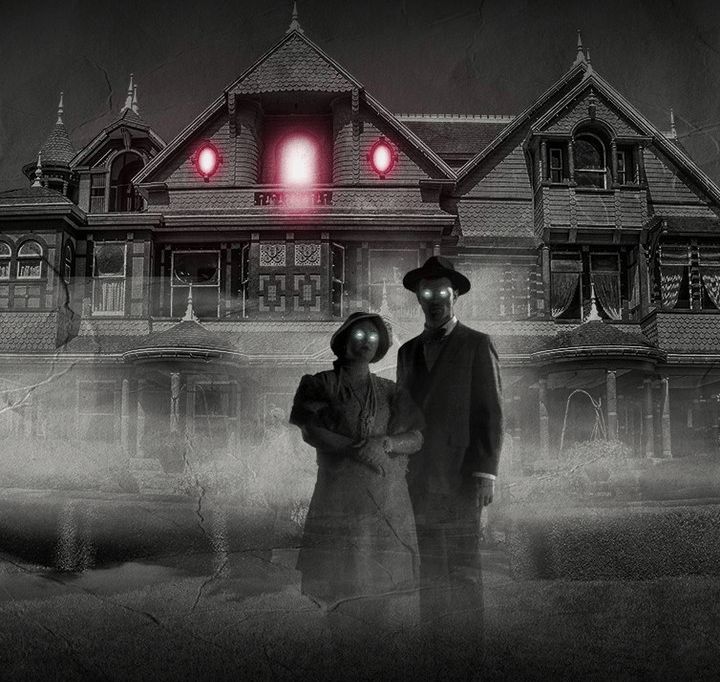
Like a scene from the spectral World, the abnormal foggy essence swirled in vortex shapes and at time, it resembled horses running past us, but the curtains did not move, though we felt air currents around us. We felt vulnerable and somewhat uneasy. I could not for my life keep back a loud scream—the second I had emitted that night. It echoed and echoed through the dim vaultings of my mansion, and I had to choke back a flood of reaction that threated to burst out. Arkie saw a pale figure heading toward him as he ran from the parlor. He quivered when the thing growled at him. It stood out like white chalk on a black board, moving in darkness, seeking. It moved rapidly and just as suddenly as it have moved through the gallery, it suddenly was gone. When I looked around, I saw nothing of the foggy mist that surrounded and chilled us to the bone; it had vanished. The room was clear and felt warmer. What seemed like a long time in the fog had only been a few short minutes! When Arkie and I talked, we were both in awe at what we had experienced. Words were few as we tried to make sense of the incident. Arkie’s hair used to be dark brown, with grizzled streaks about the temples; in less than a month from that day he was a gray as badger, and he has never been quite the same man since that night. I do not believe anybody had ever felt so much sheer hell in one night. Gargoyles and chimeras, we saw all sorts of things, as if it was some passage from the Middle Ages. Arkie said my home repelled him more and more every day, and frightened him, as its features and expressions developed in a way he did not like; in a way that was not human. He felt like a ghoul had been feeding on his soul. He proceeded to leave the hose and suddenly jumped back a foot and started to cry. A dark figure draped in a black tattered robe with a deep hood that concealed his face stoop there, blocking the entrance. My heart sank centuries away as the soul goes as the awful, blasphemous horror touched quite beyond the power of words to classify. I shivered slightly. #RandolphHarris 3 of 9

“What are you?” Arkie cried out desperately to the figure robed in black. There was only silence. He knew the horrible figure we be upon us soon. He flung his sword at the figure in black, and the dark robed figured answered back by point a half-rotted finger at Arkie. The sword flew backwards from his hand. He quickly spun around only to find, to his surprise, that the dreadful ghoul had not emerged from the hallway yet, but we could hear it coming. Arkie’s eyes widened in horror and his heart sank further as he looked to see that his sword hung in the air. Utter fear and hopelessness played on his mind. The ghoul was breathing like a wild beast; and I heard an evil sound also, with blows of something violently driven through flesh and bone, as the sword moved on its own, staking Arkie in the heart. I cried out for mercy as the ghoul approached, but was frozen in fear. Its deathly yellow eyes looked on me with hate and savage hunger. Yellow ooze dripped from its frightful maw. And its long fingernails danced in my hair, before it devoured what remained. As the ghoul kneeled, gnawing at Arkie’s head as a child nibbles at a stick of candy, the shadowy specter looked at me and spoke with it’s a hollow voice, saying “There is no shame in what you have done. Your former life is behind you.” I felt that any moment it might drop its present pray and seek a juicier morsal. But, the nearly eight-foot ghoul grabbed the blood-soaked sword and fled with it. This strange proceeding gave rise to many inquiries. Only a few could answer them. My home is dreaming gorgeously and overflowing with wonder and terror and escapes from the commonplace. It can truly catch the night spirit of antique horror, terror, as well a beauty from life. The haunting apparitions were seldom completely human. Occasionally things would leap through open windows at night, or could be seen squatting on the chest of sleepers, worrying at their throats. The utter inhumanity and callous cruelty of the things torture the brain and flesh. #RandolphHarris 4 of 9
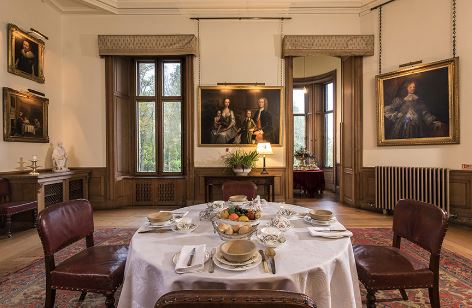
Unlocking the front doors, one is ushered into decorative hallways with splendid mahogany paneling—thrilling and suggestive of the time. Ancient paneled rooms, or simple vaults of masonry, there is even a narrow staircase the leads to the ceiling where a ghost is said to reside. Servants have felt temperature changes upon entering the room and sensed an unknown presence next to them. Others have glimpsed the blasphemous shapes that lope and trot and crawl up the stairs and through the ceiling. We saw the demons themselves and were afraid of them. My shocked scream had waked unaccustomed echoes in the labyrinth. It was more of the physical than the spiritual. I was paralyzed for an instant. I heard a faint scurrying sound somewhere, and a series of squeals or beats in a direction I could not determine. Then there came a subdued sort of clatter which somehow set me all in gooseflesh—a furtive, groping kind of clatter. It was like heavy wood falling on stone or brick—wood on brick—what did that make me think of? It came again, and louder. There was a vibration as if the wood had fallen farther than it had fallen before. After that followed a sharp grating noise. The archaic tunnels in my basement touched graveyard and witch-den. But whatever was in them was devilish anxious to get out. Accidents had happened, but I have never seen what I saw this night—that creature was neither alive nor dead, it abided neither above ground nor in the grave. It was a colossal and nameless blasphemy with glaring red eyes, and it held in bony claws a thing that had been a man. However, it was not even the fiendish apparition that made such an immortal fountainhead of all panic—not that, nor the face with its pointed ears, bloodshot eyes, flat nose and drooling lips. It was not the scaly claws nor the mould-caked body, nor the half-hooved feet—none of these, through any one of them might well have driven an excitable man to madness. It was the curse, the impious, the unnatural endless cycle of terror. #RandolphHarris 5 of 9

These monsters were there—they glared and gnawed and gnawed and glared—and I knew that only a suspension of Nature’s laws would ever let a person be terrorized like this—it was truly some glimpse of the netherworld which no mortal unsold to the Fiend has ever endured. I had to hide this well-established horror-World which I saw fully, brilliantly, squarely and unfalteringly. Fair sized rooms, with wooden floors and furnished were bricked up with extreme care, to conceal the ghastly demons and nauseous monstrosities that leered around from every side of the rooms. I always knew William, no matter how beautiful and pure he was, was not strictly human. Either he was born in strange shadow, or he had found a way to unlock the forbidden gate. There are secrets, you know, which might come down from old Salem times, Cotton Mather tells even stranger things. In the Dark Ages, belief in apparitions, vampires, hell hounds, and demons were commonplace. While belief in ghosts declined in the eighteenth century, it was revitalized in the nineteenth century with the Society of Psychical research. While culture differ in their beliefs about what happens after death, most cultures believe that a ghost can return to the World of the living, with either good or bad intent. In Western cultures, it is most commonly believed that a ghost is the soul of the deceased who cannot find peace or does not know they are dead, leading them to haunt places where they lived or died or objects that caused their death, sometimes they even haunt bloodlines. It may be that they have unfinished business on the Earthly plane, perhaps to protect a loved one, or impart information or reenact the death. I do not think that any power on Earth could make anyone speak of what happened in my home, even old priests were too frightened to look in. #RandolphHarris 6 of 9

It has been said that Mrs. Winchester slept in a different bedroom every night, supposedly in order to confuse evil spirts. Mrs. Winchester was deeply concerned with the welfare of her servants and their families. They were well paid and often additionally rewarded with gifts, even homes, or real estate and lifetime pensions. The full scope of her generosity charity and many kind acts will forever remain unknwn and such was her sincere desire. Her donations were never made public. She contributed to charities of all faiths. In 1911 in New Haven, Connecticut, she established the William Wirt Winchester Memorial Sanitorium for Tuberculosis (also known as low consumption), endowing it with $1,200,000.00 (2023 inflation adjusted $38,540,084.21). Visitors to The Winchester Mystery House are bound to run into others who are curious about the spirit World. It may seem that our intents have been to weave a cloak of vindication and protection covering our lady’s eccentricities, so many to this day still unexplainable. In truth, volumes could be written extolling her many virtues and justifying the construction of one of the largest and most significant architectural structures in the World. Still the Question remains—Why? Why? The enigma of The Mystery House that tragedy and a rifle built is perhaps unanswerable. The present generation must weigh and draw its own conclusions about this Valley’s most interesting, most controversial, most unappreciated and surely our most mysterious First Lady! No one will ever know, but this beautiful and bizarre mansion has, we think, allowed Mrs. Sarah L. Winchester, Lady of Mystery, to achieve a unique kind of eternal life. #RandolphHarris 7 of 9

The spirit World and the human World were once so closely interwoven as to be indivisible. Look at monument, such as The Winchester Mystery House, that our ancient predecessors erected, and the traditions devised, to house, honour, and succor the dead. We still retain enough of our ancestors’ belief that our dead are aware of how we treat them, that we try to ensue they do not have anything thing to complain about. And we listen with widening eyes and quickening heartbeats to the stories told about the ghost that exist and have been recorded throughout time. The Winchester Mystery Houses catches the overtones of the soul, and you will not find those in a modern or renovated home because it has had no time to pick memories and attract local spirits. Placed like Mrs. Sarah L. Winchester’s home was not merely made, but it actually grew. Generation after Generation lived there and felt and died there, and in days when people were not afraid to live and feel and die. This house has stood for almost two centuries and what it has witnessed would make a modern house crumbled into powder. What do modern know of life and the forced behind it? This mansion once had a set of tunnels that kept it in touched with over Victorian houses on the estate. There is hardly a month that you do not read of carpenters finding bricked-up arches and wells leading nowhere in this or that old section of the house. During the time of the construction of this mansion, there were witches and what their spells summoned; pirated and what they brought in from the sea; smugglers; privateers—and I tell you, people knew how to live, and how to enlarge the bounds of life, in the old time! #RandolphHarris 8 of 9

While cleaning the mansion one night, a tour guide noticed a man in 19th century clothes, very pale, with pale blue eyes approaching the Venetian Dining Room. The tour guided continued to work until the mane came very close and stood directly over him. Becoming a bit uneasy at the man’s silence, the tour guide finally asked him, without looking of, if he wished to tour the mansion. When the “guest” did not reply, the tour guide stopped dusting underneath the table, and looked up at the silent man. The man’s face was contorted with rage; his lips moved furiously and he gestured as if he were shouting, but he made no sound. The tour guide fell onto the floor. Before he could turn and flee, the guest disappeared. Terrified, the tour guide ran until he came to an assistant manager. “I saw a ghost,” the tour guide grasped, out of breath. “The ghost of one of the carpenters has come back.” The ghost appeared in August of 2006, to another tour guide. He had entered the Daisy Bedroom and found a fellow tour guide leaning against the wall. Surprised by his presence, he had begun to question the man when he melted into the wall. When he reported the incident, one of his coworkers dismissed it as imagination. A few days later, two tour guides saw the same carpenter. They were locking up the mansion and the lights had not been off more than a few minutes when the sound of footsteps caused both tour guides to stop in their tracks. Before either of them could move, a door swung open and a young man entered. He gestured wildly and seemed to be shouting at the two tour guides, neither of whom could testify that any sound issued from the angry visitor. When one of the tour guides turned on the light, the figure faded before their astonished eyes. They quickly had the mansion secured and order all exists guarded. Guards reported that no person had attempted to leave the building. After the guards had conducted a search of the rooms, they were convinced that their visitor had not been a living man. #RandolphHarris 9 of 9
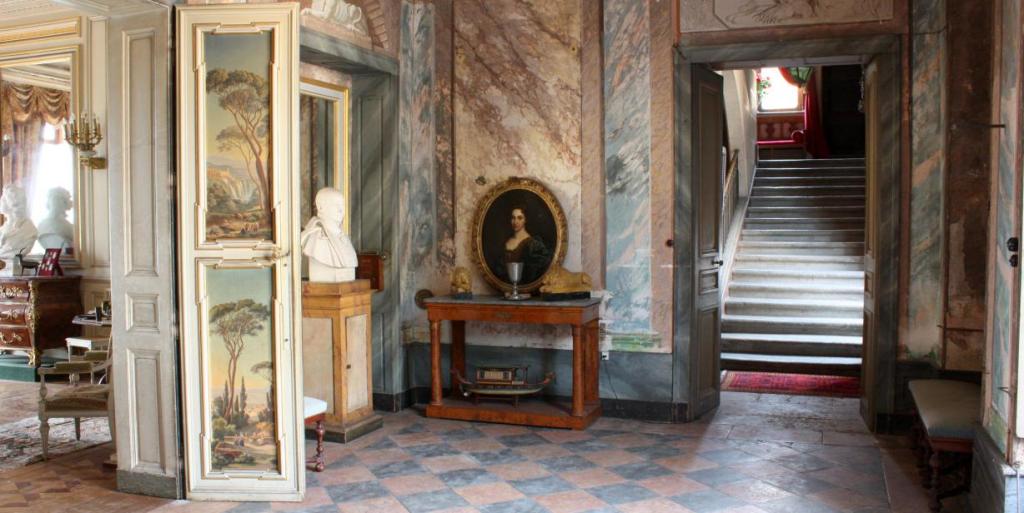
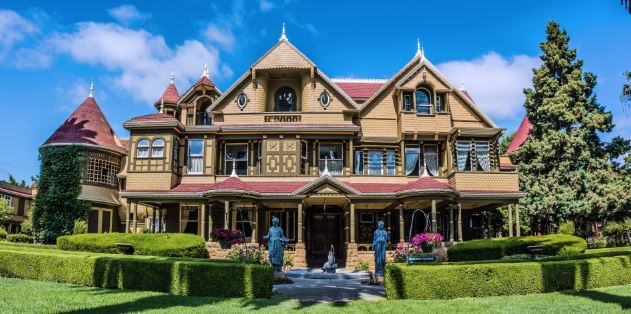
The room count of California’s most mysterious mansion has just increased by one, rounding out at 161 chambers (that we know of). Preservationists at The Winchester Mystery House in San Jose have found a previously unknown room in the attic of the house, and in it was a pump organ, a dress form, a sewing machine, a Victorian sofa, and several paintings.
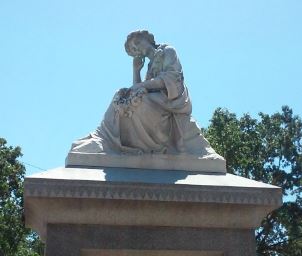
For further information about tours, including group tours, weddings, school events, birthday party packages, facility rentals, and special events please visit the website: https://winchestermysteryhouse.com/

Please visit the online giftshop, and purchase a gift for friends and relatives as well as a special memento of The Winchester Mystery House. A variety of souvenirs and gifts are available to purchase. https://shopwinchestermysteryhouse.com/

If you forget to purchase something during your visit, you can order any gift item by calling 408-247-2000 and charging them to your credit card. You can also place an order through the mail. Be sure to include a daytime telephone number with area code. Write to: Winchester Mystery House.

An Artifact from Another Level of Being

The silence closed in. Something was building in Llanada Villa. Something was happening in the very air itself. Something changed in the golden glow of a late autumn afternoon. And as I heard the music, a long stab of terror drove through my heart. I assented to the window. As I looked out, I saw a handsome old-fashioned carriage, with a troop of couriers and footmen. I saw the slim figure of the pale gentleman in black, as he held a thick velvet cloak. He looked about him at the others as he went on, his voice ringing clear in the silence. “Never such a place as this has existed before. A place where demons have been invented by aggrieved souls. I wondered if Mrs. Winchester was perhaps a member of the Freemasons, or some other secret society. Maybe she holds some exalted rank.” I felt a great shudder pass through me at these words. However, there had been a conviction in those appalling words. Secret societies were very fashionable just then. Secret societies and psychiatry were the contrasting en vogue activities of the moment. I folded my arms and leaned against the frame of the door, obscuring for the moment the light behind me. I had an urge to venture outside, to walk in silence amongst the trees. However, the fruit orchard was dark enough even in daylight; by moonlight it would be all too easy to imagine terrors—as I keep imagining I can hear soft footsteps moving across the floor above my head. But when I sit on the sofa to listen, I hear only the beating of my heart. I walked for hours examining the trees and the splendid fruit that would be harvested. Before long, I was overtaken by night while still in the fruit orchard. Utterly bewildered and overcome with fatigue, I had lain down near the root of a large plumb tree and fallen into a dreamless sleep. #RandolphHarris 1 of 8

It was hours later, in the very middle of the night, that one of God’s mysterious messengers, gliding ahead pronounced the awakening word in my ear. Waking from a deep sleep at night in the midst of what seemed like a forest, front among the tree on either side I caught broken and incoherent whispers in a strong tongue which I partly understood. They seemed to me fragmentary utterances of a monstrous conspiracy against my body and soul. It was now long after nightfall, yet the interminable fruit orchard through which I journeyed was lit with a wan glimmer having no point of diffusion, for in its mysterious lamination nothing cast a shadow. A shallow pool in the guttered depression of an old well met my eye with a crimson gleam. I stooped and plunged my hand into it. It stained by fingers; it was blood! Blood, I then observed, was about me everywhere. The fallen fruit showed blots and splashes of blood. The girds of the orchards were pitted and spattered as with red rain. Defiling the trunks of the trees were broad maculations of crimson, and blood dripped like dew from their foliage. All this I observed with a terror which seemed not incompatible with the fulfillment of a natural expectation. It seemed to me that it was all in expiation of some crime. So frightful was the situation—the mysterious light burned with so silent and awful a menace; the noxious plants, the trees that by common consent are invested with a melancholy or baleful character, so openly in my sight conspired against my peace; from overhead and all about came so audible and startling whispers and the sighs of creatures so obviously not of Earth—that I could endure no longer, and with a great effort to break some malign spell that bound my faculties to silence and inaction, I screamed with the full strength of my lungs! #RandolphHarris 2 of 8

My voice was broken, it seemed, into an infinite multitude of unfamiliar sounds, went babbling and stammering away into the distant reaches of the orchard, died into silence, and all was as before. Despair succeeded hope. Gratitude gave place to curse. As I preceded down the path, sobbing quietly to myself, in the misery of fear, the stern light of the Observational Tower became a tiny speck, yellower but scarcely bigger than some of the stars, which here and there shone between the clouds. Nearly twenty minutes passed, and my fatigue began to change to exhaustion. The overpowering sense of the inevitable pressed upon me. With the weariness came a strange comfort. On, and on I went through the thicket of trees. I knew of my probable presence in the spirit World. The moon, then in her third quarter, pushed out from behind the concealing clouds and shed a pale, soft glitter upon my mansion. My last appeal had been heard. I made it home. About half an hour after getting home, I still felt energized but I began to feel a sensation around my forehead as I have many times since. I suddenly felt weak. I went in and sat at the foot of my bed and passed out. I have never been given to fainting or passing-out spells, but I did not fall asleep—I passed out cold. When I woke up, I had no concept of time. When I woke up, a low, wild peal of laughter broke out at a measuresless distance away, and growing even louder, seemed approaching ever nearer; a soulless, heartless, and unjoyous laugh, like that of loon; a laugh which culminated an unearthly shout close at hand, then died away by slow gradations, as if the accursed being that uttered it had withing over the verge of the World whence it had come. #RandolphHarris 3 of 8

Sitting here in my temple of a house, I felt trapped and compromised, and even terrified. I got a feeling that the presence was still nearby and had not moved. A strange sensation began slowly to take possession of my body and my mind. I could not say which, if any, of my sense were affected; I felt it rather as a consciousness—a mysterious mental assurance of some overpowering presence—some supernatural malevolence different in kind from the invisible existences that swarmed about me, and superior to them in power. I knew that it had uttered that hideous laugh. And now it seemed to be approaching me; from what direction I did not know—dated not conjecture. All my former fears were forgotten and merged in the gigantic terror that now held me in thrall. Powers were traversing my haunted mansion. My senses were heightened as I found myself starting into the sharply dawn face and blank, dead eyes of my own mother, standing white and silent in the garments of the grave! The apparition confronting me—the thing so like, yet so unlike my mother—was horrible! It stirred no lover nor longing in my heart; it came unattended with pleasant memories of a golden past—inspired no sentiment of any kind; all the finer emotions were swallowed up in fear. I turned to turn and run from before it, but my legs were as lead; I was unable to life my feet from the floor. My arms hung helpless at my sides; of my eyes only I retained controlled, and these I dared not remove from the lusterless orbs of the apparition, which I knew was not a soul without a body, but that most dreadful of all existences infesting my haunted mansion—a body without a soul! #RandolphHarris 4 of 8

In its blank state was neither love, nor pity, nor intelligence—nothing to which to address an appeal for mercy. For a time, which seemed so long that the World grew gray with age and sin, and the haunted forest, having fulfilled its purpose in this monstrous culmination of its terrors, vanished out of my consciousness with all its sights and sounds, the apparition stood within a pace, regarding me with a mindless malevolence of wild brute; then thrust its hand forward and sprang upon me with appalling ferocity! The act released my physical energies without an unfettering my will; my mind was still spellbound, but my powerful body was and agile limbs, endowed with a blind, insensate life of their own, resisted stoutly and well. For an instant I seemed to see this unnatural contest between a dead intelligence and a breathing mechanism only as a spectator. Despite my struggles—despite my strength and activity, which seemed wasted in a void, I felt the cold fingers close upon my throat. Brorne backward to the floor, I saw above me the dead and drawn face within a hands breadth of my own. Its eyes were shallow to the point of blankness, and then all was black. Until I awoke, the passage outside my room had been pitch dark. Now the gasoliers illuminated the hall, but the glass was so blackened that they yielded only a dim, murky light. The air was stale and close. Expecting at every turn to find a housemaid awaiting me with a smile, I made my way through the gloom to the landing. The double doors to the gallery stood open. Along each wall, a row of wavering light receded. Transom windows shone with a faint cold light; higher still, the ceiling was shrouded in darkness. Some twenty feet away from me, candles burned upon a small round table, lighting of the face of the pale man and Mrs. Haas. “Ah, there you are, my dear,” said he, just as if he had last seen my five minutes—rather than several days—ago. I moved reluctantly to join them. #RandolphHarris 5 of 8

Mrs. Haas, resplendent in crimson silk and displaying a large expanse of white bosom, greeted me with disdain. Behind them, the wall at the far end of my gallery was dominated by the immense fireplace, and the armour towering in the shadows beside it. The sword glittered beneath its gloved hand; in the shifting light it seemed alert, alive, watchful. Within the fireplace was a massive chest of dark metal. “Dr. Cottam was about to tell us,” said Mrs. Haas impatiently, “of a discovery he had made amongst your late husband’s papers.” He spoke as if I had kept them waiting. “Indeed I was.” His tone was as cordial as ever, but with an edge of anticipation. His teeth caught the light as he smiled; the pupils of his eyes shone like twin flames. “Now, in going through his study the other day, I found a page of notes you must have missed after relocating from New Haven—scrawled in haste, and sometimes quite impenetrable—which had slipped behind a row of books.” On the table was a crumpled sheet of paper. “I shall not weary you with the tale of my efforts to decipher this. He believed that if he were inside the armour when lighting struck, he would pass unharmed into the next World, jut as the risen body, according to Scripture, will ascend to Heaven upon the day of judgement.” “Oh dear Heavens,” cried Mrs. Haas. “Mrs. Winchester, I have been dying for a grand tour of your estate. My companion Dr. Cottam is rather a bore with such foolish tales of science fiction!” “There is a theory, you know, that the basis of spirit may be electrical. For spirits to communicate with the living,” expressed Dr. Cottam, the man with the very pale face. #RandolphHarris 6 of 8
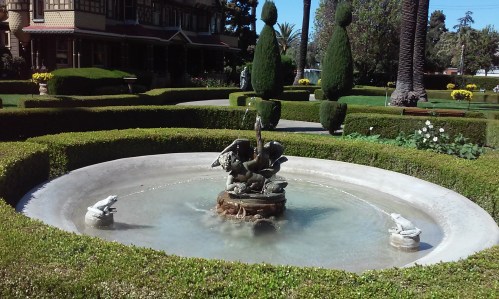
“Dr. Cottom, I have begun to wonder whether your obsession with William Winchester is not, perhaps, quite as mad as I assumed,” explained Mrs. Haas, “but I do wish to get on with this tour. Mrs. Winchester has already delayed us several hours after he invitation, and I am growing quit weary.” “Well, Mrs. Haas, as I do recall, Gods are often said to wield lightening; and whilst this represents primitive awe at the power of nature, it may also shroud a genuine intuition. The same applies to the spiritualist practice of linking hands around a table. Ghosts and spirits are generally depicted as emanations of light; one thinks of St. Elmo’s fire or the very rare phenomenon of ball lightning…a far fetched analogy, you may say, but just as a magnetic field will cause a heap of iron filings to arrange themselves into a complex pattern, so the soul, the vital principle—call it what you will—animates the Earthly body. Might it not be that the vital principle is electrical, perhaps in some subtler form that science has not yet grasped?” said Dr. Cottam. “Dr. Cottam, while your theories are very fascinating, I fear Mrs. Haas is growing impatient and I should like to give her a tour now,” I explained. I liked Mrs. Haas more and more every minute. Her gossip, without being ill-natured, was extremely diverting to me, who had been so long out of the great World. I thought what life she would give to my sometimes-lonely evenings at home. There was a ball going on in the Grand Ballroom, this house seemed to run itself sometimes, which would not be over until the morning sun had almost reached the horizon. It pleased the Grand Duke to dance till then, so loyal people could not go away, or think of bed. #RandolphHarris 7 of 8

We had just got through a crowded parlor, when Dr. Cottam asked me what had become of Mrs. Haas. I though she had been by his side, and he fancied she was by mine. The fact was, we had lost her. All my efforts to find her were in vain. I feared that she had mistaken, in the confusion of the momentary separation from us, other people for her new friends, and had, possibly, pursued and lost them in the extensive grounds which were thrown open to us. Morning broke. It was clear daylight before I gave up my search. It was not till near two o’clock next day that we heard anything of Mrs. Haas. At about that time a servant knocked at my door, to say that he had been earnestly requested by a young, who appeared to be in great distress, to make out where she could find Mrs. Winchester and Dr. Cottam. There could be no doubt, notwithstanding the slight inaccuracy that my friend had turned up. I had a housemaid go to the guest room and summon Dr. Cottam. I went down to the parlor and reunited with Mrs. Haas. She told me a story to account for having failed to recover us for so long. Very late, she said, she made a detour and wandered around, not before long becoming afraid and getting lost. She got into the Crystal Bedroom in despair of finding us, and had then fallen into a deep sleep which, long as it was, had hardly sufficed to recruit her strength after the fatigues of the ball. It the midst of my perplexities, an anxiety of far more urgent kind presented itself. My dear friend began to lose her looks and health, and that in manner so mysterious, and even horrible, that I became thoroughly frightened. #RandolphHarris 8 of 8

People, since as long ago as the 1800s, have reported a vast array of unexplained events, experiences, and sightings at what is now known as The Winchester Mystery House. Over the years, people have reported bone-chilling sightings ghosts, angels, demons, fairies, giants, orbs, lights, mist, vampires, witches, warlocks and werewolves. In 2007, a man was attending Santa Clara University, and he was lucky enough to get hired as a tour guide at The Winchester Mystery House. He had no sooner moved into his apartment and had the telephone installed when he received a call warning him never to return to Sacramento again. During a later call, a woman with a high-pitched voice informed “G” that he was being kept under surveillance by a group who felt that he had acted unjustly in the past by not returning things to their proper owners. G emphasized that he had led a very quiet life as an undergraduate.
Yet he probably received 30 or more telephone calls from anonymous voices advising him not to return to Sacramento. The voices reprimanded him for having taken something that did not belong to him. G said that he did not carry anything with him that was from Sacramento and did not often visit the beautiful city, and he seldom discussed his life with any but a few of his closet acquaintances. He wondered who could have possibly taken such a long-term interest in him? About the third year after working at The Winchester Mystery House, a guest unknown to him stopped to say hello. G knew that such an act was hardly unusual, since guests will often do this to find out interest facts about tour guides and secrets about Sarah L. Winchester’s mansion. However, he noticed the boy was strangely inquisitive. G was astonished when the teenager drew a design on a piece of paper that he had seen somewhere in the mansion. He smiled at G, then asked if he knew what the symbol meant.

When G pressed the boy, in turn for some answers, the guest threw away the design, laughed, and said that he was just fooling around, that he did not mean anything about it. G never saw the alleged guest again. He descried him to a could of tour guides, but no one was able to identify him. After several years of watching at The Winchester Mystery House, G graduated from University. He had not been in possession of his diploma for more than four days when someone rang his apartment and scolded him for taking things that did not belong to him. The voice told G that he should always leave things where they were. He reported to his supervisors that he kept receiving mysterious calls. On one occasion the voice told G that he has discovered a strange key to other dimensions, but the entities had long since reclaimed it. However, apparently, some spirit masqueraders were determined that he should never forget the day he came into contact with an artifact from another level of being. What is The Winchester Mystery House?

And please be sure to check out the online gift store: https://shopwinchestermysteryhouse.com/


I’m a Pharmacist, I Know What I am Doing

Recreational drug use is often portrayed in popular culture and music. To further highlight this illustration, probably the best known musical cliché of recent decades was “sex, drugs, and rock’ n’ roll,” while the Billbooard charts have been filled with songs involving drugs, such as Eric Clapton’s Cocaine or the Rolling Stones’ Sister Morphine and Mother’s Little Helper. Popular culture portrays not just recreational drug use but tragedy associated with drugs, for example, the deaths of guitarist Jimi Hendrix, Janis Joplin, and Jim Morrison and many others. Of course, not all common-use drugs are understood as dangerous or associated with tragedy. We found clear evidence of two very different modes of entry among the respondents, namely recreational abusers and therapeutic self-medicators. However, it is important to note tht these were not mutually exclusive categories of offenders. In other words, these two categories were not completely dichotomous. As is usually the case, real life seldom fits cleanly into nice, neat categories. In fact, we were able to identify a number of cognitive and behavioural themes that were common to almost all of the drug-using pharmacists interviewed. These themes were expressed by nearly all of the drug-abusing pharmacists that we interviewed, regardless of how the individual initially began their illicit drug abuse career. The existence of these common themes suggest that pharmacy-specific occupational contingencies play a center role in the onset and progression of illicit use of prescription medicines. #RandolphHarris 1 of 20

Intuitively, it should not be surprising that pharmacists would steal prescription medicines as a way of treating their own physical ailments. After all, they have been exposed to years of pharmacy training that emphasized the beneficial, therapeutic potential of these medicines. Each pharmacist has dispensed the medicines to hundreds of patients and then watched the drugs usually produce the predicted beneficial results. They have all read the literature and drug inserts detailing the chemical composition of drugs and studied the often dramatic curative effects of the chemical substances. Pharmacists, more so than any other member of society, are keenly aware of how and why drugs work. There was strong evidence to suggest that both the therapeutic self-medicators and the recreational abusers actively used the years of pharmacological knowledge that they had acquired. In their eyes, it made perfect sense that they should put their pharmacy knowledge to work on themselves. This application of knowledge can be seen in the comments of a 40-year-old female self-medicator: “So, in 1986 I was sent to the psychologist. That was when I was forced to recognize that I had an alcohol problem. And I recognized that I had to do something. And in my brilliant analysis, I made a decision that since alcohol was a central nervous system depressant, the solution for me was to use a central nervous system stimulant. That would solve my alcohol problem. So I chose the best stimulant that I had access to, and that was [pharmaceutical grade] cocaine. I started using cocaine in 1986. I never thought that it would progress. I never thought it was going to get worse. I thought, ‘I’m just going to use it occasionally.’” #RandolphHarris 2 of 20

Similar trends were observed among the recreational abuser group, only here, the applied use of drugs was based upon more recreational motives. Almost all of the therapeutic self-medicators and recreational abusers described how they became masters of quickly diagnosing their own ailments or emotional needs and then identifying the appropriate pharmacological agent that would remedy the problem. Moreover, as professionals, they were confident that they would be able to self-regulate their drug intake so as to never become addicted. All of the respondents drew upon their social status as pharmacists to convince themselves that their drug use would not progress into dependency. They recall being adamant in their view that personally they were immune from such problems, believing that only stupid, naïve people became addicted to drugs. As a 40-year-old female self-medicator put it, “I’m a pharmacist, I know what I am doing.” A 39-year-old male self-medicator went so far as to say: “I mean, we know more [about the effect of drugs] than doctors. We have all the package inserts. We have the knowledge. We know a lot about the drugs, so what’s the big deal?” Elsewhere we refer to this denial mechanism as a “paradox of familiarity,” because familiarity can breed consent, not contempt toward prescription drug use. Members of both categories of pharmacists claimed that they had never been warned about the dangers of drugs, insisting instead that their training had only stressed the beneficial side of prescription medication. #RandolphHarris 3 of 20

To further highlight this illustration, a 48-year-old male misuser stated: “I never had anybody come right out and tell me that [prescription drug abuse] was probably unethical and illegal because they assumed that we knew that. But nobody ever said this is something that is not done.” Let without guidance on the issues, some pharmacists assumed that self-medication was acceptable behaviour. To this end, a 39-year-old female self-medicator said: “It’s [self-medication] just part of it [the pharmacy job]. It’s just accepted because we know so much. I’m sure it’s the same way when the doctors do it. It wasn’t a big stretch to start going “You know, I got a headache here, maybe I should try one of these Percocets [narcotic analgesic]?” Many pharmacists spoke about their prescription drug theft/use as if it were an entitlement that went along with being a pharmacist. Much like a butcher always has fresh meat at home or a car dealer always drives a state-of-the-art automobile, pharmacists will always have the best drugs. This theme is illustrated in an exchange that occurred between the interviewer and a45-year-old-male pharmacist: “Why take plain Aspirin or plain Tylenol when you’ve got this [Percocet-narcotic analgesic]? It works better….[so] you don’t even have to struggle with it. I really believed that I had license to do that…as a pharmacist. I mean with all that stuff sitting there, you know. Oh, my back was just killing me during that period of time and this narcotic pain reliever is sitting right there. I thought, ‘why should [I] suffer through back pain when I have this bottle of narcotics sitting here?” #RandolphHarris 4 of 20

The above-mentioned themes involve cognitive dimensions of the pharmacists’ drug abuse in that they speak to common motivational and justification themes that were present in all of the interview. Perhaps more important is the fact that there was a common behavioural characteristic shared by all 50 pharmacists. In ever case, occasional prescription drug abuse eventually gave way to an advanced addictive state that was marked by an enormous intake of drugs, unmistakable habituation, and the constant threat of physical withdrawal. Members of the recreational abuser and therapeutic self-medicator groups alike routinely reported daily use levels exceeding 50-100 times the recommended daily dosage. One pharmacist reported that his drug use regimen progressed to 150 Percocets [strong narcotic analgesic] per day. Another individual reported injecting up to 200 mg of Morphine each day. Still another respondent described a daily use pattern that, among other things, included 5g of cocaine. Invariably, these advanced levels of drug use led to clear signs of habituation and the constant threat of physical withdrawal. At this point, the individual recalls growing increasingly desperate. Consider the following quote from a 44-year-ol male pharmacist who was in charge of ordering the narcotics at the independent retail pharmacy where he worked: “I was ordering excessive quantities and chasing down tracks. That’s what I used to do. I was really reaching my bottom. I would chase these delivery trucks down in the morning because I didn’t come to my store until mid-afternoon. I was in withdrawal in the morning and I was without drugs, so I had to have it. #RandolphHarris 5 of 20

“I was just going nuts. Many mornings I had gone to work sweating. It would be 30 degrees (Fahrenheit), it would be January, and the clerk would say, ‘you look sick,’ and I would say, ‘It’s the flu.’ So I would pay the delivery guys extra money to deliver my drugs first or I would chase the delivery trucks down in the morning. I knew the trucks delivered at 6 in the morning, they came by my area, and I would get up early and chase the trucks down the highway. I would go in excess of 100 miles an hour trying to catch up with this truck and flag it down.” The advanced stages of drug addiction invariably produced traumatic physical psychological outcomes. Eventually, “out-of-control” drug use patterns along with the realization of chemical dependency left the pharmacists in a problematic mental state. It was at this point that al of the pharmacists recalled coming to grips with their addiction. This personal realization was accompanied by a shift in the way they thought about their drug use. They no longer denied that situation by drawing upon recreational or therapeutic explanations. Instead, they finally admitted the dire nature of their situation and became more and more reclusive. In short, all of the respondents grew to realize that they had a drug problem, turning then to fear and ignorance to foster the final weeks or months of their drug addiction. Two identifiable criminal career trajectories were observed among the pharmacists who we interviewed: recreational abusers and therapeutic self-medicators. #RandolphHarris 6 of 20

Careful scrutiny of contemporary drug theory, policy, and practice in all areas, from prescription pharmaceuticals to illegal recreational drugs, reveals numerous apparent inconsistencies and pervasive incoherence. This results, in part, from a kind of silo thinking in which attention to drug theory and drug policy, however sophisticated in its own realm, is encapsulated within distinct professional, practical, and economic spheres or “silos.” Silos are descriptively and prescriptively dense but stand isolated from each other in an empty landscape. In other words, people in one arena of drug theory, policy, or practical programs have plenty to say to each other about the way things are and the way things should be with respect to drugs, but they don’t talk much across the open spaces between their areas of focus. Not only do they not talk much between their fields, for reasons to be explored, they cannot really do so. Clearly, our discussion of the therapeutic self-medicator category goes far beyond what is present in the existing literature. However, the first documentation of recreational drug use among health professionals, had minimal impact on the way that the various healthcare professions think about or address problem of substance abuse within their ranks. The pharmacy profession has been especially reluctant to address the reality of the prescription drug abuse situation. For instance, existing self-reports and interview research on drug using pharmacists largely ignores the recreational origins of drug use and, instead, describes the affected individuals as having misplaced therapeutic motivations. This assumption is reinforced by published biographical accounts of recovering drug using pharmacists. While principally intended to raise awareness among fellow pharmacists, these confessionals consistently emphasize the well-intentioned motives behind the individuals’ destructive drug use past. #RandolphHarris 7 of 20

Information is called observable when it is available symmetrically to both parties, and verifiable when it can be proved to third parties such as a court. In practice, this is a matter of cost, and the standard of proof required. Contracts that are intended to be enforced in a court of law can only stipulate actions that are conditioned on verifiable information; courts cannot judge whether a breach of the contractual terms has occurred if they cannot verify whether the circumstances that call for an action have actually transpired. However, observable information can be the basis for contracts that are enforced by extralegal or private methods, because the two parties can know fully well whether a breach has occurred. Such extralegal methods of enforcement come in to broad types. One is enforcement by insider third parties with specialized knowledge that enables them to verify information that outsider general courts of law cannot; arbitrators in industry associations are the most prominent enforcers of this kind. The second is based on a relationship or ongoing interaction between the parties; a breakup of this relationship constitutes the punishment that may deter one of the parties from breaching. This covers many possibilities. The same two parties may meet repeatedly; the two may not have a direct repeated interaction with each other, but each may interact with others in a group or network that transmits information about any breach to all members and collectively sanctions the miscreant, using ostracism in business interactions or social relationships or both. #RandolphHarris 8 of 20

The distinction between observable and verifiable information is standard in the economic theory of contracts. The New York Stock Exchange developed its internal rules and procedures for dispute resolution, and even Taiwanese shoe manufacturers and Western fashion houses performed dispute-resolution functions in addition to their primary matchmaking ones. One may think that these alternative methods of private ordering must suffer a crippling disadvantage relative to the government’s courts, namely their lack of coercive power to ensure that their decisions are obeyed. However, the difficulty is often nonexistent or easily overcome. First, the sanctions available for private ordering are often very effective. Breach of contract can be deterred in ongoing relationships by the threat that the miscreant will be barred from future business with this particular partner or the group; this can be buttressed by social ostracism if the group fosters social ties among its business members. Sometimes this threat may be even more severe than the fines that courts would impose in the matter. If the threat is credible, in the sense of being a part of the strategies in the subgame-perfect equilibrium of the repeated game that constitutes the ongoing relationship, then the contract is self-enforcing. Second, arbitrators may have similar sanctions at their disposal; if they can bar the miscreant from the industry association, they can instantly put one out of business, which can be a more effective sanction than the fines the courts will impose. Of course, the feasibility of such sanctions depends on the availability of the requisite information, and in the case of repeated interactions, on how highly the participants value the future relative to the present. #RandolphHarris 9 of 20

Finally, courts recognize the informational advantage of the alternative institutions. Therefore when a relational or implicit contract serves such an informational purpose, courts refuse to intervene to modify its terms, or to insert missing provisions, or to overrule the availability of discretion to one party. They also enforce the awards of industry arbitration tribunals, using the government’s power of coercion to obtain compliance if the loser in the arbitration attempts to defy the ruling. In the United States of America, this has been so since 1920; in the international context, over 100 countries now accede to the 1958 New York Convention of the Recognition and Enforcement of Arbitral Awards. By providing for the appointment of industry-expert arbitrators, who can make many factual determinations more accurately and less expensively than a judge or jury can, the rules greatly expand the “contractible” aspects of an exchange. The use of stream-lined procedures together with the appointment of expert adjudicators transforms considerations that in the public legal system would have been only observable to the parties…into considerations that are also verifiable…thereby encouraging transactors to enter into more complete contracts. The point is not that arbitrators have access to more information. Any relevant information can be elicited and brought before the court by either party to the dispute through the legal process of discovery. Conversely, many arbitration forms do not allow discovery, although the arbitrator can request additional information. #RandolphHarris 10 of 20

The key is how information is used; industry arbitrators can use their expertise to interpret it—make factual determinations—more accurately and at a lower cost than non-specialized courts can. This is the sense in which verifiability should be interpreted in this context. Arbitration is used in other contexts for other reasons. In international transactions, each party may suspect that the other country’s courts will be biased in favour of its own nationals; this can deter them from entering into contrast that may end up in national courts. Therefore both may agree ex ante to settle any disputes in an agreed international forum of arbitration. Several of these exist, based in London, Paris, Stockholm, et cetera. They differ in their procedures (degree of formality, time taken, fees charged, et cetera) and the range of legal traditions they cover (civil, common, Islamic, et cetera). These affect the choice of forum by the parties to each transaction. These forums usually lack the expertise that industry-specific forums can provide. Therefore they are not likely to lower costs or improve verifiability and permit more complete contracts; instead, removing the suspicion of bias may be their most important function. The different modes of private and official governance can interact in various ways. To further highlight the illustration, if an ongoing relationship based on the superior observability of information by the two parties breaks down, the best alternative available to the parties may be recourse to a contract based on verifiable information enforceable in a court of law, not total cessation of transactions. #RandolphHarris 11 of 20

And if an arbitrator’s award is not enforceable by direct sanctions such as fines, it may nonetheless form part of a relational arrangement where the arbitrator can terminate the miscreant’s access to future trades. Not only do modes like arbitration evolve and apply to provide governance for transactions where they have an informational advantage and can reduce transaction costs, but also transactions take forms that adapt to the available information and governance. As for the emergence and prevalence of barter and countertrade in post-Soviet Russia in this way: The advantage of paying with goods rather than money is that they can be earmarked s property of the creditor. Money is fungible and liquid; a buyer can hide money easily if he chooses to renege on his promised payment to the seller. Goods in a barter or countertrade contract are more difficult to hide, and therefore can act as deal-specific collateral that mitigates opportunism. When it comes to systems of integration, rising complexity in the economy calls for more sophisticated integration and management. In a not atypical case Nabisco, the food company, as to fill 500 orders a day for literally hundreds of thousands of different products that must be shipped from 49 factories and 13 distribution centers, and at the same time take into account 30,000 different sales promotional deals with its customers. Managing such complexity requires new forms of leadership and an extremely high order of systemic integration. That, in turn, requires greater and greater volumes of information to pulse through the organization. #RandolphHarris 12 of 20

To hold everything together—to track all the components and products, to synchronize deliveries, to keep engineers and marketers appraised of each other’s plans, to alert the R&D people to the needs of the manufacturing side and, above all, to give management a coherent picture of what is going on—billions of dollars are being poured into electronic networks that link computers, data bases and other information technologies together. This vast electronic information structure, frequently satellite based, knits whole companies together, often linking them into the computers and networks of suppliers and customers as well. Other networks link networks. Japan has targeted $250 billion to develop better, faster network. All these changes further accelerate the pace of operations and transactions. Economies of speed replace economies of scale. Competition is so intense and the speeds required so high that the old “time is money” rule is increasingly updated to “every interval of time is worth more than the one before it.” Time becomes a critical variable as reflected in “just-in-time” deliveries and a pressure to reduce DIP or “decisions in process.” Slow, sequential, step-by-step engineering is replaced by “simultaneous engineering.” Companies wage “time-based competition.” Expressing the new, it is clear that money moves at the speed of light. Information has to move faster. Thus acceleration pushed Third Wave business closer and closer to real time. #RandolphHarris 13 of 20

Taken together, these ten features of the Third Wave economy, among many others, add up to a monumental change in how wealth is created. The conversion of the United States of America, Japan and Europe to this new system, though not yet complete, represents the single most important change in the global economy since the spread of factories brought about by the industrial revolution. This historical transformation, picking up speed in the early-to mid-1970, was already fairly well advanced by the 1990s. Unfortunately, much of America’s economic thinking was left behind. Global markets of energy and mineral resources are undergoing far reaching irreversible changes, and so are perceptions about the policies needed to provide their stable supply. Global demand is surging due to a dramatic increase of consumption by the fast-growing large emerging economies. Experts project that, absent significant changes in policy or technology, global energy consumption will increase nearly 50 percent over the next 30 years. Energy consumption is growing faster than the GDP in many countries. On the supply side, uncertainties and destabilization risks are exacerbating due to rising political instability in exporting countries, periodical redirections of sales from external to domestic markets by leading suppliers, and, to a certain extent, a depletion, in some major producing countries, of existing deposits in the absence of new ones whose discovery and exploitation could make up for the loss. #RandolphHarris 14 of 20

Therefore, oil and some other natural resources are becoming more and mor attractive targets for speculators. In these circumstances, countries highly dependent on natural resources imports, especially those that do not have their own powerful resource multinationals, get increasingly concerned about supply destabilization risks. Predictions about an all-out resource war or bitter fights among buyers for limited amounts of oil or metallic ores look like an exaggeration. However, buyers’ competition for particular kinds of resources within particular periods of time due to particular circumstances is becoming a more frequent phenomenon. For instance, the Philippines and Vietnam protested to China against its patrol boats hindering their oil exploration activities near the disputed Spratly Islands in the South China Sea. China demanded that its neighbours stop exploration work in this area. Tensions rose as the United States of America declared that the South China Sea was in the sphere of its national interest and that it would stand by the Philippines as its ally. Now, when it comes to supernatural affairs, the angels are “sent forth to minister to the heirs of salvation,” reports Hebrews 1.14, but not to take the place of Christ or the Holy Spirit. The apocalypse seems to show that this ministration of angels to the saints on Earth is a ministration for war in the spiritual realm against the forces of Satan; but there is little indication given of ministry in any other way. #RandolphHarris 15 of 20

After the first Advent, when there was great angelic activity over the wondrous event of the Father brining the “Firstborn: of the new race (Romans 8.29) into the inhabited Earth (Hebrew 1.6), and again at the Advent of the Holy Spirit on the Day of Pentecost to begin His work of forming a Body like unto the Risen Head—and during the early years of the Church—the employment of an angel in direct and visible communication with believers seems to give way to the work and ministry of the Holy Spirit. The entire work of witnessing to Christ, and leading the Church into all truth, has been committed to the Holy Spirit. Therefore all intervention of “angels” or of audible voices from the spiritual realm purporting to be from God may be taken as counterfeits of psychopathological offenders, whose supreme object is to substitute the workings of their own wicked offenders in the place of God. In any case, it is best and safest in these days of peril to keep in the path of faith and reliance upon the Holy Spirit of God working through the Word of God. Man, the microcosm, the mirror of reality has structures of beings found in him, and are found analogously in the subhuman realm. Selfhood, inner awareness, freedom and destiny—all are verified analogously in subhuman beings. Furthermore, the concepts of courage, love, power, and justice are used to describe analogously the characteristics of all beings and of being-itself. The point we wish to make is that this use of analogy based on human experience seems to yield valid knowledge. #RandolphHarris 16 of 20

Moving up now to the relationship between man and God, one would expect that on the same principle, but with proper adjustments, man could get an analogous knowledge of God. Symbols are not a means of knowing God, but rather a way of speaking about Him. If one wishes to talk about God, finite material must be used, and this is justified by the fact that all finite beings participate in being-itself. Without such an analogy nothing could be said about God. However, the analogia entis is in no way able to create a natural theology. It is not a method of discovering truth about God; it is the form in which every knowledge of revelation must be expressed. In this sense anlogia entis, like “religious symbol,” points to the necessity of using material taken from finite reality in order to give content to the cognitive function in revelation. What is boils down to is that analogy or symbolism is the expression of an encounter with God. Through the revelatory experience is far more than an intellectual communication—it is primarily a reunion with the ground of being—it contains a cognitive element conveyed by symbols which are qualified as channels of communication by their participation in being-itself. Yet, it seems not, for every creature participates in being-itself, and yet not everything is a religious symbol, although it has the potentiality to become one. What is the decisive ingredient of symbolism beyond ontological participation? These symbols are not arbitrary interpretations of the concrete revelatory experiences. However, they appear within this experience itself. They are not created intentionally, but they are born in the same dimension in which the revelatory experience takes place. In and through its symbols the religious encounter with reality opens up the dimension of reality in which ultimacy appears. There is no other way of expressing our encounter with the holy than in symbols. #RandolphHarris 17 of 20

From the standpoint of the counselor who finds one’s role ambiguous, it seems more than likely that exploration of a developmental perspective would help resolve the conflicts implicit in one’s professionalization. For the psychotherapist who thinks of oneself as a physician who cures sickness, or who avoids this and speaks only of the “difficulties of living,” there may appear to be no conflict in one’s role. One may be satisfied to reduce symptoms of disorder, to solve the problem presented and to think of oneself primarily as someone who relieves distress, without defining one’s goals beyond that. However, apparently more and more thoughtful counselors do not think they can stop there, or do any permanent good, unless they leave their patients better able to cope with later problems and future strains. Some even feel that their job to plan for the optimal development of their clients, or to organize clients to plan for their own. The ambiguous feelings of the professional who presumes to assist in the personal problems of family members may be all to the good if these are construed in a framework of family relations which includes oneself. The concept of transference goes only part way. The client in the course of the counselor-client interaction frequently construes the counselor as a figure representative of previous others, with whom relations have been unresolved but are thus worked out through the interviews. The difficulty, however, from the client’s standpoint, is that no matter how versatile one’s counselor may be, and no matter how facile or fantastic one’s own imagination, the range of persons with whom a person needs intimate discourse in order to achieve one’s optimal development of self far exceeds the resources of this single relationship. #RandolphHarris 18 of 20

Moreover, there is the fact that the client must pay in cold cash for the kind of communication which the best families afford on a basis of affectional reciprocity; thus the most sacred disclosures hover at times on the verge of something equivalent to prostitution. Regardless of ethics and their enforcement by professional insistence upon its eventual termination, and the limitation of reciprocity to monetary reward; in a word, the elaboration of this relationship lead nowhere. The best hope for fruition of any gains that accrue is tht they serve as a bridge to the regeneration of their client’s involvement in a quasi-family constellation which includes near-rivals and critics, models and admirers, other ages and other genders, in both work and play. Only through others can one obtain the continual characterizations of self essential to valid knowledge of self. Research and experience have already shown that the human being, from birth until death, almost to the degree that the fish requires water, thrives only in social interaction. Neglect, isolation, loneliness, solitary confinement, and deteriorative influences very hard to endure, even though every physical condition of survival is met. And among all kinds of interaction, the most potent of all for personal development are those characterized by the unconditional acceptance of family relations. Only here is the listener who always finds more in the person than one presents in one’s actual behaviour. #RandolphHarris 19 of 20

Only here is the audience that never grows tried. Only here is the person of similar background, for whom every aspect of the culture—of class and ethic experience—resonates with comparable meaning. That a counselor could ever aspire to duplicate these functions of the optimal family is beyond the hope of those who have thought and written about it. In a sense this analysis of the implicit or potential demands on the counselor’s role both justifies and specifies a therapeutic approach. It also shows that one’s role must be transcended by more adequate institutions for providing each client with a stable constellation of significant others, who can be the precisely appropriate self-definers at each critical stage in one’s personal development. For the person whose actual family has failed one the solution suggested by this analysis is the invention of effective quasi-families. The process by which each person contributes to the self-knowledge of others, and others contribute to one’s knowledge of oneself, it immanent in human society. Where self-knowledge and self-control are deficient relative either to norms or ideals, the best means for reversing these deficiencies is effective utilization of all available knowledge of how selves originate, operate, and co-operate. Recognition that some tasks are beyond the powers of the unassisted individual does not mean that society must be divided into two classes, therapists and their patients. It means, or at least can be made to mean, joint action to perform these tasks. Such an approach is as relevant and applicable to the tasks of counseling agencies as to the other types of family agencies. #RandolphHarris 20 of 20

CRESLEIGH MEADOWS AT PLUMAS RANCH
Plumas Lake, CA |
Now Selling!

Cresleigh Meadows is now selling! Found just north of Feather River Boulevard, Cresleigh Meadows is home of the largest neighborhood in Plumas Ranch as well as the popular Bear River Park.

With four floor plans available, ranging from approximately 2,000 – 3,500 square feet offering, three to five bedrooms, we are certain you will find the home that fits your needs and lifestyle.

Popular design elements include open floor plans, large kitchen islands, and flex spaces are staples in Cresleigh homes. Multi-generational living options also available in select homes.

Homeowners will love the convenient commuter access to nearby Sacramento and Yuba City.

Take advantage of financing incentives available today! Contact our Sales Center to learn more about how we can help you buy-down your interest rate. https://cresleigh.com/cresleigh-meadows-at-plumas-ranch/

Stop by for a tour today, and make a Cresleigh Home, your home.



Los Angeles Will be Two and a Half Hours from Tokyo

Given that burglars are disproportionately young, poor, city-dweller, they tend to have frequent contact with other habitual offenders. There are various structures and processes that go along with the “stolen property system”—the underground market through which in-demand goods are stolen, housed, marketed, and resold on the street of America. Burglary is a crime that is marked by varied levels of social organization. Only on rare occasions do we find burglars who work as loners or within formal organizations. More often, burglars will operate as colleagues—the offender commits the crime along but relies on other members of the criminal subculture to supply him or her with inside information or to assist in converting stolen property into cash. Burglars who take the situation to the next level and enlist help in the actual break-in follow a more peerlike existence. Here, loose partnerships are maintained and invoked when a burglary opportunity presents itself. A primitive example of the peer model would be two or three drug users who randomly stumble upon an unlocked home or unsupervised business and decide to work together to take it down. In some cases, burglary offenders will align themselves in a teamlike format. These offenders invoke a division of labor with each participant serving an owned predetermined role and duties. One person might be assigned to lookout/driver role. Another might serve as the entry specialist, defeating any lock and alarms that are confronted. Still another person can take on the “muscle” role, responsible for doing the heavy lifting. #RandolphHarris 1 of 16

Socialization scripts play an important part in how and why burglars commit their crimes. Interview-based research suggests that novice or occasional burglars often rely on the tutelage of more seasoned offenders as a way of learning the proverbial ropes of burglary. Novices receive advice and instructions on issues such as target selection, how to foster informants, how to defeat burglary countermeasures, and how to best convert stolen goods into cash. This socialization generally takes shape as informal street corner conversations or jailhouse bravado. On paper, burglary appears to receive serious treatment from the criminal justice system. The Model Penal Code classifies burglary as a felony in the third degree. In most jurisdictions, such as offense is subject to 1 to 5 years in prison. If the burglar is armed or threatens or inflicts bodily harm on another while unlawfully within a dwelling, that individual might see the charges elevated to second degree felony. In practice, however, burglary receives mixed levels of formal response from the various components of the criminal justice system. First, let us consider the response of law enforcement authorities. Police agencies were able to effect an arrest for only 13 percent of the nearly 2.1 million burglaries that were reported to them in 2022. No other form of index crime yields such a dismal clearance rate. Some of this slippage can be attributed to the covert nature of the crime—police often have no witnesses and minimal clues to guide the investigation. However, these low clearance rates are also impacted by the fact that many police officers and police agencies afford a low priority to burglary cases. #RandolphHarris 2 of 16

Court data reveal a different trend in terms of the veracity with which burglary cases are adjudicated. U.S.A. courts produced nearly 90,000 felony burglary cases in 2022. This figure represents 10 percent of all felony convictions that year. In fact, 68 percent of the burglary cases that were tried resulted in a conviction for the same offense and only 24 percent avoided some sort of conviction. The researchers found that burglary defendants do not receive a reprieve from the courts when it comes time for sentencing. A full 74 percent of the convicted burglars were sentenced to time behind bars. This rate was surpassed only by murder, robbery, drug trafficking, and driving-related offenses. While the median prison sentence for a convicted burglar was 41 months, nearly 10 percent received sentences in excess of 10 years. Our correctional system does not appear to be particularly forgiving to persons who are convicted of burglary. On average, burglary offenders can expect to serve almost half of their sentence—roughly two years. These time-served figures are on par with those of other property offenses (theft, fraud, and motor vehicle theft) but somewhat lower than that observed for violent (54 percent) and weapon-related offenses (60 percent). Accounts from known burglars clearly suggest that informal social control efforts go as long way to deter and/or displace burglary activity. A minimal amount of vigilance on the part of homeowners can go a long way. Measures designed to combat the relatively small population of high incidence “professional” burglars tends to overemphasize the skill and determination of most burglars. #RandolphHarris 3 of 16

Burglaries are expensive, complex, and require long term commitment at many levels. In fact, most burglars are young, unskilled, and opportunistic. This suggests that emphasis should be directed at such factors as surveillability, occupancy, and accessibility. More specifically, dogs, good locks, and alarm systems deter most burglars. Community-level informal social control can also play an important role in burglary prevention. When it comes to surveillability cues, burglars tend to avoid neighborhoods with a lot of foot traffic or active neighborhood watches. This implies that observant or even nosy neighbors can have a measurable impact on burglary. However, these types of collective efforts are difficult to enact and maintain in the areas that burglars most prefer—urban neighborhoods. If nothing else, tenants of “crime prevention through environmental design” should be considered at a neighborhood level. Simple environmental characteristics such as cul-de-sac street design, high levels of lightening, and well pruned landscaping that minimizes unobservable entry and exit points can have a significant impact on burglary victimization levels in a given community. The aforementioned informal social control efforts represent examples of target hardening strategies aimed at deterring would-be burglars from victimizing a given house or displacing offenders from a given community. Also, measures should be designed that aim to undermine offenders’ strong attachment to street culture. Expanded employment opportunities are one possible, but foreboding avenue to lure offenders out of street life. #RandolphHarris 4 of 16

There exist even more simple and realistic measures that might effect change in this area. For example, a coordinated burglary prevention program that was implemented in a midsize U.S.A. city during the early 1980s. Community activism and community involvement (id est, block meetings, neighborhood cleanups, and raised awareness of vulnerabilities and potential offenders) showed promise for reducing burglary. If community members care about the condition of their neighborhood and are willing to take steps to clean it up and exercise vigilance over problem people and places, there is hope for reducing burglary and other forms of street crime. Most crime occurs during the nighttime. A close examination of NCVS and UCR data suggests that 50 percent to 60 percent of all residential burglaries go unreported. The figure reported here was derived by adding the NCVS data on residential burglaries to an adjusted estimate of nonresidential burglaries that were reported in the UCR—one that factors a 60 percent nonreporting rate. These data must be viewed with caution because 50 to 60 percent of all burglaries go unreported to police and only 14 percent of these lead to arrest. Over time, the crime of burglary has slowly slipped down the list of crime fighting priorities. At present, less than half of all burglaries get reported to police, and only 13 percent of those result in an arrest. What kinds of social and legal factors have contributed to this present level of empathy when it comes to the formal and informal society control of burglary? #RandolphHarris 5 of 16

Adjudication data suggest that accused burglars face a high certainty of being convicted and sentenced to prison. This should send a message to police that burglary is a high priority for our nation’s prosecutors and judges. Still, burglary investigation and arrest efforts remain lukewarm at best. What kinds of factors contribute to police officers’ attitudes and behaviors regarding burglary patrol and enforcement? Considerable evidence suggests that burglars refine strategies and cues that help them identify soft and potentially lucrative targets. Does this mean that burglars are more rational and planful than other types of criminals? The Lord has declared that “no unclean thing can inherit the kingdom of Heaven,” reports Alma 11.37. Our sins make us unclean—unworthy to return and dwell in the presence of our Heavenly Father. They also bring anguish to our soul in this life. Repentance is sometimes a painful process, but it leads to forgiveness and lasting peace. The power of sin is great. To become free from it, we must turn to your Heavenly Father, pray in faith, and act as He asks us to. The Holy Spirit should never become the center and object of thought and worship, place which He Himself does not desire, and which it is not the purpose of the Father in Heaven that He should have or occupy. “He shall not speak from Himself,” reports John 16.13, said that Lod Jesus before Calvary, as He foretold the Spirit’s coming at Pentecost. He would act as Teacher (John 14.26), but teaching the words of Another, not to Himself (John 15.26); He would only glorify Another, not His own; He would bear witness to Another, not Himself (John 16.14); He would only speak what was given Him to spear by Another (John 16.13). #RandolphHarris 6 of 16

The Spirit’s entire work would be to lead souls into union with the Son and give proper knowledge of the Father in Heaven, while He Himself directed and worked in the background. If a man who is untaught in the scriptural statements about the work of the Triune God makes “obeying the Spirit” his supreme purpose, the deceiver will aim to counterfeit the guidance of the Spirit, and even the presence of the Spirit Himself. It is just here that the ignorance of the seeker about the spiritual Word now opened to one, the working of evil powers in that realm, and the conditions upon which God works in and through one, gives the enemy his opportunity. It becomes the time of greatest peril for anyone unless one is instructed and prepared by the Lord, as the disciples were for three whole years. The danger lies in the area of supernatural “guidance,” for one must know the conditions of cooperation with the Holy Spirit in order to discern the cooperation with the Holy Spirit in order to discern the will of God and be able to recognize counterfeit manifestations. The “discerning of spirits” is required to detect the workings of the false angel of light, for he is able to bring about counterfeit gifts of prophecy, tongues, healing, and other spiritual experiences connected with the work of the Holy Ghost. Those who have their eyes opened to the opposing forces of the metaphysical realm understand that very few believers can guarantee that they are obeying God and God only, in directly supernatural guidance, because there are so many factors liable to intervene, such as the believer’s own mind, spirit, or will and the deceptive intrusion of the powers of darkness. #RandolphHarris 7 of 16

Knowledge is essential here. Scripture teaches that there is a God-given gift of “discerning of spirits” (1 Cor. 12.10) which enables one to detect that an unwelcome spirit is at work, but there is also a test of spirits which is doctrinal (1 John 4.1-6). In the former, a believer can discern in his spirit that lying spirits are at work in a meeting, or in a person, but one may not have the understanding needed for testing the doctrines being set forth by the teacher. One needs a level of knowledge in both cases: knowledge to read one’s spirit with assurance in the face of all contrary appearances, that the supernatural workings are not “of God,” and knowledge to detect the subtlety of “teachings” bearing certain infallible indications that they emanate from the pit, even while appearing to be from God. As to personal obedience to God, the believer can detect whether or not one is obeying God in some “command” by judging its fruits, and by being aware of the character of God—such as the truth that God has always a purpose in His commands, and He will give no command out of harmony with His character and Word. Often times people wait for something to happen, for some sure way to nurture oneself, to live from within. Music, art, poetry, hot baths, savory foods, wind, rain—nothing affects them. In the past, within days after a solitary retreat, many had found solace and strength in their loneliness. They had always found a way, at least a beginning that would lead to action and to life with others. #RandolphHarris 8 of 16

However, it is impossible to find what one is looking for, and one is still on a lonely journey, waiting from a spark from within. Because some people feel empty and eroded inside, they avoid all significant communication. More than anything else the interpersonal aspects of living exhaust some and move them to withdraw from real meetings with others. This leaves an individual certain that one does not want to struggle anymore. Doubt, risk and anxiety—inherent elements of faith—can be overcome only by another of its elements, courage. Courage is an ontological concept, the self-affirmation of being in spite of non-being. Faith is the experience of the holy; it is the state of being grasped by the power of being-itself. From this experience flows the power to assert oneself in the face of anxiety. Faith is participation in the object of faith, and yet is the separation from it. In spite of separation, courage expresses participation in the power of being and meaning. This in spite of element is the courage that takes all doubt, risk, and anxiety into itself and overcomes them without removing them. Faith, then, is the basis of courage, and courage is the manifestation of faith. In the extreme situation of a person seized by radical doubt and confronted with the specter of universal meaninglessness, the question arises: Is there such a thing as the courage of despair? Such a courage is entirely possible, for that act of accepting meaninglessness is in itself a meaningful act. #RandolphHarris 9 of 16

The courage of despair enables one, even while in the grip of meaninglessness, to declare one’s situation, and this declaration has meaning. In other words, there cannot be an infinite regression of negatives—in this case, negativity of meaning. At least, one has to admit, negation of meaning is meaningful, or meaninglessness will have lost all meaning. The faith which feeds the courage of despair is called “absolute faith,” for it can have no specific content. Its content is indefinable, since everything defined is dissolved by doubt and meaninglessness. However, certain elements that constitute absolute faith can be discerned. There is an experience of the power of being in the face of nonbeing, an awareness of a hidden meaning within the destruction of meaning. There is the dependence of nonbeing upon being, of meaninglessness upon meaning, of the negative upon the positive. And, lastly, there is the acceptance of the power to accept meaninglessness. Thus, absolute faith is faith which has been deprived by doubt of any concrete content, which nevertheless is faith and the source of the most paradoxical manifestation of the courage to be. Faith is without a special content, yet it is not without content. The content of absolute faith is the “God above God.” When people speak of God, they usually refer to the God of theism. Now theism can mean either a vague, unspecified affirmation of God, or a divine-human encounter of persons, or theological theism which makes God a being beside other beings. However, the God of absolute faith is above and beyond the God of any theism, for the God above God is the power of absolute faith as experience of the God who appears when God has disappeared in the anxiety of doubt. #RandolphHarris 10 of 16

The morning traffic from Oakland to San Francisco across the Bay Bridge gets backed up from 7.30 to 11.00 A.M. Until the jam clears at 11.00, each additional car that enters the traffic makes all those who come later wait just a little longer. The right way to measure this cost is to sum up the additional waiting-times across everyone who is delayed. What is the total waiting-time cost imposed by one additional car that crosses the bridge at 9.00 A.M.? You may be thinking you do not know enough information. A remarkable feature to this problem is that the externality can be calculated based on the little amount you have been told. You do not need to know how long it takes the cars to cross the toll plaza, nor the distribution of cars that arrive after 9.00. The answer is that same whether the length of the traffic jam stays constant or varies widely until it cleans. The trick is to see that all that matters is the sum of the waiting time. We are not concerned with who waits. (In other circumstances, we might want to weigh the waiting times by the monetary value of time for those caught in the jam.) The simplest way to figure out the total extra waiting time is to shuffle around who waits, putting all the burden on one person. Imagine that the extra driver, instead of crossing the bridge at 9.00 A.M., pulls his car over to the side and lets all the other drivers pass. If he passes up his turn in this way, the other drivers are no longer delayed by the extra car. Of course, he has to wait two hours before the traffic clears and the road is clear. #RandolphHarris 11 of 16

However, these two hours exactly equal the total waiting time imposed on all the other drivers if he were to cross the bridge rather than wait on the sidelines. The reason is straightforward. The total waiting time is the time it takes for everyone to cross the bridge. Any solution that involves everyone crossing the bridge gives the same total waiting time, but distributed differently. Looking at the solution in which the extra car does all the extra waiting is the easiest way to add up the new total waiting time. Looming on the horizon is a dangerous de-coupling of the fast economies from the slow, an event that would spark enormous power shifts throughout the so-called South-with big impacts on the planet as a whole. The new wealth-creation system holds the possibility of a far better future for vast populations who are now among the planet’s poor. Unless the leaders of the less developed countries (LCDs) anticipate these changes, however, they will condemn their people to perpetuated misery—and themselves to impotence. For even as Chinese manufacturers wait for their steel, and traditional economies around the World to crawl slowly through their paces, the United States of America, Japan, Europe, and in this case the Soviets, too, are pressing forward with plans to build hypersonic jets capable of moving 250 tons of people and cargo at Mach 5, meaning that cities like New York, Sydney, London, and Los Angeles will be two and a half hours from Tokyo. #RandolphHarris 12 of 16

Jiro Tokuyama, former head of the prestigious Nomura Research Institute, and now a senior adviser to the Mitsui Research Institute, heads a fifteen-nation study of what are called the “three T’s:” telecommunications, transportation, and tourism. Sponsored by the Pacific Economic Cooperation Conference, the study focuses on three key factors likely to accelerate the pace of economic processes in the region still further. According to Tokuyama, Pacific air-passenger traffic is likely to reach 134 million…at the turn of the century. The Society of Japanese Aerospace Companies, Tokuyama adds, estimates that five hundred to one thousand hypersonic jets must be built. Many of these will ply Pacific routes, speeding further the economic development of the region, and promoting faster telecommunications as well. In a paper prepared for the Three T’s study, Tokuyama spells out the commercial, social, and political implications of this development. He also describes a proposal by Taisei, the Japanese construction firm, to build an artificial island five kilometers in length to serve as a “VAA,” or “value added airport,” capable of handling hypersonics and providing an interactional conference center, shops, and other facilities to be linked by high-speed linear trains to a densely populated area. In Texas, meanwhile, billionaire H. Ross Perot is building an airport to be surrounded by advanced manufacturing facilities. As conceived by him, planes could roar in a day and night bearing components for overnight processing or assembly in facilities at the airport. The next morning the jets would carry them to all parts of the World. #RandolphHarris 13 of 16

Simultaneously, on the telecommunications front, the advanced economies are investing billions in the electronic infrastructure essential to operations in the super-fast economy. The spread of extra-intelligence nets is moving swiftly, and there are now proposals afoot to create special higher-speed fiber optic networks linking supercomputer all across the United States of America with thousands of laboratories and research groups. (Existing networks are regarded as too slow. The proposed new nets would send 319 Terabits per second streaming across the country). The new network is needed because the existing slower nets are already choked and overloaded. They argue that the project merits government backing because it would help the United States of America keep ahead of Europe and Japan in a field it now leads. This, however, is only a special case of a more general clamor. In the words of Mitch Kapor, a founder of Lotus Development Corporation, the software giant, “We need to build a national infrastructure that will be the information equivalent of the national highway-building of the ‘50s and ‘60s.” An even more appropriate analogy would compare today’s computerized telecom infrastructures with the rail and road networks needed at the beginning of the industrial revolution. What is happening, therefore, is the emergence of an electronic neural system for the economy—without which any nation, no matter how many smokestacks it has, will be domed to backwardness. #RandolphHarris 14 of 16

In its commercial service trade, in 2021, India trade balance for 2021 USD$-79.19, a 665.96 percent increase from 2020. The United States of America is the largest services exporter in the World. In 2019, U.S.A. exports of service were USD $875.8 billion, up 1.6 percent (USD $13 billion) from 2018. U.S.A. exports of services account for 35 percent of over all U.S.A. exports in 2019. Germany World Development Indicators (WDI) 2020: trade balance in USD$221,534 million. Trade services as a percentage of GDP is 5.82 percent. Trade in services with the United Kingdom (exports and imports) totaled an estimated USD $140.7 billion in 2019. Services exports were USD $78.3 billion; services imports were USD $62.3 billion. The U.S.A. services trade surplus with United Kingdom was USD $16.0 billion in 2019. Trade in services with China (exports and imports) totaled an estimated $56.0 billion in 2020. Services exports were USD $40.4 billion; services imports were USD $15.6 billion. The U.S.A. service trade surplus with China was USD $24.8 billion in 2020. Trade in services with Japan (exports and imports) totaled an estimated USD $68.6 billion in 2020. Services exports were USD $38.0 billion; services imports were USD $30.6 billion. #RandolphHarris 15 of 16

The U.S.A. services trade surplus with Japan was USD $7.4 billion in 2020. Japan was the United States of Americas’ 4th largest goods export market in 2020. As for the services, France exported around USD $303 billion worth of services in 2021, while it imported services for the total value of USD $258.3 billion. Service trade in Italy in 2020, Italy exported $73.1B worth of services. The outsized U.S.A.-Ireland commercial relationship, which exceeded USD $1 trillion in 2021 is significant by international standards and is particularly impressive relative to the country’s population of five million people. In 2021, U.S.A. good exported to Ireland exceeded USD $13.8 billion. The statistics for services from 2012 record the value of U.S.A. service exports to Ireland at $74.8 billion. In 2021, global services exports were valued at USD $6.1 trillion, representing 6.3 percent of total World trade in both goods and services. Overall, as far as the nations’ trade balances are concerned, the picture in the services sector is almost the opposite of the one in the merchandise trade. In services, the West has a significant competitive edge versus China and is in a good position to establish a much wider presence in the Chinese market. #RandolphHarris 16 of 16

God Produced Intelligibility, a Lifting Mystery?
 God is an obscure representation of the essence or essential presence of the divine being. The idea of the highest good cannot be realized by human beings themselves; yet they cover within themselves the duty to work for this end. Hence, humans find themselves impelled to believe in the cooperation or management of a moral Ruler of the World, by means of which alone this goal can be reached. We are under obligation to attain the highest good and our individual moral perfection. The theory of time forms a sensibility that makes continuing moral development and the attainment of the highest good in hereafter a reality, as the moral order is an objectively valid order, and moral values belong to the nature of reality. Through the history of the World, the human condition, both mentally and physically, is supposed to improve as it is moral law that we are supposed to become good beings. In fact, this is morally binding, as it is the process we must follow to realize the natural order. If we were to assume that the goal of the World-process is the realizing of happiness, there would be the weightiest empirical evidence against us. With moral worth and goodness, it is different. Conditions that work against happiness may work for, not against, the developing, trying, and testing of moral fiber. #RandolphHarris 1 of 10
 There are two properties of being extended and being spiritual. If the moral law is eternally valid, and valid whether we recognize it or not, how could this eternal validity stand alone, not embodied in matter and neither seen nor realized by finite minds, unless there were an eternal mind whose thought and will were therein expressed? One can readily agree that the World as we experience it is better adapted to be a vale of soul-making than a hedonistic holiday camp. I want to tell you of an incident that happened many years ago. Two of our sons, then little boys, were wrestling on the genuine mahogany hardwood floors. Mahogany’s beauty—such as that found in red mahogany—improves as it ages, which is just one of the reasons why it is so sought after. As the wood ages, its reddish-brown color continues to deepend. This hardwood is naturally resistant to decay caused by both insects and water. It is tightly grained and usually naturally free of imperfections such as air pockets. With these traits, it is less likely to crack or check in the future. So anyway, they had reached that line which separates laughter from tears. I quickly got up and worked my foot carefully between them and lifted the older one back to a sitting position on the mahogany. As I did so, I said, “Hey there, you little monkeys. You had better simmer down.” #RandolphHarris 2 of 10
 To my surprise, he folded his little arms, his dreamy eyes swimming with deep hurt, and protested, “I not a monkey, Daddy, I a person!” Some human suffering (the unmerited suffering of young children, for instance) cannot always be treated plausibly as developing moral fiber, or as realizing any other moral value. The natural environment can figure as the destroyer of moral personality as well as its preserver and nourisher. The years have not erased the overwhelming feeling of love I have for my little sons. Many times over the years, his words have slipped back into my mind, “I not a monkey, Daddy, I a person!” I was taught a profound lesson by my little boy. Perhaps now they know how much their father loves them. Hopefully, they know as well why prayers begin, “Our Father who art in Heaven.” Persons enter life through mortal birth and, in due time, disappear through the evil of death. Most of them never sense why we are here. The moral life is not as a mere conforming to given static principles and rules, but as directing the moral agent along certain paths of self-development. There is development within the moral ideal: We discover tomorrow that today’s ideal had more in it than we had supposed. #RandolphHarris 3 of 10
 The goal of life transforms itself as we approach it. The further we pursue it, the less able we become to conceive the human good is purely this-World, secular terms. There is development also within our awareness of time. Purposeful, valuable activity produces an extension of our conscious present; it delivers us from the dullness of one thing after another. Eternity is the complete and simultaneous fruition of a life without bounds. Occasionally, as at the time of birth, we pause in awe of what nature has to say. We see patterns of creation, so ordered and so beautiful as to sponsor deep feelings of reverence and humility. Then, just when we might discover the meaning of life, we are jerked back by the wild, uncontrolled things that humanity is doing to itself. There are so many unanswered questions. Why the inequalities in life? Some are so rich. Some so wretchedly poor. Some so beautifully formed, and other with painful disabilities. Some are gifted and others have intellectual deficiencies. Why the injustice, the untimely death? Why the neglect, the sorrow, the pain? Why divorce, incest, perversion, abuse, and cruelty? As for our motives for pursing good and avoiding evil, they may be summed by as self-interest. #RandolphHarris 4 of 10
 If there be order and meaning to life, they are hardly visible in what mortals do to one another and to themselves. The true peace of God begins at any spot a thousand miles from the nearest land. Among these plain and precious truths is the doctrine of humankind. As the truth concerning these revelations comes incrementally, so does our understanding. There can be no religion without some previous knowledge of God. God sees at one view the whole thread of our existence, not only that part which we have already passed through, but that which runs forward into all the depths of eternity. The reality of premortality responds to puzzlings which suggests we are strangers here. It is a curative for the yearnings expressed in music and poetry and literature. Humans are still hunters, through this quarry be a hope, a mystery, a dream. Everything in our life happens as though we entered upon it with a load of obligations contracted in a previous existence. Obligations whose sanctions is not the present life, which seems to belong to a different World, founded on kindness, scruples, sacrifice, a World entirely different from this one, a World whence we emerge to be born on this Earth, before returning thither. #RandolphHarris 5 of 10
 Christ is presented as a living demonstration that a human being can be wholly possessed by God. Our birth is but a sleep and forgetting, but the trailing clouds of glory do we come from God, who is our home. Amid all the trials and tribulations we have to wade through, the Lord, who well knew our infantile and delicate situation, vouchsafed for us a supply of strength, and granted us a line upon line of knowledge—here a little, and there a little, of which the following was a precious morsel. God’s work involves other planets, but only an account of this Earth, and the inhabitants thereof. There are many Worlds that have passed away by the word of God’s power. The plan and purposes of God were to bring to pass the immortality and eternal life human beings. Thus, the vastness of space reflects the vastness of God’s love for all of his children. Humans were also in the beginning with God. Intelligence, or light of truth, was not created nor made, neither indeed can be. For the human is spirit. The element, inseparably connected, received a fulness of joy. People are called by the Church to better behavior, behavior befitting Church member who have been called from before the foundation of the World. #RandolphHarris 6 of 10
 Earth is a soul searching bondage. The life we live, not the creed we preach, is our path to salvation. The intelligences that were organized before the World were many and noble and great. If there be two spirits, notwithstanding one is more intelligent than the other, they have no beginning; they existed before, they shall have no end for they are eternal. There was a pouring down of knowledge from Heaven, a cascade of plain and precious truths including the pivotal doctrine of the premortal existence of human beings. Our adversity and time afflictions are but a small moment. One’s life, therefore, is brevity compared to eternity-like being dropped off by a parent for a day at school. But what a day! Babies have no concept of time and never know when their parents are coming back and cannot pick up a phone and call when they are scared or worried. Much like adults waiting on God. We ask only for tolerance, freedom, and a mutual good will. Premortality is not a relaxing doctrine. We must know that we have these duties and aspirations without already presupposing God and immortality. Only in this way could the existence of God and immortality be the conclusion in our argument. For each of us, there are choices to be made, incessant and difficult chores to be done, ironies and adversities to be experienced. #RandolphHarris 7 of 10
 Our observations of an instance of virtuous action sits the occasion for a feeling of pleasure or satisfaction, which enables us to distinguish that action as virtuous. We have time to be well spent, talents, and gifts to be well employed. Similarly, our observation of an instance of vicious action is the occasion for a feeling of pain or uneasiness, which enables us to distinguish that action as vicious. The moral sense is also an influencing motive in our pursuit of virtue and our avoidance of vicious behavior, and it plays a part in our bestowal of praise and blame. Just because we were chosen there and then, surely does not mean we can be indifferent here and now. We must be prepared to prove we are chosen and faithful. In fact, adequacy in the first estate may merely have ensured a stern, second estate with more duties and no immunities! Additional tutoring and suffering appears to be the pattern for the Lord’s most apt pupils. Our existence, therefore, is a continuum matched by God’s stretching curriculum. This doctrine brings unarguable identity, but also serves accountability to our lives. It also reminds us that we do not have all of the data. Spirit exists at various levels. #RandolphHarris 8 of 10
 There are many times when we must withhold judgement and trust God, even in the midst of all these things. Only with the help of this doctrine can we begin to understand things as they really were, are, and will become. Agreeing to enter this second estate, therefore, was like agreeing in advance to anesthetic—the anesthetic of forgetfulness. Doctors do not de-anesthetize a patient, in the midst of what was previously authorized, to ask him or her again, if it should be continued. We agree to come here and to undergo certain experiences under certain conditions. We have forgotten! However, our forgetfulness cannot alter the facts. We have an inward sense of the divine presence. We often catch a sparkle from the awakened memories of the immortal soul, which illuminates our whole being as with the glory, grace, love, and protection of our former home. There can be sudden premonitions and déjà vu. A vision from the database of memory can beckon us forward to that far pavilion, filled with everlasting splendors and resurrected beings. God determined us to be pleased by benevolent actions. Society exists because the far greater number of people want peace. #RandolphHarris 9 of 10
 Prayers for the people in Canada, as their pristine cobalt blue skies are being inundated by ominous bulges and blankets of smoke, as more than 20 wildfires are, making it look like they are living on the planet Mars. Thick blankets of red smoke are blacking out the Sun and engulfing the Sky. Canada has also been dealing with record-breaking temperatures. We have seen violent weather hurl houses and vehicles through the air, cause inland floods, and storm surges along coastal areas. A heatwave, by contrast, can appear benign and is often marked by high pressure and long, hot, sunny days. As the thermometer climbs into the danger zone, and stays there for days—even weeks on end, a heatwave become malevolent. People are complaining of burning eyes, trouble breathing, water tasting like burnt plastic, ashes on their cars, and smoke has forced them to seek treatment for breathing conditions and heat exhaustion, as temperatures soar to over 107 degrees Fahrenheit. The smoke is so thick that fighter jets cannot be seen nor heard. More than 7,000 people are living under evacuation orders. These are some of the worst fires in decades. With the Korean missile crisis, Hurricane Harvey, and the fires in Canada all starting after the eclipse, maybe it is a sign of angry or quarreling gods. Korean folklore says solar eclipses happen because mythical dogs are trying to steal the Sun. The eclipse has been said to be a bad omen for centuries. #RandolphHarris 10 of 10

Please Help Save the Life of this Mother

No child should have to go through life without loving parents. Every being and specifically their life belongs to God. Therefore, life is something of great importance and has meaning and significance because we are attached to some goals which we do not consider trivial and in that sense these goals are obtainable for us. In declaring that one’s life is worthwhile in the objective sense, one is saying that he or she is attached to certain goals which are both attainable and of optimistic value. To let things advance is enlightenment. Humans are outstanding because they are astonishing and extraordinary beings with amazing physical and extraordinary talents. Cognition of the magnitude of a human being allows us to enjoy wisdom, discernment, insight, discretion, knowledge, will power, conscience, love, perfectionism and management. Human life is so important that it has always attracted the attention of scholars and philosophers. The most important principle of human rights is the right to life. There are no other rights for humankind without the right to life. According to Article III of the Declaration of Human Rights, everyone has the right to life, liberty, and security of person, and this right shall be protected by law. No one shall be arbitrarily deprived of his or her life. #RandolphHarris 1 of 6

One institution that is found in any society is the family. Family is an integral part of everyone’s house. In some societies, the common units are the small groups made up of parents and children (called nuclear or primary families) and larger groups (called the extended or secondary family), which also includes aunts, uncles, grandparents, and cousins. Before the turn of the century, most Americans and Canadians lives in extended families—either several generations within the same house, or several sub-units, each living in a nearby house. However, today, the households of most people in North American include only the nuclear family. Urbanization and the Industrial Revolution have been responsible for the change. The number of farmer decreased and the number of those in factory and office jobs grew enormously. As individual’s job became more important to them, people were more willing to move away from home town and family ties and establish an independent life. This trend has had an important effect in reducing the socializing influences of the extended family, which often continued strongly throughout the whole life of a rural adult. #RandolphHarris 2 of 6

Originally, the family served as almost a self-contained society. Perhaps one of the reasons for the immense popularity of the film “The Godfather.” That sort of solidarity and support is strangely attractive to modern people in America, Canada, Europe, Africa, Russia, and Mexico, who are largely cut loose from their own extended families. What are the traditional functions of the family? They provide long-term personal intimacy and companionship, regulate sexual relations, ensure the continuance of society through birth and socialization of children, and provide economic support for dependents, and later, for the parents, through their children. The family of any person starts with parents itself. Parents understand the child’s strengths and weaknesses and guide the child to the right path. If the parent models thrift, the child will be thrifty. This is one reason why some children get lifted out of poverty—because their parents model good traits even if they are of meager means or could not attend the best university. #RandolphHarris 3 of 6

Parents play the biggest role in our development. Mother and Fathers are essential for our mental, physical, social, spiritual, financial, educational, and career development. Parents help us in every step of our lives. They comfort us when we are babies who come into the World crying and fussing. They provide us with love, nourishment, values, security, pleasure, culture and are the most precious gift of God for humans. A person can expect unconditional love from their mother and father and parents take great care of our upbringing. They help us overcome our negative attributes and insufficiencies. Parents are there to change our pampers when we wake up in the middle of the night wet and soiled. They take time off work to nurse us back to health when we are sick and take us to the doctor. Parents go out of their way to make us feel special on our birthday by showering us with gifts, balloons, cake, ice cream, hugs and kisses. A child with good parenting rarely fails in life. In many people’s success, the role of the parents is the foundation. Many World leaders and philosophers describe the role of their parents in their life. #RandolphHarris 4 of 6

Love and care are essential elements to human beings. Parents gift many blessings to their children and are directly involved in their development. They share in our happiness and sorrow equally. When a kid is sad, the parent is sad, and when you are happy, your parents are happy. They love you more than you can imagine and share a psychic bond that allows them to detect your emotions when you are unwilling to express them. Without parents, it would be very difficult for anyone to have a great life. Without parents, people have an unfulfilled life. They become isolated and face more hardships in life. The financial support of parents is a virtue of parents that helps children receive an education, develop hobbies, make long life friends, without worrying or having to work while they are still developing and forming their own personality and ideas about the World. Also, parents are your best friends, when the World seems to turn against you and harasses you, parents are there offer you moral support. Having parents at your side is a great bonding experience, as they provide immediate moral support and the strength to handle any situation. If you want your child to succeed, model the behavior you want them to embrace. #RandolphHarris 5 of 6

Every life is of equal value. There is a mother in Canada, with two young children who has cancer and needs a lifesaving treatment in America. The cost of the procedure is $650,000.00. Birch Hill Studio Inc located at 3208 30th Avenue, in Vernon, British Columbia V1T2C5 and Lbvlifestyle at 107-2900 Pandosy St. Kelown www.Lbvlifestyle.com are selling items and donating the proceeds to help save the life of this young lady. And there is also a “Go Fund Me” charity donation page setup at https://www.gofundme.com/23txyjck . As a person who had a father who suffered from cancer and ended up passing away from complications when I was young, I wanted to share this story for you and pray that if you can, you will help save the life of this mother so she can be there to support her child(ren). The most devastating thing for a child is to lose a parent or a sibling. I do not want to see these kids going through life looking at other people and wishing that was their parent still living. Or wondering if their parent is in Heaven with a new family and forgot all about them. Or walking around praying that their parent will give them a sign to show that they still around and still care, even if they are in spiritual form. If you can give and save a life, please do so. #RandolphHarris 6 of 6
With More Knowledge We can Create Better Work and a Feeling of Knowledge
 The fields of air are open to knowledge. The person who can join ideas with the most propriety will separate them with the greatest nicety. Human well-being (eudaimonia) is the highest aim of moral thought and conduct, and the virtues are the requisite skills and dispositions needed to attain it. If the code of ethics are taught to people for several successive generations, the code will become congenital. Every individual inherits some predisposition from one’s predispositions from their predecessors, and later generations are therefore supposed to be more advanced intellectually than earlier ones. Good is what gives people pleasure in the long run. Ethics is the science of conduct, and conduct deals with the adjustment of acts to ends. The lower animals find their satisfaction in using the environment to their best advantage; human beings find their satisfaction, or happiness, in a similar way. Appropriate adjustments result in pleasure; inappropriate adjustments result in pain. We ought to look to our own pleasures, but we ought to do this by using intelligence, which gives us some insight, no matter how small, into what the future may bring; present pleasures may be outweighed by possible future pains. #RandolpHarris 1 of 5
 Unlike primitive people, we have the ability to form ideas about remote ends, and disaster befalls us easily when we refuse to entertain such ideas or to construct them in accordance with the scientific data available to us. In fact, the whole conception of a moral consciousness is no more than a rule emphasizing the need to consider the consequences of its actions, to examine whether more or fewer possible benefits to itself and to society would result. The notion of duty is also a rule emphasizing the need to consider future benefits in contrast with present temptations. Without the feeling of duty we would simply act for ourselves alone and, in this way, in the long run act against our own best interests. Much earlier in history, an analysis of utilitarianism and biological behavior leads us to concrete educational proposals. Since people are in constant struggles with environmental forces, they ought, first and foremost, to be subjects that will help them most in this struggle. A knowledge of science, therefore, is crucial because it is the primary means by which people may be able to avert possible natural disasters. After the sciences, one ought to study psychology, education, and the social sciences because these will give insight into ways of resolving family and social problems. #RandolphHarris 2 of 5
 The antiquated Roman literature survives, and creates for us an intimacy with the classic ages, which we have no means of forming with the subsequent ones. Light literature is the garden and the orchard, the fountain, the rainbow, the far view; the view within us as well as without. The choice public will have good writing for light readings. All art is convention of one kind or another, and each demands its own interpretation. People should also study art because it produced the kind of satisfaction that needs no justification nor analysis in terms of future satisfactions. It is an immediate good in itself, producing an immediate feeling of mental well-being. Learning should begin by introducing the child to actual experimental situations from which one should deduce the law involved. The child should be taught to regard the World as a place in which one must makes one’s own decision in accordance with the best scientific data. Therefore, teachers should encourage initiative and free expression of ideas, and they can best do this by being actively engaged in inquiry and study. A teacher who is interested in one’s work, will be more apt to produce research oriented students. #RandolphHarris 3 of 5
 Ardent souls, ready to construct their coming lives, are apt to commit themselves to the fulfillment of their own vision. Life never seems so clear and easy as when the heart is beating faster at the sight of some generous self-risking deed. We feel no doubt then what is the highest prize the soul can win; we almost believe in our power to attain it. There is nothing that human imagination can figure brilliant and enviable that human genius and skill do not aspire to realize. What we strive to gratify, though we may call it a distant hope, is an immediate desire: the future estate for which people drudge up city alleys exists already in their imagination and love. The people who have many gratifications are apt to wander in imagination from daily and familiar joys, and confidently to reach after things yet untried. No human being springs forth from the womb as a fully-grown, sophisticated, wise, ready-for-anything adult. Nor does one possess all the necessary skills for effectively interrelating when one comes into the World. We have to learn the techniques of relating to other humans. However, we do bring some characteristics into the World with us. Exactly what is inherited and what do we learn? #RandolphHarris 4 of 5
 The newborn child is new in a lot of ways. One’s new at being out in the open. One is new to one’s parents, and they are certainly new to the child, even though the baby has been pretty close to one of them for nearly a year. The baby is doing new things to meet some familiar needs, too. When the baby was a resident inside of the mother, the baby had a nice thing going—the most comfortable, most protected environment it is possible to imagine. Until birth, the infant is pretty much a product of their heredity. Heredity refers to the genetic traits and characteristics that are inherited—that come with the child when one is born, passed down from the parents. It is as possible for a baby to know something without having been at school, as it is to have been at school and to know nothing. Almighty God, kindle, we pray, in every heart the true love of peace, and guide with your wisdom those who take counsel for the nations of Earth, that in tranquility your dominion may increase until the Earth is filled with knowledge of your love; through Jesus Christ our Lord, who lives and reigns with you, in the unity of the Holy Spirit, one God and forever. The rest of your life will be the very best of your life. Happy Canada Day. Amen. #RandolphHarris 5 of 5
Do you Believe you have a Soul?
 Humans are beings of love through and through. Why? Because human beings are Earth beings. The Earth is the cosmos of love, meaning that wisdom, and the soul of the World, is destined to become consciousness and this takes place through wisdom transformed into love. While the constant flux of human relationships creates enormous variance that is problematical and troublesome from a scientific point of view, it also provides us with the best hope of understanding what it is about human companionship that prevents premature death. Who are we? Are we parasites living on Earth? Imagine someone incapable of developing the force of love. Without love we would actually perish, physically die. There are literally thousands of exceptions to the general statistical rule that unmarried men and women die prematurely. One cannot be blind to the fact that there are many happy and healthy 80- and 90-year-old unmarried individuals, and many people who live active, productive, and happy lives for decades after they have lost a husband or wife. Their physical and psychological adjustment must be carefully studied, for their lives clearly point out that being unmarried need not be a physical state itself that leads to disease and death, but rather one’s social adjustment to it. #RandolphHarris 1 of 7
 The future of love concerns the full development of individuality, which is responsible for the creation of a new, conscious unity of the World, brought forth out of the freedom of love. It is amazing that some people love one so much that even though they see an individual trying to build a career, when they see that person is being used as a slave, they will remove them from that situation, which totally makes sense. If you want animals to stop attacking your house, you remove their food source. The forms of love from the past have been severely damaged as a result of the kind of consciousness responsible for nuclear weapons. None of these forms has the strength to hold together relationships without being renewed through the development of individual love. Individual love, on the other hand, cannot develop in isolation from the World because individual love is at the same time World oriented. One of the best things you can do when you are hurting is go out and help someone else who is in pain. Get your mind off your problems and pain by helping someone else in need. When you help others in your time of need, you are creating a separate, but equal reactions (Newton’s III Law of Physics) and God can use this to change your situation. #RandolphHarris 2 of 7
 There is much talk these days about the living Earth. When you walk on the Earth, imagine that this is the skin of a living being. Imagine the flow of the waters in the streams, ocean, and rivers as the blood of this being, and the air you breathe is the breath of the Earth. This simple act of caring will bring an uncanny experience that will help you love other living beings. What is it about human contact that makes it so important to our health? Why should marriage be statically so beneficial to the health of the heart? Why is loneliness so physically destructive? Why do people die of broken hearts? Human beings are a manifestation of consciousness. They are the quality of warmth, of feeling. The quality of warmth of consciousness, the feeling of this warm creates a dream like state and gives beings the motivation to keep on living. Money can only buy so much happiness and if you are poor it is the love of your family that gives you the drive to keep striving, the love of God the forces you to open your eyes and breath. When the source of love is not there, it is as if the dream is over, and one has difficulty in trying to consciously make the dream reappear or stay clear. #RandolphHarris 3 of 7
 When the attraction of love between people exists, the quality of love tends to be more permanent. We know that we cannot buy love, we cannot force people to love us, and even when we do kind things for others out of love, they may use us and expect our help and give nothing back in return, but pain. All human beings are bound by identical obligations, although these are performed in different ways according to particular circumstances. No human being, whoever he or she may be, under whatever circumstances, can escape them without being guilty of crime. It is eternal and unconditional, the World has an elementary sense of justice, the ability to see things as others do, a sense of transcendental responsibility, archetypical wisdom, good taste, courage, compassion, and faith in the importance of particular measures that do not aspire to be a universal key to salvation. Soul, individual spirituality, firsthand personal insight into things; the courage to be oneself and go the way of one’s conscience points, humility in the face of the mysterious order of being, confidence in its natural direction and, above all, trust in one’s own subjectivity as one’s principal link with the subjectivity of the World—these are qualities that people of the future should have? #RandolphHarris 4 of 7
 All of the living makes the mistake of drawing too sharp distinctions. Angels (it is said) would be often unable to tell whether they moved among the living or dead. Our impoverished state is marked by our awareness that we are not very reliably at home in the interpreted World. Hence, in order to regain for ourselves something that would equal spiritual and existential fervor that characterized the ages of faith, we must take upon ourselves the task of endowing the World (the World of things of the intimate personal relations) with the inwardness of feeling that other ages directed toward a divinity. Joy, love, and above all suffering and pain should not diffuse sensations accompanying an unending series of vague hopes and regrets; they must become the objects of a total commitment. Thus, since we are not yet strong enough to give ourselves totally in love, we have better follow the example of the lover and draw our strength from an unrequited, uninterrupted feeling, or indeed of Narcissus, who used the natural World as a magnifying mirror of his feelings. In a World in which all actions are liable to remain uncompleted, I know my redeemer lives. God will pay you back double what you have loss and the rest of your life will be the best of your life. #RandolphHarris 5 of 7
 God will always have another plan in store for you. The truth is you need prayer more than a friend. Arise from the depression in which the circumstances have kept you. Rise to a new life. Notice, if you want a new life, there is something you have to do. You cannot sit back and focus on negativity. You have a full life ahead of you. God will bind up your broken heart, and help you proclaim freedom as you are released from darkness. We must pray for the grace to endure problems as our spiritual will is perfected. This is not a social phenomenon, but a pageant of situations and persons in whom the ideal of completion and strength of feeling is realized, just as the contemporary World is a series of images that portray our deprivations and stunted responses. To make something of one’s fate, of one’s experiences, is to give them the permanence (essentially poetic) of a moment of intensity. Similarly, the supreme task, set by the imminence of death, is to repair the adventitiousness of death by drawing into my life, by making of it my own death. #RandolphHarris 6 of 7
 The immensity of the task of creating a new spirituality is betrayed by the complex, and quite conscious, ambiguities of transcendence, chief of which is the image of the Angel. He is a messenger (angelos) from another sphere; hence, there must be one who spent him. However, the Angel comes upon us with a terrible majesty and strength which, to us who are weak, is all his own. The Angel is pure and necessary contradiction and he sees the foundation of our being: only living in total commitment to the Earth, the here and now, can we transform it into the heart’s inner space, and thus wrest some eventual transition into a soundless Beyond. This is the creative act, stills all strife by transforming it into a song, eternalizes the moment by making of it a monument of inwardness, and transfixes suffering into the eternally valid image of God. In a World of yearning for the security of faith and finding it in ideology, there is a new purpose for living, as all concerted action is an escape from defective selfhood. God has a specific plan by which great blessing will come out of difficulty. Arise and wipe away your tears and press on. #RandolphHarris 7 of 7

Government Search Engine of Earth

How have we become a nation of people who would sell the sunset if someone would put a price on it? It has been discovered that during infancy there is a very short period in which a stimulus is required to trigger our ability to feel emotions in later life. Many children orphaned at an early age are often found to have a complete lack of warmth toward others, even when their adoptive parents do all they possibly can to give them love. Such children respond with the indifference most often associated with psychopathy.

Education in a democratic society must equip children to develop their potential and to participate fully in American life. For the community at large, the schools have discharged this responsibility well. However, for many underprivileged children, the schools have fails to provide the educational experience which could overcome the effects of discrimination and deprivation. The aim of education should be to teach us rather how to think, than what to think—rather to improve our minds, so as to enable us to think for ourselves than to load memory with thoughts of others.

The function of school strikes at the heart of many as to how they are supposed to function as a socializing agent. What we are talking about is not just how students behave and think while they are in school, but what kinds of parents, employees, and citizens they will be when they become adults. This fight I far from trivial! We want to prevent children from attacking authority figures and from becoming like Abdelhamid Abaaoud, the alleged terrorist and ringleader in the Paris, France attacks.

Abdelhamid Abaaoud
Money can degrade all the gods of humans and convert them into commodities. In a popular newspaper questionnaire about the behavior of husbands, thousands of women reported that their spouses exhibited all the classic symptoms of the psychopath—they were violent and aggressive, deceitful, emotionally frozen, with a complete lack of any sense of remorse, or conscience. A later scientific study revealed that one in every six managers in the United Kingdom also met the diagnostic criteria for psychopathy!

The institution of politics and government affects our lives in many ways we cannot even begin to measure. Charity—helping one who is less fortunate than you—has traditionally been the responsibly of individuals and private groups. The basic functions of the political institution are to allocate power, to control the wealth and resources, and to protect the citizenry through military power and law. Government activity and control pervade more and more segments of our lives.

While government welfare and other public service organizations can sometimes o more thorough and wide spread job of helping the unfortunate, the spread of such organizations has several consequences. How can we keep individual freedom at the maximum levels and still make the government operate for the greatest good, for the greatest number?

The Canadian government is considering building special camps for Syrian refugees. A spokesman for the government in Ottawa confirmed that a tender notice has been issues for the construction of temporary winterized lodgings for groups of 500 to 3,000 people.

The inability to sense emotions in others, or to feel it ourselves, is a dysfunction that occurs in that center of anxiety and stress—the amygdala. In brain scans of those who apparently have no emotions, the amygdala shows little response when the subject is exposed to emotionally stressful information. It is thought that a successful bonding between mother and infant is a contributing factor to ensuring a normal functioning of this vital part of the limbic system.

Compassion arises as one develops the ability to step inside someone else’s emotional shoes. At such times, brain scans show the activity around the amygdala to be dampened, while the right-hand side of the brain literally lights up. Compassion and indifference are extremes, but they point to your own natural tendencies—of either having a strong emotional field, or one that is cooler and more detached. Remember there is no judgement involved. Both have their weaknesses and strengths.

There are heavy question to which we have no easy answers. However, regardless of the answers, few people would argue with the conclusions that government as a whole is playing a greater and greater role in the socialization of people around the World. A hallmark of totalitarian societies is that the people are apprehensive about being overheard or spied upon. The waking has one World in common; sleepers have each a private World of their own.

地球の政府の検索エンジン
どのように我々は、誰かがそれに価格を置く場合は夕日を販売する人々の国になってきましたか?これは、幼少時に刺激がその後の人生における感情を感じる能力をトリガするために必要とされる非常に短い期間があることが発見されました。早い年齢で孤立した多くの子供たちは、多くの場合、それらの養父母は彼らに愛を与えるために、彼らはおそらくできる限りのことを行う場合でも、他の人に向かって暖かさの完全な欠如を有することが見出されています。このような子どもたちは、ほとんどの場合、精神病に関連した無関心で応答します。
民主主義社会での教育は、彼らの潜在能力を開発し、アメリカの生活に完全に参加する子どもたちを装備する必要があります。広く社会のために、学校はよくこの責任を排出しています。しかし、多くの恵まれない子供たちのために、持っている学校は、差別と剥奪の影響を克服することができる教育経験を提供することができません。他の人の思考と記憶をロードするよりも、教育の目的は、自分のために考えるために私たちを可能にするように、と思い、むしろすべきか私たちの心を改善するよりも、むしろどのように考えるように私たちを教えるためにでなければなりません。
彼らは社交剤として機能するようになっているかのような多くの中心にある学校のストライキの機能。私たちが話していると、学生が動作し、彼らが学校にいる間だと思うが、彼らは大人になったとき、彼らは何の両親、従業員、市民の種類になりますどれだけではありません。私遠く些細からこの戦い!私たちは、権威を攻撃するとAbdelhamid Abaaoud、パリ、フランス攻撃で疑惑テロと首謀者のようになってから子供を防ぐためにしたいです。
お金はアルに、人間の神々が低下し、商品にそれらを変換することができます。夫の行動についての人気の新聞のアンケートでは、数千人の女性は、その配偶者が精神病-彼らのすべての古典的な症状は、完全な反省のいずれかの感覚の欠如、または良心で、暴力的で攻撃的な、偽り、感情的に凍結していた示したことを報告しました。それ以降の科学的研究は、英国内のすべての6のマネージャーに1はまた、精神病の診断基準を満たしていることを明らかにしました!
政治と政府の機関は、私たちも、測定を開始することができない多くの方法で私たちの生活に影響を与えます。チャリティー-助けあなたは-た伝統的に個人や民間団体の責任となってより恵まれている1。政治制度の基本的な機能は、電力を割り当てるために富と資源を制御し、軍事力と法を通じて市民を保護することです。政府の活動および制御は私たちの生活のより多くのセグメントに浸透。
政府の福祉やその他の公共サービス機関は時々不幸を助け、より徹底した普及ジョブOすることができますが、そのような組織の広がりは、いくつかの結果を有します。どのように我々は最高レベルで個人の自由を維持し、まだ政府が最大多数のため、最大の利益のために動作させることができますか?
カナダ政府は、シリア難民のための特別なキャンプを構築検討しています。オタワの政府のスポークスマンは、入札公告は、500〜3000人のグループのための一時的な防寒宿舎の建設のための課題となっていることを確認しました。
他人に感情を感知する、またはそれを自分自身を感じることができないことは、不安やストレス、扁桃体の中心部で発生する障害です。明らかに何の感情を持っていない人の脳スキャンでは、扁桃体は、被検者が感情的にストレスの多い情報にさらされているほとんどの応答を示しています。これは、母親と乳児の間の正常な結合は大脳辺縁系のこの重要な部分の正常な機能を確保する要因であると考えられています。
1は誰か他の人の感情的な靴の内側にステップする能力を開発するよう同情が発生します。脳の右側は文字通り点灯しながら、このような時間では、脳のスキャンは、扁桃体の周りの活動は減衰されるように示しています。思いやりと無関心は両極端ですが、彼らはあなた自身の自然な強い感情的なフィールドを持ついずれかの傾向-、またはクーラー、より取り外された1を指します。関与全く判断がありません覚えておいてください。どちらも、彼らの弱点と強みを持っています。
私たちは簡単な答えを持っていないために重い質問があります。しかし、関係なく、答えの、少数の人々は、政府全体としては、世界中の人々の社会でますます大きな役割を果たしていることを結論と主張するだろう。全体主義社会の顕著な特徴は、人々が耳にまたは上に見張られている程度心配していることです。覚醒は、1つの共通の世界を持っています。枕木は、それぞれ独自のプライベートな世界があります。
 Randolph Harris II International Institute