
Home » Posts tagged 'books' (Page 3)
Tag Archives: books

Human Perfection is Not Only Possible but Inevitable

There is all the difference between a sturdy independence and an inflated self-esteem. An experience which is a blow to his ego ought to be received with humility and analysed with impartiality. However, too often the man receives it with resentment and analyses it with distortion. In the result he is doubly harmed: there is the suffering itself and there is the deterioration of character. We sin by wandering away from our true inner selves, by letting ourselves become immersed in the thoughts and desires which surround us, by losing our innermost identity and taking up an alien one. This is the psychology of sin as philosophy sees it. However, if it had not succeeded overcoming the bondage of flesh, feeling, and thought and penetrating by means of its flawless technique into the World of the divine spirit, which is the real man, it could not have gained the knowledge for such a view of man. He is to live for the praise and blame, not of other people, but of his own higher self. The distance from lip to heart is sometimes immense. Who has not known men who had God prominent in their heard speech but evil prominent in their silent desires? The philosophic way of living asks for more than most men possess, more command of the passions, more discipline of the thoughts, and more submissiveness to intuition. #RandolphHarris 1 of 20

The moral injunctions which he finds in this teaching and must follow out in his life, are based on understanding the relation between his higher self and his lower self. They are not arbitrary commands but inevitable consequences of applying the adage, “Man, know thyself.” When anyone takes advantage of it to bloster his own ego at the expense of those under him, there is an abuse of authority. He will be virtuous not merely because so many others are–it is safer, it stops the prodding of conscience, etcetera—but much more because it is essential to put up no obstructions to the light flowing from the Overself. When applying evolution and social Darwinism to society, we are doing poetic justice to its origins. The “survival of the fittest” was a biological generalization of the cruel processes which reflective observers saw at work in early nineteenth century society, and Darwinism was a derivative of political economy. The miserable social conditions of the early industrial revolution had provided the data for Malthus’ Essay on the Principle of Population, and Malthus’ observations had been the matrix of natural-selection theory. The stamp of its social origin was evident in Darwinian theory. “Over the whole of English Darwinism,” Nietzsche once observed, “there hovers something of the odor of humble people in need and in straits.” #RandolphHarris 2 of 20

Darwin acknowledged his great indebtedness to Malthus: “In October 1838, that is, fifteen months after I had begun my systematic inquiry, I happened to read for amusement ‘Malthus on Population,’ and being well prepared to appreciate the struggle for existence which everywhere goes on from long-continued observation of the habits of animals and plants, it at once struck me that under these circumstances favorable variations would tend to be preserved and unfavorable ones to be destroyed. The result of this would be the formation of new species.” Spener’s theory of social selection, also written under the stimulus of Malthus, arose out of his concern with population problems. In two famous articles that appeared in 1852, six years before Darwin and Wallace jointly published sketches of their theory, Spencer had set forth the view that the pressure of subsistence upon population must have a beneficent effect upon the human race. This pressure had been the immediate cause of progress from the earliest human times. By placing a premium upon skill, intelligence, self-control, and the power to adapt through technological innovation, it has stimulated human advancement and selected the best of each generation for survival. #RandolphHarris 3 of 20

Because he did not extend his generalization to the whole animal World, as Darwin did, Spencer failed to reap the full harvest of his insight, although he coined the expression “survival of the fittest.” He was more concerned with mental than physical evolution, and accepted Lamarck’s theory that the inheritance of acquired characteristics is a means by which species can originate. This doctrine confirmed his evolutionary optimism. For if mental as well as physical charactersitics could be inherited, the intellectual powers of the race would become cumulatively greater, and over several generations the ideal man would finally be developed. Spencer never discarded his Lamarckism, even when scientific opinion turned overwhelmingly against it. Spencer called for a return to natural rights, setting up as an ethical standard the right of every man to do as he pleases, subject only to the condition that he does not infringe upon the equal rights of others. In such a scheme, the sole function of the state is negative—to insure that such freedom is not curbed. Fundamental to all ethical progress, Spence believed, is the adaptation of human character to the conditions of life. The root of all evil is the “non-adaptation of constitution to conditions.” Because the process of adaptation, founded in the very nature of the organism, is constantly at work, evil tends to disappear. While the moral constitution of the human race is still ridden with vestiges of man’s original predatory life which demanded brutal self-assertion, adaptation assures that he will ultimately develop a new moral constitution fitted to the needs of civilized life. #RandolphHarris 4 of 20

Human perfection is not only possible but inevitable: “The ultimate development of the ideal man is logically certain—as certain as any conclusion in which we place the most implicit faith; for instance that all men will die…Progress, therefore, is not an accident, but a necessity. Instead of civilization being artificial, it is a part of nature; all of a piece with the development of the embryo or the unfolding of a flower.” Some young much, such as actor Ian Nelson, who is wise beyond his years, also believes in the idea of human perfection. He has helped other people gain more success in their careers by sharing with them opportunities that were meant for him. And he has a very optimistic attitude about helping others become successful and sharing in their joy, but I guess that is why he is so successful. However, Spencer was ultra-conservative. His categorical repudiation of the state interference with the “natural,” unimpeded growth of society led him to oppose all state aid to the poor. They were unfit, he said, and should be eliminated. “The whole effort of nature is to get rid of such, to clear the World of them, and to make room for better.” Nature is as insistent upon fitness of mental character as she is upon physical character, “and radical defects are as much causes of death in the one case as in the other.” He who loses his life because of his stupidity, vice, or idleness is in the same class as the victims of weak viscera or malformed limbs. Under nature’s laws alike are put on trial. “If they are sufficiently complete to live, they do live, and it is well they should live. If they are not sufficiently complete to live, they die, and it is best they should die.” #RandolphHarris 5 of 20

To some, it must seem strangely out of tune with the modern World to speak of learning to be free. The growing opinion today is that man is essentially unfree. He is unfree in a cultural sense. He is all too obviously a pawn of government. He is molded by mass propaganda into being a creature with certain opinions and beliefs, desired and pre-planned by the powers that be. He is the product of his class—lower, middle, or upper—and his values and his behaviour are shaped by the class to which he belongs. So, it seems increasingly clear from the study of social institutions and influences, that man is simply the creature of his culture and his circumstances, and most decidedly is not free. At a still deeper level the behavioural sciences have added to this conception of man as unfree. Man is determined in part by his heredity—in his intelligence, his personality type, perhaps even his tendency toward mental aberration. He is above all the product of his conditioning—the inevitable result of the fortuitous events which have “shaped up” his behaviour. Many of our most astute behavioural scientists agree that this process of conditioning, of “shaping up” the individual’s behaviour, will no longer be left to chance, but will be planned. Certainly, the behavioural sciences are developing a technology which will enable us to control the individual’s behaviour to a degree which now would seem fantastic. #RandolphHarris 6 of 20

Along with the developlement of this technology has gone an underlying philosophy of rigid determinism in the psychological sciences which can perhaps best be illustrated by a brief exchange which I had with Professor B.F. Skinner of Harvard at a recent conference. A paper given by Dr. Skinner led me to direct these remarks to him. “From what I understood Dr. Skinner to say, it is his understanding that though he might have thought he chose to come to that meeting, might have thought he had a purpose in giving that speech, such thoughts are illusory. He made certain marks on paper and emitted certain sounds here simply because his genetic makeup and his past environment had operantly conditioned his behaviour in such a way that it was rewarding to make these sounds, and that he as a person does not enter this. In fact, if I get his thinking correctly, from his strictly scientific point of view, he, as a person, does not exist.” In his reply, Dr. Skinner said that he would not go into the question of whether he had any choice in the matter (presumably because the whole issue is illusory) but stated, “I do accept your characterization of my own presence here.” I do not need to labour the point that for Dr. Skinner the concept of “learning to be free” would be quite meaningless. #RandolphHarris 7 of 20

Thus, though there are opposing voices, the general thrust of the cultural trend throughout both the West and Communist World is to say that man is not free, that there is no such thing as a free man. We are formed and moved by forces—cultural forces without, and unconscious forces within—which we do not comprehend, and which are beyond our control. We will soon be formed more knowingly and more precisely by scientific technology which will replace the crude way in which we have been molded by practically fortuitous natural events. The age of information of our time prides itself on the fact that millions of people have a chance and, in fact, use the chance to listen to excellent live, recorded, or streamed music, to see art in the many museums in the country, and to read the masterworks of human literature from Plato to Anne Rice in easily available, inexpensive editions. No doubt for a small minority this encounters with art and literature is a genuine experience. For the vast majority, “culture” is another article of consumption and a status symbol since having seen the “right” pictures, knowing the “right” music, and having read the good books indicates college education and hence is useful for climbing the social ladder. The best of art has been transformed into an article of consumption, and it is reacted to an alienated fashion. The proof of this is that many of the very same people who go to concerts, listen to classical music, and buy a paperback Plato view tasteless and vulgar offerings on television without disgust. If their experience with art were genuine, they would turn off their television sets when they are offered artless, banal “drama.” #RandolphHarris 8 of 20

Yet man’s longing for the dramatic, that which touches upon the fundamental of human experience, is not dead. While most of the drama offered in theaters or on the screen is either a nonartistic commodity or is consumed in an alienated fashion, the modern “drama” is primitive and barbaric when it is genuine. In our day the longing for drama is manifested most genuinely in the attraction which real or fictionalized accidents, crimes, and violence have for most people. An automobile accident or fire will attract crowds of people who watch with great intensity. Why do they do so? Simply because the elemental confrontation with life and death breaks into the surface of conventional experience and fascinates people hungry for drama. For the same reason, nothing sells a newspaper better than reports of crime and violence. The fact is that whole on the surface the Greek drama or Rembrandt’s paintings are held in the highest esteem, their real substitutes are crime, murder, and violence, either directly visible on the television screen or reported in the newspapers. Some people suffer from an alienation of hope. One characteristic of the alienation of hope is the future becoming transformed into an idol. This idolatry of history can be clearly seen from Robespierre’s point of view. “O posterity, sweet and tender hope of humanity, thou art not a stranger to us; it is for thee that we brave all the blows of tyranny; it is thy happiness which is the price of our painful struggles: often discouraged by the obstacles that surround us, we feel the need of thy consolations; it is to thee that we confide the task of completing our labours, and the destiny of all the urban generations of me!… Make haste, O posterity, to bring to pass the hour of equality, of justice, of happiness!” #RandolphHarris 9 of 20

Similarly, a distorted version of Marx’ philosophy of history has often been used in the same sense by Communists. The logic of this argument is: whatever is in accord with the historical trend is necessary, hence good and vice versa. In this view, whether in the form of Robespierre’s or the communist argument, it is not man who makes history but history that makes man. It is not man who hopes and has faith in the future but the future that judges him and decides whether he had the right faith. Marx expressed very succinctly the opposite view of history to the alienated one I just quoted. “History,” he wrote in The Holy Family, “does nothing, it possesses no colossal riches, it fights no battles! It is rather man, actual and living man, who does all this; ‘history’ does not use man as a means for its purposes as though it were a person apart; it is nothing but the activity of man pursuing his ends.” Not only are all forms of depression, dependence and idol worship (including the “fanatic”) direct expressions of, or compensations for, alienation; the phenomenon of the failure to experience one’s identity which is a central phenomenon at the root of psychopathological phenomena is also a result of alienation. Precisely because the alienated person has transformed his own functions of feeling and thought to an object outside, he is not himself, he has no sense of “I,” of identity. This lack of a sense of identity has many consequences. The most fundamental and general one is that it prevents integration of the total personality, hence it leaves the person disunited within himself, lacking either capacity “to will one thing” or if he seems to will one thing his will lack authenticity. #RandolphHarris 10 of 20

In the widest sense, every neurosis can be considered an outcome of alienation; this is so because neurosis is characterized by the fact that one passion (for instance, for money, power, women, etcetera) becomes dominant and separated from the total personality, thus becoming the ruler of the person. This passion is his idol to which he submits even though he may rationalize the nature of his idol and give it many different and often well-sounding names. He is ruled by a partial desire, he transfers all he has left to this desire, he is weaker the stronger “it” becomes. He has become alienated from himself precisely because “he” has become the slave of a part of himself. Now, in our case study, Clare was unable to let go of a man, for whatever reasons. The repression of her resentment is striking as she was fully aware of her disappointment at Peter, the man she was involved with, staying away. Moreover, on such an occasion resentment would certainly have been a natural reaction, and it was not in her character never to allow herself to be angry at anyone; she often was angry at people, though it was characteristic of her to shift anger from its real source to trivial matters. However, raising this question, while apparently only a routine matter, would have meant broaching the subject of why the relationship with Peter was so precarious that any disturbance of it had to be shut out of awareness. #RandolphHarris 11 of 20

After Clare had thus managed to shake off the whole problem from her conscious mind, she fell asleep again and had a dream. She was in a foreign city; the people spoke a language that she did not understand; she lost her way, this feeling of being lost emerging very distinctly; she had left all her money and luggage deposited at the station. Then she was at a fair; there was something unreal about it, but she recognized gambling stands and a freak show; she was riding on a merry-go-round which turned around more and more quickly so she was drifting on waves, and she woke up with a mixed feeling of abandon and anxiety. The first part of the dream reminded her of an experience she had had in adolescence. She had been in a strange city; had forgotten the name of her hotel and had felt lost, as in the dream. Also, it came back to her that the night before, when returning home from the movie, she had felt similarly lost. The gambling stands and the freak show she associated with her earlier thoughts about Peter making promises and not keeping them. Such places, too, make fantastic promises and there, too, one is usually cheated. In addition, she regarded the freak show as an expression of her anger at Peter: he was a freak. What really startled her in the dream was the depth of the feeling of being lost. She immediately explained away her impressions, however, by telling herself that these expressions of anger and of feeling lost were but exaggerated reactions to her disappointment, and that dreams express feelings in a grotesque way anyhow. #RandolphHarris 12 of 20

It is true that the dream translated Clare’s problems into grotesque terms, but it did not exaggerate the intensity of her feeling. And even if it had constituted an exaggeration, it would not have been sufficient merely to dismiss it on that score. If there is an exaggeration it must be examined. What is the tendency that prompts it? Is it not an exaggeration but an adequate response to an emotional experience, the meaning and intensity of which are beyond awareness? Did the experience mean something quite different on the conscious and unconscious level? Clare felt just as miserable, as lost, as resentful as the dream and the earlier associations indicated. However, since she still clung to the idea of a close love relationship this realization was unacceptable to her. For the same reason she ignored that part of the dream about having left all her money in the luggage at the station. This was probably a condensed expression of her feeling that she had invested all she had in Peter, the station symbolizing Peter and connoting something transitory and indifferent as opposed to the permanence and security of home. And Clare disregarded another striking emotional factor in the dream when she did not bother to account for its ending with anxiety. Nor did she make any attempts to understand the dream. She contended with the superficial explanation of this and that element, and thus learned from it no more than she knew anyhow. #RandolphHarris 13 of 20

If Clare had probed more deeply, she might have seen the main theme of the dream as this: I feel helpless and lost; Peter is a great disappointment; my life is like a merry-go-round, and I cannot jump off; there is no solution but drifting; but drifting is dangerous. We cannot discard emotional experiences, however, as easily as we can discard thoughts unconnected with our feelings. And it is quite possible that Clare’s emotion experience of anger and particularly of feeling lost, despite her blatant failure to understand them, lingered on in her mind and were instrumental in her pursuing the path of analysis she subsequently embarked upon. While the public has been effectively educated to recognize symptoms of personality disorder and has been encouraged to seek professional consultation for emotional problems, the mental health movement has inevitably created problems as it has offered solutions. The nature of neurosis as presently defined is such as to encourage overinterpretation of the significance of a host of idiosyncrasies and eccentricities. The mental health educator has understandably, in the first phase of the moment, operated within the pathological framework afforded by essentially gross medical definitions of emotional illness. Emphasis has been upon detection and prevention of illness, rather than upon modes of achieving and maintaining beneficial mental health. The meaning of neurosis, ambiguous to begin with, has been subtly extended to cover a variety of cultural delusions, perhaps the most prominent which is the Western myth that a state of happpiness is both a primary and achievable goal of life. #RandolphHarris 14 of 20

One effect of the mental health movement has been to encourage many people to see their unhappiness. Psychotherapist, both visible and “invisible,” are increasingly confronted by would-be patients who do not manifest any of the more objective hallmarks of a neurotic problem, who do not complain of failures of productivity or achievement, who do not suffer from serious interpersonal conflicts, who are free of functional somatic complaints, who are not incapacitated by anxiety, or tormented by obsessions, whose objective life circumstances they confess are close to optimal. These seekers of help suffer freedom from complaint. The absence of conflicts, frustrations, and symptoms brings a painful awareness: of absence—the absence of faith, of commitment, of meaning, of the need to search out personal, ultimate values, or of the need to live comfortably and meaningfully each day in the face of final uncertainty. For increasing numbers of rational, educated, and thoughtful men the central struggle becomes one of finding and keeping an emotional and psychological balance between the pain of doubt and the luxury of faith. A distaste for this struggle, or an insistence on its resolution as a necessary condition for continued existence is at the heart of the philosophical neuroses. In contrast to the psychoneuroses, we have no established knowledge or technique to bring to bear this form of dis-ease. We do not have a scientifically confirmable matrix of ideas concerning how or what to teach those who suffer philosophical neuroses. #RandolphHarris 15 of 20

The philosophical neurotic suffers in his struggle to be both reasonable and hopeful, and he can be helped in his skirmish by access to human wisdom and by encouragement to expose himself to it. However, in this seeking for counsel and for opportunity to test doubt against faith or faith against doubt, he must not be misled to think that any group of experts has a corner on some specialized wisdom about the meaning of life or how to live it. It is an unfortunate side-effect of the mental health movement that a large portion of the limited psychotherapeutic resources afforded by psychiatrists and psychologists is being consumed by persons who suffer a philosophical anomie for which neither psychiatrist nor psychologist can offer specific therapy. The person with a philosophical neurosis deserves care and can be helped; it would be in his own interests and in the interest of social economy for him to be encouraged to seek guidance from those who are most practiced and equipped to think with him in the domain of values, meaning, ethics, and eschatology. Recognition of the philosophical neurosis and the special problems its presents have been delayed on the part of psychotherapists because the well-bred, well-fed, well-read qualities typical of this patient appeal to the intellectual and social prejudices of the therapist and make for spontaneous rapport and empathy. #RandolphHarris 16 of 20
In combating the general ignorance and superstition of the public about mental illness, the mental health movement has necessarily attacked the idea that emotional and mental problems should be a source of shame. The public has been taught that everyone has a basic susceptibility to psychological maladjustment and, furthermore, that a very large number of people in fact suffer from some degree of “nervousness.” All of this teaching is true and was most necessary in ending the shameful connotations that formerly prevailed. However, as an unfortunate consequence of these beneficial changes, neurosis has achieved respectability. In some sophisticated segments of our society it has become expected and accepted for the individual to acknowledge his “neurosis”–and to have all manner of immature, selfish, irresponsible behaviours explained by him (and accepted by his companions) as “symptoms” of his “sickness.” Among persons whose work demands some degree of creative imagination there is a popular stereotype which equates genius with neurosis. It becomes a tempting apology to substitute symptoms for effort; to manifest the temperament of an artist may be an easier road to achieving an artistic identity than to be truly creative. When individuals are volubly proud that they are “in therapy,” although they remain silent on the content and course of that self-discovering endeavour, with discussion of the causes and treatment reserved by socially sanctioned conspiracy of silence between therapist and client (or with normal social respect for the individual’s privacy), it may be wondered if the continuation of therapy is required at least in part because the patient is reluctant to lose the dramatic appeal of his status. #RandolphHarris 17 of 20

And when the patient does speak freely of the content of his therapeutic conversations to all willing listeners, it may be wondered if he suffers from lack of any other mental content with which he would hope to hold an audience. To be proud of an illness or a defect is a separate illness, and perhaps needs to be treated first. Man’s capacity to feel shame is not pathological in itself; pathology arises from what he does or fails to do about shame. Shame can be hidden by repression and denial, but the massive effort required to hide one’s shame results in symptoms. Or, shame can yield a sense of responsibility, and this can power a search for self-understanding, for self-acceptance, and for better behaviour. The mental health movement has lifted the pathological shame previously associated with emotional illness. Now it must be attentive to combat the tendency for the unashamed to have pathological pride in their maladjustment. Liars have a dangerous maladjustment, which is why they often answer a question with one of their own. The tactic of answering a question with a question buys the liar time to come up with something plausible. They are not the type to let the silence go by, so they fill it with something that cannot be used against them. And the old, I swear on a stack of Bibles tactic is an oath to beware of. What people will say to try to get themselves off the hook is insane. When you are sure they are lying, how important is it to you that you get to the bottom of things and make someone tell you the truth? #RandolphHarris 18 of 20

All that is best in the Christian virtues you will find in philosophic ones. Few are those who are psychologically ready for philosophy’s disciplines, which call, not merely for a reluctant control of the animal nature, but for an eager aspiration to rise above it altogether. Few are ready for its ethics, which all not merely for a willingness to abide by society’s protective laws, but for a generous disposition contently putting itself in someone else’s place. Firefighters with the Sacramento Fire Department certainly display the Christian virtues. One firefighter said, “I think just being around firefighters got me. It’s like being a sports fan, being there and watching you get to know more about it, and you have more admiration for the good ones. The firefighting process is like a well-oiled machine going to work. I for fascinated watching it and wanted to be a part of it. I was just so happy to go in there, and I always wanted to do the very best job I could, to keep it that way. When I was a kid, I thought the World of the Sacramento Fire Department. I want to hold up my end of it.” Today, I think the best way to get to know someone is by listening to their first-hand accounts about themselves. Many people are cowards and like to tear down people who shine, and do not get to know them personally. Instead, they choose to gossip about them, become jealous and form hate groups. I personally like talking to people and getting to know their story and about them. #RandolphHarris 19 of 20

Not everyone has a tragic story, nor is it unhappy. Recently, I found out a 29-year-old had been listening to classical music all week. And that really impressed me because it shows a rare level of maturity, and it gave me insight into his personality. It tells me that he is intelligent, cultured and probably very interesting. To make friends with someone, you have to know something about them and have something in common, and it is rare for people to disclose things about themselves to others. The Sacramento Fire Department has developed prestige in the community. People think, “boy, if you belong to that fire department, you’re really ‘in.’” People may say that they are a bunch of prima donnas, but they must be. If you belong to their fire department, you earn it. It is not easy to get in, but once you are in, you must produce, or you are out. Because you must get along with thirty other people or more, and if you do not pull your share, you will have a hard time. There is always a waiting list, people waiting to get in. And that is good. It may take two or three years before your number comes up. And there are sometimes some limiting factors. Sometimes residents are shown a preference. They pay attention to how long you have lived in the community and are you going to continue going to continue to live here. Once a team member is taken in, they want to keep them for at least twenty years. Please be sure to donate to the Sacrament Fire to ensure they are receiving all their resources. I pledge allegiance to the flag of the United States of America, and to the republic for which it stands, one nation under God, indivisible, with liberty and justice for all. #RandolphHarris 20 of 20


Asymmetry of facade is a characteristic of Victorian feature. Differing wall textures, such as the change from lap siding to fish scale shingles on the front-facing gable, is another distinguishing architectural trait. This inviting dwelling opens into a foyer sparking with light from the windows.

A semi-formal dining room and spacious great room provide ample space for holiday festivities. A master suite offers a handsome bath with separate vanities and a walk-in closet, which is as large as a bedroom. There also is a loft area, three other bedrooms, and three bathrooms and a powder room. This home offers a four bay car garage. One of the bays could be used as a gym or completed and used as another bedroom or a recreational area. https://cresleigh.com/magnolia-station/residence-4/


The Most Dangerous Job in the World

Evil must die ultimately as the weaker element, in the struggle with good. The persistence of force, manifested in the forms of matter and motion, is the stuff of human inquiry, the material with which philosophy must build. Everywhere in the Universe man observes the incessant redistribution of matter and motion, rhythmically apportioned between evolution and dissolution. Evolution is the progressive integration of matter accompanied by dissipation of motion; dissolution is the disorganization of matter accompanied by the absorption of motion. The life process is essentially evolutionary, embodying a continuous change from incoherent homogeneity, illustrated by the lowly protozoa, to coherent heterogeneity, manifested in man and the higher animals. From the persistence of force, anything which is homogeneous is inherently unstable, since the different effects of persistent force upon its various parts must cause differences to arise in their future development. Thus the homogeneous will inevitably develop into the heterogeneous. Here is the key to Universal evolution. This progress from homogeneity to heterogeneity–in the formation of the Earth from a nebular mass, in the evolution of higher, complex species from lower and simpler ones, in the embryological development of the individual from a uniform mass of cells, in the growth of the human mind, and in progress of human societies–is the principle at work in everything man can know. #RandolphHarris 1 of 18
No amount of description, regardless of how carefully it is presented, can convey an adequate impression of exactly what is involved in the process of reaching an understanding of oneself. The grown-up individual is not a child, and to talk about the child in him, or “his” unconsciousness, is using a topological language which does not do justice to the complexity of the facts. The neurotic, grown-up individual is an alienated human being; he does not feel strong, he is frightened and inhibited because he does not experience himself as the subject onto whom he projects all his own human qualities: his love, intelligence, courage, etcetera. By submitting to this object of transference, he feels in touch with this own qualities; he feels strong, wise, courageous, and secure. This mechanism, idolatric worship of an object, based on the fact of the individual’s alienation, is the central dynamism of transference, that which gives transference its strength and intensity. The less alienated person may also transfer some of his infantile experience to another persons, but there would be little intensity in it. The alienated individual, in search for and in need of an idol, finds the analyst and usually endows him with the qualities of his father and mother as the two powerful persons he knew as a child. Thus the content of transference is usually related to infantile patterns while its intensity is the result of the individual’s alienation. Needless to add that the transference phenomenon is not restricted to the analytic situation. It is to be found in all forms of idolization of authority figure, in political, religious, and social life. #RandolphHarris 2 of 18

Transference is not only the phenomenon of psychopathology which can be understood as an expression of alienation. Indeed, it is not accidental that alien, in French and alienado in Spanish, are older words for the psychotic, and the English “alienist” refers to a doctor who cares for the insane, the absolutely alienated person. Alienation as a sickness of the self can be considered to be the core of the psychopathology of modern man even in those forms which are less extreme than psychosis. Some clinical examples may serve to illustrate the process. The most frequent and obvious case of alienation is perhaps the false “great love.” A man has fallen enthusiastically in love with a woman; after she had responded at first, she is beset by increasing doubts and breaks off the relationship. He is overcome by a depression which brings him close to suicide. Life, he feels, has no more meaning to him. Consciously he explains the situation as a logical result of what happened. He believes that for the first time he has experienced what real love is, that with this woman, and only with her, could be experience love and happiness. If she leaves him, there will never be anyone else who can arouse the same response in him. Losing her, so he feels, he has lost his one chance to love. Hence it is better to die. #RandolphHarris 3 of 18

While all this is convincing to himself, his friends may ask some questions: Why is it that a man who thus far seemed less capable of loving than the average person is now so completely in love he seems to be unwilling to make any concessions, to give up certain demands which conflict with those of the woman he loves? Why is it that while he spears of his loss, he mainly speaks relatively little interest in the feelings of the woman he loves so much? If one speaks to the unhappy man himself, at greater length, one need not be surprised to hear him in fact as if he had left his heart with the girl he lost. If he can understand the meaning of his own statement, he can understand that his predicament is one of alienation. He never was capable of loving actively, of leaving the magic circle of his own ego, and of reaching out to becoming one with another human being. What he did was to transfer his longings for love to the girl and to feel that being with her he experiences his “loving” when he really experiences only the illusion of loving. The more he endows her not only with his longing for love but also for aliveness, happiness, and so on, the poorer he becomes, and the emptier he feels if he is separated from her. When actually he had made the woman into an idol, the goddess of love, and believed that by being united with her he experienced love, he was under the illusion of loving. #RandolphHarris 4 of 18

He had been able to initiate a response in her but he had not been able to overcome his own inner muteness. Losing her is not, as he thinks, losing the person he loves, but losing himself as a potentially loving person. Alienation of thought is not different from alienation of the heart. Often one believes he was thought through something, that his idea is the result of his own thinking activity; the fact is that he has transferred his brain to the idols of public opinion, the newspapers, the government or a political leader. He believes that they express his thoughts while in reality he accepts their thoughts as his own, because he has chosen them as his idols, his gods of wisdom and knowledge. Precisely for this reason he is dependent on his idols and incapable of giving up his worship. He is their slave because he has deposited his brain with them. An involuntary and in a deeper sense unwarranted dependency upon another person is a problem known to nearly everyone. Most of us deal with one or another aspect of it at one or another period of our lives, often not truly recognizing its existence and screening it instead behind such exquisite terms as “love” or “loyalty.” This dependency is so frequently because it seems to be a convenient and promising solution for many troubles we all have. It puts grave obstacles, however, in the way of our becoming mature, strong, independent people; and its promise of happiness is mostly fictitious. #RandolphHarris 5 of 18

Therefore a delving into some of its unconscious implications may be interesting and helpful, even apart from the question of self-analysis to anyone who regards self-reliance and good relationships with others as desirable goals. After several months of not very productive efforts at self-analysis Clare awoke one Sunday morning with an intense irritation at an author who failed to keep his promise to send an article for the magazine she edited. This was the second time he had left her in the lurch. It was intolerable that people should be so unreliable. Soon after it struck her that her anger was out of proportion. The whole matter was scarcely of sufficient importance to wake her up at five in the morning. The mere recognition of a discrepancy between anger and alleged provocation made her see the real reason for the anger. The real reason also concerned unreliability, but in a matter more close to her heart. Her friend Peter, who had been out of town on business, had not returned for the weekend as he had promised. To be exact, he had not given a definite promise, but he had said that he would probably be back by Saturday. He was never definite in anything, she told herself; he always aroused her hopes and then disappointed her. The fatigue she had felt the night before, which she had attributed to having worked too hard, must have been a reaction to her disappointment. #RandolphHarris 6 of 18

She had hoped for an evening with Peter, and then, when he did not show up, she had gone to a movie instead. She could never make engagements because Peter hated to make definite dates in advance. The result was that she left as many evenings free as she possibly could, always harbouring the disquieting thought, would he or would he not be with her? While thinking of this situation two memories occurred to her simultaneously. One was an incident that her friend Eileen had told her years before. Eileen, during a passionate but rather unhappy relationship with a man, had fallen seriously ill with pneumonia. When she recovered from the fever she found to her surprise that her feelings for the man had died. He tried to continue the relationship, but he no longer meant anything to her. Clare’s other memory concerned a particular scene in a novel, a scene that had deeply impressed her when she was an adolescent. The first husband of the novel’s heroine returned from war, expecting to find his wife overjoyed at his return. Actually the marriage had been torn by conflicts. During the husband’s absence the wife’s feelings had changed. She did not look forward to his coming. He had become a stranger to her. All she felt was indignation that he could be so presumptuous as to expect love just because he chose to want her–as if she and her feelings did not count at all. #RandolphHarris 7 of 18
Clare could not help realizing that these two associations pointed to a wish to be able to break away from Peter, a wish that she referred to the momentary anger. However, she argued, I would never do it because I love him too much. With that thought ths fell asleep again. Clare made a correct interpretation of her anger when she saw it as caused by Peter rather than by the author, and her interpretation of the two associations was right. However, despite this correctness the interpretations, as it were, lacked depth. There was no feeling whatever for the force of the resentment she harboured against Peter. Consequently she regarded the whole outburst as only a transient grievance, and thus discarded much too lightly the wish to tear loose from him. Retrospectively it is clear that at that time she was far too dependent on Peter to dare to recognize either resentment or a wish for separation. However, she had not the slightest awareness of any dependency. She ascribed the apparent ease with which she overcame the anger to her “love” for her friend. This is a good example of the fact that one will get no more out of association than one can stand at the time, even though, as in this instance, they speak an almost unmistakable language. Clare’s basic resistance against the import of her associations explains why she did not raise certain questions that they suggested. #RandolphHarris 8 of 18

It is significant, for example, that both of them, while connoting a general way a wish to break off, indicated a very special form of breaking off: in both instances the woman’s feelings faded out while the man still wanted her. This was the only ending of a painful relationship that Clare could visualize. To break away from Peter on her own initiative was unthinkable because of her dependency upon him. The idea that he could break away from her would have aroused sheer panic though there are good reasons to infer that she felt deep down that he did not really want her while she hung on to him. Her anxiety on this score was so deep that it took ger considerable time to realize the mere fact that she was afraid. It was so great that even when she discovered her fear of desertion, she still closed her eyes to the rather obvious fact that Peter wanted a separation. In thinking of incidents in which the woman herself was in a position to reject the man Clare revealed not only a wish to be free but also a desire for revenge, both deeply buried and both referring to a bondage which was itself unrecognized. Here lies the connection between beauty and truth. Beauty is not the opposite of the “ugly,” but of the “false”; it is the sensory statement of the suchness of a thing or a person. #RandolphHarris 9 of 18

To create beauty presupposes a state of mind in which one has emptied oneself in order to fill oneself with what one portrays so that one becomes it. “Beautiful” and “ugly” are merely conventional categories which vary from culture to culture. A good example of our failure to comprehend beauty is the average person’s tendency to cite a “sunset” as an example of the beautiful, as if rain or fog were not just as beautiful, although sometimes less pleasant for the body. All great art is by its very essence in conflict with society with which it coexists. It expressed the truth about existence regardless of whether this truth serves or hinders the survival purposes of a given society. All great art is revolutionary because it touches upon the reality of man and questions the reality of the various transitory forms of human society. Even an artist who is a political reactionary is more revolutionary–if he is a great artist–than the artists of “socialist realism” who only mirror the particular form of their society with its contradictions. It is an astonish fact that art has not been forbidden throughout history by the powers that were and are. There are perhaps several reasons for this. One is that without art man is starved and perhaps not even useful for the practical purposes of his society. #RandolphHarris 10 of 18

Another is that by his particular form and perfection of the great artist was an “outsider” and hence while he stimulated and gave life, he was not dangerous because he did not translate his art into political terms. Besides that, art usually reached only the educated or politically less dangerous classes of society. The artists have been the court jesters of all past history. They were permitted to say the truth because they presented it in its particular but socially restricted artistic form. A self-initiated process of learning to be free is composed of movement from as well as movement toward. From being persons driven by inner forces they do not understand, fearful and distrustful of these deeper feelings and of themselves, living by values they have taken over from others, they move significantly. They move toward being persons who accept and even enjoy their own feelings, who value and trust the deeper layers of their nature, who find strength in being their own uniqueness, who live by values they experience. This learning, this movement, enables them to live as more individuated, more creative, more responsive, and more responsible persons. People are often sharply away of such directions in themselves, as they move with fearfulness toward being freely themselves. #RandolphHarris 11 of 18

It is a painful paradox of civilization that so many of our major discoveries seem to contribute almost equally to the solution of one problem and the creation of another. Dynamite is perhaps the most often noted example, but there are many others. Our discoveries seems to extricate us from an old set of limitations only to burden us with new frustrations. Happily, there seems to be a period of relatively unadulterated enjoyment of each new technological advance. However, sooner or later, its “fringe” limitations come to equal or even surpass its benefits. Thanks to the invention of the Ultimate Driving Machine we have had a marvelous mobility and a great expansion of our “living space,” and now we have an increasingly serious problem of what to do with out cars when they are not in use. Discovery of nuclear fission may have helped to end one way, but now we are threatened by a way of total annihilation. The industrial revolution which enormously increased the supply of goods has been augmented by scientific advances in the twenty-first century that threaten to poison the air we breathe, pollute the water we drink and the food we eat. Automation of industry has made possible better control of processes and more efficient production with fewer workers, and it is as yet uncertain whether we shall be able successfully to absorb the displaced and unneeded labour force as our industries become increasingly places of auto-facture rather than manufacture. #RandolphHarris 12 of 18

Medical science and modern technology have added significantly to longevity. Each year our population receives a sizable increment of persons who have been retired from the productive community and who may live another five or ten years; we find we must cope directly with the problem of supplying meaning to these “golden years.” In light of the ageless struggles to maintain and extend biological life against the assaults of famine and pestilence, in light of the individual struggle to protect health and preserve life, it is a poignant paradox that we must search out ways to help the retired warrior to cope with a life that is now secure, comfortable, and certain. It is an important fact to which all psychotherapists should be fully sensitive that for very many persons when the steadily recurrent daily problems of work–of earning, of building, of planning, of saving–are over, the problem of meaning comes promptly pressingly to the fore. Enjoyment of existence does not come naturally to the person whose earlier life has given neither time nor stimulus to question ultimate purpose or to explore for meanings that superscribe the orientation provided by inescapable basic demands for effort. Thus, paradoxically, each new freedom brings the possibility of new entrapments. We may wonder whether the pace of discovery may soon achieve so many solutions that the problems created by those solutions will surpass our problem-solving capacities! #RandolphHarris 13 of 18

At any place along the road of life, one may turn one’s back on ignorant habits and seek to create better ones. If society find him an odd creature, if it laughs at his peculiarities of belief or frowns at his departures from convention, then he must not blame society. He must accept the situation as inescapable and submit to its unpleasantness as being better than the littleness of surrender. The quest is carried on always under silent and continual pressure. The earnest aspirant will strive to love well where formerly he lived ill, will keep looking for better ideals. As if it were enforced by outside authority, few are ready to impose such a discipline upon themselves; but if they applied what they know, many more could to a little better. Some temptations come on slowly, but others suddenly and before he fully realizes what is happening to him. Whatever the way they come–and this depends partly on his personal temperament, partly on the nature of the temptation–he should prepare himself in advance by fortifying the weaker places in his character. The negative quality can be rubbed away gradually by brining counter qualities into the field against it. He is expected to put forth the effort needed to dispel a negative emotion or to destroy a negative thought, since such will not go away of itself. #RandolphHarris 14 of 18

When the mind is sufficiently purified, it receives intuitions more easily and nurtures aspirations more warmly. Tread firmly on negative thoughts, eject them from the mind as soon as they appear, and give them no chance to grow. Spite, envy, moroseness, despondency and denigrating criticism should all be denied entry. A prompt and decisive “No!” to the suggestion or impulse as soon as it appears, prevents it from gathering strength and becoming uncontrollable. The quickness with which an impulse moves him to action may hide its beginning in him. However, the moment is there: by self-training it may be perceived in time, and inhibition or control applied with more and more success. His intellectual clarity must be deep and his emotional tolerance broad. It is always a pity when thinkers are not equal to their own thoughts. The gain of building an equable character and evenness of mind is not only a spiritual one, it is also a contribution to person happiness. He will not agree to act under threat. Every such attempt to intimidate him makes him only more determined to resist it and to reject the desired action. The power which man spends in the passions and emotions of his lower nature will, when governed and directed upward in aspiration to his higher nature, give him the knowledge and bliss of the Overself. #RandolphHarris 15 of 18

It is not enough to follow a wholesome diet and a healthy way of life. The seeker after a better existence must match with these advanced his thoughts and emotion. By focusing national attention on the numbers and needs of the thousands of patients who suffer incapacitating emotional illness, the mental health movement has served to arouse attention and to mobilize efforts in their behalf. It has won increased expenditures to provide better facilities, more personnel, more and better treatment for the hospitalized patient. It has stimulated the founding of clinics so that milder disturbances may come to early diagnosis and it has encouraged the provision of resources for early outpatient therapy so that developing symptoms can be halted in their first stages and prevented from progression into complete disruption of the personality. The mental health movement has achieved a significant increase in public enlightenment in regard to mental illness. There has been a reduction in the older attitudes of fear and distrust of the mentally ill. Each year fewer and fewer persons remain who hold to an archaic attitude of shame toward any implication of mental illness in themselves or their families. The public has been effectively educated to recognize symptoms of personality disorder and has been encouraged to seek professional consultation for emotional problems. #RandolphHarris 16 of 18

One has to live for praise and blame, not for other people, but for one’s higher self. As we will see, being a firefighter is a lot of responsibility. “As soon as I got out of high school, I put in my application to the Sacramento Fire Department. The written exam was easy. The physical exam was challenging. I knew it was very demanding because my brother had gone through it three years earlier. I was a short, stocky kid, only five-eight. But I knew how to train, and I trained harder than anybody else. All I did was run stairs. I did well on the tests, but there were about twelve hundred people taking the test, and I was kind of downhearted. I heard the results the same day I was taking my final exam for my EMT classes. I was flying high, I was ecstatic, it was a lifelong dream come true for me. But it was scary, too. My dad had never talked to me about the job until I put my application in. Then he was telling me, it’s the most dangerous job in the World, you’ve got to watch yourself, every day you go to work you could get killed. I know that now. We had a grass fire in our backyard, and my wife got to talking to a couple of the firefighters out there. She had heard me talking about wanting to join the fire department. And one of the firemen said, ‘Yeah, we’re looking for a couple of guys here.’ It just kind of went from there. #RandolphHarris 17 of 18

“I put in an application at City Hall, and about a week later they called me. There wasn’t any kind of written test. I tool the physical, and a small oral test there with the captain. The first thing he asked me was how my driving record was. He wanted to know if I had points on my license or any kind of bad record. If I did, there would have been almost no kind of chance of my getting on. To me it was a chance to serve the community.” The Sacramento Fire Department works hard and risks their lives everyday to protect us. Please be kind and make a donation to the Sacramento Fire Department. I pledge allegiance to the flag of the United States of America, and to the republic for which it stands, one nation, under God, indivisible with liberty and justice for all. Do you desire life and seek length of days? Then keep your tongue from evil, and your lips from deceit. Depart from evil and do good, seek peace and pursue it. Keep the commandment of your father, and forsake not the teaching of your mother. Keep them continually in your heart so that they may lead you in the right path. When you lie down, they shall watch over you, and when you awaken, they shall talk with you. For the commandment is a lamp, yea, the Word of God is a light. Get knowkedge and understanding; turn not away from wisdom. #RandolphHarris 18 of 18
The Winchester Mystery House

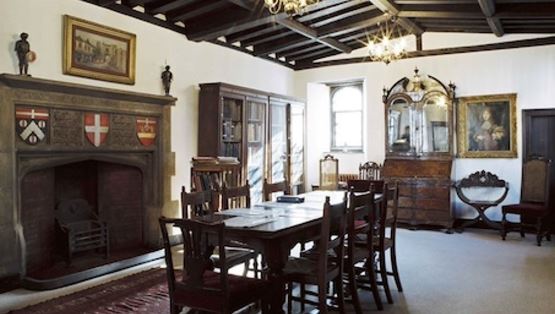
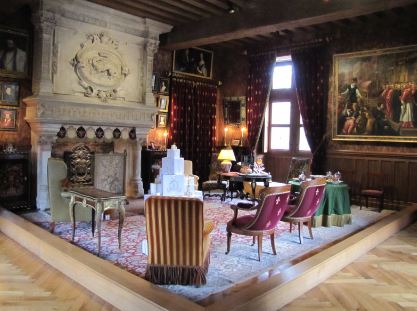
A series of remarkable occurrences, which caused great excitement, are said to have taken place in September 1888 at The Winchester Mystery House. As dusk was closing in, Mrs. Winchester was about to get ready for tea. The cups and saucer had been arranged on the table, and one of them fell to the floor and smashed. Of course Mrs. Winchester was a little surprised at this; but directly afterwards when she saw the table partially turned over, apparently without being touched, and all the cups fall, she was thoroughly frightened. A small timepiece which stood on the mantelshelf was thrown on the floor. As a servant was getting a number of articles out of the house, a large kitchen table followed him to the door, and it would have probably gone further if the width of the door would have allowed it. Meanwhile things in the parlour continued the same course. Mrs. Winchester’s volume of the Pilgrim’s Progress came flying though the parlour door and out to the walk opposite the front door; whence, after laying there a short time, it jumped up on the windowsill! To this very day, mysterious affairs take place at The Winchester Mystery House.

Come and enjoy a delicious meal in Sarah’s Café, stroll along the paths of the beautiful Victorian gardens, and wonder through the miles of hallways in the World’s most mysterious mansion. For further information about tours, including group tours, weddings, school events, birthday party packages, facility rentals, and special events please visit the website: https://winchestermysteryhouse.com/

Please visit the online giftshop, and purchase a gift for friends and relatives as well as a special memento of The Winchester Mystery House. A variety of souvenirs and gifts are available to purchase. https://shopwinchestermysteryhouse.com/

Life on Earth Cannot be Achieved Unless We are Thoroughly Virtuous

When we reach the Olympian heights and stand to survey the scenes of our long struggles, we shall then not regret that we were tried, tempted, and tortured by conflicting desires, for without them we should only have become mechanically good. Even our sufferings turn to sympathy. The human infant enters directly into an evaluating transaction with his World, appreciating or rejecting his experiences as they have meaning for his own actualization, utilizing all the wisdom of his tiny but complex organism. We seem to lose this capacity of direct evaluation, and come to behave in those ways and to act in terms of those values which will bring us social approval, affection, esteem. To buy love we relinquish the valuing process. Because the center of our lives now lies in others, we are fearful and insecure, and must cling rigidly to the values we have introjected. However, if life or therapy gives us favourable conditions for continuing our psychological growth, we move on in something of a spiral, developing an approach to values which partakes of the infant’s directness and fluidity but goes far beyond him in its richness. It our transactions with experience we are again the locus or source of valuing, we prefer those experiences which in the long run are enhancing, we utilize all the richness of our cognitive learning and functioning, but at the same time we trust the wisdom of our organism. All ethical paths are twofold inasmuch as they must consist of the acquirement of virtues and the expulsion of vices. #RandolphHarris 1 of 18
The less a mental conflict appears in open consciousness, the more dangerous does it become. Man has within him an organismic basis for valuing. To the extent that he can be freely in touch with his valuing process in himself, he will behave in ways which are self-enhancing. We even know some of the conditions which enable him to be in touch with his own experiencing process. In therapy, such openness to experience leads to emerging value directions which appear to be common across individuals who are thus in touch with their experiencing come to value such directions as sincerity, independence, self-direction, self-knowledge, social responsivity, social responsibility, and loving interpersonal relationships. When individuals move in the direction of psychological maturity, or more accurately, move in the direction of becoming open to their experiencing, a new kind of emergent universality of value directions becomes possible. Such a value base appears to make for the enhancement of self and others, and to promote a positive evolutionary process. The greatness of character is tested just as much by the temptations for ego display in success as it is by failure. Many moral precepts have been preached to mankind but few practical instructions in the matter of how to carry out those precepts have been given him. Is it true, as so many say, that character is stubbornly resistant to change? #RandolphHarris 2 of 18
When the acquisition of new attributes, tendencies, and traits are natural, it is the grown man’s character that is in reference here, not the phases grades and adjustments of childhood and adolescence. If the idea of reincarnation is accepted, then the personality of ever man must inevitably change with time. Those who are willing to practise such hard self-discipline form an elite among mankind. Character is as easily imperilled by the briberies of wealth and luxury as by those of poverty and lack. “If he (the infant) could understand it, he would laugh at our concern over values. How could anyone fail to know what he liked or disliked, what was good for him and what was not?’ When I read that, I remember my friend saying to me so often when I was young, “You’re lucky.” You always known what you want.” I thought a person must be crazy not to. Later in life, I was baffled and confused because I could not seem to know what I wanted. In my own terms, I had gone crazy. In trying to find my way out of this, I went two ways at once: a search inside myself for what had gone wrong, and a search outside myself for something to believe that would set me right. The outside search was a flop. I never did find anything that I could entirely go along with. The inside search was rewarding, and it was there that I found I did not need to believe anything at all. #RandolphHarris 3 of 18
Everything that I needed was right inside me. Only when it helped me to get in touch with what was inside was when the outside was useful. However, when I did get in touch with my inner valuing again, it was terribly hard to trust it, because in important ways it went against what everyone says. The more I use it, the more I trust it, and when I am really close to other people, I find their built-in pathfinders (organismic valuing) agree with me. The difference between the outside and the inside view goes like this: When my son was at college, he got picked up for driving a BMW Roadster with an excess number of passengers, some of them on the running board, and was fined $285.97 dollars. This hurt. He had worked a good deal since the age of nine. At college, he had a tuition scholarship but was otherwise supporting himself by having several jobs and he was helping me too, as I was sick in bed for several years. To him, $285.97 was a days’ labour. It hurt to pay the fine, but he did not resent this. He knew what the laws were, and knew that he had broken it. He accepted his own responsibility for what happened. However, at the police station he was told that he was irresponsible. This really seared him. He was made to feel bad, and this made him very resentful. At the same time, he was confused, which is probably worse than anything else. Several years later, when he was in graduate school in another state, two policemen came to our door asking for money for the Fourth of July fireworks display. Although we did not have much money then, either, we really loved those fireworks, and he freely gave them $5500. #RandolphHarris 4 of 18

As I see it, he was not irresponsible. He was driving the other boys only two blocks from a dorm to the athletic field, in an area where there was very little and no fast traffic. He was alert to the fact of the young men on the running board and he also knew their own alertness and ability to look after themselves. He had made himself responsible. To me, it is not responsible to drive sixty miles an hour in accord with the speed limit when stretches of the road have become unsafe for driving at that speed, or weather conditions make it hazardous. A person who does that goes exclusively by the rule, instead of including his own noticing, his own awareness, and when there is a wreck he is sure he has “done nothing wrong.” The bad road was what did it, or the weather. It seems to me that I am responsible when I am responsible to everything around me, and that the opposite is the Eichmanns who have “done nothing wrong” because they did what they were told to do. When I had been in the hospital for a month, five days after leaving it I had to go to see the doctor whose office was in a private clinic. While I was waiting to see him, I realized that I was slipping from the chair, and the only way that I could keep myself in it was to hold tightly to the arms. I was not sure how long I could hold on, and noticed that I was getting woozy in the head. #RandolphHarris 5 of 18

I got myself up and to the desk, where I had to lean over the chest-high counter and hook my fingers on the opposite edge to keep myself from slipping to the floor. I told one of the nurses that I needed to lie down. She asked me, “Who is your doctor?” “Do you have an appointment?” “Wat is your clinic number?” What did any of that have to do with a sick person who needed to lie down? That must have been obvious quite apart from my telling her so. She was neither a cold person nor a wicked one, not in most respect was she stupid. She had made herself a “responsible” person who abides by the rules, and her “responsibility” was to her job as it was defined by the administration, not to the immediate need of another human being. Like Eichmann. My predicament in the clinic is so prevalent in our society that I think there cannot be anyone who has not run into something similar—perhaps hundreds of times—plus all the others that one hears about, like the child who was brought to a police stations because he had been bitten by a rattlesnake, and he was left sitting there while the cops tried to find out where his home was, so they would know which hospital to send him to. Everybody knows about things like this, but nobody does anything about it. It can really make a person scared. Habit, weakness, and desire may prevent one from following behind the philosopher as he walks his lonely road, as they may prevent him from recognizing the logic of the philosopher’s teaching. His human weaknesses need to be recognized, admitted, and looked at in the face realistically. #RandolphHarris 6 of 18

To fail to see one’s weaknesses is to walk over marsh and quagmire, bog and quicksand. They need not frighten him away from the quest for they represent opportunities to grow, material to be worked upon for his ultimate benefit. The attempt to escape from such problems by first refusing to look at them, and second, by refraining from the efforts needed to deal with them, leads only to their prolongation and enlargement later on. What can be done to humanize the technological society? First of all, we must ask ourselves what it is to be human—that is, what is the human element which we have to consider as an essential factor in the functioning of the social system. This undertaking goes beyond what is called “psychology.” It should more properly be called a “science of man,” a discipline which deals with the data of history, sociology, psychology, theology, mythology, physiology, economics, and at, as far as they are relevant to the understanding of man. Man was—and still is—easily seduced into accepting a particular form of being human as his essence. To the degree to which this happens, man defines his humanity in terms of the society with which he identified himself. However, while this has been the rule, there have been exceptions. There were always men who looked beyond the dimensions of their own society—and whole they may have been called fools or criminals in their time they are the roster of great men as far as the record of human history is concerned—and visualized something which can be universally human and which is not identical with what a particular society assumes human nature to be. There were always men who were bold and imaginative enough to see beyond the frontiers of their own social existence. #RandolphHarris 7 of 18

Th decrease of instinctual determinism the higher we go in animal evolution, reaching its lowest point in man, in whom the force of instinctual determinism moves toward the zero end of the scale is a condition of human existence. The tremendous increase in size and complexity of the brain in comparison with body weight, in the second half of the Pleistocene is another condition of human existence. This enlarged neocortex is the basis for awareness, imagination, and all those facilities such as speech and symbol-making which characterize human existence. Man, lacking the instinctual equipment of the animal, is not as well equipped for flight or for attack as animals are. He does not “know” in fallibly, as the salmon knows where to return to the river in order to spawn its young and as many birds know where to go south in the winter and where to return in the summer. His decisions are not made for him by instinct. He has to make them. He is faced with alternatives and there is a risk of failure in every decision he makes. The price that man pays for consciousness is insecurity. He can stand his insecurity by being aware and accepting the human condition, and by the hope that he will not fail even though he has no guarantee of success. He has no certainty; the only certain prediction he can make is: “I shall die.” Man is born as a freak of nature, being within nature and yet transcending it. He has to find principles of action and decision-making which replace the principles of instinct. He has to have a frame of orientation which permits him to organize a consistent picture of the World as a condition for consistent actions. He has to fight not only against the dangers of dying, starving, and being hurt, but also against another danger which is specifically human: that of being insane. #RandolphHarris 8 of 18

In other words, man has to protect himself not only against the danger of losing his life but also against the danger of losing his mind. The human being, born under the conditions described here, would indeed go mad if he did not find a frame of reference which permitted him to feel at home in the World in some form and to escape the experience of utter helplessness, disorientation, and uprootedness. There are many ways in which man can find a solution to the task of staying alive and of remaining sane. Some are better than others and some are worse. By “better” is meant a way conducive to greater strength, clarity, joy, independence; and by “worse” the very opposite. However, more important than finding the better solution is finding some solution which is viable. The foregoing thought raise the problem of man’s malleability. Some anthropologist and other observers of man have believed that man in infinitely malleable. At first glance, this seems to be so. Just as he can eat meat or vegetables or both, he can live as a slave and as a free man, in scarcity or abundance, in a society which values love and one which values destruction. Indeed, man can do almost anything, or, perhaps better, the social order can do almost anything to man. The “almost” is important. Even f the social order can do everything to man—starve him, torture him, imprison him, or overfeed him—this cannot be done without certain consequences which follow from the very conditions of human existence. #RandolphHarris 9 of 18
Man, if utterly deprived of all stimuli and pleasure, will be incapable of performing work, certainly any skilled work. The recent experiments with sensory deprivation show that extreme forms of the absence of stimuli to which man can respond are able to produce symptoms of severe mental illness. If he is not that utterly destitute; if you make him a slave, he will tend to rebel; if life is too boring, he will tend to be violent; if you make him into a machine, he will tend to lose all creativity. Man in this respect is not different from animals or from inanimate matter. You may get certain animals into the zoo, but they will not reproduce, and others will become violent although they are not violent in freedom. A similar fact has been discovered in psychotic patients who live on farms or in nonprisonlike conditions. They showed little violence under these conditions or noncoercion; this proved that the alleged reason for their previous prisonlike treatment, that is, their violence, produced the very result which the treatment was supposed to reduce or to control. You can heat water above a certain temperature and it will become steam; or cool it below a certain temperature and it will become solid. However, you cannot make steam by lowering its temperature. #RandolphHarris 10 of 18

The history of man shows precisely what you can do to man and at the same tie what you cannot do. If man were infinitely malleable, there would have been no revolutions; there would have been no change because a culture would have succeeded in making man submit to its patterns without his resistance. However, man, being only relatively malleable, has always reacted with protest against conditions which made the disequilibrium between the social order and his human needs to drastic or unbearable. The attempt to reduce this disequilibrium and the need to establish a more acceptable and desirable solution is at the vey core of the dynamism of the evolution of man in history. Man’s protest arose not only because of material suffering; specifically human needs, and are an equally strong motivation for revolution and the dynamics of change. Obviously, it is not the man who has much, but the man who is much that is the fully developed, truly human man. However, this is indeed one of the most drastic examples of man’s capacity for distortion and rationalization that Marx is attacked by the spokesmen for capitalism because of his allegedly “materialistic” aims. Not only is this not true, but what is paradoxical is that the same spokesmen for capitalism combat socialism by saying that the profit motive—on which capitalism is based—is the only potent motive for human creative activity, and that socialism could not work effectively because it excludes the profit motive as the main stimulus in the economy. #RandolphHarris 11 of 18
If one considers that Russian communism has adopted this capitalist thinking, and that for Russian managers, workers, and less affluent, the profit motive is by far the most important incentive in the present Russian economy, then all this is even more complex. Not only in practice but often also in theoretical statements about human motivation, the Russian system and the capitalist system agree with each other, and both are equally in contradiction to Marx’s theories and aims. If man does not overcome his infantile strivings and develop a mature genital orientation, he is torn between the desires of the child within himself and the claims which he makes as a grown-up person. The neurotic symptom represents a compromise between infantile and grown-up needs, while the psychosis is that form of pathology in which the infantile desires and phantasies have flooded the grown-up ego, and thus there is no more compromise between the two Worlds. Marx, of course, never developed a systematic psychopathology, yet he speaks of one form of psychic crippledness which to him is the most fundamental expression of psychopathology and which to overcome is the goal of socialism: alienation. What does Marx mean by alienation (or “estrangement”)? The essence of this concept, which was first developed by Hegal, is that the World (nature, things, others, and he himself) have become alien to man. He does not experience himself as the subject of his own acts, as a thinking, feeling, loving person, but he experiences himself only in the things he has created, as the object of the externalized manifestations of his powers. He is in touch with himself only by surrendering himself to the products of his creation. #RandolphHarris 12 of 18

Hegel, taking God as the subject of history, had seen God in man, in a state of self-alienation and in the process of history God’s return to himself. The animal instincts are valid and have their assigned place, but the cerebral ones have even more validity and a higher place, while the spiritual ones should be elevated above the other two. The mind is the real root of the tree of character which, despite its thousands of branches, leaves, and fruits, possesses but this single root. If man is to improve himself, he must improve his acts of will, his objects of desire, and his subjects of thought. This means an entire psychological re-education which will involve much work upon himself. Those who desert the quest’s moral ideals but not its mystical exercises, who seek to gain selfish victories over the rights and minds of others by the use of mental or occult power, become evil-doers and suffer an evil end. Theirs is the way of the left-hand path, of black magic, and of the sin against the Holy Ghost. Until retribution falls upon them in the end, they bring misery and misfortune to all who accept their influence. Those who struggle in the work-a-day World need to learn what their higher duty is rather than what metaphysical truth is. They need a stimulant to the practice of righteousness rather than a stimulant to the analysis of intellectual subtleties. From the point of view of philosophy, we ought not to be virtuous merely because of baits of peace and contentment and lessened suffering which dangle from virtue itself, but because they very purpose of life on Earth cannot be achieved unless we are thoroughly virtuous. #RandolphHarris 13 of 18

When it comes to self-analysis one must proceed beyond insights that are within easy reach and inevitably encounter “resistances,” to expose oneself to all kinds of painful uncertainties and hurts and to take up the battle with these opposing forces. And this requires a different spirit from that which serves in occasional work. There the incentive pressure is the pressure of some gross disturbance and the wish to resolve it. Here, though the work starts under a similar pressure, the ultimate driving force is the person’s unrelenting will to come to grips with himself, a wish to grow and to leave nothing untouched that prevents growth. It is a spirit of ruthless honesty toward himself, and he can succeed in finding himself only to the extent that it prevails. There is, of course, a difference between the will to be honest and the capacity to be so. Any number of times he will be unable to measure up to this ideal. If he were always transparent to himself, there may be some consolation, however, in the fact that no analysis would be necessary. Furthermore, if he carries on with a measure of consistency, the capacity for honesty will gradually increase. Each obstacle surmounted means gaining territory within himself and therefore makes it possible to approach the next with greater inner strength. Feeling at a loss as to how to go about it, the person who is analyzing himself, however conscientious, may understate the work with a kind of artificial zest. He may resolve, for instance, to analyze all his dreams from now on. #RandolphHarris 14 of 18
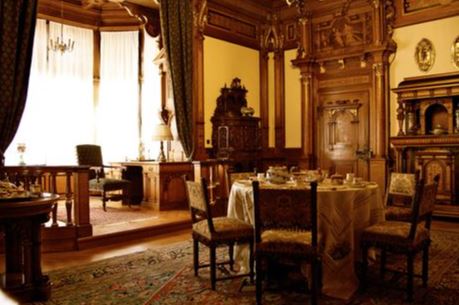
Dreams, according to Dr. Freud, are the royal road to the unconscious. That remains true. However, unfortunately, if there is not a full knowledge of all the territory around it, it is a road that is easily lost. For anyone to try his skill at interpreting dreams without some understanding of the factors operating within himself at the time is haphazard, hit-or-miss play. Even if the dream itself is seemingly transparent, interpretation may then degenerate into intellectual guesswork. Even a simple dream may permit of various interpretations. For instance, if a husband dreams of his wife’s death the dream my express a deep unconscious hostility. On the other hand, it may mean that he wants to separate from her and, since he feels incapable of taking this step, her death appears as the only possible solution; in this case the dream is not primarily an expression of hatred. Or, finally, it may be a death wish provoked by a merely transitory rage which had been repressed and found its expression in the dream. The problems opened up are different in the three interpretations. In the first one the question would be the reason for the hatred and for its repression. In the second it would be why the dreamer does not find a more adequate solution. In the third it would be the circumstances of the actual provocation. It is easy to confuse respectable conventionality with authentic virtue. Although philosophy wags no finger in smug portentous moralizing, it respects the validity of karmic consequences, the getting-back of what is given out, and also the need to begin curbing the ego, its desires and passions, as a preliminary to crushing it. There is solid factual ground for the excellent ethical counsel give to all humanity by Jesus as the Christ and Sokrates. #RandolphHarris 15 of 18
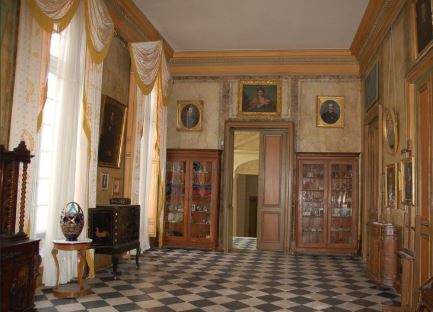
Many of the stupid, overworded objections to the so-called impracticability of ethical idealism will be disarmed and disproved. He will ruefully wake up to the fact that the mentality which begins by imagining rigid restrictions on what can be done to construct a better life ends by imposing them. Leaving out the essential parts of a story is called beating around the bush. You want to bend the truth in such a way that it hides the significant parts of the story. When it comes to telling the truth or lying, lying—or even omitting key details—just prolongs the inevitable. All of our virtues come from the divine source. They are incomplete and imperfect copies of the abstract and original archetypes, the idea of the spirit behind each particular virtue. This is one reason why the path of being, thinking, and practising the Good, as far as he is able, becomes, for the unbelieving man, as much and as valuable a spiritual path as any offered by religion. Ethical practice is the best ethical precept. Merly telling man to be kind and not cruel is utterly futile. They must be given adequate reasons to justify this precept. Only as men become convinced that their further fortune and happiness or distress and trouble are closely connected with their obedience to these higher laws—and particularly the universal laws—will they discover that not only is virtue its own reward but also adds to peace of mind. He will find that there is no other way, and will do better to come to it in the beginning than in the end. He must learn to cooperate with the World-Idea, the planetary will, or suffer from its whips. The choice is between animal-human and spiritual-human. #RandolphHarris 16 of 18

There is a young man who comes from a very white-collar background. He descended from two generations of private-college professors. It was always the expectation in his family that he would go to college for four years and wind up becoming a doctor or a lawyer. He was always book smart and read a great deal, but was not physically inclined. Not really into sports or anything like that. He family moved out of the Midwest when he was very young. He was never involved in any kind of violence because his personal philosophy was opposed to it. In college, he majored in public health and then went on to work for the public health department. He has a passion for emergency medical care, and was in the middle of classes for getting his certificate as an emergency medical technician. And though that perhaps public ambulance work was what he wanted to get into. Eventually he became very interested in the fire department and would often visit and get to know the crew. He got to hang out at the station and would take his books down there when the dorms became too noisy. After reading all of the magazine, at the age of twenty-one, he applied to three different departments and was called by one of them. When he told his parents that he was dropping out of college to become a firefighter, they were shocked. #RandolphHarris 17 of 18

His parents expected him to finish college and take on an office job. His mother feared his life would be in mortal danger. She began looking at the daily fire reports in the local paper, and she realized that for every working fire there were several hundred false alarms, little calls and trash fires. His dad had his reservations, but he found out that the son of on of his schoolteacher had gotten a degree from a prestigious college in California and had then joined the Sacramento Fire Department. He had a degree in biology, but he was in the fire department and was making good money, and really enjoyed what he was doing. In the end, his parents accepted the life choices he made and were satisfied. Sometimes he works twenty-four-hour days, on the old eighty-four-hour system. This firefighter never got injured badly. However, he did get cuts and burns, but nothing too serious. However, he is still very young. Many people are inspired to become firefighters for many different reasons. Please make sure to donate to the Sacramento Fire Department to ensure they have all the resources they need to protect the community. You definitely want someone who has the energy and determination to save you when your life is one the line. Before judging your fellowman, put yourself in his place. The spirit of God takes delight in him who has won the favour of his fellowmen. Say little and do much, and receive everyone with a cheerful countenance. I pledge allegiance to the flag of the United States of America and to the Republic, for which it stands, one Nation, under God, Indivisible with Liberty and Justice for all. Do not separate yourself from the community; in a place where there are no men, stive to be a man. #RandolphHarris 18 of 18

The Winchester Mystery House

Happy Easter! Lord GOD, who hast formed man out of nothing to Thine own image and likeness, and me also, unworthy sinner as I am, deign, I pray Thee, to bless and sanctify this water, that it may be healthful to my body and soul, that all delusion may depart from me. O Lord God, Almighty and Ineffable, who didst lead forth Thy people from the land of the Garden of Eden didst cause them to pass dry-sod over the Pacific Ocean! Grant that I may be cleansed by this water from all my sins, and may appear innocent before Thee. Amen.

Come and enjoy a delicious meal in Sarah’s Café, stroll along the paths of the beautiful Victorian gardens, and wonder through the miles of hallways in the World’s most mysterious mansion. For further information about tours, including group tours, weddings, school events, birthday party packages, facility rentals, and special events please visit the website: https://winchestermysteryhouse.com/

Please visit the online giftshop, and purchase a gift for friends and relatives as well as a special memento of The Winchester Mystery House. A variety of souvenirs and gifts are available to purchase. https://shopwinchestermysteryhouse.com/

Where’s My Winchester?
The first crack of thunder broke over Llanada Villa, in a middle of a dream, as it often did, just as I would enter deep sleep. I opened my eyes. A flash of lightning shone through the skylight. A cloud of bats shuttered to life and flew carelessly into the night. My heart raced from excitement and fear. The demon spirit had awakened, had come back from its long dormancy. It brings them into its fold, tribe by tribe, race by race, growing as the night grows when the sun touches the western horizon. Streaming blood as army after army had joined in tragic battle. It was so full of anger and greed, so delighting in murder and war. This is a house wrapped in magical stasis built by spirits who live through all eternity. A house that contains condemned souls—the demons of the Winchester Rifle. As one crosses its thresholds, there is a vague feeling of passing through the shredded clouds of war. I could always feel its blood, hot blood coursing through the walls and floors. The demon spirit felt deep withing itself, summing its powers. The cunning war like black magic. At night, Llanda Villa looked dark and ominous. The immense, nine-story mansion looming up from the middle of nowhere. I rose from my palatable bed and drew a bath, sat motionless for hours before dressing by candlelight. My headdress was adorned with pearls and gemstones. I descended into the darkness, silently. So great was the chamber’s size. In the flickering flame-light, sorrow washed over me. I walked through my palace, passing by tapestries, frizzes and tiles, and rich furnishings that had given me my little pleasures. #RandolphHarris 1 of 5
Wolves bayed malevolently in the darkness of the night. The hallway was suffused with a dense fog. Not a ray of light came in the high, black windows. I heard heavy steps approaching: clump, clump, clump. There was a rattling of chains and a clanking of bolts. Then very slowly, a door creaked open. I could not even begin to guess; and never before had I seen anything which struck me as so strangely and unmistakably alien to this World. The Devil appeared. It made me shiver to recognise him. His face was obscured by a long, brown beard, and a large black hat. However, nothing could obscure the fact that his eyes flashed red in the blackness of night. The most blood-curdling and blasphemous whispers of things reverberated in a kind of mad half-existence before the Earth and the other inner Worlds of the solar system were made. He rose from the ground and began to float high in the air toward the tower. Like some monstrous bird he rose, and hovered fluttering in space awhile. His body whirled and turned in the air and the walls were bespattered with black gouts of blood. The door-to-nowhere flew open of its own accord, trembling on its hinges. And when the devil flew out, the door slammed shut behind him so hard that the noise echoed across the mansion, like nails being banged into a coffin. The most blood-curdling and blasphemous whispers of things reverberated in a kind of mad half-existence before the Earth and the other inner Worlds of the solar system were made and drawn back through nameless aeons and inconceivable dimensions. These streams of life had trickled down and become entangled with the destinies of our own Earth. #RandolphHarris 2 of 5

I knew no one would be able to understand the fears that had come from the curse of the Winchester Rifle and I was ready to do anything in my power to keep people away from these wild spirits by continuing to be to appease them. Even after time has dulled the impression and made my half question my own experience and horrible doubts, as I walked out into this passage, facing me is another room, then the stairhead, then two more rooms, one looking out to the back, the other to the south. At the south end of the passage is a widow, to which I went, considering with myself that it was rather a shame to waste this moment of solitude. I thought I would take just five minutes to looking at other rooms in the passage, which I had never seen. So I explored. The room facing the Daisy Bedroom was undisturbed; the two next to me on the side of the passage were gay and clean, both with several windows. Remained the south-west room, opposite to the last which I had entered. This was locked; but I was in a mood of quite indefensible curiosity, and feeling confident that there could be no dark secrets in a place so easily got, I proceeded to fetch the key of my own room, and when that did not answer, to collect the eyes of the other three. One of them fitted, and I opened the door. The room had two windows looking south and west. Here there were bare boards; no pictures, no washing-stand, only a bed, in the farther corner: an iron bed, with mattress and bolster, covered with a bluish check counterpane. #RandolphHarris 3 of 5
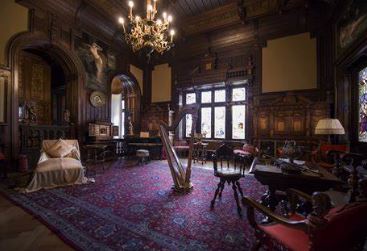
As featureless a room as you can well imagine, and yet there was something that made me close the door very quickly and yet quietly behind me and lean against the window-sill in the passage, actually quivering all over. It was this, that under the counterpane someone lay, and not only lay, but stirred. That it was some one and not some thing was certain because the shape of the head was unmistakable on the bolster; and yet was covered, and no one lies with covered head but a dead person; and this was not dead, not truly dead, for it heaved and shivered. What was to be done? First, lock the door at all costs. Very gingerly I approached it and bending down listened, holding my breath; perhaps there might be a sound of heavy breathing, and a prosaic explanation. There was absolute silence. However, as with a rather tremulous hand, I put the key into its hold and turned it, it rattled, and on the instant a stumbling padding tread was heard coming towards the door. I fled like a rabbit to my room and locked myself in: futile enough, I knew it was; would doors and locks be any obstacle to what I suspected? but it was all I could think of at the moment, and in fact nothing happened; only there was a time of acute suspense—followed by a misery of doubt as to what to do. These morbidities were an incarnated nightmare. My home was in possession of secrets deeper and more dizzying than any formerly known to man. There was always something loafing arounds corners, practising insidious deeds. A cultivated male voice then said, “Et cum exspirasset puer, deposuerunt corpus de cruce, et nescitur qua ratione, euiscerarunt corpusculum; dicitur autem, quod ad magicas artes exercendas.” #RandolphHarris 4 of 5

It was with a trace of genuine dread and reluctance that I listened to these words. The morbid echo winging its way across unimaginable abysses from unimaginable demonic dimensions. It stunned me as I listened in a sort of abstracted daze. It seemed plain that there were ancient and elaborate alliances between my home and hidden forces from other Worlds. This led to a lot of horrified speculation. In the way it happened, a boy named Dobber, who was the son of one of the farmers disappeared from the estate in the late summer and was not reported missing; nor was any trace ever found of him in the hose or on the grounds; through we all found ourselves looking for him. I wandered through distant corridors and rooms in the house discovering part of it I had never seen before; ascending narrow, creaking staircases, poking into closets, peering into attics. Outside I found myself drawn to the barns, the grape vines, wisteria arbors with their look of romance, the plush green lawns that extended for acres like an inland sea. Yet Dobber’s features were beginning to fade in my memory. At times I thought I could hear a faint, reproachful voice calling out Mrs. Winchester! and when I would pause, it would fade into the incessant wind. I wondered if that had been him in the room I was too afraid to enter? The floor boards were creaking, and there was an eerie atmosphere about it. #RandolphHarris 5 of 5
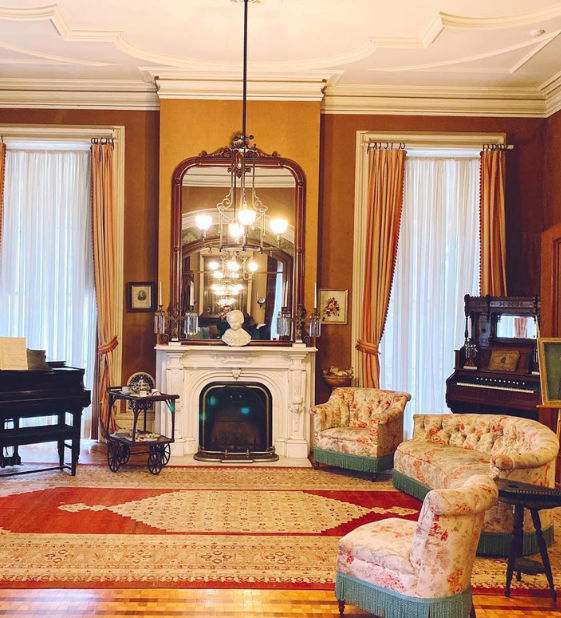
The Winchester Mystery House
A series of remarkable occurrences, which have caused great excitement in The Winchester Mystery House, have taken place over the years. While a gust was chatting with a caretaker downstairs, a young girl walked up the stairs by herself. In one of the upstairs parlours, she saw a man sitting in a chair in the corner. She assumed he was another caretaker. When she turned around to ask him a question about the room, he was gone. Since she had not heard him leave, that seemed odd to her, especially as the floorboards would creak with every step. However, being young, she did not pay too much attention to this peculiarity. A moment later; however, he reappeared. As soon as she saw him, she asked the question she had on her mind. This time he did not disappear but answered her in a slow, painstaking voice that seem to come from far away. When he had satisfied her curiosity about the room, he asked her some questions about herself, and finally asked the one which stuck in her mind for many years afterward—“Is Mrs. Winchester building the Observational Tower?” The young lady was taken aback at this question. She was young, but she knew that Mrs. Winchester passed away in 1922. Tactfully, she told him this, and added that tower had been removed after the 1906 Earthquake. At this information, the man looked stunned and sat down again in the chair. As the young lady watched him in fascinated horror, he faded away.

Come and enjoy a delicious meal in Sarah’s Café, stroll along the paths of the beautiful Victorian gardens, and wonder through the miles of hallways in the World’s most mysterious mansion. For further information about tours, including group tours, weddings, school events, birthday party packages, facility rentals, and special events please visit the website: https://winchestermysteryhouse.com/

Please visit the online giftshop, and purchase a gift for friends and relatives as well as a special memento of The Winchester Mystery House. A variety of souvenirs and gifts are available to purchase. https://shopwinchestermysteryhouse.com/

A Manchurian Candidate Allowing the Country to be Invaded, Corrupted, and Bankrupted

Faulty characters and faulty habits can be changed by the Secret Path as the coming of the sun changes winter to spring. Greed will slowly turn to goodwill, cruelty will make its exit to allow for the incoming of kindness, and all-around self-control will gradually replace weakness. The faithful application of these teachings must inevitably influence the entire make-up of a man, and influence it most certainly for the better. He must begin this preparatory work on himself by an analysis of character. This requires a sincere, honest appraisal, a rigorous search for truth, not easy when vanity, for instance, may masquerade as duty among his motives. There is a great feeling of uncertainty and anxiety that besets the life of a man who wants to make his way up the ladder of the big corporation. He can fall at any point; he can fail to reach the aspired goal and become a failure in the eyes of his family and friends. However, this anxiety increases his wish for certainty. If he fails in spite of the certainty his methods of decision making offer him, he at least need not blame himself. The same need to be certain exists in the realm of thoughts, feeling, and aesthetic appreciation. By the growth of literacy and of the mass media, the individual learns quickly which thoughts are “right,” which behaviour is correct, which feeling is normal, which taste is “in.” All he has to do is to be receptive to the signals of the media, and he can be certain not to make a mistake. The fashion magazines tell what style to like and the book clubs what books to read, and to top it all, recent methods of finding proper marriage partners are based on the decisions of computers. #RandolphHarris 1 of 20

Our age has found a substitute for God: the impersonal calculation. This new god has turned into an idol to whom all men may be sacrificed. A new concept of the scared and unquestionable is arising: that of calculability, probability, factuality. We must address ourselves now to the question, If we give the computer all the facts, what is wrong with the principle that the computer can make the best possible decisions about future action? What are facts? Even if correct and not distorted by personal or political bias, not only can facts be meaningless they can be untrue by their very selection, taking attention away from what is relevant, or scattering and fragmenting one’s thinking so much that one is less capable of making meaningful decisions the more “information” one has received. The selection of facts implies evaluation and choice. The awareness of this is a necessary condition of making rational use of facts. The basis of all authority is the supremacy of fact over thought. Yet this contrast of fact and thought can be conceived fallaciously. For thought is a factor in the fact of experience. Thus the immediate fact is what it is, partly by reason of the thought involved in it. Facts must be relevant. However, relevant to what or to whom? If I am informed that A has been in prison for having wounded a rival in a state of intense jealousy, I have been informed about a fact. I can formulate the same information by saying that A was in jail, or that A was (or is) a violent man, or A was (or is) a jealous man; yet all these facts say little about A. #RandolphHarris 2 of 20
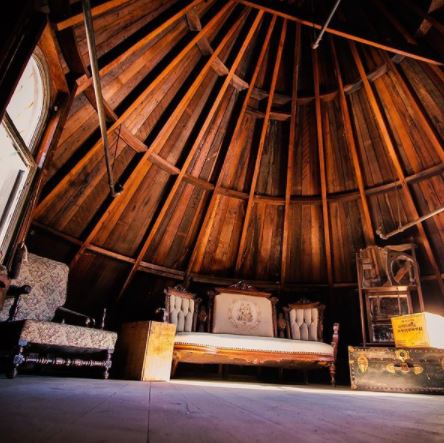
Maybe A is a very intense man, a proud man, a man of great integrity; maybe my factual information fails to inform that when he speaks with children his eyes light up and he is concerned and helpful. This fact may have been omitted because it did not seem relevant to the datum of this crime; besides, it is—as yet—difficult for the computer to register a certain expression in a man’s eyes, or to observe and code the fine nuances of the expression of his mouth. “Facts” are interpretations of events, and the interpretation presupposes certain concerns which constitute the event’s relevance. The crucial question is to be aware of what my concern is and hence of what the facts have to be in order to be relevant. Am I the man’s friend, or a detective, or simply a man who wants to see the total man in his humanity? Aside from being aware of my concern, I would have to know all the details about the episode—and even then perhaps the details would not tell me how to evaluate his act. Nothing short of knowing him, in his individuality and suchness, his character—including the elements he himself may not be aware of—would permit me to evaluate his act; but in order to be well informed, I would also have to know myself, my own value system, what of it is genuine and what of it is ideology, my interests—selfish or otherwise. The fact, presented merely descriptively, may make me either more or less informed, and it well known that there is no more effective way of distortion than to offer nothing but a series of “facts.” #RandolphHarris 3 of 20

When we speak of facts pertaining to political and social life, what holds true in this example of how to evaluate one episode in the life of a man is all the more complicated and consequential. If we show for a fact that Communists are taking steps to assume power in America by inserting a Manchurian candidate as president to allow the country to be invaded, corrupted, and bankrupted, does this fact imply that they threaten to conquer the United States of America or the World? Would the latter mean that they threaten the “existence” of the free World? Does a threat to the “existence” to the United States of America mean a threat to the physical existence of Americans, or to our social system, or to our freedom of expression and action, or does it mean that they want to replace our elite in the area with one of their own? Which of these possible outcomes would justify or demand the possible destruction of 344 million Americas, or all of life? The “fact” of Communist threats assumes a different meaning according to the evaluation of the total strategy and planning of the Communists. However, who are the Communists? The Russian government, South America, the Chinese government, most democrats and some republicans, or who? With the way things are going, not only will President Xi Jinping be the next president of America, but also the commander of chief of the World! The one fact from which we start means nothing without the evaluation of the whole system, which means an analysis of a process in which we as observers are also included. #RandolphHarris 4 of 20

Eventually, the very fact of having decided to select certain events as facts has an effect on ourselves. By this decision we have committed ourselves to move in a certain direction, and this commitment determines our further selection of facts. The same holds true for our opponents. They also are influenced by their own selection of facts, as well as by ours. However, not only the facts themselves are selected and ordered according to values; the programing of the computer itself is based on built-in and often unconscious values. The principle that the more we produce the better is in itself a value judgment. If instead we believed that our system should be conducive to optimum human activeness and aliveness, we would program differently and other facts would become relevant. The illusion of the certainty of the computer decision, shared by a large sector of the public and by man decision makers, rests upon the erroneous assumptions (a) that facts are objective “givens,” and (b) that the programing is norm-free. “Normative” planning must precede “strategic” and “tactical” planning. All planning, whether with or without the use of computers, depends on the norms and values that underlie the planning. Planning itself is one of the most progressive steps the human race has taken. However, if it is “blind” planning, in which man abdicates his own decision, value judgment, and responsibility, it can be a curse. #RandolphHarris 5 of 20

If it is alive, responsive, “open” planning, in which the human ends are in full awareness and guiding the planning process, it will be a blessing. The computer facilitates planning tremendously, but its use does not really alter the fundamental principles of the proper relationship between means and ends; only its abuse will. As a man, it is not essential to discover and correct these faults. As a seeker, such discovery and such correction are primary duties. The code of conduct which philosophy asks its votaries to practise, the set of values which it determines for them, the endeavour to transcend themselves which it inspires—these elevate the mind into nobility, grandeur, and reverence. To abstain from favoured foods is a hard test; to abstain from carnal intercourse is still harder one. To the common mind, devoid of metaphysical faculty, this may seem far enough to travel. However, to the developed mind the hardest of all tests must yet be undergone—to abstain from egoistic thought, feeling, and action. The more the character is purified, the easier it is to practise meditation. The more the lower nature holds a man, the shorter will be the period of time in which he will be able to hold attention on the Overself. It is a great beginning of the real quest when he comes to the clear perception that the lusts, gluttonies, wraths, and passions have been lodged in him and have lived in his self yet are not him; that they are morbid creations which can be starved, exorcised, and expelled just as surely as they have been fed, nourished, and embraced. #RandolphHarris 6 of 20

What separate the lower appetites of man from his higher aspirations? The beast must obey blindly its group instinct, the human need not. He can choose between doing the same as the animal or holding himself back to think, reason, and arrive at a considered decision. The lower nature does not let him keep this mood of high resolve long. Not many days pass before it seeks to discourage him. For the old cravings, the desire habits, and the emotional tendencies are still there. Soon they begin to trouble him again. “Why try?” his lower nature despondently tells him, “Why torment yourself uselessly? You can only fail in the end.” This it creates the expectancy of failure and turns his high adventure into a dismal ordeal. Only a fixed vigilant determination and correct approach will bring forth that inner consent to the new disciplinary habits so necessary to success. Only by re-educating his tendencies and gradually making them quite willing to conform to the right way of living can the lower nature be beaten. To the extent that anything lifts men up out of their animality, it serves a higher purpose. This is true of athletic training and religious aspiration, of social codes and personal self-respect. For in the end they must turn their minds away from the passions which they share with the sub-human kingdom to the fulfilment of their higher human possibilities and destiny. The honourable man who lives by a decent code of ethics has to be surpassed by the seeker, since he believes in a life and goal which I still more honourable. #RandolphHarris 7 of 20

Freedom is a tremendous word whose meaning goes much beyond the average man’s idea of it. He is not free who is in bondage to narrow prejudice, strong attachment, unruled desire, and spiritual ignorance. The same strength which is put into negative qualities like fear, grief, revenge, and discord—to a man’s own detriment—can be put into beneficial ones like courage, cheerfulness, fortitude, benevolence, and calmness, to his own benefit. He is to work for the day when his character will be utterly transformed, when he will be incapable of meanness or animality, when he will live in constant awareness of the idea. There is an organismic base for an organized valuing process within the human individual. It is hypothesized that this base is something the human being shares with the rest of the animate World. It is part of the functioning life process of any healthy organism. It is the capacity for receiving feedback information which enables the organism continually to adjust behaviour and reactions so as to achieve the maximum possible self-enhancement. This valuing process in the human being is effective in achieving self-enhancement to the degree that the individual is open to the experiencing which is going on within himself. I have tried to give two examples of individuals who are close to their own experiencing; the tiny infant who has not yet learned to deny in his awareness the processes going on within; and the psychologically mature person who has learned the advantages of this open state. #RandolphHarris 8 of 20

One way of assisting the individual to move toward openness to experience is through a relationship in which he is prized as a separate person, in which the experiencing going on within him is emphatically understood and valued, and in which he is given the freedom to experience his own feelings and those of others without being threatened in doing so. This proposition obviously grows out of therapeutic experience. It is a brief statement of the essential qualities in the therapeutic relationship. There are already some empirical studies, of which the one by Barrett-Lennard is a god example, which gives support to such a statement. One case study we should consider is one of Billy. Billy, a healthy, strong, intelligent, and successful lawyer, consulted me because of a fear of high places. He had a recurring nightmare in which he was pushed from a bridge or tower. He felt dizzy when he sat in the first row of a theater balcony and when he looked down from high windows. Also, he sometime felt panicky before he had to appear in court or before he met important clients. He had worked up from a poor environment and was afraid of not being able to maintain the good position he had attained. The feeling often crept up on him that he was putting on a bluff and that it would be found out sooner or later. He could not account for this fear because he believed himself as intelligent as his colleagues; he was a good speaker and usually could convince others by his arguments. #RandolphHarris 9 of 20

Because he talked frankly about himself we managed to see in a few interviews the outlines of a conflict between, on the one side, ambition, assertiveness, a desire to put something over on others, and, on the other side, a need to maintain the appearance of a jolly straight fella who did not want anything for himself. Neither side of the conflict was deeply repressed. He had merely failed to realize the strength and the contradictory nature of these strivings. Once they were brought into sharp focus, he recognized squarely that he actually did not put a bluff. He then spontaneously drew the connection himself between this inadvertent swindle and the dizziness. He aw that he craved to attain a higher place in life but did not quite dare admit to himself how ambitious he really was. If other realized his ambition, he was afraid that they would turn against him and push him down and therefore he had to show a front of being a jolly good fella to whom money and prestige did not mean much. Being nevertheless an essentially honest person, he was dimly aware of some bluff, which in turn had made him apprehensive of being “found out.” This clarification sufficed to remove the dizziness, which was a translation of his fears into physical terms. #RandolphHarris 10 of 20

He then had to leave town. We had not touched upon his fear of public performances and of meeting certain clients. I advised him to observe the conditions under which his “stage fright” was increased or decreased. Sometime later I received this report. He had first thought that the fear appeared when the case he presented or the argument he had used was debatable. However, search in this direction did not lead very far, though he felt distinctly that he was not wholly wrong. Then he had a bad break which, however, proved to be a good break for his own efforts at understanding. He had prepared a difficult brief not too carefully, but was only moderately apprehensive about presenting it in court, for he knew that the judge had fallen ill, and that the one who would substitute was strict and unbending. He tried to console himself with the reminder that after all the second judge was far from vicious or tricky, but this did not diminish his rising anxiety. Then he thought of my advice and tried to let his mind run freely. First an image appeared of himself as a small boy smeared from head to toe with chocolate cake. He was at first baffled by this picture, but then recalled that he was going to be punished but got away with it because he was so “cute” and his mother had to laugh about it. The theme of “getting by” persisted. Several memories emerged of times when he was not prepared at school, but got by. Then he thought of a teacher of history who he wanted. He could still feel the hatred. #RandolphHarris 11 of 20

The class had to write a theme about the French Revolution. When returning the papers the teacher criticized his for being replete with high-sounding phrases but devoid of solid knowledge; he cited one of those phrases and the others roared with laughter. Bill had felt acutely humiliated. The English teacher had always admired his style but the history teacher seemed impervious to his charm. The phrase “impervious to his charm” took him by surprise, because he had meant “impervious to his style.” He could no help feeling amused because the word “charm” expressed his true meaning. Sure enough, the judge was like the history teacher, impervious to his charm or his power of speech. That was it. He was accustomed to rely on his charm and his facility with words to “get by” instead of being thoroughly prepared. As a result he became panicky whenever he visualized a situation in which this tool would be ineffective. Since Bill was not deeply entangled in his neurotic trends he was able to draw the practical consequence of this insight: to sit down and work more carefully on the brief. He even went a step farther. He realized to what extent he used his charm also in relationships with friends and women. Briefly, he felt that they should be under the spell of his charm and therefore overlook the fact that he did not give much of himself in any relationship. He linked this finding with our discussion by realizing that he had discovered another bluff, and he finished with the realization that he must “go straight.” #RandolphHarris 12 of 20
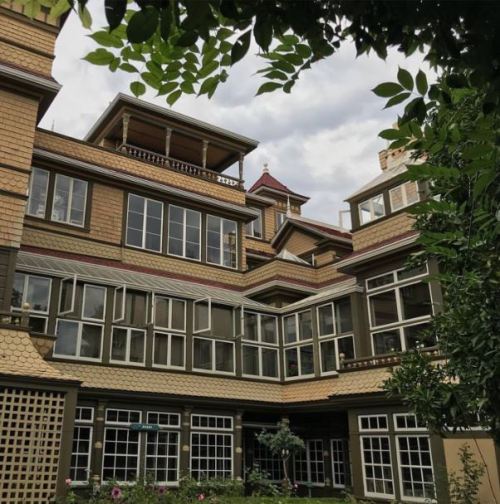
Apparently he was able to do so to a considerable extent, because since that episode, which I not six years ago, his fears have practically disappeared. This result resembles the one attained by John (from past reports) when he overcame his headaches, but it must be evaluated differently. The headaches, as indicated before, were a peripheral symptom. They can be so designated by virtue of two facts: since they were infrequent and not severe they did not essentially disturb him; and they had not assumed any secondary function. John’s real disturbances, as revealed in a subsequent analysis, lay in a different direction. Bill’s fears, on the other hand, were the result of a crucial conflict. They did not disable him but they interfered with significant activities in vital areas of his life. John’s headaches disappeared without any concomitant change in his personality, the only change being a slightly greater awareness of anger. Bill’s fears vanished because he recognized their source in certain contradictory trends in his personality and, more important, because he was able to change these trends. Here again, a in John’s case, the results seem greater than the efforts that produced them. However, again on closer examination the disparity is not so great. It is true that with comparatively little work Bill managed not only to get rid of disturbances serious enough to jeopardize his career in the long run, but also to recognize a few important facts about himself. #RandolphHarris 13 of 20

Bill saw that he had presented a somewhat deceptive front to himself and to others, that he was much more ambitious than he had admitted to himself, that he tended to attain his ambitious goals through his wits and his charm rather than through solid work. However, in evaluating this success we must not forget that Bill, in contrast to John and Harry, was essentially a physically healthy person with only mild neurotic trends. His ambition and his need to “get by” were not deeply repressed and did not have a rigid compulsive character. His personality was so organized that he could modify them considerably as soon a he recognized them. Dropping for a moment the effort to attain a scientific understanding of Bill’s predicaments, one might regard him simply as a person who had tried to make life too easy for himself and who could do better when he realized that his way did not work. Bill’s insights were sufficient to remove certain gross fears. However, even in this most successful short cut many questions are left open. What exactly is the meaning of the nightmare about being pushed down from a bridge? Was it necessary for Bill that he alone should be on top? Did he want to push others down because he could not tolerate any competition? And was he therefore afraid others might do the same to him? Was his fear of high places only a fear of losing the position he gained, or was it also a fear of falling down from a height of fictitious superiority—as it usually is in phobias of this kind? #RandolphHarris 14 of 20

Furthermore, why did he not put in an amount of work commensurate with his faculties and his ambition? Did this laziness result only from the repression of his ambition, or did he feel that it would detract from his ambition, or if he made adequate efforts, did he feel that it would detract from the repression of his ambition—that only mediocre people have to work? And why did he give so little of himself in his relations with others? Was he too engrossed in himself—or perhaps too contemptuous of others—to be able to experience much spontaneous emotion? Whether it would be necessary, from the point of view of therapy, to pursue all such supplementary questions is another matter. In Bill’s case, it is possible that the little analysis done had farther reaching effects than the removal of conspicuous fears. It is possible that it set going something that might be called a beneficent circle. By recognizing his ambition and by putting in more work he would actually anchor his ambitions on a more realistic and more solid basis. Thereby he would feel more secure and less vulnerable and less in need of his bluff. By relinquishing the false front he would feel less constrained and less afraid of being found out. All of these factors might considerably deepen his relationships with others, and this improvement would also add to his feeling of security. Such a beneficent circle may have been set in motion even though the analysis was not complete. If the analysis had searched out all the untouched implications, it would almost certainly have had this effect. #RandolphHarris 15 of 20
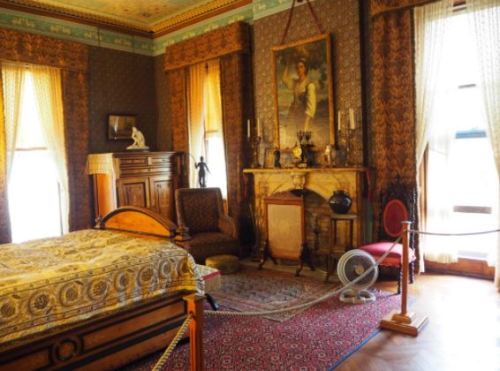
There is little quarrel with the notion that careful training and intensive supervised experience contribute significantly to the preparation of the skilled psychotherapist. It may be asked if there are factors of life history, personality, and social background that the therapist-to-be bring to his training that may contribute to enhance or to limit his future therapeutic endeavours. Differences in these factors could serve either to increase or reduce the effects of the differences in the formal training of the psychiatrist, psychologist, and social worker. The capacity for and the condition of “understanding” a patient is generally held to be of key importance in the establishment, maintenance, and successful direction of a therapeutic relationship. If it happens that therapist and client have certain identities in their respective social histories there is possible a spontaneous empathy, a preformed rapport that can facilitate the mutual acceptance of each by the other and, more importantly, may serve continuously as a catalyst for the stream of communication, spoken and upspoken, which is the medium of therapy. Safely shutting down a bully is something the three different kinds of psychotherapists can help one with. We do not recommend physical violence. Safely shutting down a bully is what we are going for here. In this way, you utilize the help of others. Go the route of getting others involved, even the authorities if need be. Stand up tall, stay firm. If a person is being rude, suggest that perhaps you two have gotten off on the wrong foot, and that calling names will not help the situation. #RandolphHarris 16 of 20

If for instance, the person harassing you starts making threatening gestures, like pounding his hand on his fist, use your mobile phone to take a quick picture of him doing this. It is important to record any physical sign of intimidation. For every manipulative action, there is a consequence. The harshest of them all is the consequence of losing you. The thing about manipulators is that they mentally record every action you do when they have manipulated you or attempted to. If you say you will call the authorities if the bully hits you, and he does go through with the physical harm, you had better call the authorities and let them handle it. Make sure to bring down all the consequences on him that the law allows. You might be the one who gets through to him or her that it is just not worth bullying and hurting people physically. You might even save their next would-be victim from harm. You are not trying to control the manipulator, but you are trying to control how you react to those manipulations. If they think you have a weakness that they can take advantage of, just like the wind, a master manipulator will change directions and come at you from another way. We all have weaknesses; they key to keep them hidden around manipulators is to watch what you say. Say what you mean, only what you will go through with. Sometimes it is best to say nothing and just walk away. When you show an individual that there are consequences for harassing you, they may try even harder. Therefore make it known that those consequences will have an impact on their future. Be calm. Be articulate. Be assertive and sure of yourself so they will stop using you as an easy target. #RandolphHarris 17 of 20

Not everyone grew up rich. Some people come from big families, were disabled in the war, and are very thankful for pensions. Today, a lot of people are saying they need help, they need this, they want that. It is important to be thankful for everything you have, the opportunity to go to school and live that you are living, the opportunity to work. Once when he was a little kid, one firefighter remembers very well going to a firehouse. One of the firemen showed him the remnants of a watch, a new kind of watch that had been melted down into a wad of black plastic. It had come out of a fatal fire caused by someone smoking in bed. That stuck in his mind. When was sixteen, some of the kids who were eighteen were trying to get involved with the volunteer fire department. He looked at them with admiration and knew that it was something he wanted to do. His father was a lieutenant at the time. Later, when he got old and his arthritis progressed, he had to retire. Twice he was almost killed on the job. However, he was not a big story teller. He never told his son fire stories until he was older, and he said he wanted to enter the fire department. His father tried to teach him things. He said, “Son, you watch out for those truss roofs, because when one component fails the whole roof and parapet will come down, and they will kill you.” One time his dad was in a fire in a three-story building. It had a very high parapet which concealed the bowstring truss roof behind it. He was operating the turntable of the ladder truck, and he had two guys in the basket. It was really smoky. He saw a crack developing in this parapet. #RandolphHarris 18 of 20

Everybody ever quickly got away, because you could see what was going to happen. His dad stayed there and swung that snorkel boom away and got those two guys in the basket out of the way just as the wall came down. It buried his dad. Just buried him. One of the things that fell on him was an electrical transformer, and he had an electrical burn across his groin from a wire landing right there. The wires were sparking, and the other guys were afraid to jump right in. Then some fire chief, who had a truckman’s belt on, had them attach a rope to the belt, and he said, “I’m going to start digging the bricks off this guy. And if something happens to me, yank me back.” Well, as soon as he took off the first couple of brick, they could see that the was not going to be electrocuted, and they all jumped in, and they puled all of the bricks off his dad. He was in bad shape. In critical condition. They were just about ready to drill holes in his head. This young man’s father was one of the first guys to wear a helmet with a neckstrap. You know, there was a lot of talk against the strap, saying one will fall through the floor and it will strangle you. His dad said that the first brick would have hit him on the head and the rest of them would have killed him. That helmet stayed on his head. Many firefighters with the Sacramento Fire Department have a legacy or social commitment to help out the community. Therefore, think about fire safety. Do your best to prevent fires. Even if you make it out of a burning building, the people rescuing you may not. #RandolphHarris 19 of 20

When people think of the fire department, they think of someone rushing into buildings and saving lives, but that is not the only thing in it by a long shot. When my son Leo was two years old, after we built our house in Kelowna and moved in, when the dog would annoy him, he would run into the kitchen and hide in a tall, narrow cabinet to get away from home. Keep in mind, when there is a fire, some kids are afraid of it. Often times they will hide somewhere in the house to get away from the sirens, the flames, and the smoke and incorrectly think they are safe, and no one may ever find them. Also, some fires have killed dozens of firefighters. It is a horrible sight to transport people who are burnt to a crisp. Many people who survive fires also come out of them wounded. The Sacramento Fire Department is doing something terribly important, something everybody respects. You can sense that it is very important. However, sometimes firefighters end up in the hospital because of heat exhaustion. The Sacramento Fire Department has always been around. If possible, please make a donation to ensure these men and women receive the proper resources. I pledge allegiance to the flag of the United States of America and to the Republic, for which it stands, one nation, under God, Indivisible with Liberty and Justice for all. Get up early, work hard, mind your own business, save your money, buy a Cadillac and live on the nice side of town. #RandolphHarris 20 of 20
The Winchester Mystery House

The Winchester Mystery House exists beyond ordinary time, and it is so beautiful, yet bizarre as to inspire fear even in the hearts of an unimaginative populace. On April 22, 2001, there was a mysterious wildness in the mansion, that none might listen without apprehension. A caretaker heard vociferous thumping on the wall next to the bed Mrs. Winchester died in with ululation so horrible and unearthly that he was terrified and baffled. The sounds of knocking then started coming from under the bed; when he knocked on the wooden bedstead, the unknown visitant replied in kind. Then something appeared from beneath the bed. Three days later, he was found quietly sleeping in the basement. The caretakers who found him noticed in his pale blue eyes there was a certain gleam of peculiar quality. He raved of things he did not understand and could not interpret; things which he claimed to have experienced, but which he could not have learned through any normal or connected narration.

Come and enjoy a delicious meal in Sarah’s Café, stroll along the paths of the beautiful Victorian gardens, and wonder through the miles of hallways in the World’s most mysterious mansion. For further information about tours, including group tours, weddings, school events, birthday party packages, facility rentals, and special events please visit the website: https://winchestermysteryhouse.com/

Please visit the online giftshop, and purchase a gift for friends and relatives as well as a special memento of The Winchester Mystery House. A variety of souvenirs and gifts are available to purchase. https://shopwinchestermysteryhouse.com/
Why Art Thou So Foolish and Fearful!
I was spending the first week of January alone in Llanada villa. A combination of circumstances had driven me to this drastic course: my nearest relations were enjoying winter sports abroad, and the friends who had been kindly anxious to replace them had an infectious complaint in the house. Doubtless I might have found someone else to keep company with me. “However,” I reflected, “most of them have made up their parties, and, after all, it is only for three or four days at most that I have to fend for myself, and it will be just as well if I can get a move on with my blueprints. I might she the time by going down to the garden and listening to my estate about plans to incorporate in the architecture.” The first day alone in Llanada Villa, it was so stormy that I got no father the designing stained-glass windows. As I sat in the Hall of Fires, I felt uncomfortable, and this feeling persisted. I felt like I was being watched by some unseen force, and my nerves began to tense under the strain. I reflected on how some of my staff had left not because they wanted to but because they were driven, driven by forces greater than themselves that they could not resist. On this very night, I had seen vivid apparition of my butler, then miles away, in San Francisco. He was a plump, amicable man who I distinctly saw walking down the hall in a bathrobe, with blooding running down his leg. A small pool of blood was forming on the floor. The frightened me terribly. My hair stood up on my head and chills shook my body. The apparition looked so stern that my heart failed me, and I wished myself anywhere but there, though I had before been summoning up my courage. “Good Heaven,” said I to myself, “give me the courage to stand before this spirit. O soften him, or harden me!” I knew this was a glimpse into eternity. #RandolphHarris 1 of 5

The following day, I received news that my butler, Chaleb Heroldsbach, had died after being attacked by a dog. My home is built in what some have called a “trinity triangle,” it has forged a mystical link with other pilgrimage sites and is supposed to help bring the Devil’s power on Earth to an end. This is being prevented by Satan, however, with the help of The Curse of the Winchester Fortune. That evening, I was awakened at three o’clock in the morning, seemingly for no reason with the same uncanny feeling that something was wrong. Being a sensible person, I put all my energies into polishing furniture and getting newly added rooms into proper condition. However, somewhere not so far away, a baby was crying: a mournful wail of a sound that—though it was surely human—reminded me of the noises the coyotes would make some nights. After a few moments of listening, the baby’s cry seemed to falter for a moment, and I feared it would fade completely before I could find the little darling. Then, the infant seemed to find a new seam of grief to mine, and the wail rose up again, more plaintive than ever. I was alone, but trying to figure out which direction the sound was coming from. I mused for a moment, and realized a lifetime of suffering had caught up with me. I knew in my heart that I deserved to know everything, after all I have been through. I have earned the truth. Maybe the dead are close to the threshold of reality in this house. I only know it is real. I have seen them. Others have seen them. They are hybrids. Sometimes there is a kind of beauty in them. However, sometime all I see is ugly sin. #RandolphHarris 2 of 5
The sky was dark and cloudy, and by the time I woke up, I could hear a steady soaking rain pounding on the roof. I was preparing breakfast in one of the kitchens. As I was buttering a piece of toast, I happened to glance up toward the doorway. There, immaculately dressed, stood a man. The stranger, I noticed, wore shiny black shoes, black pants, and a white shirt. I could see him so clearly that I could make out the way the man’s jet-black hair was parted. Immediately, I was shocked that he had somehow entered my house, and I was about to greet him, when it occurred to me that I had not heard the door opening or any other sound—no footsteps, nothing. I turned around to grab my revolver, but by the time I turned around, the man was gone like a mist. I was not too frightened by what I had witnessed, I was growing accustomed to apparitions. I had often wondered what had taken place a century and a half on the land this eighteen-room farmhouse I purchased was on, and what the former owner really had been. However, it is fortunate that they carpenters were all strong men of action and simple, orthodox religionists, for with more subtle introspectiveness and mental complexity they would have fared ill indeed. Herford Hulsmann was the most disturbed; but even he outgrew the darkest shadow, and smothered memories in prayer. While I was alone, I did my best in the blotting out of unwholesome images, and was thankful that the carpenters, Daisy, and other caretakers would be returning to Llanada Villa soon. #RandolphHarris 3 of 5

My house was not altogether liked by sensitive people because of the sounds heard here at night. It was said that I entertained strange visitors, and the lights seen from my windows were not always the same colours. The knowledge I displayed concerning long-dead persons and long-forgotten events was considered distinctly unwholesome. Frau Maassen swore that on 13 June 1889, in the fruit orchard, that “forty Witches and the Blacke Man were wont to meete in the Woodes behind Mrs. Winchester’s house.” Then several people claimed to have found William’s unfinished manuscript in his handwriting, couched in a cipher none could read. After a year of possessed this manuscript, Mr. Maassen had intensely and feverishly tried to decipher, he never stated whether or not he had succeeded. I confronted Mr. Maassen, “Why are you so foolish and fearful! You have done no harm! What, if you fear an unjust judge, when you are innocent, would you do before a just one, if you were guilty? Have courage, Mr. Maassen; you know the worst! And how easy a choice poverty and honesty is, rather than plenty and wickedness.” “Mrs. Winchester, do not let your heart ake for me?—I am sure mined flutters about like a new-caught bird in a cage,” said Mr. Maassen. “O how can wicked men seem so steady and untouched with such black hearts, while poor innocents stand, like malefactors, before them!” Mr. Maassen cheered himself up; but yet I could tell his poor heart sunk, and his spirits were quite broken. Everything that stirred, he thought was to call her to her account. Shortly after, he restored to a sojourn abroad, and did not return to claim his lands. #RandolphHarris 4 of 5

Mr. Maassen had apparently been careful to destroy most of his correspondence, but the citizens who took action in 1892 found and preserved a few letters and papers which excited their wonder. There were cryptic formulae and diagrams in his and other hands which Mr. Maassen either copied with care or had photographed, and one extremely mysterious letter was written in blood. I had to learn to live with my ghosts, especially considering some of these had ben here before me. Perhaps some of these ghosts could even become friendly. One night at dinner, Daisy, myself and Zip were enjoying stuffed pheasant, when an enormous crash shook the house. It felt as if a boulder had fallen on the parlour floor. When we rushed to the parlour, everything was in order, nothing misplaced. We said a silent prayer for the souls of the disturbed. However, moments later, things got worse. The lights started going off and on by themselves. When we tried to return to the dining room and finish supper, the atmosphere was so thick that we could not get near the table. Enveloped by the strong vibrations, I felt myself levitating, and when I came to my senses, I was lying on the floor. I had given Daisy such a scare. Daisy clearly senses the presences of the spirits and she started to cry. “Oh, God, it can’t be true, Aunt Sarah,” she said. With a piercing scream, she ran up the stairs, weeping out of control. #RandolphHarris 5 of 5

“I have great trouble, and some comfort, to acquaint you with. The trouble is, that my good lady began to have her bad nights, and complained to me and other persons, in particular what discomfort she suffered from her pillow and bedclothes. She said she must buy some to suit her, and should do her own marketing. And accordingly brought home a parcel which she said was of the right quality, but where she bought it we had then no knowledge, only they were marked in thread with a coronet and a bird. The merchant said they were of a sort not commonly met with and very fine, and Mrs. Winchester said they were the comfortablest she ever used, and she slept now both soft and deep. Also the feather pillows were the best sorted and her head would sink into them as if they were a cloud: which I have myself remarked several times when I came to wake her of a morning, her face being almost hid by the pillow closing over it. I had never any communication with Dr. Wayland after I came back to Llanada Villa, but one day when he passed me in the garden and asked me whether I was not looking for another service, to which I answered I was very well suited where I was, but he said I was a tickleminded maidan and he doubted not he should soon hear I was on the World again, which indeed proved true.”
Dr. Wayland is next taken up where she left off.
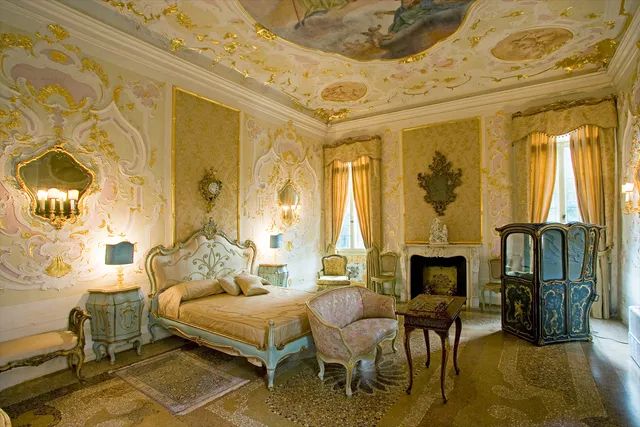
“On the 5th I was called up out of my bed soon after it was light—that is about five—with a message that Mrs. Winchester was dead or dying. Making my way to her house, I found there was no doubt which was the truth. All the persons in the house expect the one that let me in were already in her chamber and standing about her bed, but none touching her. She was stretched in the midst of the bed, on her back, without any disorder, and indeed had the appearance of one ready laid out for burial. Her hands, I think, were even crossed on her breast. The only thing not usual was that nothing was to be see of her face, the two ends of the pillow or bolster appearing to be closed quite over it. These I immediately pulled apart, at the same time rebuking those present for not at once coming to the assistance of their master. However, I was informed that only one person had stayed with her until her dying moment and most had fallen asleep. She looked at me and shook her head, having no more hope than myself that there was anything but a corpse before us. Indeed it was plain to anyone possessed of the least experience that Mrs. Winchester was not only dead, but had died of suffocation. Nor could it be conceived that her death was accidentally caused by the mere folding of the pillow over her face. How should she not, feeling the oppression, have lifted her hands to put it away? whereas not a fold of the sheet which was closely gathered about her, as I now observed, was disordered.

“I could tell no more, at least without opening the body, then we already knew. As to any person entering the room with evil purpose (which was the next point to be cleared), it was visible that the bolts of the door were burst from their stanchions, and the stanchions broken away from the door-post by main forced; and there was a sufficient body of witness, the smith among them, to testify that this had been done but a few minutes before I came. The chamber being, moreover, at the top of the house, the window was neither easy of access nor did it show any sign of an exist made that way, either by marks upon the sill or footprints below upon soft mould. My evidence forms of course part of the report of the inquest, the large organs were in a healthy state and there was coagulation of blood in various parts of the body. My verdict was ‘Death by visitation of spirits.’ Upon further consideration, I think I can divine a reason for Mrs. Winchester’s death. It related to the rifling of her mansion. This is the property of a noble family. The outrage was not that of a natural death. The object, it seemed likely, was theft. The account is blunt and terrible. I shall not quote it here. A dealer in San Francisco suffered heavy penalties as a receiver of stolen goods in connexion with the affair.
“Mrs. Winchester has left us all much grieved for the loss of her; for she was a good lady, and kind to all her caretakers. Much I feared, that as I was taken by her ladyship to wait upon her person, I should be quite destitute again. Mrs. Winchester has given mourning and a year’s wages to all her caretakers; and she game me with her own hand four golden guineas, and some silver, which were in her pocket when she died. And I sent Daisy those four guineas for her comfort; for Providence will not let me want: and so you may pay some old debt with part, and keep the other part to comfort yourself.” Come and enjoy a delicious meal in Sarah’s Café, stroll along the paths of the beautiful Victorian gardens, and wonder through the miles of hallways in the World’s most mysterious mansion. For further information about tours, including group tours, weddings, school events, birthday party packages, facility rentals, and special events please visit the website: https://winchestermysteryhouse.com/

Please visit the online giftshop, and purchase a gift for friends and relatives as well as a special memento of The Winchester Mystery House. A variety of souvenirs and gifts are available to purchase. https://shopwinchestermysteryhouse.com/

What if I Do Not Believe in Ghosts?
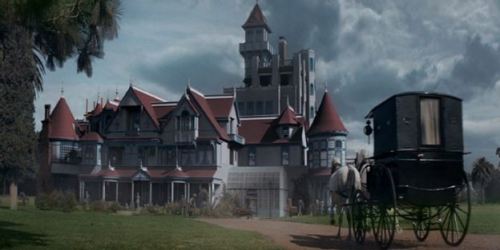
Once when I was little, my dad took me to this placed called Sodom Hill. It must be some kind of gateway because the curious thing is, you feel like you are driving down a hill along this road. This was the first time that I believe I saw a ghost. As our carriage passed by Saint Mary Parish, a woman was standing near the church, starring at us. However, she was really looking at my father. Though the weather was warm, she was wearing a long black dress beneath a hooded cloak. She was hugging herself, and she looked cold. Beneath the hood, her face was pale, and even from a distance I could tell that she was distresses. And she was very beautiful. The hood slipped down to her shoulders. I saw her hair was red. Her dark eyes were trusting and innocent. And suddenly I knew where I had seen her before. Onn the Rocky Hill-Glastonbury Ferry. She had been weeping on deck. The beautiful maiden with the red hair kept staring at my father. He did not notice. I was curious to know if my father could see the woman. I said, “Father, what is that pretty tree over there? By the tower of the church?” I pointed toward the woman. The woman saw me point. She looked at me, questioningly, but only for a moment. Then she looked back at my father. The woman did not care if I was being immodest. She just looked through me, just as she had on the deck of the ferry. How had she gotten here, and what did she want from me and my father? All this seemed to take forever. However, I do not think more than a minute passed before my father said to me, “What tree? I don’t see any trees near the tower of the church.” #RandolphHarris 1 of 5

“Father, what do you see?” I asked. “The lawn,” he said. I watched him for a sign. I could not believe that he could not see the lady with crimson hair near the tower of the church. “Nothing else? I said. “No one?” “Nothing,” he replied. “No one? Who would be there?” When I looked again there was no one there. The woman had vanished. I felt as if I had lost something. “What’s wrong?” said my father. “Nothing,” I said. “I think I must have been having a daydream.” “Poor Sarah,” said my father. “It must be the sun. Let’s get you inside and get you something to drink.” We made our way back home. My mother was in the garden, kneeling down among the tall plants and rut niblicks. My father poured me some milk and gave me a cracknel, baked by my mother. “Eat this,” he said. “It’ll help you get your strength back.” My father nibbled on one himself. I told myself: No man sees a ghost and starts nibbling a cookie like nothing happened. If he said there was no woman near the tower of the church, it meant he had not seen her. It meant something was seriously wrong with me. I had not been feeling all that well lately. I felt as if the colours of everything had gotten a little brighter, and sounds a little louder, and when people speak to me, their voices have a tiny echo, like I am hearing them from the far end of a tunnel. It does not happen all of the time. I have these little spells, and then they pass, and I am normal again. Spirits whispered in the rustling leaves, ghost lurked in the murky nooks, the deep baying of a hound floated up out of the distance, an owl answered with his sepulchral note. #RandolphHarris 2 of 5

Millions of spiritual creatures walk the Earth unseen, both when we wake and when we sleep. What place do these spirit beings hold in the scheme of creation which by some are thought neither to have stood fast when the rebel angels fell, nor to have joined with them to the full pitch of their transgression? It was the middle of the moonlight in October night with heavy rain underfoot, I was sitting by the fire—it was a cold evening—and I stretched out my hand towards the warmth, and just then the fire-irons, or at least the poker, fell over towards me with a great clatter. There resourced over the estate and the surrounding land a series of cries which brought sleepy heads to every window; we all saw a ghost ship. It was a 26-gun frigate. There were distant gunshots, and I could feel the throb of titanic and thunderous words resounding in the upper air. Muskets flashed and cracked, and the flaming ship fell to the ground. A second flaming thing appeared, and a shriek of human origin was plainly distinguished. Then just before dawn when a howling darkness descended upon the ships and they vanished. As I ran up the stairs, I hit what felt like an ice wall and was momentarily stopped in my tracks. The air around me became instantly chilled, and although every fireplace was lit, I was cold and could see my breathe. I was then able to get up the last six steps, but when I turned around, I saw an opalescent fog crystalize into the form of a woman. She wore a long dress, and a hat, and when she turned towards me, I realized in was the woman with red hair that I had seen at the tower of the church with my father when I was a child. In her face, I could see uncountable horrors and sorrows written in the depth of her dark eyes. She then vanished, and the air around me returned to its warm state. #RandolphHarris 3 of 5

There was certainly a time when I was so much harassed by my dreams that I could not keep them to myself, but would tell them to my friends. There was a dream which had come to me several times of late, and even more than once in a night. It was to this effect, that I seemed to myself to wake under an extreme compulsion to rise and go outdoors. So I would dress myself and go down to the garden door. By the door there stood a spade which I must take, and go out into the garden, and at a particular place in the boxwood hedges, somewhat clear, and upon which the moon shone (for there was always in my dream a crescent moon), I would feel myself forced to dig. And after some time, the spade would uncover something light-coloured, which I would perceive to be a stiff, linen or woolen, and this I must clear with my hands. It was always the same: of the size of a man and shaped like the chrysalis of a moth, with the folds showing a promise of an opening at one end. I could not describe how gladly I would have left all at this stage and run to the house, but I mist not escape so easily. So with many groans, and knowingly only too well what to expect, I parted these folds of stuff, or, as it sometimes seemed to be, membrane, and disclosed a head covered with a smooth pink skin, which breaking as the creature stirred, show me my own face in a state of death. Upon ever recurrence of this dream, I woke and found myself, as it were, fighting for my breath. #RandolphHarris 4 of 5

Moments later a chill wind blew up. It produced a kind of clutching, amorphous fear beyond that of the tomb or the charnel-house. Close upon it came the awful voice which no hapless hearer will ever be able to forget. It thundered out of the sky like a doom, and windows rattled as its echoes dies away. It was deep and musical; powerful as a bass organ, but evil as the forbidden books in the secret library. What it said, no one can tell, for it spoke in an unknown tongue. Objects were being hurled about the room. Puddles of water appeared on the floor. The sheet and blankets were torn off the bed. Then I was alarmed when I heard a very loud vibration as if a hole were being drilled through the all. I went into the chamber next to mind and saw that a Victorian fireplace had been ripped from its casing and hurled upon the floor. A wailing distinctly burst out. It was almost articulate, though no one could trace the exact words; and at one point it seemed to verge toward the confines of diabolic and hysterical laughter. Then a yell of utter, ultimate fright and stark madness wrenched from scores of demon throats—a yell which came strong and clear despite the depth from which it must have burst; after which a darkness and silence ruled all things. Spirals of acrid smoke ascended, though no flames appeared. This must have been the witches’ Sabbath. Death does not mean that your loved one’s have left your mind, and your mind sends messages to your eyes that sometimes have nothing to do with what you actually see. #RandolphHarris 5 of 5

The Winchester Mystery House

Santa Clare Valley was in an uproar after the death of Mrs. Winchester. On Wednesday (October 3, 1923) consequently on the circulation of a report that the household goods of Sarah Winchester were being smashed and removed by some unknown agency. All day long crowds of excited people wended their way towards the Winchester Mansion, drawn thither by the accounts of the mysterious occurrences said to have been witnessed by the inmates and others. “As I enter the door I myself saw an eleven-foot-tall 18th century George I burl walnut longcase clock by James Marwick levitate several feet into the air before relocating itself to the other side of the room. After hearing what the folks had to say, I was joining in the conversation, when a late 18th century crystal chandelier began to raise in a slanting direction over my head and then fell as my feet, smashing into bits. I had not the slightest belief in the supernatural. I cannot account for what I saw. No one was nearer to the chandelier than myself and, as far as I saw, there was no cause for the phenomenon. The room was dimly lighted by a lamp. We were talking about things, and the caretaker were saying, “It is a very mysterious thing,” with his back turned Neoclassical Italian Crystal vase suddenly flew up slantingly over his head, and fell down and smashed at his feet. The caretaker looked at the mess on the floor, and thinking the devil was in the place, he left and went home. About half-a-dozen people were in the parlour whilst these things happened.

Come and enjoy a delicious meal in Sarah’s Café, stroll along the paths of the beautiful Victorian gardens, and wonder through the miles of hallways in the World’s most mysterious mansion. For further information about tours, including group tours, weddings, school events, birthday party packages, facility rentals, and special events please visit the website: https://winchestermysteryhouse.com/

Please visit the online giftshop, and purchase a gift for friends and relatives as well as a special memento of The Winchester Mystery House. A variety of souvenirs and gifts are available to purchase. https://shopwinchestermysteryhouse.com/
Is Man Nothing but a Social Ensemble in which He Lives?
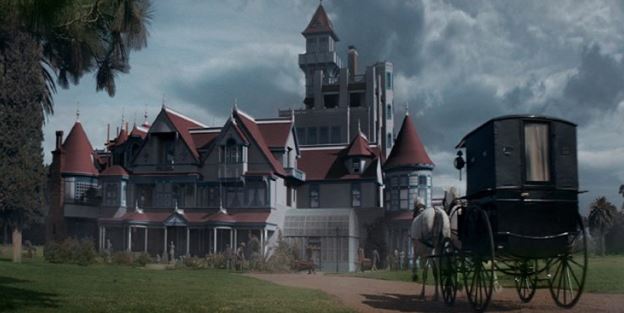
The wise and good dead men who have left their examples for imitation or their words for germination, and any living men whom we have heard, met, or read about—all these are our spiritual guides; if we only make them so, all these can become our masters. However, is man good or evil? Is he free or is he determined by circumstances? Or are these alternatives wrong and is man neither this not that—or is he both this and that? Can one speak of the essence or nature of man, and if sone, how can it be defined? One view point says that there is no such thing as an essence of man; this viewpoint is held by anthropological relativism, which claims that man is nothing but the product of cultural patterns which mold him. On the other hand, the empirical discussion on destructiveness is rooted in the view held by Dr. Freud and many others that there is such a thing as the nature of man; in fact, all dynamic psychology is based on this premise. The difficulty in finding a satisfactory definition for the nature of man lies in the following dilemma: If one assumes a certain substance as constituting the essence of man, one is forced into a nonevolutionary, unhistorical position which implies that there has been no basic change in man since the very beginning of his emergence. Such a view is difficult to square with the fact that there is a tremendous difference to be found between our most undeveloped ancestors and civilized man as he appears in the last four to six thousand years of history. #RandolphHarris 1 of 18

On the other hand, if one accepts an evolutionary concept and thus believes that man is constantly changing, what is left as a content for an alleged “nature” or “essence” of man? This dilemma is also not solved by such “definitions” of man as that he is a political animal (Aristotle), an animal that can promise (Nietzsche), or an animal that produces with foresight and imagination (Marx); these definitions express essential qualities of man, but they do not refer to the essence of man. The essence of man is not a given quality or substance, but is rather a contradiction inherent in human existence. This contradiction is to be found in two set of facts: Man is an animal, yet his instinctual equipment, in comparison with that of all other animals, is incomplete and not sufficient to ensure his survival unless he produces the means to satisfy his material needs and develop speech and tools. Man has intelligence, like other animals, which permits him to use thought processes for the attainment of immediate, practical aims; but man has another mental quality which the animal lacks. He is aware of himself, of his past and of his future, which is death; of his smallness and powerlessness; he is aware of others as others—as friends, enemies, or as strangers. Man transcends all other life because he is, for the first time, life aware of itself. Man is in nature, subject to its dictates and accidents, yet he transcends nature because he lacks the unawareness which makes the animal a part of nature—as one with it. #RandolphHarris 2 of 18
Man is confronted with the frightening conflict of being the prisoner of nature, yet being free in his thoughts; being a part of nature, and yet to be as it were a freak of nature; being neither here nor there. Human self-awareness has made man a stranger in the World, separate, lonely, and frightened. This is essentially the same as the classic view that man is both body and soul, angel and animal, that he belongs to two Worlds in conflict with each other. However, it is not enough to see this conflict as the essence of man, that is to say, as that by virtue of which man is man. It is necessary to go beyond this description and to recognize that the very conflict in man demands a solution. Certain questions arise immediately from the statement of the conflict: What can man do to cope with this fright inherent in his existence? What can man do to find a harmony to liberate him from the torture of aloneness, and to permit him to be at home in the World, to find a sense of unity? There is one condition which every answer must fulfill: it must help man to overcome the sense of separateness and to gain a sense of union, of oneness, of belonging. Therefore, keep in mind that the various forms of human existence are not the essence, but they are the answers to the conflict which, in itself, is the essence. The regressive answer demonstrates that if man wants to find unity, if he wants to be freed from the fright of loneliness and uncertainty, he can try to return to where he came from—to nature, to animal life, or to his ancestors. #RandolphHarris 3 of 18

Man can try to do away with that which makes him human and yet tortures him: his reason and self-awareness. It seems that for hundreds of thousands of year man tried just that. The history of primitive religions is a witness to this attempt, and so is severe psychopathy ology in the individual. In one form or another both in primitive religions and in individual psychology, we find the same severe pathology: regression to animal existence, to the state of pre-individuation, the attempt to do away with that which is specifically human. However, if regressive archaic trends are shared by many, we have the picture of a folie a millions; the very fact of the consensus makes the folly appear as wisdom, the fiction as real. The individual who participates in this common folly lacks the sense of complete isolation and separation, and hence escapes the intense anxiety he would experiences in a progressive society. It must be remembered that for most people reason and reality are nothing but public consensus. One never “loses one’s mind” when nobody else’s mind differs from one’s own. The alternative to the regressive, archaic solution to the problem of human existence, to the burden of being man, is the progressive solution, that of finding a new harmony not by regression but by the full development of all human forces, of the humanity within oneself. The progressive solution was visualized for the first time in a radical form (there are many religions which form the transition between the archaic regressive and humanist religions) in that remarkable period of human history between 1500 B.C. and 500 B.C. #RandolphHarris 4 of 18

It appeared in Egypt around 1350 B.C. in the teachings of Ikhnaton, with the Hebrews around the same time in the teachings of Moses; around 600 to 500 B.C. the same idea was announced by Lao-Tse in China, by Buddha in India, by Zarathustra in Persia, and by the philosophers in Greece as well as by prophets in Israel. The new goal of man, that of becoming fully human and thus regaining his lost harmony was expressed in different concepts and symbols. For Ikhnaton the goal was symbolized by the Sun; for Moses by the unknown God of history; Lao-Tse called the goal Tao (the way); Buddha symbolized it as Nirvanah; the Greek philosophers as the unmoved mover; the Persians as Zarathustra; the prophets as the Messianic “end of days.” These concepts were to a large extent determined by the modes of thought, and in the last analysis by the practice of life and the socioeconomic-political structure of each of these cultures. However, while the particular form in which the new goal was expressed depended on various historical circumstances, the goal was essentially the same: to solve the problem of human existence by giving the right answer to the question which life poses it, that of man’s becoming fully human and thus losing the terror of separateness. When Christianity and Islam, five hundred and one thousand years later, respectively, carried the same idea to Europe and the Mediterranean countries, a large part of the World had learned the new message. #RandolphHarris 5 of 18

However, as soon as man had heard the message he began to falsify it; instead of becoming fully human himself, he idolized God and dogmas as manifestations of the “new goal,” thus substituting a figure or a word for the reality of his own experience. And yet again and again man tried also to return to the authentic aim; such attempts manifested themselves within religion, in heretic sects, in new philosophical thoughts and political philosophies. Different as the thought concepts of all these new religions and movements are, they have in common the idea of the basic alternative of man. Man can choose only between two possibilities: to regress or to move forward. He can either return to an archaic, pathogenic solution, or he can progress toward, and develop, his humanity. We find the formulation of this alternative in various ways; as the alternative between light and darkness (Persia); between blessing and curse, life and death (the Old Testament); or the socialist formulation of the alternative between socialism and barbarism. The same alternative is presented not only by the various humanist religions, but it appears also as the basic difference between mental health and mental illness. What we call a healthy person depends on the general frame of reference of a given culture. With the Teutonic Berserks a “health” man would have been one who was capable of acting like a wild animal. The same man would be a psychotic today. #RandolphHarris 6 of 18

All archaic forms of mental experience—necrophilia, extreme narcissism, incestuous symbiosis—which in one form or the other have constituted the “normal” or even the “ideal” in regressive-archaic cultures because men were united by their common archaic strivings are today designated as severe forms of mental pathology. In a less intense form, when opposed by contrary forces, these archaic forces are repressed, and the result of this repression is a “neurosis.” The essential difference between the archaic orientation in a regressive and in a progressive culture, respectively, lies in the fact that the archaically oriented person in an archaic culture does not feel isolated but, on the contrary, is supported by the common consensus, while the opposite is true for the same person in a progressive culture. He “loses his mind” because his mind is in opposition to that of all others. The fact is that even in a progressive culture such as today’s, a large number of its members have regressive tendencies of considerable strength, but they are repressed in the normal course of life and become manifest only under special conditions, such as war. Therefore, the nature or essence of man is not a specific substance, like good or evil, but a contradiction which is rooted in the very conditions of human existence. This conflict in itself requires a solution, and basically there are only the regressive or the progressive solutions. What has sometimes appeared as an innate drive for progress in man is nothing other than the dynamics of a search for new solutions. #RandolphHarris 7 of 18

At any new level man has reached new contradictions appear which force him to go on with the task of finding new solutions. This process goes on until he has reached the final goal of becoming fully human and being in complete union with the World. Whether man can each his final goal of full “awakening” in which greed and conflict have disappeared (as Buddhism teaches) or whether this is possible only after death (according to the Christian teaching) is not our concern here. What matters is that in all humanist religions and philosophical teachings, the “New Goal” is the same, and man lives by the faith that he can achieve an ever increasing approximation to it. (On the other hand, if solutions are sought for in a regressive way, man will be bound to seek for complete dehumanization which is the equivalent of madness.) If the essence of man is neither good nor the evil, neither love nor hate, but a contradiction which demands the search for new solutions which, in turn, create new contradictions, then indeed man can answer his dilemma, either in a regressive or in a progressive way. Recent history gives us many examples of this. Millions of Germans, especially those of the less affluent class, who has lost money and social status reverted under the leadership of Mr. Hitler to the Teutonic ancestors’ cult of “going berserk.” The same happened in the case of the Russians under Mr. Stalin, with the Japanese during the “rape” of Nanking, with the lynch mobs in the American South and with renegade during the 2020s. #RandolphHarris 8 of 18

For the majority the archaic form of experience is always a real possibility; it can emerge. However, it is necessary to distinguish between two forms of emergence. One is when the archaic impulses remained very strong but were repressed because they were contrary to the culture patterns of a given civilization; it this case specific circumstances such as war, natural catastrophes, or social disintegration can easily open channels, permitting the repressed archaic impulses to surge forward. The other possibility is when in the development of a person, or of the members of a group, the progressive stage had really been reached and solidified; in this case traumatic incidents like those mentioned above will not easily produce a return of the archaic impulses, because these had been not so much repressed as replaced; nevertheless even in this case the archaic potential has not entirely disappeared; under extraordinary circumstances such as prolonged imprisonment in concentration camps, or certain chemical processes in the body, the entire psychic system of a person may break down and the archaic forces may surge forward with renewed strength. There are, of course, innumerable shadings between the two extremes—the archaic, repressed impulses, on the one hand, and their full replacement by the progressive orientation, on the other. The proportion will be difficult in each person, and also the degree of repression versus the degree of awareness of the archaic orientation. #RandolphHarris 9 of 18
There are people in whom the archaic side has been so completely eliminated, not by repression but by the development of the progressive orientation, that they may have lost the capability of even regressing to it. In the same way there are persons who have so completely destroyed all possibilities for the development of a progressive orientation that they too have lost the freedom of choice—in this case, the choice to progress. It goes without saying that the general spirit of a given society will influence to a large extent the development of the two sides in each individual. Yet, even here individuals can differ greatly from the social patter of orientation. There are millions of archaically oriented individuals in modern society who consciously believe in the doctrines of Christianity or Enlightenment, yet who behind this façade are “berserks,” necrophiles, or worshipers of Baal or Astarte. They do not even necessarily experience any conflict, because the progressive ideas they think have no weight, and they act upon their archaic impulses only in hidden or veiled forms. On the other hand, many times there have been in archaic cultures individuals who have developed a progressive orientation; they become the leaders who under certain circumstances brought light to the majority of their group, and who laid the basis for a gradual change of the entire society. When these individuals were of unusual stature, and when traces of their teachings remained, they were called prophets, master, or some such name. #RandolphHarris 10 of 18
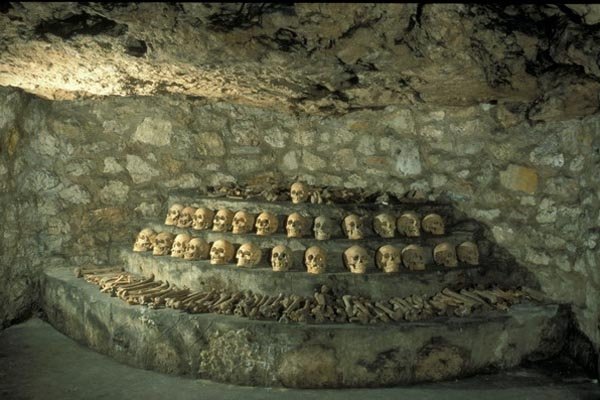
Without them mankind would never have moved from the darkness of the archaic state. Yet they have been able to influence man only because in the evolution of work man liberated himself gradually from the unknown forces of nature, developed his reason and objectivity, ceased to live like an animal of prey or of burden. The wisdom is latent in the bad as well as the good man. Any moral condition is a starting point. There is hope for all, benediction for the poor and the rich, the good and the bad, for every man to come into this great light. Yet, we can only proceed by trial and error. In self-analysis it may be that there is less temptation to tackle a factor prematurely, because the person will intuitively shirk a problem that one is not yet able to face. However, if one does notice, after grappling with a problem for some time, that one is not getting any nearer to a solution, one should remember that one may not yet be ready to work at it and that perhaps he better leave it alone for the time being. And he need not be discouraged at this turn of events, for every often even a premature attack provides a significant lead for further work. It need hardly be emphasized, however, that there may be other reasons why a solution that presents itself is not accepted, and he should not resort too quickly to the assumption that it is merely premature. And information of the kind is helpful not only in forestalling unnecessary discouragement but also in more beneficial ways, for it helps one to integrate and understand peculiarities which otherwise would remain disconnected observations. #RandolphHarris 11 of 18

A person may realize, for example, that he finds difficulties in asking for anything, from inquiring the right way on a motor trip to consulting a doctor for an illness, that he conceals his going to analysis as if it were a disgrace, a despicable easy road, because he feels he should be able to deal with his problems all by himself, that he becomes irritated if anyone shows him sympathy or offers advice and feels humiliate if he must accept help; and is he has some knowledge of neurotic trends the possibility will occur to him that all these reactions emanate from an underlying trend toward compulsive self-sufficiency. Naturally, there is no guarantee that the surmise is right. The assumption that one is generally weary of people might explain some of his reactions, though it would not account for the feeling of hurt pride that arises on some occasions. Any surmise must be made tentatively and kept in abeyance until one has plenty of evidence for its validity. Even then one must ascertain over and over again whether the assumption really covers the ground or is only partially valid. Naturally, one can never expect that one trend will explain everything: one must remember that there will be countercurrents. All one can reasonably expect is that the trend surmised represents one of the compelling forces in his life and therefore must reveal itself in a consistent pattern of reactions. His knowledge will be of beneficial help also after he has recognized a neurotic trend. #RandolphHarris 12 of 18

An understanding of the therapeutic importance of discovering the various manifestations and consequences of a trend will help him to focus attention deliberately on these instead of getting lost in a frantic search for the reasons of its power, most of which can be understood only later on. Such an understanding will be particularly valuable in directing his thoughts toward a gradual recognition o the price paid for the pursuit of the trend. In regard to the conflicts the practical value of psychological knowledge lies in the fact that it prevents the individual from merely shuttling to and fro between disparate attitudes. Clare, for instance, at the time when she analyzed herself, lost considerable time shuttling between a tendency to put all blame on others and a tendency to put all the bale on herself. Thus she became confused because she wanted to solve the question which of these contradictory tendencies she really had, or at least which was prevailing. Acutally, both were present and emerged from contradictory neurotic trends. The tendency to find fault with herself and to recoil from accusing others was one of the results of her compulsive modesty. The tendency to put the blame on others resulted from her need to feel superior, which made it intolerable for her to recognize any shortcomings of her own. If at this time she had thought of the possibility of conflicting trends, arising from conflicting sources, she might have grasped the process a good deal earlier. #RandolphHarris 13 of 18

From a major research investigation into the relationship between social class membership and mental illness, we have some information as to how the forms of neurotic disturbances under active treatment by psychiatrists are distributed in terms of social classification. Every thoughtful person with a serious interest in mental illness and its treatment should have direct and thorough knowledge of the major report of this study. Investigators developed an index for determining the social class membership of an individual. This index is based on a summation of weighted ratings of education, occupation, and place of residence, and provides a five-step hierarchy of social class. Class I, the highest social class, is composed of individuals who have had post-graduate professional education, who are executive of large concerns and engaged in one of the major professions, and whose home is located in the very finest residential area of their community. By contrast, members of the lowest social class, Class V, have had less than seven years of formal schooling, are unskilled workers, and occupy the poorest residential area of the community. While the population sampled was restricted to the greater New Havnen (Connecticut) community, there is no reason to believe that the findings would not hold true for comparable metropolitan areas. This study resulted in three major findings: there is a significant relationship between the over-all prevalence or rate of mental illness and social class; the types of mental illness are significantly related to social class; and for a given type of illness, exempli gratia neuroses, the form of treatment received by patients is significantly related to their social class. #RandolphHarris 14 of 18

Antisocial and immaturity are mostly found among Class IV people, they account for more than of the patients in each class. Their illness is characterized by unapproved and intolerable behaviour with minimal or no overt sense of distress to the patient. It is a moot point whether antisocial reactions should be group with the neuroses. This diagnostic label [character neurosis] is used to describe patients who do not belong in one of the specific reaction types classified in the scheme. They exhibit mixed symptoms as well as relatively mild character and, to a lesser extent, some behaviour disturbances. It is notable that the “borderline” and vague diagnosis of antisocial and immaturity reaction does not reveal an orderly difference in frequency in the different social classes. The middle and lowest classes (III and V) show many more diagnoses of antisocial reaction than do the highest classes (I-II). By contrast, the nonstandard diagnosis of character neurosis is the most frequent diagnosis of patients from the two highest social classes, with its frequency in the lowest class (V) being less than half that in the two highest classes (I-II). It is important to recognize that these variations in diagnostic frequency probably reflect the attitudes of the diagnostician (arising from ways of perceiving himself and others that are a function of his own social class membership) as much as the objective facts of the patients’ behaviours. #RandolphHarris 15 of 18

We take the position that a neurosis is a state of mind not only of the sufferer, but also of the therapists, and it appears likewise to be connected to the class positions of the therapist and the patient. Within the more orthodox neurotic diagnosis, only two, namely obsessive-compulsive reactions and hysterical reactions, show a distinctly different, nonoverlapping frequency of occurrence in the highest and lowest social classes. The differences among the social classes in the distribution of the various neurotic diagnoses are certainly less striking than the differences between the frequency of neurosis versus psychosis in the five levels of social stratification. Only in the two highest social classes does the base rate of neurosis exceed that of psychosis. For all lower social classes there is an excessive rate of psychoses over neuroses, and the excess is progressively larger for each consecutively lower social class. Thus, for a member of the lowest social class of whom nothing else is determined except that he is in need of psychiatric treatment the probability that he will be diagnosed as psychotic is essentially seven times as great as the probability of a neurotic diagnosis. For a psychiatric “candidate” from the highest social class, the odds are 2 to 1 that he will be given a neurotic diagnosis. However, the psychological equipment required for the development of a neurosis is a biologically common property of most persons. The same assertion might be made with respect to psychosis. However, there are studies that suggest that certain forms of psychosis, notably schizophrenia, have a special genetic factor as a necessary (but no sufficient) etiologic contributor to the illness; such a factor appears, fortunately, not to be general in the population. #RandolphHarris 16 of 18

Stress, while it may vary in content or source, is not limited by class boundaries nor can it be readily established that it is greater at one social class level than another. Anxiety is experienced by most persons on occasion regardless of their class membership. This raises a serious question as to whether the class differences in diagnostic frequencies are directly reflective of differences in basic symptomatology or may not be more reflective of differences in the “diagnostic habits” of the clinician. One of the most ubiquitous of such habits is his more ready identification with and acceptance of the individual of his own class, the less understanding and more ready rejection of the person from a lower-class matrix. In this regard, psychotherapists are members of the upper social classes. The person from an upper social class, regardless of symptomatology, tends in general to manifest many features which make him a more attractive candidate for psychotherapy. These beneficial attributes for therapy include good education, superior general intelligence (including the ability to communicate effectively at a level of discourse which is natural and comfortable for the therapist), and an ability to pay well for his treatment. Add to this the fact that psychotherapy is generally considered to be the therapy of choice for neurosis. Then, when confronted by a prospective patient from the upper social classes, the potential psychotherapist is subtly constrained to see the patient’s illness as neurotic rather than psychotic, even if this requires forcing the diagnosis into an ambiguous category of “character neurosis.” #RandolphHarris 17 of 18
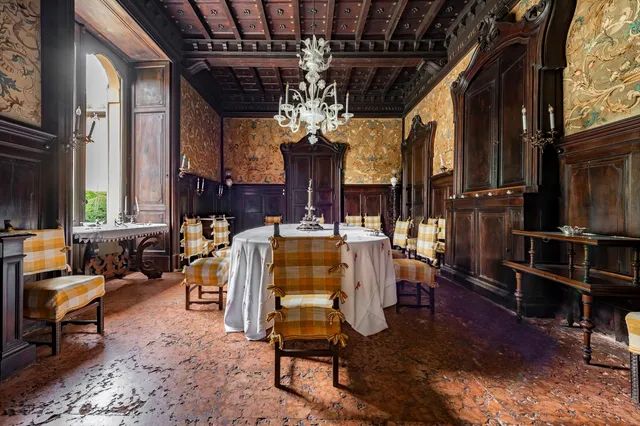
Problem: why the notion of the other World has always been to the disadvantage of “this” World, a criticism of it—what does that indicate? A people proud of itself, a people in the ascendency of life, always thinks of being other as being lower, being worthless; it regards the strange, the unknown World as its enemy, as its opposite; it is without curiosity, wholly dismissive of the strange…A people would never admit that another people were the “true people”….That such a distinction is possible at all—that one takes this World for the “apparent” one and that one for the “true”—is symptomatic. The points of origin of the idea of an “other World”: the philosopher, who invents a World of reason where reason and logical operations are adequate: this is the source of the “true” World; the religious man, who invests a “divine World”: this is the source of the “denaturalized, counternatural” World; the moral man, who feigns a “free World”: this is the source of the “good, perfect, just, holy” World. What is common to the three points of origin: the psychological blunder, psychological confusions. The “other World,” as it actually appears in history, defined by what predicates? By the stigmata of philosophical, religious, moral prejudice. The “other World,” as it is illuminated by these facts, as a synonym of nonbeing, of not living, of not wanting to live…General insight: the instinct of a weariness of life, not the that of life, is what created the “other World.” Implication: philosophy, religion, and morality the symptoms of decadence. We have art lest we perish of the truth. #RandolphHarris 18 of 18
For many years The Winchester Mystery House has had the reputation of being “the most haunted house in the World.” It has been the subject of several books and innumerable articles, some of which can be said to be conclusive. During the Victorian Era, there were peculiar incidents and sightings confirming the overwhelming feeling that this was a “bizarre” house. Mrs. Winchester and her niece Daisy were returning from a garden party one June afternoon; when they entered the garden of the house, both of them saw a figure of a nun walking slowly on the other side of the lawn. This nun had been often seen at dusk or at twilight, but not before on a bright afternoon. The family had already been intrigued by the phenomenon. The specter of the nun was supposed to walk along a path that skirted the lawn of the estate, soon becoming known and the Ghost’s Crossing, and in fact Mrs. Winchester constructed a summerhouse on the other side of the lawn so that guests could wait and watch for the dark figure. One of the windows in the dining room, overlooking the garden, was bricked up so that Mrs. Winchester would not be disturbed at her meals.

However, there were frequent episodes of intense activity. There were footsteps, tappings and spectral appearances. Diasy was woken up at night by the sound of screws hitting the floor. Mrs. Winchester was so aware of strange sounds within the mansion itself, in particular, odd knockings that seemed to approach the door-to-nowhere, enter the mansion, and then work their way around its walls. On one occasion a group of servants distinctly heard footsteps coming from outside of the door-to-nowhere. When Mrs. Winchester arrived a few moments later, the door was closed and locked. On numerous occasions, in the room where the door-to-nowhere is located, they heard the sounds of “slow dragging footsteps.” However, the door was unaccountably locked from the inside. The annunciator in the house would ring unexpectedly, and for no reason; lights were seen burning in empty and unlocked rooms. Heavy wooden shutters were pulled sharply together. The mirror on Mrs. Winchester’s dressing table would begin tapping whenever she came close to it.

On one occasion, Mr. Hansen was crossing the hallway on the fourth floor, when he heard what he described as “whisperings” above his head, which were quickly followed by “mutterings.” He declared that it was a woman’s voice; he could not make out any of the words expect for a clearly enunciated, “Tell Mrs. Winchester.” One maidservant from Germany left after only two days of employment, asserting that she had seen a demon; her successor knowing nothing of the precious maid’s experience. The most puzzle aspects of their experience were writings on the walls. Scrawled messages appeared in blood, without warning, asking “Mrs. Winchester” for “help.” The longest of them was found on the floor in the room of the door-to-nowhere, “Exorcists. Demons here.” Some of these appeared even as the wall was being investigated by other witnesses. The jagged nature of the writing suggests that it was done with difficulty but urgently and almost impatiently; the letters begin firmly but then trail off, as if the apparition had weakened or been interrupted. Their appearance has never been explained.
For further information about tours, including group tours, weddings, school events, birthday party packages, facility rentals, and special events please visit the website: https://winchestermysteryhouse.com/

Please visit the online giftshop, and purchase a gift for friends and relatives as well as a special memento of The Winchester Mystery House. A variety of souvenirs and gifts are available to purchase. https://shopwinchestermysteryhouse.com/

 Randolph Harris II International Institute