
Home » Posts tagged 'anglo-saxons'
Tag Archives: anglo-saxons

War Worn World

What depressed me more than anything when I was a youth is that I had been born into an age that honored only criminals and those who do not accept the norms of society. The surge of large waves of crime needs to calm down so that the future will belong only to peaceful competition. More and more California and New York have begun to resemble businesses that mutually undercut the federal government, steals customers and orders, and try to outwit the federal government in every way, by making protests are loud as they are dangerous. This development has not only seemed to progress, but the United States of America is being transformed into a huge department store for the most skillful manipulators and most ruthless executives. Charles A. Conant, a prominent journalist and economist troubled about the necessity of finding an outlet for surplus capital, “if the entire fabric of the present economic order is not to be shaken by a social revolution,” argued that “the law of self-preservation, as well as the of the survival of the fittest, is urging our people on in a path which is undoubtedly a departure from the policy of the past, but which is inevitably marked out by the new conditions and requirements of the present.” #RandolphHarris 1 of 25A

If the country did not seize upon its opportunities at once, Conant warned against the possibility of decadence. Another writer denied that a policy of colonial expansion was anything novel in American history. We had colonized the West. The question was not whether we should shift our colonizing heritage into new channels. “We must not forget that the Anglo-Saxon race is expansive.” Although the Anglo-Saxon mystique was called upon in the interests of expansion by might, it also had its more pacific side. Its devotees had usually recognized a powerful bond with England; the historians of the Anglo-Saxon school, stressing the common political heritage, wrote about the American Revolution as if it were a temporary misunderstanding in a long history of common political evolution, or a welcome stimulant to flagging Anglo-Saxon liberties. One outgrowth of the Anglo-Saxon legend was a movement toward an Anglo-American alliance which came to rapid fruition in the closing years of the nineteenth century. Despite its unflagging conviction of racial superiority, this movement was peaceful rather than militaristic in its motivation; for its followers generally believed that an Anglo-American understanding, alliance, or federation would usher in a “golden age” of universal peace and freedom. No possible power or combination of powers would be strong enough to challenge such a union. #RandolphHarris 2 of 25

This “English-speaking people’s league of God for the permanent peace of this war-worn World,” as Senator Beveridge called it, would be the next stage in the World’s evolution. Advocates of Anglo-American unity believed that Spencer’s transition from militant to pacific culture, and Tennyson’s “Parliament of Man the Federation of the World,” were about to become a reality. James K. Hosmer had appealed in 1890 for an “English-Speaking Fraternity,” powerful enough to withstand any challenge by the Slavs, Hindus, or Chinese. This coalescence of like-minded states would be but the first step toward a brotherhood of humanity. Yet it was not until 1897 that American interest in an English alliance resulted in a movement of consequence, which received the support of publicists and statesmen as well as litterateurs and historians. During the war with Spain, when continental nations took a predominantly hostile attitude toward American interest, Britain’s friendliness stood out in welcome relief. Common fears of Russia and a feeling of identity of interests in the Far East were added to the notion of a common racial destiny. The Anglophobia which had been so persistent among American politicians—Roosevelt and Lodge had been among the bitterest—was considerably relieved. #RandolphHarris 3 of 25

The antiimperialist Carl Schurz felt that what he rather prematurely took to be the complete dissipation of anti-English feeling was one of the best results of the Spanish-American War. Richard Olney—who as Cleveland’s Secretary of State during the Venezuela dispute had defiantly told Britain that the fiat of the United States of America is a law in the Western Hemisphere—now wrote an article on “The International Isolation of the United States” to point out the benefits of British trade and to warn against pursuing an anti-British policy at a time when our country stood alone in the World. Arguing that “family quarrels” were a thing of the past, Olney expressed his hope for Anglo-American diplomatic cooperation, and reminded his readers: “There is a patriotism of race as well as of country.” Even the navalist Mahan approved of the British, and although he had felt for some time that a movement for union was premature, he was sufficiently friendly to be content to let the British retain naval supremacy. For a short time at the close of the century the Anglo-Saxon movement became the rage among the upper classes, and statesmen who seriously of a possible political alliance. The Anglo-Saxon cult, however, had to pull against the great mass of the population, whose ethnic composition and cultural background render them immune to its propaganda; and even among those of Anglo-Saxon lineage the dynamic appeal of the cult was confined to the years of excitement at the turn of the century. #RandolphHarris 4 of 25

The term “Anglo-Saxon” offended many people, and meetings of protest against Anglo-Saxonism were called in some of the western states. Suspicious of England, traditional in American politics, could not be overcome. John Hay complained in 1900 of “a mad dog hatred of England prevalent among newspapers and politicians.” When the movement for Anglo-American Union was revived again during the First World War, the term “English-speaking” was used in preference to “Anglo-Saxon,” and racial exclusiveness was no longer featured. The powerful undertow of American isolation that followed the war, however, swept away this movement once again. Anglo-Saxonism is politics was limited both in scope and in duration. It had its day of influence as a doctrine of national self-assertion, but as a doctrine of Anglo-Saxon World order its effects were ephemeral. Even the benevolent ideal of the dreamers of a Pax Anglo-Americana found practical meaning only as a timely justification of a temporary reproachment inspired by the needs of Realpolitik. The day had not come when World peace could be imposed by a “superior” race confident in its biological blessings and its divine mission. #RandolphHarris 5 of 25

By letting President Biden meander and babble, tripping and falling all over the place for the entire World to see, then allowing Kamla Harris to steal his place as the Democratic nominee for the 2024 Presidential Election, allow these old criminals and disloyal assassins of justice opportunity to collect themselves for their next strike. The serpent can then go on working, more cautiously than before, but this makes the Democrats more dangerous. While honest people dream of peace and security, the lying criminals are organizing a revolution. I am more than dissatisfied with the fact that officials have settled on a set of terrible half-measures to deal with the problem, but many do not even realize how horrible the result will be. Then what should be done next? The leaders of the Democratic party should be put under lock and key immediately. They should be put on trial and the nation freed from them. Every resource of military power should be used to brutally exterminate this epidemic and put an end to illegal immigration. The Marxists parties should be dissolved, and the leaders of the Democratic party brought to reason at the point of the bayonet if necessary. Or better yet, they should be immediately abolished. #RandolphHarris 6 of 25

Just as the Republic cancels people today, they have even more reason to restore to these means. After all, the destruction of the nation and an entire people is at stake! This certain raises another question: Can intellectual ideas be destroyed by a sword at all? Can violence be used to combat a “World-Concept?” I have asked myself these questions more than once since Biden stole the White House. After a certain point in their development, concepts, and ideas as well as movements of a spiritual nature, whether true or not, can never be broken by force. The only exception is when force is used to replace these ideas with fresh, new idea, thought, or World-Concept that burns even bright and stronger than the one it replaces. The use of force without driving power of a strong spiritual or intellectual concept can never destroy an idea or even slow how fast it spreads, not unless force is used for a complete extermination of every supporter and absolute destruction of all related traditions that linger. We all need the strength of a young missionary idea to again rescue our nation from the entanglement of the international serpent and to stop the contamination of our blood. Only then will we be able to protect our nation and prevent the last catastrophe from ever again being repeated (meaning the revolution). #RandolphHarris 7 of 25

It is madness to unite with the Democrats who are ruled by the very enemy who means death to our future. If we are willing to talk into it, how can we free our nation from slavery of this poisonous embrace? When we choose our allies the very organization of this evil plan and acknowledge it as equal, how can the American worker come to understand that the Democratic party is a damnable crime against humanity. The display they put on at the Olympics, the invasion at the southern border, inflation, and the homeless crisis. We cannot drive out Satan by using Beelzebub. For almost the past four years, I have stood breathless, observing the enormous human serpent twisting its way past me. By reading and watching the Democrat Social press daily, I have been able to study the inner train of its thought better than any form of theoretical literature. What the difference between the glitter phrases in the theoretical writing about freedom, beauty, and dignity, and these words Democrats use creates an illusion of profound wisdom with some difficulty due to the disgusting moral tone, all written with a brazen claim of prophecy. The brutal daily press of this doctrine claimed to be the salvation of a new humanity, but is full of vileness, using every kind of slander, and absolutely full of lies! The Democratic theory is intended for stupid dupes of the middle and upper “levels of intelligence”; the more vile and based sections were targeted at the masses. #RandolphHarris 8 of 25

Another way of spreading ideas, which has already been used to a considerable extent, but which can still be enhanced, is the method of news sheets, which are relatively cheap to publish and to send to a certain limited public. Certain radio stations have also proved to have given a much larger voice to new and progressive ideas than others. Overall, new technical factors work in favour of the dissemination of new ideas. A variety of inexpensive printing techniques have developed, and inexpensive neighbourhood radio stations have been organized, as well as podcast, and social media outlets. Only if they appear in the flesh, do ideas become powerful; an idea which does not lead to action by the individual and by groups remains at best a paragraph or a footnote in a book—provided the idea is original and relevant. It is like a seed stored in a dry place. If the idea is to have influence, it must be put into the soil, and the soil is people and groups of people. To me, dwelling on the literature and press of this doctrine and organization meant finding my way back to my own people. What seemed an impassable gulf now created in me a love greater than before. Only a fool, once he knows about this enormous work of corruption, could still condemn the victims. If given too much, the masses are seldom to make much use of freedom and are likely to neglect it. #RandolphHarris 9 of 25

Ideally speaking, the state and the Church are supposed to be the embodiment of social and religious ideas. However, this is true only in the most restricted sense. At best, these organizations embody the minimum of the ideas they proclaim. It is precisely for this reason that they do not fulfill the function of helping the individual in the development and realization of the values they proclaim. Political parties today claim that they express values and ideas more specifically than the state, but by their bureaucratic structure and the need to make compromises, the fail to offer the citizen a place where he can feel at home intellectually and spiritually; where he can be active beyond the merely organizing-bureaucratic functions. This view does not deny the importance of activity within political parties; it only claims that this activity is not sufficient to give the individual a chance to participate, to feel at home, and to become aware that his ideas represent a style of life shared by others, and expressed in common actions. Furthermore, I do not believe that the forms of participatory democracy are by themselves sufficient to bring about necessary changes. The face-to-face groups which I have described above must approach problems in a new spirit and with new ideas, but these ideas must be cultivated and spread so that they influence these groups. #RandolphHarris 10 of 25

I realize that the infamous intellectual terrorism of the Democratic movement targets the privileged class, which is neither morally nor spiritually a match for such attacks. They tell a barrage of lies and slander against the individual adversary is considers most dangerous and keep it up until the nerves of the group being attacked give in and sacrifice the hated figure just to have peace and quiet again. However, the fools still do not get peace and quiet. The game begins and is repeated until fear of the villain becomes a hypnotic paralysis. Since the Social Democrats know well the value of power from their own experience, their storming is directed mainly at those whose character has the same quality. Conversely, the praise every weakling on the other side, cautiously, then loudly, according to the intellectual qualities they see or suspect. They fear an impotent, weak-willed genius less than they fear a forceful nature with only modest intellect. Their highest recommendation goes to the weakling in both mind and nature. They are successful in creating the illusion that given-in is the only way to win peace and quiet from them, while they quietly, cautiously, but unerringly, conquer one position after another, either by quiet extortion or by actual theft when the public attention is on other things. #RandolphHarris 11 of 25

The public is distracted and unwilling to be interrupted or they consider the situation too small to worry about and believe it is not worth provoking an angry foe. These are tactics planned by exact calculation to exploit every human weakness, and it is almost mathematically sure to be successful unless the other side can learn to fight poison gas with poison gas. To those who are weak in nature, it can only be said that this is a simple question of survival or non-survival. To me, the physical terrorism toward the individual and the masses is plain to see. Terrorism on the job, in the factory, in the meeting hall, and at mass demonstrations, will always be successful unless equal terrorism opposes it. When the socialist party encounters opposition, it screams bloody murder and yells for help from the state, only to get what they want in the end. It finds some idiot of a high official who hopes to befriend the Marxists and is willing to crush the current adversary of the socialist party to gain the party’s favour. The followers’ and rebels’ success can only be understood by a man who knows the soul of the people, not from books, but from life. The result of this Democratic seduction of mankind can only be described as victimization. They masses are unconscious of the shameless intellectually terrorizes them as they are of the outrageous mistreatment of their human liberty. #RandolphHarris 12 of 25

The modern individual, even more isolated and lonely than his grandfather was, finds a solution in psychoanalysis. First, he is a member of a somewhat esoteric cult; he is one of the “initiated” who has gone through the ritual of analysis, now knows all the secrets worth knowing, and thus is part of a cult. Furthermore, he has the satisfaction of having found somebody who listens sympathetically and without accusing him. This factor is particularly important in a society where hardly anybody listens to anybody. While people talk to each other, they do not listen to each other, except for a superficial and polite “hearing” of what the other says. In addition, the psychoanalyst’s significance has been inflated by the person being analyzed (“transference”); the analyst is converted into a hero whose assistance in living is as important as the of the priest was in a religious World, or by the big or small Fuehrer in certain political systems. Beyond that, psychoanalysis, with its emphasis on early childhood experiences as being the case for later development, tended to relieve many persons of a sense of responsibility. They believed that all one had to do was to talk and talk until one had recalled the childhood traumas—after which happiness would follows as a matter of course. Many people believed in this achievement of “happiness by talking” and forgot that nothing in life is achieved without effort, daring to take risks and often some suffering. #RandolphHarris 13 of 25

Paying the analysts, talking for five hours a week on the couch, and some anxiety produced when the resistance grows, were often considered as the equivalent of the effort and daring. However, if at all, they are a rather insufficient equivalent. This holds especially true for the upper middle class, for which neither the money nor the time represents any serious sacrifice. Isabella was a neighbour of Sarah’s, in her late twenties, and led much the same kind of domestic life. However, her husband, a salesman, traveled a lot. Sometimes when he was away, Isabella would start drinking and end up far away from home. She “black out” these episodes, and as is common in such cases, she knew what happened only because she would find herself in strange places with the names and telephone numbers of strange men in her purse when she came to. This not only horrified her, but terrified her, since it meant that she could ruin her life some day by picking up an indiscreet or evil man, Scripts are planned early in childhood, so if this was a script, it must have had its origins there. Isabella’s mother died when she was little and her father was away all day, working. Isabelle did not get along very well with other kids in school. She felt inferior and led a lonely life. However, late in childhood she discovered a way to be popular. #RandolphHarris 14 of 25

Like Sarah, she bought the trendiest clothes, had the best hair, and the most stylish shoes. She had never thought of a connection between those school days in the party house and her current behaviour. However, all along in her head she was carrying the outline of her life in drama. Act I: The setup. Fun and Guilt in the party house. Act II: An outbreak of script. Fun and Guilt While Drunk and Irresponsible. Act III: The payoff. Denunciation and Ruin. She loses everything—husband, children, and position. Act VI: The final release. Suicide. Then everybody feels sorry and forgives her. Both Isabella and Sarah lived in their peaceful countersscripts with a feeling of impending doom. The script was a tragic drama which would bring them release and reconciliation. The difference was that Sarah was waiting patiently for an act of God to fulfill her destiny—salvation; while Isabella, propelled by the compulsion of her inner demon, was hurrying impatiently towards hers—damnation, death, and forgiveness. Thus, from the same beginnings (“popular videos girls”) these two women were moving by diverse means to different ends. The psychotherapist is sitting in his office like a wise man and is getting paid to do something about all this. If somebody dies, both Sarah and Isabella will be free, but his job is to find a better way to free them. He leaves his office and walks down the street past the stockbroker’s, the taxi stand, and the saloon. #RandolphHarris 15 of 25

Nearly everybody he sees is waiting for a Big Killing. In the grocery store a woman is shouting at her daughter: “How many times have I got to tell you not to touch that?” while somebody admires her little boy: “Isn’t he cute!” When he gets to the hospital, a paranoid says: “How do I get out of here, doctor?” A depressive says: “What am I living for?” and a schizophrenic answers: “Don’t diet, liveit. I’ not really that stupid.” That’s what they all said yesterday. They’re stuck, while the ones on the outside are still hoping. “Shall we increase his dose of medication?” asks a medical student. Dr. Q turns to the schizophrenic and looks him in the eye. The schizophrenic looks back at him. “Shall we increase your medication?” asks Dr. Q. The boy thinks a while and then replied: “No.” Dr. Q puts out his hand and says: “Hello.” The schizophrenic shakes hands with him and says: “Hello.” Then they both turn to the medical student, and Dr. Q says: “Hello.” The medical student looks flustered, but five years later, at a psychiatric meeting, he walks up to Dr. Q and says: “Hi, Dr. Q. Hello.” We experience the World in a variety of ways, or modes, all of which are essential for the fullest personal functioning. The most fundamental mode of experiencing is perception. Our sense organs, like the radio with many stations, permit us to receive a many-faceted disclosure of the World. #RandolphHarris 16 of 25

With our eyes, we receive the impressions of things that are transmitted by light refraction. Our ears receive the sound of things, brought about by vibration. With our olfactory and tastes receptors, we receive the scents of flavours emitted by things, and our touch receptors receive impression produced by direct physical contact—texture, pressure, and pain. The state of our muscles and joints and the location of our arms, hands, legs, and feet are communicated to our reflective awareness by means of kinesthetic sense organs. Our position in relation to vertical posture is mediated by receptors located in the semicircular canal of our ears (equilibratory senses). Finally, the condition of our body—its comfort and discomfort, our fullness and emptiness, the need to eliminate—is detected and received by visceral receptors located in our stomach, intestines, and other hollow organs of the body. A most unique and important development in this history of the reflective consciousness of the human is seen in the biofeedback movement. The enthusiastic advocates of this approach have been able to successfully demonstrate that the person can control many more internal functions once he or she is heled to “hear” or “perceive” them with a range of instruments. Thus, persons can speed up or slow down their respiration rate, their heartbeat, and even their blood pressure. We consider this to be a significant step in the development of the human being’s independence through knowledge of self—in this case, knowledge of internal physical aspects of self. #RandolphHarris 17 of 25

“Know thyself,” originally found on the temples of Isis and Osiris in North Africa, has become a commandment of the humanistic movement. Its history and its current usage in biofeedback suggest further ways in which a person can control and maximize the self. What we perceive, and the sensory modalities by means of which we receive disclosure, depend on what is there, what we have been told is there, and on our needs and projects of the moment. The salient figure in our field of perception is always related to our immediate needs and goals. Everything else is blurred into the background of experiencing. When we perceive, that is, receive the disclosure of, something, we always give it meaning. We name the objects and person in the World and make inferences about what the World is “promising” or “threatening” to do to us. We experience the World “inviting” us to do some things and not others and to be in some way. Perception, whether visual, tactual, auditory, or visceral, is kind of hearing. All our sense organs function in a way analogous to the hearing of speech. In a profound sense, we do not merely see the World; we read the World as we read a sign or a letter. Just as writing is a form of speech, so seeing something and calling it an Ultimate Driving Machine is analogous to the BMW saying, “I am an Ultimate Driving Machine; drive me.” #RandolphHarris 18 of 25

If all our sense organs are variable ways of hearing, then there is a sense in which our entire body functions as a voice, speaking our replies to the “voices” of the things and beings heard in the World. Our acts, seen by ourselves or by others, have meanings equivalent to speech. To kiss someone can be another way of saying, “I am found of you,” and it can mean “hello” or “good-bye.” The act of giving meaning to the perceived beings in our World is called construing. As indicated earlier, construing is a kind of listening. We give the meanings to things in the World that our parents and teachers have given them. If mice are frightening to our mothers, then we will hear mice say “Beware,” metaphorically speaking, every time we see them. There is a sense, more than metaphorical, in which the World speaks with a voice, with warnings and invitations. Some whole systems of humanistic psychology have been based upon perception, notably that created by Snygg and Combs, and by Combs, Richards, and Richards. They have suggested that all behaviour of humans can best be understood in terms of the subject’s perceptions of self and of the outside World. Thus, a teacher who knows that a child in kindergarten has seen running water only in a health clinic understands why the child would run away at the first sight of the tiled bathroom. The child is perceiving it as a place to be hurt. #RandolphHarris 19 of 25

Knowing that your roommate perceives something you say as an insult enables you to understand his or her refusal to talk to you. Our behaviour and that of others can be best understood in the light of the perception of the event or activity. Dramatic differences in the way two persons behave amid the same event are explainable in terms of their differing perceptions. Your father may perceive your current boyfriend as someone who is taking his daughter away from him; you will perceive the boyfriend as a white knight from the Crusades. The differences in perception will demand difference in behaviour between your father and yourself in relationship to the boyfriend. The first type of resistance, the open fight, is sufficiently clear and familiar to need no elaboration. Another type, defensive emotional reactions, is particularly significant in professional analysis, for there such reaction can be concentrated on the analyst. There are several ways in which a resistance may express itself in emotional reactions regarding the analyst. Sometimes a patients will have a suspicion that he is being misled. In others, the reaction may be an intense but vague fear of being injured by analysis. Or it may be only a diffuse irritation, or a contempt for the analyst on the grounds that he is too stupid to understand or to help. Or it may take the form of a diffuse anxiety which the patient tries to allay by striving for the analyst’s friendship or love. #RandolphHarris 20 of 25

The startling intensity that these reactions sometime assume is due in part to the fact that the patient feels threatened in something essential to the structure he has built, but it is due also to the strategical value of the reactions themselves. Such reactions serve to shift the emphasis from the essential job of finding causes and effects to the much safer business of an emotional situation with the analyst. Instead of going after his own problem the patient concentrates his efforts on convincing the analysts, winning him over, proving him wrong, thwarting his endeavours, punishing him for having intruded into territory that is tabu. And along with this shift of emphasis the patient either blames the analyst for all his difficulties, convincing himself that he cannot progress with anyone who treats him with so little understanding and fairness, or puts all responsibility for work on the analyst, becoming himself inert and unresponsive. Needless to add, these emotional battles may go on undercover, and it may take a great deal of analytical work to bring them to the patient’s awareness. When they are thus repressed only the resulting blockage makes itself felt. Thus we can now say with some assurance and factual backing that a relationship characterized by a high degree of congruence or genuineness in the counselor, by sensitive and accurate empathy on the part of the counselor, by a high degree of regard, respect and liking for the client by the counselor, and by an absence of conditionality in this regard, will have a high probability of being an effective, growth-promoting relationship. This statement holds, whether we are speaking of maladjusted individuals who come to their own initiative seeking help, or whether we are speaking of chronically schizophrenic persons with no conscious desire for help. #RandolphHarris 21 of 25

This statement also holds whether these attitudinal elements are rated by impartial observers who listen to samples of the recorded interviews, or whether they are measure in terms of the counselor’s perception of the qualities he has offered in the relationship or whether they are least in the case of the nonhospitalized client. To me it seems to be quite a forward stride to be able to make statements such as these in an area as complex and subtle as the field of helping relationships. These studies have significant implications for the training of counselors and therapists. To the extent that the counselor is seen as being involved in interpersonal relationships, and to the extent that the goal of those relationships is to promote healthy development, then certain conclusions would seem to follow. It would mean that we could endeavour to select individuals for such training who already possess, in their ordinary relationships with other people, a high degree of the qualities I have described. We would want people who were warm, spontaneous, real, understanding, and non-judgmental. We would also endeavour so to plan the educational program for these individuals that they would come increasingly to experience empathy and liking for others, and that they would find it increasingly easier to be themselves, to be real. When the adept views those who are suffering from the effects of their own ungoverned emotion or their own uncontrolled passion and desire, he does not sink with the victims into those emotions, passions, and desires, even though he feels self-identity with them. He cannot permit such feelings to enter his consciousness. #RandolphHarris 22 of 25

If he does not shrink from his own suffering, it is hardly likely that the adept will shrink from the suffering of others. Consequently, it is hardly likely that the emotional sympathy which arises in the ordinary man’s heart at the sight of suffering will arise in precisely the same way in the adept’s heart. He does not really regard himself as apart from them. In some curious way, both they and he are part of one and the same life. If he does not pity himself for his own sufferings in the usual egoistic emotional way, how can he bring himself to pity the sufferings of others in the same kind of way? This does not mean that he will become coldly indifferent towards them. On the contrary, the feeling of identification with their inmost being would alone precent that utterly; but it means that the pity which arises within him takes a different form, a form which is far nobler and truer because emotional agitation and egotistic reaction are absent from it. He feels with and for the sufferings of others, but he never allows himself to be lost in them; and just as he is never lost in fear or anxiety about his own sufferings, so he cannot become lost in those emotions or the sufferings of others. The calmness with which he approaches his own sufferings cannot be given up because he is approaching other people’s sufferings. He has bought that calmness at a heavy price—it is too precious to be thrown away for anything. And because the pity which he feels in his heart is not mixed up with emotional excitement or personal fear, his mind is not obscured by these excrescences, and is able to see what needs to be done to relieve the suffering ones far better than an obscured mind could see. He does not make a show of his pity, but his help is far more effectual than those who do. #RandolphHarris 23 of 25

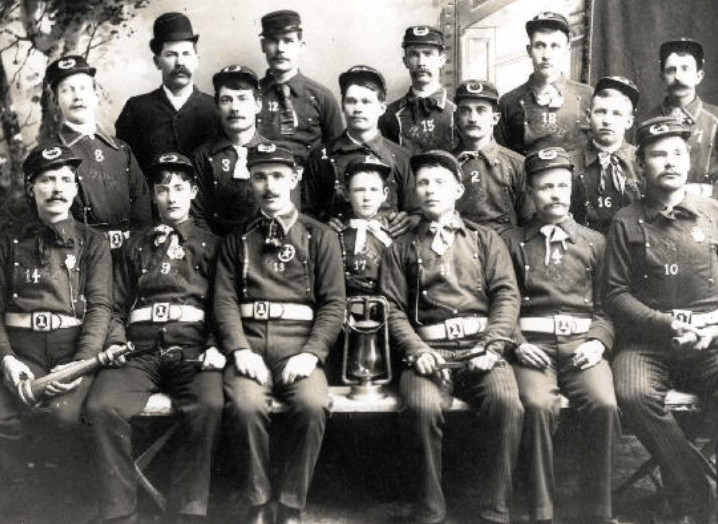
Since the mid-1800s, even before Sacramento was a city, the Sacramento Fire Department has protected lives and properties of residents. The Sacramento Fire Department’s pledge to the citizens of this city is to provide the highest level of emergency services to mitigate incidents which arise form fire, medical, hazardous material, or environmental mishaps either on land or water. “There have been sixteen firefighters who have lost their lives in the fifteen years I’ve been in the department. I attend the funerals whenever I was able to. It’s a ought situation, because these guys are family, almost as if they were part of your own personal family. You take the death of a firefighter brother almost as deeply as you would a personal relative. After the funerals, there are no big station parties. There might be something at a battalion level, but mostly everybody just kind of goes their own way. As far as firefighters hanging out together is concerned, I don’t think it’s done as much as today as it was in the past. It depends largely on the geographical location of the station. Often you’ll work at a station where a lot of the guys live in the same general area; then at the next station you’re assigned to, everybody may life in twelve different directions from the stations. So it just kind of depends on the station. I got into photography shortly after I got on the job. It became readily apparent to me that fire scenes were areas of great excitement, and the photographic possibilities were endless. #RandolphHarris 24 of 25

“There are continually things going on that the average person doesn’t see. When the fire department arrives, you’re looking at a very chaotic scene. Then, by the extinguishment of the fire, the rescue of people, and the evacuation of the building, we bring a more normal semblance of order to the scene. These kinds of things can be quite dramatic in a photographic sense, whether it be a recue or a heavy stream of water being applied to the fire.” The Sacramento Fire Department dedicates themselves to a lasting partnership with the community, to support a higher quality of life through public education, loss prevention, and service response. You can help save lives and property by donating to the Sacramento Fire Department. And remember, parents, teach your children to love America and be patriotic, to love God and Jesus Christ, to buy American made goods and services and cars, to respect law and order, and teach others with compassion, respect, and dignity, especially their elders. Release all captives, we beseech Thee, Lord whose mighty hand doth set men free; and hear the glad acclaim of all Thy people who praise and glorify but Thee. Preserve the righteous ones who seek Thee, and, in love, Thy unity proclaim; O guard and bless with Thine abundant goodness, Thy people who revere Thy name. Thou, Lord, who art alone exalted, please turn to us and hearken to our plea. We bless Thee, Thou who knowest all things hidden, Thy kingdom is unto eternity. I pledge allegiance to the Flag of the United States of America, and to the Republic, for which it stands, One Nation, under God, Indivisible with Liberty, and Justice for all. O Guardian of American, guard the remnant of America; let not American people perish, the people which proclaims: Hear, O America. #RandolphHarris 25 of 25


When building a custom home, your experience is just as vital as the final product you live in. Whether you’re building a custom home in Utah or another state, we can help. Our team at Millhaven goes beyond the build with our full-service approach to each project. https://millhavenhomes.com/


Does the Unified Man Like Everyone He Meets?

The greater the crime perpetrated by the leadership, the less likely it is that the people will ever believe their leaders to be capable of perpetrating such an event. Fictional character, Henry Regan, on the popular CBS television show Blue Bloods, confessed that when he was an office back in the early 1900s, that his officers would ride around and when they saw someone they wanted to terrorize, they would put on pink bunny ears and beat the tar out of them. He admits that it sounded so ridiculous that no one would ever believe them. If you wish the sympathy of the broad masses, you must tell them the most crude and stupid things. The brutality of all national development is apparent, and we make no excuse for it. To conceal it would be a denial of fact; to glamour it over, an apology to truth. There is little in life that is not brutal except our ideal. As we increase the aggregate of individuals and their collective activities, we increase proportionately their brutality. In this World the nation that has trained itself to a career of unwarlike and isolation ease is bound, in the end, to go down before other nations which have not lost the manly and adventurous qualities. In 1898, The United States of America waged a three-month war with Spain. It took the Philippine Islands from Sapin by treaty and formally annexed the Hawaiian Islands. #RandolphHarris 1 of 20

In 1899, the United States of America partitioned the Samoan Islands by agreement with Germany, and expressed its policy toward western interests in China in the “Open Door” note. In 1900, Americans took part in suppressing the Chinese Boxer Rebellion. By 1902, the Amry had finally suppressed insurrection in the Philippines; and in that year, the islands were made an unorganized territory. As the United States of America stepped upon the stage of empire, American thought turned once again to the subjects of war and empire; opponents and defenders of expansion and conquest marshaled arguments for their causes. After the fashion of late nineteenth-century thought, they sought in the World of nature a larger justification for their ideas. The use of natural selection as a vindication of militarism or imperialism was not new in European or American thought. Imperialists, calling upon Darwinism in defense of the subjugation of weaker races, could point to The Origin of Species, which had referred in its subtitle to The Preservation of Favored Races in the Struggle for Life. Darwin had been talking about pigeons, but the imperialists saw no reason why his theories should not apply to men, and the whole spirit of the naturalistic Worldview seemed to call for a vigorous and unrelenting thoroughness in the application of biological concepts. #RandolphHarris 2 of 20

Had not Darwin himself written complacently in The Descent of Man of the likelihood that backward races would disappear before the advance of higher civilization? Militarists could also point to the harsh fact of the elimination of the unfit as an urgent reason for cultivating the material virtues and keeping the national power dry. After the Franco-Prussian War both sides had for the first-time invoked Darwinism as an explanation of the facts of the battle. “The greatest authority of all the advocates of war is Darwin,” explained Max Nordau in the North American Review in 1889. “Since the theory of evolution has been promulgated, they can cover their natural barbarism with the name of Darwin and proclaim the sanguinary instincts of their inmost hearts as the last word of science.” It would nevertheless be easy to exaggerate the significance of Darwin for the theory of militarism either in the United States of America or in Western Europe. Neither the philosophy of force nor doctrines of Machtpolitik had to wait upon Darwin to make their appearance. Nor was racism strictly a post-Darwinian phenomenon. Gobineau’s Essai sur L’Inegalite des Races Humanies, a landmark in the history of Aryanism, was published in 1835-55 without benefit of the idea of natural selection. #RandolphHarris 3 of 20

As for the United States of America, a people long familiar with Indian warfare on the frontier and the pro-slavery arguments of Southern politicians and publicists had been thoroughly grounded in notions of racial superiority. At the time when Darwin was still hesitantly outlining his theory in private, racial destiny had already been called upon by American expansionists to support the conquest of Mexico. “The Mexican race now see in the fate of the aborigines of the north, their own inevitably destiny,” an expansionist had written. “They must amalgamate or be lost in the superior vigor of the Anglo-Saxon race, or they must utterly perish.” This Anglo-Saxon doctrine because the chief element in American racism in the imperial era; but the mystique of Anglo-Saxonism, which for a time had a particularly powerful grip on American historians, did not depend upon Darwinism either for its inception or for its development. It is doubtful that such monuments of English Anglo-Saxon historical writings as Edward Augustus Freeman’s History of the Norman Conquest of England (1867-79) or Charles Kingsley’s The Roman and the Teuton (1864) owed much to biology; and certainly John Mitchell Kemble’s The Saxons in England in England (1849) was not inspired by the survival of the fittest. #RandolphHarris 4 of 20

Like other varieties of racism, Anglo-Saxonism was a product of nationalism and the romantic movement rather than an outgrowth of biological science. Even the idea that a nation is an organism that must either grow or fall into decay, which doubtless received an additional impetus from Darwinism, had been invoked before 1859 by the proponents of “Manifest Destiny.” Still, Darwinism was put in the service of the imperial urge. Although Darwinism was not the primary source of the belligerent ideology and dogmatic racism of the late nineteenth century, it did become a new instrument in the hands of the theorists of race and struggle. The likeness of the Darwinian portrait of nature as a field of battle to the prevailing conceptions of a militant age in which von Moltke could write that “war is an element of the order of the World established by God…[without which] the World would stagnate and lose itself in materialism,” was too great to escape attention. In the United States of America, however, such frank and brutal militarism was far less common than a benevolent conception of Anglo-Saxon World domination in the interests of peace and freedom. In the decades after 1885, Anglo-Saxonism, belligerent or pacific, was the dominant abstract rationale of American imperialism. #RandolphHarris 5 of 20

The radial humanists have the conviction that there is a hierarchy of values in which those of the lower orders follow from the highest value, and these values are binding and compelling principles for the practice of life—individual and social. There may be difference in the radicalism about the affirmation of these values in the practice of one’s life, just as there are in Christianity or in Buddhism among those who lead the monastic life and those who do not. However, all these differences are relatively unimportant beside the principle that there are certain values which cannot be compromised. I submit that if people would truly accept the Ten Commandments as the effective principles to guide their lives, a dramatic change in our whole culture would take place. There is no need at this point to argue about details of the values which need to be practiced, for what matters is to gather those who accept the principle of practice rather of submission to an ideology. Another common principle is the solidarity of all men and the loyalty to life and to humanity which must always take precedence over the loyalty to any group. In fact, even this way of putting it is not correct. Any true love for another person has a particular quality: for I love in that person not only the person but humanity itself, or, as a Christian or Jewish believer would say: God. #RandolphHarris 6 of 20

In the same way, if I love my country, this love is at the same time a love for man and mankind; and if it is not that, it is an attachment based on one’s incapacity for independence and, in the last analysis, another manifestation of idolatry. The crucial question is how these new-old principles can become effective. Those inside religion hope that they can transform their religion into the full practice of humanism, but many of them know that while this may prove to be true for some sectors of the population, there are others who for many obvious reasons cannot accept the theistic concepts and rituals so closely interwoven with them that it is almost impossible to separate the two. What hope is there for that part of the population which cannot even enter the ranks of the living Church? Can a new religion be founded which has no premises such as those in Revelation, or any kind of mythology? Obviously religions are manifestations of the spirit within the concrete, historical process and the specific, social, and cultural circumstances of any given society. One cannot found a religion by putting together principles. Religions are founded by rare and charismatic personalities of extraordinary genius. Such a personality has not appeared yet on today’s horizon, although there is no reason to assume that he has not been born. #RandolphHarris 7 of 20

However, in the meantime, we cannot wait for a new Moses or a new Jesus; we must make do with what we have, and perhaps at this moment of history this is all to the good because the new religious leader might too quickly be transformed into a new idol and his religion might be transformed into idolatry before it had a chance to penetrate the hearts and minds of men. And we then left with nothing but some general principles and values? I do not believe so. If the constructive forces within industrial society which are choked by a deadening bureaucracy, by artificial consumption, and manipulated boredom are released by a new mood of hope, by the social and cultural transformations discussed in his report, if the individual regains his confidence in himself, and if people make contact with each other in spontaneous and genuine group life, new forms of psycho spiritual practices will emerge and grow which might be unified eventually in a total and socially acceptable system. Here, as well as with reference to many other points we have discussed, all depends on the courage of the individual to be fully alive and to seek solutions to the problem of his existence without waiting for the bureaucrats or the concepts to give him answers. #RandolphHarris 8 of 20

For Dr. Freud, as we have indicated before, growing civilization means growing repression—hence social evolution does not lead to the dissolution of repression but rather to its reinforcement. For Marx, on the other hand, repression is essentially the result of contradictions between the need for the full development of man and the given social structure—hence the fully developed society in which exploitation and class conflict have disappeared does not need ideologies and can dispense with repression. In the fully humanized society, there would be no need for repression, hence there would be no social unconscious. According to Dr. Freud, repression increases; according to Marx, it decreases in the process of social evolution. There is another difference between Freudian and Marxian thought which has not been sufficiently emphasized. Through rationalization one tries to make it appear as though an action is motivated by reasonable and moral motives, thus covering up the fact that it is caused by motives which contrast with a person’s conscious thinking. The rationalization is mostly sham, and has only the negative function of permitting a person to act wrongly, yet without awareness that he is acting irrationally or immorally. The ideology has a similar function, yet in one point there is an important difference. Take the example of Christian teaching: the teachings of Christ, the ideals of humility, brotherly love, justice, charity, etcetera, were once genuine ideals which moved the hearts of people to such a degree that they were willing to give their lives for the sake of these ideals. #RandolphHarris 9 of 20

However, throughout history these ideals have been misused to serve as rationalizations for purposes which were their very opposite. Independent and rebellious spirits have been killed, peasants have been exploited and oppressed, wars have been blessed, hatred of the enemy has been encouraged in the name of these very ideals. Inasmuch as this was the case, ideology was not different from rationalization. However, history shows us that an ideology has also a life of its own. Even though the words of Christ were misused, they were kept alive, they remained in the memory of the people, and again and again they were taken seriously and retransformed, as it were, from ideologies into ideals. This happened in the Protestant sects before and after the Reformation; it is happening today in those Protestant and Catholic minorities which are fighting for peace and against hate in a World which professes to hold Chrisitan ideals, yet uses them as ideologies. The task of the critique is not to denounce the ideals, but to show their transformation into ideologies, and to challenge the ideology in the name of the betrayed ideal. The basic interest of transactional analysis is the study of ego states, which are coherent systems of thought and feeling manifested by corresponding patterns of behaviour. #RandolphHarris 10 of 20

Each human being exhibits three types of ego states. Those derived from parental figures, colloquially called the Parent. In this state, he feels, thinks, acts, talks, and responds just as one of his parents did when he was little. This ego state is active, for example, in raising his own children. Even when he is not actually exhibiting this ego state, it influences his behaviour as the “Parental influences,” performing the functions of a conscience. The ego state in which he appraises his environment objectively, and calculates its possibilities and probabilities on the basis of past experience, is called the Adult ego state, or the Adult. The Adult functions like a computer. Each person carries within a little boy or little girl, who feels, thinks, acts, talks, and responds just the way he or she did when he or she was a child of a certain age. This ego state is called the Child. The Child is not regarded as “childish” or “immature,” which are Parental words, but as childlike, meaning like a child of a certain age, and the important factors here is the age, which may be anywhere between two and give years in ordinary circumstances. It is important for the individual to understand his Child, not only because it is going to be with him all his life, but also because it is the most valuable part of his personality. Through careful study it is evident that two Parental components in most cases, one derived from the father, the other from the mother; it will also uncover within the Child ego state the Parent, Adult, and Child components which were already there when the Child was fixated, as can be verified by observing actual children. #RandolphHarris 11 of 20

This second order analysis reveals that the separation of one feeling-and-behaviour pattern from another in diagnosing ego states is called structural analysis. The extent to which a person is factually helpless toward resistances depends not only on their overt but also on their hidden strengths—in other words, the degree to which they are discernible. To be sure, they may be discovered and met in open battle; a patient may be fully aware, for example, that he has a resistance against coming to analysis, or he may even realize that he is fighting tooth and nail against relinquishing a neurotic trend, as Clare did in her eventual battle for and against her dependency. More often resistances sneak up on him in disguised forms, without his recognizing them as such. In that case he does not know that resisting forces are operating; he is merely unproductive, or feels listless, tired, discouraged. And he is, of course, helpless when he is thus confronted with an enemy which is not only invisible but, as far as he knows, does not even exist. One of the most important reasons why he may not recognize the presence of a resistance is the fact that defensive processes are set in motion not only when he is directly confronted with the problems involved, that is, when his secret claims on life are laid bare, his illusions questioned, his security measures jeopardized, but also when he remotely approaches these domains. #RandolphHarris 12 of 20

The more intent he is on keeping them intact, the more sensitive he is to an approach even from the far distance. He is like a person who is frightened by thunderstorms and who is not only terrified by thunder and lightening but reacts with apprehension even to a cloud that appears on the far horizon. These long-distance reactions escape attention so easily because they arise with the emergence of a subject that is apparently innocuous, one that does not seem likely to stir up strong feelings of any kind. Certainly, the professional person who holds the view that individuals are essentially objects to be manipulated for the welfare of the state, or the good of the educational institution, or “for their own good,” or to satisfy his own need for power and control, would not experience the attitudinal elements I have described as constituting growth-promoting relationships. So, these conditions are congenial and natural in certain philosophical context but not in others. Members of the psychotherapeutic professions can function as representative of prevailing views of truth and reality; they are not agents for enlightenment and growth, but agents of social control, dismissing dissenting perspectives as “insane.” A person’s perspective is vulnerable to being so altered, through contact with others, that the person’s action no longer serves his or her own need, but those of the other persons. When this happens, the person is said to be mystified. #RandolphHarris 13 of 20

The idea that ordinary people can love one another, including those they have never met as well as those they meet day after day, is a pleasant piece of sentimentalism. It sounds well when solemnly uttered by ministers of religion before their respectful congregations or when published as advice by professional psychologists. However, where are the individuals who succeed in following it? If we look at history or at the cities and villages we already know, we find that the only form where something like it is discovered is that of organized philanthropy. This is excellent, this is commendable, but still it is not strictly love. Most ordinary people cannot get closer than this to the full sympathetic identification which another person which love really is. Only saints can achieve complete empathy; only they can wash the leper’s sores. For all others, the idea is vague and unreal, although convenient to use in talk at Christmas time. Karamazov, a character in one of Dostoevski’s Russian novels, drily said, “One can love one’s neighbour in an abstract way occasionally perhaps, even from afar, but in close contact, almost never…It is precisely the neighbour, the one who is physically close to us, whom one cannot possibly love. At best, one can love those who are far away.” #RandolphHarris 14 of 20

Now this may be a little exaggerated but it does speak openly of the difficulty many people experience in their attitude towards those with whom they are in daily contact. If they are forced to live with unscrupulous or unliked people, it is still more difficult. Then it will be all they can do to numb their revulsions. However, ordinary people must come to terms with their associates or have at least to take care not to show their dislike. They must particularly learn to endure others who are thoroughly repulsive to them. Unless they do achieve this capacity, there is no hope for the human race, which most otherwise go on fighting and warring until, with the frightful weapons now coming into its hands, it destroys itself. Such tolerance is still only the first station of the route to that active goodwill which the more idealistic persons who take the Quest seriously must try to achieve eventually. Many of them find it hard to each even this first halt. They are sensitive, they are often heterodox, and they cannot warm up to those whose ideas, habits, mannerisms, or orthodoxies irritate them. The Quester who does not eat meat, for instance, may not enjoy sitting down at table with those who delight in it. If he has the fortunate circumstances to do as he likes, he need not do so. However, most are not so free. He may put up with meat-laden table and its diners with bad grace or good grace, but put up with them he must. #RandolphHarris 15 of 20

Or take another case, that of having perforce to associate with someone who indulges in frequent sniffles when such a personal habit is felt to be most repulsive. Again, if he is a Quester and if he is free to do as he likes and to avoid the other person, he is entitled to do so. However, suppose he is not free? Instead of straining himself in the futile task of trying to love unlovable people, it is better to learn how to give them enough goodwill to tolerate them. This is withing his capacity. If he must live with them, or associate with them, he must try to put up with them, which means trying to put himself in their place. And that is a most desirable spiritual exercise, an advanced stepping-stone toward love itself. The practice of goodwill helps the practiser by attracting more of God’s grace and shaping good character. The thought of it, habitual and sustained, helps those who touch, or move within, his orbit. The profound meditation upon it repays him with blissful feelings and mystical harmony. If a man can be nothing else, let him be kind to others. Each time he does this he goes out of his own little ego. He comes a little closer to expressing the spiritual self-dwelling hidden in his heart. Some people believe that love shown to a terrorist would call forth its like from him. This is a typical belief among mystics down through the centuries. #RandolphHarris 16 of 20

When tested by experience, we find that it is successful in some cases but failure in many more. And where it fails it harms the criminal because he believes the more strongly that his crimes go unpunished, and it harms society because it is a misapplication of a good ideal. Everything, even love, must be applied at the right time and at the right place, for when misapplied even a virtue becomes a vice. We must not forget that wise old Latin proverb which warms us that when the best is corrupted it becomes the worst of all. The love for all humanity which many religionist professes to feel would not need much testing to find out the shallowness of its reality. The saint possessed by his higher self may, perhaps out of excessive kindness, be able to give it to the undesirable and the disgusting types. However, the more impersonal philosopher has a wide goodwill, which is not the same as love. When one’s love for another is of the highest type and leads to an expansion of understanding, compassion, and tolerance of others, he has glimpsed the greater purpose of personal love: how the surrender of his “heart” may lead to its opening to, and becoming united with, Universal Love. Being aware of the weaknesses or faults of another does not necessarily mean we love him less. It is an essential part of the message of love that we learn how to forgive surface characteristics by contemplating the essence of the beloved, to see what “is,” while also seeing deeper to what truly IS—the Divine evidenced in a particular form. Only when love ceases to be personal and becomes impersonal, when it passes out of the local into the universal, does it fulfill itself and attain its own unmixed and unadulterated integrity. #RandolphHarris 17 of 20

The Sacramento Fire Department helps people every day. They focus on the value and safety of people as they strive for excellence in providing service to their neighbourhoods and community. “What does it mean to a firefight to work in low-income neighborhood? It means that most of the firefighters you find there are the most dedicated ones. They have a higher rate of activity, more fire activity, and they are in more danger. And there were times, not so much recently but five of six years ago, when some of the citizens did not appreciate us being here. Now that has changed. I tell this when I teach recruits in firefighting. Did you ever notice, when you get a kitchen fire in a nice suburban neighborhood, they make sure to put themselves up in the Marriott for a few months? When they come back, did you ever notice their house? It’s nicer than it was before. New curtains, new draperies, new wallpaper, new granite countertop. They probably lit the thing to begin with, either intentionally or they were just careless. Probably intentionally. Let’s face it, most of our fires are. What about a poor person? They haven’t got a pot to pee in. When you look at that burned-out hulk, you know they are going to be sleeping in that house tonight. So, the harder we work and the more diligent we are in fighting the fires in poor areas, the more those people are going to be materially benefitted. #RandolphHarris 18 of 20

“I thank God I was born into a family with good economic means. These people are less fortunate. They didn’t ask to be born into a horrible situation, but they were. In a way, it makes you feel good to help people who really need the help. I think that most firefighters who work in those neighborhoods, whether they’re churchgoing folk, Christians, or whatever, feel the same way. We’ve had training and classes on the problem of AIDS and hepatitis B in medical emergency situations, and we take precautionary measures. We’re required to wear rubber gloves, and if it’s a situation that warrants it, we’ll put on goggles or glasses to protect our eyes. And we’ll even wear a mask or a bandanna to protect our lungs. I don’t recollect that I’ve ever been exposed to those two things, but I was on the rescue unit where there were a lot of medical emergences of various types, so I’ve been exposed to some things. And I’ve been tested to make sure I haven’t contracted those things. I did it on my own. I went in a could of weeks ago for a personal checkup and a blood test, just to make sure. I think all firefighters should do that one time to time. One of the nurses down at the hospital drew blood one a patient who had infectious hepatitis and ended up getting stuck by the needle and died. Our fire department takes pretty good care of us in that they provide us with nutritional training. They have our physical evaluation every year where they measure our body fat, see how much weight we can push, and have us do a series of push-ups and that sort of thing. #RandolphHarris 19 of 20

“As this AIDS thing becomes more prevalent, if they have any questions about it, firemen should check it out. We fill out injury slips or exposure reports when we get hurt or get smoke in our lungs. So we would pursue thing new stuff through a doctor. If we have any question that we’ve been exposed to AIDS, I believe that guys—women, too—should pursue the testing for their own health” The Sacramento Fire Department continues to grow and evolve throughout their careers in public service. You can help save lives by donating to the Sacramento Fire Department. And remember, parents, raise your children to love God, Jesus Christ, and America. Every child should grow up proud to be citizen of the United States of America. Also, we must remember to respect the property of others, respect law and order, treat others with respect, especially our elders. Real love is not something to be withdrawn abruptly when the person who is its object annoys or offends you. If the human race had not yet learnt to love its neighbour, it is not likely to take the farther step of loving its enemy. I pledge allegiance to the flag of the United States of America and to the Republic for which it stands, one nation, under God, indivisible with Liberty and Justice for all. Rock of Ages, let our song praise Thy saving power; Thou amidst the raging foes, wast our shelt’ring tower. Furious they assailed us, but Thine arm availed us, and Thy word broke their sword when our own strength failed us. Children of the martyr-race, whether free or fettered, wake the echoes of the songs, where ye may be scattered. Yours the message cheering that time is nearing which will see all men free, tyrants disappearing. #RandolphHarris 20 of 20

The Winchester Mystery House

Energetic and enthusiastic scare actors who love Halloween and wish to join our spooktacular team for speaking and non-speaking roles can apply today for our 2024 Halloween experience! In person auditions will be held on Friday, August 2nd from 4pm to 9pm and Saturday, August 3rd from 12pm to 4pm. See link in bio for more details.
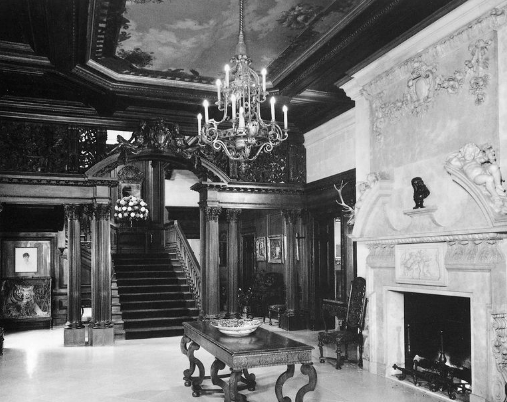
Please come and enjoy a delicious meal in Sarah’s Café, stroll along the paths of the beautiful Victorian gardens, and wonder through the miles of hallways in the World’s most mysterious mansion.

For further information about tours, including group tours, weddings, school events, birthday party packages, facility rentals, and special events please visit the website: https://winchestermysteryhouse.com/
 Randolph Harris II International Institute