
Home » Posts tagged 'anger'
Tag Archives: anger

Beautiful, with a Beauty Unknown on this Earth

Romeo Montague was a romantic idealist and tragic hero who is well-known from William Shakespeare’s, “Romeo and Juliet.” He considers himself compelled to do evil by his nostalgia for an unrealizable good, and while exploring love, youth and human nature, Romeo meets with a tragic fate. Likewise, Satan rises against his Creator because the latter employed force to subjugate him. “Who reason hath equal’d,” says Milton’s Satan, “force hath made supreme above his equals.” Divine violence is thus explicitly condemned. The rebel flees from this aggressive and unworthy God, “Farthest from him is best,” and reigns over all the forces hostile to the divine order. The Prince of Darkness has only chosen this path because good is a notion defined and utilized by God for unjust purposes. Even innocence irritates the Rebel in so far as it implies being duped. This “dark spirit of evil who is enraged by innocence” creates a human injustice parallel to divine injustice. Since violence is at the root of all creation, deliberate violence shall be its answer. The fact that there is an excess of despair adds to the causes of despair and brings rebellion to that state of indignant frustration which follows the long experience of injustice and where the distinction between good and evil finally disappears. Vigny’s Satan can no longer find in good or evil any pleasure nor of the sorrow that he causes take the measure. This defines nihilism and authorizes murder. Murder, in fact, is on the way to becoming acceptable. It is enough to compare Lucifer of the painters of the Middle Ages with the Satan of the romantics. An adolescent “young, sad, charming” (Vigny) replaces the horned beast. Beautiful, with a beauty unknown on this Earth” (Lermontov), solitary and powerful, unhappy and scornful, he is offhand even in oppression. #RandolphHarris 1 of 17

However, his excuse is sorrow. “Who here,” says Milton’s Satan, “Will envy whom the highest place…condemns to greatest share of endless pain.” So many injustices suffered, a sorrow so unrelieved, justify every excess. The rebel therefore allows himself certain advantage. Murder, of course, is not recommended for its own sake. However, it is implicit in the value—supreme for the romantic—attached to frenzy. Frenzy is the reverse of boredom: Lorenzaccio dreams of Han of Iceland. Exquisite sensibilities evoke the elementary furies of the beast. The Byronic hero, incapable of love suffers endlessly. He is solitary, languid, his condition exhausts him. If he wants to feel alive, it must be in the terrible exaltation of a brief and destructive actions. To love someone whom one will never see again is to give a cry of exaltation of as one perishes in the flames of passion. One lives only in and for the moment, in order to achieve “the brief and vivid union of a tempestuous heart untied to the tempest” (Lermontov). The threat of mortality which hangs over us makes everything abortive. Only the cry of anguish can bring us to life; exaltation takes the place of truth. To this extent the apocalypse becomes an absolute value in which everything is confounded—love and death, conscience and culpability. In a chaotic Universe no other life exists but that of the abyss where, according to Alfred Le Poittevin, human beings come “trembling with rage and exulting in their crimes” to curse the Creator. The intoxication of frenzy and, ultimately, some suitable crime reveal in a moment the whole meaning of life. Without exactly advocating crime, the romantics insist on paying homage to a basic system of privileges which they illustrate with the conventional images of the outlaw, the criminal with the heart of gold, and the kind brigand. Their works are bathed in blood and shrouded in mystery. #RandolphHarris 2 of 17

The soul is delivered, at a minimum expenditure, of its most hideous desires—desires that a later generation will assuage in extermination camps. Of course, these works are also a challenge to the society of the times. However, romanticism, at the source of its inspiration, is chiefly concerned with defying moral and divine law. That is why its most original creation is not, primarily, the revolutionary, but, logically enough, the dandy. Logically, because this obstinate persistence in Satanism can only be justified by the endless affirmation of injustice and, to a certain extent, by its consolidation. Pain, at this stage, is acceptable only on condition that it is incurable. The rebel chooses the metaphysic of inevitable evil, which is expressed in the literature of damnation from which we have not yet escaped. “I was conscious of my power and I was conscious of my chains” (Petrus Borel). However, these chains are valuable objects. Without them it would be necessary to prove, or to exercise, this power which, after all, one is not very sure of having. It is only too easy to end up by becoming a government employee in Algiers, and Prometheus, like the above-mentioned Borel, will devote the rest of his days to closing the cabarets and reforming morals in the colonies. All the same, every poet to be received into the fold must be damned. Charles Lassailly, the same who planned a philosophic novel, Robespierre and Jesus Christ, never went to bed without uttering several fervent blasphemies to give himself courage. Rebellion puts on mourning and exhibits itself for public admiration. Much more than the cult of the individual, romanticism inaugurates the cult of the “character.” It is at this point that it is logical. No longer hoping for the rule or the unity of God, determined to take up arms against an antagonistic destiny, anxious to preserve everything of which the living are still capable in a World dedicated to death, romantic rebellion looked for a solution in the attitude that it itself assumed. #RandolphHarris 3 of 17

The attitude assembled, in aesthetic unity, all mankind who were in the hands of fate and about to be destroyed by divine violence. The human being who is condemned to death is, at least, magnificent before he disappears, and his magnificence is his justification. It is an established fact, the only one that can be thrown in the petrified face of the God of hate. The impassive rebel does not flinch before the eyes of God. “Nothing,” says Milton, “will change this determined mind, this high disdain born of an offended conscience.” Everything is drawn or rushes toward the void, but even though man is humiliated, he is obstinate and at least preserves his pride. A baroque romantic, discovered by Raymond Queneau, claims that the aim of all intellectual life is to become God. This romantic is really a little ahead of his time. The aim, at that time, was only to equal God and remain on His level. He is not destroyed, but by incessant effort He is refused any act of submission. Dandyism is a degraded form of asceticism. The dandy creates his own unity by aesthetic means. However, it is an aesthetic of singularity and of negation. “To love and die before a mirror”: that, according to Baudelaire, was the dandy’s slogan. It is indeed a coherent slogan. The dandy, is by occupation, always in opposition. He can only exist by defiance. Up to now man derived his coherence from his Creator. However, from the moment that he consecrates his rupture with Him, he finds himself delivered over to the fleeting moment, to the passing days, and to wasted sensibility. Therefore, he must take himself in hand. #RandolphHarris 4 of 17

The dandy rallies his forces and creates unity for himself by the very violence of his refusal. Profligate, like all people without a rule of life, he is coherent as an actor. However, an actor implies a public; the dandy can only play a part by setting himself up in opposition. He can only be sure of his own existence by finding it in the expression of others’ faces. Other people are his mirror. A mirror that quickly becomes clouded, it is true, since human capacity for attention is limited. It must be ceaselessly stimulated, spurred on by provocation. The dandy, therefore, is always compelled to astonish. Singularity is his vocation, excess his way to perfection. Perpetually incomplete, always on the fringe of things, he compels others to create him, while denying their values. He plays at life because he is unable to live. He plays at it until he dies, expect for the moments when he is alone and without a mirror. For the dandy, to be alone is not to exist. The romantics talked so grandly about solitude only because it was their real horror, the one thing they could not bear. Their rebellion thrusts its roots deep, but from the Abbe Prevost’s Cleveland up to the time of the Dadaists—including the frenetics of 1830 and Baudelaire and the decadents of 1880—more than a century of rebellion was completely glutted by the audacities of “eccentricity.” If they were all able to talk of unhappiness, it is because they despaired of ever being able to conquer it, except in futile parodies, and because they instinctively felt that it remained their sole excuse and their real claim to nobility. That is why the heritage of romanticism was not claimed by Victor Hugo, the epitome of France, but by Baudelair and Lacenaire, the poets of crime. “Everything in this world exudes crime,” says Baudelaire, “the newspaper, the walls, and the face of man.” #RandolphHarris 5 of 17

The conflict we see going on in this World is a conflict that too often goes on in all of us. It is a battle between the way things are and the way they “ought to be.” People move to rich and expensive communities to escape the problems of the World. Early in life, many develop some firm notions of the way things ought to be. Going with those notions, people set about the task of making them look that way. As long as their conditions in life conformed to these notions, they are able to be happy. However, when things change and are no longer the way they feel they ought to be, their problems begin. One of the problems most people have is their inability (or at least unwillingness) to admit that things are not all right. They prefer to live with the illusion that they are. Yet living with this illusion takes a heavy toll on people, physically and psychologically. An important aspect of the concept of being is that it is “now-oriented.” Being implies being in the here and now, in this moment, with things just the way they are. You can think about the way things used to be or wish that they be different in the future. However, you can only be—here and now—with things as they actually exist. When people refuse to admit that things are not all right, they are refusing to be with them exactly the way they are. They are trying to impose their own notions upon reality. This effort is doomed to failure because the unalterable fact of life is that things are the way they are. They are not the way they once were and they are not the way they are going to be—but they certainly are the way they are. A man’s refusal to accept this does not change anything. At most, his refusal just changes the way they look. Then a problem arises when people by choice or necessity choose to ignore the dysfunction and start taking medication to cope with life. This can put one in danger because they are turning off their senses and boosting their serotonin to help project an image of peace, happiness, and normalcy. However, it may leave them open to become victims of crime because they are not really being. It is important to see the World as it is and take action to better manage situations. The acceptance that things are the way they are is an act of surrender. When you see that things are the way they are and that there is nothing you can do to make them different, you give in to them. This does not mean that you do not have the power to change things in the future. This simply means that you do not have the power to change the way things are right now. All you can do, is just be with things the way they are. All you can do is surrender to being. #RandolphHarris 6 of 17

For a long time, many men do not allow themselves to do this. They are more concerned with trying to make things the way they ought to be—a futile effort, at least in the context of right now. There are two phrases which can guide us in allowing being to happen. One is “Let go and let be,” and the other is “You do not always have to do something.” Doing is an attempt to change things, which is all right when the situation is mainly external. However, when the situation is internal, it requires the use of an inner process which does not respond to external effort. With the inner process, results are obtained by feeling, and feeling takes place within: in the heart, the soul, the guts, call it what you will. Thinking is a more indirect way of handling reality than feeling is. Our feelings tell us when something is painful, because our feelings are hurt, directly. Our thinking explains the hurt, justifies it, rationalizes it, analyzes it. In the intellectual sphere, words—not feelings—are used. On the other hand, feelings—the subjective awareness of an emotional state—are internal directives essential for human life. They are means and ends in themselves. All pleasure and pain are perceived in the realm of feelings. Now, to tie these ideas together, being is equated with feeling. You cannot make, generate, or manufacture a feeling any more than you can make being. Feelings and being must arise spontaneously. They are involuntary. When an activity has the quality of “flow,” it belongs to being. When it has the quality of “push,” it belongs to doing. All productive activity requires doing, but creativity also requires an element of being. A healthy person, a master, finds a rhythmic balance between thinking and feeling, doing and being. If, for example, you are a secretary typing a letter for your supervisor, using shorthand notes, you are engaged in a process of doing. If you are asked to correct the sentence structure, grammar, and wording, you are also doing, but to accomplish it, you must draw from your own personal knowledge, experience and taste to create a more understandable communication. #RandolphHarris 7 of 17

If you are composing the letter yourself, taking it a step further, you are creating a communication in your own unique way and allowing the activity to become a part of your self, of who you are. This is what is known as creative endeavour. However, if you are doing the activity because you have to, because you are forced to, you are in a state of doing. If you are doing it because you enjoy the activity, you are in a state of doing and being. We are taught early in life that feelings are dangerous and that some feelings are undesirable, even taboo. Values are attached to them, both good and bad. An emotion with an intellectual element attached is, according to our definition here, a value. However, we are afraid of these values. If we give in to sadness, we are afraid we will fall into a fit of despair. We fear that in giving in to anger, we might kill someone. This is what we were taught to think. However, each emotion we are capable of expressing has a purpose and an intrinsic worth. Each is valuable, and to deny an emotion exists deprives us of the value which it can bring. When we become afraid of these values, afraid of being, we mask the fear by doing. We become busy, busy, busy so we will have less time available for feeling, being, living, contacting. We measure our lives by what we accomplish rather than by the richness of our experiences. I remember having read in the verbatim reports of the Utah Conferences on Creativity, sponsored by the National Science Foundation, that an air force testing officer reported that in their search for creative men they found that “those who get the answer without knowing how they got it are the ones we want.” The usual insistence on figuring things out first results in many things not being done because we have not got them altogether figure out first. In an education seminar a psychologist asked, “How is it that we know so much and nobody does anything?” We cannot always take credit for our “smartness.” We cannot feel proud, just happy, when things work out especially well. Many of us like the feeling of happiness better—a word that springs from another word, “happenings.” #RandolphHarris 8 of 17

When people live this way, the World seems so full of happenings. We do not always figure out how to do things first. This is just the way some people live. The following anecdote illustrates how easy it is for a Martian to understand the concept of psychological trading stamps. A woman came home from a group meeting one day where she had heard it for the first time, and explained it to her twelve-year-old son. He said, “Okay, mom, I’ll be back soon.” When he returned, he had made a small roll of perforated paper stamps and a little dispenser to hold them, together with a paper book with the pages ruled off into squares. On the first page he had written: “This page when full of stamps entitles you to one free mad, hurt, guilt, or fright, and a few of these add up to one free suffer.” He understood perfectly. If people do not spontaneously provoke you, insult you, entice you, or frighten you, then you start a game in order to make them do it. In this way you collect a free mad, hurt, guilt, or fright, and a few of these add up to one free suffer. There is another similarity between psychological trading stamps and commercial ones. They are both canceled once they are used, but people still like to talk nostalgically about the ones they turned in. They key word here is “recall.” Real people, in ordinary conversation, say, “Do you remember when…” whereas “do you recall…” is usually used in referring to trading stamps that were used up and canceled long ago. “Do you remember the good time we had in Yosemite?” is reminiscence, whereas: “Do you recall what happened at Yosemite? First you dented the fender on the BMW, and furthermore you forgot to…and then, as I recall, you…and in addition…” etcetera is a worn-out reproach which is not good for a justified anger any more. Lawyers habitually used the word “recall” rather than “remember” in the exercise of their profession, when they bring out the plaintiff’s often faded and sometimes counterfeit trading stamps to show the judge or jury. Lawyers are, in fact, philatelists, connoisseurs of psychological trading stamps; they can look over a collection, large or small, and estimate its current market value at the big redemption store in the courthouse. Crooked spouses can con each other by pulling out used or counterfeit trading stamps. Thus, Francisco discovered that his wife Angela was having an affair with her employer, and in fact, rescued her when the employer threatened her with violence. After a tempestuous scene, she thanked him and he forgave her. However, afterward, whenever he got drunk, which was often, he brought the matter up again, and there was another scene. In trading-stamp language, in the first scene he got a justified anger, she genuinely thanked him, and he generously forgave her. That was a decent settlement, and all the trading stamps were canceled. #RandolphHarris 9 of 17

However, as noted, “forgive” in practice means to put the stamps in the drawer until they are needed again, even though they have already been cashed in. In this case, Franciso pulled out the old canceled stamps every Saturday night and waved them in Angela’s face. Instead of pointing out that they had already been used, Angela would hang her head and let Francisco have another free anger. In return, she would fob off on him some counterfeit thank-you stamps. The first time she thanked him, she gave him true stamps of golden gratitude, but after that her thanks were tired and spurious, “fool’s gold” or iron pyrites, which he, in his drunken foolishness, cherished like the real thing. When he was sober, both of them could be honest and regard the matter as settled. However, when he was drinking, they became crooked with each other. He blackmailed her with phony reruns, and she paid him off in kind. Thus, the analogy between commercial and psychological trading stamps is almost perfect. Each person tends to handle both kinds in the same way, according to his upbringing. Some people are raised to cash them in and forget it. Others are taught to save them and savour them; they keep their paper stamps and gloat over them as they mount up in anticipation of the day when they will be able to cash them in for a big prize; and they deal the same way with their angers, hurts, fears, and guilts, keeping them bottled up until they have enough for a really big payoff. Still others have permission to cheat, and sue considerable ingenuity in doing so. Psychological trading stamps exist as emotional memories, which probably take the form of molecular patterns in a continual state of agitation, or electrical potentials which go round and round in a circle of Jordan curve; and neither of them is completely exhausted until there is some kind of discharge of the piled-up energy. The rate at which the configurations or the potentials decay is probably based partly on genes and partly on “early conditioning” which in our terms falls into the category of parental programing. If a person brings out the same old trading stamps again and again to exhibit to his audience, they begin to look more and more tired and shopworn, and so does the audience. #RandolphHarris 10 of 17

The new culture which emerged from the 1960s was fabricated by newly activated teenage nervous systems. These nervous systems had been printed by signals urging self-indulgence, self-discovery and self-actualization. This generation was caste-out far beyond hive limits where reputations, and at the times, bodies were placed on the lines. The first benefit of this out-caste behaviour was that college education is better today. There is a caste which benefits from anger and stirring up trouble. It is called the legal profession. Left-wing lawyers say, “Well, what’s wrong with the college students today? They are not angry as they were in the 1960s.” Well, some might say they are even more angry today. Much like in the 1960s, we have some very irritable and irritating bureaucrats running the colleges, and running the country. In the 21st Century, some college administrators, college presidents, and college professors are allowing students to be threatened and harassed on campus, and encouraging students to change their genders. They have become more tolerant of, sometimes even more supportive of abnormality, than of normalcy. Young people should enjoy a certain serenity and relaxation that is becoming impossible. People have been fighting hard to end peace and quiet. Some people say these cultural changes are phases, temporary hula hoop fads. However, they are not. You cannot go back. The culture changes of the first quarter of the 21st century is irreversible. There many aspects of this gender confusion and male gentile mutilation that did not exist before the Obama administration. I am sure no parent wants their son to chop off his private parts, and this is why so many people are upset that youth are being exposed to atypical sexuality in the classroom. They are also upset that this is a political agenda that is being hyped up by the media and celebrities. And this gentile mutilation is irreversible and will cause much unnecessary pain. It is good to accept others and protect their rights, but we also must accept boys are boys and girls are girls and teach them proper gender roles, so not to confuse them. Even young adults of legal age are still figuring themselves out and are young and impressionable so it is important that are not persuaded or convinced to make changes to their bodies that they may regret later in life. #RandolphHarris 11 of 17

Emotionality represents a heightened state of being, but use of “cold logic” with an absence of emotion may also be thought of as a heightened state. In the midst of an emotional experience, a person will show definite physiological symptoms: flushing, tremours, and increased heart rate, according to Isaacson and Hutt. However, the physiological symptoms are not necessarily different for each different emotion. Emotion may be defined as a group of organized feelings, all heightened or strengthened, either in reaction to a threat to the person (such as in anger or indignation) or in reaction to a perceived enhancement of the person, as in joy or ecstasy. Whereas the use of cool objectivity also has survival value for the person, the inhibition of emotion or the overcontrol of emotional experience is often associated with adjustment problems. The free expression of one’s feelings or emotions—as long as it is within control of the person—is considered to be a characteristic of the healthy person. A high-level state of humanness includes the opportunity for the person to express self emotionally, as freely and spontaneously as a hearty laugh, for example, and with a reasonable level of control, as in the case of an angry parent who refrains from physical punishment of a child, and who rather chooses to explain and reason with the child concerning the misbehaviour. Emotions assists life’s intensity and meaning. We are amused and we laugh; someone insults us and we become angry. A young woman has just received a proposal of marriage from the man she loves; her excitement and joy are dramatically evident. Emotion is a quality of experience and an expressive quality of action. We can speak thus of emotional experience and emotional expression. The former is emotion viewed from a phenomenological perspective, that is, from the standpoint of the person, whereas emotional expression is the way emotional experience appears to an observer. Some may still believe that caste is a fact in Nature, but man will be without that pride in social rank which has too often ended in some sort of arrogance or even cruelty to those of lower status. The refinement, manners, and culture which Jesus Christ wishes to see in a properly developed human being may be different in outer form from those which a modern Christian would wish to see, but they are not different in spirit. #RandolphHarris 12 of 17

Those who now denounce them angrily as class-marks must therefore praise grossness, crudeness, coarseness, and ignorance as ideal. And others who can see no spiritual usefulness being served by fine quality simply do not look far enough. The practice of true philosophy should reduce, or remove, coarseness of character, behaviour, and speech. He will find less and less pleasure in the chatter of society, clubs, and drawing rooms, which when it is about self, is quite inane, and when about other people, is often cruel. In this World he has to deal with people. To deal efficiently with the, he needs to understand their characters. However, to turn a blind eye towards their weaknesses will only mar this understanding and spoil this efficiency. Even where he seeks to help them, such results will only hinder is compassionate aim. The range of his goodwill excludes none, includes all. He recognizes on enemies, only unevolved men. By “good manners” is not meant “formal etiquette” although the two may often coincide. Teach elementary manners, that is, a warm smile. In a truly civilized society, courteous manners and refined tastes would be the rule. One mane can hate another man, but if the first has renounced his ego—the source of hatred—how can he continue to do so? A smile will say to others what words may fail to do, will express your basic attitude of, in Jesus’ phrase “good will unto all men.” He will in the end unfailingly draw to himself what he gives out. If hate, hate returns; if love, love returns/ We may dislike a man and disapprove of his opinions but this ought not prevent us from giving him our goodwill. If thought irritates and feeling boils, it is not enough to show an outward good temper, excellent discipline though that be. There is a tolerance which springs from mere indifference, but there is also a tolerance which springs from inner largeness of spirit. Differences between men—whether in external things or internal thinking—there must be. However, they need not become the occasion of hate between men. With enough goodwill on both sides, a compromise can usually be reached in most disputes. By refinement, I mean a quality of good breeding, either natural or acquired. The easiest way to express this feeling, described by Jesus as “goodwill unto all,” is to be courteous to all. #RandolphHarris 13 of 17

The Sacramento Fire Department delivers fire suppression, emergency medical services (EMS), technical rescue including urban search and rescue, hazardous materials mitigation, fire prevention, domestic preparedness, fire and EMS safety education, and fire investigation programs. Choosing to be a firefighter or to work in the Sacramento Fire Department means someone is dedicating their life to protecting and serving others. Frontline staff members put their lives on the line every day, and that selflessness extends outside the workplace. “It was about nine-thirty in the evening. I was getting ready to go to my job at midnight. The phone call said it was an explosion. There were some fuel storage tanks in the area, and I thought it might be one of them. I drove to the station, and some of the guys were already getting the engines out. I told them I’d go on ahead to the site in my own car. We arrived there together, and the guys hooked the engine to a hydrant. I didn’t know it was a plane crash until we got there. The only thing that was really identifiable as part of a plane was the front part of it, the cockpit area. I was kind of shocked. I didn’t know what to expect. I grabbed a fire hat off the engine, and I ran down to the scene itself. I had the line, and I put the nozzle on and was spraying the whole area. The water came down like an easy rain. It wasn’t like a major fire, like from fuel. I just found the little hot spots. Actually, all it was was bodies burning as far as I could see, the little bits of clothing that was left on them. It was dark, but I could see about a dozen bodies that were recognizable as people. I didn’t really know how many were scattered all over the place. I didn’t see that until daybreak. I felt I was in kind of a helpless situation, just knowing that nobody was going to survive. I had never seen anything like that before. I was standing there hosing the area down in a fog spray, and I didn’t hear anything. Then I thought I heard the moaning, and I shut the water off to make sure I wasn’t hearing things. It’s possible that the water squirted on the litter girl and revived her. Anyway, I heard what sounded like moaning. All I could see was a pile of rubber with a few bodies here and there, but mostly rubble. #RandolphHarris 14 of 17

“I called my partner over, and I point to the spot where I thought the moaning was coming from. I thought it was a man. I could see a guy right there. I thought it was him. Well, my partner, X, started moving things around, and I took the hose and went off, thinking that maybe somebody would survive, though it wasn’t likely. X heard the moaning, then it quit and he didn’t hear it. He checked the bodies for any sign of life. He moved things aside to get to some of them. There wasn’t much light there, and everything was black and charred. Meanwhile, I put out the rest of the fires on the bodies. X moved aside a charred airplane seat. Then he heard the moaning again and saw that it was coming from the seat he had put aside. It was upside down, and he pilled it up, and there was the little girl strapped in it. He called our EMT over, and he did a quick survey of her body to see if there were any broken bones. Then they cut her out of the seat belt, put her on a backboard, and rushed her to the hospital. There was some controversy about whether she was on the plane or a passenger in a car that was on the ground. About four or five hundred feet away was a Blazer. The thing was on fire from bumper to bumper when we got there, and there was somebody inside it. They thought she might have been a passenger in that car. They didn’t listen to us. It was an airplane seat that she was strapped into. Her mother was there, too. The little girl was facedown on top of her mother. The report was that the mother was trying to shield her from the flames. Nobody could hold onto something in the kind of impact. It may have been a freak thing that she landed on top of her mother. We didn’t want to debate anybody on that point, so we just left it at that. I was there for twenty-two hours. This was in our station area, so we were more or less a standby unit until everything was pretty much cleared up. I did a lot of walking. I couldn’t sit still. I couldn’t sleep, that’s for sure, because of the smell and the things running through my mind. We had a command post with a catering van and Red Cross wagon, giving out coffee and food. I walked back and forth to there quite a bit, but I really couldn’t eat. I don’t know how you describe a lot of burning bodies. We knew enough not to touch anything until the FAA and the other people got there in the morning. They came in and went over some of the bodies, covering them up. #RandolphHarris 15 of 17

“Three other stations were there, plus the airport fire department and other fire departments from other communities. We were scattered all over the place, squirting down the whole are. We weren’t specifically prepared for anything life this, but everybody kept their cool, saw what they had to do, and did it. We didn’t think about the plane crash until later. Everybody there did a heck of a job. We knew this sort of thing would probably happen someday, we just didn’t know where or when. It was the EMTs and the coroners who put the corpses in body bags, and then we took the body bags and put them in the coroner’s van, which took them to the temporary morgue. The smell there was unbearable. They had lain there all night, and then in the morning the sun started hitting them. Some bodies were pretty much intact, just burned real bad. But they could tell if they were male or female. Both others, all they had was just parts, like a hand or a foot or a leg. The parts were lying all over the place. My wife called my company that I wouldn’t be to work that night because of the plane crash. They marked it down as leave without pay. I think that in all the commotion, they weren’t thinking. I had to put in a grievance to get my pat. It was hard for me to talked about what I saw. I could relate to everything that was splattered all over the ground there. It kind of threw me off there for a little bit. I had recurring memories of what I did at the scene. I think the thing brought all the guys in the department closer together, since we were all in it together. They have a counseling team for this kind of traumatic situation. We had a guy come in about two weeks after a crash, a cop with thirty years behind him. He met with us to get us to talk about it. Most of the guys really didn’t want to say anything because you don’t want to talk to them if you don’t know them personally. The guy had good intentions, but unless it was somebody like your pastor, it was kind of hard to open up to him. He said it himself: he had thought he had seen it all, until he came to the crash. He said, ‘I guess I didn’t see everything.’ I guess there are guys who are still having a hard time with it. #RandolphHarris 16 of 17

We may practise goodwill untainted by selfishness towards all mankind without becoming mushily sentimental about “universal brotherhood.” The hermit who behaves rudely may be showing his individualism, as he believes, but he is also showing his lack of spirituality. Polite manners imply thought for others. Nor is his tolerance grown out of laziness. It is grown out of understanding mated to kindliness. In his upward climb, he should slowly learn to drop the emotional view of life and to replace it by the intelligent view. Thus, he will show his passage from a lower to a higher level. However, it is to be an intelligence that is serene in activity, impersonal in judgment, warm in benevolence, and intuitive in quality. There should be no room in it to hold bias or bigotry, one the other hand, or dead logic. He will not only take care not to exceed his own rights, not only be scrupulous not to invade other people’s rights, but he will even take care not to interfere with their free will. Be strong without being stubborn. Much good behaviour is thinly veneered, being the consequence of social prudence rather than personal virtue. Because of the Sacramento Fire Department, Sacramento City has been blessed with a great and noble heritage that offers a pathway to salvation. The dedicated EMTs, Fire Fighters, CHP and Police risk their lives to protect that community and keep people safe. The people of Sacramento do not underestimate the worth of emergency services. The Sacramento Fire Department has a firm adherence to a code of moral and ethical standards: Honesty, Trust, and Accountability. You can help save lives by donating to the Sacramento Fire Department. It is also very important to raise your children to love America and to be patriotic. By having pride in America, and purchasing American made cars and other goods and services, we can make America a creditor nation again and ensure that this sacred land will be enjoy by your family for generations to come. Teaching children to love God and Jesus Christ will also preserve our American heritage and allow us to make sure our children are set on a path that will lead them to success and help them reserve a seat in Heaven. The Ten Commandments in the Christian Bible are a good guideline of how everyone should live. Furthermore, by respecting law and order, we will ensure the tranquility of this great nation and make sure that we are setting an exemplary example for other nations to follow. And by treating others with dignity, respect, and compassion, this will ensure that we are following the golden rule, “Do on to others as you would have them do on to you,” reports Luke 6.31. #RandolphHarris 17 of 17

11977 Cobble Brook Drive, Rancho Cordova, California 95742

Nothing is more important than family and having enough space to enjoy each other.

The well-thought-out Plan 4 gives growing families with young children, teens, or grandparents a place of their own and plenty of room to spend time together.

The first-floor bed and bath are perfect for the second generation, the loft gives extra space for the kids, and the den is ideal for those working from home. https://www.pulte.com/homes/california/sacramento/rancho-cordova/ascent-at-montelena-210916/plan-4-694486


The Ring of Fear

Many young people try drugs to fill voids in their lives, but this decision always leads to broken hearts and bodies. Whether they feel a need for friends, or peace, or happiness, or love, these teens always find drugs to be an unfulfilling substitute for what they really need. Turning to the Lord and to our families, instead of to other sources, will truly fill our needs. Abusing drugs can never do that. Another reason people do drugs is because states like California legalized recreational use of marijuana, and as it goes, the excuse is “weed is okay, everyone does it,” but if that were true, the federal government would not consider marijuana an illegal substance. It is absolutely important to teach your children to obey all laws, as best you can. So, marijuana should not be a substance that is considered acceptable in your home. Nevertheless, youth also turned to marijuana because adults they admire use it. If you use drugs, as an adult, you should never use them in front of children or other impressionable people because it could lead to them becoming addicted to marijuana and making some unsavory choices in life. Marijuana could also land your child behind bars or cause them to have an accident that could cost someone their life. Continue to nurture your connections with trusted peers and trusted adults. This is critical. Develop the self-awareness to recognize the connection between being tempted and feeling a need for acceptance. #RandolphHarris 1 of 22

No aspirant is asked to remain emotionally neutral regarding his personal hopes and fears. He is asked to strive for impartiality in his decisions, to recognize that it is wrong action which secures his own enjoyment at the cost of other people’s suffering or his own gain at the cost of their rights. He is to try at all times to see directly into his own personal situation without being misled by emotions, blinded by passions, or confused by suggestions; that is, he is to see it just as it really is. This practice is intended to help disentangle him from his ego. When you feel that need, it is important to fill it in healthy, gospel-centered ways. Stay close to your family and the Church. The same human characteristic of emotion which enslaves and even harms him when it is attached to Earthly things alone, exalts and liberates him when it is disciplined and purified by philosophy. Just as inordinate fear evoked by sudden catastrophe could drive someone quite insane, so clam resignation evoked by sudden bereavement could bring a glimpse of full spiritual sanity. He who keeps a silent tongue in his head when the air is filled with anger is on the way to holding down his own wrath. However, he who keeps a silent mind will conquer it more quickly and easily. There is the caution which comes from timidity and the caution which comes from experience. They are not the same. He must keep a part of himself in such reserve that no event and no person can ever touch it. #RandolphHarris 2 of 22

In the case of an ordinary man, the emotional reaction to a situation is all he is conscious of during the situation itself. If at all, the intellectual or intuitional judgment of it comes some time afterwards. However, in the disciple’s case, his self-training should be directed toward a side-by-side working of the two at one and the same time. The silent, taciturn, reserved man makes fewer friends but guards his present and future better. To be cautions in speech and writing today—whether private or public—is to save trouble tomorrow. A single indiscretion may mar a lifetime’s honourable reputation. The same act which is wrong when done in anger and on impulse may become right when done in calmness, after due reflection. Such an act might be, for instance, the protection of other persons against an unjust invasion of their rights or a violent aggression against their bodies. At a certain stage of one’s evolutionary development, personal emotions form the greatest obstacle of all. It is extremely difficult and painful to stand aside from one’s emotional nature at a time when it wants most to be insistent—but, if he does, that is the very time the quickest progress can be made. One should try, so far as possible, to avoid anxiety about his problems, whether they are of a Worldly or spiritual nature. It is necessary to develop a calm, hopeful attitude toward the future. #RandolphHarris 3 of 22

Anything that may be written or thought at a time when one is plunged in pain or grief must be evaluated again after enough time has elapsed to allow the upheaval of emotions to subside, lessening the hurt. Only then can a calm, philosophical appraisal of the entire situation be satisfactory achieved. Inner strength of a remarkable nature can be shown in the manner in which one responds to disappointment. One could so easily become wildly hysterical at the breakdown of his hopes. We are forced into admiration for the way in which another may take the breakdown of his dreams. Nothing should ever be done in a great hurry or in a sudden outburst of enthusiasm. He should sleep on his decisions and discuss them with older people who have themselves demonstrated by their own success that their judgments are worthwhile. Mastery resides at the core. The life of a master is lived at the core and through the core. To help in our understanding of how this happens, it might be useful for us to borrow a concept from philosophy. In the early 1800’s, the German philosopher Georg Hegel developed the idea of thesis-antithesis-synthesis. Basically, this idea (often called Hegel’s Dialectic) holds that when one force (the thesis) comes into contact with its opposite force (the antithesis), the result is a third force (synthesis) which is unlike the first two. A common way of imagining this is to picture driving down a road (thesis), then reaching a stop sign (antithesis), and making a sharp left and going up hill (synthesis). #RandolphHarris 4 of 22

Thesis and antithesis are “synthesized” into a new, entirely different thing. For example, when the colour yellow is mixed in equal proportions with the colour blue, they produce green. Thesis (yellow) meeting antithesis (blue) produces synthesis (green), which is neither yellow nor blue, yet contains both. The colour green is a new “thing” which has resulted from the combination of the two old “things.” In the journey to mastery, this process takes place within us. It involves our thoughts, our feelings, and combinations of thoughts and feelings, which are called “values.” The word “value,” may have a broader meaning than you would normally attach to it. It consists of an intellectual element and an emotional element, a thought and a feeling. When a thought and a feeling come together, they synthesize into a “value”: Picture the thought as the starting point on the road, the feeling as a stop sign further down the road, and the value as the destination after reaching the stop sign and making a sharp left uphill. Through the entire realm of experience consists of countless thoughts, feelings, emotions and values in infinite variety, to simplify matters, we can say there are eight basic values: Strength, weakness, anger, love, criticalness, support, control, dependency. To imaging this graphically, picture a daisy flower with eight petals and each value being a petal. #RandolphHarris 5 of 22

Therefore, strength and weakness, anger and love, criticalness and support, control and dependency are all values, that is, emotionally laden ideas about life. This might conflict with traditional notions about feelings. Having considered anger, for example, a pure feeling or emotion, you might find it hard to think of anger as a “value.” Yet that is what it is. When you were a children and first displayed anger as a pure emotion, you might have been told it was not nice to be angry, that it made people feel uncomfortable and you ought to “hold your temper.” Thus, a value judgment became attached to the feeling of anger. From that time on, whenever anger came up, you felt it and also mentally shut it off because your anger was a “bad” feeling to have. Anger became something in addition to the feeling; it became a value. Values are more than simple feelings in that they consist of intellect and feeling. Theya re ideas charged with the power of feeling. They are similar to attitudes. Viewed in this way, values eliminate the apparent conflict between the thinking and feeling sides of your nature. In experiencing your values, you use your mind and your heart simultaneously. You are being human. When one value—anger, love, strength, weakness, criticalness, support, control or dependency—is exaggerated and used to the exclusion or minimization of every other, manipulation is a result. #RandolphHarris 6 of 22

If, for example, you relied consistently upon your strength, you would almost become your strength. You would constantly be showing the World a mask of strength, while denying your weakness. In so doing, you render yourself incapable of using your weakness in situations that demand it. You become like an eight-cylinder engine of a BMW 740iL, constantly trying to run on only one cylinder. Like that engine, you can chug along, but only with great effort and at the expense of smooth, effortless operation. To be fully expressive and totally alive, to run on all your cylinders, to be a real BMW 740iL, a master, to be the Ultimate Driving Machine you must experience all of your values and be a fully functioning 4.4-liter M62B44 V8 engine. And this experience requires the process of synthesis. For example, when strength and weakness are experienced at the same time, they synthesize into courage, like this: strength is a starting point down the road, weakness is the stop sign down the road, and courage is obeying the law and making a sharp left up a hill and reaching the point of courage. Each time a synthesis occurs, it occurs at the core. So, just imagine once you arrive at the point of courage up the hill, there is a radius at the courage point which contains the core and you will notice that the road to courage and strength start to run parallel, but in more of the form of an angle. Much like an isosceles triangle without a bottom. #RandolphHarris 7 of 22

Similarly, anger and love synthesize into assertiveness. Criticalness and support become appreciation of differences. Control and dependency become interdependence. To reach the core, to achieve the synthesis, you must be willing to experience all of your values. Yet this can be a terribly frightening prospect. Most of us stick to one value because somewhere in our development we found that it worked for us, it helped us to get what we wanted. We have become comfortable with it and extremely uncomfortable with some or all of the others. If, to further highlight this illustration, as a child, you had a father who melted when you treated him lovingly, who gave you things when you fawned over him adorningly, you may have hit upon the notion that the way to succeed in life by being lovable. You placed an exaggerated value on love. If you were surrounded by people who cowered and gave in when you got angry, you may have decided that anger gets you what you want, and thus you put an exaggerated value on anger. Every value which you, as a human being, are capable of feeling and expressing, can serve you. However, if you come to rely on one value to the exclusion of others, if you begin to call upon that value in every situation—whether it is appropriate or not—you have formed a pattern of manipulation. It is a pattern which can—and already may have severely damaged your relationships with yourself and others. #RandolphHarris 8 of 22

Yet in spite of the harm these patterns cause, you stick with them. They are comfortable and safe. They are easy to justify by claiming, “Well, that is just the way I am.” However, I disagree with your claim. You as a manipulator, might act that way, but it is not the way you really are. It is not who you are. Who you are is a great deal more than one or two comfortable values. You are more than an engine that is able to operate on only one or two cylinders. Who you are, deep in your core, is a fully expressive, totally alive human being—a master. A master of yourself and your relationships, not a slave of your manipulations. There is a concept called the “ring of fear”; all of us are fearful of expressing our polarities. Thus, fear becomes a barrier. However, it can be penetrated. The first step involves admitting you are afraid to express the fear, because the very act of expressing it is frightening in itself. This usually causes the other person to invite you to express it anyway. Once you express the fear, the way is open for you to experience the polar value. Picture the daisy, each of its eight petals represents a value either positive or negative: anger, control, strength, support, love, dependency, weakness, criticalness. Now, all of these petals are attached to the pistil of the daisy and around the outer ovary of the pistil is fear, at the center of the pistil is the core. The pistil is the ring of fear, and in the center of the ring of fear is the core. #RandolphHarris 9 of 22

Though the ring of fear initially acts as a barrier, keeping us from experiencing the values on the other side, this effect is temporary. Once we have penetrated the barrier, we can experience the opposite value and arrive at the synthesis or “integrated value” in the core. This is called a transforming experience, or an Experience of Mastery. After such an experience, imagine the daisy with the eight petals, and the pistil of the daisy representing courage. Now, from the petal of strength there is a road that goes through the pistil of the daisy at about a 15 degree decline across to the petal of weakness, then at a 15-degree angle goes back to the pistil of the daisy at a 15-degree angle which is the point of courage. In the experience of mastery, you live from your core and through your core. You express rhythmically between polar opposite values. You become truly alive, not passive or indifferent. Rather than remain a slave to one exaggerated value, you become a channel for the free and natural expression of all of them. You make contact with the real person in others and you discover that unique individual who is the real you. The emotional hurts which meant so much and felt so deep when you were spiritually juvenile, will come to signify less and less as you become spiritually adult. For you see increasingly that they made you unhappy only because you allowed them to do so, only because, from two possible attitudes, you chose the little ego’s with its negative and petty emotionalism as against the higher mind’s positive and universal rationality. #RandolphHarris 10 of 22

Real-life injunctions do not take effect by magic, but depend upon the physiological properties of the human mind. It is not enough to say once, “Do not eat those apples!” or “Do not open the chest!” Any Martian knows that an injunction given in that way is really a challenge. For an injunction to be locked in solidly in the mind of a child, it must be repeated frequently and transgressions must be punished, although there are exceptional cases, as with battered children, where a single shattering experience may engrave an injunction for life. The injunction is the most important part of the script apparatus, and varies in intensity. Hence, injunctions can be classified in the same way as games, into first, second, and third degrees. There is a tendency for each type to produce its own kind of person: winner, nonwinner, or loser. (These terms will be explained in more detail later. A nonwinner is someone who neither wins nor loses, but just manages to come out even.) First-degree injunctions (socially acceptable and mild) are straight directives reinforced by approval or discouragement. (“You have been nice and quiet.” “Do not be too ambitions.”) With these it is still possible to grow a winner. Second degree (devious and tough) are crooked directives crookedly enforced by a kind of blackmail of seductive smiles and threatening frowns, which is the best way to raise a nonwinner (“Do not tell your father.” “Keep your mouth shut.”) Third-degree (very rough and harsh) are unreasonable stoppers enforced by fear. #RandolphHarris 11 of 22

Words become screams, facial expression become nightmarish distortions, and physical chastisement becomes viciousness. (“I will knock your goddam teeth in and turn your pockets inside out.”) This is one of the surest ways to produce a loser. The injunction, like a payoff, is complicated by the fact that most children have two parents. Thus, one may say “Do not act smart!” and the other “Do not make me knock you out! Stop acting stupid.” Such contradictory injunctions put the child in a difficult position. However, most people who marry have compatible injunctions, such as “Do not act smart!” and “Keep quiet or I will knock your goddam brains out!” which make a sad combination. Stoppers are implanted at such a tender age that the parents look like magical figures to the little boy or girl. The part of the mother who gives out injunctions (her Controlling Parent or Child) is called colloquially “the fairy godmother” is she is benevolent, or “the witch mother” is she is not. In some cases, “mother’s crazy Child” seems the most suitable label. Similarly, the Controlling Father is called “the jolly green giant,” “the ugly troll,” or “father’s crazy Child,” whichever is appropriate. There will be times when he, who built on philosophic coolness through the years, who thought himself proof against tears, will yield to them all too readily and all too helplessly. Even when everyone else seethes with violent emotion and bitter prejudice, he should keep a cool, philosophical perspective. Even when everyone else submerges his own in a fashionable party or a popular group, he should preserve his independence. #RandolphHarris 12 of 22

It is most comfortable for us to understand human robot-hood by looking at others. Thus, we notice that in “primitive” tribes young children perform baby-care. Older girls help with agriculture while older boys guard the flocks. After puberty, temporal caste assignments change dramatically. In all societies adolescent males pass through a warrior stage. In civilized societies technology and complex labour divisions have diminished the survival value of child-castes. Thus, the elaborate culture of organized play and extended education to prepare youngsters for warrior and post-warrior status. In Lucretius’ epic poem, Epicurus himself becomes the proud rebel he never actually was. “When in the eyes of all mankind humanity was leading an abject existence on Earth, cursed beneath the weight of a religion whose hideous aspect peered down from the heights of the celestial regions, the first to dare, a Greek, a man raised his mortal eyes and challenged the gods…In this way religion, in its turn, was overthrown and trampled underfoot, and this victory elevates us to the Heavens.” Here we can sense the difference between this new type of blasphemy and the ancient malediction. The Greek heroes could aspire to become gods, but simultaneously with the gods who already existed. At that time, it was simply a matter of promotion. Lucretius’ hero, on the other hand, embarks on a revolution. By repudiating the unworthy and criminal gods, he takes their place himself. He sallies forth from the armed camp and opens the first attack on divinity in the name of human suffering. #RandolphHarris 13 of 22
In the ancient World, murder is both inexplicable and inexpiable. Already with Lucretius, murder by man is only an answer to murder by the gods. It is not pure coincidence that Lucretius’ poem ends with a prodigious image of the sanctuaries of the gods swollen with the accusing corpses of plague victims. This new language is incomprehensible without the concept of a personal god, which is slowly beginning to form in the minds of Lucretius’ and Epicurus’ contemporaries. Only a personal god can be asked by the rebel for a personal accounting. When the personal god begins his reign, rebellion assumes its most resolutely ferocious aspect and pronounces a definitive no. With Cain, the first act of rebellion coincides with the first crime. The history of rebellion, as we are experiencing it today, has far more to do with the children of Cain than with the disciples of Prometheus. In this sense it is the God of the Old Testament who is primarily responsible for mobilizing the forces of rebellion. Inversely, one must submit to the God of Abraham, Issac, and Jacob when, like Pascal, one has run the full course of intellectual rebellion. The mind most prone to doubt always aspires to the greatest degree of Jansenism. A schizoid friend and his wife are in constant difficulties. She approaches things intellectually, while he gets tired of words, tired of the misunderstandings that come about through words, tired of the very sound of words going on and on (no silences, no pauses). Sometimes he says that he is giving them up, to live with music for a while. His wife said to me, in complete puzzlement, “How can you communicate without words?” However, her husband’s words do not communicate to her easily. #RandolphHarris 14 of 22

Even in very simple things, she had to struggle. When he referred to a jazz musician as a “skin and bones drunk” she was baffled. She tussled with it, working it out in her head, and then she said, “Oh, I see. You mean that he is thin and gets drunk. You see, I didn’t understand the modifier.” She teaches English, which can be a limitation. When I was working as a university press editor, I mentioned to a most lovable English professor that a five-line sentence in his manuscript did not say anything. He read it and agreed, but then went over it phrase by phrase, clause by clause, adjective by adjective, and showed me that the sentence was absolutely correct, so therefore it should remain. It seems to me that most psychologists must do something like this with people: they do not seem to read people very well. I do not even know what a modifier if. I think that my friend’s husband probably does not know either, but he has a great respect for the education that he has not had, that his wife has. That is how mixed up we get—all of us, in one way or another. Actually we get mixed up in so many ways that I do not see any way out of it but to go by our own experience, and to limit ourselves to that. I do better when I know that if I have not had the experience, I cannot know anything about it, and can neither approve nor condemn. If interested, I can only explore and inquire. “No one may condemn another until he has walked in his moccasins for ten days.” And then, of course, I will not. This sound passive, and “passive” is a bad word in our society (another tabu). However, to experience “passive” is to know being very much alive, and it is the source from which my right actions spring. #RandolphHarris 15 of 22

To think about anything without experience is nothing. To be close to another person physically and emotionally, to be held tightly, to share one’s deepest self-secrets—all of these represent a basic need largely ignored by most behavioural scientists. This tender need seems to be uniquely human in its manifestation. Obviously related to the needs of pleasures of the flesh, intimacy yet has a meaning of its own that includes the physical union, but that can be expressed and can be experienced in the psychological realm alone. Its opposite is true loneliness—just being in the presence of others is insufficient. The need is for a real closeness that affirms the existence of the person. One’s existence as an individual is not only highlighted, like a back-lit photograph, in separation from others, but is also manifested in the phenomenon of intimate closeness. Deprivation of challenge is experienced as boredom, or as emptiness in existence. The need for challenge manifests itself most keenly when a person has made a “successful adjustment” to life, when he or she has been able to fulfill the material needs, and cannot then find anything to do. Without challenging goals, people eat or drink to excess or pass the time getting high on marijuana. The mission of the Sacramento Fire Department is to prevent the loss of life and property in the community due to fire, medical emergencies, and other natural or man-made disasters and catastrophes. This is accomplished through direct mitigation during these types of occurrences and through community wide prevention efforts. The Sacramento Fire Department will assume command of such incidents and will staff and maintain the force with professional, highly trained personnel. #RandolphHarris 16 of 22

The Sacramento Fire Department is prepared competently with cognitive, psychomotor, and affective skill levels to handle any challenge. “It was Christmas Day, Christmas before last. I had worked nighttime, eleven to seven, and I had just come home from work. I was having some coffee with my mother, and the radio alarm came in, saying, ‘Reported structure fire, occupants trapped.’ I drove to the firehouse, only a couple of miles up the road, and since there was no traffic that early in the morning I was the first one there. I saw the column of black smoke only a few blocks from the station, and I knew it was a bad one. The radio said the police were already there. I got geared up while Assistant Chief X and driver Y arrived. So we hopped on the engine and drove to the scene. We saw good-sized flames shooting up in the air toward the street. People told us they had seen people at this bedroom window, but they weren’t there anymore. The window was on the second floor, above the garage. There was a ladder there, and the chief told me to go ahead and use it to get to the window. I climbed up, but fire was coming through the garage door, so I had to jump back down. He went to get an inch-and-a-half to knock that down, and I got another inch-and-a half to try to make the doorway. Well, I couldn’t do that, but he had his fire knocked down, so he said, ‘Come on, get back up there. Let’s try it.’ #RandolphHarris 17 of 22

“I got up there, the window was already broken by the heat, and I hopped through. The window was so small that, after the fire, the guys said, ‘I don’t know how you fit through there.’ It was divided into panes by metal strips that you couldn’t break unless you had the right tool. So I jumped through there and landed on a bed. And the room was totally black—black like you never experience, not even when you put tape over your mask for training. I got low to the floor, staying close to the wall, trying to go over in my mind everything I was trained to do in this situation. My job was to go in, look for victims, and rescue, if possible. I crawled along the wall, felt under the bed with my left hand while keeping my right hand on the wall. I came to the foot of the bed, and I felt something on the floor, real spongy, kind of moist, like Playdough or Silly Putty. I picked it up, and it was kind of heavy, but I didn’t know what it was. I dropped it, and you could hear it thump. Then I picked it up again, and I could feel that it was a person. I had picked up the arm. The bedroom doorway was near there, and she had tried to get out the doorway, but she had dropped right there. I tried to pick her up—talk about dead weight, that was really dead weight. She only weighed about 120 pounds, but she felt like a ton. I couldn’t throw her over my shoulder for a fireman’s carry, so I had to bear-hug her with all my strength and carry her back toward the window. And she was slipping away from me. I got another grip, using all my strength, and carried her toward the window, where the bed was. I started to hyperventilate from the excitement and exertion, and I had to take a break. So I set her down on the bed. #RandolphHarris 18 of 22

“I was breathing so heavily that my mask couldn’t keep up with me until I could regain my composure and slow my breathing down. I said to myself, ‘Okay, this is what you’re supposed to do. Come on, you can do it.’ The whole house was involved. The fire had started in the basement and traveled through the whole house. The only rooms not burning at the time were two bedrooms, the one I had entered and the one beside it. So I regained my composure, got her in a bear hug again, and put her out the window. At first I thought I had thrown her out and she had fallen to the ground. That was all I needed! The smoke was billowing out the window, I couldn’t see two feet in front of me. And I thought, ‘Oh, my God, there’s nobody here to help me.’ I was yelling, and I lifted my face mask to yell louder. My body was so demanding of oxygen that I accidentally took in some hot air and gasses. The woman had been sort of hanging out the window, then all of a sudden she wasn’t there. The truck company had arrived and put up their own ladder, but they couldn’t see much better than I could. They just happened to reach out and feel the woman’s arms, and they just took her without me even knowing it. So then she wasn’t there, and I thought to myself, Well, it’s time to get out. I climbed over the windowsill onto the ladder I had used to get up there. I started to step down, and there was a rung missing. I hadn’t seen the fire department ladder, so I was on the wrong ladder. I lost my balance and fell backwards about fifteen feet, landing on the air bottle on my back. They thought I had spinal injuries. #RandolphHarris 19 of 22

“They dragged me up on the sidewalk, cut the air pack straps, put on a cervical collar, and strapped me on a backboard. I started coming to, and they said my eyes were all glassy and rolled back. Then I started to cough severely, brining up black mucus. Just one or two breaths of gas and hot air was enough to do that. I kept asking about the woman, is she okay, is she okay? They said they were doing CPR on her in the next house. They put me in the first ambulance, because they were afraid I had a broken back. They put her in the next one. I was in a daze. I remember the lights flashing over my head as they wheeled me down the hall at the hospital. Then the doctor and a group of nurses worked on me, getting my clothes off, examining me, drawing blood, hooking up IVs, putting oxygen on me. It was a mass of work being done on me all at once. It was really confusing. I was in the hospital for two days. I had a minor shoulder bruise from landing cockeyed, but basically it was for smoke inhalation. I still had no fear, I still didn’t worry about how bad a situation I had been in. The only time I came to that realization was when a fire chief with about twenty-five years in the service said it was the worst fire he had ever seen, and he couldn’t believe that I had gone in there. I was happy to hear that the woman was still alive, though she had to go the UCD burn center. But I felt kind of guilty because there were two other people in the house who did perish, he daughter and her husband. I hadn’t known they were in there. The woman is now living out of town with the rest of her family. She never came to the firehouse, but I did meet her son, and he thanked me. #RandolphHarris 20 of 22

“I heard that the woman was shock-blind for a while. She was in so much shock that she was blind. She later got her sight back. I guess God had a plan for me, and I did what he wanted me to do. I feel closer to him. I have no fear of dying if that’s how God wants me to go. What I do fear is the day when I’m faced with a really bad fire and I say to myself, hey, that’s even too bad for you, there’s no way you can go in there. Am I going to go in there and maybe die, or catch myself before I react? I’ll be testing myself. I kept replaying the fire. The guys at the firehouse kept wanting me to tell the story again, what was it like inside. It was like everybody’s dream, and they wanted to be part of it. I mean, it’s the dream of every fireman to make a successful rescue, to save some human life. And I was lucky enough to have done that.” The leadership of the Sacramento Fire Department are good stewards of taxpayer’s funds. They strive to be fiscally responsible with City funding and make prudent financial decisions. The Sacramento Fire Department is a well-trained and educated workforce and those qualities are essential to an effective fire department. They provide their firefighters and professionals with knowledge support and opportunities to improve their physical health, wellness and fitness in order to enhance job performance and an overall healthy personal lifestyle. Great people can liberate great feelings in others or lift them toward acceptance of true ideas. You can help the Sacramento Fire Department in their mission of saving lives and the community by donating. #RandolphHarris 21 of 22
Few people know what love really means because with nearly all it is filtered through the screens of bodily and selfish considerations. In its pure native state, it is the first attribute of the divine soul and consequently it is one of the most important qualities which the seeker has to cultivate. Remember parents, please teach your children to love American, to be proud to be American and to be patriotic. It is also important to buy American made cars and other goods and services produced by Americans, like beef, poultry, produce, steel and more. This will ensure that we save American manufacturing jobs, American farms, and the American auto industry. It is also important to teach your children the importance of respecting law and order and showing dignity and concern towards their elders. Also, education is by far one of the best gifts American children have been blessed with and will be an asset in their lives. I bear you my witness of the divinity of the Saviour of the World and of His redemptive love and power to heal, strengthen, and lift us when we are earnestly striving to come unto Him. Conversely, there is no way we can move with the crowd and also toward Jesus. The Saviour has defeated death, disease, and sin and has provided a way for our ultimate perfection if we will follow Him with all of our hearts. “We believe in being subjects to kings, presidents, rulers, magistrates, in obeying, honouring, and sustaining the law,” reports the Articles of Faith. Respect is an expression of our sense of universal brotherhood or sisterhood—a testimony of our membership in the human family. It acknowledges our common humanity and shows our reverence for children of God. The gospel teaches us that we are to hold the same esteem for others that we would hold for ourselves. Acting disrespectfully suggests we do not esteem the other person as ourselves. #RandolphHarris 22 of 22

The Winchester Mystery House
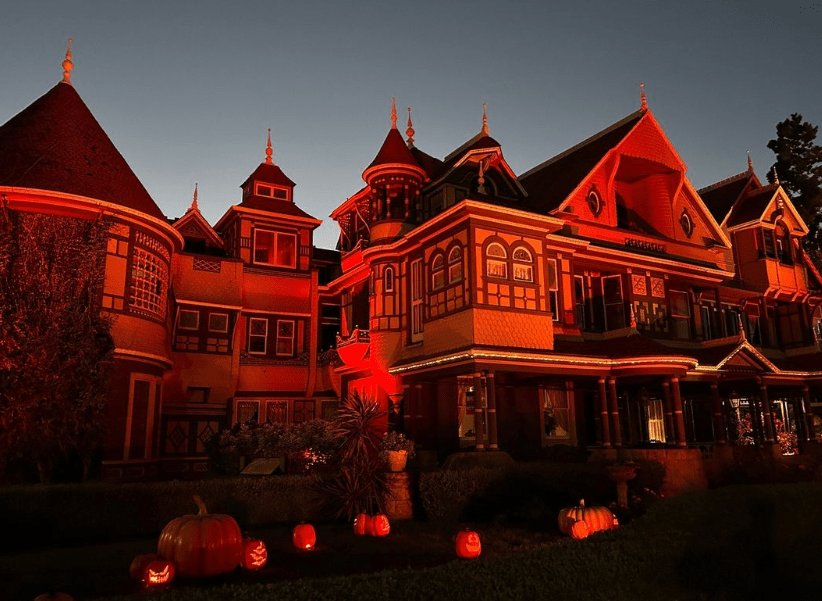
The house known as The Winchester Mystery House has become a museum of the most twisted and macabre kind. It is a monument to its own infamous past. On display inside were once wax figures of its victims. However, some people do not believe The Winchester Mystery House even exists. They are convinced that it is a huge hoax, an elaborate tourist trap. While 160 of the 500 to 600 rooms remain, through some are off limits, The Winchester Mystery House is very real. Will you dare to enter the house at night, when the tourists have gone? When are the ghosts and demons rumoured to come out?

About two decades ago, I got my hands on this really ancient diary that was written in 1899 by Sarah L. Winchester. I found the diary under mysterious circumstances in one of the rooms of The Winchester Mystery House. Nobody knows I have it. Sarah Winchester is the woman who built this labyrinth, and she goes into all kinds of details about how the hauntings manifested, and what they are like, and everything. I mean everything. The diary also goes into the first murder and let me tell you, this is sure not the stuff they tell you on tour!

Please come and enjoy a delicious meal in Sarah’s Café, stroll along the paths of the beautiful Victorian gardens, and wonder through the miles of hallways in the World’s most mysterious mansion. For further information about tours, including group tours, weddings, school events, birthday party packages, facility rentals, and special events please visit the website: https://winchestermysteryhouse.com/
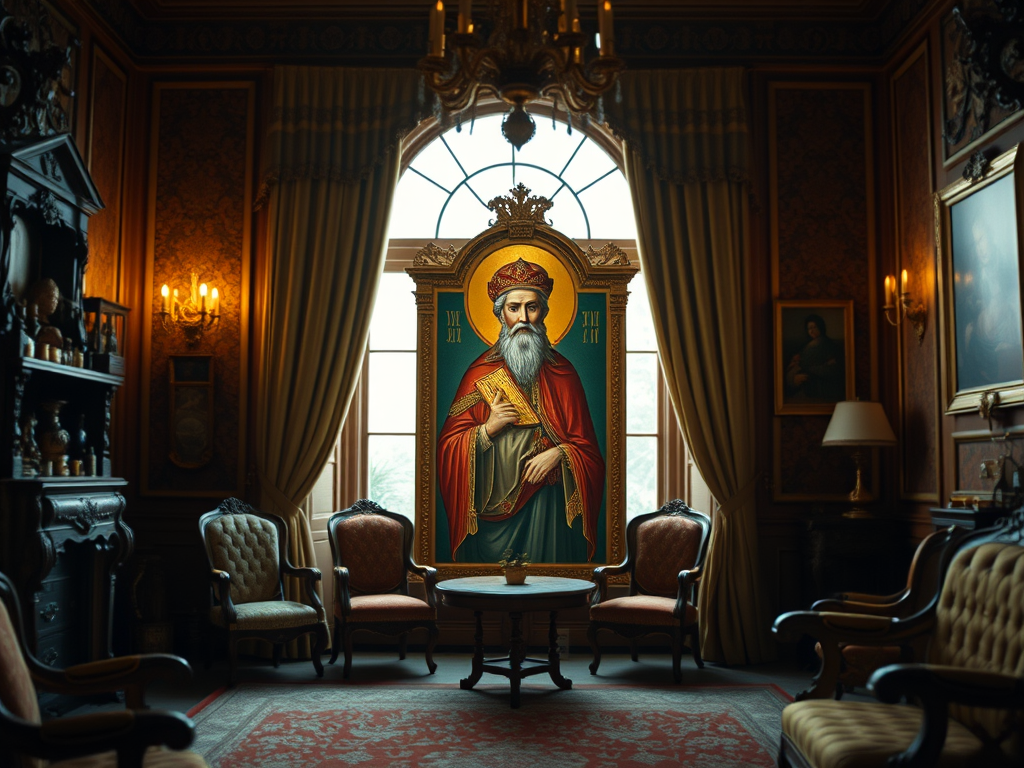
Please visit the online giftshop, and purchase a gift for friends and relatives as well as a special memento of The Winchester Mystery House. A variety of souvenirs and gifts are available to purchase. https://shopwinchestermysteryhouse.com/

 Randolph Harris II International Institute