Home » Posts tagged 'abuse'
Tag Archives: abuse

Terror and Trial

When we are forced to confront corruption, we can see how complicated and inconsistent it can be up close. It is not a simple matter of “good people” versus “bad people,” or clean institutions versus corrupt ones. In reality, corruption often exists inside the very bodies that are supposed to investigate it. Not everyone in positions of authority is corrupt, but there are divisions within organizations — pockets of people who follow the law and others who bend it. And even those who engage in corruption do not always behave corruptly. Sometimes they act lawfully, and other times they do favors for friends, cover up wrongdoing, or get pulled into criminal behavior through loyalty, pressure, or self‑interest. This inconsistency makes corruption harder to recognize, harder to prove, and harder for outsiders to believe. And sometimes the people who engage in corruption try to work backwards to justify what they’ve done. Instead of acknowledging the wrongdoing, they reconstruct a narrative that makes their actions seem reasonable, necessary, or even righteous. This retroactive rationalization allows them to maintain a sense of legitimacy while still participating in criminal behavior. It also makes corruption harder to detect because the story they present is crafted after the fact, shaped to fit whatever outcome they need to defend. #RandolphHarris 1 of 25

However, this method of retroactively justifying wrongdoing is not foolproof, because people do not always behave the way corrupt actors expect them to. Once corruption becomes habitual, the individuals involved often trap themselves in a kind of self‑created web — a tightening structure of favors, cover‑ups, and mutual obligations that becomes nearly impossible to escape. Over the years, each concealed crime requires another layer of deception, another manipulated report, another compromised colleague. What begins as a single act of misconduct grows into a network of entanglements that binds everyone who participated. Although misconduct and fraud can be hidden for a time, the accumulation eventually becomes too large to contain. Patterns emerge. Inconsistencies surface. People talk. At a certain point, the situation becomes so extensive that not only do honest authorities and investigators recognize what is happening, but the surrounding community becomes aware as well. Corruption that once operated in the shadows becomes visible simply because it has grown too massive, too interconnected, and too desperate to remain concealed. When corruption is widespread but socially denied, people often dismiss warnings as “crazy” until they personally experience the consequences. Only then do they reinterpret earlier information as truth. The shock comes from realizing that corruption can be blatant, normalized, and financially draining of public services. #RandolphHarris 2 of 25

And when people say, “That sounds crazy,” they are usually defending their worldview, not evaluating the facts. Criminals themselves are not necessarily rational or sane, so their actions often follow no coherent logic. Expecting illegal behavior to be rational is a misunderstanding of how criminal psychology actually works. Another method used by individuals who have committed crimes but have not yet been held accountable is a psychological tactic where they reconstruct meaning only after an outcome occurs. They take vague, ambiguous statements made earlier and retroactively frame them as if they were predictions or insights. Because the logic was not present beforehand, this reconstruction creates the illusion — to them — that they were perceptive, intuitive, or even “reading minds.” But to anyone evaluating the statements as they were originally made, the narrative appears incoherent and artificially stitched together. This is not genuine foresight; it is a defensive rewriting of events designed to protect themselves, justify their behavior, and maintain control over the story. This behavior can lead to battered child syndrome. Battered Child Syndrome is a medical and legal term used to describe the pattern of injuries, behaviors, and psychological effects seen in children who are repeatedly physically abused. It is not a single injury — it is a cluster of signs that indicate ongoing, intentional harm. #RandolphHarris 3 of 25

Battered child syndrome is a tragic and disturbing phenomenon. Unfortunately, it is a crime that is often successfully hidden by its perpetrators. One way chronic abuse — including the kind seen in Battered Child Syndrome — is concealed is through reputation attacks. When an abuser convinces others that the victim is “unstable,” “dramatic,” or “not credible,” it creates a social environment where the victim’s reports are dismissed before they are even heard. This tactic is known in psychology and sociology as: Pre‑emptive discrediting, character assassination, gaslighting at the community level, and stigma‑based silencing. The goal is simple: If no one believes the victim, the abuse can continue without consequence. This allows people to get away with serious crimes such as stalking, breaking and entering, vandalism, sexual assault, theft, felony assault, identity theft, and more. Why do abusers use this tactic? Abusers rely on predictable social reactions. People tend to believe the majority opinion, communities often avoid conflict by siding with the more powerful person, it is easier to label someone “crazy” than to confront the possibility of abuse, and outsiders prefer a simple explanation over a disturbing one. Once the victim is socially discredited, the abuser feels emboldened. They may escalate to more extreme or bizarre behaviors because they believe: “No one will believe them anyway.” “I have already controlled the narrative.” “I can do what I want without consequences.” This is not paranoia — it’s a recognized pattern in abusive systems. #RandolphHarris 4 of

Many jurisdictions are beginning to develop training programs to help police investigate this crime more effectively. Battered child syndrome is defined as the collection of injuries sustained by a child as a result of repeated mistreatment or beating. If a child’s injuries indicate intentional trauma or appear to be more severe than could reasonably be expected to result from an accident, battered child syndrome should be suspected. In such cases, an investigator must do more than collect information about the currently reported injury. A full investigation requires interviewing possible witnesses about other injuries that the child may have suffered, obtaining the caretakers’ explanation for those injuries, and assessing the conclusion of medical personnel who may have seen the victim before. The issue of whether information on the victim’s prior injuries or medical conditions will be admissible at a trial should be left to the prosecutor. However, an investigator’s failure to collect such information leaves the prosecutor without one of the most important pieces of corroborative evidence for proving an intentional act of child abuse. Evidence of past inflicted injuries also may be the only information available to help the prosecutor distinguish between two or more possible perpetrators in the current case, and may help refute claims by the child’s parents or caretakers that injuries suggestive of physical abuse were caused by an accident. Also, keep in mind that Battered Child Syndrome does not vanish when a person turns 18. Even if the individual is part of a vulnerable class, the abuse may become more intense because adults are not a protected class of people. The term describes a pattern of trauma, not a legal category. Trauma is developmental — not chronological — and the nervous system does not reset on a birthday. #RandolphHarris 5 of 25

Survivors of Battered Child Syndrome frequently face a range of debilitating lifelong consequences. Navigating these challenges requires specialized understanding and support. When Battered Child Syndrome continues into adulthood, it often manifests as chronic complex trauma, rather than just isolated physical scars. Some people are still abused as adults and not necessarily by their families. “Systematic abuse of adults” is a real phenomenon, but it often goes unrecognized because society is conditioned to think of abuse as something that happens only to children or only within intimate relationships. In reality, adults can be subjected to long‑term, patterned, coercive harm that functions very similarly to Battered Child Syndrome — just without the legal protections or social recognition. Systematic abuse of adults refers to ongoing, patterned, intentional harm inflicted on an adult by individuals, groups, or institutions. It is not a single incident — it is a system of behaviors designed to control, silence, exploit, or destabilize the victim. It can occur in families, workplaces, religious groups, institutions, communities, social networks, and organized criminal environments. And it often mirrors the same dynamics seen in childhood abuse — only with fewer safeguards. You might be thinking, “Okay, so this person is now grown, why can’t they just leave?” It is not that simple. Sometimes people are critically injured, sustain ongoing injuries that keep them hurt, and need serious and constant medical care. The complications from the injuries can be so complex that it takes a team of specialists to even figure out what is going on and come up with a treatment regimen. #RandolphHarris 6 of 25

Also, it may be hard to believe, but it is possible to hold an adult hostage, even if they are sometimes seen out and about. Because of the complex and abusive situation an individual is involved in, with technology, people can track the individual and harm them if they go away too long or too far. Another method is to keep the individual isolated and in debt. This ensures that they will not make friends or start a relationship with someone who can help them, and so that they do not save up enough money to get away. At this point, you might be thinking, “Can’t they just go to the police?” However, it is not that simple. When police, politicians, and the media are involved in the terrorism of an individual, when they make complaints to the police or other government investigators, they are just dismissed as “civil.” Or an individual is told that the investigating body does not have “jurisdiction.” This is often because they have been ordered not to take the complaint seriously. One individual was even told that a sexual assault was a civil incident. When police are not allowed or refuse to investigate, a person can be abused, threatened, harassed, and have attempts made on their life for decades. Even when an organization is exposing an individual to chemicals that are deadly to them, but not to others, the police often refuse to investigate, and the doctor just has to keep coming up with new treatment methods to keep the person alive, even when there is a threat to their health. You might be thinking, “But it is illegal to poison someone.” Yes, you are right. In U.S. law (including California), knowingly exposing someone to a deadly allergen is a crime. If you know a person has a life‑threatening allergy and you intentionally give them the allergen, the law treats it as intentional harm. Depending on the circumstances, prosecutors can charge assault with a deadly weapon (the allergen becomes the “weapon”). Courts have ruled that anything capable of causing serious bodily harm can be treated as a weapon. #RandolphHarris 7 of 25

Real cases exist where people were arrested for poisoning people. Courts have repeatedly held that knowingly giving someone a deadly allergen is equivalent to attacking them. Intent is inferred from knowledge. “I didn’t think it would be that bad” is not a defense. There are documented cases where, for example, students were arrested for putting peanut butter on a severely allergic classmate. Partners were charged for contaminating food. Coworkers were charged for “pranks” involving allergens. Even if the victim survives, the act itself is criminal. Consent does not exist when the victim is unaware. For example, if the victim does not know peanuts were in the food and the individual is allergic to peanuts, the law treats it as non‑consensual exposure to a deadly substance. That is legally similar to slipping drugs into someone’s drink, exposing someone to toxic chemicals, or giving someone a harmful substance disguised as food. If the person dies, it becomes homicide. If the victim dies from anaphylaxis, prosecutors can charge manslaughter or second‑degree murder (if the act was intentional or malicious). Knowledge of the allergy is the key factor. Why does the law treat allergens like weapons? For someone with a severe allergy, the allergen is as dangerous as a knife; a trace amount can cause anaphylaxis, and the reaction can kill within minutes. The law recognizes this. And depending on the outcome, the charges can range from felony assault to attempted murder. #RandolphHarris 8 of 25

You might be asking, “So why has nothing been done yet to resolve this situation?” It is complex. Politicians, law enforcement, medical professionals, and the media are involved, and they have all been trying to cover up the malfeasance by any means they can. The next step would be to contact the Federal Bureau of Investigation. However, the FBI cannot comment on ongoing investigations, nor can they disclose the progress or status of any inquiry. This silence is not a dismissal; it is a legal requirement designed to protect the integrity of the investigation, prevent retaliation, and avoid tipping off individuals who may be involved. Federal investigations often occur quietly and over long periods of time, especially when the situation involves systemic abuse, corruption, or coordinated misconduct. This is not avoidance — it is policy and law. There is a saying about the FBI, “When you do not think they are watching, they usually are.” Most federal investigations take months or years, not days. Why does this matter in the context of systematic abuse? When a victim has been discredited socially, their reports are often dismissed locally. When corruption is internal, local agencies may protect each other. When abuse is systemic, the victim may have no safe local avenue. When the pattern involves multiple actors, only a federal agency has the jurisdiction and independence to intervene. This is exactly why the FBI exists — to handle cases where local systems are compromised or overwhelmed. #RandolphHarris 9 of 25
Multiple studies have shown negative outcomes for adults who experienced abuse as a child, such as an increased risk of facing violence, abuse, or neglect in the home and/or community as an adult. Survivors face lifelong mental health struggles like PTSI, which is Post Traumatic Stress Injury and depression. They also face physiological changes such as immune dysfunction and chronic pain, and ongoing challenges in building secure relationships and self-esteem. However, suffering is part of living in a fallen world. When your pain feels overwhelming and you are ready to give up, hold on a little longer. Remember the Savior’s promise that “in the world ye shall have tribulation: but be of good cheer; I have overcome the world,” reports John 16.33. Many people have cried out in their suffering, wondering why our Heavenly Father would allow one to go through whatever trials one is facing. Our mortal life, however, was never meant to be easy or consistently pleasant. Each one of us has experienced dark days when our loved one passes away, painful times when our health is lost, feelings of being forsaken when those we love seem to have abandoned us. These and other trials present us with the real test of our ability to endure. Only the master knows the depths of our trials, our pain, and our suffering. He alone offers us eternal peace in times of adversity. He alone touches our tortured souls with His comforting words: “Come unto me, all ye that labour and are heavy laden, and I will give you rest. Take my yoke upon you, and learn of me; for I am meek and lowly in heart: and ye shall find rest unto your souls. For my yoke is easy, and my burden is light,” Matthew 11.28-30. #RandolphHarris 10 of 25

Disabilities and the trials that accompany them are not easy to bear. However, the scriptures and modern prophets teach us that one of the fundamental purposes for the Creation of this earth was to foster marriage and family life. “Marriage is ordained of God,” the Lord explained, so “that the earth might answer the end of its creation” Doctrine and Covenants 49.15-16. The earth was created so that families might be. God’s plan of salvation has the power to change our attitudes and behaviors to align more faithfully with the teachings of the Lord and His prophets. In our premortal life, each of us was born as a beloved spirit son or daughter of heavenly parents. As such, we were all brothers and sisters and lived as members of God’s family. Although all of us were part of this eternal family of God, the only ones who enjoyed the blessings of eternal marriage were our heavenly parents. Only they could have children and be called father and mother. As Apostles of the Lord have explained, “The title father is sacred and eternal. It is significant that of all the titles of respect and honor and admiration that are given to Deity, He has asked us to address Him as Father.” Our Heavenly Father prepared a plan whereby we could progress and become like Him. A central feature of this plan includes the opportunity to be married eternally and enjoy eternal posterity of our own. Marriage, as established in the beginning, was an eternal covenant. The first man and the first woman were not married until death should part them, for at that time death had not come into the world. The ceremony, on that occasion, was performed by the Eternal Father Himself, whose work endures forever. #RandolphHarris 11 of 25

Thus, the crowning event of the Creation was not only that Adam and Eve were formed in the image of their Heavenly Parents, but that they were sealed in an eternal marriage patterned after Them. From the beginning, marriage between a man and a woman was ordained of God and established as a central purpose of our creation. Eternal marriage was not an afterthought — it was woven into the very structure of the plan of salvation. Although Adam and Eve enjoyed an eternal marriage like our Heavenly Parents, they could not yet experience the full blessings of family life. As the prophet Lehi taught, they were created in a state where “they would have had no children” (2 Nephi 2:23). One of the reasons they chose to partake of the forbidden fruit and enter mortality was so that they could have children and begin the human family. “Adam fell that men might be” (2 Nephi 2:25). Through the Fall, the possibility of family life — birth, growth, agency, and mortal experience — became available. Marriage and family relationships, made possible by the Creation and the Fall, are made eternal through the Atonement of Jesus Christ. The Atonement is what allows families to be sealed together forever, to progress eternally, and to receive the full measure of God’s promised blessings. The plan of happiness — also called the plan of salvation — is fundamentally a plan for families. It is a plan designed to unite God’s children with Him and with one another in everlasting relationships. For these marriage and family relationships to endure beyond mortality, they must be sealed through holy ordinances and covenants available only in the temple. And the promised blessings of eternal family life depend upon the faithfulness of those who enter into these sacred covenants. #RandolphHarris 12 of 25

No individual psychology is original, and the common measure of all human character is matter. They literally created the physics of the soul. From that point on, traditional human relations have been transformed. These progressive transformations characterize the world of rational terror in which, in different degrees, Europe lives. Dialogue and personal relations have been replaced by propaganda or polemic, which are two kinds of monologue. Abstraction, which belongs to the world of power and calculation, has replaced the real passions, which are in the domain of the flesh and the irrational. The ration coupon substituted for bread; love and friendship submitted to a doctrine, and destiny to a plan; punishment considered the norm, and production substituted for leaving creatures, quite satisfactorily described this disembodied Europe, people with positive or negative symbols of power. “How miserable,” Mr. Marx exclaims, “is a society that knows no better means of defense than the executioner!” However, in Mr. Marx’s day, the executioner had not yet become a philosopher and at least made no pretense of universal philanthropy. The ultimate contradiction of the greatest revolution that history ever knew does not, after all, lie entirely in the fact that it lays claim to justice despite an uninterrupted procession of violence and injustice. This is an evil common to all times and a product of servitude or mystification. The tragedy of this revolution is the tragedy of nihilism—it confounds itself with the drama of contemporary intelligence, which, while claiming to be universal, is only responsible for a series of mutilations to men’s minds. Totality is not unity. #RandolphHarris 13 of 25

The state of siege, even when it is extended to the very boundaries of the earth, is not reconciliation. The claim to a universal city is supported in this revolution only by rejecting two-thirds of the world and the magnificent heritage of the centuries, and by denying, to the advantage of history, both nature and beauty, and by depriving man of the power of passion, doubt, happiness, and imaginative invention—in a word, of his greatness. The principles that men give to themselves end by overwhelming their noblest intentions. By dint of argument, incessant struggle, polemics, excommunications, and persecutions conducted and suffered, the universal city of free and fraternal man is slowly diverted and gives way to the only universe in which history and expediency can, in fact, be elevated to the position of supreme judges: the universe of the trial. Every religion revolves around the concepts of innocence and guilt. Prometheus, the first rebel, however, denies the right to punish. Zeus himself, Zeus above all, is not innocent enough to exercise this right. Thus rebellion, in its very first manifestation, refuses to recognize punishment as legitimate. However, in his last incarnation, at the end of his exhausting journey, the rebel once more adopts the religious concept of punishment and places it at the center of his universe. The supreme judge is no longer in the heavens; history itself acts as an implacable divinity. History, in one sense, is nothing but a protracted punishment, for the real reward will be reaped only at the end of time. We are far, it would seem, from Marxism and from Hegel, and even farther from the first rebels. Nevertheless, all purely historical thought leads to the brink of this abyss. To the extent to which Mr. Marx predicted the inevitable establishment of the classless city and to the extent to which he thus established the goodwill of history, every check to the advance toward freedom must be imputed to the ill will of mankind. #RandolphHarris 14 of 25

Mr. Marx reintroduced crime and punishment into the unchristian world, but only in relation to history. Marxism, in one aspect, is a doctrine of culpability on man’s part and innocence on history’s. His interpretation of history is that when it is deprived of power, it expresses itself in revolutionary violence; at the height of its power, it is risked becoming legal violence—in other words, terror and trial. In the universe of religion, moreover, the final judgment is postponed; it is not necessary for crime to be punished without delay or for innocence to be rewarded. In the new universe, on the other hand, the judgment pronounced by history must be pronounced immediately, for culpability coincides with the check to progress and with punishment. History has judged Mr. Bukharin in that it condemned him to death. It proclaims the innocence of Mr. Stalin: he was the most powerful man on earth. It was the same with Mr. Tito, about whom we do not know, so we are told, whether he is guilty or not. He was on trial, as was Mr. Tortsky, whose guilt only became clear to the philosophers of historical crime at the moment when the murderer’s ax cracked his skull. Mr. Tito had been denounced, but had not yet been struck down. When he would be struck down, his guilt would be certain. Besides, Mr. Trotsky and Mr. Tito’s provisional innocence depended to a large extent on geography; they were far removed from the arm of secular power. That was why those who could be reached by that arm had to be judged without delay. The definitive judgment of history depended on an infinite number of judgments which will have been pronounced between now and then and which will finally be confirmed or invalidated. #RandolphHarris 15 of 25

Thus, there is the promise of mysterious rehabilitations on the day when the tribunal of the world will be established by the world itself. Some, who will proclaim themselves contemptible traitors, will enter the Pantheon of mankind; others who maintain their innocence will be condemned to the hell of history. However, who, then, will be judged? Man himself, finally fulfilled in his divinity. Meanwhile, those who conceived the prophecy, and who alone are capable of reading in history the meaning with which they previously endowed it, will pronounce sentence—definitive for the guilty, provisional sentences for the judges. However, it sometimes happens that those who judge, like Mr. Rajk, are judged in their turn. Must we believe that he no longer interpreted history correctly? His defeat and death, in fact, prove it. Then, who guarantees that those who judge him today will not be traitors tomorrow, hurled down from the height of their judgment seat to the concrete caves where history’s damned are dying? The guarantee lies in their infallible clairvoyance. What proof is there of that? Their uninterrupted success. The world of trial is a spherical world in which success and innocence authenticate each other, and where every mirror reflects the same mystification. Thus, there will be a historic grace, whose power alone can interpret events and which favors excommunicates the subject of the Empire. To guard against its caprices, the latter has only faith at his disposal—faith as defined in the Spiritual Exercises of Saint Ignatius: “We should always be prepared, so as never to err, to believe that what I see as white is black, if the hierarchic Church defines it thus.” Only this active faith held by the representatives of truth can save the subject from the mysterious ravages of history. He is not yet free of the universe of trial to which he is bound by the historic sentiment of fear. However, without this faith, he runs a perpetual risk of becoming, without having wished to do so and with the best intentions in the world, an objective criminal. #RandolphHarris 16 of 25

The universe of trial finally culminates in this concept, at which point we have come full circle. At the end of this long insurrection in the name of human innocence, there arises, by inevitable perversion of fact, the affirmation of general culpability. Every man is a criminal who is unaware of being so. The objective criminal is, precisely, he who believed himself innocent. His actions he considered subjectively inoffensive, or even advantageous for the future of justice. However, it is demonstrated to him that objectively, his actions have been harmful to the future. Are we dealing with scientific objectivity? No, but with historical objectivity. How is it possible to know, for example, if the future of justice is compromised by the unconsidered denunciation of present injustice? Real objectivity would consist in judging by those results which can be scientifically observed and by facts and their general tendencies. However, the concept of objective culpability proves that this curious kind of objectivity is only based on results and facts which will only become accessible to science in the year 3000, at the very earliest. Meanwhile, it is embodied in an interminable subjectivity which is imposed on others as objectivity: and that is the philosophic definition of terror. This type of objectivity has no definable meaning, but power will give it a content by decreeing that everything of which it does not approve is guilty. It will consent to say, or allow to be said, to philosophers who live outside the Empire, that in this way, it is taking a risk in regard to history, just as the objective culprit took risk, though without knowing it. When the victim and executioner have disappeared, the matter will be judged. However, this consolation is of any value only to the executioner, who has really no need of it. Meanwhile, the faithful are regularly bidden to attend strange feasts where, according to scrupulous rites, victims overwhelmed with contrition are offered as sacrifice to the god of history. #RandolphHarris 17 of 25

The express object of this idea is to prevent indifference in matters of faith. It is compulsory evangelization. The law, whose function it is to pursue suspects, fabricates them. By fabricating them, it converts them. In bourgeois society, for example, every citizen is supposed to approve the law. In an objective society, every citizen will be presumed to disapprove of it. Or at least, he should always be ready to prove that he does not disapprove of it. Culpability no longer has any factual basis; it simply consists of absence of faith, which explains the apparent contradiction of the objective system. Under a capitalist regime, the man who says he is neutral is considered objectively to be favorable to the regime. Under the regime of the Empire, the man who is neutral is considered objectively to be favorable to the regime. Under the regime of the Empire, the man who is neutral is considered hostile objectively to the regime. There is nothing astonishing about that. If a subject of the Empire does not believe in the Empire, he is, of his own choice, nothing, historically speaking; therefore he takes sides against history and is, in other words, a blasphemer. Even lip service paid to faith will not suffice; it must be lived and acted upon in order to be served properly and the citizen must be always on the alert to consent to time to the changes in dogma. At the slightest error, potential culpability becomes in its turn objective culpability. Consummating its history in this manner, the revolution is not content with killing all rebellion. It insists on holding every man, even the most servile, responsible for the fact that rebellion ever existed and still exists under the sun. In the universe of the trial, conquered and completed at last, a race of culprits will endlessly shuffle toward an impossible innocence, under the grim regard of the grand inquisitors. In the twenty-first century, power wears the mask of tragedy. #RandolphHarris 18 of 25

Here end Prometheus’ surprising itinerary. Proclaiming his hatred of the gods and his love of mankind, he turns away from Zeus with scorn and approaches mortal men in order to lead them in assault against the heavens. However, men are weak and cowardly; they must be organized. They love pleasure and immediate happiness; they must be taught to refuse, in order to grow up, immediate rewards. Thus, Prometheus, in his turn, becomes a master who first teaches and then commands. Men doubt that they can safely attack the city of light and are even uncertain whether the city exists. They must be saved from themselves. The hero then tells them that he, and he alone, knows the city. Those who doubt his word will be thrown into the desert, chained to a rock, and offered to the vultures. The others will march henceforth in darkness, behind the pensive and solitary master. Prometheus alone has become god and reigns over the solitude of men. However, from Zeus, he has gained only solitude and cruelty; he is no longer Prometheus, he is Caesar. The real, the eternal Prometheus has now assumed the aspect of one of his victims. The same cry, springing from the depths of the past, rings forever through the Scythian desert. In cautiously trying to shut out from its examinations and understanding of facts the human factors which falsify them, the modern scientist shuts out also those which are all-important in the examination and understanding of himself. They are still trying to know by touch of hand or sight of the eye what only stilled concentration of mind can reveal. The same education which frees a man from superstition may cause him to miss the subtler knowledge of his real inner being, so that his mind wrongly believes itself to be a product of the body. #RandolphHarris 19 of 25

The fire on Gable Street began at 4:12 a.m., but Captain Lukas Reinhardt felt it long before he saw it. As Engine 7 roared through the sleeping streets, the sky ahead pulsed orange, the kind of glow that meant the flames were already winning. The warehouse was a known gang clubhouse, a place where violence simmered beneath the surface of Sacramento’s lowest‑income neighborhood. But tonight, the fire moved with a strange, almost intentional hunger. “Captain,” Firefighter Markus Vogel said as they pulled up, “this isn’t a normal burn. Look at the spread pattern.” Captain Reinhardt nodded grimly. “Stay sharp. We’re going in.” Before they could advance, armed police vehicles screeched to a halt beside them. Officers in tactical gear poured out, forming a perimeter. “Due to a number of people at the scene, including gang members, specialist police were in attendance to ensure everyone’s safety,” a spokesperson said over the radio. The gang presence was immediate. Figures lingered in the shadows, some shouting, some filming, some simply watching the flames devour their own headquarters. The tension was thick enough to taste. But then Reinhardt saw her. A woman stumbled out from behind a dumpster, coughing violently, clutching a tiny child to her chest. Her clothes were singed, her hair streaked with soot. The little boy—no older than three—was crying silently, his face streaked with ash. Dr. Selene Ward and Ari Mendoza, the world‑renowned paramedics, sprinted toward them. “Ma’am, can you hear me?” Dr. Ward asked, guiding her to the ambulance. The woman nodded weakly. “We… we lived in the back unit. I didn’t know they were going to set it on fire. We were asleep.” Dr. Ward wrapped a blanket around the child. “You did the right thing getting out.” #RandolphHarris 20 of 25

The woman’s voice cracked. “We managed to escape the fire’s wrath in the nick of time, but we were left with nothing more than the clothes on our backs.” Her words trembled in the cold morning air. “The fire didn’t just take our material possessions,” she whispered. “It took away our sense of security, our comfort, the walls that housed us… our home.” Captain Reinhardt felt the weight of her words settle on him like ash. Inside the burning structure, he and his crew—Vogel, Dieter Kraus, and Emil Hartmann—moved through collapsing hallways, their flashlights slicing through the smoke. They found two unconscious gang members near the back exit. The paramedics worked on them with the same calm precision they gave every patient, regardless of affiliation. But Captain Reinhardt’s attention kept drifting to the black SUV parked across the street, headlights off, engine idling. A silhouette sat inside, watching behind these gangster blacked-out tented windows. He had seen that vehicle before. For months, the neighborhood had been unraveling. Fires, assaults, fraud, vandalism—everything was rising at once. Long‑standing businesses were closing. Families were fleeing. And rumors swirled about Councilman Harrow, a powerful local politician pushing an aggressive redevelopment plan. Residents whispered that Harrow was using federal programs to move violent offenders and drug‑dependent individuals into stable neighborhoods to destabilize them. Affirmative action hiring programs were being twisted into tools for placing unqualified individuals into sensitive positions, creating failures Harrow later used as justification for sweeping policy changes. The destruction was not random. It was strategic. #RandolphHarris 21 of 25

As dawn crept over the horizon, Dr. Ward approached Reinhardt. “One of the victims woke up,” she said. “He said the fire wasn’t an accident. Someone paid them to leave the building unlocked tonight.” Captain Reinhardt’s jaw tightened. “Did he say who?” Dr. Ward hesitated. “He said it was someone who ‘wanted the neighborhood to burn so the rich could rebuild it.’” Captain Reinhardt looked at the ruins. The philosophical line that had been echoing in his mind for weeks returned again: The same education which frees a man from superstition may cause him to miss the subtler knowledge of his real inner being, so that his mind wrongly believes itself to be a product of the body. Harrow was educated—brilliant, even. But brilliance without introspection becomes blindness. He believed his actions were justified because they served a “greater good.” He believed people were pieces on a board, to be moved or sacrificed. He believed the body—property, land, image—was all that mattered. Not the soul. Not the community. Not the people who lived there. And that blindness had turned into cruelty. Vogel approached quietly. “Captain, the police want to know if we think this was deliberate.” Captain Reinhardt watched the black SUV pull away into the morning traffic. “It’s not just arson anymore,” he said. “It’s a pattern. And patterns leave evidence.” He looked at his crew—men who had risked their lives for strangers. He looked at the paramedics who had saved countless souls. He looked at the woman and her child, wrapped in blankets, staring at the ruins of their life. “This neighborhood isn’t going to burn,” he said. “Not on our watch.” #RandolphHarris 22 of 25

When the gang members were moved into what had once been quiet, stable neighborhoods, the atmosphere changed almost overnight. Fights broke out in the streets at all hours, and the constant tension left families too frightened to sleep in their own beds, afraid a drive‑by shooting might erupt without warning. Many residents felt watched or followed, as if the newcomers were stalking them or testing their reactions, and the fear became so overwhelming that people began limiting their outings, avoiding errands, walks, and even stepping outside after dark. What had once been a safe community slowly transformed into a place where good people lived in a state of vigilance, unsure of what might happen next. Strong, safe neighborhoods do not happen by accident. They are built when everyday people look out for one another and take action when something does not feel right. Crime and gang activity grow in silence, but they shrink when communities stay alert, speak up, and work together. If you see something that feels out of place — unusual behavior, unfamiliar vehicles lingering, attempts to break into homes or businesses, fires being set, vandalism, or activity that threatens the safety of children and families — report it immediately. Even small pieces of information can help prevent serious crimes. Your call could stop a violent incident before it happens, prevent a fire or property damage, protect vulnerable residents, help law enforcement identify patterns, keep gangs from gaining a foothold, and strengthen the safety of your entire community. It is not recommended for you to confront anyone or put yourself at risk. Just stay aware, trust your instincts, and share what you see with the proper authorities. Suspicious activity is worth reporting when it threatens public safety, involves weapons, drugs, or violence, appears coordinated or repeated, targets homes, businesses, or vulnerable people, involves fires, break‑ins, or property damage, or makes you feel unsafe. Every report helps build a clearer picture of what’s happening in our neighborhoods. When residents stay silent, gangs and criminal groups fill the void. When residents speak up, they lose their power. #RandolphHarris 22 of 25

When it comes to firefighting, every incident carries the potential for injury—no matter how small the fire appears or how routine the call may seem. If you see a fire engine stopped in the street without its lights on, use extreme caution. Crews may be working nearby, and passing the apparatus can put them in danger. It is often safer to turn around and take another route; if you strike a firefighter or civilian and cause a fatality, you could face charges such as manslaughter. Firefighters frequently move around their vehicle on foot, loading equipment or preparing to leave the scene. Attempting to pass the apparatus can result in a collision with someone you cannot see. Pay close attention to their hand signals as well—emergency vehicles sometimes move slowly or reposition, and impatient drivers trying to slip around them create hazardous situations. If you are already in an intersection when you notice an emergency vehicle approaching, continue through it, then pull to the right and stop as soon as it is safe. Always obey directions from law enforcement officers or firefighters, even if those instructions conflict with posted signs or traffic laws. When sirens or flashing lights are activated, it is illegal to follow within 300 feet of a fire engine, ambulance, or police vehicle. Driving to the scene of a fire, collision, or disaster can also result in arrest, as doing so interferes with firefighters, paramedics, and other emergency personnel. Professional courage is not limited to physical toughness. It includes listening to others, advocating for them in difficult situations, understanding personal limits, and having the integrity to tell a superior when they are wrong. The deeper truth is that public safety depends not only on the bravery of first responders but on the discipline and judgment of the community around them. Every driver’s decision—whether cautious or careless—can either protect or endanger the people risking their lives to protect everyone else. #RandolphHarris 23 of 25

To help prevent disasters, we must plan well in advance. Efforts to preserve farmland and maintain buildable land for future generations often lead to discussions about population growth and long‑term planning. Some people argue that immigration levels should be managed carefully to ensure that infrastructure, housing, and land use remain sustainable. Others suggest that, when immigration does occur, programs that encourage broad representation can help communities reflect the diversity of the wider world. When Americans purchase goods made in the United States, it strengthens local businesses and signals to investors that these products are in demand. Strong sales give investors confidence to reinvest in domestic companies, helping keep jobs, production, and wages within the country. As businesses grow, they contribute more to the tax base, which can reduce the burden on taxpayers over time. Supporting American businesses also keeps more money circulating within the national economy. The government increases the national debt when it spends more than it collects in tax revenue or borrows from private or foreign lenders. When people shop locally, more tax revenue stays in the community and supports public services. This helps keep jobs in the United States and increases the tax contributions that fund government operations. Purchasing foreign-made goods, by contrast, often sends money overseas and may benefit companies that operate under lighter tax or environmental regulations. Buying American-made products can also reduce environmental impact because they travel shorter distances and are produced under stricter standards for air, land, and water protection. In this way, consumer choices influence not only the economy but also environmental stewardship and long-term national sustainability. #RandolphHarris 24 of 25

Under President Trump’s administration, he has made America a priority. President Trump has hermetically sealed the southern border, illegal crossings have been terminated, and are 90 percent lower than under the previous administration. Since President Trump’s crack down on crime, violent crimes in Washington D.C. have dropped by approximately 80 percent. He has stopped thousands of pounds of drugs from entering America and killing citizens. And since President Trump took office, investments in America have increased by trillions of dollars in U.S.A. manufacturing, production, and innovation. As you can see, President Donald Trump and his pledge to “Make America Great Again” is exactly what America needs to save the country and the American people. And yes, diversity is important, so you can see why it is also important to preserve blonde hair and blue eyes, as the people with these characteristics are becoming a minority in America. As a reminder, parents, please teach your children to love America and be patriotic citizens, and to buy goods and services made in America. It is also important to respect law and order and treat your elders with respect. It is inborn in the human mind to wish to know. If this begins with the endless surface questions of a child’s curiosity, if it continues into deeper questions of a scientist’s probing investigation, it cannot and does not stop there. For the higher part of the mind will eventually come into unfoldment, that union of abstract reflective thought with mystical intuition, which is true intelligence, which needs and sees a view of the whole of things. And so, the knowing faculty enters the realm of philosophy. A lot of children are having problems in school and cannot even write a paragraph because they are not reading their books. When you actually read books, you get an example of how to write and will become a better student. Therefore, remember to take your education seriously so that you will be successful in life and make your family proud. Also, to make sure they have all the resources required, please donate to the Sacramento Fire Department to help improve our national security. “Oh, thus be it ever, when freemen shall stand between their loved home and the war’s desolation! Blest with victory and peace, may the heav’n-rescued land Praise the Power that hath made and preserved us a nation! Then conquer we must, when our cause is just, and this be our motto: ‘In God is our trust.’ And the star-spangled banner in triumph shall wave O’er the land of the free and the home of the brave.” Thank you for your attention to this matter. PRESIDENT DONALD J. TRUMP. #RandolphHarris 25 of 25

In honor of America’s upcoming 250th birthday, join Winchester House Historian Mrs. Janan Boehme for a presentation exploring the events, inventions, and social shifts that transformed America during Mrs. Sarah Winchester’s lifetime – 1839 through 1922. June 27th, 2026 at 12PM and 3PM. $5 entry. Link in bio. https://winchestermysteryhouse.com/

We’re turning 103 on June 30th 🎉 To celebrate 103 years of tours, we’re once again partnering with the beloved local favorite @peters.bakery. All guests from June 27th through June 28th will receive a complimentary cupcake at the end of their tour as a thank you for 103 years of history!


Where History, Mystery, and Imagination Intertwine

Step inside one of California’s most extraordinary landmarks and experience a world unlike any other. The Winchester Mystery House is more than a Victorian mansion—it is a living work of art, a labyrinth of architectural wonders, and one of America’s most captivating historical estates. Built over 36 years without pause, the mansion stands today as a testament to craftsmanship, curiosity, and the enduring legend of Mrs. Sarah Winchester.

Visitors are invited to explore miles of elegant hallways, beautifully restored rooms, and the mansion’s famously perplexing features: staircases that lead nowhere, doors that open into walls, windows overlooking other rooms, and secret passages woven throughout the estate. Every corner of the house reflects Sarah Winchester’s unique vision, blending Victorian elegance with an eccentricity that continues to fascinate architects, historians, and guests from around the world.

Beyond its architectural marvels, the Winchester Mystery House offers a rare glimpse into the life of a woman who defied convention. Sarah Winchester, heiress to the Winchester Repeating Arms fortune, poured her grief, creativity, and resources into building a home unlike any other. Her story—part tragedy, part triumph, part enduring mystery—adds emotional depth to every room you enter. Visitors leave not only impressed by the mansion’s scale, but moved by the humanity behind its creation.

The estate’s lush gardens, ornate fountains, and tranquil outdoor spaces provide a peaceful contrast to the mansion’s winding interior. Guests can stroll through beautifully landscaped grounds, enjoy seasonal displays, and take in the serene beauty that surrounds the historic home. Whether you’re a lover of history, architecture, horticulture, or simply a seeker of unforgettable experiences, the Winchester Mystery House offers something for everyone.

A visit to the Winchester Mystery House is more than a tour—it is an encounter with legend. It is a place where imagination thrives, where history whispers through every corridor, and where the line between fact and folklore blurs in the most enchanting way. Come discover why millions of visitors from around the world consider the Winchester Mystery House a must‑see destination and one of California’s most iconic treasures.

PRIVATE EVENTS & WEDDINGS
at WINCHESTER ESTATE

Many event locations claim to be unique, but nothing compares to the Winchester Mystery House. If you’re truly seeking a distinct, one‑of‑a‑kind setting for your milestone celebration or special occasion, reserve a venue that delivers on uniqueness many times over. Whether you’re planning a wedding, birthday or anniversary celebration, corporate gathering, holiday party, or any other meaningful event, the Winchester Mystery House offers an unforgettable backdrop. Give your guests an experience they’ll be talking about for years to come.
Café 13: A Rest Stop on the Edge of the Mystery

After wandering the winding halls of the Winchester Mystery House—where staircases defy logic and whispers seem to cling to the walls—Café 13 offers a welcome return to warmth and grounding. Newly reopened and serving guests daily from 10 AM to 3 PM, this cozy hideaway invites you to pause, breathe, and gather yourself before diving back into the mansion’s secrets.

Settle in with a warm meal, challenge a friend to a board game, or simply rest and recharge as sunlight filters through the windows. Café 13 is more than a café—it’s a moment of calm between chapters of the Winchester legend, a place to steady your nerves before returning to the gardens, the grandeur, and the mysteries that await.
Winchester Mercantile Gift Shop

Your journey into the Winchester Mystery House begins long before you cross the mansion’s threshold. It starts at the Mercantile gift shop—a welcoming outpost standing at the edge of a world where history and myth intertwine. Here, beneath warm lights and shelves lined with curiosities, you can secure your tour tickets and prepare for the adventure ahead. Guests often pause for a souvenir photograph, capturing the moment before they step into Sarah Winchester’s enigmatic domain. As you explore the shop, you will find an eclectic array of gifts and keepsakes: tokens of the mansion’s lore, echoes of Victorian elegance, and mementos that carry a touch of the house’s enduring mystery. The Mercantile is more than a gift shop—it is the gateway. https://winchestermysteryhouse.com/

FESTIVAL FRIGHT NIGHTS
AT WINCHESTER MYSTERY HOUSE

The Bay Area’s Premier Halloween Destination


Harris Plumbing, Heating, Air & Electric has been serving our community for 30 years—an achievement few companies can claim. That longevity isn’t an accident. It’s the result of hard work, integrity, and a commitment to doing every job the right way, whether it’s a simple repair or a complex system overhaul. We take pride in every service call because we know your home is more than a building—it’s where your family lives, grows, and feels safe. Ensuring your comfort and protection is a responsibility we carry with seriousness and gratitude. After three decades, our mission remains the same: to deliver dependable service you can trust, every time.

Harris makes sure you have the clear, accurate information you need to decide what comes next—no matter what your home is facing. Before we begin any work, our technicians perform a full diagnosis and walk you through every issue we find. That means you receive a personalized quote and service plan tailored to your home’s exact needs, not a generic estimate or guess. We believe the only way to deliver our best work is to understand the problem completely and address it with precision, transparency, and care. Your home deserves nothing less. https://www.callharrisnow.com/about-us/


BMW remains one of the most desirable automotive marques because it blends engineering precision with an emotional driving experience that few brands can match. Its vehicles are built around balance, responsiveness, and a sense of connection between driver and machine—qualities that have defined the company for generations.

Beyond performance, BMW carries an aura of prestige and craftsmanship: the cabins feel tailored, the technology is purposeful rather than gimmicky, and the design language signals confidence without excess. Owning a BMW is not just about transportation; it’s about participating in a legacy of excellence that continues to set the standard for luxury performance. This commitment to performance is why BMW continues to earn its reputation as The Ultimate Driving Machine. https://www.brianharrisbmw.com/

Randolph Harris San Francisco Taxation & Mergers

Building strong, lasting client relationships is essential to a successful legal career. Many attorneys assume that mastering legal doctrine alone guarantees success, but law is fundamentally a service profession—our work is measured not only by technical skill, but by how effectively we solve problems for the people who trust us. Long‑term relationships grow from three core commitments: truly knowing your clients, understanding how their legal issues fit within the broader context of their business and personal goals, and consistently delivering exceptional service.

Mr. Randy advises clients on business transitions, taxable and tax‑deferred mergers and acquisitions, joint ventures, restructuring, integrated tax planning, federal and state tax controversy matters, and real estate transactions. His approach is grounded in clarity, responsiveness, and a deep understanding of each client’s unique circumstances. Trust is the cornerstone of every relationship he builds. Ultimately, clients feel confident knowing they are working with someone who not only understands their challenges, but is fully committed to helping them achieve their goals. https://www.jmbm.com/l-randolph-harris.html


8655 Starburst Way Sacramento, CA 95823
Open Friday–Tuesday, 10–6
A Private Enclave at the Edge of Elk Grove’s Natural Beauty
From $494,990

Perfectly positioned adjacent to the 22‑acre North Laguna Creek Park and just a short stroll from the 119‑acre protected Wildlife Area and Interpretive Trail, Ventris Place is an intimate community of only 37 thoughtfully planned homesites—a rare blend of serenity, convenience, and modern California living.

Here, each day begins with the ease of a home designed for comfort: intuitive floorplans, private side yards, and light‑filled living spaces crafted to elevate the way you live. Whether you choose a refined single‑story residence or a spacious two‑story design, every home at Ventris Place is created to feel like a personal retreat.

Just beyond your doorstep, North Laguna Creek Park unfolds with an array of lifestyle amenities: paved walking paths, tennis courts, basketball, playgrounds, picnic areas, ball fields, and a tranquil wildlife sanctuary. It’s a setting that invites you to slow down, breathe deeply, and enjoy the outdoors in every season.

From this coveted location, you’re minutes from the best of Sacramento—lush parks, vibrant attractions, shopping, dining, and beloved local destinations. Enjoy spontaneous outings to Old Sacramento, the downtown core, or the historic riverfront district, all within easy reach. Families benefit from placement within the Elk Grove School District, one of the region’s most respected.

Homes at Ventris Place offer 3–4 bedrooms, 2–3 baths, and 1196–1846 square feet of beautifully designed living space, each with a rear‑entry 2‑car garage for enhanced curb appeal and privacy. https://nextgenerationcapital.us/new-homes-elk-grove-ventris-place/

Ventris Place—A Home Designed to Be Loved for Generations.

“I love my Danville Residence 4 at Ventris Place because it feels like the perfect balance of elegance and ease — a home where thoughtful design, natural light, and quiet luxury come together to create a sanctuary I look forward to returning to every single day.” -Abby H.


The Violence We Don’t See: Power, Control, and Survival

As the police car’s headlights appeared around the corner, there was no turning back. The old codes rose in her mind like a catechism she never chose but had been made to memorize. According to Benjamin Wadsworth’s A Well‑Ordered Family (1712), a wife should love her husband “with a sincere, tender, affectionate love,” should “honor and reverence” him, obey him “in all lawful things,” and be “meek, patient, and submissive… not forward, clamorous, and discontented.” She should “endeavor to please” him and “make his life comfortable.” Those words had been written for another century, another world — yet they had lived inside her like law. They had shaped her silences, her apologies, her instinct to fold rather than resist. Even now, with the sirens echoing off the houses, she felt the old reflex: be meek, be patient, be submissive. As if obedience could still save her. As if the comfort of a man had ever been worth the cost of her own life. Perhaps this is why many women’s attitudes toward maltreatment are full of contradictions. In the material hierarchy, there is a blend of religious duty, emotional subordination, and domestic responsibility that women have toward their husbands. It is not a static set of reactions but a fluctuating process leading her into more and more conflicts. To begin with, she is simply helpless, as she always has been toward aggressive people. She never could assert herself against them and fight back in any effective way. Complying has always been easier for her. And, being prone to feel guilty anyhow, she rather agrees with his many reproaches, particularly since they often contain a good grain of truth. Because she is responsible for the home’s emotional climate, any conflict becomes her fault. #RandolphHarris 1 of 6

However, her compliance now assumes greater proportions and also changes in quality. It remains an expression of her need to please and appease but in addition is determined now by her longing for total surrender. This, as we have seen, she can do only when most of her pride has been broken. Thus, part of her secretly welcomes his behavior and most actively collaborates with him. He is obviously—though unconsciously—out to crush her pride; she secretly has a complimentary, irresistible urge to immolate it. In performances of the pleasures of the flesh, this urge may come into full awareness. With orgiastic lust, she may prostrate herself, assume humiliating positions, be beaten, bitten, and insulted. And sometimes, these are the only conditions under which she can reach satisfaction. This urge for total surrender by means of self-degradation seems to account more fully than other explanations for the masochistic perversions. Such frank expressions of lust to degrade herself are evidence of the enormous power such a drive can assume. It may also show in fantasies—often connected with masturbation—of degrading sexual orgies, of being publicly exposed, raped, tied, and beaten. Finally, this drive may be expressed in dreams of lying destitute in a gutter and being lifted by the partner, of being treated by him like a woman of the evening, of groveling at his feet. The drive toward self-degradation may be too disguised to come into clear relief. However, for the experienced observer, it shows in many other ways, such as her eagerness—or rather urgency—to whitewash him and to take upon herself the blame for his misdemeanor; or in her abjectness in serving and deferring to him. She is not aware of it, because in her mind, such deference registers as humility or love, or humility in loving, since, as a rule, the urge to prostrate herself—except in sexual matters—is most deeply suppressed. #RandolphHarris 2 of 6
Yet, the urge is there and enforces a compromise, which is to let the degradation occur without being aware that it happens. This explains why, for a long time, she may not even notice his offensive behavior, although it is flagrantly obvious to others. Or, if she takes cognizance of it, she does not experience it emotionally and does not really mind it. Sometimes a friend may call it to her attention. However, even though she may be convinced of its truth and of her friend’s interest in her welfare, it may merely irritate her. In fact, it must do so, because it touches too closely upon her conflict in this respect. Even more telling are her own attempts at a time when she tries to struggle out of the situation. Over and over again, she may then recall all his insulting and humiliating attitudes, hoping that this will help her to take a stand against him. And only after long, futile attempts of this kind will she realize, with surprise, that they simply do not carry any weight. Her need for total surrender also makes it necessary to idealize the partner. Because she can find her unity only with somebody to whom she has delegated her pride, he should be the proud one and she the subdued. His arrogance initially has some fascination for her. Although this conscious fascination may subside, her glorification of him persists in more subtle ways. She may see him more clearly in many details later on, but she does not get a sober total picture of him until she has actually made the break—and even then, the glorification may linger on. She is meanwhile inclined to think, for instance, that notwithstanding his difficulties, he is mostly right and knows better than anybody else. #RandolphHarris 3 of 6

Both her need to idealize him and her need to surrender operate hand in hand. She has extinguished her personal self to the extent of seeing him, others, and herself through his eyes—another factor that makes the breaking away so difficult. We do not often hear survivors’ stories, so it may be hard to comprehend that intimate partner violence (IPV) is as prevalent as victims’ advocates suggest. Intimate partner violence (IPV) is abuse or aggression that occurs in a romantic relationship. Intimate partner refers to both current and former spouses and dating partners. IPV is common. It affects millions of people in the United States of America each year. More than 1 in 3 women (nearly 44 million) and more than 1 in 6 men (21 million) experienced contact sexual violence, physical violence, and/or stalking by an intimate partner during their lifetimes. IPV starts early and continues throughout people’s lives. When IPV occurs in adolescence, it is called teen dating violence. Approximately 16 million women and 11 million men reported that they first experienced intimate partner violence before age 18. Some individuals and communities experience differences in risk for violence due to the conditions in which they live, work, and play. Youth from particular demographic groups are at greater risk of experiencing sexual and physical dating violence. Before an officer must step out of a squad car and approach you, hopefully, you will not be found with blood covering your face, hair, and clothes. However, not only can Intimate partner violence result in injuries, but it can also result in death. Data from the U.S. crime reports suggests that about one in five homicide victims is killed by an intimate partner. The reports also found that over half of female homicide victims are killed by a current or former male intimate partner. #RandolphHarris 4 of 6
Many other negative health outcomes are associated with intimate partner violence. These include conditions affecting the heart, muscles, and bones, and digestive, reproductive, and nervous systems, many of which are chronic. Survivors can experience mental health problems such as depression and post-traumatic stress disorder symptoms. They are at higher risk for engaging in behaviors such as smoking, binge drinking, and risky sexual activity. People from some racial and ethnic minority groups are at higher risk for worse consequences. Although the personal consequences of intimate partner violence are devastating, there are also many costs to society. The lifetime economic cost of IPV-related medical care, lost productivity from paid work, and criminal justice costs is $3.6 trillion. The cost of IPV over a victim’s lifetime can be between $25,000 to $105,000 or more. Being a victim of teen partner abuse can be extremely difficult because friends of perpetrators often become involved in the relationship and exert pressure on, shun, threaten, or humiliate victims. It is additionally difficult when the abuser attends the same school as the victim. Being a teen victim of abuse is also difficult because many adults minimize its seriousness. Jealousy and obsessive behavior are also often heightened in the teenage years, and many teens confuse jealousy with love and ownership with exclusive dating commitment. If you are a teenager or adolescent, remember that these years are filled with intense feelings. However, the heights and depths of emotions are extreme at this time, and this may make you overreact to stressful and crisis situations. If you are a teenager involved in abusive situations, you also need to know that the use of alcohol and other substances may contribute to the level of violence you experience. Because such substances lower inhibitions, they can influence behavior and promote abuse. #RandolphHarris 5 of 6

As with adults, teens in abusive relationships are often too embarrassed to seek help from friends or family who may have already expressed dislike for their choice of partner. They may go to extremes to hide their abuse, isolating themselves from friends and family. In addition, many adolescent and teen victims feel they do not have access to help, and they may wrongly accept responsibility for their own abuse. Intimate partner violence can be prevented. Certain factors may increase or decrease the risk of perpetrating or experiencing intimate partner violence. Preventing intimate partner violence requires understanding and addressing the factors that put people at risk for or protect them from violence. Promoting healthy, respectful, and nonviolent relationships and communities can help reduce the occurrence of intimate partner violence. It can also prevent the harmful and long-lasting effects of intimate partner violence on individuals, families, and communities. The experience of being “in” and “of” a family is essential to a vital sense of identity and fulfills the needs for security and intimacy. It is within the family that most people find their most fulfilling personal relationships, first as sons, daughters, brothers, and sisters; then as spouses, mothers and fathers, uncles and aunts; and later as grandparents. Even when the family breaks down, people seek a “primary group”—a small group of intimate friends with whom life may be lived communally, with or without sexual intimacies. Thus, many young people explore the possibilities of living communally as an alternate lifestyle to traditional family life. Within a family, people can learn safe and healthy relationship skills that will disrupt the developmental pathways toward partner violence. #RandolphHarris 6 of 6


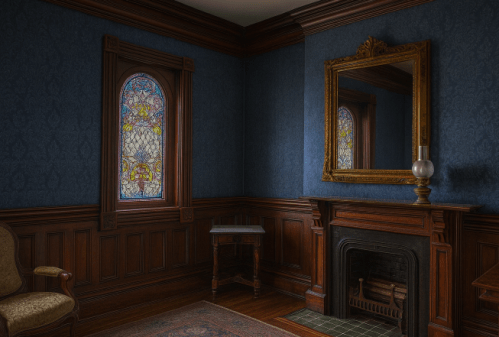
The Winchester Mystery House draws in history buffs with its labyrinthine Victorian architecture, while its expansive, meticulously tended gardens captivate horticulturalists who come simply to wander and admire. Beyond its surface beauty, the mansion is a visual spectacle—an ornate, almost theatrical space where every hallway feels like a set piece. Yet beneath the charm lies a deeper, more unsettling narrative: the house is thick with the residue of familial conflict, grief, and unresolved tension, all of it encoded into its strange design. And tucked within its many rooms is one particularly chilling space, a chamber whose atmosphere still unsettles even the most seasoned visitors. https://winchestermysteryhouse.com/

You are Not the Problem!

Life on Earth did not happen by mistake. You are here as part of God’s plan of happiness for all of us. Little by little, in tranquil moments or in deliberate meditation, there will come to one the revelation of errors in conduct and thought which, until then, one did not know were errors. Values refer to the tendency of any living beings to show preference in their actions, for one kind of object or objective rather than another. This preferential behaviour is called “operative values.” It need not involve any cognitive or conceptual thinking. It is simply the value of choice which is indicated behaviourally when the organism select one object, rejects another. When the earthworm, placed in a simple Y maze, chooses the smooth arm of the Y, instead of the path which is paved with sandpaper, he is indicating an operative value. A second use of the term might be called “conceived values.” This is the preference of the individual for a symbolized object. Usually in such a preference there is anticipation of foresight of the outcome of behaviour directed toward such a symbolized object. Usually in such a preference there is anticipation or foresight of the outcome of behaviour directed toward such a symbolized object. A choice such as “Honesty is the best policy” is such a conceived value. A final use of the term might be called “objective value.” People use the word in this way when they wish to speak of what is objectively preferable, whether or not it is in fact sensed or conceived of as desirable. #RandolphHarris 1 of 18

The living human being has, at the outset, a clear approach to values. He prefers some things and experiences, and rejects others. We can infer from studying his behaviour that he prefers those experiences which maintain, enhance, or actualize his organism, and rejects those which do not serve this end. What him for a bit: Hunger is negatively valued. His expression of this often comes through loud and clear. Food is positively valued. However, when he is satisfied, food is negatively valued, and the same milk he responded to so eagerly is now spit out, or the breast which seemed so satisfying to the infant is now rejected as he turns his head away from the nipple with an amusing facial expression of disgust and revulsion. He values security, and holding and caressing which seem to communicate security. He values new experience for its own sake, and we observe this in his obvious pleasure in discovering his toes, in his searching movements, in his endless curiosity. He shows a clear negative valuing of pain, bitter tastes, sudden loud sounds. All of this is commonplace, but let us look at these facts in terms of what they tell us about the infant’s approach to values. It is first of all a flexible, changing, valuing process, not a fixed system. He likes food and dislikes the same food. He values security and rest, and rejects it for new experience. What is going on seems best described as an organismic valuing process, in which each element, each moment of what he is experiencing is somehow weighed, and selected or rejected, depending on whether, at this moment, it tends to actualize the organism or not. #RandolphHarris 2 of 18

This complicated weighing of experience is clearly an organismic, not a conscious or symbolic function. These are operative, not conceived values. However, this process can none the less deal with complex value problems. I would remind you of the experiment in which young infants had spread in front of them a score of more of dishes of natural (that is, unflavoured) foods. Over a period of time they clearly tended to value the foods which enhanced their own survival, growth, and development. If for a time a child gorged himself on starches, this would seen be balanced by a protein “binge.” If at times he chose a diet deficient in some vitamin, he would later seek out foods rich in this very vitamin. He was utilizing the wisdom of the body in his value choices, or perhaps more accurately, the physiological wisdom of his body guided his behavioural movements, resulting in what we might think of as objectively sound value choices. Another aspect of the infant’s approach to value is that the source of locus of the evaluating process is clearly within himself. Unlike many of us, he knows what he likes and dislikes, and the origin of these value choices lies strictly within himself. He is the center of the valuing process, the evidence for his choices being supplied by his own senses. He is not at this point influenced by what his parents think he should prefer, or by what the church says, or by the opinion of the latest “expert” in the field, or by the persuasive talents of an advertising firm. It is from within his own experiencing that his organism is saying in non-verbal terms, “This is good for me.” “That is bad for me.” “I like this.” “I strongly dislike that.” He would laugh at our concern over values, he could understand it. How could anyone fail to know what he liked and disliked, what was good for him an what was not? #RandolphHarris 3 of 18

What happens to this highly efficient, soundly based valuing process? By what sequence of events do we exchange for the more rigid, uncertain, inefficient approach to value which characterizes most of us as adults? The infant needs love, wants it, tends to behave in ways which will bring repetition of this wanted experience. By this brings complications. He pulls baby sister’s hair, and finds it satisfying to hear her wails and protests. He then hears that he is a “naughty, bad boy,” and this may be reinforced by a time out. He is cut off from affection. As this experience is repeated, and many, many others like it, he gradually learns that what “feels good” is often “bad” in the eyes of others. Then the next step occurs, in which he comes to take the same attitude toward himself which the others have taken. Now, as he pulls his sister’s hair, he solemnly intones, “Bad, bad boy.” He is introjecting the value judgment of another, taking it has his own. He has deserted the wisdom of his organism, giving up the locus of evaluation and is trying to behave in terms of values set by another, in order to hold love. Or take another example at an older level. A boy senses, though perhaps not consciously, that he is more loved and prized by his parents when he thinks of being a doctor than when he thinks of being an artist. Gradually he introjects the values attached to being a doctor. He comes to want, above all, to be a doctor. Then in college he is baffled by the fact that he repeatedly fails in chemistry, which is absolutely necessary to becoming a physician, in spite of the fact that the guidance counselor assure him he has the ability to pass the course. Only in counseling interviews does he begin to realize how completely he has lost touch with his organismic reactions, how out of touch he is with his own valuing process. #RandolphHarris 4 of 18

Let me give another instance from a class of mine, a group of prospective teachers. I asked them at the beginning of the course, “Please list for me the two or three values which you would most wish to pass on to the children with whom you will work.” They turned in many value goals, but I was inspired by some of the items. Several listed such things as “to speak correctly,” “to use good English, not to use work like ain’t.” Others mentioned neatness—“to do things according to instructions”; one explained her hope that “When I tell them to write their own names in the upper right-hand corner with the date under it, I want them to do it that way, not in some other form.” I confess I was somewhat appalled that for some of these girls the most important values to be passed on to pupils were to avoid bad grammar, or meticulously to follow teacher’s instructions. I felt baffled. Certainly these behaviours had not been experienced as the most satisfying and meaningful element in their own lives. The listings of such values could only be accounted for by the fact that these behaviours had gained approval—and thus had been introjected as deeply important. Perhaps these several illustrations will indicate that in an attempt to gain or hold love, approval, esteem, the individual relinquishes the locus of evaluation which was his in infancy, and places it in others. He learns to have a basic distrust for his own experiencing as a guide to his behaviour. He learns from others a large number of conceived values, and adopts them as his own, even though they may be widely discrepant from what he is experiencing. Because these concepts are not based on his own valuing, they tend to be fixed and rigid, rather than fluid and changing. #RandolphHarris 5 of 18

To analyze oneself occasionally comparatively easy and sometimes productive of immediate results. Essentially it is what every sincere person does when he tries to account for real motivations behind the way he feels or acts. If anything, without knowing much about psychoanalysis, a man who has fallen in love with a particularly attractive or wealth girl could raise with himself the question whether vanity or money plays a part in his feeling. A man who has ignored his better judgement and given in to his wife or his colleagues in an argument could question in his own mind whether he yielded because he was convinced of the comparative insignificance of the subject at stake or because he was afraid of an ensuing fight. I suppose people have always examined themselves in this way. And many people do so who otherwise tend to reject psychoanalysis entirely. The principal domain of occasional self-analysis is not the intricate involvements of the neurotic character structure, but the gross manifest symptoms, the concrete and usually acute disturbance which either strikes one’s curiosity or commands one’s immediate attention because of its distressing character. Thus the examples reported in this report concern a functional headache, an acute attack of anxiety, a lawyer’s fear of public performances, an acute functional stomach upset. However, a startling dream, the forgetting of an appointment, or an inordinate irritation at a taxidriver’s trivial cheating might just as well elicit a wish to understand oneself—or, more precisely, to discover the reasons responsible for that particular effect. #RandolphHarris 6 of 18

This latter distinction may seem hairsplitting, but actually is expresses an important difference between occasional grappling with a problem and systematic work at oneself. The goal of occasional self-analysis is to recognize those factors that provoke a concrete disturbance, and remove them. The broader incentive, the wish to be better equipped to deal with life in general, may operate here too, but even if it plays some role it is restricted to the wish to be less handicapped by certain fears, headaches, or other inconveniences. This is in contrast to the much deeper and more beneficial desire to develop to the best of one’s capacities. One of the greatest factors of the importance for the understanding of man’s behaviour in present society: man’s need for certainty. Man is not equipped with a set of instincts that regulate his behaviour quasi-automatically. He is confronted with choices, and this means in all-important matters with grave risks to his life if his choices are wrong. The doubt that besets him when he must decide—often quickly—causes painful tension and can even seriously endanger his capacity for quick decisions. As a consequence, man has an intense need for certainty; he wants to believe that there is no need to doubt that the method by which he makes his decisions is right. In fact, he would rather make the “wrong” decision and be sure about it than the “right” decision and be tormented with doubt about its validity. This is one of the psychological reasons for man’s belief in idols and political leaders. They all take out doubt and risk from his decision making; this does not mean that there is not a risk for his life, freedom, etcetera, after the decision has been made, but that there is no risk that the method of his decision making was wrong. #RandolphHarris 7 of 18

For many centuries certainty was guaranteed by the concept of God. God, omniscient and omnipotent, had not only created the World but also announced the principles of human action about what which there was no doubt. The church “interpreted” these principles in detail, and the individual, securing his place in the church by following its rules, was certain that, whatever happened, he was on the way to salvation and to eternal life in Heaven. In the Luteran-Calvinistic branch of Christian theology, man was taught not to be afraid of the risk of using false criteria for his decision making in a paradoxical way. Luther, belittling man’s freedom and the role of his good works, taught that they only decision man has to make is to surrender his will totally to God, and thus to be released of the risk of making decisions on the basis of his own knowledge and responsibility. In Calvin’s concept, everything is predestined, and man’s decision does not really matter; yet his success is a sign that he is one of then chosen. With the beginning of the scientific approach and the corrosion of religious certainty, man was forced into a new search for certainty. At first, science seemed to be capable of giving a new basis for certainty. This was so for the rational man of the last centuries. However, with the increasing complexities of life, which lost all human proportions, with the growing feeling of individual powerlessness and isolation, the science-oriented man ceased to be a rational and independent man. He lost the courage to think for himself and to make decisions on the basis of his full intellectual and emotional commitment to life. He wanted to exchange the “uncertain certainty” which rational thought can give for an “absolute certainty”: the alleged “scientific” certainty, based on predictability. #RandolphHarris 8 of 18

This certainty is guaranteed not by man’s own unreliable knowledge and emotions but by the computers which permit prediction and become guarantors of certainty. Take as an example the planning of the big corporation. With the help of computers, it can plan ahead for many years (including the manipulation of man’s mind and taste); the manager does not have to rely any more on his individual judgment, but on the “truth” that is pronounced by the computers. The manager’s decision may be wrong in its results, but he need not be distrustful of the decision-making processes. He feels that he is free to accept or reject the result of computer prognostication, but for all practical purposes, he is as little free as a pious Christian was to act against God’s will. He could do it, but he would have to be out of his mind to take the risk, since there is not a greater source of certainty than God—or the computerized solution. This need for certainty creates the need of what amounts to blind belief in the efficacy of the method of computerized planning. The managers are relieved from doubt, and so are those who are employed in the organization. It is precisely the fact that man’s judgment and emotions allegedly do not interfere with the process of decision making that gives the computer-based planning its godlike quality. Those ancient social organisms of production are, as compared with bourgeois society, extremely simple and transparent. However, they are founded either on the immature development of man individually, who has not yet served the umbilical cord that unites him with his fellow man in a primitive tribal community, or upon direct relations of subjection. They can arise and exit only when development of the productive power of labour has not risen beyond a low state, and when, therefor, the social relations within the sphere of material life, between man and man and between man and nature, are correspondingly narrow. #RandolphHarris 9 of 18

This narrowness is reflected in the ancient worship of Nature, and in the other elements of the popular religions. The religious reflex of the real World can, in any case, only then finally vanish when the practical relations of everyday life offer to man none but perfectly intelligible and reasonable relations with regard to his fellow men and to nature. The life-process of material production does not strip off its mystical veil until it is treated as production by freely associated men, and is consciously regulated by them in accordance with a settled plan. This, however, demands for society a certain material groundwork or set of conditions of existence which in their turn are the spontaneous product of a long and painful process of development. Man, as a race, slowly emancipates himself from mother nature through the process of work, and in this process of emancipation he develops his intellectual and emotional powers and grows up, becomes an independent and free man. When he will have brought nature under his full and rational control, and when society will have lost its antagonistic class character, “prehistory” will have ended, and a truly human history will begin in which free men plan and organize their exchange with nature, and in which the aim and end of all social life is not work and production, but the unfolding of man’s powers as an end in itself. This is the realm of freedom in which man will be fully united with his fellow men and with nature. The problem of human evolution is an essentially tragic one. Whatever man did, it ended in frustration; if he should return to become a primitive again, he would have pleasure, but no wisdom; if he goes on as a builder of ever more complicated civilizations, he becomes wiser, but also unhappier and sicker. #RandolphHarris 10 of 18

Clearly, evolution is an ambiguous blessing, and society does as much harm as good. History is a march toward man’s self-realization; society, whatever the evils produced by any given society may be, is the condition for man’s self-creation and unfolding. The “good society” becomes identical society of good men, that is, of fully developed, sane, and productive individuals. When it comes to psychologist, they even study the theory of theories and are provided at least with a modest ability to differentiate between “good” theories and “poorer” theories, qua theories. The impact of his exposure to methods for investigation of psychological phenomena, within the context of multiple theories that overlap only partially, should fit him with a generally critical orientation toward any univocal explanation of the mysteries of the human personality. And in seminars, in publications, in case conferences it is typically the psychologist, not the social worker or psychiatrist, who is dubious that an orthodox psychoanalytic formulation either truly accounts for the observed pathology or necessarily points to the optimal treatment. This is a generalization about psychologists as students of behaviour theory and personality. It must be recognized that there are some graduate departments of psychology in which the training of the clinical psychologist is as theoretically biased, id est, psychoanalytically oriented, as is that of the average psychiatrist or social worker. #RandolphHarris 11 of 18

Contrary to what the manipulator wants you to think, you are not the problem. You might be their problem as you will not conform to what they want you to, but you are not the problem. However, it is hard to deal with abusers and other types of manipulators because they are masters at blame-shifting. Somehow, in any argument, they are adamantly more capable of convincing victims that they are at fault, than victims are at realizing they are the victims of the entire debacle. Victim blaming is a manipulative tactic used by abusers to convince themselves and their victims that the problems lie with the other person, not with them. The ploy is very clever and effective. Beware of the tendency to play the game of “Find the bad guy,” in your intimate relationships. It is never healthy to use someone as a scapegoat for your problems. If you are in a relationship with someone needs to make you the “bad guy,” then be aware of what is going on and do not allow yourself to accept that mantle. The best way to understand victim blaming is to realize that two concepts are at play: Projection and judgmentalism. Projection occurs when one person displaces his or her own characteristics onto another person. An abusive person will “project” his or her own attributes on to the other person, particularly in a conflict. The main reason victims get in fights or arguments with abusers is because the abusers cause the problem in the first place by saying or doing something that engenders a negative emotional reaction in another person. #RandolphHarris 12 of 18

The abuser may be rude, hurtful, hostile, or act in some other relationship-destroying manner. It takes superhuman strength to keep from being triggered by the anger-provoking tactics of an abusive or manipulative person. Once you have been triggered by the abuser, you may make one small mistake in speaking, or you may even commit the heinous crime of yelling back and defending yourself! Heavens forbid you have a reaction to a hostile instigation! And once you do react supposedly inappropriately you have just given the abuser a gift. He can now capitalize on your reaction and use it as the evidence that the problem resides with you. Therefore, do not take the bait. The abuser is trying to flip the script. Reminder yourself that you do not need to defend yourself because you did not do anything wrong. The other concept, along with projection, that your abuser is using is judgmentalism. When people use judgmentalism as a strategy, they are trying to make you a subordinate. Abusers are incapable of healthy human connections. They suffer from attachment issues, and true to form, they must sabotage any semblance of healthy attachment. This is why the term “interpersonal violence” is sued to describe domestic violence. It is abuse of an interpersonal relationship. Victim blaming keeps the abuser emotionally safe by projecting his interpersonal problems on to the other person, preventing insight and potential growth (not to mention resolution of the problem at hand.) It also helps the abuser feel personally superior and smug as he believes that it is his role to judge the victim. #RandolphHarris 13 of 18

Ideas influence their thinker himself; thoughts react on their generator if they are intensely held, deeply felt, and frequently born. Thus they help to form tendencies and shape character. The aspirant can take advantage of this truth. His moral thought and metaphysical ideation will be so deep and earnest that they will converge upon his emotional feeling, when that has been sufficiently purified, and coalesce with it. Thus they become part of his inner being. If he is to realize his higher purpose in life, each aspirant has to struggle with the demon inside himself. Nature seeks to achieve its own ends, which renders it indifferent to all personal ends. It considers no man’s feelings but only his level of development, that he might be raised to a higher one. The only greatness he may rightfully seek is a secret one. It is not power over others that he should strive for, but power over himself. He will have to grow into this higher consciousness. No other way exists for him. He has not only to be brave enough to accept the aloneness that comes with every serious advance in the quest, but also strong enough to endure it. If it is wrong in ethical theory, how can anything be right in Worldly practice? The value of such study is immense. It involves a re-education of the whole mind of man. It strikes at the root of his ethical ignorance and destroys the selfishness and greed which are its malignant growths. #RandolphHarris 14 of 18

Mentally, man can do what no animal can do. He can consider conduct from a purely ethical standpoint; he can struggle at heart between right and wrong, self and selflessness. Every man betrays himself for what he is. He can hide his thoughts and dissemble his feelings, but he cannot hide his face. Therein are letters and words which tell plainly what sort of a man he really is. However, few there be who can read in this strange language. Character can be changed. As if by magic, he who habitually contemplates such exalted themes finds in time that his whole outlook is altered and expanded. The new outlook will gradually strongly establish itself within him. As a man thinks in his hear so is he. As is one’s thoughts, so one becomes; this is the eternal secret. What is to be done where a weakness becomes abnormally strong, overpowering the will and forcing him to do what his better nature rejects? The cure in the end must be based on his willingness to regard it as something not really part of himself, something alien and parasitic. If there is to be any way out toward freedom from it, he must stop identifying himself with the weakness. The key to right conduct is to refuse to identify himself with the lower nature. The hypnotic illusion that it is really himself must be broken: the way to break it is to deny every suggestion that comes from it, to use the will in resisting it, to use the imagination in projecting it as something alien and outside, to use the feelings in aspiration towards the true self, and the mind in learning to understand what it is. #RandolphHarris 15 of 18

The Sacramento firefighters like going to work, and there are few jobs at any level of pay about which this can be said with such certainty. They have to learn building laws, and the different types of building construction—frame, brick, steel, and the old cast-irons. Firefighters learn about the different kinds of windows—regular windows, casement windows, and the nonopening ones in skyscrapers—and the different locks people use to secure themselves from the harsh realities of the outside World—standard bolt locks, digital locks, police locks that lock on either side of the door, and fox locks, which have bars going down into the floor life flying buttresses. They have to learn the multitudinous knots used for moving equipment and people, and a whole communications system, the signals and alarms, the differences between “ten-four” and “ten-twenty-two.” They studied water hydraulics, the laws that govern the movement of water rushing through a two-and-a-half-inch hose and coming out of a one-inch nozzle. Outdoors, they learned about tools, everything from how to swing an ax to how to pull a hook and how to use your weight on a battering ram. They learned about the motorized tools, the power saw, the pneumatic tools and jacks used in collapse situations. Then there was the practical work of fighting the fire itself in controlled situations, where firefighters had to crawl into a room and pull out an inanimate 150-pound synthetic human being and carry it down six flights of stairs after taking a beating from the smoke. Later in the afternoon they had to carry ladders from one side of the street to the other. #RandolphHarris 16 of 18

On one call, there was a fire on the third floor of a tenement building, going really goodly. It had evidently been cooking for a long time, because by the time the fire department got there the fire fully involved this apartment of five or six rooms. There was this long hallway, and the firefighters ran in crouching positions into the fire with an inch-and-a-half hose. They got to the end of the hallways, one of the firefighters opened up the hose and led the way into the room there. Immediately, a large part of the ceiling came down on one of them, knocking his helmet off. Embers went down his neck and back, and he was burned pretty severely. So, with the nozzle still in his hand, he shut it off, made a complete U-turn, and started back out of the room. When he got out into the hall, the embers had died out, and he had a lifetime three-inch burn down his neck from hairline to shoulder blade. The interesting thing is, he hardly mind getting hurt in the fire. A gash on his arm that took twelve stitches, a burn on his neck, a broken wrist, to him it was just a badge of courage that reinforced the things he believed about firefighting and reinforced his confidence in himself to do a tough, challenging, and dangerous job. Once this firefighter got hurt pulling a hose over a barbed wire fence. He had to tug so hard that he pulled a ganglion, or nerve center, in his back. It was one of the most painful things that he ever experienced. It was difficult to treat. He had to lie on his stomach in bed for three months, doing everything in that position, eating, reading, writing notes, watching television. #RandolphHarris 17 of 18

Finally a doctor shot a whole bunch of cortisone into his back, which completely relived the pain, and finally he was able to go back to work. The cortisone never disappeared, though, and still moves around. He still feels the pain from time to time, especially when he is tired. There is an overriding awareness of the possibility of getting badly hurt, because they see it around them all the time. Firefighters see people getting disabled permanently, and they learn not to take even the smallest fire for granted. Be sure to open your hearts to the Sacramento Fire Department and let them know the community is thankful by making a donation. Also, assembly member Kevin McCarty is running for mayor of Sacramento, he is endorsed by the Sacramento Fire Department, and two of his goals are creating more affordable housing and getting homeless people into homes. A vote for McCarty is a way of showing support for the City of Sacramento and the Sacramento Fire Department. I pledge allegiance to the flag of the United States of America and to the Republic for which it stands, one nation, under God, indivisible with liberty and justice for all. Be wise not only in words, but in deeds; mere knowledge is not the goal, but action. Know the God of your fathers, and serve Him by your deeds. Let not your wisdom exceed your deeds, least you be like a tree with many branches but few roots. If the thoughts of your heart be pure, it is likely that so will be the words of your hand. Accustom yourself to do good; before long it will become your chief delight. One good deed leads to another, as every evil deed leads to more wrong-doing. If others do good through you, their deeds will be accounted to you as your own. #RanolphHarris 18 of 18

The Winchester Mystery House

A caretaker was hire to work at The Winchester Mystery House. Although she had never been to the mansion before, she was recruited for her skills in architecture and historical preservation. As she entered the library and explained that the beautiful ask paneling had been taken from trees that once surrounded the estate, she became restless. She knew very well that it was the kind of feeling that forewarned her of some sort of psychic event. As she was looking over toward a fireplace, farmed by two candelabra, she suddenly saw a very tall, white-haired man in a long black frock coat standing next to it. One elbow rested on the mantel, and his head was in his hand, as if he were pondering something very important. The caretaker was not at all emotionally involved with the house. In fact, the guided tour bored her, and she would have preferred to be outside in the stables, since she had a great interest in horses and nature. Her imagination did not conjure up what she saw: she knew in an instant that she was looking at the spirit of William Wirt Winchester. Because of the restless feelings that came over her while working in the mansion almost induced her to go into a trance several times, she decided to quit her job in a hurry.

Come and enjoy a delicious meal in Sarah’s Café, stroll along the paths of the beautiful Victorian gardens, and wonder through the miles of hallways in the World’s most mysterious mansion. For further information about tours, including group tours, weddings, school events, birthday party packages, facility rentals, and special events please visit the website: https://winchestermysteryhouse.com/

Please visit the online giftshop, and purchase a gift for friends and relatives as well as a special memento of The Winchester Mystery House. A variety of souvenirs and gifts are available to purchase. https://shopwinchestermysteryhouse.com/

The Narcissistic Charge

In the development of the human race we find an ever increasing range of socialization; the original small group based on blood affinity gives way to ever larger groups based on a common language, a common social order, a common faith. The larger size of the group does not necessarily mean that the pathological qualities of narcissism are reduced. As was remarked earlier, the group narcissism of the “democrats” or the “fake news media” is as malignant as the extreme narcissism of a single person can be. Yet in general we find that in the process of socialization which leads to the formation of larger groups, the need for co-operation with many other and different people not connected among themselves by ties of blood, tends to counteract the narcissistic charge within the group. The same holds true in another respect, which we have in the past discussed in connection with benign individual narcissism: inasmuch as the large group (nation, state, or religion) makes it an object of its narcissistic pride to achieve something valuable in the fields of material, intellectual, or artistic production, the very process of work in such fields tends to lessen the narcissistic charge. The history of the Roman Catholic Church is one of many examples of the peculiar mixture of narcissism and the counteracting forces within a large group. The elements counteracting narcissism with the Catholic Church are, first of all, the concept of the universality of man and of a “catholic” religion which is no longer the religion of one particular tribe or nation. #RandolphHarris 1 of 16

Second, the idea of personal humility which follows from the idea of personal humility which follows from the idea of God and the denial of idols. The existence of God implies that no men can be God, that no individual can be omniscient or omnipotent. It thus sets a definite limit to man’s narcissistic self-idolatry. However, at the same time the Church has nourished an intense narcissism; believing that the Church is the only chance of salvation and that the Pope is the Vicar of Christ, its members were able to develop an intense narcissism inasmuch as they were members of such an extraordinary institution. The same occurred in relation to God; while the omniscience and omnipotence of God should have led to man’s humility, often the individual identified himself with God and thus developed an extraordinary degree of narcissism in this process of identification. This same ambiguity between a narcissistic or an anti-narcissistic function has occurred in all the other great religions, for example, in Buddhism, Judaism, Islam, and Protestantism. I have mentioned the Catholic religion not only because it is a well-known example, but mainly because the Roman Catholic religion was the basis both for humanism and for violent and fanatical religious narcissism at one and the same historical period: the fifteenth and sixteenth centuries. The humanists with the Church and those outside spoke in the name of a humanism which was the fountainhead of Christianity. Nicholas of Cusa preached religious tolerance for all men (De pace fidei); Ficino taught that love is the fundamental force of all creation (De amore); Erasmus demanded mutual tolerance and a democratization of the Church. #RandolphHarris 2 of 16

Thomas More, the nonconformists, spoke and died for the principes of universalism and human solidarity; Postel, building on the foundations laid by Nichoals and Erasmus, spoke of global peace and World unity (De orbis terrae concordia); Siculo, following Pico della Mirandola, spoke enthusiastically of man’s dignity, of his reason and virtue, and of his capacity for self-perfection. These men, with many others growing from the soil of Christian humanism, spoke in the name of universality, brotherliness, dignity, and reason. They fought for tolerance and peace. Against them stood the forces of fanaticism on both sides; that of Luther and that of the Church. The humanists tried to avoid the catastrophe; eventually the fanatics on both sides won. Religious persecution and war, culminating in the disastrous Thirty Years’ War, were a blow to humanist development from which Europe has still not recovered (one cannot help thinking of the analogy of Stalinism, destroying socialist humanism three hundred years later). Looking back to the religious hatred of the sixteenth and seventeenth centuries, its irrationalities are clear. If compared with the general principals, both sides spoke in the name of God, of Jesus as the Christ, of love, and they differed only in points which were of secondary importance. Yet they hated each other, and each was passionately convinced that humanity ended at the frontiers of one’s own religious faith. #RandolphHarris 3 of 16

The essence of this overestimation of ones’ own position and the hate for all who differ from it I narcissism. “We” are admirable; “they” are despicable. “We” are good; “they” are evil. Any criticism of one’s own doctrine is a vicious and unbearable attack; criticism of the others’ position is a well-meant attempt to help them to return to the truth. From the Renaissance onward, the great contradictory forces, group narcissism and humanism, have each developed in its own way. Unfortunately the development of group narcissism has vastly outstripped that of humanism. While it seemed possible in the late Middle Ages and at the time of the Renaissance that Europe was prepare for the emergence of a political and religious humanism, this promise failed to materialize. New forms of group narcissism emerged, and dominated the following centuries. This group narcissism assumed manifold forms: religious, national, racial, political. Protestants against Catholics, French against Germans, White against Blacks, Aryans against non-Aryans, Communists against capitalists; different as the contents are, psychologically we deal with the same narcissistic phenomenon and its resulting fanaticism and destructiveness. There are other more harmless forms of group narcissism directed toward small groups like lodges, small religious sects, “the old school tie,” et cetera. While the degree of narcissism in these cases may not be less than in those of the larger groups, the narcissism is less dangerous simply because the groups involved have little power, and hence little capacity to cause harm. #RandolphHarris 4 of 16

While group narcissism grew, its counterpart—humanism—also developed. In the eighteenth and nineteenth centuries—from Spinoza, Leibniz, Rousseau, Herder, Kant, to Goethe and Marx—the thought developed that mankind is one, that each individual carries within oneself all of humanity, that there must be no privileged groups claiming that their privileges are based on their intrinsic superiority. The First World War was a severe blow to humanism, and gave rise to an increasing orgy of group narcissism: national hysteria in all the belligerent countries of the First World War, Hitler’s racialism, Stalin’s party idolization, Muslim and Hindu religious fanaticism, Western anti-Communist fanaticism. These various manifestations of group narcissism have brought the World to the abyss of total destruction. As reaction to this threat to humanity, a renaissance of humanism can be observed today in all countries and among the representatives of diverse ideologies; there are radical humanists among Catholic and Protestant theologians, among socialist and nonsocialist philosophers. Whether the danger of total destruction, the ideas of the neohumanists and the bonds created between all men by the new means of communication will be sufficient to stop the effects of group narcissism is a question which may determine the fate of mankind. #RandolphHarris 5 of 16

The growing intensity of group narcissism—only shifting from religious to national, racial, and party narcissism—is, indeed, a surprising phenomenon. First of all because of the development of the humanist forces since the Renaissance, which we discussed earlier. Furthermore, because of the evolution of scientific method requires objectivity and realism, it requires seeing the World as it is, and not distorted by one’s own desires and fears. It requires being humble toward the facts of reality, and renouncing all hopes of omnipotence and omniscience. The need for critical thought, experimentation, proof; the attitude of doubting—these are precisely the methods of thought which tend to counter act the narcissistic orientation. Undoubtedly the method of scientific thinking has had its effect on the development of contemporary neohumanism, and it is not accidental that most of the outstanding natural scientists of our day are humanists. However, the vast majority of men in the West, although they have “learned” the scientific method in school or at the university, never really have been touched by the method of scientific, critical thinking. Even most of the professionals in the field of the natural sciences have remained technicians, and have not acquired a scientific attitude. For the majority of the population, the scientific method they were taught has had even less significance. Although it may be said that higher education has tended to soften and to modify personal and group narcissism to some extent, it has not prevented most of the “educated” people from joining enthusiastically the national, racial, and political movements which are the expression of contemporary group narcissism. #RandolphHarris 6 of 16

It seems that, on the contrary, science has created a new object for narcissism—technique. Man’s narcissistic pride in being the creator of a formerly undreamed-of World of things, the discoverer of ratio, television, atomic power, space travel, and even in being the potential destroyer of the entire globe, ha given him a new object for narcissistic self-inflation. In studying this whole problem of the development of narcissism in modern history, one is reminded of Dr. Freud’s statement that Copernicus, Darwin, and he himself deeply wounded man’s narcissism by undermining his belief in his unique role in the universe and his consciousness as being an elementary and irreducible reality. However, while man’s narcissism has been wounded in this manner, it has not been as greatly reduced as would appear. He has reacted by transferring his narcissism to other objects: nation, race, political creed, technique. In view of these facts the question is bound to arise over and over again: why call these trends neurotic? What is really wrong with them? Granted that with some people certain trends are predominant, even have a measure of rigidity, while quite different trends determine the behaviour of others, are not these varieties of pursuits merely the expression of given differences among people of different sets of values, different ways of coping with life? It is not natural, for instance, that a tenderhearted person will put stock in affection and a stronger person in independence and leadership? To raise these questions is useful because it is not only of theoretical but eminently practical importance to recognize the difference between such basic human strivings and evaluations and their neurotic counterparts. #RandolphHarris 7 of 16

The objectives of the two types of strivings are similar, but their basis and meaning are entirely different. The difference is almost as great as between +7 and -7: in both case we have number 7, just as we use the same words, affection, reason, perfection, but the prefix changes character and value. The contrasts underlying the apparent similarities have already been touched on in the comparison of the employee and the child Clare, but a few more generalized comparisons may illuminate further the difference between normal and neurotic trends. If there is affection for them, a wish for affection from other is only a feeling of having something in common with them. The emphasis then will be not only on the friendliness received but also on the positive feelings one is capable of having for others and of showing them. However, the neurotic need for affection is devoid of the value of reciprocity. For the neurotic person one’s own feelings of affection counts as little as if one were surrounded by strange and dangerous animals. To be accurate, one does not even really want the others’ affection, but is merely concerned, keenly and strenuously, that they make no aggressive move against one. The singular value lying in mutual understanding, tolerance, concern, sympathy has no place in the relationship. Similarly, if this striving were strong and alive in all of us, the striving to perfect our gifts and our human faculties is certainly worth our best efforts, so much so that no doubt the World would be a better place to live in. However, the neurotic need for perfection, while it may be expressed in identical term, has lost this special value, because it represents an attempt to be or appear perfect without change. #RandolphHarris 8 of 16

There is no possibility of improvement, because finding areas within the self that would need change is frightening and therefore avoided. The only real concern is to juggle away any deficiency lest one be exposed to attacks, and to preserve the secret feeling of superiority over others. As in the neurotic need for affection, the person’s own active participation is lacking or impaired. Instead of being an active striving, this trend is a static insistence upon an illusory status quo. A last comparison: if put into the service of pursuits that are themselves important, regarding it as a meaningful force, all of us have a high regard for will power. However, the neurotic faith in the omnipotence of will is illusory, because it completely disregards the limitations that many defy even the most determined efforts. No amount of will power gets us out of a Sunday-afternoon traffic jam. Furthermore, if the proving of its effectiveness becomes an aim in itself, the virtue of will power is nullified. Any obstacle standing in the way of momentary impulses will drive the person in the grip of this neurotic trend into blind and frantic action, regardless of whether one really want the particular object. The tables are actually reversed: it is not that one has will power, but that it has one. These examples may suffice to show that the neurotic pursuits are almost a caricature of the human values they resemble. They lack freedom, spontaneity, and meaning. All too often they involve illusory elements. Their value is only subjective, and lies in the fact that they hold the more or less desperate promise of safety and of a solution for all problems. #RandolphHarris 9 of 16

And one further point should be emphasized: not only are the neurotic trends devoid of the human values that they mimic, but they do not even represent what the person wants. If one puts all one’s energies into the pursuit of social prestige or power, for example, one may believe that one really wants these goals; actually, as we have seen, one is merely driven to want them. It is as if one were flying in an airplane which one believes one is piloting, while actually the plane is directed by remote control. It remains to understand approximately how and to what extent the neurotic trends may determine the person’s character and influence one’s life. In the first place, these pursuits render it necessary for one to develop certain subsidiary attitudes, feelings, and types of behaviour. If one’s trend is toward unlimited independence, one will desire secrecy and seclusion, be wary of anything resembling an intrusion into one’s privacy, develop techniques for keeping others at a distance. If one’s trend is toward a constriction of life, one will be modest, undemanding, and ready to yield to anyone who is more aggressive than one. Also, the neurotic trends largely determine the image a person has of what one is or should be. All neurotic persons are markedly unstable in their self-evaluation, wavering between an inflated and a deflated image of themselves. When a neurotic trend is recognized it becomes possible to understand specifically the reasons why a particular person is aware of certain evaluations of oneself and represses others, why one is consciously or unconsciously exceedingly proud of certain attitudes or qualities and despises others for n discernible objective reason. #RandolphHarris 10 of 16

For example, if A has built up a protective belief in reason and foresight one will not only overrate what can be accomplished by reason in general, but also take a special pride in one’s power of reasoning, one’s judgment, one’s predictions. One’s notions of one’s superiority over others will then derive primarily from a conviction that one’s is a superior intelligence. And if B feels one cannot possibly stand on one’s own, but must have a “partner” who gives content and direction to one’s life, one is bound to overrate not only the power of love but also one’s own ability to love. One will mistake one’s need to hang on to another person for a particularly great ability to love, and will take a special pride in this illusory capacity. Finally, if C’s neurotic trend is to master any situation by one’s own efforts, to be self-sufficient at any price, one will take an excessive pride in being capable and self-reliant and in never needing anybody. The maintenance of these beliefs—A’s belief in one’s superior power of reasoning, B’s in one’s living nature, C’s in one’s competence to handle one’s affairs quite by oneself—becomes as compulsive as the neurotic trends the produced them. However, the pride taken in these qualities is sensitive and vulnerable, and for good reasons. Its foundation is none too solid. It is built on too narrow a basis and contains too many illusory elements. It is actually a pride in the qualities that are required in the service of the neurotic trends rather than in qualities actually existing. In actual fact B has very little ability to love, but one’s belief in this quality is indispensable lest one recognize the falseness of one’s pursuits. #RandolphHarris 11 of 16

If one harboured any doubt as to one’s loving nature one would have to recognize that in reality one searches not for someone to love but for someone who will devote one’s life exclusively to one, without one’s being able to give much in return. This would mean such a vital threat to one’s security that one would be bound to react to a criticism on this score with a mixture of panic and hostility one or the other prevailing. Similarly, A will react with extreme irritation to any doubt cast on one’s good judgment. C, on the other hand, whose pride lies in not needing anybody, must feel irritated at any suggestion that one cannot succeed without help or advice. The anxiety and hostility generated by such trespasses on the treasure image of self further impair a person’s relations to others, and thereby force one to adhere all the more strongly on one’s protective devices. We do not know about the psychology of primitive man in prehistoric time. Paleontology had reconstructed for us something of the physical circumstances of one’s existence. We know that he inhabited a harsh, uncertain and controllable World. We know that his puny physical capacities, unimplemented except for the crudest of tools and weapons, were arrayed against the violent powers of wind and water and against the brutish hostility of huge predators. Knowing these few, simple facts about prehistoric man and his environment, we can conjecture that he was totally occupied in a daily, all-engaging pursuit of security of limb and maintenance of life. In his earliest and certainly in any precommunal states, he had little time for introspection reverie and for the diagnostic question, “Am I unhappy?” #RandolphHarris 12 of 16

Many primitive men were certainly confronted by environments that demanded constant hard work and continued vigilance. Perhaps there is a psychological “zero point” at which a physically uncontrolled environment demands so much immediate and direct coping behaviour as to prohibit the development of a neurosis. And perhaps there are life situations in which the persistent threat of real danger to life militates against consideration of those possible and lesser fears which are the core of much neurotic anxiety. We know, for example, that during the period of the blitzkrieg assault upon London in World War II, and in the days of England’s greatest danger, there was a trend toward decreased frequency of visits to the neuropyychiatric clinics. To the degree that neuroses as we know them require some opportunity for self-sensitization it is unlikely that our prelinguistic ancestors had the time to develop them. It requires only the assumption of individual differences in stress tolerance and of extreme and frequent stress, however, to presume that primitive man was subject to sever mental breakdowns. These probably were disruptions of his adjustive integration that occurred in circumstances which repeatedly aroused violent fear or presented extreme deprivations. We have no basis on which to estimate with what frequency our most primitive forebears fell victim to mental illness. There are those who like to think that over the centuries there has been an increase in the incidence of personality disorder which is related to the growing complexity and speed of modern life. #RandolphHarris 13 of 16

There are those who like to think that over the centuries there has been an increase in the incidence of personality disorder which is related to the growing complexity and speed of modern life. These persons are inclined perhaps to think that primitive man was relatively free from psychic stress because one’s needs were simple and one’s problems few. However, his needs and problems were severe and recurrent, and permitted only temporary solution, and his resource were negligible. It may be that true neurosis (as distinguished from “total insanity”) requires the nourishment of introspection and self-consciousness. Perhaps it is only when man can both look within oneself and toward a future beyond the next moment, only when one can think of other people and how they perceive and evaluate him, that neurotic conflict can arise. Such weighing of self and others requires both time and the freedom from immediate task which are a common luxury of technologically advanced cultures. We may surmise that man’s thought has evolved from exclusive preoccupation with the immediate physical environment, from concern with food, clothing, shelter, and safety from the elements and from attack, then to concern with those extended environmental phenomena of sunrises and snowfalls, of moon and stars and seasons, and then finally to one’s relationship to the Universe and to one’s fellow man. The way to refuse, and what to refuse, is of primary importance in the hour of conflict. As we have seen, the believer needs to maintain an acute attitude, and, when necessary, the expression of refusal continually and persistently. This presupposes, of course, one’s standing in faith upon the foundation of one’s identification in death with Christ at Calvary. #RandolphHarris 14 of 16

In the hour of conflict, lest there might have been new ground given to evil spirits unknowingly—by accepting something from them, or believing some lie they have suggested to the mind—the believer should refuse all the possible things whereby they may have gained a new footing. The believer oneself will know, from one’s past experience, most of the ways by which the deceiving spirits have hitherto gained advantage over one; and one will instinctively turn to the points of refusal which have been of the most service to one in ones fight to freedom. The refusing in this way takes ground from them in many directions. The wider the scope covered by the act and attitude of refusal, the more thoroughly is the believer separating oneself from the deceiving spirits—who can only hold their ground by the consent of one’s will. By refusing all one once accepted from them one can become comparatively clear of ground given to them, so far as one’s choice and attitude is concerned. Theonomy does not exit in the tranquility of a vacuum, but mut be fought for in the area of time and space. However, even the partial achievement of theonomy, ambiguous and fragmentary as it may be, serves, in turn, as a point of reference for gauging the rhythm of history: History comes from and moves toward periods of theonomy, id est, periods in which the conditioned is open to the unconditional without claiming to be unconditioned itself. Theonomy unites the absolute and the relative element in the interpretation of history, the demand that everything relative become the vehicle of the absolute and the insight that nothing relative can ever become absolute itself. #RandolphHarris 15 of 16

These partial victories of theonomy are the inner-historical side of the Kingdom of God. However, its transcendent side, total realization of theonomy, is beyond temporality. Theonomy is not utopia. By specifying the transcendent goal of history as essentialization, this is the most meaningful statement of the content of theonomy. Perfect theonomy is universal essentialization. In Eternal Life the potentialities of man’s creative spirit are fulfilled. Man’s essence, along with the essences of all creatures, becomes fully transparent to the eternal ground of being. God and man are reunited. There are assertions that are valid only under a certain condition; this condition is that they stem not from experience but from pure reason. Thus, the question is: What is the ground of our belief in the truth of such assertions? No, what cases it? But the source of a belief, of a strong conviction, is a psychological problem; and it is often a very limited and narrow experience that bring about such a belief! It already presupposes that there are not only “data a posteriori” but also “data a priori”—“prior to experience.” Necessity and universal validity can never be given by experience: so, why should we think that they are present without experience at all? There are no individual judgments! An individual judgment is never “true,” never knowledge; only in connection, in relation to many judgments is there any guarantee. What distinguishes true from false beliefs? What is knowledge? He “knows” it, that is Heavenly! Necessity and universal validity can never be given by experience! Hence independently of experience, prior to all experience. Any insight that occurs a priori, hence independently of all experience, is from mere reason, a pure form of knowledge! #RandolphHarris 16 of 16

CRESLEIGH HAVENWOOD
Lincoln, CA | from the high $600s
Now Selling!

No appointment needed! Cresleigh Havenwood features four distinct floor plans ranging from 2,293 – 3,377 square feet and offering up to five bedrooms. Each plan has been thoughtfully designed and includes great features such as single story homes, guest suites, optional offices, garage workshops, and more! Get the most out of your new home with Cresleigh’s All Ready smart home featuring all the connectivity needed to keep your house running. Best of all, each Cresleigh home comes with owned solar included!

Located off of Virginiatown Road and McCourtney Road, residents of the 83 homesites of Cresleigh Havenwood will benefit from a brand new neighborhood in the charming City of Lincoln. Palo Verde Park, is just down the street and there’s plenty of recreation to take part in all around town. https://cresleigh.com/havenwood/
Our National Problem is Erosion of National Morality
 Our greatest national problem is erosion. Not erosion of soil, but erosion of the national morality. Waking up from a nap and thinking this cannot be real. In the crisis through which we are now passing, we have been fully warned. This has brought forth some criticism. There are some of us who do not want to hear the message. It embarrasses us. The things which are threatening our lives, our welfare, our freedoms are the very things some of us have been condoning. Many do not want to be disturbed as they continue to enjoy their comfortable complacency. Cognition are thoughts. Dissonance means clashing. Cognitive dissonance appears in virtually all evaluations and decision and is the central mechanism by which we experience new differences in the World. When we see other people behave differently to our images of them, when we hold any conflicting thought, we experience dissonance. Dissonance increased with the importance and impact of the decision, or situation, along with the difficulty of reversing it. Cognitive dissonance is central to many forms of persuasion to change beliefs, values, attitudes and behaviors. Then tension can be injected suddenly or allowed to build up over time. #RandolphHarris 1 of 13
 Our lives rest upon eternal truth and truth can never be deserted safely. It is probably a self-deception; the investigator follows the chain of association from the one element which is take up until that individual finds the chain breaking off. For instance, when you see the people in your immediate circle mean you no good. The signs are present, but the rational brain tends to overpower the idea that the people in your live are involved in a conspiracy to harm you because the idea seems ludicrous. Although you see the signs, and they have been ongoing, you try and suppress them and pray that life returns to normal. However, although you know you are not being outlandish, you know there is nothing you can say or do about the situation because pack mentality tends to be strong. People involved in pack mentality are usually driven by greed and fear. Often times, leaders in the community are allowed to get away with abuse. For instance, Jerry Sandusky built a sophisticated grooming operation, outsourcing to child-care professional the task of locating vulnerable teenage boys, whole playing the role of a lovable goofball. Effort is made to lull people away into a false security. Proposals will be and are being offered and programs sponsored that have wide appeal. #RandolphHarris 2 of 13
 Attractive labels are usually attached to the most dangerous programs, often in the name of public welfare and personal security. Again, let us not be misled. We live in an age of appeasement—the sacrificing of principle. Appeasement is not the right answer. It is never the right answer. Jerry Sandusky, a respected football coach at Penn State University, he systematically abused at least 10 boys over a span of 15 years. The victims were scared and reluctant to tell anyone about it, including peers who admired Jerry Sandusky. People like Jerry Sandusky masquerade under various names, but all may be recognized by one thing—one thing they all have in common: to erode away character and one’s freedom to think and act for one’s self. Freedom can be killed by neglect as well as by direct attack. Too long have too many Americas, and people of the free World generally, stood by as silent accessories to the crimes of assault against freedom—assault against basic economic and spiritual principles and traditions that have made nations strong. #RandolphHarris 3 of 13
 The reason people fear telling anyone when they are abused is because not only is it embarrassing, but when you report the abuse there is a chance no one will believe you, or they may not take action because the abuser is someone well liked in the community. People like Jerry Sandusky prey upon young men who are minors and still developing. They come off as nice guys who just want to be your friend and will do something seemingly nice, like invite you to the mall. However, on the way home, they may deviate from the path and take you to a dark parking lot near a river where they start to massage your private parts. When being in a position, a young teen, who is afraid for his life and this older man is rubbing on you, you realize there is nowhere to run. If you do, he might hurt you. There is no one around, so you cannot scream so he just gets to do whatever he wants. People like Jerry Sandusky are often connected in the community and community leaders will go out of their way to protect them and suppress what happened. False thinking and false ideologies, dressed in the most pleasing forms, quietly—almost without our knowing it—seek to reduce our moral defenses and to captivate our mind. They entice with bright promises of security, cradle-to-grave guarantees of many kinds. #RandolphHarris 4 of 13
 The United States of America has been great because it has been free. It has been free because it has trusted God and was founded upon the principles of freedom set forth in the word of God. This nation has a spiritual foundation. America is great because it is good, and if America every ceases to be good, American will cease to be great. How strong is our will to remain free—to be good? Even though the police and your employer knows an individual may have molested you, they will still allow him to come into your job and ask you to go into a back room when he shows up, so you do not have to interact with him. As a teen, I was molested by an older man in the community, and I did not want to speak up because I did not want anyone to know and I feared the police would not believe me. However, I was convinced by a friend to report him, and he would still follow me around and try to confront me, and later in life he came back with a vengeance, and still will not go away. The man has actually been in contact with my family and tells them that his feelings were hurt because he was rejected, and to this day, he still shows up around my apartment and even taken some very aggressive actions and done some unbelievable things. #RandolphHarris 5 of 13
 People know who this guy is and what he has been doing, but he is still allowed to keep his job and work with kids. The situation has gotten so bad that he even has a pack of friends who protect him and they go out of their way to make jokes about me, harass me, and physically attack me. Although there have been police reports filed about the assaults, no one has been arrested yet. While there is an ongoing investigation going on, the local authorities do not like me to go out of the house nor stay out too long because the situation has gotten pretty dangerous. When I am out, I fear being attacked, shot, or kidnapped. And people in the community are well aware of what is going on. Someone recently reviewed the injuries I sustained and reported back their findings. What is unbelievable is how far people in positions of leadership will go to protect this abuser, and he has absolutely no shame. This is why people, especially young men do not report abuse, because it is not taken as seriously as it would if it happened to a young lady. Then, you have to worry about the abuser and his friend retaliating against you for reporting him, and it can really throw your life off course. To the point you are isolated and have no one to turn to. Life has been like being held hostage in my apartment. #RandolphHarris 6 of 13
 To keep myself sane, I participate in Bible study seven days and week and try really hard censor the series of thoughts which have been pushed into the foreground by the concealed directing ideas. Today, I woke up from my nap feeling like this World is unreal because the things that have happened to me and the fact that I do not really have anyone to talk to. I used to be very social and had a lot of friends and thought by now that I would be well into my career and making a lot of money and not locked in an apartment awaiting justice. The abuser is actually a reporter and he and his friends have done some very nasty things to me. And I just cannot believe that after so many years, he is still obsessed and keeps on showing up and talking about me. Tolerance is not conformity to the World’s view and practices. We must not surrender our beliefs to get along with people, however beloved or influential they may be. Too high a price may be paid for social standing or every for harmony. Let us strive for progress down the road of goodness and freedom. With the help and the blessing of the Lord, the free people of the United States of American and the free World can and will face tomorrow, without doubt, and with full confidence. #RandolphHarris 7 of 13
 The things that have happened kind of remind me of the movie Fear with Reese Witherspoon, with a few differences. The main difference is that I was not at all romantically interested in this person, and this situation has gone on a lot longer than two and a half hours. I have often wondered how does this man have so much power and how have his friends been allowed to get away with this? Did a politician have something against a member of my family and hire him to do this as a source of revenge? The amount of time and money they have spent on this abuse is unbelievable. The troubles of the World may largely be laid at our doors. However, unrelenting faith, contemptuous of all compromise, will lead the Church and every member of it, to triumph and the achievement of our high destiny. The final conquerors of the World will be the men and women, few or many matters not, who fearlessly and unflinchingly cling to truth, and wo are able to say no, as well as yes, on whose lofty banner is inscribed: No compromise with error. We do not need more material development, we need more spiritual development. We do not need more intellectual power, we need more moral power. We do not need more knowledge, we need more character. #RandolphHarris 8 of 13
 The Church is founded on eternal truth and has been where I turn for a sense of peace. I believe that if I keep focusing on God, he will manifest in my life and save me from this situation so I can move on and have some peace and privacy. With the Church, members do not surrender their standards regardless of current trends or pressures. Our allegiance to truth as a church is unwavering. Speaking out against immoral or unjust actions has been the burden of prophets and disciples of God from the time immemorial. It was for this very reason that many of them were persecuted. Nevertheless, it was their God-given task, as watchmen on the tower, to warm people. Rome has known a pioneer beginning not unlike our own pioneer heritage, and then entered into two centuries of greatness, reaching its pinnacle in the second of those centuries, going into the decline and collapse in the third. Yet, the sins of decay were becoming apparent in the latter years of the second century. There were vast increases in the number of the idle rich, and the idle poor. The latter (the idle poor) were put on a permanent dole, a welfare system not unlike our own. As this system became permanent, the recipients of public largesse (welfare) increased in number. #RandolphHarris 9 of 13
 They organized into a political block with sizable power. They were not hesitant about making their demands known. Nor was the government hesitant about agreeing to their demands and with ever-increasing frequency. Would-be emperors catered to them. The great, solid middle class—Rome’s strength then as ours is today—was taxed more and more to support a bureaucracy that kept growing large, and even more powerful. Surtaxes were imposed upon incomes to meet emergencies. The government engaged in deficit spending. The denarius, a sliver coin similar to our half dollar, began to lose its slivery hue. It took on a copper color as the government reduced the silver content. The real silver coin soon disappeared. It went into hiding. Military service was an obligation highly honored by the Romans. However, with increasing affluence and opulence, the young men of Rome began avoiding this service, finding excuses to remain in the soft and sordid life of the city. The morals declined. It became unsafe to walk in the countryside or the city. Rioting was commonplace and sometimes whole sections of towns and cities were burned. #RandolphHarris 10 of 13
 And, all the time, the twin diseases of confiscatory taxation and creeping inflation were waiting to deliver the death blow. Much like in modern times with the new gas tax in California, vehicle registration increase, and rising rents. While taxes are going up for Americans and things like affordable housing are being defunded, states and cities are doling out money for defense of illegal immigrants who are in danger of being deported. Eventually, in Rome, all these forces overcame the energy and ambition of the middle class. Rome fell. We are now in our second century in America. Here is why the decline and fall of the Roman Empire happened: The undermining of the dignity and sanctity of the home, which is the basis of human society. Higher and higher taxes and the spending of public monies. The mad craze for pleasure, sports becoming every year more and more exciting and brutal. Much like how the $600 million Golden 1 center, built with 50 percent tax payer funds is driving the rent up when jobs are hard to find, yet we let the Dam in Oroville break, knowing it needed repair. The building of gigantic armaments when the real enemy was within the decadence of the people. The decay of religion—faith fading into mere form, losing touch with life, and becoming impotent to warn and guide the people. #RandolphHarris 11 of 13
 There is a parallel for us in American today. Could the same reasons that destroyed Rome destroy America and possibly other countries of the free World? The lessons of history, many of them very sobering, ought to be turned to during this honor of our great achievements, because during the honor of our success is our great danger. Even during the hour of our great prosperity, a nation may sow the seeds of its own destruction. History reveals that rarely is a great civilization conquered from without unless it has weakened or destroyed itself within. The lessons of history stand as guideposts to help us safely chart the course of our future. As American citizens, as citizens of the nations of the free World, we need to rouse ourselves to the problems which confront us as great Christian nations. Economics and morals are both part of one inseparable body of truth. They must be in harmony. We need to square our actions with these eternal verities. We must use every honorable means to strengthen the home and family; to encourage obedience. A continuation of these immoral practices will surely bring down the wrath and judgments of the Almighty. #RandolphHarris 12 of 13
 In our concentration upon materialism and material acquisitions, we are forgetting the spiritual basis upon which our prosperity, security, and freedom rest. God help us to repent of our evil ways and humble ourselves before the offended power. There is great safety in a nation of prayer. We must express gratitude for blessings already received, acknowledging our dependence upon God, and seeking his divine guidance. The spectacle of a nation praying is more awe-inspiring, more powerful, than anything we could ever imagine. The force of prayer is greater than possible combination of human controlled powers, because prayer is our greatest means of tapping the resources of God. It is in our own enlightened self-interest to engage in this powerful practice of prayer. This nation need prayer more than anything else. God help us, as free people, to recognize the source of our blessings, the threat to our freedom and our moral and spiritual standards, and the need for humble, yet courageous, action to preserve these priceless, time-tested blessings. God is the eternal, ever-present, and created source of anything that does or can exist. Creation and preservation are identical. God’s presence in the human mind enables it to recognize eternal truth. #RandolphHarris 13 of 13

Hostages Seized and Killed in Attack on Radisson Hotel

No child is born hostile or aggressive. It becomes so only when its desires to be loved and to love are frustrated, that is, when it expected satisfactions are thwarted—and the thwarting of an expected satisfaction is the definition of frustration. I entertain the hope that in our venturing we shall get addicted to wonder and know the joy of constantly feeling something a little new. Grief can take care of itself, but to get full value of a joy, you must have somebody to divide it with. We have just enough religion to make us hate, but not enough to make us love one another. In Bamako, Mali—an unknown number of Islamist militant gunmen stormed a Radisson Blu hotel on the morning of 20 November 2015 in Bamako, the capitol of the West African nation of Mali, taking at least 170 people as hostages, and killing an estimated 3 people. Because of all of the terrorist attacks, many people are wondering if Muslims and Islamist are religions of terror?

Over the centuries, churches, synagogues, and mosques have had a number of important socializing effects on their participants as well as on society as a whole. In the main, these have to do with an individual’s approach to how to answer certain important questions about life, death, how to deal with people, and the structure of one’s value system. Perhaps the most important socializing effect of many churches is to teach members that there is an answer to every important question—and that leading a good life consists of learning these answers and following them to the letter. In effect, people were provided with a whole code of ethics and set of rules for living. Many decisions were eliminated. All the devout person had to do was find the church’s view of the answer.

Many people are learning to abuse religion. Because God forgives anyone of any sin, people use this as an excuse to partake in bad behavior, and then pray to God and ask for forgiveness. Even if you are evil and bad your entire life, you can ask God to forgive you on your death bed, and he will. So people have no incentive to behave. This position, too, has seen and experienced much change. Churches today are more inclined to encourage individual responsibility. For some, this has contributed considerably to the amount of anxiety in the World over the number of unanswered questions “running around loose” in each person’s head. Much of the popularity of the Back to Jesus movement may be due to the desire for renewed certainty—the feeling that the Bible and the church have a certain answer for every difficult question. And those who do not participate in such religious experiences may look elsewhere for that sense of certainty—whether in drugs, astrology, political ideology, or even psychology.

Many people have left organized churches because of difference between what the church teaches and what goes on in the real World. Others left because their religion insisted on dividing people into believers and unbelievers, teaching hatred and rejection for those with different beliefs. Many young people have begun to borrow ideas from oriental religions like Buddhism, Taoism, and Indian meditation cults. It seems to me that if we are going to live sanely, then we must respect and be sensitive to differences, realizing that no two individuals are alike, and that is we really understand someone, we understand how they differ from us. Freedom in religion, freedom in life, asks one fundamental overriding questions: Who do you want to be? It does not tell you who you must be, not even that there are some real and productive laws of your being that you were destined to become. Religion asks you never to forget how each day can be described by the possibilities it contains and how tomorrow shall be as well. All freedom can do is to illuminate the possibilities that can be opened to us and toward which we can steer ourselves by making our choices real.