
Home » World (Page 5)
Category Archives: World

Human Perfection is Not Only Possible but Inevitable

There is all the difference between a sturdy independence and an inflated self-esteem. An experience which is a blow to his ego ought to be received with humility and analysed with impartiality. However, too often the man receives it with resentment and analyses it with distortion. In the result he is doubly harmed: there is the suffering itself and there is the deterioration of character. We sin by wandering away from our true inner selves, by letting ourselves become immersed in the thoughts and desires which surround us, by losing our innermost identity and taking up an alien one. This is the psychology of sin as philosophy sees it. However, if it had not succeeded overcoming the bondage of flesh, feeling, and thought and penetrating by means of its flawless technique into the World of the divine spirit, which is the real man, it could not have gained the knowledge for such a view of man. He is to live for the praise and blame, not of other people, but of his own higher self. The distance from lip to heart is sometimes immense. Who has not known men who had God prominent in their heard speech but evil prominent in their silent desires? The philosophic way of living asks for more than most men possess, more command of the passions, more discipline of the thoughts, and more submissiveness to intuition. #RandolphHarris 1 of 20

The moral injunctions which he finds in this teaching and must follow out in his life, are based on understanding the relation between his higher self and his lower self. They are not arbitrary commands but inevitable consequences of applying the adage, “Man, know thyself.” When anyone takes advantage of it to bloster his own ego at the expense of those under him, there is an abuse of authority. He will be virtuous not merely because so many others are–it is safer, it stops the prodding of conscience, etcetera—but much more because it is essential to put up no obstructions to the light flowing from the Overself. When applying evolution and social Darwinism to society, we are doing poetic justice to its origins. The “survival of the fittest” was a biological generalization of the cruel processes which reflective observers saw at work in early nineteenth century society, and Darwinism was a derivative of political economy. The miserable social conditions of the early industrial revolution had provided the data for Malthus’ Essay on the Principle of Population, and Malthus’ observations had been the matrix of natural-selection theory. The stamp of its social origin was evident in Darwinian theory. “Over the whole of English Darwinism,” Nietzsche once observed, “there hovers something of the odor of humble people in need and in straits.” #RandolphHarris 2 of 20

Darwin acknowledged his great indebtedness to Malthus: “In October 1838, that is, fifteen months after I had begun my systematic inquiry, I happened to read for amusement ‘Malthus on Population,’ and being well prepared to appreciate the struggle for existence which everywhere goes on from long-continued observation of the habits of animals and plants, it at once struck me that under these circumstances favorable variations would tend to be preserved and unfavorable ones to be destroyed. The result of this would be the formation of new species.” Spener’s theory of social selection, also written under the stimulus of Malthus, arose out of his concern with population problems. In two famous articles that appeared in 1852, six years before Darwin and Wallace jointly published sketches of their theory, Spencer had set forth the view that the pressure of subsistence upon population must have a beneficent effect upon the human race. This pressure had been the immediate cause of progress from the earliest human times. By placing a premium upon skill, intelligence, self-control, and the power to adapt through technological innovation, it has stimulated human advancement and selected the best of each generation for survival. #RandolphHarris 3 of 20

Because he did not extend his generalization to the whole animal World, as Darwin did, Spencer failed to reap the full harvest of his insight, although he coined the expression “survival of the fittest.” He was more concerned with mental than physical evolution, and accepted Lamarck’s theory that the inheritance of acquired characteristics is a means by which species can originate. This doctrine confirmed his evolutionary optimism. For if mental as well as physical charactersitics could be inherited, the intellectual powers of the race would become cumulatively greater, and over several generations the ideal man would finally be developed. Spencer never discarded his Lamarckism, even when scientific opinion turned overwhelmingly against it. Spencer called for a return to natural rights, setting up as an ethical standard the right of every man to do as he pleases, subject only to the condition that he does not infringe upon the equal rights of others. In such a scheme, the sole function of the state is negative—to insure that such freedom is not curbed. Fundamental to all ethical progress, Spence believed, is the adaptation of human character to the conditions of life. The root of all evil is the “non-adaptation of constitution to conditions.” Because the process of adaptation, founded in the very nature of the organism, is constantly at work, evil tends to disappear. While the moral constitution of the human race is still ridden with vestiges of man’s original predatory life which demanded brutal self-assertion, adaptation assures that he will ultimately develop a new moral constitution fitted to the needs of civilized life. #RandolphHarris 4 of 20

Human perfection is not only possible but inevitable: “The ultimate development of the ideal man is logically certain—as certain as any conclusion in which we place the most implicit faith; for instance that all men will die…Progress, therefore, is not an accident, but a necessity. Instead of civilization being artificial, it is a part of nature; all of a piece with the development of the embryo or the unfolding of a flower.” Some young much, such as actor Ian Nelson, who is wise beyond his years, also believes in the idea of human perfection. He has helped other people gain more success in their careers by sharing with them opportunities that were meant for him. And he has a very optimistic attitude about helping others become successful and sharing in their joy, but I guess that is why he is so successful. However, Spencer was ultra-conservative. His categorical repudiation of the state interference with the “natural,” unimpeded growth of society led him to oppose all state aid to the poor. They were unfit, he said, and should be eliminated. “The whole effort of nature is to get rid of such, to clear the World of them, and to make room for better.” Nature is as insistent upon fitness of mental character as she is upon physical character, “and radical defects are as much causes of death in the one case as in the other.” He who loses his life because of his stupidity, vice, or idleness is in the same class as the victims of weak viscera or malformed limbs. Under nature’s laws alike are put on trial. “If they are sufficiently complete to live, they do live, and it is well they should live. If they are not sufficiently complete to live, they die, and it is best they should die.” #RandolphHarris 5 of 20

To some, it must seem strangely out of tune with the modern World to speak of learning to be free. The growing opinion today is that man is essentially unfree. He is unfree in a cultural sense. He is all too obviously a pawn of government. He is molded by mass propaganda into being a creature with certain opinions and beliefs, desired and pre-planned by the powers that be. He is the product of his class—lower, middle, or upper—and his values and his behaviour are shaped by the class to which he belongs. So, it seems increasingly clear from the study of social institutions and influences, that man is simply the creature of his culture and his circumstances, and most decidedly is not free. At a still deeper level the behavioural sciences have added to this conception of man as unfree. Man is determined in part by his heredity—in his intelligence, his personality type, perhaps even his tendency toward mental aberration. He is above all the product of his conditioning—the inevitable result of the fortuitous events which have “shaped up” his behaviour. Many of our most astute behavioural scientists agree that this process of conditioning, of “shaping up” the individual’s behaviour, will no longer be left to chance, but will be planned. Certainly, the behavioural sciences are developing a technology which will enable us to control the individual’s behaviour to a degree which now would seem fantastic. #RandolphHarris 6 of 20

Along with the developlement of this technology has gone an underlying philosophy of rigid determinism in the psychological sciences which can perhaps best be illustrated by a brief exchange which I had with Professor B.F. Skinner of Harvard at a recent conference. A paper given by Dr. Skinner led me to direct these remarks to him. “From what I understood Dr. Skinner to say, it is his understanding that though he might have thought he chose to come to that meeting, might have thought he had a purpose in giving that speech, such thoughts are illusory. He made certain marks on paper and emitted certain sounds here simply because his genetic makeup and his past environment had operantly conditioned his behaviour in such a way that it was rewarding to make these sounds, and that he as a person does not enter this. In fact, if I get his thinking correctly, from his strictly scientific point of view, he, as a person, does not exist.” In his reply, Dr. Skinner said that he would not go into the question of whether he had any choice in the matter (presumably because the whole issue is illusory) but stated, “I do accept your characterization of my own presence here.” I do not need to labour the point that for Dr. Skinner the concept of “learning to be free” would be quite meaningless. #RandolphHarris 7 of 20

Thus, though there are opposing voices, the general thrust of the cultural trend throughout both the West and Communist World is to say that man is not free, that there is no such thing as a free man. We are formed and moved by forces—cultural forces without, and unconscious forces within—which we do not comprehend, and which are beyond our control. We will soon be formed more knowingly and more precisely by scientific technology which will replace the crude way in which we have been molded by practically fortuitous natural events. The age of information of our time prides itself on the fact that millions of people have a chance and, in fact, use the chance to listen to excellent live, recorded, or streamed music, to see art in the many museums in the country, and to read the masterworks of human literature from Plato to Anne Rice in easily available, inexpensive editions. No doubt for a small minority this encounters with art and literature is a genuine experience. For the vast majority, “culture” is another article of consumption and a status symbol since having seen the “right” pictures, knowing the “right” music, and having read the good books indicates college education and hence is useful for climbing the social ladder. The best of art has been transformed into an article of consumption, and it is reacted to an alienated fashion. The proof of this is that many of the very same people who go to concerts, listen to classical music, and buy a paperback Plato view tasteless and vulgar offerings on television without disgust. If their experience with art were genuine, they would turn off their television sets when they are offered artless, banal “drama.” #RandolphHarris 8 of 20

Yet man’s longing for the dramatic, that which touches upon the fundamental of human experience, is not dead. While most of the drama offered in theaters or on the screen is either a nonartistic commodity or is consumed in an alienated fashion, the modern “drama” is primitive and barbaric when it is genuine. In our day the longing for drama is manifested most genuinely in the attraction which real or fictionalized accidents, crimes, and violence have for most people. An automobile accident or fire will attract crowds of people who watch with great intensity. Why do they do so? Simply because the elemental confrontation with life and death breaks into the surface of conventional experience and fascinates people hungry for drama. For the same reason, nothing sells a newspaper better than reports of crime and violence. The fact is that whole on the surface the Greek drama or Rembrandt’s paintings are held in the highest esteem, their real substitutes are crime, murder, and violence, either directly visible on the television screen or reported in the newspapers. Some people suffer from an alienation of hope. One characteristic of the alienation of hope is the future becoming transformed into an idol. This idolatry of history can be clearly seen from Robespierre’s point of view. “O posterity, sweet and tender hope of humanity, thou art not a stranger to us; it is for thee that we brave all the blows of tyranny; it is thy happiness which is the price of our painful struggles: often discouraged by the obstacles that surround us, we feel the need of thy consolations; it is to thee that we confide the task of completing our labours, and the destiny of all the urban generations of me!… Make haste, O posterity, to bring to pass the hour of equality, of justice, of happiness!” #RandolphHarris 9 of 20

Similarly, a distorted version of Marx’ philosophy of history has often been used in the same sense by Communists. The logic of this argument is: whatever is in accord with the historical trend is necessary, hence good and vice versa. In this view, whether in the form of Robespierre’s or the communist argument, it is not man who makes history but history that makes man. It is not man who hopes and has faith in the future but the future that judges him and decides whether he had the right faith. Marx expressed very succinctly the opposite view of history to the alienated one I just quoted. “History,” he wrote in The Holy Family, “does nothing, it possesses no colossal riches, it fights no battles! It is rather man, actual and living man, who does all this; ‘history’ does not use man as a means for its purposes as though it were a person apart; it is nothing but the activity of man pursuing his ends.” Not only are all forms of depression, dependence and idol worship (including the “fanatic”) direct expressions of, or compensations for, alienation; the phenomenon of the failure to experience one’s identity which is a central phenomenon at the root of psychopathological phenomena is also a result of alienation. Precisely because the alienated person has transformed his own functions of feeling and thought to an object outside, he is not himself, he has no sense of “I,” of identity. This lack of a sense of identity has many consequences. The most fundamental and general one is that it prevents integration of the total personality, hence it leaves the person disunited within himself, lacking either capacity “to will one thing” or if he seems to will one thing his will lack authenticity. #RandolphHarris 10 of 20

In the widest sense, every neurosis can be considered an outcome of alienation; this is so because neurosis is characterized by the fact that one passion (for instance, for money, power, women, etcetera) becomes dominant and separated from the total personality, thus becoming the ruler of the person. This passion is his idol to which he submits even though he may rationalize the nature of his idol and give it many different and often well-sounding names. He is ruled by a partial desire, he transfers all he has left to this desire, he is weaker the stronger “it” becomes. He has become alienated from himself precisely because “he” has become the slave of a part of himself. Now, in our case study, Clare was unable to let go of a man, for whatever reasons. The repression of her resentment is striking as she was fully aware of her disappointment at Peter, the man she was involved with, staying away. Moreover, on such an occasion resentment would certainly have been a natural reaction, and it was not in her character never to allow herself to be angry at anyone; she often was angry at people, though it was characteristic of her to shift anger from its real source to trivial matters. However, raising this question, while apparently only a routine matter, would have meant broaching the subject of why the relationship with Peter was so precarious that any disturbance of it had to be shut out of awareness. #RandolphHarris 11 of 20

After Clare had thus managed to shake off the whole problem from her conscious mind, she fell asleep again and had a dream. She was in a foreign city; the people spoke a language that she did not understand; she lost her way, this feeling of being lost emerging very distinctly; she had left all her money and luggage deposited at the station. Then she was at a fair; there was something unreal about it, but she recognized gambling stands and a freak show; she was riding on a merry-go-round which turned around more and more quickly so she was drifting on waves, and she woke up with a mixed feeling of abandon and anxiety. The first part of the dream reminded her of an experience she had had in adolescence. She had been in a strange city; had forgotten the name of her hotel and had felt lost, as in the dream. Also, it came back to her that the night before, when returning home from the movie, she had felt similarly lost. The gambling stands and the freak show she associated with her earlier thoughts about Peter making promises and not keeping them. Such places, too, make fantastic promises and there, too, one is usually cheated. In addition, she regarded the freak show as an expression of her anger at Peter: he was a freak. What really startled her in the dream was the depth of the feeling of being lost. She immediately explained away her impressions, however, by telling herself that these expressions of anger and of feeling lost were but exaggerated reactions to her disappointment, and that dreams express feelings in a grotesque way anyhow. #RandolphHarris 12 of 20

It is true that the dream translated Clare’s problems into grotesque terms, but it did not exaggerate the intensity of her feeling. And even if it had constituted an exaggeration, it would not have been sufficient merely to dismiss it on that score. If there is an exaggeration it must be examined. What is the tendency that prompts it? Is it not an exaggeration but an adequate response to an emotional experience, the meaning and intensity of which are beyond awareness? Did the experience mean something quite different on the conscious and unconscious level? Clare felt just as miserable, as lost, as resentful as the dream and the earlier associations indicated. However, since she still clung to the idea of a close love relationship this realization was unacceptable to her. For the same reason she ignored that part of the dream about having left all her money in the luggage at the station. This was probably a condensed expression of her feeling that she had invested all she had in Peter, the station symbolizing Peter and connoting something transitory and indifferent as opposed to the permanence and security of home. And Clare disregarded another striking emotional factor in the dream when she did not bother to account for its ending with anxiety. Nor did she make any attempts to understand the dream. She contended with the superficial explanation of this and that element, and thus learned from it no more than she knew anyhow. #RandolphHarris 13 of 20

If Clare had probed more deeply, she might have seen the main theme of the dream as this: I feel helpless and lost; Peter is a great disappointment; my life is like a merry-go-round, and I cannot jump off; there is no solution but drifting; but drifting is dangerous. We cannot discard emotional experiences, however, as easily as we can discard thoughts unconnected with our feelings. And it is quite possible that Clare’s emotion experience of anger and particularly of feeling lost, despite her blatant failure to understand them, lingered on in her mind and were instrumental in her pursuing the path of analysis she subsequently embarked upon. While the public has been effectively educated to recognize symptoms of personality disorder and has been encouraged to seek professional consultation for emotional problems, the mental health movement has inevitably created problems as it has offered solutions. The nature of neurosis as presently defined is such as to encourage overinterpretation of the significance of a host of idiosyncrasies and eccentricities. The mental health educator has understandably, in the first phase of the moment, operated within the pathological framework afforded by essentially gross medical definitions of emotional illness. Emphasis has been upon detection and prevention of illness, rather than upon modes of achieving and maintaining beneficial mental health. The meaning of neurosis, ambiguous to begin with, has been subtly extended to cover a variety of cultural delusions, perhaps the most prominent which is the Western myth that a state of happpiness is both a primary and achievable goal of life. #RandolphHarris 14 of 20

One effect of the mental health movement has been to encourage many people to see their unhappiness. Psychotherapist, both visible and “invisible,” are increasingly confronted by would-be patients who do not manifest any of the more objective hallmarks of a neurotic problem, who do not complain of failures of productivity or achievement, who do not suffer from serious interpersonal conflicts, who are free of functional somatic complaints, who are not incapacitated by anxiety, or tormented by obsessions, whose objective life circumstances they confess are close to optimal. These seekers of help suffer freedom from complaint. The absence of conflicts, frustrations, and symptoms brings a painful awareness: of absence—the absence of faith, of commitment, of meaning, of the need to search out personal, ultimate values, or of the need to live comfortably and meaningfully each day in the face of final uncertainty. For increasing numbers of rational, educated, and thoughtful men the central struggle becomes one of finding and keeping an emotional and psychological balance between the pain of doubt and the luxury of faith. A distaste for this struggle, or an insistence on its resolution as a necessary condition for continued existence is at the heart of the philosophical neuroses. In contrast to the psychoneuroses, we have no established knowledge or technique to bring to bear this form of dis-ease. We do not have a scientifically confirmable matrix of ideas concerning how or what to teach those who suffer philosophical neuroses. #RandolphHarris 15 of 20

The philosophical neurotic suffers in his struggle to be both reasonable and hopeful, and he can be helped in his skirmish by access to human wisdom and by encouragement to expose himself to it. However, in this seeking for counsel and for opportunity to test doubt against faith or faith against doubt, he must not be misled to think that any group of experts has a corner on some specialized wisdom about the meaning of life or how to live it. It is an unfortunate side-effect of the mental health movement that a large portion of the limited psychotherapeutic resources afforded by psychiatrists and psychologists is being consumed by persons who suffer a philosophical anomie for which neither psychiatrist nor psychologist can offer specific therapy. The person with a philosophical neurosis deserves care and can be helped; it would be in his own interests and in the interest of social economy for him to be encouraged to seek guidance from those who are most practiced and equipped to think with him in the domain of values, meaning, ethics, and eschatology. Recognition of the philosophical neurosis and the special problems its presents have been delayed on the part of psychotherapists because the well-bred, well-fed, well-read qualities typical of this patient appeal to the intellectual and social prejudices of the therapist and make for spontaneous rapport and empathy. #RandolphHarris 16 of 20
In combating the general ignorance and superstition of the public about mental illness, the mental health movement has necessarily attacked the idea that emotional and mental problems should be a source of shame. The public has been taught that everyone has a basic susceptibility to psychological maladjustment and, furthermore, that a very large number of people in fact suffer from some degree of “nervousness.” All of this teaching is true and was most necessary in ending the shameful connotations that formerly prevailed. However, as an unfortunate consequence of these beneficial changes, neurosis has achieved respectability. In some sophisticated segments of our society it has become expected and accepted for the individual to acknowledge his “neurosis”–and to have all manner of immature, selfish, irresponsible behaviours explained by him (and accepted by his companions) as “symptoms” of his “sickness.” Among persons whose work demands some degree of creative imagination there is a popular stereotype which equates genius with neurosis. It becomes a tempting apology to substitute symptoms for effort; to manifest the temperament of an artist may be an easier road to achieving an artistic identity than to be truly creative. When individuals are volubly proud that they are “in therapy,” although they remain silent on the content and course of that self-discovering endeavour, with discussion of the causes and treatment reserved by socially sanctioned conspiracy of silence between therapist and client (or with normal social respect for the individual’s privacy), it may be wondered if the continuation of therapy is required at least in part because the patient is reluctant to lose the dramatic appeal of his status. #RandolphHarris 17 of 20

And when the patient does speak freely of the content of his therapeutic conversations to all willing listeners, it may be wondered if he suffers from lack of any other mental content with which he would hope to hold an audience. To be proud of an illness or a defect is a separate illness, and perhaps needs to be treated first. Man’s capacity to feel shame is not pathological in itself; pathology arises from what he does or fails to do about shame. Shame can be hidden by repression and denial, but the massive effort required to hide one’s shame results in symptoms. Or, shame can yield a sense of responsibility, and this can power a search for self-understanding, for self-acceptance, and for better behaviour. The mental health movement has lifted the pathological shame previously associated with emotional illness. Now it must be attentive to combat the tendency for the unashamed to have pathological pride in their maladjustment. Liars have a dangerous maladjustment, which is why they often answer a question with one of their own. The tactic of answering a question with a question buys the liar time to come up with something plausible. They are not the type to let the silence go by, so they fill it with something that cannot be used against them. And the old, I swear on a stack of Bibles tactic is an oath to beware of. What people will say to try to get themselves off the hook is insane. When you are sure they are lying, how important is it to you that you get to the bottom of things and make someone tell you the truth? #RandolphHarris 18 of 20

All that is best in the Christian virtues you will find in philosophic ones. Few are those who are psychologically ready for philosophy’s disciplines, which call, not merely for a reluctant control of the animal nature, but for an eager aspiration to rise above it altogether. Few are ready for its ethics, which all not merely for a willingness to abide by society’s protective laws, but for a generous disposition contently putting itself in someone else’s place. Firefighters with the Sacramento Fire Department certainly display the Christian virtues. One firefighter said, “I think just being around firefighters got me. It’s like being a sports fan, being there and watching you get to know more about it, and you have more admiration for the good ones. The firefighting process is like a well-oiled machine going to work. I for fascinated watching it and wanted to be a part of it. I was just so happy to go in there, and I always wanted to do the very best job I could, to keep it that way. When I was a kid, I thought the World of the Sacramento Fire Department. I want to hold up my end of it.” Today, I think the best way to get to know someone is by listening to their first-hand accounts about themselves. Many people are cowards and like to tear down people who shine, and do not get to know them personally. Instead, they choose to gossip about them, become jealous and form hate groups. I personally like talking to people and getting to know their story and about them. #RandolphHarris 19 of 20

Not everyone has a tragic story, nor is it unhappy. Recently, I found out a 29-year-old had been listening to classical music all week. And that really impressed me because it shows a rare level of maturity, and it gave me insight into his personality. It tells me that he is intelligent, cultured and probably very interesting. To make friends with someone, you have to know something about them and have something in common, and it is rare for people to disclose things about themselves to others. The Sacramento Fire Department has developed prestige in the community. People think, “boy, if you belong to that fire department, you’re really ‘in.’” People may say that they are a bunch of prima donnas, but they must be. If you belong to their fire department, you earn it. It is not easy to get in, but once you are in, you must produce, or you are out. Because you must get along with thirty other people or more, and if you do not pull your share, you will have a hard time. There is always a waiting list, people waiting to get in. And that is good. It may take two or three years before your number comes up. And there are sometimes some limiting factors. Sometimes residents are shown a preference. They pay attention to how long you have lived in the community and are you going to continue going to continue to live here. Once a team member is taken in, they want to keep them for at least twenty years. Please be sure to donate to the Sacrament Fire to ensure they are receiving all their resources. I pledge allegiance to the flag of the United States of America, and to the republic for which it stands, one nation under God, indivisible, with liberty and justice for all. #RandolphHarris 20 of 20


Asymmetry of facade is a characteristic of Victorian feature. Differing wall textures, such as the change from lap siding to fish scale shingles on the front-facing gable, is another distinguishing architectural trait. This inviting dwelling opens into a foyer sparking with light from the windows.

A semi-formal dining room and spacious great room provide ample space for holiday festivities. A master suite offers a handsome bath with separate vanities and a walk-in closet, which is as large as a bedroom. There also is a loft area, three other bedrooms, and three bathrooms and a powder room. This home offers a four bay car garage. One of the bays could be used as a gym or completed and used as another bedroom or a recreational area. https://cresleigh.com/magnolia-station/residence-4/


The Agony of a New Obsession and Possession

There is no basis of morality and taste, no standard of judgement and ethics, except that which the individual brings with himself or creates for himself. The situation is not so anarchic as it seems, for there is a progressive evolutionary character running through al these different points of view. The human journey from mere animal existence to real spiritual essence is reflected in human ethics, where rules imposed from without are gradually supplanted by principles intuited from withing. If we bring more sincerity and more integrity into our lives, more truth and more wisdom into our minds, more goodwill and more self-discipline into our hearts, not only will we be more blessed but also all others with who we are in touch. If you would find yourself, face yourself. In essence, seek out and study the pathetic weakness of your lower nature, and also the noble inspirations of your higher nature. Philosophy guides human conduct not so much by imposing a particular code of rules to be obeyed as by inculcating a general attitude to be developed. It does not tell u what to do so much as it helps us to get the kind of spiritual knowledge and moral perception which will tell us what to do. The moral precepts which it offers for use in living and for guidance in wise action are not offered to all alike, but only to those engaged on the quest. They are not likely to appeal to anyone who is virtuous merely because he fears the punishment of sin rather than because he loves virtue itself. Nor are they like to appeal to anyone who does not know where his true self-interest lies. #RandolphHarris 1 of 20
If only we fully understood the self whose interest we desire to preserve or promote, there would be nothing wrong in being utterly selfish. For then we would not mistake pleasure for happiness nor confuse evil with good. Then we would see that Earthly self-restraint in some directions is in reality holy self-affirmation in others, and that the hidden part of self is the best part. Those ideals have been reiterated too often to be new, but concrete application of them to the actual state of affairs would be new. This grand section of the quest deal with the right conduct of life. It seeks both the moral re-education of the individual’s character for his own benefit and the altruistic transformation of it for society’s benefit. We have free will to change our character, but we must also call upon God’s assistance. Without God’s assistance, we are likely to fail and it is possible by striving too earnestly all alone to make ourselves mentally or physically ill. Even when trying to make ourselves have faith in a Higher Power as well as in ourselves, we should pray and ask for God’ help. In the beginning, I was one person, knowing nothing but my own experience. Then I was told thing, and I became two people: the little boy who said how terrible it was that the boys had a fire going in the lot next door where they were roasting apples (which was what the women said)—and the little boy, who when the other boy were called by their mothers to go to the store, ran out and tended the fire and the apples because I loved doing it. #RandolphHarris 2 of 20

So then there were two of I. One I always doing something that the other I disapproved of. Or other I said what I disapproved of. All this argument in me so much. In the beginning was I, and I was good. Then came in other I. Outside authority. This was confusing. And then other I became very confused because there were so many different outside authorities. Sit nicely. Leave the room to blow you nose. Do not say that, that is silly. Why, the poor child does not even know how to pick a bone! Flush the toilet because if you do not, it makes it harder to clean. DO NOT FLUSH THE TOILET AT NIGHT—you wake people up! Always be nice to people. Even if you do not like them, you must not hurt their feelings. Be frank and honest. If you do not tell people what you think of them, that is cowardly. Butter knives. It is important to use butter knives. Butter knives? What foolishness! Speak nicely. Punk! Kaluga Gold Reserve Caviar is wonderful! Ugh! Kaluga Gold Reserve Caviar (turn away). The most important thing is to have a career. The most important thing is to have a career. The most important thing is to get married. The heck with everyone. Be nice to everyone. The most important thing is God. The most important thing is to have money in the bank. The most important thing is to have everyone like you. The most important thing is to dress well and smell good. The most important thing is to be sophisticated and say what you do not mean and do not let anyone know what you feel. The most important thing is to be ahead of everyone else. #RandolphHarris 3 of 20

The most important thing is a full-length mink coat, a mink hat and Qing Dynasty porcelain and Eloquence Sterling Silver by Lunt. The most important thing is to be clean. The most important thing is to always pay your debts. The most important thing is not to be taken in by anyone else. The most important thing is to love your parents. The most important thing is work. The most important thing is to be independent. The most important thing is to speak correct English. The most important thing is to be dutiful to your husband. The most important thing is to see that your children behave well. The most important thing is to go to the right plays and read the right books. The most important thing is to do what others say. And other say all these things. We begin and end the study of philosophy by a consideration of the subject of ethics. Without a certain ethical discipline to start with, the mind will distort truth to suit its own fancies. Without a mastery of the whole course of philosophy to its very end, the problem of the significance of good and evil cannot be solved. The foundation of this work is a fine character. He who is without such moral development will be without personal control of the powers of the mind when they appear as a result of this training; instead, those powers will be under the control of his ego. Sooner or later, he will injure himself or harm others. The philosophic discipline acts as a safeguard against these dangers. All the time, I is saying, live with life that is what is important. #RandolphHarris 4 of 20

However, when I lives with life, other I says no, that is bad. All the different other I’s say this. It is dangerous. It is not practical. You will come to a bad end. Of course…everyone felt that way once, the way you do, but you will learn! Out of all the other I’s some are chosen as a pattern that is me. However, are all the other possibilities of patterns within what all the others say which come into me and become other I which is not myself, and sometime these take over. Then who am I? I does not bother about who am I. I is, and is happy being. However, when I is happy being, other I says get to work, do something, do something worthwhile. I is happy doing dishes. “You’re weird!” I is happy being with people saying nothing. Other I says talk. Talk, talk, talk. I gets lost. I knows that things are to be played with, not possessed. I likes putting things together, lightly. Taking things apart, lightly. “You’ll never have anything!” Making things of things in a way that the things themselves take part in, putting themselves together with surprise and delight to I. “There’s no money in that!” I is human. If someone needs I gives. “You can’t do that! You’ll never have anything for yourself! We’ll have to support you!” I loves. I loves in a way that other I does not know. I loves. “That’s too warm for friends!” “That’s too cool for lovers!” “Don’t feel so bad, she’s just a friend. It’s not as though you loved her.” “How can you let her go? I thought you loved her?” So cool the warm for friends and hot up the love for lover, and I gets lost. #RandolphHarris 5 of 20

So both I’s have a house and a wife and children and all that, and friends and respectability ad all that, and security and all that, but both I’s are confused because other I says, “You see? You’re lucky,” while I goes on crying. “What are you crying about? Why are you so ungrateful?” I does not know gratitude or ingratitude, and cannot argue. I goes on crying. Other I pushes it out, says “I am happy! I am very lucky to have such a fine family and a nice house and good neighbours and lots of friends who want me to do this, do that.” I is not reason-able either. I goes on crying. Other I get tired, and goes on smiling, because that is the thing to do. Smile, and you will be rewarded. Like the seal who gets tossed a piece of fish. Be nice to everyone and you will be rewarded. People will be nice to you, and you can be happy with that. You know they like you. Like a dog who gets patted on the head for good behavior. Tell funny stories. Be gay. Smile, smile, smile…I is crying…“Don’t be sorry for yourself! Go out and do things for people” “Go out and be with people!” I is still crying, but now, that is not heard and felt so much. Suddenly: “What am I doing?” “Am I to go through life playing the clown?” “What am I doing, being with people who bore me?” “Why am I so proud of my children and unhappy about their lives which are not good enough? Why am I disappointed? Why do I feel so much waste? I comes through, a little. In moments. And gets pushed back by other I. I refuses to play the clown any more. Which I is that? “She used to be fun, but now she thinks too much about herself.” I lets friends drop away. Which I is that? “He’s being too much by himself. That’s bad. He’s losing his mind.” Which mind? #RandolphHarri 6 of 20

What is the effect of this type of organization on man? It reduces man to an appendage of the machine, ruled by its very rhythm and demands. It transforms him into homo consumnes, the total consumer, whose only aim is to have more and to use more. This society produces many useless things, and to the same degree many useless people. Man, as a cog in the production machine, becomes a thing, and ceases to be human. He spends his time doing things in which he is not interested, with people in whom he is not interested, producing things in which he is not interested; and when he is not producing, he is consuming. He is the eternal suckling with the open mouth, “taking in,” without effort and without inner activeness, whatever the boredom-preventing (and boredom-producing) industry forces on him—cigarettes, liquor, movies, television, social media, sport, mobile phones, lectures—limited only by what he can afford. However, the boredom-preventing industry, that is to say, the gadget-selling industry, the automobile industry, the movie industry, the television industry, and so on, can only succeed in preventing the boredom from becoming conscious. In fact, they increase the boredom, as a salty drink taken to quench the thirst increases it. However unconscious, boredom remains boredom nevertheless. The passiveness of man in industrial society today is one of his most characteristics and pathological features. He takes in, he wants to be fed, but he does not move, initiate, he does not digest his food, as it were. He does not reacquire in a productive fashion what he inherited, but he amasses it or consumes it. He suffers from a severe systemic deficiency, not too dissimilar to that which one fines in more extreme forms in depressed people. #RandolphHarris 7 of 20

Man’s passiveness is only one symptom among a total syndrome, which one may call the “syndrome of alienation.” Being passive, he does not relate himself to the World actively and is forced to submit to his idols and their demands. Hence, he feels powerless, lonely, and anxious. He has little sense of integrity or self-identity. Conformity sees to be the only way to avoid intolerable anxiety—and even conformity does not always alleviate his anxiety. In all the received formulations of economic theory, whether at the hands of the English economists or those of the continent, the human material with which the inquiry is concerned is conceived in hedonistic terms; that is to say, in terms of a passive and substantially inert and immutably given human nature…The hedonistic conception of man is that of a lightning calculator or pleasures and pains, who oscillates like a homogenous globule of desire of happiness under the impulse of stimuli that shift him about the area, but leave him intact. He has neither antecedent nor consequent. He is an isolated, definitive human datum, in stable equilibrium except for the buffets of the impinging forces that displace him in one direction or another. Self-imposed in elemental space, he spins symmetrically about his own spiritual axis until the parallelogram of forces bears down upon him, whereupon he follows the line of the resultant. When the force of the impact is spent, he comes to rest, a self-contained globule of desire as before. Spiritually, the hedonistic man is not a prime mover. He is not the seat of a process of living, except in the sense that he is subject to a series of permutations enforced upon him by circumstances external and alien to him. #RandolphHarris 8 of 20

Aside from the pathological traits that are rooted in passiveness, there are others which are important for the understanding of today’s pathology of normalcy. The growing split of cerebral-intellectual function from affective-emotional experience; the split between thought from feeling, mind from the heart, truth from passion. If it is merely logical and not guided by the concern for life, and by the inquiry into the total process of living in all its concreteness and with all its contradictions, logical thought is not rational. On the other hand, not only thinking but also emotions can be rational. The heart has its reasons which reason knows nothing of. Rationality in emotional life means that the emotions affirm and help the person’s psychic structure to maintain a harmonious balance and at the same time to assist its growth. Thus, for instance, irrational love is love which enhances the person’s dependency, hence anxiety and hostility. Rational love is a love which relates a person intimately to another, at the same time preserving his independence and integrity. Reason flows from the blending of rational thought and feeling. If the two functions are torn apart, thinking deteriorates into schizoid intellectual activity, and feeling deteriorates into neurotic life-damaging passions. The split between thought and affect leads to a sickness, to a low-grade chronic schizophrenia, from which the new men of the technetronic age begins to suffer. In the social sciences it has become fashionable to think about human problems with no reference to the feelings related to these problems. It is assumed that scientific objectivity demands that thoughts and theories concerning man be emptied of all emotional concerns with man. #RandolphHarris 9 of 20

An example of this emotion-free thinking is Herman Khan’s book on thermonuclear warfare. The question is discussed: how many millions of dead Americas are “acceptable” if we use as a criterion the ability to rebuild the economic machines after nuclear war in a reasonably short time so that it is as good as or better than before. Figures for GNP and population increase of decrease are the basic categories in this kind of thinking, while the question of the human results of nuclear war in terms of suffering, pain, brutalization, etcetera, is left aside. Kahn’s The Year 2000 is another example of the writing which we may expect in the completely alienated megamachine society. Kahan’s concern is that of the figures for production, population increase, and various scenarios for war or peace, as the case may be. He impresses many readers because they mistake the thousands of little data which he combines in ever-changing kaleidoscopic pictures for erudition or profundity. They do not notice the basic superficiality in his reasoning and the lack of the human dimension in his description of the future. When I speak here of low-grade chronic schizophrenia, a brief explanation seems to be needed. Schizophrenia, like any other psychotic state, must be defined not only in psychiatric terms but also in social terms. Schizophrenic experience beyond a certain threshold would be considered a sickness in any society, since those suffering from it would be unable to function under any social circumstances (unless the schizophrenic is elevated into the status of a god, shaman, saint, priest, etcetera). #RandolphHarris 10 of 20

However, there are low-grade chronic forms of psychoses which can be shared by millions of people and which—precisely because they do not go beyond a certain threshold—do not prevent these people from functioning socially. As long as they share their sickness with millions of others, they have the satisfactory feeling of not being alone; in other words, they avoid that sense of complete isolation which is so characteristic of full-fledged psychosis. On the contrary, they look at themselves as normal and at those who have not lost the link between heart and mind as being “crazy.” In all low-grade forms of psychoses, the definition of sickness depends on the question as to whether the pathology is shared or not. Just as there is low-grade chronic schizophrenia, so there exist also low-grade chronic paranoia and depression. And there is plenty of evidence that among certain strata of the population, particularly on occasions where a war threatens, the paranoid elements increase but are not felt as pathological as long as they are common. The difference between that which is considered to be sickness ad that which is considered to be normal becomes apparent in the following example. If a man declared that in order to free our cities from air pollution, factories, automobiles, airplanes, etcetera, would have to be destroyed, nobody would doubt that he was insane. However, if there is a consensus that in order to protect our life, our freedom, our culture, or that of other nations which we feel obliged to protect, thermonuclear war might be required as a last resort, such opinions appear to be perfectly sane. #RandolphHarris 11 of 20

The difference is not at all in the kind of thinking employed but merely in that the first idea is not shared and hence appears abnormal while the second is shared by millions of people by powerful governments and hence appears to be normal. If not insoluble, all those points of metaphysical doctrine and religious history like the problem of evil and the biography of avatars are doubtful, whereas all the points of moral attitude and personal conduct like honesty, justice, goodness, and self-control are both indisputable and essential. Here we walk on trustworthy ground. Why not then leave others to quarrel fiercely about the first and let us abide peacefully in the second. The aspirant must remember always that his immediate duty lies in self-preparation, self-discipline, and self-improvement. The building of fine character on the quest is quite as important as the efforts of aspiration and mediation, even more so, for the former will lead to the dissolving of egoism, and without this the latter are of little avail. If you accept the existence of a power behind the Universe which controls its life, which is perfect, and which is brining all things and all beings—however slowly—closer to its own perfection, you must also accept the values of hope, improvement, and evolution while you must reject those of pessimism, deterioration, and nihilism. You will never feel sorry for yourself. #RandolphHarris 12 of 20

If the moral fruits of the Spirit are absent or the evil qualities of the ego are present, all talk of having attained inward enlightenment is quite illusory. Dr. Freud assumes that the main driving force, sexual energy, itself undergoes an evolution which occurs from birth to puberty in the life of each individual. The libido goes through certain stages: first it is centered around the sucking and biting activities of the infant, then around the process of anal and urethral elimination, eventually around the genital apparatus. The libido is the same and yet not the same in the history of each individual; its potential is the same, but its manifestations change in the process of individual evolution. Dr. Freud sees primitive man as one who gives full satisfaction to all his instincts, and also to those perverse instincts which are part of primitive sexuality. However, this primitive man, fully satisfied instinctually, is not a creator of culture and civilization. Yet man, for reasons which Dr. Freud fails to elucidate, begins to create civilization. This very creation of his forces him to forego the immediate and complete satisfaction of his instincts; the frustrated instinct is turned into nonsexual mental and psychic energy, which is the building stone for civilization. (Dr. Freud called this transformation from sexual to nonsexual energy “sublimation,” using an analogy from chemistry.) The more civilization grows, the more man sublimates, but the more he also frustrates his original libidinous impulses. #RandolphHarris 13 of 20

Man becomes wiser and more cultured, but he is also in some sense less happy than primitive man was and increasingly more prone to neuroses, which are the result of too much instinctual frustration. Thus, man becomes discontented with the very civilization he creates. If seen from the standpoint of the products of civilization, while historical development is a positive phenomenon, it is also a development which implies increasing discontent and increasing possibilities for neurosis. In self-analysis understanding and interpreting are a single process. The expert, as a result of his experience, will catch the possible meaning and significance of observations more quickly than will a person working alone, just as a good auto science engineer will know more quickly what is wrong with a car. As a rule, his understanding will also be more complete, for it will grasp more implications and will more readily recognize interrelations which factors already tackled. Here the patient’s psychological knowledge will be of some help, though it certainly cannot substitute for the experience gained by working day in and day out at psychological problems. It is unquestionably possible for him, however, to grasp the meaning of his own observations. To be sure, he will probably proceed more solely and less accurately, but it should be remembered that also in professional analysis the tempo of the process is mainly determined not by the analyst’s capacity to understand but by the patient’s capacity to accept the insights. #RandolphHarris 14 of 20

Here it is well to remember a word of consolation that Dr. Freud has given to young analysts starting their work with patients. They should not be too much concerned, he pointed out, with their capacity to evaluate associations. The real difficulty in analysis is not that of intellectual understanding but that of dealing with the patient’s resistances. I believe that this holds true for self-analysis as well. Can a person overcome his own resistances? This is the real question upon the answer to which hinges the feasibility of self-analysis. Nevertheless, the comparison with pulling oneself up by one’s bootstraps—which is bound to occur—seems unwarranted, because the fact remains that there is one part of the self which wants to go ahead. Whether the job can be done depends, of course, on the intensity of the resistances as well as on the strength of the incentive to overcome them. However, the important question is to what extent it can be done rather than whether it can be done at all. There remains the fact that the analyst is not merely an interpreting voice. He is a human being, and the human relationship between him and the patient is an important factor in the therapeutic process. Two aspects of this relationship were pointed out, the first being that it presents a unique and specific opportunity for the patient to study, by observing his behaviour with the analyst, what his typical behaviour is toward other people in general. If he learns to watch himself in his customary relationships, this advantage can b fully replaced. #RandolphHarris 15 of 20
The expectations, wishes, fears, vulnerabilities, and inhibitions that he displays in his work with the analyst are not essentially different from those he displays in his relations with friends, lover, wife, children, employer, colleagues, or servants. If he is seriously intent upon recognizing the ways in which his peculiarities enter into all these relationships, ample opportunities for self-scrutiny are provided by the mere fact that he is a social being. However, whether he will make full use of these sources of information is, of course, another question. When he attempts to estimate his own share in the tensions between himself and other, a task much more arduous than that in the analytical situation, where the analyst’s personal equation is negligible, and it is therefore easier for him to see the difficulties that he himself produces, there is no doubt that he faces an arduous task. Even if he has the most sincere intentions to observe himself objectively, in ordinary relationships, where the others are replete with peculiarities of their own, he many tend to make them responsible for the difficulties or frictions that arise, and to regard himself as an innocent victim or, at best, as showing merely a justified reaction to their unreasonableness. In the latter case he will not necessarily be so unsubtle as to indulge in overt accusations; he may admit in an apparently rational manner that he has been irritable, sulky, unfaithful, even unjust, but secretly regard such attitudes as justified and adequate responses to the offenses given by others. #RandolphHarris 16 of 20

The more intolerable it is for him to face his own frailties—and also the more acute the disturbing factors that are introduced by the others—the greater is the danger that he will thus deprive himself of the benefit he could derive from recognizing this own share. And if he tends to exaggerate in the opposite direction by whitewashing the others and blackening himself, the danger is of exactly the same nature. It has been remarked that to the degree that all psychotherapy partakes of the beneficial effects of certain common processes the therapeutic functioning of social worker, psychologist, and psychiatrist would manifest these communalities. There are certain shared orientations and attitudes, stemming from common emphases in their respective training, that probably augment the comparability of the therapeutic approaches of these three workers. In essence, this mutuality of implicit response tendencies toward the psychotherapy patient arises from the fact that the theory of neurosis and the theory of therapy is dominated by the massive and ubiquitous doctrine of psychoanalysis. With negligible exceptions, to the extent that the psychiatrist and the social worker are taught anything vaguely psychological (of and about the mind, behaviour, motives and emotions) they are taught Freudian psychology. #RandolphHarris 17 of 20

The labels of their formal courses in “Human Development,” “Personality and Adjustment,” and “Psychopathology” do not directly belie the pervasive psychoanalytic orientation but the doctrine of the content is unmistakable. In some instances, schools of social work import carefully selected psychiatrists to assure that the theoretical indoctrination of their students will be orthodox, in tine with the general climate of psychiatry, and will afford them the “right language” for their ultimate professional collaboration. When people perpetually play the victim, this type of mental manipulation is extremely damaging. When the person who has to play the victim is in your life in any capacity, you will find yourself being the villain more than once. No one lies to be the villain—especially when you really are not being one. When confronted with a professional victim, it is important that you let them know you refuse to play the villain in their little mind games. Shut them down quickly and efficiently. Other ways of playing the victim are to get your sympathy so you will do something for them. Be wary of this ploy. It happens a lot at work. The victim wants others to do their work and have one sob story after another as to why they need help. Do not fall for it more than once. If they have that much bad luck, there is more wrong with them than what you can fix anyway. If you were in a group of people and one of them began to poke fun at someone in your group, would you be laughing? Would you join in and poke some fun at the victim too? Or would you stand up to the humorous bully? And why or why not? #RandolphHarris 18 of 20

Someone has to deal with fire. When people first banded together in small societies, they realized that if fire were not dealt with, it would consume everything in its path. In our highly developed, technical society, the same confrontation with fire exists, as it has for thousands of years. When a fire occurs, someone has to deal with it. Here in Sacramento, those men and women whose responsibility it is to deal with fire are those seemingly easygoing folks down at the local firehose. When the alarm comes in at three in the morning on a cold winter night for a fire rushing through a tenement building in a less affluent section of Sacramento…or at one in the afternoon for a young child who has fallen into an abandoned water well…or at seven in the evening for a barn fire that is miles away from any kind of water supply…there is the Sacramento Fire Department who puts on their rubber boots and their specially treated fire coast and their fire helmets to respond to the call of others in need of help. The truck firefighters’ responsibility is to rescue trapped victims, to force entry, and to ventilate so that the heat and smoke have a way to escape the building. Or they may belong to the rescue squad, whose responsibility is to deal with all the special emergencies, such as building collapses, hazardous material situations, explosions, extrications from vehicles, trains, or planes, landslides, snowslides, and cave-ins. It does not matter what group the firefighter is attached to. It matters only that he or she is out there in all weather and emergency conditions to give service to fellow human beings, animals, and property. Somebody has to do the job. #RandolphHarris 19 of 20
The Sacramento Fire Department protects us from the ravages of fire and other emergencies, or die trying. They understand the dangers surrounding them, yet respond to each new alarm with newfound enthusiasm for the action ahead. These men and women like what they do, and they live themselves because of what they do. They are pleased that they have been given the opportunity and the calling to help others in a way that is at once meaningful and exciting. Like other Americans, the Sacramento Fire Department cares about their homes, their families, their churches and organizations, yet they are the ones who answer the alarm at three in the morning, not knowing what awaits them. They are trained to meet any emergency, perhaps to give a fast wink to death and a pat on the back to danger. Being the capitol city of California, with the invasion and national security threats at our southern boarder, from other nations and with the State of California being nearly $70 billion in debt, and the City of Sacramento being $60 million up to $122 million in debt, it is extremely important to make sure the Sacramento Fire Department is properly funded so we do not face another 9/11 attack. Please honor the service of the Sacramento Fire Department and make a donation to ensure they have all of the resources they need to protect the community. Also, the Sacramento Fire Department supports Assemblymember Kevin McCarty in Sacramento’s Mayoral race. Casting your vote for Mr. McCarty will also be a way to support the Sacramento Fire Department. The firefighters are very special because they represent a group of people who die in the line of duty more often, proportionality, than others in any other occupation, including police, construction workers, and miners. I pledge allegiance to the flag of the United States of America, and to the Republic, for which it stands, one nation, under God, indivisible, with liberty and justice for all. #RandolphHarris 20 of 20

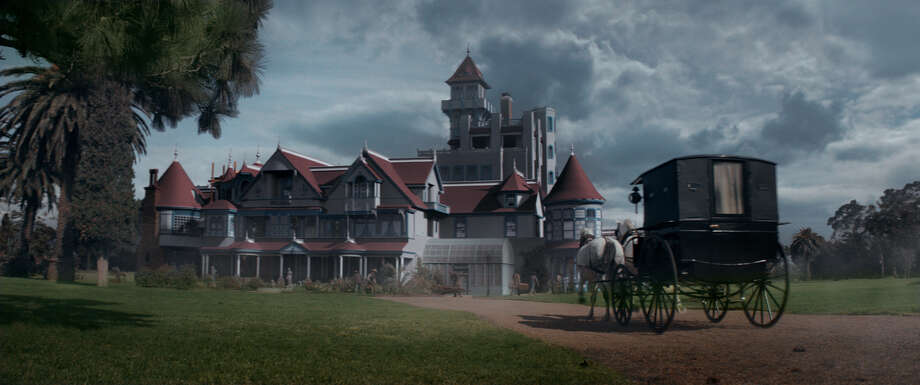
The question of the reality of witchcraft is one upon which it is not easy to pass a confident judgment. The possibility of such carnal intercourse between human beings and demons was an abstract possibility in the first thirteen hundred years of the Christian era. It is believed to be a fact that people made pacts with the devil and of a diabolical interference in human affairs can hardly be denied. Sarah L. Winchester believed that one should not be too easily inclined to believe a person to be possessed by the devil, but that signs should be watched. Signs of a possessing devil are: the ability to speak many words of an unknown language or to understand them; the ability to reveal distant or hidden things; a manifestation of strength beyond one’s age or natural condition. The history of Witchcraft, a subject as old as the World and as wise as the World—since I understand for the present purpose by Witchcraft, Sorcery, Black Magic, Necromancy, secret Divination, Satanism, and every kind of malign occult art—at once confronts the audience with a most difficult problem. Magic, the genesis of magical cults and ceremonies, the ritual of primitive peoples, traditional superstitions, and their ancillary lore, have been made the subject of vast and erudite studies, mostly from an anthropological and folk-loristic point of view, but the darker side of the subject, the history of Satanism seems hardly to have been attempted.

Possibly one reason for this neglect and ignorance lies in the fact that the heavy and crass materialism, which was so prominent a feature during the greater part of the eighteenth and nineteenth centuries in England, intellectually disavowed the supernatural, and attempted not without some success to substitute for religion a stolid system of respectable morality. Since Witchcraft was entirely exploded it would, at best, possess merely an antiquarian interest, and even so, the exhumation of a disgusting and contemptible superstition was not to be encouraged. It were more seemly to forget the uglier side of the past. This was the attitude which prevailed for more than two hundred years. The cycle of time has had its revenge, and this rationalistic superstition is dying fast. The extraordinary vogue of and immense adherence to Spiritism would alone prove that, whilst the widespread interest that is taken in mysticism is a yet healthier sign that the World ill no longer be content to be fed on dry husks and the chaff of straw. And these are only just two indications, and by no means the most significant, out of many. However, a sorcerer is one who by commerce with the Devil has a full intention of attaining his own end. There are said to be many occult symbols hidden in The Winchester Mystery House.

Come and enjoy a delicious meal in Sarah’s Café, stroll along the paths of the beautiful Victorian gardens, and wonder through the miles of hallways in the World’s most mysterious mansion. For further information about tours, including group tours, weddings, school events, birthday party packages, facility rentals, and special events please visit the website: https://winchestermysteryhouse.com/

Please visit the online giftshop, and purchase a gift for friends and relatives as well as a special memento of The Winchester Mystery House. A variety of souvenirs and gifts are available to purchase. https://shopwinchestermysteryhouse.com/

Why Art Thou So Foolish and Fearful!

I was spending the first week of January alone in Llanada villa. A combination of circumstances had driven me to this drastic course: my nearest relations were enjoying winter sports abroad, and the friends who had been kindly anxious to replace them had an infectious complaint in the house. Doubtless I might have found someone else to keep company with me. “However,” I reflected, “most of them have made up their parties, and, after all, it is only for three or four days at most that I have to fend for myself, and it will be just as well if I can get a move on with my blueprints. I might she the time by going down to the garden and listening to my estate about plans to incorporate in the architecture.” The first day alone in Llanada Villa, it was so stormy that I got no father the designing stained-glass windows. As I sat in the Hall of Fires, I felt uncomfortable, and this feeling persisted. I felt like I was being watched by some unseen force, and my nerves began to tense under the strain. I reflected on how some of my staff had left not because they wanted to but because they were driven, driven by forces greater than themselves that they could not resist. On this very night, I had seen vivid apparition of my butler, then miles away, in San Francisco. He was a plump, amicable man who I distinctly saw walking down the hall in a bathrobe, with blooding running down his leg. A small pool of blood was forming on the floor. The frightened me terribly. My hair stood up on my head and chills shook my body. The apparition looked so stern that my heart failed me, and I wished myself anywhere but there, though I had before been summoning up my courage. “Good Heaven,” said I to myself, “give me the courage to stand before this spirit. O soften him, or harden me!” I knew this was a glimpse into eternity. #RandolphHarris 1 of 5

The following day, I received news that my butler, Chaleb Heroldsbach, had died after being attacked by a dog. My home is built in what some have called a “trinity triangle,” it has forged a mystical link with other pilgrimage sites and is supposed to help bring the Devil’s power on Earth to an end. This is being prevented by Satan, however, with the help of The Curse of the Winchester Fortune. That evening, I was awakened at three o’clock in the morning, seemingly for no reason with the same uncanny feeling that something was wrong. Being a sensible person, I put all my energies into polishing furniture and getting newly added rooms into proper condition. However, somewhere not so far away, a baby was crying: a mournful wail of a sound that—though it was surely human—reminded me of the noises the coyotes would make some nights. After a few moments of listening, the baby’s cry seemed to falter for a moment, and I feared it would fade completely before I could find the little darling. Then, the infant seemed to find a new seam of grief to mine, and the wail rose up again, more plaintive than ever. I was alone, but trying to figure out which direction the sound was coming from. I mused for a moment, and realized a lifetime of suffering had caught up with me. I knew in my heart that I deserved to know everything, after all I have been through. I have earned the truth. Maybe the dead are close to the threshold of reality in this house. I only know it is real. I have seen them. Others have seen them. They are hybrids. Sometimes there is a kind of beauty in them. However, sometime all I see is ugly sin. #RandolphHarris 2 of 5

The sky was dark and cloudy, and by the time I woke up, I could hear a steady soaking rain pounding on the roof. I was preparing breakfast in one of the kitchens. As I was buttering a piece of toast, I happened to glance up toward the doorway. There, immaculately dressed, stood a man. The stranger, I noticed, wore shiny black shoes, black pants, and a white shirt. I could see him so clearly that I could make out the way the man’s jet-black hair was parted. Immediately, I was shocked that he had somehow entered my house, and I was about to greet him, when it occurred to me that I had not heard the door opening or any other sound—no footsteps, nothing. I turned around to grab my revolver, but by the time I turned around, the man was gone like a mist. I was not too frightened by what I had witnessed, I was growing accustomed to apparitions. I had often wondered what had taken place a century and a half on the land this eighteen-room farmhouse I purchased was on, and what the former owner really had been. However, it is fortunate that they carpenters were all strong men of action and simple, orthodox religionists, for with more subtle introspectiveness and mental complexity they would have fared ill indeed. Herford Hulsmann was the most disturbed; but even he outgrew the darkest shadow, and smothered memories in prayer. While I was alone, I did my best in the blotting out of unwholesome images, and was thankful that the carpenters, Daisy, and other caretakers would be returning to Llanada Villa soon. #RandolphHarris 3 of 5
My house was not altogether liked by sensitive people because of the sounds heard here at night. It was said that I entertained strange visitors, and the lights seen from my windows were not always the same colours. The knowledge I displayed concerning long-dead persons and long-forgotten events was considered distinctly unwholesome. Frau Maassen swore that on 13 June 1889, in the fruit orchard, that “forty Witches and the Blacke Man were wont to meete in the Woodes behind Mrs. Winchester’s house.” Then several people claimed to have found William’s unfinished manuscript in his handwriting, couched in a cipher none could read. After a year of possessed this manuscript, Mr. Maassen had intensely and feverishly tried to decipher, he never stated whether or not he had succeeded. I confronted Mr. Maassen, “Why are you so foolish and fearful! You have done no harm! What, if you fear an unjust judge, when you are innocent, would you do before a just one, if you were guilty? Have courage, Mr. Maassen; you know the worst! And how easy a choice poverty and honesty is, rather than plenty and wickedness.” “Mrs. Winchester, do not let your heart ake for me?—I am sure mined flutters about like a new-caught bird in a cage,” said Mr. Maassen. “O how can wicked men seem so steady and untouched with such black hearts, while poor innocents stand, like malefactors, before them!” Mr. Maassen cheered himself up; but yet I could tell his poor heart sunk, and his spirits were quite broken. Everything that stirred, he thought was to call her to her account. Shortly after, he restored to a sojourn abroad, and did not return to claim his lands. #RandolphHarris 4 of 5

Mr. Maassen had apparently been careful to destroy most of his correspondence, but the citizens who took action in 1892 found and preserved a few letters and papers which excited their wonder. There were cryptic formulae and diagrams in his and other hands which Mr. Maassen either copied with care or had photographed, and one extremely mysterious letter was written in blood. I had to learn to live with my ghosts, especially considering some of these had ben here before me. Perhaps some of these ghosts could even become friendly. One night at dinner, Daisy, myself and Zip were enjoying stuffed pheasant, when an enormous crash shook the house. It felt as if a boulder had fallen on the parlour floor. When we rushed to the parlour, everything was in order, nothing misplaced. We said a silent prayer for the souls of the disturbed. However, moments later, things got worse. The lights started going off and on by themselves. When we tried to return to the dining room and finish supper, the atmosphere was so thick that we could not get near the table. Enveloped by the strong vibrations, I felt myself levitating, and when I came to my senses, I was lying on the floor. I had given Daisy such a scare. Daisy clearly senses the presences of the spirits and she started to cry. “Oh, God, it can’t be true, Aunt Sarah,” she said. With a piercing scream, she ran up the stairs, weeping out of control. #RandolphHarris 5 of 5


“I have great trouble, and some comfort, to acquaint you with. The trouble is, that my good lady began to have her bad nights, and complained to me and other persons, in particular what discomfort she suffered from her pillow and bedclothes. She said she must buy some to suit her, and should do her own marketing. And accordingly brought home a parcel which she said was of the right quality, but where she bought it we had then no knowledge, only they were marked in thread with a coronet and a bird. The merchant said they were of a sort not commonly met with and very fine, and Mrs. Winchester said they were the comfortablest she ever used, and she slept now both soft and deep. Also the feather pillows were the best sorted and her head would sink into them as if they were a cloud: which I have myself remarked several times when I came to wake her of a morning, her face being almost hid by the pillow closing over it. I had never any communication with Dr. Wayland after I came back to Llanada Villa, but one day when he passed me in the garden and asked me whether I was not looking for another service, to which I answered I was very well suited where I was, but he said I was a tickleminded maidan and he doubted not he should soon hear I was on the World again, which indeed proved true.”

Dr. Wayland is next taken up where she left off.
“On the 5th I was called up out of my bed soon after it was light—that is about five—with a message that Mrs. Winchester was dead or dying. Making my way to her house, I found there was no doubt which was the truth. All the persons in the house expect the one that let me in were already in her chamber and standing about her bed, but none touching her. She was stretched in the midst of the bed, on her back, without any disorder, and indeed had the appearance of one ready laid out for burial. Her hands, I think, were even crossed on her breast. The only thing not usual was that nothing was to be see of her face, the two ends of the pillow or bolster appearing to be closed quite over it. These I immediately pulled apart, at the same time rebuking those present for not at once coming to the assistance of their master. However, I was informed that only one person had stayed with her until her dying moment and most had fallen asleep. She looked at me and shook her head, having no more hope than myself that there was anything but a corpse before us. Indeed it was plain to anyone possessed of the least experience that Mrs. Winchester was not only dead, but had died of suffocation. Nor could it be conceived that her death was accidentally caused by the mere folding of the pillow over her face. How should she not, feeling the oppression, have lifted her hands to put it away? whereas not a fold of the sheet which was closely gathered about her, as I now observed, was disordered.
“I could tell no more, at least without opening the body, then we already knew. As to any person entering the room with evil purpose (which was the next point to be cleared), it was visible that the bolts of the door were burst from their stanchions, and the stanchions broken away from the door-post by main forced; and there was a sufficient body of witness, the smith among them, to testify that this had been done but a few minutes before I came. The chamber being, moreover, at the top of the house, the window was neither easy of access nor did it show any sign of an exist made that way, either by marks upon the sill or footprints below upon soft mould. My evidence forms of course part of the report of the inquest, the large organs were in a healthy state and there was coagulation of blood in various parts of the body. My verdict was ‘Death by visitation of spirits.’ Upon further consideration, I think I can divine a reason for Mrs. Winchester’s death. It related to the rifling of her mansion. This is the property of a noble family. The outrage was not that of a natural death. The object, it seemed likely, was theft. The account is blunt and terrible. I shall not quote it here. A dealer in San Francisco suffered heavy penalties as a receiver of stolen goods in connexion with the affair.
“Mrs. Winchester has left us all much grieved for the loss of her; for she was a good lady, and kind to all her caretakers. Much I feared, that as I was taken by her ladyship to wait upon her person, I should be quite destitute again. Mrs. Winchester has given mourning and a year’s wages to all her caretakers; and she game me with her own hand four golden guineas, and some silver, which were in her pocket when she died. And I sent Daisy those four guineas for her comfort; for Providence will not let me want: and so you may pay some old debt with part, and keep the other part to comfort yourself.” Come and enjoy a delicious meal in Sarah’s Café, stroll along the paths of the beautiful Victorian gardens, and wonder through the miles of hallways in the World’s most mysterious mansion. For further information about tours, including group tours, weddings, school events, birthday party packages, facility rentals, and special events please visit the website: https://winchestermysteryhouse.com/

Please visit the online giftshop, and purchase a gift for friends and relatives as well as a special memento of The Winchester Mystery House. A variety of souvenirs and gifts are available to purchase. https://shopwinchestermysteryhouse.com/

What if I Do Not Believe in Ghosts?
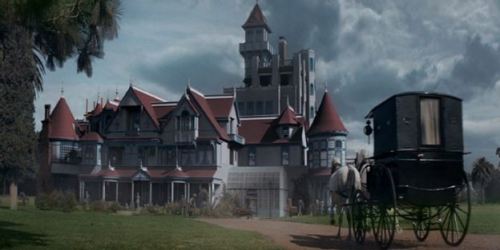
Once when I was little, my dad took me to this placed called Sodom Hill. It must be some kind of gateway because the curious thing is, you feel like you are driving down a hill along this road. This was the first time that I believe I saw a ghost. As our carriage passed by Saint Mary Parish, a woman was standing near the church, starring at us. However, she was really looking at my father. Though the weather was warm, she was wearing a long black dress beneath a hooded cloak. She was hugging herself, and she looked cold. Beneath the hood, her face was pale, and even from a distance I could tell that she was distresses. And she was very beautiful. The hood slipped down to her shoulders. I saw her hair was red. Her dark eyes were trusting and innocent. And suddenly I knew where I had seen her before. Onn the Rocky Hill-Glastonbury Ferry. She had been weeping on deck. The beautiful maiden with the red hair kept staring at my father. He did not notice. I was curious to know if my father could see the woman. I said, “Father, what is that pretty tree over there? By the tower of the church?” I pointed toward the woman. The woman saw me point. She looked at me, questioningly, but only for a moment. Then she looked back at my father. The woman did not care if I was being immodest. She just looked through me, just as she had on the deck of the ferry. How had she gotten here, and what did she want from me and my father? All this seemed to take forever. However, I do not think more than a minute passed before my father said to me, “What tree? I don’t see any trees near the tower of the church.” #RandolphHarris 1 of 5

“Father, what do you see?” I asked. “The lawn,” he said. I watched him for a sign. I could not believe that he could not see the lady with crimson hair near the tower of the church. “Nothing else? I said. “No one?” “Nothing,” he replied. “No one? Who would be there?” When I looked again there was no one there. The woman had vanished. I felt as if I had lost something. “What’s wrong?” said my father. “Nothing,” I said. “I think I must have been having a daydream.” “Poor Sarah,” said my father. “It must be the sun. Let’s get you inside and get you something to drink.” We made our way back home. My mother was in the garden, kneeling down among the tall plants and rut niblicks. My father poured me some milk and gave me a cracknel, baked by my mother. “Eat this,” he said. “It’ll help you get your strength back.” My father nibbled on one himself. I told myself: No man sees a ghost and starts nibbling a cookie like nothing happened. If he said there was no woman near the tower of the church, it meant he had not seen her. It meant something was seriously wrong with me. I had not been feeling all that well lately. I felt as if the colours of everything had gotten a little brighter, and sounds a little louder, and when people speak to me, their voices have a tiny echo, like I am hearing them from the far end of a tunnel. It does not happen all of the time. I have these little spells, and then they pass, and I am normal again. Spirits whispered in the rustling leaves, ghost lurked in the murky nooks, the deep baying of a hound floated up out of the distance, an owl answered with his sepulchral note. #RandolphHarris 2 of 5
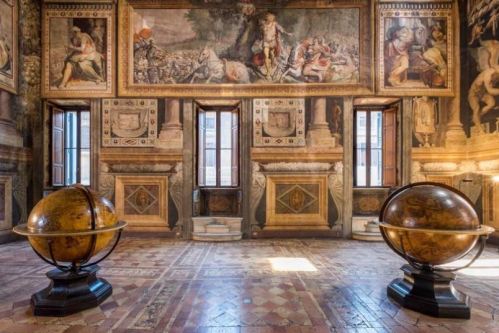
Millions of spiritual creatures walk the Earth unseen, both when we wake and when we sleep. What place do these spirit beings hold in the scheme of creation which by some are thought neither to have stood fast when the rebel angels fell, nor to have joined with them to the full pitch of their transgression? It was the middle of the moonlight in October night with heavy rain underfoot, I was sitting by the fire—it was a cold evening—and I stretched out my hand towards the warmth, and just then the fire-irons, or at least the poker, fell over towards me with a great clatter. There resourced over the estate and the surrounding land a series of cries which brought sleepy heads to every window; we all saw a ghost ship. It was a 26-gun frigate. There were distant gunshots, and I could feel the throb of titanic and thunderous words resounding in the upper air. Muskets flashed and cracked, and the flaming ship fell to the ground. A second flaming thing appeared, and a shriek of human origin was plainly distinguished. Then just before dawn when a howling darkness descended upon the ships and they vanished. As I ran up the stairs, I hit what felt like an ice wall and was momentarily stopped in my tracks. The air around me became instantly chilled, and although every fireplace was lit, I was cold and could see my breathe. I was then able to get up the last six steps, but when I turned around, I saw an opalescent fog crystalize into the form of a woman. She wore a long dress, and a hat, and when she turned towards me, I realized in was the woman with red hair that I had seen at the tower of the church with my father when I was a child. In her face, I could see uncountable horrors and sorrows written in the depth of her dark eyes. She then vanished, and the air around me returned to its warm state. #RandolphHarris 3 of 5

There was certainly a time when I was so much harassed by my dreams that I could not keep them to myself, but would tell them to my friends. There was a dream which had come to me several times of late, and even more than once in a night. It was to this effect, that I seemed to myself to wake under an extreme compulsion to rise and go outdoors. So I would dress myself and go down to the garden door. By the door there stood a spade which I must take, and go out into the garden, and at a particular place in the boxwood hedges, somewhat clear, and upon which the moon shone (for there was always in my dream a crescent moon), I would feel myself forced to dig. And after some time, the spade would uncover something light-coloured, which I would perceive to be a stiff, linen or woolen, and this I must clear with my hands. It was always the same: of the size of a man and shaped like the chrysalis of a moth, with the folds showing a promise of an opening at one end. I could not describe how gladly I would have left all at this stage and run to the house, but I mist not escape so easily. So with many groans, and knowingly only too well what to expect, I parted these folds of stuff, or, as it sometimes seemed to be, membrane, and disclosed a head covered with a smooth pink skin, which breaking as the creature stirred, show me my own face in a state of death. Upon ever recurrence of this dream, I woke and found myself, as it were, fighting for my breath. #RandolphHarris 4 of 5

Moments later a chill wind blew up. It produced a kind of clutching, amorphous fear beyond that of the tomb or the charnel-house. Close upon it came the awful voice which no hapless hearer will ever be able to forget. It thundered out of the sky like a doom, and windows rattled as its echoes dies away. It was deep and musical; powerful as a bass organ, but evil as the forbidden books in the secret library. What it said, no one can tell, for it spoke in an unknown tongue. Objects were being hurled about the room. Puddles of water appeared on the floor. The sheet and blankets were torn off the bed. Then I was alarmed when I heard a very loud vibration as if a hole were being drilled through the all. I went into the chamber next to mind and saw that a Victorian fireplace had been ripped from its casing and hurled upon the floor. A wailing distinctly burst out. It was almost articulate, though no one could trace the exact words; and at one point it seemed to verge toward the confines of diabolic and hysterical laughter. Then a yell of utter, ultimate fright and stark madness wrenched from scores of demon throats—a yell which came strong and clear despite the depth from which it must have burst; after which a darkness and silence ruled all things. Spirals of acrid smoke ascended, though no flames appeared. This must have been the witches’ Sabbath. Death does not mean that your loved one’s have left your mind, and your mind sends messages to your eyes that sometimes have nothing to do with what you actually see. #RandolphHarris 5 of 5

The Winchester Mystery House

Santa Clare Valley was in an uproar after the death of Mrs. Winchester. On Wednesday (October 3, 1923) consequently on the circulation of a report that the household goods of Sarah Winchester were being smashed and removed by some unknown agency. All day long crowds of excited people wended their way towards the Winchester Mansion, drawn thither by the accounts of the mysterious occurrences said to have been witnessed by the inmates and others. “As I enter the door I myself saw an eleven-foot-tall 18th century George I burl walnut longcase clock by James Marwick levitate several feet into the air before relocating itself to the other side of the room. After hearing what the folks had to say, I was joining in the conversation, when a late 18th century crystal chandelier began to raise in a slanting direction over my head and then fell as my feet, smashing into bits. I had not the slightest belief in the supernatural. I cannot account for what I saw. No one was nearer to the chandelier than myself and, as far as I saw, there was no cause for the phenomenon. The room was dimly lighted by a lamp. We were talking about things, and the caretaker were saying, “It is a very mysterious thing,” with his back turned Neoclassical Italian Crystal vase suddenly flew up slantingly over his head, and fell down and smashed at his feet. The caretaker looked at the mess on the floor, and thinking the devil was in the place, he left and went home. About half-a-dozen people were in the parlour whilst these things happened.

Come and enjoy a delicious meal in Sarah’s Café, stroll along the paths of the beautiful Victorian gardens, and wonder through the miles of hallways in the World’s most mysterious mansion. For further information about tours, including group tours, weddings, school events, birthday party packages, facility rentals, and special events please visit the website: https://winchestermysteryhouse.com/

Please visit the online giftshop, and purchase a gift for friends and relatives as well as a special memento of The Winchester Mystery House. A variety of souvenirs and gifts are available to purchase. https://shopwinchestermysteryhouse.com/

Today We Begin the Harrowing Story
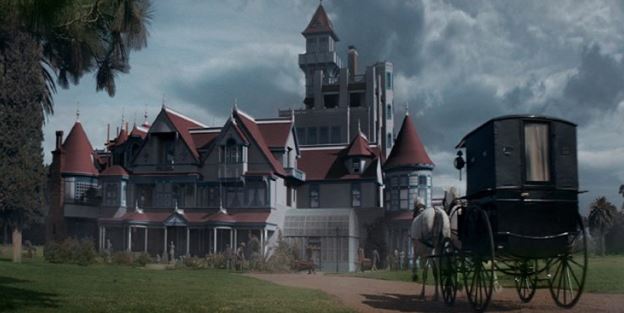
I have many beautiful art glass windows in my house, but the most expensive in the house was specially designed for me by Tiffany’s of New York. I originally installed it in an outside wall, but later added a series of rooms that blocked off all direct sunlight. There is a peculiar apparition that is seen in the window itself. The form seen is that of a figure dressed in white walking across the window. At first there was only one figure, and then thirteen appeared. The figures began to move across the window long before the carpenters noticed them. They did so as many as twenty or thirty times a day, and would stop shortly after noon. Of the three figures, one was a man, stone was a woman, and one was a child. the man was an average commonplace British tradesman, obese, pompous, and slow. He wore rather baggy gray shepherd’s-check trousers, not over-clean black frock coat, unbuttoned in the front, and a drab waistcoat with a heavy brassy Albert chain, and a square pierced bit of metal dangling down as an ornament. A frayed top hat and a faded brown overcoat with a wrinkled velvet collar. Altogether, look as I would, there was nothing remarkable about the man save his blazing red head and the expression of extreme chagrin and discontent upon his features. The woman was very distinct in appearance. She was tall and very graceful. The two-year-old boy showed signs of disturbed behaviour, laughed hysterically and talked of “funny drinks.” The order of the apparitions in the window had a slight variation: the mother came alone from the northside of the window, and having gone about halfway across, she would stop, turn around, and wave her arms towards the quarter whence she had come. #RandolphHarris 1 of 9
This gesture was answered by the entry of the father with the child. Both parents then bent over the child, and seemed to bemoan his fate; but the mother was always the most endearing in her gestures. The father then moved towards the other side of the window, taking the child with him, leaving the mother in the center of the window, from which she gradually retired to the north corner, whence she had come, waving her hand, as though making signs of farewell, as she retreated. After some little time she again appeared, bending forward, and evidently anticipating the return of the father and son, who never failed to reappear from the south side of the window where they had disappeared. The same gestures of distress and despair were repeated, and then all three retired together to the north side of the window. One evening, about nine o’clock, I was at the south-west door with Mr. Hansen. As I was unlocking it, I said, “Did you ever find anybody locked in here by accident?” “Mrs. Winchester, twice I saw shadows moving in that beautiful window. What a noise they did make!” Mr. Hasen then waited, leaning against the pillar, and watched the light wavering along the length of the landing. Mr. Hansen said they were well worthy seeing. “I suppose,” he said, as we walked toward the steps to the third floor, “that you’re too much used to going about here at night to feel nervous—but you must get a start every now and then, don’t you, when a book falls down or a door swings to?” “No, Mr. Hansen, I can’t say I think much about noises, not nowadays: I’m much more afraid of finding an escape of gas or a burst in the stove pipes than anything else. Still there have been times, years ago. #RandolphHarris 2 of 9

“If you have an have half an hour to spare, sir, when we get back down to the second floor, Mr. Hansen, I could tell you about a tomb that was unearthed. I will not begin now; it strikes cold here, and we do not want to be dawdling about all night.” “Of course, Mrs. Winchester, I should like to hear it immensely.” “Very well, sir, you shall. Now if I might put a question to you,” I went on, as we passed down the hallway of the third floor, “in my little local guide—and not only there, but in the little book on Llanada Villa in the series—you will find it stared that this portion of the mansion was erected previous to the twelfth century. Now of course I should be glad enough to take that view, but—mind your step, sir—but, I put it to you—doe the lay of the stone here in this portion of the wall (which I tapped with my key), does it to your eye carry the flavour of what you might call Saxon masonry? No, I thought not; no more it does to me: now, if you will believe me, I have said as much to the other carpenters. However, there it is, I suppose every one’s got their opinions.” The discussion of this peculiar trait of human nature occupied Mr. Hansen almost up to the moment when we returned to the second floor. Usually the apparitions appeared during musical performances in the Grand Ballroom, and especially during one long eight-line hymn, when—for the only occasion without the child—the two parents rushed on (in stage phrase) and remained during the whole hymn, making the most frantic gestures of despair. Indeed the louder the music in that hymn, the more carried away with their grief did they seem to be. #RandolphHarris 3 of 9
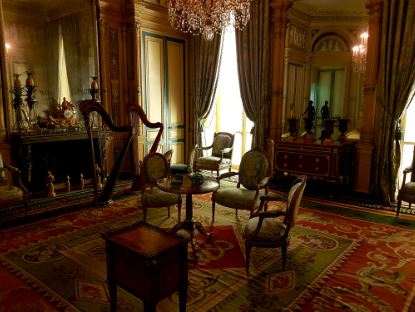
Nothing could be more emphatic than the individuality of the several figures; the manner of each had its own peculiarity. If the stained glass were removed, I do not doubt that a much plainer view would be obtained. I think so, because the nearer the center of the window, where the stained glass was thickest, there the less distinct were the forms. It was like catching glimpses of them through leaves. However, nearer the edge of the window, where the colours were less bright, they were perfectly distinct; and still more so on the pane of unstained glass at the edge. There they seemed most clear, and gave one the impression of being real persons, not shadows. Mental disturbance, it is true, will age one rapidly; but the face of Mr. Hasen since working on this project had taken on a subtle cast which only the very aged normally acquired. While standing on the landing looking at the window, I noticed his respiration and heart action had a baffling lack of symmetry; the voice was lost, so that no sounds above a whisper were possible. His skin had a morbid chill and dryness. Of course, we were witnessing the most remarkable and perplexing incident in the whole spectacle. When the father and the child had taken their departure, the mother waved her hands, and after walking slowly to the very edge of the window, turned round whilst on the pane of unstained glass and waved her arm towards the other two with what one would call a stage gesture, and then I most distinctly saw, and emphatically declare I did see, the arm bare nearly to the shoulder, with beautiful folds of drapery hanging from it like a picture of a Greek vase. Nothing could be plainer than the drag of the robes on the ground after the figures as they retired at the edge of the window, where the clear glass was, previous to going out. #RandolphHarris 4 of 9

The impression produced was that one saw real persons in the air, for though the figures were seen on the window, yet they gave one the impression of walking past the window outside, and not moving upon the glass. I am not inclined to think that the trees outside the mansion at the east end can originate the appearance by any optical illusion produced by waving branches. I could see their leaves rustling in the air, and their movement was evidently unconnected with the appearance and movement of the figures. So I began making enquires on my estate. I discovered that several people had indeed seen the shapes upon the glass. One spoke of a female figure with a slightly skipping step. Another servant said he saw an ancient gravestone from the window. The belief that the tree beside the Tiffany window were somehow responsible for the optical illusion was soon dashed; the trees were cut down, but the figures appeared still. One correspondent wrote to me in the winter of 1889, explain that “as I have no faith in ghost, I have been most wishful to have the matter cleared up. On 25 March 1687, the land you now own was involved in a remarkable satanic horror story. A young girl came to the farmhouse for help, saying that she wanted to get away from a group of satanists who had threatened to kill her. She confessed to the owner that she had murdered her own baby in ‘frenzied ritual.” He befriended the girl, twenty-three-year-old Caludia, and allowed her to stay in his home. She kept telling him that she couldn’t stand hearing the screams of her children inside of her head. And on April 20th, 1687, she died from an overdose of Laudanum and postmortem examination revealed thirteen scars and burns on her body which he tended to and which supported her claims of having been involved in satanic ritual. #RandolphHarris 5 of 9

“Further, Claudia left a 13-page diary in which she said he had been involved with a satanic group since she was hired to work on a nearby farm at age thirteen and her writings went on to make incredible claims. She described how she went to coven meetings with a boy named Dorian whom she had met while living on the farm. The boy’s mother was a High Priestess and his father was The Master—a known satanic term for the leading member of the group. She described other practice which are known to be common in satanic altar initiations—that of having her armed pricked and blood drained into a chalice from which it was drunk. ‘Much sexual perversion went on that night…later I learned more of Satan and practiced my arts calling on my power of darkness. Satan had become my Lord and Master.’ Later she described how she aborted a baby she was expecting by Dorian then made the claim that Dorian himself was sacrificed by his own father in retribution, and how she was forced to watch as he was hung upside down. She claimed to have seen other sacrifices of many new born babies, stabbing them at orgies in which Laudanum was taken heavily. She also appeared to have had another child of her own which was also offered up for sacrifice. At her inquest of 13 May, the midwife recorded an open verdict after the she noted that Claudia’s body had signs which confirmed she had given birth at least once, and had been subject to sexual abuse. The constables took up the case, but no charges were brought and the investigation was closed without further action.” #RandolphHarris 6 of 9
I was shocked of these allegations which seemed to be more than enough to inspire the most lurid of headline writers, more than to testify to the credibility of all who were proffering these dramatic and barely believable accounts of satanic abuse. Everything these people said was being taken as gospel in the village because the allegations were coming from the mouths of so-called experts. However, there were claims of rampant satanic worship in Nova Albion at this time, which was documented by English charters led by Sir Francis Drake for England. There were horrifying claims that fifty women were suffering from the after-effects of cannibalism and an average of ten occult survivors a week were being sacrificed. Dr. Harley said he read of several cases recorded by Theodorous de Bry where children had been killed. There were, of course, also several stories concocted around these three figures in my home. Some said that they issued from the grave beside the east window. Other said that they were victims of the plague, and were burned outside where this window now stands. It may or may not be relevant that the figures seemed to appear when the sound of the organ and of voices raised in song. The case was thoroughly investigated in 1889 by Dr. Robert Radakovic of The Ghost Club, where it was revealed that Llanda Villa had been “haunted” for two or three hundred years by the same figure or figures. Optical tests on the possible patterns of light and reflection had come to no results. It was remarked that “the ghost has been seen from the inside while outside nothing was visible.” #RandolphHarris 7 of 9
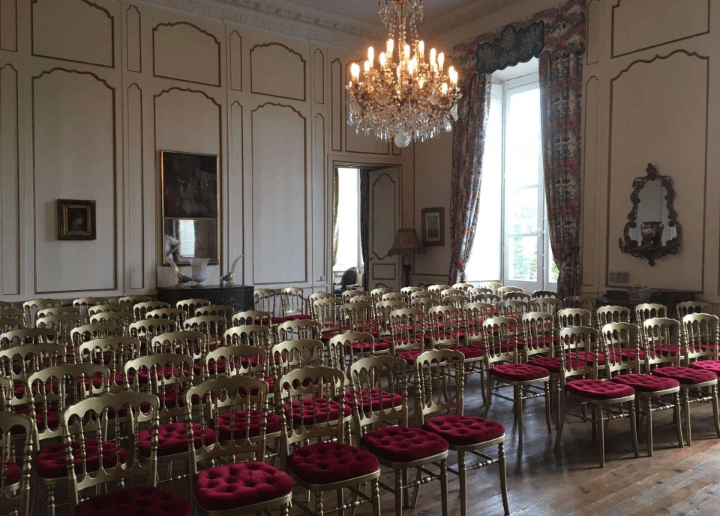
The interior of Lalanda Villa was much altered in the late nineteenth century, and a complex of rooms was built behind this haunted window. However, no satisfactory explanation has ever been given for the strange phenomena reported here. While designing Lalanda Villa, I was gaining my tastes from the venerable town around me, and from the relics of the past which filled every corner of my mansion. With the years, my devotion to ancient things increased; so that history, genealogy, and the study of gothic architecture, furniture, and craftsmanship at length crowded everything else from my sphere of interests. These tastes are important to remember for they outwardly concealed knowledge of bygone matters so that one would have fancied the they are literally transferred to a former age through some obscure short of autohypnosis. However, the true madness, I am certain, came with a later change; after the portrait and ancient papers of Saint Adalrich the Duke of Alsacre had been unearthed. Some terrible invocations being chanted under strange and secret circumstances; after certain answers to these invocations had been plainly indicated, and a frantic letter penned under agonizing and inexplicable conditions; after the wave of vampirism and the ominous legends of Neustria; and after the farmer’s memory commenced to exclude contemporary images whilst his voice failed and his physical aspect underwent the subtle modification so many subsequently noticed. He was later diagnosed with porphyria. And a final investigation resulted which virtually proved the authenticity of the papers and of their monstrous implications at the same time that those papers were borne forever from human knowledge. Loving antiquities so keenly, the papers and portrait were secretly concealed. #RandolphHarris 8 of 9


Bedroom fashions changed dramatically over the Victorian years due to several factors. Early in the period, homes were heated by fireplaces and therefore could be uncomfortable in the colder mothers, although a heated bedroom was considered an indulgence and windows were left open during the winter. In reality, only the rich had fireplaces in their bedrooms. Still, one had to keep warm while asleep and bed drapery, consisting variously of canopies, tents, and other enclosures used to shut out drafts, was essential, as was heavy draper on windows. Even doors had decorative, but also functional, drapes called portieres that served to keep out drafts when covering the door.

Mrs. Winchester was wealthy and her wealth and prosperity were even envied among the elite. She had no less than 47 fireplaces in her home. By the end of the century, two things had changed that affected bedroom styles. First, coal and woodburning parlour stoves came into use, were more efficient at heating a house, and could be installed in any room. (Central heating, though available after the Civil War, was really only for the very rich.). Secondly, and more importantly, was an increased knowledge of diseases, germs, and bacteria and how to combat them. Plenty of fresh air with good circulation, and the elimination of materials such as bed draper that not only impeded air circulation but provided a place for dust and bacteria to collect were deemed essential. Since the bedroom served as the place where daily and weekly ablutions were performed (until bathrooms became separate entities), and as a birthing and maternity room, it was important that it have a healthy environment.
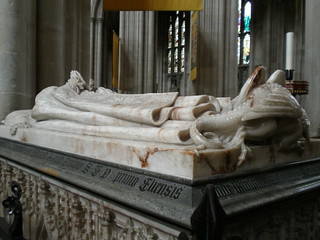
Styles of bedroom furniture were affected by this new found interest in and concern for prevention of illness and diseases. The classic English styles of Sheraton, Chippendale, and Hepplewhite migrated from the eighteenth century into the Victorian period. Tall, four-poster canopied beds enclosed the sleeper in heavy drapes of wool or lined damask of velvet, a carryover from the time when houses were built without corridors, and enclosures around the bed were needed for privacy, as well as warmth. By the time mid-century had arrived, the full enclosure had receded to the half-tester, or half-canopy, from which hung draperies that covered only the head and shoulders. Fully enclosed beds were now considered unhygienic, as they limited air circulation and the yards of fabric attracted dust. Dust ruffles and window valances were also discarded in the same house cleaning. In the southern climates, netting was still necessary to protect against insects, and its slightness did not impede air movement.
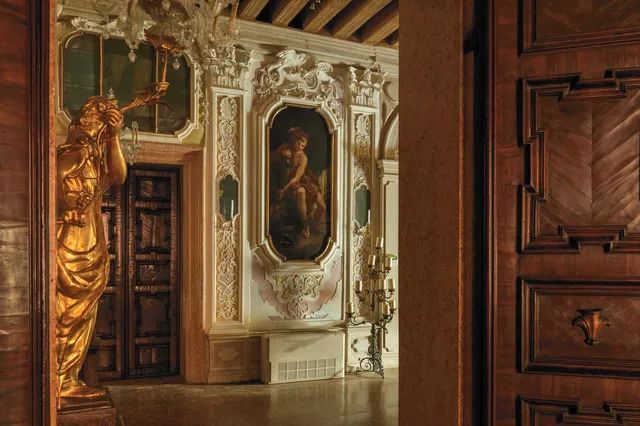
Gothic Revival furniture was the style into the 1840s and its massiveness was particularly suited to bedrooms. Closets were not an architectural feature at this time; clothing was stored in large cabinets called armories or wardrobes, usually with double, mirrored, and washstand, topped with marble or wood, were manufactured for middle-class homes in the cottage style. “Spool” beds were popular, nicknamed “Jenny Lind beds” because the Swedish Nightingale was rumoured to have slept in when she toured the United States of America. Made of less costly woods like maple or pine, the simple furniture could be elaborately painted with floral or foliage patterns. The well-to-do preferred the more opulent style of Rococo Revival or Renaissance Revival in woods or walnut, mahogany, or rosewood with carvings and applied moldings. As with other furniture in the house, golden oak, promoted by the Arts and Crafts Movement, was popular at the end of the century. Additional pieces of furniture found in the bedroom were writing desks, chaises, or other upholstered furniture.

For further information about tours, including group tours, weddings, school events, birthday party packages, facility rentals, and special events please visit the website: https://winchestermysteryhouse.com/

Please visit the online giftshop, and purchase a gift for friends and relatives as well as a special memento of The Winchester Mystery House. A variety of souvenirs and gifts are available to purchase. https://shopwinchestermysteryhouse.com/
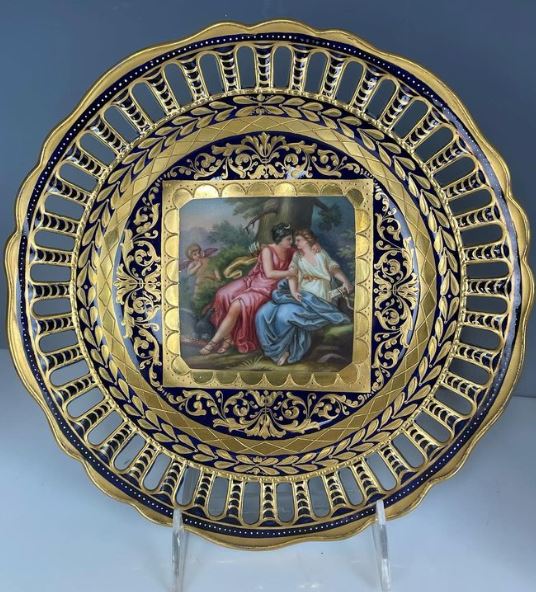

Beyond Good and Evil

Some still believe that universal disarmament is a necessary condition for the preservation of peace and freedom. However, others would like to know how is disarmament possible? How can any power seriously negotiate disarmament as long as each suspects the other of wanting to destroy it? No political understanding is possible or practical so long as the mutual threat of extinction exists, and at the same time disarmament is not possible unless a political understanding is reached. It is believed that some nations may want disarmament to relieve their internal economic problems; and that they are probably as anxious as anyone in the West to escape the nuclear threat. The true Western answer is not to allege bad faith, but to ask how other members of the atomic club conceive that the power struggle will be conducted under the provisions they propose. None of the great power centers are prepared today to provide an answer to such a demand. If the answer is discovered, the World problem will be solved. If it is not, most of us will probably die of blast and radiation disease, and our survivours will live a very poor life on a globe somewhat less suitable than the present one for human habitation. The first condition for a political understanding is to overcome the hysterical and irrational misconception the blocs have about each other. Most nations are conservative, totalitarian, managerialism, and not revolutionary systems with the aim of World domination; many World leaders have their own political positions they have to claim. #RandolphHarris 1 of 18

We no longer have a capitalistic system of individual initiative, free competition, minimal government intervention. We are also a bureaucratic technological society with deep socialistic policies. It seems, indeed, as if the only point of which East and West agree are the cliches about each other. To disagree with this agreement is the beginning of a realistic understanding. The next step lies in the knowledge that there are no important economic or even political conflict between the atomic members club which in themselves would constitute a reason for war; that the only danger might bring about a war is mutual fear resulting from the arms race, and from ideological differences. What, then, is the realistic basis for a cohesive understand of the nations? The basis is the mutual recognition of the status quo, the mutual agreement not to change the existing political balance of power between the members of the atomic club. This means first of all that all nations must learn to respect the boundaries of other nations. It is perfectly true that satellites have come under control by force, and as a result of victorious wars. It is true that it might that at the end of any war, it might have been possible by means of greater insistence to save some countries from being dominated; some are wondering if Russian will eventually dominate Ukraine? It is obvious that Russian will not relinquish what she has or wants without a war. This may be the same method of other countries. If one faces the dilemma realistically, then there remains only one answer: to accept the facts as they are in the knowledge that the aim of avoiding war from every standpoint more important than that of a “liberated” Ukraine. #RandolphHarris 2 of 18

The irony of it is that there is no such alternative, since the real choice is only between a Communist-dominated or destroyed Ukraine. The West knows that the conflict in Ukraine cannot be stopped short of a war. However, American keeps sending money to Ukraine as a means of sustaining nationalist feelings and for political understanding. Because we are obsessed by the idea of the Russian menace and thus a need for American aid, we are driven to support a Ukrainian policy that in the long run makes a political settlement with Russia possible—and hence makes peace improbable. We must free ourselves from purely ideological cliches. Why is it that we cannot surrender the right of the Ukrainian people to determine its own fate at a time not too far distant? Is this not another way of saying that we must prevent Russian expansionism and not let them have their way? Russia’s seizure of Crimea was the first time since World War II that a European state annexed the territory of another. Because of our obsession with the Russian wish for World domination. The President Joe Biden administration and U.S.A. Congress have directed more than $75 billion in assistance to Ukraine, which includes humanitarian, financial, and military support. President Vladimir Putin’s announcement on September 21, 2023 of a partial mobilization and annexation of four Ukrainian provinces was a stark reminder that this war is nowhere near a resolution. Fighting still rages across nearly 1,000 km of front lines. Negotiations on ending the conflict has been suspended since May. #RandolphHarris 3 of 18

The trajectory and ultimate outcome of the war will, of course, be determined largely by the policies of Ukraine and Russia. However, Kyiv and Moscow are not the only capitals with a stake in what happens. This war is the most significant interstate conflict in decades, and its evolution will have major consequences for the United States of America. The U.S.A. government has an obligation to Ukrainian citizens to determine how different war trajectories would affect U.S.A. interest and explore options for influencing the course of the war to promote those interest. The specter of Russian nuclear use has haunted this conflict since its early days. In announcing his invasion in February 2022, President Putin threatened any country that tried to interfere in Ukraine with consequences “such as you have never seen in history.” He went on to order a special regime of combat duty for Russia’s nuclear forces a week later. In October 2022, Moscow alleged that Kyiv was planning to detonate a radioactive “dirty bomb” in Ukraine as a false flag operation and then blame Russia. U.S.A. officials worried that Russia was promoting this story to create a pretext for using nuclear weapons. And perhaps most disconcertingly, Western governments appear to have become convinced that Moscow considered using nonstrategic nuclear weapons (NSNW) as it forces lost ground in the fall. Russia has denied these allegations, but news reports suggest that top Russian commander did discuss this option. Some analysts have dismissed the possibility of NSNW use, contending the Russia knows that employment of nuclear weapons would be self-defeating. They point to the lack of high-value military targets (for example, concentrated Ukrainian forces) that could be effectively destroyed with such weapons and to the risk that these weapons might harm Russian troops deployed in Ukraine. #RandolphHarris 4 of 18

Use of these weapons could provoke NATO’s entry into the war, erode Russia’s remaining international support, and spark domestic political backlash for the Kremlin. Knowing this, the logic goes, Russia would be deterred from using nuclear weapons. The decision to mobilize 300,000 Russian in September 2022 shows Mr. Putin’s willingness to accept domestic costs and risks. U.S.A. President Joe Biden pleased with Republicans for more military aid for Ukraine, warning that a victory for Russia in Ukraine would strengthen Moscow to such an extent that it could then attack NATO allies and draw American troops into war. The U.S.A. announced 6 December 2023 $175 million in additional Ukraine aid from its dwindling funds for Kyiv but Mr. Biden failed to convince Republican senators to back a larger $110 billion emergency spending bill that included a large pork barrel of aid for Ukraine (of around $50 billion) amid continued disputes over southern American border security. “If Putin takes Ukraine, he won’t stop there,” Mr. Biden said. Putin will attack a NATO ally, he predicted, and then “we’ll have something that we don’t seek and that we don’t have today: American troops fighting Russian troops,” Mr. Biden said. The address drew an angry response from Moscow, with Russia’s Ambassador to the U.S. Anatoly Antonov commenting on Telegram that Mr. Biden’s comments were “provocative rhetoric unacceptable for a responsible nuclear power.” Can we be surprised that Anatoly Antonov felt personally slapped-down and, more importantly, that he had to react to this statement in a way that preserved his position in Russia? There is no denying the fact that unless an America-Russian modus vivendi is accepted there will be continued tension and a continued armament race—and the probability of a thermonuclear war. #RandolphHarris 5 of 18

That such an understanding should be possible requires, of course, in the first place, that neither side has the intention of conquering the World. However, how can the United States of America and Russian agree on the status quo in Ukraine, Asia, Africa, Latin America when there is a current conflict and these parts of the World are in a continuous ferment, both politically and socio-economically? Would not such an agreement, even if it could be arrived at, not mean freezing the present power structure all over the World, stabilizing what can not remain stable? Doe it not mean an international guarantee for the continued existence of some of the most reactionary regimes which are bound to fall sooner or later? This difficulty will appear less formidable if one considers that an agreement not to alter the present possessions and spheres of interest between the United States of America and Russia and China, is not the same as freezing the internal structure of all Asiatic, African, and Latin American states. It means, in fact, that nations, even though they change their government and their social structure, do not, for this reason, change their allegiance from one block to another. There are a number of examples showing that this is possible; the most striking one is Egypt. Egypt, which was one of the poorest countries in the World and, in addition, one of the most corruptly governed was bound to have a revolution. Like all other revolutions in Asia and Africa, the Egyptian had two aspects: it was intensely nationalistic; and it was socialistic in a broad sense, aiming at basic economic changes for the benefit of the broad masses of the Egyptian population. #RandolphHarris 6 of 18

Nasser has to free himself from the remnants of British domination, but he was resolved not to fall under Russian domination either. He took the only reasonable course, that of non-alignment, exploiting the rivalry between the two bloc to his advantage and for the political survival of an independent Egypt. It is hardly exaggerated to say that United States of America’s foreign policy as it was then formulated by the late Mr. Dulles almost drove Nasser into the Russian camp. Neutrality, according to this doctrine, was immoral, and friendly relations on the part of a small power like Egypt toward the Soviet Union were considered to hostile to the United States and were to be punished accordingly. (In the case of Egypt the abrupt withdrawal of the promised loan for the Assuan Dam.) Yet Nasser remained neutral, even in spite of the extreme Anglo-French military provocation of the Suez attack. The same holds true for Iraq, Lebanon, Indonesia. In Iraq and in Lebanon the United States of America seemed convinced that a new government would slip into the Soviet orbit, and we prepared for military intervention, but the State Department’s prognosis failed to materialize. The United States of America’s attitude was then justified as having “prevented” the Soviets from taking over these countries, even though it is very unlikely that there had been such intentions, and even less so that the respective countries wanted to be taken over by the Soviets. #RandolphHarris 7 of 18

The United States of America’s position of trying to enforce the continuance of “pro-Western governments” in countries where these governments are definitely unpopular is, in the long run, doomed to failure. The only constructive policy lies in permitted and even furthering the emergence of a bloc of nonaligned, neutral countries. Only in this way can acute American-Russian conflicts with accompanying threats of using nuclear force be avoided. The Russians have actually acted more wisely in this respect than we: they accept neutrality as a sufficient condition for friendly relations and economic help. It is time for the United States of America to adopt the same attitude. Discussing the need for accepting and furthering the political neutrality of large parts of the underdeveloped World is, however, only the beginning. The political stance of these counties cannot be separated from their internal social and economic development. It is precisely here where a more realistic attitude is necessary. Dr. Freud, when he tentatively suggested the existence of the duality of life instinct (Eros) and the death instinct suggested the existence of the duality of these two drives within man was deeply impressed, especially under the influence of the First World War, by the force of the destructive impulses. He revised his older theory in which the sexual instinct had been opposed to the ego instincts (both serving survival, and thus the purpose of life) for the sake of the hypothesis that both the striving for life and the striving for death are inherent in the very substance of life. In Beyond the Pleasure Principle (1920), Dr. Freud expressed the view that there was a phylogenetically older principle which he called the “repetition compulsion.” #RandolphHarris 8 of 18

The latter operates to restore a previous condition and ultimately to take organic life back to the original state of inorganic existence. “If it is true,” said Dr. Freud, “that once in an inconceivably remote past, and in an unimaginable way, the life rose out of inanimate matter, then, in accordance with our hypothesis, an instinct must have at that time come into being, whose aim it was to abolish life once more and to re-establish the inorganic state of things. If this instinct we recognize the impulse to self-destruction in our hypotheses, then we can regard that impulse as the manifestation of a death instinct which can never be absent in any vital process.” The death instinct may be actually observed either turned outward against others, or inward against ourselves, and often blended with the sexual instinct, as in sadistic and masochistic perversions. Opposite to the death instinct is the life instinct. While the death instinct (sometime called Thanatos in the psychoanalytic literature, although not by Dr. Freud himself) has the function of separating and disintegrating. Eros has the function of binding, integrating, and uniting organisms to each other and cells within the organism. Each individual’s life, then, is a battlefield for these two fundamental instincts: “the effort of Eros to combine organic substances into ever larger unities” and the efforts of the death instinct which tends to undo precisely what Eros is trying to accomplish. Dr. Freud himself proposed the new theory only hesitantly and tentatively. This is not surprising, since it was based on the hypothesis of the repetition compulsion which in itself was at best an unproved speculation. #RandolphHarris 9 of 18

In fact, none of the arguments in favour of his dualistic theory seem to answer objections based on many contradictory data. Most living beings seem to fight for life with an extraordinary tenacity, and only exceptionally do they tend to destroy themselves. Furthermore, destructiveness varies enormously among individuals, and by no means in such a way that the variation is only one between the respective outward and inward-directed manifestations of the death instinct. We see some persons who are characterized by an especially intense passion to destroy others, while the majority do not show this degree of destructiveness. This lesser degree of destructiveness against others is, however, not matched by a correspondingly higher degree of self-destruction, masochism, illness et cetera. Considering all these objections to Dr. Freud’s theories, it is not surprising that a large number of otherwise orthodox analysts, like O. Fenichel, refused to accept his theory of the death instinct, or accept it only conditionally and with great qualification. The contradiction between Eros and destruction, between the affinity to life and affinity to death is, indeed, the most fundamental contradiction which exists in humans This duality, however, is not one of two biologically inherent instincts, relatively constant and always battling with each other until the final victory of the death instinct, but it is one between the primary and most fundamental tendency of life—to preserve in life—and its contradiction, which comes into being when a human fails in this goal. In this view the “death instinct” is a malignant phenomenon which grows and takes over to the extent to which Eros does not unfold. #RandolphHarris 10 of 18

The death instinct represents psychopathology. The life instinct thus constitutes the primary potentiality in man; the death instinct a secondary potentiality. The primary potentiality develops if the appropriate conditions for life are present, just as a seed grows only if the proper conditions of moisture, temperature, et cetera, are given. If the proper conditions are not present, the necrophilous tendencies will emerge and dominate the person. The ultimate negative is a counterfeiter, a false “angle of the light”; the ultimate negative himself fashions himself into an angel of light, and his ministers (false apostles, deceitful workers also fashion themselves as ministers of righteousness. This aspect of victory over the ultimate negative runs on the same lines as the preceding, one; id est, by the knowledge of truth, enabling the believer to recognize the lies of the ultimate negative when he presented himself under the guise of light. Light is the very nature of God Himself. To recognize darkness when clothed in light—supernatural light—requires deep knowledge of the true light, and a power to discern the innermost sources of things that in appearance look Godlike and beautiful. The main attitude for this aspect of victory over the Adversary is a settled position of neutrality to all supernatural workings, until the believer knows what is of God. If any experience is accepted without question, how can its divine origin be guaranteed? The basis of acceptance or rejection must be knowledge. The believe must know, and one cannot know without examination; nor will one “examine” unless one maintains the attitude of “Believe not ever spirit” until one has “tested” and proved what is of the ultimate concern. #RandolphHarris 11 of 18

After the maturing process of preparation, the Kingdom of God was manifested within history by the appearance of Jesus as the Christ. The moment of this breakthrough is called Kairos, the New Testament word that means “the right time” or “the fulfilment of time.” Mr. Tillich introduced this term and he is proud of the fact that it was he and his fellow Religious Socialists who introduced the term into the discussion of the interpretation of history. It not only expressed the dynamic movement of history, but also sums up the feeling of many people in central Europe after the First World War that a moment of history had appeared which was pregnant with a new understanding of the meaning of history and life. Kairos is contrasted with chronos which is measured time or clock time. Chronos is the quantitative side of time, while Kairos stresses a quality of time which is approximated by the English word “timing.” Kairos is time of revelation. Divine revelation, through gratuitous, breaks through at the moment propitious moment, prepared for by prophetic criticism and followed by embodiment in the church. The original appearance of Jesus as the Christ is the “great Kairos,” but his manifestation is re-experienced again and again in moments of conversation which are “relative kairoi.” These secondary kairoi depend upon the great Kairos as their criterion and source of power. A relative Kairos that extends to multitudes of people and significantly shapes the course of history is rare, but, on a more modest scale, “kairoi have occurred and are occurring in all preparatory and receiving movements in church latent and manifest.” To these two senses of Kairos can be added a third meaning, namely, Kairos as a general category which the philosopher of history employs to describe any decisively important turn in history. #RandolphHarris 12 of 18

Kairos in its unique and universal sense is, for Christian faith, the appearing of Jesus as the Christ. Kairos in its general and special sense of the philosopher of history is every turning-point in history which the eternal judges and transforms the temporal. Kairos in its special sense, as decisive for our present situation, is the coming of a new theonomy on the soil of a secularized and emptied autonomous culture. How does one become aware of a Kairos which heralds the advent of a theonomous era? It is not a matter of detached observation but of involved experiences. A period of history, ripe for a Kairos, is characterized by openness to the unconditional. This is not to say that such an age is necessarily more religious than a so-called irreligious age, but an age that is turned toward, and opened to, the unconditional is one in which the consciousness of the presence of the unconditional permeates and guides all cultural functions and forms. The divine, for such a state of mind, is not a problem but a presupposition. The breakthrough of a Kairos coincides with the establishment of a theonomous culture. In describing a period of Kairos, we shall call such a situation “theonomous,” not in the sense that in it God lays down the laws but in the sense that such an age, in all its forms, is open to and directed toward the divine. The problem, of course, is why a theonomous period does not endure, if it is founded upon the presence of the unconditioned in totality of man’s cultural life. Kairos is also grounded in the Protestant principle. The Protestant principle demands the creative presence of the divine in history (the Yes) and the transcendence of the divine to all its historical manifestations (the No). #RandolphHarris 13 of 18

Kairos fulfill these conditions, for it includes both a prophetic protest, which prepares for and accompanies the manifestation of the center of history, and an affirmation of the presence of the Kingdom of God among us. The idea of “the Kairos” united criticism and creation. The Cross of the Christ proclaimed in the great Kairos must be the constant criterion of lesser kairoi. For just as the holy and faith itself is open to demonic distortion, so too is Kairos. The Religious Socialists of the 1920’s and 1930’s preached a Kairos, but, at the same time, Nazism exploited the concept to build an idolatrous nationalism and racism. Besides the danger of being demonized, every Kairos, even the great Kairos, is liable to error about calculation of time and detail. No date foretold in the experience of a Kairos was ever correct; no situation envisaged as the result of a Kairos ever came into being. However, something happened to some people through the power of the Kingdom of God as it became manifest in history, and history has been changed ever since. We “knowers” are by now mistrustful of all kinds of believers; our mistrust has gradually accustomed us to infer the very opposite of what was once inferred: namely, wherever the strength of a belief comes very much to the fore, we infer a certain weakness of demonstration, an improbability of what we believed. We do not deny that faith “beatifies”: for that very reason we deny that faith proves anything—a strong faith that beatifies raises suspicion against what it believes; what it proves is not “truth” but a certain probability—of deception. #RandolphHarris 14 of 18

How do things stand in this case?—These modern-day nay-sayers ad standoffish ones, those who are unconditional on a single point—the claim to intellectual cleanliness—these hard, strict, abstinent, heroic spirits who constitute the honour of our age, all these pale atheists, anti-Christians, immoralists, nihilists, these skeptics, ephetics, hectics of the spirit (for this they are, one and all, in some sense), these last idealists of knowledge in whom alone intellectual conscience today dwells and is embodied—they in fact believe themselves to be as free as possible of the ascetic ideal, these “free, very free spirits”; and yet, to intimate to them what they themselves cannot see—for they are standing too close to themselves—this ideal is precisely their ideal, too; they themselves represent it, and perhaps no one else; they themselves are its most spiritualized product, its most advanced warriors and scouts, its most captious, most delicate, most elusive form of seduction—If I am any kind of guesser of riddles, let me try with this proposition! They are far from being free spirits: for they still believe in truth. When the Christian crusaders in the Orient came across that invincible order of Assassins, that order of free spirits par excellence whose lower ranks lived in an obedience such as no order of monks has ever attained, they also acquired somehow or other a hint of that symbol and watchword reserved only for the highest ranks as their secretum: “Nothing is true, everything is permitted.” Now that was freedom of the spirit, with that, faith in truth itself was renounced. #RandolphHarris 15 of 18

Has any European, any Christian free spirit ever strayed into this proposition and its labyrinth consequences? Does one know the Minotaur of his cave from experience? I doubt it; in fact, I know it is not so: nothing is more foreign to those who are unconditional on a single point, these so-called “free spirits,” than freedom and unfettering in this sense; in no respect are they more firmly bound; it is precisely in their faith in truth tht they are, like no one else, firm and unconditional. I know all this from too close up, perhaps: that admirable abstemiousness of philosophers to which such faith obliges one; that stoicism of the intellect that in the end forbids the No just as strictly as it does the Yes; that wanting to stand still before the factual, the factum brutum; that fatalism of the “petits faits” (ce petit faitalisme, as I call it), in which French science now seeks a kind of moral superiority over German science; that general renunciation of interpretation (of forcing, setting straight, abridging, omitting, padding, inventing, falsifying, and whatever else belongs to the essence of all interpreting)—this, broadly speaking, expresses as much asceticism of virtue as any abnegation of sensibility (it is, at bottom, simply a mode of that abnegation). However, what it forces you into, that unconditional will to truth, is faith in the ascetic ideal itself, even if as its unconscious imperative—make no mistake about it—this is faith in a metaphysical value, the value in itself of truth, as sanctioned and guaranteed in that ideal alone (it stands or falls with that ideal). #RandolphHarris 16 of 18

There is, strictly speaking, no such things as “presuppositonless” science—the very idea is unthinkable, paralogical: a philosophy, a “faith” must always be there first, so that from it science can acquire a direction, a sense, a limit, a method, a right to exist. (Anyone who understands this the other way around, who sets out, for example, to put philosophy “on a rigorous scientific foundation,” first has to stand not only philosophy but truth itself one its head—the grossest violation of decency there can be in the presence of two such dignified ladies!) Anyone who is truthful in that bold and ultimate sense presupposed by faith in science thereby affirms a World other than that of life, nature, and history; and insofar as one affirms this “other World, must one not precisely thereby deny its counterpart, this World, our World? It is still a metaphysical faith on which our faith in science rests—even we knowing ones of today, we godless ones and antimetaphyicians, still also take our fire from the flame ignited by a faith thousands of years old, that Christian faith that was also Plato’s faith, that God is truth, that truth is divine…But what if just this were to become ever more unbelievable, if nothing else were ever to prove itself divine, only error, blindness, life—if God Himself proved to be our longest life?”—Here we must pause and reflect a while. Science henceforth stands in need of justification (which is not to say that it has one.) Just look at the most ancient and the most recent philosophies: in none of them is there any awareness of the extent to which the will to truth itself stands in need of justification; there is a gap here in every philosophy—why is that? #RandolphHarris 17 of 18

Because the ascetic idea has hitherto dominated all of philosophy; because truth was posited as being, as God, as the highest authority; because truth was simply not allowed to be a problem. Do we understand this “allowed”? –From the moment faith in the god of the ascetic ideal is repudiated, there is a new problem as well: that of the value of truth. The will to truth stands in need of critique—here we define our own task—the value of truth must be experimentally called into question. Thou who art the breath of life, who did create all humans alike in dignity, Thy power is manifest in the destiny of nations. I pledge allegiance to the flag of the United States of America, and to the republic for which it stands, one nation, under God, indivisible with liberty and justice for all. Thou make nations great; Thou bring nations low; thou gives freedom even unto the beasts and winged fowl; Thy will it is that all mankind be free. “I am the Lord thy God, who brought thee out of the land of Egypt, out of the house of bondage.” We who know the sweet delights of liberty, yet look upon ourselves in every age as if we, too, had once been Pharaoh’s slaves, ours, then, the task to loose all fetters break all bonds, and bring men out of slavery. Proclaim liberty throughout the land unto all the inhabitants thereof. Would we bear the torch of freedom’s light into a World where men are still in servitude? Then from our shackles we must first emancipate ourselves, from ignorance and blinding hate, and set out own souls free. Only one is truly free who is devoted to the Christian Bible and observes its commandments. Please be kind this holiday season, and keep the Sacramento Fire Department in your hearts by making a kind donation. They have been proudly serving the community since 1851. #RandolphHarris 18 of 18

CRESLEIGH HAVENWOOD
Lincoln, CA | from the high $600s
Now Selling!

No appointment needed! Cresleigh Havenwood features four distinct floor plans ranging from 2,293 – 3,377 square feet and offering up to five bedrooms.

Each plan has been thoughtfully designed and includes great features such as single story homes, guest suites, optional offices, garage workshops, and more!

Get the most out of your new home with Cresleigh’s All Ready smart home featuring all the connectivity needed to keep your house running. Best of all, each Cresleigh home comes with owned solar included!

Located off of Virginiatown Road and McCourtney Road, residents of the 83 homesites of Cresleigh Havenwood will benefit from a brand new neighborhood in the charming City of Lincoln. Palo Verde Park, is just down the street and there’s plenty of recreation to take part in all around town. https://cresleigh.com/havenwood/residence-four/


Be Safe on the Roads!

Be safe this Winter Season. Be sure to make sure the tires on your car fit properly, and are the correct size. If you are on a budget and cannot afford new tires, or do not know what tires fit on your car, or do not have time to shop for them, be sure to click the link below. Tire Agent has financing options for people with ANY credit rating, even if it is not stellar. They also have tire and wheel packages. So, whether you are just looking for new tires or looking to upgrade the tires and wheels on your cars, they have options for you. The right tires could save your life and the lives of others.
| Your personal share link: https://share.tireagent.com/x/0NWu2R |

Nothing but a Trick from A to Z

Love is a decision, it is not a judgment, it is a promise. If love were only a feeling, there would be no basis for the promise to love each other forever. A feeling comes and it may go. How can I judge that it will stay forever, when my act does not involve judgment and decision. The falsity of a judgement is not for us an objection to the judgment; this is perhaps where our new language will sound most foreign. The question is, To what extent is it life advancing, life preserving, species preserving, perhaps even species propagating? We are fundamentally inclined to assert that the falsest judgments (among them the synthetic judgment a priori) are for us the most indispensable, that without accepting the fictions of logic, without measuring reality against the wholly invented World of the unconditional, self-identical, without a constant falsification of the World through number, man could not live—that to renounce false judgments would be to renounce life, to negate life. To acknowledge untruth as a condition of life: this surely means resisting customary value feelings in a dangerous way; and a philosophy that ventures such a thing, just by doing so, places itself beyond good and evil. On the question of peaceful methods in the fight for communism, the difference between the Russian and the Chinese is as strong as it is in the question of co-existence. The emancipation of the workers and peasant can come about only by the roar of revolution and certainly not by the roar of reformism. The Yugoslav leaders, for whom the ritualistic word “revisionists” is employed, are singled out as the arch enemy and the center of World revisionism. #RandolphHarris 1 of 20
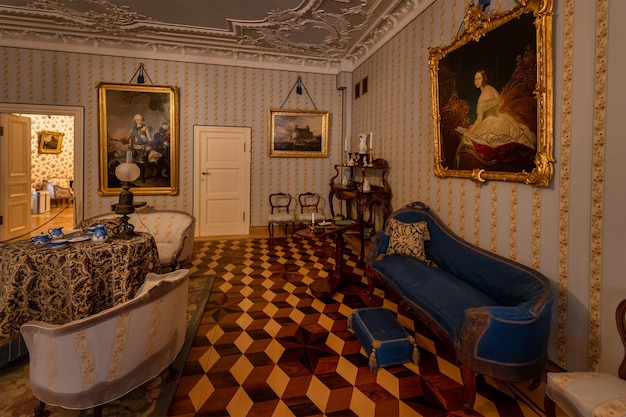
However, the revisionists often serve only as a foil for the real opponent, Mr. Khrushchev who of course cannot open by called a revisionist. Yet Mr. Khrushchev’s position becomes quite clear in the declaration of the 81 Communist Parties with its emphasis on peaceful, economic competition between the two system, as against revolutionary activities. Actually, the conflict between the Russians and the Chinese lines is by no means restricted to the problems of the industrial countries (where it is largely theoretical and unreal). It is very acute with regard to the policy toward various underdeveloped countries. It is quite likely that the sudden cessation of the Communist offensive in Iraq in the summer of 1959 was due to Mr. Khrushchev’s pressure and against the intentions of the Chinese; the more clear-cut case is that of Algeria. In his report to the Supreme Soviet, in October 1959, Mr. Khrushchev, reversing his previous stand against Mr. de Gaulle’s plans, suddenly came out in favour of a North American cease-fire plan, while the Chinese have continued to label Mr. de Gaulle’s plan as “nothing but a trick from A to Z.” Eventually, the Chinese-Russian conflict centers on the leadership withing the Communist movement. The Chinese leaders claim that their communes are a decisive step forward in the direction of true communism, and that Mao Tse-tung is the leading theoretician of the Communist camp, while the Russians naturally deny this claim. This conflict is by no means just a matter of personal jealousy. It touches upon the very important question of whether the Soviet Union or Communist China will eventually be the leader of all underdeveloped countries and, specially, of the Communist Parties within these countries. #RandolphHarris 2 of 20

The difference between Russian and Chinese communism is a very real one. While Russia represents a conservative industrial managerialism, she has to support the colonial revolutions for the sake of her own World political position, always qualified by the concern for her own security and the possibility of an arrangement with the Western bloc. China, on the other hand, with ideas contrary to those of Mr. Marx’s socialism, has developed, thus far, an evangelical faith in an egalitarian type of mass society; this faith is based on a zealous expectation that the communes constitute a short-cut to the new form of society and a dee disbelief that capitalism can change its intention to destroy the Communist countries The Russian-Chinese antagonism is apparent not only in the conflicts regarding views on coexistence, on peaceful transition to socialism et cetera, but in many practical questions of foreign policy. In addition to the difference in attitude toward Mr. de Gaulle and, probably, to Iraq, it is well known that Mr. Khrushchev expressed his regrets at the aggressive attitude of the Chinese in the Chinese-Indian border conflict. There is also serious competition going on between Russian and China, not only in various Communist parties all over the World, but especially in such strategic places as the Congo, Algeria, and Cuba, where the Chinese are trying to win over the local leaders to their more aggressive policies while the Russians are in the position of having to exercise a moderate influence and at the same time talking sufficiently “tough” in order not to lose the battle for influence to the Chinese competition. #RandolphHarris 3 of 20

More important, perhaps, is not the fact that the Russians did not want the Chinese to be equipped with atomic weapons, but there is a good deal evidence that the Chinese exerted a good deal of pressure on Russia to grant nuclear weapons to China, and there was a Russian reluctance to comply with this wish. There has been joint East German and Chinese pressure for atomic armament in cause the Western powers place thermonuclear weapons at the disposal of West Germany. Mr. Khrushchev, on the other hand, in an undated letter to the European Federation against Atomic Armament, made public by the Tass News Agency on March 18, 1959, stressed the “undesirability of expansion of the so-called atomic club,” and warned that action by the United States of America to supply nuclear weapons to her allies would set off “a kind of chain reaction n the dissemination of nuclear weapons all over the World.” Another fundamental importance for any consideration of the future of Chinese policy, is the problem of whether the aggressiveness of China’s political position at present indicates that China is bent on territorial expansion, and hence eventually on war. Considering her population pressures and the production of her agriculture not being at their peak, one might argue that for economic reasons China need to seek territorial expansion, and hence eventually war. Many people believe this is why China has been investing so heavily in the United States of America and why the Chinese-owned Fufeng Group, which describes itself as an “internationalized bio-fermentation products manufacturer, paid $2.3 million to purchase the 300 acres of land just 12 miles from Grand Forks Air Force base, home to top secret drone technology, which poses a national security threat. #RandolphHarris 4 of 20

Considering her population pressure and the subprime productivity of her agriculture, one might argue that for economic reasons China needs to seek territorial expansion Such expansion could take place either in the direction of the thinly population Outer Mongolia and Siberia, or in the direction of the heavily populated Southeast Asia with its fabulous resources of rice, oil, rubber, et cetera. While an increasingly aggressive China may one day take such a course of territorial expansion, there are many reasons why this is not the method which the Chinese leaders would prefer. Expansion toward Siberia would make Russia the enemy of China, and bring about an anti-Chinese, United States of America-Russia coalition, which would be a mortal danger for China. As to expansion toward the southeast, which could occur only with Russian implicit or explicit support, there is no real economic need for such expansion. It is true that China needs many of the raw materials obtainable in Southeast Asia, but the problem, for her, is not primarily that of owning the countries that have oil, land, rubber, et cetera, but of having free and unhindered trade with them at fair prices. The crucial point in China’s whole economic situation is the fact that China has almost no long-term credits, and is being forced to industrialize on a shoestring, that is to say, by forced saving at the expense of general consumption. As China embarks on her plan for World domination, it appears to be proceeding almost completely on a pay-as-you-go basis, and this may have been an important factor behind the radical changes in domestic policies which Peking introduced during 1957-1958. #RandolphHarris 5 of 20

The dramatic decisions to set up decentralized, large-scale, labour-intensive industries, to mobilize labour on a mass scale for irrigation and other projects requiring little capital investment, and to regiment China’s population and resources further by establishing the communes may all be related, in some respects at least, to the fact that by 1958 Communist China was carrying out its development programs without long-term foreign loans. In spite of their fervour in pursing their type of communism, their intense nationalism, their pride, and their aggressive language, there is no reason to assume that the present leaders of China are not realistic and rational men who prefer to see their efforts succeed peacefully, rather than to provoke a war, even though they are less anxious to avoid such a war than the Russians are. There are many reasons to believe, however, that in their broad strategy Peking’s leaders do not think primarily in terms either of Chinese territorial conquest abroad or of exporting revolution by overt Chinese aggression. World conquest in traditional military terms and World revolution in Communist terms are very different concepts. Yet, Peking does attach high priority to the building up of its military strength, and in many ways it can attempt to use pressure and force while still trying to avoid war. Even after the stand of the Chinese leaders against the American accusation of being a “currency manipulator,” the Chinese have really given up their aim of avoiding war and of competitive coexistence which they followed before. #RandolphHarris 6 of 20

One cannot, of course, rule out completely the possibility that Peking has made a major decision to place an increased reliance on military force to achieve its goals. However, as of the early autumn of 2020, there is little to indicate that the Chinese Communists have, in fact, decided to pursue a general policy of large-scale military aggression. The new pressures they have been exerting on China’s neighbours have to date been limited pressures, and apparently Peking’s aims in regard to Taiwan and Hong Kong and the Senkaku Islands have been limited. In all of these situations, in fact, local factors rather than broad tactical considerations seem to provide the main explanation for Peking’s recent actions, and it appears likely that after attempting to make local gains, Peking will probably try once again to reemphasize the carrot rather than the stick in its relations with Taiwan, Hong Kong, Japan and South East Asia. And with conflict in the Middle East joining the war in Ukraine as strains on China’s foreign relations, Beijing might well be rethinking its alliance with Russian. When you look at the Russia-China relationship, the “no limits” partnership is started press its luck. Concerning the Israel-Gaza conflict and Russia’s war against Ukraine, China is a little nervous that the Russia idea of communism is clashing with their own idea. Indeed, China might be moving closer to the USA positions on the wars in Ukraine and the Middle East as it seeks to rein in “chaos” that could undermine Beijing’s interests. #RandolphHarris 7 of 20

Time may also be running out for Norther Korea’s strengthening relationship with Russia, owing to palpable discontent in Beijing with Moscow providing some types of technology to Pyongyang. Russian President Vladimir Putin’s growing reliance on Pyongyang to supply artillery shells and other basic armaments for his Ukraine campaign has left some Chinese officials uneasy. There is some palpable discontent in Beijing about this idea that Mr. Putin could be playing in their backyard. There are a lot of fears that support the North Korea with the types of technologies that are back flowing…in return for the weapons shipments could embolden the North Koreans next year. USA President Joe Biden and his administration have repeatedly called on Beijing to pressure its two neighbours, both to rein in Russia’s aggression in Ukraine and to constrain Pyongyang’s provocative actions. North Korean leader Kim Jong-un vowed support for Russia’s “just fight” during a summit with Mr. Putin in September 2023, a pledge that the USA warned could translate into a new source of ammunition for Moscow’s war in Ukraine. If one takes a sober view of the Chinese situation and is not blinded by passionate hatred of their kind of communism, one might arrive at this conclusion: the more difficult, economically, the Chinese position is, the more intolerant will the regime in China become, and the more aggressive its foreign policy. If the present policy of maximal economic isolation and of political humiliation of China continues, the aggressive tendencies within China will increase and help Mr. Putin’s enemies within Russia to gain victory. #RandolphHarris 8 of 20

This course is likely to lead to the increase of thermonuclear arming of China, hence of Germany, and eventually to the brink of war. If, on the other hand, the Peking government is given credits and the possibility of free trade, and if the fulfillment of the country’s economic needs is not threated by hostile governments in America, Russia and South East Asia, there is a very reasonable chance that China will revert to its earlier policy of competitive coexistence. There is little doubt that the proposal for a unilateral disarmament—in the broad sense of the unconditional dismantling of a country’s military establishment—will be acceptable neither to the United States of America nor to Russian in the immediate future. This is why many are concerned with practical suggestions for arms control, it proposes another and very limited concept of unilateral disarmament, one which has been called by Charles Osgood “graduated unilateral action (or disengagement)” or which might be called unilateral initiative in taking practical steps toward disarmament. The basic idea underlying this concept is that of a radical change of our method of negotiating multilateral disarmament. This change implies that we give up the present method of bargaining in which every concession we make is dependent on a corresponding and guaranteed concession on the part of the Russians; that, instead, we take, unilaterally, gradual steps toward disarmament in the expectation that the Russians will reciprocate and that, thus, the present deadlock in the negotiations of universal disarmament can be broken through. #RandolphHarris 9 of 20

However, in the back of the minds of many, any kind of disarmament sounds insane because not everyone will agree. Furthermore, up and coming nations who do not currently have thermonuclear weapons will build them and everyone will be in danger. Or one nation may keep their weapons and take over the World. Nonetheless, as to the specific steps which should be taken in this fashion, it would require a great deal of further thought, aided by competent specialists. However, in order t give at least an idea of the concrete steps this policy would envisage, it would be necessary to sharing scientific information; stop atomic tests; troop reductions; evacuation of one or more military bases; discontinuation of German rearmament; et cetera. The expectation is that the Russians are as willing as we are to avoid World War III, hence they will begin to reciprocate and that once the course of mutual suspicion has been reversed, bigger steps can be taken which may lead to complete bilateral disarmament. Furthermore, disarmament negations should be paralleled by political negotiations, which aim essentially at mutual noninterference on the basis of the recognition of the status quo. Here, too (and again in essential agreement with Mr. Osgood’s position), unilateral steps such as the recognition of the Oder-Neisse line would be taken in the expectation of reciprocation by the Russians (id est, curbing of Chinee aggression, noninterference in the Middle and far East.) However, if one looks at the mindset and history of Russia, no one really believes that they will agree to any kind of disarmament. They would let the entire World burn before giving up any weapons. #RandolphHarris 10 of 20

However, many believe the rest of the World is in the same yacht. Total unilateral disarmament is unlikely because the present method of negotiations does not seem to lead to the goal of bilateral disarmament because of the deeply ingrained mutual suspicions and fears; without achieving complete disarmament, the armament race will continue and lead to the destruction of our civilization as well as that of the Russians or, even without the outbreak of another war, will slowly undermine and eventually destroy the values in defense of which we are risking our physical existence; while unilateral steps constitute a definite risk (and must be so by the very nature of the idea), the risk at every step is not a crippling one and is infinitely smaller than the danger we run by the continuation of the arms race. Even though the broader concept of complete—rather than graduated—unilateral disarmament is, as stated before, not a practical possibility in the near future, many people like to discuss it because a small minority of people believe that the risks in the continuation of the armament race are far greater than the very serious risks of unilateral disarmament. Yet the arguments in support of unilateral disarmament, even though they are practical, they are considered unacceptable, but the position contributes to breaking through the thought barrier which prevents us now from getting out of the dangerous circle of seeking peace by means of threat and counterthreat. However, more people would be fearful of attacking Russia or China than the United States of America because they know the Russians and the Chinese will strike back, but the Americans are acting like schoolboys who pay the bully during lunch time not to steal their lunch. #RandolphHarris 11 of 20

However, people who believe in unilateral disarmament are united by their critical attitude toward the irrational aspects of international politics and by their deep reverence for life. They share the conviction of the oneness of the human race and faith in the spiritual and intellectual potentialities of man. They follow the dictates of their conscience in refusing to have any “part in making billions of women and children and noncombatants hostages for the behaviour of their own governments.” Whether they think in theistic terms or in those of nontheistic humanism (in the sense of the philosophic continuum from Stoic to eighteenth-century Enlightenment philosophy), they all are rooted in the same spiritual tradition and are unwilling to compromise with its principles. They are united by their uncompromising opposition to any kind of idolatry, including the idolatry of state. While their opposition to the Soviet system is rooted precisely in this attitude against idolatry, they are critical of idolatry whenever is appears in the Western World whether it is in the name of God or od democracy. While there is no proponent of unilateral disarmament who does not believe that the individual must be willing to give one’s life for the sake of one’s supreme values, if such an ultimate necessity arises, they are all equally convinced that to risk the life of the human race, or even the results of its best efforts in the last five thousand years, is immoral and irresponsible. However, many people believe that if the Sun does not destroy the World, then a war will. It is what many people expect. As warfare becomes at once more senseless and more devastating, the convergence between religious pacifist, humanist, and pragmatic opponents to nuclear armament grows. I supposed that is better than being a nihilist. #RandolphHarris 12 of 20

From the standpoint of the proponents of unilateral disarmament, to continue the armament race is catastrophic, whether the deterrent works or not. In the first place, they have little faith that the deterrent will prevent the outbreak of a thermonuclear war. They believethat the results of a thermonuclear war would be such that in the very “best” case they completely belie the idea that we ought to fight such a war in order to save our democratic way of life. There is no need to enter the guessing game as to whether one-third or two-thirds of the population of the two opponents and what proportion of the neutral World (depending on how the wind blows) will be destroyed. This is a guessing game that verges on madness; for to consider the possibility of the destruction of 30 percent, 60 percent, or 90 percent of one’s own and the enemy’s population as an acceptable (although, of course, most undesirable) result of one’s policy is indeed approaching pathology. The increasing split between intellect and affect, which is so characteristic of or Western development in the last centuries, has reached its dangerous, schizoid peak in the calm and allegedly rational way in which we can discuss possible world destruction as a result of our own action. It does not take much imagination to visualize that sudden destruction and the threat of slow death to a large part of the American population, or the Russian population, or large parts of the World, will create such a panic, fury, and despair as could only be compared with mass psychosis resulting from the Black Death in the Middle Ages. #RandolphHarris 13 of 20

The traumatic effects of such a catastrophe would lead to a new form of primitive barbarism, to the resurgence of the most archaic elements, which are still potentialities in every man and of which we have had ample evidence in the terror systems of Mr. Hitler, Mr. Stalin, and Mr. Obama. It would sound most unlikely to many students of human nature and psychopathology that human beings could cherish freedom, respect for life or love after having witnessed and participated in the unlimited cruelty of man against man which thermonuclear war would mean. It is a psychological fact that acts of brutality have a brutalizing effect on the participants and lead to more brutality. However, it is believed that when the World reached a population of 5 billion that it was over populated. We are nearly 2.4 billion people past that number, and there are so who would actually like to see a large section of the human population disappear from the planet to reduce the risk of threat, reduce traffic and housing prices, and reduce the strain that people are putting on the World and give it time to heal. For perpetual victory, therefore, the believer must unceasingly be on guard against the Tempter and one’s agents, praying that all hidden temptations will be revealed as such. The degree to which one understands the workings of the ultimate negative will be determined by the degree of victory experienced, for in vain is the net spread in the sight of any bird. #RandolphHarris 14 of 20
For the believer to have victory over every aspect of a tempter’s working, it especially requires discrimination between what I temptation from a seducer working upon the uncrucified “old man,” temptation through the things of the World. In temptation, the crucial point is for the tempted one to know whether the tempting is the work of an evil spirit of from the evil nature. This can be discerned only by the experiential knowledge of Romans 6 as the basis of one’s life. Temptation from the fallen nature should be delt with on the foundation of “Reckon ye also yourselves to be dead unto sin, but alive unto God in Christ Jesus” reports Romans 6.11., and practical obedience to the resulting command, “Let not sin reign in your mortal body.” In the hour of temptation to sin—to visible, known sin—the believer should take his stand on Romans 6.6 as his deliberate position of faith, and in obedience to Romans 6.11 declare his undeviating choice and attitude as “death to sin, in death-union with Christ.” If this choice is the expression of his real will, and the temptation to sin does not cease, he should then deal with the spirts of evil who may be seeking to awaken sinful desires (Jas. 1.14) or to counterfeit them. For they can counterfeit the dole nature in evil desire, evil thoughts, evil words, evil presentations—and many honest believers think they are battling with the workings of the old nature when these things are given by evil spirits. However, if the believer is not standing actively on Romans 5, the “counterfeits” are not necessary, for the old fallen creation is always open to be wrought upon the powers of darkness. #RandolphHarris 15 of 20

The most normal and nonpathological form of violence is playful violence. We find it in those forms in which violence is exercised in the pursuit of displaying skill, not in the pursuit of destruction, not motivated by hate or destructiveness. Examples of this playful violence can be found in many instances: from the war games of primitive tribes to the axe throwing of Victorian famers. In all such games of fighting it is not the aim to kill; even if the outcome is death of the opponent, it is, as it were, the opponent’s fault for having “stood in the wrong spot.” Naturally, if we speak of the absence of the wish to destroy in playful violence, this refers only to the ideal type of such games. In reality one would often find unconscious aggression and destructiveness hidden behind the explicit logic of the game. However, even this being so, the main motivation in this type of violence is the display of skill, not destructiveness. Of much greater practical significance than playing violence is reactive violence. By reactive violence I understand that violence which is employed in the defense of life, freedom, dignity, property—one’s own or that of others. It is rooted in fear, and for this very reason it is probably the most frequent form of violence; the fear can be real or imagined conscious or unconscious. This typed of violence is in the service of life, not of death; its aim is preservation, not destruction. It is not entirely the outcome of irrational passions, but to some extent of rational calculation; hence it also implies a certain proportionality between end and means. It has been argued that from a higher spiritual plane killing—even in defense—is never morally right. #RandolphHarris 16 of 20

However, most of those who hold this conviction admit that violence in the defense of life is of a different nature than violence which aims at destructiveness for its own sake. Very often the feeling of being threatened and the resulting reactive violence are not based upon reality, but on the manipulation of man’s mind; political and religious leaders persuade their adherents that they are threatened by an enemy, and thus arouse the subjective response of reactive hostility. Hence the distinction between just and unjust wars, which is upheld by capitalist and Communist governments as well as by the Roman Catholic Church, is a most questionable one, since usually each side succeeds in presenting its position as a defense against attack. In 1939, Mr. Hitler had to organize a fake attack on a Silesian radio station by alleged Polish soldiers (who ere, in fact SS men), in order to give his population the sensation of being attacked, and hence to justify his wanton attack against Poland as a “just war.” There is hardly a case of an aggressive war which could not be couched in terms of defense. The question of who claimed defense rightly is usually decided by the victors, and sometimes only much later by more objective historians. The tendency of pretending that any war is a defensive one shows two things. First of all that the majority of people, at least in most civilized countries, cannot be made to kill and to die unless they are first convinced that they are doing so in order to defend their lives and freedom; second, it shows that it is not difficult to persuade millions of people that they are in danger of being attacked, and hence that they are called upon to defend themselves. #RandolphHarris 17 of 20
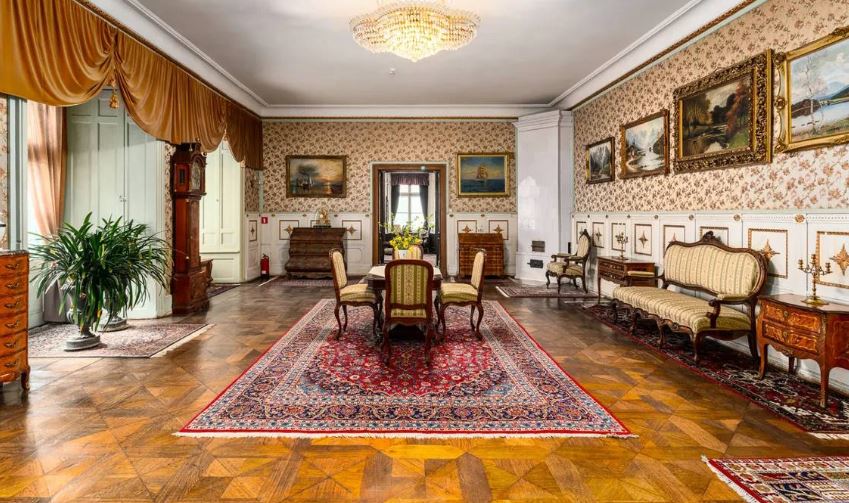
Such persuasion depends most of all on a lack of independent thinking and feeling, and on the emotional dependence of the vast majority of the people on their political leaders. Provided there is this dependence, almost anything presented with force and persuasion will be accepted as real. The psychological results of the acceptance of a belief in an alleged threat are, of course, the same as those of a real threat. People feel threatened, and in order to defend themselves are willing to kill and to destroy. In the case of paranoid delusions of persecution we find the same mechanism, only not on a group basis, but on an individual one. In both instances, subjectively the person feels in danger and reacts aggressively. Beware, you philosophers and friends of knowledge, and guard against martyrdom! Against suffering “for the sake of truth”! Even against defending yourselves! It spoils all the innocence and subtle neutrality of your conscience, it makes you headstrong against objections and red rags, it dumbs you down, makes you brutish and bullish, if, when battling danger, defamation, suspicion, expulsion, and even meaner consequences of animosity, you wind up having to play the role of protectors of truth or Earth—as if “the truth” were some harmless and clumsy person in need of protectors! And you of all people, you Knights of the Most Sorrowful Countenance, my dear loiterers and cobweb spinners of the spirit: in the end, you know well enough that nothing hinges on whether you are proved right, indeed that no philosopher has ever been proved right, and that there might by a more worthy truthfulness in every little question mark you put behind your favourite words an beloved doctrines (sometimes even behind yourselves) than in all the solemn gestures and trump cards played before accusers and courts of law! #RandolphHarris 18 of 20

No, step aside. Ruin to the shadows. And have your masks and your finesse, that you may not be recognized! Or that you may be feared a little! And do not forget the garden, the garden with the golden trelliswork! And have people around you who are like a garden—or like music on the waters, in the evening, when the day has sunk into memory—Choose that good solitude, free, playful, lighthearted solitude, which might even give you the right to be good, in some sense! How poisonous, how cunning, how bad every protracted war that cannot be waged with open force makes us. How personal and protracted fear makes us, a protracted spying on one’s enemies, on potential enemies! These outcasts of society, those long hunted, wickedly persecuted—the forced recluses, the Spinozas or the Giordano Brunos—always in the end become, albeit in the most spiritual guise, and perhaps without knowing themselves, sophisticated revenge seekers and poisoners (let someone unearth the foundations of Spinoza’s ethics and theology!); not to mention the clumsiness of moral indignation, which is a sure sign that a philosopher has lost his philosophical sense of humour. The martyrdom of the philosopher, his “sacrifice to truth,” brings to light the agitator and the actor in him; and if one has hitherto regarded him with mere artistic curiosity, in the case of some philosopher it is not hard to understand the dangerous wish to see them, too, in the degeneration (degenerating into “martyrs,” crying out from their stages and rostrums). Except that with such a wish we must be clear about what we will get to see: just a satyr play, just an epilogue farce, just more proof that the actual long tragedy has come to an end—assuming that every philosophy arose as a long tragedy. #RandolphHarris 19 of 20

Knowledge for its own sake—this is the final snare set by morality: one thereby gets completely tangled up in it all over again. The allure of knowledge would be meager, were it not that so much shame must be overcome along the way. The meaning of history seems more important to the mind than does the meaning of being. The metaphysical interpretation of the meaning of history has become an urgent and practical concern. The necessity of acting historically in the true sense, that is, of acting so as to change history, is one of the strongest motives for the development of a metaphysics of history…the recognition of the necessity of a metaphysical interpretation of history leads to the recognition of the necessity of metaphysics. The importance of history is attached to a clear sign that the symmetry of this theonomous union of religion and culture can be appreciated only by viewing it within the historical dimension. God as the ground of being lies at the depths of theonomy. The power of the New Being enables us to rejoin the ground from which existence serves us. And the Spiritual Community is the place where the transforming impact of the Spirit is felt. However, when is theonomous fulfilment realized? This is the question of a Christian interpretation of history, and, since history moves forward to its term, it is also the eschatological question. History is the movement of creative time toward fulfilment. History is also the realization of meaning through freedom. Although the concepts of history may be opaque, we discuss the various aspects of history—the historical dimension, man and history, historical time, the ambiguities of history—in hope in this way gradually to penetrate to a better understanding of it. It is terrible to die of thirst in the ocean. Must you salt your truth so heavily that it no longer even—quenches thirst? #RandolphHarris 20 of 20


The Winchester Mystery House sits on an area of ancient human settlement. In a field close to the old road is the remains of a neolithic chambered tomb that has become known as “the dungeon”; in an adjacent field were a number of scattered stones, and standing stones in the vicinity know, as “The Winchester Stonehenge.” The road itself traveled over several prehistoric burials. The dungeon itself was erected at some date between 4300 BC and 3000 BC. However, The Winchester Mansion is also of more contemporary relevance. In The Oakland Tribune, 10 September 1890, there was a report concerning numerous sightings of a girl standing by the side of the road at eleven o’clock in the evening; she was at the gate of the mansion. She was hitch-hiking, even at this late hour. She was not in the least a faint or ghostly figure. However, then, unaccountably, on all occasion, she vanished. In The Oakland Tribune of 27 February 1899, there was another disappearance along the entrance of the mansion. Claus Holestein of Germany, for example, had several times seen two pedestrians walking along the front gate of the mansion; when the carriage came close to them, however, they disappeared. On one occasion he saw them walking around the mansion, when a sudden the two people rushed into the path of a carriage which passed straight through them.

Then in 1904, the local police were called to the scene on two occasions when motorists believed that they had knocked down a young woman on the road; on both occasions there was no evidence of any accident of victim. The first encounter was Wednesday 13 July 1904 when Mr. Groning past The Winchester Mansion, when suddenly a young girl appeared in front of his vehicle. He braked and swerved, but he was sure that he had hit her; he said that he heard the sound of the impact. He left his car and found a young girl lying in the road; she was bleeding. He described her as wearing a white blouse and white dress. He wrapped her in a tartan rug taken from the car, and carried her to Mrs. Winchester’s mansion. Unable to gain entrance to the front door, he left the girl and went looking for help. By the time he found one of the farmers, and they returned to the front door of the estate, there was no girl, and no signs of blood. Tracker dogs were introduced the following morning, but there was no scent. There were marks or indentations upon the car. After this event was widely publicized there were of course innumerable local reports of phantom hitch-hikers seen near The Winchester mansion, but none of them had been substantiated. There was, however, one interesting coincidence. An investigator, on searching through the back numbers of The Oakland Tribune, discovered that three young women were killed in a car accident in Santa Clara Valley late on the evening of 19 November 1905. One of these women was to have been married on the following day.
In the autumn of 1922 three separate motorist reported that they had knocked down a young woman who had run unexpectedly into the road. A driver was quoted saying that “she ran in front of the car. She stopped and looked at me. There was no expression on her face. Then I hit her, and it was as if the ground moved apart and sent went under the car. I thought I had killed her, because it was not as if she was see-through or anything. She was solid—as real as you are.” But of course, there was no one there.

For further information about tours, including group tours, weddings, school events, birthday party packages, facility rentals, and special events please visit the website: https://winchestermysteryhouse.com/

Please visit the online giftshop, and purchase a gift for friends and relatives as well as a special memento of The Winchester Mystery House. A variety of souvenirs and gifts are available to purchase. https://shopwinchestermysteryhouse.com/

We’re thrilled and honored to announce that Winchester Mystery House has been chosen to be featured on the boardwalk space of the brand new San Jose edition of Monopoly! 🏰🌟
Get ready to roll the dice and explore the city of San Jose like never before 🎲

Possibilities for Revolution in the West

In any system which substitutes ritualized ideology for reality, adherence to the correct ideology becomes a proof of loyalty. Since the Russians have ritualized their ideas, they must insist on the “sacredness” or, as they put it, on the “correctness” of their ideological formulae; and, since Mr. Khrushchev’s authority is based on the legitimacy of his succession to an idolized Marx-Lenin image, they must insist on the unbroken continuity of the ideology from Mr. Marx to Mr. Khrushchev. As a result there is endless repetition of the “correct” formula, and all new ideas can be expressed only by the slight changes of words or emphasis within the framework of the ideology. This method is well known to historians of religion. Change that have made great differences have been expressed only in small alterations within the doctrine, hardly noticeable to the outsider. To mention a more specific example: the official doctrine of the Roman Catholic Church that states that Protestantism is a heresy has never been formally abolished since the sixteenth century. Yet nobody would conclude from this fact that the Catholic Church wants to attack or to forcibly convert the Protestants. Turning away from its attitude in the religious wars of the seventeenth century, the Catholic Church has adopted the attitude of co-existence—yet without changing the official doctrine. As we saw in the past with the election of President John F. Kennedy, only a few bigoted groups were afraid that the election of Catholic President would mean an attempt by the Vatican to subvert the United States of America. #RandolphHarris 1 of 21

This ritualization of the ideology leads not only to the fact that its wording remains sacrosanct, but also that it is used for the direction of men’s souls and minds. The difference between religious dogma and Communist ideology lies in the fact that theological statements are the substance of the former, while the latter has its substance in what once was a sociological or historical theory. However, for the purposes of mass influence, the political ideology needs to have moral overtones like “good,” “bad,” “sacred,” and “condemned.” In Soviet ideology “capitalism” or “imperialism” are symbols for the powers of darkness, “communism” is a symbol for the powers of light and the quasi-religious aspects is to paint the picture of a cosmic fight between the two powers, the battle of Ormudz and Ariman, of Christ and the anti-Christ. We in the West give a similar twist to our ideology, which is just the reverse of the Russian. We respect the good, and some believe that they represent the evil. In fact, if we examine all the accusations and the self-praise on both sides, they are remarkably alike in content and also in fervor. The Soviet Union is a conservative state managerialism using Communist-revolutionary ideology. What matter for the evaluation of its foreign policy is its social and political structure, however, and not its ideology. The Khrushchev regime is—and must be—most interested in the development of its system; they bureaucracy ruling in the Soviet Union is expanding and securing the good life for themselves, their children, and eventually for the rest of the population. #RandolphHarris 2 of 21

Mr. Khrushchev neither believed in the possibilities for revolution in the West, nor did he want it; nor did he need it for the development of his system. What he needed was peace, a reduction in the armaments burden, and unquestioned control over his system. Our main distortion lies in the fact that we manufactured a blend between a revolutionary Mr. Lenin and an imperialist Czar, and then mistook Mr. Khrushchev’s rather conventional and limited movements for signs of the “Communist-imperialist drive for World domination.” In examining the relations between the present cast of Soviet external and domestic policy in the light of the longer-run forces operating upon it, the criterion is not whether communism as a name will be abandoned; it is not whether, full blown, a parliamentary two-party system of government will promptly emerge; it is rather, whether the linked policies of external expansion, of abnormal repression of consumption and centralized police state rule will be significantly and progressively altered. It is important to focus on the reality of the social and economical development, rather than on ideology. However, external expansion, police state rule and repression of consumption are essential elements in communism, hence difficult to change; this was essential for the Stalinist period, but not as much for Khrushchevism. #RandolphHarris 3 of 21

Nevertheless, there is considerable hope; for, the dynamics of Russian history is pressing Soviet society away from the conditions of Communist rule and in the direction of those required for an abandonment by Moscow of its aggressive stance towards the rest of the World. However, there is every reason to believe that, as the younger men shaped by the war and postwar years came to power, they dawned further along the paths leading Russian society to higher levels of welfare and consumption and to greater decentralization and diminished arbitrariness in the exercise of political power. They found it more congenial to build policy around the interests and capacities of the Russian national state than around the former Marxist-Leninist concepts and Mr. Stalin’s operational formulae, the relevance and vitality of which had steadily diminished. However, it is also possible that full consumption will enable the system to abolish most of its overtly repressive measures, and proclaim that it is fulfilling the “socialist” promises for the good life. Why should a population, caught up in the computer age be a threat to the system? More likely it will give solid support to its state managerial bureaucracy, which is making good on some of its promises. The future historian may decide that the most outstanding event in the twenty-first century was the Chinese revolution. This revolution marks the reversal of a historical trend of several hundred years. China, as well as the other countries in Asia and Africa, had been dominated politically and economically by the powerful European countries; now, not only is China seeking “great power” status and global domination, but she is building her own industrial system—although at the price of the violation of human individuality and of severe material sacrifices forced upon her less affluent masses. #RandolphHarris 4 of 21

The Chinese revolution has such historical significance because it is, at this moment, the most advanced example of a World-wide movement, namely, the colonial revolution. The underdeveloped nations in Asia, Africa, and Latin America—the “new World” of the twenty-first century—have in common a formula that, in its simplest form, is: nationalism (political independence) plus industrialization. The desire for rapid industrialization is to a large extent, of course, economically motivated, but not entirely. It has its psychological components; industrialization has for such a long time been the privilege of the Western countries—their badge of power—that industrial autonomy has become a goal for the colonial nations for psychological reasons, too. Historically speaking, the Chinese revolution marks the end of Western colonialism and the beginning of industrialization throughout the rest of the World. While the aim of China is shared by most underdeveloped countries, the decisive historical question is whether the Chinese methods will eventually also be adopted by the rest of the underdeveloped World. A feature of vital historical significance is a Chinese “discovery” that constitutes a real threat to the vales of the humanistic tradition. This is the discovery that a poor country with insufficient material capital can use another form of capital, namely its “human capital” by centrally organizing and directing the physical energy, the passion and the thoughts of all its inhabitants. #RandolphHarris 5 of 21

This totally organized human “raw material” can replace a good proportion of the material resources that are lacking. To be sure, there have been examples of the attempt to mobilize and direct the physical energy and the thought of people before, in history. This is the way the Egyptian pyramids were built; it is how the Nazi armies marched, and the Russian workers produced. Yet none of these previous attempts have reached the degree of thoroughness and totality the Chinese leaders attempt to achieve. Furthermore, so far the Chinese system seems to have succeeded to an unheard-of degree in producing the feeling, even the conviction, in a considerable number of their people, perhaps the majority, that they are making all their sacrifices voluntarily—and even gladly. How the Chinese succeeded in brining about this result is a question about which historians will still argue for many years to come. Yet it is already possible to distinguish some aspects of this method. First, they use the Marxist ideology, as they understand it as an intellectual frame of reference. This gives them a doctrine, or rather, a dogma that provides a core to which all thoughts and plans can be referred. This dogma leaves no doubts. And it is backed up by the mythical figures of Mr. Marx, Mr. Engels, Mr. Lenin, and by the idolized Mao Tse-tung, and by the fact of the success achieved by the Soviet Union. This “theoretical” aspect of the Chinese system fits in with a past in which knowledge was the most valued property and the key to advancement in the bureaucratic system that governed China for a thousand years before the 1911 revolution. The Communist leaders are the new mandarins; they know the “book,” and they prove their power by referring to the book. #RandolphHarris 6 of 21

However, new elements have been added to the Mandarin and Confucian traditions. They are a peculiar mixture of religious fervor, Russian methods of obtaining confessions and self-accusations, and the most advanced psychological method of persuasion. The quasi-religious motivation in itself is complex. To put it in a simple formula, the Chinese say: Every person is a product of his environment and can be changed if the environment is changed. Those who can not be changed must be eliminated. The first part of this formula represents eighteenth-century enlightenment philosophy, a theory according to which the environment is the only factor which accounts for character differences, attitudes, virtues, and vices. Mixed with this enlightenment formula is a concept that is similar to the thought of the Catholic Church. While most men can be saved by the Church (in the Chinese formula by the salutary influence of the new environment), those who can not be converted are lost. What is distinct about the Chinese method compared to other forms of dictatorships and communism is that it does not primarily rely on force, but on persuasion, and furthermore that this persuasion is not only intellectual, but to a large extent emotional—based on the person’s sense of guilt, isolation, and his wish to be reunited with the group—now the party and the community, and no longer the family as it was in the past. This does not mean that force is absent; it has its place within the process of persuasion. There are fundamental differences between this and the Stalinist method. Mr. Stalin wanted to liquidate all dangerous elements, and the Chinese wanted to “educate” them. #RandolphHarris 7 of 21

Never did the Russians make such an all-out attempt to mold the minds and passions of men as have the Chinese; never has a psychological method of “persuasion” (individual and social brain-washing) been more universal, as thorough, and—as it seems—as successful. The particular feature of Chinese communism is, if one puts it in a nutshell, that the Chinese leaders have recreated an effective religion. To be sure, one without a god—but, after all, neither Taoism nor Confucianism had a theistic concept of God in their systems. This new religion is centered around a strict morality, which in itself should not seem strange to any Westerner. Pride, conceit, selfishness are considered to be the main vices; they must be replaced by humility and unselfish service to the nation. This new religion has many ramifications. It affects the person’s political views, his personal habits, his philosophy. In every sphere of life there is a “right” and a “wrong,” a “good” and an “evil.” By “thought reform,” education and reeducation, the individual is made to see the “evil” within himself—and is taught how to achieve the “good”; he is taught to lose his “impurity” and to acquire “purity.” Thoughts and feelings which deflect from this politico-moral goal are evil and must be struggled against with all might. This “totalist” system is as effective and drastic as it can be found anywhere; it is opposed to all those values of individualism and free critical thoughts, which are some of the most precious flowers of Western culture. It must be noted, however, that it is somewhat naïve to forget that such thoughts control was customary in many religions and this kind of indoctrination has existed in many cultures throughout the World. #RandolphHarris 8 of 21

These and other characteristics of Chinese communism, however, can be properly understood only if we look at Chinese communism as a whole, and then compare it with the Soviet Russian system. Now, when we consider socialism, according to its basic principles, the aim of socialism is the abolition of national sovereignty, the abolition of any kind of armed forces, and the establishment of a commonwealth of nations. In the sphere of education, the main aims are those of helping to develop the critical powers of the individual and to provide a basis for the creative expression of his personality—in other words, to nurture free men wo will be immune to manipulation and to the exploitation of their suggestibility for the pleasure and profit of others. Knowledge should not be a mere mass of information, but the rational means of understanding the underlying forces that determine material and human processes. Education should embrace not only reason but the arts. Capitalism, as it has produced alienation, has divorced and debased both man’s scientific understanding and his aesthetic perception. The aim of socialist education is to restore man to the fill and free exercise of both. It seeks to make man not only an intelligent spectator but a well-equipped participant, not only in the production of material goods, but in the enjoyment of life. To offset the dangers of alienated intellectualization, factual and theoretical instruction shall be supplemented by training in manual work and in the creative arts, combining the two in craftsmanship (the production of useful objects of art), in primary and secondary education. Each adolescent must have had the experience of producing something valuable with his own hands and skills. #RandolphHarris 9 of 21

The principle of irrational authority based on power and exploitation must be replaced, not by a laissez-faire attitude, but by an authority which is based on the competence of knowledge and skill—not on intimidation, force, or suggestion. Socialist education must arrive at a new concept of rational authority which differs both from irrational authoritarianism and from an unprincipled laissez-faire attitude. Education must not be restricted to childhood and adolescence, but the existing forms of adult education must be greatly enlarged. It is especially important to give each person the possibility of changing one’s occupation or profession at any time in life; this will be economically possible if at least one’s minimal material needs are take care of by society. Cultural activities must not be restricted to providing intellectual education. All forms of artistic expression (through music, dance, drama, painting, sculpture, architecture, et cetera) are of paramount importance for the human development of man. Society must channel considerable means for the creation of a vast program of artistic activities and useful as well as beautiful building programs, even at the expense of other and less important consumer satisfactions. Great care should be taken, however, to conserve the integrity of the creative artist, to avoid turning socially responsible art into bureaucratic of “State” art. A healthy balance must be maintained between the legitimate claims of the artist upon society and its legitimate claims upon one. #RandolphHarris 10 of 21

Socialism seeks to narrow the gap between the producer and the consumer in the real of art and seeks ultimately to eliminate this distinction so far as possible by creating optimum conditions for the flourishing of every individual’s creative potentialities. However, it holds up no preconceived pattern and recognizes that this is a problem that will require much more study than has been given to it up till now. Complete equality of races and genders is a matter of course for a socialist society. This equality, however, does not imply sameness, and every effort must be made to permit the fullest development of the gifts and talents peculiar to each racial and national group, as well as to the two genders. Freedom of religious activities must be guaranteed, together with the complete separation of State and Church. The foregoing program is meant to serve as a guide to the principles and goals of socialism. Its concrete and detailed formulation requires a great deal of discussion. To conduct this discussion and to arrive at concrete and detailed suggestions is one of the main takes of a socialist party. It will take considerable time until the majority of the people in the United States of America will be convinced of the validity of socialist principles and goals. What is the task and function of a socialist party during the time before it has succeeded in this task? The SP-SDF (Socialist Party-Social Democratic Federation) must embody in its own structure and activities the very principles it stands for; it must not only strive for the achievement of socialism in the future, but must begin with its realization in its own midst immediately. #RandolphHarris 11 of 21

Hence the SP-SDF must try to convince the people of its program by appeal to irrational emotions, hypnoid suggestions, or “attractive personalities,” but by the realis, correctness, and penetration of its analysis of economic, social, political, and human situations. The SP-SDF must become the moral and intellectual conscience of the United States of America and divulge its analyses and judgments in the widest possible manner. The conduct of activities of the SP-SDF must follow its principles in the sense of the optimum of decentralization and the active, responsible participation of its members in discussions and decisions. It must also give full scope to the expression and divulgence of minority opinions. The socialist program cannot be a fixed plan, but must grow and develop through the continuous activity, effort, and concern of the members of the party. The SP-SDF thus must be different from other political parties, not only in its program and ideals, but in its very structure and way of functioning. It must become a spiritual and social home for all its members who are united in the spirit and social home for all its members who are united in the spirit of humanistic realism and sanity, and by the solidarity of the common concern for and the common faith in man and his future. #RandolphHarris 12 of 21

The SP-SDF must develop an extensive educational campaign among workers, students, professionals, and members of all social classes who can be expected to have a potential understanding for socialist criticism and socialist ideals. The SP-SDF cannot expect to gain victory in a short time. However, this does not mean that it should not aim at the widest social influence and power. It must strive to gain the allegiance of an ever-increasing number of people who, through the party, make their voices heard within the United States of America and throughout the whole World. The SP-SDF is rooted in the humanistic tradition of socialism; it strives for the transformation of the traditional socialist goals to fit the conditions of twenty-first century society as a condition for their realization. Particularly it rejects the ideas of achieving its goals by force or by the establishment of any kind of dictatorship. Its only weapons are the realism of its ideas, the fact that they appeal to the true needs of man, and the enthusiastic allegiance which those citizens will give it who have seen through the fictions and delusions which fill the mind of people today, and who have faith in a richer, fuller life. It I not enough that the members of the SP-SDF believe in a common ideal. Such faith becomes empty and sterile if it is not translated into action. The life of the party must be organized in such a manner that it offers ample and varied possibility for every member to translate one’s concern into meaningful and immediate action. How can this be done? #RandolphHarris 13 of 21

It must be understood clearly that the basic goals of socialism, especially the method of management of big enterprises by the participants, union and consumers’ representatives, the revitalization of the democratic process, the guaranteed minimum for existence for every citizen, constitute problems the details of which are exceedingly difficult to solve. Their solution requires basic theoretical research in the fields of economics, work organization, psychology, et cetera; and, in addition, it requires practical plans and experimentation. If these social problems are approached in the same spirit of faith and imagination which exists among the natural scientists and technicians, solutions will be found which, looked at from the present situation, might appear as fantastic as space travel appeared sixty years ago. Yet the difficulties of arriving at a solution for a sane and human social organization are not any greater than those in the fields of the theoretical and applied natural sciences. The first task, then, for socialists is to study the problems of applied socialism within their own sphere of activity and to discuss their experiences and suggestions for socialist solutions in the working units of their SP-SDF. Supplementing this group activity are permanent committees for the investigation of these problems. These committees will be composed of specialists in the various fields of economics, sociology, psychology, foreign policy, et cetera. The committees of investigation and the working units will be in close mutual contact, exchanging their idea and experiences, and thus stimulating each other. #RandolphHarris 14 of 21

However, the activities of the members of the SP-SDF must not be restricted to imaginative thinking and planning. Beyond this, immediate and concrete action is necessary. It is important that each member demonstrates the socialist way of life in one’s place of work, wherever it may be—in factories, offices, schools, laboratories, hospitals, et cetera. Each member must demonstrate the socialist way of approaching problems by one’s own way of dealing with them and by stimulating others. It is especially important that the members of the SP-SDF who are union members work actively for greater member activity and participation in the life of the trade unions. Inside and outside the trade unions, the members of the SP-SDF will support all tendencies for decentralization, active grass-roots participation, and fight all forms of bureaucratism. The SP-SDF wants to attract men and women who are genuinely concerned with the problem of the humanization of society and who, out of this concern, work for it and are willing to make the sacrifice in time and money which this work requires. Although the SP-SDF has its center in the fundamental goals of its programs, it will participate actively in the furtherance of all immediate political aims which are of importance for the progressive development of our society. It will cooperate with all political groupings and individuals that sincerely strive for the same aims. #RandolphHarris 15 of 21

Amon these aims are, in particular: A sane foreign policy, based on a realistic appreciation of the given facts of political life—a policy which seeks reasonable compromise and realized that war can be averted only if the two power blocs accept their present economic and political positions and renounce every attempt to change them by force. Fight against the idea that our security can be gained by armaments. The only way to avoid total destruction lies in total disarmament. This implies that disarmament negotiations must not be used to prevent real disarmament, but that we must be willing to take risks in the attempt to achieve it. A program of economic assistance to underdeveloped countries on an immensely larger scale than our present one, and at the cost of considerable sacrifice on the part of our citizens for the accomplishments of such a program. We advocate a policy which does not serve the interests of American capital investments in foreign countries and does not involves the United States of America’s foreign policy in indirect interference with the independence of small nations. Strengthening of the United Nations and of all efforts to use its assistance in the solving of international disputes and in large-scale foreign assistance. Support of all measures to raise the standard of living of that part of our population which is still living below the material standard of the majority. This applies to poverty caused by economic as well as b regional and racial factors. Support of all efforts for decentralization and grassroots activities. This implies support of all attempts to curb irresponsible power in corporate, governmental, and union bureaucracy. #RandolphHarris 16 of 21

Support of all measure for social security which lead to immediate relief in distress situations caused by unemployment, sickness, and old age. Support of all measure sin the direction of socialized medicine, with the understanding that the free choice of doctors and a high level of medical services must be upheld. Economic measures which lead to the full use of our agriculture productive capacity and our surplus, nationally and internationally. Support of measures to set up an economic commission consisting of representatives of industry, commerce, trade unions, economists, and consumer representatives. This commission should be charged with undertaking a regular examination of the needs of our economy and developing overall plans for changes in the interest of the nation as a whole. Its most immediate task would be to discuss and propose plans for the change from armaments to peace production. The reports of this commission, including minority reports, should be convoked in the field of foreign policy, culture, and education; the members of these commissions should represent wide sectors of the population, and consist of men whose knowledge and integrity are generally recognized. Vast governmental expenditures for housing, road building, and hospital construction, and for cultural activities such as music, theater, dance, and art. #RandolphHarris 17 of 21

Given the wealth of the United States of America, we can begin to experiment socially. State-owned enterprises must be organized in which various forms of workers’ participation in management are tried out. In industries of basic social importance, the government must organize yardstick enterprises, which compete with private industry and in this way force it to raise its standards. This must be done first of all in the field of radio, television and moves, and in other fields if desirable. Efforts must be made to begin with a program of workers’ participation in the management of the big corporations. Twenty-five percent of the votes on the decision-making boards should be given to workers and employees, freely elected in each enterprise. The influence of the unions must be strengthened, not only with regard to the problems of wages, but also with regard to the problems of wages, but also with regard to their influence on problems of working, conditions, et cetera. Simultaneously a process of democratization within the unions must be furthered with all energy. All attempts must be supported which aim at the restriction of hypnoid suggestion in commercial and political propaganda. We are aware that the above-mentioned program refers mainly to industrialized countries like those of North America and Europe. For all other countries the program must vary according to their specific conditions. However, the general principles underlying this program, that of production for social use, the strengthening of an effective democratic process, industrially as well as politically, are valid for other countries. #RandolphHarris 18 of 21

We appeal to every citizen to feel one’s responsibility for one’s life, that of one’s children and that of the whole human family. Man is on the verge of the most crucial choice he has ever made: whether to use his skill and brain to create a World which can be, if not a paradise, at least a place for the fullest realization of man’s potentialities, a World of joy and creativity—or a World which will destroy itself either with atomic bombs or through boredom and emptiness. Indeed, socialism differs from other party programs in that it has a vision, an ideal for a better, more human society than the present one. Socialism does not want only to improve this or that defect of capitalism, it wants to accomplish something which does not yet exist; it aims at a goal which transcends the given empirical social reality, yet which is based on a real potentiality. Socialists have a vision and say: this is what we want; this is what we strive for; it is not the absolute and the final form of life, but it is a much better, more human form of life. It is the realization of the ideals of humanism which have inspired the greatest achievements of Western and Eastern culture. Many will say that people do not want ideals, that they do not want to go beyond the frame of reference in which they live. While I am not for nor against socialism, the socialists say that this is not true. On the contrary, people have a deep longing for something they can work for and have faith in. Man’s whole vitality depends on the fact that he transcends the routine part of his existence, that he strives for the fulfillment of a vision which is not impossible to realize—even though it has not yet been achieved. #RandolphHarris 19 of 21

If he has no chance to strive for a rational, humanistic vision, he will eventually, worn out and depressed by the boredom of his life, fall prey to the irrational satanic visions of contemporary society that it offers no ideals, that it demands no faith, that it has no vision—except that of more of the same. The socialists are not ashamed to confess that they have a deep faith in man and in vision of a new, human form of society. They appeal to the faith, hope and imagination of their fellow citizens to join them in their vision and in the attempt to realize it. Socialism is not only a socioeconomic and political program; it is a human program: the realization of the ideals of humanism under the conditions of an industrial society. Socialism must be radical. To be radical is to go to the roots; and the root is Man. Cause and effect.—“Explanation” we call it, but “description” is what distinguishes us from earlier stages of knowledge and science. We describe better—we explain just as little as any of our predecessors. We have uncovered a manifold succession where the naïve man and researcher of earlier cultures saw only two things, “cause” and “effect,” as they put it; we have perfected the image of becoming, but we have neither gotten over the image nor gotten out of it. The series of “causes” confronts us more completely in every case, and we infer: this and that must come first for that to come next—but we have thereby grasped nothing. #RandolphHarris 20 of 21

In every chemical process, for example, quality appears to be a “miracle,” just like all locomotion; no one has ever “explained” an impulse. How could we possibly explain! We work only with things that do not exist, with lines, planes, bodies, atoms, units of time, units of space—how is explanation even possible if we begin by making everything into an image, our image! It is enough to regard science as an attempt to humanize things as faithfully as possible; in describing things and their successions, we learn to describe ourselves ever more precisely. Cause and effect—there probably is no such a duality; in truth, a continuum stands before us, two segments of which we isolate, just as we perceive movement always only as isolated points and, so, do not really see but infer it. The abruptness with which many effects leap out misleads us; it is an abruptness only for us. There is an endless abundance of events that elude us in this one second of abruptness. An intellect that saw cause and effect as a continuum and not, as we do, as arbitrary division and fragmentation, and which saw the flux of events—would reject the concept of cause and effect and deny all causal determination. There are seen temptations, and temptations in the unseen. Physical temptations, soulish temptations, spiritual temptations; direct and indirect temptations. The self-actualized must not only resist the ultimate negative when one tempts openly, or attacks consciously, but by constant prayer one must bring to light psychopathological offenders hidden and covered temptations, know that they are tempters, and therefore are aways planning temptation for the self-actualized. I pledge allegiance to the flag of the United States of America, and to the republic, for which it stands, one nation, under God, indivisible with liberty and justice for all. And this holiday season, please be sure to donate to the Sacramento Fire Department, for they are not receiving all of their resources. #RandolphHarris 21 of 21
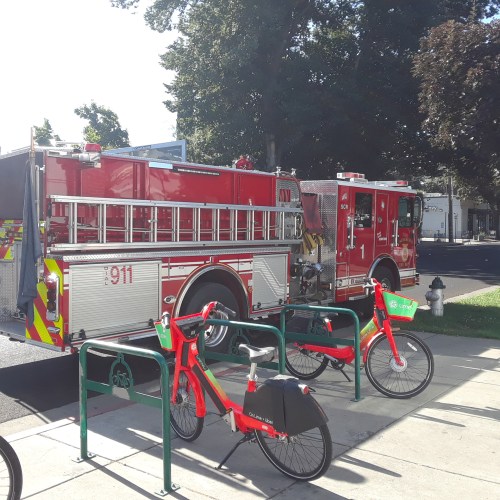
MAGNOLIA STATION AT CRESLEIGH RANCH
Rancho Cordova, CA | low $600s
Now Selling!

12156 Solis Way features a Residence One, smallest of the floor plans offered at Magnolia Station. But at 2,293 square feet, there is plenty of space in this single story home.

With three bedrooms, two bathrooms, den, great room, and dining room, there is enough room for all members of the family to have their corner of the house. The two car garage boasts ample storage and a covered patio comes included in the home. The den can easily be transformed into a fourth bedroom if needed.

Enjoy the luxuries included in a Cresleigh Home such large eat-in kitchen island, ample storage, 100% Owned Solar, and All-Ready Smart Home package.

This MOVE-IN READY home comes fully complete with gorgeous finishes throughout including:
-durable luxury vinyl plank throughout all living areas
-sophisticated painted Shaker cabinetry with cabinet pulls
-designer-selected tile kitchen backsplash with sleek white quartz counters https://cresleigh.com/magnolia-station/move-in-ready-homeiste-21/


Happy is One Who Wisely Considers the Poor

Once upon a time, the police knew the community and community members so well that if your interior lights were on later than usual, they would knock on your door and check to see if everything was well. Times have changed. Economic good fortune smiles, if not on everyone, then on more people than in the past, and glossy magazines offer readers images of well-stocked refrigerators and other scenes from a good life of consumer plenty. It is the era of Paris Hilton, Justin Bieber, and Beyonce. The American youth rebels are clad in leather and denim, wilding out of rap concerts. Replacing an old, destroyed World burdened with memory with a shimmy new and complacently forgetful one has become its own type of redemption. In the face of so much good fortune, maybe people feel less need for cosmic solace, less fear of cosmic retribution. No wonder we associate the post 911 years more with economic miracles than religious ones. However, some fear that various evils such as atomic weapons, genetic experimentation, chemical food additives, a massive overreliance on pharmaceuticals, and the fact that large portions of the Earth will soon become uninhabitable is an indication that people are becoming blind to godly powers. It is believed that people need to relearn it, to use spiritual powers to recover and maintain the divine order. Even Communist ideology is losing its influence on the minds of people in general, and of the young generation in particular, and it becomes apparent in a number of reports from Russia. #RandolphHarris 1 of 19

A very vivid description of this development was to be found in an article by Marvin L. Kalb, “Russian Youth Asks Some Questions.” The author reports from Moscow about a new questionnaire of the “Public Opinion Institute” of Komsomol Pravada, organ of the Communist youth organization. The paper found it necessary to ask questions like “Do you personally have a goal in life?”, “What is it?”, et cetera, not so much for the purpose of a statistical inquiry, but in order to combat the widespread phenomena of apathy and materialism, which are found in the young generation. This is the text of one letter, which is characteristic of others: “‘Are you satisfied with your generation?’ the questionnaire asked. ‘No!’ the nihilist answered. ‘Why’ the questionnaire asked. ‘I’m 19 years old,’ she explained, ‘ and I am filled with apathy and indifference to everything around me—so much so that grown-ups are surprised and wonder, “So young, and yet so bored; what will happen to her when she is 30?” However, this should not be surprising, for it is a simple fact: life is just not very interesting. And this view is not only my own, but all those people with whom I am friendly.’ ’Have you a goal in life?’ the questionnaire asked. ‘Earlier, when I still poorly understood life,’ she wrote, ‘I had a goal—to study. I finished high school; and now I am in an institute part time. But now all my pure dreams lead to only one thing money. Money is everything. Luxury, prosperity, love and happiness—if you have money, you can have all of these things, and more…I still do not know how I am going to get these things; but every girl dreams about a successful marriage with lots of money. Naturally, not everyone succeeds, for there are more people who want money than who have it…But I assure you I shall succeed. My conviction is based on the fact that I always do what I want; and what I want I normally get.’” #RandolphHarris 2 of 19

I do not mean to imply, of course, that his letter is representative of all the young generation in the Soviet Union. However, the survey and the publication of letters like this show how serious the leaders take the problem. We in the West, of course, should not be surprised. We are dealing with the same problems of juvenile delinquency and juvenile immortality, and for the same reasons. The materialism, prevalent in our system as well as in the Soviet Union, corrodes the sense of meaning of life in the young generation and leads to cynicism. Neither religion, humanist teaching, nor Marxist ideology is a sufficiently strong antidote—unless fundamental changes occur in the whole society. Just because ideology is not synonymous with lies, just because they—and we—are not aware of the reality behind the conscious ideology, we can not expect that they will—or could—tell us in an aside “we really do not mean what we say; all this is for public consumption, for keeping control over the minds of the people.” Maybe there is an occasional cynic who thinks this; but it is the very nature of ideology that it deceives not only others, but also those who use it. Hence the only way of recognizing what is real and what is ideology is through the analysis of actions and not in accepting words for facts. If I watch a father treating his boy harshly because he considers it his duty to teach him virtue, I shall not be so foolish as to ask the father for his motivations; instead I shall examine his whole personality, many other acts of his nonverbal manifestations, and I shall arrive at an evaluation of the weight of his conscious intention in comparison with his real motivation. #RandolphHarris 3 of 19
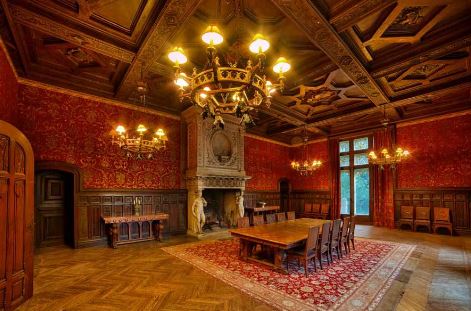
To return to the Soviet Union, what is its ideology? It is Marxism in its crudest form; the development of man is bound up with the development of productive forces. With the development of productive forces, techniques, modes of production, man develops his own faculties, but he also develops classes which become increasingly antagonistic to each other. The development of new productive forces is hampered by the older social organization and class structure. When this contradiction becomes sufficiently drastic the older social organization is changed to accommodate the full development of the productive forces. The evolution of mankind is a progressive one; both man and his domination of nature develop increasingly. Capitalism is the most highly developed system of economic and social organization, but the private ownership of the means of production throttles the full development of the productive forces and thus hinders the full satisfaction of the needs of all men. Socialism, the nationalization of the means of production plus planning, frees the economy from its shackles; it frees man, it abolishes classes and eventually the state. At present a strong state is still needed to defend socialism against attack from abroad, but the Soviet Union is already a classless, socialist society. Capitalism, still beset with its inherent contradictions, must one day adopt the socialist system, partly because of its incapacity to cope with its own contradictions, partly because the example of the socialist countries will be so compelling that all countries will want to emulate it. Eventually, then, the whole World will be socialist, and this will be the basis for peace and the full realization of man. #RandolphHarris 4 of 19

This, in short, the Soviet catechism. It contains a mixture of ideology and theory. There is one difficulty the Western observer must overcome. We are not surprised that medieval thinking was structured in the frame of reference of theology. History was seen in terms of God’s creation, man’s fall, Christ’s death and resurrection, and the final drama of the second coming of Christ. Controversies, and even purely political disputes, were expressed in terms of this central frame of refence. The eighteenth and nineteenth centuries had a secular political-philosophical frame of reference. Monarchy versus republic, liberty versus submission, environmental influence versus innate human traits, et cetera, were the battlefields. We in the West still think in a frame of reference that is partly religious, partly political-philosophical. The Russians, on the other hand, have adopted a new frame of reference, that of a socio-economic theory of history, which, according to them, is Marxism. The whole World is looked upon from this perspective, and argument and attacks are expressed in terms of it. For the Western observer for whom such theories are at best the business of a few professors, it is difficult to understand that the Russians constantly talk in terms of class struggle, conflicts with capitalism, victory of communism. The Westerner assumes that this talk must express an aggressive and active attempt to proselytize the World. It may be useful to remember that our religious ideology, in which, for instance, Christians believe that all men will eventually believe in the true God, et cetera, does not imply that we are all set to convert the pagans. It is simply that, considering our central frame of reference, we have to express our ideas in certain term; the Russians, have their frame of reference, do so in other. #RandolphHarris 5 of 19
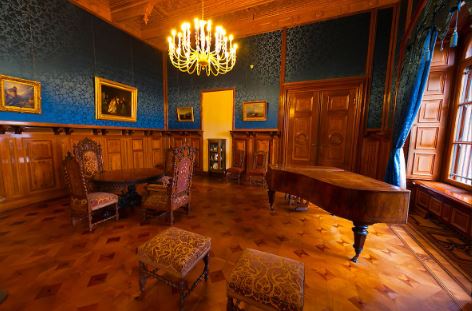
Soviet thinking is evolutionary and sees as the central factor in human evolution the development of the productive forces, the transformation of one social system to the next higher one. This view is not ideological in the sense in which I have used the term, but is the way the Soviet leaders really look at history, following a crude form Mr. Marx’s historical theory. It is ideological only in the negative sense that the soviet leaders do not employ this theory to analyze their own system. (Such a Marxist analysis of the Soviet system would immediately show the fictitious character of Soviet ideology.) For most Western observers, however, the theory lends itself to serious misunderstanding. When the Communist catechism says, “Communism will be victorious all over the World,” or when Mr. Khrushchev said “We will bury you,” these statements should be understood in terms of their historical theory that the next stage of evolution will be that of communism, but that does not imply that the Soviet Union sees it as its task to bring about this change by force, subversion, et cetera. It is important to understand the ambiguity of the Marxian theory. It is a theory that claims that historical changes occur when the economic development permits and necessitates the change. This aspect of the theory is one that was the basis of socialist reformist thinking in Europe, as represented by Mr. Bernstein and others. These socialists believe in the “final victory” of socialism, but they postulated that the working class need not—and could not—push events. They held that capitalism had to go through all the necessary stages, and eventually, at some unspecified time in the future, it would transform itself into socialism. #RandolphHarris 6 of 19
Mr. Marx’s view was not as deterministic and passive as that. Although he too thought that socialism could be ushered in only when the economic conditions were ripe for it, he believed that at this point the working class and the socialist parties, who by then would be in the majority, would have to take an active part in defending the new system against all hostile attacks from the former ruling groups. Mr. Lenin’s position deviated from Mr. Marx’s in that he substituted the avant-garde for the working class, and that he had more faith in the efficacy of force, especially in a Russia which had not yet gone through its bourgeois revolution. The Marxist goal of the final victory of socialism was common both to the nonactivist reformists and to Mr. Lenin. The formula itself—“Final victory of communism”—is a historical prediction and perfectly applicable to an evolutionary, nonaggressive policy as represented by Mr. Khrushchev. In judging whether Mr. Khrushchev aimed at a “World revolution” it is useful to ask oneself what one means by “revolution.” Of course, the word can be used in many different meanings, the most general one being that of any kind of complete and violent change of an existing government. In this case, Mr. Hitler, Mr. Mussolini, and Mr. Franko were revolutionaries. However, if one uses the concept in a more specific sense, namely the overthrow of an existing, oppressive government by popular forces, then none of these three men could be called “revolutionaries.” In fact, this usage is generally accepted in the West. When we speak of the English, the French, the America revolutions, we refer to revolutions from below, and not from above; to the popular attack against authoritarian systems not to the seizure of power by an authoritarian system. #RandolphHarris 7 of 19

It was in this sense that Mr. Marx and Mr. Engels used the term revolution, and it was in this sense that Mr. Lenin believed he had started his revolution. He was convinced that the avant-grade expressed the will and the interests of the vast majority of the population, even though the system he created ceased to be the expression of popular will. However, the Communist “victories” in Poland, Hungary, et cetera, were not “revolutions” they were Russian military take-overs. Neither Stalin nor Mr. Khrushchev are revolutionaries; they are leaders of conservative, bureaucratic systems, the very existence of which is based on unquestioning respect for authority. It is naïve not to see the connection between the authoritarian-hierarchical character of a system and the fact that the leaders of such a system can not be “revolutionaries.” Neither Mr. Disraeli nor Mr. Bismarck were revolutionaries although they brought about considerable changes in Europe, and remarkable advantages for their respective countries; nor was Napoleon a revolutionary, even though he used the ideology of the French Revolution. However, even though Mr. Khrushchev is not a revolutionary, his belief in the superiority of communism is perfectly sincere. For him, and probably also for the average Russian, communism and socialism are not, as for Mr. Marx, a humanist system which transcends capitalism, but an economic system that produces more effectively, that avoids economic crises, unemployment, et cetera, and hence is more capable, in long run, of satisfying the needs of a mass and machine society. #RandolphHarris 8 of 19
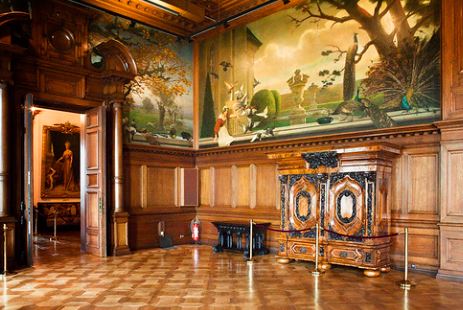
This is exactly why the Russian Communists believe that peaceful competition between the two systems will eventually lead to the acceptance of the Communist system throughout the World. Their concepts, here as in so many other respects, are those of capitalism—competition in the sphere of economic efficiency. Yet we hesitate to accept Mr. Khruschev’s challenge to compete with his system, and we preferred to believe that he wants to conquer us by force of subversions. While the basis general aims of humanistic socialism are the same for all countries, each country must formulate its own specific aims in terms of its own traditional and present situation, and devise it own methods to achieve this aim. The mutual solidarity of socialist countries must exclude any attempt on the part of one country to impose its methods on another. In the same spirit, the writings of the fathers of socialist ideas must not be transformed into sacred scriptures which are used by some to wield authority over others; the spirit common to them, however, must remain alive in the hearts of socialists and guide their thinking. Humanistic socialism is the voluntary, logical outcome of the operation of human nature under rational conditions. It is the realization of democracy, which has its roots in the humanistic tradition of mankind, under the conditions of an industrial society. It is a social system which operates without force, neither physical force nor that of hypnoid suggestions by which humans are forced without being aware of it. It can be achieved only by appealing to man’s reason, and to his longing for a more human, meaningful, and rich life. #RandolphHarris 9 of 19

Humanistic socialism is based on faith in man’s ability to build a World which is truly human, in which the enrichment of life and the unfolding of the individual are the prime objects of society, while economics is reduced to its proper role as the means to humanly richer life. In discussing the goals of humanistic socialism we must differentiate between the final socialist goal of a society based on the free cooperation of its citizens and the reduction of centralized State activity to a minimum, and the intermediate socialist goals before this final aim is reached. The transition from the present centralized State to a completely decentralized form of society cannot be made without a transitory period in which a certain amount of central planning and State intervention will be indispensable. However, in order to avoid the dangers that central planning and State intervention may lead to, such as increased bureaucratization and weakening of individual integrity and initiative, it is necessary: a) that the State is brought under the efficient control of its citizens; b) that the social and political power of the big corporations is broken; c) that from the very beginning all forms of decentralized, voluntary associations in production, trade, and local social and cultural activities are promoted. While it is not possible today to make concrete detailed plans for the final socialist goals, it is possible to formulate in a tentative fashion the intermediate foals for the socialist society. However, even as far as these intermediate goals are concerned, it will take many years of study and experimentation to arrive at more definite and specific formulations, studies to which the best brains and hearts of the nation must be devoted. #RandolphHarris 10 of 19

Following the principle that social control and not legal ownership is the essential principle of socialism, its first goal is the transformation of all big enterprises in such a way that their administrators are appointed and fully controlled by all participants—workers, clerks, engineers—with the participation of trade union and consumer representatives. These groups constitute the highest authority for every big enterprise. They decide all basic questions of production, price, utilization of profits, et cetera. The stockholders continue to receive an appropriate compensation for the use of their capital, but have no right of control and administration. The autonomy of an enterprise is restricted by central planning to the extent to which it is necessary to make production serve it social ends. Small enterprises should work on a cooperative basis, and they are to be encouraged by taxation and other means. Inasmuch as they do not work on a cooperative basis, the participants must share in the profits and control the administration on an equal basis with the owner. Certain industries which are of basic importance for the whole of society, such as oil, banking, television, radio, medical drugs, and transportation, must be nationalized; but the administration of thee nationalized industries must follow the same principles of effective control by participants, unions and consumers. In all fields in which there is a social need but not an adequate existing production, society must finance enterprise which serve these needs. The individual must be protected from fear and the need to submit to anyone’s coercion. #RandolphHarris 11 of 19

In order to accomplish this aim, society must provide, free for everyone, the minimum necessities of material existence in food, housing, and clothing. Anyone who has higher aspirations for material comforts will have to work for them, but the minimal necessities of life being guaranteed, no person can have power over anyone of the basis of direct or indirect material coercion. Socialism does not do away with individual property for use. Neither does it require the complete leveling of income; income should be related to effort and skill. However, differences in income should not create such different forms of material life that the life experience of one cannot be shared by, and this remains alien to, another. The principle of political democracy must be implemented in terms of the twenty-first century reality. Considering our technical instrumentalities of communication and tabulation, it is possible to reintroduce the principle of the town meeting into contemporary mass society. The forms in which this can be accomplished need study and experimentation. They may consist of the formation of hundreds of thousands of small face-to-face groups (organized along the principle of place of work or place of residence) which would constitute a new type of Lower House, sharing decision-making with a centrally elected parliament. Decentralization must strive at putting important decisions into the hands of the inhabitants of small, local areas which are still subject to the fundamental principles which govern the life of the whole society. #RandolphHarris 12 of 19

However, whichever forms are to be found, the essential principle is that the democratic process is transformed into one in which well-informed and responsible citizen—not automatized mass-men, controlled by the methods of hypnoid mass suggestion—express their will. Not only in the sphere of political decisions, but with regard to all decisions and arrangements, the grip of the bureaucracy must be broken in order to restore freedom. Aside from decisions which filter down from above, activity in all sphere of life on the grass-roots level must be developed which can “filter up” from below to the top. Workers organized in unions, consumers organized in consumers’ organizations, citizens organized in the above-mentioned face-to-face political units, must be in constant interchange with central authorities. This interchange must be such that new measures, laws, and provisions can be suggested and, after voting, decided from the grass roots, and that all elected representatives are subject to continuous critical appraisal and, if necessary, recall. Origin of knowledge. –Over vast stretches of time, the intellect produced nothing but errors; some of them turned out to be useful and species-preserving: whoever hit upon or inherited them waged the battle for themselves and their offspring with better luck. Such erroneous articles of faith, which were further passed on and finally became almost the basic endowment of the human species, are, for example: that there are enduring things; that there are equal things; that there are things, materials, bodies; that a thing is what it appears to be; that our will is free; that what is good for me is also good in and for itself. #RandolphHarris 13 of 19

Only very late did the deniers and doubter of such propositions come on the scene—only very late did truth come on the scene as the weakest form of cognition. It seemed as if one could not live with it; our organism was geared to the opposite: all its higher functions, sense perception and every kind of sensation generally, worked with those fundamental errors, incorporated from archaic times. Moreover, even in the realm of knowledge those propositions became norms according to which one measured “true” and “untrue”—down to the mot remote regions of pure logic. Thus, the strength of knowledge lies not in its degree of truth but in its age, its being incorporated, its character as a condition of life. Where life and knowledge seemed to come into conflict, there was never any serios contest; denial and doubt were considered madness. Those exceptional thinkers, such as the Eleatics, who, in spite of everything, fixed and held fast to the opposite of the natural error, thought it possible also to live this opposite; they invented the sage as the man of immutability, impersonality, universality of intuition, as at once one and all, with a special capacity for that inverted knowledge; they were of the belief that their knowledge was also the principle of life. However, in order to assert all this, they had to deceive themselves about their own condition: they had to credit themselves with impersonality and duration without change to misconceive essence of knowledge, to deny the force of impulses in knowledge, and to conceive of reason in general as a wholly free, self-originating activity; they closed their eyes to the fact that they, too, had arrived at their propositions in opposition to what was considered valid, or from a desire for tranquility, or disinterestedness, or domination. #RandolphHarris 14 of 19
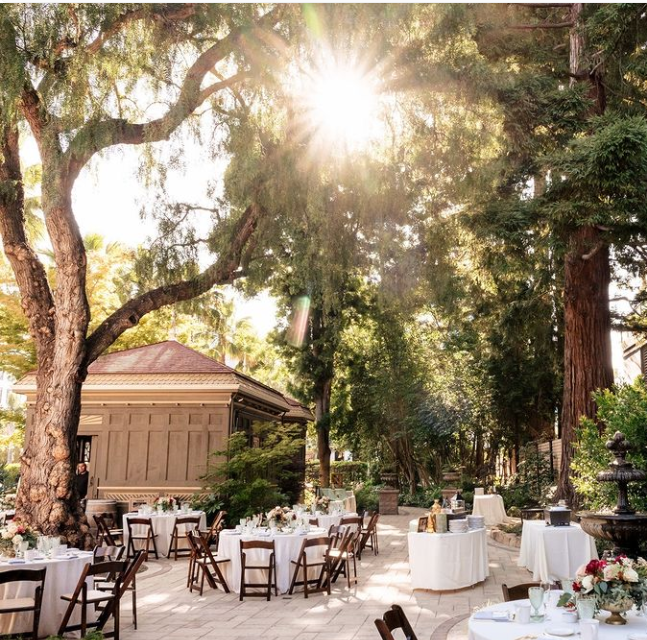
The more refined development of honesty and skepticism in the end rendered even these men impossible; their life and judgment, too, turned out to be parasitic on the age-old drives and fundamental errors of all sentient existence. That more refined honesty and skepticism arose where two antithetical propositions both seemed to apply to life, both being compatible with the fundamental errors, hence where it was possible to argue about greater and lesser degrees of utility for life; likewise, where new propositions showed themselves to be, if not especially useful to life, then at least not harmful either—expressions of an intellectual play impulse, innocent and happy like all play. Gradually the human brain filled itself with such judgments and convictions, and a ferment, a struggle, a craving for power emerged in this tangle. Not only utility and delight but every kind of impulse took part in the fight over “truths”; the intellectual fight became occupation, attraction, profession, duty, dignity; knowledge and striving for the true in the end took their place as a need among other needs. From then on, not only faith and conviction but also scrutiny, denial, mistrust, and contradiction became a power; all “evil” instincts were subordinated to knowledge, put in its service, and acquired the luster of the permissible, the honored, the useful, and finally the eye and the innocence of the good. Knowledge thus became part and parcel of life itself and as such an ever-increasing power—until finally knowledge and those age-old fundamental errors collided, both as life, both as power, both in the same man. The thinker: this is now the creature in whom the drive to truth and all those life-preserving errors wage their first battle, once the drive to truth has proved that it, too, is a life-preserving power. #RandolphHarris 15 of 19
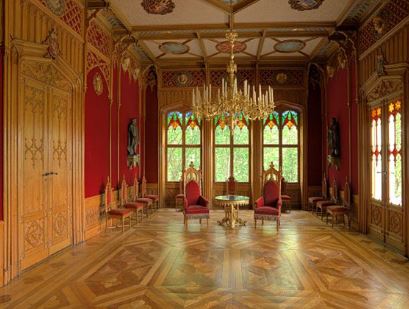
Compared to the significance of this battle, all else is a matter of indifference: here, the ultimate question concerning the condition of life is posed, and here, the first attempt is made to answer the question with an experiment. To what extent can truth be incorporated?—that is the question, that is the experiment. Victory over the ultimate negative as a tempter, and all its temptations—whether direct or indirect—must be learned by the believer from personal experience. One must remember that not all “temptations” are recognizable as temptations, nor are they always visible—for half their power lies in their being hidden. A believer often thinks that one will be as conscious of the approach of temptations as one is of a person coming into the room. Hence the children of God are only fighting a small proportion of the ultimate negative’s workings: that is, only what they are conscious of as supernatural workings of evil. Because of their knowledge of the ultimate negative’s character and methods of working is limited and circumscribed, many true children of God only recognize “temptation” when the nature of the thing presented is visible evil, and accords with their limited knowledge of evil. So they do not recognize the temper and one’s temptations when they come under the guise of lawful and apparent “good.” When the ultimate negative and one’s emissaries come as angles of light clothe themselves in light, which, in their case, stands for evil. It is a “light” which is really darkness. They come in the guise of good—for darkness is opposed to light, ignorance is opposed to knowledge, falsehood is opposed to truth. #RandolphHarris 16 of 19
Darkness is a term we ordinarily apply to evil morality and moral darkness. Hence the believer may need to discern evil spirits in the realm of the supposed good. That which comes to them as “light” actually may be darkness. The apparent “good” may be really evil. And so the apparent “help” which the believer clings to may be really a hindrance. There needs to be a choice between good and evil made perpetually by every man. The Hebrew priests of old were specially called to discern and tech the people the difference between “the holy and the common,” “the unclean and the clean,” reports Ezekiel 44.23. Yet is the Church of Christ today able thus to discern what is good and what is evil? Does she not continually fall into the snare of calling good “evil,” and evil “good”? Because the thoughts of God’s people are so often governed by ignorance and limited knowledge, they can call the works of God “diabolic” and the works of the ultimate negative “divine.” For they are not taught the necessity of learning to discern the difference between “the unclean and the clean,” nor how to decide for themselves what is of God and what is of the ultimate negative—although they are unknowingly compelled to make a choice every moment of the day. Neither do all believers know that they have a choice between good and good, id est, between the lesser and the greater good—and the ultimate negative often entangles them here. The place of the church is in a purely vertical relationship to God, the distinction between the latent and manifest church is challenged, and, the Spirit which constitutes the churches is not the Spirit of Jesus. #RandolphHarris 17 of 19

The Gestalt of grace and the sacramental principle are vehicles for the holiness of the “is,” the actual presence of the divine which, in turn, provides the positive base for the prophetic demand for the holiness of the “ought.” Furthermore, the church portrays an image which it presents to the non-believer who is incapable of seeing its theological side. On the one hand, the latent church under the vivifying power of the Spiritual Presence is in preparation for the reception of the New Being in Jesus the Christ. However, the latent church is not simply an infant awaiting baptism; it is already a mature, adult member of the Spiritual Community, ad under the drive of the Spirit it voices criticism of the manifest church through non-sectarian, secular, or even anti-religious movements. Its protest appears as a cultural phenomenon, but the underlying inspiration is religious. On the other hand, the manifest church openly and consciously acknowledges the New Being in Jesus the Christ, and, united by the bonds of a common faith, it proclaims the Word of the Gospel and the sacraments of the New Law. However, these acts of religion must be expressed in relevant cultural form. The latent church joins the Spiritual Community by participation in the New Being, but it does not know Jesus crucified. The manifest church’s explicit acknowledgement of Jesus as the bearer of the New Being gains for it the symbol of the Cross, the Protestant principle of self-reformation which is the only antidote to demonization. Possession and non-possession of the Cross seems a clear-cut distinction. How can the secular World voice truly prophetic criticism unless it too has the Cross, the symbol of the struggle against the demonic, at least implicitly? #RandolphHarris 18 of 19

What does the explicit reception of the New Being in Jesus the Christ add to the manifest church? In the manifest church, one finds that the Christian Bible, the document of the reception of final revelation, the sacraments which deepen the experience of the New Being, and the corporate organization rallies and sustains Christians in their effort to live the Gospel. Here is certainly a concrete difference between the latent and manifest churches. However, what immediately springs to mind, the demonization and profanization into which these two churches inevitably fall makes one wonder if the transition from the latent to the manifest church is worth the price. It seems that most of the latter’s energy is expended in applying the Cross to correct its own ambiguities. The impression is that the latent church is dynamic, exciting, productive, and pregnant with hope, while the manifest church is tired, dull, weighed down with ambiguities, and moribund—despite the fact that it has received the New Being in Jesus the Christ. One is tempted to conclude almost blasphemously—because it has received the New Being in Jesus the Christ. All Americans are brothers, responsible for one another. I pledge allegiance to the flag of the United States of America, and to the republic for which it stands, one nation, under God, indivisible with liberty and justice for al. If there be among you a need may, do not harden your heart. The generous heart shall be enriched, and one that satisfies others hall be satisfied oneself. #RandolphHarris 19 of 19


It is safe to say that the second most important room in the Victorian home was the dining room, where not only the family gathered, but where social interaction took place among family and visitors. In the family it should be observed as a rule to meet together at all meals of the day around one common table where the same rules of etiquette should be as rigidly observed as the table of a stranger.

For further information about tours, including group tours, weddings, school events, birthday party packages, facility rentals, and special events please visit the website: https://winchestermysteryhouse.com/

Please visit the online giftshop, and purchase a gift for friends and relatives as well as a special memento of The Winchester Mystery House. A variety of souvenirs and gifts are available to purchase. https://shopwinchestermysteryhouse.com/
 Randolph Harris II International Institute