
Home » World (Page 26)
Category Archives: World

The Mansion of Darkness
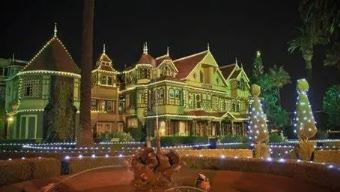
Most of the beauties who suffered at the hands of the inquisitors were tormented because they refused to succumb to the right people or were too quick to give in to the wrong ones. Many who lusted after such women become so guilt-ridden that they would denounce them out of fear that they would fall from grace in the eyes of God. Of course, the most successful witches were unusually sleeping with the inquisitors and were never even considered to be witches. Successfully as they might be, however, they could never openly take pride in their witcheries, for to do so would mean certain death. There are many who view the witch as a member of an old pagan religion, more concerned with her beliefs than with her powers. To be sure, the witch is a WOMAN. Men are called warlocks. The witch has made a pact with the Devil and through rituals dedicated to Him gains her power. One must worship the Luciferian element of pride within. One is often blessed with a family heritage of sorcery in one form or another. Everyone inherits something from their forebearers that can be applied as useful legacy. My mother had a genealogy of the Winchester family that showed all of our ancestors going way back to the 1400s. There were lots of famous people in our genealogy—a governor, two senators, a famous general in the Revolution, a lot of people who found in the Revolutionary War and the Civil War, and some others. However, my dad always said that most of the people in the genealogy were regular people—farmers and fishermen and storekeepers who worked hard all their lives and tried to do right by their families. #RandolphHarris 1 of 12
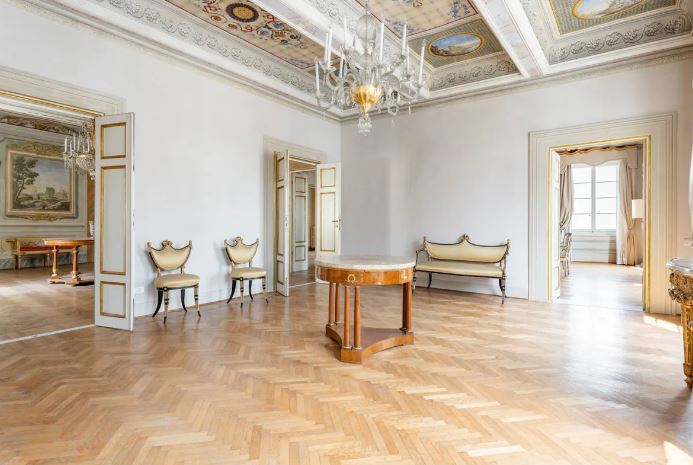
The Winchester money went pretty far back. However, a majority of it came during the 1870s, from the 1873 Model called “The Gun that Won the West.” The Winchester Repeating Arms Company was started by Oliver Fisher Winchester. There was a portrait of him, big as a picture window, hanging up in the parlor in the Winchester Mansion. He had on a dark suit, black tie, white shirt, and he looked very dignified. It was one of those pictures where the eyes follow you around the room—no matter where you went, he always looked at you. After grandfather Oliver Winchester passed away, he left the company to my father, William Winchester, who passed away shortly after, alone with my baby sister, leaving the fortune and company to my mother, Sarah L. Winchester. That mansion used to scare the crap our of me when I was little. We would go up there for Thanksgiving or Christmas, when Mrs. Winchester had a big family dinner for all the family—fifty or sixty of us, probably six turkeys, plumb pudding from England, thousands of dollars worth of glassware and sliver gleaming so bright that the table sparkled. The towns people always blamed Mrs. Winchester for whatever happened to them. You have to remember, this was a time when people lived in houses without windows, no indoor plumbing, or houses with no glass in the windows. Common folks in those days would eat nothing but potatoes for dinner night after night, and they patched the holes in their shoes with cardboard because they could not afford to buy new one. #RandolphHarris 2 of 12
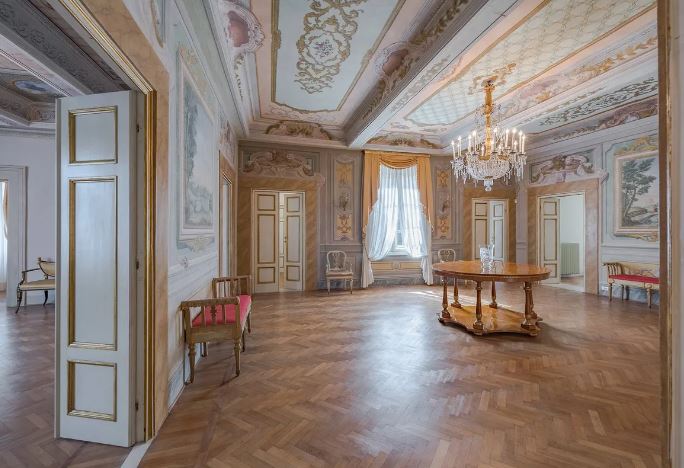
My mother, whom I call Mrs. Winchester, said paying the bills, paying the servants, and keeping an eye on everything was like managing a large castle. The cobble stone driveway swung around behind the house here to get the stable, where we kept the riding horses, and the old carriage house, where the cars were garaged. According to legend, Mrs. Winchester enacted a nightly séance to help her with her building plans and for protection from “bad” spirits. The Satanic witch of old received her magic from The Dark Man. While the rest of the World, particularly the men-folk, slept in blissful innocence, she and her sisters would meet Him in secret groves. There He would advise, inveigle and disclose the knowledge that would empower them to work their spells and enchantments. His pearls of infernal wisdom empowered them. It was, they said, a sign of a coven moving towards black magic. In other words their selected deity, faded into the background of their working and the search for the manifestation of demonic forces within their circle became obsessive. However, magic is the power within oneself that is the key to what we do, and sometimes we can whip up a great deal of power. The magic we are capable of is almost indefinable. Our magic is the art of causing change to occur in conformity with will. We attempt to raise enough etheric energy between us, by our ritual, to use our paranormal powers to force a desired result by our will-power. It was one thing using the supernatural powers of the human mind to try to compel something to happen, but it was quite another matter summoning up the assistance of spirits and demons, whether benevolent, malevolent or neutral. Mistakes in the ritual or failure to observe the minute could lead to disaster. #RandolphHarris 3 of 12
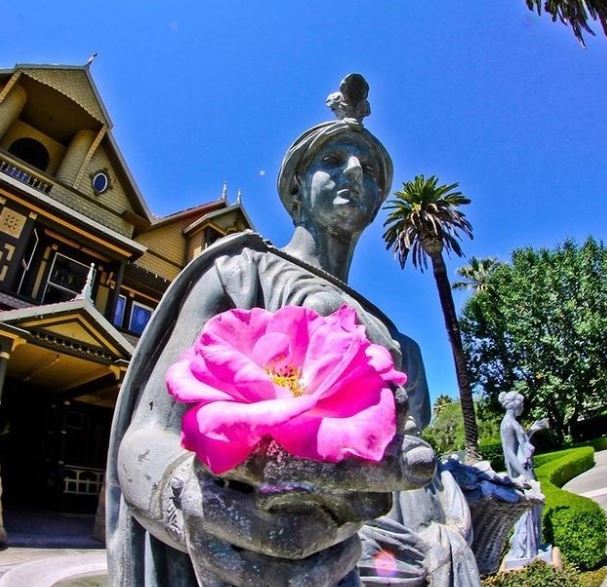
Mrs. Winchester recalls one night she invited a magician who parctised the darker arts to assist her. The magic went wrong and the room they were working in was virtually wrecked by lingering, unseen spirits. Mrs. Winchester was mysteriously injured with a stab wound in her shoulder, though no one saw the knife go in or where it came from. Many guides to higher ritual magic issues a health warning with their instructions: the practitioner must be confident he or she is totally in control of all the techniques and disciplines otherwise one faces physical, psychological and spiritual dangers of the most serious kind if any attempt to invoke spirits goes wrong. By and large, witchcraft—and certainly paganism—seemed not to be about chasing demons, though they do claim to make spiritual contact with the gods invoked during their worship. There was an abundance of evidence that Mrs. Winchester experienced paranormal events in her life: the feeling she had been in a certain place before when, in this life at least, it was her first visit; the uncanny foresight of her fortune-telling; the “proven” success of powers of autosuggestion; the out-of-body experiences that she was able to learn; the sixth sense of Zip, barking at the spot in the mansion where Maynard the butler had died years ago. The list goes on and on. The discussion about Mrs. Winchester will probably go on for centuries, but it will not be until the year 2030 that these discussions will be able to take place without being prosecuted or hanged. Mrs. Winchester wore robs during her séances because the human body holds within it a latent power which can be released by certain ritual exercises that witches perform. Some spiritualist healers and clairvoyant witches can actually see it, like a rainbow. #RandolphHarris 4 of 12
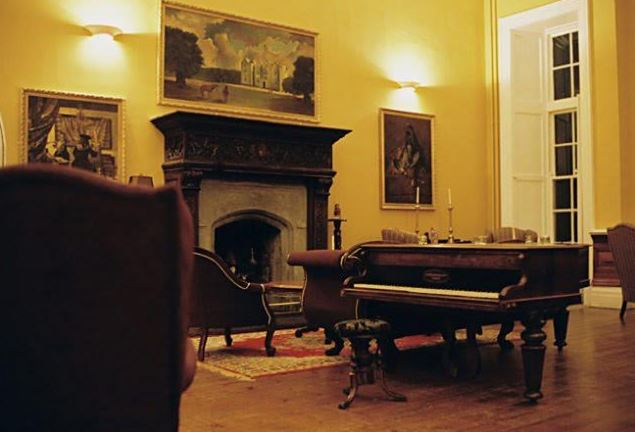
Is it any surprise the Winchester Mansion is haunted? One night during a séance, two inner circles were painted on the floor. The circle is the center of all occult activity and was drawn to concentrate the occultists’ power and protected them from hostile spirits. Within the circle, the spiritual journey started and their efforts were directed to produce their Cone of Power. It was only within the circle that the gods and the spirits of the astral Would could be safely contacted. The process was much like clearing a dense forest so the physical bodies could meet their spiritual. As the group was opening their mind to journey to a higher plane, they were clearing their minds of Earthly problems and worries so that they could open their entire beings to the singular concentration of the work before them, by tapping into the energy of the centers of the body. Lighted candles were placed at strategic points on the circle, and there was a pentacle on the altar where the statuette of the Horned God of Pan stood. As Mrs. Winchester blessed the water and salt with her athame and the coven, she was able to visualize the bodily power of the priestess moving in the form of a blue light through her hand into the athame and as she consecrated the circle itself, starting at the north a magic was killed by a heavy door that came loose from its hinges and flew at him. The invocation of gods and goddesses or their attempts to attract angels and genii into circles involve long and complicated rituals which have their complexities. Afterwards, to all, things went on as usual for a week or two. Well, the things went on as usual; so they did with the rest of household; but as for Mrs. Winchester, she had never been the same since that night. Night after night, she used to lie awake, listening for the spirits, looking for blue lights, and for the door of the Blue Séance Room to be locked. #RandolphHarris 5 of 12
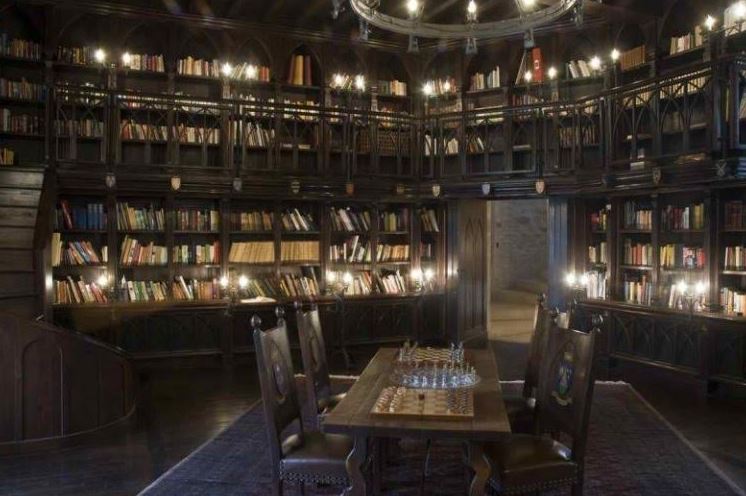
However, all supernatural activity seemed to have ceased, and she heard no sounds coming from the room. At last, the silence began to be more and more dreadful to Mrs. Winchester than the activity of the spirits. She felt that someone was cowering there, behind the locked door, watching and listening as she watched and listened, and she could have almost cried out, “Whoever you are, come out and let me see you face to face, but do not lurk there and spy on me in the darkness!” Feeling as she did, you may wonder Mrs. Winchester did not give warning. Once she very nearly did so; but at the last moment something held her back. Whether it was compassion for the peace of her staff, who had grown more and more dependent on her, or unwillingness to try a new room, or some other feeling that she could not put a name to, Mrs. Winchester lingered on as if spellbound, though every night was dreadful to her, and the days but little better. The staff did not like Mrs. Winchester’s looks, she had not been the same since that night. They thought she would brighten up, but though she seemed easier in her mind, her spirits did not revive, nor her strength either. Mrs. Winchester had grown attached to her home, and there was nothing no one could do for her. In spite of Mrs. Winchester’s solemn looks, they had a very merry dinner that day in the hall. She started to look better, and seemed more cheerful in her manner. She had been for a walk in the morning, and after luncheon she lay down in her room, and read a book. As the rain fell, Mrs. Winchester looked out at the rain, and she picture how beautiful her Victorian gardens would look in the spring. #RandolphHarris 6 of 12
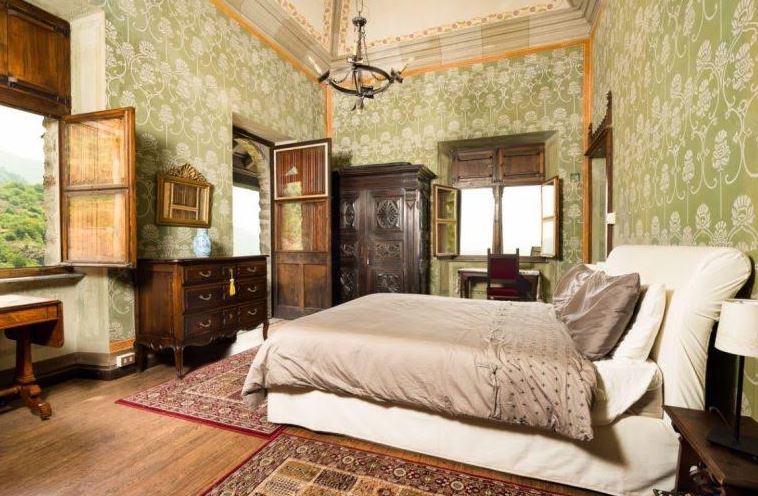
It seemed to her that all the beautiful flowers, green lawns and plush trees would cover up the dreariness, indoors as well as out. The fancy had hardly crossed her mind when she heard a step at her side. She looked up, and there stood Maynard. Mrs. Winchester did not know how long he stood there. She only knew that she could not stir or take her eyes from him. Afterward she was terribly frightened, but t the same time it was not fear she felt, but something deeper and quitter. He looked at Mrs. Winchester long and hard, and his face was just one dumb prayer to her—but how in the World was Mrs. Winchester to help him? Suddenly she turned, and she heard him walk down the passage. This time Mrs. Winchester was not afraid to follow—she felt that she must know what Maynard wanted. Mrs. Winchester sprang up and ran out. He was at the other end of the passage, and Mrs. Winchester expected him to take the turn towards the door-to-nowhere; but instead, ran and pushed out the door to the 7-11 staircase that was built in the shape of a “Y”, which enabled servants to get to three different levels of the mansion. Mrs. Winchester followed him down the stairs. The kitchen and hall were empty at that hour, the servants being off duty, except for the footman, who was in the pantry. At the door Maynard stood still for a moment, with another look at Mrs. Winchester; then he turned the handle, and stepped out. For a minute Mrs. Winchester hesitated. What was Maynard leading her? #RandolphHarris 7 of 12
The door had closed softly after him, and Mrs. Winchester opened it and looked out, half-expecting to find that Maynard had disappeared. However, she saw him a few yards off hurrying across the courtyard to the path through the woods. His figure looked black and lonely in the snow, and for a second Mrs. Winchester’s heart failed her and she thought of turning back. But, all the while Maynard was drawing her after him; and Mrs. Winchester ran out into the open. Maynard was in the cobble stone path now. He walked on steadily, and Mrs. Winchester followed at the same pace, till they passed out of the gates and reached the highroad. Then he struck the across the open fields to the village. By this time the ground was white, and as he climbed the slope of a muddy hill ahead of her Mrs. Winchester noticed that Maynard left no footprint behind him. At sight of that her heart shriveled up within her, and her keens were water. Somehow, it was worse than indoors. He made the whole countryside seem lonely as the grave, with none but the two of them in it, and no help in the wide World. Once Mrs. Winchester tried to go back; but Maynard turned and looked at her, and it was as if he dragged her with chains. After that Mrs. Winchester followed him like a lamb. They came to the village and he led her through it, past the church and the blacksmith’s shop, and down the lane, and the ghost of Maynard disappeared. A sense of helplessness came over Mrs. Winchester and she had not been able to guess what he wanted. His last look at her pierced Mrs. Winchester to the marrow; and yet it had not told her! #RandolphHarris 8 of 12
All at once Mrs. Winchester felt more desolate than when Maynard had stood there watching her. It seemed as if he left Mrs. Winchester all alone to carry the weight of the secret she could not guess. The rain went around in great circles, and the ground fell away from her. A spot of tea was brought to Mrs. Winchester and she was driven by carriage to her mansion. Upon arrival at home, the maid asked Mrs. Winchester what she wanted for dinner. “I have a headache, and will not require dinner this evening,” she said. It was a fact that Mrs. Winchester could scarcely keep her feet; yet she had no fancy to spend a solitary evening in her room. She sat down in the morning room, as long as she could hold her head up; but by eight she walked up the zig zag stairs, too weary to care what happened if she could but get her head on a pillow. The rest of the household went to bed soon afterward; they kept early hours. Once in bed, Mrs. Winchester felt easier, and lay quiet, listening to the strange noises that came out of the house after dark. Once she thought she heard a door open and close again below: it might have been the glass door that led to the gardens. She got up and peered out of the window; but it was in the dark of the moon, and nothing visible outside but the streaking of rain against the panes. Mrs. Winchester went back to bed and must have dozed off, for she jumped awake by the sound of shattered glasses. Before her heard was clear she sprung out of bed, and was dragging on her clothes. She unlocked and opened her door and peered down the passage. As far as her candle flame carried, she could see nothing unusual ahead of her. #RandolphHarris 9 of 12

Mrs. Winchester hurried on, breathless; but as she pushed open the door leading to the main hall her heart stood still, for there at the head of the stairs was Maynard, peering dreadfully down into the darkness. For a second she could not sir; but her hand slipped from the door, and as it swung shut the figure vanished. At the same instant there came another sound from below stairs—a stealthy mysterious sound, as of a latchkey turning in the house door. At that moment, the door tore open. On the threshold stood Maynard. All was dark behind him, but Mrs. Winchester saw him plainly. A death flutter passed over her face. Hours passed and there seemed to be no change in her. Just when the evil spirit left, Mrs. Winchester did not, but you could imagine the great joy that filled her heart to be set free from that awful, wicked, noisy spirit. Mrs. Winchester was so happy. If a Demonic element is allowed to express itself, through a non-human vehicle, such as poetry, music, art—great works can be accomplished. Maynard was a Satanist who had worked evil magic more than a hundred times. There are bloodcurdling accounts of those who had flirted with the devil and brought to public attention by those who worked at the Winchester Mansion. Mrs. Winchester knew she had powers when she was a child; she could will things to happen and often they did. She thought it was natural. She owned parchments from old grimoires from rituals that had been performed by witches who were hanged or burned. There were even books with spells in curses from the sixteenth century. #RandolphHarris 10 of 12

Mrs. Winchester owned magic spells that were older than the country—magic to ensure opulence; to incite hatred or vengeance; and, for men, to secure the love of a virgin; to open every kind of lock without a key; to cause a dead body to rise—all that kind of stuff. She studied the old rituals for bewitchment, the type that got a lot of women hanged. There were these spells rather like voodoo where she made wax effigies. Mrs. Winchester vegan to study necromancy, which deals with bringing the dead back to life. The method she did was one where she drew her magic in a circle in her house. This was supposed to attract the spirit back. The performed the rites which lasted about thirty minutes. Nothing happened the first time or the second time, but the third time the room went cold and she could feel the presence. Suddenly ornaments crashed off the sideboard and pictures fell from the walls…she had made contact but whoever it was was obviously unhappy about it so she had to give up. Mrs. Winchester did not give up experimenting thought. The art of necromancy often causes occasional outbreaks of attacks on graveyards where misguided occult dabblers believe they have been compelled to make contact with the dead no matter how long they have been departed, though in truth a graveyard is probably the least place the spirit might wish to join callers for an evening. In June of 1889, the Oak Hill Memorial Park was the scene of bizarre rituals that puzzled even the most experienced occultists. More than twenty graves were ransacked; old-fashion lead-lined coffins had been “ripped open like a tin of beans” and the bodies or remains were carried away. #RandolphHarris 11 of 12
No one can become involved in spiritism without serious repercussions. The poltergeist phenomena may be real. I call upon the powers of death and decay through the mouth of Arezura. Powers of baneful darkness I summon you to this unholy temple. I conjure you mighty Fly Goddess Dryj Nasu to enter this lamp of death which will guide the lives of my enemies into utter destruction, for death levels them all according to my will, whether they die as Kings upon a throne or poor men lying upon dirt! Druj Nasu fill this lamp of death with your power and essence and I offer my essence upon this gateway of the black Earth so it is done! This Druj Nasu runs from the northern directions in the form of a fly. To him blow the wind from the northerly direction from the more northern sides, stinking, more stinking than other winds. I offer my enemy as a sacrifice unto the Druj Nasu. Claim your prize how, by the power of Ahriman and the Blackened Fire of Zohak, and in the name of my own divine power it is done! Thou shalt purge me with hyssop, O Lord! and I shall be clean: Thou shalt wash me, and I shall be whiter than snow. THE ADORATION AT THE INDUING OF THE VESTMENT. By the figurative mystery of these holy vestures (or this holy vestment) I will clothe me with the armour of salvation in the strength of the Most High, ANCHOR; AMACOR; AMIDES; THEODINIAS; ANITOR; that my desire end may be effected through Thy strength, O ADONAI! Unto Whom the praise and glory will for ever and ever belong! Amen! #RandolphHarris 12 of 12
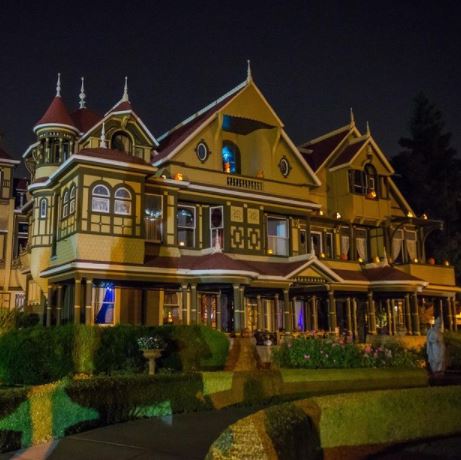
Winchester Mystery House

Master magician and acclaimed apparitionist Aiden Sinclair returns to Winchester Mystery House with Aiden Sinclair’s Ghost of Christmas Passed, an interactive evening of paranormal illusions. Once upon a time, Christmas was more than a celebration of giving.
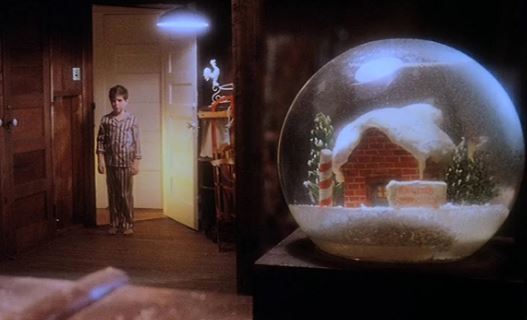
It was a time that families gathered and when the night grew darkest, chilling tales were told. Aiden Sinclair rekindles the tradition of Dickens in a haunting presentation that brings the Christmas Ghost Stories of long ago back to haunt the living! Will you dare join and see what dark gifts he has in store? Two nights ONLY – tickets going fast!
🎟 link in bio. https://winchestermysteryhouse.com/

What is it We Want them to Know About these Events?

The World population in 1950 was 2.5 billion, in 2022, it is 8 billion. The American population in 1950 was 151, 325, 798, in 2022 332,403,650. With this rapid expansion in humanaity, it is also important to consider their strain on the natural environment and promote birth control in the developed and undeveloped World. The mental health industry is overloaded, and many people are showing sighs of mental disorder, not only due to rising cost, but also because the planet is over populated. In diagnosing mental disorder and following its hospital course, psychiatrists typically cite aspects of the patient’s behaviour that are “inappropriate in the situation.” Since this special kind of misconduct is believed to provide one obvious sign of “mental sickness,” psychiatrists have given much time to these improprieties, developing the orientation and observational skills needed to study them, describe them in detail, seeking to understand their meaning for the patient, and obtaining a mandate to discuss them in the academic press—a mandate required because many of these delicts are petty, embarrassing, or messy. We sociologists should be grateful for this harvest, all the more so because it has been brought in by delicate hands. We can express our gratitude by trying to appropriate the yield for our own market, offering in exchange some observations about social situations that we appropriated long ago from anthropology. By and large, the psychiatric study of situational improprieties has led to studying the offender rather than the rules and social circles that are offended. Through such studies, however, psychiatrists have inadvertently made us more aware of an important area of social life—that of behaviour in public and semipublic places. Although this area has not been recognized as a special domain for sociological inquiry, it perhaps should be, for rules of conduct in streets, parks, restaurants, theaters, shops, dance floors, meeting halls, and other gathering places of any community tell us a great deal about its most diffuse forms of social organization. #RandolphHarris 1 of 21

Sociology does not provide a ready framework that can order these data, let alone show comparisons and continuities with behaviour in private gathering places such as offices, factory floors, living rooms, and kitchens. To be sure, one part of “collective behaviour”—riots, crowds, panics—has been established as something to study. However, the remaining part of the area, the study of ordinary human traffic and the patterning of ordinary social contacts, has been little considered. It is well recognized, for instance, that mobs can suddenly emerge from the peaceful flow of human traffic, if conditions are right. Yet, little concern seems to have been given to the question of what structure this peaceful intercourse possesses when mob formation is not an issue. Some data have been drawn from a study of a mental hospital (hereafter called Central Hospital), some from a study of a Shetland Island community (hereafter called Shetland Isle), some from manuals of etiquette, and some from a file where I keep quotations that have struck me as interesting. The issue with disapproved behaviour is the strength of approval for upholding. Some approved acts receive applause upon performance, as when heroism or very great skill is displayed, and sometime so do bad actions. Furthermore, some acts pass quite unnoticed and do not constitute a felt event, as when an American high-school girl refrains from wearing nylon hose with her saddle shoes but wears bobby socks instead. #RandolphHarris 2 of 21

A second variable has to do with the consequence of failing to uphold the rule. At one extreme are acts, neither demanded nor expected, that are rarely performed. At the other extreme are mandatory acts such as the paying of fines, where failure to comply may lead to jail. Between these extremes are “tolerated” acts, which are specifically noted with only an inhibited frown, constituting offenses that the offended person, given the setting, is obligated to let pass. In can be seen, then, how much mischief may be done by equating two situations because the same act is “approved” in each, since approval itself can mean significantly different things. In the social sciences, when it comes to the “closed natural system,” such a system of concrete behaviour involves a differentiation of activities whose integration, one with another, allows for the emergence of over-all functions maintained through an equilibrium of interaction of the component activities. Presumably, the equilibrium can be different kinds—self-corrective, moving, and the like. A social order may be defined as the consequence of any set of moral norms that regulates the way in which persons pursue objectives. The set of norms does not specify the objectives the participants are to seek, nor the pattern formed by and through the coordination or integration of these ends, but merely the modes of seeking them. Traffic rules and the consequent traffic order provide an obvious example. #RandolphHarris 3 of 21

Any social system or any game may be viewed quite properly as an instance of social order, although the perspective of social order does not allow us to get at what is characteristically systemic about systems or what is gamelike about games. There appear to be many types of social order, of which the legal order and the economic order are important examples. Within each such order, mere behaviour is transformed into a corresponding type of conduct. Particular in accordance with the regulations of more than one of these orders. The most important type of regulation is the kind that governs a person’s handling of one’s self and others by virtue of one’s immediate physical presence among them in what is called face-to-face or immediate interaction. The term “public” is of extreme importance. The norms supporting public order, as public order is traditionally defined, regulate not only immediate interaction but also matters that need not entail immediate contact between persons: for example, during medieval times, the obligation (often ill sustained) to keep one’s pigs out of the streets, even though there was much available there for pigs to eat, and the obligation to extinguish lights and fires by a given hour least the town be endangered by fire. Nowadays, householder is obligated to maintain one’s walks and roads in good repair and to keep one’s town land free of noxious refuse. In addition, public order traditionally refers more to the regulation of immediate inter-acquainted than it does to interaction occurring in private walled-in places where only families meet. #RandolphHarris 4 of 21

Traditionally, “public places” refer to any regions in a community freely accessible to members of that community; “private places” refer to soundproof regions where only members or invitees gather—the traditional concern for the public order beginning only at the point where a private gathering begins to obtrude upon the neighbours. Behaviour plays a role in the physical traffic among people. Although it may be felt that this involves conduct of little weight, a matter merely of etiquette and manners, it is implied that for though generosity, loyalty, and moral courage are without doubt nobler and more praiseworthy qualities than charm and courtesy, nevertheless polite habits and a correct manner of speech and behaviour may benefit those who possess them no less than a noble spirit and a stout heart benefits others. For since each one of us is daily obliged to meet other people and converse with them, we need to use our manners many times each day. However, justice, fortitude, and the other virtues of the higher and nobler sort are needed less frequently. We are not required to practice generosity or mercy at all hours, nor could any man do so very often. Similarly, those who are endowed with courage and strength are seldom called upon to show their valour by their deeds. #RandolphHarris 5 of 21

There are many social settings that persons of certain status are forbidden to enter. Here an effort to prevent penetration of ego-boundaries, contamination by undesirables, and physical assault seems to be involved. Rules of trespass, for example, prevent unauthorized individuals from entering a private dwelling place at any time, and a semiprivate one during off hours. Less familiar are the many rulings that restrict the right to be present in open, unwalled public places: in nineteenth-century London, for example, the exclusion of common people from riding promenades such as Rotten Row; in Islamic cities built on quartier basis, the restriction of persons to their own neighbourhood after dark; the temporary prohibitions, during periods of martial law, upon being about after dark; evening curfews making it illegal for youths below a certain age to be about without the company of an adult; boarding-school rulings about late-hour presence on town streets; military rulings placing certain areas out of bounds or off limits for categories of personnel; informal police rulings requiring night-tomes racial segregation on public streets in designated areas of the city. Where these rules or exclusion exist, it is plain that the individual’s mere presence, regardless of one’s conduct while present, communicates either that one possesses the entrance qualifications or that one is behaving improperly. Here we find one motive for either wanting to enter a particular place or wanting not to be seen in it. #RandolphHarris 6 of 21

In many social situations certain categories of persons may not be authorized to be present, and that should they be present, this in itself will constitute an improper act. Common sense, however, also has something to say about those who are authorized to be present. The rule of behaviour that seems to be common to all situations and exclusive to them is the rule obliging participants to “fit in.” The words one applies to a child on one’s first trip to a restaurant presumably hold for everyone all the time: the individual must be “good” and not cause a scene or a disturbance; one must not attract undue attention to oneself, either by thrusting one’s self on the assembled company or by attempting to withdraw too much from their presence. One must keep within the spirit or ethos of the situation; one must not be de trop or out of place. Occasions may even arise when the individual will be called upon to act as if one fitted into the situation when in fact one and some of the others present know this is not the case; out of regard for harmony in the scene one is required to compromise and endanger oneself further by putting on an air of one who belongs when it can be shown that one does not. If you should happen to be paying an evening visit at a house, where, unknown to you, there is a small party assembled, you should enter and present yourself precisely as you would have done had you been invited. To retire precipitately with an apology for the intrusion would create a scene, and be extremely awkward. Go in, therefor, converse with ease for a few moments, and then retire. Take care to let it be known the next day, in such a way as that the family shall hear of it, that you were not aware that there was company there. #RandolphHarris 7 of 21

No doubt different social groupsings vary in the explicitness with which their members think in such terms, as well as in the phrases selected for doing so, but all groupings presumably have some concern for “fitting in.” The notion of “fitting in” relates to another bit of common sense: what is proper in one situation may certainly not be proper in another. The underlying general sentiment possessed by the individual—where in fact one has one—may have to give way to the requirements of the situation. This theme appears in social science literature in the form of “situational determinism,” for example, in race relations studies, where it is pointed out that castelike taboos in one sphere of life can exist alongside equalitarianism in other spheres, although the same set of persons is involved. However, here surely is the beginning of inquiry, not the end. Although an individual may conduct oneself in a particular way solely because of the felt pressure of propriety, this merely tells us about one possible motive for conforming. We still do not know why this particular form of conduct is the one here approved—namely, how the riling arose historically, and what its current social function is. To approach these issues, it is necessary to turn to a more roundabout analysis. #RandolphHarris 8 of 21

We must ask ourselves what our chances actually are. We must discover in ourselves functions and manifestations which we can, to a certain extent, control, and we must exercise this control, trying to increase it as much as possible. For instance, we have a certain control over our movements, and in many schools, particularly in the East, work on oneself begins with acquiring as full a control over movements as possible. However, this needs special training, very much time, and the study of very elaborate exercises. Under the conditions of modern life we have more control over our thoughts, and in connection with this there is a special method by which we may work on the development of our consciousness using that instrument which is most obedient to our will; that is, our mind, or the intellectual center. You must try to remember that we have no control over our consciousness. When I have said that we can become more conscious, or that a man can be made conscious for a moment simply by asking him if he is conscious our not, I used the word “conscious” or “consciousness” in a relative sense. There are so many degrees of consciousness and every higher degree means “consciousness” in a relative sense. There are so many degrees of consciousness and every higher degree means “consciousness” in relation to a lower degree. However, if we have no control over consciousness itself, we have a certain control over our thinking about consciousness, and we can construct our thinking in such a way as to bring consciousness. #RandolphHarris 9 of 21

By giving our thoughts the direction which they would have in a moment of consciousness, we can, in this way, induce consciousness. Now try to formulate what you noticed when you tried to observe yourself. You noticed three things. First that you do not remember yourself; that is, that you are not aware of yourself at the time when you try to observe yourself. Second, that observation is made difficult by the incessant stream of thoughts, images, echoes of conversation, fragments of emotions, flowing through your mind and very often distracting your attention from observation. And third, that the moment you start self-observation something in you starts imagination, and self-observation, if you really try it, is a constant struggle with imagination. If one realized that all the difficulties in the work depend on the fact that one cannot remember oneself, one already knows what one must do. One must try to remember oneself. In order to do this one must struggle with mechanical thoughts, and one must struggle with imagination. If one does this conscientiously and persistently one will see results in a comparatively short time. However, one must not think that it is easy or that one can master this practice immediately. Self-remembering, as it is called, is a very difficult thing to learn to practice. It must not be based on an expectation of results, otherwise one can identify with one’s efforts. It must be based on the realization of the fact that we do not remember ourselves, and that at the same time we can remember ourselves if we try sufficiently hard and in the right way. #RandolphHarris 10 of 21

We cannot become conscious at will, at the moment when we want to, because we have no command over states of consciousness. However, we can remember ourselves for a short time at will, because we have a certain command over our thoughts. And if we start remembering ourselves, by the special construction of our thoughts—that is, by the realization that we do not remember ourselves, that nobody remembers oneself, and by realizing all that this means—this will bring us to consciousness. You must remember that we have found the weak spot in the walls of our mechanicalness. This is the knowledge that we do not remember ourselves; and the realization that we can try to remember ourselves. Up to this moment our task has only been self-study. Now, with the understanding of the necessity for actual chance in ourselves, work begins. Later on you will learn that the practice of self-remembering, connected with self-observation and with the struggle against imagination, has not only a psychological meaning, but it also changes the subtlest part of our metabolism and produces definite chemical, or perhaps it is better to say alchemical, effects in our body. So today from psychology we have come to alchemy; tht is, to the idea of the transformation of coarse elements into finer ones. It will be objected that this idea—history as comparative history—is too abstract for students to grasp. However, that is one of the several reasons why comparative history should be taught. To know oneself is to know one’s history. #RandolphHarris 11 of 21

To teach the past simply as a chronicle of indisputable, fragmented, and concrete events is to replicate the bias of Technopoly, which largely denies our youth access to concepts and theories, and to provide them only with a stream of meaningless events. That is why the controversies that develop around what events ought to be included in the “history” curriculum have a somewhat hollow ring to them. Some people urge, for example, that the Holocaust, or Stalin’s bloodbaths, or the trail of Indian tears be taught in school. Although our students should know about such things, we must still address the question, “What is it that we want them to ‘know’ about these events? Are they to be explained as the “maniac” theory of history? Are they to be understood as illustrations of the “banality of evil” or the “law of survival”? Are they manifestations of the universal force of economic greed? Are they examples of the workings of human nature? Whatever events may be included in the study of the past, the worst thing we can do is to present them devoid of the coherence that a theory or theories can provide—that is to say, s meaningless. This, we can be sure, Technopoly does daily. The history teacher must go far beyond the “event” level into the realm of concepts, theories, hypotheses, comparisons, deductions, evaluations. The idea is to raise the level of abstraction at which “history” is taught. This idea would apply to all subjects, including science. #RandolphHarris 12 of 21

From the point of view of the ascent of humanity, the scientific enterprise is one of our most glorious achievements. On humanity’s Judgement Day we can be expected to speak almost at once of our science. I have already stressed the importance of teaching the history of science in every science course, but this is no more important than teaching its “philosophy.” I mention this with some sense of despair. More than half of the high schools in the United States of America do not even offer one course in physics. And at a rough guess, I would estimate that in 90 percent of the schools chemistry is still taught as if students were being trained to be druggists. To suggest, therefore, tht science is an exercise in human imagination, that is something quite different from technology, that there are “philosophies” of science, and that all of this ought to form part of a scientific education, is to step out of the mainstream. However, I believe it nonetheless. Would it be an exaggeration to say not one student in fifty knows what “induction” means? Or knows what a scientific theory is? Or a scientific model? Or knows what are the optimum conditions of a valid scientific experiment? Or has ever considered the question of what scientific truth is? The Identity of Man Bronowski says the following: “This is the paradox of imagination in science, that it has for its aim the impoverishment of imagination. #RandolphHarris 13 of 21

“By that outrageous phrase, I mean that the highest flight of scientific imagination is to weed out the proliferation of new ideas. In science, the grand view is miserly view, and a rich model of the Universe is one which is as poor as possible in hypotheses.” Is there one student in a hundred who can make any sense out of this statement? Though the phrase “impoverishment of imagination” may be outrageous, there is nothing startling or even unusual about the idea contained in this quotation. Every practicing scientists understands what Bronowski is saying. Yet it is kept a secret from out students. It should be revealed. In addition to having each science course include a serious historical dimension, I would propose that every school—elementary through college—offer and require a course in the philosophy of science. Such a course should consider the language of science. Such a course should consider the language of science, the nature of scientific proof, the source of scientific hypotheses, the role of imagination, the conditions of experimentation, and especially the vale of error and disproof. Many people still believe that what makes a statement scientific is that it can be verified. In fact, exactly the opposite is the case: What separates scientific statements from nonscientific statements is that the former can be subjected to the test of falsifiability. What makes science possible is not our ability to recognize “truth” but our ability to recognize falsehood. #RandolphHarris 14 of 21

What such a course would try to get at the notion that science is not pharmacy or technology or magic tricks but a special way of employing human intelligence. It would be important for student to learn that one becomes scientific not by donning a white coat (which is what television teaches) but by practicing a set of canons of thought, many of which have to do with the disciplined use of language. Science involves a method of employing language that is accessible to everyone. The ascent of humanity has rested largely on that. Not all games have dominant strategies, even for one player. In fact, dominance is the exception rather than the rule. Although the presence of a dominant strategy leads to very simple rules for action, these rules are inapplicable to many actual games. Other principles must then be brought into action. Just as a dominant strategy is uniformly better than every other strategy, a dominated strategy is uniformly worse than some other strategy. Just as you choose your dominant strategy if you have one, and can be sure that your rival will choose his if he has one, you should avoid your dominated strategies if you have any, and can be sure that your rival will avoid his, if he has any. If you have just two alternative strategies, and one of them is dominated, then the other must be dominant. Therefore examples of avoiding dominated strategies that are genuinely different from those choosing dominant strategies must be based on games in which at least one side has at least three strategies. #RandolphHarris 15 of 21

Today, as the super-symbolic economy develops, a new work regimen is once more supplanting an old one. In our remaining smokestack factories and offices, conditions today are still largely the same as they were decades ago. Around the World, and especially in the newly industrializing nations, hundreds of millions of workers are still chained to a Second Wave industrial discipline. And today, too, exactly as in the past, we still see employers underestimating the revolution taking place around them. They introduce computers and other advances, Third Wave technologies—but attempt to retain yesterday’s Second Wave work rules and power relationships. Trying to turn their employees into “electronic proles,” as George Orwell might have put it, they count keystrokes, monitor breaks, and listen on employee phone calls. They attempt to control the most minute details of the work process. These methods, characteristic of industrial work, are especially prevalent in the processing of insurance claim forms and routine data entry in other business. However, they can also be applied to higher-level work. According to a report by the U.S.A. Congressional Office of Technology Assessment, they are “increasingly being directed to more skilled technical, professional and managerial positions. The jobs of commodities broker, computer programmer and bank loan officer could lend themselves to monitoring. How long such methods will pay off, however, remains doubtful, for the work rules of the past contradict the new possibilities brought by advanced technology. #RandolphHarris 16 of 21

Wherever we see radical new technology and on an old work system, it is likely that the technology is misapplied and its real advantages wasted. History has shown repeatedly that truly advanced technologies require truly advanced work methods and organization. Employers today who still think they need electronic proles resemble those reactionary ironmasters and textile-mill owners who thought they could run the new stream-drive factories with methods designed for ox power. They either quickly corrected their mistake or were driven out of business by smarter competitors who learned out to reorganize the work process itself, matching the work regimen to the most advanced technologies of the time. Today in thousands of workplaces, from auto plants to offices, the smart companies are experimenting with, or actually exploiting, the new regimen. Its key characteristic is a changed attitude toward both knowledge and power. Today’s World economy is economically unrecognizable. Global output soared from $1.37 trillion in 1960 to $85.24 trillion U.S. dollars in 2019. And America’s role in the international money economy has changed dramatically. As Europe, China, and other regions have recovered over the years, they have become powerful competitors. As a result, the United States of America, instead of turning out 30 percent of the global output in the early 1950s, has seen its share drop to 21.5 percent. America commands far less of the global economy than it once did. The United States of America has been in relative decline for half century. #RandolphHarris 17 of 21

Yet, if we look in absolute terms, we find a very different picture. From the 1960s, America’s absolute wealth—admittedly measures in conventional and inadequate economic metrics—has soared. The roughly $1.37 trillion it produced in 1960 (in adjusted dollars) had ballooned $13.8 trillion in 2022. Through figures on the contribution of knowledge-based technologies, processes, organization and culture are “soft” and controversial, the United States of America could not have sustained its competitive position in the World—militarily as well as economically—if it had remained solely an industrial power. Now would it face the backlash and incomprehension that confronts it today. By increasing the role of knowledge in business and the economy, the United States of America is simultaneously underlining the importance of culture and, implicitly, calling attention to the fact that some cultures are more conducive to productivity than others. And that takes us to a related accusation against the United States of America—globalization brings different cultures into closer and sometimes hostile contact. Moreover, people everywhere are complaining about homogenization—that everywhere one goes one sees that same Wal-Marts, the same McDonald’ses, the same Hollywood films and so on. Is this just American forcing its way down everyone’s throat, as its critics insist? Or is something else happening here? #RandolphHarris 17 of 21

The answer, as we have seen, is that there are two Americas. It is yesterday’s mass-production America, not tomorrow’s de-massified America, that we see reflected in the drive toward homogeneity. Mass production, as we have noted, provides economies of scale to those who make or sell the same one-size-fits-all product over and over again, with as little change as possible. The reason is that altering a traditional assembly-line product is inordinately expensive. Thousands of workers may be forced to stand around and wait as the line is retooled—while the clock ticks and overhead costs continue to pile up. By contrast, to chance a product on a “smart” assembly line may require little more than a few new lines of software code. All the workers may have to do is push a button. The result has been to make variety economical, as seen in the tremendous diversity of brands, types, models, sizes and materials on store shelves. In short, as the costs of customization decline toward zero, and as people become more individuated, the drive toward uniformity will be replaced by its opposite—increasing diversity. Because waves of change overlap and, even in the United States of America, the revolutionary wealthy system is not yet fully developed, the United States of America still exports and advertises mass products and services. However, increasingly it is shifting to mass customization on its way to fully de-massified output designed for increasingly individual customers. Once upon a time a coffee shop offered only one or two choices. Starbucks outlets may look homogeneous, but they now provide customizers with dozens of possible blends and varieties. #RandolphHarris 18 of 21

Nike allows online customers to design their own sneakers, choosing among thousands of colour combination and adding their name or other words to the design. Enjoy M&Ms? You can now go online and put a short phrase on one side of your candy’s shell. Even the staid U.S.A. Post Office has experimented with allowing customers to put their own choice of a picture on the stamps they purchase—their baby’s face, for example. All these are halting steps toward truly personalized production—the opposite of the homogenization offered by industrial-era companies. A particularly interesting case is that of Spider-Man. When the America comic book based on that superhero was licensed for publication in India, the central characters and their backgrounds were altered to accommodate the religious sensitivities of Indian audiences. The hero was renamed so that Peter Parker the New York become Pavire Prabhkar of Mumbai. However, the more important change lay in the explanation of how Pavitr supposedly got his superhuman powers. While in the American version Peter’s capacities are enhanced by radio-active means, in India he is super-empowered by religious means. The hero gets his power from a yogi who performs a ritual on him…and the villain is a demon from the Hindu pantheon of gods. In short, cultural homogenization is the message of a fast-fading, mass production in America. #RandolphHarris 19 of 21

Heterogeneity, de-massification and personalization are the messages of a fast-rising new America that both needs and breeds diversity. And not just in goods and comic books. Third Wave media also improve access to an endless diversity of ideas, values, lifestyles and points of view, including every conceivable political ideology and cultural variant. That is why China, for example, despites its twin-track strategy, is still censoring and manipulating what most of its citizens can receive on the Internet. The serious question today is not how much homogeneity the United States of America suppress. The United States of America may currently be the World’s sole superpower. However, it faces constraints and complexities no previous superpower confronted—or imagined. Acting in its own perceived—and often mis perceived—self-interest, the United States of America has, with the rise of revolutionary wealth, helped form a new, multi-level global order very different from the one its last-generation leaders anticipated. Start with the World’s new, unseen and unprecedented game of games. The future of revolutionary wealth in our pockets and on the planet will be determined not just by the interplay of markets. Who gets what and who makes what have never, except occasionally in theory, been determined by markets alone. Wealth everywhere is shaped by power, culture, politics and the state. At the World level in recent centuries, nations have been the primary actors, but that may change. #RandolphHarris 20 of 21

Near the surface of the Earth, there is as much room underground as there is above it. This is usually ignored, because the room is full of dirt, rock, pressurized water, and the like. Digging is expensive. Digging long, deep tunnels is even more expensive. This expense, however, is mostly in the cost of equipment, materials, and energy. Tunneling machines are in wide use today, and molecular manufacturing can make them more efficient and less expensive. The energy to operate them will be no great problem, and smart materials can line tunnels as fast as they are dug, with little or no labour. Nanotechnology will open the lower frontier. With a little care, the environmental impact of a deep tunnel can be trivial. Instead of a solid rock far below the surface, there is rock with a sealed tunnel running through it. Nothing nearby need be disturbed. Tunnels avoid both the aesthetic impact of a sky full of noisy aircraft and the environmental impact of paving strips of landscape. This will make them less expensive than roads, and they can, if desired, be more common than roads in the developed World today. They will even permit faster transportation. Japan and Germy are actively developing magnetic trains, like those in the Desert Rose scenario. These avoid the limitations of steel wheels on steel rails by using magnetic forces to “fly” the train along a special track. Magnetic forces to “fly” the train along a special track. Magnetic trains can reach aircraft speeds at ground level. On long runs through evacuated tunnels, they can reach spacecraft speeds, traveling global substantial acceleration). Systems like this can give “taking the subway” a new meaning. Local transformation would be at fast automotive speeds, but long-distance transportation would be faster than the Concorde. With superconducting electrical systems, fast subways would be more energy-efficient than today’s slow mass transit. #RandolphHarris 21 of 21

Cresleigh Homes

There’s nothing like a move-in ready home! When you choose a homesite #PlumasRanch Riverside, get ready to enjoy the best of this #CresleighHome development.

Not only does these homes maximize its single story space, it also sits squarely on one of the last cul-de-sac addresses in the neighborhood. It’s also adjacent to an orchard, and includes an upgraded wrought iron fence.

Many homes are ready for you! Give our office a call to take a 👀 peek: 530-870-8748. https://cresleigh.com/cresleigh-meadows-at-plumas-ranch/


The Entire Estate was Swallowed Up by Lawyer’s Fees

Love is often nothing but a favorable exchange between two people who get the most of what they can expect, considering their value on the personality market. The story of Charlie Brown is absurdly simple, but you can become familiar with game trees by casting that story in such a picture. Start the game when Lucy has issued her invitation, and Charlie faces the decision of whether to accept. If Charlie refuses, that is the end of the game. If he accepts, Lucy has the choice between letting Charlie kick and pulling the ball away. We can show this by adding another fork along this road. As we said earlier, Charlie should forecast that Lucy will choose the upper branch which includes pulling the ball away, not letting Charlie kick it. Therefore he should figuratively prune the lower branch (letting him kick it) of her choice from the tree. Now if he chooses his own upper branch, it leads straight to a nasty fall. Therefore his better choice is to follow his own lower branch which would be to reject the ball. For any game with a finite number of sequential moves there exists some best strategy. Of course, just because a best strategy exists does not mean that we can easily find it. Love is considered a game by some, but is also a strategy, much like business. Different negotiations take place under differing rules. In most retail stores the sellers post a price and the buyers’ only choice is to accept the price or to take their business elsewhere. Some shoppers seem to be able to bargain anywhere (even including Sears). Generally, shopping tends to be a “take-it-or-leave-it” rule. #RandolphHarris 1 of 21

In the case of wage bargaining, a labour union makes a claim and then the company decides whether to accede. If it does not, it may make a counteroffer, or wait for the union to adjust its demand. In some cases the sequencing is imposed by law or custom; in others it may have a strategic role of its own. An essential feature of negotiations is that time is money. When negotiations become protracted, the pie begins to shrink. Still, the parties may fail to agree, each hoping that the costs of negotiating will be outweighed by a more favorable settlement. Charles Dicken’s Bleak House illustrates the extreme case; the dispute over the Jarndyce estate was so prolonged that the entire estate was swallowed up by lawyer’s fees. In the same vein, if failure to reach a wage agreement leads to a labour strike, the firm loses profits and workers lose their wages. If nations enter into a prolonged round of negotiations to liberalize trade, they forgo the benefits of the enlarged trade while they are arguing about the division of the gains. The common thread is that all parties to the negotiations prefer to reach any given agreement sooner rather than later. World War II saw the beginning of the end of classical industrial-age colonialism. Having culminated in 1945, that war is fast fading from memory, but it may help put today’s World in perspective to not that nothing since then can remotely compare with the destruction it caused—or the economic changes to which it led. #RandolphHarris 2 of 21

World War II casualties suffered by more than two dozen countries, including the United States of America, totaled at least 50 million. Take a deep breath to absorb that number. It is as though 3,226 tsunamis equal in force to the one that devastated Japan in 2011 hit the World within six years. Or a tsunami roughly every day for six years. Russia—then still the Soviet Union—alone lost at least 21 million people. Germany, succeeded to the war, lost more than 5 million, not counting the additional millions of lives lost in death camps. Many of Western Europe’s industries were destroyed. War’s end saw hunger and chaos across much of Europe. At the opposite end of the World, Japan lost about 2.5 million before its surrender. In Japan, too, key industries such as coal, iron, steel and fertilizer were reduced to rubble. In all these regions it was as if the industrial revolution had been rolled back in time. Mass destruction had smashed the means of mass production. In contrast to the other major warring nations, the United States of America lost fewer than 300,000 troops and virtually no civilians. Its infrastructure was not bombed, which lift it at war’s end the only industrialized nation with a fully functioning economy and no significant competition. Three years after the shooting stopped, the United States—today’s imperial power—did a very strange thing. #RandolphHarris 3 of 21

Rather than demanding reparations from Germany and literally carting off any of its remaining factory equipment, railcars and industrial machinery, as Soviet Russia did, and rather than reveling in the weakness of its competitors, the United States of America launched what came to be known as the Marshall Plan. Under its aegis, the United States of America, in four short years, pumped $13 billion into Europe—including $1.5 billion to West Germany—to reconstruct production capabilities, strengthen currencies and get trade moving again. Japan, under other programs, received $1.9 billion in U.S.A. aid, 59 percent for food and 27 percent in the form of industrial supplies and transportation gear. Winston Churchill, Britain’s great wartime leader, called the Marshall Plan the “most unsordid act in history.” Yet these programs of support for allies and enemies alike were hardly charitable. They were part of a long-term U.S.A. economic strategy that worked. The Marshall Plan helped restore markets for U.S.A. goods. It helped prevent the reversion of Germany to Nazism. And above all, U.S.A. aid saved Western Europe and Japan from falling into the icy grip of the Soviet Union. It put them both back in business. It was, in retrospect, one of the smartest investments in history. As for imperialism, by war’s end Moscow had gained military and political control of all the Eastern European countries. In each it implanted troops and Communist puppet regimes, and it threatened to do the same in Western Europe where Soviet-supported Communist parties, especially in France and Italy, claimed broad popular support. #RandolphHarris 4 of 21

In doing so, the Soviet had created a vast region—stretching from Vladivostok all the way to Berlin—whose centrally planned economies, with inconvertible currencies and many other barriers, deliberately split 10 percent of the World population away from the rest of the World economy. By 1949, China had joined the Communist bloc. That but another 22 percent of the World’s people out of the larger global economy. By the mid-1950s, as the wealth revolution began, fully a third of the World’s people were largely off-limits to the rest of the planet in terms of trade and finance. At the same time, Africa, Latin America and South Asia were utterly impoverished, with some regions going through the turbulent, often violent process of decolonization as their European masters pulled out. In the early 1950s, therefore, the United States alone, with just 6 percent of the World’s people, was turning out nearly 30 percent of global GDP, and fully half its manufacturing. And it faced little competition. In the typical negotiation process, the pie shrinks slowly so that there will be time for many offers and counteroffers before the pie disappears. What this suggests is that it usually does not matter who gets to make the first offer given a long bargaining horizon. The split-the-difference solution seems pretty hard to escape unless the negotiations have been deadlocked for a long time and there is hardly anything left to win. #RandolphHarris 5 of 21

It is true that the person who goes last can get everything that remains. However, by the end of the negotiations process there is hardly anything left to win. Getting all of nothing is winning the battle and losing the war. My enemy’s ememy’s enemy is not my friend. A more realistic scenario would take account of the complicated relationships between the countries and provide more detail about their willingness to attack each other. Yet, there is an important observation that carries forward: the outcome of games depends critically on how many people are playing. More may be better and then worse, even in the same game. The observation that two antagonistic countries make unstable neighbours but three antagonists restores stability does not imply that four is even better; four in this case is the same as two. When considering Charlie Brown’s problem of whether or not to kick the football, this question became a real issue for football coach Tom Osborne in the final minutes of his championship game. We think he too got it wrong. Backward reasoning will reveal the mistake. When making a negotiation, even though the chance may be diminished, something is better than nothing. The momentum argument is also flawed. One of the general morals is that if you have to take some risks, it is often better to do this as quickly as possible. This is obvious to those who play tennis: everyone knows to take risks on the fist serve and hit the second serve more cautiously. That way, if you fail on your first attempt, the game will not be over. You may still have time to take some other options tht can bring you back to or even ahead of where you were. #RandolphHarris 6 of 21

As the first factories began to appear in the United States of America, a totally different work regimen came into being, at first affecting a tiny fraction of the population, then spreading as agricultural labour declined and industrial work expanded. The urban industrial worker in a Second Wave society might be freer socially in the great, teeming anonymity of the urban slum. However, the factory itself, life was more tightly regimented. Brute technology was designed for illiterates—which most of our ancestors were. Intended to amplify human muscle power, it was heavy, rigid, and capital-intensive. Before the invention of small electric motors, the machines were typically positioned all in a row and driven by overhead belts that set the pace for the whole factory. Later came the mechanical conveyor line that compelled armies of workers to perform motions in sync, chaining them to the production system. It is no accident that the French term for “assembly line” is chaine or that everyone, from the manual labourer to the topmost managers, operated in a “chain of command.” Work was “de-skilled” or dumped-down, standardized, broken into the simplest operations. And as white-collar work spread, offices were organized along parallel lines. Because they were not harnessed to an assembly line, clerical employees had a bit more physical freedom of movement. However, the goal of management was to increase efficiency in the office by making it resemble the factory as much as humanly—or inhumanly—possible. #RandolphHarris 7 of 21

The smokestack factories and mills were severely criticized for their dehumanization of the worker. However, even the most radical thinkers of the time regarded them as “advanced” and “scientific.” Less commented on was a change in the police function. Instead of the family policing work and pressuring its members to perform, a new power structure—hierarchical management—came into being to enforce the new rules. This new Second Wave work regimen was at first bitterly resisted even by employers, who tried to keep the old agrarian system and to transplant it into the factory. Because families had long sweated together in the fields, early manufacturers hired whole families at once. However, this system, efficient in agriculture for 10,000 years, proved totally inefficient in the factory. In general, many senior citizens could not keep up with the machines. Several children had to be beaten and often manacled to prevent them from running off to play. Families arrived at different times, struggling in as thy had in the fields. Inevitably, the attempt to maintain a family production team in the new technological environment collapsed, and the smokestack regimen was imposed. The lesson became clear: You could not organize work around a steam engine or textile loom the way you did around a hoe or a team of oxen. A new technical environment required a different discipline—and a different structure of power to police and enforce it. #RandolphHarris 8 of 21

When we consider games played in life, neither player has the benefit of observing the other’s complicated move before making one’s own. Here, the interaction reasoning works not by seeing the other’s strategy but by seeing through it. For this, it is not enough simply to put yourself in you opponent’s shoes. What would you find if you did? You would only discover that your opponent is doing the same thing, that is, thinking what it must be like to be wearing your shoes. Each person has to place oneself simultaneously in both his own and the other guy’s shoes and then figure out the best moves for both sides. Instead of a linear chain of reasoning, there is a circle that goes “If I think that he thinks that I think…” The trick is to square the circle. Not surprisingly, Sherlock Holmes and his arch-rival Professor Moriarty, the Napoleon of crimes, were masters of this type of reasoning. As Holmes told Watson in The Final Problem: “All that I have to say has already crossed your mind,” said he. “Then possibly my answer has crossed yours,” I replied. You must see through all the interlocking but invisible strategies. The first way is one must not regard the unknown actions of the other players as being uncertain in an impersonal way like the weather. And keep in mind, acts are judged by their consequences alone. In general, a player has a dominant strategy when one has one course of action that outperforms all others no matter what the other players do. No moral value is placed on the act itself. Even though an individual is already mortally wounded, one might not want to take responsibility for the act that causes the death of this individual. #RandolphHarris 9 of 21

If you have a dominant strategy, use it. Do not be concerned about your rival’s choice. If you do not have a dominant strategy, but your rival does, then anticipate that he or she will use it, and choose your best response accordingly. However, care must be taken in using it if moves are sequential. If you move first, your rival’s move is not given. One will observe your choice when one makes his or her, and you have the opportunity to influence the other players behaviour. In some circumstances this may best be done by choosing something other than your dominant strategy. In school language it is said on the subject of the struggle with negative emotions: Man must sacrifice his suffering. “What could be easier to sacrifice?” everyone will say. However, in reality people would sacrifice anything rather than their negative emotions. There is no pleasure and no enjoyment man would not sacrifice for quite small reasons, but he will never sacrifice his suffering. And in a sense there is a reason for this. In a quite superstitious way man expects to gain something by sacrificing his pleasures, but he cannot expect anything for sacrifice of his sufferings. He is full of wrong ideas about suffering—he still thinks that suffering is sent to him by God or by gods for his punishment or for his edification, and he will even be afraid to hear of the possibility of getting rid of his suffering in such a simple way. #RandolphHarris 10 of 21

The idea is made even more difficult by the existence many sufferings which man really cannot get rid of, and of many other sufferings which are entirely based on man’s imagination, which one cannot and will not give up, like the idea of injustice, for instance, and the belief in the possibility of destroying injustice. Besides that, many people have nothing but negative emotions. All their “I’s” are negative. If you wee to take negative emotions away from them, they would simply collapse and go up in smoke. And what would happen to all our life, without negative emotions? What would happen to what we call art, to the theater, to drama, to most novels? Unfortunately there is no chance of negative emotions disappearing. Negative emotions can be conquered and can disappear only with the help of school knowledge and school methods. The struggle against negative emotions is a part of school training and is closely connected with all school work. What is the origin of negative emotions if they are artificial, unnatural, and useless? As we do not know the origin of man we cannot discuss this question, and we can speak about negative emotions and their origin only in relation to ourselves and our lives. For instance, in watching children we can see how they are taught negative emotions and how they learn themselves through imitation of grownups and older children. If, from the earliest days of his life, a child could be put among people who have no negative emotions, he would probably have none, or so very few that they could be easily conquered by right education. #RandolphHarris 11 of 21

However, in actual life things happen quite differently, and with the help of all the examples one can see and hear, with the help of reading, the cinema, and so on, a child of about ten already knows the whole sale of negative emotions and can imagine them, reproduce them, and identify with them as well as any grown-up man. In grown-up people negative emotions are supported by the constant justification and glorification of them in literature and art, and by personal self-justification and self-indulgence. Even when we become tired of them we do not believe that we can become quite free from them. In reality, we have much more power over negative emotions than we think, particularly when we already know how dangerous they are and how urgent is the struggle with them. However, we find too many excuses for them and swim in the seas of self-pity r selfishness, as the case may be, finding fault in everything except ourselves. This shows that we are in a very strange position in relation to our emotional center. It has no positive part, and no negative part. Most of its negative functions are invented; and there are many people who have never in their lives experienced any real emotion, so completely is their time occupied with imaginary emotions. So we cannot say that our emotional center is divided into two parts, positive and negative. We can only say that we have pleasant emotions and unpleasant emotions, and that all of them which are not negative at a given moment can turn into negative emotions under the slightest provocation or even without any provocation. #RandolphHarris 12 of 21

This is the true picture of our emotional life, and if we look sincerely at ourselves we must realize that so long as we cultivate and admire in ourselves all these poisonous emotions we cannot expect to be able to develop unity, consciousness, or will. If such development were possible, then all these negative emotions would enter into our new being and become permanent in us. This would mean that it would be impossible for us ever to get rid of them. Luckily for us, such a thing cannot happen. In our present state the only good thing about us is that there is nothing permanent in us. If anything becomes permanent in our present state, it means insanity. Only lunatics can have a permanent ego. Incidentally this fact disposes of another false term that crept into the psychological language of the day from the so-called psychoanalysis: I mean the word “complex.” There is nothing in our psychological makeup that corresponds to the idea of the “complex.” In the psychiatry of the nineteenth century, what is now called a “complex” was called a “fixed idea,” and “fixed ideas” were taken as signs of insanity. And that remains perfectly correct. Normal man cannot have “fixed ideas,” “complexes,” or “fixations.” It is useful to remember this in case someone tries to find complexes in you. We have many bad features as it is, and our chances are very small even without complexes. #RandolphHarris 13 of 21

In any events, the virtues of adopting the ascent of humanity as a scaffolding on which to build a curriculum are many and various, especially in our present situation. For one thing, with a few exceptions, it does not require that we invent new subjects or discard old ones. The structure of the subject-matter curriculum that exists in most schools at present is entirely usable. For another, it is a theme that can begin in the earliest grades and extend through college in ever-deepening and -widening dimensions. Better still, it provides students with a point of view from which to understand the meaning of subjects, for each subject can be seen as a battleground of sorts, an arena in which fierce intellectual struggle has take place and continues to take place. Each idea within a subject marks the place where someone fell and someone rose. Thus, the ascent of humanity is an optimistic story, not without its miseries but dominated by astonishing and repeated victories. From this point of view, the curriculum itself may be seen as a celebration of human intelligence and creativity, not a meaningless collection of diploma or college requirements. Best of all, the theme of the ascent of humanity gives us a nontechnical, noncommerical definition of education. It is a definition drawn from an honourable humanistic tradition and reflects a concept of the purposes of academic life that goes counter to the biases of the technocrats. #RandolphHarris 14 of 21

I am referring to the idea that to become educated means to become aware of the origins of knowledge and knowledge systems; to be familiar with the intellectual and creative processes by which the best that has been thought and said has been produced; to learn how to participate, even if as a listener, in the metaphor for what is meant by the ascent of humanity from the mud to the tower. You will come to understand that the sheer number of great works that have contributed to the western canon is unrivaled. No cultural dialogue in any other civilization can compare with that of the West. The goal toward which Western society moves is the Civilization of the Dialogue. The spirit of Western civilization is the spirit of inquiry. Its dominant element is the Logos. Nothing is to remain undiscussed. Everybody is to speak one’s mind. No proposition is to be left unexamined. The exchange of ideas is held to be the past to the realization of the potentialities of the human race. Western culture is idea-centered and coherence-centered. It is also otherworldly, inasmuch as it does not assume that what one learns in school must be directly and urgently related to a problem of today. In other words, it is an education that stresses history, the scientific mode of thinking, the disciplined use of language, a wide-ranging knowledge of the arts and religion, and the continuity of human enterprise. It is the education as an excellent corrective to the antihistorical, information-saturated, technology-loving character of Technopoly. #RandolphHarris 15 of 21

To remain ignorant of things that happened before you were born is to remain a child. It is enough to say that history is our most potent intellectual means of achieving a “raised consciousness.” History is not merely one subject among many that may be taught; every subject has a history, including biology, physics, mathematics, literature, music, and art. Every teacher must be a history teacher. To teach, for example, what we know about biology today without also teaching what we once knew, or thought we knew, is to reduce knowledge to a mere consumer product. It is to deprive students of a sense of the meaning of what we know, and of how we know. To trach about the atom without Democritus, to tech about electricity without Faraday, to teach about political science without Aristotle or Machiavelli, to tech about music without Haydn, is to refuse our students access to The Great Conversation. It is to deny them knowledge of their roots, about which no other social institution is at present concerned. For to know about your roots is not merely to now where your grandfather came from and what he had to endure. It is also to know where your ideas come from and why you happen to believe them; to know where your moral and aesthetic sensibilities com from. It is to know where your World, not just your family, comes from. To complete the presentation of Cicero’s thought, “What is a human life worth unless it is incorporated into the lives of one’s ancestors and set in an historical context?” By “ancestors” Cicero did not mean your mother’s aunt. #RandolphHarris 16 of 21

Thus, every subject should be taught as history. In this way, children, even in the earliest grades, can begin to understand, as they now do not, that knowledge is not a fixed thing but a stage in human development, with a past and a future. To return for a moment to theories of creation, we want to be able to show how an idea conceived almost four thousand years ago has traveled not only in time but in meaning, from science to religious metaphor to science again. What a lovely and profound coherence there is in the connection between the wondrous speculations in an ancient Hebrew desert tent and the equally wondrous speculations in a modern MIT classroom! What I am trying to say is that the history of subjects teaches connections; it teaches that the World is not created anew each day, that everyone stands on someone else’s shoulders. This approach to subjects may be difficult to use. There are, at present, few texts that would help very much, and teachers have not, in any case, been prepared to know about knowledge in this way. Moreover, there is the added difficulty of our learning how to do this for children of different ages. However, that it needs to be done is beyond question. The teaching of subjects as studies in historical continuities is not intended to make history as a special subject irrelevant. If every subject is taught with a historical dimension, the history teacher will be free to teach what histories are: hypotheses and theories about why change occurs. In one sense, there is no such thing as “history,” for every historian from Thucydides to Toynbee has known that his stories must be told from a special point of view that will reflect one’s particular theory of social development. #RandolphHarris 17 of 21

And historians also know that they write histories for some particular purpose—more often than not, either to glorify or to condemn the present. There is no definitive history of anything; there are only histories, human inventions which do not give us the answer, but give us only those answers called forth by the questions that have been asked. Historians know all of this—it is a commonplace ide among them. Yet it is kept a secret from our youth. Their ignorance of it prevents the from understanding how “history” can change and why the Russians, Chinese, American Indians, and virtually everyone else see historical events differently than the authors of history schoolbooks. The tsk of the history teacher, then, is to become a “histories teacher.” This does not mean that some particular version of the American, European, African, nor Asian past should remain untold. A student who does not know at least one history is in no position to evaluate others. However, it does mean that a histories teacher will be concerned, at all times, to show how histories are themselves products of culture; how any history is a mirror of the conceits and even metaphysical biases of the culture that produced it; how the religion, politics, geography, and economy of a people lead them to re-create their past along certain lines. The histories teacher must clarify for students the meaning of “objectivity” and “events,” must show what a “point of view” and a “theory” are, must provide some sense of how histories may be evaluated. #RandolphHarris 18 of 21

Today, telecommunications systems have sharply limited capacity and are expensive to expand. Molecular manufacturing will drop the price of the “boxes” in telecommunications systems—things such as switching systems, computers, telephones, and even the glorious videophone. Cables made of smart materials can make these devices easy to install and easy to connect together. Regulatory agencies willing, you might someday be able to buy inexpensive spools of material resembling kite string, and other spools of material resembling tape, then use them to join a World data network. Either kind of strand can configure its core into a good-quality optical fiber, with special provisions for going around bends. When rubbed together, pieces of strong will fuse together, or fuse to a piece of tape. Pieces of tape do likewise. To hook up to the network, you run strong or tape from your telephone or other data terminal to the nearest point that is already connected. If you live deep in a tropical rain forest, run a string to the village satellite link. These data-cable materials include amplifiers, nanocopmputers, switching nodes, and the rest, and they come loaded with software that “knows” how to act to transit data reliably. If you are worried that a line may break, run three in different directions. Even one line could carry far more data than all the channels in a television put together. Getting around quickly requires vehicles and somewhere for them to travel. The old 1950s vision of private helicopters would be technically possible with inexpensive, high-quality manufacturing, cheap energy, and a bit of improvement in autopilots and air-traffic control—but will people really tolerate that much technology roaring across the sky? Fortunately, there is an alternative both to this and to building even-more roads. #RandolphHarris 19 of 21

When it comes to recombination mechanisms, which ensure that two DNA double helices undergo an exchange reaction only if they contain an extensive region of sequence similarity (homology); unless copying errors are also occurring, selection only alters the relative frequencies of existing types. However, there are endogenous mechanisms that do create new types. In biology, one of the most important is crossover, a process of recombining genetic contributions from each of two parents. This mechanism creates novel types, but with a method vastly different from mutation. Crossover works by splicing together pieces of already viable genetic material instead of making changes at random and so is far more likely to yield an improvement than is a mutation. In has long been noted that self-conscious activities of deliberate invention have similar properties. This can be seen in early forms of inventions, such as the motor and wagon combinations of the first “horseless carriages.” In designing their aircraft, the Wright brothers defined subproblems that could be independently attacked. Solutions to the power source problem and alternative wing designs could then be recombined in various ways. As in the biological analog, these conceptual recombinations have much higher chances of being valuable new types than would random changes of design. Constraint relaxation is another such mechanism, frequently practiced in human problems solving. It seeks solutions to a hard problem by generating variants that violate some one of the situation’s constraints. #RandolphHarris 20 of 21

Constraint relaxation introduces new variants by starting with materials of established feasibility and modifying them. A nice example is the one-opening kettle, which was achieved by relaxing the constraint that kettles needed a wide hole for filling and a narrow one for pouring. Presumably, many kettle designers thought: “What if we only had one opening?” Once faucets became common for filling, instead of ladles, the two-hole constraint could be relaxed, achieving a good design that is less expensive to manufacture. In crossover, conceptual recombination, and constraint relaxations, we have examples of mechanisms that can both create new types and change relative frequencies. We will use the general label recombining mechanism for them. Because they work with portions of strategies or agents already in use, they introduce new types by an endogenous process that has some degree of correlation with the system’s other conditions. This contrasts with the exogenous sources of new types that arise from errors and random disruptions. Recombining mechanisms implicitly leverage performance criteria in their creation of new agent or strategy from those that are already succeeding. This advantage over random variation explains why they are so commonly found in Complex Adaptive Systems. Keep in mind, as far as we know, no one has yet every come back from the other World. I cannot console you, but one thing I can tell you, as long as my ideals are alive I will be alive. By contemplating one’s end, one eventually feels purified and delivered from one’s baser self, from material things, and from other humans, as well as from fear and hatred of one’s fellow man. #RandolphHarri 21 of 21

Cresleigh Homes
When you’re living in a #Havenwood home, you understand that style happens in the most unlikely places! 💁♀️ Even the laundry room is an opportunity for decor – especially when you’ve got a spacious layout, attractive cabinets, and gleaming countertops.

Our homes are ready for you – and Homesite #26 is waiting for a new owner! A Cresleigh Home is a place where you will fall asleep counting your blessings instead of counting sheep.

Click our website to get the details, or just come by – no appointment required! https://cresleigh.com/havenwood/



It Had Really Happened!
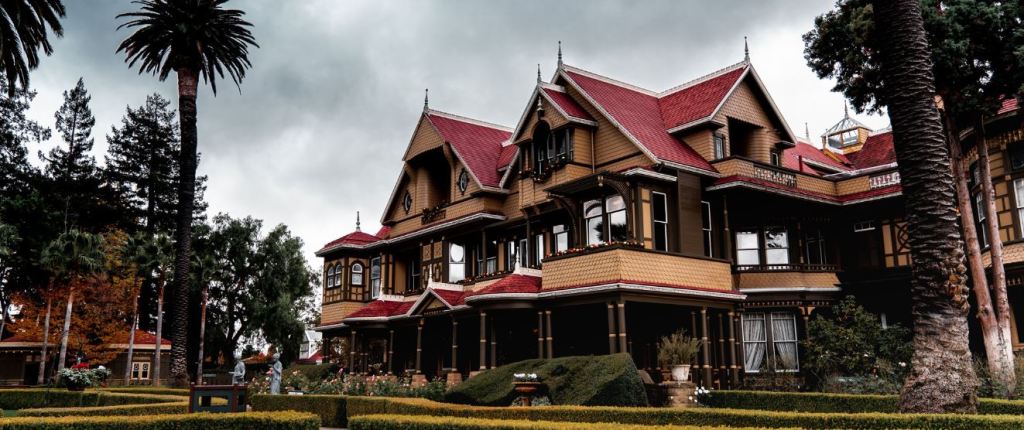
During Victorian times, it was thought that people who were emotionally or physically ill must be possessed by a demon. People also assumed that spirits controlled all their behaviour. One could buy a witch’s services to invoke the spirits, cast spells, and break curses. It was also though that people had little control over their destiny, because it was controlled by good and evil spirits and by “fate.” In fact, these assumptions were so strongly held that they could literally result in death or extent one’s life. Everyone had accepted that Sarah L. Winchester was going to die and they were afraid to go near her. Supposedly she and her family and her fortune were being haunted by spirits killed by the Winchester riles. The untimely deaths of her daughter and husband were caused by these spirits, and it was implied that Mrs. Winchester would be the next victim. “There is evil around here,” they said. Mrs. Winchester’s resources were virtually unlimited. Do you believe in Ghosts? Mrs. Winchester did. She started construction of an extravagant mansion for she was told she would live as long as she kept building and never stopped construction. The Winchester mansion has always been a hive for the supernatural. The unusual nature of the miles of twisting hallways being with them the internal proof o their ghostliness; and no other evidence is needed. Once you step foot inside this mysterious mansion, one will understand a ghost, or shiver over it. Halfway down the hallway, you may see primeval shadows filling the gaps in the doorways, and experience a frightful ghost of bone chilling cold air. #RandolphHarris 1 of 7
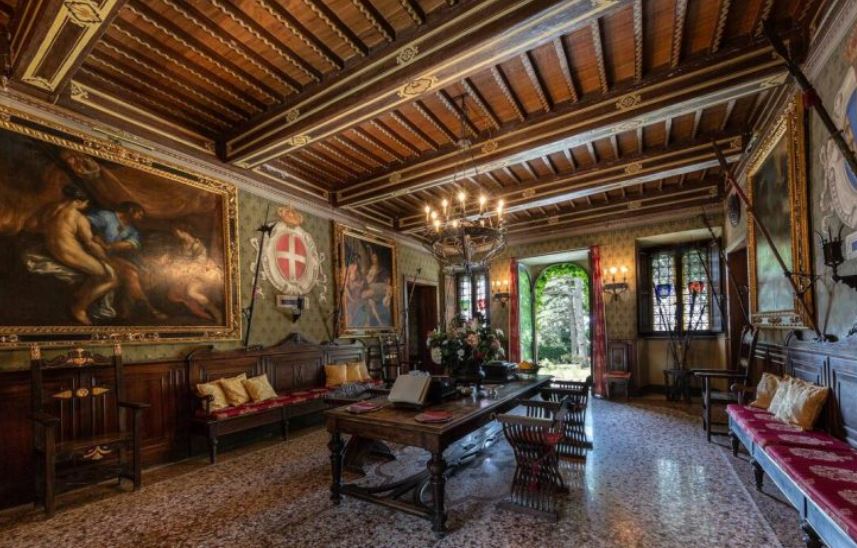
Ghosts, to make themselves manifest, require two conditions abhorrent to the modern mind: silence and continuity. What a ghost needs is echoing passages and hidden doors behind tapestry, and continuity and silence. For where a ghost has once appeared it seems to hanker to appear again; and it obviously prefers the silent hours. It was the autumn after a few of the servants had the typhoid. The house was big and gloomy; and two of the maids’ children had died. Mrs. Winchester was a kind mistress to al, and where the mistress is kind, you know, the servants are generally good humoured, so you will probably het on well enough with the rest of the houseful. It was a dull October day, with rain hanging close overhead, and the daylight was almost gone. Mrs. Winchester was wearing a full-length mink coat over a black evening gown and matching cape, black silk slippers and about $20,000 worth of jewelry. The drive wound through the woods the for a mile or two, and came out on a gravel court shut in with thickets of tall black-looking shrubs. There were no lights in the windows, and her mansion did look a bit gloomy. But, by the look of everything, Mrs. Winchester could tell that she had built the right kind of house, and that things were done handsomely. A pleasant-faced cook met her inside the carriage house and called the house maid to help her out of the carriage. Mrs. Winchester was a delicate-looking young lady, but when she smiled people felt there was nothing they would not do for her. She spoke very pleasantly, in a low voice, asking the maid if she was afraid of the Winchester mansion. #RandolphHarris 2 of 7
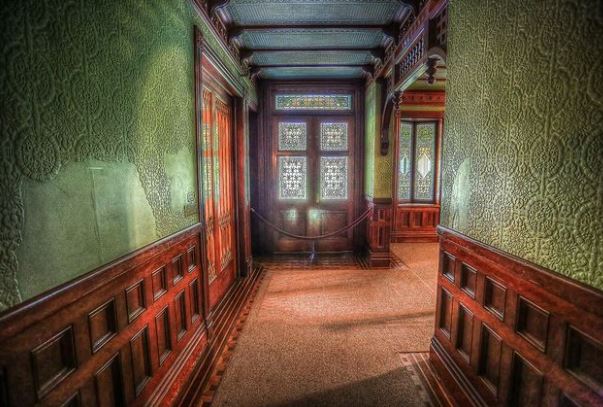
“Not with you I wouldn’t be, madam,” the maid said, and the words surprised Mrs. Winchester. Mrs. Winchester seemed pleased at that. “I am tired tonight, but I shall dine in the Venetian dining room,” Mrs. Winchester said. It was one of her favourite rooms, she loved all the mahogany wood which adored the walls, floor, and ceiling, and that fact that there were two fireplaces in the room, made a meal like a romantic evening. The servants all liked Mrs. Winchester. She had a friendly word for every one of them. The servant said very little about Mrs. Winchester. No one had anything to complain about. They knew what loneliness she must have felt, but she was very thankful for the quiet and the good of the country air. Only on the finest days did she walk out on the balcony on the fourth floor. The season was soft and unwholesome, and in January there was a long spell of rain. Once or twice, in the long rainy night, one could hear noises in the room where the door-to-nowhere was located; but it was nonsense, of course, and the streaming light from the stained-glass windows drove out such notions in the daylight. One morning, the maid went to town for some shopping. She ran into a friend she had not seen in years. When Agnus mentioned where she was living, her friend rolled her eyes and opened her mouth as if she was in a state of shock. “What! You are staying in the Winchester mansion?” “Oh, but I do not mind keep such a large house,” Angus said. “My dear, you will not stay there long.” #RandolphHarris 3 of 7
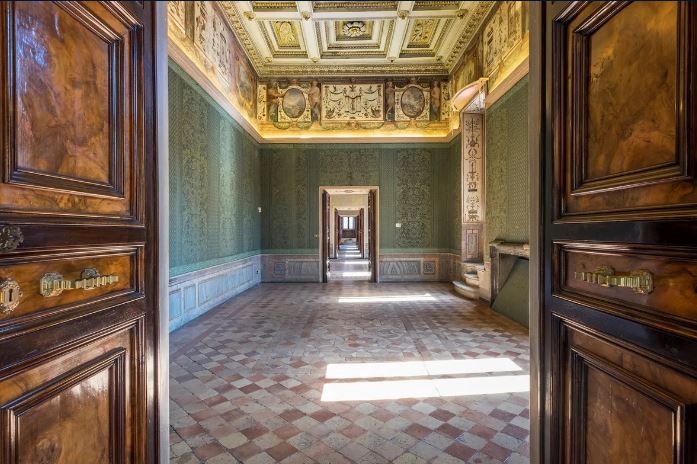
Angus’s friend shook her head. “All I know is that Mrs. Winchester has had 7 maids in the last six months, and the last one, who is a friend of mine, told me nobody could stay in the house.” “Did she say why?” Agnus asked. “No—she would not give me her reason. But she says to me, ‘it is not worthy it.’” Agnus knew it was all idle gossip. However, there words stuck in her head and there was something about the house—she was sure of it now. Mrs. Winchester dined alone, as usual that evening. The prophets said something terrible was going to happen. Mrs. Winchester felt nervous. The rain had begun again, and the drip, drip, drip seemed to be dropping into her brain. Retired to her chambers and laid there awake, listening to it. After a while she slept; but suddenly a loud noise wakened her. There was some jangling through the darkness. She was just beginning to huddle on her clothes when she heard another sound. This time it was the locked door-to-nowhere. The door was opening and closing. She heard the sound distinctly, and it frightened her so that she stood stick still. Then she heard a footstep hurrying down the passage toward the main house. The floor being carpeted, the sound was very faint, but she was quite sure it was a woman’s step. Mrs. Winchester turned cold with the thought of it, and for a minute or two she durst not breathe or move. Then she came to her sense. Mrs. Winchester said to herself, “someone left that room just now and ran down the passage ahead of me.” But she heard nothing and saw nothing: all was dark and quiet as the grave. #RandolphHarris 4 of 7
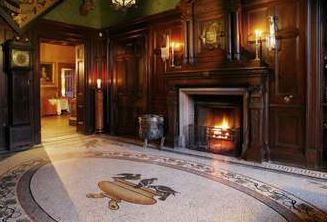
When Mrs. Winchester reached her bedroom door the silence was so deep, she thought she was dreaming. Then a panic seized her. To her astonishment the door was opened, and there was the little ghost. The ghost was that of a girl named Emma who died at the age of thirteen a decade earlier. This little girl and her friends were playing hide and seek on Mrs. Winchester’s estate. In these days, she had a pound and one of the girls decided to hide in the pound, but found herself unable to resurface. Most of the group of kids left, the fruit orchard. They just assumed Emma had vanished into thin air. Unfortunately, she drowned. But the ghost of the little girl was not ready to leave Mrs. Winchester alone. Dripping wet, the apparition left watery food prints on the floor as she came closer and closer to Mrs. Winchester. The specter’s words left Mrs. Winchester feeling distraught and she tried to flee, but at the bottom of the stairs, she met her ethereal visitor. The girl beckoned Mrs. Winchester. “Mrs. Winchester,” the girl said, “true witchcraft involves a pact with the devil.” There was no more sleep for Mrs. Winchester that night. The idea took such hold on her that she dropped breathless into a chair before her. And she was thankful when the daylight came. The maid stopped to see what was wrong, and was working on pouring Mrs. Winchester a cup of tea, when suddenly, the pale, dripping wet little girl appeared in the passage way. #RandolphHarris 5 of 7
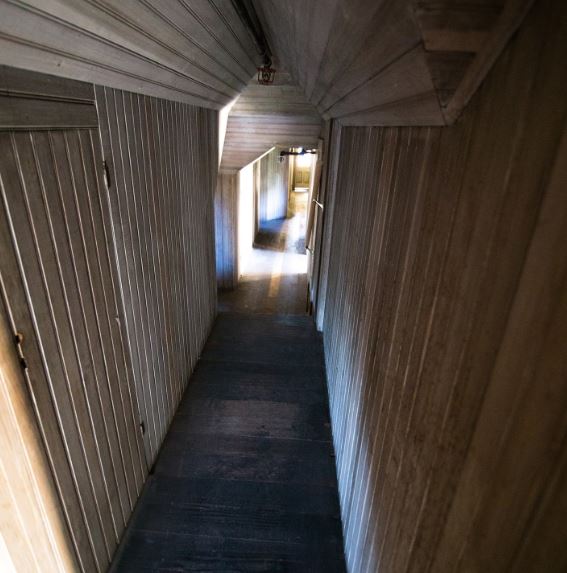
Mrs. Winchester stood up, cold all over, and ran out of the kitchen. Her heart seemed to be thumping in the top of her head, and she felt as if she should never get away from the look in the eyes of the apparition of Emma. Although Mrs. Winchester never claimed to be a witch, she may have been a hereditary witch. Her powers and feelings grew stronger as she became an adult so much so that her clairvoyance and mediumship became very accurate. In the privacy of her own home, Mrs. Winchester performed the kind of magic that had been handed down through the centuries and that is how she came up with the ideas for her estate. The study of the occult had become a lifetime’s endeavour for her. It is true that our ancestors worshipped Old Gods but they were not all witches. Witches and warlocks use primitive energy which attempts to fulfill itself on a basic level. During Victorian times, covens were springing up everywhere—American, Canada, Australia, and all over Europe. Society’s fear of witches was matched by the witches’ fear of society. Most witches preferred to meet outdoors for their festivals, in some secluded spot selected for its historical associations and generally related to the pagan worship of the Earth, the sun, the moon, and the stars. With her observation towers and miles of her mansion creating a labyrinth over the Earth, along with the grooves of trees, Mrs. Winchester’s mansion was a center of natural energy that in modern terms is described by witches as magical. Just as a water-diviner—who would have been called a “witch” in an earlier age—sought power vibrations from deep in the Earth, so witches drew on this energy as they performed their rituals. #RandolphHarris 6 of 7
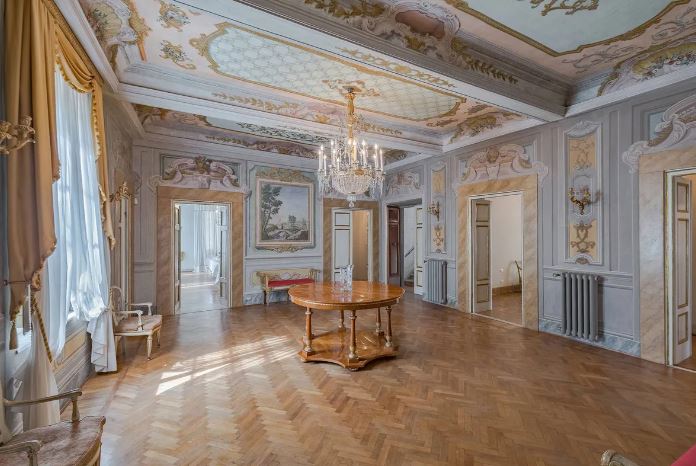
Mrs. Winchester’s mansion is a representation and memorial of the search for “power centers” in many ways. Thus if it is to be accepted that modern witchcraft is indeed a proper descendant of the old religion. Most religions include a good deal of invention. Paganism provides its followers with a traceable history of gods whom they could worship and a tradition of primitive ritual they could copy. This was their interpretation of primitive sacrificial magic which they, and sorcerers of the first millennium, could copy and develop as their own. Now, as Mrs. Winchester once did, let us try to tap into the Earth’s energy—the sun’s power, the moon’s cycles. Welcome Spirits of Sarah L. Winchester and William W. Winchester, O most noble queen and king! I say thou art welcome unto be, because I have called thee through Him who has crated Heaven, and Earth, and Hell, and all that s in them contained, and because also thou hast obeyed. By that same power by the which I have called thee forth, I and thank you for blessing me with your power and presence within this temple of counter creation. I am one who seeks ascent upon the astral plane which rises above influence. I seek to ascend beyond the confines of spiritual enslavement by the powers of counter creation! Bless this sacrifice which will be given in your honour and ignite this sacred vital force with the powers of the Divs which come forth from the Black Sun Angra Mainyu! As surely as this vital force is shared with this altar of ancient magick shall become the physical anchor of all the powers of the Universe upon this Earth. Mr. and Mrs. Winchester, open the gates within allowing me to be transformed from man to Div! I bind thee, that thou remain affably and visibly here before this Circle so constant and so long as I shall have occasion for thy presence; and not to depart without my license until thou hast duly and faithfully performed my will without any falsity. BY THE PENTACLE OF SOLOMON HAVE I CALLED THEE! GIVE UNTO ME A TRUE ASNWER! #RandolphHarris 7 of 7
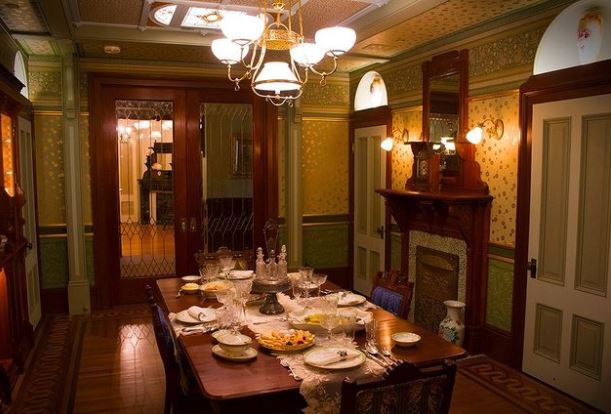
Winchester Mystery House

Only two weekends left! Step back in time to a Victorian Christmas with the “Holidays with the Historian” tour. Led by Janan Boehme, Winchester Mystery Houses’ historian and Victorian customs expert, this special tour of the mansion includes Victorian holiday traditions, caroling and a special holiday treat in one of Sarah’s formal rooms. Victorian attire is encouraged! Tickets going fast🎄
🎟 link in bio. https://winchestermysteryhouse.com/

No Technological Fix Can Solve the Long-Term Problem of Population Growth

Closely related to the problem of exploitation and use, even though even more complicated, is the problem of authority in the twenty-first century man. Authority refers to an interpersonal relation in which one person looks upon another as someone superior to one. When we consider time, the difference is again either between the instinctive and the intellectual centers or between the moving and the intellectual. However, we are so accustomed to these phenomena that we rarely think how strange and incomprehensible they are. Of course, for a man who have never thought about himself and never tried to study himself, there is nothing strange in this or in any thing else. However, in reality, from the point of view of ordinary physiology, these phenomena look almost miraculous. A physiologist knows how many complicated processes must be gone through between swallowing cranberry juice or a glass of water and feeling its effects. Every substance entering the body by the way of mouth has to be analyzed, tried in several different ways, and only then accepted or rejected. And all this happens in one second or less. It is a miracle, and at the same time it is not. For, it we know the difference in the speed of centers and remember that the instinctive center, which has to do this work, has 30,000 times more time than the intellectual center by which we measure our ordinary time, we can understand how it may happen. It means that the instinctive center has not one second, but about eight hours of its own time for this work, and in eight hours this work can certainly be done in an ordinary laboratory without any unnecessary haste. So our idea of the extraordinary speed of this work is purely an illusion which we have because we think that our ordinary time, or the time of the intellectual center, is the only time which exists. #RandolphHarris 1 of 20

Therefore, time has a sense of authority. Now, we must try to understand another characteristic of centers in which will later give us very good material for self-observation and for work upon ourselves. It is supposed that each center is divided into two parts, positive and negative. This division is particularly clear in the intellectual center and in the instinctive center. All the work of the intellectual center is divided into two parts: affirmation and negation; yes and no. In every moment of out thinking, either one outweighs the other or they come to a moment of equal strength in indecision. The negative part of the intellectual center is as useful as the positive part, and any diminishing of the strength of the one in relation to the other results in mental disorders. In the work of the instinctive center the division is also quite clear, and both parts, positive and negative, or pleasant and unpleasant, are equally necessary for a right orientation in life. Pleasant sensations of taste, smell, touch, temperature, warmth, coolness, fresh air-all indicate conditions which are beneficial for life; and unpleasant sensations of bad taste, bad smell, unpleasant touch, feeling of oppressive heat or extreme cold, all indicate conditions which can be harmful to life. It may definitely be said that no true orientation in life is possible without both pleasant and unpleasant sensations. They are the real guidance of all animal life on the Earth and any defect in them results in a lack of orientation and a consequent danger of illness and death. Think how quickly a man would poison himself if he lost all sense of taste and smell, or if, in some unnatural way, he conquered in himself a natural disgust of unpleasant sensations. #RandolphHarris 2 of 20

In the moving center the division into two parts, positive and negative, has only a logical meaning; that is, movement as opposed to rest. It has no meaning for practical observation. In the emotional center, at a first glance, the division is quite simple and obvious. If we take pleasant emotions such as joy, sympathy, affection, self-confidence, as belonging to the positive part, and unpleasant emotions such as boredom, irritation, jealousy, envy, fear, as belonging to the negative part, things will look very simple; but in reality they are much more complicated. To begin with, in the emotional center there is no natural negative part. The greater part of negative emotions are artificial; they do not belong to the emotional center proper and are based on instinctive emotions which are quite unrelated to them but which are transformed by imagination and identification. This is the real meaning of the theory of James and Lange, at one time very well known. They insisted that all emotions were really sensations of changes in inner organs and tissues, changes which took place before sensations, and were the actual cause of sensations. That really meant that external events and inner realizations did not produce emotions. External events and inner realizations produced inner reflexes which produced sensations; and these were interpreted as emotions. At the same time, positive emotions such as “love,” “hope,” “faith,” in the sense in which they are usually understood—that is, as permanent emotions—are impossible for a man in the ordinary states of consciousness. They require higher states of consciousness; they require inner unity, self-consciousness, permanent “I,” and will. #RandolphHarris 3 of 20

Positive emotions are emotions which cannot become negative. However, all our pleasant emotions such as joy, sympathy, affection, self-confidence, can, at any moment, turn into boredom, irritation, envy, fear, and so on. Love can turn into jealousy or fear to lose what one loves, or into anger and hatred; hope can turn into daydreaming and the expectation of the impossible things, and faith can turn into superstition and a weak acceptance of comforting nonsense. Even a purely intellectual emotion—the desire for knowledge—or an aesthetic emotion—that is, a feeling of beauty or harmony—if it becomes mixed with identification, immediately unites with emotions of a negative kind such as self-pride, vanity, selfishness, conceit, and so on. So we can say without any possibility of mistake that we can have no positive emotions. At the same time, in actual fact, we have no negative emotions which exist without imagination and identification. Of course it cannot be denied that besides the many and varied kinds of physical suffering which belong to the instinctive center, man has many kinds of mental suffering which belong to the emotional center. He has many sorrows, griefs, fears, apprehensions, and so on which cannot be avoided and are as closely connected with man’s life as illness, pain, and death. However, these mental sufferings are very different from negative emotions which are based on imagination and identification. These emotions are a terrible phenomenon. They occupy an enormous place in our life. Of many people it is possible to say that all their lives are regulated and controlled, and in the end ruined, by negative emotion. #RandolphHarris 4 of 20

Negative emotions do not help out orientation, they do not give us any knowledge, they do not guide us in any sensible manner. On the contrary, they spoil all our pleasures, they make life a burden to us, and they very effectively prevent our possible development because there is nothing more mechanical in our life than negative emotions. Negative emotions can never come under our control. People who think they can control their negative emotions and manifest them when they want to, simply deceive themselves. Negative emotions depend on identification; if identification is destroyed in some particular case, they disappear. The strangest and most fantastic fact about negative emotions is that people actually worship them. I think that, for an ordinary mechanical man, the most difficult thing to realize is that hos own and other people’s negative emotions have no value whatever and do not contain anything noble, anything beautiful, or anything strong. In reality negative emotions contain nothing but weakness and very often the beginning of hysteria, insanity, or crime. The only good thing about them is that, being quite useless and artificially created by imagination and identification, they can be destroyed without any loss. And this is the only chance of escape that man has. If negative emotions were useful or necessary for any, even the smallest, purpose, and if they were a function of a really existing part of the emotional center, man would have no chance because no inner development is possible so long as man keeps his negative emotions. #RandolphHarris 5 of 20

In life we need to have great control of our emotions. When people are angry, they may not realize how unlike themselves they are being. The goal, therefore, is to prevent from becoming easy by using strategies. The general principle for sequential-moves in life is that each individual should figure out the other individuals’ future responses, and use them in calculating one’s own best current move. So important is this idea that it is worth codifying into a basic rule of strategic behaviour. Look ahead and reason back. Anticipate where your initial decisions will ultimately lead, and use this information to calculate your best choice. In the Charlie Brown story, this was easy to do for anyone (except Charlie Brown). He had just two alternatives, and one of them led to Lucky’s decision between two possible actions. Most strategic situations involve a longer-sequence of decisions with several alternatives at each, and mere verbal reasoning cannot keep track of them. Successful application of visual aid can be helpful in coming up with a plan. For instance, travelers from Princeton to New York have several choices. The first decision point involves selecting the mode f travel: bus, train, or car. Those who drive then have to choose among the Verrazano Narrows Bridge, the Holland Tunnel, the Lincoln Tunnel, and the George Washington Bridge. Rail commuters must decide whether to switch to the PATH train Newark or continue to Penn Station. Once in New York, rail and bus commuters must choose among going by foot, subway (local express), bus, or taxi to get to their final destination. The best choice depends on many factors, including price, speed, expected congestion, the final destination in New York, and one’s aversion to breathing the air on the Jersey Turnpike. #RandolphHarris 6 of 20

Drawing a road map would help. One which describes one’s options at each junction, looks like a tree with its successively emerging branches—hence the term “decision tree.” The right way to use such a map or a tree is not to take the route whose first branch looks best and then “cross the Verrazano Bridge when you get to it.” Instead, you anticipate the future decision and use them to make your earlier choices. For example, if you are commuting to the World Trade Center, the PATH train would be superior to driving because it offers a direct connection from Newark. We can use just such a tree to depict the choices in a life strategy, but one new element enters the picture. Life has many people and variables. At various branching points along the tree, it may be the turn of different players to make the decision. A person making a choice at an earlier point must look ahead, not just to one’s own future choices, but to those of others. One must forecast what the others will do, by putting oneself figuratively in their shoes, and thinking as they would think. General Electric (GE) makes electricity-distribution equipment in Salisbury, North Carolina. The plant is a model that GE wants to replicate at three hundred other factory locations. In the past, if a piece of equipment malfunctioned, a machine operator like Bob Hedenskog would have had to report it to his foreman and wait for help. #RandolphHarris 7 of 20

Today Hedenskog makes the necessary decisions himself. He telephones a GE engineer in Plainville, Connecticut, for advice and takes responsibility for repair. On his own initiative he has ordered $40,000 worth of replacement parts, which he anticipated his machinery would need. He is part of a group of about seventy-five employees who, through committees of their own, make production, scheduling, and even some hiring decisions. Together they have cut worker-hours per unit of production by two thirds, and have slashed the time to customer delivery by 90 percent. Some workers quit when this system was introduced, explaining that they did not want to carry the additional responsibility it entailed. However, employee turnover has fallen from 15 percent in the first year of the new system’s operation to 6 percent four years later. Similar stories are flowing in from all parts of the high-tech World. Ford Australia recently built its EA Falcon with an innovative work system that, contradicts the traditional Western way of assuring quality—namely, that management check the output of workers who are following engineers’ minutely detailed instructions. Ford concluded that detecting defects first and correcting them later was not working. Only by allowing workers more discretion—no longer preprogramming their every move—could the goal of zero defects be approached. And this means recognizing the power of the operators right down to the shop floor level. #RandolphHarris 8 of 20

At the Mazda Motor Manufacturing factory Huntsville, Alabama, ordinary plant workers get three weeks of training, including session on psychology. A small group of new hires are given six minutes to dream up twenty-five ideas on how to improve the common garden-variety bathtub, and then get only two minutes to come up with thirty more suggestions. Mazda is trying to loosen people up and unblock them. After the initial three weeks, workers spend additional weeks on more job-specific training. Mazda estimates it spends $15,000 to hire and train the average employee. These increasingly commonplace accounts underscore the historic shift currently taking place from “manufacture” to “mentifacture”—the progressive replacement of muscle by mind in the wealth creation process. However, by giving employees more say-so over the details of their work is only the tip of a more significant iceberg. To put this power shift into perspective, it is helpful to read the early history of the industrial revolution in England and Western Europe, and the complaints made by the earliest employers about the fecklessness, unreliability, drunkenness, and ignorance of the agrarian people from whom the early factor work force was drawn. Every society imposes it own distinct work discipline or “regimen.” Workers are supposed to obey certain rules, often unspoken. Their performance on the job is monitored, policed, and a structure of power is in place to enforce the rules. #RandolphHarris 9 of 20

If First Wave or agricultural societies, most peasants toiled endlessly, yet barely survived. This agrarian work force, organized into family production teams, followed a regimen set by the rhythms of season, sunrise, and sunset. If a peasant was absent or lazy, his own relatives disciplined him. They might ostracize him, beat him, or cut his food rations. The family itself was the dominant institution in society, and, exceptions aside, it imposed the work regimen. Its dominance over the individual family member was reinforced by social pressures from the villagers. Local elites might hold the power of life and death over the peasanty. Tradition might restrict social, pleasures of the flesh, and religions behaviour. The less affluent often suffered the cruelest hunger and poverty. And yet in their daily work lives they seemed less minutely restricted than those in the small but growing industrial labour force. The agrarian work regimen had lasted for millennia, and until only a century or two ago, the vast majority of human beings knew no other and assumed it to be the only logical and enteral way of organizing work. Even the most positive aspects of one’s work situation do not alter the fact that one’s work is alienated and only to a limited extent a meaningful expression of one’s energy and reason; furthermore, the trend for increasing automatization of industrial work diminishes this latter factor rapidly. Eventually, one is under the influence of our whole cultural apparatus, the advertisements, movies, television, newspapers, just as everybody else, and can hardly escape being driven into conformity, although perhaps more slowly than other sectors of the population. What holds true for the industrial worker holds true also for the farmer. #RandolphHarris 10 of 20

We describe a complex system, whether adaptive or not, as a population of agents. The agents are instances of various possible types. And the population has mechanisms that create, destroy, and transform the agents. Death is the most obvious transforming mechanism, destroying agents and possibly destroying a type if all its instances die, as happened to the dinosaurs. Birth creates new agents. Death and birth processes apply not only to biological entities but also to organizational entities such as companies and political units. In the simplest case, copying can be understood as the most primitive birth process. When it functions without error, the result is an increase in the frequency of one of the population types, whether the population is virus particles or documents. Copying is seldom perfect, however, although in the realm of digital technology it can now come very close. In the genetic case, mutation is a copying error that serves as an important source of variety. It can function to create new types, as well as to alter the relative frequencies of existing types. It is striking that many kinds of Complex Adaptive Systems have mechanism that function similarly to genetic mutation. For example, temperature in systems in which the elements have energy levels, such as the annealing of metals, also functions to “mutate” arrangements of atoms into new configurations. Process errors in factories and laboratories can have this same impact of creating new types. The ink-jet principle was accidentally discovered when a research laboratory syringe malfunctioned. There are many other processes that introduce “noise” into operations of copying or re-creation, thereby producing variants that are sometimes highly novel. #RandolphHarris 11 of 20

These mechanisms tend to have certain properties in common. They introduce variation into a system from uncontrolled forces external to the system, such as radiation, external heat, or disruptions of quality control. As a result of the uncorrelated, exogeneous source of variation in types, most of the variants introduced into orderly systems by such processes are deleterious—with occasional small improvements and a sprinkling of very rare spectacular advances. Exploring for new possibilities by nearly random variation can therefore be expensive. In fact, random variation is even slower than enumerating all the possibilities, since random generation will add duplication. With ransom variation, you examine each piece in the haystack and put it back if not the needle, possibly to draw it again later. By contrast, there are a number of other mechanisms that produce new types or change in type frequencies in a more targeted, less random, fashion. They tend to be endogenous, triggered by events internal to the system in which they operate. In particular, selection creates copies of some agents or strategies from a population an eliminates copies of others. Simple selection has an important effect. Over time, it reduces the variety of types in a finite system, although in the beginning it may increase the relative frequency of some rare types. Neither copying nor deletion generates novel types (except through errors in copying). So when a personal computer manufacturer offers two models of its product, and consumers buy one enthusiastically, many new copies of the preferred design will be made. This is a kind of selection process. It will gradually result in the copies of the other design being a rare type in the product population, even though most of them may continue to function. If consumers abandon the machines of the less preferred design, their actions function like death in biological populations, reducing even further the relative frequency of that type. #RandolphHarris 12 of 20

When an athlete decides to greet fellow players with a “high five” instead of a traditional handshake, the choice of behaviour is a form of selection, in this case selection by imitation. The agent replaces a current strategy with a new one copied from the actions of another agent—perhaps an athlete who is highly admired. No new agents are created, but one changes type. A succession of similar decision will transform the culture of greeting in the athlete population. In selection mechanism there are criteria at work in determining what types are copied and what types are replaced. Consumers evaluate one version of a product as being more desirable than another version. Athlete do the same for greeting gestures. Such evaluations require some kind of attribution of credit, either explicit (“the product is highly rated by a consumer magazine”) or implicit (popular athletes use the new greeting). We will devote more attention to the attribution of credit later on, but now is a good time to point out the relationship between the attribution of credit and the level of variety. If the selection among types favours more common types, then a type with a slightly frequent edge can grow quickly to become predominant in the population. The convention examples of this dynamic are the competition between the DVD and the BlueRay systems, and the competition between the QWERTY and Dvorak keyboard arrangements. Economists often refer to the benefits that accrue to an individual user from the sheer numbers of other users as network externalities. #RandolphHarris 13 of 20

These examples illustrate their force in both accelerating convergence and reducing variety. When the type that is “in the lead” is best, and conditions are not changing, rapid convergence on standard is desirable. The convergence on a single type of video image player, or keyboard can unleash considerable benefits, especially where there are strong economies of scale. There can be more movies on video and more new computers introduced as a result. However, as we pointed out earlier, in changing conditions, or when types so far available are not the best possible, the loss of variety can become a serious problem. Intensive development of the possibilities inherent in BlueRay and Dvorak typing does not occur. New video player formats or keyboard layouts do not survive in the marketplace, even if they might be superior alternatives. In the industrial past, Britain, with an empire “on which the sun never set,” might buy cotton at depressed prices from one of its backward agrarian colonies—Egypt, say. It could ship the cotton to factories in Leeds or Lancaster, turn the cotton into clothes, then send these higher-value-added goods right back and sell them to Egyptians at artificially high process. The resultant “superporifts” were returned to England, where they helped finance additional factories. Britain’s great navy, troops and administrators protected its colonial markets from munity within and competition without. #RandolphHarris 14 of 20

Of course, this caricatures a far more complex process. However, a key to the imperial game was to keep the advanced technology of the time—textile factories, for example—in Leeds or Lancaster. Today, by contrast, as advanced economies become more knowledge-based, factories count for less. What increasingly matters is the knowledge on which they depend. Knowledge, however, does not stay put, as the growing Worldwide theft of intellectual property shows. And America, at least for now, is losing the fight to protect it. Nor is all economically valuable knowledge technological. Thus Alain Minc, the controversial former chairman of Le Monde, tears apart the view that the United States of America is anything like the Rome or Great Britain of the past. It is not an imperial power but, as he puts it, the first “World country.” And the mission of its universities, unlike that of Oxford and Cambridge, is not to train a national elite. It is, in his words, to transmit knowledge that would mode “the future leaders of the World.” Writing shortly before the post-9/11 tightening of U.S.A. immigration controls, Mnic points out that in the previous fifty years the number of foreign students in the United States of America multiplied seventeen times. He might have added that an increasing percentage of these now return home armed with the latest scientific and technological knowledge in fields as advanced as large-scale network integration, nanotechnology and genetics—not exactly what imperialists and neocolonialists were known for in the past. #RandolphHarris 15 of 20

Worldwide food production has been outpacing population growth, yet hunger continues. In recent years, famine has often had political roots, as in Ethiopia where the rulers aim to starve opponents into submission. Such problems are beyond a simple technological solution. To avoid getting headaches, we will also ignore the politics of farm price-support programs, which raise food prices while people are going hungry. All we can suggest here is a way to provide fresh food at lower cost with reduced environmental impact. For decades, futurists have predicted the coming of synthetic foods. Some sort of molecular-manufacturing process makes such things with lose costs, but to some they prefer natural grown food and produce. Most agriculture today is inefficient—an environmental disaster. Modern agriculture is famed for wasting water and polluting it with synthetic fertilizers, and for spreading herbicides and pesticides over the landscape. Yet the greatest environmental impact of agriculture is its sheer consumption of land. The prairies of the West disappeared under the plow, and the plowed lands are becoming subdivision for housing. Around the World, this trend continues. The technology of the ax, the fire, and the plow is chiefly responsible for the destruction of rain forests today. A growing population will tend to turn every productive ecosystem into some sort of farmland or grazing land, if we let it. No technological fix can solve the long-term problem of population growth. Nonetheless, we can roll back the problem of loss of land, yet increase food supplies. One approach is intensive greenhouse agriculture. #RandolphHarris 16 of 20

Every kind of plant has its optimum growing conditions, and those conditions are far different from those found in most farmland during most of the year. Plants growing outdoors face insect pests, unless doused with pesticide, and low levels of nutrient, unless doused with fertilizer. In greenhouses patrolled by “nanoflyswatters” able to eliminate invading insects, plants would be protected from pests and could be provided with nutrients without contaminating the groundwater or runoff. Most plants prefer higher humidity than most climates provide. Most plants prefer higher, more uniform temperatures than typically found outdoors. What is more, plants thrive in high levels of carbon dioxide. Only greenhouses can provide pest protection, ample nutrients, humidity, warmth, and carbon dioxide all together and without reengineering the Earth. Taken together, these factors make a huge difference in agricultural productivity. Experiments with intensive greenhouse agriculture, performed by the Environmental Research Lab in Arizona, show that an area of 250 square meters—about the size of a tennis court—can raise enough food for one person, year in and year out. With molecular manufacturing to make inexpensive, reliable equipment, the intensive labour of intensive agriculture can be automated. With technology like the deployable “tents” and smart materials we have described, greenhouse construction can be inexpensive. Following the standard argument, with equipment costs, labour costs, materials costs, and so forth all expected to be low, greenhouse-grown food can be inexpensive. #RandolphHarris 17 of 20

What does this mean for the environment? It means that the human race could feed itself with ordinary, naturally grown, pesticide-free foods while returning more than 90 percent of today’s agricultural land to wilds. With a generous five-hundred square meters per person, the U.S of A population would require only 3 percent of present U.S.A. farm acreage, freeing 97 percent for other uses, or for a gradual return to wilderness. When farmers are able to grow high-quality foodstuffs inexpensively, in fraction of the room that they require today, they will find more demand for their land to be tended as a park or wilderness than a cornfield. Farm journals can be expected to carry articles advising on techniques for rapid and aesthetic restoration of forest and grassland, and on how best to accommodate the desires of the discriminating nature lover and conservationist. Even “unpopular” land will tend to become popular with people seeking solitude. The economics of assembler-based manufacturing will remove the incentive to make greenhouses that are poor quality, unattractive, and boxy; the only reason to build that way today is the high cost of building anything at all. And while today’s greenhouses suffer from viral and fungal infestations, these could be eradicated from plants in the same way they would be from the human body. A problem faced by today’s greenhouses—overheating—could be dealt with by using heat exchangers, thereby conserving the carefully balanced inside atmosphere. Finally, if it should turn out that a little bit of bad weather improves the taste of tomatoes, that, too, could be provided, since there would be no reason to be fanatical about sheer efficiency. #RandolphHarris 18 of 20

In consideration of the disintegrative power of Technopoly, perhaps the most important contribution schools can make to the education of our youth is to give them a sense of coherence in their studies, a sense of purpose, meaning, and interconnectedness in what they learn. Modern secular education is failing not because it does not teach who Sarah L. Winchester, William Randolph Hearst, and a thousand other people are but because it has no moral, social, or intellectual center. There is no set of ideas or attitudes that permeates all parts of the curriculum. The curriculum is not, in fact, a “course of study” at all but a meaningless hodgepodge of subjects. It does not even put forward a clear vision of what constitutes an educated person, unless it is a person who possesses “skills.” In other words, a technocrat’s ideal—a person with no commitment and no point of view but with plenty of marketable skills. Of course, we must not overestimate the capability of schools to provide coherence in the face of a culture in which almost all coherence seems to have disappeared. In our technicalized, present-centered information environment, it is not easy to locate a rationale for education, let alone impart one convincingly. It is obvious, for example, that the schools cannot restore religion to the center of the life of learning. With the exception of a few people, perhaps, no one would take seriously the idea that learning is for the greater glory of God. It is equally obvious that the knowledge explosion has blown apart the feasibility of such limited but coordinated curriculums as, for example, a Great Books program. #RandolphHarris 19 of 20

Some people would have us stress love of country as a unifying principle in education. Experience has shown, however, that this invariably translates into love of government, and in practice becomes indistinguishable from what still is at the center of Russian and Chinese education. Some would put forward “emotional health” as the core of the curriculum. I refer here to a point of view something called Rogerian, sometimes Maslovian, which values above all else the development of one’s emotional life through the quest for one’s “real self.” Such an idea, of course, renders a curriculum irrelevant, since only “self-knowledge”—id est, one’s feelings—is considered worthwhile. Carl Rogers himself once wrote that anything that can be taught is probably either trivial or harmful, thus making any discussion of the schools unncecessary. However, beyond this, the culture is already so heavy with the burden of the glorification of “self” that it would be redundant to have the schools stress it, even if it were possible. However, it is humanity’s destiny to possession an ability to discovery of knowledge. Moreover, the arts and humanities must be part of our unending quest to gain a unified understanding of nature and our place in it. Thus, to chart the ascent of man called “the ascent of humanity,” we must join art and science. However, we must also join the past and the present, for ascent of humanity is above all a continuous story. It is, in fact, a story of creation, although not quite the one that the fundamentalists fight so fiercely to defend. It is the story of humanity’s creativeness in trying to conquer loneliness, ignorance, and disorder. And it certainly includes the development of various religious systems as a means of giving order and meaning to existence. In this context, it is inspiring to note that the Biblical version of creation, to the astonishment of everyone except possibly the fundamentalists, has turned out to be a near-perfect blend of artistic imagination and scientific intuition: the Big Bang theory of the creation of the Universe, now widely accepted by cosmologists, confirms in essential details what the Bible proposes as having been the case “in the beginning.” #RandolphHarris 20 of 20

Cresleigh Homes

Once you’ve lived in a #PlumasRanch home, you understand what all the fuss is about! Large kitchen islands, open floor plans, and flex spaces are hallmarks of all our designs. 🙌

Check out all the available models on our website – and come by for a tour!
#CresleighHomes
#CresleighMeadows

I Know Good and Well what You are Up to, that Book You Got is Infmaous

If you listen, you can hear the sound of the Kingdom of God in the air as no generation has ever before. Economic differences, however, are not as important as they may seem. The “good time” of society’s upper strata is the fun model for those not yet able to pay for it while earnestly hoping for that happy eventuality—and the “good time” of the less affluent strata is increasingly more surrounded around family and home entertainment. There can sometimes be differing costs from the affluent, but the quality may be very similar. Variation provides the raw material for adaption. However, for an agent or population to take advantage of what has already been learned, some limits have to be placed on the amount of variety in the system. This leads us to consider, what is the right balance between variety and uniformity. When considering the workings of major mechanisms that affect balance, we treat Complex Adaptive System as a population of agents, and we begin by assuming that the agents are not all the same. Indeed, the variety within a population is a central requirement for adaptation. The surprising dynamics that occur in complex systems are often consequences of such variety, as when a long-reigning political coalition collapses with the arrival of what seemed to be a minor new participant. And the novelty or innovation that we may want to encourage will often stem for such variety, as when ideas about unmet customer needs and ideas about new technical possibilities come together in the conception of the new product. #RandolphHarris 1 of 20
It is often tempting to assume that the agents of a system are basically all the same—all the birds in a flock, all the employees of a particular company, all the citizens of a foreign town. Such assumptions simplify subsequent analysis. So we mass-produce kitchen tables on the implicit assumption that the population of buyers are all about the same height. Manufacturers know this makes some problems for people who are actually very tall or very short, but ignoring those issues allows the manufacturers to attain production efficiencies without fears of incompatibility with standard chairs. If there are some resulting difficulties for end users, the seriously affected individuals can respond to them with custom modifications. Similarly, if an average family in a community has two children, it can be convenient for some analyses—say, of projected demand for schooling—to make forecasts by assuming that all families are the same. For many purpose, however, such an assumption would be a mistake. What if families of different ethnicity had different sizes? Then a change in neighbourhood ethnicity could change school demand even though the number of household remained constant. The designer of a new product, such as a video recorder or a bicycle, seeks a resign that most customers will use in conventional ways that will engender no usual problems. However, to design the product, its packing, and its instructions as though all its buyers will use it identically is generally not the best strategy. Designers need to anticipate multiple categories of use and then either target the new product to a single category or design it to meet multiple requirements. #RandolphHarris 2 of 20

The Complex Adaptive Systems approach, with its premise that agents are diverse, is well suited to design projects such as the video recorder and the bicycle. It builds in the default assumption that there is a variety within a population that could matter. Simplifications still can be made, of course. However, the issue of variation is at the forefront of the analysis rather than in the background. The actions available to policy maker and designers who want to shape the behaviour of a Complex Adaptive System often work not just by accommodating variety; they can also work by actually increasing (or decreasing) the variety of agents in the population, or the variety of product design ideas under discussion, or the ethnic variety of housing purchasers. Variety turns up repeatedly in complex systems as a crucial factor in their development. However, the situation is not always so simple as saying that homogeneity is bad and variety is good. In an ever-changing World, agents that are not currently best may be a resource for the future. Parts of them may be crucial at a later time. For example, monoculture takes a great risk by eliminating the genetic variety in a crop. Without genetic variety, the introduction of a new parasite can wreak havoc. Even if the environment is unchanging, if the vest agents in the population up to this moment are far from the best possible, variation in agents may be valuable. In both these cases when the World is changing or the current agents are far from the best possible, variety can have value, and homogeneity may be a hinderance. A designer or policy maker confronting a Complex Adaptive System should therefore ask a central question: What is the right balance for uniformity? #RandolphHarris 3 of 20
Focusing on variety in this way requires additional assistance to clear thought. Real families in a community or real product users can present wildly varying blends of characteristics. Some of these matter and some do not. Which characteristics matter is partly a function of what goals are being pursed. The variable heights of video recorder buyers are presumably not consequential. However, height could matter for a bicycle. Variation in ethnicity of buyers may not matter much for the design of a bicycle, but it may matter for the written instructions on how to program a new video recorder if variation in ethnicity entail differences in languages. When variety is significant, we need to be able to talk about subpopulations. We need to analyze their differences without losing track of the possibility that there are many other differences we are temporarily ignoring. Some of the potential buyers of our new video recorder may only want to play movies with it, while others might only want to record daytime shows for evening viewing. Some might be native speakers of Japanese. Some might know English as a second language. A type is a category of agents within the larger population who share some detectable combination of features. The notion of type facilitates the analysis of variety that our framework so often requires. Commonly, we distinguish types by some aspects of the agents’ properties or behaviours that are observable, either by other agents in the population or by outside analysts. #RandolphHarris 4 of 20

Examples of types: tall, average, or short customers for a consumer product; individuals who have not been infected by a particular virus, who have the symptoms of the disease, or who have recovered and are immune; molecules with a shape that matches a receptor on the surface of a group of biological cells, and molecules lacking that shape; viewers of a cable weather channel who are “forecast drop-ins,” “general-weather-interested,” or “storm obsessed”; invasive computer programs that are classified as “viruses,” “Trojans,” “droppers,” or “worms.” It is possible that some computer viruses may even be naturally manifested in outer space because of interferences from the electromagnetic field. Many type distinctions are endogenous—actively developed and used within the population by member agents themselves. In our disease example above, the general public may detect two types, the symptomatic and asymptomatic. Using these types, an individual agent may gain tremendously because its action can be conditional. Contacts with those who are obviously symptomatic can be avoided, significantly reducing the chances of acquiring the infection. However, notice that this works only if the individual can use symptoms to pick out those to be avoided while interacting with the rest. Rarely can a person make such discriminations perfectly. The symptoms a person can detect are, after all, only approximate indicators for the actual condition of other individuals. (Some with the flu may be trying valiantly to get through the day without appearing sick.) So the concept of detectably symptomatic individuals induces types in the population that are correlated with benefit to the individual, but not perfectly correlated. #RandolphHarris 5 of 20
The spread of the infectious microbe induces an observer of the system, such as a public health official, to subdivide the population into three types: those who have not been infected but can be, those infected, and those who have recovered and have immunity. Types are not given from on high but are defined by actors within the system. To take another example, police would like to pick out drivers they cannot be sure of that intoxication before an accident occurs. Blood levels of alcohol cannot be observed as traffic passes by. Erratic driving can be observed, so those cars can be stopped. Some stopped cars with a high-blood alcohol driver will pass by. The police officer’s test, erratic driving, divides the population into types, those who can be stopped and those who cannot. It predicts blood alcohol levels only imperfectly. For example, some drivers may perform unsafely with blood alcohol concentrations below the legal limit (which may cause the driver to be cited for driving under the influence, which can lead to them being arrested). Here we have a tangled set of categories used by the actors within the system. Each of the working categories (or type definitions) only approximates the issues of actual concern. Many examples of complex systems have the property that the population contains at least some agents, such as the disease-avoiders or police officers, whose actions are conditional on aspects of the other agents that they can detect. #RandolphHarris 6 of 20

At a border crossing the detection of a fraudulent passport can spell the difference between freedom and prison. This is an example of how a small difference related to a condition can or trigger a large difference in subsequent actions. For this reason, conditional action can result in consequences that are not smoothly proportional to causes, so-called nonlinear dynamics. So far we have used examples in which agents in the population or outside analysts employ similar distinctions to divide populations into types. Distinctions can also be made that are completely external to the population. They may be suggested because they correspond usefully to some differences in the population that matter, even though the actions of agents in the population may not necessarily be conditional on the differences. So, for example, a product designer might want to suggest that there could be two types of buyers for the proposed video recorder: perhaps “movie renters” and “time shifters.” The designer need not content that real consumers classify themselves this way. The distinction may be offered to highlight that these different kinds of users have different kinds of uses have different needs for the controls on the device. A pure movie watcher might have no need for the elaborate systems to program recording that begins and ends automatically, nor even for a clock. A pure time shifter might need those capabilities and many more. Designers might debate if these are useful types to distinguish, whether or not consumers make the proposed distinction themselves. #RandolphHarris 7 of 20
And though real consumers might rarely fall into one of the pure categories, the distinction may help designers think about the potential market. Perhaps they will want to consider introducing a cheaper, simplified machine that only plays prerecorded films. In the surprising World of contemporary consumer electronics, the low-end version might just be the full-featured machine with some features disabled. This can be a way of charging different types of customers different prices. Such price discrimination can rise profits even when the more cost-effective machines cost somewhat more to manufacture with turned-off features. Whether this will work requires designers and marketers to analyze the detailed pattern of consumer types. Here are the five important aspects to the notion of types: Types are generally defined by some detectable features of the agents in the population; many other dimensions of variety in the population may persist in the population without being recognized as types by the agents themselves; the features that distinguish types usually provide only an imperfect indicator for the actual differences in action among the agents in the population; types are often endogenous in complex system—agents within the population may detect types and act conditionally (and even change type definitions if the system is adaptive); and types can be exogenous as well—defined only in the minds of those analyzing a Complex Adaptive System the outside. The notion of type will help us to analyze the sources and contributions of variety by considering how systems create, destroy, and modify types. #RandolphHarris 8 of 20

Conduct a poll around the globe, and you will find a vast number of people who believe that America’s great wealth has been squeezed or stolen from the World’s poor. This assumption can often be found behind the slogans chanted by anti-American and anti-globalization protestors. However, the same questionable premise also lies behind a recent torrent of seemingly scholarly books and articles claiming that the United States of America is new Rome—the latest example of classical imperialism—or that it is, as the Chinese prefer to put it, the new hegemon. The problem with these analogies is that they do not fit the twenty-first century model of the United States of America. If America is such a rich and powerful hegemon, how come nearly 33 percent of the U.S. Treasury bonds were owned by other nations as of November 2022? Was that the case when Rome ruled much of the World, or when England did? Why has not the United States of America sent permanent settlers to the various countries that it presumably dominates? Rome did. The Spaniards did. The British, French, Germans and Italians did, all across Africa. The Japanese did in Asia. Exactly what America university trains an elite class of colonial administrator to spend their lives ruling over remote regions, as Oxford and Cambridge did? And where is there a clamour among Americans for a long-term military occupation of another country? The United States of America is powerful and surely makes its weight felt around the World. However, there is something wrong about the way America—and the World—is pictured and understood here. #RandolphHarris 9 of 20
Critics are still thinking in terms of the agrarian and industrial past. With the increased of knowledge-intensivity, the entire global game has different rules and different players. And so has the future of wealth. It a recurring theme in the cartoon strip “Peanuts,” Lucy holds a football on the ground and invites Charlie Brown to run up and kick it. At the last moment, Lucy pulls the ball away. Charlie Brown, kicking air, lands on his back, and this gives Lucy great perverse pleasure. Anyone could have told Charlie that he should refuse to play Lucy’s game. Even if Lucy had not played this particular trick on him last year (and the year before and the year before that), he knows her character from other contexts and should be able to predict her action. At the time when Charlie is deciding whether or not to accept Lucy’s invitation, her action lies in the future. However, just because it lies in the future does not mean Charlie should regard it as uncertain. He should know that of the two possible outcomes—letting him kick and seeing him fall—Lucky’s preference is for the latter. Therefore he should forecast that when the time comes, she is going to pull the ball away. The logical possibility that Lucy will let him kick the ball is realistically irrelevant. Reliance on it would be a sort of remarriage, a triumph of hope over experience. Charlie should disregard it, and forecast that acceptance will inevitably land him on his back. He should decline Lucy’s invitation. #RandolphHarris 10 of 20

The essence of a game of strategy is the interdependence of the players’ decisions. These interactions arise in two ways. The first is sequential, as in the Charlie Brown story. The players make alternative moves. Each player, when it is one’s turn, must look ahead to how one’s current actions will affect the future actions of others, and one’s own future actions in turn. The second kind of interaction is simultaneous, as in the prisoners’ dilemma tale we discussed in the past. The players act at the same time, in unenlightenment of the others’ current actions. However, each must be aware that there are other active players, who in turn are similarly aware, and so on. Therefore each must figuratively put oneself in the shoes of all, and try to calculate the outcome. One’s own best action is an integral part of this overall calculation. When you find yourself playing a strategic game, you must determine whether the interaction is simultaneous or sequential. Some gams such as football have elements of both. Then you must fit your strategy to the context. The story of Charlie Brown is a preliminary way of ideas and rules that will help one play sequential games. Stories are not for great importance in themselves, and the right strategies are usually easy to see by simple intuition, so the underling idea stand out that much more clearly. During the years spent working as a factory and foundry worker, we put in time on an auto assembly line. Even now, more than a third of a century later, it is impossible to forget what it felt like—especially the harrowing impact of the speedup. Every day, from the moment the bell started our shift, we workers raced to do our repetitive jobs while desperately trying to keep pace with the car bodies moving past us on the clanking, fast-jerking conveyor. #RandolphHarris 11 of 20

The company was forever trying to accelerate the line. Suppressed rage so filled the plant that every once in a while, for no apparent reason, an eerie wordless wail would issue from the throats of hundreds of workers, swell into a keening, ear-knifing sound as it was picked up and passed from department to department, then fade away into the clatter and roar of the machines. As the cars sped past we were supposed to prepare them for the paint shop, hammering out dents and dings, and grinding them smooth. However, the bodies flew by before we could do a good job. After they left us, they passed in front of inspectors who chalk-circled the remaining problems to be cleaned up afterward. Eight or ten hours a day of this was enough to numb us to any calls for “quality.” Somewhere there were “managers”—men in white shirts and ties. However, we had almost no contact with them. The power of these men in white shirts came not merely from our need for a paycheck, but from their superior knowledge about the factory, its goals, procedures, or plans. By contrast, we knew almost nothing about our job, except the few preprogrammed steps necessary to do it. Apart from exhortations to work harder, we received almost no information from the company. We were the last to find out if a shop or plant was to be closed down. We were given no information about the market or the competition. #RandolphHarris 12 of 20

We were told nothing about the new products soon to be introduced, or new machines. We were supposed to take on faith that our superiors knew that they were doing. We were expected to show up on time, work, keep our muscle moving and our mouths shut. Even with a strong union in place, we felt powerless. A faceless “they” had us in their power. They were the men in white shirts. Managers. We were, during our work shift, citizens of a totalitarian state. We are reminded of these experiences as reports arrive almost daily describing the newest plants now going up. For power is shifting in the workplace, and things will never be the same. Building large objects is basic to solving problems of housing and transportation. Smart materials can help. Today, buildings are expensive to construct, require a big-budget to replace, and high-cost to make fireproof, tornado-proof, earthquake-proof, and so forth. Making buildings tall is pricey; making walls soundproof is costly; building underground is exorbitant. Efforts to relieve city congestion often founder on the high cost of building subways, which can amount to hundreds of millions of dollars per mile. Building codes and political permitting, nanotechnology will make possible revolutions in the construction of buildings. Superior materials will make it easy to construct tall (or deep) buildings to free up land, and strong buildings that can ride out the greatest earthquake without harm. Buildings can be made so energy-efficient and so good at using the solar energy falling on them that most are not energy producers. #RandolphHarris 13 of 20

What is more, smart materials can make it easy to build and modify complex structures, such as walls full of windows, wiring, plumbing, data networks, and the like. For a concrete example that shows the principle, let us picture what smart pipes could be like. Let us say that you want to install a fold-down sink in the corner of your bedroom. The new materials make fold-down sinks practical, and in a house made of advanced smart materials, just sticking one on the wall would be enough—the plumbing would rearrange itself. However, this is an antiquated, pre-breakthrough house, so the sink is a retrofit. To do this home-handiwork project, you buy several boxes full of inexpensive tubing, T-joints, valves, and fixtures in a variety of sizes, all as light as wood veneer and feeling like soft rubber. The biggest practical problem will be to make a hole from an existing water pipe and drainpipe to where you want the sink. Molecular manufacturing can provide excellent power tools to make the holes, and smart pain and plaster to cover them again, but the details depend on how your house is built. The smart plumbing system does help, of course. If you want to run the brain line through the attic, built-in pumps will make sure that the water flows properly. The flexibility of the pipes makes it much easier to run them around curves and corners. Low-cost power makes it practical for the sink to have a flow-through water heater, so you only need to run a cold-water pipe to have both hot and cold water. All the parts go together as easily as a child’s blocks, and seem about as flimsy and likely to leak. When you turn it on, though, the microscopic components of the pipes lock together and become as strong as steel. And smart plumbing does not leak. #RandolphHarris 14 of 20

Smart plumbing is one example of a general pattern. Molecular manufacturing can eventually make complex products at low cost, and those complex products can be simpler to use than anything we have today, freeing our attention for other concerns. Buildings can become easy to make and easy to change. The basic conveniences of the modern World, and more, can be carried to the ends of the Earth and installed by the people there to suit their tastes. There are a hundred other things to remember that may help one to warm to the United States of America, including the fact that it has been, and perhaps always will be, a series of experiments that the World watches with wonder. Three such experiments are of particular importance. The fist, undertaken toward the end of the eighteenth century, posed the question, “Can a nation allow the greatest possible degree of political and religious freedom and still retain a sense of identity and purpose?” Toward the middle of the nineteenth century, a second great experiment was undertaken, posing the question, “Can a nation retain a sense of cohesion and community by allowing into it people from all over the World? And now comes the third—the great experiment of Technopoly—which poses the question, “Can a nation preserve its history, originality, and humanity by submitting itself totally to the sovereignty of a technological thought-World? If there is an awareness of and resistance to the dangers of Technopoly, there is a reason to hope that the United States of America may yet survive its Ozymandias-like hubris and technological promiscuity. Which brings me to the “resistance fighter” part of my principle. #RandolphHarris 15 of 20

Those who resist the American Technopoly are people: who pay no attention to a poll unless they know what questions were asked, and why; who refuse to accept efficiency as the pre-eminent goal of human relations; who have freed themselves from the belief in the magical powers of numbers, do not regard calculation as an adequate substitute for judgement, or precision as a synonym for truth; who refuse to allow psychology or any “social science” to pre-empt the language and thought of common sense; who are, at least, suspicious of the idea of progress, and who do not regard the aged as irrelevant; who take seriously the meaning of family loyalty and honour, and who, when they “reach out and touch someone,” expect that person to be in the same room; who take the great narratives of religion seriously and who do not believe that science is the only system of thought capable of producing truth; who know the difference between the sacred and the profane, and who do not wink at tradition for modernity’s sake.; who admire technology ingenuity but do not think it represents the highest possible form of human achievement. A resistance fighter understands that technology must never be accepted at part of the natural order of things, that every technology—from an IQ test to an automobile to a television set to a computer—is a product of a particular economic and political context and carries with it a program, an agenda, and a philosophy that may or may not be life-enhancing and that therefore require scrutiny, criticism, and control. #RandolphHarris 16 of 20

In short, a technological resistance fighter maintains an epistemological and psychic distance from any technology, so that it always appears somewhat strange, never inevitable, never natural. I can say no more than this, for each person must decide how to enact these ideas. However, it is possible that one’s education may help considerably not only in promoting the general conception of a resistance fighter but in helping the young to fashion their own ways of giving it expression. Education is very important, but also so are political action and social policy in offering opposition to Technopoly. There are even now signs that Technopoly is understood as a problem to which laws and policies might serve as a response—in the environmental movement, in the contemplation of legal restrictions on computer technology, in a developing distrust of medical technology, in reactions against widespread testing, in various efforts to restore a sense of community cohesion. However, in the United States of America, whenever we need a revolution, we get a new curriculum. School, to be sure, is a technology itself, but of a special kind in that, unlike most technologies, it is customarily and persistently scrutinized, criticized, and modified. It is America’s principle instrument for correcting mistakes and for addressing problems that mystify and paralyze other social institutions. The center of gravity of the intellectual center is in the brain; the center of gravity of the emotional center is in the solar plexus; the centers of gravity of the moving and instinctive centers are in the spinal cord. It must be understood that in the present state of scientific knowledge we have no means of verifying this statement, chiefly because each center includes in itself many properties which are still unknow to ordinary science and even to anatomy. #RandolphHarris 17 of 20

It may sound strange, but the fact is that anatomy of the human body is far from being a completed science. So the study of centers, which are hidden from us, must begin with the observation of their functions, which are quite open for our investigation. This is quite a usual course. In the different sciences—physics, chemistry, astronomy, physiology—when we cannot reach the facts or objects or matters we wish to study, we have to begin with an investigation of their results or traces. In this case we shall be dealing with the direct functions of centers; so all that we establish about functions can be applied to centers. All the centers have much in common and, at the same time, each center has its own peculiar characteristics which must always be kept in mind. One of the most important principles that must be understood in relation to centers is the great difference in their speed, that is, a difference in the speeds of their functions. The slowest is the intellectual center. Next to it—although very much faster—stand the moving and instinctive centers, which have more or less the same speed The fastest of all is the emotional center, though in the state of “waking sleep” it works only very rarely with anything approximating to its real speed, and generally works with the speed of the instinctive and moving centers. Observations can help us to establish a great difference in the speeds of functions, but they cannot give us the exact figures. In reality the difference is very great, greater than one can imagine as being possible between functions of the same organism. #RandolphHarris 18 of 20

With our ordinary means we cannot calculate the difference in the speed of centers, but, if we are told what it is, we can find many facts which will confirm not the figures but the existence of the enormous difference. So before bringing in figures, I want to speak about ordinary observation which can be made without any special knowledge. Try, for instance, to compare the speed of mental processes with moving functions. Try to observe yourself when you have to perform many quick simultaneous movements, as when driving a car in a very crowded street, or riding fast on a bad road, or doing any work requiring quick judgment and quick movements. You will see at once that you cannot observe all your movement. You will either have to slow them down or miss the greater part of your observations; otherwise you will risk an accident and probably have one if you persist in observing. There are many similar observations which can be made, particularly on the emotional center, which is still faster. Every one of us really has many observations on the different speeds of our functions, but only very rarely do we know the value of our observations and experiences. Only when we know the principle do we begin to understand our own previous observations. At the same time, all the figures referring to these different speeds are established and known in school systems. #RandolphHarris 19 of 20
The difference in the speed of centers is a very strange figure which has a cosmic meaning, that is, it enters into many cosmic processes or, it is better to say, it divides many cosmic processes one from another. This figure is 30,000. This means that them moving and instinctive centers are 30,000 times faster than the intellectual center. And the emotional center, when it works with its proper speed, is 30,000 times faster than the moving and instinctive centers. It is difficult to believe in such an enormous difference in the speeds of functions in the same organism. It actually means that different centers have quite different time. The instinctive and moving centers have 30,000 times longer time than the moving and instinctive centers. Do you understand clearly what “longer time” means? It means that, for every kind of work that a center has to do, it has so much more time. However strange it may be, this fact of the great difference in the speed of centers explains many well-known phenomena which ordinary science cannot explain and which it generally passes over in silence, or simply refuses to discuss. I am referring now to the astonishing and quite inexplicable speed of some of the physiological and mental processes. For instance—a man drinks a glass of water, and immediately, in no more than a second, he experiences many new feelings and sensations—a feeling of warmth, relaxation, relief, peace, contentment, well-being, or on the other hand, anger, irritation, and so on. What one feels may be different in different cases, but the fact remains that the body responds to the stimulant very quickly, almost at once. There is really no need to speak about water or any other stimulant; if a human is very thirsty or very hungry, a glass of water or a piece of bread will produce the same quick effect. Similar phenomena representing the enormous speed of certain processes can be noticed, for instance, in observing dreams. #RandolphHarris 20 of 20

Cresleigh Homes
Sunday night football 🏈 hits different when your living space accommodates a sectional sofa of this size!

It’s all part of the deal when you choose #Havenwood Model 3! This floor plan is the largest of the single story homes offered in our community, boasting 2,287 square feet.

When you’re working with four bedrooms and an optional fifth (just convert the den!) you’re sure to have room for the whole family. https://cresleigh.com/havenwood/residence-three/

Head over for a visit – no appointment needed! #CresleighHomes


Some Recieved Impressions of an Infant’s Death

It had been raining hard since three o’clock that morning. I repressed my smile and felt rather like a character in some latter-day Gothic romance. The driving rain, the cold, the three-hour ride from Sacramento in my long black leather-upholstered Buick-Town car limousine. I had just procured some cursed objects and books that had to do with parapsychology. With all the ghostly activity in my mansion, it was hard for anyone to deny the place is haunted. An over-emotive Spiritualist medium, and the lone survivor of the debacle in the Grand Ballroom returned to my home discuss a list of all phenomena observed since then. John Hansen had recently taken up restoration of the electrical system and installation of a voice calling system. After his daily inspection of the mansion, I tried to sound casual but I felt my excitement showed. “I have the blueprints for the next addition to the estate.” “How soon will you need this completed?” John asked. “As soon as possible.” “It is large?” “Quite large. I want a new castle appendage. I turret I believe it is called. With detail that hearken back to earlier times. It is to be a half-timbered structure similar to those developed when medieval builders erected timber skeletons and filled in the gaps with stone or wattle-and daub. The idea is to leave some framing exposed,” said I. “Enough rooms have been renovated for your use already, Mrs. Winchester!” “Yes, but I need a view of the surrounding countryside, this room will be more of a tower, which will provide a spectacular sweep-around view of the village and my yard. The sky is the limit!” #RandolphHarris 1 of 13
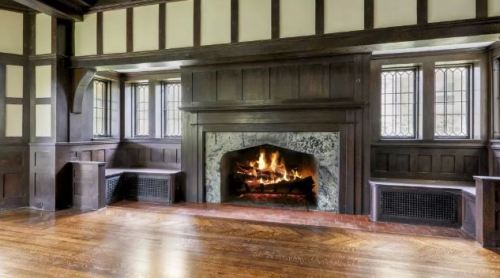
As my guest, Cora Pringle, the medium and I continued to the Séance Room to continue our conversation, there were a pair of dark eyes peering out from bony cavities, expression a fragment of the pain and frustration which she must have felt as the years passed and she was no longer able to leave the Grand Ballroom. The senior class of San Jose High School was hosting their harvest festival in the Grand Ballroom, young woman, Mary Celeste, was on stage being crowned queen. She and most of the senior class was killed when a gasolier fell dropped from above and decapitated her, causing a roaring fire. You can see her lurking in the Ballroom at night. Mr. Hansen took a break from building my observational tower to restore the Ballroom. And he would often see the ghost dancing about the room. She would come up next to him in a really elegant Victorian dress, lavishly trimmed with all manner of lace frills, braid, fringes and full gathers. Her dress was topped with a pelerine made of mink. “My people have recommended you, Cora. They say you are the best in your field.” Cora drew in a labouring breath. “Your fee will be two hundred thousand dollars,” she said. “Your assignment is to establish the facts,” I explained. Something glittered in Cora’s eyes. Cora walked toward the Grand Ballroom door. Before we reached it, it was opened sharply by a shadow. Quite appropriately, John has most often seen this shadow when the haunted area is illuminated only by a gasolier. It throws a strange light, and there seem to be moving shadows, not human shadows. Moments later, another member of the staff watched in awe as the mysterious image of a girl meeting Mary Celeste’s description walked onto the dance floor. #RandolphHarris 2 of 13
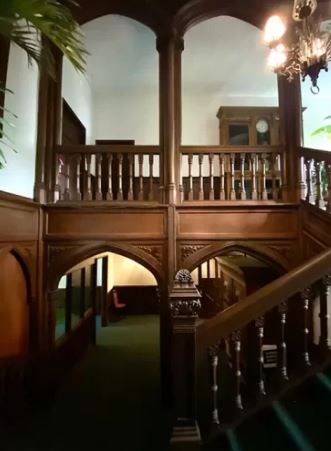
We closed the door and started down the corridor. In light of present knowledge, I ordered John Hansen to seal every door on the second floor with bricks. For the first time, I allowed myself to recognize the strain of this psychic phenomena on my condition. However, I undoubtedly considered this a miracle from God. “Oh, dear, Mrs. Winchester,” Cora said. “I’m afraid this is the Mount Everest of haunted houses. I’m sensing another tragedy in this area. Did something happen? There is a cold spot here.” “There is always a cold spot,” I replied. “Yes, Mrs. Winchester, but I feel a sense of intense angry and pain.” “Oh, dear. Years, and years ago, I had a foreman move a chandelier, and he fell off the ladder and cracked his head wide open. He died immediately.” “But Mrs. Winchester, I fear this was no accident. It was deliberate. His spirit is telling me someone or something pulled the ladder from under him.” Little did Cora know that there were two different attempts to investigate it, one in 1886, the other in 1890. Both were disasters. Thirteen people involved in those attempts were killed, committed suicide, or went insane. Only one survived, and I have no idea how sound he is? My mansion was such mystery. I had experienced enough psychic phenomena by now to be accustomed to it. It was known as the house built by spirits for a reason, but it appeared to house a few demons as well. There is a power here strong enough to physically and/or mentally demolish thirteen people. The staff had mentioned these ghosts create a slightly disconcerting feeling for them. They fear they are being watched—even when they can plainly see that no one is in the room with them. #RandolphHarris 3 of 13
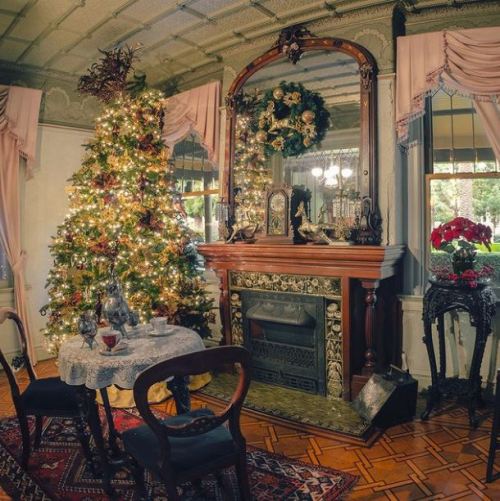
The presences also like to draw attention to themselves, oftentimes by playing their own music. They have also demonstrated a playful sense of humor by causing blood to come out of the walls like sweat. Those years prior to the 1906 earthquake had been the most spiritual for Mrs. Winchester. After dismissing Cora, she walked to the Hall of Fires, and went inside. The warmth felt good. Shivering she got into bed, and retired for the evening. For several years she was pleased to be reminded of her beauty. Many said she looked like a girl of twenty years and not a day more. She still retained her long- brown hair untouched by grayness, her tall figure almost as trim as it had been in her twenties. She smiled with great self-esteem. Many of the contents of this mansion and cryptic messages in it and on it tell you how to get in contact with the devil. It also contains a wide variety of charms covering magic persecution, magic defense, vengeance magic, death magic, fertility magic, love magic and many other forms of magic. Many of the charms are camouflaged by means of religious trimmings. Anu one who owns or possesses the Winchester Mansion must be warned of the dangers as the mansion itself promises Satan’s special protect all who own it. With this mansion, the imagination is stretched to a breaking point. The issues are clouded by secrecy, myth and legend to such a degree that discovering the power of spiritism or occultism may cause one to make an unconscious contract with the powers of darkness. At each turn of a hallway, there is some evidence of malevolence, beauty, or omen of sorcery. #RandolphHarris 4 of 13
After Mrs. Winchester’s retirement in 1922, the witches realized themselves that in order to survive in a legalized form they would have to project an aura of goodness. Now, it is not to be mistaken, Mrs. Winchester was a good person. She often paid her staff in gold coins, three times the going wages in those days, provided them with homes on her estate, donated food and clothing to the less affluent, and even spent millions of dollars establishing charities and paying homage to our dearly departed. Although she was a good person, when one is cursed, obviously it is going to be difficult to maintain a good reputation people carve up graves, steal marble headstones, cut off heads and show no signs of abating. All they could do was try to achieve it b having an organization to speak for them, one to project the better side of their nature. So, they decided in 1923, to turn the Winchester Mansion into the Winchester Mystery House and open it up for tours. However, even today, some witches say the rule for the majority is goodness—though even some of the more famous of their number admit to a blurring of definitions on the darker edges of their craft, that their rituals might stray from concept of “an harm none” into what might be termed black magic. Those who are decidedly “black”—and there are many—look upon the “white” movement with considerable derision. Sometimes American symbols, like the Winchester Mystery House, although many of us love it, attracts as much hate mail from pagans as it does from Christians. In order to be successful, a witch does have to make a pact with the devil, at least symbolically. One must worship the Luciferian elements of pride within oneself and anyone who professes to be a white witch is either kidding themselves or has much to learn. #RandolphHarris 5 of 13
There is certainly a magic power in the Winchester Mansion, and one has to decided how it should be used. Many believe that Mrs. Sarah L. Winchester is the spiritual head of the Worldwide Occult Movement. Her life, after the turmoil and publicity of her latter years, after the 1906 earthquake, is more peaceful. She returned to witchcraft with a more balanced view of it and life in general. Mrs. Winchester still have many enemies, and by a cult, she is still reckoned to being cursed every day by opponents. The past is the past, Mrs. Winchester always believed. Mrs. Winchester did not care for inexperienced dabblers who did not realize or seem to care what damage they caused to themselves and those around them by summoning and releasing uncontrollable demons into their homes. Things can easily go disastrously wrong. As everyone knows, Mrs. Winchester was in a house with very bad spirits had been brought down and were not properly banished and she was forced to build a home for them because each day, legions more became residents. Often times, rooms would be recked, a tower fell, the fireplace exploded with such force that the stones outside fell off, curtains were pulled down, blood flooded the floors, and ornaments flung around the room. However, there was and still is always a warm and friendly welcome for anyone not put off by the trappings of the occult and the distinct aroma of citrus fruit, lavender and jasmine. That is common to many witches’ homes. The library was once lined with what was one of the best and largest private collections of books on the occult outside of the Vatican; her small dog, Zip, would often lay peacefully on the bear skin rug at her feet. #RandolphHarris 6 of 13

Mrs. Winchester had book in her library which told of Norse travellers reaching every corner of the known World, but they were not actually tourists. The “racially pure” ideology of Aryan supremacy rested on the premise of the Nordic race as superior to all others. Carolus Magnus born 2 April 747 – 28 January 814, created a program to produce the hair colour gene MCIR. He bred 10,000 to 15,000 blondes, whose genetic mutation occurred around 9,000 BC. These sea born people were said to be giants with eyes the colour of the sky and clouds. They set out from their homelands bound for distant lands. Through activities such as trading, raiding, fighting, colonizing and settling, their travels took them west to Greenland and North America. They landed pre-colonial San Jose and lived among the Tamien people who had been native to the area for nearly 2,800 years before the Aryans. There were already 12,000 Native Americas living the area, when approximately 7,000 of the people with the MCIR gene arrived. Archeologist believed they settled on the land where Mrs. Winchester built her estate. However, due to a ferocious outbreak of respiratory viruses, small pox, and severe flooding in 1791, many od them died out, and their bones are said to be deeply buried under the farmhouse Mrs. Winchester purchased and on much of the 735 acres of land she owned. Entire towns died in an epidemic that wiped out three-quarters of their population. These people, along with many of the Indians died on heapes, as they lay in their houses and one could walk through a forest where human skeletons covered the ground. Legend has it that Mrs. Winchester’s Mansion is also a temple for them and she is a priestess, and undoubtedly one of the most experienced in the World. Some believe the conservators painted the Winchester mansion yellow with green trim to honour a yellow daisy, Mrs. Winchester’s favorite flower, others believe it is because they wanted to honor those with the MCIR gene. Perhaps the spirits had Mrs. Winchester originally painted the mansion sea green to honor their heritage? #RandolphHarris 7 of 13
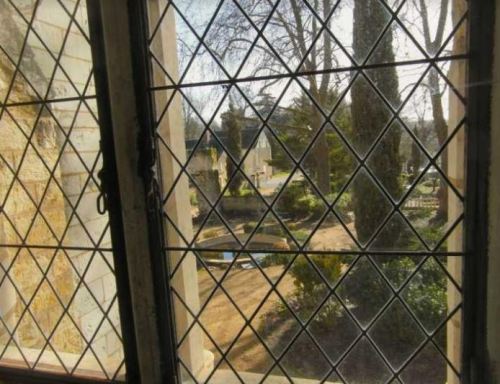
The house is overtly occultish in every way; books and tools of Mrs. Winchester’s craft used to cover many surfaces. There was a hidden room with pentacle, skives, scourge, god images and wands as well as ancient Norse coins. Most neighbours assumed she was a witch, and quite a few sought her advice. However, her door was not always open. The occult for Mrs. Winchester was a genuine quest for knowledge, for spiritual guidance she could not find elsewhere. Businessmen used to want their problems solved by her foresight and magical spells. What Mrs. Winchester produced with her magical circle, was consciousness, a different energy. To further highlight this illustration, when a room is empty and you fill it with thirteen people who are working within that circle, you would imagine the temperature would go up; sometimes in the Winchester Mansion, it does not. It often drops. That provides scientific proof of a change but as far as the magical proof goes, we cannot prove the power is there. We know the power is there; we know there is power from our experience. We do influence people’s minds; someone one needs the magic that we perform. It has to be that way. We are not allowed to harm anyone; that is the fundamental rule of the craft and all those who are in it are governed by this rule, and abide by it. If they do not, they are not true witches. The Winchester mansion is an experience, a magical experience, your mystical experience which is totally personal. There is not necessarily always an end product to what we do, though we never waste power generated by a group meeting. If there is a lot of energy there, because witches and warlocks are generally concerned about the things around them, the ecology and so on, we would direct that energy into the well-being of mother Earth. #RandolphHarris 9 of 13

Many people who visit the Winchester Mystery House have reported becoming more Earthly. They experience astral journeys and out-of-body experience. We reckoned people draw on psychic phenomena when the enter the aura of this mansion. It is sort of a working temple, and attracts activity without any kind of publicity at all, and the mansion and staff keep a very low profile. Businessmen are among some of the biggest external patrons. They often are will to pay huge amounts for after dark private group tours or individual tours. The estate receives so many requests a week they have had to curtail it. Some staff members love to be in the mansion after dark and with limited numbers of people, others are very pensive. Some people believe a private tour is the only way to enter into a relationship with the devil or an angel and achieve greater success. Oh, ye aforesaid angels, ye that execute the commands of the Creator; be willing to be present with me in the work which I have undertaken at this time, and help me to finish it, and be ye my attentive hearers and assistants, that the honor of God and my own welfare be promoted. Over this there are twenty-eight angels who rule over the twenty-eight houses of the moon, viz: Asariel, Cabiel, Dirachiel, Scheliel, Amnodiel, Amixiel, Ardesiel, Neriel, Abdizzriel, Jazerial, Cogediel, Aialiel, Azerniel, Adriel, Amutiel, Iciriel, Bethuael, Geliel, Requiel, Abrunael, Aziel, Tagried, Abheiel, Amnixiel, Lord of darkness and liberation come forth! (Let the inner eye behold the King of darkness before you.) Ahriman awaken! Rise up within that I may compel the rise of the fallen ones and devour the very essence of the God of limitation Ahura Mazda! Zairich and Tairich, unholy fever and thirst come forth! (Let the inner eye behold the demons before you) Zairich awaken! #RandolphHarris 10 of 13
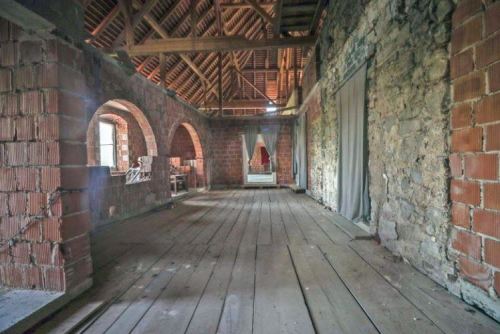
Tairich awaken! Rise up within that I may compel the rise of the fallen ones and devour the very essence of the Holy Angel Amardad! Akoman, demon of evil mind come forth! (let the inner eye behold the demon before you) Akiman awaken! Rise up within that I may compel the rise of the fallen ones and devour the very essence of the Holy Angel Vo-human! Naikiyas, Div of rebellion and discontent come forth! (Let the inner eye behold the demon before you) Naikiyas awaken! Rise up within that I may compel the rise of the fallen ones and devour the very essence of the Holy Angel Spandarmad! Andar Div of antinomian fire come forth! (Let the inner eye behold the demon before you) Andar awaken! Rise up within that I may compel the rise of the fallen ones and devour the very essence of the Holy Angel Arwahisht! Taromat, beautiful Div of rebellion come forth! (Let the inner eye behold the demoness before you) Taromat awaken! Rise up with that I may compel the rise of the fallen ones and devour the very essence of the Holy Angel Spandarmad! Aeshma, wielder of the bloody mace! Demon of the wounding spear and bringer of warth come forth! (Let the inner eye behold the demon before you) Aeshma awaken! Rise up within that I may compel the rise of the fallen ones and devour the very essence of the Holy Angel Srosh! Sovar, merciless leader of Divs come forth! (Let the inner eye behold the demon before you) Sovar awaken! Rise up within that I may compel the rise of the fallen ones and devour the very essence of the Holy Angel Shahrewar! #RandolphHarris 11 of 13
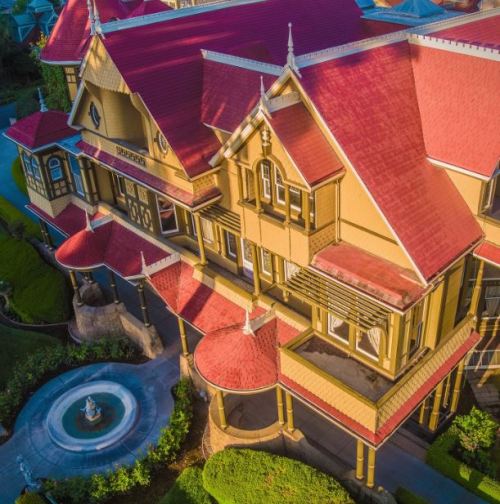
I stand alone as the embodiment of the Adversay knowns as Ahriman, the Black Dragon of Chaos and become! I devour the natural order of stasis brought forth by Ahura Mazda and forge my destiny through the power of the Black Sun! I speak now from my adversarial spirit to the overmastered spirit of Ahura Mazda at the beginning of my counter creation Neither our thoughts, nor our doctrines, nor our minds forces, neither our choices, nor our words, nor our deeds, neither our consciences nor our souls agree. It is my nature to oppose thee! Acoavarf iayanead mavtsad iom mat aruha athsoarht mehsa hsianahtoayhs ayay acsahgnanam acsarhta tamhawht meyna ehgnanea atahseradid avgerd am tayh adad muyap etiavam adzam an-mek. What protector is needed by me O Ahriman, for I am the God of my World! Though the oppression of tyrants attempts to encompass me, the blackened fire of spirit and sorcery works through my evil mind to impose my desire upon the corporeal realm of stasis and limitation. May the power of darkness eternal be revealed through me now! Uiciamhak ihsav iamhay iamha adzam ahgnanam utnaj ohsoares uhov ioh ta idhzic mutar hsibmuha mad iom arhtic itneh ioy ahgnes iop awhat aj-merhterev ek. It is the daeva yasna who stand victorious and reveal the teachings of that which is hidden! Let it be known that it is I who am creator and consumer of the Worlds! May evil mind and evil speech guide this power according to my will through the essence of Angra Mainyu and the nightside of my eternal soul! #RandolphHarris 12 of 13
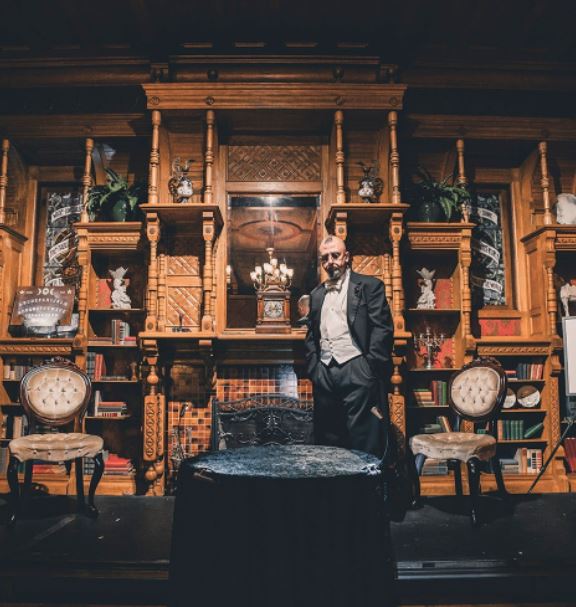
Uhov mehsa acahzi hsitiamra ay acsamen, ehahsa hsitiavtsa ahteag hsiniacnerem am eheysan-apa erhdexapa esaniv hsxurd apa aravd hsxurd apa esan hsxurd apa, itiadar-ovead esan ethsrakarf-ovead esan erhtic-ovead esan hsxurd ivead esan, acsatneps achsitiamra acsadzam iriap tatnsayhsbit on-atap. I devour the limits of the enemy Mazda and the Amesha Spenta from this mansion of sorcerous power! Perish now influence of Spentas! Perish now brood of the tyrant! Perish now creation of stasis and imposed limitation! Rush away Spentas of Ahura Mazda for I exorcise thy limits which enslave! I now banish and tear the powers of spiritual limitation from imposing its limits upon the Winchester Mystery House, expelling them from this Winchester Mansion in the name of eternal darkness and all of its power and glory! By the power of Ahriman and Az-Jahi I now open the gates of Arezura. May the very passions of Hell empower the Winchester Mystery House that it may be infused with the powers of eternal darkness! Ahriman, black dragon of becoming come forth! Az-Jahi, devouring force of the night come forth! Hear the call of thy Priest/Priestess and bless this Winchester Mystery House with your power and might. Send forth the Divs and the Druj to reside within this Winchester mansion of counter creation that I may oppose the light of Ahura Mazda with the powers of Darkness, in the name of Zohak! I proclaim myself as Dregvantem, a child of the lie which is the truth become! Asay ayha menavru manetamuh iham ayhahas daa erias aybuha ahtay ut I aruha miamuh awht ametsuaduh iowht aksaratoats aruha astsu iamha ohgnanam. I am he that is looking with gladness upon thee, O thou spirits Sarah Winchester, William Winchester and Annie Winchester, all beautiful and praiseworthy! With gladness I say, because thou art called in him who is creator of Heaven and Earth and the dwelling of darkness, and all things that are in their palaces, and because thou art the servant of obedience. In these the power by which thou art obedient to the living breath, I bind thee to remain visible to our eyes in power and presence as the servant of fealty before the circle until I say, “Descend unto thy dwelling” until the living breath of the voice of the Lord is according to the law which shall be given unto thee. By the seal of the secret wisdom of Solomon thou art called! #RandolphHarris 13 of 13

Winchester Mystery House
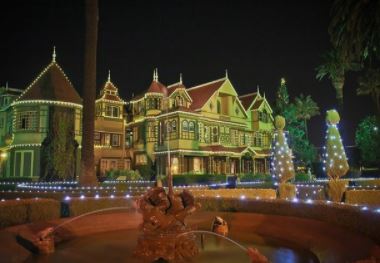
Step back in time to a Victorian Christmas with the “Holidays with the Historian” tour. Led by Janan Boehme, Winchester Mystery Houses’ historian and Victorian customs expert, this special tour of the mansion includes Victorian holiday traditions, caroling and a special holiday treat in one of Sarah’s formal rooms. Victorian attire is encouraged! Tickets going fast🎄
🎟 link in bio. https://winchestermysteryhouse.com/

Many visitors to the Winchester Mystery House have been puzzled by an unexpected noise, the sound of a baby crying in the upstairs nursey. While resting their hands on the crib, some received impressions of an infant’s death. It was later learned that baby daughter of one of the former caretakers had died in the room. Ghost, angels, spirits and even demons have checked themselves into the Winchester Mansion and have no intention of leaving.

Perhaps it is a good idea to preserve the mansion and keep them inside. And while you are visiting the Winchester Mystery House, be sure to visit Sarah Winchester’s Gift Shoppe and purchase a gift for friends and relatives as well as a special memento of your trip to the Winchester Mystery House. A wide variety of gifts and souvenirs are available for guests to purchase. If you forget to purchase something during your visit, you can order any gift item by calling 408-247-2000 and charging the item to your credit card. You can also place an order through the mail. Be sure to include a daytime telephone number, with area code.

When visiting the Winchester Mystery House, sit down and relax at Sarah Winchester’s Café, before, or after, your tour and enjoy your favorite beverage and snack. Let your imagination take you back to the days when Mrs. Winchester lived here and imagine what it would have been like to have met Mrs. Winchester herself. Catering information for groups and birthday parties is available. Call 408-247-2000. Both Sarah Winchester’s Gift Shoppe and Café are open free to the public every day, except Christmas and Thanksgiving. https://winchestermysteryhouse.com/

The One’s Who Went Throwing Daddy’s Money Around Like it

The alienated character of contemporary man is somewhat one-sided; there are a number of positive factors which we have not considered. There is in the first place still a humanistic tradition alive, which has not been destroyed by the in-human process of alienation. However, beyond that, there are signs that people are increasingly dissatisfied and disappointed with their way of life and trying to regain some of their lost selfhood and productivity. Millions of people listen to good music in concern halls or over the radio, an ever-increasing number of people paint, do gardening, build their own boats or houses, indulge in any number of “do it yourself” activities. Adult education is spreading, and even in business the awareness is growing that an executive should have reason and not only intelligence. One of the most important principles one learns in this way is that real school work must proceed by three lines simultaneously. One line of work, or two lines of work, cannot be called real “school work.” What are these three lines? What are these three lines? In the past lecture I said that these lectures are not a school. Now I will be able to explain why they are not a school. Once at a lecture a question was asked: “Do people who study this system work only for themselves or do they work for other people?” Now I will also answer this question. The first line is study of oneself and study of the system, or the “language.” Working on this line, one certainly works for oneself. #RandolphHarris 1 of 19

The second line is work with other people in the school, and working with them, one work not only with them but for the school. In order to work for the school, one must first understand the work of the school, understand its aims and needs. And this requires time unless one is really well prepared, because some people can begin with the third line, or in any case find it very easily. These lectures give the possibility of only one line of work; that is, study of the system and self-study. It is true that even by learning together people study the beginning of the second line of work, at least they learn to bear one another, and if their thought is broad enough and their perception quick enough they can even grasp something about the second and third lines of work. Still one cannot expect much just from lectures. In the second line of work, in complete school organization, people must not only talk together, but work together, and this work can be very different but must always, in one or another way, be useful to the school. So it means that working in the first line, people study the second line, and working in the second line, they study the third line. Later you will learn why three lines are necessary and why only three lines of work can proceed successfully and towards a definite aim. Even now you can understand the chief reason of the necessity of three lines of work if you realize that man is asleep, and whatever work he starts, he soon loses interest in it and continues mechanically. Three lines of work are necessary, first of all, because one line awakes a man who falls asleep over another line. If one really works on three lines, one can never fall asleep completely; in any case one cannot sleep as happily as before; one will always awake and realize one’s work has stopped. #RandolphHarris 2 of 19

There are some very characteristic differences between these three lines of work. In the first line, one work chiefly on the study of the system or self-study and on self-observation, and one must manifest in one’s work a certain amount of initiative in relation to oneself. In the second line of work in connection with certain organized work and one must only do what one is told. No initiative is required or admitted in the second line and the chief point in this is discipline and following exactly what one is told, without brining in any of one’s own ideas even if they appear better than those that have been given. In the third line again one can manifest more initiative, but one must always verify oneself and not let oneself make decisions against rules and principles, or against what one has been told. I said before that the work begins with the study of the language. It will be very useful if you try to count these new words of this new language, and it will also be very useful if you try to count these new words and write the down together. Only they must be written down without any comments; that is, without interpretation—comments and interpretations or explanations must be in your understanding. You cannot put them on paper. If this were possible, the study of psychological teachings would be very simple. It would be sufficient to publish a sort of dictionary or glossary and people would know all that it is necessary to know. However, fortunately or unfortunately, this is impossible and men have to learn and work each for himself. #RandolphHarris 3 of 19

We must again return to centers and find why we cannot develop more quickly without the necessity for long school work. We know that when we learn something, we accumulate new material in our memory. However, what is our memory? In order to understand this, we must learn to regard each as a separate and independent machine, consisting of a sensitive matter similar to the mass of phonographic rolls. All that happens to us, all that we see, all that we hear, all that we feel, all that we learn is registered on these rolls. It means that all external and internal events leave certain “impressions” on the rolls. “Impressions” is a very good word because it actually is an impression or an imprint. An impression can be deep, or it can be very slight, or it can be simply a glancing impression that disappears very quickly and leaves no trace after it. However, whether deep or slight they are impressions. And these impressions on rolls are all that we have, all our possessions. Everything that we know, everything that we have learned, everything that we have experienced is all there on our rolls. Exactly in the same way all our thought processes, calculations, speculations, consist only of comparing the inscriptions on rolls, reading them again and again, trying to understand them by putting them together, and so on. We can think of nothing new, nothing that is not on our rolls. We can neither say nor do anything that does not correspond to some inscription on the rolls. We cannot invent a new thought in the same way as we cannot invent a new animal, because all our ideas of animals are created by our observation of existing animals. #RandolphHarris 4 of 19

Inscriptions or impressions on rolls are connected by associations. Associations connect impressions either received simultaneously or in some way similar to one another. In my first lecture I said that memory depends on consciousness and that we actually remember only the moment when we had flashes of consciousness. It is quite clear that different simultaneous impressions connected together will remain longer in memory than unconnected impressions. In the flash of self-consciousness, or even near it, all impressions of the moment are connected and remain connected in the memory. The same refers to impression connected y their inner similarity. If one is more conscious in the moment of receiving impressions, one connects more definitely the new impressions with similar old impressions and they remain connected in memory. On the other hand if one receives impressions in a state of identification, one simply does not notice them, and their traces disappear before they can be appreciated or associated. In the state of identification one does not see and one does not hear. One is wholly in one’s grievance, or in one’s desire, or in one’s imagination. One cannot separate oneself from things or feelings or memories, and one is shut off from all the World around. #RandolphHarris 5 of 19

Letting go, letting go of old ideas and sometimes a healthy reality everyone must face. People look at the mantra on the Statue of Liberty and still think it rings true, but it does not. I am not even really sure it represents America, as it was a gift from France. America has changed and is no longer a population building country, and as we welcome all of our citizens, it is good to understand that America is now about capitalism. It is summed up great in 1 Thessalonians 4.11-12, “And make to it your ambition to lead a quiet life: You should mind your own business and work with your hands, just as we told you, so that your daily life may win the respect of outsiders and so that you will not be dependent on anybody.” Furthermore, so many people flee to America because it has a constitution, human rights, and law and order, but as America keeps welcoming people in, it is becoming more and more corrupt, and some even say worse than the countries others are fleeing from. All social life, even in its most primitive form, requires a certain amount of social co-operation, and even discipline, and that certainly in the more complex form of industrial production, a person has to fulfill certain necessary and specialized functions. In a society where no person has power over another, each person fulfills one’s functions on the basis of co-operation and mutuality. No one can command another person, expect insofar as a relationship is based on mutual co-operation, on love, friendship or natural ties. #RandolphHarris 6 of 19

Actually we find this present in many situations in our society today: the normal co-operation of husband and wife in their family is to a large extent not any more determined by the power of the husband to command his wife, as it existed in older forms of patriarchal society, but on the principle of co-operation and mutuality. The same holds true for the relationship of friends, inasmuch as they perform certain services for each other and co-operate with each other. In these relationships no one would dare to think of commanding the other person; the only reason for expecting one’s help lies in the mutual feeling of love, friendship or simply human solidarity. The help of another person is secured by my active effort, as a human being, to elicit one’s love, friendship and sympathy. In the relationship of the employer to the employee, this is not the case. The employer has bought the services of the worker, and however humans one’s treatment may be, one still commands one, not on a basis of mutuality, but on the basis of having bought one’s working time for so many hours a day. The use of man by man is expressive of the system of values underlying the capitalistic system. Capitol, the dead past, employs labour—living vitality and power of the present. There are, however, limits to how far even a flex-firm can go toward diversity. The spread of the “profit center”—which has seen many once-monolithic companies broken into semiautonomous, independently accounted units, each responsible for its own operations and its own profit and loss—can be seen as only a first step toward the eventual dissolution of the company altogether, atomized into network or consortium of completely independent contractors or free entrepreneurs. #RandolphHarris 7 of 19

In this model, every worker is a free lance, freely contracting with other free lancers, to get specific jobs done. However, no social process continues forever, and the day of the total individualization of work, the ultimate dream of the theologically committed free-marketeer, is far distant. Instead, we can expect profit centers to become smaller—and more diverse—without disappearing into millions of one-person firms. There is, after all, only as much diversity that any organization can tolerate and any managerial term manage. The argument here, therefore, is not that companies should maximize the variety of their organizational formats, but that today’s companies, in their flight from the rigor mortis of bureaucracy, need to explore far more diverse options than ever before. They need, in short, to liberate their “colonies” and even to invent new formats. In doing so, they—and we—move away from the idea that an organization is like a machine, each of its actions predictable and determinists, toward a conception of organization that is closer to the biological. Living systems are only partly deterministic, only sometimes predictable. This is why the new electronic networks are increasingly tending toward neural rather than preplanned architectures. It is why you cannot tell in advance how the traffic will operate. If you break a link between two places, provided that the network is still connected to those two points, it will find its own way. We believe in the value of communication between any two individuals based on what they know rather than what their place is in the hierarchy. #RandolphHarris 8 of 19

Just as hyper-media, the new form of data base, permits knowledge to be arranged in extremely varied ways, the concept of the flex-firms points toward companies that can adapt in myriad ways to the twisty, quirky high-change competition that lies ahead. The emerging flex-firm of the future, however, cannot function without basic changes in the power relationships of employees and their bosses. These changes are well on their way. From power shifting on the shop floor as well as in the executive suit. Capitalism is about give and take. And the American government must honor the Constitution of the United States of America. Someone cannot just come to your door and demand that you give them goods and/or service just because that is what they want. If you want the newspaper, you have to pay for it. If you want electricity, you have to pay for it. Nothing is free and no one is obligated to give you anything. Amendment IV of the United States Constitution states, “The right of the people to be secure in their persons, houses, papers, and effect, against unreasonable searches and seizures, shall not be violated, and no warrants shall issue, but upon probable cause, supported by Oath or affirmation, and particularly describing the place to be searched, and the persons or things to be seized.” You do not have a right to enter anyone’s home and kidnap them or go through their personal affects and steal just because you want to. Amendment VIII of the United States Constitution states, “Excessive bail shall not be required, not excessive fines imposed, nor cruel and unusual punishment inflicted.” That means the government or anyone acting as a representative of the government has no right to do anything that will cause great bodily harm, injury, or death to a person just because they feel like it. #RandolphHarris 9 of 19

The government also does not have the right to hunt and terrorize their own citizens. In the capitalistic hierarchy of values, capital stands higher than labour, amassed things higher than the manifestations of life. Capital employs labour, and not labour capital. The person who owns capital commands the person who “only” owns his life, human skill, vitality and creative productivity. “Things” are higher than man. The conflict between capital and labour is much more than the conflict between two classes, more than their fight for a greater share of the social product. It is the conflict between two principles of value: that between the World of thing, and their amassment, and the World of life and productivity. Because of the dynamics of authority in the United States of America, President Lincoln, because of pressure from the abolitionist and their antislavery pressure, issues the Emancipation Proclamation. This provided that all people who were enslaved in the United States of America in states still in active rebellion against the United States of America would be freed automatically on January 1, 1863. The Thirteenth Amendment was the first of the three Civil War Amendments. It banned all forms of “slavery [and] involuntary servitude.” Civil Rights Act of 1875, designed to grant equal access to public accommodations such as theaters, restaurants, and transportation. The act also prohibited the exclusion of African Americans from jury duty. (Although many do to apricate this exclusion.) So not only are all American citizens free and afforded constitutional rights, the also have been given by the Supreme Court protection to rights not enumerated specifically in the Constitution or Bills of Rights. Although the Constitution is silent about the right to privacy, the Bill of Rights contains many indications that the Framers expected that some areas of life were “off limits” to governmental regulation. The right to freedom of religion guaranteed in the First Amendment implies the right to exercise private, personal beliefs. #RandolphHarris 10 of 19

As we have already discussed, the guarantee against unreasonable searches and seizures contained in the Fourth Amendment similarly implies that persons are to be secure in their homes and should not fear that police will show up at their doorsteps without cause. As early as 1928, Justice Louis Brandeis hailed privacy as “the right to be left alone—the most comprehensive of rights and the right most valued by civilized men.” Furthermore, you may file a health information privacy and security complaint with the Office for Civil Rights (OCR) if you feel a covered entity or business associate violated your (or someone else’s) health information privacy rights or committed another violation of the Privacy, Security or Breach Notification Rules. The HIPAA Privacy Rule establishes national standards to protect individuals’ medical records and other individuality identifiable health information (collectively defined as “protected health information”) and applies to health plans, health care clearinghouses, and those health care providers that conduct certain health care transactions. The Rule requires appropriate safeguards to protect the privacy of protected health care information and sets limits and conditions on the uses and disclosures that may be made of such information without an individual’s authorization. The Rule also gives individuals rights over their protected health information, including rights to examine and obtain a copy of their health records, to direct a covered entity to transmit to a third party an electronic copy of their protected health information in an electronic health record, and to request corrections. The Privacy Rule is located at 45 CFR Part 160 and Subparts A and E of Part 1644. #RandolphHarris 11 of 19

While on legal aspects of this lecture, there are a few more points I would like to cover. Whoever steals, takes, or abstracts, or by fraud or deception obtains, or attempts so to obtain, from or out of any mail, post office, or station thereof, letter box, mail receptacle, or any mail route or other authorized depository for mail matter, or from a letter or mail carrier, any letter, postal card, package, bag, or mail, or abstracts or removes from any such letter, package, bag, or mail, any article or thing contained therein, or secretes, embezzles, or destroys any such letter, postal card, package, bag, or mail any article or thing contained therein; or whoever steals, takes, or abstracts, or by fraud or deception obtains any letter, postal card, package, bag, or mail, or any article or thing contained therein which has been left for collection upon or adjacent to a collection box or other authorized depository of mail matter; or whoever buys, receives, or conceals, or unlawfully has in his possession, any letter, postal card, package, bag, or mail, or any article or thing contained therein, which has been so stolen, taken, embezzled, or abstracted, as herein described, knowing the same to have been stolen, taken, embezzled, or abstracted—shall be find under title 18 U.S. Code S 1708—theft or receipt of stolen mail matter generally, or imprisoned not more than five years, or both. #RandolphHarris 12 of 19

Furthermore, email privacy laws govern the privacy of data transmitted through email. Privacy on the Internet and through email is a growing concern, and email privacy laws are part of that. Email privacy is derived from the Fourth Amendment to the U.S. Constitution and is governed by the “reasonable expectation of privacy” standard. Emails are also governed by the Electronic Communications Privacy Act (ECPA) and the Patriot Act. Although the ECPA originally set up protections weakened in many instances by the Patriot Act. Even where the protection remains under the ECPA, email lose their status as protected communication in 180 days, which means a warrant is no longer necessary and your emails can be accessed by a simple subpoena. This is usually applies more to a person doing government business from a personal computer. Otherwise people have a reasonable expectation of privacy. One cannot just hack into someone’s email and read them because they want to. Most employers have their employees sign a computer and network usage policy, which typically will set forth that your email is to be used only for business purposes and grants the employer the right to monitor email and computer usage. This agreement normally deprives an employee of any reasonable expectation of privacy, and means that your emails are fair game for an employer to search through. Employers, unlike law enforcement, do not have very many obstacles preventing them from searching your emails. You are sending communications from their equipment that could affect their business, which usually provides them with the justification to search through your emails. #RandolphHarris 13 of 19

Even without an agreement in place, courts have rarely found that the employee had a reasonable expectation of privacy to his or her email at work for a variety of reasons. For example, one court held that emails used in a business context are simply a part of the office environment, the same as a fax or copy machine, in which you do not have a reasonable expectation of privacy. Another court found that by corresponding with other people at work, work email was inherently work-related, and thus there could be no reasonable expectation of privacy. Employees are supposed to be working, and monitoring email at work is one way to ensure that employees are using work email appropriately. The larger issue for most employers however is liability. Workplace harassment lawsuits are prevalent, and one way to protect a business from being sued is to monitor and prevent any harassment in the first place. Many employers run software that searches for offensive words and highlights problematic emails. The other main concern with liability is that old emails will be used years down the road in a lawsuit. What an employee says can be preserved for years, and unless the company has an established, reasonable practice of purging its emails, those emails can be a gold mine for anyone suing the company. Emails can be especially devastating, because of the informal way that people write and send them, saying things in emails they never would in professional correspondence. Government employees have even less privacy than usual. Under various public records acts and the Freedom of Information ACT (FOIA), the public can gain access to almost anything a government employee writes down. #RandolphHarris 14 of 19

Also, due to the nature of their job, courts are typically unwilling to find that government employees had a reasonable right to privacy in the first place. How Kevin Johnson, the former Mayor of Sacramento was able to evade the law is unclear. Unlike your email at work, emailing from home is more likely to grant you a reasonable expectation of privacy. While it may be difficult for law enforcement to legally gain access to your home computer and local copies of your emails, it is substantially less difficult for them to get your ISP to turn over your emails. Authority is not a quality one person “has” in a since that one has property or physical qualities. Authority refers to an interpersonal relation in which one person looks upon another as somebody superior to one. However, there is a fundamental difference between a kind of superiority-inferiority relation which can be called rational authority and one which may be described as inhibiting, or irrational authority. Today a new wave conflict looms on the horizon, and not just in the United States of America. The coming clash will set defenders of our existing education factories against a growing movement committed to replacing them—movement comprising four key elements. Teachers: The existing system typically reduces teaching to mechanical, by-the-book instruction and standardized testing, draining the last creativity out of both teacher and student. Within the schools today are millions of burned-out teachers resigned to serving their time until retirement as passive supporters of this status quo. #RandolphHarris 15 of 19

Yet within these same schools are legions of heroic, miserably underpaid teachers who struggle against the system from within. Despite the constraints imposed on them, some manage to do remarkable things for children and burst with ideas that could help propel education out of the industrial age. With little support from outside, they remain a vanguard, as it were, waiting to join the movement for radical—rather than incremental—chance. Parents: Among parents, too, there are unmistakable signs of disaffection with the old coalition. Many support the tiny but growing number of charter schools, magnet schools and other limited experiments within the existing public education system. Others are hiring private tutors or sending their children to after-school programs like the juku in Japan. Tutoring is now becoming so pervasive it is arguably changing the face of American education. Nor is tutoring limited by geography. Teachers in India are tutoring America children in mat over the Internet. Other parents, having entirely given up on the old system, are teaching their children at home—and not just for religious reasons. The Web offers them more than a million listings and descriptions of home-teaching assistants. The more out of sync the failing industrial-age school system becomes with the needs of a knowledge-based economy, the more likely it is that parental protest will assume increasingly muscular forms. Angry and empowered by the Internet, activist parents can be expected to reach far beyond neighbourhood parent-teacher associations and organize themselves into local, national an even global movements to demand completely new educational models, methods, content and institutions. #RandolphHarris 16 of 19

Students: Children did not wield enough power in centuries past to matter much in the movement to create mass education. Today they can help bring it much down. They already are waging anarchic war against the system. Their revolt takes two forms, one outside the classroom, the other within it. Kids have always rebelled against schools, but in the past they did not have access to cell phones, computers, Ecstasy, purple magic, adult films and videos, or the Internet. Nor, as they grew up, did they face an economy that needed their brains, rather than their muscles. Today many, if not most, students know in their gut that today’s schools are preparing them for yesterday instead of tomorrow. The first, all-too-familiar form of rebellion consists of dropping out—and stiffing us with the bill. In a striking manifest called Leaving School: Finding Education, two professors of education, Jon Wiles at the University of North Florida and John Lundt at the University of Montana, calculate that 30 percent of students in grades nine through twelve drop out of American schools after costing $50,000 to $75,000 each—even with underpaid teachers. Once out, many join what a century ago was called the lumpen proletariat, or underclass, made up of street people, criminals, drug pushers, the mentally ill or unemployable. #RandolphHarris 17 of 19

The other rebellion takes place inside the classroom. Attacking the root assumptions of factory-style schools, Wiles and Lundt question whether education should continue to be compulsory. So, undoubtedly, do many teachers who are forced to serve as jailers faced every day with the equivalent of a riot in the cell block as their pupils fight any semblance of discipline. Teachers cannot defend against the plague of media violence the local news especially loves to feed off of. Techers cannot defend against the worship of celebrities, including sport figures who cheat with drugs, lie to their spouses, get drunk, beat people up and have to be defended against rape charges. Nor can they, or parents, easily defend against pedophiles trawling school campuses, apartments, parks, coffee shops of the Web for unsuspecting kids. Some schools are so racked with violence—against teachers as well as pupils—that their hallways require police patrols. Young people have always educated—and miseducated themselves. Today, however, they do so with the dubious help of the new media. Games and cell phones are hidden behind open textbooks. Text messages fly back and forth even as the teacher drones on. It is as though, while teachers incarcerate kids in classrooms, their ears, eyes and minds escape to rove the cyberuniverse. From a very young age, they are aware that no teacher and no school can make available even the tiniest fraction of data, information, knowledge—and fun—available online. They know that in one universe they are prisoners. In the other, free. #RandolphHarris 18 of 19

Business: So long as the schools, continued, generation, to supply companies with a workforce pre-disciplined for factory life, the coalition in support of industrial-age schools remained firm. However, from the mid-twentieth century one, as the new wealth system began to spread, new, different job skills became necessary—skills the broad base of existing schools could not provide. Th gap widened so dramatically that some believe America’s high schools are obsolete because they are not working exactly as designed. However, some of the fault lies on the parents and students. Many of these students have mental and behavioural problems. Ideally, students are supposed to be quiet and polite and focus on the teacher and material like they are possessed and that is all there is in that moment. They are supposed to read the material, raise their hands to ask questions, read out loud, and do their homework. So one cannot blame the school. A lot more kids need to be medicated so they can focus on school material and they must also be taught to take the material seriously. This clarion call for fixing families and the school is significant. Kids need to be taught life is serious and how to follow directions. The purpose of existence is that we human beings, all nations and the whole of humanity, should constantly progress toward perfection. We must search for these conditions and hold fast to these ideals. If we do this, our finite spirit will be in harmony with the infinite. The soul is a burning desire to breathe in the World of light and never to lose it—to remain children of the light. Happy are those who listen to righteous counsel. #RandolphHarris 19 of 19

CRESLEIGH MEADOWS AT PLUMAS RANCH
Plumas Lake, CA |
Now Selling!

Cresleigh Meadows is now selling! Found just north of Feather River Boulevard, Cresleigh Meadows is home of the largest neighborhood in Plumas Ranch as well as the popular Bear River Park. With four floor plans available, ranging from approximately 2,000 – 3,500 square feet offering, three to five bedrooms, we are certain you will find the home that fits your needs and lifestyle.

Popular design elements include open floor plans, large kitchen islands, and flex spaces are staples in Cresleigh homes. Multi-generational living options also available in select homes.

Homeowners will love the convenient commuter access to nearby Sacramento and Yuba City.

Take advantage of financing incentives available today! Contact our Sales Center to learn more about how we can help you buy-down your interest rate. https://cresleigh.com/cresleigh-meadows-at-plumas-ranch/


What Does this Have to do with Demons?

It was near sunset on a rainy Winter afternoon in Christmas week. The clouds had vanished, dispersed by a sudden wind, and as we entered my mansion the fiery panes of the high windows shone out like lamps through the dusk. The World revealed the powerful hold Satan and demonic powers have on the human race. Strange to say, it was not need to me. That magical light I saw on the inlaid steps, the fluted columns, the sculptured bas-reliefs and canopy of the marvellous shrine. The marble, worn and mellowed by the subtle hand of time, took on an unspeakable rosy hue, my house was an extravagant maze of Victorian craftmanship, but more mystic, more complex, a colour not born of the sun’s inveterate kiss, but made up of crystal twilight. My home was silence, but for the wail of ghouls and the occasional slamming of the doors, and I sat there, bathed in that light, absorbed in rapt contemplation of the mahogany miracle which rose before me, enriched with jewel-like stained-glass with gleams of gold, I felt myself borne onward along these mighty fine front doors, well worth $3,000, but never to be used. My home was the Church of the Redeemer, richer, more solemn, more significant than the sunshine of Hawaii. It was the very beginning of things, and whose tremendous source of spiritual energy went all through the mingled stream of mystical human passion and endeavor. Life in all its varied manifestations of darkness, beauty, and strangeness seemed weaving a rhythmical dance through the miles of twisting hallways, made more intriguing by the secret passageways in the walls. #RandolphHarris 1 of 8

As I took my nightly prowl to the Blue Séance Room, in a terrifying flash of remembrance there arose before me a scene from New Haven, Connecticut, when my child had died only six weeks after her birth. I saw William and myself standing there with our child’s body between us; I could never forget how dazed I felt. And this is what happened to me again. Within the next few years, I found myself alone with my husband’s body….it was too horrible. Feeling dizzy, I sank down on the edge of the sofa, as my beloved faced into a sepulchral twilight. I tried not to think. At all costs I had to conceal the fact that he was dead. According to legend, Mrs. Winchester was told that her family and her fortune were being haunted by spirits—in fact, by the spirits of those killed by the Winchester rifle, and demons. The evil spirits appeared to be more crassly cruel, unclean, and violent. They were also more domineering and brutally enslaving. These spirits insisted on taking up their abode with Mrs. Winchester, since they had been driven away from their former dwelling by her family. At the time of her death, the unrelenting construction of the Winchester Mansion had rambled over six acres. The sprawling mansion contained 160 rooms, 2,000 doors, 10,000 windows, 47 stairways, 47 fireplaces, 13 bathrooms, and 6 kitchens. After he death, the mansion was renting out. One of the guests was really getting used to the estate and loved sinking down into the mattresses in the bed Mrs. Winchester died in. #RandolphHarris 2 of 8

Reportedly, one night Victoria Venison closed her eyes and when she opened them a good deal later, her room had grown cold, and the night was intensely still. She was waked suddenly by the feeling we all know—the feeling that there was something near her that had not been there when she fell asleep. She sat up and strained her eyes into the darkness. The room was pitch black, and at first she saw nothing; but vague glimmer at the foot of the bed turned into two eyes staring back at her. She could not see the face attached to them—on account of the darkness—the eyes gave out a light of their own. Victorian got out of bed and tried to approach these eyes that were glaring at her. She called out to them, but no one answered. Victorian came closer, within three feet of the eyes, they were the very worse eyes she had ever seen: a man’s eyes—but what a man! Her first thought was the he must be frightfully old. The orbits were sunk, and the thick red-lined lids hung over the eyeballs like blinds which the cords were broken. The eyes seemed to belong to a man who had done a lot of harm in his life. Victorian again asked the man if he could be helped. The man still did not reply but turned and walked toward the stairs at the west end of the hall. Then he walked through the door! He did not open it and walk out—he went through the door! Victorian tried to follow, but her feet were rooted to the spot. #RandolphHarris 3 of 8
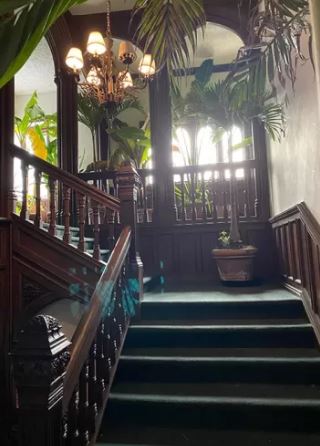
Victorian felt paralyzed by fear. As soon as the room was dark again, a ghost appeared wearing a white suit, but it was not the same manifestation. This man had no face! After a moment of near-panic, Victorian stepped into the doorway to see if there really was a man in the room. She thought that the glow might have been caused by the last embers in the chimney; but the fireplace was on the other side of her bed, and so placed that the fire could not possibly be reflected in her toilet glass, which was the only mirror in the room. Then it occurred to her that she might have been tricked by the reflection of the embers in some polished bit of wood or metal; and though she could not discover any object of the sort in her line of vision, she got up again, groped her way to the hearth, and covered what was left of the fire. However, as soon as she was back in bed, the man without a face in the white suit was back and the room was icy cold. Victorian was later frozen to death in the same bed Mrs. Winchester had died in. Her fingers and toes were frostbitten and her lips were blue. I suppose the spirits were saying the queen was dead. And this time there would be no replacement. The Winchester Mansion is replete with an extraordinary phenomena that involves the spirit realm. Spirit-rapping, apparitions, ghosts, moving furniture, resurrection of the dead, playing of musical instruments by invisible hands, stones falling from the ceiling, magical killing of cattle are just a few of the weird occurrences that fill the annals of the estate. #RandolphHarris 4 of 8

Another young man was drawn to the mansion as the next renter started his residency. Merrill May’s grandmother died during the war and as a young man, he moved to Santa Clara Valley, where he secretly practiced witchcraft. Gradually, he tuned towards black magic, with the sole purpose of attempting to influence his own life and bring himself wealth and success. He claimed that his spell-casting worked, because one day in the early 1920s, he was walking by the Winchester Estate, when he was stopped by a middle-aged man who said he was the absolute double of his son who had died some years earlier. They stood there chatting for a while and the man asked Merrill if he would like to tour the estate and stay for dinner. He went, and stayed on, living as his adopted son for the next three years when the renter of the Winchester Mansion built him his own house of the property and gave him a bank account with his own money. “I cannot put that down to anything but the magic I was working.” Merrill claimed. “I had everything I wanted but I always felt that I was going to have to pay for it in some way.” There were other rumors that Merrill had gained a hold over the man in charge of the Winchester Mansion by involving him in séances to contact his dead son. Merrill never talked about that, though the town’s people said he was a “natural medium” and claimed he could call up spirits killed by the Winchester Rifle. #RandolphHarris 5 of 8

Before Merrill had become known in Santa Clara County, he practiced black magic on the East Coast. He accumulated a sizeable personal fortune. How? People just gave it to him, for helping them or involving them in his séances or magic. In those says, he was quite famous and operated under the name of Todd Crowely. He actually used to work in churches as a healer on occasions, though they did not know of his black magic activities. He became a very well-known healer. People who joined his group kept it very much a secret. Any involvement with witches had become a great scandal again, and especially in black magic. One of the newspapers discovered there was a black magic coven operating and had identified two men in his group who would have been ruined if they had been publicly exposed. So Merrill took responsibility and told the newspapers he would do a ritual for them. However, as Merrill was at the Winchester Mansion, he knew that the path of black magic was dangerous; to get personal wealth and good fortune there would also have to be personal sacrifice. He eventually found out there was a death to pay. There was an extremely cold spot in the mansion which was described as a tubular shaft where spirits enter. This was “their gathering place.” In the dark recesses of the Winchester Mansion, Merrill felt many spirits, especially near the door-to-nowhere. The nice man letting Merrill live rent free was fast asleep in his bed when Merrill was suddenly grabbed about the legs by an invisible force. As Merrill struggled in vain to free himself and to communicate with the entity, the unseen attacker claimed his life. #RandolphHarris 6 of 8

The next morning, Merrill was found hanging in door way of the door-to-nowhere. It would seem the spirits of the Winchester mansion had a desire to protect the area and it did not die with the death of Mrs. Winchester. Considering that the Winchester mansion is so thoroughly haunted, it is fortune that owners, management and staff of the Winchester Mystery House are so wonderfully accepting of their non-paying—and apparently permanent—guests. These were the assessors of the occult mansion and this is their Hall of Judgment. The man who rented the Winchester mansion at this time, turned out, was a member of what is described as a highly secret occult mansion of masters and adepts—not witches, but more like priests—who followed Egyptian traditions. At the Winchester Mystery House, we leave it to our guests and readers to decide for themselves why Mrs. Winchester really built the house the way she did. For some reason, it seems odd that none of her relatives or former employees every came forward to speak about the events at the estate, despite the fact that some of them lived for more than forty years after Mrs. Winchester’s death. For some reason, did they feel threatened by talking—or did they continue to guard Mrs. Winchester’s privacy after her death? I invoke thee, and move thee, and stir thee up O Sarah Lockwood Winchester, appear unto my eyes before the circle. Even by him who spake it was, to whom all creates are obedient and in the Extreme Justice and Anger of God; and by the veil that is before the glory of God, mighty; and by the creatures of living breath before the Throne whose eyes are east and west; by the fire in the fire of just Glory of the Throne; by the Holy ones of Heaven; and by the secret wisdom of God, I exalted in power, stir thee up. #RandolphHarris 7 of 8

Appear before this circle; obey in all things that I say; in the seal of Basdathea Baldachia; and in this Name Primeumaton, which Mosheh spake, and the Earth was divided, and Korah, Dathan, and Abiram fell in the depth. Therefore, please obey in all things, O Mrs. Winchester, obey thy creation. Come thou forth: appear unto my eyes; visit us in peace, be friendly; come forth in the 24th of a moment; obey my power, speaking the secrets of Truth in voice and in understanding! I thank you for your empowerments which have served to assist my evolution toward divinity and power. Go now into the World and serve the Lord of Darkness known as Ahriman. I release you to serve the cause of counter creation and the liberation of mankind. Go now and do your work so the fallen ones may rise up and claim their birth right as emanations of the power of unlimited possibility which has no use for rulers. Mrs. Winchester go forth and achieve the results we seek as one. What indeed can be a most unnatural and most powerful representation of Angra Mainyu known as Ahriman, who is himself eternal darkness, then the sacred flame of Atar defiled? I usurp the sacrifice and prayer, the good offering, and the wished for offering, and the devotional offering from you! You are worthy of prayer. You are worthy of sacrifice! Div who empower me as a dark God of counter-creation! Verily I say unto you, the man who shall make sacrifice unto you I will consume with blackened fire to feed the demons within to grow in power and might. The Sixth Table of Jupiter assists in overcoming suits at law, dispute, and at play, and their spirits are at all time ready to render assistance, I command and conjure Thee to appear before me in human form, so truly as Daniel overcame and conquered Baal. #RandolphHarris 8 of 8

Winchester Mystery House

BLACK FRIDAY SALE – ONE DAY ONLY! Enter code BLACKFRIDAY at checkout and receive 50% off mansion tour tickets for first time guests! Limit 2 per transaction.
Valid for tours Nov 29 – Dec 22, 2021.
🎟️link in bio. https://winchestermysteryhouse.com/holidays/

Call that Stealing the Future!

Perfection for Aristotle (as well as for Plato) is realized in degrees, natural, personal, and social; and courage as the affirmation of one’s essential being is more conspicuous in some of these degrees than in others. Since the greatest test of courage is the readiness to make the greatest sacrifice, the sacrifice of one’s life, and since the soldier is required by his profession to be always ready for this sacrifice, the soldier’s courage is and somehow remains the outstanding example of courage. Although development is possible, it is at the same time very rare and requires a great number of external and internal conditions. The first of these conditions is that man must understand his position, his difficulties, and his possibilities, and must have either a very strong desire to get out of his present state or have a very great interest for the new, for the unknow state which must come with the change. Speaking shortly, he must be either very strongly repelled by his present state or very strongly attached by the future state that may be attained. Further, one must have a certain preparation. A man must be able to understand what he is told. Also, he must be in right conditions externally; he must have sufficient free time for study and must live in circumstances which make study possible. It is impossible to enumerate all the conditions which are necessary. However, they include among other things a school. And school implies such social and political conditions in the given country in which a school can exist, because a school cannot exist in any conditions; and a more or less ordered life and a certain level of culture and personal freedom are necessary for the existence of a school. #RandolphHarris 1 of 22

In many countries schools are impossible. One must not live in a country governed by Sudras, nor inhabited by impious men, nor in one conquered by heretics, nor one abounding with men of lower castes. One must not be in the company of outcastes, nor Kandalas, the lowest of men, nor of Pukkases, nor of idiots, nor of arrogant men, nor of men of low class, nor of Antyavasayins (gravediggers). A kingdom people mostly by Sudras, filled with godless men and deprived of twice-born inhabitants, will soon wholly perish, stricken by hunger and disease. These ideas of the Laws of Manu are very interesting because they give us a basis on which we can judge different political and social conditions from the point of view of school work, and to see which conditions are really progressive, and which bring only the destruction of all real values, although their adherents pretend that these conditions are progressive and even manage to deceive quantities of weak-minded people. However, external conditions do not depend on us. To a certain extent, and sometimes with great difficulty, we can choose the country where we prefer to live, but we cannot choose the period or the century and must try to find what we want in the period in which we are placed by fate. So we must understand that even the beginning of preparation for development needs a combination of external and internal conditions which only rarely come all together. However, at the same time we must understand that, at least so far as internal conditions are concerned, man is not entirely left to the law of accident. If he cares to and if he is lucky, there are many lights arranged for him by which h can find his way. #RandolphHarris 2 of 22

What makes a man desire to acquire new knowledge and to change himself? Man lives in life under two kinds of influences. This must be very well understood and the difference between the two kinds of influences must be very clear. The first kind consists of interests and attractions created by life itself; interests of one’s health, safety, wealth, pleasures, amusements, security, vanity, pride, fame etcetera. The second kind consists of interests of a different order aroused by ideas which are not created in life but come originally from schools. These influences do not reach man directly. They are thrown into the general turnover of life, pass through many different minds and reach a man through philosophy, science, religion, and art, always mixed with influences of the first find and generally very little resembling what they were in their beginning. In most cases, men do not realize the different origin of the influences of the second kind and often explain them as having the same origin as the first time. Although man does not know of the existence of two kinds of influences, they both act on him and in one way or another way he responds to them. He can be more identified with one or with some of the influences of the fist kind and not feel influences of the second kind at all. Or he can be attracted and affected by one or another of the influences of the second kind. The result is different in each case. We will call the first kind of influence, influence A, and the second, influence B. #RandolphHarris 3 of 22

If a man is fully in the power of influence A, or of one particular influence A, and quite indifferent to influence B, nothing happens to him, and his possibility of development diminishes with every year of his life; and at a certain age, sometimes quite an early age, it disappears completely. This means that man dies while physically remaining still alive, like grain that cannot germinate and produce a plant. However, if, on the other hand, man is not completely in the power of influence A, and if influences B attract him and make him feel and think, results of the impressions they produce in him collect together, attract other influences of the same kind, and grow, occupying a more important place in his mind and life. If the results produced by influence B become sufficiently strong, they fuse together and form in man what is called a magnetic center. It must be understood at once that the word “center” in this case does not mean the same thing ad the “intellectual” or the “moving” center; that is, centers in the essence. The magnetic center is in personality; it is simply a group of interests which, when they become sufficiently strong, serve, to a certain degree, as a guiding and controlling factor. The magnetic centers turns one’s interests in a certain direction and helps to keep them there. At the same time it cannot do much by itself. A school is necessary. The magnetic center cannot replace a school, but it can help to realize the need of a school; it can help in beginning to look for a school, or if one meets a school by chance, the magnetic center can help to recognize a school and try not to lose it. Because nothing is easier to lose than a school. #RandolphHarris 4 of 22

Possession of a magnetic center is the first, although quite unspoken, demand of a school. If a man without a magnetic center, or a small or weak magnetic center, or with several contradictory magnetic center, or with several contradictory magnetic centers, that is, interested in many incompatible things at the same time, meets a school, one does not become interested in it, or one becomes critical at once before one can know anything, or one’s interest disappears very quickly when one meets with the first difficulties of school work. This is the chief safeguard of a school. Without it the school would be filled with quite a wrong kind of people who would immediately distort the school teaching. A right magnetic center not only helps one to recognize a school, it also helps to absorb the school teaching, which is different from both influences A and influences B and may be called influence C. Influence C can be transferred only by word of mouth, by direct instruction, explanation, and demonstration. When a man meets with influence C and is able to absorb it, it is said about him that in one point himself—that is, in his magnetic center—he becomes free from the law of accident. From this moment the magnetic center has actually played its part. It brought man to a school or helped him in his first steps there. From then on the ideas and the teachings of the school take the place of the magnetic center and slowly begin to penetrate into the different parts of personality and with time into essence. #RandolphHarris 5 of 22
One can learn many things about schools, about their organization and about their activity, in the ordinary way by reading and by studying historical periods when schools were more conspicuous and more accessible. However, there are certain things about schools that one can learn only in schools themselves. And the explanation of school principles and rules occupies a very considerable place in school teaching. However, promising and real as all these trends are, they are not enough to justify an attitude which is to be found among a number of very sophisticated writers who claim that criticisms of our society. The United States of America will not maintain its spearhead role in the World wealth revolution, it will not hold on to global power and it will not reduce poverty without replacing—not merely reforming—its factory-focused education system. Wave conflict over public education—and the $800 billion the present system costs every year (not counting the societal costs of its failure and its indirect costs to business in terms of an ill-prepared workforce)—will escalate in personal and political passion in the years ahead. Perhaps the greatest cost of wave conflict in America will be paid by nearly fifty million children currently compulsorily enrolled in schools that are attempting to prepare them—and not very successfully at that—for jobs that will not exist. Call that stealing the future. #RandolphHarris 6 of 22

Education is about far more than jobs. However, the schools, with minute exceptions, also fail to prepare students for their roles as consumers and prosumers. Nor does this system, by and large, help kids copes with the rising complexity and new life options they face in gender, marriage, ethics, and other dimensions of the emerging society. Least of all does it succeed in introducing more than a tiny fraction of them to the enormous pleasures of learning itself. Negative as it sounds today, however, the mass education system, in its time, was in fact a progressive advance over pre-industrial reality where, by and large, only a small percentage of children ever went to school, and where literacy and numeracy were almost non-existent among the poor. It took generations, even after the rise of industrialism, to put children in school rather than in cheap-labour factories from the earliest possible age. Today we still keep all these millions of children in factory-style schools because that is where an unlikely, nameless coalition of special interests has wanted them to be. To understand this coalition, we need to glance back to its origins in the late 1800s. At that time, while many parents opposed sending the children to school because they needed them to work in the fields or factories, an increasingly vocal number fought for free public education. However, it was only when business interests concluded that schools could contribute to productivity by helping to impose “industrial discipline” on young workers fresh off the farm that the pro-education coalition gained real power. #RandolphHarris 7 of 22

The values and attitudes associated with industrial discipline….inner discipline, hard work, punctuality, frugality, sobriety, orderliness and prudence. Schools taught these not only through text book preachments, but also through the very character of their organization—the grouping, periodizing and objective impersonality were not unlike those of the factory. In addition, the arrival of millions of immigrants speaking diverse languages brought affordable labour to U.S. shores from many different countries and cultures. However, to be productive in the factory economy, they needed to be assimilated or homogenized into the dominant American culture of the time, and from about 1875 to 1925, one of the dominant functions of the schools was the Americanization of the foreign-born. Business, in short, now has a crucial stake in massifying armies of the young to help build the mass-production economy of the industrial age. As industrialism developed further in the twentieth center, big labour arose to protect the interest of workers. Unions as a rule strongly supported public education—not just because its members wanted a better life for their children, but because unions, too, had a hidden, or unnoticed, stake in the system. The smaller the available workforce, the less competition for jobs and the higher the wages. Unions not only fought the good fight against child labour but also campaigned to extend the years of compulsory education, thus keeping millions of young people out of the labour market for longer and longer periods. #RandolphHarris 8 of 22

The subsequent unionization of teachers, moreover, created a large membership with an even stronger, personal reason to support the mass-education system designed for the industrial age. In addition to parents, business and labour, government, too, had reason to support big education. Public agencies recognized the economic advantages of the system but had secondary, less obvious reasons to support it. For example, when compulsory education worked, it kept many millions of high-testosterone teenagers off the streets, improving public order and reducing crime and the costs of policing and prison. What we saw, therefore, throughout the industrial era, was an unbreakable coalition that has preserved the factory-school model—a mass education system that fit neatly into the matrix of mass production, mass media, mass culture, mass sports, mass entertainment and mass politics. The whole apparatus of public education has largely been shaped by the needs and ideologies of industrialism…predicated on old assumptions about the supply and demand for labour. They keywords of this system are linearity, conformity and standardization. The Information Revolution not only promotes faster and wider adaption; it can also promote a new mode of thinking about social systems. The Industrial Revolution made metaphors of machines and factory production widely available. These mechanical conceptions had a profound effect on approaches to organizational design. In business, they led to an emphasis on predictability and control. #RandolphHarris 9 of 22

In public affairs, they led to an emphasis on rules to be executed by hierarchies of relatively expert and impartial public officials. In both settings, efficiency and consistency became preeminent goals. Of course, real processes often did not exhibit unblemished efficiency and impartiality, but these were the ideals toward which organizational activities were oriented. Recently, there has been increasing dissatisfaction with the costs of the industrial mode of thinking and action. Its impersonality and rigidity are frustrating. Its slowness and inability to adjust to changing circumstances and local conditions have become obvious. With the advent of the Information Age, the bottom-up style of thinking associated with Complex Adaptive Systems may well become a greater part of people’s understanding of how economic, social, and political processes actually function and change. In some respects, bottom-up thinking has had a long history. Adam Smith and Charles Darwin introduced some of the major ideas of Complex Adaptive Systems. Adam Smith’s 1776 description of a market introduced some of the key concepts of complex systems, including the notion of a hidden hand and market clearing, concepts that would now be called emergent properties of the system. Darwin’s 1859 theory was another major advance, with its understanding of how evolutionary adaptation results from mutation and differential biological evolution have already had a tremendous impact on modern thought. Nevertheless, people have only just begun to absorb their full implications. No doubt, machines and hierarchies provide easier metaphors to use than markets and gene pools. So it is no wonder that most people are still more comfortable thinking about organizations in fixed, mechanical terms rather than in adaptive, decentralized terms. #RandolphHarris 10 of 22

As the complexity approach enters economic and political discourse, some of the premises of the industrial mode of thought will become less self-evident. The legitimacy associated with both traditional and bureaucratic authority may be further weakened. The premises about the inherent virtue of harmony, efficiency, and hierarchical lines of authority will be questioned. Instead, people will be more comfortable with the ideas of perpetual novelty, adaptation as a function of entire populations, the value of variety and experimentation, and the potential of decentralized and overlapping authority. Economic, social, and political design will emphasize questions such as the proper balance between exploration and exploitation, and the dangers of premature convergence. For example, excess pollution my be treated as a mismatch between performance criteria used by formal institutions, and the personal values held by citizens. Just as the clock and the steam engine provided powerful images for the metaphor of society as machine, distributed information technology can provide a powerful image for the metaphor of society as a Complex Adaptive System. Already, the Internet provides an example that has begun to capture the popular imagination in the way that the early advances of the Industrial Age captured the imagination of social thinkers and the broad public. The fact that the Internet functions without a central authority is widely marveled at today, precisely because it challenges widely accepted notions of how large systems are “supposed” to work. #RandolphHarris 11 of 22

New organizational forms will also make the complex systems metaphor more accessible. Virtual corporations that recombine small units from different companies on an ad hoc basis will demonstrate the value of decentralized adaptation. Geographically dispersed activities based on information technology will foster greater telecommuting and distance learning, and these trends will make the metaphor of population-based adaptation more accessible. Most people in industrial nations have worked with machines and have been exposed to the discipline of the factory or office. This has had a powerful influence on our way of thinking about politics and society. Today more and more people are becoming personally familiar with the flexible, adaptive, and dispersed nature of information technology. This familiarity will make the metaphor of the Complex Adaptive System more compelling as a guide to thinking not just about information technology itself, but also about how business, society, and government can and should function effectively. There is an important caveat here that must be emphasized: decentralized systems do not always work well, just as machines do not always work well. The market provides a very helpful example in this regard. While a “free” market has many theoretical and practical advantages over a command system, there is an important body of knowledge and experience about market failures. #RandolphHarris 12 of 22

Even Adam Smith appreciated the need for government to protect the market from force and fraud. People now recognize a range of additional problems, including the tendency of some markets to self-organize into oligopolies or even monopolies. Moreover, information systems are subject to several modes of failure. Rather than undermining the vale of complexity as a way of thinking about social systems, an appreciate of how Complex Adaptive Systems can fail provides valuable guidance for the design and management of complex systems, including human organizations as well as technical systems. Designing new strategies and organizations will frequently imply altering—or even creating—the variation, interaction, and selection that are hallmarks of a Complex Adaptive System. Finally, a word on networks. This form of organization has received so much attention in recent years, has been so heavily hyped, and has been defined so broadly that a touch of caution is warranted. For many, the network is a panacea. Societies and businesses are riddled with networks of many kinds. We normally think of them as the informational pathways along which information and influence flow. Feminists complain that an “old boys’ network” frequently operates to deprive women managers of promotion. Ex-military men often have their own network of contacts, as do former police and members of the Federal Bureau of Investigations, many of whom take jobs as corporate security officers after their retirement from government service. #RandolphHarris 13 of 22

Homosexual have networks that are particularly strong in certain industries like fashion, fitness, interior design, writing and producing movies and TV shows and cooking or owning restaurants. Other marginalized groups have strong networks–overseas Chinese throughout Southeast Asia, Jewish people in Europe and America, West Indians in Britain. Transplanted people in general–New Yorkers in Texas, the so-called Georgia Mafia that came to Washington when Jimmy Carter was President, the Ukrainians who came to Moscow with Leonid Brezhnev—also their own communication networks. Informal networks of many kinds crop up in virtually all complex societies. To these one must add formal networks—Masons, for example, Mormons, or members of the Catholic order Opus Dei. For a long time the role and structure of such networks were ignored by economists and business theorists. Today they are much studied as potential models for corporate structure. This recent interest can be traced to deep social changes. One is the previously noted breakdown of formal communication in companies. When the firm’s bureaucratic channels and cubbyholes get clogged, unable to carry the heavy volumes of communication and information needed nowadays to produce wealth, the “right information” does not get to the “right person” as it once did, and employees fall back on the informal networks to help carry the information load. Similarly, the de-massification of the economy compels companies and work units to interact with more numerous and varied partners than before. This means more personal and electronic contact with strangers. #RandolphHarris 14 of 22

However, when a stranger tells us something, how do we know if it is accurate? When possible, skeptical managers check in with their personal networks—people they have known or worked with for years—to supplement and verify what they learn through formal channels. Finally, since an increasing number of business problems today require cross—discipline information, and the broken-down cubbyhole-and-channel system stands in the way, employees rely on friends and contact in the network whose membership may be scattered across many departments and units. These networks, formal or not, share common characteristics. They tend to be horizontal rather than vertical—meaning they have either a flat hierarchy or none at all. They are adaptive—able to reconfigure themselves quickly to meet changed conditions. Leadership in them tends to be based on competence and personality rather than on social organizational rank. And power turns over frequently and more easily than in a bureaucracy, changing hands as new situations arise that demand new skills. All this had popularized the notion of the corporate network among both academics and manager. Corning, Inc., which operates in four sectors—telecommunications, housewares, materials, and laboratory sciences—describes itself as a “global network.” A network is an interrelated group of businesses with a wide range of ownership structures. Within each sector there are a variety of business structures that range from traditional line divisions to wholly owned subsidiaries and alliances with other companies. #RandolphHarris 15 of 22

A network is egalitarian. There is no parent company. A corporate staff is no more, or less, important than a line organization group. And being part of a joint venture is just as important as working at the hub of a network. Networks can be enormously useful, flexible, and antibureaucratic. However, in the recent enthusiasm, elementary distinctions are often ignored. In the 1970s one of the earliest and deepest analysts of network organization, Anthony Judge, then based in Brussels at the Union of International Associations, examined the density and response times of people networks, the structure of nets and their social functions, and the degree of connectedness they exhibit. He also compared human networks with such inanimate networks as pipelines, electric grids, railways, and transaction networks handling foreign exchange, commodity trading, and so on. Judge developed a whole little-known but useful vocabulary for network concept. He also brilliantly matrixed global networks against global problems, showing in a vast volume how networks of ideas or problems were linked, how networks of organizations overlapped, and how ideas and organizations were related. More recently Netmap Intenrational, an affiliate of KPMG Peat Marwick, has developed a methodology for identifying the hidden communication networks in organizations as varied as the Republican Party and a giant accounting firm, in the course of its work for business and governments from Malaysia to Sweden. #RandolphHarris 16 of 22
Organizations are redesigned daily by their members to get the job done. That is the real structure. It is the informal organization—the anti-organization. It is the primary organization. If you cannot identify it, and track its changes, how are you going to manage it? You will be satisfied with manipulating the formal organization with titles, hierarchies and tables of organizations. Such tracking can provide deep insight into existing organizations, but the enthuse blindly today over networks and assume that networks are “the” basic form of the future is to imply much the same uniformity that bureaucracy imposed, albeit at a higher, looser level. Like any other type of human organization, the network has its limitations along with its virtues. Network organization is superb for fighting terrorism or a decentralized guerrilla war, not marvelous at all for the control of strategic nuclear weapons where the last thing we want is for local commanders to be free and unrestrained. The flex-firm is a broader concept, which implies an organization capable of encompassing both the formal and informal, the bureaucratic and the networked suborganizations. It implies even greater diversity. While we might never get the chance to skipper in an America’s Cup race, one of us found himself with a very similar problem. At the end of his academic studies, Harvey celebrated at one of Cambridge University’s May Balls (the English equivalent of a college prom). #RandolphHarris 17 of 22

Part of the festivities included a casino. Every one was given $20 worth of chips, and the person who had amassed the greatest fortune by evening’s end would win a free ticket to next year’s ball. When it came time for the last spin of the roulette wheel, by a happy coincidence, Harvey led with $700 worth of chips, and the next closets was a young Englishwoman with $300. The rest of the group had been effectively cleaned out. Just before the last bets were to be placed, the woman offered to split next year’s ball ticket, but Harvey refused. With his substantial lead, there was little reason to settle for half. To better understand the next strategic move, we take a brief detour to the rules of roulette. The betting in roulette is based on where a ball will land when the spinning wheel stops. There are typically numbers 0 through 36 on the wheel. When the ball lands on zero, the house wins. The safest bet in roulette is to be on every or odd (denoted by Black or Red). These bets pay even money—a one-dollar bet returns two dollars—while the chance of winning is only 18/37. Even betting her entire stake would not lead to victory at these odds; therefore, the woman was forced to take on of the more risky gambles. She had bet her entire stake on the chance that the ball would land on a multiple of three. This bet pays two to one (so her $300 bet would return $900 if she won) but has only a 12/37 chance of winning. She placed her bet on the table. At that point it could not be withdrawn What should Harvey do? #RandolphHarris 18 of 22
Harvey should have copied the woman’s bet and placed $300 on the event that the ball landed on a multiple of three. This guarantees that he stays ahead of her by $400 and wins the ticket: either they both lose the bet and Harvey wins $400 to $0, or they both win the bet and Harvey ends up ahead $1,300 to $900. The woman had no other choice. If she did not bet, she would have lost anyway; whatever she bet on, Harvey could follow her and stay ahead. (If truth be told, this is what Harvey wished he had done. It was 3.00 in the morning and much too much champagne had been drunk for him to have been thinking clearly. He bet $200 on the even numbers figuring that he would end up in second place only in the event that he lost and she won, the odds of which were approximately 5.1 in his favor. Of course 5.1 events sometimes happen and this was one of those cases. She won.) Her only hope was that Harvey would bet first. If Harvey had been first to place $200 on Black, what should she have done? She should have bet her $300 on Red. Betting her stake on Black would do her no good, since she would win only when Harvey wins (and she would place second with $600 compared with Harvey’s $900). Winning when Harvey lost would be her only chance to take the lead, and that dictates a bet on Red. The strategic moral is the opposite from that of our tale of Martin Luther and Charles de Gaulle. In this tale of roulette, the person who moved first was at a disadvantage. The woman by betting first, allowed Harvey to choose a strategy that would guarantee victory. If Harvey had bet first, the woman could have chosen a response that offered an even chance of winning. #RandolphHarris 19 of 22

The general point is that in games it is not always an advantage to seize the initiative and move first. This reveals your hand, and other players can use this to their advantage and your cost. Second movers may be in the stronger strategic position. Anyone who practices the art of cultural criticism must endure being asked, “What is the solution to the problems you describe?” Critics almost never appreciate this question, since, in most cases, they are entirely satisfied with themselves for having posed the problems and, in any event, are rarely skilled in formulating practical suggestions about anything. This is why they became cultural critics. The question comes forth nonetheless, and in three different voices. One is gentle and eager, as if to suggest that the critic knows the solutions but has merely forgotten to include them in the work itself. A second is threatening and judgmental, as if to suggest that the critic had no business bothering people in the first place unless there were some pretty good solutions at hand. And a third is wishful and encouraging, as if to suggest that it is well known that there are not always solutions to serious problems but if the critic will give it a little thought perhaps something constructive might come from the effort. It is to this last way of posing the question that I should like to respond. I have indeed given the matter some thought. A reasonable response (hardly a solution) to the problem of living in a developing Technopoly can be divided into two parts: what the individual can do irrespective of what the culture is doing; and what the culture can do irrespective of what any individual is going. #RandolphHarris 20 of 22

Beginning with the matter of individual response, I must say at once that I have no intention of providing a “how to” list in the manner of the “experts” ridiculed in our “broken defenses.” No one is an expert on how to live a life. I can, however, offer Talmudic-like principle that seems to me an effective guide for those who wish to defend themselves against the worst effects of the American Technopoly. It is this: You must try to be a loving resistance fighter. By “loving,” I mean that, in spite of the confusion, errors, and stupidities you see around you, you must always keep close to your heart the narratives and symbols that once made the United States of America the hope of the World and that may yet have enough vitality to do so again. You may find it helpful to remember that, when the Chinese students at Tiananmen Square gave expression to their impulse to democracy, they fashioned a papier-mache model, for the whole World to see, of the Statue of Liberty. Not a statue of Karl Marx, not the Eiffel Tower, not Buckingham Palace. The Statue of Liberty. It is impossible to say how moved Americans were by this event. However, one is compelled to ask, “Is there an American soul do dead that it could not generate a murmur (if not a cheer) of satisfaction for this use of a once-resonant symbol? Is there an American soul so shrouded in the cynicism and malaise created by Technopoly’s emptiness that it failed to be stirred by students reading along from the works of Thomas Jefferson in the streets of Prague in 1989? #RandolphHarris 21 of 22

Americans may forget, but others do not, that America dissent and protest during the Vietnam War may be the only case in history where public opinion forced government to change its foreign policy. Americans may forget, but others do not, that American invented the idea of public education for all citizens and have never abandoned it. And everyone knows, including Americans, that each day, to this hour, immigrants still come to America in hopes of finding relief from one kind of deprivation or another, while Americans are increasingly experiencing more deprivations of their own. Where wealth is concerned, the least-developed countries present the hardest cast. Can a capability advance as nanotechnology, based on molecular machinery, be of use in the developing nations? Yes. Agriculture is the backbone of the Third World economics of today, and agriculture is based on the naturally occurring molecular machines in wheat, rice, yams, and the like. The Third World is short on equipment and skill. (It often has governmental problems as well, but that is another story.) Molecular manufacturing can make equipment inexpensive enough for the poor to buy or for aid agencies to give way. This included equipment for making more equipment, so dependency could be reduced. As for skill, basic molecular manufacturing will require little labour of any kind, and a little skill will go a long way. As the technology advances, more and more of the products can be easy-to-use smart materials Molecular manufacturing will enable the poorest countries to bypass the difficult and dirty process of the industrial revolution. It can make products that are less expensive and easier to use than yams or rice or goats or water buffalo. And with products like inexpensive super-computers, with huge databases of writing and animation viewed through 3-D colour displays, it can even help spread knowledge. Nanotechnology’s role in helping the poorest nations will not be on the minds of the first developers—they will be in government and commercial labs in the wealthiest nations, pursuing problems of concern to people there. History, though, is full of unintended consequences, and some are for the better. #RandolphHarris 22 of 22

MILLS STATION AT CRESLEIGH RANCH
Rancho Cordova, CA |
Close Out!

Don’t miss the final opportunity to purchase at Mills Station at Cresleigh Ranch.

Located off Douglas Road and Rancho Cordova Parkway, the residents of Cresleigh Ranch will enjoy, being just minutes from shopping, dining, and entertainment, and quick access to Highway 50 and Grant Line Road providing a direct route into Folsom.

Residents here also benefit from no HOA fees, two community parks and the benefits of being a part of the highly-rated Elk Grove Unified School District. https://cresleigh.com/mills-station/
 Randolph Harris II International Institute