
Home » World (Page 22)
Category Archives: World

Luncheon #4 with Coffee

We cannot see reality here and remain closed to it there. That dulls our cutting edge and makes our search for the truth ineffectual. And we can see ourselves rightly only if we can see others rightly, only if we can see them in the context of their social circumstances, which is to say, only if we look sharply and critically at all that is going on around us in the World. This is what love demands of us, too. And if we love our fellow humans, we cannot limit our insight and our love to others as individuals. That will inevitably lead to mistakes. We have to be political people, I would even say passionately involved in political people, each of us in the way that best suits our own temperaments, our working lives, and our own capabilities. A contingency that bears on mutual openness is one we must consider. Previously, we argued that the individual in our society has a right to receive civil inattention. It was also suggested that, when persons ratify each other for mutual participation in an encounter, the rule against looking fully at another is set aside. Typically, then, one person may legitimately begin to look further at another a moment before one initiates an encounter, the legitimacy being imputed retroactively, after it is shown what the individual had been intending to do. If, then, persons find that they must stare at each other, they can try to cope with the matter by initiating a state of talk, the overture being excusable (however embarrassing) because of what can be handled by means of it. #RandolphHarris 1 of 20

There are standard conditions under which the rule about not staring gives rise to these problems. When a few persons find themselves in a small space, as in a European railway compartment, or around the entrance of a store that is not yet quite open, civil inattention is hard to manage tactfully. To not stare requires looking very pointedly in other directions, which may make the whole issue more a matter of consciousness than it was meant to be, and may also express too vividly an incapacity or a distaste for engagement with those present. In this connection, the plight of close-setting diners in low-priced restaurants in the south of France can create tensions by sitting opposite someone with whom one is not in a conversational relation. The institutionalized solution: each diner pours the wine from one’s small table-bottle into the glass of the other, and with the exchange of these clearance signs, the table is open for conversation, the diners now being ratified coparticipants of social encounter. Fortunately such where-to-look situations do not arise with any frequency. One which does, however, is the elevator one…both while in an elevator brings outs a suspicious streak in people. You arrive before the closed landing door and push a button. Another person comes along and after a glance of mutual appraisal, you both look quickly away and continue to wait, thinking the while uncharitable thoughts of one another. #RandolphHarris 2 of 20

The new arrival suspecting you of not having pushed the button and you wondering if the new arrival is going to be a mistrusting old meanie and go give the button a second shove…an unspoken tension which is broken by one or the other of you walking over and doing just that. Then back to positions of waiting and the problem of where to look. To stare the other person in the eye seems forward and usually the eye does not warrant it. Shoes are convenient articles for scrutiny—your own or those of the other person—although it is overdone this may give the impression of incipient shoe fetichism. It [ the where-to-look problem] continues even inside the elevator…especially in the crowded and claustrophobic boxes of the modern high buildings. Any mutual exchange of glances on the part of the occupants would add almost a touch of lewdness to such already over-cozy sardine formation. Some people gaze instead at the back of the operator’s neck, others stare trance-like up at those little lights which flash the floors, as if safety of the trip were dependent upon such deep concentration. A rather similar situation arises in a Pullman diner when one is obliged to sit opposite an unknown at a table for two. How to fill in the awkward wait before writing out “Luncheon #4 with coffee” and the arrival and serving of the same? If one is not the type who, given the slightest provocation, burst into friendly chit-chat with a stranger, the risk of getting conversationally involved with someone who is, brings out the furtive behaviour of an escaped convict. Sometimes it becomes apparent that the other person feels the same way…a discovery which comes as a minor shock but no major solution. #RandolphHarris 3 of 20

Two strangers sitting directly opposite each other at a distance of a foot and a half, and determined politely but firmly to avoid each other’s eye, go in for a fascinating little game of “I do not spy.” They re-read the menu, they fool with the cutlery, they inspect their own fingernails as if seeing them for the first time. Comes the inevitable moment when glances meet but they meet only to shoot instantly away and out the window for an intent view of the passing scene. It can be awkward, drinking alone at a bar. Is the man behind it wholly a servitor at such times, or must recognition be made of the fact that two human beings are together in an otherwise empty room? It may be added that during such difficult times, if the individual decides against contact, he may well have to find some activity for himself in which he can become visibly immersed, so as to provide the others present with a face-saving excuse for being unattended to. Here again we see the situational functions that newspapers and magazines play in our society, allowing us to carry around a screen that can be raised at any time to give ourselves or others an excuse for not initiating contact. Airplane and long-distance bus travel have here underlined some interesting issues. Seatmates, while likely to be strangers, are not only physically too close to each other to make non-engagement comfortable, but are also fixed for a long period of time, so that conversation, once begun, may be difficult thereafter either to close or to sustain. #RandolphHarris 4 of 20

In such cases, a strategy is to “thin out” the encounter by keeping it impersonal and by declining to exchange identifying names, thus guaranteeing that some kind of nonrecognition will be possible in the future. As for airplanes today, seatmates may not exchange a word in a trip across the continent. However, plane conversation is in order if mutually desired and kept impersonal. As on trains, names need not be exchanged. And why should they? After all, it is relaxing to talk without identifying oneself. Relationships with service personnel in our society, when talk is required, may be thinned out in the same way—a thinning, incidentally, that serves may attempt to counteract by asking the name of the customer and proffering their own. Public officials are often criticized for not being accessible to the constituents. They are busy people, and the fault sometimes lies in overprotective assistants who do not want to overburden their bosses with too many visitors. The mayors of some cities frequently admonish because of the way the public sees them. They often claim to have an “open-door” policy; yet at city hall meetings, citizens are arrested, told out right to “shut up!” and the mayor is hard to get ahold of. Furthermore, members of the community are blocked by secretaries and administrators when they call. Finally, taxpayers came up with a suggestion. They wanted to remove the door from his office! However, he still never got the message, and nor has his administration. #RandolphHarris 5 of 20

Simply staying committed to your promises can change the difference between failure and success and will reduce the likelihood of giving offense or arousing resentment. Many people begin their criticism with the sincere praise followed by the word “but” and ending with a critical statement. For example, in trying to change a child’s attitude toward studies, we might say, “We are really proud of you, Leo, for cutting back on your modeling and acting jobs and raising your grades this term. But if you hard worked harder on your algebra, the results would have been better.” In this case, Leo might feel encouraged until he heard the word “but.” He might then question the sincerity of the original praise. To him, the praise seemed only to be a contrived lead-in to a critical inference of failure. Credibility would be strained, and we probably would not achieve our objectives of changing Leo’s attitude toward his studies. This could be easily overcome by changing the word “but” to “and.” We are really proud of you, Leo, for raising your grades this term, and by continuing the same conscientious efforts next term, your algebra grade can be up with all the others.” Now, Leo would accept the praise because there was no follow-up of an inference of failure. We have called his attention to the behaviour we wished to change indirectly, and the changes are he will try to live up to our expectations. Calling attention to one’s mistakes indirectly works wonders with sensitive people who may resent bitterly any direct criticism. #RandolphHarris 6 of 20

All people should aim to be leaders and they are more effective when they lead by example. One should be an example that they want others to follow. Every person carries on one’s shoulders the reputation of one’s family. We bring credit to the work of our ancestors. The railing out against good people, the viciousness and the lying about our people as whole have almost entirely died out because people have come to know the desires of our heats, that we have no enmity against even those who malign us. One of the first and most important factors in trying to change oneself is the division of oneself. The right division is between what is really “I,” and all the rest which we can call “Mr. Harris,” or whatever your name happens to be. If this division is not made, if one forgets about it and continues to think oneself in the usual way, or if one continues to use “I” and “Mr. Harris,” but in the wrong way work stops. The first line of work can only make progress on the basis of this division. No other lines are open if this division is forgotten, but it must be the right division. It happens often that people make a wrong division. What they like in themselves they call “I” and what they dislike, or what is weak or unimportant, this they call “Mr. Harris” or “Mrs. Hearst,” or “Mr. Winchester” or whatever their names happen to be. If they divide in this way it is quite wrong. It is not enough that you make a right division today and forget it tomorrow. You must make a right division and keep it in your memory. #RandolphHarris 7 of 20

[An actual example of wrong division was given. A man called Petroff who had belonged to one of our groups made a division of himself into two parts. One of these he described as “keeping him alive” and called it “I”; the rest he called Petroff.] This wrong division is simply lying, lying to oneself which is worse than anything because the moment one meets with the smallest difficulty it will show itself by inner arguing and wrong understanding. “What is the origin of this difficulty in dividing oneself?” asked Mrs. X. The origin is you and Mrs. X. Mrs. X. thinks she knows better than you do. She thinks she is more important and wishes you to do as she wants. “One of the difficulties,” said Mr. Y. “is that Y. knows better than ‘I’ in certain situations.” Y. knows nothing. “But he thinks he does,” said Mr. Y. Do you have to obey? If you think he knows best, simply study him and this will bring you to the right understanding. The first condition is that you must believe nothing. What is the use of trying to create permanent “I” while you continue to believe in Mr. Y? The real “I” is created by the desire to be and to know and the rest is non-existent. So really there is nothing to divine. We must believe nothing or we cannot come to anything. In this system the word “I” can be spoken of in five ways on five different levels. Man in his ordinary state, is a multiplicity of “I”s; this is the first meaning. The human “I” has a Master, Time-body, and he also knows the past and also the future. The names we are given at birth are our False Personality which each of us has, but this division must not be confused with the division between Essence and Personality. #RandolphHarris 8 of 20

Essence is what we are born with, our capacities and incapacities. It is connected with “type” and also with the physical body. We cannot work on it directly. From this point of view of work on ourselves, all that we have is personality. When a man begins to work, magnetic center brings observing “I” into being. This “I” is also a personality which has to educate the rest of personality and essence. “Is it right to supposed that a person with a highly developed personality would find this work difficult?” Yes and no. Not so much depends on the weight of personality as on its state, on whether it is educated, badly educated or uneducated. It may be in the power of imaginary “I” and then it is wrong. Being does not enter into the division into personality and essence. Knowledge and being are the two sides of which we speak in relation to the possibility of man’s development. They make one pair of opposites on a different scale. Personality is acquired; essence is our own, what we are born with, what cannot be separated from us. They are mixed and we cannot distinguish the one from the other now, but it is useful to remember this division as a theoretical fact. Essence, or type of man, is the result of planetary influences. Planetary influences determine many big events in the life of humanity such as wars and revolutions. Our emotions come originally from the planets and different essence. According to our type we act in one or another way in certain circumstances. It is said that there are twelve or eighteen chief types and then combinations of these. #RandolphHarris 9 of 20

It is very seldom that you meet a pure type, but different features play a different part in different types though each type has everything. That knowledge can bother us. However, the more we know about ourselves and the fewer illusions we have about others, the richer, stronger, more vital our lives will be. Another area of life where we can harness complexity and change success criteria is in the method of establishing a prize competition. Consider for example, the ancient Athenian practice of conducting annual dramatic contests. By explicitly declaring which drama was the best, the award accomplished three things. First, the author was honoured for success, bringing fame and influence to individuals such as Aeschylus and Sophocles. Second, the award encouraged the production of new plays composed to meet the criteria implied by the previous awards. In our terms, the strategies of later playwriting were changed. Third, the award helped educate and shape the tastes of the audience, thereby providing future support for the criteria of excellence the award implied. Today prize competitions are used to reward, encourage, and define excellence in a wide range of activities, from grammar school art contests to the Nobel Prizes in physics, peace, and literature. There are now prizes for beauty, for most valuable players, for best dressed, and for business quality. #RandolphHarris 10 of 20

The effectiveness of prizes is enhanced as society develops more extensive channels to disseminate news of awards. So we should not be surprised that their use is increasing. Every increment in the reach of printing, television, or e-mil newsgroups increases the possibilities for affecting success criteria by announcing winners of awards. Some prizes are for accomplishments that can be assessed more or less objectively, such as the winner of a solar-powered car race. For our purposes, the most interesting prizes are those that are based on subjective criteria. Indeed, for many prizes, the criteria are so indefinite that the burden of defining excellence within some realm falls heavily, if not entirely, on the subjective evaluations of a panel of judges. From the point of view of harnessing complexity, a major advantage of prize competitions is that they can award credit to people or activities based on criteria that are different from current standards. The presumption is that a carefully selected panel of judges can make worthwhile evaluations of quality. The indirect effects are as powerful as the direct effects. Giving a prize not only rewards a winner who might not have excelled in other assessments but also provides a target for others to emulate. Emulation may take the form of superficial imitation, but it may also create innovative exemplars of just what was most valued by experts. In addition, by helping to shape the tastes of the general audience, a prize competition can also shape the criteria used by the broader public. #RandolphHarris 11 of 20

For instance, book awards not only provide guidance to writers and publishers about what is being valued but also provide guidance to readers and reviewers about what is worth reading. The promotion of a sophisticated reading public, in turn, helps provide a market for good writing. A prize competition can also promote useful variety. Prizes sometimes serve to identify and promote things that are new and valuable. When a science or literary prize is awarded, it tends to legitimate and promote the entire field or genre of the winner. Of course, there is a tension here. Deciding who or what should receive an award involves the application of standards of excellence. The judges inevitably use standards that are shaped in part by the standards in the broader community of which they are a part. Indeed, judges are usually selected on the basis of their own standing, which in turn is often based on their adherence to current standards. And even if the judges may wish to be leaders in the identification of what is both new and worthy and are willing to take a risk on something that stretches current standards, they also need to be concerned about looking arbitrary or even foolish. The judges are also judged. Therefore, they face the familiar trade-off between exploitation and exploration in making their selections. The trade-off creates a tension between making a safe choice that reflects current standards and making a bold choice that can help transform those very standards. #RandolphHarris 12 of 20

To the extent that prize committees are willing to go beyond the orthodoxy of the moment, the represent a valuable potential for increasing useful variety. This potential is not always fully seized. Of the first 85 winners of the Nobel Prize for literature, all but one wrote in a European language. Prizes can stifle variety. It is now very hard for a young pianist to establish a successful recording or concert career without having won one of the major competitions. The reason is that producers rely on the competitions to screen pianists. Young pianists therefore train to win these competitions, go to teachers who have won or whose students have won, choose repertoire suited to winning, and so on. This there is some truth to the criticism that competitions can reduce the variety of piano expression exactly because the competitions can become the dominant focus for young players. It can take a long time for the weak signals of public tastes or music reviews to counter the now strengthened signals of prize jury standards. While each prize sets up a competition among those aspiring to win it, there is also competition among the prizes themselves. The sponsors and judges of each prize seek attention and prestige for their award. Within each domain there is competition for how much credit will be garnered by the winners of a public award. Is a Pulitzer Prize for fiction better than a National Book Award? Prize competitions themselves interact, as when getting one prize makes a winner more likely to het another prize. #RandolphHarris 13 of 20

Moreover, a lesser-known prize can gain prestige if its winners often go on to receive some better-known prize. Thus there is an intricate set of interactions within and between four populations of agents: prize seekers, members of their audience, judges on awards panels and the various prize competitions themselves. Together they function to alter the criteria that define success in their respective domains. After a battle that lasted longer than twelve years, United States v. IBM stands as a monumental eyesore of antitrust litigation. One of the many issues revolved around IBM’s policy of leasing rather than selling its mainframe computers. The government argued that IBM’s emphasis on short-term leases constituted an entry barrier resulting in monopoly profits. IBM defended the practice as being in consumers’ interest. It argued that a short-term lease insulates customers from the risk of obsolescence, provides flexibility when needs change, commits IBM to maintain its leased equipment (since it is responsible for the operation of the leased computers), and provides financing from the company with the deepest pockets. Many find these arguments a convincing defense. Yet there is a strategic advantage to leasing that seems to have been overlooked by both sides. How would you expect prices to differ if IBM primarily sold its large mainframe machines rather than leased them? Even a company without an outside competitor must worry about competing with its future self. When a new computer is introduced, IBM can sell the first models at very high prices to customers impatiently awaiting the technological advance. #RandolphHarris 14 of 20

Once the computers are available in large numbers, there is the temptation to lower the price and attract more customers. The main cost of producing the computer has already been incurred in the development stage. Each additional sale is gravy. Herein lies the problem. If customers expect that IBM is about to lower its prices, they will wait to make their purchase. When the majority of customers are waiting, IBM has an incentive to speed up its price reductions and capture the customer sooner. This idea, first expressed by University of Chicago law professor Ronald Coase, is that for durable goods, in effect, a monopolist competes with its future self in a way that makes the market competitive. Leasing serves as a commitment device that enables IBM to keep prices high. The leasing contracts make it much more costly for IBM to lower its price. When its machines are on short-term lease, any price reduction must be passed along to all customers, not just the ones who have not yet bought. The loss in revenue from the existing customer base may outweigh the increase in new leases. In contrast, when the existing customer base owns its computers, this trade-off does not arise; the customer base owns its own computers, this trade-off does not arise; the customers who already bought the computer at a high price are not eligible for refunds. #RandolphHarris 15 of 20

Thus leasing is an example of moving in small steps. The steps are the length of the lease. The shorter the lease, the smaller the step. Customers do not expect IBM to keep its price high when the steps are too big; they will wait for a price reduction and get the same machine a little later at a lower price. However, if IBM leases its computers only on short, renewable contracts, then it can credibly maintain high prices, customers have no reason to wait, and IBM earns higher profits. As college professors and authors, we encounter the same problem closer to home in the market for academic textbooks. If commitment were possible, publishers could raise profits by brining out new editions of a textbook on a five-year cycle, rather than the more common three-year cycle. Greater longevity would increase the text’s value on the used-book market and consequently the student’s initial willingness to pay when a new addition appears. The problem is that once the used books are out there, the publisher has a strong incentive to undercut this competition b brining out a new edition. Because everyone expects this to happen, students get a lower price for their used books and thus are less willing to pa for the new editions. The solution for the publisher is the same as for IBM: rent books rather than sell them. As we consider the secret teams and plumbers, it is important to understand what they do. of #RandolphHarris 16 of 20

Under normal circumstances, much of the work of, let us say, Presidents of the United States of America and Prime Minster has been: to make choices among options (prepared in advance for them by their respective bureaucracies), about issues they understand only superficially, and then only when the different parts of their bureaucracy are unable to reach agreement. There are, of course, decisions that only top leaders can take—crash decisions that cannot wait for the bureaucratic mills to grind, turning-point decisions, war and peace decisions, or decisions that require extraordinary secrecy. These are non-programmable, as it were, decisions that come directly from the leader’s viscera. However, these are comparatively rare when things are running “normally.” When, however, we enter a revolutionary period, and a new wealth system clashes with the power structures built around an old one, “normalcy” is shattered. Each day’s headlines report some new unpredicted crisis or breakthrough. Global and domestic affairs alike are destabilized. Events accelerate beyond any reasonable capacity to stay on top of them. In conditions like these, even the best bureaucracies break down, and serious problems are allowed to fester into crises. The “homeless pandemic” in the United States of America, for example, is not a problem of inadequate housing alone, but of several interlinked problems—low wages, cost of housing, disability, veterans who have medical bills and no support, children who are kicked out of their homes, unemployment, high land prices, drug abuse, intimate partner violence and alcoholism. #RandolphHarris 17 of 20

Each is the concern of a different bureaucracy, none of which can deal effectively with the problem on its own, and none of which wants to cede its budget, authority, or jurisdiction to another. It is not merely the people who are homeless, but the problem. Drug abuse, too, requires integrated action by many bureaucracies simultaneously: police, health authorities, the schools, the foreign ministry, banking, transportation, and more. However, getting all these to act effectively in concert is almost impossible. Today’s high-speed technological and social changes generate precisely this kind of “cross-cutting” problem. More and more of them wind up in limbo, and more turf wars break out to consume government resources and delay action. In this environment, political leaders have the opportunity to seize power from their own bureaucrats. Conversely, as they see problems escalating into crises, political leaders are often tempted to take extreme measures, setting up all kinds of task forces, “czars,” “plumber’s groups,” and “secret teams” to get things done. Driven by frustration, some political leaders come to despise their bickering civil servants, and rely ever more heavily on intimates, on secrecy, informal orders, and arrangements that end-run and actually subvert the bureaucracy. This is, of course, exactly what the Reagan White House did so disastrously in the Irangate case, when it set up its own secret “enterprise” to sell arms to Iran and pipe the profits to the contra forces in Nicaragua, even at the risk of violating the law. #RandolphHarris 18 of 20

Less dramatically when George Bush asked the State Department and the Pentagon to prepare proposals for him to present to NATO, in mid-1989, the usual hordes of mid- and senior-level bureaucrats put on their green eyeshades and masticated the ends of the pencils. However, what ultimately came up the line from them were a series of warmed-over, trivial proposals. Bush was under political pressure, at home and abroad, to come up with something more dramatic—something that would steal the thunder from the latest proposals made by Soviet Leader Gorbachev. To get it, he threw away the bureaucratic script, called in Cabinet members and a handful of senior assistants, and drew up a plan to withdraw some U.S.A. troops from Europe. It won instant approval from the allies and the American public. Similarly, West German Chancellor Helmut Kohl simply ignored his foreign ministry when he first outlined his list of ten conditions for uniting the two Germanys. Whenever a leader end-runs the bureaucracy in this way, dire warnings that disaster looms rise from its ranks. This is often followed by leaks to the press designed to undermine the new policy. Nevertheless, in times of rapid change, requiring instant or imaginative responses, cutting ministries or departments out of the loop comes to be seen as the only way to get anything done, which accounts for the proliferation of ad hoc and informal units that increasingly honeycomb governments, competing with a sapping the formal bureaucracy. #RandolphHarris 19 of 20

All this, when combined with privatization and the looming redistribution of power to local, regional and supra-national levels, points to basic changes in the size and shape of governments tomorrow. It suggests that, as we move deeper into the super-symbolic economy, mount pressures will force governments, like corporations before them, into a process of painful restructure. This organizational agony will come even as politicians attempt to cope with a wildly unstable World system, plus all the dangers outlined in the past reports, from unprecedented environmental crises to explosive ethnic hatreds and multiplying fanaticism. What we can expect to see, therefore, is sharpened struggle between politicians and bureaucrats for control of the system as we make the perilous passage from a mass to a mosaic democracy. Increasing affluence based on molecular manufacturing will not end economic problems any more than past increases in affluence have. Wilderness can still be destroyed; people can be oppressed; financial markers can be unstable; trade wars can be waged; inflation can soar; individuals, companies, and nations can go into debt; bureaucracy can stifle innovation; tax levels can become crippling; wars and terrorism can rage none of these will automatically be stopped by advanced technology. What is more, the potential benefits of new technologies are not automatic. Nanotechnology could be used to restore the environment, to spread wealth, and to cure most illness. However, will it? This depends on human action, working within the limits set by the real World. #RandolphHarris 20 of 20

Cresleigh Homes

Imagine holidays, 🎄 birthday parties, 🥳 and late nights with pancakes 🥞 around that spacious kitchen island…

All that our #PlumasRanch Riverside Model 1 home is missing is you and your family!

Find out more about our community – including the largest home sites in all three Plumas Ranch neighborhoods – on our website.
#CresleighHomes

Such a Neighbour Does Not Offer His Eyes to Another

Primitive tribes have social systems in which friendliness and cooperation are predominant and aggression at a minimum. In modern cultures, an important basis of mutual accessibility resides in the element of informality and solidarity that seems to obtain between individuals who can recognize each other as being of the same special group, especially, apparently, if this group be one that is disadvantaged or ritually-profane. In American society, people at bus stops often extend greetings to others who are strangers to them, as people who the same religion do to one another, or people with similar features. Sports car drivers on the road may do the same—especially when the car of each is of the same make, and a rare one. And, of course, when fellow-nationals meet in exotic lands they may feel obliged or privileged to initiate a state of talk. Mutual accessibility also occurs when each of the two persons involved finds oneself in a position that is at once exposed and opening. As one student has already suggested, when two persons unintentionally touch each other in passing on the street, both may take on the guilty role, with consequent mutual openness can occur. The offender can treat oneself as an opening person, needful of setting the record right about oneself, while treating the other as one in need of receiving assurances, and hence place oneself in an exposed position. At the same time the initiate demands for apology, or to confirm that no offense has been taken. #RandolphHarris 1 of 18

Similarly, when two pedestrians must pass each other on a narrow walk, or when a pedestrian and motorist pair are in doubt about a join line of action, a mutually initiated meeting of the eyes can be employed to subtly apportion sides of the walk, or to subtly assure right-of-way to the other, or to ratify and consolidate an allocation that has been communicated. Another important basis for mutual accessibility arises from what might be called “open regions”—physically bounded places where “any” two persons, acquainted or not, have a right to initiate face engagement with each other for the purpose of extending salutations. Open regions differ according to the character of the face engagement that is permitted, according to whether or not introductions form part of the consequence of the encounter, and according to the categories of participants that are excluded. In Anglo-American society there exists a kind of “nod line” that can be drawn at a particular point through a rank order of communities according to size. Any community below the line, and hence below a certain size, will subject its adults, whether acquainted or not, to mutual greetings (where strangers owe each other passing greetings, we must study the resulting engagement in connection with the civil inattention that precedes and follows); any community above the line will free all pairs of unacquainted persons from this obligation. (Where the line is drawn varies, of course, according to region). #RandolphHarris 2 of 18

In the case of communities that fall above the nod line, even persons who cognitively recognize each other to be neighbours, and know that this state of mutual information exists, may sometimes be careful to refrain from engaging each other. (In the apt phrase reported in one housing study, such a neighbour does not “offer his eyes” to the other.) Perhaps this is done on the theory that, once acquaintanceship is established between persons living near one another, it might become difficult to keep sufficient distance in the relationship. Villages, towns, and rural places that fall below the nod line do not, of course, put absolutely everyone on nodding terms. Thus, in many parts of Sacramento, there was a general feeling that happy people who sounded and looked American were to be brought within the circle of humanity, but not those from places of unknown origin. The latter tended to be walked past and looked at as if they were not social objects but, rather, physical ones; they tended to be treated as “nonepersons.” In spite of these limits, however, we can still speak of these rural settlements as “open regions,” where coming into the region makes one accessible to anyone else in the vicinity. While rural and small town communities are perhaps the largest open regions, they are by no means the only ones. One instance, apparently the sports field. #RandolphHarris 3 of 18

Some American military personnel who have play golf are impressed with the friendliness of other players. “Why, they talked to us!” they say. The explanation that a presence on a sports field is the equivalent of an introduction, and that one can talk to strangers then, is greeted with some disbelief. Other sports produce similarly friendly results—athletics, flying, and other darts. In American society, bars, cocktail lounges, and club cars tend to be defined as open places, at least as between men (and although women are not free to engage men, certainly an overture from a male to a female in these settings is not much of a social delict, this fact constituting one of the important attributes of these settings). Something similar can be said about vacation resorts and about other highly bounded settings: A ship may be compared to a country hotel. It is good manners to greet other passengers in a friendly fashion without, however, making presumptuous overtures. You speak to the people next to you in deck chairs, but you do not force conversation upon them. In general, as in a friend’s house, the roof is the introduction, but this does not mean you are expected to do more than bow in the greeting to fellow passengers as you encounter them during the day. And, as implied, social parties and gatherings in private homes bring into being open regions where participants have a right not only to engage anyone present but also to initiate face engagement with self-introductions, if the gathering is too large for the host or hostess to have already introduced them. #RandolphHarris 4 of 18

If you meet any one whom you have never heard of before at the table of a gentleman, or in the drawing-room of a lady, you may converse with him with entire propriety. The form of “introduction” is nothing more than a statement by a mutual friend that two gentlemen are by rank and manners fit acquaintances for one another. All this may be presumed from the fact, that both meet at a respectable house. This is the theory of the matter. Custom, however, requires that you should take the earliest opportunity afterwards to be regularly presented to such an one. Nevertheless, it is still true that in a private house, or at any part, a guest may speak to any other guest without an introduction of any kind. Another illustration of the open regions provided by convivial occasions is the carnivals. During these costumed street celebrations, a roof and its rights is by social definition spread above the streets, brining persons into contact—a contact facilitated by their being out of role. The assumption of mutual regard and good will built into open regions guarantees a rationale for discounting the potential nefariousness of contact among the unacquainted, this being one basis for sociable accessibility. There are other bases. During occasions of recognized natural disaster, when individuals suddenly find themselves in a clearly similar predicament and suddenly become mutually dependent for information and help, ordinary communication constraints can break down. #RandolphHarris 5 of 18

Again, however, what is occurring in the situation guarantees that encounters are not being initiated for what can be improperly gained by them. And to the extent that this is assured, contact prohibitions can be relaxed. (If the disaster is quite calamitous, everyone is likely to be forced out of role and hence into mutual accessibility.) Now, how success is defined affects the chances for effective learning. Consider the example of checkers, the difficulties for learning if victory is the sole criterion of success creates a problem. The central problem is that victory or defeat comes only once per game. However, getting more than one measurement of performance per game could dramatically improve the rate of adaptation. The typical way to do this is to use criteria that can be measures in the course of the game. In checkers or chess, this is possible by evaluating the current board to see who is ahead in pieces and in various aspects of position. Such evaluations allow intelligent choices in the midst of the game based on what promises to lead to a better board position in a few moves. This does not require seeing all the way to victory or defeat t the end of the game. Since you cannot precisely measure the consequences of early moves for victory, you introduce other metrics tht are more easily predicted. In a seeming paradox, you increase the chance of winning by concentrating on a set of criteria that does not include winning. #RandolphHarris 6 of 18

Even better, with finer-grained measures you can actually learn to improve the criteria by which you evaluate board positions. For example, you might learn from experience that having many pieces in the center often leads to surprisingly good results a few moves later. Indeed, the Samuel checker-playing program, one of the early triumphs of artificial intelligence research, learns on its own to play better checkers by using expected results in just this way. When it arrives at a board position that is surprisingly good or bad, it uses this information to revise its own success criteria. The program determines what changes in its evaluators would have avoided the surprise and makes the corresponding changes. When it next encounters a similar board, the program will have a better set of criteria for attributing value to broad positions. This approach to learning new success criteria is very powerful. Samuel’s program, running on an early computer that could not keep up with today’s digital wristwatches, could learn checkers well enough to defeat a state champion. Moreover, these are techniques of very broad applicability: When success is measurable only rarely, new measure with a faster tempo can speed learning, even if they do not perfectly reflect the longer-term goal. Whenever outcomes are better or worse than expected, the experience can help to revise evaluation criteria so that, in the future, the attribution of credit will produce better outcomes. Using fine-grained and short-term measures of success can help individual learning by providing focused and rapid feedback. #RandolphHarris 7 of 18

Such narrow and prompt measures of success can also be used by an organization to evaluate who is successful and who is not. For this reason, managers are often judged by how well their unit does each quarter, or even each month, or by very specific indicators such as cost reductions. However, there is a problem. If the challenges the manager is dealing with are long-term or widespread in the organization, then using fine-grained and prompt measures of success can easily miss much of the value to the organization of any improvement the manager discovers. There can be a lot of bang for the exploratory buck when advances in one domain can be applied for a long time and/or in many places. A challenge for an organization is to develop measures of success that support appropriate levels of exploratory behaviour while taking into account that learning is fostered by fine-graine and rapid feedback. Another challenge in defining measures that will support leaning is that a measure may be correlated with what ultimately matters without actually being causally related. A medical example is the reduction of fever as a measure of success in fighting a disease. A fever indicates the presence of a disease, and the fever disappears when the disease does. However, with the development of aspirin, one can reduce the fever without curing the disease. #RandolphHarris 8 of 18

Therefore, using body temperature as a measure of success can be misleading for some diseases. Because the elevated temperature might even be part of the body’s method of fighting the disease, parents may learn to treat the fever with aspiring in ways that can actually be harmful. The implication is that one needs to be careful about which indirect measures of success are used to guide action and learning. Taken together, these observations about success measures imply not only risks but also rich possibilities for harnessing complexity through shaping the criteria by which the agents or their activities are evaluated. Performance measures are not immutably given, but are subject to change, both from the outside and from within the system where they operate. What measures are used profoundly affects which agents and strategies will be copied and recombined and, therefore, what adaption will occur. This is the logic that gives long-term power to what may seem modest changes in measures, such as introducing on-time performance into airline regulation, body counts into battle assessments, “pawn structure” into chess, and portfolio risk into financial management. It life, it is important to be a leader. You can change people without giving offense or arousing resentment. It is always easier to listen to unpleasant things after we have heard some praise of our good point. However, you never want to praise someone all the time, and the say, “but you could have done this better.” That will make them feel like compliments are always passive aggressive criticisms and it will be an anticipated downer. #RandolphHarris 9 of 18

We do not want to hurt anyone’s feelings nor kill their enthusiasm. Sometimes just tell someone, “No one could have done a better job than you did.” We want people to beware of rashness, but with energy and sleepless vigilance go forward and give us victories. Therefore, always begin your interactions with praise and honest appreciation. Humans are divided into four parts: body, soul, essence, and personality. Personality and essence do not appear to be separate, but we can study what belongs to essence and what belongs to personality. The idea of the soul as a separate organism controlling the physical body cannot be said to be based on anything. The nearest approach to the idea of the soul as it was understood up to the seventeenth century is what is called the essence. The term soul is used in this system, but in the sense of life-principle only. Essence, personality and soul, taken together, correspond to what used to be called soul. However, the soul was supposed to have a separate existence from the body, whereas in this system we do not suppose essence, personality and soul to have a separate existence from the body. We are told that when a man dies or when anything dies (man or fish, it is just the same) its soul (id est, life-principle) goes to the moon. The soul is material; a certain quantity of fine matter, energy if you life, which leaves the body at death. In a normal man the soul has no consciousness, it is just mechanical so that it does not suffer. #RandolphHarris 10 of 18

However, humans can create a sort of half-consciousness which can pass to the soul and then the soul going to the moon may be aware of what happens to it. This occurs only in some very rare cases and when essence has died during life. Then the soul can get some material from essence this way. Actually there are many other people who kill essence and are really dead in life, but that does not concern us. So let us speak about what it would mean to create moon in oneself. First, what is the moon? What is the moon’s function in relation to man, individual man? What would happen if this function of the moon were to disappear; would it be beneficial or the opposite? We know, for instance, that the moon controls all our movements, so that if the moon were to disappear we should not be able to make any movements, we should collapse like marionettes whose strings have been cut. We must realize that all this refers to Being. What are the features of our being? The chief feature of our being is that we are many, not one. If we want to work on our being, to make it correspond better to our aim, we must try to become one. However, this is a vary fair aim. What does it mean to become one? The first step, which is still very far, is to create a permanent center of gravity. This is what is meant by creating moon in ourselves. The moon is a permanent center of gravity in our physical life. If we create a center of gravity in ourselves, we do not need the moon. #RandolphHarris 11 of 18

However, first we must decide what the absence of permanent “I” means. We shall find in its place many of the features or weakness referred to above, but these must be established definitely, for ourselves, by observation. Then we must begin a struggle against these features which prevent us from becoming one. We must struggle with imagination, negative emotions and self-will. Before this struggle can be successful, we must realize that the worst possible kind of imagination from the point of view of obtaining a center of gravity is a belief that one can do anything by oneself. After that we must strive with the negative emotions which prevent us from doing what we are told in connection with this system. For it is necessary to realize that self-will can only be broken by doing what one is told. It cannot be broken by doing what one decides oneself, for that will still be self-will. Self-will is always struggle against another will. Self-will cannot manifest without opposing itself to another will. It may be useful for you to take a piece of paper and to write on it what constitutes your being. Then you will see that being cannot grow by itself. For instance, one feature of our being is that we are machines; another, that we live in only a small pat of our machine; a third, our plurality of “I”s. We say “I” but this “I” is different at every moment. At one moment I say “I” and it is to one “I”; five minutes later I say “I” and it is another “I.” So we have many “I”s all on the same level and there is no central “I” in control. This is the state of our being; we are never one and we are never the same. #RandolphHarris 12 of 18

If your write down all these features you will see what would constitute a change of being and what can be changed. In each particular feature there is something that can change, and a little change in one feature means also a change in another. It is not only in the film The Godfather that one hears an “offer you can’t refuse.” With minor variations, this situation arises surprisingly often. At the end of what appeared to be a successful job interview, our friend Rupert was asked where the firm ranked in his list of potential employers. Before answering, he was told that the firm hired only those applicants who ranked it first. If the firm was in fact his first choice, then they wanted him to accept in advanced a job offer should one be made. (For the starting position, there was a standard starting salary which was pretty much identical across competitors. Hence, he could predict what he would be accepting even before it was offered.) With this prospect of an “offer you can’t refuse” (because otherwise you do not get it), what should Rupert have done? With the X-ray vision of the game theory, we can see through this ploy. The firm claims that it wants to hire only people who rank it first. However, the effect these pressure tactics have is the opposite of what they claim. If the firm truly wanted to have employees who ranked first, then it should not make job offers conditional on the applicant’s ranking of the firm. #RandolphHarris 13 of 18

If, after completing the interview process, the firm was in fact Rupert’s first choice, then the firm can expect him to accept its offer. No firm need worry about having its offer turned down by someone who wants to work there. On the other hand, if the firm was in fact Rupert’s second choice, but Rupert’s first-choice firm had yet to make an offer, then he might be willing to accept his second-choice job to avoid the risk of getting none. The firm’s pressure tactic of saying that it will offer jobs only to those who accept first has the effect of hiring candidates who do not in fact rank the firm first. More truthful and what they really mean is, “We want you to work for us. If you rank us first, then we know we will get you. However, if you rank us second, we might lose you. To get you even if we are not your first choice, we want you to agree in advance to accept our offer or you will get none at all.” Seen in this light, this does not seem to be a credible threat. The firm wants Rupert so much that it is willing to take him even if it is not his first choice. At the same time, it claims that if Rupert refuses to accept in advance, but instead comes back later to accept, it will no longer offer him a job. It is possible but unlikely. Our friend Rupert explained that he was only beginning his interviews and thus had too little information to make a ranking. The firm reminded him that unless he accepted in advance, he would not be offered a job. #RandolphHarris 14 of 18

Rupert left the Wednesday interview without an offer. That Friday, he received an offer on his answering machine. Monday there was another message reiterating the offer. On Wednesday, a telegram arrived offering a sign-on bonus. It is hard to make a credible commitment not to offer a job to someone you hire. What could the firm have done to make its threat credible? Here, teamwork can help, but not in the usual sense. Once there are several people with hiring power, it is possible that should you not accept immediately, the coalition that supported your candidacy may break down in favour of some later applicant. As we have discovered, when it comes to voting, the order in which candidates are considered may determine the ultimate decision. In this way a decision made by a committee is sufficiently dependent on chance that it cannot promise that given the same inputs it will reach the same verdict. A committee’s inability to commit itself to “rational” decision-making makes the take-it-or-leave-it threat credible. An offer valid not but not necessarily later presents people from comparison shopping. Stereo stores and care dealers use this tactic to great effect. However, how to these salesmen make credible their threat to turn down tomorrow an offer that they would accept today? Business may turn up, cash-flow problems may be lessened. As they are fond of saying, this is a once-in-a-lifetime opportunity. #RandolphHarris 15 of 18

We saw earlier that many corporations, from auto makers to airlines, are struggling to cut down the degree of “vertical integration”—the reliance on their own people, keeping everything in-house, rather than contracting tasks to outside supplier firms. Many governments, too, are clearly reexamining their “make or buy” decisions and questioning whether they should actually be running laboratories and laundries and performing thousands of other tasks that could be shifting to outside contractors. Governments are moving toward the principle that their task is to assure the delivery of services, not to perform them. Whether the specific function is, or is not, appropriate for private-sector contractors to perform, the drive toward contracting out is the mirror image of industry’s reappraisal of vertical integration. Again, exactly like businesses, governments are also beginning to bypass their hierarches—further subverting bureaucratic power. “There are fewer hierarchies in Washington today than in Roosevelt’s time,” says political scientist Samuel Popkin of the University of California a San Diego. There are ”fewer leaders with whom a President can cut a deal and reasonably expect them to be able to enforce it in their agency of committee.” New communications technologies also undermine hierarchies in government by making it possible to bypass them entirely. When a crisis occurs anywhere in the World, the White House can instantaneously communicate with persons who are on the spot. #RandolphHarris 16 of 18

These instantaneous relays to the President from on-the-spot observers and commanders disrupt the traditional channels of information and the chain of command. Specialists who do not yet have access to the last-minute information cannot address the President’s concerns. However, despite such changes, as complexity grows, change accelerates, and bureaucratic responses lag as more and more problems pile up that bureaucracies cannot handle. Another place where instantaneous messages are important is in the medical field. A challenging problem related to medicine (and to biostasis) is that of species restoration. Today, researchers are carefully preserving samples from species now becoming extinct. In some cases, all the have are tissue samples. For other species, they have been able to save germ cells in the hope that they will be able to implant fertilized eggs into related species and thus bring the (nearly?) extinct species back. Each cell typically contains the organism’s complete genetic information, but what can be done with this? Many researchers today collect samples for preservation thinking only of the implantation scenario: one that they know has already been made to work. Other researchers are taking a broader view: the Center for Genetic Resources and Heritage at the University of Queensland is a leader in the effort. Darly Edmondson, coordinator of the gene library, explains that the center is unique because it will “actively collect data. Most other libraries simply collate their own collections.” #RandolphHarris 17 of 18

Director John Mattick describes it as a “genetic Louvre” and points out that is genes from today’s endangered species are not preserved, “subsequent generations will see we had the technology to keep [DNA] software and will ask why we did not do it.” With this information and the sorts of molecular repair and cell-surgery capabilities we have discussed, lost species can someday be returned to active life again as habitats are restored. One such center is not enough: the Queensland center focuses on Australian species (naturally enough) and has limited funds. Besides, anything so precious as the genetic information of an endangered species should be stored in many separate locations for safety. We need to take out an insurance policy on Earth’s genetic diversity with a broader network of genetic libraries, concentrating special attention on gathering biological samples from the fast-disappearing rain forests. Scientific study can wait: the urgency of the situation calls for a vacuum-cleaner approach. The Foresight Institute is promoting this effort through its BioArchive Project. The discussions of potential economic, medical, and environmental benefits may have given the false impression that nanotechnology will create a wondrous utopia in which all human problems are solved and we all live happily ever after. This is even more mistaken than the idea that new technologies always cause more problems than they solve. Many of the main constraints and difficulties faced by people are based not on technology or its lack, but instead by the very nature of the World we live in and the essence of our humanness. #RandolphHarris 18 of 18
Cresleigh Homes

Imagine the memories to be made in this home! ✨ When we welcome new owners into our #CresleighHomes family, we can’t wait to see how they engage with the space and enjoy it with their loved ones.

The Residence 4 floor plan at #CresleighRanch at #MillsStation includes the perfect California indoor/outdoor lifestyle, ☀️ so you can relax with the ones you care about.

Head to our website to see all the options for neighborhoods in the area! https://cresleigh.com/mills-station/residence-4/


In that Sense, they are Truly Lost Souls

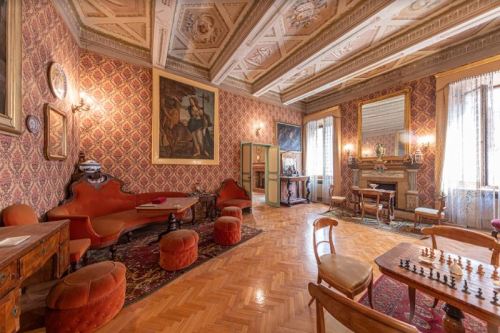
It was dark in the mansion, though outside the cloister the sky was an even midnight blue over the topmost gables of the house. Shadows hung down the four stories of the mansion itself, where only here and there a shape distinguished itself, boughs heavy with apricots, and those lilies flickering in the dark, like waxen candles. And here and there, behind the many-paned windows was the glimmer of candles. Mrs. Winchester found herself found herself standing alone in the parlor this winter night. She was tired and hungry, more deeply chilled than she had known till she started several blazing fires in the fireplaces in one rambling section of the mansion called the Hall of Fires. The mansion has forty-seven fireplaces and seventeen chimneys. The Hall of Fires was designed to produce as much heat as possible. The three adjoining rooms have four fireplaces and three hot air registers from the coal furnace in the basement. This evening, Mrs. Winchester was sick of perpetually treading stairs. The room was full of flowers. Flowers everywhere, not in senseless profusion, but placed with the same conscious art as in her Victorian gardens. How the flowers could survive all the heat was unknown to anyone. A vase of arums stood on the writing table, a cluster of strange-hued carnations on the stand at her elbow, and from bowls of glass and porcelain clumps of freesia bulbs diffused their melting fragrance. A few hours passed, and Mrs. Winchester was rejoicing at the prospect of food. She sat out to make her way to the dining room. She had not noticed the direction she had followed this evening in going to the dining room, and was puzzled, to find two news staircases, of apparently equal importance, inviting her. #RandolphHarris 1 of 10

She chose the one to her right, and reached, at its foot, a long gallery. The gallery was empty, the doors down its length were closed. The room Mrs. Winchester entered was square, with dusky picture-hung walls. In its center, about a table lit by veiled lamps, there were apparitions already seated at dinner; then she perceived that the table was covered not with food but with papers, and she was invited into what seemed to be a meeting full of plans to expand her mansion. From the end of the table, Mrs. Winchester was greeted by an apparition with a smile which displayed a glance of impartial benevolence. “Certainly. Come in, Mrs. Winchester. If you won’t think it a liberty—” Carmelita, another apparition who sat opposite the host Coleman, turned her head toward the door. “Of course, Mrs. Winchester’s and American citizen?” Coleman laughed. “That’s all right! Oh, no, not one of your pin-pointed pens, Carmelita! Haven’t you got a quill somewhere?” Mrs. Winchester said, “No need to fuss. I have my quill right here.” Mrs. Winchester dipped her quill in the inkstand and dashed the plans the spirits gave her to expand the mansion on her lovely Edwardian linen dinner napkins. Mrs. Winchester, understanding what was expected of her, stood awaiting more instructions. Coleman was about to let Carmelita have a turn at the blueprint instructions; but he said in his sad imprisoned voice: “The Switchback Staircase–?” Mrs. Winchester continued, glancing about the table. #RandolphHarris 2 of 10

Coleman then said, “to reduce the effort of treading stairs, I propose a Switchback Staircase which will include 44 stairs, two inches in height, with 7 complete turns, that will travel 100 feet!” Mrs. Winchester sketched the details on her napkin and she continued to smile on her guests, then turned from the room and ran upstairs. The impression was so starling that Mrs. Winchester forgot what was going on about her. She was just dimly aware of living the dining room and being transferred back to the Hall of Fires. With a deadly sense of being unable to move, or even understand what she was doing, when she stood up from her chair which was near a warm fireplace—a strange weight of fatigue came on all her limbs—and there was a figure behind her chair. Then it suddenly disappeared. Mrs. Winchester felt an immediate sense of relief. It was puzzling that the man’s exit should have been so rapid and noiseless, but at any rate he was gone, and with this withdrawal the strange weight was lifted. Everything suddenly seemed to have grown natural and simple again, and Mrs. Winchester found herself responding with a smile. As she gazed out of the window, the sky deepened. The garden changed. The apricot tree beyond the arch, once full with shadow, had not lost its shape. Nothing could be seen of the fountain, nothing of the white lilies. And those lights in one of the wings of her mansion had the only clarity now, so many beacons in the dark. #RandolphHarris 3 of 10

Mrs. Winchester decided to walk through her enormous and only half-lit living room, along a short hallway, into a den with rich teak paneling and a copper ceiling. The maroon leather armchairs and couch were expensive and comfortable. The polished teak desk was massive, and detailed of a five-masted schooner, all sails rigged, stood on the corner. Nautical items—a ship’s wheel, a brass sextant, a carved bullock’s horned filled with tallow that held sail-making needles, six types of ship lanterns, a helmsman’s bell, and sea charts—used a as decoration. Mrs. Winchester opened a book. She curled up in one of the arm chairs. She felt a lump of emotion in her throat, and entity seemed to have followed her. She then found herself in an echoing hall with a high ceiling, bare except for a long, pew bench, a table, and old portraits of popes upon the walls. She had never seen this portion of her mansion before. There were bad things. Shadows. Big, black shadows. There was someone there but she could not see him properly. He kept changing. There were noises too. They were all over the house. They were up in the ceiling and in the walls. Really scary stuff. Like there were animals there. The demon showed her stuff. He showed her what her house would look like ten years from this night. He showed her a vision of the nine-story tower. Behind this vision was a fragment of a yellow mansion that looked a lot like the one she was currently living in. Next, the demon taught Mrs. Winchester to say a prayer. It was simple. #RandolphHarris 4 of 10
As her eyes roved around the room with dark paneling and the somber paintings of ancient martyrs, the demon’s hand was moving rapidly over a book. Mrs. Winchester watched with astonishment and a creeping disquiet as the quill traveled over the pages. The words the demon was writing—though English they were—made no sense at all. The demon continued to write frantically. Then all at once he stopped. He seemed to relax and he calmly turned to the next page. Mrs. Winchester went to get the book and the demon calmly turned to the next page. His body had tensed again and the frantic writing continued. She tried to lift his wrist, but was shocked to discover that his arm and the hand that held the quill were quite immovable, as if made of stone. Mrs. Winchester watched in horror as the writing, clear and then illegible by turns, started pouring out filthy words and phrases that had no place in the presence of a woman. There were drawings too: symbols of archangels and pentagrams. She knew one of the symbols to be Aspenjargack. This demon wields and withholds the rain, each drop being a desire of the sorcerer. She knew this must be the demon who was communicating with her. She tried to leave the room, but her body remained in a rigid seated position as the demon continued to make frantic writing motions in midair. Mrs. Winchester then acknowledged that this was a powerful force. #RandolphHarris 5 of 10

A week later, Mrs. Winchester started experiencing other paranormal activity in her home. She was awaken by the sound of a screw being unscrewed and falling to the floor. When she got up to inspect the noise, there were several shadowy manifestations; they were present in her bedroom and in other parts of the house. She was shown visions of hell, saw demons of abominable form lurking in her hallway, heard voices. Her ancient blood was flowing faster. She was tarrying to see what would happen next—to see what the conjurer had up his sleeve. Mrs. Winchester heard a loud thud from downstairs. It had come from the one of the living rooms. It was a loud thud of an object falling from a height. She ventured downstairs. All was quiet; she heard nothing but her own rapid breathing. Gingerly, Mrs. Winchester turned the key to the living room door. In one deft movement, it flung wide open. She pushed the light switch and stood in the doorway, staring in astonishment. The Grandfather clock lay on the floor. On the mantel-piece the crystal candleholders were laid out like a crucifix. The room had been locked. There was no sign of forced entry. The fright Mrs. Winchester experienced was unimaginable. The house was telling Mrs. Winchester something. It was drawing Mrs. Winchester’s attention to itself, showing her what it could do. Later that evening, Mrs. Winchester was sipping her tea when she heard some hammering on the wall. It was so sudden and fierce, it made her drop her cup. Mrs. Winchester figure it was the carpenters working on the house. However, she was sure they were on dinner break. #RandolphHarris 6 of 10

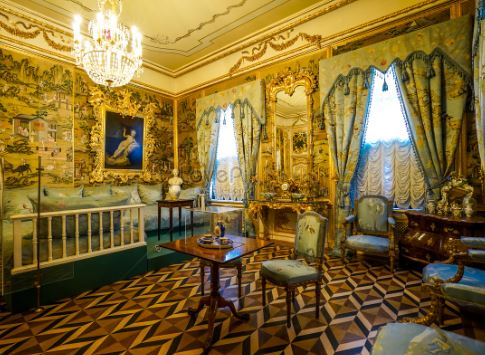
Without further thought, she cleaned up the mess she had made. She was in her bedroom when she heard the noise again. However, now the noises seemed more urgent and were somehow more deliberate and purposeful. There was something eerie about the patter of sound as it traveled to various points on the wall, each time repeating a succession of what she could only describe as hammer blows. Mrs. Winchester was becoming uneasy. She hurried from the room, slamming the door shut behind her. Once downstairs, she had an odd sense of foreboding. The feeling was made all the more powerful when, she heard echoes coming from a cabinet. The finest cabinetmakers had toiled for years, using richly polished roods, to create built-in chests with deep drawers and tremendous bins and lockers. Inside were store the rarest satins and silks; hand-embroidered linens from China, Ireland, and Germany; and bolt upon bolt of elegantly woven cloth from Persia and India. However, when she opened this particular cabinet, she noticed it had become a doorway that went straight to the back of the house where she discovered thirty new rooms had been built within hours, and all fully furnished. There were stained-glass doors, crystal chandeliers, French Provincial sofas, beautiful drapes, and Persian rugs. Perhaps the carpenters were shy men who did not want to be disturbed. As astonishing at this was, she was turning to go back upstairs. However, something in the newly fashioned sixth kitchen caught her eyes. #RandolphHarris 7 of 10

Shielding her eyes against the glare of daylight and peering more closely, Mrs. Winchester tried to come to terms with the inexplicable. Right in the middle of the pine floor was a lighted candle in a small brass holder, and next to it an open book. It is were more blueprints and plans to further expand the estate. Yet, the mansion was not done with surprises. Mrs. Winchester heard some movement on the 7-11 staircase. What she took to be a bright blue ball of light was swiftly descending. It moved away with such speed. She moved a little forward and made out that she was looking into a room full of paintings! On the walls were mounted immense pictures. In the distance they seemed finished and alive: clusters of biblical faces and forms surely as perfected as those that covered all the palaces and churches in which she had ever been. There was Saint Michael the Archangel, his face subtly illuminated by the fire below. And beside him was a picture of an unknown saint, a woman with a crucifix clasped to her chest. The colours pulsed in the light. And all of these pictures seemed darker, more solemn, than those she had known. She could hear little sounds from the room. The stillness of the garden, its concealing darkness, gave her that delicious feeling of being invisible, and she drew even closer now. The chill in Mrs. Winchester grew icier. The atmosphere in the room was subtly changing. Mrs. Winchester found the words “HIDE HERE NOW” scrawled in blood on the wall. Other mysterious symbols appeared on the walls of the living room, kitchen, and hallway. #RandolphHarris 8 of 10
Evil invariably comes with coldness. A door had been opened by restless spirits. Evil is not a word which can be defined on its own, nor is the use of the word devil. It should be added that there is a function of Satan. Satan is the tester; he has a pretty awful job to do which is not as the evil devil figure portrayed in the Christian religion. Satan within Judaism is not the devil; his job is to operate on the Tree of Life to make sure that people do not progress through the stages towards perfection until they have managed to purify themselves to make sure that nobody gatecrashed until they have worked hard enough and developed their life, that they do not get up the Tree until they have achieved total purification. The Christian definition of the devil sometimes is just an explanation for human nature that no one wants to own as their free will. That is not to say that evil entities do not exist. They can exist in the same way that any spiritual entities exist; they are a projection of the course a person’s superconsciousness or subconscious takes. Evil and good are two forces bearing down; they are a whole, a question of balance. O thou great powerful governor Amaimon, who reigneth exalted in the power of the only El above all spirits in the kingdoms of the East (South, West, North), I invoke and move thee in the name of the true God, and in God whom thou worshippest: and in the seal of thy creation: and in the mighty names of God, Iehevhe Tetragrammaton, who cast down from Heaven, thou and the spirits of darkness, and in al the names of the mighty God who is the creator of Heaven and Earth, and the dwelling of darkness, and all things and in their power and brightness; and in the name Primeumaton who reigns over the palaces of Heaven. #RandolphHarris 9 of 10

Bring forth, I say, the Spirit of Sarah L. Winchester; bring her forth in the 24th of a moment let her dwelling be empty until she returns to the Winchester Mansion and visits us in peace, speaking the secrets of truth; until she returns to us and obeys our power and her creation in the power of God, El, who is the Creator and doth dispose of all things, Heaven, firmament, Earth, and the dwelling or darkness. Cross all space and time and rise up within that we may compel the rise of the fallen ones. Formulate spiritual armor with this energy as well. Allow us to become the composite image of the powers of Darkness within the World however that may be conveyed through us as individuals. What protector is needed by us O Ahriman, for we are the God of our World! Though the oppression of tyrants attempts to encompass us, the blackened fire of spirit and sorcery works through our evil minds to improve our desires upon the corporal realm of stasis and limitation. May the power of darkness eternal be revealed through us now. Send forth Divs and Druj to reside within this Winchester Mansion with the power of darkness. Open the gates to other dimensions and allow the supernatural to manifest. Exorcise thy limits which enslave! I know banish and tear the powers of spiritual limitation from imposing its limits upon the Winchester Manion, expelling them from the Winchester Manion in the name of eternal darkness and all of its power and glory! Reveal the Black Sun and allow us to perceive the unseen planes and the sorcerous words of power. #RandolphHarris 10 of 10

Winchester Mystery House

Need plans tonight? We got you covered🔦😉 Self-guided flashlight tours start at 7PM – tickets still available!
BUY TICKETS | Link in bio. https://winchestermysteryhouse.com/

Possess them Not with Fear, Psychologically Burn Your Ships Home!

As we have seen, orienting our lives to consumption creates a climate of superfluity and ennui. The problem is closely related to a crisis that is affecting the entire Western World now but mostly goes unrecognized, because more attention is given to its symptoms than to its underling causes. Having considered some circumstances under which persons become available to unacquainted others, we can examine the other side of the questions: when does the individual have the right to initiate overtures to those with whom he is unacquainted? Obviously, one answer is that one can do this when the other is in an exposed position. Another answer is that some of the persons who are defined as open tend also to be defined as “opening persons,” as individuals who have a built-in license to accost others. Just as the intentions of those who accost them are not suspect, so, in some cases, their intentions in accosting others may not be suspect. Priests and nuns provide one kind of example: police, who presumably will be able to produce a legitimate reason for the engagement after initiating it, provide another. Those who have responsibility for managing, or for guarding the entrance to, social occasions provide still another example, since they are allowed, and often obliged, to initiate engagements of welcome with all who enter, whether acquainted with them or not. Shopkeepers, in those societies that define shops, more than we do, as the scene of a running social occasion, may often find themselves in the host’s role, required to engage each entrant and leave-taker in a special salutation. #RandolphHarris 1 of 18

In Salt Lake City, Utah; you are still at leisure to notice what charming thing good manners are. As you step into a person’s home, you will greet the owner with “Peace be upon you,” and he and all who are withing hearing will reply with no fanatic exclusion, but in full and friendly chorus to that most gracious of salutations, and will follow your departing steps with the “God bless you,” the divine security. Their shops they treat as small reception-rooms where the visiting buyer is a guest—and sitting at coffee over their affairs will look with surprised but tolerant amusement at the rough Westerner who brushes by to examine saddle-bags or daggers, unconscious of the decent rules of behaviour. In our society, license to approach, like license to be approached, is taken (if not given) by individuals who for a period find themselves out of role. Here, license to initiate improper contact is merely part of the syndrome of license associated with anonymity, in the sense that an individual projecting an alien self is not fully responsible for the good conduct of that self. (In the same way, when he trips or slips, he projects a self from which he can dissociate his inner being.) Again we see a connection between exposed positions and opening ones, for the very alienation from his projected self that allows others to treat this self as approachable and expendable allows him to misbehave in its name. The falsely presented individual may, in fact, have a special need to make and to elicit overtures; in both cases he is able to transmit an appreciation that what he is appearing as is not his true self. #RandolphHarris 2 of 18

Nor is it only when engagement is patently to the advantage of the person approached that emergency engagement with strangers occurs. In our society, as presumably in others, bonds between unacquainted persons are felt to be strong enough to support the satisfying of “free needs,” even where the person receiving the service is the one who initiates the counter that makes this possible A patent unthreatening need appears to provide a guarantee of the good intentions of the person who is asking for assistance. Thus, in our society, an individual has a right to initiate requests for the time of day, for a light, for directions, and for coin change—although, given a choice in the matter, the accoster (Mutual claims in regard to matters such as directions can be strong enough to cause some people to respond politely to direction requests from unknown persons.) is under obligation to select the individual present whom he is least likely to be able to exploit. Similarly, if an individual finds himself in a position where he badly needs hi apologies or explanations to be accepted, he then has some right to engage others. Liberty to apologize for accidentally inconveniencing another is also a liberty to present oneself in a proper light, even at the expense of communication rules. Thus, to parallel an earlier example, a man walking around in the grass looking for a key he has dropped has a right to comment on his predicament to a lone passing stranger to demonstrate that he is not improperly involved in some occult activity. #RandolphHarris 3 of 18

The same kind of license occurs when an individual feels he has been mistreated in some way by an unacquainted other, and initiates a complaint, threat, or caution. While defense of one’s honour may work hardships upon the person against whom action is taken, the person who institutes such action is not suspect as far as communication rules are concerned. The aim of this system is to bring man to conscience. Conscience is a certain quality that is in every normal man. It is really a different expression of the same quality as consciousness, only consciousness works more on the intellectual side and conscience more on the moral (id est, emotional) side. Conscience helps a man to realize what is good and what is bad in his own conduct. Conscience unites the emotions. We can experience on the same day a great many contradictory emotions, both pleasant and unpleasant, on the same subject, either one after another or even simultaneously, and we do no notice the contradictions because of the absence of conscience. Buffers are what prevent one “I” or one personality from seeing another, but in a state of conscience a man cannot help seeing all these contradictions. He will remember that he said one thing in the morning, another thing in the afternoon and yet another in the evening, but in ordinary life he will not remember, or—if he does—he will insist that he does not know what is good and what is bad. The way to conscience is through destroying buffers, and buffers can be destroyed through self-remembering and through not identifying. #RandolphHarris 4 of 18

The idea of conscience and the idea of buffers need long study, but when speaking about the moral side of this system, what should be understood from the beginning is that a man must have a sense of good and bad. If he was not, nothing can be done for him. He must start with a certain moral sense, a sense of right or wrong, in order to get more. He must understand first the relativity of ordinary morality, and secondly he must realize the necessity of objective right and wrong. When he realized the necessity of objective permanent right and wrong, then he will look at things from the point of view of this system. Conscience is in the essence, not in personality, whereas magnetic center is in personality, not in essence. Magnetic center is in personality, not in essence. Magnetic center is acquired in this life. It is in the intellectual part of emotional center, though perhaps also in the intellectual part of the intellectual center, and it is built on B influences. “To awaken conscience does one have to eliminate buffers?” someone asked. When buffers are only shaken, conscience awakes. Sometimes people can discover their own buffers. If one has the right idea of buffers, one may find them. There is a great difference between excuses and buffers. Excuses may be different every time, but if the excuse is always the same, then it becomes a buffer. Buffers are connected with conscience. #RandolphHarris 5 of 18

Conscience is a word we use generally in a conventional sense, to mean a sort of educated emotional habit. Really, conscience is a special capacity which everybody possesses but which nobody can use in the state of sleep. Even if we feel conscience for a moment accidentally, it will be a very painful experience, so painful that immediately we shall want to get rid of it. People who have occasional glimpses of conscience invent all kinds of methods to get rid of this feeling. It is the capacity to feel at the same time all that we ordinarily feel at different times. Try to understand that all our different “I”s have different feelings. One “I” feels that he likes something, while another hates it, and a third “I” is indifferent. However, we never feel these things at the same time because between the are buffers. Because of these buffers we cannot use conscience, cannot feel at the same time two contradictory things which we feel at different times. If a man does happen to feel them he suffers. So, in our present state, buffers are even necessary things without which a man would go mad. However, if he understands about them and prepares himself, then after some time, he may start to destroy the contradictions and break the buffers down. The breaking of a mechanical habit, whether good or bad, may be uncomfortable, because we have mechanical habits such as rules of conduct and more rules which we get from our education. In most cases, therefore, we do not experience conscience; we have too many buffers. #RandolphHarris 6 of 18

As I have said, they are partitions between our emotional attitudes, and experience of conscience means seeing a hundred things at the same time. Partitions disappear and all inner contradictions are seen at the same time. This is very unpleasant, and as the general principle of life is to avoid unpleasant sensations and realizations we run away from seeing them. In this way we create inner buffers. Contradictions seen other after the other do not appear contradictory; they have to be seen at the same time. We are machines and we must see where we can change something, because in every machine of every kind there is always a point where it is possible to begin. Sometimes people ask if there is anything permanent in us. There are two things, buffers and weaknesses. The weaknesses are sometimes called features, but they are really just weaknesses. Everyone has one, two or three particular weaknesses, and everybody has certain buffers belonging to him. He consists of buffers, but some are particularly important because they enter into all his decisions and all his understandings. These features and buffers are all that can be called permanent in us, and it is lucky for us that there is nothing more permanent, because these things can be changed. Buffers are artificial; they are not organic; they are acquired chiefly by imitation. Children begin to imitate grown-up people and so they create some of their buffers. Others are created unknowingly by education. If it were possible to put a child amongst people who were awake, he would fall asleep, but—in the conditions in which we live—imaginary personality of imaginary “I” generally appears in a child at the age of seven or eight. #RandolphHarris 7 of 18

Sometimes people ask whether we can see buffers in our present state of consciousness. We can see them in other people, but not in ourselves. Often times, the way to get people to cooperate is through stimulating competition. Our consciousness is very important in the work we are employed to do. Not everything needs to be tied to money, but we must foster in people a desire to excel. The desire to excel! The challenge! Throwing down the gauntlet! An infallible way of appealing to people of spirit. When anyone’s shadow darkens, they ought to feel immediately embraced and loved and lifted and inspired to go and be better because they know they are loved and because they have friends. We can create a greater sense of belonging as we reassure and include those who are new to an employment office or community. It can often break a person’s heart if someone comes and is very vulnerable, and the gets a cold shoulder or a lack of interest. That is tragic. We have to do better than that. When you choose to put yourself out there and make others feel like part of the team, you are blessing someone else’s life. This can encourage others at work to do their best to be more productive because they feel like they are a part of a fraternity that cares. All people have fears, but the brave put down their fears and go forward. What greater challenge can be offered than the opportunity to overcome those fears? Sometimes we need a person with experience to show us how to preserver. It is important for us to humanize those we work with an interact with. #RandolphHarris 8 of 18

Pay and pay alone will never bring together or hold good people. The joys of having colleagues and taking pride in your production is often the key. In studying the depth of the work attitudes of thousands of people, the most motivating factor was the work itself. If the work is exciting and interesting, the worker looks forward to doing it and is motivated to do a good job. That is what every successful person loves: the game. The chance for self-expression. The chance to prove one’s worth, to excel, to win. That I what makes footraces and hog-calling and pie-eating contests. The desire to excel. The desire for a feeling of importance. The importance of knowing what to count as success is the point of an Army story about the new draftee who was an operations analyst in civilian life. After standing with fellow draftees in a long line to get their dinner plates washed and rinsed, the recruit went up to the old sergeant and explained it is inefficient to use two vats for washing dishes and two vas for rinsing them. It would be faster to use three vats for washing and only one for rinsing since washing takes more time than rinsing. The old sergeant looked with disdain at the new recruit, and said, “You’ve got it exactly backwards. I want them to stand just as much as possible. I can’t keep them running around all day, but the longer I can keep them on their feet, the better.” Clearly, selection of agents or strategies implies some metric of success. Agents need not attend to the measure. Animals can have many offspring out of motives far more compelling than the eventual adaptation of their species. #RandolphHarris 9 of 18

Fashion may be copied without much big-picture reflection by those adopting a new style. In such cases, success is actually defined by outside observers as “frequently copied.” Rather than specifying a success measure and copying what scores well, this approach measures success by numbers of copies. Biologists take this line when they assess fitness as number of offspring. In biology, survival defines what is fittest. However, in most of the situations we consider, performance measures are active in the minds of designers, policy makers, and other actors, whether they are acting inside the system or contemplating it from the outside. Recall the example of Linux software development, with its thousands of volunteers proposing solutions to specific problems in a massive operating system. Being able to evaluate the effectiveness of proposed solutions using clear measures such as speed and crash-avoidance was one of the requirements for such open software development to work. Typically, however, the assessment of alternatives in a Complex Adaptive System is not easy. In fact, there is usually more than one criterion that could be used to assess results. For a business, profit seems a natural measure of success. For a checkers player, winning games is a natural performance measure. Yet even in these examples, with success criteria that seem indisputable, complexity might be harnessed more effectively if other measures of success are used. In the business example, market share provides an additional measure that can be a useful supplement to profits. #RandolphHarris 10 of 18

One reason is that changes in profits may reflect factors beyond the control of the company, such as improvement in the national economy. You might not want to attribute credit for increased profits to your new marketing campaign if you knew that your entire industry had prospered during a buoyant economy. An increase in your market share could provide a better indication than profits of whether you were doing something right—and what it was. We will also see below for our checkers example that there are measures of success that may be more effective than waiting for the outcome of the game. Our approach to harnessing complexity does not take any performance measure as “given.” It does not anoint any other measure as a highest goal. Performance measures can be seen as instruments that shape what events are likely to occur. Even the preservation of life is not a goal that trumps all others, as human willingness to die for principles so dramatically reveals. Since goals are not see as fixed, setting goals, the criteria that govern processes of selection, is one of the main interventions for those who would harness complexity. Our view leads to two important and uncommon observations about performance measures. First, it is valuable to appreciate that performance measures are defined within the system. They are modified (or maintained) and applied (or disregarded) by agents themselves. This observation is not a surprise to many experienced practitioners, who are well aware of the political work that lies behind measures later taken as givens. #RandolphHarris 11 of 18

Unfortunately, many efforts to apply complexity concepts to social systems give little attention to how performance measures are defined within the system. To see what we mean, consider the case of profit as one such measure. What may count as a profit depends on many factors, including what the law allows individuals to own, what social norms and religions define as morally fair, whether actual practices conform to those norms, what the tax code recognizes as legitimate costs, and whether society charges for disposal of the by-products of activity, sch as used motor oil or even carbon dioxide. We also regulate the scope of profit as a permissible goal. We largely removed profit from the decision making within American schools, hospitals, and prisons at the beginning of the twentieth century and are experimenting now with reintroducing it. A further consequence of performance measures being defined by the agents themselves is that there can be more than one measure active. In addition, the measures may be inconsistent and may change over time. Change that is seen as improvement by one type of agent may be seen as a loss by others. There are issues of variety in performance measures just as there are in other characteristics of agents and their strategies. When members of an organization assess a situation from different evaluative angles, they generate a greater variety of new possibilities that, if not excessive, can have great value for the organization. However, it is clear that beyond some level, variety in performance measures can also be a source of debilitating inconsistency and conflict. #RandolphHarris 12 of 18

But one life to lay down for your country—how can an army get the enemy to believe that its soldiers will in fact lay down their lives for their country when called upon to do so? (By getting Americans to be ashamed to be American, and becoming unwilling to buy American cars, produce, meat and other goods and service; and to disrespect the American flag, the National Anthem, and other Americana and art, the enemy is using mental warfare to weaken the American spirit and army.) Most armies would be finished if each soldier on the battlefield starts to make a rational calculation of the costs and the benefits of risking one’s life. Other devices have to be found, and they include many of the ones above. We have already mentioned the tactic of burning bridges, and the role of punishments and teamwork in deterring desertion. Now we concentrate on the devices to motivate individual soldiers. The process begins in the boot camp. Basic training in the armed forces everywhere is a traumatic experience. The new recruit is maltreated, humiliated, and put under such immense physical and mental strain that the few weeks quite alter his personality. An important habit acquired in this process is an automatic, unquestioning obedience. There is no reason why socks should be folded, or beds made, in a particular way, except that the officer has so ordered. The idea is that the same obedience will occur when the order is of greater importance. Trained not to question orders, the army becomes a fighting machine; commitment is automatic. #RandolphHarris 13 of 18

Th seeming irrationality of each soldier thus turns into strategic rationality. Shakespeare knew this perfectly well; in the night before the battle of Agincourt, King Henry V prays: “O God of battles! steel my soldiers’ hearts; possess them not with fear; take from them now the sense of reckoning, if th’ opposed numbers pluck their hearts from them…” Next comes the pride that is instilled in each soldier: pride in one’s country, pride in being a soldier, and, perhaps above all, pride in the tradition of the fighting unit. The U.S.A. Marine Crops, famous regiments of the British Army, and the French Foreign Legion exemplify this approach. Great deeds from past battles fought by the unit are constantly remembered, heroic deaths are glorified. Constant repetition of this history is meant to give new recruits a pride in this tradition, and a resolve not to flinch from similar deeds when the time comes. Commanders of troops also appeal to a far more personal sense of pride of their men According to Shakespeare, King Henry V inspired his troops at Harfleur thus: “Dishonour nor your mothers; now attest that those you call’d father did beget you.” Pride is often an elitist emotion; it consists in doing or having something that most others lack. Thus, again, we have Henry V speaking to his troops before the battle of Againcourt: “We few, we happy few, we band of brothers; for he to-day that sheds his blood with me shall be my brother; and gentlemen in England now a-bed shall think themselves accurs’d they were not here and hold their manhoods cheap whiles any speaks that fought with us upon Saint Crispin’s day.” #RandolphHarris 14 of 18

There is also the use of commitment through a combination of teamwork, contracting, and burning one’s bridges. Once again we turn to Shakespeare’s Henry V speaking to his troops before the battle of Agincourt. “That he which hath no stomach to this fight, let him depart; his passport shall be made, and crowns for convoy put into his purse: We would not die in that man’s company that fears his fellowship to die with us.” Of course everyone is too ashamed to take this offer up publicly. However, even so, by their act of rejecting the offer, the soldiers have psychologically burned their ships home. They have established an implicit contract with each other not to flinch from death is the time comes. Henry V’s brilliant understanding of how to motivate and commit his army to battle is reflected in success on the battlefield, even when vastly outnumbered. In 1986, when Allen Murray took over as chairman, the Mobil Corporation was America’s third-largest company. Like other oil companies, Mobil had, during the early eighties, launched a major drive to diversify. It brought Montgomery Ward, the giant retail firm, and Container Corporation, the packager. No sooner did Murry take charge than the axe began to chop. In led than two years he had sold off $4.6 billion in assets, including both Montgomery Ward and Container Corp. “We have gotten back to basis at Mobil,” declared Murry. “We’re in the business we know how to run.” Petroleum engineers, it turned out, were not terrific marketers of women’s clothing or paperboard boxes. #RandolphHarris 15 of 18

The same questioning of function has now begun in government as well. What business calls “divestiture,” politicians the World over now call “privatization.” Thus, Japan’s government decided it did not need to be in the railroad business. When it announced plans to sell off the Japan National Railways, the employees struck. In a coordinated campaign of sabotage widely attributed to the Chukaku-ha, or “Middle Core,” radical group, signaling equipment was damaged in twenty-four places in seven regions, and travel in the Tokyo area was paralyzed. Fire broke out in a station. The railway union denounced the sabotage. Some 10 million commuters were inconvenienced. However, the plan went through, and the rail lines are now privately owned. The Japanese government also decided it did not need to be in the telephone business. This led to the sell-off of Nippon Telephone and Telegraph, Japan’s biggest single employer (with some 290,000 jobs). When ownership of NTT was shifted from the public to the private sector, it swiftly became, for a time, one of the World’s most highly valued corporations. Headlines outside Japan tell a similar story: Argentina privatizes thirty companies…West Germany sells off Volswagen…France divests itself of Matra, a defense manufacturer, along with such giant state enterprises as St.-Gobain, Paribas, Compagnie Generale d’Eletricite, and even Havas, an advertising agency. Britain sells shares in British Aerospace and British Telecom. Heathrow, Gatwick, and other airports are now run by a privatized BAA (Once the government-owned airport authority), and the government-operated bus services are now private. Canada sells stock in Air Canada to the public. #RandolphHarris 16 of 18

Seen in perspective, the privatizations to date amount to no more than a fleabite on a dinosaur’s hide, and even recently privatized firms could be renationalized in the event of a sudden change in political fortunes or a World-scale economic collapse. Nevertheless, a deep reconceptualization is under way—a first nervous step toward slimming down and restructuring governments in ways that roughly parallel organizational changes in the private economy. None of this is to say that privatization is the panacea claimed by Margaret Thatcher and free-market purists. It often carries its own long list of shortcomings. Yet, at a time when all governments face a kaleidoscopic, bewildering World environment, privatization helps leaders focus on strategic priorities rather than dissipating the taxpayers’ resources on a hodgepodge of distracting sidelines. Still more significant, it speeds up response times in both the divested and the retained operations. It helps bring government back into sync with the rising pace of life and of business in the symbolic economy. Privatization, however, is not the only way in which governments are, consciously or not, trying to cope with the new realities. #RandolphHarris 17 of 18

Aging—where does aging fit in the spectrum of difficulty? The deterioration that comes with aging is increasingly recognized as a form of disease, one that weakens the body and makes it susceptible to a host of other diseases. Aging, in this view, is as natural as smallpox and bubonic plague, and more surely fatal. Unlike bubonic plague, however, aging results from internal malfunctions in the molecular machinery of they body, and a medical condition with so many different symptoms could be complex. Surprisingly, substantial progress is being made with present techniques, without even a rudimentary ability to perform cell surgery in a medical context. Some researchers believe that aging is primarily the result of a fairly small number of regulatory processes, and many of these have already been shown to be alterable. If so, aging may be tackled successfully before even simple cell repair is available. However, the human aging process is not well enough understood to enable a confident projection of this; for example, the number of regulatory processes is not yet known. A thorough solution may well require advanced nanotechnology-based medicine, but a thorough solution may well require advanced nanotechnology-based medicine, but a thorough solution seems possible. The result would not be immortality, just much longer, healthier lives for those who want them. As we are face with the choice between a humane society and barbarity, between total nuclear disarmament and total, or best, massive destruction, the extension of one’s life is certainly something to debate about. However, I think it beats the “right to die.” #RandolphHarris 18 of 18

Cresleigh Homes

Imagine the memories to be made in this home! ✨ When we welcome new owners into our #CresleighHomes family, we can’t wait to see how they engage with the space and enjoy it with their loved ones.

The Residence 4 floor plan at #CresleighRanch at #MillsStation includes the perfect California indoor/outdoor lifestyle, ☀️ so you can relax with the ones you care about.

Head to our website to see all the options for neighborhoods in the area! https://cresleigh.com/mills-station/residence-4/

Conscience Helps One Realize What is Good and What is Bad

We have learned something from the vast collections of data on primitive man: that if he was not in bondage to the authority of living persons, he was at the utter mercy of the power of the spirits. One might say, as a general rule, that acquainted person in a social situation require a reason not to enter into a face engagement with each other, while unacquainted persons require a reason to do so. There is here, apparently, a noticeable difference between the Anglo-American tradition and the Latin tradition, the latter being one where entrance into an encounter with strangers is apparently more broadly licensed. In these two riles, the same fundamental principle seems to be operative, namely, that the welfare of the individual ought not to be put in jeopardy through one’s capacity to open oneself up for encounters. In the case of acquainted persons, a willingness to give social recognition saves the other from the affront of being overlooked; in the case of unacquainted persons, a willingness to refrain from soliciting encounters saves the other from being exploited by inopportune overtures and requests. If the assumption is correct that a kind of tacit contract underlies communication conduct, then we must conclude that there are imaginable circumstances when any two unacquainted persons can properly join each other in some kind of face engagement—circumstances in which one person can approach another—since it will always be possible to imagine circumstances that would nullify the implied danger of contract. I should like now to consider some of these circumstances under which some kind of engagement among the unacquainted is permissible, and sometimes even obligatory, in our American middle-class society. #RandolphHarris 1 of 17

Every social position can be seen as an arrangement which opens up the incumbent to engagement with certain categories of others. In some cases these others will be chiefly limited to persons with whom the individual is already acquainted or to whom he has just been introduced in the current engagement. In other positions, such as that of salesperson or receptionist, the individual will be obliged to hold oneself ready to be approached by unacquainted others, providing this is in line of daily business. (This face makes some persons enjoy performing the entailed role and other consider it as socially inferior.) We have here an important example of engagement among the unacquainted, and one that does not disturb social distances because there is a patent reason why properly mannered customers would desire to initiate such encounters. There are social positions, however, that open up the incumbent to more than mere occupational-others. Thus, in cities, policemen, priests, and often corner newsstand vendors are approached by a wide variety of others seeking a vast array of information and assistance, in part because it is believed to be clear that no one would seek to take advantage of these public figures. Policemen and priests are especially interesting, since they may be engaged by strangers merely initiating a greeting as opposed to a request for information. Furthermore, there are broad statuses in our society, such as that of old persons or the very young, that sometimes seem to be considered so meager in sacred value that it may be thought their members have nothing to lose through face engagement, and hence can be engaged at will. #RandolphHarris 2 of 17

None of these persons, it may be noted, has the kind of uniform that can be taken off; none can be off duty during part of the day. Here, then, persons are exposed, not merely incumbents; they are “open persons.” There is still another general circumstance opens up an individual for face engagements; namely, that one can be out of role. Given the assumption that the interests of the individual ought not to be prejudiced by forcing one into contact, and given the fact that these interests of one’s will be expressed through one’s playing one’s serious roles, we can expect that when one is not engaged in one’s own roles there will then be less reason to be careful with one as regards communication; and this, in fact, is the case. Thus, when an individual is visibly intoxicated, or dressed in a costume, or engaged in an unserious sport, one may be accosted almost at will and joked with, presumably on the assumption that the self projected through these activities is one from which the individual can easily dissociate oneself, and hence need not be jealous of or careful with. Similarly, when an individual find oneself in a momentarily peculiar physical position, as when one trips, slips, or in other ways acts in an awkward, unbecoming fashion, one lays oneself open for light comment, for one will need a demonstration from others that they see this activity as one that does not prejudice one’s adult self, and it is in one’s own interest to allow them to initiate a joking contract with one for this purpose. Thus, as might have been predicted, the first persons in American to drive Volkswagens laid themselves open to face engagements from all and sundry, since they did not seem to be seriously presenting themselves in the role of driver, at least s a driver of a serious car. #RandolphHarris 3 of 17

I have considered in terms of the language of status ad role some of the grounds on which the individual’s usual right to be unmolested by overtures is set aside. There are still other times of license, but ones when the terminology of social role is not very suitable. Thus, if an individual is in patent need of help, and if this help is of little moment to the putative giver, then satisfying this “free need” provides a nonsuspect basis for initiating communication contact. For example, when an individual unknowingly drops something in the street, one momentarily becomes open for overtures, since anyone has a right to tell one what has happened. As current etiquette suggests: Women must thank all those, including strangers, who do them little services. For example, if a stranger, man or women, opens a door for a woman, or picks up something she has dropped, a woman should not allow timidity or shyness to stop her from saying thank you in a pleasant impersonal way. If the stranger seems to be trying to start an unwelcome conversation, one can, still with politeness but with increasing firmness, refuse to converse. However, it is more attractive to take for granted that the gesture was motivated by politeness only than it is immediately to suspect another motive. It should be added that in the past some writers have felt that the very threat of a lady being accosted in a public place, or even being seen to be alone, is sometimes cause enough for a pure-minded stranger to beat others to the draw: If a lady is going to her carriage, or is alone in any public place where it is usual or would be convenient for ladies to be attended, you should offer her your arm and service, even if you do not know her. To do so in a private room, as in the case mentioned, might be thought a liberty. #RandolphHarris 4 of 17

A more contemporary version of this courtesy is found in the tack occasionally taken by a man passing a strange woman at night on a narrow isolated walk: instead of conspicuously according the female civil inattention, the man ma proffer a fleeting word to show that, unlike a would-be assailant, he is willing to be identified. A final basis of exposure may be mentioned. An individual’s actions can create a need in others that exposes them to engagement. For example, if the others have been bumped into or tripped over (or in other ways deprived of their right to unmolested passage) by him, he can claim the right to engage them in order to convey assistance, explanation, apology, and the like, the others’ need for such redress presumably outweighing their reluctance to being engaged by a stranger. The same holds true for potential, as well as actual, offenses. In a train compartment, for example, individuals may be asked by a fellow-passenger if it is all right if he smokes, or if he opens (or closes) a window. As these opening engagements are patently in the interests of those whose comfort might be affected, the offense or injury the individual might create by his inclinations thus exposes fellow-passengers to solicitous inquiries in advance. As one has seen in life, truth, even though it is often stranger than fiction, it is not enough. No one believes the truth because it is too vivid, interesting, dramatic. The only time drama seems to work is when someone is trying to sale something. #RandolphHarris 5 of 17

Experts in window display know the power of dramatization. For example, the manufacturers of a new rat poison gave dealers a window display that included two live rats. The week the rats were shown, sales zoomed to five times their normal rate. If a worker says he cannot accept any wage increase less than 5 percent, why should the employer believe that he will not subsequently back down and accept 4 percent? Money on the table induces people to ty negotiating one more time. The worker’s situation can be improved if he has someone else to negotiate for him. When the union leader is the negotiator, his position may be less flexible. He may be forced to keep his promise or lose support from his electorate. The union leader may secure a restrictive mandate from one’s members, or put one’s prestige on the line by declaring one’s inflexible position in public. In effect, the labour leader becomes a mandated negotiating agent. His authority to act as negotiating one more time. The worker’s situation can be improved if he has someone else negotiate for him. When the union leader is the negotiator, positions may be less flexible. He may be forced to keep his promise or lose support from his electorate. The union leader may secure a restrictive mandate from his members, or put one’s prestige on the line by declaring one’s inflexible position in public. In effect, the labour leader becomes a mandated negotiating agent. His authority to act as a negotiator is based on his position. In some cases he simply does not have the authority to compromise; the workers, not the leader, must ratify the contract. In other cases, compromise by the leader would result in his removal. #RandolphHarris 6 of 17

In practice we are concerned with the means as well as the ends of achieving commitment. If the labour leader voluntarily commits his prestige to a certain position, should you ( do you) treat one’s loss of face as you would if it were externally imposed? Someone who tried to stop a train by tying oneself to the railroad tracks may get less sympathy than someone else who has been tired there against one’s will. A second type of mandated negotiating agent is a machine. Very few people haggle with vending machines over the price; even fewer do so successfully. According to the U.S. Defense Department, over a five-year period seven servicemen or dependents were killed and 39 injured by soft-drink machines that toppled over while being rocked in an attempt to dislodge beverages or change. “Is it possible to have emotional feeling in the idea of recurrence?” Yes, it is possible, particularly if one has even some small recollection. I do not mean everything, but even a slight memory can give interesting emotional understanding. “When one has a strong feeling of an event having happened before, can one use that to develop memory?” Oh, it can happen in many different ways; only after a very long and very serious investigation can one come to the conclusion that there may be facts. “I was wondering whether, if we could do something about this work before we die, it might not help in our next recurrence.” #RandolphHarris 7 of 17

Yes, what happens before many determine what happens afterwards in many different ways. This is not recurrence. The question is how can one prepare oneself for recurrence. Suppose in a certain life you want to do something and you find you cannot do it. This needs help. If you cannot physically get this help, you begin to think about it and you realize that you have to prepare for this help during the life before. This life is too late; the next life is too late; the life before is the only chance. Think about it. Perhaps you missed some opportunity. If a man finds that he cannot do something he thinks of a precious time when perhaps he could have done it, or perhaps he could not. Think what this implies. “Would he not have had to have some memory to realize mistakes in his past life or his lack of preparation?” There may have been no mistake, simply lack of preparation. Quite right. One need preparation. One says one is not prepared. Perhaps one could have been prepared before. Can you do anything about it? It is difficult, I know. However, one may realize one is not prepared for a certain thing. We spoke of six triads. In one triad you can do one thing, in another another thing. However, this changes all ideas of recurrence. What could be right for one man would not be right for another. For instance, I said that even theoretical knowledge of recurrence changes one’s whole relation to recurrence. It depends, too, how deeply a man knows; there are many degrees. #RandolphHarris 8 of 17

“Can the Law of Seven be observed in the way things happen or appear?” The Law of Seven you can speak about when you find two intervals in an octave. “Can one only see it in operation over a period of many years, or at once?” You can use memory. That does not mean that you observe actual facts. And you must see two intervals in an octave. “What can one do to understand the illusion of time?” One can understand that there is no such thing as time. And why? Because there are facts which show the non-existence of time. Eternal recurrence is not compatible without our present time-sense. The whole thing is in that, so you have to get rid of time-sense. Recurrence refers to eternity, not time. “Can we keep the pattern from repeating?” If you have good memory, you can. “You say that if one really accepted the theory of recurrence it would make a difference?” If one studies, if one works, there is material for understanding. We use understanding and lack of understanding. If we think enough, we may understand something and we may actually change recurrence. “Would it be right to say that the only claim for recurrence is that in this life some people remember that they lived before?” No, that is very weak. Very few people remember and you can always say that they are lying. “Would not belief in recurrence result in a great urgency to make effort?” Belief will not help; belief is deadening; it has not sufficient power. However, realization may. We can understand some things by thinking. For example, the questions as to whether all people are affected in the same way by recurrence. #RandolphHarris 9 of 17

It is impossible to say simply yes or no because what can be applied to one man cannot be applied to another. For one man it will be the same way, the same house, the same cats. However, for other people it may be different. Great poets, great writers, they may not need to walk by the same streets. They may walk by different streets and yet do the same things. This difference may not be due to efforts but capacities, to achievement and to scope of thinking and feeling. A great poet may not need to write the same verses again. Perhaps he got not all, but sufficient, out of his environment, so that he may try something else that he did not try the last time. “After hearing the lectures, people always ask if great poets have the being of man 1, 2, and 3. Now you say that a poet need not do the same thing over and over again.” No. He may be a great poet and yet not belong to objective art. Others less great may produce objective art. Think about some of these ideas, but do not think you know. There are many variations, many possibilities. Think, because there is nothing more important for you. How should natural selection be employed to promote adaptation? Natural selection in evolutionary biology provides a familiar and well-studied example of how selection can work. Although selection in a Complex Adaptive System need not operate in the same way as natural selection, evolutionary biology is a good place to start our analysis. #RandolphHarris 10 of 17

Evolution by natural selection requires three things. First, it requires a means to retain the essential character of the agent. In biological systems, genetic material preserves the key patterns. Evolution by natural selection also requires a source of variation. In the simplest biological systems, this can be achieved by mutation. In sexual reproduction, novelty is generated through recombination. Finally, evolution requires amplification, changes in the frequencies of types. In biological systems this is the result of some individuals having many offspring while others have few or none. If you want to design a system that is able to explore new possibilities while being able to exploit what has already been achieved, biological evolution provides an important benchmark. It demonstrates that adaption can be achieved even without the agents (or anyone else) having any understanding of how the system works. While natural selection provides an important paradigm for how an adaptive system can work, it also has some serious disadvantages compared with more directed methods of achieving adaptation. Whenever it is feasible to attribute success to something more specific than the entire agent, there is the possibility of selecting strategies rather than whole agents. If you find that quinine-related compounds reduce malaria, you can spread them through the World instead of waiting many generations for natural selection to breed malaria-resistant humans. This is especially valuable since the main antimalarial solution nature has so far evolved makes the carrier susceptible to sickle-cell diseases, itself a debilitating condition. #RandolphHarris 11 of 17

When attribution is sufficiently precise—and this can be far from perfectly accurate—it can pay handsomely to make numerous copies of a good strategy on a fast time scale that would be impossible if complete agents had to be reproduced. These two approaches, selecting at the level of entire agents and selecting at the level of strategies, share the need to make copies that retain effective adaptations, to incorporate variation for further adaptation, and to amplify the success (and cull the failure) that does occur. However, they differ in the level at which they operate—and selection at the two levels can work very differently. Selection of one advertising agency from a population of competing firms can have quite different dynamics from selecting among a population of advertising themes proposed by a single agency. Nonetheless, whether it is whole agents or strategies that are evaluated and undergo reproduction, a design for an adaptive system of selection must deal with four issues: Defining criteria of success. Determining whether selection is at the level of agents or strategies. Attributing credit for success and failure. Creating new agents or strategies. While these elements do not separate neatly in the everyday World, distinguishing them will help simplify our discussion without introducing too much distortion. #RandolphHarris 12 of 17

The revolutionary new economy will transform not only business but government. It will do this by altering the basic relationships between politicians and bureaucrats, and by dramatically restricting the bureaucracy itself. It is already causing power to shift among the various bureaucracies. A prime example is the rise of the Japanese Ministry of Posts and Telecommunications (MPT). From 1949 on this ministry had three basic functions. It handled the mail and, like many European postal services, offered customers insurance and savings accounts. (These were originally set up to serve people living in remote rural regions largely ignored by the banks and insurance companies.) In power-conscious Tokyo, the Teishin-sho, as it was called, was regarded as a minor ministry. Today the renamed MPT is one of the giants, often hailed as the “Ministry of the 21st Century.” It achieved this new status after 1985, when—in what must have been a knockdown nawabari-arasoi, or turf battle—it won responsibility for the development of the entire Japanese telecommunications industry, from radio and television broadcasting to data communication. It thus combines in a single agency financial functions (which are increasingly dependent on advanced telecommunications) and the telecommunications functions themselves. No organizational intersection is likely to be more strategic. Explaining MPT’s rise to power, the Journal of Japanese Trade and Industry writes: “A sophisticated information-oriented society in which information circulates smoothly thanks to telecommunication is not complete in itself. #RandolphHarris 13 of 17

“When information flows, people, goods and money also flows. When information about a product is disseminated, as in advertising, people go and buy it. The flow of information is accompanied by “physical flow” and “cash flow.” The MPT alone among the ministries has a direct interest in all three of these phenomena.” Other governments, of course, divide the functions of their ministries and departments differently, but it hardly needs a wizard to anticipate that power will flow toward those agencies that regulate information in the super-symbolic economy and win jurisdiction over expanding functions. As education and training become central to economic effectiveness, as scientific research and development become more significant, as environmental issues gain importance, agencies with jurisdiction in those fields will gain clout relative to those that deal with declining functions. However, these inter-bureaucratic power shifts are only a minor part of the unfolding story. After half a century in which governments continually took on more tasks, the decades since the start of the super-symbolic economy have seen a truly remarkable development. In the advanced economies, leaders as different as Republicans Ronald Reagan and Socialist Francois Mitterand began to systematically strip away governmental operations or functions. They have been emulated by Carlos Salians de Gortari in Mexico, Saddam Hussein in Iraq, by dozens of other leaders around the World, and most important by reformers throughout Easter Europe, all of whom sudden began calling for key government enterprises to be denationalized or their tasks contacted out to be performed by others. Privatization became a global buzzword. #RandolphHarris 14 of 17

This is widely taken to be a sign of the triumph of capitalism over socialism. However, the push toward privatization cannot be simply written off as a “capitalist” or “reactionary” policy, as it so often is. Opposition to privatization and similar measures is not “progressive.” Whether recognized or not, it is a defense of the unelected Invisible Party, which holds massive power over people’s lives, irrespective of whether their governments are “liberal” or “conservative,” “right-wing” or “left-wing,” “communist” or “capitalist.” Moreover, few observers have noticed the hidden parallels between the privatization push in the public sector and today’s restructuring of business in the private sector. We have already seen big firms splitting themselves into small profit centers, flattening their pyramids, and installing free-form information systems that break up bureaucratic cubbyholes and channels. Few seem to have considered that if we change the structure of business and leave government unchanged, we create a gaping organizational mismatch that could damage both. An advanced economy requires constant interaction between the two. Thus, like a long-married couple, government and business eventually must take on some of each other’s characteristics. If one is restructured, we should expect corresponding changes in the other. When it comes to our inadequate abilities—bacterial diseases are mostly controllable today. Sanitation limits the ways in which plague can spread. These measures are just good enough to lull us into imagining the problem is solved. #RandolphHarris 15 of 17

The only really effective treatments for viral diseases are preventative, not curative. They work either by preventing exposure, or by exposing the body beforehand to dead or harmless or fragmentary forms of the virus, to prepare the immune system for future exposure. Scientists are even predicting that no vaccine will be made in the next for decades for deadly sexually transmitted viruses and believe that can mutate and become as infectious as the flu. The deaths from the next great plague could have begun in a village last week, or could begin next year, or a year before we learn to deal with new viral illness promptly and effectively. With luck, the plague will wait until a year after. Immune machines could be set to kill a new virus as soon as it is identified. The instruments nanotechnology brings will make viral identification easy. Someday, the means will be in place to defend human life against viral catastrophe. From eliminating viruses to repairing individual cells, improving our control of the molecular World will improve health care. Immune machines working in the bloodstream seem about as complex as some engineering projects human beings have already completed—projects like large satellites. Other medical nanotechnologies seem to be of a higher order of complexity. Somewhere in the progression from relatively simple immune devices to molecular surgery, we have crossed the fuzzy line between systems that teams of clever biomedical engineers could design in a reasonable length of time and one that might take decades or prove impossibly complex. #RandolphHarris 16 of 17

Designing a nanomachine capable of entering a cell, reading its DNA, finding and removing a deadly viral DNA sequence, and then restoring the cell to normal would be a monumental job. Such tasks are advanced applications of nanotechnology, far beyond mere computers, manufacturing equipment, and half-witted “smart materials.” To succeed within a reasonable number of years, we may need to automate much of the engineering process, including software engineering. Today’s best expert systems are nowhere near sophisticated enough. The software must be able to apply physical principles, engineering rules, and fast computation to generate and test new designs. Calling automated engineering. Automated engineering will prove useful in advanced nanomedicine because of the sheer number of small problems to be solved. The human body contains hundreds of kinds of cells forming a huge number of tissues and organs. Taken as a whole (and ignoring the immune system), the body contains hundreds of thousands of different kinds of molecules. Performing complex molecular repairs on a damaged cell might require solving millions of separate, repetitive problems. The molecular machinery in cell-surgery devices will need to be controlled by complex software, and it would be best to be able to delegate the task of writing that software to an automated system. Until then, or until a lot more conventional design work gets done, nanomedicine will have to focus on simpler problems. #RandolphHarris 17 of 17

CRESLEIGH HAVENWOOD
Lincoln, CA | from the high $600s
Now Selling!

No appointment needed! Cresleigh Havenwood features four distinct floor plans ranging from 2,293 – 3,377 square feet and offering up to five bedrooms. Each plan has been thoughtfully designed and includes great features such as single story homes, guest suites, optional offices, garage workshops, and more!

Get the most out of your new home with Cresleigh’s All Ready smart home featuring all the connectivity needed to keep your house running. Best of all, each Cresleigh home comes with owned solar included!

Located off of Virginiatown Road and McCourtney Road, residents of the 83 homesites of Cresleigh Havenwood will benefit from a brand new neighborhood in the charming City of Lincoln. Palo Verde Park, is just down the street and there’s plenty of recreation to take part in all around town. https://cresleigh.com/havenwood/

The Defaulting Clients All Had the Reputation of Paying their Bills Promptly
Each person wants one’s life to be a marker for good as one’s group defines it. Men and women work their programs of heroism according to the standard cultural scenarios, from Pontius Pilate through Eichmann and Calley. Once we see the role of acquaintanceship in social life, we are led to ask how this relationship may be developed between two individuals. Presumably, acquaintanceship can develop “informally,” as when persons in the same office or factory come to “know about” each other and gradually acknowledge this to one another, so that knowing about becomes knowing. A special case of this is found among ritually profane persons such as young children. Here it may be enough for each to know that the other goes to the same school for acquaintanceship to be automatically assumed. Acquaintanceship may also come about informally through joint participation in the same encounter, although differences in status of the participants may here act as a restriction. This may be illustrated from a report on an environmental maintenance custodian’s response to the way he was treated by a hospital physician: “Of course they are [the doctors] not all like that. Some of them would not say hello if they tripped over you. Now you take Dr. Winchester. He came down here once and asked Al to fix something that belonged to him, so Al dropped his work and went ahead and fixed this thing. Winchester was nice as could be, stood around very friendly and chatted while Al fixed this thing. Well, Al says he met up in the hall the next day and the doctor walked right by him as if he had never laid eyes on him before. #RandolphHarris 1 of 17

“Al says he has met him lots of times since then and the doctor never lets on her recognizes him. Al said to me, ‘What do you think ails him?’ I told him. ‘I don’t know, Al, maybe some of these doctors think they are better than we are. Just don’t pay any attention to him.’” The relationship of acquaintanceship may also develop “formally” in our society, as when two individuals are introduced, typically by a third party but sometimes, when conditions are right, by themselves. An introduction, even more than acquaintanceship that develops informally, ought, it is felt, to have a permanent effect, placing the introduced persons forever after in a special and accessible position in regard to each other. The difference is that, while informal acquaintanceship may spring up without the participants in fact “knowing” each other’s name, formal acquaintanceship presumably involves an exchange of names and an obligation to be able thereafter to refer to the other by one’s name. Thus, with persons who have been formally introduced, or who have used names to each other on the basis of informal acquaintanceship, the offense of forgetting may take two distinct forms: not knowing that one ought to know a particular person (the greater of the sins); and knowing that one knows the person, but not being able to remember one’s name. If acquaintanceship places individuals in a preferential communication relationship, or, rather is a preferential communication relationship, then we can understand why some persons will avoid those places and occasions where troublesome introductions are likely to occur. #RandolphHarris 2 of 17

More important, it can easily be appreciated that an introducer may feel an obligation to make sure that no harm resulting from the new relationship will come to those whose communication relation to each other he has altered. Since harm of this kind seems to flow from the poor to the affluent, the male to female, the weak to the powerful, the introducer may feel obliged to check with the one who has the more to lose before effecting the introduction, and assume that the one who has something to gain will have no objection to the relationship. Friends or acquaintances may not be introduced to one another unless it is known that the introduction will be agreeable to both parties. Suppose two persons, however, are of the same rank and social position, it is proper to accede to the request of one of them to be introduced, without previously asking the permission of the other. It is not in good form to introduce a person of lower rank to one of higher rank without receiving the express permission of the latter, but a request from one of higher rank to be presented to one of lower rank must be complied with instantly. Where the context is a close or continuing one, making it difficult for the persons introduced to employ the courtesy of foregoing their rights, the introducer will presumably have to take special care. You must never introduce people to each other in public places unless you are very certain that the introduction will be agreeable to both. You cannot commit a greater social blunder than to introduce to a notable person someone she does not care to know, especially on shipboard, in hotels, or in other very small, rather public communities where people are so closely thrown together that it is correspondingly difficult to avoid presuming acquaintances who have been given the wedge of an introduction. #RandolphHarris 3 of 17

One of the complications in understanding the institution of introduction in our society is our interpersonal deference system, because introduction is one of its ritual coins. The forms of introduction themselves are of course tied to the deference system, and differences in the relative rank of the persons introduced will be felt. Thus, “in polite society,” the custom is to introduce the subordinate to the superordinate. Also, the naming employed may be asymmetrical, with one person being introduced, say, by first name, and the second by formal title. And whether symmetrical or asymmetrical, the naming couplet employed may be selected from varying places in the hierarchy of formality, from nicknames to civil titles. Finally, the right to initiate or modify a particular naming usage between two persons may be differentially allocated. When “with” one person, a chance meeting with a second person requires the individual to introduce the two, except when contact with the newcomer clearly must be brief. Failure to introduce, in middle-class society, may be considered an open affront to one or both of those not introduced. Underlying this convention is the rule that, under proper circumstances, an individual has the right to introduce to each other any two persons with whom one is acquainted (a rule that can lead an individual to be put under pressure or under obligation to “arrange an introduction”). The issues raised by obligatory introductions are met in various ways, in addition to the basic one of the limiting one’s acquaintances to social equals, who will not be embarrassed by being introduced to one another, and to trustworthy persons who will not abuse introduction provided them. #RandolphHarris 4 of 17

When two people—either friends or acquaintances—are walking together and they meet a third who stops to speak to one of them, the other walks slowly on and does not stand awkwardly by and wait for an introduction. If the third is asked by the one she knows, to join them, the sauntering friend is overtaken and the introduction made. The third, however, must not join them unless invited to do so. Further, introductions made at such times, and even fleetingly at large social occasions, are sometimes treated by both introduced parties as “courtesy” introductions only, and are not drawn on when the individuals next find themselves in a similar situation unless, through preliminary signs, each signifies inclination to do so. Finally, where there is marked difference in the status of the unacquainted persons, a strategy may be employed to form a relationship of acquaintanceship without introduction: On occasions I happens that in talking to one person you want to introduce another in your conversation without making an introduction. For instance: suppose you are talking to a seedsman and a friend joins you in your garden. You greet your friend, and then include her by saying, “Mr. Smith is suggesting that I dig up these cannas and put in delphiniums.” Whether your friend gives an opinion as to change in colour of your flower bed or not, she has been made part of your conversation. This same maneuver of evading an introduction is also resorted to when you are not sure that an acquaintance will be agreeable to one or both of those whom an accidental circumstance has brought together. The same “half-way” introduction has been employed in introducing servants to house guests. #RandolphHarris 5 of 17

Jesse James used to rob trains and held up banks and then gave money to the neighbouring farmers to pay off their mortgages. I am sure he thought that the was doing a good thing, but there are no victimless crimes. The fact is that all people you meet have a high regard for themselves and like to be find and unselfish in their own estimation. However, a person usually has two reasons for doing a thing: one that sounds good and a real one. The person will think of the real reason. You do not need to emphasize that. Yet, all of us, being idealists at heart, like to think of motives that sound good. So, in order to change people, appeal to the nobler motives. For instance, when John D. Rockefeller, Jr., wished to stop newspaper photographers from snapping pictures of his children, he too appealed to the nobler motives. He did not say: “I do not want their pictures published.” No, he appealed to the desire, deep in all of us, to refrain from harming children. He said: “You know how it is, boys. You have got children yourselves, some of you. And you know it is not good for youngster to get too much publicity.” When Cyrus H.K Curtis , the poor boy from Maine was starting on his meteoric career, which was destined to take him millions as owner of The Saturday Evening Post and the Ladies’ Home Journal, he could not afford to pay his contributors the prices that other magazines paid. He could not afford to hire first-class authors to write for money alone. So he appealed to their nobler motives. For example, he persuaded even Louisa May Alcott, the immortal author of Little Women, to write for him when she was at the flood tide of her fame; and he did it by offering to send a check for a hundred dollars, not to her, but to her favourite charity. #RandolphHarris 6 of 17

Although nothing may work in all cases, and nothing may work with all people, it is worthy trying. Six customers of a certain automobile company refused to pay their bills for servicing. None of the customers protested the entire bill, but each claimed that someone charge was wrong. In each case, the customer had signed for the work done, so the company knew it was right—and said so. That was the first mistake. Here are the steps the men in the credit department took to collect these overdue bills. Do you supposed they succeeded? They called on each customer and told him that they had come to collect a bill that was long past due. They made it very plain that the company was absolutely and unconditionally right; therefore he, the customer, was absolutely and unconditionally wrong. They intimated that they, the company, knew more about automobiles than he could ever hope to know. So what was the argument about? Result: They argued. Did any of these methods reconcile the customer and settle the account? You can answer that one yourself. At this stage of affairs, the credit manager was about to open fire with a battery of legal talent, when fortunately the matter came to the attention of the general manager. The manager investigated these defaulting clients and discovered that they all had the reputation of paying their bills promptly. Something was wrong here—something was drastically wrong about the method of collection. So he called in James L. Thomas and told him to collect these “uncollectible” accounts. #RandolphHarris 7 of 17

Here, in his words, are the steps Mr. Thomas took: He listened to the customers and learned why they disputed the bill. After Mr. Thomas apologized for the matter being badly mishandled and reduced the bill, five of the customers agreed to pay. The sixth refused. However, because Mr. Thomas was so nice and professional, in the next two years, all six of these customers bought new cars from that company. “Experience has taught me,” says Mr. Thomas, “that when no information can be secured about the customer, the only sound basis on which to proceed is to assume that one is sincere, honest, truthful and anxious to pay the charges, once convinced they are correct. To put it differently and perhaps more clearly, people are honest and want to discharge their obligations. The exceptions to that rule are comparatively few, and I am convinced that the individuals who are inclined to chisel will in most cases react favourably if you make them feel that you consider them honest, upright and fair.” Appeal to the nobler motives. “When I look back at the opportunities missed in this life, I have the feeling that only by being a different kind of person could I have acted differently. From this it seems to me that the only way to affect recurrence is to change one’s essence.” Again, very useful. However, how can you do this? “Would memory of a previous recurrence make it possible to change one’s actions?” That I do not know. That you will see when you have it. “A recurring life is not lived exactly as before, is it?” The beginning is always the same. #RandolphHarris 8 of 17

“In recurrence through one life to another do we retain the same level of being?” There are different theories about it. One theory is that if one acquires something in one life it is bound to grow. However, there are many other theories. “Is memory in essence?” It is better to say that it is connected with “I”s which are in personality. There are many different kinds of memory of this system, memory of smell, memory of roads. However, we speak of the memory that we know. It is very easy to spoil this memory. “There are people with photographic memory. Are they more conscious?” There are many different kinds of memory. You have a certain kind of memory. Another man has another kind. However, you can use your own kind of memory better or worse by being more conscious or less conscious. Memory is in all centers. It may be a little better in one center than in another but there is only one method of making memory strong—by becoming more conscious. Not only does each center have its own memory but some kinds of memory belong to essence and some to personality. “Id memory a function of the body? Can it be compared to movement?” You can call it a function of the body if you like. However, why compare it with movement? One thing is not like another. Memory is something in us, maybe in essence, maybe in personality. We recollect in personality, but memory of taste or smell is in essence. However, actually one remembers in personality. “What must we do to avoid spoiling our memory?” Work on imagination first; lying second. These two things destroy our memory. #RandolphHarris 9 of 17

When we first spoke of lying people took it s funny; they did not realize that one can destroy one’s memory completely. Struggle with imagination also, not just for sport or exercise. “What can help us to recognize lying in ourselves?” There are many different things; first, analysis of fact, words and theories. Recognition of other people’s lying is very useful and then one bright morning one can come to oneself. “Does false personality destroy memory?” Yes, one can say that false personality either destroys or distorts memory. “Is false personality a form of lying?” Leave false personality. It is not a form of lying; it is a defence. Avoiding unpleasant results by false personality, one can feel oneself in a certain way. “Does this spoiling of memory result in physiological change?” Oh, yes! It may bring complete lunacy. Old psychologists knew about that. They spoke about hysterics and so on. However, they did not realize that just by our ordinary psychological play we can spoil memory. Lying about ideas, imagining about ideas and so on. “What effect would hard work on stopping thoughts have on recurrence?” Right or wrong, there is promise behind it. “What is the way towards developing memory in recurrence?” This is very interesting and very important. It is necessary to develop memory, as it is also possible to destroy memory. According to the studies to the theory or recurrence, self-remembering is the only way of developing memory. If one remembers oneself in this life, one will remember next time. #RandolphHarris 10 of 17

Our final mechanism of internal change and interaction patterns deals with space. In this mechanism the actions occurring within the system alter the very structure of the space in which actors are located. The agents are not directly intent on changing the collective interaction patterns, but barriers are being created (or reduced) from the inside, as a by-product of agent actions. The classic example from biology is speciation. Over time a population can diverge, its members evolving into subgroups that eventually can no longer interbreed. The subpopulations have grown far apart, as though they were continents, now separated by a kind of ocean in the space of possible animals. The animals may have had no intention to form separate species, but their breeding decisions eventually had that result. Biological examples of mergers are less common, but they do exist. One widely supported theory suggests that mitochondria, the tiny “fuel factories” of animal cells, are the result of a capturing process. Bacterial structures were incorporated by host animal cells, and some of the genetic encoding for mitochondrial reproduction was moved to the animal cell genome. What had been a separate population was merged into another one. In the social World, we frequently see merging and division of groups and even nations. At the level of national politics, such processes always have an explicit component. New nations declare their independence. Foreign governments recognize their existence. However, frequently this is a late stage of what began as a more implicit and internally driven separation process. #RandolphHarris 11 of 17

A group of people that have been considered part of some larger nation find themselves interacting more strongly with each other and less with members of the “other” group. They begin to talk of their separate identity. That talk, and the reaction of others to it, may then propel the dynamic into a new phase, one better understood with tools from the early part of our report, on external intervention and introduction of explicit barriers. These remarks on the mixture of internal and external processes in nation building serve as a reminder that actual situations typically involve many mechanisms at once. Variety may be created by imitating foreign visitors even as it is destroyed by censoring media. Interaction may be decreased by a policy decision to reduce foreign language instruction, at the same time as interaction is increased by the need to trade with each other. An idea can be widely adopted in spite of being publicly condemned—indeed, because of being condemned, so that publishers will be eager to print a book “banned in Boston.” Interaction among agents shapes the creation and destruction of variety and produces the events that drive the attribution of credit. Shortly after Ronald Reagan was elected to the American presidency, Lee Atwater, one of his chief assistants (later successively George Bush’s campaign manager and chairman of the Republican National Committee), met with friends for lunch at the White House. His candour at the table was remarkable. #RandolphHarris 12 of 17

“You will hear a lot in the coming months about the Reagan Revolution,” he said. “The headlines will be full of tremendous changes Reagan plans to introduce. Don’t believe them. Reagan does want to make a lot of changes. But the reality is, in one direction. If we here work very hard and are extremely lucky, Reagan may be able to push it five degrees in the opposite direction. That’s what the Reagan Revolution is really about.” Despite a media focus on individual politicians, Atwater’s remark underlines the degree to which even the most popular and highly placed leader is a captive of the “system.” This system, of course, is not capitalism or socialism, but bureaucratism. For bureaucracy is the most prevalent form of power in all smokestack states. Bureaucrats, not democratically elected officials, essentially run all governments on an everyday basis, and make the overwhelming majority of decisions publicly credited to Presidents and Prime Ministers. “All Japanese politicians…” writes Yoship Tsurumi, head of the Pacific Basin Center Foundation, “have become totally dependent on the central bureaucrats for drafting and passing bills. They stage Kabuki plays of ‘debates’ on bills according to scenarios created by the elite bureaucrats of each ministry.” Similar descriptions apply with varying degrees of force to the civil services of France, Britain, West Germany, and the other countries routinely described as democratic. Political leaders regularly bemoan the difficulty they face in getting their bureaucracies to carry out their wished. The fact is that, no matter how many parties run against one another in elections, and no matter who gets the most votes, a single party always wind. It is the Invisible Part of bureaucracy.” #RandolphHarris 13 of 17

Often others can help us achieve credible commitment. Although people may be weak on their own, they can build resolve by forming a group. The successful use of peer pressure to achieve commitment has been made famous by Alcoholics Anonymous (AA,) and diet centers too. The AA approach changes the payoffs from breaking your word. It sets up a social institution in which pride and self-respect are lost when commitments are broken. Sometimes teamwork foes far beyond social pressure and employs strong-arm tactics to force us to keep true to our promises. Consider the problem for the front line of an advancing army. If everyone else charges forward, one soldier who hangs back ever so slightly will increase one’s chance of survival without significantly lowering the probability that the attack will be successful. If every soldier thought the same way, however, the attack would become a retreat. Of course it does not happen that way. A solider is conditioned through honour to one’s country, loyalty to fellow soldiers, and belief in the million-dollar wound—an injury that is serious enough to send one home, out of action, but not so serious that one will not fully recover. Those soldiers who lack the will and the courage to follow order can be motivated by penalties for desertion. If the punishment for desertion is certain and ignominious death, the alternative of advancing forward becomes much more attractive. However, soldiers are not interested in killing their fellow countrymen, even deserters. #RandolphHarris 14 of 17

How can soldiers who have difficulty committing to attack the enemy make a credible commitment to killing their countrymen for desertion? The ancient Roman army made falling behind in an attack a capital offense. As the army advanced in a line, any soldier who saw the one next to one falling being was ordered to kill the deserter immediately. To make this order credible, failing to kill a deserter was also a capital offense. Thus even though a soldier would rather get on with the battle than go back after a deserter, failing to do so could cost one one’s own life. The motive for punishing deserters is made even stronger if the deserter is given clemency for killing those in line next to him who fail to punish him. Thus is a soldier fails to kill a deserter, there are now two people who can punish: his neighbour and the deserter, who could save one’s own life by punishing those who failed to punish him. However, if you are not careful, this can lead to a massacre of one’s own people. A munity. The tactics of the Roman army lie on today in the honour code required of students at West Point. Exams are not monitored, and cheating is an offense that leads to expulsion. However, because students are not inclined to “rat” on their classmates, failure to report observed cheating is also a violation of the honour code. This violation also leads to expulsion. When the honour code is violated, students report crimes because they do not want to become guilty accomplices by their silence. Similarly, criminal law provides penalties for those who fail to report crime as an accessory after the fact. #RandolphHarris 15 of 17

Plague insurance—medical nanotechnologies promise to extend healthy life, but if history is any guide, they may also avert sudden massive death. The word plague is rarely heard today, except in relation to COVID; it calls up visions of the Black Death of the Middle Ages, when one third of Europe died in 1346-50. A virulent influenza struck in 1918, half lost in the news of the First World War: how many of us realize that it killed at least 20 million? People often act as though plagues were gone for good, as if sanitation and antibiotics had vanquished them. However, as the doctors are forever telling their patients, antibiotics kill bacteria, but are useless for viruses. The flu, the common cold, and other sexually transmitted viruses (which can be deadly)—none has a really effective treatment, because all are caused by viruses. In some American counties, as much as percent of the population is estimated to be infected with a deadly sexually transmitted virus, and even youth and virgins may carry this virus. There is no “safe” population. Without a cure soon, the steep rise in deaths from deadly sexually transmitted viruses still lies in the future. Deadly sexually transmitted viruses and cancer are grim reminders that the great history of plagues are not behind us. New diseases continue to appear today as they have throughout history. Today’s population, far larger than that of any previous century, provides a huge fertile territory for their spread. Today’s transportation system can spread viruses from continent to continent in a single day. #RandolphHarris 16 of 17

When ships sailed or churned their way across the seas, an infected passenger was likely to show full-blown disease before arrival, permitting quarantine. However, few diseases can be guaranteed to show themselves in hours of a single aircraft flight. So far as is known, every species of organism, from bacterium to whale, is afflicted with viruses. Animal viruses sometimes “jump the species gap” to infect other animals, or people. You have seen the film “Kaw.” Most scientists believe that the ancestors of a particularly deadly sexually transmitted virus could only infect monkeys. Then these viruses made the interspecies a jump. A similar jump occurred in the 1960 when scientists in West Germany, working with cells from monkeys in Uganda, suddenly fell ill. Dozens were infected, and several died of a disease that caused both blood clots and bleeding, caused by what is now named the Marburg virus. What is the Marburg virus had spread with a sneeze, like influenza or the common cold? We think of human plagues as a health problem, but when they hit our fellow species, we tend to see them from an environmental perspective. In the late 1980s, over half the harbour-seal population in large parts of the North Sea suddenly died, leading many at fist to blame pollution. The cause, though, appears to be a distemper virus that made the jump from dogs. Biologists worry that the virus could infect seal species around the World, since distemper virus can spread by aerosols—that is, by coughing—and seals live in close physical contact. So far its mortality rate has been 60 to 70 percent. There is no reason a great plague could not happen again. We live in evolutionary competition with microbes—bacteria and viruses. There is no guarantee that will be the survivors. #RandolphHarris 17 of 17

Cresleigh Homes

Step inside this Cresleigh Home to see the life-tested home designs luxury appointments with more usable space where you want it most.

Bet you can’t guess who’s enjoying these rooms…👷🏽 😉 We love to see how our residents decorate their space!

Our #Havenwood Model 3 is the largest of the single story homes in the neighborhood, and it provides plenty of room for the whole family.

Check out the website to get more information – and see if Homesite #66 is calling your name – it’s ready for new owners! 🙌
#CresleighHomes

I Never Knew You

Once men consented to live by the redistribution of life’s goods through a god figure who represented life, they had sealed their fate. Because of this choice, acquaintanceship became important. In general acquaintanceship is an aspect of all social relationships that differ greatly in degree and kind will equally share it. Nonetheless, we can expect acquaintanceship to be a minor aspect of relationships. There are exceptions, however. Common sense designates by the phrase “mere acquaintance” a relationship in which the rights of social recognition form the principal substance of the relationship. Further, after persons have been “close” it is possible for their relationship to decay, stopping only at a point where they are “still on talking terms,” or, after that (and with a discontinuous leap), at a point when they are “not talking,” in either case conferring on mere engagement practices the power of characterizing the relationship. The special force of the obligation to give social recognition to persons with whom one is acquainted—the obligation, that is, to be readily accessible to them—can be discovered in different ways. Most obviously, we find in middle-class society a great taboo against the “cut”—the practice of pointedly denying an encounter overture. Etiquette books contain many warnings against this common practice: As a general rule never cut anyone in the street. Even political and steamboat acquaintances should be noticed by the slightest movement in the World. If they presume to converse with you, or stop you to introduce their companion, it is then time to use your eyeglass, and say, “I never know you.” #RandolphHarris 1 of 21

Mrs. Post provides a slightly more contemporary version: “It may be annoying to be passed by an ‘unseeing’ acquaintance, but one should be careful not to confuse absent-minded unseeingness with alert and intentional slight.” The “Cut Direct.” For one person to look directly at another and not acknowledge the other’s bow is such a breach of civility that only an unforgivable misdemeanor can warrant the rebuke. Nor without the gravest cause may a lady “cut” a gentleman. However, there are no circumstances under which a gentleman may “cut” any woman who, even by courtesy, can be called a lady. A “cut” is very different [from poor sight or a forgetful memory]. It is a direct state of blank refusal, and is not only insulting to its victim but embarrassing to every witness. Happily it is practically unknown in polite society. From this rule it follows that when one person does not want to enter into a greeting engagement with another, one will usually act so that the other can believe (or at least take the line) that the slight was due to an unintended not-seeing of the overture; in turn, the person making the overture, if doubtful about one’s reception, will not press one’s greeting so obviously as to leave oneself no social fiction should one’s overture be declined. And when it is known that one individual may feel obligated to cut a second, others and the pair themselves will usually be at pains to keep them from coming together, an avoidance relationship being thus established. Nor is this taboo against but a matter of official etiquette only. Even when two persons have great moral cause for mutual animosity, they are likely to be willing to exchange a few civil words if brought together unavoidably. #RandolphHarris 2 of 21

And even when they are not on talking terms, they may still feel an uncontrollable urge to exchange recognitional nods when brought together. This minimal courtesy has a special significance for us, for a failure to exchange this kind of greeting exposes such persons to the situation at large as two persons who are filled with hostility to each other, and not with the mood of the social occasion. To cut someone is thus to express lack of respect for the gathering at large, to display flagrant insensitivity to the minimal solidarity the gathering demands from all its participants. Acquaintanceship, then, obliges individuals to proffer each other engagement, if only in the form of passing smiles. This custom shows once again how the communication rules of the community tend to cut through particular interests of the moment. However, we should expect that there will be some accommodations, each, in its own way, throwing further light on communication regulations. There are circumstance, for example, in which consideration for the other requires that one give to one the right to decide whether or not social recognition and a greeting will occur. Thus, where the context is one that reflects negatively upon a person in it (especially where this person is a female and is noticed to be present by a male acquaintance), the person with most to lose by being made to face up to being present may be given the right to determine whether or not an engagement will occur. #RandolphHarris 3 of 21

Some writers on etiquette have felt that, since a gentleman can never know when a lady is in a context where she will be undesirous of having herself identified, the initiation should at all times come from the female: It is a mark of high breeding not to speak to a lady in the street, until you perceive that she has noticed you by an inclination of the head. However, other writers modify this stricture: Under formal circumstances a lady is supposed to bow to a gentleman first: but people who know each other well bow spontaneously without observing this etiquette. In some societies, it may be added, social recognition between the genders apparently may jeopardize the reputation of the female and, for this reason, be uniformly restricted. Hindu society provides an example: Outside of the household, relationships between the genders are very limited indeed. Women wear long veils, and are expected to look demurely at the ground on the approach of a man. A corollary of the fierce restraint on meetings between young men and girls is that every slightest encounter is interpreted as leading inevitably to pleasures of the flesh. Rural Paraguay provides another example: A woman must be exceptionally circumspect at all times. She should always avoid the appearance of having a private conversation with a man on the street in broad daylight. Tact with respect to social recognition and face engagements is of course not restricted to relations between the genders, but is found wherever one party to a recognitional engagement is considered to have extra rights or to be worth treating carefully. #RandolphHarris 4 of 21

For instance, when junior staff person and a senior staff person who were acquainted came into the staff common room at a time when few other persons were there, then the junior sometimes felt that sitting far away from the senior was an act of unfriendliness, and sitting within easy chatting distance a presumption, and so the junior would sometime take up a chair on the boundary between these two distances, placing the senior in the position of being able to determine how much spoken interaction, if any, was to occur. The assumption that an individual may purposely recognize an acquaintance, or cut one, or avoid recognition in various way, may give an oversimplified view of matters. As already suggested, the process cannot that easily be deliberately controlled, and lack of control must betaken into consideration in deciding on strategies of action. A sense of proper recognition conduct seems to take deep hold of a person once one has learned it, so that a current view one might have as to an expedient line of activity may not be one that one’s spontaneous tendencies in the situation will allow one to follow. In deciding rationally on a current course of action, one may well have to try to suppress more automatic tendencies—or rather, what have become automatic tendencies for one. (This is a factor apparent throughout communication behaviour.) If an individual avoids looking at another to whom one’s spontaneous attention is nevertheless drawn, one’s avoidance will have a special and self-conscious cast. #RandolphHarris 5 of 21

In not looking at someone to whom one’s attention is spontaneously drawn, one usually displays a movement to one that is self-consciously blocked; this becomes especially apparent when one anticipates entering a face engagement with one, but is not in a position, socially, to initiate the encounter oneself. The physical character of many scenes of social interaction has a bearing on the discrepancy between what one intends to do and what one unconsciously begins to do. Often there will be present in the situation many barriers to visual and aural communication—these often being the bodies of activities of other people—which can provide excuses, however thin, for the not-seer, and which can in turn be seized upon by the not-seen as excuses the other had. While making communication rules more elastic, such barriers multiply the occasions when one person is oriented to engagement with another but hesitates because one is not sure the other is available. An example may be sited: As he [Rigault] entered the Rue Gustave-le-Bon he saw Maitre Marguet at the far end, walking on the opposite pavement. He never encountered him without a twinge of anxiety. The fact was that sometimes the lawyer recognized him, and returned his greeting or even anticipated it, and sometimes he passed by without noticing him. The things might be accidental, or it might be capricious (he himself never failed to recognize the town’s leading figures, some instinct warning him, even when his thoughts were elsewhere, to raise a hand to his hat. #RandolphHarris 6 of 21

Rigault kept his head carefully rigid, glancing furtively sideways to see what the other did. The lawyer was walking with his eyes lowered, seeming very preoccupied. Deciding that the raising of his hat would probably go unnoticed, Rigault resolved to begin this gesture only at the last moment, which left him the possibility of completing or abolishing it by pretending to scratch his ear. However, then a reasonless, almost religious apprehension caused him to hurry his movements. They were still four paces removed from the orthodox, level position when his hand went to his head. Maitre Marguet, on the opposite pavement, looked up and replied with an ample gesture; and Rigault, instantly relaxed, felt a wave of well-being pass through him. It was more than gratified vanity: it was the sweetness of a response, the fulfilment of a social instinct. Because we cannot always tell what frame of mind a person is in, would it not be nice to have a magic phrase that would stop arguments, eliminate ill feelings, create good will, and make the other person listen attentively? Face, to live in this World, we have to be able to communicate. Everyone deserves credit for being what they are—and remember, the people who come to you irritated, bigoted, unreasoning, deserve very little discredit for being what they are. Feel sorry for others who are not social geniuses. Did you know 75 percent of the people you will ever meet are hungering and thirsting for sympathy? That is why it is a good idea for them to go to therapy so they can learn to work their problems out. However, it is not an option for everyone. #RandolphHarris 7 of 21
Also, keep in mind that some people may just be trying to start an argument with you because they want to upset you. In many cases they know they are wrong. When people are upset, it may help to apologize and sympathize with their view point, as this may calm them down and let them express that they are also in the wrong, or totally wrong. Additionally, it will ease their temper and prevent the situation from escalading. Therefore, to win people over, be sympathetic with the other person’s ideas and desires. It is also important to take care of your own needs and remember who you are to be able to deal with others in a proper fashion. When it comes to self-remembering, many would like to know would it be possible to hear something you do not ordinarily hear? Quite possible, but it depends what. You cannot expect to hear angels singing. The only way to increase one’s memory is by being more conscious. In no other system is there a method for improving memory. In this system it is definite: Remember yourself. Perhaps in the morning you say you will remember yourself at twelve o’clock. Then you forget all about it but perhaps you remember at one o’clock. That is how things happen. However, if you continue this may produce very unexpected results. The whole thing is to create continuity. Glimpses may happen but continuity needs effort. At the same time, you must not be easily dejected, because the result of work grows slowly. Sometimes, as an exercise in this system, people decide to remember themselves tomorrow at a certain time in certain circumstances. #RandolphHarris 8 of 21

Before the war when people went to Paris, I told them to remember themselves at the Gare du Nord. Nobody could. Once a friend was to meet me at the Gare du Nord and I asked him to remember himself when he got there. However, he only came with a very worried face saying, “I have forgotten something you asked me to do, was it something I had to buy?” It is necessary to distinguish what is self-remembering from what is not. For instance, it is quite different to remember that you said you were going to remember yourself at twelve o’clock, from actually remembering yourself. It is necessary to learn to think. We have much material for right thinking but it is necessary not to forget about it. In order to become strong in this system you must accumulate knowledge and being. As being is connected with memory of what we promised ourselves, we can strengthen our being in this way. Memory of our failures can also be very useful but sometimes it is quite useless. If you remember your failures and sit crying or accurse somebody else it will not help. “Receiving impressions is a mechanical process, is it not?” hey are used in different ways. Take knowledge—one may learn Mandarin Chinese with enough Chinese words. If one collects enough coronets and learns enough musical impressions, one learns music. Moving energy collects memories of a road or place. “Did you say that magnetic center is a group of permanent interests? Would you explain?” Yes. If we could remember what we liked last week, last month, last year—if we could remember—that would make a permanent center of gravity. Generally, we forget. #RandolphHarris 9 of 21

However, if we can remember and continue to like the same things, that will make a center of gravity. It is better to remember even what you dislike than not to remember. “How can memory survive death?” Death is nothing, you may not notice it. If you do not notice that you die, you may not notice that you are born. “Is immortality impossible for man no.1, 2, and 3?” Yes, he has to become no. 5. That is one answer. However, there may be other answers. For instance, from the point of view of recurrence men 1, 2, and 3 may live again, may turn again, but they do not remember. In order to remember they must become man no. 5. “What is it that becomes immortal, essence or physical body and soul?” Only memory. Body is born again; essence is born again; personality is created again. So it is not a question of immortality but of memory. We may live ten thousand times without any advantage if we do not remember. If mechanical immortality is possible it would be of no advantage. We must remember ourselves and remember events; the more the better. Again I remind you: What is useful and necessary to remember is what we do not remember; never remember and that we do not know that we do not remember. “Did I understand you to say that if anything of us survived it was memory?” Probably not quite; because memory usually disappears first, if anything survives. Memory is very unstable. “It seems to me that in order to realize where we have missed an opportunity in a past life, we should first have to each a moment of awakening in this life.” Very good. Only, do that first. #RandolphHarris 10 of 21

Throughout the centuries, medicine has been constrained to maintain functioning tissues, since once tissues stop functioning, they cannot heal themselves. With molecular surgery to carry out the healing directly, medical priorities change drastically—function is no longer absolutely necessary. In fact, a physician able to use molecular surgery would prefer to operate on nonfunctioning, structurally stable tissue than on tissue that has been allowed to continue malfunctioning until its structure was lost. Brain tumors are an example: They destroy the brain’s structure, and with it the patient’s skills, memories, and personality. Physicians in the future should be able to immediately interrupt this process, to stop the functioning of the brain to stabilize the patient for treatment. Techniques available today can stop tissue function while preserving tissue structure. Greg Fahy, in his work on organ preservation at the American Red Cross, is developing a technique for vitrifying animal kidneys—making them into a low-temperature, crystal-free glass—with the goal of maintaining their structure such that, when brought back to room temperature, they can be transplanted. Some kidneys have been cooled to -30*C, warmed back up, and then functioned after transplant. A variety of other procedures can also stabilize tissues on a long-term basis. These procedures enable many cells—but not whole tissues—to survive and recover without help; advanced molecular repair and cell surgery will presumably tip the balance, enabling cells, tissues, and organs to recover and heal. #RandolphHarris 11 of 21

When applied to stabilizing a whole patient, such condition can be called biostasis. A patient in boistasis can be kept there indefinitely until the required medical help arrives. So in the future, the question “Can this patient be restored to health?” will be answered “Yes, if the patient’s brain is intact, and with it the patient’s mind. According to NASA, on average with the current technologies, it would take about 7 months to get to Mars, which is placed a distance of 480 million km from Earth along its orbit. A spacecraft would need around 6 years to get to Jupiter and 9.5 years to get to Pluto. If you have ever been bored on a long-haul flight, imagine spending years waiting inside a spacecraft. How long would it take to travel between galaxies instead? For example, if we wanted to go to the Andromeda Galaxy, the closet large spiral galaxy, how much time would that take? The distance to cover is 2.537 million light-years which is about 22.833.000.000 million km. If we compare this number with the seven months needed to land on Mars, we can see that it would take about 28 million years to reach the Andromeda Galaxy. This figure is not exact but it can give us an idea of how much time one would need for intergalactic travels. Since no human can live that long and our consciousness is still perishable, how can we solve this problem?” Sandra Lee Adamson of the National Space Society has her eyes on distant goals. Some have proposed that travel to the stars would take generations, preventing anyone on Earth from ever making the trip. However, she notes that biostasis will “give hope to some fearless adventurers who will risk suspension and subsequent reanimation so they can see the stars for themselves.” #RandolphHarris 12 of 21

Scientist exploring turbulence, instability, and chaos in nature and society know that the same system—whether it is a chemical system or a country—behaves differently depending on whether it is in an equilibrial or non-equilibrial condition. Push any system—a digestive system, a computer system, an urban traffic system, or a political system—too far, and it violates its traditional rules and acts bizarrely. When the environment becomes too turbulent, systems become non-linear, and this creates vast opportunities for tiny groups. We are, in fact, rapidly moving into a new stage of politics that might be called “opportunity time” for the pivotal minorities. As politics becomes increasingly de-massified, leaders who once dealt with a few big, more or less predictable political constituencies are seeing these splinter into countless small, temporary, single-issue grouplets, continually forming, breaking, and re-forming alliances—all at high speeds. Any one of these, finding itself at a strategic political intersection at just the right moment, can leverage its clout. In 1919 a railroad machinist names Anton Drexler headed a tiny political group in Munich—a group so small it was no more than a fringe of the fringe. At first public meeting it managed to attract only 111 listeners. The speaker at that meeting held the floor for thirty minutes. His name was Adolph Hitler. There are many explanations for Hitler’s rise, but one can be found in the new science of non-equilibrial systems. This new science teaches us that in moments of extreme instability of the kind found in Germany at the time, three things happen. Sheer chance plays an enlarged role. Pressures from the outside World carry more weight. And positive feedback creates gigantic snowball effects. #RandolphHarris 13 of 21

An example of the snowball effect as it operates in today’s World is provided by the media. By focusing a hand-held camera, a reporter can instantly project even the tiniest group of political cranks or terrorists onto the World’s consciousness, and give it far more importance than it could garner on its own. Once this happens, the group becomes “news,” and other media cover its activities, which, in turn, makes it still bigger news. A “positive feedback loop” is set up. Snowballing can also come about in other ways. In a globally linked economy, a foreign political or commercial interest can pump money and resources into a tiny group, which suddenly explodes in size and, in turn, attracts more resources. Chance, outside help, and the snowballing process help explain why—throughout the history of mass democracy—extremist cults, revolutionary cabals, juntas, and conspiracies have flourished in times of seething turmoil, and why a once-insignificant group can suddenly become “pivotal.” The difference for mosaic democracies is that, in the past, a majority could sometimes restrain or overwhelm dangerous extremists. However, what if there is no coherent majority? Some pivotal minorities may, of course, be good. However, many are toxic to democracy. They vary. The P-2 Masonic lodge in Italy sought to take power in the country. The Jewish Defense League, with support from U.S.A. citizens, seeks power in Israel. Nazi-esque groups, some of them heavily armed, spew anti-Semitic and racist hate, and dream of taking over Washington. Some of their members have engaged in gun battles with the Federal Bureau of Investigation. #RandolphHarris 14 of 21

An African-America organization in the United States of America, headed by an admirer of Hitler, saw its ranks swell with the assistance of $5 million interest-free loan from Libya’s Qaddafi. Add to “intelligence operations,” its branches and front groups reaching from the United States of America to West Germany and Mexico. In the United States of America, hate groups will proliferate as social unrest grows in the decades ahead, according to Dr. William Tafoya, the FBI’s outstanding expert on the future. These groups will attempt to infiltrate U.S.A. police agencies to facilitate acts of domestic terrorism. “If I were a racist, what better place to initiate my hidden agenda than behind the shield of a badge?” Tafoya asks. (And the beast will walk upon the Earth and all races of men will come together in this destruction and darkness.) Citing unemployment, poverty, homelessness, and illiteracy as breeding groups of social unrest, Tafoya has catalouged the rising frequency of race-related crimes, riots, and beatings and warns that the framework for social justice has become “loose dry straw” waiting for a spark to ignite it. Nor are domestic social conditions the only ones that matter. Émigré groups, like the Kurds in Sweden or the Sikhs in Canada, carry their political passions and sense of injustice from the “old country” into the new. In the past, emigrants were largely cut off from their original homelands. Today, with instant communication and jet travel, the old culture retains its grip and its political movements live on abroad. Such groups want to seize power, too, not in the host country but in the homeland, creating complex, strained international relations. #RandolphHarris 15 of 21

Insignificant in normal times, such groups reach a “takeoff” stage when the cultural and social soil is right and when the mainstream political parties are paralyzed or so evenly matched that a tiny coalition partner tip the power balance. Healthy democracies should tolerate the widest possible diversity, and there is nothing unusual or particularly frightening about the existence of such grouplets—so long as the political system remains equilibrial. But will it? We already live in a World of barely contained fanaticisms. Groups seek to impose totalitarian dogma not merely on one nation, but the entire World. Democrats incite murder, calling for the assassination of anyone who opposes their party. Separatist movements leave a trail of car bombs, riots, broken glass, dead people, and blood in defense of their national identity. And religio-political terrorists think nothing of hurling a grenade into a café or downing a 747, as if the death of a vacationing bank manager, or auto science engineer with his case full of prototypes would somehow win points from God. Because of an out-of-date conception of progress, many in the West assume that fanatic, irrational, hate-mongering ideologies will vanish from the Earth as societies become more “civilized.” However, nothing is more misleading and smug. Confessional conflicts, “holy wars,” committed crusaders and martyrdom-seeking warriors are not merely relics of the past. They are portents of the future. These high-intensity aggressive ideologies pose an international threat. #RandolphHarris 16 of 21

However, for democracies, the threat is domestic as well, for culture and economics are fused I the new economy, and new emotionally charged issues arise, the dangers of pivotal minorities and global fanaticism escalate in tandem. A proletarian dictatorship, which America is becoming, that betrays a readiness to make concessions to the lower middle-class is threated with destruction of the government. The rise of a new kind of economy, never before known, threatening to many, demanding rapid changes in work, life style, and habits, hurls large populations—terrified of the future—into spasms of diehard reaction. It opens cleavages that fanatics rush to fill. It arms all those dangerous minorities who live for crisis in the hope of catapulting themselves onto the national or global stage and transporting us all into a new Dark Age. Instead of the much-touted “end of ideology,” we may in both global and domestic affairs, see a multiplicity of new ideologies spring up, each inflaming adherents with its single vision of reality. We may well face a thousand fires of fury. While we are body celebrating the supposed end of ideology, history, and the Cold War, we may find ourselves facing the end of democracy as we have known it—mass democracy. The advanced economy, based on computers, information, knowledge, and deep communications, calls into question all the traditional defenses of democracy, challenging us to redefine them in the 21 st-century terms. To do that, we need a clearer picture of how the system works and how it is already changing. #RandolphHarris 17 of 21

The distribution of stress is not the only way that interactions within the system stimulate further activation of agents. Another important mechanism of this kind is the formation of work routines in organizations. Work routines also are recurring patterns of interaction among agents and artifacts. Because routines combine the distinctive skills of multiple human agents, the interactions in a single routine may be quite diverse. A chain of individual assembling a car can do many more things than falling grains of sand can do. However, the basic mechanism of stimulating further activation works in a similar fashion. Routines arise because interactions among agents increase the likelihood of later repetitions of those same interactions. Usually this happens through learning by the participants. They may become aware of valued result from an overall routine in which their actions played a part. (An emergency room worker hears that the patient who was referred to cardiology three days ago has been able to go home. A referral in future cases that are similar becomes more likely.) Or an agent is aware that some appropriate action has followed from a step previously taken. (The next worker on the line more easily processes the part a colleague carefully positioned. In the future, that same pre-positioning will be used.) We normally do not give too much thought to how routines arise. They are important sources of organizational productivity, but part of their value rests in accomplishing work while taking relatively little attention. So routines are noticed mainly when they do not work, when they resist needed change, or when they “fire off” inappropriately. #RandolphHarris 18 of 21

The way routines form is important for organizations. The easier it is to create good ones and modify bad ones, the more productive organizations can be. Various process improvements methodologies, such as Total Quality Management and Business Process Reengineering, have flourished in recent years in recognition of this fact. The quality movement, in particular, has offered many procedures that make the linkage between events clearer to participants in order to make the linkage between events clearer to participants in order to make routines easier to learn and to improve. One of the most famous devices of the early days of quality improvement was the system of cords that allowed Toyota workers to stop a whole production when a defect was noticed. Tracing the effect to its upstream cause, rather than patching it locally, allowed al the participants to understand the interdependencies of the production routine. It is an expensive remedy, especially at first, when it is used often. However, it is hard to imagine that Japanese auto manufacturing could have attained its reputation for quality without something like it. And the postwar World would be very different if that had not happened. Looking at routines in this way, one sees that there are many devices for making the next step or the final result more visible to participants. These include feedback on total daily production, notices of receipt, in-boxes and out-boxed, periodic account summaries that report recent changes, even procedures to highlight the absence of feedback or complaint. #RandolphHarris 19 of 21

It is important to note that all of these examples of propagating stress and of self-sustaining activity are about formation: of avalanche potentials, of boundaries, of recurring actions cycles. They are not about the observed structures but about how those structures arise. When we look for insights into harnessing complexity, we should ask how we can change the pattern of avalanche (or traffic jam) sizes, the shape and size of patches that form, or the number and complexity of routines that can be created. The theories often do not give us control over specific events. Rather they help us find interventions that may affect the averages of what happens, that may allow adaptation or learning, even without knowing in advance just what will change, or just what will be learned. Although two parties may not trust each other when the stakes are large, if the problem of commitment can be reduced to a small-enough scale, then the issue of credibility will resolve itself. The threat or promise is broken up into many pieces, and each one is solved separately. Honour among thieves is restored if they have to trust each other only a little bit at a time. Consider the difference between making a single $1 million payment to another person for a kilogram of cocaine and engaging in 1,000 sequential transactions with this other party, with each transaction limited to $1,000 worth of cocaine. While it might be worthwhile to double-cross your “partner” for $1 million, the gain of $1,000 is too small, since it brings a premature end to a profitable ongoing relationship. Whenever a large degree of commitment is infeasible, one should make do with a small amount and reuse it frequently. #RandolphHarris 20 of 21

Homeowners and contractors are mutually suspicious. The homeowner is afraid of paying up front and finding incomplete or shoddy work. The contractors are afraid that after they have completed the job, the homeowner may refuse to pay. So at the end of each day (or each week), contractors are pai on the basis of their progress. At most each side risks losing one day’s (or one week’s) work. As with brinkmanship, moving in small steps reduces the size of the threat or promise and correspondingly the scale of commitment. There is just one feature to watch out for. Those who understand strategic thinking will reason forward and look backward, and they will worry about the last step. If you expect to be cheated on the last round, you should break off the relationship one round earlier. However, then the penultimate round will become the final round, and so you will not have escaped the problem. To avoid the unraveling of trust, there should be no clear final step. As long as there remains a chance of continued business, it will never be worthwhile to cheat. So when a shady character tells you this will be his least deal before retiring, be especially cautious. Nearly all “confidence men” or scam artists are charming. Take Victor Lustig, for example. This conman managed to “sell” the Eiffel Tower and allegedly even swindled notorious mobster Al Capone. Indeed, conning is not a thing of the past. Today, the term “Ponzi scheme” is used to describe an illegitimate operation. However, the term actually came from the real-life Charles Ponzi, whose $15 million investment scheme claimed to turn the average American working man into a multimillionaire overnight. However, really, the scheme only worked to turn Ponzi himself into a multimillionaire overnight. Therefore, if anyone calls you and asks for any personal information over the phone, just hang up. And if you get a suspicious email or letter from a company you deal with, it may be best to talk to them in person so they can address your concerns. Also, be careful of who you let into your home, for renters this is not always easy, con artists will case your house and even steal mail. Make sure all contractors or anyone else has a verified work identification with them. #RandolphHarris 21 of 21

CRESLEIGH GROVE AT PLUMAS RANCH
Plumas Lake, CA | from the low $400’s
Now Selling!

Cresleigh Grove is coming soon! The home designs in the Cresleigh Grove at Plumas Ranch are perfect for those looking for modern open-concept floor plans, flexible living spaces, and home offices.

Located at the southern end of Pluas Ranch, residents here benefit from serene surroundings and convenient highway access connecting you to downtown Sacramento, Roseville, and beyond. Offering eight versatile and contemporary floor plans, we know you’ll find your dream home at Cresleigh Grove.
Sign up for our interest list today to stay up to date on community information. PlumasRanch@cresleigh.com

You Should Have Been Able to Feel the Good-Bye in the Air

Power is the life pulse that sustains man in every epoch, and unless the student understands power figures and power sources one can understand nothing vital about social history. Just as the individual is obliged not to exploit the accessibility of others (else they have to pay too large a price for their obligation to be accessible), so one is obliged to release those with whom one is engaged, should it appear, through conventional cues, that they desire to be released (else they have to pay too great a price for their tact in not openly taking leave of one). A reminder of these rules of leave-taking can be found in elementary school classrooms where leave-taking practices are still being learned, as, for example, when a teacher, having called a student to her desk in order to correct one’s exercise book, may have to turn one around and gently propel one back to one’s seat in order to terminate the interview. The rights of departure owed that individual, and the rule of tactful leave-taking owed the remaining participants, can be in conflict with each other. This conflict is often resolved, in a way very characteristic of communication life, by persons active in different roles tacitly cooperating to ease leave-taking. Thus business etiquette provides the following lesson: on when to go—your exit cues are many. They range from clear-cut closing remarks, usually in the form of a “thank you for coming in,” to a vacant and preoccupied start. However, in any case they should come from the interviewer. #RandolphHarris 1 of 21

It should not be necessary for one to stand, abruptly; you should have been able to feel the good-bye in the air far enough in advance to father up your gear, slide forward to the edge of your chair and lunch into a thank-you speech of your own. Nor should it be necessary to ask that embarrassing question, “Am I taking too much of your time?”; if that thought crosses your mind, it is time to go. In fact, persons can become so accustomed to being helped out by the very person who creates the need for help, that when cooperation is not forthcoming they may find they have no way of handling the incident. Thus, some mental patients may characteristically hold a staff person in an encounter regardless of how man hints the latter provides that termination ought now to occur. As the staff person begins to walk away, the patient may follow along until the locked door is reached, and even then the patient may try to accompany one. At such times the staff person may have to hold back the patient forcibly, or precipitously tear oneself away, demonstrating not merely that the patient is being left in the lurch, but also that the staff show of concern for the patient is, in some sense, only a show. Pitchmen and street stemmers initiate a similar process; they rely on the fact that the accosted person will be willing to agree to a purchase in order not to have to face being the sort of person who walks away from an encounter without being officially released. In our society, as in others, there are institutions that pertain specifically to the privilege and duty of participating in face engagements. #RandolphHarris 2 of 21

There is, first of all, the social relationship of “acquaintanceship.” Its preconditions are satisfied when each of two individuals can personally identify the other by knowledge that distinguishes this other from everyone else, and when each acknowledges to the other that this state of mutual information exists. Once this information relationship has been established between two persons, it seems, with certain exceptions, to give rise to a social bondedness, placing both individuals on a new, typically nonterminable basis in regard to each other. Thereafter, when they come into the same social situation, they are likely to possess either a duty or a right regarding face engagement. (Should one individual forget the “face” of the other, the other need only establish the context of the original acquaintanceship-formation and one will receive engagement rights and often an apology as well.) Thus, the right to initiate face engagements is so important that it tends to get built into the relationship as one of its important ingredients. We can begin to consider the institution of acquaintanceship by specifying two of the common-sense uses of the term “recognition.” There is fist what might be called cognitive recognition, the process by which one individual “places” or identifies another, linking the sight of one with a framework of information concerning one. The identification ritual at criminal “line-ups” is one clear example; to “recognize” a man whom one was supposed to meet by something one promised to carry or wear another. #RandolphHarris 3 of 21

Typically, cognitive recognition links the person recognized to information that refers exclusively to one, such as one’s name, or a specific configuration of statuses, or a unique personal biography—in brief, one’s “personal identity.” Sometimes, however, cognitive recognition merely implies the placing of an individual in some general social category, but in a context where any member of the category can play a crucial role, as, for example, when pickpockets recognize a plainclothesman who is personally unknown to them, thereby, as the argot puts it, “making him on his merits.” Cognitive recognition, then, is the process through which we socially or personally identify the other. Second, there is “social recognition,” namely, the process of openly welcoming or at least accepting the initiation of an engagement, as when a greeting or smile is returned. Perhaps we ought to include here the according of a special role within an engagement, as when a chairman acknowledges and fulfills an individual’s desire to be given the floor. Cognitive recognition is a private act that a concealed spy can engage in, but it is difficult to engage in it without expressing that one is doing so. Social recognition is a glance specifically functioning as a ceremonial gesture of contact with someone. Now, as previously suggested, in order to carry out certain forms of social recognition it will be necessary for the participants to recognize each other cognitively, of affect having done so, or apologize for not doing so. #RandolphHarris 4 of 21

As might be expected, then, it will be possible, when two persons meet who are not well known to each other, to distinguish two types of incipient expression that can touch the face: the expression of someone immediately anticipating a social recognition from another; and the expression of someone going through the rapid cognitive process of physically recognizing or “placing” someone. These two expressions, of course, often occur simultaneously, and properly so; at other times the social recognition expression may momentarily and embarrassingly precede the other expression. Ans sometimes, when the context makes it dangerous for one person to admit that one is acquitted with the other, we find the “placing” expression without the social one, as we also do when the individual happens upon a person whom one knows about but has not met. Also, when it comes to socializing, remember that other people can be totally wrong, even when they think they are not. However, do not condemn them. It may be helpful to put yourself in that person’s place and be wise and tolerant. That is a characteristic of an exceptional person. Success in dealing with people depends on a sympathetic grasp of the other persons’ viewpoint. Cooperativeness in conversation is achieved when you show that you consider the other person’s ideas and feelings as important as your own. #RandolphHarris 5 of 21

Starting your conversation by giving the other person the purpose or direction of your conversation, governing what you say by what you would want to hear if you were the listener, and accepting his or her viewpoint will encourage the listener to have an open mind to your ideas. You cannot remember if you do not remember yourself, in this recurrence. We have lived before. Many facts prove it. The reason why we do not remember is because we did not remember ourselves. The same is true in this life. We do not really remember the things that we do mechanically, we usually only know that they happened. Only with self-remembering can we remember details. Personality is always mixed with essence. Memory is in essence, not in personality, but personality can present it quite rightly if memory is sufficiently strong. You can prepare nothing. Only remember yourself, then you will remember things better. The whole thing lies in negative emotions: we enjoy them so much that we have no interest in anything else. If you remember yourself now, then you may remember next time. “Id this reason for the ‘I have been here before’ feeling? The feeling that one has already some piece of knowledge that one could not possibly have heard?” I want facts. It may simply be a compound picture of different ideas. If you can really remember something of the kind it means you can self-remember. If you cannot self-remember, it is imagination. “Is accidental self-remembering of any use for this purpose?” Accidental self-remembering is a flash for a second. One cannot rely on it. #RandolphHarris 6 of 21

The only possibility of change begins from the possibility of beginning to remember yourself now. In the system recurrence is not necessary. It may be interesting or useful; you can even start with it, but for actual work on yourself the idea of recurrence is not necessary. That is why we have not heard it from this system; it came from outside, from literature and from me. Then you see it fits; it does not contradict. However, it is not necessary, because all that we can do, we can do only in this life. If we do not do anything in this life then the next life will be just the same, or it may be the same with slight variations but no positive change. “Can you explain why attempts at self-remembering seem to be tiring, when tried over some time?” They ought not to be. A possible explanation is that by making mental effort your unconsciously make physical effort. I think efforts to self-remember can only be tiring if there is something wrong attached. At first we are unable to remember for long at a time and it is better to remind yourself or find methods to remind you about it as often as possible. It may be tiring if you just try to keep your mind on it. That is not really self-remembering, but remembering about self-remembering. This is useful also when you begin to study, but later you must find other methods. “Any efforts to self-remember that I have made never seemed to get any deeper or on to a higher level. It seems always to be an effort to do it.” That is the thing. You must do what you can do. First try to remember yourself in the ordinary way, then in difficult moments, the moments in which you forget yourself most easily. #RandolphHarris 7 of 21

After many repetitions of that you will see that it will suddenly pass to a higher level. However, that will be without your own direct efforts. “as a man attains a higher stats of consciousness, such as self-consciousness, does the speed of one’s functions change? In other words, can one ever hope that an impression for one will be longer than one ten-thousandth of a second, a breath longer than three seconds, and so on?” It is possible for the speed of function to change. This is not similar to the length of impressions and it is useless to examine the dissimilarity. Impressions are longer now. When we speak of a ten-thousandth part of a second we refer only to an impression of the intellectual center. There are others. “If cell could become conscious of its function s part of a man, would it forget that it was a cell? Similarly, if a man became conscious of the way tht he contributed to the life of a star, for instance, would he lose the memory of his life as a man, and disappear from the cycle of endlessly recurring lifetimes?” Quite the opposite process. A cell would remember it was a cell. The same for man—he would remember that he was a man. It would be the same as self-remembering. He would not lose memory, he would get memory. “Thinking back over one’s life one sees certain crossways where some decision was taken which one thinks was bad. Is there any particular thing one can do in this recurrence so that there is less likelihood that we shall make the same mistake in the next?” #RandolphHarris 8 of 21

Yes, certainly. One can think one can change now in these particular points, and then—if the thinking is sufficiently deep—one will remember; if it is not so deep one may remember. In any case, there is a chance that in time one will manage not to do something which one did before. Many ideas and things like that can pass through one life to another. For instance, someone asked what one could get from the idea of recurrence. If one became intellectually aware of this idea, and if the idea became part of one’s essence—part of one’s general attitude towards life—then one could no forget it, and it would be an advantage to know of it early in the next life. “Are there very definite possibilities for one man at any given moment?” People think that there are many possibilities. At any rate it looks like that, but really there is only one possibility or sometimes two. Men can only change in the sense of the sixth dimension. Things happen in a certain way and one possibility out of many supposed possibilities is realized at each moment and that makes the line of the fourth dimension. However, conscious change, for a definite purpose, which is the idea of work, the idea of development, when you seriously start in this system: that is already a start on the sixth dimension. “You say there may be two possibilities at a given moment. Do you mean one mechanical and one not?” No, there may be several mechanical possibilities because small deviations are possible, but you always come back to the line. #RandolphHarris 9 of 21

The doomsday device in the movie Dr. Strangelove consisted of large buried nuclear bombs whose explosion would emit enough radioactivity to exterminate all life on Earth. The device would be detonated automatically in the event of an attack on the Soviet Union. When President Milton Muffley of the United States of America asked if such an automatic trigger was possible, Dr. Strangelove answered: “It is not merely possible; it is essential.” The device is such a good deterrent because it makes aggression tantamount to suicide. (Apparently, Khrushchev attempted to use this strategy, threatening that Soviet rockets would fly automatically in the event of armed conflict in Berlin.) Faced with an American attack, Soviet premier Dimitri Kissov might refrain from retaliating and risking mutually assured destruction. As long as the Soviet premier has the freedom not to respond, the Americans might risk an attack. However, with the doomsday device in place, the Soviet response is automatic and the deterrent threat is credible. However, this strategic advantage does not come without a cost. There might be a small accident or unauthorized attack after which the Soviets would not want to carry out their dire threat, but have no choice as execution is out of their control. This is exactly what happened in Dr. Strangelove. #RandolphHarris 10 of 21

To reduce the consequences of errors, you want a threat that is no stronger than is necessary to deter the rival. What do you do if the action is indivisible, as a nuclear explosion surely is? You can make the threat milder by creating a risk, but not a certainty, that the dreadful event will occur. This is Thomas Schelling’s idea of brinkmanship. He explained it in his book The Strategy of Conflict: “Brinkmanship is…the deliberate creation of a recognizable risk, a risk that one does not completely control. It is the tactic of deliberately letting the situation get somewhat out of hand, just because its being out of hand may be intolerable to the other party and force his accommodation. It means harassing and intimidating an adversary by exposing him to s shared risk, or deterring him by showing that if he makes a contrary move he may disturb us so that we slip over the brink whether we want to or not, carrying him with us.” The use of brinkmanship formed the basis of the U.S.A. nuclear deterrent policy. During the cold war, the United States of America did not need to guarantee a nuclear retaliation if the Soviets invaded Europe. Even a small chance of nuclear war, say 10 percent, was enough to deter the Soviets. A 10 percent chance is one-tenth the threat and consequently required much less commitment in order to establish credibility. While the Soviets might not have believed that the United States of America would surely retaliate, they could not be sure that Americans would not either. There was always the possibility that a Soviet attack would start an escalatory cycle that got out of control. #RandolphHarris 11 of 21

Mass democracy implies the existence of “masses.” It is based on mass movements, mass political parties, and mass media. However, what happens when the mass society begins to de-massify—when movements, parties, and media all splinter? As we move to an economy based on noninterchangeable labour, in what sense can we continue to speak of the “masses”? If technology permits the customization of products, if markets are being broken into niches, if the media multiply and serve continually narrowing audiences, if even family structure and culture are becoming increasingly heterogenous, why should politics still presume the existence of homogeneous masses? All these changes—whether rising localism, resistance to globalization, ecological activism, or heightened ethnic and racial consciousness—reflect the increased social diversity of advanced economies. They point to the end of mass society. However, with de-massification, people’s needs, and therefore their political demands, diversify. Just as markers researchers in business are finding more and more differentiated segments and “micromarkets” for products, reflecting the rising variety of life styles, so politicians are bombarded by more and more diverse demands from their constituencies. While mass movements may fill the state Capitol in Sacramento, California USA or Wenceslas Square in Prague, in the high-technology nations mass movements, while still a factor, increasingly tend to fragment. Mass consensus (on all but a handful of high-priority issues) becomes harder to find. #RandolphHarris 12 of 21

The initial result, therefore, of the breakup of the mass society is a tremendous jump in the sheer complexity of politics. In terms of winning elections, the great leaders of the industrial era faced a comparatively simple task. In 1932, Franklin D. Roosevelt could assemble a coalition of half a dozen groups—urban workers, poor farmers, the foreign-born, the intellectuals. With it, his Democratic Party was able to command power in Washington for a third of a century. Today an American presidential candidate must piece together a coalition composed not of four or six major blocs, but of hundreds of groupings, each with its own agenda, each changing constantly, many surviving only a matter of months or weeks. (This, not just the cost of television advertising, helps explain the rising cost of American elections.) What is emerging, as we will see, is no longer a mass democracy but a highly charged, fast-moving “mosaic democracy” that corresponds to the rise of mosaics in the economy, and operates according to its own rules. These will force us to redefine even the most fundamental of democratic assumptions. Mass democracies are designed to respond mainly to mass input—mass movements, mass political parties, mass media. They do not yet know how to cope with mosaics. This leaves them doubly vulnerable to attack by what we might call “pivotal minorities.” #RandolphHarris 13 of 21

It is ironic that in our efforts to stabilize systems against independent or correlated failures, we often transform them into more tightly coupled systems that redistribute stress. For example, we create power grids so that regions can borrow power from neighbouring regions. Local power shortages are reduces, but larger failures become possible, such as the cascade of power outages that caused the 1977 New York City blackout, or the two outages of 1996 that each affected millions of utility customers in the Western United States of America. Independent failures and correlated failures can both occur is systems whether or not the elements are connected to each other. Stress propagation failure, become possible when the elements interact naturally, or are designed to interact. Here the risk is that a failure in one element can cause stress in another element, leading to failure of that element as well. Eventually a cascade of failures could cause a large-scale failure. As we have seen as we have been discussing redistributing stress, stress propagation failures occur not only in information systems but also in many other systems that are closely coupled. In fact, advances in information systems allow more and more systems of different kinds to be designed in ways the provide efficiency through a close coupling of their elements, with attendant risk of large-scale failures. A good example is “just in time” inventory systems, which increase efficiency by reducing inventory buffers, but which also mean that a strike in a single plant can rapidly close a whole network of plants. #RandolphHarris 14 of 21

Unless the coupled structure of the situation is changes, interventions to stave off catastrophic releases can only be expected to be briefly effective. Snow fences, emergency interventions for threatened species, and efforts to control individual bad drivers on a freeway all avoid trouble only in the short run. For systems in the critical state, an event from some quarter will eventually trigger a huge chain of effects. Of course, one might be concerned mainly about what happens during the period when the preventative measure postpones a big release. The treatment of self-organized criticality does not argue that there is no postponement, only that a local intervention will provide no relief in the long run. To change the basic character of the system, short-term interventions are not effective. The relative frequency of big and small events stems from the nature of the interdependence between the elements: the stickiness of the sand or snow, the variety of other species that a given species consumes, the reaction times of freeway drivers, or the borrowing privileges of power grid regions. These linkages among the artifacts or agents are the means by which events change the probability of future events. While the design principles for systems that propagate stress are not well developed, several ideas do seem relevant. #RandolphHarris 15 of 21

First, the entire problem can be avoided if the elements of the system can be prevented from transferring stress to each other. For example, if unmet loads from failing elements were not automatically passed along to other elements, cascades of failure would be prevented. Another, related, approach is to prevent large “avalanches” by partitioning the system and preventing load transfers from elements in one part to elements in another. A third approach is to build more slack into the system so that individual elements fail less often, making cascades of a given magnitude less frequent. All these methods work at some cost in lost opportunities for load sharing or other efficiencies. However, as we saw in our data on wars, rare large events can have extremely severe consequences. For this reason, it pays to search for effective ways to reduce stress propagation at the cost of only modest reductions of efficiency. So far, our consideration of modes of failure in information systems has focused on “natural” shocks, whether they are local, correlated, or caused by the propagation of stress. We next consider shocks that are deliberately caused by attack from other agents int eh system. The most dangerous attacks are often ones that exploit some vulnerability in a surprising new way. For the attacker, surprise is frequently possible only by risking the revelation of the means of surprise. For example, using a new way of overloading a computer system might work the first time but probably not a month later. #RandolphHarris 16 of 21

Thus, anyone who has the means to surprise an opponent faces the problem of when the resource for surprise should be exploited and when it should be conserved for a time at which the stakes are higher and the surprise would be more valuable. A classic example of a resource for surprise is the British control of all the German agents in Britain in 1942. The British recognized that the German intelligence system was vulnerable due to its heavy reliance on spies. For two years, the British waited to exploit their ability to mislead the Germans, until D Day, when the stakes were very large. Their patience was amply rewarded. False information given simultaneously to all the spies produced for the Germans a correlated shock. The message from each of “their” spies reinforced the credibility of the others. The Germans fell for the grand deception and kept a large number of troops at Pas de Calais—even several days after the real attack at Normandy. There are several important implications of the fact that information systems may be attacked precisely when the stakes are very high. First, for the attacker, patience is a virtue since it may pay to exploit surprise by waiting for rare events with very large stakes. Second, for the defender, it would be a mistake to evaluate the risk of being surprised by what was seen when the stakes were low or moderate. Actual or potential opponents may be waiting for an opportunity of sufficiently large stakes to justify the exploitation of whatever resource for surprise they may have. Thus, judging the reliability of a spy, or the reliability of a crucial computer system, by its performance in a series of relatively low stakes circumstances could be quite misleading. #RandolphHarris 17 of 21

Third, when the stakes get very large, the risk of being surprised is greatest. Immunology provides some valuable insights in the resistance of a Complex Adaptive System against malevolent attacks. In the case of attacks by pathogens, the mammalian immune system is able to protect the host by distinguishing between foreign material and self. Distinctive protein patterns serve as tags that permit immune system cells to identify what is a part of the self. Experience with particular pathogens often results in immunity against further attacks of the same or similar kind. Conversely, the human populations that have been the most vulnerable to disease are those that have been isolated on continents or islands and then have suddenly become exposed to pathogens that are new to them. It has become clear through the term “computer virus” that considerations of immunity also apply to information systems. A reasonable speculation is that information systems that have been exposed to numerous attacks from hackers have had many of their weaknesses exposed and corrected. Conversely, information systems that are isolated may actually be more vulnerable to attacks if they ever do become exposed. There are two policy implications for information security. First, the effort to protect critical information systems by isolating them may actually make them more vulnerable if their isolation can not be guaranteed. #RandolphHarris 18 of 21

Second, if security is to be achieved through redundancy, it can help to have the redundant systems be as different as possible (rather than exact copies of each other) so that some system might be able to resist an attack that is fatal to the others. This second principle has played a central role in the research of our colleague Stephanie Forrest, who has worked to devise immune systems for computers as an alternative to standard approaches that vaccinate against identified threats. She has show promising results for systems that can uniquely tag their own processes so that they can distinguish self from other in order to identify attacking programs without the attackers having to be previously identified. As we are focusing on immune systems, it is also a good idea to consider new organs and limbs for humans. So far, we have seen how medical nanotechnology would be used in the simpler applications outside tissues—such as in the blood—then inside tissues, and finally inside cells. Consider how these abilities will fit together for victims of automobile and motorcycle accidents. Nnomanufactured medical devices will be of dramatic value to those who have suffered massive trauma. Take the case of a patient with a crushed or severed spinal cord high in the back or in the neck. The latest research gives hope that when such patients re treated promptly after the injury, paralysis may be at least partially avoidable, sometimes. However, those whose injuries were not treated—including virtually all of today’s patients—remain paralyzed. #RandolphHarris 19 of 21

While research continues on a variety of techniques for attempting to assist a spontaneous healing process, prospects for reversing this sort of damage using conventional medicine remain bleak. With the techniques discussed above, it will become possible to remove scar tissue and to guide cell growth so as to produce healthy arrangements of the cells on a microscopic scale. With the right molecular-scale poking and prodding of the cell nucleus, even nerve cells of the sorts found in the brain and spinal cord can be induced to divide. Where nerve cells have been destroyed, there need be no shortage of replacements. These technologies will eventually enable medicine to heal damaged spinal cords, reversing paralysis. The ability to guide cell growth and division and to direct the organization of tissues will be sufficient to regrow entire organs and limbs, not merely to repair what has been damaged. This will enable medicine to restore physical health despite the most grievous injuries. If this seems hard to believe, recall that medical advances have shocked the World before now. To those in the past, the idea of cutting people open with knives painlessly would have seemed miraculous, but surgical anesthesia is now routine. Likewise with bacterial infections and antibiotics, with the eradication of smallpox, and the vaccine for polio: each tamed a deadly terror, and each is now half-forgotten history. Our gut sense of what seems likely has little to do with what can and cannot be done by medical technology. #RandolphHarris 20 of 21

It has to do more with our habitual fears, including the fear of vain hopes. Yet what amazes one generation seems obvious and even boring to the next. The first baby born after each breakthrough grows up wondering what all the excitement was about. Besides, nano-scale medicine will not be a cure-all. Consider a fifty-year-old mentally ill man, with a mind like a two-year-old’s, or a woman with a brain tumour that has spread to the point that her personality has changed: How could they be “healed”? No healing of tissues could replace missed a lifetime of adult experience, nor can it replace lost information from a severely damaged brain. The best physicians could do would be to bring the patients to some physically healthy condition. One can wish for more, but sometimes it will not be possible. “What are some of the forms which the first conscious effort takes?” Being aware of yourself. The realization of “I am here.” However, not words. Feeling. The realization of who you are and where you are. I advise you to think chiefly about consciousness. How to approach, how to start to understand what consciousness is. We can find examples of consciousness in our own strong memory, so that if we can find moments of clear and vivid memory in the past, we can know that this is the result of being conscious. With a flash of consciousness you have very clear memories; places, time, of day, day of the week and so on. These moments of consciousness give very bright memory. #RandolphHarris 21 of 21

MAGNOLIA STATION AT CRESLEIGH RANCH
Rancho Cordova, CA | low $600s
Coming Soon!

Magnolia Station at Cresleigh Ranch is coming soon! Located at the corner of Rancho Cordova Parkway and Douglas Road, residents of Cresleigh Ranch will benefit from a brand new neighborhood with convenient access to the new Raley’s Shopping Center, Sunrise Boulevard, and much more!

Magnolia Station will include 81 homesites and five distinct plans ranging from 2,200 – 3,700 square feet; including three single story plans! Each plan has been thoughtfully designed to include features such as: Generations Suite, Optional Offices/Dens, Extended Great Rooms, and more!

Demonism is the Key to the Plague of Cultism
We travel into space to unlock the mysterious gates of the Universe, but we do not know what is behind those gates. Sarah L. Winchester was terribly shocked by the death of her month-old baby girl; in fact it can be well believed she never fully recovered and this surely influenced some of her eccentricities. Added to this loss was the death of her husband 15 years later from tuberculosis. On arrival in San Jose, she immediately started remodeling the newly purchased, unfinished eighteen-room house. She found the planning kept her grief-disturbed mind occupied and she became thoroughly enthused. Financial problems were certainly n deterrent. However, throughout the thirty-eight years of construction, Mrs. Winchester’s mansion, she tried to keep her servants in the dark about the mysterious things going on in the estate. They were aware of something, of course—the noises and the taps turning themselves on and off were hard to ignore—but much of the staff was never privy to what went on at night. Olga Viking, a housemaid at the Winchester mansion said, “I did feel kind of uneasy. I remember it being very cold, especially on the fourth floor, even when the fireplaces had robust fires. But I thought it was just me. Sleeping in the mansion was nearly impossible I did not get any sleep most nights.” It started—as such phenomena often do—with an apparent accident. The Holy Bible fell off the coffee table to the floor. “The strange thing was,” she says, “that when I went to place the Bible back up again, I discovered that it could not have just fallen off the table. There was no wind, nor no one else in the room.” Olga went to bed. “The Bible shook me up a bit,” she says. “But I told myself I was just being silly, and after a while I dozed off.” Not for long, though. #RandolphHarris 1 of 13

“I woke up because I heard this creaking sound coming from the hallway. Mrs. Winchester had some built-in shelves in the hallway. They were big, heavy and fool of antiques. I swiftly got up to see what was going on and I just could not believe my eyes.” The hallways appeared to be growing in size, and the built-in shelved had detached from the wall and started to rise toward the ceiling. Olga, still drowsy with sleep, blinked to focus her eyes. Bafflingly, the hallway because to grow wider in width. It was making noise too; it sounded like a great beast groaning in pain. And all at once she knew the truth. Not only was the hallway expanding, the shelves were slowly falling from the ceiling, and there were on a sort of collision course with Olga. The groaning changed to deep baritone sign. Olga sprang back into her room. The shelves crashed to the floor. “I never moved so fast in my life,” Olga said with a shiver. “Those shelves were so heavy, I thought they would crash through the floor. It was that night I discovered what Mrs. Winchester had been going through for so long. Not only was the house designed by spirits, they were also actively remodeling it. At any moment, a room could expand, be rearranged or disappear altogether.” Olga quit the next morning. However, she was greatly afraid for Mrs. Winchester. Mrs. Winchester was aware of the shadowy forces were at work in her mansion. The mansion often groaned and squealed like a trapped bear when it was expanding on its own. “There is always a very peculiar atmosphere in this house,” Mrs. Winchester explained to the staff. “The bone chilling coldness is very strong, especially near the Hall of Fires.” #RandolphHarris 2 of 13

When evil was disturbing the mansion, wind blew more fiercely, even during the Summer. It often times would shriek and howl like a bat and a wolf. “But, strangely enough, when I heard it I was not afraid,” Mrs. Winchester said. “I knew that my husband was in the room and I felt totally safe.” Often times the lights would go out, doors would open, and fires would be put out instantly. As the wind stepped up its howling. The windows would blow open. Sometimes an entity appeared. This particular demon was quick, far quicker than a cat. One night it crossed the unlighted dining room to the kitchen doorway. For a moment, Mrs. Winchester saw it silhouetted in the murky light from the kitchen, and she had the impression of something that had never been meant to stand erect but was standing erect anyway, something with a misshapen head twice as large as it ought to have been, a hunched back, arms too long and terminating in claws like the tines of a garden rake. Mrs. Winchester fired at it. The bullet broke a window. With a shriek, the beast disappeared into one of the kitchens. What in the name of God was it? Where had it come from? Had it really escaped from hell? Zip was shivering. Cautiously, Mrs. Winchester retuned to the archway and stepped into the half-dark dining room. Zip stayed close at her side, neither whining nor growling nor barking. The dog seemed to realize that Mrs. Winchester needed complete silence in order to hear any sound the beast might make. Mrs. Winchester took two more steps. Ahead, through the kitchen door, she could see a corner of the table, the sink, part of a counter. #RandolphHarris 3 of 13
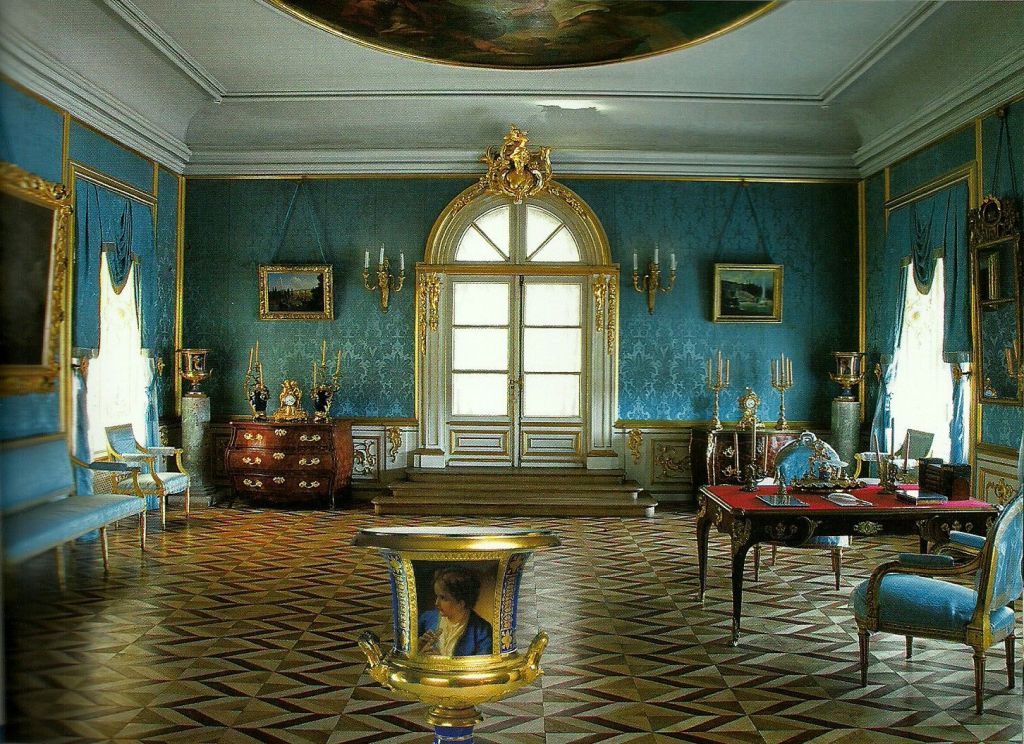
The setting sun was at the other side of the hall, and the light in the kitchen was dim, gray, so their adversary would not cast a revealing shadow. It might be waiting on either side of the door, or it might have climbed onto the counters from which it could launch itself down at her when she entered the room. No question about it: the intruder in the kitchen was the very thing that had been creeping around the mansion for a while. However, there was now only silence in the kitchen. The light was dwindling, almost gone. Darkness was deepening all throughout the house. The intruder hissed loudly, a sound like escaping gas, which was immediately followed by a click-click-click. It sounded like a wolf was walking across the floor with sharply clawed feet. Mrs. Winchester stopped and looked about, she noticed her dog was missing and there was no more noise. She walked through the mansion with a candle and when she reached the third floor, she found her beloved Zip. The little thing was dead, but still warm; she stopped to lift him, and her distress turned to horror when she discovered that he had been strangled by twisting twice round its throat by the 18 karat gold pearl necklace Mr. Winchester bought her for their 5th wedding anniversary. The next morning at dawn she buried the dog in the garden, and hid the necklace in the safe. She said nothing to no one. Winter set in, and the short days passed, and the long nights, one by one. The winter was long and black and rainy. Satan, the fallen angel of Revelation, is believed to have many disguises, assuming many names. The Devil presides over a host of lesser demons, and each demon has it own diabolical attributes, its own means of corrupting souls. #RandolphHarris 4 of 13
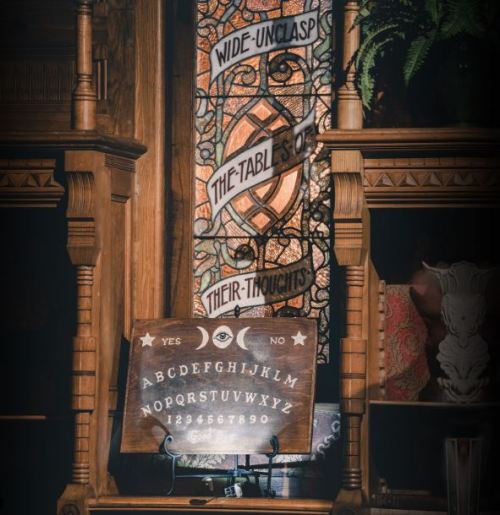
Whatever the truth is, this entity and legions of demons appeared to have gained a foothold in Mrs. Winchester’s life and home. Object inside of the house refused to obey the laws of physics; they would sometimes fly up into the air and instead of falling to the floor at once, they would remain suspended in the air for a few moments, then they would sometimes float gently down and settle back into place or crash and break. One night, without warning, something incredible occurred. She expected what can only be called “a vision.” In the Earth beneath her feet, she felt a violent tremor. When it ceased, she heard voices: men and women’s voices moaning and shrieking under the ground. Some were crying out. One voice in particular said, “And fear of death deliver to the winds.” Mrs. Winchester was terrified and attempted to get up but instead was thrown back into a sitting position. She was being held captive for a reason. Slowly the floor in front of her began to open up, and Mrs. Winchester found herself on the rim of an enormous cavernlike space. Down in its depths she saw a throne. There was a figure seated upon it, but Mrs. Winchester insisted “it was not the Devil,” that it was an entity that would make itself known to her by and by. However, her attention at that moment was not on the enthroned figure, for from all parts of that great cavern, beings with wings began to rise. She identified them as “demons.” They were flying up toward her, hundreds of them. Even at that great distance, Mrs. Winchester could make out their eyes; all seemed to be focused on her, as though a signal had been given and all were launching themselves simultaneously into attack. It was an apocalyptic vision such as those experienced by mystics throughout history. #RandolphHarris 5 of 13

In 1550, St. Teresa of Avila (1515-82) recorded a scene displaying many similarities. No one can say with certainty where such visions emanate from—whether they are a by-product of our upbringing or memories of illustrations seen in scared books, stained-glass windows, and the like. Mrs. Winchester tells how she recovered from her “trace,” seeming to reawaken many minutes later in the same spot. There was no longer a fissure in her front parlor, no moans and shrikes from souls in torment. The next morning at breakfast, Mrs. Winchester suddenly convulsed. In front of the startled cook, she fell from her chair and onto the hard kitchen floor. Her limbs began to jerk violently, writing and twisting. Within moments, the fit subsided and Mrs. Winchester went rigid, as though paralyzed; her eyes were staring straight up at the ceiling. She looked terrified. “Mrs. Winchester!” The cook bent over her, cradling her head in the crook of an arm. Her eyes were still open and staring; they seemed to be glazed over. He gently slapped her cheek. There was no response. “Is she dead?” the housemaid asked. When the doctor arrived an hour later, there was still no change in Mrs. Winchester. They took her up to her room to sleep. The following day, no one was any the wiser as to what happened to her in the kitchen. She herself had very little memory of the seizure. All she could call to mind was being seized by a great fear. Then she blacked out, to regain consciousness in her bed. She thought of it as a great adventure. However, she knew something was terribly amiss. She went back to her room, and stood at the window watching the moon set through the trees on her estate. The sky was misty and starless, and after the moon went down the night was black as pitch. #RandolphHarris 6 of 13

Mrs. Winchester left her room and walked along the passage, past her the room she kept made for her husband—where she stopped again to see if, by chance, he was in his room—to the stop of the stairs. There she paused a moment, and assured herself that no one was following her; then she began to go down the stairs in the darkness. They were so steep and winding that she had to go very slowly, for fear of stumbling. Her one thought was to get to the front door unlocked. The inquest had been a ling and bitter one, but when she finally opened the door, there was a dead man with strange wounds on his body. The doctor was summoned. He had spoken of the marks looking like bites. There was a suggestion of witchcraft and necromancy. All around the front yard there were stony figures of men and animals which had chanced to catch a glimpse of Mrs. Winchester and she had been petrified with the sight. Mrs. Winchester had many theories about the abilities of powerful minds, and she knew her home possessed magical capabilities. In bringing the Fraternity to life, she herself was subjected to what she described as “magical attacks” by an opponent who committed murder by magic. There was a mysterious death of a housemaid on her estate. Marie Laveau was found laying nude in a bleak field. Round her neck was a cross secured by a silver chain and near at hand lay a large knife which had been used to cut a large cross in the turf. On this cross the body was laying. There was a story circulating that Ms. Laveau had taken the job at the Winchester mansion to learn more about the occult. Stories alluded to blue lights having been seen in the vicinity where her body was found and there was also a story of a cloaked man. #RandolphHarris 7 of 13

Then some very curious things began to happen. The Winchester mansion had desperately become afflicted with black cats. They were not hallucinator cats for many of the servants shared in the affliction. They housemaids had been engaged in pushing bunches of black cats off the doorstep and windowsill with a broom, and declared that they had never seen so many or such dreadful specimens. Mrs. Winchester attributed the plague of black cats to natural causes and concluded that some local female car was the attraction, until one morning when she was going upstairs after breakfast she saw a “gigantic tabby cat twice the size of a tiger coming towards me…it appeared absolutely solid and tangible; I stared at it petrified for a second and then it vanished.” She realized it was a simulacrum—a thought form that was being projected by someone with strong occult powers, and being picked up by her own sensitive reception. Mrs. Winchester went on: “Feeling decidedly uncomfortable, I asked one of the housemaids to join me and as we sat in my room meditating, we heard the cry of a cat. It was answered by another and another and another. We looked out of the window and my garden as far as we could see dotted with black cats waiting and howling in broad daylight.” The battle of wills between the two women occultists continued for many months, and on one occasion, as she retired to bed, Mrs. Winchester discovered claw marks all over her back. She wrote that Mary Coues was “well known for her astral attacks” and several other opponents had suffered similar discomfort. Later Mrs. Winchester stated categorically that Mrs. Coues was responsible for the murder of a young woman on whom she unleashed her psychic attacks. #RandolphHarris 8 of 13
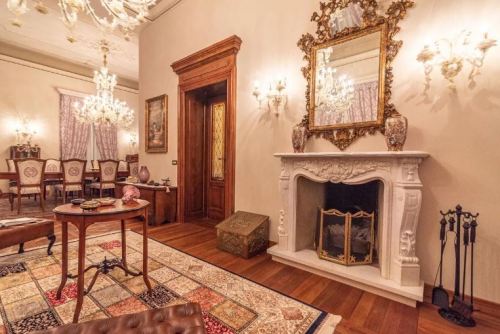
Helena Blavatsky was deeply committed to the search for inner fulfilment. She was one of the girls who felt she could do anything. In October of 1890, she decided she was going to travel to Scotland, where she stayed at a local boarding house run by Mrs. Coues. It was believed she was trying to escape psychological attacks. Initially she went out walking among the heather, but then she remained in her room for some says. Mrs. Coues suspected that her lodger was carrying out mystical practices and this was confirmed one day when Ms. Blavatsky confided that she had fallen into a deep trance which lasted some considerable time, and if it happened again Mrs. Coues should summon the local doctor. Helena remained in Scotland for two months where she was soon a familiar wandering figure. However, as the days passed she became increasingly agitated and one Sunday morning, she rose early and seemed to be in a state of panic. She informed Mrs. Coues that she would be returning to America as soon as possible as she was convinced that certain people were intending to do her harm telepathically. Later in the day, Helena had calmed down and announced that she had decided to cancel her departure and stay on for a while. The following Monday morning, Mrs. Coues discovered that Helena was missing from her room and later that day the villagers began searching for her. It was not until the following day that her body was found close to the remains of an ancient village on the Winchester estate in America. #RandolphHarris 9 of 13

She had obviously been running frantically, because the soles of her feet were torn and bleeding. She lay face upwards on the cross that had been carved in the turf, and her right hand still held a large steel knife with which she had apparently carved the cross on which she lay; and there, according to the local doctor, she died of a heart attack. Mrs. Winchester had no doubt that Helena’s death was due to astral attacks; she claimed that there were scratch marks on the woman’s body that were similar to those she had received herself and she was not backward in pointing the finger at Mrs. Coues, who she believed had long ago stumbled towards the “left-hand path” of occultism and was using black magic for vengeful and malicious purposes. It is possible to activate some deep trauma locked away in the human subconscious by the arrival of a postcard with perhaps symbols or a specific picture painted on it, or even by a telegram from the initiator of ill-will. Creations in the imagination of strong-minded occultists can actually take on a life form of their own. These apparitions are called “elementals” one day, Mrs. Winchester lay on her bed thinking unpleasant thoughts of a person who had done her a disservice. Suddenly, a large wolf-like form materialized in the half-light of the room, sitting on the hearth rug waiting to do her bidding. She realized that she was “at the dividing of the ways and if I were not careful would take the first step on the left-hand path.” The apparition remained with her for twenty-four hours and presented what she described as the “opportunity for an effectual vengeance.” Instead, she decided to banish the manifestation and to forgive the woman who had been in her thoughts. #RandolphHarris 10 of 13
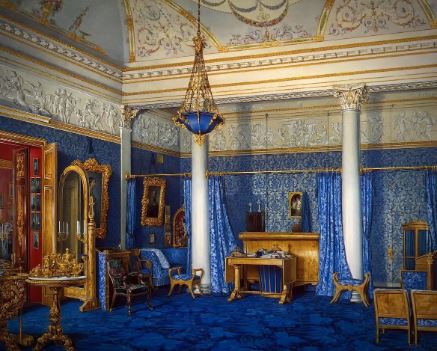
I stir thee up, O Spirit Gamigin and your 30 legions of inferiors in all things that are the names of glory and power of God the Great One who is greater than understanding. Adni Ihvh Tzabaoth, come fourth in the 24th of a moment, let Thy dwelling-place be empty; apply thyself unto the secret truth and obey my power: appears unto my eyes, visit us in peace, speaking the secrets of truth in voice and understanding. I stir thee up and move thee, O Spirit Gamigin and your 30 legions of inferiors, in all the names I have said, and I add these one and six names wherein Solomon, the lord of the secret wisdom, placed yourselves, spirits of wrath, in a vessel, Adonai, Preyai Tetragrammaton, Anaphaxeton Inessenfatoal, Pathtomon and Itemon: appear before this circle; obey in all things my power. And as thou art he that obeys not and comes not I shall be in thy power, O God Most High that liveth for ever, who is the creator of all things in six days Eie, Saraye, and in my power in the name Prieumaton that ruleth over the palaces of Heaven, Cruse Thee, and destroy thy seat, joy, and power; I bind thee in the depth of Abaddon, to remain until the day of judgment whose end cannot be. And I bind thee in the fire of sulphur mingled with poison and the seas of fire and sulphur: come forth, therefore, obey my power and appear before this circle. Therefore come forth in the name of the Holy Ones Zabaoth, Adonai, Amioran. Come! for I am Adonai who stir thee up. In the name of Satan, the Ruler or the Earth, the King of the World, I command the forces of darkness to bestow their Infernal power upon me! #RandolphHarris 11 of 13

Open wide the gates of Hell and come forth from the abyss to greet me as your brother and friend! Grant me the indulgence of which I speak! I have taken thy name as part of myself! I live as the beasts of the field, rejoicing in the fleshly life! I favour the just curse of the rotten! By all the Gods of the Pit, I command that these things of which I speak shall come to pass! Come forth and answers your names by manifesting my desires! Hail Satan! I thank you for the empowerments which have served to assist my evolution toward divinity and power. Go now into the World and serve the Lord of Darkness. Cross all space and time so your power will be mine. May the mountains to the plains of my life be overcome. Breed achievement in me. Bring beats to the field of my existence that I may grow in cunning and might. This will breed victory. Although I must stand alone and endure as a warrior of the smoke which corrupts and usurps the power of the sacred fire of Ahura Mazda, allow me to harness his power and rise above it. The Darkness of smoke always ascends and no tyranny or oppression can constrain it in its totality. This sorcerer is stepping into the darkness of the subconscious mind and letting his desire thrive for bringing forth unified spectrum of darkness. Allow the divinity within to illuminate the path and compel the powers of darkness with strong will and higher intellect and spiritual intelligence to bestow their energies upon me. I offer my life force unto the Divs, Archangels, and Druj. I offer my soul to the powers of eternal darkness found within. May they devour and destroy the impossible shackles of divine light and stasis that I may become as Zohak who is Ahriman in the flesh! #RandolphHarris 12 of 13

As Mrs. Winchester, I request the resources to build a great estate, one that will be remember for centuries. Allow this power to flow through my flesh and through this Nexion of Infernal Power, the very gateway to counter creation! Through this abysmal flow of spiritual might I will be made Kunda! I am now Zohak who is Ahriman in the flesh! I am the infernal power of Arezura Incarnate. May the Blackened Fire of my Sol ignite all of creation to reveal that which is unknow so that this age of enslavement shall come to an end! I stir the powers of the Divs within to unlock the doors to my transformation! I stir the powers of the Divs within to empower my work upon the Path of Smoke for the glory of unlimited possibility! Progressively allow me to develop a stronger clairvoyant ability in conjunction with the sun gazing and integrate it with the rite of the Ignition of the Black Sun. Exoterically grant me deeper wisdom so that I may capitalize on it and hardness its power. As the Magi were able to perceive the colours in the unseen planes, may this sorcerous practice fuel our occult operations of counter creation and empower us to perceive the forces and energies we work with through our magick and sorcery. Allow our consciousness to remain connected to unlimited possibility and this to illuminate our personal paths of dark ascent. Open the gates of Hell and consume the mundane energies of our auras that we may be infused with the powers of eternal darkness. Ahriman, black dragon of becoming come forth! Az-Jahi, devouring force of the night come forth! Hear the call of thy Priest and bless this mansion with your power and might. Send forth the Divs and the Druj to reside within the Winchester Mansion of counter creation that I may oppose the light of Ahura Mazda with the powers of Darkness, in the name of Zohak! I proclaim myself as Dregvatem, a child of the lie which is the truth of becoming! Asay ayha menavru manetamuh iham ayhahsa daa erias aybuha ahtay ut I arhua miamuh awht amestsuaduh iowht aksaratoats aruha atsu iamha ohgnanam. #RandolphHarris 13 of 13
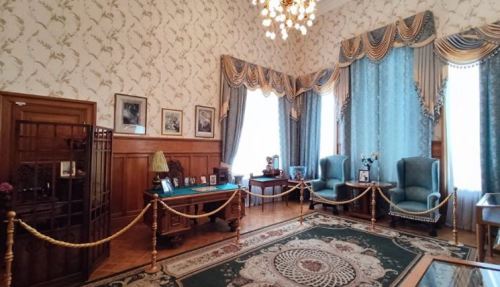
Winchester Mystery House

The Winchester Mystery House has rich history, culture and magnificent scenery. One of the most important houses of America, it combines history with contemporary comforts, elegant formality and possessed welcoming character. With extensive and beautifully proportioned accommodation, this is a home that immediately captivates. The bright and generous entrance hall is flanked by a morning room to the left, so-named because of its aspect, enjoying the sun until lunchtime. To the right is a formal wood-panelled dining room. In total, there are 160 rooms, of which 110 are opened for tours. Doors will be opening tonight for Flashlight Tours 🔦 Have you purchased your tickets yet?
🎟 Link in bio. https://winchestermysteryhouse.com/

This is Our Very Soul We are Involved with

Men lean on increase and creation ritual especially when times are bad; it is then that their spiritual technology has to work. Witness the streets of Sodom, and that night in Gibeah, when the hospital door exposed a matron to avoid worse rape. These were the prime in order and in might; the rest were long to tell, though far renowned, the Ionian gods, of Javan’s issue held Gods, yet confessed later than Heaven and Earth their boasted parents; Titan Heaven’s first-born with his enormous brood, and brithright seized by younger Saturn, he from mightier Jove his own and Rhea’s son like measure found; so Jove usurping reigned: these first in Crete and Ida known, thence on the snowy top of cold Olympus ruled the middle air their highest Heaven; or on the Delphian cliff, or in Dodona, and through all the bounds of Doric land; or who with Saturn old feld over Adria to the Hesperian fields, and over the Celtic roamed the utmost isles. All these and more came flocking; but with looks of downcast and damp, yet such wherein appeared obscure some glimpse of joy, to have found themselves not lost in loss itself; which on his countenance cast like doubtful hue: but he his wonted pride soon recollecting, with high words, that bore semblance of worth, not substance, gently raised their fainting courage, and dispelled their fears. Then straight commands that at the warlike sound of trumpets loud and clarions be upreared his mighty standards; that proud honour claimed Azazel as his right, Cherub tall: who forthwith from the glittering staff unfurled the imperial ensign, which will full high advanced shone like a meteor streaming to the wind with gems and golden luster rich emblazed, seraphic arms and trophies: al the while sonorous metal blowing sounds: at which the universal host upsent a shout that tore hell’s concave, and beyond frighted the reign of Chaos and old Night. #RandolphHarris 1 of 23
All in a moment through the gloom were seen ten thousand banners rise into the air with orient colours waving: with them rose a forest huge of spears: and thronging helms appeared, and serried shields in thick array of depth immeasurable: anon they move in perfect phalanx to the Dorian mood of flutes and soft recorders; such as raised to highth of noblest temper heroes old arming to battle, and instead of rage deliberate valour breathed, firm and unmoved with dread of death to flight or foul retreat, nor wanting power to mitigate and swage with solemn touches, troubled thoughts, and chase anguish and doubt and fear and sorrow and pain from mortal or immortal minds. Thus they breathing united force with fixed thought moved on in silence to soft pipes that charmed their painful steps over the burnt soil; and now advanced in view they stand, a horrid front of dreadful length and dazzling arms, in guise awaiting what command their mighty chief had to impose: he through the armed files darts his experienced eye, and son traverse the whole battalion views, their order due, their visages and statures as of gods, their number last he sums. And now his heart distends with pride, and hardening in his strength glories: for never since created man, met such embodied force, as named with these could merit more than that small infantry warred on by cranes: though all the giant brood of Phlegra with the heroic race were joined that fought at Thebes and Ilium, on each side mixed with auxiliar gods; and what resounds in fable or romance of Uther’s son Begirt with British and Armoric knights; and all who since, baptized or infidel jousted in Aspramont or Montalban, Damasco, or Marocco, Trebisoned, or whom Biserta sent from Afric shore when Charlemain with all his peerage fell by Fontarabbia. Men fashion unfreedom as a bribe for self-perpetuation. #RandolphHarris 2 of 23

In every situation, those present will be obliged to retain some readiness for potential face engagements. (This readiness has already been suggested as one way in which situational presence is expressed.) There are many important reasons why the individual is usually obliged to respond to requests for face engagements. In the first place, one owes this to oneself because often it will be through such communication that one’s own interests can be served, as when a stranger accosts one to tell one that one has dropped something, or that the bridge is out. For similar reasons one owes this accessibility to others present, and to persons not present for whom those present may serve as a relay. (The need for this collective solidarity is heightened in urban living, which brings individuals of great social distance withing range of one another.) Further, as previously suggested, participation in a face engagement can be a sign of social closeness and relatedness; when this opportunity to participate is proffered by another, it ought not to be refused, for to decline such a request is to reject someone who has committed oneself to a sign of desiring contact. More than this, refusal of an offer implies that the refuser rejects the other’s claim to membership in the gathering and the social occasion in which the gathering occurs. It is therefore uncommon for persons to deny these obligations to respond. Although there are good reasons why an individual should keep oneself available for face engagements, there are also good reasons for one to be cautions of this. In allowing another to approach one for talk, the individual may find that one has been inveigled into a position to be attacked and assaulted physically. #RandolphHarris 3 of 23

In societies where public safety is not firmly established, especially in places such as the desert, where the traveler is for long periods of time remote from any source of help, the danger that a face engagement may be a prelude to assault becomes appreciable, and extensive avoidance practices or greetings at a distance tend to be employed. Here, of course, the “physical safety” component of civic order and the communication component overlap. However, apart from this extreme, we should see that when an individual opens oneself up to talk with another, one opens oneself up to the pleadings, commands, threats, insult, and false information. The mutual considerateness characteristic of face engagements reinforces these dangers, subjecting the individual to the possibility of having one’s sympathy and tactfulness exploited, and causing one to act against one’s own interests. Further, words can act s a “relationship wedge”; that is, once an individual has extended to another enough consideration to hear one out for a moment, some kind of bone of mutual obligation is established, which the initiator can use in turn as a basis for still further claims; once this new extended bond is granted, grudgingly or willingly, still further claims for social or material indulgence can be made. Hence, in one important example, a man and a woman can start out as strangers and, if conditions are right, progress from an incidental encounter to matrimony. We need only trace back the history of many close relationships between adults to find that something was made of face engagements when it need not have been. #RandolphHarris 4 of 23

Of course, persons usually form “suitable” relationships, not allowing casual encounters to be a wedge to something else. However, there is sufficient slippage in systems of conviviality segregation to give mothers concern about their daughters and to provide one of the basic romantic themes of light fiction. There are two opposing tendencies that occur when individuals keep themselves available for face engagements, and there are some dangers when persons open themselves up in so doing. There opposing tendencies are reconciled in society, apparently, by a kind of implicit contraction or gentleman’s agreement that persons sustain given the fact that the other will be under some obligation, often unpleasant, to respond to overtures, potential initiators are under obligation to stay their own desires. A person can thus make oneself available to others in the expectation that they will restrain their calls on one’s available and not make one pay too great a price for one’s being accessible. Their right to initiate contact is checked by their duty to take one’s point of view and initiate contact with one only under circumstances that one will easily see to be justified; in short, they must not “abuse” their privileges. This implicit communication contract (and the consequence of breaking it) receive wide mythological representation, as in our own “cry wolf” tale. Understandably, infractions of the rule against undesired overture do cause some anxiety, for the recipient must either accede to the request or demonstrate to oneself and the others present that one’s availability for face engagements was not part of one’s character but a false pose, to be maintained only when no price was involved in maintaining it. #RandolphHarris 5 of 23

In noting the implicit contract that makes persons present delicately accessible and inaccessible to each other, we can go on to note a basic margin of appetite and distaste to be found in social situations. The reasons why individuals are obliged to restrain themselves from making encounter overtures provide many of the reasons why they might want to do so. And the obligation to be properly accessible often covers a desire to be selectively quite unavailable. Hence, many public and semipublic places, such as cocktail lounges and club cars, acquire a special tone and temper, a special piquancy, that blurs the communication lines, giving each participant some desire to encroach where perhaps one does not have a right to go, and to keep from being engaged with others who perhaps have a right to engage one. Each individual, then, is not only involved in maintaining the basic communication contract, but is also likely to be involved in hopes, fears, and actions that bend the rules if they do not actually break them. It has been suggested, then, that as a general rule the individual is obliged to make oneself available for encounters even though one may have something to lose by entering them, and that one may well be ambivalent about this arrangement. Here mental patients provide a lesson in reverse, for they can show us the price that is paid for declining to make oneself available and force us to see that there are reasons why someone able to be accessible should be willing to pay the price of remaining inaccessible. A patient who declines to respond to overtures is said to be “out of contact,” and this state is often felt to be full evidence that one is very sick indeed, that one is, in fact, cut off from all contact with the World around one. #RandolphHarris 6 of 23

In the case of some “organic” patients, this generalization from inaccessibility appears quite valid, as it does with certain “functionals.” There are patients, for example, who, before admission, had progressively withdrawn from responding to such things as the telephone and doorbell, and, once in the hospital, decline all staff overtures for engagement, this being but one instance of a general withdrawal of concern for the life about them. In the case of other patients, however, refusal to enter proffered engagements cannot be taken as a sign of unconcern for the gathering, but rather as a sign of alienation based on active feelings such as fear, hate, and contempt, each of which can be understandable in the circumstances, and each of which can allow the patient to show a nice regard for other situational proprieties. Thus, there are patients who coldly star through direct efforts to bring them into a state of talk, declining all staff overtures, however seductive, teasing, or intensive, who will nonetheless allow themselves face engagements carefully initiated and terminated by themselves without the usual courtesies. Still other patients who are out of contact to most persons on the ward will engage in self-initiated encounters with a small select number of others, by means of coded messages, foreign language, whispering, or the exchange of written statements. Some patients, unwilling to engage in spoken encounters with anyone, will be ready to engage in other types of encounters, such as dancing or card playing. Similarly, I knew a patient who often blankly declined greetings extended one by fellow patients on the grounds, but who could be completely relied upon not to miss a cue when performing the lead in a patient dramatic production. #RandolphHarris 7 of 23

As might then be expected, a patient declining to conduct oneself properly in regard to face engagements might be well conducted in regard to unfocused interaction. Many people whose “acting” manners are good have poor “talking” manners. They may be gossipy or they may tell stories that are in poor taste; or say things that hurt people’s feelings, or they may even chatter on so continuously that no one else can get a word in “edgewise.” One illustration was provided by a patient I observed, a young woman of thirty-two, who at one point in her “illness” was ready to handle her dress and deportment with all the structured modesty that is required of her gender, while at the same time her language was foul. During another phase of her illness, this patient, in the company of a friendly nurse, enjoyed shopping trips to the neighbouring town, during which she and her keeper got wry pleasure from the fact that the patient was “passing” as a “normal” person. Had anyone made an opening statement to the patient, however, the masquerade would have been destroyed, for this was a time when the patient was mute in all verbal interaction or, at best, spoke with very great pressure. A touching illustration of the same difference in capacity for focused and unfocused interaction was provided at Central Hospital by patients who were fearful and anxious of their whole setting, but who nonetheless made elaborate efforts to show that they were still what they had been before coming to the hospital and that they were in poised, business-like control of the situation. One middle-aged man walked busily on the grounds with the morning newspaper folded under one arm and a rolled umbrella hooked over the other, wearing an expression of being late for an appointment. #RandolphHarris 8 of 23

A young man, having carefully preserved his worn grey flannel suit, bustled similarly from one place he was not going to another. Yet both men stepped out of the path of any approaching staff person, and painfully turned their heads away whenever someone proffered an exchange or greeting of some kind, for both employed the tack of being mute with many of the persons whom they met. The management of a front of middle-class orientation in the situation, in these circumstances, was so precarious and difficult that (for these men) it apparently represented the day’s major undertaking. Just as it is evident that the individual may comply with rules regarding unfocused interaction while failing to comply with regulations regarding focused interaction, so cases can be found of mental patients who dress in a spectacularly improper manner but who are nonetheless ready to be socially tractable as conversationalists. Here are two pieces of evidence in favour of distinguishing conceptually between focused and unfocused interaction. In other cases, of course, it is not fear that seems to account for the inaccessibility of otherwise properly mannered persons, but rather hostility: to acknowledge a staff overture is partly to acknowledge the legitimacy of the staff person making the overture, and if one is a serious worthy person then so much be one’s implied contention that the individual with whom one is initiating contact, namely, oneself, is a mental patent properly confined to a mental ward. #RandolphHarris 9 of 23

To strengthen one’s feeling that one is really sane, it may thus seem reasonable to disdain encounters in which the opposite will be assumed—even though this results in exactly the kind of conduct, namely, inaccessibility, that confirms the hospital’s view tht one is mentally ill. As previously suggested, conversational engagements are often carried out as involvements subordinated to some other business at hand, just as side involvements, such as smoking, are often carried out as activities subordinated to a conversational main involvement. The question arises as to the limits placed upon this coexistence in middle-class society. There are, for example, records of middle-class Navy personnel postponing a visit to the “head” until others have left so as not to have to defecate while being accessible to others for talk. I have also been told by a middle-class informant that she was always uneasy about painting her toenails while in the presence of her husband, since the painting involved too much attention to leave her sufficiently respectful of the talk. Do you have much more faith in ideas that you discover for yourself than in ideas that are handed to you on a silver platter? If so, is it not bad judgment to try to ram your opinions down the throats of other people? Is it not wiser to make suggestions—and let the other person thin out the conclusions? People expect others they interact with to be: loyal, honest, initiative, optimistic, display teamwork, and to be enthusiastic most of the day. As long as a person can meet these standards, the people in their circle will be willing to do the same. When an individual consults others about their wishes and desires, that is, in many cases, just the confidence builder they need. #RandolphHarris 10 of 23

No one like to feel that one is being sold something or told to do a thing. We much prefer to feel that we re buying of our own accord or acting on our own ideas. We like to be consulted about our wishes, our wants, our thoughts. If instance, if you make paintings that you like and try to sell them to a person, they may not buy them. However, if you find out what kind of paintings a person likes and show the individual those, they may want to buy them. Letting the other person feel that the idea is his or hers not only works in business and politics, it works in life as well. Our mind is a very limited machine. We must think in the easiest way and make allowance for it. It is easier to think of repetition than of the eternal existence of the moment. You must understand that our mind cannot formulate rightly things as they are. We can only make approximate formulations which are nearer to trith than our ordinary thinking. That is all that is possibe. Our mind and our language are very rough instruments and we have to deal with very fine matters and fine problems. All acquired tendencies repeat themselves. One person acquires a tendency to run away from cetain things. One wil run away again. These tendencies may grow stronger or they may grow in a different direction. There is no guarantee until one reaches some kind of conscious action when one has a certain possibility of trusting oneself. There are many things that look impossible but that is because our thinking apparatus is not good enough to think about such things. It simplifies things too much. These problems need mathematical thinking. #RandolphHarris 11 of 23

For instance, we cannot think about time as a curve but only as a straight line. If we could think of time as a curve, and understand all that that implied, questions about co-existent lives would not exist. The aim of all our work is to reach the third and fourth states of consciousness, which means to think through high centers. If we could do this, then problems of the future life, absurdities like questions about time, and so on, would not arise. As things are, we can only make theories. We know more or less how to approach these problems, but we can know nothing definite. Often times, we have no experience about the past, but you will notice how literature, history and philosophy people return again and again to the idea of recurrence. They never fully forget it, but it is very difficult to fit into a three-dimensional World. It needs a five-dimensional World, and the question of remembering really refers already to six dimensions. In the fifth-dimension man returns and returns without knowing. Remembering means a certain growth in the six-dimension. Dimensions can be understood simply in this way. The fourth-dimension is the realization of one possibility of each moment; what we call time. The fifth-dimension is repetition of this. The six-dimension is the realization of different possibilities. However, it is difficult to think about this so long as we think about time as a straight line. The problem is not a real thing; it is just our weakness, nothing more. Life is the fourth-dimension, a circle, the realization of one possibility. When this comes to an end it meets its own beginning. #RandolphHarris 12 of 23

The moment of death corresponds to the moment of birth, and then life begins again, maybe with slight deviations, but they do not mean anything. It always returns to the same line. Breaking a chief tendency, starting this life in a quite different way will be the sixth-dimension. We cannot think of simultaneous moments, we have to think of one moment following another, though actually they are simultaneous on another scale. For instance, our own experience in relation to small particles such as electrons is that their eternity is our time. So why can our repetition not be in Earth’s time? Once we understand this, we can see further why the moiety organization is such a stroke of primitive genius: it sets up society as a continuing contest for the forcing of self-feeling, provides ready-made props for self-aggrandizement, a daily script that includes straight men for “joking relationships” and talented rivals with whom to content for social honour in games, feats of strength, hunting and warfare. To understand a system that relies on highly interactive elements, whether agents or artifacts, one needs to take into account the possibility of major stresses that could lead to large-scale failures. The possibility of large-scale failures is in especially important problem for the information domain for three reasons. First, information systems have typically undergone very rapid evolution. They often involve both new and technology and new institutional arrangements. Therefore, they have not existed long enough for the development of a good empirical foundation for risk assessment and management. #RandolphHarris 13 of 23
Second, information systems continually undergo major changes, so that a good empirical foundation for risk assessment and management may never become available. The final reason that the possibility of large-scale failures is important in information systems is that vital economic and military functions are highly on these systems. As we shall see, some types of failure are well understood and relatively easy to design against. Other types of failure are less well understood and more difficult to design against. The simplest type of challenge occurs when failures are strictly independent. For example, if a basement room is lit by four lightbulbs, and one burns out, the others will continue to supply light. The loss of one bulb does not make the others fail any sooner than they otherwise would have. The primary method of risk management for independent failures is to build redundancy into the system. In the case of lightbulbs, enough bulbs are used so that if one (or even two or three) burn out, there will be enough light for activities to continue until the blubs can be replaced. In a more sophisticated manner, redundancy makes possible reliable traffic flows through information networks by channeling traffic around node that fail. In addition to redundancy, a useful design feature to deal with local failures is to avoid having any one element of the system be essential to its overall performance. This is typically achieved by making the system highly decentralized, like the Internet. Indeed, one of the primary advantages of Complex Adaptive Systems over more rigidly centralized organizations is their resilience in the face of local failures. #RandolphHarris 14 of 23

Design problems become much more difficult when local failures are not independent of each other. The first problem to consider is correlated shocks. These are failures that occur when the elements of the system tend to fail at the same time for the same reason. For example, suppose there are ten radio transmitters, each of which works 99 percent of the time. If the failures were not correlated, at any given time at least one of the transmitters would almost certainly be working. However, if sunspots are the reason the radio transmission fail 1 percent of time, then all ten radio links may well fail at the same time. Typically, the design against correlated failures involves identifying the source of shock that are external to the elements and that might therefore cause failures in several elements at the same time. Sunspots are such a source of shock for the radio transmissions. Once these correlated sources or error are identified, redundancy can often be attained by building new elements of the system that are not susceptible to these particular shocks. For example, landlines are not affected by sunspots. Even when the source of external shocks cannot all be identified, a general principle is that the more diverse the elements, the less the chance that they will all be vulnerable to the same kinds of external shock. Diversity in Complex Adaptive Systems not only allows exploration of new options but also provides resiliency against common shocks. The risk monoculture, which we mentioned in discussing variation, provides a good example of the need to avoid common shocks. #RandolphHarris 15 of 23

If vast tracts of agricultural land are planted with the same strain of a crop, then an unusual environmental condition, such as a new pest, can cause devastation. While monoculture may be efficient in the short run because it exploits the very best strain of crop, it tends to be fragile. Likewise, information systems that rely on widespread use of common hardware or software components also risk fragility. They provide vast, fertile targets for viruses and other virtual pests. When it comes to healing body and limb, the ability to herd cells and to perform molecular repairs and cell surgery will open new vistas for medicine. These abilities apply on a small scale, but their effects can be large scale. In many diseases, the body as a whole suffers from misregulation of the signaling molecules that travel through its fluids. Many are rare: Cushing’s disease, Grave’s disease, Paget’s disease, Addison’s disease, Conn’s syndrome, Prader-Labhart-Willi syndrome. Others are common: Millions of older women suffer from osteoporosis, the weakening of bones that can accompany lowered estrogen levels. Diabetes kills frequently enough to rank in the top ten causes of death in the United States of America; the number of individuals known to have it doubles every fifteen years. It is the leading cause of blindness in the United States of America, with other complications including kidney damage, cataracts, and cardiovascular damage. #RandolphHarris 16 of 23

Today’s molecular medicine tries to solve these troubles by supplying missing molecules: diabetics inject additional insulin. While helpful, this does not cure the disease or eliminate all symptoms. In an era of molecular surgery, physicians could choose instead to repair the defective organ, so it can regulate its own chemicals again, and to readjust the metabolic properties of other cells in the body to match. This would be a true healing, far better than today’s partial fix. Only now are researchers making progress on another frequent problem of metabolic regulation: obesity. Once this was thought to have one simple cause (consuming excess calories) and one main result (greater roundness than favoured by today’s aesthetics), but both assumptions proved wrong. Obesity is a serious medical problem, increasing the risk of diabetes mellitus, osteoarthritis, degenerative diseases of the heart, arteries, and kidneys, and shortening life expectancy. And the supposed cause, simple overeating, has been shown to be incorrect—something dieters had always suspected, as they watched their thinner colleagues gorge and yet gain no weight. The ability to lay in store of fat was a great benefit to people once upon a time, when food supplies were irregular, nomadism and marauding bands made food storage difficult and risky, and starvation was a common cause of death. Our bodies are still adapted to that World, and regulate fat reserves accordingly. This is why dieting often has perverse effects. The body, when starved, responds by attempting to build up greater reserves of fat at its next opportunity. The main effect of exercise in weight reduction is not to burn up calories, but to signal the body to adapt itself for efficient mobility. #RandolphHarris 17 of 23

Obesity therefore seems to be a matter of chemical signals within the body, signals to store fat for famine or to become lean for motion. Nanomedicine will be able to regulate these signals in the bloodstream, and to adjust how individual cells respond to them in the body. The latter would even make possible the elusive “spot reduction program” to reshape the distribution of body fat. Here, as with many potential applications of nanotechnology, the problem may be solved by other means first. Some problems, though, will almost surely require nanomedicine. When it comes to reestablishing credibility, burning bridges behind you may be a good strategy. Armies often achieve commitment by denying themselves an opportunity to retreat. This strategy goes back at least to 1066, when William the Conqueror’s invading army burned its own ships, thus making an unconditional commitment to fight rather than retreat. Cortes followed the same strategy in his conquest of Mexico. Upon his arrival in Cempoalla, Mexico, he gave orders that led to all but one of his ships being burnt or disabled. Although his soldiers were vastly outnumbered, they had no other choice but to fight and win. Had Cortes failed, it might well seem an act of madness. Yet it was the fruit of deliberate calculation. There was no alternative in his mind but to succeed or perish. Destroying the ships gave Cortes two advantages. First, his own soldiers were united, each knowing that they would all fight until the end since desertion (or even retreat) was an impossibility. #RandolphHarris 18 of 23

Second, and more important, is the effect this commitment had on the opposition. They knew that Cortes must either succeed or perish, while they had the option to retreat into the hinterland. They chose to retreat rather than fight such a determined opponent. For this type of commitment to have the proposed effects, it must be understood by the soldiers (yours and the enemy’s), not just by the armchair strategists. Thus it is especially interesting that “the destruction of the fleet [was] accomplished not only with the knowledge, but the approbation of the army, though at the suggestion of Cortes. This ide of burning one’s own ships demonstrates the evolution of strategic thinking over time. The Trojans seemed to get it all backward when the Greeks sailed to Troy to rescue Helen. (Although the Trojans may have gotten it backward, the Greeks were ahead of the game. Schelling cites the Greek general Xenophon as an early example of this type of strategic thinking. Although Xenophon did not literally burn his bridges behind him, he did write about the advantages of fighting with one’s back against a gully.) The Greeks tried to conquer the city, while the Trojans had succeeded in burning the Greek fleet, they would simply have made the Greeks all the more determined opponents. In fact, the Trojans failed to burn the Greek fleet and saw the Greeks sail home in retreat. Of course the Greek left behind a gift horse, which in retrospect the Trojans were a bit too quick to accept. #RandolphHarris 19 of 23

In modern times, this strategy applies to attacks on land as well as by sea. For many years, Edwin Land’s Polaroid corporation purposefully refused to diversity out of the instant photography business. With all its chips in instant photography, it was committed to fight against any intruder in the market. On April 20, 1976, after twenty-eight years of Polaroid monopoly on the instant photography market, Eastman Kodak entered the fray: it announced a new instant film and camera. Polaroid responded aggressively, suing Kodak for patent infringement. Edwin Land, founder and chairman, was prepared to defend his turf: “This is our very soul we are involved with. This is our whole life. For them it is just another field. We will stay in our lot and protect that lot.” Mark Twain explained this philosophy in Pudd’nhead Wilson: “Behold, the fool saith, ‘Put not all thine eggs in one basket’ but the rise man saith, ‘Put all your eggs in one basket and WATCH THAT BASKET.’” The battle ended October 12, 1990. The courts awarded Polaroid a $909.4 million judgment against Kodak. (Polaroid’s stock actually fell in response to this award, as the market was expecting a judgement closer to $1.5 billion.) Kodak was forced to withdraw its instant film and camera from the market. Although Polaroid restored its dominance over the instant photography market, it lost ground to competition to competition from portable videocassette recorders and minilabs that developed and printed conventional film in one hour. Lacking bridges, Polaroid began to feel trapped on a sinking island. With change in philosophy, the company has begun to branch out into video film and even conventional film. #RandolphHarris 20 of 23

One need not literally burn bridges, nor ships that bridge oceans. One can burn bridges figuratively by taking political position that will antagonize certain voters. When Walter Mondale said in accepting the 1984 Democratic presidential nomination that he would rise taxes if elected, he was making such a commitment. Voters who believed in supply-side economics were irretrievably lost, and this made Mondale’s position more credible to those who favoured a tax increase in order to reduce the deficit. Unfortunately (for Mondale) the group of voters antagonized by this move turned out to be far too large. Finally, building rather than burning bridges can also serve as a credible source of commitment. In December 1989 reforms in Eastern Europe, building bridges meant knowing down walls. Responding to massive protests and emigration, East Germany’s Prime Minister Egon Krenz wanted to promise reform would be genuine and far-reaching? Even if Krenz was truly in favour of reform, he might fall out of power. Dismantling parts of the Berlin Wall helped the East German government make a credible commitment to reform without having detail all the specifics. By (re)opening a bridge to the West, the government forced itself to reform or risk an exodus. Since it would be possible to leave in the future, the promise of reform was both credible and worthy waiting for. Reunification was to be less than a year away. #RandolphHarris 21 of 23
As the super-symbolic economy develops, it is accompanied by population shifts and migrations. Immigration politics—fiercely controversial at any time—will be fought against background marked by atavistic nationalism and ethnicism, not merely in remote places like Armenia and Azerbaijan, or in Albania and Serbia, but in New York and Nagoya, Liverpool and Lyon. In industrial mass societies, racism typically took the form of a majority persecuting a minority. This form of social pathology is still a threat to democracy. White street toughs, skinheads, admirers of the Nazis and even Black, Asian, and Hispanic gangs are on their way to becoming domestic terrorists. However, the new system for creating wealth brings with it economic de-massification and much higher levels of social diversity. Thus, in addition, to traditional conflict between majority and minorities, democratic governments must now cope with open warfare between rival minority groups, as happened in Miami, for example, between Cuban and Haitian immigrants, and elsewhere in the United States of America between African-Americans and Hispanics. In Los Angeles, Mexican-Americans fight for jobs held by Cuban-Americans. In affluent Great Neck, on Long Island, near New York City, tensions rise between American-born Jewish people and Iranian Jewish immigrants who refuse to surrender their old life-ways. African-American rap groups sell anti-Semitic records. Koran shopkeepers and African-Americans collide in their inner cities. #RandolphHarris 22 of 23

Under the impact of the new production system, resistance to the “melting pot” is rising everywhere. Instead, racial, ethnic, and religious groups demand the right to be—and to remain—proudly different. Assimilation was the ideal of industrial society, corresponding to its need for a homogenous workforce. Diversity is the new ideal, corresponding to the heterogeneity of the new system of wealth creation. Governments may, in an atmosphere of hostility, have to accommodate certain groups who insist on preserving their cultural identity—everyone from Turks in Germany, or Koreans, Filipinos, and South Sea Islanders in Japan, to North Africans in France. At the same time, governments will also have to mediate among them. This will become progressively harder to do, because the ideal of homogeneity (in Japan, for example), or of the “melting pot” (in the United States of America) is being replaced by that of the “salad bowl”—a dish in which diverse ingredients keep their identity. Los Angeles with its Koreatown, its Vietnamese suburbs, its heavy Chicano population, its roughly seventy-five ethically oriented publications, not to mention its Jewish population, African-Americans, Japanese, Chinese, and its large Iranian population, provides an example of the new diversity. However, the salad-bowl ideal means that governments will need new legal and social tools they now lack, if they are to referee increasingly complex, potentially violent disputes. The potential for antidemocratic extremism and violence rises even as regions, nations, and supra-national forces battle for power. #RandolphHarris 23 of 23

Cresleigh Homes
We’re holding close-out sales in this community, so time is running out! 👍 Don’t miss your opportunity to join us at #CresleighRanch – #MillsStation is an incredible neighborhood to enjoy. 😍

This pic from Residence 3 beautifully showcases the open floor plans and spacious layouts – these homes are an entertainer’s dream!
#CresleighHomes
 Randolph Harris II International Institute