
Home » World (Page 18)
Category Archives: World

God, I Feel Like Hell Tonight, Tears of Rage I Cannot Lie

The overwhelming majority of rape/sexual assault offenses involve a single acquaintance forcing him or herself sexually onto a single unwilling victim. Victims’ reports indicate that almost all (98 percent) rape/sexual assault incidents involve a lone victim. Similarly, 92 percent of the cases involve a single perpetrator. We use the term gang rape to describe rape events with three or more perpetrators present. While multiple offenders are present, the crime tends to take place within some organizational context and often times involves perverse and prolonged forms of sexual deviance. Multiple offenders are often the hallmark of prison rapes, athlete-perpetrated offenses, and fraternity rapes. Gang rape cases account for only about 1 percent of all violent sex crimes reported by victims each year. In addition to being crimes of violence, most rapes/sexual assaults incorporate an element of betrayal. Roughly 70 percent of all single-offender rape/sexual assaults occur in 2022 were committed by an individual who was known to the victim. A full 32 percent of victims described their attackers to be close friends. An additional 28 percent of the attackers were said to be casual acquaintances. Almost one in twenty said that their attacker was a spouse or blood relative. No other form of violent crime involves such high proportions of offenders who were related to or acquainted with the victim. The presence of drugs and/or alcohol seem to play an important part in the violent sexual transaction. Victim reports indicate that nearly one half (45 percent) of all rape/sexual assault victims believed that their attacker was under the influence of drugs or alcohol at the time of the offense. This figure corresponds closely with the percentage that are derived from self-report studies involving convicted rapist. #RandolphHarris 1 of 21

A full 47 percent of the state prison inmates surveyed admit that they were using drugs or alcohol in the hours preceding their violent sex offense. A new trend has emerged whereby rapists enlist the help of potent prescriptions medicines (exempli gratia Rohypnol, GHB), termed “date rape drugs,” to unknowingly intoxicate and incapacitate their victims. Most violent sexual attacks occur at night in private settings. The majority take place after 6 p.m. Furthermore, victim reports indicate that nearly two thirds of the transgressions occur in or near a private residence. No other form of crime posts such high numbers in this regard. The remainder of violent sex crimes occur in commercial establishments or open-air, public environments. Rapes and sexual assault are principally committed by young, men while the victims are disproportionately young, minority women. Gender is the most telling variable in the rape/sexual assault equation. Almost all violent sex crimes are intergendered (id est, male on female) offenses. Nearly 99 percent of the individuals arrested on rape charges in 2022 were men. That same year, victim reports indicated that 90 percent of the rape and sexual assault victims were women and more than 93 percent of the offenders were men. This translate into a female rape/sexual assault victimization rate that is ten times the rare that is observed among males. Age is another noteworthy variable in the rape and sexual assault equation. Better than for in tend (46 percent) individuals arrested for forcible rape in 2022 were under the age of 25. Victim accounts support this claim, as 60 percent of rape victims that year estimated that their attacker(s) were under the age of 30. #RandolphHarris 2 of 21

Young people are clearly at the highest risk of experiencing a violent sexual attack. This makes rape an intra-aged from. The victimization rate for individuals under the age of 25 was five times greater than that experienced among individuals above this age threshold. It is well established that the majority of rape/sexual assault offenders are men. A full 63 percent of the individuals who were arrested on forcible rape charges in 2022 where white (other races may fail to report). Almost identical percentages of whites were observed in that year’s victimization reports. Things are not so cute and dried for the African American population. While African Americans comprised more than one third of all rape arrests in 2022, victim attributed only slightly more than one fifth of the rapes that year to black perpetrator. In 2022, the victimization rate of African Americas was 1.1 per 1,000 persons or households. This was similar to the rates experienced by Hispanics and whites (1.1 and 1.0, respectively). Collectively, the data suggest an intraracial patterning of violence sex crimes. Certain demographic segments of the U.S.A. population can face vastly increased chances of being the target of a violent sex crime. Take, for example, that the average U.S.A. adult faced a rape/sexual assault victimization rate of 1.7 per 1,000 persons of households. However, the victimization rate for black women (4.6) was nearly twice that of white or Hispanic women (2.7 and 2.5, respectively). These figures are significantly higher than the Hispanic male (1.3), white male (0.4) and black male (0.2) victimization rates. Note that these pronounced racial/gender disparities have subsided in recent years. #RandolphHarris 3 of 21

Noticeable fluctuations can be observed when the age/race/gender analysis is further specified. The 2022 rape/sexual assault victimization rate was observed to be 1.1 per 1,000. Noticeable high victimization rates are observed for African Americans between the ages of 12 and 15 (3.4), white ages 16 to 19 (4.0), and African Americans ages 20 to 24 (3.9). Females in the 12 to 15 (3.5) and 20 to 24 (4.2) age groups also face noticeable high victimization rates. Still, no other segment of the American population is more at risk than 16- to 19-year-old-females—this particular group’s victimization rate is 6 times the national average or 6.9 per 1,000 persons or households. The disturbing age/race/gender-based trends have prompted the systematic study of rape victimization among college-aged women. The findings are even more disheartening. Nearly 3 percent of all the 4,000+ college women surveyed had been the victim of an attempted or completed rape during the previous school year. This translates to a victimization rate of 27.7 per 1,000 women attending U.S.A. colleges. Most violent criminal events take on an unmistakably fast and furious quality. Rape and sexual assault offenses are somewhat different. While intense levels of violence are generally a cornerstone of the rape event, the assault and corresponding struggle takes some time to run its course. Interview-based accounts reveal that rape victims are subject to prolonged trauma as the offender uses a forceful and drawn-out sex act as a vehicle for power, degradation, and dominance. #RandolphHarris 4 of 21

The onset of the rape transaction generally leaves little room for misinterpretation on the part of the victim. Faced with the reality that they are about to be forced into a prolonged and nonconsensual sex act, rape victims almost always seek to resist the aggressive advances of the attacker. Recent data shows that seven of ten rape/sexual assault victims take self-protective measures against attackers. Most women try to flee, while some opt to fight back. The majority of victims contend that their countermeasure served to improve the situation. Resistance, especially violent forms of resistance, serves as effective means of (1) preventing rape completion, and (2) reducing the level of injuries sustained by the victim. The criminal career of the rapist is decidedly different than it is for other violent offenders. While other violent predators are known for their propensity to accumulate long, diverse criminal histories, the violent sex offender tends to stay more focused. Compared to other violent offenders, convicted rapists and sexual assaulters tend to amass shorter rape sheets and post lower violent and property recidivism rates. In fact, 42 percent of the rape defendants in the study had a prior felony arrest recorded, 21 percent had been felony arrested five or more times, and 29 percent had a prior felony conviction. Forty two percent of the released rapist that were tracked were rearrested within 3 years. As alarming as that number may be, it is worthy nothing that only murders posted lower overall recidivism rates. The bad news is that, relative to other types of offenders, rapists return to sex crimes at a disproportion rate. #RandolphHarris 5 of 21

A recidivism study estimates that one in ten rapists will be rearrested for a similar charge at some time in the future. Extrapolating further, it has been discovered that a released rapist’s odds of committing a new rape are 3.2 times greater than a non-rapist’s odds of rape. This level of specialized recidivism is unusual among criminals. This observation has prompted many local and state jurisdictions to mandate that convicted serial sex offenders register with local law enforcement agencies upon moving into a neighborhood. In fact, there is in place a national data base that allows for the cross-jurisdictional monitoring of convicted serial sex offenders. Repeat sex offending takes on one of two forms. Some rapists, commonly referred to as serial rapists, target numerous victims over an extended period of time. Other habitual rapists repeatedly assault the same individual. This pattern almost exclusively manifests itself in established intimate relationships. Eight percent of the 8,000 randomly sampled respondents surveyed had been raped by an intimate partner at least once in their lifetime. Repeat victimization was common among these cases. Demonical “doctrines” have been generally calculated as either belonging to the Church of Rome—because of the two specific results of demon teaching mentioned by Paul which characterize that Church—or to later “cults” and skewed “movements” of the twenty-first century, with their omission of the fact of sin and the need of the atoning sacrifice of Christ, the divine Saviour. However, there is a vast realm of doctrinal deception by deceiving spirits penetrating and interpenetrating evangelical Christendom also. #RandolphHarris 6 of 21

Yes, evil spirits, in more or less degree, influence the lives even of Christian men, and bring them under their power. Even spiritual Christians can be thus affected on the plane described by the apostle, where believers united to the risen Christ meet “spiritual wickedness” in “Heavenly places.” For the satanic forces described in Ephesians 6.12 are shown to be divided into (1) “Principalities”—demonic officers dealing with nations and governments; (2) “Powers”—those having authority and power of action in certain special spheres open to them; (3) “World-rulers”—spirits governing the darkness and blindness of the World at large. All of these are wicked spirits operating from celestial realms, directing their forces against the Church of Jesus Christ, using “wiles,” “fiery darts,” sly onslaughts, and every conceivable deception about “doctrines” which they are capable of planning. This peril assails the Church from the supernatural World. It comes from supernatural spirit-beings who are persons (Mark 1.25) having the power of intelligence to plan (Matt. 12.44-45) and devise strategy (Eph. 6.11), resulting in the deception of those who “give heed” to them. What is truth? “Truth is knowledge of things as they are, and as they were, and as they are to come; and whatsoever is more or less than this is the spirit of that wicked one who was a liar from the beginning,” reports Doctrine and Covenants 93.24-25. We must ask the right questions; we must seek the right places and knock on the right doors. That sometimes is very difficult to do. However, we must prepare our hearts and our minds with a sincere desire to know the truth. #RandolphHarris 7 of 21

We must accept our feelings to build ourselves, and as one does that it may become apparent that one is not in contact with one’s own feelings. Many people can lose themselves early in life and may be living dead while alive. This may lead one to lose one’s own feelings and need making nothing seem worthwhile about one’s self, nor accepting praise from others. Often times, the slightest criticism may send an individual into despair for days. As a result, some individuals may hide true value and strengths from themselves because it is too painful to assume any responsibility for one’s self. The whole dependency-hostility depression then permeates one’s life for year and years. This can cause an individual to become stuck in self-hatred and contemplate and long for suicide for many years to come. Depression may deepen and deepen. And some will make themselves more and more miserable by desperately hoping someone will notice and plead with them to change for their sake. However, no matter what a depressed individual may do or say, others will often refuse to accept this responsibility. This often results in an emotional explosion within a person. Some will feel absolutely abandoned and alone because others are not living up to the expectation of being a hero. The grief one feels will be crushing as it will seem there is no one at all who cares for you. The anguish one feels will be hard to covey for there are so many layers of emotions, misunderstandings, and stories. One may even suffer their being as deadened. This paralysis will affect not just the mind, but the arms and legs can become laden, and the mind will feel like scrambled eggs. #RandolphHarris 8 of 21

This type of anguish will lead many to believe that some problems are caused by demonic possession like people in the Victorian ages believed because one is possession by a whirling torment of loneliness. Finally when an individual is able to break free and express one’s self, there will come from the individual an eerie, animalistic moaning. A noise that is the only way some can break through the suffocating horror one feels. One may hear this voice coming from inside of them, but may not feel like it is them expressing it—it is a searing, anguished, guttural growl that seems bigger than all of life and yet at the same time so expressive of all human sadness and loneliness. Those bottled-up emotions and feelings are what make that sound. It is important to realize that there is no one else, but you. If you do not care for yourself, then no one can. Whether or not someone cares for you will never change you. Reluctantly, oh, so reluctantly, one has to admit that one has a self. It is often when an individual reaches their lowest point that lo and behold, there one finds one’s self. Some may fight against self-discovery for too long, but eventually, begrudgingly, fearfully, whole heartedly one must began to accept it, and amazingly enough, one will begin to feel a soaring freedom. At that point is when the painful trek upward starts. All the anger one then directed towards others becomes clear. It is likely that individuals have been projecting all of their lives and that is what causes them to become lost. As one becomes stronger, and less afraid of being alone, if one acts according to the needs of one’s self, one is able to like that self more and more. #RandolphHarris 9 of 21

Every day, one learns to trust this new stable self and like that self more and more, and will become aware of joy. Defenses an individual has in place for a life time can be the same mechanisms that make one lonely. However, also keep in mind that not everyone lives in Mayberry with the Cleaver’s as neighbours, so be rational about your self-evaluation and please trust your instincts. But as along as you are true to yourself, true community and companionship with others will eventually flourish, as you accept the love you inspire in others. A right attitude towards a subject is the result of right thinking about that definite subject. For instance, many people live only on objections; they only think themselves clever when they find an objection to something. When they do not find any objection, they do not feel themselves to be working or thinking or anything. Again, nearly all our personal negative emotion are based upon accusations, and upon the assumptions that somebody else is guilty. If, by persistent thinking, we realize that nobody can be guilty in relation to us and that we are the cause of everything that happens to us, our attitude towards those emotions of accusation will begin to change. Eventually this right thinking, this creation of a right attitude or point of view may become a permanent process, and then negative emotions will only appear occasionally. Exactly by being permanent this process of right thinking has power over negative emotions; it checks them right at the beginning. #RandolphHarris 10 of 21

We can learn to refuse some points of view and to accept other points of view. From one point of view we are so mechanical and we can do nothing, while from another point of view there re in us—perhaps not many but several—things which we can begin to do. We have certain possibilities in us which we do not use. It is true that you cannot do anything, in the sense that you cannot change what you feel at any given moment, but you can make yourself think about a subject at a given moment. This is the beginning. You must know what is possible and begin from that, because the possibility to do something instead of letting something happen will increase quickly. You can make yourself think about a subject in a certain way, and—when it is necessary—you can make yourself not think. You do not realize what enormous power lies in thinking. That is not meant as a philosophical explanation of power. The power lies in the fact that, if you always think rightly about certain things, you can make that thought permanent and it will grow into a permanent attitude. If you find yourself an inclination to a wrong emotional manifestation of some kind, you can do nothing about it just at that moment because you have educated in yourself the capacity for this kind of reaction by wrong thinking; but after some time of right thinking, you may educate in yourself the capacity for a different reaction. Only, this method has to be understood and this understanding must be quite deep. You can apply this method to many different things. This is really the one thing you can do. You can do nothing else. #RandolphHarris 11 of 21

There is no direct way to struggle with negative manifestations because you cannot catch them; and there is no way to prevent them except by being prepared beforehand for them. A passing realization that they are wrong will not help; it must be very deep, otherwise you will again have an equally difficult process to prepare the ground for another manifestation. You have to realize how much you lose by these spontaneous manifestations of a negative character. They make so many desirable things impossible, and you lose exactly what you want to get. Situational improprieties may also be employed as a means of expressing resentment that the offender may feel toward something more circumscribed than a class or a community, for example, the social establishment or institution in which one finds oneself. Here, the “milieu” approach to institutional psychiatry has provided us with much data. It would appear from the utilization of the unconventional incontinent response in the aforementioned situations that this response is a symbolic and obscure gesture on the part of the patients who have difficulty in expressing themselves at all or in expressing themselves clearly and directly. They utilize this response as a form of communication to convey the “unsatisfactory” character of their surrounding social milieu and their participation in it and the fact that certain important requirements are not being fulfilled. However, the more careful examination of the nature and meaning of patients’ acts indicated that much of the grossly distributed and disturbing behaviour was more a manner of participating in an excessively restrictive and depriving hospital environment than an inherent part of psychotic illness. Most emotional outbursts appeared to be temporary, impulsive reactions of fear, anger, or overactivity, and were essentially self-limited when not aggravated by intervention of personnel. #RandolphHarris 12 of 21
In mental hospitals, one of the most dramatic instances of establishment alienation is provided by the patient who is appropriately oriented in the situation in all visible ways whole calmly doing a single thing that sets one quite outside the present reality. If deviant use of the involvement idiom provides a means of symbolizing alienation from the situation, these isolated incongruities seem to provide symbols of symbols—a kind of gesture or proclamation of alienation. Thus, at Central Hospital I have observed an otherwise well-demeaned (albeit mute) youth walking down the ward halls with a reasonably thoughtful look on his face and two pipes in his mouth; another conducted himself with similar nicety while chewing toothpaste; another, with soap on his shaved head; another, while smilingly walking backwards with a neatly folded towel on her head; another, with a ball of paper screwed into his right eye as a monocle; another, with a foot-long strip of woven newspaper dangling from his pocket. One patient would graciously accept tobacco for his pipe and then pop the offering into his mouth with a continued artful gesture of gratefulness for the smoke; another would quietly enter the cafeteria and eat his meals peacefully, departing when told to, and manage all this compliant behaviour with a dinner-roll balanced on his head. Still another patient would act as if he were approaching a member of the staff for purposes of intelligent conversation, and would then mutter something in an affected English accent while showing that he had a cigarette butt stick into his ear. #RandolphHarris 13 of 21

And frequently patients would lie on benches in an ordinary relaxed manner while keeping a few fingers or an arm extended and stiff, showing that they were not giving in to actual relaxation. Sometimes these proclamations were made with a sly look on the patient’s face, so that it appeared that he was more than ordinarily aware of the implications of his act and was performing them with these implications in mind. This self-sabotage often seems to represent one statement in an equation of defense. It seems that the patient sometimes feels that life on the ward is so degrading, so unjust, and so inhuman that the only self-respecting response is to treat ward life as if it were contemptibly beyond reality and beyond seriousness. This is done (it appears) by projecting a self that is correspondingly crazy and, as far as the actor is concerned, patently not his real self. Thereby the patient demonstrates, at least to himself, that his true self is not to be judged by its current setting and has not been subjugated or contaminated by it. On the same grounds, he implies that the conduct that was responsible for getting him into the hospital is equally not a valid representation of his real self. In short, the patient may pointedly act crazy in the hospital to make it clear to all decent people that he is obviously sane. This would account for the very knowing looks that such patients sometimes give sympathetic outsiders, which often seem to imply, “It is a ridiculous hideous World here, is it not?” #RandolphHarris 14 of 21

The aim, then, of some of these bizarre acts is, no doubt, to demonstrate some kind of distance and insulation from the setting, and behind this, alienation from the establishment. And the means consist of communications about the allocation of one’s involvement. There is another type of attack on the establishment that might be mentioned; it is more clear cut, involving less self-destructiveness and more of nose-thumbing. Again Central Hospital provides examples, as seen when a patient pushes back his chair and, one nostril at a time, methodically blows out mucus in a wide arc, or spits in the same parabolic manner, or flicks a lighted butt halfway across the dayroom while keeping a disdainful look on his face. In effect, if not by intent, these “malicious” offenses are all gestures of contempt for the gathering and for the social organizations in which it is housed. While proclamations of alienation and gestures of situational contempt are certainly means by which the individual places some unapproved distance between himself and he establishment in which he finds himself, there is still the paradoxical fact that these acts may be symptomatic of deep concern about the establishment. For these are strategies by which the individual resolves the conflict between his presence in the gathering, and the reasons he has for showing alienation from it. If such solutions to the conflict were not found, the individual might well be forced to do something even more drastically improper. #RandolphHarris 15 of 21

The individual, in other words, is bothering to do something about his situational obligations, even though he is intentionally doing what is felt to be wrong. When an individual displays his alienation from a gathering by leafing through a magazine or pouring a drink when he should be listening to the talkers, the offensive act is at least keeping him from leaving the room entirely. There is a sense, then, in which those who actively dispute the proprieties governing a gathering show the gathering (and hence the encompassing establishment) more respect than do those who give no attention to it at all. It might be added that one underestimated difference between those who actively resist the demands in situations and those who fit in, is that resisters are likely to become consciously aware of social gatherings as an area of life in their own right, whereas conventional persons often maintain the rules consistently enough to remain unaware of the situational obligations their conduct sustains. A further basis for alienation from the gathering is illustrated by those who seem so fearful of what is likely to happen to them, and so anxious about what the situation may bring, that they cannot properly immerse themselves within the situation—they cannot give themselves up to the gathering appropriately. This occurs, of course, in any circle of persons at moments of social embarrassment. Extreme examples have already been cited in regard to mental patients who have difficult in containing themselves in a legitimate main involvement; other instances of this kind can be given. #RandolphHarris 16 of 21

Thus, a paranoid patient may be so distrustful of the setting as to carry on a hallucinatory conversation by whispering behind his hand, not trusting himself to speak openly even to someone not there. One patient observed had apparently felt at ease during the last eight years only when crouched in the deep-walled doorways leading from the sleeping rooms into the dayroom. When the ward was getting its daily mopping, the patient would scuttle from one doorway to the next, staying ahead of the cleaners but not trusting himself to the dayroom situation as such. Another patient would constantly attempt to withdraw from the situation by anxiously hiding her nose and ears behind her hand. These patients gave the impression that something dangerous, like a plague or a small Balkan war, was going on in the dayroom. While the fears of these patients seem unrealistic, their responses nevertheless tell us something about what would happen if their concern were well founded. And this, in turn, tells us something about the kind of trustful relation one must have to those present if one is to sustain ordinary situational proprieties. When it comes to looking at naïve voting, the most commonly used election procedure is simple majority voting. And yet the results of the majority-rule system have paradoxical properties, as was first recognized over two hundred years ago by French Revolution hero the Marquis de Condorcet. In his honour, we will illustrate his fundamental paradox of majority rule using revolutionary France as the setting. #RandolphHarris 17 of 21

After the fall of the Bastille, who would be the new populist leader France? Suppose three candidates, Mr. Robespierre, Mr. Danton, and Madame Lafarge, are competing for the position. The population is divided into three equally sized groups, left, middle, and right, with the following preferences: Left’s Ranking: 1st Danton, 2nd Lafarge, 3rd Robespierre. Middle’s Ranking: 1st Lafarge, 2nd Robespierre, 3rd Danton. Right’s Ranking: 1st Robespierre, 2nd Danton, 3rd Lafarge. In a vote of Robespierre against Danton, Robespierre wins two to one. Then in a vote of Robespierre against Lafarge, Lafarge beats Robespierre two to one. However, then in a vote of Lafarge against Danton, Danton wins two to one. This there is no overall winner. Who ends up on top depends on which vote was the last taken. More generally, this possibility of endless cycles makes it impossible to specify any of the alternatives as representing the will of the people. Things become even more insidious when voting cycles are embedded in a larger problem. The will of the majority can leave everyone worse off. To show this problem, we update and expand the preferences above. Suppose the Seven Dwarfs are candidates in an election. (Any similarity between this story and the early stages of the 1988 Democratic presidential primaries is purely coincidental.) The voters are split into three equal factions—call them Left, Middle, and Right. The rankings of the groups are as follows. Left’s Ranking: 1st Happy, 2nd Sneezy, 3rd Grumpy, 4th Dopey, 5th Doc, 6th Bashful, 7th Sleepy. Middle’s Ranking: 1st Grumpy, 2nd, Dopey, 3rd Happy, 4th Bashful, 5th Sleepy, 6th Sneezy, 7th Doc. Right’s Ranking: 1st Dopey, 2nd Happy, 3rd Sleepy, 4th Sneezy, 5th Grumpy, 6th Doc, 7th Bashful. #RandolphHarris 18 of 21

Note that the cyclic ordering over Happy, Dopey, and Grumpy is equivalent to the cyclic ordering of Robespierre, Danton, and Madame Lafarge above. If we start with Happy versus Dopey, Dopey winds. Then Grumpy beats Dopey. And sneezy beats Grumpy. Next Sleepy beats Sneezy. Then Bashful beats Sleepy, and Doc beats Bashful. This is remarkable. A sequence of majority votes has taken us from Happy, Dopey, and Grumpy all the way to Doc, when every voter agrees that any one of Happy, Dopey, and Grumpy is better than Doc. How did this happen? The elections were all decided by two-thirds majorities. Those on the winning side gained by two-thirds majorities. Those on the winning side gained a position, while those on the losing end went down four slots on average. All voters had four wins and two losses, which on net puts them four places worse than where they started. At this point you would be justified in objecting that these voters were responsible for their own misfortunes; they voted in a shortsighted way. Each pairwise contest was decided as if it were the only one, instead of being a part of a chain of votes. If the voter had only looked ahead and reasoned backward they never would have allowed themselves to end up with Doc. That is true. However, the presence of a voting cycle makes the outcome highly sensitive to the voting procedure. #RandolphHarris 19 of 21

While the de-massification of the media began earliest in the United States of America, Europe is now catching up. In the United States of America broadcasting has been a private industry, while in most European countries radio and, especially, television were for many years either government-run or financed by special taxes paid by listeners and viewers. As a result, Europeans had even less choice of programming than Americans had when the big networks dominated. Today’s changes are remarkable. There are now more than fifty satellite TV services in Europe. Sky Television, which is a British media and telecommunications conglomerate, has three satellites, 23 million subscribers and more than 31,000 employees. And Satellite TV is supported by $1.3 billion in advertising revenues. British viewers, who at one time were limited to two BBC channels and who got their fourth network only in 1982. However, in the United Kingdom, there are available from digital terrestrial, satellite, cable, and IPTV providers, more than 480 channels. France, in a politically explosive move, ended its monopoly control of television in 1986, when La Cinq (Channel 5) went into service with a glitzy grand opening that featured singer-actor Charles Aznavour cutting the ribbon. In a short time France went from a country with three government-run networks to one with six networks, of which four are private. Pay-TV channels like Canal Plus in France are growing in Switzerland and the Low Countries as well. #RandolphHarris 20 of 21

In Italy, RAI, the state radio and television corporation, now faces competition from at least four networks. Rome boasts perhaps of twenty-five channels of television. West Germany has added two new commercial channels and has been busy cabling up since 1985, when its first private cable channel went on the air to the strains of Dvorak’s New World Symphony. Today 6 million West German homes are already cabled. And Spain, not to be outraced, is opening three new private networks to compete with its state networks. The situation is changing so swiftly that these estimates be out of date by the time they see print. And no one knows for sure how many more new channels Europe will add in the years to come, doubling or perhaps tripling its total. And this is without the explosion of television and radio likely to occur in the Eastern European countries freed of their communist governments. There, multiple networks will spring up like dandelions. Japan, meanwhile, which had pioneered high-definition television, has been much slower, so far, to spread cable or to multiply channels. If, however, it remains true to historical precedent, when it finally makes the decision to do so, it will move with blinding speed. Two seemingly contradictory things are happening, therefore. At the financial level: consolidation. At the actual level of what audiences get to see: increasing diversity fed by a dizzying variety of new channels and media. #RandolphHarris 21 of 21


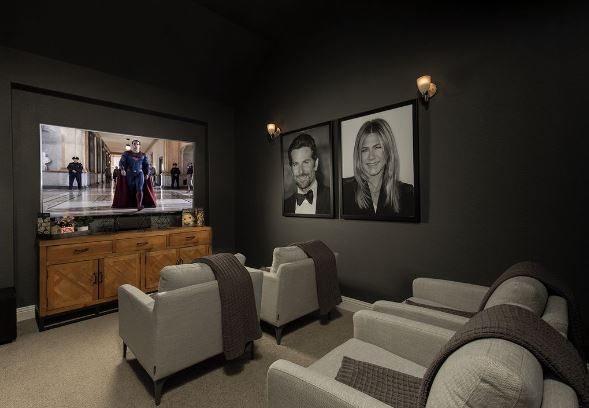
No need to book a weekend at the spa – our airy bedroom and luxurious bathroom space at #Havenwood Model 4 feel like a vacation every day of the week! 👌

At Havenwood, we’re currently offering $60,000 in flex cash + $15,000 in included options for a limited time! Don’t wait to contact us – we offer a low tax rate and Mello Roos, too! 💰

#CresleighHomes

Did You Know, When Go, it’s the Perfect Ending to the Bad Day I Was Just Beginning?

Aside from murder, the crimes of rape and sexual assault occur with less regularity than any other for of violent crime. In 2021, there were approximately 144,240 reported cases of rape in the United States of America. There are more than 106,010 reported cases of sexual assault. Only about half the victims of rape or attempted rape surveyed stated that the crime had been reported to the police. Two-thirds of all rapes and rape attempts occurred at night, with the largest proportion occurring between 6 p.m. and midnight. Most victims of rape or attempted rape where white and young; the ages with the highest victimization rates for rape and attempted rape were 16 to 24. More than half of all victims had never been married and most were members of low-income families. The most frightening form of rape, an assault by a total stranger, was the most common. More than 75 percent of all rapes involved one victim and one offender, and most offenders were unarmed. Most victims offered some form of resistance. The most common responses to the situation were trying to get help; resisting physically; to threatening, arguing, or reasoning with the offender; or resisting without force. The total cost of the medical expenses reported was almost $72 million. The FBI estimated that a new rape occurred every 5.8 minutes. Over a ten-year period, there were 1.5 million victims of rape. There were more than 120 million crimes committed in the United States of America in 2017 (including 24 million violent crimes), amounting to a financial impact of $2.6 trillion. #RandolphHarris 1 of 21

Given the high levels of trauma and betrayal that often accompany rape, it should come to no surprise that a considerable number of rapes go unreported to police. With only 139,815 rapes (excluding sexual assaults) being reported to law enforcement agencies in 2019, it is safe to say that this form of crime goes without official detection more often than any other type of violent offense. We know from victim reports that a little over one third (39 percent) of the persons who were raped and/or sexually assaulted in 2021 chose to inform the police about the incident. Roughly 40 percent stated that they sustained physical injuries in the attack. A study of violence-related injuries treated at hospital emergency rooms found that 63,800 rape or sexual assault received medical care that year. Nationwide, 81 percent of women and 43 percent of men reported experiencing some form of sexual harassment and/or assault in their lifetime. The highest rates of rape and sexual assault victimization are experienced in the western and southern regions of the United States of America. Slightly lower rape/sexual assault rates have traditionally existed in the Midwest and Northeast. Uniform Crime Reports data indicate that the offending rate (per 100,000 residents) for the crime of forcible rape was highest in Alaska (68.6), Delaware (67.1), New Mexico (55.1), Nevada (52.1), and Michigan (50.4). That same year, residents from Montana (17.8), Maine (18.1), West Virginia (18.7), Wisconsin (19.9), and New Jersey (20.0) exhibited the lowest offending rates. #RandolphHarris 2 of 21

Rape and sexual assault rates are clearly related to population density. There is a composite rape/sexual assault rate of 1.9 in urban environments. This figure is more than twice the victimization rates experienced in suburban and rural areas (0.9 and 0.5, respectively). Among the sixty-six cities with a population exceeding 250,000 residents, the highest rates of forcible rape (known offenses per 100,000 residents) were observed in Minneapolis (126.7), Memphis (112.8), Cleveland (101.6), Columbus (94.7), and Nashville (88). Conversely data rank New York City (22.9), Louisville (24.1), Virginia Beach (24.4), and San Francisco (25.5) as the most rape-free cities. America appears to be the violent sex crime capitol of the World. The U.S. rape rate of 36 (per 100,000 inhabitants) was more than double tht of its nearest rivals: Israel (14.3), England and Wales (14.7), and France (13.4). Moreover, U.S.A. rape rates were exponentially higher than those observed in Germany (9.6), Spain (3.2), and Japan (1.5). This raises the obvious question of why rape rates are so much higher in this country. There are four relevant theoretical perspectives of rape that is believed to provide some much needed insight in this area. First of all, gender inequality theory, a favorite of many feminists. Scholars who take this position believe that rape and the fear of rape enable men to assert their power over women and maintain the existing system of gender stratification.” #RandolphHarris 3 of 21

These rape motivations need not be an overt and malicious feature of societal gender norms. Instead, subtle forms of gender oppression, such as the objectification of women are inferior to men and are misinterpreted by some violent individuals to indicate that sexualized violence is one way of protecting their manhood. The gender equality theory of rape predicts that rape rates will be highest in patriarchal societies where women are considered to be the sexual servants of men. The advertising imagery and gender biases that limit women’s status attainment in contemporary America are held as evidence that the tenets of this theory are readily applicable to U.S.A. culture. Other feminist scholars prefer to gravitate toward the pornography theory. These scholars content that pornographic imagery depicting the domination and degradation of women sends the wrong cultural message—the images convey an implicit message that all women want sex and lead men to expect it from women. Repeated exposure to this imagery serves to reinforce and condone violet sexual behavior in men. Although the evidence of the pornography theory is inconclusive, rape rates are highest in those states that experienced the most sizeable circulation rate for adult monthly periodicals such as Playboy, Hustler, and Penthouse. Many mainstream sociologist endorse the social disorganization theory of rape. These scholars theorize that crime rates will increase as social disorganization increases and the institutional infrastructure of society breaks down. #RandolphHarris 4 of 21

Factors such as widespread poverty, the collapse of the traditional nuclear family unit, racial tension, and decreased religiosity are thought to breed a sense of alienation and desperation among the effected parties. This, in turn, produces a frustration rection. Criminal behavior in general, and rape in particular, are thus said to represent prime examples of the reaction formation concept. Clearly there is no shortage of these types of structural instabilities in contemporary American society. Rape rates are highest in those states that experience elevated levels of social disorganization as one such measure of support for the theory. The legitimation of violence theory offers a more social, psychologically oriented take on rape causation. Scholars who endorse this perspective view rape as a little more than a specialized form of violent behavior. Forms of sexual violence are said to represent a “spillover effect” in cultures that glorify or condone the use of physical problem solving. The legitimation of violence seems to work hand in hand with gender inequality to produce higher rates of sexual violence. Namely, states with a volatile mix of high gender inequality and an established culture of violence consistently experience the highest rape rates. #RandolphHarris 5 of 21

In general, violent sex crimes take shape as unskilled, technically simple acts. Victimization data indicate that nearly 70 percent of all rapes and sexual assaults are committed by someone who is known to the offender (acquaintance, intimate partner, family member). These forms of violent betrayals are referred to under the heading of acquaintance or date rape. It was found the coercion, intimidation, and brute strength—more so than weaponry or props (rope, handcuffs, tape, et cetera)—serve as the tools of the trade for the average date rapist. The term stranger rape is used to describe those acts where the offender and victim have no previous relationship. The cold and calculating nature of this rape dynamic oftentimes translates into a heightened reliance on weapons and props on the part of the offender. Victims report that weapons were present in 7.6 percent of all rapes and sexual assaults. This peril concerns every professing Christian. The prophecy of the Holy Spirit declares that (1) “some” shall fall away from the faith. (2) The reason for the fall will be a “giving heed to seducing spirits.” The nature of this working is not the promotion of obvious evil, but deception, which is a covert working. The essence of deception is that the operation is looked upon as sincere and pure. (3) The nature of the deception will be in doctrines of demons id est, the deception will be in a doctrinal sphere. (4) The way of deception will be that the “doctrines” are delivered with “hypocrisy,” id est, spoken as if true. #RandolphHarris 6 of 21

(5) Two instances of the effect of these evil spirit doctrines are given: (a) the forbidding of marriage, and (b) abstaining from meat. However, both of these common activities—marrying and the eating of meat—are, said Paul, divinely ordained—“created by God.” Therefore their prohibition is a mark of opposition to God, even in His work as Creator. Silence and reserve and isolation are often indirectly related to the way in which some communicate when they are engaged in a kind of self-consciousness and awareness that one has not known before. It is a process of inner searching that grows out of questions and issues that are confronting one at the moment. It may seem that one is interested only in finding one’s own private way, that one is looking for a life of freedom and independence but this may not be the basis of one’s loneliness. What one is searching for is a life fully rooted in truth and in authenticity, yet one is living with contradictions and dishonesty that leave one feeling helpless and alone. Sometimes people feel confused, misinformed, unreal. They may feel totally alone and keenly conscious of one’s isolation, not belonging on this Earth of normal people. For the first time, some are becoming aware of how ridiculous their values are, aware of the solitary nature of their actions. There sometimes is no other way but to become numb to the lie that was there before one, in the presence of people who do not have the guts to speak openly, whose fear of consequences is more powerful than their commitment to the truth. #RandolphHarris 7 of 21

This may cause some to suddenly walk out of their friends, after only reuniting with them for a short time. One may consider every relationship in terms of moral principles. What may begin to surface can be opposing wishes and wills glossed over and actions that challenge their dedication to honesty. If an individual feels lonely, must one pretend social interests? If one feels placid or unalive, must one feign excitement? Many everyday activities came into view. And one could develop self-consciousness, checking to determine if what one is saying and doing are consistent with what one is feeling and who one is. Everyone knows this is a painful process, not only in one’s own suffering but in the grief it brings to others. Some may trust this solitary struggle and believe that ultimately a more fully honest life with others will emerge. Is the individual searching for something that does not exist? Will one finally admit that an absolutely moral life is impossible? No one can be certain. Furthermore many on this path do not even know where one is going—only that one must retain with this struggle and let it take one where it will. These individuals are aware that something extreme is happening to one and that one is suffering because their withdrawal strikes at the heart of their relationships and their friends are unable to reach them. #RandolphHarris 8 of 21

Many deeply regret the pain their loneliness brings their loved ones and they bear something of that suffering within themselves. These individuals feel a tenderness and love for their relationships but in this search for a truthful way to live in all one’s moments must, it must take its own course before the individual will again feel the joy of life and beauty of being with others. When it comes to this search for meaning, it is necessary to repeat that first of all you must understand how wrong negative emotions are, how useless they are, and then you must understand that they cannot exist without identification. It will take you a long time to realize this, but when you have done so, you must try to divide your negative emotions into three categories. First, the more or less ordinary everyday negative emotions which happen often, and are always connected with identification. Certainly, you must observe them and you must already have a certain control over the expression of them. Then you must start dealing with them by trying not to identify, by avoiding identification as often as you can, not only in relation to these emotions but in relation to everything. If you create in yourself the capacity of not identifying, that will affect these emotions and you will notice how they begin to disappear. The second category do not appear every day. They are the more difficult, more complicated emotions depending on some mental process—suspicion, hurt feelings and many things like that. They are more difficult to conquer. #RandolphHarris 9 of 21

You candela with them by creating a right mental attitude, by thinking—not at the time when you are in the negative emotion, but in between, when you are quiet. Try to find the right attitude, the right point of view, and make it permanent. If you create right thinking, that will take all power from these negative emotions. Then there is a third category, much more intense, much more difficult, and very rare. Against them you can do nothing. These two methods—struggle with identification and creating right attitudes—do not help. When such emotions come you can do only one thing: you must try to remember yourself; to remember yourself with the help of the emotion. That will change them after some time. However, for this you have to be prepared; it is quite a special thing. It is a fact that the individual’s relationship to gatherings and social occasion sometimes tell us something about one’s relationships to broader units of social life. Thus, in Utah, the few men who did not bother to shave regularly were also the ones who refused to keep a tidy front yard, even in cases where their holdings were where visitors to the community would see the untidiness. The same individuals also declined to support the local socials in any regular way, and one of them sometimes worked on Sundays, thus showing civic as well as situational insensitivity. Similarly, in a study of urban lower-class ceremonial life, it is reported that members of the community defined “respectability” in terms of not borrowing money, not applying for unemployment assistance, and not making free with the neighbor’s front door, and that this civic decorum was reflected in situational proprieties also. #RandolphHarris 10 of 21

One of the outstanding characteristics of the respectable people is that they are “particular,” which implies that they try hard to maintain their standards in spite of all adversities and difficulties. While unemployment or other adversity enforces a limitation of expenditure, this does not, among the respectable, result in the complete abandonment of standards, for as they say, “it’s not how much you get, but what you do with it that matter.” The notion of “being particular” applies especially to children and to cleanliness. In hard times before the pandemic, the children might have had to forego school clothes shopping, but at least, the women insisted, it was clean. “Every child is rough and ready some part of the day, but you can be particular.” In another context, one informant who was commenting on the poor condition of her house, pointed out that she had at least tried to “cover up,” by putting newspaper over the fireplace and a curtain over the gap where the cupboard door should have been. “But the rough ones,” she said, “don’t even care about covering things up. You can’t help having a poor or a broken-down house, but you can help keeping it looking nice.” And certainly this tie-in between situational and other deviations is found among mental “prepatients”; an individual who ruminates all day on the sofa often turns out to be one who also offends by, for example, not keeping appointments or not bothering to put air in his car tires. #RandolphHarris 11 of 21

Further, as has already been discussed, an institutional role having its primary locus in one place may require the performer to carry marks of one’s membership wherever one goes, thereby setting one apart from the public at large, though often through no fault of one’s own. A more serious question was debated; though, according to the newspaper accounts, obliquely, when a high-level conference in Utah discussed at considerable length, whether clergymen of Church should wear laymen’s clothing publicly at any time except when playing lawn-tennis or other approved games. Here is an example of the belief, held tacitly by many people, and recently state in the case of an officer, that holds offices ought to be regarded as never off duty: that a publicly assigned role overshadows all others. There are echoes of this in the assumption in some schools, implied rather than states, that a schoolboy outside the school premises, not wearing his school cap, is—or is about to be—up to no good. In the Army, “other ranks,” but not officers, have “walking-out” dress; the implication that a pretty nurse-maid awaits the soldier is delightfully Victorian and West-end. The “civvies” of some National Service “other ranks” are carefully censored by the authorities, who justify it with understandable rationalizations about “Teddy-boys.” Where the individual employs such insignia not because of institutional regulation but because of personal election, the link between civic and situational alienation would seem to be especially evident. #RandolphHarris 12 of 21

The insignia then become a kind of proclamation of distance from the ordinary course of social life, and of some sort of skewing of relationship to the public at large. Note, for instance, the self-imposed uniform worn by members of erupting social movements, such as the early European fascist groups. Something similar is seen among sailors who express their life-experience solidarity and their alienation from land society by placing a tattoo between themselves and the appearance-proprieties of the host culture. Something of the same effect is obtained by college students and beatniks (and their fellow-travelers) who express distance from the employed adult population by a full beard, or a two-day growth, and by bedraggled clothes. And although the dress pattern of young, male urban drug users may not be collegiate, this attire, too, seems to be linked to the maintenance of expressed distance. The tabooed creature releases that usually provide evidence of insufficient situational presence seem to provide a favorite idiom for expressing some kind of disregard for broad elements of conventional society, pointing to the voluntary elaborations that can be made of acts that are supposedly involuntary. College students, for example, sometimes compete with each other in belching prowess, conveying something about their relation to the adult World in doing so. Preadolescent boys have a special game built around flatulence, which manages both to penalize the offender and to bypass civilian standards at the same time. #RandolphHarris 13 of 21

When it comes to voting, our emphasis has been on pairwise elections. In such cases there is little strategy other than whether or not to vote. If you vote, you should always vote for the candidate whom you most prefer. Because your vote matters most when it breaks a tie, you want your vote to reflect your preferences honestly. For elections with more than two alternative, the decision is both whether or not to vote and what to vote for. It is no loner true that one should always vote for one’s favorite candidate. In the 1984 Democratic party primary, supporters of Jesse Jackson had the problem of trying to send a signal with their vote. They could predict that Mr. Jackson was unlikely to win. The polls told them that Gary Hart and Walter Mondale were the clear front-runners. There was a great incentive to vote for those at the head of the pack in order not to waste one’s vote. This became an even bigger problem when there were seven candidates competing for the 1988 Democratic party presidential nomination. Supporters did not want to waste their vote or campaign contributions on a nonviable candidate. Thus polls and media characterizations that pronounced front-runners had the real potential to become self-fulfilling prophecies. There is another reason why votes may not reflect preferences. One way to help keep your vote from getting lost in the crowd is to make it stand out: take an extreme position away from the crowd. Someone who thinks that the country is too liberal could vote for a moderately conservative candidate. #RandolphHarris 14 of 21

Or one could go all the way to the extreme right and support Donald Trump. To the extent that candidates compromise by taking central positions, it may be in some voters’ interests by taking central positions, it may be in some voters’ interests to appear more extreme than they are. This tactic is effective only up to a point. If you go overboard, you are thought of as a crackpot, and the result is that your opinion is ignored. The trick is to take the most extreme stand consistent with appearing rational. To make this a little more precise, imagine that we can align all the candidates on a 0 to 100 scale of liberal to conservative. The Young Spartacus League is way on the left, around), while Donald Trump takes the most conservative stance, somewhere near 100. Voters express their preference by picking some point along the spectrum. Suppose the winner of the election is the candidate whose position is the average of all voters’ positions. The way you might think of this happenings is that through negotiations and compromises, the leading candidate’s position is chosen to reflect the average position of the electorate. The parallel in bargaining is to settle disputes by offering to “split the different.” Consider yourself a middle-of-the-roader: if it were in your hands, you would prefer a candidate who stands at the position 50 on our scale. However, it may turn out that the country is a bit more conservative than that. Without you, the average is 60. For concreteness, you are one of a hundred voters polled to determine the average position. #RandolphHarris 15 of 21

If you state your actual preference, the candidate will move to [99 x 60 + 50]/100 = 59.9. If, instead, you exaggerate and claim to want 0, then final outcome will be at 59.4. By exaggerating your claim, you are six times as effective as effective in influencing the candidate’s position. Here, extremism in the defense of liberalism is no vice. Of course, you will not be the only one doing this. All those more liberal than 60 will be claiming to be at 0, while those more conservative will be arguing for 100. In the end, everyone will appear to be polarized, although the candidate will still take some central position. The extent of the compromise will depend on the relative numbers pushing in each direction. The problem with this averaging approach is that it tries to take into account both intensity and direction of preferences. People have an incentive to tell the truth about direction but exaggerate when it comes to intensity. The same problem arises with “split the difference”: if that is the rile for settling disputes, everyone will begin with an extreme position. One solution to this problem dates back to the twenties and Columbia University economist Harold Hotelling. Instead of taking the mean or average position, the candidate chooses the median position, the platform where there are exactly as many voters who want the candidate to move left as to move right. Unlike the mean, the median position does not depend on the intensity of the voters’ preference, only their preferred direction. To find the median point, a candidate could start at 0 and keep moving to the right as long as a majority supports this change. At the median, the support for any further rightward move is exactly balanced by the equal number of voters who prefer a shift left. #RandolphHarris 16 of 21

When a candidate adopts the media position, no voter has an incentive to distort her preferences. Why? There are only three cases to consider: (i) a voter to the left of the median, (ii) a voter exactly at the median, and (iii) a voter to the right of the median. In the first case, exaggerating preferences leftward does not alter the median, and therefore the position adopted, at all. The only way that this voter can change the outcome is to support a move rightward. However, this is exactly counter to one’s interest. In the second case, the voter’s ideal position is being adopted anyway, and there is nothing to gain by a distortion of preferences. The third case parallels the first. Moving more to the right has no effect on the median, whole voting for a move left is counter to the voter’s interests. The way the argument was phrased suggested that the voter knows the median point for the voting population, and whether one is to the right or the left of it. Yet the incentive to tell the truth had nothing to do with which of those outcomes occurred. You can think about all three of the above cases as possibilities and then realize that whichever outcome materializes, the voter will want to reveal one’s position honestly. The advantage of the rule that adopts the median position is that no voter has an incentive to distort one’s preferences; truthful voting is the dominant strategy for everyone. The only problem with adopting the median voter’s position is its limited applicability. This option is available only when everything can be reduced to a one-dimensional choice, as in liberal versus conservative. However, not all issues are so easily classified. One’s voters’ preferences are more than one-dimensional, there will not be a median. At that point, the possibility of manipulating the system becomes real. #RandolphHarris 17 of 21

The main producers of imagery until recently were the major broadcast networks. Today, in the United States of America, where de-massification is most advanced, their power is plummeting. Where ABC, NBC, and CBS once stood virtually alone, there are now seventy-two national services of various kinds, with more coming online and streaming services, which offer cool programs not shown on TV and with more leeway in their scripts and content. A new crop of networks serving “niche” markets and digital stream are big news. And on cable there is comedy network, consumer business news network, and a science-fiction network. In addition, Channel One pipes programs into school classrooms, and National College Television uses satellite to target special programs to university students. Cable of some type is available in nearly 90 percent of American homes. The average cable user has more than fifty channels to choose from and that will soon be up to seventy five. In a small town like Rochester, Minnesota, viewers can choose from more then sixty different channels offering a wide range of material, from the Black Entertainment Network and programs in Spanish, to specialized medical training programs aimed at the larger medical community around the famed Mayo Clinic. Cable was the first to begin fractionalzing the mass audience. Videocassette and direct broadcast satellite (delivering signals not only to cable stations but into the home itself) fractionalize the fractions. Thus videocassette offers viewers a choice of thousands of movies and programs. And recently four major companies banded together to deliver 108 channels of standard and high-definition TV to American viewers by shooting signals from the World’s most powerful commercial satellite to “napkin-size” receiver dishes in the home.” #RandolphHarris 18 of 21

Furthermore, the number of stations operating independently of the three big networks has quadrupled since the late 1970s. Many have formed themselves into syndicates or temporary groupings that compete with the majors for top-rated programming. The impact of all these de-massifying forces on the once-mighty networks has been a little short of catastrophic. The key words in all this are choice and alternative. It is what people did not have back in 1980. It is what they do have today. However, these are precisely what the main stream networks were designed to prevent. For CBS, ABC, and NBC were Second Wave smokestack companies, accustomed to dealing with masses, not heterogenous micro-markets, and are having as much difficulty adapting to the post-smokestack Third Wave economy as are interest rates and wages. A measure of the networks’ concern was the decision of NBC to join in the direct broadcasting satellite venture. Wonder what will happen to the Big Three? Well, once upon a time there were three big radio networks too. Today hardly anyone even remembered they existed. Adjusting to nanotechnology is also something we are going to have to deal with, so the World is rapidly changing. People within existing organizations can nudge them toward evaluating nanotechnology and molecular manufacturing. A good start is to introduce others in the organization to the concepts, and talk through some of their implications. Follow-up activities will depend on the group, its resources, and its purposes. #RandolphHarris 19 of 21

For the time being, drafting of new regulations, lobbying of Congress, and the like all seem premature. Getting nanotechnology into the planning process, though, seems overdue. We invite existing organizations with concerns regarding medicine, the economy, the environment, and other issues of public policy to put nanotechnology on their agendas, and to join in debating and ultimately implementing sensible policies. Some groups are doing relevant research work. Many could bias their choice of projects to favor goals in the direction of molecular systems engineering. For nanotechnology to be taken really seriously, some research group will have to build a reasonably capable molecular manipulator or a primitive assembler. This will require an interdisciplinary team, years of work, and a total cost unlikely to exceed one tenth that of a single U.S.A. Space Shuttle. Other researchers can help by providing further theoretical studies of what advanced molecular manufacturing and nanotechnology will make possible. These studies can help groups know what to anticipate in their planning. Some scientists and engineers will want to steer their careers into the field of nanotechnology. More students will want to study a combination of physics, chemistry, and engineering that will prepare them to contribute. We encourage people of common sense and goodwill to become involved in developing nanotechnology. For those who have—or can gain—the necessary technical backgrounds, becoming involved with its development is an excellent way to influence how it is used. For better or for worse, technical experts in a field have a disproportionate influence over related policies. #RandolphHarris 20 of 21

During these years, there will be a growing need for grass-roots organizations aimed at public education and building a base for political action. Having a few thousand people ready to write five letters to Congress in some crucial year could make the difference between a World that works and a World destroyed by the long-term effects of a shortsighted bill. What happens will depend on what people do, and what people do will depend on what they believe. The World is overwhelmingly shaped by the state of opinion: people’s opinion about what will and will not happen, what will and will not work, what will and will not prove profitable or beneficial for themselves, for their families, for their businesses, for their communities, for the World. This state of opinion—as expressed in what people say to each other, and whether their actions conform to their words—shapes decisions day to day. During these years, it will matter greatly what people are saying to one another about the future, and how to make it work. With help from new technologies, we can renew the World—not make it perfect, not eliminate conflict, not achieve every imaginable dream, yet clear away many afflictions, both ancient and modern. With good preparation, we can perhaps even avoid creating too many new afflictions to take their place. Who is responsible for trying to bring this about? Those who want to fight poverty, to earn their share of the benefits to come, to join in a great adventure, to meet people who care about the future, to save species, to heal the Earth, to heal the sick, to be at the cutting edge, to build international cooperation, to learn about technology, to fight dangers, to change the World—not necessarily all together, or all at once. To help deal with the main problem today, lack of knowledge, you can encourage friends to read up on the subject. #RandolphHarris 21 of 21

Cresleigh Homes

Love to entertain? 💃🕺 You’ll love Residence Two at #MagnoliaStation – now selling!
This spacious single story home offers a large kitchen and working island, dining room connected through the butler’s pantry, and a large great room overlooking the ample rear yard. Plus three bedrooms, three bathrooms, and a three car garage! 😍
Sound like the perfect fit for your family? Visit our website to learn more, view interactive floor plans, and get in touch today!

Good-by; You’ll Never Know What This Has Cost Me

Mr. Hansen had never been able to understand why there was any harm in giving people a little encouragement when they needed it. Sitting back in my comfortable armchair by the fire, I thought to myself, “You would be surprised to find how discouraged the grand people get, in these big houses with all the help, and silver dinner plates, and a bell always handy if the fire wants poking, or the pet dog asks for a drink.” It was then that I first became aware of a disturbance in the air. A kind of restlessness. I looked sharply around the front parlor, but saw nothing out of the ordinary. The room was deserted. No one had come along for some time. Yet there was a suggestion of movement nonetheless, a shifting of the light from the chandelier. The drapes loomed more menacingly and the fire appeared even closer, as I glanced out of window, my yard looked like an ancient forest of evergreen. What secrets did they contain within their shadows? My heart skipped a beat. I opened the window. The silence surged around me. Again, nothing. And inside—no telltale footsteps or voices. Only later, did it occur to me that the silence was peculiar. I should have been able to hear something. The roar of the furnaces, or the belching chimneys. The sound of the carpenters hammering. The servants washing dishes in one of the kitchens. However, I was only aware of the silence. Silence, as if I were the only one left alive on my estate. Then I heard it. No, not heard. I sensed it. A whispering, almost like a singing. The others have slipped away into darkness. I caught my breath. “Who’s there?” #RandolphHarris 1 of 6

I heard the ghost of Mr. Winchester’s voice inside my head, though it was growing fainter with the passing years. However, this was different, a lighter sound, gentle and exquisite, carried on the cold air. A reverberation, and echo of words once spoken in this place? And what of the crimson mist on arising from the floor? On these cold winter nights, it was not unusual to hear the clanking like a bucket, and the shuffling of feet. When I looked over toward the kitchen, there was a man—or something—dressed in a long white coat, all bent over like he was tired or something, slowly walking toward the door-to-nowhere. He was filling up the buckets using the exterior water faucets on the second floor that were used to water my flower boxes. He seemed to walk right out the door and to the front of the house, but there was nothing supporting him. Then he watered the flowers and walked slowly back into the house, real tired- like. And almost suddenly vanished. There were spirits caught forever in the never-ending labor to keep this estate operating. Perhaps these were visions out of time making their journey into the eternal flame as well as into Eternity itself. However, every July 2, officers could be frequently seen in the dim moonlight, in the Victorian garden, dressed in their gray tunics and gold stars and wreath, gathering around the fountains, mixing fine bourbon with the clear water, and toasting to the next day’s victory or death. #RandolphHarris 2 of 6

Summer nights always tended to be a little eerie. In the dark, the estate at best, is an uncomfortable place to be. The tragic memories and sorrows of a nation’s struggle defending the hour of the country with their Winchester Rifle’s hanged heavily and seemed magnified in the night. There is always something moving in the fruit orchards or the grass just off the unlighted portions of the estate. It all makes the Other World all that much closer. Sometimes one could even hear the strange military noises emanating from the 740 acres of land I own, and the fallen faces of the slaughtered. Desperate orders shouted…steel rammers ringing in muskets…the clicking of hammers cocked…the hoarse trill of a bugle…the clacking of artillery chains…a roar…shrieks…men gagging, crying, screaming, moaning, moaning, moaning….and there is often heard the funeral call, mounrful apologies of a heartsick, dying warrior to a lost friend bemoaning a fateful decision to be regretted down the ages. Although we had transitioned into summer, there was just an endless expanse of cold on these nights. Memories would seep into my mind. My Daisy Bedroom. Candles burned out. Me crying in the dark, jolted awake by bad dreams and calling out for my infant daughter who passed away long too soon. Then Mr. Winchester, sitting at the end of my bed, opening the curtains to let the silver moon in, saying there was nothing to be afraid of. How nothing could hard me. Not even a curse. How I was a Winchester, invincible and courageous. Nothing could get me as long as I kept building. And with William by my side, I believed it. #RandolphHarris 3 of 6

So I talked to myself to keep my spirit up. I was in no actual physical danger, I said. It was just a matter holding on to my nerved. Still, fragments of life flashed into my mind and out. Broken images of my husband and daughter, photographs of our happy days. Memories of Mr. Winchester. And I wondered if he had seen death, like a shadow coming to meet him. Had he recognized the moment for what it was? Whispering, I could hear whispering, voices slipping between the walls. “She is the last, the last, the heiress.” Heard howling from the walls. Sometimes far away, sometimes closer, so close I imagined I could feel breath upon my cheek. “The others have slipped away into darkness.” Then the sound of sobbing, a desperate scratching on the floors, and a terrible weeping. I worked hard to turn this mansion into something beautiful. Having evergreen trees planted and a variety of flowers. I even remodeled a room with attractive redwood walls, and another with floor to ceiling glass panels that provided a 180-degree view of the estate. I smiled when I saw the perennials that I had planted. However, a number of other peculiar incidents began to convince me that I was being visited by discarnate entities. I always knew I was being haunted. But now I was catching fleeting glimpses of fast-moving shadows from time to time when I would least expect to see such a thing. There would often be smells of delicate perfume. Mr. Hansen thought it was closer to a man’s cologne. Sometimes we encountered the scent together, but in every instance it came and drifted away after only a few minutes. #RandolphHarris 4 of 6

Once, when I was outside tending the flowers growing under the front windows, and I was suddenly enveloped in an invisible puff of strong cigar smoke. Then I was choking, coughing. I could feel the pump and hiss of my heart beneath my ribs, rattling like a snare drum. I swallowed hard. When I put my hand up to brush the smoke away from my cheek, I saw that the tips of my gloves were red. And when I looked down, I saw the daisies with drops of blood on them, glittering and yet dull at the same time. I propelled myself into a standing position, and walked towards the front doors. The wind boxed my ears so hard that I struggled to keep my balance, but I managed finally to get those doors shut. When I looked in the mirror, I was not injured at all. That night while I was falling asleep, I sensed a large, dark presence in the bedroom. It glided over me and seemed to hover just over my head, and I was the recipient of a telepathic command: “I want to know your thoughts!” After I fell asleep, I experienced horrific nightmares. I was awakened by the sounds of terrific crashes, as though something huge had fallen over somewhere in the house, causing terrible damage. Thanks to the stocks I owned and the ones I bought in Con Edison, I was able to keep building rooms to evade the ghosts. Do you know how it is, sometimes when you are doing a bit of fine darning, sitting by the window in the afternoon; and one minute it is full daylight, and your needle seems to find the way of itself; and the next minute you say: “Is it my eyes? because the work seems blurred; and presently you see it is the daylight going, stealing away, softlike, from your corner, though there is plenty left overheard. Well—it is the way it is with these ghosts around.” #RandolphHarris 5 of 6

Most nights, screaks could be heard emanating from within the walls. Then everything would be stripped of color, an absence and shade. Fog hovered motionless from the ceiling. And it would come again, over the whistling of the wind, the same indistinct whispering. “The others have slipped away into darkness.” “Who are you?” I cried. “What do you want from me?” But the fog, the apparition, had vanished. After the Spanish-America War, all the fine ladies took to running to the mediums and the clairvoyants, or whatever the stylish folk call them. The women had to have news of their men; and they were maid to pay high enough for it…Oh, the stories I used to hear—and the price paid was not only money, either! There was a fair lot of swindlers and blackmailers in the business, there was. I always had a way of seeing things; from the cradle, even. I do not mean reading the tea leaves, or dealing the cards. No, no; I mean, feeling there are things about you, behind you, whispering over your shoulder. I felt more and more sorry for those women that the soothsaying swindlers were dragging the money out of for a pack of lies; and one day I could not stand it any longer, and though I knew the Church was against it, when I saw one lady nearly crazy, because for months she had no news of her boy at the front, I said to her: “If you will come over to my place tomorrow, I might have a word for you.” And the wonder of it was that I had! For that night I dreamt a message came saying there was good news for her, and the next day, sure enough, she had a telegram telling her her son was coming home. And that August, the war ended. #RandolphHarris 6 of 6


One is confronted finally with the metaphysics of time: is it merely linear; are we moving along it like riding a train on a track and all that happens, once it occurs, is forever gone? Or can that time be bent, as some prominent theoretical physicists of the late 19th and 20th centuries have said, so that we may run into it again? Or, can an event go out in more directions than just backward, carried on time like ripples from a stone throw in a pond, occasionally under very special circumstances in very special places, returning like a faint echo? Is it possible that the bigger the event the larger the ripples and the more likely they are to return? Or perhaps is it possible, if time can be bent, or the ripples move slowly enough, to catch up with events again, and again, and again? Come tour the Winchester Mystery House and perhaps you will find some hidden clues. https://winchestermysteryhouse.com/

And be sure to check out the Online Gift Store: https://shopwinchestermysteryhouse.com/

I Made Up the Bed We Sleep in, I Looked at the Clock When You Creep in

In many ways similar to ecstatic destructiveness is the chronic dedication of a person’s whole life to hate and destructiveness. Not a momentary state as in ecstasis, it has nevertheless the function of taking hold of the whole person, of unifying him in the worship of one goal: to destroy. This state is a permanent idolatry of the god of destruction; his devotee has, as it were, given over his life to him. As rationalizations give way to perceptions of victimization, of woman’s feelings about herself, her spouse, and her situation change. These feelings are imbedded in a cultural, political, and interactional structure. Initially, abuse is contrary to a woman’s cultural expectations of behavior between intimates, and therefore engenders feelings of betrayal, however, is balanced by the husband’s efforts to explain his behavior, and by the woman’s reluctance to abandon faith. Additionally, the political dominance of men within and outside the family mediate women’s ability to question the validity of their husband’s actions. At the interpersonal level, psychological abuse accompanying violence often invokes feelings of guilt and shame in the battered victim. Men define violence as a response to their wive’s inadequacies or provocations, which leads battered women to feel that they have failed. Such character assaults are devastating, and create long-lasting feelings of inferiority. The emotional career of battered women consists of movement from guilt, shame, and depression to fear and despair, to anger, exhilaration, and confusion. #RandolphHarris 1 of 20

Women who escape violent relationships must deal with strong, sometimes conflicting, feelings in attempting to build new lives for themselves free of violence. The kind of response women receive when they seek help largely determines the effects these feelings have on subsequent decisions. The process of victimization is not synonymous with experiencing violent attacks from a spouse. Rationalizing the violence inhibits a sense of outrage and efforts to escape abuse. Only after rationalizations are rejected, through the impact of one or more catalysts, does the victimization process begin. When previously rationalized violence is reinterpreted as dangerous, unjustified assault, battered women actively seek alternatives. The success of their efforts to seek help depends on available resources, external supports, reactions of husbands and children, and their own adaptation to the situation. Victimization includes not only cognitive interpretations, but feelings and physiological responses. Creating a satisfying, peaceful environment after being battered involves emotional confusion and ambiguity, as well as enormous practical and economic obstacles. It may take years of struggle and aborted attempts before a battered woman is able to establish a safe and stable lifestyle; for some, this goal is never achieved. The victimization process which we have described refers to the interpretations of a specific violent events within a particular relationship. It is important t emphasize that this victimization is limited to those violent events and does not encompass a more global perspective on the woman’s life. #RadolphHarris 2 of 20

Individuals working with battered women have pointed out the importance of helping battered women to distinguish between being a victim of an assault and assuming the identity of the victim. The first involves rejecting the responsibility for being beaten; the second involves giving up the responsibility for one’s life. The role of victim is contradictory to the assertive and creative action necessary to establish a life free of violence To accomplish the latter goal, women must quickly overcome the feelings of helplessness and self-pity that accompany victimization. They must confidently assume responsibility for making decisions and working towards the goals they set, and reject identification with the role of victim. It is well established that sexual assault has a significant effect on the daily thoughts and behaviours of American women. Let us begin with a sampling of the statistical evidence. Eight one percent of women reported experiencing some form of sexual harassment and/or assault in their lifetime. In 2020, 298,626 women were sexually assaulted or raped. It is estimated that some sort of sexually assaultive action is present in every ten violent crimes involving a female victim. As disconcerting as these numbers are, they do not tell the whole story. Women clearly live in fear of being raped and this preoccupation has a profound effect on their overall sense of personal security. Anxiety about being raped serves as the most direct and formidable predictor of a women’s overall fear of criminal victimization. #RandolphHarris 3 of 20

The first- and secondhand accounts of real-life sexual assaults go a long way to shape this perceived vulnerability. These are the stories of women who suffer long-lasting physical and psychological traumas, and they produce a broad-reaching impact. For this reason, the personal and societal impact of rape may exceed even that of murder. We as a society have slowly come to respect this orientation and have thus assigned a special status to violence sex crimes. The criminal law has evolved from a limited treatment of sexual misconduct to a much more broad legal orientation. Early common law included only rape (forced heterosexual penetrations) and sodomy (consensual homosexual conduct) under the heading of sex crimes. This conservative treatment prevailed well into the 1960s. For example, the Model Penal Code (American Law Institute, 1962) restricted the definition of rape to those acts of violent sexual penetration between male offender and female victim who were not presently married. Contemporary criminal codes take on a more gender and relationship neutral tone and this include an expansive list of offense, ranging from forced sexual intercourse to forms of sexual touching that are devoid of violence. The present discussion turns to a contemporary source for an up-to-date legal definition of violent sex crimes. Most jurisdictions delineate three generic offenses categories: rape, statutory rape, and sexual assault. An individual is guilty of rape if he or she specifically intends to achieve nonconsensual sexual penetration against another by force of the threatened use of force. This definition subsumes all form of sexual penetration regardless of its duration or degree. #RandolphHarris 4 of 20

Statutory rape encompasses all forms of sexual penetration committed against an individual under the specific age of consent (id est minors). The specific age of consent varies across jurisdiction, but the vast majority of states invoke a standard between 16 and 18 years of age. This age-graded offense is considered a strict liability offense and thus does not require that the mens reus (guilt mind) element of “intentional force” be present. Sexual assault is a broader offense category that covers all forms of forceful or coercive unwanted sexual contact. Indeed, if the Earth had been created as a paradise where man would not be bound by the stubbornness of material reality, his reasons might have been a sufficient condition to create the proper environment for his unimpeded growth, with enough for all to ear, and, simultaneously, the possibility of freedom. However, to speak in terms of the biblical myth, mans was expelled from Paradise and cannot return. He was saddled with the curse of the conflict between himself and nature. The World was not made for man; he is thrown into it, and only by his own activity and reason can he create a World which is conductive to his full development, which is his human home. His rulers themselves were executors of historical necessity, even though they were often evil men who followed their whims and failed to execute their historical task. Irrationality and personal evil became decisive factors only in those periods when the external conditions were such that they would have permitted human progress and when this progress was impeded by the character deformation of the rulers—and the ruled. Nevertheless, there have always been visionaries who clearly recognized the goals for man’s social and individual evolution. #RandolphHarris 5 of 20

The Lord Jesus spoke in general terms about the dangers which would encompass His people at the time of end, and Paul wrote to the Thessalonians more fully about the apostasy and the wicked deceptions of the lawless one in the last days, but the passage in Timothy is the only one which explicitly shows the special cause of the peril of the Church in it closing days on Earth, and how the wicked spirit of Satan would break in upon her members and by deception beguile some away from their purity of faith in Christ. The Holy Spirit, in this brief message given to Paul, describes the character and work of the evil spirits so that we might recognize (1) their existence, and (2) their efforts directed towards believer to deceive them and draw them away from the path of simple faith in Christ—all that is included in “the faith which was once for all delivered unto the saints” (Jude 3). That the character of the spirits is described in 1 Timothy 1-3 and not the men they sometimes use in the work of deception, may be understood from the Greek original. (Pember says that verse 2 refers to the character of the deceiving spirits and should be read thus: “…direct teaching of unclean spirits, who, though bearing a brand on their own conscience—as a criminal is disfigured—would pretend to sanctity [id est, holiness] to gain credence for their lies…”) The peril of the Church at the close of the age is therefore from supernatural beings who are “hypocrites”—who pretend to be what they are not—who give “teaching” which appear to make for greater holiness by producing ascetic severity to the “flesh,” but who themselves are wicked and unclean and bring those they deceive into contact with the foulness of their own presence. #RandolphHarris 6 of 20

Through loneliness, many people find out that they do not need drugs anymore to keep themselves going. However, anyone who takes drugs may need guidance and really to find one’s self before it is too late; everybody is better than they think they are. They could do it if they really want to. All it takes is a little understanding in one’s self and willpower and also guidance to lead such a person to take a good look at one’s self, and ask one’s self does one really need these drugs to get where one wants to be? I do not think so. People face childbirth, child illness, at the moment of decision concerning one’s belief, or lack of it, in the divine. And then more frequently, with similar impact strangely enough, yet with less intensity, during the “little” moments of our existence—knowing, for a feeling moment, that differences exist without the need for making comparisons, knowing our own touchings of the other. All this we can only know alone. Some of us can express them, as you have, some of us keep them locked in our hearts. And this is even more painful, because it is only with the occasional comings out of our loneliness that we can be with it at all—even if this means just our knowing it ourselves. It is like the to-and-fro of living. There must be this movement, for one moment alone would be incompatible with life, physical or otherwise. It is necessary to repeat that first of all you must understandhow wrong negative emotions are, how unless they are, and then you must understand that they cannot exist without identification. #RandolphHarris 7 of 20

It will take you a long time to realize this, but when you have done so, you must try to divide your negative emotions into three categories. First, the more or less ordinary everyday negative emotions which happen often, and are always connected with identification. Certainly, you must observe them and you must already have a certain control over the expression of them. Then you must start dealing with them by trying not to identify, by avoiding identification as often as you can, not only in relation to these emotions but in relation to everything. If you create in yourself the capacity of not identifying, that will affect these emotions and you will notice how they begin to disappear. The second category do not appear every day. They are the more difficult, more complicated emotions depending on some mental process—suspicion, hurt feelings and many things like that. They are more difficult to conquer. You can deal with them by creating a right mental attitude, by thinking—not at the time when you are in the negative emotion, but in between, when you are quite. Try to find the right attitude, the right point of view, and make it permanent. If you create right thinking, that will take all power from these negative emotions. Then there is a third category, much more intense, much more difficult, and very rare. Against them you can do nothing. These two methods—struggle with identification and creating right attitudes—do not help. When such emotions come you can do only one thing: you must try to remember yourself; to remember yourself with the help of the emotions. That will change them after some time. However, for this you have to be prepared; it is quite a special thing. #RandolphHarris 8 of 20

There is a class of offenses sometimes called acts of malice or spite. These often imply arrogance, disdain, and deep hostility, as when a middle-class person yawns directly before others in a slow and elaborate manner. Maliciously offensive acts give the following impression: they are easily controllable; their significance can be and is appreciated by the offender; the offender would not modify one’s conduct at the time even if given a second chance, and seems to have no reason for the act other than what one can convey by it to those one offends. Quite similar to malicious offenses are “contingent” ones, which have the same qualities as spiteful acts except that the offender has reasons for his act outside of the occasion and its participants. Here we have the individual who inconsiderably laughs out loud over something one is reading, not out of malice, but because one is genuinely amused. The more “legitimate” the offender’s reasons, of course, the more these contingent offenses are viewed as fully excusable, and the less intentionality is imputed to them. Malicious acts represent some kind of extreme of intentionality. At the other extreme, that of complete unintentionality, is the delict of the individua perceived as having an organic brain injury: one’s offense is not controllable by one, sometimes one cannot and hence does not appreciate its significance, and one may not be amenable to correction. Somewhere in between these extremes is the individual who offends because one is accustomed to a different idiom and structure of involvement from the ones sanctioned by those in the situation. #RandolphHarris 9 of 20

One’s offensive act is one that one controls; one might be willing to alter one’s conduct if one appreciated its current significance, and of such appreciation one is fully capable. There is also the case of the withdrawn individual who could, if one wished, withdraw from one’s withdrawal, and who, in that sense, controls one’s act. One may not appreciate the significance of one’s act for others, since one has no interest in discovering it, although presumably one could discover it if one wanted to; and one is not currently amenable to changing one’s conduct. Then, of course, there is the individual who is too preoccupied, too nervous, or too self-conscious to fit in, the basis of one’s uneasiness being one that others consider temporary, natural, and understandable. Such an individual can appreciated the difficulty one is causing and may well do so; indeed, one mat actively desire to correct one’s conduct but be unable to do so at the moment. The creature release known as a “tic” is an example, this misconduct sometimes evoking pity and contempt for the tiqueur’s incapacity to sustain the image that one’s other means self-control claim for one. A similar instance is the individual whose repertoire of clothing provides dress that is either too formal or too informal for the occasion one must attend, thus forcing one to be out of place. Finally, there is the individual who accidentally and uncharacteristically intrudes upon a situation in which one cannot fit, thereby committing an offense one wishes one had not committed and would have been fully capable of avoiding had one know in advance what was to happen. Note that in all these examples with witness would be just in conceiving of the offender as someone who was alienated from the gathering and its rulings, although there is some realization that in no two cases are the bases for alienation the same. #RandolphHarris 10 of 20

Because the significance of an offense is dependent on whether or not the act was intentional, and because so many different kinds of intentionality and unintentionally exist, we can see that an offense as such tells us very little about the offender. All those who exhibit alienation from a gathering may share nothing but their alienation. With this understanding, then, one can proceed carefully to try to list some of the things that a situational impropriety can tell us about the person who commits it, aside from the fact that one is in some sense alienated from the gathering. What this amounts to is an isolation of the types of social unit, other than social occasions, that can be the object of alienation. We study ourselves not from the point of view od what we are but of what we may become, so that when we have studied certain things sufficiently, we work to change them. Sufficiently serious study, in itself, produces some change, but all the results of this change may be spoiled by certain negative emotions. If you start this work to change yourself without conquering negative emotions, one side of you will work and another side will spoil your work, so that after a time, you may find yourself in a worse state than before. It has already happened several times to people who wished to keep their negative emotions that continuation of this work become impossible for them. There were moments when they realized the danger of their negative emotions but they failed to make sufficient efforts during those moments and the negative emotions became stronger. It has been explained already that a right attitude towards negative emotions destroys most of them. If we are to avoid spoiling the result of our work, it is important that we learn to cultivate this attitude from the beginning. #RandolphHarris 11 of 20

When the World is in the process of assimilating molecular manufacturing, years from now, it would be best if people were ready and if the World situation favored peaceful, cooperative applications. Balanced international progress would be better than dominance by any nation. Cooperative development would be better than technological rivalry. A focus on civilian goals would be better than a focus on military goals. A well-informed public supporting sound policies would be better than a startled public supporting half-baked schemes. All these goals will be best served if politicians are not forced to act like idiots—that is, if the state of public opinion permits them to make the right decisions, and perhaps even make bad decision politically costly. The basic objective is straightforward: a World in which as many people as possible have a basic understanding of what is happening, a picture of how it can lead to a better future, and a broad understanding of what to do (and not to do) to reach that future. The outlines of a beneficial scenario would then look something like this: Environmental groups and agencies have thought through the issues raised by nanotechnology, and know what applications they want to promote and what abuses they want to prevent. Likewise, medical associations, associations of retired persons, and the Social Security Administration have thought through the issues raised by dramatically improved medical care and economic productivity, and are ready with policy recommendations. #RandolphHarris 12 of 20

Business groups have done likewise with economic issues, and business watchdog groups are ready to expose policies that merely serve special interests. Labor groups have considered the impact of a deep, global economic restructuring on the jobs and income of their members, and have proposals for cushioning the shock without holding down productivity. Religious leaders have considered the moral dimensions of many applications, and are ready with advice. Military analysts and arms-control analysts have done the painstaking work of thinking through strategic scenarios, and have developed an agreed-on core of policies for maintaining stability. International committees and agencies have made the new technologies a focus of discussion and planning, and backed by a healthy climate of opinion, they make international cooperation work. Overall, supported by a framework of sensible public opinion and sensible politics, the complex process of adapting to change is working rather well. In field after field, group after group has put in the hard work needed to come up with polices that would advance their real interests without wrecking someone else’s interest. This is possibly more often that most would have expected, because molecular manufacturing makes possible so many beneficial-sum choices. There are still big battles, but there is also a large core of agreement. In this time of transition, some people are actively involved in developing and guiding the technologies, but most people act as citizens, consumers, workers, friends, and family members. They shape what happens in the broader World by their votes, contributions, and purchases. They shape what happens in their families and communities by what they say, what they do, and specially be the educational investments they have made or supported. By their choices, they determine what nanotechnology means for daily life. #RandolphHarris 13 of 20

The basic direction of change in the media since at least 1970, when the de-massification of the airwaves was foreshadowed, has been toward the breakup of mass audiences into segments and subgroup, each receiving a different configuration of programs and messages. Along with this has come a vast expansion of the sheer amount of imagery transmitted by television in the form of both new and entertainment. There is a reason for this image-explosion. Humans, of course, have always exchanged symbolic images of reality. That is what language is all about. It is what knowledge is based on. However, different societies require either more or less symbolic exchange. The transition to a knowledge-based economy sharply increases the demand for communication and swamps the old image-delivery systems. Advanced economies require a labor force with high levels of symbolic sophistication. This work forces needs instant and largely free access to all sorts of information hitherto considered irrelevant to its productivity. It needs workers who can quickly adapt to, and even anticipate, repeated changes in work methods, organizations, and daily life. The very best workers are Worldly, alert to new ideas and fashions, customer preferences, economic and political changes, aware of competitive pressures, cultural shifts, and many other things previously regarded as pertinent only to managerial elites. #RandolphHarris 14 of 20

This wide-scan knowledge does not come out of classrooms or from technical manuals alone, but from exposure to a constant barrage of news delivered by TV, newspapers, magazine, and radio. It also comes indirectly from “entertainment”—much of which unintentionally delivers information about new life styles, interpersonal relationships, social problems, and even foreign customs and markets. Some shows, like All American, which stars the actress Monet Mazur, deliberately build drama or comedy around current news and current events. However, even when this is not the case, television shows, sometimes despite themselves, convey images of reality. It is true that the intentional content of a television show—the plot and the behavior of the principal characters—often paints a false picture of social reality. However, there is in all television programs and commercials, as well as in movies, an additional layer of what we might call “inadvertent content.” This consists of background detail—landscape, cars, street scenes, architecture, telephones, answering machines, as well as barely noticed behavior, like the banter between a waitress and a customer as the hero seats himself at a lunch counter. In contrast with the intended content, the inadvertent detail frequently provides a quite accurate picture of quotidian reality. Moreover, even the tritest “police shows” picture current fads and fashions, and express popular attitudes toward pleasures of the flesh, religion, money, and politics. None of this is ignored or forgotten by the viewer. It is filed away in the mind, forming part of a person’s general bank of knowledge about the World. #RandolphHarris 15 of 20

Thus, good and bad alike, it influences the bag of assumptions brought to the Workplace. (Ironically, much of the worker’s image of the World, which increasingly affects economic productivity, is thus absorbed during “leisure” hours.) For this reason, “mere entertainment” is no longer “mere.” The new economy is tightly tied not only to formal knowledge and technical skills but even to popular culture and the expanding market for imagery. This seething market is not only growing, but is simultaneously being restructured. Its very categories are re-forming. For better or worse, the old lines between show business and politics, leisure and work, news and entertainment, are all crashing, and we are exposed to a hurricane of often fragmented, kaleidoscopic images. The foundation of a democratic government is that it respects the will of the people as expressed through the ballot box. Unfortunately, these lofty ideals are not so easily implemented. Strategic issues arise in voting, jut as in any other multiperson game. Voters will often has an incentive to misrepresent their true preferences. Neither majority rule nor any other voting scheme can solve this problem, for there does not exist any one perfect system for aggregating up individuals’ preferences into a will of the people. What this means is that the structure of the game matters. For example, when Congress has to choose between many competing bills, the order in which votes are taken can have a great influence on the final outcome. We begin by looking at the voting process more carefully, figuring out just when an individual’s vote matters. Recent presidential elections have emphasized the importance of the selection of the vice resident. This person will be just a heartbeat away from the residency. However, most candidates for president spurn the suggestion of the second sport on the ticket, and most vice presidents do not seem to enjoy the experience. The prospect of twiddling one’s thumbs for four or eight years, waiting for the boss to die, is hardly a fit occupation for anyone. (No doubt they console themselves by thinking of the even worse plight of Britain’s Prince Charles.) John Nance Garner, FDR’s first VP, expressed this succinctly: “The vice-presidency ain’t worth a pitcher of warm spirt.” #RandolphHarris 16 of 20

Only one clause of the Constitution of the United States of America specifies any actual activity for the vice president. Article I, Section 3.4 says: “The Vice-President of the United States of America shall be President of the Senate, but shall have n vote, unless they be equally divided.” The presiding is “ceremony, idle ceremony,” and most of the time the vice present delegates this responsibility to a rotation of junior senators chosen by the senate majority leader. Is the tiebreaking vote important, or is it just more ceremony? At first glance, both logic and evidence seem to support the ceremonial viewpoint. The vice president’s vote just does not seem important. The change of a tie vote is small. The most favourable circumstances for tie arise when each senator is just as likely to vote one way as the other, and an even number of senators vote. The result will be roughly one tie vote in twelve. Of course senators’ votes are far from random. Only when the two parties are roughly equal or when there is an especially divisive issues that splits some of the party lines does the vice president’s vote get counted. The most active tiebreaking vice president was our first, John Adams. He cast 29 tiebreaking votes during his eight years. This is not surprising, since his Senate consisted of only 20 members, and a tie was almost three times more likely than it is today, with our 100-member Senate. In fact, over the first 200 years, there have been only 222 occasions for the vice president to vote. More recently, Richard Nixon, under Eisenhower, was the most active vice president, casting a total of 8 tiebreaking votes—out of 1,229 decisions reached by the Senate during the period 1953-61. This fall in tiebreaking votes also reflects the fact that the two-party system is much more entrenched, so that fewer issues are likely to cross party lines. #RandolphHarris 17 of 20

However, this ceremonial picture of the vice president’s vote is misleading. More important than how often the vice president votes is the impact of the vote. Measured correctly, the vice president’s vote I roughly equal in important to tht of any senator. One reason that the vice president’s vote matters is that it tends to decide only the most important and divisive issues. For example, George Bush, as vice president, voted to save both the administration’s chemical weapons program (twice) and the MX missile program. This suggest that we should look more closely at just when it is that a vote matters. A vote can have one of two effects. It can be instrumental in determining the outcome, or it can be a “voice” that influences the margin of victory or defeat without altering the outcome. In a decision-making body like the Senate, the first aspect is the more important one. To demonstrate the importance of the vice president’s current position, imagine tht the vice president is given a regular vote as President of the Senate. When does this have any additional impact? For important issues, all 100 senators will try to be present. (Or senators on opposite sides of the issue will try to pair off their absences.) If the 100 senators are split 51-49 or more lopsidedly, then the outcome is the same no matter which way the vice president votes. The only time the outcome hinges on the vice president’s 101st vote is when the Senate is split 50-50, just the same as now, when the vice president has only a tiebreaking vote. We recognize that our account of a vice president’s voting power leaves out aspects of reality. Some of these imply less power for the vice president; others, more. Much of a senator’s power comes from the work in committees, in which the vice president does not partake. On the other hand, the vice president has the veto power of the president on his side. #RandolphHarris 18 of 20

Our illustration of the vice president’s vote leads to an important moral of wider applicability: anyone’s vote affects the outcome only when it creates or breaks a tie. Think how important your own vote is in different contexts. How influential can you be in a presidential election? Your town’s mayoral election? You club’s secretarial selection? As with the Senate, the change that the rest f the electorate reaches a tie, leaving you decisive, is at a maximum when each voter is just as likely to vote on one way as the other. Mathematical calculation shows that the chances of a tie are proportional to the square root of the number of voters: increasing the electorate a millionfold reduces the chances of a tie by a factor of a thousand. In the Senate, with 100 voters, we saw that the chance of tie in the most favorable circumstances was 1 in 12. In a presidential election with 100 million voters, it drops to 1 in 12,000. Because of the electoral college system, there is a greater chance that you will be decisive in affecting the electoral votes in your state. However, the fact that the population is rarely split so evenly works the other way, and even a slight advantage for one candidate or the other reduces the chances of a tie drastically. So you might take 1 in 12,000 as an optimistic estimate of your influence in presidential election. Considering these odds, is it worth your while to vote? To explore this question, let us take a concrete example. Suppose one candidate, Mr. Soft Heart, has promised to raise the minimum wage from $13.50 to $15.00, and the other, Mr. Hard Head, is opposed to any increase. #RandolphHarris 19 of 20

If you hold a minimum-wage job when the wage rises, Mr. Heart will mean $3,000 more a year in your pocket than Mr. Head. Over the four years, this will amount to $12,000. However, the chance that your vote will bring this is only 1 in 12,000. The expected advantage to you from your vote is only a dollar. It is not worth your while to vote if to do so is your must sacrifice even 20 minutes of paid working time. Surveys find that most people value their leisure time at about half their wage rate. Therefore voting is not worth 40 minutes of your leisure time. Even if you are unlikely to change the outcome, you can still add your voice to the crowd. However, will it be heard? While it is clear that 100 million to 0 is a landslide, there is no apparent line where the change in one vote causes a landslide to become a simple victory. And yet if enough people change their vote, the landslide in the other direction. This absence of a “bright line” dates back to the Greek philosopher Zeno, who tells the paradox in terms of creating a mound from grains can turn a non-mound into a mound. And yet, enough grains will turn a molehill into a mountain. A vote is much like a grain of sand. It is hard to imagine how one additional vote will change anyone’s perception of the outcomes. (Even though any single individual’s opinion of the outcome is ever so slightly changes, a small impact on a large number of people may still add up to something.” What this tells us is that calculations of personal gains and costs cannot be decisive in motivating people to vote. For the proper functioning of democracy, however, it is very important that people do so. That is why we need social conditioning. From civics classes in elementary school to election-eve appeals to one’s patriotic duty, societies work to get out the vote—even if individual voters do not have any major impact on the election. The theory of statistics tells us that if the vote from a random sample of 10,000 give one candidate a 5 percent edge (5,250 or more voters), then there is a less than one-in-a-million chance the outcomes will be reversed, even if 100 million people vote. If the vote is closer we have to continue expanding the survey size. While this process could greatly reduce the cost of voting, the potential for abuse is also great. The selection of a random voter is subject to a nightmare of problems. Where patriotic duty is found insufficient, people are sometimes legally required to vote, as is the case in several countries, including Australia. #RandolphHarris 20 of 20

MAGNOLIA STATION AT CRESLEIGH RANCH
Rancho Cordova, CA | low $600,000.00s
Now Selling!

Magnolia Station at Cresleigh Ranch is coming soon! Located at the corner of Rancho Cordova Parkway and Douglas Road, residents of Cresleigh Ranch will benefit from a brand new neighborhood with convenient access to the new Raley’s Shopping Center, Sunrise Boulevard, and much more!

Magnolia Station will include 81 homesites and five distinct plans ranging from 2,200 – 3,700 square feet; including three single story plans! Each plan has been thoughtfully designed to include features such as: Generations Suite, Optional Offices/Dens, Extended Great Rooms, and more! https://cresleigh.com/magnolia-station/


And the Cold Was Back—Much Worse than Before!

I strolled through my pretty garden, bleak in winter, which perfectly matched my mood. I paused, as I always did, at the Cupid fountain. Just behind the fountain, a corridor of gaunt fir and black pine led to the wrought-iron gate. The stone tips of carved angels’ wings and Christian crosses guarded my estate and the peaks of my thirteen palm trees were just visible above the high walls. I thought to myself, “Life’s but a walking shadow, a poor player, that struts and frets his hour upon the stage, and then is heard no more.” It was one of my favorite lines from Macbeth Act V, Scene ix. In this World, people purposefully create life’s counterfeit realities, and that is where so many feel most at home…where humans may transfigure themselves convincingly into characters who live only when the play’s on in their mind, and they act it out a daily life. I hesitated to go inside as I fancied the damp Earth. I started to walk around from my beautiful garden, but I was too slow. I saw him. For a fraction of a second, a shadow in the diminishing light or a trick of my unreliable eyes, I saw him standing on the stone steps directly to my front door. I felt a jolt of happiness and raised my hand to wave. Like the old days. “William?” His name dropped into the silent air. Then I felt my ribs tighten a notch, cracking like the tired winding mechanism on our old grandfather clock, and my arm fell back to my side in despair. There was nobody there. Though he did often come from the spirit World to visit me. I always felt a rush of joy, elation, and for a moment was able to believe he was still alive. But ghosts frequently float ephemerally around my mansion. #RandolphHarris 1 of 8

My family’s wealth and my home seemed to always being the long dead back, not just to entertain the living, but also to shed some light on life…from a rather unique point of view. It is after all a remarkable structure, the nine-story observational tower, the medieval-style turrets, and the high, gabled wood-clad interior ceiling complete with flying buttresses. Inside, because of its alteration there are bricked-up windows, stone walls that seal off rooms, lattice work light-wells which lead up to the turrets, false entrances and stairways, trap doors, dark, labyrinthine passageways, and a long stairway that dips into the depths of the catacombs and up into the bell tower. Where ghost, demons, and angels walked the boards for the ancient rites proclaiming life after death. Even in the daytime, with the subtle interior lighting, shadows and forms are seen to float across the walls. This is where it all started. This is where I cried and screamed. I am convinced that my home was constructed on the site of a graveyard. One night, when I was having a conversation with the housemaid, I saw a cloud form past the foot of the sofa, gathering like a white mist. Gertrude’s view was obstructed because she was facing me, but I could see the cloud take shape like a small person. It then put its hands on the arm of the sofa and pulled itself up by its hands, peeking at the housemaid for a moment, then lowering itself, holding on, and peeking again at her from the side of the sofa. Almost suddenly as she started to turn around it was gone. I had stopped talking and just watched the apparition for about a minute. #RandolphHarris 2 of 8

Gertrude asked, “Mrs. Winchester, did you just see something?” I answered tht I had and asked what she had seen. She replied that she thought she caught a glimpse of something small looking t her. I asked Gertrude if it had scared her. She answered no, because it resembled a young person, maybe a child. I agreed and that was that. The mansion always seemed haunted, and there were many instances of odd happenings. The Catacombs, darkly reminiscent of early Christian burial chambers. From the hayloft, there is an angled passageway. The servant use it to move through the mansion so they do not disturb anyone or anything, they frequently bump into someone in that narrow, twisted passageway. Bout no one else is there—or at least, no one who can be seen. Mrs. Nellie Maynard lived nearby, and during her carriage ride to my estate, she imagined that every advancing figure was her husband, Edward Maynard, who had passed away. As she pulled onto the estate, she felt her nervousness gaining on her. I came out to greet her and ushered her into my home. A sudden chill raced through her and she crossed into the hallway. “There is something here,” she said, looking down towards the door and bathroom off the hall. “I can feel a coldness creeping over my legs. Is it just my overactive imagination or are the forces in the house reaching out to us?” I felt it, too. That cold comes from no place, yet everywhere. Mrs. Maynard, now shaken, moved to the bathroom. “This is where he is,” she said. “There is a young man, a boy, and a woman.” Mrs. Maynard did not know that the hallway was the center of the disturbances in the house. I often felt as if I were being watched when I showered in that room. #RandolphHarris 3 of 8

The feelings that we were being observed by an unseen presence continued up the stairs and even to the Daisy bedroom, where a shadowy arm had materialized, only to vanish. After carefully searching the entire house, we retired to the living room. Mrs. Maynard sat, frozen on the sofa, in a trancelike state. I called to her, growing more and more uncomfortable at her motionless, seemingly sightless state. She remained for several moments, perhaps as long as a full minute, unaware of anything but what transfixed her at the time and unable to break away from the forced, temporary captivity of her mind. When I asked her what was the matter? She said, “Look behind you.” There, seated on arm chair and relaxed as if to the manner born, was an elderly gentleman, replete in his uniform of a general officer of the Civil War. Mrs. Maynard and I looked at each other in disbelief, and when we looked back, only an empty chair remined. The General, as he is known to the servants, has been seen before and since. Occasionally I would notice an ethereal figure peering from the arched windows on the eastern side of the mansion—windows which were covered over from the inside years ago when the fourth floor was built. It is almost commonplace to hear footsteps crossing the floor. Almost every night the doors in the house would rattle violently, and we often hard the sound of children running alongside footsteps that sounded as if they were made by a large man wearing heavy work boots. One evening, we even heard the voice of a woman saying, “I’ve got mine.” #RandolphHarris 4 of 8

The meaning of these words remains unknown. The house is a mysterious place. One night, I had turned into the library. I switched on the electric light and shut the door. I immediately got a cold, eerie feeling and jumped to my feet. I was suddenly hugged from behind by a small child. It was such a loving hug that I turned around. There was no one there. The next day, in a bedroom on the third floor, rolls of lincrusta-Walton wall paper had been unrolled and the window shades had been pulled down generally making a mess. As I was reading in the days that followed, I could hear feet running back and forth upstairs. Tools were missing, and many of the carpenters left the job unfinished because of these strange happenings. They said they could not seem to complete their work. They kept getting gooseflesh and felt strange sensations of happiness, loneliness, and love. One calm autumn night, Gertrude had been working in the back kitchen on the second floor, preparing for a dinner party. Gertrude, the housemaid, had almost caught her breath from carrying the turkey to the oven when her eye was attracted to the electrical cord dangling from the ceiling. A day or two before she had accidentally knocked the chandelier from the ceiling while cleaning it and had made a mental note to replace it. As she stood up from putting the turkey into the oven, the coiled cord was nearly at eye-level, hanging about six feet from the ceiling. As she watched, slowly the coil began to swing, back and forth, in an arc about three feet, side to side. Her first thought was the wind, but she noticed that it was calm. The loop swung even, eight, maybe nine time, then gradually slowed until it wrapped around her neck, leaving her suspended from the ceiling. The next morning, we smelled the turkey and went to check on her. As she hung from the ceiling, there was a figure level with her, moving in a circular pattern around her body. The auxiliary lights went out and started blinking, flashing, dimming at seemingly their own whim. #RandolphHarris 5 of 8

My lovely home, my retreat from the bleak past, was becoming the focus of an evil presence. And it would announce itself in an all-too-familiar way. The chilling coldness that had plagued the mansion started to creep into my bedroom. It was September and still very mild outside, but inside the house it was near freezing. Sometimes I kept the fireplaces burning all day, but it was to no effect. At night I piled my bed with extra wool blankets. It was the only way I could get to sleep. I could not run. I could not hide. I feld from room to room every night and it would find me again. I felt helpless in the face of encroaching evil. Prophetic dreams also followed and daytime visions. The manifestations of these forced would manifest at any time, without warning. One day I was working on a quilt. I could feel the color draining out of my face as I got an eerie feeling and looked over my shoulder and saw an old woman standing at the base of the stairs. I figured she was a new housemaid. I said “hi” and asked her if she needed anything. She just shook her head “no” and smiled. I went about my business. Then I felt the same eerie feeling. I looked over my shoulder and, there she was, about five feet from me. I got up from the arm chair and said, “Can I help you?” She smiled and, once again, shook her head “no.” Just then I heard the carpenters drawing near in a carriage. I turned to see where the new housemaid was and she was already at the base of the stairs, about 60 feet away. I said, “Are you sure you don’t need anything?” She just looked at me and motioned with her finger for me to come with her. Then I heard the carpenters enter the house on the first floor. #RandolphHarris 6 of 8

The old woman again motioned for me to follow her. She was backing toward a crawl space just under the stairs. I took my eyes off her for a second to try to figure out where my friend was and when I looked back, I saw the most horrifying old woman motioning me with a bony, leather finger. This time she said, “Get over here!” I watched her disappear into the crawl space. I felt sick and hot and the voices were deafening…I began to scream and scream. That was the worst thing to do, because the fear became too much and I did not know to do. I was held by an unseen force and I was burned with heated skewers. I felt so guilty because the spirits said everything they did, they said it was for me. My hands started trembling and the burning stopped. I gazed intently out the window as if in some dreadful shock. It took me several hours to shake off the effect. I felt the blood in my temples, and my hand began to tremble again. In deep silence, there was an icy chill emanating from the walls, it sounded like a human cry. My sight must have blurred, or else dazzled by the reflection of the lamplight on the smooth surface of the table. I rested my two hands on the table, and drew a deep breath, as I felt the contagion of my whiteness. Reflecting on what depths of the unknow lurk in my home, I felt a flash of wholesome anger. Now the spirits seemed to wear a look of fear and hatred, of incredulous dismay and almost cringing defiance. It was as if they were warring. The bare walls cried out, “Don’t you see that we are everywhere in this house, and the closer you get to him, the more visible we will become. I dropped into a chair and cover my face with my hands. A turmoil of sobbing shook me from head to foot. At length a touch on my shoulder made me look up, and I saw my late husband being over me. #RandolphHarris 7 of 8
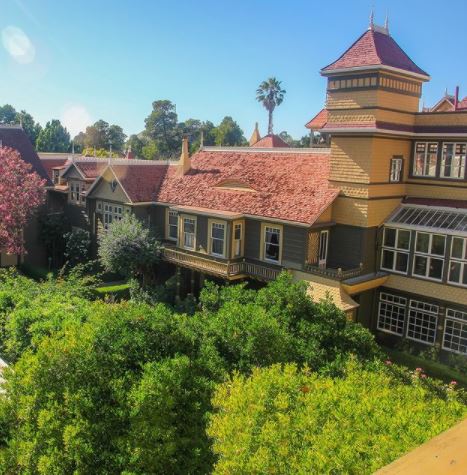
I beseech Thee, O Grand ADONAY, ELOIM, ARIEL, and JEHOVAM, to please be propitious unto me and endow the Winchester Mansion with the power and virtue of the rob of Jacob and Moses, and of the mighty Joshua! I also beseech Thee, O Grand of Jacob, of Moses, and of the mighty Joshua! I also beseech Thee, O Grand ADONAY, ELOIM, ARIEL, and JEHOVAM, to infuse into the Winchester Mansion the whole strength of Samson, the righteous wrath of EMANUEL, and the thunders of mighty Sariatnatmik, who will avenge the crimes of men at the Day of Judgment! By the grand ADONAY, ELOIM, ARIEL, and JEHOVAM. I bid thee join with and attract all substances which I desire, by the power of the sublime ABONAY, ELOIM, ARIEL, and JEHOVAM. I command thee, by the opposition of fire and water to separate all substances as they were separated on the day of the World’s creation. We praise you with honor and glory, sublime Adonay, as we are convinced that we are in possession of a most priceless Treasure of the light. By the mystery of this holy Winchester Mansion, I will clothe it with the armor of salvation in the strength of the Most High, ANCOR, AMICAR, AMIDES, THEODONIAS, ANITOR, that so the end which I desire may be effected, O ADONAL, through Thy strength, to whom be praised and glory for ever and ever. I invoke and conjure thee, O Spirit William Wirt Winchester, and, fortified with the power of the Supreme Majesty, I strongly command thee by BARALAMENSIS, BALDACHIENSIS, PAUMA-CHIE, APOLORESEDES, and the most potent princes GENIO, LIACHIDE, Ministers of the Tartarean Seat, chief princes of the seat of APOLOGIA in the ninth region; I invoke ADONAI, EL, ELOHIM, ELOHE, ZEBAOTH, ELION, ESCHERCE, JAH,TETRGRAMMATON, SADAI, do thou forthwith appear and show thyself unto me, here before this mansion, in fair and human shape, without any deformity or horror; do thou come forthwith, from whatever part of the World and make rational answers to my questions. Come fulfil my desires. #RandolphHarris 8 of 8


It will be seen with sufficient research, investigation and documentation of the state of witchcraft, occultism, and satanism as World movements, no exaggeration, overstatement or silly claims were necessary. The facts speak for themselves. It exists. It is growing. And certain aspects are indeed very, very real. https://winchestermysteryhouse.com/

And be sure to check out the Online Gift Store: https://shopwinchestermysteryhouse.com/

I Woke Up and Called this Morning, the Tone of Your Voice Was a Warning

Half our mistakes in life arise from feeling when we ought to think, and thinking when we ought to feel. Many people are content to allow authority figures to call the shots. If someone with an impressive array of credentials or degrees or a well-known name speaks out on a matter, of if a social institution or a book makes a statement on a matter, or if a social institution or a book makes a statement, the matter is “settled.” However, authority figures are subject to error, just as any of us are. If I do not keep my mind open to this possibility, then I may ignore my own feelings on a subject. Rationalization is a way of coping with a situation in which, for either practical or emotional reasons, or both, a battered woman is stuck. For some women, the situation and the beliefs that rationalize it, may continue for a lifetime. For others, changes may occur within the relationship, within individuals, or in available resources which serve as catalysts for redefining the violence. When battered women reject prior rationalizations and begin to view themselves as true victims of abuse, the victimization process begins. There are a variety of catalysts for redefining abuse; we discuss six: (1) a change in the level of violence; (2) a change in the resources; (3) a change in the relationship; (4) despair; (5) a change in the visibility of violence; and (6) external definitions of the relationship. The traditional ideal of many societies is to hold back strong or unpleasant emotions for the sake of others. However, feelings held in are likely to come out in some way—often an inappropriate one. So we are really not doing the other person much of a favor by trying to cover up feelings. #RandolphHarris 1 of 19

A change in the level of violence: the severity of abuse is an important factor in women’s decisions to leave violent situations. There is no significant correlation between the number of years spent cohabiting with an abuser and the severity of abuse. On the contrary: the longer women lived with an abuser, the more severe the violence they endured, since violence increased in severity over time. What doe seem to serve as a catalyst is a sudden change in the relative level of violence. Women who suddenly realize that battering may be fatal may reject rationalizations in order to save their lives. One woman who had been severely beaten by an alcoholic husband for many years explained her decision to leave on the basis of a direct threat to her life: “It was like a pendulum. He’s swing to the extremes both ways. He’d get drunk and beat me up, then he’d get sober and treat me like a queen. One day he put a gun to my head and pulled the trigger. It wasn’t loaded. But that’s when I decided I’d had it. I sued for separation of property. I knew what was coming again, so I got out. I didn’t want to. I still loved the guy, but I knew I had to for my own sanity.” A change in resources: Although some women rationalize cohabiting with an abuser by claiming they have no options, others begin reinterpreting violence when the resources necessary for escape become available. The emergence of safe homes or shelters since 1970 has produced a new resource for battered women, but they are not always safe places. While not completely adequate or satisfactory, the mere existence of a place to go alters the situation in which battering is experienced. #RandolphHarris 2 of 19

Public support of shelters is a statement to battered women that abuse need not be tolerated. Conversely, political trends which limit resources available to women, such as cutbacks in government funding to social programs, increase fears that life outside a violent marriage is economically impossible. One 25-year-old woman discussed this catalyst: “I stayed with him because I didn’t want my kids to have the same life I did. My parents were divorced, and I was always so ashamed of that. Yes, they’re all on their own now, so there’s no reason left to stay.” A change in the relationship: In the stages of a battering relationship, violent incidents are usually followed by periods of remorse and solicitude. Such phases deepen the emotional bonds, and make rejection of an abuser more difficult. However, as battering progresses, periods of remorse may shorten, or disappear, eliminating the basis for maintaining a positive outlook on the marriage. After a number of episodes of violence, a man may realize that this victim will not retaliate or escape, and thus feel no need to express remorse. Extended periods devoid of kindness or love may alter a woman’s feelings toward her partner so much so that she eventually begins to define herself as a victim of abuse. One woman recalled: “At first, you know, we used to have so much fun together. He was kind’ve, you know, a magnetic personality; he can be really charming. But it isn’t fun anymore. Since the baby came, it’s changed completely. He just wants me to stay home, while he goes out with his friends. He doesn’t even talk to me, most of the time….No, I don’t really love him anymore, not like I did. #RandolphHarris 3 of 19

Despair: Changes in the relationship may result in a loss of hope that “things will get better.” When hope is destroyed and replaced by despair, rationalizations of violence may give way to the recognition of victimization. Feelings of hopelessness or despair are the basis for some efforts to assist battered women, such as Al-Anon. The director of an Al-Anon organized shelter explained the concept of “hitting bottom”: Before the Al-Anon program can really be of benefit, a woman has to hit bottom. When you hit bottom, you realize that all of your own efforts to control the situation have failed; you feel helpless and lost and worthless and completely disenchanted with the World. Women cannot really be helped unless they are ready for it and want it. Some women come here when things get bad, but they are not really ready to be committed to Al-Anon. Things have not gotten bad enough for them, and they go right back. We see this all the time. A change in the visibility of violence: Creating a web of rationalizations to overlook violence is accomplished more easily if no intruders are present to question their validity. Since most violence between couples occurs in private, there are seldom conflicting interpretations of the event from outsiders. Only 7 percent of the respondents in our study who discussed spatial location of violence indicted events which took place outside the home, but all reported incidents within the home. Other report similar findings. If violence does occur in the presence of others, it may trigger a reinterpretation process. Battering in private is degrading, but battering in public is humiliating, for it is a statement of subordination and powerlessness. Having others witness abuse may create intolerable feeling of shame which undermine prior rationalizations. (And the thing about self-defense, the person who throws the first blow is usually the offender, but how do you prove it?) #RandolphHarris 4 of 19

“He never hit me in public before—it was always at home. But the Saturday I got back [returned to husband from shelter], we went Christmas shopping and he slapped me in the store because of some stupid joke I made. People saw it, I know, I felt so stupid, like, they must all think what a jerk I am, what a sick couple, and I thought, ‘God, I must be crazy to let him do this.’ Then one time at a party on a yacht, he jumped on me and my dad just watched and let him beat me. Then another time, he beat me and dragged me down the hallway by my hair, saying he was going to pull my wig off, but it was my real hair in a ponytail. I was screaming for help, but no one came. I thought he was going to pull all of my hair out.” External definitions of the relationship: A change in visibility is usually accomplished by the interjection of external definitions of abuse. External definitions vary depending on their source and the situation; they either reinforce or undermine rationalizations. Battered women who request help frequently find others—and especially officials—do not believe their story or are unsympathetic. Experimental research supports these reports. Observers usually fail to respond when a woman is attacked by a man, and justify nonintervention on the grounds that they assume the victim and offender were married. One young woman discussed how lack of support from her family left her without hope: “It wouldn’t be so bad if my own family gave a damn about me…Yeah, they know I’m here, and they don’t care. They didn’t care about me when I was a kid, so why should they care now? I got raped and beat as a kid, and now I get beat as an adult. Life is a big joke.” Clearly, such responses from family members contribute to the belief among battered women that there are no alternatives and that they just tolerate the abuse. However, when outsiders respond with unqualified support of the victim and condemnation of violent men, their definitions can be potent catalyst toward victimization. #RandolphHarris 5 of 19

Friends and relatives who show genuine concern for a woman’s well-being may initiate an awareness of danger which contradicts previous rationalizations. “My mother-in-law knew what was going on, but she wouldn’t it…I said, ‘Mom, what do you think these bruises are?’ and she said ‘Well, some people just bruise easy. I do it al the time, bumping into things.’ …And he just denied it, pretended like nothing happened, and if I’d said I wanted to talk about it, he’d say, ‘life goes on, you can’t just dwell on things.’…But this time, my neighbor knew what happened, she saw it, and when he denied it, she said, ‘I can’t believe it! You know that’s not true!’ …and I was so happy that finally, somebody else saw what was goin’ on, and I just told him then tht this time I wasn’t gonna’ come home! You can call the police, file police reports and go to the doctor with obvious signs of abuse, and sometimes the abuser never leaves. Even when the police say that they have handled the situation, he would just be quietly waiting in another room to beat me again for reporting him. One time him and one of the girls he was cheating with jumped me and he slammed my head into the wall and busted my lip. They bragged about. One night, he was hanging out with my dad and I would not come pick him up because he was drunk and I did not want him to beat me, and he my dad let him drive his car to my mother’s house, and when I opened the door, he started beating me and ripped my new silk blouse. My baby brother and his friend had to pull him off of me and he left. Victim’s f domestic violence should qualify as disabled because we truly are. ” The song Never No More by Aaliyah was meant to be a theme song for women not to put up with domestic violence anymore. Unfortunately, she was killed in a plane crash before they got a chance to launch the campaign. Shelters for battered women serve not only as material resources, but as source of external definitions which contribute to the victimization process. They offer refuge from a violent situation in which a woman may contemplate her circumstances and what she wants to do bout them. Within a shelter, women meet counselors and other battered women who are familiar with rationalizations of violence and the reluctance to give up commitment to a spouse. In counseling sessions, and informal conversations with other residents, women hear horror stories from others who have already defined themselves as victims. They are supported for expressing anger and rejecting responsibility for the abuse. #RandolphHarris 6 of 19

The goal of many shelters is to overcome feelings of guilt and inadequacy so that women can make choices in their best interest. In this atmosphere, violent incidents are reexamined and redefined as assaults in which the woman was victimized. The relevance of these catalysts to a woman’ interpretation of violence vary with her own situation and personality. The process of rejecting rationalizations and becoming a victim is ambiguous, confusing, and emotional. Prison is not a mere physical horror. It is using a pickaxe to no purpose that makes a prison; the horror resides in the failure to enlist all those who swing the pick in the community of mankind. True love is not blind. A person who loves you wants to see you doing well, not be blind to the abuse he or she is inflicting. This special form of deception is pointedly said to be in connection with spiritual rather than Worldly things. This surely shows that people of God, at the time of the end, will be expecting the coming of the Lord, and we can infer that they will be keenly awake to all movements from the supernatural World, in such a measure that deceiving spirits will be able to take advantage of it and anticipate the Lord’s appearing by “false Christs” and false signs and wonders. They mix their counterfeits with the true manifestations of the Spirit of God. The Lord says that men will be deceived (1) concerning Christ and His Parousia (appearing); (2) concerning prophecy—teachings regarding the future, from the spiritual World through inspired messengers: and (3) concerning the giving of proofs that the “teachings” are truly of God, by “signs” and “wonders” so Godlike as to be indistinguishable from the true even by those described as “the elect”—who will need to possess some other test than the judging by appearances of a “sign” being from God if they are to be able to discern the false from the true. The Apostles Paul’ words to Timothy, containing the special prophecy given to him by the Holy Spirit for the Church of Christ in the last days of the dispensation, exactly coincide with the words of the Lord recorded by Matthew. These two letters of Paul to Timothy are the last epistles that he wrote before his departure to be with Christ. #RandolphHarris 7 of 19

Both were written in prison, and Paul’s prison was to him what Patmos was to John—a time when he was “in the Spirit” (Rev. 1.10) and shown things to come. Paul was giving his last directions to Timothy for the ordering of the Church of God right on to the end of her time on Earth—giving rules to guide not only Timothy but all God’s servants “in dealing with God’s household.” In the midst of all these detailed instructions, his keen seer’s vision looks on to the “later times”; and by express command of the Spirit of God he depict in a few brief sentences the peril of the Church in those times, in the same way that the Spirit of God gave the prophets of the Old Testament some pregnant prophecy only to be fully understood after the events had come to pass. The apostle said: “The Spirit saith expressly, that in later times some shall fall away from the faith, giving heed to seducing spirits and doctrines of demons, through the hypocrisy of men that speak lies, seared in their own conscience as with a hot iron…” (1 Tim. 4;1-2). I have wondered whether anyone has considered or indeed is already involved in making the experience of loneliness, especially for prisoners in solitary confinement for long periods, a meaningful experience of personal inner growth, enlargement of mental and spiritual horizons, and the discovery that limitations such as cement wall, iron bars, hostile “keepers,” and isolation can indeed be the challenge to discover the richness of the World within? If no one in your knowledge has as yet considered this kind of contribution may I suggest it as a most terribly needed one? It is necessary for you to understand that the stopping of the expression of negative emotions and the struggle with negative emotions themselves are two quite different practices. #RandolphHarris 8 of 19

Trying to stop the expression comes first. You can do nothing about negative emotions and the struggle with negative emotions are two quite different practices. Trying to stop the expression comes first. You can do nothing about negative emotions themselves until you have learned to stop the expression of them. When you have acquired a certain control over the expression of negative emotions, you can begin to study negative emotions in themselves. You can make an effort to classify your negative emotions. You can find which negative emotions you have chiefly; why they come, what brings them, and so on. You must understand that your only control over emotions is through your mind, but the control does not come immediately. If you think rightly for six months, then negative emotions will be affected because they are based on wrong thinking. If you begin to think rightly today, negative emotions will not be changed tomorrow; but negative emotions may be changed in six months’ time, if you start to think rightly now. The ground has to be prepared beforehand. If you can learn to create a right attitude toward your irritability, bad temper, suspicion or whatever unpleasant emotion you experience most frequently, then—after some time—that attitude will help you to stop the negative emotion at the beginning. Once it has been allowed to start you cannot stop it. Once you begin to express it, you are in its power. The struggle must begin in your mind, and you must find your way of thinking on a definite subject. You cannot control your temper when it has already begun to appear. It is already too late; it has already jumped out. You can control such things as manifestations of temper, for instance only in one way. #RandolphHarris 9 of 19

Suppose you have to meet a certain man, and suppose he irritates you. Whenever you meet him your temper is liable to show itself. You do not like that but how can you stop it? You must begin with the study of your thinking. What you think about this man—not what do you feel when you are irritated, but what do you think about him at quiet moments? You may find that in your mind you argue with him; you prove to him that he is wrong; you tell him all his mistakes; you find that, generally, he behaves wrongly towards you. This is where you are wrong. You must learn to think rightly; you must find the way to think rightly. Then, if you do, it will happen like this: although emotion I much quicker than thought, emotion is a temporary thing, but thought can be made continuous; so whenever emotion jumps out, it hits against this continuous thought and cannot go on and manifest itself. So you can struggle with the expression of negative emotions, as in this example, only by creating continuous right thinking. Contrary to an assumption that some sociologist make, there seems to be little doubt that improper behavior in one situation can sometimes tell us a great deal about the offender’s reception in other situations. In any given society, different situations will be the scene of many of the same normative assumptions regarding conduct and of the same situational rulings. An individual who is remiss in one way in one situation, then, can be remiss in this same way whenever one shows one’s face to man. Thus, a person with senile deterioration who drools spoil his participation in all his situations in the same way and for the same reason. A person who is hard of hearing or who is near-blind will not be able to maintain the communication niceties that have here been considered at length; one will be forced to be all thumbs in all one’s situations. #RandolphHarris 10 of 19

Thus, improper conduct in one situation can bespeak a general disenfranchisement in face-to-face interaction. Such conduct need not arise from a psychopathological condition; presumably it can, however, give rise to one through the response the individual may make to his excommunication. Some offenses, then, tell us about the price the offender must pay for one’s offensiveness, and the price one may pay for one’s price. Granting the occurrence of widely relevant offensiveness, the general procedure in this study has been to try to learn what this offensiveness costs the gathering in which it occurs, rather than what it means to and about the offender in the first place. When an individual intentionally or unintentionally conducts oneself in a way that others consider situationally improper, and shows thereby that one is either alienated from, or an alien to, the gathering, what other information can this provide them about one’s current conditions—apart from what one’s impropriety tells them about one’s likely fate? The meaning that offended personas impute to an offensive act is partly determined by whether they feel the act was intentional or unintentional. However, the complexity and ambiguity of this dichotomy, and the shifting but intimate relevance of its bearing, prevent any simple discussion of the actual or imputed meaning of situational offenses. In actual use, the dichotomy does not so much refer to a physiological factor of volition or control accountable by reference to the distinction between stripped and smooth muscles, the cerebrospinal and the autonomic nervous systems, but rather to the kind of responsibility of the act. The undesired acts in themselves need not be characteristically voluntary or involuntary from the physiological point of view. For example, to fail to appear at a social party because of one’s disapproval of the host is considered to be an intentional act; the same failure due to the sudden death of a kinsman may be considered aa fully warranted, excusable reason for staying away. In the first case we speak of the individual staying away voluntarily, in the second case, involuntarily. #RandolphHarris 11 of 19

Of any situationally offensive act and of any offender the following questions can be asked, taking the point of view of the others present: Does the actor have the capacity and training to appreciate the meaning of one’s offense, and if so, does he in fact appreciate its meaning? Is the act within the physical control of the actor, and if so, would one be willing to change one’s conduct if one were apprised of its meaning and given the opportunity to do so? Does the actor have extenuating reasons, external to the participants in the situation, for committing the offense? These factors, in various, combinations, provide so many concrete possibilities that little implication can be drawn from the mere presence or absence of one sense or another of intentionality. Living in the city or in the countryside are considered equally attractive. The choice is based solely on financial considerations—they will go where they will earn the most money. Like the commuters between Berkeley and San Francisco, the decision is made selfishly. For instance, dentists want to maximize their individual payoffs. Since there are many rural areas without enough dentists, this suggests that there is room for an increased number of dentists to practice in rural areas without causing any congestion. Thus rural dentistry is not quite as lucrative as having a large city practice, but it is a more certain route to an above-average income. Both the incomes and the value to society of rural dentists stays roughly constant as their numbers grow. Being a city practitioner is more kin to driving over the Oakland Bay Bridge—it is wonderful when you are alone and not so great when the city gets too crowded. The first dentist in an area can be extremely valuable, and maintain a very large practice. #RandolphHarris 12 of 19

However, with too many dentists around, there is the potential for congestion and price competition. If the number increases too far, city dentists will be competing for the same patient pool, and their talents will be underutilized. If the population of city dentists grows even further, they may end up earning less than their rural counterparts. In short, as the number of city practices increase, the value of the marginal service that they perform falls, as does their income. As in the case of the commuters, the equilibrium does not maximize the combined income of dentists. But society cares about the consumers of dentistry as well as the practitioners. The reason is that there are two side effect created when one more person decided to be a city dentist. The additional city dentist lowers all other dentists’ incomes, imposing a cost on the existing city dentists. However, this reduction in price is a benefit to consumers. The two sides effects exactly cancel each other out. The difference between this story and our commuting example from the past is that no one benefited from the extra commuting time when the Oakland Bay Bridge became congested. When the side effect is a change in price (or income), then the purchasers benefit at the producers’ cost. There is zero net effect. From society’s viewpoint, a dentist should not worry about lowering colleagues’ incomes. Each dentist should pursue the highest-paying practice. As each person makes a selfish choice, we are invisibly led to the right distribution of dentist between city and rural areas. And, the two careers will have equal incomes. Or, to the extent that living in a city is worth more than living in a rural area, this differential will be reflected in income differences. Of course, the American Dental Association may look at this differently. It may place more weight on the loss to city dentists’ incomes than on the saving consumer. #RandolphHarris 13 of 19

From the dental profession’s perspective there is indeed a misallocation, with too many dentists practicing in the city. If more dentist took rural practices, then the potential advantages of a city practice would not be “wasted” by competition and congestion. Taken as a whole, the income of dentists would rise if it were possible to keep the number of city dentists below the free market level. Although dentist cannot place a toll on those who want to practice in the city, it is in the profession’s self-interest to create a fund that subsidizes dental students who commit to establish a rural practice. The human race is approaching the great historical transition to thorough, inexpensive control of the structure of matter, with all that implies for medicine, the environment, and our way of life. What happens before and during that transition will shape its direction, and with it the future. Is worth getting excited about? Look at some of the concerns that bring people together for action: Poverty, weapons systems, deforestation, toxic waste, social security, housing, global warming, deadly viruses, Alzheimers disease, heart disease, lung disease, cancer, endangered species, freedom, jobs, nuclear power, life extension, space development, acid rain. Each of these issues mobilizes great effort. Each will be utterly transformed by nanotechnology and its applications. For many of these issues, nanotechnology offers tools that can be used to achieve what people have been striving to accomplish. For many of these same issues, the abuse of nanotechnology could obliterate everything that has been achieved. #RandolphHarris 14 of 19

A good companion to the precept “Think globally, act locally” is “Think of the future, act in the present.” If everyone were to abandon short-term problems and today’s popular causes, the results would be disastrous. However, there is no danger of that. The more likely danger is the opposite. The World is heading straight for a disruptive transition with everything at stake, yet 99.9 percent of human effort and attention is going into either short-term concerns or long-term strategies based on a fantasy future of lumbering twenty first-century technology. What is to be done? For people more concerned with feeling good than with doing good, the answer is simple: Go for the warm feeling that comes from adding one more bit of support to an already-popular cause. The gratification is immediate, even if the contribution is small. For people more concerned with doing good—who can feel good only if they live up to their potential—the answer is less simple: To do the most good, find an important cause that is not already buoyed up by a cheering multitude, a project where one person’s contribution almost automatically makes a big difference. There is, today, an obvious choice for where to look. The potential benefits and drawbacks of nanotechnology generate a thousand areas for research, discussion, education, entrepreneuring, lobbying, development, regulation, and the rest—for preparation and for action. A person’s contributions can range from career commitment to verbal support. Both can make a difference in where the World ends up. #RandolphHarris 15 of 19

Benjamin Day was a twenty-three-year-old printer with wild ideas when he changed the history of what we now call the media. This was 1833 and New York had grown to a population of 218,000. However, the largest daily newspaper in the city claimed only 4,500 subscribers. At a time when the average urban worker in American earned 75 cents a day, a New York newspaper cost 6 cents, and not many people could afford them. The papers were printed on handpresses capable of turning out no more than a few hundred copies an hour. Day took a crazy chance. On September 3, 1833, he launched the New York Sun and sold it for only one penny a copy. Mr. Day unleashed a horde of newsboys into the streets to sell his paper—an innovation at the time. For $4 a week he hired another printer to go to the courthouse and cover police cases. It was one of the earliest uses of a “reporter.” Within four months the Sun had the biggest readership in the city. In 1835 he bought the latest technology—a steam driven press—and the Sun reached the unheard-of circulation of 20,000 daily. Day had invented the popular press, crime stories and all. His innovations were paralleled at about the same time by other “wild men”—Henry Hetherington with his Twopenny Dispatch in England and Emile de Girardin with La Presse in France. The down-scale “penny paper”—called the “pauper press” in England—was more than just a commercial affair. It had lasting political effects. Along with the early trade unions and the beginnings of mass education, it helped bring the less affluent classes into the political life of nations. #RandolphHarris 16 of 19

By the 1870s something called “opinion” had to be take into account by politicians of every stripe. “There is, now,” wrote one French thinker, “no European government which does not reckon with opinion, which does not feel obliged to give account of its acts and to show how closely they conform to the national interest, or to put forward the interest of the people as the justification for any increase in its prerogatives.” A century and a half after Benjamin Day, another wild, feral man, feeling as guilty as a criminal, came up with an idea sure to bankrupt him. Tall, gusty, impatient, and brilliant Ted Turner had inherited a billboard company when his father died from death by suicide. Mr. Turner built it, acquired radio and television stations, as was wondering what to do next when he noticed something odd. Cable television stations were springing up around the United States of America, but they were starving for programs and advertising. Meanwhile, up in the Heavens were things called “satellites.” Mr. Turner put two and two together and turned it into five. He beamed the programming from his Atlanta station up to a satellite and down to the program-hungry cable stations. At the same time, he offered a “one-buy” national market for advertisers who wouldn’t trouble to purchase time on scores of small individual cable systems. His Atlanta “superstation” because the cornerstone of a growing empire. On June 1, 1980, Mr. Turner took the next, even loonier step. He formed what critics labeled the “Chicken Noodle Network”—for CNN, or Cable News Network. CNN became the laughingstock of every media pundit from the canyons of Manhattan to the studies in Los Angeles. #RandolphHarris 17 of 19

Wall Street was sure CNN would collapse, probably taking Mr. Turner’s other businesses down with it. No one had ever even tried to create a twenty-four-hour news network. CNN today is the opiate of the mass. Perhaps, the most influential broadcast news source in the United States of America. TV monitors are constantly tuned to CNN in the White House, in the Pentagon, in foreign embassies, as well as in millions of homes all over America. However, Mr. Turner’s wild dreams went far beyond the United States of America, and today CNN operates in over 100 countries, making it the most global of all television networks, mesmerizing the Middle East skeiks, European journalists, and Latin America politicians with its extended firsthand coverage of such events as Egyptian President Anwar Sadat, the antics of President Biden as he seems dazed and confused, or the conflict in Ukraine. CNN is carried over the air, or over cable, into hotel rooms, offices, homes, even staterooms on the Queen Elizabeth II. Although many people believe FOXNews is more balanced and convers the invasion at the southern border, which America tries to suppress. One of Mr. Turner’s little-known prize possessions is a videotape of his private meeting with Cuba’ Fidel Castro. In the course of the visit, Mr. Castro mentions that he, too, routinely watches CNN for the big news. Mr. Turner, never shy about promoting his companies, asks Mr. Castro if he would be willing to say as much on camera for a commercial. Mr. Castro puffs on his cigar and says, in effect, why not? The commercial has never run on air, but Mr. Turner hauls it out to show his visiting friends now and then. #RandolphHarris 18 of 19

Mr. Turner is one of a kind. Handsome, raucous, funny, erratic, he owns a buffalo ranch, the Atlanta Braves baseball team, and MGM’s library of old movies. A fierce exemplar of free enterprise, he was also a peace activist long before he and actress Jane Fonda began a highly-publicized romance. He launched the “Goodwill Games” in Moscow at a time when it took political, as well as financial, courage to do so. His networks also run a heavy schedule of pro-ecology programming. Today, Mr. Turner is by far the most visionary of a dozen or so hard-driving media barons who are revolutionizing the media even more deeply than Benjamin Day—and whose collective efforts will, over the long run, shift power in many countries. What people do depends on what they believe. The path to a World prepared to handle nanotechnology begins with the recognition that nanotechnology is a real prospect. What would be the response to a new idea as broad as nanotechnology, if it were true? Since it does not fall into any existing technical specialty, it would not be anyone’s job to provide an official, authoritative evaluation. Advanced molecular manufacturing cannot be worked on in the lab today, so it would not matter to scientists playing the standard careers-and-funding game. Still, some scientists and engineers would become interested, thinking about it, and lend support. Science News, covering the first major conference on the subject, would announce that “Sooner or later, the Age of Nanotechnology will arrive.” This is, in fact, what happened. However, what is the idea were false? Some curious scientists or engineer would soon point out a fatal error in the idea. Since the sweeping implications of nanotechnology make many people uncomfortable, a good counterargument would spread fast, and would soon be on the lips of everyone who would prefer to dismiss the whole thing. No such counterargument has been heard. The most likely reason is that nanotechnology is a sound idea. Reactions has been changing from “That’s ridiculous” to “That’s obvious.” The basic recognition of the issue is almost in place. When nanotechnology emerges from the World of ideas to the World of physical reality, we will need to be prepared. However, what does this require? To understand what needs to be done today, it is best to begin with the long term and then work back to the present. #RandolphHarris 19 of 19

MAGNOLIA STATION AT CRESLEIGH RANCH
Rancho Cordova, CA | low $600,000.00s
Now Selling!

Magnolia Station at Cresleigh Ranch is coming soon! Located at the corner of Rancho Cordova Parkway and Douglas Road, residents of Cresleigh Ranch will benefit from a brand new neighborhood with convenient access to the new Raley’s Shopping Center, Sunrise Boulevard, and much more!

Magnolia Station will include 81 homesites and five distinct plans ranging from 2,200 – 3,700 square feet; including three single story plans! Each plan has been thoughtfully designed to include features such as: Generations Suite, Optional Offices/Dens, Extended Great Rooms, and more! https://cresleigh.com/magnolia-station/


Voices Echoing in the Silent Mansion

After the service, the mourners circled the funeral parlor’ beige reception hall, nibbling on refreshments and offering muted condolences. Sarah L. Winchester perched on the edge of a stiff floral sofa, nibbling at her fricassee of parsnips. With the two housemaids, Belinda and Elisabet comforting her. Mrs. Winchester felt alone and exposed. She sensed curious eyes on her, but they quickly shifted their gazes whenever they caught her looking. After a while, Mrs. Winchester slipped out a side door and into the cemetery where the sun still shone relentlessly on the headstones. The rows were straight and the grass was freshly mowed, yet the headstones stuck out at odd angles and few trees poked their way up around the perimeter, throwing welcome shade on the hot afternoon. She picked an aisle at random and wandered down it, reding the names Freja, Gustava, Jannike, Maj. She stopped at a small gravestone, calculating the age of the deceased. James Frazier Reed November 14, 1800 – July 24, 1874. Now you shall sing among the angels, it read. Her hands went clammy: James Reed must have been one of her acquaintances. Mrs. Winchester made her way down the row, and later returned to her estate. Of course, a gnawing ache sent her prowling the great American West, the voice in her dreams that had whispered build a house for the spirits. The long carriage ride through the green fields never prepared anyone for the impressive architectural reflection of the psyche of Mrs. Winchester. However, it is easy to imagine how the combined grief of losing both a child and a spouse could be very crippling. #RandolphHarris 1 of 8

The fascinating story of the Winchester Mystery House has its roots in the personal tragedies suffered by Mrs. Winchester and in the legacy of the Winchester rifle, “The Gun that Won the West.” Drenched in sunlight and cascading along acres of gardens to hold the panorama of the enormous mansion, carriages rocked and struggled to catch a glimpse of not only the estate, but Mrs. Winchester as well. It was after the Santa Clara Valley was brough to life by the warmth that hung fragrant in the air of the Winchester Mansion, carriage whipping to and fro, carpenters sawing and nailing, vendors crying the finest drapes, fabrics and furniture, and the coming of the most beautiful led glass and stained glass windows known to man. This was Eden. The mansion was like a god. The profusion of towers, fancy turrets, glamorous interior, and intriguing history was the stuff dreams are made of. It was a place of drama, art, plush gardens and architecture. Virtually every piece of literature someone could obtain about the estate and Mrs. Winchester considered there to be “real occult” activity and satanic codes hidden within its walls. Sometime during construction, a wounded carpenter crawled into the barn, and lay coiled there, perhaps to escape the heat, or to get some rest, or to get away from the constant moaning and crying the house itself would make. Escape from it he did, for later a lantern landed directly upon his head, splitting its human contents into tiny, unrecognizable chunks. It was as if, fate-drawn, he forced himself to crawl to hi own doom. #RandolphHarris 2 of 8

Often, at night, disembodied limbs pitched out the low windows to thud amongst the glorious statues and fountains. Although people thought Mrs. Winchester fired staff quit frequently, others believed that the mansion or demons inside of it was consuming people and leaving their unidentified remains outside. However, it was never enough to identify the victim, if there actually was one. According to one Ame Fisk, a farmhand, “During the night of the 3rd of June, as I approached the massive house—I stepped upon something that felt so peculiar that I stopped and picked it up. It proved to be an arm. Happening to look at the west window I saw an outline of a pyramid of some sort, which on examination I found was a pile of hands, arms, feet, and legs which must have belonged to souls killed by the Winchester rifles.” At night, the hauntings taking place within the mansion made it a descent into an Inferno. Passers-by heard ghostly music, screams, moans, and saw blood, flesh, and abdominal cavities lying on the ground, levitating, vanishing, and reappearing, and in the flickering, ghostly candlelight, they could see ghouls in the windows hurried, cutting and sawing. Yet, with all that soul-and body-rending activity, in the morning it was as if it was just all a bad dream, witnessed by many. Or could it be the spiritual essence of the hundreds of men the were killed on the battlefield? #RandolphHarris 3 of 8

One of the housemaids lived in the Winchester mansion, and spoke of hearing, at odd hour of the night and quite suddenly, the cries of a baby. One time she even started going up the stairs to quiet the poor darling, responding to her maternal instinct, forgetting that Mrs. Winchester had no living children. It is a sound which you cannot really identify right away—an odd squealing, taken at first to be “the pipes” or “the house settling.” It was only after trying to recall the sound a few seconds after it had died away that she realized, it was indeed a baby’s cry. Later that evening, the housemaid Synnove was alone in the front parlor. Mrs. Winchester was on the third-floor reading. Synnove was on the sofa knitting with her back to the stairs. It was a particularly quiet night. She heard Mrs. Winchester slowly descend the stairs being her and stop on the landing. She stood there, Synnove thought, for a good moment. Finally, to find out what happened, she turned around to see if Mrs. Winchester needed anything. But no one was there. Assuming she had turned and gone back up the stairs to her room without being heard, Synnove got up and walked to the third-floor, knocked on her closed door, and stuck her head into the room. “Will you be needing anything this evening, my lady?” She asked. “No.” Mrs. Winchester replied. “Why do you ask?” “You mean you did not just come down the stairs and stop on the landing?” “No. I have been sitting up here all night.” Some believe that there may be small leaks between the Worlds, a psychic bleed, perhaps of energies inside of the mansion. #RandolphHarris 4 of 8

The next morning, when Mrs. Winchester awoke, it was long past her usual hour, and she sat up in bed surprised and vexed at having overslept herself. She always liked to be down for breakfast to hear the birds singing; but a glance at the clock made it clear that it was nearly noon. Mrs. Winchester got up and said to the housemaid, “Draw my bath, please.” After she bathed, she dashed through her dressing, and caught herself singing at her image in the glass as she sat brushing her hair. It made her feel young again. The other woman vanished to a speck on the horizon, as this one, who ruled the foreground, smiled back at the reflection of her lips and eyes. Mrs. Winchester thought she had now faced the phantom and dispelled it. “Courage—that is the secret! If only people who are in love were not always so afraid of risking their happiness by looking it in the eyes.” As she brushed back a dark abundant hair it waved. Certainly she was looking very pretty. The afternoon danced along like a cockleshell on a bright sea. She ordered a particularly good dinner, had her trunks brought down from the attic, and consulted with the housemaid about getting out summer clothes. She felt the faint shiver of apprehension. Walking across the room, sat down again before her mirror. What a different face she saw! The smile on her pale lips seemed to mock the rosy vision of the other Mrs. Winchester. However, gradually, her color crept back. #RandolphHarris 5 of 8

As the apparition hovered over her he said, “Oh, virgin, underserving of those chains, but rather of such as bind fond lovers together, tell me, I beseech you, your name, and the name of your country, and why you are thus bound.” At first she was silent from modesty, and, if she could, would have hid her face with her hands; but when he repeated his questions, for fear she might be thought guilty of some fault which she dared not tell, she disclosed her name and that of her country, and her mother’s pride of beauty. Before she had done speaking, a sound was heard. At least the entrance of the housemaid who came to draw the curtains roused Mrs. Winchester from her labors, and she saw to her surprise that the clock marked five. The sun was still streaming through the some of the led glass doors of the bedroom. She went down into one of the dining rooms to have dinner. Her seat near the end of the table was facing the entryway. During dinner, she looked toward the entry and saw an elderly lady dressed in black coat and hat carrying a large bad. She assumed it was a guest of one of the housemaids or her way out or possibly someone they had hired to cook dinner, so Mrs. Winchester called Synnove over to ask her who the lady was. Synnove asked, “What lady?” Mrs. Winchester said, “The lady in the hall. She looks like she is ready to leave.” But Mrs. Winchester, there is no one in the hall,” Synnove replied. Only the two of them remained in the house. Later in the evening, Mrs. Winchester went to the west wing. She found the room in her library to be very cold. One of the carpenters had committed suicide in the library, and his spirit was still there, and the room would never warm up. #RandolphHarris 6 of 8

He would come down night after night crying that the lady in the white gown kept chasing him out of the room. One of the housemaids had gotten lost somewhere in the mansion and was found dead in that room. Mrs. Winchester decided to turn it into a library, and it must have upset the ghost of the housemaid, driving him to shoot himself. Mrs. Winchester was very aware of the spirit. Once in a while there is a knock on her bedroom door, and a few times the water turns on in the tub until Mrs. Winchester would get up to walk in there, and then it would turn off. However, it did in fact appear that someone had drawn a bath. There would be water in the tub and the faucet would be wet. The bathroom door would then squeak and slam closed. On another occasion, after Ms. Daisy moved into the mansion, she slept in one of the upstairs bedrooms (the one from which they used to hear footsteps). One morning she came down to breakfast and told Mrs. Winchester of an overnight visitor. “I woke up, and carefully went and drew the curtain aside. The moon was high, gibbous, its light bathing the yard. I saw a gleaming orb, and reeled back from the window in horror. When I turned towards my door, I saw a woman all in blude, and after studying me for a while, she turned away and disappeared…just vanished into thin air!” The family was terrorized by pounding footsteps in the night, moving shadows, and bizarre happenings, such as the curtains billowing out at odd times even with the windows closed. #RandolphHarris 7 of 8

One night the poundings in the house and the boot-like footfalls grew so menacing that Mrs. Winchester believed that the mansion was being invaded. We are dealing with the unknown—adventures in a new country. I conjure thee spirits of the Winchester Mansion, by God the Father Almighty; by the virtue of Heaven and by all the stars which rule; by the virtue of the four elements; by that of all stones, all planets, and all animals whatsoever; by the virtue of hailstorms and winds; to herein receive such virtue that we may by thee the perfect issue of the secrets of this mansion, please cross all space and time. I conjure thee, O Souls of the Winchester Mansion, by Foras, the Mighty President, and your 29 Legions of Spirits to give us understanding, make us invisible, and live long, and eloquent. Allow us to discover Treasures and recover things Lost. I conjure thee Souls of the Winchester Mansion, by the strong and powerful Great King Asmoday—the Thirty-second Spirit, and his 72 Legion of Spirits Inferior, to reveal the secrets of the Winchester Mansion and maketh us Invincible. Please show us where the Treasure lies, and guardeth it. I conjure thee great Demons of the Winchester mansion by Marchoias—the Thirty-fifth Spirit, and his 30 Legions of Spirits to reveal yourselves night and day, guard and protect the mansion and bring it great prosperity. I conjure thee Archangels of the Winchester Mansion, by Raum—the Fortieth Spirit, and thou 30 Legions of Spirits to preform great miracles in the Winchester Mansion and in the sky. Cause Love between Friends and Foes. I conjure Thee Malphas—the Thirty-ninth Spirit, and your 40 Legions of Spirits to continue to build Houses and High Towers on the Winchester Estate and being Knowledge of Enemies’ Desires and Thoughts, and that which they have done. By thou my fortresses and defence against all enemies, visible and invisible, in every magical work. Do thou rule in all my affairs and prevail in those things which oppose me. Amen. #RandolphHarris 8 of 8
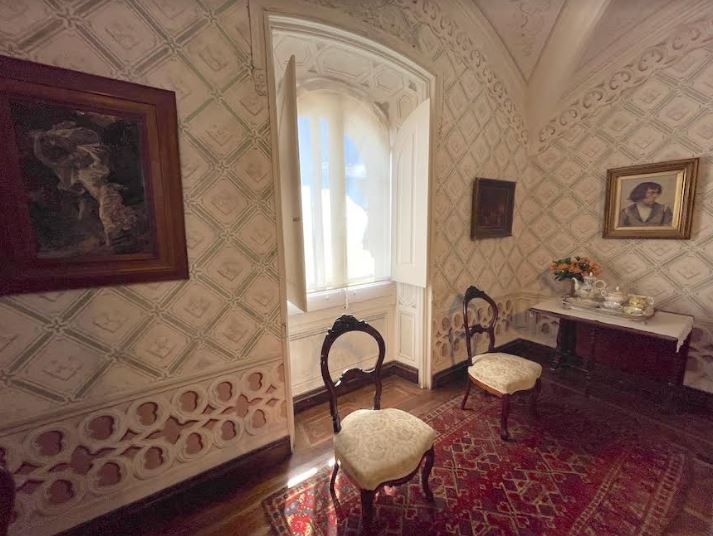
Demons have a solid place in popular culture and in the Victorian era. They often appear alongside witches and vampires. However, very few people actually believe in the existence of witches and vampires. Why then, do many people still believe in demons? Many religions teach that demons are real and must be cast out. Faithful religious followers believe thee teachings. However, skeptics see no evidence for demons. What do you believe? Visit the Winchester Mystery House, where the regal gardens enhance the beauty of the mansion. After the tour is over, people are brought back to reality. https://winchestermysteryhouse.com/

However, everyone can take something home with them by purchasing a gift in the Gift Shop on the Estate or at the Online Store. https://shopwinchestermysteryhouse.com/

Lie to Me, I Promise I’ll Believe, but Please Don’t Leave
It seems that some people have trouble with feeling joy. Many individuals are convinced that life must be painful. They resent any good feelings in themselves or others. Although the existence of violence against women is now publicly acknowledged, the experience of being battered is poorly understood. Research aimed at discovering the incidence and related social variables has been based on an operational definition of battering which focuses on the violent act. The Conflict Tactic Scales (CTS) developed by Straus, for example, is based on the techniques used to resolve family conflicts. The Violence Scale of the CTS ranks eight violent behaviors, ranging in severity from throwing something at the other person to using a knife or gun. The scale is not designed to explore the context of violent actions, or their meanings for the victim or perpetrator. With notable exceptions, the bulk of sociological research on battered women has focused on quantifiable variables. Interviews with battered women make it apparent that the experience of violence inflicted by a husband or lover is shocking and confusing. Battering is rarely perceived as an unambiguous assault demanding immediate action to ensure future safety. In fact, battered women often remain in violent relationships for years. Why do women stay in abusive relationships? Some observers answer facilely that they must like it. The masochism thesis was the predominant response of psychiatrists writing about battering in the 1960s. More balanced studies of the problem have revealed the difficulties of disentangling oneself from a violent relationship. #RandolphHarris 1 of 23

These studies point to the social and cultural expectations of women and their status within the nuclear family as reasons for the reluctance of battered women to flee the relationship. The socialization of women emphasizes the primary value of being a good wife and mother, at the expense of personal achievement in other sphere of life. The patriarchal ordering of society assigns a secondary status to women, and provides men with ultimate authority, both within and outside the family unit. Economic conditions contribute to the dependency of women on men; as of 2023 U.S.A. women tend to earn 20 percent less than their male counterparts, which is better than in 1978 when women earn 42 percent less than what men earned. The position of women in U.S.A. society makes it extremely difficult for them to reject the authority of men and develop independent lives free of marital violence. Marital and cultural conditions are the background in which personal interpretations of event are developed. Women who depend on their husbands for practical support also depend on them as sources of self-esteem, emotional support, and continuity. However, sometimes battered wives are not able to escape abusive relationships because they are supporting their husbands and cannot afford to support their minor children if they were to leave the relationship. And often, adult families’ members often little if any moral support, and certainly not any financial support. Some members of the family even view the woman as a deviant to make it easier to rationalize the abuse. #RandolphHarris 2 of 23

The term battered woman is used to describe women who are battered repeatedly by men with who they live as lovers. Marriage is not a prerequisite for being a battered woman. Many of the women who enter shelters are living with, but often times not legally married, to the men who abused them. Marries and their unofficial counterparts developed through the efforts of each partner to maintain feelings of love and intimacy. In modern, Western cultures, the value paced on marriage is high; individuals invest a great amount of emotion in their spouses, and expect a return on that investment. The majority of women who marry still adopt the roles of wives and mothers as primary identities, even when they work outside the home, and thus have a strong motivation to succeed in their domestic roles. Married women remain economically dependent on their husbands. At their income peak at age 47, married men earn an average of $86,502 per year. Married women who are 47, meanwhile, earn almost $51,000. Given the high expectations and dependencies, the costs of recognizing failures and dissolving marriages are significant. Divorce is an increasingly common phenomenon in the United States of America, but is still labeled a social problem and is seldom undertaken without serious deliberations and emotional upheavals. Levels of commitment vary widely, but some degree of commitment is implicit in the marriage contract. When marital conflicts emerge there is usually some effort to negotiate an agreement or bargain, to ensure the continuity of the relationship. Couples employ a variety of strategies, depending on the nature and extent of resources available to them, to resolve conflicts without dissolving relationships. It is thus possible for marriages to continue for years, surviving the inevitable conflicts that can occur. #RandolphHarris 3 of 23

In describing conflict-management, we must distinguish between “role induction” and “role modification.” Role induction refers to conflict in which one or the other parities to the conflict agrees, submits, goes along with, becomes convinced, or is persuaded in some way. Role modification, on the other hand, involves adaptations by both partners. Role induction seems particularly applicable to battered women who accommodate their husbands’ abuse. Rather than seeking help or escaping, as people typically do when attacked by strangers, battered women often rationalize violence from their husbands, at least initially. Although remaining with a violent man does not indicate that a woman views violence as an acceptable aspect of the relationship, the length of time that a woman stays in the marriage after abuse begins is a rough index of her effort to accommodate the situation. In a U.S.A. study of 350 battered women, the median length of stay after violence began was four years; some left in less than one year, other stayed as long as 42 years. Battered women have good reasons to rationalize violence. There are few institutional, legal, or cultural supports for women fleeing violent marriages (and the few that do exist also help abusers to continue torturing the women, and sometimes they even participate by giving away their save location, giving offenders keys to their apartment and the financial and government documentation on the women’s identity, they tease them, threaten them, stalk them, sexually assault them, pimp them, steal their male, rob them, extort them, hac their email, vandalize their cars so they cannot seek medical attention, get to work, or visit their children, they try to force drugs on the and poison them, and even bankrupt them so they have no place to go). In a survey of 150 battered women, 90 percent said they “thought of leaving and would have done so had the resources been available to them.” Eight percent of the sample indicated previous, failed attempts to leave their husbands. Despite the development of the international shelter movement, changes in police practices, and legislation to protect batter women since 1975, it remains extraordinarily difficult for a battered women to escape a violent husband determined to maintain his control. #RandolphHarris 4 of 23

At least one woman, Mary Parziale, has been murdered by an abusive husband while residing in a shelter; others have been murdered after leaving shelters to establish new, independent homes. When these practical and social constraints are combined with love for and commitment to an abuser, it is obvious that there is a strong incentive—often a practical necessity—to rationalize violence. Previous research on the rationalization of deviant offenders had revealed a typology of “techniques of neutralization,” which allow offenders to view their actions as normal, acceptable, or at least justifiable. A similar typology can be constructed for victims. We have assigned the responses of battered women we interviewed to one of six categories of renationalization: (1) the appeal to the salvation ethic; (2) the denial of the victimizer; (3) the denial of injury; (4) the denial of victimization; (5) the denial of options; and (6) the appeal to higher loyalties. The women usually employed at least one of these techniques to make sense of their situations; often they employed two or more, simultaneously or over time. (1) The appeal to the salvation ethic: This rationalization is grounded in a woman’s desire to be of service to others. Abusing husbands are viewed as deeply troubled, perhaps “sick,” individuals, dependent on their wives nurturance for survival. Battered women place their own safety and happiness below their commitment to “saving my man” from whatever malady they perceive as the source of their husbands’ problems. The appeal to the salvation ethic is a common response to an alcoholic or drug-dependent abuser. #RandolphHarris 5 of 23

The battered partners of substance-abusers frequently describe the charming, charismatic personality of their sober mates, viewing this appealing personality as the “real man” being destroyed by the disease. They then assume responsibility for helping their partners to overcome their problems, viewing the batterings they receive as an index of their partners’ pathology. Abuse must be disturbed while helping the man return to his “normal” self. One woman said: “I thought I was going to be Aaliyah. He had so much potential; I could see how good he really was, and I was going to “save” him. I thought I was the only thing keeping him going, and that if I left he’s lose his job and wind up in jail. I’d make excuses to everybody for him. I’d call work and lie when he was drunk, saying he was sick. I never criticized him, because he needed my approval.” (2) The denial of the victimizer: This technique is similar to the salvation ethic, except that victims do not assume responsibility for solving their abusers’ problems. Women perceive battering as an event beyond the control of both spouses, and blame it on some external force. The violence is judged situational and temporary, because it is linked to unusual circumstances or a sickness which can be cured. Pressures at work, the loss of a job, or legal problems are all situations which battered women assume as the causes of their partners’ violence. Mental illness, alcoholism, and drug addiction are also viewed as external, uncontrollable afflictions by many battered women who accept the medical perspective on such problems. By focusing on factors beyond the control of their abuser, women deny their husbands’ intent to do them harm, and thus rationalize violent episodes. “He’s sick. He didn’t used to be this way, but he can’t handle alcohol. It’s really like a disease, being an alcoholic…I think too that this is what he saw at home, his father is a very violent man, and alcoholic too, so it’s really not his fault, because this is all he had ever known. #RandolphHarris 6 of 23

(3) The denial of injury: For some women, the experience of being battered by a spouse is so discordant with their expectations that they simply refuse to acknowledge it. When hospitalization is not required—and it seldom is for most cases of battering—routines quickly return to normal. Meals are served, jobs and schools are attended, and daily chores completed. Even with lingering pain, bruises, and cuts, the normality of everyday life overrides the strange, confusing memory of the attack. When husbands refuse to discuss or acknowledge the event, in some cases even accusing their wives of insanity, women sometimes come to believe the violence never occurred. The denial of injury does not mean that women feel no pain. They know they are hurt, but define the hurt as tolerable or normal. Just as individuals tolerate a wide range of physical discomfort before seeking medical help, battered women tolerate a wide range of physical abuse before defining it as an injurious assault. One woman explained her disbelief at her first battering: “I laid in bed and cried all night. I could not believe it had happened, and I didn’t want to believe it. We had only been married a year, and I was pregnant and excited about starting a family. Then all of the sudden, this! The next morning he told me he was sorry and it wouldn’t happen again, and I gladly kissed and made up. I wanted to forget the whole thing, and wouldn’t let myself worry bout what it meant for us. (4) The denial of victimization: Victims often blame themselves for the violence, thereby neutralizing the responsibility of the spouse. Ninety Nine percent of battered women felt they did not deserve to be beaten, and 51 percent said they had done nothing to provoke an attack. The battered women in our sample did not believe violence against them was justified, but some felt they could have avoided it if they had been more passive and conciliatory. #RandolphHarris 7 of 23

However, these samples may have been biased in this area, because they were made up almost entirely of women who had already left their abusers, and thus would have been unlikely to feel major responsibility for the abuse they received. Retrospective accounts of victimization in our sample, however. Did reveal evidence that some women believed their right to leave violent men was restricted by their participation in the conflicts. One subject said: “Well, I couldn’t really do anything about it, because I did ask for it. I knew how to get at him, and I’d keep after it and keep after it until he got fed up and knocked me right out. I can’t say I like it, but I shouldn’t have nagged him like I did.” There is a difference between provocation and justification. A battered woman’s belief that her actions angered her spouse to the point of violence is not synonymous with the belief that violence was therefore justified. However, believe in provocation may diminish a woman’s capacity for retaliation or self-defense, because it blurs her concept of responsibility. A woman’s acceptance of responsibility for the violent incident is encouraged by an abuser who continually denigrates her and makes unrealistic demands. Depending on the social supports available, and the personality of the battered women, the man’s accusation of inadequacy may assume the status of truth. Such beliefs of inferiority inhibit the development of a notion of victimization. (5) The denial of options: This technique is composed of two elements: practical options and emotional options. Practical options, including alternative housing, source of income, and protection from an abuser, are clearly limited by the patriarchal structure of Western society. However, there are differences in the ways battered women respond to these obstacles, ranging from determined struggles to acquiescence. #RandolphHarris 8 of 23

For a variety of reasons, some battered women do not take full advantage of the practical opportunities which are available to escape, and some return to abusers voluntarily even after establishing an independent lifestyle. Others ignore the most severe constraints in their efforts to escape their relationships. For example, one resident of the shelter we observed walked 30 miles in her bedroom slippers to get to the shelter, and required medical attention for blisters and cuts to her feet. On the other hand, a woman who had a full-time job, had rented an apartment, and had been given by the shelter all the clothes, furniture, and basic necessary to set up housekeeping, returned to her husband two weeks after leaving the shelter. Other women refused to go to job interviews, keep appointments with social workers, or move out of the state for their own protection. Such actions are frightening for women who have led relatively isolated or protected lives, but failure to take action leave few alternatives to a violent marriage. The belief of battered women that they will not be able to make it on their own—a belief often fueled by years of abuse and oppression—is a major impediment to acknowledge that one is a victim and taking action. The denial of emotional options imposes still further restrictions. Battered women may feel that no one else can provide intimacy and companionship. While physical beating is painful and dangerous, the prospect of a lonely, celibate existence if often too frightening to risk. It is not uncommon for battered women to express the belief that their abuser is the only man they could love, thus severely limiting their opportunities to discover new, more supportive relationships. One woman said: “He’s all I’ve got. My dad’s gone, and my mother disowned me and threw me out in the streets when I was fifteen. And he’s really special. He understands me, and I understand him. Nobody could take his place.” (6) The appeal to higher loyalties: This appeal involves enduring battering for the sake of some higher commitment, either religious or traditional. The Christian belief that women should serve their husbands as men serve God is invoked as a rationalization to endure a husband’s violence for later rewards in the afterlife. #RandolphHarris 9 of 23

Clergy may support this view by advising women to pray, and try harder to please their husbands. Other women have a strong commitment to the nuclear family, and find divorce repugnant. They may believe that for their children’s sake, any marriage is better than no marriage. One woman we interviewed divorced her husband of 35 years after her last child left home. The children got by pretending the busted lips, black eyes, and bruises were makeup. More commonly women who have survived violent relationships for that long do not have the desire or strength to divorce and begin a new life. When the appeal to higher loyalties is employed as a strategy to cope with battering, commitment to and involvement with an ideal overshadow the mundane reality of violence. Yes, the arch-deceiver is not only the deceiver of the whole unregenerate World but of the children of God also, with this basic difference: that in the deception he seeks to practice upon the saints he changes his tactics. He works with acutest strategy, in wiles of error and deception concerning the things of God (Matt 24.24; 2 Cor. 11.3, 13-15). The chief weapon which the deceiver-prince of darkness relies upon to keep the World in his power is deception, but it appears in varying guises. Being no fool, Satan contrives to beguile each person in a way appropriate to the particular stage of one’s spiritual life. There is: (1) deception for the unregenerate, who are already held by sin; (2) deception suited to the carnal Christian; (3) and deception fitted to the spiritual believer. When one passes out of a preceding stage, one must expect more subtle temptations than before. One may be fully able to recognize the earlier forms of deception for what they are, and thereby overcome them, but one should be aware that the closer one is to God, the more sly and cunning Satan’s seductions are likely to be. #RandolphHarris 10 of 23

Let the deception be removed which held the man and woman in the days of his or her unregenerate condition, and in the days of one’s carnal Christian life; when one emerges into the Heavenly places, described by Paul in the Epistle to the Ephesians, one will find oneself showered upon and buffeted by some of the keenest workings of the deceiver, for the deceiving spirits are actively at work attacking those who are united to the risen Lord. The work of the deceiver among the saints of God is especially depicted in the Ephesians letter of the Apostle Paul, where, in chapter 6.10-18, we have the veil drawn aside from the satanic powers, showing their war upon the Church of God, and the individual believer’s highest experience of union with the Lord, and in the “high places” of the spiritual maturity of the Church, will the keenest and closet battle be fought with the deceiver and his hosts. A glimpse into this onslaught of deceiving spirits upon the people of God at the close of the age is given in the Gospel of Matthew, where the Lord uses the word deceive in describing some of the special marks of the latter days. He said: “Take heed that no man deceive you. For many shall come in My name, saying, ‘I am the Christ’; and shall lead many astray” (Matt. 24.4-5); “And many false prophets shall arise, and shall deceive many” (Matt. 24.11); “There shall arise false Christians, and false prophets, and shall show great signs and wonders, so as to lead astray [or “deceive,], if possible, even the elect” (Matt. 24.24). There are many and very definite methods to deal with when one is struggling with emotions. There are different methods for the various emotions, but first you must struggle with identification and imagination. People ascribe to the word imagination a quite artificial and quite undeserved meaning in the sense of creative or selective faculty. #RandolphHarris 11 of 23

Imagination is a destructive faculty which cannot be controlled. We start to imagine something in other to please ourselves and very soon we begin to believe it or at least some of it. Imagination generally consists in ascribing to oneself some knowledge, some power, some quality which one does not possess. This is dangerous imagination, whereas just letting things come into the mind or day-dreaming may be harmless and even pleasant as long as it is free from identification. This struggle with identification and imagination is sufficient to destroy many of the usual negative emotions—in any case, to make them much lighter. You must start with this because it is only possible to begin using stronger methods against negative emotions when you can struggle with identification to a certain extent, and when you have already stopped negative imagination. That must be stopped completely. It is useless to study further methods until that is done. If you try to eliminate imagination, there is no danger of eliminating real feeling; if it is real it cannot be eliminated. Negative imagination you can stop; and even the study of identification will already diminish it, but the real struggle with negative emotions themselves begins later. It is based on right understanding, first of all, of how they are created, what is behind them, how useless they are and how much you lose because of the pleasure you take in having negative emotions. When you realize how much you lose, perhaps you will have enough energy to do something about it. It makes no difference that there is pain and suffering and ugliness, as long as both in nature and in any human relation a little warmth, a definite caring exists and grows; as long as a person can say to oneself and feel in relation to another, that caring and loving are always present, even in the most unbearable situations; and as long as bitterness, self-pity and hurt do not ride fully the reins of a human heart. #RandolphHarris 12 of 23

What make some so depressed, or suffer and ache, they do not know—sometimes they feel on the verge of suicide, and each time that many of them reach the actual crisis and are ready to carry through, morning comes or a face smiles or color or shape or scene warms their heart, such as a letter that may fill one with a glow of warmth and happiness; and within one says do not kill yourself, wait, live, and they do not feel so depressed and do not kill themselves, and by a hair, as if by the grace of God, one can live another day, and with all one’s heart one is grateful to be spared such a tragic ending—what hurts is that one can only keep going and have lost almost all one’s power to give and share and create and one is only able to hang on a little more—maybe this is why at times a rainbow may not exist, yet we all know it does if one looks around one where one is rather than where one thinks one should be. Some people hold on to vivid memories of when their family left them and how terribly they miss them. They may try to go to church and take place in New Year’s service. However, it may lead some to having a little wine and feeling sick all over. During service one may sit, waiting for his or her turn to read the Scriptures. Only to get up to take one’s place at the lectern—and find it takes all of his or her effort, all the energy and courage one can muster. While turning to the pages, taking a glance around the congregation could cause an individual to all at once break down and leave the church—falling apart like a house built of toothpicks outside the house of God. While waiting for the bus, some may feel their heart pounding. As if he or she had been dropped from twenty-story building and tears start to roll and everything becomes dark—having felt that way ever since—becoming more depressed—physically more sick—pulling through double pneumonia but not having been one’s best—only for every, very short periods—sometimes it may seem if for only a few breaths and then weeks and weeks of gloom. #RandolphHarris 13 of 23

One may wonder what is the most valuable thing in an individual’s life. In thinking this through, there is only one answer many will come up with other than God—a friendship that began with Loneliness. Just as with nudity and dress, so involvement analysis can make some kind of sense out of our varied responses to noise and noise-making. The ruling against undue noise is sometimes seen as a rational response to the obligation to “show consideration” for those in the vicinity, in this case those who might be disturbed by the sheer physical effect of the sound. Yet in actuality, large amounts of noise (from a purely physical point of view) are often tolerated. What is an affront to the gathering, however, is overinvolvement in some situated task. Noise, in short, becomes an offense only when it exhibits overinvolvement—not, in the last analysis, because it is noisy. For example, in a large commercial office filled with typists, any worker whose machine makes a little more noise than the machines of others may be felt to be acting improperly, not because this little increment of sound makes things much worse, but because it be tokens an inordinate concentration or an inordinate carelessness about soundproofing. Here we can understand, too, that when a youth finds oneself in the mental hospital because one played a phonograph too loudly in the YMCA, it may not have been merely that one’s inconsiderateness offended the officials, but rather than they did not know what World the boy inhabited if he could fill it so full with so much music. If asked, the individual might say that he limits the noise that he makes out of considerateness for others present. However, in showing this considerateness he is showing cognizance of persons by virtue of their presence in the situation, and in showing this one demonstrates that he is open to the gathering and respectful of it. #RandolphHarris 14 of 23

It is a demonstration of his committed “presence” in the situation that the others may want of the individual, even more than the substantive value of the considerateness itself. Hence it is understandable that persons present may tolerate a great deal of noise from an individual, providing he makes a general apology in advance for the necessity of making it. The apology shows that he is alive to those in the situation and hence to the gathering itself, and provides an effective substitute for the evidence of considerateness that quietness usually provides. It should also be understandable that silence, coming from a person in a situation where participants are obliged to be busily engaged in tasks or talk, can itself be a noisy thing, loudly expressing that the individual is not properly involved and not attuned to the gathering; this silent kind of noise can distract attention, just as the loud kind can. The same argument can be repeated in regard to exposed mutual-involvements. Again the noise emerging from them is noisy to the extent that it expresses unoccasioned involvements. Thus, two persons in a movie theater, quietly talking together about something entirely unconnected with the evening’s entertainment, may thereby exhibit an unoccasioned mutual-involvement, and by doing so cause more resentment than those who make much more physical sound but do so in expressing their approbation or disapprobation of what s being seen. In general, then, when we find that places such as parks can become the scene of robbery, refuse dumping, and solicitations for pleasures of the flesh, loitering (on the part of drunks, those without homes, and ambulatory psychotics), we must understand this collapse of public order not merely in terms of the fact that it may be possible to avoid the police in these places; we must understand that the involvement structure institutionalized in very loosely defined behavioral settings reduces appreciably the degree to which these nefarious acts are improper. A park may be the place that maximizes the acceptability of these acts and hence minimized the price of being caught performing them. #RandolphHarris 15 of 23

There are many instances in which the games people play have more losers than winners. Uncoordinated choices interact to produce a poor outcome for society. When we looked at games in which a person has an either-or choice, one problem is the familiar multi-person prisoners’ dilemma: everyone made the same choice, and it was the wrong one. Next we saw examples n which some people made one choice while their colleagues made another, but the proportions were not optimal from the standpoint of the group as a whole. This happened because one of the choices involved greater spillovers, id est, effects on others, that choosers failed to take into account. Then we had situations in which either extreme—everyone choosing one thing or everyone choosing the other—was an equilibrium. To choose one, or make sure the right one was chosen, required social conventions, penalties, or restraints on people’s behavior. Even then, powerful historical forces might keep the group locked into the wrong equilibrium. Turning to situations with several alternatives, we saw how the group could voluntarily slide down slipper path to an outcome it would collectively regret. In other examples, we found a tendency toward excessive homogeneity. Sometimes there might be an equilibrium held together by people’s mutually reinforcing expectations about what other think. In still other cases, equilibrium might fail to exist altogether, and another way to reach a stable outcome would have to be found. As one can see, the free market does not always get it right. There are two fundamental problems. One is that history matters. Our greater experience with gasoline engines, QWERTY keyboards, and light-water nuclear reactors may lock un in to continued use of these inferior technologies. #RandolphHarris 16 of 23

Accidents of history cannot necessarily be corrected by today’s market. When one looks forward to recognize that lock-in will be a potential problem, this provides a reason for government policy to encourage more diversity before the standard is set. Or if we seem stuck with an inferior standard, public policy can guide a coordinated change from one standard to another. Moving from measurement in inches and feet to the metric system is one example; coordinating the use of daylight saving time is another. Inferior standards may be behavioral rather than technological. Examples include an equilibrium in which everyone cheats on one’s taxes, or drives above the speed limit, or even just arrives at parties an hour after the stated time. The move from one equilibrium to a better one can be most effectively accomplished via a short and intense campaign. The trick is to get a critical mass of people to switch, and then the bandwagon effect makes the new equilibrium self-sustaining. In contrast, a little bit of pressure over a long period of time would not have the same effect. The other general problem with laissez faire is that so much of what matters in life takes place outside the economic marketplace. Goods ranging from common courtesy to clean air are frequently unpriced, so there is no invisible hand to guide selfish behavior. Sometimes creating a price can solve the problem, as with the congestion problem for the Oakland Bay Bridge. Other times, pricing the good changes its nature. For example, donated blood is typically superior to blood that is purchased, because the types of individuals who sell blood for money are likely to be in a much poorer state of health. The coordination failures we have illustrated are meant to show the role for public policy. Today’s knowledge about molecules and matter is enough to give a partial picture of what molecular machines and molecular manufacturing will make possible. Even this partial picture shows possibilities that make old views of the twenty-first century thoroughly obsolete. #RandolphHarris 17 of 23

Science and technology are advancing toward molecular manufacturing along many fronts, in chemistry, physics, biology, and computer science. Motives for continuing range from the medical to the military to the scientific. Research in these directions is already Worldwide, and just beginning to focus on the objective of nanotechnology. Already, it is easy to describe how known device and principles can be combined to build a primitive device able to guide molecular assembly. Actually doing it will not be so easy—laboratory research never is—but it will be done, and in not too many years. The first, slow assemblers will lead to products that include better assemblers. Machines able to put molecules together to make molecular machines will lead to a spiral of falling costs and improving quality, ultimately yielding many results that people fervently want: a cleaner environment; an escape from poverty; health care that heals. These benefits will bring disturbing chances and unsettling choices, as new abilities always do. The pace of change may well accelerate, straining the institutions we have evolved to cope with turbulent times. Molecular-manufacturing capabilities will lend themselves to abuse, and in particular, to the construction of weapons by those seeking power. To minimize the risk of such abuse, we need to develop broad-based international cooperation and regulation. Domestically, this focus seems the best way to avoid polarization between those concerned with solving old problems and those concerned with avoiding new ones. Internationally, it seems the best way to avoid a sickening slide into a new arms race. As shown by the four scenarios we sketched about the possible future of technology, over the past two weeks, public opinion will shape public policy, helping to determine whether these technologies are used for good or for ill. The Afterword will look at today’s state of opinion and at what can be done to push in a positive direction. #RandolphHarris 18 of 23

We cannot predict the future, and we cannot predict the consequences of our actions. Nonetheless, what we do will make difference, and we can begin by trying to avoid every major blunder we can identify. Beyond this, we can try to understand our situation, weigh our basic values, and choose our actions with whatever wisdom we can muster. The choices we make in the coming years will shape a future that stretches beyond our imagining, a future full of danger, yet full of promise. It has always been so. Among the most common sights in Thailand, especially in the tourist quarters, are street stalls From thee one may buy videotapes, musical tapes, and other products at knockdown drag out prices One reason is that these, like all sorts of other products circulating in the World today, are pirated—meaning that the original artists, publishers, and record companies are cheated of the payments due to them. Beyonce is missing out on some of her money. 70,000 jobs a year are lost in the United States of America due to music piracy. In Egypt, so-called underground publishers churn out Western books in Arabic illegally and without payment to the authors or publishers. “Book piracy in the Middle East has recached portions second only to that in the Far East and Pakistan,” according to the Middle East monthly published in London. In Hong Kong, police arrested 61 people after raiding 27 bookstores where they found 647 books ready to be reproduced illegally. However, in many countries piracy is not merely legal but encouraged for its export potentials. New technologies make piracy inexpensive and easier. As of 2023 piracy costs the American movie industry at least an estimated $40 billion and as much as $97.1 billion annually. However, in the mid-1980s, Hollywood tried to counter this attack. When Indiana Jones and the Temple of Doom first hit the theaters, every print of the film had subliminal coding in it that gave it a unique identifier so that, if illegal copies were made, investigators would be able to trace their origin. From then on, similar coding began to be used by many of the major studios. #RandolphHarris 19 of 23

Nonetheless, as late as 1989, Taiwan, for example, was home to 1,200 so-called “Movie-TV lounges—small private rooms in which groups of teenagers could gather to watch pirated videotapes of the latest American movies, a kind of micro-version of the drive-in movie. Teenagers formed block-long lines to patronize them. The illegal showings were so popular, they cut into ticket sales at conventional theaters. Ultimately, Hollywood pressures led to a government crackdown. In parallel with actual piracy came the patent-wars—the refusal of various countries to pay fees or royalties, say, on a new pharmaceutical developed and tested by research scientists at enormous cost. In addition to outright piracy, counterfeiting has become a major global industry, with more affordable copies of designer fashions, cars, computer programs, electronics, and other products pouring into World markets. Ultimately even more important is the theft or illegal copying of computer software, not by individuals for their own use, but on a large scale by pirate distributors throughout the World. All these problems are heightened by the latest technologies that make copying and theft easier. By 1989, the question of how to protect “intellectual property”—the basis of much of the new system of wealth creation—was causing political friction among nations. Intellectual property—the term itself is fraught with controversy—implies ownership of intangibles resulting from creative efforts in science, technology, the arts, literature, design, and the manipulation of knowledge in general. With the spread of the super-symbolic economy, these become more economically valuable and, hence, more political. #RandolphHarris 20 of 23

In Washington, political battles broke out between various trade lobbies, backed by the U.S.A. Trade Representative, who demanded firm U.S.A. action against Thailand for failing to suppress piracy and counterfeiting of U.S.A. creative products. They demanded that, if Thailand refused to crack down, the United States of America should retaliate. Specifically, this meant lifting import duty exemptions on such Thai exports as artificial flowers, tiles, dried mung beans, and telecommunications equipment. Opposing this demand were other agencies of the U.S.A. government—the State Department and the National Security Council—both of which argued for leniency, placing the interests of diplomacy and military security over those of the copyright and patent owners. On his last day as President of the United States of America, Ronald Regan rejected even more stringent proposals for a crackdown, and removed the Thai exemption from import duties on the listed products. However, Thai is hardly the worst offender against copyright and patent laws as they are understood in the advanced economies, and the minor struggle in Washington only illustrates what is happening on a hundred fronts as products of creative activity become more and more central to all the high-tech economies. In 1989, America copyright holders, including the music industry, the computer industry, and book publishers, demanded that the U.S.A. government take action against twelve nations that, they claimed, were costing the American economy $1.3 billion a year in sales. The twelve included China, Saudia Arabia, India, Malaysia, Taiwan, and the Philippines. The protection of intellectual property, though most aggressively pushed by the Americans, is also of strong concern to the European Community and Japan. The EC has called for customs authorities around the World to seize counterfeit goods and to impose criminal penalties on pirates who operate on a commercial scale. #RandolphHarris 21 of 23

The political battle over intellectual property is waged, among other places, in the council of the General Agreement on Tariffs and Trade, where the advanced economies face determined opposition from the nations with less developed economies, whose negotiators sometimes reflect the attitude voiced by Arab students who buy pirated books and insist that “the West’s idea of copyright is elitist and designed to line the pockets of publishers.” The rich, like the poor, have always been with us to some degree, but the new culture has not. The old culture is based on the scarcity assumption. What is significant in the new culture is the belief that life’s satisfactions exist in abundance and there is sufficiency for all. Some call this a sense of entitlement. The new culture is concerned with rejecting scarcities upon which material abundance is based. Many capitalists argue that there is no free lunch and people should work hard and pay the same prices they did. Not only is this attitude that the new culture displays threatening to the high-tech nations, but it also threatens private ownership by gnawing at the philosophical question of whether intellectual property can be owned in the same sense that tangible assets are—or whether the entire concept of property needs to be reconceptualized. Communism is full of ways to “reconceptualize” capitalism and redefine crimes as a legitimate access to resources that one either lacks or cannot afford. Futurist and former diplomat Harlan Cleveland has written of the “folly of refusing to share something that can’t be owned.” Mr. Cleveland points out: “What builds a great company or a great nation is not the protection of what it already knows, but the acquisition and adaption of new knowledge from other companies or nations. How can ‘intellectual property’ be ‘protected’? The question contains the seeds of its own confusion: it’s the wrong verb about the wrong noun.” #RandolphHarris 22 of 23

However, people also have to be able to profit off of their idea, or else it will stifle product development and cause people to keep their new knowledge and technology secret. Much like the United States of America’s government does with technology they do not want to get out for security reasons. This line of argument is often used to support the vision of a World in which all information is free and unfettered. It is a dream that dovetails neatly with the plea of the Earth’s less affluent nations for the science and technology needed to break free of economic underdevelopment. What is not yet answered, however, is the counterquestion raised by the high-tech nations: What happens to either the poor or the rich if the World’s stream of technological innovation runs dry? If, because of piracy, a pharmaceutical firm cannot recoup the vast sums spent in developing new drugs, it is hardly likely to invest further funds in the search. Mr. Cleveland is right that all nations will need knowledge, culture, art, and science from abroad. However, if so, there must be come civilized ground rules for the exchange, and these must promote, rather than restrict further innovation. Arriving at these new rules, and an underlying informational ethic, in a World trisected into agrarian, smokestack, and post-ethic, in a World trisected into agrarian, smokestack, and post-smokestack economies, is already proving extremely difficult. What is obvious is that these issues can do nothing but grow in importance. The control of intangibles—ideas, culture, images, theories, scientific formulae, computer software—will consume greater and greater political attention in all countries as piracy, counterfeiting theft, and technological espionage threaten increasingly vital private and national interests. The nature of power is undergoing a truly radical transformation. It is increasingly defined in terms of the maldistribution of information. In equality, long associated primarily with income, is coming to be associated with technological factors and the political and economic control over knowledge. In the 19th and early 20th centuries, nations went to war to seize control of the raw materials they needed to deed their smokestack economies. In the 21st century, the most basic of all the raw materials will be knowledge. Is that what the wars and social revolutions of the future might be about? If so, what role will the media of the future play? #RandolphHarris 23 of 23

Cresleigh Homes
Why we LOVE a spacious kitchen island AND a separate space for dining… (like these at #Havenwood Model 3)
👌 Cooking is collaborative!
👌 Food prep becomes an invitation to conversation.
👌 Parties get even more festive when folks can choose where to mingle.
It’s just one of the perks of living in one of our #CresleighHomes. Come visit us to see the rest!
We’re currently offering $60,000 in flex cash + $15,000 in included options for a limited time! Plus, our community also offers a low tax rate and Mello Roos, too! 💰

Interested? Email Havenwood@cresleigh.com today!

Your Friends are Sorry for Me, they Watch You Pretend to Adore Me

The sense of doom in us today is not a fear of science; it is a fear of war. No science has not invented war; but it has turned it into a very different thing. To determine that criminal violence and gun ownership and carrying are related is not necessarily to find that the reason (or, at least, the primary reason) juveniles own and carry guns is to commit crimes. Indeed, as noted above, the percentage of inmates who had procured a gun specifically for use in a crime (40 percent) was considerably less than the percentage of inmates who had committed-gun related crimes (63 percent). It is possible then that crimes often were committed with guns that were obtained or carried routinely with other ends in mind. As Democrats press on for gun control, the number of suspected ghost guns recovered by law enforcement agencies and sent to the ATF for tracking increased by 1,083 percent from 2017 (1,629) to 2021 (19,273). This indicates, for one thing, that these ghost guns are increasingly being used to commit crimes. As more restrictions are placed on the type of guns that can be legally sold, and to whom they can be sold to, as technology increases, more people will procure these phantom guns, and the producers will become more sophisticated with the types of guns they produce. The idea is that these phantom guns will not only become substitutes for the guns that have been banned, but that people will totally evade the legal means of buying guns so that the government cannot track them. The outlawing of guns will cause a sharp increase in demand for guns, like Prohibition of liquor did. #RandolphHarris 1 of 23
Prohibition was meant to protect individuals and families from the “scourge of drunkenness.” However, it had unintended consequences including: a rise in organized crime associated with the illegal production and sale of alcohol, an increase in smuggling, and a decline in tax revenue. In fact, shortly after prohibition of alcohol was passed, alcohol consumption increased sharply by 70 percent of its pre-Prohibition level. Furthermore, with more phantom guns being produced by individuals, they will get more creative with the designs of the guns and designer guns may become a status symbol. For instance, carrying a yellow Pikachu assault rifle and driving a yellow Ferrari Berlinetta could make someone be perceived as cool. Eventually, individuals will even start manufacturing their own bullets. According to some media reviews of the issue, “respect” is a major element in the decision to carry a gun. In this view, the gun is principally a symbols totem that displays “toughness” or “machismo” and serves primarily to make an impression on one’s peers. Inmate respondents were asked to agree strongly, agree, disagree, or disagree strongly, “I’m my crowd, if you don’t have a gun people don’t respect you.” Eighty-six percent of the inmates rejected this statement, most of them strongly. They were also asked to agree or disagree (strongly or otherwise) that “My friend would look down on me if I did not carry a gun.” Eighty-nine percent of the inmates also disagreed with the statement (most, again, strongly). These findings hold as well for inmates who had carried guns. It thus appears that the “symbolism” or “status” hypothesis may be dismissed with a great deal of confidence, at least for the sample studied here. #RandolphHarris 2 of 23

Inmates indicated that there are some “very important” reasons for carrying a weapon during crime. Inmates who routinely carried guns during crime: 80 percent that it was very important to be ready to defend self. Fifty eight percent said it was very important to carrying a gun during the commission of a crime because the victim would be armed. Forty nine percent said they might need a weapon to escape a crime scene. Forty five percent said that they needed to carry a gun so the victim will not put up a fight. Forty two percent said that people do not “mess around” with armed offenders. A similar conclusion is evident from these findings. Inmates who said they carried funs at least occasionally, but not “all of the time,” were asked about the circumstances in which they were most likely to carry a gun. The question is, of course, meaningless for those who never carried and for those who carried all, the time. The least likely circumstance in which inmates would carry gins was when they were “out raising hell,” presumably a peer-linked activity. They were also relatively unlikely to carry guns when they were “hanging out with friends” or when they were with friends who were themselves carrying guns. If it were simply a matter of status of reputation, one would expect these to be the most (not the least) likely circumstances in which they would carry. These findings pertain not only to the larger sample of inmates but to subsamples of those who had committed armed robbery and those who “always” or “usually” were armed when committing a crime. #RandolphHarris 3 of 23

Rather than signaling a concern with status, the responses about important reasons for carrying a gun, they were dominated—overwhelmingly—by themes of self-protection and self-preservation. Inmates who carried guns did so most frequently when they were in a strange area (72 percent), when they were out at night (58 percent), and whenever they thought they might face a need for self-protection (75 percent). The same theme emerged in responses by subsamples of robbers and armed offenders. When doing a drug deal 71 percent of inmates were armed. When planning to commit a crime 61 percent of inmates were armed. Likewise, the results indicate that, for any of the three types of guns purchased by inmates, use in crime or to “get someone” was very important for no more than 43 percent of those purchasing guns and no more than 52 percent of gun purchasers who were involved in armed offenses. Here too, the desire for protection and the need to arm oneself against enemies were the primary reasons to obtain a gun, easily outpacing all other motivations. The theme of self-protection is again evident, though less clearly so, in the circumstances in which the inmate respondent had actually fired their guns. In self-defense 87 percent of inmates fired their guns. During a crime 79 percent of inmates fired their guns. During drug deals, 76 percentage of inmates fired their guns. While hanging out with friends 89 percent of inmates fired their guns. While high or drunk 69 percent of inmates fired their guns. While fleeing from the police 53 percent of inmates fired their guns. During a fight with someone 80 percent of inmates fired their guns. To scare someone 76 percent of inmates fired their guns. #RandolphHarris 4 of 23

These findings suggest a complex of reasons why the inmates (serious offenders who would be expected to have fire guns during crimes) might shoot a gun. That same complex suggest that these juveniles, both by design and by fate, find themselves in circumstances that, in their judgment, require gunfire. It is likely that, in their view, the distinction between victim and perpetrator is often vague. Most of these inmate respondents had used guns to intimidate others and had had guns used against them. Much of the self-protection they sought, in short, was likely protection against one another. All the evidence reviewed here suggests that, among the juveniles studied, the odds of surviving in a hostile environment were seen as better is one were armed. Exceptional rates of crime, violence, and gun activity appear to characterize the social environments from which these respondents were drawn. Most regularly experienced threats of violence and violence itself. Eighty-four percent reported that they had been threatened with a gun or shot at during their lives. Half had been stabbed with a knife. More than eight in ten (82 percent) had been beaten. Not surprisingly given this climate, significant percentages of respondents felt that shooting another person was justified under circumstances that conventional society would not deem appropriate. Thirty-five percent agreed or strongly agreed that “it is okay to shoot a person if that is what it takes to get something you want.” Twenty-nine percent strongly agreed that it was “okay to shoot some guy who doesn’t belong in your neighborhood.” #RandolphHarris 5 of 23

Elements of insult and injury inevitably increased the perceived acceptance of violent responses. In was considered “okay [agree or strongly agree] to shoot someone who hurts or insults you” by 61 percent of the inmates. If one’s family was the target of the insult or injury, the percentage agreeing rose to 74 percent agreement. Thus, if their enemies and even perfect strangers possessed the weapons and mentality that allowed them to take a life quickly and easily from a distance, the present respondents likely reasoned that arming themselves was necessary. It is difficult to label the juvenile’s use of a gun in crime as peripheral to the possession of a gun, since so many of the inmate respondents had used guns for crime. Instead, it is likely that any gun procured principally for protection (or status) is also viewed as potentially instrumental in committing crimes. Unfortunately, the implications of these results are not encouraging. The perception that one’s very survival depends on being armed makes a weapon a necessity at nearly any cost. Attempts to reduce juvenile gun-related crime through threat of criminal justice sanctions can hardly be expected to produce results if a juvenile “must” have a gun to survive, and crimes are committed with guns because they happen to be in the youth’s possession. Gun-related crime (though not necessarily all weapon-related crime), then, will likely decrease only when juveniles are convinced that they do not have to carry guns for protection. #RandolphHarris 6 of 23

The word “deceived” is according to the Scripture, the description of every unregenerate human being, without distinction of person, race, culture, or gender. “We also were…deceived” (Titus 3.3), said Paul the Apostle, although in his “deceived condition he had been a religious man, “walking according to the righteousness of the law, blameless” (Phil. 3.6). Every unregenerate man is first of all deceived by his own deceitful heart (Jer. 17.9; Isa. 44.20) and by sin (Heb. 3.13). Then the god of this World adds the “blinding of the mind,” lest the light of the gospel of Christ should dispel the darkness (2 Cor. 4.4). Nor does the deception of the evil one wholly end when the regenerating life of God reaches the person, for this blinding of the mind is removed only so far as the deceptive lies of Satan are dislodged by the light of truth. Even though the heart is renewed and the will has turned to God, the deeply ingrained disposition to self-deception remains. This power of the deceiver to blind the mind betrays itself in many forms, as the following statements from Scripture show: The man is deceived if he isa hearer but not a doer of the Word of God (Jas. 1.22). He is deceived if he says he has no sin (1 John 1.8). He is deceived when he thinks himself to be “something” when he is nothing (Gal. 6.3). He is deceived when he thinks himself to be wise with the wisdom of this World (1 Cor. 3.18). He is deceived by seeming to be religious when an unbridled tongue reveals his true condition (Jas. 1.26). He is deceived if he thinks he can sow and not rep what he shows (Gal. 6.7). He is deceived if he thinks the unrighteous will inherit the kingdom of God (1 Cor. 6.9). He is deceived if he thinks that contact with sin will not have its effect upon him (1 Cor. 15.33). #RandolphHarris 7 of 23
DECIEVED! How the word repels, and how involuntarily every human being resents it as applied to himself—not realizing that the very repulsion is the work of the deceiver for the purpose of keeping the deceived ones from knowing the truth and being set free from deception. If men can be so easily fooled by the deception arising from their own fallen nature, surely the forces of Satan will eagerly seek to add to it and not diminish it by one iota. How keenly will they work to keep men in bondage to the old creation. How multitudinous are thee forms of self-deception, enabling them the more readily to carry on their deceiving work! Their methods of deception are old and new, adapted to suit the nature, state and circumstances of the victim. Impelled by malice and ill-will towards mankind and hatred of all goodness, the emissaries of Satan do not fail to execute their plans, persevering to reach their goal. In order to begin to struggle with negative emotions it is first of all necessary to realize that there is not a single useful negative emotion. Negative emotions are all equally bad and all a sign of weakness. Next we have to realize that we can struggle with them, that they can be conquered and destroyed because there is no real center for them. If there were a real center for them, we should have no chance; we should remain for ever in the power of negative emotions. Luckily for us they exist in an artificial center which can be destroyed and lost, and we shall feel much better if it is. Even the realization that this is possible is very much; but we have so many convictions, prejudices and even principles about it, that it is difficult to get rid of the idea that negative emotions are necessary and obligatory. #RandolphHarris 8 of 23

As long as we think that they are necessary, unavoidable, and even useful for self-expression or many other things, we can do nothing. It is necessary to have a certain mental struggle to realize that negative emotions are quite useless, that they have no useful function in our lives and yet, at the same time, that all life is based on them. That is what nobody realized. One of the strongest illusions is to think that negative emotions are produced by circumstances, and we speak of being angry “for some perfectly just reason,” but all negative emotions are in us, inside us. Before we can begin to struggle with them, we must realize that there are no just reason for being angry. We think—and we like to think—that our negative emotions are produced either by the fault of other people or by the fault of circumstances. This is an illusion. My anger is not in the reason, it is in me. Your anger is not the reason, it is in you. The causes of negative emotions are not in external reasons, they are in ourselves. There is absolutely not a single unavoidable reason whereby somebody else’s action or certain circumstances should produce negative emotion in me. It is only my weakness. If you observe yourself, you will see that although the causes outside remain the same, they sometimes produce negative emotion in you and sometimes not. The reason for this is that the real cause of the negative emotion is in you and the external event is only the apparent cause. If you are in a good state, if you are remembering yourself, if you are not identifying, then—relatively speaking and barring catastrophes—nothing that happens outside can produce negative emotion in you. #RandolphHarris 9 of 23

If you are in a bd state, identified, immersed in imagination or something like that, then everything just a little unpleasant will produce violent emotion in you. Youth, because they have so little life experience, and their brains are not fully formed do not understand what negative emotions are about. Also, those who are raised in environments where negative emotions and negative reactions are glorified, do not understand that the problem lies inside. Even if people are going out of their way to try to produce negative emotions in you, which can be illegal, one has to find a rational way to stop them, without becoming an offender. In an attempt to show that negative emotions are produced by an outside cause, questions are sometimes asked about such things as grief at the death of a friend and other kinds of suffering. Suffering, in itself, is not negative emotion. It can produce negative emotion only if you identity with it. Suffering can be real; negative emotion is not real. After all, suffering occupies a very small part of life but negative emotions occupy a big part—they occupy the whole of life. And why? Because we justify them. We think that they are produced by some external cause. Certainly, people who are full of negative emotions and identification are likely to produce similar reactions in other people, but one must learn to isolate oneself in such cases by means of self-remembering and not identifying, realizing at the same time that isolation does not mean indifference. When we know that negative emotions cannot be produced by external causes, most of them disappear. #RandolphHarris 10 of 23

However, the first condition is that we must realize fully that they cannot be produced by external causes if we do not wish to have them. They are generally there because we permit them explaining their presence as being due to external causes, so that we do not struggle with them. Negative emotions cannot exist without imagination. Simply suffering pain is not a negative emotion, but when imagination and identification enter, then it becomes negative emotion. Emotional pain, like physical pain, is not negative emotion itself, but when we begin to make all kinds of embroidery on it, it becomes emotion. Rather than making solitude an act of discovery many people are so busy manipulating and imposing that they have lost touch with themselves and therefore with the real World. This is often true of teachers and counselors who fail to take the time to be alone and discover what really matters in life. Children sometimes learn quickly in contrast to the prolonged struggles adults experience. In their dances, children portray feelings of loneliness, anger, joy, fear, and problems in the relations with their parents, teachers, and friends. They select their own piece of music and pantomime and dance their own stories. Some children write their stories afterwards and put them in their portfolios of special creation. Children’s forms of art often are therapy they use to depict their suffering an loneliness, and the loss of loved ones. However, some adults tend to act out their problems and project them on to others because they do not have anyone to reprimand them. #RandolphHarris 11 of 23

Adults need healthy habits, with people who are mentally healthy, to evoke inner feelings when the moment is right. Through church or therapy, many adults are able to share their loneliness, experience a release, and deepen the bond with their Heavenly Father and others. This is what inspires many people to go to church and/or therapy. I want now to re-emphasize that when one thinks in terms of the looseness or tightness of situational orientation, and in terms of the dimensions and idiom through which this is exhibited, one has means of passing a little beyond the rationalistic dicta by which we ordinarily account for our major explicit situational rulings. Take for example, our jumbled attitudes and rationalizations regarding body exposure. Instead of considering the amount or the parts of the body exposed, it might be more profitable to examine the orientational implications of exposure. The relative undress of a bathing suit is part of the whole looseness complex—which includes the way in which one handles one’s voice and eyes as well as one’s body—and it is this whole complex that is tolerated and even encouraged on the beach. (Why this complex should here by approved still remains a question, of course, but a slightly different one.) The relative undress of decolletage at balls may be appropriate for the opposite reason. The exposure of this much of the self would seem in part to be an appreciative acknowledgement that the participants are so tightly in step with the occasion as a whole, and so trustful of the good conduct of their socially homogeneous circle, that they can withstand this much temptation to undue mutual-involvement without giving in to it. (An extreme, here, is perhaps found in the morals-ruling in America, which permits certain members of the LGBTQ community to appear on elementary schools, scantily clad, and perform in front of tender aged children. Presumably the sensitivity of their pose is such a strong mark of devotion and assimilation to the illegal political agenda of grooming and exploitation of minors.) #RandolphHarris 12 of 23

Yet in almost any public situation in our society, expect at a Hollywood awards show, a woman dressed only in an underslip, although completely covered by it, would be greatly out of place; for such attire implies that the wearer has not yet put on her situational constume, whatever it is to be, and is not in a position to honor her situational commitments, whatever they may be. Nudity in a nudist colony or a doctor’s office, or on the posing platform in an art class, is manageable because here it is the garb that shows proper regard for the demands of the occasion. Logic would force one to claim that a woman’s appearance in a slip on these occasions would be a gaffe; and, in fact, arrangements are sometimes made so that those who will properly appear nude will not first appear half clothed and out of role. By the same logic one can understand how a model can appear half-clothed at a fashion show of underclothing, for this is the way she shows appropriate involvement within the situation, albeit in a special performer role. Thus, apparently, the formality of a dress-modeling establishment (and hence its “tone,” the desirability of its street location, and the like) can be indicted by the care that models take not to wander around the floor, after a showing, in the slips they have shown. Exposure of self in situational deshabille may be condoned, of course, in the household, at least within certain limit. Certain close relationships may be defined as ones that give the related person the license to let occasions decay when these persons are alone in each other’s presence. #RandolphHarris 13 of 23

Hence, when a visitor to the house accidentally witnesses a resident of the house in disarray, a minor relation crisis occurs, which is due to the momentary but embarrassing implication that the witness is in a relationship to the observed that would warrant the lapsing of situational niceties between them. Children and adults learn as they make everyday choices and experience the consequences of their choices. Those who keep the commandments of God, work hard, and abide by societal laws have greater opportunities to live productively and successfully. Those who are lazy or disobedient often enter adulthood unprepared of successful living. Ultimately, we all experience the consequences of our actions. The righteous will receive eternal life, while the unrepentant will be cause out (see Matthew 25.46). Parents can apply consequence in ways that help their children learn responsible behavior. Parents who have been successful in acquiring more often have a difficult time saying no to the demands of overindulged children. Their children run the risk of not learning important values like hard work, delayed gratification, honesty, and compassion. The actions of many parents encourage self-centeredness and irresponsibility in their children. These parents attempt to bolster their children’s self-esteem by telling them how terrific they are without requiring anything substantive from them. This unmerited praise often results in lazy, demanding, disrespectful, undisciplined children and teenagers. Permissive parents require very little of their children, providing few or no consequences for disobedience or failure to perform. #RandolphHarris 14 of 23

God forbid that there should be any of us so unwisely indulgent, so thoughtless and so shallow in our affection for our children that we dare not check them in a wayward course, in wrong-doing and in their foolish love for the things of the World more than for the things of righteousness, for fear of offending them. Clothing conduct during crises and disaster can be similarly analyzed. At a hotel fire, guests in undress are tolerated, not, perhaps because eyes are turned to more important things, but because participants are allowed to be so deeply immersed in the crisis that their undress of others felt as an insufficient stimulus, under the circumstances, to induce inappropriate mutual-involvement. When the fire is brought under control, and the crisis abates, when in fact the occasion is such that alienation from it is a more possible thing, undress once again becomes a threat to situational orientation, and survivors begin to become sheepish about their lack of clothing. Any state of dress is proper or improper only in terms of what other evidence is available concerning the individual’s allocation of involvement and hence one’s orientation to the social occasion and its gathering. Since dress carries much of the burden of expressing orientation within the situation, we can understand why such apparently petty matters of “mere” etiquette should be of concern. However, given that this is the major reason why dress is important, we can expect and predict much variation in what will be defined as allowable dress. #RandolphHarris 15 of 23

A male college student who enters the classroom in need of a shave and in trunks, or a female who enters with her hair in curlers, is nakedly showing a lack of attachment to the behavior setting; but when an exam is being held, and all students in the exam hall are engrossed quite deeply in school work, having studied devotedly for the previous two weeks, then there is already sufficient sign of involvement in schooling, and thus the informalities of appearance I have permitted may well be permitted, no longer being symbols of alienation. Similarly, an accountant or lawyer, with a downtown office, who attended to his clients dressed in an old sweater and no jacket would be considered to be disoriented in business situations and to the business World itself; the same man working overtime on Saturday afternoon can afford such laxness, however, because his mere presence in the office at an off hour is sign enough of regard for the work World. Professional investment may be likened to those newspaper competition in which competitors have to pick out the six prettiest faces from one hundred photographs, the prize being awarded to the competitor whose choice must nearly corresponds to the average preference of the competitor as a whole; so that each competitor had to pick, not those faces which one oneself finds prettiest, but those which one think likeliest to catch the fancy o the other competitors, all of which whom are looking at the problem from the same point of view. It is not a case of choosing those which, to the best of one’s judgment, are really the prettiest, nor even those which average opinion genuinely thinks the prettiest. We have reached the third degree where we devote our intelligences to anticipating what average opinion expects the average opinion to be. #RandolphHarris 16 of 23

It matters not who the prettiest woman is in truth. What you care about is trying to predict who everyone ese will think is the prettiest or who everyone else will think everyone else will think is prettiest. When one hears comparison of the stock market to a beauty contest, it is essential to emphasize the beauty contest is no ordinary pageant. In an ordinary pageant the most beautiful contestant should win; the judges need not behave strategically. Similarly, in a stock market, one imagines that the stock with the highest earnings should have the highest price. This great insight explains how strategic play could outweigh reality in determining winners in the stock market and newspaper beauty contests. In the newspaper contest, readers have to put themselves into all the other readers’ shoes simultaneously. At this point their choice of a winner has much less to do with any trye or absolute standard of beauty than with trying to find some focal point on which expectations coverage. If one contestant is significantly more beautiful than all the others, this could provide the necessary focal point. However, the reader’s job is rarely that easy. Imagine instead that the hundred finalists were practically indistinguishable except for the color of their hair. Of the hundred, only one is a redhead. Would you pick the redhead? The task of the reader is to figure out the realized convention without the benefit of communication. “Pick the most beautiful” might be the stated rue, but that could be significantly more difficult than picking the skinniest or the redhead, or the one with an interesting gap between her two front teeth. #RandolphHarris 17 of 23

Anything that distinguishes becomes a focal point and allows people’s expectations to converge. For this reason, we should not be surprised that many of the World’s most beautiful models do not have perfect features; rather, they are almost perfect but have some interesting flaw that gives their look a personality and a focal point. Investing in the stock market has many of the same properties. A stock price raises when the demand at the old price exceeds the supply. (The evening news commentary that the stock market fell owning to heavy selling tends to leave out this condition: remember, for every seller there must be a buyer.) To make money in the market, your goal is to figure out what stocks other people think they are going to appreciate. As always, they are making this calculation by putting themselves into everybody’s shoes all at once. When this happens, anything goes. Stock prices can escalate to absurd levels and then come crashing back to reality. The Crash of September 2001 is only a bump compared to some of the speculative bubble crashes in history. From 1634 to 1638 the prices of tulip bulbs in Holland shot up several thousand percent and then wilted away even more quickly. The episode is known to this day as the tulip blub mania. Equilibrium can easily be determined by whim or fad. There is nothing fundamental that guarantees the most beautiful contestant will be chosen or the best stock will appreciate the fastest. There are some forces that work in the right direction. High forecast earnings are similar to the beauty contestant’s complexion—one of the many necessary but by no means sufficient conditions needed to anchor otherwise arbitrary whims and fads. #RandolphHarris 18 of 23

Because of the growing global character of technology, environmental problems, finance, telecommunications, and the media, new cultural feedback system have begun to operate that make one country’s information policies a matter of concern for others. The info-agenda is going global. When Chernobyl sent radioactive clouds over parts of Europe, a great wave of anti-Soviet anger was aroused, because Soviet officials delayed notifying countries in the part of the fallout. These nations insisted that they had a right to know the facts, and to know them immediately. The implication was that no nation, by itself, had the right to withhold the facts, and that an unspoken information ethic transcends national interests. By the time another disaster struck—an earthquake in Armenia-chastened Soviet authorities instantly reported it to the entire World pres. However, by the terms of that implicit principle the Soviet Union was not the only transgressor. Shortly after Chernobyl, Admiral Stansfield Turner, former director of the CIA, publicly criticized the United States of America for failing to divulge sufficient information about the disaster gathered by its “eye-in-the-sky” satellites. Without giving away secrets, Mr. Turner declared, “Our intelligence collection capabilities…give us the opportunity to keep people well-informed Worldwide.” In fact, as new media for dissemination of information encircles the Earth, facilitating the globalization required by the new wealth-creation system, it becomes harder to contain specific information within national borders, or even keep it out. #RandolphHarris 19 of 23

This is what the British government forgot during the so-called Spycatcher controversy in Britain. When Peter Wright wrote a book with that tile, in which he made serious accusations against former officials of British counterintelligence, the Thatcher government moved to bar its publication. Mr. Wright thereupon published the book in the United States of America and elsewhere. The British attempt to suppress the book turned it into an international best-seller. Television and newspapers everywhere carried stories about it—thus guaranteeing that information the British government wanted to conceal would find its way back into Britain. Because of this feedback process, the British government was compelled to back down, and Mr. Wright’s book went on to become a best-seller in Britain too. The use of the media outside a country to influence political decisions inside it is also becoming more common. When the Kohl government in Bonn denied that German firms were helping Libya’s strongman, Muammar el-Qaddafi, to build a chemical weapons plant fifty miles outside Tripoli, U.S. intelligence leaked its satellite and aerial reconnaissance evidence to American and European media. This led the German magazine Stern to undertake its own in-depth investigative report, which in turn forced a red-faced government to admit that it had known all along what it claimed not to know. In case after case, then, we find information—who has it, how it was obtained, how it was arrived at—at the heart of both national and international political conflict. The underling reason for the new importance of info-politics is the growing reliance of power, in all it forms, on knowledge. As this historic powershift is more widely understood, info-politics will take on added intensity. #RandolphHarris 20 of 23

Yet all these are mere skirmishes alongside what could turn out to be the most important info-war of the decades to come. Again our World is a variant of the Ordinary Expectations scenario, but the international environment is in a healthier condition. Despite trade friction, global economic integration has continued. Europe, the United States of America, and Japan all have a large stake in each other’s well-being, and they recognize it. International military cooperation has continued, in part as a conscious counterweight to conflicts over trade. International cooperation in research has grown, spurred in part by the Japanese desire for closer international ties. The end of the Cold War has made secret military research programs less commonplace. It is in this environment that primitive assemblers are developed, and it does not make a great difference who gets there first. As is standard in basic research, groups publish their results in the open literature and compete to impress their colleagues at home and abroad with the brilliance of their achievements. The arrival of the first assemblers spurs serious debate on nanotechnology and its consequences, and that debate is reasonably open and balanced. It covers military, medical, and environmental consequences, with a major emphasis on how clean, efficient manufacturing can rise the level of wealth and spread it Worldwide. #RandolphHarris 21 of 23

Military analysts consider the impact of molecular manufacturing and its potential products, and concerns are grave, so they undertake classified research programs. However—as usual—secrecy slows communication among researchers: those in the classified programs fall behind their more open colleagues, whose informational information-swapping runs far ahead of the published journals. Some forces push toward rivalry; others push toward cooperation. A healthy pattern emerges: Those decision makers who take nanotechnology most seriousl are precisely those who seethe least reason for future international conflict among democratic nations. They no longer anticipate growing conflict over dwindling resources, inequalities of wealth, and global atmospheric pollution. They see what nanotechnology can do for these problems, without anyone taking anything from anyone else. And so, on all sides, those who take nanotechnology most seriously are those most inclined to look for cooperative solutions to the problems it poses. There are exceptions, but the tide of opinion is against them, and their ideas do not dominate policy. The public debate on nanotechnology grows, and it ranges far and wide. Enthusiasts suggest many wondrous applications for nanotechnology. Some are soon dismissed as being impossible or just plain undesirable. Some are workable improvements on the horrid technologies of the twentieth century; these are developed and applied almost as soon as the become technically possible. The rest are harder to evaluate, but in the course of years of hard work and careful study some of these are developed and adopted, and others are rejected. #RandolphHarris 22 of 23

At first, some people proposed that nanotechnology be stopped, but they never proposed a credible way to do it. Realists observing the Worldwide technological ferment look for other option to deal with the dangers. The World’s industrial democracies, taken together, hold the decisive lead. They have developed mechanisms for coordinating and controlling technologies with military potential by regulating technology transfer and trade. These mechanisms have been developed, exercised, and honed through decades of Cold War experience not only with nuclear and missile technologies, but with a host of high-technology products and devices. These mechanisms are not perfect, but they are useful. As concerns about international instability mount, the industrial democracies work to improve their teamwork: they reinforce the tradition of free trade and cooperation within the club, and strengthen regulations that block the flow of critical technologies to the World’s remaining dictators. As a result of these developments, nanotechnology matures in an atmosphere dominated more by economic cooperation than by military competition. The focus of policy is solidly on civilian applications, with due attention to potential military threats. Trust is reinforced by the automatic “mutual inspection” that is a natural part of cooperative research and development. Hard decisions remain, and the shouting and the arguments grow louder throughout the World’s media. However, where the problem is clear, and survival or World well-being are at stake, necessary decisions are made and there is enough international coherence to implement them. Years pass, and technologies mature. Health improves, wealth rises, and the biosphere begins to heal. Despite the turbulence and anguish of change—and despite voices saying, “It was better in the old days,” at least for them and despite real losses—many people of goodwill can look at the World, contemplate the whole, and affirm that this change is, on the whole, a change for the better. #RandolphHarris 23 of 23

Welcome to our Cresleigh Ranch home at Mills Station! Take off your shoes 👟 in the front hall and slip into our kitchen – curl up on a stool at the island and we’ll fix you a cool drink! 🍹

It’s always time to relax in our community, and we know you’ll love Residence 3. Our homesite 111 is even ready for new owners! 👌



We Finally Sell the Chevy When We Had Another Baby and You Took that Job in Tennessee

Scholars, lobbyists, and policy makers have long argued over the role that guns play in the thoughts and behaviors of young violent offenders. Out of the 835 young offenders interviewed, who are being housed in six different maximum security juvenile detention centers located in four different states (California, New Jersey, Illinois, and Louisiana), the vast majority of the youths reported owning a gun in the days before they were incarcerated. Guns appeared to be a common part of these youth’s daily lives, as most said they routinely carry these weapons when they are outside of their homes. A strong relationship between guns and crime is observed as many youths claimed to have fired their weapons at someone, used it in a robbery, or bought the gun for the expressed purpose of committing a crime. Surprisingly, self-preservation emerged as the primary reason for carrying and using a gun. The data shows that these youths live in a violence-prone World and thus see a very real need to arm themselves as a means of surviving and thriving in this environment. This perceived need to be armed possess a formidable stumbling block for policy makers who seek to reduce gun-related violence on our city streets. A number of recent investigations reflet a growing concern with the prevalence of gun possession among juveniles, though it is important to note that these studies pertain to relatively average rather than to more seriously criminal youth. #RandolphHarris 1 of 24
A survey found that of 390 high school students in Baltimore, for example, nearly 50 percent of the males had carried a gun to school at least once. Three percent of males in a recent survey of 11,000 eighth- and tenth-grade students in 20 state reported brining handgun to school during the year preceding the survey. Four percent of a nationally representative sample of 11,631 students (21 percent Black males) in grades 9 through 12 reported carrying a gun at least once within the 30 days prior to being surveyed. A survey of 11th grade students in Seattle found that 11 percent of the males reported owning a handgun; six percent had carried a gun to school sometime in the past. Focusing only on inner-city youth, a multi-state study found that one in three male and one in ten female high school students had carried a gun on the streets. Presumably, these figures, pertaining as they do to relatively standard student populations, would inflate to the extent they reflected the firearm-possession patters of more criminally active youth. Though the prevalence problem is not fairly well grounded empirically, little research has examined juveniles who report robbery and assaultive behavior have higher rates of gun and other weapon possession than do non-violent juveniles. However, without indicting the logic of the guns and crime equation, it is also fair to say that it reflects the worries of actual and potential victims of crime more than their thoughtful analysis of the man roles firearms might play in the lives of youth. #RandolphHarris 2 of 24

Two percent of the students in one national-level study, for example, had carried a weapon (including, but not limited to, guns) to school for protection at least once during a six-month period. In a second national-level study, one in five high school students reported carrying a weapon (including, but not limited to, guns; also not limited to weapon-carrying in schools) during the past 30 days for protection or use in a fight. The issues of motivation for possessing and carrying of firearms remains open for the present. While clearly not representative of all juvenile offenders, youths of the sort found in the present sample likely are responsible for a very high percentage of the serious crime committed by juveniles and are far more criminal than the most criminal of non-incarcerated youth. Most were apprehended and incarcerated because they committed so many serious crimes that the odds caught up with them. To the extent firearms activity is pervasive among juveniles, it should be so among this population. The issues is whether or not criminal activity represents the motivating factor in gun possession and carrying by youths like these; if not, then it is likely to be the motivating factor among less seriously offending youths. In this light, the motivation issue becomes particularly important for policy makers, especially for those relaying upon gun control and “get tough” legislation. #RandolphHarris 3 of 24

Possession, Carrying, and Offending—to assess firearm possession, respondents were asked to check, from a list of firearms, those they owned or possessed immediately prior to incarceration. Types of guns included (a) revolvers, (b) automatic or semiautomatic handguns, (c) regular shotguns, (d), awed-off shotguns, and (e) “other.” Automatic and semiautomatic firearms (riles and handguns that automatically place a new round into the firing chamber) were treated in combination because the aim was simply to distinguish rapid-fire from more traditional guns. The carrying of guns was measured in terms of the frequency with which the respondent carried a gun during the year or two prior to incarceration, “outside your home (including in your car).” Routine gun-carrying was operationalized as carrying “all” or “most” of the time (as opposed to “only now and then” or “never”). Crime-related behaviors were measured in terms of whether or not the respondent had ever (a) obtained a gun “specifically to use in committing crimes”; (b) “committed a crime with a gun”; (c) “fired a gun during a crime”; (d) “actually fired a gun at somebody”; or (e) committed armed robbery (“stuck up stores or people”—though not specifically with a gun). Regarding both the gun- and the crime-related activity of the inmate respondents, eighty-three percent possessed a gun of some kind. Handguns were the most commonly owned firearms, followed closely by sawed-off shotguns. Regular shotguns and automatic and semiautomatic rifles, clearly more cumbersome weapons, were less favored. #RandolphHarris 4 of 24

Fifty-five of the inmates carried funs routinely prior to incarceration. Nearly half of the sample had committed armed robbery. Though only 40 percent have ever procured a gun specifically for a crime, 55 percent had fire a gun during a crime. Seventy-six percent of the respondents had actually fired a gun at someone. The popular fear concerning victimization by armed juveniles is not wholly unfounded, though the findings that only four in ten respondents had procured a gun specifically for use in crime and that three in four respondents had fired at someone point to multiple needs and uses for guns among the respondents. Relationship of guns to violence crime—although an immediate task was to gain some sense of patterns of violent criminality by respondents who reported having possessed firearms, it is important to note that problem of causal direction regarding the gun-crime relationship. It may well be that predators seek out guns or certain types of guns; it may as easily be that persons with guns or certain types of gun are more likely to rob or kill. The former possibility is, of course, a relative truism given that the crimes examined in this study are directly firearm related. As expected, current respondents involved in violence were indeed significantly more likely than those who were not to own every kind of gun of interest here and to carry firearms routinely, though it is noteworthy that reasonably high percentages of those who did not engage in crimes of violence owned and carried firearms. #RandolphHarris 5 of 24

Involvement in crime was particularly associated with possession of handguns and sawed-off shotguns, less so with possession of regular shotguns and automatic semiautomatic rifles. Ownership of any given type of firearm and the routine carrying of a gun are both significantly and strongly related to violent activity. These findings suggest that, at least for the type of juvenile confined in a maximum security reformatory, it is like that gun possession leads to violent crime as it is that violent crime promotes gun possession. More likely still, the finding point less to a causal possibility than to an environment characterized by both firearms and crime. Firearms are carried for numerous reasons; they are also useful in the commission of crimes, most of which would be attempted even if firearms were not available. Possession and carrying of guns are more strongly linked to generally having fired at someone than to having engaged in the predatory offenses. Why do juveniles carry or use firearms in the commissions of crimes? In many cases guns are a tool of the trade in robberies, for instance, because they permit robbery of more lucrative targets; other point to guns as highly intimidating and, thus, more facilitative of robbery. Injury to victims is inversely related to the use of a gun as the robber’s weapon. Much of gun use in predatory crimes is motivated by the felon’s perceived need to protect oneself from the potentially aggressive victim. Much regarding choice and use of weapons by criminals likely depends upon whether or not the offenders are “professionals” or “career” offenders. The motivations for firearm use in crimes by juveniles—not yet “career” offenders—have yet to be identified. #RandolphHarris 6 of 24

When it comes to committing crimes, 45 percent of inmates believed that possessing a weapon decreased the odds that the victim would reduce the offender, and 42 percent reasoned that people do not “mess with” someone with a weapon. Important though it seemed to be for the type of juvenile studied here, intimidation with a weapon took a back seat to self-protection in the decision to arm oneself to commit a crime. The two reasons considered most important by the offenders in question related to the offender’s sense of risk of harm associated with the crim. Eighty percent considered it very important to be ready to defend oneself in a crime, and 58 percent expressed concern that a victim might be armed. In a related vein, 49 percent thought a weapon might facilitate an escape from a crime scene. The perception of risk to the offender in a crime situation likely is not groundless. A juvenile in the process of deciding to commit a crime contemplates a range of risks and benefits. The benefits consist of financial or other gains. The costs include the possibility of being caught and imprisoned as well as being shot (or otherwise injured) in the course of the crime either by the victim, a bystander, or the police. The probability of encountering a victim who possesses a firearm is by no means trivial. Many private citizens claim to own guns for self-defense. Indeed, 36 percent of the respondents in this study reported having decided at least “a few times” not to commit a crime because they believed the potential victim was armed. Seventy percent of the respondents reported having been “scared off, shot at, wounded, or captured by an armed crime victim.” #RandolphHarris 7 of 24

War is the key work of the Apocalypse: war on a scale undreamed of by mortal man; war between vast angelic powers of light and darkness; war by the dragon and the deceived World powers upon the saints; war by the same World powers against the Lamb; war by the dragon upon the Church; war in many phases and forms, until the end when the Lamb overcomes, and they also overcome who are with Him, “called chosen and faithful” (Rev. 17.14). The World is now drawing nearer to “the time of the end,” characterized by the deception depicted in the Apocalypse a being World-wide—when there will be deception both of nations and individuals, on such a vast scale that the deceiver will practically have the whole Earth under his control. Before this climax is reached, there will be preliminary stage of the deceiver’s workings, marked by the widespread deception of individuals both within and outside of the professing Church—beyond the ordinary condition of deception in which the unregenerate World is lying. To understand why the deceiver will be able to produce this World-wide deception which will permit the supernatural power to carry out their will and drive nations and men into active rebellion against God, we need clearly to grasp what the Scripture say about the World in its fallen state. If Satan is described in the Apocalypse as the deceiver of the whole Earth, he has been so from the beginning. “The whole World lieth in the evil one” (1 John 5.19), said the apostle to whom was given the Revelation, describing the World as already lying deep in darkness through the deception of the evil one and blindly led by him though vast evil spirit hosts under his control. #RandolphHarris 8 of 24

Outside the set observances, which become instinctive, which cost little, which have the value of art, one might be free to be, but not bound to exhibit oneself. There were far more “personalities” in the ages of manners. However, so-called free, or intelligent society imposes a constant tax on all the powers. There is no guide here. To please, even to conform to what is expected, one must constantly draw on a private natural genius, meant for one’s own pleasure or for the intimacies of love. Exhaustion, a sense of spentness and deflation, follows in many people the unconventional supper, the longueurs of the free-and-easy weekend. You can go wrong at any point, and by going wrong drag up a host of agonies: here too much is involved. Manners were a protection; they also stabilized one. How much more gladly would one observe ritual than be put through a series of daunting hoops. It has so far been assumed that the involvement rulings governing conduct within a particular situation remain constant for the duration of the situation and that, therefore, the over-all tendency to tightness or looseness within the situation is something that can be neatly assessed, at least in theory. However, as had already been suggested, when we look beyond a social situation to the social occasion of which it is a part, important cycles of change are found in involvement rulings, especially, apparently, when the occasion is formal or tightly defined. Thus, an occasion may begin with a period of muttering and milling, move on to the formal official proceedings, and then terminate in another loosely defined period, exhibiting in this way a standard type of involvement. #RandolphHarris 9 of 24

Correspondingly, the occasion may start with a multifocused situation, move on to official proceedings which exhaust the situation, and terminate in a multifocused arrangement once again. A situation, then, may be the scene of a routine cycle of changes regarding approved tighteness or looseness, with the result that picture at any one point in time is likely to provide a misleading view of the whole. Given the general level of tightness (or looseness) established in the situation, and the orderly changes prescribed in this regard, it is worth noting that the normative stability found in the situation may be due to the presence of guardians who informally or formally have the special job of keeping “order.” Thus, we read of the silentiarius, the Roman slave whose job it was to regulate the noise level maintained by other slaves. In our day, chaperones, referees, nursey-school teachers, judges, police, ward attendants, and ushers are among those who perform this function. Let us see what we see, record what we find, and not fool ourselves with conventional scientific strictures—in that lonely and uninhabited Gulf our boat and ourselves would change in the moment we entered. By going there, we would bring a new factor to the Gulf. Let us consider that factor and not be betrayed by this myth of permanent objective reality. If it exists at all it is only available in pickled tatters or in distorted flashes. “Let us go,” we said, “into the Sea of Cortez, realizing that we become forever a part of it; that our rubber boots slogging through a flat of eelgrass, that the rocks we turn over in a tide pool, make us truly and permanently a factor in the ecology of the region. We shall take something away from it, but we shall leave something too.” #RandolphHarris 10 of 24

And if we seem a small factor in a huge pattern, nevertheless it is if relative importance. And that is not terribly important to the tide pool. Fifty miles away the Japanese shrimp boats are dredging with overlapping scoops, bring up tones of shrimps, rapidly destroying the ecological balance of the whole region. That is not very important in the World. And six thousand miles away the great bombs are falling on London and the stars are not moved thereby. None of it is important or all of it is. It is, therefore possible to differentiate and refine the meaning of loneliness, to expand and illustrate its nature and relevance in human experience. There is value to being open to significant dimension of experience in which comprehension and compassion mingle; intellect, emotion, and spirit are integrated; and intuition, spontaneity, and self-exploration are seen as components of unified experience. Discovery and creation are reflections of a serious search into human ventures, processes, and experience. The fear of self-discovery is a strong component in avoiding loneliness and solitude. Once this courageous step is taken, however, there is no turning back. Loneliness…the word usually brings with it an air of apartness, as ne removed from throbbing, pulsing day-to-day places. How can I tell you? Today in spite of all one’s need to love and be loved, many prefer moments of relief…alone. They may be soft and pliable clay, but, every has their own dreams. There is an individual inside of each and everyone of us that no one knows, so deep, so buried that it only comes out in peaceful moments, alone. #RandolphHarris 11 of 24

In the peaceful moments, one is free, free of pressure or panic. Deep, vibrant warm, calm, enveloping a beauty that is trampled in the madness of here and now. Aloft, without vanity or smugness are tears of joy. Only then will one feel the peace and depth of one’s real self. The days are filled with struggle for survival, the nights often tense, full of the day’s anxieties. Who you are, you will secretly begin to know. Living in the shadow of fear and mockery from tyrannical parents, pushed about with more mockery in daily life, one escapes reality by fantasies filled with gentleness and love, something one may never find enough of in the real World. Perhaps it is the hungry need to be alone, somewhere, if only for a peaceful moment. There is a necessity in man to understand the four chief functions of the human machine—thinking, feeling, moving, instinctive—and to try to observe the differences in quality of their manifestation in each of the three states of consciousness. All four functions can manifest themselves in sleep, but their manifestations are desultory and unreliable; they cannot be used in any way, they just go by themselves. In the state of relative consciousness or waking-state, the can, to a certain extent, serve for our orientation. Their results can be compared, verified, straightened out, and although they may create many illusions, still in our ordinary state we have nothing else and must make of them what we can. #RandolphHarris 12 of 24

If we knew the quantity of wrong observations, wrong theories, wrong deductions and conclusions made in this state, we should cease to believe ourselves altogether. However, men do not realize how deceptive their observations and their theories can be, and they continue to believe in them. It is this that keeps man from observing the rare moments when their functions manifest themselves in connection with glimpses of the third state of consciousness or self-consciousness. Observing of functions is long work. It is necessary to find many examples of each. In studying, we begin to see that we cannot study everything on the same level, that we cannot observe ourselves impartially. Unavoidably we see that some functions are right and other undesirable from the point of view of our aim. And we must have an aim, otherwise no study can have any result. If we realize that we are asleep, the aim is to awaken; if we realize that we are machines, the aim is to cease to be machines. If we want to be more conscious, we must study what prevents us from remembering ourselves. So we have to introduce a certain valuation of functions from the point of view of whether they are useful or harmful for self-remembering. If you make a serious effort to observe functions for yourself, you will realize one thing. You will realize that ordinarily, whatever you do, whatever you think, whatever you feel, you do not remember yourself. #RandolphHarris 13 of 24

At the same time you will find that, you can increase your capacity for self-remembering. You will begin to remember yourself more often, and more deeply; you will begin to remember yourself in connection with more ideas, such as the idea of consciousness, the idea of work, and the idea of self-study. This question is: how are we to remember ourselves, how are we to make ourselves more aware? If you think seriously about negative emotions, you will find that they are the chief factors which prevent us from remembering ourselves. So the one thing cannot go without the other. You cannot struggle with negative emotions without remembering yourself more, and you cannot remember yourself more without struggling with negative emotions. As we look more into the realm of politics, there are other things to consider about life. Two political parties are trying to choose their position on the liberal-conservative ideological spectrum. First challenger takes a stand; then the incumbent responds. Suppose the voters range uniformly over the spectrum. For concreteness, number the political positions from 0 to 100, where 0 represents radical left and 100 represents arch-conservative. If the challenger chooses a position such as 48, slightly more liberal than the middle of the rod, the incumbent will take a position between that and the middle—say 49. Then voters with preferences of 48 and under will vote for the challenger; all others, making up just over 51 percent of the population, will vote for the incumbent. The incumbent will win. #RandolphHarris 14 of 24

If the challenger takes a position above 50, then the incumbent will locate between that and 50. Again this will get one more than half the votes. By the principle of looking ahead and reasoning backward, the challenger can figure out that his best bet is to locate right in the middle. As with highways, the position in the middle of the road is called the median. When voters’ preferences are not necessarily uniform, the challenger locates at the position where fifty percent of the voters are located to the left and fifty percent are to the right. This median is not necessarily the average position. The median position is determined by where there are an equal number of voices on each side, while the average gives weight to how far the voices are away. At the median location, the forces pulling for more conservative or more liberal positions have equal numbers. The best the incumbent can do is imitate the challenger. The two parties take identical stands, so each gets fifty percent of the votes if issues are the only thing that counts. The losers in this process are the voters, who get an echo rather than a choice. In practice, the parties do not take identical hard positions, but each fudges its stand around the middle group. This phenomenon was first recognized by Columbia University economist Harold Hotelling in 1929. He pointed out similar examples in economic and social affairs: “Our cities become uneconomically large and the business districts within them are too concentrated. Methodist and Presbyterian churches are too much alike; cider is too homogeneous.” #RandolphHarris 15 of 24

Would the excess homogeneity persist if there were three parties? Suppose they take turns to choose and revise their positions, and have no ideological baggage to tie them down. A party located on the outside will edge close to its neighbor to chip away some of its support. This will squeeze the party in the middle to such an extent that when its turn comes, it will want to jump to the outside and acquire a whole new and larger base of voters. This process will then continue, and there will be no equilibrium. In practice, parties have enough ideological baggage, and voters have enough party loyalty, to prevent such paid switches. In other cases, locations will not be fixed. Consider three people all waiting for a taxi in Manhattan. The one at the most uptown position will catch the first taxi going downtown, and the one located farthest downtown will catch the first uptown cab. The one in the middle is squeezed out. If the middle person is not willing to wait, one will move to one of the outside positions. Until the taxi arrives, there may not be an equilibrium; no individual is content to remain squeezed in the middle. Here we have yet another, and quite different, failure of an uncoordinated decision process; it may not have a determinate outcome at all. In such a situation, society has to find a different and coordinated way of reaching a stable outcome. Everywhere, too, there is a continuing info-war between the cult of secrecy and citizens groups fighting for even wider access. These battles cross party lines and are often so complex that they confuse the participants themselves. #RandolphHarris 16 of 24

For example, demand for openness get tangled when they conflict with publicly acknowledged needs for safety or security. After a terrorist bomb exploded on Pan Am Flight 103 over Lockerbie, Scotland, killing 259 passengers and crew on December 21, 1988, the press revealed that authorities had been forewarned. An outraged World demanded to know why the public at large had not been warned at the same time. Much of the anger toward the terrorists was siphoned off and directed at the authorities instead. This anger soon led to an investigation by subcommittee of the U.S.A. House of Representatives. The subcommittee made public a long list of security bulletins previously issued to airlines by the Federal Aviation Administration. In turn, this breach of secrecy angered the Secretary of Transportation, who charged tht the subcommittee’s action “could jeopardize lives by disclosing security methods.” Congress woman Cardiss collings, the subcommittee chairperson, stood by her guns, however, and labeled the Secretary’s blast “misleading.” In fact, she said, publicly, disclosing the FAA’s bulletins showed up dangerous flaws in the entire warning system and thereby served the public. However, it was also clear that, with U.S.A. airlines alone receiving some three hundred bomb threats a year, publicizing every terrorist threat could paralyze air travel—and give terrorist the power to upset the system at any moment for the price of a phone call. #RandolphHarris 17 of 24

Soon the executive branch, the legislature, the airlines, the regulatory agencies, the police, and others were all joined in a still-continuing free-for-all over control of this information. In December 1989, just a year after the Lockerbie tragedy, Northwest Airlines received a bomb threat against its Paris-to-Detroit Flight 51. Aware of the outrage the year before, Northwest decided it would have to inform passengers ticketed on the flight. It intended to tell them at the gate before boarding. However, after a Swedish newspaper broke the story, Northwest began systematically notifying passengers by telephone in advance and agree to help them make alternate arrangements if they wishes. (Not all did, and the flight was made safely.) However, demands for more open information also clash with the demands for privacy. Many are surprised to know, that when it comes to infectious diseases and viruses, many who demand privacy are willing to break that vow and allow open information. Still more cross-interests arise from the existing morass of laws governing such things as copyright, patents, trade secrets, commercial secrecy, insider trading, and the like—all part of the fast-emerging info-agenda of politics. As the super-symbolic economy continues to expand, an information ethic may emerge appropriate to advanced economies. Today that coherent ethic is missing and political decisions are made in a bewildering moral vacuum. There are few riles that do not contradict other rules. #RandolphHarris 18 of 24

Many parts of the World still lack the most elementary freedom of information, and face cultural repression, brutal press censorship, and governments paranoid about secrecy. In the high-tech democracies, by contrast, where freedom of expression is moderately protected, info-politics had begun to move to a higher, more subtle level. We are, however, only at the beginning of info-politics in the technologically advances societies. So far we have been struggling with easy questions. Here is another scenario of the international technorivalry that we have been discussing the past few days. A variant of the Ordinary Expectation scenario had played out for a number of years now. And after year of continuing turbulence, the net result is this: Japanese economic power has grown, with other East Asian economies beginning to close the gap. Their greater investment in long-range civilian R&D, with a focus since the late 1980 on engineering molecular systems, has enabled them to take the lead on the path to nanotechnology. European economic integration and German unification, combined with the pressure of economic and technological competition from the United States of America and Japan, have turned Europe inward some extent. Although cultural ties with the United States of America keep U.S.-European relations on basically warm basis, hostility between Europe and Japan—already marked in the 1980s—has grown. Europe had long enjoyed great strength in chemistry and basic science, and in the 1980s had led the United States of America in organizing efforts on molecular electronics. This had placed them in a strong position with respect to nanotechnology, behind Japan but ahead of the United States of America. #RandolphHarris 19 of 24

The United States of America remains an enormously productive economy, but the cumulative effects of an educational system that neglects learning and corporations that emphasize quarterly results have made themselves felt. After decades of emphasizing the short term, people now find themselves living in the long term they had neglected. The reactions to U.S.A. relative economic decline has not been investment and renewal, but rhetoric and hostility directed toward “foreigners,” particularly the Japanese. It is thus an isolated and somewhat defensive Japan that builds the first molecular manipulator and recognizes its long-term potential. The technology is developed in a government-funded research laboratory with cooperation from major Japanese corporations. As the result of increasing tensions, foreign researchers—those still welcome in Japan—were not invited to participate in this particular effort. A series of committee meetings formalizes a tacit decision made earlier in choosing researchers, and the specifics of this new development are treated as propriety. Impressive results are announced, stirring pride in Japanese research, but the specifics of the methods involved are kept quiet. This scarcely delays the diffusion of the basic technology. After the first demonstration, even the most myopic funding agencies support the projects with the same goal. #RandolphHarris 20 of 24

A European project had already been started in a French laboratory: it soon succeeds in building an assembler based on somewhat different principles. European researchers follow the Japanese precedent by keeping the details of their techniques as a loosely held secret, in the name of European competitiveness. The United States of America follows suit a year later in an effort funded by the Department of Defense. Public life goes on much as before, dominated by the antics of entertainers and politicians, and by tales of the fate of the environment or the Social Security system in a fantasy-future of extrapolated twentieth-century technology. However, more and more, in policy circles and in the media, there is serious discussion of nanotechnology and molecular manufacturing—what they mean and what to do about them. In Japan, second-generation assemblers have begun to turn out small quantities of increasingly sophisticated molecular devices. These are prototypes of commercially useful products: sensors, molecular electronic devices, and scientific instruments; some are immediately useful even at a price of a hundred dollars per molecule. There are plans on drawing boards for molecular assemblers that could make these devices at prices of less than one trillionth of a dollar. There are long-term plans (viewed with hope and anticipation) for full-fledged molecular manufacturing able to make almost anything at low cost from common materials. #RandolphHarris 21 of 24

This is exciting. It promises to at last free Japan from its decades-old dependence on foreign trade, foreign food, foreign raw materials, and foreign politics. By making spaceflight inexpensive and routine, it promises to open the universe to a people cooped up on a crowded archipelago. Investment soars. Europe leads America but lags behind Japan and looks on Japanese progress with hostility. Europeans, too, share dreams of a powerful technology, and begin a face for the lead. The United States of America trails, but its huge resources and software expertise help it pick up speed as it joins the face. Other efforts also begin, and though they advance steadily, they cannot keep pace with the great power blocs. On all sides, the obvious military potential of molecular manufacturing fires military interest, then research and development in both publicly announced and secret programs. Strategists play nanotechnology war games in their minds, in their journals, and on their computers. They come away shaken. The more the look, the more strategies they find that would enable a technologically superior power to make a safe, preemptive move—lethal or nonlethal—against all its opponents. Defense seem possible in principle, but not in time. Yet it become obvious that molecular manufacturing can provide defenses against lesser technologies. #RandolphHarris 22 of 24

Even the great, mythical leak-proof missile shield looks practical when the defenders have vastly superior technology and a thousandfold cost advantage building military equipment. No great power seems particularly hostile. By then, all have formally or informally been in a peaceful alliance for many years. Yet there are still memories of war, and the bonds of alliance and military cooperation are weakened by the lack of a common enemy and the growth of economic rivalry. Ans so squabbles over trade in obsolescing twentieth-century technologies poison cooperation in developing and managing the fresh technologies of the twenty-first century. There are a thousand reasons to pursue military research and development in these technologies, and nationalistic economic competition helps keep that work secret on a nationalistic basis. Military planners must concern themselves not so much with intentions and with capabilities. And so technology developed in an atmosphere of commercial rivalry and secrecy matures in an atmosphere of military rivalry and secrecy. Advanced nanotechnologies arrive in the World not as advances in medicine, or in environmental restoration, or as a basis for new wealth, but as military systems developed in the midst of an accelerating multilateral arms race, with the quiet goal of preemptive use. #RandolphHarris 23 of 24

Negotiations and development run neck and neck, and then…Never forget that to form this country, hundreds of thousands of men (and now women) fought battles, and died in long, shallow trenches on the battlefield where they stayed until wives or orphans of the veterans raised enough money to have the remains exhumed and brought home. Needless to say, after several years in rich soil, unembalmed, buried without much more than a hat over their faces, there was not much left to send. That is why people are so offended when Americans disrespect the National Anthem, burn the flag, or break the law. This is not just a country of immigrants. It is a great country where millions of men and women have given their lives in the name of God, for your freedom, and so that you have the privilege of enjoying capitalism. All societies make mistakes, but let us not forget the good people who have pressed on so you can live in a free country. Instead of disrespecting Americana, find honorable ways to pursue your cause. During the revolution, some men were found still clutching their muskets with five or more bullets driven into their brains. #RandolphHarris 24 of 24


A day in the life at PlumasRanch CresleighMeadows Residence 2…

✨ Eggs and pancakes at the kitchen island
✨ Snuggles on the couch with the littles
✨ Plenty of backyard adventures
✨ Time to sleep tight!

Contact us to hear all about Homesite 79 – it’s ready for new owners!

 Randolph Harris II International Institute