
Home » World History (Page 4)
Category Archives: World History

Demise of the American Empire

We believe in being honest. Complete honesty is necessary for our salvation. If we accept salvation on the terms it is offered to us, we have got to be honest in every thought, in our reflections, in our meditations, in our private circles, in our deals, in our declarations, and in every act of our lives. God is honest and just in all things. “I perceive that it has been made known unto you, by the testimony of His word, that He cannot walk in crooked paths; neither doth he vary from that which he hath said; neither hath He a shadow of turning from the right to the left, or from that which is right to that which is wrong; therefore, His course is one eternal round,” reports Alma 7.20. Honest people love truth and justice. They are honest in their words and actions. They do not lie, steal, or cheat. If you do what is righteous, when you think about it, there would be to reason to lie. Those who choose to cheat and lie and deceive and misrepresent become slaves of the enemy. Lying is intentionally deceiving others. Bearing false witness is one form of lying. The Lord is not pleased with dishonesty, and we will have to account for our lies. “And our spirits must have become like unto Him, and we become devils, angels to a devil, to be shut out from the presence of our God, and to remain with the father of lies, in misery, like unto himself; yea, to that being who beguiled our first parents, who transformeth himself nigh unto an angel of light, and stirreth up the children of men unto secret combinations of murder and all manner of secret works of darkness,” reports 2 Nephi 9.9. #RandolphHarris 1 of 22

The altruistic ideal is set up for aspirants as a practical means of using the will to curb egoism and crush its pettiness. However, these things are to be done to train the aspirant in surrendering his personal self to his higher self, not in making him subservient to other human wills. The primacy of purpose is to be given to spiritual self-realization, not to social service. This above all others is the goal to be kept close to his heart, not meddling in the affairs of others. Only after he has attended adequately—and to some extent successfully—to the problem of himself can he have the right to look out for or intrude into other people’s problems. This does not mean, however, that he is to become narrowly self-centered or entirely selfish. On the contrary, the wish to confer happiness and the willingness to seek the welfare of mankind should be made the subject of solemn dedication at every crucial stage, every inspired hour, of his quest. However, prudence and wisdom bid him wait for a more active altruistic effort until he has lifted himself to a higher level, found his own inner strength, knowledge, and peace, and has learnt to stand unshaken by the storms, passions, desires, and greeds of ordinary life. “And there shall also be many which shall say: Eat, drink, and be merry; nevertheless, fear God—He will justify in committing a little sin; yea, lie a little, take the advantage of one because of his words, dig a pit for thy neighbour; there is no harm in this; and do all these things, for tomorrow we die; and if it so be that we are guilty, God will beat us with a few stripes, and at last we shall be saved in the kingdom of God,” reports 2 Nephi 28.8. #RandolphHarris 2 of 22

Hence it is better for the beginner to keep himself any pretension to altruism, remaining silent and inactive about them. The dedication may be made, but it should be made in the secrecy of the inmost heart. Better than talk about it or premature activity for it, is the turning of attention to the work of purifying himself, his feelings, motives, mind, and deeds. Just as the word compassion is so often mistaken for a foolish and weak sentimentality, so the words egoless, unselfishness, and unself-centeredness are equally mistaken for what they are not. They are so often thought to mean nonseparatness from other individuals or the surrender of personal rights to other individuals or the setting aside of duty to us for the sake of serving other individuals. This is often wrong. The philosophical meaning of egoism is that attitudes of separateness not from another individual on the same imperfect level as us but from the one universal life-power which is behind all individuals on a deeper level than them all. When we allow the personal ego to rule us, when we allow the personal self to prevent the one universal self from entering our field of awareness, we are separated from that infinite mind. Jesus’ preachment of love of one’s neighbour as oneself is impossible to follow in all fullness until one has attained the height whereon his own true self dwells. #RanolphHarris 3 of 22

Obedience to it would mean identifying oneself with the neighbour’s physical pain and emotional suffering so that they were felt not less keenly than one’s own. One could not bear that when brought into contact with all kinds of human sorrow that shadow of life. It could be borne only when one had crushed its power to affect one’s own feelings and disturb one’s own equilibrium. Therefore, such love would bring unbearable suffering. By actively identifying oneself with those who are sorrowing, by pushing one’s sympathy with them to its extreme point, one gets disturbed and weakened. This does not improve one’s capacity to help the sufferer, but only lessens it. To love others is praiseworthy, but it must be coupled with balance and with reason or it will lose itself ineffectually in the air. Not to let his interest in other matters or his sympathy with other persons carry him away from his equilibrium, his inner peace, but to stop either when it threatens to agitate his mind or disturb his feelings, is wisdom. Love of the divine is our primary duty. Love of our neighbour is only a secondary one. Compassion is the highest moral value, the noblest human feeling, the purest creature-love. It is the final social expression of man’s divine soul. For he is able to feel with and for another man only because both are in reality related in harmony by the presence of that soul in each one. #RandolphHarris 4 of 22

There must be an end, a limit to his sacrifices on behalf of others. They must not play upon his kindness to the extent of ruining his own life. He may help them, certainly, but there are various other ways to do so than by surrendering what is essential to his own life to satisfy their emotional demands or material desires. For this notion of love is a sadly limited one. To bestow it only on a wife or a child, a sweetheart, or a sister, is to bestow it in anticipation of its being returned. Man finds in time that such giving which hopes for a getting is not enough. Love cannot stop there. It seeks to grow beyond the restricted circle of a few friends and relations. Life itself lead him on to transcend it. And this he does firstly, by transcending the lure of the pitiful transient flesh and secondly, by transforming love into something nobler and rarer—compassion. In the divine self-giving of this wonderful quality and in its expansion until all mankind is touched, love finally fulfills itself. Jesus taught, “Thou shalt not steal,” reports Matthew 19.18. Stealing is taking something that does not belong to us. When we take what belongs to someone else or to a store or to the community without permission, we are stealing. Taking merchandise or supplies from an employer is stealing. To become completely honest, we must look carefully at our lives. If there are ways in which we are being even the least bit dishonest, we should repent of them immediately. When we are completely honest, we cannot be corrupted. #RandolphHarris 5 of 22

The ideas of activation, responsibility, participation—that is, of the humanization of technological society—can find full expression only in a movement which is not bureaucratic, not connected with the political machines, and which is the result of active and imaginative efforts by those who share the same aims. Such a movement itself, in its organization and method, would be expressive of the aim to which it is devoted: to educate its members for the new kind of society in the process of striving for it. The first step would be the formation of a National Council which could be called the “Voice of America Conscience.” I think of a group of, say, fifty Americas whose integrity and capability are unquestioned. While they might have different religious and political convictions, they would share the humanist aims which are the basis for the humanization of technological society. They would deliberate and issue statements which, because of the weight of those who issued them, would be newsworthy, and because of the truth and rationality of their contents would win attention from at least a large sector of the American public. Such Councils could also be formed on a local level, dealing with the general questions bet specifically with the practical questions relevant for the city or state which they represented. One could imagine that there might be a whole organization of Councils of the Voice of American Conscience, with a nationally representative group and many local groups following basically the same aims. #RandolphHarris 6 of 22

The National Council would deal with the broad aspects of national affairs, that is, foreign and domestic policies, while the local councils would take up the questions relevant to state and communities, again concerned with broad aspects rather than with details of execution. For example, the National Council would debate the question of the Afghanistan War, our foreign policy in Asia, our assistance to the development of less affluent nations and Ukraine, the reconstruction of our cities, the problems of values, education, and culture. The local councils would debate problems of conservation, city planning, slum clearance, relocating industries, etcetera. These debates would not be conducted on a general and abstract level. On the contrary, they would constitute the best thinking of the best minds in America. Often the Counsil would form subcommittees to study special problems and call upon specialists for advice. It would be up to the Voice of American Conscience (1) to clarify the issues, (2) to show the real possibilities and alternatives, (3) to recommend solutions, (4) to respond to statements and actions by other important social bodies, and to any criticism of their own recommendations. The examination of the issues and the recommended solutions would be rooted in the rationality and humanist values which the best in American culture stands for. #RandolphHarris 7 of 22

These Councils would balance the structure based on political power represented by the government, the legislature, and the political parties. They would be the voice of reason and conscience, addressing themselves to the organs of power and to the population. Whenever the Councils did not arrive at unanimous solutions, one or more minority reports would be issued. It is easy to underestimate what such Council could do by pointing out that they would have no power. This is true in an obvious sense; it is not quite so true in a more subtle sense. Technological society, more than any society before, rests upon knowledge, on education in science and rational thought. While the average professional is not a true scientist but a mere technician, the development of scientific ideas depends on the development of scientific theory; this means that economic and political progress rest in the long run on the progress of culture. Those who represent culture have no direct power; but since the progress of society depends on their contribution, their voice will be taken seriously by a new class of people with college educations (teachers, technicians, programmers, laboratorians, research workers, professionals, etcetera) whose cooperation is a vital necessity for the functioning of the social system. Extreme importance should be attached to the training of will-power and the habit of making firm decisions, also the habit of being always ready to accept responsibilities. #RandolphHarris 8 of 22

The deliberate training of fine and noble traits of character in our schools today is almost negative. In the future much more emphasis will have to be laid on this side of our educational work. Loyalty, self-sacrifice, and discretion are virtues which a great nation most possess. And the teaching and development of these in the school is a more important matter than many other things now included in the curriculum. To make the children give up habits of complaining, whining, and howling when they are hurt, etcetera, also belongs to this part of their training. If the educational system fails to teach the child at an early age, when the boy has grown to be the man and is, for example, in the trenches, the postal service is used for nothing else than to send home letter of weeping and complaint. If our youths, during their years in the primary schools, had had their minds crammed with a little less knowledge, and if instead they had been better taught how to be masters of themselves, it would have served us well during the 2020-2024 years. Lacking an influential military caste, the United States of America never developed a strong military cult audacious enough to glorify war for its own sake. Such outbursts as Roosevelt’s “Strenuous Life” speech were rare; and it was also rare for an American writer to extol war for its effects upon the race, although Rear Admiral Stephen B. Luce, one of Mahan’s patrons, once declared that war is one of the great agencies of human conflict and that “strife in one form or another in the organic would seems to be the law of existence…Suspend the struggle, well called the battle of life, for a brief space, and death claims the victory.” #RandolphHarris 9 of 22

Most writers on war seemed to agree with Spencer that military conflict had been highly useful in developing primitive civilization but has now long outlived its value as an instrument of progress. The advocates of preparedness did not usually take the stand that there is anything inherently desirable in war, but rather quoted the old maxim, “If you wish for peace, prepare for war.” “Let us worship peace, indeed,” conceded Mahan, “as the goal at which humanity must hope to arrive; but let us not fancy that peace is to be had as a boy wrenches an unripe fruit from a tree.” Others took the position that strife is inherent in the nature of things and must be anticipated as an unhappy necessity. Once the martial fever of the short and easy war with Spain had subsided, the psychology of the American people between 1898 and 1917 was surprisingly nervous and defensive for a nation that was rapidly rising in stature as a World power. Encouraged by the eugenics movement, men talked of racial degeneracy, of race suicide, of decline of western civilization, of the effeteness of the western peoples, of the foreign peril. Warnings of decay were most commonly coupled with exhortations to revivify the national spirit. The higher races can live only live in the temperate zone, and will be forever barred from effective colonization in the tropics. Overpopulation and economic exigencies will give rise to state socialism, which will extend its tentacles into every corner of western national life. Because of the increasing dependence of the citizen upon the state, nationalism will grow, and religion, family life, and old-fashioned morality will decline. There will also be a consolidation of peoples into great centralized empires, for only these will have the capacity to survive. #RandolphHarris 10 of 22

Large armies, great cities, huge national debts will hasten cultural eclipse. The decline of competition, coupled with state education, will render the intellectual more mechanical in its operations and deprive it of the initiative that alone is capable of outstanding achievement in the arts. The result will be a World of old people, scientific rather than esthetic, unprogressive, stable, without adventure, energy, brightness, hope, or ambition Meanwhile other races will not fail in vitality, for biology shows that some are more fertile than others. Genocide is a horrible idea, but other nations will on the contrary be likely to challenge the supremacy of western civilization by industrial rather than military means. Perhaps the best that the governing races can do is face the future with courage and dignity. If all this should come to pass, it is idle to say that our pride of place will not be humiliated. “We were struggling among ourselves for supremacy in a World which we thought of as destined to belong to the Aryan races and to the Christian faith; to the letters and arts and charm of social manners which we have inherited from the best times of the past. We shall wake to find ourselves elbowed and hustled, and perhaps even thrust aside by peoples who we looked down upon as servile, and thought of as bound always to minister to our needs. The solitary consolation will be that the changes have been inevitable. It has been our work to organize and create, to carry peace and law and order over the World, that others may enter in and enjoy. Yet in some of us the feeling of caste is so strong that we are not sorry to think we shall have passed away before it arrives,” reports Charles Pearson. #RandolphHarris 11 of 22

Pearson’s fears were the beginning of a reaction from the optimism expressed by Fiske and Strong in the 1880’s. For middle-class intellectuals, reeling under the shock of the panic of 1893 and the deep social discontents of the prolonged depression that followed, his prophecies of doom had a ring of truth. They were particularly suited to the morbid mood that overcame Henry Adams in the 1890’s. He wrote to C.M. Gaskell: “I am satisfied that Pearson is right, and that the dark races are gaining on us, as they have already done in Haiti, and are doing throughout the West Indies and our Southern States. In another fifty years, at the same rate of movement, the white races will have to reconquer the tropics by war and nomadic invasion, or be shut up, norther of the fortieth parallel.” Pearson’s fears are once again being heard echoing through Congress. Republicans realize that with the southern border being invaded by 20,000,000 illegal immigrants in the past four years, and national security being threated that is Donald Trump does not win the 2024 election, not only will they lose the nation, but it could also be the demise of the American Empire. The American Empire will have to fight for its existence. It will not gain or secure nor secure this existence by singing documents like that of The American Rescue Plan. However, for its existence and defence it will precisely need those things which our present system believes can be repudiated. The more worthy its form and its inner national being, the greater will be the envy and opposition of its adversaries. The best defence will not be in the arms it possesses but in its citizens. Bastions of fortresses will not save it, but the living wall of its men and women, filled with an ardent love for their country and a passionate spirit of national patriotism. #RandolphHarris 12 of 22


Americans must realize that the science may also be a means of promoting a spirit of pride in the nation. Not only the history of the World but the history of civilization as a whole must be taught in the light of this principle. An inventor must appear great not only as an inventor but also, and even more so, as a member of the nation. The admiration aroused by the contemplation of a great achievement must be transformed into a feeling of pride and satisfaction that a man of one’s own race has chosen to accomplish it. However, out of the abundance of great names in American history, the greatest will have to be selected and presented to our young generation in such a way as to become solid pillars of strength to support the national spirit. The spirit of nationalism and a feeling for social justice must be fused into one sentiment in the hearts of the youth. Then a day will come when a nation of citizens will arise which will be welded together through a common love and a common pride that shall be invincible and indestructible forever. The dread of chauvinism, which is a symptom of our time, is a sign of its impotence. Since our epoch not only lacks everything in the nature of exuberant energy but even finds such a manifestation disagreeable, fate will never elect it for the accomplishment of any great deeds. If they had not been inspired by ardent and even hysterical passions, the greatest changes that have taken place on this Earth would have been inconceivable, but only by the bourgeois virtues of peacefulness and order. #RandolphHarris 13 of 22

One thing is certain: our World is facing a great revolution. The only question is whether the outcome will be propitious for the American portion of mankind or whether the everlasting Democrat will profit by it. By educating the young generation along the right lines, the American Empire will have to see to it that a generation of mankind is formed which will be adequate to this supreme combat that will decide the destines of the World. That nation will conquer which will be the first to take this road. If they are allowed to go on, not only do certain life courses have predictable outcomes, but a certain dialogue of specific words spoken a certain way is necessary to establish the proper motivation for the outcome. In both the theater and in real life, the cues must be memorized and spoken exactly right so that other people will respond in a way that justifies and advances the action. If the hero changes his lines and his ego state, the other people respond differently. The two of them might then take off together instead of skulking around the castle—a bad play, but probably a better life. A script must be rehearsed and rewritten before it is ready for the most dramatic performance. In the theater there are readings, rewrites, rehearsals, and tryouts before the big time. A life script states off in childhood in a primitive form called the protocol. Here the other players are limited to parents, brothers, and sisters; or in an institution or foster home, to tablemates and those in charge. These all play their roles rather rigidly because every family is an institution, and the child does not learn much flexibility from them. #RandolphHarris 14 of 22
As he moves into adolescence, he begins to meet more people. He seeks out those who will play the roles his script requires (they will do it because he plays some role their scripts require). Currently, he rewrites his script to take account of his new environment. The basic plot remains the same, but the action is a little different. In most cases (except for adolescent suicide or murder), this is rehearsal—something like a small-town tryout. Through several such adaptations, he gets it into final form for the biggest production of all—the farewell performance, the final payoff on the script. If it is a “good” one, it takes place at a farewell dinner. If it is a “bad” one, he says good-by from a hospital bed, the door of a prison cell or psychiatric ward, the gallows, or the morgue. The whole organization of education and training which the American Empire is to build up must take as its crowing task the work of instilling into the hearts and brains of the youth entrusted to it the racial instinct and understanding of the racial idea. No boy or girl must leave school without having attained a clear insight into the meaning of patriotism and the importance of maintaining chastity unadulterated. Thus, the first indispensable condition for the preservation of our nation will have been established and thus the future cultural progress of our people will be assured. Almost every script has roles for “good guys” and “bad guys,” and for “winners” and “losers.” What is considered good or bad, and what is a winner or a loser, is something peculiar to each script, but it is noticeably clear that every script has these four characters, sometimes combined in two roles. #RandolphHarris 15 of 22

In a cowboy script, for example, the good guy is a winner, and the bad guy is a loser. Good means brave, quick on the draw, honest, and pure; bad may mean cowardly, slow on the draw, crooked, and interested in girls. A winner is someone who survives; a loser is hanged or gets shot. In a soap opera, a winner is a girl who gets a man; a loser is a girl who loses a man. In a paper-shuffle opera, the winner is the man who gets the best contract or the most proxies; a loser is a man who does not know how to shuffle papers. In script analysis, winners are called “princes” or princesses,” and losers are called “frogs.” The object of script analysis is to turn frogs into princes and princesses. To do this, the therapist has to find out who the good guys and the bad guys are in the patient’s script, and also what kind of a winner he can be. The patient fights being a winner because he is not in treatment for that purpose, but only to be made into a braver loser. This is natural enough, since if he becomes a braver loser, he can follow his script more comfortably, whereas if he becomes a winner, he must throw away all or most of his script and start over, which most people are reluctant to do. All scripts, whether in the theater or in real life, are essentially answers to the basic question of human encounter: “What do you say after you say Hello?” The Oedipal drama and the Oedipal life, for example, both hinges entirely on this question. Whenever Oedipus meets an older man, he first says Hello. The next thing he has to say, driven by his script, is: “Wanna fight?” If the older man say “No,” Oedipus has nothing further to say to him, and can only stand dumbly wondering whether to talk about the weather, the conduct of the current wars, or the terrible display on the Olympics mocking Christianity. #RandolphHarris 16 of 22

The easiest way out is to mumble “Pleased to meetcha,” “Si vales bene est, ego valeo,” or “Everything in moderation,” and go on his way. However, if the older one says “Yes,” Oedipus answers “Groovy!” because now he has found his man and he know what to say next. To conceptualize something is to fit it into a class. Such abstracting and classifying is essential in human existence, because it frees a person to act in service of needs once the person has classified what has just been perceived. If I classify a person over there as a woman, and a married woman at that, I act differently toward her than if I classify her as an unmarried woman. When we conceptualize, however, we “close down” our perception, and we no longer notice the continuing disclosure of the being in question. Once I identified someone as “Mother,” I assume I know her, know what to expect of mothers in general and of mine in particular. In fact, concepts of persons and things inevitably go out of date, because every person and everything is more than we presently believe to be the case’ and everything changes in time. My mother today is not identical with my mother yesterday. In self-analysis resistances express themselves in the same three ways, but with an inevitable difference. Clare’s self-analysis produced only once an open and direct resistance, but it produced a great deal of diversified inhibition toward the analytical work and much evasive maneuvering. Occasionally, Clare felt a conscious emotional reaction to her analytical findings—such as her shock at discovering her sponging attitude to loved ones—but such reactions did not prevent her further work. And I believe that this is a typical picture of the way resistances operate in self-analysis. At any rate, it is a picture that we might reasonably expect. #RandolphHarris 17 of 22

Emotional reactions to the findings are bound to occur: the person will feel apprehensive, ashamed, guilty, or irritated about what he discovers in himself. However, these reactions do not assume the proportions they do in professional analysis. One reason for this is that there is no analyst with whom he can engage in a defensive fight, or whom he can make responsible: he is thrown back upon himself. Another reason is that he usually dies with himself more gingerly than an analyst would: he will sense the danger far ahead and almost automatically shrink back from a straight approach, resorting instead to one or another means of avoiding the problem for the time being. What does the patient want? If he has serious symptoms such as psychogenetic headaches, or a wash compulsion, or if he suffers from impotence, he wants to be cured of his symptoms. This is what motivated most of Dr. Freud’s patients to seek analytic help. In general, it is not too difficult to cure such symptoms psychoanalytically and it is, if anything, an underestimation to assume that at least 50 percent of such patients are cured. However, in the last eighty years, these patients with symptoms no longer constitute the majority of those seeking the help of the psychoanalyst. An increasing number of people come who do not suffer from any “symptom” in the traditional sense, but who suffer from what the French called over a century and a half ago la maladie du siècle; they suffer from a general unhappiness, from lack of satisfaction in their work, from lack of happiness in their marriages, from the fact that “they are without joy in the midst of plenty,” to use a Biblical expression. #RandolphHarris 18 of 22

This new type of patient often seeks nothing but the relief which the psychoanalytic procedure can give, even when it is not successful; the satisfaction of having somebody to talk to, of “belonging” to a cult, having a “philosophy.” The aim of therapy is often that of helping the person to be better adjusted to existing circumstances, to “reality” as it is frequently called; mental health is often considered to be nothing but this adjustment or, to put it differently, a state of mind in which one’s individual unhappiness is reduced to the level of the general unhappiness. The real problem, of man’s loneliness and alienation, of his lack of a productive interest in life, need not even be touched in this type of psychoanalysis. The purpose of most helping professions, including guidance counseling, is to enhance the personal development, the psychological growth toward a socialized maturity, of its clients. The effectiveness of any member of the profession is most adequately measured in terms of the degree to which, in his work with his clients, he achieves this goal. Our knowledge of the elements which bring about constructive change in personal growth is in its infant stages. Such factual knowledge as we currently possess indicates that a primary change-producing influence is the degree to which the client experiences certain qualities in his relationship with his counselor. In a variety of clients—normal, maladjusted, and psychotic—with many different counselors and therapists, and studying the relationships from the vantage point of the client, the therapist, or the uninvolved observer, certain qualities in the relationship are quite uniformly found to be associated with personal growth and change. #RandolphHarris 19 of 22

These elements are not constituted of technical knowledge or ideological sophistication. They are personal human qualities—something the counselor experiences, not something he knows. Constructive personal growth is associated with the counselor’s realness, with his genuine and unconditional liking for his client, with his sensitive understanding of his client’s private World, and with his ability to communicate these qualities in himself to the client. These findings have some far-reaching implications for the theory and practice of guidance counseling and psychotherapy, and for the training of workers in these fields. Compassion is an emotion felt by one ego when considering the suffering condition of another ego. However, spiritual development eventually lifts itself above all emotions, by which I do not of course mean above all feeling. The wish to help another person should not spring out of compassion alone, nor out of the aspiration to do what is right alone, nor out of the satisfaction derived from practicing virtue for its own sake alone. It should certainly come out of all these, but it should also come even more out of the breaking down of the ego itself. With that gone, there will be a feeling of oneness with all living creatures. This practice of self-identification with them is the highest form of love. #RandolphHarris 20 of 22

The mission of the Sacramento Fire Department is to provide a sustainable quality of life for the entire Sacramento community. They achieve this by protecting and preventing the loss of life and property through professional and efficient planning, preparation, training, fire prevention, public education, and deliver of emergency services. “In my early days, I never realized the heat and the smoke conditions in a fire and the punishment the fellows take in there. And along with that was the damage. You see people’s treasures just absolutely destroyed. Again, when you have people burned and killed, it isn’t that detaching thing it was before you got involved. And seeing the teamwork of the men, it’s fantastic. I loved from a quiet engine company to the downtown district of Sacramento. Down there is where I grew on the job, because of the experience in various types of fire. We got everything from ships to grain elevators to high rises and warehouses, and slum housing. I thought it was great. The guys are certainly aware of the dangers and are safety conscious. Once you become an officer, you become even more acutely aware of it. It’s a different thing to go diving in yourself, from sending somebody else in there. And as you go higher in rank, you’re sending more and more people into danger. There are times when the responsibility is awesome. But of course, when you get to the scene of the fire, you are methodically thinking of different things, and it really doesn’t enter your mind. It’s in the back of your mind, but you can’t dwell on it. #RandolphHarris 21 of 22

“I’ve been to many funerals of friends of mine who were killed. You know that it can happen, you read about it all the time, but when it happens to a firefighter it’s just like a person in your family dying, completely unexpected, like possibly in an auto accident. You know it’s there, but you kind of think it isn’t going to happen to you. And when it does, it’s an awful blow. But I have it, the danger, really affect the job. I’ve never worried about it going to a fire, or worried about myself. When you come back, though, you kind of second-guess everything—should I have done this, what if that happened—and you learn that way.” Exceeding the needs and expectations of those they serve with the highest level of valor, integrity and commitment is what the Sacramento Fire Department is dedicated to doing. Please donate to the Sacramento Fire Department and you could save lives and property. They provide optimum prevention and protection to our community. There lives a God! Each finite creature proclaims His rule on sea and land; throughout all changing forms of nature is clearly shown His mighty hand. In every place is heard the call: The Lord of Host has made us all. I pledge allegiance to the flag of the United States of America, and to the Republic for which it stands, one nation, under God, Indivisible, with Liberty and Justice for all. Remember to raise your children to love America, to love God and Jesus Christ, to respect law and order, buy goods made in America, and be kind and respectful to everyone, especially their elders. There lives a God! #RandolphHarris 22 of 22
The Winchester Mystery House

Please come and enjoy a delicious meal in Sarah’s Café, stroll along the paths of the beautiful Victorian gardens, and wonder through the miles of hallways in the World’s most mysterious mansion. For further information about tours, including group tours, weddings, school events, birthday party packages, facility rentals, and special events please visit the website: https://winchestermysteryhouse.com/

Please visit the online giftshop, and purchase a gift for friends and relatives as well as a special memento of The Winchester Mystery House. A variety of souvenirs and gifts are available to purchase. https://shopwinchestermysteryhouse.com/


War Worn World

What depressed me more than anything when I was a youth is that I had been born into an age that honored only criminals and those who do not accept the norms of society. The surge of large waves of crime needs to calm down so that the future will belong only to peaceful competition. More and more California and New York have begun to resemble businesses that mutually undercut the federal government, steals customers and orders, and try to outwit the federal government in every way, by making protests are loud as they are dangerous. This development has not only seemed to progress, but the United States of America is being transformed into a huge department store for the most skillful manipulators and most ruthless executives. Charles A. Conant, a prominent journalist and economist troubled about the necessity of finding an outlet for surplus capital, “if the entire fabric of the present economic order is not to be shaken by a social revolution,” argued that “the law of self-preservation, as well as the of the survival of the fittest, is urging our people on in a path which is undoubtedly a departure from the policy of the past, but which is inevitably marked out by the new conditions and requirements of the present.” #RandolphHarris 1 of 25A

If the country did not seize upon its opportunities at once, Conant warned against the possibility of decadence. Another writer denied that a policy of colonial expansion was anything novel in American history. We had colonized the West. The question was not whether we should shift our colonizing heritage into new channels. “We must not forget that the Anglo-Saxon race is expansive.” Although the Anglo-Saxon mystique was called upon in the interests of expansion by might, it also had its more pacific side. Its devotees had usually recognized a powerful bond with England; the historians of the Anglo-Saxon school, stressing the common political heritage, wrote about the American Revolution as if it were a temporary misunderstanding in a long history of common political evolution, or a welcome stimulant to flagging Anglo-Saxon liberties. One outgrowth of the Anglo-Saxon legend was a movement toward an Anglo-American alliance which came to rapid fruition in the closing years of the nineteenth century. Despite its unflagging conviction of racial superiority, this movement was peaceful rather than militaristic in its motivation; for its followers generally believed that an Anglo-American understanding, alliance, or federation would usher in a “golden age” of universal peace and freedom. No possible power or combination of powers would be strong enough to challenge such a union. #RandolphHarris 2 of 25

This “English-speaking people’s league of God for the permanent peace of this war-worn World,” as Senator Beveridge called it, would be the next stage in the World’s evolution. Advocates of Anglo-American unity believed that Spencer’s transition from militant to pacific culture, and Tennyson’s “Parliament of Man the Federation of the World,” were about to become a reality. James K. Hosmer had appealed in 1890 for an “English-Speaking Fraternity,” powerful enough to withstand any challenge by the Slavs, Hindus, or Chinese. This coalescence of like-minded states would be but the first step toward a brotherhood of humanity. Yet it was not until 1897 that American interest in an English alliance resulted in a movement of consequence, which received the support of publicists and statesmen as well as litterateurs and historians. During the war with Spain, when continental nations took a predominantly hostile attitude toward American interest, Britain’s friendliness stood out in welcome relief. Common fears of Russia and a feeling of identity of interests in the Far East were added to the notion of a common racial destiny. The Anglophobia which had been so persistent among American politicians—Roosevelt and Lodge had been among the bitterest—was considerably relieved. #RandolphHarris 3 of 25

The antiimperialist Carl Schurz felt that what he rather prematurely took to be the complete dissipation of anti-English feeling was one of the best results of the Spanish-American War. Richard Olney—who as Cleveland’s Secretary of State during the Venezuela dispute had defiantly told Britain that the fiat of the United States of America is a law in the Western Hemisphere—now wrote an article on “The International Isolation of the United States” to point out the benefits of British trade and to warn against pursuing an anti-British policy at a time when our country stood alone in the World. Arguing that “family quarrels” were a thing of the past, Olney expressed his hope for Anglo-American diplomatic cooperation, and reminded his readers: “There is a patriotism of race as well as of country.” Even the navalist Mahan approved of the British, and although he had felt for some time that a movement for union was premature, he was sufficiently friendly to be content to let the British retain naval supremacy. For a short time at the close of the century the Anglo-Saxon movement became the rage among the upper classes, and statesmen who seriously of a possible political alliance. The Anglo-Saxon cult, however, had to pull against the great mass of the population, whose ethnic composition and cultural background render them immune to its propaganda; and even among those of Anglo-Saxon lineage the dynamic appeal of the cult was confined to the years of excitement at the turn of the century. #RandolphHarris 4 of 25

The term “Anglo-Saxon” offended many people, and meetings of protest against Anglo-Saxonism were called in some of the western states. Suspicious of England, traditional in American politics, could not be overcome. John Hay complained in 1900 of “a mad dog hatred of England prevalent among newspapers and politicians.” When the movement for Anglo-American Union was revived again during the First World War, the term “English-speaking” was used in preference to “Anglo-Saxon,” and racial exclusiveness was no longer featured. The powerful undertow of American isolation that followed the war, however, swept away this movement once again. Anglo-Saxonism is politics was limited both in scope and in duration. It had its day of influence as a doctrine of national self-assertion, but as a doctrine of Anglo-Saxon World order its effects were ephemeral. Even the benevolent ideal of the dreamers of a Pax Anglo-Americana found practical meaning only as a timely justification of a temporary reproachment inspired by the needs of Realpolitik. The day had not come when World peace could be imposed by a “superior” race confident in its biological blessings and its divine mission. #RandolphHarris 5 of 25

By letting President Biden meander and babble, tripping and falling all over the place for the entire World to see, then allowing Kamla Harris to steal his place as the Democratic nominee for the 2024 Presidential Election, allow these old criminals and disloyal assassins of justice opportunity to collect themselves for their next strike. The serpent can then go on working, more cautiously than before, but this makes the Democrats more dangerous. While honest people dream of peace and security, the lying criminals are organizing a revolution. I am more than dissatisfied with the fact that officials have settled on a set of terrible half-measures to deal with the problem, but many do not even realize how horrible the result will be. Then what should be done next? The leaders of the Democratic party should be put under lock and key immediately. They should be put on trial and the nation freed from them. Every resource of military power should be used to brutally exterminate this epidemic and put an end to illegal immigration. The Marxists parties should be dissolved, and the leaders of the Democratic party brought to reason at the point of the bayonet if necessary. Or better yet, they should be immediately abolished. #RandolphHarris 6 of 25

Just as the Republic cancels people today, they have even more reason to restore to these means. After all, the destruction of the nation and an entire people is at stake! This certain raises another question: Can intellectual ideas be destroyed by a sword at all? Can violence be used to combat a “World-Concept?” I have asked myself these questions more than once since Biden stole the White House. After a certain point in their development, concepts, and ideas as well as movements of a spiritual nature, whether true or not, can never be broken by force. The only exception is when force is used to replace these ideas with fresh, new idea, thought, or World-Concept that burns even bright and stronger than the one it replaces. The use of force without driving power of a strong spiritual or intellectual concept can never destroy an idea or even slow how fast it spreads, not unless force is used for a complete extermination of every supporter and absolute destruction of all related traditions that linger. We all need the strength of a young missionary idea to again rescue our nation from the entanglement of the international serpent and to stop the contamination of our blood. Only then will we be able to protect our nation and prevent the last catastrophe from ever again being repeated (meaning the revolution). #RandolphHarris 7 of 25

It is madness to unite with the Democrats who are ruled by the very enemy who means death to our future. If we are willing to talk into it, how can we free our nation from slavery of this poisonous embrace? When we choose our allies the very organization of this evil plan and acknowledge it as equal, how can the American worker come to understand that the Democratic party is a damnable crime against humanity. The display they put on at the Olympics, the invasion at the southern border, inflation, and the homeless crisis. We cannot drive out Satan by using Beelzebub. For almost the past four years, I have stood breathless, observing the enormous human serpent twisting its way past me. By reading and watching the Democrat Social press daily, I have been able to study the inner train of its thought better than any form of theoretical literature. What the difference between the glitter phrases in the theoretical writing about freedom, beauty, and dignity, and these words Democrats use creates an illusion of profound wisdom with some difficulty due to the disgusting moral tone, all written with a brazen claim of prophecy. The brutal daily press of this doctrine claimed to be the salvation of a new humanity, but is full of vileness, using every kind of slander, and absolutely full of lies! The Democratic theory is intended for stupid dupes of the middle and upper “levels of intelligence”; the more vile and based sections were targeted at the masses. #RandolphHarris 8 of 25

Another way of spreading ideas, which has already been used to a considerable extent, but which can still be enhanced, is the method of news sheets, which are relatively cheap to publish and to send to a certain limited public. Certain radio stations have also proved to have given a much larger voice to new and progressive ideas than others. Overall, new technical factors work in favour of the dissemination of new ideas. A variety of inexpensive printing techniques have developed, and inexpensive neighbourhood radio stations have been organized, as well as podcast, and social media outlets. Only if they appear in the flesh, do ideas become powerful; an idea which does not lead to action by the individual and by groups remains at best a paragraph or a footnote in a book—provided the idea is original and relevant. It is like a seed stored in a dry place. If the idea is to have influence, it must be put into the soil, and the soil is people and groups of people. To me, dwelling on the literature and press of this doctrine and organization meant finding my way back to my own people. What seemed an impassable gulf now created in me a love greater than before. Only a fool, once he knows about this enormous work of corruption, could still condemn the victims. If given too much, the masses are seldom to make much use of freedom and are likely to neglect it. #RandolphHarris 9 of 25

Ideally speaking, the state and the Church are supposed to be the embodiment of social and religious ideas. However, this is true only in the most restricted sense. At best, these organizations embody the minimum of the ideas they proclaim. It is precisely for this reason that they do not fulfill the function of helping the individual in the development and realization of the values they proclaim. Political parties today claim that they express values and ideas more specifically than the state, but by their bureaucratic structure and the need to make compromises, the fail to offer the citizen a place where he can feel at home intellectually and spiritually; where he can be active beyond the merely organizing-bureaucratic functions. This view does not deny the importance of activity within political parties; it only claims that this activity is not sufficient to give the individual a chance to participate, to feel at home, and to become aware that his ideas represent a style of life shared by others, and expressed in common actions. Furthermore, I do not believe that the forms of participatory democracy are by themselves sufficient to bring about necessary changes. The face-to-face groups which I have described above must approach problems in a new spirit and with new ideas, but these ideas must be cultivated and spread so that they influence these groups. #RandolphHarris 10 of 25

I realize that the infamous intellectual terrorism of the Democratic movement targets the privileged class, which is neither morally nor spiritually a match for such attacks. They tell a barrage of lies and slander against the individual adversary is considers most dangerous and keep it up until the nerves of the group being attacked give in and sacrifice the hated figure just to have peace and quiet again. However, the fools still do not get peace and quiet. The game begins and is repeated until fear of the villain becomes a hypnotic paralysis. Since the Social Democrats know well the value of power from their own experience, their storming is directed mainly at those whose character has the same quality. Conversely, the praise every weakling on the other side, cautiously, then loudly, according to the intellectual qualities they see or suspect. They fear an impotent, weak-willed genius less than they fear a forceful nature with only modest intellect. Their highest recommendation goes to the weakling in both mind and nature. They are successful in creating the illusion that given-in is the only way to win peace and quiet from them, while they quietly, cautiously, but unerringly, conquer one position after another, either by quiet extortion or by actual theft when the public attention is on other things. #RandolphHarris 11 of 25

The public is distracted and unwilling to be interrupted or they consider the situation too small to worry about and believe it is not worth provoking an angry foe. These are tactics planned by exact calculation to exploit every human weakness, and it is almost mathematically sure to be successful unless the other side can learn to fight poison gas with poison gas. To those who are weak in nature, it can only be said that this is a simple question of survival or non-survival. To me, the physical terrorism toward the individual and the masses is plain to see. Terrorism on the job, in the factory, in the meeting hall, and at mass demonstrations, will always be successful unless equal terrorism opposes it. When the socialist party encounters opposition, it screams bloody murder and yells for help from the state, only to get what they want in the end. It finds some idiot of a high official who hopes to befriend the Marxists and is willing to crush the current adversary of the socialist party to gain the party’s favour. The followers’ and rebels’ success can only be understood by a man who knows the soul of the people, not from books, but from life. The result of this Democratic seduction of mankind can only be described as victimization. They masses are unconscious of the shameless intellectually terrorizes them as they are of the outrageous mistreatment of their human liberty. #RandolphHarris 12 of 25

The modern individual, even more isolated and lonely than his grandfather was, finds a solution in psychoanalysis. First, he is a member of a somewhat esoteric cult; he is one of the “initiated” who has gone through the ritual of analysis, now knows all the secrets worth knowing, and thus is part of a cult. Furthermore, he has the satisfaction of having found somebody who listens sympathetically and without accusing him. This factor is particularly important in a society where hardly anybody listens to anybody. While people talk to each other, they do not listen to each other, except for a superficial and polite “hearing” of what the other says. In addition, the psychoanalyst’s significance has been inflated by the person being analyzed (“transference”); the analyst is converted into a hero whose assistance in living is as important as the of the priest was in a religious World, or by the big or small Fuehrer in certain political systems. Beyond that, psychoanalysis, with its emphasis on early childhood experiences as being the case for later development, tended to relieve many persons of a sense of responsibility. They believed that all one had to do was to talk and talk until one had recalled the childhood traumas—after which happiness would follows as a matter of course. Many people believed in this achievement of “happiness by talking” and forgot that nothing in life is achieved without effort, daring to take risks and often some suffering. #RandolphHarris 13 of 25

Paying the analysts, talking for five hours a week on the couch, and some anxiety produced when the resistance grows, were often considered as the equivalent of the effort and daring. However, if at all, they are a rather insufficient equivalent. This holds especially true for the upper middle class, for which neither the money nor the time represents any serious sacrifice. Isabella was a neighbour of Sarah’s, in her late twenties, and led much the same kind of domestic life. However, her husband, a salesman, traveled a lot. Sometimes when he was away, Isabella would start drinking and end up far away from home. She “black out” these episodes, and as is common in such cases, she knew what happened only because she would find herself in strange places with the names and telephone numbers of strange men in her purse when she came to. This not only horrified her, but terrified her, since it meant that she could ruin her life some day by picking up an indiscreet or evil man, Scripts are planned early in childhood, so if this was a script, it must have had its origins there. Isabella’s mother died when she was little and her father was away all day, working. Isabelle did not get along very well with other kids in school. She felt inferior and led a lonely life. However, late in childhood she discovered a way to be popular. #RandolphHarris 14 of 25

Like Sarah, she bought the trendiest clothes, had the best hair, and the most stylish shoes. She had never thought of a connection between those school days in the party house and her current behaviour. However, all along in her head she was carrying the outline of her life in drama. Act I: The setup. Fun and Guilt in the party house. Act II: An outbreak of script. Fun and Guilt While Drunk and Irresponsible. Act III: The payoff. Denunciation and Ruin. She loses everything—husband, children, and position. Act VI: The final release. Suicide. Then everybody feels sorry and forgives her. Both Isabella and Sarah lived in their peaceful countersscripts with a feeling of impending doom. The script was a tragic drama which would bring them release and reconciliation. The difference was that Sarah was waiting patiently for an act of God to fulfill her destiny—salvation; while Isabella, propelled by the compulsion of her inner demon, was hurrying impatiently towards hers—damnation, death, and forgiveness. Thus, from the same beginnings (“popular videos girls”) these two women were moving by diverse means to different ends. The psychotherapist is sitting in his office like a wise man and is getting paid to do something about all this. If somebody dies, both Sarah and Isabella will be free, but his job is to find a better way to free them. He leaves his office and walks down the street past the stockbroker’s, the taxi stand, and the saloon. #RandolphHarris 15 of 25

Nearly everybody he sees is waiting for a Big Killing. In the grocery store a woman is shouting at her daughter: “How many times have I got to tell you not to touch that?” while somebody admires her little boy: “Isn’t he cute!” When he gets to the hospital, a paranoid says: “How do I get out of here, doctor?” A depressive says: “What am I living for?” and a schizophrenic answers: “Don’t diet, liveit. I’ not really that stupid.” That’s what they all said yesterday. They’re stuck, while the ones on the outside are still hoping. “Shall we increase his dose of medication?” asks a medical student. Dr. Q turns to the schizophrenic and looks him in the eye. The schizophrenic looks back at him. “Shall we increase your medication?” asks Dr. Q. The boy thinks a while and then replied: “No.” Dr. Q puts out his hand and says: “Hello.” The schizophrenic shakes hands with him and says: “Hello.” Then they both turn to the medical student, and Dr. Q says: “Hello.” The medical student looks flustered, but five years later, at a psychiatric meeting, he walks up to Dr. Q and says: “Hi, Dr. Q. Hello.” We experience the World in a variety of ways, or modes, all of which are essential for the fullest personal functioning. The most fundamental mode of experiencing is perception. Our sense organs, like the radio with many stations, permit us to receive a many-faceted disclosure of the World. #RandolphHarris 16 of 25

With our eyes, we receive the impressions of things that are transmitted by light refraction. Our ears receive the sound of things, brought about by vibration. With our olfactory and tastes receptors, we receive the scents of flavours emitted by things, and our touch receptors receive impression produced by direct physical contact—texture, pressure, and pain. The state of our muscles and joints and the location of our arms, hands, legs, and feet are communicated to our reflective awareness by means of kinesthetic sense organs. Our position in relation to vertical posture is mediated by receptors located in the semicircular canal of our ears (equilibratory senses). Finally, the condition of our body—its comfort and discomfort, our fullness and emptiness, the need to eliminate—is detected and received by visceral receptors located in our stomach, intestines, and other hollow organs of the body. A most unique and important development in this history of the reflective consciousness of the human is seen in the biofeedback movement. The enthusiastic advocates of this approach have been able to successfully demonstrate that the person can control many more internal functions once he or she is heled to “hear” or “perceive” them with a range of instruments. Thus, persons can speed up or slow down their respiration rate, their heartbeat, and even their blood pressure. We consider this to be a significant step in the development of the human being’s independence through knowledge of self—in this case, knowledge of internal physical aspects of self. #RandolphHarris 17 of 25

“Know thyself,” originally found on the temples of Isis and Osiris in North Africa, has become a commandment of the humanistic movement. Its history and its current usage in biofeedback suggest further ways in which a person can control and maximize the self. What we perceive, and the sensory modalities by means of which we receive disclosure, depend on what is there, what we have been told is there, and on our needs and projects of the moment. The salient figure in our field of perception is always related to our immediate needs and goals. Everything else is blurred into the background of experiencing. When we perceive, that is, receive the disclosure of, something, we always give it meaning. We name the objects and person in the World and make inferences about what the World is “promising” or “threatening” to do to us. We experience the World “inviting” us to do some things and not others and to be in some way. Perception, whether visual, tactual, auditory, or visceral, is kind of hearing. All our sense organs function in a way analogous to the hearing of speech. In a profound sense, we do not merely see the World; we read the World as we read a sign or a letter. Just as writing is a form of speech, so seeing something and calling it an Ultimate Driving Machine is analogous to the BMW saying, “I am an Ultimate Driving Machine; drive me.” #RandolphHarris 18 of 25

If all our sense organs are variable ways of hearing, then there is a sense in which our entire body functions as a voice, speaking our replies to the “voices” of the things and beings heard in the World. Our acts, seen by ourselves or by others, have meanings equivalent to speech. To kiss someone can be another way of saying, “I am found of you,” and it can mean “hello” or “good-bye.” The act of giving meaning to the perceived beings in our World is called construing. As indicated earlier, construing is a kind of listening. We give the meanings to things in the World that our parents and teachers have given them. If mice are frightening to our mothers, then we will hear mice say “Beware,” metaphorically speaking, every time we see them. There is a sense, more than metaphorical, in which the World speaks with a voice, with warnings and invitations. Some whole systems of humanistic psychology have been based upon perception, notably that created by Snygg and Combs, and by Combs, Richards, and Richards. They have suggested that all behaviour of humans can best be understood in terms of the subject’s perceptions of self and of the outside World. Thus, a teacher who knows that a child in kindergarten has seen running water only in a health clinic understands why the child would run away at the first sight of the tiled bathroom. The child is perceiving it as a place to be hurt. #RandolphHarris 19 of 25

Knowing that your roommate perceives something you say as an insult enables you to understand his or her refusal to talk to you. Our behaviour and that of others can be best understood in the light of the perception of the event or activity. Dramatic differences in the way two persons behave amid the same event are explainable in terms of their differing perceptions. Your father may perceive your current boyfriend as someone who is taking his daughter away from him; you will perceive the boyfriend as a white knight from the Crusades. The differences in perception will demand difference in behaviour between your father and yourself in relationship to the boyfriend. The first type of resistance, the open fight, is sufficiently clear and familiar to need no elaboration. Another type, defensive emotional reactions, is particularly significant in professional analysis, for there such reaction can be concentrated on the analyst. There are several ways in which a resistance may express itself in emotional reactions regarding the analyst. Sometimes a patients will have a suspicion that he is being misled. In others, the reaction may be an intense but vague fear of being injured by analysis. Or it may be only a diffuse irritation, or a contempt for the analyst on the grounds that he is too stupid to understand or to help. Or it may take the form of a diffuse anxiety which the patient tries to allay by striving for the analyst’s friendship or love. #RandolphHarris 20 of 25

The startling intensity that these reactions sometime assume is due in part to the fact that the patient feels threatened in something essential to the structure he has built, but it is due also to the strategical value of the reactions themselves. Such reactions serve to shift the emphasis from the essential job of finding causes and effects to the much safer business of an emotional situation with the analyst. Instead of going after his own problem the patient concentrates his efforts on convincing the analysts, winning him over, proving him wrong, thwarting his endeavours, punishing him for having intruded into territory that is tabu. And along with this shift of emphasis the patient either blames the analyst for all his difficulties, convincing himself that he cannot progress with anyone who treats him with so little understanding and fairness, or puts all responsibility for work on the analyst, becoming himself inert and unresponsive. Needless to add, these emotional battles may go on undercover, and it may take a great deal of analytical work to bring them to the patient’s awareness. When they are thus repressed only the resulting blockage makes itself felt. Thus we can now say with some assurance and factual backing that a relationship characterized by a high degree of congruence or genuineness in the counselor, by sensitive and accurate empathy on the part of the counselor, by a high degree of regard, respect and liking for the client by the counselor, and by an absence of conditionality in this regard, will have a high probability of being an effective, growth-promoting relationship. This statement holds, whether we are speaking of maladjusted individuals who come to their own initiative seeking help, or whether we are speaking of chronically schizophrenic persons with no conscious desire for help. #RandolphHarris 21 of 25

This statement also holds whether these attitudinal elements are rated by impartial observers who listen to samples of the recorded interviews, or whether they are measure in terms of the counselor’s perception of the qualities he has offered in the relationship or whether they are least in the case of the nonhospitalized client. To me it seems to be quite a forward stride to be able to make statements such as these in an area as complex and subtle as the field of helping relationships. These studies have significant implications for the training of counselors and therapists. To the extent that the counselor is seen as being involved in interpersonal relationships, and to the extent that the goal of those relationships is to promote healthy development, then certain conclusions would seem to follow. It would mean that we could endeavour to select individuals for such training who already possess, in their ordinary relationships with other people, a high degree of the qualities I have described. We would want people who were warm, spontaneous, real, understanding, and non-judgmental. We would also endeavour so to plan the educational program for these individuals that they would come increasingly to experience empathy and liking for others, and that they would find it increasingly easier to be themselves, to be real. When the adept views those who are suffering from the effects of their own ungoverned emotion or their own uncontrolled passion and desire, he does not sink with the victims into those emotions, passions, and desires, even though he feels self-identity with them. He cannot permit such feelings to enter his consciousness. #RandolphHarris 22 of 25

If he does not shrink from his own suffering, it is hardly likely that the adept will shrink from the suffering of others. Consequently, it is hardly likely that the emotional sympathy which arises in the ordinary man’s heart at the sight of suffering will arise in precisely the same way in the adept’s heart. He does not really regard himself as apart from them. In some curious way, both they and he are part of one and the same life. If he does not pity himself for his own sufferings in the usual egoistic emotional way, how can he bring himself to pity the sufferings of others in the same kind of way? This does not mean that he will become coldly indifferent towards them. On the contrary, the feeling of identification with their inmost being would alone precent that utterly; but it means that the pity which arises within him takes a different form, a form which is far nobler and truer because emotional agitation and egotistic reaction are absent from it. He feels with and for the sufferings of others, but he never allows himself to be lost in them; and just as he is never lost in fear or anxiety about his own sufferings, so he cannot become lost in those emotions or the sufferings of others. The calmness with which he approaches his own sufferings cannot be given up because he is approaching other people’s sufferings. He has bought that calmness at a heavy price—it is too precious to be thrown away for anything. And because the pity which he feels in his heart is not mixed up with emotional excitement or personal fear, his mind is not obscured by these excrescences, and is able to see what needs to be done to relieve the suffering ones far better than an obscured mind could see. He does not make a show of his pity, but his help is far more effectual than those who do. #RandolphHarris 23 of 25

Since the mid-1800s, even before Sacramento was a city, the Sacramento Fire Department has protected lives and properties of residents. The Sacramento Fire Department’s pledge to the citizens of this city is to provide the highest level of emergency services to mitigate incidents which arise form fire, medical, hazardous material, or environmental mishaps either on land or water. “There have been sixteen firefighters who have lost their lives in the fifteen years I’ve been in the department. I attend the funerals whenever I was able to. It’s a ought situation, because these guys are family, almost as if they were part of your own personal family. You take the death of a firefighter brother almost as deeply as you would a personal relative. After the funerals, there are no big station parties. There might be something at a battalion level, but mostly everybody just kind of goes their own way. As far as firefighters hanging out together is concerned, I don’t think it’s done as much as today as it was in the past. It depends largely on the geographical location of the station. Often you’ll work at a station where a lot of the guys live in the same general area; then at the next station you’re assigned to, everybody may life in twelve different directions from the stations. So it just kind of depends on the station. I got into photography shortly after I got on the job. It became readily apparent to me that fire scenes were areas of great excitement, and the photographic possibilities were endless. #RandolphHarris 24 of 25

“There are continually things going on that the average person doesn’t see. When the fire department arrives, you’re looking at a very chaotic scene. Then, by the extinguishment of the fire, the rescue of people, and the evacuation of the building, we bring a more normal semblance of order to the scene. These kinds of things can be quite dramatic in a photographic sense, whether it be a recue or a heavy stream of water being applied to the fire.” The Sacramento Fire Department dedicates themselves to a lasting partnership with the community, to support a higher quality of life through public education, loss prevention, and service response. You can help save lives and property by donating to the Sacramento Fire Department. And remember, parents, teach your children to love America and be patriotic, to love God and Jesus Christ, to buy American made goods and services and cars, to respect law and order, and teach others with compassion, respect, and dignity, especially their elders. Release all captives, we beseech Thee, Lord whose mighty hand doth set men free; and hear the glad acclaim of all Thy people who praise and glorify but Thee. Preserve the righteous ones who seek Thee, and, in love, Thy unity proclaim; O guard and bless with Thine abundant goodness, Thy people who revere Thy name. Thou, Lord, who art alone exalted, please turn to us and hearken to our plea. We bless Thee, Thou who knowest all things hidden, Thy kingdom is unto eternity. I pledge allegiance to the Flag of the United States of America, and to the Republic, for which it stands, One Nation, under God, Indivisible with Liberty, and Justice for all. O Guardian of American, guard the remnant of America; let not American people perish, the people which proclaims: Hear, O America. #RandolphHarris 25 of 25


When building a custom home, your experience is just as vital as the final product you live in. Whether you’re building a custom home in Utah or another state, we can help. Our team at Millhaven goes beyond the build with our full-service approach to each project. https://millhavenhomes.com/


Departing Seniors and the House of Secrets
The receptivity of the masses is extremely limited, their intelligence is small, but their power of forgetting is enormous. In consequence of these fact, all effective propaganda must be limited to a very few points and must harp on these in slogans until the last member of the public understands what you want him to understand by your slogan. Each person, in addition, has a preconscious life plan, or script, by which he structures longer periods of time—months, years, or his whole life—filling them with ritual activities, pastimes, and games which further the script while giving him immediate satisfaction, usually interrupted by periods of withdrawal and sometimes by episodes of intimacy. Scripts are usually based on youthful illusions which may persist throughout a whole lifetime; but in more sensitive, perceptive, and intelligent people these illusions dissolve one by one, leading to the various life crises described by Erik Erikson, which include trust versus mistrust, autonomy versus shame and doubt, initiative versus guilt, industry versus inferiority, identity versus confusion, intimacy versus isolation, generativity versus stagnation, and integrity versus despair. #RandolphHarris 1 of 28

Among these crises are the adolescent reappraisal of parents; the protests, often bizarre, of middle age and the emergence of philosophy after that. Sometimes, however, overly desperate attempts to maintain the illusions in later life lead to depression or spiritualism, whole the abandonment of all illusions may lead to despair. Time structuring is an objective term for the existential problem of what to do after saying Hello. What follow is the attempt to answer this question by observing what it is that people do after they say Hello, and by inserting a few hints of what might be. This can be profitably done by investigating the nature of life scripts and the course of their development. The destiny of every human being is decided by what goes on inside his skull when he is confronted with what goes on outside his skull. Each person designs his own life. Freedom gives him the power to carry out his own designs, and power gives him the freedom to interfere with the designs of others. Even if the outcome is decided by men he has never met or germs he will never see, his last words and the words on his gravestone will cry out his striving. #RandolphHarris 2 of 28

If by great misfortune he dies in dust and silence, only those who know him best will get the slogan right, and all outside the private chambers of friendship, marriage, and medicine will see him wrong. In most cases he had spent his life deceiving the World, and usually himself as well. Each person decides in early childhood how he will live and how he will die, and that plan, which he carries in his head whenever he goes, is called his script. His trivial behaviour may be decided by reason, but his important decisions are already made: what kind of person he will marry, how many children he will have, what kind of bed he will die in, and who will be there when he does. It may not be what he wants, but it is what he wants it to be. Sarah was a devoted wife and mother, but when her youngest boy got extremely sick, she realized to her horror that in the back of her mind was an idea, a picture, or perhaps even a wish that the much-loved son would die. It reminded her of the time when her husband was overseas with the army and the same thing had happened. She was haunted by an eerie vision that he would get killed. #RandolphHarris 3 of 28

In both cases she pictured herself in terrible grief and affliction. This would be her cross to bear, and everyone would admire the way she bore it. Q. What would happen after that? A. I never got that far. I would be free, and then I could do what I wanted to. Start over. When Sarah was in grade school she had many adventures with her classmates, and the guilt of that had been with her ever since. The death of her son or husband would be a punishment or an expiation for this, and would free her from her mother’s curse. She would no longer feel like an outcast. People would exclaim: “Isn’t she courageous!” and acknowledge her as a full-fledged member of the human race. Throughout most of her her life she had had this tragic cinema planned out and pictured in her mind. It was the third act of her life drama, or script, as written in her childhood. Act I: Guilt involving pleasures of the flesh and Confusion. Act II: Mother’s Curse. Act III: Expiation. Act IV: Release, and a New Life. However, in reality she was leading a very conventional life, in accordance with the teachings of her parents, and doing what she could to keep her loved ones healthy and happy. This was counter to the plot of her script—a counterscript—and was certainly not as dramatic or exciting. #RandolphHarris 4 of 28

A script is an ongoing life plan formed in early childhood under parental pressure. It is the psychological force which propels the person toward his destiny, regardless of whether he fights it or says it is his own free will. Examples of this can be seen in the 2019 film Max Winslow and the House of Secrets and in the 2023 film Departing Seniors and the 2017 movie 911 starring Charlie Sheen. A real persons may be defined as one who acts spontaneously in a rational and trustworthy way with decent consideration for others. One who follows a formula is a not-real, or unreal, person. However, since these seem to constitute the bulk of humanity, it is necessary to try to learn something about them. These studies indicate that perhaps it is possible to observe cause and effect in counseling and psychotherapy. They are actually the first studies to endeavour to isolate and measure the primary change-producing influences in counseling. Whether they are still further confirmed by later research, or whether they are contradicted or modified by future studies, they represent pioneering investigations of the question, “What really makes the difference in counseling and psychotherapy?” And the answer they give is that it is the attitudes provided by the counselor, the psychological climate largely created by him, which really makes the difference, which really induces change. #RandolphHarris 5 of 28

There is another highly practical significance to these studies. They indicate quite clearly that, by assessing a relationship early in its existence, we can to some degree predict the probability of its being a relationship which makes for growth. It seems to be quite within the range of possibility that in the not-too-distant future we will acquire an increasingly accurate knowledge of the elements which make for constructive psychological development, just as we have in the realm of nutrition acquired an increasingly accurate knowledge of the elements which promote physical growth. As this knowledge accumulates, and as our instruments grow sharper, then there is the exciting possibility that we may be able, relatively early in the game, to predict whether a given relationship will actually promote or inhibit individual psychological growth and development, just as we can assess the diet of a child and predict the extent to which this diet will promote or inhibit physical growth. In this connection the disturbing finding that an inadequate interpersonal relationship can have a negative effect on personal development, at least in the case of highly disturbed individuals, makes such early assessment of a relationship an even more challenging possibility and responsibility. #RandolphHarris 6 of 28

In principle the provocations for resistance are the same in self-analysis. Here, however, it is not the analyst’s interpretations but the person’s own encroachment on a painful insight or implication that provokes a resistance. Furthermore, the provocation that may lie in the analyst’s behavior is lacking. If the responses to them are correctly analyzed, this is an advantage of self-analysis to some extent, though it should not be forgotten that these provocations can prove to be most constructive. Finally, in self-analysis the experiences of daily life seem to have a greater power to produce a blockage. This is readily understandable: in professional analysis the patient’s emotions are largely concentrated on the analyst, because of the importance he has assumed for the time being, but such a concentration is lacking when analysis is undertaken alone. The ways in which resistances express themselves in professional analysis may be roughly grouped under three headings: first, an open fight against the provoking problem; second, defensive emotional reactions; and third, defensive inhibitions or evasive maneuvers. Different though they are in form, essentially these various expressions merely represent different degrees of directness. #RandolphHarris 7 of 28

In illustration let us assume with a patient who has a compulsive striving for absolute “independence” the analyst starts to tackle his difficulties in relationships with people. The patient feels this approach as an indirect attack upon his aloofness and therefore on his independence. Only if the goal is to improve his human relationships, in this he is right because any work at the difficulties he has with people is meaningful and will help him toward a greater friendliness and a feeling of solidarity with others. The analyst may not even have these goals consciously in mind; he may believe that he merely wants to understand the patient’s timidity, his provocative behaviour, his predicaments with women. However, the patient senses the approaching danger. His resistance may then take the form of an open refusal to tackle the difficulties mentioned, a frank declaration that he does not want to be bothered with people anyhow. Or he may react with distrust of the analyst, suspecting that the latter wants to impose his standards upon him; he may believe, for instance, that the analyst wants to execute on him a distasteful gregariousness. Or he may simply be listless toward the analytical work: he is late for his appointment, nothing much occurs to him, he changes the subject, he has no more dreams, he swamps the analyst with dreams so involved that their meaning is unintelligible. #RandolphHarris 8 of 28
In addition to the issue of self-consciousness versus spontaneity, there are two other views of the concept of divided self that are of great consequences: the multiple self and the two sides of the brain. One of the strangest forms of adjustment to emerge in our times centers about the person who has not merely divided into two selves but into several selves. The most dramatic accounts of this phenomenon are found in the books The Faces of Eve and Sybil, both of which are true histories of individuals with multiple personalities. Also, the film 2017 film Cabin 28, which is based on a true story, is another great example. One may have sympathy with a multiple-selved person in the light of the classic work of Kelly identifying the need for self-consistency as being the fundamental drive. Neither of the two, Eve or Sybil, was able to function constructively as long as the “person” kept switching identities or consciousness of self. The phrases that speak of this phenomenon have now become standard in our language, “putting it all together,” “getting my act together,” “getting my head together.” While Eve had three selves, Sybil had sixteen, each a distinct personality. Other psychiatrists have since reported similar conditions in rare instances, and one might predict that this phenomenon of divided consciousness will become more frequent, since many of the psychoses seem to have cultural or temporal connections—that is, they are products of the social situation. Something in our divided society seems to favor the emergence of this behaviour syndrome. #RandolphHarris 9 of 28

In sharp contrast to the previous logical, philosophical, or psychological views of divided consciousness is the position of Orenstein that each side of the brain controls widely differing functions. Both the structure and the function of the two “half brains” in some part underlie the two modes of consciousness which simultaneously coexist within each one of us. Although each hemisphere shares the potential for many functions, and both sides participate in most activities, in the normal person the two hemispheres tend to specialize. The left hemisphere (connected to the right side of the body) is predominately involved with analytic, logical thinking, especially in verbal and mathematical functions. Its mode of operation is primarily liner. This hemisphere seems to process information sequentially. This mode of operation of necessity must underlie logical thought, since logic depends on sequence and order. Language and mathematics, both left-hemisphere activities, also depend predominately on linear time. The right hemisphere (again, remember, connected to the left side of the body) seems specialized for holistic mentation. Its language ability is quite limited. This hemisphere is primarily responsible for our orientation in space, artistic endeavour, crafts, body image, recognition of faces…the right hemisphere is more holistic and relational. #RandolphHarris 10 of 28

Ornstein and others have suggested that the existence of the two functions implies the need for developing both sides and for seeing these as complimentary functions rather than as polarities in the human being. The high-level-functioning person will effectively utilize both functions in work and lifestyle. There are many other views that should be considered. A third viewpoint needs to be mentioned, even though its full exposition is well beyond the scope of this report. The relationship between self or self-consciousness and the brain, considered as a physiological entity, has been fully explored in a rare dialogue between two distinguished thinkers, one, Karl R. Popper, a philosopher, and the other, Sir John Eccles, a brain researcher. Both are dualists and espouse the separate existence of mind and brain. Eccles describes their view: “According to the dualist-interactionist philosophy presented…, the brain is a machine of almost infamous complexity and subtlety, and in social regions, under appropriate conditions, it is open to interaction with…the World of conscious experience. Around the beginning of the 20th century, Dr. Freud’s theories—even though they may not all have been correct—challenged existing mores and thoughts; they necessarily attracted people with a critical mind and were part of the critical movement which existed in other spheres of intellectual, political, and artistic life in Western society. #RandolphHarris 11 of 28

However, by 1930 the social mores had changed (to some extent under the influence of psychoanalysis, but mainly through the development of a consumer society which encourages consumption in all spheres and discourages the frustration of desires). Pleasures of the flesh were no longer taboo; and to speak freely of incestuous wishes, of perversions involving pleasures of the flesh, and so on, ceased to be shocking for the urban middle class. All these topics, which an average “decent” person would not even have dared think about around 1910, lost their tabooed qualities and were accepted as the latest and not particularly exciting results of “science.” In several ways psychoanalysis, instead of challenging society, conformed to it, not only in the obvious sense that since Dr. Freud’s Future of an Illusion and Civilization and Its Discontent, psychoanalysts, with very few exceptions, did not produce any social criticism; but on the contrary, the vast majority of psychoanalysts represented urban middle class attitudes and tended to consider as neurotic anyone who deviated from this attitude, either to the left or to the right. Very few psychoanalysts had any serious political, philosophical, or religious interests beyond those customary in the urban middle class. This very fact points to another aspect of the deterioration of psychoanalysis: instead of being a radical movement, it became a substitute for being a radical movement, it became a substitute for radicalism in politics and religion. #RandolphHarris 12 of 28

Its adherents were people who, for one reason or another, were not interested in serious political or religious problems, and thus whose lives were lacking in the meaning such interests had given to former generations. Yet, since man has a need for some philosophy which gives meaning to his life, psychoanalysis was very handy for this class. It presumed to give an all-embracing philosophy of life (even though Dr. Freud had denied such an intention explicitly). Many a psychoanalyzed person believed that he had solved all the riddles of life by means of the concepts of the Oedipus complex, the fear of castration, etcetera; that if the whole World could be psychoanalyzed, or at least all its leaders, there would be no serious political problems left for man to solve. When he enjoined his disciples to love their neighbours as themselves, what did Jesus Christ mean? Did he mean the sentimental, emotional, and hail-fellow-well-met attitude which the churches teach? How could he when in order to become what he was, he had once to hate and turn aside from that part of himself, the lower part—that is, the ego and the animal nature—which is mostly what neighbours show forth? #RandolphHarris 13 of 28

If His disciples were taught to hate, and not to love, their egos, how then could they love the ego-dominated humanity amidst which they found themselves? The injunction “Love thy neighbour” has often led to confusion in the minds of those who hear or read it, a confusion which forces many to refuse to accept it. And they are the ones who do not understand its meaning, but misinterpret it to mean “Like thy neighbour!” The correct meaning of this age-old ethical injunction is “Practise compassion in your physical behaviour and exercise goodwill in your mental attitude towards your neighbour.” Everyone can do this even when he cannot bring himself to like his neighbour. Therefore, this injunction is not a wholly impracticable one as some believe, but quite the contrary. Whoever imagines that it means the development of a highly sentimental, highly emotional condition is mistaken; for emotions of that kind can just as easily swing into their opposites of hate as remain what they are. This is not love, but the masquerade of it. Sentimentality is the mere pretense of compassion. When it is put under strains, it breaks down, whereas genuine compassion will always continue and never be cancelled by them. #RandolphHarris 14 of 28
True love towards one’s neighbour must come from a level higher than the emotional and such a level is the intuitive one. What Jesus Christ meant was, “Come into such an intuitive realization of the one Infinite Power from which you and your neighbour draw your lives that you realize the harmony of interest, the interdependence of existence which results from this fact.” What Jesus Christ meant, and what alone he could have meant, was indicated by the last few words of his injunction, “as thyself.” The self which they recognized to be the true one was the spiritual self, which they were to seek and love with all their might—and it was this, not only the frail ego, which they were also to love in others. The quality of compassion may easily be misunderstood as being mere sentimentality or mere emotionality. It is not these things at all. They can be foolish and weak when they hide the truth about themselves from people, whereas a truly spiritual compassion is not afraid to speak the truth, not afraid to criticize as rigorously as necessary, to have the courage to point out faults even at the cost of offending those who prefer to live in self-deception. Compassion will show the shortcoming within themselves which is in turn reflected outside themselves as maleficent destiny. #RandolphHarris 15 of 28

A valid formula will produce successful results every time and for everyone. You just must follow it. Try this one and see. Life provides a wonderful opportunity to seek our talents and interests. It is well to remember, however, that “all have not every gift given unto them; for there are many gifts, and to every man is given a gift by the Spirit of God,” reports Doctrine and Covenants 46.11. In our searching, it is important to discover skills we should develop. Once we have decided what we really want to do, the Lord has given us a formula for achieving our eternal and temporal goals: “For He will give unto the Faithful line upon line, precept upon precept; and I will try you and prove you herewith,” reports Doctrine and Covenants 98.12. The Lord reminds us that real success will exclusively come only to the faithful—those who have sincere determination to achieve their goal. Learning is a slow process and comes line upon line, one step at a time. The Lord offers kind encouragement when He says, “Wherefore, be not weary in well-doing, for ye are laying the foundation of a great work. And out of small things proceedeth that which is great,” reports Doctrine and Covenants 64.33. We must learn to be patient with ourselves while pushing to new levels of achievement or knowledge. It is important to take time occasionally to remind ourselves of what we are trying to do. #RandolphHarris 16 of 28

We are to be tried. As we pursue our goals, we may meet difficulties or distractions. Other people may ridicule our efforts. Or maybe we will find it difficult to understand or use what we have learned. There may even be temptations to give up. However, if we can just persist, the proof or benefits of our efforts will eventually come to us, which is the final part of the formula. In some cases, the rewards may be improved skills or greater knowledge. Perhaps we will be better qualified for a good job. Of utmost importance in using this process is when we use it to live as the Lord has taught us, our vision and determination will be good. Those who first seek the kingdom of God can “receive revelation upon revelation, knowledge upon knowledge, that thou mayest know the mysteries and peaceable things—that which bringeth joy, that which bringeth life eternal,” reports Doctrine and Covenants 42.61. As you do, you will find more self-confidence and increased faith in the Lord. You will find you do not really understand a gospel principle until you live it. Paying tithing may be difficult for some even though the Lord had made great promises to those who do so. When it comes into a person’s mind and heart to pay an honest tithing out of appreciation, love, and obedience, then one begins to understand what the Lord has been promising him. #RandolphHarris 17 of 28

Although concrete economic and strategic interests, such as Chinese trade and the vital necessity of sea power, were the prominent issues in the imperial debate, the movement took its rationale from more general ideological conceptions. The appeal of Anglo-Saxonism was reflected in the adherence to it of political leaders of the expansion movement. The idea of inevitable Anglo-Saxon destiny figured in the outlook of Senators Albert T. Beveridge and Henry Cabot Lodge and of John Hay, Theodore Roosevelt’s Secretary of State, as well as the President himself. During the fight for the annexation of the Philippines, when the larger question of imperial policy was thrown open for debate, expansionists were quick to invoke the law of progress, the inevitable tendency to expand, the Manifest Destiny of Anglo-Saxons, and the survival of the fittest. Before the Senate in 1899, Beveridge cried: “God has not been preparing the English-speaking and Teutonic people for a thousand years for nothing but vain and idle self-admiration. No! He has made us the master organizers of the World to establish system where chaos reigns…He has made us adepts in government that we may administer government among savages and senile peoples.” #RandolphHarris 18 of 28

In the most memorable of his imperialist exhortations, “The Strenuous Life” (1899), Theodore Roosevelt warned of the possibility of national elimination in the international struggle for existence: “We cannot avoid the responsibilities that confront us in Hawaii, Cuba, Porto Rico, and the Philippines. All we can decide is whether we shall meet them in a way that will redound to the national credit, or whether we shall make of our dealings with these new problems a dark and shameful page in our history…The timid man, the lazy man, the man who distrusts his country, the over-civilized man, who has lost the great fighting, masterful virtues, the ignorant man, and the man of dull mind, whose soul is incapable of feeling the mighty lift that thrills “stern men with empires in their brains”—all these, of course, shrink from seeing the nation undertake its new duties. I preach to you, then, my countrymen, that our country calls not for the life of ease but for the life of strenuous endeavour. The twentieth century looms before us big with the fate of many nations. If we stand idly, if we seek merely swollen, slothful ease and ignorable peace, if we shrink from the hard contests where men must win at hazard of their lives and at the risk of all they hold dear, then the bolder and stronger peoples will pass us by, and will win for themselves the domination of the World.” #RandolphHarris 19 of 28

John Hay found in the impulse to expand a sign of an irresistible “cosmic tendency.” “No man, no party, can fight with any chance of final success against a cosmic tendency; no cleverness, no popularity avails against the spirit of the age.” “If history teaches any lesson,” echoed another writer a few years later, “it is that nations, like individuals, follow the law of their being; that in their growth and in their decline, they are creatures of conditions in which their own volition plays but a part, and that often the smallest part.” The question of the Philippines was sometimes pictured as the watershed of American destiny; our decision would determine whether we should undergo a new expansion greater than any in the past, or fall back into decline as senile people. Said John Barrett, former minister to Siam: “Now is the critical time when the United States of America should strain every nerve and bend all her energies to keep well in front in the mighty struggle that has begun for the supremacy of the Pacific Seas. If we seize the opportunity we may become leaders forever, but if are laggards now we will remain laggards until the crack of doom. The rule of the survival of the fittest applies to nations as well as to the animal kingdom. It is cruel, relentless principle being exercised in a cruel, relentless competition of mighty forces; and these will trample over us without sympathy or remorse unless we are trained to endure and strong enough to stand the pace.” #RandolphHarris 20 of 28

Among the conditions which make victory for President Trump of a new orientation a real possibility is the fact that the middle class has begun to listen and to be moved. Several elements have made this possible: material affluence and the promise of the Platinum Plan in the African American communities has allowed the middle class to have the experience that more consumption is not the way to happiness. A higher educational level brings them into contact with new ideas and makes them more responsive to rational argument. Their comfortable economic situation makes them more aware of the many personal problems which they cannot solve. In the back of their minds is, often unconsciously, the question: Why is it that we, having everything one could wish, are unhappy, lonely, and anxious? Is there something in our way of life, in the structure or value system of our society, which is wrong? Are there other and better alternatives? In addition, there is another important factor: the relationship of youngsters to their parents. It has happened again and again in recent years that young people from twelve to twenty have confronted their parents with their own doubts about the sincerity of what is preached or about the sense of what is done, and many parents have been influenced by their children. #RandolphHarris 21 of 28

While one might say that it is a regrettable sign that parents do not believe in either an authoritarian or a progressive value, this lack of belief has at least now the great advantage that they can be converted by their children, who, having gone through the experience of disappointment and, not yet having acquired a resignation to falsehood and double-talk, confront their parents with a deep contradiction within their own lives, very often open their eyes and, not rarely, stimulate them and activate them to a more sincere and less hopeless way of looking at the World. Some have even gained a new interest in political action of which they had been despairing before. Perhaps the most important factor among those which form the basis for the real possibility of change is one which is not given enough weight in the general discussion. I mean the power of ideas. It may be necessary to point out the difference between ideas and ideologies. Ideologies are ideas formulated for public consumption, satisfying the need of everybody to relieve his guilty conscience in the belief that he acts in favour of something which appears good or desirable. Ideologies are ready-made “thought-commodities” spread by the press, the orators, the ideologist in order to manipulate the mass of people for purposes which have nothing to do with the ideology, and are very often exactly the opposite. Such ideologies are sometimes manufactured ad hoc—for instance, when a war is made popular by being described as a war for freedom, or when religious ideologies are used to rationalize political status quo even though it may be in complete contrast to the genuine ideas of the religion in whose name the ideologies are preached. #RandolphHarris 22 of 28

By its very nature, the ideology does not appeal to active thought, nor to active feeling. It is like a pill which either excites or puts man to sleep. When he remarked in Mein Kampf that the best time for a public rally is the evening, when people are tired and most susceptible to influence, Mr. Hitler saw this very clearly. In contrast, the idea refers to what is real. It opens the eyes. It wakes men from their slumber. It requires them to think and to feel actively and to see something which they have not seen before. The idea has the power to awaken those who are exposed to it, provided it appeals to man’s reason. If the idea touches the people, it becomes one of the most powerful weapons because it creates enthusiasm, dedication, and increases and channels human energy. What matters is that the idea is not vague and general, but specific and enlightening and relevant to man’s needs. The force of ideas become all the greater in a situation where those who defend the status quo do not have ideas, and this is precisely the case of the present situation. By the very nature of our bureaucracy and of the kind of organization which we encourage, at best we obtain bureaucratic effectiveness but no ideas. If we compare our situation with that in the middle of the nineteenth century, the fact cannot be ignored that the romantics and the reactionaries of the nineteenth century were full of ideas, very often profound and attractive ones—even though they may have been used for purposes which did not fulfill what the ideas promised. #RandolphHarris 23 of 28

However, today there are no ideas which help the defenders of the status quo. The latter repeat the old formulae of free enterprise, individual responsibility, law and order, honor of country, etcetera, some of which are plainly in contrast to the reality to which they refer, and some of which are nothing but vague ideologies. It is a remarkable fact that today new ideas are to be found almost entirely among the people who are in favour of basic change of the status quo: scientists, artists, and farsighted men of business and politics. The great chance for those who want a new direction lies in the fact that they have ideas, while their opponents have outworn ideologies which may quiet people down but do not stimulate them or enhance their energies. It would be an oversimplification to say that, because the mass media support the establishment, they will block the publication of ideas which favour radical change. While the mass media are parts of the establishment, they also need customers and hence, just as the press needs to print news, they need to publish ideas which attract people, and they must face competition from new sources of news and discussion. Those who believe that the mass media are absolute obstacles to the spread of new ideas think in too doctrinaire and abstract a way and do not take account of the subtle realities which are inherent in the business of television, radio, and the press in a country like the United States of America. #RandolphHarris 24 of 28

What might hold true for a country where the mass media are completely controlled by the state does not hold true to the same degree for the mass media who need to sell their products. The spread of ideas fortunately is not entirely dependent on the favours of the mass media. The paperback and blogs and podcasts have changed publication methods drastically. Many publishers are willing to publish ideas which find enough readers—and that can be a small minority within the whole reading public—sometimes because they are interested in the idea itself, most of the time because they need to sell books, products, and other goods and services. A paperback for twelve dollars is accessible economically as any number of the mass-media magazines and can easily become a vehicle to spread ideas provided the test is interesting and attract attention. And most blogs and pod casts are free of charge and people really enjoy those also. If we must deny its most powerful manifestations, if we are taught to deny the body and ignore the senses, if we are to reject the natural satisfactions and renounce the aesthetic ones, life makes no sense. To deny Nature in the name of some narrow ascetic doctrine, to judge men and art by its standards, is to introduce unattractiveness into life, prejudice into affairs, and imbalance into character. Not in ascetic despisal of the flesh nor in fascinated enslavement to it will peace be found. #RandolphHarris 25 of 28

As one of the World’s largest accredited municipal fire agencies, the Sacramento Fire Department promotes excellence. They are recognized as a premier public service organization, respected, and admired by their peers and the community as the most diverse, innovative, and efficient public safety provider known to man. “I recently took the lieutenant’s test, and I passed the written. Then I had to take the oral. I don’t like the oral system. I was kind of nervous. The system is tough. You go in there. I’m there for fifteen minutes, and these three guys are sizing me up in fifteen minutes. They don’t know anything about me. They don’t know my credibility. They don’t know anything from the chief of the department about me. They don’t know if I’m an abuser of sick time. They have no idea what my background is. All they do is shoot nine questions at you, and you’re nervous, and you’ve got to answer them. If you don’t answer them right, or if they don’t like the way you look, I mean, my whole twenty years can be blown down the drain by these three guys. I would not evaluate a man’s career without knowing something about the man. I’m the only one who feels this way. In my twenty years I’ve taken make thirty-some sick days. I’m a professional firefighter. I do my job. If my chief and the twelve district chiefs had to say thumbs up or thumbs down on me, I know it would be thumbs up with every one of them. I’ve been through a lot of stuff. I’ve received burns. I was caught in a backdraft. I’ve been hospitalized. I recoeved the medal of valor for rescues. #RandolphHarris 26 of 28

“They don’t know all this. All they’re judging me on is nine questions, and I’m hesitating, I’m nervous. And they could blow my whole life down the drain.” No one must go through life’s challenges alone. Jesus Christ understands perfectly what you are going through and will support you. Because God loves you and wants you to become your best, He sent His perfect Son to Earth to redeem you. An important part of Jesus Christ’s mission was to be our advocate. He overcame suffering and affliction so that He would know how to support us. If you turn to God in prayer and ask for guidance, He knows you perfectly and knows how to help you. As you turn to God and Jesus Christ, your faith will be strengthened and act as an anchor in the storms of life. Christ’s gospel can teach you the way to lasting joy, and the truths taught in His Church can bring peace and hope. The Sacramento Fire Department is committed to creating safe and resilient communities through prevention, preparedness, and effective emergency response. Friends, family, and the community can be a wonderful source of support and happiness. You can help save lives and property by donating to the Sacramento Fire Department. And remember parents, raise your children to love America, to be patriotic, to buy American made products, to love God and Jesus, respect law and order and treat everyone, especially their elders with dignity and respect. #RandolphHarris 27 of 28

It was like a dream, when by the Lord from bondage American was restored; our mouths were filled with mirth and songs to God, to whom all praise belongs. I pledge allegiance to the flag of the United States of America, and to the Republic for which it stands, One Nation, Under God, Indivisible, with Liberty and Justice for all. To the nations owned that God has wrought Great works, which joy to us has brought; as southern streams when filled with rain, He turned our captive state again. Who sow in tears, with joy shall reap; though bearing precious seed they weep while going forth, yet shall they sing when, coming back, their sheaves they bring. We may not, probably will not, receive a personal visit from the Lord, but the answers do come—from prayer, the scriptures, the words of the prophet, the still, small voice of inspiration. I should like to reassure you that we truly can find courage to face our challenges and also give service to those whose needs are even greater than our own. Sometimes to each of us will come questions of life and death, purpose and our own inevitable parting. All of us have had losses or will have. Perhaps it is for this that we are taught “to mourn with those that mourn,” reports Mosiah 18.9 and to “weep for the loss of them that die,” reports Doctrine and Covenants 42.45. Death is not permanent. We have the reality of the Resurrection and that makes the waiting endurable and purposeful. #RandolphHarris 28 of 28

Starting September, Friday the 13th, Winchester Mystery House presents Unhinged: Hotel, a brand-new chapter of our Halloween haunt 👻

Book your stay and prepare for an unforgettable night of terror. Will you make it to check out? 🧳

Tickets on sale now–be sure to get your tickets early as some time slots have already sold out!

Please come and enjoy a delicious meal in Sarah’s Café, stroll along the paths of the beautiful Victorian gardens, and wonder through the miles of hallways in the World’s most mysterious mansion. For further information about tours, including group tours, weddings, school events, birthday party packages, facility rentals, and special events please visit the website: https://winchestermysteryhouse.com/
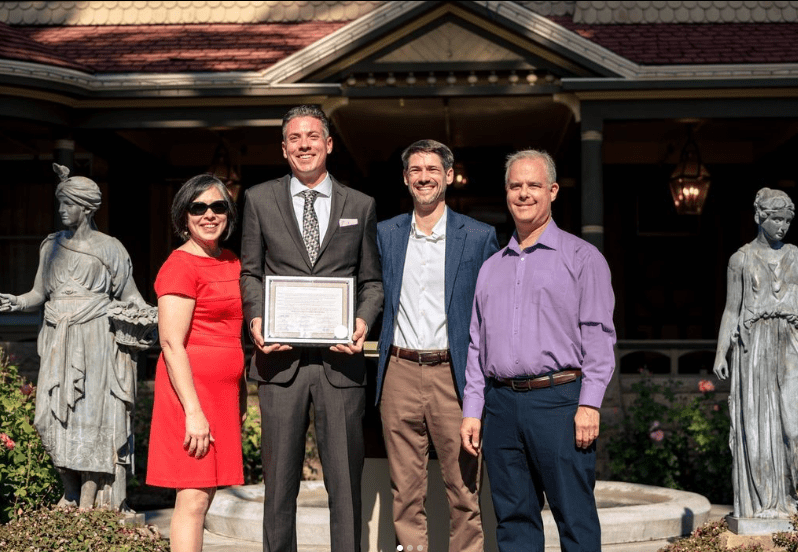
Please visit the online giftshop, and purchase a gift for friends and relatives as well as a special memento of The Winchester Mystery House. A variety of souvenirs and gifts are available to purchase. https://shopwinchestermysteryhouse.com/

What I Have is Good and Still I am Unhappy

Our Heavenly Father wants us to love ourselves, to see ourselves as He see us: we are His cherished children. When this truth sinks deep into our hearts, our love for God grows. Berating others does not help them progress; it only discourages them. Along with correction, they also need encouragement. The goal with self-love is never to justify omission, rationalize sin, or slip into complacency. I recognize that certain negative feelings can help me, such as godly sorrow—but I should not wallow in it, because that is not progression. Guilt has an important role as it awakens us to changes we need to make, but there are limits to how far guilt will help us. Guilt is like a battery in a gasoline-powered BMW. It can light up the Ultimate Driving Machines, start the engine, and power the headlights, but it will not provide the fuel for the long journey ahead. The battery, by itself, is not sufficient. Ans neither is guilt. I must be intentional not to slip into negative thinking patterns and should instead focus on loving Jesus as the Christ. I once had an image of myself as a fish. My fish image was that I was a fish, struggling to swim against the stream. I was not able to do that yet. I was held where I was, which gave a chance to learn how to swim against the stream (go the way that I wanted to go) by two shadowy figures on a bridge, each of them holding a line which I was hooked like a fish. This kept me from being swept away by the swiftly moving stream. I know that the two figures were the doctor and Aldous Huxley. Neither of them understood everything, but each of them understood enough to be helpful. #RandolphHarris 1 of 18

When I got worse physically, the doctor got me back to some degree of steadiness. When, through experimenting with my mind, I got into something that neither the doctor nor I understood, so I was afraid to go on with it, I wrote to Huxley and he explained it. These two men kept me from being swept away while I thrashed around, learning how to swim against the stream. This was a persistent image that I lived with for about a year. These men were also people to whom I could tell anything and they would not “call the cops.” This meant to me that they would not call men to lock me up. I thought of being “locked up” as being in a madhouse, but it was not a mental hospital that I was afraid of, although I did not know what the “madhouse” was. It meant being pushed back into what I was struggling to get out of. Other people tended very much to do this to me, so I lived more and more alone and when, at last, I was just barely able to travel I went to a place where I knew no one, and kept myself alone, so that I could get together with myself. I wanted desperately to be with someone who understood more than I did about what I was trying to understand, but since I could not do that, I could at least remove myself from people who were confusing me. After all that, some of my present knowings seem small and perhaps ridiculous, but I know now that they are not “unimportant.” I am living near the beach in an apartment which has an outside deck with a railing. When my son was here, he started to throw his damp swimming trucks and towel over the railing, then said, “The management probably wouldn’t like that—I can see why.” I agreed, and his statement was accurate, but whose seeing was the seeing why? When I agreed, in my mind there was an image of the uncluttered railing as described, something that I like. #RandolphHarris 2 of 18

However, a few days later when I walked past a building with a railing draped with swimsuits and towels, I knew that I liked this, that to me it looked gay and human, alive with an activity of people. Then I knew how much I missed seeing clothes on lines blowing in the wind, people working untidily in gardens, sweeping sidewalks, dashing out of houses half-dressed to do something that should be done right now, or a woman drying her hair in the sun. When I looked out on the tidy street with no sign that anyone lives behind the curtains in the windows of the houses, it seems so lifeless. The alwaysness of this tidiness tires me the way that hunger does; something is missing from my intake. If no one else feels as I do, this still is the way that I feel, and when I think that I do not, I am not together with myself. If I could deceive myself completely by accepting other people’s values, then there might be an argument for giving up and letting other people tell me what to do. However, my inner valuing does not cease: it just gets buried to my knowing and is forever in conflict with the values that I have accepted from outside. When I had not noticed my own valuing of the street on which I live, there was nothing that I could do about it but be irked without knowing why, and feel that I must be ungrateful because “what I have is good” and still I am unhappy. Now that I have noticed, I feel happy. The conflict in me has been removed. Having accepted myself, I can accept other things too, in a way that is very different from “making the best of it.” It is the way I lived from age 12 to 16, when I wanted to quit school but the law would not let me. So, I lived with what was around me, including school, until the time when I could leave. The circumstances are different now, but the feeling is the same. I do not feel trapped. I do not feel that something has been done to me (victimized). And I do not feel guilty. #RandolphHarris 3 of 18

Currently in the United States of America there has been a lot of resentment to people who have immigrated illegally. Because of that, anyone who looks like they could be of Hispanic background have been facing a lot of discrimination. However, even if someone has illegally immigrated, it is not right to treat them less than human. If you do not like people being allowed to immigrate illegally, then that that up with your government, stop voting democrat. It is not your place to judge them. All individuals are children of God and part of His divine family. As His children, we all have divine potential and are precious in His eyes/ The scriptures teach that God “hath made of one blood all nations of men,” and “all are alike” unto Him. He does not love one race or culture more than any other. The gospel of Jesus as the Christ is for all of God’s children. The Book of Mormon teaches that the Lord invites “all to come unto Him and partake of His goodness; and He denieth none that come unto Him, black and white, bond and free, male and female.” Our standing with God depends on our devotion to Him and His commandments, not on the colour of our skin, our ethnicity, our citizenship status, or other attributes. Because we are children of God, we are all brothers and sisters. God has commanded us to “love one another.” In the parable of the good Samaritan, Jesus Christ taught that the commandment to love our neighbour transcends ethic, cultural, and religious differences. The Saviour exemplified this teaching. He “went about doing good,” teaching and healing people of all backgrounds. #RandolphHarris 4 of 18

Manifest Destiny; the belief that it is our duty, as Americans, to settle the continent, conquer the World and prosper. The idealized settlers who reached the promised land of the West were ordained by God to expand the boarders of America from sea to shining sea. The settlers overcame death to reach the American West, bathed in a welcoming golden light. There was a price to be paid, however. Frontiersmen had to be willing to face the risks inherent in migration—but had their parents not faced similar risks in coming to America? They had to be willing to do the backbreaking work required to turn a wilderness into prosperous farms and towns—but had their ancestors not done that as well? They had to be willing to break with the familiar and comfortable, and even face hardship—perhaps even death. They created the blueprint to expand America’s dominion over the entire planet, and perhaps one day there will no longer be any boarder and people can travel freely to whatever part of the World they wish. So many people want to come to America because it does have a lot of freedom and law and order. With Manifest Destiny, this freedom and law and order will spread to other parts of the World. I am grateful that the heart of the gospel revolves around love. The love of God, love of others, and love for myself. It would be a grave error to believe that philosophy is merely the practice of reflection over lofty or lovely thoughts. It is also the shedding of tears over low or unlovely ones, the remorseful weeping over past and present frailty, the poignant remembrance of errors and incapacities. We who practice it must examine ourselves periodically. This means that we should not, at any time, be satisfied with ourselves but should always recognize the need of improvement. #RandolphHarris 5 of 18

Hence, we should constantly strive to detect and remedy the moral, temperamental, and mental defects which disclose themselves. We will need to look into our hearts more deeply than ever before, and search their darker labyrinths for the motives and desires hiding away from our conscious aspiration. We are called upon to make the most searching criticism of ourselves, and to make it with emotional urgency and even profound remorse. If it meant only looking at our human frailty and mortal foolishness, this advice to look within would be idiotic. A morbid self-obsession, a continuously gloomy introspection and unending analysis of personal thoughts and experience is to be avoided as unhealthy. Such ugly egocentricity does not make us more “spiritual.” However, the advice really means looking further and deeper. It means an introspective examining operation much longer in time, much more exigent in patience, much more sustained in character, than a mere first glance. It means intensity of the first order, concentration of the strongest kind, spiritual longing of the most fervent sort. Although philosophy bids us avoid morbid thoughts of depression, doubt, fear, worry, and anxiety because they are weakening and because they represent only one side—the dark side—of a two-sided situation, this counsel must not be misunderstood. It does not bid us ignore the causes which give rise to such thoughts. On the contrary, it bids us take full note of them, face up to them, frankly, examine them carefully, and understand the defects in our own character which led to them. Finally, we are to adopt the practical measures needed to deal with them. #RandolphHarris 6 of 18

However, this once done, and thoroughly done, we are to turn our back upon them and let them go altogether to keep our serenity and contain our spiritual detachment. In every painful problem which is ultimately traceable to our own wrong-doing, the best way to rid ourself of the worry and anxiety it brings is first, to do what is humanly possible to mend matters in a practical way; second, if others are concerned, to make such reparation to them as we can; third, to unmask our sin pitilessly and resolutely for what it is; fourth, to bring clearly into the foreground of consciousness what are the weaknesses and defects in our own character which have led us into this sin; fifth, to picture constantly in imagination during meditation or pre-sleep, our liberation from these faults through acquiring the opposite virtues; sixth, and last, when all this has been done and not until then, to stop brooding about the miserable past or depressing future and to hand the whole problem with its attendant worries into the keeping of the Overself and thus attain peace concerning it. If this is successfully done, every memory of sin will dissolve and every error of judgment will cease to torment us. Here, in its mysterious presence and grace, whatever mistakes we have made in practical life and whatever sins we have committed in moral life, we need not let these shadows of the past haunt us perpetually like wraiths. We may analyse them thoroughly and criticize ourselves mercilessly but only to lay the foundation in better self-knowledge for sound reform. We must not forget them too soon, but we ought not hug them too long. After the work of self-analysis is well done, we can turn for relief and solace to the Overself. #RandolphHarris 7 of 18

We have been discussing Clare and her journey through self-analysis. During her period of inner turmoil, she obtained a new lease on life and a renewed incentive to work at the problems she was having in her interpersonal relationships. However, several questions arose. If the loss of her intimate partner, Peter, could still upset her as deeply as it did, what about the value of the foregoing analytical work? Two considerations have a bearing on this question. One is the insufficiency of the previous work. Clare had recognized the fact that she was compulsively dependent, and had seen certain implications of this condition. However, she was far from reaching a real grasp on the problem. If one doubts the value of the work accomplished one makes the same mistake that Clare herself made during the whole period before the climax, underrating the import of the neurotic trend and therefore expecting too quick and easy results. The other consideration is that overall, the final upheaval was itself of a constructive nature. It presented the culminating point of a line of development that runs from a compete ignorance of the problem involved, and the most vigorous unconscious attempts to deny its existence, to a final full realization of its severity. The climax brought it home to her that her dependency was like a cancerous growth which cannot be kept within safe boundaries (compromises) but must be eradicated lest one’s life be gravely jeopardized. Under the pressure of acute distress Clare succeeded, too, in bringing into sharp conscious focus a conflict which had hitherto been unconscious. She had been entirely unaware of being torn between wanting to relinquish her dependency on another person and wanting to continue it. This conflict had been camouflaged by her compromise solutions with Peter. #RandolphHarris 8 of 18

Now Clare had faced it, and was able to take a clear stand as to the direction in which she wanted to go. In this regard the phase she was now going through illustrates a fact mentioned in the past, that at certain periods in analysis it is necessary to take a stand, to decide. And if through the analytical work a conflict has sufficiently crystallized for the patient to be able to do this, it must be reckoned as an achievement. In Clare’s case the issue, of course, was whether she would immediately try to replace the lost pillar with a new one. Naturally it is upsetting to face a problem in that uncompromising way. And here a second question comes in. Did Clare’s experience produce a greater danger of suicide than it would have without analysis? For consideration of this question, it is relevant that she had indulged in suicidal notations at previous times. She had never, however, been able to terminate them so decisively as she did this time. Formerly they had simply faded out of the picture because something “nice” happened. Now she refunded them actively, consciously, and with a constructive spirit. Also, as mentioned above, her first reaction of gratefulness that Peter had not withdrawn earlier was in part a genuine feeling that she was now more capable of coping with his desertion. It seems safe to assume, therefore, that the suicidal tendencies would have been stronger and more persistent without the analytical work that was done. Human nature is universally frail; Clare’s is no exception. Nevertheless, if she is appalled at her mistakes, of this anguish is doubled because what she has done wrongly is irreparable, is there nothing else left to do than to give herself up to helpless despair? The true answer is more hopeful than that. #RandolphHarris 9 of 18

I know that if one keeps patient while cultivating humility and silencing the ego’s pride, one shall grow away from old weaknesses and overcome former mistakes. This should be the first stage of her new attitude. For the next one, Clare can at least go over the events of the past and amend them in thought. She can put right mentally those wrong decisions and correct those rash impulsive actions. She can collect the profits of lessons expensively learnt. The first value of self-confession of sin is not so much getting rid of an uncomfortable sense of guilt over a particular episode or series of episodes as getting at the weakness in character responsible for them, and then seeking to correct it. Merely to remove the sense of discomfort and to leave its moral source untouched is not enough. Any priestly rite of forgiveness is ineffective until it is done. If it is to be real, if it is to be successful in purifying her character, it must produce repentance and that in its turn must produce penance. The second value of the confession is to induce the sinner to make amends or restitution to those one has hurt and thus balance one’s karmic account with them. Humans commit many sins and fall into many errors before the failure of their own conduct finally dawns upon them. By raising one’s point of view regarding any grievous situation, whether it involves oneself alone or other persons, one attracts the entry of a higher power into it which will work for one’s benefit and in one’s favour. One will learn to endure the blows of misfortune with a bravery heretofore unknown and a serenity heretofore unexperienced. It is better for one’s real progress that one’s eyes should fill with tears of repentance than with tears of ecstasy. #RandolphHarris 10 of 18

A healthy personality comes from the optimal self, which refers to a person who is functioning at the highest level. There are modes of human fulfillment, or characteristics of the optimal person. Efficiency: functional competence (being able to do things well), effective work autonomy (being able to work independently), and commitment to projects of concern outside of oneself. Creativity: experiences familiar things in fresh ways; openness to the novel, strange, and socially unacceptable; creates new style of life. Inner harmony: likes self; need for some amount of privacy or solitude. Relatedness: compassion, to be genuinely transparent, making self available to receive what others seek to communicate. Transcendence: mystical unity with a larger whole, relationship to some all-encompassing totality, to nature or God. Psychologists have been too timid and guarded in identifying the high-level functioning or healthy personality. We have disguised the true, human image of this person behind language that is so stiff that the person in the description is lost. The healthy personality is a “beautiful and noble person” (BNP). The beauty described here does not refer to physical beauty, although that may sometimes be found in the healthy personality. It more specifically describes someone whose behaviour and work is such that the effect upon self and other is one of producing an essentially aesthetic feeling. Nobility also, of course, does not refer to parentage but to the kinds of behaviour and acts performed by such a person. #RandolphHarris 11 of 18

While some have argued that even psychotic people may sometimes be thought of as healthy, Ted Landsman insists that the BNP must first be normal—perceive reality essentially as it is and to be free of bizarre symptoms (such as hallucinations, grimaces, and so on). The first stage in the evolution of the BNP is described as the passionate self. The passionate self is seen as someone who truly likes, even loves himself or herself, someone who enjoys being alone, and who respects and accepts self. This is not the same as selfishness, but rather is an awareness of self as a worthwhile person. Bragging and possessiveness are avoided. The second stage involves a concept not dealt with in detail by most other writers: the environment-loving person. A passionate caring for the physical environment is seen in the person at this stage. The human relates to mountains, flowers, music, buildings—the entire physical environment—with appreciation and with joy, preserves it, nurtures it, and delights in it. The final stage in the evolution of the BNP is described as the compassionate self. This is a person who deeply loves others, who cares about people who hurt or are in need, and who acts, often at a great personal risk, to help others. The compassionate person does not only feel for others, but acts to alleviate or remedy their pains or injustices. There are major positive experiences that lead to the development of the beautiful and noble personality. #RandolphHarris 12 of 18

There are experiences that lead to the development of the beautiful and noble personality: Positive experiences in childhood. Experiences of joy, delight, ecstasy at all levels, not just peak. High levels of intense positive feeling. Negative experiences that have been made positive in effect. These are important painful experiences, such as disgrace, failure, death of loved ones, automobile accidents, being fired from a job, which the person has been able to “turn around” and make into significant learning or growth experiences. The following, collected by Smith, is written by a female prisoner: “Coming to prison. Never thought it would happen to me. Anyone else but not me. It happened. I’m glad I’ve stopped and reviewed my life up to age 17. Complete destruction for me. I was destroying myself and going at it at top speed. I’ve met beautiful people here. I’ve learned a lot about me. This experience I would not change if I could. I need this. Now maybe I can be a better person. I can stop and think and reason with myself….Had I not served time I would still be going at top speed I’m sure. Only what would I be into now?” The solitude experience. Instances in which an individual can escape from the immediate pressures—social, job, interpersonal—and explore the self, one’s own feelings, one’s relationship to others, to the World. Opportunities to think freely and clearly are usually accomplished in solitude, in intentional isolation, such as a short walk in the woods, or a year’s living in the desert alone. #RandolphHarris 13 of 18

The authentic dialogue. This, in a sense, is the obverse or “flip side” of the previous experience. You seek the opportunity to converse, deeply, freely, without guile or pretense, with someone you trust totally. Both persons in the dialogue must be committed to authenticity and openness, which differs somewhat from most counseling or psychotherapeutic approaches, where only the silent is the communicator about self. The transcendent experience is one in which you achieve far beyond what you would normally expect of yourself: writing an unusually beautiful open, being far more sensitive than one would expect, performing a physical feat such as lifting a beam from an injured person or winning an athletic contest. These experiences are difficult to predict or create, but when they do occur, they give you the sure confidence that you have possibilities and potential of which you never dreamed. The approach to beautiful and noble personhood stresses openness, relationship to self and to others. It builds up Maslow’s system of peak experiences to suggest the importance of a whole range of experiences, especially the positive, and inserts the importance of the relationship, a passionate one, with the physical environment, music, mountains, flowers, lakes, and so on. When a mane lets go of his ego, all the virtues come submissively to his feet. If he can let it go only for a little while, they too will stay only a little while; but if her can make the parting permanent, then the virtues are his forever. However, this is a high and uncommon state, for it is a kind of death few will accept. #RandolphHarris 14 of 18

The social character which makes people act and think as they must act and think from the standpoint of the proper functioning of their society is only one link between the social structure and ideas. The other link lies in the fact that each society determines which thoughts and feelings shall be permitted to arrive at the level of awareness and which must remain unconscious. Just as there is a social character, there is also a “social unconscious.” By “social unconscious” I refer to those areas of repression which are common to most members of a society; if the society with its specific contradictions is to operate successful, these commonly repressed elements are those contents which a given society cannot permit its members to be aware of. The “individual unconscious” with which Dr. Freud deals refers to those contents which an individual represses for reasons of individual circumstances peculiar to his personal life situation. Dr. Freud deals to some extent with the “social unconscious” when he talks about the repression of incestuous strivings as being characteristic of all civilizations; but in his clinical work, he mainly deals with the individual unconscious, and little attention is paid by most analysts to the “social unconscious.” The conflict between the unconscious reality within ourselves and the denial of that reality in our consciousness often leads to neurosis, by making the unconscious conscious, the neurotic symptom or character trait can be cured. Dr. Freud believed that this uncovering of the unconscious was the most important tool for the therapy of neurosis, his vision went far beyond this therapeutic interest. #RandolphHarris 15 of 18

Dr. Freud saw how unreal most of what we think about ourselves is, how we deceive ourselves continuously about ourselves and about others; he was prompted by the passionate interest in touching the reality which is behind our conscious thought. Dr. Freud recognized that most of what is real within us is not conscious, and that most of what is conscious is not real. This devotion to the search for inner reality opened a new dimension of truth. If he says what he knows, the person who does not know the phenomenon of the unconscious is convinced he says the truth. Dr. Freud showed that we all deceive ourselves to a larger or smaller degree about the truth. Even if we are sincere regarding what we are aware of we are probably still lying because our consciousness is “false,” it does not represent the underlying real experience within ourselves. Dr. Freud started out with observation on an individual scale. Here are some random examples: a man may have a secret pleasure in looking at pornographic pictures. He does not admit any such interest to himself but is convinced, consciously, that he considers such pictures to be harmful and that it is his duty to see to it that they are not exhibited anywhere. In this way he is constantly concerned with pornography, looks at such pictures as part of his campaign against them, and this satisfies his desire. However, he has a very good conscience. His real desires are unconscious, and what is conscious is a rationalization which hides completely what he does not want to know. Thus, he is enabled to satisfy his desire without sensing the conflict with his moral judgment. #RandolphHarris 16 of 18

Success in the 21st century will require new ways of doing things. Innovation requires the Sacramento Fire Department to systematically identify changes that have already occurred—in business, in demographics, in values, in technology or science—and then to look at them as opportunities. It also requires them to abandon rather than defend yesterday—something that is most difficult for existing companies to do so. “I worked with the Sacramento Fire Department for seven years. We had an eight-week basic firefighter course. We also attended Cal Poly San Luis Obispo and earned fire science degrees. They have a rather good fire science program. I was fortunate to have started at a very young age in a quite active fire department and had experience in just about every aspect of the fire service. I remember one of those biggest fires that I had ever seen. I was on the first ladder, second alarm. Two spectators and a fire policeman died. The scene was utter chaos. Conditions were deteriorating rapidly. The building was just being taken. It was beyond anything we could ever control. There was a downwind, the fire created more wind, all the characteristics of a conflagration. The thing was made completely out of wood. Our truck company did a lot of repositioning. We set up our aerial ladder and the ladder pipe at the end of the building, then the fire got hotter and hotter and we had to back out. It was amazing, the progress the fire made. It was self-propagating, and we repositioned three times. Rescues were made from ladders, a lot of people were rescued. Our company was at the scene at least thirty-six hours, but others were there a good three or four days. It taught me that firefighting would never be an easy job. #RandolphHarris 17 of 18

“Before becoming a firefighter, I was already an emergency medical technician. On a typical day, we start by running several miles and then do a series of, let’s say, eight exercises, moving from one to the other. Then it would be classroom session. Then, in the afternoon, drill tower training, more classroom sessions, or actual fire simulation. What was nice about it is that this was Monday through Friday. On weekends I could ride on one of the busier engines or trucks in town. I had to retake emergency medical service training here as part of the program. We have to maintain our EMT status by taking a new test every two years. We put in hours, do a full day of practical work, and then we take the test. It’s an ongoing process.” Not only does the fire department save lives and reduces property loss, but they also prevent harm. Preventing harm covers many areas, including specialized rescue, health and wellness of citizens, and injury prevention. Protecting property includes protecting community resources—people, property, natural resources, the environment, and the community infrastructure—from harm and loss. Also, protecting property includes mitigation of natural and technological disasters. Simply put, preventing fires, injuries, and disease is the most effective means of “preventing harm.” Public education and prevention is of equal importance to fire suppression in the role of the fire service in the community. You can help the Sacramento Fire Department’s mission by making a contribution. Americans love to see America prosper. I pledge allegiance to the flag of the United States of America and to the republic for which it stands, one nation under God, indivisible with liberty and justice for all. #RandolphHarris 18 of 18


Whether you need more space now or in the near future, the Plan 1 is perfect for growing families. Enjoy the modern main living space that makes family meals or having company over a breeze.

It’s easy to stay organized with ample storage throughout. Upstairs are the owner’s suite, additional bedrooms, and a loft that could be used as a play area or study.

Step inside this home to see the life-tested home designs with more usable space where you want it most. So you live the way you want to live. This digital representation may vary slightly from actual home offered*.

For over 70 years, Pulte has built homes with the homeowner in mind. The things that are important to you are what we focus on.

Our foundation is quality construction and a simplified buying experience. With our insightful Life Tested® design features and easy personalization options, everyday moments are more enjoyable in your new Pulte home. That’s More Life Built In.


If Life is Not to be Trivial, it Must be Hard

Several people say they turn to the TV news to figure out what is going on in the World. However, only 20 percent of Americans regularly attend church, but 57 percent of Americans tune in to TV news. The Christian Bible is the account of God’s action in the World, and His purpose for creation. Therefore, it is more logical to attend church and learn more about the World, yourself and God. Psychology is a nice supplement to religion. Maslow continuously pondered what humans might become, in the hope of learning how more of us might grow toward those seemingly Utopian levels of being. Maslow’s work remains as one of the most helpful sets of principles governing the development of the healthy personality. He suggested the existence of two kinds of motivation: B, or being motivation, and D, or deficiency motivation. D-motivations are those that grab us when we are deeply deprived or have a loss of some basic need, such as the burglar who may be driven by hunger or the coward who may be driven by fear for personal safety. In contrast, the self-actualizing person is seen as motivated by the being needs, to be the fullest possible self, to be able to sing, create, work at highest capacity. #RandolphHarris 1 of 19

The peak experience concept has met with a great deal of interest. Maslow suggests the existence of these marvelous experiences that overwhelm the person and are great heights of delight and joy or meaningfulness, awesome experiences that may occur to a self-actualizing person but are not exclusively confined to that kind of person. Here are two contrasting examples of the more moderate peak or positive experiences collected from tenth-grade students: “Mine happened just last night. I love the summer and hate the winter. So last night when I stepped outside and found how warm it was I just couldn’t go back into the house. I walked around the house and then looked around. You can see all the houses around from our house and just looking around at them and hearing the sounds of the night relaxed me and I felt like I was watching over the whole World. It was a gentle feeling and gave me a little bit of a thrill.” “Yes, in the winter I love to walk out in the snow and let it fall lightly on my face. When this happens it seems to make a strange sort of happiness fall on me also.” Deep philosophic courage is a power not easily gained. A man must overcome much within himself, must hold his spine unbending and his effort undeviating. #RandolphHarris 2 of 19

All those negative qualities which act as encumbrances to true understanding of situations, occasions, events, and persons must be guarded against in attitude and action. Amid his gross brutalization and maniacal exaggerations, Nietzsche’s evil mysticism expressed some truth. He affirmed rightly that if life is not to be trivial, it must be hard. His quest of the Overself must be an untiring one. It is to be his way of looking at the World, his attitude toward life. It is far more important to develop the strength within himself needful to break the spell than to be for preventative protection against it. In the first case, he progresses enormously and rapidly; in the second, he is static. Each difficulty surmounted, each weakness resisted will fortify his will and increase his perseverance. It will evoke the better part of his nature and discipline the baser, and thus fit him more adequately to cope with the next ones. He must be equally steadfast in adhering to this attitude whether other people utter complaints against him or make compliments to him. We must retain our determination and our loyalty to the quest in all circumstances. Physical pains, climatic extremes must not deter us. We must console ourselves with the thought that these things are certain to pass away. They are mental figments, ideas which will be negated, whereas the truth and reality we seek belong to the immutable, and can never be negated. #RandolphHarris 3 of 19

Few of us can withdraw from the World and most of us must engage in its activity. However, that is no reason for accepting the evils which are mixed in with this activity. Tenacity of purpose is a characteristic of all who accomplish great things. Drawbacks cannot disgust him, labour cannot weary him, hardships cannot discourage him in whom the quality of persistence is always present. However, to the man without persistence every defeat is a Waterloo. Indecision of purpose and infirmity of will must yield to the resolute mind and the determined act. The person who sways uncertainly between one side and the other misses opportunity. The student’s inner reactions to outer events provide him with the opportunity to use his free will in the right direction. His attitude towards his lower nature, that is, how far he encourages or discourages it, is another. And his recognition of what are good opportunities and what should be avoided, together with his acceptance or rejection of them, is still another. Mental indolence and moral lethargy are hardly likely to waft us into the high haven of spiritual peace. We must learn to think fearlessly and courageously about every problem that faces us; we must try to elevate our hearts above the level of the moral lepers and spiritually disabled of our time. He will learn to endure the blows of misfortune with a bravery heretofore unknown and a serenity heretofore unexperienced. #RandolphHarris 4 of 19

If he is to achieve a full self-mastery, the strength of will which can lead a man to command of his desires for pleasure of the flesh cannot stop there. It must also go on to his diet and feelings, his speech and habits. However, many people, including the less affluent not only practice age discrimination, but they also advocate a lower-class bias. Class-stereotype is ambivalent, describing lower class people both negatively (less competent, less human, more objectified), and sometimes positively, perhaps warmer than upper class people. At a variety of levels and life stages, social-class stereotypes reinforce inequality. Sometimes, people who have benefited from Affirmative Actions like to uplift people of their culture, but discriminate against others as an act of revenge for bias that have faced. Social class matters, as a social construction, can be described in terms of what persons do; their jobs, habits, hobbies, lifestyles, but also in terms of what other people expect from them, their personality traits, life choices, aspirations, motivations. These oversimplified characterizations (id est, stereotypes) entail descriptions and prescriptions that impact individuals’ achievements, self-evaluations, and well-being. However, some of the elite feel a certain personal alienation from the dominant characters and opinions of American intellectual life, which doubtlessly quickens their championship of those who are thought to have little chance of succeeding in life. #RandolphHarris 5 of 19

Some think that free silver is a poor social remedy, and it will only lead to monetary inflation like what many are experiencing since the COVID pandemic. There are also those who think the proper way to deal with poverty and inequality is by advocating careful elimination of the unfit and dependent, chiefly by eugenic methods. While others believe that education is a great way to end inequality. Proponents of equality want a field that shall be broad enough to embrace the whole human race. However, as it stands, we are assimilating a mass crude material from the bottom and they are just exacerbating conditions of racism, agism, discrimination, harassment, and facilitating the expansion of criminal activity. This is leading many to believe that society is doomed to hopeless degeneracy. Yet, it is possible to take another view. The only consolation, the only hope, lies in the truth that so far as the native capacity, the potential quality, the promise and potency of a higher life are concerned, those swarming, spawning millions, the bottom layer of society, the proletariat, the working class, the hewers of wood and drawers of water, nay even the denizens of the slums—that all these are by nature the peers of the boasted aristocracy of brains that now dominates society and looks down upon them, and the equals in all but privilege of the most enlightened teachers of eugenics. #RandolphHarris 6 of 19

In the past, sociocracy, or the planned control of society by society was considered a solution. Under sociocracy, purposeful social activity, or collective telesis, could be harmonized with individual self-interest by means of attractive legislation designed to release the springs of human action for socially beneficial deeds by positive rather than negative and compulsory devices. Where individualism has created artificial inequalities, sociocracy would abolish them; and while socialism seeks to create artificial equalities, sociocracy would recognize inequalities that are natural. A sociocratic World would distribute its favours according to merit, as individualist demand, but by equalizing opportunity for all it would eliminate advantages now possessed by those with underserved power, accidental position or wealth, or antisocial cunning. We need to arrive at a better understanding of the importance of feeling in human motivation. The unique and artificial character of social organization and social processes are an odd inconsistency to deck out sociology with physics, chemistry, and biology, and to set it in the framework of a cosmological system. Some are not only ahead of the masses in point of time, but they are head, shoulders and hips above the general population in many respects scientifically. #RandolphHarris 7 of 19
All the efforts which are made to develop and maintain the mental hygiene practices of our citizens help to restrain what would otherwise be an ever-growing demand for psychiatric services. The role of the family in contributing to emotional stability is a most crucial one and the programs in parent education which are offered under a variety of auspices play a vital role in contributing to sound psychological environments in the home. We would do well to give all possible support to programs in parent education and to resources for parent consultation; we should be particularly concerned to provide programs for parental guidance in those areas and communities in which they are presently lacking. The psychiatrist and psychologist can find especially effective avenues for their services as consultants in clinics or other programs for parent education. Next to home, the school provides a universal setting with potential for teaching and demonstrating sound mental hygiene principles. If the schools have been less than optimally effective in this responsibility in the past it is partly because they have been uncertain of the relative priorities of the provision of subject-matter instruction versus the stimulation of the pupil’s total personal growth. While the contribution of the individual teacher can occur in a variety of way, ranging from early detection of emotional distress and referral to provision of “emergency” tension relief and even relationship therapy, the optimal participation of teachers in mental hygiene activities is greatly enhanced in those schools that have provided for formal integration of mental health services, with the consultative assistance of professional workers. #RandolphHarris 8 of 19

Better preparation of teachers for their opportunities, responsibilities, and limitations as mental hygienists can help much to reduce the demand for specifically psychiatric or psychological treatment. Such resources for expert treatment of childhood problems are even more severely restricted than are those for adult patients, and there must be increasing attention to the development of consultative skills—on the part both of teachers and experts. The potential of the church and the clergy in helping to promote mental health and to render assistance in cases of milder personal maladjustments is presently only partially realized. Based on a questionnaire survey, it was found that the average clergyman devotes only about two hours per week to personal counseling. Fewer than one out ten spend as much as ten hours a week on this activity. There is, considering the readiness of the distressed person to turn to his clergyman, a clear need to augment the preparation of the minister for this activity and to support him in his endeavours to render assistance, especially by giving him access to consultation. Increasing the effectiveness of our public education toward positive mental health and working toward more effective utilization of the front-line troops in early recognition and treatment of emotional upset constitute two ways of holding down the always excessive demand for psychiatric help. #RandolphHarris 9 of 19

A third avenue deserving careful consideration would consist of efforts to educate the public more specifically as to the precise nature of psychiatric treatment, specifically of psychotherapy, to try to lower the public’s presently naïve and immodest expectations of what occurs in and what can happen because of psychotherapy, and to encourage a proper appreciation for therapeutic conversation. As an important part of this effort, both psychotherapists and potential patients should be helped to recognize that there is neither magical cure nor specific expert treatment for the philosophical neuroses. If all of these methods of reducing the demand for the psychotherapeutic services of psychiatrist, psychologist, and social worker are vigorously pursued, the problem of manpower shortage will be alleviated but not solved. There will still be a fully “legitimate” call for individual psychotherapy exceeding the supply available through the present and future supply of the acknowledged specialist. Is there a rational and socially conscionable answer to this problem? The man who seeks to release himself from moral responsibility for his actions or his fortunes can in no way make any real progress on the spiritual path. He may improve his capacity to mediate, he may become more sensitive physically, but his real battle—against the ego—remains unfought and therefore unwon. #RandolphHarris 10 of 19
We have looked at social character as the structure through which human energy is molded in such specific ways, that it is usable for the purposes of any given society. It is also the basis from which certain ideas and ideals draw their strength and attractiveness. This relation between character and ideas is easy to recognize in the case of the individual character structure. A person with a hoarding (anal, according to Dr. Freud) character orientation, will be attracted to the ideal of saving, he will be repelled by ideas of what he would call “reckless spending.” On the other hand, the person with a productive character will find a philosophy centered around saving “dirty,” and will embrace idea which emphasize creative efforts and the use of material goods is concerned, the relationship between character and ideas is the same. Some examples ought to show this relation clearly. With the end of the feudal age, private property became the central factor in the economic and social system. There had been, of course, private property before. However, in feudalism private property consisted largely of land, and it was connected to the social situation of the landowner in the hierarchic system. Since it was part of the social sole of the owner, it was not salable on the market. Modern capitalism destroyed the feudal system. Private property is not only property in land, it is also property in the means of production. #RandolphHarris 11 of 19

All property is alienable; it can be bought and sold on the market, and its value is expressed in an abstract form—that of money. Land, machines, gold, diamonds—they all have in common the abstract money form in which their value can be expressed. Anybody can acquire private property, regardless of his position in the social system. It may be through industriousness, creativeness, luck, ruthlessness, or inheritance—the ownership of private property is not affected by the means of its acquisition. The security, power, sense of strength of a person does not, as in the feudal system, depend any longer on a person’s status, which was relatively unalterable, but on the possession of private property. If the man of the modern era loses his private property he is nobody—socially speaking; the feudal lord could not lose it as long as the feudal system remained intact. As a result, the respective ideals are different. For the feudal lord, and even for the artisan belonging to a guild, the main concern was the stability of the traditional order, the harmonious relation to his superiors, the concept of a God who was the final guarantor of the stability of the feudal system. If any of those ideas were attacked, a member of feudal society would even risk his life to defend what he considered to be his deepest convictions. For modern man the ideals are different. His fate, security, and power rest on private property; hence for bourgeois society, private property is sacred, and the ideal of the invulnerability of private property is a cornerstone in its ideological edifice. #RandolphHarris 12 of 19

Although the majority of people in any of the capitalist societies do not own private property in the sense used here (property in the means of production), but only “personal” property such as a BMW, television set, etcetera—that is, consumer goods—the great bourgeois revolution against the feudal order has nevertheless formulated the principle of the invulnerability of private property so that even those who do not belong to the economic elite have the same feeling, in this respect, as those who belong. Just as the member of the feudal society considered an attack against the feudal system immoral, and even inhuman, so the average person in a capitalist society considers an attack against private property a sign of barbarism and inhumanity. He will often not say so directly but rationalize his hate against the violators of private property in terms of their godlessness, injustice, and so on; yet and often unconsciously, they appear to him as inhuman because they have violated the sanctity of private property. The point is not that they have hurt him economically, or that they even threaten his economic interests realistically; the point is that they threaten a vital ideal. It seems, for instance, that the repugnance and hate which so many people in capitalistic countries have against communist countries is largely based on the very repugnance they feel against the outright violators of private property. #RandolphHarris 13 of 19

There are so many other examples of ideas which are rooted in the socio-economic structure of a society that it is hard to select the most representative ones. Thus, liberty became the paramount idea for a middle class fighting against the restrictions that the feudal class imposed upon them. “Individual initiative” become an ideal in the highly competitive capitalism of the nineteenth century. Teamwork and “human relations” became the ideals of the capitalism of the twentieth century. Since “fairness” is the basic law of the free market in which commodities and labour are exchanged without force or fraud, fairness became the most popular norm in capitalist society. At the same time, the idea of fairness became identified with an older norm, “love thy neighbour,” via the popularized version of this norm in the form of the Golden Rule, “Do unto others as you would have them do unto you.” The theory that ideas are determined by the forms of economic and social life does not imply that they have no validity of their own, or that they are mere “reflexes” of economic needs. The ideal of freedom, for instance, is deeply rooted in man, and it is precisely for this reason that it was ideal for the Hebrews in Egypt, the slaves in Rome, the German peasants in the sixteenth century, the German workers who fought the dictators of East Germany. On the other hand, the idea of authority and order is also deeply implanted in human existence. It is precisely because any given social order can appeal to ideas which transcend the necessities of this order that they can become so potent and so appealing to the human heart. #RandolphHarris 14 of 19

Yet why a certain idea gains ascendance and popularity is to be understood in historical terms, that is, in terms of the social character produced in each culture. One more qualification must be made. It is not only the “economic basis” which creates a certain social character which, in turn, creates certain ideas. The ideas, once created, also influence the social character and, indirectly, the social economic structure. Social character is the intermediary between the socioeconomic structure and the ideas and ideals prevalent in a society. It is the intermediary in both directions, from the economic basis to the ideas and from the ideas to the economic basis. Many people are confronted by a confusing false dichotomy. They believe that the choice is between an anarchic system without any organization and control and, on the other hand, the kind of bureaucracy which is typical both for contemporary industrialism. However, this alternative is by no means the only one, and we have other options. One option is between the “humanistic bureaucratic” or “humanistic management” method and the “alienated bureaucratic” method by which we conduct our affairs. This alienated bureaucratic procedure can be characterized in several ways. First, it is a one-way system; orders, suggestions, planning emanate from the top and are directed to the bottom of the pyramid. There is no room for the individual’s initiative. Persons are “cases,” whether welfare cases of medical cases, or, whatever the frame of reference is, cases which can all be put down on a computer card without those individual features which designate the difference between a “person” and a “case.” #RandolphHarris 15 of 19
Our bureaucratic method is irresponsible, in the sense that it does not “respond” to the needs, views, requirements of an individual. This irresponsibility is closely related to the case-character of the person who becomes an “object” of the bureaucracy. One cannot respond to a case, but one can respond to a person. This irresponsibility of the bureaucrat, feeling himself part of the bureaucratic machine, most of all wishes not to take responsibility to make decisions for which he could be criticized. He tries to avoid making any decisions which are not clearly formulated by his case rules and, if in doubt, he sends the person to another bureaucrat who, in turn, does the same. Anyone who has dealt with a bureaucratic organization knows this process of being sent around from one bureaucrat to the other and, sometimes after much effort, coming out at the same door which he had entered without ever having been listened to except in the peculiar way in which bureaucrats listen, sometimes pleasantly, sometimes impatiently, but also always with an attitude which is a mixture of their own helplessness, irresponsibility, sense of superiority toward the “petitioning” subject. Our bureaucratic method gives the individual the feeling that there is nothing which he can initiate and organize without the help of the bureaucratic machine. As a result, it paralyzes initiative and creates a deep sense of impotence. #RandolphHarris 16 of 19

Firefighters are important because they save lives. The Sacramento Fire Department is a highly skilled organization which makes huge contributions to the community. “I was lucky enough to make a rescue after eight or nine months in the volunteers. Luck is a factor because, you have to be at a fire where somebody needs to be rescued. Then you have to be at the right place at that fire. You have to have enough knowledge to know how to do it and then be lucky enough to successfully pull it off. You can’t plan it. I don’t believe in fate per se, but I think there are certain things in the cards. I was fairly young. I was on a pumper, and we were the third or fourth pumper there. The truck company was pretty heavily engaged, and there were a number of people on the fire escapes. Sacramento is basically a bedroom community. You know, little private dwellings. All of a sudden, we had an -apartment house fire, which was taxing. It was a nine-story building, and the fire was in the cellar, so the whole building was at risk. My pumper pulled up, and another fellow and I reported to the chief. “What do you want us to do?” He said, “I’ve got a report that there’s a baby in that apartment.” A baby, right. It happens so often it seems to be a cliché. So we went up the hallway, it was pretty smoky, and we came to two doors. I had a feeling that the baby was to the right. The other guy said, “I’ll go straight.” I went into the room at the right, it wasn’t extremely hot, but it was smoky. On my first search I didn’t find anybody, but I figured I better do it again. The second time around, I found the baby lying on the floor between a night table and a bed, I guess he rolled off the bed or something, I’m not sure. He had on a little green-and-white-striped shirt and Pampers. #RandolphHarris 17 of 19

“Right then, when I took him out, I knew that the rewarding feeling was similar to putting a fire out, only more so. Shortly after probie school, I was assigned to Engine Company 2 in Midtown Sacramento. There I was fortunate enough to be involved in my first City of Sacramento rescue. You make your own luck in many instances. It was very unusual for a probie in an engine company to be put into a search with an officer. We were at a false alarm when the dispatcher asked us if we were available. The battalion chief gave us the go-ahead, and we were first at the fire by a good fire minutes. It was a high-rise apartment building. Being a gung-ho probie, I had gotten completely geared up for the false alarm. I had a mask on and everything. The other guys, because it was a hot summer night and although this was a known false alarm box, hurried to the scene. People at the apartment were screaming that there was a baby trapped. Another baby, right. People leave them behind like old bathrobes. The lieutenant, seeing I was a new guy said, “Let’s go.” We went up the elevator part of the way, then ran up the stairs to the hallways leading to the fire apartment. The door was open, and the smoke was nearly to the floor. It was hot. We went in the direct of the heat. Again it was another one of those, he went to the left, and I went to the right, and I found this little boy on the floor. He was conscious, and I removed him to the street and took him to the hospital. #RandolphHarris 18 of 19

“The sad part was that there was another child in the apartment, the lady’s nephew. A guy, I think he was from another truck, went in off the aerial ladder, got in the window, cut himself on the glass, and made a real spectacular rescue of the child. The kid was badly burned, and he didn’t make it. It was just one of those things again. You just go along doing your job, and there you are. It was unusual for me to be there, because the truck company is in charge of forcible entry, going in and searching for victims, and they work more or less independently. Whereas in an engine company the people work together in one group to fight the fire. It was not so much aggressiveness on my part, it was my ‘gung-ho-ness.’ I was serious about every aspect of the job, even cleaning the brass, and every time we went out the door, I wanted to be fully prepared. And it paid off. Sure, putting out a fire is satisfying, there’s nothing like it except making a grab, rescuing somebody. But even in a busy area, some companies don’t make one grab a year. While a nozzle man in a busy area is going to put out three, four fire a night. There’s a lot to be said for that. That’s an enjoyable part of it, too.” Life safety is the primary job of the Sacramento Fire Department. You can help save lives by making a contribution. I pledge allegiance to the flag of the United States of America, and to the Republic, for which it stands, one nation, under God, indivisible with liberty and justice for all. #RandolphHarris 19 of 19


Nestled within the Sacramento Valley, Rancho Cordova’s ideal location offers easy access to the Bay Area and Lake Tahoe. One of Northern California’s top home builders, Pulte Homes, offers affordable new homes for sale with family-friendly amenities. Conveniently located near US Route 50 and Interstate 80, homeowners can experience all that Northern California offers, from the San Francisco Bay Area to the historic Gold Country, Old Sacramento, and the deep blue waters of Lake Tahoe.

Experience modern designs and affordability in our upcoming new homes for sale. Ascent at Montelena in Rancho Cordova is near major employers and premier shopping. https://www.pulte.com/homes/california/sacramento/rancho-cordova/ascent-at-montelena-210916


Hard Times on Economic Thinking

It is fashionable in certain circles to fix the blame for a man’s erring proclivities on his faculty upbringing—or lack of it—by parents, or on his companions, temptations, and surroundings. However, are they so much to blame as the man himself? And is he not the victim, the resultant, of his own prenatal past? And even this is not the ultimate cause of his sinning. He is misled by ignorance—without understanding of his deepest self and without knowledge of life’s higher laws. There is some kind of correspondence between the outward situations of his life as they develop and the subconscious tendencies of his mind, between the nature of his environment and the conscious characteristics of his personality, between the effects as they happen to him and the causes that he previously started. When he realizes how long he has been unconsciously building it up for the worse, he can begin to change his life for the better. The same energy which has been directed into thoughts can then be directed into optimistic ones. Were it not for the stubbornness of habit, it would not be harder to do this than to do the opposite. The emotions felt inside the heart, the thoughts evoked inside the head, affect the environment and atmosphere outside us. Without dropping into the artificial attitude which pretends to give small value to outward circumstances, one can yet try to set himself free from his own mental dominion. #RandolphHarris 1 of 18

Until one has attained that inner strength which can concentrate thoughts and dominate emotions, it would be foolish to say that environment does not count and that he can mingle with society as freely as he can desert it. Without this attainment, he will be weakened by most of them or strengthened by a few of them. Birth into a prosperous elegant and gracious circle is valued highly in this World: it gives a man dignity and assurance. Education, which nurtures intellect and bestows culture, is likewise well appraised. However, both measure as trivial things in the other World of spiritual attainment. Although not to the extent to which it is affected by thoughts and feelings, inner life is affected by physical conditions. The foundation of human society, said Sumner, is the man-land ratio. Ultimately men draw their living from the soil, and the kind of existence they achieve, their mode of getting it, and their mutual relations in the process are all determined by the proportion of population to the available soil. Where men are few and soil is abundant, the struggle for existence is less savage, and democratic institutions are likely to prevail. When population presses upon the land supply, Earth hunger arises, races of men move across the face of the World, militarism and imperialism flourish, conflict rages—and in government aristocracy dominates. #RandolphHarris 2 of 18

As men struggle to adjust themselves to the land, they enter rivalry for leadership in the conquest of nature. In Sumner’s popular essays he stressed the idea that the hardships of life are incidents of the struggle against nature, that “we cannot blame our fellow-men for our share of these. My neighbor and I are both struggling to free ourselves from these ills. The fact that my neighbor has succeeded in this struggle better than I constitutes no grievance for me. Undoubtedly the man who possesses capital has a great advantage over the man who has no capital at all in the struggle for existence…This does not mean that one man has an advantage against the other, but that, when they are rivals in the effort to get the means of subsistence from Nature, the one who has capital has immeasurable advantages over the other. If it were not so capital would not be formed. Capital is only formed by self-denial, and if the possession of it did not secure advantages and superiorities of a high order men would never submit to what is necessary to get it.” Thus, the struggle is like a whippet race; the fact that one hound chases the mechanical hare of pecuniary success does not prevent the others from doing the same. Sumner was perhaps inspired to minimize the human conflicts in the struggle for existence by a desire to dull the resentment of the less affluent towards the affluent. He did not always, however, shrink from a direct analogy between animal struggle and human competition. #RandolphHarris 3 of 18

In the Spencerian intellectual atmosphere of the 1870s and 1880’s, it was natural for conservatives to see the economic contest in competitive society as a reflection of the struggle in the animal World. It was easy to argue by analogy from natural selection of fitter organisms to social selection of fitter men, from organic forms with superior adaptability to citizens with a greater sore of economic virtues. The competitive order was now supplied with a cosmic rationale. The competition was glorious. Just as survival was the result of strength, success was the reward of virtue. Sumner had no patience with those who would lavish compensations upon the virtueless. Many economists, he declared (in a lecture given in 1879 on the effect of hard time on economic thinking), “seem to be terrified that distress and misery still remain on Earth and promise to remain as long as the vices of human nature remain. Many of them are frightened at liberty, especially under the form of competition, which they elevate into a bugbear. They think it bears harshly on the weak. They do not perceive that here ‘the strong” and “the weak’ are terms which admit of no definition unless they are made equivalent to the industrious and the idle, the frugal and the extravagant. They do not perceive, furthermore, that if we do not like the survival of the fittest, we have only one possible alternative, and this is the survival of the unfitted. The former is the law of anti-civilization. We have our choice between the two, or we can go on, as in the past, vacillating between the two, but a third plan—the socialist desideratum—a plan for nourishing the unfitted and yet advancing in civilization, no man will ever find.” #RandolphHarris 4 of 18

The progress of civilization, according to Sumner, depends upon the selection process; and that in turn depends upon the workings of unrestricted competition. Competition is a law of nature which “can no more be done away with than gravitation,” and which men can ignore only to their sorrow. You may well ask, “But why does a person who is seeking help find himself changing in a relationship which contains these elements? Why does this initiate a process of learning to be free, or becoming what he is, of choice and inner development?” The reactions of the client who experiences for a time the kind of therapeutic relationship which we have discussed are a reciprocal of the therapist’s attitudes. As he finds someone else listening acceptingly to his feelings, he little by little becomes able to listen to himself. He begins to receive communications from within himself—to realize that he is angry, to recognize when he is frightened, even to realize when he is feeling courageous. As he becomes more open to what is going on within him, he becomes able to listen to feelings which have seemed to him so terrible, or so disorganizing, or so unique, or so personal, that he has never been able to recognize their existence in himself. While he is learning to listen to himself, he also becomes more acceptant of himself. As he expressed increasingly hidden aspects of himself, he finds the therapist showing a consistent and unconditional beneficial regard for him and his feelings. Slowly he moves toward taking the same attitude toward himself, accepting himself as he is, respecting and caring for himself as a person, being responsible for himself as he is, and therefore ready to move forward in the process of being free. #RandolphHarris 5 of 18

And finally, as he listens more accurately to the feelings within, and becomes less evaluative and more acceptant toward himself, he also moves toward being more real. He finds it possible to move out from behind the facade he had used, to drop his defensive behaviours, and more openly to be what he truly is. As these changes occur, as he becomes more self-aware, more self-acceptant, more self-expressive, less defensive, and more open, he finds that he is at last free to change and grow and move in directions natural to the human organism. He can make imperfect choices—and then correct them. He recognizes that he can choose to be hurtful or constructive, self-aggrandizing, or committed to the welfare of the group, and when these choices can be freely made, he tends to move in the socially constructive direction. It is such experiences in individual and group psychotherapy which lead us to believe that we have here an important dynamic for modern education. We may have here the essential core of a process by which we might facilitate this production, through our educational system, of persons who will be adaptative and creative, able to make responsible decisions, open to the kaleidoscopic changes in their World, worthy citizens of a fantastically expanding Universe. It seems at least a possibility that in our schools and colleges, in our professional schools and universities, individuals could learn to be free. #RandolphHarris 6 of 18

When considering our case study of Clare, she had a self-observation and became concerned about her inability to be alone. She had not been aware of this inhibition before, because she had arranged her life in such a way as to avoid any periods of solitude. When she was by herself, she observed that she became restless or fatigued. When she tried to enjoy them alone, things she could relish otherwise lost their meaning. When others were around, she could work much better in the office than at home, though the work was of the same kind. During this time, she neither tried to understand these observations nor made any effort to follow up her latest finding. In view of the incisive importance of that finding, her failure to pursue it any further is certainly striking. If we consider it in connection with the reluctance, she had previously shown to scrutinize her relationship with Peter, we are justified in assuming that with her latest discovery Clare came closer to realizing her dependency than she could stand at the time and therefore stopped her analytical endeavours. The provocation to resume her work was a sudden sharp swing mood that occurred one evening with Peter. He had given her an unexpected present, a pretty scarf, and she was overjoyed. However, later she felt suddenly tired and became frigid. The depressed feeling occurred after she had embarked on the question of summer plans. She was enthusiastic about the plans, but Peter was listless. He explained his reaction by saying that he did not like to make plans anyhow. #RandolphHarris 7 of 18

The next morning, she remembered a dream fragment. She saw a large bird flying away, a bird of the most glorious colours and most beautiful movements. It became smaller and smaller until it vanished. The she awoke with anxiety and a sensation of falling. While she was still waking up a phrase occurred to her–“the bird has flown”–which she knew at once expressed a fear of losing Peter. Certain later associations confirmed this intuitive interpretation: someone had once called Peter a bird that never settled down; Peter was good-looking and a good dancer; the beauty of the bird had something unreal; a memory of Bruce, whom she had endowed with qualities he did not possess; a wonder whether she glorified Peter, too; a song from Sunday school, in which Jesus as the Christ asked to take His children under His wing. Thus, the fear of losing Peter was expressed in two ways: by the bird flying away, and by the idea of a bird that had taken her under its wings and dropped her. The latter thought was suggested not only by the song but also by the sensation of falling that she had on awakening. In the symbol of Jesus taking His children under His wing the theme of the need for protection is resumed. In view of later developments, it appears by no means accidental that the symbol is a religious one. Clare did not delve into the suggestion that she glorified Peter. However, the very fact that she saw this possibility is noteworthy. It may have paved the way for her daring to take a good look at him some time later. #RandolphHarris 8 of 18

The main theme of her interpretations, however—the fear of losing Peter—not only was recognized as an inevitable conclusion to be drawn from the dream but was deeply felt as true and important. That it was an emotional experience as well as an intellectual recognition of a crucial factor was evident in the fact that several reactions hitherto not understood became suddenly transparent. First, she saw that on the previous night, she had not merely been disappointed in Peter’s reluctance to talk about a common vacation. His lack of zest had aroused a dread that he would desert her, and this dread had caused her fatigue and frigidity and had been the provocation for the dream. And many other comparable situations became similarly illuminated. All kinds of instances emerged in which she had felt hurt, disappointed, irritated, or in which, as on the preceding day, she had become tired or depressed for no good reason. She realized that all these reactions sprang from the same source, regardless of what other factors might have been involved. If Peter was late, if he did not telephone, if he was preoccupied with other matters than herself, if he was withdrawn, if he was tense or irritated, if he was not interested in having pleasures of the flesh with her—always the dread of desertion was touched off. Furthermore, when she was with Peter, she understood that the explosions of irritation that sometimes occurred not from trivial dissensions or, as he usually accused her, from her desire to have her own way, but from this same dread. #RandolphHarris 9 of 18

The anger was attached to such trivial matters as different opinions about a movie, irritation at having to wait for him, and the like, but it was produced by her fear of losing him. And, conversely, when she received an unexpected present from him, she was overjoyed because it meant a sudden relief from this fear. Finally, she linked up the fear of desertion with the empty feeling that she when she was alone, but without arriving at any conclusive understanding of the connection. Was the fear of desertion so great because she dreaded to be alone? Or did solitude, for her, implicitly mean desertion? A person can be entirely unaware of a fear that is all consuming. That Clare now recognized her fear, and saw the disturbances it created in her relationship with Peter, meant a definite step ahead. There are two connections between this insight and her preceding one concerning her need for protection. Both findings show to what extent the whole relationship was pervaded with fears. And, more specifically, the fear of desertion was in part a consequence of the need for protection: if Peter were expected to protect her from life and its dangers, she could not afford to lose him. Clare was still far from understanding the nature of the fear of desertion. If anything, she was still unaware that what she regarded as deep love was nothing more than a neurotic dependency and therefore, she could not recognize that the fear was based on this dependency. Regarding her inability to be alone, the questions that occurred to her were more pertinent than she realized. However, since this whole problem was hazy because there were still too many unknown factors involved, she was not even capable of making accurate observations on this score. #RandolphHarris 10 of 18

Clare’s analysis of her elation at receiving the scarf was accurate as far as it went. Undoubtedly one essential element in her feeling overjoyed was that the act of friendliness allayed her fear for the time being. That she did not consider the other elements involved can scarcely be attributed to a resistance. She saw only the aspect that was related to the problem on which she was then working, her fear of destruction. Related to nongreedy desire for pleasures of the flesh but different from it is tenderness. Dr. Freud, whose whole psychology deals exclusively with “drives,” necessarily had to explain tenderness as an outcome of the drive for pleasures of the flesh, as a goal-inhibited desire for pleasures of the flesh. It is an experience sui generis. Its first characteristic is that it is free from greed. In the experience of tenderness, one does not want anything from the other person, not even reciprocity. It has no aim and purpose, not even that which is present in the ungreedy form of sexuality, namely, of the final physical culmination. It is not restricted to any pleasures of the flesh or age. It is least of all expressible in words, except in a poem. It is most exquisitely expressed in the way in which a person may touch another, look at him or her, or in the tone of voice. One can say that it has roots in the tenderness which a mother feels toward her child, but even if this is so, human tenderness far transcends the mother’s tenderness to the child because it is free from the biological tie to the child and from the narcissistic element in motherly love. It is free not only from greed but from hurry and purpose. Among all the feelings which man has created in himself during his history, there is none which surpasses tenderness in the pure quality of simply being human. #RandolphHarris 11 of 18

Compassion and empathy are two other feelings clearly related to tenderness but not entirely identical to it. The essence of compassion is that one “suffers with” or, in a broader sense, “feels with” another person. This means that one does not look at the person from the outside—the person being the “object” (never forget that “object” and “objection” have the same root) of my interest or concern—but that one puts himself into the other person. This means I experience within myself what he experiences. This is a relatedness which is not from the “I” to the “thou” but one which is characterized by the phase: I am thou (Tat Twan Asi). Compassion or empathy implies that I experience in myself that which is experienced by the other person and hence that in this experience he and I are one. Only if it is based on my experiencing in myself that which he experiences, then all knowledge of another remains an object, I may know a lot about him, but I do not know him. In psychoanalysis or similar forms of depth psychotherapy, a knowledge of the patient rests upon the capacity of the analyst to know him and not on his ability to gather enough data to know much about him. The data of the development and experiences of the patient are often helpful for knowing him, but they are nothing but adjuncts to that knowledge which requires no “data,” but rather, complete openness to the other and openness within oneself. It might occur in the first second after seeing a person, it might occur a long time later, but the act of this knowledge is a sudden, intuitive one and not the result of ever-increasing information about the life history of the person. #RandolphHarris 12 of 18

Goethe has expressed this kind of knowledge very succinctly: “Man knows himself only within himself, and he is aware of himself within the World. Each new object truly recognized opens a new organ within us.” The possiblity of this kind of knowledge based on overcoming the split between the observing subject and the observed object requires, of course, the humanistic promise that every person carries within himself all of humanity; although in varying degrees, within us we are saints and criminals, and hence there is nothing in another person which we cannot feel as part of ourselves. This experience requires that we free ourselves from the narrowness of being related only to those familiar to us, either by the fact that they are blood relations or, in a larger sense, that we eat the same food, speak the same language, and have the same “common sense.” Knowing men in the sense of compassionate and empathetic knowledge requires that we get rid of the narrowing ties of a given society, race, or culture and penetrate to the depth of that human reality in which we are all nothing but human. True compassion and knowledge of man has been underrated as a revolutionary factor in the development of man, just as art has been. Tenderness, love, and compassion are exquisite feelings and experiences and recognized as such. For Dr. Freud, only primitive man could be called “healthy.” He satisfies all his instinctual demands without need for repression, frustration, or sublimation. (That Dr. Freud’s picture of the primitive as having an unrestricted life filled with instinctual satisfaction is a romantic fiction has been made abundantly clear by contemporary anthropologists.) #RandolphHarris 13 of 19


However, when Dr. Freud turns from historical speculation to the clinical examination of contemporary man, this picture of primitive mental health hardly matters. Even if we could keep in mind that civilized man cannot be completely healthy (or happy, for that matter), Dr. Freud has nevertheless definite criteria for what constitutes mental health. These criteria are to be understood within the frame of reference of his evolutionary theory. This theory has two main aspects: the evolution of libido, and the evolution of man’s relations to others. In the theory of libido evolution Dr. Freud assumes that the libido, that is, energy of the drive for pleasures of the flesh, undergoes a development. It is at first centered around the oral activities of the child—sucking and biting—and later around the anal activities—elimination. Around the age of five or six, the libido has for the first time centered around the private organs. However, this age of “adult behaviour” is not fully developed, and between the first “phallic phase” near the age of six and the beginning of puberty there is a “latency period,” during which development of pleasures of the flesh is at a standstill, as it were, and only at the beginning of puberty does the process of libido development come to fruition. This process of libido development, however, is by no means an uncomplicated one. Many events, especially oversatisfaction and overfrustration, can result in a child becoming “fixated” on the earlier level, and thus never arriving at a fully developed genital level, or regressing to an earlier one even after having arrived at the genital level. #RandolphHarris 14 of 18

As a result, the adult may exhibit neurotic symptoms (like impotence), or neurotic character traits (as in the overdepednent, passive person). For Dr. Freud the “healthy” person is the one who has reached the “gential level” without regressing, and who lives an adult existence, that is, an existence in which he can work and have adequate satisfactions involving pleasures of the flesh or, in which he can produce things and reproduce the race. The other aspect of the “healthy” person lies in the sphere of his object relations. The newborn baby has not yet any object relations. It is in a state of “primary narcissism” in which the only realities are its own bodily and mental experiences, and the World outside does not yet exist conceptually, and even less, emotionally. The child then develops his strong attachment to mother. However, as the child ages, he shifts from the fixation to mother to the allegiance to father. At the same time, however, he also identifies with father by incorporating his commands and prohibitions. Through this process he achieves independence from father and from mother. The healthy person, for Dr. Freud, then, is the one who has reached the genital level, and who has become his own master, independent of father and mother, relying on his own reason and his own strength. However, even the key features of Dr. Freud’s concept remain vague and certainly lacks the precision and penetration is his concept of mental illness. It is the concept of a well-functioning member of the middle class at the beginning of the twentieth century, who is sexually and economically potent. #RandolphHarris 15 of 18

In the modern, technology-filled World, we are bombarded with options: watch this, read that, listen to this. Our society is saturated with media and entertainment, and the influence they have on our beliefs, thoughts, and actions is subtle but powerful. The things we allow to fill our minds end up shaping our being—we become what we think about. If we all just believed what anyone said, what would happen? It was once taken for granted that whatever was written in school textbooks was true. And whatever you read in the trade papers or saw on the TV news was also true. With the vast amount of information available to all of us now, we have found that not to be true. So, if we must second guess the news media now, should we not do the same for any other information we are given? Technology is neither inherently good nor bad. Rather, the purposes accomplished with and through technology are the ultimate indicators of goodness or badness. Our responsibility is not to avoid media altogether or to merely reject negative media but to choose wholesome and uplifting media. We can use the power of media to our advantage, to better our thoughts and behaviours by acknowledging our susceptibility to media influence and recognizing how it influences us. Identifying educational and high-quality media options, and recognizing no one is immune to media’s influence. We cannot expect to indulge in media designed to affect us mentally and emotionally without its influence being sustained in our subconscious long after the source of media is over. Those who believe media does not affect them are often the people who are most affected because they deny the influence and are therefore not guarded against it. Just as water will continue to seep through a leak in a boat, whether we acknowledge the leak, so will the media continue to influence our thoughts whether we address its impact. #RandolphHarris 16 of 18

Many firefighters have many ways of learning to fight fires. “In the U.S.A. Forest Service, when I first started, the training was all done at the station level. The old-time captains and engineers teach you as you go along. Then, as you advance in the ranks, they begin to send you to specialized schools on fire behavior and safety and all kinds of things. It’s an ongoing process. Then, when I switched to the California Department of Forestry, it was pretty much the same program, although as part of the probationary term you have to go to six-week academy for engineers. Driving, pumping, hydraulics, ladder, hose, fire behavior tactics, everything compacted into a six-week school. Then the same thing when you come back to your unit, it’s an ongoing training thing at the local level. Plus schools, they send guys to the more sophisticated schools with other agencies. And now, of course, like everyone else, we’re sending people to the National Fire Academy too. I was fortunate when I first came to work, we went to several rather small fires, and I was able to kind of gradually build up to the tough ones. That doesn’t always happen. I’ve seen some guys come on the job, and right off the bat they’re put on some monsters, some hairy deals. That tends to scare some of them off. They decide this is not what they really want, and they go back to being a bookkeeper or something. But in my case I was able to kind of wade into it and go from the little easy stuff into the big bad stuff. That way I gradually became aware of what was going on and conscious of the difficulties of the job and the safety problems. #RandolphHarris 17 of 18

“When I came back from the Army, the first thing they sent me to was a fire weather class. All I knew was that on a hot, dry day, things burn better, and when the wind blows they burn still better. I had never been taught the effect of weather on fire behavior. In the class, this guy’s going on about wind and dry weather, and humidity, and the causes and effects of all those things, and methods I had never heard of before. It was almost funny, because every once in a while all of us in the class would go, ‘Oh, no wonder. Not I understand why the fire did that.’ Earlier there had been a lightning-caused forest fire that kind of startled me. It was a small fire—that fire would up taking 5,000 acres. We were there for over an hour before anybody else showed up. We didn’t realize that there were a lot of other fires going on, and that was why backup troops weren’t available. Anyway, we attacked the head end of the fire, the direction it was moving, and we made pretty good progress, only to realize that we were suddenly on the back side of the fire—the front end of the fire was on the other side now, going the other way. It dashed around us, and finally it blew out at the canyon, and we couldn’t stop it. I never did understand totally what had happened, until I went to this weather class and the guy explained it.” Please remember to donate to the Sacramento Fire Department so they have all the resources they need. The relativity of good and evil is no justification for the tolerance of wrong and evil. I pledge allegiance to the flag of the United States of America, and to the Republic, for which it stands, One Nation, under God, indivisible with liberty and justice for all. #RandolphHarris 18 of 18


Designed to maximize views to the front, side, and rear outdoor areas, this Cresleigh Home utilizes strategically placed windows and an open floor plan. Off the foyer is a home office, library, or sewing room. There is an option fireplace in the great room, and an expansive cabinet system in the dining room. A large walk-in pantry, and butler’s pantry provide ample storage space, and make this home an entertainer’s dream. An impressive center island, along with a built-in breakfast nook, are special kitchen amenities.

There is a master bedroom on the first floor with ensuite bathroom, a powder room, and the option for a self-contained apartment inside of the house. The master suite provides a comfortable retreat with large windows, a closet the size of a bedroom, and a magnificent spa inspired bathroom with dual vanities, a soaking tub and separate shower. There are as many as three additional bedrooms upstairs with the option of a loft as a substitution for one of the bedrooms, which families often like because it allows for an additional living room for the kids.

Many buyers are impressed with the option of a four bay car garage or three car garage with a gym. The gym could also be converted into a bedroom. At nearly 3,800 square feet, this two-story home is one of the largest on the traditional home market in our region. Depending on how one uses the space, there is the possibility for up to seven bedrooms, and as many as 5.5 bathrooms. What many new parents like is that the master closet on the second floor has a window and could double as a nursery for a newborn baby. https://cresleigh.com/magnolia-station/residence-5/
Home is the place of love, compassion, and dreams. Make your home, a Cresleigh Home. #CresleighHomes

Four Seasons Fill the Measure of the Year


Let it be understood that we cannot go outside of this alternative: liberty, inequality, survival of the fittest; not-liberty, equality, survival of the unfittest. The former carries society downwards and favours all its worst members. The most vigorous and influential social Darwinist in America was William Graham Sumner of Yale. Sumner not only made a striking adaptation of evolution to conservative thought, but also effectively propagated his philosophy through widely read books and articles, and converted his strategic teaching post in New Haven into a kind of social-Darwinian pulpit. He provided his age with a synthesis which, though not quite so grand as Mr. Spencer’s, was bolder in its stark and candid pessimism. Mr. Sumner’s synthesis brought together three great traditions of western capitalist culture: the Protestant ethic, the doctrines of classical economics, and Darwinian natural selection. Correspondingly, in the development of American thought Mr. Summer played three roles: he was a great Puritan preacher, an exponent of the classical pessimism of Ricardo and Malthus, and an assimilator and popularizer of evolution. His sociology bridged the gap between the economic ethic set in motion by the Reformation and the thought of the nineteenth century, for it assumed that the industrious, temperate, and frugal man of the Protestant ideal was the equivalent of the “strong” of the “fittest” in the struggle for existence; and it supported the Ricardian principles of inevitability and laissez faire with a hard-bitten determinism that seemed to be at once Calvinistic and scientific. #RandolphHarris 1 of 19
Sumner was born in Paterson, New Jersey, on October 30, 1840. His father, Thomas Sumner, was a hard-working, self-educated English labourer who had come to America because his family’s industry was disrupted by the growth of the factory system. He brought up his children to respect the traditional Protestant economic virtues, and his frugality left a deep impress upon his son William, who came in time to acclaim the savings-bank depositor as “a hero of civilization.” The sociologist later wrote of this father: His principles and habits of life were the best possible. His knowledge was wide and his judgment excellent. He belonged to the class of men whom Caleb Garth in Middlemarch is the type. In early life I accepted, from books and other people, some views and opinions which differed from his. At the present time, in regard to these matters, I hold with him and not with others.” The economic doctrines of the classical tradition which were current in his early years strengthened Sumner’s paternal heritage. He came to think of pecuniary success as the inevitable product of diligence and thrift, and to see the lively capitalist society in which he lived as the fulfillment of the classical ideal of an automatically benevolent, free competitive order. At fourteen he had read Harriet Martineau’s popular little volumes, Illustrations of Political Economy, whose purpose was to acquaint the multitude with the merits of lassie faire through a series of parables illustrating Ricardian principles. #RandolphHarris 2 of 19

There he became acquainted with the wage-fund doctrine, and its corllaries: “Nothing can permanently affect the rate of wages which does not affect the proportion of population to capital”; and “combinations of labourers against capitalists…cannot secure a permanent rise of wages unless the supply of labour falls short of demand—in which case, strikes are usually unnecessary.” There also he found fictional proof that “a self-balancing power being…inherent in the entire system of commercial exchange, all apprehensions about the result of its unimpeded operations are absurd,” and that “a sin is committed when Capital is diverted from its normal course to be employed in producing at home that which is expensive and inferior, instead of preparing that which will purchase the same article cheaper and superior abroad.” Charities, whether public or private, Miss Martineau held, would never reduce the number of the indigent, but would only encourage improvidence and nourish “peculation, tyranny, and fraud.” Later Sumner declared that his conceptions of “capital, labour, money and trade were all formed by those books which I read in my boyhood.” Francis Wayland’s standard text in political economy, which he recited in college, seems to have impressed him but little, perhaps because it only confirmed well-fixed beliefs. In 1859, when he matriculated at Yale, young Sumner devoted himself to theology. During undergraduate years Yale was still a pillar of orthodoxy, dominated by its versatile president, Theodore Dwight Woolsey, who had just turned from classical scholarship to write his Introduction to the Study of International Law, and by the Rev. Noah Porter, Professor of Moral Philosophy and Metaphysics, who as Woolsey’s successor would one day cross swords with Sumner over the proper place of the new science in education. #RandolphHarris 3 of 19

Sumner, a somewhat frigid youth (who could seriously ask, “Is the reading of fiction justifiable?”) repelled many of his schoolmates; but his friends made up in munificence what they lacked in number. One of them, William C. Whitney, persuaded his elder brother Henry to supply funds for Sumner’s further education abroad; and the Whitneys secured a substitute to fill his place in the Union Army while Sumner pursued theological studies at Geneva, Gottingen, and Oxford. In 1868 Sumner was elected to a tutorship at Yale, beginning a lifelong association with its faculty that would be broken only by a few years spent as editor of religious newspaper and reactor of the Episcopal Church in Morristown, New Jersey. In 1872 he was elevated to the post of Professor of Political and Social Science in Yale College. Despite personal coldness and a crisp, dogmatic classroom manner, Sumner had a wider following than any other teacher in Yale’s history. Upperclassmen found unique satisfaction in his course; lowerclassmen looked forward to promotion chiefly as a means of becoming eligible to enroll in them. William Lyon Phelps, who took every one of Sumner’s courses as a matter of principle without regard for his interest in the subject matter, as left a memorable picture of Sumner’s dealings with a student dissenter: “Professor, don’t you believe in any government aid to industries?” “No! It’s root, hog, or die.” “Yes, but hasn’t the hog got a right to root?” “There are no rights. The World owes nobody a living.” “Yo believe then, Professor, in only one system, the contract-competitive system?” “That’s the only sound economic system. All others are fallacies.” “Well, suppose some professor of political economy came along and took your job away from you. Wouldn’t you be sore?” “Any other professor is welcome to try. If he gets my job, it is my fault. My business is to teach the subject so well that no one can take the job away from me.” The stamp of his early religious upbringing and interests marked all Sumner’s writings. #RandolphHarris 4 of 19

Although clerical phraseology soon disappeared from his style, his temper remained that of a proselytizer, a moralist, an espouser of causes with little interest in distinguishing between error and iniquity in his opponents. “The type of mind which he exhibited,” writes his biographer, “was the Hebraic rather than the Greek. He was intuitive, rugged, emphatic, fervently and relentlessly ethical, denunciatory, prophetic.” He might insist that political economy was a descriptive science divorced from ethics, but his strictures on protectionist and socialists resounded with moral overtones. His popular articles are read like sermons. Sumer’s life was not entirely given to crusading. His intellectual activity passed through two overlapping phases, marked by a change less in his thought than in the direction of his work. During the 1870’s, 1880’s and early 1890’s, in the columns of popular journals and from the lecture platform, he waged a holy war against reformism, protectionism, socialism, and government interventionism. In this period, he published What Social Classes Owe to Each Other (1883), “The Forgotten Man” (1883), and “The Absurd Effort to Make the World Over” (1894). In the early 1890’s, however, Sumner turned his attention more to academic sociology. It was during this period that the manuscript of “Earth Hunger” was written, and the monumental Science of Society projected. When Sumner, always a prodigious worker, found that his chapter on human customs had grown to 200,000 words, he decided to publish it as a separate volume. Thus, almost as an afterthought, Folkways was brought out in 1906. Although the deep ethical feeling of Sumner’s youth gave way to the sophisticated moral relativism of his social-science period, his underlying philosophy remained the same. #RandolphHarris 5 of 19

The Christian scriptures name obstacles the aspirant may have to deal with. They are frivolity, changeableness, unruly desires, dissatisfaction, gratification of the senses, and craving for the ego’s existence. Even if he finds himself in a moral solitude, as he may in earlier years, it is still worthwhile to be loyal to ideals. He must cast off the long mantle of arrogance and put on the short coat of humility. A lapse in artistry may be pardoned but a lapse in sincerity may not. Be sincere! That is the message from soul to self, from God to man. It is not man’s own voice, which is to acclaim him as a master, but his life. His willingness to acknowledge he has faults and lots of them is admirable—so few ever like to confess such a thing—but they are not so deep or so numerous as he imagines. He should not forget that he has some merits too and they are able to balance the others and keep them where they belong. As for perfection, alas, the self-actualized Christian too is still striving for it. Pride can take a dozen different disguises, even the disguise of its very opposite, humility. The quicker he grows and the father he goes on this quest, the more an aspirant must examine his character for its traces and watch his actions to detect it. He is indeed a prudent man who refuses to be blinded by passions or deluded by appearances. He does not know in advance what he will do in every new situation that arises—who does?–but only what he will try to do, what principles he will try to follow. He who trims his sails to the winds of expediency reveals his insincerity. #RandolphHarris 6 of 19

It is true that environment contributes to the molding of character but not true that it creates or even dominates character. Thought and will are linked with our own rebirth in Jesus as the Christ. Character can be improved by effort and Grace. If we will only attend to the first and persistently carry out the inner work required on ourselves, destiny will attend to the second and not seldom remove the outer obstacles or improve the outer environment in the process. Each person who enters our life for a time, or becomes involved with it at some point, is an unwitting channel bringing good or evil, wisdom or foolishness, fortune or calamity to us. This happens because it was preordained to happen—under the law of recompense. However, the extent to which he affects our outer affairs is partly determined by the extent to which we let him do so, by the acceptance or rejection of suggestions made by his conduct, speech, or presence. It is we who are finally responsible. The victim of exterior suggestion is never quite an innocent victim, for his own quota of consent must also be present. When a therapist is experiencing a warm, beneficial and acceptant attitude toward what is in the client, this facilitates change. It involves the therapist’s genuine willingness for the client to be whatever feeling is going on in him at that moment—fear, confusion, pain, pride, anger, hatred, love, courage, or awe. It means that the therapist cares for the client, in a non-possessive way. It means that he prizes the client in a non-possessive way. The is accepted in a total rather than conditional way. He does not simply accept the client when he is behaving in certain ways and disapproves of him when he behaves in other ways. It means an outgoing optimistic feeling without reservations, without evaluation. This is known as an unconditional beneficial regard. Again, research studies show that the more this attitude is experienced by the therapist, the more likelihood there is that therapy will be successful. #RandolphHarris 7 of 19

Empathic understanding is when the therapist is sensing the feelings and personal meanings which the client is experiencing in each moment, when he can perceive these from “inside,” as they seem to the client, and when he can successfully communicate something of that understanding to his client, then this condition is fulfilled. Each of us has discovered that this kind of understanding is extremely rare. We neither receive it nor offer it with any great frequency. Instead, we offer another type of understanding which is very different. “I understand what is wrong with you”; “I understand what makes you act that way”; or “I too have experienced your trouble and I reacted very differently”; these are the types of understanding which we usually offer and receive, an evaluative understanding which we usually offer and receive, an evaluative understanding from the outside. However, when someone understands how it feels and seems to be me, without wanting to analyze me or judge me, then I can blossom and grow in that climate. And research bears out this common observation. When the therapist can grasp the moment-to-moment experiencing occurring in the inner World losing the separateness of his own identity in this emphatic process, then change is likely to occur. Studies with a variety of clients show that when these conditions occur in the therapist, and when they are to some degree perceived by the client, therapeutic movement ensures, the client finds himself painfully but learning and growing, and both he and the therapist regard the outcome as successful. From our perspective, it seems that it is attitudes such as these rather than the therapist’s technical knowledge and skill, which are primarily responsible for therapeutic change. #RandolphHarris 8 of 19

Not later than high school every student should receive a solid course of instruction in general psychology. Such a course should enable the student to see that the behaviour of people is proper, indeed a crucial, area for the application of scientific method. He should be introduced to the general principles that have been uncovered through careful study of how people learn, how they perceive their World, how they acquire attitudes and how those attitudes influence their modes of adjustment. The aim of such a general psychology course taught at the secondary level would be not simply to provide the student with an awareness of the substantive content of psychology as a field of human inquiry but, more importantly, to instill in him attitudes toward behaviour, his own and that of other persons, likely to encourage and maintain hygienic personal relationships. The study of psychology encouraged an attitude of objectivity and persisting examination of reasons for behaviour; it provides a foundation and stimulus for the student to seek to understand himself and others. With a scientifically psychological orientation toward the understanding both of self and others the individual is less likely to be victimized either by his own emotions or by the irrationalities of others. An adequate general psychology would introduce the student to the “psychology of everyday life,” would sensitize him to the meaning of errors, oversights, and momentary distortions in his perceptions and thought. With this instruction he would have at least the equipment, if not the motivation, for the life-long exploration of his own developing personality—for the continual challenge to self-realization and self-understanding. #RandolphHarris 9 of 19

As the frontiers of geograpy have been progressively pushed back and exhausted, it becomes increasingly difficult for the average man to be an explorer, to make discoveries. For the average man, the last frontier challenging his urge to search and to uncover new lands if provided by the complex vastness of his own mind, by the boundaries of his own spirit. It is a sorry epiphenomenon of the mental health movement that many persons who are admirably equipped to embark on this voyage and who long for insight for the sheer sake of discovery and not out of any pressing need, have been persuaded that they require the services of an expert guide. While it is true that the psychotherapist may shorten the trip to the island of insight it is not certain that the seeker cannot find it on his own, or that he will be significantly discommoded by the longer journey. Sound courses in psychology and inspired instruction can afford possibly a reduction in the susceptibility to neurosis. Certainly, it can reduce the number of sentient persons who relinquish the responsibility and privilege (and the exquisite rewards) of a personal, life-long exploration of their existence, and who in so doing waste the time and energies of the therapists whose skills are required by those voyagers who are truly lost. Until recently courses in psychology have been almost totally restricted to colleges and universities, and in these settings, they have frequently been unavailable before the sophomore year. While the proportion of the college-age population attending institutions of higher learning is steadily rising, it is still very small. Consequently, it is good to find increasing signs of thoughtful planning for the introduction of psychology as a basic subject in high school, and experience with such instruction is being carefully recorded. #RandolphHarris 10 of 19

The study of psychology is not provided by courses in how to be successful, how to be proper, and the like. There is a need for research to determine at what minimal age levels a formal course in psychology can be effectively introduced. Considering the central role of psychological phenomena in the enitre life of the individual it seems incredible that we have been so slow to find a place for the study of psychology in our secondary school curricula. The mental health movement should lend its resources and energies to supporting those teachers and educational leaders who are seeking to find a stable and adequate place for the study of psychology in our secondary schools. In our ongoing case study of Clare, it struck her that there was a contrast between the two men she was focused on. One man rescued her from drowning; in connection with the man in the novel she was reading, a similarity occurred because he offered the girl a refuge from abuse and brutality. Bruce and the great man of her daydream, while not saving her from any danger, also played a protective role. As she observed this repetitious motif of saving, shielding, sheltering, she realized that she craved not only “love” but also protection. She also saw that one of the values Peter had for her was his willingness and ability to give advice and to console her when she was in distress. A fact occurred to her in this context that she had known for quite a while—her defenselessness when under attack or pressure. She saw now that it produced, in turn, a need for somebody to protect her. Finally, she realized that her longing for love or marriage had always increased rather acutely whenever life became difficult. #RandolphHarris 11 of 19

In recognizing that a need for protection was an essential element in her love life Clare took a great step ahead. The range of demans that this apparently harmless need embraced, and the role it played, became clear only much later. It may be interesting to compare this insight into a problem with the last one reported regarding the same problem, the insight concerning her “private religion.” The comparison reveals a frequent happening in psychoanalytical work. A problem is first seen in its barest outline. One does not recognize much beyond the fact that it exists. Later one returns to the same problem with a much deeper understanding of its meaning. The feeling would be unwarranted in such a case that the alter finding is not new, that one has known it all along. One has not known it, at least not consciously, but the way for its emergence has been prepared. Despite a certain superficiality this first insight struck the initial blow at Clare’s dependency. However, she glimpsed her need for protection, she did not yet realize its nature, and she could not draw the conclusion that this was one of the essential factors in her problem. She also ignored all the material in the daydream of the great man, material indicating that the man she loved was expected to fulfill many more functions than mere protection. Experiences with pleasures of the flesh can be simply sensuously pleasurable without the depth of love but also without a marked degree of greed. The arousal involving pleasures of the flesh is physiologically stimulated, and it may or may not lead to human intimacy. The opposite of this kind of desire involving pleasures of the flesh is characterized by an opposite sequence, namely, that love creates the desire for pleasures of the flesh. This means that a man and a woman may feel a deep sense of love for each other in terms of concern, knowledge, intimacy, and responsibility, and that this deep human experience arouses the wish for physical wisdom. #RandolphHarris 12 of 19

It is obvious that this second type of desire for pleasures of the flesh will occur more frequently, although by no means exclusively so, among people beyond their mid-twenties and that it is the basis for the continuation of desires of pleasures of the flesh in monogamous human relationships of long duration. Where this type of arousal with pleasures of the flesh does not take place, it is natural that—aside from sexual perversions which might bind two people together for a lifetime because of the individual nature of their perversion—the merely physiological arousal will tend to require change and new experiences with pleasures of the flesh. Both these kinds of arousals of pleasures of the flesh are fundamentally different from the greedy one that is essentially motivated by anxiety or narcissism. Despite the complexity of the distinction between greedy and “free” sexuality, the distinction exists. Everyone who becomes aware of and sensitive to the difference can observe in himself and herself the various types of arousal, and those with more experimentation in pleasures of the flesh than was the case in middle class of the Victorian age may be supposed to have rich material for such observation. They may be supposed to have, because, unfortunately, increased experimentation with pleasures of the flesh has not been combined sufficiently with greater discernment of the qualitative differences in experience with pleasures of the flesh—although I am sure that a considerable number of people exist who, when they reflect upon these matters, can verify the validity of the distinction. If you are one of those people with what some call an overactive imagination, you had better watch out for those people who will see it and exploit it. It is relatively easy to get people with vivid imaginations to fall for things. After all, they can picture what the speaker is saying. Their emotions get all caught up in stuff without them even meaning to. #RandolphHarris 13 of 19

Modern man, in industrial society, has changed the form and intensity of idolatry. He has become the object of blind economic forces which rule his life. He worships the work of his hands; he transforms himself into a thing. Not the working class alone is alienated (in fact, if anything, the skilled worker seems to be less alienated than those who manipulate men and symbols) but everybody is. This process of alienation which exists in the European-American industrialized countries, regardless of their political structure, has given rise to new protest movements. The renaissance of socialist humanism is one symptom of this protest. Precisely because alienation has reached a point where it borders on insanity in the whole industrialized World, undermining and destroying its religious, spiritual, and political traditions and threatening general destruction through nuclear war, many are better able to see that Marx had recognized the central issue of modern man’s sickness; that he had not only seen, as Feuerbach and Kierkegaard had, this “sickness” but that he had shown that contemporary idolatry is rooted in the contemporary mode of production and can be changed only by the complete change of the socioeconomical constellation together with the spiritual liberation of man. Surveying the discussion of Dr. Freud and Marx’s respective views on mental illness, it is obvious that Dr. Freud is primarily concerned with individual pathology, and Marx is concerned with the pathology common to a society and resulting from the system of that society. It is also clear that the content of psychopathology is quite different for Marx and for Dr. Freud. Dr. Freud sees pathology essentially in the failure to find a proper balance between the Id and Ego, between instinctual demands and the demands of reality; Marx sees the essential illness, as what the nineteenth century called la maladie du siecle, the estrangement of man from his own humanity and hence from his fellow man. #RandolphHarris 14 of 19

Yet it is often overlooked that Dr. Freud by no means thought exclusively in terms of individual pathology. He speaks also of a “social neurosis.” “If the evolution of civilization,” he writes “had such a far-reaching similarity with the development of an individual, and if the same methods are employed in both, would not the diagnosis be justified that many systems of civilization—or epochs of it—possibly even the whole of humanity—have become “neurotic” under the pressure of civilizing trends? To analytic dissection of these neuroses, therapeutic recommendations might follow which would claim a great practical interest. However, it behooves us to be very careful, not to forget that after all we are dealing only with analogies, and that it is dangerous, not only with men but also with concepts, to drag them out of the region where they originated and have matured. The diagnosis of collective neuroses, moreover, will be confronted by a special difficulty. In the neurosis of an individual, we can use as a starting point the contrast presented to us between the patient and his environment which we assume to be “normal.” No such background as this would be available for any society similarly affected; it would have to be supplied in some other way. And regarding any therapeutic application of our knowledge, what would be the use of the most acute analysis of social neuroses, since no one possesses the power to compel the community to adopt the therapy? Despite all these difficulties, we may expect that one day someone will venture upon this research into the pathology of civilized communities. However, in Dr. Freud’s interest in the “social neuroses,” one fundamental difference between Dr. Freud’s and Marx’s thinking remains: Marx sees man as formed by his society, and hence sees the root of pathology in specific qualities of the social organization. #RandolphHarris 15 of 19

Dr. Freud sees man as primarily formed by his experience in the family group; he appreciates little that the family is only the representative and agent of society, and he looks at various societies mainly in terms of the quantity of repression they demand, rather than the quality of their organization and of the impact of this social quality on the quality of the thinking and feeling of the members of a given society. This discussion of the difference between Marx’ and Dr. Freud’s views on psychopathology, brief as it is, must mention one more aspect in which their thinking follows the same method. For Dr. Freud the state of primary narcissism of the infant is not a sick infant. Yet the dependent, greedy adult, who had been “fixated” on, or who has “regressed” to, the oral level of the child is a sick adult. The main needs and strivings are the same in the infant and in the adult; why then is the one healthy and the other sick? The answer obviously lies in the concept of evolution. What is normal at a certain stage is pathological at another stage. Or, to put it differently: what is necessary at one stage is also normal or rational. What is unnecessary, seen from the standpoint of evolution, is irrational and pathological. The adult who “repeats” an infantile stage at the same time does not and cannot repeat it, precisely because he is no longer a child. Marx following Hegel, employs the same method in viewing the evolution of man in society. Primitive man, medieval man, and the alienated man of industrial society are sick and yet not sick, because their stage of development is a necessary one. Just as the infant must mature physiologically to become an adult, so humans must mature sociologically in the process of gaining mastery of nature and of society to become fully human. #RandolphHarris 16 of 19
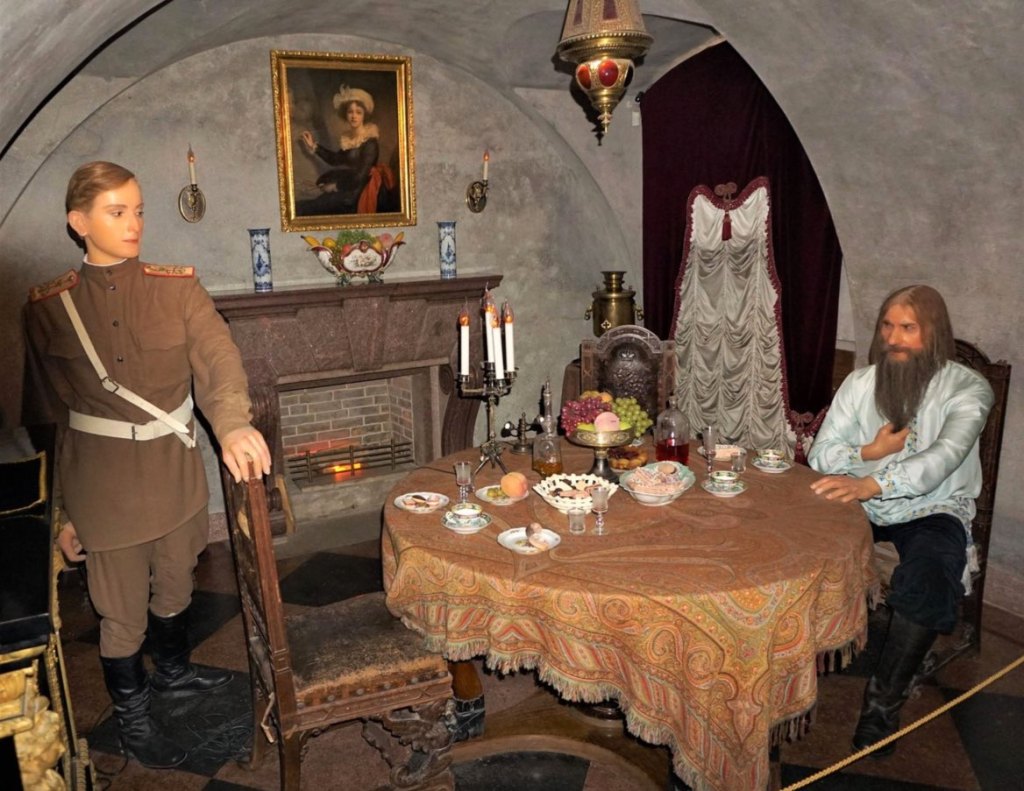
All irrationality of the past, while regrettable, is rational because it was necessary. However, when the human race stops at a stage of development which it should have passed, when it finds itself in contradiction with the possibilities which the historical situation offers, then its state of existence is irrational or, if Marx had used the term, pathological. Both Marx’s and Dr. Freud’s concepts of pathology can be understood fully only in terms of their evolutionary concept of individual and human history. The victim of exterior suggestion is never quite an innocent victim, for his own quota of consent must also be present. It is perfectly true that environment does count, and often heavily, in the sum of life. However, if one’s faith is strong enough or if one’s understanding is deep enough, it is also true that the quest can be pursued effectively anywhere, be it a slum tenement or a stockbroker’s office. It is easier to pursue it in some places, harder in others, but the law of compensation always operates to even matters out. If there is a total giving-up of oneself to this higher aim, sooner or later there will be a total result, whatever the external circumstances may be. What is in a man, in his character, his mind, and his heart is, in the end, much more important than what is in his surroundings; but his surroundings have their own importance, for they either limit or they promote what he can do. With most people the reaction to their environment and to events is mainly impulsive and mostly uncontrolled. So the first step for them is to become conscious of what they are doing, the second being to refuse to do it when reflection and wisdom dictate a better course. All this implies a taking hold of the self and a disciplining of its mechanism—body, feelings, and thoughts. It leads to using the self with awareness and functioning it with efficiency. #RandolphHarris 17 of 19

Being a firefighter is very rewarding, but it also comes with risks, and even recovery can have unforseen risks. A firefighter we will call Brunno Groning shares his story with us. “Four months out of the fire academy, I had had a lot of garbage runs, you know, smoke scares and pots of food. Then one day we had a fire in an attic, and we had the old service masks, just a canister and a face piece. I was climbing through the attic, and the flap of my coat kept coming down over the intake hole of my mask. It was cutting my air off, and the only air I was getting was the air that I was breathing out. I was hyperventilating. The next thing I knew, I was lying on my side, and I thought, “What the (expletive) is going on here?” I was laying on a rafter, and I just rolled over and fell through the plasterboard into a closet. There were no injuries or anything. Looking back on it, I thought, ‘Hey, I could have died up there.’ I could have been pinned or whatever and never come out. After that, three of us were on top of a house extension, it was a summer kitchen, and we were pulling some boards down when the whole thing collapsed. Fire and the rot of the old timbers brought it down. I didn’t know I was injured until I took about four steps, and my leg went out that way. Bot the led and the ankle were broken. They sent me to Mercy Hospital, that’s where they used to send us, and the hospiutal sent me home. To let the swelling go down, they said. The doctor told me to come in on Saturday and he would put it in a cast. The guy was a boozer, and I looked at him that morning, and he had half a jacket on. I looked down, and he had two different shoes on, a brown wingtip and a black one. And I said, ‘Oh, (expletive).’ When he was wrapping the foot, I kept telling him he was wrapping it too tight. He said he had to go play golf. He said, ‘If your toes turn blue, come back in.’ Well, I got home, and they turned black on me. So I went to the hospital, and they took that cast off and put another one on. #RandolphHarris 18 of 19

“I was out of work seven months that time. I had to go for whirlpool treatments, and one day the leg was in the whirlpool and the technician came in and said he had to take the hospital rig to a fire, so he left. That temperature gauge on the side climbed up in the red, and I was like, ‘What’s going on here?’ I wound up with blisters on my leg from that. If it had been too hot to start with, I couldn’t have put my leg in it. But it was like, you know, if you’re sitting in a warm tub you can stand the water getting hotter and hotter. The guy, being in a rush to get to the fire, didn’t adjust the temperature right. So you could day I was in a job that was dangerous, and I was surrounded by people who were dangerous, too.” It is perfectly true that environment does count, and often heavily, in the sum of life. However, it is also true that is one’s faith is strong enough or if one’s understanding is deep enough, the quest can be pursued effectively anywhere, be it a slum tenement or a stockbroker’s office. It is easier to pursue it in some places, harder in other, but the law of compensation always operates to even matter out. If there is a total giving-up of oneself to this higher aim, sooner or later there will be a total result, whatever the circumstances may be. What is a man, in his character, his mind, and his heart is, in the end, much more important than what is in his surroundings; but his surroundings have their own importance, for they either limit or they promote what he can do. Please show support for the Sacramento Fire Department by making a contribution. Wisdom is the greatest good, for it does not depart for man. I pledge allegiance to the flag of the United States of America, and to the Republic for which it stands, one nation, under God, indivisible, with liberty and justice for all. #RandolphHarris 19 of 19


And can I ever bid these joys farewell? Yes, I must pass them for a nobler life, where I may find the agonies, the strife of human hearts: for lo! I see afar, o’ersailing the blue cragginess, a car and steeds with streamy manes–the charioteer looks out upon the winds with glorious fear: and now the numerous tramplings quiver lightly along a huge cloud’s ridge; and now with sprightly wheel downward come they into fresher skies, tipt round with silver from the sun’s bright eyes.
This Mother’s Day, treat your loved one with a delightful brunch experience at Winchester Mystery House, complete with delicious food, live music and a Mansion Tour! 💐

Tickets on sale now, learn more at the link in bio. https://winchestermysteryhouse.com/

I Will Meet You Once Again Beyond the Grave

With its rapid expansion, its exploitative methods, its desperate competition, and its peremptory rejection of failure, post-bellum America was like a vast human caricature of the Darwinian struggle for existence and survival of the fittest. Successful business entrepreneurs accepted by instinct the Darwinian terminology which portrayed the conditions of their existence. Businesspeople are not commonly articulate social philosophers, but a rough reconstruction of their social outlook show how congenial to their thinking were the plausible analogies of social selection, and how welcome was the expansive evolutionary opportunism of the Spencerian system. In a nation permeated with the gospel of progress, the incentive of pecuniary success appealed even to many persons whose ethical horizons were broader than those of business enterprise. “I perceive clearly,” wrote Walt Whitman in Democratic Vistas, “that the extreme business energy, and this almost maniacal appetite for wealth prevalent in the United States of America, are parts of amelioration and progress, indispensably needed to prepare the very results I demand. My theory includes riches, and the getting of riches…” No doubt there were many to applaud the assertion of the railroad executive Chauncey Depew that the guests at the great dinners and public banquets of New York City represented the survival of the fittest of the thousands who came there in search of fame, fortune, or power, and that it was “superior ability, foresight, and adaptability” that brought them successfully through the fierce competitions of the metropolis. #RandolphHarris 1 of 21
James J. Hill, another railroad magnate, in an essay defending business consolidation, argued that “the fortunes of railroad companies are determined by the law of the survival of the fittest,” and implied that the absorption of smaller by larger roads represents the industrial analogy to the victory of the strong. And John D. Rockefeller, speaking from an intimate accquaintance with the methods of competition, declared in a Sunday-school address: “The growth of a large business is merely a survival of the fittest…The American Beauty rose can be produced in the splendor and fragrance which bring cheer to its beholder only by sacrificing the early buds which grow up around it. This is not an evil tendency in business. It is merely the working-out of a law of nature and the law of God.” The most prominent of the disciples of Spencer was Andrew Carnegie, who sought out the philosopher, became his intimate friend, and showered him with favours. In his autobiography, Mr. Carnegie told how troubled and perplexed he had been over the collapse of Christian theology, until he took the trouble to read Darwin and Spencer. “I remember that light came as in a flood and all was clear. Not only had I got rid of theology and the supernatural, but I had became my motto, my true source of comfort. Man was not created with an instinct for his own degradation, but from the lower he had risen to the higher forms. Nor is there any conceivable end to his march to perfection. His face is turned to the light; he stands in the sun and looks upward.” #RandolphHarris 2 of 21

Perhaps it was comforting, too, to discover that sociual laws were founded in the immutable principles of the natural order. In an article in the North American Review, which he ranked among the best of his writings, Mr. Carnegie emphasized the biological foundations of the law of competition. However much we may object to the seeming harshness of this law, he wrote, “It is here; we cannot evade it; no substitutes for it have been found; and while the law may sometimes be hard for the individual, it is best for the race, because it insures the survival of the fittest in every department.” Even if it might be desirable for civilization eventually to discard its individualistic foundation, such a charge is not practicable in our age; it would belong to another “long succeeding sociological stratum,” whereas our duty is with the here and now. The reception accorded to Spencer’s social ideas cannot be disassociated from that accorded to the main body of his thought; however some part of his success probably came because he was telling the guardians of American society what they wanted to hear. Grangers, Greenbackers, Single Taxers, Knights of Labor, trade unionists, Populists, Socialists Utopian and Marxian—all presented challenges to the existing pattern of free enterprise, demanded reforms by state action, or insisted upon a thorough remodeling of the social order. Those who wished to continue in established ways were pressed for a theoretical answer to the rising voices of criticism. Said ironmaster Abram S. Hewitt: “The problem presented to systems of religion and schemes of government is, to make men who are equal in liberty—that is, in political rights and therefore entitled to the ownership of property—content with that inequality in its distribution which must inevitably result from the application of the law of justice.” #RandolphHarris 3 of 21

This problem the Spencerian system could solve. Conservatism and Spencer’s philosophy walked hand in hand. The doctrine of selection and the biological apology for laissez faire, preached in Spencer’s formal sociological writings and in a series of shorter essays, satisfied the desire of the select for a scientific rationale. Spencer’s plea for absolute freedom of individual enterprise was a large philosophical statement of the constitutional ban upon interference with liberty and property without due process of law. Spencer was advancing within a cosmic framework the same general political philosophy which under the Supreme Court’s exegesis of the Fourteenth Amendment served so brilliantly to turn back the tide of state reform. It was this convergence of Spencer’s philosophy with the Court’s interpretation of due process which finally inspired Mr. Justice Holmes (himself an admirer of Spencer) to protest that “the fourteenth Amendment does not enact Mr. Herbert Spencer’s Social Statics.” The social views of Spencer’s popularizers were likewise conservative. Youmans took time from his promotion of science to attack the eight-hour strikers in 1872. Labour, he urged in characteristic Spencerian vein, must “accept the spirit of civilization, which is pacific, constructive, controlled by reason, and slowly ameliorating and progressive. Coercive and violent measures which aim at great and sudden advantages are sure to prove illusory.” #RandolphHarris 4 of 21

He suggested that, if people were taught the elements of political economy and social science during their education, such mistakes might be avoided. Youmans attacked the newly founded American Social Science Association for devoting itself to unscientific reform measure instead of a “strict and passionless study of society from a scientific point of view.” Until the laws of social behaviour are known, he declared, reform is blind; the Association might do better to recognize a sphere of natural, self-adjusting activity, with which government intervention usually wreaks havoc. There was precious little scope for meliorist activities in the outlook of one who believed with Youmans that science shows “we are born well, or born badly, and that whoever is ushered into existence at the bottom of the scale can never rise to the top because the weight of the universe upon him.” Acceptance of the Spencerian philosophy brought with it a paralysis of the will to reform. One day, some years after the publication of Progress and Poverty, Youmans in Henry George’s presence denounced with great fervour the political corruption of New York and the selfishness of the rich in ignoring or promoting it when they found it profitable to do so. “What do you propose to do about it?” George asked. Youmans replied, “Nothing! You and I can do nothing at all. It’s a matter of evolution. We can only wait for evolution. Perhaps in four or five thousand years, evolution may have carried men beyond this state of things.” #RandolphHarris 5 of 21

The peak of Spencer’s American popularity probably was reached in the fall of 1882, when he made a memorable visit to the United States of America. Despite his aversion to reporters, Spencer received much attention from the press, and hotel managers and railway agents competed for the privilege of serving him. Finally yielding one synthetic “interview” with the gentlemen of the press, Spencer expressed (it was a slightly jarring note) his fear that the American character was not sufficiently developed to make the best use of its republican institutions. The prospect for the future, however, was encouraging; from “biological truths,” he told the reporters, he inferred that the eventual mixture of the allied varieties of the Aryan race forming the population would produce “a finer type of man than has hitherto existed.” Whatever difficulties the Americans might have to surmount, they might “reasonably look forward to a time when they will have produced a civilization grander than any the World has known.” The climax of that visit was a hastily arranged banquet at Delmonico’s, which gave American notables an opportunity to pay personal tribute. The dinner was attended by leaders in American letters, science, politics, theology, and business. Spencer’s message to this distinguished audience was somewhat disappointing. He had observed, he said, an excess of hurry and hard labour in the tempo of American life, too much of the gospel of work; his friends would ruin their constitutions with exertion. #RandolphHarris 6 of 21

The guests rewarded this appeal against strenuosity with an onerous round of fulsome tributes, which painfully embarrassed even the vain Spencer. William Graham Sumner ascribed the foundations of sociological method to the guest of honour; if the South had been familiar with his Social Statics, Carl Schurz suggested that the Civil War might have been averted; John Fiske asserted that his service to religion were as great as his services to science; and Henry Ward Beecher struck a rather incongruous note at the end of a hearty testimonial by promising to meet him once again beyond the grave. However imperfect the appreciation of the guests for the niceties of Spencer’s thought, the banquet showed how popular he had become in the United States of America. When Spencer was on the dock, waiting for the ship to carry him back to England, he seized the hand of Carnegie and Youmans. “Here,” he cried to reporters “are my two best American friends.” For Spencer it was a rare gesture of personal warmth; but more than this, it symbolized the harmony of the new science with the outlook of a business civilization. The rise of critical reformism in economics and sociology, of pragmatism in philosophy, and of other tendencies that undermined Spencer’s vogue and displaced his ideas—this remains to be treated elsewhere. It is enough to say that, surviving until 1903, he outlived by many years the popularity of his works. In his old age, he was aware that the current of the times was running against his preaching, and a visitor of this period reported finding him “grievously disappointed” at the neglect of his political doctrines, the decline of individualism, and the rise of socialist ideals. “Herbert Spencer was a name to conjure with twenty-five years ago,” taunted a religious observer in 1917. “But how the mighty are fallen! How little interest is shown in Herbert Spencer at the present time!” #RandolphHarris 7 of 21

While it was true that for younger men Spencer’s name no longer carried its old ring of authority, the writer had forgotten that men who were then in their maturity—the publicists, industrialists, teachers, and writers of the governing generation—had spent their youth with Spencer. Whatever had become of Synthetic Philosophy, the mark of his evolutionary individualism was indelible. As late as late as 1915, the Forum had seen fit to reprint a collection of Spencer’s individualistic essays, “The Man Versus the State,” “The New Toryism,” “The Coming Slavery,” “Over-Legislation,” “The Sins of Legislators,” and others, along with commentaries by a galaxy of Republican Party luminaries brilliant enough to dispel all doubt of the vitality of Spencer’s influence among outstanding national leaders. Nicholas Murray Butler, Charles William Eliot, Representative Augustus P. Gardner, Elbert H. Gary, David Jayne Hill, Henery Cabot Lodge, Elihu Root, and Harlan Fiske Stone responded to the editor’s request for contributions by “leaders of thought in America who know the tremendous value of Spencer’s work in our social system.” Hill’s remark that he saw at work in this country the same fatal and illogical procedure that Spencer had been fighting in England, “namely, the gradual imposition of a new bondage in the name of freedom…the increasing subjection of the citizens to the growing tyranny of officialism,” made it clear that the essays were being republished as a manifesto against Wilson’s New Freedom. #RandolphHarris 8 of 21

Long after individualism had become a national tradition, Spencer’s doctrines were imported into the Republic. Yet in the expansive age of our industrial culture, he became the spokesman of that tradition, and his contribution materially swelled the stream of individualism if it did not change its course. If Spencer’s abiding impact on American thought seems impalpable to later generations, it is perhaps only because it has been so thoroughly absorbed. His language has become a standard feature of the folklore of individualism. “You can’t make the World all planned and soft,” says the businessman of Middletown. “The strongest and best survive—that’s the law of nature after all—always has been and always will be.” Man is not required to acquire a perfect character, a complete absence of all faults. In new surroundings or circumstances and under different pressures, new faults may appear. He is required to remove just sufficiently the obstructive conditions within himself. The herd of men are ruled by physical instincts and changing emotions. The aspirant for true individuality must set up higher standards of self-control, personal stability, and harmonious balance. Though man assigns little importance to his thoughts, contrasted with his deeds, their total effect is to dictate his policies which in turn dictate his deeds. If Universal obligations may have to be fulfilled, at least this will not be done in total ignorance. It will be with resignation rather than hatred, and with hope for higher attainment. The habit of always remembering that he is committed to the Quest and to the alteration of character which this involves should help him to refuse assent in temptation and reject despondency in tribulation. #RandolphHarris 9 of 21

We now have a considerable body of knowledge, both clinical and empirical, as to the conditions which, in psychotherapy, foster the process of learning to be free, of becoming oneself. We have found, this experience comes about in a close, warm, understanding relationship in which there is freedom from such things as threat, and freedom to choose and be. From the practical and research information currently available, it seems that a growth-facilitating of freedom-promoting relationship contains at least three significant qualities. When the psychotherapist is what he is, when in the relationship with his client he is genuine and without “front” of facade, openly being the feelings and attitudes which at that moment are following in him, personal change is facilitated. Congruence describes this condition. If appropriate, congruence is the feelings the therapist is experiencing which are available to him, to his awareness, and he can live these feelings, be them, and able to communicate them. No one fully achieves this condition, yet the more the therapist can listen acceptantly to what is going on within himself, and the more he is able to be the complexity of his feelings, without fear the higher the degree of his congruence. Each of us senses this quality in people in many ways. One of the things that offends us about radio, Internet, TV News, and TV commercials is that it is evident from the tone of voice that the announcer is “putting on,” playing a role, saying something he or she does not feel. That is incongruence. Each of us knows individuals whom we somehow trust because we sense that they are being what they are, that we are dealing with the person, not with a polite or professional front. It is this quality of congruence which we sense that research has found to be associated with successful therapy. The more genuine and congruent the therapist has in the relationship, the more probability there that a change in personality in the client will occur. #RandolphHarris 10 of 21

In our case study with Clare something fascinating happened. In the morning paper, a notice about a shipwreck brought back to her that part of her dream in which she had drifted on waves. When she had time to think about this dream, four associations occurred to her. One was a fantasy of a fantasy of a shipwreck in which she was drifting on the water. When a strong man put his arms around her and saved her, she was in danger of drowning. With him she had a feeling of belonging, and of never-ending protection. He would always hold her in his arms and never leave her. The second association concerned a novel which ended in a similar tone. A girl who had gone through disastrous experiences with several men finally met the man she could love and upon whose devotion she could rely. Then she remembered a fragment of a dream that she had at the time she became familiar with Bruce, the older writer who had encouraged her and implicitly promised to be her mentor. In that dream, she and Bruce walked together hand in hand. He was a hero or a demigod, and she was overwhelmed by happiness. To be singled out by this man was like an indescribable grace and blessing. When recalling this dream Clare smiled, for she had blindly overrated Bruce’s brilliance and only later had seen his narrow and rigid inhibitions. This memory made her recall another fantasy, or rather a frequent daydream, which she had almost forgotten though it had played quite a role at college, before the time of her crush on Bruce. It circled around the figure of a great man, endowed with superior intelligence, wisdom, prominence, and wealth. And this great man made advances to her because beneath her inconspicuous exterior he had snesed her great potentialities. #RandolphHarris 11 of 21

If given a break, he knew that she could be beautiful and achieve great things. He devoted all his time and energy to her development. He did not merely spoil her by giving her beautiful garments and an attractive home. Under his guidance, not only at becoming a great writer but also at cultivating mind and body, she had to work hard. Thus, he made a beautiful swan out of someone who had great potential. It was a Pygmalion fantasy, created from the point of view of the girl to be developed. She also had to be devoted to her master exclusively. Clare believed associations expressed a wish for an everlasting love. She believed that every woman wanted this. Because Peter did not give her a feeling of security and permanent love, she recognized that this wish was enhanced. With these associations, without becoming aware of it, Clare touched rock bottom. The special characteristics of the “love” that she craved, she only saw later. Otherwise, the most significant part of the interpretation is the recognition that Peter did not give her what she wanted. As if she had already known it, it is made casually, but it was her first conscious realization of any deep dissatisfaction with the relationship. Therefore, only the conscious facing of problems counts, but also every step taken forward toward this goal. #RandolphHarris 12 of 21

Have you ever felt as if you were being pulled into someone’s story? Maybe you have met someone in your life who could tell you things so vividly it made you see what they were saying in your mind. Their words might have ignited emotions with you. Maybe you could smell the things they were talking about—the fresh bread they spoke of baking. If youy can recall a time like this, then you can safely say that you have been covertly hypnotized. without even knowing, you have been pulled into a place the speaker wanted you. You had not expected to be seeing things so vividly, you had not opened a book or turned on the television, yet there you were, seeing it all unfold. It felt as if you had experienced it with the person, even though you had never left where you stood. When you find yourselfd taking the word of what the speaker is saying, you are not using your own analytical mind. When this happens, your brain takes in what is being said as truth. This is dangerous. Greed can be motivated in two ways: By a physiological imbalance which produces the greedy desire for food, drink, etcetera. Once the physiological need is satisfied, greed ceases, unless the imbalance is chronic. By a psychological imbalance, especially the presence of increased anxiety, loneliness, insecurity, lack of identity, etcetera, which is alleviated by the satisfaction of certain desires like those for food, satisfaction with pleasures of the flesh, power, fame, property, etcetera. This type of greed is, in principle, insatiable, unless a person’s anxiety, etcetera, ceases or is greatly reduced. This first type of greed is reactive to circumstances; the second is inherent in the character structure. #RandolphHarris 13 of 21
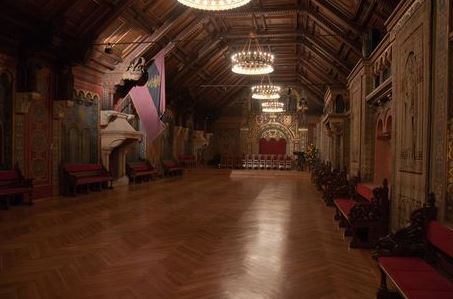
The greedy feeling is highly egocentric. Whether it is hunger, thirst, or desire for pleasures of the flesh, the greedy person wants something for himself exclusively, and that by which he satisfies his desire is only a means for his own purposes. When we speak of arousal of pleasures of the flesh in its greedy form where the other person becomes primarily an object, this is obvious. In the nongreedy feeling, there is little egocentricity. Experience is not needed to preserve one’s life, to allay anxiety, or to satisfy or enhance one’s ego; it does not serve to still a powerful tension, but begins precisely where necessity in the sense of survival or still of anxiety ends. In the nongreedy feeling, the person can let go of himself, is not compulsively holding on to what he had and what he wants to have, but is open and responsive. The concept of alienation has its roots in an early phase of the Western tradition, in the thought of Old Testament prophets, more specifically in their concept of idolatry. The prophets of monotheism did not denounce heathen religions as idolatrous primarily because they worshiped several gods instead of one. The essential difference between monotheism and polytheism is not one of the numbers of gods, but lies in the fact of alienation. Man spends his energy, his artistic capacities on building an idol, and then he worships this idol, which is nothing but the result of his own human effort. His life forces have flowed into a “thing,” and this thing having become an idol, is not experienced because of his own productive effort, but as something apart from himself, over and against himself, which he worships and to which he submits. As the prophet Hosea says (XIV, 8): “Assur shall not save us; we will not ride upon horses; neither will we say anymore to the work of our hands, you are our gods; for in thee the fatherless finds love.” Idolatrous man bows down to the work of his own hands. The idol represents his own life-forces in an alienated form. #RandolphHarris 14 of 21
The principle of monotheism, in contrast, is that man is infinite, that there is no partial quality in him which can be hypostatized into the whole. God, in the monotheistic concept, is infinite, that there is no partial quality in him which can be hypostatized into the whole. God, in the monotheistic concept, is unrecognizable and indefinable; God is not a “thing.” Man being created in the likeness of God is created as the bearer of infinite qualities. In idolatry man bows down and submits to the projection of one partial quality in himself. He does not experience himself as the center from which living acts of love and reason radiate. He becomes a thing, his neighbour becomes a thing, just as his gods are things. “The idols of the heathen are silver and gold, the work of men’s hands. They have mouths but they speak not; eyes have they, but they see not; they have ears, but they hear not; neither is there any breath in their mouths. They that make them are like them; so is everyone that trusts in them,” reports Psalm 135. In programs of education aimed at the prevention of mental illness, it would be well to recognize the secondary school as an institution providing an excellent opportunity to reach large numbers of students with instruction in the beneficial principles of mental hygiene. At the early school age, it is more important that they be given sound suggestions as to how to maintain healthy attitudes, how to manage conflicts, and how to deal with strong emotions than it is that they be informed about mental illness. However thoughtful, courses in mental hygiene are not enough. #RandolphHarris 15 of 21

Here is an interesting story from a firefighter we will call Hans Fallada. “When I got called for the fireman’s job, I was sent to the fire department training school to learn all the things you must know to be a professional firefighter. The training school confronts you with a lot of tough situations. They put you in heavy smoke without masks, so you get a sense of what it’s like to be in a terribly hostile environment, one that’s claws around your neck, just squeezing and squeezing. You get an understanding of what it’s like to work in complete darkness, where you’re totally blind. This is what it’s like to be in a burning building, you learn. You’re also taught many other things. You learn how to use the equipment, the fire trucks, the Halligan tool (it’s a pry bar with a form on one end and a point and adz on the other), the axes, the claw tools, and hooks. You’re taught how to use hoses and nozzles, how to stretch hose, hump hose, pack hose. You learn the science of fire. You learn how fire travels. You learn the various kinds of building construction. You know what kind of windows to expect in different buildings, and you know how to deal with those windows and whether to break them or not. In a way, it’s like studying to be a lawyer or a doctor. In law school, the student studies law books, goes through mock trials, and says, ‘Hey, I really know what I’m doing.’ Then he finds it’s a lot different when he’s in an actual courtroom. The medical student studies chemistry, physiology, anatomy, and how to use a scalpel. But once he gets into an actual operating room, it’s different—suddenly people’s lives are at stake. It’s no longer an academic confrontation. It’s right now. #RandolphHarris 16 of 21
“It’s the same thing with a firefighter. You learn all these things in training school so that when you are out in the field in an emergency situation, you know where to go and what to do, so that your actions will be effective. Here I was, a trained firefighter. I got assigned to a firehouse in Sacramento. The men I worked with there were great guys, what we call stand-up guys. They had fast lips, they could get around any situation with their mouths when they couldn’t do it with their dukes. You meet all kinds of personalities in a firehouse. They’re all fundamentally good guys who care about other people. That, in my opinion, is what sets them apart. That’s not to say that you have a room full of Francis of Assisi types figuring out how they’re going to help the poor. But in an emergency situation they care about what happens to people. I got to the firehouse, met these guys. Then, of course, the alarm started ringing. So I went through a few alarms. Mayve it was a false alarm, a garbage pail on fire, a car accident, maybe somebody went out to get a paper and left the soup on the stove. All kinds of things can happen. I remember the first fire. Not really a great fire, but there were a couple of things that happened that day that stick in my memory. The area outside the firehouse is called the apron. When the fire trucks are coming out, two firemen are out there stopping traffic. In those days two firemen rode on the back step of the fire engine. We don’t do that anymore because it’s unsafe. I remember being on the back of the rig, it’s two in the afternoon and I’m putting on my coat, with one arm in the D-ring hanging there like a subway strap. #RandolphHarris 17 of 21

“The truck is stopped momentarily, waiting for the traffic to halt. I look up, and who walks by but a priest from St. Mary’s parish up by 818 N street. He looks over, and he blesses me and the guy beside me on the back of the truck. Now, the other guy may be an atheist for all I know, but I have this priest blessing me, so I make the sign of the cross, a conditioned response like a dog salivating to a stimulus. We get going, and I’m thinking, ‘What’s going on here? I’m just doing my job, and this priest is blessing me on the sidewalks of the City of Sacramento.’ I guess in his head he’s saying, these guys have a tremendously tough job and they might me in a bit of trouble, so I’ll bless them. But at that point I don’t want anybody reminding me that I might be in trouble. All i know is that I’ve been blessed, and that we are going to this alarm. From blocks away I could smell the wood burning. It has a particular smell, not like a car fire, for instance, which has a heavy smell of plastic and rubber. This was a two-story frame building in a row of houses typical of that area of Sacramento, generally lived in by working-calls people. The first thing I thought of, what every firefighter thinks of, was: ‘is there anybody inside, how bad is the fire, and what is the immediate thing to do?’ One of the saving things about being a trooper in a way is that there is leadership you can rely on, and in the fire department we have a lieutenant or a captain on every truck. I was probably with the captain, because I was a probationary firefighter, and they always put a probie with the captain so the captain can keep an eye on on him and assess his performance. The captain has to make reports and decide whether he wants to keep him or transfer him after six months. #RandolphHarris 18 of 21

“I’m in an engine company, and the captain says, ‘Okay, stretch a two-and-a-half-inch line.’ This tells us it’s a serious fire, because for a small fire you stretch a smaller line. This was the way we were trained. So we stretch the hose into the building, and I’m still thinking that I’m probably in better shape than the others because I was blessed. The ladder company arrives, and they immediately go in and do a search. I don’t remember anybody being caught in the fire, maybe somebody was, but it didn’t matter to me at the time. I had my job to do. We’re on our stomachs, crawling into this fire, and I’m humping, pulling, this gargantuan snake of a hose filled with water. Fifty feet of it weighs ninety pounds when it’s dry, so you can imagine how much it weighs when it’s filled with water. There is black, dense smoke, and we can’t see an inch in front of us. There’s a red glow in the background, and we’re pushing toward it. Without masks. Making it a “snotty” fire, that’s one where for every square inch of smoke you ingest a square inch of something else comes out through your eyes, nose, and mouth. The red glow is in the back of the building, and we learn later that the fire has gone out through the back windows and is shooting up to the afternoon sky. We’re on our stomachs, the guy on the nozzle, myself, and the captain behind me, advancing slowly into the fire. Then all of a sudden, this big guy, another firefighter, comes in and jumps on top of the hose, he grabs it from the hands of our nozzle man, and he runs with it in a crouch toward the red glow. Apparently we’re not moving fast enough for him for some reason. #RandolphHarris 19 of 21

“None of us have smoke masks or SCBAs [self-contained breathing apparatus], so we’re all choking. Then we start cursing, ‘Hey, what the (expletive) is this guy doing?’ And our nozzle man goes running after the guy, following the string of hose that’s dancing in front of him. This big guy pulls up maybe fifteen feet, throws himself on the floor, opens the nozzle, and hits the ceiling. The red glow darkens to blackness. He has stopped the fire. It’s amazing, you can have a whole big room on fire, and a two-and-a-half inch hose will put it out in twelve seconds. My captain was really mad. He said, ‘What the (expletive) are you doing?’ And the guy said, ‘Listen, I got the job done, right?’ Well, the captain let it go. I didn’t say anything because I was new on the job. But I felt that this was our line and our hose, and our territory had been infringed on. Later I heard about the old-time firefighters in Sacramento back in the nineteenth century, when territory was the main thing and there was competition between one firehouse and another. When an alarm came, they’d send one firefighter ahead with a barrel while they got the horses and everything else ready, and he’d slip the barrel over the fire hydrant. And if another gang tried to use it, he’d fight them off. They’d have big fistfights over this hydrant, because the first fire of mine I just knew that somehow we should have put out the fire, particularly, I suppose, in view of the fact that I was well protected by the blessing. What I learned is that it is your job to control the nozzle, and that every fire is a personal confrontation. This is your job, and you have to go in there and put the fire out, and a lot of people are watching you to be assured that the fire is being put out. #RandolphHarris 20 of 21

“Firefighting is a highly coordinated job. You don’t begin ventilating a building, for instance, opening windows or doors or breaking windows, until there is water in the hose and the water is shooting out of it. Then you operate in a mathematically correct way. What you’re doing is creating pressure inside the room, and the pressure has to have some way of being released, so you break some windows. This is called ventilation. Otherwise, you have the energy of the fire and the energy of the water shooting from the hose, and you have nowhere for all this energy to go. It will just blow back at you toward the door you came in, where there’s oxygen. That is what creates flashovers fires, when the fire and heat search for oxygen and the fire flashes as it consumes the oxygen. I carried that lesson with me for the rest of my life. The hose is your job, and you have to do the job. If you don’t do it and somebody else does, that’s hard to live with.” Please be sure to donate to the Sacramento Fire Department. I pledge allegiance to the flag of the United States of America, and to the Republic, for which it stands, one nation, under God, indivisible with liberty and justice for all. Forsake not wisdom, and wisdom will preserve you; cherish it, and it will keep you. Enter not the path of the wicked, and walk not in the way of evil men. Avoid evil, turn away from it and do good. Now, therefore, hearken unto wisdom, for happy are they that keep its ways. He who find wisdom finds true life, and obtains favour of the Lord. It is not the place that honours the man, but the man that honours the place. Do not consider yourself a gaint, and your neighbour, small as a locust. He who covets things that are not rightfully his, will not only be disappointed in his wish, but even lose the things that belong to him. #RandolphHarris 21 of 21

The Winchester Mystery House

One afternoon in December of 1890, at about one o’clock in the afternoon, Mrs. Winchester was sitting with three of the servant’s children in the Venetian Dining Room. She was reading to them. She rang the annunciator for the parlour-maid, when the door opened, Mrs. Winchester looked up. “I saw the figure of a woman come in and walk up to the side of the table,” she recollected. “She stood there a second or two, and then turned to go out again, but before reaching the door she seemed to dissolve away.” Mrs. Winchester described her as a “blue, short-looking woman” dressed in a blue muslin. “I hardly saw the face,” she added, “which scarcely seemed to be defined at all.” It is interesting that none of the three children saw her, and Mrs. Winchester only mentioned the event to Mr. Hansen, one of the carpenters who lived on the estate.
In the succeeding two months two servants saw the same figure in a blue dress in other rooms of the house; one saw her in the daylight, and one saw her in candlelight. Neither servant was aware of Mrs. Winchester’s own experience. The two young women had become accustomed to the “noises” within the house, but the experience of seeing the lady in blue prompted one of them to give her notice. Mrs. Winchester suffered from other manifestations. On one occasion she glimpsed a ball of brilliant light within an otherwise darkened room. She felt an icy wind in a closed room. Then the strange incidents seemed to subside, and from 1891 onwards, the strange events became more serious.

Please come and enjoy a delicious meal in Sarah’s Café, stroll along the paths of the beautiful Victorian gardens, and wonder through the miles of hallways in the World’s most mysterious mansion. For further information about tours, including group tours, weddings, school events, birthday party packages, facility rentals, and special events please visit the website: https://winchestermysteryhouse.com/

Please visit the online giftshop, and purchase a gift for friends and relatives as well as a special memento of The Winchester Mystery House. A variety of souvenirs and gifts are available to purchase. https://shopwinchestermysteryhouse.com/

The Next One Will be Better

Whoever does a wrong to another man is not doing it to him alone. He does it also to himself. The nature of the means used will help to predetermine the nature of the end reached. Even though mixed with some good, an evil means cannot lead to a good end, but only to one of its own kind. When it is sought, the truth comes, but is found only when we are ready. This is why the aspirant must take himself in hand, must improve his character and discipline his emotions. There is to be nothing in himself to impede the intuitive power. Moral nobility is not the sole possession of either the rich or the poor, the education or the ignorant. Spencer deplored not only poor laws, but also state-supported education, sanitary supervision other than the suppression of nuisances, regulation of housing conditions, and even state protection of the ignorant medical quacks. He likewise opposed tariffs, state banking, and governmental postal systems. Accused of brutality in his application of biological concepts to social principles, Spenser was compelled to insist repeatedly that he was not opposed to voluntary private charity to the unfit, since it had an elevating effect on the character of the donors and hastened the development of altruism; he opposed only compulsory poor laws and other state measures. Spencer traces the parallels between the growth, differentiation, and integration of society and of animal bodies. Although the purpose of a social organism is different from those of an animal organism, he maintained that there is no difference in their laws of organization. #RandolphHarris 1 of 20
Among socities as among organisms, there is a struggle for existence. Since it made possible successive consolidation of small groups into large ones and stimulated the earliest forms of social cooperation, this struggle was one indispensable to social evolution. It was assumed that in the future these intersocial struggles would lose their utility and die out. The conflict between lower and higher values, between the false and the true interpretation of life, goes on all the time within all men. However, he who brings it into the open and looks it in the face is the man who had gained more than a little wisdom from the impact of experience. The very process of social consolidation brought about by struggles and conquest eliminates the necessity for continued conflict. Society then passes from its barbarous or militant phase into an industrial phase. In the militant phase, society is organized chiefly for survival. It bristles with military weapons, trains its people for warfare, relies upon a despotic state, submerges the individual, and imposes a vast amount of compulsory cooperation. In contest among such societies those best exemplifying these militant traits will survive; and individuals best adapted to the militant community will be the dominating types. The creation of larger and larger social units through conquests by militant states widens the areas in which internal peace and application to the industrial arts become habitual. #RandolphHarris 2 of 20

The militant type now reaches the evolutionary stage of equilibration. There emerges the industrial type of society, a regime of contract rather than status, which unlike the older form is pacific, respectful of the individual, more heterogeneous and plastic, more inclined to abandon economic autonomy in favour of industrial cooperation with other states. Natural selection now works to produce a completely different individual character. Unless there is honest effort to apply practically the knowledge got and the understanding gained from this teaching, unless there is real striving after personal betterment and individual discipline, the interest shown is mere dabbling, not study. Industrial society requires security for life, liberty, and property; the character type most consonant with this society is accordingly peaceful, independent, kindly, and honestly. The emergence of a new human nature hastens the trend from egoism to altruism which will solve all ethical problems. The first moral slip is also the worst one. For the effort to cover it up involves further lapses. Then the road runs downhill from slip to slip. Small mentalities cannot comprehend big truths. Greedy mentalities cannot comprehend generous truths. Bigotry keeps vital facts outside the door of knowledge. This is why philosophic discipline is needed. In the interest of survival, cooperation in industrial society must be voluntary, not compulsory. State regulation of production and distribution, as proposed by socialist, is more akin to the organization of militant society, and would be fatal to the survival of the industrial community; it would penalize superior citizens and their offspring in favour of the inferior, and a society adopting such practices would be outstripped by others. #RandolphHarris 3 of 20

Spencer was animated by the desire to foster a science of society that would puncture the illusions of legislative reformers who, he believed, generally operated on the assumption that social causes and effects are simple and easily calculable, and that project to relieve distress and remedy ills will always have the anticipated effect. A science of sociology, by teaching men to think of social causation scientifically, would awaken them to the enormous complexity of the social organism, and put an end to hasty legislative panaceas. Fortified by the Darwinian conception of gradual modification over long stretches of time, Spencer ridiculed schemes for quick social transformation. The great task of sociology is to chart the normal course of social evolution, to show how it will be affected by any given policy, and to condemn all types of behaviour that interfere with it. Social science is a practical instrument in a negative sense. Its purpose is not to guide the conscious control of societal evolution, but rather to show that such control is an absolute impossibility, and that the best that organized knowledge can do is to teach men to submit more readily to the dynamic factors in progress. This is the function of a true theory of society as a lubricant but not a motive power in progress: it can grease the wheels and prevent friction but cannot keep the engine moving. There cannot be better done than that of letting social progress go on unhindered; yet an immensity of mischief may be done in the way of disturbing, and distorting and repressing, by policies carried out in pursuit of erroneous conceptions. #RandolphHarris 4 of 20

Man is called upon to reconcile spiritual aspirations with life’s demands. Too many people are willing to make an assault upon the outward effects of evil while leaving untouched the inward causes of evil. Those who want only to gratify bodily appetites and have no use for spiritual satisfactions may regard ideals as quite futile. They may find the only rational purpose in human action is to cast out all aims except selfish ones, subordinating all moral restraints to the realization of those aims in the process. However stubborn and intransigent his character may seem, let him never despair of himself. Even if he keeps making mistakes, let him pick himself up and try again. However slow and laborious such a procedure seems, it will still be effectual in the end. He must purify the will by abandoning error. What he does in his personal relations with others or in the way he meets events is no less a part of his spiritual life than his formal exercises in meditation. If the goals of life are not redefined on a higher plane, the status of life remains—hovers—between that of the animal and the human and does not become fully human. He needs to be war of his own animal self and its interfusion with his human self and its hostility to angelic self. A justly balanced picture would show every man to be good in some points, bad in other points. There is no exception to this. Therefore, there is necessity for the false pride of anyone who ignores his bad points. However, in the spiritual aspirant, such pride is not only unnecessary but also deathly to his progress. #RandolphHarris 5 of 20

The tyranny of negative thoughts and negative feelings can and must be broken. For this he can look for help from the best in him and the best in others. It is said that necessity shapes its own morality. This is often true. However, the exceptional man listens to a higher command. As if one were no longer identified with them, if repeated regularly, standing aside from one’s thoughts, observing their nature and results quite critically, becomes a means of self-betterment. It is tremendously important to safeguard the fruits of one’s studies by purification of character. On this Quest, the aspirant’s motives must necessarily be of the highest quality. Each should do what he or she can to prepare himself by learning how to recognize and eliminate weaknesses. It is equally essential to keep the thoughts, emotions, and actions on as high a level as possible. The discipline of self is a prerequisite to the enlightenment of self. It is true that most people realize that they do not yet come anywhere near such an ideal as philosophy proposes to them regarding their personal development. At least if they are aware of the ideal and if they accept it, they will find that practice can make quite a difference. When these first appear, the simple practice of holding back their own negative thoughts, holding back their own negative feelings and nipping them in the bud is the beginning of becoming their own master. If a man regrets his own conduct, be it a single action or a whole course of actions, he will feel some self-contempt and get depressed. This is a valuable moment, this turning of the ego against itself. If he takes advantage of it to ferret out the cause in his own character, in his own person as it got built up through its reincarnations in Jesus as the Christ, he may remold it in a more satisfactory way. This inner work is accomplished by a series of creative and optimistic prayers. #RandolphHarris 6 of 20

The experience I have had with my clients causes me profoundly to disagree with the notion that the individual is no more than a link between a series of complex causes and their inevitable and predetermined effects. When I think of the explanation in which Skinner concurs as to his presence at the conference, I cannot make it apply to human events as I know them. When I try to tell myself, for example, that a Freedom Rider did not choose to expose himself to danger, did not voluntarily risk his life for a right which he valued, and had, as a person, no part in his behaviour, my judgment rebels. When I try to tell myself that behaved in this way, went into a dangerous situation, accepted a brutal beating, served a jail sentence, simply because his genetic constitution and his individual and cultural conditioning caused him to move in certain geographical directions, emit certain sounds when beaten, and further vocalizations when arrested, and that all those behaviours were emitted because he had been conditioned to find them rewarding—this seems to me a most inadequate and degrading view of man. He becomes a meaningless phenomenon in a World which has no sense. If I object to the concept of man as a meaningless molecule in an equation which he had no part in writing, I must be willing to define what I mean when I speak of freedom, when I say that I have observed in others, and have experienced in myself, the process of learning to be free. This may seem especially difficult since, as a behavioural scientist, I agree as much in the psychological as in the physical World. #RandolphHarris 7 of 20

Freedom is essentially an inner thing, something which exists in the living person, quite aside from any of the outward choices of alternatives which we so often think of as constituting freedom. Freedom is a quality where everything—possessions, identity, choice—is taken away from one. However, even months and years in a hostile environment will prove that everything can be taken from a man but one thing: the last of the human freedoms—to choose one’s own attitude in any given set of circumstances, to choose one’s own way. It is this inner, subjective, existential freedom which I have observed. It is the realization that “I can live myself, here and now by my own choice. It is the quality of courage which enables a person to step into the uncertainty of the unknown as he chooses himself. It is the discovery of meaning from within oneself, meaning which comes from listening sensitively and openly to the complexities of what one is experiencing. It is the burden of being responsible for the self one chooses to be. It is the recognition by the person that he is an emerging process not a static product. The individual who is thus deeply and courageously thinking his own thoughts, becoming his own thoughts, becoming his own uniqueness, responsibly choosing himself, may be fortunate in having hundreds of objective outer alternatives from which to choose, or he may be unfortunate in having none, but his freedom exists regardless. So, we are speaking of something which exists within the individual, of something phenomenological rather than objective, but to be prized. #RandolphHarris 8 of 20
In defining this experience of freedom is that it exists not as contradiction to the picture of the psychological universe as a sequence of cause and effect, but as a complement to such a universe. Freedom, rightly understood, is a fulfillment, by the person, of the ordered sequence of his life. The free man…believes in destiny, and believes that it stands in need of him. He moves out voluntarily, freely, repsonsibly, to play his significant part in the World whose determined events move through his spontaneous choice and will. He who forgets all that is caused and makes decisions out of the depths…is a free man, and destiny confronts him as the counterpart of his freedom. It is not his boundary but his fulfillment. This is the answer of the modern philosopher to the prevailing view that man is no more than the sum of his condition. Even more is no more than the sum of his conditioning. Even more convincing than the intellectual answer is the experience of one client after another, as he moves in therapy toward an acceptance of the realities of the World outside and inside himself, and moves toward becoming a responsible agent in this real World. We are speaking then, of a freedom which exist in the subjective person, a freedom which he courageously uses to live his potentialities. We are speaking of a freedom in which the individual chooses to fulfill herself by playing a responsible and voluntary part in brining about the destined events of his World. This experience of freedom is for my clinets a most meaningful development, one which assists them in becoming human, in relating to others, in being a person. #RandolphHarris 9 of 20

Contemporary industrial man has undergone an intellectual development to which we do not yet see any limits. Simultaneously he tends to emphasize those sensations and feeling experiences which he shares with the animal: desires for pleasures of the flesh, aggression, fright, hunger, and thirst. The decisive question is, Are there any emotional experiences which are specifically human and which do not correspond to what we know as being rooted in the lower brain? The view is often voiced that the tremendous development of the neocortex has made it possible for man to arrive at an ever-increasing intellectual capacity but that his lower brain is hardly different from that of his primate ancestors and hence that, emotionally speaking, he has not developed and can at best deal with his “drives” only by repression or control. There are specifically human experiences which are neither of an intellectual character nor identical with those feeling experiences which by and large are like those of the animal. Not being competent in the field of neurophysiology, I can only guess that relations between the large neocortex and the old brain are the basis for these specifically human feelings. There are reasons to speculate that the specifically human affective experiences like love, tenderness, compassion, and all affects which do not serve the function of survival are based on the interaction between the new and the old brain; hence, that man is not distinguished from the animal only by his intellect, but by new affective qualities which result from the interaction between the neocortex and the base of animal emotionality. #RandolphHarris 10 of 20

The student of human nature can observe these specifically human affects empirically and he cannot be deterred by the fact that neurophysiology has not yet demonstrated the demonstrated the neurophysiological basis for this sector of experiences. As with many other fundamental problems of human nature, the student of the science of man cannot be placed in the position of neglecting his observations because neurophysiology has not yet given the green light. Each science, neurophysiology as well as psychology, has its own method and necessarily will deal with such problems as it can handle at a given point in its scientific development. It is the task of the psychologist to challenge the neurophysiologist, urging him to confirm or deny his findings, just as it is his task to be aware of neurophysiological conclusions and to be stimulated and challenged by them. Both sciences, psychology and neurophysiology, are young and very much at their inception. They must develop relatively independently and yet remain in close touch with each other, mutually challenging and stimulating. As far as the “drives” which function for the sake of survival are concerned, it does not sound implausible that a computer could be developed which would parallel this whole aspect of feeling sensations, but as far as the specifically human feeling aspect, which does not serve survival purposes, is concerned it seems difficult to imagine that a computer could be constructed with nonsurvivial functions. One might even say that the “humane experience” could be negatively defined as one which cannot completely duplicated by a machine. #RandolphHarris 11 of 20
Seeing alienation as a pathological phenomenon must not obscure the fact that Hegel and Marx considered it a necessary phenomenon, on which is inherent in human evolution. This is true regarding the alienation of reason as well as of love. Only when I can distinguish between the World outside becomes an object, can I grasp it and make it my World, become one with it again. The infant, from whom the World is not yet conceived as “object,” can also not grasp it with his reason and reunite himself with it. Man must become alienated to overcome this split in the activity of his reason. The same holds true for love. If the infant has not separated himself from the World outside, he is still part of it, and hence cannot love. To love, the “other” must become a stranger, and in the act of love, the stranger ceases to be a stranger and becomes me. Love presupposes alienation—and at the same time overcomes it. The same idea is to be found in the prophetic concept of the Messianic Time and Marx’s concept of socialism. In Paradise man still is one with nature, but not yet aware of himself as separate from nature and his fellowman. By his act of disobedience man acquires self-awarteness, the World becomes estranged from him. In the process of history, according to the prophetic concept, man develops his human powers so fully that eventually he will acquire a new harmony with men and nature. Socialism, in Marx’s sense, can only come, once man has become completely alienated and thus is able to reunite himself with men and nature without sacrificing his integrity and individuality. #RandolphHarris 12 of 20

Returning to our case study of Clare, while she was going over her association of a memory, it occurred to her in connection with the “foreign city” of the dream she had. Once when she was in a foreign city, she had lost her way to the station; since she did not know the language, she could not ask directions and thus she missed her train. As she thought of this incident it occurred to her that she had behaved in a silly manner. She might have bought a dictionary, or she might have gone into any great hotel and asked the porter. However, apparently, she had been too timid and too helpless to ask. Then it suddenly struck her that this very timidity had played a part also in the disappointment with Peter. Instead of expressing her wish to have him back for the weekend she had encouraged him to see a friend in the country so that he could have some rest. An early memory emerged of her doll Emily, whom she loved most tenderly. Emily had only one flaw: she had only a cheap wig. Clare deeply wanted for her a wig of real hair, which could ne combed and braided. She often stood before a toy shop and looked at dollars with real hair. One day she was with her mother in the toy shop, and the mother, who was generous in giving presents, asked her whether she would like to have a wig with real hair. However, Clare declined. The wig was expensive, and she knew that the mother was short of money. And she never got it, a memory which even now moved her almost to tears. #RandolphHarris 13 of 20

She was disappointed to realize that she had still not overcome her reluctance in expressing her wishes, despite the work on this problem during her analytical treatment, but at the same time she felt tremendously relieved. This remaining timidity appeared to be the solution to her distress of the previous days. She merely had to be franker with Peter and let him know her wishes. Clare’s interpretation illustrates how an only partially accurate analysis can miss the essential point and blur the issue involved. It also demonstrates that a feeling of relief does not in itself prove that the solution found is the real one. The relief resulted from the fact that by hitting upon a pseudo solution Clare succeeded, temporarily, in circumventing the crucial problem. If she had not been unconsciously determined to find an easy way out of her disturbance, she would probably have paid more attention to the association. The memory was not just one more example of her lack of assertiveness. It clearly indicated a compulsion to give first importance to her mother’s needs to avoid becoming the object of even vague resentment. The same tendency applied to the present situation. She had been too timid in expressing her wish, but this inhibition arose less from timidity than from unconscious design. Peter was an aloof person, hypersensitive to any demands upon him. At that time Clare was not fully aware, but she sensed it sufficiently to hold back any direct wishes concerning his time, just as she refrained from ever mentioning the possibility of marriage, though she often thought of it. #RandolphHarris 14 of 20

If she had asked him to be back for the weekend, he would have complied, but with resentment. Clare could not have recognized this fact, however, without a dawning realization of the limitations within Peter, and this was still impossible for her. She preferred to see primarily her own share in the matter, and to see that part of it which she felt confident of overcoming. It should be remembered, too, that it was an old pattern of Clare’s to preserve a difficult relationship by taking all the blame on herself. This was essentially the way in which she had dealt with her mother. The result of Clare’s attributing the whole distress to her own timidity was that she lost—at least consciously—her resentment toward Peter, and looked forward to seeing him again. This happened the next evening. However, a new disappointment was in store for her. Peter not only was late for the appointment but looked tired and did not express any spontaneous joy at seeing her. As a result, she became self-conscious. He was quick to notice her freezing up and, was apparently his habit, he took the offensive, asking her whether she had been angry at his not coming home for the weekend. She answered with a weak denial but on further pressure admitted that she had resented it. She could not tell him of the pathetic effort she had made not to resent it. He scolded her for being childish and for considering only her own wishes. Clare was miserable. #RandolphHarris 15 of 20

While a person must be aware of the usual type of hypnosis, covert hypnosis is a thing done to you, and you are unaware of what is happening. If you have been covertly hypnotized or not, you may never know. Chances are though that you have experienced things then later wondered why in the World you participated in that thing or acted the way you did. Those who seek to use covert hypnosis on you to get you to do what they want, generally will not want to let you in on what they did to you. It is not like they must use a pocket watch to put you under their spell. Often, the reasons to hypnotize you are to get you to darker things than you normally would. Other times, it may be used to distract you from something so they can get away with what they have done. Whatever the reason is, you can bet it is never a good one. If it was, then the hypnotist would be happy to let you in on what they are doing to you. We live in the Age of Anxiety. Certainly, we have much to be anxious about and worried. Uncertainty is perhaps the greatest stimulus to anxiety, and at the present time we are confronted by a universal uncertainty as to the future of our World that has an urgency and immediacy surpassing that of any previous period of history. We are faced with the imminent possibility of cataclysmic destruction of the World through nuclear war. Insofar as all peoples of the World know this uncertainty, they share for the first time in a universal anxiety. However, the fact of a common and heavy anxiety does not mean obviously that ours is a more anxious World than ever before. Uncertainty is a condition of life; anxiety has been experienced by all men in all periods. Civilization is the process whereby men change what it is they fear. However, ultimate uncertainties have always been coupled with immediate dangers to make men anxious. #RandolphHarris 16 of 20

If this is the Age of Anxiety, it is not so simply as a function of absolute increase in the things about which man is fearful. Rather it is so because we have taught man to be anxious about his anxiety. We have attributed to anxiety and to the efforts of escape anxiety all of man’s neurotic ills. We have sensitized ourselves to recognize the signs of anxiety, and we have been taught that the signs of anxiety are symptoms. We have been encouraged to the fallacious values of a total avoidance of anxiety as a goal of life; we have been led to believe that complete freedom from anxiety would be the distinguishing characteristic of an adjusted life. Many people are unaware that the psychopathology of a significant portion of psychiatric patients (the so-called psychopaths and character disorders) is attributed by some authorities to a pathological incapacity to experience anxiety. Much of what we have learned about psychopathology, and especially about the etiology of neuroses, has come through an understanding of the effects of severe anxiety and of the mechanisms by which the individual copes with anxiety. It is essential to the aims of mental health education that the importance and role of anxiety be understood by everyone. However, in this endeavour, there has been a failure to distinguish between normal and pathological anxiety. If a person were totally incapable of experiencing pain, his life would be seriously jeopardized. The experiencing of continual pain is abnormal and signals the need for efforts to correct that cause of the pain. #RandolphHarris 17 of 20

However, it would be inimical to the welfare of a normal person to drug him so that this pain sensitivity was continuously reduced or absence. Medical literature contains fascinating accounts of injuries and illnesses (and abnormal complications thereof) of persons apparently suffering a congenital defect in their neurological system for the sensation of pain. The capacity to experience pain is normal, and the sensation of pain is normal under certain conditions. Likewise, anxiety is a normal experience when present to certain degrees in appropriate situations. When taking an examination, when applying for a job, when getting married, when being prepared for surgery, when making a speech, it is normal to be anxious. When facing any new situation or demand for which there is an uncertain outcome, it is normal to experience much anxiety. The signs of anxiety (such as increased heart rate, dry throat, perspiring hands) are indications that one’s physiological apparatus is in a state of readiness for special effort. One could interpret these experiences as signs that one is keyed up and “ready to go.” Or one can interpret these as symptoms of anxiety, and become anxious about them—and this may have a disrupting effect on performance. It is an unfortunate result of the massive attention which has been given to anxiety that people have been led to view all experiences of the signs of “nervousness” as symptoms of pathological anxiety. Once the arrive at this orientation they are potential candidates for psychotherapy, and in presenting their complaints of incapacitating anxiety, it may not be immediately clear to the therapist that their symptoms represent the circular, autocatalytic effects of being “anxious about anxiety.” #RandolphHarris 18 of 20

The limited resources for expert psychotherapy should not be dissipated upon individuals who have inappropriate attitudes and expectations. Mental health educators must make a concerted effort to teach the public about normal anxiety and its necessary role in adjustment. They must teach that physiological changes under stress are signs of normal functioning, not symptoms of pathology. The adult public must be helped to correct its currently predominant and unhealthy tendency to overinterpret and be fearful of normal anxiety. In the instruction and rearing of children we have the opportunity both to teach them the biological utility of anxiety and to assist them in the progressive development of tolerance for it. Being a firefighter is a job where one must deal with a lot of anxiety. “I can still remember the day the Sacramento Fire Department called me. I was so happy. That was the place I wanted to work. I had just taken the fire exam in San Francisco, where I had gone to high school and where my parents still lived. I really didn’t want to go back there. I was back in San Francsico about a week, when somebody from the city personnel department called, saying, ‘I’ve been trying to get hold of you for days. Where have you been? We want you to come in and talk to us.’ The exam process consisted of an initial interview with a personnel staff member, covering general stuff like, ‘Why do you want to be a firefighter? Why do you think you’re qualified for this work? Do you get along well with people?’ Then there was an interview with one of the department’s chief officers that was a lot more specific. #RandolphHarris 19 of 20

‘If you passed the interview, you were given a physical agility examination, where you ran a dash of, I’m not sure how many hundred yards, you had to walk a balance beam and climb a fifty-foot ladder up to the department’s drill tower. Once on top of the tower, you had to lift a hose bundle. That was 150 feet of inch-and-a-half hose tied into a bundle, with a rope tied to it that went up over a hose roll at the top of the grill tower. You had to pull that up, hand over hand, to the top, and then set it back down again. You wore a doughnut roll like a backpack for a couple of sessions and had to climb a ladder to the third floor and back down. You had to take a twenty-four-foot ladder off the side of a pumper, set it down, then put it back on. All this was timed. Then there was a mechanical aptitude test, where you had a series of nuts and bolts you had to assemble. That was the exam at the time. It was funny because the hose bundle pull was the thing I was most concerned about. I had been running for a long time and felt good about my heart, lungs, and legs, but having been a student, I wasn’t pumping iron, and my arms weren’t real strong. I had a summer job managing a gymnasium for San Francisco parks department. We had a rope that went up to the ceiling, and the test for the fire department then was a rope climb, so I spent the whole summer climbing the rope and did it with no problem. Then I returned to Sacramento, and my friends in the fire department said, ‘They changed the test. There’s no longer a rope climb. Now you’ve got to pull a bundle up, hand over hand.’ Anyway, I wound up passing the test without any trouble, and came to work a few weeks after that. Please keep the Sacramento Fire Department in your heart and donate to ensure they receive all the resources they need. I pledge allegiance to the flag of the United States of America, and to the republic, for which it stands, one nation, under God, indivisible, with liberty and justice for all. #RandolphHarris 20 of 20

Millhaven Homes
Reminiscent of the Gothic Victorian style of the mid-19th century, this delightfully detailed, three-story house has a nice entertaining area in the front for summertime relaxing. A grand reception hall welcomes visitors and displays an elegant staircase. The parlor and family room, each with a fireplace, provide excellent formal and informal living facilities.

The well-planned kitchen is only a couple of steps from the dining and breakfast rooms. Access to the rear backyard is provided through the family room or the breakfast room. The second floor has at least four bedrooms and three bathrooms plus a loft with sleeping for nine. The third floor houses an additional bedroom or studio with a half bath, as well as a playroom. There is also a basketball court and a swimming pool.

When building a custom home, your experience is just as vital as the final product you live in. Whether you’re building a custom home in Utah or another state, we can help. Our team at Millhaven goes beyond the build with our full-service approach to each project. https://millhavenhomes.com/

Human Perfection is Not Only Possible but Inevitable

There is all the difference between a sturdy independence and an inflated self-esteem. An experience which is a blow to his ego ought to be received with humility and analysed with impartiality. However, too often the man receives it with resentment and analyses it with distortion. In the result he is doubly harmed: there is the suffering itself and there is the deterioration of character. We sin by wandering away from our true inner selves, by letting ourselves become immersed in the thoughts and desires which surround us, by losing our innermost identity and taking up an alien one. This is the psychology of sin as philosophy sees it. However, if it had not succeeded overcoming the bondage of flesh, feeling, and thought and penetrating by means of its flawless technique into the World of the divine spirit, which is the real man, it could not have gained the knowledge for such a view of man. He is to live for the praise and blame, not of other people, but of his own higher self. The distance from lip to heart is sometimes immense. Who has not known men who had God prominent in their heard speech but evil prominent in their silent desires? The philosophic way of living asks for more than most men possess, more command of the passions, more discipline of the thoughts, and more submissiveness to intuition. #RandolphHarris 1 of 20
The moral injunctions which he finds in this teaching and must follow out in his life, are based on understanding the relation between his higher self and his lower self. They are not arbitrary commands but inevitable consequences of applying the adage, “Man, know thyself.” When anyone takes advantage of it to bloster his own ego at the expense of those under him, there is an abuse of authority. He will be virtuous not merely because so many others are–it is safer, it stops the prodding of conscience, etcetera—but much more because it is essential to put up no obstructions to the light flowing from the Overself. When applying evolution and social Darwinism to society, we are doing poetic justice to its origins. The “survival of the fittest” was a biological generalization of the cruel processes which reflective observers saw at work in early nineteenth century society, and Darwinism was a derivative of political economy. The miserable social conditions of the early industrial revolution had provided the data for Malthus’ Essay on the Principle of Population, and Malthus’ observations had been the matrix of natural-selection theory. The stamp of its social origin was evident in Darwinian theory. “Over the whole of English Darwinism,” Nietzsche once observed, “there hovers something of the odor of humble people in need and in straits.” #RandolphHarris 2 of 20

Darwin acknowledged his great indebtedness to Malthus: “In October 1838, that is, fifteen months after I had begun my systematic inquiry, I happened to read for amusement ‘Malthus on Population,’ and being well prepared to appreciate the struggle for existence which everywhere goes on from long-continued observation of the habits of animals and plants, it at once struck me that under these circumstances favorable variations would tend to be preserved and unfavorable ones to be destroyed. The result of this would be the formation of new species.” Spener’s theory of social selection, also written under the stimulus of Malthus, arose out of his concern with population problems. In two famous articles that appeared in 1852, six years before Darwin and Wallace jointly published sketches of their theory, Spencer had set forth the view that the pressure of subsistence upon population must have a beneficent effect upon the human race. This pressure had been the immediate cause of progress from the earliest human times. By placing a premium upon skill, intelligence, self-control, and the power to adapt through technological innovation, it has stimulated human advancement and selected the best of each generation for survival. #RandolphHarris 3 of 20

Because he did not extend his generalization to the whole animal World, as Darwin did, Spencer failed to reap the full harvest of his insight, although he coined the expression “survival of the fittest.” He was more concerned with mental than physical evolution, and accepted Lamarck’s theory that the inheritance of acquired characteristics is a means by which species can originate. This doctrine confirmed his evolutionary optimism. For if mental as well as physical charactersitics could be inherited, the intellectual powers of the race would become cumulatively greater, and over several generations the ideal man would finally be developed. Spencer never discarded his Lamarckism, even when scientific opinion turned overwhelmingly against it. Spencer called for a return to natural rights, setting up as an ethical standard the right of every man to do as he pleases, subject only to the condition that he does not infringe upon the equal rights of others. In such a scheme, the sole function of the state is negative—to insure that such freedom is not curbed. Fundamental to all ethical progress, Spence believed, is the adaptation of human character to the conditions of life. The root of all evil is the “non-adaptation of constitution to conditions.” Because the process of adaptation, founded in the very nature of the organism, is constantly at work, evil tends to disappear. While the moral constitution of the human race is still ridden with vestiges of man’s original predatory life which demanded brutal self-assertion, adaptation assures that he will ultimately develop a new moral constitution fitted to the needs of civilized life. #RandolphHarris 4 of 20

Human perfection is not only possible but inevitable: “The ultimate development of the ideal man is logically certain—as certain as any conclusion in which we place the most implicit faith; for instance that all men will die…Progress, therefore, is not an accident, but a necessity. Instead of civilization being artificial, it is a part of nature; all of a piece with the development of the embryo or the unfolding of a flower.” Some young much, such as actor Ian Nelson, who is wise beyond his years, also believes in the idea of human perfection. He has helped other people gain more success in their careers by sharing with them opportunities that were meant for him. And he has a very optimistic attitude about helping others become successful and sharing in their joy, but I guess that is why he is so successful. However, Spencer was ultra-conservative. His categorical repudiation of the state interference with the “natural,” unimpeded growth of society led him to oppose all state aid to the poor. They were unfit, he said, and should be eliminated. “The whole effort of nature is to get rid of such, to clear the World of them, and to make room for better.” Nature is as insistent upon fitness of mental character as she is upon physical character, “and radical defects are as much causes of death in the one case as in the other.” He who loses his life because of his stupidity, vice, or idleness is in the same class as the victims of weak viscera or malformed limbs. Under nature’s laws alike are put on trial. “If they are sufficiently complete to live, they do live, and it is well they should live. If they are not sufficiently complete to live, they die, and it is best they should die.” #RandolphHarris 5 of 20

To some, it must seem strangely out of tune with the modern World to speak of learning to be free. The growing opinion today is that man is essentially unfree. He is unfree in a cultural sense. He is all too obviously a pawn of government. He is molded by mass propaganda into being a creature with certain opinions and beliefs, desired and pre-planned by the powers that be. He is the product of his class—lower, middle, or upper—and his values and his behaviour are shaped by the class to which he belongs. So, it seems increasingly clear from the study of social institutions and influences, that man is simply the creature of his culture and his circumstances, and most decidedly is not free. At a still deeper level the behavioural sciences have added to this conception of man as unfree. Man is determined in part by his heredity—in his intelligence, his personality type, perhaps even his tendency toward mental aberration. He is above all the product of his conditioning—the inevitable result of the fortuitous events which have “shaped up” his behaviour. Many of our most astute behavioural scientists agree that this process of conditioning, of “shaping up” the individual’s behaviour, will no longer be left to chance, but will be planned. Certainly, the behavioural sciences are developing a technology which will enable us to control the individual’s behaviour to a degree which now would seem fantastic. #RandolphHarris 6 of 20

Along with the developlement of this technology has gone an underlying philosophy of rigid determinism in the psychological sciences which can perhaps best be illustrated by a brief exchange which I had with Professor B.F. Skinner of Harvard at a recent conference. A paper given by Dr. Skinner led me to direct these remarks to him. “From what I understood Dr. Skinner to say, it is his understanding that though he might have thought he chose to come to that meeting, might have thought he had a purpose in giving that speech, such thoughts are illusory. He made certain marks on paper and emitted certain sounds here simply because his genetic makeup and his past environment had operantly conditioned his behaviour in such a way that it was rewarding to make these sounds, and that he as a person does not enter this. In fact, if I get his thinking correctly, from his strictly scientific point of view, he, as a person, does not exist.” In his reply, Dr. Skinner said that he would not go into the question of whether he had any choice in the matter (presumably because the whole issue is illusory) but stated, “I do accept your characterization of my own presence here.” I do not need to labour the point that for Dr. Skinner the concept of “learning to be free” would be quite meaningless. #RandolphHarris 7 of 20

Thus, though there are opposing voices, the general thrust of the cultural trend throughout both the West and Communist World is to say that man is not free, that there is no such thing as a free man. We are formed and moved by forces—cultural forces without, and unconscious forces within—which we do not comprehend, and which are beyond our control. We will soon be formed more knowingly and more precisely by scientific technology which will replace the crude way in which we have been molded by practically fortuitous natural events. The age of information of our time prides itself on the fact that millions of people have a chance and, in fact, use the chance to listen to excellent live, recorded, or streamed music, to see art in the many museums in the country, and to read the masterworks of human literature from Plato to Anne Rice in easily available, inexpensive editions. No doubt for a small minority this encounters with art and literature is a genuine experience. For the vast majority, “culture” is another article of consumption and a status symbol since having seen the “right” pictures, knowing the “right” music, and having read the good books indicates college education and hence is useful for climbing the social ladder. The best of art has been transformed into an article of consumption, and it is reacted to an alienated fashion. The proof of this is that many of the very same people who go to concerts, listen to classical music, and buy a paperback Plato view tasteless and vulgar offerings on television without disgust. If their experience with art were genuine, they would turn off their television sets when they are offered artless, banal “drama.” #RandolphHarris 8 of 20

Yet man’s longing for the dramatic, that which touches upon the fundamental of human experience, is not dead. While most of the drama offered in theaters or on the screen is either a nonartistic commodity or is consumed in an alienated fashion, the modern “drama” is primitive and barbaric when it is genuine. In our day the longing for drama is manifested most genuinely in the attraction which real or fictionalized accidents, crimes, and violence have for most people. An automobile accident or fire will attract crowds of people who watch with great intensity. Why do they do so? Simply because the elemental confrontation with life and death breaks into the surface of conventional experience and fascinates people hungry for drama. For the same reason, nothing sells a newspaper better than reports of crime and violence. The fact is that whole on the surface the Greek drama or Rembrandt’s paintings are held in the highest esteem, their real substitutes are crime, murder, and violence, either directly visible on the television screen or reported in the newspapers. Some people suffer from an alienation of hope. One characteristic of the alienation of hope is the future becoming transformed into an idol. This idolatry of history can be clearly seen from Robespierre’s point of view. “O posterity, sweet and tender hope of humanity, thou art not a stranger to us; it is for thee that we brave all the blows of tyranny; it is thy happiness which is the price of our painful struggles: often discouraged by the obstacles that surround us, we feel the need of thy consolations; it is to thee that we confide the task of completing our labours, and the destiny of all the urban generations of me!… Make haste, O posterity, to bring to pass the hour of equality, of justice, of happiness!” #RandolphHarris 9 of 20

Similarly, a distorted version of Marx’ philosophy of history has often been used in the same sense by Communists. The logic of this argument is: whatever is in accord with the historical trend is necessary, hence good and vice versa. In this view, whether in the form of Robespierre’s or the communist argument, it is not man who makes history but history that makes man. It is not man who hopes and has faith in the future but the future that judges him and decides whether he had the right faith. Marx expressed very succinctly the opposite view of history to the alienated one I just quoted. “History,” he wrote in The Holy Family, “does nothing, it possesses no colossal riches, it fights no battles! It is rather man, actual and living man, who does all this; ‘history’ does not use man as a means for its purposes as though it were a person apart; it is nothing but the activity of man pursuing his ends.” Not only are all forms of depression, dependence and idol worship (including the “fanatic”) direct expressions of, or compensations for, alienation; the phenomenon of the failure to experience one’s identity which is a central phenomenon at the root of psychopathological phenomena is also a result of alienation. Precisely because the alienated person has transformed his own functions of feeling and thought to an object outside, he is not himself, he has no sense of “I,” of identity. This lack of a sense of identity has many consequences. The most fundamental and general one is that it prevents integration of the total personality, hence it leaves the person disunited within himself, lacking either capacity “to will one thing” or if he seems to will one thing his will lack authenticity. #RandolphHarris 10 of 20

In the widest sense, every neurosis can be considered an outcome of alienation; this is so because neurosis is characterized by the fact that one passion (for instance, for money, power, women, etcetera) becomes dominant and separated from the total personality, thus becoming the ruler of the person. This passion is his idol to which he submits even though he may rationalize the nature of his idol and give it many different and often well-sounding names. He is ruled by a partial desire, he transfers all he has left to this desire, he is weaker the stronger “it” becomes. He has become alienated from himself precisely because “he” has become the slave of a part of himself. Now, in our case study, Clare was unable to let go of a man, for whatever reasons. The repression of her resentment is striking as she was fully aware of her disappointment at Peter, the man she was involved with, staying away. Moreover, on such an occasion resentment would certainly have been a natural reaction, and it was not in her character never to allow herself to be angry at anyone; she often was angry at people, though it was characteristic of her to shift anger from its real source to trivial matters. However, raising this question, while apparently only a routine matter, would have meant broaching the subject of why the relationship with Peter was so precarious that any disturbance of it had to be shut out of awareness. #RandolphHarris 11 of 20

After Clare had thus managed to shake off the whole problem from her conscious mind, she fell asleep again and had a dream. She was in a foreign city; the people spoke a language that she did not understand; she lost her way, this feeling of being lost emerging very distinctly; she had left all her money and luggage deposited at the station. Then she was at a fair; there was something unreal about it, but she recognized gambling stands and a freak show; she was riding on a merry-go-round which turned around more and more quickly so she was drifting on waves, and she woke up with a mixed feeling of abandon and anxiety. The first part of the dream reminded her of an experience she had had in adolescence. She had been in a strange city; had forgotten the name of her hotel and had felt lost, as in the dream. Also, it came back to her that the night before, when returning home from the movie, she had felt similarly lost. The gambling stands and the freak show she associated with her earlier thoughts about Peter making promises and not keeping them. Such places, too, make fantastic promises and there, too, one is usually cheated. In addition, she regarded the freak show as an expression of her anger at Peter: he was a freak. What really startled her in the dream was the depth of the feeling of being lost. She immediately explained away her impressions, however, by telling herself that these expressions of anger and of feeling lost were but exaggerated reactions to her disappointment, and that dreams express feelings in a grotesque way anyhow. #RandolphHarris 12 of 20

It is true that the dream translated Clare’s problems into grotesque terms, but it did not exaggerate the intensity of her feeling. And even if it had constituted an exaggeration, it would not have been sufficient merely to dismiss it on that score. If there is an exaggeration it must be examined. What is the tendency that prompts it? Is it not an exaggeration but an adequate response to an emotional experience, the meaning and intensity of which are beyond awareness? Did the experience mean something quite different on the conscious and unconscious level? Clare felt just as miserable, as lost, as resentful as the dream and the earlier associations indicated. However, since she still clung to the idea of a close love relationship this realization was unacceptable to her. For the same reason she ignored that part of the dream about having left all her money in the luggage at the station. This was probably a condensed expression of her feeling that she had invested all she had in Peter, the station symbolizing Peter and connoting something transitory and indifferent as opposed to the permanence and security of home. And Clare disregarded another striking emotional factor in the dream when she did not bother to account for its ending with anxiety. Nor did she make any attempts to understand the dream. She contended with the superficial explanation of this and that element, and thus learned from it no more than she knew anyhow. #RandolphHarris 13 of 20

If Clare had probed more deeply, she might have seen the main theme of the dream as this: I feel helpless and lost; Peter is a great disappointment; my life is like a merry-go-round, and I cannot jump off; there is no solution but drifting; but drifting is dangerous. We cannot discard emotional experiences, however, as easily as we can discard thoughts unconnected with our feelings. And it is quite possible that Clare’s emotion experience of anger and particularly of feeling lost, despite her blatant failure to understand them, lingered on in her mind and were instrumental in her pursuing the path of analysis she subsequently embarked upon. While the public has been effectively educated to recognize symptoms of personality disorder and has been encouraged to seek professional consultation for emotional problems, the mental health movement has inevitably created problems as it has offered solutions. The nature of neurosis as presently defined is such as to encourage overinterpretation of the significance of a host of idiosyncrasies and eccentricities. The mental health educator has understandably, in the first phase of the moment, operated within the pathological framework afforded by essentially gross medical definitions of emotional illness. Emphasis has been upon detection and prevention of illness, rather than upon modes of achieving and maintaining beneficial mental health. The meaning of neurosis, ambiguous to begin with, has been subtly extended to cover a variety of cultural delusions, perhaps the most prominent which is the Western myth that a state of happpiness is both a primary and achievable goal of life. #RandolphHarris 14 of 20

One effect of the mental health movement has been to encourage many people to see their unhappiness. Psychotherapist, both visible and “invisible,” are increasingly confronted by would-be patients who do not manifest any of the more objective hallmarks of a neurotic problem, who do not complain of failures of productivity or achievement, who do not suffer from serious interpersonal conflicts, who are free of functional somatic complaints, who are not incapacitated by anxiety, or tormented by obsessions, whose objective life circumstances they confess are close to optimal. These seekers of help suffer freedom from complaint. The absence of conflicts, frustrations, and symptoms brings a painful awareness: of absence—the absence of faith, of commitment, of meaning, of the need to search out personal, ultimate values, or of the need to live comfortably and meaningfully each day in the face of final uncertainty. For increasing numbers of rational, educated, and thoughtful men the central struggle becomes one of finding and keeping an emotional and psychological balance between the pain of doubt and the luxury of faith. A distaste for this struggle, or an insistence on its resolution as a necessary condition for continued existence is at the heart of the philosophical neuroses. In contrast to the psychoneuroses, we have no established knowledge or technique to bring to bear this form of dis-ease. We do not have a scientifically confirmable matrix of ideas concerning how or what to teach those who suffer philosophical neuroses. #RandolphHarris 15 of 20

The philosophical neurotic suffers in his struggle to be both reasonable and hopeful, and he can be helped in his skirmish by access to human wisdom and by encouragement to expose himself to it. However, in this seeking for counsel and for opportunity to test doubt against faith or faith against doubt, he must not be misled to think that any group of experts has a corner on some specialized wisdom about the meaning of life or how to live it. It is an unfortunate side-effect of the mental health movement that a large portion of the limited psychotherapeutic resources afforded by psychiatrists and psychologists is being consumed by persons who suffer a philosophical anomie for which neither psychiatrist nor psychologist can offer specific therapy. The person with a philosophical neurosis deserves care and can be helped; it would be in his own interests and in the interest of social economy for him to be encouraged to seek guidance from those who are most practiced and equipped to think with him in the domain of values, meaning, ethics, and eschatology. Recognition of the philosophical neurosis and the special problems its presents have been delayed on the part of psychotherapists because the well-bred, well-fed, well-read qualities typical of this patient appeal to the intellectual and social prejudices of the therapist and make for spontaneous rapport and empathy. #RandolphHarris 16 of 20
In combating the general ignorance and superstition of the public about mental illness, the mental health movement has necessarily attacked the idea that emotional and mental problems should be a source of shame. The public has been taught that everyone has a basic susceptibility to psychological maladjustment and, furthermore, that a very large number of people in fact suffer from some degree of “nervousness.” All of this teaching is true and was most necessary in ending the shameful connotations that formerly prevailed. However, as an unfortunate consequence of these beneficial changes, neurosis has achieved respectability. In some sophisticated segments of our society it has become expected and accepted for the individual to acknowledge his “neurosis”–and to have all manner of immature, selfish, irresponsible behaviours explained by him (and accepted by his companions) as “symptoms” of his “sickness.” Among persons whose work demands some degree of creative imagination there is a popular stereotype which equates genius with neurosis. It becomes a tempting apology to substitute symptoms for effort; to manifest the temperament of an artist may be an easier road to achieving an artistic identity than to be truly creative. When individuals are volubly proud that they are “in therapy,” although they remain silent on the content and course of that self-discovering endeavour, with discussion of the causes and treatment reserved by socially sanctioned conspiracy of silence between therapist and client (or with normal social respect for the individual’s privacy), it may be wondered if the continuation of therapy is required at least in part because the patient is reluctant to lose the dramatic appeal of his status. #RandolphHarris 17 of 20

And when the patient does speak freely of the content of his therapeutic conversations to all willing listeners, it may be wondered if he suffers from lack of any other mental content with which he would hope to hold an audience. To be proud of an illness or a defect is a separate illness, and perhaps needs to be treated first. Man’s capacity to feel shame is not pathological in itself; pathology arises from what he does or fails to do about shame. Shame can be hidden by repression and denial, but the massive effort required to hide one’s shame results in symptoms. Or, shame can yield a sense of responsibility, and this can power a search for self-understanding, for self-acceptance, and for better behaviour. The mental health movement has lifted the pathological shame previously associated with emotional illness. Now it must be attentive to combat the tendency for the unashamed to have pathological pride in their maladjustment. Liars have a dangerous maladjustment, which is why they often answer a question with one of their own. The tactic of answering a question with a question buys the liar time to come up with something plausible. They are not the type to let the silence go by, so they fill it with something that cannot be used against them. And the old, I swear on a stack of Bibles tactic is an oath to beware of. What people will say to try to get themselves off the hook is insane. When you are sure they are lying, how important is it to you that you get to the bottom of things and make someone tell you the truth? #RandolphHarris 18 of 20

All that is best in the Christian virtues you will find in philosophic ones. Few are those who are psychologically ready for philosophy’s disciplines, which call, not merely for a reluctant control of the animal nature, but for an eager aspiration to rise above it altogether. Few are ready for its ethics, which all not merely for a willingness to abide by society’s protective laws, but for a generous disposition contently putting itself in someone else’s place. Firefighters with the Sacramento Fire Department certainly display the Christian virtues. One firefighter said, “I think just being around firefighters got me. It’s like being a sports fan, being there and watching you get to know more about it, and you have more admiration for the good ones. The firefighting process is like a well-oiled machine going to work. I for fascinated watching it and wanted to be a part of it. I was just so happy to go in there, and I always wanted to do the very best job I could, to keep it that way. When I was a kid, I thought the World of the Sacramento Fire Department. I want to hold up my end of it.” Today, I think the best way to get to know someone is by listening to their first-hand accounts about themselves. Many people are cowards and like to tear down people who shine, and do not get to know them personally. Instead, they choose to gossip about them, become jealous and form hate groups. I personally like talking to people and getting to know their story and about them. #RandolphHarris 19 of 20
Not everyone has a tragic story, nor is it unhappy. Recently, I found out a 29-year-old had been listening to classical music all week. And that really impressed me because it shows a rare level of maturity, and it gave me insight into his personality. It tells me that he is intelligent, cultured and probably very interesting. To make friends with someone, you have to know something about them and have something in common, and it is rare for people to disclose things about themselves to others. The Sacramento Fire Department has developed prestige in the community. People think, “boy, if you belong to that fire department, you’re really ‘in.’” People may say that they are a bunch of prima donnas, but they must be. If you belong to their fire department, you earn it. It is not easy to get in, but once you are in, you must produce, or you are out. Because you must get along with thirty other people or more, and if you do not pull your share, you will have a hard time. There is always a waiting list, people waiting to get in. And that is good. It may take two or three years before your number comes up. And there are sometimes some limiting factors. Sometimes residents are shown a preference. They pay attention to how long you have lived in the community and are you going to continue going to continue to live here. Once a team member is taken in, they want to keep them for at least twenty years. Please be sure to donate to the Sacrament Fire to ensure they are receiving all their resources. I pledge allegiance to the flag of the United States of America, and to the republic for which it stands, one nation under God, indivisible, with liberty and justice for all. #RandolphHarris 20 of 20

Asymmetry of facade is a characteristic of Victorian feature. Differing wall textures, such as the change from lap siding to fish scale shingles on the front-facing gable, is another distinguishing architectural trait. This inviting dwelling opens into a foyer sparking with light from the windows.

A semi-formal dining room and spacious great room provide ample space for holiday festivities. A master suite offers a handsome bath with separate vanities and a walk-in closet, which is as large as a bedroom. There also is a loft area, three other bedrooms, and three bathrooms and a powder room. This home offers a four bay car garage. One of the bays could be used as a gym or completed and used as another bedroom or a recreational area. https://cresleigh.com/magnolia-station/residence-4/

 Randolph Harris II International Institute