
Home » Work (Page 91)
Category Archives: Work
Time and Growth are Needed Before a Mortal Can Sign that Absolute Commitment of Mind and Life for Which it Asks!
 I think he handled the notes much differently from other violinist. And the pauses between the notes—ah, there is where the artistry is possessed! Nicolas bore down on the strings, and I could almost see him against my eyelids, swaying back and forth, his head bowed against the violin as if he meant to pass into the music, and then all sense of him vanished and there was only the sound. The long vibrant notes, and the chilling glissandos, and the violin singing in its own tongue to make every other form of speech seem false. Yet as the song deepened, it became the very essence of despair as if its beauty were a horrid coincidence, grotesquely without a particle of truth. The goal of music and fasting is inner unity. This means hearing but not with the ear; hearing, but not with the understanding; it is hearing with the spirit of God, with your whole being. The hearing that is only in the ears is one thing. The hearing of the understanding is another. However, the hearing of the spirit is not limited to any one faculty, to the ear, or to the mind. Hence, it demands the emptiness of all the faculties. And when the faculties are empty, then the whole being listens. There is then a direct grasp of what is right before you that can never be heard with the ear or understood with the mind. Fasting of the heart empties the faculties, frees you from limitations and from preoccupations. #RandolphHarris 1 of 13
 Was this what Nicolas believed, what he had always believed when I talked on and on about goodness? Was he making the violin say it? Was he deliberately creating those long, pure liquid notes to say that beauty meant nothing because it came from the despair inside him, and it has nothing to do with the despair finally, because the despair was not beautiful, and beauty was then a horrid irony? I did not know the answer, but the sound went beyond him as it always had. It grew larger than the despair. It fell effortlessly into a slow melody, like water seeking its own downward mountain path. It grew richer and darker still and there seemed something undisciplined and chastening in it, and heartbreaking and vast. I lay on my back on the roof now with my eyes on the stars. Pinpoints of light mortals could not have seen. Phantom clouds. And the raw, piercing sound of the violin coming slowly with exquisite tension to a close. We define freedom as the capacity to pause in the midst of stimuli from all directions, and in this pause to throw our weight toward this response rather than that one. The crucial term, and in some ways the most interesting, is that little word pause. It may seem strange that this word is the important one rather than terms like liberty, independence, spontaneity. And it seems especially strange that a word merely signifying a lack of something, an absence, a hiatus, a vacancy, should carry so much weight. #RandolphHarris 2 of 13
 In America especially, the word pause refers to a gap, a space yet unfilled, a nothing—or, better yet, a no thing. I was in some silent understanding of the language the violin spoke to me. Beauty was not the treachery some imagine it to be, rather it is an uncharted land where one can make a thousand fatal errors, a wild and indifferent paradise without signpost of evil or good. In spite of all the refinements of civilization that conspired to make art—the dizzying perfection of the string quartet or the sprawling grandeur of Fragonard’s canvases—beauty was savage. It was as dangerous and lawless as the Earth had been eons before mortals had one single coherent thought in their hears or wrote codes of conduct on tablets of gold plates. Beauty was a Savage Garden. Good and evil, those are concepts mortals have made. And better, really, than the Savage Garden. However, maybe deep inside Nicki had always dreamed of a harmony among all things that I had always known was impossible. Nicki had dreamed not of goodness, but of justice. #RandolphHarris 3 of 13
 The word pause, like the word freedom, seems essentially to signify what something is not rather than what it is. We have seen that freedom is defined almost universally by what it is not—or, in a sentence definition, “Freedom is when you are anchored to nobody or nothing.” Similarly, the past is a time when no thing is happening. Can the word pause give us an answer not only as to why freedom is a negative word, but is also loved as the most affirmative term in our language? This conception of nothingness as somethinhness enabled the philosophers to perceive the integrity of non-being, to name the free space and give us zero. Freedom is experienced in our World in an infinite number of pauses, which turn out not to be negative but to be the most affirmative condition possible. The ultimate paradox is that negation becomes affirmation. Thus, freedom remains the most loved word, the word that thrills us most readily, the condition most desired because it calls forth continuous, unrealized possibilities. And it is so with the pause. The no thing turns out to bespeak a reality that is most clearly something. It is paradoxical that in our lives empty can be full, negative can be affirmative, the void can be where most happens. #RandolphHarris 4 of 13
 There is something in the Christian message which is opposed to established authority. There is something in the Christian experience which revolts against subjection to even the greatest and holiest experiences of the past. And this something is indicated in the question of Jesus, “Was the baptism of John from God or mortals?” and in his refusal to give an answer! That which makes an answer impossible is the nature of an authority which is derived from God and not mortals. The place where God gives authority to a mortal cannot be circumscribed. It cannot be legally defined. It cannot be put into the fences of doctrines and rituals. It is here, and you do not know where it comes from. You cannot derive it. You must be grasped by it. You must participate in its power. This is the reason why the question of authority never can get an ultimate answer. Certainly there are many preliminary answers. There is no day in our lives in which we do not give, silently or openly, answers to the questions of authority, saying mostly “yes” and sometimes “no.” However, an ultimate answer we cannot give. We only point to a reality, as Jesus does. And this is what our religious leaders could and should do—the churches, and the ministers, and the theologians, and every Christian who acts as a priest to other Christians. #RandolphHarris 5 of 13
 They all can raise their fingers as Jesus did to John, and as John did to Jesus. We all can point passionately, but not as established authorities, to the Crucified—as does the Baptist, in the tremendous picture by the antiquated painter Matthias Grunewald. There his whole being is in the finger with which he points to the Cross. This is the greatest symbol of which I know for the true authority of the Church and the Bible. They should not point to themselves but to the reality which breaks again and again through the established forms of their authority and through the hardened forms of our personal experiences. And once more we ask: “What does it mean that the question of authority cannot get ultimate answer?” It would sound like a blasphemy if I said, “Because God cannot give an answer.” It would sound not blasphemous but conventional if I said, “Because God is Spirit.” Yet both sentences mean the same. God who is Spirit cannot give an ultimate answer to the question of authority. #RandolphHarris 6 of 13
 The churches, their leaders and members, often ignore the infinite significance of the words “God is Spirit.” However, the sharp eyes of the enemy see what these words mean. Nietzsche calls the mortal who first said that God is Spirit the first one of those who have killed God. His profound insight into the human soul made it certain to him that a God who is not circumscribed on a definite place, who does not answer definitively the question of authority, cannot be accepted by most human beings. If he were right, we either had to agree with him that there is no God left, or we had to return to a God who tells us a definite answer to the question of authority, and subjects us by Divine order to an established religious authority as the Earthly representative of one’s own Heavenly authority as the Earthly representative of one’s own Heavenly authority. However, this God is not the God who is Spirit. Actually, such a God is the Heavenly image of the Earthly authorities which use him for the consecration of their own power. This God is not the God of whom Jesus speaks in our story. The God who cannot answer the question of ultimate authority because he is Spirit does not remove the preliminary authorities with whom we live our daily lives. God does not deprive us of the protection of those who have more wisdom and power than we have. #RandolphHarris 7 of 13
 God does not isolate us from the community to which we belong and which is a part of ourselves. However, he dines ultimate significance to all these preliminary authorities, to all those who claim to be images of his authority and who distort God’s authority into the oppressive power of a Heavenly tyrant. The God who does not answer the questions of ultimate authority transforms the preliminary authorities into media and tools of himself—of the God who is Spirit. Parental authority in Heaven, but it is the earliest tool through which the Spiritual qualities of order and self-control and love are mediated to us. Therefore, the parents must be and remain subjects of honor, but not of unconditional authority. Even God whom we call the Father in Heaven cannot answer the ultimate questions of authority. How could the parents? The authority of wisdom and knowledge on Earth is not the consecrated image of the authority of Heavenly omniscience, but it is the tool through which the Spiritual qualities of humility and knowledge and wisdom are mediated to us. Therefore, the wise ones should be honored but not accepted as unconditional authorities. The authorities in community and society, in nation and state, are not consecrated images of Heavenly power and justice, but they are tools through which the Spiritual qualities of mutuality, understanding, righteousness, and courage can be mediated to us. #RandolphHarris 8 of 13
 Therefore, the social authorities should be accepted as guarantees of the external order but not as those which determine the meaning of our lives. The authority of the Church is not consecrated Earthly image of the Heavenly Ruler of the Church, but it is a medium through which the Spiritual substance of our lives is preserved and protected and reborn. Even the authority of Jesus the Christ is not the consecrated image of the mortal who rules as a dictator, but it is the authority of one who is emptied oneself of all authority; it is the authority of the mortal on the Cross. If you say that God is Spirit and that he is manifest on the cross, it is one and the same thing. And you who are fighting against authorities and you who are searching for authorities, listen to the story in which Jesus fights against them and establishes an authority which cannot be established! Here is an answer, namely, that no answer can be given except the one that, beyond all preliminary authorities, you must keep yourselves open to the power of one who is ground and the negation of everything which is authority on Earth and in Heaven! #RandolphHarris 9 of 13
 It is easy to understand why so many persons have little faith in such teachings, but it is hard to understand why so few persons take the trouble to investigate them. Most people are too shallow—for which they are not to be blamed, since living itself is a fatiguing job—to be able to mine successfully for Reality, or for Truth, which is the knowledge of reality. It is hard for the moderns to appreciate that are years, when measured against Jesus’ teaching, are often spent in futile activities, hard to understand with the spiritual that they merely exist and do not really live. They bow too quickly before the mystery of life and being, resign further search and enquiry, make no more effort to develop and use their mental and intuitive faculties. Faith and patience are deserted too soon. Quite a number seek understanding of life’s meaning, but few seek a true understanding. Most want a partisan or prejudiced one, an endorsement of inherited ideas or personal satisfactions. Too many are married for life to their personal views: they are not seekers of Truth and are not really willing to learn the New and the True. It is a wrong and yet common notion to believe that one is not in a position to start out on the Quest. The business person pleads one’s business cares, the sinner one’s sins, the antiquated mortal one’s age, and the young person one’s youth as an excuse for failing to make any beginning at all. #RandolphHarris 10 of 13
 However, is it not the communal life of modern mortals bound to be submerged in the It-World? Consider the two chambers of this life, the economy and the state: are they even thinkable in their present dimensions and ramifications, expect on the basis of a superior renunciation of all immediacy—and even an inexorably resolute repudiation of any alien authority that does not itself have its source in this area? And if the I that experiences and uses holds sway here—in the economy, the I uses opinions and aspirations—is it not precisely to this absolute dominion that we owe the extensive and firm structure of the great objective fabrics in these two spheres? Does not the form-giving greatness of leading state people and business people depend on their way of seeing the human beings with whom they have to deal not as carriers of an inexperienceable You but rather as centers of service and aspirations tat have to be calculated and employed according to their specific capacities? If they refused to add up He + He + He to get an It, and tried instead to determine the sum of You and You and You, which can never be anything else than you, would not their World come crashing down upon them? If not an exchange of form-giving mastery for a puttering dilettantism, and of lucid, powerful reason for murky enthusiasm, what would this come to? #RandolphHarris 11 of 13
 And when we turn our eyes from the leaders to the led and consider the fashion of modern work and possession, do we not find that modern developments have expunged almost every trace of a life in which human beings confront each other and have meaningful relationships? It would be absurd to try to reverse this development; and if one could bring off this absurdity, the tremendous precision instrument of this absurdity, the tremendous precision instrument of this civilization would be destroyed at the same time, although this alone makes life possible for the tremendously increased numbers of humanity. Speaker, you speak too late. However, a moment ago you might have believed your own speech; now this is no longer possible. For an instant ago you saw no less than I that the state is no longer led: the strokers still pile up coal, but the leaders merely seem to rule the racing engines. And in this instant while you speak, you can hear as well as I how the machinery of the economy is beginning to hum in an unwonted manner; the overseers give you a superior smile, but death lurks in their hearts. #RandolphHarris 12 of 13
 They tell you they have adjusted the apparatus to modern conditions; but you notice the henceforth they can only adjust themselves to the apparatus, as long as that permits it. Their spokesperson instruct you that the economy is taking over the heritage of the state; you know that there is nothing to be inherited but the despotism of the proliferating It under which the I, more and more impotent, is still dreaming that it is in command. Only seldom during a lifetime, and that very briefly, will mortals give a thought to these larger features of their existence—to its unreality, to its unreality, to its changeability, and to its mortality. Some people do not succeed n making the self-disciplinary grade which the quest of philosophy calls for. This is because they are more easily distracted from the quest by their personal feelings than they should be. People who live unaware of why they are here consequently live unconcerned with what seem like mere abstractions lacking any utility at all. They could not face truth for they would be embarrassed by the Goddess’s unshrinking gaze. I learned from each thing that I touched. And there were moments when all the color and texture became too lustrous, too overpowering. I wept inwardly. #RandolphHarris 13 of 13
Justice Without Love is Always Injustice Because it Does Not Do Justice to the Other One, Nor to Oneself, Nor to the Situation in Which We Meet!
 I stood on the hilltop in the Moonlight and I tried not to see this paradise. I tried to picture those I loved. Were they gathered still together in that fairy-tale wood of beautiful trees? If only I could see their faces or hear their voices. I looked on these verdant green valley, now patched with beautiful contracted Cresleigh homes, a picture book World with flowers blooming in profusion, the red poinsettia as tall as trees. And the clouds, ever changing, borne like the tall sailing ships on brisk winds. What had the first Europeans thought when they looked upon this fecund land surrounded by the sparkling sea? That this was the Garden of God? Even the most uneducated people would not dare to affirm that compassion, gratitude, love of the beauty of the World, love of religious practices, and friendship belonged exclusively to those centuries and countries that recognize the Church. These forms of love are rarely found in their purity, but it would even be difficult to say that they were met with more frequently in those centuries and countries than in the others. To think that love in any of these forms can exist anywhere Christ is absent is to belittle him so grievously that it amounts to an outrage. It is impious and almost sacrilegious. #RandolphHarris 1 of 17
 These kinds of love are supernatural, and in a sense they are absurd. They are the height of folly. So long as the soul has not had direct contact with the very person of God, they cannot be supported by any knowledge based either on experience or reason. They cannot therefore rest upon any certainty, unless the word is used in a metaphorical sense to indicate the opposite of hesitation. In consequence it is better that they should not be associated with any belief. This is more honest intellectually, and it safeguards our love’s purity more effectively. On this account it is more fitting. In what concerns divine things, belief is not fitting. Only certainty will do. Anything less than certainty is unworthy of God. During the period of preparation, these indirect loves constitute an upward movement of the soul, a turning of the eyes, not without some effort, toward higher things. After God has come in person, not only to visit the soul as he does for a long time beforehand, but to possess it and to transport its center near to his very heart, it is otherwise. The chicken has cracked its shell; it is outside the egg of the World. These first loves continue; they are more intense than before, but they are different. One who has passed through this adventure has a deeper love than every for those who suffer affliction and for those who help one in one’s own, for one’s friends, for religious practices, and for the beauty of the World. #RandolphHarris 2 of 17
 However, one’s love in all these forms had become a movement of God himself, a ray merged in the light of God. That at least is what we may suppose. These indirect loves are only the attitude toward beings and things here below of the soul turned toward the Good. They themselves have not any particular good as an object. There is no final good here below. Thus strictly speaking we are no longer concerned with forms of love, but with attitudes inspire by love. In the period of preparation the soul loves in emptiness. It does not know whether anything real answers its love. It may believe that it knows, but to believe is not to know. Such a belief does not help. The soul knows for certain only that it is hungry. The important thing is that it announces its hunger by crying. If we suggest to a child that perhaps there is no bread, the child does not stop crying. It goes on crying just the same. The danger is not lest the soul should doubt whether there is any bread, but lest, by a lie, it should persuade itself that it is not hungry. It can only persuade itself of this by lying, for the reality of its hunger is not a belief, it is a certainty. #RandolphHarris 3 of 17
 We all know that there is no true good here below, that everything that appears to be good in this World is finite, limited, wears out, and once worn out, leaves necessity exposed in all its nakedness. Every human being has probably had some lucid moments in one’s life when one has definitely acknowledged to oneself that there is no final good here below. However, as soon as we have seen this truth we cover it up with lies. Many people even take pleasure in proclaiming it, seeking a morbid joy in their sadness, without ever having been able to bear facing it for a second. Mortals feel that there is a mortal danger in facing this truth squarely for any length of time. That is true. Such knowledge strikes more surely than a sword; it inflicts a death more frightening than that of the body. After a time it kills everything within us that constitutes our soul. In order to bear it we have to love the truth more than life itself. Those who do this turn away from the fleeting things of time with their souls. They do not turn toward God. When they are in total darkness, how could they do so? God himself sets their faces in the right direction. He does not, however, show himself to them for a long time. It is for them to remain motionless, without averting their eyes, listening ceaselessly, and waiting, they know not for what; deaf to entreaties and threats, unmoved by every shock, unshaken in the midst of every upheaval. #RandolphHarris 4 of 17
 If after a long period of waiting God allow them to have an indistinct intuition of his light or even reveals himself in person, it is only for an instant. Once more they have to remain still, attentive, inactive, calling out only when their desire cannot be contained. If God does not reveal this reality, it does not rest with the soul to believe in the reality of God. In trying to do so it either labels something else with the name of God, and that is idolatry, or its belief in God remains abstract and verbal. Such a belief prevails wherever religious doctrines are taken for granted, as is the cause with those centuries and countries in which it never enters anyone’s head to question it. The state of nonbelief is then what Saint John of the Cross calls a night. The belief is verbal and does not penetrate the soul. At a time like the present, if the unbeliever loves Go, if one is like the child who does not know whether there is bread anywhere, but cries out become one is hungry, incredulity may be equivalent to the dark night of Saint John of the Cross. When we are eating bread, and even when we have eaten it, we know that it is real. We can nevertheless raise doubts about the reality of bread. Philosophers raise doubts about the reality of the World of the senses. Such doubts are however purely verbal; they leave the certainty intact and actually serve only to make it more obvious to a well-balanced mind. #RandolphHarris 5 of 17
 In the same way one to whom God has revealed his reality can raise doubts about this reality without any harm. They are purely verbal doubts, a form of exercise to keep one’s intelligence in good health. What amounts to criminal treason, even before such a revelation and much more afterward, is to question the fact that God is the only thing worthy of love. That is a turning away of our eyes, for love is the soul’s looking. It means that we have stopped for an instant to wait and to listen. Queen Akasha did not seek Lestat, she waited for him. When she was convinced that he no longer existed, and that nowhere in the whole World was there anything that could be Lestat, she did not on that account return to her former associates. She drew back from them with greater aversion than ever. She preferred the absence of Lestat to the presence of anyone else. Lestat awakened her from her statue state, from her cold slumber. She no longer hoped for that. However, never for an instant did dream of employing another method which could obtain a luxurious and honored life for her—the method of reconciliation with her kith and kin. Akasha did not want wealth and consideration unless they came with Lestat. She did not even give a thought to such things. However, she wanted to turn Earth into a Heaven. #RandolphHarris 6 of 17
 At that moment Lestat could hold out no longer. He could not help declaring himself. He gave certain proof that he was Lestat. Akasha saw him, she heard him, she touched him. There would be no more question for her not as to whether her savior was in existence. One who has had the same adventure as Akasha, one whose soul has seen, heard, and touched for itself, one will recognize God as the reality inspiring all indirect loves, the reality of which they are as it were the reflections. God is pure beauty. This is incomprehensible, for beauty, by its very essence, has to do with the senses. To speak of an imperceptible beauty must seem a misuse of language to anyone who has any sense of exactitude: and with reason. Beauty is always a miracle. However, when the soul receives an impression of beauty which, while it is beyond all sense perception is no abstraction, but real and direct as the impression caused by a song at the moment it reached our ears, the miracle is raised to the second degree. Everything happens as though, by a miraculous favor, our very sense themselves had been made aware that silence is not the absence of sound, but something infinitely more real than sounds, and the center of a harmony more perfect than anything which a combination of sounds can produce. Furthermore there are degrees of silence. When compared with the silence of God, there is a silence in the beauty of the Universe which is like noise. #RandolphHarris 7 of 17
 God is, moreover, our real neighbor. The term of person can only be rightly applied to God, and this is also true of the term impersonal. God is one who bends over us, afflicted as we are, and reduced to the state of being nothing but a fragment of inert and bleeding flesh. Yet at the same time he is not some sort of victim of misfortune as well, the victim who appears to us as an inanimate body, incapable of thought, this nameless victim of whom nothing is known. The inanimate body is this created Universe. If we were able to attain it, the love we owe to God, this love that would be our crowning perfection is the divine model both of gratitude and compassion. God is also the perfect friend. So that there should be between him and us, bridging the infinite distance, something in the way of equality, he had chosen to place an absolute quality in his creatures, the absolute liberty of consent, which leaves us free to follow or swerve from the God-ward direction he has communicated to our souls. He has also extended our possibilities of error and falsehood so as to leave us the faculty of exercising a spurious rule in imagination, not only over the Universe and the human race, but also over God himself, in so far as we do not know how to use his name aright. He has given us this faculty of infinite illusion so that we should have the power to renounce it out of love. #RandolphHarris 8 of 17
 In fact, contact with God is the true sacrament. We can, however, be almost certain that those whose love of God has caused the disappearance of the pure loves belonging to our life here below are no true friends of God. After the soul has had direct contact with God, our neighbor, our friends, religious ceremonies, and the beauty of the World do not fall to the level of unrealities. On the contrary, it is only then that these things become real. Previously they were half dreams. Previously they had no reality. “In my vision at night I looked, and there before me was one like a son of man, coming with the clouds of Heaven. He approached the Ancient of Days and was led into his presence. He was given authority, glory and sovereign power; all peoples, nations, and mortals of every language worshipped him. His dominion is an everlasting dominion that will not pass away, and his kingdom is one that will never be destroyed,” reports Daniel 7.11. Could God possibly forgive people without at least demanding their conversation and some ritual observances? People, at any time, can return and be accepted by God. God can at any time forgive those who repent. Many people say we live in a sick society—and the quality of life might be changed radically by the development of a new sense of community. If every person returns from one’s evil way and from the violence on one’s hands, who knows, God may return. #RandolphHarris 9 of 17
 Modern mortals are voracious readers who have never learned to read well. Part of the trouble is that one is taught to read drivel that is hardly worth reading well. (There was a time when children learned to read by reading the Bible.) One ends up by reading mainly newspapers and magazines—ephemeral, anonymous trash that one scans on its way to the garbage can. One has no wish to remember it for any length of time; it is written as if to make sure that one will not; and one reads it in a manner that makes doubly sure. There is no person behind what one reads; not even a committee. Somebody wrote it in the first place—if one can call that writing—and then various other people took turns changing it. For the final result no one is responsible; and it rarely merits a serious response. It cries out to be forgotten soon, like the books on which one is learned to read, in school. They were usually anonymous, too; or they should have been. In adolescence students are suddenly turned loose on books worth reading, but generally do not know how to read them. And if, untaught, some instinct prompts them to read well, chances are that they are asked completely tone-deaf questions as soon as they have finished their assignment—either making them feel that they read badly after all or spoiling something worthwhile for the rest of their lives. #RandolphHarris 10 of 17
 We must learn to feel addressed by a book, by the human being behind it, as if a person spoke directly to us. A good book or essay or poem is not primarily an object to be put to use, or an object of experience: it is the voice of You speaking to me, requiring a response. “So whatever you wish that mortals would do to you, do so to them; for this is the law and the prophets,” reports Matthew 7.12. Recently I have had to think about the relation of love to justice. And it occurred to me that among the words of Jesus there is a statement of what is called the “Golden Rule.” The Golden Rule was well known to Christians and Greeks, although mostly in a negative form: What you do not want that mortal should do to you, do not so to them. Certainly, the absolute for is richer in meaning and nearer to love, but it is not love. It is calculating justice. How, then, is it related to love? How does it fit the message of the kingdom of God and the justice of the kingdom as expressed in the Sermon on the Mount where the Golden Rule appears? Let us think of an ordinary day in our life and of occasions for the application of the Golden Rule. We meet each other in the morning, we expect a friendly face or word and we are ready to give it although our minds are full of anxious anticipation of the burdens. #RandolphHarris 11 of 17
 Somebody wants a part of our limited time, we give it, having asked somebody else to give us a part of one’s time. We need help and we give it if we are asked, although it includes sacrifice. We are frank with others, expecting that they will be frank with us even if it hurts. We are fair to those who fight against us expecting fairness from them. We participate in the sorrows of our neighbors, certain that they will participate in ours. All this can happen in one day. All this is Golden Rule. And if somebody has violated this rule, consciously or unconsciously, we are willing to forgive as we hope to be forgiven. It is not astonishing that for many people the Golden Rule is considered as the real content of Christianity. It is not surprising that in the name of the Golden Rule criticism is suppressed, independent action discouraged, serious problems avoided. It is even understandable that statesmen ask other nations to behave toward their own nations according to the Golden Rule. And does not Jesus himself say that the Golden Rule is the law and the prophets? However, we know that this is not the answer of the New Testament. The great commandment as Jesus repeats it and the descriptions of love in Paul and John’s tremendous assertion that God is love, infinitely transcend the Golden Rule. #RandolphHarris 12 of 17
 The Golden Rule must be transcended, for it does not tell us what we should wish that mortal would do to us. We wish to have freedom from heavy duties. We are ready to give the same freedom to others. However, someone who loves us refuses to give it to us, and one oneself refuses to ask us for it. And if one did, we should refuse to give it to one because it would reduce our growth and violate the law of love. We wish to receive a fortune which makes us secure and independent. We would be ready to give a fortune to a friend who asks us for it, if we had it. However, in both cases love would be violated. For the gift would ruin us and the other individual. We want to be forgiven and we are ready to do the same. However, perhaps it is in both cases an escape from the seriousness of a personal problem, and therefore against love. The measure of what we shall do to mortals cannot be our wishes about what they shall do to us. For our wishes express not only our right but also our wrong and our foolishness more than our wisdom. This is the limit of the Golden Rule. This is the limit of calculating justice. Only for one who knows what one should wish and who actually wishes it, is the Golden Rule ultimately valid. Only love can transform calculating justice into creative justice. Love makes justice just. #RandolphHarris 13 of 17
 Justice without love is always injustice because it does not do justice to the other one, nor to the oneself, nor to the situation in which we meet. For the other one and I and we together in this moment in this place are unique, unrepeatable occasion, calling for a unique unrepeatable act of uniting love. If this call is not heard by listening love, it is not obeyed by the creative genius of love, injustice is done. And this is true even of oneself. One who loves listens to the call of one’s own innermost center and obeys this call and does justice to one’s own being. For love does not remove, it establishes justice. It does not add something to what justice does but it shows justice what to do. It makes the Golden Rule possible. For we do not speak for a love which swallows justice. This would result in chaos and extinction. However, we speak for a love in which justice is the form and structure of love. We speak for a love which respects the claim of the other one to be acknowledged as what one is, and the claim of ourselves to be acknowledged as what we are, above all as persons. Only distorted love, which is a cover for hostility or self-disgust, denies that which united love. #RandolphHarris 14 of 17
 Love makes justice just. The divine love is justifying love accepting and fulfilling one who, according to calculating justice, must be rejected. This justification of one who is unjust is the fulfillment of God’s creative justice, and of God’s reuniting love. Knowing that the ultimate meaning of freedom will elude us, let us still endeavor to define the term as best we can. The first definition is on the psychological level, the domain of everyday actions: Freedom is the capacity to pause in the face of stimuli from many directions at once and, in this pause, to throw one’s weight toward this response rather than that one. This is the freedom we experience in a store when we pause over the purchase of a necktie or a shirt. We summon up in our imaginations the image of how we will look in this or that tie, what so-and-so will say about it, or how the color will fit such and such a suit. And then we buy the tie or we move on to something else. This is freedom of doing, or existential freedom. This freedom is shown most interestingly in the supermarket, when we push our carts through the aisles between the tumultuous variety of packages and cans of food on the shelves, each one silently shouting through its bright-colored label “Buy me!” We see the shoppers with expressions of hesitancy, vacuity, wonder, pausing for some inspiration as to which of all these foods will be good for dinner tonight. #RandolphHarris 15 of 17
 The shopper seems hypnotized, charmed, preoccupied. Like patients on a ward in a mental hospital, they do not see me as I walk directly across their line of vision. The expressions of wonder and hesitancy are a readiness, an invitation, an openness to some stimulus on the shelves to persuade them to throw the balance this way of that in making their choice. This first freedom is experienced by each of us hundreds of times every day. It is decked up in respectable terms like decision/choice when we discuss freedom in psychology classes—if we ever discuss freedom in psychology classes at all. The most profound illustration of this kind of freedom is our ability to ask questions. Take, for example, my asking a question after listening to a lecture. The very fact that the question comes up in my mind at all implied that there is more than one answer. Otherwise there would be no point in asking the question in the first place. This is freedom; it implies that there is some possibility, some freedom of selection in what I ask. The speaker then pauses for a few seconds after I have asked it, turning over in his or her mind the possible answers. We sense that there is, in asking and answering questions, a good deal more going on, and it is of a richer nature, than the mere responding to various stimuli and selecting a response. #RandolphHarris 16 of 17
 Each person who lights this candle within one’s own mind will soon begin to attract other mortals like moths to a flame burning by a fire—not all mortal nor many mortals but only those who are groping for a way out of their darkness. Can a scrupulously impartial search through World-thought and experience lead to discovery of truth? “Wilt thou be made whole?” asked Jesus. Questioning implies some value judgment, some investment of the person’s life, some invitation to share, to make contact, some challenge to consider a new idea. Regrettably, in recent decades our very idea of freedom has been diminished and grown shallow in comparisons with previous ages; it has been relegated almost exclusively to freedom from outside pressure, to freedom from state coercion—to freedom understood on the juridical level, and no higher. Only when this search for a higher life has becomes an absolute necessity to a mortal, has one found even the first qualification needed for the Quest. “And the Lord God doth work by means to bring about his great and eternal purposes; and by very small means the Lord doth confound the wise and bringeth about the salvation of many souls,” reports Alma 37.7. #RandolphHarris 17 of 17
It is a Rare Gift to Meet a Human Being in Whom Love—and this Means God—is so Overwhelmingly Manifest!
 All right. I allowed myself to be taken along. White marble tile, carved gold fixtures; and ancient Roman splendor. Time is important because, although we are eternal beings, we are not going to be able to enjoy the pleasures of being in the flesh and on this Earth forever, and you may miss it, even when you go to Heaven. Nevertheless, we know and believe the love God has for us. “God is love, and one who abides in love abides in God, and God abides in one,” reports 1 John 4.16. “A new commandment I give to you, that you love one another; even as I have loved you, that you also love one another. By this, if you have love for one another, all mortals will know that you are my disciples,” reports John 13.34-35. After two thousand years are we still able to realize what it means to say, “God is Love”? The writer of the First Epistle of John certainly knew what he wrote, for he drew the consequences: “One who abides in love abides in God, and God abides in one.” God’s abiding in us, making us his dwelling place, is the same thing as our having love as the sphere of our habitation. God and love are not two realities; they are one. God’s Being is the being of love and God’s infinite power of Being is the infinite power of love. Therefore, one who professes devotion to God may abide in God if one abides in love, or one may not abide in God if one does not abide in love. And one who does not speak of God may abide in him if one is abiding in love. #RandolphHarris 1 of 18
 And since the manifestation of God as love is his manifestation in Jesus Christ, Jesus can say that many of those who do not know him, belong to him, and that many of those who confess their allegiance to him do not belong to him. The criterion, the only ultimate criterion, is love. For God is love, and the divine love is triumphantly manifest in Christ the Crucified. Let me tell you the story of a woman who passed away a few years ago and whose life was spent abiding in live, although she rarely, if ever, used the name of God, and though she would have been surprised had someone told her that she belonged to him who judges all mortals, because he is love and love is the only criterion of his judgment. Her name was Elsa Brandstrom, the daughter of a former Swedish ambassador to Russia. However, her name in the mouths and hearts of hundreds of thousands of prisoners of war during the First World War was the Angel of Siberia. She was an irrefutable, living witness to the truth that love is the ultimate power of Being, even in a century which belongs to the darkest, most destructive and cruel of all centuries since the dawn of humankind. At the beginning of the First World War, when Elsa Brandstorm was twenty-four years of age, she looked out the window of the Swedish Embassy in what was then Saint Petersburg and saw the Germany prisoners of war being driven through the streets on their way to Siberia. #RandolphHarris 2 of 18
 From that moment on, after what she had seen, Elsa could no longer endure the splendor of the diplomatic life of which, up to then, she had been a beautiful and vigorous center. She became a nurse and began visiting the prison camps. There she saw unspeakable horrors and she, a girl of twenty-four, began, almost alone, the fight of love against cruelty, and she prevailed. She had to fight against the resistance and suspicion of the authorities and she prevailed. She had to fight against the brutality and lawlessness of the prison guards and she triumphed. She had to fight against cold, hunger, dirt and illness, against the conditions of an undeveloped country and a destructive war, and she prevailed. Love gave her wisdom with innocence, and daring with foresight. And whenever she appeared despair was conquered and sorrow healed. Elsa visited the hungry and gave them food. She saw the thirsty and have them to drink. She welcomed the unknown, clothed the people in their birthday suits and strengthened the sick. Elsa herself fell ill and was imprisoned, but God was abiding in her. The irresistible power of love was with her. #RandolphHarris 3 of 18
 And she never ceased to be driven by this power. After the war Elsa initiated a great work for the orphans of Germany and Russian prisoners of war. The sight of her among these children whose sole ever-shinning Sun she was, must have been a decisive religious impression for many people. With the coming of the Nazis, she and her husband were forced to leave Germany and come to this country. Here she became the helper of innumerable European refugees, and for ten years I was able personally to observe the creative genius of her love. We never had a theological conversation. It was unnecessary. Elsa made God transparent in every moment. For God, who is love, was abiding in her and she in the Lord. She aroused the love of millions towards herself and towards that for which she was transparent—the God who is love. On her deathbed Else received a delegate from the king and people of Sweden, representing innumerable people all over European, assuring her that she would never be forgotten by those whom she had given back the meaning of their lives. It is a rare gift to meet a human being in whom love—and this means God—is so overwhelmingly manifest. It undercuts theological arrogance as well as pious isolation. It is more than justice and it is greater than faith and hope. It is the presence of God himself. For God is love. And in every moment of genuine love we are dwelling in God and God in us. #RandolphHarris 4 of 18
 Attitude is an important part of the foundation upon which we build a productive life. In appraising our present attitude, we might consider what is necessary. There are many degrees of necessity. Everything is necessary in some degree if its loss really causes a decrease of vital energy. (This word is here used in the strict and precise sense that it might have if the study of vital phenomena were as far advanced as that of falling bodies.) When the degree of necessity is extreme, deprivation leads to death. This is the case when all the vital energy of one being is bound up with another by some attachment. In the lesser degrees, deprivation leads to a more or less considerable lessening of energy. Thus a total deprivation of food causes death, whereas a partial deprivation only diminishes the life force. Nevertheless, if a person is not to be weakened, the necessary quantity of food is considered to be that required. The most frequent cause of necessity in the bonds of affection is a combination of sympathy and habit. As in the case of avarice or drunkenness, that which was at first a search for some desired good is transformed into a need by the mere passage of time. The difference from avarice, drunkenness, and all the vices, however, is that in the bonds of affection the two motives—search for a desired good, and need—can very easily coexist. They can also be separated. #RandolphHarris 5 of 18
 When the attachment of one being to another is made up of need and nothing else it is a fearful thing. Few things in this World can reach such a degree of ugliness and horror. Whenever a human being seeks what is good and only find necessity, there is always something horrible. The stories that tell of a beloved being who suddenly appears with a death’s head best symbolize this. The human soul possesses a whole arsenal of lies with which to put up a defense against this ugliness and, in imagination, to manufacture sham advantages where there is only necessity. It is for this very reason that ugliness is an evil, because it conduces to lying. Speaking quite generally, we might say that there is affliction whenever necessity, under no matter what form, is imposed so harshly that the hardness exceeds the capacity for lying of the person who receives the impact. That is why the purest souls are the most exposed to affliction. For one who is capable of preventing the automatic reaction of defense, which tends to increase the soul’s capacity for lying, affliction is not an evil, although it is always a wounding and in a sense a degradation. When a human being is attached to another by a bond of affection which contains any degree of necessity, it is impossible that one should wish autonomy to be preserved in one’s self and the other. It is impossible by the miraculous of nature. It is, however, made possible by the miraculous intervention of the supernatural. This miracle is friendship. #RandolphHarris 6 of 18
 Friendship is an equality made of harmony. There is harmony because there is a supernatural union between two opposites, that is to say, necessity and liberty, the two opposites God combined when he created the World and men. There is equality because each wishes to preserve the faculty of free consent both in oneself and in the other. When anyone wishes to put oneself under a human being or consents to be subordinated to one, there is no trace of friendship. The Queen of the Damn’s Maharet is not the friend of Queen Akasha. There is no friendship where there is inequality. A certain reciprocity is essential in friendship. If all good will is entirely lacking on one of the two sides, the other should suppress one’s own affection, out of respect for the free consent which one should not desire to force. If on one of the two sides there is not any respect for the autonomy of the other, this other must cut the bond uniting them out of respect for oneself. In the same way, one who consents to be enslaved cannot gain friendship. However, the necessity contained in the bond of affection can exist on one side only, and in this case there is only friendship on one side, if we keep to the strict and exact meaning of the word. If only for a moment, a friendship is tarnished as soon as necessity triumphs, over the desire to preserve the faculty of free consent on both sides. #RandolphHarris 7 of 18
 In all human things, necessity is the principle of impurity. If even a trace of the wish to please or the contrary desire to dominate is found in it, all friendship is impure. In a perfect friendship these two desires are completely absent. The two friends have fully consented to be two and not one, they respect the distance which the fact of being two distinct creatures places between them. Mortals have the right to desire direct union with God alone. Friendship is a miracle by which person consent to view from a certain distance, and without coming any nearer, the very being who is necessary to one as food. It requires the strength of the soul that Eve did not have; and yet she had no need of the fruit. If she had been hungry at the moment when she looked at the fruit, and if in spite of that she had remained looking at it indefinitely without taking one step toward it, she would have performed a miracle analogous to that of perfect friendship. Through this supernatural miracle of respect for human autonomy, friendship is very like the pure forms of compassion and gratitude called forth by affliction. In both cases the contraries which are the terms of the harmony are necessity and liberty, or in other words subordination and equality. These two pairs of opposites are equivalent. From the fact that the desire to please and the desire to command are not found in pure friendship, it has it in, at the same time as affection, something not unlike a complete indifference. #RandolphHarris 8 of 18
 Although friendship is a bond between two people it is in a sense impersonal. It leaves impartiality intact. It in no way prevents us from imitating the perfection of our Father in Heaven who freely distributes Sunlight and rain in every place. On the contrary, friendship and this distribution are the mutual conditions one of the other, in most cases at any rate. For, as practically every human being is joined to others by bounds of affection that have in them some degree of necessity, one cannot go toward perfection except by transforming this affection into friendship. Friendship has something universal about it. It consists of loving a human being as we should like to be able to love each soul in particular of all those who go to make up the human race. As a geometrician looks at a particular figure in order to deduce the universal properties of the triangle, so one who knows how to love directs upon a particular human being a universal love. The consent to preserve an autonomy within ourselves and in others is essentially of a universal order. As soon as we wish for this autonomy to be respected in more than just one single being we desire it for everyone, for we cease to arrange the order of the World in a circle whose center is here below. We transport the center of the circle beyond the Heavens. #RandolphHarris 9 of 18
 If the two beings who love each other, through an unlawful use of affection, think they form only one, friendship does not have this power. However, then there is not friendship in the true sense of the word. That is what might be called an adulterous union, even though it comes about between husband and wife. There is not friendship where distance is not kept and respected. The simple fact of having pleasure in thinking in the same way as the beloved being, or in any case the fact of desiring such an agreement of opinion, attacks the purity of the friendship at the same time as its intellectual integrity. It is very frequent. However, at the same time pure friendship is rare. When the bonds of affection and necessity between human beings are not supernaturally transformed into friendship, not only is the affection of an impure and low order, but it is also combined with hatred and repulsion. That is shown very well in The Queen of the Damned and in Romeo Must Die. The mechanism is the same in affections other than carnal love. It is easy to understand this. We hate what we are dependent upon. We become disgusted with what depends on us. Sometimes affection does not only become mixed with hatred and revulsion; it is entirely changed into it. The transformation may sometimes even be almost immediate, so that hardly any affection has had time to show; this is the case when necessity is laid bare almost at once. #RandolphHarris 10 of 18
 When the necessity which brings people together has nothing to do with the emotions, when it is simply due to circumstances, hostility often makes it appearance from the start. When Christ said to his disciples: “Love one another,” it was not attachment he was laying down as their rule. As it was a fact that there were bounds between them due to the thoughts, the life, and the habits they shared, he commanded them to transform these bonds into friendship, so that they should not be allowed to turn into impure attachment or hatred. Since, shortly before his passing into Heaven, Christ gave this as a new commandment to be added to the two great commandments of the love of our neighbor and the love of God, we can think that pure friendship, like the love of our neighbor, has in it something of a sacrament. Christ perhaps wished to suggest this with reference to Christian friendship when he said: “Where there are two or three gathered together in my name there am I in the midst of them.” Pure friendship is an image of the original and perfect friendship that belongs to the Trinity and is the very essence of God. It is impossible for two human beings to be one while scrupulously respecting the distance that separates them, unless God is present in each of them. The point at which parallels meet is infinity. #RandolphHarris 11 of 18
 The Greeks were an eminently visual people. They gloried in the visual arts; Homer’s epics abound in visual details; and they created tragedy and comedy, adding new dimensions to visual art. The Hebrews were not so visual and actually entertained a prohibition against the visual arts. Neither did they have tragedies or comedies. The one book of the Bible that has sometimes been called a tragedy, Job, was clearly not intended for, and actually precluded, any visual representation. The Greeks wanted God to be a friend, they visualized their gods and represented them in marble and in beautiful vase paintings. They also brought them on the stage. The Hebrews did not visualize their God and expressly forbade attempts to make of him an object—a visual object, a concrete object, any object. Their God was not to be seen. He was to be heard and listened to. He was not an It but an I—or a You. Christianity was born of the denial that God could not possibly be seen. Not all who considered Jesus a great teacher became Christians. Christians were those for whom he was the Lord. Christians were those who believed that God could become visible, an object of sight and experience, of knowledge and belief. Of course, Christianity did not deny its roots in Judaism. Jesus as the Son of God who had ascended to the Heavens to dwell there with God, as God, did not simply become another Heracles, the son of Zeus who had ascended to the Heavens to dwell there with the gods, as a god. #RandolphHarris 12 of 18
 Jesus did not simply become another of the legion of Greek gods and demigods and sons of Zeus. He had preached and was to be heard and listened to. His moral teachings were recorded lovingly for the instruction of the faithful. However, were they really to be listened to? Or did they, too, become objects—of admiration and perhaps discussion? Was the individual to feel addressed by them, commanded by them—was he able to relate his life to them? The new dispensation was hardly that. The New Testament keeps saying, nowhere more emphatically than in the Gospel according to John, that those who only live by Jesus’s moral teaching shall not enter the kingdom of Heaven; only those can be saved who are baptized, who believe, and who take the sacraments—eating, as that Gospel puts it, “of this bread.” Of course, Christian belief is not totally unlike Jewish belief. It is not devoid of trust and confidence, and in Paul’s and Luther’s experience of faith these Jewish elements were especially prominent. Rarely have they been wholly lacking in Christianity. Still, this Jewish faith was never considered sufficient to some. Christian faith was always centered in articles of faith that had to be believed by those who wanted to be saved. When the Reformation did away with visual images, it was only to insist more firmly on the purity of doctrines that must be believed. #RandolphHarris 13 of 18
 However, may love the beautiful stained-glass windows, which communicate stores to those who are visual learners. And for Luther the bread and wine were no mere symbols of Christ’s flesh and blood—otherwise he might have made common cause with Ulrich Zwingli and presented the splintering of Protestantism—but the flesh and blood itself: God as an object. People sometimes wonder, is there some particular purpose in my birth here? Is it all ere coincidence? Must we doubt, deny, even reject God? These are some of the questions a thoughtful mortal might ask. If one is to moan over the length of the road opening out before one, one should also jubilate over the fact that one has begun to travel it. How few care to take this step! If some are immediately and irrevocably captured by the teachings, others are only gradually and cautiously convinced. Those who feel an emptiness in their hearts despite Worldly attainment and possession may be unconsciously yearning for God. So many of us place so much value in possessions, yet we overlook the startling fact that we have not begun to possess ourselves! What mortal can call one’s essential self? Can we build a bridge between this sorrowful Earthly life and the peaceful eternal life? Are the two forever sundered? Every seer, sage, and saint answers the first question affirmatively and the second negatively. #RandolphHarris 14 of 18
 The echoes of our spiritual being some to us all the time. They come in thoughts and things, in music and pictures, in emotions and words. If only we would take up the search for their source and trace them to it, we would recognize in the end the Reality, Beauty, Truth, and Goodness behind all the familiar manifestations. Those who can no longer confine their thinking within the conventional boundaries of common experience may cross over into religion’s reverent faith, into Christianity’s deep-felt intuition, or into philosophy’s final certitude. Whoever perceives the inferiority of one’s environment to what it could be, as well as the imperfections of one’s nature in the light of its undeveloped possibilities, and who sets out to improve the one and amend the other, has taken a first step to the quest. It is better to come late to the higher life with its nobler values and uplifting practices, than not at all. It is still better to come to it when one is comparatively young and foundations are being laid. They will be fortunate indeed if their spiritual longings are satisfied without the passage of many years and the travail of much exploration. They will be fortunate indeed if pitying friends do not repeatedly tell them with each change and each disappointed pulling-up of tents that they are pursing a mirage. #RandolphHarris 15 of 18
 Those who have found their way to this Path leave forever behind them their aimless wanderings of the past. One fateful day, one will ruefully realize that one is octopus-held by external activities. Then will one take up the knife of a keen relentless determination and cut the imprisoning tentacles once and for all. I have no need to see and to test in order to be set free. I am free even in the confusion of servitude. I enjoy the freedom of the future, generations in advance. And when I die, I shall die a free man, for I have fought for freedom my whole life long. Mortals are free, in so far as one has the power of contradicting oneself and one’s essential nature. Mortals are free even from one’s freedom; that is, one can surrender one’s humanity. Freedom, by its very nature, is elusive. The word is difficult to define because of its quicksilver quality: freedom is always moving. You can state what it is not or what you desire to get free from—which is why the phrase freedom from should never be disparaged. However, it is difficult to designate what freedom is. Thus we always hear of the struggle for, the fight for freedom. Yet, when someone tells us “how I found freedom,” we have a feeling that something is being faked. The greatest virtue is not to be free, but to struggle ceaselessly for freedom. #RandolphHarris 16 of 18
 Freedom is like a flock of white butterflies bestirred in front of you as you walk through the woods: rising in cluster they flit off in an infinite number of directions. Once you become self-konsciously sure of your freedom, you have lost it. Hence we find ourselves almost always describing what freedom is not rather than what it is: “I am free tomorrow” means I do not have to work; “I have a free period” means I do not have any class then. Freedom is frequently and persistently conceived of as a negative quality. Freedom is very much like health or virtue or innocence. After we have lost it, we feel it mist intensely. The dictionary does nothing to relieve our frustration. In the eighteen different meanings in Webster’s, fourteen of them are negative, such as “not held in slavery” or “not subject to external authority.” Of the reaming four, one is “liberty”—which deals with political freedom—and the others are simply tautological, such as “spontaneous, voluntary, independent.” Freedom is continually creating itself. Freedom is expansiveness. Freedom has an infinite quality. The guiding laws of life are not easy to find. The sacred wisdom of God is also the secret wisdom. The seeker quests until one’s thoughts rests. #RandolphHarris 17 of 18
 The quest will continue to attract its votaries so long as the Real continues to exist and mortals continue to remain unaware of it. This ever-new set of possibilities is part of the reason psychology has by and large evaded the subject, for freedom cannot be pinned down as psychologists are wont to do. In psychotherapy the closest we can get to discerning freedom in action is when a person experiences “I can” or “I will.” When a client in therapy says either of these, I always make sure he or she knows that I have heard him or her; for “can” and “will” are statements of personal freedom, even if only in fantasy. These verbs point to some event in the future, either immediate or long-term. They also imply that the person who uses them sense some power, some possibility, and is aware of ability to use this power. The mystery of the soul is as formidable and as baffling as any. Yet it is also a fascinating one. If few people have penetrated it today, may tried to do so in the past. Only when they are brought by the discipline of experience to a sense of responsibility, are they likely to seek this knowledge. This does not mean that a spiritual outlook requires an unquestioning acceptance of what mortals have made of themselves and the World. We approach God deep in our hearts. We feel the divine presence in that profound unearthly stillness where neither the sounds of emotional clamour nor those of intellectual grinding can enter. #RandolphHarris 18 of 18
The Way of Life Would be to Love Guardedly and Almost Secretly but the Soul is Perfectly Knowable and Experienceable
 It was a more lavish place even than the great hall of the palace; it was stuffed to overflowing with fine things, with a couch made of carved leopards, and a bed hung with sheer silk; and with polished mirrors of seemingly magical perfection. The concept of destiny makes the experience of anger necessary. The kind of person who never gets angry is, we may be sure, the person who also never encounters destiny. When one encounters destiny, one finds anger automatically rising in one, but as strength. Passivity will not do. This emotion is not necessarily negative. Encountering one’s destiny requires strength, the encounter takes the form of embracing, accepting, or attacking. Experiencing the emotional state of anger and conceiving of destiny means that you are free from regarding yourself as too precious; you are able to throw yourself into the game, whatever it may be, without worrying about picayune details. Enkil, a man in his middle twenties, sought the help of a psychotherapist because he was having difficulty in his marriage. One week, after he had had several sessions with the therapist, sudden and dramatic changes occurred in his relationship with his wife, Akasha. Both of them began to talk to each other about events and feelings that they had never discussed before. In some ways it was an agonizing week for them. #RandolphHarris 1 of 16
 Anger that had been pent up for months, and even years, poured forth. In the course of their self-disclosures each of them revealed that they had had dates with another since their marriage. More expressions of anger and hurt burst forth, reaching an intensity they had never experiences before. However, when the anger and hurt had been expressed other feelings began to manifest themselves. They became aware that they felt closer and more attracted to each other than they ever had before. As they moved toward each other, they felt more care and warmth. Gaining awareness of our fear of love is often a difficult task, for we tend to disguise it from ourselves and others by employing many defenses against intimacy. Some people have a reservoir of hostility built up over the years that has something to do with their behavior, and the functions that it appears to serve in relation to their spouse and other people one cares for is one of keeping it virtually impossible to experience intimacy. There are many similar defenses against intimacy. We may keep people at a distance by seeming indifferent to them, by being rigid or legalistic, or by playing the role of martyr. As long as we are successful at employing these ways of keeping others away, it is hard for us to become aware of our fear of love, for we make the possibility of intimacy so remote that there is a little danger of our experiencing it. #RandolphHarris 2 of 16
 With the lion so successfully caged, we do not become aware of our fear of it. If we can begin to see what we are doing and begin to give up some of our defenses, then we will be more likely to experience our fear of love directly. Once this occurs, we are in a much better position to do something about it. If we cannot only be aware of our fear of love, but also accept it both in ourselves and in others, it will also be helpful. Here, as elsewhere, caring for ourselves seems to be the starting point for personality growth. If we can experience and accept our fear of love, we will have less need of indirect ways of expressing it, which are almost invariably harmful to relationships. When we experience more intimacy than our fears will permit, instead of finding some pretext for withdrawing, we can admit our fear to ourselves and often to the other person as well. This direct way of responding to our fear will be far less destructive to the relationships. A natural ebb and flow of the experience and expression of love will then be possible, as we experience such intimacy as we are ready for and then withdraw for a time as our fear asserts itself too strongly. As we see this pattern clearly, we will be far more able to take in stride apparent setbacks in our association with others. #RandolphHarris 3 of 16
 When we can recognize that when someone we love acts destructively or hurtfully towards us it is almost certainly an indication that one, too, is afraid rather than that one does not care for us, and it makes a big difference to recognize this. If we did not have this insight, we may be just as hurt or express as much anger. The chances of resolving the situation are much better, however, because we ourselves will not be likely to react as though we have been completely rejected and unloved. This is when we often pick one of Mrs. Winchester’s favorite flowers, a daisy, and pluck the petals off as we play that “he or she loves me, he or she loves me not” game in which we tally up what we consider to be indications of how the other person involved feels based on what answer comes up when we get to the last petal. Then no matter the outcomes, we say to ourselves, “There must something the matter with me or my love would not treat me this way.” This game may give up hope, but it might just be pointless, for the problem is usually not possessed in the absence of caring but rather in the fear of love, which leads the person to act as though one does not care. Of course, recognizing the existence of the fear of love does not always lead to a resolution of interpersonal difficulties. #RandolphHarris 4 of 16
 Anger for some people is a path to freedom. The times when some people become angry are times when one gains valuable insight, which are then expressed constructively—for example, the time when Akasha told Enkil about her plans to marry Lestat and move across the World, which he had called “the craziest plan I ever heard.” Experiences like Enkil’s is analogous to a ship putting out to sea. It is cast loose from the dock, and, sailing in the open wind, it then gets its power from cooperation with wind and sea and stars, as we get our power by living in cooperation with destiny. Our freedom, like the ship’s, thus comes from engaging destiny, knowing that the elements are there all the time and that they have to be encountered or embraced. Constructive anger is one way of encountering destiny. However, often sailors find that they have to fight the elements, as in the case of a storm at sea. We find our freedom at the juncture of forces we cannot control but can only encounter—which often, like the ship fight the storm, takes all the strength we have. Now it is not only sailing with, it is sailing against the sea and the storm winds. The constructive anger we have been speaking about is one way of using our power to choose our way of encountering destiny. The possible responses to destiny range from cooperation with at one end of the spectrum to fighting against the other. #RandolphHarris 5 of 16
 Our anger empowers us in the struggle against destiny. As Beethoven cried, “I will seize fate by the throat!” And out of that came the Fifth Symphony. Of course, recognizing the existence of the fear of love does not always lead to a resolution of interpersonal difficulties. A woman, for example, might see that her husband belittles her constantly as a means of avoiding intimacy and as a way of coping with his own self-hate. Yet if she saw no crack in the wall of this defense, she might ultimately come to the conclusion that it would be self-destructive for her to continue the marriage. And a child might still have to be taken from a cruel father even though it might be recognized that his brutality is rooted in a terrible fear of love. If we can discover that the potential hurt of not experiencing and expressing love ultimately far outweighs the risk that accompany intimacy, this might also be a helpful revelation. When we dare to love, we can never eliminate the possibility that we will be hurt. The emotional involvement of caring always includes vulnerability; in fact, if we allow ourselves to love someone, we can be certain that we will sometimes be hurt. Someone we love will pass on to Heaven; someone we love maybe injured; someone we love may suffer from an infirmary; someone we love will be so frightened and mistrustful of our caring that they will react in ways that are hurtful or even destructive to us. #RandolphHarris 6 of 16
 If we chose to love, these are painful experiences, and we cannot avoid them. It is quite customary to relegate us, the votaries Christianity, to the asylum of eccentricity, crankiness, gullibility, fraud, and even lunacy. In some individual cases our critics are perfectly justified in doing so. When the Christian losses one’s direct path, one easily deviates into these aberrations. However, to make a wholesale condemnation of all Christianity because of the rotten condition of a part of it is unfair and itself an unbalanced procedure. Wherever and whenever it can, science puts all matters to the test. Christianity welcomes this part of the scientific attitude. It has nothing to fear from such a practical examination. However, there is a drawback here. No scientist can test it in a laboratory. One must test it in one’s own person and over a long period. Owning to the widespread lack of education of the subject, there are some people who are disturbed by various fears of prayer. Prayer has been given by God to mortals for their spiritual profits, not for their spiritual destruction. Hatred and jealousy of the flesh, which is in so many evil spirits, is due to that fact that we have both body and soul, which should not exist on this Earth. There are times when there had been mountains and oceans and forests and no living things such as us. That is why evil believes that to have a spirit within a mortal body is a curse. #RandolphHarris 7 of 16
 God likes the music and rhythm of the language—the shape of words, so to speak. Yes, there are bad spirits who like to hurt people, and why not? And there are good spirits who love them, too. This is why the Bible stresses righteousness. God requires us to have faith in our soul and requires us to search for it patiently, untiringly, and unremittingly. Because this is a strong Christian experience, one’s who preserve in their search may hold the hope that one day they may find it. Mortals will rush agitatedly hither and thither in quest of a single possession, but hardly one can be induced to go in quest of one’s own soul. Strange as it may seem to our kith and kin who has immersed themselves heavily in the body’s senses, hard to believe as it may be to those who have lost themselves deeply in the World’s business, there is nevertheless a way up to the soul’s divinity. That the divine power is active here, in London or Oakland, and now, in the twenty first century, may startle those who look for in only in Biblical times and in the Holy Land. However, human perceptions in their present stage cannot bring this subtler self within their range without a special training. Its activity eludes the brain. What are the alternatives to a life in which love experienced and expressed? Does such a life hold out the hope of any less hurt? Only two other alternatives appear to be available. #RandolphHarris 8 of 16
 One of the alternatives, if it possible, would be to cut oneself off completely from the experience of love. Such a person would say in effect to themselves, “I will not allow anyone to mean anything to me. I may have business relationships of one kind or another, but no one will be important to me beyond the immediate dealings in which we find each other useful, and no one will learn anything of personal nature about how I feel or who I really am. I will never allow myself to experience the desire or need for love.” Perhaps this kind of life could be achieved, but it sounds like a desperately lonely existence. Perhaps a person could keep so busy or be so controlled that one could even block the loneliness out of awareness, but what kind of life is that? The viewpoint suggested here does, of course, involve a value judgment that meaningfulness is found above all else in human relationships, although it does not appear that few of us would choose to live so isolated an existence. The other alternative is more often practiced, but it seems almost equally unsatisfying. This way of life would be to love guardedly and almost secretly. Although one may not be aware of it, such a person says to oneself, “All right, so I admit to myself that I care for my children and my partner. And maybe there are a few other people in the World who mean something to me. However, I am going to play it cool. I will never reveal too much of myself or let them know how much I care. #RandolphHarris 9 of 16
 “No sense getting too far out on a limb or being too enthusiastic about our relationship. No use letting them see how much they mean to me. They would be likely to find some way of using it to push me around or hurt me.” A lot of us settle for this approach to love. However, this, too, makes for a kind of loneliness and cheats us out of the deepest and most satisfying experiences of love. And since it involves a guardedness and calculated dullness in our relationships, it cheats us of the free, unburdened feelings that spontaneity in our actions and words could give us all. All of life becomes toned downed and the exhilarating excitement is taken away. The risks of love are ever-present, but the alternatives are not inviting. So from the standpoint of satisfying living it is better even to have loved and lost than never to have loved at all. If we postponed the experience and expression of love until we no longer feared it, we would postpone it forever. Some people do appear to use their fear of love as a perpetual excuse for stalemated living—loving and trembling seem to go together. If we desire love we must learn to love in spite of our fears. This process of taking a chance on love might be compared to the experience of a person who wants to make parachute jumps. If one is no a fool, one is frightened. And no amount of prejump training will eradicate that fears. When the time comes to make the leap one will be trembling internally and, quite possibly, externally. #RandolphHarris 10 of 16
 No amount of reassurance by experienced jumpers will make it otherwise. Making the leap of love is not too unlike this. No amount of advance preparation or reassurance from others will keep us from experiencing fear. If the experience is too frightening, we can make some tentative leaps in the direction of self-disclosure and the involvement of love and withdraw back into the security of emotional distance. In that, it is different, however, as the parachutist, once committed, does not have that option. When we make our first moves toward deeper experiences and more open expressions of love, it may seem at first that our fear is greatly intensified. This is a very critical time, for we may become so frightened that we choose to withdraw permanently and not allow ourselves another chance to feel so deeply. This sometimes happens in psychotherapy. After a few sessions a person may begin to respond to the therapist’s warmth with feelings of caring. Perhaps the individual does not even allow oneself to verbalize these feelings but suddenly discovers one cannot afford the sessions or does not have sufficient time to work them into a busy schedule. At first, when we allow ourselves to love more deeply, it is understandable that the experience of fear is intensified. #RandolphHarris 11 of 16
 In the past our defenses—the devices we used to keep our emotionally distant from others—protected us not only from the experience of love but also from the full awareness of our fear. As we allow the defenses to crumble we stand vulnerable and stark before our fear. One thing that will help as we begin to allow ourselves the experience of love will be the awareness that we no longer in the same circumstances as we were when the fear of love developed within us. When we were first exposed to the risks of love, we were children. And when we experienced the hurts of feeling rejected, we were relatively helpless to do anything about the situation. No wonder we were frightened and built whatever defenses against hurt we could be walling ourselves off emotionally. Every person who does not feel this close intimate fellowship with one’s Overself is necessarily a pilgrim, most probably an unconscious one, but still in everything and everywhere one is in search of one’s soul. The soul is perfectly knowable and experienceable. It is here in mortal’s hearts and minds, and such knowledge once gained, such experience once known, lifts them into a higher estimate of themselves. Mortals then become not merely thinking animals but glorious beings. It is not astonishing that mortals have ever been attracted and captivated by something which the intellect can hardly conceive nor the imagination picture, something which cannot even be truly named? #RandolphHarris 12 of 16
 Here is something to ponder over: why mortals should have forfeited all that seems dear, to the point of forfeiting life itself, for something which can never be touched or smelled, seen or heard. What is it that turned mortal’s hearts toward religion, Christianity, philosophy since time immemorial? One’s aspiration toward the diviner life is unconscious testimony to its existence. It is the presence within one of a divine soul which has inspired this turning, the divine life itself in one’s heart which has prompted one’s aspiration. Mortals have no escape from the urge to seek the Sacred, the Profound, the Timeless. The roots of one’s whole being are in it. We are neither the originator of this doctrine nor even its prophet. The first mortal who ventured into the unknown within-ness of the Universe and of oneself was its originator whilst every mortal who has since voiced this discovery has been its prophet. The day will come when science, waking more fully than it is now from its materialistic sleep, will confess humbly that the soul of mortals really does exist. Often as adults we still feel helpless, as though we were still children. However, we are not helpless. If we express love and are rejected, we can do something about it—we can express our anger and frustrations. If our loving proves unsatisfying, we can withdraw from that person is we choose to and express our love to others more able to respond. #RandolphHarris 13 of 16
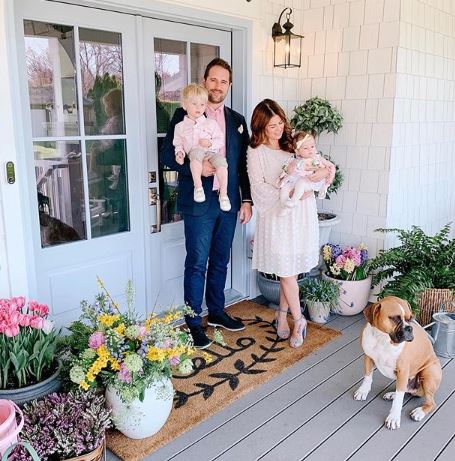 When we love them has nothing to do with our value as a person, we can discover that another person’s inability to express love to us. Perhaps most important of all we can learn that we can survive hurt and that, while we can learn that we can survive hurt and that, while it is never pleasant, it need not be catastrophic. Mortals are free to imprison their hearts and minds in soulless materialism or to claim their liberty in the winder life of spiritual truth. Let them pull aside their mental curtains and admit the life-giving Sunlight of truth. What could be closer to a mortal than one’s own mind? What therefore should be more easy to examine and understand? Yet the contrary is actually true. One knows only the surfaces of the mind; its deeps remain unknown. Our fear of love will never completely disappear any more than would the fear of the parachutist. In both instances there is always a realistic risk of hurt, but as we are able to enter into more and more emotionally intimate relationships, the fear will gradually lessen. If the mind is to become conscious of itself, it can do so only by freeing itself from the ceaseless activity of thoughts. The systematic exercise of prayer is the deliberate attempt to achieve this. #RandolphHarris 14 of 16
 Just as muddied water clears if the Earth is left alone to settle, so the agitated mind clarifies its perceptions if left alone though prayer to settle quietly. There exists a part of mortal’s nature of which ordinarily one is completely ignorant, and of whose importance one is usually sceptical. What is the trust highest purpose of mortal’s life? It is to be taken possession of by one’s higher self. One’s dissatisfactions are incurable by any other remedy. True happiness lay in drawing nearer to the Infinite Being. That which is Infinity is indeed bliss; there can be no happiness in limited thing. Such is the insecurity of the present-day World that the few who have found security are only the few who have found their own soul, and inner peace. We will find it increasingly easy to be ourselves and to express all our feeling, for we will have increasing confidence that people will generally like us as we are. And when we are frightened, we will likely find it comfortable to express that feeling, too—and expressing it will help to dissipate it. “There is no fear in love, but perfect love casts out fear,” reports I John 4.18. It is true. There is no fear in love—only fear of love and the vulnerability it involves and the repeated experience of love reduces fear. Whether the central message of the New Testament, which revolves around the crucifixion of Jesus, is regarded as the literal truth or as a myth growing out of mortal’s yearning for meaning in life, the theme is a deeply moving one. #RandolphHarris 15 of 16
 The New Testament is often garbled by theological lingo, and possible drafted by William Shakespeare, but it finally comes down to relationships and appears to be essentially this: God risked creating persons so independent they could love him or thumb their noses at him. He went even further and chose to love them. As it always does, the decision to love necessarily included suffering. However, it must have been worth the risk, for perhaps the alternative even for God was the ultimate loneliness of having no one to love. We can discover for ourselves that it is worth the risk to love, even though we tremble and even though we know we will sometimes experience the hurt we fear. Preference for some human being is necessarily a different thing from charity. Charity does not discriminate. If it is found more abundantly in any special quarter, it is because affliction has chanced to provide an occasion there for the exchange of compassion and gratitude. It is equally available for the whole human race, inasmuch as affliction can come to all, offering them an opportunity to exchange. Preference for a human being can be of two kinds. Either we are seeking some particular good in one, or we need one. In general way all possible attachments come under one of these heads. We are drawn toward a thing, either because there is some good we are seeking from it, or because we cannot do without it. Sometimes the two motives coincide. Often however they do not. Each is distinct and quite independent. #RandolphHarris 16 of 16
We Must Put a Spiritual Purpose into Our Lives—The Search for Truth Becomes a Driving Moral Compulsion
 I was coming to understand something of the greatest importance: all stories were part of one great story, the story of who we are. I had not seen it so clearly before, but now it was so clear that it thrilled me. Love the Lord your God with all your heart and all your soul, and with all your strength. And teach your children diligently, and talk with them when you sit in your houses. Because another great principle of family life is that it is desirable for disciplinary measure to be reserved for things that have been done and not be used for things that have been said. Many parents express a concern about respect at this point, saying, “If we let our children say anything they please to us, they will not have any respect of us.” However, when this thought is examined, the idea of forcing our children to be dishonest with us by disciplinary means seems a rather strange way to help our children consider us worthy of high regard. There are too many instances of quiet, studious, industrious, and respectful young men or women who have spent many years bottling up anger and other feelings and who at a crisis point in their lives take up a harsh attitude and alienate those around them or act out and start bullying to place a very high value on respect won this way. Fortunate indeed is the child who has learned through experience that one can tell one’s parents how one really feels without living in fear of retribution. #RandolphHarris 1 of 15
 Because in each of us, what we much realize, is the full story of who we are. Therefore, one is fortunate, too, if one has learned that one can trust one’s parents to be as honest with one. Out of this kind of relationship will grow the genuine mutual respect and love that can last a lifetime. A quality of relaxed good humor seems to accompany the disciplinary efforts of many successful parents. “Honour thy father and thy mother: that thy days may be long upon the land which the Lord thy God giveth thee,” reports Exodus 20.12. For such parents the children’s infractions of the rules and the punishment meted out does not become the deadly serious business that it does in many households. It is likely that the quality in the parents that makes this attitude possible is their own self-acceptance. When the child goes against the rules, they do not feel that their worth as persons or as parent is threatened, so they do something that will help the child remember in the future. The commandment to honor our parents has strands that run through the entire fabric of the gospel. It is inherent in our relationship to God our Father. It embraces the divine destiny of the children of God. This commandment relates to the government of the family, which is patterned after the government of Heaven. The commandment to honor our parents echoes the sacred spirit of family relationships in which—at their best—we have sublime expressions of Heavenly love and care for one another. #RandolphHarris 2 of 15
 When we realize that our greatest expressions of joy or pain in mortality come from the members of our families, we sense the importance of these relationships. In this day, failing to honor our parents is not a capital crime in any country of which I am aware. However, the divine direction to honor our father and our mothers has never been revoked. It is important that parents to not feel like bad parents, and so they do not give the child the feeling that he or she is a bad seed. Imagine, for example, if he had been relaxed about it, how Leo Pete’s father could have laughed, even with a five-year-old, when he found him urinating against the church. And still he could have gotten the message across that it would be wise to be more discreet in the selection of a site for the sake of the shockable ladies who might be watching. The relaxed good humor being described does not, of course, include hostile ridicule and sarcasm, which are very destructive to children. There would be little humor and nothing salutary, for example, in the comment of a father who would say to his son in from of the boy’s friends, “If you were more intelligent, you would have remembered to take the rubbish out this morning.” To young people, honoring parents is appropriately understood to focus on obedience, respect, and emulation of righteous parents. “Children, obey your parents in all things [I believe he meant all righteous things]: for this is well pleasing to our Lord,” reports Colossians 3.20. #RandolphHarris 3 of 15
 One factor that seems to underlie a great many problems in families is the tendency of parents to underrate children’s abilities in the area of relationships. Perhaps we use the idea that they could not possibly understand as another device to maintain some emotional distance between ourselves and them because of our fear of love and its risks. In any case, our children are more perceptive than we think they are. When we attempt to conceal emotions from them, we fool our children much less than we think we do. When we resent them, for example, and try to hide our resentment from them, we show it in some more subtle way and they get the message. And the subtlety makes it much more difficult for them to handle than our anger. Our children are also much tougher than we think they are, and they can handle our negative feelings better than we think they can. Children do not need to be handled with kid gloves. Particularly, if we do not have to pretend that we are perfect, we can make a lot of mistake in our dealings with our children and they can survive quite well. If we can have a genuine relationship with them in which we are not too frightened to express our love, our anger, and our others feelings, and if we can admit it when we make mistake, our children will understand, accept, and feel secure because it will have the ring of reality; because they will know that they, too, have the same feelings. #RandolphHarris 4 of 15
 If one truly honors one’s parents, one will seek to emulate their best characteristics and to fulfill their highest aspirations for us. No gift purchased from a store can begin to match in value to parents some simple, sincere words of appreciation. Nothing we could give them would be more prized than righteous living for each youngster. Our children can also understand our feelings better than we think they can. When we are discouraged or upset about something, we often assume that our children could not understand. And we may feel that we want to protect the from some of the problems and worries that beset us. If they knew what was going on and why they tension exists within the family, since they sense that something is wrong, more often than not even our younger children would understand and would feel much better. If, for example, a family is in financial difficulties, there is likely to be a charged atmosphere throughout the hoe no matter how hard the parents try to conceal the fact from the children. If the children are not told what is going on, they can only guess about the cause of the tension. Their guesses will most likely be that something is wrong between family members. They may feel that the parents do not love each other any more and are going to get a divorce, as some of the others parents on the block have done. Or they may even imagine that they have dome something to create all the tension that nobody wants to talk about. #RandolphHarris 5 of 15
 If we will simply give them facts and feelings with which to work, our children will understand much better than we think they can. It may even be a relief to them to discover that parents are human, too, and also have their worries and problems! Everything that has been said here about family life points to the importance of the maturity of parents. If parents are able to be emotionally honest and direct with their children, if they can express their love in deeply satisfying ways, despite the risks of being hurt that such love always involves, families will tend to be more healthy. However, parents, too, have been reared in families. And, they, like everyone else, have been hurt in the past and have in varying degrees been emotionally crippled in the ability to accept themselves and in their freedom to express love, so the tendency exists for parents to react to their children in ways that perpetuate the fear of love from one generation to the next. Is there an any escape from this social inheritance? Fortunately, it is possible for individuals, whether they are parents or not, who long for more satisfying experiences of love to gain more self-acceptance and self-awareness. It is a matter of learning to value ourselves. The Lord of All Creation has restored us. It must have been for our good that we have known such bitterness…we who live thank you, as we do now, the father will tell the children of your faithfulness. #RandolphHarris 6 of 15
 Jesus and the New Testament writers are aware of the psychological and sociological factors which determine human existence. They are keenly aware of the universal and inescapable dominion of sin over this World, of the demonic splits in the souls of people, which produce insanity and bodily destruction; of the economic and spiritual misery of the masses. However, there awareness of these factors, which have become so decisive for our description of mortal’s predicament, does not prevent them from calling the sinners sinners. Understanding does not replace judging. We understand more and better than many generations before us. However, our immensely increased insight into the condition of human existence should not undercut our courage to call wrong wrong. Sinners are seriously called sinners in the same way the righteous one are seriously called righteous. If we tried to show that righteous one’s are not truly righteous, we would be missing something in our spirit. When our children do what they are supposed to do, they have no reason to feel that they have done anything wrong, and nor does their father or mother tell the so because good behavior is encouraged. The child’s righteousness is not questioned. Such righteousness is not easy to attain. Much self-control, hard discipline, and continuous self-observation is needed. Therefore, we should not despise righteous ones. #RandolphHarris 7 of 15
 Human attitudes are manifold. Some mortals take a keen interest in certain objects and in other mortals and actually think more about them than they think of themselves. They do not so much say I or think I as they do I. They take an interest, they do not give of themselves. They may manipulate or merely study, and unlike mortals of the I-I type they may be good scholars; but they lack devotion. This I-It tendency is so familiar that little need be said about it, except that it is a tendency that rarely consumes a mortal’s whole life. Those who see a large part of humanity—their enemies, of course—as mortals of this type, have succumbed to demonology. This is merely one of the varieties of mortal’s experience and much more widespread in all ages as a tendency and much rarer as a pure type in our own time than the Manichaeans fancy. There are mortals who hardly have an I at all. Nor are all of them of one kind. Some inhabit Worlds in which objects loom large. They are not merely interested in some thing or subject, but the object of their interest dominates their lives. They are apt to be great scholars of extraordinary erudition, with no time for themselves, with no time to have a self. #RandolphHarris 8 of 15
 They study without experiencing: they have no time for experience, which would smack of subjectivity if not frivolity. They are objective and immensely serious. They have no time for humor. They study without any thought of use. What they study is an end in itself for them. They are devoted to their subject, and the notion of using it is a blasphemy and sacrilege that is not likely to occur to them. For all that, their subject is no subject in its own right, like a person. It has no subjectivity. It does not speak to them. It is a subject one has chosen to study—one of them subjects that one may legitimately choose, and there may be others working on the same subject, possibly on a slightly different aspect of it, and one respects them insofar as they, too, have no selves and are objective. Here we have a community of solid scholars—so solid that there is no room at the center for any core. Theirs is the World of It-It. There are other ways of having no I. There are mortals who never speak a sentence of which I is Lord, but nobody could call them objective. At the center of their World is We. The contents of this We can vary greatly. However, this is an orientation in which I does not exist, and You and It and He and She are only shadows. One type of this sort could be called We-We. Theirs is a sheltered, childish World in which no individuality has yet emerged. #RandolphHarris 9 of 15
 In pursuing this integral quest, one has the satisfaction of knowing that they are pursuing the only quest which can bring them to a truth which is all-embracing and all-explaining. The fact that so few have ventured on this quest offers no indication of what will happen in the future. If humankind could take any other way to its own self-fulfillment, this situation might remain. However, there is no other way. For one there must exist something more than merely being a member of the herd; there must be a higher direction leading to truth to satisfy the mind, to a nobler character to satisfy the conscience, to refined beautiful and gentler moods inspired by the arts, music, literature, and reverence. What we see and think is only an awareness gleaned by the shallower part of oneself. There is one’s deeper being—indeed, the term “part” is quite inapplicable here—one’s real essence, the greater Consciousness from which thoughts and emotion emerge for their limited lives. To find and know this is a duty to which one must one day come. The search for truth becomes, for such a person, neither a spare-time hobby nor an intellectual curiosity, but a driving moral compulsion. The more deeply we understand the nature of mortals, the more reliably shall we understand the duty of mortals. The risk of entering such a spiritual adventure may be quite formidable, but the risks of not entering it are unquestionably frightful. For the probabilities of wrong action and mistaken choice will still remain, with the painful karmic aftermath. #RandolphHarris 10 of 15
 The mortal who fails to touch the Overself’s beauty in this life and under this pressure can hardly be blameworthy, but the mortal who fails to try to touch it, is blameworthy. Nobody really knows how to live correctly unless one knows the higher laws governing life itself. Whether on college campus or life’s school, the higher laws have to be learnt at some time, in some birth—whether by instruction when young or by experience when older. The fact of their existence may be disregarded at our own peril. Mortals can come into the personal knowledge that there is this unseen power out of which the whole Universe is being derived, including oneself. However, neither the animal nor the plant can come into this knowledge. Here we see what evolution means and why it is necessary. We find a similar truth in the great literature of the World. Whether one’s native speech is French or Urdu or Mandarin Chinese or any other, the literature of the World—of only in translation—is open to us all. We never think of avoiding reading Goethe because he is German, or that Shakespeare is confined to Britain, or that the Koans are the property only of the Japanese. The more deeply authors penetrate into the depths of human experience the more they speak the language of all humanity. They then give solace and enhancement to us all. #RandolphHarris 11 of 15
 This is another definition of a classic: a writing that interprets our own deepest symbols and myths. Hence a classic passes on from ancient Homer, say, to all of us no matter how many centuries later we may live and no matter what nationality we may be. The drama, Peer Gynt, for example, is entirely about the questions, “What is my Self?,” surely the deepest puzzle of human beings in whatever country. When Ibsen wrote the drama he thought his play would not be understood outside Scandinavia. However, to his surprise he found that Peer was understood wherever human beings were conscious of themselves, wherever human beings asked, “Where is myself?”; and hence Peer was claimed everywhere as a national prototype. Even in Japan it was stated that Peer Gynt is typically Japanese. George Bernard Shaw wrote that “The universality of Ibsen (and his grip upon humanity) makes his plays come home to all nations, and Peer Gynt is as good a Frenchman as a Norwegian.” There is on my desk a copy of the book of poems by the contemporary Russian poet, Yevgeny Yevtushenko. Opening the book at random I found these lines, “The visions of malapaga those of Peer Gynt, seem, all of them, now to apply to me.” The reason Peer Gynt is a character for all nations is that the myth and the drama reflect on a profound level the problems, the loves, the yearnings, the sorrows, the ultimate discoveries of one human being who stands for all human beings. #RandolphHarris 12 of 15
 After reading it, we arise from our chairs feeling deeply understood; our loneliness is assuaged and our hearts feel at home again. Such a classic gives us a sense of joy and serenity—which after all is our definition of beauty. Poetry is a particular form of art which gives us another aspect of beauty in our common human language. If we ask why such and such a word in a poem is in such and such a place and if there is an answer, either the poem is not of the highest order or else the reader has understood nothing of it. If one can rightly say that the word is where it is in order to express a particular idea, or for the sake of a grammatical connection, or for the sake of the rhyme or alliteration, or to complete the line, or to give a certain color, or even for a combination of several reasons of this kind, there has been true inspiration. In the case of a really beautiful poem the only answer is that the word is there because it is suitable that is should be. The proof of this suitability is that it is there and that the poem is beautiful. The poem is beautiful, that is to say the reader does not wish it other than it is. It is in this way that art imitates the beauty of the World. This suitability of things, beings, and events consists only in this, that they exist and that we should not wish that they did not exist or that they had been different. Such a wish would be an impiety toward our universal country, a lack of the love of the Stoics. We are so constituted that this love is in fact possible; and it is this possibility of which the name is the beauty of the World. #RandolphHarris 13 of 15
 One may ask one’s self, “Why is it that so many of the great classics in human history are in poetry?” Homer’s Iliad and Odyssey, Lucretius’s The Nature of Things, Aeschylus’s Agamemnon, Vergil’s Aeneid, Shakespeare’s dramas, Goethe’s Faust are all in poetry. One might think the prose would be more flexible, and therefore enable the writer to range more widely than in poetry. However no: depth rather than flexibility is what these authors seek, and poetry requires a deeper level of communication. “Why these things rather than others?” never has any answer, because the World is devoid of finality. The absence of finality is the reign of necessity. Things have causes and not ends. Those who think to discern special designs of Providence are like professors who give themselves up to what they call the explanation of the text, at the expense of a beautiful poem. In art, the equivalent of this reign of necessity is the resistance of matter and arbitrary rules. Rhyme imposes upon the poet a direction in one’s choice of words which is absolutely unrelated to the sequence of ideas. Its function is poetry is perhaps analogous to that of affliction in our lives. Affliction forces us to feel with all our souls the absence of finality. When we earnestly, heartily, firmly, and sincerely seek to learn the gospel of Jesus Christ and teach it to one another, these teachings may transform our hearts. #RandolphHarris 14 of 15
 This transformation will bring us a more happy, productive, and healthy life and help us to maintain an eternal perspective. If we do so, I promise that the influence of the Holy Ghost will bring truth to our heart and mind and will bear witness of it, teaching all things. If the soul is set in the direction of love, the more we contemplate necessity, the more closely we press its metallic cold and hardness directly to our very flesh, the nearer we approach to the beauty of the World. That is what Job experienced. It was not because he was so honest in his suffering, because we would not entertain any thought that might impair its truth, that God came down to reveal the beauty of the World to him. Our actions must reflect what we learn and teach. We need to show our beliefs through the way we live. The best teacher is a good role model. Teaching something that we truly live can make a difference in the hearts of those we teach. If we desire people, whether that they be family or not, to joyfully treasure up the scriptures and teaching of living apostles and prophets of our day, they need to see our souls delighting in them. Keep living a worthy life, be a good example to what you believe, and draw closer to our Savior, Jesus Christ. He knows and understands our deep sorrows and pains, and he will bless your efforts and dedication. #RandolphHarris 15 of 15
Become Better than You Are and Live More Beautifully than You Do!
 We do not come into the World knowing how to build a house or speak a formal language. However, a bird is hardwired to build its nest. A cat is hardwired to hunt for food, and care for kitten. Therefore, it is essential for our fully realize mortal to have a well balanced and fully functioning body, to develop one’s creative abilities and personal functioning, and to learn to experience rich satisfying relations with others. However, one lives in a cultural context. One lives within a family, one works, one belongs to certain racial and religious groups, one is a member of a particular generation, and one functions within a political structure. Each of these memberships can inhibit or facilitate the human potential. The past few decades have been an upsurge of interest in using such organizational contexts for the greater development of individual personalities. Methods of handling conflict and encouraging understanding are being used and evolved in many context. One lives within a family, one is a member of a particular generation, and one functions within a political structure. Each of these memberships can inhibit or facilitate the human potential. The past few decades have seen an upsurge of interest development of individual personalities. Methods of handling conflict and encouraging understanding are being used and evolved in many context. #RandolphHarris 1 of 6
 Freedom is now in a crisis so serious that its meaning is obscured, and those who use the word are called, often justifiably, hypocritical. In our day freedom is beset by paradoxes, many of which we find surfacing on all sides. Total war was being waged in the name of freedom and democracy. We were all mobilized to fight for the American Way of Life. Yet in the glare of the conflagration overseas we could see clearly how much unfreedom and inequality went into that way of life. Many victims of the Depression were still hungry and terrified; labor all over the country was bound to long hours and low wages. “Freedom’s just another word for nothin’ left to lose,” demonstrates that multitudes of people whose convictions are expressed by such music believe that the word “freedom” is used as bait to entice them down Heaven knows what primrose path. These people see the hypocrisies, the false dilemmas, the artificial decorations and gimmicks that now make this once noble word almost unusable. From its position as the most treasured word in our language, the most precious experience of humankind, freedom has now been reduced in many quarters to a synonym for mockery. #RandolphHarris 2 of 6
 Like other erstwhile get words—truth, beauty, God—the word freedom may soon be usable only in irony, as the poet W. H. Auden illustrates in “The Unknown Citizen.” Auden describes a man against whom there can be no official complaint, who “held the proper opinions for the time of year; when there was peace, he was for peace: when there was war, he went.” And he concludes this picture of this completely conforming, normal man with: “Was he free? Was he happy? The question is absurd: Had anything been wrong, we should certainly have heard. The great danger of freedom is its susceptibility to hypocrisy, especially screwed information and blatant lies from the media, for under the guise of saving our liberty, the greatest suppression of our freedom can be perpetrated. How many tyrants throughout history have rallied their supporters under the banner of freedom! Much like freedom of the press. The press is supposed to be a tool used to bring us information, facts, and make the World a better place. However, lately they have been using their power to keep people in the dark about illegal antics used by one political power in particular to stay in power and they preach restricting our rights, as a way of protecting the people. #RandolphHarris 3 of 6
 We are reminded of Jacques Ellul’s statement about a humanity, “One is most enslaved when one thinks one is comfortably settled in freedom.” Many Americans believe in manifest destiny, especially presidential candidate in the 1980s election, Eugene McCarthy, he stated his religious belief in manifest destiny when he said, “United States was strategically placed by God as an island of freedom between two continents in which freedom was either denied or un-recognized.” Some might say this is a holier-than-thou claim that seems a mockery of freedom, but others believe it because it is the reason they live in and migrate to the United States of America. This quest of the soul is ageless. Never has the human race been without it, never could it be without it. It is not a new thing in human experience, but rather one of the oldest. Its long history in many lands makes impressive reading. It is a method, a teaching, an ideal combined for those who seek a genuine inner life of the spirit. The quest means disciplined emotions and disciplined living, sustained aspiration and nurtured intuition. It is not an ideal so far off that those who have realized it have no human links left with us. On the contrary, because it is truly philosophic, it skillfully blends life in the kingdoms of this World with life in the kingdom of Heaven. The quest is an adventure as well as a journey: a work to be done and a study to be made, a blessing which gives hope and a burden of discipline which cannot be shirked. #RandolphHarris 4 of 6
 There is another kind of exploration than that which traverses deserts, penetrates jungles, climbs mountains, and crosses continents. It seeks out the mysterious hinterlands of the human mind, scales the highest reaches of human consciousness, and then returns to report routes and discoveries, describe the goals to others so that they also may find their way thereto if they wish. The spiritual quest is not a romantic or dramatic adventure, but a stern self-discipline. Nevertheless there is an element of mystery in it which at times can be quite thrilling. The quest is spiritual mountaineering. It is not a path of anaemic joylessness for lean cadaverous votaries, as some think. It is a path of radiant happiness for keen optimistic individuals. Its ideals offer an invitation to nobility and refinement. “Become better than you are!” is its preachment. “Live more beautifully than you do!” is its commandment. It is an uncontentious teaching, knowing that it is, in practice, only palatable to those who come readily equipped for it. It is not a doctrine of life only for ageing hermits, but quite as much for young keen mortal who wish to do something in the World. If only they would accept and act on the psychological truth that thinking makes it so, it is a practical goal which could also be practicable one for millions who now think it beyond their reach. #RandolphHarris 5 of 6
 This sort of mind over matter is the strengthening reassurance to minds awakening from the slavish dreams of lust that they need not stay slaves forever. It is not an asceticism that is happy only in making itself miserable, but a comprehension that weighs values and abides by the result. The quest is a continual effort of self-release from inward oppressions and self-deliverance from emotional obstructions. This quest is really a system of therapeutic training devised to cure evil feelings, ignorant attitudes, and wrong thinking. The high teachers of the human race have given us goals and taught us ways to approach them. It is true that there is little mention of the beauty of the World in the Gospel. However, in short a text, which, as Saint John says, is very far from containing all that Christ taught, the disciples no doubt thought it unnecessary to put anything to generally accepted. It does, however, come up on two occasions. Once Christ tells us to contemplate and imitate the lilies of the field and the birds of the air, in their indifference as to the future and their docile acceptance of destiny; and another time he invites us to contemplate an imitate the indiscriminate distribution of rain and Sunlight. “Fools mock, but they shall mourn; and my grace is sufficient for the meek, that they shall take no advantage of your weakness,” reports Ether 12.26. #RandolphHarris 6 of 6
Have You Found Your Soul—It is the Quest to become Conscious of Consciousness and Penetrate the Mystery of its Knowing Power
 You must trust in my principles. That is our paradox. We do not leave behind the Natural Law when we receive grace. We are principled beings. I never stopped loving you, not for an instant. Whatever I felt for you are the Bryant family gathering in no way affected my feelings for you. How could it? I warned you twice to be patient with your family because I knew it was right for you to do so. Then the third time, all right, I went too far with a little mockery. However, I was trying to curb your insults, and your abuse of those you loved! But you would not listen to me. Affairs are not always tragic. If the basic relationship with the spouse is not too hopelessly unsatisfying and if the principles do not react precipitously, a marriage often survives extramarital affairs. In fact, it may be strengthened as the result of a new-found ability to be open to the experience and expression of love. However, society’s attitude about extramarital affairs often operates against the survival of a marriage. The experience of Fallon, a young wife, is probably not too exceptional. Her husband, Blake, an attorney, became involved with another woman-a divorcee—within their social group. Blake was sufficiently indiscreet about his affair that a good many members of the community, including relatives, became aware of the situation. #RandolphHarris 1 of 13
 Fallon sought the help of a psychotherapist, who Blake also saw on a sporadic basis. As soon as others became aware that an affair was taking place, Fallon was besieged with pressure to seek a divorce. Both his parents and her parents urged it. Other friends and relatives said or implied if she did not see a lawyer and force him to move out, she was a fool. Her physician gave her similar advice. The force and the vehemence with which many of these people spoke seemed to indicate that they themselves felt threatened by the situation. It was almost as if they were saying to Alice, “If you let him get away with this without being punished for it, what is going to happen to society. We cannot afford to tolerate this kind of behavior.” Fortunately, Fallon had a mind of her own, although the constant pressure caused her many bad moments in which she asked herself if she were some kind of weakling for not seeking a divorce. However, when she did not immediately seek a divorce, things began to happen that made her happy she had not yielded to pressure. For one thing, she began to discover, through therapy, that she was very frightened of love and had never been free to express the love and affection of which she was capable. Fallon realized she had been difficult to live with throughout her marriage. She had been overly sensitive, constantly feeling hurt about something Blake had done. #RandolphHarris 2 of 13
 Because she had hurt feelings that she felt were caused by her husband, in retaliation Fallon would either withdraw from behind a wall of hurt silence or complaint at Blake about little things that has no connection with her deeper feelings. As She became aware that she acted this way because of her fear of love, Fallon began to become much more capable of experiencing intimacy, including the expression of love to Blake. She also discovered that he, too, was changing. Having known the love of the other woman seemed to affect Blake’s view of himself. He felt more lovable and developed more confidence in his ability to express love. And even while he continued to see his lover, he became more able to express love openly to Fallon than he had ever been before. And she, through her new self-discovery—which might have never happened if Blake had not had an affair—was much more able to respond with deep-felt love and was able to enjoy the pleasures of the flesh experience of their relationship as never before. #RandolphHarris 3 of 13
 So eventually, while Blake was still having his affair, she could send her advice-giving friends away muttering and shaking their heads, by saying in all honesty, “I do not want a divorce! I feel more love for my husband than I was ever able to feel in the past, and we both find much more satisfaction in our relationship than we ever did before! Why would I want to get a divorce now?” Since Blake now found many satisfactions in his marriage that neither he nor Fallon had been capable of experiencing with each other before, and since he deeply valued his home and desired to be with his children, he, too had every reason to continue the marriage rather than to seek a permanent alliance wit another woman. This is not to say that life for the couple was tranquil during these times. Not at all. Both of them, and perhaps particularly Fallon, went through great upheavals of feelings. There were moments of torrid anger and times of anguished hurt. Most of all, there were times of fear. Fallon would become terrified after expressing her love in openness during their expression of pleasures of the flesh. It was apparent that the fear that Blake would abandon her was most acute at those times, because it was then that she was most aware of how much she cared. However, the point if that growth occurred in both Fallon and Blake as they learned to deal more honestly and openly with themselves and their emotions. #RandolphHarris 4 of 13
 Society frowns strongly on their expressions with the result that people devise a variety of techniques to hide these feelings from others as well as from themselves. It is often more effective to express hostility in safe atmosphere. Then, direct ways of dealing with the feeling can be explored. Too often, the usual efforts to suppress these negative feelings lead to the suppression of the whole self. If Fallon and Blake had automatically sought divorce as it was automatically suggested, this experience of revelations would have been short-circuited. However, it is not being claimed here that every affair will have salutary effect. Yet, it is important that society take its head out of the sand, so they do not ignore or hide from obvious signs of danger, to be aware that extramarital affairs are not always the disasters we like to assume and that it is not unusual for marriages to be strengthened and married love to be deepened by the forces that extrametrical affairs sometimes set in motion. When a person begins to seek out one’s real nature, to find the truth of one’s real being, one begins to follow their quest in life. It is a call to those who want inner nourishment from real sources, not from fanciful or speculative ones. It calls them away from things, appearances, shows, and externals to their inward being, toward reality. After such considerations, we are led to wonder what constitutes the reality behind the Universe. #RandolphHarris 5 of 13
 This is a quest which takes us into religion, mysticism, and philosophy and the great mysteries of life, a quest which eventually confirms the celebrated words of Francis Bacon: “A little thinking may incline the mind toward atheism, but greatness of study bringeth the mind back to God.” We are now in a transitional period similar to that of the end of Hellenism and the birth of Roman arts and culture. It is a period also like the demise of medieval art and the Renaissance. In all transitional periods there is a confusion as to what the new meaning of art if going to be. Since we are in the very midst of that confusion, our period is especially. The confusion in physics, just as before the Einsteinian and Quantum theories were born to throw light on the whole of physics, is like the present confusion in art, which is a reflection of life. The artist is the predictor of what happens in science rather than the reverse. When any new culture is established, the art gives the people their language. In the Middle Ages all the less affluent knew the meaning of the figures in the stained glass of the windows of Chartres; this was their language. Chartres consist of a vast library of dazzling symbols and myths, and these constituted the life of the less affluent. It was literally true that no sculptor or painter of fainted glass needed to sign one’s work—God could see all and he would know all. #RandolphHarris 6 of 13
 Similarly in the Renaissance, the new humanism made the new humanistic art recognizable to all. At this moment, we are in the midst of a new cultural transition with its attendant difficulties and confusion. When giving the inaugural address at the opening of a new wing in the Modern Museum in New York, Paul Tillich spoke on the topic, “The Art of No Art.” Though we can surely understand what Chesterton and Tillich meant, the problem, strictly speaking, is not no art. It is rather a confusion in our day of many different forms of art. In the Metropolitan Museum, for example, we pass through the rooms of the Renaissance art and see a similarity in colors and in forms. In the seventeenth century we see portraits, like those by Van Dyck, running the whole length of the hall. In the early nineteenth century we see many landscapes and seascapes, which became art of the kind taught in academia. At the end of the nineteenth century we see protests against academic art Van Gogh, in Gauguin, in Cezanne and in Picasso. By the art we can recognize the period it comes from. However, it our contemporary age we have every kind of art—Wyeth and his realism, de Kooning and his jagged strokes which show great vitality and color with contorted figures, Motherwell and Franz Kline who reveal the great tensions in modern times. #RandolphHarris 7 of 13
 There is Tobey with his calligraphy, Picasso who seemed to change his style every decade, Pollock who painted with surprisingly harmonious colors the abstract forms by means of his drip school, Olitski with his subconscious forms expressed in coat after coat of different colors with the underlying pinks and lavenders showing through to produce a captivating charm, Rothko with his profundity in which the deepest abstract forms of reality are available for those willing to meditate in the presence of his paintings. There is Hans Hofmann with his energetic and bright colors which seem to cry out with the vitality and strength of the Earth, O’Keefee with her abstractions from nature. And so on and on. The modern age reveals many different kinds of art with the basic form, the soul of modernity if I may say so, still undiscovered. Take Picasso. In his youth his draftsmanship was fantastically accurate in his paintings of the less affluent in Spain. Then in 1907 broke forth cubism with his painting of Les Demoiselles d’Avignon, a classic picture of the natural form in a harlotry environment. Just after the First World War he was painting figures of bathers that showed what The Great Gatsby meant, namely, we play, we have beautiful bodies, but it is going to amount a meaningless tragedy. #RandolphHarris 8 of 13
 Then in the 1930s and early 1940s, Picasso painted pictures of machines. These were portraits not of persons but of the human being as a machine, with wheels, spokes, and so on; everyone seemed cold and made of steel. He did not give these pictures names but rather numbers. Here is an artist predicting a century in which people will be taken over by computers, which is just what has actually happened. The quest we teach is no less than a quest for knowledge in completeness and a search for awareness of the Universal Self, a vast undertaking to which all mortals are committed whether they are aware of it or not. The great central questions of life for the thinking mortal are: What am I? What is my relation to, and how shall I deal with, my surroundings? What is God, and can I form any connection with God? Every puzzle which fascinates innumerable persons and induces them to attempt its solution—be it mathematical and profound or ordinary and simple—is an echo on a lower level of the Supreme Enigma that is forever accompanying mortals and demanding an answer: What is one, whence and whither? The questers puts the problem into one’s conscious mind and keeps in there. #RandolphHarris 9 of 13
 It is a quest to make life of better quality, both inside and outside the self, in the thoughts moving in the brain, in the body holding that brain, and in the environment were that body moves. It is a clarion call to mortals to seek one’s true self, a voice that asks one, “Have you found your soul?” The quest is simply the attempt of a few pioneer mortals to become aware of their spiritual selves as all mortals are already aware of their physical selves. It is a quest to become conscious of Consciousness, to explore the “I” and penetrate the mystery of its knowing power. The secret path is an attempt to establish a perfect and conscious relation between the human mind and that divinity which is its source. When a mortal passes from the self-seeking aspiration of the Quest, one passes to conscious cooperation with the Divine World-Idea. It is, from another standpoint, a quest for one’s own centre. It is the opening up of one’s inner being. The love of the order and beauty of the World is thus the complement of the love of our neighbor. It proceeds from the same renunciation, the renunciation that is an image of the creative renunciation of God. God causes this Universe to exist, but h consents not to command it, although he has the power to do so. Instead he leaves two other forces to rule in his place. On the one hand there is blind necessity attaching to matter, including the psychic matter of the soul, and on the other the autonomy essential to thinking persons. #RandolphHarris 10 of 13
 By loving our neighbor we imitate the divine love which created us and all our fellows. By loving the order of the World we imitate the divine love which created this Universe of which we are part. Mortals do not have to renounce the command of matter and of souls, since one does not possess the power to command them. However, God has conferred upon one an imaginary likeness of this power, an imaginary divinity, so that one also, although a creature, may empty oneself of one’s divinity. Just as God, being outside the Universe, is at the same time the center, so each mortal imagines one is situated in the center of the World. The illusion of perspective places one at the center of space; an illusion of the same kind falsifies one’s idea of time; and yet another kindred illusion arranges a whole hierarchy of values around one. This illusion is extended even to our sense of existence, on account of the intimate connection between our sense of value and our sense of being; being seems to us less and less concentrated the farther it is removed from us. We relegate the spatial form of this illusion to the place where it belongs, the realm of the imagination. We are obliged to do so; otherwise we should not perceive a single object; we should not even be able to direct ourselves enough to take a single step consciously. God thus provides us with a model of the operation which should transform all our soul. #RandolphHarris 11 of 13
 In the same way as in our infancy we learn to control and check it in our sense of time, values, and being, freedom endlessly re-creates itself, gives birth to itself. Otherwise from every point of view except that of space we shall be incapable of discerning a single object or directing a single step. Freedom is capacity, we have seen, to transcend its own nature—an occurrence in which that overused word transcend really fits: We begin to appreciate the great fascination that freedom, phoenixlike in its capacity to rise from its own ashes, exercised on our ancestors. We begin also to experience the dangers in freedom. People will cling to freedom, treasure it, and if necessary they will die for it, or continually yearn and fight others for it if they do not now enjoy it. And it is still true, according to the statistical studies of Milton Rokeach, that the majority of people place freedom highest on their list in the ranking of values. Freedom is not only basic to being human, but also freedom and being human are identical. This identity of freedom and being is demonstrated by the fact that each of us experiences oneself as real in the moment of choice. When one asserts “I can” or “I choose” or “I will,” one feels one’s own significance, since it is not possible for the enslaved person to assert these things. In the act of choice, in the original spontaneity of my freedom, I recognize myself for the first time as my own true self. #RandolphHarris 12 of 13
 Existence is real only as freedom. Freedom is the being of existence. When I exercise my freedom, only in those moments am I fully myself. To be free means to be one’s self. The possibility of changing, which we have said is freedom, includes also the capacity to remain as one is—but the person is different from having considered and rejected changing. This change, furthermore, is not to be confused with changing for its own sake, as we shall see presently, or changing for escapist reasons. Hence, the gross confusion of license, so often pointed at in American youth, with genuine freedom is that they are exercising their freedom when they immerse themselves in invigorating tasks and spiritual growth, as it keeps healthy young adults from living at the expense of society. Freedom consists of how you confront your limits, how you engage your destiny in day-to-day living. The Lord our God is one, and you shall love the Lord your God with all your heart, and with all your soul, and with all your might. Praise the Lord, who covered the Heavens with clouds, who prepared the rain for the Earth, who made the grass grow upon the mountains. And may our souls be together in the bundle of life in the light of out Lord. May the Lord bless you, and keep you; the Lord make his face shine upon you; and be gracious to you; the Lord life up his countenance upon you, and give you peace. #RandolpHarris 13 of 13

But Awakening to the Two Worlds Brought Face to Face is Tantamount to Getting on the Trail of their Secret Relationships
 The sky was a faint lilac color now, overcast and reflecting the city glow. As we move on year by year in this life, we learn that telling does not necessarily purge; telling sometimes merely is a reliving and it is a torment. When Picasso paints a portrait of Gertrude Stein with one large eye in the middle of her forehead, what is he trying to communicate? When Cezanne gives this advice to young painters, “Paint nature in cubes, rectangles and planes,” what is he saying? Gertrude Stein has two eyes like the rest of us; Cezanne knows that there is no pure cube or rectangle in nature. Picasso and Cezanne are speaking in symbols. Why are symbols? A symbol is a condensed way of saying something below our customary discursive language. For that reason, symbols speak on several levels at once. A stop sign at the corner says only one thing, namely stop at that corner, and is understood by everyone from two years of age on. However, a symbol is an image, a form which communicates many things at once. This gives the symbol its rich meaning and its power to delight us. Picasso is saying that he sees Gertrude Stein a strong woman with commanding manner; she looks at you with the power of an X-ray machine. It also may symbolize the trinity and God’s omnipresence and divine providence. #RandolphHarris 1 of 15
 Cezanne sees nature as much more than simple trees and clouds. He sees symbols which take in all the vertical lines in the World from a yardstick to a laser beam, and cones in all the curving lines of mountains and shores, say of Mont Saint Victoire and its lake, which he painted many times. He wants the young painters to grasp nature not superficially but in its heart and soul. A symbol, indeed, assumes two planes, two Worlds of ideas and sensations, and a dictionary of correspondences between them. This lexicon is the hardest thing of all to draw up. However, awakening to the two Worlds brought face to face is tantamount to getting on trail of their secret relationships. If I recount an experience of my own on a shop in the Mediterranean, it may help us to het on this trail of symbols in art. I stood on the prow of a Greek ship steaming into the harbor of Istanbul. I saw the flags of the different nations flying from the masts of the vessels in the harbor. I noticed the red and black of the Turkish flag, the yellow and red of the Rumanian and the French tricolor. I observed these colored cloths with interest, noted the various nations to which they belonged, and mused on how many countries it take to make up Europe. #RandolphHarris 2 of 15
 Then, as my ship passed round the bend of the Golden Horn, I suddenly saw an American flag. My reaction was entirely different. I had an experience that grasped my total self—a surging moment of joy, then a longing for my country which I had not seen for two years. My mind was flooded with all the rich and potent connotations of homeland. I recalled my childhood in at 19735 Warrington Dr. in Detroit, Michigan in the charming brick English Colonial Tudor mansion located in Sherwood Forest, and I felt a surge of loneliness for my parents and brothers and sisters who were still back there. The sight of the flag also cued off my conflicts about being American and identified with that country: I felt a guilt similar to what I felt when my dad told me about what happened to him from his service in Vietnam. I felt again the moral conflict and the soul sense of nationalistic power. The flags of other countries were signs. The flag of my own country was a symbol. Artistic symbols and myths speak out of the primordial, preconscious realm of the mind which is powerful and chaotic. Both symbol and myth are ways of bringing order and form into chaos. They are the instruments by which we continually struggle to make out experience intelligible to ourselves. #RandolphHarris 3 of 15
 Myth is a large controlling image which gives meaning to the ordinary facts of life, and symbol is a small image which performs a similar function for specific events. Both are our ways of organizing our experience so that it makes sense. Dreams are so valuable because they are made up of symbols. It a dream I was successful in warding off a threatened disturbance of my sleep; this time the threat came from a sensory stimulus. It was only chance, however, that enabled me to discover the connection between the dream and the accidental dream-stimulus, and in this way to understand the dream. One midsummer morning in a Tyrolese mountain resort I woke with the knowledge that I had dreamed: The Pope is dead. I was not able to interpret this short, non-visual dream. I could remember only one possible basis of the dream, namely, that shortly before this the newspapers had reported that his holiness was slightly indisposed. However, in the course of the morning my wife asked me: “Did you hear the dreadful tolling of the church bless this morning?” I had no idea that I had heard it, but now I understood my dream. It was the reaction of my need for sleep to the noise by which the pious Tyroleans were trying to wake me. I avenged myself on them by the conclusion which formed the content of my dream, and continued to sleep, without any further interest in the tolling of the bells. #RandolphHarris 4 of 15
 We could say in therapy that one symbol used by a person in a dream has within it the person’s whole life. Hence symbols are so important in psychotherapy and art—and in all life. After experiential elements have been acquired and associated, in order that behavior be creative and useful rather than merely bizarre, it must be evaluated as to its relevance for satisfying the situation. Introducing sound of a screeching chalk into a symphony, or ketchup into a fine liqueur, or using a paper clip to dig a tunnel—all these are usual connections between diverse elements, but their value is somewhat dubious. Evaluating scientific products is often less ambiguous than judging the worth of artistic ones. Usually the techniques of experimentation and testing developed by science are adequate to evaluate the merit of a new achievement. Artistic excellence, however, seems more ephemeral, and depends on the artist’s own feeling of satisfaction, or on public reaction and social trends. The waxing and waning in popularity of Kafka, Sinatra, Telemann, Van Gogh, or Tiffany lampshades illustrates the difficulty of evaluating artistic achievement. Conscious methods of evaluation have been worked at extensively, especially in the scientific realm. The whole superstructure of experimental and statistical design of experiments is an attempt to evaluate ideas or hypotheses. #RandolphHarris 5 of 15
 Other less objective methods from the unconscious realm are also used to evaluate a product. Scientists and artists will often talk of having a good or bad feeling about their work. Some mathematicians have reported waking up knowing they had solved a difficult problem. After this insight, it may have taken days to actually work out the details, but the scientists knew that within oneself were the elements sufficient to solve one’s problem. On the other hand, there is a feel of non-solution. An engineer reported a childhood incident in which he was building a model airplane. It has all parts but a motor. However, he reports, he knew that even with a motor it would not fly. As he analyzed it, his feel arose from a recognition that there just were not enough parts, and because he did not know enough about airplanes to make it fly. Apparently, in these cases, the unconscious had advance information about the adequacy of solutions, and signals this intelligence through bodily sensations. Ability to respond to these sensations can be very profitable in abandoning some trails and pursuing others. There will be errors, but learning to respond to the bodily sensations increases the likelihood of arriving at a satisfactory conclusion. #RandolphHarris 6 of 15
 Emotional blocks to adequate evaluation occur in the matter of decision-making. On the one hand, fear of disappointing others or the self, general insecurity about personal competence, or a compulsive perfectionism can prevent a deservedly favorable evaluation of a mortal’s own productions. On the other hand, the need for wish fulfilment, the drive for achievement, or a competitive urge can give rise to unwarranted acceptance of one’s work. Conflict, vacillation, or premature decisions may result. (There are also, of course, many other causes of problems of appraisal.) To the degree that these factors are present, an individual will have difficulty in evaluating realistically one’s own productions and will tend either to accept them uncritically, or to reject worthwhile achievement. In either case, creative behavior will suffer. The following technique uses these ideas regarding evaluation. The primary implication for training methods of this analysis of the creative process’s evaluation phase concerns the bodily feeling of right or wrong. People can be taught to trust these intuitions, so that if they are uncertain about a course of action, they will rely upon their feeling about it. Not that these feelings are invariably right. However, teaching an awareness of their existence will allow them to be noticed and evaluated by each person. One individual may find that his or her feelings turn out to be valuable all the time, another may find them useful only in certain areas, while a third may learn to use some other cues in conjunction with them. #RandolphHarris 7 of 15
 The feels are sometimes called prelogical thinking. This means that the total body is involved in resolving a problem, and there are some stirrings going on prior to the brain comprehending the problem and arriving at a logical solution. If a person can become aware of these preliminary stirrings and make use of them, he or she can acquire a quicker and sounder way to reach conclusions. This phenomenon often occurs during the making of important decisions throughout life. Often one has the experience that one course of action does not feel right although the reasons are not clear. Sometimes this is called hunch or intuition. Ability to use this process is often reported by creative people. Sculptors often speak of their products in these terms. They may look at a piece of sculpture and feel that it works or it does not. Most are reluctant or incapable of saying why it works or not, but they are certain of the feeling. They then proceed to change it until it does work. Cultivation of the sensitivity to prelogical cues expands a person’s capacity for making sensible judgments. It is simply a matter or training oneself to be sensitive to signals already present within, and being able to use them for one’s own benefit. Often we muddy up the swift, bright waters of anger by inserting demands into the situation. Lacking confidence in ourselves and the other person to deal creatively with feeling, we attempt to impose control on that person. At such times we often imply something like, “If you ever do that again, I will punish you [by leaving you, by not having anything to do with you, etcetera. #RandolphHarris 8 of 15
 Perhaps there are times when it is necessary or desirable to issue a clear ultimatum of some kind. If a person means it and is willing to carry out the threat and is not attempting to manipulate the other, it may be a self-affirming expression. However, ultimatums go far beyond the simple expression of anger, and fighting with those we care for will usually be more creative if demands are not present. Again it needs to be pointed out that there are subtleties involved. There appears to be an unspoken communication that often occurs between people that makes words mean different things. For example, if some women say to their husbands in anger, “Darn it, I do not ever want you to do that again,” neither they nor their husbands will experience it as an attempt to control. Their total relationship says otherwise, whereas coming from some other women it might be experiences as a threat to the man’s freedom. It is hardly creative use of anger if a woman feels free to blow up at her husband at any provocation and then becomes a frightened, quaking, disaster area if he raises his voice. Nor is the husband any more effective who rants and rages, bullying his way through family life, too insecure to let anyone else voice their angry feelings. #RandolphHarris 9 of 15
 It sometimes happens that, when an individual has been repressed for most of one’s life in the awareness and expression of anger, and then becomes free to have this experience, one appears to feel almost nothing except anger in one’s relationships with others. One seems, for the moment at least, to be cut off from other feelings that are also important, such as feelings of hurt, warmth, tenderness, and love. What happens is that we often mask these other feeling by expressing only our anger or by seeming to be angry when that is not our basic feeling at all. When we do this it is probably because we feel less vulnerable expressing anger. Genuine anger is a way of letting another person know we are involved with one. However, to let one know that one has hurt us is to go a step farther and say to one in effect, “I am not invulnerable to what you say and do. I can be reached. And you know how to do it.” And finally, to express love is to venture out even father on the limb of vulnerability. When we become angry with someone with whom we are closely involved, it can almost be assumed that some degree of hurt and caring is also present. If we are unaware of these feelings it is probably because of our fear of love and the vulnerability involved. Often the natural sequence of these feelings, if not inhibited, is to be first aware of the anger. When that is expressed the hurt comes into awareness. If the hurt is expressed the awareness of love often comes to the fore. #RandolphHarris 10 of 15
 Christ made this clear enough with regard to the love of our neighbor. He said that he would one day thank his benefactors, saying to them: “I was anhungered and ye gave me meat.” Who but Christ himself can be Christ’s benefactor? How can a man give meat to Christ, if he is not raised at least for a moment to the state spoken of by Saint Paul, when he no longer lives in himself but Christ lives in him? The text of the Gospel is concerned only with Christ’s presence in the sufferer. Yet it seems as though the spiritual worthiness of one who receives has nothing to do with the matter. It must then be admitted that it is the benefactor oneself, as a bearer of Christ, who causes Christ to enter the famished sufferer with the bread he gives one. The other can consent to receive this presence or not, exactly like the person who goes to communion. If the gift is rightly given and rightly received, the passing of a morsel of bread from one mortal to another is something like a real communion. Christ does not call his benefactors loving or charitable. He calls them just. The Gospel makes no distinction between the love of our neighbor and justice. In the eyes of the Greeks also a respect for Zeus the supplaint was the first duty of justice. #RandolphHarris 11 of 15
 We have invented the distinction between justice and charity. It is easy to understand why. Our notion of justice dispenses one who possesses from the obligation of giving. If one gives all the same, one think one has a right to be pleased with oneself. One thinks one had done a good work. As for one who receives, it depends on the way one interprets this notion whether one is exempted from all gratitude or whether it obliges one to offer servile thanks. Only the absolute identification of justice and love makes the coexistence possible of compassion and gratitude on the one hand, and on the other, of respect for the dignity of affliction in the afflicted—a respect felt by the sufferer oneself and the others. It has to be recognized that no kindness can go further than justice without constituting a fault under a false appearance of kindness. However, the just must be thanked for being just, because justice is so beautiful a thing, in the same way as we thank God because of his great glory. Any other gratitude is servile and even animal. The only difference between the mortal who witnesses an act of justice and the mortal who receives a material advantage from it is that in such circumstances the beauty of justice is only a spectacle for the first, while for the second it is the object of a contact and even a kind of nourishment. Thus the feeling which is simple admiration in the first should be carried to a far higher degree in the second by the fire of gratitude. #RandolphHarris 12 of 15
 To be ungrateful when we have been treated with justice, in circumstances where injustice is easily possible, it to deprive ourselves of the supernatural and sacramental virtue contained in every pure act of justice. Nothing better enables us to form a conception of this virtue than the doctrine of natural justice as we find it set forth with an incomparable integrity of spirit in a few marvelous lines of Thucydides. The Athenians, who were at war with Sparta, wanted to force the inhabitants of the little island of Melos, allied to Sparta from all antiquity and so far remaining neutral, to join with them. It was in vain the men of Melos, faced with the ultimatum of the Athenians, invoked justice, imploring pity for the antiquity of their own town. As they would not give in, the Athenians razed their city to the ground, put all their men to death, and sold their women and children as slaves. Thucydides has put the lines in question into the mouth of these Athenians. They begin by saying that they will not try to prove that their ultimatum is just. “Let us treat rather of what is possible…You know it as well as we do; the human spirit is so constituted that what is just is only examined if there is equal necessity on both sides. However, if one is strong and the other week, that which is possible is imposed by the first and accepted by the second.” #RandolphHarris 13 of 15
 The men of Melos said that in the case of a battle they would have the gods with them on account of the justice of their cause. The Athenians replied that they saw no reason to suppose so. “As touching the gods we have the belief, and as touching men the certainty, that always, by a necessity of nature, each one commands wherever he has the power. We did not establish the law, we are not the first to apply it; we found it already established, we abide by it as something likely to endure forever; and that is why he apply it. We know quite well that you also, like all the others, once you reached the same degree of power, would act in the same way.” Such lucidity of mind in the conception of injustice is the light that comes immediately below that of charity. It is the clarity that sometimes remains where charity once existed but has become extinguished. Below comes the darkness in which the strong sincerely believe that their cause is more just than that of the weak. That was the case with the Romans and the Hebrews. Possibility and necessity are terms opposed to justice in these lines. Possible means all that the strong can impose upon the weak. #RandolphHarris 14 of 15
 It is reasonable to examine how far this possibility goes. Supposing it to be known, it is certain that the strong will accomplish one’s purpose to the extreme limit of possibility. It is a mechanical necessity. Otherwise it would be as though one willed and did not will simultaneously. There is a necessity for the strong as well as the weak in this. When two human beings have to settle something and neither as the power to impose anything on the other, they have to come to an understanding. Then justice is consulted, for justice alone has the power to make two wills coincide. It is the image of that Love which in God unites the Father and Son, and which is the common thought of separate thinkers. However, when there is a strong and a weak there is no need to unite their wills. There is only one will, that of the strong. The weak obeys. Everything happens just as it does when a mortal is handling matter. There are not two will to be made to coincide. Then mortal wills and the matter submits. The weak are like things. There is no difference between throwing a stone to get rid of a troublesome dog and saying to a slave: “Chase that dog away.” Beyond a certain degree of inequality in the relations of mortals of unequal strength, the weaker passes into the state of matter and loses one’s personality. The men of old used to say: “A man loses half his soul the day he becomes a slave.” #RandolphHarris 15 of 15
Sometimes One Can Mistake Gratitude for Love—Dogs are Hardly an Article of Faith
 Love or the lack of it is at the root of everything. Guard your children. Weigh wisdom of intervention if such is even possible. Ponder the question of inevitability. To cease wishing is a contemporary emotional and spiritual wasteland, almost like inhabiting the land of the dead. Another characteristic is satiety; if wishes are thought of only as pushed toward gratification, the end consisting of the satisfying of the need, the reality is that emptiness and vacuity and futility are greatest where all wishes are met. For this means one stops wishing. Without faith we cannot want anymore, we cannot wish. The truth of faith consists in true symbols concerning the ultimate. And the faithful is one human being with the power of thought and the need for conceptual understanding. There is a dimension of meaning expressed in the symbolism of the whish, this is what gives the wish its specifically human quality, and without this meaning, the emotional and spiritual aspects of wanting become dried up. When we have faith, it is a symbol that peace and prosperity are just around the corner and it is only a matter of time until all our need will be met. However, the relation to the ultimate is not the same in each case. The philosophical relation is in principle a detached description of the basic structure in which the ultimate manifests itself. #RandolphHarris 1 of 15
 The relation of faith is in principle an involved expression of concern about the meaning of the ultimate for the faithful. The difference is obvious and fundamental. However, it is, as the phrase “in principle” indicates, a difference which is not maintained in the actual life of philosophy and of faith. It cannot be maintained, because the philosopher is a human being with an ultimate concern, hidden or open. And the faithful one is a human being with the power of thought and the need for conceptual understanding. This is not only a biological fact. It has consequences for the life of philosophy in the philosopher and or the life of faith in the faithful. An analysis of philosophical systems, essays or fragments of all kinds shows that the direction in which the philosopher asks the question and the preference one gives to special types of answers is determined by cognitive consideration and by a state of ultimate concern. The historically most significant philosophies show not only the greatest power of thought but the most passionate concern about the meaning of the ultimate whose manifestations they describe. The philosophy, in its genuine meaning, is carried on by people in whom passions of an ultimate concern is united with a clear and detached observation of the way ultimate reality manifests itself in the process of the Universe. #RandolphHarris 2 of 15
 At most general faith means much the same as trust. Therefore, we are being asked to have faith as knowledge of specific truths revealed by God. Faith is a practical commitment beyond the evidence to one’s belief that God exists. We are to have a firm and certain knowledge of God’s benevolence towards us, founded upon the truth of the freely given promise in Christ, both revealed to our minds and sealed upon our hearts through the Holy Spirit. It is this element of ultimate concern behind the philosophical ideas which supplies the truth of faith in them. Our vision of the Universe and our predicament within it unites faith and conceptual work. We may hold that in our sinful state we will inevitably offer a resistance to faith that may be overcome only by God’s grace. It is, however, a further step for individuals of faith to put their revealed knowledge into practice by trusting their lives to God and seeking to obey his will. Humans contain the potentialities of these creative principles, and can choose to make their lives an ascent towards and then a union with the intuitive intelligence. The One is not a being, but infinite being. #RandolphHarris 3 of 15
 Thus Christian and Jewish philosophers who held to a creator God could affirm such a conception that God is infinite, and created the World. God, as the creator of all, is not far from any one of us. Philosophy is not only the mother’s womb out of which science and history have come, it is also an ever-present element in actual scientific and historical work. The frame of reference within which the great physicists have seen and are seeing the Universe of their inquiries is philosophical, even if their actual inquiries verify it. In no case is it a result of their discoveries. It is always a vision of the totality of being which consciously or unconsciously determines the frame of their thought. Because this is so one justified in saying that even in the scientific view of reality an element of faith is effective. Scientific view of reality an element of faith is effective. Scientists rightly try to prevent these elements of faith and philosophical truth from interfering with their actual research. This is possible to a great extent; but even the most protected experiment is not absolutely pure—pure in the sense of the exclusion of interfering factors such as the observer, and as the interest which determines the kind of question asked of nature in an experiment. What we said about the philosopher must also be said about the scientist. Even in one’s scientific work one is a human being, grasped by an ultimate concern, and one asks the question of the Universe as such, the philosophical question. #RandolphHarris 4 of 15
 Intellectual inquiry into the faith is to be understood as faith seeking understanding (fides quaerens intellectum). To believe is to thin with assent (credere est assensione cogitare). It is an act of the intellect determined not by the reason, but by the will. Faith involves a commitment to believe in a God, to believe God, and to believe in God. What is eternal is unchanging. In the same way the historian is consciously or unconsciously a philosopher. It is quite obvious that every task of the historian beyond finding of the facts is dependent on evaluation of historical factors, especially the nature of mortals, one’s freedom, one’s determination, one’s development out of nature and so forth. It is less obvious but also true that even in the fact of finding historical facts philosophical presuppositions are involved. This is especially true in deciding, out of the infinite number of happenings in every infinitely small moment of time, which facts shall be called historically relevant facts. The historian is further forced to give one’s evaluation of sources and their reliability, a task which is not independent of one’s interpretation of human nature. Finally, in the moment in which a historical work gives implicit or explicit assertions about the meaning of historical events for human existence, the philosophical presuppositions of history are evident. Where there is philosophy there is an expression of an ultimate concern; there is an element of faith, however hidden it may be by the passions of the historian for pure facts. #RandolphHarris 5 of 15
 God does not possess anything superadded to his essence, and his essence includes all his perfections. No one can attain to truth unless one philosophizes in the light of faith. Our faith in eternal salvation shows that we have theological truths that exceed human reason. And if one could attain truths about religious claims without faith, these truths would be incomplete. Higher truths are attained through faith. All these consideration show that, in spite of their essential difference, there is an actual union of philosophical truth and the truth of faith in every philosophy and that this union is significant for the work of the scientist and the historian. This union has been called philosophical faith. The term is misleading, because it seems to confuse the two elements, philosophical truth and the truth of faith. Furthermore, the term seems to indicate that there is one philosophical faith, a philosophia perennis, as it has been termed. However, only philosophical questions are perennial, not the answers. There is a continuous process of interpretation of philosophical elements and elements of faith, not one philosophical faith. Revealed theology is a single speculative science concerned with knowledge of God. Because of its greater certitude and higher dignity of subject matter, it is nobler than any other science. #RandolphHarris 6 of 15
 Philosophical theology, though, can make demonstrations using the articles of faith as its principles. Moreover, it can apologetically refute objections raised against the faith even if no articles of faith are presupposed. There is truth of faith in philosophical truth. And there is philosophical truth in the truth of faith. In order to see the latter point we must confront the conceptual expression of philosophical truth with the symbolical expression of truth of faith. Now, one can say that most philosophical concepts have mythological ancestors and that most mythological symbols have conceptual elements which can and must be developed as soon as the philosophical consciousness has appeared. In the idea of God the concepts of being, life, spirit, unity and diversity are implied. In the symbol of the creation concepts of finitude, anxiety, freedom and time are implied. The symbol of the “fall of Adam” implies a concept of mortal’s essential nature, of one’s conflict with oneself, of one’s estrangement from oneself. Only because every religious symbol has conceptual potentialities is theo-logy possible. There is a philosophy implied in every symbol of faith. However, faith does not determine the movement of the philosophical thought, just as philosophy does not determine the character of one’s ultimate concern. Symbols of faith can open the eyes of the philosopher to qualities of the Universe which otherwise would not have been recognized. #RandolphHarris 7 of 15
 Faith is the starting point, scripture offers the data, and philosophy is a supplement not a competitor. Faith, philosophy, and scripture help make sense of each other. However, faith does not command a definite philosophy, although churches and theological movements have claimed and used Platonic, Aristotelian, Kantian or Humean philosophies. The philosophical implications of the symbols of faith can be developed in many ways, but the truth of faith and the truth of philosophy have no authority over each other. In the past few years, a number of persons in psychiatry and related fields have been pondering and exploring the problems of wishing and willing. We may assume that this confluence of concern must be in answer to a strong need in out time for a new light on these problems. It is not wishing that cases illness but lack of wishing. The problem is to deepen people’s capacity to wish, and one side of our task in therapy is to create the ability to wish. Wish is an optimistic picturing in imagination. It is a transitive verb—to wish involves an act. Wishing is similar to faith because it allows us to see beyond our experience and knowledge and hope that something good may happen, and so we send out more beneficial vibrations into the Universe. Every genuine wish is a creative act. I find support for this in therapy: it is indeed a beneficial step when the patient can feel and state strongly, for example, “I wish to buy a beautiful Cresleigh home and feel safe and secure in my community.” #RandolphHarris 8 of 15
 That wish, in effect, moves the conflict from a submerged, unarticulated plane in which one takes no responsibility but expects God and parent to read his or her wishes by telepathy, to an overt, healthy conflict over what one wants. On the basis of theological myth of creation God exults when mortals come through with a wish of one’s own. The wish in interpersonal relationship requires mutuality. This is a truth shown in its breach in many myths, and brings the person to one’s doom. Peer Gynt in Ibsen’s play runs around the World wishing and acting on his wishes; the only trouble is that is wishes have noting to do with the other person he meets but are entirely egocentric, encased in cask of self, sealed up with a bung of self. In The Sleeping Beauty, by the same token, the young princes who assault the briars in order to rescue and awaken the slumbering girl before the time is ripe, are exemplars of behavior which tries to force the other in love and pleasures of flesh before the other is ready; they exhibit a wishing without mutuality. The young princes are devoted to their own desires and needs without relation to Thou. If wish and will can be seen and experienced in this light of autonomous, imaginative acts of interpersonal mutuality, there is profound truth in St. Augustine’s dictum, “Love and do what you will.” #RandolphHarris 9 of 15
 We cannot be naïve about human nature. We know full well that this wishing is stated in ideal terms. We know that the trouble is precisely that mortals do wish and will against their neighbor, that imagination is not only the source of our capacity to form the creative mutual wish but it is also bounded by the individual’s own limits, convictions, and experience; and, thus, there is always in our wishing an element of doing violence to the others as well as to ourselves, no matter how well analyzed we may be or how much the recipient of grace or how many times we have experienced satori. This is called the willful element, willful here being the insistence of one’s own wish against the reality of the situation. Willfulness is the kind of will motivated by defiance, in which the wish is more against something than for its object. The defiant, willful is correlated with fantasy rather than with imagination, and is the spirit which negates reality, whether it be a person or an aspect of impersonal nature, rather than sees it, forms it, respect it, or takes joy in it. There are two realms of will, the first consisting of an experience of the self in its totality, a relatively spontaneous movement in a certain direction. In this kind of willing, the body moves as a whole, and the experience is characterized by a relaxation and by an imaginative, open quality. This is an experience of freedom which is anterior to all talk about political or psychological freedom; it is a freedom, presupposed by the determinist and anterior to all the discussions of determinism. #RandolphHarris 10 of 15
 In contrast, the will of the second realm is that in which some obtrusive element enters is that in which some obtrusive element enters, some necessity for a decision of an either/or character, a decision with an element of an against something alone with a for something. If one uses the Freudian terminology, the “will of the Super-Ego” would be included in their realm. We can will to read but not to understand, we can will knowledge but not wisdom, we can will scrupulosity but not mortality. This is illustrated in creative work. In the second realm of will is the conscious, effortful, critical application to creative endeavor, in preparing a speech for meeting or revising one’s manuscript, for example. However, when actually giving the speech, or when hopefully creative inspiration takes over in our writing, we are engrossed with a degree of forgetfulness of self. In this experience, wishing and willing become one. One characteristic of the creative experience is that it makes for a temporary union by transcending the conflict. The temptation is for the second ream to take over the first; we lose our spontaneity, our free flow of activity, and will become effortful, controlled and so forth, Victorian will power. Our error, then, is that will tries to take over the work of imagination. This is very close to a wish. Will is the capacity to organize oneself so that movement in a certain direction or toward a certain goal may take place. Wish is the imaginative playing with the possibility of some act or state occurring. #RandolphHarris 11 of 15
 Will and wish may be seen as operating in polarity. Will requires self-consciousness; wish does not. Will implies some possibility of either/or choice; wish does not. Wish gives the warmth, the content, the imagination, the innocence’s play, the freshness, and the richness of the will. Will gives the self-direction, the maturity, to wish. Will protect wish, permits it to continue without wish, will loses its life-blood, its viability, and tends to expire in self-contradiction. If you have only will and no wish, you have the dried-up, Victorian, neopuritan mortal. If you have only wish and no will, you have the driven, unfree, infantile person who, as an adult-remaining-an-infant, may become the robot mortal. Awareness of one’s feelings lays the groundwork for knowing what one want. This point may look very simple at first glance—who does not know what one wants? However, the amazing thing is how few people actually do. If one looks honestly into oneself, does one not find that most of what one thinks one wants is just routines like fresh fish on Friday; or what one wants is what one thinks one should want—like being a success in his or her work; or wants to want—like loving one’s neighbor? One can often see clearly the expression of direct and honest wants in children before they have been taught to falsify their desires. The child exclaims, “I like ice cream, I want a cone,” and there is no confusion about who wants what. #RandolphHarris 12 of 15
 Such directness of desire often comes like a breath of fresh air in a murky land. It may not be best that one has the cone at the time, and it is obviously the parents’ responsibility to say Yes or No if the child is not mature enough to decide. However, let the parents not teach the child to falsify one’s emotions by trying to persuade him or her that he or she does not want the cone! To be aware of one’s feelings and desires does not at all imply expressing them indiscriminately wherever one happens to be. Judgment and decision are part of any mature consciousness of self. However, how is one going to have a basis for judging wat one will or will not do unless one first knows what one wants? For an adolescent to be aware that one wants to drive a brand-new BMW 3 Series, does not mean that one acts on this impulse. However, suppose he never lets his impulses reach the threshold of awareness because they are not socially acceptable? How is he then to know years later, when he buys a care, whether he wants to drive it or not, or whether because thus is then the acceptable and expected act, the routine thing to do? People who voice with alarm the caution that unless desires and emotions are suppressed they will pop out every which way, and everyone, will experience neurotic emotions. As a matter of fact, we know that it is precisely the emotions and desires which have been repressed which later return to drive the person compulsively. #RandolphHarris 13 of 15
 The Victorian gyroscope kind of person had to control his or her emotions rigidly, for, by virtue of having locked them up in jail, one had turned them into lawbreakers. However, the more integrated a person is, the loses compulsive become one’s emotions. In the mature person feelings and wants occur in a configuration. In seeing a dinner as part of a drama on the stage, to give a simple example, one is not consumed with desires for food; one came to see a drama and not to eat. Or wen listening to a concert singer, one is not consumed with pleasures of the flesh even though she may be very attractive; the configuration is set by the fact that one chose in coming to hear music. Of course, as we have indicted, none of us escape conflicts from time to time. However, these are different from being compulsively driven by emotions. Every direct and immediate experience of feeling and wanting is spontaneous and unique. That is to say, the wanting and feeling are uniquely part of that particular situation at the particular time and place. Spontaneity means to be able to respond directly to the total picture—or, as it is technically called, to respond to the figure-ground configuration. Spontaneity is the active “I” becoming part of the figure ground. In a good portrait painting the background is always an integral part of the portrait; so an act of a mature human being is an integral part of the self in relation to the World around it. #RandolphHarris 14 of 15
 Spontaneity, thus, is very different from effervescence or egocentricity, or letting out one’s feelings regardless of the environment. Spontaneity, rather is the acting “I” responding to a particular environment at a given moment. The originality and uniqueness which is always part of spontaneous feeling can be understood in this light. For just as there never was exactly that situation before and never will be again, so the feeling one has at that time is new and never to be exactly repeated. It is only neurotic behavior which is rigidly repetitive. God’s great plan of happiness provide a perfect balance between eternal justice and the mercy we can obtain through the Atonement of Jesus Christ. It also enables us to be transformed into new creatures in Christ. A loving God reaches out to each of us. We know that through his love and because of his Atonement of his only begotten Son, all humankind may be saved, by obedience to the laws and ordinances. Eternal relationships are also fundamental to our theology. The family is ordained of God. Under the great plan of our loving Creator, the mission is to achieve the supernal blessing of exaltation in the celestial kingdom. Finally, God’s love is so great that, except for the few who become people of perdition, God has provided a destiny of glory for all his children, including those who have passed away. Our loving Heavenly Father wants us to have joy. “Do not tell secrets to those whose faith and silence you have not already tested,” reports Kate Atkinson. #RandolphHarris 15 of 15
Desire’s Perfect Goal Should Not Disenthrall Thy Soul—Here is a Star, there is a Star, Some Lose Their Way!
 The love that lasts longest is the love that is never returned. Love would conquer all, of course, but one has to know when it is there first. Glaucus was a fisherman. One day he had drawn his nets to land and had taken a great many fishes of various kinds. So he emptied his nets and proceeded to sort the fishes on the grass. The place where he stood was a beautiful island in the river, a solitary spot, uninhabited, and not used for pasturage of cattle, not visited by anyone but himself. On a sudden, the fishes, which had been laid on the grass, began to revive and move their fins as if they were in the water; and while he looked on astonished, they one and all moved off to the water, plunged in, and swam away. He did not know what to make of this, whether some god had done it, or some secret power in the herbage. “What herb has such a power?” he exclaimed; and gathering some of it, he tasted it. Scarce had the juices of the plant reached his palate when he found himself agitated with a longing desire for the water. Glaucus could no longer restrain himself, but bidding farewell to Earth, he plunged into the stream. The gods of the water received him graciously and admitted hi to the honour of their society. They obtained the consent of Oceanus and Tethys, the sovereign of the sea, that all that was mortal in him should be washed away. #RandolphHarris 1 of 10
 A hundred rivers poured their waters over Glaucus and then he lost all sense of his former nature and all consciousness. When he recovered, he found himself changed in form and mind. His hair was sea-green, and trailed behind him on the water; his shoulders grew broad, and what had been thighs and legs assumed the form of a fish’s tail. The sea-gods complimented him on the change of his appearance, and Glaucus fancied himself rather a good-looking personage. One day, Glaucus saw a beautiful maiden Scylla, the favourite of the water-nymphs, rambling on the shore, and when she had found a sheltered nook, laving her limbs on the clear water, he fell in live with her. Glaucus showed himself on the surface, spoke to the maiden, saying such things as he thought most likely to win her to stay; for she turned to run immediately on sight of him, and ran till she had gained a cliff overlooking the sea. Here she stopped and turned round to see whether it was a god or s sea animal, and observed with wonder his shape and colour. Glaucus, partly emerging from the water and supporting himself against a rock, said, “Maiden, I am not monster, nor sea animal, but a god; and neither Proteus nor Triton ranks higher than I. Once I was a mortal, and followed the sea for a living; but now I belong wholly to it.” #RandolphHarris 2 of 10
 Then he told the story of his metamorphosis, and how he had been promoted to his present dignity, and added, “But what avails all this if it fails to move your heart?” Glaucus was going on in this strain, but the maiden, Scylla, turned and hastened away. Glaucus was in despair, but it occurred to him to consult the enchantress, Circe. Accordingly he repaired to her island. After mutual salutations, Glaucus said, “Goddess, I entreat your pity; you alone can relieve the pain I suffer. The power of the herbs I know as well as any one, for it is to them I owe my change of form. I love Scylla. I am ashamed to tell you how I have sued and promised to her, and how scornfully she has treated me. I beseech you to use your incantations, or potent herbs, if they are more prevailing, not to cure me of my love—for that I do not wish—but to make Scylla share it and yield me a like return.” To which Circe replied, for she was not insensible to the attractions of the sea-green deity, “You had better pursue a willing object; you are worthy to be sought, instead of having to seek in vain. Be not different, know your own worth. I protest to you that even I, goddess though I be, and learned in the virtue of plants and spells, should not know how to refuse you. If Scylla scorns you, scorn her; meet one who is ready to meet you half way, and thus make a due return to both at once.” #RandolphHarris 3 of 10
 However, Glaucus replied, “Sooner shall trees grow at the bottom of the ocean, and seaweed on the top of the mountains, than I will cease to love Scylla, and her alone.” The goddess Circe was indignant, but she could not punish him, neither did she wish to do so, for she liked him too well; so she turned all her wrath against her rival, poor Scylla. She took her plants of poisonous powers and mixed them together, with incantations and charms. Then she passed through the crowd of gamboling beasts, the victims of her art, and proceeded to the coast of Sicily, where Scylla lived. There was a little bay on the shore to which Scylla used to resort, in the heat of the day, to breathe their air of the sea, and to bathe in its waters. Here the goddess poured her poisonous mixture, and muttered over it incantations of mighty power. Scylla came as usual and plunged into the water up to her waist. What was her horror to perceive a brood of serpents and barking monsters surrounding her! At first she could not imagine they were a part of herself, and tried to run from them and to drive them away; but as she ran she carried them with her, and when she tried to touch her limbs, she found her hands touch only the yawning jaws of monsters. Scylla remained rooted to the spot. #RandolphHarris 4 of 10
 Scylla’s temper grew as ugly as her form, and she took pleasure in devouring hapless mariners who came within her grasp. Thus she destroyed six of the companions of Ulysses, and tried to wreck the ships of Aeneas, till at least she was turned into a rock, and as such still continues to be a terror to mariners. Mistakes are a deliberately wrong choice in the contest between what is clearly good and what is clearly bad is sin. We all want a partner, but some want one to the point of it being a pathology. Many people knowingly or unknowingly force a relationship due to an addiction of love. If one is honest with oneself, and know that one has nothing in common with their focus of their intertest, such as different goals, different lifestyles, and different hobbies, and the person is not attracted to the individual pursing a relationship, this is a clear indication that they do not like you in a romantic way, much like how Scylla was not in the least bit interested in Glaucus. Yet, Glaucus could not take no for an answer and ended up running her like, and the rage she experienced ruined the lives of others. Absolutely imagine if you had people dragging you into things you did not want to be part of, and you will understand why this is not a healthy thing to do. It is never a healthy thing to do. #RandolphHarris 5 of 10
 People who think they can learn from their mistakes have a different brain reaction to mistake than people who think intelligence is fixed. One major difference between people who think intelligence is malleable and those who think intelligence is fixed is how one responds to mistake. When one makes a mistake, the best thing to do is to try to learn from it and figure it out. Conversely, some people who think they cannot gain intelligence will not take the opportunities to learn from their mistakes, and they usually employ defense mechanisms to justify their behaviour so they do not feel guilt or remourse. Defense mechanisms are psychological maneuvers that operate below the surface of one’s awareness (they are unconscious) to protect one from emotional pain or distress. The most familiar one is probably denial. Denial allows one to dismiss a painful reality so that one can go on acting as if a situation or event is not true—because one does not want to admit it is true. Transgression is different from being overtaken in a fault. Both sins and mistakes can hurt us and both require attention. People who try to force relations, often end up feeling insecure, hurt, and betrayed for no reason. Then these individuals start questioning themselves as to why they are never good enough for the person they are interested in. #RandolphHarris 6 of 10
 There should be no license for sin, but mercy should go hand and hand with reproof. Though it may be hard to admit, there comes a time when one just needs to cut their losses and leave a person alone. The progression of a romantic relationship cannot be formed. It must evolve naturally, over time. Impatient, insecure, or damaged people try to force relationships. Mortal make these kinds of mistakes all the times. However, these things are on an essentially predetermined course. A fool is a person lacking judgment or prudence. The Saviour used the term fool to characterize the lesson in this parable about the rich man who built greater barns to store his abundant fruits and goods and then said to his soul, “Thou hast much goods laid up for many years; take thine ease, eat, drink, and be merry,” reports Luke 12.19. The distinction between sins and mistakes is important to our actions. We have seen some very bitter finger pointing. All of us make mistakes, and some of us very serious ones. Any thoughtful person feels a kind of failure because one’s sins or moral failure. One does not get clean by rolling in the mire. One does not get clean and whole by brooding unduly over the past, although we can certainly learn from our mistake. There is no strength in weakness; there is no strength in sin; and we do not overcome our mistake and our sins by fighting them directly. #RandolphHarris 7 of 10
 If people dwell upon them too much, they may succumb to their sins. The avoidance of guilt can be addictive, too. Guilt-avoidance has become a drug of choice for many people, because it is so pleasurable, almost intoxicating, to think of oneself as morally pure. Those who are addicted to guilt-avoidance are usually a bit inconsistent. They avoid the guilt themselves, but they do not mind imposing a bit of it—maybe even a lot of it—on others. It can be immensely pleasurable to notice the flaws of others while ignoring your own. However, that is a sin, too. All things considered, we are on a safer ground when we focus on our own sins, not those of others. At least this is how we process theologians see things. We believe that when we harm others, or fail to act in ways that prevent them from being harmed, we violated something deep within the nature of nature. We have violated an Eros toward life’s flourishing that is divine. In sinning against others, we sin against God. It takes courage to stand up. The freedom to be different. The freedom to take guilt and make something beautiful of it. Humans have the freedom to turn guilt into love. Few gifts are more desirable than a clear conscience—a soul at peace with itself. Only God can heal a troubled soul. However, if we want God to forgive us, we must follow the procedure he has given to us. #RandolphHarris 8 of 10
 Confession is a necessary requirement for complete forgiveness. It is an indication of true Godly sorrow. It is part of the cleansing process—the starting anew requires a clean page in the diary of our conscience. Confessions should be made to the appropriate person who has been wronged by us and to the Lord also. In addition, the nature of our transgression may be serious enough to require a confession to God in prayer. “Therefore I say unto you, Go; and whoever transgressed against me, him shall you judge according to the sins which he or she has committed; and if he or she confess his or her sins before thee and me, and repents in the sincerity of one’s heart, that person one shall forgive, and I will also forgive that individual,” reports Mosiah 26.29. Remember, it is complete deliverance from the tortures of a guilt-ridden soul that we seek. Repentance is not easy. Godly sorrow brings one to the depth of humility. This is why the gift of forgiveness is so sweet and draws the transgressor so close to the Saviour with a special bond of affection. Full repentance liberates the individual with joy unspeakable. #RandolphHarris 9 of 10
 Any type of open and truthful disclosure reduces stress and helps individuals come to terms with their behaviour. It is not coincidental that some of the most powerful people or institutions in may cultures encourage people to confess their transgressions. And there is strong evidence that writing about upsetting experiences or dark secrets can benefit your mental and physical well-being. Similar to religious confessions, expressive writing encouraged individuals to explore their deepest thoughts and feelings about upsetting experiences. For such emotional purges to work, people must be completely honest with themselves. Putting emotional turmoil into words changes how we think about it. Giving concrete form to secret experiences can help categorize them in new ways. Talking or writing about a disturbing event helps us to understand it better. And things we do not understand cause greater anxiety. Once we are able to express our upheavals, we tend to ruminate about them less, freeing us up to focus on others thing. Dozens of studies have also shown that expression is linked to less stress and improved sleep and cardiovascular function. Also, better sleep is associated with enhanced immune function and better general health—which correlates with better mental health, too. Confession can help people get through difficult times. #RandolphHarris 10 of 10

 Randolph Harris II International Institute