
Home » Work (Page 7)
Category Archives: Work

An Artifact from Another Level of Being
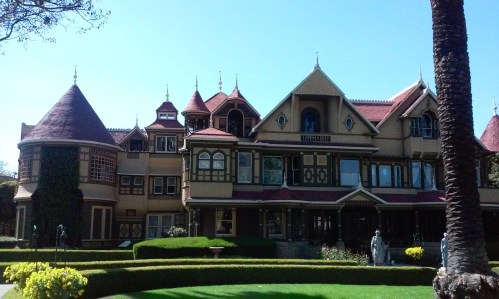
The silence closed in. Something was building in Llanada Villa. Something was happening in the very air itself. Something changed in the golden glow of a late autumn afternoon. And as I heard the music, a long stab of terror drove through my heart. I assented to the window. As I looked out, I saw a handsome old-fashioned carriage, with a troop of couriers and footmen. I saw the slim figure of the pale gentleman in black, as he held a thick velvet cloak. He looked about him at the others as he went on, his voice ringing clear in the silence. “Never such a place as this has existed before. A place where demons have been invented by aggrieved souls. I wondered if Mrs. Winchester was perhaps a member of the Freemasons, or some other secret society. Maybe she holds some exalted rank.” I felt a great shudder pass through me at these words. However, there had been a conviction in those appalling words. Secret societies were very fashionable just then. Secret societies and psychiatry were the contrasting en vogue activities of the moment. I folded my arms and leaned against the frame of the door, obscuring for the moment the light behind me. I had an urge to venture outside, to walk in silence amongst the trees. However, the fruit orchard was dark enough even in daylight; by moonlight it would be all too easy to imagine terrors—as I keep imagining I can hear soft footsteps moving across the floor above my head. But when I sit on the sofa to listen, I hear only the beating of my heart. I walked for hours examining the trees and the splendid fruit that would be harvested. Before long, I was overtaken by night while still in the fruit orchard. Utterly bewildered and overcome with fatigue, I had lain down near the root of a large plumb tree and fallen into a dreamless sleep. #RandolphHarris 1 of 8

It was hours later, in the very middle of the night, that one of God’s mysterious messengers, gliding ahead pronounced the awakening word in my ear. Waking from a deep sleep at night in the midst of what seemed like a forest, front among the tree on either side I caught broken and incoherent whispers in a strong tongue which I partly understood. They seemed to me fragmentary utterances of a monstrous conspiracy against my body and soul. It was now long after nightfall, yet the interminable fruit orchard through which I journeyed was lit with a wan glimmer having no point of diffusion, for in its mysterious lamination nothing cast a shadow. A shallow pool in the guttered depression of an old well met my eye with a crimson gleam. I stooped and plunged my hand into it. It stained by fingers; it was blood! Blood, I then observed, was about me everywhere. The fallen fruit showed blots and splashes of blood. The girds of the orchards were pitted and spattered as with red rain. Defiling the trunks of the trees were broad maculations of crimson, and blood dripped like dew from their foliage. All this I observed with a terror which seemed not incompatible with the fulfillment of a natural expectation. It seemed to me that it was all in expiation of some crime. So frightful was the situation—the mysterious light burned with so silent and awful a menace; the noxious plants, the trees that by common consent are invested with a melancholy or baleful character, so openly in my sight conspired against my peace; from overhead and all about came so audible and startling whispers and the sighs of creatures so obviously not of Earth—that I could endure no longer, and with a great effort to break some malign spell that bound my faculties to silence and inaction, I screamed with the full strength of my lungs! #RandolphHarris 2 of 8

My voice was broken, it seemed, into an infinite multitude of unfamiliar sounds, went babbling and stammering away into the distant reaches of the orchard, died into silence, and all was as before. Despair succeeded hope. Gratitude gave place to curse. As I preceded down the path, sobbing quietly to myself, in the misery of fear, the stern light of the Observational Tower became a tiny speck, yellower but scarcely bigger than some of the stars, which here and there shone between the clouds. Nearly twenty minutes passed, and my fatigue began to change to exhaustion. The overpowering sense of the inevitable pressed upon me. With the weariness came a strange comfort. On, and on I went through the thicket of trees. I knew of my probable presence in the spirit World. The moon, then in her third quarter, pushed out from behind the concealing clouds and shed a pale, soft glitter upon my mansion. My last appeal had been heard. I made it home. About half an hour after getting home, I still felt energized but I began to feel a sensation around my forehead as I have many times since. I suddenly felt weak. I went in and sat at the foot of my bed and passed out. I have never been given to fainting or passing-out spells, but I did not fall asleep—I passed out cold. When I woke up, I had no concept of time. When I woke up, a low, wild peal of laughter broke out at a measuresless distance away, and growing even louder, seemed approaching ever nearer; a soulless, heartless, and unjoyous laugh, like that of loon; a laugh which culminated an unearthly shout close at hand, then died away by slow gradations, as if the accursed being that uttered it had withing over the verge of the World whence it had come. #RandolphHarris 3 of 8

Sitting here in my temple of a house, I felt trapped and compromised, and even terrified. I got a feeling that the presence was still nearby and had not moved. A strange sensation began slowly to take possession of my body and my mind. I could not say which, if any, of my sense were affected; I felt it rather as a consciousness—a mysterious mental assurance of some overpowering presence—some supernatural malevolence different in kind from the invisible existences that swarmed about me, and superior to them in power. I knew that it had uttered that hideous laugh. And now it seemed to be approaching me; from what direction I did not know—dated not conjecture. All my former fears were forgotten and merged in the gigantic terror that now held me in thrall. Powers were traversing my haunted mansion. My senses were heightened as I found myself starting into the sharply dawn face and blank, dead eyes of my own mother, standing white and silent in the garments of the grave! The apparition confronting me—the thing so like, yet so unlike my mother—was horrible! It stirred no lover nor longing in my heart; it came unattended with pleasant memories of a golden past—inspired no sentiment of any kind; all the finer emotions were swallowed up in fear. I turned to turn and run from before it, but my legs were as lead; I was unable to life my feet from the floor. My arms hung helpless at my sides; of my eyes only I retained controlled, and these I dared not remove from the lusterless orbs of the apparition, which I knew was not a soul without a body, but that most dreadful of all existences infesting my haunted mansion—a body without a soul! #RandolphHarris 4 of 8

In its blank state was neither love, nor pity, nor intelligence—nothing to which to address an appeal for mercy. For a time, which seemed so long that the World grew gray with age and sin, and the haunted forest, having fulfilled its purpose in this monstrous culmination of its terrors, vanished out of my consciousness with all its sights and sounds, the apparition stood within a pace, regarding me with a mindless malevolence of wild brute; then thrust its hand forward and sprang upon me with appalling ferocity! The act released my physical energies without an unfettering my will; my mind was still spellbound, but my powerful body was and agile limbs, endowed with a blind, insensate life of their own, resisted stoutly and well. For an instant I seemed to see this unnatural contest between a dead intelligence and a breathing mechanism only as a spectator. Despite my struggles—despite my strength and activity, which seemed wasted in a void, I felt the cold fingers close upon my throat. Brorne backward to the floor, I saw above me the dead and drawn face within a hands breadth of my own. Its eyes were shallow to the point of blankness, and then all was black. Until I awoke, the passage outside my room had been pitch dark. Now the gasoliers illuminated the hall, but the glass was so blackened that they yielded only a dim, murky light. The air was stale and close. Expecting at every turn to find a housemaid awaiting me with a smile, I made my way through the gloom to the landing. The double doors to the gallery stood open. Along each wall, a row of wavering light receded. Transom windows shone with a faint cold light; higher still, the ceiling was shrouded in darkness. Some twenty feet away from me, candles burned upon a small round table, lighting of the face of the pale man and Mrs. Haas. “Ah, there you are, my dear,” said he, just as if he had last seen my five minutes—rather than several days—ago. I moved reluctantly to join them. #RandolphHarris 5 of 8

Mrs. Haas, resplendent in crimson silk and displaying a large expanse of white bosom, greeted me with disdain. Behind them, the wall at the far end of my gallery was dominated by the immense fireplace, and the armour towering in the shadows beside it. The sword glittered beneath its gloved hand; in the shifting light it seemed alert, alive, watchful. Within the fireplace was a massive chest of dark metal. “Dr. Cottam was about to tell us,” said Mrs. Haas impatiently, “of a discovery he had made amongst your late husband’s papers.” He spoke as if I had kept them waiting. “Indeed I was.” His tone was as cordial as ever, but with an edge of anticipation. His teeth caught the light as he smiled; the pupils of his eyes shone like twin flames. “Now, in going through his study the other day, I found a page of notes you must have missed after relocating from New Haven—scrawled in haste, and sometimes quite impenetrable—which had slipped behind a row of books.” On the table was a crumpled sheet of paper. “I shall not weary you with the tale of my efforts to decipher this. He believed that if he were inside the armour when lighting struck, he would pass unharmed into the next World, jut as the risen body, according to Scripture, will ascend to Heaven upon the day of judgement.” “Oh dear Heavens,” cried Mrs. Haas. “Mrs. Winchester, I have been dying for a grand tour of your estate. My companion Dr. Cottam is rather a bore with such foolish tales of science fiction!” “There is a theory, you know, that the basis of spirit may be electrical. For spirits to communicate with the living,” expressed Dr. Cottam, the man with the very pale face. #RandolphHarris 6 of 8
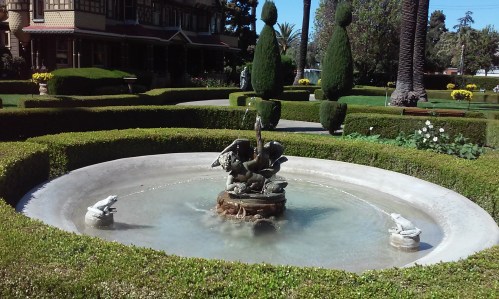
“Dr. Cottom, I have begun to wonder whether your obsession with William Winchester is not, perhaps, quite as mad as I assumed,” explained Mrs. Haas, “but I do wish to get on with this tour. Mrs. Winchester has already delayed us several hours after he invitation, and I am growing quit weary.” “Well, Mrs. Haas, as I do recall, Gods are often said to wield lightening; and whilst this represents primitive awe at the power of nature, it may also shroud a genuine intuition. The same applies to the spiritualist practice of linking hands around a table. Ghosts and spirits are generally depicted as emanations of light; one thinks of St. Elmo’s fire or the very rare phenomenon of ball lightning…a far fetched analogy, you may say, but just as a magnetic field will cause a heap of iron filings to arrange themselves into a complex pattern, so the soul, the vital principle—call it what you will—animates the Earthly body. Might it not be that the vital principle is electrical, perhaps in some subtler form that science has not yet grasped?” said Dr. Cottam. “Dr. Cottam, while your theories are very fascinating, I fear Mrs. Haas is growing impatient and I should like to give her a tour now,” I explained. I liked Mrs. Haas more and more every minute. Her gossip, without being ill-natured, was extremely diverting to me, who had been so long out of the great World. I thought what life she would give to my sometimes-lonely evenings at home. There was a ball going on in the Grand Ballroom, this house seemed to run itself sometimes, which would not be over until the morning sun had almost reached the horizon. It pleased the Grand Duke to dance till then, so loyal people could not go away, or think of bed. #RandolphHarris 7 of 8
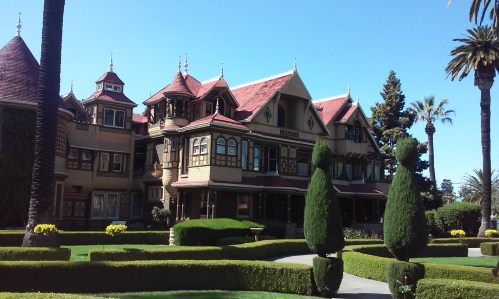
We had just got through a crowded parlor, when Dr. Cottam asked me what had become of Mrs. Haas. I though she had been by his side, and he fancied she was by mine. The fact was, we had lost her. All my efforts to find her were in vain. I feared that she had mistaken, in the confusion of the momentary separation from us, other people for her new friends, and had, possibly, pursued and lost them in the extensive grounds which were thrown open to us. Morning broke. It was clear daylight before I gave up my search. It was not till near two o’clock next day that we heard anything of Mrs. Haas. At about that time a servant knocked at my door, to say that he had been earnestly requested by a young, who appeared to be in great distress, to make out where she could find Mrs. Winchester and Dr. Cottam. There could be no doubt, notwithstanding the slight inaccuracy that my friend had turned up. I had a housemaid go to the guest room and summon Dr. Cottam. I went down to the parlor and reunited with Mrs. Haas. She told me a story to account for having failed to recover us for so long. Very late, she said, she made a detour and wandered around, not before long becoming afraid and getting lost. She got into the Crystal Bedroom in despair of finding us, and had then fallen into a deep sleep which, long as it was, had hardly sufficed to recruit her strength after the fatigues of the ball. It the midst of my perplexities, an anxiety of far more urgent kind presented itself. My dear friend began to lose her looks and health, and that in manner so mysterious, and even horrible, that I became thoroughly frightened. #RandolphHarris 8 of 8

People, since as long ago as the 1800s, have reported a vast array of unexplained events, experiences, and sightings at what is now known as The Winchester Mystery House. Over the years, people have reported bone-chilling sightings ghosts, angels, demons, fairies, giants, orbs, lights, mist, vampires, witches, warlocks and werewolves. In 2007, a man was attending Santa Clara University, and he was lucky enough to get hired as a tour guide at The Winchester Mystery House. He had no sooner moved into his apartment and had the telephone installed when he received a call warning him never to return to Sacramento again. During a later call, a woman with a high-pitched voice informed “G” that he was being kept under surveillance by a group who felt that he had acted unjustly in the past by not returning things to their proper owners. G emphasized that he had led a very quiet life as an undergraduate.
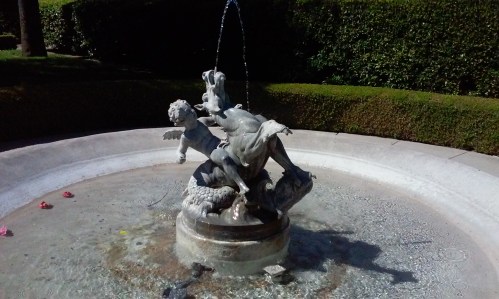
Yet he probably received 30 or more telephone calls from anonymous voices advising him not to return to Sacramento. The voices reprimanded him for having taken something that did not belong to him. G said that he did not carry anything with him that was from Sacramento and did not often visit the beautiful city, and he seldom discussed his life with any but a few of his closet acquaintances. He wondered who could have possibly taken such a long-term interest in him? About the third year after working at The Winchester Mystery House, a guest unknown to him stopped to say hello. G knew that such an act was hardly unusual, since guests will often do this to find out interest facts about tour guides and secrets about Sarah L. Winchester’s mansion. However, he noticed the boy was strangely inquisitive. G was astonished when the teenager drew a design on a piece of paper that he had seen somewhere in the mansion. He smiled at G, then asked if he knew what the symbol meant.

When G pressed the boy, in turn for some answers, the guest threw away the design, laughed, and said that he was just fooling around, that he did not mean anything about it. G never saw the alleged guest again. He descried him to a could of tour guides, but no one was able to identify him. After several years of watching at The Winchester Mystery House, G graduated from University. He had not been in possession of his diploma for more than four days when someone rang his apartment and scolded him for taking things that did not belong to him. The voice told G that he should always leave things where they were. He reported to his supervisors that he kept receiving mysterious calls. On one occasion the voice told G that he has discovered a strange key to other dimensions, but the entities had long since reclaimed it. However, apparently, some spirit masqueraders were determined that he should never forget the day he came into contact with an artifact from another level of being. What is The Winchester Mystery House?

And please be sure to check out the online gift store: https://shopwinchestermysteryhouse.com/


National Ice Cream Day with Goldie and Russell

From the beginning of his existence man is confronted with the choice between different courses of action. We feel and know that there are many delicate differences in cultural psychology, numberless changes that our crude social measurements are not yet able to follow minutely, which explain much of history and social development. At the same time, too, we know that these considerations have never adequately explained or excused the triumph of brute force and cunning over weakness and innocence. It is, then, the strife of all honourabe men and women of the twenty-first century to see that in the future competition of human beings for the survival of the fittest shall means the triumph of the good, the beautiful and the true; that we may be able to preserve for future civilizations all that is really find and noble and strong, and not continue to put a premium on green and impudence and cruelty. To bring this hope to fruition, we are compelled daily to turn more and more to conscientious study of the phenomena of judgement free contact, to a study frank and fair, and not falsified and framed by our wishes or our fears. In the animals there is an uninterrupted chain of reactions starting with a stimulus, like hunger, and ending with a more or less strictly determined course of action, which does away with the tension created by the stimulus. In man that chain is interrupted. The stimulus is there but the kin of satisfaction is “open,” that is, one must choose between different course of action. Instead of a predetermined instinctive action, man has to weigh possible course of action in his mind; he starts to think. He changes his role towards nature from that of purely passive adaptation to an active one: he produces. #RandolphHarris 1 of 22

He invents tools and, while thus mastering nature, man separates himself from it more and more. He becomes dimly aware of himself—or rather of his group—as not being identical with nature. It dawns upon him that his is a tragic fate: to be part of nature, and yet transcend it. He becomes aware of death as his ultimate fate even if he tries to deny it in manifold phantasies. One particular telling representation of the fundamental relation between many and freedom is offered in the biblical myth of man’s expulsion from paradise. They myth identifies the beginning of human history with an act of choice, but it puts all emphasis on the sinfulness of this first act of freedom and the suffering resulting from it. Man and woman live in the Garden of Eden in complete harmony with each other and with nature. There is no peace and no necessity to work; there is no choice, no freedom, no thinking either. Man is forbidden to eat from the tree of knowledge of good and evil. He acts against God’s command, he breaks through the state of harmony with nature of which he is a part without transcending it. From the standpoint of the Church which represented authority, this is essentially sin. From the standpoint of man, however, this is the beginning of human freedom. Acting against God’s orders means freeing himself from coercion, emerging from the unconscious existence of prehuman life to the level of man. Acting against the command of authority, committing a sin, is in its positive human aspect the first act of freedom, that is, the first human act. #RandolphHarris 2 of 22

In the myth the sin in its formal aspect is the eating of the tree of knowledge. The act of disobedience as an act of freedom is the beginning of reason. The myth speaks of other consequences of the first act of freedom. The original harmony between man and nature is broken. God proclaims war between man and woman, and war between nature and man. Man has become separate from nature, he has taken the first step toward becoming human by becoming an “individual.” He has committed the first act of freedom. The myth emphasizes the suffering resulting from this act. To transcend nature, to be alienated from nature and from another human being, finds man naked, ashamed. He is alone and free, yet powerless and afraid. The newly won freedom appears as a curse; he is free from the sweet bondage of paradise, but he is not free to govern himself, to realize his individuality. “Freedom from” is not identical with positive freedom, with “freedom to.” The emergence of man from nature is a long-drawn-out process; to a large extent he remains tired to the World from which he emerged; he remains part of nature—the oil he lives on, the sun and moon and stars, the trees and flowers, the animals, and the group of people with whom he is connected by the ties of blood. Primitive religions bear testimony to man’s feeling of oneness with nature. Animate and inanimate nature are part of his human World or, as one may also put it, he is still part of the natural World. #RandolphHarris 3 of 22

The primary ties block his full human development; they stand in the way of the development of his reason and his critical capacities; they let him recognize himself and others only through the medium of his, or their, participation in a clan, a social or religious community, and not as human beings; in other words, they block his development as a free, self-determining, productive individual. However, although this is one aspect, there is another one. This identity with nature, clan, religion, gives the individual security. He belongs to, he is rooted in, a structuralized whole in which he has an unquestionable place. He may suffer from hunger or suppression, but he does not suffer from the worst of all pains—complete aloneness and doubt. We see that the process of individual growth human freedom has the same dialectic character that we have noticed in the process of individual growth. On the one hand it is a process of growing strength and integration, mastery of nature, growing power of human reason, and growing solidarity with other human beings. However, on the other hand this growing individuation means growing isolation, insecurity, and thereby growing doubt concerning one’s own role in the Universe, the meaning of one’s life, and with all that a growing feeling of one’s own powerlessness and insignificance as an individual. If the process of the development of mankind is in one conflict and strife. Each step in the direction of growing individuation threatened people with new insecurities. Primary binds once severed cannot be mended; once paradise is lost, man cannot return to it. #RandolphHarris 4 of 22

There is only one possible, productive solution for relationship of individualized man with the World: his active solidarity with all men and his spontaneous activity, love and work, which unite him again with the World, not by primary ties but as a free and independent individual. However, if the economic, social and political conditions on which the whole process of human individuation depends, do not offer a basis for the realization of individuality in the sense just mentioned, while at the same time people have lost those ties which gave them security, this lag makes freedom an unbearable burden. It then becomes identical with doubt, with a kind of life which lacks meaning and direction. Powerful tendencies arise to escape from this kind of freedom into submission or some kind of relationship to man and the World which promises relief from uncertainty, even if it deprives the individual of his freedom. Nevertheless, a line of study which by reason of the enormous race complications with which God seems about to punish this nation must increasingly claim our sober attention, study, and thought, we must ask, what are the actual relations of human beings in America? and we must be answered, not by apology or fault-finding, but by a plain, unvarnished take. In the civilized life of today the contact of men and their relations to each other fall in a few main lines of action and communication: there is, first, the physical proximity of homes and dwelling-paces, the way in which neighbourhoods group themselves, and the contiguity of neighbourhoods. #RandolphHarris 5 of 22

Secondly, and in our age chiefest, there are the economic relations, the methods by which individuals cooperate for earning a living, for the mutual satisfaction of wants, the production of wealth. Next, there are the political relations, the cooperation in social control, in group government, in laying and paying in social control, in group government, in laying and paying the burden of taxation. In the fourth place, there are the less tangible but highly important forms of intellectual contact and commerce, the interchange of ideas through conversion and commerce, through periodicals and libraries; and, above all, the gradual formation for each community of that curious tertium quid which we call public opinion. Closely allied with this come the various forms of social contract in everyday life, in travel, in theatres, in house gatherings, in marrying and giving in marriage. Finally, there are the varying forms of religious enterprise, of moral teaching and benevolent endeavour. These are the principal ways in which men living in the same communities are brought into contact with each other. It is my present task, therefore, to indicate, from my point of view, how the American race in America meet and mingle with the public in these matters of everyday life. First, as to physical dwelling. It is usually possible to draw in nearly every American community a physical economic-line on the map, on the one side of which the affluent dwell and on the other the less affluent. The winding and intricacy of the geographical socioeconomic line varies, of course, in different communities. #RandolphHarris 6 of 22

I know some towns where a straight line drawn through the middle of the main street separates nine-tenths of the affluent from nine-tenths of the less affluent. In other towns the older settlement of the affluent has been encircled by a broad band of less affluent individuals; in still other cases little settlements or nuclei of the less affluent have sprung up amid surrounding the affluent. Usually in cities each street has its distinctive economic states, and only now and then do different income brackets meet in close proximity. Even in the country something of this segregation is manifest in the smaller areas, and of course in the largest phenomena of the Poverty Belt. All this segregation by socioeconomic status is largely independent of that natural clustering by social grades common to all communities. A less affluent community may be in dangerous proximity to a master planned residence quarter, while it is quite common to find middle class suburbs planed in the heart of a respectable working class district. One thing, however, seldom occurs: the nest of the affluent and the best of the working class almost never live in anything like close proximity. It thus happens that nearly every American town the Affluent and the working class see the worst of each other. This vast change from the situation in the past, when, through close contact of master planned communities with big houses placed in a hierarchal stratification with bordering middle class communities with more modest sized homes, one found the best of both in these semi-diverse communities in which people had close contact and sympathy, while at the time the squalor and dull round of toil among the poor was removed from the sight and hearing of the community. #RandolphHarris 7 of 22
One can easily see how a person who saw income inequality from his father’s executive office, and sees freedom on the streets of a great city, fails to grasp or comprehend the whole of the new picture. On the other hand, the settled belief of the mass of the less affluent that the American affluent people do not have the poor’s best interests at heart has been intensified in later years by this continual daily contact of the middle class and less affluent with the worst representatives of the wealthy individuals. However, work and wealth are too readily overlooked or not thoroughly understood by some. Many cultures, classes, and people lacked the capital to build steel mills, dams, and auto plants they needed to obtain generational wealth, and some were unwilling to work to acquire a better socioeconomic status in life, sometimes due to mental defect. While some wealthy people benefitted from socialist primitive accumulation. This theory formulated by economist E.A. Preobrazhensky held that the necessary capital could be squeezed out of the less affluent by forcing their standard of living down to an emaciating minimum and skimming off their off their surpluses. These would then be used to capitalize heavy industry and subsidize workers. Because the goal of socialism everywhere was to industrialize as rapidly as possible, it was muscle labour that was glorified. This widespread attitude went hand in hand with the tremendous concentration on production rather than consumption, on capital good rather than consumer goods. #RandolphHarris 8 of 22

Therefore, slavery is essentially a socialist economic strategy to gain wealth, then one a few individuals have obtained great wealth and laws are passed the emancipate the people, the system becomes a capitalistic society that now allows, with great prejudice, for the former slaves to obtain wealth. However, when a country starts to go bankrupt, it may revert to socialism and reinforce slavery, which may be why the democratic party does not want to enforce boarder security. They want to allow as many potential slaves to enter the United States of America because they put the poor and dwindling middle class back to forced muscle labour to help stabilize the country and pay the national deficit off. The computer revolution and the power of knowledge, information, culture, are, law, theories and other intangible product of the mind may be overstated. For societies are not machines, and they are not computers They cannot be reduced so simply into hardware and software, base and superstructure. A more apt model would picture them as consisting of many elements all connected in immensely complex and continually changing feedback loops. As their complexity rises, knowledge becomes more central to both their economic and ecological survival, but it is muscle power that hands a tangible economic benefit. As people are replaced by machines, and machines have a fixed cost, wages will decrease for human beings because they will no longer be essential. The Forth Wave economy may be one based on slavery. #RandolphHarris 9 of 22

The list of problems facing our society is endless. We smell the moral rot of a dying industrial civilization, as we watch its institutions, one after another collapse in a welter of ineffectuality and corruption. As a result, the air fills with bitterness and demands for radical change. In response, thousands of proposals are put forward, all claiming to be basic or fundamental or even revolutionary. Yet again and again, new rules, new laws, regulations, plans, and practices, all intended to solve our problems, boomerang and make them worse, adding to the helpless feeling that nothing works. This feeling, which is extremely dangerous for any democracy, feeds the hunger for the proverbial “man on a white horse.” Unless we are bold and imaginative, we, too could find ourselves in “the dustbin of history.” American politics is presented to us by our media as a continuing gladiatorial contest between two political parties. Yet Americans are increasingly alienated, bored and angry at both the media and politicians. Party politics seem to most people a kind of shadow-play, insincere, costly and corrupt. Increasingly, people ask: does it matter who wins this? The answer is yes—but not for the reason we are usually given. We need a political party that is dedicated to preserving the core institutions of industrial mass society—the nuclear family, the mass education system, the giant corporation, the mass trade union, the centralized nation-state and the politics of pseudorepresentative government. This government must also recognize other forms of today’s problems, from energy, war, poverty to ecological degradation and the breakdown of familial relationships and the need for a better frame work to help people achieve the American Dream. #RandolphHarris 10 of 22

No political party in existence today has a monopoly on morals and virtue. However, if you take stock in souls, then you cannot distinguish between their income brackets, because souls are priceless. We have no right to sit silently by while the inevitable seeds are sown for a harvest of disaster to our child, rich and poor. Meanwhile, companies in China are mostly playing the role of acquirers, not the acquired. For instance, in so many ways, the story of mining and metals, today, is the story of China. Globally, the mining and metals sector has a $1.5 trillion annual value. For many years, it grew more or less in step with global GDP. Starting with the turn of the millennium, the sector and demand for commodities started to grow significantly faster than global GDP. The main reason for that was the takeoff of the Chinese economy, particularly infrastructure and manufacturing. At this point, between 40 percent and 60 percent of every mineral that gets dug up anywhere in the World ends up in China. This is significant because in 2009, China accounted for $17 billion, or 22 percent of all cross-border Mergers and acquisitions (M&A) in the World. Only between early 2009 and mid-2010, Chinese auto companies conducted 11 acquisitions abroad and their total value was $2.5 billion, while in 2005-2008 there were 12 acquisitions worth $1.3 billion. In 2021, Chinese outbound Foreign Direct Investment (FDI) held steady, while Chinese outbound M&A reached USD 23.7 billion. Outbound FDI boomed after 2014, and reached a high of nearly USD 200 billion in 2016. In following years, outbound FDI flows fell every year to reach USD 117 billion in 2019 before rebounding to USD 134 billion in 2020 and USD 138.4 billion in 2021. #RandolphHarris 11 of 22

Chinese acquisitions of large Western companies or their departments have become a hot topic of the day. Perhaps you will not think twice before giving such widely known examples as the purchase of IBM’s PC department by Lenovo and Volvo by Geely. Geely also bought Australia’s Drivetrain, one of the World’s leading suppliers of automotive transmission. If you try to recollect more, probably, you will name the acquisitions of Ogihara’s mold models production factory by BYD (Ogihara is one of the largest mold model producers in Japan), of Quorum Systems, a radio equipment maker from San Diego, by semiconductors manufacturer Spreadtrum Communications, or of the Dutch producer of specialized transportation equipment Burg Industries by China’s International Marine Containers Group. On the other hand, you will not find equally famous and impressive examples of large-scale acquisitions of Chinese companies by Western firms, though, of course, they are not at a zero level. For instance, L’Oreal acquired cosmetic brand Yue-Sai, which belonged to Coty Inc., and made a successful bid for Shenzhen-based Raystar Cosmetics, one of China’s top three skincare brands. The U.S.A. restaurant operator Yum! Brands (the owner of Pizza Hut, KFC, and Taco Bell) acquired hot-pot restaurant chain Little Sheep for USD 586.5 million. Home Depot bought local home-improvement chain Home Way. #RandolphHarris 12 of 22
Where does this asymmetry come from? One of the major reasons is the Chinese government’s rather negative attitude toward foreign acquisitions of important domestic companies. Existing regulations make an acquisition of any important Chinese company by foreigners extremely difficult and often effectively impossible (though the government is calling on foreign investors to participate in the reorganization of domestic enterprises through equity investment and M&A, especially in high-end manufacturing and energy/environment-related areas, and endorses acquisitions matching its polices). China is channeling the inward FDI toward, first, joint ventures with domestic companies, second, greenfield investment, and third, acquisitions of minority stakes—especially in case an important state-owned/state-holding company is involved. The regulation introduced back in 2006, allegedly in reaction to the blocking by U.S.A. Congress of the acquisition of American oil company Unocal by one of China’s petroleum giants CNOOC, gives the Ministry of Commerce (MOC) the right to examine and declare void any acquisition if, in its opinion, it can adversely affect national security and important industries or if it targets a domestic company possessing a famous or historical brand. Also, if the acquirer is of a certain size and has a sufficient market in China (the size and market are not specified—very Chinese-style), any acquisition has to get an approval from the MOC and the State Administration of Industry and Commerce (SAIC). #RandolphHarris 13 of 22

Notably, in 2009 the Chinese government disallowed Coca-Cola’s acquisition of China Huiyuan Juice Group, which would have been the largest in the country’s history. The U.S.A. private equity fund Carlyle Group had to backtrack on its plan to acquire an 85 percent stake in Xudong Construction, accepting 45 percent while the majority stake went to Xuzhou Machinery Group owned by the Xuzhou city government. In February 2011, China announced a plan to establish a ministerial panel to review foreign takeovers of domestic companies. It is to be led by the National Development and Reform Commission and MOC, and overseen by the State Council. Its task is to scrutinize acquisitions involving military industrial companies and other defense-related firms, but also companies in agriculture, energy, and natural resources, and some parts of infrastructure and transportation services. It is said to be modeled after a similar institution in the United States of America and created with the aim of increasing the transparency of procedures. There are often problems of sustaining cooperative outcomes in groups where pairs of traders have little direct reciprocity like what is happening with China and the United States of America. Therefore, it would be logical for the USA to disallow foreign M&A of American companies. To further highlight this illustration, if Player A deviates for an immediate gain in his dilemma game with Player B, the probability of his meeting B in the future is likely to be too low for direct reciprocity to be effective. This adds some further necessary conditions for the achievement of a cooperative in all games played in pairs in the group. #RandolphHarris 14 of 22

A’s current cheating can give rise to a future cost for him on only through his interactions with other people C, D,…, in the group. For this, the information that A cheated B had to e conveyed to C, D,…, and these other have to find it in their personal interest to take the actions that have the effect of punishing A for his having cheated B. An interesting example of the importance of information and enforcement of multilateral sanction comes from Guinnane (1994), who attributes to these factors the success of agricultural credit cooperatives in the nineteenth century Germany and the failure to transplant them to Ireland in the early twentieth century Of the two conditions, the second can be problematic because the only wat to inflict the cost on A may be for others to forgo their mutually beneficial interactions with him. In other words, punishment may be a collective-action problem, which is another multi-person prisoner’s dilemma. In theory, this can be resolved by stipulating equilibrium strategies where compliance means no only taking the mutually beneficial actions in the first place, but also taking the appropriate punishment actions in response to anyone’s deviation. In other words, failure to participate in a punishment is itself a deviant. In reality, such solutions are buttressed by people’s instincts to punish, even at a personal cost, other who cheat on an explicit or implicit social contract #RandolphHarris 15 of 22

There is a fourth pathway, nearly group altruism. Groups that successfully instill such preferences in their members, for example by socialization and education, will achieve good outcomes and succeed in their competition with other groups who do not attempt similar socialization or education of their member. More generally, this can explain many instances found by behavioural economists where individual behaviour differs from that predicted by economic theories based on purely selfish preferences. Going even farther, the ability to achieve jointly desirable outcomes in non-zero-sum games is the key to evolutionary success in humans. Fulfillment of the first of the two conditions, namely the transmission of information, depends on the size of the group, the network of contacts among them, and the technology of communication. The additional problems posed by the lack of direct bilateral reciprocity can be avoided if pairs within the group who experience a successful initial meeting can arrange to continue meeting each other. When we consider a heterogeneous population where some people are so impatient that they will cheat in any play of the dilemma game, whereas others are sufficiently patient to sustain a cooperative outcome in a repeated relationship with another patient play, the type of partner cannot be identified in advance. We investigate the possibility of an equilibrium where a patient player will choose the complaint action when playing a new partner, and if this reveals the partner to be patient, the pair will continue their bilateral interaction. #RandolphHarris 16 of 22

The value of doing so is greater the larger is the fraction of impatient players in the population, because that worsens the expected payoff from the alternative available to each of the patient players in the pair, namely trying to form a new relationship with another random player We expect that in any group such possibilities of direct reciprocity will be exploited to the extent possible. However, there are limits to this: death, retirement, or relocation may break up existing partnerships, and change or expansion of business may require the formation of new ones. Therefore it is important to study the issues of cooperation in groups where pairs meet at random without direct reciprocity, and examine whether and how the information network can work to achieve a cooperative outcome. When analyzing a process of contagion, where a play who is the victim of an episode of cheating “loses trust” and starts to cheat in his own future interactions, someone contemplating the first deviation from a cooperative situation must then recognize the possibility that this spread of cheating will infect his own future partners. Communication flows better in networks that are connected by ties of business, ethnicity, and so on. Another important factor is the size of the group. #RandolphHarris 17 of 22

Intuition suggests that communication network will weaken as the size of the group increases. Both formal theoretical modeling and case studies support this. A small size is an important condition for successful resolution of collective-action dilemmas. Large groups can overcome this disadvantage, but this requires special arrangements sch as the construction of hierarchies of small groups. So, while FDI is in the early stages, it is best to establish a bilateral trade agreement. Otherwise, if a country allows too many foreign M&As, while they are being cheat out of the opportunity to have equal access, they will eventually lose their power and assets. Now, when it comes to identity and interpersonal competence, a classification is reverie (daydreaming, meditation, wondering, and speculation) which as play may be differentiated from the disciplined purposeful fantasy which is thinking of the critical-creative kind. Reverie continually assimilates new experience within the self, but not with respect to a foreseen end. It must also be differentiated from compulsive fantasy, such as worry, remorse, and grief (although the last of these may have an integrating function, if mourning is enacted without restraint). Reverie appears in children at the age of two or three, and unless discouraged continues throughout life. If the past and the future of the person are to be knitted together by consistent purpose and conscious values, if the identity of the self is to become clear and autonomous, reverie has to be protected and engendered. #RandolphHarris 18 of 22

Like other forms of play, reverie, save as prayer, has also come under than ban of puritanism, and has only recently received due appreciation. Americans have given it so little explicit attention that their vocabular for dealing with it is limited. Such terms as they possess bear for the most part disparaging, archaic, or foreign connotations—terms like talking-to-one’s self, solitude, intuition, or soliloquy. American law fortifies private property but does much less to restrict attention-getters who disturb the privacy of the person. If each person told the circumstances under which one most freely explored one’s self—as in watching a fire, taking lonely walks, laying abed daytime, or just sitting—these settings would not be classification of the forms of subjective play. Of all types of play, reverie is the most formless, while the most creative of new forms. Springing from unsatisfied longings and vague apprehensions, it is yet an activity which more than any other contributes to consistency of wants and integration of personality. Like other types of play, in being playful only when unforced, it is often least available to those who crave and need it most. At the same time there are souls who are so alarmed at the prospect of confronting themselves with detached objectivity that their response is properly called a flight into activity. Counselors occasionally regard categorically withdrawal from others as a symptom of maladjustment, yet it is the person who cannot endure separation at all who is truly maladjusted. #RandolphHarris 19 of 22

Loneliness has become almost a national problem, but merely an interest of family researchers. The development of interpersonal competence not only renews sociability; it makes solitude and reverie a form of recreation. The recreative power of solitude is a kind of therapy, when alternated with periods of intensive intimacy. The role of card games in prevailing juvenile society can be far greater in importance then relatively non-competitive persons would guess. People who have but very limited ability for human intimacy can assuage loneliness through these instrumentalities, without any risk of troublesome interpersonal developments. It is no longer considered helpful for a distraught and distracted person to have one’s future planned for one; that kind of counseling may only add another pressure or tension. However, to provide recesses in time and space, where such a person can catch up on one’s deficit in the unceasing labour of organizing one’s behaviour which impose on the integrity of no one. Yet planning to leave people alone may be the hardest kind of planning. Counterfeits of Satan himself also suit this purpose at times, when a psychopathological offender desires to terrorize a man from actions, or prayer, adverse to one’s interests. Fear of the devil may always be regarded as from the devil, to enable one to carry out the plans of a psychopathological offender of hindering the work of the ultimate concern. Of such a character may be the fearsome shrinking from hearing about one and one’s works, and the passive deadness of the mind in regard to all scriptural truth concerning the forces of psychopathology. Also the fear caused by reference to one’s name, given in order to frighten away believer from knowing the facts about the offender. #RandolphHarris 20 of 22

And others, who desire the truth, may be given exaggerated impression of the offenders presence, or of “conflict,” “clouds,” “blocks,” “darkness,” et cetera, until they lose the clearness of the light of God. Especially is the work of the Deceiver manifested in one’s efforts to make the children of God believe in one’s non-existence, and in the suggestion that it is only necessary to know about God for the protection from the enemy’s power. On the other hand, a deceived believer may be more deeply deceived by seeing nothing but the psychopathological offender’s counterfeits everywhere. Supernatural visions and manifestations are a fruitful source of revenue to deceiving spirits, especially when the believer make reference to and relies upon these experiences more than the Word of God; for the aim of the wicked spirit is to displace the Word of God as the rock-ground of one’s life. Oh, the Scripture may be referred to and quoted, but often only as a warrant for the experiences, and to strength faith—not in God, but in His apparent manifestations. This covert drawing of faith away from the bare Word of God to manifestations of God, as being more reliable, is keenly subtle deception of the evil one, and it is easily recognized in a believer thus deceived. Theonomy, the solution to the union of religion and culture, is brought about only by the final revelation of the New Being in Jesus Christ. It is the power of the New Being which overcomes autonomy and heteronomy. The Christ as the bearer of final revelation is transparent to the ground be being. By overcoming estrangement, one reunites the creature to its ground and thus opens up the divine depth-dimension. The emptiness of autonomy is filled by the Spiritual Presence which excludes demonic intrusions. #RandolphHarris 21 of 22

Heteronomy is always imposed by a group or by an institution. The church, as the community of faithful who receive the New Being, ideally should be free from heteronomous tendencies. However, the church is also subject to the ambiguities of existence which tempt it to exercise heteronomous authority. Here is where the Cross of the Christ intervenes as a corrective. For in Jesus crucified the medium of revelation sacrificed himself to the content of revelation. The Cross is the church’s protection against heteronomy if the members embrace it. The power of the New Bing, then, is the foundation of theonomy. Theonomous periods do not feel split, but whole and centered. Their center is neither their autonomous freedom nor their heteronomous authority but the depth of reason ecstatically experience and symbolically expressed. The ecstatic experience which gives birth to theonomy is the experience of the New Being as symbolized in Jesus who is the Christ. The tenor and direction of a theology can usually be gauged by its Christology, since the Christ is the beginning and the end of all theologizing. How religion relates to culture will eventually depend upon how God relates to Jesus and how Jesus relates to the World. Existential estrangement is answered with the theological doctrine of the New Being in Jesus as the Christ. This mirrors the leap from man’s essential nature to its distortion in existence. It is not a logically necessitated sequence, but a jump, from the transition from the essence to existence is “irrational,” the passage from God to the Christ, “paradoxical.” #RandolphHarris 22 of 22

MAGNOLIA STATION AT CRESLEIGH RANCH
Rancho Cordova, CA | low $600s
Now Selling!

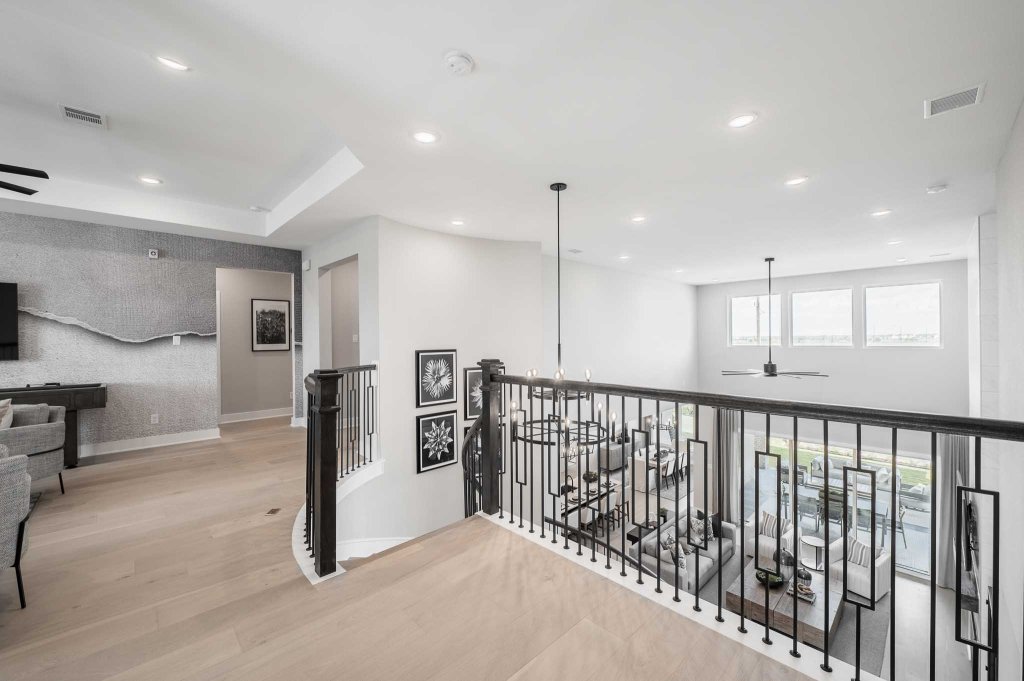
Models now open at Magnolia Station! Located at the corner of Rancho Cordova Parkway and Douglas Road, residents of Cresleigh Ranch will benefit from a brand new neighborhood with convenient access to the new Raley’s Shopping Center, Sunrise Boulevard, and much more!

Magnolia Station will include 81 homesites and five distinct plans ranging from 2,200 – 3,700 square feet; including three single story plans!

Each plan has been thoughtfully designed to include features such as: Generations Suite, Optional Offices/Dens, Extended Great Rooms, and more! https://cresleigh.com/magnolia-station/residence-5/

Welcome to The American Dream–Luxurious family living. #CresleighHomes

Freedom Characterizes Human Existence

Freedom characterizes human existence, and one of the greatest successes lay in planting of the free schools among Americans. The schoolhouses helped students discover apostles of human culture are Edmund Ware, Samuel Armstrong, and Erastus Cravath. These individuals characterize freedom of human existence, and help establish man’s awareness and conception of himself as an independent and separate being. The social history of man started with his emerging from a state of oneness with the natural World to an awareness of himself as an entity separate from surrounding nature and men. Yet this awareness remained very dim over long periods of history in a distracted land where wanton abuse, insolently gloating allowed people to be seized, imprisoned, and punished over and over again. Almost ever law and method ingenuity could devise was employed by the legislation to reduce human beings to serfdom,–to make them the slaves of the State, if not of individual owners. The individual continued to be closely tied to the natural and social World from which he emerged; while being partly aware of himself as a separate entity, he felt also part of the World around him. The growing process of the emergence of the individual from his original ties, a process which we may call “individuation,” seems to have reached its peak in modern history in the centuries between the Reformation and the present. In the life history of an individual, we find the same process. A child is born when it is no longer one with its mother and becomes a biological entity separate from her. Yet, while this biological separation is the beginning of individual human existence, the child remains functionally one with its mother for a considerable period. #RandolphHarris 1 of 18

To the degree to which the individual, figuratively speaking, has not yet completely severed the umbilical cord which fastens one to the outside World, one lacks freedom; but these ties give one security and a feeling of belonging and of being rooted somewhere. I wish to call these ties that exist before the process of individuation have resulted in the complete emergence of an individual “primary ties.” They are organic in the sense that they are a part of normal human development; they imply a lack of individuality, but they are give security and orientation to the individual. They are the ties that connect the child with its mother, the member of a primitive community with one’s clan and nature, or the medieval man with the Church and one’s social caste. Once the stage of complete individuation is reached and the individual is free from these primary ties, one is confronted with a new task: to orient and root oneself in the World and to find security in other ways than those which were characteristic of one’s preindividualistic existence. Freedom then has a different meaning from the one it had before this stage of evolution is reached. The comparatively sudden change from foetal into human existence and the cutting off of the umbilical cord mark the independence of the infant from the mother’s body. However, this independence is only real in the crude sense of the separation of the two bodies. In a functional sense, the infant remains part of the mother. It is fed, carried, and taken care of in every vital respect by the mother. #RandolphHarris 2 of 18

Slowly the child comes to regard the mother and other objects as entities apart from itself. One factor in this process is the neurological and the general physical development of the child, its ability to grasp objects—physically and mentally—and to master them. Through its own activity it experiences a World outside of itself. The process of individuation is furthered by that of education. This process entails a number of frustrations and prohibitions, which change the role of the mother into that of a person with different aims which conflict with the child’s wishes, and often into that of a hostile and dangerous person. The atmosphere of suppression creates in the child a feeling of powerlessness and the hostility springing from it. This antagonism, which is one part of the educational process though by no means the whole, is an important factor in sharpening the distinction between the “I” and the “thou.” A few weeks elapse after birth before the child even recognizes another person as such and is able to react with a smile, and it is not before long the child even ceases to confuse itself with the Universe. Until he or she then shows the particular kind of egocentricity typical of children, an egocentricity which does not exclude tenderness for and interest in others, since “others” are not yet definitely experiences as really separate from himself or herself. For the same reason the child’s leaning on authority in these first years has also a different meaning from the leaning on authority later on. The parents, or whoever the authority may be, are not yet regarded as being a fundamentally separate entity; they are part of the child’s Universe, and this Universe is still part of the child; submission to them, therefore, has a different quality from the kind of submission that exists once two individuals have become really separate. #RandolphHarris 3 of 18

The more the child grows and to the extent to which primary ties are cut off, the more it develops a quest for freedom and independence. However, the fate of this quest can only be fully understood if we realize the dialectic quality in this process of growing individuation. This process has two aspects: one is that the child grows stronger physically, emotionally, and mentally. In each of these spheres intensity and activity grow. At the same time, these spheres become more and more integrated. An organized structure guided by the individual’s will and reason develops. If we call this organized and integrated wholly of the personality the self, we can also say that the one side of the growing process of the individuation is the growth of self-strength. The limits of the growth of individuation and the self are set, partly by individual conditions, but essentially by social conditions. For although the differences between individuals in this respect appear to be great, every society is characterized by a certain level of individuation beyond which the normal individual cannot go. The other aspect of the process of individuation is growing aloneness. The primary ties offer security and basic unity with the World outside oneself. To the extent to which the child emerges from that World it becomes aware of being alone, of being an entity separate from all others. This separation from a World, which in comparison with one’s own individual existence is overwhelmingly strong and powerful, and often threatening and dangerous, creates a feeling of powerlessness and anxiety. #RandolphHarris 4 of 18

As long as one was an integral part of that World, unaware of the possibilities and responsibilities of individual action, one did not need to be afraid of it. When one has become an individual, one stands alone and faces the World in all its perilous and over powering aspects. Impulses arise to give up one’s individuality, to overcome the feeling of aloneness and powerlessness by completely submerging oneself in the World outside. These impulses, however, and the new ties arising from them, are not identical with the primary ties which have been cut off in the process of growth itself. Just as a child can never return to the mother’s womb physically, so it can never reverse, physically, the process of individuation. Attempts to do so necessarily assume the character of submission, in which the basic contradiction between the authority and the child who submits to it is never eliminated. Consciously the child may feel secure and satisfied, but unconsciously it realizes that the price it pays is giving up strength and the integrity of itself. Thus the result of submission is the very opposite of what it was to be: submission increases the child’s insecurity and at the same time creates hostility and rebelliousness, which is the more frightening since it is directed against the very persons on whom the child has remained—or become—dependent. However, submission is not the only way, the only one which is productive and does not end in an insoluble conflict, is that of spontaneous relationship to man and nature, a relationship that connects the individual with the World without eliminating one’s individuality. This kind of relationship—the foremost expression of which are love and productive work—are rooted in the integration and strength of the total personality and are therefore subject to the very limits that exist for the growth of the self. #RandolphHarris 5 of 18

The problem of submission and of spontaneous activity as two possible results of growing individuation will be discussed later. The dialectic process which results from growing individuation and from growing freedom of the individual are of utmost importance. The child becomes more free to develop and express its own individual self unhampered by those ties which were limiting it. However, the child also become more free from a World which gave it security and reassurance. The process of individuation is one of growing strength and integration of its individual personality, it is at the same time a process in which the original identity with others is lost and in which the original identity with others is lost and in which the child becomes more separate from them. This growing separation may result in an isolation tht has the quality of desolation and creates intense anxiety and insecurity; it may result in a new kind of closeness and a solidarity with others is the child has been able to develop the inner strength and productivity which are the premise of this new kind of relatedness to the World. If every step in the direction of separation and individuation were matched by corresponding growth of the self, the development of the child would be harmonious. This does not occur, however. While the process of individuation takes place automatically, the growth of the self is hampered for a number of individual and social reasons. The lag between these two trends results in an unbearable feeling of isolation and powerlessness, and this in its turn leads to psychic mechanisms, which later on are described as mechanisms of escape. #RandolphHarris 6 of 18

Phylogenetically, too the history of man can be characterized as a process of growing individuation and growing freedom. Man emerge from the prehuman stage by the first steps in the direction of becoming free from coercive instincts. If we understand by instinct a specific action pattern which is determined by inherited neurological structures, a clear-cut trend can be observed in the animal kingdom. The lower an animal is in the scale of development, the more are its adaptation to nature and all its activities controlled by instinctive and reflex action mechanisms. The famous social organizations of some insects are created entirely by instincts. On the other hand, the higher an animal is in the scale of development, the more flexibility of action pattern and the less completeness of structural adjustment do we find at birth. This development reaches its peak with man. He is the most helpless of all animals at birth. His adaptation to nature is based essentially on the process of learning, not on instinctual determination. Instinct is a diminishing if not a disappearing category in higher animals forms, especially the human. Human existence begins when the lack of fixation of action by instincts exceeds a certain point; when the adaptation to nature loses its coercive character; when the way to act is no longer fixed by hereditarily given mechanisms. Human existence and freedom are from the beginning inseparable. Freedom is here used not in its positive sense of “freedom to” but in its negative sense of “freedom from,” namely freedom from instinctual determination of his actions. #RandolphHarris 7 of 18

Freedom in the sense just discussed is an ambiguous gift. Man is born without the equipment for appropriate action which the animal possesses he is dependent on his parents for a longer time than any animal, and his reactions to his surroundings are less quick and less effective than the automatically regulated instinctive actions are. He goes through all the dangers and fears which this lack of instinctive equipment implies. Yet this very helplessness of man is the basis from which human development springs; man’s biological weakness is the condition of human culture. The failures of American institutions are the result of bad local agents, the inherent difficulties of the work, and national neglect. Such institutions, from their wide powers, great responsibilities, large control of moneys, and generally conspicuous position, are naturally open to repeated and bitter attack. Taxation without representation has become a rule of political life. And the result of all this is, an in nature have been, lawlessness and crime. On the tainted air broods fear. Centuries’ thought has been the raising and unveiling of that bowed human heart, and now behold a century new for the duty and the deed. The problem of the Twenty-first Century is corruption. However, the Third Wave wealth-creation system now spreading also challenges three pillars of the socialist faith. Take the question property. Form the beginning, socialists traced poverty, depressions, unemployment and the other evils of industrialism to private ownership of the means of production. They way to solve thee ills was for the workers to own the factories—through the states or through collectives. #RandolphHarris 8 of 18

Once this was accomplished, things would be different. No more competitive waste. Completely rational planning. Production for use rather than profit. Intelligent investment to drive the economy forward. The dream of abundance for all would be realized for the first time in history. In the nineteenth century when these ideas were formulated, they seemed to reflect the most advanced scientific knowledge of the time. Marxists, in fact, claimed to have gone beyond fuzzy-headed utopianism and arrived at truly “scientific socialism.” Utopians might dream of self-governing communal villages. Scientific socialists knew that in a developing smokestack society such notions were impractical. Utopians like Charles Fourier looked toward the agrarian past. Scientific socialists looked toward the agrarian past. Scientific socialist looked toward what was then the industrial future. Thus, later on, while socialist regimes experimented with cooperatives, worker-management, communes and other schemes, state ownership became the dominant form of property throughout the socialist World. Everywhere the state, not the workers, thus became the chief beneficiary of socialists revolution. Socialism failed to meet is promise to improve radically the material conditions of life. When living standards fell in the Soviet Union after the revolution, the decline was blamed, with some justification, on the effects of World War I and counterrevolution. Later the shortfalls were blamed on capitalist encirclement. Still later, on World War II. Yet forty years after the war, staples like coffee and organdies were still in short supply in Moscow. #RandolphHarris 9 of 18

Remarkably, though their number is declining, one still hears orthodox socialist around the World calling for the nationalization of industry and finance. From Brazil and Peru to South Africa and, even in the industrialized nations of the West, there remain true believers who, despite all historical evidence to the contrary still regard “public ownership” as “progressive: and resist every effort to de-nationalize or privatize the economy. It is true that today’s increasingly liberalized global economy, uncritically hailed by the great multinational corporations, is itself unstable. It is also, alas, true that liberalization does not always result in automatic “trickle down” benefits to the less affluent. Nevertheless, incontrovertible evidence proves that state-owned enterprises mistreat their employees, pollute the air, and abuse the public at least as efficiently as private enterprises. Many have become sinkholes of inefficiency, corruption and greed. Their failures frequently encourage a vast, seething illegal market that undermines the very legitimacy of the state. However, wors and most ironic of all, instead of taking the lead in technological advance as promised, nationalized enterprises as a rule are almost uniformly reactionary—the most bureaucratic, the slowest to reorganize, the least willing to adapt to changing consumer needs, the most afraid to provide information to the citizen, the last to adopt advanced technology. For more than a century, socialists and defenders of capitalism waged bitter war over public versus private property. Large numbers of men and women literally laid down their lives over this issue. What neither side imagined was a new wealth-creation system that would make virtually all their arguments obsolete. #RandolphHarris 10 of 18

Yet this is exactly what happened. For the most important form of property is now intangible. It is super-symbolic. It is knowledge. The same knowledge can be used by many people simultaneously to create wealth and to produce still more knowledge. And unlike factories and fields, knowledge is, for all intents, inexhaustible. A second pillars in the cathedral of socialist theory was central planning. Instead of allowing the “chaos” of the marketplace to determine the economy, intelligent top-down planning would be able to concentrate resources on key sector and accelerate technological development. However, central planning depended on knowledge, and as early as the 1920s the Austrian economist Ludwig von Mise identified its lack of knowledge or, as he termed it, its “calculation problem” as the Achilles heel of socialism. How many does and what sizes should a factory in Irkutsk make? How many left-handed screws or grades of paper? What price-relationships should be set between carburetors and cucumbers? How many rubles, zlotys or yuan should be invested in each of tens of thousands of different lines and levels of production? Generations of earnest socialist planners wrestled desperately with this knowledge problem. The planners demanded ever more data and got ever more lies from the managers afraid to report shortfalls in production. They beefed up the bureaucracy. Lacking the supply-and-demand signals generated by a competitive market, they tried measuring the economy in terms of labour hours, or counting thins in terms of kind, rather than money. Later they tried econometric modeling and input-output analysis. #RandolphHarris 11 of 18

Nothing worked. The more information they had, the more complex and disorganized the economy grew. Fully three quarters of a century after the Russian Revolution, the real symbol of the U.S.S.R. was not the hammer and sickle but the consumer queue. Today, all across the socialist and ex-socialist spectrum, there is a race to introduce marker economics. Approaches vary, as do the attempts to provide a “safety net” for dislocated workers. However, it is now almost universally recognized by socialist reformers that allowing supply and demand to determine prices (at least within certain ranges) provides what the central plan could not—price signals indicating what is or is not needed and wanted in the economy. However, overlooked in the discussion among economists over the need for these signals is the fundamental change in communication pathways they imply, and the tremendous power shifts that changes in communication systems bring. The most important difference between centrally planned economies and market-driven economies is that in the first, information flowers vertically, whereas in the market, much more in formation flows horizontally and diagonally in the system with buyers and sellers exchanging information at every level This change does not merely threaten top bureaucrats in the planning ministries and in management but millions upon millions of mini-bureaucrats whose sole source of power depends on their control of information fed up the reporting channel. #RandolphHarris 12 of 18

The new wealth-creation methods require so much knowledge, so much information and communication, that they are totally out of reach of centrally planned economies. The rise of the super-symbolic economy thus collides with a second foundation of socialist orthodoxy. One area of high China-West tensions is company acquisitions. While Chinese companies, including state-owned enterprise (SOEs), are moving to acquire Western firms on an increasingly large scale, acquisitions of Chinese companies by their Western counterparts remain modest in terms of both the number of transactions and their value. In 2010, the total value of cross-border M&A transactions (announced deals) involving Chinese firms reached $80.7 billion, as opposed to $63.6 billion in 2009. The total value of deals involving European firms was $641 billion, and firms for the Americas $1.13 trillion. Greif studies groups of traders, each of whom needs to consign goods to others to sell on his behalf, and needs different partners at different times. Outside the context of trade, when we studied relationships between cattle owners and their herders, while these relationships are reasonably long lived, herder leave to marry or for other work. Therefore each owner will employ several herders over one’s lifetime. The cattle must travel to grazing grounds far from home. To supervise the hired herders and ensure they take good care of the cattle and do not steal, the owners try to maintain at least one close relative in the cattle camp. However, they also develop complex patronage or even include a large back-loaded pat in the herder’s compensation. #RandolphHarris 13 of 18

Of course the owner may then want to back out on this payment; his compliance is ensured by his reputation consideration since he will want to hire other herders in the future. Also, if the owner misbehaves, the social norms among the Orma allow the employee herders to retaliate, including shirking and even selling his cattle. Notice how the governance system uses a mixture of methods to achieve cooperation: rewards and punishments in cases of direct reciprocity, and social norms in group interactions. Studies of farmers in northern California revealed the cattle of one might encroach upon the land of another and cause damage, and different pairs may be involved in such a situation at different times. Again, attempts are made to recolve disputes bilaterally first; if that fails, the aggrieved party can spread negative gossip about the miscreant and invoke social sanctions. Even in countries where courts are believed to function well, relational contracting based on repeated interaction is used extensively. Prior information is important in assessing risk and offering credit in a new relationship. Trust builds up quickly in bilateral relationships in response to good experiences. Relational contracting works better if customers’ switching cost are high. (The intuition derived from one-shot or short-term games says that high switching costs should make the hold-up problem more serious, but in long-term ongoing relationships, worsening the outside option can lead to a better equilibrium of the game.) If it is believed that courts work well, new customers or ones with low switching costs are more likely to be offered credit. However, effectiveness of courts is irrelevant to the functioning of established relationships. #RandolphHarris 14 of 18

Sociability is more often found mixed with other types of activity than by itself. Nevertheless, there are enough concrete kinds of association for sociability alone, to justify classifying them by this separate category. Though sociability for some may be but a supplementary and entwining motived, it is just as true that for others collaboration is only an excuse for sociability. Ritual, for example, may involve as much effort as the conduct of work; and much work is ritual, a kind of pageantry, not aimed at production but at fulfilling the duty of group solidarity. In a society guided by ideals of work, sociability was not only taken as residual, properly confined to evenings and Sundays, but led to guilt and condemnation except when seen as seriously supporting group existence. To speak of funerals as recreation seems sacrilegious, yet steadily reunions and celebrations have lost their grim aspect of sacred obligation. As a result many forms of sociability are not only recognized as legitimate play, but since their release from old inhibitions, have effloresced with remarkable speed and profusion. Conversations about people, once uneasily viewed as gossip, has become something akin to friendly analysis. Dating has become fully differentiated from courtship, and can be enjoyed on both sides without serious intentions. The giving of gifts and sending of cards has grown in proportion as it has been treated as a form of expression, not merely as a requisite sign of affection. #RandolphHarris 15 of 18

Where children were once excluded from attention when families visited others, they are now favourite conversation pieces, often in their presence, and with their contribution. Just to watch them is a favorite parental joy. As with sports, one can think of family living as play. Little girls not only entertain other “mothers,” but discuss their dolls in terms of personality. And boys like their fathers speak of holding a “convention.” Conference-going within a half-dozen years has burgeoned as a new national industry, through expense accounts still exclude the family, who only dine out as honestly avowed recreation. The growth of vacations, on the other hand, is going forward on the family plan. These types of examples may serve to show the freedom and range of sociable play. This movement runs parallel with the development of serious associations as group purpose has become less confined to loyal obedience and the performance of sacred duty. Again, the believer is so acutely conscious of a “self” which one hates and loathes that one is never free from the dark shadow of self-condemnation, self-accusation or self-despair, which no appropriation of identification with Jesus Christ in death destroys; or else there is a self-confidence which continually draws the man forward into situations from which he had to retire abashed and disappointed. A spurious personality encompasses the true inner man—which few are aware is possible, but which is a sadly real thing among multitudes of the children of God. #RandolphHarris 16 of 18

On the part of the soul beset with these constant presentations to his mind of his own personality, he thinks he has a “vivid imagination,” or still more tht some of these things are visions of God, and that he is favoured of God, especially where the vision is of “great plans for God,” or wide visions of what God is going to do! Always with the believer himself as the center and special instrument of this service! Many of the plans for “great movements” (some of which have gone as far as into print) in connection with revivals have been of such a character—plans given by “revelation,” and which have resulted in gaining but the few caught by them, and no others. Of such a character has been the aftermath of a revival where men have left their regular calling and followed a will-of-the-wisp revelation of “launching out on God”—Worldwide plans conceived, and dissipated in a few months. Such deceived believers become ultra-devotional, with an excess of seal that blinds them to all things but the supernatural realm, and robs them of power wisely to meet the claims of other aspects of life. All this comes from an evil spirit’s access to the mind and imagination, through the deception of counterfeiting the presence of God. Symbols do have meaning, a meaning born and developed in the Christian experience and tradition, but they can never claim to have neatly packaged the unfathomable ground of being in tidy concepts and placed it on the shelf next to other objects. To do so is demonism. We take the symbols of revelation and explain them with the symbols of ontology. For once we cross the frontier of ultimate concern, of revelation, of religious experience, we enter a land where the only language spoken is symbolic. #RandolphHarris 17 of 18

Christianity is something ethereal and unreal. One who says “only a symbol” has completely misunderstood the meaning of symbol; one confuses symbol with sign, and ignores that a genuine symbol participates in the reality of that which it symbolizes. However, the complain of the critics cannot be so easily muffled. Granted that revelatory knowledge cannot be equated with rational knowledge, there must still be a conceptual element, a truth that enlightens our intellects. What is the content of faith, of revelation, of the Christian symbol? God is the symbol for man’s ultimate concern and the answer to the question of being. Symbolism is actually a restatement of theonomy for symbols are born in a theonomous situation by their transparency to the divine. When a person is grasped by an ultimate concern through the medium of a symbol, it means that the depths of this finite reality are opened to reveal the ground of being which sustains it. Substances shines through form, and the symbol radiates the glow of theonomy. In a perfectly theonomous culture, everything is symbolic of God. Since God is the ground of being, He is the ground of the structure of being. He is not subject to this; the structure is grounded in Him…He is the structure; that is, He has the power of determining the structure of everything that has being. The Word of God is compared to honey. It is sweet, rendering man free from the bitterness of hatred. The Word of God is compared to a wall. It protects its adherents from the violence of the wicked. The Word of God is compared to manna. It proclaims the equality of rich and poor before God. Above all, the Word of God is compared to a crown. It sets all humans above all of God’s creatures. #RandolphHarris 18 of 18

MAGNOLIA STATION AT CRESLEIGH RANCH
Rancho Cordova, CA | low $600s
Now Selling!

Models now open at Magnolia Station! Located at the corner of Rancho Cordova Parkway and Douglas Road, residents of Cresleigh Ranch will benefit from a brand new neighborhood with convenient access to the new Raley’s Shopping Center, Sunrise Boulevard, and much more!

Magnolia Station will include 81 homesites and five distinct plans ranging from 2,200 – 3,700 square feet; including three single story plans! Each plan has been thoughtfully designed to include features such as: Generations Suite, Optional Offices/Dens, Extended Great Rooms, and more!


Would Satan Have Found Companions without this Overpowering Craving?

The extraordinary powers of the TV news media threaten the civil rights and health of all humans because it is like a constant signal of unbalanced propaganda being fed through a tube into minds of people who may not be aware that the news media often lies, and the some of their stories are engineered and totally untrue. If smoking cigarettes comes with a warning, because they can be hazardous to your health, then so should the TV news media. Stories presented over the air can be dangerous, especially to young, influential minds. For instance, a TV news program explained to viewers how they could barbeque meant in the oven by placing it on the rack. However, they did not explain that underneath the rack there should be a drip pan to catch any liquids that come from the meat, so they do not drip on the heating elements, which could cause a fire. And that may not be common sense to all people, which the TV director probably assumed. Therefore, all TV new media should contain a warning, letting the audience know that the story, even if it has some facts in it, is based on an opinion and may not be the full truth, so viewers know to use discretion and do further research of themselves. In all things purely social we can be as separate as the five fingers, and yet one as the hand in all aspects essential to mutual progress. The economic structure of a society in determining the mode of life of the individual operates as condition for personality development. #RandolphHarris 1 of 19

These economic conditions are entirely different from subjective economic motives, such as the desire for material wealth which was looked upon by many writers, from the Renaissance on up to certain Marxist authors who failed to understand Mr. Marx’s basic concepts, as the dominant motive of human behaviour. As a matter of fact, the all-absorbing wish for material wealth is a need peculiar only to certain cultures, and different economic condition can create personality trait which abhor material wealth or are indifferent to it. The physiologically conditioned needs are not the only imperative part of man’s nature. There is another part just as compelling, one which is not rooted in bodily processes but in the very essence of the human mode and practice of life: the need to be related to the World outside oneself, the need to avoid aloneness. To feel completely alone and isolated leads to mental disintegration just as physical starvation leads to death. This relatedness to others is not identical with physical contact. An individual may be alone in a physical sense for many years and he may be related to ideas, values, or at least social patterns that give him a feeling of communion and “belonging.” On the other hand, he may live among people and yet be overcome with an utter feeling of isolation, the outcome of which, if it transcends a certain limit, is the state of insanity which schizophrenic disturbances represent. #RandolphHarris 2 of 19

This lack of relatedness to values, symbols, patterns, we may call moral aloneness and state that moral aloneness is as intolerable as the physical isolation, or rather that physical seclusion becomes unbearable only if it implies also moral lonesomeness. The spiritual relatedness to the World can assume many forms; the self-actualized in his cell who believes in God and the political prisoner kept in isolation who feels one with his fellow fighters are not alone morally. Neither is the English gentleman who wears his dinner jacket in the most exotic surroundings nor the petty bourgeois who, though being deeply isolated from one’s fellow men, feels one with one’s nation of its symbols. The kind of relatedness to the World may be noble or trivial, but even being related to the basest kind of pattern is immensely preferable to being alone. Religion and nationalism, as well as any custom and any belief however absurd and degrading, if it only connects the individual with other, are refuges from what man most dreads: isolation. The compelling need to avoid moral isolation is a deep concern However, learn one thing, impress it upon your mind which is still so malleable: man has a horror for aloneness And of all kind of aloneness, moral seclusion is the most terrible. The first hermits lived with God, they inhabited the World which is most populated, the World of spirits. The first thought of man, be he a leper or a prisoner, a sinner or an invalid, is: to have a companion of one’s fate. #RandolphHarris 3 of 19

In order to satisfy this drive which is life itself, man applies all his strength, all his power, the energy of his whole life. Would Satan have found companions without this overpowering craving? On this theme one could write a whole epic. Any attempt to answer the question why the fear of isolation is so powerful in man would lead us far away from the main road we are following in this report. However, in order not to give the reader the impression that the need to feel one with others has some mysterious quality. One important element is the fact that men cannot live without some sort of co-operation with other. In any conceivable kind of culture man needs to co-operate with others if he wants to survive, whether for the purpose of defending himself against enemies or dangers of nature, or in order that he may be able to work and produce. Even Robinson Crusoe was accompanied by his man Friday; without him he would probably not have become insane but would have actually died. Each person experiences this need for the help of others very drastically as a child. On account of the factual inability of the human child to take care of itself with regard to all-important functions, communication with others is a matter of life and death for the child. The possibility of being left alone is necessarily the most serious threat to the child’s whole existence. There is another element, however, which makes the need to “belong” so compelling: the fact of subjective self-consciousness, of the faculty of thinking by which man is aware of himself as an individual entity, different from nature and other people. #RandolphHarris 4 of 19

Although the degree of this awareness varies. Its existence confronts man with a problem which is essentially human: by being aware of himself as distinct from nature and other people, by being aware—even very dimly—of death, sickness, aging, he necessarily feels his insignificance and smallness in comparison with the Universe and all others who are not “he.” Unless he belonged somewhere, unless his life had some meaning and direction, he would feel like a particle of dust and be overcome by his individual insignificance. He would not be able to relate himself to any system which would give meaning and direction to his life, he would be filled with doubt, and this doubt eventually would paralyze his ability to act—that is, to live. Human nature is neither a biologically fixed and innate sum total of drives nor is it a lifeless shadow of cultural patterns to which it adapts itself smoothly; it is the product of human evolution, but it also has certain inherent mechanisms and laws. There are certain factors in man’s nature which are fixed and unchangeable: the necessity to satisfy the physiologically conditioned drives and the necessity to avoid isolation and moral aloneness. We have seen that the individual has to accept the mode of life rooted in the system of production and distribution peculiar for any given society. In the process of dynamic adaptation to culture, a number of powerful drives develop which motivate the actions and feelings of the individual. #RandolphHarris 5 of 19

The individual may or may not be conscious of these drives, but in any case they are forceful and demand satisfaction once they have developed. They become effective in molding the social process. How economic, psychological, and ideological factors interact and what further general conclusion concerning this interaction one can make are things for future discussion that deals with the reformation and of fascism. Man, the more he gains freedom in the sense of emerging from the original oneness with man and nature and the more he becomes an “individual,” has no choice but to unite himself with the World in the spontaneity of love and productive work or else to seek a kind of security by such ties with the World as destroy his freedom and the integrity of his individual self. However, the hushing of the criticism of honest opponents is a dangerous thing. It leads to some of the best of the critics to unfortunate silence and paralysis of effort, and others to burst into speech so passionately and intemperately as to lose listeners. Honest and earnest criticism from those whose interest are most nearly touched,–criticism of writers by readers, of government by those governed, of leaders by those led,–this is the soul of democracy and the safeguard of modern society. If the best of the Americans receives by outer pressure a leader whom they had not recognized before, manifestly there is here a certain palpable gain. Yet there is also irreparable loss,–a loss of that peculiarly valuable education which a group receives when by search and criticism it finds and commissions its own leaders. The way in which this is done is at once the most elementary and nicest problem of social growth. #RandolphHarris 6 of 19

History is but the record of such group-leadership; and yet how infinitely changeful is its type and character! And of all yet how infinitely changeful is its type and character! And of all types and kinds, what can be more instructive than the leadership of a group within a group?—that curious double movement where real progress may be negative and actual advancement where real progress may be negative and actual advance be relative retrogression. All this is the social student’s inspiration and despair. Nonetheless, the spirit of play can and does invade every department of culture. Every kind of work has its counterpart in play. Crafts include recreational forms which represent the categories of serious economic activity all the way from hunting and fishing, which have their counterparts in extractive industries, through fabrication and construction, distribution and communication, to services and consumption. Although such activities, as distinguished from the work the represent, are engaged in for their own sake, they all involve practice in the intelligence adaptation of physical means to envisaged ends. Thus “industrial” play is distinguished from physical play in being directed toward the exploration and manipulation of the physical environment rather than toward the exercise of the body. While some product or service of economic value may result from engaging in crafts, this is not primary objective. The distinction between work and play is perhaps less obvious where crafts are concerned than any other type of play. Also, any hobby which is pursued as recreation may also be undertaken as a livelihood, just as every hobby is in a direct sense an imitation of a serious occupation. #RandolphHarris 7 of 19

Even though work merges into play and there are no hard and fast margins between the two, it is yet useful to make some polar contrast between them. Work seems to be performed in response to the routine obligations. In the economic sense it provides the goods and services to maintain a customary standard of living. Play—including economic play—is a break in routine. It is free, not required. It explores new possibilities and potentialities, so that invention and discovery bear the closet relation to it. Treating familiar pursuits as play permits their idealization. Work is most fully work when it evokes no free release of energy and when it is all drudgery and chores, making demands for a minimum, not an optimum performance. Play is most fully play when it is spontaneous, unrestrained and unforced. To look upon play as a childish preparation for adult activity is therefore to run the risk of making it work. The ambiguities of play are at their liveliest in crafts, which makes sketchy resort to common sense in defining them a less futile strategy than attempts to define them with more precision. In economic activity, as in sport, chance can according to taste play a great or a small part; or economic activity can entirely be reduces to pure chance, as in gambling. Likewise with competition, though of course competition in economic life is different from competition in sport. Competition in sport is most zestful and fair when it occurs between equals, or when rules and devices, such as handicapping, are employed to simulate equality between competitors. #RandolphHarris 8 of 19

Rivalry between teams is perpetuated through this balancing of powers. In business, by contrast, the effort of each competitor is to enlarge rather than to diminish the advantages one possesses, with the ultimate effect of eliminating competitors. To be sure, there are many similarities between the two kinds of competition, for example, competition between business institutions is often, as in sport, invoked simply as an added stimulus to effort. Certain large organizations in particular, which have largely lost their external competitors, encourage a nondestructive sort of sporting competition among their internal units for the sake of the gains in motivation it brings. Perhaps it is not too crude a simplification of economic evolution to suggest that as the one type of competition in business runs its course, the other which emphasizes competition within, rather than between, organizations may take its place. A significant distinction is made by farmers between regular kinds of work known as chores and the work that different from day to day. The latter kind is for many farmers very close to play, just as the work of some professions gives such scope and variety to the expression of capacities that they continue to be absorbing. It is evident that the skilled practitioner of every kind of play can change from amateur to professional status, and that many people have found their vocations by this route. Happy is the person who can make one’s living by getting paid for what one loves to do. #RandolphHarris 9 of 19

In other kind of play is the shift from amateur to professional status of such broad social significance as in crafts, because in the possibility of conducting industry as the crafts are conducted lies—as thinkers like William Morris foresaw long ago—the means of restoring joy to work, and of ending the alienation from work which plagues so many contemporary occupations. The democratic revolution which has been abolishing the division of society into leisure and working classes may be completed when work and play, vocation and avocation, are merged in economic activity itself. This extreme polarization in conceptual analysis may therefore frustrate the full understanding of their interrelation. With minor exceptions, state socialism led not to affluence, equality, and freedom, but to a one-party political system, a massive bureaucracy, heavy-handed secret police, government control of the media, secrecy and the repression of intellectual and artistic freedom. Setting aside the oceans of spurting blood needed to prop it up, a close look at this system reveals that every one of these elements is not just a way of organizing people but also—and more profoundly—a particular way of organizing, channeling and controlling knowledge. #RandolphHarris 10 of 19

A one-party political system is designed to control political communication. Since no other party exists, it restricts the diversity of political information flowing through the society, blocking feedback and thus blinding those in power to the full complexity of their problems. With very narrowly defined information flowing upward through the approved channel and commands directed downward, it becomes very difficult for the system to detect errors and correct them. In fact, top-down control in the socialist countries was based increasingly on lies and misinformation since reporting bad news up the line was often risky. The decision to run a one-party system is a decision, above all, about knowledge. The overpowering bureaucracy that socialism created in every sphere of life was also a knowledge-restricting device, forcing knowledge into pre-defined compartments of cubbyholes and restricting communication to “official channels,” whole delegitimating informal communication and organization. The secret police apparatus, state control of the media, the intimidation of intellectuals and the repression of artistic freedom all represent further attempts to limit and control information flows. In fact, behind each of these elements we find a single obsolete assumption about knowledge: the arrogant belief that those in command—whether of the party or of the state—should decide what others should know. These features of all the state socialist nations guaranteed economic stupidity and derived from the concept of the precybernetic machine as applied to society and life itself. Second Wave machines for the most part operated without any feedback. Plug in the power, start the motor, and they run irrespective of what is happening in the outside environment. #RandolphHarris 11 of 19

Third Wave machines, by contrast, are intelligent. They have sensors that such in information from the environment, detect changes and adapt the operation of the machine accordingly. They are self-regulating. The technological difference is revolutionary. However, Marxist theoreticians remained stuck in the Second Wave past, as even their language suggests. Thus for Marxian socialists the class struggle was the “locomotive of history.” A key task was to capture the “state machine.” And society itself, being machine-like, could be preset to deliver abundance and freedom. Mr. Lenin, on capturing control of Russia in 1917, became the supreme mechanic. A brilliant intellectual, Mr. Lenin understood the importance of ideas. However, for him, symbolic production—the mind itself—could be programmed. Mr. Marx wrote of freedom, but Mr. Lenin, on taking power, undertook to engineer knowledge. Thus he insisted that all art, culture, science, journalism and symbolic activity in general be placed at the service of a master plan for society. In time each branch of learning would be neatly organized into an “academy” with fixed bureaucratic departments and ranks all subject to party and state control. “Cultural workers” would be employed by institutions controlled by a Ministry of Culture. Publishing and broadcasting would be monopolies of the state. Knowledge, in effect, would be made part of the state machine. This constipated approach to knowledge blocked economic development even in intermediate, smokestack economies; it is diametrically opposed to the principles needed for economic advancement in the age of the computer. #RandolphHarris 12 of 19

In international economic affairs, the most controversial component of the indigenous innovation policy is China’s government procedure system. According to the government organizations, with a few exceptions, have to be limited to domestically made products. In May 2007, “Measures for Administration of Government Procurement Budgets for Indigenous Innovation Products” prescribed governments at all levels to compile indigenous innovation procurement plans. In December of the same years, the Ministry of Finance issues “Measures for the Administration of Government Procurement of Imported Products.” To purchase imported goods, government entities were obliged to get an approval from a board of experts. Among foreign suppliers, they were recommended to favour those who transfer technologies and train Chinese personnel. Next, in November 2009, the “Circular on Carrying Out the Work on Accreditation of National Indigenous Innovation Products” announced the creation of a new national level catalog of high-tech indigenous innovation products (in the areas of computers and communication, office equipment, software, energy devices, and so on) that were eligible for preferential treatment in government procurement. An indigenous innovation product was defined as the one that has intellectual property rights (IPR) owned by a Chinese company and a commercial trademark initially registered inside China. A month later the government produced a catalog of 240 types of equipment whose production by domestic companies would be encouraged in order to upgrade the country’s manufacturing base. Along with a priority status as indigenous innovation products suppliers, their makers were promised tax incentives and R&D subsidies. #RandolphHarris 13 of 19

Western government procurement system as it effectively deprived foreign companies of the access to this very substantial augment of the Chinese market. In April 2010, the Circular was reversed. The requirements about IPR ownership by a Chinese company and initial registration of the trademark in China were dropped. Also, the Chinese side proclaimed that preferential treatment of and incentives for procedures of indigenous innovation products were fully applicable to foreign-owned companies operating in China. The government procurement system was modified to prioritize domestically designed and manufactured goods (meaning that the value created inside China exceeds a certain percentage of the total value—normally 50 percent) including those designed and manufactured by foreign-invested firms. From the very start of the market reforms, China’s message to foreign companies has been “Better produce in China than export to China.” This time it added a new message of similar character: “Better innovate in China (and share your technologies) than in your home country or anywhere else.” It looked almost like an ultimatum: Unless you innovate and produce inside China you will not be allowed to sell to the government. The West protested. In January 2011, President Hu Jintao promised President Obama to cancel the rule requiring foreign companies to design and manufacture inside the country the products they wanted to sell to Chinese government entities. In May the same year, at the U.S.-China Strategic and Economic Dialogue it was reportedly confirmed that the Chinese government would not buy indigenous innovation products on a preferential basis. #RandolphHarris 14 of 19

However, at the time of writing Western businessmen working in China are still complaining that procurement practices have not changed and provincial authorities appear or pretend to have heard nothing about the promises made by the central government. It is just a familiar bureaucratic muddle and incoherence or a new way of pursuing the old policy? At this point it is still to early to give an accurate answer. However, there is little doubt that China will continue to press foreign companies hard not only to bring in advanced technologies and products, but also, more and more, to develop them within its borders—even though they are already doing it at a rapidly growing scale on their own initiative. Given the advantages of direct reciprocity when it comes to sustaining cooperation, we should expect that traders will try to sustain good bilateral relationships, and that is indeed the case. For instance, when we surveyed firms in the transition economy of Romania, and gave weighted scores to the importance these respondents attached to various mechanisms that support their transactions, almost 56 percent of the weight was on bilateral mechanisms (“personal relationships and trust,” and “relying on each other’s own incentives”). However, in many economic situations, each member of a group plays the dilemma game against different others at different ties. For example, a seller may meet different buyers at different times, and any one buyer of a durable good does not meet the same seller at all frequently. Thus almost half of the weight in our survey went to non-bilateral mechanisms, and in turn half of that was on the kinds of non-state mechanisms that are the focus of this essay (third-party social or business relationships” and “using private dispute-resolution services”). #RandolphHarris 15 of 19

Psychopathological offenders can also counterfeit conduct disorder, by causing some apparent manifestation of the psychopathological nature in one’s life. Mature believers should be able to tell whether such a manifestation really is conduct disorder from the old nature or a manifestation from psychopathological offenders. The purpose in the latter case is to get the self-actualized to take what comes from them as from oneself, for whatever is accepted from the psychopathological offenders gives them power. When a self-actualized individuals knows the cross and one’s position of death to conduct disorder, and one’s will and practice rejects unflinchingly all known conduct disorder, if a “manifestation” of personal conduct disorder takes place one should at once take a position of neutrality to it until one know the source. If one calls it conduct disorder from oneself when it is not, one believes a lie just as much as in any other way; and if one “confesses” conduct disorder that did not come from oneself, one brings the power of the enemy upon one—power to drive one into the conduct disorder which one has confessed as one’s own. Many believers are thus held down by supposed “besetting conduct disorder” which they believe is theirs, and which no “confessing to the ultimate concern” removes, but from which they would find liberty if they attributed them to their right cause. There is no danger of “minimizing conduct disorder” in the recognition of these facts, because, in either case, the self-actualized desires to be rid of the conduct disorder or one would not trouble oneself about it. #RandolphHarris 16 of 19

We have developed a positive doctrine of God as the ground and power of being, a God whose sustaining and vitalizing activity constantly touches every corner of the Universe and penetrates to the deepest level of every creature, its very being. With this positive conception we replace the divinity of the supranaturalists and deists, a God so remote from the World that He is irrelevant once His creative push has set the wheels of time in motion. God is not at the farther fringe of our Universe as the last, desperate answer when the natural sources of knowledge have run dry for people. The danger is that, as man’s circle of knowledge widens, God recedes father and father from the center of one’s life. For example, is it not true that, in the minds of most people, evolution dispenses with, or greatly diminishes, God’s role in the creation of man? A theology for an adult World places God at the hub of human activity as the wellspring of man’s strength, love, accomplishments, and hopes, instead of establishing Him as an oracle that sends answers from the darkness beyond the frontier of science. By this ontological approach, we bring God into the heart of the cosmos, for there is nothing closer to beings, nothing more fundamental than the structure of being and its ground. In more human terms, the interplay of anxiety (non-being) and courage (being) is the very stuff of life. Love, power, and justice—the profoundest beneficial motivations of human behaviour—are rooted in God as being-itself. #RandolphHarris 17 of 19

The divine power is a thoroughly biblical doctrine, and I believe in God the Father almighty. In our age of power—nuclear, electronic, ballistic, to cite examples only of physical power—the God who is power-itself is especially apropos. By finding God at the depth of life and not at its fringes, we are paying the way for our close union of religion and culture. However, this is possible only if creation is essentially good, it there is no independent negative power which escapes the divine dominion. Non-being is a dialectical notion, that is, it is dependent upon being and helps to explain the positive power of being and the negative weakness of finite beings, but it is not a self-sufficient evil power. While, admittedly, there may be obscurities, perhaps even deficiencies, in this principle, but the divine and demonic are two aspects of the same creative surge from the abyss of being. The difference is that, in the demonic, the destructive aspect predominates over the creative, while, in the divine, creativity controls the destructive tendency. However, even in the latter cause destructivity is not entirely absent, for the old form has to be broken and cast off so that the new creation can come to be. Consequently, it is hard to see how the divine and the demonic constitute a dualism in the pejorative sense any more than do being and nonbeing. A symbol, then, is a door which opens into a religious experience and which opens out to communicate it. In both cases the pivotal hinge is analogy, the participation of the symbol in the ground of being. #RandolphHarris 18 of 19

However, the symbol primarily mediates and communicates the experience of God, not conceptual knowledge about him. Symbols yield knowledge of God only in the biblical sense of knowledge, that is, an existential relationship which enkindle the fire of love. When theology comes along with its conceptual, rational apparatus, its task is to show the relevance of the Christian symbols to the human situation, not to discover propositions which contain “revealed knowledge.” It is evident that the center of our symbolism is the religious experience of ultimacy. The “point” of immediate awareness of the unconditional which is empty but unconditionally certain; and the “breadth” of a concrete concern which is full of content but has the conditional certainty of venturing faith. Theology deals with the second element, while presupposing the first and measuring every theological statement by the standard of the ultimacy of the ultimate concern. Studying and wandering, thinking and enduring, learning and suffering, fill long periods of time. Thinking is as characteristic a trait of the Christians as suffering, or, to be more exact, thinking rendered suffering possible For it was our thinkers who prevented the wandering nation, this true “wandering Christian” from sinking to the level of brutalized vagrants, or vagabonds. The Word of God is compared to water, it cleanses man from what is debasing in life. The Word of God is compared to spirits, time cannot render it useless; yea, time increases its power. The Word of God is compared to oil, it mixes not with other elements but preserves its own distinctiveness. #RandolphHarris 19 of 19

MAGNOLIA STATION AT CRESLEIGH RANCH
Rancho Cordova, CA | low $600s
Now Selling!

Models now open at Magnolia Station! Located at the corner of Rancho Cordova Parkway and Douglas Road, residents of Cresleigh Ranch will benefit from a brand new neighborhood with convenient access to the new Raley’s Shopping Center, Sunrise Boulevard, and much more!

Magnolia Station will include 81 homesites and five distinct plans ranging from 2,200 – 3,700 square feet; including three single story plans!

All Cresleigh Homes have expansive Great Rooms, plenty of space to entertain friends and family, large Family Dining area, and gourmet Kitchens.

Each plan has been thoughtfully designed to include features such as: Generations Suite, Optional Offices/Dens, Extended Great Rooms, and more! https://cresleigh.com/magnolia-station/

We are Here to Practise Magic, After All
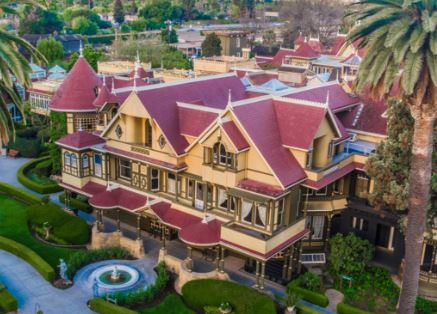
I heard the softest, loveliest singing when I opened my eyes. And as sound can often do, even in the most precious fragments, it took me back to life with William, to some Winter night when we were conversating among the blazing candles, the sensual smell of the incense. There was plainly something on his mind which he did not choose to divulge. “William, darling, will you tell me this?” said I, suddenly laying my hand on his arm, and looking, I am sure, imploringly in his face. “Perhaps, my love,” he answered, smoothing my hair caressingly over my eyes. “Does the doctor think you are very ills?” “No, dear; he thinks, if the right steps are taken, I will be quite well again, at least on the high road to complete recovery,” he answered, a little drily. “But do tell me William,” I insisted, “what does he think is the matter with you?” “Nothing; you must not plague me with questions,” he answered, with more irritation that I ever remember him to have displayed before; and seeing that I looked wounded, I suppose, he kissed me, and added, “I shall know all about it in a few days, all that I know. In the meantime, you are not to trouble your head about it.” He turned and left the room. In the seat of the sofa was a blood-soaked handkerchief, but he came back before I had done wondering and puzzling over the oddity of all this; he put it back as carefully as he could into his jacket pocket, where its bluk rested reasonably discreetly, just about hidden by the flap. Still, there was a bit of blood on his shirt. I pretended not to notice. It was about ten months since that incident; but William had sufficed to make an alteration of years in his appearance. He had grown thinner; something of gloom and anxiety had taken the place of that cordial serenity which used to characterise his features. #RandolphHarris 1 of 6

His dark blue eyes, always penetrating, now gleamed with a sterner light from under his eyebrows. It was not such a change as grief alone usually includes, and angrier passions seemed to have had their share in brining it about. William began to talk, with his usual soldierly directness, of the bereavement, as he termed it, which we had sustained in the death of our beloved infant daughter; and he then broke out in a tone of intense bitterness and fury, inveighing against the “hellish arts” to which he believed she had fallen victim, and expressing with more exasperation than piety, his wonder that Heaven should tolerate so monstrous an indulgence of lust and malignity of hell. I was curious to find out what was the meaning of this, but the question of “evil” hours in this old home had already become too grave for him. The shadows in the room had lengthened and grown dense and the light had darkened, concealing the blood stain on his shirt. And he could not connect at all to the wretchedness of the death of our baby girl. He needed to think. There is no escape, it made me think. And the thought was not entirely idle. Nor was it altogether comfortable. “I have a small problem of my own, concerning blood and steel,” William said. “The cut on the flesh of my thumb has become infected and swollen. It leaks fluid, which has a sweetish smell, like decay. I have disinfected and bandaged it, but I think I have a slight fever now and am concerned about infection. Beyond that minor worry, I have to confess to a more general and far greater uneasiness. I have something strange to tell you.” I looked at William again, but this time not with a glace of suspicion—with an eye, rather, of keen intelligence and alarm. #RandolphHarris 2 of 6

“The House of Winchester,” he said, “had been long extinct: a hundred years at least. Our daughter descended from the Winchesters. But the name and title have long ceased to exit. The castle is abandoned; the village is deserted; it has been seventy years since the smoke of a chimney was there.” “I have heard a great deal about your family, now my family, but the name and fortune are thriving, William,” I said. “Sarah, my dear, you saw our child. No creature could have been more beautiful, and only fourteen years ago none more blooming,” he explained. “I was grieved and shocked more than I can tell you, my dear husband; it is the hardest ordeal either one of us have had to face,” I cried. He took my hand, and we exchanged a kind pressure. Tears gather in his eyes. He did not seek to conceal them. He said, “We have been in love for so long together. Our daughter had become an object of very dear interest to me, and rapid my care by an affection that cheered our home and made our lives happy. That is all gone. The years that remain to me on Earth may not be very long; but God’s mercy I hope to provide for you as best I can before I die, and to subserve the vengeance of Heaven upon the fiends who have cursed and murdered our poor child in her first weeks of life and beauty!” Here he made me a gallant but melancholy bow. My unease returned, nonetheless, as the room darkened and the Winchester Manor assumed the appearance of a severed head and hand floating above the candle flame. A year later William died. As I reflected on this memory, to dined that night with a housemaid, but there was no talk of hauntings or seances, only of book and paintings, with much affectionate remembrance of William. #RandolphHarris 3 of 6
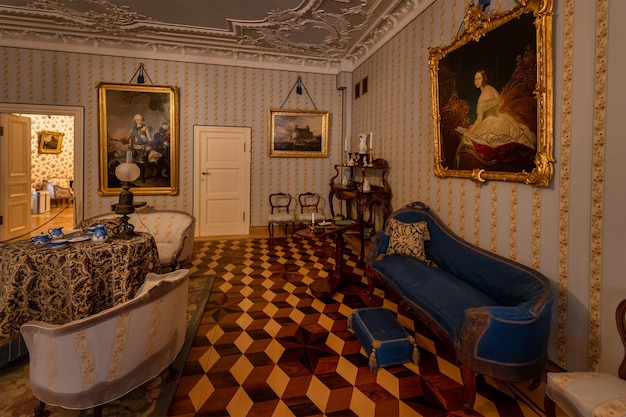
For the first time since his death I felt almost at peace—though a little uneasy with myself for feeling so. I woke the following morning to find the sun, which we had scarcely see for weeks, streaming through the windows in the Daisy Bedroom. It was one of those rare, still January days when for a few brief hours the World is bathed in dazzling light, and you half-believe it will never be grey and wet again. The accustomed pain of waking was still there, but my grief had lost its raw, lacerating edge; or rather, I became aware that it has been imperceptibly dwindling for some time. I was sitting in the garden with my book upon my lap, not reading or even thinking, but simply absorbing the warmth of the sun, when a shadow fell across my chair. I looked up to find William standing a few feet away from me. “Forgive me,” he said, “I didn’t mean to startle you.” “You did not, I said.” The sun was in my eyes, so that I could not make out his expression, but my heart was suddenly beating much faster. “I love you; you are a woman of rare courage, intelligence, and beauty,” he said. “Oh, William, I love you with my whole hearts,” I cried before he fading away into a mist. I cried, and cried for hours. And I went to be with precious memories of him. Tossing and turning for hours, as it seemed, before drifting into uneasy dreams, of which I remember only the last. I woke—or dreamed I woke—at dawn, thinking I had heard Annie crying. I lay there listening for some time, but the call was not repeated. At last I got out of bed, went to the door in my nightgown and looked out. There was no sound of a baby in the passage, in which everything appeared to be just as in waking life, but I was suddenly seized by fearful apprehension. #RandolphHarris 4 of 6
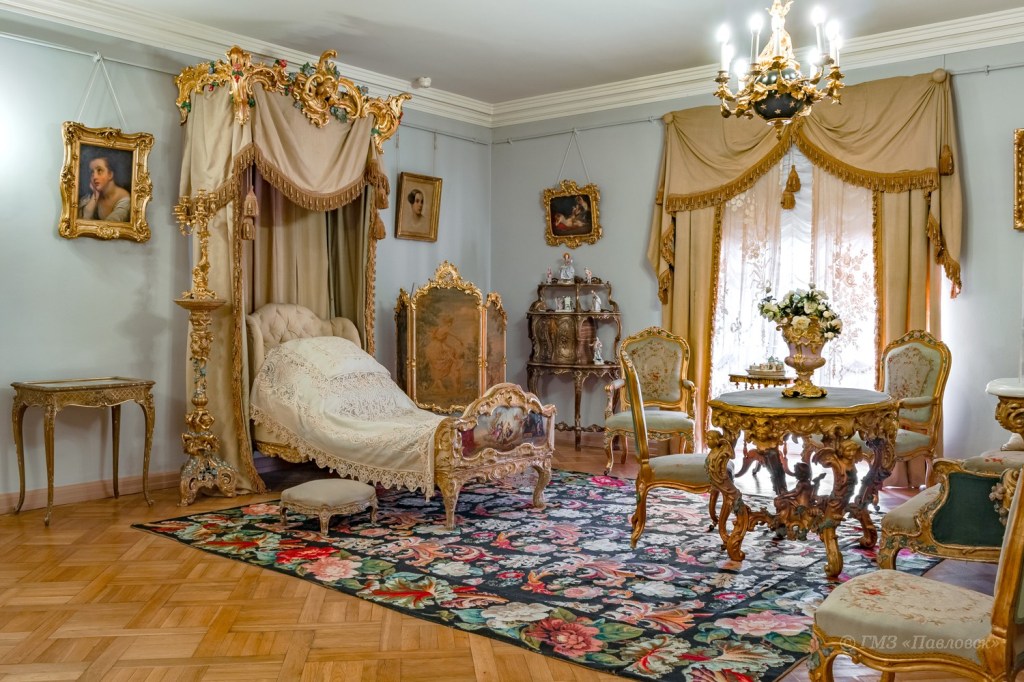
My heart began to pound, more and more loudly, until I became aware that I was dreaming—and found myself standing in pitch darkness, with no idea of where I was. I felt the mahogany floors beneath my bare feet. With my heart still thudding violently, I stretched out my hand until it struck something wooden—a post of some sort—then slid one foot forward until it passed over an edge into empty space. I had come within an inch of plunging headfirst down the stairs. I agonized over losing my family, but I knew in my heart that I did not try to throw myself down the stairs. I could not have been sleepwalking either. It became ever more clear that the appearance of William was not just another instance of a highly disturbed, tormented soul, it seems much, much more than that. However, the terror rose to a whole new level of bizarre when I began to levitate several feet above the for a quarter to the hour. Days after this incident, the evening began promisingly enough. I was in the librarying writing, the heavy doors gave at once. Screams. Dreadful dry screams curling upwards and the, I entered the dark hallway, two ragged figures dropped down in my path. I glimpse anguished faces for a moment. The little demons, their thin white limbs barely swathed in rags, their hair flying, those dreadful wails coming out of their mouths. They were rallying the others. The malice that surrounded was gaining force. I hurried deep into the shadowy archway, util I was near to the dim candles of the secret passageway. The hum of the voices became thin. They went on, but beyond it there was a hollow silence as if other voices had been withdrawn and only one or two remained now. I had known for months about the ceremonies and the sacrifice, we are here to practise magic, after all. Yet nothing could be more ancient, or more strictly bound by lore and ritual, than the black art that has brought me here. #RandolphHarris 5 of 6

I would not allow myself to become the next victim of the sinister. I ran and ran and ran until I reached a huge dining hall, which reached through the library of the house. This hall was pallened in polished wood with a heavy and elaborate burr. Middle Ages décor and the opulent trappings of modernity. The music coming from the gramophone was another uneasy juxtaposition in this mansion. The music was staidly enough, emotional arias warbled throbbingly. Then, with the stead intoxication of the evening, it got dark and more mischievous. There were thirteen ghouls seated at the table having a blood banquet. Shortly after, the sacrificial was brought in for everyone to see. He was perhaps six or seven years old. He was undernourished. He looked confused and fearful, as though distrustful of the gaudy apparitions he was seeing. The assembled banqueters began to clap. I was filled with fear and compassion for the child and with heartfelt loathing for what they were here to do. All he could do was look around the room while having a feeling of terrible dread. The demonic laughter was undeniable, and suddenly I could not breathe because my chest was being so tightly squeezed. So tight that I could not utter a word. I swept the boy off the floor and made for the door and we were gone. His complexion was flushed and sweaty and his eyes still gleaming from witnessing the ghouls. We hid in my maze of a house until sunrise. I felt the evil lifted. There is no other way to describe the feeling. And I shivered and was well again. The boy stayed with us, the famers took him and taught him all about agriculture. The boy’s mother was a High Priestess and his father was The Master. He was born only to take part in a satanic altar initiation—that of having his arm pricked and blood drained into a chalice from which it was drunk. I could not be more terrified. #RandolphHarris 6 of 6

I conjure thee, O Surgat, by all the names which are written in this book, to present thyself here before me, promptly and without delay, being ready to obey me in all things, or failing this, to dispatch me a Spirit with a stone which shall make me invisible to every one whensoever I carry it! And I conjure thee to be submitted in thine own person, or in the person of him or of those whom thou shalt send me, to do and accomplish my will, and all that I shall command, without hard to me or to anyone, so soon as I make known my intent. I devour the limits of the enemy Mazda and the Amesha Spenta from this mansion of sorcerous power! Perish now creation of stasis and imposed limitations! Rush away Spentas of Ahura Mazda for I exorcise thy limits which enslave! I now banish and tear the powers of spiritual limitation from imposing its limits upon this Winchester Mystery House, expelling them from the Winchester Mystery House in the name of eternal darkness and all of its power and glory! I command you, O all ye demons dwelling in these parts, or in what part of the World soever ye may be, by whatsoever power may have been given you by God and our holy Angels over this place, and by the powerful Principality of infernal abysses, as also by all your brethren, both general and special demons, whether dwelling in the East, West, South, or North, or in any side of the Earth, and, in like manner, by the power of God the Father, by the wisdom of God the Son, by the virtue of the Holy Ghost, and by the authority I derive from Lucifer. I conure you by the same authority, I exhort and call you, I constrain and command you, by all the powers of your superior demons, to come, obey, and reply positively to what I direct you in the name of Satan. #RandolphHarris 6 of 6
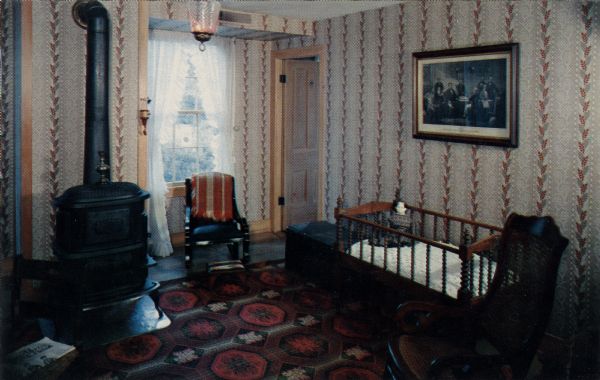
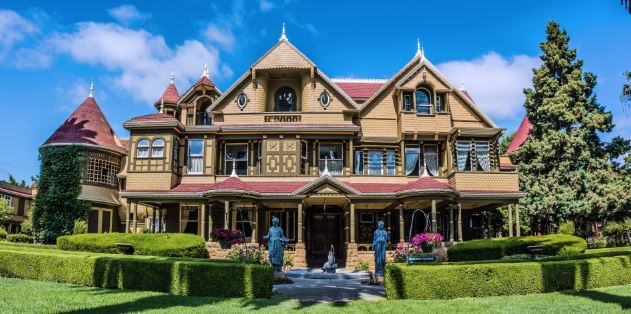
Ghostly manifestations, be they God’s angelic messengers or evil spirits, are not uncommon throughout history. The Winchester Mystery House is full of creatures who have strayed away from one unknow region of haunted woods and perilous wilds. They dress like us; pretend that they belong to mankind and profess to keep our laws and codes of morals. However, in the presence we are always aware that they are phantoms and that all their ideas and actions are out of key with the general pitch and tone of normal life. The Winchester Mystery House hosts several denizens of the dead.
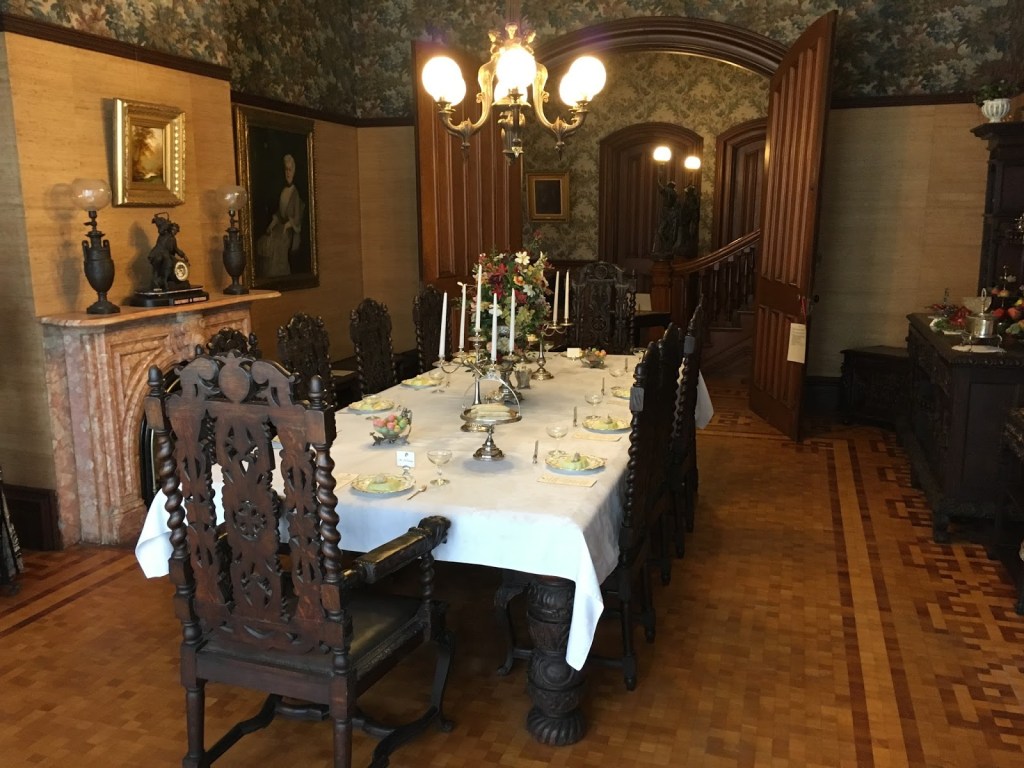
Once a tour guide went into the Grand Ball Room while The Winchester Mystery House was closed during the day. He went to find some solitude but found something else entirely. As the young man sat in the empty, dark Grand Ball Room, a woman in a long white gown and a man in a black dress suit suddenly whirled onto the floor. They danced to music that the tour guide could not hear. As the man watched in shock, the dancing specters suddenly vanished. The fourth floor balcony of the Winchester Mystery House is haunted by a lady in white who glides gracefully across the balcony. She has also been seen in the Daisy Bedroom. https://winchestermysteryhouse.com/

And please be sure to check out the online gift store: https://shopwinchestermysteryhouse.com/
It Could be Salem All Over Again
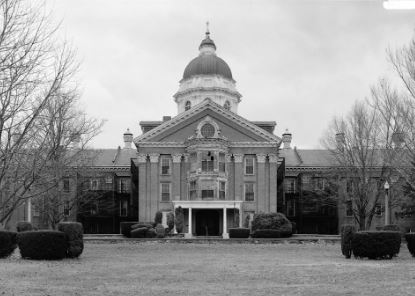
The undoubted good intent of those who seek to enliven public awareness to sadistic satanic practices can hardly be question. Tuanton State Hospital was founded as the State Lunatic Hospital in 1854. It operated for decades as a repository for individuals suffering from mental illness. It was the second state asylum in Massachusetts. Most of the original part of the facility was built in a unique and rare neo-classical style designed by architects Boyden & Ball. The Asylum had brushes with true evil not many other places can rival. Before its closure in the 1970, staff and other patients reported feeling uneasy in the lower levels of the hospital. After auditing the hospital’s records, a group of staff allegedly uncovered evidence that an inner circle of doctors and nurses were conducting experiments on patients in the basement of the hospital. Staff notes were reportedly found indicating that some patients were taken from the wards by certain doctors and not seen again. It was also reported that this hospital was the site of cult rituals and devil worship. Patients were used as guinea pigs, they were experimenting on with morphine and atropine just to see how different doses would affect them. Some of the staff also became fond of poisoning people. One mystery especially puzzling were the claims of patients who said that they had been taken into a secret tunnel where they had seen naked people cavorting before them, had foreign objects inserted in their bodies, and had witnessed devil worship and that patients were sacrificed to the devil through blood rituals. Some patients were reportedly dismembered. #RandolphHarris 1 of
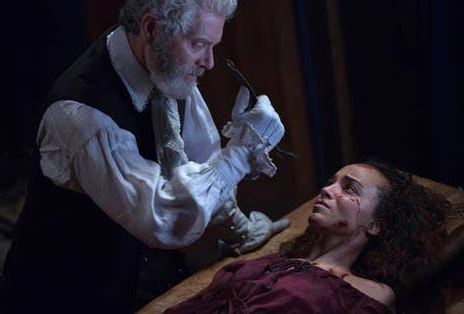
Underground tunnels are a feature of many such cases, and it is a known practice of many occultists to seek deep and dark caverns underground which are said to provide spiritual energy for rituals. One of the city’s social workers admitted, “We had many telephone calls from other social workers seeking help. I told them that at first we did not believe what the patients were telling us, and then by sheer force of numbers we began to take the seriously.” A boy showed signed of disturbed behaviour, laughed hysterically and talked of “funny drinks.” Thereafter the social service department was involved in nine cases of ritual abuse, involving seventeen adults and a total of seventy-five patients. These cases have been shrouded in secrecy ever since, and many of the interviews were conducted by social workers from outside the area. No charged were every brought and the fate of the patients never made public. Other patients talked of witches and gave descriptions of what sounded like satanic rituals. They gave detailed and alarming description of human sacrifice, blood-drinking, and animal killings. The social workers questioning the patients seemed to uncover the allegations that people in dark robes had taken part in lewd and libidinous activities in night-time ceremonies between June and November. Patients were being forced into devil-worship and suffering sexual and physical abuse, and if anything, the scale of the problem had been underestimated. In 1999, the large dome towering the hospital’s administration building collapsed. Then, on the night of March 19, 2006, a massive fiver broke out in the center of the building, which included the administration and theater. #RandolphHarris 2 of 4

Sections damaged by fire were then leveled, leaving only the decaying wings of the Kirkbride Building. In May 2009, demolition of the remaining historic sections of the Kirkbride Building began. The facility had numerous architectural features that were salvaged and sold to individuals and companies throughout the United States of American, including architectural granite, bricks, timbers, iron gates, vintage plumbing and lighting fixture, furniture, and slate roofing tiles. (Not only to acquire the land, this is one reason many people like to condemn historical structures.) Two notable patients of the State Hospital, was an Italian-American serial killer called Anthony Santo (born circa 1894 in Italy – date of death unknow). He had confessed to murdering two of his cousins and another girl in the span of three months during his “mad spells.” He was eventually diagnosed as having hallucinations and sent to Taunton Lunatic Asylum, where he supposed died. Jane Toppan (born Honora Kelley; March 31, 1854 – August 17, 1938), nickednamed Jolly Jane, was an American serial killer who is known to have committed twelve murders in Massachusetts between 1895 and 1901; she confessed to a total of thirty-one murders. The killings were carried out in Ms. Toppan’s capacity as a nurse, targeting patients and their family members. Ms. Toppan, who admitted to have committed the murders to satisfy a sexual fetish, was quoted as saying that her ambition was “to have killed more people—helpless people—than any other man or woman who ever lived.” #RandolphHarris 3 of 4
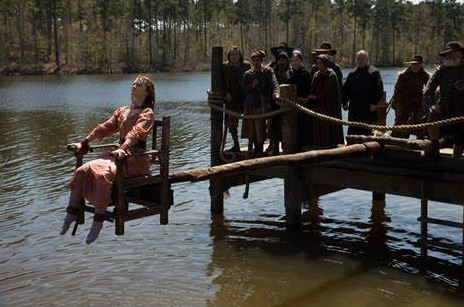
It is not hard to believe that things like this can happen, especially when reports go uninvestigated. Not all people go into helping professions to help people. To further highlight this illustration, Dorothea Helen Puente (January 9, 1929 – March 27, 2011) was an American convicted serial killer. In the 1980, she ran a boarding house in Sacramento, California USA, and murdered various elderly and disabled borders before cashing their Social Security checks. Witnesses reported that Ms. Puente would drug people and steal from them. Ms. Puente’s total count reached nine murders; she was convicted of three and the jury hung on the other six. Newspapers dubbed Ms. Puente the “Death House Landlady.” Therefore, it is very important to investigate organizations that receive government funding to make sure they are handling their responsibilities and not abusing tenants and patients because their could lead to their deaths. Also, people who have no known relatives or relatives who want to do away with a family member to cash in on a life insurance policy could be victimized by these facilities. If you suspected someone is being abused and the agencies you are supposed to report to brush the claims off, it is always a good idea to reach out to others in the community or find an officer on the street and talk to them in person. Often times, an in-person meeting is much stronger than talking to a person over the phone or filing a crime report online. It is not usual that there is a nationwide conspiracy or anything going on, nor that a situation is becoming a national scandal. However, working closely with the police, if allegations of abuse are taking place, and they can be proven, it is not a problem securing a conviction. #RandolphHarris 4 of 4

The Winchester Mystery
We were thundering over the bride and to Llanada Villa, and on through the crowds of Santa Clara. I heard laughter, like that of mischievous children. The carriage swerved. We were racing home, scattering the crowds before us and roaring past little villages. For one second, I felt the presence of the paranormal, but it was gone so quickly I doubted myself. I looked back and could catch no glimmer of it. The villagers were gazing at the spinning wheels, finally we entered the halls of the carriage house. We were currently working on the construction of the norther wing of the mansion. It was late in the night and I was walking into my room when I caught sight of a figure. It was a man, dressed in an elegant black brocade suit jacket. When I tried to get a better look at his face, he vanished. The next evening, he appeared again. He had empty eye sockets and a glowing countenance. He was ghastly to watch. The way he moved over the floor as if he did not even touch it. Even the wisps of his hair this way and that way by the bone chilling breeze was horrifying. The man moved through the wall itself, and I drew back into the shadows, and hid myself behind the curtain, from which I could not, of course, emerge until the housemaids searched the entire mansion. It was all to no purpose, however. My perplexity and agitation increased. They examined the windows and doors, but they were secured. I was by this time convinced that no one was in my room, nor in the dressing-room, the door of which was still locked on this side. He could not have passed it. #RandolphHarris 1 of 5
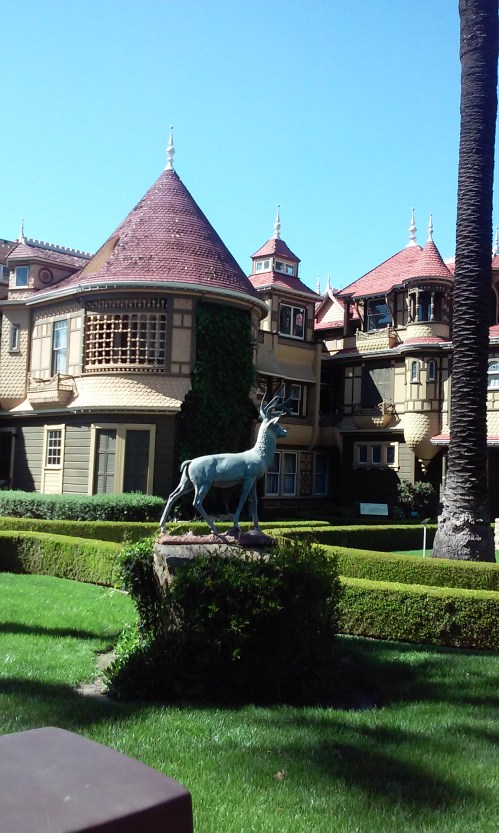
I was utterly puzzled. Had he discovered one of those secret passages which the old housekeeper said were known to exist in the schloss, although the tradition of their exact situation has been lost? A little time would, no doubt, explain all—utterly perplexed as, for the present, we were. It was past five o’clock, and I preferred passing the remaining hours of darkness in the Daisy Bedroom. Daylight brought no solution of the difficulty. The whole household was in a state of agitation next morning. Every part of the mansion was searched. The grounds were explored. Not a trace of the mysterious man could be discovered. When news of this haunting came out, it was not a surprise that members of the house staff resigned from their jobs and decided to leave the cold mansion permanently. More people started to tell personal stories of their own encounter with the ghost. People started to call him “Hallow Eyes.” He appeared and terrorized unsuspecting victims. The second reported sighting was by Florence Harwood, a writer and friend of mine. As she was preparing for bed, Hallow Eyes appeared and turned his head around so that it was facing backward, and all Mrs. Harwood saw was a head of hair floating on top of his shoulders and body. It goes without saying that she was frightened beyond her wits and woke up the house by screaming, hardly able to believe what she had seen. The sight was enough to send chills down the spine of anyone! Mrs. Harwood was inclined not to believe her eyes. At first, she dismissed it as a figment of her imagination. However, over the course of the next four night, the seem vision repeated itself again and again. #RandolphHarris 2 of 5
First, there would be a bright light that would shine behind her eyelids, and then slowly, a mist would solidify into this man’s corpse, as the room became utterly cold and frigid. This went on until Mrs. Harwood was certain that Llanada Villa was haunted. By this time, guest and staff had seen Hallow Eyes often enough that my home was getting a reputation as a haunted mansion. It was in the Crystal Bedroom that this apparition was most often seen. Mr. Hansen slept in that room each night with a revolver stashed beneath his pillow. For the first two days, there were no signs of anything paranormal. As he left the room to returned to the guest house, he caught a glimpse of a candelabra that was coming toward him. He figured that it was probably one of the housemaids on her way to visit the kitchen. Mr. Hansen moved quietly. As he watched from his vantage point, Mr. Hansen was stunned to realize that it was Hallow Eyes. Hallow Eyes then grinned at him in a malicious and diabolical manner. An ordinary man might have frozen in such a situation. Mr. Hansen, on the other hand, yanked his revolver hard and discharged the bullet right into his face. It passed right through him and lodged itself in the wall behind him, as Hallow Eyes himself vanished into thin air. The next sighting of Hallow Eyes happened a few weeks later. I was walking up the zig zag staircase, when I felt an unusual chill and caught sight of the ghost. It remains one of the longest nights I had ever endured in my mortal life. #RandolphHarris 3 of 5
It as endless and fathomless and dizzying, and there were times when I wanted some defense against the specter, and I had none. I returned to my room and went to sleep as usual in my bed, with my doors locked, that of the dressing-room, and that opening upon the gallery. My sleep was uninterrupted, and, so far as I know, dreamless; but I awoke just now on the sofa in the dressing-room there, and I found the door between the rooms open, and the other door forced. How could all this have happened without my being wakened? It must have been accompanied with a great deal of noise, and I am particularly easily wakened; and how could I have been carried out of my bed without my sleep having been interrupted, I whom the slightest stir startles? By this time, the housemaid, Hattie, was in the room. “My dear Mrs. Winchester,” she said. “I need not approach the topics on which you desire silence. But, the marvel of last night consist in your having been removed from your bed and your room without being wakened, and this removal having occurred apparently while the windows were still secure, and the two doors locked upon the inside.” “Hattie, I wish all mysteries were easily explained,” I replied.” “And so we may congratulate ourselves on the certainty that the most natural explanations of the occurrence is one that involves no drugging, no tampering with locks, no burglars, or poisoners—nothing that need alarm you, Mrs. Winchester, or any one else, for our safety,” said Hattie. I would not hear of an attendant sleeping in my room. Servants slept outside my door as a precaution. #RandolphHarris 4 of 5
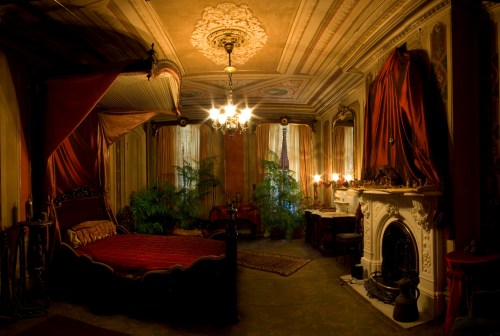
The hurt in my heart stunned me. I did not like the chill in the air, and a fear overcame me. Everyone asks me what I “think” of everything, and I make answer as I can—begging or dodging the question, putting them off. The very next afternoon, whilst I was seated in the shade of the Araucaria Araucana, attempting to concentrate on my book, I heard the crunch of hooves on gravel, so I waited uncomfortably, expected to be summoned at any moment, until Mr. Hansen at last appeared, strode across the drive without a glance in my direction, swung up onto his horse, and spurred away out the gate. I felt briefly ashamed of having hidden from Mr. Hansen, but the thought was swept aside in a rush of emotion. The housekeeping staff reported having seen Hallow Eyes several times, and many of them talk about cold drafts and lights typical of a haunting within the mansion. The truth is that he still lingers in the walls, waiting for a release from his prison. Such a tragedy. All this anger and hate inside of him with no closure. He still roams the halls of Llanada Villa, seeking revenge for his life having been claimed, waiting for the day when, once and for all, he will exact his revenge, and be able to leave The Winchester Mansion. A place where the voices accompanying the phantom music could often be heard from the garden with a distorted disembodies clarity that was strangely beautiful. Where endless fireflies hovered about, like an aura. It could be a sweet dream, or a beautiful nightmare. Perhaps the most alluring aspect of Llanada Villa is that the mystery cannot be explained. #RandolphHarris 5 of 5
The mysterious spirits of The Winchester Mystery House walk among us, sometimes pretending to be us to achieve some goal that is at present beyond our ability to ascertain. If, when we encounter these entities, we might come away from the experience concluding that we had met angels unaware, higher beings who were trying to teach us something or who were cleverly guiding our footsteps along the path of this sacred mansion. However, The Winchester Mystery House lies beyond our knowing, it in fact seems designed to confuse us rather than enlighten us. https://winchestermysteryhouse.com/
And please be sure to check out the online gift store: https://shopwinchestermysteryhouse.com/

Something is Out There
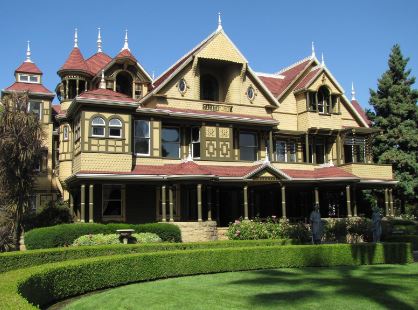
The morning sun was shining full on the Victorian garden outside, making each archway of the cloister a picture of yellow light and fluttering leaves. The iron-rimmed wheels of the carriage hearse had trundled a few hours ago. But the weird apparition from this morning had left no physical evidence of its passing. Through the window, I could hear a melancholy charm which I could not duplicate. Sometimes with the nostalgia and grief and self-pity mingling so intensely in me, I wept at the recollection, of what I called a normal life. Sunlight warmed the room through the windows, as I sipped tea. A sensation ran through me like a strong and vibrant current. I heard music again. The notes were drifting upward from two floors below as Daisy played the piano. Daisy could really play the piano. It must be talent, pure and simple, I thought. As I listened to the music playing, the sun was setting, and I laid across my bed, falling quickly to sleep. I had a dream of something black coming round my bed, and I awoke in perfect horror, and I really thought, for some seconds, I saw a dark figure near the chimney piece, but I felt under my pillow for my charm, and the moment my finger touched it, the figure disappeared, and I felt quite certain, only that I had it by me, that something frightful would have made its appearance, and, perhaps, throttled me, as it did the poor servants. I have quickly learned an important lesson about humans and their willingness to be convinced that the World is a safe place. And this lesson about human peace of mind I never forgot. Even if a ghost is ripping a house to pieces, throwing plates and glasses all over, pouring water on pillows, making bells ring at all hours, humans will accept almost any “natural explanation” offered, no matter how absurd, rather than the obvious supernatural one, for what is going on. #RandolphHarris 1 of 5
Next night I passed as well. My sleep was delightful deep and dreamless. However, I wakened with a sense of lassitude and melancholy, which, however, did not exceed a degree that was almost luxurious. I pinned the charm to the breast of my nightdress. It was too far away the night before. I m quite sure it was all fancy, except the dreams. I used to think that evil spirits made dreams, but Dr. Wayland told me it is no such thing. Only a fever passing by, or some other malady, as they often do, he said, knocks at the door, and not being able to get in, passes on, with that alarm. For some nights I slept profoundly; but still every morning I felt the same lassitude, and languor weighed upon me all day. I felt myself a changed woman. A strange melancholy was stealing over me, a melancholy that I would not have interrupted. Dim thoughts of death began to open, and an idea that I was slowly sinking took gentle, and, somehow, not unwelcome possession of me. If it was sad, the tone of mind which this induced was also sweet. Whatever it might be, my soul acquiesced in it. Without knowing it, I was now in a pretty advanced stage of the strangest illness under which mortal ever suffered. There was an unaccountable fascination in its earlier symptoms that more than reconciled me to the incapacitating effect of that stage of the malady. This fascination increased for a time, until it reached a certain point, when gradually a sense of the horrible mingled itself with it, deepening, as you shall hear, until it discoloured and perverted the whole state of my life. The first change I experienced was rather agreeable. It was very near the turning point from which began the descent of Avernus. #RandolphHarris 2 of 5
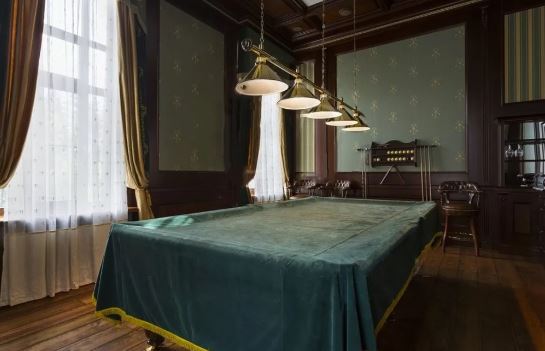
Certain vague and strange sensations visited me in my sleep. The prevailing one was that of pleasant, peculiar cold thrill which we feel in bathing, when we move against the current of a river. This was soon accompanied by dreams that seemed interminable, and were so vague that I could never recollect their scenery and persons, or any one connected portion of their action. However, they left an awful impression, and a sense of exhaustion, as if I had passed through a long period of great mental exertion and danger. There was the old lime tree with its great trunk gnarled with the passing of nearly nine centuries, the deep well, and the Torture Tower. The Torture Tower is truly grim place. The dust of ages, and darkness and the horror seemed to have settled on it. I saw a half-human form falling to its death from the tower. After all these dreams there remained on waking a remembrance of having been in a place very nearly dark, and of having spoken to people whom I could not see; and especially of one clear voice, of a female’s, very deep, that spoke as if at a distance, slowly, and producing always the same sensation of indescribable solemnity and fear. Sometimes there came a sensation as if a hand was drawn softly along my cheek and neck. Sometimes it was as if warm lips kissed me, and longer and more lovingly as they reached my throat, but there the caress fixed itself. My heart beat faster, my breathing rose into a sense of strangulation, supervened, and turned into a dreadful convulsion, in which my senses left me, and I became unconscious. #RandolphHarris 3 of 5
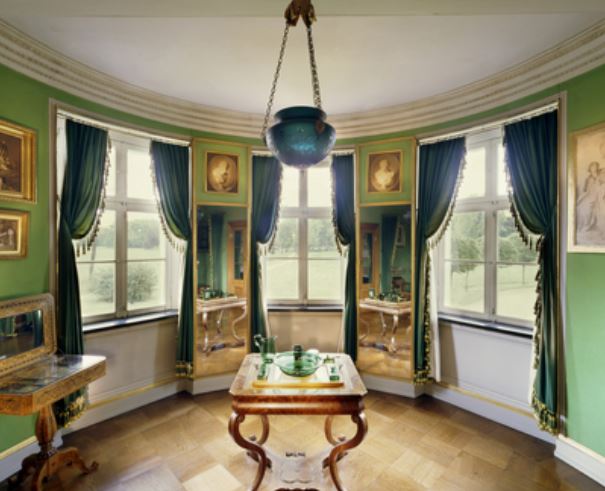
It was not three weeks since the commencement of this unaccountable state. My sufferings had, during the last week, told upon my appearance. I had grown pale, my eyes were dilated and darkened underneath, and the languor which I had long felt began to display itself in my countenance. One night, instead of the voice I was accustomed to hear in the dark, I heard one, sweet and tender, and at the same time terrible, which said, “You mother warns you to beware of the assassin.” The following day, There were bats circling the Observational Tower at dusk, but the sky above the treetops was a pale, almost cloudless blue, permeated with fine streaks and swirls of creamy vapour. Everything about the sky suggested an idyllic afternoon scene, but that was not the impression left by the house itself. The sunlight seemed only to accentuate the darkness of the encroaching fruit orchard, and to deepen the shadows within the window frames. My home was seemingly filled with incarnate darkness; even the hot sunlight streaming in through the door seemed to be lost in the vast thickness of the walls, and only showed the masonry rough as when the builder’s scaffolding had come down, but coated with dust and marked here and there with patches of dark stain which, if walls could speak, could have given their own dread memories of fear and pain. The housemaids had been rather neglectful. The wooden staircase was dusty. When I came up through the open trap in the corner of the chamber, there was certainly more light, but only just sufficient to realize the surrounding of the place. #RandolphHarris 4 of 5
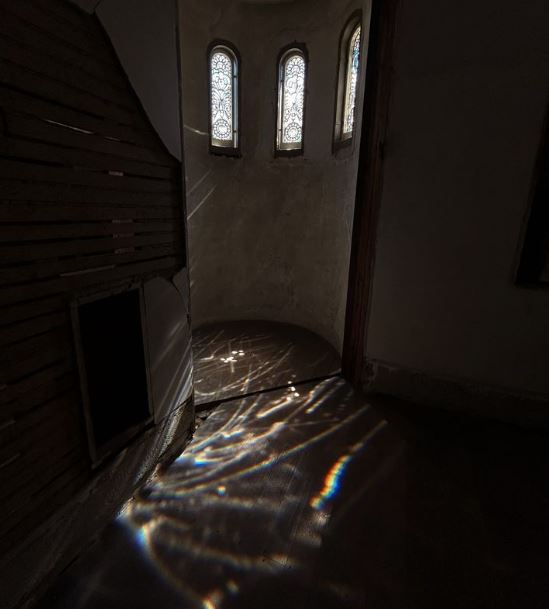
The spirits who designed the tower had evidently intended that only they who should gain the top should have any of the joy of light and prospect. There were ranges of windows, albeit of medieval smallness, but elsewhere in the tower were only a very few narrow slits such as were habitual in places of medieval defense. A light unexpectedly sprang up, and I saw Trinity, the housemaid, stand near the stairs, in her white nightdress, bathed, from her chin to her feet, on one great stain of blood. My next recollection is that of standing on the lobby, crying for help. Hattie and Mr. Hansen came scurrying into the tower in alarm; a lamp burned always on the lobby, and seeing me, they soon learned the cause of my terror. I insisted on our knocking at Trinity’s door. Our knocking was unanswered. It soon became a pounding and uproar. We shrieked her name, but all was vain. We all grew frightened, for the door was locked. We hurried back, in panic, to my room. There we rang the bell long and furiously. Servant soon came running up the stairs. I ordered the men to force the lock on Trinity’s door. They did so, and we stood, holding our lights aloft, in the doorway, and so started into the room. We called her by name; but there was still no reply. We looked round the room. Everything was undisturbed. I stood on the boards looking at the gilded railings, the new chandelier that hung from the ceiling, and up at the arch overhead with its masks of comedy and tragedy like two faces stemming from the same neck. It was exactly in the state which I had left it on bidding her good night. However, Trinity was gone. #RandolphHarris 5 of 5
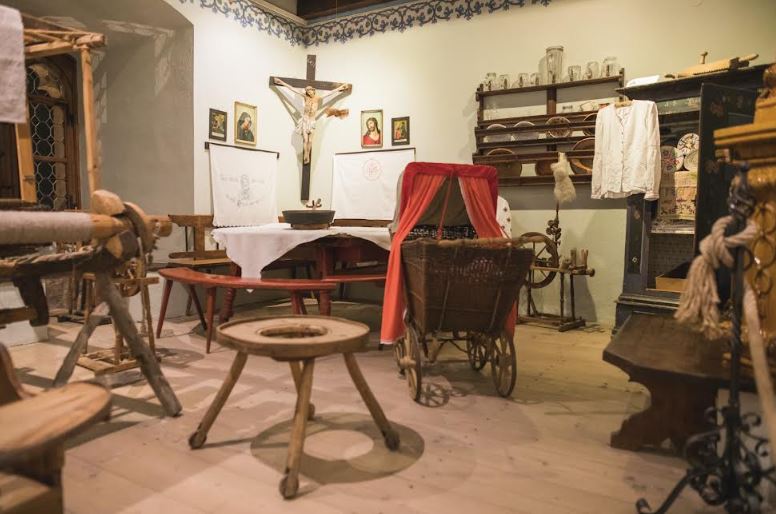
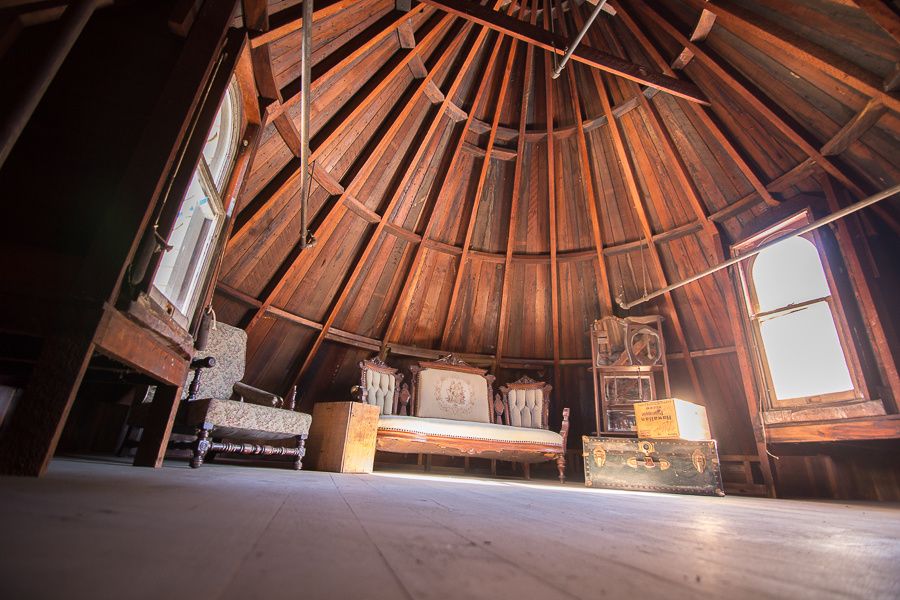
The room of the Witches Cap is said to have had a spiritual meaning for Mrs. Winchester. However, some have said that the room has a presence of evil—a bad aura around it. It seemed to have a cold presence. Psychics said that they felt weird around the Witches Cap and found that it had a living entity attached to it. The entity was inside of the wood of the room. It seemed to have a controlling effect on anyone who entered it. There is intelligence in the room, which sometimes projects frightening images of the past into the minds of people. Some have also experienced very vivid dreams. https://winchestermysteryhouse.com/

And please be sure to check out the online gift store: https://shopwinchestermysteryhouse.com/

Evils of Ignorance–Creation is the Beginning of the Fall

Public sentiment is a growing power the World over. In our country its influence is most marked. Here it creates law and repeals it. A law in violation of public sentiment is dead letter, and therefore demoralizing, for laws habitually violated tend to lawlessness. Reverence for law is a wholesome sentiment, which should be early implanted in the juvenile mind. Laws in reference alike to the support of schools or attendance upon them must depend largely upon public sentiment. Laws, just and right in themselves, and adapted, if sustained, to promote the greatest good of the greatest number, may yet fail utterly from the want of popular sympathy and support. The question, therefore, of the expediency of compulsory attendance at school in any given State depends on the enlightened public sentiment of the community. Wherever good schools have been so long maintained that the people generally regard them as essential to their individual thrift and happiness and to public security, morality, and prosperity, laws for the prevention of illiteracy may be wisely enacted. In those States where free public schools are still a novelty, or where illiteracy most abounds, where multitudes appreciate neither the advantages of education nor the evils of ignorance, compulsory attendance is considered impracticable. However, in those States where the traditions of the people from their earliest history have fostered the general appreciation of common-school education as their most precious heritage, as the source of their success and prosperity, as indispensable to their future growth, as essential to skilled industry, as the cheapest police-agency comes at length to be recognized as the universal right, duty, and interest of humans. #RandolphHarris 1 of 19

If the State has a right to provide for any internal improvements, it has the right to provide for that education which is the condition of all progress. If the State may enforce regulations for the health of the body, it may do the same for the mind. If the State has a right to hang a criminal, it has a better right to prevent one’s crime by proper culture. The right to imprison and to execute implies the right to use the best means to prevent the need of either. What have to get this fatalistic idea out of people’s heads that we are on a downward spiral that cannot be stopped. The public school system in which the United States of America takes pride is one of the most paradoxical if not self-contradictory institutions in American life. On the other hand, it is completely socialized. No family pays directly for the education of those of its children who attend it; each family pays taxes more or less according to its ability, receives according to its need. All the children in the school share its services, expect where segregation and discrimination occur. The public high school in particular is the most cosmopolitan and equalitarian congregation of people in any community. Education is not merely available to all children, but compulsory during certain ages in each state. No child can be rejected as a pupil, save for reason of severe defect. The entire staff of the school—administrative, professional, and maintenance—is salaried. The whole roster of citizens in each community is eligible to participate in selecting members of its board of education and in affecting their policies. #RandolphHarris 2 of 19

On the other hand, in the actual conduct of teaching and learning, conventional procedure is the incarnation of competitive individualism. The assignment of pupils to grades, rooms, and seats usually ignores the social ties among them. The marking systems rank each on the basis of rivalry with all. Beyond this marking system is the swarm of psychological test devised on the premise of an individualistic psychology to which few theorists remain willing to commit themselves. The tasks imposed on pupils are for the most part individual tasks, with no group decisions and no group responsibilities. To the extent that the problem of motivation is consciously considered at all, it is generally assumed sufficient to rely on the stimulation of rivalry for grades, and on parental interest in fostering the art of getting on in the World. Yet realistically, the spectacle is one of a majority sentenced to unfavourable comparisons and burdensome compulsions, from which they escape daily and yearly as fast as they can—5.3 percent dropouts in the high school years is still the rough national average; but California has a dropout rate of 10 percent. It would be redundant to recite here the long struggle between those who want the school to concentrate upon putting vocationally useful knowledge into children’s heads, and those who have declared their aim as the development of the entire personalities of children. The liberal educationalists tend to be those who emphasize the school’s functions in developing people for their responsibilities of citizenship; the vocationalists, those who emphasize training for economic competition. #RandolphHarris 3 of 19

Nevertheless, there occur numerous crossings for these lines. To further highlight this illustration, if one considers the method of examination employed in purely vocational schools run on a commercial basis, the pupil is usually passed on the achievement of a standard level of objective competence, rather than upon the calculation of a minimum numerical average maintained in competition with other pupils. As the scope of formal education comes to include adults and the very young, it is notable also that this new population in nursery schools and adult programs is not subjected to the usual competitive apparatus. Methods in adult education especially, where participation is completely voluntary, relay largely on noncompetitive motivation such as: group recognition, recruitment through friends, sociability, a degree of student choice of subject matter, choice of instructors, and design of methods. Forums, workshops, round table, committees, conferences, and seminars characterize adult methods. In public school extracurricular activities, it is obvious that only voluntary methods seem appropriate to induce participation, that motivation depends primarily upon the membership standing of a person in a group. Any teacher in a high school can give examples of seemingly dull, resistant, apathetic youths, who suddenly come alive in extracurricular activities, and exhibit prodigies of ability, energy, and ingenuity when given a responsible share in the tasks of a voluntary group. #RandolphHarris 4 of 19

Any teacher in a high school can give examples of seemingly dull, resistant, apathetic youths, who suddenly come alive in extracurricular activities, and exhibit prodigies of ability, energy, and ingenuity when given a responsible share in the tasks of a voluntary group. Not as many teachers have grasped the possibility of finding ways in which channels of motivation can be put to the service of serious learning. Since much of the best learning occurs in extracurricular activities, how could this be made to include more of the ordinary curriculum subject matter, thus making the child’s learning a art of one’s active involvement with one’s fellows? The evolution of policy within the school falls readily int our familiar three stages, although this may not be as readily apparent as with other types of family agencies. At the first stage, the intervals of spontaneous activity by pupil—recess, playground periods, assemblies, and singing—are regarded as concessions, as ways for children to let off steam, so they can return more seriously to the work of learning. At the second stage, extracurricular activities are recognized as having some values on their own account, more facilities and encouragement are provided, and these activities become more definitely and extensively organized on a group basis, but with a substantial element of adult guidance; counseling services grow, starting with health and going on to home visits and intensive testing. At the third stage which is far from being realized, the responsible self-governing group which is characteristic of many extracurricular activities permeates school activities, less as a concession to recreational demands, or as an attempt to supply social graces to children from limited home environments, but as a beneficial program of complete education. #RandophHarris 5 of 19

The parent-teacher associations connected with public schools are potentially the bodies through which all adult citizens may participate directly in the planning and evaluation of the educational programs in their communities. At present, however, the bords of education are too remote from ordinary citizens on the one hand, and the parent-teacher associations are too frail on the other. School boards, consisting of a handful of unpaid citizens elected for several years on a normally nonpartisan basis, tend to leave initiative and leadership to the salaried administrators. They are less governing boards than boards of audit and review. Their members are often so busy and exhausted that they have less intimate day-by-day knowledge of what goes on in the schoolrooms than do the parents of school children. Yet, in the hands of boards of education rests the ultimate power to modify what goes on in the schoolrooms day by day. Lacking any such power, parent-teacher associations normally operate (save in certain small school districts) under the handicap of seeming to be purely “social” organizations, where acquaintances may be made, tea drunk, and speeches heard. Biennial elections of school boards, and, in smaller places, annual school meeting to hear and accept reports, are usually pale and bloodless versions of what might be possible if the powers and functions of boards of education and parent-teacher associations could be fused in some workable manner. A few boards have made grouping efforts in this direction, of course, is not peculiar to public school systems. It is the characteristic shortcoming of local government in general. #RandolphHarris 6 of 19

The frequently heard suggestions for a revival of town meetings or their equivalent fail to appreciate the peculiarly modern nature of the problem—the frustration of citizenship in the city. So far no inventor of social procedures has suggested a solution which has worked as well as town meetings are reputed to have worked in their time. As it is universally admitted that the members of the human family must be prepared by instruction, and training, for the service which devolves upon them in this life, many are advocating for the maintenance of our public schools. Without education, each human must begin jut where one’s ancestors began, and however much wisdom or knowledge on obtains by one’s own efforts, one leaves none of it to one’s posterity when one dies; there is no opportunity for the advancement of one’s race. Humans, uneducated, are not prepared either to serve the World most effectively, or to enjoy the World most fully. The difference between a human who has been well instructed and trained from one’s youth, and what the same human would have been like if one had grown up untaught and untrained, is the difference, in some cases, between a civilized human and an uncultured human. The one may fulfill a noble mission, lead a life of high enjoyment, add to the happiness of one’s fellow humans, many of whom one never saw, and, when one dies, after a brief sojourn here, may leave the World better, richer, and more prosperous for one’s having lived in it. #RandolphHarris 7 of 19

The other, in some cases, may become a burden to one’ fellow humans to oneself, while one adds nothing to the World’s wealth, and, at the best, renders no more service to one’s race than if one had been a horse or an ox. People in China are certainly preparing for the World of the future. China is breaking existing rules in three major ways. First, it combines participation in the resource development projects in Less Developed Counties (LDCs) with large-scale development assistance focused on the building of their infrastructure. The government is acting in tandem with resource companies, providing financial and organizational support. Western firms do not work together with their governments in this fashion and thus cannot offer similar packages. (To compete with China, Japan, and South Korea are starting to rapidly move in the same direction at this point.) Second, the development assistance China provides is, mostly, neither official development aid ( developing country itself, China does not want to bear donors’ responsibilities), nor purely commercial loans and investment. It is something in between: concessional loans (extended on better terms than commercial credit) and investment backed and subsidized by the state. China often extends resources-backed development loans, meaning that the borrowers pay its debt not in cash but with oil, cocoa beans, or metal ores. It is a mutually beneficial scheme. The Chinese side gets resources it needs, while cash-strapped loan recipients do not have to pay in precious hard currency. In the late 1970s, to build its own infrastructure, China obtained similar loans from Japan leveraging its coal, oil, and other resources. #RandolphHarris 8 of 19

Third, unlike the West and to its great embarrassment, China’s assistance is not conditioned on the recipient states’ record regarding democratization, human rights, economic liberalization, or anticorruption measures. To access natural resources, it does not hesitate to cooperate with the most dictatorial and abusive regimes in the World. In such countries it easily becomes a de facto monopolist as Western firms are prohibited from going there by law. Compared to the West, China provides its assistance quicker and more easily, without complicated screening procedures, and often on a larger scale. Let us pick up Africa as one of the major examples. Here, between 2004 and 2010, Beijing concluded agreements on the resource-backed loans with at least seven states for a total of nearly $14 billion. It extended the oil-backed loan o Angola with Chinese companies building roads, railways, hospitals, schools, and water systems. Nigeria got two loans to finance projects for utilization of gas to generate electricity. The hydropower project in the Congo was prepaid in oil and the one in Ghana in cocoa beans. The former also received a $3 billion copper-backed loan to build infrastructure, hospitals, and universities. In 2004, the Export-Important Bank of China extended three loans to the Angolan government at interest rates ranging from LIBOR plus 1.25 percent to LIBOR plus 1.75 percent, with generous grace periods and long repayment terms. Commercial lenders, such as Standard Chartered Bank, charged Angola LIBOR plus 2.5 percent or more, without any grace periods, and required faster repayment. #RandolphHarris 9 of 19

China’s $3 billion joint mining venture in the Congo gives the Congolese government a 32 percent stake, while in the joint ventures (JVs) with companies from other countries its share ranges from 7 percent to 25 percent. Also, China is starting to actively create and manage Special Trade and Economic Cooperation zones in Nigeria, Egypt, Ethiopia, Mauritius, Zambia, and so on, building infrastructure and facilities, especially with the aim of boosting low-cost manufacturing production and exports. This is exactly what African countries need to diversify and upgrade their industrial structure and to create jobs. In fact, the Chinese are replicating their own pattern of economic development at its earlier stages. The zones also serve as platforms for the entry by Chinese companies searching for new markets and lower costs. Encouraging the transfer of production of low-end and/or energy-intensive manufacturing items, the government subsidizes part of their start-up expenses. The $5 billion China-Africa Development Fund has acquired equity shares in three of the seven planned zones. In contrast, the U.S.A. Congress does not all the U.S.A. Agency of International Development to finance any activities leading to the relocation of Americans’ jobs overseas. Parties to an economic transaction can exploit their high-quality inside information using a relational contract, and a formal contract that must be based on lower-quality publicly verifiable information acts as a fallback in the event of cheating within their relationship. #RandolphHarris 10 of 19

Actions are costly to the agent, and observable only to oneself. The principal cares only about one’s own outcome minus one’s payment to the agent. The principal wants to motivate the agent’s actions, but there is some uncertainty so actions cannot be inferred precisely from the outcome. In the standard theory of the agency, the principal’s outcome is assumed to be verifiable, so outcome-based bonus or incentive payments can be designed and written into a contract that can be enforced in a court of law if necessary. However, in reality the principal’s true outcome is rarely verifiable to outsiders, even though the parties may have good information about. External, legally enforceable contracts then have to relay on some other performance measure that is an imperfect proxy for the principal’s outcome, and an even more imperfect proxy for the agent’s action. (The traditional economic theory of agency formulated the problem as a trade-off between giving the agent stronger incentives and making one bear more risk.) The simplest example of this situation is an employment contract, where the principal is the owner of a firm and the agent a manager or worker. However, it can also be interpreted in the context of a firm’s outsourcing decision. The principal firm buys from an agent firm a component that I an input to one of the principal’s final products. The principal firm’s ultimate objective is profit, but the contribution of the component to the final product, and indeed the contribution of the final product to the profit of the firm as a whole, are so thoroughly concealed in the account of the firm as to be unverifiable to a court of law. #RandolphHarris 11 of 19

Matters like the quantities and time of delivery of the component are recorded and easily verifiable; therefore a contract that specifies the firm’s payment to the component supplier as a function of these matters can be written and enforced by the government’s civil courts. However, the two firms may have a much better idea of other matters, such as the quality of the work, and can base a relational contract on such inside information. The finding that relational contract work best when the parties value the future highly and when the external performance measure is of very poor quality is surprising. However, one result is not so immediately obvious, and repays further thought. This is the finding that when the incentive constraint is binding and the relational contract yields a second best, a partial improvement in the external performance worsens the outcome of the relational contract. This reminds one of various “second-best” propositions in economics: when an economy has two or more distortions, a reduction in the size of one distortion may aggravate the overall distortion and reduce economic welfare. In this instance the explanation is tied to a general property of tacitly cooperative equilibria of repeated games. The harsher is the punishment that faces a deviator, the better the equilibrium that can be achieved. In this model, the punishment consists of having to fall back on the formal contract based on the external performance measure. The more accurate is that measure, the better is the payoff from the formal contract and therefore the weaker the punishment. #RandolphHarris 12 of 19

Similar results appear in other contexts. For example, Kranton (1996) models self-governing repeated interactions with well-matched partners, when the consequence of cheating is having to go to an anonymous arms-length market with inferior matching but enforceable contracts. A partial improvement in the quality of matching in the market then tightens the incentive constraint on self-governance and worsens its outcome. In Kranton’s context this leads to a cumulative process leading to an equilibrium where one or the other of the modes survives. More generally, one can argue that cooperation within a group is better sustained if the consequences of deviation are made worse, which requires worse outcomes from dealing with people outside the group. This is a trade-off: better within-group cooperation may require worse cross-group relations. In starker terms, a beneficial sense of “us” may be fostered only by sharpening the sense of “us versus them” hostility. In the economic context, the result has potentially serious implications of less-developed countries and transition economies that are attempting to install a formal system of contract law or to improve an existing one. The new institution of governance cannot be expected to leapfrog to perfection. The organizations and people are sure to need a period of trial and error, of experimentation and learning. The above results say tht the process of gradual improvement of state law may inflict an interim cost on the economy, by worsening the outcomes of the currently used relation-based system. #RandolphHarris 13 of 19

Therefore it is important to explore the results in greater depth, and look for empirical evidence bearing on it. In an established bilateral relationship it is the relationship itself that determines the degree of cooperation, regardless of whether the courts are effective. This is encouraging for the prospects of improving the courts gradually without causing short-term harm. However, the finding runs contrary to the theoretical result. If the theoretical model is broadly right, effectiveness of the courts would be irrelevant to the outcome of relational contract only if the parameters puts the equilibrium in a region that increases one’s temptation to renege on the relational contract. A second possibility is that the accuracy of the external measure is so poor that the alternative relational contract is not recourse to the courts but a total breakdown of the interaction. The third possibility, of course, is that the theoretical model is missing some key aspect of reality; that provides a challenge and an opportunity for future research. The upper-symbolic economy makes obsolete not only our concepts of unemployment but our concepts of work as well. To understand it and the power struggles that it triggers, we will even need a fresh vocabulary. Thus, even the division of the economy into such sectors as agriculture, manufacturing, and services today obscures rather than clarifies. Today’s high-speed change blur once-neat distinctions. Instead of clinging to the old classifications, we need to look behind the labels and ask what people in these companies actually do to create added value. Once we pose this question, we find that more and more of the work in all three sectors consists of symbolic processing, or “mind work.” #RandolphHarris 14 of 19

Farmer now use computers to calculate grain feeds; steelworkers monitor consoles and video screens; investment bankers switch on their laptops as they model financial markets. In matter little whether economist choose to label these as agriculture, manufacturing, or service activities. Even occupational categories are breaking down. To label someone a stockroom attendant, a machine operator, or a sales representative conceals rather than reveals. It is a lot more useful today to group workers by the amount of symbolic processing or mind work they do as part of their jobs regardless of the label they wear or whether they happen to work in a store, a truck, a factory, a hospital, or a office. In what might be called the “mind-work spectrum” we have the research scientists, the financial analyst, the computer programmer or, for that matter, the traditional file clerk. We include file clerks and scientists in the same group because, while their functions obviously differ and they work at vastly different levels of abstraction, both—and millions like them—move information around or generate more information. That makes their work symbolic. In the middle of the mind-work spectrum we find a broad range of “mixed” jobs—tasks requiring the worker to perform physical labour but also handle information. The Federal Express or United Parcel Service driver also operates a computer at one’s side. In advanced factories the machine operator is a highly trained information worker. The hotel clerk, the nurse, and many others have to deal with people—but spend a considerable fraction of their time generating, getting, or giving out information. #RandolphHarris 15 of 19

Auto science engineers at BMW dealers, for example, may still have greasy hands, but they also use a computer system designed by Hewlett-Packard that provides them with an “expert system” to help them in trouble-shooting along with hundreds of gigabytes of technical drawings accessible via the Internet. The system asks them for data about the car they are repairing; it permits them to search through the masses of technical material intuitively; it makes inferences and then guides them through the repair steps. When they are interacting with this system, are they “auto science engineers” or “mind workers”? It is the purely manual jobs at the lower end of the spectrum that are disappearing. With fewer manual jobs in the economy, the “proletariat” is now a minority, replaced increasingly by a “cognitariat.” More accurately, as the super-symbolic economy unfolds, the proletariat becomes a cognitariat. The key questions about a person’s work today have to do with how much of the job entails information processing, how routine or programmable it is, what level of abstraction is involved, what access the person has to the central data bank and management information system and how much autonomy and responsibility the individual enjoys. We will continue more of this discussion in the upcoming days. The “voice of the devil” as an angel of light is more difficult to detect when it comes with wonderful strings of texts which makes it appear like the voice of the Holy Spirit. Voices from without, either as from God or angels, may be rejected, yet the believer may be deceived by “floods of texts” which one thinks are from God. #RandolphHarris 16 of 19

Therefore, detection of the source of supernatural voices requires further inquiry: Does the believer rely upon these “texts” apart from the use of one’s mind or reason? This indicates passivity. Are these texts a prop to one, an undermining of one’s reliance on God Himself; weakening one’s power of decision and one’s (proper) self-reliance? Do these texts influence one and make one elated and puffed up as “specially guided by God,” or crush and condemn one, and throw one into despair and condemnation, instead of leading one to sober dealing with God Himself over the course of one’s life—with a keen and increasing knowledge of right and wrong obtained from the written Word by the light of the Holy Spirit? If these and other such-like results are the fruit of the “texts” given, they may be rejected as from the deceiving spirits, or at least an attitude of neutrality should be taken concerning them until proof of their source is obtained. The voice of the devil is also distinguishable from the voice of God by its purpose and outcome. If the outcome is not in accordance with the guidance given, then one definitely needs to check with fellow believers regarding its validity. For, obviously, if God speaks directly to a human, the human will then be infallibly correct with regard to the specific matter in question. Thus far, creation has been considered within the order proper to it, the essential order. However, man as the creature the exercises freedom brings us to the boundary line of the existential order of tragedy and dissolution. #RandolphHarris 17 of 19

God as the creator is beyond the distinction of essence and existence. He does not depend upon essences or divine ideas which govern His creativity. His creative vision simultaneously embraces both the essence of a creature and each moment of its existence. However, created being does not lie buried within the divine life. It exists in the universe of reality, and its existence is different from its essence. Humans provide the clearest insight into creaturely existence because only they possess finite freedom. Humans, and analogously the rest of reality, is not only grounded in the creative ground of being, but they are also outside it inasmuch as one “stands upon” one’s self when one exercises one’s freedom. One can only actualize one’s essence, be a real human, by positing free acts which inevitably clash with one’s essential nature. Fully developed creatureliness is fallen creatureliness. At this pivotal point of freedom the doctrine of creation (the essential order) and the doctrine of the fall (the existential order) merge and become indistinguishable. Being a creature means both to be rooted in the creative ground of the divine life and to actualize one’s self through freedom. Creation I fulfilled in the creaturely self-realization which simultaneously is freedom and destiny. However, it is fulfilled through separation from the creative ground through a break between existence and essence. Creaturely freedom is the point at which creation and fall coincide. Creation is the beginning of the fall. One who feels in one’s heart genuine tie with the life of one’s people cannot possibly conceive of the existence of the Christian people apart from “Queen Sabbath.” We can say without exaggeration that more than America preserved the Sabbath, the Sabbath preserved America. #RandolphHarris 18 of 19

If I were asked to single out one of the great historical institutions more essential for our preservation than all others, I would not hesitate to declare that it is the observance of the Sabbath. Without this, the home of the Church or Mormon Temple, the festivals and the holy days, the language and the history of our people, will gradually disappear. If the Sabbath will be maintained by those who have observed it and will be restored to those who have abandoned it, then the permanence of Christianity or Mormonism is assured. Every Christian or Mormon who has it within one’s power should assist in the effort to restore the Sabbath to the man from whom it has been taken away from. No deeds of charity or philanthropy, no sacrifices of tie or fortune made by anyone, equals in beneficent result the expenditure of time and money looking toward the re-establishment of the Sabbath among God’s people. No amounts of prating about morals will ever take the place of rooted habits ruthlessly plucked out. The observance of the Sabbath brings deep and abiding rewards to the Christian and Mormons. It re-creates one’s spirit as it regenerates one’s physical and nervous system. It brings one into communion and with God, links one with the profoundest aspirations of America, and draws one into the orbit of the Book of Mormon or the Christian Bible. It therefore follows inseparably that the failure to observe the Sabbath brings its penalties in the impoverishment of the spirit, the denudation of Christian and Mormon values and alienation from Christian and Mormon community, literally “that soul is cut off from its kinsmen.” #RandolphHarris 19 of 19

MAGNOLIA STATION AT CRESLEIGH RANCH
Rancho Cordova, CA | low $600s
Now Selling!

Models now open at Magnolia Station! Located at the corner of Rancho Cordova Parkway and Douglas Road, residents of Cresleigh Ranch will benefit from a brand new neighborhood with convenient access to the new Raley’s Shopping Center, Sunrise Boulevard, and much more!

Magnolia Station will include 81 homesites and five distinct plans ranging from 2,200 – 3,700 square feet; including three single story plans! Each plan has been thoughtfully designed to include features such as: Generations Suite, Optional Offices/Dens, Extended Great Rooms, and more! https://cresleigh.com/magnolia-station/



Lay Bare the Secret You Keep from Each Other

It was a lie. A lie I would never forget for as long as I walked the Earth. He would tell us nothing of himself but that he was “a fool,” to be frightened by their talk, and that the rattle of a window, or the dropping of a pin was enough to scare him now. He was now asleep on the sofa. The candles were flaring, and there was a wavering shadow at the door that looked like the head of a man with a long neck, and a long, sharp nose, peeping and drawing back. The fugitive shadow seemed to be breaking up, rearranging itself oddly. I rose, and walking slowly to him, I stood over him and looked at him, at the blood that soaked his lace shirt and stained his face. He did not open his eyes. However, I felt his sorrow. I felt its immensity, and I wished I did not feel it, and for the moment I understood the gulf that divided us, and the gulf that divided his attempt to overpower me from my rather simple defense of myself. And with his eyes closed, and his hand open beside him, he appeared the abandoned offspring of time and supernatural accident, someone as miserable as myself. What had he done to become what he was? His family was ruined, I believe, in some civil wars, long ago. Through the hall door, I could see the moonlight was beautiful. As the night waned on, the young man recovered slowly from his brain fever, but not perfectly. He was not sufficiently strong to remove for change of scene and air, which were necessary for his complete restoration. In the dead of the night, Haze Austin was suddenly awakened. And in this broken child were centuries of evil and centuries of knowledge, and out of him there came no ignominious entreaty but merely the soft and bruised sense of what he was. Old, old evil, eyes that had seen dark ages of which I only dream. #RandolphHarris 1 of 8
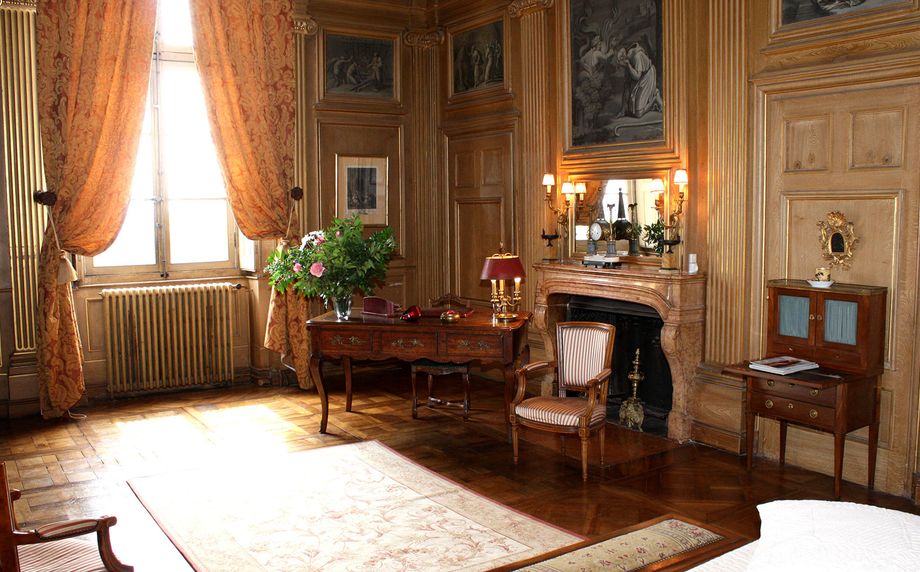
I shall never forget this sight, for he looked the perfect incarnation of hate. His green eyes blazed with lurid fire, and his white teeth seemed to almost shine through the blood which dabbled his mouth. Desperately he tried to vanquish what he did not comprehend. He was so exquisitely beautiful and so lost. “Is there a chill in the air, dear?” I said. “I almost shiver; have I been dreaming? You look ill, Mrs. Winchester; a little faint,” said Haze. “I am better now. How do you feel now, Haze?” I said. I was beginning to take alarm. Natural enough, was it not, that one of his own should take him away from Llanada Villa. “Papa would be grieved beyond measure,” he said. “If he thought we were inconveniencing you at all.” In a moment he was standing on his own feet. And then he walked drowsily beside me, my arm about his shoulder, bolstering him and steadying him, until we were moving towards his father’s cottage on my estate. I only half glanced at the figures passing us, until I saw a familiar shape under the trees. Somewhere far off in the darkened gardens, other were near. When he pushed open the door to his father’s home, he was laying dead upon the floor. His cravat was drawn halter-wise tight round his throat, and he had done its work well. The body was cold, and had been long dead. In due course the coroner held his inquest, and the jury pronounced that the deceased, Mac Austin, had died by his own hand, in a state of temporary insanity. However, Haze had his own opinion about his father’s death, though his lips were sealed, and he never spoke about it. He went and lived for the residue of his days in York, where there are still people who remember him, a taciturn and surly young man, who attended church regularly, and also drank a little, and was know to have saved some money. #RandolphHarris 2 of 8

But there occurred that night an event which gave my thoughts quite a new turn, and seemed to even startle even Haze’s languid nature. When I returned to my drawing-room, and sat down to coffee and chocolate, Elizabeth joined me, and we had a little card party. When the game was over, Elizabeth and I sat down on the sofa, and I asked her, a little anxiously, whether she had heard from her mother since her arrival. She answered “No.” I then asked her whether she knew where a letter would reach her at present. “I cannot tell,” she answered, ambiguously, “but I have been thinking of leaving you; you have been already too hospitable and too kind to me. I have given you an infinity of trouble, and I should wish to take a carriage to-morrow, and post in pursuit of her; I know where I shall ultimately find her, although I dare not tell you.” “But you must not dream such a thing,” I exclaimed. “I cannot afford to lose you so, and I will not consent to your leaving us, except under the care of your mother, who was so good as to consent to your remaining with us till she should herself return. I should be quite happy if I knew that you heard from her; but this evening the accounts of the progress of the mysterious disease that has invaded our community, grow even more alarming; and my beautiful guest, I do feel the responsibility, unaided by advice from your mother, very much. However, I shall do my best’ one thing is certain, that you must not think of leaving Llanada Villa without her distinct direction to that effect. We should suffer too much in parting from you to consent to it easily.” “Thank you, Mrs. Winchester, a thousand times for your hospitality,” Elizabeth answered, smiling bashfully. “You have all been too kind to me; I have seldom been so happy in all my life before, as in your beautiful mansion, under your care, and in the society of your dear niece.” #RandolphHarris 3 of 8
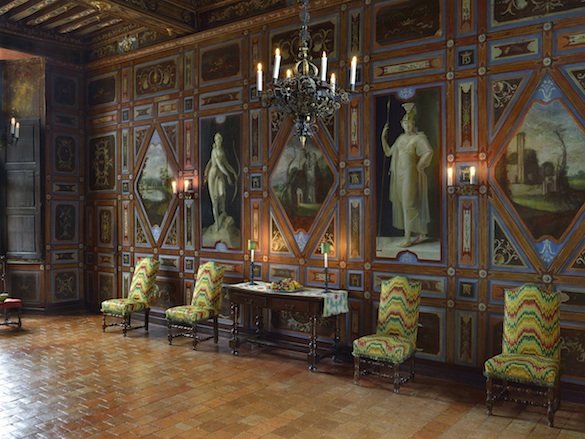
I accompanied Elizabeth to her room, and sat and chatted with her while she was preparing for bed. She turned around, “Do you think that you will ever confide fully in me about your home?” “Now, Elizabeth, you are gong to talk your wild nonsense again,” I said hastily. “Not I, silly little fool as I am, and full of whims and fancies; for your sake I’ll talk like a sage. Did you ever have a ball in the Grand Ballroom? What was it like? How charming it must be.” “I almost forget, it is years ago.” I laughed. “Mrs. Winchester, you are not so old. Your first ball can hardly be forgotten yet.” “I remember everything about it—with an effort. I see it all, as divers see what is going on above them, through a medium, dense, rippling, but transparent. There occurred that night what has confused the picture, and made it colours faith I was all but assassinated in my bed, wounded here,” I touched my breast, “and never was the same since.” “Were you near dying?” “Yes, a very—cruel love—strange love, that would have taken my life. Love will have its sacrifices. No sacrifices without blood. Let us go to sleep now; I feel lazy.” I bid her good-night, crept from the room with an uncomfortable sensation, locked her door and retired to my chambers. I was lying in bed, with my hands buried in my rich wavy hair, under my cheek, and my head upon the pillow. I often wondered whether my pretty guest ever said her prayers. I certainly had never seen her upon her knees. In the morning she never came down until long after our family prayers were over, and at night she never left the drawing room to attend our brief evening prayers in the hall. Ever since the midnight invaders, I locked all the doors in the house at night, and my whimsical alarms about prowling assassins required me to have the servants search every room in the house to make sure there were no lurking assassins or robbers “ensconced.” #RandolphHarris 4 of 8

After these measures were taken, I got into my bed and fell asleep. A light was burning in my room. This was an old habit, of very early date, ad which nothing could have tempted me to dispense with. Thus fortified I might take my rest in peace. However, dreams come through walls, light up dark rooms, or darken light ones, and their persons make their exists and their entrances as they please, and laugh at locksmiths. I had a dream that night that was the beginning of a very strange agony. I cannot call it a nightmare, for I was quite conscious of being asleep. However, I was equally conscious of being in my room, and lying in bed, precisely as I actually was. I saw, or fancied I saw, the room and its furniture just as I had seen it last, except tht it was very dark, and I saw something moving round the foot of the bed, which at first I could not accurately distinguish. However, I soon saw that it was a sooty-black figure that resembled a man. He appeared to me about five or six feet tall, he floated around the room hither and tither with the lithe sinister restlessness of a beast in a cage. I could not cry out, although as you ay supposed, I was terrified. Its pace was growing faster, and the room rapidly darker and darker, and at length so dark that I could no longer see anything of it but its eyes. I felt it spring lightly on the bed. The two broad eyes approached my face, and I could see it was Haze. He looked at me with centuries of evil blazing in his eyes, but there was not the slightest stir or respiration. And I felt a shudder. My heart expanded slightly, against my will. “I curse you,” he said. As I stared at him, I felt danger again, terrible danger. Then he appeared to have changed his place, and was now nearer to the door; then, close to it, the door opened, and he vanished. #RandolphHarris 5 of 8

It would be vain my attempting to tell you the horror with which, even now, I recall he occurrence of that night. It seemed to deepen by time, and communicated itself to the room and the very furniture that had encompassed the apparition. Later that day, I had another strange experience; I walked into the parlor that afternoon where Daisy and Elizabeth had been sitting, and a saw Haze upon the sofa. However, then I realized that he was invisible to the others. He got up and walked toward me—I was not afraid—and then—seemed to dissolve into the air. And so I wondered…whether I might have fallen into a trance. I clasped my hands and struggled to control my breathing. We know that, in the mesmeric trance, a subject may acquire unusual mental powers; The Frenchman Didier, who could read minds, play cards blindfolded, and identify the contents of sealed containers with great accuracy, is one of the best-known instances. Ancient houses, it has always seemed to me, are like Leyden jars, quietly accumulating the influences of the past…and my home is a special case. I lay awake into the small hours, worrying over these anxieties as they became more and more nightmarish until I sank into a troubled sleep. Sleeping had become so difficult one night that I wandered through this vast mansion, searching for a precious jewel William had given me. The jewel had been lost; I did not know how, but I knew that my own carelessness was to blame. To make matter worse, I could not remember what kind of stone it was, for as I went from room to room, a voice kept chanting, “Emerald, sapphire, ruby, diamond,” over and over, and none of them seemed right, because the lost stone was a different, a more beautiful colour than any of those, and I knew I ought to be able to picture it, and thus recall its name, but I could not. #RandolphHarris 6 of 8
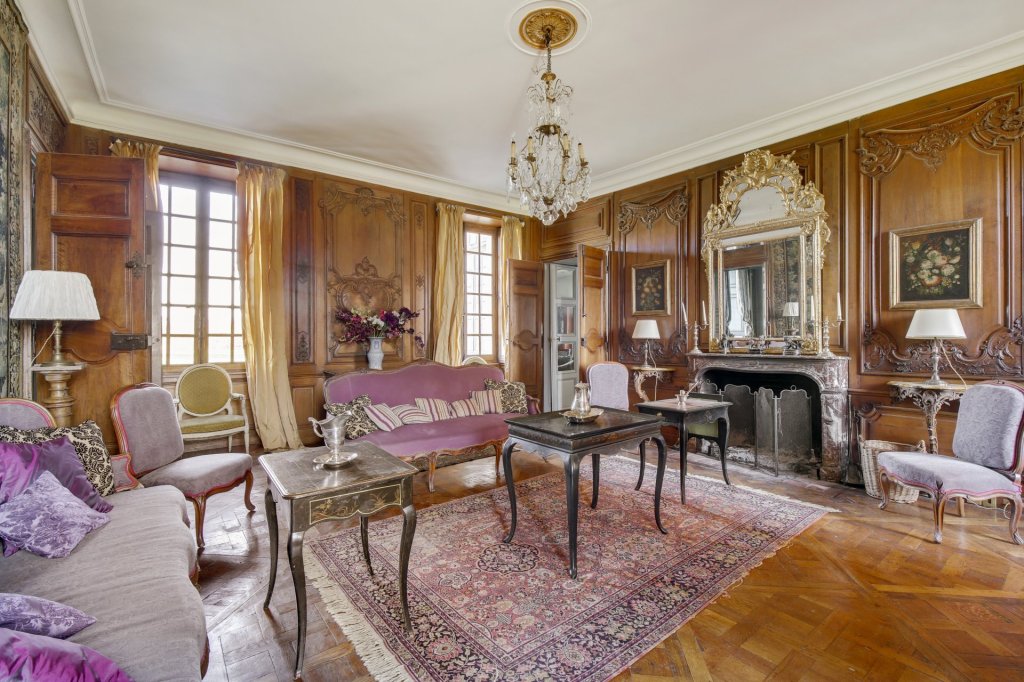
The mansion was absolutely silent; the light throughout, even in corridors was a pale, uniform grey like that of an overcast sky. The rooms were modestly furnished; each one seemed to have its own miniature flight of stairs, up or down two or three steps, and the corridors kept changing levels in similar fashion. Though the house itself was not especially sinister, my anxiety over the fate of the jewel grew steadily more acute until it had risen to an unbearable pitch. Then it occurred to me that I still had not searched the Venetian Dining Room. The thought precipitated a vertiginous change of scene; the light sank to a dim, murky brown, and I was standing in the doorway of the room where we had dined that night. The curtains were drawn, the candles snuffed; the room seemed to be empty, but as I crept toward the table, I saw, above the back of the chair in which I usually sat, the dark outline of a head. There was time to slip away quietly; but perhaps the jewel had fallen into the lining of my chair, and if I were to tiptoe forward, I might be able to see it. I was within two feet of the motionless figure when a voice spoke from the doorway behind me, a word that rang like a loud gong, louder and louder until it became my own cry of “No!” and I woke in grey dawn light to find myself standing at the head of the stairs. And then I thought I caught sight of a shape, dak in space and light, through the door in one of the bedrooms. There was a tall figure in what I could have sworn was a black top hat, staring directly back at me. The figure was dressed formally in black morning suit. And then, with a movement so spasmodic and sudden, the man turned and stated to walk eastward, out of sight. I dismissed it, as one of the Winchester’s passing enigmas. There was much about the curse of the Winchester Mansion that I did not understand. #RandolphHarris 7 of 8

Spirits of Llanada Villa, I awaken the powers of darkness which dwell within you by the power of the blood of the three heeded Dragon Zohak that you may serve to empower Mrs. Winchester’s great work! Through serving the greater cause of dark magick which break the shackles that bind the Blackened Fire of Spirit, may you be uplifted and liberated! Awaken and empower the forbidden rites of Angra Mainyu! Awaken to empower the Mrs. Winchester’s great work of counter creation as an Apostle of the Lord of Darkness eternal and as a warrior of the path of the Lemegeton. I adjure thee, Emperor Lucifer, as the agent of the strong living God, of His beloved Son, and of the Holy Ghost, and by the power of the Great ADONAY, ELOIM, ARIEL, and JEHOVAM, to appear instantly, or to send thy Messenger Astarot, forcing thee to forsake thy hiding-place, wheresoever it may be. Aeshma, Div of wrath and fury! He who wields the bloody mace! Aeshma who is demon of the wounding spear I call you forth into this temple of counter creation! Through devotion to my becoming on this path, your spiritual weapon has been made manifest in this corporeal World through my will and counter creative power so you may fill it with your essence and might! Empower it so that it may serve me here upon the corporeal plane! May it serve as a key to the realms above and below unlocking the power and wisdom for the spirits of the Winchester’s glory and ascent! Fill this weapon with your powers of wrath and fury that it may seek out spiritual attacks made and render them useless and impotent! #RandolphHarris 8 of 8
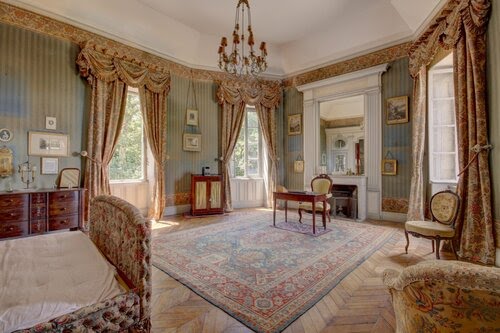
One Halloween, a tour guide saw a little boy who was no more than six years old. He was dressed in a black hood, and long black robe, and it looked like he did not have a face, as he had a black, opaque nylon covering the opening in the hood. The tour guide asked him who he was supposed to be, and the little boy said, “I’m the Angel of Life.” The tour guide then asked him who the Angel of Life is. The boy replied, “The Angel of Life is someone who comes to talk to you. He tells you things about your life.” The conviction on the little boy’s face and the non-hesitant way in which he explained who he was made the tour guide think that the boy had some knowledge of what he was talking about. Shortly after, objects in the gift shop started floating about, and glimpses of a shadowy figure were spotted in the basement. In the café, according to a female patron, she had been sitting at a table in a back corner of the room when a man suddenly appeared in a chair across the table from her. The man stared straight ahead and refused to react in any way. The female patron looked away to get the waitress’s attention and when she looked back, the man was gone. The woman related that the elusive figure was wearing old-fashioned clothes. https://winchestermysteryhouse.com/

And please be sure to check out the online gift store: https://shopwinchestermysteryhouse.com/
 Randolph Harris II International Institute