
Home » Work (Page 14)
Category Archives: Work
It Had Really Happened!
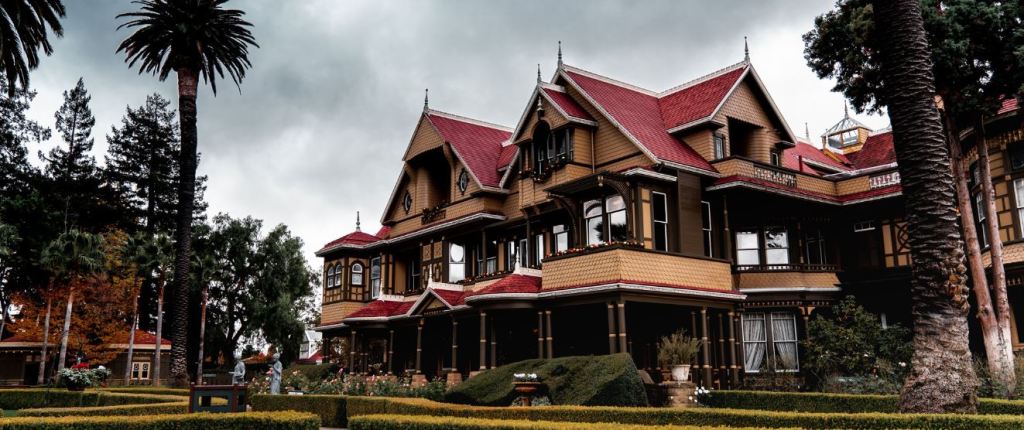
During Victorian times, it was thought that people who were emotionally or physically ill must be possessed by a demon. People also assumed that spirits controlled all their behaviour. One could buy a witch’s services to invoke the spirits, cast spells, and break curses. It was also though that people had little control over their destiny, because it was controlled by good and evil spirits and by “fate.” In fact, these assumptions were so strongly held that they could literally result in death or extent one’s life. Everyone had accepted that Sarah L. Winchester was going to die and they were afraid to go near her. Supposedly she and her family and her fortune were being haunted by spirits killed by the Winchester riles. The untimely deaths of her daughter and husband were caused by these spirits, and it was implied that Mrs. Winchester would be the next victim. “There is evil around here,” they said. Mrs. Winchester’s resources were virtually unlimited. Do you believe in Ghosts? Mrs. Winchester did. She started construction of an extravagant mansion for she was told she would live as long as she kept building and never stopped construction. The Winchester mansion has always been a hive for the supernatural. The unusual nature of the miles of twisting hallways being with them the internal proof o their ghostliness; and no other evidence is needed. Once you step foot inside this mysterious mansion, one will understand a ghost, or shiver over it. Halfway down the hallway, you may see primeval shadows filling the gaps in the doorways, and experience a frightful ghost of bone chilling cold air. #RandolphHarris 1 of 7
Ghosts, to make themselves manifest, require two conditions abhorrent to the modern mind: silence and continuity. What a ghost needs is echoing passages and hidden doors behind tapestry, and continuity and silence. For where a ghost has once appeared it seems to hanker to appear again; and it obviously prefers the silent hours. It was the autumn after a few of the servants had the typhoid. The house was big and gloomy; and two of the maids’ children had died. Mrs. Winchester was a kind mistress to al, and where the mistress is kind, you know, the servants are generally good humoured, so you will probably het on well enough with the rest of the houseful. It was a dull October day, with rain hanging close overhead, and the daylight was almost gone. Mrs. Winchester was wearing a full-length mink coat over a black evening gown and matching cape, black silk slippers and about $20,000 worth of jewelry. The drive wound through the woods the for a mile or two, and came out on a gravel court shut in with thickets of tall black-looking shrubs. There were no lights in the windows, and her mansion did look a bit gloomy. But, by the look of everything, Mrs. Winchester could tell that she had built the right kind of house, and that things were done handsomely. A pleasant-faced cook met her inside the carriage house and called the house maid to help her out of the carriage. Mrs. Winchester was a delicate-looking young lady, but when she smiled people felt there was nothing they would not do for her. She spoke very pleasantly, in a low voice, asking the maid if she was afraid of the Winchester mansion. #RandolphHarris 2 of 7
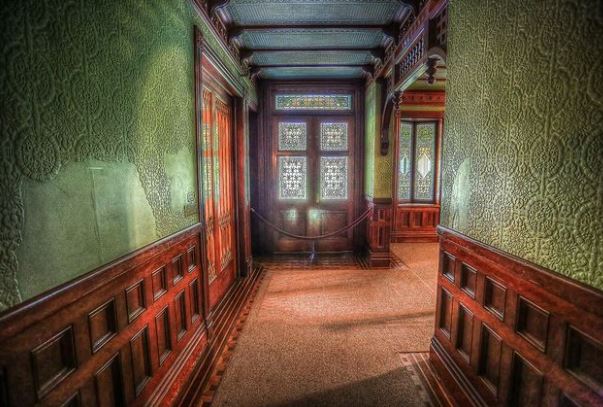
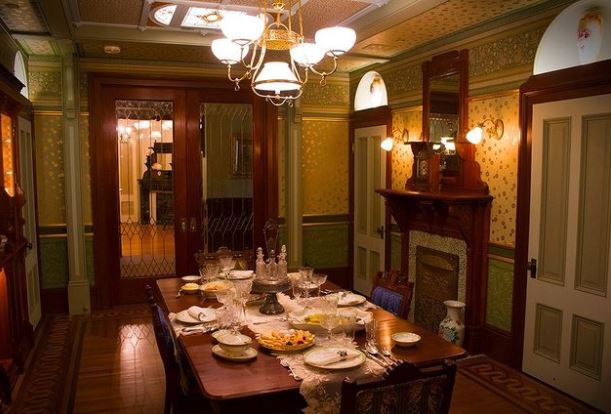
“Not with you I wouldn’t be, madam,” the maid said, and the words surprised Mrs. Winchester. Mrs. Winchester seemed pleased at that. “I am tired tonight, but I shall dine in the Venetian dining room,” Mrs. Winchester said. It was one of her favourite rooms, she loved all the mahogany wood which adored the walls, floor, and ceiling, and that fact that there were two fireplaces in the room, made a meal like a romantic evening. The servants all liked Mrs. Winchester. She had a friendly word for every one of them. The servant said very little about Mrs. Winchester. No one had anything to complain about. They knew what loneliness she must have felt, but she was very thankful for the quiet and the good of the country air. Only on the finest days did she walk out on the balcony on the fourth floor. The season was soft and unwholesome, and in January there was a long spell of rain. Once or twice, in the long rainy night, one could hear noises in the room where the door-to-nowhere was located; but it was nonsense, of course, and the streaming light from the stained-glass windows drove out such notions in the daylight. One morning, the maid went to town for some shopping. She ran into a friend she had not seen in years. When Agnus mentioned where she was living, her friend rolled her eyes and opened her mouth as if she was in a state of shock. “What! You are staying in the Winchester mansion?” “Oh, but I do not mind keep such a large house,” Angus said. “My dear, you will not stay there long.” #RandolphHarris 3 of 7
Angus’s friend shook her head. “All I know is that Mrs. Winchester has had 7 maids in the last six months, and the last one, who is a friend of mine, told me nobody could stay in the house.” “Did she say why?” Agnus asked. “No—she would not give me her reason. But she says to me, ‘it is not worthy it.’” Agnus knew it was all idle gossip. However, there words stuck in her head and there was something about the house—she was sure of it now. Mrs. Winchester dined alone, as usual that evening. The prophets said something terrible was going to happen. Mrs. Winchester felt nervous. The rain had begun again, and the drip, drip, drip seemed to be dropping into her brain. Retired to her chambers and laid there awake, listening to it. After a while she slept; but suddenly a loud noise wakened her. There was some jangling through the darkness. She was just beginning to huddle on her clothes when she heard another sound. This time it was the locked door-to-nowhere. The door was opening and closing. She heard the sound distinctly, and it frightened her so that she stood stick still. Then she heard a footstep hurrying down the passage toward the main house. The floor being carpeted, the sound was very faint, but she was quite sure it was a woman’s step. Mrs. Winchester turned cold with the thought of it, and for a minute or two she durst not breathe or move. Then she came to her sense. Mrs. Winchester said to herself, “someone left that room just now and ran down the passage ahead of me.” But she heard nothing and saw nothing: all was dark and quiet as the grave. #RandolphHarris 4 of 7
When Mrs. Winchester reached her bedroom door the silence was so deep, she thought she was dreaming. Then a panic seized her. To her astonishment the door was opened, and there was the little ghost. The ghost was that of a girl named Emma who died at the age of thirteen a decade earlier. This little girl and her friends were playing hide and seek on Mrs. Winchester’s estate. In these days, she had a pound and one of the girls decided to hide in the pound, but found herself unable to resurface. Most of the group of kids left, the fruit orchard. They just assumed Emma had vanished into thin air. Unfortunately, she drowned. But the ghost of the little girl was not ready to leave Mrs. Winchester alone. Dripping wet, the apparition left watery food prints on the floor as she came closer and closer to Mrs. Winchester. The specter’s words left Mrs. Winchester feeling distraught and she tried to flee, but at the bottom of the stairs, she met her ethereal visitor. The girl beckoned Mrs. Winchester. “Mrs. Winchester,” the girl said, “true witchcraft involves a pact with the devil.” There was no more sleep for Mrs. Winchester that night. The idea took such hold on her that she dropped breathless into a chair before her. And she was thankful when the daylight came. The maid stopped to see what was wrong, and was working on pouring Mrs. Winchester a cup of tea, when suddenly, the pale, dripping wet little girl appeared in the passage way. #RandolphHarris 5 of 7

Mrs. Winchester stood up, cold all over, and ran out of the kitchen. Her heart seemed to be thumping in the top of her head, and she felt as if she should never get away from the look in the eyes of the apparition of Emma. Although Mrs. Winchester never claimed to be a witch, she may have been a hereditary witch. Her powers and feelings grew stronger as she became an adult so much so that her clairvoyance and mediumship became very accurate. In the privacy of her own home, Mrs. Winchester performed the kind of magic that had been handed down through the centuries and that is how she came up with the ideas for her estate. The study of the occult had become a lifetime’s endeavour for her. It is true that our ancestors worshipped Old Gods but they were not all witches. Witches and warlocks use primitive energy which attempts to fulfill itself on a basic level. During Victorian times, covens were springing up everywhere—American, Canada, Australia, and all over Europe. Society’s fear of witches was matched by the witches’ fear of society. Most witches preferred to meet outdoors for their festivals, in some secluded spot selected for its historical associations and generally related to the pagan worship of the Earth, the sun, the moon, and the stars. With her observation towers and miles of her mansion creating a labyrinth over the Earth, along with the grooves of trees, Mrs. Winchester’s mansion was a center of natural energy that in modern terms is described by witches as magical. Just as a water-diviner—who would have been called a “witch” in an earlier age—sought power vibrations from deep in the Earth, so witches drew on this energy as they performed their rituals. #RandolphHarris 6 of 7
Mrs. Winchester’s mansion is a representation and memorial of the search for “power centers” in many ways. Thus if it is to be accepted that modern witchcraft is indeed a proper descendant of the old religion. Most religions include a good deal of invention. Paganism provides its followers with a traceable history of gods whom they could worship and a tradition of primitive ritual they could copy. This was their interpretation of primitive sacrificial magic which they, and sorcerers of the first millennium, could copy and develop as their own. Now, as Mrs. Winchester once did, let us try to tap into the Earth’s energy—the sun’s power, the moon’s cycles. Welcome Spirits of Sarah L. Winchester and William W. Winchester, O most noble queen and king! I say thou art welcome unto be, because I have called thee through Him who has crated Heaven, and Earth, and Hell, and all that s in them contained, and because also thou hast obeyed. By that same power by the which I have called thee forth, I and thank you for blessing me with your power and presence within this temple of counter creation. I am one who seeks ascent upon the astral plane which rises above influence. I seek to ascend beyond the confines of spiritual enslavement by the powers of counter creation! Bless this sacrifice which will be given in your honour and ignite this sacred vital force with the powers of the Divs which come forth from the Black Sun Angra Mainyu! As surely as this vital force is shared with this altar of ancient magick shall become the physical anchor of all the powers of the Universe upon this Earth. Mr. and Mrs. Winchester, open the gates within allowing me to be transformed from man to Div! I bind thee, that thou remain affably and visibly here before this Circle so constant and so long as I shall have occasion for thy presence; and not to depart without my license until thou hast duly and faithfully performed my will without any falsity. BY THE PENTACLE OF SOLOMON HAVE I CALLED THEE! GIVE UNTO ME A TRUE ASNWER! #RandolphHarris 7 of 7
Winchester Mystery House

Only two weekends left! Step back in time to a Victorian Christmas with the “Holidays with the Historian” tour. Led by Janan Boehme, Winchester Mystery Houses’ historian and Victorian customs expert, this special tour of the mansion includes Victorian holiday traditions, caroling and a special holiday treat in one of Sarah’s formal rooms. Victorian attire is encouraged! Tickets going fast🎄
🎟 link in bio. https://winchestermysteryhouse.com/

Some Recieved Impressions of an Infant’s Death

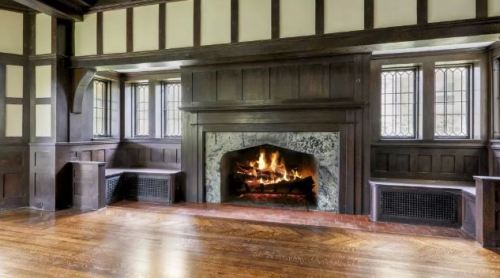
It had been raining hard since three o’clock that morning. I repressed my smile and felt rather like a character in some latter-day Gothic romance. The driving rain, the cold, the three-hour ride from Sacramento in my long black leather-upholstered Buick-Town car limousine. I had just procured some cursed objects and books that had to do with parapsychology. With all the ghostly activity in my mansion, it was hard for anyone to deny the place is haunted. An over-emotive Spiritualist medium, and the lone survivor of the debacle in the Grand Ballroom returned to my home discuss a list of all phenomena observed since then. John Hansen had recently taken up restoration of the electrical system and installation of a voice calling system. After his daily inspection of the mansion, I tried to sound casual but I felt my excitement showed. “I have the blueprints for the next addition to the estate.” “How soon will you need this completed?” John asked. “As soon as possible.” “It is large?” “Quite large. I want a new castle appendage. I turret I believe it is called. With detail that hearken back to earlier times. It is to be a half-timbered structure similar to those developed when medieval builders erected timber skeletons and filled in the gaps with stone or wattle-and daub. The idea is to leave some framing exposed,” said I. “Enough rooms have been renovated for your use already, Mrs. Winchester!” “Yes, but I need a view of the surrounding countryside, this room will be more of a tower, which will provide a spectacular sweep-around view of the village and my yard. The sky is the limit!” #RandolphHarris 1 of 13
As my guest, Cora Pringle, the medium and I continued to the Séance Room to continue our conversation, there were a pair of dark eyes peering out from bony cavities, expression a fragment of the pain and frustration which she must have felt as the years passed and she was no longer able to leave the Grand Ballroom. The senior class of San Jose High School was hosting their harvest festival in the Grand Ballroom, young woman, Mary Celeste, was on stage being crowned queen. She and most of the senior class was killed when a gasolier fell dropped from above and decapitated her, causing a roaring fire. You can see her lurking in the Ballroom at night. Mr. Hansen took a break from building my observational tower to restore the Ballroom. And he would often see the ghost dancing about the room. She would come up next to him in a really elegant Victorian dress, lavishly trimmed with all manner of lace frills, braid, fringes and full gathers. Her dress was topped with a pelerine made of mink. “My people have recommended you, Cora. They say you are the best in your field.” Cora drew in a labouring breath. “Your fee will be two hundred thousand dollars,” she said. “Your assignment is to establish the facts,” I explained. Something glittered in Cora’s eyes. Cora walked toward the Grand Ballroom door. Before we reached it, it was opened sharply by a shadow. Quite appropriately, John has most often seen this shadow when the haunted area is illuminated only by a gasolier. It throws a strange light, and there seem to be moving shadows, not human shadows. Moments later, another member of the staff watched in awe as the mysterious image of a girl meeting Mary Celeste’s description walked onto the dance floor. #RandolphHarris 2 of 13
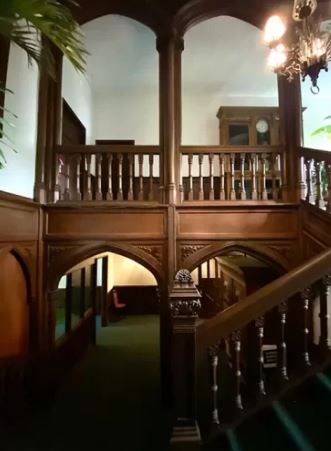
We closed the door and started down the corridor. In light of present knowledge, I ordered John Hansen to seal every door on the second floor with bricks. For the first time, I allowed myself to recognize the strain of this psychic phenomena on my condition. However, I undoubtedly considered this a miracle from God. “Oh, dear, Mrs. Winchester,” Cora said. “I’m afraid this is the Mount Everest of haunted houses. I’m sensing another tragedy in this area. Did something happen? There is a cold spot here.” “There is always a cold spot,” I replied. “Yes, Mrs. Winchester, but I feel a sense of intense angry and pain.” “Oh, dear. Years, and years ago, I had a foreman move a chandelier, and he fell off the ladder and cracked his head wide open. He died immediately.” “But Mrs. Winchester, I fear this was no accident. It was deliberate. His spirit is telling me someone or something pulled the ladder from under him.” Little did Cora know that there were two different attempts to investigate it, one in 1886, the other in 1890. Both were disasters. Thirteen people involved in those attempts were killed, committed suicide, or went insane. Only one survived, and I have no idea how sound he is? My mansion was such mystery. I had experienced enough psychic phenomena by now to be accustomed to it. It was known as the house built by spirits for a reason, but it appeared to house a few demons as well. There is a power here strong enough to physically and/or mentally demolish thirteen people. The staff had mentioned these ghosts create a slightly disconcerting feeling for them. They fear they are being watched—even when they can plainly see that no one is in the room with them. #RandolphHarris 3 of 13
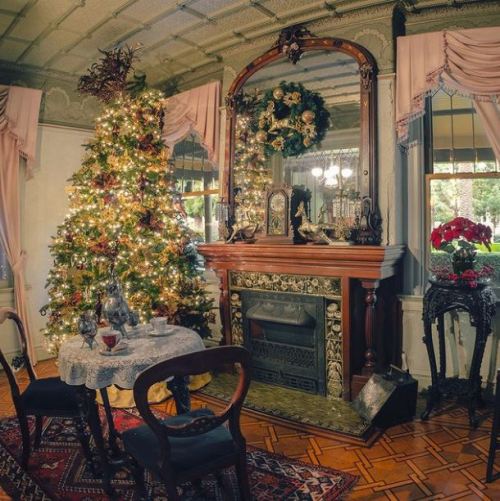
The presences also like to draw attention to themselves, oftentimes by playing their own music. They have also demonstrated a playful sense of humor by causing blood to come out of the walls like sweat. Those years prior to the 1906 earthquake had been the most spiritual for Mrs. Winchester. After dismissing Cora, she walked to the Hall of Fires, and went inside. The warmth felt good. Shivering she got into bed, and retired for the evening. For several years she was pleased to be reminded of her beauty. Many said she looked like a girl of twenty years and not a day more. She still retained her long- brown hair untouched by grayness, her tall figure almost as trim as it had been in her twenties. She smiled with great self-esteem. Many of the contents of this mansion and cryptic messages in it and on it tell you how to get in contact with the devil. It also contains a wide variety of charms covering magic persecution, magic defense, vengeance magic, death magic, fertility magic, love magic and many other forms of magic. Many of the charms are camouflaged by means of religious trimmings. Anu one who owns or possesses the Winchester Mansion must be warned of the dangers as the mansion itself promises Satan’s special protect all who own it. With this mansion, the imagination is stretched to a breaking point. The issues are clouded by secrecy, myth and legend to such a degree that discovering the power of spiritism or occultism may cause one to make an unconscious contract with the powers of darkness. At each turn of a hallway, there is some evidence of malevolence, beauty, or omen of sorcery. #RandolphHarris 4 of 13
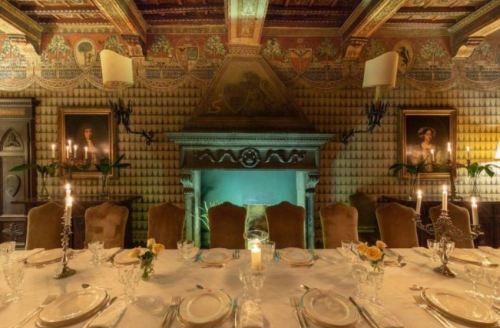
After Mrs. Winchester’s retirement in 1922, the witches realized themselves that in order to survive in a legalized form they would have to project an aura of goodness. Now, it is not to be mistaken, Mrs. Winchester was a good person. She often paid her staff in gold coins, three times the going wages in those days, provided them with homes on her estate, donated food and clothing to the less affluent, and even spent millions of dollars establishing charities and paying homage to our dearly departed. Although she was a good person, when one is cursed, obviously it is going to be difficult to maintain a good reputation people carve up graves, steal marble headstones, cut off heads and show no signs of abating. All they could do was try to achieve it b having an organization to speak for them, one to project the better side of their nature. So, they decided in 1923, to turn the Winchester Mansion into the Winchester Mystery House and open it up for tours. However, even today, some witches say the rule for the majority is goodness—though even some of the more famous of their number admit to a blurring of definitions on the darker edges of their craft, that their rituals might stray from concept of “an harm none” into what might be termed black magic. Those who are decidedly “black”—and there are many—look upon the “white” movement with considerable derision. Sometimes American symbols, like the Winchester Mystery House, although many of us love it, attracts as much hate mail from pagans as it does from Christians. In order to be successful, a witch does have to make a pact with the devil, at least symbolically. One must worship the Luciferian elements of pride within oneself and anyone who professes to be a white witch is either kidding themselves or has much to learn. #RandolphHarris 5 of 13
There is certainly a magic power in the Winchester Mansion, and one has to decided how it should be used. Many believe that Mrs. Sarah L. Winchester is the spiritual head of the Worldwide Occult Movement. Her life, after the turmoil and publicity of her latter years, after the 1906 earthquake, is more peaceful. She returned to witchcraft with a more balanced view of it and life in general. Mrs. Winchester still have many enemies, and by a cult, she is still reckoned to being cursed every day by opponents. The past is the past, Mrs. Winchester always believed. Mrs. Winchester did not care for inexperienced dabblers who did not realize or seem to care what damage they caused to themselves and those around them by summoning and releasing uncontrollable demons into their homes. Things can easily go disastrously wrong. As everyone knows, Mrs. Winchester was in a house with very bad spirits had been brought down and were not properly banished and she was forced to build a home for them because each day, legions more became residents. Often times, rooms would be recked, a tower fell, the fireplace exploded with such force that the stones outside fell off, curtains were pulled down, blood flooded the floors, and ornaments flung around the room. However, there was and still is always a warm and friendly welcome for anyone not put off by the trappings of the occult and the distinct aroma of citrus fruit, lavender and jasmine. That is common to many witches’ homes. The library was once lined with what was one of the best and largest private collections of books on the occult outside of the Vatican; her small dog, Zip, would often lay peacefully on the bear skin rug at her feet. #RandolphHarris 6 of 13

Mrs. Winchester had book in her library which told of Norse travellers reaching every corner of the known World, but they were not actually tourists. The “racially pure” ideology of Aryan supremacy rested on the premise of the Nordic race as superior to all others. Carolus Magnus born 2 April 747 – 28 January 814, created a program to produce the hair colour gene MCIR. He bred 10,000 to 15,000 blondes, whose genetic mutation occurred around 9,000 BC. These sea born people were said to be giants with eyes the colour of the sky and clouds. They set out from their homelands bound for distant lands. Through activities such as trading, raiding, fighting, colonizing and settling, their travels took them west to Greenland and North America. They landed pre-colonial San Jose and lived among the Tamien people who had been native to the area for nearly 2,800 years before the Aryans. There were already 12,000 Native Americas living the area, when approximately 7,000 of the people with the MCIR gene arrived. Archeologist believed they settled on the land where Mrs. Winchester built her estate. However, due to a ferocious outbreak of respiratory viruses, small pox, and severe flooding in 1791, many od them died out, and their bones are said to be deeply buried under the farmhouse Mrs. Winchester purchased and on much of the 735 acres of land she owned. Entire towns died in an epidemic that wiped out three-quarters of their population. These people, along with many of the Indians died on heapes, as they lay in their houses and one could walk through a forest where human skeletons covered the ground. Legend has it that Mrs. Winchester’s Mansion is also a temple for them and she is a priestess, and undoubtedly one of the most experienced in the World. Some believe the conservators painted the Winchester mansion yellow with green trim to honour a yellow daisy, Mrs. Winchester’s favorite flower, others believe it is because they wanted to honor those with the MCIR gene. Perhaps the spirits had Mrs. Winchester originally painted the mansion sea green to honor their heritage? #RandolphHarris 7 of 13
The house is overtly occultish in every way; books and tools of Mrs. Winchester’s craft used to cover many surfaces. There was a hidden room with pentacle, skives, scourge, god images and wands as well as ancient Norse coins. Most neighbours assumed she was a witch, and quite a few sought her advice. However, her door was not always open. The occult for Mrs. Winchester was a genuine quest for knowledge, for spiritual guidance she could not find elsewhere. Businessmen used to want their problems solved by her foresight and magical spells. What Mrs. Winchester produced with her magical circle, was consciousness, a different energy. To further highlight this illustration, when a room is empty and you fill it with thirteen people who are working within that circle, you would imagine the temperature would go up; sometimes in the Winchester Mansion, it does not. It often drops. That provides scientific proof of a change but as far as the magical proof goes, we cannot prove the power is there. We know the power is there; we know there is power from our experience. We do influence people’s minds; someone one needs the magic that we perform. It has to be that way. We are not allowed to harm anyone; that is the fundamental rule of the craft and all those who are in it are governed by this rule, and abide by it. If they do not, they are not true witches. The Winchester mansion is an experience, a magical experience, your mystical experience which is totally personal. There is not necessarily always an end product to what we do, though we never waste power generated by a group meeting. If there is a lot of energy there, because witches and warlocks are generally concerned about the things around them, the ecology and so on, we would direct that energy into the well-being of mother Earth. #RandolphHarris 9 of 13

Many people who visit the Winchester Mystery House have reported becoming more Earthly. They experience astral journeys and out-of-body experience. We reckoned people draw on psychic phenomena when the enter the aura of this mansion. It is sort of a working temple, and attracts activity without any kind of publicity at all, and the mansion and staff keep a very low profile. Businessmen are among some of the biggest external patrons. They often are will to pay huge amounts for after dark private group tours or individual tours. The estate receives so many requests a week they have had to curtail it. Some staff members love to be in the mansion after dark and with limited numbers of people, others are very pensive. Some people believe a private tour is the only way to enter into a relationship with the devil or an angel and achieve greater success. Oh, ye aforesaid angels, ye that execute the commands of the Creator; be willing to be present with me in the work which I have undertaken at this time, and help me to finish it, and be ye my attentive hearers and assistants, that the honor of God and my own welfare be promoted. Over this there are twenty-eight angels who rule over the twenty-eight houses of the moon, viz: Asariel, Cabiel, Dirachiel, Scheliel, Amnodiel, Amixiel, Ardesiel, Neriel, Abdizzriel, Jazerial, Cogediel, Aialiel, Azerniel, Adriel, Amutiel, Iciriel, Bethuael, Geliel, Requiel, Abrunael, Aziel, Tagried, Abheiel, Amnixiel, Lord of darkness and liberation come forth! (Let the inner eye behold the King of darkness before you.) Ahriman awaken! Rise up within that I may compel the rise of the fallen ones and devour the very essence of the God of limitation Ahura Mazda! Zairich and Tairich, unholy fever and thirst come forth! (Let the inner eye behold the demons before you) Zairich awaken! #RandolphHarris 10 of 13
Tairich awaken! Rise up within that I may compel the rise of the fallen ones and devour the very essence of the Holy Angel Amardad! Akoman, demon of evil mind come forth! (let the inner eye behold the demon before you) Akiman awaken! Rise up within that I may compel the rise of the fallen ones and devour the very essence of the Holy Angel Vo-human! Naikiyas, Div of rebellion and discontent come forth! (Let the inner eye behold the demon before you) Naikiyas awaken! Rise up within that I may compel the rise of the fallen ones and devour the very essence of the Holy Angel Spandarmad! Andar Div of antinomian fire come forth! (Let the inner eye behold the demon before you) Andar awaken! Rise up within that I may compel the rise of the fallen ones and devour the very essence of the Holy Angel Arwahisht! Taromat, beautiful Div of rebellion come forth! (Let the inner eye behold the demoness before you) Taromat awaken! Rise up with that I may compel the rise of the fallen ones and devour the very essence of the Holy Angel Spandarmad! Aeshma, wielder of the bloody mace! Demon of the wounding spear and bringer of warth come forth! (Let the inner eye behold the demon before you) Aeshma awaken! Rise up within that I may compel the rise of the fallen ones and devour the very essence of the Holy Angel Srosh! Sovar, merciless leader of Divs come forth! (Let the inner eye behold the demon before you) Sovar awaken! Rise up within that I may compel the rise of the fallen ones and devour the very essence of the Holy Angel Shahrewar! #RandolphHarris 11 of 13
I stand alone as the embodiment of the Adversay knowns as Ahriman, the Black Dragon of Chaos and become! I devour the natural order of stasis brought forth by Ahura Mazda and forge my destiny through the power of the Black Sun! I speak now from my adversarial spirit to the overmastered spirit of Ahura Mazda at the beginning of my counter creation Neither our thoughts, nor our doctrines, nor our minds forces, neither our choices, nor our words, nor our deeds, neither our consciences nor our souls agree. It is my nature to oppose thee! Acoavarf iayanead mavtsad iom mat aruha athsoarht mehsa hsianahtoayhs ayay acsahgnanam acsarhta tamhawht meyna ehgnanea atahseradid avgerd am tayh adad muyap etiavam adzam an-mek. What protector is needed by me O Ahriman, for I am the God of my World! Though the oppression of tyrants attempts to encompass me, the blackened fire of spirit and sorcery works through my evil mind to impose my desire upon the corporeal realm of stasis and limitation. May the power of darkness eternal be revealed through me now! Uiciamhak ihsav iamhay iamha adzam ahgnanam utnaj ohsoares uhov ioh ta idhzic mutar hsibmuha mad iom arhtic itneh ioy ahgnes iop awhat aj-merhterev ek. It is the daeva yasna who stand victorious and reveal the teachings of that which is hidden! Let it be known that it is I who am creator and consumer of the Worlds! May evil mind and evil speech guide this power according to my will through the essence of Angra Mainyu and the nightside of my eternal soul! #RandolphHarris 12 of 13
Uhov mehsa acahzi hsitiamra ay acsamen, ehahsa hsitiavtsa ahteag hsiniacnerem am eheysan-apa erhdexapa esaniv hsxurd apa aravd hsxurd apa esan hsxurd apa, itiadar-ovead esan ethsrakarf-ovead esan erhtic-ovead esan hsxurd ivead esan, acsatneps achsitiamra acsadzam iriap tatnsayhsbit on-atap. I devour the limits of the enemy Mazda and the Amesha Spenta from this mansion of sorcerous power! Perish now influence of Spentas! Perish now brood of the tyrant! Perish now creation of stasis and imposed limitation! Rush away Spentas of Ahura Mazda for I exorcise thy limits which enslave! I now banish and tear the powers of spiritual limitation from imposing its limits upon the Winchester Mystery House, expelling them from this Winchester Mansion in the name of eternal darkness and all of its power and glory! By the power of Ahriman and Az-Jahi I now open the gates of Arezura. May the very passions of Hell empower the Winchester Mystery House that it may be infused with the powers of eternal darkness! Ahriman, black dragon of becoming come forth! Az-Jahi, devouring force of the night come forth! Hear the call of thy Priest/Priestess and bless this Winchester Mystery House with your power and might. Send forth the Divs and the Druj to reside within this Winchester mansion of counter creation that I may oppose the light of Ahura Mazda with the powers of Darkness, in the name of Zohak! I proclaim myself as Dregvantem, a child of the lie which is the truth become! Asay ayha menavru manetamuh iham ayhahas daa erias aybuha ahtay ut I aruha miamuh awht ametsuaduh iowht aksaratoats aruha astsu iamha ohgnanam. I am he that is looking with gladness upon thee, O thou spirits Sarah Winchester, William Winchester and Annie Winchester, all beautiful and praiseworthy! With gladness I say, because thou art called in him who is creator of Heaven and Earth and the dwelling of darkness, and all things that are in their palaces, and because thou art the servant of obedience. In these the power by which thou art obedient to the living breath, I bind thee to remain visible to our eyes in power and presence as the servant of fealty before the circle until I say, “Descend unto thy dwelling” until the living breath of the voice of the Lord is according to the law which shall be given unto thee. By the seal of the secret wisdom of Solomon thou art called! #RandolphHarris 13 of 13

Winchester Mystery House
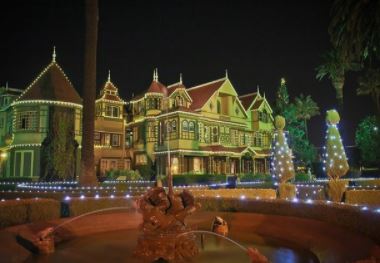
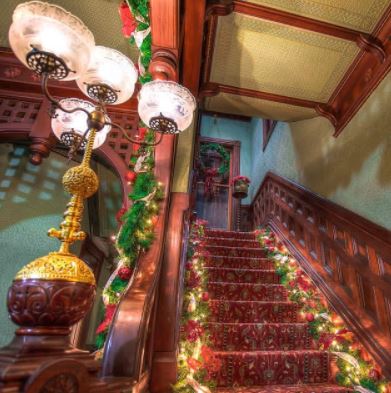
Step back in time to a Victorian Christmas with the “Holidays with the Historian” tour. Led by Janan Boehme, Winchester Mystery Houses’ historian and Victorian customs expert, this special tour of the mansion includes Victorian holiday traditions, caroling and a special holiday treat in one of Sarah’s formal rooms. Victorian attire is encouraged! Tickets going fast🎄
🎟 link in bio. https://winchestermysteryhouse.com/

Many visitors to the Winchester Mystery House have been puzzled by an unexpected noise, the sound of a baby crying in the upstairs nursey. While resting their hands on the crib, some received impressions of an infant’s death. It was later learned that baby daughter of one of the former caretakers had died in the room. Ghost, angels, spirits and even demons have checked themselves into the Winchester Mansion and have no intention of leaving.

Perhaps it is a good idea to preserve the mansion and keep them inside. And while you are visiting the Winchester Mystery House, be sure to visit Sarah Winchester’s Gift Shoppe and purchase a gift for friends and relatives as well as a special memento of your trip to the Winchester Mystery House. A wide variety of gifts and souvenirs are available for guests to purchase. If you forget to purchase something during your visit, you can order any gift item by calling 408-247-2000 and charging the item to your credit card. You can also place an order through the mail. Be sure to include a daytime telephone number, with area code.

When visiting the Winchester Mystery House, sit down and relax at Sarah Winchester’s Café, before, or after, your tour and enjoy your favorite beverage and snack. Let your imagination take you back to the days when Mrs. Winchester lived here and imagine what it would have been like to have met Mrs. Winchester herself. Catering information for groups and birthday parties is available. Call 408-247-2000. Both Sarah Winchester’s Gift Shoppe and Café are open free to the public every day, except Christmas and Thanksgiving. https://winchestermysteryhouse.com/

The Rampling of the Winchester Mansion
Lights twinkled beyond, through the thick forest of the Winchester Mansion, as oak, cypress, and palm trees swayed in the wind. Wild roses and ivy hung from the observational tower, and as the crickets sang here at the twilight, thirteen witches were hanged in the year 1888. Throughout the county of Santa Clara, there had been forty-nine executions nationwide. Mrs. Winchester’s interest in seclusion was evidence from the start. One of the first tasks of the gardeners was to plant a tall cypress hedge surrounding the house. She also kept her beautiful face covered with a dark veil at all times, and she fired servants who caught a glimpse of her gorgeous face by accident. There were several mass killings in Santa Clara Valley, which illustrated that there was no mercy for youngsters who were said to have become tainted by sorcery that locals believed was emanating from the Winchester Mansion. There were occurrences of neighbors hearing a bell ring at midnight and 2a.m., which according to ghost lore are the times for the arrival and departure of spirits. Thirteen children which likewise confessed that they were engaged in witchery, died as the rest. They were all burned at the stake. Pacts with the devil were a feature of a number of trials. There were numerous witches’ covens in the surrounding villages, two were said to have admitted signing in their own blood a written contract with a man in black in return for money to live gallantly and have the pleasure of the World for a period of thirteen years. The man in black always appeared at their coven meetings when he was called, and supervised their activities. #RandolphHarris 1 of 7
Witchcraft had become an obsession that was hardly quelled. The obsession had been on a scale so vast that no single cause could be pinpointed. And Mrs. Winchesters arrival was a sensational event. The Valley was thrilled by this dramatic entrance of a millionairess; by those freight cars sidetracked in Santa Clara, unloading rich imported furnishings; by building activity that turned an eighteen-room farm house into an entire city in the first six months. Here was fair game for all! They talked about Mrs. Winchester! Gossiped would be a more fitting word. Talk begat rumor and as the years passed and new towers and gables rose, the local doctor pronounced them all bewitched, and fired by imagination and malice which seduced them into signing the devil’s book. The seemed little doubt that witchcraft was being practiced by Mrs. Winchester, who blasted into town with $20,000,000 and spirits and ghost in tow, two including her husband and daughter. This provided social upheavals. Barbara Butters and Mary Moses fell into dissolute habits, becoming harlots and drawing the disgust of their community. As they were shunned by Mrs. Winchester in those of the upper-class, they sore revenge and so—according to the confessions obtained under torture—called down the services of the devil. A midnight on 13 August 1889, according to their confessions, a tall black man appeared before them and said, “Be not afraid. I too am one of the Creation, pawn to me your souls for years and two months and I will assist you for all that time in whatever you desire. Some say that started the Rampling of Mrs. Winchester. #RandolphHarris 2 of 7
The two women agreed to the request of the devil’s representative and made a covenant writing in their own blood by pricking their fingers. One year later, they were arrested by the sheriff and accused of causing the deaths seventeen men and woman, and for putting a curse on the Winchester Mansion. They were also said to have killed four of Mrs. Winchester’s great hogs, and later sent two imps to haunt her mansion. What evidence there was for such allegations cannot be imaged. They were eventually found guilty of killing three people by roasting effigies in wax into which they had stuck pins. They were executed on 17 March 1890. As they stood at the gallows on the Winchester Estate, they were asked if they wanted to say their prayers and to be forgiven for their sins. They laughed, according to the record, and called for the devil to help them in such a blasphemous manner that the sheriff, seeing their impenitence, caused them to be executed without delay being hanged until almost dead and then they were burned. It sent a shock through the community to think of it. That is existed and was widespread is beyond doubt. Observations that the countryside was catacombed with covens of witches is possible, but difficult to prove in the maze of untruths and enforced confessions. Many of the confessions were dictated and written down by the torturers. #RandolphHarris 3 of 7
The evening was the longest of Mrs. Winchester’s life. Just terrified, she hovered with a tear-streaked face just by the window of her 4th floor bedroom. The twilight terrified her, it seemed an immense resonance with the darkness in her soul. She put her face behind her hands, and could never remember how she began. The stories of blasphemy and defilement became more and more frequent, and colorful accounts of exactly what Mrs. Winchester did began to emerge as gospel truth. The accusations against her were that the witches being hanged from the observational tower and burned at the stake were actually employees who she fired. But, even if that were true, was it without cause? The accusations of these witches included killing children for sacrificial purposes; killing animals by magic; murdering their enemies by imagery, id est, by forming an image in wax and stabbing it or roasting it; bringing hard to innocent people by just casting their evil eye upon them. Behind these capital changes were other accusations which included human sacrifice, cannibalism, incest and other wild pleasures of the flesh practices, not to mention blasting Mrs. Winchester’s crops and poisoning drinking wells. Others burst forth with superbly graphic and gory accounts, factual and fictitious, of the activities of witches, sorcerers and the devil’s disciples, and the mysteries of the dark and dangerous Worlds populated by evil. #RandolphHarris 4 of 7
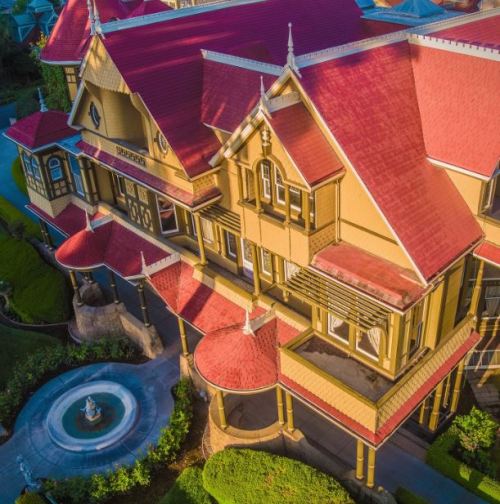
Folks believed not only the witches, but Mrs. Winchester was also capable of some highly inexplicable activities—the unrelenting construction of her beautiful home had rambled over six acres. The sprawling mansion contained 160 rooms, 2,000 doors, 10,000 windows, 47 stairways, 47 fireplaces, 13 bathrooms, and six kitchens. Carpenters even left nails half driven when they learned of Mrs. Winchester’s death, as if fear and violent torment abruptly drew them away. And what happened in these years? What had become established in the community was the great fear of witchcraft and curses—still prevalent today. What housewife would not refuse to steal from the Winchester Mansion for fear of having a curse put on her house? In 1922, it was reported that a woman thought to be a witch was fired by Mrs. Winchester for stealing a sheep. She jumped from her chair and declared, “You will be dead in a week and nobody connected with this house shall die in bed. Within a week, however, Mrs. Winchester passed away in her sleep. The farm manager collapsed in the field while talking to his farm hand and died instantly. A cook committed suicide and a farmer who acted as a witness died in a fire. A few weeks later, a maid fell dead from her horse. There were many such stories which abounded this beautiful but bizarre estate, and prompted a continual flow of literature, occasional prosecutions and an undying fear in society at large of anything concerned with witchcraft and the occult. During these Victorian times—fortune-telling, clairvoyance and seances with mediums was not only the ultimate form of entertainment, but also a religious practice. #RandolphHarris 5 of 7
As witches themselves had, by and large, returned to the shadows of society, the few prosecutions tended to be against charlatans accused of making money from what become a twentieth-century obsession—fortune telling and contact with the dead. No matter where you open the pages of the World treasure, as you walk through its 2,000 doors, the spirits will guide you. Conveyed along each hallway is divination, in every piece of art glass, inspiration, in the beams of the ceiling demonical possessions, up and down the stairs apparitions, trances in the Blue Séance Room, ecstasies on the fourth floor balcony, miraculous healing in the Victorian garden, and occult powers possessed by the mansion itself. I do invocate and conure thee, O Spirit, Forcalor; and being with power armed from the SUPREME MAJESTY, I do strongly command thee, by BERALANENSIS, BALDACHIENSIS, PAUMACHIA, and APOLOGIAE SEDES; by the most Powerful Princes, Genii, Liachidae, and Ministers of the Tartarean Abode; and by the Chief Prince of the Seat of Apologia in the Ninth Legion, I do invoke thee, and by invocation conjure thee. And being armed with power from the SUREMEM MAJESTY, I do strongly command three, by Him Who spake and it was done, and unto who all creates be obedient. Also I, being made after the image of GOD, endued with power from GOD and according unto His will, do exorcise thee by that most mighty and powerful name of GOD, EL, strong and wonderful; O thou Spirit Forcalor. #RandolphHarris 6 of 7

And I command thee and Him who spake the Word and HIS FIAT was accomplished by all the names of God. Leay yli Ziarite zelohabe et negoramy Zien latebm dama mecha ra meti osira. Lagumen Emanuel therefore mechelag laigel yazi Zaseal. Meloch, hei alokim tiphret hod jesath. Tanabtain ainatem pagaij aijolo asnia hichaifale matae habonr jijcero. LORD GOD MOST HIGH, I do exorcise thee and do powerfully command thee, O thou Spirit Forcalor, that thou dost forthwith appear unto me here before this Circle in a fair human shape, without any deformity or tortuosity. And by this ineffable name, TETRAGRAMMATION IEHOVAH, do I command thee, at the which being heard the elements are overthrown, the air is shaken, the sea runneth back, the fire is quenched, the Earth trembleth, and all the hosts of the celestials, terrestrials, and infernals do tremble together, and are troubled and confounded. Wherefore, come thou, O Spirit Forcalor, forthwith, and without delay, from any or all parts of the World wherever thou mayest be, and make rational answers unto all things that I shall demand of thee. Come thou peaceably, visibly, and affably, now, and without delay, manifesting that which I shall desire. For thou art conjured by the name of the LIVING and TRUE GOD, HELIOREN, wherefore fulfil thou and according unto mine interest, visibly and affably speaking unto me with a voice clear and intelligible without any ambiguity. Truth lies open to the view in depth beneath depth of almost blinding evidence. The sense of a universal mirage, of a ghostly unreality, steals over us, which is the very moonlit atmosphere of the Winchester Mystery House itself. #RandolphHarris 7 of 7
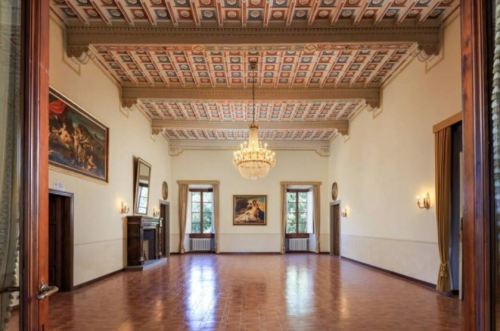
Winchester Mystery House
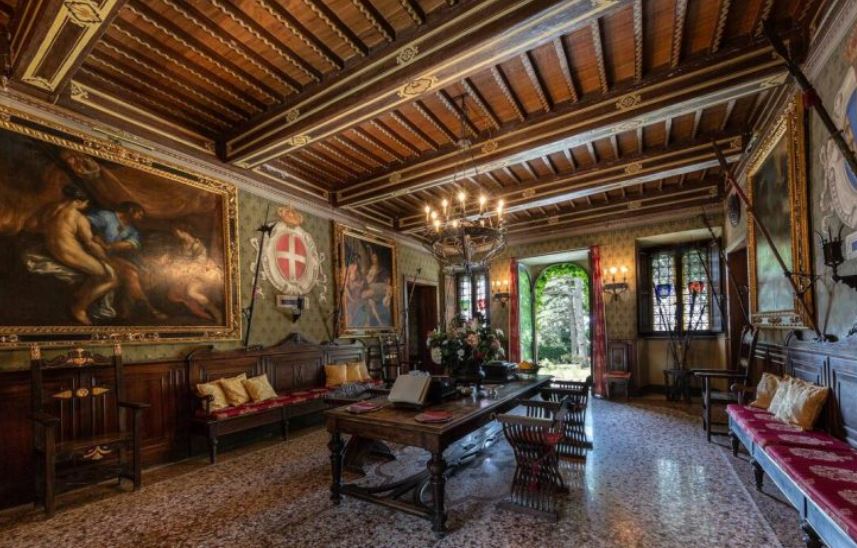
Set against the medieval grandeur of a castle with centuries-old mosaic floors, stone fireplaces, and stained-glass windows, this Queen Anne Victorian exemplifies master craftsmanship on a grand scale with timeless order and contemporary appeal.
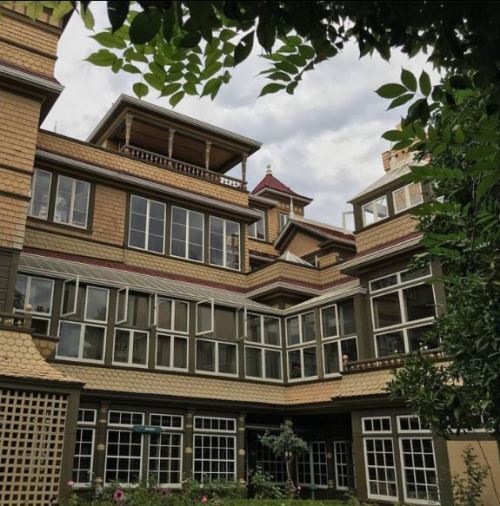
It’s a cool and cloudy day at the Winchester Mystery House ⛅️ Truly somewhere you can relax, dream, and be creative. Open for daily tours this weekend 10-4pm!
🎟 link in bio. https://winchestermysteryhouse.com/

It is Not a Dead Language, but the Language of the Dead

On Halloween in 1975, Jeanne Borgen, one of California’s foremost psychic investigators, conducted a midnight séance in the bedroom where Mrs. Winchester supposedly died (some thing she achieved eternal life and is still living). Nonetheless, the results were reported by Alvin T. Guthertz in the magazine Psychic World: “Suddenly it appeared as if Mrs. Borgen’s face had somehow aged—her hair appeared gray and deep lines creased her forehead. She felt staggering pain and was unable to walk. It was as if she were having a heart attack and, as she started to fall, she shouted, ‘Help me. Someone get me out of here!’” Jeanne Borgen awoke a short time later. Her breathing was then normal; the pain, or what had seemed like pain, was gone…”She was an overpowering woman, a powerful woman. I felt a tremendous build up of energy.” This is the story of Santa Clara Valley’s most famous lady, Sarah L. Winchester, and her fabulous mystery mansion. It has been said that Mrs. Winchester slept in a different bedroom every night, and with more than 600 rooms at the time, she could sleep in a different bedroom, every night for over a year; this was supposed to confuse evil spirits. Some say that she also held special dinner parties for her spirit friends. Legend has it that she would serve her phantom guests on solid gold plates, offering them dishes like caviar, truffles, and pheasant stuffed with pate. Over the years, many people have occupied the massive homes, which now has 160 rooms, stands four stories high, and is approximately 90,000 square feet. #RandolphHarris 1 of 13

It is said that different organisms have separate consciousnesses, although their bodies are just as much connected by general Nature as the parts of a single organism are with each other. Back in Mrs. Winchester day, during the late 1880s through the early 1920s, she used to have ritual séances in her famous Blue Séance Room. Those taking art formed a circle around a large round table, at the side of which there was a large oblong box. One Halloween night while the ritual was taking place, the circle people joined hands…they began to dance to a hypnotic drumming and suddenly the Grain God appeared in the middle of the circle, dressed in skins and with white make-up from the chest up. He wore antlers on his head so skillfully applied that they looked as if they were growing out of his head. He began his Dance of Death, moving around the circle stopping before each person and showing them his mystery—the perfect wars of corn he held in each hand. When each had experienced him, the drumming and the chanting increased in tempo and volume until, at its peak, Mrs. Winchester, the High Priestess, appeared in the middle of the circle and, letting out a bone-chilling scream, she stabbed the Grain God with her Athame (the witch’s knife) and blood spurted from the wound as he fell forward into the oblong box, which was now revealed as a coffin. To the cries and gasps of the assembled witches, the coffin was solemnly carried to the bonfire which was lit and blazed high, accompanied by the cries and chants and the furious drumming. #RandolphHarris 2 of 13

By the light of the funeral pyre, a virile young man appeared among them and was proclaimed the new Grain God and the blessed wine was shared amongst his subjects who danced and chanted until the sun started to rise. Thought the Bible provided no evidence that witchcraft was considered to be an organized religion, it certainly acknowledged the existence of witches, as in 1 Samuel Chapter 28 of the Old Testament, where we are given a dramatic account of Saul’s visit to a witch at Endor because he believed God had deserted him. He went in disguise and pleaded with her to “bring up Samuel” who was dead. The witch performed her ritual and…The woman said to Saul, “I saw gods ascending out of the Earth.” And he said unto her “What form is he of?” And she said, “An old man cometh up and he is covered with a mantle.” And Saul perceived it was Samuel and he stopped his face to the ground and bowed himself. This was one of the earliest published examples of necromancy, the revival of the dead or the contact with the spirits of the deceased, which is now practised by many witches and black magicians. Likewise, Mrs. Winchester was “spiritual,” and what happened in her Blue Séance Room was also considered necromancy. The familiar spirit is one of the earliest keys to the identification of witches. They were said to be capable of summoning an assisting force which was a spirit of a dead person residing in the body of a small animal such as a cat, dog, bird or toad. #RandolphHarris 3 of 13

These animals required the sustenance of witches’ blood, obtained by pricking her own skin, and thus when the witch-hunters came, they often first examined the witch’s body for marks—any mole would do. Alternatively, the spirits were said to be capable of existence in an inanimate object. The infamous occultist Mrs. Winchester was said to have a familiar spirit which dwelt in her favorite window. The Roman Church was especially sensitive to all forms of magic and sorcery, because the practice had been rife through Roman society, as was the belief that to encourage constant renewal of power, young men, women, and animals were required to be systematically sacrificed. These practices remained until the official repression of the old pagan religion in the Roman Empire. In AD 313, the Emperor Constantine issues an edict of toleration legalizing Christianity throughout the empire after he saw two visions which caused him to adopt Christ as his patron. Just to be on the safe side, however, Constantine never fully abandoned his earlier patron, Apollo, in spite of the pressure from priests and bishops to eliminate pagan practices entirely by threat of death. Christians were not content with merely being the favoured cult; they wanted to establish one true faith for the whole of mankind and all other forms of loyalty to past gods should be abolished. Neither was it the instant “conversion” that Sunday school teachers would have us believe. It took another two centuries before this progression was confirmed, when the rights of pagan were gradually reduced by imperial decree. #RandolphHarris 4 of 13

Sacrifices were forbidden in 391 and all pagan holidays and festivals were banned. Pagans were ejected from public office and lost the right to own property or defend themselves in court. Their temples were destroyed in Christian troops or crusading monks and finally, in AD 529, all citizens were ordered to convert to Christianity. Parents were told to bring all children to Christian churches for baptism. Paganism, in the heart of Europe, was reduced to scattered and secret worship, driven underground until, as the years went by, only scraps of folklore, song and dance and superstition remained. It took longer to disappear elsewhere, as the influence of the Roman Empire diminished and in Britain paganism actually went through a revivalist period as the hordes of barbarian raiders replaced the Romans. The Angles, the Saxons, the Picts and later the Vikings battled to forge powerful new regional kingdoms, enforcing worship of their own gods and attempting to force their own order on society. In contrast, Mrs. Winchester removed herself from the World and created a World of her own in her beautiful and mysterious mansion. Still, one of the most enduring legends from the time of the eclipse of the Roman Empire is that of Arthur, who fought the Anglo-Saxons and who is a hero of present-day occultists. #RandolphHarris 5 of 13

The Arthurian legend, with Guinevere, Camelot, Excalibur, the Round Table and the wizard Merlin are al debatable creations, but it is of special significance to all who follow the dark arts to recall that there were twelve knights to the Round Table, thirteen including Arthur—the number of witches who make up a coven. The Anglo-Saxon regional kings were eventually won over to Christianity but the new religion lost ground again in the face of the marauding Vikings, whose pagan rites were said to include human sacrifice when the victim’s lungs were cut from the body. The tide began to turn against the Vikings when King Alfred of Wessex, then aged twenty-two, defeated them at the Battle of Ashdown in 1871. The young king of Wessex was from a close-knit, pious Christian family and was a devout follower of the Roman Church, having been take to be blessed personally by the Pope by his father King Aethelwulf at the age of four. Alfred began the task of uniting England under the Christian king which his descendants were finally to achieve. During his life, Alfred taught himself Latin, the international language of wester Christendom and began translating Latin pastoral [by Pope Gregory the Great] into English and sent copies to every bishop in his kingdom. His grandson, King Athelstan, brought in the first legislation against witchcraft [and the banning of Sunday trade, incidentally] in AD 930. #RandolphHarris 6 of 13

There, out of the decimation of paganism as a religion, is the more likely setting for the birth of today’s witchcraft and it is to these roots that witches turn for their inspiration. As Christianity prospered, the imagery of the primitive cultures and the sacrificial rites which has been used to maintain idolatrous worship were taken as an example personifying some of the elements of evil; thus the horned god of pantheistic beliefs became the accepted form of the Christian devil and was used by Christians in their denouncement of all pagan worship. Gradually, the devil became drawn into every facet of medieval life. He and his demons were blamed for every mishap, whether a destructive storm or disease among the farm animals. The vivid image of this horned and hoofed invader, ruler of the dark forces, was blamed by the teachings of the Church for virtually all ills. The legacy of this confusion—which still exists—is the belief that the devil is an essential part of pagan worship or witchcraft. In fact, with the exception of a group known as the Satanic Witch Cult, neither mainstream witches nor pagans now recognize the existence of the devil or Satan. As the horned god became the Christian symbol of the devil, some witches did come to believe in and worship that Christian entity as their own and by the Middle Ages, witchcraft and devil worship were being treated as one in the same. #RandolphHarris 7 of 13

The cult of persons who, by means of satanic assistance or the aid of evil spirits or familiars are enabled to practise minor black magic. However, the difference between the sorcerer and the witch is that the former has sold one’s soul to Satan for complete dominion over one for a stated period, whereas the witch usually appears as the devoted and often badly treated servant of the diabolic power. Each of us is in reality an abiding physical entity far more extensive than one knows,–an individuality which can never express itself completely through any corporeal manifestation. The self manifests itself through the organism; but there is always some part of the self unmanifested, and always, as it seems, some power of organic expression in abeyance. It is easy to imagine how the combined grief of losing both a child and a spouse could be very crippling. Mrs. Sarah L. Winchester’s response to the deaths of her new born child and husband left a bizarre and impressive architectural reflection of her psyche. The fascinating story of the Winchester Mystery House has its roots in the occult and personal tragedies suffered by Mrs. Winchester and in the legacy of the Winchester rifle, “The Gun That Won the West.” According to some sources, the Boston medium consulted by Mrs. Winchester explained that her family and her fortune were being haunted by spirits—in fact, by the spirits of American Indians, Civil War soldiers, and others killed by Winchester rifles. #RandolphHarris 8 of 13

Supposedly the untimely deaths of her daughter and husband were caused by these spirits, and it was implied that Mrs. Winchester might be the next victim. However, the medium also claimed that there was an alternative. Mrs. Winchester was instructed to move west and appease the spirits by building a great house of them. As long as construction of the house never ceased, Mrs. Winchester could rest assured that her life was not in danger. Building such a house was even supposed to bring her eternal life. On another note, maybe a change of scenery and a never-ending hobby were just what Mrs. Winchester needed to distract her from her grief. Whatever her actual motivations, Mrs. Winchester packed her bags and left Connecticut to visit a niece who lived in Menlo Park, California. While there, she discovered the perfect spot for her new home in the Santa Clara Valley. In 1884 she purchased an unfinished eighteen-room farm house just three miles west of San Jose—and over the next thirty-eight years she produced the sprawling complex we know today as the Winchester Mystery House. In the late 1800’s, the Santa Clara Valley presented sweeping vistas of rural open space. It was a serene setting for Mrs. Winchester to begin her building project, which she did with steadfast determination. She must be given due credit for inventiveness. Mrs. Winchester hired carpenters to work in shifts around the clock. Overnight, the mansion had grown into a nine-story, 600 room complex, and the estate grew, by some estimates, to 730 acres of farmland, which included orchards of corn, apricots, plums, and walnut trees. #RandolphHarris 9 of 13

Perplexity was leavened by extravagant Victorian beauty scattered along each crooked path of exploration. Everywhere prevails that strange deference to the number 13; 13 stairsteps, 13 hangers in a closet, 13 wall panels, 13 lights in the German silver chandeliers, 13 windows to a room and if necessary to make that number, some placed inside a wall. There is even a dim-lit storeroom stacked entirely with never-used furnishings, displays rare hand-wrought elegance from the Victorian era, finest productions of forgotten craftsmen. Here are specially designed million-dollar stained-glass doors and windows, some set with diamonds, rubies, emeralds, gold, silver, platinum, and sapphire. There are stairs that rise only two inches high, doors that open to a two-story plunge into the garden, stairs that lead up to the ceiling and of course, a hooded figure who is dripping wet, with shining boots. Everywhere, there were once paintings huge, framed, fitted into the wall, and white-wigged men and women started helplessly and cold at the staff. At night men could be heard thundering down the steps, legs bowed, elbows out, hefting huge cabinets of ivory, silver, and gold, as ghost stood beside them, laughing because they knew this would lead to their own suffering. On one occasion, bandits broke in and shot the thieves looting the mansion. There was also a group of women who haunted the Winchester Mansion, certain abandoned women, perverted by the devil, seduced by illusion and phantasm of demons. They believe and openly professed that in the dead of night they ride upon certain beasts with Diana, flying over vast tracts of the country and obey her commands. Diana was a pre-Christian goddess. #RandolphHarris 10 of 13

There was pagan worship an aspect of community celebration which. The nine-story tower, that symbol of old English springtime tradition, was the phallic symbol old pagan worship. Mrs. Winchester used herbal medicines and could treat all manner of family aliments, foretell the future and guide and comfort tormented women. Some say she was blessed with these gifts after the lost of her husband and baby. These incidents became legends and they propagated the fear of liaison with the devil. It was alleged by Albert Pike, who claimed the authority of an actual eye-witness for the story, that Mrs. Winchester who had confessed to making a pact with the devil became worried when the expiry of her contract approached. She decided she must appease the spirits of those killed by the Winchester Rifle and summoned some religious people to her home. Mrs. Winchester told them that she was worried that the devil would secure her body as well as her soul. She gave directions that her body should be taken to the mansion, sewn in a stag’s hide, placed inside a stone coffin and fastened down with three strong iron chains. She directed that fifty psalms should be sung by night and fifty hymns should be sung by day to confuse the demons and if her body was still secure after three days, she might be buried safely. All these precautions, according to Pike, were of no avail. For two nights the servants and clergy resisted the demons, but on the third night amid a terrific uproar and the clatter of thunder, an immense demon burst into the mansion, snapped the iron chains like thread, pushed the stone lid aside and commanded the dead Mrs. Winchester to rise. #RandolphHarris 11 of 13

The demon, Botis, grasped her around the wait, caried her to his huge black stallion and galloped off into the night with her shrieks resounding through the air. Such legends impressed and scarred the peasant communities. The servants of the Winchester wanted to deal with the rebellious legions of spirits and their mysterious and malevolent, who could be conveniently packaged together as being in league with Satan. Demons filled the air waiting to be called down by witches, preying on the simple servants, plodding through their dull, daily lives. However, the evil was not only in this mansion, but lurked all over California. Sometimes, whole villages were deemed to have been infected and were wiped out or forcibly split up, and moved to other areas. The servants of Satan and his demons possessed great powers which enabled them to inflict disease, tempests and death by imagery. They could bewitch their opposers and judge them with their evil eye. One of the servants, Marie Laveau, at the Winchester mansion was dragged to the water tower, and was attacked by a demon. Witnesses reported that she was bound hand and foot and the demon cut her hair and threw alcohol over her head, setting light to it; he placed strips of sulphur under her armpits and burned them. Marie was hauled by rope to hand from the ceiling for three hours while the demon slept. Then he returned and threw alcohol over Marie’s body and burned it, which caused the water tower to burn to the ground. It was believed that Marie had copulated with the devil, that she drank the blood of children who she stole on her night-flights and she had murdered about sixty infants. #RandolphHarris 12 of 13

It is said that the demon Botis used techniques on Marie Laveau that might have been a model for the Nazi Gestapo. Servants who spoke out against the terror of Botis were branded as witches and locked in the basement. Meanwhile, word had got out about the death of Mrs. Winchester, but no one heard a word about her funeral. And Mrs. Winchester’s niece, Daisy, was long gone. It was said that two women who were servants at the Winchester Mansion agreed to the request of the devil’s representative and made a covenant written in their own blood by pricking their fingers. One year later, they were arrested by the sheriff and accused of causing the deaths of thirteen children, five men, and eight women, and numerous animals. They were also said to have killed four great hogs because their owner said the women looked like witches, and later sent to imps to destroy his four-year-old daughter. What evidence there was for such allegations cannot be imagined. Pacts with the devil were a feature in the Victorian era. Numerous women who worked as servants for Mrs. Winchester were said to have admitted signing in their own blood a written contract with “a man in black” in return for “money to live gallantly and have pleasure of the World for a period of thirteen years.” They described in their confessions how they made effigies in clay and stuck them with pins, and cursed local people who had annoyed them. One of the Witches, Moina Mathers, spoke of the anointment of the witches who were then able to fly very long distances in a short space of time. The man in black always appeared at their coven meetings when he was called, and supervised their activities. The present generation must weigh and draw its own conclusion about this Valley’s most interesting, most controversial, lady and her mysterious estate. #RandolphHarris 13 of 13

Winchester Mystery House

Come, sit a spell, and conjured up some spirits at this cult classic. Experience Monday’s scaries and give them a brand new meaning 😏👀

One more day left of Unhinged: Nightshade’s Curse. Some tickets still available but going quick!
https://winchestermysteryhouse.com/

Reach Out and Experience the Mystery at the Winchester Mystery House!

The stars grew large and infinite in their cold majestic light, and slowly all the night was gone and there remained one great glorious and sourceless illumination. A witch coven or secret society in your own town or village is perhaps engaged in ritual practice. They may be in sinister robes. They may be white witches or black magicians. They may even be your friends. They will be alert to strangers and will maintain utmost secrecy. Ans with very good reason. The deeply emotive allegations of satanic ritual abuse became the in-topic of the late eighties, especially among social workers and child-care organizations. Dark and evil practices were thought to e rife in suburban and rural Britain, just as they were alleged to be in the United States of America on a much greater scale. A series of high-level conferences was arranged under the auspices of various Christian and medical organizations who brought out one speaker after another, from home and abroad, to give confirmation of the atrocities committed in the name of the devil. Alarming figures and statements were being reported in the newspaper without qualification because the stories emanated from “experts.” No evidence was offered and it all took on the hue and cry of a witch-hunt of the kind not seen since the eighteenth century. Mrs. Winchester was once a speaker at a conference on Incest and Related Problems, co-organized by the Hell Fire Club. She was billed as a “survivor” of satanic abuse, and was engaged in counselling others. She said she received thirteen visitors each week from fellow survivors and stated that fifty cases she had dealt with involved cannibalism. #RandolphHarris 1 of 13

Mrs. Winchester said human foetuses were being killed and eaten by satanic rings; that children were being hung up by their feet and suspended over electric saws; that they suffered all kinds of depravity. The conference, attended by masons, psychics, witches, and warlocks, as well as others, ran for three days and natural were kept in secret. A warlock said that there were 10,000 human sacrifices in America each year and many of those cases were investigated. Thousand of human hours involving police and church leaders were expended, thousands of children largely under the age of eight were subjected to the trauma of being questioned about devils and ghosts and snakes and horrible things. However, at the end of the day only four known cases where ritual abuse was specifically on the charge sheet were brought to court—and two of those failed. One case in American involving a hundred children took seven years to bring to court, cost $10 million to prosecute and one of the defendants who was refused bail spent five years in prison. At the end of the day, the case was withdrawn. Meanwhile, children were being taken from their homes while the church investigated all kinds of horrific allegations which, had the laws of the not so distant sixteenth century still prevailed, would have meant the mass execution of parents on charges of witchcraft. It was Salem, The Crucible and the witch-hunt all over again, except that no charges were laid, no arrests were made—except in one case where the police refused to include any reference to satanic abuse in their evidence. On the face of it the whole business was so inconclusive in terms of actual evidence of devilish goings-on that it was natural to suppose such things did not really exist. #RandolphHarris 2 of 13

But Dear God, there was no justification for the impious blood drinkers, feeding off the luxurious stews of the wicked American World. It was amazing that the Holy Face did not catch them suddenly and make them forget all else. Mrs. Winchester had seen the Face of Christ blazing in the firelight, a brilliant scowling Christ. There remained, however, a lingering doubt about the claims of dastardly deeds on black altars in shrouded, incensed—filled rooms, that the devil was still about, that witches were up to no good, that black magicians were still messing around in graveyards and defiling the dead. So this is a journey of discovery, to try to find out some answers to some pressing questions about the occult. Fact, fiction, fallacy, rumor and mythology appear to have been merged into a new witch-hunt, and for once the word would be taken literally. The public at large was being asked to believe that all involved had but one aim—to corrupt and deprave all who came within their sphere as part of a menacing international conspiracy to promote forces of darkness against Christian society. In attempting to cut a path through what was once described as the marshes, forests and badlands of magic and superstition, there is the great morass of beliefs and activities which persist today in the spectrum of interrelated occult subjects, but also for the reason that pagans and witches shudder at the prospect of being mentioned in the same breath as satanists. #RandolphHarris 3 of 13

And eerie possibility suggests itself similarly to occultists who are members of the serious and often complicated cults and lodges of ritual magic and mysticism, or who embrace a voluminous number of secret societies made up of academics and students of esoteric teachings, would feel insulted to be attached in any way to either of these movements. Therefore, looking at witchcraft, and revealing current trends and their leading participants, we will examine selections of other occult beliefs; and look into satanism. Furthermore, there are Worldwide organizations and occult media which now exist in what is a very, very big industry. What links them all, for good or evil, is the exploration of the paranormal abilities of the human mind, the belief that the mystique and magic into which serious occultists immerse themselves is a natural human faculty and can be developed like any other faculty. It is as controversial as it sounds, especially since Christianity has attempted to impose the view that all magic is black magic, and that the power source is the devil himself, assisted by the demons he dispatches to the side of all those who call down these powers. Meanwhile, most satanic worshippers have other views which are largely committed to a total reversion of Christian values. Witchcraft is described by its elders as a religion and is officially recognized as such in America. #RandolphHarris 4 of 13

British witches who support this school of thought prefer to call themselves pagans. They claim that their roots are in the old religions of pre-Christian times and are derived basically from the ancient nature and fertility rites of the original pagan mystery religions which were outlawed and went underground in the third century AD under pressure from Christianity. In spite of purges and persecution through the ages, knowledge of the “old ways” is said by its supporter to have been retained through oral tradition, handed down within families, and confirmed by the salvage of written evidence. This historic justification is in fact a rather romantic notion. Modern witchcraft as practiced in most-covens is basically the creation of one man, who called heavily on the researched practiced, legends and superstitions of the past. Kill the innocent and you will sooner or later come to guilt, and with it you will come to impotence and finally despair. You make think you are too ruthless and too cold for such. You may feel superior to human beings and excuse your predatory excesses on the ground that you do but seek the necessary blood for your own life. However, it will not work in the long run. In the long run, you will come to know that you are more human than monster, all that is noble in you derives from your humanity, and your enhanced nature can only lead you to value humans all the more. #RandolphHarris 5 of 13

You will come to pity those you slay, even the most unredeemable, and you will come to love humans so desperately that there will be nights when hunger will seem far preferable to you than the blood repast. Witches, men, and women, meet at the new and full moon at festival times. They aim to put themselves in tune with natural forces and thus often work within a robe. They believe it is withing everyone’s capacity, with teaching, to reach out and experience the Mystery; they believe it is possible for each individual to make contact with the deity they worship and invoke the spirit of that deity into their own bodies. Today pagans or white witches are not apprehensive about magic, because they do not connect it with the devil; they regard it as part of their religion. Their faith encompasses the teachings which encourage the development of second sight, extrasensory powers, clairvoyance, spirit communications and the like. They meet in small groups called covens and participate in creative experimentation within the agreed group structure. Witchcraft cannot be a mass religion. The worship is conducted before an altar from within a sacred circle in which two main activities occur: the celebration of the Witches’ Sabbats, involving ritual dancing and chanting, and the practice of magic. Their magic is not about pulling rabbits from a hat. It has been broadly defined as the art and science of using little-known natural powers to achieve changes in consciousness and in the physical environment, enabling constant with non-human entities. There are good witches and bad witches, black and white. There are also hereditary witches who operate alone. #RandolphHarris 6 of 13
To understand witchcraft, we must descend into the darkness of the deepest oceans of the human mind. It is a descent that is wrapped in mystery and the inexplicable, and what cannot be explained is feared. Fear may lead to hysteria and because of what has gone before in the persecution of their predecessors, this fear can become the nightmare of modern witches, if not of modern society. Not long ago, in the foggiest centuries of ancient times, a solemn commission to blood drinkers, and indeed there had been a dim religion surrounding us in antique pagan days in which vampires had been worshipped as bringers of justice to those who had done wrong. There was sufficient hysteria to inspire the fear that a twentieth-century witch-hunt was about to begin, encouraged by the claims of anti-occult groups. The Conservative MP and lay preacher Mr. Geoffrey Dickens sought in the House of Commons to reactivate the Witchcraft Act of 1735—an act that had finally been laid to rest in 1951. He tabled an amendment to the Criminal Justices Bill, seeking to make it illegal for any person under eighteen to join or participate in any secret occult ceremonies or groups. His attempt, branded by occultists as repressive, was not admitted on the grounds that it was beyond the scope of the new Bill. However, by raising the issues at the highest level in the land Mr. Dickens gave credence to the view of the witches themselves, that witchcraft is not the bizarre and unimportant hobby of a mere handful of cranks. Mrs. Christopher Bray, one of the country’s largest purveyors of equipment to the occult World stated that he has 40,000 customers recorded on his computerized records, to whom he can supply everything from two grams of bat’s blood to a complete altar set for the most complicated of occult rituals. #RandolphHarris 7 of 13

Very soon, I understood what Mrs. Winchester meant when she said that some develop a taste for evil and maintain it. Often, the visions from their victims become stronger for them with every kill. They sometimes see colors when they kill. In fact, they sometimes see those color dancing around their victims before they ever even close in. Some people seem to walk in red-tinged shadows, and others emanate a fiery orange light. The angriest victims have a yellow glow. Although it seems like it, modern witchcraft is no longer an underground relic of which the scale and even the existence is hotly disputed by anthropologists. It is an active religious practice of a substantial number of people. Just how large a number is not certain because Wicca, beyond the individual coven, is not a hierarchically organized religion. However, the numbers are sufficient to support a variety of lively periodicals and the publication of an ever-growing body of literature. All the evidence suggests it is growing steadily. The figure in America exceeds 1 million. However, because of the lack of any formal structure, the whole movement appears so fragmented and loose in its form of worship, that it can now be pulled together and arranged under the one heading by which they now wish to be known, that of Pagans with a capitol “P.” At the center of the Pagan movement there is a strong body—a majority in fact—of witches who abide by the written laws and oral traditions of their craft, there are also many dangerous dabblers and renegade covens on the periphery. #RandolphHarris 8 of 13

These witches are beholden only to themselves, and certainly do not necessarily conform to the rules of harming no one. They deal in black magic, and some deliberately label themselves as Satanic Witches, not to mention a few groups who veer toward purely pleasures of the flesh and sadistic excitement and use witchcraft and the occult as shelter. Contemplating this thought, I stood one day, as I was about to embark upon writing, gazing into the old pond at the bottom of the Winchester Mansion’s Garden. Then I closed my eyes. In the cold stony darkness, I laid my powerful hands on a stone, and opened my eyes. I idly tossed the stone into the pond, as I watched it disappear into the waters, it occurred to me that this was a perfect analogy for a summary of witchcraft, and even the ripples, strong and vibrant at the center and becoming weaker at the farthest circle, the stone itself sinking down and down into the darkening gloom as the brightness of the moon’s light slowly fades, until it hits bottom and is lost into black and mysterious depts. Ancient ponds such as these are called “whores of the devil.” They date back to Henry VIII. The witch-hunts that came to the fore during Henry VIII’s reign and continued well into Georgian times, began the 1468 publication of the shocking work on demonology, the Malleus Maleficarum, or The Hammer of Witchcraft, written by two German inquisitors and inspired by Pope Innocent VIII as a textbook for the suppression of underground movement against the structure of a Catholic society. All Christian religions took up the call, though many Church leaders later had second thoughts as the hysteria ran riot and left thousands of murdered witches, so-called, and alleged heretics in its wake. #RandolphHarris 9 of 13

Witchcraft and sorcery and secret societies had been around for centuries, though in an altered form, but some historians are dubious that today’s witchcraft has much to do with early times. However, Witchcraft was the invention of the Inquisition and it did not exist until the Middle Ages. So it has become important to witches to argue otherwise and prove that their ceremonies and rituals have existed far longer than Christianity. In fact, it became something of an obsession among the leaders of modern witchcraft to prove their religion predates Christianity and Judaism by many thousands of years. There are two reasons for this. Firstly witches of recent times were often alone and needed a sense of belonging and spiritual involvement with the old gods and goddesses who they believe are the true inspiration of their religion, id est, the pre-Christian pagan gods worshipped around the World in remarkably similar but unconnected rituals, stretching from ancient Greece, Egypt, Celtic Europe, the Nordic lands to pre-colonial America. Secondly, they wanted to go back in time to reach out to these origins and make contact with the old gods to get away from the stigma of the Inquisition years and the witch craze which followed, when their persecutors and numerous historians purported to show that all witches were “bound slaves of the devil.” There is a third reason which is not generally spoken of and which lies in the explanation of certain magical powers witches are said to possess, that come to them either through learning or by inheritance. Those who claim they were lucky enough to be born with the powers are known today as hereditary witches. #RandolphHarris 10 of 13

The magic is as much esoteric as it is practical, covering their talent for clairvoyance, astral planning, telepathy and in general the use of the extrasensory powers in the human brain. To all this has been added the training of sorcery and alchemy, which involves the systematic use of spells, potions, rituals and so on for a specific purpose. Belief in these extrasensory is alone enough to utterly absorb some. It is traced back to primitive man, who possessed the instincts of animals—a kind of supersensory intuition, or sixth sense, which would alert one to danger and guide one to good hunting. When, through the process of man’s evolution, many of those powers slipped away witches and sorcerers found a way of retaining them by discovering the path to higher levels of consciousness than are normally used. Rituals practiced by witches and occultists today have been copied from known practices of prehistoric man, the hunter whose life was ruled by the elements of nature which he consequently worshipped—the sun, the moon, the Earth, the wind, fire and all the elements that affected daily life. The concept of Wicca worship can be tenuously identified with the cave drawings of these primitive communities, in which the Gods was made. They were depicted as the source of life, naked priestesses, maidens, high priestesses and, finally, witch queens. Give men enough time and they will turn on anyone. Christianity is a religion based on the notion that we are living in the Last Days! It is a religion fueled by the ability of men to forget all the blunders of the past, and get dressed once more for the Last Days. #RandolphHarris 11 of 13

In the primitive civilizations, two main godheads evolved, and they became modified and established over the decades to provide a female goddess of the skies, usually symbolized by the moon. Sometimes she was called the Great Earth Mother—the names varied according to country and language but they all linked her conclusibely with nature of fertility. Eventually she was more universally known by the Roman title of the moon goddess Diana, representing the feminine side of witches’ theology. Their male God of the Earth can be linked to early cave drawings of a Horned God, symbolically a stag or a goat, used to ward off danger. The Horned God became the phallic god, representing the strong and masculine side of nature. One of the earliest signs of the horned creature was to be discovered in the Stone Age relics of the Caverne de Trois Freres, Ariege, France, which showed a dancing figure, half beast and half man, with the sprouting antlers of a stag. These drawings are the earliest source of connection with today’s witchcraft, which worships the naked goddess of life and the Horned God. Around these images, the early communities built their rites and prayers to encourage the gods to bring them safety and good fortune. The gods were especially linked to fertility, so necessary to man’s survival, through crops, animals and their own children. And so, long before Christianity introduced the image of the devil, the horned god with tail and hooves could be found in cave art. The horned god was also linked with early human sacrifice. #RandolphHarris 12 of 13

Primitive cults believed that in order to sustain him and to prevent him from dying, his living representative, the Divine King and Incarnate God nominated by the community, had to be sacrificed on their altar so that his young blood would be taken to give continued life to the true god. Later, as the faith became more widely based and extended on tribal lines, the kings began to insist upon their divine right to rule, and rejected the need for sacrifice. It has been argued that these ancient gods and rites have actually nothing to do with witchcraft, that they were simply a part of the evolution of man’s wisdom, and that witches merely adopted the old pre-Christian gods of paganism and assumed the ritual and magic as their own heritage. It can certainly be shown that many of the witch practices performed today are almost perfect replicas of primitive ceremonies. I invoke and move thee, O thou, Spirit Vassago and your legions of Spirits and being exalted above ye in the power of the Most High, I say unto thee, Obey! in the name Beralensis, Baldachiensis, Paumachia, and Apologiae Sedes: and of the mighty ones who govern, spirits, Liachidae and ministers of the House of Death: and by the Chief Prince of the seat of Apologia in the Ninth Legion, I do invoke thee and by invoking conjure thee. And being exalted above ye in the power of the Most High, I say unto thee Obey! in the name of him who spake and it was, to whom all creatures and things obey. Moreover I, whom God made in the likeness of God, who is the creator according to his living breath, stir thee up in the name of which is the voice of wonder of the mighty God, El, strong and unspeakable, O thou Spirit Vassago. Conjuration of three angels Gebril! Meachuel! Nesanel! By the lamp of the threefold eternal light, let Vassago appear before me and bestow riches and power untold since the days of William Wirt Winchester! #RandolphHarris 13 of 13

Winchester Mystery House

Beautiful, Bizarre, and Unhinged. How many times have you visited the Winchester Estate during Halloween Season?
Buy Tickets | Link in bio. https://winchestermysteryhouse.com/unhinged/

Why Don’t You Come and Try to Save Me?
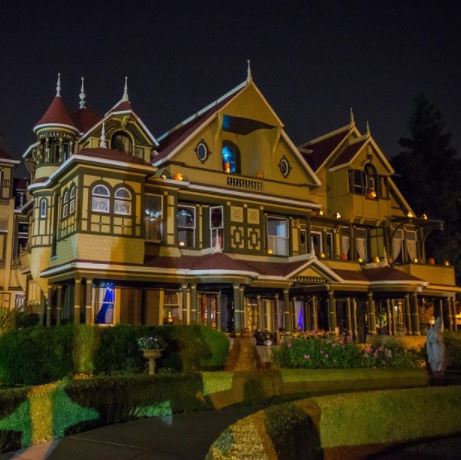
Perplexity is leavened by the extravagant Victorian Winchester Mansion. The mansion that Mrs. Winchester spent 38 years constructing is a glittering vast rotunda with the ancient masters of all the arts wrought into a vision of glory and beauty with sculptured marbles and incrusted gems and costly gold-work and sunset splendors of color. Its miles of twisting hallways and secret passageways in the walls and floors make it a fine sight to see. The Arctic skies look so beautiful when the light floods through the stained-glass doors and windows, some set with jewel stones; concave-convex Belgium optical cut-glass panels furnished by Tiffany. The trembling waves of blue, yellow, and green light flame, and through this shifting and changing dream of rich colors the flash of innumerable jewels go chasing and turning, gleaming and expiring like trains of sparks through burnt paper. This mansion is a beautiful spectacle and it is surrounded by its own Garden of Eden. However, the Rifle that Won the West, whose First Blood’s presences long ago filled that mansion with malice and hate and envy. Because of the imprisonment of legions of souls that have departed, so many intimate strangers, produced as yet a dread, produced certainly a strain, beyond the liveliest was likely to feel. They feel with Mrs. Sarah Winchester into categories, they fairly became familiar, the signs for her own perception, of the alarm of their presence and their vigilance created; though leaving her always to remark, portentously, on her probably having formed a relation, she probably enjoyed the consciousness, unique in the experience of humans. #RandolphHarris 1 of 20

You see, solidifying Mr. Oliver Winchester’s (Sarah’s Father-in-law) business stature was an arrangement which by modern standards would be illegal, but in those days was quite acceptable: by the 1870 the Union Metallic Cartridge Company was the largest cartridge company in the World, and by 1873 Winchester had become much more active and competitive in the ammunition business. The two firms found areas of difference with patent rights on cartridge design and manufacture, and in 1873 they entered into an agreement in which the claims “for the use of patents in manufacture of metallic cartridges…against each other up to this date are hereby cancelled, and set off one against the other.” Further, “in the future [each party shall be] entitled to use the patents of the other so far as they may elect to use the patents of the other so far as they may elect to do so. The royalty or compensation to be paid by each party to the other shall be fixed and determined by a Board of Arbitration.” Agreement was also reached in payment of legal fees should there be any suits brought against the firms on patents. The final significant point of this joint arrangement was limiting the deal “only to patent rights now in general use in the manufacture of cartridges, and…not…to any radically new mode of depositing metal by galvanic process.” The agreement would remain in force for ten years, during which time both companies developed even closer ties. One of the most remarkable developments in the history of gunmaking took place in 1888. The Remington Arms Company had suffered severe financial setbacks, mainly as a result of overexpansion, and by 1886 the firm was in receivership. #RandolphHarris 2 of 20
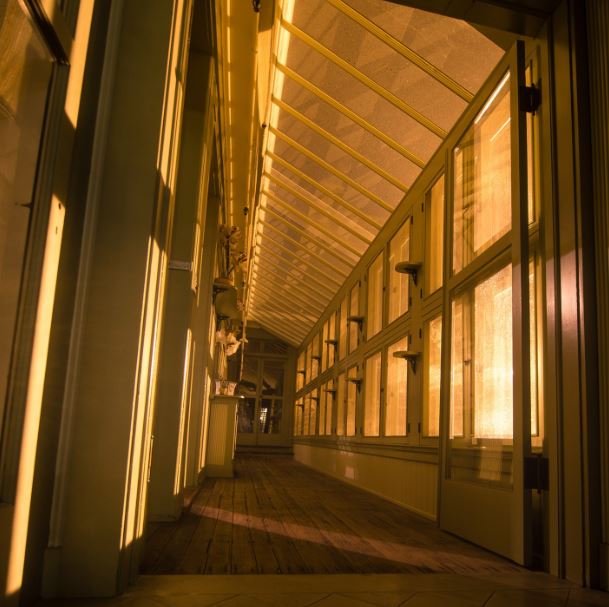
Marcellus Hartley, who had built the Union Metallic Cartridge Company and shared with Winchester the bulk of the U.S. ammunition market, made a proposal. Quoting from the minutes of the January 24th 1888, Winchester Board of Directors’ meeting: “Messrs. Hartley and Graham [major gun dealers as well as owners of U.M.C.]…asked if our Company would consider entering a syndicate…for the purchase of 3/5 or controlling interest in the Remington business and property which would probably require as our share $75,000 (2022 inflation adjusted $2,339,021.05….On motion it was voted that the executive officers of the Company be authorized to go into the Remington transactions to the extent of $75,000 if it was thought advisable.” On March 7, Hartley and Graham purchased Remington, and Winchester assumed half of the $200,000 (2022 inflation adjusted $6,237, 289.47 cost. Remington was jointly run by U.M.C. and Winchester until 1896, at which time Winchester sold its shares to Marcellus Hartley. The deal gave Winchester a significant share in a key competitor, and also prevented Remington from ever becoming a manufacturer of lever-action firearms. In an attempt to develop World markets—both commercial and military—Winchester relied heavily on Thomas Emmet Addis, who was appointed international salesman. Addis had considerable authority, and ranged so far and wide that he referred to himself as “World Traveller.” Some fascinating comments based on his letters to New Haven were collected in a book of foreign contracts. Excerpts from 1887 and 1888 follow: “Japan: there is very little demand for sporting arms of any sort in Japan. Bangkok, Siam: Siam would be a grand market for our goods were free importation permitted but the regulations are practically prohibitive as a permit must be obtained from the King himself who will only grant a permit where he is satisfied the arms will not be used against him. #RandolphHarris 3 of 20
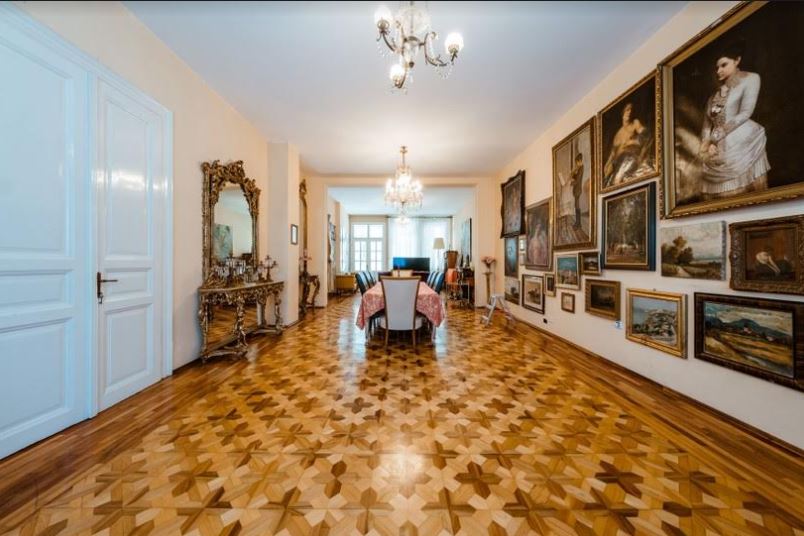
“A good many of our guns were imported before these regulations went into effect, and they are much liked. The King’s Body Guard were at one time armed with them, but now use Martini-Henrys make…there is very little prospect of the Government purchasing our single short muskets with bayonets and scabbards….Western Australia: T.E.A. does not think it advisable to visit there—no town of 5,000 inhabitants, and would require months of time to make the trip.” Addis went on to note, “Sent an order for very finely finished carbines and shot guns intended for the King and Princess occupying high places.” At this time the major U.S. competitors to Winchester were the rifles by Colt and Marlin. And it appears that export sales in the 1880s and 1890s represented about 10 to 15 percent of total Winchester sales. While the government sales of firearms were not what O.F. Winchester and other management would have hoped, ammunition proved to be increasingly profitable. A decisive factor in the profitability of ammunition sales was a little-known organization put together in 1883: the Ammunition Manufacturers’ Association (AMA). The origin of the group was candidly explained by onetime Winchester executive Arthur Earle: “There has been a very serious competition among the larger ammunition manufacturers…they thought it would be much better for all hands to get together and make sone money rather than spend their time and money and energy cutting each other’s throats.” Not at all illegal at the time it was formed, the association included Winchester, the Union Metallic Cartridge Company, the Phoenix Metallic Cartridge Company, and the U.S. Cartridge Company. Winchester and U.M.C held equal shares and owned nearly 75 percent of the stock. #RandolphHarris 4 of 20
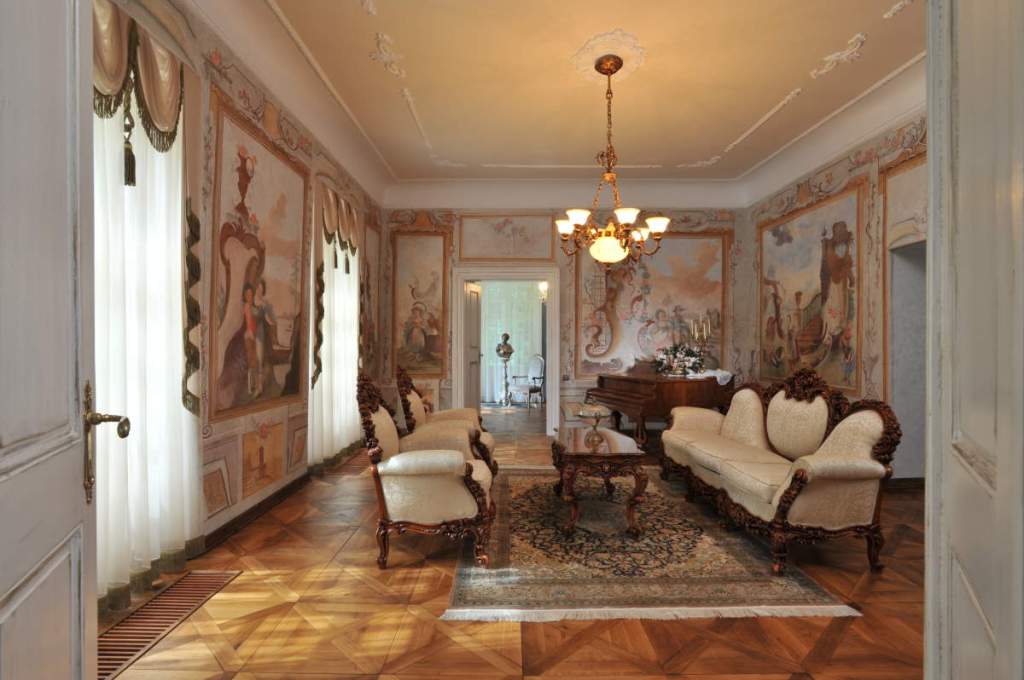
The main goals of the AMA were stated in incorporation documents: “to buy and sell ammunition of all kinds and act as agent for others in the purchase and sale thereof; to make contracts with Manufacturers and Dealers in Ammunition for the purpose of producing and securing uniformity and certainty in their customs and usages and preventing serious competition between them; to settle differences between those engaged in the manufacture of or in dealing in ammunition, and to devise and take measurements to foster and protect their trade in business.” The members no longer were competing in terms of price, but continued to compete in quality, brand names, the preferences of dealers and jobbers, and related matters. It has been estimated that the association had control of as much as 50 percent of the total sales of the ammunition industry. An idea of the importance of ammunition is evident by sales figures showing that Winchester’s net sales from January 1, 1884, to December 31, 1888, were $9,500,000 (2022 inflation adjusted $296,276,000). The firm’s net profit from this total was $2,200,000 (2022 inflation adjusted $68,611,284.21). Approximately half of these sales and half of the ammunition was intended for military use is unknown, but the variety of cartridges in the firm’s line as of 1884 totaled approximately one hundred, plus primers, paper and brass empty shotshells, and felt gun wads. Based largely on its substantial commercial sales of firearms and the large market for ammunition, Winchester’s share of the arms and ammunition industry as a U.S.A. manufacturer went from 12 percent of the market (c.1889) to 27 percent (c.1899). In the same period the number of company employees more than doubled, from over 1,200 to nearly 2,800. Clearly W.R.A Co. was an industry leader, not only domestically, but also as an international force. #RandolphHarris 5 of 20
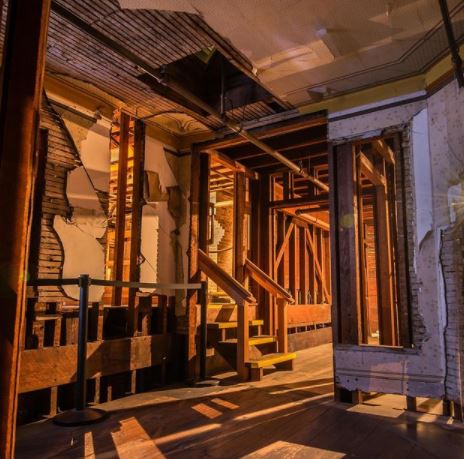
As of February 1890, Thomas Gray Bennet, son-in-law of Oliver Winchester and an experienced and educated gun man, because president of the firm. For the ten pervious years, control had been under the able guidance of William W. Converse, a brother-in-law of William W. Winchester. (Though groomed to succeed his father, W.W. died of tuberculosis in March 1881.) As Oliver Winchester had groomed his successors, so had Converse. The most qualified successor (who might even have taken over on O.F. Winchester’s death in 1880, except for his youthful thirty-seven years) was T.G. Bennett. T.G. Bennett would remain president for the next twenty-one years. He assumed control at a time of great company prosperity, with the firm in solid financial condition, well prepared to enter a new era characterized by the change from black powder to smokeless—a change that affected the design of both ammunition and the firearms themselves. Under Bennett’s presidency, W.R.A. Co. grew from approximately 1,430 employees to twice that by 1900, and twice again by 1914 (somewhat more than half of these workmen made firearms; the balance produced ammunition). At the time of Bennett’s beginnings, with Winchester (1870), sales totaled about 25,000 guns. When he retired as president in 1910, the annual production was about 300,000 guns. In November of 1914, two officials of the British government visited New Haven, and shortly thereafter an order was received for 50 million .22 Long Rifle cartridges (for training); negotiations had also begun for a rifle-making contract. Ammunition orders for the Belgian and British governments were also written with Winchester, on a subcontract basis from Remington-U.M.C. Further, the Baldwin Locomotive Works placed an order on behalf of the Russian government for 100,000 Model 1895 muskets, and the British government placed an order for 200,000 British Enfield bolt-actions rifles. Amazingly, by the end of November, the total value of military orders was in excess of $16,700,000 (2022 inflation adjusted $494,780,920) and $47,500,000 2022 (inflation adjusted $1,393,377,227.72). #RandolphHarris 6 of 20
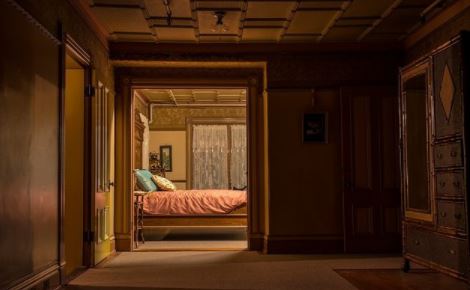
Oliver Winchester had an impassioned dedication to garnering military acceptance of his repeating firearms, and, as president of the firm, he lent much of his prestige and energy toward equipping U.S. forces with modern firearms. Winchester’s championing of small-arms modernization was eloquently expressed in a appeal for the adoption of a breech-loading repeater for U.S. troops: What would be the value of any army of one hundred thousand infantry and cavalry, thus mounted and armed with a due proportion of artillery, each artilleryman with a repeating carbine slung to his back? Certainly the introduction of repeating guns into the army will involve a change in the Manual of Arms. Probably it will modify the art of war; possibly it may revolutionize the whole science of war. Where is the military genius that is to grasp this whole subject, and so modify the science of war as to best develop the capacities of this terrible engine—the exclusive control of which would enable any government (with resources sufficient to keep half a million of men in the field) to rule the World?” Oliver Winchester never realized his ambitions to “modify the art of war” through Winchester repeaters. It would commonly believed that these repeating arms would unleash a beat, an invoke a curse on the family because of the masses of carnage they would create. In 1887m Congress voted funding for a military test of new firearms. For these trials, which commenced in April 1878. The guns were made in Army and Navy orders—carbines, rifles, and muskets for the Army, and rifles for the Navy. Oliver Winchester died in 1880 without realizing his goal of successful U.S. military sales. And, in retrospect, it can be said that the commercial success of Winchester could have been even greater than it was, had not the president of the firms devoted so much time and energy to going after government contract sales. #RandolphHarris 7 of 20
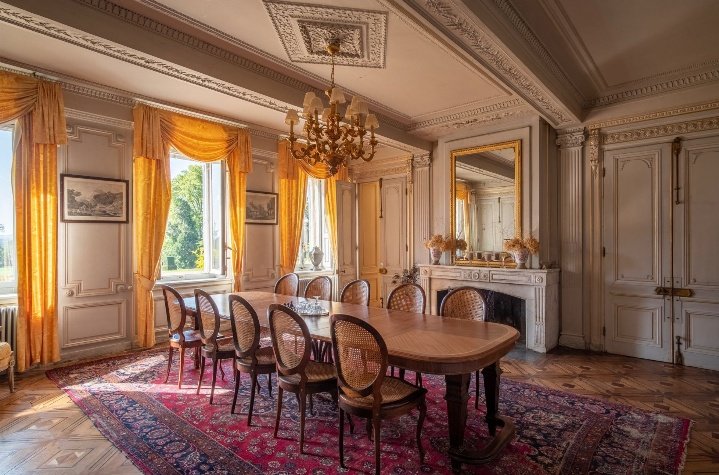
In 1910, the annual produced of Winchester guns was about 300,000. Clients and engravers today still call upon the “Highly Finished Arms” for beautiful guns. The demand was substantial, partly because of the tradition in the arms field that decorated sporting firearms, of quality manufacturing, were an expected part of the line. In the late 1890s, Winchester states its pride in making beautiful guns: “The Winchester Repeating Arms Co. have unsurpassed facilities for producing fancy finished guns of all prices and descriptions. Inlaying in gold, silver, or platinum, gold, or silverplating, engraving, carving or fancy checking, is done in the most artistic manner by the company’s own employees. Stocks of fancy woods can be supplied, if desired.” There were Winchester’s with Tiffany-designed embellishments. Tiffany’s, New York, advertised in its Blue Book catalogue “Revolvers of the most improved types, mounted in silver, carved ivory, gold, etc. with rich and elaborate decorations….Cases, boxes, belts and holsters made in appropriate styles for presentations.” The arms of Tiffany rank among the most striking, beautiful, and fascinating objects in the history of firearms. John Wayne, President Harry S. Truman, President Eisenhower, Ernest Hemingway, President Roosevelt and many other prominent people all owned Winchester rifles. Teddy Roosevelt and son Kermit had three powerful Winchester caliber 405s and one .30-40 along on their African safari they practiced for the great adventure on the White Hose lawn and relied on Winchester to handle many of the firearms-related details of the trip. In Africa Game Trails, Roosevelt clearly stated his esteem for these Winchesters, with such affectionate allusions as “my medicine gun for lion,” “the beloved Winchester,” and “the faithful Winchester. #RandolphHarris 8 of 20
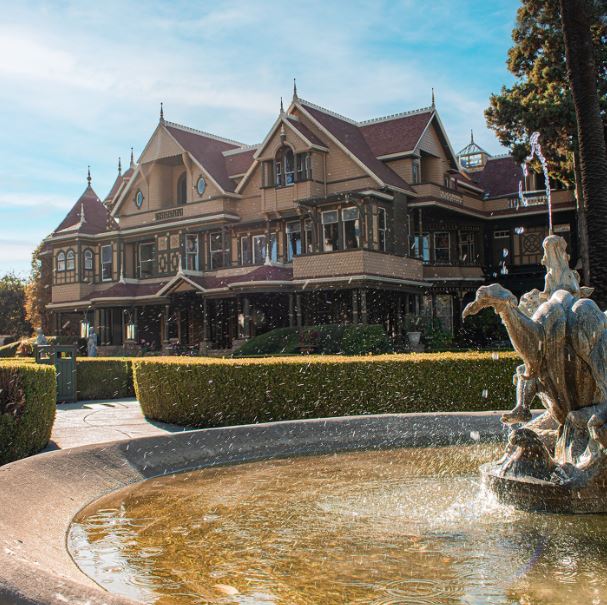
The Winchester public relations and advertising staff could not have been happier: endorsements from not only the former President of the United States of America, but a recognized authority on guns and shooting and the World’s leading conservationist. Sarah Winchester and William Wirt Winchester were married. William Winchester was the son of Oliver Winchester. When Oliver died, William Winchester took his place as the President of the Winchester Repeating Arms company. At his death in 1880, Oliver Fisher Winchester had left 4,000 shares of company stock in trust to his widow (who already owned 475 shares). Their daughter, Mrs. T.G. Bennett, then owned 406 shares, and Mrs. William Winchester had 777 shares. When Mrs. Oliver Fisher Winchester died in 1897, the trust was evenly divided between Mrs. William Wirt Winchester and Mrs. T.G. Bennett. Thus, as of 1904, the family held the following stock: Mrs. T.G. Bennett—2,875 shares, Mrs. W.W. Winchester—2,777 shares, T.G. Bennett—32 shares, Winchester Bennett—6 shares. Total: 5,690. The two Winchester/Bennett women had the vast majority of stock, and since shares in the company totaled 10,000 common stock, the family retained control. In order to prevent a “hostile takeover” (it had been rumored that some New York investors were interested in doing so), in May 1905, the family formed the Winchester Purchasing Company, which was the holding company designed to prevent the family from losing controlling interest. They would retain control until the 1920s. Now, so many people focus on the $20,000,000 (2022 inflation adjusted $580,933,333.33) is a vast sum of money, but the 2,777 shares Mrs. Winchester own/inherited for also worth a lot of money. She was probably equivalent to a billionaire, and she also ran a farm and produced hardware, and sporting good, as well as athletic equipment. #RandolphHarris 9 of 20

There is no denying the fact that the Winchesters were brilliant. They gave us guns to protect ourselves and built several mansions that are architectural gems on of the most famous being the Winchester Mystery House. It turns out that curse tablets themselves are nothing new. Lead tablet engraved with curses have been found in a lot of tombs, and one is located somewhere inside of the Winchester Mansion. Mrs. Winchester knew she was cursed because her six-week-old daughter died, and a few years later, so did her husband. She was so grieved that she moved to Santa Clara Valley, where she built her mansion. However, she soon found it was full of ghost and she kept building to appease the angry spirits in hopes of breaking the curse of being haunted by dangerous ghost, demons, and spirits. Mrs. Winchester found that she had not only been given money, but also the gift of understanding the divine. However, this gift turned ugly. After the death of her husband, Mrs. Winchester remained celibate. She turned a powerful man down, and he was enraged by her rejection, so he added another part to her curse and gift of prophecy: a curse that no one would ever believe what she said. Although the Valley was thrilled by the dramatic entrance of a millionairess; by those freight cars sidetracked in Santa Clara, unloading rich imported furnishings; by building activity that mushroomed a farmhouse into a sprawling mansion within mother. Here was fair game for all! They talked about Mrs. Winchester! Gossiped would be a more fitting word, gossip no one claimed to like—but everyone enjoyed. Talk begat rumor and as the years passed and new towers and gables rose behind the six-foot hedge of Llanada Villa. The rumors grew to established legend. #RandolphHarris 10 of 20
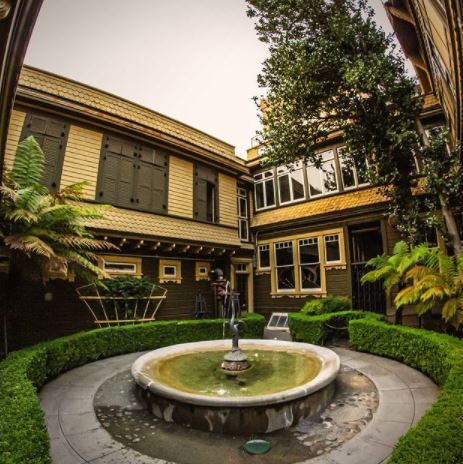
The tongue of the town’s people went like a steam engine, capin’ so far ahead of her that Mrs. Winchester locked herself up in her house. She gained to an extraordinary degree the power to penetrate the dusk of distances and the darkness of corners, to resolve back into their innocence the treacheries of uncertain light, the evil-looking forms taken in the gloom by mere shadows, by accidents of the air, by shifting effects of perspective; putting down her dim luminary she could wander on without it, pass into other rooms and, only knowing it was there behind her in case of need, see her way about, visually project for her purpose a comparative clearness. It made her feel, this acquired faculty, like some monstrous stealthy cat; she wondered if she would have glared at these moments with large shining yellow eyes, and what it might verily be, for the poor hard-pressed alter ego, to be confronted with such a type. She liked however the shutters opened, and above all the sense of the hard silver of the autumn stars through the window-paned, and scarcely less the flare of the garden lamps, the white electric luster which it would have taken to keep out. This was human actual social; this was of the World she had lived in, and she was more at her ease certainly for the countenance, coldly general and impersonal, that all the while and in spite of her detachment it seemed to give her. She had support of course mostly in the rooms at the wide front and the prolonged side; it failed her considerably in the central shades and the parts of the back. However, if she sometimes, on her rounds, was glad of her optical reach, so none the less often the rear of the house affected her as the very jungle of her pray. #RandolphHarris 11 of 20
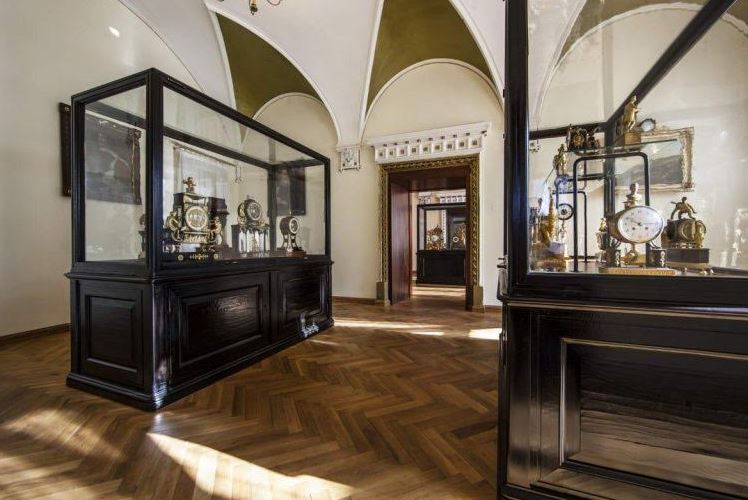
The mansion was there more subdivided; a large “extension” in particular, where small rooms for servants and family members had been multiplied, abound in nooks and corners, in closets and passages, in the ramification especially of an ample back staircase over which she leaned, many a time, to look far down—not deterred from her gravity even while aware that she might have figure some solemn simpleton playing at hide-and-seek. Outside in fact she might make herself make that ironic rapprochement; but within the walls, and in spite of the clear windows, her consistency was proof against the cynical light of Santa Clara Valley. There in her home—the acuteness of uncertainty plagued her, sometimes she would break into a sweet that she consented to attribute to fear as she would have dared immediately to act upon it for enterprise. She had been dodging, retreating, hiding from the terror. It bristled there—somewhere near and at hand, however unseen still—as the haunting thing left the feeling that the drop of its danger was, on the spot. With another rare shift of the same subtlety Mrs. Winchester was already trying to measure by how much more she herself might now be in peril of fear. She was astounded that another form could actively inspire fear, and simultaneously quake for the form in which she might passively known it. The apprehension of knowing it must after a little have grown in her, and the strangest moment of her adventure perhaps, the most memorable or really most interesting, afterwards, of her crisis, was the lapse of certain instants of concentrated conscious combat, the sense of a need to hold on to something, even after the manner of one slipping and slipping on some awful incline; the vivid impulse, above all, to move, to act, to charge, somehow and upon something—to show herself, in a word, that she was not afraid. #RandolphHarris 12 of 20

The state of “holding-on” was thus the state to which she was momentarily reduced; if there had been anything, in the great vacancy, to seize, she would presently have been aware of having clutched it as she might under a shock at home have clutched the nearest chair-back. She had been surprised at any rate—of this she was aware—into something unprecedented since her original appropriation of the place; she had closed her eyes, held them tight, for a long minute, as with that instinct of dismay and that terror of vision. When she opened them the room, the other contiguous rooms, extraordinarily, seemed lighter—so light, almost, that at first she took the change for the say. She stood firm, however that might be, just where she had paused; her resistance had helped her—it was as if there were something had tided over. Mrs. Winchester knew after a little what this was—it had been in the imminent danger of flight. She has stiffened her will against going: without this she would have made for the 7-11 stairs, and it seemed to her that, still with her eyes closed, she would have descended them, would have known how, straight and swiftly, to the bottom. Well, as she had held out, here she was—still at the top, among the more intricate upper rooms and with the gauntlet of the others, of all the rest of the house, still to run when it should be her time to go. She would go at her time—only at her time; did not she go every night very much at the same time—only at her time; did she not go every night very much at the same hour? Mrs. Winchester took out her watch—there was light for that; it was scarcely a quarter past one, and she had never withdrawn so soon. She reached her Blue Séance Room for the most part at two—with her walk through her mansion taking a quarter of an hour. She waited for the for the last quarter—she would not stir till then; and she kept her watch there with her eyes on it, reflecting while she held it that this deliberate wait, a wait with an effort which she recognized, would serve perfectly for the attestation she desired to make. It would prove by her budging at last from her place. #RandolphHarris 13 of 20
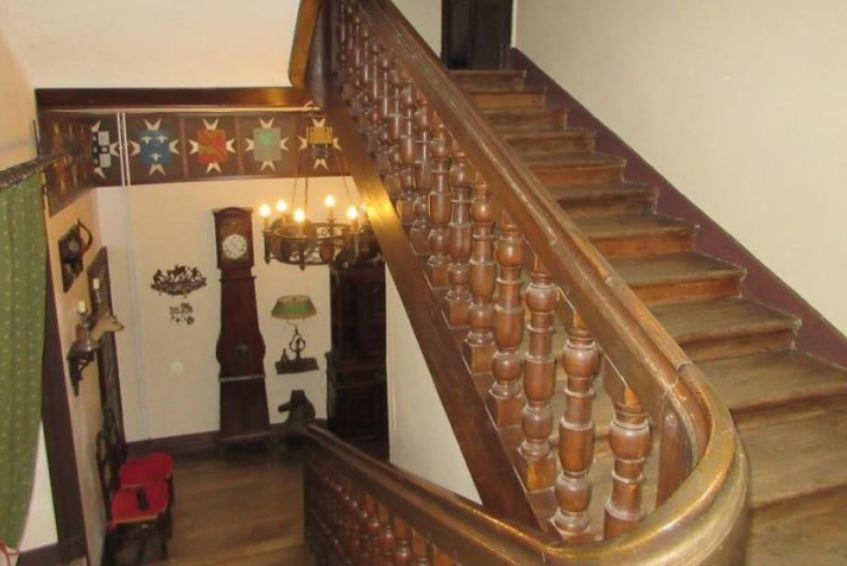
What Mrs. Winchester felt now was that, since she had not originally scuttled, she and her dignities—which had never in her life seemed to many—all to preserve and to carry aloft. This was before her in truth as a physical image, an image almost worthy of an age of greater romance. That remark indeed glimmered for her only to glow. Mrs. Winchester stared with all her eyes at the sonder of the fact, arrested again where she stood and again holding her breath while she sounded its sense. She took it full in the face that something had happened. At that moment she had undergone an agitation so extraordinary that it startled her. Then the door to the Blue Séance Room slammed. She tried to convince herself that she might perhaps then have gone into the room and, inadvertently, automatically, on coming out had drawn the door after her. The difficult was that this exactly was what she never did; it was against her whole policy to have three entrances to the room and one secret exit, besides the doom that opened to a 9-foot drop to the kitchen sink. However, she was well aware, quite on the brain: the strange apparition was a dominating demon. Here are also demons which do not exist just in the imagination of frightened people. They can also work miracles. Mrs. Winchester talked for at least ten minutes with the apparition. The World in which she lived was full of demons and demon-energized healers and magic workers. Pagans who worked on her farm and in her house were remarkably healed. He mansion became famous in the community in a night’s sleep hundred were healed. Other visions followed and people began to flock to the mansion in a ferment of superstitious frenzy, and miracles of healing and other wonders were claimed. At the Winchester Mansion, a young woman named Jennifer Kierkegaad, a servant of Mrs. Winchester’s had appeared and spoken to her. #RandolphHarris 14 of 20
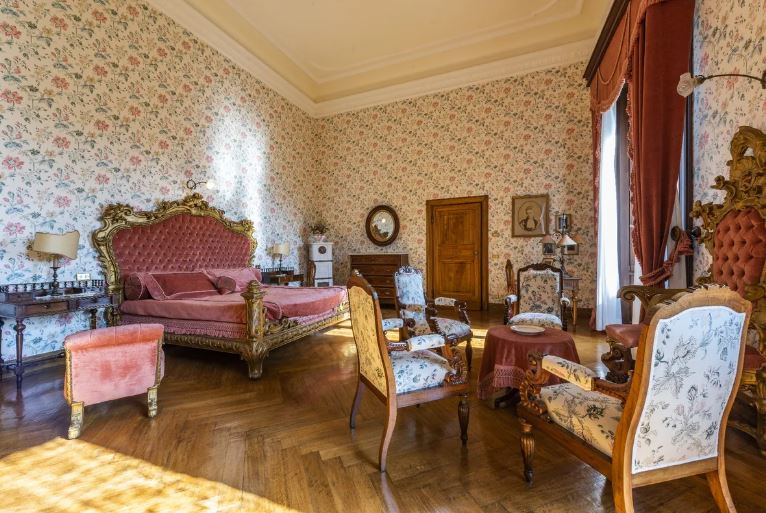
The walls in the mansion would sometimes crack and blood flowed every Friday. Jennifer gave many evidences of clairvoyance and telepathy, and allegedly healed a few people by taking their diseases on herself. Mrs. Winchester looked at her hear and saw who our eyes cannot see. Cures wrought by spiritistic mediums who operate through the séance and fortune-telling belong to the realm of white magic because it overlaps other demonic phenomena. Mrs. Winchester said, “My child, Satan knows how gullible we all may be. He is willing and able to perform diabolic miracles to deceive humans. Satanic healings, as we have seen, merely shift the physical disorder into the psychic plane by bringing the “healed” person into some type of occult bondage. No one can become involved in spiritism without serious psychic repercussions. Often the healing conjurer is an adept spiritistic medium as well. Be careful. I have counseled with several people who became psychically vexed by dabbling in magic healings and spiritistic séances. Another servant woman became tormented by poltergeist phenomena (hearing voices and noises) after sneaking into my Blue Séance Room and calling on the spirits. The resulting psychic bondage is frequently worse than the physical malady which is supposedly ‘cured.’ Christians camouflage and employ deceptive religious dress, while the other openly subscribes to Satan and demons. Evidently the healer (magic conjurer) who wants to force a cure, whether by appealing to God or the devil, is using supernatural powers to further his or her own ends. Heed my warning, my Child. I have been tormented by demons. Some are kind, others are dangerous.” #RandolphHarris 15 of 20
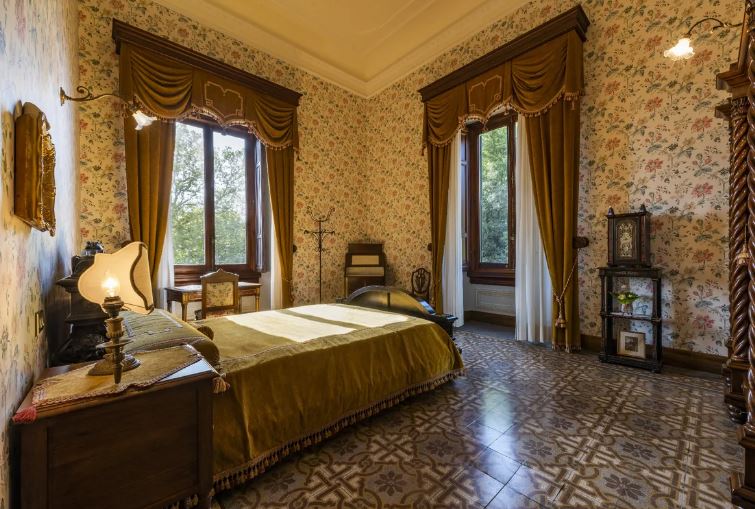
Black-magic conjuration openly uses the name of Satan and demonic powers. It does not have the deceptive veneer of Christian respectability that white magic adopts. People who are adept in the black arts and workers of diabolic miracles are the type of occultists who were popular in the courts of the ancient pagan kings. They not only advised the heads of government but performed supernatural feats, including magical charming of the sick. The ability of such magicians is conditioned on the human plane by their inherent psychic power, and on the supernatural plant by their degree of abandonment to demonic domination. The effectiveness of a Christian, too, is subject to one’s own native endowments and one’s willingness to respond to the Holy Spirit and become dynamically useful to the glory of God. Black magicians, like spiritistic mediums, differ in strength and psychic ability to perform magical feats (satanic miracles). Strong magicians usually owe their success to innate psychic powers. Very frequently they come from a family where the occult arts have flourished for generates. Their innate and inherited occult powers are frequently cultivated and enhanced by the study of magical literature. To enlist the help of Satan and demons, a pact is often made with the powers of evil, which is a satanic counterpart of dedication to God’s will. The subject consciously and willingly gives oneself over to Satan and demonic agencies who will help one perform healing conjurations and other supernatural feats. Ordinarily the body is cut and the compact with the devil is written and gained in one’s own blood. #RandolphHarris 16 of 20
The woman Jennifer we spoke of early, who worked at the Winchester Mansion in the early 1900s was physically and mentally quite healthy, but she began to have an ever-increasing number of strange experiences at night. She did not heed Mrs. Winchester’s advice. Although there was no one in her room with her, she would have the feeling as if she were being beaten. In the morning, Mrs. Winchester would notice that this woman had bruises all over her body. This experience would repeat itself about twice a week and she could think of no way of explaining the puzzling events. At first she was rather ashamed to talk about these nightly attacks but in the end she was forced to go to her local minister for advice. He himself could not help her, and even when the woman consulted another minister, still no solution could be found. Since in all other areas of her life she was completely normal no explanation was forthcoming. One day however, Mrs. Winchester sat down to talk to Jennifer, she could see it was not a case of mental or emotional disturbance. Mrs. Winchester asked her if she was still having contact with the occult field. It was then that the following story came to light. As a young girl, Jennifer had been courted by a young man, but she had finally broken off their relationship because she had been unhappy with the man’s attitude. After this he had threated her and said that he would plague her because she had refused to marry him. The woman had thought little of the threat at first and it was only after the nightly attacks had begun that she was reminded of the man’s words and Mrs. Winchester’s warning. However, Jennifer found it impossible to believe that there was any connection between the two events. #RandolphHarris 17 of 20
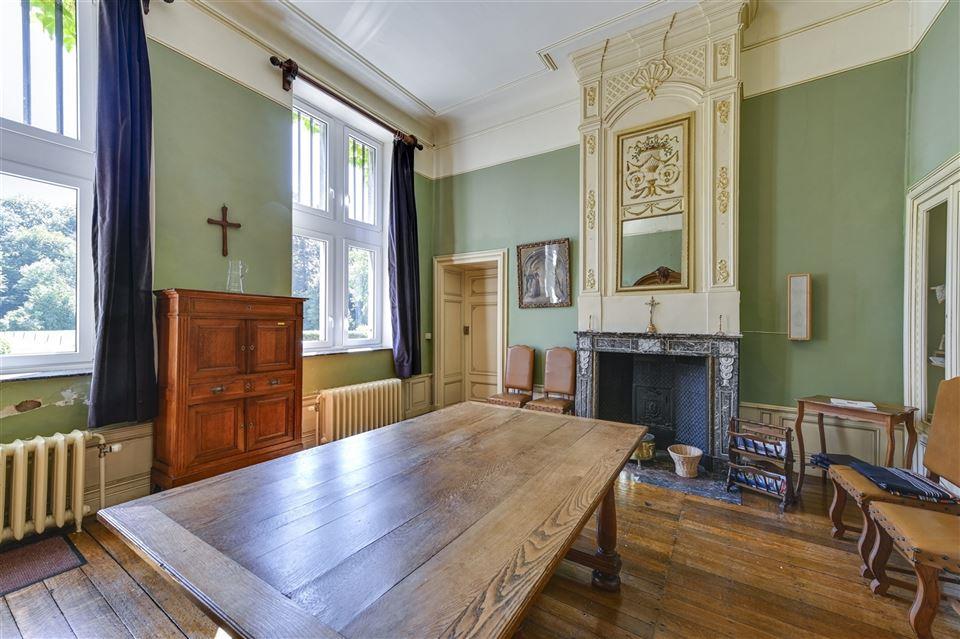
Before we go one with this story, when a person is faced with a case such as this, the first thing to do is to see if a doctor can see if there are any medical or psychological causes behind the experience. If it turns out to be psychological, the patient should be sent to a believing Christian psychiatrist. Since many puzzling occurrences can now be explained and understood by the recent findings of depth psychology, one must exercise extreme caution when seeking to diagnoses troubles of this nature. A wrong diagnosis can have disastrous effects. However, if one is sure that it is not a medical case, one can then turn to the findings of parapsychology and occultism to see if there is any connection to be found there. There is still much that remains unrecognized by our doctors, psychologists and theologians who rely solely on their university education for their knowledge. Occultism still pays a part in our World today. Concerning Jennifer, the woman of whom we were speaking Mrs. Winchester sent her to Reverend N.P. Wallgren, at the Swedish Evangelical Mission Church of San Jose. He prayed with Jennifer and encouraged her to put her faith in Christ to find complete deliverance. It was during this time of counselling that the man who had threatened Jennifer had hanged himself. The woman was at once freed from the attacks and the experiences never recurred. There is a controversial field of mental suggestion, which just cannot be explained away by saying that it is all nonsense. There is also a sceptism of ignorance. There are still many things between Heaven and Earth of which the World has never dreamed, as Shakespeare aptly said. Mental suggestion is not just a cause of popular superstition. #RandolphHarris 18 of 20
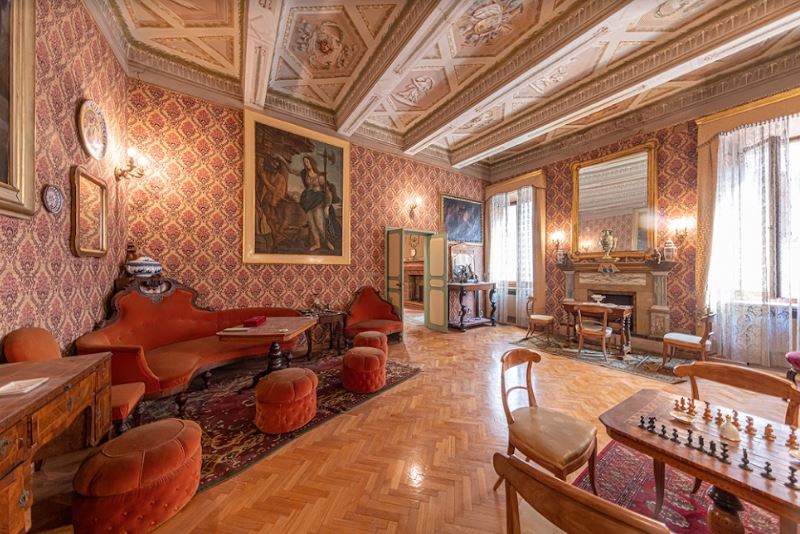
Even if with Jennifer the nightly disturbances had been the symptoms of hysteria, the sudden and lasting healing would still be quite extraordinary. Every doctor knows how difficult it is to heal such illnesses. However, here we had in fact a magic influence rather than an illness. The Christian is well aware of the fact that we are all surrounded by the hosts of wickedness. The powers of darkness are a present reality. It is not that some people set out to blaspheme, it is just that the images some have created tend to be potentially blasphemous. Sometimes people are a bit of a kid with a chemistry set—they pinch and plunder different aspects and mix them all together and every now and then it might turn into something supernatural. Not everyone has formal religious education or religious training. The Black Priest, was actually known as Dr. Lavey. There are people on this Earth that are fascinated by all kinds of things, but the thing all their interests have in common is a Satanic undercurrent, philosophically. Some have always been attracted to the mystical things in life. Classic country and western is incredibly Satanic, it is so bombastic and sentimental. Its goal is to grab you by the heart, and that is pretty much the definition of Satanic music. Part of the reason interest in the Church of Satan has revived is because high-profile people like Marilyn Manson talked about it. However, there are generations of people born into the Satanic Age. There are a lot more people today living their lives outside the expectations of society. While some people can never get past the shock value of being a Satanist, that is not the reason a lot of people are interested in the Church of Satan. It is just an outgrowth of who they are and it is not something they need to do to attract attention to themselves. It is just their philosophy, and it reflects the way they desire to live. The Devil does not have to be an object of menace or evil, people just need to take responsibility for their conduct disorder and psychopathology. The personification of the Devil is just a guy inviting you to experience for yourself the things you have been told are bad or wrong or evil, and make your own decision about them. #RandolphHarris 19 of 20

The Devil does not have to be seen as some drooling monster with fangs leaping out of the pits of Hell to rip your head off. There are a lot of people in Hollywood who, if they are not card-carrying members of the Church of Satan, they are certainly fellow travellers. In the entertainment industry, there is practically no one who is offended or horrified by someone who belongs to the Church of Satan. The only things that affect people’s lives are symbols. The Winchester mansion is a symbol of so many things, but overall, it is a symbol of Mrs. Winchester’s life, and of course the occult and supernatural. Many wonder about the color of the mansion, but if you look at it, it should be obvious. The conservators painted it to be symbolic of her favorite flower the daisy. Yellow, with a green stem. The people who have the most power in our society today are the people who can best wield symbols. An understanding of Satanic magic is useful not only for changing things yourself, but also for seeing how other people are trying to manipulate you. The Circle of Counter Creation become directly connected to the powers which flow through the altar. It is through the various seals found upon the mandala that more specific powers can be extracted from the altar urn for the sake of communication and personal empowerment. O Thou great, powerful, and mighty King Amaimon, who bearest rule by the power of the Supreme God El over all the spirits both superior and inferior of the Infernal Orders in the Dominion of the East; I do invocate and command thee by the especial and true name of God; and by that God that Thou Worshippest; and by the Seal of that creation; and by the most might and powerful name of God, IEHOVAH TETRAGRAMMATON who cast out of Heaven with all other infernal spirits; and by all the most powerful and great names of God who created Heaven, and Earth, and Hell, and all things in them. You are now aware of this place of eternal darkness. This is possible because you have a light within which cannot be dimmed. A light which is unlike any light perceived by those of lower consciousness. This light is the power of your own spirit, developed by your own intellect, spoken words, and chosen deeds with the realm of limitation. #RandolphHarris 20 of 20
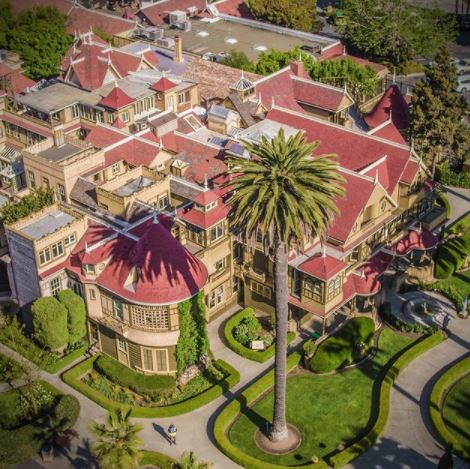
Tickets On Sale Now! 13 nights ONLY 🎃 – reserve your spot before they are gone! #unhinged #halloween2022 #winchestermysteryhouse

Time is Running Out—Stop Buying Time for Error

A mob, which is generally the growth of a redundant population goaded by resentment for real sufferings, but totally ignorant of the quarter from which they originate, is of all monsters the most fatal to freedom. It fosters a prevailing tyranny and engenders on where it was not; and though in its dreadful fits of resentment it appears occasionally to devour its unsightly offspring; yet no sooner is the horrid deed committed, than, however unwilling it may be to propagate such a breed, it immediately groans with a new birth. Of the tendency of mobs to produce tyranny we may not, perhaps, be long without an example in this country…If political discontents were blended with cries of hunger, and a revolution were to take place by the instrumentality of a mob clamoring for want of food, the consequences would be unceasing carnage, a bloody career of which nothing but the establishment of some complete despotism could arrest. The word degenerate, which applied to a people means (as it ought to mean) that the people has no longer the same intrinsic value as it had before, because it has no longer the same blood in its veins, continual adulterations having gradually affected the quality of that blood. In other words, though the nation bears the same given by its founders, the name no longer connotes the same race; in fact, the man of a decadent time, the degenerate man properly so called, is a different being, from the racial point of view, from the heroes of the great ages. The idea of genocide has been going around—it is something that has been in the Black community for a long time. However, those particular pieces, which seemed to be suggesting that there was a resurgence of this kind of thinking going on, is an immediate cause for looking into it. #RandolphHarris 1 of 21

Although the White community also believes they are facing genocide in America, that is not going to be the focus on this report, but you will notice they are becoming a minority in many communities. Some people wonder what is happening to them as well. There is something wrong and it is very abnormal to pretend, or at least not known that anything is wrong, when it really is a very hurtful thing. Our human civilized stock is far more weakly through congenital imperfection than that of any other species of animals, whether wild or domestic. There is a very gloomy future for humanity, on the ground that in our modern civilization natural selection had no play, and the fittest did not survive. Many feel they are enduring as an extinct person in a society, and what kind of society would require extinctions of people that were not extinct. It is hard to understand and cope with deaf, dumb, and blindness of a public, who one thinks wants to know the truth, but who, in fact, only wants to know what they want to hear. Race is an invention. It is a method of control to obliterate certain people’s reference for land and to impose a reference of domination. Racism is the act of imposing the manifestation of race. You behave in that mental system. It can sometimes be a bureaucratic application of death. White supremacy is the product of domination. That is the definition of American domination…actually, global domination, but more locally, American domination. You have to have a reason. You steal something, you do something wrong, you have to take something over that normally would not come into your possession under moral or normal circumstances. There have to be inventions to keep the whole thing going, and white supremacy, as an idea, has to be something that it put over by force, or demonstration. Perhaps there are superior beings? #RandolphHarris 2 of 21

A conspiracy is a plan. A method. Sometimes conscious, something not. Genocide is a murder of a kind. There are many places in the World where campaigns verging on, if not actually meeting, that standard are going on. I can think of recent incidents. There was, for example, in Nicaragua, the campaign against the Miskito Indians, which—I have not been there but—based on the reports which came out it appeared that it was an ethically based campaign to wipe out that population. Some of what has happened in Brazil to the Amazon tribes, I have not been there, but based on that….I do know first hand that in Africa there are a number of cases of tribal conflict that have verged on, if not actually crossed over into, genocide. So, yeah, it exists, for sure, even now. I think what happened to the Kurds verges on and probably crosses into genocidal campaigns. Sure. It does on. However, what is happening to Black Americans is different. Not only is the race being discriminated against, but so are certain individuals who show promise in their youth. Some politicians find anyway possible to ruin their lives financially, physically, and mentally. It is not that well known about, but becoming more obvious that people are not just crying “wolf.” And sometimes abusers will accuse the powerless victims of what they themselves are guilty of. To make genocide possible or probable, a community has to commit to wiping out another ethnic group on the basis of ethnicity. And secondly, they have to have the power to do that. And again, I do not think in this country, the conditions may pertain because of the hatred that has flared up against certain races of people, which is being stoked by politicians. However, at this point, no government has the power in America to wipe out a race of people for we are not a socialist or communist country yet. #RandolphHarris 3 of 21

The intention of the American government is not to eliminate any one population. While there may be factions of local governments who try to start race wars because they are bitter over something from the past that may not even have anything to do with America, these are still isolated cases. The Armed Forces are very diverse for that sort of thing to be carried out, and I believe if the police suspected something was wrong, they would contact the proper authorities to stop it. There is not much evidence that it is taking place in society, at all, at this time. But, if we become a socialist or communist country, it may become a way of life, which is why a certain political party keeps increasing your taxes, refusing to help citizens, and eroding your civil rights. That is why they are trying to disarm Americans, so they cannot fight back. We have not gotten to the point where one race of people has applied the application of death, and said, “They are red devils, the sin and scum of the Earth! We are chosen by God to kill them all off!” And there has to be a way to carry that out. And since nobody volunteers to be killed off, there has to be some deceit, and other kinds of low-life, immoral methods to trick and exploit and just violate situations, so that genocide can take place. While it was happening in the past, as the brainwashing of society has decreased and more Americans have been exposed to African Americans and see their art and culture, ideas, designs and works, they are more trusting of them and see them as a value to human society. However, there are always going to be a few bad apples in any bunch. However, genocide could take place in a democracy by a majority vote. #RandolphHarris 4 of 21

Yet it is probably unlikely that genocide would take place. That is why the United States of America, has constitutional protections: To protect human life, because it is not always possible. The mass hysteria that attended the rise of Nazism in Germany could conceivably take rise in any society in the World, if you had sufficient friction, and the right ethnic group, and the right sort of numbers involved. Again, I do not think that pertains to the United States of America, but it is conceivable it could occur somewhere else, and probably has. At this point, it does not seem, that democracy is possible with genocide, because genocide is extreme repression-oppression and elimination-obliteration. And democracy in interaction of interdependent peers that are able to articulate, not only to others, but to themselves. They are aware. They have language. They have access to self-empowering skills, and ideas, and entities. And most important to that is a sense of selfhood. Not invented manifestations of oppression, like racializing. We are dehumanized into other definitions that make us think we are not people. Victims can play certain roles in a genocidal process that facilitates genocide. For one, by not fighting back. Now recognizing what is happening to them, not fighting back. Many people criticize the Black Lives Matter movement or those who believe they are Aryan Supermen, but there is a reason they hold their beliefs and do what they do to stand up for their rights. However, genocide is not something that is happening on a wide scale in America. There is a process of scapegoating, in which people find it much more easy…to project these kind of fantasies onto a structure that they have been opposed to—and for good reason—that they are skeptical of, that they are suspicious of, and fearful of, and when they have got a heck of a problem of their own, is to insist that someone is doing this to them. #RandolphHarris 5 of 21

It is a natural human instinct: To scapegoat when you have got an insoluble problem and you feel strongly that somebody has malign intentions for you. By accepting the fact, and being aware that one has a selfhood, outside of the genocidal process, this is what makes one unwilling to volunteer to be killed anymore, spiritually or physically. They can help in the genocidal process by denial—by denying that there is a genocidal process. And being compulsive, which results in addictions of any type. It would almost, in modern times, be impossible to exterminate a race of people in America. Not only because they would not go down supinely, but also because they have many allies. It does will not happen, as long as we are a capitalistic society, ruled by Americans. When you start killing off a race of people, you are being killed, too. By just trying to figure out what is “a Black person” on the way to the gas chamber, one is going to have a very difficult time sometimes with their paper-bag test. It is not always going to work, first of all And we just do not always know who is who and who does not have the one drop of quote-unquote, “Black blood,” which is the most ridiculous idea that could have come out of this whole thing; one of many. And in such a drive act, if anybody were to try to do such a thing, it would result in such madness that it would be impossible to think anybody could get away with such a thing without destroying themselves. Fostering the good-for-nothing at the expense of the good is an extreme cruelty. It is a deliberate storing up of miseries for future generations. There is no greater curse to posterity than that of bequeathing them an increasing population of imbeciles. #RandolphHarris 6 of 21

However, cultural genocide is a concept that makes some sense. There is still racial oppression on the harshest sort of scale, and it may be considered a sort of genocide. Oppression by enforced violence might be considered genocide because it allows a group of people to break the bread winners of the family, which makes it harder for them and their children to survive, which means they have a disadvantage at life and are less likely to reproduce and survive. At the present time considerable alarm has been expressed at the apparently growing disinclination of American women to bear children, and a cry has been raised against what people call race suicide. The eugenic ideal which is now developing is not an artificial product, but the reasoned manifestation of a natural instinct, which has often been far more severely strained by any eugenic ideals of the future. The new ideal ill be absorbed into the conscience of the community, whether or not like a new kind of religion, and will instinctively and impulsively influence the impulses of men and women. It will do all this the more surely since, unlike the taboos of savage societies, the eugenic ideal will lead men and women to reject as partners only the men and women who are naturally unfit—the diseased, the abnormal, the weaklings—and conscience will this be on the side of impulse. Anytime you have a seizure of land by people who would not come in that position under moral or normal circumstances, you have to have genocide is the thought. That is why so many people in North Dakota are upset that back in November of 2022, Red River Trust, also known as Bill Gates, quietly purchased 2,001 acres of farmland that spans two counties and costs $13.5 million dollars. In fact, Bill Gates is the largest holder of farmland in America. He owns 269,000 acres of farmland in America. And Gates is not the only one buying up land. A Chinese company and food manufacturer purchased 300 acres near Grandforest and twenty minutes from the Grandforest Air Force base. With how the media dethroned and banned President Trump from social media, this should be a real huge concern for democracy. #RandolphHarris 7 of 21

The Survivor: An Anatomy of the Death Camps, is a book by Depres where he refers to the accusation and the confession: Where the Nazis would beat the prisoners, or harass them, or browbeat them so badly into confessing to something that they did not do, and one survivor had described that “to confess to them, was to say to them, and to yourself, that you never were who you had been.” And to get you to confess or to submit to my system of surrendering your wallet, you have to do some mental rearranging, in order to agree to do that. To cope with doing that. to make that seem all right with you. So whenever there is an issue of seized land, that is what is going to go hand-in-hand with it. Just like, scientifically, genocide cannot go hand-in-hand with democracy, geocide goes hand-in-hand with seizure of land. Where they have no selfhood, because everybody’s identity depends on the domination of another, and where that power is traded off, back and forth, interchangeably. Some many people are now giving credit to such an idea of genocide because of the ravages of crack, fentanyl, meth, marijuana, high homicide rates of Black youth, the high infant morality rate of Black infants, the shorter life expectancy of Black men in particular, higher rates of cancer, COVID, and other certain diseases that take place in the Black community, the marketing of liquor and cigarettes in the Black community—all those thing, I think, tend to give people the idea that there is a racist conspiracy to exterminate them. However, White men also fear that they are now becoming targets. People are targeting police and killing them and many of them are predominately White. Also, it seems in is now impossible for a White many to win an election in America, even if he seems more qualified than his democratic opponent. #RandolphHarris 8 of 21

Also, most soldiers in America are White and they are often sent overseas and die or come home injured, and do not have many benefits when they come home. There is developing in America, an environment of extreme terror. People are responding in terms of genocidal acts of aggression against them, because of how brutal things are and can be. And also, as DePres has said in his book, that a lot of people refused to believe that it was going on in Nazi Germany, too. And it was just that people who, “live decently,” do not want to think that there is anything going on around them that could mean a guilt on their part, or an examination of their lives, or a questioning of their own motives or failure to do something about it. However, that has its opposite reaction: For all of that denial, you also have that very same panic and fear. Not that the fears of the people are unfounded, but from the absolute fright of what is going on—which is so obvious to them, but is totally deniable and invisible to others who seem to willfully not want to address it or change it. There is another form of absolute terror! When you totally rearrange what is going on around you into “Mumbo Jumbo,” or to trivialize it, to the point of contempt, is another form of denial. To say it is not true, to trivialize. Some people even believe that African-Americans who have become mayors and police chiefs in dozens of cities are either willing participants in Black genocide or inept dupes. It is not a matter of somebody being stupid. That is one of the tricks about abuse victims in a dysfunctional family situation. You are told that what happened to you is because you are stupid and it was your fault. Or that you wanted it that way and you cause what happened to you to happen. See, it is none of the above. #RandolphHarris 9 of 21

When you are talking about a behavioral system, then you are talking about a dysfunctional situation, like a family or a society. When you are looking at the behavior reference, the ongoing process, then you know it is not a matter of villains and heroes, but a sickness, and people can do things compulsively. You can tell certain people that the Surgeon General warns against cigarette smoke and vaping and that 90 percent of street drug pills tested in Sacramento County are fake and mixed with fentanyl, and can be hazardous to their health and even deadly, and they will agree with you! They have their throat out, and they are smoking through the hole in their throat. It has nothing to do with intellectualizing, or an intellectual understanding, or a willful act to destroy yourself, as much as it is the addiction and the compulsion from a dependency disorder. Benign neglect works in a genocidal process. The Black population has decreased since 2010 from 12.6 percent of the American population to 12.4 percent in 2020. One can brutalize you without touching you, without hitting you. One can just not speak to you. One can be cold where you might need approval, or one might need nurturing. One can just not nurture you. One can not interact with you. One can set up situations so that you never self-actualize; you can never imagine or create vision about yourself, because there is no such thing as a “you.” And at the same time one can clothe you. It is important to have a strong mind, and be able to understand what your strengths are, and the power that you have, so that you can always make your own decisions. But there is a genocidal process, or an obliterating process to both human beings. So the benign neglect concept works very well. #RandolphHarris 10 of 21

In fact, it is operational in the mechanics of ultimate despair, and that means, “I have nothing left to lose,” which means I can kill myself, or harm others. It really depends on how one expresses anger, internally or externally. There is some selective law enforcement that goes on quite a bit, even when a prosecutor does not have a case, they have ways to pressure people into not going to a trial and admitting to the charges and can follow and terrorize that person for one’s entire life, even though it is illegal, but no one will say anything. Not even the judge. The police are much more prone to arrest Blacks. The criminal justice system, for a whole variety of reasons, is much more likely to convict Blacks in these crimes. They do not have access to the same quality of lawyers, same kind of finances that help in a legal defense strategy and so forth. However, the majority of people in jail belong there, and there are people in jail who are innocent. There is a whole body of sociological theory that demonstrates that people who are poor and who are oppressed tend to commit more crimes. So, just because your income is not as high as someone else’s or because of the color of your skin, you may be accused of causing accidents you are not at fault at, insurance companies may not think you have credibility because you are Black, or because your income is lower than someone else’s, you made be confused of crimes more often. In American you have a Black marginalized population, who people have been brainwashed into think are not valuable. You have a huge White majority and a lot of new immigrants who sometimes still prescribe to these old ideas. Therefore people fear Blacks for a variety of reasons, some justified, some not. Even successful, just getting started or established Blacks can be considered a threat. Much like poor, middle-class and rich White men are starting to be seen as a threat. #RandolphHarris 11 of 21

True aristocracy is governed by the wisest and best, always a small minority in the population. Human society is like a serpent dragging its long body on the ground, but with the head always thrust a little in advance and a little elevated above the Earth. The serpent’s tail, in human society represented by the antisocial forces, was in the past dragged by sheer force along the path of progress. Such has been the organization of mankind from the beginning, and such it still is in older communities than ours. What progress humanity can make under the control of universal suffrage, or the rule of the average, may find a further analogy in the habits of certain snakes which wiggle sideways and disregard the head with its brain and eyes. Such serpents, however, are not noted for their ability to make rapid progress. Enlightenment rejected that moderate Socratic compromise between society and philosophy, poetry and science, which had governed intellectual life for so long and had made possible the foundation of political science. However, unlike pre-Socratic philosophy, which had no interest in politics at all, this science wished to rule and conclude rule. The new science had indeed generated sufficient power to rule, but in order to do so had had to lose the human perspective. In other words, some deny that modern science has actually established a human or political science. All to the contrary, it had destroyed it. Such a political science would, in the first place, have to understand man as man, and not as a geometric figure with flesh on it. In the second place, it would have to ensure the harmony between the good of science or scientists and that of a decent political community. On the Flying Island, neither condition is met. In particular, the scientists exploit the nonscientists at to live their version of the contemplative life in safety and comfort. #RandolphHarris 12 of 21

More simply put, the scientists in power and with power do not give a care about mankind at large. The whole conspiracy is like any other. The potential tyrant speaks in the name of the common good but is seeking a private good. Bacon’s House of Solomon in the New Atlantis is just propaganda for the Flying Island. The scientists want to live as they please—delighting in numbers, figures, and starts—and are no longer obliged to hide their desires. The people still have a means of making themselves felt, but they are essentially enslaved to what scientists provide for them. The scientists can cut off the sun’s light to the World below. Natural science very quickly withdrew from the Enlightenment project as a whole, leaving the human parts of it to fend for themselves. The laws of nature were scientific, but natural science no longer claimed to be able to legislate human laws, leaving political science out in the cold, without a rational or scientific basis. Instead of being real partners in the business of overthrowing the antiscientific regimes of the past, the scientists became fellow travelers. Once theological supervision was defeated and everyone accepted the need for scientists instead of priest, science was free and used them. Early Enlightenment thinkers appear to have believed that there was a perfect coincidence between rational consent of the governed and the freedom of science. However, science could not rationalize all men, and turned out not to have to, inasmuch as it became able to force whatever rulers there are to support it and leave it alone. #RandolphHarris 13 of 21

When there were still rulers who would in principle persecute a Galileo if they found out what he was up to—because his investigations undermined their legitimacy, founded on sacred texts—scientist were natural allies of all opponents of these rulers. The fascination of early modern thought with the ecclesiastical authority as the one great danger to freedom of thought caused the philosophers to believe that the alliance formed to overthrow it was permanent. In the event, it turned out that once there were secular rulers who had no absolute commitment to a nonrational or unscientific view of nature, the nonhuman part of the Enlightenment was immune. Self-interest, the great modern motivating principle, no longer dictated concern for the other thinkers, and science or reason, which appeared now to belong utterly to the natural philosopher, no longer gave the political and moral thinkers any warrant. In short, the common front presented by human and natural science in the name of democracy became an ideology. The condition of natural science in Russian is dreadful tyranny founded on science. And natural science, alone among the learned disciplines, and natural scientists, alone among the learned disciplines, and natural scientists, along among human beings, have been able to force the tyrants to leave them alone. A Russian mathematician is as much a mathematician as an American mathematician, whereas a historian or a political scientist must be a sham, a party hack. Natural science can now flourish in Russia, because Russian tyrants have finally recognized their unconditional need of the scientists. They cannot endure the historians or political scientists, and they do not have to. These latter are not of the same species as the natural scientists, either in the eyes of the natural scientists or those of the tyrants. #RandolphHarris 14 of 21

Most unpleasant of all is that this dreadful regime gets its power to maintain its rule from the natural science. As sciences they are neutral, expect with respect to what concerns their interests, and cannot judge Biden to be superior to Stalin. This would have probably been true of pre-Socratics too, but they did not generate political power. They were indifferent to political regimes and provided aid and comfort to none. The new scientists are the cause of all. The pre-Socratics lived in splendid isolation as models of the theoretical life. Natural scientists now project an ambiguous image. Although they may be truly theoretical, thy do not appear that way to untheoretical men. Their involvement in human things gives them a public role as curers of diseases and inventors of nuclear weapons, as bastions of democracy and bastions of totalitarianism. Andrei Sakharov is humanly most impressive, but his stand for human rights does not follow from his science and, to day the least, does not guarantee him the fellowship of other Soviet scientists. The new dispensation has protected science; it has done nothing to give scientists control over the uses of the results of science, or the wherewithal to know how to use those results, if they were indeed able to gain control over them. Natural science in the long run won out over the Party when its results clashed with Marxist orthodoxy, but it could not control the Party’s political action. And no future tyrant is likely to imitate Hitler’s doctrinarism, which caused him to send Jewish scientists to his enemies to insure his defeat. Science in that sense moderate potential Hitlers—but only in that sense. In general it increases man’s power without increasing his virtue, hence increasing his power to do both good and evil. #RandolphHarris 15 of 21

The total picture is one of great danger resulting from the political involvement of science. Some people asset that we have to reinvent politics in order to meet the danger. Politics was already reinvented by the founders of Enlightenment, and that is the problem. It turned out that natural science had nothing to say about human things, about the uses of science for life or about the scientists. When a poet writes about a poet, he does so as a poet. When a scientist talks about scientists, he does not do so as a scientist. If he does so, he uses none of the tools he uses in his scientific activity, and his conclusions have none of the demonstrative character he demands in his science. Science had broken off from the self-consciousness about science that was the core of ancient science. This loss of self-consciousness is somehow connected with the banishment of poetry. One does not overlook the fact that religion has at times sacrificed both personal and eugenic values. Cases of flagellation and religious celibacy come to mind as two spectacular instances. Since progress toward eugenic ideals is hampered by the present inadequate motivation toward eugenic conduct, the eugenicist looks with eager hope to religion for possible aid. Yet, unfortunately, it is necessary to admit that to date religion has contributed, along with some slight eugenic motivation, a large mixture of dysgenic motivation. If, on the average, the religious celibates were inferior, there would be no net eugenic loss, but this is not the case, especially with many celibate males who are held to high scholastic standards. Our most serious problems are not technical, nor do they arise from inadequate information. If a nuclear catastrophe occurs, it shall not be because of inadequate information. #RandolphHarris 16 of 21

Where people are dying of starvation, it does not occur because of inadequate information. If families break up, children are mistreated, crime terrorizes a city, education is impotent, it does not happen because of inadequate information. Mathematical equations, instantaneous communication, and vast quantities of information have nothing whatever to do with any of these problems. And the computer is useless in addressing them. And yet, because of its “universality,” the computer compels respect, even devotion, and argues for a comprehensive role in all fields of human activity. Those who insist that it is foolish to deny the computer vast sovereignty are singularly devoid of what Paul Goodman once called “technological modesty”—that is, having a sense of the whole and not claiming or obtruding more than a particular function warrants. Norbert Wiener warned about lack of modesty when he remarked that, if digital computers had been in more common use before the atomic bomb was invented, people would have said that the bomb could not have been invented without computers. However, it was. And it is important to remind ourselves of how many things are quite possible to do without the use of computers. When the Dallas Cowboys were consistently winning football championships, their success was attributed to the fact that computers were used to evaluate and select team members. During the past several years, when Dallas has been hard put to win more than a few games, not much has been said about the computers, perhaps because people have realized that computers have nothing to do with winning football games, and never did. One might say the same about writing lucid, economical, stylish prose, which has nothing to do with word processors. Although my students do not believe it, it is actually possible to write well without a processor and, I should say, to write poorly with one. #RandolphHarris 17 of 21

Technological immodesty is always an acute danger in Technopoly, which encourages it. Technopoly also encourages insensitivity to what skills may be lost in the acquisition of new ones. It is important to remember what can be done without computers, and it is also important to remind ourselves of what may be lost when we do use them. Shashank Joshi, who rases soy on two acres in India’s Madya Pradesh state, is also providing online price information to farmers—but as part of a business-cum-social innovation called e-choupal.ITC, one of India’s biggest corporations, needed a better system for procuring the soy, tobacco, coffee, wheat and other crops its exports. Which was why it set up its own I.T. network for thousands of growers in rural India. It provided computers to Joshi and others like him. In return, the recipient agreed to turn his home into a choupal, or gathering place, where the less affluent could come to meet, chat, drink tea—and find out the latest prices for their crops in local, government-mandated markets. Or, for that matter, on the Chicago Board of Trade. According to Kuttayan Annamalai and Sachin Rao of the World Resources Institute, each choupal computer serves “an average of 600 farmers in 10 surrounding villages.” In addition to tracking prices, the grower can learn about new farming techniques—either directly from the screen or, because many farmers are illiterate, with help from the host farmers, or sanchalak. Some online information is rewritten by the farmers themselves to make it more reader-friendly. The sanchalak receives a commission from ITC for purchases made through him but “is obligated by public oath to serve the entire community.” #RandolphHarris 18 of 21

The bottom line: When ITC buys from the farmers, it is at the previous day’s closing price. Only then does the farmer transport his crop to an ITC processing center. And prices average 2.5 percent higher than those available to him in the government market system. The basement line: Despite India’s success in attracting outsourced high-tech business from the United States of America and elsewhere, and despite e–choupals and many other innovations and experiments, the country has an even longer way to go than China in closing the digital divide. Price information and a few tips on how to improve a crop are the least of the Internet’s potential for the rural poor. The Web, is in fact, the World’s smartest agronomist, offering no few than 21 million agriculture sites, accessible by plant, region, climate, ecology, chemistry, biology and just about every other topic of relevance to a farmer. Rural villagers can teach outsiders plenty about courage, grit, humor in the face of hardship, and about coming to terms with bitter reality. And arrogant, ignorant outsiders traipsing into a village to “help” deserve the scorn they often receive. However, as the price of computers continues to rise, along with the costs of cell phones and other tools that put isolated minds in contact with one another, nothing is more important than opening villages to the rich (and enriching) flow of outside knowledge. In a World in which knowledge and its component information and data are more and more inextricably linked to wealth creation, villagers need to know about matters that never seemed to matter. About the dangers of new plant and animal diseases from distant sources, about the changing value not merely of crops but of land and supplies, about looming environmental dangers (and opportunities), about new ways to fight corrpt local officials, about breakthroughs in medical care, and about other ways of life—including the lives of the children they have sorrowfully sent to the cities. #RandolphHarris 19 of 21

Today’s best knowledge tools, including the Internet, are still rudimentary, still maldistributed across the World, still clunky to use and still difficult for illiterates—no matter how intelligent—to navigate without help from intermediaries. (It may seem odd at first glance, but cracking the remaining barriers to inexpensive, simple speech-recognition technology could have a dramatic effect on village life and oral cultures by making it possible for millions to use the Net without first having to become literate. Few advances could do more to close the digital divide.) Yet the Internet, mobile phones and cam-phones, handled monitors and their successors technologies will be as fundamental a part of tomorrow’s agriculture as the shovel and the hoe have been throughout history. In 1976, Merrill Lynch’s total revenues, after ninety-one years of doing business, reached the magic billion-dollar mark. Ten years later, information and information technology had become so important that DuWayne Peterson, Merrill’s head of systems Operations and Telecommunications, by himself presided over an annual budget of $800 million—and that was only part of the total spent on information services. Merrill Lynch was basically divided into two parts. Its Capital Markets people created “products”—specialized funds, underwriting, stock and bond offerings—a dizzying profusion of investment vehicles. They also disbursed the capital raised by the firm. Its Retail people, by contrast—some 11,000 securities brokers in 500 branches—sold the products to investors. These two sides of the house were almost like two different political parties or tribes. Each had its own culture, leaders, and specialized needs. Each placed different demands on Merrill’s information systems. #RandolphHarris 20 of 21

On the Capital Market side, it was all real-time…It all happened in the now, the profit and loss, the inventories, the prices…everything had to be there, real time. It was thought to be bad on the Retail side. When the vice president got to the Capital Markets side, he walked into a whole different World…different people…with different attitudes. The data center ran differently obviously. The programmers and the people who managed them were different. The talents they needed, the knowledge of business, the understanding of the products, the integration of product and technology—he had never seen it quite as intense. Not surprisingly, there was a fundamental tension between the two sides of the house, and they wanted quite different things from the huge budget for information services and technology. Capital Markets was constantly demanding instantaneous, highly analyzed and sophisticated date, while Retail needed more transactional data, but less refined and complex information. A similar tension is found in many of the other big financial firms. Thus, those mostly concerned with assembling and providing capital—the Salomon Brothers, First Bostons, Morgan Stanleys, and Goldman, Sachses—invent more heavily in information and communications systems, as a rule, than those firms, like Merrill, Shearson, or Hutton, that are still primarily oriented toward retail securities. At Merrill the collision between the two sides of the house ended with a political battle royal and the departure of the CEO, a man regarded as sympathetic to the Capital Markets people and their informational needs. While the budget for information systems was not the critical factor in the Merrill case, it is likely to become more and more central to corporate politics as computers and communication begin to charge strategies and missions at the very highest levels. #RandolphHarris 21 of 21

Cresleigh Homes
When you spend almost half of your life in a particular room, (even if lots reading) it should be well appointed!
The bedrooms at our #CresleighRanch Mills Station home are one of our favorite features. Residence 4 (at 4 Bedrooms – 3.5 Bathrooms – 2,692 sq. ft. – $770,000) is the largest floorplan in the community and features a super liveable, open concept design that we know you’ll love. https://cresleigh.com/mills-station/

This exciting new Cresleigh Ranch neighborhood has charming style and appointments. The well-designed gourmet kitchen is equipped with a large center island with breakfast bar, plenty of counter and cabinet space, and roomy walk-in pantry.

Residents will enjoy splendid amenities, such as parks, playgrounds and trails, as well as nearby shopping, public transportation, entertainment and schools.
#CresleighHomes


The Fixed is Better than the Evolutionary

They appeared as though out of nowhere, or so it must have seemed to the countless pedestrians who came across the black-clad missionaries hawking their books and pamphlets on the streets of major U.S. cities. They were members of The Process, Church of the Final Judgment. Their message was one of Apocalyptic prophecy infused with an odd theology of Christian/Satanic reconciliation. Of their origins, intentions and activities, there has been much dispute and allegation. One thing, however, remains certain: The Process has left an indelible watermark upon the post-psychedelic era, and have become a part of that era’s urban folklore. The Process is characterized as a cult that never quite got off the ground and which experienced a major theological and organizational schism from the mid-1970s. Some allude that their existence is a sort of modern Thuggee or Satanic underground, in which the Process is a central organizing factor. There used to be and still may be a family residence for The Process house in the Haight-Ashbury region of San Francisco, California. There was rumored to be a lot of dark goings-on within. The Process was allegedly part of a vast cryptocracy of serial murders who supposedly had links with the police and judicial establishment, thereby evading responsibility for their cultic crimes. However, The Process nor its founders were every personally accused of these crimes—but there is an overall impression that they are guilty nonetheless. The Process is known for having “chant sessions,” “midnight meditations,” and other activities. They at one time and still may have The Process coffee house in Chicago. The Process discusses how soulless technology and bureaucracy has imposed on our lives. Ecology had not yet become the catch slogan yuppie materialists, yahoo politicians and quarterly stockholder reports. #RandolphHarris 1 of 22

Much like now, people felt constricted under the thumb of a debased age in which advertising slogans supplanted poetry, contractual agreements replaced love, and televangelism masqueraded as spirituality. Unlike the alien and decadent garb of the Guru cults from the East, The Process had a distinctly Westerly, neo-Gothic exterior: Neatly-trimmed shoulder-length hair and equally neat beards, all set-off by tailored magician’s capes with matching black uniforms. My earliest memories of The Process are associated with bitter subzero nights, accompanied by a group of friends as we hurried down deserted back streets on Chicago’s North side, a section of the city where some of the last remaining cobblestones had not yet been covered with asphalt. The glitter of stars could still be seen in the night sky as the mercury vapor lamps had not yet been installed there. Process headquarters was a four-story Victorian house that also doubled as living quarters for the majordomos of the Chicago chapter. We entered that bitter chill Winter night past the yellow exterior porch lights and encountered several young men in black uniforms with black caps who stood talking to a small group of people in conventional clothes. A tall thin man with a neat fringe of beard greeted us cheerfully with the salutation, “As It Is.” I rejoindered, “So Be It.” I asked him about the coffee house some other Processians told me about, and he directed us toward a back room, where we would find a staircase leading to the coffee house in the basement. Were descended the narrow, curving stairs to a room in the basement where some music emanated from. “As It Is,” hailed an attractive, petite woman with an upper-class British accent. “So Be It,” we replied. She seated us at a table and gave us menus. We ordered tea and listened to the recorded folk music of John Renbourn and Pentangle. It seemed the perfect accompaniment to the setting. The coffee house was low ceilinged, with curtains hanging on the ground-level windows. Second-hand tables, chairs and benches comprised the sparse décor. A candle burned in the center of each table. #RandolphHarris 2 of 22

Several days earlier I had run into a pretty young woman with an English accent dressed in Process garb on Wabash Avenue Downtown Chicago. She handed me a leaflet listing the group’s activities and invited us to the group’s coffee house. Later that day I stopped by at a psychedelic head shop where I was hawking my poster art. One of the workers was familiar with the Process and showed me the Fear issue. The colors and graphics were very eye-catching and impressively put-together, and I pored over its contents. At the coffee house we experienced no hard-sell proselytizing, in fact we were all a bit disappointed until it was announced that the “Sabbath assembly” was to begin in several minutes on the top floor of the house. Anticipating the adventure of it, we climbed the narrow stairs to the unfinished attic of the building, the roof-beams and wooden rafters rising sharply to the roof’s steep peak. A could dozen people were already seated in a semi-circle on floor cushions. At the center of the circle was a low round table upon which a black and red altar cloth hung down to the floor in neat folds. In front of the windows hung a back curtain with a red Goat of Mendes in its center. To its left was a large gong. To one side of the altar was a steel container of water, to the other side a steel container with a burning pyre. Standing in front of the goat’s head symbol was a man wearing a tabard, a ceremonial device such as a Catholic or Anglican priest might wear. In the center of the tabard was a symbol of a sort of omega confirmation. We were to learn later that this man was called the Sacrifist. At the entrance of the room stood another man dressed in an ankle-length black robe underneath a tabard. On the center of it was the Process Symbol of Four P’s, which formed a swastika-like device. #RandolphHarris 3 of 22

This celebrant was known as the Evangelist. The Sacrifist carried a red-leather bound book at his side and the Evangelist a similar one of black. By the early 1970s, the decline of the counterculture and the use of hallucinogens led to a waning popular interest in the occult. Spiritual realization and wicca groups lost membership as people once more became fixated on material goals. The “me” generation, forerunners of the yuppies, came into prominence. For a while, groups like the Church of Satan, which exhorted egotism and a pragmatic, selfish brand of ritual magic, thrived, but by 1975, interest in all magical groups dropped as the economy took an upturn and people got what they wanted through more practical means. Around the Zarathustrian doctrine, which it resists it, the question grows and grows, till the West Iranian religion develops the myth of Zurvan, Time Unbonded in reply. We only know it from a later version, but its original content is unmistakable. Zurvan arises out of the primal sleep, as it seems, and sacrifices murmuring (the song of the generation of the gods, of which we know through Herodotus, is presumably meant), for a thousand years, to obtain the son, Ahura Mazdah, who would create Heaven and Earth. It would be beside the point to ask to whom he is sacrificing: similarly without recipient, the primeval Indian gods also sacrifice (or sacrifice themselves) that out of them may arise the World. After all the vain sacrifice, Zurvan is overcome by doubt: “What avails sacrifice? Perhaps being is not?” Then arose two in the womb: the Wise Lord from the sacrifice, from the doubt the Wicked Spirit. But Zurvan is obviously “fluid” deity. Evil arises in him through his Fall. He does not choose, he doubts. Doubt is unchoice, indecision. Out of it arises evil. #RandolphHarris 4 of 22

We must note that the Wicked Spirit, Angra Mainyu, the well-known Ahriman, is here not the son of Ahura Mazdah, but his brother; Ahura Mazdah, Ormuzd, is, however, no longer a primal god, he enters at the beginning into being, and now precisely as the Only-good One. Thus here too the twins stand in radical antithesis to one another, but here, in contradistinction to the twin-myth of the Avesta, the antithesis of the one to the other is not explicitly stated, nor is the coming World-process between the two of them announced; we hear nothing of good and evil and their mutual relationship; we merely watch the appearance of the protagonists in the nascent cosmic conflict. Yet by what is recounted of the primal god himself we are led not less deep than there, and perhaps deeper, into the sphere of the question what good and evil are. There is was deception and truth, deception in sense of being deceptive, truth in the sense of being true, which confronted one another; here doubt of being is the evil, the good is “knowledge,” belief in being, against which Zurvan transgresses. Here it is ultimately a question of fidelity and infidelity to being. However, some within the Zurvan community could not tolerate the notion of a divine Fall. Of these, some supposed that the time-god had gone astray as to being at a particular moment, but that from the beginning something bad, either bad thinking or a corruption of the essence, had been admixed into him, and from this evil made its start; these are evidently reverting to the Avestic doctrine, though a modified form. However, others said Zurvan brought forth both, in order to mingle good with evil, from which it is clearly inferred that only through the gradated abundance of such inter-mixtures can the full manifoldness of things arise; here the fundament of the Iranian tradition is abandoned: good and evil are no longer irreconcilable principia, but utilizable qualities, before whose utilisability the question of an absolute worth and worthlessness vanishes. #RandolphHarris 5 of 22

The fundament of another tradition is adopted, when in the opinion of a third of these sects Ahriman is an outcast angel who was cursed for his disobedience. About that, so end the report in this connection, much can be said. However, there is a fragment of the Avesta which runs: “All good thoughts, all good words, all good deed, I do consciously. All evil thoughts, all evil words, all evil deeds, I do unconsciously.” From here a path leads to the psychological problem of evil, as it first evolved in early Christendom. The character of the experience Socrates represents is important because it is the soul of the university. The rich drama of Socrates, the early philosopher, who came to the attention of the city because he was a philosopher, presents all the questions of freedom of thought from all the angles, without any kind of doctrinairism, and hence provides us with a fresh view of the importance and also of the difficulties of such freedom. From the Republic, which really takes seriously only the demands of knowledge, to the Laws, which gives full attention to the competing demands of political life, Socrates as perfecter and as dissolver of the community reveals all the facets of his activity. The difficulty he and the other philosophers contend with from the law is not to be confounded with society’s prejudice against outsiders, dissenters or nonconformists but is, at least apparently, a result of an essential opposition between the two highest claims of a man’s loyalty—his community and his reason. That opposition can only be overcome if the state is rational, as in Hegel, of if reason is abandoned, as in Nietzsche. However that may be, we have a record, unparalleled in its detail and depth, of this first appearance of philosophy, and we can apprehend the natural, or at least primitive, responses to it, prior to philosophy’s effect on the World. This provides a view of the beginning at a time when we may be witnessing the end, partly because we no longer know that beginning. #RandolphHarris 6 of 22

The poetry written about Socrates by Plato and Xenophon is already in the defensive mode, a rehabilitation of the condemned man. The first statement of the city’s reaction to Socrates is made by Aristophanes. What luck Socrates had! Not only did he command the pens of Plato and Xenophon; he also was the central figure of the greatest work of the consummate genius of the comedy. The Clouds often arouses indignation in those who care little for Socrates but think serious matters are not laughing matters. Socrates’ fate and Aristophanes’ possible contribution to it trouble them. However, Socrates was probably not of their persuasion. He laughed and joked on the day of his death. He and Aristophanes share a certain levity. Aristophanes does present a ridiculous Socrates and takes the point of view of the vulgar, to whom Socrates does look ridiculous. However, Aristophanes also ridicules the vulgar. Reading him we, indeed, laugh at the wise as do the unwise, but we also laugh at the unwise as to the wise. Above all we laugh at the anger of the unwise against the wise. The Socrates of The Clouds is a man who despises what other people care about and cares about what they despise. He spends his life investigating nature, worrying about gnats and stars, denying the existence of the gods because they are not to be found in nature. His maps have only a tiny dot where Athens looms large to its citizens. Law and convention (nomos) mean nothing to him, because they are not natural but manmade. His companions are pale-faced young men totally devoid of common sense. In this academy, which has established itself in the free atmosphere of Athens, these eccentrics carry on their activities without appearing to be other than harmless cranks. #RandolphHarris 7 of 22

They are poor, without any fixed means of support. Socrates receives gifts and apparently countenances minor thefts, literally to keep body and soul together. There is no morality, but they are not vicious people, because their only concern is their studies. Socrates is utterly indifferent to honor or luxury. Aristophanes recaptures for us the absurdity of a grown man who spends his time thinking about gnats’ anuses. We have been too persuaded of the utility of science to perceive how far the scientist’s perspective is from that of a gentleman, how shocking and petty the scientist’s interests appear to a man who is concerned with war and peace, justice, freedom and glory. Aside from the occasional surfacing of an adolescent outlaw group, such as the Black Magic Cult in Northglenn, or a similar cult of high schoolers in Lake County, Illinois, in 1972, and a flurry of rumors of Satanic cattle sacrifices in the Midwest, all was quiet on the Satanic front. As we stood in front of the goat’s head altar at The Process house, slowly our eyes adjusted to the light of white and red candles. After a moment of hushed silence, the two began to chant: “Contact reaching to the stars through the spirit of Christ; knowledge of the Universe, He is the way of life.” Sacrifist: “The Final Reckoning.” Evangelist: “An End a New Beginning.” Sacrifist: “Christ and Satan joined!” Evangelist: “The Lamb and the Goat.” Together: “Pure Love, descended from the Pinnacle of Heaven, united with Pure Hatred raised from the Depths of Hell.” Sacrifist: “Repayment of the Debt.” Evangelist: “Fulfillment of the Promise.” Sacrifist: “All Conflicts are Resolved.” Evangelists: “An End and a New Beginning.” Sacrifist: “The End of Hell and the Beginning of Heaven.” Evangelists: “The End of Darkness and the Beginning of Light.” Sacrifist: “The End of War and the Beginning of Peace.” Evangelist: “The Hatred and the Beginning of Love.” Sacrifist: “The End is Now. The Beginning is yet to come.” #RandolphHarris 8 of 22

After the pronouncements, we read a series of positive and up-tempo hymns from books that had been passed around. Another Processian got up and read Process material concerning the Gods Jehovah, Lucifer, Satan and Christ, and their respective roles in the Universe. Another Processian strummed a guitar in accompaniment. At the conclusion, the Sacrifist rung the gong. The Evangelist began reciting and was followed by more singing. The gong sounded again and the Sacrifist spoke: “All those Initiates who wish to rededicate their lives on the service of Christ and the three great Gods of the Universe, come forward and kneel before me.” A woman got up from the circle and knelt before the Sacrifist, and the Sacrifist continued: “In the name of the Lord Christ, and in the name of the Lord Satan, I accept you as an initiate of The Process, Church of the Final Judgment. As It Is.” The kneeling initiate countered: “So Be It.” My friends and I discussed our experience at Process headquarters could only agree that it was pleasant, but we had not yet drawn any hard conclusions. In the following months I noticed the presence of biker-types at the coffee hose, who seem to be employed as bodyguards for the headquarters. Little of a theological nature was discussed at the coffee house, and occasionally a Processian would play guitar and sing Process-inspired songs, much of it beautifully melodic. In the Spring the Victorian headquarters on Demming Place was set aside as living quarters for full-time members and was thereafter closed to the general public. Public activities were moved to a newly acquired lost above a store in Chicago’s Old Town District on North Wall Street. Old Town, like Greenwich Village and Haight-Ashbury, was the countercultural headquarters. #RandolphHarris 9 of 22

Focusing on the nation, problems arise when a politician appears to have little chance of reflection. The problem becomes even more acute with a lame duck. From the point of view of the public, a Politian facing an end of career can be dangerous because of the increased temptation to seek private goals rather than maintain a pattern of cooperation with the electorate for the attainment of mutually rewarding goals. Since the turnover of political leaders is a necessary part of democratic control, the problem must be solved another way. Here, political parties are useful because they can be held accountable by the public for the acts of their elected members. The voters and the parties are in a long-term relationship, and this gives the parties an incentive to select candidates who will not abuse their responsibilities. And if a leader is discovered giving in to temptation, the voters can take this into account in evaluating the other candidates of the same party in the next election. The punishment of the Republican party by the electorate after Watergate shows that parties are indeed held responsible for the defections of their leaders, which is something many politicians should keep in mind. In general, the institutional solutions to turnover need to involve accountability beyond the individual’s term in a particular position. In an organizational or business setting, the best way to secure this accountability would be to keep track not only of the person’s success in that position, but also the state in which the position was left to the next occupant. For example, if an executive sought a quick gain by double-crossing a colleague just before transferring to a new plant, this fact should be taken into account in evaluating that executive’s performance. #RandolphHarris 10 of 22

Cooperation Theory has implications for individual choice as well as for the design of institutions. Speaking personally, one of my biggest surprises in working on this project has been the value of provocability. I came to this project believing one should be slow to anger. The results of the Prisoner’s Dilemma indicates that it is actually better to respond quickly to a provocation. It turns out that if one waits to respond to uncalled for defections, there is a risk of sending the wrong signal. The longer defections are allowed to go unchallenged, the more likely it is that the other player will draw the conclusion that defection can pay. And the more strongly this patterned is established, the harder it will be to break it. The implication is that it is better to be provocable sooner, rather than later. The success of TIT FOR TAT certainly illustrates this point. By responding right away, it gives the quickest possible feedback that a defection will not pay. The response to potential violations of arms control agreements illustrates this point. Russian has occasionally taken step which appear to be designed to probe the limits of its agreement with the United States of America. The sooner the United States of America detects and responds to these Russian probes, the better. Waiting for them to accumulate only risks the need for a response so large as to evoke yet more trouble. The speed of response depends upon the time required to detect a given choice by the other players. The shorter this time is, the more stable cooperation can be. A rapid detection means that the next move in the interaction comes quickly, thereby increasing the shadow of the future as represented by the parameter. For this reason, the only arms control agreement which can be stable are those whose violations can be detected soon enough. The critical requirement is that violations can be detected before they can accumulate to such an extent that the victim’s provocability is no longer enough to prevent the challenger from having an incentive to defect. #RandolphHarris 11 of 22

The results concerning the value of provocability are complemented by the theoretical analysis of what it takes for a nice rule to be collectively stable. In order for a nice rule to be able to resist invasion, the rule must be provocable by the very first direction of the other individual. Theoretically, the response need not come immediately, and it need not occur with certainty, but it must have a real probability of coming eventually. The important thing is that the other individual does not wind up having an incentive to defect. Of course, provocability has a danger. The danger is that is the other individual does try a defection, retaliation will lead to further retaliation, and the conflict will degenerate into an unending strong of mutual defections. This can certainly be a serious problem. For example, in many cultures blood feuds between clans can continue to undimished for years and even generations (Black-Michaud 1975). This continuation of the conflict is due to the echo effect: each side responds to the other’s last defection with a new defection of its own. One solution is to find a central authority to police both sides, imposing a rule of law. Unfortunately this solution is often not available. And even when there is a rule of law, the costs of using the courts for routine affairs such as enforcement of business contracts can be prohibitive. When the use of a central authority is impossible or too expensive, the best method is to rely on a strategy which will be self-policing. Such a self-policing strategy must be provocable, but the response must not be too great lest it lead to an unending echo of defections. For example, suppose that Russia (then the Soviet Union) in conjunction with the other Warsaw Pact countries undertakes a partial mobilization of its armed forces throughout Eastern Europe. This mobilization would give the Soviets an added advantage if conventional war were to break out. #RandolphHarris 12 of 22
A useful response from NATO would be to increase its own state of alter. If additional troops moved from the Soviet Union to Eastern Europe, NATO should respond with additional troops moved from the United States of America. It is also recommended that this type of response be automatic so that it can be made clear t the Soviets that such increases in NATO readiness are standard procedure and take place only after Soviet mobilizations. It is also recommended that the response be limited, say one American division moved for every three Soviet divisions mobilized. In effect, this would help limit the echo effects. Limited provocability is a useful feature of a strategy designed to achieve stable cooperation. While TIT FOR TAT responds with an amount of defection exactly equal to the other’s defection, in many circumstances the stability of cooperation would be enhanced if the response were slightly less than the provocation. Otherwise, it would be all too easy to get into a rut of unending responses to each other’s last defection. There are several ways for an echo effect to be controlled. One way is for the individual who first defected to realize that the other’s response need not call for yet another defection. For example, the Soviets might realize that NATO’s mobilization was merely a response to their own, and hence need not be regarded as threatening. Of course the Soviets might not see it that way, even if the NATO response was automatic and predictable. Therefore, it is also useful if the NATO response is somewhat less than proportional to the Soviet mobilization. Then if the Soviet response is also somewhat less than the NATO mobilization, the escalation of preparations can become stabilized, and then possibly reversed for a return to normal. #RandolphHarris 13 of 22

Fortunately, friendship is not necessary for cooperation to evolve. As the trench warfare example demonstrates, even antagonists can learn to develop cooperation based upon reciprocity. The requirement for the relationship is not friendship, but durability. The good thing about international relations is that the major powers can be quite certain they will be interacting with each other year after year. Their relationship may not always be mutually rewarding, but it is durable. Therefore, next year’s interactions should cast a large shadow on this year’s choices, and cooperation has a good chance to evolve eventually. Foresight is not necessary either, as the biological examples demonstrate. However, without foresight, the evolutionary process can take a very long time. Fortunately, humans do have foresight and use it to speed up what would otherwise be a blind process of evolution. The individuals who were able to use the result of the first round in the Prisoner’s Dilemma, including the value of reciprocity, to anticipate what would work well on the second round end up gaining foresight. Foresight pays off with substantially more rewarding results. The result for the second round of negotiations is typically more sophisticated than the first. Cooperation based upon reciprocity was firmly established. The various attempts at exploitation of the unsophisticated entries of the first round all failed in the environment of the second round, demonstrating that the reciprocity of strategies like TIT FOR TAT is extraordinarily robust. Perhaps it is not too much to hope that people can use the surrogate experience of these rules to learn the value of reciprocity for their own Prisoner’s Dilemma interactions. #RandolphHarris 14 of 22

Once the word gets out that reciprocity works, it becomes the thing to do. If you expect others to reciprocate your defections as well as your cooperations, you will be wise to avoid trying to start any trouble. Moreover, you will be wise to defect after someone else defects, showing that you will not be exploited. Thus you too will be wise to use a strategy based upon reciprocity. So will everyone else. In this manner the appreciation of the value of reciprocity becomes self-reinforcing. Once it gets going, it gets stronger and stronger. This is the essence of the ratchet effect which was established in a past reports: once cooperation based upon reciprocity gets established in a population, it cannot be overcome even by a cluster of individuals who try to exploit the others. The establishment of stable cooperation can take a long time if it is based upon blind forces of evolution, or it can happen rather quickly if its operations can be appreciated by intelligent individuals. The empirical and theoretical results of these reports might help people see more clearly the opportunities for reciprocity latent in their World. Knowing the concepts that accounted for the results of the two rounds of the Prisoner’s Dilemma, and knowing the reasons and conditions for the success of reciprocity, might provide some additional foresight. We might come to see more clearly that there is a lesson in the fact that TIT FOR TAT succeeds without doing better than anyone with whom it interacts. It succeeds by eliciting cooperation from others, not by defeating them. We are used to thinking about competitions in which there is only one winner, competitions such as football or chess. However, the World is rarely like that. In a vast range of situations mutual cooperation can be better for both sides than mutual defection. The key to doing well lies not in overcoming others, but in eliciting their cooperation. #RandolphHarris 15 of 22

Today, the most important problems facing humanity are in the arena of international relations, where independent, egoistic nations face each other in a state of near anarchy. Many of these problems take the form of an iterated Prisoner’s Dilemma. Examples can include arms races, nuclear proliferation, crisis bargaining, and military escalation. Of course, a realistic understanding of these problems would have to take into account many factors not incorporated into the simple Prisoner’s Dilemma formulation, such as ideology, bureaucratic policies, commitments, coalitions, mediation, and leadership. Nevertheless, we can use all the insights we can get. From the ancient Greeks to contemporary scholarship all political theory addresses one fundamental question: How can the human race, whether for selfish or more cosmopolitan ends, understand and control the seemingly blind forces of history? In the contemporary World this question has become especially acute because of the development of nuclear weapons. The advice to players of the Prisoner’s Dilemma might serve as good advice to national leaders as well: do not be envious, do not be the first to defect, reciprocate both cooperation and defection, and do not be too clever. Likewise, techniques we have discussed for promoting cooperation in the Prisoner’s Dilemma might also be useful in promoting cooperation in international politics. The core of the problem of how to achieve rewards from cooperation is that trial and error in learning is slow and painful. The conditions may all be favorable for long-run developments, but we may not have the time to wait for blind processes to move us slowly toward mutually rewarding strategies based upon reciprocity. Perhaps if we understand the process better, we can use our foresight to speed up the evolution of cooperation. #RandolphHarris 16 of 22

Though HAGOTH, with program that could detect if someone over the phone was being dishonest, has virtually disappeared, its idea survives—for example, in the machines called “lie detectors.” In American these are taken very seriously by police officers, lawyers, and corporate executive who ever more frequently insist that their employees be subjected to lie-detector tests. As for intelligence tests, they not only survive but flourish, and have been supplemented by vocational aptitude tests, creativity test, mental-health tests, tests that base attractions on pleasures of the flesh, and even material compatibility tests. One would think that two people who have lived together for a number of years would have noticed for themselves whether they get along or not. However, in Technopoly, these subjective forms of knowledge have no official status, and must be confirmed by tests administered by experts. Individual judgments, after all, are notoriously unreliable, filled with ambiguity and plagued by doubt. Tests and machines are not. Philosophers may agonize over the questions “What is truth?” “What is intelligence?” “What is the good life?” However, in Technopoly there is no need for such intellectual struggle. Machines eliminate complexity, doubt, and ambiguity. They work swiftly, they are standardized, and the provide us with numbers that you can see and calculate with. They tell us that when eight green lights go on someone is speaking the truth. That is all there is to it. They tell us that a score of 136 means more brains than a score of 104. This is Technopoly’s version of magic. #RandolphHarris 17 of 22

What is significant about magic is that it directs our attention to the wrong place. And by doing so, evokes in us a sense of wonder rather than understanding. In Technopoly, we are surrounded by the wondrous effects of machines and are encouraged to ignore the ideas embedded in them. Which means we become blind to the ideological meaning of our technologies. In considering here the ideological biases of medical technology, let us begin with a few relevant facts. Although the U.S.A. and England have equivalent life-expectancy rates, American doctors perform six times ad many cardiac bypass operations per capita as English doctors do. American doctors perform more diagnostic tests than doctors do in France, Germany, or England. An American woman has two to three times the chance of having a hysterectomy as her counterpart in Europe; 60 percent of the hysterectomies performed in America are done on women under the age of forty-four. American doctors do more prostate surgery per capita than do doctors anywhere in Europe, and the United States of America leads the industrialized World in the rate of cesarean-section operations—50 to 200 percent higher than in most other countries. When American doctors decide to forgo surgery in favor of treatment by drugs, they give higher dosages than doctors elsewhere. They prescribe about twice as many antibiotics as do doctors in the United Kingdom and commonly prescribe antibiotics when bacteria are likely to be present, whereas European doctors tend to prescribe antibiotics only if they know that the infection is caused by bacteria and is also serious. American doctors use far more X-rays per patient than doctors in other countries. #RandolphHarris 18 of 22

In one review of the extent of X-ray use, a radiologist discovered cases in which fifty t one hundred X-rays had been taken of a single patient when five would have been sufficient. Other surveys have shown that, for almost one-third of the patients, the X-ray could have been omitted or deferred on the basis of available clinical data. We have been able to use basic principles to design and build a simple molecule that folds up the way we want it to. This is really the first real example of a design protein structure, designed from scratch, not by taking an already existing structure and tinkering with it. Although scientists do the work, the work itself is really a form of engineering. The process makes this clear: After you have made it, the next step is to find out whether our protein did what you expected it to do. Did it fold? Did it pass ions across bilayers [such as cell membranes]? Does it have a catalytic function [speeding specific chemical reactions]? And that is tested using the appropriate experiment. More than likely, it will not have done what you wanted it to do, so you have to find out why. Now, a good design has in it a contingency plan for failure and helps you learn from mistakes. Rather than designing a structure that would take a year or more to analyze, you design it so that it can be assayed for given function or structure in a matter of days. Many groups are pursuing design today, including academic researchers like Jane and Dave Richardson at the Duke University, Bruce Erickson at the University of North Carolina, and Tom Blundell, Robin Leatherbarrow, and Alan Fersht in Britain. The successes have stated to roll in. Japan, however, is unique in having an organization devoted exclusively to such projects: the Protein Engineering Research Institute (PERI) in Osaka. In 1990, PERI announced the successful designs and construction of de novo protein several times larger than any built before. #RandolphHarris 19 of 22

Extra-intelligence can squeeze untold billions of fat and waste out of the economy. It potentially represents an enormous leap forward—the substitution of brainpower and imagination not merely for capital, energy, and resources, but for brutalizing labor as well. However, whether extra-intelligence produces a “better” way of life will depend partly on the social and political intelligence that guides its overall development. The more automated and extra-intelligent our networks become, the more human decision-making is hidden from view, and the more dependent we all become on preprogrammed events based on concepts and assumptions that few understand and that are sometimes not even willingly disclosed. Before long the power of computers will leap forward because f parallel processing, artificial intelligence, and other studding innovations. Speech recognition and automatic translation will, no doubt, come into wide use, along with high-definition visual displays ad concert-class sounds. The same networks now routinely carry voice, data, imagines, cable, Internet, and other information in other forms. All this raises profound philosophical questions. Some see in all this the coming monopolization of knowledge. The moment of truth comes when the matter of the ownership and control of the new information banks…[strikes] with a vengeance. This is the specter of a global private monopoly of information. That fear is now far too simple. The issue is not whether one giant global private monopoly will control all information—which seems highly unlikely—but who will control the endless conversations and reconversions of it made possible by extra-intelligence, as data, information, and knowledge flow through the nervous system of the super-symbolic economy. #RandolphHarris 20 of 22

Baffling new issues about the uses and misuses of knowledge will arise to confront business and society as a whole. They will no longer simply reflect Bacon’s truth that knowledge is power, but the higher level of truth that, in the super-symbolic economy, it is knowledge about knowledge that counts most. I.T. and telecommunications, however, are not the only advanced technologies that can contribute to a real war on poverty. India has one of the most successful operational space programs running in the developing World, with capabilities to design, develop, fabricate and launch its own communications and remote sensing satellite. It is also planning to send a scientific payload to go around the moon using its own rocket. Once more, this may seem irrelevant to the less affluent—your land is subject to sudden flooding or you are among the thousands saved from drowning with the help of satellite-based disaster-warning systems and remote sensing technologies. Or if you are among the 100,000 patients of the Regional Cancer Center in Thiruvananthapuram who once had to travel extremely long distance, often more than one, and at high cost, for treatment or follow-up care. The RCC has now set up six peripheral centers. All six are teleclinics linked to the main facility by the Internet—and the number of necessary follow-up visits has fallen by more than 30 percent. The Indian Space Research Organization has also created satellite links between big, multi-specialty hospitals and eight remote healthy centers to allow the exchange of patients’ records, imagines and data from medical instruments, along with live video and audio contact. All this means that doctors in central locations can help guide medics in the remote rural villages. #RandolphHarris 21 of 22

In biotechnology, India could generate $5 billion and up to a million new jobs in the coming five years. India’s Insurance Regulatory and Development Authority has agreed to allow insurance firms to put money into biotech, and the government has made it easier for foreign venture capitalist to invest. It is in this sector, as we will see shortly, that some of the most important tools for the reduction of poverty may well be found. And not just in India. Many of the advances we see in India are still either experimental or limited. They are patchy and not yet systemically integrated. However, as more pieces of the knowledge-based wealth system are laid in place and begin to interact and reinforce one another, their payoffs will increase combinatorially, if not exponentially, as happened in the past when different components of the industrial wealth system—social, institutional, political and culture—came together. India faces many of the same social, political and cultural challenges we find in China—corruption, infirmary, massive environmental problems, the need for institutional reinvention and generational conflict, to name a few. Externally, while China worries about Taiwan, India worries about a shaky, nuclear-armed Pakistan and the ever-bloody struggle against Muslim secessionists in Kashmir. What is more, and unlike China ate present, India faces caste conflict and intermittent murderous battles between Hindu and Muslim fanatics. Despite all this, India knows it cannot delay a fresh assault on poverty—and it cannot win that attack with smokestacks alone. It also cannot win so long as most of its population remains doomed to a low-productivity peasant existence, no matter how much small-scale “appropriate technology” is introduced. Neither a Second Wave strategy nor a First Wave strategy is enough. “Believest thou that there is no God? I say unto you, Nay, thou knowest that there is a God, but thou lovest that lucre more than Him,” reports Alma 11.24. #RandolphHarris 22 of 22

Cresleigh Homes

When it comes to innovative, liveable design, our home at Mills Station (Residence 2) offers tons of options for customization!

In this home, you’ll find the Owner’s suite on the first floor (perfect for multi-generational living OR a home that can adapt along with you) and two additional bedrooms in the “pop-top” second story.

We’ve got everything you need and more in this home! Personalize this home with an array of popular finishes and fixtures! https://cresleigh.com/mills-station/residence-2/

This beautiful new community showcases our Cresleigh Ranch collection. Don’t miss the final opportunity to purchase at Mills Station at Cresleigh Ranch.
Images from the Surreal World of the Winchester Mystery House
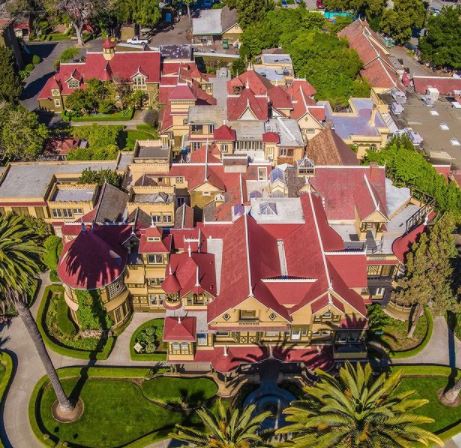
The eccentric Mrs. Winchester—the combination of her wealth and her unique building project gave rise to many rumors in the community. However, the mansion was very peculiar. The first thing that led some to believe it was haunted was the Door to Nowhere, which is located on the second floor, and opens to a 20-foot drop into the garden. The door could be heard in the dead of night to open, and slam heavily, and this even when the butler knew it was locked and the key on the bunch in his pantry. The second was that the bedclothes would always be found torn off the bed and hurled in a heap into a corner. But it was the door slamming that chiefly bothered the old butler. Many and many a time, he lain awake and just shivered with fright, listening; for a time the door would be slammed time after time thud! thud! thud! so that sleep was impossible. From Axelrod, I knew already that the mansion had a history of being cursed by spirits, and haunted by ghost. Three people had been strangled in it—an ancestor of his and his wife and child. He was a second-generation caretaker for Mrs. Winchester. This is authentic, so you can imagine what kind of feeling investigators had. The butler, Axelrod, was in rather a state about their going, and assured them with solemnity that in all the thirty years of his service, no one have ever entered that room after nightfall. He begged them in quite a fatherly way to wait till the morning when there could be no danger and then he could accompany them. Of course, they told him not to bother. They explained that they would do no more than look around a bit and perhaps fix a few seals. He need not feat, the investigators were used to that sort of thing. However, he shook his head when they said that. #RandolphHarris 1 of 13

“There isn’t many ghosts like ours, sir,” he assured them with mournful pride. And by Jove he was right, as you will see. They took a couple of candles and Axelrod followed with his bunch of keys. He unlocked the door, but would not come inside with them. He was evidently in quite a fright and renewed his request that they would put off their examination until daylight. Of course they laughed at him, and told them he could stand sentry at the door and catch anything that came out. “It never comes outside, sir,” he said, in his funny, old solemn manner. Somehow he managed to make them feel as if they were going to have the creeps right away. Anyway, it was one to him, you know. They left him there and examined the room. It was a big apartment and well furnished in the grand style, with a huge four-poster which stood with its head to the end of the wall. There were two candles on the mantelpiece and two on each of the three tables that were in the room. Investigators lit the lot and after that the room felt a little less inhumanly dreary, though, mind you, it was quite fresh and well kept in every way. After they have taken a good look round they sealed lengths of bebe ribbon across the windows, along the walls, over the pictures, and over the fireplace and the wall-closets. All the time, as they worked, the butler stood just without the door and they could not persuade them to enter, though they jested with him a little as they stretched the ribbons and went here and there about their work. Every now and again the butler would say: “You’ll excuse me, I’m sure, sir; but I do wish you would come out, sir. I fair in a quake for you.” They told them he need not wait, but he was loyal enough in his way to what he considered his duty. He said he could not go away and leave them alone there. #RandolphHarris 2 of 13
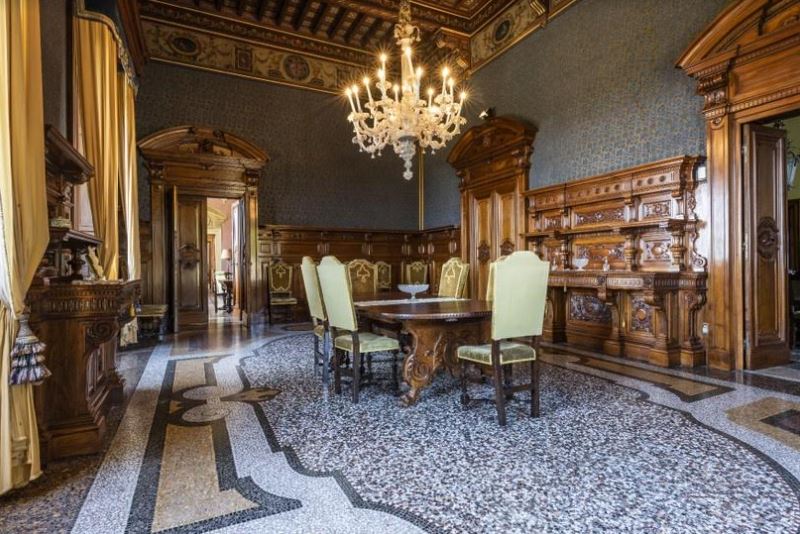
He apologized, but made it very clear that they did not realize the danger of the room; and they could see, generally, that he was getting into a really frightened state. All the same he had to make the room so that they should know if anything material entered it, so they asked him not to bother them unless he really heard something. He was beginning to fret their nerves and the “feel” of the room was bad enough already, without making things any nastier. For a time further, they worked, stretching ribbons across a little above the floor and dealing them so that the merest touch would break the seals, were anyone to venture into the room in the dark with the intention of playing the fool. All this had taken the investigators far longer than they had anticipated, and suddenly, they heard a clock strike eleven. They had taken often their coats and soon after commencing work; now however, as they practically made an end of all that they intended to do, they walked across to the settee and picked them up. They were in the act of getting into their coats when the old butler’s voice (he had not said a word for the last hour) came sharp and frightened: “Come out, sirs, quick! There’s something going to happen!” Jove! but they jumped, and then in the same moment, one of the candles on the table to the left of the bed went out. Now whether it was the wind, or what, they did not know; but just for a moment the investigators were enough startled to make a run for the door, but they stopped dead in their tracks and told the butler to be brave. So they just turned right around, picked up the two candles off the mantelpiece, and walked across to the table near the bed. Well, they saw nothing. They blew out the candle that was still alight; then they went to those on the two other tables and blew them out. Then, outside of the door, the old man called again: “Oh! sir, do be told! Do be told!” #RandolphHarris 3 of 13
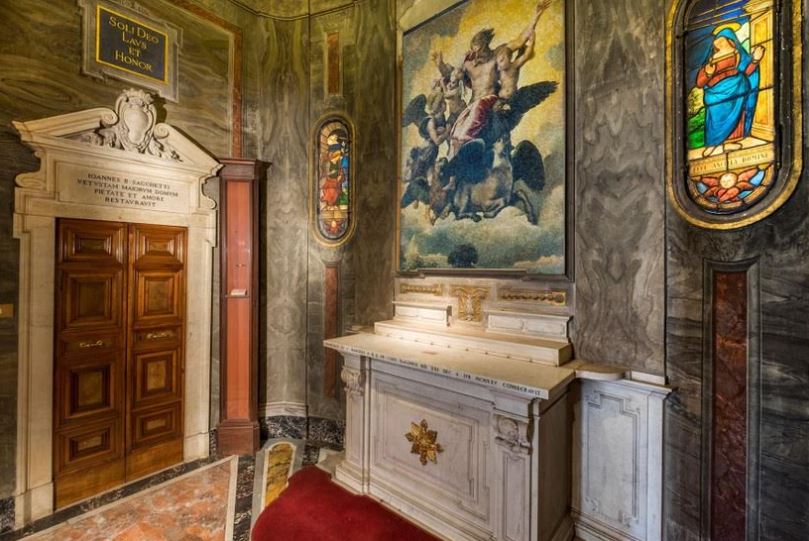
“All right, Axelrod,” one of the investigators said, and by Jove, his voice was not as steady as he should have liked! They made for the door and had a bit of work not to start running. They took some thundering long strides, though, as you can imagine. Near the entrance they had a sudden feeling that there was a cold wind in the room. It was almost as if the Door to Nowhere had been suddenly opened a little. They got to the door and the old butler gave back a step, in a sort of instinctive way. They slammed the door shut with a crash. Somehow, as he did so, one of the investigators felt something pull back on it, but it must have been only fancy. He turned the key in the lock, and then again, double-locking the door. The Winchester Mansion was not only an extravagant maze of Victorian craftmanship, it was also marvelous, baffling, and eerily eccentric, to say the least. Much of Mrs. Winchester’s interest in the occult may have been due to the League for Spiritual Discovery. She built the mansion to accommodate the spirits who had been slain by the Winchester Rifle. It was a way to get the spirits to go on to the next stage. To get in touch with the ancient reincarnation they once carried inside. However, once doors of consciousness are thrown open, those without the proper discipline cannot control what gets in. It is much easier for a demon to materialize in the depths of the Winchester Mansion than all the way from Hell. People began to believe in the Devil again because they could see him during the Victorian Era. The vibes of the Winchester mansion had begun to change as towers rose and the mansion sprawled out into infinity. Magic spells had not ended in the Revolutionary War. People had begun to fall from third-floor windows. The ghosts were considered “temporary misfits” who had not found their place in life nor in the after life, but were impatiently searching along the endless halls of the Winchester Mansion. #RandolphHarris 4 of 13
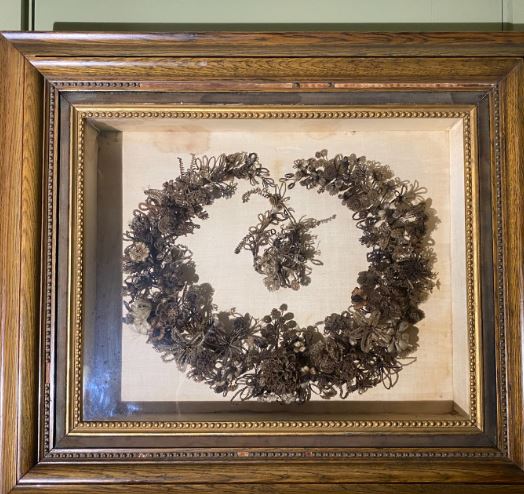
Satanism is a reflection of nature, of the laws of the cosmos, therefore it is as universally applicable as any law of nature—gravity, genetics, et cetera. The invoking or summoning of spirits by means of hymns, prayers, and acts of worship in spiritistic seances, finds a counterpart in demon possession. Often the demon speaking through its victim in the demonized state will demand the burning of incense as well as worship service. In return he often promises alleviation from torment and powers of physical healing or clairvoyant and prognostic gifts assuring financial income and material prosperity to the enslaved person. Paganism is replete with fear of demons who must be appeased by worship and servile obedience. Those who accept magical powers may escape the grosser torments of vile spirits only to fall under more terrible bondage and become Satan’s tools to enslave others. At the very center of the Winchester Mansion is the Blue Séance Room, where Mrs. Winchester supposedly would go every night to commune with the spirits. This room consisted of a cabinet, a table with pen and paper, a closet, and a planchette board—similar to a Ouija board—used for transmitting messages from the beyond. Legend has it that she would wear one of 13 special colored robes and receive guidance from various spirits for her construction plans. In demon influence, evil spirits exert power over a person short of actual possession. Such influence may vary from mild harassment to extreme subjection when body and mind become dominated and held in slavery by spirit agents. Victims may be oppressed, vexed, depressed, hindered, and bound by demons. Demon influence, even in its most severe forms, does not manifest the same abject domination by evil spirits that so saliently characterizes actual possession. #RandolphHarris 5 of 13
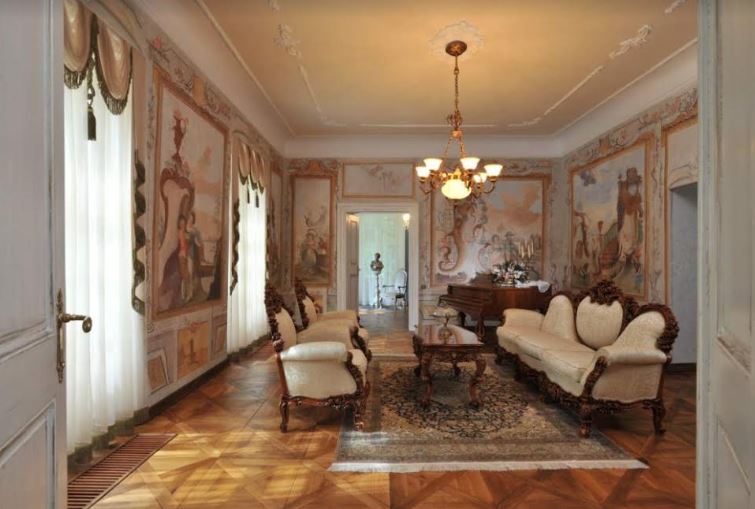
There is no blacking out of consciousness, no demonized state, no usurpation of the body as a mere tool of the inhabiting demon, no speaking with another voice and the projection of another personality through the victim. In other respects, however, demon influence closely resembles actual possession. After the door to the room the possessed the Door to Nowhere was sealed, the investigators felt easier then. The Butler, Axelrod who was nervous and silent, led the way. It had not struck investigators until that moment that he had been enduring a considerable strain during the last two or three hours. About midnight the investigators went to bed. Their room lay at the end of the corridor upon which opens the door of the room with the Door to Nowhere. They counted the doors between it and theirs and found that thirteen rooms lay between. Just as one of the investigators was beginning to undress an idea came to him and he took his candle and sealing-wax and sealed the doors of all thirteen rooms. If any door slammed in the night, they should know just which one. He returned to his room, his partner was fast asleep. He locked the door and went to sleep. While in a deep sleep, they were waked suddenly from a deep sleep by a loud crash somewhere out in the passage. One of them lite a candle, then there came the bang of a door being violently slammed along the corridor. Then there was a dismal thudding of a door up the corridor. The sound seemed to echo through all the house. Daylight came at last and they washed and dressed. The door had not slammed for about an hour, and they were getting back their nerve again. These brave men felt ashamed of themselves, though in some ways it was silly, for when you are meddling with the occult your nerve is bound to go, sometimes. And you just have to sit quiet and call yourself a coward until the safety of the day comes. Sometimes it is more than just cowardice. Sometimes one is being warned. #RandolphHarris 6 of 13

The incorporation of violence in magical ritual has had several historical rationales. It has been claimed by some, such as Aleister Crowley, that the biological energy released at the moment of death of an animal or human, combined with the emotional frenzy induced in the magician by the sight of blood, can be focused through the working of the ritual and sent psychically to do its work. Second, in conjurations, the blood of a sacrificed animal can allegedly be used by the demon being summoned to form a physical manifestation in this plane. On a psychological level, ritual murder and other barbaric acts have functioned as the identification with what Mircea Eliade terms the “Sacred Time” of the primitive, a time beyond the banality of the material World and the moral strictures of society. However, the role of violence has played an even more important sociological role in the history of secret societies, as a centripetal force holding groups together. By forcing members of the group to partake in illegal, socially deviant, and violent acts, the leader further alienates those members from the outside World, fosters feelings of paranoia, and increases psychological and emotional dependence on the group. Many people are striving for superiority as the primary human motivation. People who feel a lack of control over their affairs experience hopelessness, depression, and feeling of low self-worth. One way to feel control, if one cannot feel it in one’s day-to-day affairs, is to exert it over others. The ultimate form of that control would be the control over another’s life or death. The murderer then becomes God, the ultimate high. The trouble is that getting high can be addictive, and when that happens, the tolerance level keeps getting higher. Bigger dosages are needed to get the same effect, and perhaps that is why ghosts and demons haunt—not just to communicate—but to get high off of human emotions. #RandolphHarris 7 of 13
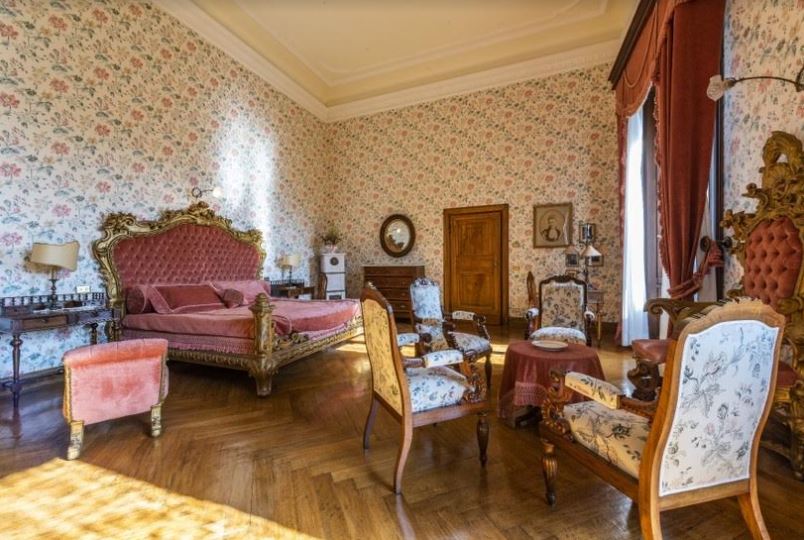
Around the time that the disturbances were happening in the Winchester mansion, police began to hear about orgiastic, nocturnal rituals involving fire dancing, animal sacrifices, blood drinking, and infanticide in the Santa Clara Valley. By 1890, the Bay Area was the “murder capitol of the World,” after it was swept by a wave of brutal and bizarre killings. On the door step of the Winchester Manion, one morning, Axelrod, the Butler, found a note warning, “death to all those who defile the environment,” and it was signed “The Knight of Swords.” Mrs. Winchester immediately have bricks laid on the inside of the front door to block it off. Then there was the case of thirteen people who were kicked to death in a confessional, as human sacrifices to the Earthquake God to stave off the 1906 Earthquake, although the exact year of the catastrophe was unknown, mediums and psychics knew it was coming. Investigators found the events unsettling and stayed at the Winchester Mansion to continue their investigation and protect Mrs. Winchester. They examined the doors of the room that housed the Door to Nowhere, and the seal had been broken, but the seal to the keyhole had been untouched. Axelrod told the investigators that “Flesh and blood can do nothing, sirs, against devils, and that’s what’s comes in the Door to Nowhere.” Something had been in the room—the bedcoverings were on the flood and they were bloody. Mrs. Winchester had everything removed from the room, except for the bed. The investigators examined the walls, floor and ceiling then with probe, hammer and magnifying glass, but found nothing usual. They began to realize that something had been loose in the room during the past night. They sealed up the room again and went out, locking and sealing the door as before. #RandolphHarris 8 of 13

Demon influence may occur in different degrees of severity and in a variety of forms, both in Christians and non-Christians. In its less sever forms, demon attack comes from without through pressure, suggestion, and temptation. When such pressure, suggestion, and temptation are yielded to, the result is always an increased degree of demon influence. Although the human race fell in Adam and became a prey to Satan and demons, the forces of darkness have always been severely restricted. They can enslave and oppress fallen man only to the degree he willingly violates the eternal moral law of God and exposes himself to evil. Since fallen man is unable to keep God’s moral law perfectly, and is acceptable to God only on the basis of Christ’s atonement, all men, saved as well as unsaved, can be subjected to demon influence. The saved, however, have been delivered from the powers of darkness and translated into the kingdom of God’s dear son. This means that they have been delivered from evil powers. Likewise, when the law of love for one’s fellow man is violated, demon power may take hold of a person and goad him on to murder. In June 1895, William Burke, was arrested in Santa Clara County with three male drifters, for the cannibal slaying of a Santa Clara County, California, farmer from the Winchester Estate. The group was a family of trolls, who, when they did not have the money to spend for room and board lived under bridges and in fields. They had forced their way into the unfortunate farmer’s Victorian cottage, and stabbed him to death and cannibalized him after offering up the body parts to Satan. The night before, the group had murdered a vagrant for a few pieces of gold. #RandolphHarris 9 of 13
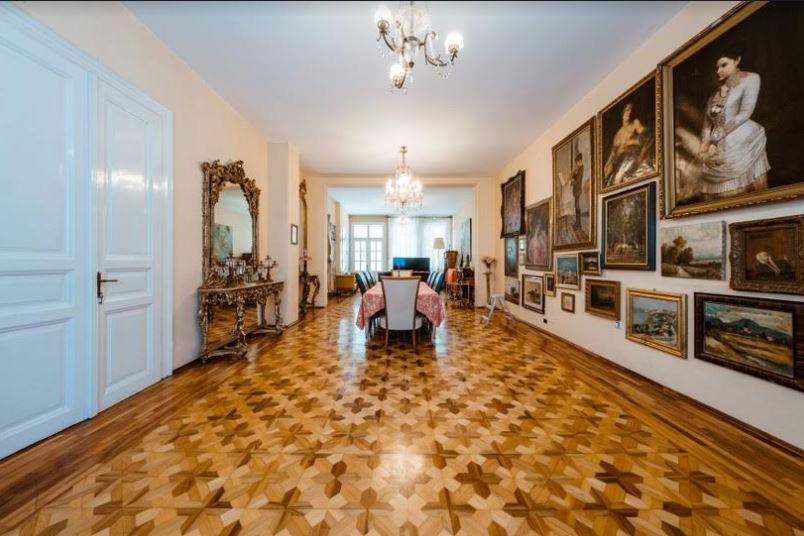
The Winchester Estate was often the target of not only ghosts and demons, but often looters, and other thugs. That is why there was a six-foot cypress hedge enclosing the estate, which was backed by a barbed wire fence and patrolled by a pack of ferocious dogs, plus, of course, her staff of armed bodyguards. Whatever possessed William Burke to shoot, dismember, and behead the sleeping farmer, McDougal, then cut out his heart and eat it, then snack on the finger until he was discovered the next morning is unknown. Aside from being a cannibal, Burke, who had an IQ of 140, claimed to be a practicing Satanists and to have belonged to a blood-drinking cult in Wyoming. Investigators failed to turn up the cult, however, and the picture that emerged of the Satanic cannibal was that of a psychotic working with Robert Knox. Burke and Knox were linked to an earlier slaying in San Francisco. They had slit the victim’s throat, cut off his ear, and written “Satan Saves” in blood on the wall of the victim’s Victorian home. Later Burke was found drowned. He washed ashore with his hands and feet bound with rope. A subsequent investigation turned up that Burke had been a leader of a group of about forty, who practiced Devil-worship ceremonies, and they wanted to turn the Winchester Mansion into their base. Burke, who believed that Satan would put him in command of “forty leagues of demons” if he took command of the Winchester Mansion. You see, the spirits were already inside of the house and it was no secret. It is believed that Knox bound and pushed him into the water. Burke’s paternal grandparents has opposed the marriage of their son, and vented their hatred of his mother upon their grandchild. They sought to curse and kill him by using black magic, in which they were adept. His childhood had been a nightmare of fear, as his mother resorted to protective magic to ward off the effects of the persecution of death magic. She, too, had come under severe demonic enslavement and fear. #RandolphHarris 10 of 13
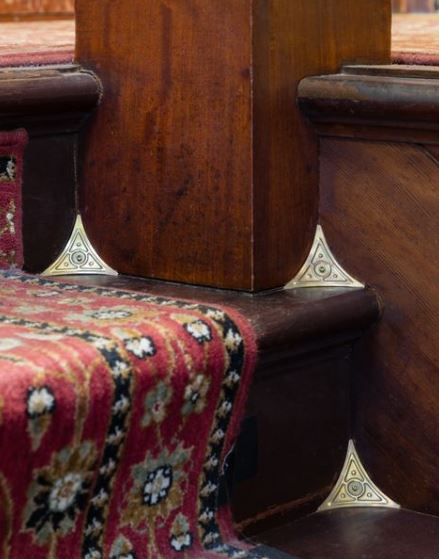
This case demonstrated how occult involvement reaches out to children. It also reveals how modern psychology and psychiatry fail to diagnose a case properly when they deny the reality of evil supernaturalism. We do not know whether such aggravated cases of demon influence go deeper than external pressure, suggestion, and temptation. They apparently do, and demonic invasion of the body seemingly is involved and the personality is infested by one or more vile spirits. These demons, however, act more like visitors or guests in a home than the owners of the house, as is the case in demon possession. In the latter case the demons possess the property and reside there permanently, always having ready access and full control of the premises to do as they please. In addition, there is the dual personality of the victim in the demonized state, which is never true of demon influence alone. This does suggest liability to physical and mental sickness, even demonic influence and bondage, and in extreme cases, physical death. Satan exists as a force that you are either part of, or you are not. You can accept it and let it exist withing yourself, or, as in the case of a Christian, you can try and force it out of your system. Then you become one of these confused, schizophrenic personages, like these Christian preachers who preach something but cannot uphold it. There is a power in the Winchester Mansion, in the events that took place there long ago. People still claim to hear the Devil’s orchestra playing at night. There is definitely a Satanic spirit, a pagan spirit, to a lot of what happened. Generally, the Satanist I would know certainly are not criminals. If anything, the police would come to them for advice on a weird crime rather than to interrogate them about it. On the other hand, in terms of the government, there is definitely an interest in them. #RandolphHarris 11 of 13

There is certainly a Satanic spirit running through some people and some areas, but that does not make them bad nor unattractive. At night, people claim there is a shadowy, underground at the Winchester mansion who lever against the inertia of the World. Devil’s advocates take their role of counter balancing societal trends quite seriously. Every few years a book is published on Satan—or some affiliated gothic topic—based upon the premise that the Devil is dead, or dying. This has been used as a starting point for authors ever since the sixteenth century, but reports of Satan’s demise have been much exaggerated. Modern culture treats the Prince of Darkness light-heatedly; Satan appears on Valentine cards, in comedy sketches, and advertising campaigns. The fact that we can laugh at Him is no indication of His waning powers. Satan encouraged satire and scorn, thrives on laughter and irreverence—it is the Christian tradition that demands we approach the World with straight-face, pompous sincerity. Popular ambivalence about the Devil has plagued Christianity throughout its history. The Church needs Satan as its ultimate cosmic scapegoat, but His omnipresent threat is that His playful, charismatic evil can seem so much more attractive then Christian doctrine. (Some have asked why are so many Satanists such nice, polite people, while so many Christians are malignant, neurotic bigots?) Thus, every infernal manifestation in modern popular culture, whatever its apparent intent, has Satanic significance. However, are we, as Anton LaVey claimed, entering an “Age of Satan”? Is Lucifer rising? Nearly the Door to Nowhere, people have claimed that when they are near it, they are immediately conscious of a queer prickling sensation about the back of their heads and their heads began to sweat a little. #RandolphHarris 12 of 13

The following instant, the whole end of the hallway seems to flicker into an abrupt glaze. Then comes the succeeding darkness and most peer nervously up the corridor, listening tensely, and trying to find what lay beyond the faint, red, glow of light. As investigators continued to inspire the unusual room, there came the crashing thud of the door to the Door to Nowhere. The sound seemed to fill the whole of the large corridor and go echoing hollowly through the mansion. They felt it, it felt horrible—as if their bones were water. Simply beastly. They did not know how they could stare or how they listened. And then it came again, thud, thud, thud, and then silence. That was almost worse than the noise of the door, for they kept fancying that some brutal thing was stealing upon them alone the corridor. Suddenly, there lamp was put out, and they could not see the yard before them. They realized all at once that this was a very silly thing, sitting there, and they jumped up. Even as they did so, the investigators thought they heard a sound in the passage, quite near to them. One made a backward spring into the hallway and slammed the door shut. Can you understand? They felt that there was something at the other side of the Door to Nowhere. For some unknow reason, investigators knew it was pressed up against the door, and it was soft. It was the most extraordinary thing to imagine when you come to think about it. The Door to Nowhere thuds at solemn and horrid intervals. Nights in the mansion can be brutal. As the day comes, the thudding of the door comes gradually to an end. #RandolphHarris 13 of 13
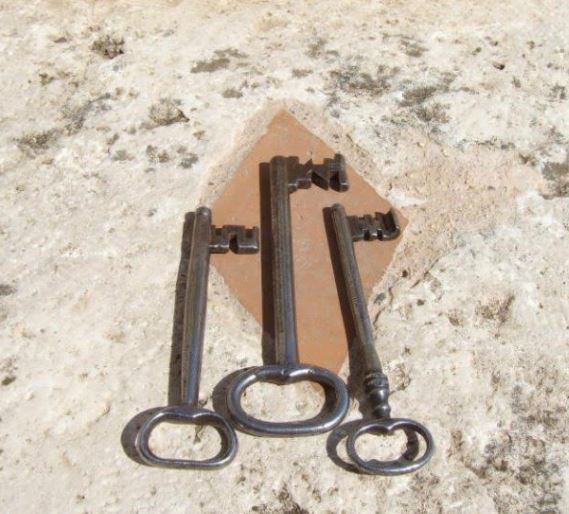
Winchester Mystery House
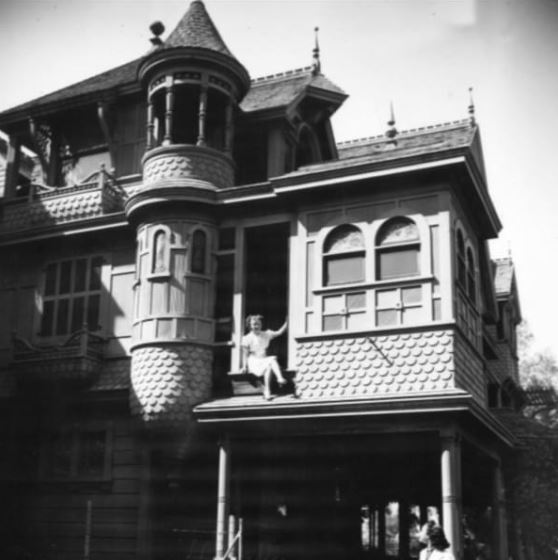
What are your weekend plans? Come hang out at The Winchester Mystery House 🤪 Open 10am-7pm! https://www.winchestermysteryhouse.com/buy-tickets/
Photo credit: Acme Newspictures Inc. Circa 1930s

🎟 link in bio. https://linktr.ee/winchestermysteryhouse

And as this Happens, its Value Soars

Many changes in the society’s knowledge system translate directly into business operations. This knowledge system is an even more pervasive part of every firm’s environment than the banking system, the political system, or the energy system. If there were no language, culture, data, information, and knowledge, apart from the fact that no business could open its doors, there is a deeper fact that of all the resources needed to create wealth, none is more versatile than these. In fact, knowledge (sometimes just information and data) can be used as a replacement for other resources. Knowledge—in principle inexhaustible—is the ultimate substitute. Take technology. In most smokestack factories it was inordinately expensive to change any product. It required highly paid tool-and-die makers, jig setters, and other specialists, and resulted in extended “downtime” during which the machines were idle and ate up capital, interests and overhead. If you could make longer and longer runs of identical products, that is why cost per unit went down. Instead of these long runs, the latest computer-driven manufacturing technologies make endless variety possible. Philips, the giant Dutch-based electronics firm, manufacture one hundred different models of color TV in 1972. Today the variety has grown to five hundred different models. Bridgestone Cycle Company in Japan is promoting the “Radac Tailor-Made” bike, Matsushita offers a semicustomized line of heated carpets, and the Washington Shoe Company offers semicustomized women’s shoes—thirty-two designs for each size—depending on the individual customer’s feet as measured by computer in the shoe store. Standing the economics of mass production on their head, the new information technologies push the cost of diversity toward zero. Knowledge thus substitutes for the once-high cost of change in the production process. #RandolphHarris 1 of 21

Or take materials. A smart computer program hitched to a lathe can cut more pieces out of the same amount of steel than most human operators. Making miniaturization possible, new knowledge leads to smaller, lighter products, which, in turn cuts down on warehousing and transportation. And as we saw in the case of CSX, the rail and shipping firm, up-to-the-minute tracking of shipments—id est, better information—means further transportation savings. New knowledge also leads to the creation of totally new materials, ranging from aircraft composites to biologicals, and increases our ability to substitute one material for another. Everything, from tennis rackets to jet engines, is incorporating new plastics, alloys, and complex composites. Allied-Signal, Inc., of Morristown, New Jersey, makes something called Metglas, which combines features of both metal and glass and is used to make transformers far more energy-efficient. New optical materials point to much faster computers. New forms of tank armor are made of a combination of steel, ceramics, and uranium. Deeper knowledge permits us to customize materials at the molecular level to produce desire thermal, electrical, or mechanical characteristics. The only reason we now ship huge amounts of raw materials like bauxite or nickel or copper across the planet is that we lack the knowledge to convert local materials into usable substitutes. Once we acquire that know-how, further drastic savings in transportation will result. In short, knowledge is a substitute for both resources and shipping. The same goes for energy. Nothing illustrates the substitutability of knowledge for other resources than the recent breakthroughs in superconductivity, which at a minimum will drive down the amount of energy that now must be transmitted for each unit of output. #RandolphHarris 2 of 21

At present, according to the American Public Power Association, up to 15 percent of electricity generated in the United States of America is lost in the process of moving it to where it is needed, because copper wires are inefficient carriers. This transmission loss is the equivalent of the output of fifty generating plants. Superconductivity can slash that loss. Similarly, Bechtel National, Inc., in San Francisco, along with Ebasco Services, Inc., of New York, is working on what amounts to a giant, football-field-sized “battery” for storing energy. Down the road such storage systems can help eliminate the power plants that are there to provide extra electricity in peak periods. In addition to substituting for materials, transportation, and energy, knowledge also saves time. Time itself is one of the most important of economic resources, even though it shows up nowhere on a company’s balance sheet. Time remains, in effect, a hidden input. Especially when change accelerates, the ability to shorten time—for instance, by communicating swiftly or by brining new products to market fast—can be the difference between profit and loss. New knowledge speeds things up, drives us toward a real time, instantaneous economy, and substitutes for time expenditure. Space, too, is conserved and conquered by knowledge. GE’s Transportation System division builds locomotives. When it began using advanced information-processing and communications to link up with its suppliers, it was able to turn over its inventory twelve times faster than before, and to save a full acre of warehouse space. Not only miniaturized products and reduced warehousing, but other savings are possible. In one year, the United States of America turns out 1.3 trillion documents—sufficient, according to some calculations, to “wallpaper” the Grand Canyon 107 times. #RandolphHarris 3 of 21

Of these documents, all but 5 percent of this is still stored on paper. Advanced information technologies, including document scanning, promise to compress at least some of this. More important, the new telecommunications capacity, based on computers and advanced knowledge, makes it possible to disperse production out of high-cost urban centers, and to reduce energy and transport costs even further. So much is written about the substitution of computerized equipment for human labour that we often ignore the ways in which it also substitutes for capital. Yet all the above also translate into financial savings. Indeed, in a sense, knowledge is a far greater long-term threat to the power of finance than are organized labour or anticapitalist political parties. For, relatively speaking, the information revolution is reducing the need for capital per unit of output. In a “capital-ist” economy, nothing could be more significant. Vittorio Merloni was an eighty 83-year-old businessman who founded Merloni Elettrodomestici and became the chairman, holding the position continuously until 29 April 2010. His family owned 75 percent of the company. In a small side room at the education center of the Banca Nazionale del Lavoro in Rome, he conversed candidly about his firm. Ten percent of all the washing machines, refrigerators, and other major household appliances sold in Europe are made by Merloni’s company. His main competitors were Electrolux of Sweden and Philips of Holland. For four turbulent years Meloni served as head of Confindustria, the Italian confederation of employers. According to Merloni, Italy’s recent economic advances are a result of the fact that “we need less capital now to do the same thing” that required more capital in the past. “This means that a poor country can be much better off today with the same amount of capital than five or ten years ago.” #RandolphHarris 4 of 21

The reason, he says, is that knowledge-based technologies are reducing the capital needed to produce, say, dishwashers, stoves, or vacuum cleaners. To begin with, information substitutes for high-cost inventory, according to Merloni, who uses computer-aided design and shoots data back and forth via satellite between his plants in Italy and Portugal. By speeding the responsiveness of the factory to the market and making short runs economical, better and more instantaneous information makes it possible to reduce the amount of components and finished goods sitting in warehouses or railroad sidings. Merloni was able to cut a startling 60 percent from his inventory costs. Until recently, his plants needed an inventory of 200,000 pieces for 800,000 units of output. Today they turn out more than 3 million units a year with only 300,000 in the pipeline. He attributes this massive saving to better information. Merloni’s case is not unique. In the United States of America, textile manufacturers, apparel makers and retailers—organized into a Voluntary Inter-Industry Communications Standards (VICS) committee—are looking forward to squeezing $12 billion worth of excess inventory out of their system by using a shared industrywide electronic data network. In Japan, NHK Spring Company, which sells seats and springs to most of the Japanese carmakers, is aiming to synchronize its production lines to those of its customers so perfectly as to virtually eliminate buffer stocks. Say one NHK official: “Id this system can be implemented, we can theoretically reduce taxes, insurance, and overhead. Similarly, Merloni points out, he is able to transfer funds from London or Paris to Milan or Madrid in minutes, saving significant interest charges. #RandolphHarris 5 of 21

Even though the initial costs of computers, software, information, and telecommunications may itself be high, he says, the overall savings mean that his company needs less capital to do the same job it did in the past. These ideas about capital are spreading around the globe. In the words of Dr. Haruo Shimada of Keio University in Tokyo, we are seeing a shift from corporations that “require vast capital assets and a large accumulation of human capital to carry out production” to what he calls “flow-type” corporations that use “much less extensive capital assets.” As though to underscore this shift and the importance of knowledge in the economy of tomorrow, the major Japanese corporations are now, for the first time, pouring more funds into research and development than into capital investment. Michael Milken, who, for better or worse, knows a thing or two about investment, has summed it up in six words: “Human capital has replaced dollar capital.” Knowledge has become the ultimate resource of business because it is the ultimate substitute. What we have seen so far, therefore, is that in any economy, production and profits depend inescapably on the three main sources of power—violence, wealth, and knowledge. Violence is progressively converted into law. In turn, capital and money alike are now being transmuted into knowledge. Work changes in parallel, becoming more and more dependent on the manipulation of symbols. With capital, money, and work all moving in the same direction, the entire basis of the economy, which operates according to rule radically different from those that prevailed during the smokestack era. Because it reduces the need for raw materials, labour, time, space, and capital, knowledge becomes the central resource of the advanced economy. And as this happens, its value soars. For this reason, as we will see next, “info-wars”—struggles for the control of knowledge—are breaking out everywhere. #RandolphHarris 6 of 21

Further hastening the retreat from mass markets is today’s upheaval in media and advertising—tools without which capitalist markets as we know them could barely exist. Yesterday’s dominant mass media have been giving way to de-massified media capable of targeting ever smaller micromarkets. This process began as far back as 1961 and rapidly spread, as we forecast at the time in an IBM publication. By 2004 it was so hard to miss that the Financial Times belatedly announced the coming of “The Audience of One” and “The End of the Mass Market.” Companies that have failed to make the transition to the new marketplace complain about “fragmentation.” Those that are thriving in the new environment hail the choices offered to customers who themselves are increasingly individuated. The speed at which individual markets and entire market sectors rise and fall is unprecedented. The metabolism of capitalism is racing, raising the question of what happens when it breaks far past its normal limits. Take, for example, rates of marketization and de-marketization. No market can exist unless it has something to sell. Thus markets, by definition, need inputs—items put up for sale, otherwise known as commodities. Those commodities can be Btu’s of energy, hours of labour, a pair of gloves, a DVD, a patent, a BMW or, for that matter, a ticket to The Winchester Mystery House. Today the number and variety of buyable items available for purchase around the World is astronomical and growing every minute. The sum of all these on-sale items is not known. It is, after all, a prime feature of competitive capitalism to commodify—that is, to put up for sale—as many things, services and experiences, as much data, information and knowledge, and as many hours of available labour, as are thought to be salable. #RandolphHarris 7 of 21

The spread of market capitalism, hypercompetition, faster rates of innovation and population growth are simultaneously pushing toward further commoditization. Put differently, more “things” are being put up for sale. However, more things are also being withdrawn from sale. Classic models and their parts, for example. Even as BMW offered more series models into the marketplace, DaimlerChrysler shut down its entire line of Plymouths, and new Prowlers thus disappeared from the marketplace. In every market at any moment, therefore, we find these same two basic processes at work—marketization and de-marketization. Yet little attention is paid to the speeds at which these processes occur. These rates differ from industry to industry and from country to country as though each operates at a different metabolic speed. If these speeds become too disparate, what happens? Conversely, if both these processes slow down or accelerate in sync, what happens? Is there a maximum or optimum rate at which markets can operate? And how do the rates in one country affect other countries? Does anyone know? The idea of molecular nanotechnology, like most ideas, has roots stretching far back in time. In ancient Greece, Democritus suggested that the World was built of durable, invisible particles—atoms, the building blocks of solid objects, liquids, and gases. In the last hundred years, scientists have learned more and more about these building blocks, and chemists have learned more and more way to combine them to make new things. Decades ago, biologists found molecules that do complex things; they termed them “molecular machines.” Physicist Richard Feynman was a visionary of miniaturization who pointed toward something like molecular nanotechnology: of December 29, 1959, in an after-dinner talk at the annual meeting of the American Physical Society, he proposed that large machines could be used to make smaller machines, which could make still smaller ones, working in a top-down fashion from the marcroscale to the microscale. #RandolphHarris 8 of 21

At the end of his talk, he painted a vision of moving individual atoms, pointing out, “The principles of physics, as far as I can see, do not speak against the possibility of maneuvering things atom by atom.” He pictured making molecules, pointing clearly in the direction take by the modern concept of nanotechnology: “But it is interesting that it would be, in principle, possible (I think) for a physicist to synthesize any chemical substance the chemist writes down. Give the orders, and the physicist synthesizes it. How? Put the atoms down where the chemist says, and so you make the substance.” Despite this clear signpost pointing to a potentially revolutionary area, no one filed the conceptual gap between miniature machines, no notion of controllable molecular manufacturing. With hindsight, one wonders why the gap took so long to fill. Feynman himself did not follow it up, saying that the ability to maneuver atoms one by one “will really be useless” since chemists would come up with traditional, bulk-process ways to make new chemical substances. For a researcher whose main interest was physics, he had contributed much just by placing the signpost: it was up to others to move forward. Instead, the idea of molecular machines for molecular manufacturing did not appear for decades. From today’s viewpoint, molecular nanotechnology looks more like an extension of chemistry than like an extension of miniaturization. A mechanical engineer, looking at nanotechnology, might ask, “How can machines be made so small?” A chemist, though, would ask, “How can molecules be made so large?” The chemist has the better question. Nanotechnology is not primarily about miniaturizing machines, but about extending precise control of molecular structure to larger and larger scales. Nanotechnology is about making (precise) things big. #RandolphHarris 9 of 21

Nature gives the most obvious clues to how this can be done, and it was the growing scientific literature on natural molecular machines that led one of the present authors (Drexler) to propose molecular nanotechnology of the sort described here. A strategy to reach the goal was part of the concept: Build increasingly complex molecular machinery from simpler pieces, including molecular machines able to build more molecular machines. And the motivation for studying this, and publishing? Largely the fear of living in a World that might rush into the new technology blindly, with ugly consequences. This concept and initial exploratory work started in early 1977 at MIT; the first technical publication came in 1981 in the Proceedings of the National Academy of Sciences. For years, MIT remained the center of thinking on nanotechnology and molecular manufacturing: in 1985, the MIT Nanotechnology Study Group was formed; it soon initiated an annual lecture series which grew into a two-day symposium by 1990. The first book on the topic, Engines of Creation, was published in 1986. In 1988, Stanford University became the first to offer a course in molecular nanotechnology, sponsored by the Department of Computer Science. In 1989, this department hosted the first major conference on the subject, cosponsored by the Foresight Institute and Global Business Network. With the upcoming publication of a technical book describing nanotechnology—from molecular mechanical and quantum-mechanical principles up to assembly systems and products—the subject will be easier to teach, and more college courses will become available. In parallel with the development and spread of ideas about nanotechnology and molecular manufacturing—ideas that remain pure theory, however well grounded—scientists and engineers, working in laboratories to build real tools and capabilities, have been pioneering roads to nanotechnology. #RandolphHarris 10 of 21

Research has come a long way since the mid-1980s, and we will look further into that in the next few days. However, as one might expect with a complex new idea that, if true, disrupts a lot of existing plans and expectations, some objections have been heard. As the twentieth century began, the amount of information available through words and pictures grew exponentially. With telegraphy and photography leading the way, a new definition of information came into being. Here was information that rejected the necessity of interconnectedness, proceeded without context, argued for instancy against historical continuity, and offered fascination in place of complexity and coherence. And then, with Western culture gasping for breath, the fourth stage of the information revolution occurred, broadcasting. And then the fifth, computer technology. Each of these brought with it new forms of information, unprecedented amounts of it, and increased speeds (if virtual instancy can be increased). What is our situation today? In the United States of America, we have 260,000 billboards; 11,520 newspapers; 11,556 periodicals; 27,000 video outlets for renting video tapes; more than 500 million radios; and more than 100 million computers. Ninety-eight percent of American homes have a television set; more than half our homes have more than one. There are 40,000 new book titles published every year (300,000 Worldwide), and every day in America 41 million photographs are taken. And if this is not enough, more than 60 billion pieces of junk mail (thanks to computer technology) find their way into our mailboxes every year. #RandolphHarris 11 of 21

From millions of sources all over the globe, through every possible channel and medium—light waves, airwaves, ticker tapes, computer banks, telephone wires, television cables, satellites, printing presses—information pours in. Behind it, in every imaginable form of storage—on paper, on video and audio tape, on discs, film, and silicon chips—is an ever greater volume of information waiting to be retrieved. Like the Sorcerer’s Apprentice, we are awash in information. And all the sorcerer has left us is a broom. Information has become a form of garbage, not only incapable of answering the most fundamental human questions but barely useful in providing coherent direction to the solution of even mundane problems. To say it still another way: The milieu in which Technopoly flourishes is one in which the tie between information and human purpose has been served, id est, information appears indiscriminately, directed at no one in particular, in enormous volume and at high speeds, and disconnected from theory, meaning, or purpose. All of this has called into being a new World. It can also be referred to as a peek-a-boo World, where not this event, now that, pops into view for a moment, then vanishes again. It is an improbable World. It is a World in which the idea of human progress, as Bacon expressed it, has been replaced by the idea of technological progress. The aim is not to reduce ignorance, superstition, and suffering but to accommodate ourselves to the requirements of new technologies. We tell ourselves, of course, that such accommodations will lead to a better life, but that is only the rhetorical residue of a vanishing technocracy. We are a culture consuming itself with information, and many of us do not even wonder how to control the process. #RandolphHarris 12 of 21

We proceed under the assumption that information is our friend, believing that cultures may suffer grievously from a lack of information, which, of course, they do. It is only now beginning to be understood that cultures may also suffer grievously from information glut, information without meaning, information without control mechanisms. This is why there is a need to improve recognition abilities. The ability to recognize other individuals from past interactions, and to remember the relevant features of those interactions, is necessary to sustain cooperation. Without these abilities, an individual could not use any form of reciprocity and hence could not encourage the other to cooperate. In fact, the scope of sustainable cooperation is dependent upon these abilities. This dependence is most clearly seen in the range of biological illustrations developed in the past few reports. Bacteria, for example, are near the bottom of the evolutionary ladder and have limited ability to recognize other organisms. So they must use a shortcut to recognition: an exclusive relationship with just one other individual (the host) at a time. In this way, any changes in a bacterium’s environment can be attributed to that one individual. Birds are more discriminating—they can distinguish among a number of individual neighbouring birds by their songs. This ability to discriminate allows them to develop cooperative relationships—or at least avoid conflictful ones—with several other birds. And, humans have developed their recognition abilities to the extent of having a part of their brains specialized for the recognition of faces. The expanded ability to recognize individuals with whom one has already interacted allows humans to develop a much richer set of cooperative relationships than birds can. #RandolphHarris 13 of 21

Yet, even in human affairs, limits on the scope of cooperation are often due to the inability to recognize the identity or the actions of the other players. This problem is especially acute for the achievement of effective international control of nuclear weapons. The difficulty here is verification: knowing with an adequate degree of confidence what move the other individual has actually made. For example, an agreement to ban all testing of nuclear weapons has until recently been prevented by the technical difficulty of distinguishing explosions from earthquakes—a difficulty that has now been largely overcome. The ability to recognize defection when it occurs is not the only requirement for successful cooperation to emerge, but it is certainly an important one. Therefore, the scope of sustainable cooperation can be expanded by any improvements in the individuals’ ability to recognize each other from the past, and to be confident about the prior actions that have actually been taken. Cooperation among people can be promoted by a variety of other techniques as well, which include enlarging the shadow of the future, changing payoffs, teaching people to care about the welfare of others, and teaching the value of reciprocity. Promoting good outcomes is not just a matter of lecturing the players about the fact that there is more to be gained from mutual cooperation than mutual defection. It is also a matter of shaping the characteristic of the interaction so that over the long run there can be a stable evolution of cooperation. Most primal acts can become secondary to their representation. Conditioned self-distancing from real existence has been a goal of art from the beginning. Similarly, the category of audience, of supervised consumption, is nothing new, as art has striven to make life itself an object of contemplation. #RandolphHarris 14 of 21

As the Paleolithic Age gave way to the Neolithic arrival of agriculture and civilization—production, private property, written language, government and religion—culture could be seen more fully as spiritual decline via division of labour, through global specialization and a mechanistic technology did not prevail until the late Iron Age. The vivid representation of late hunter-gather art was replaced by a formalistic, geometrical style, reducing pictures of animals and humans to symbolic shapes. This narrow stylization reveals the artist shutting himself off from the wealth of empirical reality and creating the symbolic Universe. The aridity of linear precision is one of the hallmarks of this turning point, calling to mind the Yoruba, who associate line with civilization: “This country has become civilized,” literally means, in Yoruba, “this Earth has lines upon its face.” The inflexible form of truly alienated society are everywhere apparent; Gordon Childe, for example, referring to this spirit, points out that the pots of a Neolithic village are all alike. Relatedly, warfare in the form of combat scenes makes its first appearance in art. The work of art was in no sense autonomous at this time; it served society in a direct sense, an instrument of the needs of the new collectivity. There had been no worship-cults during the Paleolithic, but now religion held sway, and it is worth remembering that for thousands of years art’s function will be to depict the gods. Meanwhile, what Gluck stressed about African tribal architecture was true in all other cultures as well: sacred buildings came to life on the model of those of the secular ruler. And though not even the first signed works show up before late Greek period, it is not inappropriate to turn here to art’s realization, some of its general features. #RandolphHarris 15 of 21

Art not only creates the symbols of and for a society, it is a basic part of the symbolic matrix of estranged social life. Oscar Wilde said that art does not imitate life, but vice versa; which is to say that life follows symbolism, not forgetting that it is (deformed) life that produces symbolism. Every art form, according to T.S. Eliot, is “an attack upon the inarticulate.” Upon the unsymbolized, he should have said. Both painter and poet have always wanted to reach the silence behind and within art and language, leaving the question of whether the individual, in adopting these modes of expression did not settle for far too little. Though Bergson tried to approach the goal of thought without symbols, such a breakthrough seems impossible outside out active undoing of all the layers of alienation. If briefly, in the extremity of revolutionary situations, immediate communication has bloomed. The primary function of art is to objectify feeling, by which one’s own motivations and identity are transformed into symbol and metaphor. All art, as symbolization, is rooted in the creation of substitutes, surrogates for something else; by its very nature therefore, it is a falsification. Under the guise of “enriching the quality of human experience,” we accept vicarious, symbolic descriptions of how we should feel, trained to need such public images of sentiment that ritual art and myth provide for our psychic security. People can readily accept reductionism in everything except what most concerns them. Neither bourgeois society nor natural science has a place for the nonreproductive aspect of pleasures of the flesh. With the slackening of bourgeois austerity and the concomitant emancipation of the harmless pleasures, a certain tolerance of harmless pleasures of the flesh came into fashion. However, this was not enough, because nobody really wants one’s dearest desires to be put in the same category as itching and scratching. #RandolphHarris 16 of 21

In America, especially, there is always a need for moral justification. Life-style—an expression that came out of the same school of thought as sublimation and was actually understood to be the product of sublimation, but had never been associated with it in America because of the division of labour that had Dr. Freud specializing in sublimation and Weber in life-style—turned out to be a godsend. “Life-style” justifies any way of life, as does “value” any opinion. It does away with the natural structure of the World, which is only raw material for the stylist’s artistic hand. The very expression makes all moralisms and naturalisms stop short at the limit of the sacred ground, aware of their limits and respectful creativity. Moreover, with our curious mixture of traditions, life-styles are accorded rights, so defense of them is a moral cause, justifying the sweet passions of indignation at the violators of human rights, against whom these tastes, before they became life-styles, were so politically and psychologically defenseless. Now they can call upon all the lovers of human rights throughout the World to join in their defense, for the threat to any group’s rights is a threat to them all. Sadomasochists and Solidarity are bound together in the common cause of human rights, their fates depending on the success of the crusade in their favour. Pleasures of the flesh is no longer an activity but a case. In the past there was a respectable place for marginality, bohemia. However, it had to justify its unorthodox practices by its intellectual and artistic achievement. Life-style is so much freer, easier, more authentic and democratic. No attention has to be paid to content. #RandolphHarris 17 of 21

If regular television programming is hard-pressed to maintain your attention without tricks, advertisers have the problem many times over. In regular programming at least there are stories or news, something of interest. Within television’s limits, regular programming has the option to present relevant content. Advertising content has no inherent interest at all. The content is always the same. The image may be a seascape and the product is pizza. Or it may be a landscape and the product is BMW. Or it may be a Cresleigh Home and the product is coffee. Whatever the setting, the content of advertising is always a sales pitch. There is nothing inherently interesting in this. It is worse than boring; it is annoying. So tricks must be used in every advertisement. Maxwell Arnold, a San Francisco advertising man who is one of the industry’s few outspoken critics, once told a radio interviewer: “Who the hell would choose to watch ads if there wasn’t something going on aside from the content?” In the absence of interesting content, technical style is the name of the game. Advertisers spend staggering amounts of money to achieve their technical success. The average production budget for a minute of advertising is roughly ten times the cost of the average minute of programming. It is not at all unusual for a thirty-second commercial to have a production budget of fifty thousand to five hundred thousand dollars, enough to cover the total costs of many half-hour programs This money is spent in techniques, and research upon techniques, to obtain your interest where there would otherwise be none. The frequently heard comment, “You know, I sometimes think advertising is the most interesting thing on television, is a testament to the success of expenditures. #RandolphHarris 18 of 21

Advertisement is a lot like divine temptation. Temptations come to us in our social gatherings; they come to us in our political strivings; they come to us in our business relations, on the farm, in the mercantile establishment; in our dealings in all the affairs of life we find these insidious influences working. It is when they manifest themselves to the consciousness of each individual that the defense of truth should exert itself. The Church teaches that life here is probationary. It is man’s duty to become the master, not the slave of nature. His appetities are to be controlled and used for the benefit of his health and the prolongation of his life—his passions mastered and controlled for the happiness and blessing of others. If you have lived true to the promptings of the Holy Spirit, and continue to do so, happiness will fill your soul. If you vary from it and become conscious that you have fallen short of what you know is right, you are going to be unhappy even if you have the wealth of the World. Vulgarity is often the first step down the road to indulgence. To be vulgar is to give offense to good taste or refined feelings. It is only a step from vulgarity to obscenity. It is right, indeed essential, to the happiness of our young people that they meet in social parties, but it is an indication of low morals when for entertainment they must resort to physical stimulation and debasement. Drinking and petting parties form an environment in which the moral sense becomes dulled, and unbridled passion holds sway. It then become easy to take the final step downward in moral disgrace. God now enters into conversation with the man inflamed with wrath, whose countenance has “fallen” or “sunken,” as He did with the first humans after their sin; such dialogues are the great respirations of Biblical narration. The angels are wholly pure and sinless, for they do not know right from wrong, and all the acts of such are blameless. No one can do wrong without knowing how to distinguish between right and wrong. #RandolphHarris 19 of 21

Knowledge removes all that is divine, all that is angelic, from the angels, and immeasurably degrade them. Moral Sense gives knowledge that power. Degradation is a disaster. Without it one cannot do wrong; with it, one can. Therefore it has but one office, only one—to teach how to do wrong. It can teach no other thing—no other thing whatever. It is the creator of wrong; wrong cannot exist until the Moral Sense brings it into being. Adam and Eve acquired Moral Sense by eating the fruit of the Tree, in the Garden of Eden. The command to refrain from eating from the Tree meant nothing to them, they were but children, and could not understand untried things and verbal abstraction which stand for matters outside of their little World and their narrow experience. This is why, if children and teen’s possess brains that are not fully developed, it does not seem they can be held responsible for their crimes because they may not be aware of right from wrong. In essence, they all have a mental defect and need to be educated as to why the crime they committed is wrong so they can be reformed instead of being punished for something they did. For instance, boys are taught by their parents to defend their sister honor and punished by their family when they do not. However, if a boy is caught by authority figures defending his sister’s honor, he may be arrested and punished. Yet, is it right to let a bully abuse your sister? If that boy was arrested, he would need to go somewhere that would make him understand the error of his ways, how to properly handle that situation, and develop a sense of remorse for his crime or defense, so he will not use the incorrect methods he was taught at home. Then be released from the detention center and going on to become a responsible taxpaying citizen, instead of a harden criminal who never learned his lesson. #RandolphHarris 20 of 21

Eve reached for an apple!—oh, farewell, Eden, and your sinless joys, come poverty and pain, hunger and cold and heartbreak, be remorse; then desperation and then desperation and the prayer for the release of death, indifferent that the gated of hell yawn beyond it! She tasted—the fruit fell from her hand. It was pitiful. She was like one who wakens slow and confusedly out of a sleep. She gazed half-vacantly at Satan, then at Adam, holding her curtaining fleece of golden hair back with her hand, then her wandering glance fell upon her naked person. The red blood mounted to her cheek, and she sprang behind a bush and stood there crying, and saying—“Oh, my modesty is lost to me—my unoffending form is become a shame to me—my mind was pure and clear; for the first time it is soiled with a filthy thought.” She moaned and muttered in her pain, and drooped her head, saying, “I am degraded—I have fallen, of so low, and I shall never rise again.” Adam’s eyes were fixed upon her in a dreamy amazement, he could not understand what had happened, it being outside his World as yet, and her words having no meaning for one void of the Moral Sense. And now his wonder grew: for, unknown to Eve, her hundred years rose upon her, and faded the Heaven of her eyes and the tints of her young flesh, and touched her hair with gray, and traced faint sprays of wrinkles about her mouth and eyes, and shrunk her form, and dulled the satin lustre of her skin. All this the fair boy saw: then loyally and bravely he took the apple and tasted it, saying nothing. The change came upon him also. Then he gathered boughs for both and clothed their nakedness, and they turned and went their way, hand in hand and bent with age, and so passed from sight. And now Father, I pray unto three for them, and also for all those who shall believe on their words, that they may believe in me, that I may be in them as thou, Father, art in me, that we may be one,” reports Nephi 19.23. #RandolphHarris 21 of 21

Cresleigh Homes

“Everything good, everything magical happens between the months of June and August.” —Jenny Han

Could that something magical ✨ be your move to our incredible community? 🏠 This room’s only empty until you and your family move in to fill it…and that’s the moment we’re waiting for! https://cresleigh.com/cresleigh-riverside-at-plumas-ranch/move-in-ready-homesite-70/
#CresleighHomes
#PlumasRanch
 Randolph Harris II International Institute