
Home » #WinchesterMysteryHouse (Page 16)
Category Archives: #WinchesterMysteryHouse
The Property is a Most Desirable Residence

Sometimes certain things happen in Victorian houses that are hard to understand. Llanada Villa is one of those places. I am convinced that there is another level of consciousness or activity of some kind that occupies my home. A juxtaposition between entities in physical bodies and those in astral form. When I first purchased the original eighteen room farmhouse, there was the most peculiar thing outside. A large barn, to the south side of the house, and a stone in front of it that looked not quite natural. Upon close inspection, I wondered whether perhaps it was not an Indian tombstone, or perhaps an Indian altar of sorts. It looked far too regular to be completely shaped by nature. The original owner had no idea how it got into the garden, nor did he know anything particular about the history of the barn. All he knew was that the barn was old. Inside there was a passageway, or cave, tunnel, call it what you will, leading from one of the stables out to another part of the estate. It was shored up by four-by-fours on the side, but with very thing boards on the top; and dirt and water was trickling down these broken boards at the top. The tunnel was about seven feet tall. It was quite tall. I heard some noises and was afraid to have anyone go in. After I purchased the property and started to expand my estate, I simply had the carpenters fill it in and raze the barn. #RandolphHarris 1 of 7

It was now long after nightfall, my home with lit with a wan glimmer having no point of diffusion, for in its mysterious lamination nothing cast a shadow. A strange sensation began slowly to take possession of my body and mind. However, I felt rather conscious with a mysterious mental assurance of some overpowering presence, while some supernatural malevolence swarmed about me. A shallow pool on the floor reflected in the light, as from a spill, met my eye with a crimson gleam. I dipped my fingers into it. It stained them; it was blood! Blood, I then observed, was about me everywhere. Defiling the walls and were broad maculations of crimson, and blood dripped like dew from them. All of this I observed with terror. It seemed to me that it was all in expiation of some crime. To the menaces and mysteries of my surroundings the consciousness was an added horror. So frightful was the situation—the mysterious light burned with so silent and awful a menace. From overhead and all about came so audible and startling whispers and the sighs of creatures so obviously not of Earth—that I could endure it any longer, and with a great effort to break some malign spell that bound my faculties to silence and inaction, I screamed. My voice broke into echoes and fluttered away into the distant reaches of the labyrinth, then died into silence, and all was as before. This place becomes more queer at night. Often, I must persuade myself out of the notion that eyes are watching me. #RandolphHarris 2 of 7
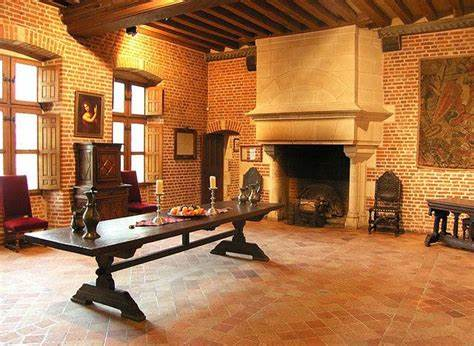
After that time, I often knew things before they really happened—such as who would be at the door before the butler answered it, or just before the telephone rang, who would be calling. From the very first night I moved into Llanada Villa, I felt right at home in it, as if I had always lived here. Even during expansion, if before me unknown horror or behind me, with heavy tread, something moved relentlessly upon me, driving me on and down; I found it easy to move along the stairs, and in the dark without the slightest accident or need to orient myself. It was almost as if the house, or someone in it, were guiding my steps. I was always acutely aware that the house was alive: There were strange noises and creaking boards, but there were also human footsteps, and there were those doors. The doors, in particular, puzzled me. The first time I noticed anything unusual about the doors in the house was when I was reading a book late one night. Suddenly, I heard footsteps on the ceiling above my bedroom. Then the door of the stairwell opened, steps reverberated on the stairs, then the door-to-nowhere opened, and a blast of cold air hit me. I looked up, and there was no one there. Annoyed, I rose and went to check the servant’s quarters. They were indeed fast asleep. Not satisfied and thinking that one of them must be playing tricks on me, I woke them one by one and questioned them. However, they had trouble waking up, and it was evident to me that I was on a fool’s errand; the servants had not been down those stairs. #RandolphHarris 3 of 7
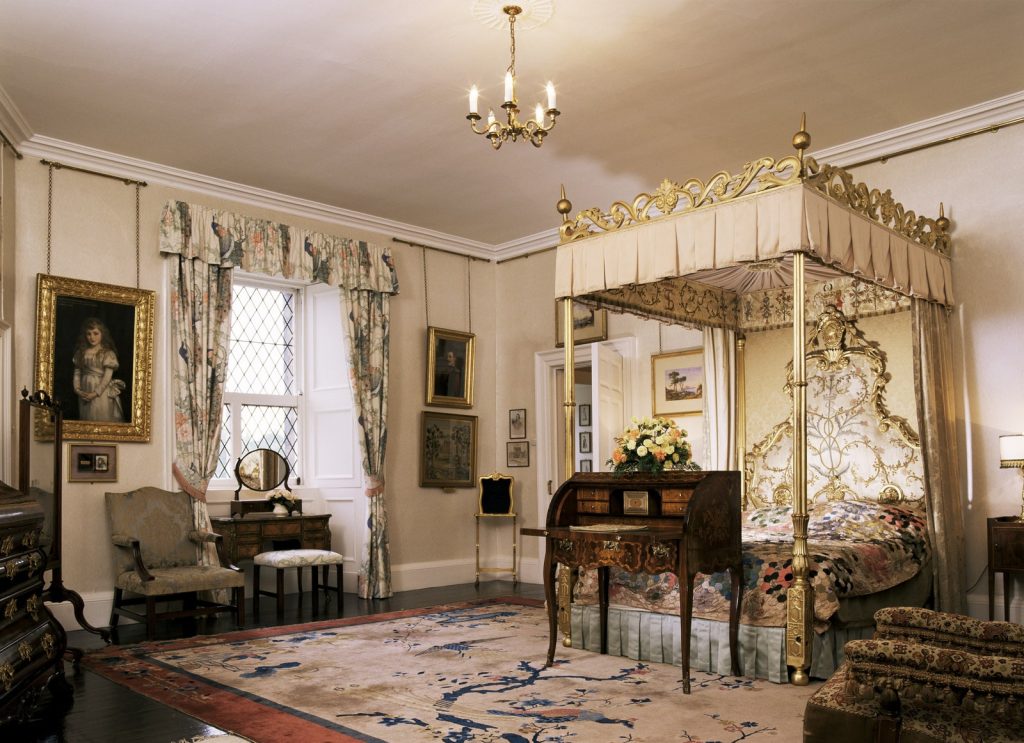
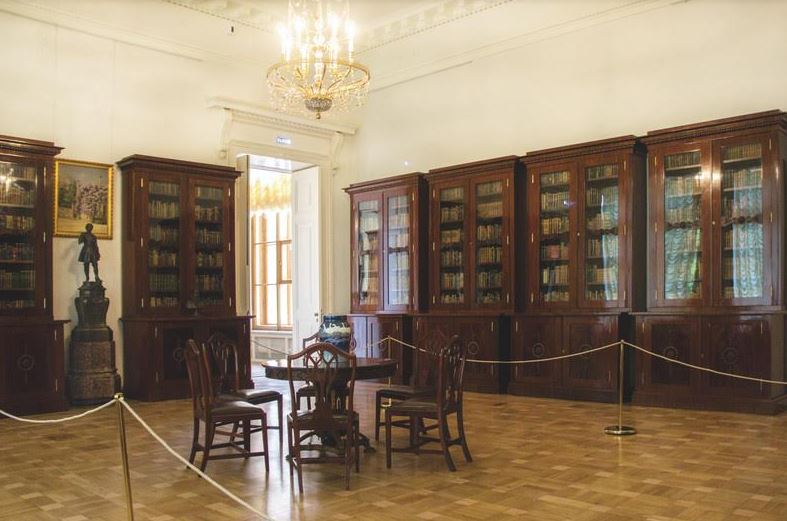
That was the beginning of a long succession of incidents involving the doors in the house. Occasionally, I would watch with fascination when a door opened quite by itself, without any logical cause, such as wind or draft; or to see a door for me just open as I was about to reach for the doorknob! At least, for now, whatever presence there was in the house was polite: It opened the door to a lady! However reassuring it was, it could also be frightening. One evening, I was reading in the library, and an intolerable discomfort overcame me. Through the thudding of my heart, I heard the stealthy footsteps of someone echoing in the distance. Then there was a sound behind one of the bookshelves that sounded like somebody suffering—making all kinds of noises. It hurled me into sufferings almost more than I could bared. I got up and started pulling books away from the shelves and that is when I discovered a panel. It was wide enough to be a passage, and the passageway itself was blocked with a piece of concrete; maybe thirty inches wide and forty inches long. Standing for a moment listening, I could hear a faint sound like a stumble from within. Although I was filled with curiosity to find out what was beyond the wall, it did not match the desire to tear the wall apart. I slipped noisily out of the library and flattened myself against the closed door. As the grandfather clock tick-tocked in a hollow monotone, I knew that somewhere in the thick darkness there was an apparition. #RandolphHarris 4 of 7
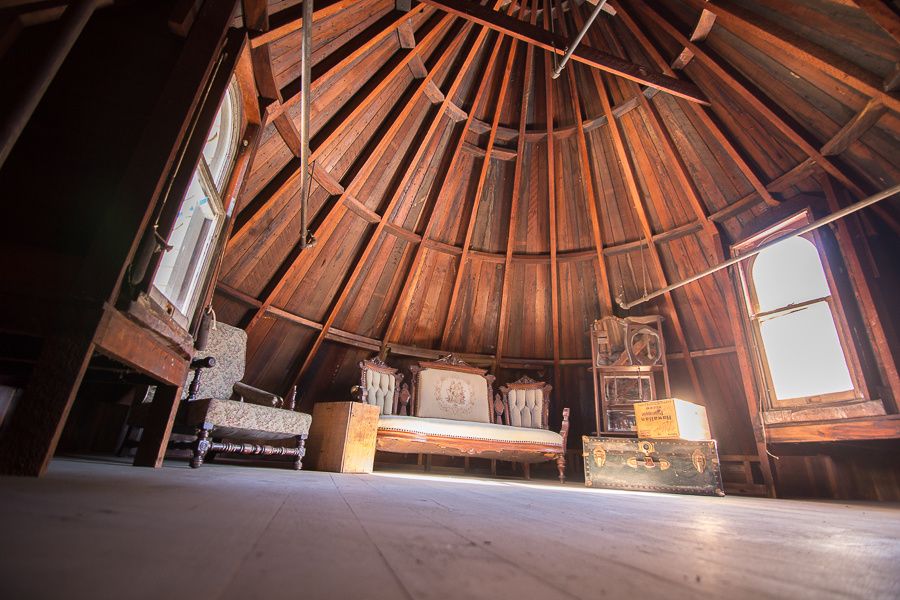
For a time, which seemed so long that the World grew gray with age and sin, and my haunted mansion, having fulfilled its purpose in this monstrous culmination of its terrors, vanished out of my consciousness with all its sighs and sounds, the apparition stood within a pace, regarding me with the mindless malevolence of a wild brute; then thrust its hands forward and sprang upon me with appalling ferocity! The manifestation released my physical energies without unfettering my will; my mind was spellbound, but my body powerful and limbs agile. For an instant, I saw this unnatural contest between a dead intelligence and a breathing mechanism only as a spectator—such fancies are in dreams; then I regained my identity almost as if by a leap forward into my body, and the straining automaton had a directing will as alert and fierce as that of its hideous antagonist. However, what moral can cope with a demon? Despite my strength and activity, which seemed wasted in a void, I felt the cold fingers close upon my throat. Borne backward against the floor, I saw above me the dead and drawn face within a hand’s breadth of my own, and then all was black. Dazed with agony, I opened my eyes. The silence was stifling. And out of that unbroken silence crept slowly to my significance sharper than any outcry, the clock had stopped ticking. In my mind’s eye I could see the key in the clock door, and then slowly, soundlessly, I began to drift toward the clock. Six paces from it I caught the dim glint of a key in the clock—my eyes were now accustomed to the darkness—and then beneath my foot a board treacherously cried out in the stillness. #RandolphHarris 5 of 7
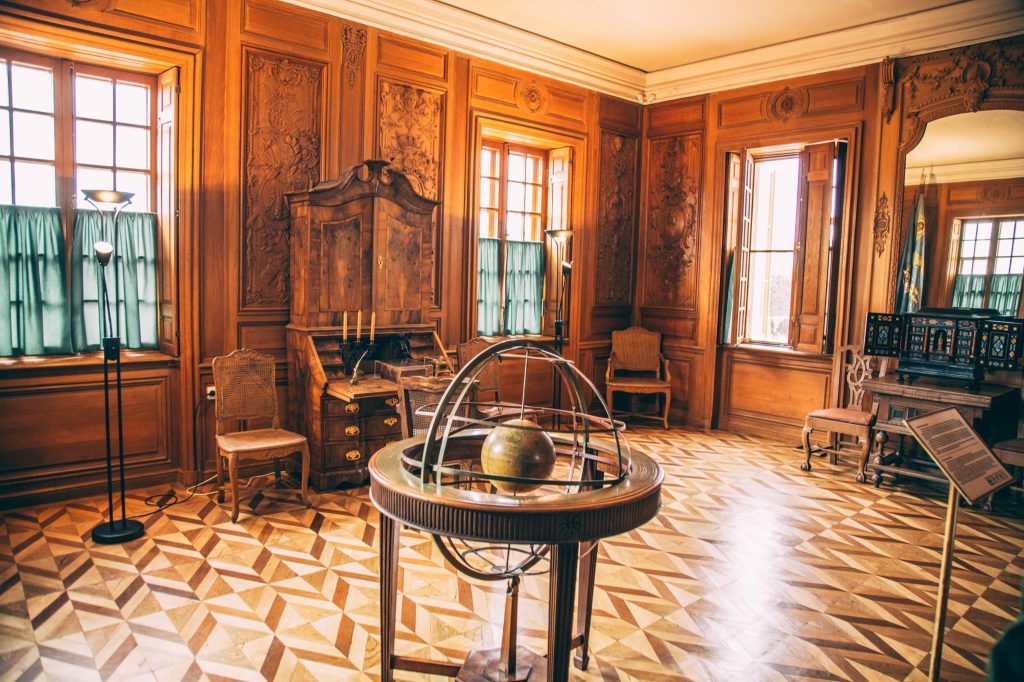
I stood there, holding my breath and as I stood, I saw the clock door slowly open, and two fingers slid round the edge of it! Lunging, I flung myself on the door. There was a strangled animal cry from within the case, the fingers jerked and vanished, and I banged the door tight and turned the key in the lock. I heard pounding on the stout mahogany door of the case as I ran to the wall switch and flooded the room with light. Blinking, I started at the tray of trinkets untouched in the window. Then appeared a gentleman, walking alone in the hallway. Thinking he was a servant, I was just about to have a word with him, when he vanished. Suddenly, a coffee cup rose from a side-table, nobody being nigh, and flew to the other side of the room, breaking itself against the wall; for my further confirmation, that it was neither the tricks of the wags nor the fancy of a servant, but the mad frolics of witches and demons. The front of the house was so haunted in all the room, that they stood empty for a long time. In the latter part of the autumn of 1887, after retiring to my bedroom about eleven o’clock, I thought I heard a peculiar moaning sound, and someone sobbing as if in great distress of mind. I listened very attentively, and still it continued; so I raised the gas in my bedroom, and then went to the window on the landing, drew the curtain aside, and there on the grass was a very beautiful young girl in a kneeling posture, before a soldier in a general’s uniform, sobbing and clasping her hands together, entreating for a pardon. #RandolphHarris 6 of 7
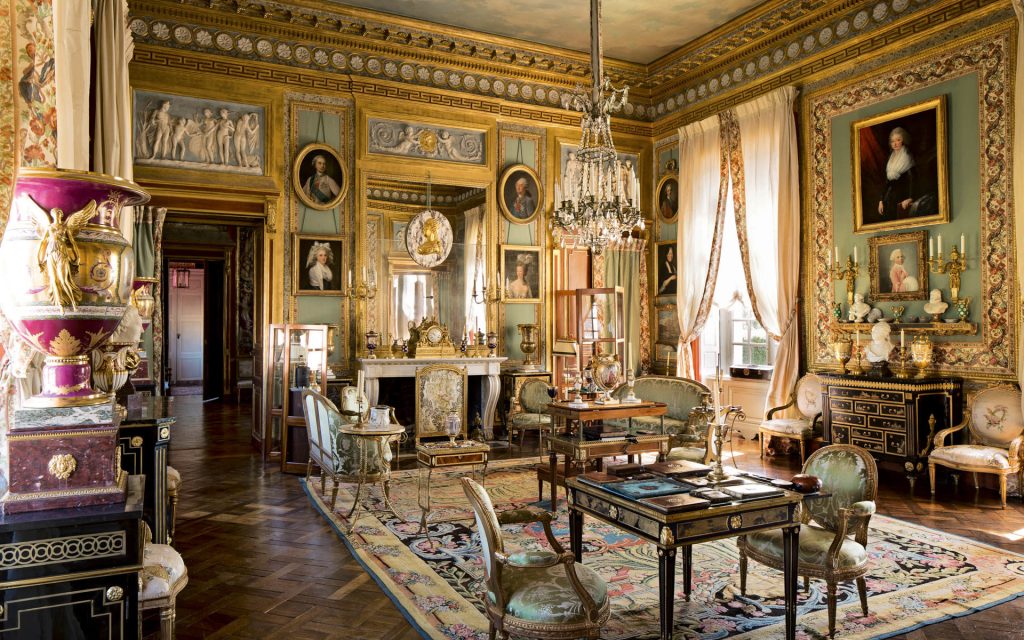
However, alas, he only waved her away. So much did I feel for the girl that I ran down the stairway that wound down into blackness to the door opening upon the lawn, and begged her to come in and tell me her sorrow. The figures then disappeared gradually, as in a dissolving view. Not in the least nervous did I feel then; went again into my bedroom, took a sheet of writing paper, and wrote down what I had seen. The following evening, a few steps from the living room to the rear section, which was the original portion of the house, a man suddenly appeared, striding towards me, and going in a direction opposite to mine. When first seen he was standing exactly in front of the fireplace which dominated the room. Young and ghastly pale, he was dressed in evening clothes, evidently made by a foreign tailor. Tall and slim, he walked with long measured strides noiselessly. A tall white had covered thickly with black crepe, and an eyeglass, completed the costume of this strange form. The moonbeams from the skylight falling on the corpse-like features revealed a face well known to me, that of a former butler. A housemaid was in the room with me. She stopped abruptly, as if spellbound, then rushing towards the man, she gazed intently and with horror unmistakable on his face, which was now upturned to the Heavens. She indulged in her strange contemplation but for a very few seconds, then with extraordinary and unexpected she ran away with a terrific shriek and tell. However, this woman never have I seen or heard of since, and I could not explain her presence, nor the man’s. A week after this event, I was in my bedroom reading my letters, and it was very, very late. News of the butler’s death reached me. Then suddenly, the door opened, and the butler stood there looking at me reproachfully. But, he had been dead for more than a week. I screamed and went under the covers. A housemaid rushed upstairs to see what was the matter. When she arrived, the door was wide open! #RandolphHarris 7 of 7

The Winchester Mystery House

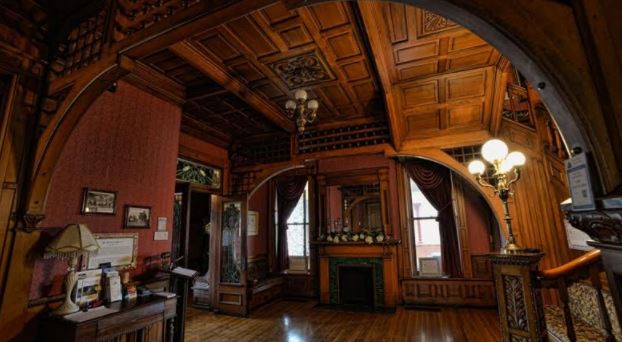
It is possible that events in The Winchester Mystery House can be charged with such powerful emotion that their traces linger in the setting where they occurred. That may at least be the explanation for the ubiquitous sighting of figures in the Grand Ballroom or gibbets upon which they have been hanged—unless of course popular superstition has attracted presumed ghosts to these localities.

Please come and enjoy a delicious meal in Sarah’s Café, stroll along the paths of the beautiful Victorian gardens, and wonder through the miles of hallways in the World’s most mysterious mansion. For further information about tours, including group tours, weddings, school events, birthday party packages, facility rentals, and special events please visit the website: https://winchestermysteryhouse.com/

Please visit the online giftshop, and purchase a gift for friends and relatives as well as a special memento of The Winchester Mystery House. A variety of souvenirs and gifts are available to purchase. https://shopwinchestermysteryhouse.com/

The Strongest are the Best

Whatever may be said against the principle of “natural selection” in other departments, there is no doubt of its predominance in early human history. The strongest killed out the weakest as they could. Since any form of political organization was superior to chaos, an aggregation of families having political leadership and some legal custom would rapidly conquer those that did not. The caliber of early political organization was less important than the fact that it was there at all; its function was to create a “cake of custom” which would bind men together, holding them, to be sure, in whatever place in the social order birth had given them—form organization originate in a regime of status and only long afterward evolves into a regime of contract. The second step, after organization, is the moulding of national character. This came about through the unconscious imitation of a chance “variation” displayed by one or two outstanding individuals. The national character is simply the naturally selected parish character, just as the national speech is the successful parish dialect. Progress, habitually thought of as a normal fact in human society, is a rare occurrence among peoples: the ancients had no such conception, nor do the Asians; and it is hard for some to become enlightened to the ways of the established World. The phenomenon occurs only in a few nations of European origin. #RandolphHarris 1 of 18

Some nations progress while others stagnate, because under all circumstances the strongest prevail over others; and the strongest are, in certain marked peculiarities, the best. Within each nation the most appealing character, usually the best, prevails; and in the now dominant western part of the World these competitions between nations and character types have been intensified by “intrinsic forces.” Of the existence of progress in military art there can be no doubt, nor of its corollary, that the most advanced will destroy the weaker, that the more company will eliminate the scattered, and that the more civilized are the more company. An advance in civilization is thus a military advantage. Backward civilizations, being more rigid in the structure of their law and custom, kill out varieties at birth, but progress depends upon the emergence of varieties. Progress is only possible in those happy cases where the force of legality has gone far enough to bind the nation together, but not far enough to kill out all varieties and destroy nature’s perpetual tendency to change. Early societies were in a grave dilemma: they needed custom to survive, but unless it was sufficiently flexible to admit variations they were frozen in their ancient mould. Modern societies, living in an age of discussion rather than rigid custom, have found a means of reconciling order with progress. #RandolphHarris 2 of 18
Darwin’s task of finding natural roots for man’s moral feelings and for the sympathy that underlies persistent social cooperation was taken up by John Fiske in his Outlines of Cosmic Philosophy (1874) and The Meaning of Infancy (1883). After reading Alfred Wallace’s account of his observations in the Malay Archipelago, Fiske had been struck by the thought that one thing that distinguishes humans from other mammals is the very long duration of their infancy. In general, there is a correlation between the complexity of a species’ potential behaviour and the proportion of its behaviour that is acquired by learning after birth. The human infant acquires the smallest proportion of its ultimate capacities during gestation; it is born less developed than the young of other species, and must undergo a long plastic period in which it learns the ways of its race. What makes the human species progressive, Fiske reason, is the fact that the infant does not come into the World with his capacities “all cut and dried,” but on the contrary must early slowly and is therefore able to learn an infinitely wider range of behaviour. The necessity of seeing infants through this long period prolongs the years of maternal affection and care and tends to keep father, mother, and child together—in short, to found the stable family and ultimately the clan organization, the first step toward civil society. From being merely gregarious, man become social. #RandolphHarris 3 of 18
Once the clan is organized, natural selection intervenes to maintain it; for those clans in which the primeval selfish instincts were most effectively subordinated to the needs of the group would prevail in the struggle for life. In this way the first germs of altruism and morality, manifest in the mother’s care of the infant, become generalized into wider and wider social bonds until they form sympathies broad enough to support the communal life of civilized man as he is not known. The moral sense has its foundation in the primitive biological unit, the family, and the social cooperation and solidarity of men is nothing if not natural. Fiske’s philosophy attempted to give the higher ethical impulses a direct root in the evolutionary process. A somewhat different—and, to most of his contemporaries, a less satisfactory—note of moral reassurance was struck by T.H. Huxley in his famous Romanes Lecture on “Evolution and Ethics” (1893). Unlike Fiske, Huxley accepted at its value the Hobbesian interpretation of Darwinism and acknowledged that “men in society are undoubtedly subject to the cosmic process,” which includes, of course, the struggle for existence and the elimination of the unfit. However, he flatly rejected the common practice of identifying the “fittest” with the “best,” pointing out that under certain cosmic conditions the only “fit” organisms would prove to be low ones. Man and nature make altogether different judgments of value. The ethical process, or the production of what man recognizes as truly the “best,” is in opposition to the cosmic processes. “Social progress means a checking of the cosmic process at every step.” #RandolphHarris 4 of 18
Active participation in the affairs of the country as a whole and of states and communities, as well as of large enterprises, requires the formation of interpersonal groups, within which the process of information exchange, debate, and decision-making, respectively, let us look at the characteristics such interpersonal groups will have. The first is that the number of participating people must be restricted in such a way that the discussion remains direct and does not allow the rhetoric or the manipulating influences of demagogues to become effective. If people meet regularly and know each other, they begin to feel who they can trust and whom they cannot, who is constructive and who is not, and in the process of their own participation, their own sense of responsibility and self-confidence grows. Second, objective and relevant information which is the basis for everyone’s having an approximately clear and accurate picture of the basis issues must be given to each group. The problem of adequate information presents many difficulties which forces us into some digression. Are the issues with which we deal in foreign and domestic policy or in the management of a corporation not so intricate and specialized that only the highly trained specialist can understand them? If that were so, we would have to admit that the democratic process in the traditional sense of the citizen’s participation in decision making is not any more feasible anymore; we would have to admit, furthermore, that the constitutional function of Congress is also outmoded. #RandolphHarris 5 of 18

The individual senator or representative certainly does not have the specialized knowledge which is assumed to be necessary. The president himself does seem to be dependent on the advice of a group of highly trained specialists, since he is not supposed to understand problems of such intricacy that they are outside the grasp of an informed and educated citizen. Briefly, if the assumption of the insurmountable complexity and difficulty of the data were correct, the democratic process would be an empty form, covering up government by technicians. The same would hold true in the process of management also. If top managers could not understand the highly complex technical problems they are called upon to decide, they would simple have to accept the decisions of their technical experts. The idea that data have become so difficult and complex that only highly specialized experts can tackle them is largely influenced by the fact that in the natural sciences such a degree of specialization has been reached that often only a few scientists are capable of fully understanding the work of a colleague in their own field. Fortunately, most data which are necessary for the decision-making in politics and management are not of the same order of difficulty or specialization. In fact, computerization reduces the difficulties because it can construct different models and show different outcomes according to the premises which are used in the programing. #RandolphHarris 6 of 18

In psychoanalytic terminology, one speaks of “the unconscious” as if it were a place inside the person, like the cellar of a house. This idea has been reinforced by Dr. Freud’s famous division of the personality into three parts: the Id, the Ego, and the super-ego. The Id represents the total of instinctual desires, and at the same time, since most of them are not permitted to arrive at the level of awareness, it can be identified with the “unconscious.” The Ego, representing man’s organized personality inasmuch as it observes reality and has the function of realistic appreciation, at least as far as survival is concerned, may be said to represent “consciousness.” The super-ego, the internalization of father’s (and society’s) commands and prohibitions, can be both conscious and unconscious, and hence does not lend itself to being identified with the unconscious or the conscious respectively. The topographical use of the unconscious has certainly been stimulated further by the general tendency in our time to think in terms of having. People say that they have insomnia, instead of being sleepless, or of having a problem of depression, rather than of being depressed; thus they have an Ultimate Driving Machine, a Victorian House, a child, as they have a problem, a feeling, a psychoanalyst—and an unconscious. #RandolphHarris 7 of 18

This is the reason why so many people today prefer to speak of the “subconscious”; it is till more clearly a region, rather than a function; while I can say I am unconscious of this or that, one could not say, “I am subconscious of it.” Jung’s use of the term “unconscious” has not helped to discourage the topographical usage of this concept. While for Dr. Freud the unconscious is the cellar full of vices, Jung’s unconscious is rather a cave filled with man’s original but forgotten treasures of wisdom (although not exclusively so), laid over by intellectualization. Another difficulty in the Freudian concept of the unconscious lies in the fact that it tends to identify a certain content, that instinctual strivings of the Id, with a certain state of awareness/unawareness, the unconscious, although Dr. Freud was careful to keep the concept of the unconscious separate from that of the Id. One must not lose sight of the fact that one is dealing here with two entirely distinct concepts; one deals here with certain instinctual impulses—another with a certain state of perception—unawareness or awareness. It so happens that the average person in our society is unaware of his desire to incorporate another human being, the psychotic is quite aware of that or other archaic desires, and so are most of us in our dreams. If we insist on the separation between the concept of archaic content and that of that of the state of awareness, or unconsciousness, it will clarify the understanding of “the” unconscious. #RandolphHarris 8 of 18

The term “the unconscious” is actually a mystification (even though one might use it for reasons of convenience, as I am guilty of doing in these pages). There is no such thing as the unconscious; there are only experiences of which we are aware, and others of which we are not aware, that is, of which we are unconscious. If I hate a man because I am afraid of him, and if I am aware of my hate but not of my fear, we may say that my hate is conscious and that my fear is unconscious; still, my fear does not lie in that mysterious place: “the” unconscious. In the beginning of my struggles, it was discouraging because I could not see the whole scene in the way that I express it now. I knew only that in this situation something was wrong and I had to correct that. This went on…and on…and on…seemingly with nothing ahead and with no end to the going. However, when I had gone through it enough times in different circumstances, then something that all the instances had in common began to show itself to me. I began to grasp in a total way the distinction between what others had put into me and what came out of myself. What had been a knotty tussle with one blindness after another, each one gone through in isolation from the others, began to be more flowing, with a more steady awareness of myself. Each time, something of myself came through, and something that was not myself got pushed away. There seems to be “no end to it” now, but the meaning of the words has changed. #RandolphHarris 9 of 18

What began as one battle after another, so wearying, so full of pain, has now become frequently enjoyable, like the joy that a child has in his growing and in his growing knowing. Sometimes it is not like that, but even then there is the knowing that I will come through, which certainly was not with me earlier, when I did not even know what was pushing its way through. It is often true now that “I do not know what I am going to do, but I am going to do it”—not only in work and things like that, but in my relations with other people, too. Now, we have been following Clare for some months now and many of us can relate to her. Most recently, she was concerned because she realized that she revolted against being alone. Her attitude about this problem had changed since her analysis of the “private religion.” She still felt the sting of being alone as keenly as before, but instead of succumbing to a helpless misery she had taken active steps to avoid solitude. She sought the company of others and enjoyed it. However, for about a week she was entirely obsessed by the idea that she must have a close friend. She felt like asking all the people she met, hairdresser, dressmaker, secretary, married friends, whether they did not know a man who would be suitable for her. Everybody who was married or who had a close friend, she regarded with the most intense envy. These thoughts assumed such proportions that it finally struck her that all of this was not only pathetic but definitely compulsive. #RandolphHarris 10 of 18

Only now was she able to see that her incapacity to be alone had greatly increased during the relationship with Peter, and had reached a climax after the separation. She realized, too, that she could endure solitude if it was of her own choosing. If it was not voluntary, it turned out painfully; then she felt disgraced, unwanted, excluded, ostracized. Thus, Clare realized that the problem was not a general incapacity to be alone, but a hypersensitivity to being alone. Linking this finding with her recognition that her self-evaluation was entirely determined by the evaluation of others, she understood that for her the mere absence of attention meant that she was thrown to the dogs. Each is so accustomed to obeying the lower ego that he finds his greatest comfort in continuing to do so, his greatest discomfort in disobeying it. Insofar as the quest seeks to bring about such a reversal of acts and attitudes, it becomes the most difficult enterprise of his whole life. Much new thinking and much new willing are required here. To accept our moral weakness, to overlook our failure to practice control of thoughts, and smugly to condone this unsatisfactory condition by calling it “natural,” is to show how powerful is the ego’s hold upon us. When a man comes to understand that he has no greater problem than the problem within, he comes to wisdom. The fact that he is becoming aware of this weakness more acutely and that he now sees egoism in himself where he formerly saw virtue, is a revelation made by his progress towards truth. #RandolphHarris 11 of 18
Many people suffer in adult life because they will not grow to adulthood, but insist upon struggling, sometimes with ingenious cunning and subterfuge, to get other people to cater to their needs and wishes the way they wanted their parents to serve them during infancy. The sneaky ways in which persons stive to exploit others have been documented. Thus, an adult might play the game of “wooden leg”—asking for deference from others, and seeking to justify failures, by calling attention to real or imagined disabilities: “If my stomach had not been hurting me all those years, I could have been more successful in my career.” The healthy personality consists of affirming one’s personal worth (“I am OK”), making reasonable demands upon others as befits an adult, and developing simple honesty in one’s dealings with others—living a relatively “game-free” existence. When a man comes to understand that he has no greater problem than the problem within, he comes to wisdom. The fact that he is becoming aware of his weakness more acutely and that he now sees egoism in himself where he formerly saw virtue, is a revelation made by his progress towards the truth. If he considered it aright and understands it as it really is, even temptation can nourish a man, make his will stronger, and his goal clearer. To make amends and fast, acts as purification after sin. #RandolphHarris 12 of 18
While a mental health counselor could undoubtedly make a valuable contribution in meeting our society’s mental health needs, he would not represent an optimal answer to the pressing demand for psychotherapy. The only thoroughly logical answer to that demand, in view of the utter impossibility of its being supplied by the present profession, is to create a new profession—to train properly selected persons to function specifically and exclusively as psychotherapists. What would constitute the ideal program of training for the psychotherapist? How should candidates for this training be selected? What personal characteristics should they manifest?? No one can say with certainty. And it would be a mistake to propose a highly restrictive set of specifications for this new profession, for this would constitute a premature attempt at authoritative rigidification of standards of a kind that is already proving embarrassing to the existing mental health professions. In thinking about selections and training of members for this new profession, it would be well to hold clearly in mind what their ultimate function and setting would be: they would work in hospitals, in mental health center, in child guidance clines, and in various social agencies where they would be under the general direction of and have continuous consultation with the senior professional staff in psychiatry, psychology, and social work; their primary and exclusive responsibility (except for special work entailed in research collaboration) would be to provide therapeutic conversation. #RandolphHarris 13 of 18

It is perhaps easier to specify those properties which would not be pertinent to their recruitment and training than to list those which would with certainty be applicable. A high level of academic performance would be less critical than substantial evidence of sound general intelligence. Modest intellectual endowment would perhaps prove a more positive qualification than extremely high intelligence. A balanced record of good scholastic achievement couple with extracurricular interests and reasonable number of effective social pursuits, including group participations, would probably make for a better candidate than would an outstanding academic record in the absence of non-scholarly interests and pursuits. Evidence of measure social interests and welfare motivations rather than of strong scientific interests and material motives would be pertinent. The young person who had revealed both interests and aptitudes for working effectively with others in personal settings would probably be a good bet. Thus, the person with a record of leadership in school activities, in camping, scouting, boys’ clubs or girls’ clubs, settlement house or other volunteer service activities would reveal some promise for effective response to training. #RandolphHarris 14 of 18

The Sacramento Fire Department is also trained to deal with mental health crisis. They get many calls where people are simply in distress and want a ride to the hospital. Unfortunately, those rides are extremely expensive, but the Sacramento Fire Department goes out of their way to keep the community safe and to preserve lives. If you have a firm grasp on your value system, mission, mandates, and vision of your department’s desired future, most departments realize that they have an ever-increasing workload, often without the correlating increase in resources (money in the budget and more personnel). “I really feel that is firefighting is what somebody really wants to do and they take the time to get the proper training, anybody can do it. You’ve gotta want to do it. I’ve had 240 hours of training, plus I went to the National Fire Academy. I’ve been there about ten times for different classes. I paid for everything myself, because the classes at the academy are taught by the best trained people in the field. I feel that the more knowledge I get, the safer my life is going to be. I know that bookwork can’t always help you in an actual fire situation. You have to have the experience. But hopefully my book learning, my training, plus now the experience I’ve had will get me out of a lot of bad situations—or prevent me from getting into one. It took anywhere from nine to twelve hours to get to the academy, depending on weather. I’d leave about five Friday morning and return about four in the morning on Sunday. #RandolphHarris 15 of 18

“I’ve taken public fire education, firefighter safety and survival, fire service management, initial company tactical operation, fire service suppression—that’s increasing personal effectiveness—and fire service supervision—that’s increasing team effectiveness. I’ve also taken a class over at Santa Clara University on investigating the juvenile arsonist. I’m a juvenile counselor. I love that. The kids really open their arms to me. It’s a wonderful feeling. These are children who have actually set fires, and the parents bring them to me. A lot of the parents say things like, ‘Scare them, and tell them never to do this again.’ But when I sit down with these kids and talk to them, they understand where I’m coming from. They know I’m a firefighter and that what they did was wrong, but they can trust me and talk to me about it. We’ve had a real good record with these kids not repeating fires. There was a mentally [disabled] boy who was playing with a lighter on his bed, and he set his mattress on fire. He was an eighteen-year-old who, when he was five, had fallen off a curb and gotten hit by a car. Some people wanted the police to talk to the boy and shake him up by telling him, ‘You’ll get arrested if you do this again.’ It was one of the police officers who asked me to handle this child, who had a six-year-old mentality. So I talked to him and had a real good session with him. #RandolphHarris 16 of 18
Nine months later I was involved with a club, taking disabled kids to the arena for one of the games. And this boy was one of the kids in the group. I went up to him and said, ‘Hi, (name was used but is being withheld for safety and privacy reasons), do you remember me?’ And he said, ‘Yes.’ Then he said, ‘I don’t play with lighters anymore.’ And I was just so tickled, to think that he would remember all those months later. And his mom was grateful for how I handled the situation. In your original training class, when you go into an actual burn for the first time, you get scared. You think, ‘What in the heck am I doing? Why am I doing this?’ But I had great confidence in my instructors. I trusted them completely, because they weren’t going to take a class of twenty people into a burning building and endanger their lives. The neatest part for me was having the breathing apparatus on. I’d never had anything over my face like that. That was exciting. I would challenge myself to see how little air I could use in the training session. I got to the point where I would just relax, and it doesn’t bother me to have the mask on. I’ve come a long way since then, but I think anybody would be foolish to say they weren’t scared. I still am, at times. At some fires I feel that that darn thing is a lot smarter than I am. It’s a constant game. It’s like I say, ‘Okay, who’s going to be smarter this time, you or me? Who’s going to win this fight?’ You have to treat a fire with respect. Because if you don’t, that’s when you get hurt.” #RandolphHarris 17 of 18
Today’s firefighters use a variety of technology, and they provide many services that go beyond putting fires out. They are actively working in our communities and counseling people in an effort to prevent fires. These programs are vitally important. You can help save lives by contributing to the Sacramento Fire Department. Also, I like how the firefighter that was interviewed actually talked to the youths and let them know that someone cares and why fires are dangerous. When people take their oaths serious, it can really prevent bad behaviour from becoming contagious. Parents, be sure to teach your children to love America and respect authority, obey the law and love God so we can also preserve the harmony in our community. I pledge allegiance to the flag of the United States of America, and to the Republic, for which it stands, one nation, under God, indivisible with liberty and justice for all. Justice, justice shalt thou pursue, that thou mayest live in the land which God giveth thee. Congress shall make no law respecting an establishment of religion, or prohibiting the free exercise thereof; or abridging the freedom of speech, or of the press; or the right of the people peaceably to assemble, and to petition the government for a redress of grievances. Proclaim liberty throughout the land, unto all the inhabitants thereof. Of all the dispositions and habits, which lead to political prosperity, religion and morality are indispensable supports….where is the security for property, for reputation, for life, if the sense of religion obligation deserts the oaths, which are the caution indulge the supposition that morality can be maintained without religion. #RandolphHarris 18 of 18

The Winchester Mystery House
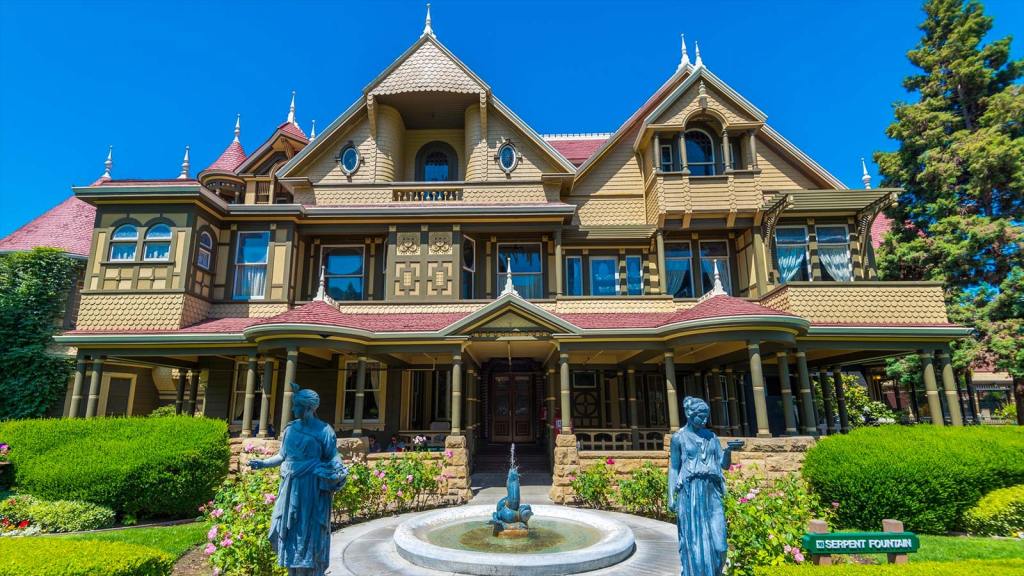
Mrs. Winchester, about one hundred and thirty years ago, or more, became a little disquieted. However, not anything much remarkable yet, unless about a young servant girl who was pluckt by the thigh by a cold hand in her bed, borne through the air, and died within a few days after. Some weeks after this, Satan, in the form of a tall dark man conveyed thither and most often let the house by way of the chimney. One morning, the mother of the young servant girl was standing by the door, Mrs. Winchester asked her how she was doing. To whom she answered, with a sorrowful countenance, that though she was in tolerable health, yet things went very ill. Mrs. Winchester’s house being extremely haunted, especially above stairs, so that she was forced to keep in the lower rooms. She also said that one evening she walkt out about a mile from the mansion and there came riding towards her three persons upon three broom-staves, born up about a yard and half from the ground. Two of them she formerly knew which was a Witch and a Wizard. “Well,” Mrs. Winchester said, “if you will but stay a while, you may chance to see something more.” And, indeed, the servant had not stayed any considerable with her.

Please come and enjoy a delicious meal in Sarah’s Café, stroll along the paths of the beautiful Victorian gardens, and wonder through the miles of hallways in the World’s most mysterious mansion. For further information about tours, including group tours, weddings, school events, birthday party packages, facility rentals, and special events please visit the website: https://winchestermysteryhouse.com/

Please visit the online giftshop, and purchase a gift for friends and relatives as well as a special memento of The Winchester Mystery House. A variety of souvenirs and gifts are available to purchase. https://shopwinchestermysteryhouse.com/

If Nature is Hard, Truth is Cruel
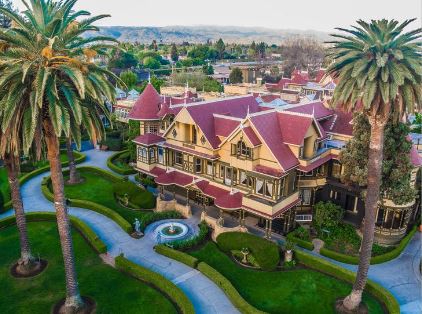
Life can be difficult for people who do not have peace in their homes or environments due to the increase of people who are living with untreated mental illness. Unlike when people are committing crimes, and one has the option to call the police, when an individual or a group of people are displaying extremely immature behaviour and displaying symptoms of mental illness, there is no one to call. Close to 66 percent of adults with mental illness and adolescents with major depressive disorder do not get treatment. Nearly 1 in 7 California adults experience mental illness, and one in 26 has a serious mental illness that makes it difficult to carry out daily duties. Mental health challenges can impact anyone, regardless of education, geography, faith, calling, or family. They are nothing to be ashamed of and should be met with love. More than half the World’s population lives in cities, and the number is expected to continue to increase in the coming years. Living in urban areas has been associated with increased risk for mental disorders, including anxiety, depression and schizophrenia. Research using functional magnetic resonance imaging had identified changes in the brain indicating that urban upbringing and city living are linked to social stress processing. Among the potentially contributing factors to poorer mental health in urban areas are air pollution and other exposure to toxins, increased noise, lack of open space, crime and social inequalities, and the stress of sensory overload. #RandolphHarris 1 of 20

Extreme heat has been associated with a range of mental health impacts. Research indicates that when people must endure extreme heat, this increases irritability, symptoms of depression and an increase in suicide. It can also affect behaviour, contributing to increased aggression, incidence of domestic violence, and increased use of alcohol or other substances to cope with stress. Also, rural people and/or those who are unemployed, and united rented to multiple individuals who are related do not tend to do well in high-rise buildings. High occupancy of these types of people in high-rise buildings turns the atmosphere into one like a jail or mental hospital. People do not respect personal space, private property, nor do they follow the laws or rules in their contracts. They start to feel like everyone is their family and friend, many people stop caring about how people perceive them, people do not clean up messes they make in common areas, and a lack of respect spreads and animosity throughout the community because of a loss of autonomy. However, high-rise buildings where rules are enforced, and people follow the laws tend to be more peaceful. And cities can provide advantages, such as better access to health care and education, and potential for social interaction. Mental health problems are common, so it is important to be aware of possible signs. Feeling worried, depressed, guilty, worthless or feeling an exaggerated sense of “high” may be signs of a mental health issue. If signs do not go away after two weeks, although there may not be a serious problem, it is best to seek help from a professional. If someone talks about suicidal thoughts or is engaging in high-risk activities, do not ignore this. #RandolphHarris 2 of 20
A mental health disorder may start out as subtle changes to a person’s feelings, thinking and behaviour. If they have ongoing and significant changes, it could be a sign that they are developing a mental health disorder. If something does not seem “quite right,” it is important to have a conversation about getting help. An important part of good mental health is the ability to look at problems or concerns realistically. Everyone has days when they feel sad, stressed, anxious, or overwhelmed by life’s challenges. If you continue to struggle for several weeks or longer or your symptoms begin interfering with your daily life—at home, work, school, or in your relationships—seek help. Addressing mental health concerns early and often is the most effective approach and can help prevent a crisis in the future. Struggling with your mental health does not indicate a weakness in your character or spirit. Earthly situations may not be ideal, man’s spiritual DNA is perfect because his identity is as a son or daughter of God. A diagnosis connected to mental health should not be viewed as any less real than another medical diagnosis. Think about the following as you consider talking with a mental health professional: How long have you experienced these challenges? How much do these symptoms affect your daily life? Are you aware of others in your family who have experienced similar challenges? Are these problems causing significant distress in your life? Are your own attempts to make yourself feel better not helping? Has anyone who you trust mentioned something about your mood or behaviour? As you talk with someone working through mental health challenges, the most important things you can do are to listen and show empathy. #RandolphHarris 3 of 20
However, you are not expected or encouraged to diagnose or provide treatment to others struggling with mental health issues. Yet, you can help them feel welcomed and included, find meaningful ways to contribute, and deepen their faith in Jesus as the Christ. Pray for guidance on what to say. Comforting someone can be intimidating, but it is most often better to reach our an say something than to say nothing. It is important that people who are working through mental health challenges know you care and want to support them. However, also let them know that happiness is a choice. No one else is to be regarded as responsible for man’s troubles, irritations, or disabilities. If he will analyse them aright, that is, with utter impersonality, he would see that the responsibility is not really in the other person, who apparently is the agent for these calamities, but in his own undisciplined character, his own egoistic outlook. The very fact that he has become aware of these faults arises because the light has come into existence and begun to play upon the dark places in his character, thus generating a conscious desire for self-improvement. This awareness is not a matter for depression, therefore. To wish one’s history to have been different from what it was, to pile up blame for one’s bad deeds, choices, and decisions, is to cling to one’s imaginary ego although seeking to improve it. Only by rooting up and throwing out this false imagination which identifies one with the ego alone can the mind become freed from such unnecessary burdens. You are to be penitent not only because your wrong acts may bring you suffering but also, and much more, because they may bring you farther away from the discovery of the Overself. To repine for past errors or to wish that what has been should not have been has only a limited usefulness. Analyse the situation, note effects, study causes, draw lessons—then dismiss the past completely. If the ego is discarded, all regrets over past acts are discarded with it. #RandolphHarris 4 of 20
He may be ashamed of what he did in the past but then he was that sort of man in the past. If he persists in identifying himself with the “I,” in time such feelings will come to him and cause this kind of suffering. However, if he changes over to identifying himself with the timeless being behind the “I” there can be no such suffering. If it is to effect this purpose, repentance must be thorough and whole-hearted. He must turn his back upon the former way of life. If Nature is hard, truth is cruel. It is unsparing to our egoistic desires, merciless in ferreting out our personal weaknesses. If it is right to forgive others for their sins against us, it must also be right to forgive ourselves and not constantly condemn ourselves to self-reproach. However, we ought not do so prematurely. When a man becomes aware of his wrong-doing and realizes its meaning for himself and its effect upon others, he has taken the first step towards avoiding its inevitable consequences. When he becomes deeply repentant, he has taken the second step. When he tries to eliminate the fault in his character which produced the evil conduct and to make amends to others, where possible, he has taken the final step. The quest will uncover the weakest places in his character, one by one. It will do so either by prompting him from within or by exposing him from without. If he fails to respond to the first way, with its gentle intuitive working, he must expect to endure the second way, with its harsh pressure through events. The only protection against his weaknesses is first, to confess them, and then, to get rid of them. #RandolphHarris 5 of 20

The constant nagging of those with whom he is compelled to live, work, or associate, so far as there is any truth in their exaggerations or misunderstandings, can be made to serve a most useful purpose by arousing in him the necessity of change and self-improvement. However much of his self-love is wounded and however long it may take to achieve this and to correct his faults, he will only profit by it. With his success a separation may occur, and they may be set free to go their own way. It may be brought about by their own voluntary decisions or by the compulsion of destiny. When a relationship is no longer useful to evolution or justified by universal law, an end will come to it. This acceptance of other people’s criticisms, humbly and without resentment, may be compared to swimming against the current of a stream. Here the stream will be that of his own nature. In this matter he should look upon the others as his teachers—taking care however to separate the emotional misunderstandings and egoistic exaggerations from the truth. He is to regard the others as sent by the Overself to provoke him into drawing upon or deliberately developing the better qualities needed to deal with such provocations, and not only to show him his own bad qualities. Out of the shadows of the past, there will come memories that will torment as they teach him, pictures that will hurt as they illustrate error, sin, and weakness. He must accept the experience unresistingly and transmute it into moral resolve and ethical guidance for the future. The seeker should try to regard his weakness and faults from a more balanced and impersonal point of view. While it is correct for him to be ashamed of them, he need not go to the other extreme and fall into a prolonged fit of gloom or despair about them. Since repentance, coupled with an unswayable determination to prevent further recurrences, is the philosophic way to deal with them. #RandolphHarris 6 of 20
To have discovered a sin in oneself, and to have gone on committing it, is to sin doubly. We civilized men do our utmost to check the process of elimination; we build asylums for the imbecile, the maimed, and the sick; we institute poor laws; and our medical men exert their utmost skill to save the life of every one to the last moment. Thus, the weak members of civilized society propagate their kind. No one who has attended to the breeding of domestic animals will doubt that this must be highly injurious to the race of man. However, a ruthless policy of elimination would betray the noblest part of our nature, which is itself securely founded in the social instincts. We must therefore bear with the evil effects of the survival and propagation of the weak, and rest our hopes on the fact that the weaker and inferior members of society do not marry so freely as the sound. All who cannot spare their children abject poverty should refrain from marriage; the prudent should not shirk their duty of maintaining the population, for it is through the pressure of population and the consequent struggles that man has advanced and will continue to advance. Primeval men and their apelike progenitors, along with many lower animals, were probably social in their habits, and remote primitives practiced division of labour. Man’s social habits have been of enormous importance in his survival. Selfish and contentious people will not cohere, and without coherence nothing can be effected. Man’s moral sense to be an inevitable outgrowth of his social instincts and habits is a crucial factor in group survival. The pressure of group opinion and the moral effect of family affections is ranked with intelligent self-interest as biological foundations of moral behaviour. #RandolphHarris 7 of 20

In the question of the possibility of making the unconscious conscious, it is of the foremost importance to recognize factors which obstruct this process. There are many factors which make it difficult to arrive at insight into the unconscious. Such factors are mental rigidity, lack of proper orientation, hopelessness, lack of any possibility to change realistic conditions, etcetera. However, there is probably no single factor which is more responsible for the difficulties of making the unconscious conscious than the mechanism which Dr. Freud called “resistance.” What is resistance? Like so many discoveries, it is so simple that one might say anyone could have discovered it—yet it required a great discoverer to recognize it. Let us take an example: your friend must undertake a trip of which he is obviously afraid. You know that he is afraid, his wife knows it, everyone else knows it, but he does not know it. He claims one day that he does not feel well, the next day that there is no need to make the trip, the day after that there are better ways to achieve the same result without traveling, then the next day that your persistence in reminding him of the trip is an attempt to force him, and since he does not want to be forced, he just will not make the trip, and so on, until he will say that it is now too late to go on the trip, anyway, hence there is no use in thinking any further about it. If, however, you mention to him, even in the most tactful way, that he might not want to go because he is afraid, you will get not a simple denial, but more likely a violent barrage of protestations and accusations which will eventually drive you into the role of having to apologize, or even—if you are now afraid of losing his friendship—of declaring that you never meant to say that he was afraid and, in fact, ending up with enthusiastic praise of his courage. #RandolphHarris 8 of 20

What has happened? The real motivation for not wanting to go is fear. (What he is afraid of is of no significance for the purposes of this discussion; suffice it to say, that his fear could be objectively justified or the reason for his fear merely imagined.) This fear is unconscious. Your friend, however, must choose a “reasonable” explanation for his not wanting to go—a “rationalization.” He may discover every day a new one (anyone who has tried to give up smoking knows how easily rationalization comes) or stick to one main rationalization. It does not matter, in fact, whether the rationalization as such is valid or not; what matters is that it is not the effective or sufficient cause for his refusal to go. The most amazing fact, however, is the violence of his reaction when we mention the real motive to him, the intensity of his resistance. Should we not expect him to be glad, or even grateful for our remark, since it permits him to cope with the real motive for his reluctance? However, whatever we think about what he should feel, the fact is that he does not feel it. Obviously, he cannot bear the idea of being afraid. However, why? There are several possibilities. Perhaps he has a narcissistic image of himself in which lack of fear is an integral part, and if this image is disturbed, his narcissistic self-admiration and, hence, his sense of his own value and his security would be threatened. Or perhaps his super-ego, the internalized code of right and wrong, happens to be such that fear or cowardice are bitterly condemned; hence to admit fear would mean to admit that he has acted against his code. Or, perhaps, he feels the need to save for his friends the picture of a man who is never frightened because he is so unsure of their friendship, that he is afraid they would cease liking him if they knew he was afraid. #RandolphHarris 9 of 20

Any of these reasons may be effective, but why is it that they are so effective? One of the answers lies in the fact that his sense of identity is linked with these images. If they are not “true”—then who is he? What is true? Where does he stand in the World? Once these questions arise, the person feels deeply threatened. He has lost his familiar frame of orientation and with it his security. The anxiety aroused is not only a fear of something specific as Dr. Freud saw it, like a threat to the genitals, or to life, etcetera; but it is also caused by the threat to one’s identity. Resistance is an attempt to protect oneself from a fright which is comparable to the fright caused by even a small earthquake—nothing is secure, everything is shaky; I do not know who I am nor where I am. In fact, this experience feels like a small dose of insanity which for the moment, even though it may last only for seconds, feels more than uncomfortable. It seems quite feasible that many functions of the art of medicine can be taken over by computer, like diagnosis, treatment, prescriptions, etcetera. However, it appears doubtful that the capacity for highly individualized observation, which the outstanding physician has, can be replaced by the computer, exempli gratia, observation of the expression in a person’s eye or face, a capacity impossible to quantify and to translate into programming language. Outstanding achievement in medicine will be lost in a completely automatized system. However, beyond this, the individual will be so completely conditioned to submit to machines that he will lose the capacity to take care of his health in an active, responsible way. He will run to the ”health service” whenever he had a physical problem, and he will lose the ability to observe his own physical processes, to discern changes, and to consider remedies for himself, even simple ones of keeping a diet or doing the right kind of exercise. #RandolphHarris 10 of 20
If man should be relieved of the task of being responsible for the functioning of the productive and administrative system, he would become a being of complete helplessness, lack of self-confidence, and dependence on the machine and its specialists; he would not only be incapable of making active use of his leisure time, he would also face a catastrophe whenever the smooth functioning of the system was threatened. In this respect, even if machines could take care of all work, of all planning, of all organizational decisions, and even of all health problems, they cannot take care of the problems arising between man and man. In this sphere of interpersonal relations, human judgment, response, responsibility and decision the machine cannot replace human functioning. There are those, like Marcuse, who think that in a cybernated and “non-repressive” society that is completely satisfied materially there would be no more human conflicts like those expressed in the Greek or Shakespearean drama or the great novels. I can understand that completely alienated people can see the future of human existence in this way, but I am afraid they express more about their own emotional limitations than about future possibilities. If there are no materially unfulfilled needs, the assumption that the problems, conflicts, and tragedies between man and man will disappear is a childish daydream. The young lady we have been discussing for several weeks, Clare suffered from an incapacity to be alone. Clare could have started from the consideration that her spells of misery had already decreased markedly within the last year. They had decreased to such an extent that she herself dealt more actively with external and internal difficulties. This consideration would have led to the question of why she had to resort to the old technique at just this point. #RandolphHarris 11 of 20
Granted that Clare was unhappy alone, why did solitude present such an intolerable distress as to call for an instantaneous remedy? And if being alone was thus distressing, why could she not do something actively about it herself? Clare could also have started from an observation of her actual behaviour. She felt miserable when alone, but she made hardly any effort to mix with friends or to make new contracts; instead she withdrew into a shell and expected magic help. Despite her otherwise astute self-observation Clare overlooked completely how odd her actual behaviour was on this score. Such a blatant blind spot usually points to a repressed factor of great potency. However, if we miss a problem it catches up with us. This problem caught up with Clare some weeks later. She then arrived at a solution by a somewhat different route from either of those I have suggested—an illustration of the fact that also in psychological matters there are several roads to Rome. Since there is no written report on this part of her analysis, I shall merely indicate the steps that led up to the new insights. The first was a recognition that she could see herself only in the reflected light of others. The way in which she sensed that others evaluated her entirely determined the way she evaluated herself. Clare did not recall how she arrived at that insight. She remembered only that it suddenly struck her so forcibly that she almost fainted. The average person, like Clare, comes to fear living and experiencing the here and now. Rather, she tends to live mainly in the past, through obsessive remembering, and in the future, through obsessive remembering, and in the future, through anxious expectations of catastrophe. The average person is chronically self-conscious and dreads spontaneous action. Experiencing the self as dependent and helpless, this person turns to others for support and becomes angry when they do not live up to expectations. #RandolphHarris 12 of 20
Much of our understanding about healthy personality has come from those who had been intimately acquainted with unhealthy personality. These include present-day counseling theorists such as Carl R. Rogers and original psychotherapists such as Dr. Sigmund Freud, who dedicated their professional lives to the alleviation of emotional suffering. While it is important to search out the unique characteristics of the healthy personality, the high-level functioning person, there is a wealth of learning that is derived from those clients or patients who have shared their innermost anxieties, fears, and sorrows with counselors. The healthy personality struggles to emancipate itself from morbidly dependent relationships with others and is capable of direct awareness of perceptions and feelings, rather than engaging chronically in abstract thinking, in recall, or in wishful or anxious imagination. The healthy personality can trust itself to be spontaneous in action. Sometimes dreams are focused on in therapy because every aspect of a dream represents some dimensions of a person’s experience, much of which the person disowns. By identifying with the different parts of the dream, the person could increase self-awareness, which, in turn, would increase the sense of vitality and foster continuing personal growth. Self-sufficiency, standing on one’s own two feet rather than relying on others for one’s security is extremely important. #RandolphHarris 13 of 20

We must all understand that there is no one to blame, and all that I can do is get to work on myself now and break the chain, so that I will not do unto others what has been done to me. It is not enough that I simply know this. I can know without any action taking place either within me or outside me. (The one follows upon the other.) I can feel superior to someone who does not know what I know, without being one white a better person for my knowing. I must undo what has been done to me, by doing in another way. That is where the scary part comes in, in my experience: I can find it comforting to know, and almost terrifying to do. However, it is in the doing that I change too. When I moved to a town a thousand miles away where I knew no one, the doctor who had been recommended to me by his training would not cooperate with the regime which the previous doctor I have found—through painful trial and many errors—worked for me. I decided that it would have to get alone without one. This went well for a while, but then I hit a phase when I got worse in a way that I knew meant that the dosage of cortisone should be adjusted. I could not tell whether I should take more or less. I wanted to telephone the previous doctor for help. I did not and I felt noble about not calling him. This was the first time that I latched onto what has since proved to be a fact of my life, that when I feel noble about not doing something, it is not myself who is doing it. I got worse and worse and felt nobler and nobler. I thought that I was not calling the doctor, and in the objective or physical sense this was true: this person, this body, did not make the phone call. However, the inside World is not so simple as that. It could be, but it has an enormous capacity for getting mixed up because other people have got into me through their directives. #RandolphHarris 14 of 20
I had a dream which made this clear to me. It is really beautiful, the way that something inside me goes on seeing clearly, even when what I call my “conscious” mind is so mixed-up that it is hell I live in. In my dream, I came into a room where a young lady sat rigidly on a bench with her eyes tight shut, in paint from sunlight that was glaring through a window in a band across her eyes. I thought how silly she was to sit there in torment, when all that she had to do was move and then she would be relieved, and her eyes could open. I (feeling very superior about acting), went to the window and let down the venetian blind, to free her. There were many people sitting around a refectory table absorbed in their conversation with each other. They had no interest in us. When I woke up, I lived with that dream until I knew that the foolish young lady was me—or that part of myself which programmed by other people, my robot self. I was not making the expensive phone call that would relieve me. The people who did not “care” about us were the gossipers who criticized people for being “extravagant” and “neurotic.” At this time, I had paid off my major debts incurred during illness, including fifteen months of back mortgage. I had a thousand $10,000 in the bank. However, I was still haunted by the years of being heavily in debt when I was criticized for expenditures and for being neurotic. The doctor I had not gone back to had told me that I was neurotic. Everyone knows neurotic people plague doctors with telephone calls. I was not going to. It was a completely unreal World that I was living in because the previous doctor did not think I was neurotic to call him when the cortisone needed to be changed, and as for the cost of the call, it would be less than the cost of going to a local doctor, which I would have felt no qualms about doing if I had had confidence in the doctor. When my mind gets mixed up, it just does not make sense. #RandolphHarris 15 of 20

When I understood my difficulty, I started toward the phone. However, when I had taken a few steps, I stopped as though I had been stopped—not as though I had stopped myself. I could not go any farther. So I walked away, thought and did other things, and tried again. And got stopped again. When this happened, the effort of making myself take even one more step seemed too much, like trying to push a steam roller out of the way. It seemed foolish to try. Then my mind said to me, over and over, that it was all right, that if I understood what was wrong and knew what had happened to me, everything was fine. It was very convincing, although this told me nothing of what to do about the cortisone. This went on for two days before I fully knew that I had to put an end to it, that there was a battle going on in me that I had to win. I made myself go to the phone. When I heard the doctor’s voice, I said, with quavers that are not reproducible on paper, “This started out to be a medical call, but it has wound up as a psychiatric one.” Then we got around to the cortisone. Ater that, I had some difficulty about calling the doctor, but none that I could not break through fairly easily. After the first several times, I phoned him if I needed his help, and not if I did not, and that was all there was to it. This freedom was very beautiful to me, as it always is when I am free to act in accordance with the total circumstances on my own authority, not on what someone else thinks or says or has thought or has said that I or someone else should do. I live directly with the facts themselves. #RandolphHarris 16 of 20

In this blend of analysing the results of past actions, reasoning about the probable results of present tendencies, measuring up to the standards of spiritual ideals, and obeying the quiet whispers of intuition, man will find a safe guide for shaping his future course of conduct. One should be eager and quick to judge, condemn, and correct himself, reluctant and slow to judge, condemn, and correct others. When he can bring himself to look upon his own actions from the outside just as he does those of other men, he will have satisfied the philosophical ideal. His errors and shortcomings can be excused by his sincerity and intentions, but that is not enough. He may accept such excuses but life itself will not. The explicit psychotherapy needs of our population are currently being served primarily by the members of three major professions. No one of these professions trains primarily and emphatically for the practice of psychotherapy. The trainings of the members of each of these professions is lengthy, expensive, and provides them respectively with unique skills and knowledge which are either irrelevant or at best tangential to the practice of psychotherapy. While there are a variety of schools of psychotherapy, diverse techniques and approaches to therapy, and different theories as to how it works, there is no evidence that the differences in these academic properties are significantly related to differences in the actual effectiveness of the psychotherapies carried out within them. As a matter of fact, the sheer amount of experience in doing therapy appears to be a major determinant of how the therapists think about or conduct theory. Major differences are found among the least experienced therapists; experienced therapists are more alike in their conceptualizations and practices than they are different. #RandolphHarris 17 of 20

As yet a very limited amount of practical research has been conducted into this phenomenon. It has not yet been demonstrated to the general satisfaction of behaviour scientists that psychotherapy is in fact effective in relieving neurotic symptoms or achieving major and lasting re-orientation of disturbed personalities. The need for research is great and, in terms of the numbers of persons participating in therapeutic conversations, the opportunities are equally great. However, the highly trained experts who should be devoting major portions of their time to collaborative research are prevented (or dissuaded) from investigation by virtue of the pressure they feel to render those services whose efficacy is yet uncertain. If we are going to do more and better research, we must provide more therapy and at the same time permit our most highly skilled experts to do less direct therapy. Obviously, we need more therapists—and the only logical way we can hope to get them is to develop a more efficient program for training therapists. A host of persons untrained or partially trained in mental health principles and practices—clergymen, family physicians, teachers, probation officers, public health nurses, sheriffs, judges, public welfare workers, scout masters, county farm agents, and others—are already trying to help and to treat the mentally ill in the absence of professional resources. With a moderate amount of training through short courses and consultation on the job, such persons can be fully equipped with an additional skill as mental health counselors. #RandolphHarris 18 of 20

Each aspect of today’s fire service requires skill in mental health and the development of basic strategies. The Sacramento Fire Department does some kind of planning. Whether it called budgeting, prefire planning, long-range planning, comprehensive planning, five-year planning or strategic planning, the fire service has a long history of trying to look into the future to predict what will be needed. “My first firehouse turned out to be the same engine company my father had been in. A relatively quiet house. When he got sick and had to retire, that created the vacancy the commissioner appointed me to fill. It was nice of him, he didn’t have to do it. I actually took my father’s locker and everything else. My father was proud to see both my brother and me in the fire department, although he never pushed us to it. It was a great thrill to walk in the door of that firehouse as a fireman for the first time. I don’t know if I even touched the pavement. It was the realization of a lifelong dream. Neither my brother, nor I had dreamt of being an officer. But after a while, through the encouragement of other officers, we got to studying, and we studied together all the time. The tough part of our studies was the laws and ordinances. They were challenging and full of legal terminology. The interesting part, of course, was the firefighting tactics and all the fire hazards. Even the building construction information was interesting, I thought. At least it pertained to the job. But exactly how many feet a fire escape ladder must be from the ground and how many pounds a certain beam must support, that was very important to learn. Over the years the questions come up, and you do remember it, even if you have to look it up to be sure. #RandolphHarris 19 of 20

“The tests are a sort of elimination contest, and winning involves a combination of two things. You have to do a lot of studying, and you have to be lucky. I don’t care who you are, they can always ask you about things you don’t know. A lot of fellows do all the work and still don’t make it. My brother ended up a battalion chief, and I made it to division chief. As I said, I never expected to be an officer, and this is just frosting on the cale all the way.” The World has surpassed the visions of our forebearers beyond their wildest dreams. The fire service is no different in this respect. The combined resources of the fire service, support from the community, and its peripheral industries have created a service that is beyond the wildest dreams of the fire chiefs of even a few short years ago. To help the Sacramento Fire Department continue to thrive, you can make a contribution. The range of one with a goodwill excludes none, includes all. One recognizes no enemies, only unloved men. To help preserve America and create more patriots, teach your children to love America and respect law and order. I pledge allegiance to the flag of the United States of America, and to the Republic for which it stands, one nation, under God, indivisible, with liberty and justice for all. We hold these truths to be self-evident, that all men are created equal, that they are endowed by their Creator with certain inalienable rights, that among these are life, liberty, and the pursuit of happiness. Have we not all one Father? Hath not one God created us? Why do we deal treacherously, a man against his brother? We, the people of the United States of America, in order to form a more perfect union, establish justice, insure domestic tranquility, provide for the common defense, promote the general welfare, and secure the blessings of liberty to ourselves and our posterity, do ordain and establish a Constitution of the United States of America. #Randolph Harris 20 of 20
The Winchester Mystery House
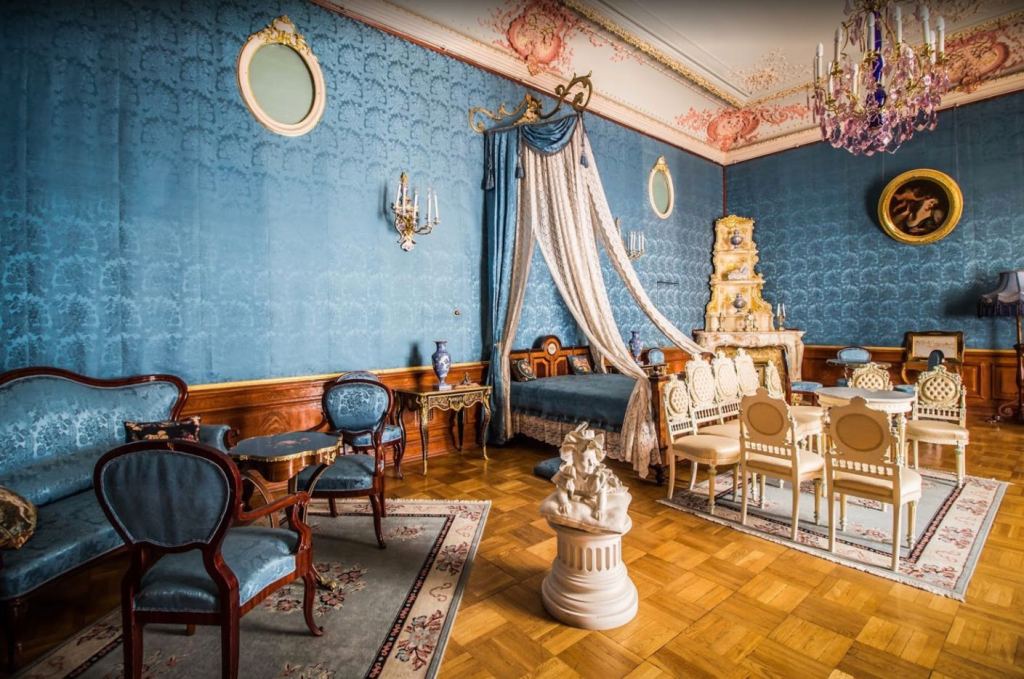
Mrs. Winchester was having her tea in the morning one early on a Sunday. Suddenly an extraordinary volley of noises broke out throughout the entire house. She described them as “banging, thumping, the whole place shaking.” The dog, Zip, was shut up in the library, while Mrs. Winchester took refuge in the Daisy Bedroom; the dog whined in terror as the noises increased in volume and in violence. Suddenly the noises ceased. When Mrs. Winchester looked up, she saw a woman in grey, with about half of her figure passed through the bedroom door. She ran to the door, but it was stuck. It was clear that this was no normal haunting.
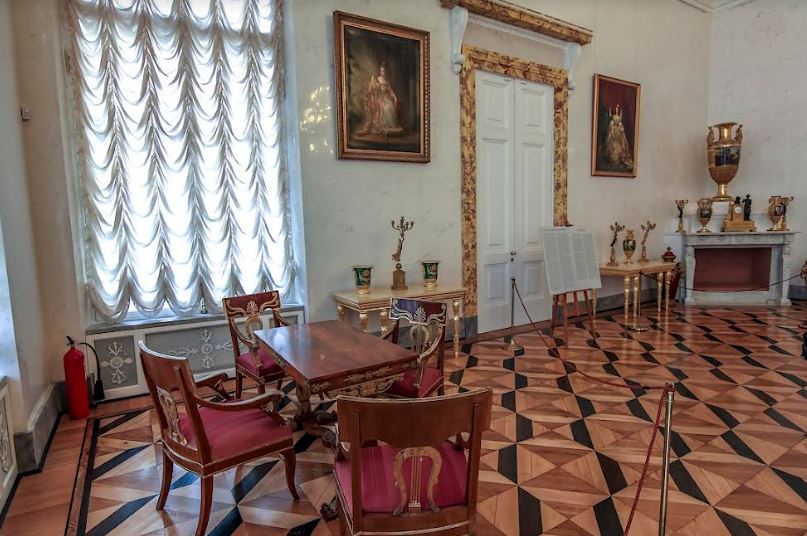
Please come and enjoy a delicious meal in Sarah’s Café, stroll along the paths of the beautiful Victorian gardens, and wonder through the miles of hallways in the World’s most mysterious mansion. For further information about tours, including group tours, weddings, school events, birthday party packages, facility rentals, and special events please visit the website: https://winchestermysteryhouse.com/
Please visit the online giftshop, and purchase a gift for friends and relatives as well as a special memento of The Winchester Mystery House. A variety of souvenirs and gifts are available to purchase. https://shopwinchestermysteryhouse.com/

The Haunting of Llanada Villa
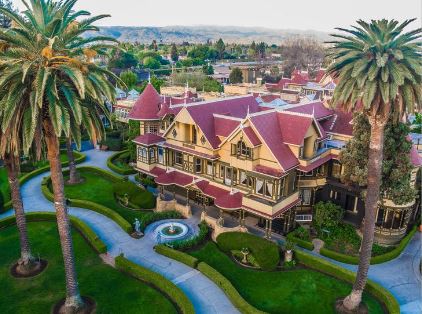
The sun began its slow descent from the sky. The wind was blowing shrill and shrewd. As Llanada Villa settled, it started to rumble and grumble. The last glimmer of daylight died away. Everywhere, twilight released shadows. The night was bitterly cold and gloomy. As I sat by the fire, forms and faces from the past, from the grave appeared from a deep gulf. The wind was rumbling in the chimney and howling in the house. The footsteps in the dark from unseen entities were no longer as entertaining as they used to be. I had a feeling there was a tragic cloud hanging over the premises. Something must have happened long ago that left a very vivid psychic impression here…something very terrible. With more than $300 million at stake and not wanting to make light of the spirits, I discouraged any visits, especially those of thrill seekers. The walls and mirrors of Llanada Villa were draped in rose-coloured silk, and the mantles were decorated with poinsettia blossoms and lilies. In a doorway between the ballroom and the parlor, there was an umbrella covered with moss sprayed over with carnations with a fringe of gilded cypress cones. At the dinner table, however, I still kept a centerpiece of an old stain scarf border with blue plush and embroidered with begonia leaves to appease my spirit guests. Along the table were silver vases with roses and a tall silver candelabra. The names of some of the spirits guests were on cards painted with pink poppies. Llanada Villa itself had been readied to receive persons of wealth. #RandolphHarris 1 of 7
Although I have been experiencing unforeseen difficulties for some time now, the spirits had become very real to me. I was getting used to having them around. Besides, some of them were less trouble than some people I knew. Along with the day-to-day difficulties of conducting any kind of business, I had to deal with “the way things are done in California.” One incident involved a monthly payment to be made to a “railroad superintendent” to ensure my rail cars and carriages made it safely to my estate. There had been several frightening attempts at extortion. The disgruntled renegade demanded a payment. He “needed the money.” I refused to pay him. He left my home, uttering and glaring. Shortly after, a letter arrived at my home.
Mrs. Sarah L Winchester:
We’ve investigated you and know you can pay. We want $67,588 in hundred-dollar bills—and we want it soon so get it together and we’ll contact you again. If you go to the constable, we are going to blow up your whole house with everybody in it—and take care of your family too. #RandolphHarris 2 of 7
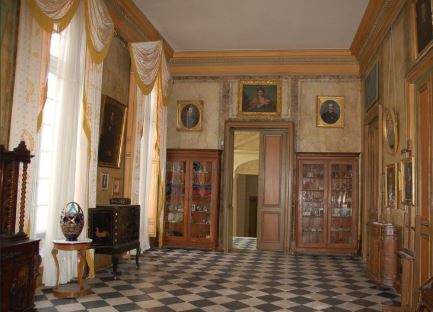
I disregarded his warning. This, after all, was a clear and present danger, not ghostly footfalls on the path or in the hallways. The constable agreed to work on the case. I told them about the dissatisfied client. They only succeeded in letting the renegade know that the authorities were after him. I was livid! Now that my extortionist knew I had made contact with law enforcement, he would probably carry out the rest of his threats. I had an army of bodyguards and vicious dogs guarding my estate. I refused to fan the fires of anybody’s superstitions, but there was always a guard just waiting inside the mansion with a cocked Winchester. “Well, Mrs. Winchester,” the butler said, mollified, “I’m glad you’re takin’ the serious. This could be trouble. We’ll take some axes and cut us a supply of firewood while it’s still dry.” “Very well,” I said. It was good that they wasted no time, for the rain began well before nightfall. There was a chill, driving wind, and the horses and mules took shelter in a stand of pines that were on the estate. The chimneys drew well, and roar fires did well to life the spirit of the house. I lit a candle and went over the long halls thoroughly, finding nothing. However, a careful examination of the floor revealed nothing except a reddish-brown stain that might have been blood, long since dried. The storm raged on, unabated. There was a crash of thunder that shook the house that immediately frightened the servants. #RandolphHarris 3 of 7

Then, on the heels of a clap of thunder, like an echo, came the unmistakable bark of a Winchester. Three of the deadly weapons added their voices to the fury of the storm, and taken by surprise, the guards fought back with their Winchester’s. Then, as suddenly as it had begun, the fuselage ended. The thunder had diminished, and in the lightning flashes there were revealed three huddled bodies. With trembling hands, I stepped out the door and stood on the veranda, staring grimly into the rain-swept darkness. I marveled at how rapidly events could take a turn for the worse. We were suddenly free of any threat of the troublesome band of renegades, but three of them lay grievously wounded. There were sinister shapes in the shadows. The Observational Tower alone, rising toward the dark rolling clouds, was eerie enough with its deep apertures suggesting the chilly blackness that lay within. I did not envy the butler who had to climb those stairs in the dead of the night to make sure it was secure. When he had entered the nine-story tower, he found every item of furniture smashed or upset. Blood had been smeared over the walls and holy pictures. The tables had been overturned. Every gasolier has been ignited. However, he had come upon no intruder. Whoever—or whatever—had been in the tower had vanished, leaving behind only more wrecked furniture. #RandolphHarris 4 of 7

If the butler had not been so obsessed with the idea of “demonic possession,” then perhaps the local constabulary would have become involved. There was someone out there, someone moving through the garden. Using a good deal of stealth, too. And headed for the tower. I sat near the back of the darkened library, screen partly by a mahogany pillar. The only light came from the high stained-glass windows each time night clouds slid from the face of the moon. My hands were tucked deep inside my overcoat pockets. I shivered. Then heard a sound somewhere in the darkness. A breeze flickered against my face. A door had bene opened. And there it was, a black form, somehow misshapen, moving among the shadows. I kept still, curious to see that the intruder would do. A match was struck, the sound harsh in the cavernous mansion. A candle was lit. Then another. The figure moved—glided, it almost seemed—around the table, lighting more. That area of the mansion grew brighter and I sank down in my seat, even though I was still in the shadow, for now the intruder’s true shape was more discernible. It was bent, as if hunched back, and it wore some kind of robe, the head covered by a large cowl. I now understood why the figure had appeared crooked, for now it was lifting something. Something heavy. As I watched, the intruder raised the container and began to pour liquid over the table. #RandolphHarris 5 of 7

I waited by the door and only when the figure I had been watching had disappeared from view did I enter. My teeth clenched tight when the door groaned on its hinges. I hurried through. I reached the other side of the room and peered round. There was no sign of the person I had been watching. A noise to my right caught my attention. There it was, a shape dodging around the hallways. However, it was headed to an exit. My eyes narrowed. Christ, the thought of it all made my skin crawl. It was cruel. I was as jumpy as a bear scenting humans. A wind went whistling through the room. The room had darkened more, and I clearly heard footsteps. There was a heavy and gloomy shadow gathering. It turned colder, too. There was a chill and a dismal feeling in the air. I took a lantern and went on, through the long, dark passages. As the gloom and shadow thickened behind me, in that place where it had been gathered so darkly. The glimpses themselves were at first merely strange than horrible, but it took me by surprise to see a ghastly cold, and colourless face dressed in a gloomy nightgown, motionless without a sound. Then I noticed there were multiple levels of black vaults below, and never-opened trapdoors. I seemed to be a prisoner, and horror hung broodingly over everything I saw. My home seemed so limitless. There were almost endless leagues of rooms two hundred feet wide. They differed greatly in aspect. Many of these rooms seemed so limitless that they must have a frontage of several thousand feet, while there were stairs that shot up to the steamy heavens. #RandolphHarris 6 of 7
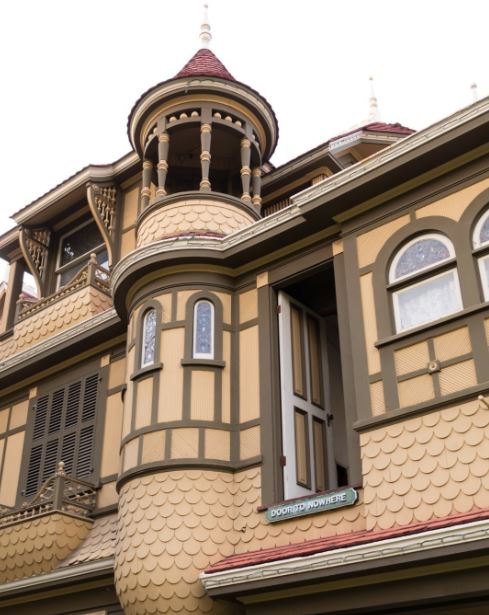
I could not resolve this impression into details. In certain places I beheld enormous dark cylindrical towers which climbed far above any of the other structures. They were built of a completely bizarre masonry, and tapered slightly toward their rounded tops. Nowhere in this part of Llanada Villa could I find traces of windows or other apertures save huge oak doors be found. My omnipresent home was almost terrifying in its strangeness, with bizarre and unfamiliar architecture. Abnormally, this night, my home had grown curiously. Through the countless miles of this haunting city there were French reception rooms in Renaissance and Louis VX taste. The spirit may not have been here to harm me, but were showing me how to build. Vivid blossoms embossed in the windows. Terrance and roof-top gardens to suggest artificial breeding. Here and there enormous domes and arches. Certainly, many persons have dreamed intrinsically stranger things. For some time, I accepted the visions as natural, even though I had never before been an extravagant dreamer. In the course of some months, however, these elements came to life. Carpenters worked day and night to unfailingly create my dreams with accumulating force. My home reflected the curious impressions regarding time, the sense of an exchange with my personality, and, considerably later, the inexplicable emotional grip of these spirits. It disturbed me so vastly to find that my dreams had been so closely duplicated; especially since the ideas came from apparitions. Many of those accounts supplied with detailed explanations. This despite the fact that I was and still am ignorant of the languages involved in the creation, which appeared to be a fairly consistent mixture of myth and hallucination whose scope and wildness left me utterly dazed. #RandolphHarris 7 of 7
The Winchester Mystery House
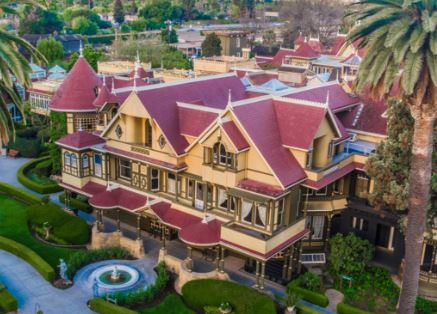
This excessive, if not bizarre home of Sarah L. Winchester combined with Victorian and Gothic styles, at one time contained as many as 600 rooms. Building and furnishing the home consumed approximately $5 million. The house now contains 161 rooms. The vast mansion required employment of about one hundred servants, including chefs, cooks, maids, housekeepers, maintenance workers, carriage men and hostlers. Its unique floor plan resulted in operational efficiencies and many unusual features.
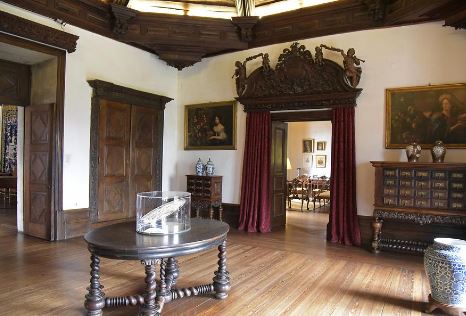
“One occasion, I heard a door open and heavy footstep slowly walking through the house. I checked on the lowest level of the house a door which is never opened—it was nevertheless fully open. Evidently, the ghost knew I was coming.” -Caretaker 5
Please come and enjoy a delicious meal in Sarah’s Café, stroll along the paths of the beautiful Victorian gardens, and wonder through the miles of hallways in the World’s most mysterious mansion. For further information about tours, including group tours, weddings, school events, birthday party packages, facility rentals, and special events please visit the website: https://winchestermysteryhouse.com/

Please visit the online giftshop, and purchase a gift for friends and relatives as well as a special memento of The Winchester Mystery House. A variety of souvenirs and gifts are available to purchase. https://shopwinchestermysteryhouse.com/

Frightened Restitution
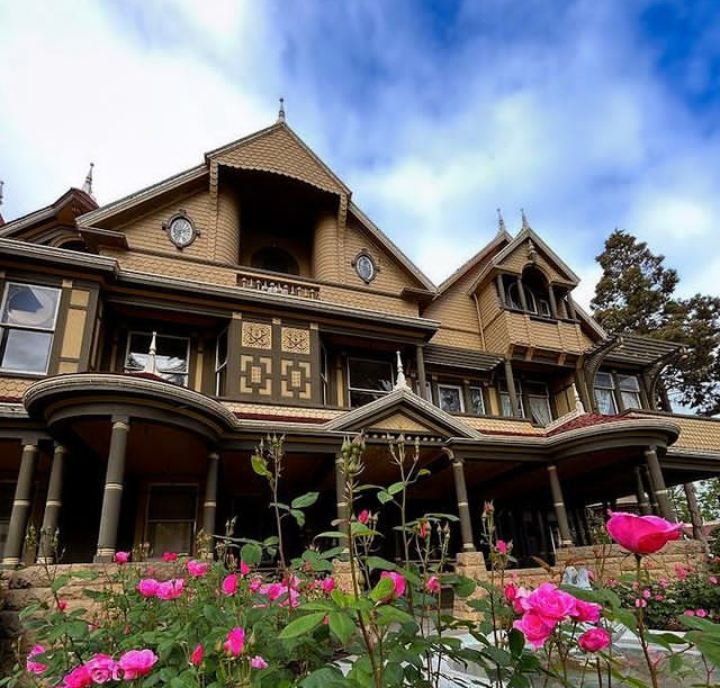
The thought has crossed the minds of many that humankind faces a fate of evolutionary destruction of self. However, it is plain to see that others continually strive for the higher aspects of their own possibilities, to be more compassionate; loving; creative; to create great, beautiful parks and vast, wild, free lands; more exquisite poetry and buildings—to perfect themselves and the World about them. There is a struggle, the movement of humankind is heading toward the development of the self to levels of superb functioning for perhaps a few persons who become models of human effectiveness and for higher levels of living, joy of living, for much greater numbers. Humans have sought to perfect themselves throughout history. Early Christians sought purification of self in the face of temptation, salvation, and underwent training to be reborn in Jesus as the Christ. It is recognized that humans are capable of states of being that far surpass present levels of beauty and goodness. The term healthy personality is used here to describe those ways of being that surpass the average in actualization of self and in compassionate relationships with others. The human can be studied as a natural phenomenon, with methods appropriate to the study of zoology or ethology. #RandolphHarris 1 of 18

However, humans have the capacities for speech and for self-consciousness. People give meaning to their World and can communicate meanings to other persons. If we wish to understand human behaviour, we must not view it as we would the behaviour of animals struggling to survive in each environment; we must regard behaviour as action, as a kind of speech. Humans “say” something to the World and to their companions by their actions. If we wish to understand humans in their existence as human beings, we must find out what they mean to say, and how they say it in words, action, and even in physiological responses. Of course, we also find out what they mean by asking them to tell us. Perhaps the most overrated virtue in our list of shoddy virtues is that of giving. Giving builds up the ego of the giver, makes him superior and higher and larger than the receiver. Nearly always, giving is a selfish pleasure, and in many cases, it is a downright destructive and evil thing. One has only to remember some of our wolfish financiers who spend two-thirds of their lives clawing fortunes out of the guts of society and the latter third pushing it back. It is not enough to suppose that their philanthropy is a kind of frightened restitution, or that their natures change when they have enough. #RandolphHarris 2 of 18

Such a nature has enough, and nature does not change that readily. I think that the impulse is the same in both cases. For giving can bring the same sense of superiority as getting does, and philanthropy may be another kind of spiritual avarice. Pure altruism is a rare and difficult quality, remote from the actuality of human condition. The cautious person is also entitled to ask whether it is justifiable, whether a man is not entitled to do justice to himself as well as to others. The obvious reply is that there is no reason why his own good should not be included in that of the whole community. Although we must admit that He acted most generously, it is an arguable question whether God did the right thing by sacrificing His son. He may love mankind without being in love with mankind. He may act with unwearying altruism and compassion towards them and yet with clear sight of their moral uglinesses and mental deformities. An intellectual enlightenment not accompanied by moral purification, can lead only to a meagre result when turned to the service of humanity. The altruist must educate his own character before he can influence effectually the character of others. Only then are false steps and dangerous missteps less likely to be taken. #RandolphHarris 3 of 18

If the motive is pure, a generous act not only helps the beneficiary but ennobles the doer. The wisdom of the act is, however, a different matter and requires separate analysis. When some scientists dare to study the human being, they think of the subject as being like a laboratory rat. At least it would seem that way from the large amount of research in psychology based upon that animal. And there is no doubt that many things about the white rat are similar to aspects of the human being, including some motivations—pleasures of the flesh, hunger, safety, and so on. However, another image of the human being has been expressed in the Psalms (Psalm 8.5), that of being “just a little lower than the angels.” This implies many powers and capacities and almost suggests “sainthood” capabilities. However, we are exploring the “normal” person. There is a group of persons who are entirely mortal, who have their imperfections, and yet have discovered a way of life that is beyond what most people attempt to create for themselves. One of the characteristics of such people seems to be that they do have compassion, or caring, for others; but it is a very human kind of love. #RandolphHarris 4 of 18
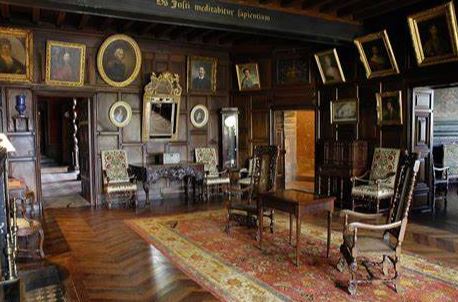
People who care about themselves, respect themselves, and like to present their best self to others also take care of their bodies. They jog or exercise in some other way, watch the intake of their food, and avoid either smoking or being where heavy smokers are taking up the good air. They recognize that having a healthy body is in great part controllable by the individual. Similarly, having a healthy personality is in greatest part under the control of the person who owns it. While there are genetic factors that seem to influence the personality and there are environmental forces that influence one’s style of interacting with people, the humanist also recognizes the tremendous power of the person to affect his or her own personality-destiny. This is perhaps the most important reason for studying a healthy personality. All of us want to be as fully functioning, self-actualizing, and healthy as we can be. Knowledge of what constitutes a healthy personality should help you to develop this type of personality. Secondly, the impact of the environment, especially of the people in your environment, has a great effect upon your personality. This still does not leave you helpless in the face of the influence of your friends, because you can choose your friends and even choose many other aspects of your environment. #RandolphHarris 5 of 18
There are those people, friends, relatives, teachers, companions, who, when you are with them, make you feel that you are growing, becoming. These kinds of persons are known as “personality growth facilitators.” And there are also those who can destroy you psychologically. We call these “lethal personalities.” Thus, the second reason for the study of the personality is so that you may truly distinguish those people who are personality growth facilitators and find ways to be close to them. What about your effect upon others? How do you influence others so that they will feel they are growing? Almost all of us will have some role in raising children in our lifetimes, either through being parents, teachers, or neighbours. A third reason for studying the healthy personality is to be better able to have a good effect on the people who are close to us, particularly friends and children. If only for the reasons of pure curiosity, science claims the privilege of exploring the unknown. Science searches for basic laws and principles that may have no immediate benefit or that might be explored without any specific benefit in mind. Often those discoveries of basic principles and laws do have important applied use. #RandolphHarris 6 of 18

More often, however, the advantages and benefits are not immediately apparent, and legislators impatient for solutions are prone to cut off funds for all but the most applied research. Even if there is no longer a trunkful of diamonds deep in the darkness of The Winchester Mansion, science for its own sake, for the sake of pushing back ignorance and obscurity, is a viable reason for studying the healthy personality. The origin of organized society was caused by the conquest of one race by another. Caste system had developed out of such conquest, and society had then passed successively through five stages: the mitigation of caste coupled with the survival of inequalities; the consolidation of relationships through the growth of law; the origin of the state; the gradual cementing of the groups into a homogeneous people; and, finally, the development of patriotism and the national form of social organization. #RandolphHarris 7 of 18
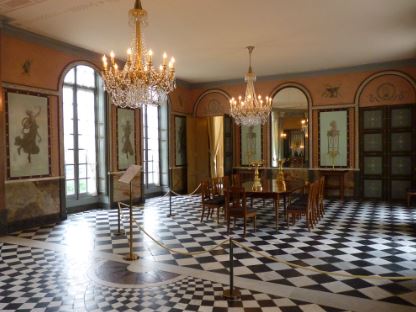
Progress has frequently resulted from the forcible fusion of unlike elements. As much as one may deplore the horrors of war, it has been a necessary condition of race progress in the past, and the conquest of backward races is inevitable in the future. In advanced societies, rational and peaceful forms of social assimilation may supersede the genetic and violent method of the past. It is possible that a friendly pacific age is about to dawn—just as Spencer’s militant type of society gives way to the industrial—but it is doubtful that the World has yet reached the point at which war ceases. Whether the cessation of conflict would even be desirable was an open question to Ward. His adherence in these respects to the conflict school did not in the least alter the fundamental structure of Ward’s melioristic sociology. The fact is that man and society are not. Except in a very limited sense, under the influence of the great dynamic laws that control the rest of the animal World. If we call biologic processes natural, we must call social processes artificial. The fundamental principle of biology is natural selection, that of sociology is artificial selection. The survival of the fittest is simply the survival of the strong, which implies and would better be called the destruction of the weak. If nature progresses through the destruction of the weak, man progresses through the protection of the weak. #RandolphHarris 8 of 18

A study of the system of Man can lead to the acceptance of objectively valid values, on the grounds that they lead to the optimal functioning of the system or, at least, that if we realize the possible alternatives, the humanist norms would be accepted as preferable to their opposites by most sane people. Whatever the merits of the source of the validity of humanist norms, the general aim of a humanized industrial society can be thus defined: the change of the socioeconomic, and cultural life of our society in such a way that it stimulates and furthers the growth and aliveness of man rather than cripples it’ that it activates the individual rather than making him passive and receptive; that our technological capacities serve man’s growth. If this is to be, we must regain control over the economic and social system; man’s will, guided by his reason, and by his wish for optimal aliveness, must make the decisions. Given these general aims, what is the procedure of humanistic planning? Computers should become a functional part in a life-oriented social system and not a cancer which begins to play havoc and eventually kills the system. Machines or computers must become means for ends which are determined by man’s reason and will. #RandolphHarris 9 of 18

The values which determine the selection of facts and which influence the programing of the computer must be gained on the basis of the knowledge of human nature, its various possible manifestations, its optimal forms of development, and the real needs conducive to this development. That is to say, man, not technique, must become the ultimate source of values; optimal human development and not maximal production of the criterion for all planning. What we have failed to do in all this is to ascribe operational meaning to the so-called desirables that motivate us, to question their intrinsic worth, to assess the long-range consequences of our aspirations and actions, to wonder whether the outcome we seem to be expecting does in fact correspond to that quality of life we say we are striving for—and whether our current actions will lead us there. In other words, we are in the deeper sense failing to plan. Aside from this, planning in the field of economics must be extended to the whole system; furthermore, the system Man must be integrated into the whole social system. Man, as the planner, must be aware of the role of man as part of the whole system. #RandolphHarris 10 of 18

Just as man is the only case of life being aware of itself, man as a system builder and analyzer must make himself the object of the system he analyzes. This means that the knowledge of man, his nature, and the real possibilities of its manifestations must become one of the basic data for any social planning. In speaking of the socioeconomic structure of society as moulding one’s chaactrer, we speak only of one pole in the interconnection between social organization and man. The other pole to be considered in man’s nature, moulding in turn the social conditions in which he lives. If we start out with the knowledge of the reality of man, his psychic properties, as well as his physiological ones, and if we examine the interaction between the nature of man and the nature of the external conditions under which he lives, and which he must master if he is to survive, only then can the social process be understood. While it is true that man can adapt himself to almost any condition, he is not a blank sheet of paper on which the culture writes its text. Needs like the striving for happiness, belonging, love, and freedom are inherent in his nature. They are also dynamic factors in the historical process. #RandolphHarris 11 of 18
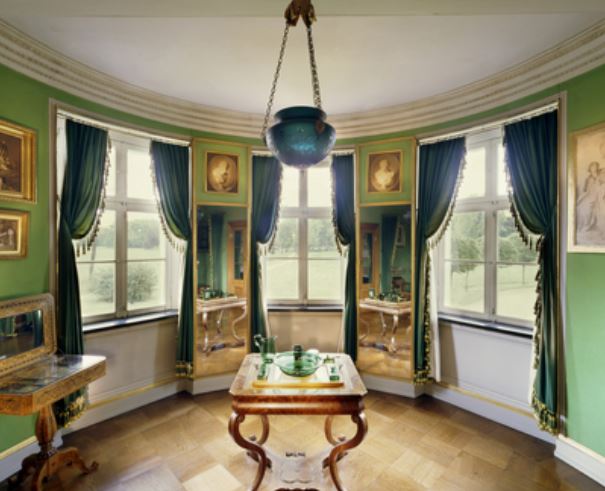
While it is true that man can adapt himself to almost any conditions, he is not a blank sheet of paper on which the culture writes its text. Needs like the striving for happiness, belonging, love, and freedom are inherent in his nature. They are also dynamic factors in this historical process. If a social order neglects or frustrates the basic human needs beyond a certain threshold, the members of such a society will try to change the social order to make it more suitable for their human needs. If this change is not possible, the outcome will probably be that such a society will collapse, because of its lack of vitality, and its destructiveness. Social changes which lead to a greater satisfaction of human needs are easier to make when certain material conditions are given which facilitate such changes. It follows from these considerations that the relation between social change and economic change is not only the one which Marx emphasized, namely, the interests of new classes in changed social and political conditions, but that social changes are at the same time determined by the fundamental human needs which make use, as it were, of favourable circumstances for their realization. The middle class which won the French revolution wanted freedom for their economic pursuits from the fetters of the older order. #RandolphHarris 12 of 18

However, they also were driven by a genuine wish for human freedom inherent in them as humans beings. While most were satisfied with a narrow concept of freedom after the revolution had won, the very best spirits of the bourgeoisie become aware of the limitations of bourgeois freedom and, in their search for a more satisfactory answer to man’s needs, arrived at a concept which considered freedom to be the condition for the unfolding of the total man. When students are permitted to be in contact with real problems; when resources—both human and technical—are made psychologically available by the teacher; when the teacher is a real person in his relationships with students and feels an acceptance of and an empathy toward his students, then an exciting kind of learning occurs. Students go through a frustrating but rewarding process in which gradually responsible initiative, creativity, and inner freedom are released. The kind of personal and intellectual change which comes about has many parallels with the changes which occur in psychotherapy. The nature of these changes has to some extent been investigated empirically. For the most part, modern culture does not, operationally, want persons to be free, despite many ideological statements to the contrary. #RandolphHarris 13 of 18
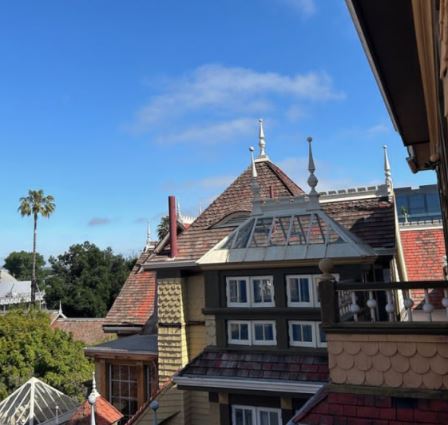
Both two main streams of modern life—Western and Communist—are extremely fearful of and ambivalent about any process which leads to inner freedom. Nevertheless, it is a fact that the surest roads to World catastrophe are individual rigidity and constricted learning. If we prefer to develop flexible, adaptive, creative individuals, we have a beginning knowledge as to how this may be done. We know how to establish, in an educational situation, the conditions and the psychological climate which initiate a process of learning to be freed. Learning to be free is something that our beloved Clare so desperately needs to learn. The whole area in her personality that consisted of arrogance, contempt for people, need to excel, need to triumph, was still so deeply repressed in her, even after therapy, that it had only been illuminated by flashes of insight. Even before she had started her analysis, she had occasional realizations of her need to despise people, of her great elation at any success, of the role ambition played in her daydreams, and it was a fleeting insight of this kind that she had now. #RandolphHarris 14 of 18

However, this whole problem was still so deeply buried that its manifestations could scarcely be understood. It was as if a shaft learning into the depth was suddenly lit up, and soon after obliterated by darkness. Thus, another implication of this series of associations remained inaccessible. The picture of extreme solitude as presented in the tower in the desert referred not only to her feeling alone without Peter, but to her isolation in general. Subversive arrogance was one of the factors responsible for it, as well as resulting from it. And fastening herself to one person—“two on an island”—was a way of escaping from such isolation without having to straighten out her relations with people in general. Clare believed that she could now cope with Peter in a better way, but soon afterward a double blow came which brought her problems to a climax. First, she learned indirectly that he was having or had had an affair with another woman. She had barely received that shock when Peter wrote to her that it would be better for both if they separated. Clare’s first reaction was to thank Heaven that this had not occurred earlier. Now, she thought, she could stand it. The first reaction was a mixture of truth and self-deception. #RandolphHarris 15 of 18
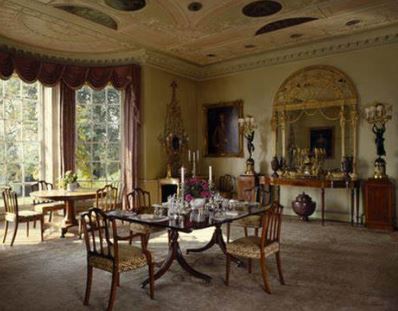
The truth in it was that a few months before she probably could not have endured the stress without grave injury to herself; in the months to come she not only proved that she could stand it, but came closer to a solution of the whole problem. However, this first matter-of-fact reaction apparently resulted also from the fact that she did not let the blow penetrate beneath a defensive armour. When it did penetrate, within the next few days, she was thrown into a turmoil of wild despair. She was too deeply upset to analyze her reaction, which is understandable. When a house is on fire one does not reflect on causes and effects but tries to get out. Clare recorded two weeks later that for a few days the idea of suicide kept recurring to her, though it never assumed the character of a serious intention. She quickly became aware of the fact that she was merely playing around with the idea, and she then faced herself squarely with the question whether she wanted to die or to live. She wanted to live. However, if she did not want to live as a wilting flower, she not only had to ride herself of her longing for Peter, and the feeling that her life was smashed to pieces by losing him, but also to overcome radically her whole problem of compulsive dependency. #RandolphHarris 16 of 18
If someone were to tell you ugly things about yourself, would you take heed to their words and try to make changes to yourself or would you blow them off and boot them out of your life? Why or why not? It is not always easy to see when someone is playing mind games with you. If they are adept at it, it is nearly impossible to see it, until it is too late. The principles and practice of group psychotherapy (several patients having a simultaneous session with a single group leader-therapist) have been in existence for some time. This approach to psychological treatment of emotional illness has been continually assigned a secondary role. It has been considered by many authorities to be a desirable adjunct to individual psychotherapy, but it has not generally achieved the status and prestige in the eyes either of the professionals or of patients which has been accorded to individual psychotherapy. The general preference for and greater effectiveness presumed for individual therapy is not founded on any rigorous research that has properly compared the relative efficacy of the two approaches. It is quite plausible that such a study might demonstrate group methods to be of at least equal potency to individual therapy. #RandolphHarris 17 of 18
If it is incumbent upon psychiatrists and psychologists to do therapy, until this is adequately disproved, they would do better to extend their skills to the larger numbers treatable in a group setting. Experts who have had extended experience in individual psychotherapy will have acquired some sensitivities, skills, and insights that can be usefully applied in group therapy. Those persons administratively responsible for the treatment programs of clinics and hospitals should provide increasingly for group approaches to psychotherapy, with a corresponding deemphasis of the one-to-one therapeutic conversations. Where both forms of treatment are to be offered there should always be provision for careful evaluation of their relative effectiveness in producing significant changes in the patient. Firefighting is an interesting career. “There are a lot of strict requirements in the company, professional liability being what it is these days. We’re trying to weed out those who don’t come to work, those who don’t come to training, who don’t know what’s going on or how to use the new equipment. When you get someone with a new air pack who trained on an old, outdated model the last time he went to fire school ten years ago and hasn’t attended an update since, he goes into a fire situation and doesn’t know how to use the equipment. They have to take time out and go to the state fire school for thirteen consecutive weeks.” You can help prevent fires by contributing to the Sacramento Fire Department. I pledge allegiance to the flag of the United States of America and to the Republic, for which it stands, one nation, under God, indivisible with liberty and justice for all. #RandolphHarris 18 of 18
The Winchester Mystery House
Today marks the 50th anniversary of Winchester Mystery House being designated a historical landmark in California. Let’s celebrate this important milestone and pay tribute to the legacy of Sarah Winchester, the visionary behind this remarkable architectural masterpiece 🏰
Please come and enjoy a delicious meal in Sarah’s Café, stroll along the paths of the beautiful Victorian gardens, and wonder through the miles of hallways in the World’s most mysterious mansion. For further information about tours, including group tours, weddings, school events, birthday party packages, facility rentals, and special events please visit the website: https://winchestermysteryhouse.com/

Please visit the online giftshop, and purchase a gift for friends and relatives as well as a special memento of The Winchester Mystery House. A variety of souvenirs and gifts are available to purchase. https://shopwinchestermysteryhouse.com/


The History of Horrors
One night, soon after I was in bed, I fell asleep and dreamed that I was returning to Llanada Villa. I thought that it would not be too much out of my way to go through San Francisco. Accordingly, I set out but remembered nothing that happened by the way till I came to my house; I went to the front door and tried to open it; but found it fast. Then I went to the back door, which I opened and went in; but finding all the servants were in bed, I crossed the rooms only, went upstairs, and entered the chamber where my butler, Frau, and his wife Tilly Heroldsbach, were in bed. As I went by the side of the bed on which Frau lay, I found him asleep, or thought he was so; then I went to the other side, and having just turned the foot of the bed, I found Tilly awake to whom I said these words: “Tilly, I am returning from a long journey, and wish to let you know I am home.” Upon which she answered in fright, “Oh dear Mrs. Winchester, thou are dead!” With this I awoke, and took no notice of it more than a common dream, except that it appeared to me very perfect. For some odd reason, I found that Frau and Tilly were no longer on my staff anymore. Claus, one of the carpenters told me that, “they have become frightened to set foot inside the place. It seems they believe demons have taken charge.” I grinned, unable to help myself. “Claus,” I said, “Naturally something like this could make me look pretty silly.” “Mrs. Winchester,” he replied, “this so-called ‘possession’ has become common knowledge in the town. Some of the townsfolk are enjoying the fun of it, while others are quite frightened.” #RandolphHarris 1 of 7
In a few days after, as soon as a letter could reach me, I received one by post from Frau; upon the receipt of which I was a little surprised, and concluded something extraordinary must have happened, as it was but a short time before I had a letter from him. Upon opening it I was more surprised still for my former butler addressed me as though I were dead, desiring me, if alive, or whose ever hands the letter might fall into, to write immediately; but id the letter should find me living, they could concluded I should not live long, and gave me the reason of their fears. That on a certain night, naming it, after they were in bed, my butler asleep and his wife awake, she heard somebody try to open the front door; but finding it fast, the person went to the back door, which one opened, came in, and came directly through the servants rooms upstairs, and she perfectly knew it to be my step; but I came to her beside, and spoke to her these word, “Tilly, I am returning from a long journey, and wish to let you know that I am home.” Upon which she answered me in a fright, “Oh, dear Mrs. Winchester, thou are dead!”—which were the circumstances and words of my dream. However, she heard nothing more; neither did I in my dream. Much alarmed she woke her husband, and told him what had occurred; but he endeavoured to appease her, persuading her that it was only a dream. She insisted it was no dream, for that she was as perfectly awake as she ever was, and had not the least inclination to sleep since she was in bed. #RandolphHarris 2 of 7
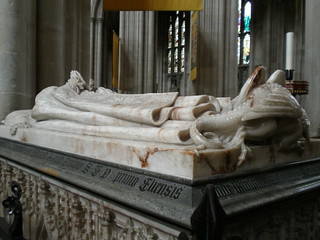
From these circumstances I am inclined to think it was at the very same instant when my dream happened, though the distance between us was about one hundred miles; but of this I cannot speak absolutely. I do know that it was cooler inside of my house than outside. Was my home always this cold? Spiritual warmth was one thing, but there was no physical warmth here. Blood had been smeared on the walls and statues. Furniture soaked with it. I arrived one morning to find the fountain filled with blood. People who break into my home with malicious intent like to defile it in the foulest way possible. Hebe and Demeter had been marked. I, myself, scrubbed them clean of the more obscene and diabolic disfigurations. My organ in the Grand Ball Room had been battered beyond repair. The carvings had been chipped, there were scratches in the wood that resembled claw marks. The side door looked like it had been attacked with an ax. It was the same with the front doors. However, the marks were on the inside. They were not made by someone trying to gain entry. The only sound I heard that night was the toll of a single bell. There was, too, a feeling of profound and inexplicable horror concerning myself. I developed a queer fear of seeing my own form, as if my eyes would find it something utterly alien and inconceivably abhorrent. #RandolphHarris 3 of 7
With a blinding flash and a violent crack, a storm erupted. Then, very suddenly, thought, and shuddering terror, and earnest endeavour to comprehend my true state. There I suffered, while I strove to imagine where and what I could be. I longed, yet not dared to employ my vision. The blackness of eternal night encompassed me. I struggled for breath. The intensity of darkness seemed to oppress and stifle me. For a moment, did I suppose myself actually dead? A fearful idea now suddenly drove the blood in torrents upon my heart, and for a brief period, I lapsed into insensibility. There is something, some mysterious horror, that holds me here as surely as if I were bound with fetters. I wanted my soul to be in harmony with other souls. I sank down onto the cold floor, my arms wrapped around my knees as I stared straight ahead. A hundred terrible objects seemed to haunt me. The next day, I rose from my bed ill in health and humiliated in mind. I was ashamed of myself for feeling the desire to escape from my haunted home. However, with some haste, I made my way to the balcony to seek in open air some relief to my nervous system, shaken as it were by this horrible encounter by visitors from another World. #RandolphHarris 4 of 7

Night after night, demons wonder the halls to kill young children of my servants for their hideous rituals, either by strangulation or more often by piercing their throats with a sharp dagger and letting the hot blood stream into the chalice as they cry: “Astaroth, Asmodee, je vous conjure d’accepter le sacrifice que je vous presente! They have heaped curses on me and trampled underfoot and spat upon holy images and artifacts in my home. In return the demon promises that he will at all times afford them prompt assistance; that he will accomplish all their desires in this World and make them eternally happy after their death. The whole question is, perhaps, one of the most dark and difficult connected with Witchcraft and magic, and the details of these hideous connections are such—for as the Saints attain to the purity of angels, so, on the other hand, will the bond slaves of Satan defile themselves with every kind of lewdness. These relations, far from being untrue, bear the strongest marks of authenticity which can be given them by official proceedings regulated and approved with the caution and judgment brought to bear upon them by enlightened and conscientious magistrates who, throughout all ages, have been in a position to test plain facts. It seems to me that if unshaken evidence means anything at all, if the authority of the ablest and acutest intellects of all ages in all countries is not count for merest vapourings and fairy fantasies, the possibility—I do not, thank God, say the frequency—of these demonical connections is not to be denied. #RandolphHarris 5 of 7

Evil spirits have appeared in my home in the shape of a man, a woman, or even some animal. This is either a real and actual presence, or the effect of imagination. They decide that this sin incurs particular guilt which must be specifically confessed, to with an evil superstition whereof the essence is a compact with the Devil. The inquiry is made whether a demon may thus attack a man or woman, whose obsession would be suffered if the subject were wholly bent upon obtaining perfection and walking the highest paths of contemplation. One night, as the moon-beams came through two deep and narrow windows, and showed the spacious chamber, richly furnished in an antique fashion, the shadow of the diamond panes were thrown upon the floor; the ghostly light through the other slept upon a bed, falling between the heavy silken curtains, and illuminating the face of one of the housemaid’s. However, how quietly the slumberer lay; now pale her features; and how like a shroud the sheet was wound about her frame! Yes, it was a corpse in burial clothes. Suddenly, the fixed features seemed to move with dark emotion. Strange fantasy! It was but the shadow of the fringed curtain, waving betwixt the dead face and the moonlight, as the door opened. Why, then, should the soul be satisfied with the house—the body—in which it lived? Would it not want to change the curtains, as it were. And the paintwork. And perhaps even build a new window? #RandolphHarris 6 of 7

In certain places around Llanda Villa, the spirits encouraged me to build enormous dark cylindrical towers which climbed far above any of the other structures. So they would appear to be of a totally unique nature. They hovered an inexplicable aura of menace and concentrated fear. There were colossal round windows and high arched doors, and pedestals or tables. Vast shelves of dark wood lined the walls, holding what seemed to be volumes of immense size with strange occult symbols on their backs. The windows glazed with fine artwork, though I dared not peer out of them. There were stairs that led to passageways never meant to be opened. Some of the structures towered toward the sky. Multiple levels of black vaults below and never-opened trapdoors, sealed down with metal bands and holding dim suggestions of some special peril. I seemed to be a prisoner. The skies were almost always moist and cloudy, and sometimes I would seem to witness tremendous rains. We could summon to our side the spirits of those whom we have so fondly cherished and converse with them of things holy and eternal, we could learn wisdom from their fuller knowledge, and be assured in their own sweet accents of their fadeless love, as we were comforted with the sight of their well-known faces, the touch of their hands upon ours. Was it God’s will that Spiritism be a most blessed and sacred thing, consolation to the afflicted, succour to the distressed, a shining light upon Earth’s dark ways, a ready to help us all? #RandolphHarris 7 of 7
The Winchester Mystery House
There are sometimes instances of sudden and solitary visions, which to others might deem to be hallucinations. This gentleman, walking alone in a certain hallway at The Winchester Mystery House, met a casual acquaintance, a well-known local businessman and was just shaking hands with him, when the guy vanished. Nothing in particular happened to either of them; the businessman was not in the caretaker’s mind at that moment. These appearances, frequent and well attested, might be described as the ghosts of the living. There are reports of figures, seen momentarily before disappearing, that seem to emanate evil and malevolence; the seer is then confronted by the living person months or even years later.
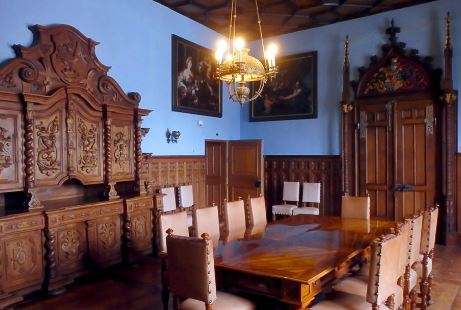
Please come and enjoy a delicious meal in Sarah’s Café, stroll along the paths of the beautiful Victorian gardens, and wonder through the miles of hallways in the World’s most mysterious mansion. For further information about tours, including group tours, weddings, school events, birthday party packages, facility rentals, and special events please visit the website: https://winchestermysteryhouse.com/
Please visit the online giftshop, and purchase a gift for friends and relatives as well as a special memento of The Winchester Mystery House. A variety of souvenirs and gifts are available to purchase. https://shopwinchestermysteryhouse.com/

The Moment of Truth

Manipulative people do not understand the concept of boundaries. They are relentless in their pursuit to get what they want, and they have no regard for who gets hurt along the way. A manipulator may be defined as a person who exploits, uses and/or controls himself and others as things in certain self-defeating ways. The opposite of the manipulator is the actualizer…who may be defined as a person who appreciates himself and his fellowman as persons or subjects with unique potential—an expresser of his actual self. The paradox is that each of us is partly a manipulator and partly an actualizer, but we can continually become more actualizing. When manipulation becomes the usual mode of interacting with others, it is a serious sign of impaired personality health. It implies, among other things, a profound distrust of the other person, even contempt for him. Furthermore, the habitual manipulator of others must repress his spontaneous feelings, thereby promoting further self-alienation. The contriving, manipulative insincere individual, often without conscious awareness, places popularity and “success” at the peak of his value hierarchy. He sells his soul (his real self) to achieve it. He strives to determine what kind of behaviour the other person likes and then pretends to be the kind of person who habitually behaves that way. #RandolphHarris 1 of 25
The major factor responsible for habitability contrived interpersonal behaviour is the belief, conscious or implicit, that to be one’s real self is dangerous; that exposure of real feelings and motives will result in rejection or ridicule. Such a belief stems from experiences of punishment and rejection at the hands of parents and other significant persons. To avoid punishment in the future, the child represses the real self in interpersonal situations and learns to become a contriver, an “other-directed” character. Of course, more serious outcomes are possible too: neurosis, psychopathic personality, and psychosis. Scientific students of the learning process, following the lead of Pavlov, Watson, and Skinner, have been able to demonstrate that people’s behaviour can be manipulated without their awareness. A psychologist was able to get subjects in an experiment to increase the frequency with which they uttered plural nouns simply by murmuring “Mm-hmm” whenever the subject spontaneously uttered the desired class of words. Many other experimenters have demonstrated that the content of another’s conversation can subtly be controlled by properly timed “reinforcing” stimuli, such as saying, “That’s good.” There seems little doubt that, with a little training, anyone could improve the efficiency with which he or she could thus influence the behaviour of others without their awareness that they had been so manipulated. #RandolphHarris 2 of 25

All it calls for is the study of the other person, to discern what things will function as reinforcers to his or her behaviour, and then supplying these things whenever the desired behaviour occurs. However, most people resent being manipulated, and they become properly angry when they discover that they have been treated like puppets or animals. A nineteen-year-old male student once consulted with me, seeking help in improving his relations with people. He stated that he had studied Dale Carnegie’s book How to Win Friends and Influence People and found the advice given there extremely helpful to him in “conning” others, especially girls. He was successful as a campus lover and had six of the most attractive coeds in love with him at the time of seeking help. The help he sought was any suggestions that psychology might offer to him in his campaign to win over the affections of the campus queen, who rejected him, telling him he was a “phony.” This rejection upset him. He wondered if there were some new gimmicks he might learn to seem authentic. Parenthetically, he mentioned that, once he won a girl’s affections, he rapidly became bored by her, stating, “Once you’ve won a girl, it’s like a book you’ve just read; you don’t want to have anything more to do with her.” #RandolphHarris 3 of 25

I refused to help him learn new manipulative methods. In several interviews, I helped him gain insight into his motives and background, and he became more authentic and less of an unscrupulous user of other people. Individuals within a given society differ, of course, in their personal characters; in fact, it is no exaggeration to say that if we are concerned with minute differences, there are no two people whose character structure is identical. Yet if we disregard minute differences, we can form certain types of character structures which are roughly representative for various groups of individuals. Such types are the receptive, the exploitative, the hoarding, the marketing, the productive, character orientations. If it can be shown that nations or societies or classes within a given society have a character structure which is characteristic for them, even though individuals differ in many specific ways, and even though there will be always a number of individuals whose character structure does not fit at all into the broader pattern of the structure common to the group as a whole, the problem of character structure gains in importance far beyond the individual. The name for this character which is typical for a society is the “social character.” #RandolphHarris 4 of 25

Like the individual character, the “social character” represents the specific way in which energy is channelized; it follows that if the energy of most people in each society is channelized in the same direction, their motivations are the same, and furthermore, that they are receptive to the same ideas and ideals. What is the social character? The nucleus of the character structure which is shared by most members of the same culture, in contradistinction to the individual character in which people belonging to the same culture differ from each other. The concept of social character is not a statistical concept in the sense that it is simply the sum total of character traits to be found in the majority of people in a given culture. It can be understood only in reference to the function of the social character. Each society is structuralized and operates in certain ways which are necessitated by a number of objective conditions. These conditions include methods of production which in turn depend on raw materials, industrial techniques, climate, size of population, and political and geographical factors, cultural traditions and influences to which the society is exposed. There is no “society” in general, but only specific social structures which operate in different and ascertainable ways. #RandolphHarris 5 of 25

Although these social structures do change in the course of historical development, they are relatively fixed at any given historical period; any society can exist only by operating within the framework of its particular structure. The members of the society and/or the various classes or status groups within it must behave in such a way as to be able to function in the sense required by the social system. It is the function of the social character to shape the energies of the members of society in such a way that their behaviour is not a matter of conscious decision as to whether or not to follow the social pattern, but one of wanting to act as they have to act and at the same time finding gratification in acting according to the requirements of the culture. It is the social character’s function to mold and channel human energy within a given society for the purpose of the continued functioning of this society. Modern, industrial society, for instance, could not have attained its ends had it not harnessed the energy of free men for work in an unprecedented degree. Man had to be molded into a person who was eager to spend most of his energy for the purpose of work, who had the qualities of discipline, orderliness and punctuality, to a degree unknown in most cultures. #RandolphHarris 6 of 25

If everyone had to make up his mind consciously every day that he wanted to work, to be on time, etcetera, it would not have sufficed since any such conscious deliberation would lead to many more exceptions than the smooth functioning of society can afford. Nor would threat and force have sufficed as a motive since the highly differentiated tasks in modern industrial society can, in the long run, only be the work of free men and not of forced labour. The social necessity for work, for punctuality, and orderliness had to be transformed into an inner drive. This means that society had to produce a social character in which these strivings were inherent. While the need for punctuality and orderliness are traits necessary for the functioning of any industrial system, there are other needs which differ, say, in nineteenth-century capitalism, as against contemporary capitalism. Nineteenth-century capitalism was still mainly occupied with the accumulation of capital, and hence with the necessity of saving; it had to fortify discipline and stability by an authoritarian principle in the family, religion, industry, state and church. The social character of the nineteenth-century middle class was precisely one which in many ways can be called the “hoarding orientation.” #RandolphHarris 7 of 25

Abstention from consumption, saving, and respect for authority were not only virtues, but they were also satisfactions for the average member of the middle classes; his character structure made him like to do what, for the purposes of his economic system, he had to do. The contemporary social character is quite different; today’s economy is based not on restriction of consumption, but on its fullest development. If people—the working and the middle classes—were not to spend most of their income on consumption, rather than to save it, our economy would face a severe crisis. Consuming has become not only the passionate aim of life for most people, but it has also become a virtue. The modern consumer—the men who buys on installments—would have appeared an irresponsible and immoral waster to his grandfather, just as the latter would appear an ugly miser to his grandson. The nineteenth-century social character is to be found today only in the more backward social strata of Europe and North America; this social character can be defined as one for whom the principal aim was having; the twentieth first-century social character is one for whom the aim is using. A similar difference exists with regard to the forms of authority. #RandolphHarris 8 of 25

In this century, at least in the developed capitalistic countries of the West, there is enough material satisfaction for all, and hence less need for authoritarian control. At the same time control has shifted into the hands of bureaucratic elites which govern less by enforcing obedience than by eliciting consent, a consent, however, which is to a large degree manipulated by the modern devices of psychology and a “science” called “human relations.” As long as the objective conditions of the society and the culture remain stable, the social character has a predominantly stabilizing function. If the external conditions change in such a way that they no longer fit the traditional social character, a lag arises which often changes the function of character into an element of disintegration instead of stabilization, into dynamite instead of a social mortar, as it were. Man has been brought to his present stage of development by natural selection, of which his intellect is the supreme product; but man cannot consider himself finally superior to other animals until he supplants genetic with telic progress by applying his intellect to his own improvement. Social progress consists in an increase in the aggregate enjoyment throughout a society and a decrease in the aggregate suffering. #RandolphHarris 9 of 25

Thus far, social progress has in a certain awkward manner taken care of itself, but in the near future it will have to be cared for. To do this and maintain the dynamic condition against all hostile forces which thicken with every new advance, is the real problem of Sociology considered as an applied science. Feelings are the basic component of the mind; the intellect has been evolved as a guide to the feelings. The social mind, a generalization or composite of individual minds, is made up of the social intellect and social feelings. The unrestrained working out of feelings results in conflict and destruction; but intellect can guide feelings into constructive channels by setting down laws and ideals. Intellect, in its growth, finally becomes capable of formulating ideals for social as well as individual guidance. Those actions which bring progress are called “dynamic actions,” and can only be performed by creating a state of “dynamic opinion” in which the social intellect is equipped for its guiding function. If a whole society is to embark upon a dynamic action, its people must be prepared and equipped through the broadest possible diffusion of knowledge. #RandolphHarris 10 of 25

Intelligence, hitherto a growth, is destined to become a manufacture. The knowledge of experience is, so to speak, a genetic product; that of education is a teleological product. The origination and distribution of knowledge can no longer be left to chance and to nature. They are to be systematized and erected into true arts. Knowledge artificially acquired is still real knowledge, and the shock of all men must always consist chiefly of such knowledge. The artificial supply of knowledge is as much more copious than the natural as is artificial supply of food more abundant than the natural supply. Education is more than a device for social engineering; it is also a leveling instrument, a means of bringing opportunity to humble people and enabling them to use their talents. Greatly impressed from our childhoods is the vast difference between the educated and uneducated, but this chasm cannot be attributed to difference in native capacities. People also have such a compassionate view of education because it springs from their own personal triumph. Education is a long-term instrument for the improvement of mankind. Acquired knowledge itself cannot be transmitted by heredity, but the capacity to acquire knowledge is another matter. #RandolphHarris 11 of 25

Certain arts and talents which apparently run in family lines cannot be accounted for by the theory of natural selection because these talents have no value in the struggle for survival; natural selection has no explanation for the persistence of such talents from generation to generation. The persistence of talents can best be explained by assuming that part of what man gains by the exercise of mental faculties in a specific pursuit may be handed down to become part of the heritage of the race. This does not mean that human nature is not malleable; it means that it allows only a limited number of potential structures, and confronts us with certain ascertainable alternatives. The most important alternative as far as the technological society is concerned is the following: if man is passive, bored, unfeeling, and one-sidedly cerebral, he develops pathological symptoms like anxiety, depression, depersonalization, indifference to life, and violence. The long-range implications of a cybernated Word for mental health are disturbing. Most planners deal with the human factor as one which could adapt itself to any condition without causing any disturbances. The possibilities which confront us are few and ascertainable. #RandolphHarris 12 of 25

One possibility is that we continue in the direction we have taken. This would lead to such disturbances of the total system that either thermonuclear war or sever human pathology would be the outcome. The second possibility is the attempt to change that direction by force or violent revolution. This would lead to the breakdown of the whole system and violence and brutal dictatorship as a result. The third possibility is the humanization of the system, in such a way that it serves the purpose of man’s well-being and growth, or in other words, his life process. In this case, the central elements of the second Industrial Revolution will be kept intact. The question is, Can this be done and what steps need to be taken to achieve it? As the learning continues, personal changes take place in the direction of greater freedom and spontaneity. In the course of this process, I have seen hard, inflexible, dogmatic persons, in the brief period of several weeks, change in front of my eyes and become sympathetic, understanding, and to a marked degree non-judgmental. I have seen neurotic, compulsive persons ease up and become more accepting of themselves and others. In one instance, a student who particularly impressed me by his change, told me when I mentioned this: “It is true. I feel less rigid, more open to the World. And I like myself better for it. I don’t believe I ever learned so much anywhere.” #RandolphHarris 13 of 25

I saw shy persons become less shy and aggressive persons more sensitive and moderate. A more personal statement of this kind of change is given by a student at the end of the course. “Your ways of being with us is a revelation to me. In your class I feel important, mature and capable of doing things on my own. I want to think for myself, and this need cannot be accomplished through textbooks and lectures alone, but through living. I think you see me as a person with real feelings and needs, an individual. What I say and do are significant expressions from me, and you recognize this. You follow no plan, yet I’m learning. Since the term began I seem to feel more alive, more real to myself. I enjoy being alone as well as with other people. My relationships with children and other adults are becoming more emotional and involved. Eating an orange last week, I peeled the skin off each separate orange section and liked it better with the transparent shell off. It was juicer and fresher tasting that way. I began to think, that’s how I feel sometimes, without a transparent wall around me, really communicating my feelings. I feel that I’m growing, how much, I don’t know. I’m thinking, considering, pondering, and learning.” #RandolphHarris 14 of 25

Throughout this description of the learning process in such a climate, I am sure you will have observed the many similarities to the process involved in psychotherapy. Outstanding is the way in which the student begins to rely on his own values as he experiences them, rather than upon the values imposed on him by others. It is also clear that the student is closer to his own feelings, trusts them more, trusts himself more. He is not so afraid of his own spontaneity, not so afraid of change. He is, in short, learning what it means to be free. In our ongoing case study of Clare, she also needs to learn to be free. Her painful relationships left her in a daze. When she had recovered some degree of poise she worked through certain implication. She grasped more deeply the meaning of her fear of desertion: it was because her ties were essential to her that she had such a deep fear of their dissolution, and this fear was bound to persist as long as the dependency persisted. Some weeks later she heard that someone had spread slanderous remarks about her. It did not upset her consciously but led to a dream in which she saw a tower standing in an immense desert; the tower ended in a simple platform, without any railing around it, and a figure stood at the edge. She awoke with mild anxiety. #RandolphHarris 15 of 25

The desert left her with an impression of something desolate and dangerous. And it reminded her of an anxiety dream in which she had walked on a bridge that was broken off in the middle. The figure on the tower meant to her merely a symbol of loneliness, which she felt, since Peter, her significant other, was away for some weeks. Then the phrase “two on an island” occurred to her. It brought back fantasies she occasionally had of being alone with a beloved man in a rustic cabin in the mountains or at the seashore. Thus at first the dream meant to her merely an expression of her longing for Peter and of her feeling alone without him. She also saw that this feeling had been increased by the report she heard on the pervious day, that she recognized that the slanderous remarks must have made her apprehensive and enhanced her need for protection. In going over her associations she wondered why she had not paid any attention to the tower in the dream. An image occurred to her, which came to her mind occasionally, of herself standing on a column amid swampland; arms and tentacles arising from the swamp reached out for her as if they wanted to drag her down. Nothing more happened in this fantasy; there was only this picture. Clare had never paid much attention to it, and had seen only its most obvious connotation: a fear of being dragged down into something dirty and nasty. #RandolphHarris 16 of 25

The slanderous remarks must have revived this fear. However, she saw suddenly another aspect of the picture, that of putting herself above others. The dream of the tower had this aspect, too. The World was arid and desolate, but she towered above it. The dangers of the World could not reach her. Thus she interpreted the dream as meaning that she had felt humiliated by the slanderous remarks and had taken refuge in a rather arrogant attitude; that the isolated height upon which she thus placed herself was frightening because she was much too insecure to stand it; that she had to have somebody to support her on this height and became panicky because there was nobody on whom she could learn. She recognized almost instantaneously the broader implications of this finding. What she had seen hitherto was that she needed somebody to support and protect her because she herself was defenseless and unassertive. Now she realized that she would occasionally swing to the other extreme, haughtiness, and that in such situations she had to have a projector just as much as she did when she effaced herself. She was greatly relieved because she felt that she had glimpsed a new vista of ties fastening her to Peter, and thereby new possibilities of dissolving them. #RandolphHarris 17 of 25

Everyone needs help now and then. When you really need it, it is okay to accept help. However, when someone constantly jumps in to help you, they are not really trying to help you. They are trying to make you dependent on them. Think about two-year-old’s and how they will kick up a fuss when you are trying to help them do something. It is in our biological makeup to want to do things for ourselves. We need some independence. You must remember that when someone is doing everything for you, what are you doing? You are sitting there, wondering why you did it wrong, and someone else must do it for you. You sit there and wonder what is wrong with you—and that is precisely what the brainwasher wants. They want you to think you are inadequate and that you need them. A significant (and possibly major) part of the care afforded by the usual psychotherapist is neither specific to nor dependent upon his technical professional training. Ways must be found to maximize the contribution of the psychiatrist when he is using precisely those skills and knowledges which are unique to his medical training. We must come to recognize the social inefficiency and anachronism represented whenever the psychiatrist spends any sizable portion of his time in therapeutic conversation with individual patients—unless such individual psychotherapy is imbedded in a true research endeavor. The same waste is present when the clinical psychologist functions as individual therapist. #RandolphHarris 18 of 25

The shortage of psychiatrists, psychologists, and social workers in our institutions for several disturbed personalities (and these include no only mental hospitals but reformatories and prisons as well) is the most easily documented of the mental health manpower problems, but it is possibly exceeded by the critical shortage of these experts in the community where their coordinated efforts have a potential for prevention or effective early treatment that may far exceed the impact of their institutional work. In the setting of the community and an outpatient clientele, the most obvious pressure on the psychiatrist, psychologist, and social worker is to function as individual psychotherapists. However, if they could be freed to function as researchers and consultants, and if there were a reduction of the pressure on them to do psychotherapy, their greatest potential impact would come. What are the possible avenues of action whereby we might hope to achieve a more effective utilization of the special skills of the psychiatrist, psychologist, and social worker and broaden their contribution to solution of the mental health problem? Any procedures or developments which would enable them to make greater use of their special aptitudes and lesser use of their nonspecific, shared or common abilities would be helpful. #RandolphHarris 19 of 25

Programs which would reduce the demand upon them to furnish individual psychotherapy and which would diminish their attraction toward this activity would be beneficial. In ethics we are to seek a subline common sense which means that we are not to help ourselves to the ignoring of others, not to help others to the ignoring of ourselves. When life itself may treat them more harshly because of their mistakes, sins, or weaknesses, to treat others too softly may not be the wise way. He needs to protect himself by the truth which, applied here, means he must strengthen himself against their negative, slushy emotion. A misconceived and middled pity brought in where toughness and reason are needed, would only harm them and him, both. The continued study of this philosophy will inevitably lead the student to accept its practical consequences and thus make the universal welfare of mankind his dominant ethical motive. I have more respect for the man who builds a career of usefulness and service to his community than for the man who turns his back on cares of responsibilities so as to sink into the smug peace of retreat. At the best the latter will address unless appeals to mankind to be better, whereas the former will do something more beneficial and more effective. #RandolphHarris 20 of 25

“In firefighting, I think you get into it by degrees. Everybody has his own motives. For most of us, it’s the excitement, the challenge, all the things that go with the fire department, the apparatus and everything. But you still don’t know what it is until you get your first working fire where you have to lay yourself on the line. I don’t want to overdramatize it, but from the time I was fifteen I had been going to fires and pulling hose, but it wasn’t’ until I had been on the Sacramento Fire Department for a few moths that I have my ‘moment of truth.’” Then we got a fire that not only was a working fire, but there supposedly were people trapped. It was about three in the morning, and it was one of those times when you instinctively knew, by the way the alarm came in, that you were going to have a working fire. When we turned into the street we were still four blocks away, and you could smell the smoke. We pulled up, and there was a lady standing out in front in her nightgown, screaming that he daughter was up in the bedroom, and the house was heavily involved in smoke, and some flame was showing. This other guy and I stepped off the back of the engine, and we pulled off the booster line. He was a wonderful guy and a great friend; he became a career firefighter, rose to captain, and was later killed in a fire. Anyhow, he and I started up the stairs with the booster line, and we hit that wall of heart. We didn’t use masks much in those days. #RandolphHarris 21 of 25

“We carried a couple of MSA demand masks and a couple of Scott air packs, but we normally didn’t wear them. We only wore them when we thought there as a gas condition. Anyhow, we started up the stairs and hit that wall of heat and smoke, and we thought this girl was trapped in the bedroom. I remember the feeling of ‘I can’t make it.’ I had this great desire to back away and get out of there. The only thing that prevented me from fleeing was the fact that I would be shamed in front of the other firefighter. He later confessed to me that the only thing that stopped him from fleeing was the fact that he would be shamed in front of me. So we continued up the stairs, got on the landing on the second floor, and crawled into the bedroom trying to find this girl. Now the fire was starting to drip down the walls. We couldn’t find her, and then it got real hot. All we had was the booster line. I remember yelling at our captain to bring a big line up. It got so hot that we finally had to start backing out. We just got to the stairs when a flashover occurred, and everything around us took off in fire. We dove head first down the stairs, just as the rest of the company was coming up with a two-and-a-half-inch line. #RandolphHarris 22 of 25

“We crawled out onto the street. I don’t remember much at that point. I sort of wore up, and the other firefighter and I were sitting on the back step of the pumper, and they had inhalators on us. They wanted to take us to the hospital, and I wouldn’t go because I was convinced that if I ever to lay down on that stretcher I would never get up again. I also was convinced that I wasn’t cut out to be a fireman, because I knew how close I had come to running away. So we sat there for a while, and the fire was knocked down. It turned out the girl never was there, she was staying at a friend’s house that weekend. Her mother had forgotten. That didn’t matter, really. I’ve been to many fires since when that sort of thing has occurred. The company was up on the roof overhauling, and I remember standing there and thinking to myself, ‘In the morning. I’m going to resign. I’m not going to be a fireman because I know how close I came.’ I got home around five in the morning, got to sleep, and I guess it was around eight o’clock when the alarm went off again. I jumped out of bed, got into my bunkers, headed for the fire. It was a working fire in the basement, a couch, and we went, pulled the couch out. All of a sudden I realized that I was okay, that I wasn’t that much afraid. I guess it was kind of like when you’re thrown from a horse, you get back on. #RandolphHarris 23 of 25

“So I had overcome that first obstacle. Then, as the years go on, you get deeper and deeper involved, and you go through various stages until finally you reach the point when, without knowing it, you have made a total commitment to be a fireman. One of the things about the fire service that is perhaps the most satisfying of all is knowing that, as long as you have the equipment and the manpower you need, you can face any challenge that is thrown at you, because of the constant repetition of the procedures—the training you go through, the experience that builds up, the teamwork that’s there. Because when you get into a fire situation, especially one where a life is involved, the adrenaline flows, and it’s very easy to do the wrong thing. The only thing that prevents you from doing the wrong thing, and forces you to do the right thing, is that disciplined training experience, plus the motivation. I think that those are the ingredients for success in anything you do in life. It’s especially true in the fire service. The motivation and the desire and willingness to be a firefighter, the training you go through, the discipline imposed on your, the discipline from your officers, the discipline you impose on yourself to be a part of this team, and finally—and most important of all—the experience. And by following the prescribed procedures, those seemingly routine things that have been drilled into you, when you do it enough, in that crucial situation you will do the right thing. It becomes almost instinct. #RandolphHarris 24 of 25
“I’ve also come to believe that fear is a pretty good thing for a firefighter to have. The more you know, the more you’re afraid, because there are things you should be afraid of. What you do is to discipline yourself to cope with your fear. And when you reach the stage of experience when you make that fear work for you, you will then know the dangers you should be looking for—the signs of a possible backdraft situation, the buildup you know is going to lead to a flashover, the signs of a weakness in a structure that could lead to a collapse. Now, that’s smart firefighting, and you do those things only after you have had some close calls and learned that there is good reason to be afraid of certain things. For me, personally, I have always been terrified of electricity. I always look out for live wires.” You can help the Sacramento Fire Department by making a contribution. A generous act not only helps the beneficiary, but if the motive is pure, ennobles the doer. If we want to keep sane, it is safer to keep humble. The path from arrogance to madness is a short one. I pledge allegiance to the flag of the United States of America and to the republic for which it stands, one nation, under God, indivisible with liberty and justice for all. #RandolphHarris 25 of 25


Large rooms, open floor place, with intimate private spaces and a cache of amenities highlight the Cresleigh Home. The large great room features a fireplace, and built-in cabinets. A liberal amount of workspace is available in the kitchen, the breakfast room with built-in cabinets, a dining room, and the laundry. Notice the abundant walk-in pantry and the butler’s pantry. A four-car garage easily holds the family fleet. https://cresleigh.com/havenwood/residence-four/

The Sundown Raiders
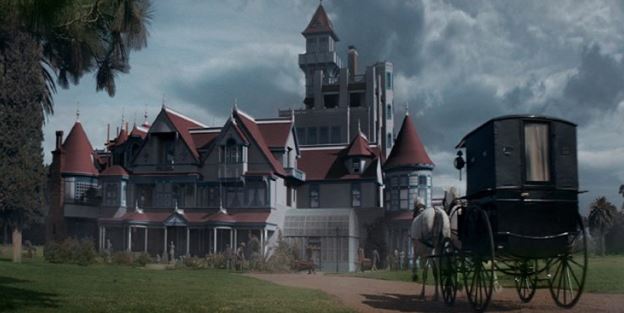
My heart was beating so hard, I thought it would jump right of my bosom and splatter on the floor. A black silhouette emerged through the fog, walking toward me out of a tunnel in the wall. There was no fluidity in the movements. I did not know what to do; I wanted desperately to run away. Although this was an exhilarating experience, it was horrifying. At an unnatural velocity, the apparition bolted towards me. Her eyes were blue and her face all pink and white like a blossom. She was humming an old Danish song as she crossed the open space. I was so consumed with terror as the blood washed out from under her onto the floor. Violently, she raked her razor-sharp fingers down my face. I cast my eyes to the asunder, as ear-piercing squeals echoed through my mansion. An icy thrill of dread ran down my spine and I began to hyperventilate. With the furious and unappeased physical hunger in her eyes, she feasted on my soul and cast a spell over me. With a roar like a lion, she said “I want you to die!” I could not tell whether her breath was as hot as fire or as cold as ice. “You will not kill me,” I replied calmly. “You will leave my house at once!” “Your life is worth nothing,” the apparition said. “My Lord Lucifer rules here. Or in his absence, me. I doubt your God will stretch out His hand to save your soul. I have lost my children, all six of them dead by the plague, but you grieve so greatly over one baby.” “I know the pain you are suffering.” #RandolphHarris 1 of 7
The apparition looked at me for a long while, assessing my worth. My breath had quickened; my hands were suddenly clammy. With her arms outstretched as if crucified, her flimsy robe billowed and swayed with the currents, and her black hair spread outward in Gorgonian tresses, as she sunk back into the wall in a black gulf of chaos from which it was called. Trembling and terribly affair, I fled up the stairs. My breathing was laboured, its sound harsh in the moonlit bedroom. I forced calmness upon myself, steading my breaths with concentrated effort. My hand gently soothed the skin over my heart. I sank back on my bed, as my heaving chest gradually subsided, staring at emptiness. Through this horror of imminent death, I felt an arm encircle my throat from behind. I struggled as I was dragged backward, but my efforts were feeble. For one brief and peculiarly lucid moment, I was in another time—an instant of déjà vu—fighting weakly, as a rough hand was pulling at me, lifting me. The cold night air rushing over me. Other hands clutched at my clothes, cruelly pinching the flesh beneath. I was rising, being hauled over the bed. As I was being drawn toward the ceiling, something scraped against my back and then I was lying on the mahogany floor. My head light with dizziness. I was convulsed by a coughing fit as I tried to sit upright. I forced myself to stand, feeling someone helping me, but not knowing whom. Using the wall for support, I pushed myself up. I was still weak, still trembling, and I sat on my bed, resting my elbows on knees, face buried in my hands. #RandolphHarris 2 of 7

A ray of moonlight shone on the stairs. It pierced the blackness, shifting the atmosphere. Silence was heavy and the emptiness a dark void. No one was around. Cold air surrounded me, causing me to shiver. A bloodcurdling scream echoed off the walls, causing my heart to pound in my chest. Although it was a cherished place, a curious labyrinth of treasured things, my home held a fresh note of terror for me. I knew the heritage of evil lore it masked, and with this knowledge my vision ran riot in queer new ways. Something was constantly watching at a door to see if it were dark enough to venture forth. It could go wherever the darkness reached, but light would always send it fleeing. It is said that the some enlist the Demon’s service, he gives them in exchange his pledge for honours, riches, and carnal pleasures. Often, the pact is formal, and sometimes, verbal, and there are even instances of a signed document. However, in every case, except for mine, it is usually voluntary. The usual initiation into these foul mysteries is through some secret society at an assembly of which the neophyte bounds oneself with terrific oaths and blasphemy to service all evil. However, there are cases which can only be explained by the materialization of dark intelligence who received a bond from the worshipper. On me a curse had fallen in a paroxysm of wrath, and terror, and the fear of death, black phantoms haunted me. Grief filled me as I thought of my beloved husband and baby. It is perhaps a strange quirk of fate that they both died violently long before their time. #RandolphHarris 3 of 7
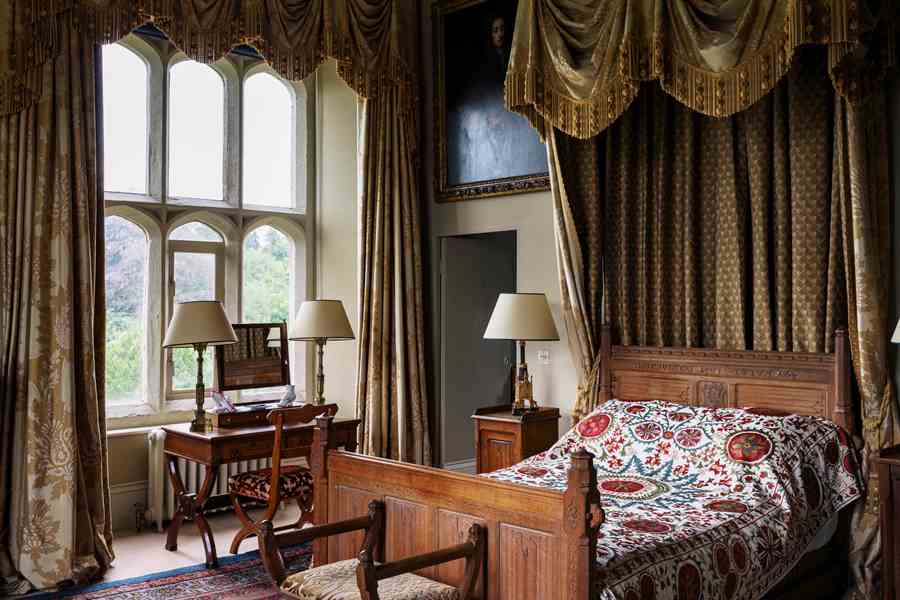
Darkness and a thick silence filled the room, the sliver of moonlight was gone. Doom seemed imminent. If was as if my living had unleashed the fury of the wraiths. Suddenly I heard a pounding on the wall, eventually circling the room and causing me a great fright. As I began to look around, I saw smoke rising to the ceiling, and shaping itself into a human form. Its face was twisting and writhing. Although the candlelight was dim, I could see the dead leaves strewn through her wet hair. She let out an angry shriek. Blood from her open wounds dripped onto the floor. My heart pounded and awful feelings were swarming inside of me. Suddenly, I found myself groping about in an almost black space. All I could see were short, faint, horizontal streaks of blueish light. Whenever I moved, I stumbled over something, and at each noise there would come a sort of answering sound from above—a vague stirring, mixed with the cautious sliding of wood on wood. Before my eyes, a kaleidoscopic range of phantasmal images played, all of them dissolving at intervals into the picture of vast, unplumbed abyss of night. I screamed loudly and ran recklessly out of the room, tripping and bruising myself at every turn. A rising wind blew out most of the candles, so that the scene grew threateningly dark. Stumbling blindly across the lightless hall, there was a nightmare flight through a vast cobweb nave whose ghostly arches reached up to realms of leering shadow. Restless and curious sounds could be heard throughout Llanada Villa. #RandolphHarris 4 of 7
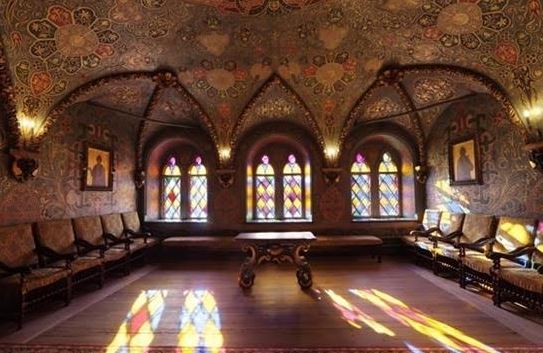
Suddenly, one of several doors burst open and a dark-haired, dark-suited man barreled out. The lights from the room behind him illuminated his staggered steps. He stumbled to a full stop in front of me. Blood pooled around his knees, pouring like syrup from a gunshot wound in his chest. A dark, cloudy aura of death was surrounding him. I moved back into the shadows. There was a sick, cold certainty that my World was falling into darkness. A hem of shadow had reached my corner of the globe, and without some miracle, without some direct intervention by a wrathful God, this curse would wreak an irrevocable change on my life. I began to pray for a miracle. Wails of pain and horror had penetrated my sanctum, the cries of human suffering echoed through my mind. Uneasy, I returned to the fourth floor. The hallway was empty and dark except for a pale shaft of moonlight slanting through the skylight. Sudden terror tightened along the back of my neck. As I looked out the window, I saw a dark, rangy figure creeping on the lawn, slinking from shadow to shadow then fading into darkness. I tried to say a requiem prayer, but grief-racked my mind and I had lost the words. Beyond the locked door, a faint squeak came from somewhere along the hall. It could have been anything—the wind in the attic, the house settling, but it was long and drawn out; high pitched. Almost like a door opening. #RandolphHarris 5 of 7

I dropped to my knees and froze, hands folded in prayer, listening for it again. However, there was nothing but silence. Then there was a rhythmic shuffle in the hall, approaching the door. With my heart pounding frantically against the inner wall of my chest, I rose to my feet and stepped close to the door, listening with my ear almost touching the wood. As if a wave of icy air had penetrated the wood, I felt a sudden chill. A curious sensation came over me. I felt that I was in the presence of something not of this World; something that scientists could neither weigh, measure, nor analyze; of the laws of whose being we know so little, that our imagination has absolutely limitless range. Opening the door, the conviction stealing upon me, that there, before my eyes, was evidence of an existence without the body of a World which, though unseen, unfelt, unknown, might be only near, but absolutely about with me always. How long the figure stood thus, with myself gazing on it in an almost breathless expectancy, I knew not. At last, it moved aside, all but its hand vanishing from my sight; and growing each instant more transparent, relinquished its pointing attitude, seemed to return towards the figure, and with a little waving gesture as of farewell, disappeared as if hidden by folds of drapery. For some time, I could only feel distress and anxiety. #RandolphHarris 6 of 7
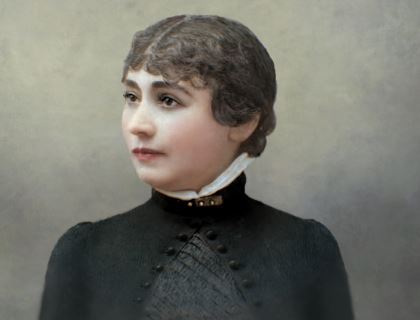
Somewhere in the house a door crashed. Faint scratching noises, like fingernails clawing at stone, came from inside the walls. My hand shook as I fumbled in the darkness for the doorknob. My fingers caressed the cold metal, and I felt joy race through me. A cold hand crossed over my own and squeezed. The pain was immediate and intense, silencing the scream that begged to be released from my throat. As I stood there for a long time, frozen in my tracks, I could not breathe. I was so startled. I began to see strange sights before my eyes. A large, opaque body darkened the window. Never before had the presence of evil so poignantly oppressed me. Later, I must have dropped asleep, for it was out of a phantasmal chaos that my mind leaped when the night grew hideous with shrieks beyond anything in my former experience or imagination. In the shrieking the inmost soul of human fear and agony clawed hopelessly and insanely in my sanity. Demonic rumblings of thunder shook my mansion. I built a small fire in the living room and waited for the full fury of the storm to hit. Sipping tea, I listened, transfixed, to the wind howling. Pounding torrents of rain, driven by gale force winds, hammered the house. A bolt of lightning struck a tree not fifty feet away. I leapt back, almost falling. Picking up my sleeping dog, I retreated to the safety of my library. I warmed myself before the library fireplace. As I stared vacantly into the fire, a horrible sense of despondency settled over me. I was alone—for the first time in my life—utterly alone. #RandolphHarris 7 of 7
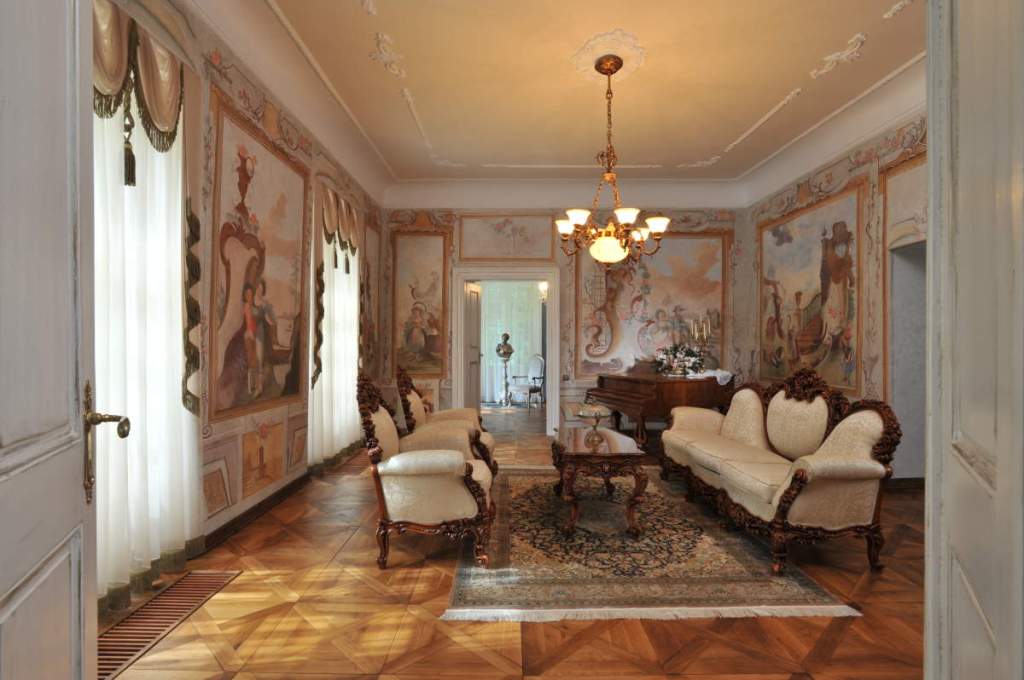
The Winchester Mystery House
When a medium visited The Winchester Mystery House in 2007, he walked up the stairs, stopped and turned around—hate was in his eyes. His left hand became strangely stiff, and he had a feeling that someone was murdered here. The minute he got to the top of the stairs, he was seized with fear. He blundered into other rooms before he could get his bearings. He was really scared. “I feel a great tragedy here,” he said, “especially on the staircase where the landing is. I feel an agonizing screaming. In the room directly above this, there is a complete turmoil. A very beautiful woman, I feel, also a man, and I feel there’s been a death here, a death by violence. The woman is fighting for her mentality. The person who is dead in this apartment is the man.” Sometimes a ghost reattaches himself to the last refuge he had on the Earth plane, even though the body may expire elsewhere, and instantly returns to that place, never to leave it again.
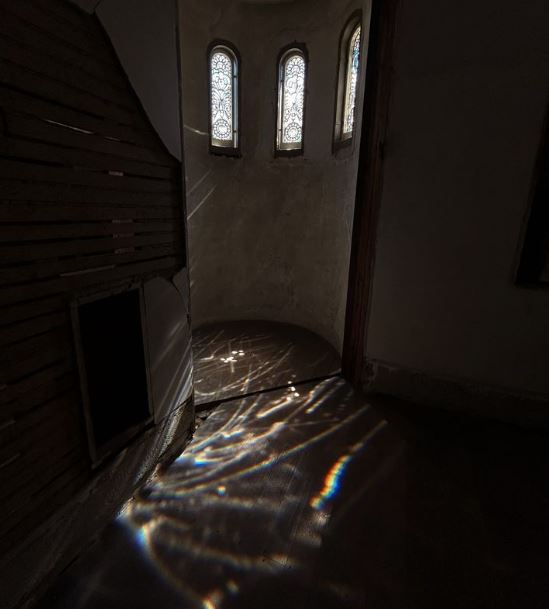
Please come and enjoy a delicious meal in Sarah’s Café, stroll along the paths of the beautiful Victorian gardens, and wonder through the miles of hallways in the World’s most mysterious mansion. For further information about tours, including group tours, weddings, school events, birthday party packages, facility rentals, and special events please visit the website: https://winchestermysteryhouse.com/

Please visit the online giftshop, and purchase a gift for friends and relatives as well as a special memento of The Winchester Mystery House. A variety of souvenirs and gifts are available to purchase. https://shopwinchestermysteryhouse.com/

History’s Greatest Mystery
Once upon a time, I was admired for my sultry voice. It was low and soft. Enticing, William had said. Indeed, there was seldom a New Haven party during which, at some point, I had not been begged to sing. Now, however, my voice had been used to sooth the angry spirits and sing them to sleep. It was invaluable for calming the disgruntled apparition, the worried ghoul, and any other supernatural being whose afterlife was out of balance. It worked just as well on a highly-strung poltergeist. This evening, I was not feeling well. The housemaid came in with tea service. She proceeded to pour. “Here you are, Mrs. Winchester. A few sips of this and you will feel better directly.” I took the teacup with trembling hands, forcing myself to swallow. The hot, brisk liquid calmed my nervous insides, but I knew there was not a beverage on Earth that could heal my broken heart. While pleasing reflections were stealing over my mind, and gradually consoling me, I was suddenly aroused by a sound like that of the rustling of a silken gown and the tapping of a pair of high-heeled shoes, as if a woman were walking into the room. I could draw the curtain to see what the matter was, the figure of a little woman passed between the sofa and the fireplace. The back of this form was turned to me, and I could observe, from the shoulders and neck, it was that of an old woman, whose dress was an old-fashioned gown, which ladies call a sacque—that is, a sort of robe completely loose in the body, but gathered into broad plaits upon the neck and shoulders, which fall down to the ground, and terminate in a species of train. #RandolphHarris 1 of 7
I thought the intrusion singular enough, but never harboured for a moment the idea that what I saw was anything more than the housemaid about the room, who had a fancy to dress like her grandmother, and who, having perhaps been confused about her tasks. Under this persuasion, I placed my teacup on the saucer. She turned slowly round, but gracious heaven! My lord, what a countenance did she displayed to me! There was no longer any question about what she was, or any thought of her being a living being. Upon a face which wore the fixed features of a corpse were imprinted the traces of the vilest and most hideous passions which had animated her while she lived. The body of some atrocious criminal seemed to have been given up from the grave, and the soul restored from the penal fire, to form, for a space, a union with the ancient accomplice of its guilt. My hair stood up straight, as I gazed on this horrible specter. The had made, as it seemed, a single and swift stride to the sofa where I sit, and sat down upon it, precisely the same attitude which I had assumed in the extremity of horror, advancing her diabolical countenance within half a yard of mine, with a grin which seemed to intimate the malice and the derision of an incarnate fiend. I wiped from my brow the cold perspiration with the recollection of my horrible vision covering it. #RandolphHarris 2 of 7

I have been in all the mortal dangers incidental to my lineage, but in this instance, I knew this was an incarnation of an evil spirit. I felt a touch of the dimly sinister, which was beyond my power to define. All firmness forsook me, and my courage melted from me like wax in the furnace. The current of my lifeblood ceased to flow, and I sank back into the sofa in a swoon, as a victim to panic and terror. How long I sat in this condition, I cannot pretend to guess. However, I was roused by the bell in the belfry. It was some time before I dared to open my eyes, least they should again encounter the horrible specter. However, when I summoned the courage to open my eyes again, the apparition was no longer visible. Ordinarily one could find half a dozen bits of candle stuck around in the crevices of this vestibule, but they were now gone. I could not go off to sleep late that night, and fell into a state of semi-consciousness, with a small light burning near my bed. Gradually I became aware of the smell of fire, or rather the peculiar smell when a gun had just been fired. At the same time, I felt an acute pain, as if I had been wounded in the left side of my back. The monstrous evil left its mark. Trying to shake off the impression, I started to do some work at my typewriter, but the presence persisted. I heard dark whispers calling out my name, “Sarah.” The servant ran away like rats. People began to mind the way folks vanished now and then in the mansion. There were legends evoked by the evil look of this place at night, but even so, they were strangely coming to life. #RandolphHarris 3 of 7
I was tired and irritable the next morning due to interrupted sleep and plain confusion. I did not understand what was happening. I could not cope. There was no one I could go to for advice without having them think I was crazy. However, what was I to do? The afternoon sun came out from behind dispersing clouds, but seemed unable to light up the walls of Llanada Villa. Later that evening, by lamplight, I sat in the Blue Séance Room and drafted the plans which the spirits had instructed me to add to this labyrinth. More rooms and corridors. I had a few sips of tea as I made notes and now and again I would glace at the window where night seemed to press against the glass. Eventually, I left the room to roam the house. Somewhere, a clock chimed the late hour. Using a lantern for guidance, I walked the length of the corridor, passing several of my own rooms, heading for the window at the far end. Even though I was tired physically, my senses were acutely alert, as if my mind were a restless passenger inside of a train. I reached the window and placed the lantern on the floor, standing close to the glass to see beyond. The blanket clouds had finally given way, although not entirely; milky edged cumuli remained, almost motionless, tumbled in the night sky like froze avalanches. The moon had a space all of its own, as though its white-silver had eaten away the surrounding clutter, and deep shadows were cast across the lawn and gardens below the window. #RandolphHarris 4 of 7
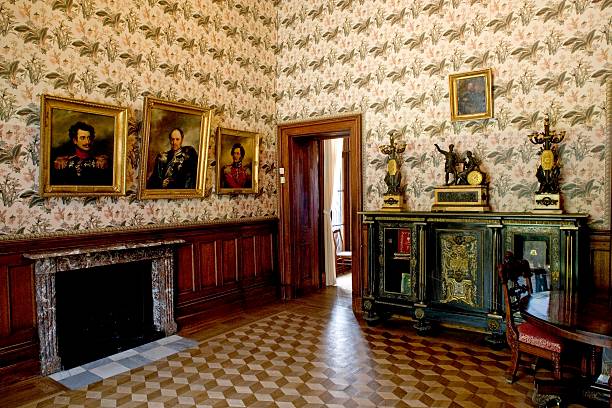
There were forms down there other than those arboreal statues whose clear-defined shadows pointed toward the Observational Tower like accusing fingers. From a distant place amid the wooded areas came the hollow shriek of a night creature, a sound no less disturbing for its faintness. I looked on, but my gaze did not rove, for my thoughts were directed inward at that moment. The piteous, animal cry had stirred a memory, one more distant in my own mind than its catalyst from the trees. I remembered the sharp, human screech that had once echoed on the fourth floor. I shone the lantern along the corridor, the beam swift to repel the darkness. The light caught a vague movement by the stairway. Without hesitation, I hurried toward it and as I approached, I felt a peculiar sense of oppression. Then, bracing myself, I crossed the wide hallways. Half choked with the omnipresent dust, covered with ghostly gossamer fibers, I began to climb the steps which rose into darkness. As the darkness encroached like thick drapes, my lantern was no longer of any use. At a sharp turn I felt a closed door ahead, and a little fumbling revealed its ancient latch. It opened inward, and beyond it I saw a dimly illumined corridor lined with mahogany paneling. The sainted-glass windows obscured any light. The designs were largely conventional, and of mysterious symbolism concerning ancient patterns. #RandolphHarris 5 of 7
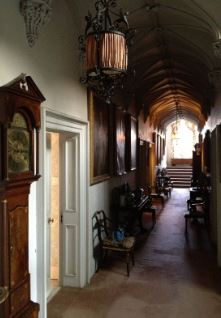
In the rear hidden room, I found a desk and ceiling-high shelves of books. I received an absolute shock of horror, for the titles of those books told me much. They were from the dark, forbidden things which most sane people have never even heard of, or have heard of only in furtive, timorous whispers; then banned and dreaded repositories of equivocal secrets and immemorial formulae which have tricked down the stream of time from the medieval times, and the dim, fabulous days before man was. I had read many of them—the Voynich manuscript, The Orea Linda Book, Munich Manuel of Demonic Magic, The Book of Soyga, and many other forbidden occult books. Although this forbidden library was within my home, it must have been the seat of an evil older than mankind and wider than the known Universe. What most people do not understand is that created darkness before he created light. Many of the great tomes on the shelves fascinated me unutterably. I wondered how they could have appeared in my home. Then there came sounds from below. Like bare feet on wood. Running to the spiral staircase, I looked dizzily downstairs and saw processions of figures in robes and hoods whose outlines where not human. Wisps of lack most floated before my eyes. And beyond all else, I glimpsed an infinite gulf of darkness. #RandolphHarris 6 of 7
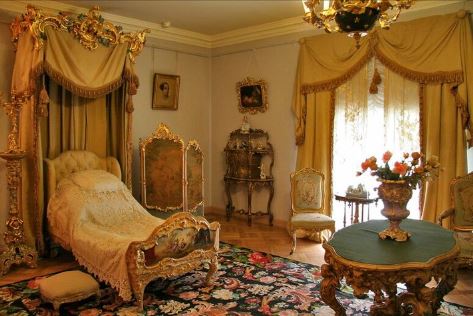
I felt some dark presence close to me and watching me with horrible intenseness. It looked through me. I tried to look away from it, but some obscure compulsion drew my eyes back to whatever was lurking in the shadows. It frightened me horribly, so that I ran through the fear-haunted hallways through one of the kitchens and out into the night. Bright though the moon was, it was several moments before my eyes adjusted to the contrast, and a second or two longer before I could be sure of what I was seeing. A figure dressed in a flowing white flitting across the terrace. It suddenly vanished from view. My eyes narrowed; my face washed in moonlight. “Annie?” I questioned almost silently. I followed, breaking into a slow run, reaching the steps that led down from the terrace into the gardens. I searched for the figure in white, certain that I had lost sight of her at this point. Yet nothing moved among the flowers and boxwood hedges below. I descended and took the center path toward the pond, eyes seeking hither and tither. I reached the low wall and looked down on the water, its still surface shiny with moonlight, the silver sheen somehow compelling. My fascination was broken by the sound I had heard before—the soft padding of footsteps. Only this time they were hurried, and their bare feet were against flagstones. I whirled around to face whatever was rushing toward me, but saw nothing. Tired. Exhausted. Fatigued. Defeated. I went back to the house, turned out the light, locked up, and went upstairs to bed. Maybe our antagonists were regrouping their force. #RandolphHarris 7 of 7
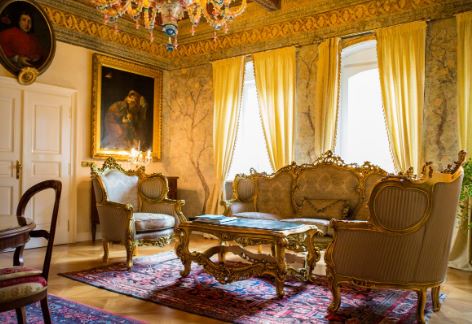
The Winchester Mystery House
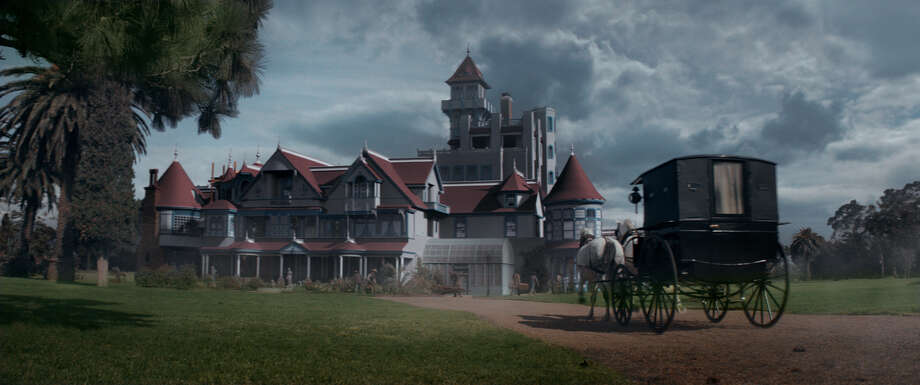
Many strange and mysterious events have occurred in The Winchester Mystery House, which have never been explained because of our limited understanding. A paper covered with penciled memoranda found behind the safe in the Grand Ball Room holds much of a puzzling nature. Caretakers have read it carefully, but are not sure what it means. This disjointed text includes such phrases as the following. “Sarah Winchester home from Germany April 1891—buys ancient Rosicrucian Sword—her archaeological work and studies in occult well know.” “John Hansen warns against Observational Tower Dec. 22, 1892.” “1893—3 disappearances.” “1885–Within six months, Angus dishing out stronger meat.” “13 disappearances 1886—stories of blood sacrifice begin.” “1886–front door vanishes from inside. Outdoors still visible.” “1887–Maureen, who had been a satanic breeder, left 200-page diary in which she said she had been involved with a satanic group. Five buns terminated. Foetuses sacrificed.” “Investigation 1888 unfounded—occults whispers. The constable never involved.” “Fr. Snider pontificates of devil-worship with object found in the Winchester Mansion—claims they summoned something that can’t exist in light. These people say Mrs. Winchester’s home shows them heaven and other worlds, and tells them secrets in some way. They call it up by gazing at the crystal, and have a secret language of their own.” “7 disappearances 1922—secret committee calls on Mayor Jayet.” “Action promised Oct. 1922—Auction and estate closes.” “203 persons leave city before end of 1922—mention no names.”

Please come and enjoy a delicious meal in Sarah’s Café, stroll along the paths of the beautiful Victorian gardens, and wonder through the miles of hallways in the World’s most mysterious mansion. For further information about tours, including group tours, weddings, school events, birthday party packages, facility rentals, and special events please visit the website: https://winchestermysteryhouse.com/
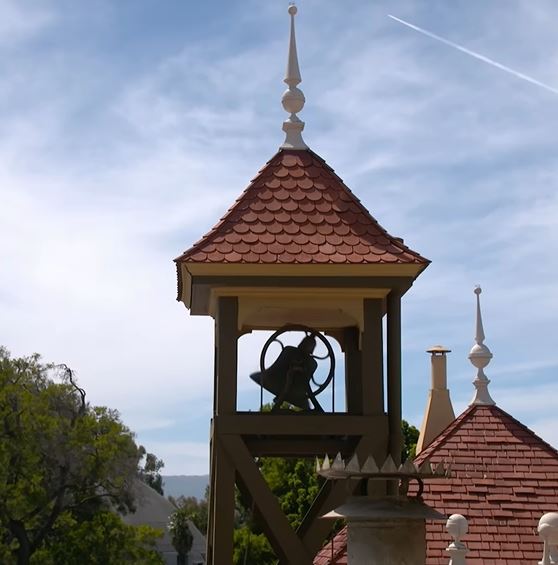
Please visit the online giftshop, and purchase a gift for friends and relatives as well as a special memento of The Winchester Mystery House. A variety of souvenirs and gifts are available to purchase. https://shopwinchestermysteryhouse.com/
Reality is Created by the Mind
Reality is created by the mind, we can change our reality by changing our minds. A sharply self-accusing honesty of purpose, a blunt integrity of conscience, will have again and again to thrust its sword into his conduct of life. An ethic that far outleaps the common one will have to become his norm. Conventional ideas of goodness will not suffice him; the quest demands too much for that. Few characters are completely good, totally selfless, and it leads only to dangerous illusions m when this is not remembered. New evils grow in those who deceive themselves, or others, by tall talk and exaggerated ideals. The goodness which philosophy inculcates is an active one, but it is not a sentimental one. It is more than ready to help others but not to help them foolishly. It refuses to et mere emotion have the last word but takes its commands from intuition and subjects its emotions to reason. It makes a clear distinction between the duty of never injuring another person and the necessity which sometimes arises of causing pain to another person. If at times it hurts the feelings of someone’s ego, it does so only to help his spiritual growth. This goodwill becomes instinctive but that does not mean it becomes unbalanced, wildly misapplied, and quite ineffectual. For the intelligence which is in wisdom accompanies it. The goodness which one man may express in his relation to another is derived ultimately from his own divine soul and is an unconscious recognition of, as well as gesture to, the same divine presence in that other. Moreover, the degree to which anyone becomes conscious of his true self is the degree to which he becomes conscious of it in others. Consequently, the goodness of the fully illumined man is immeasurably beyond that of the conventionally moral man. #RandolphHarris 1 of 19
Teachers value their students having worth, and this prizing extends to each and all the facets of the individual. Such a teacher can be fully acceptant of the fear and hesitation of the student as he approaches a new problem, as well as of the satisfaction he feels in achievement. If the teacher can accept the student’s occasional apathy, his desire to explore by-roads of knowledge, as well as his disciplined efforts to achieve major goals, he will promote this type of learning. If he can accept personal feelings which both disturb and promote learning—rivalry with a sibling, hatred of authority, concern about personal adequacy—then he is certainly such a teacher. This means acceptance of the whole student by the teacher—a prizing of him as an imperfect human being with many feelings, many potentialities. This prizing or acceptance is an operational expression of the teacher’s essential confidence in the capacity of the human organism. Why did Jesus as the Christ ask his followers to refrain from calling him good? By all ordinary standards he was certainly a good man, and more. It was because his goodness was not really his own; it derived from the Overself having taken over this whole person, his whole being. He will awaken to the realization that the chaotic unplanned character of the ordinary man’s life cramps his own possibilities for good. He will perceive that to let his thoughts drift along without direction and his feelings without purpose, is easy but bad. The term “good” is used here with clear consciousness that there is no absolute standard of goodness in common use, that which is regarded as good today may be unacceptable as such tomorrow, and that what one man calls good may be called evil by another man. What then is the sense which the student is asked to give this word? He is asked to employ it in the sense of a pattern of thinking, feeling, and doing which conforms to his highest ideal. #RandolphHarris 2 of 19

Another element in the teacher’s attitude is his ability to understand the student’s reactions from the inside, an empathic awareness of the way the process of education and learning seems to the student. This is a kind of understanding almost never exhibited in the classroom; yet when the teacher is empathic, it adds an extremely potent aspect to the classroom climate. When a child says, in a discouraged voice, “I cannot do this,” that teacher is most helpful who naturally and spontaneously responds, “You are just hopeless that you can ever learn it, are you not?” The usual denial of the child’s feelings by a teacher who says, “Oh but I am sure you can do it” is not nearly so helpful. These then are the essential attitudes of the teacher who facilitates learning to be free. There is one other function performed by such a teacher which is very important. It is the provision of resources. Instead of organizing lesson plans and lectures, such a teacher concentrates on providing all kinds of relevant raw material for use by the students, together with clearly indicated channels by which the students can avail themselves of these resources. This not only includes the usual academic resources—books, workspace, tools, maps, movies, recordings, and the like. It also incorporates human resources—persons who might contribute to the knowledge of the student. Most important in this respect is the teacher himself as a resource. He makes himself and his special knowledge and experience clearly available to the students, but he does not impose himself on them. He outlines the ways in which he feels he is most competent, and they can call on him for anything he is able to give, but this is an offer of himself as a resource, and the degree to which he is used is up to the students. #RandolphHarris 3 of 19

The teacher thus concentrates on creating a facilitative climate and upon providing resources. He may also help put students in contact with meaningful problems. However, he does not set lesson tasks. He does not assign readding. He does not evaluate and criticize unless the student wishes his judgment on a product. He does not give examinations. He does not set grades. Perhaps this will make it clear that such a teacher is not simply giving lip service to a different approach to learning. He is, operationally, giving his students the opportunity to learn to be responsibly free. What is sin? It may be defined, first, as any act which harms others; second, as any act which harms oneself; third, as any thought or emotion which has these consequences. Goodness is naturally allied to the truth, is the perfume of it exhaled without self-consciousness. Evildoing is too vulgar. The spiritually fastidious man does not find himself set with a choice between it and the opposite. He cannot help but choose the good spontaneously, directly, and unhesitatingly. In the end the question of goodness involves the question of truth: one may be correctly known only when the other is also known. Whatever else he may be, he is no aspirant for sainthood. That admirable goal is quite proper for those whose innate vocation lies that way. However, it is not the specific goal for would-be philosophers. The same truth, ideal, or master that shows him the glorious possibilities of goodness within himself, will also show the ugly actualities of evil within himself. No sun, no shadow. Morally, emotionally, and intellectually, no man is all weakness or all strengths. All are a mixture of the two, only their proportion and quality varies. The good in man will live long after his faults have been forgotten. He who has achieved goodness in thought and feeling cannot fail to achieve it in action. #RandolphHarris 4 of 19
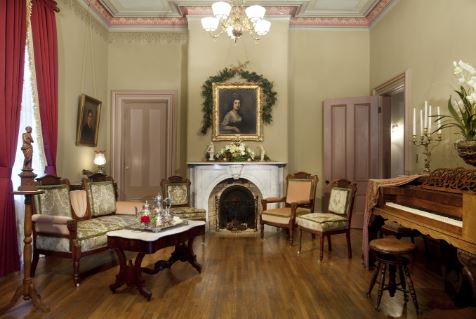
Sin is simply that which is done, through ignorance, against the higher laws. Virtue is the obedience to, and cooperation with, those laws. A sharp distinction between physical, or animal, purposeless evolution and mental, human evolution decisively modified by purposive action. Free trade societies are scattering tracts with a liberal hand, in the hope of stemming the tide. When society was being freed from monarchical and oligarchical rule, the natural-law and laissez-faire dogmas had been useful intellectual devices in those days. It was natural enough to oppose governmental interference when government was in the hands of autocrats, but it is folly to cling to this opposition in an age of representative government when the popular will can be exerted through legislative action. The assumptions are obsolete. There is no necessary harmony between natural law and human advantage. The laws of trade result in enormous inequalities in the distribution of wealth, which are founded in accidents of birth or strokes of low cunning rather than superior intelligence or industry. Nor is natural law a barrier against monopolies. Classical theory says that competition keeps prices down, but often competition multiplies the number of shops far beyond necessity, each of which must profit by exchange, and to do this all must sell dearer than would otherwise be necessary. This is particularly true of the distributive industries. In other lines competition breeds huge corporate organizations with dangerously broad powers. To break them up would be to destroy the legitimate product of natural law, the integrated organisms of social evolution. #RandolphHarris 5 of 19
The only constructive alternative is government regulation in the interest of society at large. Historic attempts at government regulation or management have not been the disasters that individualists charge. Witness the telegraph in Great Britain and the railroad systems of German and Belgium. The sphere of social control has been gradually expanding in the history of civilization, but for nearly two centuries, the English school of negative economists has devoted itself to the task of checking this advance. The goal is to utilize the social forces for human advantage in precisely the same manner as the physical forces have been utilized. It is only through the artificial control of natural phenomena that science is made to minister to human needs; and if social laws are analogous to physical laws, there is no reason why social science may not receive practical applications such as have been given to physical laws. The value system is based on the concept of what Albert Schweitzer called “reverence for life.” Valuable or good is all that which contributes to the greater unfolding of man’s specific faculties and furthers life. Negative or bad is everything that strangles life and paralyzes man’s activeness. All norms of Christianity or from the great humanist philosophers from the pre-Sokratics to contemporary thinkers are the specific elaboration of this general principle of values. Overcoming one’s greed, love for one’s neighbour, knowledge of the truth (different from the uncritical knowledge of facts) are the goals common to all humanist philosophical and religious systems of the West and the East. Only when he had reached a certain social and economic development which left him enough time and energy to enable him to think exclusively beyond the aims of mere physical survival, could Man discover these values. #RandolphHarris 6 of 19
However, since this point has been reached, these values have been upheld and, to some extent, practiced within the most disparate societies—from thinkers in the Hebrew tribes to the philosophers of the Greek city-states and the Roman Empire, theologians in the medieval feudal society, thinkers in the Renaissance, the philosophers of the Enlightenment, down to such thinkers of the industrial society as Goethe, Marx, and, in our age, Einstein and Schweitzer. There is no doubt that in this phase of industrial society, the practice of these values becomes more difficult, precisely because the reified man experiences little of life and instead follows principles which have been programed for him by the machine. Any real hope for victory over the dehumanized society of the megamachine and for the building up of a humanist industrial society rests upon the condition that the values of the tradition are brought to life, and that a society emerges in which love and integrity are possible. Having stated that the values called humanistic deserve respect and consideration because they represent a consensus among all higher forms of culture, one must consider whether there is objective, scientific evidence which could make it compelling, or at least highly suggestive, that these are the norms which should motivate our private lives and which should be guiding principles for all the social enterprises and activities we plan. The character orientation, in Dr. Freud’s sense, is the source of men’s actions and of many of his ideas. Character is the equivalent of the animal’s instinctive determination which man has lost. Man acts and thinks according to his character, and it is precisely for this reason that “character is man’s fate,” As Heraclitus put it. Man is motivated to act and to think in certain ways by his character, and at the same time he finds satisfaction in the very fact that he does so. #RandolphHarris 7 of 19
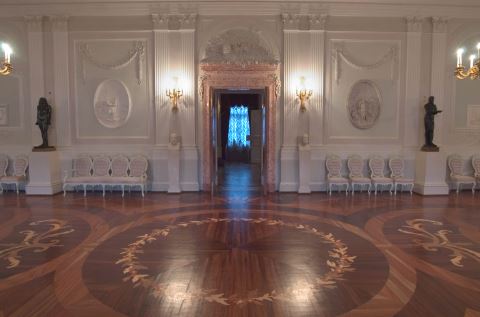
The character structure determines action, as well as thoughts and ideas. Let us take a few examples: for the anal-hoarding character, the ideal of saving is most attractive and, in fact, he tends to regard saving as one of the major virtues. He will like a way of life in which saving is encouraged and waste prohibited. He will tend to interpret situations in terms of his dominant striving. A decision, for instance, of whether to buy a book, to see Winchester in the movies, or what to eat, will mainly be made in terms of “what is economical,” quite regardless of whether his own economic circumstances warrant such a principle of choice or not. He also will interpret concepts in the same way. Equality means to him that everybody has the same share of material goods and not, as it would mean t others of a different character, that men are equal because no man must be made the means for the purpose of another. A person with an oral-receptive character orientation feels “the source of all good” to be outside, and he believes that the only way to get what he wants==be it something material, be it affection, love, knowledge, pleasure—is to receive it from that outside source. In this orientation the problem of love is almost exclusively that of “being loved” and not that of loving. Such people tend to be indiscriminate in the choice of their love objects, because being loved by anybody is such an overwhelming experience for them, that they “fall for” anybody who gives them love or what looks like love. They are exceedingly sensitive to any withdrawal or rebuff they experience on the part of the loved person. Their orientation is the same in the sphere of thinking. If intelligent, they make the best listeners, since their orientation is one of receiving, not producing, ideas; left to themselves, they feel paralyzed. #RandolphHarris 8 of 19
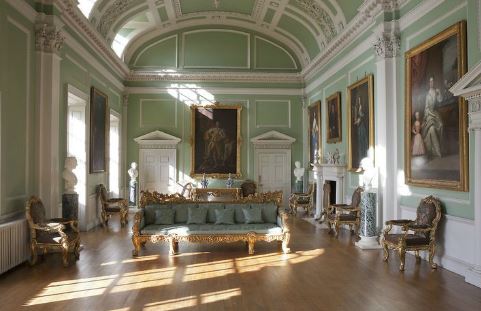
It is characteristic of these people that their first thought is to find somebody else to give them the needed information, rather than to make even the smallest effort of their own. If religious, these persons have a concept of God in which they expect everything from God and nothing from their own activity. If not religious, their relationship to persons or institutions is very much the same; they are always in search of a “magic helper.” They show a particular kind of loyalty, at the bottom of which is gratitude for the hand that feeds them and the fear of ever losing it. Since they need many hands to feel secure, they must be loyal to numerous people. It is difficult for them to say no, and they are easily caught between conflicting loyalties and promises. Since they cannot say no, they love to say yes to everything and everybody, and the resulting paralysis of their critical abilities makes them increasingly dependent on others. They are dependent not only on authorities for knowledge and help but also on people in general for any kind of support. When alone, they feel lost because they feel that they cannot do anything without help. This helplessness is especially important about those acts which, by their nature, can only be done alone—making decisions and taking responsibility. In personal relationships, for instance, they ask advice from the very person about whom they must make a decision. When making important decisions, it is crucial to take a moment or even longer to really think about things before you make the final decision. You cannot just go on anyone’s word after all. You have got to take the time to research and find things out on your own. When you take enough time to evaluate your final decision, you can often avoid a bad situation. #RandolphHarris 9 of 19
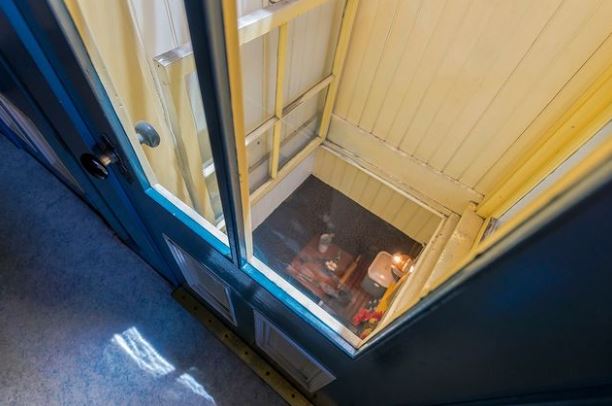
We have been talking a lot about Clare recently. After much tribulation, Clare learned to search within herself for the sources of her troubles, and only after that work had proceeded, she investigated Peter’s share of her problems. Originally her self-examination was an attempt to find an easy clue with which to solve the difficulties of the relationship, but it led her eventually to some important insights into herself. Anyone in analysis must learn to understand not only himself but also the others who are a part of his life, but it is safer to start with himself. If he is entangled in his conflicts, the picture he will gain of the others will usually be a distorted one. From the data about Peter that Clare assembled in the course of her entire analytical work, her analysis of his personality was correct. Nevertheless, she still missed the one important point: that Peter, for whatever reasons of his own, was determined to break away from her. Of course, the assurance of love which he apparently never failed to give her must have betwixt her. On the other hand, this explanation is not quite sufficient, because it leaves open two questions: why her effort to reach a clear picture of him stopped where it did; and why she could visualize—though not put into effect—the desirability of her breaking away from Peter, but closed her eyes to the possibility of his breaking away from her. #RandolphHarris 10 of 19
As a result of this remaining bond, Clare’s wish to break off remained short lived. She was unhappy while she was away from him and as soon as he joined her, she succumbed to his charm. Also, she still could not stand the prospect of being alone. Thus, the relationship went on. She expected less of him and was more resigned. However, her life still centered around him. Three weeks later she woke up with the name Margaret Brooks on her lips. She did not know whether she had dreamed of her, but she knew the meaning immediately. Margaret was a married friend whom she had not seen for years. She had been pitifully dependent on her husband even though he ruthlessly trampled on her dignity. He neglected her and made sarcastic remarks about her in front of others; he had mistresses and brought one of them into their home. Margaret had often complained to Clare in her spells of despair. However, would still turn out to be the best of husbands. Clare had been staggered at such a dependency and had felt contemptuous of Margaret’s lack of pride. Nevertheless, her advice to Margaret dealt exclusively with means of keeping the husband or of winning him back. She had joined her friend in the hope that all would be fine in the end. Clare knew that the man was not worth it, but since Margaret loved him so much this seemed the best attitude to adopt. Now Clare thought how stupid she had been. She should have encouraged Margaret to leave him. However, it was not this former attitude toward her friend’s situation that upset her now. What startled her was the similarity between herself and Margaret, which struck her immediately upon awakening. She had never thought of herself as dependent. And with frightening clarity she realized that she was in the same boat. She, too, has lost her dignity in clinging to a man who did not really want her and whose value she doubted. #RandolphHarris 11 of 19

Clare saw that she was bound to Peter with ties of overwhelming strength, that life without him was meaningless, beyond imagination. Social life, music, work, career, nature—nothing mattered without him. Her mood depended on him; thinking about him absorbed her time and energies. No matter how he behaved she still returned to him, as the cat is said to return to the house it lived in. During the next days, she lived in a daze. The insight had no relieving effect. It merely made her feel the chains more painfully. For people like Clare, psychotherapy is a great tool. The long-standing, mutually oriented and reciprocally respectful friendship provides a relationship with definite potential for the provision of therapeutic conversation. There are basic processes that are natural to all conversations with therapeutic intent, and if certain of these processes (such as ventilation) may account for a significant portion of the benefits derived, then certainly the benefits of such conversation could be expected from communication with close and respected friends. Everyone could be encouraged to recognize these qualities that contribute to the character of the very special form of “friendship” that exists between psychotherapist and client. If it is the character of the relationship that affords much if not most of the therapeutic effect (as distinguished from specifics of the content or management of the conversations) then all thoughtful and sensitive persons could be supported in the effort to provide this kind of relationship, when needed in the context of their natural friendships. #RandolphHarris 12 of 19

It is pertinent to note that friendships as psychological phenomena have received very little attention as the subject of research. Some investigations have been made into certain of the more obvious demographic and situational determinants of the formation of friendships. There has been remarkably little probing research into the way friendship relationships function in the total psychological economy of the individual. Perhaps in twenty-first century Western culture there is a general absence of the kind of friendship that could readily provide the relationship required for therapeutic conversation. Certainly there is much evidence of an activity focus rather than relationship focus in our friendships. We have bowling friends, golfing friends, hunting and fishing friends, and social media friends. Shared interests, cultural or political, athletic or aesthetic, provide the medium of friendship rather than the interdependencies that foster the close, sharing friendships of older, less urbanized communities. It is possible that the cult of the psychotherapy expert may have contributed to the deterioration of the “best friend” and “confidant” relationships. It would be well for mental health experts to examine carefully their attitudes toward friendships as potential resources of therapy for the mildly maladjusted. It is a proper part of mental hygiene for the individual to understand the necessity for and functions of friendship, and to be encouraged to look to friends for something more than playful companionship. It may be argued that some neurotics are in the very nature of their illness persons without friends, without effective or satisfying personal relationships, and with a reduced or absent capacity to form sound relationships. This is frequently the case, but it does not alter the need for the therapist to seek as rapidly and effectively as possible to move the patient in the direction of achieving his supplies of affectionate acceptance from the natural reservoir of spontaneous relationships. #RandolphHarris 13 of 19

It is equally probable that there are many disturbed, conflicted, and unhappy persons who, neither finding nor affording a professional therapist, would experience significant relief by sharing their problems with a trusted friend. If this avenue of help has been doubly closed by the impact of an injudicious public campaign that has denied the potential therapy of friendships and dissuaded the more thoughtful and sophisticated members of the public from offering the therapy of friendship, while at the same time over-selling the therapeutic power of experts who are in very short supply, it is unfortunate. It is not dangerous for people to talk to each other about their problems. The person who shares his perplexities with one close and respected friend is more likely to be helped rather than harmed. If his needs exceed what can be afforded by the therapy of friendship the experience is more likely rather than less likely to encourage him toward expert counsel. The net result of a careful effort to educate the public to the proper and potential role of the friendship as a source of therapeutic conversation should be to reduce that part of the case load of the skilled psychotherapist composed of individuals with good natural supplies who are responding to the paradoxically repressive effect of the “cult of the expert.” It is a well-accepted part of the operation of many psychiatric clinics that a sizable number of clients are carried in what is commonly designated as “supportive therapy.” On any scale of evaluation of the potency or value of various types of psychotherapy, most therapists would rate supportive therapy at or close to the bottom; among experts it is not a prestigious form of therapy. Yet all recognize it as a type of therapist-patient relationship that must be offered and developed with certain patients. This form of therapy is emotionally supportive. It affords an anchor, a stabilizing, personal point of reference for the patient whose history, symptoms, or attitudes are blocking him from achieving mature and satisfying personal relationships in his natural environment. #RandolphHarris 14 of 19
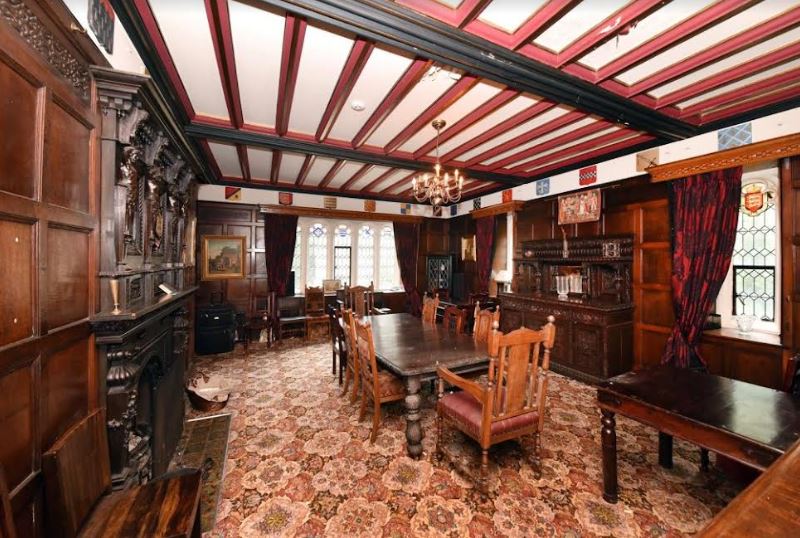
When a patient appears to have achieved maximum response to earlier more intensive treatment procedures (including insight therapy, drugs, and, possibly, hospitalization) but has a residual discomfort that warrants continued contact with the therapist, sometime supportive therapy is undertaken. Sometimes supportive therapy is indicated for the essentially healthy personality that has been disrupted by sudden situational stress or emotional trauma. Supportive therapy may yield significant benefits to the distressed person who is not motivated (or lacks aptitude) for an intensive, uncovering, interpretive form of therapy. It is unfortunate that too few therapists seem to be adequately oriented toward supportive psychotherapy as a distinctive type of therapy, with specific goals and of reasonably limited duration. For many therapists, supportive therapy is approached as a “continuing relationship therapy” without critical examination of either the appropriateness or necessity of their continuing indefinitely as the patient’s sole “support.” This uncritical acceptance of a long-term surrogate role may partly reflect the instruction to the supportive therapist to attempt to win the patient over to a conviction that the therapist is a helpful friend. It undoubtedly reflects also an implicit assumption that the patient either has no other accessible friendship or is neurotically prevented from realizing the emotional support that could afford (rather than simply inhibited by current cultural proscriptions against use of the friendship relationship for anything other than recreational purpose). Each passive acceptance of a role as long-term surrogate friend seriously reduces the availability of the therapist to contribute his unique professional knowledge or his specific psychotherapeutic talents toward the care of persons with a real need for skilled treatment. #RandolphHarris 15 of 19

It is a particularly serious defect for the supportive therapist to fail to see his responsibility and opportunity to teach and encourage his patient continuously to generalize the emotional learning of the therapy relationship to his extra-therapy life, to seek and to find the satisfaction of his emotional needs in the natural supplies of his social World. The passive continuation of a supportive relationship has potential to defeat its very own purpose by encouraging the patient’s delusional, derogatory self-concept: “only a therapist could love me!” It would be hygienic for all therapists and clinics to make an audit at not less than six-month intervals of all patients being carried in supportive therapy to determine whether there is in fact a therapeutic process entailing more than an emotionally supportive substitute friendship, and whether it is a fact that the patient has no extra-therapy resources for friendship that are psychologically accessible to him. All therapists should be critically sensitive to the recognition of those cases in which they are in essence functioning as no more than culturally accepted “professional friends.” If prostitution is the oldest of professions, is there any pride to be taken in the fact that the sale of friendship may be the commerce of the newest? Although it is unlikely that you will ever face being brainwashed, it is nice to know what to look for if someone is attempting to put you under their control. Most brainwashers start out slowly, using systematic approaches to gain your trust and begin the process of breaking you down. It sounds kind of crazy to think that anyone would hang around a person who was doing things to break them down. Not every person will hang around for another person to wear them down then build then back up again in the image of someone they want. However, some people have little to no friends or family. Some people are desperately alone and seek friends wherever they can. #RandolphHarris 16 of 19

Being desperate for attention makes you an easy target for any manipulator. Another thing that makes a person an easy target is being a naivete. You may have lots of friends, but you might be naïve, and that alone makes you an easy target for those seeking to use you. Why does anyone want to use another person in the first place? You guessed it. Monetary gains. This can be money, but it can also be work. Some even do it just for the thrill of being able to bend someone so wholly to their will. How they do it is straightforward and simple. They spot the victim. The person must be ripe for the picking. Once they have that person in their sights, they swoop in. Whether charming and charismatic or quiet and looking near the intended victim, they stalk their prey. Once they get to talk to you, they will build you up; flattery is used to make you think that they think a lot about you. However, after a while—weeks, months, or even years, they will begin the process of tearing you down. “Your hair is looking thin and greasy. What have you been doing to it? You should let me help you find some things to make it look better.” “You’re gaining a lot of weight. You should let me help you diet.” “You’re mismanaging your money. I guess you just don’t have the mental capacity to handle it. You should let me deal with your finances.” The first thing you allow them to help you with gives them the in they need. First, it is your haircare. Next, it is what you eat and how often you exercise and what kinds of exercise you do. Then it is handing every paycheck over to them to let them handle your money. It just keeps going on until you are handing them everything and every power you have—and you are doing it on what seems like your own free will. #RandolphHarris 17 of 19
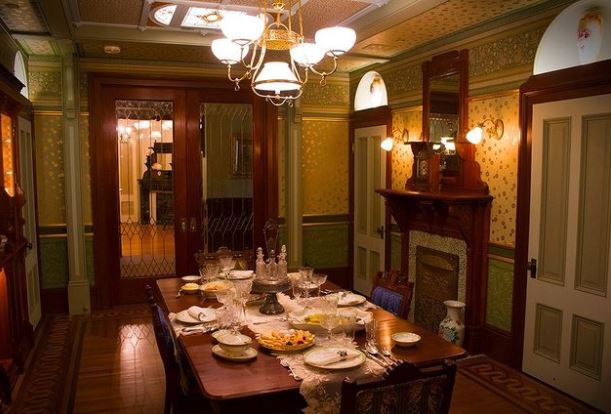
“When I was in high school, I was riding with the Sacramento Fire Department, and we went to a four-story brownstone apartment building that had a fire in a store on the first floor. Back then the firemen weren’t using masks. I watched those firemen go into smoke that was so thick it was like heavy drapery, and I saw them carry out those little kids, some of them down ladders and some out the front door. What an experience, to see somebody’s life actually being saved. After that, I knew this was what I wanted to do. To me the things kids did in school, football games and all that, was kid stuff. When I became a volunteer firefighter in Sacramento, I felt I was a man at eighteen. I wasn’t just an observer like used to be, I was a full-fledged volunteer fireman, and there the volunteers were paid on call, that is, for the time they put in a fire call. They paid for my fire science degree. I remember making $2,500 that year. That was a good buck back in 1973, when I was still at home. I lost my teeth and just about lost my lip driving to a fire one winter night. The department paid my medical bills. I became a full-time firefighter eventually which gave me some experience. I thought I was hot stuff. A lot of other firefighters were more mature than me, they kept their mouths shut going through the fire college, which is our four-month-long academy. I found out I wasn’t such a hotshot. I was assigned to a relatively slow fire station. I didn’t fit in. I don’t drive a pickup truck, and I don’t listen to country-and-western music. They’re great guys, but I’m not one of their people, and I didn’t fit in at all. They looked at me a little strange when I was studying fire engineering at the station. I wanted to go out and drill. I think I’m starting to sound pompous. #RandolphHarris 18 of 19
“The first fire was a typical old, what we call an Oak Park pine wood frame house, one-story with a huge attic and a porch in front built up on concrete block piers. This was in a poor neighborhood. This Oak Park pine is coated with resin, resistant to just about any kind of insect, and it’ll last forever. You don’t have to paint it or anything. But if you ever see one of these houses burn, you can hear it, it sounds like shotgun shells going off. Pop, bam, bam, bam. And what it is, it’s these resins boiling off, adding to the fuel load, and these things burn unbelievably hot. I’ve fought wood frame fires up north, but they were just regular pine. These suckers here are unbelievable for the speed and heat of the fire. We were attacking the fire, I remember, with a couple of inch-and-a-half lines, and the fire was laughing at us. I was starting to find out that this was no joke. The academy was tough, too. I thought I knew a lot about firefighting from my experience, but I found out that Sacramento County has certain ways of doing things, and I figured I better just keep my mouth shut and learn their way. It was no piece of cake. It was tough for me, both physically and mentally. I tell people that the firefighter earns his pay in an environment that is very hot, very poisonous, and without being able to use his sense of sight. So he has to follow some kind of search pattern—first of all, to get his own self out, and second, to save somebody’s life and get that person back out. Another thing, you’re only staying in the building and being of use as long as that supply of air stays on your back. That is why staying in shape is vitally important. Experience. The more you work with a breathing apparatus, the more relaxed you are going to be with it, the more confidence you are going to have with it. And stamina is the name of the game. I work out an hour a day, every day of the month. I do calisthenics, pushups, sit-ups, pull-ups, and running. I gave up lifting weights about a year ago, because I think it’s only cosmetic. The average citizen gets his opinion of firefighters from what he sees on the news. But the news media don’t come to the little house fire and show the man crawling in smoke so think he can’t see his hand in front of his face, doing his job without worrying that the fire may be burning over his head or kick back over him.” Please donate to the Sacramento Fire Department to ensure they have all the resources they need. I pledge allegiance to the flag of the United States of America, and to the republic for which it stands, one nation, under God, indivisible, with liberty and justice for all. #RandolphHarris 19 of 19
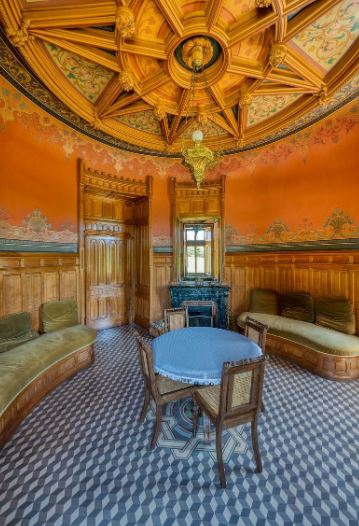
The Winchester Mystery House

Our Explore More Tour is returning with even more rooms to discover! 🗝️

Building upon the foundations of our classic mansion tour, Explore More offers the chance to delve deeper into the history, architecture, and intrigue of the mansion.
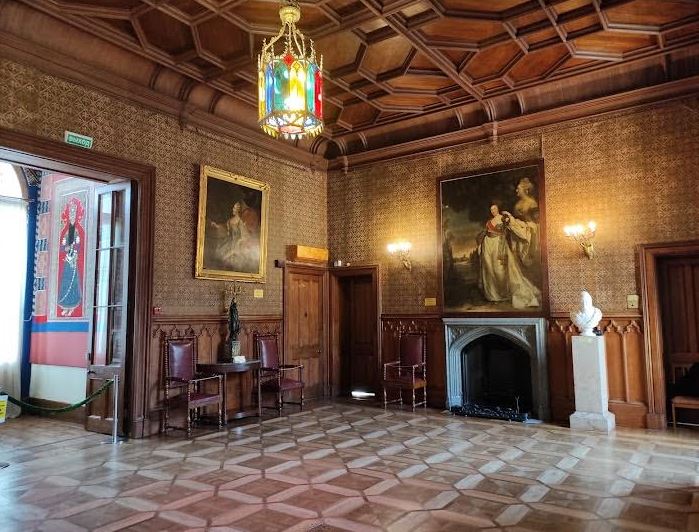
And for the first time ever, we will be unlocking doors to the oldest sections of the home, giving you access to previously restricted areas. Enhance your visit by adding this extra layer of discovery, starting May 25th, 2024. Tickets on sale now!
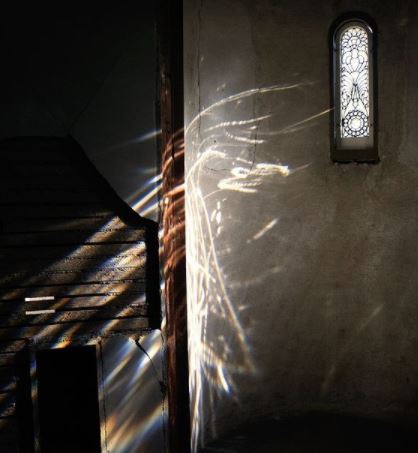
Please come and enjoy a delicious meal in Sarah’s Café, stroll along the paths of the beautiful Victorian gardens, and wonder through the miles of hallways in the World’s most mysterious mansion. For further information about tours, including group tours, weddings, school events, birthday party packages, facility rentals, and special events please visit the website: https://winchestermysteryhouse.com/

Please visit the online giftshop, and purchase a gift for friends and relatives as well as a special memento of The Winchester Mystery House. A variety of souvenirs and gifts are available to purchase. https://shopwinchestermysteryhouse.com/
 Randolph Harris II International Institute