
Home » #WinchesterMysteryHouse (Page 13)
Category Archives: #WinchesterMysteryHouse

Golden Moments of Love and Content

The loss of hope and the increasing brutalization are, unfortunately, not the only evils that have befallen Western civilization since 1914. Through honouring our covenants, we enable God to pour out the multitude of promised blessings associated with those covenants. However, is not excessive melancholy just as undesirable, and as much of a stumbling lack in the path of spiritual progress as, for instance, excessive drinking—or any other fault? What is being gained by these self-demeaning tactics? Is anyone benefiting from them? The time has come to ask himself these questions. Certainly, he is not alone in having made mistakes—everybody makes them! If everybody continued to punish themselves over and over again, needlessly remaining on the level of their own errors, consider what would happen? What then is to be done? Only when he is willing to change his attitude towards it, will his gloomy situation improve. He must make a deliberate attempt to cultivate happiness! Just as he raises the window shade in the morning to allow sunshine to pour into the room, so he must open himself to the higher power and let hope invade his heart! Jesus Christ taught through stories and symbols—a mustard seed to teach the worthy of souls, a prodigal son to teach the character of God. His parables were symbols through which He could teach deeper lessons to those who had “ears to hear.” However, those not seeking the deeper meaning would not understand. #RandolphHarris 1 of 18

As long as he continues to cling to despondency and to misunderstand, he is shutting out God and preventing His message from reaching him. Every say is a new day, with new possibilities of a fresh, determined, and more courageous approach to all daily difficulties. Let him forget the past, and start planning for a happier tomorrow! No one else can do this for him, but he can draw faith from the knowledge that his efforts will count towards his joyful resurrection. When God the Father offered His Only Begotten Son as a sacrifice for us, Jesus Christ Himself became the highest symbol of our Father in Heaven’s undying love for each of us. Jesus Christ became the Lamb of God. We have the privilege and blessing of being invited into a covenant relationship with God, in which our own lives can become a symbol of that covenant. Covenants create the kind of relationship that allows God to mold and change us over time and life us to become more closer to the Saviour, drawing us closer and closer to Him and our Father and eventually preparing us to enter Their presence. It is an heroic and stoic goal to set before a man, that he shall not be dependent upon others for his happiness and that he shall be emotionally self-sufficient. However, it is a goal reachable by and, in the present kind of faulty human society, useful to, only the few. #RandolphHarris 2 of 18

Each person on Earth is a beloved son or daughter of God. When we choose to be part of a covenant, it enhances and deepens our relationship with Him. As we make covenants with God, our relationship with Him can become much closer than it was before our covenant, and it enables Him to bless us with an extra measure of His mercy and love, a covenantal love referred to as hesed in the Hebrew language. The covenant path is all about our relationship with God—our hesed relationship with Him. Our Father wants a deeper relationship with His sons and daughters, but it is our choice. As we draw nearer to Him through a covenant relationship, it allows Him to Draw nearer to us and more fully bless us. If man reaches finality of decision and recognizes that enlightened self-discipline is to be achieved and not resisted, he takes the first step to true happiness. So long as we believe that some other person is essential to our happiness, so long shall we fail to attain that happiness. Happiness is not the monopoly of the successful One of the happiest men I ever knew was an aged tramp who wandered from poorhouse to poorhouse across the country. His eyes were blazing with a strange light. Happiness? It is so important and so necessary? Are not strength, understanding, and peace of mind more indispensable to a human life? #RandolphHarris 3 of 18

When inner conflict goes out, inner harmony comes in. There can be no happiness without such harmony. Only they who have brought all the different sides of their being into equilibrium, as well as they who have lived filly between opposite poles of human experience, can appreciate the quest for serenity over the quest for happiness. Goethe in Europe was one man who appreciated this superiority. It is as erroneous to expect perfect happiness through another person as it is to expect perfect salvation. Each must find the one or the other for himself in himself. No one else can bear such a great and grave responsibility, or ought to bear it. No human relationship can adequately or properly be substituted for what everyone must in the end do for himself. He who asks for happiness asks for something he cannot and shall not get while his body breathes. The wise man does not ask more from life than it can yield him. If it cannot give happiness, it can give peace. “Are you happy?” is a question people often ask him. However, he has not sought happiness. He has sought to find out why he is here and to fulfill that purpose. The aim of getting as much person happiness as one can out of ever situation is no longer the dominant one. Other and loftier aims now coexist with it in some cases or even displace it in others. #RandolphHarris 4 of 18

During no one’s lifetime are all desires fully realized. To look for a happiness that is complete is to look in vain. It is more philosophic to look for peace of mind. Happiness may leave a man in a single moment or come to him in the same way. However, if he identifies it solely with the ego and nothing more, only then can this happen. If a man has inner peace, he does not have emotional disturbances or mental agitations. Who then, really enjoys living—the disciplined philosopher who has the peace, or the undisciplined sufferer from the agitations? The emotions are uppermost in primitive man. With time and evolution, reason begins to mix with them and eventually to rule the lower ones. With further time and further evolution, intuition appears as the fruit of the finer ones. This is the place of emotional life in man. Few persons can separate—in their consciousness—emotion from thoughts. The capability of doing so is essential both to self-knowledge and to self-conquest. Therefore, it is important to every Self-actualized Christian. We must keep the emotional issues separate from the intellectual ones. However, this is not to say that the intellect is to live an emotion-proof existence. Such separation always needs to be kept up only so long as the lack of it is likely to impair the quest of truth. #RandolphHarris 5 of 18

This danger arises only during the earlier stages of man’s seeking. When he has attained a balanced personality, cultivated a serene disposition, and master the egotistic urges within himself, then emotion and reason join forces with intuition in producing the quality of intelligence. Henceforth, he feels what he thinks and thinks what he feels, his emotions are rightly directed and his thoughts are truthfully formed. They work together harmoniously, satisfactorily, and unitedly. He who seeks to arrive at the truth about a matter must banish his personal inclinations and egoistic desires about it during the time that he contemplates it. He must make his emotions submit to the facts which displease them and he must compel his reasoning to accept the conclusions which surprise them. Otherwise, his emotions may betray him and his reasonings delude him, so that white will appear black and illusion will appear as reality. There is a special quality which we will do well to develop during this particular period in which we live, and that is calmness. For whenever we turn our gaze, we perceive great upheavals of thought and emotion, great stirring of violent passion and bitter hatred, mass excitement and mob restlessness. In such a disturbed atmosphere we are liable to be swept off our feet against our better judgment and may thus injure the true interests of ourselves or of our country. #RandolphHarris 6 of 18

We should remember that to keep a cool head is the way to act wisely and successfully, whereas to yield to hot impulsiveness is to act rashly and often wrongly. We should also remember how unfortunate younger folk of Germany were cunningly swept into the Nazi current of blind impulses and become the bomb-fodder for the insatiable ambitions of Mr. Hitler. Let this be a lesson on the need and value of calm judgment and levelheadedness. We may also draw a further lesion from Germany, that is, the importance of practicing food will to all. Had it realized this virtue, the continent of Europe could never have arrived at the present unhappy condition of its people. The more we try to be kindly and helpful to others, no matter what class or creed they belong to, the more others are kindly and helpful to us. Therefore, even from the purely selfish point of view it, pays good dividends to practice goodwill. Moreover, it will help us as much as anything else to get on in life, for it will bring friends, gratitude, and even opportunities. Once engaged on this Quest, it becomes necessary to attend closely to the emotional and mental movements within himself, rejecting the lower ones and consenting to the higher. He must study carefully the differences between them, so that he may be able to recognize them. #RandolphHarris 7 of 18

Not through fearing their bad effects, but through willing consent to the truth that his real being is above them and that it is better to live in reality than in illusion he must come to the discipline of passion and emotion. God sets the conditions and obligations of the covenants we make. When we choose to enter into that relationship, we witness to Him, through the symbolic actions of each covenant, that we are willing to abide by the conditions He has set. Through honouring our covenants, we enable God to pour out the multitude of promised blessings associated with those covenants, including increased power to change and become more like our Saviour. Jesus Christ is at the center of all covenants we make, and covenant blessings are made possible because of His atoning sacrifice. Ultimately, we can look to the example of the Saviour, who prayed so very often. However, it has always been intriguing to me that Jesus Christ felt the need to pray at all. Was he not perfect? Well, I have come to realize that He too with us, wanted to “seek [the Father’s] face, believe His Word, and trust His grace. Time after time, He retreated from society to be alone before piercing Heaven with His prayers. At other times, He prayed in the company of a few companions. Then He would seek Heaven on behalf of multitudes who would cover a hillside. #RandolphHarris 8 of 18

The first script programming takes place during the nursing period, in the form of short protocols which can later be worked into complicated dramas. Usually, these are two-handed scenes between the baby and his mother, with littler interferences from onlookers, if any, and with such breast-fed titles as “Public Performance,” “It is Not Time Yet,” “Whenever You Are Ready,” “Whenever I Am Ready,” “Hurry Up,” “He Who Bites Gets Brushed Off,” “While Mother Smokes,” “Pardon Me, The Phone Rang,” “What is He Fussing About?” “There is Never Enough,” “First One Then The Other,” “He Looks Pale,” “Let Him Take His Time,” “Is He Not Amazing,” “Golden Moments of Love and Content,” and “Lullaby.” Slightly more complicated are the corresponding bathroom scenes in the same families: “Come and See How Cute,” “It is Time Now,” “Are You Ready,” “You Can Just Sit There Till You Do,” “Hurry Up,” “Naughty Naughty,” “While Mother Smokes,” “While Mother is on the Telephone,” “Enema Tube,” “If You Don’t I’ll Give You Castor Oil,” “Here is Your Laxative,” “You Will Get Sick If You Do Not,” “Let Him Do It His Own Way,” “That is a Good Boy,” “That is a G-o-o-d Boy,” and “I Will sing While You Are Doing It.” Three-handed protocols are more frequent at this stage, including: “I Told You He Was Not Ready,” “Do Not Let Him Get Away With That,” “I Will Make Him Do It,” “You Try,” “You Are Disturbing Him,” “Why Do You Not…Yes, But,” and “He is Sure Coming Through This Time.” The Phantom in the Bedroom, may begin to appear: “Dr. Spock Says,” “Tessie Had Her Trained By the Time,” and “Sister Mary Was Only.” In later life these will become “Freud Says,” “Nancy Always Has One,” and “Helen Has It Every Night.” #RandolphHarris 9 of 18

It is already fairly predictable who the winners and the losers will be. “Is He Not Amazing?” reinforced two years later with “That is a God Boy” will usually do better than “What is He Fussing About?” reinforced one year later by “Enema Tube”; similarly, “Lullaby,” first at nursing and later in the bathroom, will probably prevail over “While Mother Smokes.” Already the feeling of O.K.ness or not-O.K.ness, which separates the now and future princes from the now and future frogs, is being implanted, and several types of frogs and princes (or for the ladies, goose girls and princesses) are being set up. “Is He Not Amazing?,” the Forever Prince with the success script, is often but not always the first-born. The Conditional Prince, “Come and See How Cute,” or “Hurry Up,” for example, can remain a prince as long as he stays cute or hurries up. The Conditional Frogs, “He Who Bites,” “Naughty Naughty,” or “He Looks Pale Needs a Laxative,” can stop being frogs by not biting or not looking pale; the Doomed Frogs, on the other hand, will hardly ever make it with anybody. Touching are the frogs who try not to care “While Mother Smokes” or “Has a Highball.” Only a disaster can turn the Forever Princes into frogs; only a miracle can transform the Doomed Frogs into princes. There are three conditions necessary and sufficient for psychotherapy. They are: empathy, unconditional regard, and congruence or genuineness. “Congruence,” implies that the therapist attempts to drop any personal or professional artificiality, any maneuvers or postures, and the he be himself. #RandolphHarris 10 of 18

In our work with schizophrenics this condition has become more and more important. Gone are formulas—even that most characteristic of client-centered modes of responding, which was called “reflection of feeling.” As the term “empathy” implies, we strive as always to understand and sense the client’s feelings from his own inward frame of reference, but now we have a wider scope of different behaviours with which therapists respond to clients. In fact, I believe that it was in part the undesirable tendency toward formulas and stereotyped ways of responding which led to the formulation of the condition of “congruence” as essential. To “be himself” has also meant that the therapist has become more expressive. The therapist much more often expressed his own feelings, his experiencing of the moment. The client expresses himself, then naturally the therapist’s present experiencing consists largely of an empathic sense of the client’s meaning. However, when the client offers no self-expression, the therapist’s momentary experiencing is not empty. At every moment, there occur a great many feelings and events in the therapist. Most of these concern the client and the present moment. The therapist need not wait passively till the client expresses something intimate or therapeutically relevant. #RandolphHarris 11 of 18

Instead, he can draw on hos own momentary experiencing and find there an ever-present reservoir from which he can draw, and with which he can initiate, deepen, and carry-on therapeutic interaction even with an unmotivated, silent, or externalized person. Also, “congruence” for the therapist means that he need not always appear in a good light, always understanding, wise, or strong. I find that, on occasion, I can be quite visibly stupid, have done the wrong thing, made a fool of myself. I can let these sides of me be visible when they have occurred in the interaction. The therapist’s being himself and expressing himself openly frees us of many encumbrances and artificialities, and makes it possible for the schizophrenic (or any client) to come in touch with another human being as directly as possible. However, it would seem that many of the erstwhile guidelines for therapeutic behaviour have disappeared. Only the basic attitudes are specified, not how one manifests or expresses them. If one knows how to function effectively, one has a sound basis for the development of a healthy personality. The ability to perceive reality as it “really is” is, therefore, fundamental to effective functioning. It is considered one of two preconditions to the development of the beautiful and noble person. Our need systems heavily affect our ability to perceive reality—we often perceive what we want to see rather than what is really there. #RandolphHarris 12 of 18

Our behaviour is always undertaken with reference to the Worlds as we believe it to be. Unless we somehow learn from individuals how the World appears to them, what they are paying attention to, how they interpret the things they see and hear, and what their expectations are regarding the World about them–we can hardly make sense out of anybody’s behaviour. If we see someone run in terror from an automobile engine as it starts up, because the automobile is simply something to get us from place to place, we will be puzzled. However, if the person is a primitive who has never seen an automobile, that person may perceive it as a punishing instrument of the gods that is about to engulf someone. If we know how the person perceives the situation, we can understand the situation better and offer help. Unless the person takes steps to verify them, a person’s perceptions and beliefs will be inaccurate or distorted. Reality contact is not a given; it is an achievement! Efficient contact with reality must be worked for, because there are powerful forces at work at all times, tending to distort perception, thinking, and recall. One thing people do not perceive, however, is that a cause of the deterioration of the Western civilization is connected precisely with its greatest achievements. #RandolphHarris 13 of 18

Since technology has advanced so rapidly, Western people have a standard of living which would have seemed unthinkable one hundred and fifty years ago, or even forty years ago, for that matter. However, the satisfaction of real and legitimate needs has changed into the creation and satisfaction of a powerful drive, namely “Commodity hunger.” Just as depressed individuals often are seized by a compelling desire to buy things or in other cases to eat, modern man has a greedy hunger for possessing and using new things, a hunger which he rationalizes as an expression of his wish for a better life. If they are not directly enriching to life, he claims that the things he buys help him to save time. Yet he does not know what to do with the time he saves, and spends one part of his income to kill the time he is so proud of having saved. We see this phenomenon most clearly in the richest country of the World, in the United States of America. However, it is quite clear that the trend in all other countries is the same. The goal everywhere has become maximal production and maximal consumption. The criterion or progress is seen in the figures for consumption. This holds true for the capitalist countries as well as for the communist countries. In fact, the rivalry between the two systems seems to center around the question of which can produce a higher level of consumption, rather than a better life. #RandolphHarris 14 of 18

As a result, man in the industrialized countries transforms himself more and more into a greedy, passive consumer. Things are not provided to serve the perfection of man, but man has become the servant of things, as a producer and as a consumer. Things have gotten so bad that people are willing to let their hands be pulled being their back and have the cuff slipped on. As they ride to the county jail in a squad car, over the goods and services they stole out of greed, they think about how efficient the process is. As radio messages crackle back and forth between the cruiser and headquarters, they stand under the hard glare in front of a reception panel. The door of a hold cell clicks open and slips shut behind them. There is a concrete floor with no benches. The guards gather around in New Testament style and look curiously, laughing at the new martyr. “For you, we throw away the key. If we have it our way, you’ll never get out. Their cellmate, dozing, head on knees, is roused to interest. “How come they tell you that, man. What you done? “God knows,” he replies. Then came those weary, lonesome jailhouse blues, thinking about how he will not be in his wife’s arms tonight due to consumer greed. The industrial system has had very unfortunate effects in still another direction. #RandolphHarris 15 of 18

The method of production has dramatically changed since the beginning of last century. Production, as well as distribution, is organized in big corporations which employ hundreds of thousands of workers, clerks, engineers, salesmen, etcetera. They are managed by a hierarchically organized bureaucracy, and each person turns into a small—or large—cog in this machine. He lives under the illusion of being an individual—while he has turned into a thing. As a result, we observe an increasing lack of adventurousness, individualism, willingness to make decisions and take risks. The goal is security, to be part of the big powerful machine, to be protected by it, and to feel strong in the symbolic connection with it. All studies and observation of the younger generation show the same picture: the trend to look for safe jobs, not to be concerned so much with high income but rather with satisfactory retirement provisions; the tendency to marry young and to shift quickly from the haven of the parental family to the haven of matrimony; cliché thinking, conformity and obedience to the anonymous authority of public opinion and of the accepted patterns of feelings. I supposed it is a better life than being confined to N tank, protective custody for bad actors, noncooperators, snitches, low-riding arm robbers, messianic acid head, baby robbers and assorted sex thieves, while someone softly calls threats down the tier at fearful titillated inmates trembling in the corner of the cell in the cold prison mist. #RandolphHarris 16 of 18

The Sacramento Fire Department provides timely, accurate, and relevant information to the residents of Sacramento regarding fire safety, emergency preparedness, and department activities. They aim to ensure the safety and well-being of the community by enforcing fire codes, conducting inspections, and saving lives and property of the citizens of Sacramento. “I’m only at Engine X a month, and at that time I’m an eager beaver because I want to do the best I can and want to be right at the front. I mean, I’d rather be the pipe man, not the backup man, but they rotate all the jobs, so it’s a big letdown when I’m not the pipe man, because that’s obviously the best job. We went to a fire in a run-down hotel. The fire was in one apartment on the sixth floor, and we got word that one of the occupants might still be in the apartment. There were no standpipes or sprinklers, so we stretched a line up the aerial ladder and into an adjacent window. And we picked the right window. There’s a tremendous amount of smoke in there, and everybody’s got their masks on, because you couldn’t move in there without them. Everybody’s moving around trying to make a search as well as stretching the line further in. And I bump into that occupant. I put my arms around the guy and drag him out into the hallway. He survived.” #RandolphHarris 17 of 18

The Sacramento Fire Department is committed to providing the highest level of service to the community by ensuring safety and preparedness. You can help save lives by donating to the Sacramento Fire Department. We are blessed with a great and noble heritage that offers a pathway to truth that veers dramatically from the so-called ways of the World. We need to remind ourselves about the value of heritage, so we do not underestimate its worth. I pledge allegiance to the flag of the United States of America, and to the republic for which it stands, one nation, under God, indivisible, with liberty and justice for all. We all have life events that, when we recall them years later, acquire new and important meaning. Please raise your children to love America and to love God and Jesus Christ. It is essential to buy American made cars and other goods and services produced in America. As always, in order to ensure tranquility on our community, respect law and order and treat your elders with dignity and respect. Make a point to be a good neighbour as to keep harmony in the community. We are imperfect people trying to follow the perfect example of Jesus Christ. We love each other, help each other, and try to follow Jesus’s teachings the very best we can. In any community of Saints, we all work to serve each other in the best way we know how. Our work has a higher purpose because it is work to bless others and to build the kingdom of God. #RandolphHarris 18 of 18

The Winchester Mystery House

There are countless stories about The Winchester Mystery House’s ghosts, some more believable than others. Some say that the ghost of Mrs. Winchester still haunts the mansion’s grounds. And even more people claim to have experienced paranormal activity, such as sightings or heard strange noises at The Winchester Mystery House.

There are said to be all sorts of weirdness going on at The Winchester Mystery House – from apparitions of people who have died in violent accidents to cold spots that appear only when no one is around. Some even claim to have heard voices and seen shadows moving about during their visits.

Whatever the case may be, there is no denying that The Winchester Mystery House is a truly mysterious place… and its ghosts just keep getting creepier!

Please come and enjoy a delicious meal in Sarah’s Café, stroll along the paths of the beautiful Victorian gardens, and wonder through the miles of hallways in the World’s most mysterious mansion. For further information about tours, including group tours, weddings, school events, birthday party packages, facility rentals, and special events please visit the website: https://winchestermysteryhouse.com/

Please visit the online giftshop, and purchase a gift for friends and relatives as well as a special memento of The Winchester Mystery House. A variety of souvenirs and gifts are available to purchase. https://shopwinchestermysteryhouse.com/

The Land of the Free and Home of the Brave
Unexpressed emotions will never die. They are buried alive and will come forth later in uglier ways. Many good, and stupid, American gimpel willingly landed on the sticky twig which was specially pruned by the Democrats to capture them. Democrats pass acts or decree which have the most devastating consequences, yet nobody bears the responsibility for it. No body can be called to account. Sanctuary cities have brought a catastrophe upon America. In Aurora, Colorado Venezuelan gangs have commandeered apartment complexes, are holding tenants hostage, and collecting rent. When our cities have police departments, it is unfathomable that things like this can happen. However, some of the problems associated with Venezuelan gang activity is taking place in properties that are under out-of-state ownership whose transgressions with code violations and criminal activity may have preceded the migrant crisis. Yet, experts are telling us that citizens all over the country are living in fear because the winter is approaching soon, the border is still open, and this crime wave will only get worse. Is it at all possible actually to call to account the leaders of a parliamentary government for any kind of action which originated in the wishes of the whole multitude of deputies and was carried out under their orders or sanction? #RandolphHarris 1 of 19

The devastating influence of this parliamentary institution might not easily be recognized by those who watch the Democratic controlled TV news media, unless he has learned how to think independently and examine the facts for himself. This institution is primarily responsible for the crowded inrush of mediocre people into the fields of politics. Confronted with such a phenomenon, a man who is endowed with real qualities of leadership will be tempted to refrain from taking part in political life; because under these circumstances the situation does not call for a man who has a capacity for constructive statesmanship but rather for a man who is capable of bargaining for the favour of the majority. Thus, the situation will appeal to small minds and will attract them accordingly. The narrower the mental outlook and the more meager the amount of knowledge in a political jobber, the more accurate is his estimate of his own political stock, and thus he will be all the more inclined to appreciate a system which does not demand creative genius or even high-class talent; but rather that crafty kind of sagacity which makes an efficient town clerk. Indeed, he values this kind of small craftiness more than the political genius of a Pericles. Such a mediocrity does not even have to worry about responsibility for what he does. #RandolphHarris 2 of 19

From the beginning he knows that whatever be the results of his “statesmanship” his end is already prescribed by the stars; he will one day have to clear out and make room for another who is of similar mental caliber. For it is another sign of decadent times that the number of eminent statesmen grows smaller and smaller the more the individual political has to depend upon parliamentary majorities. A man of real political ability will refuse to be the beadle for a bevy of footling cacklers; and they in their turn, being the representatives of the majority—which means the dunder-headed multitude—hate nothing so much as a superior brain. For footling deputies, it is always quite a consolation to be led by a person whose intellectual stature is on a level with their own. Thus, each one may have the opportunity to shine in debate among such compeers and, above all, each one feels that he may one day rise to the top. If Peter be boss today, then why not Paul tomorrow? This new invention of democracy is very closely connected with a peculiar phenomenon which has recently spread to a pernicious extent, namely the cowardice of a large section of our so-called political leaders. Whenever important decisions have to be made, they always find themselves fortunate in being able to hide behind the backs of what they call the majority. #RandolphHarris 3 of 19

In observing one of these political manipulators, one notices how he wheedles the majority in order to get their sanction for whatever action he takes. He has to have accomplices in order to be able to shift responsibility to other shoulders whenever it is opportune to do so. That is the main reason why this kind of political activity is abhorrent to men of character and courage, while at the same time it attracts inferior types; for a person who is not willing to accept responsibility for his own actions, but is always seeking to be covered by something, must be classed among the knaves and the rascals. If a national leader should come from that lower class of politicians the evil consequences will soon manifest themselves. Nobody will then have the courage to take a decisive step. They will submit to abuse and defamation rather than pluck up courage to take a definite stand. And thus, if needs be, nobody is left who is willing to risk his position and his career in support of a determined line of policy. One truth which must always be borne in mind is that the majority can never replace the man. The majority represents not only ignorance but also cowardice. And just as a hundred blockheads do not equal one man of wisdom, so a hundred poltroons are incapable of any political line of action that requires moral strength and fortitude. #RandolphHarris 4 of 19

Democratic rule taking place in these modern times are similar to what America went through after the first World War. The First World shattered two thousand years of hope, but it did not destroy it. Men rallied their energies and tried to take up the task where it had been interrupted in 1914. Many believed that the League of Nation, much like the 2024 president elections in America, would bring about a new era of peace and reason; others, that the Russian revolution would overcome its Czarist heritage and would develop into a true humanist-socialist society; aside from this, people in the capitalist countries believed that their system would follow a straight line of economic progress. The years between 1929 and 1933 shattered what was left of these hopes. In direct comparison, people who that Donald Trump will once again ascend to the office of president and quail the unrest in American cities, and that he will, once again, make American prosperous. In the past, the capitalist system showed that it was not capable of preventing unemployment and misery for a large part of the population. In Germany, the people permitted Mr. Hitler to come to power. In Russia, after Mr. Stalin had transformed the revolution into a conservative state capitalism, he initiated a system of terror which was consider ruthless. #RandolphHarris 5 of 19

While all this was happening, the approaching World War was already becoming visible on the horizon. The power which had begun in 1914, which had been followed by the systems of Mr. Stalin and Mr. Hitler, now came to its full fruition. The Germans initiated it by their air attacks on Warsaw, Amsterdam, and Coventry. The Western allies followed by their attacks on Cologne, Hamburg, Leipzig, Tokyo and, finally, with the dropping of the atomic bomb on Hiroshima and Nagasaki. In hours or minutes, hundreds of thousands of men, women, and children were killed in one city, and all this with few scruples and hardly any remorse. Indiscriminate destruction of human life had become a legitimate means for attaining political goals. The process of increasing brutalization had done its work. Each side brutalizes the other, following the logic “if he is inhuman, I must (and can) be inhuman too.” The war ended, and there arose a new flicker of hope, of which the foundation of the United Nations was a symbol. However, soon after the end of the war the new power force continued. The weapons of destruction became ever more powerful; now both sides are able to destroy at least half of each other’s population (including more of their educated populations) in one day. Yet the consideration of the possibility of such mass destruction had become commonplace. Many on both sides were fighting to prevent the final act of madness; groups of men and women who followed the tradition of science, of humanism and of hope. #RandolphHarris 6 of 19

However, million had succumbed to the process of the new power force, and many more were just apathetic, and escaped into the trivialities of the day. The purpose of learning history is to honour our heritage and learn from the things that happened in the past so we can repeat the good and avoid the bad. Historical monuments mean different things to different people, and some that are seen as negative, actually started off as representing something good. In destroying property and removing historical artifacts, we are defacing our culture and disrespecting something other hold as a prideful symbol. Regardless of what the masses believe something to stand for, often times, there is something sacred in the artifact. Even if something is said to represent evil, when we remove or deface these cultural relics, we are erasing part of our heritage and forgetting what we stand for. For instance, some people could find a statue of a freedom fighter offensive, while others many see it has a symbol of good. If it were removed from society, we would forget the history of why it was erected, and eventually people might forget the past, and repeat mistakes. While it is important to be inclusive and represent all cultures, it is evil to destroy someone else’s heritage and culture. #RandolphHarris 7 of 19

Growing out of client-centered therapy and especially its application with hospitalized schizophrenics, there is now emerging a mode of psychotherapy which centers on the “experiencing” of the two persons in the therapy interaction, rather than on the discussed verbal contents. This development is similar to recent trends in other orientations: there is a strong tendency to emphasize the interaction in psychotherapy, to emphasize that two human beings are involved, and to focus on the concrete subjective events occurring in these two persons, rather than only on the verbal contents being discussed. Basic to this development is the view that psychotherapy involves “experiencing” (by whatever name), a somatic inwardly felt process, the manner and meanings of which are affected by the interaction. Some attention is being given to the theoretical problem of how inwardly felt bodily events can have “meaning,” be “explored” and “symbolized,” and how these concrete implicit “meanings” can be affected and changed by interaction. Now that psychotherapy is widely thought to involve a concrete feeling process, we are less specific about the (still vital) role of cognitive symbols and exploration. The different orientations use different cognitive vocabularies, yet their patients and clients appear able to work with any of these vocabularies. #RandolphHarris 8 of 19

Apparently, any good vocabulary can be employed as a symbolic tool for good vocabulary can be employed as a symbolic tool for “working through” and interacting. It appears that personality difficulties lie in the “pre-conceptual” meanings of experiencing—that they are concrete, and that they are amenable to symbolization and change through interactions using any of the many different therapeutic vocabularies we have. Apparently, it is not so much a question of just which vocabular you use, but rather how you use it. If used in “direct reference” to experiencing, then more or less any vocabulary can be well employed. If used as abstract explanatory substitutes for the individual’s experiencing, no cognitive vocabulary will engender much constructive personality change. Of course, this is an opinion which awaits much more research support than we have so far, but it is a widespread current trend in therapeutic thinking. Not only the best use of words, but also the best use of therapist behaviours, would seem to depend not so much upon just what the therapist behaviour is, as on how the behaviour relates to and affects the individual’s experiencing. The attempt to specify just what therapists should and should not do tends today to concern not so much what behaviour is used, but more just how it is used. Furthermore, this “how” concerns how the behaviour relates to the experiencing of the two persons. #RandolphHarris 9 of 19

“Subverbal” communication always sounds mysterious—how is anyone to know what the client means when he cannot say what it is. The specification I would like to offer concern not “what” the client means (and not how we can guess “what” he means). The specifications concern how client’s and therapist’s words can be employed to point at and refer to experiencing. Philosophy says that the marriage state is necessary for most people, the less advanced. It also says that even for the others, the more advanced, the smaller love of two persons mating can coincide with, and remain within, the larger lover of the individual for the Higher Self. Of course, if the relationship is a successful and harmonious blending of the two personalities, only then is this possible. For some people, marriage does take away from the higher life, but not for others. It all depends upon the two individuals concerned in it as to which of these results will come about. Marriage hinders some aspirants because of the distractions and burdens it imposes, but it helps others because of the release from tormenting thoughts involving pleasures of the flesh which it may give. When sensibly fitted into the framework of a spiritual understanding of life, marriage need not be a bar and success may be achieved. #RandolphHarris 10 of 19

It is true that men who are lonely or young or romantic are likely to marry a young woman with whom propinquity has brought them in touch. In such cases, he puts an illusion around the woman to the pressure of desire. When the illusion goes and the facts show themselves, he is left alone with the hard lesson of discrimination. The situation can repeat itself with the victim being the woman. Many marriages are based on calculation, not on love. They are business transactions bearing social of financial rewards, not emotional ones. Yet if animated by goodwill, they may be successful. One man who seemed to make no spiritual progress generally, and little progress in meditation particularly, found the situation completely altered when he adjusted himself to a new attitude towards his wife. She was a shrew and a scold, hostile to his higher aspirations and quite Earthy. He was several times on the brink of leaving her but be thought of responsibility toward their growing children restrained him. He did leave her mentally and bitterly resented her presence in his life. When he was taught how to bring a new viewpoint to bear upon his marriage, he began to regard it as a perfect opportunity for the better development of his character and his wife as an unwitting instrument for the better control of his mind. He learned to accept her in his life without complaint. #RandolphHarris 11 of 19

He came to regard the marriage as a piece of Self-Created destiny to be worked out, in its own unpredictable time, by his fostering the needful qualities. He set to work upon himself and gradually unfolded patience, calmness, strength of will, and unselfishness. Within a few years, he not only became expert at meditation but also gained higher awareness. Nor was this all. In his work as an executive in a large commercial office involved in accounts, calculations, and business decisions, formerly he would easily become excited, irritated, or angry with subordinates over their mistakes, their inefficiency or stupidity. Now, he taught himself how to hold on to the inner peace found in periods of meditation until the time arrived when he could pass through the whole day’s activity without losing or disturbing it. If a woman has done all that was humanly possible to hold her husband and has failed, she must realize that acceptance of the inevitable—even the temporarily inevitable—is the only way to bear this painful result. The husband’s weaknesses may have found their expression in outer action. However, through the painful results of that expression, he may eventually discover a truer set of values. If she has tried to appeal to his better nature and failed, she must now let him do what he wishes and try the path of personal experience in the satisfaction of his desires, which is the common path for most people. #RandolphHarris 12 of 19

Otto Rank believed that the circumstances of birth itself, the “birth trauma,” are imprinted on the psyche of the infant and often reappear in symbolic form in later life, particularly as a desire to return to the blissful peace of the womb, as described by his disciple Fodor. If that were so, the fears and longings which arise from passing under that arch through which no man can ever pass again, nature’s original one-way street, would certainly appear as important elements in the script. Perhaps they do, but there is no reliable way to check it, even by comparing Caesarean births with normal ones. Hence the influence of the “birth trauma” on the life script remains in the realm of speculation. As a matter of fact, real-life scripts said to be based on the actual occurrences of Caesarean birth, like their theatrical counterparts, are unconvincing. As in Macbeth, the event is exploited as a mere play on words or a conundrum, a foetus ex machina, rather than forming the serious basis for a script. It is quite likely, however, that a child who is told later that he was a Caesarean birth, and can understand what that means, might incorporate that fact somehow into his scripts and elaborate upon it further when he learns who his distinguished predecessors were. A decision on this point awaits the collection of some good case histories. #RandolphHarris 13 of 19

In practice, the two most common “birth scripts” are the “Foundling Script” and the “Tom Mother Script.” The Foundling Script arises from the fantasies of adopted or even natural children about their “real” parents, and comes out as some version of the Myth of the Birth of the Hero described by Otto Rank in his book of that name. The Torn Mother Script is also common, and in my experience occurs with about equal frequency in both genders. The foundation for this script is the mother telling the child that she has been sickly ever since he was born; or in a more vicious form, that she was so badly torn by his birth that she has never been the same. His reaction, and his script, is based on his own observations in the matter. If mother has indeed been invalided or crippled all his life, then he feels compelled to take the full responsibility, and no amount of Adult reasoning will convince his Child that it is not his doing. If the impairment is not visible, however, and particular if someone in the family, such as father, implies or states that her illness is a fake, then the patient’s script will be heavily loaded with ambiguity, hypocrisy, and exploitation. Sometimes the mother does not make the accusation, but leaves it to father, grandmother, or aunt. #RandolphHarris 14 of 19

The script which evolves is then a three-handed one, with important messages and announcements, usually “bad news,” coming from a third party. It is easy to see that where the Foundling Script comes out as the Myth of the Birth of the Hero, the Torn Mother Script is the Myth of the Birth of the Villiam, one saddled from birth with the horrendous crime of matricide, or, more precisely matriclasty. “Mother died in childbirth (mine)” is almost too much for anyone to bear without good help. If mother was injured or has a cystocele, it is never too late to have it repaired, and the less said about it the better. “All human beings—male and female—are created in the image of God. Each is a beloved spirit son or daughter of Heavenly parents, and, as such, each has a divine nature and destiny. Children are an heritage of the Lord,” reports Psalms 127.3. Parents have a sacred duty to rear their children in love and righteousness, to provide for their physical and spiritual needs, to teach them to love and serve one another, to observe the commandments of God and to be law-abiding citizens. Husbands and wives—mothers and fathers—will be held accountable before God for the discharge of these obligations. #RandolphHarris 15 of 19

Whether or not the enlargement of consciousness is conducive to healthier personality depends upon several factors, including the projects to which a person is committed and the person’s ability to acquire skills commensurate with the enlarged awareness. Healthy personality rests upon competence, the ability to act effectively in pursuit of the gratifications and meanings that make life possible and worth living. If a person has become excessively aware of self and of the World, as sometimes happens with unwise users of psychedelic drugs, that person cannot deal effectively with everything of which he or she has become aware. Maslow was aware of this when he cautioned of the “dangers of Being-cognition.” The hyperconscious individual may arrive at a sense that all things are of equal importance and value. Such a stance is equivalent to valuelessness, and it results in paralysis of action. People of advanced age prepared to die may have such enlightenment, but it is not of much use to younger persons with a life yet to be lived. There is some optimum harmony among the magnitude of a person’s awareness of the World, the goals and projects to which that person commits his or her life, and the skills and capacities for enriches one’s sense of meaning and is accompanied by increased effectiveness at living a life-engendering existence, then such alteration is conductive to healthy personality; otherwise, it might be pernicious. #RandolphHarris 16 of 19

Another point of view that should be considered is that many forms of changed consciousness, particularly those that come from the use of chemical substances such as LSD and alcohol, are not really enlarged, expanded, or higher, but rather are simply changed, and changed in such a fashion to disguise reality and prevent the person from dealing with the problems of real life, of responsibility for others, and even of maintaining personal health and sanity. The nature of experience itself is such that it cannot be checked and validated by scientific methods; Castaneda’s experience cannot be validated by Don Juan. This is particularly true of reported experiences of “higher” consciousness and greater awareness of self. Substantiated evidence for this is difficult to develop. For some, this enlarged consciousness is the stuff of which dreams are made. The Sacramento Fire Department has made dreams come true for many people. Their core values are professionalism, service, integrity, teamwork innovation, and courage. The Sacramento Fire Department is committed to providing excellence in all aspects of conduct and performance with the highest level of customer service. They uphold the public trust and conduct themselves responsibly by maintaining ethical standards by effectively and efficiently supporting their common goal of excellence through service. #RandolphHarris 17 of 19

“When I was hired on, I was already an EMT 1. Then our department wound up getting into the EMS business. A private company that had provided the service for twenty years went out of business on two and a half hours’ notice. We picked up the ball, and we’ve had it ever since. We’ve had some pretty drastic cuts in manpower, but right now we have about a hundred thirty people on the line out of the stations, and the majority are EMT-certified to one degree or another, ranging from EMT 1 to paramedic. The folks on our medical units are paramedics, of course. However, everyone has to be a firefighter first. We have been involved in lots and lots of rescues, but the majority have been extrications and pretty basic things like that. Our medics are sometimes helicoptered out of town to do rescues. A lot of logging accident take place outside of our area up in the woods. We have an arrangement with the local helicopter service, so that if a helicopter rescue is necessary, our paramedics will be picked up by the helicopter, and they will go out and do what is necessary. Then they will transport the patient back. Two of our local hospitals have helipads; one has it helipad right up on the roof, so our paramedics can treat the patient all the way back to the hospital. #RandolphHarris 18 of 19
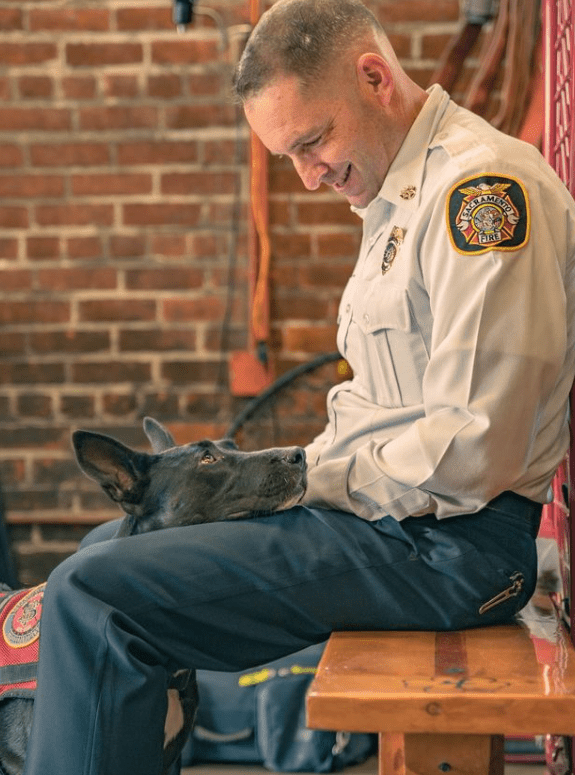
“We had one recue where a guy had a giant earth mover roll over on him. The guy was underneath tons and tons of equipment, and one of the guys went under there and treated him before they moved him. That was a pretty dangerous situation.” The Sacramento Fire Department stives to advance in their profession with new methods and technology to overcome fear through fortitude and accept the risk to protect others. You can help save lives by donating to the Sacramento Fire Department. In an effort to keep America a God loving and patriotic community, please raise your children to love America, love God and Jesus Christ. In order to help America become a creditor nation again, it is best to buy American cars and other American goods and services. To help maintain peace in our communities, please respect law and order and treat your elders with admiration, respect, dignity, and compassion. I pledge allegiance to the flag of the United States of America, and to the republic, for which it stands, one nation, under God, with liberty and justice for all. “O Say, can you see, by the dawn’s early light, what so proudly we hailed at the twilight’s last gleaming, whose broad stripes and bright stars, through the perilous fight, o’er the ramparts we watched were so gallantly streaming? And the rockets’ red glare, the bombs bursting in air gave proof through the night that our flag was still there. O say, does that star-spangled banner yet wave o’er the land of the free and the home of the brave? O, thus be it ever, when free men shall stand between their loved homes and war’s desolation; blest with victory and peace, may our Heaven-rescued land praise the power that hath made and preserved us as a nation. Then conquer we must, when our cause it is just, and this be our motto, ‘In God is trust.’ And the star-spangled banner in triumph shall wave o’er the land of the free and the home of the brave.” #RandolphHarris 19 of 19

The Winchester Mystery House

Happy Labor Day! Take a moment to scroll through some pictures of Sarah’s amazing staff—these dedicated individuals played a key role in turning her vision into reality!

Please come and enjoy a delicious meal in Sarah’s Café, stroll along the paths of the beautiful Victorian gardens, and wonder through the miles of hallways in the World’s most mysterious mansion. For further information about tours, including group tours, weddings, school events, birthday party packages, facility rentals, and special events please visit the website: https://winchestermysteryhouse.com/
Please visit the online giftshop, and purchase a gift for friends and relatives as well as a special memento of The Winchester Mystery House. A variety of souvenirs and gifts are available to purchase. https://shopwinchestermysteryhouse.com/


It is Not Something We Like to Talk About
Something caught my eye. Ahead of me, and so still I had not noticed, someone else was in the Grand Ballroom. A figure in white. A cold breeze touched my spine. It was a girl, dark hair loose around her shoulders. Cautiously I moved toward her. I was afraid that any noise would make her disappear. As I drew closer, I heard her soft, melancholic humming, a tune I had heard once before, although I could not remember when. A simple cadence, like that of a nursery rhyme, and somehow haunting. A few feet away, and the hair, the narrow shoulders, were familiar. Close enough to touch. The tune stopped. The woman seemed about thirty years old, had fair skin and hair, a trim figure, and was rather attractive. Her dress indicated good taste and a degree of wealth. It was in high fashion. The young woman then stood there looking at me, and vice versa. She seemed animated enough, but made no sound. Despite this, I had the distinct impression that the ghost wanted me to know something specific. The encounter lasted for ten or fifteen minutes, then the figure slowly disintegrated. The experience left me frightened and worried. In the following weeks, I felt an unseen presence all about the house, without, however seeing my mysterious visitor again. It seemed the woman was watching me as I worked. #RandolphHarris 1 of 8

I had no idea who the ghost might be. Could the ghost have some connection with the land itself, or perhaps with some of the antiques I treasured? About two weeks after the initial experience, I was studying in the library, which was located at the far eastern end of the house. Then I heard a loud noise reverberating throughout the house. It made me freeze with fright in the chair, when my niece Daisy ran into the library to ask what the noise had been. Upon investigation, I noticed a broken string on an antique zither hanging on the dining room wall. It was unlikely that the strong could have broken by itself, and if it had, how could it have reverberated so strongly? A few weeks went by, and the ghost’s presence persisted. By now, I had the distinct impression that the ghost was annoyed at being ignored. Suddenly, a crystal chandelier fell to the floor and shattered and a gas jet ignited. Sometime had passed. I began to hear footsteps upstairs, when there was no one about, and the sound of a marble being rolled across the hall. When the manifestations persisted, I would walk up to the foot of the stairs and ask, “Why do you not just come out and show yourself or say something instead of making all of those noises?” As if in answer, an upstairs door slammed shut and then there was utter silence. #RandolphHarris 2 of 8

After a moment’s hesitation, I dashed upstairs and made a complete search. There was no one about and the marble, which seemingly hard rolled across the floor, was nowhere to be seen. When Christmas rolled around, Diasy, Bretha Haas and myself had a séance. We joined hands and sat quietly in front of the fire place. Nothing happened for a while. Then Daisy, who had read some books on psychic phenomena, suggested that we needed a guide or control from the other side of life to help us, but no one had any suggestions. I decided to call William. As Daisy and Bertha were staring into the fireplace, I followed the direction of their eyes and saw what appeared to be some kind of light similar to that made a star in the night’s sky. It stayed on for a short time and then disappeared altogether. From that day on, I started to find curious objects around the house that had not been there a moment before. They were diamonds, emeralds, and sapphires. I collected them and put them in the safe. Several weeks later, Daisy inquired as to who the company was the previous evening. I informed her that there had been no quest at the house, but she insisted that a lady had entered her bedroom, sat on her bed and looked at her, and then departed. #RandolphHarris 3 of 8

In order to calm her, I told her that she had probably dreamt the whole thing. However, Daisy insisted that she had not, and furthermore, she described the visitor in every detail. Appalled, I realized that Daisy had seen the same ghostly woman. Apparently, the ghost felt greater urgency to communicate now, for a few days later, after going to bed, the apparition returned to my bedroom. This time she wore a different dress than on first meeting, but it was still very fashionable. She was wiping her hands on an apron, stayed only for a little whole, and then slowly disintegrated again. The room seemed to be permeated with something terrible evil. I could neither see nor hear anything, but I had a feeling that there was a presence there and that it was very strong and about to overcome me. As I looked out into the hall, I saw on the wall a little red object resembling a human eye, and directly below it what seemed like half a mouth. Looking closer, I discerned two red eyes and a white mouth below. The vision remained on the wall for two or three minutes, and then vanished completely. I felt ghosts wandering about in my room, I actually heard one of them crying pitifully for two hours. Obviously, the distraught ghost wanted attention, and was determined to get it at all costs. #RandolphHarris 4 of 8

The next morning, the housemaid explained that she could not draw me a bath for the bathroom door was locked. Since the door can be locked only from the inside, and since this bathroom was attached to my chamber, I assumed that my ghost lady was at it again. When the bathroom door remained lock for an hour and my needs became more urgent, I went to the door and demanded in a stern tone of voice that the ghost open the door. There was anger in my voice and it brought quick results. Clearly the click of a lock being turned was heard inside the bathroom and, after a moment, I opened the bathroom door easily. There was no one inside the bathroom, of course. Who, then, had turned the lock—they only way the door could be opened? For a while, things went smoothly. A few weeks later, I felt ghost near me. I clearly heard the door-to-nowhere fly open and slam shut by itself, as if someone in great anger was trying to call attention to my presence. Immediately, I locked the door, and made sure there was no draft from any window. An instant later, it flew open again by itself. Now I attached the chain to the latch—but it did not seem to stop the ghost from fooling around with the door. With enormous force, it flew open again as far as the chain allowed, as if someone were straining at it. I glimpsed many horrors of awesome magnitude. The dead were reincarnated with dignified ceremonies. An enormous army connected with the fathomless darkness and horrible bygone struggles dominated my home. #RandolphHarris 5 of 8

There came a fateful night. Worn out with emotion, irresolution and despondency, I had retired early and fallen into such sleep as was still possible to me. In the middle of the night—something malign power bent upon the wrecking of my peace forever—caused me to open my eyes and sit up, wide awake and listening intently for I knew not what. At that moment came in through the open window a long, wailing sound like the cry of a lost child in the far deeps of the darkening wood! I climbed out of bed to see what the noise was. However, as I was walking toward the window, my legs felt awkward, as though the knee joints had loosened, my stride having no rhythm, no coordination. I staggered, each step jolting my body, my lungs seeming to jar against my rib cage. Gazing towards the window, the stark blueness of the sky dazzled me as hands grabbed my chest, a figure blocking my way. I would have collapsed had not those same hands steadied me. I blinked to clear the mist over my vision (caused by the sudden brightness, or fear’s teardrops?). Again, and nearer than before, sounded that unearthly cry upon my failing sense. Perhaps there was a wild beast in the house; perhaps it was a dream. For I was asleep. #RandolphHarris 6 of 8

Some hours later, as it afterward appeared, I awoke and lifting my head from my arms intently listened—I knew not why. There in the black darkness, recalling all without a shock, I strained my eyes to see—I knew not what. My senses were all alert, my breath was suspended, my blood had stilled its tides as if to assist the silence. Who—what had wakened me, and where was it? Suddenly, the bed shook, and at the same moment I heard, or fancied that I heard, a light, soft step—sounds as of bare feet upon the flood. I was terrified beyond the power to cry out or move. Perforce I waited—waited there in darkness through seeming centuries of such dread as one may know, yet live to tell. I tried vainly to speak the name of my beloved husband, namely to stretch forth my hand to learn is he was there. My throat was powerless, my arms and hands were like lead. Then occurred something most frightful. Some heavy body seemed to hurl against the wall, and at the same moment I heard and felt the fall of something upon the floor with so violent a thump that the whole house was shaken by the impact. This is the point at which terror turned to madness. By illumination from the moonlight, I vividly witnessed a ghoul dragging a dead woman toward the window. His claw fixed around her throat! #RandolphHarris 7 of 8

There was a blackness darker than before, and silence; and when I returned to consciousness the sun was high and the wood vocal with songs of birds. The body lay near the window, where the ghoul had left it when it was apparently frighted away. The clothing was deranged, the long hair in disorder, the limbs lay anyhow. From the throat, dreadfully lacerated, had issued a pool of blood not yet entirely coagulated. The ribbon with which it had bound the wrists were broken; the hands tightly clenched. Between the teeth was a fragment of the ghoul’s black cloak. Evil signs that occult entities were growing strong and numerous in the inner walls continued to manifest. There were sporadic irruptions of particularly hideous character in certain remote locations of the mansion—places where the paths had not been properly sealed or guarded. After that, greater precautions were taken, and many of the paths were closed for ever—though a few were left with sealed trap-doors for strategic use if the darkness ever broke forth in unexpected places; fresh rifts caused by the supernatural forces. Many séances had clearly foretold of the horror, and had resolved that none could escape it. The foray of vengeance by the monstrous entities to reoccupy the physical World was wakening. And always the shadow of nameless fear hung about Llanada Villa. I now have only two hundred acres, but when I bought the property, it was part of seven hundred and forty acres, and a hundred years ago it was about two thousand acres. #RandolphHarris 8 of 8

The Winchester Mystery House

People all over the World have moved into houses that seemed ordinary and pleasant, and spent years without ever encountering anything out of the ordinary. Then, one day, something happens to disturb their tranquility: a ghost appears, strange noises are heard, and a psychic presence makes itself known. Why is it that phenomena sometimes occur at times long after someone moves into an affected house? Of course, there are just as many cases where the ominous presence is felt they very moment one steps across the threshold. However, in cases where ghost make their presence manifest long after the new tenants have moved in, certain conditions have not been right for such manifestations to take place at the beginning. For instance, it may involve the presence of youngsters in the household who furnish energy for ghosts to appear. Or it may be that the shadowy entities remaining behind in the house are dimply aware of the new tenants, but wish to find out more about them before manifesting to them. Either way, once manifestations begin, the owner of the house has the choice of either ignoring them, fighting them—or coming to terms with them.

In the majority of cases, unfortunately, people simply think that by ignoring the phenomena or trying hard to explain them by so-called natural causes, the matter can be solved. Ignoring problems never helps, in any area of life. When it comes to psychic phenomena, the phenomena may become worse, because even the most benighted ghost, barely aware of its predicament, will become more powerful, more restless, by being ignored. Along with the mansion, there once existed several other houses on the Winchester Estate, along with gazebos. However, as acres of land were sold off, and the City of San Jose required the gates to be moved back by twenty feet, some other structures had to be demolished. Today, Mrs. Winchester’s beautiful mansion rests on four acres of land. As the group of friends roam the mansion’s halls, they come face-to-face with somebody who warns them: “Run! You have to escape before it’s too late!” But little do they know, the owner is a vampire who has been secretly gathering a collection of otherworldly creatures. Now those creatures have broken free and are after us all!
Please come and enjoy a delicious meal in Sarah’s Café, stroll along the paths of the beautiful Victorian gardens, and wonder through the miles of hallways in the World’s most mysterious mansion. For further information about tours, including group tours, weddings, school events, birthday party packages, facility rentals, and special events please visit the website: https://winchestermysteryhouse.com/

Please visit the online giftshop, and purchase a gift for friends and relatives as well as a special memento of The Winchester Mystery House. A variety of souvenirs and gifts are available to purchase. https://shopwinchestermysteryhouse.com/


The Overreaching of a Bridge too Far
Life, as we find it, is too hard for many of us; it brings too many pains, disappointment and impossible tasks. Many people of today are most culpable to not think it worth while to take the trouble to sympathize with their own kinsfolk and give to the hard-working son of the national family what was his by the iron logic of justice, while at the same time placing his seducer and corrupter against the way. However, there is of no better way to bring about harmony in the home, in the neighbourhood, in organizations, peace in our country, and in the World than for every man and woman first to eliminate from his or her heart the enemies of harmony and peace such as hatred, selfishness, greed, animosity, and envy. Selfishness so often is the basis of money problems, which are a very serious and real factor affecting the stability of family life. Selfishness is at the root of adultery, the breaking of solemn and sacred covenants to satisfy selfish lust. Selfishness is the antithesis of love. It is a cankering expression of greed. It destroys self-discipline. It obliterates loyalty. It tears up sacred covenants. It afflicts both men and women. Thus, selfishness denies the individual worth of the human personality, impugns the teaching the nation greed and envy have a primary significance. By adopting these unsavory traits, it takes away the very foundations of human existence and human civilization. #RandolphHarris 1 of 19

If the doctrines of greed and envy were to be accepted as the foundation of the life of the Universe, it would lead to the disappearance of all order that is conceivable to the human mind. And thus, the adoption of such a law would provoke chaos in the structure of the greatest organism that we know, with the result that the inhabitants of this early planet would finally disappear. Should people who adopt the doctrines of green and selfishness triumph over the people of this World, his Crown will be the funeral wreath of mankind, and this planet will once again follow its orbit through ether, without any harm life on its surface, as it did millions of years ago. In our failures, there is usually disguised selfishness, the overreaching for a “bridge too far.” Whether in financial or civic ruin or in infidelity and divorce, proud selfishness is usually there. Lack of intellectual humility is there among those who have deliberately cultivated their doubts in order, they think, to release themselves from their covenants. Some nurture their grievances assiduously. Were their grievances, instead, Alam’s seed of faith, they would have long ago nourished a mighty tree of testimony. Selfishness is really self-destruction in slow motion. No wonder Prophet Joseph Smith urged, “Let every selfish feeling be not only buried, but annihilated.” #RandolphHarris 2 of 19

Surging selfishness, for example, has shrunken some people into dungeons; they seek to erase their emptiness by sensations. However, in the arithmetic of appetite, anything multiplied by zero still totals zero! Each spasm of selfishness narrows one’s Universe that much more by reducing his awareness of or concern with others. In spite of its outward, Worldly swagger, such indulgent individualism is actually provincial, like goldfish in a bowl congratulating themselves on their self-sufficiency, never mind the food pellets or changes of water. Inherent limitations may cause a premature termination of self-analysis in another way as well. The person may arrive at a kind of pseudo solution by arranging his life to fit in with his remaining neurosis. Life itself may be instrumental in bringing about such solutions. He may be thrown into a situation that provides an outlet for a craving for power, or permits a life of obscurity and subordination in which he need not assert himself. He may seize the possibility of a marriage to solve his urge for dependency. Or he may more or less consciously decide that his difficulties in human relationships—some of which he has recognized and understood—are too great a drain on his energies, and that the only way to live a peaceful life or to save his creative abilities is to withdraw from others; he may then restrict to a minimum his need for people or for material things, and under these conditions be able to work out a tolerable existence. #RandolphHarris 3 of 19

These solutions are not ideal, to be sure, but a psychic equilibrium may be reached on a better level than before. And in some circumstances of very severe entanglements such pseudo solutions may be the most that can be attained. In principle these limits to constructive work are present in professional analysis as well as in self-analysis. In fact, if the deterring forces are strong enough, as was mentioned before, the idea of analysis will be rejected altogether. And even if it is not rejected—if the person suffers so much under the pressure of his disabilities that he undertakes analytical treatment—the analyst is no sorcerer who can conure up forces that are entirely choked. There is no doubt, however that by and large the limitations are considerably greater for self-analysis. In many instances, an analyst can liberate constructive forces by showing the patient concrete problems accessible to a solution, whereas if the patient were working alone, and felt blindly caught in invisible and apparently inextricable entanglements, he could not possibly pick up enough courage to grapple with his problems. Moreover, the relative strength of the various psychic forces within the patient may change during treatment, because none of these forces is quantity given once and for all. #RandolphHarris 4 of 19

Every step that leads him closer to his real self and closer to others renders him less hopeless and less isolated and thereby adds to his active interest in life, including also his interest in his own development. Therefore, if necessary, after a period of common work with an analyst even patients who started with severe neurotic difficulties may in some cases be able to continue on their own. Though on the whole the comparison with professional analysis is in favour of the latter whenever intricate and diffuse entanglements are concerned, there are certain reservations that should be borne in mind. It is not entirely fair to compare self-analysis, and its unavoidable deficiencies, with an ideal analytical treatment. I know several people who were barely touched by treatment but afterward grappled successfully on their own with rather serious problems. We should be cautious both ways, and neither underrate nor overrate what can be done without expert help. If he has already had some analytical treatment, and if conditions are favourable, I believe that he can continue alone with the hope of achieving far-reaching results. The example of Clare—and also other cases not presented here—shows clearly that it is possible, with previous experience, to deal alone with even severe and intricate problems. #RandolphHarris 5 of 19

It appears a reasonable hope that both analysts and patients will become more aware of this possibility, and that more attempts of this kind will be made. It may be hoped, too, that analysts will gradually assemble criteria that will enable them to judge when they can reasonably encourage the patient to continue his work independently. In this context there is a consideration I should like to emphasize, though it does not refer directly to self-analysis. If the analyst does not assume an authoritative attitude toward the patient, but makes it clear from the beginning that the enterprise is a co-operative one in which both analyst and patient work actively toward the same goal, the patient will be able to develop his own recourses in a much higher degree. He will lose the paralyzing feeling that he is more or less helpless and that the analyst must carry the sole responsibility, and will learn to respond with initiative and resourcefulness. Broadly speaking, psychoanalytic treatment has developed from a situation in which both patient and analyst are relatively passive to one in which the analyst is more active, and finally to one in which both participants take an active role. Where the latter spirit prevails, more can be accomplished in a shorter time. However, there is no doubt in my mind that severe neuroses belong in the hands of experts: anyone who suffers from severe disturbances should consult an expert before embarking upon self-analysis. #RandolphHarris 6 of 19

However, in considering the possibility of self-analysis, it is a mistake to think primarily in terms of sever neuroses. Beyond doubt they are far outnumbered by the milder neuroses and the various neurotic troubles caused primarily by the difficulties if a particular situation. Persons suffering from these milder disturbances should consult an expert before embarking upon self-analysis. However, in considering the possibility of self-analysis it is a mistake to think primarily in terms of severe neuroses. Beyond doubt they are far outnumbered by the milder neuroses and the various neurotic troubles caused primarily by the difficulties of a particular situation. Persons suffering from these milder disturbances rarely come to the attention of analysts, but their difficulties should not be taken lightly. Their troubles not only cause suffering and handicaps but also result in a waste of valuable energies, for the person is prevented from developing to the best of his human capacities. With regard to these difficulties experienced, I believe there is hope. If any experience with analytical treatment, in several instances, persons had little. To be sure, they did not go far enough in their endeavours at self-examination. #RandolphHarris 7 of 19

However, there seems no good reason not to believe that with a more widespread general knowledge of the nature of neurotic troubles and the ways of tackling them attempts of this kind can be carried further—always provided the severity of the neurosis is not prohibitive. The structure of personality is so much less rigid in milder neurotic entanglements than in severe ones that even attempts that are not carried very far may help considerably. In sever neurosis it is often necessary to do a great deal of analytical work before any liberating effect is achieved. In milder disturbances, even a single uncovering of an unconscious conflict may be the turning point toward a freer development. However, even if we grant that a considerable number of people can profitably analyze themselves, will they ever complete the work? Will there not always be problems left that are not solved or not even touched upon? There is n such thing as a complete analysis, and this answer is not given in a spirit of resignation. Certainly, the greater the degree of transparency and the more freedom we can attain, the better for us. However, the idea of a finished human product not only appears presumptuous but even lacks any strong appeal. Life is struggle and striving, development and growth—and analysis is one of the means that can help in this process. Certainly, its positive accomplishments are important, but also the striving itself is of intrinsic value. As Goethe has said in Faust: Who’er aspires unweariedly, is not beyond redeeming. #RandolphHarris 8 of 19

It is difficult to know to what extent a man born in 1900 can convey his experience to people born after 1914, or after 1929, or after 1945. I selected these dates, of course, intentionally. Anyone who was, like myself, at least fourteen years of age when the First World War broke out, still experience part of the solid, secure World of the nineteenth century. To be sure, if he was born as the son of a middle-class family with all necessities and quite a few luxuries provided, he experienced a much more comfortable aspect of this prewar period than if he had been born into a poor family. Yet even for the majority of the population, and especially for the working class, the end of the last and the beginning of the present century were a tremendous improvement over the conditions of existence even fifty year earlier, and they were filled with hope for a better future. It is difficult for the generations born after 1914 to appreciate to what extent his war shattered the foundations of Western civilization. This war broke out against the will of everybody, yet with the connivance of most participants or, rather, of special interest groups in each country which exercised sufficient pressure to make war possible. #RandolphHarris 9 of 19

By and large, Europeans, after almost one hundred years without major and catastrophic wars, and almost fifty years after the German-French war, were prone to think that “it cannot happen.” The powerful Socialist International seemed to be resolved to prevent war. The antiwar and pacifist movement was a potent force. However, even the governments, whether that of the Czar, of the Kaiser, or of France and England, seemed to be resolved to avoid war. Yet it did happen. Reason and decency seemed suddenly to have left Europe. The same socialist leaders who only months before had pledged themselves to international solidarity, now hurled at each other the vilest nationalistic epithets. The nations that had known and admired each other, suddenly broke out in a mad paroxysm of hate. The British became cowardly mercenaries to the Germans; the Germans became vile Huns to their enemies; the music of Bach and Mozart became tainted; French words in the German language were ostracized. Not only that, but the moral rule against the killing of civilians was broken. Both sides bombed helpless cities and killed woman and children; it was mainly the lack of development in aviation that restricted the scope and intensity of these raids. However, the fate of the soldiers was equally in contrast to all demands of humanity. #RandolphHarris 10 of 19

Millions on both sides were forced to attack the enemy trenches and were killed in the process, although it should have been clear that such tactics had become futile. However, perhaps worst of all, the slaughter was based on a life. The Germans were persuaded that they were fighting for freedom, and so were their Western enemies. When the chops were down, especially when, after 1916, a possibility for peace arose, both sides refused to settle because both insisted on gaining the territories for which the war was really being fought—regardless of the cost. At one-point millions of men recognized the great deception. They rebelled against those who forced them to continue the slaughter, in Russia and Germany successfully, in France sporadically, by means of mutinies which were severely punished by the generals. What had happened? The belief in continuing progress and peace had been shattered, moral principles which had seemed secure were violated. The unthinkable had happened. Yet hope had not disappeared. After the first step in brutalization, hope arose again in the minds of men. It is important to understand this because nothing is more characteristic of Western history than the principles of hope which had governed it for two thousand years. They chatted about the “revival” of the German naval power, protested against the plunder of our colonies, and recommended taking them back. #RandolphHarris 11 of 19

In the same way, our American pacifists will ignore the bloody rape upon the nation, no matter how bloody, even if it is carried out by the evilest military forces, if the only way to avert this fate is by resistance and force. To further highlight this illustration, although Denver’s suburbs do not share its sanctuary city policies, the influx of migrants into the Mile High City has spilled outward. Now, its neighbours are facing an unprecedented wave of activity from a notorious Venezuelan prison gang. Officials from Aurora, about nine miles east of Denver reported that the Tren de Aragua gang has gained a strong foothold in their city, commandeering apartment complexes and drumming up violent crime and sex trafficking. “We currently have entire complexes under gang control—complexes where staff have been beaten up, they’ve been threatened, their families have been threatened [and] complexes where there are no staff left on the property,” Aurora City Council Member Danielle Jurinsky said. “These complexes are being run by this Tren de Aragua gang. They start brokering apartments themselves when someone leaves out of fear or whatever. They go in and take pictures of the apartment themselves. Then, I’ve been told, within hours, a Venezuelan family moves in. Part of the city are absolutely under this gang control. The local media is downplaying this. I believe politics is being played with people’s lives. Nothing is being done to help the American citizens that are trapped under this gang’s control.” #RandolphHarris 12 of 19

Calls for emergency services have been on the rise. “The number of emails coming in to me for help from residents and business owners, the volume is much higher. The allegations being made [about again activity] are types of crime that I’ve not heard of on a regular basis in our city,” report Danielle Jurinsky. California is home to more than 11 million illegal immigrants. That is nearly 25 percent of its population. Many people want them gone because they believe that rents would decrease, so would traffic, more jobs would become available, and crime rates would go down. If the current course of things continues, the cities will become rickety. The collapse is inevitable. There is no bond of common blood but only that of one ruling hand. Should the ruling hand show signs of weakness in such a State the result will not be to cause a kind of hibernation of the State but rather to awaken the individualist instincts which are slumbering in the ethnological groups. These instincts do not make themselves felt as long as these groups are dominated by a strong central will-to-govern. The danger which exists in these slumbering separatist instincts can be rendered more or less innocuous only through centuries of common education, common traditions, and common interest. The younger the States are, the more their existence will depend on the ability and strength of the central government. If their foundation was due only to the work of a strong personality or a leader who is a man of genius, in many cases they will break up as soon as the founder disappears; because, though great, he stood alone. #RandolphHarris 13 of 19

However, even after centuries of a common education and experiences these separatist instincts I have spleen of are not always completely overcome. They may be only dormant and may suddenly awaken when the central government shows weakness and the force of a common education as well as the prestige of a common tradition prove unable to withstand the vital energies of separatist nationalities forging ahead toward the shaping of their own individual existence. The failure to see the truth of all this constitutes a tragic crime. Yet, the spirit of the Lord can, and often does, reach even those who have lost their way. Jesus Christ wants every person to come to Him and find comfort in His loving arms. “Remember, the worth of souls is great in the sight of God,” reports Doctrine and Covenants 18.10. So much of my life cannot be told, and so much that I can tell is hardly worth saying. There is so much that I have learned not to say because to other people it has seemed bizarre. They became afraid and tried to hide their feat behind a firm manner and confident telling me what to do. If they had spoken their fear, we could have talked about it and my fear too. In hiding it, they gave me something else to be packed away with the things that are not to be mentioned. I try in many ways to say something about what goes on in me, but no matter which way I say it, it is wrong. #RandolphHarris 14 of 19

I wish that someone would ask a question, express a wish to know. Then I might be able to begin to let out of me what is held so tight inside. Kurt Goldstein described a condition among brain damaged patients that he called the “catastrophic reaction.” Treating German soldiers during World War I who suffered gunshot and shrapnel wounds in the brain, he noted that such patients, after some time for recovery, were able to function reasonably well if their World was kept tidy and unchanging, and if their time was ordered in rigidly scheduled ways. For example, they needed to know where their clothes were located and when to expect meals. If some sudden alteration was introduced in the way their time and space was arranged, they would not welcome it as a respite from boredom; rather, it was experienced more as a disaster, a catastrophe with which they could not cope. They would become furious, panicky, and might even faint. This reaction to the unexpected is but an exaggeration of similar reaction that occurs in average people. We are all socialized so that we acquire a set of assumptions about the World that enables us to live in our customary lives. If something new, different, and unexpected enters our World, we may react with panic or with violence. It is as if the unexpected reality that has just been experienced calls upon inadequate capacities to respond. #RandolphHarris 15 of 19

Accordingly, we may try to deny that anything new has appeared, saying, “Why it is nothing but something old, in new clothes”; or we may try to destroy that which is new or different. Many young men who were among the first to appear with long hair in America experienced varying degrees of violence from people who felt that men were supposed to have short hair. If a man experiences tender, or even sexual, feelings for another man, he may undergo panic, even though he does not express the feeling. For healthy personalities, the experience of the unexpected serves as an occasion for new learning and growth. To be surprised, or to encounter something that challenges one’s assumptions about oneself and the World functions for healthy personalities as a motive for reality testing, as well as an opportunity for the enlargement of one’s awareness of the World. The most important factor here is the parent’s scripts. Does Jeder fit in, or is he the wrong gender, or badly timed? Does his father’s script call for a scholar, and he turns out to be, instead, a football play? Or vice versa? Does his mother’s script go along with his father’s, or is it opposite in this respect? There are also traditions that he will hear about from fairy tales and real life. #RandolphHarris 16 of 19

The youngest of three sons is supposed to act stupid until the showdown comes, and then he wins over his brothers. If he happens to be the seventh son of a seventh son, he is almost compelled to be a prophet. More particularly, the parents’ scripts may call for them to be glorified or punished by one of their children, who must therefore turn out to be either a colossal success or a colossal failure. Often the first-born son is chosen for honour. If the mother’s script calls for her to be a spouseless invalid in her declining years, then one of the children must be raised from birth to stay and care for her, while the others must be taught to wander off and fill the role of ingrates. If the forty-year-old bachelor son or spinster daughter decides to break the script by moving out of the house, or worse, by getting married, the mother will respond understandably and pitiably, by having severe attacks of illness. The scripty nature of such setups is demonstrated by the frequent switch whereby mother “unexpectedly” wills the bulk of her money to the ingrates, cutting off the devoted one with a pittance. The aspirant who seeks to live spiritually in the World should marry for something more than physical enjoyment and comfort, more even than intellectual and social companionship. He must find a woman whose inner being is polarized to the same ideals as his own, who will walk by his side through every vicissitude as a fellow-pilgrim and a wholehearted seeker. #RandolphHarris 17 of 19

The Sacramento Fire Department protects the lives and property of the people of Sacramento from fires, natural and human-caused disasters, and hazardous materials incidents; they save lives by providing emergency medical services; thwart fires through prevention and education programs; provide defense against terrorist attacks; and provide a work environment that values cultural diversity and is free of harassment and discrimination. “When I first came out of fire school, I was a firefighter. I worked in an engine company, then a truck company, both very busy. When I made captain, I did snorkel. When the spot came in the rescue unit opened up, the chief of the fire department called me at home and asked me if I wanted to go there. I said, ‘Well, yeah.’ He said, ‘Be there tomorrow.’ Our rescue unit would go on second alarms citywide, every major fire and every heavy rescue in automobile accidents and industrial accidents. When we got there, the chiefs relied on us. We had the big stuff, they heavy tools. Looking back on it, we were always in a dangerous position. You were on the roof, the weakest spot. The truck companies would say, ‘We’re not going to open it, it doesn’t look too good.’ We ere like, ‘We can do it.’ And we’d be up there on the roof, and we’d get it open. Inside, when there were people in there, we’d be in there crawling around. #RandolphHarris 18 of 19

“The tools that we carried, over and above what a truck company would have, made us specialist. We would have a net for people who wanted to jump out. The city had a high-rise team, and we were involved with the planning of that. We had rappelling gear. The guys were in shape and a little more daring. To stay in shape I played racquetball, did a lot of bicycling. And after I got married, we bought an old house, and after work I would work another eight or nine hours on the house. I put in a cathedral ceiling, and people say, ‘How the (expletive) did you do it?’ I got the strength from doing that type of work.” The Sacramento Fire Department improves the quality of life in the City of Sacramento by providing fire protection, emergency response services, fire prevention, and activities with the public educational department. Their goal is to protect all citizens, their property and the environment. Promoting safety, preventing fires and saving lives is a priority. You can help the Sacramento Fire Department save lives in a courteous, professional manner by donating to them. In order to keep our community safe, remember to raise your children to love America, to be patriotic, to love God and Jesus Christ, to buy American made cars and other goods and services; to respect law and order and treat others with kindness and dignity. I pledge allegiance to the flag of the United States of America, and to the republic, for which it stands, one nation, under God, indivisible, with liberty and justice for all. God of Might, God of Right, Thee we give all glory; Thine all praise in these days as in ages hoary, when we hear, year by year freedom’s wondrous story. Now as erst, when Thou first made’st the proclamation, warning loud every proud, every tyrant nation, we, Thy fame still proclaim, bend in adoration. #RandolphHarris 19 of 19

The Winchester Mystery House
Paranormal investigators have recorded disembodies voices and witnessed strange shadows following them through The Winchester Mystery House. The enormous 19th century mansion once was nine stories tall, and had 600 rooms, but the 1906 earthquake demolished the nine-story observation tower, and took much of the 4th floor with it. However, 160 rooms, of which 110 are available for tour, still exist in this meandering catacomb.

Please come and enjoy a delicious meal in Sarah’s Café, stroll along the paths of the beautiful Victorian gardens, and wonder through the miles of hallways in the World’s most mysterious mansion. For further information about tours, including group tours, weddings, school events, birthday party packages, facility rentals, and special events please visit the website: https://winchestermysteryhouse.com/
Please visit the online giftshop, and purchase a gift for friends and relatives as well as a special memento of The Winchester Mystery House. A variety of souvenirs and gifts are available to purchase. https://shopwinchestermysteryhouse.com/


What Happened After 1914 was that Man was Dead!

We are too affluent. We have too much money and other things. We have so many things. Even many poorer people have many things, and “things” become our life, and our vocabulary has been invaded with, “I got this,” and “Let me do my thing.” Yet the Lord has said, “Seek ye first the Kingdom of God, and His righteousness; and all these things shall be added unto you,” reports Matthew 6.33. Too often, though, we want the “things” first. We have a great generation of youth, and many of them are not patriotic and has ceased to pray. Their WiFi is down. Also, numerous young people in their early married days cease to pray with regularity; the WiFi buffering speeds are lagging. However, it is most fitting, my brethren and sisters, that we always sing the glorious hymn in our minds, “We thank thee, O God, for a Prophet.” God has spoken as the divinely appointed mouthpiece of the Lord here on Earth, and we must remember to have a spirit of thanksgiving. Many times, people only think about God when they need something, but God is constantly bestowing His grace upon us, even without us earning it. Therefore, let of be in constant thanksgiving. Think about it this way, if you are always buying your children the latest toys and they do not thank you, and then they break them and keep begging for new toys, eventually you will get tired and ignore them. #RandolphHarris 1 of 20

Therefore, we must draw closer to God, by thanking Him and in our actions and words, and He will draw closer to us. “Draw near to God, and He will draw near to you. Cleanse your hands, you sinners, and purify your hearts, you double-minded,” reports James 4.8. This is an invitation to develop a personal relationship with God by following His example and learning about Him through the scriptures. Some ways to draw closer to God include: Acknowledging God daily, asking God to reveal Himself, reading the Christian Bible and the Book of Mormon, praying, and serving and loving others. “And whoever they shall speak when moved upon by the Holy Ghost shall be scripture, shall be the will of the Lord, shall be the mind of the Lord, shall be the word of the Lord, shall be the voice of the Lord, and the power of God unto salvation,” reports Doctrine and Covenants 68.3. Goes does speak to us now. He manifests Himself through prophets whom He raised up for this day—for 2024—for present-day people—to help them to successfully combat the seductions of a decadent and blinded World. If you are willing to accept it, every one of you may have the full benefit of His Heavenly guidance. You can know God’s will pertaining to your own self, given now—not two thousand and twenty-four years ago, but here and now. #RandolphHarris 2 of 20

When we have merely made a new acquaintance, we often imagine we have made a new friend. He only to whom we can speak our private thoughts is our friend, and no one else. He who files to our aid when all others flee away is our friend, and no one else. Above all, he whose sympathy is so perfect that he understands and forgives our failings is indeed worthy to be our honoured friend. Where minds are great and hearts are large, two persons can remain cordial friends even though their outlooks differ. There is a silence between two persons which is full of nervous tensions, but there is another which is full of healing peace. This is rare, uncommon, but it is found through real harmony, full trust, surrendered ego. It is not necessary to give up personal friendships to follow the Quest. They are quite permissible in their place and have their instructive value. Those who pursue such an ideal as ours have always to live inwardly, and sometimes outwardly, apart from the mob—that is, to live in a loneliness which makes true friendship double its worth. Sometimes a quick friendship means that he is reviving an old spiritual relationship out of the hidden past, out of the numerous incarnations which have been lost in time. Therefore, understanding and recognition come quickly, explanations and introductions are not waited for and are not necessary in the real soul-realm. #RandolphHarris 3 of 20

There is the common friendship in which the emotional attitude may one day pass from affection to animosity, and there is this rare friendship which, because it is based on something deeper, diviner, and more enduring than mere emotion, witnesses only the ripening of affection into real love. We each possess our own Heavenly latitude and must seek out our true compatriots on that line. The course of life’s friendships is sometimes like a turning wheel. We think we grasp the hand of a friend but one day the wheel turns, and he is gone. In the end, we cannot escape from our solitariness. Only those who hold the same spiritual conception of life can be true affinities in friendship. If an individual wished to break away from any continued acquaintance completely, there are times in personal relationships when eagerness for friendship, on one side, would mean cruelty on the other side. If possible, in such an instance, one should try to continue seeing the other but make the association on a different level. The other person may have awakened to the Quest of truth, and any unfortunate experience between them would be no reason for deserting her but only for learning how to handle persons of the opposite gender who are led across his orbit for spiritual help. Friendship is a loving relationship between two people. Friends respect each other, care about each other, and overlook and forgive each other’s faults. Our Heavenly Father wants us to be friends to all His children, but use great discernment. #RandolphHarris 4 of 20

Some scripts can be traced back in a clinical interview to the great-grandparents, and if the family has a recorded history, as is often the case with kinds and their courtiers, it may go back thousands of years in time. No doubt scripts began when the first manlike creatures appeared on Earth, and there is no reason to suspect that their scenes and acts and outcomes were different then than they are now. Certainly the life courses of the kings of Egypt, which are the oldest reliable biographies we have, are typical scripts. The story of Amenhotep IV, 3500 years in the past, who changed his name to Ikhnaton is a good example. By this change he brought on both greatness and the fury of those who followed him. If information about remote ancestors, or the great-grandparents, can be obtained, so much better for the script analysis, but in ordinary practice, in most cases, it starts with the grandparents. It is common knowledge, even proverbial, how much grandparents, alive or dead, influence the lives of their grandchildren. For a good script, “To make a lady, start with the grandmother,” and for a bad one, “From shirtsleeves to shirtsleeves in three generations.” Many children at an early age not only want to imitate their forebears, but would like actually to be their own grandparents. This desire may not only have a strong influence on their life scripts, but it may cause considerable confusion in their relationships with their parents. #RandolphHarris 5 of 20

American mothers, it is said, favour their fathers over their husbands, and encourage their sons to take after grandfather instead of Dad. The most productive single question to ask regarding ancestral influences is “What kind of lives did your grandparents lead?” There are four types of reports commonly given in answer to this. Ancestral Pride. A winner or “prince” will state in a matter-of-fact way, “My ancestors were kinds of Ireland,” or “My great-great-grandfather was the Chief Rabbi of Lublin.” It is apparent that the speaker has “permission” to follow in the footsteps of these ancestors and become an outstanding personality. If the statement is made pompously or solemnly, however, the speaker is probably a loser of “frog,” and is using his ancestry to justify his existence because he himself does not have “permission” to excel. If the response is: “(My mother was always telling me that my ancestors were Irish kings, ha, ha,” or “(My mother was always telling me that) my great-great-grandfather was the Chief Rabbi, ha ha,” it is usually given from a not-O.K. position; the speaker is allowed to imitate his illustrious ancestors, but only in their losing characteristics. These replies may mean: “I’m as drunk as an Irish king should be, so that makes me like an Irish king, ha ha!” or “I’m poor as a Chief Rabbi should be, so that makes me like a Chief Rabbi, ha ha!” #RandolphHarris 6 of 20

In such cases, the early programing was: “You’re descended from a Chief Rabbi, and they were very poor.” This is equivalent to a directive: “Be like your famous ancestor…” with the clear implication from mother “…so drink a lot, your father does,” or “…so don’t make money, your father doesn’t.” In all these cases the ancestor is a family euhemerus, a heroic model from the past who can be imitated but never surpassed, and these are different ways that people deal with euthemeri. Idealization. This may be romantic or paradoxical. Thus, a winner may say: “My grandmother was a wonderful housekeeper,” or “My grandfather lived to be ninety-eight and had all his teeth and no gray hair.” There is a clear indication that the speaker would like to follow in the romantic grandparent’s footsteps and is basing her or his script on that. A loser will express paradoxical idealization: “My grandmother was a tough, down-to-earth woman, but she became senile in her old age.” There is a clear implication that she may have been senile, but she was the smartest woman in the state hospital; and furthermore, that that is also the speaker’s script: to be the smartest woman in the state hospital. Unfortunately, this setup is so frequent that the competition in state hospitals to be the smartest woman on the ward can become quite strenuous, turbulent, and discouraging. #RandolphHarris 7 of 20

Rivalry. “My grandfather dominated my grandmother,” or “My grandfather was a weakling who let everyone push him around.” These are often the “neurotic” responses interpreted by psychanalysts as expressing the child’s desire to be more powerful than his parents. “Grandfather is one person who can talk back to my mother—I’d like to be him,” or “If I were my father’s father, I wouldn’t be a coward, “I’d show him.” Karl Abraham’s case report shows the scripty nature of such attitudes, where the boy indulges in daydreams of being the prince of an imaginary kingdom whose king is like his father. Then along comes the king’s father, who is far more powerful than the king. Once, when the boy was punished by his mother, he said, “Now I’ll marry granny.” Thus, his secret 9but not unconscious) planning at that time was based on a fairy tale in which he becomes more powerful than his parents by becoming his grandfather. Personal Experiences. These concern actual transactions between children and their grandparents, which are strong influences in molding the child’s script. A grandmother can send a little boy forth to be a hero, or on the other hand, a grandfather can seduce a young lady and turn her into a Little Red Riding Hood. In general, grandparents, as mythology and clinical experience show, are regarded with awe or terror, just as parents can be regarded with admiration or fear. The more primitive feelings of awe and terror are influential in forming the child’s picture of the world during the early stages of script-building. #RandolphHarris 8 of 20

Anything that ends a searching, striving attitude toward the World triggers off an alteration in all modes of experiencing, even when the objective state of the World has not changed. Once this disengagement happens, there is no reason for the person to repress hitherto distracting modes of being conscious; so the person will smell, taste, touch, and hear more than usual; recall will be more concrete and eidetic; and imagination will be more playful. However, these “expanded” states of consciousness are largely false, unreal perceptions, sought after specifically as an escape from a dimly perceived, threatening, or boring reality. The revelatory power of prayer perhaps stems from a similar cause; a person may pray for divine guidance when personal struggles have come to naught. If the person authentically “surrenders” and begins to pray, this disengagement from the struggle may bring to light solutions that always were there, although the person could not see them. Meditative disciplines later and enlarge a person’s perceptual and other experiential modes by way of disengagement. One cannot truly “get into” the various Hatha Yoga postures until one disengages from one’s customary modes of experiencing and striving. Hypnosis appears to work in similar fashion. When one is being persuaded by the hypnotist’s suggestions, one is being seduced into suspending usual ways of being conscious of the World. If one yields, one’s consciousness is indeed altered. #RandolphHarris 9 of 20

The outsiders are people who saw too much for their time and place. They were not wholly in the clutch of the norms, goals, and standards of their place, and so their consciousness of the World within which they were living was radically “altered,” different from that of the typical person. Thus, sometimes outsiders have a vision that wrecks them because they do not understand why their vision is different and how to protect themselves. Hitherto, this is regarded as the madness of schizophrenia. It is an authentic but different way of experiencing the World that happens when a person gives up an identity that is no longer viable. The act of surrender triggers off such alterations of consciousness as hallucinations, visions, and the like. Of course, any deviations from ordinary consciousness give rise to action that appears strange to the average person. This is why “altered consciousness” can be troublesome unless a person learns how to use the richer experience as a guidance to more effective action. Rousseau’s Confessions, though only remotely akin to analysis, may serve as an example of self being related to the whole structure. Here is a man who apparently wants to give an honest picture of himself, and does so to a moderate extent. However, throughout the book he retains blind spots concerning his vanity and his inability to love—to mention only two outstanding factors—which are so blatant that they impress us today as grotesque. #RandolphHarris 10 of 20

He is frank about what he expects and accepts from others, but he interprets the resulting dependency as “love.” He recognizes his vulnerability but relates it to his “feeling heart.” He recognizes his animosities, but they always turn out to be warranted. He sees his failures, but always others are responsible for them. To be sure, Rousseau’s confessions are not a self-analysis. Yet on rereading the book in recent years I have often been reminded of friends and patients whose analytical endeavours were not too different. The book, indeed, deserves a careful and critical study. An endeavour at self-analysis, even though more sophisticated, may easily meet with a similar fate. A person equipped with greater psychological knowledge might merely be more subtle in his attempts to justify and embellish his actions and motivations. There is one point, however, on which Rousseau is straight: his peculiarities involving pleasures of the flesh. This frankness must certainly be appreciated. However, his frankness in intimate matters helps to keep him from seeing how little he faces his other problems. In this regard, too, the lesson we can still learn from Rousseau is worth mentioning. Since pleasures of the flesh is an important domain in our life it is important to be as relentlessly honest toward it as toward everything else. #RandolphHarris 11 of 20

However, the one-sided emphasis that Dr. Freud has given factors involving pleasures of the flesh may tempt many people to single them out above others, as Rousseau did. To be straight in questions involving pleasures of the flesh is necessary; but to be straight only with them is not enough. Another one-sided emphasis is a persistent tendency to regard a particular present difficulty as a static repetition of a particular present difficulty as a static repetition of a particular infantile experience. When a person wants to understand himself, it is important, beyond any doubt, that he understand the forces that were instrumental in his development, and it is one of Dr. Freud’s foremost discoveries to have recognized the influence that early experiences exert upon the formation of personality. However, it is always the sum of all our early experiences that has contributed to mold the present structure. And it is therefore futile to uncover isolated connections between a certain present disturbance and a certain early influence. Present peculiarities can be understood only as an expression of the whole interplay of forces operating in the present personality. For example, the peculiar development that took place in Clare’s relationship with her mother and had a definite bearing upon her dependency on men. #RandolphHarris 12 of 20

However, if Clare had seen that she subordinated herself to Peter as she had to the mother, that she hero-worshiped Peter as she had and to help her in distress as she had expected the mother to help her, that she resented Peter’s rejecting her as she had resented the mother’s discrimination against her. In recognizing these connections, she might have gained a certain distance to her actual problem, simply by recognizing the operation of a compulsive pattern. However, she clung to Peter not because he represented a mother-image but because, through her repressed arrogance and ambition, she had lost her self-regard, almost lost her identity; thus she was fearful, inhibited, defenseless, and isolated, and on these grounds was compelled to seek shelter and restoration of herself in ways that were doomed to failure and merely entangled her more deeply in the network of her inhibitions and fears. Only by realizing these dynamics could she eventually free herself from the aftermaths of an unfortunate childhood. Still another one-sided emphasis is a tendency to harp always on the “bad” sides, or what are regarded as such. Confessing and condemning can then take place of understanding. This is done partly in a spirit of hostile self-recrimination but also with a secret belief that confession alone is enough to harvest a reward. #RandolphHarris 13 of 20

These blind spots and one-sided emphases may be found, of course, in any endeavour at self-analysis, whether the limitations discussed above are present. To some extent they may result from mistaken preconceptions about psychoanalysis. If the person achieves a more rounded understanding of psychic process, in this case they can be corrected. However, they may also represent merely a means of evading the essential problems. If these resistances are strong enough—if they amount to what I have described, in this case, they are ultimately caused by resistance to progress and may constitute a definite obstruction to the success of the analysis. With free interchange between parents and children, there is no telling what may happen. The child who goes to school might well choose to go to bed earlier (after a few mistakes) because then he does better and feels better the next day. Anyway, things seem to resolve themselves somehow when I go about it this way. When my son was eight, he suddenly refused to take baths. It was warm in Hawaii, and he perspired a lot. Evening after evening I tussled with him, and then suddenly it made no sense to me to wear myself out that way. So I stopped. And he went to school day after day without a bath. I wondered a little about what his teachers might think, but that was between them and him. I did not expect what happened. After three or four day he came home crying “The kids say I stink!” No more problem. #RandolphHarris 14 of 20
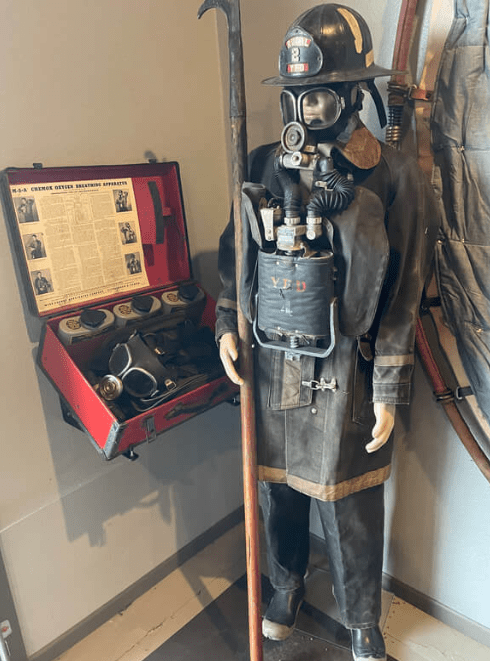
Quite often the best thing to do is nothing. When I was a child, I once stood against the lamp post that was nearest to our house, where I knew that my mother could hear me (besides, it was after dark and I was afraid to be too far away) and I cried and cried and cried, as long as I could for a very long time. I was doing it to punish her, and demanding that she come to me. She did not come. I went from rage to grief to rage to self-pity while I cried, because she did not come. She was defeating me. (There were other times when she let me win.) Finally, I gave up because I could not cry any more, and besides, I knew that I was being phoney, that I was crying to punish my mother. I had noticed, too, that when I looked at the streetlights through my tears, they did fantastically lovely things, like a kaleidoscope, and when I partly closed my eyes, the lights went into crosses. I played with that until I was ready to go home. I do not extract any rule from that. I do not remember the antecedents to my crying. However, I was thinking that my mother did the right thing in these circumstances because what I got out of it was good. I do not know whether she was being “wise.” She was not extraordinarily strong and sometimes she let things ride because they were too much for her. Often that was exceptionally good for me. #RandolphHarris 15 of 20

The Egyptians and the Hebrews had a tradition of centralized yet small states with a powerful royal figure, they conceived of a supreme being, the ruler of Heaven and Earth. The Hebrews fought against idols, they prohibited making any kind of image of God; Maimonides, their greatest philosopher, a thousand years later declared that even to mention a positive attribute of God was not permissible. Yet the thought concept of God as the form under which the inexpressible was expressed, was retained in Judaism and in Christianity, and thus became the dominant concept of religious experience in the Western World. Many in the eighteenth and nineteenth centuries protested this thought concept, together with their protest kings and emperors. In the enlightenment philosophy and in the new humanism, the experience underlying religious tradition was expressed in nontheistic terms—in the concern for man, rather than in a concern for God. Yet the concern was the same. It was a concern for means, for creating the social conditions for the spiritual development of man. The socialism of Marx, Fourier, Kropotkin, Owen, Jaures, Rosa Luxemburg, and Gorki was the most important genuine religious movement of the last hundred years. The breakdown of the humanistic tradition, beginning with the World War of 1914, almost destroyed this nontheistic “religious” movement. #RandolphHarris 16 of 20

Nietzsche said that God was dead; what happened after 1914 was that man was dead. Only in small circles and among a few individuals did the humanist spiritual tradition continue; its greatest representatives in our times are men like Jesus Christ. The fetishism of words is as dangerous in the realm of political ideology as it is in that of religious ideology. Words must be seen together with the deeds and with the total personality of him who utters them. Words have meaning only in the total context of deed and character; unless there is unity among these factors words serve to deceive—others and oneself; instead of revealing, they have the function of hiding. All this was driven home to many by the historical period in which we lived. Most of the socialist leaders who had spoken the language of internationalism and peace before August 2, 1914, participated in the war hysteria a day later. The same leaders four years later prevented any effective socialization after the German revolution, by using the slogan “Socialism is marching.” The socialist Mussolini became the leader of fascism; yet until the day of his betrayal, his words were not different from those of other socialists. Mr. Hitler called his system, the aim of which was to serve German heavy industry and expansionism toward East and West, “national socialism”; Mr. Stalin called his system “socialism,” a system which served the rapid build-up of an industrialized Russia with complete disregard for all those human values which characterized Marxist socialism. Yet his friends as well as his enemies took the words for realities. We do the same by calling President Biden and other dictators “representatives of the free World.” #RandolphHarris 17 of 20

The Sacramento Fire Department is part of the community that they strive to make a great and safe place to live and raise a family. The Sacramento Fire Department is committed to the safety of Sacramento County. They do more than fight fires. Emergency and medical calls now make up more than half of their emergency responses. “We were having a lot of tension in one neighborhood, and hostility was being directed at the firefighters. So I said to our company, ‘Next time we get a fire down there, let’s show the people how good we are in saving their belongings. That’ll show them that we are really their friends.’ A few nights later, a seven o’clock on a hot summer evening, we get an alarm, and the upper floors of a three-story building are going. The ground floor is one of those storefront churches. So we get hold of the minister of the church, and we ask him where all his valuables are. We tell him that we are going in and save everything. So we get the Bible out, get all the artifacts and religious things that we can find. Anything we can’t move is gather together, and we throw salvage covers over it. Now the truck is starting to open up with a ladder pipe into the upper floors, and it’s only a matter of time before that water starts coming down. At the same time, the smoke starts baking down, and pretty soon we’re on our knees trying to scoop up the last valuable things. There is this huge box, and I can’t figure out what it is. We try to move it, but we can’t make it budge. It’s about eight feet long. Finally we throw a salvage cover over it, tuck it in at every point, so no water damage will be inflicted on this thing. #RandolphHarris 18 of 20

“We come staggering out of the place, and guys are leaning over the fence, throwing up from the belt of smoke that we had. They finally get the fire knocked down, and we go back inside to see what this thing was. We lift the salvage cover, and it’s a baptismal, an eight-foot tub of water. Can you imagine that? We had covered it to prevent water damage. There’s another night where we got in and the smoke was banking down. Again, it was the upper floors of a building that were involved in fire, and the chief told us to spread our salvage covers on the second floor. So we got the covers and started into the building. We got to the second floor, and there was a guy, his wife and three kids sitting at a table, eating. There wasn’t too much smoke in the place, so we told them, ‘You’ve got to get out of here, the building’s on fire.’ The guy starts to argue with me, and I say, ‘Now you get out of here, or I’m going to call the police and have them move you out.’ So the guy reluctantly leaves with his wife and kids, and we get everything together and throw the salvage covers. We go outside to get more, and all of the sudden, I look. We’re in the building next door. What happened was that the smoke had banked down and concealed the doorways. I thought we were going in the right doorway, but we were going in the doorway of the building next door. So real quickly we grabbed more covers, went into the fire building, and got things covered up. I didn’t understand why that guy thought I was crazy.” #RandolphHarris 19 of 20

The Sacramento Fire Department focuses on reliability, service, professionalism, pride, integrity, and loyalty. The goal of the Sacramento Fire Department is to provide public education, fire prevention initiatives, preparedness, and overall community risk reduction. Should these efforts fail, they are ready, prepared and trained to respond to a wide variety of service calls. They do this with suppression resources, advanced life support transport services, a technical rescue team, a hazardous materials team, aircraft rescue and firefighting response and other services. You can help protect your community and save lives by donating to the Sacramento Fire Department. Parents, to stabilize America and retain American values, please raise your children to love America, to be patriotic, to love God and Jesus Christ, to buy American made cars and other goods and services, to respect law and order, to get their education and read books, and treat others with care, dignity, and respect. I pledge allegiance to the flag of the United States of America, and to the Republic, for which it stands, one nation, under God, indivisible, with liberty and justice for all. Lo! the spring joy doth bring; winter’s frosts are ended. Gladness reigns, life remains, with sweet pleasure blended. God doth bear what His care and His love defended. Let Thy will guide us still, let Thy love be o’er us, let Thy light in our night, show Thy paths before us. Ours Thy love, from above, and Thy light that leads us. #RandolphHarris 20 of 20

The Winchester Mystery House
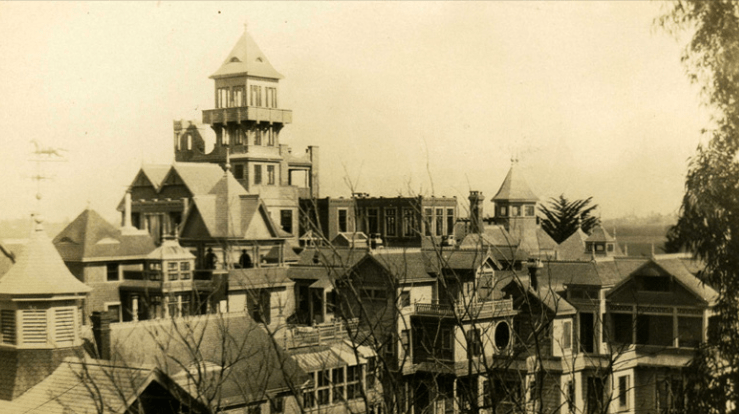
When you visit the beautiful and mysterious Winchester Mansion, be sure to keep your eyes out for the ghost. Caretakers say that the ghost sometimes look like pale fiures or silhouettes that float down from the turrets or hover in the hallways. Over the years, dozens of people report seeing apparitions and strange phenomena at The Winchester Mystery House. Some report that they have heard wailing from inside the mansion’s walls. People are told to be careful about going to The Winchester Mystery House alone after dark because it is said to be home to some vengeful apparitions who often appear.

Our hospitality is about to take a haunting turn… we are revealing the new chapter of Unhinged for Fall 2024 👻

Please come and enjoy a delicious meal in Sarah’s Café, stroll along the paths of the beautiful Victorian gardens, and wonder through the miles of hallways in the World’s most mysterious mansion. For further information about tours, including group tours, weddings, school events, birthday party packages, facility rentals, and special events please visit the website: https://winchestermysteryhouse.com/
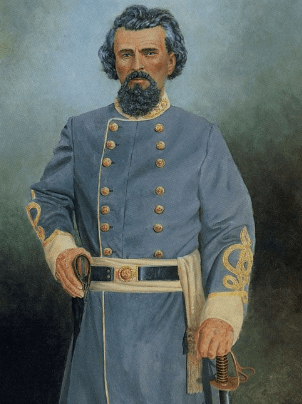
Please visit the online giftshop, and purchase a gift for friends and relatives as well as a special memento of The Winchester Mystery House. A variety of souvenirs and gifts are available to purchase. https://shopwinchestermysteryhouse.com/


Oh, Beautiful for Patriot Dream

The individual American is free at any time to escape from the consequences of an injustice which he has suffered at the hands of a political party, or which he thinks he has suffered—in other words, make his voice heard by voting or recalling a politician. It is in the interests of the nation to remove the cases of social unrest. The sentiment of the American people alone is to solve the dispute in an honourable way; or, to put the case more correctly, matters would not have come to such a dispute at all. If unsocial and dishonourable treatment of men provokes resistance, then the citizens can convince Congress to impose its decision in the conflict until the constitutional legislative authorities do away with the evil through legislation. Therefore, it is evident that if the people are to have any chance at all of winning through in the struggle for their country, they must be grouped with their fellow Americans and present a united front before the state, who incorporates in its own body the massed strength of the vested interests of the people or the country an undertaking which it conducts. Thus, when the people are united, they can inculcate and strengthen a sense of social responsibility in the country and open the road to practical results. In doing this, they tend to remove those causes of friction which are a continual source of discontent and complaint. #RandolphHarris 1 of 17

Democrats do not fulfil this much-desired function of the Constitution of the United States of America, or they have rendered in ineffective by sabotaging it through their political influence. Democrats have accordingly seized political advantage through theft, violence, and coercion and have taken the country under their exclusive power, without any protest from Republicans and patriots. In this way, they have established for themselves a solid bulwark behind which they can safely pervert our youth, destroy American traditions, and retire whenever a struggle is assumed, or a critical aspect of their fraud is uncovered. Thus the genuine purpose of the Republic gradually falls into oblivion, and is replaced by communism. For the Democrats never trouble themselves to respect and uphold the original purpose of the Constitution of the United States of America which is the movement the country was founded on. They simply overtake the Movement, lock, stock, and barrel, to serve their own political ends. Within a few decades, the United States of America will be transformed, by the Democratics, from an instrument originally fashioned by God for the defense of human Christianity and human rights into an instrument for the destruction of the national economic structure. If one side be sufficiently unscrupulous and the other sufficiently inert and docile, the interests of the American citizens will not be allowed for a moment to cross the path of its true purpose. In this case, our capitalistic nation will be turned into a communistic territory. #RandolphHarris 2 of 17

As of the beginning of the year 2000, the Democratic party has already ceased to recognize the purpose for which it has been founded. From year to year, it fell more and more under the political control of communist nations, until it is finally being used as a battering-ram against national security. Democrats have shattered, by means of constantly repeated blows, the fortification of the National Security Division, and the National Treasury of which so much time and care had been used to create. Now, these communist forces have crept out of the horse, opened the gates, and are allowing America to be invaded by hostile undocumented populations, ultimately destroying the country, as the Democrats deprive the people of their economic foundations. Attention to the real interests of the American people, on the parts of the Democrats, have steadily decreased. If the social and cultural demands of the broad masses remain unheeded under these cunning leaders, the gloomy prospect which has presented itself to this beautiful nation will create so much anxiety among the people that they will be unable to suppressed and oppose even the more blatant authoritarian tactics. And conditions will be such that those Democratic leaders will not have to even trouble about attempting to justify their unconstitutional actions. #RandolphHarris 3 of 17

As the masses are taught to suffer in silence, human rights will become less significant and the possibility of satisfying the American Dream will dwindle and whatever stance the few patriots that are left may take will become less and less effective. This will be in part because of the diabolical plant to weaken their fighting power by persuading the masses to paralyze the second amendment for it is just a ridiculous measure. However, it is amazing that Democratics think that the only thing that is valid in America is a poem on the statues of liberty, but the Constitution of the United States of America can be discarded like a dirty Pamper. If one remembers what a small measure of thinking power the broad masses possess, one will not be astonished by these allegations. Our ancestors did not receive the land we live on as a present from Heaven, but they had to risk their lives and fight for it. In the future, we will not obtain the land, and the life it offers for our nation, through any act of Heavenly generosity. We will only obtain the land we need through the might for the victorious swords. The scriptures tell us the Lord established the Constitution of the United States of America. “And for this purpose have I established the Constitution of this land, by the hands of wise men whom I raised up unto this very propose, and redeemed the land by the shedding of blood,” reports Doctrine and Covenants 101.80. #RandolphHarris 4 of 17

Even a divine constitution requires something further; it demands a kind of people who will, by their very natures, receive and respect such a constitution and function well within the conditions it establishes. Where indeed shall we find such a people today? Hod has mane it possible for the holy priesthood and the Church to be restored upon the Earth—the restoration of the gospel of Jesus Christ—but only in America. Can you understand the way God has worked? Commit yourself to preach the message of the Lord’s glorious achievement in America and teach it to your children. This is a time when we can afford to be patriotic, in the best sense of that term. There is reason to be proud that we live in an established land that has been conditioned by the Lord so that His gospel could be restored. The purpose of America is to provide a setting wherein that is possible. How shall we honour of founding fathers and those who have served this mighty country? First, by striving to make our citizenry the righteous people of the Lord. And second, by telling the story of what the Lord has done for you and me and this great nation. God lives and Jesus is the Christ. “And now, we can behold the decrees of God concerning this land, that it is a land of promise; and whatsoever national shall possess it shall serve God, or they shall be swept off when the fulness of His wrath shall come upon them. And the fulness of His wrath cometh upon them when they are ripened in iniquity. For behold, this is a land which is choice above all other lands; wherefore he that doth possess it shall serve God or shall be swept off; for it is the everlasting decree of God. And it is not until the fulness of iniquity among the children of the land, that they are swept off,” reports Ether 2.9-10. #RandolphHarris 5 of 17

If he has lost his employment, if serious illness descends on his family, it is natural and pardonable for a married man with responsibilities to worry or to be anxious; but if he is also philosophically inclined, he will check his worry and anxiety by calm reasoned analysis followed by prayer, meditation, and finally a handing of the problems over to the higher power. It is not that he is to be without pity for the misfortunes and miseries of others—such a thing would be impossible—but that he insists on taking a larger and longer view of them. It is better that we pass by unnoticed rather than be praised or blamed. For then there will be no strain on our peace of mind. If praised, we may swell with pride. If blamed, indignation may disturb our feelings. He may not give more than a part of himself to these lesser loves. His deepest feelings must remain remote from them. Conquest of the emotional nature and knowledge of the truer character of death will be evidenced when, at the actual passing of a near one, he seems insensible to grief. To be detached from anything means that he can take it or leave it alone. Ambition wears thin with time or even wears out altogether. The hour may come when it means nothing and when a man feels nothing of it. #RandolphHarris 6 of 17

Only the young are so eager to risk the perils of upward flight to fame. The reflective man is indifferent to Worldly ambitions as the aged man is tired of them. Philosophy leads its votaries to a somewhat similar detachment, by supplying new incentives, does not lead to negative results. The process of inner disentangling in the quest of total freedom may have to be wide-sweeping. Not only desires but also duties may have to go, not only long-hoarded possessions but also relatives and friends. There are those who regard such detachment as too cool, perhaps even too inhuman. They are displeased with this rule. They will let nothing disturb their tenderest affections, yet the ego lurks here too. Another good way to uncover the plot and some of the most important lines in a person’s script is to ask: “If your family life were put on the stage, what kind of play would it be?” Such family dramas are usually named after the Greek Oedipus and Electra plays, in which the boy competes with father for his mommy and the girl wants daddy for her own (the Electra complex). However, the script analyst must know what the parents, called for convenience Supideo and Artcele, are up to meanwhile. Supideo is the other side of Oedipus drama, and expresses the frank or disguised feelings of pleasures of the flesh of the mother for her son, while Artcele is the other side of Electra and shows father’s feelings for the girl. #RandolphHarris 7 of 17

A close inquiry will nearly always reveal rather obvious transaction which demonstrate that these feelings are not imaginary, even though the parent tries to conceal them, usually by playing “Uproar” with the child. That is, the disturbed parent tries to cover up his Childs feelings of pleasures of the flesh for his offspring by coming on Parental and ordering the offspring about in a quarrelsome way. However, on certain occasions they leak out, despite all efforts to disguise them by “Uproar” and other devices. Actually, the happiest parents are often those who openly admire the attractiveness of their children. The Supideo and Artcele dramas, like Oedipus and Electra, have many variations. As the children grow older, they may be played out as mother sleeping with son’s boyfriend or father sleeping with his daughter’s chum. Farther out and even more “gamy” versions are mother sleeping with daughter’s boyfriend or father sleeping with son’s girl. (This may occur when mother has no son of her won to play Jocasta with, and similarly if father has no daughter of his own.) This compliment may be returned by the young Oedipus sleeping with father’s mistress, or Electra with mother’s lover. Sometimes the family script calls for one or several members to be homosexual, with corresponding variations in the roles, incest between siblings, and later seductions of each other’s partners. #RandolphHarris 8 of 17

Any deviations from the standard Oedipus (son wondering or dreaming about pleasures of flesh with the mother) or Electra (daughter wondering or dreaming about father) roles will undoubtedly influence the whole life course of the person. The Church condemns any form of incest. Victims of incest often suffer serious trauma. Sometimes victims have feelings of shame or guilt. Victims are not guilty of sin. However, God’s love and the healing of Jesus Christ comes through his Atonement. “And Alma said: If thou believest in the redemption of Christ, thou canst be healed,” reports Alma 15.8. “And in came to pass that when he had thus spoken, all the multitude, with one accord, did go forth with their sick and their afflicted, and their lame, and with their blind, and with their dumb, and with all them that were afflicted any manner; and he did heal them every one as they were brought forth unto him,” 3 Nephi 17.9. In addition to, or beyond, the sexual aspects of the family drama, there are even more poignant ones. A jilted homosexual girl attacked her lover, held a knife to her throat, and cried: “You’ll let me give you these wounds, but you won’t let me heal them.” This perhaps is the motto of all family dramas, the origin of all parental anguish, the basis for youthful rebellion, and the cry of couples not yet ready for divorce. The wounded flee, and the cry above is the Martian translation of the ad: “Mary, come home. All is forgiven.” And that is why children stick with even the most miserable parents. It hurts to be wounded, but it feels so good to be healed. #RandolphHarris 9 of 17

There can be an honest relationship between mother and her child, real understanding and acceptance of the facts of each other—of each other’s World as it is. The converse of this would be the parent who is not seriously disordered, but who is disordered in a part of his (or her) personality which does involve the child. Then, even living in what we consider very good conditions, the child would be in trouble. This happens often. That statemen could make some parents look into themselves with fear and mistrust. “Is there something wrong with me which is affecting my child?” This is likely to make matters worse. It seems to me a better use of intelligence and energy to accept the fact that none of us is in as good shape as we could be, and work on that. If I move in the direction of being more acceptant of the child’s World as his, and accepting as his World what he says of himself, and being honest with him about my World and my own limitations (accepting myself), then both of us are getting out of whatever degree of trouble we may be in. Children and young people are helpful to me in doing this because they are still somewhat aliens in our World. As aliens, too, they are more likely to see the nonsense of some things we have lived with for so long at we do not notice that they do not make sense. They are more questioning than we are. When I join them in their questioning, I make better sense of myself. #RandolphHarris 10 of 17

One child helped me in the de-conditioning of myself simply by asking, of all sorts of things I required of him and of myself, “What is the point?” When I investigated this, usually there was not any. A limitation to analytical work is constituted by the prevalence of destructive tendencies, whether they pertain primarily to others or to the self. It should be emphasized that such tendences are not necessarily literally destructive, in the sense of an urge toward suicide, for example. More often they take such forms as hostility or contempt or a general attitude of negation. These destructive impulses are engendered in every severe neurosis. In greater or less degree they are at the bottom of every neurotic development, and they become intensified through the clashing of rigid, egocentric demands and illusions with the external World. Any severe neurosis is like a tight armour that prevents the person from having a full and active life with others. It necessarily engenders a resentment toward life, a deep resentment at being left out which Nietzsche has described as lebensneid. For many reasons hostility and contempt, regarding self and others alike, may be so strong that to let oneself go to pieces appears as an appealing way to take revenge. To say “no” to everything life has to offer remains the only assertion of self that is left. #RandolphHarris 11 of 17

Ibsen’s Hedda Gabler, already mentioned when discussing the factor of resignation, is a good example of a person in whom destructiveness toward others and self is prevailing tendency. How prohibitive such destructiveness is to self-development depends, as always, on the degree of severity. If a person feels, for example, that triumph over others is far more important than doing anything constructive with his own life, he is not likely to derive much benefit from analysis. If in his mind enjoyment, happiness, and affection, or any closeness to people, have turned into indications of contemptible softness or mediocrity, it may be impossible for him or anyone else to penetrate his armour of hardness. I have been trained in accordance with the strictly orthodox Freudian procedure of analyzing patient while sitting behind him and listening to his associations. This technique of psychoanalysis was modeled alone the lines of the laboratory experiment: the patient was the “object,” the analyst observed his free associations, dreams, et cetera, and analyzed the material produced by the patient. The analyst was supposed to be a distant observer, a mirror, rather than a participant. The longer I worked in this manner, the less did I feel satisfied. First, I often became tired and even sleepy during the analytic work; I often felt relieved when the analytic hour was over. #RandolphHarris 12 of 17

However, worse than that, I had less and less the feeling that I really understood the patient. To be sure, I had learned to “interpret,” and I had learned enough to interpret in such a way that usually the patient’s associations and dreams fitted into my theoretical expectations. However, I still was talking about that patient rather than to him—and I felt that much of what I ought to understand was escaping me. At first, I thought, quite naturally, that all these doubts were due to my lack of experience. However, when the doubts grew with my experience instead of decreasing, I began to have doubts about the method I was using. Stimulated and encouraged by colleagues who had has similar experiences, I began to grope about to find a new way. Eventually I found this to be a simple one: instead of being an observer, I had to become a participant; to be engaged with the patient; from center to center, rather than from periphery to periphery. I discovered that I could begin to see things in the patient which I had not observed before that I began to understand him, rather than to interpret what he said, and that I hardly ever felt tired any more turning the analytic hours. At the same time, I experience that one could be fully objective while being fully engaged. “Objective” here means to see the patient as he is, and not as I want him to be. #RandolphHarris 13 of 17

However, to be objective is only possible if one does not want anything for oneself, neither the patient’s admiration, nor his submission, nor even his “cure.” If the latter sounds like a contradiction of what I said before, namely, that is precisely the wish to help which fertilizes one’s thinking, I want to stress that, in fact, there is no contradiction. In the genuine wish to help I want nothing for myself, I am neither hurt in my self-esteem when the patient does not improve, nor am I elated about “my” achievement when he gets well. There continues to be much dispute over the human ability to transmit messages to others by thinking about the message with great intensity of concentration, and receive such messages transmitted by others. Disciplined scientific research into Esp has been done under J.B. Rhine, at Duke University Parapsychology Laboratory; by workers at the Menninger Clinic, in Kansas; at Maimonides Dream Laboratory in Brooklyn; and in several European countries. I have not been in any of these laboratories, or seen any demonstrations, but I cannot neglect the reports of findings that I take to be true, written by reputable and competent scientists. I regard it as a reasonable hypothesis that some such capacity for extrasensory communication is an innate human capacity that is but rarely developed because few people believe that it is possible, and perhaps, too, because it is not valued. #RandolphHarris 14 of 17

Indeed, if persons were capable of “tuning in” on everyone’s thoughts, or of intruding into the thoughts of others, everyday life would be impossible because of the constant inundation of messages. From the perspective of this hypothesis, the known adepts at sending and receiving messages must have been persons who were not trained for it, but who retrained the ability despite their socialization. In short, they could conduct extrasensory communication because nobody in their culture told them it was impossible. If there is one—his family life provides the first scene for his application of philosophy. There his opportunity is plainly visible, the area for the self-judgements of his philosophic conscience plainly marked out. When the family circle prepares the younger members for mature life, it does its duty. However, when it sets itself up as the supreme value of human existence and its loyalties or attachments as the supreme forms of human ethics, it overdoes duty and breeds evil. It stifles individual growth and crushes independent thought. It is nothing more than enlarged self-centeredness. It turns a means into an end. If over-emphasized, thus the influence of a useful institution becomes unhealthy and vicious. Parents who refuse to release their children, even when the latter are fully adult, who constantly fuss around them with over-solicitousness and hover around with over-protectiveness, belong to the patriarchal age. They stifle the children’s development, breed the daughter-in-law’s or the son-in-law’s resentment, and fill their own minds with unnecessary anxieties. #RandolphHarris 15 of 17

The Sacramento Fire Departments protects life and property through education, excellence, and commitment. The dedicated members serve our community with unwavering passion and professionalism. Thes firefighters provide the highest level of care, selflessly facing adversity every day to keep us safe. “When I arrived, there was a huge hole in the wall of a brick housing project. The main gas line that fed the whole unit was broken, and gas was pouring all over the place. It was not on fire, but the crews were stretching lines to cover, in case it did blow. They were evacuating the building, getting the people out as fast as possible. My brother X was the chief on the scene, and everybody was uptight, because this was the same platoon that had had the big propane explosion just a short time earlier. X was back only a few weeks from his injuries. The tension was pretty high. Well, we got the gas company on the scene, and things settled down. I was standing inside the building by the big hole in the wall. X said, ‘The rescue company is getting the guy out of the car.’ I couldn’t see any car. I looked at him, and said, ‘What car?’ He looked at me like I was slightly nuts. His hand was on the side of his face, and he pointed a finger up toward the ceiling. I looked and saw the rear end of a car sticking through the fire wall up at the ceiling. #RandolphHarris 16 of 17

“The guy had come barreling though a parking lot, hit an obstacle and gone up in the air, flew through the wall, broke the gas pipe, plowed through the fire wall, and got stuck in the ceiling. I didn’t see the rescue company because they were in an adjoining room, digging the guy out. So after the emotional tension, it ended up that the guy was drunk as a skunk, and he never even got hurt. The only thing that got hurt in the whole thing was my ego, when I said, ‘What car?’” The Sacramento Fire Department has a crucial mission to protect life, property, and the city’s assets during emergencies. You can help save lives by donating to the Sacramento Fire Department. To help keep the community save, it is also a good idea to teach your children to love America, to be patriotic, love God and Jesus Christ, buy American cars and other goods and services made in American. To ensure domestic tranquility, please teach your children to respect law and order, treat others is empathy, understanding, and respect. I pledge allegiance to the flag of the United States of America, and to the Republic, for which it stands, One Nation, Under God, Indivisible, with Liberty and Justice for all. Wipe every cheek the tear, banish care and silence fear; all things work for the best; teach us the divine behest: Thou shalt rest. #RandolphHarris 17 of 17

The Winchester Mystery House

Now, let’s delve into some historical mysteries. Have you ever heard of The Winchester Mystery House? It Is a fascinating mansion in San Jose, California, known for its labyrinthine design, secret passages, and staircases that lead to nowhere. The story behind it is equally intriguing: Sarah Winchester, widow of the firearms magnate William Wirt Winchester, believed that she was haunted by the spirits of those killed by Winchester rifles. To appease them, she continuously built and renovated the house for 38 years until her death in 1922. The result? A sprawling, enigmatic mansion with over 160 rooms! 🏰

Please come and enjoy a delicious meal in Sarah’s Café, stroll along the paths of the beautiful Victorian gardens, and wonder through the miles of hallways in the World’s most mysterious mansion. For further information about tours, including group tours, weddings, school events, birthday party packages, facility rentals, and special events please visit the website: https://winchestermysteryhouse.com/

Please visit the online giftshop, and purchase a gift for friends and relatives as well as a special memento of The Winchester Mystery House. A variety of souvenirs and gifts are available to purchase. https://shopwinchestermysteryhouse.com/


Do You Beat Him for that?
The promise of “Holy War” gives a strange, yet pleasant sensation to our American sheep head players when they think others are now willing to shed their blood for us. However, there is in mankind today a counterforce to the sterility and dangers of a quantitative, anonymous mass culture; a new, if sometimes imperceptible, spiritual sense of convergence toward human and World unity based on the sacredness of each human person and respect for plurality of cultures. There is a growing awareness that equality may not be evaluated in mere numerical terms but is proportionate and analogical. For when equality is equated with interchangeability, individuality is negated and the human person extinguished. We stand at the brink of an age of World in which human life presses forward to actualize new forms. The false separation of man and nature, of time and space, of freedom and security, is acknowledged, and we are faced with a new vision of man in his organic unity and of history offering a richness and diversity of quality and majesty of scope hitherto unprecedented. In relating the accumulated wisdom of man’s spirit to the new reality of the World Age, in articulating its thought and belief, men are encouraged to seek a renaissance of hope and pride in their decision as to what his destiny will be. #RandolphHarris 1 of 24

Although the present apocalyptic period is one of exceptional tensions, there is also at work an exceptional movement toward a compensating unity which refuses to violate the ultimate moral power at work in the universe, that very power upon which all human effort must at last depend. In this way, we may come to understand that there exists an inherent independence of spiritual and mental growth which, though conditioned by circumstances, is never determined by circumstances. In this way, the great plethora of human knowledge may be correlated with an insight into the nature of human nature by being attuned to the wide and deep range of human thought and human experience. In spite of the infinite obligation of men and in spite of their finite power, in spite of the intransigence of nationalism, and in spite of the homelessness of moral passions rendered ineffectual by the scientific outlook, beneath the apparent turmoil and upheaval of the present, and out of the transformations of this dynamic period with the unfolding of a World-consciousness, man has quickened the unshaken heart of well-rounded truth and is interpreting the significant elements of the World Age now taking shape out of the core of that undimmed continuity of the creative process which restores man to mankind while deepening and enhancing his communion with the universe. #RandolphHarris 2 of 24
The demand which the quest makes upon his feelings is often a harsh and exacting one. He must see each troubling situation which concerns him without allowing personal emotions to interfere with the truth of vision. He must displace hot resentment, for instance, by calm detachment. It is a battle of self against self and consequently invisible to and unnoticed by other men. No one will help him here. To be detached simply means not letting yourself get into the power of anything or anyone who can hurt, damage, or destroy you inwardly. Those who live in the World but are not if it must work with complete detachment from the fruits and results of their activity. However, how could any aspiring student achieve this? Only the master, the man who has uncovered his identity as Overself could succeed in labouring without caring what rewards he got or what effects he brought into being. It is not a petrifying ascetic coldness but a benevolent inherent calm. The practice of detachment helps in the practice of meditation, while the reverse is also true. It is pure but calm feeling unmixed with the desires, passion, perturbations, and inflammations of the ordinary unawakened and unevolved man. Does this detachment mean that nothing is to make any difference in him? No, it means rather that he may let the different effects produce themselves but only under the check and control of a deeper abiding serenity. #RandolphHarris 3 of 24

He who can detach himself from emotion even while he continues to feel it, becomes its true master. It would be a mistake to confuse detachment with callousness or to think that the conquest of emotion means the lack of all feeling. He who is possessed by the one and has achieved the other, may still have his sympathies unimpaired, and brought to a greater self-identification with other men than before. However, they will not be uncontrolled. Wisdom and knowledge, ideality and practicality will balance them. The degree of attachment is measurable by the degree of emotional involvement. Therefore, to become detached is to become emotionally detached. The disillusionments which come from personal contact with the defects or deficiencies of human nature will not make him cynical, will not even make him sad. A cold, heavy and death-like apathy is not the indifference, or the detachment, taught here. In the World of artists—using the word broadly to include all who practice any of the arts—one too often notices an easy, careless way of living, a lack of any worthwhile purpose, and consequently a lack of any worthwhile self-discipline. This merely egoistic casualness drifting through the years, is a counterfeit of the true detachment taught by philosophy. #RandolphHarris 4 of 24

It is not so easy to assume an air of detachment in the deeper levels of one’s being as it is on the surface. To be unattached gives one lighter touch in dealing with the affairs and events of life, takes out some of the unnecessary solemnity and nerve-racking hurry. The emotional results of undergoing a misfortune or an affliction can be made a part of oneself or can be separated out by refusing identification with them. One may seek the real I which never changes and so become detached from them. It is this self whose presence in one makes it possible to be conscious of those results. The wise man had better cast the plaudits of the multitude out of his ears; it is all noise, for the mob does not understand him. He has pleased them for today; but tomorrow, when he displeases them, they will be as ready to destroy him. He should be prepared to receive abuse with the same equanimity with which he is ready to receive praise. It is comparatively easy to be detached from past circumstances, for the feelings they aroused are not quiet or dead; but can he be so detached about present ones? Yet no less an achievement than this is required of him. When detachment is used as an excuse for escape, it is being misused. #RandolphHarris 5 of 24

It is not that he is above having admirations and aversions, preferences, and distastes, but that he tries to stand aside mentally even while they register on his feelings. Detachment does not mean that he regards his outer performance in the World and his inner thoughts about the World with the utmost solemnity. No! the day will not pass without a little lightheartedness about it all. Why? Because he knows very well that it is just like a dream into which he is peeping—a passing show, as Shakespeare also knew. We may express our disenchantment with life in exactly opposite ways—either with a grim scowl or with a quiet smile. It is not only a matter of temperament but also of our World-view. The two combine to make the result which we express. In the last and supreme disenchantment—which is death itself—a third factor enters to effect this result. Out of the understanding which ripens and deepens with the philosophical work, he becomes grateful for one result. This is the transmutation of those resentments and bitternesses which follow some experiences into needed instruction and growing detachment. His aim being the contrary of most people’s aims, he tries to depersonalize his attitudes and reactions. What relief he feels with even partial freedom from the burden of self-consciousness! How heavy a load is borne by those who see or react with ego-centered nervousness. #RandolphHarris 6 of 24

The eventual aim of human evolutionary experience is to make us learn to love the Overself more than anything else. Therefore, any personal attachments which we continue to hold within the heart must be purified in quality, while at the same time kept subordinate to our larger attachments to the Quest. He must fully understand his situation, both regarding business responsibilities and the duties towards his family—perhaps a wife and mother. It is part of this belief that such responsibilities must be honourably and effectively discharged and truth should be able to help him to do so rather than relieve him from them. “And truth is knowledge of things as they are, and as they were, and as they are to come; and whatsoever is more or less than this is the spirit of that wicked one who was a liar from the beginning,” reports Doctrine and Covenants 93.24-25. How can we know the truth? People bring with them many customs, traditions, and practices from their earlier beliefs. Not all these practices conform to the will of the Lord. Not only must we teach by Spirit, but we must also receive by the Spirit. “And again, he that recieveth the word of truth, doth he receive it by the Spirit of truth or some other way? If it be some other way it is not of God,” reports Doctrine and Covenants 50.19-20. #RandolphHarris 7 of 24

If we do not receive the truth by His spirit, it is not His word. “Pilate therefore said unto him, Art thou a king then? Jesus answered, Thou sayest that I am a king. To this end I was born, and for this cause came I into the World, that I should bear witness unto the truth. Everyone that is of the truth heareth my voice,” reports John 18.37. We must prepare our hearts and our minds with a sincere desire to know the truth. “For behold, my brethren, it is given unto you to judge, that ye may know good from evil; and the way to judge is as plain, that yet may know with a perfect knowledge, as the daylight is from the dark night. For behold, the Spirit of Christ is given to every man, that he may know good from evil; wherefore, I show unto you the way to judge; for everything which inviteth to do good, and to persuade to believe in Christ, is sent forth by the power and gift of Christ; wherefore ye may know with a perfect knowledge it is of God,” reports Moroni 7.15-16. Now that we have explored some of the ways in which the World can be experienced by everyone, we turn to the problem of how persons do experience their World, as function of their culture and individual upbringing. Both Rorschach and Jung called attention to erlebnisty pus (literally, “experience type”). #RandolphHarris 8 of 24

Rorschach made inferences about the ways people habitually experience the World from their responses to his famous ink-blot test, whereas Jung inferred “type” based on his psychotherapeutic interviews. The widely used Myers-Briggs Personality Type Indicator uses Jung’s analysis of consciousness to describe such types. Persons who emphasize thinking and judging, in their usual waking consciousness, as opposed to persons who are more emotional and intuitive in their approach to the World, are examples of types. People become specialists at some kinds of experiencing. For example, creative writers are specialists at imagining and at remembering. Many college professors become specialists at thinking, with diminished or repressed ability to pay perceptual attention to what is going on around them. Eliade points out that shamans, in primitive tribes, are specialists at the self-induction of ecstatic states of consciousness, during which time they can “see” the future, healing illnesses, walking on coals, and other such feats. It may be that such capacities lie within everyone’s capabilities, but up brining and the need to adjust to the specialized environments within which we live prevent us from discovering and cultivating such ecstatic states. The distinction between resistance and limitation is merely one of degree. If strong enough, any resistance can turn into an actual limitation. Any factor that decreases or paralyzes a person’s incentive to come to grips with himself constitutes a possible limitation to self-analysis. #RandolphHarris 9 of 24

A deep-rooted feeling of resignation constitutes a serious limitation to self-analysis. A person may be so hopeless about ever escaping from his psychic entanglements that he has no incentive to make more than a halfhearted attempt to outgrow his difficulties. Hopelessness is present to some extent in every severe neurosis. Whether it constitutes a serious obstacle to therapy depends upon the number of constructive forces still alive or still to be revived. Such constructive forces are often present even though they seem to have been lost. However, sometimes a person has been so entirely crushed at an early age, or has become caught in such unsolvable conflicts, that he has long since given up expectations and struggles. This attitude of resignation may be entirely conscious, expressing itself in a pervasive feeling of futility concerning one’s own life or in an elaborate philosophy of the futility of life in general. Often it is reinforced by a pride in belonging among the few people who have not blinded themselves to this “fact.” In some persons no such conscious elaboration has taken place; they are merely passive, endure life in a stoical way, and no longer respond to any prospect of a more meaningful existence. #RandolphHarris 10 of 24

Such resignation may be hidden also behind a feeling of boredom with life, as in Ibsen’s Hedda Gabler. Her expectations are extremely meager. Life should be entertaining now and then, should provide some fun or thrill or excitement, but she expects nothing of positive value. This attitude is often accompanied—as it is in Hedda Gabler—by a profound cynicism, the result of a disbelief in any value in life and in any goal to strive for. However, a profound hopelessness may exist also in persons one would not suspect of it, persons who superficially give the impression of being capable of enjoying life. They may be good at enjoying company, enjoying eating, drinking, pleasures of the flesh. In adolescence they may have been promising, capable of genuine interests and genuine feelings. However, for some reason or other they have become shallow, have lost their ambition; their interest in work has become perfunctory, their relationships with people are loose, easily made and easily terminated. In short, they, too, have ceased to strive for a meaningful existence and have turned to the periphery of life instead. If a neurotic trend is what we might called it, quite a different kind of limitation is set to self-analysis with some inaccuracy, too successful. A craving for power, for example, may be gratified to such an extent that the person would scoff at any suggestion of analysis, even though his satisfaction with his life is built on quicksand. #RandolphHarris 11 of 24

If a longing for dependency is fulfilled in a marriage—a marriage, for example, between such a person and one who has an urge for domination—or in subordination to a group, the same holds true. Similarly, a person may successfully withdraw into an ivory tower and feel comparatively at ease by keeping within its precincts. This apparently successful assertion of a neurotic trend is produced by a combination of internal and external conditions. As to the former, a neurotic trend that “succeeds” must not conflict too sharply with other needs. A person is never entirely consumed by just one compulsive striving, with everything else blotted out: no human being is ever reduced to a streamlined machine driving in one direction. However, this concentration may be approximated. And external conditions vary infinitely. In our society, a man who is financially independent can easily withdraw into his ivory tower; but, if he restricts his other needs to a minimum, a person with scant resources can also withdraw from the World. One person has grown up in an environment that allows him to display of prestige or power, but another, though he started with nothing, makes such a relentless use of external circumstances that in the end he attains the same goal. #RandolphHarris 12 of 24

However, no matter how such a “successful” assertion of a neurotic trend is achieved, the result is a complete barrier to development by way of analysis. For one thing, the successful trend has become too valuable to be submitted to any questioning. And for another thing, the goal that is striven for in analysis—a harmonious development, with good relations to self and others—would not appeal to such a person because the forces that might respond to the appeal are too enfeebled. We have talked quite a lot about the unfortunate results that may arise from certain pathological pressures in the environment, but these pressures do not necessarily lead to poor mother-child relationships. Even a woman with a neurosis or psychosis may have an extremely healthy relationship with her child. That may surprise some of you; it did me when I first came across it. I once treated a woman in Jerusalem who was quite crazy, and had been for years. She had an unbelievably bad family life. Her husband was in jail at the time. She was his sixth wife, and I do not think he had gotten rid of some of the others. In any case, he was a well-known brigand. This woman brought her child of six to the clinic because she thought he was stealing. He had taken a pencil from school and she considered this stealing. Talking with her, we got a depressing picture. She said the child wet the bed and encopresis; that is to say, he messed himself. And he was overly aggressive. #RandolphHarris 13 of 24

However, when we examined the child, and we examined him very carefully because we could not believe our eyes, he appeared to be perfectly normal. He was a little aggressive and noisy, when compared with a child from Paris or London, but by the standards of his own environment, he was perfectly normal. When we asked him about wetting the bed, he explained first, that his mother could not afford to buy blue paint to put around the door; then, that there were ghosts outside and if one did not paint around the door with blue paint the ghosts came inside; and, finally, that in order to urinate at night he would have to go into the night where the ghosts were. It was very logical that he should wet the bed. As his encopresis, as we talked more with the woman, we discovered that this was due to the horrible food she gave him. He had diarrhea most of the time, and the hand-me-downs he wore were exceedingly difficult to undo. By the time he could unbutton his clothes, he would mess himself. Altogether, he seemed a perfectly normal little boy. She told us that she beat him terribly, and was afraid he would get epilepsy as a result. This sounded bad. I asked, “What do you beat him for? Do you beat him when he wets the bed?” She said: “No! What do you expect him to do? Everyone knows that a child wets the bed.” #RandolphHarris 14 of 24

I asked: “Do you beat him when he messes his pants?” She said, “What do you expect? He can’t take his buttons off. He’s got diarrhea. How would you expect him not to mess his pants. You wouldn’t expect me to beat him for that.” She also told me he masturbated. I asked, “Do you beat him for that?” She said, “No, that’s normal. A little child play with himself.” I asked, “Do you beat him for stealing?” “Oh no,” she said, “after all, that’s hereditary. His father is a brigand. At the moment he’s in jail. I wouldn’t beat him for that. Would beat a child just because his father was a criminal?” Finally, I asked, “What do you beat him for?” And she answered, “I have a severe noise in my head, but I’ve got rheumatism in my hand, so I hit him with a stick. Only I’m afraid if I hit him with a stick he ‘ll get epilepsy.” When I spoke to the child, he did not seem to mind. His mother had always beaten him. He said, “When mother gets nervous, she lets fly with a stick.” The interesting thing here is that the mother-child relationship was successful and extremely healthy. Whatever needs the child had, the woman was fulfilling. She was very warm and protective and she braved the child guidance clinic because the child had stolen a pencil. Here was a woman with frank psychosis, living under terrible conditions. Yet this was a healthy mother-child relationship and had produced a health boy. There was also a twin sister who seemed very normal. All of this showed us that a woman can have a gross disorder of personality and yet, if her relationship with the child does not involve that part of per personality which is disordered, you may get a child with a healthy personality. #RandolphHarris 15 of 24
An angry fairy says that Briar Rose will prick her finger with a spindle and fall down dead. Another fairy comments this to a hundred years of sleep. When she is fifteen, Briar Rose does prick her finger, and immediately falls asleep. At the same moment, everybody and everything else in the castle also fall asleep. During the hundred hears, may princes try to get her through the briars which have grown up around her, but none succeeds. At last, after the time is up, a prince arrives who manages to get through because the briars let him. When he finds the princess and kisses her, she wakes up and they fall in love. At the same moment, everybody and everything else in the castle takes up exactly where they left off, as though nothing had happened, and no time had passed since they fell asleep. The princess herself is still only fifteen years old, not 115. She and the price get married, and in one version, the live happily ever after; in another, this is only the beginning of their troubles. There are many magic sleeps in mythology. Perhaps the best knows is that of Brunhilde, who is left sleeping on the mountain with a ring of fire around her which only a hero can penetrate, and that is accomplished by Siegfried. In one or another, with slight alterations, almost everything in the story of Sleeping Beauty could happen. #RandolphHarris 16 of 24

Girls do not prick their fingers and faint, and they do fall asleep in their towers, and princes do wander around in the forest and look for faith maidens. The one thing that cannot happen is for everything and everybody to be unchanged and unaged after the lapse of so many years. This is a real illusion because it is not only improbable, it is impossible. And this is just the illusion on which Waiting for Rigor Mortis (WRM) scripts are based: that when the Prince does come, Rose will be fifteen years old again instead of thirty, forty, or fifty, and they will have a whole lifetime ahead of them. This is the illusion of sustained youth, a modest daughter of the illusion of immortality. It is hard to tell Rose in real life that princess are younger men, and that by the time they reach her age they have become kings, and are much less interesting. That is the most distressing part of the script analyst’s job: in break up the illusion, to inform the patient’s Child that there is no Santa Claus, and make it stick. If there is the patient’s favourite fairy tale to work with, it is much easier for both. If Rose does find the Prince with the Golden Apples, one of the practical problems with WRM is that she often feels out-classed and must find fault and play “Blemish” to bring him down to her level, so that he ends up wishing she would go back in the briars and fall asleep again. On the other hand, if she settles for less—the prince with the Silver Apples, or even ordinary Macintoshes from the grocery store—she will feel cheated and take it out on him, meanwhile always keeping an eye out for the Golden One. Thus, neither the frigid script nor the magic antiscript offers much chance for fulfillment. Also, as in the fairy tale, there is his mother to contend with as well as her witch. This script is important because a great many people in the World, in one way or another, spend their lives waiting for rigor mortis. #RandolphHarris 17 of 24

Being related, being engaged, means to be concerned. If I am a participant rather than a distant observer, I become interested (inter-esse means “to-be-in). “To-be-in” means not to be outside. If “I-am-in,” then the World becomes my concern. This concern can be one of destruction. The “interest” of the suicidal person in himself is the interest to destroy himself, just as the “interest” of the homicidal person in the World is that of destroying it. However, this latter interest is a pathological one; not because “man is good,” but because it is the very quality of life that it tends to sustain itself; “to-be-in” the World means to be concerned with life and the growth of myself and all other beings. Concerned knowledge, the “being-in” knowledge, then, leads to the desire to help; it is, if we use the word in a broad sense, therapeutically oriented knowledge. This quality of concerned knowledge had found its classic expression in Christian thought. When Jesus Christ saw an old, sick man, a dead man, He did not remain a distant observer; He was moved to think about the question how man can be saved from suffering. It was His concerned to help man which led to the creation of the Ten Commandments, which are guidelines of how man should live and how he can liberate himself from suffering. Once the orientation to the World has become one of passionate concern, all thinking about the World takes different paths. The simplest example for this is offered by medicine. #RandolphHarris 18 of 24

How many medical discoveries would have been made without the wish to heal? It is the same concern which underlies all Dr. Freud’s discoveries. Had he not been prompted by the wish to cure mental disturbances, how could he have discovered the unconscious in the various disguises in which it appears in symptoms and dreams? Quite obviously, random, and uninterested observation rarely leads to significant knowledge. All questions posed by the intellect are determined by our interest. This interest, far from being opposed to knowledge, is its very condition, provided it is blended with reason, that is, with the capacity to see things as they are, “to let them be.” The detachment which is taught by philosophy is not to be confused with the detachment which is preached by religio-mysticism. The first is a personal lifestyle for coping with the World; the second is an indifference to the World. It comes to this: that we must view our own life’s events in a bifocal manner, both impersonally and personally. The right way to regard possessions and property is to replace the sense of ownership by the sense of trusteeship. When Earthly things or human entities hold our heart to the exclusion of all else, they obscure the Overself’s light and shut out its peace. Such nonchalant detachment is not easy to attain. It is easy to renounce the things which we value lightly but hard to become inwardly aloof to those which we hold precious. Human preferences do exist; it is possible to pretend that they may not be there when they are—but this has to be paid for by self-deception. #RandolphHarris 19 of 24

The mission of the Sacramento Fire Department is to locate, suppress and extinguish fires and maneuver to protect the community by providing medical assistance. “It was on Squad X in Sacramento that I really learned what being a big city fireman was all about, because by that time I had graduated to the point where I was not just a fan who was riding. I was a member of the company and wore a helmet and worked as a fireman. Those experiences never leave you because you were challenged constantly. We had a district that was skid row, slums, and heavy industry. We probably had more fires and extra-alarm fires than any other company in the city. Also, we probably took more causalities than any other company, because of the nature of our district and the amount of heavy fire duty we did. The bond among us was tremendous. One of the things about a fire company, especially a busy, hard-working company, is the bond between you and your brothers on the company. It comes through shared experiences, and one of the great honors of my life is that firefighter I respect would accept me as one of them. That probably is the most gratifying of all—to be accepted as a firefighter by other firefighters. I think the greatest compliment anybody can ever pay to another person is to say simply, “He’s a good fireman.” Often you will hear firemen talk about someone, and they will finally come down to one sentence, “He’s a good fireman.” It says everything about a person. It means that the commitment is there, that they have stood the test, that they have been accepted because of what they delivered when it really counted. #RandolphHarris 20 of 24

“That was a tremendous influence on my life. The funny thing is that it has been thirty years now, and we all stay in touch. If today I had a problem or needed help, I could pick up the phone and call one of those guys, and, if I need be, they would be on the next plane to wherever I was. I feel the same way about them. Some of the memorable experiences you have on the fire department are not really spectacular fires. One that will always stand out in my mind was a snotty basement fire, in which we held our ground, and that meant all the difference between saving or not saving the building. There was no life hazard involved, and we didn’t have masks in those days. When we first went into that sub-basement we were crouching, then we were down on our knees, and finally we were close to the floor. There was a real bond between the six of us and our officer Lieutenant X, for having stood our ground. It wasn’t a very spectacular fire my most standards, but the fact that all of us stood together really meant something among ourselves. There’s another aspect of the fire life. I mentioned the case of my dad who was adopted by Engine X in Sacramento. I’ve noticed through the years that fire companies will do that with some unfortunate person. #RandolphHarris 21 of 24

“At Engine X and Squad X, we had a man, who lived in the basement of the firehouse. He was a shell-shocked veteran of World War II, and he couldn’t work or do anything, and there was no place for him. So he lived in the basement of the firehouse. He would take care of the furnace and help clean up the firehouse each day, and in return he got food, a warm place to sleep, and some people who care about him. When he died, it was the firemen who gave him a funeral. At Engine X, there was a “paisan” who was a guy, and apparently his family wouldn’t take care of him. But the firemen of Engine X did, especially a guy by the name of X. “Paisan” lived his entire life at that firehouse, being taken care of and trying to do things to help the firemen. When he died, it was also the firemen who gave him the funeral. I’ve known stories of this happening everywhere. It’s sort of a reflection of the kind of people that firemen are. When the Sacramento Fire Department band went to the Rose Bowl one year, they smuggled “Paisan” onto the plane with them. They took him to the Rose Bowl. One of the newspaper columnists complained that some “illegal people” had gone with the band. It was “Paisan,” and it was the trip of his life for him.” Majority of the people involved in the fire service are really decent people. I thin government tends to take the fire service for granted, because it causes them the least amount of trouble. #RandolphHarris 22 of 24

“The fire service when I started out as a kid was really a World unto itself, and it operated behind closed doors. They put out fires, and everybody loved the firemen. In the old days, especially in the big cities, the fire service was basically an Irish club, and everybody came predominately from the same background. The Irish dominated the fire service I grew up in. I would say that seventy-five percent of the people I knew as a kid in the fire department were Irish. It was a very cohesive group. Those days are gone. The fire service today is made up of everybody. One of the more tragic things at a fire is when people get out of a building and go back in. We had a fire in an auto body shop on a hot summer day. Everybody got out okay, and this one guy went back in to get a leather jacket. He was burned over 90 percent of his body. I remember a house fire in which a lawyer got out, an intelligent man, an educated man. He got out, and the building was heavily involved in a fire. And he went back in to get some papers or something. He dies in the fire. The things people do are amazing. In the winter time, we were coming down the street, and the whole side of the house was on fire. A guy was out there waving a blowtorch in one hand, and waving his other hand at us. He had been using the blowtorch to thaw pipes that had frozen. He set his whole house on fire.” #RandolphHarris 23 of 24
The Sacramento Fire Department promotes and protects the health and safety of the community through dynamic programs, professional services, and continuous quality improvement. They focus on key areas such as emergency response, fire prevention, and community education. You can help save lives by donating to the Sacramento Fire Department. Also, it is important to raise your children to love America and to be patriotic. By having pride in America, and purchasing American made cars and other goods and services, we can make America a creditor nation again and ensure that this sacred land will be enjoy by your family for generations to come. Teaching children to love God and Jesus Christ will also preserve our American heritage and allow us to make sure our children are set on a path that will lead them to success and help them reserve a seat in Heaven. The Ten Commandments in the Christian Bible are a good guideline of how everyone should live. Furthermore, by respecting law and order, we will ensure the tranquility of this great nation and make sure that we are setting an exemplary example for other nations to follow. And by treating others with dignity, respect, and compassion, this will ensure that we are following the golden rule, “Do on to others as you would have them do on to you,” reports Luke 6.31. By following the golden rule, we will attract more of God’s grace into our lives and others will treat with respect. I pledge allegiance to the Flag of the United States of America, and to the Republic, for which it stands, One Nation, Under God, Indivisible, with Liberty and Justice for all. Earthly longings bid retire, quench the passions’ baneful fire; to the wayward, sin-oppressed, bring thou the divine behest: Thou shalt rest. #RandolphHarris 24 of 24
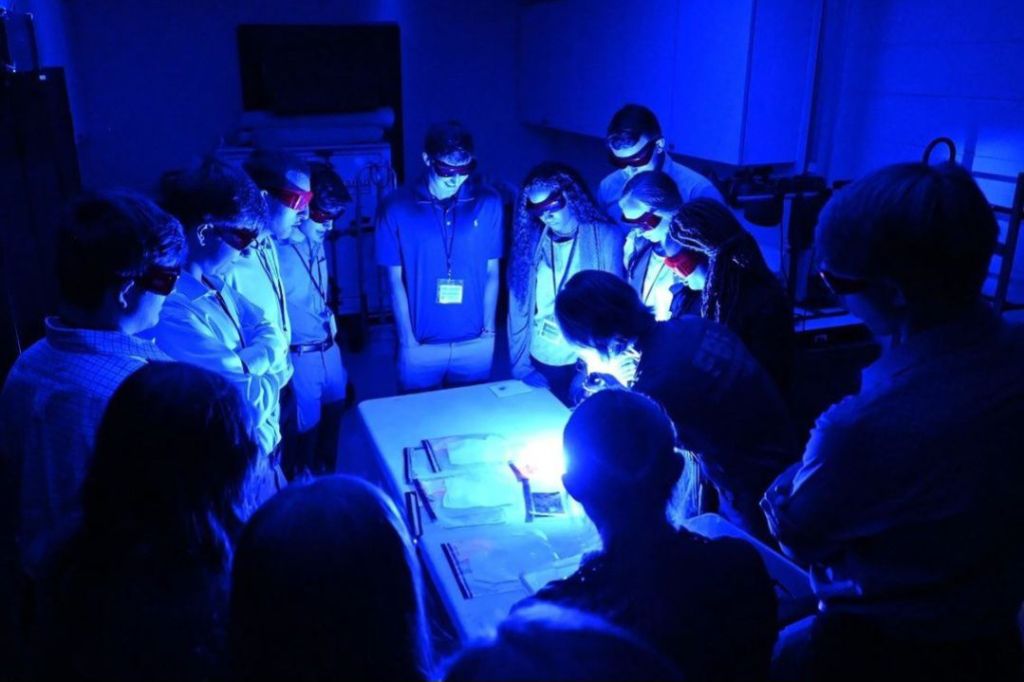
The Winchester Mystery House

The Winchester Mystery House is one of the most beautiful aristocratic residences in America. It is famous for its excellent architecture and its extravagant owner, Sarah L. Winchester. The palace complex is surrounded by a 150-year-old picturesque Victorian park. The mansion itself is older than the landscaping, as the original 18-room farmhouse was engulfed by this labyrinth in the mid 1800s.

Please come and enjoy a delicious meal in Sarah’s Café, stroll along the paths of the beautiful Victorian gardens, and wonder through the miles of hallways in the World’s most mysterious mansion. For further information about tours, including group tours, weddings, school events, birthday party packages, facility rentals, and special events please visit the website: https://winchestermysteryhouse.com/
Please visit the online giftshop, and purchase a gift for friends and relatives as well as a special memento of The Winchester Mystery House. A variety of souvenirs and gifts are available to purchase. https://shopwinchestermysteryhouse.com/



The Prince with the Golden Apples

Democrats know how to create the impression that they alone are the protectors of peace. In this way, acting very circumspectly but never losing sight of the goal, they conquer one position after another, at one time by methods of quiet intimidation and at another time by sheer daylight robbery. These tactics are based on an accurate estimation of human frailties and must lead to success, with almost mathematical certainty. Bidenomics, therefore, knows a lot about math. They are cold and calculating and know how to properly manipulate people into believing their lies because they have calculated on the psychological effect. If it does not have to encounter the same kind of terror in a stronger form, intimidation in workshops and in factories, in assembly halls and at mass demonstrations, will always meet with success. Then, of course, Democrats will raise a horrified outcry, yelling blue murder and appealing to the authority of the State, which they have just repudiated. In doing this, their aim generally is to add the general confusion, so that they may have a better opportunity of reaching their own goal unobserved. Their idea is to find among the higher government officials some bovine creature who, in the unenlightened hope that he may win the good graces of these awe-inspiring opponents so that they may remember him in case of future eventualities, will help them now to break all those who may oppose this World pest. #RandolphHarris 1 of 21

The impression which such successful tactics make on the minds of the broad masses, whether they be adherents or opponents, can be estimated only by one who knows the popular mind, not from books but from practical life. For the successes which are this obtained are taken by the adherents of the Democrats as a triumphant symbol of the righteousness of their own cause; on the other hand, the beaten opponent very often loses faith in the effectiveness of any further resistance. The more I understand the methods of physical intimidation that are being employed, the more sympathy I have for the multitude that has succumbed to it. This experience should allow all who are awake to be enlightened and enable them to distinguish between the false leaders and the victims who have been lead astray. We must look upon the latter simply as victims. If hardworking people are supporting the Democratic party, it is because those decent people do not or cannot grasp the downright infamy of the doctrine taught by the communist agitators. The day is coming when Bidenomics cause great poverty that will gain the upper hand and drive the working class and middle-class into the poor house. Currently, we are not seeing the full effect of the recession because the wealthy are shopping at discount stores like Walmart, and buying these expensive houses that cost millions of dollars less than what they would normally purchase. However, as their taxes increase, the recession will become more visible. #RandolphHarris 2 of 21

The taxpayer and natural resources of America are being stormed and eventually will finally surrender. This defeat will be due to the stupidity of those in power, who have opposed every demand to cut foreign aid, close the border, fortify national security, put more police on the street, send more funding to the fire departments, and invest in the American people. The short-sighted refusal to try towards improving living conditions for the American poor, refusing to improve labour conditions, and refusal to secure the southern border will lead to further exploitation of the American people so the point that no political party will ever be able to repair the damage that has resulted from policies of the Democratic party. When Democrats are asked to explain their incompetency, they instead have sowed the seeds of hatred and violence. The mental Cyclopes of our Democratic parties have done the things that would be inconceivable to anyone who has a working brain. (The Cyclops has one eye; this reference means the parities are functioning on half a brain.) Many people believe that the Democratic party should be disbanded and outlawed. Democrats know they are in danger of losing their power. The selection of Kamala as Vice President was meant as a political tool to be used with the Democratic party to help them maintain power. It was intended so that President Biden could distance himself from the political party, and make it clear that he was a fanatic radical. If he had been anything less, his followers would have abandoned him. #RandolphHarris 3 of 21

Those who want to lock former President Trump away believe absolute suppression will somehow prevent an uprising of law and order, freedom and the Second Amendment and stop anyone from following the same plan again. Suppression is pointless. With the ability to beam information around the World in seconds, there is no such thing. To make him available and explain what is going on, God has resurrected Mr. Trump to explain what we are doing here. “Make American Great Again,” is more than just a catchy slogan. Donald Trump is tapping into the fundamental human concepts of heroism, survival, fear, being the underdog, the promise of a great future. When listening to his speeches, you will find yourself saying frequently “that is certainly true” because much of what he says is true. Some is an oversimplification of history or politics. What make Donald Trump more powerful is the knowledge he shares is real. It is not novel fantasy World or theories of a political philosopher, it is about events and feelings that exist in America, thing an entire nation is living through and suffering under. Many people forget that Donald Trump is a businessman and is used to executing his visions, and does not make empty promises. Rising over 600 feet and 68 stories over Fifth Avenue’s most desirable intersection, Trump Tower has been a staple in the New York skyline for over thirty years. Given the chance, imagine what Donald Trump could do for America. #RandolphHarris 4 of 21
People have criticized Donald Trump for his word choices. However, his words are those of a mitigator, or a poet, who is nonjudgmental and knows that inside of every human being, there is God, and therefore, the is good in all of us. This is Mr. Trump’s method and how he keeps his audience’s attention. You must remember that he is speaking to the masses, those in the public working class, those who have not been educated, those who have gone to Harvard and Princeton and own fortune 500 companies. These are the people in his organization. They come from the masses. So, just as Mr. Trump said, he uses his words specifically to these groups. He picks his style so to match his audience. It is quite inappropriate to criticize former President Trump today. These critics do not care about America or the actual ideas that Donald Trump stands for, they only want to criticize the American Dream. They dislike America and what America has done for the World and because of that, many people feel like they should dislike Donald Trump because he truly represents the America Dream. He is someone who has ascended to power and wealth without being a member of the government, or depending on the government which is what capitalism is all about. The Hottentots are afraid that if they do not dislike Donald Trump, that somehow others will see that as approval of his message, “Make America Great Again.” #RandolphHarris 5 of 21

When we uncover the Democratic ideas, we find that extremely evil intentions are present. In fact, they are openly presented, in full public view, with the boldest insolence. Democrats have wrong ideas of justice and fair play, and Republicans are trying to protect the general interests against the greed and unreason of the corrupt communistic party. For to safeguard the loyalty and confidence of the people is as much in the interests of the nation as to safeguard public health. America has been seriously menaced by dishonourable politicians who are not conscious of their duty as members of the national community. Their personal avidity or irresponsibility sows the seeds of future trouble. To eliminate the causes of such a development is an action that surely deserves well of the country. The individual America is not free at any time to escape from the consequences of the injustice which he has suffered at the hands of the Democratic party, or which he thinks he has suffered. Saying that Americans can leave the country is an argument used as a ruse to detract attention from the issue. It is, or is it not, in the interest of the nation to remove the causes of social unrest? If it is, then the fight must be carried on with the only weapons that promise success. However, the American people are not able to stand up against the might of the Democratic party; for the Democrats have put the people and the nation in so much debt that they can barely survive, and they desperate fear losing their jobs. #RandolphHarris 6 of 21

In these perilous times, it helps to remember that the gospel of Jesus Christ is also know as “gospel of peace.” Romans 10.15 reports, “And how shall they preach, except they be sent? as it is written, How beautiful are the feet of them that preach the gospel of peace, and bring glad tidings of good things!” Nevertheless, the troubles of the last days—days of wickedness, turbulence, chaos, and fear—can disrupt our sense of peace and security. As wars, financial collapses, and natural disasters surround us, it is easy to become full of fear instead of faith. The Saviour prophesied that in the last days men’s hearts would fail them because of such fear. “Men’s hearts failing them for fear, and for looking after those things which are coming on the Earth: for the powers of Heaven shall be shaken,” reports Luke 21.26. This is truly a time for the faithful in heart, not for the faint of heart. Fear, which can come upon people in difficult days, is a principal weapon in the arsenal the advisory uses to make mankind unhappy. He who fears loses strength for the combat of life in the fight against evil. Therefore, the power of the evil one always tries to generate fear in human hearts. In every age and in every era, mankind has faced fear. Democrats are great liars. They can whisper ideas into our minds that are full of doubt and fear. Darkness, confusion, doubt, and fear certainly do not come from the Lord, who is fully of light and love. Whenever darkness fills our minds, we may know that we are not possessed of the Spirit of God. When we are filled with the Spirit of God, we are filled with joy, with peace and with happiness no matter what our circumstances may be; for it is a spirit of cheerfulness and of happiness. #RandolphHarris 7 of 21

Remember, our Heavenly Father is the epitome of faith, hope, charity, optimism, and kindness. “For God hath not given us the spirit of fear; but of power, and of love, and of a sound mind. Fear comes not of God, but rather from the adversary. The Lord has given us several key doctrines to combat the fears we face. These doctrines become weapons in our arsenal to fight against fear and the author of fear. These key doctrines are faith, hope, and charity. Faith in the Lord Jesus Christ is the first principle of the gospel. Faith is power; faith is strength. Faith is a reward for personal righteousness. The greater the measure of obedience to God’s laws, the greater will be the endowment of faith. “So, then faith cometh by hearing, and hearing by the word of God,” reports Romans 10.17. Therefore, if we want to increase our faith, we must read the scriptures, study the teachings of our latter-day apostles and prophets, and follow the direction of the Holy Spirit in our lives. Faith is also a decision. If we want to be immersed and saturated in faith, then we must choose to believe; we must choose to exercise faith. We must supplant our fears with faith. Thinking of the Saviour and remembering Him helps to strength our faith and combat fear. “Look unto me in every thought; doubt not, fear,” reports Doctrine and Covenants 6.36. The Saviour taught also, “And if ye do always remember me, ye shall have my Spirit to be with you,” reports 3 Nephi 18.7, 11. With His Spirit constantly with us, we will have the ability to stay focused, brush off fearful thoughts and worries, and see the World the way Christ would see it. #RandolphHarris 8 of 21

To have faith means to trust in God and believe in His promises to us. There will be nothing in this World that can defeat us. Fear not. Be of good cheery. The future is as bright as your faith. Learn to choose faith over fear. The philosophical attitude is a curious and paradoxical one precisely because it is a complete one. It approaches the human situation with a mentality as practical as cold-blooded as an engineer’s, but steers its movement by a sensitivity to ideals as delicate as an artist’s. It always considers the immediate, attainable objectives, but is not the less interested in distant, unrealizable ones. Disinterested action does not mean renouncing all work that brings financial reward. How then could one earn a livelihood? It does not mean ascetic renunciation and monastic flight from personal responsibilities. The philosophic attitude is that a man shall perform his full duty to the World, but this will be done in such a way that it brings injury to none. Truth, honesty, and honour will not be sacrificed for money. Time, energy, capacity, and money will be used wisely in the best interests of mankind, and above all the philosopher will pray constantly that the Overself will accept him as a dedicated instrument of service. And it surely will. He will rise above personal emotion into perfect serenity rather than fall below it into dull apathy. To be pure in heart means not only to be separated from terrestrial tendencies, not only from egoistic impulses, but also to be detached from everything and everyone. #RandolphHarris 9 of 21
Thus, we see that the word “pure” is not as simple in connotation as it is short in length, and purity is harder to achieve than newly converted religious enthusiast believes. The act of renunciation is always first, and only sometimes last, an inward one. It is done by thoroughly understanding that the object renounced is, after all, only like a picture in a dream and that, again like a dream, it is ephemeral. Its illusoriness and transitoriness must be not only mentally perceived but also emotionally taken to heart. If we give up our wrong belief about it, we may not have to give up the object itself. Now, this admonition cannot be made to stop with visible things only. To be honestly applied, it must be applied to visible persons also. No matter how fondly we love somebody, we must not flinch from seeing the metaphysical truth about him nor from accepting the consequences of such perception. How can be renounce the attachments to everything and everyone and yet enjoy life, fulfil obligations, or remain in the World? How do this without flight to a monastery? How remain an affectionate husband, a devoted father? In the case of things, the answer has been given earlier. In the case of persons, the answer ought now to be given. We renounce the “materiality” of the loved one and with it the clinging to her material image, her physical possession, her personal ego. We hold on to the concept of her “spirituality,” her essence, her real being. We then know that this true self of hers cannot be separated from our own; the illusory relationship is replaced by a real one, the perishable pseudo-love by an undying essential one. #RandolphHarris 10 of 21

He may try to keep the illusion that he is a well-fitting part of these surroundings called civilization, a member of the society into which he was born, but in the deepest layer of his heart the reality will deny it. He no longer belongs to a race caught up in appearances, ensnared and hypnotized by them to the point of self-destruction. It may take some time to get familiar with this impersonality of attitude, this detachment of heart, before he can realize how fine it is, how precious its worth and rewarding in result. The first impression may be cold and frightening. The last will be calm and soothing. If indifference and detachment mean that the man has ceases to care, then he has ceased to understand philosophy. Deep within his heart we will strive to depersonalize his relations with his wife, his children, his family, and even his friends. However, in the domain of action we should find him the best of husbands, the most loving of fathers, and most faithful of friends. In the script knows as “Frigid Woman,” or “Waiting for Rigor Mortis” (WRM), the mother keeps telling her daughter that men are beasts, but it is the wife’s duty to submit to their bestiality. If the mother pushes hard enough, the girl may even get the idea that she will die is she has pleasures of the flesh. Usually such mothers are great snobs, and they offer a release of an “antiscript” that will lift the curse. If the daughter marries an especially important person, such as the Prince with the Golden Apples, it is all right for the daughter to have pleasures of the flesh. However, failing that, she tells her erroneously, “all your troubles will be over when you reach a certain age, because then you will not be in danger of feeling amatory anymore.” #RandolphHarris 11 of 21

Now it already appears as though we have three illusions: Orgathanatos, or the fatal pleasures of the flesh; the Prince with the Golden Apples; and Blessed Relief, or the purifying menopause. However, none of these is the real script illusion. The girl has tested Orgathanatos by pleasing herself, and knows it is not necessarily fatal. The Prince with the Golden Apples is not an illusion, because it is just possible that she might find such a man, just as she might win the German Sweepstakes or get four aces in a poker game; both things are unlikely, but not mythical; they do happen. And Blessed Relief is not something her Child really wants. To find the script illusion, we need the fairy tale which corresponds to WRM. Dr. Freud called dreams “the royal road to the unconscious.” Recent research has shown that everyone dreams several times during each night. When people say they never dream, the probability is that they do not recall their dreams. Only when they have been especially intense or dramatic and when we have some special interest in recalling them is when we tend to recall dreams. Busy, extraverted people seldom pay attention to their dreams and would find it a waste of time to write them down. Yet, increasingly, it is being found that recording one’s dreams and thinking about them, seeking hints of new possibilities for personal growth, is an enterprise rewarded by new insight. #RandolphHarris 12 of 21

Dreaming is a way of being aware of the World, although, paradoxically enough, it is a kind of consciousness that “happens” when we are asleep, when our waking consciousness is suppressed. Laing believes that the dreaming consciousness is active, as a kind of underground or background to our waking consciousness. He calls this underground mode of experiencing fantasy. Fantasy is a form of perception, a way to perceive the World by noting the effect one’s situation is having upon one’s body. Our vocabulary for describing bodily states is scant, and so we employ metaphours, symbols, and analogies to describe the way our situation and the people in it are affecting us. Thus, when a person says, “I have just been stabbed in the back,” she is speaking metaphourically, but she is also talking about a real experience. If one says of another, “You turn me on,” he may be speaking of an enlivening effect that the other person is inducing. These somatic metaphours are effects to describe one’s real condition as a human being. They are attempts to assess whether they are devitalizing and debilitating. Fantasy and dreaming are, in a sense, guardians of one’s existence, because the content of dreams and of somatic experiencing is always found to be related to one’s survival, well-being, and growth. Gestalt therapists and followers of Jung and Dr. Freud have been able to help persons overcome impasses in their lives through serious consideration of dreams. #RandolphHarris 13 of 21

Careful attention to the way one’s body feels as one lives life can also be useful for growth and wellbeing. One’s body can function as did the canaries that miners used to take into the depths of a mine, where oxygen depletion was a grave danger to life. If the canary stopped singing, the miners would know that the air was becoming unfit for humans, and they would improve ventilation or get out. Vague feelings of being “shafted,” “sucked dry,” “turned on,” “ripped apart,” tell a person something about his or her situation that should be explored by more direct perception. Fantasy, that waking dream that lurks behind our ordinary consciousness as vague feelings metaphorically descried, is a way of knowing. So is dreaming. Resistances provoked by outside factors are particularly common in self-analysis, for reasons that were mentioned above. A person who is in the grip of neurotic trends—or for that matter almost any person—is quite likely to feel offended or unfairly dealt with by a special individual, or by life in general, and to take at face value his reaction of hurt or resentment. In situations it takes a considerable degree of clarity to distinguish between a real and an imagined offense. And even if the offense is real, it need not necessarily produce such reactions: if he is not himself vulnerable to what others may do to him, there are many offenses to which he may respond with pity or disapproval of the offender, perhaps with open battle, rather than with hurt or resentment. #RandolphHarris 14 of 21

It is much easier merely to feel a right to be angry than to examine exactly what vulnerable spot in himself has been hit. However, even if there is no doubt that the other has been cruel, unfair, or inconsiderate, for his own interests this is the way he should proceed. Let us assume that a wife is deeply disturbed at learning that her husband has had a transient affair with another woman. Even months later she cannot get over it, although she knows it is a matter of the past and while the husband does everything to re-establish a good relationship. She makes herself and him miserable, and now and then goes on a spree of bitter reproaches against him. There are several reasons that might explain why she feels and acts in this way, quite apart from a genuine hurt about the breach of confidence. It may have hurt her pride that the husband could be attached to anyone but herself. It may be intolerable to her that the husband could slip out from her control and domination. The incident may have touched off a dread of desertion, as it would in a person like Clare. She may be discontented with the marriage for reasons of which she is not aware, and she may use this conspicuous occurrence as an excuse for expressing all her repressed grievances, thus engaging merely in an unconscious campaign of revenge. She may have felt attracted toward another man and resent the fact that her husband indulged in a freedom that she had not allowed herself. #RandolphHarris 15 of 21

If she examined such possibilities, she might not only improve the situation considerably but also gain a much clearer knowledge of herself. Neither result is possible, however, if she merely insists upon her right to be angry. If she had repressed her anger, though in that case it would be much more difficult to detect her resistance toward self-examination, the situation would be essentially the same. A remark may be in place about the spirit of tackling resistance. As if it indicated an irritating stupidity or obstinacy, we are easily tempted to be annoyed at ourselves for having a resistance. Such an attitude is understandable because it is annoying or even exasperating to encounter self-made obstacles on our way to a goal that we desire in our best interests. Nevertheless, there is no justification or even any meaning in a person scolding himself for his resistances. He is not to blame for the development of the forces behind them, and, besides, the neurotic trends that they try to protect have given him a means of dealing with life when all other means have failed. It is more sensible for him to regard the opposing forces as given factors. I am almost inclined to say that he should respect them as a part of himself—respect them not in the sense of giving them approval and indulgence but in the sense of acknowledging them as organic developments. Such an attitude will not only be more just to himself but will also give him a much better basis for dealing with resistances. #RandolphHarris 16 of 21

If he approached the resistances with a hostile determination to crush them, he would hardly have the patience and willingness necessary for their understanding. If resistances are tackled in the way and in the spirit indicated, there is a good chance that they are no stronger than one’s constructive will. Those that are stronger present difficulties that can at best be overcome only with expert help. However, what really makes my stomach turn over is this picture of love, love, love, and I love everything you do and never say no. That is what the words say to me. It may be wide of the mark to the man who wrote them. When my child bites another child, I do not love that. However, when he explains, “He tore my lei, and I bit him, and he bit me, and (with angry tears) we each had only one bite before the teacher made us stop!” I have a deep feeling for him, and love him. When I discover that my child has forged a letter from her father and presented it at school, I do not love that. However, I recognize that she is in a steam-roller situation and that handling it in this way is necessary, and I love her. My love for my children then is agape—not “adorning,” but very much being with. There is no “pride” (although at other times I am guilty of this). There is humility and humanness. There is a connection between “thought” and “concern.” Both psychology and sociology have as their object man. I can get to know a great deal about man by observing him like any other object. I—the obserber—stand against my “ob-ject” (“ob-ject” and “objection” have the same root; in German, Gegenstand = “counterstand”) to oberse it, describe it, measure it, weigh it—yet I do not understand that which is alive if it remains an “object.” #RandolphHarris 17 of 21
I understand man only in the situation of being related to him, when he ceases to be a split-off object and becomes part of me or, to be still more correct, when he becomes “me,” yet remains also “not-me.” If I remain a distant observer I see only manifest behaviour, and if this is all I want to know, I can be satisfied with being an observer. However, in this position the whole of the other person, his full reality, escapes me. I have described him from this and the other aspect—yet I have never met him. Only if I am open to him and respond to him, and that is, precisely, if I am related to him, do I see my fellow man; and to see him is to know him. If I am filled with myself, how can I see the other man? To be filled with oneself means to be filled with one’s own image, with one’s greed, or with one’s anxiety. However, it does not mean “being oneself.” Indeed, I need to be myself to see the other. How could I understand his fear, his sadness, his aloneness, his hope, his love—unless I felt my own fear, sadness, aloneness, hope, or love? If I cannot mobilize my own human experience, mobilize it and engage myself with my fellow man, I might come to know a great deal about him, but I shall never know him. To be open is the condition to enable me to become filled with him, to become soaked with him, as it were; but I need to be I, otherwise how could I be open? I need to be myself, that is, my own authentic, unique self, in order to throw out myself, in order to transcend the illusion of the reality of this unique self. #RandolphHarris 18 of 21

As long as I have not established my own identity, as long as I have not fully emerged from the womb, from the family, from the ties of race and nation—in other words, as long as I have not fully become an individual, a free man, I cannot throw away this individual and thus experience that I am nothing but the drop of water on the crest of the wave, a separate entity for a split of a second. Justice itself, which has been in a state of pilgrimage and crucifixion and now is being slowly liberated from the grip of social and political demonologies in the East as well as in the West, begins to question its own premises. The modern revolutionary movements which have challenges the sacred institutions of society by protecting social injustice in the name of social justice are here examined and re-evaluated. In the light of this, we have no choice but to admit that the un-freedom against which freedom is measured must be retained with it, namely, that the aspect of truth out of which the night view appears to emerge, the darkness of our time, is as little abandonable as is man’s subjective advance. Thus the two sources of man’s consciousness are inseparable, not as dead but as living and complementary, an aspect of the “principle of complementarity” through which Niels Bohr has sought to unite the quantum and the wave, both of which constitute the very fabric of life’s radiant energy. #RandolphHarris 19 of 21

The mission of the Sacramento Fire Department is to provide a safe, professional, and courteous team that strives to exceed the community’s expectations and their organization. Their focus is on preserving the past and protecting the future of those they serve. “I went to X Truck on X Street, which was the second busiest in the city. I spent twenty years up there, and I loved it. That’s one of the reasons I didn’t make lieutenant in that time. I fell in love with the company and the men I worked with. They were great, and we had plenty of action, we were involved in all kinds of fires and rescues. The company had a good name. When you said X Truck, people looked up. I really enjoyed that. Many a time I took the fire department over other personal things that came up. Whether it was a trip with the family or whatever, if the fire department has something to do, I would give up the trip to participate with the department. When it was time for me to go to the National Fire Academy at Emmitsburg, if the family had something planned for that weekend, I tried to talk myself and the family out of it so I could to Emmitsburg. There’s nothing I really dislike about my job, maybe some of the budgetary problems, that’s all. I did shift work all these years, and I like that. I like doing day work and night work, back and forth. Firemen don’t like to show emotion. Rather than show any emotion, you shove everything off with a little humor. Even in tragic situations, in order to protect yourself you kind of bring some humor out. Not that its’ funny, not by a long shot. But you can always find a little bit of humor in it. I could that out when I got injured a couple of years ago. It’s just to protect the way you think we are supposed to be, I guess. #RandolphHarris 20 of 21

“We’re getting more EMS calls these days than fire calls. You get a lot of silly calls with those. I remember one of the calls we had, and this was an emergency call, we brought in a medic unit and an engine company, and we have six guys pulling up with their sirens blowing. Here is a guy standing there, and he’s been drinking, and he’s seeing pink elephants. It’s ridiculous that we are even running on these types of calls. There has to be some way to screen the calls, cut them down or educate the people. That’s what I think.” The Sacramento Fire Department is committed to protecting the residents and businesses of the community. Providing aid promptly and efficiently, and enduring the safety and well-being of everyone in Sacramento is what they strive to achieve. Specifically, the desire to prevent the loss of life and property by responding to emergencies in a professional manner. Parents, please be sure to raise your children to love America and make them aware that being patriotic is our duty. Also, it is a good idea to buy American made cars and other products to endure the longevity of this great nation. We also want to respect law and order, love God and Jesus Christ and treat every human being with care and compassion. You can also help save lives and property and protect the future of our community by donating to the Sacramento Fire Department. I pledge allegiance to the flag of the United States of America, and to the Republic for which it stands, one Nation, under God, Indivisible with Liberty and Justice for All! Come, O Sabbath-day, and bring peace and healing on thy wing; and to every troubled breast speak of the divine behest: Thou shalt rest. #RandolphHarris 21 of 21
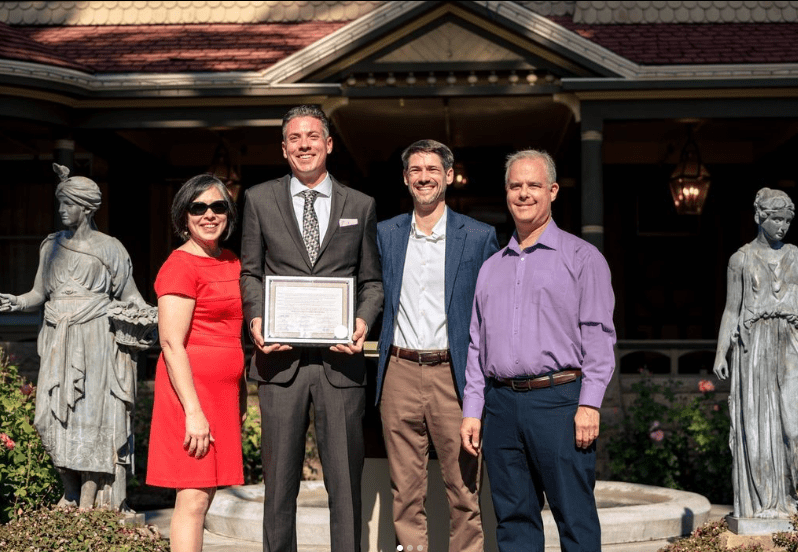
The Winchester Mystery House
Please come and enjoy a delicious meal in Sarah’s Café, stroll along the paths of the beautiful Victorian gardens, and wonder through the miles of hallways in the World’s most mysterious mansion. For further information about tours, including group tours, weddings, school events, birthday party packages, facility rentals, and special events please visit the website: https://winchestermysteryhouse.com/
Please visit the online giftshop, and purchase a gift for friends and relatives as well as a special memento of The Winchester Mystery House. A variety of souvenirs and gifts are available to purchase. https://shopwinchestermysteryhouse.com/


As Daily Necessities Become Harder to Afford

Day after day, the American people are witnesses to the phenomenon of spreading poison among the people through the instrumentality of the Democratic party and gutter journalism; and yet they are astonished at the deplorable “moral standards” and “national indifference” of the masses. Many people can only fight for something that they love. They can love only what they respect. And to respect a thing, they must have some knowledge of it and feel that it is something that is protecting them. The social problem is that crime is no longer illegal under the rule of the Democratic party, and several honest Americans believe that they are being penalized through unfair taxes and hyperinflation. When they come home in the evenings for working so hard to pay for handouts that people who are committing crimes unlawfully receive, they are dead tired. Democrats are exploiting the working masses. There is nothing that they do not drag in the mud. During these days of mental anguish and deep meditation, the American people see before their mind the ever-increasing and menacing army of people who can no longer be reckoned as belonging to their own nation. We gaze at the leaders of the Democratic party, watching that enormous human dragon slowly uncoiling itself before the World. This has caused many to feel dismayed and depressed. #RandolphHarris 1 of 25

As daily necessities become harder to afford, Americans have amassed $1.14 trillion in credit card debt. That is $27 billion more than credit card debt they carried in the second quarter of 2024. The high tally comes as concerns of an economic recession triggered by modestly rising unemployment, and as soaring costs in food, housing and automobile rates continue to drain household budgets. Americans have increasingly been relying on credit cards to pay the bill, with 60 percent of Americans using credit cards to buy groceries in 2023. As more people are carrying significantly more debt, extended periods of debt are causing more Americans to fall behind on their credit card bills. Approximately 7.18 percent of credit card users have fallen into delinquency in the second quarter, up from 5 percent in the previous quarter. American paid down some of their credit card debt in 2020 using pandemic-related federal stimulus funds. However, beginning in 2021, credit card balances drastically increased by 48 percent, caused by high inflation and high interest rates. Debt owned on mortgages and automobile loans also increased by $77 billion and $10 billion, respectively. Total consumer debt has grown to $18 trillion. And the average rate on a credit card is nearly 25 percent. #RandolphHarris 2 of 25

Last week’s jobless rate increased worries that a recession is here. The numbers included an increase of 114,000 in non-farm payrolls during July, down from 179,000 in June and far below analysts’ forecast of 175,000 gain. And the unemployment rate rose to 4.3 percent, the highest since October 2021. Many have also stated that housing costs are so high because there is a shortage in the supply of houses. However, that is not so. During 2000 and 2020, America had a surplus of 3.3 million homes. This defies conventional wisdom that the nation is facing a housing shortage. Builders over built housing units and in 2024, they are still trying to absorb that enormous over build. There is a shortage of housing that low- and very low-income families can afford. In most cities and small towns, there is an average shortage of 8,000 housing units that low- and very low-income families can afford. For those households, which require government assistance to find housing, the absolute highest they can afford to pay for rent is $550. Building new homes and apartments cannot address the shortage for the absolute poorest. No private developer can build a unit that [$550] price and survive. Just the property taxes, insurance, and utility costs exceed that number. #RandolphHarris 3 of 25

Many people do not want low-income housing in their communities either. Low-income housing often increases crime rates in good areas as it attracts seedy individuals. Violent crime wreaks a terrible impact not only on individual victims, their families, and friends but also on nearby residents and the fabric of their neighbourhoods. Exposure to violent crime can damage people’s healthy and development, and violence can push communities into vicious circles of decay. However, policing hot spots can be effective. Nonetheless, the 20,000,000 illegal immigrants that President Biden and Vice President Kamla have packed into the cities is drastically increasing costs and putting a burden on the poor and taxpayers. The southern border crisis is costing American taxpayers around $451 billion per year for services provided to a record number of illegal aliens under the Biden administration. When higher taxes are costs are preventing private industry from building affordable housing, Vice President Kalama has expressed support for allowing immigrants residing in American to obtain public health insurance, regardless of legal status. Tax increases and handouts are hurting everyone. This struggle against their own kind, their own nest, their own homeland is as senseless as it is incomprehensible. It is unnatural and we need another political party to represent America and the American people. #RandolphHarris 4 of 25

The Czarist Democratic administration is corrupt and largely incompetent and, in addition to all this, the Democratic party and the riots of 2020 have bled the American people without bringing them victory. The economic conditions are not able to sustain a capitalistic society. To turn a disciplined working population into a peasant population, and to force the population to accept the higher taxes, illegal immigration and communism, the rapid accumulation of capital has been used to force people to take government subsidies by putting the nation on house arrest and forcing them not to go to work and to accept vaccines and through the threat of terror. This was due to the Democratic party’s mad suspiciousness and their unlimited desire for personal power—a terror which went far beyond what would have been necessary to maintain capitalism, and which, in fact, in many ways weakened their economy and military position. Because the Democratic party is also pushing to take away the second amendment and because of the crime waves caused by illegal immigration and not enforcing the laws, to tend this terror, many people are advocating a police state. While this state does not permit the expression of opinions critical of the system, and even less of corresponding political activity, it is believed that it will free the average citizen from the fright of being a victim of crime in the night and early-morning hours. #RandolphHarris 5 of 25

The degradation of the Biden administration, finding its completion when President Biden was ruled incompetent to run for reelection in the summer of 2024 and replacing him with the inexperienced Vice president Kamala, has been carried out by the display of confusing phraseology about liberty and human dignity, all promulgated with an air of profound ignorance and disturbing promises; a carelessly-woven glitter of words to dazzle and betwixt the public. The daily Press has inoculated this new doctrine of American degradation in the most brutal fashion. No means have been too base, provided they could be exploited in this campaign of slander. These journalists are virtuous in the art of twisting facts and presenting them in a deceptive form. The theoretical literature was intended for the simpletons of the soi-distant intellectuals belonging to the middle and, naturally, the upper classes. The TV news media propaganda is intended for the masses. However, probing into books and newspapers and studying the doctrines of Democracy should reawaken one’s love for their own people and country. Thus, what at first seems an impassable chasm will become the occasion of a closer affection. Once one understands the working of the colossal system for poisoning the popular mind, only a fool can blame the victims. The American people must learn to become more independent, and this will allow them to understand the inner cause of the success achieved by the American Dream gospel. #RandolphHarris 6 of 25
One will better come to understand why the Democratic party wants to burden taxpayers with debt and make homeowner ship and rent unaffordable. In clear light of the brutal reality, one will see inevitable consequences of high taxes, hyperinflation, and government subsidies. America is headed towards a communistic system under the current administration. Now, the American people’s sensibilities are not so much under the sway of abstract reasoning but are subject to the influence of a vague emotional longing for strength that completes their being, and they would rather bow to propaganda than to see the truth. The masses of people prefer the dictator to being their own leader and earning the American Dream through hard work and determination. They have extraordinarily little idea of how to be strong capitalists and thus they are prone to abandon their freedom and autonomy. They feel very little shame at being terrorized intellectually and they are scarcely conscious of the fact that their freedom as human beings are impudently abused; and thus they have not the slightest suspicion of the intrinsic fallacy of the Democratic doctrine. They do not even see the ruthless force and brutality of its determined utterances, to which they always submit. #RandolphHarris 7 of 25

The American citizen knows what he can do and what he cannot do and, provided he moves within these limits, he need not be afraid. The Democratic party sill uses revolutionary and socialist ideas voiced by Marx, Engles, and Lenin as ideologies which give a sense of meaning to the masses. Yet they are unaware that the socialist movements always end on the tragic note of failure. The Democrats are carrying on a campaign of mental terrorism against Americans, who are neither morally nor spiritually equipped to withstand such attacks. The tactics of the Democratic party consists in opening, at a given signal, a veritable drumfire of lies and calumnies against the man whom they believe to be the most redoubtable of their adversaries, until the nerves of the latter give way, and they sacrifice the man who was attacked, simply in the hope of being allowed to live in peace. However, the hope will prove always to be a foolish one, for they will never be left in peace. The same tactics will be repeated again and again, until fear of these mad dogs exercises through suggestion, a paralyzing effect on their victims. Through its own experience The Democratic party has learned the value of strength, and for that reason it attacks mostly those in whom it scents stuff of more stalwart kind, which is indeed an exceedingly rare possession. #RandolphHarris 8 of 25

However, the Lord can reassure that He is near and that He will lead us through the darkest days of our lives. Life is not always easy to live, but the opportunity to do so is a blessing beyond comprehension. In the process of living we will face struggles, many of which will cause us to suffer and to experience pain. Many people will suffer in personal struggles, while others will suffer as they watch their loved ones in pain. To gain strength in our struggles, we must have an optimistic perspective of the principles in the plan of salvation. We must realize that we have a personal Saviour whom we can trust and turn to in our times of need. We must also learn and live the principles the Lord has given to receive the strength needed during our struggles. “And there stood one among them that was like unto God, and He said unto those who were with Him: We will go down, for there is space there, and we will take of these materials, and we will make an Earth whereon these may dwell,” reports Abraham 3.24. This Earth is the place to prove ourselves worthy and to prepare to return to the presence of the Lord. “And we will prove them herewith, to see if they will do all things whatsoever the Lord their God shall command them,” reports Abraham 3.25. The Lord explains the purpose for which we must be tested during this Earthly experience. “My people must be tried in all things, that they may be prepared to receive the glory that I have for them, even the glory of Zion; and that that will not bear chastisement is not worthy of my kingdom,” report Doctrine and Covenants 136.31. #RandolphHarris 9 of 25
Part of the plan is that there is an opposition in all things. We are given the agency to choose between these opposites in the proving process. “For it must needs be, that there is an opposition in all things. If not so, my firstborn in the wilderness, righteousness could not be brought to pass, neither wickedness, neither holiness nor misery, neither good nor bad. Wherefore, all things must needs be a compound in one; wherefore, if it should be one body it must needs remain as dead, having no life neither death, nor corruption nor incorruption, happiness nor misery, neither sense nor insensibility,” reports 2 Nephi 2.11. In our pre-Earth life, we understood and sustained the plan of salvation with the principles of opposition and agency. We knew we would have experience in this life that would cause us to struggle and sometimes to suffer. Some of our struggles involve making decision, while others are a result of the decisions we have made. Some of our struggles result from choices others make that affect our lives. We cannot always control everything that happens to us in this life, but we can control how we respond. Many struggles come as problems and pressures that sometimes cause pain. Others come as temptations, trials, and tribulations. Yet struggles are part of the sacred sanctification process. #RandolphHarris 10 of 25

There are no soft or slothful ways to become sanctified to the point that we are prepared to live in the presence of the Saviour. And there can be blessings in the burdens we bear. As a result of these struggles, our souls are stretched, and our spirits are strengthened. Our character becomes more Christlike as we are tried and tested. Even though these experiences may cause pain, suffering, and sorrow, we have absolute assurance. If it be suffered in resignation, and if it be met with patience, no pain suffered by man or woman upon the Earth will be without its compensating effects. “And if thou shouldst be cast into the pit, or into the hands of murderers, and the sentence of death passed upon thee; if thou because into the deep; if the billowing surge conspire against thee; if fierce winds become thing enemy; if the Heavens gather darkness, and all the elements combine to hedge up the way; and above all, if the very jaws of Hell shall gape open the mouth wide after thee, know thou, my son, that all these things shall give thee experience, and shall be for thy good,” reports Doctrine and Covenants 122.7. People respond to struggles in different ways. Some feel defeated and beaten down by the burdens they are called to bear. Many begin to blame others for their difficulties and defeats, and they fail to follow the counsel of the Lord. It is a natural tendency to seek the easy road on life’s journey and to become discouraged, filled with doubt, and even depressed when facing life’s struggles. #RandolphHarris 11 of 25

If we follow the revealed eternal principles, we will gain strength during our struggles and will be blessed as we bear our burdens, deal with difficulties, and overcome obstacles in our lives. If we are to gain the strength that we need, we must come to know the Saviour and follow His counsel. “But behold, verily, verily, I say unto you that mine eyes are upon you. I am in your midst as ye cannot see me,” reports Doctrine and Covenants 38.7. When we imagine, we are envisioning possible ways for the World to be. Imagination is play with the possibilities of transforming the World from the way it is now perceived to be to some new form. Of course, it takes action to transform an image of a possible self in a possible World into an actuality that can be perceived by others and by oneself. Imagination is a way of “traveling,” of overcoming one’s present situation, to envision possibilities that might make life more livable, more fulfilling. The free play of imagination, then, is the way in which we experience new possibilities for the World. It is one of our most precious gifts of evolution, because it is only through such vision that we can save ourselves when our situation has become unlivable. Anything that diminishes or makes banal our imagination chains us more tightly to a here and now that may not be viable. #RandolphHarris 12 of 25

Every compelling goal and project, whether projected for five minutes or five years into the future, rests upon our capacity to imagine another way for the World to be, with us in it. Such a vision of transitional utopia may function as an irresistible temptation or invitation that the person may accept, showing this acceptance through action. Just as imagination can enliven us, ordering and directing our life, so it can demoralize us, even kill us. If one imagines oneself to be weak or helpless, it is but a short step from imagination to belief that such is the case. Healthy personality calls for the ability to discriminate among modes of experiencing. Under conditions of intense need or emotion, a person may confuse imagination with perception and with confirmed truth. There is another aspect of imagining, or literally “image-ing,” that when misunderstood can affect a person’s body and action in deleterious ways but that, appreciated, can serve the person’s well-being and growth. When a person engages in imagining, it is done not just with the mind, but with the entire body. Indeed, the art of actin on the stage is a deliberate, imaginative imitation of some other person. One “becomes” the imagined person, acting and experiencing the World as the role requires. #RandolphHarris 13 of 25

Hypnotists tell subjects that they are tired, or strong, or that they can remember the past so well that they will become three years old again, and the compliant subject “yield.” They fulfill the hypnotists’ suggestions by being as they imagine a tired or strong person is, and they act as they imagine or remember what it was like to by three years old. One’s body image is the way in which one chronically imagines the body to be, whether weak or strong, energetic, or exhausted, vulnerable to disease or resistant. Fisher and Cleveland were able to show that an image of one’s own body as only weakly “bounded” was related to increased susceptibility to diseases and malfunction of the internal organs, such as stomach ulcers; an image of one’s body as rigidly armored against the World—excessively so—was related to diseases of the skin, bones, and muscles, for example, arthritis. I have been so impressed by the influence of imagination upon one’s body and one’s capacities to act that I say to my patients, “Be careful how you imagine yourself to be, because you might become that way.” So-called psychocybernetic and optimistic thinking work in this way, as a kind of self-hypnosis or intense argument with oneself, by saying, “I can do this, I can survive, I can succeed,” and believing the statement. This self-[persuasion can affect a person in beneficial ways, just as imagining oneself as dead, or as a failure, can bring the image of doom to reality. #RandolphHarris 14 of 25

When a person becomes aware of an existing blockage, he should drop whatever analytical pursuits he is engaged in and take the resistance as the most urgent problem to be tacked. It is as useless to force himself to go one against the resistance as it would be to try again and again to light an electric bulb that does not burn; one must see where the electric current is blocked, whether in the bulb, in the fixture, in the cord, in the switch. The technique of tackling a resistance is to try to associate it. However, in all resistances occurring during analytical work it is helpful, before associating, to go over the notes that precede the blockage, because there is a fair chance that the clue for it lies in an issue at least touched upon, and that while glancing over the notes the point of departure may become evident. And sometimes a person will not be capable of going after a resistance immediately: he may be too reluctant or feel too uneasy to do so. It is advisable then, instead of forcing himself, merely to make a note that at this or that point he suddenly felt uneasy or tired, and to resume work the next day when he may have a fresh perspective on matters. In advocating that he “associate to a resistance” I mean that he should consider the manifestation of the blockage and let his thoughts run freely along that line. Thus, if he has noticed that no matter what problems are concerned his interpretations always make him come out on top, he should try to take that finding as a point of departure for further associations. #RandolphHarris 15 of 25
If he has become discouraged at a finding he should remember that the latter may have touched upon the factors that he is not yet able or willing to change, and try to associate with that possibility in mind. If his difficulty is in starting to analyze, though he feels a need for self-examination, he should remind himself that a previous piece of analysis or some outside occurrence may have produced a blockage. One object of script analysis is to fit the patient’s life plan into the grand historical psychology of the whole human race, a psychology which apparently has changed but little from cave days, through the early farming and ranching settlements and the great totalitarian governments of the Middle East, up to the present time. Dr. Freud, Jung, and their followers have demonstrated irrefutably that the logic, the heroes, and the deeds of myth survive into modern times…The latest incarnation of Oedipus, the continued romance of Beauty and the Beast, stand this afternoon on the corner of Forty-Second Street and Fifth Avenue, waiting for the traffic light to change. While the hero of the myth achieves a World-historical triumph, the hero of the fairy tale achieves merely a small domestic victory. And patients are patients, we may add, because they cannot achieve the victories they aim for and still survive. Hence, they come to the doctor, “the knower of all the secret ways and words of potency. His role is precisely that of the Wise Old Man of the myths and fairy tales whose words assist the hero through the trials and terrors of the weird adventure.” #RandolphHarris 16 of 25

The way the Child in the patient see it, no matter how his Adult tells the story, it is quite evident that all children, since the beginning of humanity, have had to cope with the same problems, and have had about the same weapons at their disposal. When it comes to cutting, life is the same old wine in new bottles: coconut and bamboo bottles gave way to goatskins, goatskins to pottery, pottery to glass, and glass to plastic, but the grapes have hardly changed at all, and there is the same old intoxication on top and the same old dregs at the bottom. So, there will be found little variation in the shapes of the adventures and the characters involved. Hence, if we know some of the elements of the patient’s script, we can predict with some confidence where he is heading, and head him off before he meets with misfortune or disaster. That is called preventive psychiatry, or “making progress.” Even better, we can get him to change his script or give it up altogether, which is curative psychiatry, or “getting well.” Thus, it is not a matter of doctrine or necessity to precisely find the myth or fairy tale which the patient is following; but the closer we can come, the better. Without such a historical foundation, errors are frequent. A mere episode in the patient’s life, or his favourite game, may be mistaken for the whole script; or the occurrence of a single animal symbol, such as a wolf, may lead the therapist to bark up the wrong tree. #RandolphHarris 17 of 25
Relating the patient’s life or his Child’s life plan to a coherent story which has survived for hundreds or thousands of years because of its universal appeal to the primitive layers of the human mind, at least gives a feeling of work from a solid foundation, and at best may give very precise clues as to what needs to be done to avert or change a bad ending. For example, a fairy tale may reveal elements of a script which are otherwise hard to dig up, such as the “script illusion.” The transactional analyst believes that psychiatric symptoms result from some form of self-deception. However, patients can be cured just because their lives and their disabilities are based on a figment of the imagination. The philosopher achieves what is rare—a cool mental detachment from things or persons, united with a tender feeling for them. No man can become philosophical and yet derive complete satisfaction from or attach complete importance to whatever is favourable in his external life. He sees to clearly how transient, how imperfect, and how compensated by disadvantages it all is. Indeed, he outgrows the excessive common interest in and the excessive common preoccupation with the ebb and flow of external life. He finds more and more trivial what he once found—and the generality of men still find—worthy of serious attention. #RandolphHarris 18 of 25

Is it possible to be inwardly aloof from the pleasurable things of the World and yet be outwardly able to enjoy them? It is possible to love another in a human way yet retain the inner detachment requisite for resting in philosophic peace? Can we make the best of these two Worlds? Just as we can learn by practice to remain inwardly peaceful amid outward turmoil, so we can learn to remain peaceful during outward pleasure. However, this practice is hard to learn, and most beginners fail at it. For a man to train himself in emotional control over the mad loves and insane passions, the recurrent longings, and tormenting desires, is like training himself to die. Let no one underestimate this tremendous task. We plan to gain insight into the meaning of man, who not only is determined by history but who also determines history. History is to be understood as concerned not only with the life of man on this planet but as also including such cosmic influences as interpenetrate our human World. This generation is discovering that history does not conform to the social optimism of modern civilization and that the organization of human communities and the establishment of freedom and peace are not only intellectual achievements but spiritual and more achievements as well, demanding a cherishing of the wholeness of human personality, the “unmediated wholeness of feeling and thought,” and constituting a never-ending challenge to man, emerging from the abyss of meaninglessness and suffering, to be renewed and replenished in the totality of his life. #RandolphHarris 19 of 25

The Sacramento Fire Department is committed to the preservation and protection of life, property, and the environment from fire, disaster, and hazardous materials related incidents through emergency mitigation, public education, and code reinforcement. “In every fire station it’s important for everybody to be able to perform at maximum efficiency at all times. We don’t get working fires every day, though lately we’ve been very busy. With applicants of the firefighter job, we use urinalysis. I think it’s a better test than polygraph. I think a lot of people are eliminated unnecessarily because of the polygraph. I’m in favor of a good, lengthy background investigation and urinalysis. We have a lot of young guys in the department. They’re not stereotypically troublesome people. Many of them are married, so there is no drinking or drug abuse problem there. People think that firefighters have a pretty soft job. They don’t see the guys at three in the morning. They don’t see them after one of their fellow firefighters has died or when a child has died in a fire. They don’t see the look on the guys after they come off duty, the total exhaustion from fighting a fire. We have a lot of education to do. At three fires this year that I was in charge of, we lost kids, multiple fatalities. #RandolphHarris 20 of 25

“In comparing fire departments, I think what the administrators fail to look at is the types of buildings we have. In cities like Scottsdale, Arizona, or Plano, Texas, where they have sprinkler ordinances, they don’t have the risks in property and people that older cities have. I discuss the job with my wife a lot. She has always been a great support to me, and she always worried about me going to work. That was on her mind. One year we lost seven guys. There was a fire in a garage where they were repairing a propane truck. A water heater was on the floor, and the truck blew. We lost three guys there. Then we had a fire at a metallurgical factor, where manganese dust collected and blew up, and we lost four guys there. So the fact that you could get killed on the job was pretty evident. I never really worried about it. I was always safety-conscious. I became interested in the problems of protective clothing because I saw the need for it. When I got promoted, that was always my prime concern. You want to get through your whole career without having any firefighter who works for you getting killed. When something like that happens, it makes you take a look at things and reassesses your position. We have difficulty convincing the city managers of the need for minimum manning on the fire trucks. Though we don’t have five men on a truck anymore, we feel fortunate that we have been able to maintain four and four, that is, four on a truck and four on an engine. #RandolphHarris 21 of 25

“The department has been cut down from twelve hundred men to something like nine hundred ninety. We have had problems where we haven’t had enough truck companies to cover the city. The city administration doesn’t appreciate truck work. They don’t understand the importance of immediate search and ventilation. And if the truck company can’t do its job, it makes it really unsafe for the firefighters. The city was interested in consolidating, closing down stations. So we consolidated three stations into one. About a month later, there was a fire where we lost a lady who ran a restaurant. She was a celebrity in that area. The people in the community were really upset, and the city responded by reopening a single station. It was our busiest engine company. The consolidated station was a long way from the fire site. It took longer to respond. So the single house was reopened. There’s always a debate about whether you’re better to arrive in the fire ground in sixty or so seconds with a single engine company or, say, in three minutes with three companies. It’s more expensive to operate single houses, but I doubt that this house will be closed down again. Computers are certainly not right when it comes to a lot of things, because there are many factors AI technology cannot consider. #RandolphHarris 22 of 25

“I can’t say the city hasn’t cooperated as far as protective clothing goes. I can’t think of anything that the present chief or the chief before him didn’t push for us at city hall. I think Sacramento was the first major department to use Nomax turnout coats. But when they combined the two busiest battalions into one superbusy battalion. I know the administrators have a lot of demand put on them, and obviously they are trying to save money. Unfortunately, sometimes it takes a disaster for people to see their mistakes. Right now, I’d like to see more manning on the fire companies. The heavy fire duty makes for better camaraderie. It’s not like having an eight-hour job. You will with these people, you work with them, you die with them. It’s a special feeling. There’s nothing else like it in the World. In the past, it was a very close-knit group in the firehouse. We did a lot of things together. We had a lot of activities with families, with groups. We would have picnics together. We’d have outings together at each other’s houses. There’s a different feeling now, though, because things have to be run differently. We have a serious morale problem, where a lot of members think there’s been unequal treatment. Many houses still have a good feeling of camaraderie, but morale is not what it used to be. So we are conscious of building morale. #RandolphHarris 23 of 25

“My best time in the fire department was when I was a captain and a battalion chief. I was five or six years with Truck X, the busiest truck company in the city. We had a super group of guys. I worked with a lieutenant who was older than me. And he was truly a firefighter’s firefighter. He would do anything and go any place. We had a god we had taken in. That dog would climb the aerial ladder. He was fantastic. He went to all the fires with us. This was really a close-knit group of guys who really took pride in the job. You could count on any one of them for anything. You like to see that kind of company. My lieutenant died at fifty-five. He could have retired. He had a heart attack after coming back from a fire in a housing project. That was a very traumatic experience. The man was doing what he wanted to do. He stayed on a busy company until the day he died. It seems that our best companies and the closet companies are the ones that are busiest. Out of five hundred new firefighters, 95 percent are conscientious young guys who really want to do the job. And they do do the job. We have problems, but they’re different problems. During the time of the riots, you felt here was a good change you were going to get injured or killed, maybe not even from a fire. We had incidents where our apparatus was shot at, tires were flattened, hoses were cut. The risks were so great it made the troops come that much closer together. #RandolphHarris 24 of 25

“We have had fires where somebody dies, the family is distraught, and they try to blame somebody. And the one they like to blame is the firefighter. We had a fire recently in an apartment house, and two children died. The people complained about our response time. Well, when it was all brought out, from the time we received the call until the time the two victims were in the hospital, it was less than five minutes. That includes getting to the scene and taking the victims out of the building. That’s a pretty tight time span. When you lose kids in a fire, you try to be diplomatic, but people get distraught. They don’t appreciate what you’ve done, and you have to understand them. That’s one of the tough things” The Sacramento Fire Department is a premier public safety organization committed to the safety and welfare of their community. You can help save lives and property by donating. Also, to help preserve our community, please raise your children to love America, be patriotic, love God and Jesus Christ, respect law and order, treat others with dignity and kindness, and to buy American made cars and other American made goods and services. I pledge allegiance to the flag of the United States of America, and to the Republic, for which it stands, one nation, under God, indivisible, with liberty and justice for all. I before Thy greatness stand and am afraid; all my secret thoughts Thine eye beholdeth, deep within my bosom laid. And, withal, what is it heart and tongue can do? What is this my strength, and what is even this, the spirit in me too? However, indeed, man’s singing may seem good to Thee; so I praise Thee, singing, while there dwelleth yet the breath of God in me. #RandolphHarris 25 of 25


The spacious kitchen at Residence 2 at Magnolia Station is a dream for those who love to entertain! With ample counter space, a large island, and modern appliances, this kitchen is perfect for hosting gatherings and preparing gourmet meals. The open design seamlessly connects to the living and dining areas, creating a welcoming atmosphere for guests. https://cresleigh.com/magnolia-station/move-in-ready-homeiste-63-copy/

Discover how this kitchen can be the heart of your home – explore Residence 2 today! 🍽️🎉 #CresleighHomes

The Fittest Survived
Many Americans are finding in hard to make it in the economy of Bidenomics because the price of everything is rising and the wages are so low. The fast-food industry received a higher wage, and this has driven up prices and it is making it more difficult for seniors to survive because their cost-of-living increase does not keep up with inflation. Thus, several Americans have found themselves in the same situation as those who have recently migrated to America, even though they have lived here for generations and have been working with a cast-iron determination to support their families and maintain their home. Once liberating from all paralyzing prejudices of class calling, environment and tradition, they are once again finding themselves subject to discrimination because they can no longer able to provide for their families and themselves in the same capacity that they were able to just four years ago. The median income in California is $78,672, the median home price is $786,730, and the median rent is $2,850. The average American spends $475.25 a month on food, $417 on gasoline, and $137 a month on electricity, $147 a month on car insurance, and $477 a month on health insurance. Therefore, many are prices out of the housing market and a significant number of people are having a hard time finding affordable rentals. As a result, people are extra-hand ready to take any second job that turns up by chance, just for the sake of earning their daily bread. #RandolphHarris 1 of 18

The magic glimmer that once spread over the big cities and suburbs has been replaced by the gloomiest uncertainty of being able to earn a regular daily livelihood under this current administration. In fact, the element of uncertainty in steadily earning one’s daily bread is the bitterest feature of the whole socioeconomic system itself. Some people are even pawning and selling the last of their belongings to make ends meet. Increasing poverty in America has become evident as there is a homeless crisis. Several people have been made to mix up with a class of human beings through whom their minds are now poisoned, in addition to their physical misery. Thus, even a man who is normally of industrious habits grows careless in their whole attitude towards life and gradually becomes an instrument in the hands of unscrupulous people who exploit him for the sake of their own ignoble aim. The democratic party currently seems to be aimed at the destruction of the State, the whole social order and even civilization itself. As citizens see this process exemplified before their eyes, the longer they observe it, the greater becomes their dislike for the mammoth city which greedily attracts men to its bosom, to break them mercilessly in the end. #RandolphHarris 2 of 18

In this current economic crisis, the tie with their own people is broken. They are thrown about so much in life that they feel the effects of it on their own soul. The constant loss of earnings and increase in expenditures has caused their bodies to grow accustomed to vicissitudes of food and hunger, eating heartily in good times, and going hungry in bad. Indeed, hunger shatters all plans for rationing expenditure on a regular scale in betters times when they have paid down some of their bills. Therefore, the moment bills are paid down, he forgets to regulate the expenditure of his earnings but spends them to the full without thinking of tomorrow. This leads to confusion in the little weekly housekeeping budget, because the expenditure is not rationally planned. When the phenomenon first happens, the earnings will last perhaps for give days instead of seven; on subsequent occasions they will last only for three days; as the habit recurs, the earnings will last scarcely for a day; and finally, they will disappear in one night of feasting. Often there are wife and children at home. And in many cases, it happens that these become infected by such a way of living, specially if the husband is good to them and wants to do the best he can for them and loves them in his own way and according to his own lights. #RandolphHarris 3 of 18

Then the week’s earnings are spent in common at home within two or three days. The family eat and drink together as long as the money lasts and at the end of the week they hunger together. Then the wife wanders about furtively in the neighbourhood, borrows a little, and runs up large debts with pay day loans and credit cards to pull through the lean days towards the end of the week. To outsiders, it appears that a middle-class family in this situation is doing well because they do not talk about how hard they are having it and appear to be keeping of their lifestyle. However, they are worried about how to pay the mortgage, how to pay insurance, how to keep gas in the cars, how to keep the lights on, and are thus hungry as they dream of the plenty that is to come. And so, the children become acquainted with misery in their early years. However, the evil culminates when the husband goes his own way from the beginning of the week and the wife protests, simply out of love for the children. Then there are quarrels and bad feelings and the husband takes to drink and drugs and according as he becomes estranged from his wife. He now becomes drunk every Saturday. Fighting for her own existence and that of the children, the wife must hound him along the road from the office to the tavern to get a few shekels from him on payday. Then finally, he comes home, maybe on the Sunday or the Monday, having partied with his last shekels and pence, pitiable scenes follow, scenes that cry out for God’s mercy. #RandolphHarris 4 of 18

While some were disgusted and indigent, they have come to recognize the whole tragedy of their misfortune and to understand the profound cases of it. They are the unhappy victims of evil circumstances. For several, housing conditions are unbelievably bad currently. Many live in surroundings of appalling misery. I shudder to think of the woeful dens in which people dwell, the night shelters and the slums, and all the tenebrous spectacles of ordure, loathsome filth, and wickedness. In Minnesota, we have already seen what happens when the hordes of emancipated slaves came forth from their dens of misery and swooped down on their unsuspecting men. However, this other World has not thought about the possibility of this happening on a national level, in several states, hundreds of cities, and thousands of downtowns and suburbs. The democrats have allowed these things to go on without caring and even without suspecting—in their total lack of instinctive understanding—that sooner or later destiny will take its vengeance unless it will have been appeased in time. As a nation, we pray that people will emerge from all this misfortune and misery, from this filth and outward degradation, were not human begins as such but rather lamentable results of lamentable laws. #RandolphHarris 5 of 18

We need a president who will create better fundamental conditions of social development by establishing a profound feeling for social responsibilities among the public; second, we need a leader who will combine this feeling for social responsibilities with a ruthless determination to prune away all excrescences which are incapable of being improved. Just ns Nature concentrates it greatest attention, not to the maintenance of what already exists but on the selective breeding offspring in order to carry on the species, so in human life also it is less a matter of artificially improving the existing generation—which, owning to human characteristics, is impossible in ninety-nine cases out of a hundred—and more a matter of securing from the very start a better road for the future. The American mind has become dominated by a self-conscious, willful, iron-mailed philosophy of immoralism under President Biden. In the past, the militarists assured the Americans that they were the elite of mankind, a race of supermen destined to conquer the Americas or the World through Manifest Destiny. They preached that might makes right, that war is a biological necessity, and that conquest is justified by the survival of the fittest. The old churchmen preached of war as a just judgment of God. #RandolphHarris 6 of 18

The modern natural scientists see in a war a propitious mode of selection. War is not merely a necessary element in the life of nations but an indispensable factor of culture, in which a truly civilized nation finds the highest expression of strength and vitality. Since its decisions rest on the very nature of things, war gives a biologically just decision. It is not only a biological law, but a moral obligation, and as such, an indispensable factor in civilization. In all directions, the American people see proof that they are the Chosen People. They interpret the doctrine of evolution to draw from it a warrant for their aspirations. Evolution teaches that “the fittest survived.” The champions of the philosophy of supermania lean heavily on biology to support their creed. They have been misled by the phrase “the survival of the fittest.” You might infer, to hear them buzz, that only the fittest survive, or, to put it conversely, the fact that you survive is proof that you are the “fittest.” In the essential circularity of the Darwinian sociology, power and strength are defined in terms of survival, and survival is in turn explained by strength and power. All changes in types of survival and kinds of fitness are considered without relation to ulterior values; there is no value beyond survival itself. Rome conquering the World by force of arms is as good as Greece conquering it by force of ideas or Judea conquering it by force of religious sentiment. Indeed, because of its biological origins, this view shows a strong tendency to favour the cruder and more violent forms of struggle, as being more unmistakably biological. #RandolphHarris 7 of 18

The Intellectual World and public opinion have accepted Darwinism by almost unanimous consent as an integral part of the theory of evolution. Darwin believes that the “fittest” are those who best adapt to their conditions. However, struggle is often confused with the total death of the vanquished, whereas this selective factor hardly ever operates among men. The entire phenomenon of mutual assistance is ignored by the philosophy of force. It is to this that man owes his dominant position in the Universe. In a large sense, all mankind is an association, and all wars are civils wars; yet the philosophers of force have never advocated civil war as a source of progress. American society sees its own image in the tooth-and-claw version of natural selection, and believes its dominant groups are therefore able to dramatize this vision of competition as a thing good. Ruthless business rivalry and unprincipled politics seem to be justified by the survival philosophy. If the dream of personal conquest and individual assertion motivates the middle-class, this philosophy seems tenable, and its critics remain a minority. This version of Darwinism depended for its continuance upon a general acceptance of unrestrained competition. #RandolphHarris 8 of 18

However, nothing is so unstable as “pure” business competition; nothing is so disastrous to the unlucky or unskilled competition; nothing is so difficult as to keep the growing number of the “unfit” reconciled to the operations of such a regime. In time the American middle-class shrank from the principle it had glorified, turned in flight from the hideous image of rampant competitive brutality, and repudiated the once heroic entrepreneur as a despoiler of the nation’s wealth and morals and a monopolist of its opportunities. The life of man in society, while it is incidentally a biological fact, has characteristics that are not reducible to biology and must be explained in the distinctive terms of a cultural analysis; the physical well-being of men is a result of their social organization and not vice versa; social improvement is a product of advances in technology and social organization, not of breeding or selective elimination; judgements as to the value of competition between men or enterprises or nations must be based upon social and not allegedly biological consequences; and there is nothing in nature or a naturalistic philosophy of life to make impossible the acceptance of moral sanctions that can be employed for the common good. #RandolphHarris 9 of 18

The Marxist theory, as well as the socialist movement, was radical and humanistic—radical in the sense of going to the roots, and the roots being man; humanistic in the sense that it is man who is the measure of all things, that his full unfolding must be the aim and the criterion of all social efforts. The liberation of man from the strangle hold of economic conditions which prevented his full development was the aim of all Marx’s thought and efforts. Socialism has become successful, gained power, and in this very process succumbed to its opponent—the spirit of capitalism. This development is not too surprising. Capitalism is successful beyond anything the early socialists could have visualized. Instead of leading to an ever-increasing misery of the works, the progress of technology and of the organization of capitalist society made it possible for the workers to benefit from its advances. True enough, this happened to some extent at the expense of colonial peoples; and furthermore, it happened to some extent through the fight of the socialist parties and trade unions for a greater share in the social product. However, whatever the role of these various factors may have been, the result is that the workers and their leaders were more and more captivated by the spirit of capitalism and began to interpret socialism in accordance with capitalist principles. #RandolphHarris 10 of 18

While Marxism had aimed at a humanist society transcending capitalism, a society which would have as its aim the full unfolding of the individual personality, most socialists regarded socialism as a movement to improve the economic and socio-political situation within capitalism; they considered the socialization of the means of production, plus the principles of the welfare of the state as a sufficient criterion of a socialist society. The principles of this type of “socialism” were essentially the same as those of capitalism: maximum economic efficiency, large-scale bureaucratically organized industry, and subordination of the individual under this bureaucratic but economically efficient system. Basically, the majority of socialists in the West and in the East shared this capitalistic interpretation of socialism, but, according to their respective economic and political positions, they arrived at different solutions. The Western leaders began to make their peace with capitalism, the socialist leaders of both camps supported their governments claiming that they were supporting the war for the sake of freedom, because they had the good luck to be fighting the Kaiser and the Czar, respectively. When the imperial system in Germany collapsed as the result of prolonging a virtually lost war far beyond any reasonable consideration, the same leaders formed a secret alliance with the generals to defeat the revolution. They permitted first the growth of the Reichswehr, and of secret and half-secret semimilitary organizations which became the basis of Nazi power—and they virtually capitulated completely before the increasing strength and oppressiveness of the Nazi and nationalistic right-wing forces. #RandolphHarris 11 of 18

The French socialist leaders followed a similar direction, which led the French socialist party under the leadership of Guy Mollet to the open support of the Algerian war. In England, as in the Scandinavian countries, the situation was somewhat different. In these countries the socialist won majorities, either temporarily or continuously, and used their strength to build a welfare state. A highly developed system of social security and particularly of a social health service, brought to its full fruition the system which had been started by conservatives in Europe in the nineteenth century (Disraeli in England and Bismarck in Germany), and which was started in the United States of America under the leadership of F.D. Roosevelt in the thirties. In addition, The British Labour Party socialized some of the key industries, believing that such socialization of the means of production was the touchstone of true socialism. However, while they satisfied the economic interests of the workers, their brand of socialism ceased to be the vision of a fundamental change of the human condition. They lost one election after another and sought to recoup their losses by giving up almost all radical aims. #RandolphHarris 12 of 18

The same process occurred in Germany, where the Social Democratic Party not only gave up almost all socialist aims, but also accepted the principles of nationalism and rearmament to such an extent that the social democratic policy is hardly distinguishable from that of their opponents. The growing perception and responsibility of our World Age point to the new reality that the individual person and the collective person supplement and integrate each other; that the thrall of totalitarianism of both left and right has been shaken in the universal desire to recapture the authority of truth and human totality. Mankind can finally place its trust not in a proletarian authoritarianism, not in a secularized humanism, both of which have betrayed the spiritual property right of history, but in a sacramental brotherhood and in the unity knowledge. This new consciousness has created a widening of human horizons beyond every parochialism, and a revolution in human thought comparable to the basic assumption, among the ancient Greeks, of the sovereignty of reason; corresponding to the great effulgence of the moral conscience articulated by the Hebrew prophets; analogous to the fundamental assertions of Christianity; or to the beginning of the new scientific era, the era of the science of dynamics, the experimental foundations of which were laid by Galileo in the Renaissance. An important effort of this Series is to re-examine the contradictory meanings and applications which are given today to such terms as democracy, freedom, justice, love, peace, brotherhood, and God. #RandolphHarris 13 of 18

The purpose of such inquiries is to clear the way for the foundation of a genuine World history not in terms of nation or race or culture but in terms of man in relation to God, to himself, his fellow man and the Universe, that reach beyond immediate self-interest. For the meaning of the World Age consists in respecting man’s hopes and dreams which lead to a deeper understanding of the basic values of all peoples. The happy ending of the fairy tale is suspect, and does not occur in real life. Fairy tales are told by well-meaning parents, and the happy ending is an intrusion of a benevolent but mendacious Parental ego state; tales made up by children themselves are more realistic, and do not necessarily have happy endings; in fact, they are notoriously gruesome. A resistance that expresses itself is difficult to detect, and it will cause a loss of time. However, if one finds after a while that no progress has been made, or that one is only moving in circles in spite of having worked at the problems concerned, its presence may be suspected. It is important in self-analysis—as in any analysis—not to be deluded about the progress made. Such a delusion may life one’s spirits for a whole, but it easily prevents the discovery of a deep-seated resistance. This possibility of a wrong integration of findings is one of the reasons any an occasional checkup with an analyst is desirable. #RandolphHarris 14 of 18

For years, when my life was turbulent and others seemed so serene, I thought they had chosen the right way, I the wrong one. I felt that I had been rebellious, not “satisfied as I should have been.” There was one thing that I did not know about my friends: they did not talk about their troubles as I did about mine. It is only in our later life that they are beginning to reveal themselves to me. I have truly no regrets for my life, no bitterness. It would have been nice to be able to do better than I have, but without where I have been I could not be where I am now. When I say this to my friendly puppy friends, they sign. At other times, they express a bitterness, briefly but recurrently, which makes my toes curl to think of living with it. So it seems to me that I have to come off better, and there are intimations that they think so too. When the easter therapist writes “pampered” I am not sure what he means, because who means why by “pampered”? He also wrote, “able to lock what confronts him.” Is that a true statement, or an ideal? A doctor once told me, “If you cannot life it, run.” I ran. Some dragons are too much for any George. In my youth, before I had got so much loused up, and did not need someone else to tell me what to do, I enjoyed licking what confronted me, but some things looked to me like a steamroller, and it seemed a better idea to step aside than tilt with it. If “able to lock what confronts him” included being able to accept the fact that there are some things I cannot lick, then I agree. #RandolphHarris 15 of 18

Although sometimes it is only for the present that I run away: later, I may be able to return and lick what I could not earlier. That does not mean that I could have done it in the first place. I just had not grown up to that one yet. However, what really makes my stomach turn over is this picture of love, love, love, and I love everything you do and ever say no. That is what the words say to me. It may be wide of the mark to the man who write them. The act of disciplined thinking about one’s World, to make sense of what has been going on and to solve problems, is another way of experiencing the World with the doors of perception temporarily shut. In fact, when people want to reason and argue with themselves to arrive at some conclusion, they seek quiet surroundings. Thinking in a disciplined way, according to rules of logic, is a skill that contributes to effective action. However, we can think wishfully, and fearfully, too, when our needs and passions are aroused. Such autistic thinking may lead us to conclusions that conform to our feelings but misinform us about the way the Worldly really is. Autistic thinking calls for reality testing—a way to review the argument the thinking embodies and to check the conclusions by means of fresh perception. #RandolphHarris 16 of 18

Compulsive thinking interferes with living; it blocks perception and inhibits effective action. Indeed, one of the functions of meditation is to still one’s chattering mind. Such stilling is akin to learning how to discipline the act of speaking. Compulsive thinking is like a compulsive talking; it does the person no good. Disciplined thinking to solve a problem is illustrated as follows: the person carries on an inner dialogue, saying, “If I act in this way, it is likely to produce these consequences, whereas if I don not, the problem will persist.” Whether or not this type of thinking will lead to effective action can then be tested. Autistic thinking is a kind of reverie where the person’s inner dialogue is deliberately allowed to proceed unchecked by the discipline of reason, and merges into imagination; for example, “I wish I had ten people in love with me at once, would that not be grand?” and so on. Alienated thinking, or chatter, is akin to being in the company of a boring chatterbox who will not allow you to see, hear, or think as you wish because of the constant din of talk. The higher meaning of “Love thy neighbour” as revealed in meditation is to confer a blessing, and identify with his higher self. Total goodwill is, after all, only an ideal because it must be practiced towards our enemies and those we dislike not less than toward our friends and those we like. We can only try to come close to it in difficult cases. The attempt may elicit grace, which will carry us further in the same direction. #RandolphHarris 17 of 18

The Sacramento Fire Department provides all fire suppression, prevention, and education programs in the city as well as paramedic emergency medical services to the residents and visitors of the Sacramento community. “I was an engineer for nine years before I became a captain. I was not really excited about being an officer until my eighth or ninth year, when the captain I was working for at the time sort of pushed me. The responsibility for the lives of others doesn’t weigh too heavily on me. I’m very confident in myself and my abilities. I know the guys I work with feel that way, that I know what I’m doing. Most of the firefighters feel that way. They have a good self-image. They are confident in what they do. It’s a macho image.” The Sacramento Fire Department strives to provide excellent service to the community. By donating to the Sacramento Fire Department, you can help save lives and property. And remember parents, raise your children to love America, to be patriotic, to buy American cars and American made good, to love God and Jesus Christ, to respect law and order and to treat others with respect and compassion. I pledge allegiance to the flag of the United States of America, and to the Republic for which it stands, one nation, under God, indivisible with liberty and justice for all. At the dawn I seek Thee, Refuge, Rock subline; set my prayer before Thee in the morning, and my prayer at even time. #RandolphHarris 18 of 18

The Winchester Mystery House

We can’t wait to be decked out in Halloween decorations soon 🎃
Please come and enjoy a delicious meal in Sarah’s Café, stroll along the paths of the beautiful Victorian gardens, and wonder through the miles of hallways in the World’s most mysterious mansion. For further information about tours, including group tours, weddings, school events, birthday party packages, facility rentals, and special events please visit the website: https://winchestermysteryhouse.com/
Please visit the online giftshop, and purchase a gift for friends and relatives as well as a special memento of The Winchester Mystery House. A variety of souvenirs and gifts are available to purchase. https://shopwinchestermysteryhouse.com/
 Randolph Harris II International Institute