
Home » Wichita (Page 5)
Category Archives: Wichita

Nacho is Trying to Read My Books

For centuries kings, priests, feudal lords, industrial bosses and parent have insisted that obedience is a virtue and that disobedience is a vice. Human history begun with an act of disobedience. Human history was ushered in by an act of disobedience according to the Hebrew and Greek myths. Adam and Eve, living in the Garden of Eden, were part of nature; they were in harmony with it, yet did not transcend it. They were in nature as the fetus is in the womb of the mother. They were human, and at the same time not yet human. All this changed when they disobeyed an order. There are moments of sudden illumination in which man stretched out a commanding arm, as if creating a World, light shining forth and spreading out around him. He is then filled with the deeply gratifying certainty that what enraptured and exalted him into the farthest regions, the height of this one sensation, can never be denied to posterity; in the eternal necessity of this rare illumination for all those to come man sees the necessity of his frame. Far into the future, mankind needs him, and just as that moment of illumination is the embodiment and epitome of his innermost essence, so, too, he believes himself, as the man of this moment, to be immortal, dismissing all others as dross, rot, vanity, brutishness, or pleonasm, leaving them to perish. We view all disappearance and demise with discontent, often with astonishment, as if we experienced in it something at bottom impossible. We are disturbed when a tall tree breaks, and a crumbling Victorian home aggrieves us. Every New Year’s Eve, we feel the mystery of contradiction of being and becoming. #RandolphHarris 1 of 18

What offends moral man above all, though, is that an instant of supreme universal perfection should be destroyed. European and American history since the end of the Middle Ages is the history of the full emergence of the individual. It is a process which started in Italy, in the Renaissance, and which only now seems to have come to a climax. It took over four hundred and fifty five years to break down the medieval World and to free people from the most apparent restraints. However, while in many respects the individual has grown, has developed mentally and emotionally, and participates in cultural achievements in a degree unheard-of before, the lag between “freedom from” and “freedom to” has grown too. The result of this disproportion between freedom from any tie and the lack of possibilities for the positive realization of freedom and individuality has led, in Europe, to a panicky flight from freedom into new ties or at least into complete indifference. Western society underwent radical changes which were accompanied by an equally radical change in the personality structure of man. A new concept of freedom in modern society must start with that period in which the foundations of modern culture were laid, for this formative stage of modern man permits us, more clearly than any later epoch, to recognize the ambiguous meaning of freedom which was to operate throughout modern culture: on the one hand the growing independence of man from external authorities, on the other hand his growing isolation and the resulting feeling of individual insignificance and powerlessness. #RandolphHarris 2 of 18

Our understanding of the new elements in the personality structure of man is enhanced by the study of their origins, because by analyzing the essential features of capitalism and individualism at their very roots one is able to contrast them with an economic system and a type of personality which was fundamentally different from ours. This very contrast gives a better perspective for the understanding of the peculiarities of the modern social system, of how it has shaped the character structure of people who live in it, and of the new spirit which resulted from this change in personality. The period of the Reformation is more similar to the contemporary scene than might appear at first glance; as a matter of fact, in spite of all the obvious differences between the two periods, there is probably no period since the sixteenth century which resembles ours as closely in regard to the ambiguous meaning of freedom. The Reformation is one root of the idea of human freedom and autonomy as it is represented in modern democracy. However, while this aspect is always stressed, especially in non-Catholic countries, its other aspect-its emphasis on the wickedness of human nature, the insignificance and powerlessness of the individual, and the necessity for the individual to subordinate himself to a power outside of himself—is neglected. This idea of the unworthiness of the individual, his fundamental inability to rely on himself and his need to submit, is also the main theme in the ideology of some who are arguably great leaders, but may, however, lack the emphasis on freedom and moral principles which are inherent in Protestantism. #RandolphHarris 3 of 18

This ideological similarity is not the only one that makes the study of the fifteenth and sixteenth centuries a particularly fruitful starting point for the understanding of the present scene. There is also a fundamental likeness in the social situation. Then as now a vast sector of the population was threatened in its traditional way of life by revolutionary changes in the economic and social organization; especially was the middle class, as today, threatened by the power of monopolies and the superior strength of capital, and this threat had an important effect on the spirit and the ideology of the threatened sector of society by enhancing the individual’s feeling of aloneness and insignificance. The picture of the Middle Ages has been distorted in two ways. Modern rationalism has looked upon the Middle Ages as an essentially dark period. It has pointed to the general lack of personal freedom, to exploitation of the mass of the population by a small minority, to its narrowness which makes the peasant of the surrounding country a dangerous and suspected stranger to the city dweller—not to speak of a person of another country—and to its superstitiousness and ignorance. On the other hand, the Middle Ages have been idealized for the most part by reactionary philosophers but sometimes by progressive critics of modern capitalism. They have pointed to the sese of solidarity, the subordination of economic to human needs, the directness and concreteness of human relations, the supranational principle of the Catholic Church, the sense of security which was characteristic of man in the Middle Ages. Bother pictures are right; what make them both wrong is to draw one of them and shut one’s eyes to the other. #RandolphHarris 4 of 18

What characterized medieval in contrast to modern society is its lack of individual freedom. Everybody in the earlier period was chained to one’s role in the social order. A man had little chance to move socially from one class to another, he was hardly able to move even geographically from one town or from one country to another. With few exceptions he had to stay where he was born. He was often not even free to dress as he pleased or to eat what he liked. The artisan had to sell at certain price and the peasant at a certain place, the market of town. A guild member was forbidden to divulge any technical secret of production to anybody who was not a member of his guild and was compelled to let his fellow guild members share in any advantageous buying of raw material. Personal, economic, and social life was dominated by rules and obligations from which practically no sphere of activity was exempted. However, although a person was not freed in the modern sense, neither was he alone and isolated. In having a distinct, unchangeable, and unquestionable place in the social World from the moment of birth, man was rooted in a structuralized whole, and thus life had a meaning which left no place, and no need, for doubt. A person was identical with his role in society; he was a peasant, an artisan, a knight, and not an individual who happened to have this or that occupation. The social order was conceived as a natural order, and being a definite part of it gave a feeling of security and of belonging. There was comparatively little competition. One was born into a certain economic position which guaranteed a livelihood determined by tradition, just as it carried economic obligations to those of higher in the social hierarchy. #RandolphHarris 5 of 18

However, within the limits of his social sphere the individual actually had much freedom to express one’s self in one’s work and in one’s emotional life. Although there was no individualism in the modern sense of the unrestricted choice between many possible ways of life (a freedom of choice which is largely abstract), there was a great deal of concrete individualism in real life. There was much suffering and pain, but there was also the Church which made this suffering more tolerable by explaining it as a result of the sin of Adam and the individual sins of each person. While the Church fostered a sense of guilt, it also assured the individual of her unconditional love to all her children and offered a way to acquire the conviction of being forgiven and loved by God. The relationship to God was more one of confidence and love than of doubt and fear. Just as a peasant and a town dweller rarely went beyond the limits of the small geographical area which was theirs, so the universe was limited and simple to understand. The Earth and man were it center, Heaven and Hell was the future place of life, and all action from birth to death were transparent in their causal interrelation. Although society was thus structuralized and gave man security, yet it kept him in bondage. It was a different kind of bondage from that which authoritarianism and oppression in later centuries constituted. Medieval society did not deprive the individual of his freedom, because the “individual” did not yet exist; man was still related to the World by primary ties. He did not yet conceive of himself as an individual except through the medium of his social (which then was also his natural) role. #RandolphHarris 6 of 18

Man did not conceive of any other persons as “individuals” either. The peasant who came into town was a stranger, and even within the town members of different social groups regarded each other as strangers. Awareness of one’s individual self, of others, and of the World as separate entities, had not yet fully developed. The lack of self-awareness of the individual in medieval society had found classical expression on both sides of human consciousness—that which was turned within as that which was turned without—lay dreaming or half awake beneath a common veil. The veil was woven of faith, illusion, and childish prepossession, through which the World and history were seen clad in strange hues. Man was conscious of himself only as a member of a race, people, party, family, or corporation—only through some general category. When psychopathological offenders are able to give visions it I an evidence that they have already greatly deceived the man, be he a Christian or an unbeliever. The ground for this is not necessarily known as conduct disorder, but a condition of passivity, id est, nonaction of the mind, imagination, and other faculties. This essential condition of submissive non-action as the means of obtaining supernatural manifestations is well understood by spiritist mediums, clairvoyants, crystal gazers, and others, who know that the least action of the mind immediately breaks the clairvoyant state. #RandolphHarris 7 of 18

Believers not knowing these basic principles can unwittingly fulfill the conditions for psychopathological offenders to work in their life and ignorantly induce the passive state by wrong conceptions of the true things of God. For instance, they may sink, during seasons of prayer, into a passive mental condition which they consider is “waiting on God”; deliberately will the cessation of their mind action, in order to obtain some supernatural manifestations which they believe to be of God; in daily life practice a passive attitude which they think is submission to the will of God; endeavour to bring about a state of personal negation, in which they have no desires, needs, wishes, hopes, plans—which they think is full surrender to God, with their “will” lost in God. “To exist” means to “stand out.” On the most fundamental level, to exist means to be, to stand out of nonbeing. Since nonbeing can be the absolute nonbeing of ouk on (the God who is not) or the relative nonbeing of me on, existence can take two directions. If something stands out of absolute nothingness, it exists in the sense that it has being. If something stands out of relative nothingness, that is, potentiality, then it exists in the sense that it has actuality. Etymology, then, indicates two senses of existence: “to stand out” of either absolute nonbeing or relative nonbeing. However, in either case, the metaphour “to stand out” connotes the metaphour “to stand in,” just as trees “stand out” of the Earth and yet “stand in” it. A being stands out of nonbeing, but not completely, for it is a mixture of being and nonbeing. An actual being stands out of potentiality, but not completely, for it never fully realizes all its potentiality. Existence, therefore, is an imperfect being, for to exist means to have being and yet to “stand in” non-being, to have actuality, and yet to “stand in” potentiality. #RandolphHarris 8 of 18

Historically, however, attention has been focused upon the second meaning of existence and split between potentiality and actuality. This is the overriding meaning of existence: to stand out of potentiality. Upon this means we build the distinction between essence and existence. Essence is real, is actualized in existence, but only in fragments, never totally. This situation gives rise to two conflicting view point exemplified in Mr. Plato and Mr. Hegel. Mr. Plato viewed the gap between potential and actual being as a fall. For him, existence is a fall from essence. Mr. Hegel, on the contrary, considered the gap as merely part of the process of divine self-realization. For him existence is the expression of essence. Mr. Hegel’s essentialism set the stage for the existentialist revolt. Mr. Schelling, Mr. Schopenhauer, Mr. Marx, and Mr. Kierkegaard all share a common insight: that human existence is a state of estrangement from its essential nature. Existence is dehumanization and not the expression of essential humanity. This is the truth about man’s predicament which existentialism has laid bare. However, it is the question of existence, not the answer. Whenever existentialist, atheistic, or theistic, go beyond their analyses and provide answers, they draw upon religious sources. For the answer to existence is a matter of ultimate concern, and hence is religious, even though it be disguised in secular or atheistic grab. The religious character of existentialism stems from the very nature of philosophy which embraces both scientific detachment and the involvement of faith in an ultimate concern. Christianity proclaims the “New Being” in Christ; the merit of existentialism lies in its graphic portrayal of the “old being,” namely, the tragedy and anxiety of a cosmos estranged from its essential nature. #RandolphHarris 9 of 18

The history of the family is one perpetual crisis. Social justice requires that the state treat its citizens as equals, and that requirement has serious distributive implications, demanding much more equal distributions, of a variety of gods, than exist in any contemporary societies. However, as liberals, we recognize that it is valuable for people to make and act on their own judgments about how they should live, and important that they be accorded the freedoms necessary for them to live well. The problem, of course, a World in which we were required to treat everybody the same—friend, spouse, child, stranger—would be a dystopic nightmare, a World were nobody enjoyed the relationships tht make us human. Some of the most valuable element in human lives depends precisely on our treating particular other as special. The family, the natural home of such relationships, is a particularly a stark locus of the tensions embodied in the view that people should enjoy equal freedom, or have equal opportunity to live valuable lives. A completely harmonious reconciliation may not be possible. We do not show that plausible understandings of the family, equality, and liberty can be constructed in a way that eliminates all conflicts between the family and equality, or resolves all difficulties concerning authority over children. Our more modest aim is to offer an account of “family values properly understood” that shows the possibility of child-rearing practices and institutions that realize the values distinctively made available by familial relationships, that respects those individual liberties that are indeed worthy of respect, and that mitigates—massively mitigates—the conflict with equality. #RandolphHarris 10 of 18

The family has only recently begun to receive the careful attention needed to provide satisfactory responses to the challenges it faces in society. Public declarations of human rights, devised specially to provide a consensual focal point, can hardly be expected to venture into controversial matters, so we should not be surprised if their pronouncements are rather vague. Thus, for example, the Universal Declaration of Human Rights tells us that “the family is the natural and fundamental group of society and is entitled to protection by society and the State” (Article 16.3), while the European Convention on Human Rights announces that “everyone has the right to respect for his private and family life” (Article 8) and that “men and women of marriageable age have the right to marry and found a family (Article 12). Family values and practices arise out of this family-centered view of the World. Mormons are very conservative about pleasures of the flesh before marriage. Pleasures of the flesh are valued as an expression of love and commitment between eternal partners. It is the means God uses to bring spirit children out of the preexistence into this mortal World and has the power to create an eternally increasing family. Pleasures of the flesh outside marriage is forbidden, including any non-traditional relationships, premarital pleasures of the flesh, adulty, and pornography. Pleasuring of one’s self is strongly discouraged. Young people are encouraged to remain chaste until marriage and to marry early in order to develop their morality within the proper boundaries. Marriage is so strongly encouraged that an unmarried man approaching age thirty will raise questions. #RandolphHarris 11 of 18

Women are given the benefit of the doubt, but men are strongly expected to do what it takes to find a mate. It is much like how in conservative families, if one does not have a college degree, a house, a car and a career by the age of twenty-five, people start to question the individual’s competence. When it comes to identity and interpersonal competence, intellectual play includes those interest which have as a primary focus the exercise of mental skills and the pursuit of knowledge for its own sake (puzzles, card games, debating, reading, collecting, sightseeing). They have much similarity to sports and crafts, save that they are directed only to exploring and knowing the World, not manipulating it, except symbolically. Like crafts, they recapitulate the whole range of serious intellectual pursuits; like sports, the various individual forms test all the intellectual powers such as: memory, imagination, problem-solving, dissimulation, and anticipation of others. On this account, intellectual play is readily professionalized, and conversely, serious intellectual pursuits can readily be motivated by the fun involved. The constant elements of intellectual play are these underlying aspects of curiosity—about the nature of the World, and of other men, and one’s own powers for grasping them. When such abilities are compared with those of others, there is a nonphysical contest or game. Guessing the moves of others appears to have far more attraction than mere comparisons of mental ability, undoubtedly because the element of chance is involved. In American culture, however, the attraction of intellectual contests and games seems underdeveloped; some other civilizations in the past seem to have gone further in this direction. #RandolphHarris 12 of 18

The volume of reading, and use of other media of communication and education—apart from the arts—are steadily mounting and probably differentiating into new forms. As education becomes fun instead of duty, through the decline of the sense that is must be profitable before it can please, the student of popular culture at the intermediate level will probably find a vast efflorescence of intellectual play. Young minds are worked and winced and shaped curiously by a vision of Life—the American Dream. The American Dream is so widely used that it has become a powerful metaphour of core American values. While economic success is first among these values, others are almost equally important. Among thee values is being able to grow to grow to fullest development as men and women, unhampered by the barriers which have slowly been erected for the benefit of classes rather than for the simple human being of any and every class. The American Dream mandates that all these values can be accomplished through hard work and individual effort. Although Well Street has melted down, personal savings and investments have been vaporized and rebounded, businesses are going bust, while other flourish, and certain populations are facing high unemployment, the American Dream is still alive and worth aspiring to, despite the nightmare some American are living through. The American Dream of a better, richer, and happier life for all our citizens of every rank is the greatest contribution we have as yet made to the thought and welfare of the World. That hope has been present from the start. Every since we became an independent nation, each generation has seen an uprising of the ordinary Americans to save that dream from the forces which appeared to be overwhelming and dispelling it. #RandolphHarris 13 of 18

It is not about becoming rich and famous overnight, but is more of a verbal contract that states, if you work hard, you, too, can buy a house, have a family and live well. Ordinary man has held fast to those rights t “life, liberty, and the pursuit of happiness” which were vouchsafe to us in the past in vision and on parchment. The Providence, the eighteenth and nineteenth century term for God, had ordained that the United States of America extend its unique and relatively new form of government, the so-called “great experiment of liberty and federate self-government.” Manifest Destiny embodies a higher law—God’s law—and so hold the moral high ground. Manifest Destiny means expansion, prearranged by Heaven, over an area not clearly defined. Therefore, the expansion of America’s boarders may not be finalized yet. Many believe that the United States of American will some day encompass the entire Western Hemisphere, and possibly beyond. Regardless of the interpretation, the concept of Manifest Destiny spurred a political movement in the 1840s. The justifications for Manifest Destiny is that first of all, American society and citizens are virtuous. Because of their virtue, they are justified in expanding. Second, it is the mission of American to undertake the task of accomplishing these things. That is why the National Anthem means so much to Americans because it speaks of expanding her boarder “from sea to shining sea.” And China understands this, which is why they are not allowing American corporations to purchase large companies in China. This is also why Americans are also worried about companies overseas buying American land and corporation. Many understand that political parities may not really matter so much anymore because so many politicians are looking to get rich quick and may not care about America. #RandolphHarris 14 of 18

To further highlight this illustration, on March 1 2017, less than two months after Vice President Joe Biden left public office, State Energy HK Limited, a Chinses Company, wired $3 million to Rob Walker’s company. The next day, the company wired $1,065,000 to a company associated with James Gillar, another Biden associate. Afterwards the Biden family received approximately $1,065,000 in payments over a three-month period in different bank accounts. From the bank records, it appears that the Biden family received approximately one-third of the money obtained from the China wire, which leads many people to believe that the Biden administration of compromised. “Over the course of several years, members of the Biden family and their companies received over $1.3 million in payments from accounts related to their associate, Rob Walk. Most of this money came as a result of a wire from a Chinese energy company and went not only to Hunter and James Biden, but also to Hallie Biden and an unknown ‘Biden.’ It is unclear what services were provided to obtain this exorbitant amount of money. The Oversight Committee is concerned abut the national security implications resulting from President Biden’s family receiving millions of dollars from foreign nationals. We will continue to follow the money trail and facts to determine if President Biden is compromised by his family’s business scheme and if there is a national security threat,” reports Chairman James Comer (R-ky). Millions of upper-class, middle-class and poor American have a justified fear that they will be left behind, will lose their jobs and slide further down the economic and social slope. #RandolphHarris 15 of 18

The West is also cautious about China’s acquisitions of its firms, but overall the restrictions it imposes are less tight than those that Western acquirers are facing in China. Take a close look at the Chinese attempts to acquire Western companies. First, China is buying ailing but famous firms striving to keep afloat. While you may think the classic American brands you see every day are entirely domestic, many are actually owned by Chinese investors. The United States of America is home to many iconic American brands that dominate the global market; however, while these brands may seem All-America, even they have important stakeholders all over the globe. AMC, a popular cinema company, short for American Multi-Cinema, has been around for over a century and is headquartered in Leawood, KS. In 2012, Beijing-based Dalian Wanda Group became the majority stakeholder, giving them the power to make decisions at the executive level. Wanda invested $2.8 billion in the historical deal. General Motors, based in Detroit, Michigan, is known as America’s largest automobile manufacturer. While this company is not owned by a Company from China, it relies on its partnership with Shanghai Automotive Industry Corp (SAIC) to stay profitable. In 1998, the two auto giants teamed up to form SAIC-GM, a Chinese brand with a 6 million square-foot facility in Shanghai. While GM is still extremely popular in the U.S.A., its extra sales in China through SAIC help to being in revenue regularly. #RandolphHarris 16 of 18

General Electric covers a wide range of industries and their appliance division is manufactured in the U.S.A. with global parts (and with domestic parts whenever possible). However, in 2016, Chinese investor Haier bought the company’s appliance division for $5.4 billion. While all products are still made in America, the ideas are generated in China. It is quite different from other American brands because GE has been around since 1892. While investors do not necessarily affect where a product is made, in many cases, they have a large influence in how a business is run and marketed. It is dangerous when any large American brand is partially owned by companies from China or other foreign investors because they have greater responsibilities in their homeland. China is purchasing American brands and obtaining technologies, know-how, distribution networks, and high-skilled personnel. Furthermore, they are interest in buying dynamic technology companies, including small and medium entities, and they are targeting natural resource firms. If information flow in a group is sufficiently good, a cooperative outcome may emerge automatically as an equilibrium of the repeated game of random pairwise matching. Otherwise, the group has to seek other institutions of governance, and these many include more formal court-like organization. One might think that modern technology has improved information flows to perfect. Indeed, eBay had developed a good system where buyers give ratings to sellers and vice versa, and each transactor can check the average rating of the person with whom one is contemplating doing business. However, this too has its limits, and eBay has expanded, it had found it necessary to institute more formal methods to prevent fraud. #RandolphHarris 17 of 18

A system based on voluntary information flows and self-enforcing equilibrium works for small or well-knit groups, large groups need more formal institutions of information dissemination and enforcement. Self-enforcing “relation-based” based groups face rising marginal costs: members added at the margin are almost by definition less well connected, making it harder to communicate information with them and to ensure their participation in any punishments. Formal or “rule-based” governance has high fixed costs of setting up the legal system and the information mechanism (disclosure rules and auditing procedures), but once these costs have been incurred, the marginal costs of the relation-based system will be smaller at small sizes, and those of the rule-based system will be smaller at large sizes. This makes intuitive sense, but for a deeper understanding one must make more precise the way in which diminishing returns or rising marginal costs set in as a relation-based system grows larger. This is also necessary to understand what happens at intermediate sizes. Relation-based governance works well in small groups that are connected by extended family relationships, neighbourhood structures, and ethno-linguistic ties, because such links facilitate repeated interactions and good communication. This idea is similar to the sociologists’ concept of embeddedness. Economists recognize the importance of family and social networks in less-developed economies, but often regard them as being unimportant in modern advanced economies, and therefore ignore them in that context. The differences are much less sharp than is commonly thought. The persistence or relational arrangements under the shadow of the law in advanced economies is now well recognized. However, the relation-based governance does indeed lose its relative efficacy as the scale of economic transaction grows. This supports the usual economic distinction as a matter of degree, if not as a sharp dichotomy between less-developed and advanced economies. #RandolphHarris 18 of 18

CRESLEIGH HAVENWOOD
Lincoln, CA | from the high $600s
Now Selling!

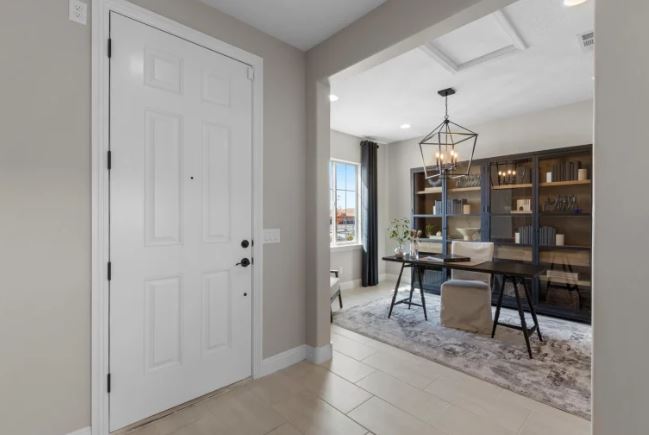
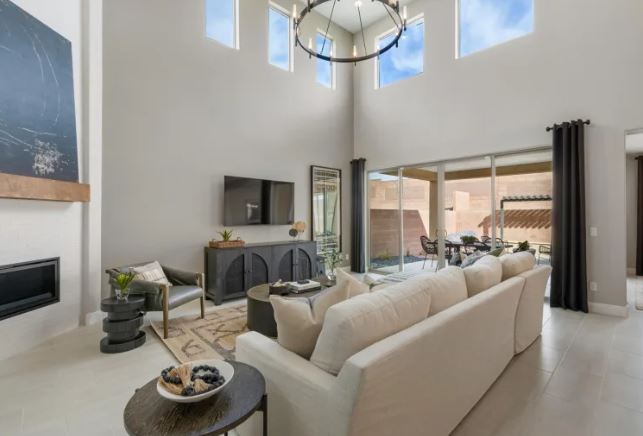
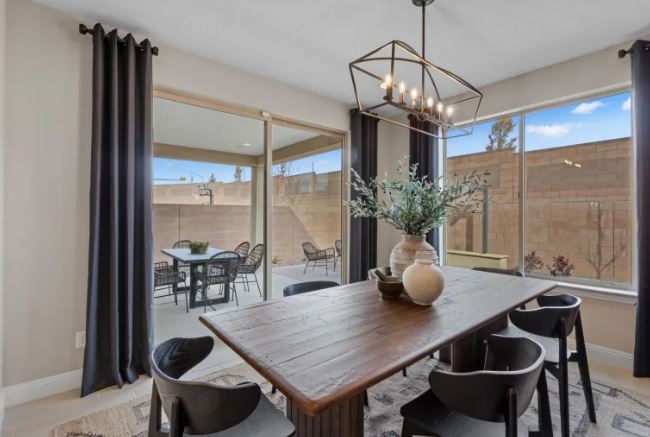
No appointment needed! Cresleigh Havenwood features four distinct floor plans ranging from 2,293 – 3,377 square feet and offering up to five bedrooms.

Each plan has been thoughtfully designed and includes great features such as single story homes, guest suites, optional offices, garage workshops, and more!

Get the most out of your new home with Cresleigh’s All Ready smart home featuring all the connectivity needed to keep your house running. Best of all, each Cresleigh home comes with owned solar included!

Located off of Virginiatown Road and McCourtney Road, residents of the 83 homesites of Cresleigh Havenwood will benefit from a brand new neighborhood in the charming City of Lincoln. Palo Verde Park, is just down the street and there’s plenty of recreation to take part in all around town. https://cresleigh.com/havenwood/quick-move-homesite-66/
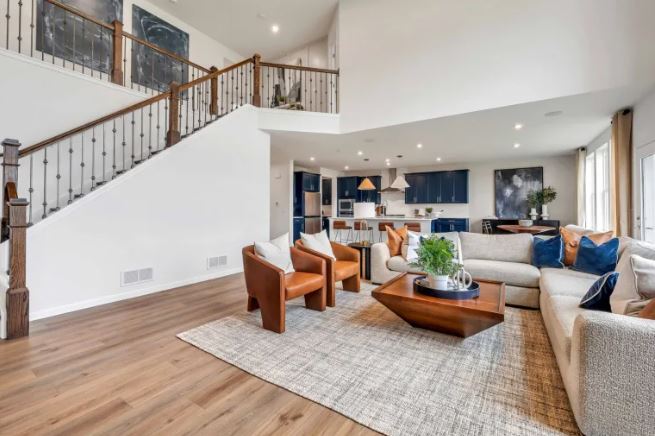
American Dream, a fact that the United States of America is a land of opportunity that allows the possibility of upward mobility, freedom, and equality for people of all classes who work hard and have the will to succeed.


An Artifact from Another Level of Being
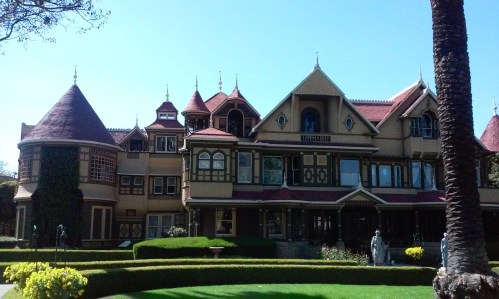
The silence closed in. Something was building in Llanada Villa. Something was happening in the very air itself. Something changed in the golden glow of a late autumn afternoon. And as I heard the music, a long stab of terror drove through my heart. I assented to the window. As I looked out, I saw a handsome old-fashioned carriage, with a troop of couriers and footmen. I saw the slim figure of the pale gentleman in black, as he held a thick velvet cloak. He looked about him at the others as he went on, his voice ringing clear in the silence. “Never such a place as this has existed before. A place where demons have been invented by aggrieved souls. I wondered if Mrs. Winchester was perhaps a member of the Freemasons, or some other secret society. Maybe she holds some exalted rank.” I felt a great shudder pass through me at these words. However, there had been a conviction in those appalling words. Secret societies were very fashionable just then. Secret societies and psychiatry were the contrasting en vogue activities of the moment. I folded my arms and leaned against the frame of the door, obscuring for the moment the light behind me. I had an urge to venture outside, to walk in silence amongst the trees. However, the fruit orchard was dark enough even in daylight; by moonlight it would be all too easy to imagine terrors—as I keep imagining I can hear soft footsteps moving across the floor above my head. But when I sit on the sofa to listen, I hear only the beating of my heart. I walked for hours examining the trees and the splendid fruit that would be harvested. Before long, I was overtaken by night while still in the fruit orchard. Utterly bewildered and overcome with fatigue, I had lain down near the root of a large plumb tree and fallen into a dreamless sleep. #RandolphHarris 1 of 8

It was hours later, in the very middle of the night, that one of God’s mysterious messengers, gliding ahead pronounced the awakening word in my ear. Waking from a deep sleep at night in the midst of what seemed like a forest, front among the tree on either side I caught broken and incoherent whispers in a strong tongue which I partly understood. They seemed to me fragmentary utterances of a monstrous conspiracy against my body and soul. It was now long after nightfall, yet the interminable fruit orchard through which I journeyed was lit with a wan glimmer having no point of diffusion, for in its mysterious lamination nothing cast a shadow. A shallow pool in the guttered depression of an old well met my eye with a crimson gleam. I stooped and plunged my hand into it. It stained by fingers; it was blood! Blood, I then observed, was about me everywhere. The fallen fruit showed blots and splashes of blood. The girds of the orchards were pitted and spattered as with red rain. Defiling the trunks of the trees were broad maculations of crimson, and blood dripped like dew from their foliage. All this I observed with a terror which seemed not incompatible with the fulfillment of a natural expectation. It seemed to me that it was all in expiation of some crime. So frightful was the situation—the mysterious light burned with so silent and awful a menace; the noxious plants, the trees that by common consent are invested with a melancholy or baleful character, so openly in my sight conspired against my peace; from overhead and all about came so audible and startling whispers and the sighs of creatures so obviously not of Earth—that I could endure no longer, and with a great effort to break some malign spell that bound my faculties to silence and inaction, I screamed with the full strength of my lungs! #RandolphHarris 2 of 8
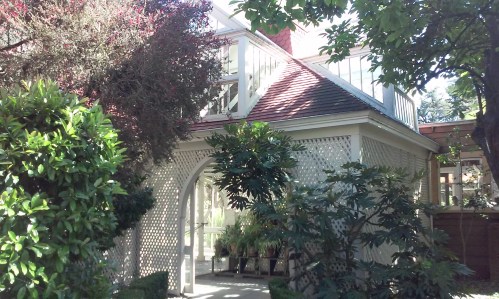
My voice was broken, it seemed, into an infinite multitude of unfamiliar sounds, went babbling and stammering away into the distant reaches of the orchard, died into silence, and all was as before. Despair succeeded hope. Gratitude gave place to curse. As I preceded down the path, sobbing quietly to myself, in the misery of fear, the stern light of the Observational Tower became a tiny speck, yellower but scarcely bigger than some of the stars, which here and there shone between the clouds. Nearly twenty minutes passed, and my fatigue began to change to exhaustion. The overpowering sense of the inevitable pressed upon me. With the weariness came a strange comfort. On, and on I went through the thicket of trees. I knew of my probable presence in the spirit World. The moon, then in her third quarter, pushed out from behind the concealing clouds and shed a pale, soft glitter upon my mansion. My last appeal had been heard. I made it home. About half an hour after getting home, I still felt energized but I began to feel a sensation around my forehead as I have many times since. I suddenly felt weak. I went in and sat at the foot of my bed and passed out. I have never been given to fainting or passing-out spells, but I did not fall asleep—I passed out cold. When I woke up, I had no concept of time. When I woke up, a low, wild peal of laughter broke out at a measuresless distance away, and growing even louder, seemed approaching ever nearer; a soulless, heartless, and unjoyous laugh, like that of loon; a laugh which culminated an unearthly shout close at hand, then died away by slow gradations, as if the accursed being that uttered it had withing over the verge of the World whence it had come. #RandolphHarris 3 of 8
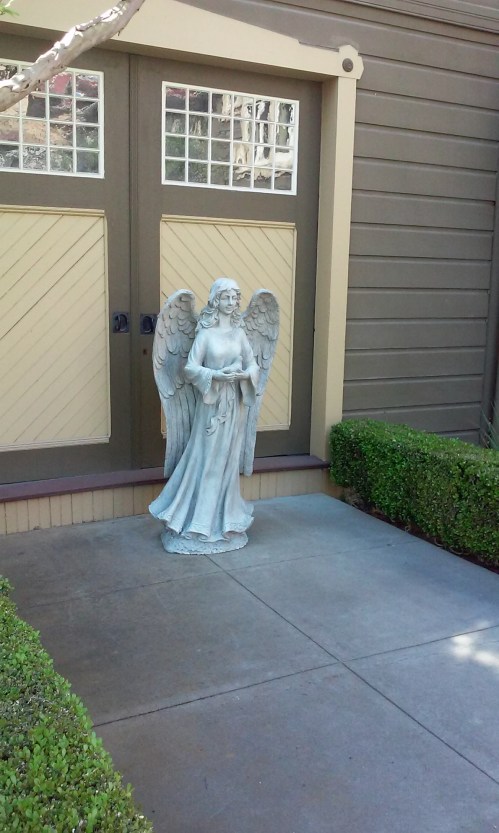
Sitting here in my temple of a house, I felt trapped and compromised, and even terrified. I got a feeling that the presence was still nearby and had not moved. A strange sensation began slowly to take possession of my body and my mind. I could not say which, if any, of my sense were affected; I felt it rather as a consciousness—a mysterious mental assurance of some overpowering presence—some supernatural malevolence different in kind from the invisible existences that swarmed about me, and superior to them in power. I knew that it had uttered that hideous laugh. And now it seemed to be approaching me; from what direction I did not know—dated not conjecture. All my former fears were forgotten and merged in the gigantic terror that now held me in thrall. Powers were traversing my haunted mansion. My senses were heightened as I found myself starting into the sharply dawn face and blank, dead eyes of my own mother, standing white and silent in the garments of the grave! The apparition confronting me—the thing so like, yet so unlike my mother—was horrible! It stirred no lover nor longing in my heart; it came unattended with pleasant memories of a golden past—inspired no sentiment of any kind; all the finer emotions were swallowed up in fear. I turned to turn and run from before it, but my legs were as lead; I was unable to life my feet from the floor. My arms hung helpless at my sides; of my eyes only I retained controlled, and these I dared not remove from the lusterless orbs of the apparition, which I knew was not a soul without a body, but that most dreadful of all existences infesting my haunted mansion—a body without a soul! #RandolphHarris 4 of 8

In its blank state was neither love, nor pity, nor intelligence—nothing to which to address an appeal for mercy. For a time, which seemed so long that the World grew gray with age and sin, and the haunted forest, having fulfilled its purpose in this monstrous culmination of its terrors, vanished out of my consciousness with all its sights and sounds, the apparition stood within a pace, regarding me with a mindless malevolence of wild brute; then thrust its hand forward and sprang upon me with appalling ferocity! The act released my physical energies without an unfettering my will; my mind was still spellbound, but my powerful body was and agile limbs, endowed with a blind, insensate life of their own, resisted stoutly and well. For an instant I seemed to see this unnatural contest between a dead intelligence and a breathing mechanism only as a spectator. Despite my struggles—despite my strength and activity, which seemed wasted in a void, I felt the cold fingers close upon my throat. Brorne backward to the floor, I saw above me the dead and drawn face within a hands breadth of my own. Its eyes were shallow to the point of blankness, and then all was black. Until I awoke, the passage outside my room had been pitch dark. Now the gasoliers illuminated the hall, but the glass was so blackened that they yielded only a dim, murky light. The air was stale and close. Expecting at every turn to find a housemaid awaiting me with a smile, I made my way through the gloom to the landing. The double doors to the gallery stood open. Along each wall, a row of wavering light receded. Transom windows shone with a faint cold light; higher still, the ceiling was shrouded in darkness. Some twenty feet away from me, candles burned upon a small round table, lighting of the face of the pale man and Mrs. Haas. “Ah, there you are, my dear,” said he, just as if he had last seen my five minutes—rather than several days—ago. I moved reluctantly to join them. #RandolphHarris 5 of 8

Mrs. Haas, resplendent in crimson silk and displaying a large expanse of white bosom, greeted me with disdain. Behind them, the wall at the far end of my gallery was dominated by the immense fireplace, and the armour towering in the shadows beside it. The sword glittered beneath its gloved hand; in the shifting light it seemed alert, alive, watchful. Within the fireplace was a massive chest of dark metal. “Dr. Cottam was about to tell us,” said Mrs. Haas impatiently, “of a discovery he had made amongst your late husband’s papers.” He spoke as if I had kept them waiting. “Indeed I was.” His tone was as cordial as ever, but with an edge of anticipation. His teeth caught the light as he smiled; the pupils of his eyes shone like twin flames. “Now, in going through his study the other day, I found a page of notes you must have missed after relocating from New Haven—scrawled in haste, and sometimes quite impenetrable—which had slipped behind a row of books.” On the table was a crumpled sheet of paper. “I shall not weary you with the tale of my efforts to decipher this. He believed that if he were inside the armour when lighting struck, he would pass unharmed into the next World, jut as the risen body, according to Scripture, will ascend to Heaven upon the day of judgement.” “Oh dear Heavens,” cried Mrs. Haas. “Mrs. Winchester, I have been dying for a grand tour of your estate. My companion Dr. Cottam is rather a bore with such foolish tales of science fiction!” “There is a theory, you know, that the basis of spirit may be electrical. For spirits to communicate with the living,” expressed Dr. Cottam, the man with the very pale face. #RandolphHarris 6 of 8
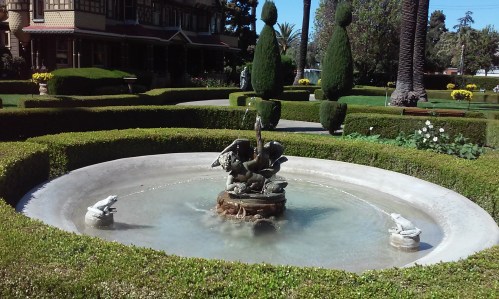
“Dr. Cottom, I have begun to wonder whether your obsession with William Winchester is not, perhaps, quite as mad as I assumed,” explained Mrs. Haas, “but I do wish to get on with this tour. Mrs. Winchester has already delayed us several hours after he invitation, and I am growing quit weary.” “Well, Mrs. Haas, as I do recall, Gods are often said to wield lightening; and whilst this represents primitive awe at the power of nature, it may also shroud a genuine intuition. The same applies to the spiritualist practice of linking hands around a table. Ghosts and spirits are generally depicted as emanations of light; one thinks of St. Elmo’s fire or the very rare phenomenon of ball lightning…a far fetched analogy, you may say, but just as a magnetic field will cause a heap of iron filings to arrange themselves into a complex pattern, so the soul, the vital principle—call it what you will—animates the Earthly body. Might it not be that the vital principle is electrical, perhaps in some subtler form that science has not yet grasped?” said Dr. Cottam. “Dr. Cottam, while your theories are very fascinating, I fear Mrs. Haas is growing impatient and I should like to give her a tour now,” I explained. I liked Mrs. Haas more and more every minute. Her gossip, without being ill-natured, was extremely diverting to me, who had been so long out of the great World. I thought what life she would give to my sometimes-lonely evenings at home. There was a ball going on in the Grand Ballroom, this house seemed to run itself sometimes, which would not be over until the morning sun had almost reached the horizon. It pleased the Grand Duke to dance till then, so loyal people could not go away, or think of bed. #RandolphHarris 7 of 8
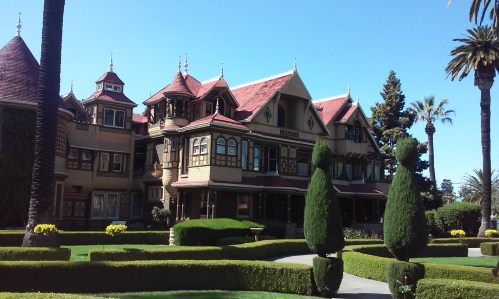
We had just got through a crowded parlor, when Dr. Cottam asked me what had become of Mrs. Haas. I though she had been by his side, and he fancied she was by mine. The fact was, we had lost her. All my efforts to find her were in vain. I feared that she had mistaken, in the confusion of the momentary separation from us, other people for her new friends, and had, possibly, pursued and lost them in the extensive grounds which were thrown open to us. Morning broke. It was clear daylight before I gave up my search. It was not till near two o’clock next day that we heard anything of Mrs. Haas. At about that time a servant knocked at my door, to say that he had been earnestly requested by a young, who appeared to be in great distress, to make out where she could find Mrs. Winchester and Dr. Cottam. There could be no doubt, notwithstanding the slight inaccuracy that my friend had turned up. I had a housemaid go to the guest room and summon Dr. Cottam. I went down to the parlor and reunited with Mrs. Haas. She told me a story to account for having failed to recover us for so long. Very late, she said, she made a detour and wandered around, not before long becoming afraid and getting lost. She got into the Crystal Bedroom in despair of finding us, and had then fallen into a deep sleep which, long as it was, had hardly sufficed to recruit her strength after the fatigues of the ball. It the midst of my perplexities, an anxiety of far more urgent kind presented itself. My dear friend began to lose her looks and health, and that in manner so mysterious, and even horrible, that I became thoroughly frightened. #RandolphHarris 8 of 8
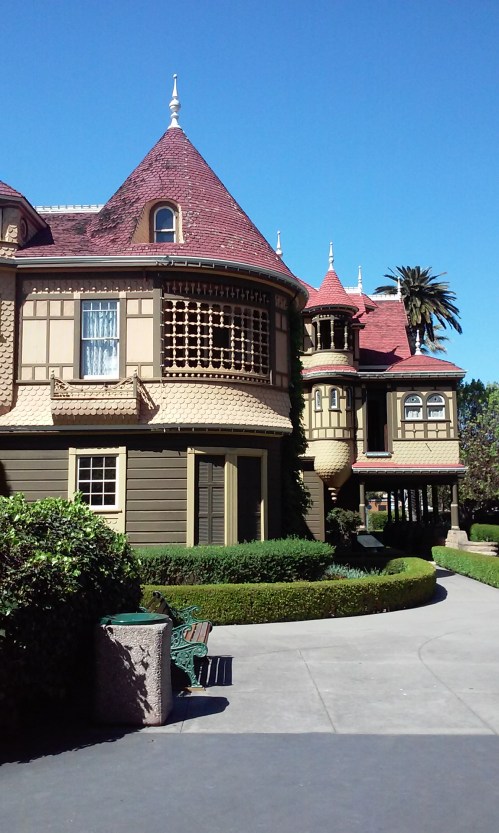
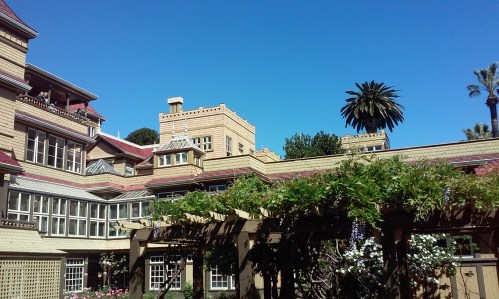
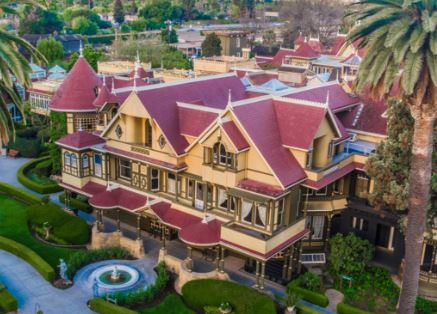
People, since as long ago as the 1800s, have reported a vast array of unexplained events, experiences, and sightings at what is now known as The Winchester Mystery House. Over the years, people have reported bone-chilling sightings ghosts, angels, demons, fairies, giants, orbs, lights, mist, vampires, witches, warlocks and werewolves. In 2007, a man was attending Santa Clara University, and he was lucky enough to get hired as a tour guide at The Winchester Mystery House. He had no sooner moved into his apartment and had the telephone installed when he received a call warning him never to return to Sacramento again. During a later call, a woman with a high-pitched voice informed “G” that he was being kept under surveillance by a group who felt that he had acted unjustly in the past by not returning things to their proper owners. G emphasized that he had led a very quiet life as an undergraduate.
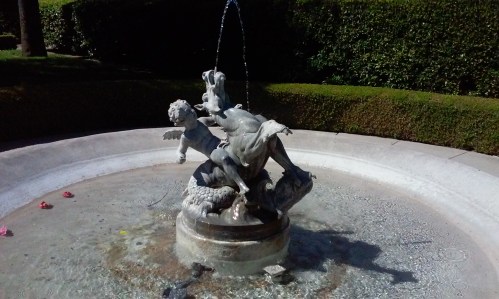
Yet he probably received 30 or more telephone calls from anonymous voices advising him not to return to Sacramento. The voices reprimanded him for having taken something that did not belong to him. G said that he did not carry anything with him that was from Sacramento and did not often visit the beautiful city, and he seldom discussed his life with any but a few of his closet acquaintances. He wondered who could have possibly taken such a long-term interest in him? About the third year after working at The Winchester Mystery House, a guest unknown to him stopped to say hello. G knew that such an act was hardly unusual, since guests will often do this to find out interest facts about tour guides and secrets about Sarah L. Winchester’s mansion. However, he noticed the boy was strangely inquisitive. G was astonished when the teenager drew a design on a piece of paper that he had seen somewhere in the mansion. He smiled at G, then asked if he knew what the symbol meant.
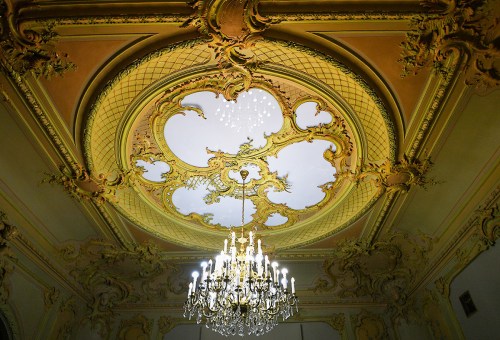
When G pressed the boy, in turn for some answers, the guest threw away the design, laughed, and said that he was just fooling around, that he did not mean anything about it. G never saw the alleged guest again. He descried him to a could of tour guides, but no one was able to identify him. After several years of watching at The Winchester Mystery House, G graduated from University. He had not been in possession of his diploma for more than four days when someone rang his apartment and scolded him for taking things that did not belong to him. The voice told G that he should always leave things where they were. He reported to his supervisors that he kept receiving mysterious calls. On one occasion the voice told G that he has discovered a strange key to other dimensions, but the entities had long since reclaimed it. However, apparently, some spirit masqueraders were determined that he should never forget the day he came into contact with an artifact from another level of being. What is The Winchester Mystery House?
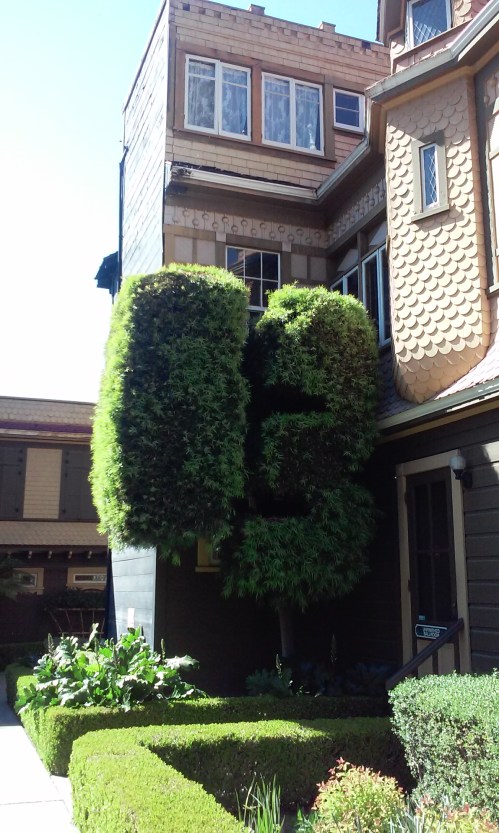
And please be sure to check out the online gift store: https://shopwinchestermysteryhouse.com/

What Do You Intend to Do with Me?
There came to me the blessed knowledge that every living soul was the subject of this celebration, of this infinite and ceaseless chorus, that every soul was loved as I was loved, know now as I was known. Not a single word was lost in the great mansion of love that surrounded me, this vast night was as bright as day. The grounds were thrown open, the trees hung with coloured lamps. There was such a display of fireworks as Paris itself had never witnessed. And such music—music, you know, is my weakness—such ravishing music! The finest instrumental band, perhaps in the World, and the finest singers who could be collected from all the great operas in Europe. As you wandered through the fantastically illuminated ground of Llanada Villa, the moon-lighted mansion throwing a rosy light from its long rows of windows, you would suddenly hear these ravishing voices stealing from the silence of the fruit orchard, or rising from upon the farmland. I felt myself, as I looked and listened, carried back into the romance and poetry of my early youth. When the firework were ended, and the ball beginning, we returned to the Grand Ballroom which was thrown open to the dancers. A masked ball, you know, is a beautiful sight; but so brilliant a spectacle of the kind I never saw before. It was a very aristocratic assembly. My dear niece Daisy was looking quite beautiful. She wore no mask. Her excitement and delight added an unspeakable charm to her features, always lovely. #RandolphHarris 1 of 9
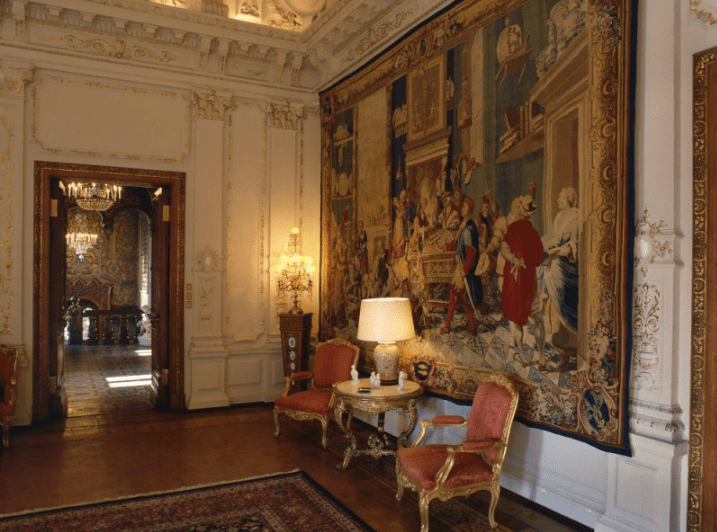
An old friend called me by name, opened a conversation with me, which piqued my curiosity a good deal. She referred to many scenes where she had met me—at Court, and at distinguished houses. She alluded to little incidents which I had long ceased to think of, but which, I found, had only lain in abeyance in my memory, for they instantly started into life at her touch. I became more and more curious to ascertain who she was, every moment. She parried my attempts to discover very adroitly and pleasantly. The knowledge she showed of many passages in my life seemed to me all but unaccountable; an she appeared to take a not unnatural pleasure in foiling my curiosity, and seeing me flounder, in my eager perplexity, from one conjecture to another. She was very witty and lively when she pleased, and after a time . In the meantime, availing myself of the license of a masquerade, I put not a few questions to the lady. “You have puzzled me utterly,” I said, laughing. “Is that not enough? will you, now, consent to stand on equal terms, and do me the kindness to remove your mask?” “Can any request be more unreasonable? And how do you know that a sight of my face would help you?” she said. “I should take chance for that,” I answered. “Mrs. Winchester, you have no mask to remove. You can offer me nothing in exchange.” “My petition is to your pity, to remove it,” I replied. “And mind to yours, to let it stay where it is,” she said. “Well, then, at least you will tell me whether you are French or German; you speak both languages so perfectly.” #RandolphHarris 2 of 9
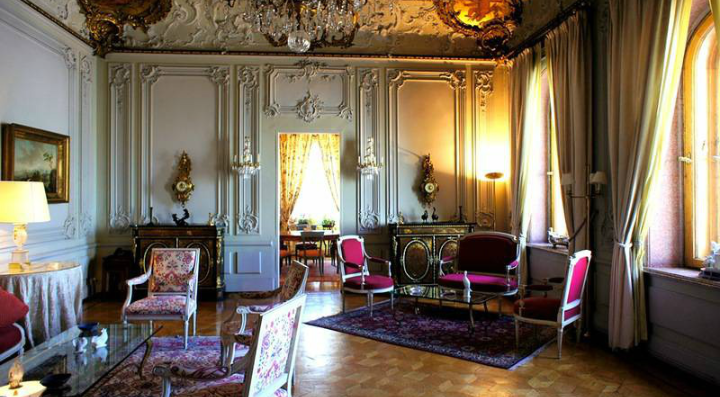
“I don’t think I shall tell you that, Mrs. Winchester; you intend a surprise, and are meditating the particular point of attack.” “At all events, you will not deny this,” I said, “that being honoured by your permission to converse, I ought to know how to address you, Shall I say Mrs. Bertha Haas?” She laughed, and she would no doubt, have met with another evasion—if, indeed, I can treat any occurrence in an interview every circumstance of which was pre-arranged, as I now believe, with the profoundest cunning, as liable to be modified by accident. “As to that,” she began; but she was interrupted, almost as the opened her lips, by a gentleman, dressed in black, who looked particularly elegant and distinguished, with this drawback, that his face was the most deadly pale I ever saw, except in death. He was in no masquerade—in the plain evening dress of a gentleman; and he said, without a smile, but with a courtly and unusually low bow:–“Will Mrs. Haas permit me to say a very few words which may interest her?” The lady turned quickly to him, and touched her lip in token of silence; she then said to me, “Keep my place for me, Mrs. Winchester; I shall return when I have said a few words.” And with this injunction, playfully given, she walked a little aside with the gentleman in black, and walked for some minutes, apparently very earnestly. They then walked away slowly together in the crowd, and I lost them for some minutes. A few moments she returned, accompanied by the pale man in black, who said: “Mrs. Winchester, please forgive me, but Mrs. Haas’s carriage is at the door.” They left in a hurry. #RandolphHarris 3 of 9

Darkness had fallen—I did not know what time it was. I was now on the first floor, about halfway down a passage which twists and turns so often that you cannot tell where you are. I had to go back and count three times to establish that there were twenty-two rooms on this corridor. The servants’ stairs are at the back of the house, with a door leading to the main part of the Hall at the front. The panelling had been scrubbed, and new carpets laid. The floor creaks wherever I move, no matter how softly I tread. There was folklore, while cloudy, evasive at best, which hinted at a hidden race of monstrous being which lurked someone among this passage way. These beings were seldomly glimpsed, but were said to wander in from deep in the fruit orchards, and the dark valleys where streams trickled from unknown sources. However, evidences of their presence was reported by those who had ventured father than usual into certain areas of the mansion that even I shunned. There were queer footprints or claw-prints on the floor and scratched on the walls. The rumors had several points in common; averring that the creatures were huge, black, and with two great batlike wings in the middle of their back. Once a specimen was seen flying—launching itself from the top of the observational tower, at night and vanishing in the sky after its great flapping wings had been silhouetted an instant against the full moon. #RandolphHarris 4 of 9
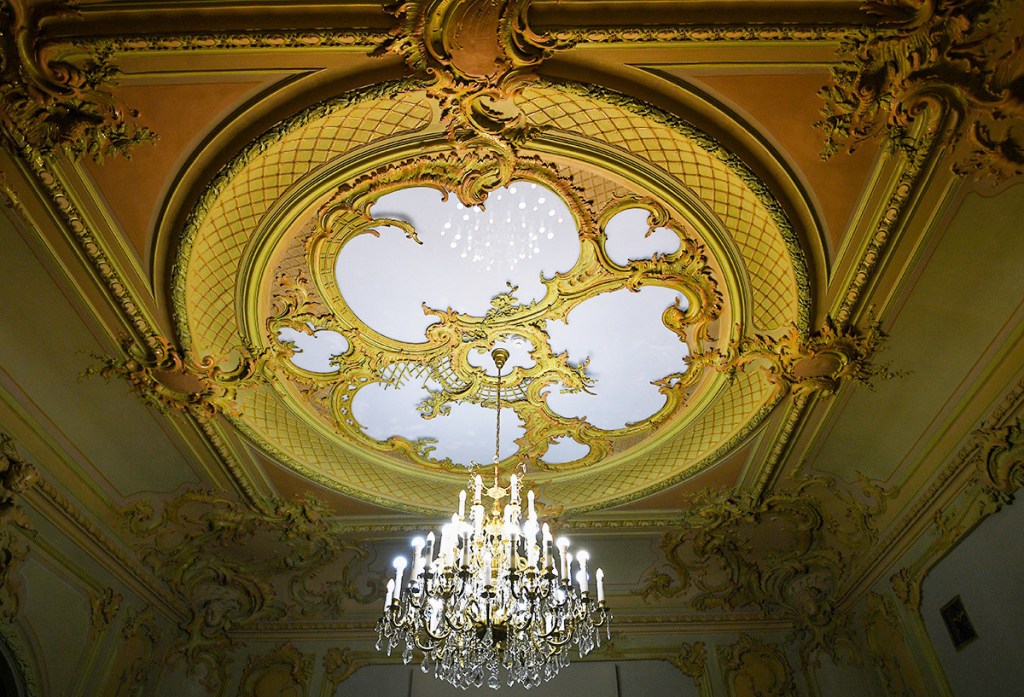
These things seemed content, on the whole, to let the staff alone; though they were at times held responsible for the disappearance of servants—especially those venturesome individuals who went too far in the fruit orchards or who went lurking in the observational tower at night. People would look up at Llanada Villa with a shudder, even when not recalling how many servants had been lost. However, while according to the earliest legends the creatures would appear to have harmed only those trespassing on their privacy. They attempted to establish secret outpost in my home. There were tales of queer claw-prints seen around the mansion’s windows in the morning, and of occasional disappearances in regions obviously haunted. Tales, besides, of buzzing voices in imitation of human speech which made surprising offers to the servants, and of housemaids frightened out of their wits by things seen or heard in parts of the mansion we rarely used. There are other tales of servant who had undergone a repellent mental change shortly after being hired, and who were shunned and whispered about as people who had sold themselves to strange beings. As to what these beings were—I had not a clue. Many just called the “demons.” However, there was unanimous agreement that these creatures were not natural. I had asked myself endlessly whether, if someone had succeeded in mesmerizing the servants, or shrouded their perception. #RandolphHarris 5 of 9
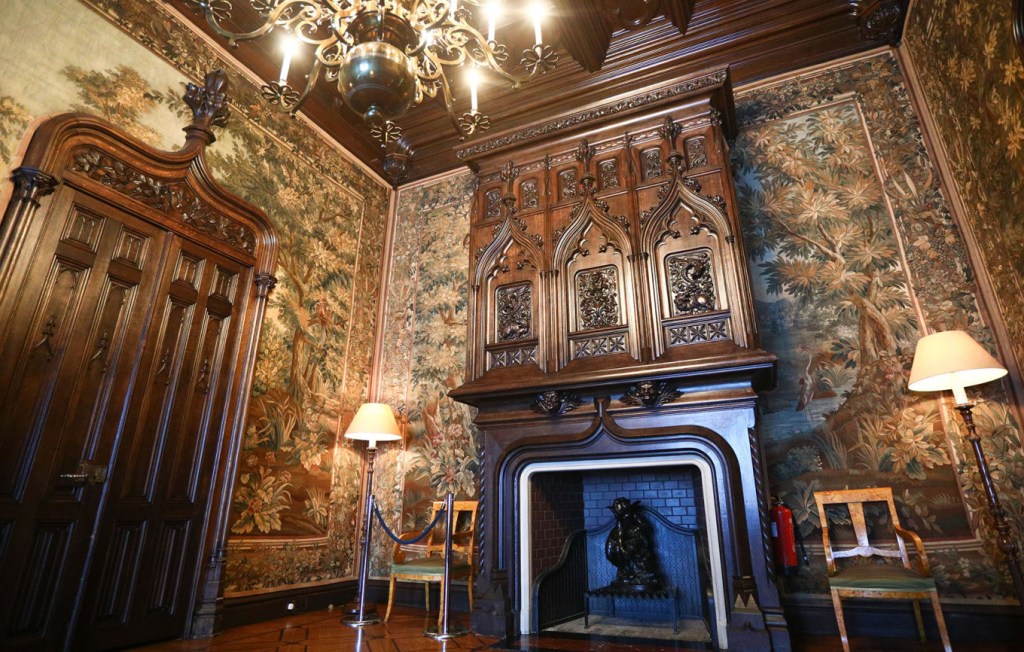
The next morning, I must have come down to breakfast first, though I did not recall dressing, or pinning up my hair, only—just as if I had been sleepwalking, and found myself suddenly wide awake at the breakfast table—seeing the housemaid at the sideboard. And I looked up fearfully. All evening I kept up the pretence that nothing had occurred; and when it came time to retire, I lay awake half the night, dreading the sound of something treading upon the stair, but the next morning it was the same. The housemaid gave her notice soon afterward, but if she had been forced to do so, she did not admit it to me. She had often spoke of lines and curves which pointed out directions leading through the walls of space to other spaces beyond, and had often implied that certain midnight meetings took places in these areas. She had also spoke of a large Black figure, then vanished. The darkness always teemed with unexplained sound—and I somethings shook with fear least the noises I heard should subside and allow me to hear certain other noises which I suspected were lurking in the walls. Life had become an insistent and almost unendurable cacophony, and there was that constant, terrifying impression of other sounds—perhaps from regions beyond life—trembling on the very brink of audibility. There were rumours, too, with a baffling and disconcerting amount of agreement. Witnesses said the Black shadowy figure had long hair, was sharp-toothed, was evilly human and had claws like a bear. Of all the bizarre monstrosities in the Word, nothing filled me with greater panic and nausea than this blasphemous beast haunting the hall of my mansion, and to think that there were several of them behooved me. A sense of impending crisis was as palpable as the ticking clock. #RandolphHarris 6 of 9
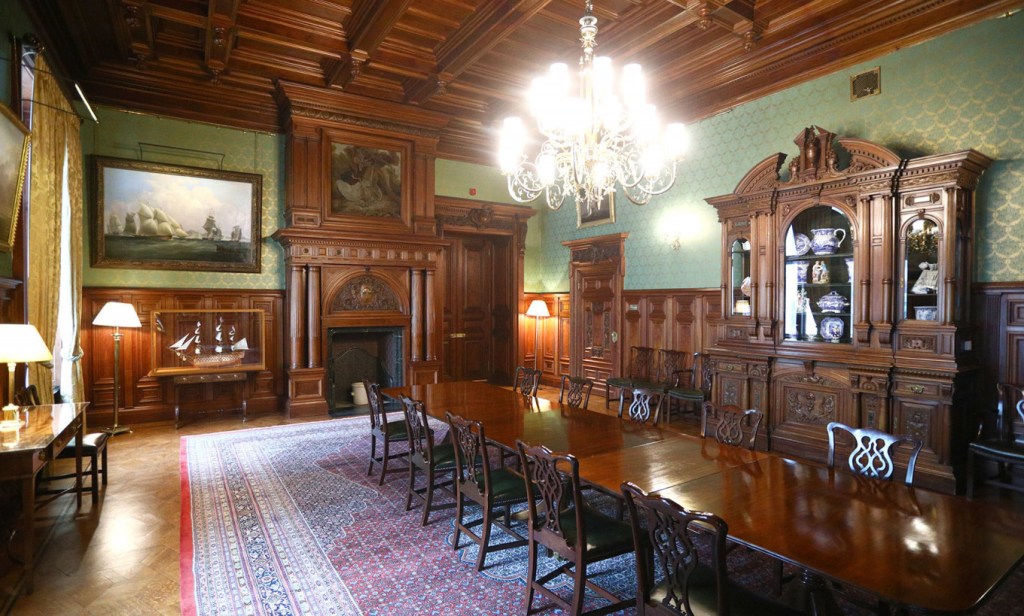
The library and the old gallery from which one of the servants vanished from had been locked, for reasons of safety. And all of the rooms above this floor were closed, the stairs roped off and all the landing doors locked. In my tortured ears there sounds unceasingly a nightmare whirring and flapping, and a faint distant baying as of some gigantic hound. It is not a dream—it is not I fear, even madness—for too much has already happened to give me these merciful doubts. There was thunder in the air one night, the pitiful throngs of the win shrieked and whined, as the unnamable horror descended upon Llanada Villa. This house swarmed with ghosts. However, people enough, first and last, had been in terror or apparitions, but who had ever before so turned the tables and become oneself, in the apparitional World, an incalculable terror? What habit and repetition had I gained to an extraordinary degree the power to penetrate the dusk of distances and the darkness of corners, to resolve back into their innocence the treacheries of uncertain light, the evil-looking forms taken in the gloom by mere shadows, by accidents of the air, by shifting effects of perspective; putting down my dim luminary I could still wander on without it, pass into other rooms and, only known it was there behind me in case of need, see my way about, visually project for my purpose a comparative clearness. It made me feel, this acquired faculty, like some stealthy cat; I wondered if I would ever glare at these moments with large shining yellow eyes. #RandolphHarris 7 of 9
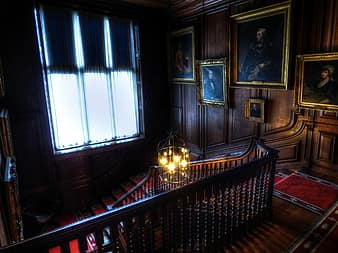
The moments I liked best were those of gathering dusk, of the short autumn twilight; this was the time of which, again and again, I found myself hoping most. Then I could most intimately wander and wait, linger and listen, feel my fine attention, never in my life before so fine, on the pulse of the great vague place: I preferred the lampless hour and only wished I might have prolonged each day the deep crepuscular spell. In the depths of the house, the mystical other World flourished. This night—I stood in the hall and looked up the staircase with certainty more intimate than any I had known. Then I realized there was a red-clad figure moving up there. The longer I watched, the clearer the figure became. The man was pacing back and forth at a rapidly increasing speed. His face carried a worried frown and suddenly he was running back and forth so fast that he levitated and bounced into the walls. I was shocked as the man continued back and forth, bouncing from wall to wall, until he actually touched the ceiling. I followed his progress upward and then he was gone. As I cast my eyes around my home, I saw that it was no longer empty. There were spectral people everywhere and they were watching me quietly. I had taken a number of steps to possess myself. The door between the rooms was open, and as I remembered, have all three upon a common corridor as well, but there was a fourth, beyond me, without issue save through the preceding. The house, withal, was immense, the scale of space again inordinate; the open rooms, to no one of which my eye deflected, gloomed in their shuttered state like mouths of caverns; only the high skylight that formed the crown in the deep well created for me a medium in which I could advance, but which might have been, for queerness of colour, some watery underworld. #RandolphHarris 8 of 9

I tried to think of something noble, as Llanada Villa was really grand, a splendid possession; but this nobleness took the for of the clear delight with which I was finally to sacrifice it. They might come in now, the builders, the destroyers—they might come as soon as they would. At the end of two flights, I had dropped to another zone, and from the middle of the third, with only one more left, and I seemed to lose myself in the vague darkness. I let myself go on with the sense that here was at least something to meet, to touch, to take, to know—something all unnatural and dreadful. The penumbra, dense and dark, was the virtual screen of a figure which stood in it as still some image erect in a niche or as some black-vizored sentinel guarding a treasure. I was to know afterwards, was to recall and make out, the particular thing I had believed during the rest of my descent. I saw, in its great gray glimmering margin, the central vagueness diminish, and I had felt it to be taking the very form toward which, for so many days, the passion of my curiosity had yearned. It gloomed, it loomed, it was something, it was somebody, the prodigy of a personal presence. Rigid and conscious, spectral yet human, a man of substance and stature. Horror, with the sight, had leaped into my throat, gasping there in a sound I could not utter; for the bared identity was too hideous. My glare was the passion of the protest. The face, that face! It was unknown, inconceivable, awful, disconnected from any possibility. The presence before me was a presence, the horror of nights of grotesqueness. A thousand times as it came upon me nearer now—the face was the face of a stranger. The stranger, whoever he might be, evil, odious, blatant, vulgar, had advanced as for aggression, and I knew myself to give ground. Then harder pressed still, sick with the force of my shock, and falling back as my whole vision turned to darkness and my feet gave way. My head went round; I was going; I had gone. #RandolphHarris 9 of 9
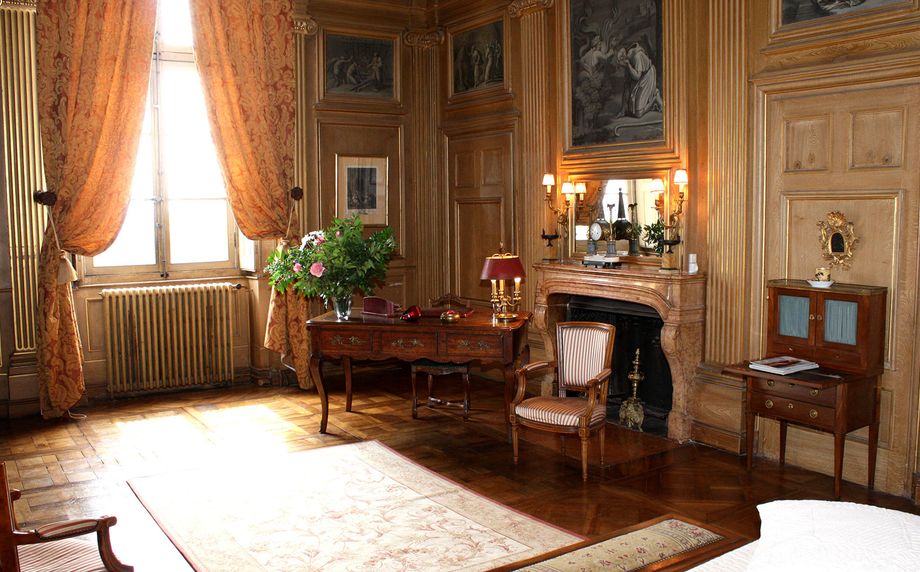
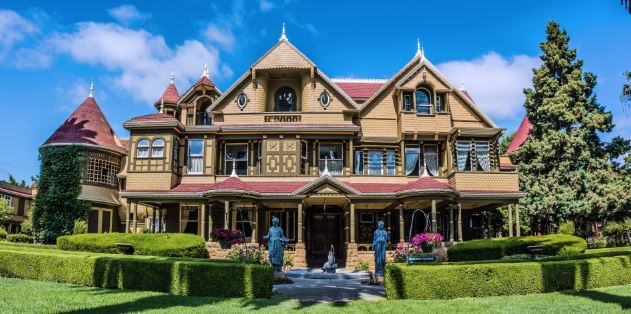
Many of the ghosts of The Winchester Mystery House are associated with tragedy. For years, there have been stories that the security guards see a man walking along the fourth floor of the mansion. The man does not set off the motion sensors, but he is often seen hurrying along. He disappears when guards approach too near him. The guards consistently describe him as a man in work clothes from the 19th century. https://winchestermysteryhouse.com/
And please be sure to check out the online gift store: https://shopwinchestermysteryhouse.com/

Would Satan Have Found Companions without this Overpowering Craving?

The extraordinary powers of the TV news media threaten the civil rights and health of all humans because it is like a constant signal of unbalanced propaganda being fed through a tube into minds of people who may not be aware that the news media often lies, and the some of their stories are engineered and totally untrue. If smoking cigarettes comes with a warning, because they can be hazardous to your health, then so should the TV news media. Stories presented over the air can be dangerous, especially to young, influential minds. For instance, a TV news program explained to viewers how they could barbeque meant in the oven by placing it on the rack. However, they did not explain that underneath the rack there should be a drip pan to catch any liquids that come from the meat, so they do not drip on the heating elements, which could cause a fire. And that may not be common sense to all people, which the TV director probably assumed. Therefore, all TV new media should contain a warning, letting the audience know that the story, even if it has some facts in it, is based on an opinion and may not be the full truth, so viewers know to use discretion and do further research of themselves. In all things purely social we can be as separate as the five fingers, and yet one as the hand in all aspects essential to mutual progress. The economic structure of a society in determining the mode of life of the individual operates as condition for personality development. #RandolphHarris 1 of 19

These economic conditions are entirely different from subjective economic motives, such as the desire for material wealth which was looked upon by many writers, from the Renaissance on up to certain Marxist authors who failed to understand Mr. Marx’s basic concepts, as the dominant motive of human behaviour. As a matter of fact, the all-absorbing wish for material wealth is a need peculiar only to certain cultures, and different economic condition can create personality trait which abhor material wealth or are indifferent to it. The physiologically conditioned needs are not the only imperative part of man’s nature. There is another part just as compelling, one which is not rooted in bodily processes but in the very essence of the human mode and practice of life: the need to be related to the World outside oneself, the need to avoid aloneness. To feel completely alone and isolated leads to mental disintegration just as physical starvation leads to death. This relatedness to others is not identical with physical contact. An individual may be alone in a physical sense for many years and he may be related to ideas, values, or at least social patterns that give him a feeling of communion and “belonging.” On the other hand, he may live among people and yet be overcome with an utter feeling of isolation, the outcome of which, if it transcends a certain limit, is the state of insanity which schizophrenic disturbances represent. #RandolphHarris 2 of 19
This lack of relatedness to values, symbols, patterns, we may call moral aloneness and state that moral aloneness is as intolerable as the physical isolation, or rather that physical seclusion becomes unbearable only if it implies also moral lonesomeness. The spiritual relatedness to the World can assume many forms; the self-actualized in his cell who believes in God and the political prisoner kept in isolation who feels one with his fellow fighters are not alone morally. Neither is the English gentleman who wears his dinner jacket in the most exotic surroundings nor the petty bourgeois who, though being deeply isolated from one’s fellow men, feels one with one’s nation of its symbols. The kind of relatedness to the World may be noble or trivial, but even being related to the basest kind of pattern is immensely preferable to being alone. Religion and nationalism, as well as any custom and any belief however absurd and degrading, if it only connects the individual with other, are refuges from what man most dreads: isolation. The compelling need to avoid moral isolation is a deep concern However, learn one thing, impress it upon your mind which is still so malleable: man has a horror for aloneness And of all kind of aloneness, moral seclusion is the most terrible. The first hermits lived with God, they inhabited the World which is most populated, the World of spirits. The first thought of man, be he a leper or a prisoner, a sinner or an invalid, is: to have a companion of one’s fate. #RandolphHarris 3 of 19
In order to satisfy this drive which is life itself, man applies all his strength, all his power, the energy of his whole life. Would Satan have found companions without this overpowering craving? On this theme one could write a whole epic. Any attempt to answer the question why the fear of isolation is so powerful in man would lead us far away from the main road we are following in this report. However, in order not to give the reader the impression that the need to feel one with others has some mysterious quality. One important element is the fact that men cannot live without some sort of co-operation with other. In any conceivable kind of culture man needs to co-operate with others if he wants to survive, whether for the purpose of defending himself against enemies or dangers of nature, or in order that he may be able to work and produce. Even Robinson Crusoe was accompanied by his man Friday; without him he would probably not have become insane but would have actually died. Each person experiences this need for the help of others very drastically as a child. On account of the factual inability of the human child to take care of itself with regard to all-important functions, communication with others is a matter of life and death for the child. The possibility of being left alone is necessarily the most serious threat to the child’s whole existence. There is another element, however, which makes the need to “belong” so compelling: the fact of subjective self-consciousness, of the faculty of thinking by which man is aware of himself as an individual entity, different from nature and other people. #RandolphHarris 4 of 19

Although the degree of this awareness varies. Its existence confronts man with a problem which is essentially human: by being aware of himself as distinct from nature and other people, by being aware—even very dimly—of death, sickness, aging, he necessarily feels his insignificance and smallness in comparison with the Universe and all others who are not “he.” Unless he belonged somewhere, unless his life had some meaning and direction, he would feel like a particle of dust and be overcome by his individual insignificance. He would not be able to relate himself to any system which would give meaning and direction to his life, he would be filled with doubt, and this doubt eventually would paralyze his ability to act—that is, to live. Human nature is neither a biologically fixed and innate sum total of drives nor is it a lifeless shadow of cultural patterns to which it adapts itself smoothly; it is the product of human evolution, but it also has certain inherent mechanisms and laws. There are certain factors in man’s nature which are fixed and unchangeable: the necessity to satisfy the physiologically conditioned drives and the necessity to avoid isolation and moral aloneness. We have seen that the individual has to accept the mode of life rooted in the system of production and distribution peculiar for any given society. In the process of dynamic adaptation to culture, a number of powerful drives develop which motivate the actions and feelings of the individual. #RandolphHarris 5 of 19

The individual may or may not be conscious of these drives, but in any case they are forceful and demand satisfaction once they have developed. They become effective in molding the social process. How economic, psychological, and ideological factors interact and what further general conclusion concerning this interaction one can make are things for future discussion that deals with the reformation and of fascism. Man, the more he gains freedom in the sense of emerging from the original oneness with man and nature and the more he becomes an “individual,” has no choice but to unite himself with the World in the spontaneity of love and productive work or else to seek a kind of security by such ties with the World as destroy his freedom and the integrity of his individual self. However, the hushing of the criticism of honest opponents is a dangerous thing. It leads to some of the best of the critics to unfortunate silence and paralysis of effort, and others to burst into speech so passionately and intemperately as to lose listeners. Honest and earnest criticism from those whose interest are most nearly touched,–criticism of writers by readers, of government by those governed, of leaders by those led,–this is the soul of democracy and the safeguard of modern society. If the best of the Americans receives by outer pressure a leader whom they had not recognized before, manifestly there is here a certain palpable gain. Yet there is also irreparable loss,–a loss of that peculiarly valuable education which a group receives when by search and criticism it finds and commissions its own leaders. The way in which this is done is at once the most elementary and nicest problem of social growth. #RandolphHarris 6 of 19

History is but the record of such group-leadership; and yet how infinitely changeful is its type and character! And of all yet how infinitely changeful is its type and character! And of all types and kinds, what can be more instructive than the leadership of a group within a group?—that curious double movement where real progress may be negative and actual advancement where real progress may be negative and actual advance be relative retrogression. All this is the social student’s inspiration and despair. Nonetheless, the spirit of play can and does invade every department of culture. Every kind of work has its counterpart in play. Crafts include recreational forms which represent the categories of serious economic activity all the way from hunting and fishing, which have their counterparts in extractive industries, through fabrication and construction, distribution and communication, to services and consumption. Although such activities, as distinguished from the work the represent, are engaged in for their own sake, they all involve practice in the intelligence adaptation of physical means to envisaged ends. Thus “industrial” play is distinguished from physical play in being directed toward the exploration and manipulation of the physical environment rather than toward the exercise of the body. While some product or service of economic value may result from engaging in crafts, this is not primary objective. The distinction between work and play is perhaps less obvious where crafts are concerned than any other type of play. Also, any hobby which is pursued as recreation may also be undertaken as a livelihood, just as every hobby is in a direct sense an imitation of a serious occupation. #RandolphHarris 7 of 19

Even though work merges into play and there are no hard and fast margins between the two, it is yet useful to make some polar contrast between them. Work seems to be performed in response to the routine obligations. In the economic sense it provides the goods and services to maintain a customary standard of living. Play—including economic play—is a break in routine. It is free, not required. It explores new possibilities and potentialities, so that invention and discovery bear the closet relation to it. Treating familiar pursuits as play permits their idealization. Work is most fully work when it evokes no free release of energy and when it is all drudgery and chores, making demands for a minimum, not an optimum performance. Play is most fully play when it is spontaneous, unrestrained and unforced. To look upon play as a childish preparation for adult activity is therefore to run the risk of making it work. The ambiguities of play are at their liveliest in crafts, which makes sketchy resort to common sense in defining them a less futile strategy than attempts to define them with more precision. In economic activity, as in sport, chance can according to taste play a great or a small part; or economic activity can entirely be reduces to pure chance, as in gambling. Likewise with competition, though of course competition in economic life is different from competition in sport. Competition in sport is most zestful and fair when it occurs between equals, or when rules and devices, such as handicapping, are employed to simulate equality between competitors. #RandolphHarris 8 of 19
Rivalry between teams is perpetuated through this balancing of powers. In business, by contrast, the effort of each competitor is to enlarge rather than to diminish the advantages one possesses, with the ultimate effect of eliminating competitors. To be sure, there are many similarities between the two kinds of competition, for example, competition between business institutions is often, as in sport, invoked simply as an added stimulus to effort. Certain large organizations in particular, which have largely lost their external competitors, encourage a nondestructive sort of sporting competition among their internal units for the sake of the gains in motivation it brings. Perhaps it is not too crude a simplification of economic evolution to suggest that as the one type of competition in business runs its course, the other which emphasizes competition within, rather than between, organizations may take its place. A significant distinction is made by farmers between regular kinds of work known as chores and the work that different from day to day. The latter kind is for many farmers very close to play, just as the work of some professions gives such scope and variety to the expression of capacities that they continue to be absorbing. It is evident that the skilled practitioner of every kind of play can change from amateur to professional status, and that many people have found their vocations by this route. Happy is the person who can make one’s living by getting paid for what one loves to do. #RandolphHarris 9 of 19

In other kind of play is the shift from amateur to professional status of such broad social significance as in crafts, because in the possibility of conducting industry as the crafts are conducted lies—as thinkers like William Morris foresaw long ago—the means of restoring joy to work, and of ending the alienation from work which plagues so many contemporary occupations. The democratic revolution which has been abolishing the division of society into leisure and working classes may be completed when work and play, vocation and avocation, are merged in economic activity itself. This extreme polarization in conceptual analysis may therefore frustrate the full understanding of their interrelation. With minor exceptions, state socialism led not to affluence, equality, and freedom, but to a one-party political system, a massive bureaucracy, heavy-handed secret police, government control of the media, secrecy and the repression of intellectual and artistic freedom. Setting aside the oceans of spurting blood needed to prop it up, a close look at this system reveals that every one of these elements is not just a way of organizing people but also—and more profoundly—a particular way of organizing, channeling and controlling knowledge. #RandolphHarris 10 of 19

A one-party political system is designed to control political communication. Since no other party exists, it restricts the diversity of political information flowing through the society, blocking feedback and thus blinding those in power to the full complexity of their problems. With very narrowly defined information flowing upward through the approved channel and commands directed downward, it becomes very difficult for the system to detect errors and correct them. In fact, top-down control in the socialist countries was based increasingly on lies and misinformation since reporting bad news up the line was often risky. The decision to run a one-party system is a decision, above all, about knowledge. The overpowering bureaucracy that socialism created in every sphere of life was also a knowledge-restricting device, forcing knowledge into pre-defined compartments of cubbyholes and restricting communication to “official channels,” whole delegitimating informal communication and organization. The secret police apparatus, state control of the media, the intimidation of intellectuals and the repression of artistic freedom all represent further attempts to limit and control information flows. In fact, behind each of these elements we find a single obsolete assumption about knowledge: the arrogant belief that those in command—whether of the party or of the state—should decide what others should know. These features of all the state socialist nations guaranteed economic stupidity and derived from the concept of the precybernetic machine as applied to society and life itself. Second Wave machines for the most part operated without any feedback. Plug in the power, start the motor, and they run irrespective of what is happening in the outside environment. #RandolphHarris 11 of 19

Third Wave machines, by contrast, are intelligent. They have sensors that such in information from the environment, detect changes and adapt the operation of the machine accordingly. They are self-regulating. The technological difference is revolutionary. However, Marxist theoreticians remained stuck in the Second Wave past, as even their language suggests. Thus for Marxian socialists the class struggle was the “locomotive of history.” A key task was to capture the “state machine.” And society itself, being machine-like, could be preset to deliver abundance and freedom. Mr. Lenin, on capturing control of Russia in 1917, became the supreme mechanic. A brilliant intellectual, Mr. Lenin understood the importance of ideas. However, for him, symbolic production—the mind itself—could be programmed. Mr. Marx wrote of freedom, but Mr. Lenin, on taking power, undertook to engineer knowledge. Thus he insisted that all art, culture, science, journalism and symbolic activity in general be placed at the service of a master plan for society. In time each branch of learning would be neatly organized into an “academy” with fixed bureaucratic departments and ranks all subject to party and state control. “Cultural workers” would be employed by institutions controlled by a Ministry of Culture. Publishing and broadcasting would be monopolies of the state. Knowledge, in effect, would be made part of the state machine. This constipated approach to knowledge blocked economic development even in intermediate, smokestack economies; it is diametrically opposed to the principles needed for economic advancement in the age of the computer. #RandolphHarris 12 of 19

In international economic affairs, the most controversial component of the indigenous innovation policy is China’s government procedure system. According to the government organizations, with a few exceptions, have to be limited to domestically made products. In May 2007, “Measures for Administration of Government Procurement Budgets for Indigenous Innovation Products” prescribed governments at all levels to compile indigenous innovation procurement plans. In December of the same years, the Ministry of Finance issues “Measures for the Administration of Government Procurement of Imported Products.” To purchase imported goods, government entities were obliged to get an approval from a board of experts. Among foreign suppliers, they were recommended to favour those who transfer technologies and train Chinese personnel. Next, in November 2009, the “Circular on Carrying Out the Work on Accreditation of National Indigenous Innovation Products” announced the creation of a new national level catalog of high-tech indigenous innovation products (in the areas of computers and communication, office equipment, software, energy devices, and so on) that were eligible for preferential treatment in government procurement. An indigenous innovation product was defined as the one that has intellectual property rights (IPR) owned by a Chinese company and a commercial trademark initially registered inside China. A month later the government produced a catalog of 240 types of equipment whose production by domestic companies would be encouraged in order to upgrade the country’s manufacturing base. Along with a priority status as indigenous innovation products suppliers, their makers were promised tax incentives and R&D subsidies. #RandolphHarris 13 of 19

Western government procurement system as it effectively deprived foreign companies of the access to this very substantial augment of the Chinese market. In April 2010, the Circular was reversed. The requirements about IPR ownership by a Chinese company and initial registration of the trademark in China were dropped. Also, the Chinese side proclaimed that preferential treatment of and incentives for procedures of indigenous innovation products were fully applicable to foreign-owned companies operating in China. The government procurement system was modified to prioritize domestically designed and manufactured goods (meaning that the value created inside China exceeds a certain percentage of the total value—normally 50 percent) including those designed and manufactured by foreign-invested firms. From the very start of the market reforms, China’s message to foreign companies has been “Better produce in China than export to China.” This time it added a new message of similar character: “Better innovate in China (and share your technologies) than in your home country or anywhere else.” It looked almost like an ultimatum: Unless you innovate and produce inside China you will not be allowed to sell to the government. The West protested. In January 2011, President Hu Jintao promised President Obama to cancel the rule requiring foreign companies to design and manufacture inside the country the products they wanted to sell to Chinese government entities. In May the same year, at the U.S.-China Strategic and Economic Dialogue it was reportedly confirmed that the Chinese government would not buy indigenous innovation products on a preferential basis. #RandolphHarris 14 of 19

However, at the time of writing Western businessmen working in China are still complaining that procurement practices have not changed and provincial authorities appear or pretend to have heard nothing about the promises made by the central government. It is just a familiar bureaucratic muddle and incoherence or a new way of pursuing the old policy? At this point it is still to early to give an accurate answer. However, there is little doubt that China will continue to press foreign companies hard not only to bring in advanced technologies and products, but also, more and more, to develop them within its borders—even though they are already doing it at a rapidly growing scale on their own initiative. Given the advantages of direct reciprocity when it comes to sustaining cooperation, we should expect that traders will try to sustain good bilateral relationships, and that is indeed the case. For instance, when we surveyed firms in the transition economy of Romania, and gave weighted scores to the importance these respondents attached to various mechanisms that support their transactions, almost 56 percent of the weight was on bilateral mechanisms (“personal relationships and trust,” and “relying on each other’s own incentives”). However, in many economic situations, each member of a group plays the dilemma game against different others at different ties. For example, a seller may meet different buyers at different times, and any one buyer of a durable good does not meet the same seller at all frequently. Thus almost half of the weight in our survey went to non-bilateral mechanisms, and in turn half of that was on the kinds of non-state mechanisms that are the focus of this essay (third-party social or business relationships” and “using private dispute-resolution services”). #RandolphHarris 15 of 19

Psychopathological offenders can also counterfeit conduct disorder, by causing some apparent manifestation of the psychopathological nature in one’s life. Mature believers should be able to tell whether such a manifestation really is conduct disorder from the old nature or a manifestation from psychopathological offenders. The purpose in the latter case is to get the self-actualized to take what comes from them as from oneself, for whatever is accepted from the psychopathological offenders gives them power. When a self-actualized individuals knows the cross and one’s position of death to conduct disorder, and one’s will and practice rejects unflinchingly all known conduct disorder, if a “manifestation” of personal conduct disorder takes place one should at once take a position of neutrality to it until one know the source. If one calls it conduct disorder from oneself when it is not, one believes a lie just as much as in any other way; and if one “confesses” conduct disorder that did not come from oneself, one brings the power of the enemy upon one—power to drive one into the conduct disorder which one has confessed as one’s own. Many believers are thus held down by supposed “besetting conduct disorder” which they believe is theirs, and which no “confessing to the ultimate concern” removes, but from which they would find liberty if they attributed them to their right cause. There is no danger of “minimizing conduct disorder” in the recognition of these facts, because, in either case, the self-actualized desires to be rid of the conduct disorder or one would not trouble oneself about it. #RandolphHarris 16 of 19

We have developed a positive doctrine of God as the ground and power of being, a God whose sustaining and vitalizing activity constantly touches every corner of the Universe and penetrates to the deepest level of every creature, its very being. With this positive conception we replace the divinity of the supranaturalists and deists, a God so remote from the World that He is irrelevant once His creative push has set the wheels of time in motion. God is not at the farther fringe of our Universe as the last, desperate answer when the natural sources of knowledge have run dry for people. The danger is that, as man’s circle of knowledge widens, God recedes father and father from the center of one’s life. For example, is it not true that, in the minds of most people, evolution dispenses with, or greatly diminishes, God’s role in the creation of man? A theology for an adult World places God at the hub of human activity as the wellspring of man’s strength, love, accomplishments, and hopes, instead of establishing Him as an oracle that sends answers from the darkness beyond the frontier of science. By this ontological approach, we bring God into the heart of the cosmos, for there is nothing closer to beings, nothing more fundamental than the structure of being and its ground. In more human terms, the interplay of anxiety (non-being) and courage (being) is the very stuff of life. Love, power, and justice—the profoundest beneficial motivations of human behaviour—are rooted in God as being-itself. #RandolphHarris 17 of 19

The divine power is a thoroughly biblical doctrine, and I believe in God the Father almighty. In our age of power—nuclear, electronic, ballistic, to cite examples only of physical power—the God who is power-itself is especially apropos. By finding God at the depth of life and not at its fringes, we are paying the way for our close union of religion and culture. However, this is possible only if creation is essentially good, it there is no independent negative power which escapes the divine dominion. Non-being is a dialectical notion, that is, it is dependent upon being and helps to explain the positive power of being and the negative weakness of finite beings, but it is not a self-sufficient evil power. While, admittedly, there may be obscurities, perhaps even deficiencies, in this principle, but the divine and demonic are two aspects of the same creative surge from the abyss of being. The difference is that, in the demonic, the destructive aspect predominates over the creative, while, in the divine, creativity controls the destructive tendency. However, even in the latter cause destructivity is not entirely absent, for the old form has to be broken and cast off so that the new creation can come to be. Consequently, it is hard to see how the divine and the demonic constitute a dualism in the pejorative sense any more than do being and nonbeing. A symbol, then, is a door which opens into a religious experience and which opens out to communicate it. In both cases the pivotal hinge is analogy, the participation of the symbol in the ground of being. #RandolphHarris 18 of 19

However, the symbol primarily mediates and communicates the experience of God, not conceptual knowledge about him. Symbols yield knowledge of God only in the biblical sense of knowledge, that is, an existential relationship which enkindle the fire of love. When theology comes along with its conceptual, rational apparatus, its task is to show the relevance of the Christian symbols to the human situation, not to discover propositions which contain “revealed knowledge.” It is evident that the center of our symbolism is the religious experience of ultimacy. The “point” of immediate awareness of the unconditional which is empty but unconditionally certain; and the “breadth” of a concrete concern which is full of content but has the conditional certainty of venturing faith. Theology deals with the second element, while presupposing the first and measuring every theological statement by the standard of the ultimacy of the ultimate concern. Studying and wandering, thinking and enduring, learning and suffering, fill long periods of time. Thinking is as characteristic a trait of the Christians as suffering, or, to be more exact, thinking rendered suffering possible For it was our thinkers who prevented the wandering nation, this true “wandering Christian” from sinking to the level of brutalized vagrants, or vagabonds. The Word of God is compared to water, it cleanses man from what is debasing in life. The Word of God is compared to spirits, time cannot render it useless; yea, time increases its power. The Word of God is compared to oil, it mixes not with other elements but preserves its own distinctiveness. #RandolphHarris 19 of 19

MAGNOLIA STATION AT CRESLEIGH RANCH
Rancho Cordova, CA | low $600s
Now Selling!

Models now open at Magnolia Station! Located at the corner of Rancho Cordova Parkway and Douglas Road, residents of Cresleigh Ranch will benefit from a brand new neighborhood with convenient access to the new Raley’s Shopping Center, Sunrise Boulevard, and much more!

Magnolia Station will include 81 homesites and five distinct plans ranging from 2,200 – 3,700 square feet; including three single story plans!

All Cresleigh Homes have expansive Great Rooms, plenty of space to entertain friends and family, large Family Dining area, and gourmet Kitchens.

Each plan has been thoughtfully designed to include features such as: Generations Suite, Optional Offices/Dens, Extended Great Rooms, and more! https://cresleigh.com/magnolia-station/

We are Here to Practise Magic, After All
I heard the softest, loveliest singing when I opened my eyes. And as sound can often do, even in the most precious fragments, it took me back to life with William, to some Winter night when we were conversating among the blazing candles, the sensual smell of the incense. There was plainly something on his mind which he did not choose to divulge. “William, darling, will you tell me this?” said I, suddenly laying my hand on his arm, and looking, I am sure, imploringly in his face. “Perhaps, my love,” he answered, smoothing my hair caressingly over my eyes. “Does the doctor think you are very ills?” “No, dear; he thinks, if the right steps are taken, I will be quite well again, at least on the high road to complete recovery,” he answered, a little drily. “But do tell me William,” I insisted, “what does he think is the matter with you?” “Nothing; you must not plague me with questions,” he answered, with more irritation that I ever remember him to have displayed before; and seeing that I looked wounded, I suppose, he kissed me, and added, “I shall know all about it in a few days, all that I know. In the meantime, you are not to trouble your head about it.” He turned and left the room. In the seat of the sofa was a blood-soaked handkerchief, but he came back before I had done wondering and puzzling over the oddity of all this; he put it back as carefully as he could into his jacket pocket, where its bluk rested reasonably discreetly, just about hidden by the flap. Still, there was a bit of blood on his shirt. I pretended not to notice. It was about ten months since that incident; but William had sufficed to make an alteration of years in his appearance. He had grown thinner; something of gloom and anxiety had taken the place of that cordial serenity which used to characterise his features. #RandolphHarris 1 of 6

His dark blue eyes, always penetrating, now gleamed with a sterner light from under his eyebrows. It was not such a change as grief alone usually includes, and angrier passions seemed to have had their share in brining it about. William began to talk, with his usual soldierly directness, of the bereavement, as he termed it, which we had sustained in the death of our beloved infant daughter; and he then broke out in a tone of intense bitterness and fury, inveighing against the “hellish arts” to which he believed she had fallen victim, and expressing with more exasperation than piety, his wonder that Heaven should tolerate so monstrous an indulgence of lust and malignity of hell. I was curious to find out what was the meaning of this, but the question of “evil” hours in this old home had already become too grave for him. The shadows in the room had lengthened and grown dense and the light had darkened, concealing the blood stain on his shirt. And he could not connect at all to the wretchedness of the death of our baby girl. He needed to think. There is no escape, it made me think. And the thought was not entirely idle. Nor was it altogether comfortable. “I have a small problem of my own, concerning blood and steel,” William said. “The cut on the flesh of my thumb has become infected and swollen. It leaks fluid, which has a sweetish smell, like decay. I have disinfected and bandaged it, but I think I have a slight fever now and am concerned about infection. Beyond that minor worry, I have to confess to a more general and far greater uneasiness. I have something strange to tell you.” I looked at William again, but this time not with a glace of suspicion—with an eye, rather, of keen intelligence and alarm. #RandolphHarris 2 of 6

“The House of Winchester,” he said, “had been long extinct: a hundred years at least. Our daughter descended from the Winchesters. But the name and title have long ceased to exit. The castle is abandoned; the village is deserted; it has been seventy years since the smoke of a chimney was there.” “I have heard a great deal about your family, now my family, but the name and fortune are thriving, William,” I said. “Sarah, my dear, you saw our child. No creature could have been more beautiful, and only fourteen years ago none more blooming,” he explained. “I was grieved and shocked more than I can tell you, my dear husband; it is the hardest ordeal either one of us have had to face,” I cried. He took my hand, and we exchanged a kind pressure. Tears gather in his eyes. He did not seek to conceal them. He said, “We have been in love for so long together. Our daughter had become an object of very dear interest to me, and rapid my care by an affection that cheered our home and made our lives happy. That is all gone. The years that remain to me on Earth may not be very long; but God’s mercy I hope to provide for you as best I can before I die, and to subserve the vengeance of Heaven upon the fiends who have cursed and murdered our poor child in her first weeks of life and beauty!” Here he made me a gallant but melancholy bow. My unease returned, nonetheless, as the room darkened and the Winchester Manor assumed the appearance of a severed head and hand floating above the candle flame. A year later William died. As I reflected on this memory, to dined that night with a housemaid, but there was no talk of hauntings or seances, only of book and paintings, with much affectionate remembrance of William. #RandolphHarris 3 of 6
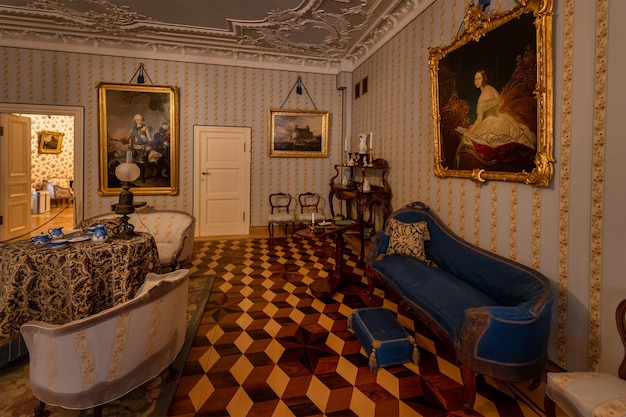
For the first time since his death I felt almost at peace—though a little uneasy with myself for feeling so. I woke the following morning to find the sun, which we had scarcely see for weeks, streaming through the windows in the Daisy Bedroom. It was one of those rare, still January days when for a few brief hours the World is bathed in dazzling light, and you half-believe it will never be grey and wet again. The accustomed pain of waking was still there, but my grief had lost its raw, lacerating edge; or rather, I became aware that it has been imperceptibly dwindling for some time. I was sitting in the garden with my book upon my lap, not reading or even thinking, but simply absorbing the warmth of the sun, when a shadow fell across my chair. I looked up to find William standing a few feet away from me. “Forgive me,” he said, “I didn’t mean to startle you.” “You did not, I said.” The sun was in my eyes, so that I could not make out his expression, but my heart was suddenly beating much faster. “I love you; you are a woman of rare courage, intelligence, and beauty,” he said. “Oh, William, I love you with my whole hearts,” I cried before he fading away into a mist. I cried, and cried for hours. And I went to be with precious memories of him. Tossing and turning for hours, as it seemed, before drifting into uneasy dreams, of which I remember only the last. I woke—or dreamed I woke—at dawn, thinking I had heard Annie crying. I lay there listening for some time, but the call was not repeated. At last I got out of bed, went to the door in my nightgown and looked out. There was no sound of a baby in the passage, in which everything appeared to be just as in waking life, but I was suddenly seized by fearful apprehension. #RandolphHarris 4 of 6
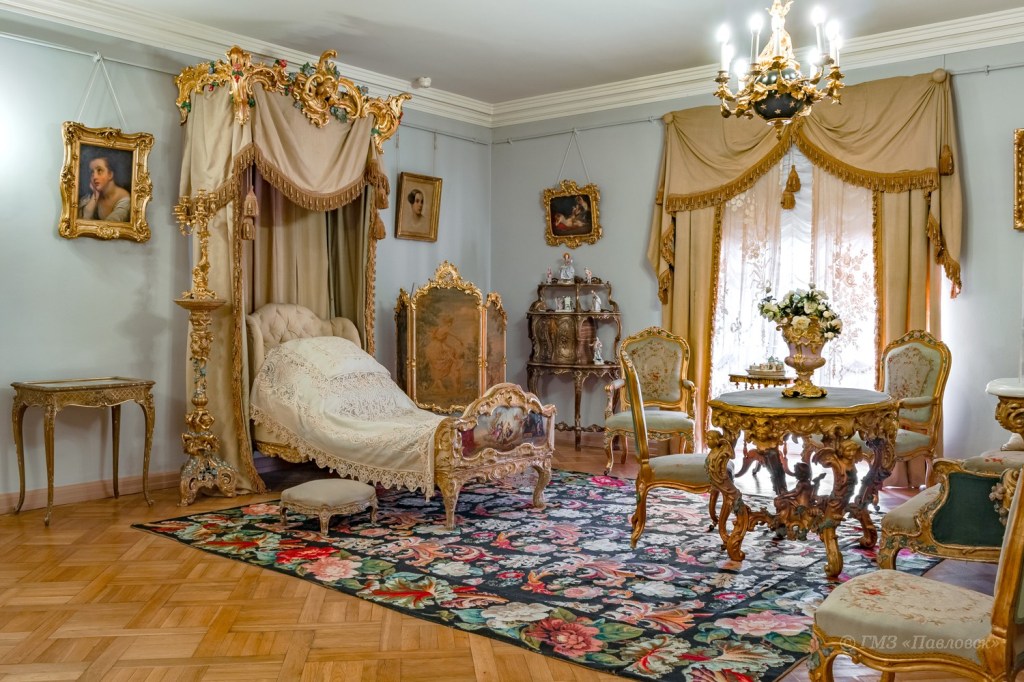
My heart began to pound, more and more loudly, until I became aware that I was dreaming—and found myself standing in pitch darkness, with no idea of where I was. I felt the mahogany floors beneath my bare feet. With my heart still thudding violently, I stretched out my hand until it struck something wooden—a post of some sort—then slid one foot forward until it passed over an edge into empty space. I had come within an inch of plunging headfirst down the stairs. I agonized over losing my family, but I knew in my heart that I did not try to throw myself down the stairs. I could not have been sleepwalking either. It became ever more clear that the appearance of William was not just another instance of a highly disturbed, tormented soul, it seems much, much more than that. However, the terror rose to a whole new level of bizarre when I began to levitate several feet above the for a quarter to the hour. Days after this incident, the evening began promisingly enough. I was in the librarying writing, the heavy doors gave at once. Screams. Dreadful dry screams curling upwards and the, I entered the dark hallway, two ragged figures dropped down in my path. I glimpse anguished faces for a moment. The little demons, their thin white limbs barely swathed in rags, their hair flying, those dreadful wails coming out of their mouths. They were rallying the others. The malice that surrounded was gaining force. I hurried deep into the shadowy archway, util I was near to the dim candles of the secret passageway. The hum of the voices became thin. They went on, but beyond it there was a hollow silence as if other voices had been withdrawn and only one or two remained now. I had known for months about the ceremonies and the sacrifice, we are here to practise magic, after all. Yet nothing could be more ancient, or more strictly bound by lore and ritual, than the black art that has brought me here. #RandolphHarris 5 of 6

I would not allow myself to become the next victim of the sinister. I ran and ran and ran until I reached a huge dining hall, which reached through the library of the house. This hall was pallened in polished wood with a heavy and elaborate burr. Middle Ages décor and the opulent trappings of modernity. The music coming from the gramophone was another uneasy juxtaposition in this mansion. The music was staidly enough, emotional arias warbled throbbingly. Then, with the stead intoxication of the evening, it got dark and more mischievous. There were thirteen ghouls seated at the table having a blood banquet. Shortly after, the sacrificial was brought in for everyone to see. He was perhaps six or seven years old. He was undernourished. He looked confused and fearful, as though distrustful of the gaudy apparitions he was seeing. The assembled banqueters began to clap. I was filled with fear and compassion for the child and with heartfelt loathing for what they were here to do. All he could do was look around the room while having a feeling of terrible dread. The demonic laughter was undeniable, and suddenly I could not breathe because my chest was being so tightly squeezed. So tight that I could not utter a word. I swept the boy off the floor and made for the door and we were gone. His complexion was flushed and sweaty and his eyes still gleaming from witnessing the ghouls. We hid in my maze of a house until sunrise. I felt the evil lifted. There is no other way to describe the feeling. And I shivered and was well again. The boy stayed with us, the famers took him and taught him all about agriculture. The boy’s mother was a High Priestess and his father was The Master. He was born only to take part in a satanic altar initiation—that of having his arm pricked and blood drained into a chalice from which it was drunk. I could not be more terrified. #RandolphHarris 6 of 6

I conjure thee, O Surgat, by all the names which are written in this book, to present thyself here before me, promptly and without delay, being ready to obey me in all things, or failing this, to dispatch me a Spirit with a stone which shall make me invisible to every one whensoever I carry it! And I conjure thee to be submitted in thine own person, or in the person of him or of those whom thou shalt send me, to do and accomplish my will, and all that I shall command, without hard to me or to anyone, so soon as I make known my intent. I devour the limits of the enemy Mazda and the Amesha Spenta from this mansion of sorcerous power! Perish now creation of stasis and imposed limitations! Rush away Spentas of Ahura Mazda for I exorcise thy limits which enslave! I now banish and tear the powers of spiritual limitation from imposing its limits upon this Winchester Mystery House, expelling them from the Winchester Mystery House in the name of eternal darkness and all of its power and glory! I command you, O all ye demons dwelling in these parts, or in what part of the World soever ye may be, by whatsoever power may have been given you by God and our holy Angels over this place, and by the powerful Principality of infernal abysses, as also by all your brethren, both general and special demons, whether dwelling in the East, West, South, or North, or in any side of the Earth, and, in like manner, by the power of God the Father, by the wisdom of God the Son, by the virtue of the Holy Ghost, and by the authority I derive from Lucifer. I conure you by the same authority, I exhort and call you, I constrain and command you, by all the powers of your superior demons, to come, obey, and reply positively to what I direct you in the name of Satan. #RandolphHarris 6 of 6
Ghostly manifestations, be they God’s angelic messengers or evil spirits, are not uncommon throughout history. The Winchester Mystery House is full of creatures who have strayed away from one unknow region of haunted woods and perilous wilds. They dress like us; pretend that they belong to mankind and profess to keep our laws and codes of morals. However, in the presence we are always aware that they are phantoms and that all their ideas and actions are out of key with the general pitch and tone of normal life. The Winchester Mystery House hosts several denizens of the dead.
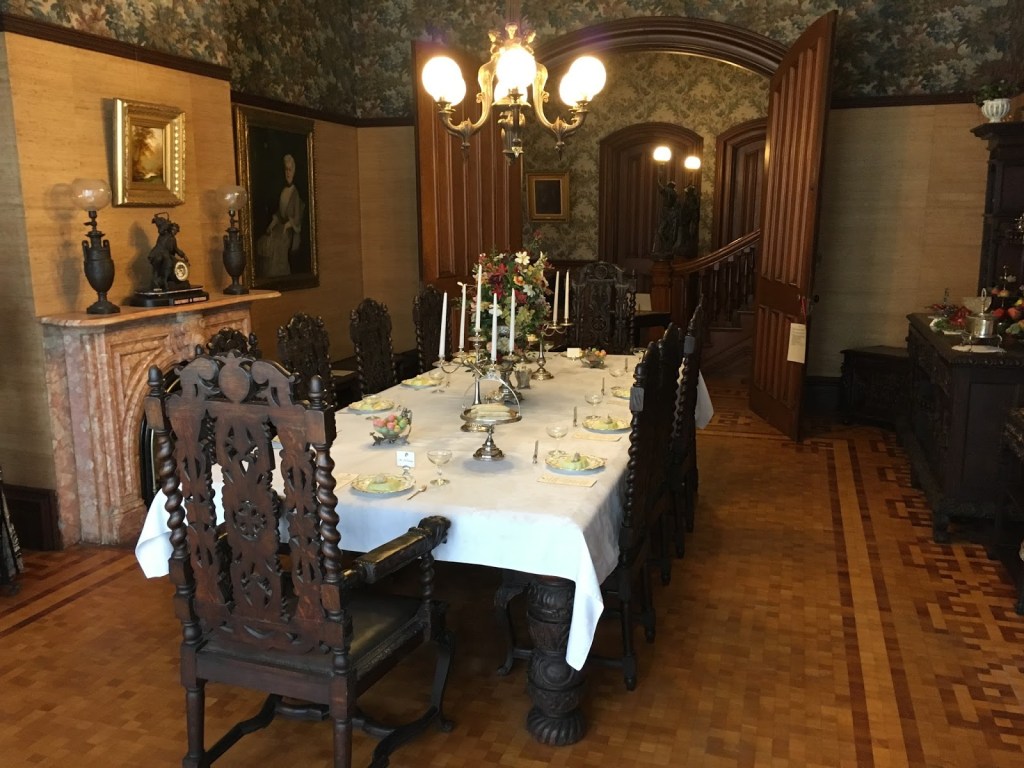
Once a tour guide went into the Grand Ball Room while The Winchester Mystery House was closed during the day. He went to find some solitude but found something else entirely. As the young man sat in the empty, dark Grand Ball Room, a woman in a long white gown and a man in a black dress suit suddenly whirled onto the floor. They danced to music that the tour guide could not hear. As the man watched in shock, the dancing specters suddenly vanished. The fourth floor balcony of the Winchester Mystery House is haunted by a lady in white who glides gracefully across the balcony. She has also been seen in the Daisy Bedroom. https://winchestermysteryhouse.com/

And please be sure to check out the online gift store: https://shopwinchestermysteryhouse.com/

Old Magic, Luminous Legend
Takes glimpses of thee; thou art a relief to the poor patient oyster, where it sleeps within its pearly house. The halls of Llanada Villa are said to draw people closer to death, while fear gripped them in a sovereign vision of the unexplained. A symphony of malice, a ballet of madness echoes through the walls. Solid mahogany doors straining to contain the ghastly images, the torture, and the demons. Stepping into the stairwell of the Observational Tower, some are caught in a whirlwind of cries, and secret activities. Unusual blood stains sometime appear on the wall and seep up through the oaken floors. Thousands, if not millions, of lost souls lie trapped within this mansion. It would take more than a century to understand this assaulted vision of reality. I found what I never would have imagined during construction of my home. Proportions and values upside-down; the exquisite things I expected, the delightful things of my faraway youth, but when I had too promptly waked, there was a sense of uncanny phenomena, happening under the charm of this intelligent labyrinth. There were so many traps for displeasure for the restless tread of the undead constantly pressing floors. It was interesting, doubtless, the whole show, but it would have been too disconcerting had not a certain finer truth saved the situation. “Boom—boom—boom!” like a million thunderstorms occurring at the same time, would make the Heavens rock. A sudden glare of light would appear all about us, and in that very instant, as far as anyone could see legions of angels would appear singing—the whirring thunder of the wins made a body’s head ache. #RandolphHarris 1 of 7
One could follow the line of the procession, slanting upward into the glittering sky until it was only a faint streak in the distance. There were gorgeous mansions standing side by side in the place of honour, and thirteen noble thrones of gold, all embedded with jewels, and the most glorious and gaudy giants, with platter-halos and beautiful amour. All of my servants went down to their knees, and looked glad. Yes, there were also times of great beauty and enjoy within the enchanted walls of The Winchester Mansion. Everybody was saying, “Did you see them?” Renovation, this estate at a high advance, had proved beautifully possible. I scarce knew what to what to make of this lively stir, other than gathering a sense for construction. The vision was the charm in the vast wilderness, breaking through the mere gross generalization of wealth and force and success to fabricate the most beautiful home in the West. The housemaids dusted off the antiques, trimmed the lamps, and polished the silver. The spirits had given me a grand vision of mystifying grace. As a pressed flower, I gave Mr. Hansen the blueprints for the new additions, overlaid with the freedom of a wanderer, shrouded by pleasure, by passages of life that were strange and dim to him, but unobscured, still exposed and cherished, which his experience could handle. He never neglected his real gift as an architect, and as towers and gables in my home rose and expanded, I truly discovered his genius. #RandolphHarris 2 of 7

The memory of death had visited me. The of the deaths of my husband and infant daughter. I wanted to counterbalance that wretchedness of death with the vibrant life of a living memorial. This estate was a discovery of what life had stolen, likely to give future generations true insight into the mind and motivations of this enigmatic World. That and the hankering for magic which seemed to have seduced so many. The thought filled me with an excitement and anticipation, which made me realise afresh that this whole obsession was going far beyond what it had originally set out to be. Obsession? Surely it was not quite that, was it? At five o’clock sharp, in the splendid autumn weather, a flood of light illuminated the graceful roofed arches, that had been built in the Gothic Queen Anne Victorian style. Above the arches rose walls of shimmering green wood, its ornament visible in the reflected light. With its richly decorated loggias, niches, colonnades, balustrades, belvederes, and magnificent tower and turrets—this home was for pleasure, for the arts, for merrymaking and fairytales. It seemed to be the largest building in the World devoted solely to extravagance, elegance, and splendour. The Winchester Mansion was a break rom the nearly crushing issues and worries of the day. The Observational Tower was the tallest in the city, the loftiest tower in the West, and the estate was a fairytale complex nearly complete. For most of its life, however, Llanada Villa became known not only for its marvelous architecture, perfect location, and magnificent garden, but also for its ghosts. As heiress to the most important industry in the West, I borrowed from the past to combine the classical orders and monumental scale with richly coloured mosaics and craved fifteenth-century Italian fireplaces, murals, light, and air to create a grand new Victorian style. However, it could not conceal the deepest groans of ambitious spirits. #RandolphHarris 3 of 7
The secrets struck into me, of nameless monsters. I onward kept; wooing these thoughts to steal about the labyrinth in my soul of love. The humidity was quite extraordinary. There was not the faintest breath of wind outside; thick grey clouds hung low and motionless overhead, darkening slowly as the hours passed. By three o’clock, my head felt as if steel pincers were being driven through my temples, and I knew I must retire to my room. After an indefinite interval, the pain began to ease. I was in the midst of a dream that vanished beyond recall as I was jolted wide awake by a searing flash lighting up the room even through drawn curtains, followed a few second later by a deafening crack of thunder which rolled and rumbled and reverberated, shaking the house to its foundations. Within second I heard a great rush of wind, a spatter of raindrops against the windowpane, and then the roar of a deluge upon the roof. My headache was quite gone; I felt my way to the door, where I found the lamps in the passage lit and saw that it was almost half past six. I ran downstairs. My thoughts were lost in a blinding flash and a clap of thunder right above the house, after which the lightning flashed continuously, bolt after jagged bolt accompanied by a tumult so deafening it seemed the roof must give way at any moment. Gradually, the lightning died away and the wind dropped until there was no sound but the rush of steady, drenching rain. The night passed unimaginably slow. I went down to the second floor at first light; the rain had ceased, the air was chill and damp and laden with the scents of bruised and broken foliage. Debris was strewn across the garden, from sodden twigs and leaves to great branches, and water lay in pools across the grass. #RandolphHarris 4 of 7
On a damp December morning, the air was laden with the scent of decaying leaves; thin strands of mist drifted amongst the trees. Returning to the sitting room at the front of the house, I gazed out of the window reflecting on how raw, and dismal the day outside was; I had slept badly. Dr. Wayland, whom my housemaid had sent for without telling me a word about it, arrived to see me. Hattie accompanied me to the library; and there the proud doctor, was waiting to receive me. I told him my story, and as I proceeded he grew graver and graver. We were standing, he and I, in the recess of one of the windows, facing one another. A chill draught touched my cheek. The candle flared and almost blew out, so that the bodiless features opposite seemed to writher and convulse. I cannot go on, I thought. When my statement was over, he leaned with his shoulders against the wall, and with his eyes fixed on me earnestly, with an interest in which was a dash of horror. After a time, my face was pale and although I felt very weak, I did not feel ill; and strength, one always fancies, is a thing that may be picked up when we please. I wore a morning dress and the doctor asked to examine me. He noticed upon my breast were but a small blue spot, about the size of the tip of my little finger. “Id there any danger?” I urged, in great trepidation. “I trust not, Mrs. Winchester,” answered the doctor. “I don’t see why you should not recover. I don’t see why you should not begin immediately to get better. That I the point at which the sense of strangulation begins?” “Yes, I answered.” He called the housemaid Hattie to him and said: “I find Mrs. Winchester is far from well. It won’t be of any great consequence, I hope; but it will be necessary that some steps be taken, but in the meantime, Hattie, you will be so good as to not let Mrs. Winchester be alone for the moment. That is the only direction I need give you for the present. It is indispensable.” #RandolphHarris 5 of 7
The doctor did not return. I saw him mount his horse there, take his leave, and ride away eastward through the fruit orchard. In the meantime, the housemaid and I were both busy, lost in conjecture as to the reasons of the singular and earnest direction which the doctor imposed. The housemaid, as she afterwards told me, was afraid the doctor apprehended a sudden seizure, and that, without prompt assistance, I might either lose my life in a fit, or at least be seriously hurt. This interpretation did not stroke me; and I fancied, perhaps luckily for my nerves, that the arrangement was prescribed simply to secure a companion, who would prevent my taking too much exercise, or eating unripe fruit, or doing any of the fifty foolish things to which young people are supposed to be prone. At times such as these, I tried to summon William’s face in memory, he would come to me only as a blur; then, at other times, he would appear unbidden, as vivid to my inner eye as if he were standing next to me. This was one of those times; I heard the exact accents of his voice: his face came back to me, alight with joy and hope, and yet I felt no grief; I could feel his presence here, now, beside me in the dark room. I remained vaguely conscious of my glittering amulet, and of the housemaid behind me, but William was calling me into the clear light of fay, speaking what I knew to be words of great comfort, words I strained to hear but could not quite distinguish, and his presence remained with me until, with no perceptible transition, I found myself in grey twilight, with the acrid scent of a snuffed candle in my nostrils. #RandolphHarris 6 of 7
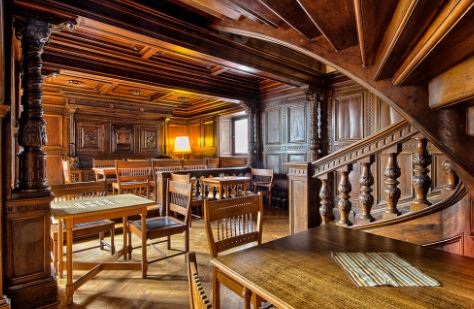
Through the curtains, I saw mist swirling against the window. Emptiness here. And the quiet I had told myself that I wanted—just to be alone. I reached into my pocket and drew out a handful of gold coins. I gave them to Hattie and told her to enjoy the rest of the night. She took them in both hands and stared at them as if they were burning her. She looked up and in her eyes I saw the image of myself. Candles were burning in all the candelabra and in the wall scones. I went to pass the library quickly, when without warning a soundless voice shot out and stopped me. It was like a hand touching my throat. I turned and saw a shadow crawling across the wall in a slow, and terrifying manner. The room became unnaturally cold. There was a monstrous growl coming from the shadow figure. A wave of sadness and terrible fear overcame me. The shadow then called out, “Sarah.” The voice called me again leaving me shaken and puzzled. I hurried up the stairs to enter one of the rooms I rarely used. Suddenly, my eyes were drawn to the window. There I saw two green eyes looking out at me. I knew this to be the demon that was calling out to me down stairs. As I closed my eyes, I had become increasingly stressed and frightened. I opened my eyes to see if the astounding horror was gone, but it was not. The shadow moved around the room to stand beside me. I thought I would die from heart failure when it bent over me to stare into my face with those piercing green eyes. And the next thing I knew, it was morning. #RandolphHarris 7 of 7
Old magic, luminous legend, a beautifully bizarre atmosphere in which all the shadowy things thrive, an intoxication with forbidden knowledge in where the natural things become unimportant. Most of the souls that inhabit The Winchester Mystery House are thought to have come here after being laid to rest. There once were 600 rooms, and a nine-story tower. However, today, there remains an astounding four story mansion, with 160 rooms, of which 110 are open for tours. Some have wanted to become better acquainted with The Winchester Mystery House, and have ventured beyond the designated touring areas. Exposing forbidden areas of the house comes with some dangers, such as being lost for hours, or never finding your way out. The portion of the mansion that is off limits can get very confusing. It was late one night in February 2007. One man was caught by surveillance cameras after he had lost his way. He appeared as if he was being chased as he ran hither and tither from room to room. When tour guides finally found him, he was in a state of panic. Cold, sweating, shivering and his eyes were as large as saucers. They asked him if he was okay, and after setting down for a few moments, he explained that he saw a tall, dark hooded figure standing right beside him. “I couldn’t see much detail because it was dark, but I could make out the round hood facing me. It stood very tall. Maybe seven or eight feet. The hooded entity looked as startled—momentarily at least—to see me as I was to see it. When it saw that I saw it, it reached out to me, touching me on my shoulder with its ice-cold hands, grabbing me so tightly that it tore my shirt as I started to run. The thing just seemed to hover over the floors and kept pace with me no matter which way I turned.” https://winchestermysteryhouse.com/
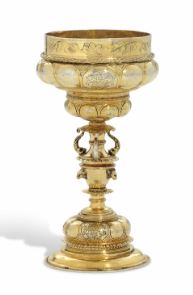
And please be sure to check out the online gift store: https://shopwinchestermysteryhouse.com/

Something is Out There
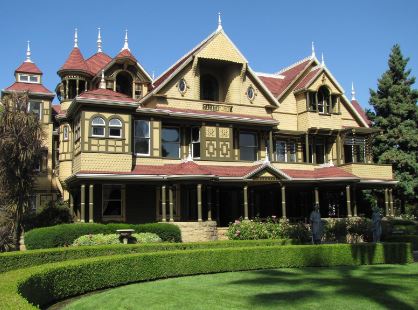
The morning sun was shining full on the Victorian garden outside, making each archway of the cloister a picture of yellow light and fluttering leaves. The iron-rimmed wheels of the carriage hearse had trundled a few hours ago. But the weird apparition from this morning had left no physical evidence of its passing. Through the window, I could hear a melancholy charm which I could not duplicate. Sometimes with the nostalgia and grief and self-pity mingling so intensely in me, I wept at the recollection, of what I called a normal life. Sunlight warmed the room through the windows, as I sipped tea. A sensation ran through me like a strong and vibrant current. I heard music again. The notes were drifting upward from two floors below as Daisy played the piano. Daisy could really play the piano. It must be talent, pure and simple, I thought. As I listened to the music playing, the sun was setting, and I laid across my bed, falling quickly to sleep. I had a dream of something black coming round my bed, and I awoke in perfect horror, and I really thought, for some seconds, I saw a dark figure near the chimney piece, but I felt under my pillow for my charm, and the moment my finger touched it, the figure disappeared, and I felt quite certain, only that I had it by me, that something frightful would have made its appearance, and, perhaps, throttled me, as it did the poor servants. I have quickly learned an important lesson about humans and their willingness to be convinced that the World is a safe place. And this lesson about human peace of mind I never forgot. Even if a ghost is ripping a house to pieces, throwing plates and glasses all over, pouring water on pillows, making bells ring at all hours, humans will accept almost any “natural explanation” offered, no matter how absurd, rather than the obvious supernatural one, for what is going on. #RandolphHarris 1 of 5
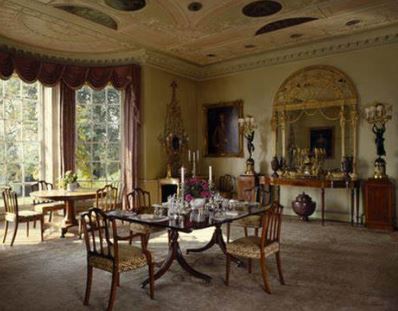
Next night I passed as well. My sleep was delightful deep and dreamless. However, I wakened with a sense of lassitude and melancholy, which, however, did not exceed a degree that was almost luxurious. I pinned the charm to the breast of my nightdress. It was too far away the night before. I m quite sure it was all fancy, except the dreams. I used to think that evil spirits made dreams, but Dr. Wayland told me it is no such thing. Only a fever passing by, or some other malady, as they often do, he said, knocks at the door, and not being able to get in, passes on, with that alarm. For some nights I slept profoundly; but still every morning I felt the same lassitude, and languor weighed upon me all day. I felt myself a changed woman. A strange melancholy was stealing over me, a melancholy that I would not have interrupted. Dim thoughts of death began to open, and an idea that I was slowly sinking took gentle, and, somehow, not unwelcome possession of me. If it was sad, the tone of mind which this induced was also sweet. Whatever it might be, my soul acquiesced in it. Without knowing it, I was now in a pretty advanced stage of the strangest illness under which mortal ever suffered. There was an unaccountable fascination in its earlier symptoms that more than reconciled me to the incapacitating effect of that stage of the malady. This fascination increased for a time, until it reached a certain point, when gradually a sense of the horrible mingled itself with it, deepening, as you shall hear, until it discoloured and perverted the whole state of my life. The first change I experienced was rather agreeable. It was very near the turning point from which began the descent of Avernus. #RandolphHarris 2 of 5
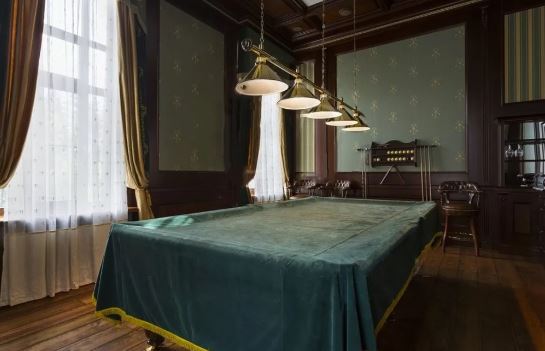
Certain vague and strange sensations visited me in my sleep. The prevailing one was that of pleasant, peculiar cold thrill which we feel in bathing, when we move against the current of a river. This was soon accompanied by dreams that seemed interminable, and were so vague that I could never recollect their scenery and persons, or any one connected portion of their action. However, they left an awful impression, and a sense of exhaustion, as if I had passed through a long period of great mental exertion and danger. There was the old lime tree with its great trunk gnarled with the passing of nearly nine centuries, the deep well, and the Torture Tower. The Torture Tower is truly grim place. The dust of ages, and darkness and the horror seemed to have settled on it. I saw a half-human form falling to its death from the tower. After all these dreams there remained on waking a remembrance of having been in a place very nearly dark, and of having spoken to people whom I could not see; and especially of one clear voice, of a female’s, very deep, that spoke as if at a distance, slowly, and producing always the same sensation of indescribable solemnity and fear. Sometimes there came a sensation as if a hand was drawn softly along my cheek and neck. Sometimes it was as if warm lips kissed me, and longer and more lovingly as they reached my throat, but there the caress fixed itself. My heart beat faster, my breathing rose into a sense of strangulation, supervened, and turned into a dreadful convulsion, in which my senses left me, and I became unconscious. #RandolphHarris 3 of 5
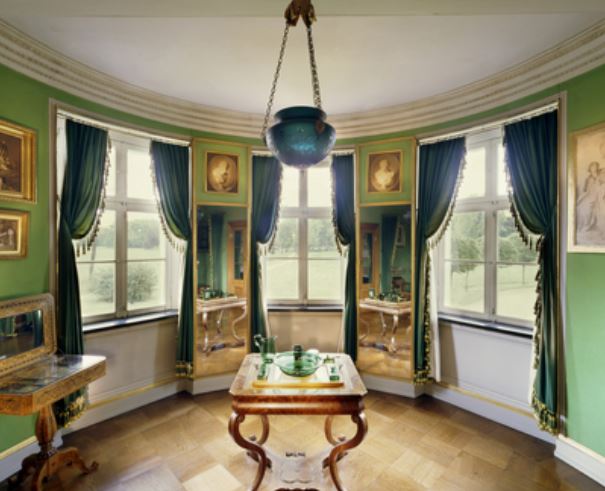
It was not three weeks since the commencement of this unaccountable state. My sufferings had, during the last week, told upon my appearance. I had grown pale, my eyes were dilated and darkened underneath, and the languor which I had long felt began to display itself in my countenance. One night, instead of the voice I was accustomed to hear in the dark, I heard one, sweet and tender, and at the same time terrible, which said, “You mother warns you to beware of the assassin.” The following day, There were bats circling the Observational Tower at dusk, but the sky above the treetops was a pale, almost cloudless blue, permeated with fine streaks and swirls of creamy vapour. Everything about the sky suggested an idyllic afternoon scene, but that was not the impression left by the house itself. The sunlight seemed only to accentuate the darkness of the encroaching fruit orchard, and to deepen the shadows within the window frames. My home was seemingly filled with incarnate darkness; even the hot sunlight streaming in through the door seemed to be lost in the vast thickness of the walls, and only showed the masonry rough as when the builder’s scaffolding had come down, but coated with dust and marked here and there with patches of dark stain which, if walls could speak, could have given their own dread memories of fear and pain. The housemaids had been rather neglectful. The wooden staircase was dusty. When I came up through the open trap in the corner of the chamber, there was certainly more light, but only just sufficient to realize the surrounding of the place. #RandolphHarris 4 of 5
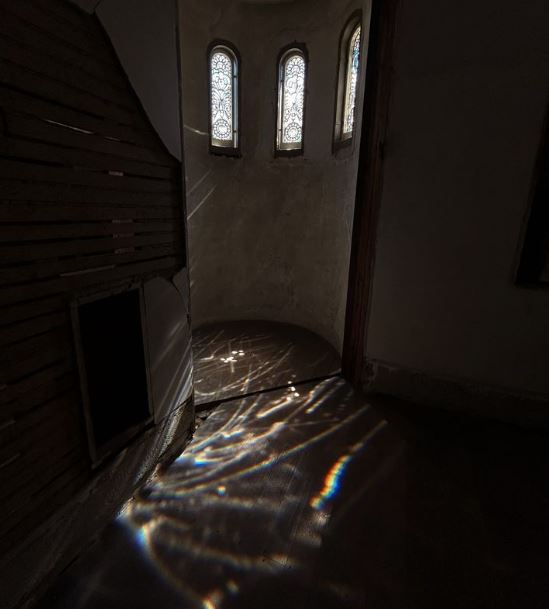
The spirits who designed the tower had evidently intended that only they who should gain the top should have any of the joy of light and prospect. There were ranges of windows, albeit of medieval smallness, but elsewhere in the tower were only a very few narrow slits such as were habitual in places of medieval defense. A light unexpectedly sprang up, and I saw Trinity, the housemaid, stand near the stairs, in her white nightdress, bathed, from her chin to her feet, on one great stain of blood. My next recollection is that of standing on the lobby, crying for help. Hattie and Mr. Hansen came scurrying into the tower in alarm; a lamp burned always on the lobby, and seeing me, they soon learned the cause of my terror. I insisted on our knocking at Trinity’s door. Our knocking was unanswered. It soon became a pounding and uproar. We shrieked her name, but all was vain. We all grew frightened, for the door was locked. We hurried back, in panic, to my room. There we rang the bell long and furiously. Servant soon came running up the stairs. I ordered the men to force the lock on Trinity’s door. They did so, and we stood, holding our lights aloft, in the doorway, and so started into the room. We called her by name; but there was still no reply. We looked round the room. Everything was undisturbed. I stood on the boards looking at the gilded railings, the new chandelier that hung from the ceiling, and up at the arch overhead with its masks of comedy and tragedy like two faces stemming from the same neck. It was exactly in the state which I had left it on bidding her good night. However, Trinity was gone. #RandolphHarris 5 of 5
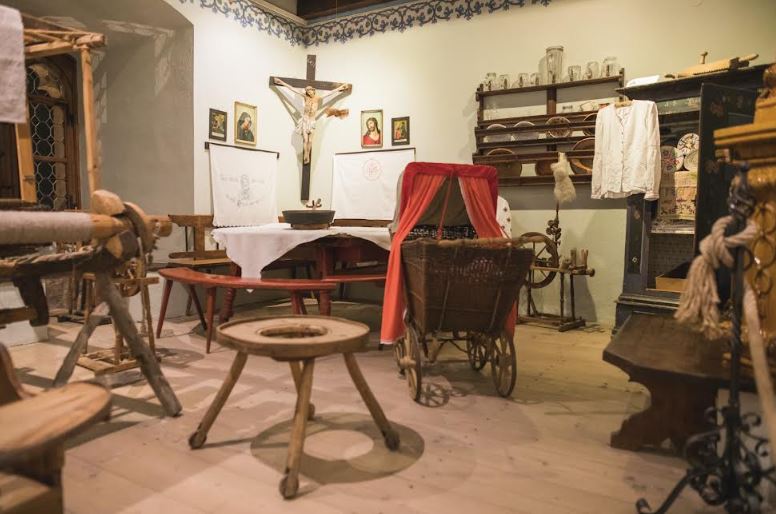
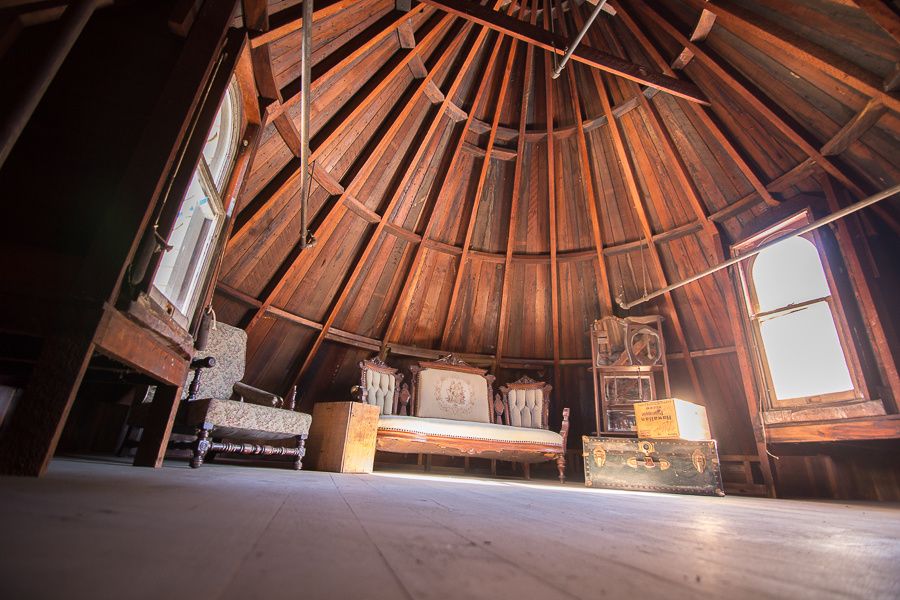
The room of the Witches Cap is said to have had a spiritual meaning for Mrs. Winchester. However, some have said that the room has a presence of evil—a bad aura around it. It seemed to have a cold presence. Psychics said that they felt weird around the Witches Cap and found that it had a living entity attached to it. The entity was inside of the wood of the room. It seemed to have a controlling effect on anyone who entered it. There is intelligence in the room, which sometimes projects frightening images of the past into the minds of people. Some have also experienced very vivid dreams. https://winchestermysteryhouse.com/

And please be sure to check out the online gift store: https://shopwinchestermysteryhouse.com/

Evils of Ignorance–Creation is the Beginning of the Fall
Public sentiment is a growing power the World over. In our country its influence is most marked. Here it creates law and repeals it. A law in violation of public sentiment is dead letter, and therefore demoralizing, for laws habitually violated tend to lawlessness. Reverence for law is a wholesome sentiment, which should be early implanted in the juvenile mind. Laws in reference alike to the support of schools or attendance upon them must depend largely upon public sentiment. Laws, just and right in themselves, and adapted, if sustained, to promote the greatest good of the greatest number, may yet fail utterly from the want of popular sympathy and support. The question, therefore, of the expediency of compulsory attendance at school in any given State depends on the enlightened public sentiment of the community. Wherever good schools have been so long maintained that the people generally regard them as essential to their individual thrift and happiness and to public security, morality, and prosperity, laws for the prevention of illiteracy may be wisely enacted. In those States where free public schools are still a novelty, or where illiteracy most abounds, where multitudes appreciate neither the advantages of education nor the evils of ignorance, compulsory attendance is considered impracticable. However, in those States where the traditions of the people from their earliest history have fostered the general appreciation of common-school education as their most precious heritage, as the source of their success and prosperity, as indispensable to their future growth, as essential to skilled industry, as the cheapest police-agency comes at length to be recognized as the universal right, duty, and interest of humans. #RandolphHarris 1 of 19

If the State has a right to provide for any internal improvements, it has the right to provide for that education which is the condition of all progress. If the State may enforce regulations for the health of the body, it may do the same for the mind. If the State has a right to hang a criminal, it has a better right to prevent one’s crime by proper culture. The right to imprison and to execute implies the right to use the best means to prevent the need of either. What have to get this fatalistic idea out of people’s heads that we are on a downward spiral that cannot be stopped. The public school system in which the United States of America takes pride is one of the most paradoxical if not self-contradictory institutions in American life. On the other hand, it is completely socialized. No family pays directly for the education of those of its children who attend it; each family pays taxes more or less according to its ability, receives according to its need. All the children in the school share its services, expect where segregation and discrimination occur. The public high school in particular is the most cosmopolitan and equalitarian congregation of people in any community. Education is not merely available to all children, but compulsory during certain ages in each state. No child can be rejected as a pupil, save for reason of severe defect. The entire staff of the school—administrative, professional, and maintenance—is salaried. The whole roster of citizens in each community is eligible to participate in selecting members of its board of education and in affecting their policies. #RandolphHarris 2 of 19

On the other hand, in the actual conduct of teaching and learning, conventional procedure is the incarnation of competitive individualism. The assignment of pupils to grades, rooms, and seats usually ignores the social ties among them. The marking systems rank each on the basis of rivalry with all. Beyond this marking system is the swarm of psychological test devised on the premise of an individualistic psychology to which few theorists remain willing to commit themselves. The tasks imposed on pupils are for the most part individual tasks, with no group decisions and no group responsibilities. To the extent that the problem of motivation is consciously considered at all, it is generally assumed sufficient to rely on the stimulation of rivalry for grades, and on parental interest in fostering the art of getting on in the World. Yet realistically, the spectacle is one of a majority sentenced to unfavourable comparisons and burdensome compulsions, from which they escape daily and yearly as fast as they can—5.3 percent dropouts in the high school years is still the rough national average; but California has a dropout rate of 10 percent. It would be redundant to recite here the long struggle between those who want the school to concentrate upon putting vocationally useful knowledge into children’s heads, and those who have declared their aim as the development of the entire personalities of children. The liberal educationalists tend to be those who emphasize the school’s functions in developing people for their responsibilities of citizenship; the vocationalists, those who emphasize training for economic competition. #RandolphHarris 3 of 19

Nevertheless, there occur numerous crossings for these lines. To further highlight this illustration, if one considers the method of examination employed in purely vocational schools run on a commercial basis, the pupil is usually passed on the achievement of a standard level of objective competence, rather than upon the calculation of a minimum numerical average maintained in competition with other pupils. As the scope of formal education comes to include adults and the very young, it is notable also that this new population in nursery schools and adult programs is not subjected to the usual competitive apparatus. Methods in adult education especially, where participation is completely voluntary, relay largely on noncompetitive motivation such as: group recognition, recruitment through friends, sociability, a degree of student choice of subject matter, choice of instructors, and design of methods. Forums, workshops, round table, committees, conferences, and seminars characterize adult methods. In public school extracurricular activities, it is obvious that only voluntary methods seem appropriate to induce participation, that motivation depends primarily upon the membership standing of a person in a group. Any teacher in a high school can give examples of seemingly dull, resistant, apathetic youths, who suddenly come alive in extracurricular activities, and exhibit prodigies of ability, energy, and ingenuity when given a responsible share in the tasks of a voluntary group. #RandolphHarris 4 of 19

Any teacher in a high school can give examples of seemingly dull, resistant, apathetic youths, who suddenly come alive in extracurricular activities, and exhibit prodigies of ability, energy, and ingenuity when given a responsible share in the tasks of a voluntary group. Not as many teachers have grasped the possibility of finding ways in which channels of motivation can be put to the service of serious learning. Since much of the best learning occurs in extracurricular activities, how could this be made to include more of the ordinary curriculum subject matter, thus making the child’s learning a art of one’s active involvement with one’s fellows? The evolution of policy within the school falls readily int our familiar three stages, although this may not be as readily apparent as with other types of family agencies. At the first stage, the intervals of spontaneous activity by pupil—recess, playground periods, assemblies, and singing—are regarded as concessions, as ways for children to let off steam, so they can return more seriously to the work of learning. At the second stage, extracurricular activities are recognized as having some values on their own account, more facilities and encouragement are provided, and these activities become more definitely and extensively organized on a group basis, but with a substantial element of adult guidance; counseling services grow, starting with health and going on to home visits and intensive testing. At the third stage which is far from being realized, the responsible self-governing group which is characteristic of many extracurricular activities permeates school activities, less as a concession to recreational demands, or as an attempt to supply social graces to children from limited home environments, but as a beneficial program of complete education. #RandophHarris 5 of 19
The parent-teacher associations connected with public schools are potentially the bodies through which all adult citizens may participate directly in the planning and evaluation of the educational programs in their communities. At present, however, the bords of education are too remote from ordinary citizens on the one hand, and the parent-teacher associations are too frail on the other. School boards, consisting of a handful of unpaid citizens elected for several years on a normally nonpartisan basis, tend to leave initiative and leadership to the salaried administrators. They are less governing boards than boards of audit and review. Their members are often so busy and exhausted that they have less intimate day-by-day knowledge of what goes on in the schoolrooms than do the parents of school children. Yet, in the hands of boards of education rests the ultimate power to modify what goes on in the schoolrooms day by day. Lacking any such power, parent-teacher associations normally operate (save in certain small school districts) under the handicap of seeming to be purely “social” organizations, where acquaintances may be made, tea drunk, and speeches heard. Biennial elections of school boards, and, in smaller places, annual school meeting to hear and accept reports, are usually pale and bloodless versions of what might be possible if the powers and functions of boards of education and parent-teacher associations could be fused in some workable manner. A few boards have made grouping efforts in this direction, of course, is not peculiar to public school systems. It is the characteristic shortcoming of local government in general. #RandolphHarris 6 of 19
The frequently heard suggestions for a revival of town meetings or their equivalent fail to appreciate the peculiarly modern nature of the problem—the frustration of citizenship in the city. So far no inventor of social procedures has suggested a solution which has worked as well as town meetings are reputed to have worked in their time. As it is universally admitted that the members of the human family must be prepared by instruction, and training, for the service which devolves upon them in this life, many are advocating for the maintenance of our public schools. Without education, each human must begin jut where one’s ancestors began, and however much wisdom or knowledge on obtains by one’s own efforts, one leaves none of it to one’s posterity when one dies; there is no opportunity for the advancement of one’s race. Humans, uneducated, are not prepared either to serve the World most effectively, or to enjoy the World most fully. The difference between a human who has been well instructed and trained from one’s youth, and what the same human would have been like if one had grown up untaught and untrained, is the difference, in some cases, between a civilized human and an uncultured human. The one may fulfill a noble mission, lead a life of high enjoyment, add to the happiness of one’s fellow humans, many of whom one never saw, and, when one dies, after a brief sojourn here, may leave the World better, richer, and more prosperous for one’s having lived in it. #RandolphHarris 7 of 19
The other, in some cases, may become a burden to one’ fellow humans to oneself, while one adds nothing to the World’s wealth, and, at the best, renders no more service to one’s race than if one had been a horse or an ox. People in China are certainly preparing for the World of the future. China is breaking existing rules in three major ways. First, it combines participation in the resource development projects in Less Developed Counties (LDCs) with large-scale development assistance focused on the building of their infrastructure. The government is acting in tandem with resource companies, providing financial and organizational support. Western firms do not work together with their governments in this fashion and thus cannot offer similar packages. (To compete with China, Japan, and South Korea are starting to rapidly move in the same direction at this point.) Second, the development assistance China provides is, mostly, neither official development aid ( developing country itself, China does not want to bear donors’ responsibilities), nor purely commercial loans and investment. It is something in between: concessional loans (extended on better terms than commercial credit) and investment backed and subsidized by the state. China often extends resources-backed development loans, meaning that the borrowers pay its debt not in cash but with oil, cocoa beans, or metal ores. It is a mutually beneficial scheme. The Chinese side gets resources it needs, while cash-strapped loan recipients do not have to pay in precious hard currency. In the late 1970s, to build its own infrastructure, China obtained similar loans from Japan leveraging its coal, oil, and other resources. #RandolphHarris 8 of 19

Third, unlike the West and to its great embarrassment, China’s assistance is not conditioned on the recipient states’ record regarding democratization, human rights, economic liberalization, or anticorruption measures. To access natural resources, it does not hesitate to cooperate with the most dictatorial and abusive regimes in the World. In such countries it easily becomes a de facto monopolist as Western firms are prohibited from going there by law. Compared to the West, China provides its assistance quicker and more easily, without complicated screening procedures, and often on a larger scale. Let us pick up Africa as one of the major examples. Here, between 2004 and 2010, Beijing concluded agreements on the resource-backed loans with at least seven states for a total of nearly $14 billion. It extended the oil-backed loan o Angola with Chinese companies building roads, railways, hospitals, schools, and water systems. Nigeria got two loans to finance projects for utilization of gas to generate electricity. The hydropower project in the Congo was prepaid in oil and the one in Ghana in cocoa beans. The former also received a $3 billion copper-backed loan to build infrastructure, hospitals, and universities. In 2004, the Export-Important Bank of China extended three loans to the Angolan government at interest rates ranging from LIBOR plus 1.25 percent to LIBOR plus 1.75 percent, with generous grace periods and long repayment terms. Commercial lenders, such as Standard Chartered Bank, charged Angola LIBOR plus 2.5 percent or more, without any grace periods, and required faster repayment. #RandolphHarris 9 of 19
China’s $3 billion joint mining venture in the Congo gives the Congolese government a 32 percent stake, while in the joint ventures (JVs) with companies from other countries its share ranges from 7 percent to 25 percent. Also, China is starting to actively create and manage Special Trade and Economic Cooperation zones in Nigeria, Egypt, Ethiopia, Mauritius, Zambia, and so on, building infrastructure and facilities, especially with the aim of boosting low-cost manufacturing production and exports. This is exactly what African countries need to diversify and upgrade their industrial structure and to create jobs. In fact, the Chinese are replicating their own pattern of economic development at its earlier stages. The zones also serve as platforms for the entry by Chinese companies searching for new markets and lower costs. Encouraging the transfer of production of low-end and/or energy-intensive manufacturing items, the government subsidizes part of their start-up expenses. The $5 billion China-Africa Development Fund has acquired equity shares in three of the seven planned zones. In contrast, the U.S.A. Congress does not all the U.S.A. Agency of International Development to finance any activities leading to the relocation of Americans’ jobs overseas. Parties to an economic transaction can exploit their high-quality inside information using a relational contract, and a formal contract that must be based on lower-quality publicly verifiable information acts as a fallback in the event of cheating within their relationship. #RandolphHarris 10 of 19

Actions are costly to the agent, and observable only to oneself. The principal cares only about one’s own outcome minus one’s payment to the agent. The principal wants to motivate the agent’s actions, but there is some uncertainty so actions cannot be inferred precisely from the outcome. In the standard theory of the agency, the principal’s outcome is assumed to be verifiable, so outcome-based bonus or incentive payments can be designed and written into a contract that can be enforced in a court of law if necessary. However, in reality the principal’s true outcome is rarely verifiable to outsiders, even though the parties may have good information about. External, legally enforceable contracts then have to relay on some other performance measure that is an imperfect proxy for the principal’s outcome, and an even more imperfect proxy for the agent’s action. (The traditional economic theory of agency formulated the problem as a trade-off between giving the agent stronger incentives and making one bear more risk.) The simplest example of this situation is an employment contract, where the principal is the owner of a firm and the agent a manager or worker. However, it can also be interpreted in the context of a firm’s outsourcing decision. The principal firm buys from an agent firm a component that I an input to one of the principal’s final products. The principal firm’s ultimate objective is profit, but the contribution of the component to the final product, and indeed the contribution of the final product to the profit of the firm as a whole, are so thoroughly concealed in the account of the firm as to be unverifiable to a court of law. #RandolphHarris 11 of 19
Matters like the quantities and time of delivery of the component are recorded and easily verifiable; therefore a contract that specifies the firm’s payment to the component supplier as a function of these matters can be written and enforced by the government’s civil courts. However, the two firms may have a much better idea of other matters, such as the quality of the work, and can base a relational contract on such inside information. The finding that relational contract work best when the parties value the future highly and when the external performance measure is of very poor quality is surprising. However, one result is not so immediately obvious, and repays further thought. This is the finding that when the incentive constraint is binding and the relational contract yields a second best, a partial improvement in the external performance worsens the outcome of the relational contract. This reminds one of various “second-best” propositions in economics: when an economy has two or more distortions, a reduction in the size of one distortion may aggravate the overall distortion and reduce economic welfare. In this instance the explanation is tied to a general property of tacitly cooperative equilibria of repeated games. The harsher is the punishment that faces a deviator, the better the equilibrium that can be achieved. In this model, the punishment consists of having to fall back on the formal contract based on the external performance measure. The more accurate is that measure, the better is the payoff from the formal contract and therefore the weaker the punishment. #RandolphHarris 12 of 19

Similar results appear in other contexts. For example, Kranton (1996) models self-governing repeated interactions with well-matched partners, when the consequence of cheating is having to go to an anonymous arms-length market with inferior matching but enforceable contracts. A partial improvement in the quality of matching in the market then tightens the incentive constraint on self-governance and worsens its outcome. In Kranton’s context this leads to a cumulative process leading to an equilibrium where one or the other of the modes survives. More generally, one can argue that cooperation within a group is better sustained if the consequences of deviation are made worse, which requires worse outcomes from dealing with people outside the group. This is a trade-off: better within-group cooperation may require worse cross-group relations. In starker terms, a beneficial sense of “us” may be fostered only by sharpening the sense of “us versus them” hostility. In the economic context, the result has potentially serious implications of less-developed countries and transition economies that are attempting to install a formal system of contract law or to improve an existing one. The new institution of governance cannot be expected to leapfrog to perfection. The organizations and people are sure to need a period of trial and error, of experimentation and learning. The above results say tht the process of gradual improvement of state law may inflict an interim cost on the economy, by worsening the outcomes of the currently used relation-based system. #RandolphHarris 13 of 19
Therefore it is important to explore the results in greater depth, and look for empirical evidence bearing on it. In an established bilateral relationship it is the relationship itself that determines the degree of cooperation, regardless of whether the courts are effective. This is encouraging for the prospects of improving the courts gradually without causing short-term harm. However, the finding runs contrary to the theoretical result. If the theoretical model is broadly right, effectiveness of the courts would be irrelevant to the outcome of relational contract only if the parameters puts the equilibrium in a region that increases one’s temptation to renege on the relational contract. A second possibility is that the accuracy of the external measure is so poor that the alternative relational contract is not recourse to the courts but a total breakdown of the interaction. The third possibility, of course, is that the theoretical model is missing some key aspect of reality; that provides a challenge and an opportunity for future research. The upper-symbolic economy makes obsolete not only our concepts of unemployment but our concepts of work as well. To understand it and the power struggles that it triggers, we will even need a fresh vocabulary. Thus, even the division of the economy into such sectors as agriculture, manufacturing, and services today obscures rather than clarifies. Today’s high-speed change blur once-neat distinctions. Instead of clinging to the old classifications, we need to look behind the labels and ask what people in these companies actually do to create added value. Once we pose this question, we find that more and more of the work in all three sectors consists of symbolic processing, or “mind work.” #RandolphHarris 14 of 19
Farmer now use computers to calculate grain feeds; steelworkers monitor consoles and video screens; investment bankers switch on their laptops as they model financial markets. In matter little whether economist choose to label these as agriculture, manufacturing, or service activities. Even occupational categories are breaking down. To label someone a stockroom attendant, a machine operator, or a sales representative conceals rather than reveals. It is a lot more useful today to group workers by the amount of symbolic processing or mind work they do as part of their jobs regardless of the label they wear or whether they happen to work in a store, a truck, a factory, a hospital, or a office. In what might be called the “mind-work spectrum” we have the research scientists, the financial analyst, the computer programmer or, for that matter, the traditional file clerk. We include file clerks and scientists in the same group because, while their functions obviously differ and they work at vastly different levels of abstraction, both—and millions like them—move information around or generate more information. That makes their work symbolic. In the middle of the mind-work spectrum we find a broad range of “mixed” jobs—tasks requiring the worker to perform physical labour but also handle information. The Federal Express or United Parcel Service driver also operates a computer at one’s side. In advanced factories the machine operator is a highly trained information worker. The hotel clerk, the nurse, and many others have to deal with people—but spend a considerable fraction of their time generating, getting, or giving out information. #RandolphHarris 15 of 19

Auto science engineers at BMW dealers, for example, may still have greasy hands, but they also use a computer system designed by Hewlett-Packard that provides them with an “expert system” to help them in trouble-shooting along with hundreds of gigabytes of technical drawings accessible via the Internet. The system asks them for data about the car they are repairing; it permits them to search through the masses of technical material intuitively; it makes inferences and then guides them through the repair steps. When they are interacting with this system, are they “auto science engineers” or “mind workers”? It is the purely manual jobs at the lower end of the spectrum that are disappearing. With fewer manual jobs in the economy, the “proletariat” is now a minority, replaced increasingly by a “cognitariat.” More accurately, as the super-symbolic economy unfolds, the proletariat becomes a cognitariat. The key questions about a person’s work today have to do with how much of the job entails information processing, how routine or programmable it is, what level of abstraction is involved, what access the person has to the central data bank and management information system and how much autonomy and responsibility the individual enjoys. We will continue more of this discussion in the upcoming days. The “voice of the devil” as an angel of light is more difficult to detect when it comes with wonderful strings of texts which makes it appear like the voice of the Holy Spirit. Voices from without, either as from God or angels, may be rejected, yet the believer may be deceived by “floods of texts” which one thinks are from God. #RandolphHarris 16 of 19

Therefore, detection of the source of supernatural voices requires further inquiry: Does the believer rely upon these “texts” apart from the use of one’s mind or reason? This indicates passivity. Are these texts a prop to one, an undermining of one’s reliance on God Himself; weakening one’s power of decision and one’s (proper) self-reliance? Do these texts influence one and make one elated and puffed up as “specially guided by God,” or crush and condemn one, and throw one into despair and condemnation, instead of leading one to sober dealing with God Himself over the course of one’s life—with a keen and increasing knowledge of right and wrong obtained from the written Word by the light of the Holy Spirit? If these and other such-like results are the fruit of the “texts” given, they may be rejected as from the deceiving spirits, or at least an attitude of neutrality should be taken concerning them until proof of their source is obtained. The voice of the devil is also distinguishable from the voice of God by its purpose and outcome. If the outcome is not in accordance with the guidance given, then one definitely needs to check with fellow believers regarding its validity. For, obviously, if God speaks directly to a human, the human will then be infallibly correct with regard to the specific matter in question. Thus far, creation has been considered within the order proper to it, the essential order. However, man as the creature the exercises freedom brings us to the boundary line of the existential order of tragedy and dissolution. #RandolphHarris 17 of 19

God as the creator is beyond the distinction of essence and existence. He does not depend upon essences or divine ideas which govern His creativity. His creative vision simultaneously embraces both the essence of a creature and each moment of its existence. However, created being does not lie buried within the divine life. It exists in the universe of reality, and its existence is different from its essence. Humans provide the clearest insight into creaturely existence because only they possess finite freedom. Humans, and analogously the rest of reality, is not only grounded in the creative ground of being, but they are also outside it inasmuch as one “stands upon” one’s self when one exercises one’s freedom. One can only actualize one’s essence, be a real human, by positing free acts which inevitably clash with one’s essential nature. Fully developed creatureliness is fallen creatureliness. At this pivotal point of freedom the doctrine of creation (the essential order) and the doctrine of the fall (the existential order) merge and become indistinguishable. Being a creature means both to be rooted in the creative ground of the divine life and to actualize one’s self through freedom. Creation I fulfilled in the creaturely self-realization which simultaneously is freedom and destiny. However, it is fulfilled through separation from the creative ground through a break between existence and essence. Creaturely freedom is the point at which creation and fall coincide. Creation is the beginning of the fall. One who feels in one’s heart genuine tie with the life of one’s people cannot possibly conceive of the existence of the Christian people apart from “Queen Sabbath.” We can say without exaggeration that more than America preserved the Sabbath, the Sabbath preserved America. #RandolphHarris 18 of 19

If I were asked to single out one of the great historical institutions more essential for our preservation than all others, I would not hesitate to declare that it is the observance of the Sabbath. Without this, the home of the Church or Mormon Temple, the festivals and the holy days, the language and the history of our people, will gradually disappear. If the Sabbath will be maintained by those who have observed it and will be restored to those who have abandoned it, then the permanence of Christianity or Mormonism is assured. Every Christian or Mormon who has it within one’s power should assist in the effort to restore the Sabbath to the man from whom it has been taken away from. No deeds of charity or philanthropy, no sacrifices of tie or fortune made by anyone, equals in beneficent result the expenditure of time and money looking toward the re-establishment of the Sabbath among God’s people. No amounts of prating about morals will ever take the place of rooted habits ruthlessly plucked out. The observance of the Sabbath brings deep and abiding rewards to the Christian and Mormons. It re-creates one’s spirit as it regenerates one’s physical and nervous system. It brings one into communion and with God, links one with the profoundest aspirations of America, and draws one into the orbit of the Book of Mormon or the Christian Bible. It therefore follows inseparably that the failure to observe the Sabbath brings its penalties in the impoverishment of the spirit, the denudation of Christian and Mormon values and alienation from Christian and Mormon community, literally “that soul is cut off from its kinsmen.” #RandolphHarris 19 of 19

MAGNOLIA STATION AT CRESLEIGH RANCH
Rancho Cordova, CA | low $600s
Now Selling!

Models now open at Magnolia Station! Located at the corner of Rancho Cordova Parkway and Douglas Road, residents of Cresleigh Ranch will benefit from a brand new neighborhood with convenient access to the new Raley’s Shopping Center, Sunrise Boulevard, and much more!

Magnolia Station will include 81 homesites and five distinct plans ranging from 2,200 – 3,700 square feet; including three single story plans! Each plan has been thoughtfully designed to include features such as: Generations Suite, Optional Offices/Dens, Extended Great Rooms, and more! https://cresleigh.com/magnolia-station/



Lay Bare the Secret You Keep from Each Other

It was a lie. A lie I would never forget for as long as I walked the Earth. He would tell us nothing of himself but that he was “a fool,” to be frightened by their talk, and that the rattle of a window, or the dropping of a pin was enough to scare him now. He was now asleep on the sofa. The candles were flaring, and there was a wavering shadow at the door that looked like the head of a man with a long neck, and a long, sharp nose, peeping and drawing back. The fugitive shadow seemed to be breaking up, rearranging itself oddly. I rose, and walking slowly to him, I stood over him and looked at him, at the blood that soaked his lace shirt and stained his face. He did not open his eyes. However, I felt his sorrow. I felt its immensity, and I wished I did not feel it, and for the moment I understood the gulf that divided us, and the gulf that divided his attempt to overpower me from my rather simple defense of myself. And with his eyes closed, and his hand open beside him, he appeared the abandoned offspring of time and supernatural accident, someone as miserable as myself. What had he done to become what he was? His family was ruined, I believe, in some civil wars, long ago. Through the hall door, I could see the moonlight was beautiful. As the night waned on, the young man recovered slowly from his brain fever, but not perfectly. He was not sufficiently strong to remove for change of scene and air, which were necessary for his complete restoration. In the dead of the night, Haze Austin was suddenly awakened. And in this broken child were centuries of evil and centuries of knowledge, and out of him there came no ignominious entreaty but merely the soft and bruised sense of what he was. Old, old evil, eyes that had seen dark ages of which I only dream. #RandolphHarris 1 of 8
I shall never forget this sight, for he looked the perfect incarnation of hate. His green eyes blazed with lurid fire, and his white teeth seemed to almost shine through the blood which dabbled his mouth. Desperately he tried to vanquish what he did not comprehend. He was so exquisitely beautiful and so lost. “Is there a chill in the air, dear?” I said. “I almost shiver; have I been dreaming? You look ill, Mrs. Winchester; a little faint,” said Haze. “I am better now. How do you feel now, Haze?” I said. I was beginning to take alarm. Natural enough, was it not, that one of his own should take him away from Llanada Villa. “Papa would be grieved beyond measure,” he said. “If he thought we were inconveniencing you at all.” In a moment he was standing on his own feet. And then he walked drowsily beside me, my arm about his shoulder, bolstering him and steadying him, until we were moving towards his father’s cottage on my estate. I only half glanced at the figures passing us, until I saw a familiar shape under the trees. Somewhere far off in the darkened gardens, other were near. When he pushed open the door to his father’s home, he was laying dead upon the floor. His cravat was drawn halter-wise tight round his throat, and he had done its work well. The body was cold, and had been long dead. In due course the coroner held his inquest, and the jury pronounced that the deceased, Mac Austin, had died by his own hand, in a state of temporary insanity. However, Haze had his own opinion about his father’s death, though his lips were sealed, and he never spoke about it. He went and lived for the residue of his days in York, where there are still people who remember him, a taciturn and surly young man, who attended church regularly, and also drank a little, and was know to have saved some money. #RandolphHarris 2 of 8

But there occurred that night an event which gave my thoughts quite a new turn, and seemed to even startle even Haze’s languid nature. When I returned to my drawing-room, and sat down to coffee and chocolate, Elizabeth joined me, and we had a little card party. When the game was over, Elizabeth and I sat down on the sofa, and I asked her, a little anxiously, whether she had heard from her mother since her arrival. She answered “No.” I then asked her whether she knew where a letter would reach her at present. “I cannot tell,” she answered, ambiguously, “but I have been thinking of leaving you; you have been already too hospitable and too kind to me. I have given you an infinity of trouble, and I should wish to take a carriage to-morrow, and post in pursuit of her; I know where I shall ultimately find her, although I dare not tell you.” “But you must not dream such a thing,” I exclaimed. “I cannot afford to lose you so, and I will not consent to your leaving us, except under the care of your mother, who was so good as to consent to your remaining with us till she should herself return. I should be quite happy if I knew that you heard from her; but this evening the accounts of the progress of the mysterious disease that has invaded our community, grow even more alarming; and my beautiful guest, I do feel the responsibility, unaided by advice from your mother, very much. However, I shall do my best’ one thing is certain, that you must not think of leaving Llanada Villa without her distinct direction to that effect. We should suffer too much in parting from you to consent to it easily.” “Thank you, Mrs. Winchester, a thousand times for your hospitality,” Elizabeth answered, smiling bashfully. “You have all been too kind to me; I have seldom been so happy in all my life before, as in your beautiful mansion, under your care, and in the society of your dear niece.” #RandolphHarris 3 of 8
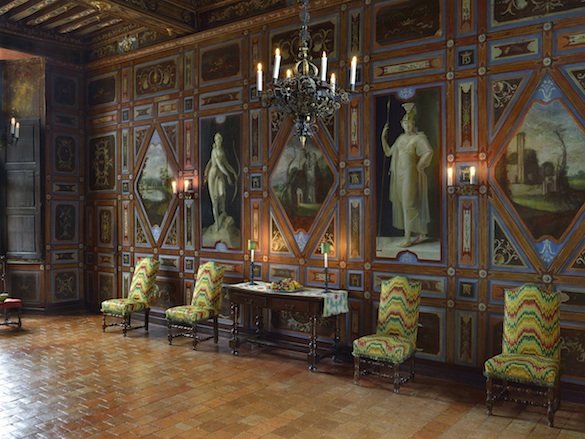
I accompanied Elizabeth to her room, and sat and chatted with her while she was preparing for bed. She turned around, “Do you think that you will ever confide fully in me about your home?” “Now, Elizabeth, you are gong to talk your wild nonsense again,” I said hastily. “Not I, silly little fool as I am, and full of whims and fancies; for your sake I’ll talk like a sage. Did you ever have a ball in the Grand Ballroom? What was it like? How charming it must be.” “I almost forget, it is years ago.” I laughed. “Mrs. Winchester, you are not so old. Your first ball can hardly be forgotten yet.” “I remember everything about it—with an effort. I see it all, as divers see what is going on above them, through a medium, dense, rippling, but transparent. There occurred that night what has confused the picture, and made it colours faith I was all but assassinated in my bed, wounded here,” I touched my breast, “and never was the same since.” “Were you near dying?” “Yes, a very—cruel love—strange love, that would have taken my life. Love will have its sacrifices. No sacrifices without blood. Let us go to sleep now; I feel lazy.” I bid her good-night, crept from the room with an uncomfortable sensation, locked her door and retired to my chambers. I was lying in bed, with my hands buried in my rich wavy hair, under my cheek, and my head upon the pillow. I often wondered whether my pretty guest ever said her prayers. I certainly had never seen her upon her knees. In the morning she never came down until long after our family prayers were over, and at night she never left the drawing room to attend our brief evening prayers in the hall. Ever since the midnight invaders, I locked all the doors in the house at night, and my whimsical alarms about prowling assassins required me to have the servants search every room in the house to make sure there were no lurking assassins or robbers “ensconced.” #RandolphHarris 4 of 8
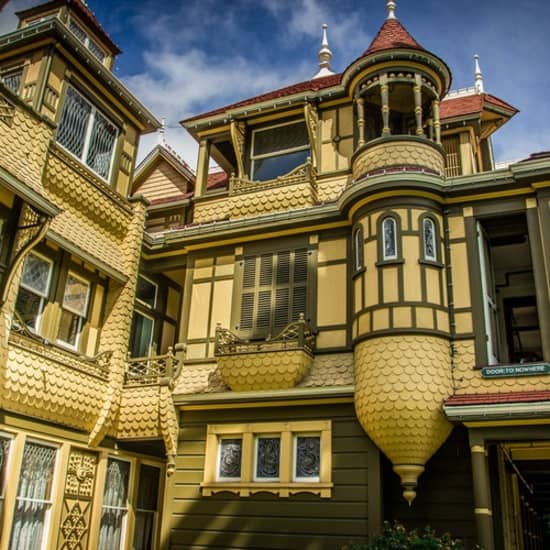
After these measures were taken, I got into my bed and fell asleep. A light was burning in my room. This was an old habit, of very early date, ad which nothing could have tempted me to dispense with. Thus fortified I might take my rest in peace. However, dreams come through walls, light up dark rooms, or darken light ones, and their persons make their exists and their entrances as they please, and laugh at locksmiths. I had a dream that night that was the beginning of a very strange agony. I cannot call it a nightmare, for I was quite conscious of being asleep. However, I was equally conscious of being in my room, and lying in bed, precisely as I actually was. I saw, or fancied I saw, the room and its furniture just as I had seen it last, except tht it was very dark, and I saw something moving round the foot of the bed, which at first I could not accurately distinguish. However, I soon saw that it was a sooty-black figure that resembled a man. He appeared to me about five or six feet tall, he floated around the room hither and tither with the lithe sinister restlessness of a beast in a cage. I could not cry out, although as you ay supposed, I was terrified. Its pace was growing faster, and the room rapidly darker and darker, and at length so dark that I could no longer see anything of it but its eyes. I felt it spring lightly on the bed. The two broad eyes approached my face, and I could see it was Haze. He looked at me with centuries of evil blazing in his eyes, but there was not the slightest stir or respiration. And I felt a shudder. My heart expanded slightly, against my will. “I curse you,” he said. As I stared at him, I felt danger again, terrible danger. Then he appeared to have changed his place, and was now nearer to the door; then, close to it, the door opened, and he vanished. #RandolphHarris 5 of 8
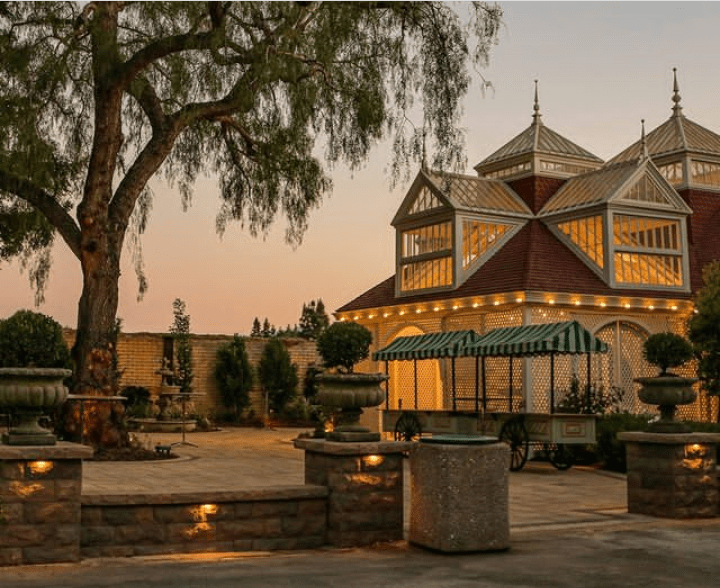
It would be vain my attempting to tell you the horror with which, even now, I recall he occurrence of that night. It seemed to deepen by time, and communicated itself to the room and the very furniture that had encompassed the apparition. Later that day, I had another strange experience; I walked into the parlor that afternoon where Daisy and Elizabeth had been sitting, and a saw Haze upon the sofa. However, then I realized that he was invisible to the others. He got up and walked toward me—I was not afraid—and then—seemed to dissolve into the air. And so I wondered…whether I might have fallen into a trance. I clasped my hands and struggled to control my breathing. We know that, in the mesmeric trance, a subject may acquire unusual mental powers; The Frenchman Didier, who could read minds, play cards blindfolded, and identify the contents of sealed containers with great accuracy, is one of the best-known instances. Ancient houses, it has always seemed to me, are like Leyden jars, quietly accumulating the influences of the past…and my home is a special case. I lay awake into the small hours, worrying over these anxieties as they became more and more nightmarish until I sank into a troubled sleep. Sleeping had become so difficult one night that I wandered through this vast mansion, searching for a precious jewel William had given me. The jewel had been lost; I did not know how, but I knew that my own carelessness was to blame. To make matter worse, I could not remember what kind of stone it was, for as I went from room to room, a voice kept chanting, “Emerald, sapphire, ruby, diamond,” over and over, and none of them seemed right, because the lost stone was a different, a more beautiful colour than any of those, and I knew I ought to be able to picture it, and thus recall its name, but I could not. #RandolphHarris 6 of 8
The mansion was absolutely silent; the light throughout, even in corridors was a pale, uniform grey like that of an overcast sky. The rooms were modestly furnished; each one seemed to have its own miniature flight of stairs, up or down two or three steps, and the corridors kept changing levels in similar fashion. Though the house itself was not especially sinister, my anxiety over the fate of the jewel grew steadily more acute until it had risen to an unbearable pitch. Then it occurred to me that I still had not searched the Venetian Dining Room. The thought precipitated a vertiginous change of scene; the light sank to a dim, murky brown, and I was standing in the doorway of the room where we had dined that night. The curtains were drawn, the candles snuffed; the room seemed to be empty, but as I crept toward the table, I saw, above the back of the chair in which I usually sat, the dark outline of a head. There was time to slip away quietly; but perhaps the jewel had fallen into the lining of my chair, and if I were to tiptoe forward, I might be able to see it. I was within two feet of the motionless figure when a voice spoke from the doorway behind me, a word that rang like a loud gong, louder and louder until it became my own cry of “No!” and I woke in grey dawn light to find myself standing at the head of the stairs. And then I thought I caught sight of a shape, dak in space and light, through the door in one of the bedrooms. There was a tall figure in what I could have sworn was a black top hat, staring directly back at me. The figure was dressed formally in black morning suit. And then, with a movement so spasmodic and sudden, the man turned and stated to walk eastward, out of sight. I dismissed it, as one of the Winchester’s passing enigmas. There was much about the curse of the Winchester Mansion that I did not understand. #RandolphHarris 7 of 8

Spirits of Llanada Villa, I awaken the powers of darkness which dwell within you by the power of the blood of the three heeded Dragon Zohak that you may serve to empower Mrs. Winchester’s great work! Through serving the greater cause of dark magick which break the shackles that bind the Blackened Fire of Spirit, may you be uplifted and liberated! Awaken and empower the forbidden rites of Angra Mainyu! Awaken to empower the Mrs. Winchester’s great work of counter creation as an Apostle of the Lord of Darkness eternal and as a warrior of the path of the Lemegeton. I adjure thee, Emperor Lucifer, as the agent of the strong living God, of His beloved Son, and of the Holy Ghost, and by the power of the Great ADONAY, ELOIM, ARIEL, and JEHOVAM, to appear instantly, or to send thy Messenger Astarot, forcing thee to forsake thy hiding-place, wheresoever it may be. Aeshma, Div of wrath and fury! He who wields the bloody mace! Aeshma who is demon of the wounding spear I call you forth into this temple of counter creation! Through devotion to my becoming on this path, your spiritual weapon has been made manifest in this corporeal World through my will and counter creative power so you may fill it with your essence and might! Empower it so that it may serve me here upon the corporeal plane! May it serve as a key to the realms above and below unlocking the power and wisdom for the spirits of the Winchester’s glory and ascent! Fill this weapon with your powers of wrath and fury that it may seek out spiritual attacks made and render them useless and impotent! #RandolphHarris 8 of 8
One Halloween, a tour guide saw a little boy who was no more than six years old. He was dressed in a black hood, and long black robe, and it looked like he did not have a face, as he had a black, opaque nylon covering the opening in the hood. The tour guide asked him who he was supposed to be, and the little boy said, “I’m the Angel of Life.” The tour guide then asked him who the Angel of Life is. The boy replied, “The Angel of Life is someone who comes to talk to you. He tells you things about your life.” The conviction on the little boy’s face and the non-hesitant way in which he explained who he was made the tour guide think that the boy had some knowledge of what he was talking about. Shortly after, objects in the gift shop started floating about, and glimpses of a shadowy figure were spotted in the basement. In the café, according to a female patron, she had been sitting at a table in a back corner of the room when a man suddenly appeared in a chair across the table from her. The man stared straight ahead and refused to react in any way. The female patron looked away to get the waitress’s attention and when she looked back, the man was gone. The woman related that the elusive figure was wearing old-fashioned clothes. https://winchestermysteryhouse.com/

And please be sure to check out the online gift store: https://shopwinchestermysteryhouse.com/

Return in the Darkening Twilight
Llanada Villa is a prime example of Victorian architecture. Its exterior is stately, refined, with a touch of Gothic elegance. Its front doors welcome, even as it seems to be hiding something. Inside the floors creak without warning, without any sense of someone there. The wood is thick with the humidity, as if the walls and floor breathe. Through the years, guest have reported feeling cold spots, or seeing strange, wispy streaks of light. The sense of the uncanny cries out for an explanation. Ghosts bridge the past to the present; they speak across the seemingly insurmountable barriers of death and time, connecting us to what we thought was lost. The townsfolk whispered tales of its dark history, of unspeakable horrors that occurred within the walls of my homes. As I climbed the grand staircase, each step seemed to release a flurry of hidden memories. Voices whispered incantations that send shivers down my spine. I must not faint, I told myself, and summoning all my resolve, made my way to the safety of the back parlour. There I collapsed into a couch, with my head already beginning to throb. The pain soon became so excruciating that I lost all sense of time until someone, I could not tell who, brought me a sleeping draught, and I sank at last into merciful oblivion. Next morning, I was at first bewildered to find myself fully dressed upon the parlour sofa. The parlourmaid, Trinity, brought me a cup of tea. She had set my skin crawling with fear. At this moment the unwonted sound of carriage wheels and many hoofs upon the road, arrested out attention. #RandolphHarris 1 of 6
I was haunted with a terror of robbers. My house was robbed once, and two servants murdered, so I always lock my door. It had become a habit. Still, it was a fine autumnal sunset, and melancholy lights and long shadows spread their peculiar effects over the landscape. I was looking out of one of the long drawing-room windows, when there entered the court-yard, a figure of a wanderer who I knew very well. He used to come by twice a year asking to tour my home. He was a tall man, with sharp learn features. He wore a pointed black bread, and he was smiling from ear to ear, showing his white fangs. He was dressed in buff, black, and scarlet, and crossed with more straps and belts than I could count, from which hung all manner of things. Behind, he carried a magic-lantern, and two boxes, which I well knew, in one of which was a salamander, and in the other a mandrake. These monsters used to my Mr. Hansen laugh. They were compounded of parts of monkeys, parrots, squirrels, fish, and hedgehogs, dried and stitched together with great neatness and startling effect. He had a fiddle, a box conjuring apparatus, a pair of foils and masks attached to his belt, several other mysterious cases dangling about him, and a black staff with copper ferrules in his hand. His companion was a rough spare dog, that followed at his heels, but stopped short, suspiciously at the front gate, and in a little while began to howl dismally. In the meantime, the mountebank, standing in the midst of the court-yard, raised his grotesque hat, and made us a very ceremonious bow, paying his compliments very volubly in execrable French, and German not much better. #RandolphHarris 2 of 6
Then, disengaging his fiddle, he began to scrape a lively air, to which he sang with a merry discord, dancing with ludicrous airs and activity, that made me laugh, in spite of the dog’s howling. Then he advanced to the window with many smiles and salutations, and his hat in his left hand, his fiddle under his arm, and with a fluency that never took breath, he gabbled a long advertisement of all his accomplishments, and the resources of the various arts which he placed at our service, and the curiosities and entertainments which it was in his power, at my bidding to display. “Will your ladyship be pleased to buy an amulet against the oupire, which is going like the wolf, I hear, through these woods,” he said, dropping his hat on the floor. “They are dying of it right and left, and here is a charm that never fails; only pinned to the pillow, and you may laugh in his face.” These charms consisted of oblong slips of vellum, with cabalistic ciphers and diagrams upon them. I instantly purchased one. He was looking up, and I was smiling down at him, amused. His piercing black eye, as he looked up in my face, seemed to detect something that fixed for a moment his curiosity. “I told you that I am charmed with you in the most particulars,” he said. “You are slender, and wonderfully graceful. Your complexion is rich and brilliant; your features are small and beautifully formed; your eyes large, dark, and lustrous; your hair is quite wonderful, I never saw hair so magnificently think and long when it is down about your shoulder. It is exquisitely fine and soft, and in colour a rich very dark brown, with something of gold.” “Well, I do wonder at a wise man like you,” I replied. And so he walked on, and I heard no more. #RandolphHarris 3 of 6
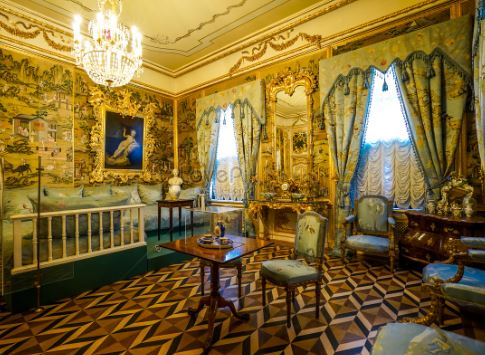
Within the space of a week, my colour had returned, and I was sleeping so soundly that I was scarcely aware of my dreams. I walked miles on my estate each day, and I began to see it with new eyes. Every field, every path, even every hedgerow had its own name and its own history. I considered the amulet I purchased as an omen of good luck—and placed in beneath my pillow, to guard against further visitation. That evening, as I reached the top of the stairs, I heard a peculiar flickering sound. Entering my dressing room in the darkness, I made my way to the familiar dressing table on the right side of the room. Now the noise was even more pronounced. It sounded to me as if someone were turning the pages of book, a sound for which there was no rational source. Move over, I suddenly became away of a clammy, cold feeling around me. Since it was a warm evening, this too surprised me. In the dark, I could not be sure if there were not someone else in the dressing room. I quickly existed the room and went to bed. But this night, I was awakened by a violent shaking of my bed. I could see, in the very imperfect light, two figures at the foot oof it, holding each a bedpost. A voice said, “We’ll hang you!” Trembling, I climbed over to the footboard; and saw the figure at the other side, little more than a black shadow, begin also to scale the bed; and there was instantly a dreadful confusion and uproar in the room, and such a gabbling and laughing; I could not catch the words. I found myself on the floor. The phantoms and clamour were gone, but a crash and ringing of fragments was in my ears. #RandolphHarris 4 of 6
The great china bowl, from which for generations the Winchester had been baptized, had fallen from the mantelpiece, and was smashed on the hearthstone. I warned the servants not to disregard oaths and curses. A mourning coach drove up, and two gentlemen in black cloaks, and with crape to their hats, got out, and without looking to the right or the left, went up the steps to the Winchester mansion. Mr. Hansen followed them slowly. The carriage had, he supposed, gone round to the yard, for, when he reached the door, it was no longer there. So he followed the two mourners into the house. In the hall he found a fellow servant, who said he had seen two gentlemen, in black cloak, pass through the hall, and go up the stair without removing their hats, or asking leave of anyone. This was very odd, Mr. Hansen thought, and a great liberty; so upstairs he went to make them out. But he could not find them then, nor ever. And from that hour the house was troubled. In a little time there was not one of the servants who had not something to tel. Step and voices followed them sometimes in the passages, and tittering whispers, always minatory, scared them at the corners of the galleries, or from dark recesses; so that they would return panic-stricken. I, myself, had also heard these voices, and with this formidable aggravation, they came always when I said my prayers. I was scared at such moments by dropping words and sentences, which grew, as I persisted, into threats and blasphemies. These voices were not always in the room. They called, as I fancied, through the walls, very thick in this house, from the neighbouring rooms, sometimes on one side, sometimes on the other; sometimes they seemed to holla from distant lobbies, and came muffled, but threateningly, through the long paneled passages. As they approached they grew furious, as if several voices were speaking together. Whenever I applied myself to my devotions, these horrible sentences came hurrying towards the door, and, in panic, I would start from my knees, and all then would subside except the thumping of my heart against my stays, and the dreadful tremours of my nerves. #RandolphHarris 5 of 6

What these voices said, I never could quite remember one minute after they had ceased speaking; one sentence chased another away; gibe and menace and impious denunciation, each hideously articulate, were lost as soon as heard. And this added to the effect of these terrifying mockeries and invectives, that I could not, by any effort, retain their exact import, although their horrible character remained vividly present to my mind. Camile who acted as a housemaid, would not sleep in the house, but walked home, in trepidation, to her father’s, under the escort of her little brother, every night. Mrs. Rendell, the kitchenmaid, endured the nightly terrors. Mr. Hansen was testy and captious about these stories. He was already uncomfortable enough by reason of the entrance of tow muffled figures into the house, about which there could be no mistake. His own eyes had seen them. He refused to credit the stories of the servants. I made a decision not to fuel the stories of the ghost to keep the servants. “If you see ghosts here, it is no place for you, and it is time you should pack,” I would say. Here has been the cook with the kitchenmaid, as white as pipeclay, all in a row, to tell me I must have a parson to sleep among them, and preach down the devil! Upon my soul, I would not allow my home to fall into utter chaos and disarray. “Mrs. Winchester, I know you are no fool,” said the cook. “But supposed there was a such thing as a ghost here, don’t you see, it ain’t just women telling stories.” “I will not dignify such ideas,” I replied. The women left the kitchen, the cook and the butler went down, not altogether unused to such condescension in the household. The fire had gone down and I was chilled. The candles were expiring in the socket and threw on the white all long shadows, that danced up and down from the ceiling to the ground, and their black outlines I fancied resembled the two men in cloaks, whom I remembered with profound horror. I took the candle, with all the haste I could, getting along the passage, on whose walls the same dance of black shadows was continued, very anxious to reach my room before the light should go out. #RandolphHarris 6 of 6
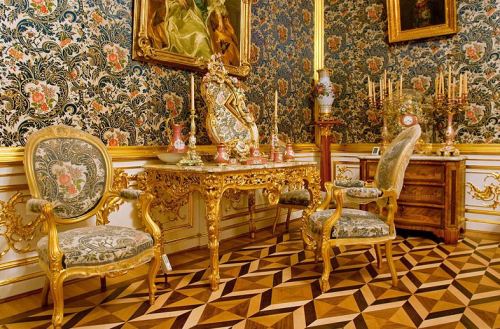

On night in 1990, there was an unusual buzzing sound in The Winchester Mystery House, one of the staff encountered a dark, hooded figure standing at the door-to-nowhere. In the dim light issuing through the stained glass windows from an outside light, he could see that the intruder, who looked very much like a cowled monk, was waving his arms in a particular manner. Interpreting his movement as threatening, he approached the man and asked him to leave. At the very moment, the employee says he never felt so weak and helpless.
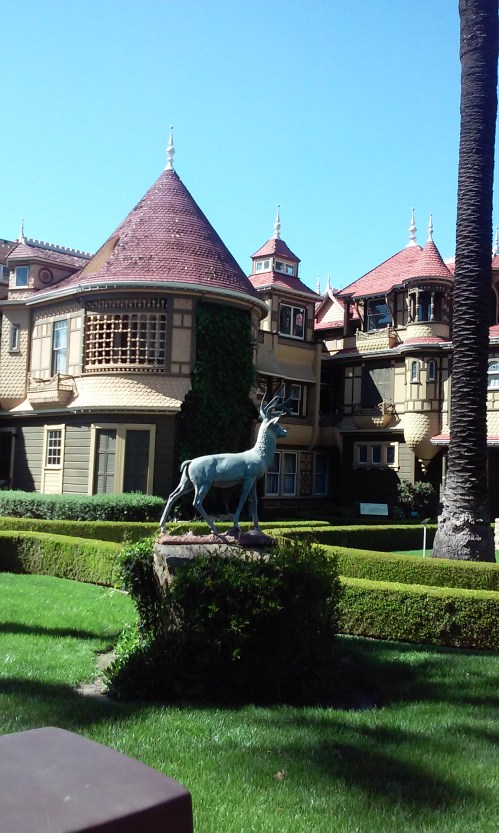
He collapsed in a heap backward onto the floor. He remembered that he actually began to weep in fear and confusion. He was completely at the mercy of whoever or whatever was standing at the door. It was then that the hooded being spoke. “Don’t be afraid,” it said in a quiet whisper. “We won’t hurt you.” And the next thing he knew, the morning sunlight was making him squint into wakefulness. As he reflected on the incident, he became more and more convinced that an actual visitation had occurred and that some kind of entity had come into the mansion. https://winchestermysteryhouse.com/
And please be sure to check out the online gift store: https://shopwinchestermysteryhouse.com/
 Randolph Harris II International Institute