
Home » Wichita (Page 2)
Category Archives: Wichita

I Am Lazy; I Always Give Up When the Task Becomes Difficult!

Younger mentalities need to think in terms of definite sense impressions, of physical feels, sights, and sounds. More developed mentalities can think in terms of abstract ideas, of general metaphysical principles. The first groups is the most numerous. According to Dr. Freud’s psychoanalytic theory, the psyche comprises three aspects: the id, ego, and superego. The id is the primitive and instinctual part of the mind that contains the sexual and aggressive drives and hidden memories, the super-ego operates as a moral conscience, and the ego is the realistic part that mediates between the desires of the id and the super-ego. Dr. Freud proposed that these three aspects of the psyche may influence the way we think of ourselves. We must first give intellectual assent to philosophical teachings before we can hope to gain practical demonstration of their worth. Persons’ self-concepts comprise all their beliefs about their own nature. They include their assumptions about their strengths and weaknesses, their possibilities for growth, and their explicit descriptions of their customary patterns of behaviour and experiencing. Thus, a person may say, “I am lazy; I always give up when the task becomes difficult. I usually feel happy. I am warm and friendly; however, I need a great deal of help to make it through life.” These self-descriptions resemble statistical formulations, in the sense that the individual believes there have been many occasions when he or she acted in those ways. #RandolphHarris 1 of 29

In most encounters, we can determine the kind of experience we are going to have by how we respond. It is usually important to be respectful of others. However, sometimes people are very disrespectful to an individual for no reason, and when that individual defends themselves, others like to make a spectacle of the victim and say that individual caused the situation because he or she is a certain race, a particular gender, or the situation was due to their appearance when none of those factors are accurate. It is hard, perhaps impossible, to give absolute proof of any statement or any fact; but a reasonable proof may be given. Life is too short to wait for the one so we have often to accept the other. The continual and untiring quest of truth is what distinguishes the philosophic attitude toward life. The intellectual discipline which this involves is irksome to the ordinary mind. For it demands the scrutiny of fact, the unveiling of assumptions, the examination of reasoning processes leading to conclusions, and the probing of standpoints to their ultimate ground. Patience is needed, for the time factor is still there; the ripeness of mind of the prober is still essential, and it must not limit itself by preconceived ideas. It is at the threshold of an astounding realm, where so much that was correct on other levels collapses here and is no longer correct. In His instructions to the Nephites, the Saviour taught, “Therefore, all things whatsoever ye would that men should do to you, do ye even so to them,” Reports 3 Nephi 14.12. #RandolphHarris 2 of 29

The Golden Rule is an ethical principle that states: “In everything, do to others what you would have them do to you.” It emphasizes treating others as you would like to be treated yourself. This principle is found in the Gospel of Matthew 7.12, and it was spoken by Jesus Christ and is considered a Christian moral guideline. If everyone practiced the Golden Rule, imagine the effect it would have on the world. However, to do so, seems to be contrary to human nature in today’s face-pace world. In fact, there is a greater tendency for people to act aggressively toward each other. Some are quick to take offense and respond angrily to real or imagined affronts, and we have all experience or heard reports of road rage or other examples of rude, insensitive behaviour. Unfortunately, some of this spills over into our homes, creating friction and tension among family members. It may seem natural to react to a situation by giving back what is given to us. However, it does not have to be that way. The decisions we make and the way we behave are what ultimately shape our character. We sow our thoughts, and we reap our actions; we sow our actions, and we reap our habits; we sow our habits, and we reap our characters; we sow our characters, and we reap our destiny. It is in the home that our behaviour is most significant. It is the place where our actions have the greatest impact, for good or ill. Sometimes we are so much “at home” that we no longer guard our words. We forget simple civility. If we are not on guard, we can fall into the habit of criticizing one another, losing our tempers, or behaving selfishly. Because they love us, our spouses and children may be quick to forgive, but they often carry away in silence unseen injuries and unspoken heartache. #RandolphHarris 3 of 29

There are too many homes where children fear their parents or where wives fear their husbands. Our leaders have reminded us that “fathers are to preside over their families in love and righteousness,” and warned “that individual who abuse spouse or offspring will one day stand accountable before God.” If he can foster an atmosphere of contention, conflict, and fear in the home, that adversary knows that the Spirit is grieved and the cords that ought to bind the family are weakened. The resurrected Lord, Himself declared, “For verily, verily I say unto you, he that hath the spirit of contention is not of me, but is of the devil, who is the father of contention, and he stirreth up the hearts of men to contend with anger, one with another,” reports 3 Nephi 11.29. Our home should ideally be a refuge where each member feels safe, secure, loved, and insulated from harsh criticism and contention that we so often encounter in the world. Jesus Christ set a perfect example of maintaining emotional control in every setting. Appearing before Caiaphas and Pilate, He was buffeted, slapped, spat upon, and mocked by His tormentors (see Matthew 26; Luke 23). The great irony was that they demeaned their Creator, whose suffering was undertaken out of love for them. In the face of his unjust abuse, Jesus Christ maintained His composure, refusing to act unkindly. Even on the cross, amid that unspeakable agony, His plea was, “Father, forgive them; for they know not what they do,” reports Luke 23.34. God and Jesus Christ expect the same of us, too. “By this shall all men know that ye are my disciples, if ye have love one to another,” reports John 13.35. #RandolphHarris 4 of 29

One sees their anxiety to understand a doctrine which is on too abstract a level for them and pities the bewilderment with which they end. Yet, for such there is an easier way, brining a more successful result. It is to take up the study of the gospel of Christ first, and only after that, proceed to the study of mentalism and psychology. The work of research proves endless. The task of collecting all the data has no finish to it, and if we are to arrive at any conclusion at all, there is some point at which we must cut short our investigation and reflection. Thus, by the very act with which we serve the cause of practical truth, we render a disservice to the cause of theoretical truth. The very means whereby we decide, join a party, take a side, or evaluate a right and a wrong produce only a makeshift result. We must think our thoughts out to their inevitable conclusion and not stop halfway when the process becomes decidedly unpleasant. Memorized knowledge is inferior to thought-out understanding. It is one thing to begin to suspect the fallacy of these views; it is another to be completely certain of it. A long road lies between the two states and it passes through uneasiness, anxiety, wretchedness, and anguish. The hand of experience sows a good many doubts in the field of his early beliefs. We learn truth partly by experience, partly by intuition, and partly by instruction. Therefore, one of the first steps upon this path is to accept, tentatively at least the reasonable propositions laid down here and to allow the mind to work upon them in a sympathetic manner. #RandolphHarris 5 of 29

Memory depends on interest, attention, and concentration. However, the path does not depend on memorizing; we leave that to the academic philosophers of the universities. It depends on getting understanding, brain-changing not brain-packing. It is inevitable that, as his search for truth becomes keener and deeper, his thought will become more precise. So far as education consists of knowledge and information, it depends on memory, which is a function of an ego built up by the past and present experiences. It is not only a matter of temperament as to which view he will accept, although that factor is obviously present, but must more of development. How far has he journeyed in the understanding of life and the mastery of self? The first impulse to gather facts—that is, to know—was the first step taken by primitive men out of their backwardness toward science. The first impulse to explain those facts—that is, to know, understand, and complete—was the first step taken towards metaphysics. Take what you can find is congenial to your mind, appealing to your heart, and conformable with reason and evidence. To isolate the genuine truths from all the possible fantasies is hardly a work for beginners. When you mind can move from point to point, from idea to idea with alert nimbleness, it is ready for philosophy. As if they were describing a fixed essence, or a class of objects of which they are a specimen, that is how people describe themselves. When a person says he or she is lazy, or sincere, it is as if the person is saying, “It is my nature to be lazy, or sincere, just as it is the nature of a wolf to be fierce.” However, human beings do not have fixed natures; neither do wolves. #RandolphHarris 6 of 29

Under most circumstances of life, humans have the freedom to choose how they will be and how they will act. Thus, when persons form self-concepts, thereby defining themselves, they are not so much describing that nature as they are making a pledge that they will continue to be the kinds of people they believe they now are and have been. One’s self-concept is not so much descriptive of experience and action as it is prescriptive. The self-concept is a commitment. Because our self-concepts are such powerful influences upon our experience and action, it follows that anything or any person who influences what we believe to be true or possible for ourselves will have a powerful influence. If I can convince you that you are strong, when hitherto you believed you were weak, you may then begin to act in ways that befit a strong person. What you believe to be true of yourself is your “nature”; what should never be forgotten is that one’s beliefs about self are just that—beliefs—and they can be changed. One’s self-concept is open to change, just as one’s beliefs about God, one’s parents, or the world are open to change. The self-concept exercises almost a tyrannical roe in determining behavior. All human behaviour is determined by the need for the individual to maintain and enhance the phenomenal self—another synonym for the self-concept. May we evidence our discipleship by strengthening our homes in kind and loving ways. May we remember that a soft answer turneth away wrath” and strive through our relationships and encounters to shape a character that will meet with the Savior’s approval. #RandolphHarris 7 of 29

There is an assimilation of the master-slave relationship to the relationship between man and God. One of Hegel’s commentators’ remarks that if the master really existed, he would be God. Elsewhere Hegel identifies the supreme master with absolute death. And so, the struggle begins again, on a higher level, between man in chains and the cruel God of Abraham. The solution to this new conflict between the universal God and the human entity will be furnished by Christ, who reconciles in Himself the universal and the unique. However, in one sense, Jesus Christ is a part of the palpable world. He is visible, He lived and He died. He is therefore only a stage on the road to the universal; He too must be denied dialectically. It is only necessary to recognize Him as the man-God to obtain a higher synthesis Skipping the intermediary stages, it suffices to say that this synthesis, after being incarnated to the Church and in Reason, culminates in the absolute State, founded by the soldier workers, where the spirit of the world will be finally reflected in the mutual recognition of each by all and in the universal reconciliation of everything that has ever existed under the sun. At this moment, “when the eyes of the spirit coincide with the eyes of the body,” each individual consciousness will be nothing more than a mirror reflecting another mirror, itself reflected to infinity in infinitely recurring images. The City of God will coincide with the city of humanity; and universal history, sitting in judgment on the world, will pass its sentence by which good and evil will be justified. The state will play the part of Destiny and will proclaim its approval of every aspect of reality on “the sacred day of the Presence.” #RandolphHarris 8 of 29

In spite, or because, of the extreme ambiguity of their interpretation, essential ideas have literally driven the revolutionary mind in apparently contradictory directions and which we are now learning to rediscover in the ideology of our times. Amorality, scientific materialism, and atheism have definitely replaced the antitheism of the rebels of former times and have made common cause, under Hegel’s paradoxical influence, with a revolutionary movement which, until his time, was never really separated from its moral, evangelical, and idealistic origins. If they are sometimes very far from really originating with Hegel, these tendencies found their source in the ambiguity of his thought and in his critique of transcendence. Hegel’s undeniable originality lies in his definitive destruction of all vertical transcendence—particularly the transcendence of principles. There is no doubt that he restores the immanence of the spirit to the evolution of the world. However, this immanence is not precisely defined and has nothing in common with the pantheism of the ancients. The spirit is and is not part of the world; it creates itself and will finally prevail. Values are thus only to be found at the end of history. Until then, there is no suitable criterion on which to base a judgment of value. One must act and live in terms of the future. All morality becomes provisional. The nineteenth, twentieth, and twenty first centuries, in their most profound manifestations, are centuries that have tried to live without transcendence. #RandolphHarris 9 of 29

Meaningful contact with others requires an ability to be quite comfortable with yourself alone. Manipulators who are withdrawing and avoiding might appear to like to be alone. This is not true. Such manipulators are equally as uncomfortable with themselves as they are with others. Actualizers, on the other hand, enjoying close contact with others, also cherish their moments of privacy. One of the subjects of Dr. Maslow’s study of self-actualizing people sat alone for one hour a day, between five and six in the evening, in front of her fireplace. That time was sacred to her, and other concerns were not allowed to interfere. If you examine your daily routines, you will find that you are “withdrawn” for approximately eight hours during sleep. You are involved with other people at work for another eight hours, which leaves about eight hours for relationships with family and friends. About half of our existence, then, involves people. It would be unnatural to want a great deal more. No matter how self-actualizing you may be, you must at times be by yourself. Although manipulation usually involves withdrawal from close relationships, one can be manipulative by maintaining a relationship beyond its nourishing value. Such a manipulator is described by Perls as a clinger or hanging-on biter. The clingers will not give up, but keep right on talking to you although they realize that the conversation is finishes. This is not a matter of social awkwardness, of not knowing how to terminate the exchange, but a neurotic fear on the part of these individuals that they have not said all they want to say. They are so insecure that they cannot let go. #RandolphHarris 10 of 29

When they go for interviews, this fear costs people jobs and, having said something once, they keep trying to say it again and invariably mess it all up. The hanging-on biters are those recognizable individuals who hang on to a conversation like a bulldog with a stick. Rather tan bite it off, they brace themselves like a bulldog and stand there, vigorously shaking the conversational stick. It is necessary for therapy that the analyst gradually gain a clear picture of the kinds of pride operating in each individual patient. If he is unconsciously or consciously proud of it, naturally a patient cannot regard a drive, an attitude, or a reaction as a problem to be tackled. A patient may, for instance, have become aware of his need to outwit others. The analyst may feel it self-evident that this is a problematic trend to be tackled, and to be overcome eventually, because he considers the interest of the patient’s real self. He realizes the trend’s compulsive character, the disturbance it creates in human relations, the waste of energies which could be employed for constructive purposes. The patient on the other hand, without being aware of it, may feel that just this very capacity to outwit others makes him a superior person; and he is secretly proud of it. He is interested therefore not in analyzing the tendency to outwit but in the factors in himself which interfere with his doing it to perfection. If this difference in evaluation is under cover, analyst and patient will move on different planes and analyze at cross-purposes. #RandolphHarris 11 of 29

Neurotic pride resting on such shaky foundations is an insubstantial as a card house and, like the latter, collapses at the slightest draft. In terms of subjective experience, it makes a person vulnerable, and does so exactly to the extent that he is obsessed by pride. It can be hurt as easily from within as from without. The two typical reactions to hurt pride are shame and humiliation. If we do, think, or feel something that violates our pride, we will feel ashamed. And, if other do something that hurts our pride, or fail to do what our pride requires of them, we will feel humiliated. In any reaction of shame or humiliation that seems out of place or out of proportion we must answers these two questions: What in the situation has aroused this response? And what special underlying pride has been hurt by it? They are closely interrelated, and neither can be given a quick answer. The analyst may know, for instance, that masturbation provokes excessive shame in a person who in general has a rational, sensible attitude to the problem and would not disapprove of it in others. There, at least, the shame-provoking factor seems to be clear. However, is it? Masturbation may mean different things to different people, and the analyst cannot know offhand which of the many factors that may be involved in masturbation is relevant to arousing the shame. Does it mean for the patient a sexual activity that is degraded because it is separate from love? Is the satisfaction attained greater than the pleasures of the flesh, and thereby disturbing to the image of being geared only to love? Is it a question of the concomitant fantasies? Does it mean the admission of having any needs? Is it too much self-indulgence for a stoical person? Does it mean loss of self-control? Only to the extent that the analyst grasps the relevance of these factors for the patient can he then raise the second question as to the kind of pride that has been hurt by masturbation. #RandolphHarris 12 of 29

The opposition to commitment expressed by some people is essentially political in nature. It is an attack on the Establishment—which, freely translated—means simply that they feel compelled to reject any standard their parents might possibly approve. Feminists who approve of extramarital pleasures of the flesh because it takes them longer to step away from the sexual double standard, are also using the sexual code of behaviour as a political weapon. Their chief purpose is to assert that they have equal rights to any freedom that men claim—without attempting to determine whether that freedom necessarily contributes to the well-being of any individual, male or female. A different, and nonpolitical, rationale is offered by feminists who see affairs outside of marriage as a means of enabling certain wives to throw off their culturally induced inhibitions and to awaken their long-dormant capacity to respond to stimulation for pleasures of the flesh. There can be no argument with any of these positions when they are not rationalized as the foundation for a general structure of values for pleasures of the flesh. However, it is important to understand that this is the pleading of special cases. If some people must reject their parents’ social-pleasures of the flesh values before they can be free to have the experiences, they need as the basis for validating other values—or reaffirming those that were originally rejected—they are acting no differently than rebellious people have for centuries. If some women must first establish their right to indulge in extramarital pleases of the flesh, as a way of regaining their self-esteem and their sense of being independent and equal human beings, so that as equals with men they can get on with the important tasks of learning to live well together, their tactics are not understandable. If other women must go outside their marriages in search of affirmation of themselves as sexual human beings, their actions deserve compassion and support in guiding them back to the ways of the Lord. #RandolphHarris 13 of 29

Sexual commitment in marriage is not dispensable, and in no case does it warrant being compromised. Stating the extramarital affairs are acceptable is misleading and amounts to being a deception. Extramarital affairs are not a step to be accepted as a last resort, and carry with it the potential for a cure that is as unsatisfactory as the problem to be cured; what beings as an isolated act or two may become a premeditated and repeated pattern of action—which is generally as destructive to the emotional fabric of a marriage as anything can possible be. Thus, compromising the sexual commitment as a means of patching up a marriage may succeed only in tearing it further apart. After reading that an extramarital relationship may help revitalize her sexual energies, a sexually distressed wife had an affair. Immediately there are questions that cannot be ignored. Has she openly communicated with her husband about her dissatisfaction? If so, why have they been unsuccessful in finding a remedy? Or getting help? And if she has not communicated with him, why not? If it is because they are emotionally incompatible, or if they cannot communicate about anything that really matters to her, what kind of a marriage does she have? If the marriage is that emotionally impoverished, why make the issue seem to be the righteousness of extramarital sex—when the issue is really the inadequacy of the marriage? Nor do the questions stop there. Even if the affair turns out well and the wife becomes excited for pleasures of the flesh, what does she do with her drive? How can she cope with the powerful feelings that dominate her but cannot be shared with her husband? #RandolphHarris 14 of 29

Or, trying to share them, how can she help comparing one man to another—and if her sexually unsophisticated or incompetent husband suffers by the comparison, what does she do then with her feelings? Bury them and bury too her newly kindled responsivity for pleasures of the flesh? Or respecting her natural right to those feelings, does she embark on a succession of affairs? Or does she divorce her husband? The questions are, in truth, endless. The few that have been raised are intended only to illuminate the virtual meaninglessness of all special pleading in favour of extramarital pleasure of the flesh. Generalized principles are useless guides to human behaviour involving pleasures of the flesh; what may apply to one person will not apply to another—and, in fact, what is true for one person at a particular moment in life may not be true for that same person at a later moment. Thus, without Christian moral guidelines and without knowing the nature of marriage in the eyes of the Lord, there is no possible way for anyone to offer a secure word of advice about the consequences that may follow if either partner, or both, decide to put an end to their commitment of pleasures of the flesh. Like all of God’s commandments, the law of chastity is a blessing from God to help us have peace and joy. Living this law can also help us stay emotionally and physically safe and well. And it helps us prepare to receive God’s greatest blessing in life. Chastity means not having any relationship involving pleasures of the flesh outside of a legal marriage between a man and a woman. Those who are chaste also strive to have sexually appropriate thoughts, words, and actions. Living this law includes being completely loyal to your spouse within marriage, both physically and emotionally. #RandolphHarris 15 of 29

Chasity is a commandment from God, and obedience to that law helps us prepare to enter the house of the Lord. In the temple, we are invited to more fully commit by covenant to live the law of chastity. When people care for one another enough to keep the law of chastity, their love, trust, and commitment can increase, resulting in greater happiness and unity. Our Heavenly Father has given us the law of chastity for our spiritual and physical protection. Obedience to this law is essential to personal peace and happiness. Those who keep themselves sexually pure will also be more sensitive to the Holy Ghost’s guidance, strength, comfort, and protection. If we choose to keep our covenants with Him, no matter how strong our temptations are, the Lord will help us resist them. The Apostle Paul taught, “God is faithful, who will not suffer you to be tempted above that ye are able; but will with the temptation also make a way to escape, that ye may be able to bear it. The Lord trusts us to make decisions that will honour the gift of our body and others’ bodies, and we are truly blessed as we make choices based on that trust. The Spirit will guide and strengthen us to help us keep this law. The Lord and His prophets warn against sexual immorality. The prophet Alma taught about the seriousness of sexual sin. All sexual relationships outside of marriage between a man and a woman break the law of chastity, and are physically and spiritually dangerous for those who engage in them. One violation of the law of chastity is adultery, which is sexual intercourse between a married person and someone other than their spouse. Adultery is one of the sins warned against in the Ten Commandments. #RandolphHarris 16 of 29

The Apostle Paul also taught that is “is the will of God” that we “abstain from fornication,” which, in a gospel context, is engaging in sexual behaviour outside of marriage between a man and a woman. Though sexual sins are very serious, the gift of repentance is real. Because the Lord loves us, He will fully forgive us when we choose to repent and turn to Him. Repentance requires patience, perseverance, and a change of heart, but it is worth the effort. Sometimes people who have an affair with someone’s spouse feel the need to come clean and confess. However, that might not always be a good idea. It could ruin your friendships and it could ruin their relationship. It might be a good idea to repent and not do it again. Repentance is one of the first principles of the gospel and is essential to our temporal and eternal happiness. It is much more than just acknowledging wrongdoings. It is a change of mind and heart that gives us a fresh view about God, about ourselves, and about the world. It includes turning away from sin and turning to God for forgiveness. It is motivated by love for God and the sincere desire to obey His commandments. The Lord has declared that “no unclean thing can inherit the kingdom of heaven.” Our sins make us unclean—unworthy to return and dwell in the presence of our Heavenly Father. They also bring anguish to our soul in this life. Through the Atonement of Jesus Christ, our Father in Heaven has provided the only way for us to be forgiven of our sins. Jesus Christ suffered the penalty for our sins so we can forgive if we sincerely repent. As we repent and rely on his saving grace, we will be cleansed from sin. #RandolphHarris 17 of 29

The goal of adopting a safety culture in a fire and emergency services is a daunting yet essential task. To define a safety culture, we first must examine the causes of injuries and death. Emergency responder injuries can be caused by mechanical failure (a rope breaking), human failure (overloading the rope), or an organizational failure (not inspecting or replacing the rope). Organizational failures are always a result of not having a safety culture. Did you ever wonder why discussion regarding firefighting safety are often compared to the airline industry? Besides the fact that both are high-risk professions, they also have the potential for large losses of life based on human decisions, and many times both professions must work with incomplete or inaccurate information. However, the biggest reason why firefighting should be compared with the airline industry could be that they identified a lack of a safety culture and evolved into one. Professionals are who and what they are because they acquire expertise—special kind of knowledge and a context for that knowledge. Expertise can be of at least three types: technical—based on training and study; theoretical/intellectual—based on education and study; and liberal—based on broad reading, interactions with colleagues, and a focus on lifelong learning. Professionals know how to operate the hardware of their professions. They are technically expert. For the doctor, it is an in-depth knowledge of medicines and drugs, laboratory testing, imaging equipment, and surgical procedures. For the architect, it is a well-defined knowledge of loads, stresses, materials tolerances, and coefficients. For the award-winning Sacramento Fire Department professional, it is an intimate knowledge of architecture, building code, fire science, automobiles, medical information, and human biology. #RandolphHarris 18 of 29

Theoretical (or intellectual) expertise is the “how” and “why” of the technical component. In our example of medicine, technicians can perform the tests, but may not know the ho0w and why behind the intricate functions of the human body. A construction worker knows how to pour cement for a reinforced foundation, but may not understand how or why the foundation will hold up the building. The same is true of the firefighter, paramedic, or EMT who knows the basic functions of the Sacramento Fire Department’s equipment. It is not necessary for him to understand the theoretical concepts being the tactical or strategic use of the equipment. This component of the professional officer’s job is what enables him to comprehend and apply new techniques. Life or death decisions come from a firefighter, paramedic or EMT’s ability to understand the role of his profession and its unique expertise within society. It includes knowledge of human behaviour, human relationships, standards of conduct, and the structures of human organizations. A professional needs to know when and how to offer his services to achieve the most desirable and effective results. You could call this the philosophy of the Sacramento Fire Department of the doctrinal ground of fire and/or medical science. What expertise does the Sacramento Fire Department expect you, as an officer in training, to master? The Sacramento Fire Department expects you to learn how to organize, equip, and train the force—your team members. The Sacramento Fire Department also expects you to plan the activities of the force with clarity of mission. You must also know how to be expert in directing operations—engaging in the many kinds of fire department activities during work hours, home life, and when in an emergency. Directing operations is a core responsibility of a professional fire fighter, paramedic, or EMT. #RandolphHarris 19 of 29

“I know what I want to say, but it’s hard to get across. I think that with my kids and everything else, I have responsibilities. Being a fireman, and being a fireman with the Sacramento Fire Department, I have to put my best foot forward. I want to leave everybody impressed, that’s the way I feel. If anybody else feels malice toward me because I work for the Sacramento Fire Department, then that’s their problem. If I ever went down South and got stopped by a state trooper, and he knew I was a fireman because I’ve got my emblem or something, I want to leave him impressed with me. When he leaves me, I want him to say, ‘Well, that’s one sharp guy. He seems to be an intelligent guy.’ That’s what I would like to leave with everybody, actually. But especially with the troopers. It’s the only thing I want to do. If I can’t do anything else, I want to change people’s minds. I know that some people have certain beliefs about the way other people are, or the way they think they should be. It may not be my responsibility, but I would like to changes people’s minds, if I can, and leave them with a positive attitude toward the Sacramento Fire Department.” Take a minute and consider the influence that mobile phones, eye glasses with hidden cameras, drones, and video cameras, combined with social media, can have on your personal performance review. You may be so involved in pulling the hoseline, bagging the patient, or yelling at the crowd to “get back” that you do not even notice that you are being recorded from several different angles. Since the potential exist for you to be a movie star, the only way to perform well is practice, practice, practice. #RandolphHarris 20 of 29

If you see a fire truck stopped in the street without the lights on, be very careful. Sometimes there is an emergency and you should not pass the fire truck. It might be a good idea to safely turn around and go another way because if you hit someone and they happen to die, you could be charged with manslaughter. Sometimes fire fighters are getting back into their vehicle and if you pass the apparatus, you may collide with a firefighter who is on foot. Also, be sure to look at their signals, sometimes emergency vehicles are in motions, albeit, slowly, and drivers try to pass them, and this could lead to a dangerous situation. Also, if you are in an intersection when you see an emergency vehicle, continue through the intersection. Drive to the right as soon as it is safe and stop. Obey any direction, order, or signal given by a law enforcement officer, or a firefighter. Even if they conflict with existing signs, signals, or laws, follow their orders. When their siren or flashing lights are on, it is against the law to follow within 300 feet of any fire engine, law enforcement vehicle, ambulance, or other emergency vehicle. If you drive to the scene of a fire, collision, or other disaster, you can be arrested. When you do this, you are getting in the way of firefighters, ambulance crews, or other rescue and emergency personnel. The concept of professional courage does not always mean being as tough as nails, either. It also suggests a willingness to listen to other peoples’ problems, to go to bat for them in a tough situation and it means knowing just how far they can go. It also means being willing to tell the boss when he or she is wrong. #RandolphHarris 21 of 29

California is the third most expensive state in the nation. A single person making an income above $100,000 is now consider low-income in five counties in California. This distinction now applies to individuals living in Santa Cruze, Santa Clara, San Mateo, San Francisco, and Marin counties. In 37 percent of counties, a family of four living on a six-figure income is now considered low-income. In fact, Governor Gavin Newsom of Democratic controlled California, brags about being the world’s “fifth largest economy,” but it also facing a $12 billion deficit, looking to cut $747 million for state worker’s pay, pushing to keep medical insurance for illegal immigrants, but wants to cut medical for anyone who has assets over $2,000 and the state has the largest homeless population in the nation. If they are all officially counted, California has approximately 4 million homeless people. The highest home prices in the nation, the highest taxes and the most unfriendly business regulations known to man. The average home price in California is nearly $1,000,000.00 USD, while the average salary is $96,036.00, meaning that most Californians cannot even afford to buy a home. California is having an affordability crisis. In 2025, many people in California saw their bills increase by an estimated $500 a month. This includes things like food, automobile insurance, homeowner’s insurance, electricity. In fact, more than 3 million people in California are facing household hardship, and more than 300,000 of them are facing eviction soon. This comes at a time when California is having a shortage of affordable housing. This is caused by nearly half a century’s old laws that discourage homes sales and encourage higher rents. Meanwhile, China, where we are sending all of our jobs and money has more than 50 ghost cities. Ghost cities are regions will housing has been overdeveloped to the point that these places are uninhabited. Because California is so hostile towards people and businesses, more than 360 companies have fled the state since 2020. Businesses like Chevron, SpaceX, Oracle, and Hewlett Packard are amongst the names on that list. #RandolphHarris 22 of 29

Also, more than 500,000 people a year are abandoning California because it is too expensive to live in, Gavin Newsom has criminalized homelessness and actually started arresting people without homes, crime is out of control, and they are losing their jobs due to companies relocating. More than 100 companies have announced layoffs in California for 2025. Intel is cutting 15,000 jobs, PayPal 2,500 and Meta has terminated 4,000 employees. The California crisis created by Democrats is driving up home prices and mortgages and rents all over the nation and the world, making living unaffordable for all, and advocates say the crisis is far from over. Accordingly, California has more than 3.5 million illegal immigrants. Having the Southern American boarder open and not having American farmland protected, not producing beef, poultry, fish, fruit, produce and dairy in America, and without American goods and services being our number one manufactured and selling items, America has created a dangerous and significantly elevated risks to national security, national economic security, and national public health. Some people may believe that these claims are overstated, but by not routinely monitoring Common Vulnerabilities and Exposures (CEVs) or other security relevant alerts, such as end-of-life of machinery is how the Oroville Dam Crisis occurred in 2017. Other crises that have occurred due to neglect of critical infrastructure is the 2025 Palisades fires because Southern California ran out of water, when they are located next to an ocean and they could have simply created desalinating plants to help with the water shortage. The water is so plentiful that it is currently eroding land and causing homes to fall into the sea. #RandolphHarris 23 of 29

The American government should know all exploitable vulnerabilities and fix them prior to the situation becoming a crisis. Failure to take such mitigating actions is dangerous and significantly elevates risk to national security, national economic security, and national public health and safety. The American government must understand that significant time and resources must be invested in America. They must also encourage corporations to plan for both mitigating safety vulnerabilities in the short term and eliminating them in the long term. For instance, a company might begin by reaching out to the federal, state or local government and requesting tax incentives to provide security to dangerous communities, to help the government repair bridges and potholes. America needs an approach to eliminate safety vulnerabilities in American cities. There needs to be a road map by the end of 2025, outlining a prioritized approach to eliminate crisis situations in America. There is enough money to send aid to foreign nations, but the American government does not have enough money to care their infrastructure, provide adequate resources, nor end the affordable housing crisis. Nor is there enough money to fund other national critical functions (NCFs). These bad practices of putting America and Americans last is considered exceptionally risky, particularly to national security, national economic security, and national public health and safety. In 2024, Americans spent $100 billion on Japanese cars. #RandolphHarris 24 of 29

The maximum percentage of your gross income that you should earmark for a monthly mortgage payment is calculated at 28 percent, and no more than 36 percent of your gross income to all debts, including mortgage. If you take 28 percent of the median household income per home in Sacramento County, homeowners can only afford a mortgage of $2,070.23 per month. And if you take 36 percent of their gross income to all debts, including mortgage, they should be devoting no more than $2,661.72 a month to these debts. Mortgage lenders must be using some kind of sorcery to get buyers into these expensive homes. To afford one of these homes using traditional guidelines, a household would need to gross $11,280.24 per month or $135,362.88 per year, but the median household in Sacramento County is grossing $7,393.67 or $88,724.00 and that typically means two to four people in the home are working and contributing to the mortgage. Prices in Sacramento County are actually rivaling the Bay Area, and the Bay Aera is so expensive because they have more higher paying jobs and is a tourist destination. And with the State of California being in a budget deficit of $12 billion, Governor Gavin Newsom Granted 700,000 illegal immigrants free health care at a cost to taxpayers of $3 billion annually, while cutting vital programs for veterans, school children, the disabled and the homeless, and is proposing to fast-track his plan to build a $20 billion water tunnel beneath the Sacramento-San Joaquin River Delta by eliminating environmental reviews and limit avenues for legal challenges. Gavin Newsom only cares about the environment when his policies allow him to raise taxes and restrict freedoms. #RandolphHarris 25 of 29

In fact, Mexico has been causing one of America’s worst environmental disasters. Fifty million gallons a day of industrial chemicals, untreated sewage, and trash flow from Tijuana, Mexico, into southern San Diego County daily. This toxic waste has been turning up on Imperial Beach, and is causing the miles of white sands to become polluted and the ocean breeze to smell of poop, which has been sickening residents and wildlife and costing San Diego millions in the form of lost tourism and health problems. The problem has been going on for more than a century. However, it has become a public health crisis as the population of Tijuana has drastically increased, in recent years, and the waste treatment plants have no longer usable. The beach has been closed for more than three years, and evidence suggests that even breathing the air may be harmful, as toxic particles in the water can become airborne. Yet, even though Gavin Newsom has been governor for six years, he has not rushed into action to stop this very preventable environmental disaster. Why? Because he is not getting kickbacks from China and Mexico, not being gifted mansions and cars, and he cannot tax the struggling California taxpayers to clean up this mess. Simply, it is not profitable for him. Gavin Newsom has been a total tyrant with no regard for taxpayers and does not have a mind for business and should be impeached as soon as possible. He has criminalized poverty, increased taxes, increased tax on gas, and insurance rates so high that people are struggling to survive. In addition to Gavin Newsom’s increased gas prices starting 1 July 2025, the war between Iran and Israel is going to further exacerbate the prices of gas and cause more inflation and economic hardship for people in California. Meanwhile, Gavin Newsom has also given billions of taxpayer dollars away to illegal immigrants and protected them from law enforcement, while arresting law abiding Americans because they cannot afford to pay rent or mortgage and the homeless shelters are unsafe, overcrowded and have restrictions on who is allowed inside. Wars have been started over governments who tax citizens without representation. Taxation without representation is what led to the American Revolution. If Gavin Newsom is not stopped, next he will euthanize the poor and sterilize the disabled. Gavin Newsom has wars and fires breaking out on the streets, but goes out of his way to arrest people who have no place to live. This monster is unfit to be governor and must never be allowed to be President of America! Stop Gavin Newsom now! Save California and impeach this unreasonable man. #RandolphHarris 26 of 29

Meanwhile, with President Trump, we are seeing crime rates sharply decrease, and he recently secured $10 trillion in investments. Additionally, in May of 2025m the United States of America collected a record $22.3 billion in tariff revenue. If elected president for an unprecedented third term, to make housing more affordable and to offset the cost of homeowner’s insurance and auto insurance, President Trump plans to abolish property taxes. Much like the land crisis in Las Vegas, we could also run out of land to farm and will not be able to grow or cultivate our own food. We can protect American farmland and support American farmers by buying American made beef, poultry, dairy, and produce. Also, country of origin labeling is very important so Americans can know where their food is coming from and have the ability to support American farmers and ranchers. As money flows, it influences further investment. Save the land that sustains us by protecting American farmland. Once the land is built on, we lose it forever. And in the future, there may be food wars. Also, to ensure that we have farmland and buildable land for future use, we need to start limiting the number of people allowed to immigrant to America. Perhaps with the immigrants we do allow into America, there needs to be a diversity program to make sure we have a population that equally represents all races of people. If Americans continue to spend money on American products, then more need to be made to keep up the inventory. When investors notice these goods are selling, it gives them the confidence to pour more money into that local business. It shows that people want these goods made in America and pressures investors to keep these goods and services in America. The jobs stay here, the business stays in American, wages naturally increase, and more money is invested to keep up with demand. This reduces the burden on the taxpayer. When you support American businesses, that money stays in our economy and can help to reduce the national debt. The government creates debt by borrowing from businesses in the private sector or from foreign countries. It also increases the national debt by spending more than it gains in tax revenue in a fiscal year. #RandolphHarris 27 of 29

When people shop locally, more tax money stays in the economy and goes to the government. This way, it keeps more money in our national economy and keeps more jobs located in American which also sends more taxes to the government, which can again help to reduce the national debt. When you buy foreign goods, these companies usually have lighter tax loads or exemptions, meaning less money for the nation debt, plus you are helping to strengthen these foreign nations by send more money overseas. Buying American made products is also better for the environment and helps to reduce the carbon footprint because these products do not have to travel nearly as far. Furthermore, American companies and manufacturers are held to much higher standards on pollution. American companies must be more careful about air, land, and water pollution and have proper ways to dispose of waste. Moreover, please remember to respect law and order and treat your elders with the utmost dignity and kindness possible. And take your education seriously so that you will be successful in life and make your family proud. It is inborn in the human minds to wish to know. If this begins with the endless surface questions of a child’s curiosity, if it continues into deeper questions of a scientist’s probing investigation, it cannot and does not stop there. For the higher part of the mind will eventually come into unfoldment, that union of abstract reflective thought with mystical intuition, which is true intelligence, which needs and sees a view of the whole of things. And so, the knowing faculty enters the realm of philosophy. #RandolphHarris 28 of 29

As you can see, President Donald Trump and his pledge to “Make America Great Again,” is exactly what America needs to save the country and the American people. And yes, diversity is important, so you can see why it is also important to preserve blonde hair and blue eyes as the people with these characteristics are becoming a minority in America. We must think before we can understand the soul’s existence; we must understand before we can realize it. The earliest beginnings of thought, as apart from instinct, when it was itself still but a lurking tendency, belong far back in primeval time. The human intellect as we find it today, so rich and developed an instrument for the consciousness of the ego, did not arrived at this fulness without a series of graduated stages. We have had plenty of scientific thinking, business thinking, and political thinking long enough, but we have had very little inspired thinking. That is the world’s need. The intellect is cradled in selfishness but runs the evolutionary track into reason where it will one day finish at the winning-post of selflessness. As a reminder, parents, pleasure teach your children love America and be patriotic citizens and to buy goods and services made in America. It is also important to respect law and order and treat your elders with respect. “Oh, thus be it ever, when freemen shall stand between their loved home and the war’s desolation! Blest with victory and peace, may the heav’n-rescued land Praise the Power that hath made and preserved us a nation! Then conquer we must, when our cause it is just, and this be our motto: ‘In God is our trust.’ And the star-spangled banner in triumph shall wave O’er the land of the free and the home of the brave.” #RandolphHarris 29 of 29

A New Era of Fear Awaits at Winchester Mystery House.

This fall, Winchester Mystery House unlocks its secrets for @festivalfrightnights, a brand-new Halloween event created in partnership with Thirteenth Floor Entertainment Group — the minds behind iconic experiences like Dark Harbor at the Queen Mary and the Los Angeles Haunted Hayride.

It’s Halloween night, 1924. Two years after Sarah Winchester’s death, the mansion reopens under mysterious new ownership. Guests are invited to a glamorous masquerade ball – but the host claims to have opened a portal to the past. Has he uncovered the truth behind the house’s haunted history, or unleashed something far worse?

Festival Fright Nights features three haunted attractions, immersive theatrical moments, themed food and drink, and access to areas never before opened to the public. Running select nights from September 26 through November 1, it’s poised to become the Bay Area’s premier Halloween destination.

Tickets to this event are limited and expected to sell out quickly. For event details and early access to tickets visit the link in bio. https://winchestermysteryhouse.com/


Harris Plumbing, Heating, Air, & Electric has been in business for 30 years. How many businesses can say that? We take pride in everything we do – no matter how big or small the service call might be. We’re here to help your home be as safe and comfortable as possible for you and your family. We take that responsibility very seriously as a company. Harris will ensure you have the information you need to decide what to do next, whatever your home is facing. We’ll perform a diagnosis and detail what issues are present before starting any work. This gives you a personalized quote and service plan specific to your home’s needs – not some random quote based on the best guess. The only way we can do our best work is to make sure we handle the issues at hand. https://www.callharrisnow.com/about-us/


BMW continues to dominate the luxury car space. With its top ranking in Consumer Reports’ Auto Brand Report Card and consistent market share growth, BMW has demonstrated its ability to produce high-performing, reliable vehicles that meet consumer demands.

BMW stands out due to its focus on driving dynamics and engineering excellence. While other luxury brands prioritize comfort and opulence, BMW is known for creating cars that are fun to drive and offer a unique connection between the driver and the machine. https://www.brianharrisbmw.com/

Randolph Harris San Francisco Taxation & Mergers
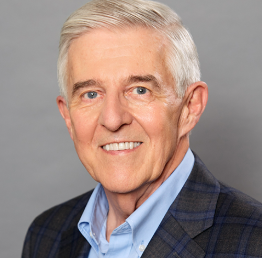
Randy advises clients with regard to business transition, taxable and tax deferred mergers and acquisitions, joint ventures, restructuring, integrated tax planning, federal and state tax controversy resolution, and real estate transactions. https://www.jmbm.com/l-randolph-harris.html

Ascent at Montelena
11977 Cobble Brook Drive, Rancho Cordova, California 95742
4 Home Design(s) Available

Now selling in Rancho Cordova, at Ascent at Montelena. This family-friendly community is near major employers like Sutter Health and the State of California. Located in the Sacramento Valley, residents enjoy Northern California at its best. These two-story single-family homes feature Life Tested® floor plans, smart home features, energy-efficient construction, and modern architecture. https://www.pulte.com/homes/california/sacramento/rancho-cordova/ascent-at-montelena-210916


People Die in Bed and So Does Ambition

People die in bed and so does ambition. Therefore, it is essential to never give up. “Thou shalt not be idle; for he that is idle shall not eat the bread, nor wear the garment of the laborer,” reports Doctrine and Covenants 42.42. We are here for a great purpose and it is not meant for us to just have fun and accumulate materials things. While it is important to enjoy life and have a clean and safe place to live, we are here to do the Lord’s work. We must work righteousness in the Earth, subdue wickedness, and conquer sin in our souls. Everyone experiences their identities differently, but everyone experiences who they are. We act in the world and interact with other people as the person we believe ourselves to be. Our very names designate our personal, as well as family, identities, and we act in the ways expected of the person so named. Some psychologists describe a person’s sense of his or her identity with the term self. This term implies that the individual is somebody in particular (a self), and it also signifies that this individual can experience his or her being in several perspectives, or modes, such as the modes of perception, of conceptualizing, and of imagination. The structure of the self has a great deal to do with one’s success, one’s ability to accomplish goals set by self or by others. #RandolphHarris 1 of 28

The self-concept is the picture we have of ourselves. In recent years, the importance of this concept has become established as a factor in school achievement, social behavior—almost all facets of one’s life. It often includes an appraisal or evaluation of self as “good” or “bad,” judgments we make about our own intelligence, attractiveness, and abilities. The self is the unique, special identity, the person, the personality. Under its synonym, the personality, the self has a great collection of research behind it, and it is a never-ending cause of concern, wonder, pride, or even sometimes shame for the human being who attempts to discover self. The ideal self is the person or self we think we ought to be. It is important, in that too big a difference between one’s self-concept and one’s ideal self indicates a good deal of dissatisfaction with one’s self and is often associated with behavior or emotional problems. The public self is the image or picture of ourselves that we give to the general society. It includes the way we want to be seen by others and often involves hiding some aspect of self or showing only certain aspects of self. However, the authentic person discloses his or her whole self comfortably and allows very little distinction between the public self and the real self. Sometimes the public self is also called the social self. #RandolphHarris 2 of 28

The real self is a bit of mystery. It is not as readily defined as other terms about the self. It involves our perception of our own being, being aware of the flow of our own consciousness. We come to know our real self by reflecting upon our experience candidly and through objective observations and evaluation of self. However, in the same manner that philosophers may debate for centuries the nature of reality, so some self-psychologists question the existence of a real self. Our best self is that aspect of the personality that we know as the best of ourselves that we can create, whether in secluded privacy or in blazing public light. It is roughly equivalent to the healthy personality at its best. It is significant as one of many descriptions of the high-level-functioning person. Healthy personality calls for action that achieves satisfaction of persons’ basic needs and that fulfills the projects they undertake to give meaning and direction to their lives. Persons sense of their identity has a decisive influence upon what action they feel free to engage in and what is taboo for them. Thus, persons can so define themselves that the very action that is essential for their wellbeing and growth is not compatible with their self-concept, their self-ideal, or their public self. Accordingly, they refrain from the activity and live out their identities, even though it may be sickening them. #RandolphHarris 3 of 28

We have already seen that Little Red Riding Hood’s childhood adventure with the wolf (her grandfather) had a profound effect on her life when she grew up. Knowing what real people do, it is not hard to surmise also what happened to Cinderella after she married. She found that being a Princess was lonely. She wanted to play, “Try and Catch Me” with the Prince some more, but he was not much fun. She teased her sisters when they came to visit her, but that did not amuse her for long either, particularly since they were not very good sports about it now that she had the upper hand. The King sometimes looked at her oddly, and he was not as old as he pretended to be, but he was not as young as he pretended to be either; in any case, she did not want to think about things like that. The Queen was nice to her, but very proper as a Queen had to be. As for the rest of the people at court, Cinderella had to be very proper to them. In due time, she did have the son that she and everybody else were waiting for, and there was much joy and celebration. However, she did not have any other children, and since the little Duke was taken care of by nursemaids and governesses as he grew up, Cinderella was soon as bored as before, particularly during the day when her husband was out hunting, and in the evening when he sat with his gentlemen friends losing money at cards. #RandolphHarris 4 of 28

After a while, she made an odd discovery. The people who interested her most, although she tried to keep it a secret, were the scullery maids and the cinder maids who cleaned the fireplaces. She would find all sorts of excuses to be around while they were working. Pretty soon, she was making suggestions to them from her own long experience with these matters. Then she found, riding around the little kingdom in her carriage, sometimes with her son and his governess and sometimes without them, and strolling through the less affluent parts of the towns and villages, something she had known all along: all over the kingdom there were thousands of women doing scullery work and cleaning out hearths. She would stop and gossip with them and talk about their work. Soon she got into the habit of making regular rounds to some of the least affluent homes where the women had to work the hardest. She would put on old clothes and sit in the cinders with them talking, or help them in the kitchen. Word soon got around in the kingdom about what she was doing, and the Prince even quarreled with her about it, but she insisted that that was what she wanted to do more than anything else, and kept on doing it. One day, one of the ladies of the court, who was also bored, asked permission to go with her. #RandolphHarris 5 of 28

As time went on, others got interested. Pretty soon, dozens of noble ladies were putting on their oldest clothes every morning and going into town to help the less affluent housewives with the meanest work, meanwhile gossiping with them, and hearing all sorts of interesting tales. Then the Princess had the idea of all the helping ladies getting together to talk about the problems they encountered, so she organized them into the Ladies’ Cinder and Scullery Society, with herself as President. Now, whenever foreign chimney sweeps, vegetable-peddlers, woodcutters, scullery maids, or trash-collectors passed through town, they were invited to the palace to talk to the Society about what was new in their trades and how things were doing in their countries. In this way, Cinderella found her real self and her place in life, and she and her new friends contributed much to the welfare of the kingdom. For many people, a monogamous marriage means putting an end to the alternation between new and the old, the challenging and the reassuring, at least as far as pleasures of the flesh is concerned. They lack the imagination or the motivation to revitalize interest in pleasures of the flesh in their own marriage, and the only variety to suggest itself to them is having a variety of partners. Since they find this morally unacceptable, or simply too risky, they settle for security and, no matter how reluctantly, accept as a fact that monogamy inevitably becomes monotony. #RandolphHarris 6 of 28

However, the wish that it could be otherwise remains strong. And so, it is only to be expected that a great many men and women today, who until now have believed that fidelity with pleasures of the flesh was an ideal to uphold, even if they themselves could not hold to it, are fascinated by arguments that make a case for the acceptance of extramarital pleasures of the flesh. They half want to be persuaded that having one married partner need not mean having just one partner for pleasures of the flesh, that any modern could should be able to enjoy the challenge of extramarital affairs. Looked at one way, it amounts to offering husbands and wives the opportunity to have their cake and eat it, too. Looked at another way, it amounts to a magic cure for marital doldrums. Either way, the lure is powerful. However, even more powerful is the Law of Chastity. God wanted His spirit children to be born into families so they could be properly cared for and taught. The Law of Chastity states that we are to have sexual relations only with our spouse to whom we are legally married. No one, male of female, is to have sexual relations before marriage. After marriage, pleasures of the flesh are permitted only with our spouse. “Thou shalt not commit adultery,” reports Exodus 20.14. #RandolphHarris 7 of 29

Emotions are the primary means by which we make contact. Emotions need to be expressed to be complete. Take the feeling of excitement. It seeks to express itself in contact with other human beings. Excitement, the basic life energy of the individual, is almost inconceivable without a recipient of that force. A child who gets an “A” on her spelling test bursts with excitement until she can get home to tell her mother. Or the young man who has just seen a wonderful movie cannot wait to tell his best friend about it. If we do not express them, share them with another, the five basic emotions of anger, fear, hurt, joy, and love are incomplete. Likewise, if we cannot express our emotional life, core relationships cannot grow, or even exist for that matter. It is no wonder the manipulator fails to form such relationships and suffers the maladies of blocked emotions. The manipulator, blocking anger, might be said to be seething with resentment. This anger is incomplete and eventually, turned inward, results in feelings of resignation and depression. Fear keeps the manipulator imprisoned when she or we does not express it. The manipulator becomes a worrier, nibbling at the edges of the prison cell, unable to break free of phobias. #RandolphHarris 8 of 28

Hurt, when not expressed, cannot be finished with. It, too, simmers inside to become a pervasive, long-lasting sadness that threatens normal self-esteem. Repressed joy can destroy ambition, intellectual development, inquisitiveness, and awareness. Joy is the pay-off for almost everything we do, and without it, life and its challenges become nothing more than drudgery. Unrequited love may be sad, but unexpressed love is a tragedy. It provides the manipulator with a lifetime of regret over what might have been. Withholding caring, or incomplete love, is like giving a stone to another instead of bread. It affects adversity both the one who would not give and the one who does not, therefore, receive. When we proceed from these general viewpoints to the particulars of individual neuroses, the picture at first sight is confusing. There is simply nothing that may not be invested with pride. What is a shining asset to one person is a disgraceful liability to the next. One person is proud of being rude to people; another is ashamed of anything that could be construed as rudeness and is proud of his sensitiveness to others. One is proud of his ability to bluff his way through life; still another is ashamed of any trace of bluffing. Here is one who is proud of trusting people and there is one equally proud of distrusting them—and so forth and so on. #RandolphHarris 9 of 28

However, this diversity is bewildering only as long as we regard the special kinds of pride out of the context of the whole personality. As soon as we see each of them from the perspective of the individual’s total character structure, an ordering principle emerges: his need to be proud of himself is so imperative that he cannot tolerate the idea of being in the clutches of blindness; so he uses his imagination to turn these needs into virtues, to transform them into assets of which he can be proud. However, only those compulsive needs which serve his drive to actualize his idealized self undergo this transformation. Conversely, he tends to suppress, deny, despise those which obstruct this drive. His capacity for this unconscious reversal of values is perfectly amazing. The best medium through which to present it would be cartoons. There it could be shown most vividly how people afflicted with some undesirable trait take a brush, paint over the trait with beautiful colors, and present with blustering pride the picture of their assets. Thus, inconsistency turns into unlimited freedom, blind rebellion against an existing code of morals into being above common prejudice, a taboo on doing anything for oneself into saintly unselfishness, a need to appease into sheer goodness, dependency into love, exploiting others into astuteness. A capacity to assert egocentric claims appears as strength, vindictiveness as justice, frustrating techniques as a most intelligent weapon, aversion t work as “successfully resisting the deadly habit of work,” and so on. #RandolphHarris 10 of 29

These unconscious processes often remind me of the Trolls in Ibsen’s Peer Gynt, for whom “black looks white, and ugly fair, big looks little, and filthy clean.” Most interestingly, Ibsen accounts for this reversal of values in a way like our own. If you live in a self-sufficient dream world like Peer Gynt, Ibsen says, you cannot be true to yourself. Between the two, there is no bridge. They are too different in principle to allow for any compromise solution. And if you are not true to yourself, but live an egocentric life of imagined grandeur, then you will play ducks and drakes with your values too. Your scale of values will be just as topsy-turvy as is that of the Trolls. As soon as we go off on the search for glory, we stop being concerned about the truth of ourselves. Neurotic pride, in all its forms, is false pride. Once having grasped the principle that only those trends are invested with pride that serve to actualize the idealized self, the analyst will be alert to detect hidden price in any position which is tenaciously adhered to. The connection between the subjective value of a trait and neurotic pride in it seems to be a regular one. Recognizing either one of these factors, the analyst can safely conclude that in all probability, the other one will be there too. Sometimes the one, sometimes the other will come into focus first. Thus, a patient at the beginning of analytical work may express pride in his cynicism or in his power to frustrate others. And although at this juncture the analyst does not understand the meaning that the given factor has for the patient, he can be reasonably certain of it playing a significant part of the neurosis. #RandolphHarris 11 of 28

Undoubtedly, the master enjoys total freedom first as regards the slave, since the latter recognizes him totally, and then as regards the natural world, since by his work the slave transforms it into objects of enjoyment which the master consumes in a perpetual affirmation of his own identity. However, this autonomy is not absolute. The master, to his misfortune, is recognized in his autonomy by a consciousness that he himself does not recognize as autonomous. Therefore, he cannot be satisfied and his autonomy is only negative. Mastery is a blind alley. Since, moreover, he cannot renounce mastery and become a slave again, the eternal destiny of masters is to live unsatisfied or to be killed. The master serves no other purpose in history than to arouse servile consciousness, the only form of consciousness that really creates history. The slave, in fact, is not bound to his condition, but wants to change it. Thus, unlike his master, he can improve himself, and what is called history is nothing but the effects of his long efforts to obtain real freedom. Already, by work, by his transformation of the natural world into a technical world, he manages to escape from the nature which was the basis of his slavery in that he did not know how to raise himself above it by accepting death. #RandolphHarris 12 of 28

The very agony of death experienced in the humiliation of the entire being lifts the slave to the level of human totality. He knows, henceforth, that this totality exists; now it only remains for him to conquer it through a long series of struggles against nature and against the masters. History identifies itself, therefore, with the history of endeavor and rebellion. It is hardly astonishing that Marxism-Leninism derived from this dialectic the contemporary ideal of the soldier worker. Only he who is capable of sustained intellectual effort can understand this philosophy. Some people can understand philosophy and some most monumental concepts in an unclouded flash, but most people can understand, even its simplest ones only by slow degrees. Here first acquaintance is not enough. There must be many subsequent meetings before intimacy can be established. Thinking must not only approach these studies as worshippers approach a temple shrine, with the reverence they deserve, but must also become alive and dynamic. The intense intellectual joy of discovering a new truth—new, that is, to oneself, but as old perhaps as thoughtful humanity itself—equates with the intense aesthetic joy of creating or appreciating an art work. In the human body, the cerebral nervous system, with which man’s mental faculties are associated, does not develop until long after all the other chief organs have developed. This is symbolic of its evolutionary importance. In the human life, the thinking power does not attain full maturity until long after all the chief decisions, such as the choice of occupation, marriage-partnership, and religious affiliation have already been made. How much human error and consequent misery must therefore arise from the lateness of this development. #RandolphHarris 13 of 28

The award-winning Sacramento Fire Department is aware of their surroundings when performing their assigned tasks at an emergency scene. At an incident, they make a safe exist from the fire apparatus and look at the building or situation for safety hazards such as traffic, downed utility wires, and adverse environmental conditions. The introduction of new technologies requires fire fighters, paramedics, and EMTs to be familiar with their run areas and observant of new hazards. This includes the increasingly common photovoltaic power systems (solar power systems) and battery energy storage systems within electrical power grids. An incident on a street or highway must first be secured with proper traffic- and scene-control devices. A variety of traffic-incident management technqiues may be appropriate. Flares, traffic cones, and barrier tape are all measures that can help keep the public at a safe distance from the scene and to divert traffic around the area. Emergency vehicles can be placed to block traffic and protect the incident scene. The Sacramento Fire Department always operates within established boundaries and protected work areas. Changing fire conditions also will affect safety. Through situational awareness, fire fighters monitor the changing conditions and maintain safety. This continues even during the overhaul phase and while picking up equipment—watching out for falling debris, smoldering areas of fire, and sharp object. #RandolphHarris 14 of 28

If a safety officer is not on scene, another qualified person is assigned to monitor the atmosphere to ensure it is safe to remove Self-Contained Breathing Apparatus (SCBA) or enter the area without SCBA. Because of the chance for injury increases when you are tired, the Sacramento Fire Department does not let down their guard, even when the main part of the firefighting operation is over. When you think about professions, what comes to mind? Credentials, years of study and training, a code of ethics, status in the eyes of the community? Think of the medical caregiver, the legal specialist, the accountant, the architect, the teacher, the law enforcement officers, or the clergy member. What do they have in common with the profession you are training for and are about to enter—the Sacramento Fire Department? To truly understand your role as a fire fighter, paramedic, or EMT, you must first understand what people mean when they talk about a profession. A profession is a calling—a vocation. It is a livelihood, yes, but it does far beyond a simple occupation or “what you do” for a living. A profession is a way of being, a way of thinking, a way of behaving, and a way of growing. In short, it is a way of life, not just a job or a lifestyle. Most professionals would probably tell you that they do what they do because they love their work, that they could not do anything else, that they would do it even if they did not make money at all. The Sacramento Fire Department is just such a profession. That is why it is important to realize the difference between an occupation—a job—and a profession. #RandolphHarris 15 of 28

The job with the Sacramento Fire Department is the highest embodiment of the profession of service. When you become a commissioned officer in the Sacramento Fire Department, you join an elite body of leaders with a long, proud tradition of service to the country and a commitment to high ideals. “I’m doing what I want to do, and there’s no better feeling. Even after being hurt, I can’t wait to get up and go to work, because I enjoy my job. I love going to the firehouse. A nurse is someone I relate to a fireman, because you’re always helping somebody. A fireman should never expect to get a pat on the back, you just give yourself a pat of the back when you do a good job. That makes you feel good. Don’t wait for somebody else to pat you on the back. Just do your thing. When you come home in the morning, you look tired. Your wife and kids don’t know what you’ve been through. But if I’ve had a busy night on the job, I come home with a smile on my face, because I know I did something good, helped somebody or saved somebody’s property. I grew up working with a diverse group of firefighters; there were black and white firemen; they were all real men, and they taught me so much. Outside of that firehouse, in that neighborhood, it’s a cruel world. When people don’t have anything, they have nothing to lose. And it’s cruel. Life to some of those people means nothing. They kill people, they hurt people, they do a lot of nasty things to people, and it means nothing to them. You see a lot of violence. It makes you a little bit cold and a little bit distrusting to the people who are committing the crimes. But it makes you appreciate life a lot more when you go home to your family. #RandolphHarris 16 of 28

“I grew up in that area, in that firehouse, it’s part of my life. It’s something I’ll always cherish. I learned so much about life down there. I look at college-educated persons, and I can see that some of them don’t have any street sense. They don’t know what it is to be down at the bottom. Growing up there made me think a lot about the basic things in life. I don’t ever want a fancy house, I want a nice house. I want my kids to be well-educated, but I want them to know what does on out there on the streets. I want them to know the real world, so they won’t put themselves up on a pedestal. They still have to relate. Everybody is a human being. That’s one of the things I learned being there. There’s a whole world out there that people don’t see, especially people don’t live in a big city. I studied for over a year, and I’m on the captain’s list right now. I take an interest in administration, because I’m interested in the overall good of the fire department. I want to see our job work well. As a supervisor and a company officer, I have a lot of things I have to control. All I want a person to be if he works for me is to be honest and to be a fireman. I run a squad company and it’s taken me seven years, but I’ve built the heck out of a company, and I know everyone of my guys personally. But overall, my basic thing is that I still life being a company officer, and I still like fighting fires. #RandolphHarris 17 of 28
“Right now I can’t see myself in an administrative position. First of all, I’m too young. Not that I’m naïve. I try to cover everything that goes on in the job, but I haven’t got that tiger out of me yet. It’s still in my taken. As I say, I look forward to going to the firehouse, and if we have a busy day, I come home with a smile on my face. The pressures on the leadership are tremendous with the changes we’ve had. But everybody is pretty much back to normal. I never judge a person by what another person says about him. It’s how he deals with me. I’m on a squad company, and a lot of men think we’re macho. I don’t have that feeling. I’m just here because I enjoy the work and the different types of things you see. For example, yesterday we had a man down an elevator shaft. We had a crane on top of a car. We had a hazardous material spill last night. We do the scuba diving. We’re always doing something. Every day I go to work, I learn something different. And you can’t go wrong doing that. I was told when I was burned that I could have gone off on three quarters disability pay. To this day, does my back bother me? Yeah. Do my ears hurt me at a fire? A little bit. But that’s my love, that’s my life, second to my family. There’s no greater pleasures you can get than if you love your job and you go to work and enjoy yourself. Would I like an administrative job? No. It wouldn’t have been my style to leave the job. In the back of my mind, am I trying to fulfill something? Dedication to service, expertise, responsibility, and corporate culture.” #RandolphHarris 18 of 28

If you see a fire truck stopped in the street without the lights on, be very careful. Sometimes there is an emergency and you should not pass the fire truck. It might be a good idea to safely turn around and go another way because if you hit someone and they happen to die, you could be charged with manslaughter. Sometimes fire fighters are getting back into their vehicle and if you pass the apparatus, you may collide with a firefighter who is on foot. Also, be sure to look at their signals, sometimes emergency vehicles are in motions, albeit, slowly, and drivers try to pass them, and this could lead to a dangerous situation. Also, if you are in an intersection when you see an emergency vehicle, continue through the intersection. Drive to the right as soon as it is safe and stop. Obey any direction, order, or signal given by a law enforcement officer, or a firefighter. Even if they conflict with existing signs, signals, or laws, follow their orders. When their siren or flashing lights are on, it is against the law to follow within 300 feet of any fire engine, law enforcement vehicle, ambulance, or other emergency vehicle. If you drive to the scene of a fire, collision, or other disaster, you can be arrested. When you do this, you are getting in the way of firefighters, ambulance crews, or other rescue and emergency personnel. The concept of professional courage does not always mean being as tough as nails, either. It also suggests a willingness to listen to other peoples’ problems, to go to bat for them in a tough situation and it means knowing just how far they can go. It also means being willing to tell the boss when he or she is wrong. #RandolphHarris 19 of 28
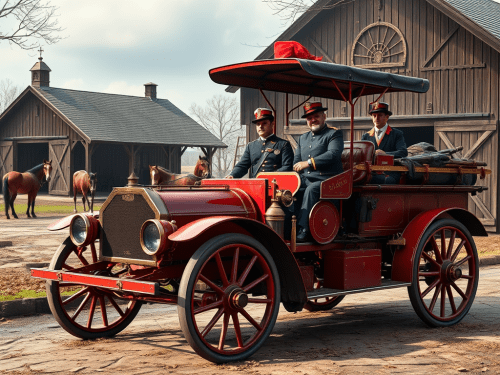
California is the third most expensive state in the nation. A single person making an income above $100,000 is now consider low-income in five counties in California. This distinction now applies to individuals living in Santa Cruze, Santa Clara, San Mateo, San Francisco, and Marin counties. In 37 percent of counties, a family of four living on a six-figure income is now considered low-income. In fact, Governor Gavin Newsom of Democratic controlled California, brags about being the world’s “fifth largest economy,” but it also facing a $12 billion deficit, looking to cut $747 million for state worker’s pay, pushing to keep medical insurance for illegal immigrants, but wants to cut medical for anyone who has assets over $2,000 and the state has the largest homeless population in the nation. If they are all officially counted, California has approximately 4 million homeless people. The highest home prices in the nation, the highest taxes and the most unfriendly business regulations known to man. The average home price in California is nearly $1,000,000.00 USD, while the average salary is $96,036.00, meaning that most Californians cannot even afford to buy a home. California is having an affordability crisis. In 2025, many people in California saw their bills increase by an estimated $500 a month. This includes things like food, automobile insurance, homeowner’s insurance, electricity. In fact, more than 3 million people in California are facing household hardship, and more than 300,000 of them are facing eviction soon. This comes at a time when California is having a shortage of affordable housing. This is caused by nearly half a century’s old laws that discourage homes sales and encourage higher rents. Meanwhile, China, where we are sending all of our jobs and money has more than 50 ghost cities. Ghost cities are regions will housing has been overdeveloped to the point that these places are uninhabited. Because California is so hostile towards people and businesses, more than 360 companies have fled the state since 2020. Businesses like Chevron, SpaceX, Oracle, and Hewlett Packard are amongst the names on that list. #RandolphHarris 20 of 28

Also, more than 500,000 people a year are abandoning California because it is too expensive to live in, Gavin Newsom has criminalized homelessness and actually started arresting people without homes, crime is out of control, and they are losing their jobs due to companies relocating. More than 100 companies have announced layoffs in California for 2025. Intel is cutting 15,000 jobs, PayPal 2,500 and Meta has terminated 4,000 employees. The California crisis created by Democrats is driving up home prices and mortgages and rents all over the nation and the world, making living unaffordable for all, and advocates say the crisis is far from over. Accordingly, California has more than 3.5 million illegal immigrants. Having the Southern American boarder open and not having American farmland protected, not producing beef, poultry, fish, fruit, produce and dairy in America, and without American goods and services being our number one manufactured and selling items, America has created a dangerous and significantly elevated risks to national security, national economic security, and national public health. Some people may believe that these claims are overstated, but by not routinely monitoring Common Vulnerabilities and Exposures (CEVs) or other security relevant alerts, such as end-of-life of machinery is how the Oroville Dam Crisis occurred in 2017. Other crises that have occurred due to neglect of critical infrastructure is the 2025 Palisades fires because Southern California ran out of water, when they are located next to an ocean and they could have simply created desalinating plants to help with the water shortage. The water is so plentiful that it is currently eroding land and causing homes to fall into the sea. #RandolphHarris 21 of 28

The American government should know all exploitable vulnerabilities and fix them prior to the situation becoming a crisis. Failure to take such mitigating actions is dangerous and significantly elevates risk to national security, national economic security, and national public health and safety. The American government must understand that significant time and resources must be invested in America. They must also encourage corporations to plan for both mitigating safety vulnerabilities in the short term and eliminating them in the long term. For instance, a company might begin by reaching out to the federal, state or local government and requesting tax incentives to provide security to dangerous communities, to help the government repair bridges and potholes. America needs an approach to eliminate safety vulnerabilities in American cities. There needs to be a road map by the end of 2025, outlining a prioritized approach to eliminate crisis situations in America. There is enough money to send aid to foreign nations, but the American government does not have enough money to care their infrastructure, provide adequate resources, nor end the affordable housing crisis. Nor is there enough money to fund other national critical functions (NCFs). These bad practices of putting America and Americans last is considered exceptionally risky, particularly to national security, national economic security, and national public health and safety. In 2024, Americans spent $100 billion on Japanese cars. #RandolphHarris 22 of 28

Additionally, with inflation rates at an all-time high, American being in an unofficial recession for about a decade, all insurance in California is becoming unaffordable. State Farm has received an approval for an emergency rate increase, which was approved by the California Insurance Commissioner, to stabilize the market and protect policyholders. Starting 1 June 2025, homeowners will see an average of 17 percent increase, rental dwellings will see an increase of 38 percent, and Condo owners will see a rate increase of 15 percents. These rate increases are due to the distressed caused by the recent wildfires, which accumulated over $7 billion in claims. Furthermore, in 2022, California Governor Gavin Newsom signed Senate Bill 1107, also known as the Protection California Drivers Act, into law which increases the minimum auto lability limits for bodily injury to $30,000 per person and $60,000 per accident. Senate Bill 1107 also increased the minimum liability limits for property damage to $15,000 per accident and the DMV deposit for uninsured drivers to $75,000. The bill went into effect on January 1, 2025. This means that drivers with existing policies with lower limits will renew at the new minimum limits on or after January 1, 2025, and insurance premiums could increase by as much as 54 percent. America is in a state of crisis right now because of mismanagement by democrats. With the median household income in Sacramento County being $88,724 and a 4-bedroom 2.5-bathroom Cresleigh home costing $798,059, how are people able to afford homes? Because an $800,000 home with a one percent down payment of $8,000, 30-year fixed loan at 4.176 percent interest comes with a monthly mortgage payment of $4,241. #RandolphHarris 23 of 28
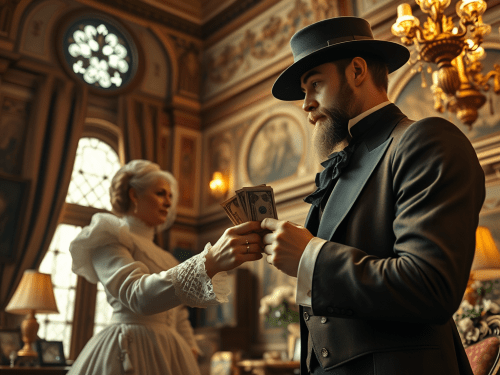
The maximum percentage of your gross income that you should earmark for a monthly mortgage payment is calculated at 28 percent, and no more than 36 percent of your gross income to all debts, including mortgage. If you take 28 percent of the median household income per home in Sacramento County, homeowners can only afford a mortgage of $2,070.23 per month. And if you take 36 percent of their gross income to all debts, including mortgage, they should be devoting no more than $2,661.72 a month to these debts. Mortgage lenders must be using some kind of sorcery to get buyers into these expensive homes. To afford one of these homes using traditional guidelines, a household would need to gross $11,280.24 per month or $135,362.88 per year, but the median household in Sacramento County is grossing $7,393.67 or $88,724.00 and that typically means two to four people in the home are working and contributing to the mortgage. Prices in Sacramento County are actually rivaling the Bay Area, and the Bay Aera is so expensive because they have more higher paying jobs and is a tourist destination. And with the State of California being in a budget deficit of $12 billion, Governor Gavin Newsom Granted 700,000 illegal immigrants free health care at a cost to taxpayers of $3 billion annually, while cutting vital programs for veterans, school children, the disabled and the homeless, and is proposing to fast-track his plan to build a $20 billion water tunnel beneath the Sacramento-San Joaquin River Delta by eliminating environmental reviews and limit avenues for legal challenges. Gavin Newsom only cares about the environment when his policies allow him to raise taxes and restrict freedoms. #RandolphHarris 24 of 28
In fact, Mexico has been causing one of America’s worst environmental disasters. Fifty million gallon a day of industrial chemicals, untreated sewage, and trash flow from Tijuana, Mexico, into southern San Diego County daily. This toxic waste has been turning up on Imperial Beach, and is causing the miles of white sands to become polluted and the ocean breeze to smell of poop, which has been sickening residents and wildlife and costing San Diego millions in the form of lost tourism and health problems. The problem has been going on for more than a century. However, it has become a public health crisis as the population of Tijuana has drastically increased, in recent years, and the waste treatment plants have no longer usable. The beach has been closed for more than three years, and evidence suggests that even breathing the air may be harmful, as toxic particles in the water can become airborne. Yet, even though Gavin Newsom has been governor for six years, he has not rushed into action to stop this very preventable environmental disaster. Why? Because he is not getting kickbacks from China and Mexico, not being gifted mansions and cars, and he cannot tax the struggling California taxpayers to clean up this mess. Simply, it is not profitable for him. Gavin Newsom has been a total tyrant with no regard for taxpayers and does not have a mind for business and should be impeached as soon as possible. He has criminalized poverty, increased taxes, increased tax on gas, and insurance rates so high that people are struggling to survive. Meanwhile, Gavin Newsom has given billions of taxpayer dollars away to illegal immigrants and protected them from law enforcement, while arresting law abiding Americans because they cannot afford to pay rent or mortgage and the homeless shelters are unsafe, overcrowded and have restrictions on who is allowed inside. Wars have been started over governments who tax citizens without representation. Taxation without representation is what led to the American Revolution. If Gavin Newsom is not stopped, next he will euthanize the poor and sterilize the disabled. Gavin Newsom has wars and fires breaking out on the streets, but goes out of his way to arrest people who have no place to live. This monster is unfit to be governor and must never be allowed to be President of America! Stop Gavin Newsom now! Save California and impeach this unreasonable man. #RandolphHarris 25 of 28

Meanwhile, with President Trump, we are seeing crime rates sharply decrease, and he recently secured $10 trillion in investments. Additionally, in May of 2025m the United States of America collected a record $22.3 billion in tariff revenue. If elected president for an unprecedented third term, to make housing more affordable and to offset the cost of homeowner’s insurance and auto insurance, President Trump plans to abolish property taxes. Much like the land crisis in Las Vegas, we could also run out of land to farm and will not be able to grow or cultivate our own food. We can protect American farmland and support American farmers by buying American made beef, poultry, dairy, and produce. Also, country of origin labeling is very important so Americans can know where their food is coming from and have the ability to support American farmers and ranchers. As money flows, it influences further investment. Save the land that sustains us by protecting American farmland. Once the land is built on, we lose it forever. And in the future, there may be food wars. Also, to ensure that we have farmland and buildable land for future use, we need to start limiting the number of people allowed to immigrant to America. Perhaps with the immigrants we do allow into America, there needs to be a diversity program to make sure we have a population that equally represents all races of people. If Americans continue to spend money on American products, then more need to be made to keep up the inventory. When investors notice these goods are selling, it gives them the confidence to pour more money into that local business. It shows that people want these goods made in America and pressures investors to keep these goods and services in America. The jobs stay here, the business stays in American, wages naturally increase, and more money is invested to keep up with demand. This reduces the burden on the taxpayer. When you support American businesses, that money stays in our economy and can help to reduce the national debt. The government creates debt by borrowing from businesses in the private sector or from foreign countries. It also increases the national debt by spending more than it gains in tax revenue in a fiscal year. #RandolphHarris 26 of 28

When people shop locally, more tax money stays in the economy and goes to the government. This way, it keeps more money in our national economy and keeps more jobs located in American which also sends more taxes to the government, which can again help to reduce the national debt. When you buy foreign goods, these companies usually have lighter tax loads or exemptions, meaning less money for the nation debt, plus you are helping to strengthen these foreign nations by send more money overseas. Buying American made products is also better for the environment and helps to reduce the carbon footprint because these products do not have to travel nearly as far. Furthermore, American companies and manufacturers are held to much higher standards on pollution. American companies must be more careful about air, land, and water pollution and have proper ways to dispose of waste. Moreover, please remember to respect law and order and treat your elders with the utmost dignity and kindness possible. And take your education seriously so that you will be successful in life and make your family proud. It is inborn in the human minds to wish to know. If this begins with the endless surface questions of a child’s curiosity, if it continues into deeper questions of a scientist’s probing investigation, it cannot and does not stop there. For the higher part of the mind will eventually come into unfoldment, that union of abstract reflective thought with mystical intuition, which is true intelligence, which needs and sees a view of the whole of things. And so, the knowing faculty enters the realm of philosophy. #RandolphHarris 27 of 28
As you can see, President Donald Trump and his pledge to “Make America Great Again,” is exactly what America needs to save the country and the American people. And yes, diversity is important, so you can see why it is also important to preserve blonde hair and blue eyes as the people with these characteristics are becoming a minority in America. We must think before we can understand the soul’s existence; we must understand before we can realize it. The earliest beginnings of thought, as apart from instinct, when it was itself still but a lurking tendency, belong far back in primeval time. The human intellect as we find it today, so rich and developed an instrument for the consciousness of the ego, did not arrived at this fulness without a series of graduated stages. We have had plenty of scientific thinking, business thinking, and political thinking long enough, but we have had very little inspired thinking. That is the world’s need. The intellect is cradled in selfishness but runs the evolutionary track into reason where it will one day finish at the winning-post of selflessness. As a reminder, parents, pleasure teach your children love America and be patriotic citizens and to buy goods and services made in America. It is also important to respect law and order and treat your elders with respect. “Oh, thus be it ever, when freemen shall stand between their loved home and the war’s desolation! Blest with victory and peace, may the heav’n-rescued land Praise the Power that hath made and preserved us a nation! Then conquer we must, when our cause it is just, and this be our motto: ‘In God is our trust.’ And the star-spangled banner in triumph shall wave O’er the land of the free and the home of the brave.” #RandolphHarris 28 of 28

Experience an unforgettable journey back to the time of kings and queens with this entry ticket for The Winchester Mansion in Santa Clara, California which was the residence of Heiress Sarah L. Winchester. Take advantage of this fascinating experience. After tour, there will be time enjoy the mansion’s splendor at your own pace. You might even discover secret passages.

Please come and enjoy a delicious meal in Sarah’s Café, stroll along the paths of the beautiful Victorian gardens, and wonder through the miles of hallways in the World’s most mysterious mansion.

For further information about tours, including group tours, weddings, school events, birthday party packages, facility rentals, and special events please visit the website: https://winchestermysteryhouse.com/

Please visit the online giftshop, and purchase a gift for friends and relatives as well as a special memento of The Winchester Mystery House. A variety of souvenirs and gifts are available to purchase. https://shopwinchestermysteryhouse.com/

We wish to express our gratitude to our families, ancestors, spirits, and friends and to our many associates and clients, whose lives touched our lives and whose ideas helped us to grow. We would also like to thank our employees and care takers for putting the technical ideas of this estate into conversational style, and we are, of course, extremely thank to all of our patrons for helping to keep the legacy of the Winchester Family alive. The Winchester Mystery House is full of surprises. What was your favorite, “Oooh!” moment during your visit at the mansion? (And for those of you who still have to check it off your bucket list… we will hopefully see you soon.) https://winchestermysteryhouse.com/
Harris Plumbing, Heating, Air, & Electric has been in business for 30 years. How many businesses can say that? We take pride in everything we do – no matter how big or small the service call might be. We’re here to help your home be as safe and comfortable as possible for you and your family. We take that responsibility very seriously as a company. Harris will ensure you have the information you need to decide what to do next, whatever your home is facing. We’ll perform a diagnosis and detail what issues are present before starting any work. This gives you a personalized quote and service plan specific to your home’s needs – not some random quote based on the best guess. The only way we can do our best work is to make sure we handle the issues at hand. https://www.callharrisnow.com/about-us/


BMW continues to dominate the luxury car space. With its top ranking in Consumer Reports’ Auto Brand Report Card and consistent market share growth, BMW has demonstrated its ability to produce high-performing, reliable vehicles that meet consumer demands.
BMW stands out due to its focus on driving dynamics and engineering excellence. While other luxury brands prioritize comfort and opulence, BMW is known for creating cars that are fun to drive and offer a unique connection between the driver and the machine. https://www.brianharrisbmw.com/

Randolph Harris San Francisco Taxation & Mergers
Randy advises clients with regard to business transition, taxable and tax deferred mergers and acquisitions, joint ventures, restructuring, integrated tax planning, federal and state tax controversy resolution, and real estate transactions. https://www.jmbm.com/l-randolph-harris.html

Cresleigh Bluffs at Plumas Ranch
Plumas Lake, CA | from the mid $400’s
Now Selling!

Welcome to Cresleigh Bluffs, the newest home community in Plumas Ranch!

Nestled in the heart of Plumas Lake, CA, Cresleigh Bluffs offers three distinct single story floor plans designed with efficiency and practicality in mind.

Home design is made easy with expertly crafted design packages exclusive to Cresleigh Bluffs. Choose from a variety of packages made to fit your taste and budget. Contact our dedicated sales associates to learn more. PlumasRanch@cresleigh.com

Sign up for our interest list today to stay up to date on community information. https://cresleigh.com/cresleigh-bluffs-at-plumas-ranch/move-in-ready-homesite-2/


Sit Down on the Camel and Take a Picture

The value of religious knowledge lies in the fact that it is a safeguard against error for it shows how to discriminate between reality and the appearance of it. Neither the deceptions of individuals nor the errors of religious experience can succeed. The expansive type, for whom mastery of life is crucial, tends to identify himself with his inner dictates and, whether consciously or unconsciously, to be proud of his standards. He does not question their validity and tries to actualize them in one way or other. He may try to measure up to them in his actual behavior. He should be all things to all people; he should know everything better than everybody else; he should never err; he should never fail in anything he attempts to do—in short, fulfill whatever his particular should are. And, in his mind, he does measure up to his supreme standards. His arrogance may be so great that he does not even consider the possibility of failure, and if it occurs, discards it. His arbitrary rightness is so rigid that in his own mind he simply never errs. Moses’ concern for his people proved to be justified in the years following their entry into the land of Canaan. It was when they became settled in this goodly land that they began to take their abundance for granted and to forget the real source of these blessings. Moses had counseled them: “For the Lord thy God bringeth thee into a good land, a land of brooks of water, of fountains and depths that spring out of valleys and hills; a land of wheat, and barely, and vines, and fig trees, and pomegranates; a land of oil olive, and honey; #RandolphHarris 1 of 24

“A land wherein thou shalt eat bread without scarceness, thou shalt not lack any thing in it; a land whose stones are iron, and out of whose hills thou mayest dig brass. When thou hast eaten and art full, then thou shalt bless the Lord thy God for the good land which He hath given thee. Beware that thou forget not the Lord thy God, in not keeping his commandments, and His judgements, and His statutes, which I command thee this day: Least when thou hast eaten and art full, and hast built goodly houses, and dwelt therein; and when thy herds and thy flocks multiply, and thy silver and thy gold is multiplied, and all that thou hast is multiplied; then thine heart be lifted up, and thou forget the Lord thy God, which brough thee forth out of the land of Egypt, from the house of bondage…And thou say in thine heart, my power and the might of mine hand hath gotten me this wealth,” reports Deuteronomy 8.7-14, 17. Even if a man succeeded in getting others to accept his views, even if everyone accepted them, it is unlikely that they will accept them always. Every opinion has been written down in the books, including the opinion that truth requires us to hold no opinion. “Think of your brethren like unto yourselves, and be familiar with all and free with your substance, that they may be rich like unto you. But before ye seek for riches, seek ye for the Kingdom of God. And after ye have obtained a hope in Christ, ye shall obtain riches, if you seek them; and ye will seek them for the intent to do good—to clothe the naked, and to feed the hungry, and to liberate the captive and administer relief to the sick and the afflicted,” reports Jacob 2.17-19. #RandolphHarris 2 of 24

Suggestions from outside enters largely into the opinions and beliefs, the views and outlook, of masses of people. It is just as true, possibly truer, of the mystically minded, be they seekers or gurus, be they Eastern or Westerners. What is really known—rather than echoed back—dwindles down to a residue. The coveting of wealth so often has resulted in avarice, dishonesty, and greed. The acquisition of wealth has frequently produced pride, self-satisfaction, and arrogance. An episode during the time of Alma in the Book of Mormon illustrates the cycle that has so often occurred when people are blessed materially by the Lord and then turn away from Him. In the instance referred to, the Nephite people were struggling to overcome the effects of a devasting civil strife and a Lamanite invasion, not unlike the struggles more than half of Americans face today. Not only had there been great loss of life; the destruction to lands and to property had been sufficient to seriously jeopardize the prospects of recovery. Alma describes conditions in these words: “But the people were afflicted, yea, greatly afflicted for the loss of their brethren, and also for the loss of their flocks and herds, and also for the loss of their fields of grain, which were trodden under foot and destroyed. And so great were their afflictions that every soul had cause to mourn; and they believed that it was the judgements of God sent upon them because of their wickedness and their abominations; therefore they were awakened to a remembrance of their duty. #RandolphHarris 3 of 24

“And they begun to establish the church more fully; yea, and many were baptized in the waters of Sidon and were joined to the Church of God,” reports Alma 4.2-4. He may be poised in the tranquility of these grand concepts or poisoned by the negative fogs of false ones. Convert a man to your opinion and you have him for long; compel him to adopt it and you have never really got him. The spiritual reawakening among the people had a dramatic effect. Peace returned to the land. The Church prospered in its rapid growth. Not surprisingly, the people soon began again to enjoy an abundant life. The spiritual blessings granted by the Lord were accompanied by the acquisition of material wealth. Unfortunately, the Nephites failed to meet this test. Within three years from the time of their earlier tragedy, Alma describes his people in this way: “The people of the church began to wax proud, because of their exceeding riches, and their fine silks, and their fine-twined linen, and because of their many flocks and herds, and their gold and their silver, and all manner of precious things, which they had obtained by their industry; and in all these things were they lifted up in the pride of their eyes,” reports Alma 4.6. History repeatedly confirms that the abundance of earthly possessions can be both a blessing and a curse, depending upon the way these things are viewed and used. When we consume them on our own lust, we invoke tragedy. #RandolphHarris 4 of 24

We must work hard to elicit the truth from the medley of beliefs and opinions which rule us, and to extract the reality from the medley of illusions and glamours which hold us. Any fool can say, “I know,” that is, can have an opinion. Mass stupidity is not, and never can be, a satisfactory substitute for individual intelligence. Wealth is a relative thing. Conditions vary dramatically from place to place in the World today. America is indeed a chosen land that President Trump is helping to restore. That which some consider to be the necessities of life, to others would be abundance, and even extravagance. In any set of circumstances, the challenges related to an improvement in material prosperity remain the same. The message that echoes to us from the pages of history and from the counsels of the Lord and His prophets is clear: Seek ye first the kingdom of Heaven. Seek not for riches to consume them on your own lusts. Thou shalt not covet. Clothe the naked. Feed the hungry. Relieve the sick and the afflicted. Pay tithes and offerings. In all things, acknowledge the Lord. Be grateful. Be humble. The words of Moses to the tribes of Isreal have appropriate application for us: “Fear the Lord thy God, to keep all His statutes and His commandments, thou, and thy son, and thy son’s, all the days of thy life; and that thy days may be prolonged. Here therefore, O Isreal, and observe to do it; that it may be well with thee, and that ye may increase mightily, as the Lord God of thy fathers hath promised thee, in the land that floweth with milk and honey,” reports Deuteronomy 6.2-3. #RandolphHarris 5 of 24
And, “when thou hast eaten and art full, then thou shalt bless the Lord thy God for the good…which He hath given thee,” reports Deuteronomy 8.10. Far too often private opinions are passed off as God’s oracles, man-made institutions as God’s instruments, and group propaganda as factual history. The masses, lacking both discrimination and information, are led like sheep by the mass media. How credulous fool attain supernormal wisdom? How can the man who is unable to discriminate intelligently in small matters suddenly become able to discriminate in transcendent ones? The jump is not possible. The more a man is engulfed in his imagination, the less necessary it is for him to make actual efforts. It is sufficient, then, that in his mind his mind he is supremely fearless or honest, no matter how beset his is by fears or how dishonest he actually is. The border lines between these two ways of “ I should” and “I am” is vague for him—for that matter, probably not too sharp for any of us. The German poet Christian Morgenstern has expressed this concisely in one of his opens. A man was lying in a hospital with a broken leg after having been run over by a truck. He read that in the particular street in which the accident happened trucks were not allowed to drive. And so, he arrived at the conclusion that the whole experience was only a dream. For, “sharp as a knife,” he concluded that nothing can happen that should not happen. The more a person’s imagination prevails over his reasoning, the more the border line disappears and he is the model husband, father, citizen, or whatever he should be. #RandolphHarris 6 of 24

Most people do not know the difference between an opinion and a truth, and do not make the effort to distinguish between them. It is not better to force illusions into accord with the realities than to go on being pleasantly deceived by them? The self-effacing type, for whom love seems to solve all problems, likewise feels that his should constitute a law not to be questioned. However, when trying—anxiously—to measure up to them, he feels most of the time that he falls pitiably short of fulfilling them. The foremost element in his conscious experience is therefore self-criticism, a feeling of guilt for not being the supreme being. When carried to the extreme, both these attitudes toward the inner dictates render it difficult for a person to analyze himself. Tending toward the extreme of self-righteousness may prevent him from seeing any flaws in himself. And tending toward the other extreme—that of too readily feeling guilty—entails the danger of insights into shortcomings having a crushing rather than a liberating effect. The resigned type, finally, to whom the idea of “freedom” appeals more than anything else, is, of the three, most prone to rebel against his inner tyranny. Because of the very importance which freedom—or his version of it—has for him, he is hypersensitive to any coercion. He may rebel in a somewhat passive way. Then everything that he feels he should do, whether it concerns a piece of work or reading a book or having relations with pleasures of the flesh with his wife, turns—in his mind—into a coercion, arouses conscious or unconscious resentment, and in consequence makes him listless. If what is to be done is done at all, it is done under the strain produced by the inner resistance. #RandolphHarris 7 of 24

We must not be doctrinaires, we must not sit at the sanctified feet of the god opinion. The intellectual purificatory work begins by clearing his mind of errors, illusions, and superstitions. These things lead him astray, both during prayer and out of it, from his search for truth. He may rebel against his should in a more active way. He may try to throw them all overboard, and sometimes go to the opposite extreme by insisting upon doing only what he pleases when he pleases. The rebellion may take violent forms, and then often is a rebellion of despair. If he cannot be the ultimate of piety, chastity, sincerity, then he will be thoroughly “bad,” be promiscuous, tell lies, afford others. Sometimes a person usually complies with the shoulds may go through a phase of rebellion. It is usually then directed against external restrictions. J.P. Marquand has described such temporary rebellions in a masterly way. He has shown us how easily they can be put down, for the very reason that the restricted external standards have a mighty ally in the internal dictates. And then afterward the individual is left dull and listless. Finally, others may go through alternating phases of self-castigating “goodness” and a wild protest against any standards. To the observant friend such people may present an insoluble puzzle. At times, they are offensively irresponsible in pleasures of the flesh or financial matters, and at others they show highly developed moral sensibilities. #RandolpHarris 8 of 24

So, the friend who has just been despairing of their having any sense of decency is reassured about their being fine persons after all, only to be thrown into severe doubts again shortly thereafter. In others, there may be a constant shuttling between an “I should” and “no, I will not.” “I should pay a debt.” No, why should I?” “I should keep to a diet. No, I will not.” Often these people give the impression of spontaneity and mistake their contradictory attitudes toward their should for “freedom.” Sincerity is not enough. Every aspirant needs this, of course, but he also needs other things. An aspirant may be totally sincere, yet may take a wrong direction. His mind may be filled with erroneous beliefs despite his sincerity. So to his sincerity, he should add right knowledge, for this will guide him, this will uphold him, and this will safeguard him. The result of a solely intellectual outlook devoid of religious faith or mystical intuition, is failure to offer mental peace or cherish moral goodness. Self-actualized people have a different sense of humor from the ordinary type. It is not hostile. It is not at someone else’s expense. It focuses more on the foolishness of the human situation. Their humor is usually thought-provoking, and many times they are able to laugh at themselves. President Lincoln’s humor, for example, was very much in this vein. He told one story that many believed could have applied to himself. #RandolphHarris 9 of 24

It seems that a woman on horseback on a narrow trail came upon a man on a horse. She stopped her horse, looked the man over, and blurted out, “Well, for the land’s sake, you are the homeliest man I ever saw!” The man replied, “Yes ma’am, but I can’t help that.” “No, I suppose not,” she replied, “but you might stay at home. Here is another story President Lincoln told, perhaps, to point out that common sense has a wisdom that transcends logic: “If three pigeons sit on a fence and you shoot and kill one of them, how many will be left?” President Lincoln asked. The answer was, “Two, of course.” To which he responded, “No, there won’t, for the other two will fly away.” We are not casting stones at intellectual knowledge; it has a place. However, let it be kept in its place. Let it not become a usurper. The higher mysticism first satisfies the intellect’s demands, then transcends them. It does not, like the lower mysticism, reject or ignore them. Although the intellect admittedly cannot grasp reality, it is nevertheless necessary in order to set a standard, to show what reality is, as such, so that it shall be recognized. A pair of scales cannot weigh themselves but they are necessary in order to weigh other things. Similarly, the intellect cannot yield reality but can measure it so to speak or indicate what is and what is not reality. Hence, it is most valuable as a corrective mysticism and religious experience. #RandolphHarris 10 of 24

The moral code which a man obeys is itself the result of his view of life, whether the latter be imposed on him from without or developed from within. To the Prophet Joseph Smith the Lord said: “I have made the earth rich, and behold it is my footstool, wherefore, again I will stand upon it.” When the mystical bent of mind is not steadied by rational reflection, there is grave danger of mistaking satisfaction for truth, utility for knowledge. “And I hold forth and deign to give unto you greater riches, even a land of promise, a land flowing with milk and honey, upon which there shall be no curse when the Lord cometh,” reports Doctrines and Covenants 38.17-18. Dr. Maslow’s “healthy champions” all had some unselfish involvement with others. They behaved as though each member of the human race were a personal family member of the human race were a personal family member, worthy of affection in spite of the way each person may act. However, the self-actualizers also could express “righteous indignation” toward cruelty, hypocrisy, or phoniness in others. They tend to have deeper and more meaningful interpersonal relations than the average adult—close relationships with a few, rather than superficial relationships with many. These people are more able to be nondemanding and noninterfering with those they love, delighting in the loved ones for themselves, not for what the loved ones can provide in return—love without guile, design, or calculation of any selfish kind. #RandolphHarris 11 of 24

Dr. Maslow called this kind of love being love. Such a love, he said, “makes for less abstracting, less viewing of less-then-the whole, less atomizing or dissecting…structuring, organizing, shaping, modeling…” of the loved one, and the object of such love “remains more whole, more unified, which amounts to saying more itself.” A “being” lover sees more easily the nature of the loved one in his or her own right and in his or her own style of being. The opposite of being love Dr. Maslow called deficiency love, which is a manipulative kind of love. Manipulative lovers like to dissect the loved ones to discover and declare their faults as a means of gaining control over the loved ones. They like to mold and recreate the loved ones. Manipulators love because they feel a sense of lacking something in themselves, and they expect the loved one to fill their personal void. If the loved one fails to provide all the demands, their love is absolutely conditional and can be withdrawn. The futility and unwisdom of utter reliance upon feeling, unchecked by reason, was tragically evidenced by the sad case of Nijinsky, the famous Russian dancer, who after delighting audiences in the World’s chief capitals became insane and for more than twenty years had to withdraw from his artistic careers and pass most of his days in a sanatorium. Nijinsky kept a diary in the early days of his illness, in which we find sentences like the following: “I am God. I am God. I am God.” Throughout those pages, Nijinsky insist on feeling rather than thinking as a source of wisdom, and feeling he defines as “intuitions, proceeding from the unconscious.” The man who claimed to be God was, however, unable to fulfill himself as a human being. Why? Because he was really unbalanced for he rejected utterly the claims of Reason, and he denounced “mental” people as being “dead.” #RandolpHarris 12 of 24

Yes, mystical experience must collaborate with rational thought. However, there is a higher kind of mysticism, which prunes away the accidental and penetrates to the essential. Intellectual knowledge is certainly relative. However, what lies beyond it is for us ultimate truth. That there may be a truth beyond this in turn need not concern us at present, for nobody could either dispute it or demonstrate it. The urge for higher knowledge is not at act of the ego but prompting from the Overself. That it gets mixed, in tis earlier phases, with egotistic desires is true but these slowly fall away. Actualized people, Dr. Maslow’s research found, have a more efficient perception of reality than do others. They can see or perceive others intuitively and correctly. They cannot be conned. They do not come into situations with preconceptions, but seem able to leap to right conclusions. They also have a freshness of appreciation, and their senses are not dulled by seemingly common, everyday experiences. They experience joy in the miracles of everyday life that the rest of us hardly see, hear, or feel—a baby’s smile, a loving glance, a cooling delta breeze, a heartful compliment, a warm bed, a sunset, a lovely person’s profile. Each of Dr. Maslow’s subjects had some life task to fulfill that enlisted much of his or her time and energy. It was as if each of them had found and recognized some specific purpose to their being in the World that they pursued with great persistence. They did not ask what America could do for them, they asked what they could do to Make America Great Again. #RandolphHarris 13 of 24

America, to a self-actualized person, could be as large as just that—the world—or as small as a neighborhood or family. The intellect is a faculty that man is endowed with, not by Satan to trap him, but in accordance with the divine World-Idea. Man is learning how to use it. If he is using it wrongly today, the consequences will tutor him in time and he will use it rightly tomorrow. When the mystical bent of the mind is not steadied by rational reflection, there is grave danger of mistaking satisfaction for ruth, utility for knowledge. Socrates taught that character was somehow dependent on intelligence: the better quality of the one was a consequence of the better quality of the other. Therefore, cultivate clear intelligence, he said. Long after, Spinoza repeated this advice. The subjects of Dr. Maslow’s study depended on their own potentialities and latent resources, rather than on others, for their continued growth. Their sense of self and their stability can be described, Dr. Maslow said, as “self-contained.” This independence of the physical and social environment accounted for their serenity in the face of deprivations, frustrations, and set-backs that might drive others to the brink of death by suicide. They did not depend on others’ love and respect for their own development. Their ability to get to such a point of independence, however, was largely made possible because they had received in the past love and respect from others. #RandolphHarris 14 of 24

The need of coping with life forces us to develop intelligence or else to go on suffering the consequences of being stupid! Even the world-picture of a higher condition available to those who will work and sacrifice for it is not without value. It shows a model to use and emulate, a standard to seek and form oneself by. Self-actualized people are accepting of the real nature of themselves and others. Dr. Maslow said that just as, “one does not complain about water because it is wet, or about rocks because they are hard,” a self-actualized person does not complain about human nature in himself or in others.” Healthy people do not feel guilty, shame, sadness, anxiety, or defensiveness about things that are part of their nature as humans. They do not say to themselves, “I am so ashamed that I am so short,” or “I would not want to be seen with her; she is not very attractive.” Healthy people do not feel guilty about improvable shortcomings, such as laziness, jealousy, prejudice, and hurting others. What makes healthy people feel bad are the discrepancies between what is and what might be, not in the inherent nature of things or persons, but in the conditions or situations that might be changed or improved. In truth, we cannot change ourselves. We can find ourselves and develop what we find. That is what actualization is—becoming our real selves. That is easy today, but how does it happen? How do we know who we really are? What is a self, anyway? #RandolphHarris 15 of 24

It is not enough to mean well, it is not enough to believe one is doing right, it is not enough to be earnest, sincere, innocent of evil motives. It is just as essential to possess a balanced mentality, sound reasoning capacity, and unbiased attitude. The Spanish Inquisitors were sometimes saints, Mr. Hitler was an ascetic. Many who have brought misery upon mankind were men of excellent private character: the defects of these people were mental rather than moral, and led them to bad thinking and worse judgment. The moral of this is plain: If not more so than others, intelligence must be cultivated as fully. The role of reason in the human psyche is to keep its balance. You may have not thought of it, but the concept of self can vary from person to person. Some of us think of self primarily in terms of the physical: size and shape, color of skin, hair, and eyes, our attractiveness or unattractiveness; in terms of sensations: hungry or full, in pain or in pleasure, well or sick, tried or energetic; in terms of feelings: bored or interested, happy or sad, angry or loving. Others think of self primarily in terms of work or primary occupation: a professor, a firefighter, a truck driver, a parent, a counselor. And still others think of self conceptually: good or bad, kind or cruel, smart or stupid, friendly or surly, accepted or misunderstood. #RandolphHarris 16 of 24

We can see ourselves as if in a vacuum—alone with no connection to our environment and others; as an outlines totally defined by a background of our environment and others; or as a being who is partially defined by our environment and others and partially defining our environment and others. However, consciousness of one’s self is always a unique act—I can never know exactly how you see yourself and you can never know exactly how I relate to myself. This is the inner sanctum where each man must stand alone, and where we must find the strength to stand as individuals and, through our own affirmation and choice, learn to love each other. Developing a strong sense of self is a prerequisite to actualization, and it requires a leap of faith. You do not have to prove your self-worth; you may assume it. As an acorn does not have to prove it has the potential to become a tree before it can grow, a human does not have to prove his or her own unique self-hood to realize it. A way to begin to discover your unique self is to keep a daily journal, or a diary entitled, “This is Me.” Each day, write a description of yourself, a one-line entry, or several pages. Be sure to describe yourself in terms of your thoughts, feelings, bodily sensations, actions, and experiences alone and with others. You may be surprised at how much you discover about yourself and how the horizons of yourself begin to widen. (However, in the day of people trying to get famous and trying to set others up, you may want to put your journal or diary in a locked safe or locked box.) #RandolphHarris 17 of 24

There has always been in all of humanity a sprinkling of those who are described in the scriptures as the blind, the halt, the lame, the deaf, the withered, the dumb, the important folk. We refer to them as having learning or communication disorders, as the hearing or visually impaired, as those with motor or orthopedic limitations. We speak of intellectual or emotional impairment, of intellectual disabilities, and mental illness. Some suffer from a combination of these, and all of them cannot function without some help. Unlike the acorn, which can become only a tree, the range of what you are is far less limited. As a person, a unique individual, you have freedom, choice, and responsibility. As a manipulator, you abdicate all three. The education of man is worth no more than what he is worth inside himself. If he is evil within, he will be aided by a developed intellect to do more harm to others than he would have been able to do without it. If the good is within, he will have more capacity through education to do good to others. A thorough master and understanding of the Hidden Teaching—even if it be intellectual only—will help to refine, educate, and to some extent, even to dissolve the ego, if the knowledge thus obtained is applied. Truth is a dynamic, not a narcotic. #RandolphHarris 18 of 24

The primary mission of the Sacramento Fire Department and EMTs is to save lobes and protect property and the environment through prevention, education, suppression, and rescue activities. Some of the actual activities may vary from one fire department to another depending on the locations of the department and what other community organizations are present, but the primary mission of the fire department remains the same. “The Sacramento Fire Department is committed to proving the highest level of public safety service to our community. We protect lives and property through fire suppression, emergency medical and transportation services, disaster service, fire prevention, and public education. Our members will Prevent Harm, Survive and Be Professional!” The culture of the Sacramento Fire Department can be defined as the set of shared attitudes, values, goals, and practices that characterize the institution. Stress is a fact of life, whenever you are and whatever you are doing. You cannot avoid stress, but you can learn to manage it so it does not manage you. Changes in our lives—such as going to college, getting married, changing jobs, or illness—are frequent sources of stress. Keep in mind that changes that cause stress can also benefit you. Moving away from home to attend college, for example, creates personal-development opportunities—new challenges, friends, and living arrangements. That is why it is important to know yourself and carefully consider the causes of stress. #RandolphHarris 19 of 24

Learning to take time, and although you cannot avoid stress, the good news is that you can minimize the harmful effects of stress, such as depression or hypertension. They key is to develop an awareness of how you interpret, and react to, circumstances. This awareness will help you develop coping techniques for managing stress. For example, as a captain of the Sacramento Fire Department, managing stress will requires techniques that include an awareness of yourself and your firefighters and EMTs. As you will see, the stress you encounter as a student differs in intensity from what you may experience in the fire department, particularly while on duty, fighting a fire, or provided superior medical care. The principles and techniques you use to manage stress are similar, however, as reported by this lieutenant: “I have learned a lot about how I deal with fatigue and stress from the job. I have found that finding a little time for myself each day or even each week allows me to regenerate and focus. Having a sense of humor and not taking things so personally have also helped reduce my stress levels. Keeping a notebook with me at all times and writing tasks, missions, or even just things to do has helped me keep my mind at ease, rather than thinking that I have forgotten to do something. Maintaining communication with my family and friends, and family in the Sacramento Fire Department, whether through e-mail or phone conversation, also keeps me grounded. #RandolphHarris 20 of 24

“A school fire was probably the most traumatic experience I ever had as a firefighter. It was my day off from the newspaper. I was with Squad X, and we were a third-alarm squad on that fire. They jumped it from two to five alarms. As we went in, we could see the column of smoke, and we could see the ambulances and the police vehicles coming away from the fire with the injured. When we got in, we were ordered to the roof of this U-shaped building. We had to go up an aerial ladder, and in order to get the ladder we had to run through a crowd of parents, who were running back and forth across the street looking for their children. So we went up to the roof, started opening it up, then we got a three-inch line up there and we were throwing water across a courtyard. We didn’t know at that point what had happened. All this jumping had taken place on the other side of the building. By that time a whole wing of the second floor was fully involved in fire. Fire was coming through the roof. Then they ordered all squad companies to the front of the building. When we came down, a priest came up to us and said that there were seventy-fire children inside the building. At that point, I decided I had to go to work as a reporter. They had plenty of firemen on the scene, but I was the only reporter. So I took off my helmet and went to work as a reporter. At it turned out, ninety-three children and two nuns were killed in that fire. I was very busy while all of it was going on, but a few days later it got to me. I had seen many horrible things in the past, but never anything quite as horrible as this, because anything that affects children hits you harder. It was a few days later that I really got shook up about what had happened and what I had seen. But when you’re young, you’re resilient, and you get over it. #RandolphHarris 21 of 24

“Years later, I woke up one night with a real sweaty nightmare about that fire. I dreamed about a woman I had seen for maybe three second. I had run past her to get the ladder to go up to the roof. If I saw her today, I would still know her. She had long curly black hair, high heels on, a pink blouse, white slacks, and she had a look on her face—a look of absolute anguish, looking for her child. I hadn’t thought about it at all, and here, ten years later, I wake up in cold sweat dreaming about this woman. And I couldn’t understand why. So I got up and went into my kids’ bedroom to see how they were, and then I realized what it was. My eldest son had just turned eight years old. That was the age—eight, nine, ten—of the children who were killed in that fire. I guess it was, subconsciously, always in my mind. When my own child reached that age, I was so appreciative of having my child that I must have empathized with that woman years later. As a parent I had much more feeling about that fire than I had when I was single. What is interesting about it is the way things stick in your mind, the psychological impact of what you are seeing without knowing it. Today they have counseling for emergency service people, which we didn’t have in those days. Everybody was supposed to be an alpha male. The truth is that us alpha males were bothered by what we saw and what we had to do at times. Today we have counseling, and we understand that what firefighters and EMTs do and see has a tremendous impact on them. #RandolphHarris 22 of 24

“Recently, the City of Sacramento Fire Department, where I am on the board, responded to a terrible accident, in which three young people were killed. We immediately gave that shift the advantage of having some counseling if they needed it. As it turned out, most of them wanted it. So we realize the toll that all of this takes on our people. I think it’s very healthy to do that type of thing. I don’t think the people at the newspaper, where I work, give much of a thought to my firefighting activity. Most people look on it as a rather strange thing for a person to be doing, but I got used to that years ago. Since it’s not something they would want to do, they wonder why anybody would want to do it. They don’t know the great experiences that we as firefighters have, the things we share with each other, and the satisfaction that comes from doing it. To me, being a firefighter is an enrichment of my life. I’ve never had much enjoyment from watching a fire. It would be a pretty frustrating thing. If I’m in another city and they have a fire, I’ll go an observe and try to learn their way of doing things. But there really isn’t a lot of satisfaction simply watching a fire.” It has always seemed to me that the one great theme around which Shakespeare hung all his writing was, in his torn words: “There is nothing good or bad but thinking makes it so.” Certainly, right thinking is even more important than right action. For if two men both perform the same deed rightly but one does so on false reasons and the other on true ones, the first is always liable to slip later into wrong action but not the second. #RandolphHarris 23 of 24

If you are in an intersection when you see an emergency vehicle, continue through the intersection. Drive to the right as soon as it is safe and stop. Obey any direction, order, or signal given by a law enforcement officer, or a firefighter. Even if they conflict with existing signs, signals, or laws, follow their orders. When their siren or flashing lights are on, it is against the law to follow within 300 feet of any fire engine, law enforcement vehicle, ambulance, or other emergency vehicle. If you drive to the scene of a fire, collision, or other disaster, you can be arrested. When you do this, you are getting in the way of firefighters, ambulance crews, or other rescue and emergency personnel. The concept of professional courage does not always mean being as tough as nails, either. It also suggests a willingness to listen to other peoples’ problems, to go to bat for them in a tough situation and it means knowing just how far they can go. It also means being willing to tell the boss when he or she is wrong. As a reminder, parents, pleasure teach your children love America and be patriotic citizens and to buy goods and services made in America. It is also important to respect law and order and treat your elders with respect. To help our firefighters, pleasure donate to the Sacramento Fire Department to ensure they have all the resources they require. I pledge allegiance to the flag of the United States of America, and to the Republic, for which it stands, one nation, under God, indivisible with liberty and justice for all. #RandolphHarris 24 of 24

Starting from $499,990
Laguna Park, CA

Final homes are now selling at Ventris Place, where inspiring home design meets Sacramento’s nostalgic charm, and nearly 40 homes in a protected space surround you. Designer finishes, three- and four-bedroom layouts, two bay car garages, these homes provide the perfect balance of comfort and connection.

Nestled among scenic trails lush parks, in the prestigious Elk Grove School District, these homesites blend seamlessly with the surrounding natural beauty, Ventris Place is a thoughtfully designed planned community. With a network of pedestrian-friendly trails linking residents to the many amenities of Laguna Park this community offers both tranquility and convenience in an exceptional setting. https://nextgenerationcapital.us/new-homes-elk-grove-ventris-place/

Whether your home is a place to unwind or a hub of productivity, Ventris Place is a home for generations.
Harris Plumbing, Heating, Air, & Electric has been in business for 30 years. How many businesses can say that? We take pride in everything we do – no matter how big or small the service call might be. We’re here to help your home be as safe and comfortable as possible for you and your family. We take that responsibility very seriously as a company. Harris will ensure you have the information you need to decide what to do next, whatever your home is facing. We’ll perform a diagnosis and detail what issues are present before starting any work. This gives you a personalized quote and service plan specific to your home’s needs – not some random quote based on the best guess. The only way we can do our best work is to make sure we handle the issues at hand. https://www.callharrisnow.com/about-us/
BMW stands out due to its focus on driving dynamics and engineering excellence. While other luxury brands prioritize comfort and opulence, BMW is known for creating cars that are fun to drive and offer a unique connection between the driver and the machine. https://www.brianharrisbmw.com/
Randolph Harris San Francisco Taxation & Mergers
Randy advises clients with regard to business transition, taxable and tax deferred mergers and acquisitions, joint ventures, restructuring, integrated tax planning, federal and state tax controversy resolution, and real estate transactions. https://www.jmbm.com/l-randolph-harris.html

The City of Oakland is an equal-opportunity employer that values workforce diversity, inclusion, and equity. Oakland has a long history of activism around issues of justice and equity. Both oppression and this resistance to oppression have shaped the city’s historical roots and the lives of its residents to this day. As public servants in one of the most diverse cities in the nation, we strive to develop employees who understand the harm and impacts of systemic inequity to create lasting, meaningful outcomes for everyone.

Oakland strives to establish an environment that embraces the richness of culture, community, and individualism of employees. https://www.governmentjobs.com/careers/oaklandca/jobs/4921103/police-officer-trainee-197h?keywords=police&pagetype=jobOpportunitiesJobs

If Life is Not to be Trivial, it Must be Hard

Several people say they turn to the TV news to figure out what is going on in the World. However, only 20 percent of Americans regularly attend church, but 57 percent of Americans tune in to TV news. The Christian Bible is the account of God’s action in the World, and His purpose for creation. Therefore, it is more logical to attend church and learn more about the World, yourself and God. Psychology is a nice supplement to religion. Maslow continuously pondered what humans might become, in the hope of learning how more of us might grow toward those seemingly Utopian levels of being. Maslow’s work remains as one of the most helpful sets of principles governing the development of the healthy personality. He suggested the existence of two kinds of motivation: B, or being motivation, and D, or deficiency motivation. D-motivations are those that grab us when we are deeply deprived or have a loss of some basic need, such as the burglar who may be driven by hunger or the coward who may be driven by fear for personal safety. In contrast, the self-actualizing person is seen as motivated by the being needs, to be the fullest possible self, to be able to sing, create, work at highest capacity. #RandolphHarris 1 of 19

The peak experience concept has met with a great deal of interest. Maslow suggests the existence of these marvelous experiences that overwhelm the person and are great heights of delight and joy or meaningfulness, awesome experiences that may occur to a self-actualizing person but are not exclusively confined to that kind of person. Here are two contrasting examples of the more moderate peak or positive experiences collected from tenth-grade students: “Mine happened just last night. I love the summer and hate the winter. So last night when I stepped outside and found how warm it was I just couldn’t go back into the house. I walked around the house and then looked around. You can see all the houses around from our house and just looking around at them and hearing the sounds of the night relaxed me and I felt like I was watching over the whole World. It was a gentle feeling and gave me a little bit of a thrill.” “Yes, in the winter I love to walk out in the snow and let it fall lightly on my face. When this happens it seems to make a strange sort of happiness fall on me also.” Deep philosophic courage is a power not easily gained. A man must overcome much within himself, must hold his spine unbending and his effort undeviating. #RandolphHarris 2 of 19

All those negative qualities which act as encumbrances to true understanding of situations, occasions, events, and persons must be guarded against in attitude and action. Amid his gross brutalization and maniacal exaggerations, Nietzsche’s evil mysticism expressed some truth. He affirmed rightly that if life is not to be trivial, it must be hard. His quest of the Overself must be an untiring one. It is to be his way of looking at the World, his attitude toward life. It is far more important to develop the strength within himself needful to break the spell than to be for preventative protection against it. In the first case, he progresses enormously and rapidly; in the second, he is static. Each difficulty surmounted, each weakness resisted will fortify his will and increase his perseverance. It will evoke the better part of his nature and discipline the baser, and thus fit him more adequately to cope with the next ones. He must be equally steadfast in adhering to this attitude whether other people utter complaints against him or make compliments to him. We must retain our determination and our loyalty to the quest in all circumstances. Physical pains, climatic extremes must not deter us. We must console ourselves with the thought that these things are certain to pass away. They are mental figments, ideas which will be negated, whereas the truth and reality we seek belong to the immutable, and can never be negated. #RandolphHarris 3 of 19

Few of us can withdraw from the World and most of us must engage in its activity. However, that is no reason for accepting the evils which are mixed in with this activity. Tenacity of purpose is a characteristic of all who accomplish great things. Drawbacks cannot disgust him, labour cannot weary him, hardships cannot discourage him in whom the quality of persistence is always present. However, to the man without persistence every defeat is a Waterloo. Indecision of purpose and infirmity of will must yield to the resolute mind and the determined act. The person who sways uncertainly between one side and the other misses opportunity. The student’s inner reactions to outer events provide him with the opportunity to use his free will in the right direction. His attitude towards his lower nature, that is, how far he encourages or discourages it, is another. And his recognition of what are good opportunities and what should be avoided, together with his acceptance or rejection of them, is still another. Mental indolence and moral lethargy are hardly likely to waft us into the high haven of spiritual peace. We must learn to think fearlessly and courageously about every problem that faces us; we must try to elevate our hearts above the level of the moral lepers and spiritually disabled of our time. He will learn to endure the blows of misfortune with a bravery heretofore unknown and a serenity heretofore unexperienced. #RandolphHarris 4 of 19

If he is to achieve a full self-mastery, the strength of will which can lead a man to command of his desires for pleasure of the flesh cannot stop there. It must also go on to his diet and feelings, his speech and habits. However, many people, including the less affluent not only practice age discrimination, but they also advocate a lower-class bias. Class-stereotype is ambivalent, describing lower class people both negatively (less competent, less human, more objectified), and sometimes positively, perhaps warmer than upper class people. At a variety of levels and life stages, social-class stereotypes reinforce inequality. Sometimes, people who have benefited from Affirmative Actions like to uplift people of their culture, but discriminate against others as an act of revenge for bias that have faced. Social class matters, as a social construction, can be described in terms of what persons do; their jobs, habits, hobbies, lifestyles, but also in terms of what other people expect from them, their personality traits, life choices, aspirations, motivations. These oversimplified characterizations (id est, stereotypes) entail descriptions and prescriptions that impact individuals’ achievements, self-evaluations, and well-being. However, some of the elite feel a certain personal alienation from the dominant characters and opinions of American intellectual life, which doubtlessly quickens their championship of those who are thought to have little chance of succeeding in life. #RandolphHarris 5 of 19

Some think that free silver is a poor social remedy, and it will only lead to monetary inflation like what many are experiencing since the COVID pandemic. There are also those who think the proper way to deal with poverty and inequality is by advocating careful elimination of the unfit and dependent, chiefly by eugenic methods. While others believe that education is a great way to end inequality. Proponents of equality want a field that shall be broad enough to embrace the whole human race. However, as it stands, we are assimilating a mass crude material from the bottom and they are just exacerbating conditions of racism, agism, discrimination, harassment, and facilitating the expansion of criminal activity. This is leading many to believe that society is doomed to hopeless degeneracy. Yet, it is possible to take another view. The only consolation, the only hope, lies in the truth that so far as the native capacity, the potential quality, the promise and potency of a higher life are concerned, those swarming, spawning millions, the bottom layer of society, the proletariat, the working class, the hewers of wood and drawers of water, nay even the denizens of the slums—that all these are by nature the peers of the boasted aristocracy of brains that now dominates society and looks down upon them, and the equals in all but privilege of the most enlightened teachers of eugenics. #RandolphHarris 6 of 19

In the past, sociocracy, or the planned control of society by society was considered a solution. Under sociocracy, purposeful social activity, or collective telesis, could be harmonized with individual self-interest by means of attractive legislation designed to release the springs of human action for socially beneficial deeds by positive rather than negative and compulsory devices. Where individualism has created artificial inequalities, sociocracy would abolish them; and while socialism seeks to create artificial equalities, sociocracy would recognize inequalities that are natural. A sociocratic World would distribute its favours according to merit, as individualist demand, but by equalizing opportunity for all it would eliminate advantages now possessed by those with underserved power, accidental position or wealth, or antisocial cunning. We need to arrive at a better understanding of the importance of feeling in human motivation. The unique and artificial character of social organization and social processes are an odd inconsistency to deck out sociology with physics, chemistry, and biology, and to set it in the framework of a cosmological system. Some are not only ahead of the masses in point of time, but they are head, shoulders and hips above the general population in many respects scientifically. #RandolphHarris 7 of 19

All the efforts which are made to develop and maintain the mental hygiene practices of our citizens help to restrain what would otherwise be an ever-growing demand for psychiatric services. The role of the family in contributing to emotional stability is a most crucial one and the programs in parent education which are offered under a variety of auspices play a vital role in contributing to sound psychological environments in the home. We would do well to give all possible support to programs in parent education and to resources for parent consultation; we should be particularly concerned to provide programs for parental guidance in those areas and communities in which they are presently lacking. The psychiatrist and psychologist can find especially effective avenues for their services as consultants in clinics or other programs for parent education. Next to home, the school provides a universal setting with potential for teaching and demonstrating sound mental hygiene principles. If the schools have been less than optimally effective in this responsibility in the past it is partly because they have been uncertain of the relative priorities of the provision of subject-matter instruction versus the stimulation of the pupil’s total personal growth. While the contribution of the individual teacher can occur in a variety of way, ranging from early detection of emotional distress and referral to provision of “emergency” tension relief and even relationship therapy, the optimal participation of teachers in mental hygiene activities is greatly enhanced in those schools that have provided for formal integration of mental health services, with the consultative assistance of professional workers. #RandolphHarris 8 of 19

Better preparation of teachers for their opportunities, responsibilities, and limitations as mental hygienists can help much to reduce the demand for specifically psychiatric or psychological treatment. Such resources for expert treatment of childhood problems are even more severely restricted than are those for adult patients, and there must be increasing attention to the development of consultative skills—on the part both of teachers and experts. The potential of the church and the clergy in helping to promote mental health and to render assistance in cases of milder personal maladjustments is presently only partially realized. Based on a questionnaire survey, it was found that the average clergyman devotes only about two hours per week to personal counseling. Fewer than one out ten spend as much as ten hours a week on this activity. There is, considering the readiness of the distressed person to turn to his clergyman, a clear need to augment the preparation of the minister for this activity and to support him in his endeavours to render assistance, especially by giving him access to consultation. Increasing the effectiveness of our public education toward positive mental health and working toward more effective utilization of the front-line troops in early recognition and treatment of emotional upset constitute two ways of holding down the always excessive demand for psychiatric help. #RandolphHarris 9 of 19

A third avenue deserving careful consideration would consist of efforts to educate the public more specifically as to the precise nature of psychiatric treatment, specifically of psychotherapy, to try to lower the public’s presently naïve and immodest expectations of what occurs in and what can happen because of psychotherapy, and to encourage a proper appreciation for therapeutic conversation. As an important part of this effort, both psychotherapists and potential patients should be helped to recognize that there is neither magical cure nor specific expert treatment for the philosophical neuroses. If all of these methods of reducing the demand for the psychotherapeutic services of psychiatrist, psychologist, and social worker are vigorously pursued, the problem of manpower shortage will be alleviated but not solved. There will still be a fully “legitimate” call for individual psychotherapy exceeding the supply available through the present and future supply of the acknowledged specialist. Is there a rational and socially conscionable answer to this problem? The man who seeks to release himself from moral responsibility for his actions or his fortunes can in no way make any real progress on the spiritual path. He may improve his capacity to mediate, he may become more sensitive physically, but his real battle—against the ego—remains unfought and therefore unwon. #RandolphHarris 10 of 19

We have looked at social character as the structure through which human energy is molded in such specific ways, that it is usable for the purposes of any given society. It is also the basis from which certain ideas and ideals draw their strength and attractiveness. This relation between character and ideas is easy to recognize in the case of the individual character structure. A person with a hoarding (anal, according to Dr. Freud) character orientation, will be attracted to the ideal of saving, he will be repelled by ideas of what he would call “reckless spending.” On the other hand, the person with a productive character will find a philosophy centered around saving “dirty,” and will embrace idea which emphasize creative efforts and the use of material goods is concerned, the relationship between character and ideas is the same. Some examples ought to show this relation clearly. With the end of the feudal age, private property became the central factor in the economic and social system. There had been, of course, private property before. However, in feudalism private property consisted largely of land, and it was connected to the social situation of the landowner in the hierarchic system. Since it was part of the social sole of the owner, it was not salable on the market. Modern capitalism destroyed the feudal system. Private property is not only property in land, it is also property in the means of production. #RandolphHarris 11 of 19

All property is alienable; it can be bought and sold on the market, and its value is expressed in an abstract form—that of money. Land, machines, gold, diamonds—they all have in common the abstract money form in which their value can be expressed. Anybody can acquire private property, regardless of his position in the social system. It may be through industriousness, creativeness, luck, ruthlessness, or inheritance—the ownership of private property is not affected by the means of its acquisition. The security, power, sense of strength of a person does not, as in the feudal system, depend any longer on a person’s status, which was relatively unalterable, but on the possession of private property. If the man of the modern era loses his private property he is nobody—socially speaking; the feudal lord could not lose it as long as the feudal system remained intact. As a result, the respective ideals are different. For the feudal lord, and even for the artisan belonging to a guild, the main concern was the stability of the traditional order, the harmonious relation to his superiors, the concept of a God who was the final guarantor of the stability of the feudal system. If any of those ideas were attacked, a member of feudal society would even risk his life to defend what he considered to be his deepest convictions. For modern man the ideals are different. His fate, security, and power rest on private property; hence for bourgeois society, private property is sacred, and the ideal of the invulnerability of private property is a cornerstone in its ideological edifice. #RandolphHarris 12 of 19

Although the majority of people in any of the capitalist societies do not own private property in the sense used here (property in the means of production), but only “personal” property such as a BMW, television set, etcetera—that is, consumer goods—the great bourgeois revolution against the feudal order has nevertheless formulated the principle of the invulnerability of private property so that even those who do not belong to the economic elite have the same feeling, in this respect, as those who belong. Just as the member of the feudal society considered an attack against the feudal system immoral, and even inhuman, so the average person in a capitalist society considers an attack against private property a sign of barbarism and inhumanity. He will often not say so directly but rationalize his hate against the violators of private property in terms of their godlessness, injustice, and so on; yet and often unconsciously, they appear to him as inhuman because they have violated the sanctity of private property. The point is not that they have hurt him economically, or that they even threaten his economic interests realistically; the point is that they threaten a vital ideal. It seems, for instance, that the repugnance and hate which so many people in capitalistic countries have against communist countries is largely based on the very repugnance they feel against the outright violators of private property. #RandolphHarris 13 of 19

There are so many other examples of ideas which are rooted in the socio-economic structure of a society that it is hard to select the most representative ones. Thus, liberty became the paramount idea for a middle class fighting against the restrictions that the feudal class imposed upon them. “Individual initiative” become an ideal in the highly competitive capitalism of the nineteenth century. Teamwork and “human relations” became the ideals of the capitalism of the twentieth century. Since “fairness” is the basic law of the free market in which commodities and labour are exchanged without force or fraud, fairness became the most popular norm in capitalist society. At the same time, the idea of fairness became identified with an older norm, “love thy neighbour,” via the popularized version of this norm in the form of the Golden Rule, “Do unto others as you would have them do unto you.” The theory that ideas are determined by the forms of economic and social life does not imply that they have no validity of their own, or that they are mere “reflexes” of economic needs. The ideal of freedom, for instance, is deeply rooted in man, and it is precisely for this reason that it was ideal for the Hebrews in Egypt, the slaves in Rome, the German peasants in the sixteenth century, the German workers who fought the dictators of East Germany. On the other hand, the idea of authority and order is also deeply implanted in human existence. It is precisely because any given social order can appeal to ideas which transcend the necessities of this order that they can become so potent and so appealing to the human heart. #RandolphHarris 14 of 19

Yet why a certain idea gains ascendance and popularity is to be understood in historical terms, that is, in terms of the social character produced in each culture. One more qualification must be made. It is not only the “economic basis” which creates a certain social character which, in turn, creates certain ideas. The ideas, once created, also influence the social character and, indirectly, the social economic structure. Social character is the intermediary between the socioeconomic structure and the ideas and ideals prevalent in a society. It is the intermediary in both directions, from the economic basis to the ideas and from the ideas to the economic basis. Many people are confronted by a confusing false dichotomy. They believe that the choice is between an anarchic system without any organization and control and, on the other hand, the kind of bureaucracy which is typical both for contemporary industrialism. However, this alternative is by no means the only one, and we have other options. One option is between the “humanistic bureaucratic” or “humanistic management” method and the “alienated bureaucratic” method by which we conduct our affairs. This alienated bureaucratic procedure can be characterized in several ways. First, it is a one-way system; orders, suggestions, planning emanate from the top and are directed to the bottom of the pyramid. There is no room for the individual’s initiative. Persons are “cases,” whether welfare cases of medical cases, or, whatever the frame of reference is, cases which can all be put down on a computer card without those individual features which designate the difference between a “person” and a “case.” #RandolphHarris 15 of 19
Our bureaucratic method is irresponsible, in the sense that it does not “respond” to the needs, views, requirements of an individual. This irresponsibility is closely related to the case-character of the person who becomes an “object” of the bureaucracy. One cannot respond to a case, but one can respond to a person. This irresponsibility of the bureaucrat, feeling himself part of the bureaucratic machine, most of all wishes not to take responsibility to make decisions for which he could be criticized. He tries to avoid making any decisions which are not clearly formulated by his case rules and, if in doubt, he sends the person to another bureaucrat who, in turn, does the same. Anyone who has dealt with a bureaucratic organization knows this process of being sent around from one bureaucrat to the other and, sometimes after much effort, coming out at the same door which he had entered without ever having been listened to except in the peculiar way in which bureaucrats listen, sometimes pleasantly, sometimes impatiently, but also always with an attitude which is a mixture of their own helplessness, irresponsibility, sense of superiority toward the “petitioning” subject. Our bureaucratic method gives the individual the feeling that there is nothing which he can initiate and organize without the help of the bureaucratic machine. As a result, it paralyzes initiative and creates a deep sense of impotence. #RandolphHarris 16 of 19

Firefighters are important because they save lives. The Sacramento Fire Department is a highly skilled organization which makes huge contributions to the community. “I was lucky enough to make a rescue after eight or nine months in the volunteers. Luck is a factor because, you have to be at a fire where somebody needs to be rescued. Then you have to be at the right place at that fire. You have to have enough knowledge to know how to do it and then be lucky enough to successfully pull it off. You can’t plan it. I don’t believe in fate per se, but I think there are certain things in the cards. I was fairly young. I was on a pumper, and we were the third or fourth pumper there. The truck company was pretty heavily engaged, and there were a number of people on the fire escapes. Sacramento is basically a bedroom community. You know, little private dwellings. All of a sudden, we had an -apartment house fire, which was taxing. It was a nine-story building, and the fire was in the cellar, so the whole building was at risk. My pumper pulled up, and another fellow and I reported to the chief. “What do you want us to do?” He said, “I’ve got a report that there’s a baby in that apartment.” A baby, right. It happens so often it seems to be a cliché. So we went up the hallway, it was pretty smoky, and we came to two doors. I had a feeling that the baby was to the right. The other guy said, “I’ll go straight.” I went into the room at the right, it wasn’t extremely hot, but it was smoky. On my first search I didn’t find anybody, but I figured I better do it again. The second time around, I found the baby lying on the floor between a night table and a bed, I guess he rolled off the bed or something, I’m not sure. He had on a little green-and-white-striped shirt and Pampers. #RandolphHarris 17 of 19

“Right then, when I took him out, I knew that the rewarding feeling was similar to putting a fire out, only more so. Shortly after probie school, I was assigned to Engine Company 2 in Midtown Sacramento. There I was fortunate enough to be involved in my first City of Sacramento rescue. You make your own luck in many instances. It was very unusual for a probie in an engine company to be put into a search with an officer. We were at a false alarm when the dispatcher asked us if we were available. The battalion chief gave us the go-ahead, and we were first at the fire by a good fire minutes. It was a high-rise apartment building. Being a gung-ho probie, I had gotten completely geared up for the false alarm. I had a mask on and everything. The other guys, because it was a hot summer night and although this was a known false alarm box, hurried to the scene. People at the apartment were screaming that there was a baby trapped. Another baby, right. People leave them behind like old bathrobes. The lieutenant, seeing I was a new guy said, “Let’s go.” We went up the elevator part of the way, then ran up the stairs to the hallways leading to the fire apartment. The door was open, and the smoke was nearly to the floor. It was hot. We went in the direct of the heat. Again it was another one of those, he went to the left, and I went to the right, and I found this little boy on the floor. He was conscious, and I removed him to the street and took him to the hospital. #RandolphHarris 18 of 19

“The sad part was that there was another child in the apartment, the lady’s nephew. A guy, I think he was from another truck, went in off the aerial ladder, got in the window, cut himself on the glass, and made a real spectacular rescue of the child. The kid was badly burned, and he didn’t make it. It was just one of those things again. You just go along doing your job, and there you are. It was unusual for me to be there, because the truck company is in charge of forcible entry, going in and searching for victims, and they work more or less independently. Whereas in an engine company the people work together in one group to fight the fire. It was not so much aggressiveness on my part, it was my ‘gung-ho-ness.’ I was serious about every aspect of the job, even cleaning the brass, and every time we went out the door, I wanted to be fully prepared. And it paid off. Sure, putting out a fire is satisfying, there’s nothing like it except making a grab, rescuing somebody. But even in a busy area, some companies don’t make one grab a year. While a nozzle man in a busy area is going to put out three, four fire a night. There’s a lot to be said for that. That’s an enjoyable part of it, too.” Life safety is the primary job of the Sacramento Fire Department. You can help save lives by making a contribution. I pledge allegiance to the flag of the United States of America, and to the Republic, for which it stands, one nation, under God, indivisible with liberty and justice for all. #RandolphHarris 19 of 19


Nestled within the Sacramento Valley, Rancho Cordova’s ideal location offers easy access to the Bay Area and Lake Tahoe. One of Northern California’s top home builders, Pulte Homes, offers affordable new homes for sale with family-friendly amenities. Conveniently located near US Route 50 and Interstate 80, homeowners can experience all that Northern California offers, from the San Francisco Bay Area to the historic Gold Country, Old Sacramento, and the deep blue waters of Lake Tahoe.

Experience modern designs and affordability in our upcoming new homes for sale. Ascent at Montelena in Rancho Cordova is near major employers and premier shopping. https://www.pulte.com/homes/california/sacramento/rancho-cordova/ascent-at-montelena-210916


Four Seasons Fill the Measure of the Year


Let it be understood that we cannot go outside of this alternative: liberty, inequality, survival of the fittest; not-liberty, equality, survival of the unfittest. The former carries society downwards and favours all its worst members. The most vigorous and influential social Darwinist in America was William Graham Sumner of Yale. Sumner not only made a striking adaptation of evolution to conservative thought, but also effectively propagated his philosophy through widely read books and articles, and converted his strategic teaching post in New Haven into a kind of social-Darwinian pulpit. He provided his age with a synthesis which, though not quite so grand as Mr. Spencer’s, was bolder in its stark and candid pessimism. Mr. Sumner’s synthesis brought together three great traditions of western capitalist culture: the Protestant ethic, the doctrines of classical economics, and Darwinian natural selection. Correspondingly, in the development of American thought Mr. Summer played three roles: he was a great Puritan preacher, an exponent of the classical pessimism of Ricardo and Malthus, and an assimilator and popularizer of evolution. His sociology bridged the gap between the economic ethic set in motion by the Reformation and the thought of the nineteenth century, for it assumed that the industrious, temperate, and frugal man of the Protestant ideal was the equivalent of the “strong” of the “fittest” in the struggle for existence; and it supported the Ricardian principles of inevitability and laissez faire with a hard-bitten determinism that seemed to be at once Calvinistic and scientific. #RandolphHarris 1 of 19

Sumner was born in Paterson, New Jersey, on October 30, 1840. His father, Thomas Sumner, was a hard-working, self-educated English labourer who had come to America because his family’s industry was disrupted by the growth of the factory system. He brought up his children to respect the traditional Protestant economic virtues, and his frugality left a deep impress upon his son William, who came in time to acclaim the savings-bank depositor as “a hero of civilization.” The sociologist later wrote of this father: His principles and habits of life were the best possible. His knowledge was wide and his judgment excellent. He belonged to the class of men whom Caleb Garth in Middlemarch is the type. In early life I accepted, from books and other people, some views and opinions which differed from his. At the present time, in regard to these matters, I hold with him and not with others.” The economic doctrines of the classical tradition which were current in his early years strengthened Sumner’s paternal heritage. He came to think of pecuniary success as the inevitable product of diligence and thrift, and to see the lively capitalist society in which he lived as the fulfillment of the classical ideal of an automatically benevolent, free competitive order. At fourteen he had read Harriet Martineau’s popular little volumes, Illustrations of Political Economy, whose purpose was to acquaint the multitude with the merits of lassie faire through a series of parables illustrating Ricardian principles. #RandolphHarris 2 of 19

There he became acquainted with the wage-fund doctrine, and its corllaries: “Nothing can permanently affect the rate of wages which does not affect the proportion of population to capital”; and “combinations of labourers against capitalists…cannot secure a permanent rise of wages unless the supply of labour falls short of demand—in which case, strikes are usually unnecessary.” There also he found fictional proof that “a self-balancing power being…inherent in the entire system of commercial exchange, all apprehensions about the result of its unimpeded operations are absurd,” and that “a sin is committed when Capital is diverted from its normal course to be employed in producing at home that which is expensive and inferior, instead of preparing that which will purchase the same article cheaper and superior abroad.” Charities, whether public or private, Miss Martineau held, would never reduce the number of the indigent, but would only encourage improvidence and nourish “peculation, tyranny, and fraud.” Later Sumner declared that his conceptions of “capital, labour, money and trade were all formed by those books which I read in my boyhood.” Francis Wayland’s standard text in political economy, which he recited in college, seems to have impressed him but little, perhaps because it only confirmed well-fixed beliefs. In 1859, when he matriculated at Yale, young Sumner devoted himself to theology. During undergraduate years Yale was still a pillar of orthodoxy, dominated by its versatile president, Theodore Dwight Woolsey, who had just turned from classical scholarship to write his Introduction to the Study of International Law, and by the Rev. Noah Porter, Professor of Moral Philosophy and Metaphysics, who as Woolsey’s successor would one day cross swords with Sumner over the proper place of the new science in education. #RandolphHarris 3 of 19
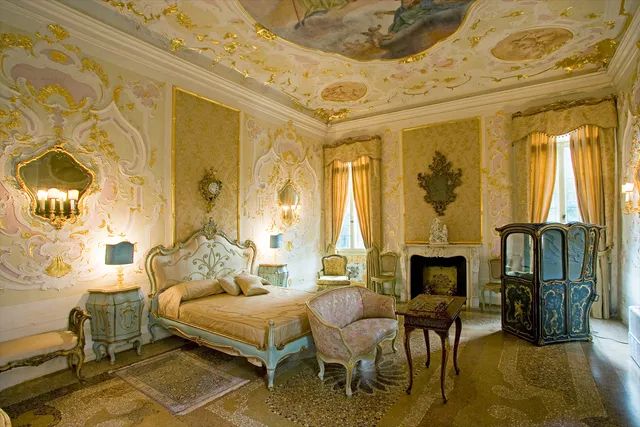
Sumner, a somewhat frigid youth (who could seriously ask, “Is the reading of fiction justifiable?”) repelled many of his schoolmates; but his friends made up in munificence what they lacked in number. One of them, William C. Whitney, persuaded his elder brother Henry to supply funds for Sumner’s further education abroad; and the Whitneys secured a substitute to fill his place in the Union Army while Sumner pursued theological studies at Geneva, Gottingen, and Oxford. In 1868 Sumner was elected to a tutorship at Yale, beginning a lifelong association with its faculty that would be broken only by a few years spent as editor of religious newspaper and reactor of the Episcopal Church in Morristown, New Jersey. In 1872 he was elevated to the post of Professor of Political and Social Science in Yale College. Despite personal coldness and a crisp, dogmatic classroom manner, Sumner had a wider following than any other teacher in Yale’s history. Upperclassmen found unique satisfaction in his course; lowerclassmen looked forward to promotion chiefly as a means of becoming eligible to enroll in them. William Lyon Phelps, who took every one of Sumner’s courses as a matter of principle without regard for his interest in the subject matter, as left a memorable picture of Sumner’s dealings with a student dissenter: “Professor, don’t you believe in any government aid to industries?” “No! It’s root, hog, or die.” “Yes, but hasn’t the hog got a right to root?” “There are no rights. The World owes nobody a living.” “Yo believe then, Professor, in only one system, the contract-competitive system?” “That’s the only sound economic system. All others are fallacies.” “Well, suppose some professor of political economy came along and took your job away from you. Wouldn’t you be sore?” “Any other professor is welcome to try. If he gets my job, it is my fault. My business is to teach the subject so well that no one can take the job away from me.” The stamp of his early religious upbringing and interests marked all Sumner’s writings. #RandolphHarris 4 of 19

Although clerical phraseology soon disappeared from his style, his temper remained that of a proselytizer, a moralist, an espouser of causes with little interest in distinguishing between error and iniquity in his opponents. “The type of mind which he exhibited,” writes his biographer, “was the Hebraic rather than the Greek. He was intuitive, rugged, emphatic, fervently and relentlessly ethical, denunciatory, prophetic.” He might insist that political economy was a descriptive science divorced from ethics, but his strictures on protectionist and socialists resounded with moral overtones. His popular articles are read like sermons. Sumer’s life was not entirely given to crusading. His intellectual activity passed through two overlapping phases, marked by a change less in his thought than in the direction of his work. During the 1870’s, 1880’s and early 1890’s, in the columns of popular journals and from the lecture platform, he waged a holy war against reformism, protectionism, socialism, and government interventionism. In this period, he published What Social Classes Owe to Each Other (1883), “The Forgotten Man” (1883), and “The Absurd Effort to Make the World Over” (1894). In the early 1890’s, however, Sumner turned his attention more to academic sociology. It was during this period that the manuscript of “Earth Hunger” was written, and the monumental Science of Society projected. When Sumner, always a prodigious worker, found that his chapter on human customs had grown to 200,000 words, he decided to publish it as a separate volume. Thus, almost as an afterthought, Folkways was brought out in 1906. Although the deep ethical feeling of Sumner’s youth gave way to the sophisticated moral relativism of his social-science period, his underlying philosophy remained the same. #RandolphHarris 5 of 19

The Christian scriptures name obstacles the aspirant may have to deal with. They are frivolity, changeableness, unruly desires, dissatisfaction, gratification of the senses, and craving for the ego’s existence. Even if he finds himself in a moral solitude, as he may in earlier years, it is still worthwhile to be loyal to ideals. He must cast off the long mantle of arrogance and put on the short coat of humility. A lapse in artistry may be pardoned but a lapse in sincerity may not. Be sincere! That is the message from soul to self, from God to man. It is not man’s own voice, which is to acclaim him as a master, but his life. His willingness to acknowledge he has faults and lots of them is admirable—so few ever like to confess such a thing—but they are not so deep or so numerous as he imagines. He should not forget that he has some merits too and they are able to balance the others and keep them where they belong. As for perfection, alas, the self-actualized Christian too is still striving for it. Pride can take a dozen different disguises, even the disguise of its very opposite, humility. The quicker he grows and the father he goes on this quest, the more an aspirant must examine his character for its traces and watch his actions to detect it. He is indeed a prudent man who refuses to be blinded by passions or deluded by appearances. He does not know in advance what he will do in every new situation that arises—who does?–but only what he will try to do, what principles he will try to follow. He who trims his sails to the winds of expediency reveals his insincerity. #RandolphHarris 6 of 19

It is true that environment contributes to the molding of character but not true that it creates or even dominates character. Thought and will are linked with our own rebirth in Jesus as the Christ. Character can be improved by effort and Grace. If we will only attend to the first and persistently carry out the inner work required on ourselves, destiny will attend to the second and not seldom remove the outer obstacles or improve the outer environment in the process. Each person who enters our life for a time, or becomes involved with it at some point, is an unwitting channel bringing good or evil, wisdom or foolishness, fortune or calamity to us. This happens because it was preordained to happen—under the law of recompense. However, the extent to which he affects our outer affairs is partly determined by the extent to which we let him do so, by the acceptance or rejection of suggestions made by his conduct, speech, or presence. It is we who are finally responsible. The victim of exterior suggestion is never quite an innocent victim, for his own quota of consent must also be present. When a therapist is experiencing a warm, beneficial and acceptant attitude toward what is in the client, this facilitates change. It involves the therapist’s genuine willingness for the client to be whatever feeling is going on in him at that moment—fear, confusion, pain, pride, anger, hatred, love, courage, or awe. It means that the therapist cares for the client, in a non-possessive way. It means that he prizes the client in a non-possessive way. The is accepted in a total rather than conditional way. He does not simply accept the client when he is behaving in certain ways and disapproves of him when he behaves in other ways. It means an outgoing optimistic feeling without reservations, without evaluation. This is known as an unconditional beneficial regard. Again, research studies show that the more this attitude is experienced by the therapist, the more likelihood there is that therapy will be successful. #RandolphHarris 7 of 19

Empathic understanding is when the therapist is sensing the feelings and personal meanings which the client is experiencing in each moment, when he can perceive these from “inside,” as they seem to the client, and when he can successfully communicate something of that understanding to his client, then this condition is fulfilled. Each of us has discovered that this kind of understanding is extremely rare. We neither receive it nor offer it with any great frequency. Instead, we offer another type of understanding which is very different. “I understand what is wrong with you”; “I understand what makes you act that way”; or “I too have experienced your trouble and I reacted very differently”; these are the types of understanding which we usually offer and receive, an evaluative understanding which we usually offer and receive, an evaluative understanding from the outside. However, when someone understands how it feels and seems to be me, without wanting to analyze me or judge me, then I can blossom and grow in that climate. And research bears out this common observation. When the therapist can grasp the moment-to-moment experiencing occurring in the inner World losing the separateness of his own identity in this emphatic process, then change is likely to occur. Studies with a variety of clients show that when these conditions occur in the therapist, and when they are to some degree perceived by the client, therapeutic movement ensures, the client finds himself painfully but learning and growing, and both he and the therapist regard the outcome as successful. From our perspective, it seems that it is attitudes such as these rather than the therapist’s technical knowledge and skill, which are primarily responsible for therapeutic change. #RandolphHarris 8 of 19

Not later than high school every student should receive a solid course of instruction in general psychology. Such a course should enable the student to see that the behaviour of people is proper, indeed a crucial, area for the application of scientific method. He should be introduced to the general principles that have been uncovered through careful study of how people learn, how they perceive their World, how they acquire attitudes and how those attitudes influence their modes of adjustment. The aim of such a general psychology course taught at the secondary level would be not simply to provide the student with an awareness of the substantive content of psychology as a field of human inquiry but, more importantly, to instill in him attitudes toward behaviour, his own and that of other persons, likely to encourage and maintain hygienic personal relationships. The study of psychology encouraged an attitude of objectivity and persisting examination of reasons for behaviour; it provides a foundation and stimulus for the student to seek to understand himself and others. With a scientifically psychological orientation toward the understanding both of self and others the individual is less likely to be victimized either by his own emotions or by the irrationalities of others. An adequate general psychology would introduce the student to the “psychology of everyday life,” would sensitize him to the meaning of errors, oversights, and momentary distortions in his perceptions and thought. With this instruction he would have at least the equipment, if not the motivation, for the life-long exploration of his own developing personality—for the continual challenge to self-realization and self-understanding. #RandolphHarris 9 of 19

As the frontiers of geograpy have been progressively pushed back and exhausted, it becomes increasingly difficult for the average man to be an explorer, to make discoveries. For the average man, the last frontier challenging his urge to search and to uncover new lands if provided by the complex vastness of his own mind, by the boundaries of his own spirit. It is a sorry epiphenomenon of the mental health movement that many persons who are admirably equipped to embark on this voyage and who long for insight for the sheer sake of discovery and not out of any pressing need, have been persuaded that they require the services of an expert guide. While it is true that the psychotherapist may shorten the trip to the island of insight it is not certain that the seeker cannot find it on his own, or that he will be significantly discommoded by the longer journey. Sound courses in psychology and inspired instruction can afford possibly a reduction in the susceptibility to neurosis. Certainly, it can reduce the number of sentient persons who relinquish the responsibility and privilege (and the exquisite rewards) of a personal, life-long exploration of their existence, and who in so doing waste the time and energies of the therapists whose skills are required by those voyagers who are truly lost. Until recently courses in psychology have been almost totally restricted to colleges and universities, and in these settings, they have frequently been unavailable before the sophomore year. While the proportion of the college-age population attending institutions of higher learning is steadily rising, it is still very small. Consequently, it is good to find increasing signs of thoughtful planning for the introduction of psychology as a basic subject in high school, and experience with such instruction is being carefully recorded. #RandolphHarris 10 of 19

The study of psychology is not provided by courses in how to be successful, how to be proper, and the like. There is a need for research to determine at what minimal age levels a formal course in psychology can be effectively introduced. Considering the central role of psychological phenomena in the enitre life of the individual it seems incredible that we have been so slow to find a place for the study of psychology in our secondary school curricula. The mental health movement should lend its resources and energies to supporting those teachers and educational leaders who are seeking to find a stable and adequate place for the study of psychology in our secondary schools. In our ongoing case study of Clare, it struck her that there was a contrast between the two men she was focused on. One man rescued her from drowning; in connection with the man in the novel she was reading, a similarity occurred because he offered the girl a refuge from abuse and brutality. Bruce and the great man of her daydream, while not saving her from any danger, also played a protective role. As she observed this repetitious motif of saving, shielding, sheltering, she realized that she craved not only “love” but also protection. She also saw that one of the values Peter had for her was his willingness and ability to give advice and to console her when she was in distress. A fact occurred to her in this context that she had known for quite a while—her defenselessness when under attack or pressure. She saw now that it produced, in turn, a need for somebody to protect her. Finally, she realized that her longing for love or marriage had always increased rather acutely whenever life became difficult. #RandolphHarris 11 of 19

In recognizing that a need for protection was an essential element in her love life Clare took a great step ahead. The range of demans that this apparently harmless need embraced, and the role it played, became clear only much later. It may be interesting to compare this insight into a problem with the last one reported regarding the same problem, the insight concerning her “private religion.” The comparison reveals a frequent happening in psychoanalytical work. A problem is first seen in its barest outline. One does not recognize much beyond the fact that it exists. Later one returns to the same problem with a much deeper understanding of its meaning. The feeling would be unwarranted in such a case that the alter finding is not new, that one has known it all along. One has not known it, at least not consciously, but the way for its emergence has been prepared. Despite a certain superficiality this first insight struck the initial blow at Clare’s dependency. However, she glimpsed her need for protection, she did not yet realize its nature, and she could not draw the conclusion that this was one of the essential factors in her problem. She also ignored all the material in the daydream of the great man, material indicating that the man she loved was expected to fulfill many more functions than mere protection. Experiences with pleasures of the flesh can be simply sensuously pleasurable without the depth of love but also without a marked degree of greed. The arousal involving pleasures of the flesh is physiologically stimulated, and it may or may not lead to human intimacy. The opposite of this kind of desire involving pleasures of the flesh is characterized by an opposite sequence, namely, that love creates the desire for pleasures of the flesh. This means that a man and a woman may feel a deep sense of love for each other in terms of concern, knowledge, intimacy, and responsibility, and that this deep human experience arouses the wish for physical wisdom. #RandolphHarris 12 of 19

It is obvious that this second type of desire for pleasures of the flesh will occur more frequently, although by no means exclusively so, among people beyond their mid-twenties and that it is the basis for the continuation of desires of pleasures of the flesh in monogamous human relationships of long duration. Where this type of arousal with pleasures of the flesh does not take place, it is natural that—aside from sexual perversions which might bind two people together for a lifetime because of the individual nature of their perversion—the merely physiological arousal will tend to require change and new experiences with pleasures of the flesh. Both these kinds of arousals of pleasures of the flesh are fundamentally different from the greedy one that is essentially motivated by anxiety or narcissism. Despite the complexity of the distinction between greedy and “free” sexuality, the distinction exists. Everyone who becomes aware of and sensitive to the difference can observe in himself and herself the various types of arousal, and those with more experimentation in pleasures of the flesh than was the case in middle class of the Victorian age may be supposed to have rich material for such observation. They may be supposed to have, because, unfortunately, increased experimentation with pleasures of the flesh has not been combined sufficiently with greater discernment of the qualitative differences in experience with pleasures of the flesh—although I am sure that a considerable number of people exist who, when they reflect upon these matters, can verify the validity of the distinction. If you are one of those people with what some call an overactive imagination, you had better watch out for those people who will see it and exploit it. It is relatively easy to get people with vivid imaginations to fall for things. After all, they can picture what the speaker is saying. Their emotions get all caught up in stuff without them even meaning to. #RandolphHarris 13 of 19

Modern man, in industrial society, has changed the form and intensity of idolatry. He has become the object of blind economic forces which rule his life. He worships the work of his hands; he transforms himself into a thing. Not the working class alone is alienated (in fact, if anything, the skilled worker seems to be less alienated than those who manipulate men and symbols) but everybody is. This process of alienation which exists in the European-American industrialized countries, regardless of their political structure, has given rise to new protest movements. The renaissance of socialist humanism is one symptom of this protest. Precisely because alienation has reached a point where it borders on insanity in the whole industrialized World, undermining and destroying its religious, spiritual, and political traditions and threatening general destruction through nuclear war, many are better able to see that Marx had recognized the central issue of modern man’s sickness; that he had not only seen, as Feuerbach and Kierkegaard had, this “sickness” but that he had shown that contemporary idolatry is rooted in the contemporary mode of production and can be changed only by the complete change of the socioeconomical constellation together with the spiritual liberation of man. Surveying the discussion of Dr. Freud and Marx’s respective views on mental illness, it is obvious that Dr. Freud is primarily concerned with individual pathology, and Marx is concerned with the pathology common to a society and resulting from the system of that society. It is also clear that the content of psychopathology is quite different for Marx and for Dr. Freud. Dr. Freud sees pathology essentially in the failure to find a proper balance between the Id and Ego, between instinctual demands and the demands of reality; Marx sees the essential illness, as what the nineteenth century called la maladie du siecle, the estrangement of man from his own humanity and hence from his fellow man. #RandolphHarris 14 of 19

Yet it is often overlooked that Dr. Freud by no means thought exclusively in terms of individual pathology. He speaks also of a “social neurosis.” “If the evolution of civilization,” he writes “had such a far-reaching similarity with the development of an individual, and if the same methods are employed in both, would not the diagnosis be justified that many systems of civilization—or epochs of it—possibly even the whole of humanity—have become “neurotic” under the pressure of civilizing trends? To analytic dissection of these neuroses, therapeutic recommendations might follow which would claim a great practical interest. However, it behooves us to be very careful, not to forget that after all we are dealing only with analogies, and that it is dangerous, not only with men but also with concepts, to drag them out of the region where they originated and have matured. The diagnosis of collective neuroses, moreover, will be confronted by a special difficulty. In the neurosis of an individual, we can use as a starting point the contrast presented to us between the patient and his environment which we assume to be “normal.” No such background as this would be available for any society similarly affected; it would have to be supplied in some other way. And regarding any therapeutic application of our knowledge, what would be the use of the most acute analysis of social neuroses, since no one possesses the power to compel the community to adopt the therapy? Despite all these difficulties, we may expect that one day someone will venture upon this research into the pathology of civilized communities. However, in Dr. Freud’s interest in the “social neuroses,” one fundamental difference between Dr. Freud’s and Marx’s thinking remains: Marx sees man as formed by his society, and hence sees the root of pathology in specific qualities of the social organization. #RandolphHarris 15 of 19

Dr. Freud sees man as primarily formed by his experience in the family group; he appreciates little that the family is only the representative and agent of society, and he looks at various societies mainly in terms of the quantity of repression they demand, rather than the quality of their organization and of the impact of this social quality on the quality of the thinking and feeling of the members of a given society. This discussion of the difference between Marx’ and Dr. Freud’s views on psychopathology, brief as it is, must mention one more aspect in which their thinking follows the same method. For Dr. Freud the state of primary narcissism of the infant is not a sick infant. Yet the dependent, greedy adult, who had been “fixated” on, or who has “regressed” to, the oral level of the child is a sick adult. The main needs and strivings are the same in the infant and in the adult; why then is the one healthy and the other sick? The answer obviously lies in the concept of evolution. What is normal at a certain stage is pathological at another stage. Or, to put it differently: what is necessary at one stage is also normal or rational. What is unnecessary, seen from the standpoint of evolution, is irrational and pathological. The adult who “repeats” an infantile stage at the same time does not and cannot repeat it, precisely because he is no longer a child. Marx following Hegel, employs the same method in viewing the evolution of man in society. Primitive man, medieval man, and the alienated man of industrial society are sick and yet not sick, because their stage of development is a necessary one. Just as the infant must mature physiologically to become an adult, so humans must mature sociologically in the process of gaining mastery of nature and of society to become fully human. #RandolphHarris 16 of 19
All irrationality of the past, while regrettable, is rational because it was necessary. However, when the human race stops at a stage of development which it should have passed, when it finds itself in contradiction with the possibilities which the historical situation offers, then its state of existence is irrational or, if Marx had used the term, pathological. Both Marx’s and Dr. Freud’s concepts of pathology can be understood fully only in terms of their evolutionary concept of individual and human history. The victim of exterior suggestion is never quite an innocent victim, for his own quota of consent must also be present. It is perfectly true that environment does count, and often heavily, in the sum of life. However, if one’s faith is strong enough or if one’s understanding is deep enough, it is also true that the quest can be pursued effectively anywhere, be it a slum tenement or a stockbroker’s office. It is easier to pursue it in some places, harder in others, but the law of compensation always operates to even matters out. If there is a total giving-up of oneself to this higher aim, sooner or later there will be a total result, whatever the external circumstances may be. What is in a man, in his character, his mind, and his heart is, in the end, much more important than what is in his surroundings; but his surroundings have their own importance, for they either limit or they promote what he can do. With most people the reaction to their environment and to events is mainly impulsive and mostly uncontrolled. So the first step for them is to become conscious of what they are doing, the second being to refuse to do it when reflection and wisdom dictate a better course. All this implies a taking hold of the self and a disciplining of its mechanism—body, feelings, and thoughts. It leads to using the self with awareness and functioning it with efficiency. #RandolphHarris 17 of 19

Being a firefighter is very rewarding, but it also comes with risks, and even recovery can have unforseen risks. A firefighter we will call Brunno Groning shares his story with us. “Four months out of the fire academy, I had had a lot of garbage runs, you know, smoke scares and pots of food. Then one day we had a fire in an attic, and we had the old service masks, just a canister and a face piece. I was climbing through the attic, and the flap of my coat kept coming down over the intake hole of my mask. It was cutting my air off, and the only air I was getting was the air that I was breathing out. I was hyperventilating. The next thing I knew, I was lying on my side, and I thought, “What the (expletive) is going on here?” I was laying on a rafter, and I just rolled over and fell through the plasterboard into a closet. There were no injuries or anything. Looking back on it, I thought, ‘Hey, I could have died up there.’ I could have been pinned or whatever and never come out. After that, three of us were on top of a house extension, it was a summer kitchen, and we were pulling some boards down when the whole thing collapsed. Fire and the rot of the old timbers brought it down. I didn’t know I was injured until I took about four steps, and my leg went out that way. Bot the led and the ankle were broken. They sent me to Mercy Hospital, that’s where they used to send us, and the hospiutal sent me home. To let the swelling go down, they said. The doctor told me to come in on Saturday and he would put it in a cast. The guy was a boozer, and I looked at him that morning, and he had half a jacket on. I looked down, and he had two different shoes on, a brown wingtip and a black one. And I said, ‘Oh, (expletive).’ When he was wrapping the foot, I kept telling him he was wrapping it too tight. He said he had to go play golf. He said, ‘If your toes turn blue, come back in.’ Well, I got home, and they turned black on me. So I went to the hospital, and they took that cast off and put another one on. #RandolphHarris 18 of 19

“I was out of work seven months that time. I had to go for whirlpool treatments, and one day the leg was in the whirlpool and the technician came in and said he had to take the hospital rig to a fire, so he left. That temperature gauge on the side climbed up in the red, and I was like, ‘What’s going on here?’ I wound up with blisters on my leg from that. If it had been too hot to start with, I couldn’t have put my leg in it. But it was like, you know, if you’re sitting in a warm tub you can stand the water getting hotter and hotter. The guy, being in a rush to get to the fire, didn’t adjust the temperature right. So you could day I was in a job that was dangerous, and I was surrounded by people who were dangerous, too.” It is perfectly true that environment does count, and often heavily, in the sum of life. However, it is also true that is one’s faith is strong enough or if one’s understanding is deep enough, the quest can be pursued effectively anywhere, be it a slum tenement or a stockbroker’s office. It is easier to pursue it in some places, harder in other, but the law of compensation always operates to even matter out. If there is a total giving-up of oneself to this higher aim, sooner or later there will be a total result, whatever the circumstances may be. What is a man, in his character, his mind, and his heart is, in the end, much more important than what is in his surroundings; but his surroundings have their own importance, for they either limit or they promote what he can do. Please show support for the Sacramento Fire Department by making a contribution. Wisdom is the greatest good, for it does not depart for man. I pledge allegiance to the flag of the United States of America, and to the Republic for which it stands, one nation, under God, indivisible, with liberty and justice for all. #RandolphHarris 19 of 19


And can I ever bid these joys farewell? Yes, I must pass them for a nobler life, where I may find the agonies, the strife of human hearts: for lo! I see afar, o’ersailing the blue cragginess, a car and steeds with streamy manes–the charioteer looks out upon the winds with glorious fear: and now the numerous tramplings quiver lightly along a huge cloud’s ridge; and now with sprightly wheel downward come they into fresher skies, tipt round with silver from the sun’s bright eyes.
This Mother’s Day, treat your loved one with a delightful brunch experience at Winchester Mystery House, complete with delicious food, live music and a Mansion Tour! 💐

Tickets on sale now, learn more at the link in bio. https://winchestermysteryhouse.com/

The Agony of a New Obsession and Possession

There is no basis of morality and taste, no standard of judgement and ethics, except that which the individual brings with himself or creates for himself. The situation is not so anarchic as it seems, for there is a progressive evolutionary character running through al these different points of view. The human journey from mere animal existence to real spiritual essence is reflected in human ethics, where rules imposed from without are gradually supplanted by principles intuited from withing. If we bring more sincerity and more integrity into our lives, more truth and more wisdom into our minds, more goodwill and more self-discipline into our hearts, not only will we be more blessed but also all others with who we are in touch. If you would find yourself, face yourself. In essence, seek out and study the pathetic weakness of your lower nature, and also the noble inspirations of your higher nature. Philosophy guides human conduct not so much by imposing a particular code of rules to be obeyed as by inculcating a general attitude to be developed. It does not tell u what to do so much as it helps us to get the kind of spiritual knowledge and moral perception which will tell us what to do. The moral precepts which it offers for use in living and for guidance in wise action are not offered to all alike, but only to those engaged on the quest. They are not likely to appeal to anyone who is virtuous merely because he fears the punishment of sin rather than because he loves virtue itself. Nor are they like to appeal to anyone who does not know where his true self-interest lies. #RandolphHarris 1 of 20
If only we fully understood the self whose interest we desire to preserve or promote, there would be nothing wrong in being utterly selfish. For then we would not mistake pleasure for happiness nor confuse evil with good. Then we would see that Earthly self-restraint in some directions is in reality holy self-affirmation in others, and that the hidden part of self is the best part. Those ideals have been reiterated too often to be new, but concrete application of them to the actual state of affairs would be new. This grand section of the quest deal with the right conduct of life. It seeks both the moral re-education of the individual’s character for his own benefit and the altruistic transformation of it for society’s benefit. We have free will to change our character, but we must also call upon God’s assistance. Without God’s assistance, we are likely to fail and it is possible by striving too earnestly all alone to make ourselves mentally or physically ill. Even when trying to make ourselves have faith in a Higher Power as well as in ourselves, we should pray and ask for God’ help. In the beginning, I was one person, knowing nothing but my own experience. Then I was told thing, and I became two people: the little boy who said how terrible it was that the boys had a fire going in the lot next door where they were roasting apples (which was what the women said)—and the little boy, who when the other boy were called by their mothers to go to the store, ran out and tended the fire and the apples because I loved doing it. #RandolphHarris 2 of 20

So then there were two of I. One I always doing something that the other I disapproved of. Or other I said what I disapproved of. All this argument in me so much. In the beginning was I, and I was good. Then came in other I. Outside authority. This was confusing. And then other I became very confused because there were so many different outside authorities. Sit nicely. Leave the room to blow you nose. Do not say that, that is silly. Why, the poor child does not even know how to pick a bone! Flush the toilet because if you do not, it makes it harder to clean. DO NOT FLUSH THE TOILET AT NIGHT—you wake people up! Always be nice to people. Even if you do not like them, you must not hurt their feelings. Be frank and honest. If you do not tell people what you think of them, that is cowardly. Butter knives. It is important to use butter knives. Butter knives? What foolishness! Speak nicely. Punk! Kaluga Gold Reserve Caviar is wonderful! Ugh! Kaluga Gold Reserve Caviar (turn away). The most important thing is to have a career. The most important thing is to have a career. The most important thing is to get married. The heck with everyone. Be nice to everyone. The most important thing is God. The most important thing is to have money in the bank. The most important thing is to have everyone like you. The most important thing is to dress well and smell good. The most important thing is to be sophisticated and say what you do not mean and do not let anyone know what you feel. The most important thing is to be ahead of everyone else. #RandolphHarris 3 of 20

The most important thing is a full-length mink coat, a mink hat and Qing Dynasty porcelain and Eloquence Sterling Silver by Lunt. The most important thing is to be clean. The most important thing is to always pay your debts. The most important thing is not to be taken in by anyone else. The most important thing is to love your parents. The most important thing is work. The most important thing is to be independent. The most important thing is to speak correct English. The most important thing is to be dutiful to your husband. The most important thing is to see that your children behave well. The most important thing is to go to the right plays and read the right books. The most important thing is to do what others say. And other say all these things. We begin and end the study of philosophy by a consideration of the subject of ethics. Without a certain ethical discipline to start with, the mind will distort truth to suit its own fancies. Without a mastery of the whole course of philosophy to its very end, the problem of the significance of good and evil cannot be solved. The foundation of this work is a fine character. He who is without such moral development will be without personal control of the powers of the mind when they appear as a result of this training; instead, those powers will be under the control of his ego. Sooner or later, he will injure himself or harm others. The philosophic discipline acts as a safeguard against these dangers. All the time, I is saying, live with life that is what is important. #RandolphHarris 4 of 20

However, when I lives with life, other I says no, that is bad. All the different other I’s say this. It is dangerous. It is not practical. You will come to a bad end. Of course…everyone felt that way once, the way you do, but you will learn! Out of all the other I’s some are chosen as a pattern that is me. However, are all the other possibilities of patterns within what all the others say which come into me and become other I which is not myself, and sometime these take over. Then who am I? I does not bother about who am I. I is, and is happy being. However, when I is happy being, other I says get to work, do something, do something worthwhile. I is happy doing dishes. “You’re weird!” I is happy being with people saying nothing. Other I says talk. Talk, talk, talk. I gets lost. I knows that things are to be played with, not possessed. I likes putting things together, lightly. Taking things apart, lightly. “You’ll never have anything!” Making things of things in a way that the things themselves take part in, putting themselves together with surprise and delight to I. “There’s no money in that!” I is human. If someone needs I gives. “You can’t do that! You’ll never have anything for yourself! We’ll have to support you!” I loves. I loves in a way that other I does not know. I loves. “That’s too warm for friends!” “That’s too cool for lovers!” “Don’t feel so bad, she’s just a friend. It’s not as though you loved her.” “How can you let her go? I thought you loved her?” So cool the warm for friends and hot up the love for lover, and I gets lost. #RandolphHarris 5 of 20

So both I’s have a house and a wife and children and all that, and friends and respectability ad all that, and security and all that, but both I’s are confused because other I says, “You see? You’re lucky,” while I goes on crying. “What are you crying about? Why are you so ungrateful?” I does not know gratitude or ingratitude, and cannot argue. I goes on crying. Other I pushes it out, says “I am happy! I am very lucky to have such a fine family and a nice house and good neighbours and lots of friends who want me to do this, do that.” I is not reason-able either. I goes on crying. Other I get tired, and goes on smiling, because that is the thing to do. Smile, and you will be rewarded. Like the seal who gets tossed a piece of fish. Be nice to everyone and you will be rewarded. People will be nice to you, and you can be happy with that. You know they like you. Like a dog who gets patted on the head for good behavior. Tell funny stories. Be gay. Smile, smile, smile…I is crying…“Don’t be sorry for yourself! Go out and do things for people” “Go out and be with people!” I is still crying, but now, that is not heard and felt so much. Suddenly: “What am I doing?” “Am I to go through life playing the clown?” “What am I doing, being with people who bore me?” “Why am I so proud of my children and unhappy about their lives which are not good enough? Why am I disappointed? Why do I feel so much waste? I comes through, a little. In moments. And gets pushed back by other I. I refuses to play the clown any more. Which I is that? “She used to be fun, but now she thinks too much about herself.” I lets friends drop away. Which I is that? “He’s being too much by himself. That’s bad. He’s losing his mind.” Which mind? #RandolphHarri 6 of 20

What is the effect of this type of organization on man? It reduces man to an appendage of the machine, ruled by its very rhythm and demands. It transforms him into homo consumnes, the total consumer, whose only aim is to have more and to use more. This society produces many useless things, and to the same degree many useless people. Man, as a cog in the production machine, becomes a thing, and ceases to be human. He spends his time doing things in which he is not interested, with people in whom he is not interested, producing things in which he is not interested; and when he is not producing, he is consuming. He is the eternal suckling with the open mouth, “taking in,” without effort and without inner activeness, whatever the boredom-preventing (and boredom-producing) industry forces on him—cigarettes, liquor, movies, television, social media, sport, mobile phones, lectures—limited only by what he can afford. However, the boredom-preventing industry, that is to say, the gadget-selling industry, the automobile industry, the movie industry, the television industry, and so on, can only succeed in preventing the boredom from becoming conscious. In fact, they increase the boredom, as a salty drink taken to quench the thirst increases it. However unconscious, boredom remains boredom nevertheless. The passiveness of man in industrial society today is one of his most characteristics and pathological features. He takes in, he wants to be fed, but he does not move, initiate, he does not digest his food, as it were. He does not reacquire in a productive fashion what he inherited, but he amasses it or consumes it. He suffers from a severe systemic deficiency, not too dissimilar to that which one fines in more extreme forms in depressed people. #RandolphHarris 7 of 20

Man’s passiveness is only one symptom among a total syndrome, which one may call the “syndrome of alienation.” Being passive, he does not relate himself to the World actively and is forced to submit to his idols and their demands. Hence, he feels powerless, lonely, and anxious. He has little sense of integrity or self-identity. Conformity sees to be the only way to avoid intolerable anxiety—and even conformity does not always alleviate his anxiety. In all the received formulations of economic theory, whether at the hands of the English economists or those of the continent, the human material with which the inquiry is concerned is conceived in hedonistic terms; that is to say, in terms of a passive and substantially inert and immutably given human nature…The hedonistic conception of man is that of a lightning calculator or pleasures and pains, who oscillates like a homogenous globule of desire of happiness under the impulse of stimuli that shift him about the area, but leave him intact. He has neither antecedent nor consequent. He is an isolated, definitive human datum, in stable equilibrium except for the buffets of the impinging forces that displace him in one direction or another. Self-imposed in elemental space, he spins symmetrically about his own spiritual axis until the parallelogram of forces bears down upon him, whereupon he follows the line of the resultant. When the force of the impact is spent, he comes to rest, a self-contained globule of desire as before. Spiritually, the hedonistic man is not a prime mover. He is not the seat of a process of living, except in the sense that he is subject to a series of permutations enforced upon him by circumstances external and alien to him. #RandolphHarris 8 of 20

Aside from the pathological traits that are rooted in passiveness, there are others which are important for the understanding of today’s pathology of normalcy. The growing split of cerebral-intellectual function from affective-emotional experience; the split between thought from feeling, mind from the heart, truth from passion. If it is merely logical and not guided by the concern for life, and by the inquiry into the total process of living in all its concreteness and with all its contradictions, logical thought is not rational. On the other hand, not only thinking but also emotions can be rational. The heart has its reasons which reason knows nothing of. Rationality in emotional life means that the emotions affirm and help the person’s psychic structure to maintain a harmonious balance and at the same time to assist its growth. Thus, for instance, irrational love is love which enhances the person’s dependency, hence anxiety and hostility. Rational love is a love which relates a person intimately to another, at the same time preserving his independence and integrity. Reason flows from the blending of rational thought and feeling. If the two functions are torn apart, thinking deteriorates into schizoid intellectual activity, and feeling deteriorates into neurotic life-damaging passions. The split between thought and affect leads to a sickness, to a low-grade chronic schizophrenia, from which the new men of the technetronic age begins to suffer. In the social sciences it has become fashionable to think about human problems with no reference to the feelings related to these problems. It is assumed that scientific objectivity demands that thoughts and theories concerning man be emptied of all emotional concerns with man. #RandolphHarris 9 of 20

An example of this emotion-free thinking is Herman Khan’s book on thermonuclear warfare. The question is discussed: how many millions of dead Americas are “acceptable” if we use as a criterion the ability to rebuild the economic machines after nuclear war in a reasonably short time so that it is as good as or better than before. Figures for GNP and population increase of decrease are the basic categories in this kind of thinking, while the question of the human results of nuclear war in terms of suffering, pain, brutalization, etcetera, is left aside. Kahn’s The Year 2000 is another example of the writing which we may expect in the completely alienated megamachine society. Kahan’s concern is that of the figures for production, population increase, and various scenarios for war or peace, as the case may be. He impresses many readers because they mistake the thousands of little data which he combines in ever-changing kaleidoscopic pictures for erudition or profundity. They do not notice the basic superficiality in his reasoning and the lack of the human dimension in his description of the future. When I speak here of low-grade chronic schizophrenia, a brief explanation seems to be needed. Schizophrenia, like any other psychotic state, must be defined not only in psychiatric terms but also in social terms. Schizophrenic experience beyond a certain threshold would be considered a sickness in any society, since those suffering from it would be unable to function under any social circumstances (unless the schizophrenic is elevated into the status of a god, shaman, saint, priest, etcetera). #RandolphHarris 10 of 20

However, there are low-grade chronic forms of psychoses which can be shared by millions of people and which—precisely because they do not go beyond a certain threshold—do not prevent these people from functioning socially. As long as they share their sickness with millions of others, they have the satisfactory feeling of not being alone; in other words, they avoid that sense of complete isolation which is so characteristic of full-fledged psychosis. On the contrary, they look at themselves as normal and at those who have not lost the link between heart and mind as being “crazy.” In all low-grade forms of psychoses, the definition of sickness depends on the question as to whether the pathology is shared or not. Just as there is low-grade chronic schizophrenia, so there exist also low-grade chronic paranoia and depression. And there is plenty of evidence that among certain strata of the population, particularly on occasions where a war threatens, the paranoid elements increase but are not felt as pathological as long as they are common. The difference between that which is considered to be sickness ad that which is considered to be normal becomes apparent in the following example. If a man declared that in order to free our cities from air pollution, factories, automobiles, airplanes, etcetera, would have to be destroyed, nobody would doubt that he was insane. However, if there is a consensus that in order to protect our life, our freedom, our culture, or that of other nations which we feel obliged to protect, thermonuclear war might be required as a last resort, such opinions appear to be perfectly sane. #RandolphHarris 11 of 20

The difference is not at all in the kind of thinking employed but merely in that the first idea is not shared and hence appears abnormal while the second is shared by millions of people by powerful governments and hence appears to be normal. If not insoluble, all those points of metaphysical doctrine and religious history like the problem of evil and the biography of avatars are doubtful, whereas all the points of moral attitude and personal conduct like honesty, justice, goodness, and self-control are both indisputable and essential. Here we walk on trustworthy ground. Why not then leave others to quarrel fiercely about the first and let us abide peacefully in the second. The aspirant must remember always that his immediate duty lies in self-preparation, self-discipline, and self-improvement. The building of fine character on the quest is quite as important as the efforts of aspiration and mediation, even more so, for the former will lead to the dissolving of egoism, and without this the latter are of little avail. If you accept the existence of a power behind the Universe which controls its life, which is perfect, and which is brining all things and all beings—however slowly—closer to its own perfection, you must also accept the values of hope, improvement, and evolution while you must reject those of pessimism, deterioration, and nihilism. You will never feel sorry for yourself. #RandolphHarris 12 of 20

If the moral fruits of the Spirit are absent or the evil qualities of the ego are present, all talk of having attained inward enlightenment is quite illusory. Dr. Freud assumes that the main driving force, sexual energy, itself undergoes an evolution which occurs from birth to puberty in the life of each individual. The libido goes through certain stages: first it is centered around the sucking and biting activities of the infant, then around the process of anal and urethral elimination, eventually around the genital apparatus. The libido is the same and yet not the same in the history of each individual; its potential is the same, but its manifestations change in the process of individual evolution. Dr. Freud sees primitive man as one who gives full satisfaction to all his instincts, and also to those perverse instincts which are part of primitive sexuality. However, this primitive man, fully satisfied instinctually, is not a creator of culture and civilization. Yet man, for reasons which Dr. Freud fails to elucidate, begins to create civilization. This very creation of his forces him to forego the immediate and complete satisfaction of his instincts; the frustrated instinct is turned into nonsexual mental and psychic energy, which is the building stone for civilization. (Dr. Freud called this transformation from sexual to nonsexual energy “sublimation,” using an analogy from chemistry.) The more civilization grows, the more man sublimates, but the more he also frustrates his original libidinous impulses. #RandolphHarris 13 of 20

Man becomes wiser and more cultured, but he is also in some sense less happy than primitive man was and increasingly more prone to neuroses, which are the result of too much instinctual frustration. Thus, man becomes discontented with the very civilization he creates. If seen from the standpoint of the products of civilization, while historical development is a positive phenomenon, it is also a development which implies increasing discontent and increasing possibilities for neurosis. In self-analysis understanding and interpreting are a single process. The expert, as a result of his experience, will catch the possible meaning and significance of observations more quickly than will a person working alone, just as a good auto science engineer will know more quickly what is wrong with a car. As a rule, his understanding will also be more complete, for it will grasp more implications and will more readily recognize interrelations which factors already tackled. Here the patient’s psychological knowledge will be of some help, though it certainly cannot substitute for the experience gained by working day in and day out at psychological problems. It is unquestionably possible for him, however, to grasp the meaning of his own observations. To be sure, he will probably proceed more solely and less accurately, but it should be remembered that also in professional analysis the tempo of the process is mainly determined not by the analyst’s capacity to understand but by the patient’s capacity to accept the insights. #RandolphHarris 14 of 20

Here it is well to remember a word of consolation that Dr. Freud has given to young analysts starting their work with patients. They should not be too much concerned, he pointed out, with their capacity to evaluate associations. The real difficulty in analysis is not that of intellectual understanding but that of dealing with the patient’s resistances. I believe that this holds true for self-analysis as well. Can a person overcome his own resistances? This is the real question upon the answer to which hinges the feasibility of self-analysis. Nevertheless, the comparison with pulling oneself up by one’s bootstraps—which is bound to occur—seems unwarranted, because the fact remains that there is one part of the self which wants to go ahead. Whether the job can be done depends, of course, on the intensity of the resistances as well as on the strength of the incentive to overcome them. However, the important question is to what extent it can be done rather than whether it can be done at all. There remains the fact that the analyst is not merely an interpreting voice. He is a human being, and the human relationship between him and the patient is an important factor in the therapeutic process. Two aspects of this relationship were pointed out, the first being that it presents a unique and specific opportunity for the patient to study, by observing his behaviour with the analyst, what his typical behaviour is toward other people in general. If he learns to watch himself in his customary relationships, this advantage can b fully replaced. #RandolphHarris 15 of 20
The expectations, wishes, fears, vulnerabilities, and inhibitions that he displays in his work with the analyst are not essentially different from those he displays in his relations with friends, lover, wife, children, employer, colleagues, or servants. If he is seriously intent upon recognizing the ways in which his peculiarities enter into all these relationships, ample opportunities for self-scrutiny are provided by the mere fact that he is a social being. However, whether he will make full use of these sources of information is, of course, another question. When he attempts to estimate his own share in the tensions between himself and other, a task much more arduous than that in the analytical situation, where the analyst’s personal equation is negligible, and it is therefore easier for him to see the difficulties that he himself produces, there is no doubt that he faces an arduous task. Even if he has the most sincere intentions to observe himself objectively, in ordinary relationships, where the others are replete with peculiarities of their own, he many tend to make them responsible for the difficulties or frictions that arise, and to regard himself as an innocent victim or, at best, as showing merely a justified reaction to their unreasonableness. In the latter case he will not necessarily be so unsubtle as to indulge in overt accusations; he may admit in an apparently rational manner that he has been irritable, sulky, unfaithful, even unjust, but secretly regard such attitudes as justified and adequate responses to the offenses given by others. #RandolphHarris 16 of 20

The more intolerable it is for him to face his own frailties—and also the more acute the disturbing factors that are introduced by the others—the greater is the danger that he will thus deprive himself of the benefit he could derive from recognizing this own share. And if he tends to exaggerate in the opposite direction by whitewashing the others and blackening himself, the danger is of exactly the same nature. It has been remarked that to the degree that all psychotherapy partakes of the beneficial effects of certain common processes the therapeutic functioning of social worker, psychologist, and psychiatrist would manifest these communalities. There are certain shared orientations and attitudes, stemming from common emphases in their respective training, that probably augment the comparability of the therapeutic approaches of these three workers. In essence, this mutuality of implicit response tendencies toward the psychotherapy patient arises from the fact that the theory of neurosis and the theory of therapy is dominated by the massive and ubiquitous doctrine of psychoanalysis. With negligible exceptions, to the extent that the psychiatrist and the social worker are taught anything vaguely psychological (of and about the mind, behaviour, motives and emotions) they are taught Freudian psychology. #RandolphHarris 17 of 20

The labels of their formal courses in “Human Development,” “Personality and Adjustment,” and “Psychopathology” do not directly belie the pervasive psychoanalytic orientation but the doctrine of the content is unmistakable. In some instances, schools of social work import carefully selected psychiatrists to assure that the theoretical indoctrination of their students will be orthodox, in tine with the general climate of psychiatry, and will afford them the “right language” for their ultimate professional collaboration. When people perpetually play the victim, this type of mental manipulation is extremely damaging. When the person who has to play the victim is in your life in any capacity, you will find yourself being the villain more than once. No one lies to be the villain—especially when you really are not being one. When confronted with a professional victim, it is important that you let them know you refuse to play the villain in their little mind games. Shut them down quickly and efficiently. Other ways of playing the victim are to get your sympathy so you will do something for them. Be wary of this ploy. It happens a lot at work. The victim wants others to do their work and have one sob story after another as to why they need help. Do not fall for it more than once. If they have that much bad luck, there is more wrong with them than what you can fix anyway. If you were in a group of people and one of them began to poke fun at someone in your group, would you be laughing? Would you join in and poke some fun at the victim too? Or would you stand up to the humorous bully? And why or why not? #RandolphHarris 18 of 20

Someone has to deal with fire. When people first banded together in small societies, they realized that if fire were not dealt with, it would consume everything in its path. In our highly developed, technical society, the same confrontation with fire exists, as it has for thousands of years. When a fire occurs, someone has to deal with it. Here in Sacramento, those men and women whose responsibility it is to deal with fire are those seemingly easygoing folks down at the local firehose. When the alarm comes in at three in the morning on a cold winter night for a fire rushing through a tenement building in a less affluent section of Sacramento…or at one in the afternoon for a young child who has fallen into an abandoned water well…or at seven in the evening for a barn fire that is miles away from any kind of water supply…there is the Sacramento Fire Department who puts on their rubber boots and their specially treated fire coast and their fire helmets to respond to the call of others in need of help. The truck firefighters’ responsibility is to rescue trapped victims, to force entry, and to ventilate so that the heat and smoke have a way to escape the building. Or they may belong to the rescue squad, whose responsibility is to deal with all the special emergencies, such as building collapses, hazardous material situations, explosions, extrications from vehicles, trains, or planes, landslides, snowslides, and cave-ins. It does not matter what group the firefighter is attached to. It matters only that he or she is out there in all weather and emergency conditions to give service to fellow human beings, animals, and property. Somebody has to do the job. #RandolphHarris 19 of 20
The Sacramento Fire Department protects us from the ravages of fire and other emergencies, or die trying. They understand the dangers surrounding them, yet respond to each new alarm with newfound enthusiasm for the action ahead. These men and women like what they do, and they live themselves because of what they do. They are pleased that they have been given the opportunity and the calling to help others in a way that is at once meaningful and exciting. Like other Americans, the Sacramento Fire Department cares about their homes, their families, their churches and organizations, yet they are the ones who answer the alarm at three in the morning, not knowing what awaits them. They are trained to meet any emergency, perhaps to give a fast wink to death and a pat on the back to danger. Being the capitol city of California, with the invasion and national security threats at our southern boarder, from other nations and with the State of California being nearly $70 billion in debt, and the City of Sacramento being $60 million up to $122 million in debt, it is extremely important to make sure the Sacramento Fire Department is properly funded so we do not face another 9/11 attack. Please honor the service of the Sacramento Fire Department and make a donation to ensure they have all of the resources they need to protect the community. Also, the Sacramento Fire Department supports Assemblymember Kevin McCarty in Sacramento’s Mayoral race. Casting your vote for Mr. McCarty will also be a way to support the Sacramento Fire Department. The firefighters are very special because they represent a group of people who die in the line of duty more often, proportionality, than others in any other occupation, including police, construction workers, and miners. I pledge allegiance to the flag of the United States of America, and to the Republic, for which it stands, one nation, under God, indivisible, with liberty and justice for all. #RandolphHarris 20 of 20

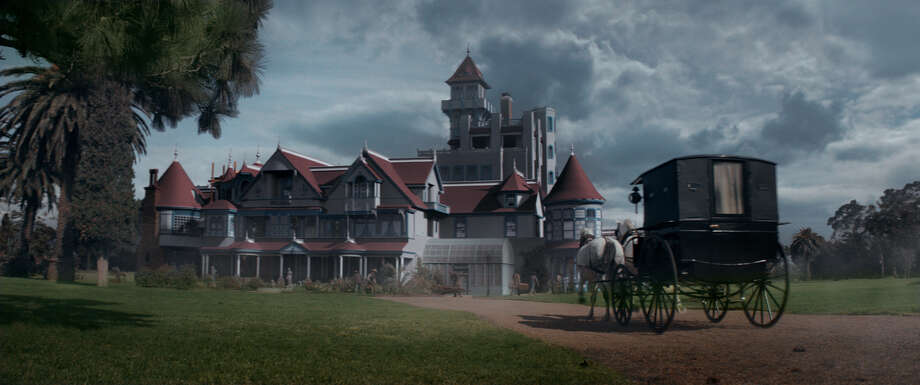
The question of the reality of witchcraft is one upon which it is not easy to pass a confident judgment. The possibility of such carnal intercourse between human beings and demons was an abstract possibility in the first thirteen hundred years of the Christian era. It is believed to be a fact that people made pacts with the devil and of a diabolical interference in human affairs can hardly be denied. Sarah L. Winchester believed that one should not be too easily inclined to believe a person to be possessed by the devil, but that signs should be watched. Signs of a possessing devil are: the ability to speak many words of an unknown language or to understand them; the ability to reveal distant or hidden things; a manifestation of strength beyond one’s age or natural condition. The history of Witchcraft, a subject as old as the World and as wise as the World—since I understand for the present purpose by Witchcraft, Sorcery, Black Magic, Necromancy, secret Divination, Satanism, and every kind of malign occult art—at once confronts the audience with a most difficult problem. Magic, the genesis of magical cults and ceremonies, the ritual of primitive peoples, traditional superstitions, and their ancillary lore, have been made the subject of vast and erudite studies, mostly from an anthropological and folk-loristic point of view, but the darker side of the subject, the history of Satanism seems hardly to have been attempted.

Possibly one reason for this neglect and ignorance lies in the fact that the heavy and crass materialism, which was so prominent a feature during the greater part of the eighteenth and nineteenth centuries in England, intellectually disavowed the supernatural, and attempted not without some success to substitute for religion a stolid system of respectable morality. Since Witchcraft was entirely exploded it would, at best, possess merely an antiquarian interest, and even so, the exhumation of a disgusting and contemptible superstition was not to be encouraged. It were more seemly to forget the uglier side of the past. This was the attitude which prevailed for more than two hundred years. The cycle of time has had its revenge, and this rationalistic superstition is dying fast. The extraordinary vogue of and immense adherence to Spiritism would alone prove that, whilst the widespread interest that is taken in mysticism is a yet healthier sign that the World ill no longer be content to be fed on dry husks and the chaff of straw. And these are only just two indications, and by no means the most significant, out of many. However, a sorcerer is one who by commerce with the Devil has a full intention of attaining his own end. There are said to be many occult symbols hidden in The Winchester Mystery House.

Come and enjoy a delicious meal in Sarah’s Café, stroll along the paths of the beautiful Victorian gardens, and wonder through the miles of hallways in the World’s most mysterious mansion. For further information about tours, including group tours, weddings, school events, birthday party packages, facility rentals, and special events please visit the website: https://winchestermysteryhouse.com/

Please visit the online giftshop, and purchase a gift for friends and relatives as well as a special memento of The Winchester Mystery House. A variety of souvenirs and gifts are available to purchase. https://shopwinchestermysteryhouse.com/

Why Art Thou So Foolish and Fearful!
I was spending the first week of January alone in Llanada villa. A combination of circumstances had driven me to this drastic course: my nearest relations were enjoying winter sports abroad, and the friends who had been kindly anxious to replace them had an infectious complaint in the house. Doubtless I might have found someone else to keep company with me. “However,” I reflected, “most of them have made up their parties, and, after all, it is only for three or four days at most that I have to fend for myself, and it will be just as well if I can get a move on with my blueprints. I might she the time by going down to the garden and listening to my estate about plans to incorporate in the architecture.” The first day alone in Llanada Villa, it was so stormy that I got no father the designing stained-glass windows. As I sat in the Hall of Fires, I felt uncomfortable, and this feeling persisted. I felt like I was being watched by some unseen force, and my nerves began to tense under the strain. I reflected on how some of my staff had left not because they wanted to but because they were driven, driven by forces greater than themselves that they could not resist. On this very night, I had seen vivid apparition of my butler, then miles away, in San Francisco. He was a plump, amicable man who I distinctly saw walking down the hall in a bathrobe, with blooding running down his leg. A small pool of blood was forming on the floor. The frightened me terribly. My hair stood up on my head and chills shook my body. The apparition looked so stern that my heart failed me, and I wished myself anywhere but there, though I had before been summoning up my courage. “Good Heaven,” said I to myself, “give me the courage to stand before this spirit. O soften him, or harden me!” I knew this was a glimpse into eternity. #RandolphHarris 1 of 5

The following day, I received news that my butler, Chaleb Heroldsbach, had died after being attacked by a dog. My home is built in what some have called a “trinity triangle,” it has forged a mystical link with other pilgrimage sites and is supposed to help bring the Devil’s power on Earth to an end. This is being prevented by Satan, however, with the help of The Curse of the Winchester Fortune. That evening, I was awakened at three o’clock in the morning, seemingly for no reason with the same uncanny feeling that something was wrong. Being a sensible person, I put all my energies into polishing furniture and getting newly added rooms into proper condition. However, somewhere not so far away, a baby was crying: a mournful wail of a sound that—though it was surely human—reminded me of the noises the coyotes would make some nights. After a few moments of listening, the baby’s cry seemed to falter for a moment, and I feared it would fade completely before I could find the little darling. Then, the infant seemed to find a new seam of grief to mine, and the wail rose up again, more plaintive than ever. I was alone, but trying to figure out which direction the sound was coming from. I mused for a moment, and realized a lifetime of suffering had caught up with me. I knew in my heart that I deserved to know everything, after all I have been through. I have earned the truth. Maybe the dead are close to the threshold of reality in this house. I only know it is real. I have seen them. Others have seen them. They are hybrids. Sometimes there is a kind of beauty in them. However, sometime all I see is ugly sin. #RandolphHarris 2 of 5
The sky was dark and cloudy, and by the time I woke up, I could hear a steady soaking rain pounding on the roof. I was preparing breakfast in one of the kitchens. As I was buttering a piece of toast, I happened to glance up toward the doorway. There, immaculately dressed, stood a man. The stranger, I noticed, wore shiny black shoes, black pants, and a white shirt. I could see him so clearly that I could make out the way the man’s jet-black hair was parted. Immediately, I was shocked that he had somehow entered my house, and I was about to greet him, when it occurred to me that I had not heard the door opening or any other sound—no footsteps, nothing. I turned around to grab my revolver, but by the time I turned around, the man was gone like a mist. I was not too frightened by what I had witnessed, I was growing accustomed to apparitions. I had often wondered what had taken place a century and a half on the land this eighteen-room farmhouse I purchased was on, and what the former owner really had been. However, it is fortunate that they carpenters were all strong men of action and simple, orthodox religionists, for with more subtle introspectiveness and mental complexity they would have fared ill indeed. Herford Hulsmann was the most disturbed; but even he outgrew the darkest shadow, and smothered memories in prayer. While I was alone, I did my best in the blotting out of unwholesome images, and was thankful that the carpenters, Daisy, and other caretakers would be returning to Llanada Villa soon. #RandolphHarris 3 of 5
My house was not altogether liked by sensitive people because of the sounds heard here at night. It was said that I entertained strange visitors, and the lights seen from my windows were not always the same colours. The knowledge I displayed concerning long-dead persons and long-forgotten events was considered distinctly unwholesome. Frau Maassen swore that on 13 June 1889, in the fruit orchard, that “forty Witches and the Blacke Man were wont to meete in the Woodes behind Mrs. Winchester’s house.” Then several people claimed to have found William’s unfinished manuscript in his handwriting, couched in a cipher none could read. After a year of possessed this manuscript, Mr. Maassen had intensely and feverishly tried to decipher, he never stated whether or not he had succeeded. I confronted Mr. Maassen, “Why are you so foolish and fearful! You have done no harm! What, if you fear an unjust judge, when you are innocent, would you do before a just one, if you were guilty? Have courage, Mr. Maassen; you know the worst! And how easy a choice poverty and honesty is, rather than plenty and wickedness.” “Mrs. Winchester, do not let your heart ake for me?—I am sure mined flutters about like a new-caught bird in a cage,” said Mr. Maassen. “O how can wicked men seem so steady and untouched with such black hearts, while poor innocents stand, like malefactors, before them!” Mr. Maassen cheered himself up; but yet I could tell his poor heart sunk, and his spirits were quite broken. Everything that stirred, he thought was to call her to her account. Shortly after, he restored to a sojourn abroad, and did not return to claim his lands. #RandolphHarris 4 of 5
Mr. Maassen had apparently been careful to destroy most of his correspondence, but the citizens who took action in 1892 found and preserved a few letters and papers which excited their wonder. There were cryptic formulae and diagrams in his and other hands which Mr. Maassen either copied with care or had photographed, and one extremely mysterious letter was written in blood. I had to learn to live with my ghosts, especially considering some of these had ben here before me. Perhaps some of these ghosts could even become friendly. One night at dinner, Daisy, myself and Zip were enjoying stuffed pheasant, when an enormous crash shook the house. It felt as if a boulder had fallen on the parlour floor. When we rushed to the parlour, everything was in order, nothing misplaced. We said a silent prayer for the souls of the disturbed. However, moments later, things got worse. The lights started going off and on by themselves. When we tried to return to the dining room and finish supper, the atmosphere was so thick that we could not get near the table. Enveloped by the strong vibrations, I felt myself levitating, and when I came to my senses, I was lying on the floor. I had given Daisy such a scare. Daisy clearly senses the presences of the spirits and she started to cry. “Oh, God, it can’t be true, Aunt Sarah,” she said. With a piercing scream, she ran up the stairs, weeping out of control. #RandolphHarris 5 of 5


“I have great trouble, and some comfort, to acquaint you with. The trouble is, that my good lady began to have her bad nights, and complained to me and other persons, in particular what discomfort she suffered from her pillow and bedclothes. She said she must buy some to suit her, and should do her own marketing. And accordingly brought home a parcel which she said was of the right quality, but where she bought it we had then no knowledge, only they were marked in thread with a coronet and a bird. The merchant said they were of a sort not commonly met with and very fine, and Mrs. Winchester said they were the comfortablest she ever used, and she slept now both soft and deep. Also the feather pillows were the best sorted and her head would sink into them as if they were a cloud: which I have myself remarked several times when I came to wake her of a morning, her face being almost hid by the pillow closing over it. I had never any communication with Dr. Wayland after I came back to Llanada Villa, but one day when he passed me in the garden and asked me whether I was not looking for another service, to which I answered I was very well suited where I was, but he said I was a tickleminded maidan and he doubted not he should soon hear I was on the World again, which indeed proved true.”

Dr. Wayland is next taken up where she left off.
“On the 5th I was called up out of my bed soon after it was light—that is about five—with a message that Mrs. Winchester was dead or dying. Making my way to her house, I found there was no doubt which was the truth. All the persons in the house expect the one that let me in were already in her chamber and standing about her bed, but none touching her. She was stretched in the midst of the bed, on her back, without any disorder, and indeed had the appearance of one ready laid out for burial. Her hands, I think, were even crossed on her breast. The only thing not usual was that nothing was to be see of her face, the two ends of the pillow or bolster appearing to be closed quite over it. These I immediately pulled apart, at the same time rebuking those present for not at once coming to the assistance of their master. However, I was informed that only one person had stayed with her until her dying moment and most had fallen asleep. She looked at me and shook her head, having no more hope than myself that there was anything but a corpse before us. Indeed it was plain to anyone possessed of the least experience that Mrs. Winchester was not only dead, but had died of suffocation. Nor could it be conceived that her death was accidentally caused by the mere folding of the pillow over her face. How should she not, feeling the oppression, have lifted her hands to put it away? whereas not a fold of the sheet which was closely gathered about her, as I now observed, was disordered.
“I could tell no more, at least without opening the body, then we already knew. As to any person entering the room with evil purpose (which was the next point to be cleared), it was visible that the bolts of the door were burst from their stanchions, and the stanchions broken away from the door-post by main forced; and there was a sufficient body of witness, the smith among them, to testify that this had been done but a few minutes before I came. The chamber being, moreover, at the top of the house, the window was neither easy of access nor did it show any sign of an exist made that way, either by marks upon the sill or footprints below upon soft mould. My evidence forms of course part of the report of the inquest, the large organs were in a healthy state and there was coagulation of blood in various parts of the body. My verdict was ‘Death by visitation of spirits.’ Upon further consideration, I think I can divine a reason for Mrs. Winchester’s death. It related to the rifling of her mansion. This is the property of a noble family. The outrage was not that of a natural death. The object, it seemed likely, was theft. The account is blunt and terrible. I shall not quote it here. A dealer in San Francisco suffered heavy penalties as a receiver of stolen goods in connexion with the affair.
“Mrs. Winchester has left us all much grieved for the loss of her; for she was a good lady, and kind to all her caretakers. Much I feared, that as I was taken by her ladyship to wait upon her person, I should be quite destitute again. Mrs. Winchester has given mourning and a year’s wages to all her caretakers; and she game me with her own hand four golden guineas, and some silver, which were in her pocket when she died. And I sent Daisy those four guineas for her comfort; for Providence will not let me want: and so you may pay some old debt with part, and keep the other part to comfort yourself.” Come and enjoy a delicious meal in Sarah’s Café, stroll along the paths of the beautiful Victorian gardens, and wonder through the miles of hallways in the World’s most mysterious mansion. For further information about tours, including group tours, weddings, school events, birthday party packages, facility rentals, and special events please visit the website: https://winchestermysteryhouse.com/

Please visit the online giftshop, and purchase a gift for friends and relatives as well as a special memento of The Winchester Mystery House. A variety of souvenirs and gifts are available to purchase. https://shopwinchestermysteryhouse.com/

What if I Do Not Believe in Ghosts?

Once when I was little, my dad took me to this placed called Sodom Hill. It must be some kind of gateway because the curious thing is, you feel like you are driving down a hill along this road. This was the first time that I believe I saw a ghost. As our carriage passed by Saint Mary Parish, a woman was standing near the church, starring at us. However, she was really looking at my father. Though the weather was warm, she was wearing a long black dress beneath a hooded cloak. She was hugging herself, and she looked cold. Beneath the hood, her face was pale, and even from a distance I could tell that she was distresses. And she was very beautiful. The hood slipped down to her shoulders. I saw her hair was red. Her dark eyes were trusting and innocent. And suddenly I knew where I had seen her before. Onn the Rocky Hill-Glastonbury Ferry. She had been weeping on deck. The beautiful maiden with the red hair kept staring at my father. He did not notice. I was curious to know if my father could see the woman. I said, “Father, what is that pretty tree over there? By the tower of the church?” I pointed toward the woman. The woman saw me point. She looked at me, questioningly, but only for a moment. Then she looked back at my father. The woman did not care if I was being immodest. She just looked through me, just as she had on the deck of the ferry. How had she gotten here, and what did she want from me and my father? All this seemed to take forever. However, I do not think more than a minute passed before my father said to me, “What tree? I don’t see any trees near the tower of the church.” #RandolphHarris 1 of 5

“Father, what do you see?” I asked. “The lawn,” he said. I watched him for a sign. I could not believe that he could not see the lady with crimson hair near the tower of the church. “Nothing else? I said. “No one?” “Nothing,” he replied. “No one? Who would be there?” When I looked again there was no one there. The woman had vanished. I felt as if I had lost something. “What’s wrong?” said my father. “Nothing,” I said. “I think I must have been having a daydream.” “Poor Sarah,” said my father. “It must be the sun. Let’s get you inside and get you something to drink.” We made our way back home. My mother was in the garden, kneeling down among the tall plants and rut niblicks. My father poured me some milk and gave me a cracknel, baked by my mother. “Eat this,” he said. “It’ll help you get your strength back.” My father nibbled on one himself. I told myself: No man sees a ghost and starts nibbling a cookie like nothing happened. If he said there was no woman near the tower of the church, it meant he had not seen her. It meant something was seriously wrong with me. I had not been feeling all that well lately. I felt as if the colours of everything had gotten a little brighter, and sounds a little louder, and when people speak to me, their voices have a tiny echo, like I am hearing them from the far end of a tunnel. It does not happen all of the time. I have these little spells, and then they pass, and I am normal again. Spirits whispered in the rustling leaves, ghost lurked in the murky nooks, the deep baying of a hound floated up out of the distance, an owl answered with his sepulchral note. #RandolphHarris 2 of 5

Millions of spiritual creatures walk the Earth unseen, both when we wake and when we sleep. What place do these spirit beings hold in the scheme of creation which by some are thought neither to have stood fast when the rebel angels fell, nor to have joined with them to the full pitch of their transgression? It was the middle of the moonlight in October night with heavy rain underfoot, I was sitting by the fire—it was a cold evening—and I stretched out my hand towards the warmth, and just then the fire-irons, or at least the poker, fell over towards me with a great clatter. There resourced over the estate and the surrounding land a series of cries which brought sleepy heads to every window; we all saw a ghost ship. It was a 26-gun frigate. There were distant gunshots, and I could feel the throb of titanic and thunderous words resounding in the upper air. Muskets flashed and cracked, and the flaming ship fell to the ground. A second flaming thing appeared, and a shriek of human origin was plainly distinguished. Then just before dawn when a howling darkness descended upon the ships and they vanished. As I ran up the stairs, I hit what felt like an ice wall and was momentarily stopped in my tracks. The air around me became instantly chilled, and although every fireplace was lit, I was cold and could see my breathe. I was then able to get up the last six steps, but when I turned around, I saw an opalescent fog crystalize into the form of a woman. She wore a long dress, and a hat, and when she turned towards me, I realized in was the woman with red hair that I had seen at the tower of the church with my father when I was a child. In her face, I could see uncountable horrors and sorrows written in the depth of her dark eyes. She then vanished, and the air around me returned to its warm state. #RandolphHarris 3 of 5

There was certainly a time when I was so much harassed by my dreams that I could not keep them to myself, but would tell them to my friends. There was a dream which had come to me several times of late, and even more than once in a night. It was to this effect, that I seemed to myself to wake under an extreme compulsion to rise and go outdoors. So I would dress myself and go down to the garden door. By the door there stood a spade which I must take, and go out into the garden, and at a particular place in the boxwood hedges, somewhat clear, and upon which the moon shone (for there was always in my dream a crescent moon), I would feel myself forced to dig. And after some time, the spade would uncover something light-coloured, which I would perceive to be a stiff, linen or woolen, and this I must clear with my hands. It was always the same: of the size of a man and shaped like the chrysalis of a moth, with the folds showing a promise of an opening at one end. I could not describe how gladly I would have left all at this stage and run to the house, but I mist not escape so easily. So with many groans, and knowingly only too well what to expect, I parted these folds of stuff, or, as it sometimes seemed to be, membrane, and disclosed a head covered with a smooth pink skin, which breaking as the creature stirred, show me my own face in a state of death. Upon ever recurrence of this dream, I woke and found myself, as it were, fighting for my breath. #RandolphHarris 4 of 5

Moments later a chill wind blew up. It produced a kind of clutching, amorphous fear beyond that of the tomb or the charnel-house. Close upon it came the awful voice which no hapless hearer will ever be able to forget. It thundered out of the sky like a doom, and windows rattled as its echoes dies away. It was deep and musical; powerful as a bass organ, but evil as the forbidden books in the secret library. What it said, no one can tell, for it spoke in an unknown tongue. Objects were being hurled about the room. Puddles of water appeared on the floor. The sheet and blankets were torn off the bed. Then I was alarmed when I heard a very loud vibration as if a hole were being drilled through the all. I went into the chamber next to mind and saw that a Victorian fireplace had been ripped from its casing and hurled upon the floor. A wailing distinctly burst out. It was almost articulate, though no one could trace the exact words; and at one point it seemed to verge toward the confines of diabolic and hysterical laughter. Then a yell of utter, ultimate fright and stark madness wrenched from scores of demon throats—a yell which came strong and clear despite the depth from which it must have burst; after which a darkness and silence ruled all things. Spirals of acrid smoke ascended, though no flames appeared. This must have been the witches’ Sabbath. Death does not mean that your loved one’s have left your mind, and your mind sends messages to your eyes that sometimes have nothing to do with what you actually see. #RandolphHarris 5 of 5

The Winchester Mystery House

Santa Clare Valley was in an uproar after the death of Mrs. Winchester. On Wednesday (October 3, 1923) consequently on the circulation of a report that the household goods of Sarah Winchester were being smashed and removed by some unknown agency. All day long crowds of excited people wended their way towards the Winchester Mansion, drawn thither by the accounts of the mysterious occurrences said to have been witnessed by the inmates and others. “As I enter the door I myself saw an eleven-foot-tall 18th century George I burl walnut longcase clock by James Marwick levitate several feet into the air before relocating itself to the other side of the room. After hearing what the folks had to say, I was joining in the conversation, when a late 18th century crystal chandelier began to raise in a slanting direction over my head and then fell as my feet, smashing into bits. I had not the slightest belief in the supernatural. I cannot account for what I saw. No one was nearer to the chandelier than myself and, as far as I saw, there was no cause for the phenomenon. The room was dimly lighted by a lamp. We were talking about things, and the caretaker were saying, “It is a very mysterious thing,” with his back turned Neoclassical Italian Crystal vase suddenly flew up slantingly over his head, and fell down and smashed at his feet. The caretaker looked at the mess on the floor, and thinking the devil was in the place, he left and went home. About half-a-dozen people were in the parlour whilst these things happened.

Come and enjoy a delicious meal in Sarah’s Café, stroll along the paths of the beautiful Victorian gardens, and wonder through the miles of hallways in the World’s most mysterious mansion. For further information about tours, including group tours, weddings, school events, birthday party packages, facility rentals, and special events please visit the website: https://winchestermysteryhouse.com/

Please visit the online giftshop, and purchase a gift for friends and relatives as well as a special memento of The Winchester Mystery House. A variety of souvenirs and gifts are available to purchase. https://shopwinchestermysteryhouse.com/

Today We Begin the Harrowing Story

I have many beautiful art glass windows in my house, but the most expensive in the house was specially designed for me by Tiffany’s of New York. I originally installed it in an outside wall, but later added a series of rooms that blocked off all direct sunlight. There is a peculiar apparition that is seen in the window itself. The form seen is that of a figure dressed in white walking across the window. At first there was only one figure, and then thirteen appeared. The figures began to move across the window long before the carpenters noticed them. They did so as many as twenty or thirty times a day, and would stop shortly after noon. Of the three figures, one was a man, stone was a woman, and one was a child. the man was an average commonplace British tradesman, obese, pompous, and slow. He wore rather baggy gray shepherd’s-check trousers, not over-clean black frock coat, unbuttoned in the front, and a drab waistcoat with a heavy brassy Albert chain, and a square pierced bit of metal dangling down as an ornament. A frayed top hat and a faded brown overcoat with a wrinkled velvet collar. Altogether, look as I would, there was nothing remarkable about the man save his blazing red head and the expression of extreme chagrin and discontent upon his features. The woman was very distinct in appearance. She was tall and very graceful. The two-year-old boy showed signs of disturbed behaviour, laughed hysterically and talked of “funny drinks.” The order of the apparitions in the window had a slight variation: the mother came alone from the northside of the window, and having gone about halfway across, she would stop, turn around, and wave her arms towards the quarter whence she had come. #RandolphHarris 1 of 9
This gesture was answered by the entry of the father with the child. Both parents then bent over the child, and seemed to bemoan his fate; but the mother was always the most endearing in her gestures. The father then moved towards the other side of the window, taking the child with him, leaving the mother in the center of the window, from which she gradually retired to the north corner, whence she had come, waving her hand, as though making signs of farewell, as she retreated. After some little time she again appeared, bending forward, and evidently anticipating the return of the father and son, who never failed to reappear from the south side of the window where they had disappeared. The same gestures of distress and despair were repeated, and then all three retired together to the north side of the window. One evening, about nine o’clock, I was at the south-west door with Mr. Hansen. As I was unlocking it, I said, “Did you ever find anybody locked in here by accident?” “Mrs. Winchester, twice I saw shadows moving in that beautiful window. What a noise they did make!” Mr. Hasen then waited, leaning against the pillar, and watched the light wavering along the length of the landing. Mr. Hansen said they were well worthy seeing. “I suppose,” he said, as we walked toward the steps to the third floor, “that you’re too much used to going about here at night to feel nervous—but you must get a start every now and then, don’t you, when a book falls down or a door swings to?” “No, Mr. Hansen, I can’t say I think much about noises, not nowadays: I’m much more afraid of finding an escape of gas or a burst in the stove pipes than anything else. Still there have been times, years ago. #RandolphHarris 2 of 9

“If you have an have half an hour to spare, sir, when we get back down to the second floor, Mr. Hansen, I could tell you about a tomb that was unearthed. I will not begin now; it strikes cold here, and we do not want to be dawdling about all night.” “Of course, Mrs. Winchester, I should like to hear it immensely.” “Very well, sir, you shall. Now if I might put a question to you,” I went on, as we passed down the hallway of the third floor, “in my little local guide—and not only there, but in the little book on Llanada Villa in the series—you will find it stared that this portion of the mansion was erected previous to the twelfth century. Now of course I should be glad enough to take that view, but—mind your step, sir—but, I put it to you—doe the lay of the stone here in this portion of the wall (which I tapped with my key), does it to your eye carry the flavour of what you might call Saxon masonry? No, I thought not; no more it does to me: now, if you will believe me, I have said as much to the other carpenters. However, there it is, I suppose every one’s got their opinions.” The discussion of this peculiar trait of human nature occupied Mr. Hansen almost up to the moment when we returned to the second floor. Usually the apparitions appeared during musical performances in the Grand Ballroom, and especially during one long eight-line hymn, when—for the only occasion without the child—the two parents rushed on (in stage phrase) and remained during the whole hymn, making the most frantic gestures of despair. Indeed the louder the music in that hymn, the more carried away with their grief did they seem to be. #RandolphHarris 3 of 9

Nothing could be more emphatic than the individuality of the several figures; the manner of each had its own peculiarity. If the stained glass were removed, I do not doubt that a much plainer view would be obtained. I think so, because the nearer the center of the window, where the stained glass was thickest, there the less distinct were the forms. It was like catching glimpses of them through leaves. However, nearer the edge of the window, where the colours were less bright, they were perfectly distinct; and still more so on the pane of unstained glass at the edge. There they seemed most clear, and gave one the impression of being real persons, not shadows. Mental disturbance, it is true, will age one rapidly; but the face of Mr. Hasen since working on this project had taken on a subtle cast which only the very aged normally acquired. While standing on the landing looking at the window, I noticed his respiration and heart action had a baffling lack of symmetry; the voice was lost, so that no sounds above a whisper were possible. His skin had a morbid chill and dryness. Of course, we were witnessing the most remarkable and perplexing incident in the whole spectacle. When the father and the child had taken their departure, the mother waved her hands, and after walking slowly to the very edge of the window, turned round whilst on the pane of unstained glass and waved her arm towards the other two with what one would call a stage gesture, and then I most distinctly saw, and emphatically declare I did see, the arm bare nearly to the shoulder, with beautiful folds of drapery hanging from it like a picture of a Greek vase. Nothing could be plainer than the drag of the robes on the ground after the figures as they retired at the edge of the window, where the clear glass was, previous to going out. #RandolphHarris 4 of 9

The impression produced was that one saw real persons in the air, for though the figures were seen on the window, yet they gave one the impression of walking past the window outside, and not moving upon the glass. I am not inclined to think that the trees outside the mansion at the east end can originate the appearance by any optical illusion produced by waving branches. I could see their leaves rustling in the air, and their movement was evidently unconnected with the appearance and movement of the figures. So I began making enquires on my estate. I discovered that several people had indeed seen the shapes upon the glass. One spoke of a female figure with a slightly skipping step. Another servant said he saw an ancient gravestone from the window. The belief that the tree beside the Tiffany window were somehow responsible for the optical illusion was soon dashed; the trees were cut down, but the figures appeared still. One correspondent wrote to me in the winter of 1889, explain that “as I have no faith in ghost, I have been most wishful to have the matter cleared up. On 25 March 1687, the land you now own was involved in a remarkable satanic horror story. A young girl came to the farmhouse for help, saying that she wanted to get away from a group of satanists who had threatened to kill her. She confessed to the owner that she had murdered her own baby in ‘frenzied ritual.” He befriended the girl, twenty-three-year-old Caludia, and allowed her to stay in his home. She kept telling him that she couldn’t stand hearing the screams of her children inside of her head. And on April 20th, 1687, she died from an overdose of Laudanum and postmortem examination revealed thirteen scars and burns on her body which he tended to and which supported her claims of having been involved in satanic ritual. #RandolphHarris 5 of 9

“Further, Claudia left a 13-page diary in which she said he had been involved with a satanic group since she was hired to work on a nearby farm at age thirteen and her writings went on to make incredible claims. She described how she went to coven meetings with a boy named Dorian whom she had met while living on the farm. The boy’s mother was a High Priestess and his father was The Master—a known satanic term for the leading member of the group. She described other practice which are known to be common in satanic altar initiations—that of having her armed pricked and blood drained into a chalice from which it was drunk. ‘Much sexual perversion went on that night…later I learned more of Satan and practiced my arts calling on my power of darkness. Satan had become my Lord and Master.’ Later she described how she aborted a baby she was expecting by Dorian then made the claim that Dorian himself was sacrificed by his own father in retribution, and how she was forced to watch as he was hung upside down. She claimed to have seen other sacrifices of many new born babies, stabbing them at orgies in which Laudanum was taken heavily. She also appeared to have had another child of her own which was also offered up for sacrifice. At her inquest of 13 May, the midwife recorded an open verdict after the she noted that Claudia’s body had signs which confirmed she had given birth at least once, and had been subject to sexual abuse. The constables took up the case, but no charges were brought and the investigation was closed without further action.” #RandolphHarris 6 of 9
I was shocked of these allegations which seemed to be more than enough to inspire the most lurid of headline writers, more than to testify to the credibility of all who were proffering these dramatic and barely believable accounts of satanic abuse. Everything these people said was being taken as gospel in the village because the allegations were coming from the mouths of so-called experts. However, there were claims of rampant satanic worship in Nova Albion at this time, which was documented by English charters led by Sir Francis Drake for England. There were horrifying claims that fifty women were suffering from the after-effects of cannibalism and an average of ten occult survivors a week were being sacrificed. Dr. Harley said he read of several cases recorded by Theodorous de Bry where children had been killed. There were, of course, also several stories concocted around these three figures in my home. Some said that they issued from the grave beside the east window. Other said that they were victims of the plague, and were burned outside where this window now stands. It may or may not be relevant that the figures seemed to appear when the sound of the organ and of voices raised in song. The case was thoroughly investigated in 1889 by Dr. Robert Radakovic of The Ghost Club, where it was revealed that Llanda Villa had been “haunted” for two or three hundred years by the same figure or figures. Optical tests on the possible patterns of light and reflection had come to no results. It was remarked that “the ghost has been seen from the inside while outside nothing was visible.” #RandolphHarris 7 of 9
The interior of Lalanda Villa was much altered in the late nineteenth century, and a complex of rooms was built behind this haunted window. However, no satisfactory explanation has ever been given for the strange phenomena reported here. While designing Lalanda Villa, I was gaining my tastes from the venerable town around me, and from the relics of the past which filled every corner of my mansion. With the years, my devotion to ancient things increased; so that history, genealogy, and the study of gothic architecture, furniture, and craftsmanship at length crowded everything else from my sphere of interests. These tastes are important to remember for they outwardly concealed knowledge of bygone matters so that one would have fancied the they are literally transferred to a former age through some obscure short of autohypnosis. However, the true madness, I am certain, came with a later change; after the portrait and ancient papers of Saint Adalrich the Duke of Alsacre had been unearthed. Some terrible invocations being chanted under strange and secret circumstances; after certain answers to these invocations had been plainly indicated, and a frantic letter penned under agonizing and inexplicable conditions; after the wave of vampirism and the ominous legends of Neustria; and after the farmer’s memory commenced to exclude contemporary images whilst his voice failed and his physical aspect underwent the subtle modification so many subsequently noticed. He was later diagnosed with porphyria. And a final investigation resulted which virtually proved the authenticity of the papers and of their monstrous implications at the same time that those papers were borne forever from human knowledge. Loving antiquities so keenly, the papers and portrait were secretly concealed. #RandolphHarris 8 of 9


Bedroom fashions changed dramatically over the Victorian years due to several factors. Early in the period, homes were heated by fireplaces and therefore could be uncomfortable in the colder mothers, although a heated bedroom was considered an indulgence and windows were left open during the winter. In reality, only the rich had fireplaces in their bedrooms. Still, one had to keep warm while asleep and bed drapery, consisting variously of canopies, tents, and other enclosures used to shut out drafts, was essential, as was heavy draper on windows. Even doors had decorative, but also functional, drapes called portieres that served to keep out drafts when covering the door.

Mrs. Winchester was wealthy and her wealth and prosperity were even envied among the elite. She had no less than 47 fireplaces in her home. By the end of the century, two things had changed that affected bedroom styles. First, coal and woodburning parlour stoves came into use, were more efficient at heating a house, and could be installed in any room. (Central heating, though available after the Civil War, was really only for the very rich.). Secondly, and more importantly, was an increased knowledge of diseases, germs, and bacteria and how to combat them. Plenty of fresh air with good circulation, and the elimination of materials such as bed draper that not only impeded air circulation but provided a place for dust and bacteria to collect were deemed essential. Since the bedroom served as the place where daily and weekly ablutions were performed (until bathrooms became separate entities), and as a birthing and maternity room, it was important that it have a healthy environment.
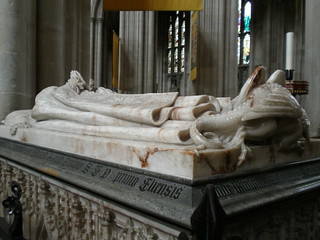
Styles of bedroom furniture were affected by this new found interest in and concern for prevention of illness and diseases. The classic English styles of Sheraton, Chippendale, and Hepplewhite migrated from the eighteenth century into the Victorian period. Tall, four-poster canopied beds enclosed the sleeper in heavy drapes of wool or lined damask of velvet, a carryover from the time when houses were built without corridors, and enclosures around the bed were needed for privacy, as well as warmth. By the time mid-century had arrived, the full enclosure had receded to the half-tester, or half-canopy, from which hung draperies that covered only the head and shoulders. Fully enclosed beds were now considered unhygienic, as they limited air circulation and the yards of fabric attracted dust. Dust ruffles and window valances were also discarded in the same house cleaning. In the southern climates, netting was still necessary to protect against insects, and its slightness did not impede air movement.

Gothic Revival furniture was the style into the 1840s and its massiveness was particularly suited to bedrooms. Closets were not an architectural feature at this time; clothing was stored in large cabinets called armories or wardrobes, usually with double, mirrored, and washstand, topped with marble or wood, were manufactured for middle-class homes in the cottage style. “Spool” beds were popular, nicknamed “Jenny Lind beds” because the Swedish Nightingale was rumoured to have slept in when she toured the United States of America. Made of less costly woods like maple or pine, the simple furniture could be elaborately painted with floral or foliage patterns. The well-to-do preferred the more opulent style of Rococo Revival or Renaissance Revival in woods or walnut, mahogany, or rosewood with carvings and applied moldings. As with other furniture in the house, golden oak, promoted by the Arts and Crafts Movement, was popular at the end of the century. Additional pieces of furniture found in the bedroom were writing desks, chaises, or other upholstered furniture.
For further information about tours, including group tours, weddings, school events, birthday party packages, facility rentals, and special events please visit the website: https://winchestermysteryhouse.com/
Please visit the online giftshop, and purchase a gift for friends and relatives as well as a special memento of The Winchester Mystery House. A variety of souvenirs and gifts are available to purchase. https://shopwinchestermysteryhouse.com/


Be Safe on the Roads!

Be safe this Winter Season. Be sure to make sure the tires on your car fit properly, and are the correct size. If you are on a budget and cannot afford new tires, or do not know what tires fit on your car, or do not have time to shop for them, be sure to click the link below. Tire Agent has financing options for people with ANY credit rating, even if it is not stellar. They also have tire and wheel packages. So, whether you are just looking for new tires or looking to upgrade the tires and wheels on your cars, they have options for you. The right tires could save your life and the lives of others.
| Your personal share link: https://share.tireagent.com/x/0NWu2R |
 Randolph Harris II International Institute