
Home » Westfield Indiana (Page 59)
Category Archives: Westfield Indiana

And You, My Father, there on the Sad Height, Curse, Bless, Me Now with Your Fierce Tears, I Pray!
 Glimpses have been had more often than most people believe but enlightenment that is continuous and always present is rare. To have the intermittent experience of the inner self is one thing, but to have the continuous experience of it is quite another. I was still in a pure mortal state of shock as we entered the large marble-tiled lobby. In a haze, I saw the sumptuous furnishings, the immense vases of flowers, and the smartly dressed tourists drifting past. Patiently, the tall brown-haired man who has been my former self guided me to the elevator, and we went up in swooshing silence to a high floor. I was unable to tear my eyes off him, yet my heart was throbbing from what had only just taken place. In the translation of technical improvements into social processes, the machine has undergone a perversion: instead of being utilizes as an instrument of life, it has tended to become an absolute. Power and social control, once exercised chiefly by military groups who had conquered and seized the land, have gone since the seventeenth century to those who have organized and controlled and owned the machine. The machine has been valued because—it increased the employment of machines. An such employment was the source of profits, power, and wealth to the new ruling classes, benefits which hitherto gone to traders or to those who monopolized the land. #RandolphHarris 1 of 14


You Follow Me and I Will be Your Guide and Lead You Forth through an Eternal Place there You Shall See the Ancient Spirits!


The original front-porch lamp was recently restored, refurbished, and reinstalled! Looks good for over 100 years old!
To buy the latest gadget, the latest model of anything that is on the market, is the dream of everybody, in comparison to which the real pleasure in use is quite second. Modern beings, if one dared to be articulate about one’s concept of Heaven, would describe a vision which would look like the biggest booty or department store in the World, showing new things and gadgets, new ways of busting down and twerking, and oneself having plenty of money in which to buy them and make it rain. One would wander around open-mouthed in this heaven of “muffins” and gadgets and commodities, provided only that there were ever more and newer and bigger things to buy, and perhaps that one’s neighbors were just a little less privileged than one. Significantly enough, one of the older traits of middle-class society, the attachment to possessions and property has undergone a profound change. In the older attitude, certain sense of loving possession existed between a being and their property. It grew on one. One was proud of it. One took good care of it, and it was painful when eventually one had to part with Pointe du Lac mansion and plantation because it could not be used anymore. There is very little left on this sense of property today. One is ready to forget brand loyalty and throw away the BMW for a Tessela, ditch granny’s Victorian for a loft. One loves the newness of the thing bought, and ready to betray it when something newer has appeared. #RandolphHarris 11 of 20


Fortune is Mistress and Foreknowledge of Nothing Sure for the God Who Threw You Down Sustain You Now!
 She never loved you, you know. Not in the way that I loved you, and the way that I loved us both. I knew this! I understood it! And I believed I would gather you to me and hold you. And time would open to us, and we would be the teachers of one another. All the things that gave you happiness would give me happiness; and I would be the protector of your pain. My power would be your power. My strength the same. However, you are dead inside to me, you are cold and beyond my reach! It is as if I am not here, beside you. And not being here with you, I have the dreadful feeling that I do not exist at all. And you are as cold and distant from me as those strange modern paintings of lines and hard forms that I cannot love or comprehend, as alien as those hard mechanical sculptures of this age which have no human form. When I am near you, I shudder. I look into your eyes and my reflection is not there. A crucial problem is the distinction between experience and what the younger generation calls mere thinking or mere words. This is particularly important for us here since historically experience has also been set in opposition to innocence. A person who buys a BMW is a consumer, whereas an auto science engineer works on cars and is experienced in the mechanical function of them. #RandolphHarris 1 of 16


Whenever I Found the Living, there I Found the Will to Power—I Have Been through All the World and I Will Take You to Safe Places!
 These demons are mindless, immature, and deviant, but I had studied their conduct and I have learned from all the evidence why it is that they rage. They are maddened that they do not have bodies, that that cannot feel as we feel. They make the innocent scream filth because the rites of love and passion are things that they cannot possibly know. They can work the body parts but not truly inhabit them, and so they are obsessed with the flesh that they cannot invade. And with their feeble powers they bump upon objects, they make their victims twist and jump. This longing to be carnal is the origin of their anger, the indication of the suffering which is their lot. Power is essential for all living things. Mortals in particular, cast on this barren crust of Earth aeons ago with the hope and the requirement that one survive, finds one must use one’s powers and confront opposing forces at every point in one’s struggle with the Earth and with one’s fellows. Insecure as one has been through the ages, buffeted by limitations and weakness, laid low by illness and ultimately by death, one nevertheless asserts one’s powers in creativity. One product of this is civilization. #RandolphHarris 1 of 13
 The word power comes from the Latin posse, meaning to be able. We can see the vicissitudes of the emergence of power as soon as a baby is born into the World—in his cry and in the waving of his arms in demand that he be fed. The cooperative, loving side of existence goes hand in hand with coping and power, but neither the one nor the other can be neglected if life is to be gratifying. Our appreciation of the Earth and the support of our fellows are not gained by abdication of our powers, but by cooperative use of them. The infant’s capacity to cope with necessities becomes, in the growing adult, the struggle for self-esteem and for the sense of significance as a person. This latter is his psychological reason for living in contrast to the infant’s biological one. They cry for recognition becomes the central psychological cry: I must be able to say I am, to affirm myself in a World into which, by my capacity to assert myself, I put meaning, I create meaning. And I must do this in the face of nature’s magnificent indifference to my struggles. It is important that we remind ourselves that we mean neither will nor power in the competitive sense of the modern day, but rather self-realization and self-actualization. If we are freed from thinking of power only in the pejorative sense, we are better able to agree with others. #RandolphHarris 2 of 13
 Far from treating power only as a term of abuse, one which is to be applied to our enemies (for instance, they are power-driven, but we are motivated only by benevolence, reason, and morality), I use it as a description of a fundamental aspect of the life process. It is not to be identified with life itself; there is much in human existence—like curiosity and love and creativity—that may be and normally is related to power but is not to called power in itself. However, if we neglect the factor of power, as is the tendency in our day of reaction against the destructive effects of the misuse of power, we shall lose values that are essential to our existence as human. A great deal of human life can be seen as the conflict between power on one side (for instance, effective ways of influencing others, achieving the sense in interpersonal relations of the significance of one’s self) and powerlessness on the other. In this conflict our efforts are made much more difficult by the fact that we block out both sides, the former because of the evil connotation of power drives, and the latter because our powerlessness is too painful to confront. #RandolphHarris 3 of 13
 Indeed, the chief reason people refuse to confront the whole issue of power is that if they did, they would have to face their own powerlessness. As soon as powerlessness is referred to by its more personal name, helplessness or weakness, many people will sense that they are heavily burdened by it. Indeed, no social emotion is more widespread today then the conviction of personal powerlessness, the sense of being beset, beleaguered, and persecuted. Majority rule, for which mortals have struggled for centuries, has produced a situation in which mortals are more important, more powerless to influence their government then 200 years ago. The juggernaut of the state grinds on with no attention paid to you or me. And now multitudes are having to get used to living without their usual confidence that America is the World’s most powerful nation, a confidence to which, inadequate as it was, many people clung for their past sense of personal status. To admit our own individual feelings of powerlessness—that we cannot influence many people; that we count for little; that the values to which our parents devoted their lives are to us insubstantial and worthless; that we feel ourselves to be faceless others, insignificant to other people, and therefore, not worth much to ourselves—this is, indeed, difficult to admit. #RandolphHarris 4 of 13
 I cannot recall a time during the last four decades when there was so much talk about the individual’s capacities and potentialities and so little actual confidence on the part of the individual about one’s power to make a difference psychologically or politically. The talk is at least partially a compensatory symptom for our disquieting awareness of our very loss of power. It is, therefore, understandable in this transitional age, when we have at our fingertips the power to blow each other off the face of the planet, that certain persons should purpose we give up the human experiment. We live in times too dangerous to trust to human individual mood or choice…We can no longer control the people in power, and we therefore must resort to pacifying drugs to control our leaders. We can appreciate this despair, especially when we consider the powerlessness of the Blacks, out of which the impetus for this proposal arises. However, this does not prevent our also realizing, as we read with sinking heart of the new discoveries of chemicals that purport to cure modern mortals of their aggressiveness and develop in one a cooperative personality, that use of them goes with depersonalization and loss of our sense of personal responsibility. This alternative would mean, indeed, a gradual abdication of mortal’s humanity. #RandolphHarris 5 of 13
 Other psychologist, noting that we have not done very well in controlling ourselves, propose to do that controlling for us in the form of operant conditioning. We hear of new methods of bringing up our children which will train out of them aggressive tendencies and make them docile and placid. Have everyone forgotten this despair in which people are polarized into two groups, the majority domesticated into docile, sheeplike passivity, their flesh soft and tender, who are then eaten by a tougher group, the engineers of this social program? The failure of nerve theories arise out of the true observation that the exercise of power has done colossal harm in the modern World. The proposals have the double attraction of expressing the reaction against power and promising a utopia in the same breath. They will have a strong following among people threatened by importance and hoping against hope for some substitute for power. American’s concern about the possible misuse of power verges at times on a neurotic obsession. The important question, however, is not whether these theories are right or wrong. #RandolphHarris 6 of 13
 Rather it is whether or not we would, by trying to rid ourselves of our tendencies toward aggression, be discarding those values essential to our humanity—our self-affirmation and self-assertion, just to mention two. And would we not then be adding greatly to our feeling of powerlessness and this setting the stage for an eruption of violence that would dwarf everything so far? For violence has its breeding group in impotence and apathy. True, aggression has been so often and so regularly escalated into violence that anyone’s discouragement and fear of it can be understood. However, what is not seen is that the state of powerlessness, which leads to apathy and which can be produced by the above plans for the uprooting of aggression, is the source of violence. As we make people powerless, we promote their violence rather than its control. Deeds of violence in our society are performed largely by those trying to establish their self-esteem, to defend their self-image, and to demonstrate that they, too, are significant. Regardless of how derailed or wrongly used these motivations may be or how destructive their expression, they are still the manifestations of beneficial interpersonal needs. We cannot ignore the fact that, no matter how difficult their redirection may be, these needs themselves are potentially constructive. #RandolphHarris 7 of 13
 Violence arises not out of superfluity of power but out of powerlessness. Violence is the expression of impotence. Confused as to one’s place in the scheme of a World growing each day closer yet more impersonal, more densely populated yet in face-to-face relations more dehumanized; a World appealing ever more widely for one’s concern and sympathy with unknown masses of mortals, yet fundamentally alienating one even from one’s next neighbor, today Western mortals have become mechanized, routinized, made comfortable as an object; but in the profound sense displaced and thrown off balance as a subjective creator and power. This theme of the alienation of modern mortals runs through the literature and drama of two continents; it can be traced in the content as well as the form of modern art; it preoccupies theologians and philosophers, and to many psychologists and sociologists, it is the central problem of our time. In various ways they tell us that ties have snapped that formerly bound Western mortals to themselves and to the World about them. In diverse language they say that mortals in modern industrial societies are rapidly becoming detached from nature, from one’s old gods, from the technology that has transformed one’s environment and now threatens to destroy it. #RandolphHarris 8 of 13
 From one’s work and its products, and from one’s leisure; from the complex social institutions that presumably serve but are more likely to manipulate one; from the community in which one lives; and above all from oneself—from one’s body and one’s gender, from one’s feelings of love and tenderness, and from one’s art—one’s creative and productive potential. The alienated mortal is every mortal and no mortal, drifting in exercises no power, a stranger to oneself and to others. Alienation as we find it in modern society is almost total; it pervades the relationship of mortals to one’s self. An indefinable sense of loss; a sense that life has become impoverished, that mortals are somehow deracinate and disinherited, that society and human nature alike have been atomized, and hence mutilated, above all that mortals have been separated from whatever might give meaning to their work and their lives. Too frequently, there is a tyranny from above, imitated by followers, which forbids any independent thought and does not tolerate any real search. #RandolphHarris 9 of 13
 Mortal’s search for truth cannot be properly carried on unless one as full freedom in it. Where is the religious or religio-mystical institution which is willing to grant that to him? Is there a single one which lets one start out without being hampered by authoritarian doctrines, taboos, limitations, and traditions which it would impose upon one? Lectures, societies, and group-movements are of limited value: they can never replace nor achieve what is gained by one’s own individual efforts made in the right way. The seeker after truth will not find one’s way easy to travel. One may find that an institution, an authority, or an organization is suffocating one mentally or oppressing one emotionally. This may be the hour when one must claim one’s freedom. It is illusory to believe that, by blindly handing or humbly submitting one’s character and credo, one’s standards and values, one’s spiritual purposes and practices, to any organized group or established church, to a teacher, guide, or guru, to form and formulate, a mortal can evade the responsibility of judging them for oneself, accepting or rejecting by oneself. It is required of every fully human being that one be individual, not a parasite, and that one be oneself, not someone else. #RandolphHarris 10 of 13
 People speak of the religious mortal as one who can dispense with all relations to the World and to beings because the social stage that is allegedly determined from outside is supposed to have been transcended here by a force that works entirely from within. However, two basically different notions are confused when people use the concept of the social: the community built of relation and the amassing of human units that have no relation to one another—the palpable manifestation of modern mortal’s lack of relation. The bright edifice of community, however, for which one can be liberated even from the dungeon of sociability, is the work of the same force that is alive in the relation between mortals and God. However, this is not one relation among others; it is the universal relation into which all rivers pour without drying up for that reason. Sea and rivers—who would make a bold to separate here and define limits? There in only the one flood from I to You, ever more infinite, the one boundless flood of actual life. One cannot divide one’s life between an actual relationship to God and an inactual I-It relationship to the World—praying to God in truth and utilizing the World. Whoever knows the World as something to be utilized knows God the same way. #RandolphHarris 11 of 13
 One’s prayers are a way of unburdening oneself—and fall into the ears of the void. One—and not the atheist who from the night and longing of one’s garret window addresses the nameless—is God. And so we use them for a kind of pleasure which can be called fun. However, it is not the creative kind of fun often connected with play; it is, rather, a shallow, distracting, greedy way of having fun. And it is not by chance that it is that type of fun which can easily be commercialized, for it is dependent on calculable reactions, without passion, without risk, without love. Of all the dangers that threaten our civilization, this is on of the most dangerous ones: the escape from one’s emptiness through a fun which makes joy impossible. Rejoice! This Biblical exhortation is more needed for those who have much fun and pleasure than for those who have little pleasure and much pain. It is often easier to unite pain and joy than to unite fun and joy. Does the Biblical demand for joy prohibit pleasure? Do joy and pleasure exclude each other? By no means! The fulfillment of the center of our being does not exclude partial and peripheral fulfillments. And we must say this with the same emphasis with which we have contrasted joy and pleasure. #RandolphHarris 12 of 13
 We must challenge not only those who seek pleasure for pleasure’s sake, but also those who reject pleasure because it is pleasure. Mortals enjoy eating and drinking, beyond the mere terrestrial need of them. It is a partial ever-repeated fulfillment of one’s striving for life; therefore, it is pleasure and gives joy of life. Mortals enjoy playing and dancing, the beauty of nature, and the ecstasy of life. They fulfill some of one’s most intensive strivings for life; therefore, they are pleasure and give joy of life. Mortals enjoy the power of knowledge and the fascination of art. They fulfill some of one’s highest strivings for life; therefore, they are pleasure and give joy of life. Mortals enjoy the community of mortals in family, friendship, and the social group. They fulfill some fundamental strivings for life; therefore, they are pleasure and give joy of life. “And they had power given unto them, insomuch that they could not be confined in dungeons; neither was it possible that any mortal could slay them; nevertheless they did not exercise their power until they were bound in bands and cast into prison. Now, this was done that the Lord might show forth his power in them. And it came to pass that they went forth and began to preach and to prophesy unto the people, according to the spirit and power which the Lord had given them,” reports Alma 8.31-32. #RandolphHarris 13 of 13
My God—What Have We Done?
 Torches blazed ahead, and over a chorus of mourful wails, there came other cries, distant but filled with pain. Yet something beyond these puzzling cries had caught my attention. Amid all the foulness, I sensed a mortal was near. It was Nicolas and he was alive and I could hear him, the warm, vulnerable current of his thoughts mingled with his scent. And something was terribly wrong with his thoughts. They were chaos. Also, when I exercised my freedom and vice versa the anxiety engulfed me like a tidal wave. The anxiety came in the person of this figure whom I identified as my enemy-friend, a kind of figurative devil. It is the anxiety that comes, in varying intensity, whenever one leaps into the field of new possibilities, whenever one moves into the area of new idea or new compositions in music or a new style in art. It comes after such subconscious thoughts as “Ah, there is a new vision—nobody ever painted a scene like this before.” Then there comes the feeling “Do I want to venture out so far?” And I remind myself of all the dangers in venturing into that no man’s land. In such situations the person finds oneself adjuring oneself to calm down, not to get too excited, when getting excited in the sense of becoming inspired is exactly what, on the deepest level, one wants. #RandolphHarris 1 of 13
 Freedom and anxiety are two sides of the coin—there is never one without the other. The anxiety is part and parcel of the vision or an idea that, in the particular form it comes to us, no one has ever thought of before. This anxiety—or dread, if we wish to translate angst that way—is a function of the freedom of imagination we must exercise in order to get any idea of significance. The dread comes with the new possibility and the risk that this leap requires. We might, like the scientists who split the atom, break through into a new land, where the usual mooring places by which we have oriented ourselves no longer even exist. Hence, the sense of alienation and bewilderment—and even the experience of intense human aloneness—that such a breakthrough brings in its train. I am told that when the scientists stood behind their glass barrier near Los Alamos and saw the first atomic explosion, the faces of a number of them turned white. One cried aloud, “My God, what have we done?” There is a rational explanation for this anxiety. We must keep in mind that the anxiety comes not from the possibility that the new idea or discovery might be wrong and useless (then it can simply be discarded), but from the possibility that it might be true, as it was, for example, with atomic fission or with Armin van Buuren’s new idea about musical harmonies. #RandolphHarris 2 of 13
 Then one’s colleagues, the professors at one’s university, will be jolted, will be required to change their lecture notes because the possibility that there are new truths has been proven to be correct. This causes upset, which was very great indeed with the splitting of the atom. Or if one is a Nicolas Copernicus with new theory that the Earth moves around the Sun, or a Karl Marx with a radically new approach to the economic life of humankind, the uproar that accompanies the shaking of the foundations will be that much more catastrophic. Although the examples above are of great mortals, we are illustrating something that we all experience, though to a lesser degree. When he or she exercises the freedom to move out into the real World of possibility, every human being experiences this anxiety. Only by not venturing—that is, by surrendering our freedom, we can escape the anxiety. I am convinced that many people never become aware of their most creative ideas since their inspirations are blocked off by this anxiety before the ideas even reach the level of consciousness. A pressure toward conformism infuses every society. One function of any group or social system is to preserve homeostasis, to keep people in their usual positions. #RandolphHarris 3 of 13
 The danger of freedom to the group is possessed exactly at that point: that the nonconformist will upset the homeostasis, will use one’s freedom to destroy the tired and true ways. Sokratis was condemned to drink hemlock because, so the good citizens of Athens believed, he taught false daimones (moral philosophy that defines right action as that which lead to the well-being of the individual, thus holding good behavior as an essential value) to the youth of Athens. Jesus was crucified because he upset the accepted religion of his day. Joan of Arc heard voices and was burned at the stake. Aaliyah choose the material and images she liked best and perished in a mysterious plane crash. These extreme examples are of person whose idea later become the cornerstones of our civilization. However, the fact only confirms my point. The persons whose insights are too disturbing, who bring too much of the anxiety that accompanies freedom, are put to death by their own generation, which suffers the threat caused by the Earthquake of the news ideas. However, when their ideas are crystallized into the strict and rigid doctrines of the new age and there is no chance of the dead figures rising from their silent graves to disturb the peace a new, they are worshipped by subsequent generations. #RandolphHarris 4 of 13
 The prototype of the person who produces something new is found in Prometheus, who created fire—or, as the myth presents it, stole it from the gods—and gave it to humankind as the beginning of human civilization. No one envies his punishment in being chained to a mountainside, where an eagle would eat away at his liver all day. At night, the liver would grow back, and the same grisly process would begin all over again the next day. This accompanies his great act of defiance, which was one aspect of Prometheus’ personal freedom. The denying of the dizziness of freedom is shown in the phrase pure spontaneity. For no one can seek that without succumbing to the dreadful implications of freedom. Even John Lilly, in his experiencing pure spontaneity in one’s stimulus-free tank, describes the great dangers therein, and one’s own great anxiety in one’s experience hovering on the edge of nonbeing, death. One may envy one’s colleagues who claim to exist in pure spontaneity and who seem to be on a perpetual high. Yes, we may envy them, but we do not love them for that. We love them for their vulnerability—which means their accepting and owning the dizziness of their freedom, their destiny which always stalks their freedom. #RandolphHarris 5 of 13
 The legend of Icarus presents a picture of a young man refusing to accept the dizziness, or the anxiety, of freedom. Icarus that day must have felt a sense of great adventure—to be the first person who could sail high and taste the ecstasy, the sheer freedom from the bonds of the Earth, with no limits at all. For this one afternoon he was completely subject, not limited even by the distant reaches of the sky. One could order one’s Universe as one wished, could live out one’s whim and desire born in one’s own imagination. Here, indeed, was pure spontaneity. No longer part of the World, no longer subject to the laws of Earth or its destiny or the requirements of community. What exhilaration there must have been in the young man’s heart! A great dream comes true, an experience of complete freedom, pure spontaneity at last. One needs only the self-preoccupation, the refusal to consider compromise. He is like humanists of previous decades who insisted that there was no evil they need bother to consider. Human kind had done such great things in the past; why could we not overcome any and all difficulties in the future? Icarus remained as spontaneous as a child and burst into the sea to drown not as a young man, but as a child. #RandolphHarris 6 of 13
 When they hear these truths concerning the inward life and Universal laws, how sad, how foolish that so many people turn their heads away in indifference, in apathy, and in inertia! They believe that, even if there were any truth in them, these ideas are only for a handful of dreamers, for an esoteric cult with nothing better to do with its times and thought than to entertain them. There does not seem to be any point of contact between these ideas and their own lives, no applicability to their personal selves, and hence, no importance in them at all. How gross this error, how great this blindness! The mystic’s knowledge is full of significance for every other mortal. The mystic’s discoveries are full of value for one. Mortal’s hope for a happier existence and need of faith in Universal meaning has led one to try so many wrong turnings which brought one only father from them, that it is understandable why cynicism or indifferentism should claim so many votaries. However, this is not yet the end result. The few who today have found both hope and need adequately satisfied are presages of what must happen to the others. Even those mortals who do not believe in God are unknowingly seeking to find him or waiting for him. Every mortal has within one this divine possibility. However, if one refuses to believe it, or puts one’s faith in a hard materialism, or fails to seek for it, it will remain only latent. #RandolphHarris 7 of 13
 It is the thought of attaining happiness in some way which induces mortals to commit most crimes, just as it is the thought of attaining truth which induces them to hold the most materialistic beliefs. Although they see both happiness and truth from a wrong angle and so are given this deceptive result, still the essential motivation of their lives is the same as that of the questers. The segregation in thought of a spiritual elite as being the only seekers is valid only for a practical view, not for an ultimate one. Like people who are visually impaired, they seek the unseen. Like mystics they want the unknow centre of their being, but the conscious mind does not yet share in this desire. Everything else they try must in the end fail them, since life itself fails them at death. Those who do not choose to tread the path of mysticism need not therefore tread the path of mysticism need not therefore tread the path of misunderstanding it. This wisdom is latent in the bad as well as the good mortal. Any moral condition will suffice as a starting point. Jesus spoke to sinners as freely as to those of better character. One’s words were not wasted as the sequence showed. Even to those who had committed great crimes, as they as they repent and understand what repentance entails, Jesus promised salvation. #RandolphHarris 8 of 13
 Was it for the sake of a small withdrawn spiritual elite that Jesus walked in Galilees, that Buddha wandered afoot across India, that Sokratis frequented the Agora in Athens? There is hope for all, benediction for the poor and the rich, the good and the bad, for every mortal may come into this great light. However—some mortals may come more easily, more quickly, while others may drag their way. “If anyone among you thinks that one is wise in this age, let one become a fool that one may become wise. For the wisdom of this World is folly with God,” reports 1 Corinthians 3.18-19. When a speaker in a morning chapel service used this as his text, I got a written question in class: “What do you think about this morning’s sermon?” And this was the implication: How can philosophy stand in view of Paul’s deprecating words? I want to answer by trying to interpret what I believe Paul means, not only in the passage above but in the whole context. At the end of his discussion he gives the key by saying: Let no one boast of mortals. For all things are yours, whether Paul or Apollos or Cephas or the World or life or death or the present of the future, all are yours; and you are Christ’s and Christ is God’s. (I Corinthians 3.21-23.) #RandolphHarris 9 of 13
 Paul has asked, “Has not God made foolish the wisdom of the World?” And now he exclaims, “World and life and Apollos are yours.” This means that the wisdom of the World is ours also. How could it be otherwise? We could not even read Paul’s words without the wisdom of the World which enables us to understand ancient texts, which gives us the technical tool to spread the Christian message all over the Earth, which produces and sustains the political and educational and artistic institutions which serve and protect the Church. All this is ours. And even the different theologies are ours: the more dialectical one of Paul, the more ritualistic one of Peter, the more apologetic one of Apollos. There is only one type of theology which Paul dislikes—that which wants to monopolize the Christ and call itself the party of Christ. For each of these theologies wisdom of the World is needed; scribes are needed, debaters are needed, philosophers are needed, a language is needed to which everybody contributes. It is impossible to deny all this. However, it is possible to discredit through loose talk what one cannot avoid using at the same time. There is a deep dishonesty in the accusation against the use of historical research and philosophical thought in theology. In daily life one calls somebody dishonest who bring defamation upon those whom one uses. #RandolphHarris 10 of 13
 We should not commit this dishonesty in our theological work. And we cannot escape using the wisdom of this World. If we say “let us use a little of it, but not much in order to escape the dangers implied in it, this is no escape. This is certainly not what Paul means. The whole World is yours, he says, the whole life, present and future, not parts of it. These important words speak of scientific knowledge and its passion, artistic beauty and its excitement, politics and their use of power, eating and drinking and their joy, pleasures of the flesh and its ecstasy, family life and its warmth and friendship with its intimacy, justice with its charity, nature with its might and restfulness, the mortal-made World above nature, the technical World and its fascination, philosophy with its humility—daring only to call itself love of wisdom—and its profundity—daring to ask ultimate questions. In all of these things is wisdom of this World and power of this World and all these things are ours. They belong to us and we belong to them; we create them and they fulfill us. However, and this “but” of Paul’s is not one of those prepositions in which everything is taken back that was given before. The great preposition to the World which is ours gives both the foundation and the limit of the World that is ours: “And you are Christ’s,” namely, that Christ whose Cross is foolishness and weakness to the wisdom of the World. #RandolphHarris 11 of 13
 The wisdom of this World in all its forms cannot know God, and the power of this World with all its means cannot reach God. If they try it, they produce idolatry and are revealed in their foolishness which is the foolishness of idolatry. No finite being can attain the infinite without being broken as one who represented the World, and its wisdom and its power, was on the Cross. This is the foolishness and the weakness of the Cross which is ultimate wisdom and which is the reason that Christ is not another bearer of wisdom and power of this World but that he is God’s. The Cross makes him God’s. And out of this foolishness we win the wisdom to use what is our, the wisdom of the World, even philosophy. If it be unbroken, it controls us. If it be broken, it is ours. “Broken” does not mean reduced or emaciated or controlled, but it means undercut in its idolatic claim. Paul’s courage in affirming everything given, one’s openness towards the World, his sovereignty towards life should put to shame each of us as well as all our Churches. We are afraid to accept what is given to us: we are compulsive self-seclusion towards our World, we try to escape life instead of controlling it. #RandolphHarris 12 of 13
 We do not behave as if everything were ours. And the Churches do so even less. The reason for this is that we and out Churches do not know as Paul did what it means to be Christ’s and because of beings Christ’s, to be God’s. Those who feel no call to develop themselves spiritually, no obligation to follow the quest, are nevertheless unwittingly doing both. Only, they are doing so at so sow and imperceptible a pace that they do not recognize the activity and the moment. All the experience of life are in the end intended to induce us to seek wholeheartedly for God. That is, to lead us to the very portal of the Quest. The vision of the tree of life shows us how the effects of casualness can lead us away from the covenant path. Consider that the rod of iron and the strait and narrow path, or the covenant path, led directly to the tree of lie, where all the blessings provided by our Savior and his Atonement are available to the faithful. If we are not careful in living our covenants with exactness, our casual efforts may eventually lead us into forbidden paths or to join with those who have already entered the great and spacious building. If not careful, we may even drown in the depths of a filthy river. “The Spirit of Christ is given to every mortal, that one may know good from evil and is sent forth by the power and gift of Christ; wherefore ye may know with a perfect know it is of God,” reports Moroni 7.16. #RandolphHarris 13 of 13
The Universe Contemplates Us—In the End it Sinks Back into Mystery!
 I blinked my eyes. I felt weary suddenly; it was almost a feeling of despair. And I thought confusedly, This is ridiculous, I never despair! Others do that, not me. I go on fighting no matter what happens. Always. Sometimes we find the specter of anxiety forcing its way into the picture time and time again. When a person is most vulnerable to anxiety, that is the moment of pause. It is the tremulous moment when we balance possible decisions, when we look forward with wonder and awe or with dread or fear of failure. The pause is the moment when we open ourselves, and the opening is our vulnerability to anxiety. When we spoke about listening to the silence, we noted that many people flee from silence because of the anxiety of the anxiety the silence brings. They perpetually seek the company of some noise or the television or radio even to the extent of carrying blaring portable sets with them on the streets or in the erstwhile peace of the parks. John Lilly found in his experiments in which people floated in his stimulus-free tank that silence, with its complete freedom, brings to many people more anxiety than they can bear. Who knows what devil may emerge out of the complete silence? Where are our familiar boundaries? #RandolphHarris 1 of 13
 The members of John Cage’s audience at his famous concert of silence were required to absorb their own anxiety. There was no music to do it for them. People shrink from the quiet desperation that confronts them in periods of complete silence, fearing they will lose all ways of orienting themselves. In our technological society, we are moving toward periods of greater and greater leisure—in earlier retirement, for example—and superficially we welcome this prospective leisure. However, we find within ourselves a curious gnawing fear of something missing. What will we do with all this unfilled free time, this unplanned, unscheduled empty space? Does it not hang before us—O paradox of paradoxes! –like a great threat, the threat of emptiness, rather than the great boon we were seeking? Will our capacities, lying fallow, evaporate? Will we lose our abilities? Will we be blotted out in sleep for over a century like Lestat de Lioncourt? If there is nobody knowing at the door, will we lose our consciousness? Secretly, man of us interpret freedom as becoming nothing. And will we, in our now unhampered possibility, become simply no thing? This is a real and immediate source of anxiety, covered up and unadmitted though it generally is. Formless freedom, unstructured freedom without the limits of destiny, leaves human beings inert. #RandolphHarris 2 of 13
 At such times the pause takes over People do not know what to do, and they cry out for someone or something to organize them. Hence, organized play and planned leisure—which are really contradictions in terms. Thrown on their own resources, people may find themselves bankrupt since they have long gotten into the habit of ignoring their pauses. Let us consider again the illustration of a speaker receiving promptings and directions from the audience. Suppose, in one’s millisecond pauses, no such prompting comes. In anxiety over this possibility, some speakers choose to write out their lectures word for word, and then they can fall back on the printed page regardless of the promptings or lack thereof from the audience. However, in reading one’s speech the speaker has surrendered one’s opportunity for freedom, for the discovery of new ideas, for the adventure of exploring new frontiers, for the heady thrill of uncertainty. Thus, one chooses security over freedom, as the Grand Inquisitor so passionately adjured. However, such a choice exacts a serious price in self-consciousness, tension, and the loss of freedom. #RandolphHarris 3 of 13
 Sometimes the anxiety that accompanies freedom is intermixed and confused with excitement. Once, while waiting (which is a form of pausing) at an airport for a person whom I knew only slightly and who was going to be my guest at my country farm for three days, I felt the excitement that always comes wit the anticipation of meeting a new person. However, this excitement merged back and forth into the anxiety that came as I asked myself in fantasy: What will two people do cooped up in an twelve room farm house for long? Will the intimacy become boring or scary? So I jotted down the following notes: When does excitement—for example, the constructive side of anxiety, which keeps life from being boring, keeps us spontaneous, stimulated, and alive—lead into destructive anxiety, which shuts out spontaneity, paralyzes, and blocks our freedom? Excitement, the risking of which is pleasurable, gives us the spirit of the chase, keeps us growing. This has a clear survival value. It remains excitement so long as I feel I can cope; I can retain a sense of some autonomy. When I cannot do this, it becomes destructive. Thus as long as we can experience “I can” and “I will,” we remain open, we experience our freedom, we preserve the power to experience new possibilities. #RandolphHarris 4 of 13
 Does this anxiety always occur in the exercise of freedom? The answer to that depends on how one views life. If we follow Martin Heidegger and Paul Tillich, who conceive of life as a continuous dialectical tension between being and nonbeing, each of us engaged in every breath in preserving our own being against the threat of nonbeing, then we must answer “Yes.” In any case I prefer to keep the question on the level of consciousness. This would mean starting that while there is always some accompaniment of dizziness with freedom, we, as human beings, may not be aware of it since we have different points where we block it off, where we repress the dizziness temporarily or deny it altogether. All people are trying to find God, to feel his love and sense his peace. Those who are in flight from Worldly things do s consciously; those who are in pursuit of them do so unconsciously. Life compels no one to enter upon this conscious Quest, although it is leading everyone upon the conscious Quest. Even among the students of this teaching, not all are following the Quest, many are merely seeking for an intellectual understanding; their interest has been attracted and their curiosity aroused, but they have not felt called upon to go any farther. This may be due to inner weakness or to outer difficulties or both. #RandolphHarris 5 of 13
 Such men and women do not have to pledge themselves to any moral tasks or mystical experiences. Nevertheless, their studies and reflections upon the teaching will not be without a certain value and will place them on an altogether different level from the unawakended herd which is bereft of such an interest. However, I a mortal’s mission requires one to know only one’s association with one’s cause and no real relation to any soul, no present encounter with God, so that everything around one becomes It and subservient to one’s cause? What about the saying of Napoleon, “I was never truly my own master but was always ruled by circumstances.” Was not that legitimate? Is this phenomenon of experiencing and using no person? Indeed, this master of the age evidently did not now the dimension of the soul. The matter has been put well: all being was for him valore. Gently, he compared the followers who denied one after his fall with Peter; but there was nobody whom one could have denied, for there was nobody whom he could have denied, for there was nobody whom he recognized as a being. He was the demonic spirit for the millions and did not respond; to the soul he responded be calling it an It, he responded fictitiously on the personal level—responding only in his own sphere, that of one’s cause, and only with his deeds. #RandolphHarris 6 of 13
 This is the elementary historical barrier at which the basic word of association loses its reality, the character of reciprocity: the demonic spirit for whom nobody can become true soul. In addition to the person and the ego, to the free and the arbitrary mortal—not between them—occurs in fateful eminence in fateful times: ardently, everything flames toward one while one oneself stands in a cold fire; a thousand relations reach out toward one but none issues from one. One participates in no actuality, but others participate immeasurably in one as in an actuality. To be sure, one views the beings around one as so many machines capable of different achievements that have to be calculated and used for the cause. However, that is also how one views oneself (only one can never cease experimenting to determine one’s own capacities, and yet never experiences their limits). One treats oneself, too, as an It. This the individual is saying one is not vitally empathic, not full. Much less does it feign these qualities (like the they are the foundation of the I of the modern ego). One does not even speak of oneself, one merely speaks on one’s own behalf. The I spoken and written by one is the required subject of the sentences that convey one’s statements and orders—no more and no less. It lacks subjectivity; neither does it have a self-consciousness that is preoccupied with being-that-way; and least of all does it have any delusions about its own appearance. #RandolphHarris 7 of 13
 I am the clock that exists and does not know itself: thus one oneself formulated one’s fatefulness, the actuality of this phenomenon and the inactuality of the soul, after one had been separated from one’s cause; for it was only then that one could, and had to, think and speak of oneself and recollect one’s soul which appeared only then. What appears is not mere subject; neither does it reach subjectivity: the magic spell broken, but unredeemed, it finds expression in the terrible word, as legitimate as it is illegitimate: The Universe contemplates Us! The end it sinks back into mystery. Who after such a step and such a fall, would dare to claim that this mortal understood one’s tremendous, monstrous mission—or that one misunderstood it? What is certain that the age for which the demonic mortal who lives without a present has become master and model will misunderstand one. It fails to see that what holds sway here is destiny and accomplishment, not the lust for and delight in power. It goes into ecstasies over the commanding brow and has no inkling of the signs inscribed upon this forehead like digits upon the face of a clock. One tries studiously to imitate the way one looked at others, without any understanding of one’s need and necessitation, and one mistakes the objectivity severity of this I for fermenting self-awareness. #RandolphHarris 8 of 13
 The word “I” remains the shibboleth of humanity. Napoleon spoke it without the power to relate, but he did speak it as the I of an accomplishment. Those who exert themselves to copy this, merely betray the hopelessness of their own self-contradiction. What is that: self-contradiction? When mortals do not test a priori of relation in the World, working out and actualizing the innate soul in what one encounters, it turns inside. Then it unfolds through the unnatural, impossible object, the I—which is to say that it unfolds where there is no room for it to unfold. Thus the confrontation within the self comes int being and this cannot be relation, presence, the current of reciprocity, but only self-contradiction. Some mortals may try to interpret this as a relation, perhaps one that is religious, in order to extricate themselves from the horror of their Doppelganger: they are bound to keep rediscovering the deception of any such interpretation. Here is the edge of life. What is unfulfilled as here escaped into the mad delusion of some fulfillment; now it gropes around in the labyrinth and get lost ever more profoundly. When mortals are overcome by the horror of the alienation between I and World, at times, it occurs to one that something might be done. #RandolphHarris 9 of 13
 Imagine that at some dreadful midnight you lie there, tormented by a waking dream: the bulwarks have crumbled and the abysses scream, and you realize in the midst of this agony that life is still there and I must merely get through it—but how? How? Thus feels mortals in the hours when one collects oneself: overcome by horror, pondering, without direction. And yet one may know the right direction, deep down in the unloved knowledge of the depths—the direction of return that leads through sacrifice. However, he rejects this knowledge; what is mystical cannot endure the artificial midnight Sun. One summons thought in which one places, quite rightly, much confidence: thought is supposed to fix everything. After all, it is the lofty art of thought that it can paint a reliable and practically credible picture of the World. Thus mortals say to one’s thought: “Look at the dreadful shape that lies over there with those cruel eyes—is she not the one which with whom I played long ago? Do you remember how she used to laugh at me with these eyes and how good they were then? And now look at my wretched soul—I will admit it to you: it is empty, and whatever I put into myself, experience as well as use, does not penetrate to this cavern. Will not you fix things between her and me so that she relents and I get well again?” #RandolphHarris 10 of 13
 And thought, ever obliging and skillful, paints with its accustomed speed a series—nay, two series of pictures on the right and the left wall. Here is (or rather: happens, for the World pictures of thought are reliable motion pictures) the Universe. From the whirl of the stars emerges the small Earth, from the teeming on Earth emerges small mortals, and now history carries one forth through the ages, to preserve in rebuilding the anthills of the cultures that crumble under its steps. Beneath this series of pictures is written: “One and all.” On the other wall happens the soul. A female figure spins the orbits of all stars and the life of all creatures and the whole of World history; all is spun with a single thread and is no longer called stars and the life of all creatures and the whole of World history; all is spun with a single thread and is no longer called stars and creatures and World but feeling and representations or even living experiences and states of the soul. And beneath this series of pictures is written: “One and all.” Henceforth, when mortals are for once overcome by the horror of alienation and the World fills one with anxiety, one looks up (right or left, as the case may be) and see a picture. #RandolphHarris 11 of 13
 Then one sees that the soul is contained in the World, and that there is really no I, and this the World cannot harm the I, and one calms down; or one sees that the World is contained in the I, and that there really is no World, and thus the World cannot harm the I, and one calms down. And when mortals are overcome again by the horror of alienation and the I fills one with anxiety, one looks up and sees a picture; and whichever one sees, it does not matter, either the empty I is stuffed full of World or it is submerged in the flood of the World, and one calms down. However, the moment will come, and it is near, when mortals overcome by horror, looks up and in a flash sees both pictures at once. And one is seized by a deeper horror. Shall we say that all humans are traveling on this quest of God but most humans do so unconsciously and unwillingly? For then the person technically called a quester simply differs from other persons by one’s awareness of the journey, the demands in makes upon one, and one’s willingness to co-operate in satisfying demands. Mortals unconsciously seeks one’s freedom and enlightenment, as one consciously seeks one’s welfare and happiness. However, there is a faceless sinister, sarcastic, evil presence that one can sense sometimes. It plants thoughts and puts on demonic plays to cause worry and fear. #RandolphHarris 12 of 13
 As the influences of the World increasingly embrace the evil, we must strive with all diligence to stay firmly on the path that leads us safely to our Saviour. Cries and howls continue. A new anthem of curses upon those who break the sacred laws, blasphemed, provoke the wrath of God and Stand. They are pulling on the gates and lower windows. They are doing stupid things like throwing rocks at the wall. It I because God is hidden in all creatures that all creatures are searching all the time for God. This remains just as true even though in their ignorance they usually mistake the object of their search and believe that it is something else. Only on the quest does this search attain self-consciousness. The uninformed mortal is blind to the work of spiritual evolution which goes on within one and consequently thwarts and obstructs it unwittingly. The informed mortal sees the work and co-operates with it consciously. The blessing of feasting upon the words of Christ are powerful and life changing. The words of Christ will profoundly touch hearts and open the eyes of those who do not see him. “Ye must press forward with a steadfastness in Christ, having a perfect brightness of hope, and a love of God and of all mortals, animals and other living and non-living beings. Wherefore, if ye shall press forward, feasting up the word of Christ, and endure to the end, behold, thus saith the Father: Ye shall have eternal life,” reports 2 Nephi 31.20. In the name of Jesus Christ, Amen. #RandolphHarris 13 of 13
Nobody Does it Without Carrying Scars in One’s Soul One’s Whole Life
 I was enchanted by the World of rock music—the way the singers could scream of good and evil, proclaim themselves angels of devils, and mortals would stand up and cheer. Sometimes they seemed the pure embodiment of madness. And yet it was technologically dazzling, the intricacy of their performance. It was barbaric and cerebral in a way that I do not think the World of ages past has ever seen. Also there was something vampiric about rock music. It must have sounded supernatural even to those who do not believe in the supernatural. I mean the way the electricity could stretch a single note forever; the way harmony could be layered upon harmony until you felt yourself dissolving in the sound. So eloquent of dread it was, this music. The World just did not have it in any form before. Since personal freedom is a venture down paths we have never traversed before, we can never know ahead of time how the venture will turn out. We leap into the future. Where will we land? With freedom one experiences a dizziness, a feeling of giddiness, a sense of vertigo, giddiness, dread—are expressions of the anxiety that accompanies freedom like its shadow. Sometimes a patient in therapy will wryly smile and say, “When I am mad at you, I think I was better off when I was neurotic—then I could go along in only one groove.” #RandolphHarris 1 of 13
 I say “wryly” because if he really believed this, he would not be in therapy in the first place since the purpose of therapy is precisely to take one out of the rigid grooves, the narrow, compulsive trends, which are blocks to freedom. This gives the person a sense of release. However, it is a freedom that brings anxiety. Anxiety is potentially present whenever we are free; freedom is oriented toward anxiety and anxiety toward freedom. Anxiety is the reality of freedom as a potentiality before this freedom has materialized. For freedom is possibility, and who is to forecast what the end result of any possibility may be? Dostoevsky’s Grand Inquisitor saw this clearly: “Nothing has ever been more insupportable for a mortal and a human in society than freedom. Mortals are tormented by no greater anxiety than to find someone quickly to whom one can hand over that gift of freedom with which the ill-fated creature is born.” Freedom is a burden because it brings anxiety in its wake; and the Grand Inquisitor sought to shield people from the paralyzing aspects of anxiety by robbing them of its positive aspects—chiefly, freedom. Requiring the surrender of their freedom, he removed the stimulus to invent new forms, new styles, new ideas—in short, new possibilities. Now, as he insisted, men and women are “vile, weak creatures,” “slaves by nature,” “base creatures.” He is surely logical: if you take away freedom, you make people into the base, weak, vile salves the Grand Inquisitor describes. #RandolphHarris 2 of 13
 It is helpful to keep in mind that anxiety, like dizziness, can be both constructive and destructive. The constructive aspect is stimulating and gives one energy and zest; anxiety is a teacher that, since we carry it inwardly, can never be avoided. Anxiety illuminates experiences that we would otherwise run away from. Civilization is the result of anxiety in that cavemen were forced to invent thinking in order to cope with the saber-toothed tiger and the bison and other animals, which were stronger in tooth and nail and would have exterminated the human race. The anxiety that comes with excessive freedom can also be destructive in that it can paralyze us, isolate us, send us into panic; and when repressed, it may lead to cardiac ailments and other psychosomatic illnesses. These two aspects of anxiety are parallel to constructive and destructive stress. If one lives with any sense of adventure, every person must bear constructive stress; but destructive stress is the excessive tension we see on the modern assembly lines which can tear the human being to pieces. This is why personal freedom is fascinating and the most prized of all human conditions. However, because it is inseparable from anxiety, it is dangerous and understandably dreaded at the same time. #RandolphHarris 3 of 13
 The longer I live and the more I observe in the lives of others, the more numerous becomes the illustrations of higher laws—the factuality of righteousness and the universality of the Quest. This is only as it should be for both are parts of the World-Idea. Thought and action are reflected back by choices and what the consequences of our choices are. They can lead to corruption, or to eternal life. “I have set before you life and death, blessing and cursing; therefore choose life, that both you and your descendants may live,” reports Deuteronomy 30.19. Everything in life goes exactly according to what is written in God’s Word. There are no exceptions. This is the law that affects everyone, whether a believe or a non-believer. You will reap what you sow. All corruption that is in the World comes from lusts. Let no one make the mistake of separating out the quest from everyday life. It is Life itself! Questers are not a special group, a labeled species, which one does or does not join, but are all humanity. This is not merely a matter for a small elite interested in spiritual self-help. It is a serious truth important to every mortal everywhere. The inability to measure up to these ideals does not carry a stigma. All mortals at this level come to Earth with their imperfections. #RandolphHarris 4 of 13
 All mortals seek for truth either consciously and deliberately or unconsciously and blindly, but they can seek only according to their capacity and ability, circumstances and preparedness. It is not a question whether questers are happier than non-questers—for that is an individual personal matter: the division itself is an artificial one. The ascent to Consciousness is for all mortals, not for a few only. Humankind is so near to God and yet so far away from God! Every fresh day is a fresh call from God to mortals. “Then he went home; and the crowd came together again, so that they could not even eat. And when his friends heard it, they went out to seize him; for they said, ‘He is beside himself,’” reports Mark 3.19-21. It is there in all, whether it be latent or patent, this impulse in each mortal to improve and better oneself into a person of worth. Ultimately it develops, in this body or a later one, into the aspiration to transcend oneself. The divine soul dwells in every mortal. Therefore, if only one will apply the faculties one possesses, every mortal may find it. “And his mother and his brothers came; and standing outside they sent to him and called him. And a crowd was sitting about him; and they said to him, ‘Your mother and your brothers are outside, asking for you.’ And he answered, ‘Who are my mother and my brothers?’ And looking around on those who sat about him, he said, ‘Here are my mother and my brothers! Whoever does the will of God is my brother, and sister, and mother,’” reports Mark 3.31-35. #RandolphHarris 5 of 13
 For most of those who go away to a university to study, it is not the first time that they leave the home of their parents. However, for all of them it is an important step on their own independent way of life. Every step on this road brings them farther away from the place from which they came, the family into which they were born. The first moves towards independence occur very early in life—as exemplified in the story of the twelve-year-old Jesus in the temple. And none of these moves is without pain and tragic guilt—as indicated in the anxiety of the parents of Jesus and the reproaches they made to him. However, only after Jesus has begun his public activities the depth of the gap between him and his family becomes fully manifest. In the story which we have just read and which is recorded by the three Gospels, Jesus uses the family relations as symbols for a relation of a higher order for the community of those who do the will of God. Something unconditional breaks into the conditional relations of the natural family and creates a community which is as intimate and as strong as the family relations, and at the same time infinitely superior to it. The depth of this gap is emphasized in the attempt of one’s family to seize him and to bring him home because of his extraordinary behavior which makes them believe he is out of his mind. #RandolphHarris 6 of 13
 And the gap is strongly expressed in Christ’s saying that one who loves father and mother more then him cannot be his disciple, words even sharpened in Luke’s version, where everyone is rejected by one who does not hate father and mother and wife and children and brothers and sisters—and one’s own life. All these words cut with divine power through the natural relation between the members of the family whenever these relations claim to be ultimates. They cut through the bondage of age-old traditions and conventions and their unconditional claims; they cut through the consecration of the family and ties by sacramental or other laws which make them equal to the ties between those who belong to the new reality in the Christ. The family is no ultimate! The family relations are not unconditional relations. The consecration of the family is not a consecration for the final aim of mortal’s existence. We can imagine the revolutionary character of such sayings in face of the religions and cultures of humankind. We can hardly measure their disturbing character in face of what has happened century after century within the so-called Christian nations—with the support of the Christian churches who could not stand the radical nature of the Christian message in this as in other respects. However, in spite of its radicalism, the Christian message does not request this dissolution of the family. #RandolphHarris 7 of 13
 The Christian message affirms the family and limits its significance. Each mortal must someday take this quest. This is as certain as the Sun’s rising, for it is not said on high authority that we can live by bread alone? The work of the opening up to one’s inner being, and to its best, not worst, side is both the duty and the destiny for every mortal. One may evade the first and retain the second for a time but cannot do so for all time. What the quester does of one’s own free choice today, the generality of mortals will be obliged to do tomorrow. The hour of awakening must come to every mortal, even if it has to come at the hour of deathl and when it does it will be with utter amazement and stupefaction at best, or else with all the force of an explosive shock. For one is a member of the human species, not the animal one, and shares its destiny. Jesus takes up the prophecy of Micah, that in the last days “brother will deliver up brother to death, and the father his child, and the children will rise against parents and have them put to death.” It belongs to periods in which the demonic powers get hold of the World, that the family community is turned into its opposite. However, when Jesus uses this prophecy, he adds, “And you will be hated by all for my name’s sake.” The same words which point to the demonic disruption of the family are used to describe its inescapable divine disruption. This is the profound ambiguity of the Biblical teaching. #RandolphHarris 8 of 13
 Now let us look into our own situation. We cannot cut the ties with our family without being guilty. However, the question is: Is it willfulness which demonically disrupts the family communion, or is it the step toward independence and one’s own understanding of the will of God which divinely liberates us from the bondage to our family? We never know the answer with certainty. We must risk tragic guilt in becoming free from father and mother and brothers and sisters. And we know today better than many generations before us what that means, how infinitely difficult it is and that nobody does it without carrying scars in one’s soul one’s whole life. For it is not only the real father or mother or brother or sister from whom we must become free in order to come into our own. It is something much more refined, the image of them, which from our earliest childhood has impregnated our souls. The real father, the real mother may let us go free, although this is by no means the rule in Christian families. However, even if they have the wisdom to do it, their images can prevent us from doing what the will of God is in a concrete situation, namely, to do acts in which love, power, and justice are united. Their image may prevent us from love by subjection to law. It may prevent us from having power by weakening our personal center. #RandolphHarris 9 of 13
 Their image may also prevent us from exercising justice by blinding us to a concrete situation and its demands. And the same thing happens with the images of brothers and sisters. Although it is easier to become free from them in an external sense, they may hiddenly produce decisions which determine for the worse whole periods of our lives. However, do not mistake me! Opposition and revolt are not yet freedom. They are unavoidable stages on the way to freedom. However, if they are not overcome as much as the early dependence must be overcome, they create another servitude. How can this happen? Certainly, in pathological cases, psychotherapy is needed, as Jesus himself acted as a healer, bodily and mentally. However, more is necessary, namely, the dependence on that which gives ultimate independence, the image of that which makes it possible to hate and to love every life, including our own. No human problem and certainly not the family problem can be solved on a finite level. This is true although we know that even the image of God can be distorted by the images of father and mother, so that its saving power is almost lost. This is the danger of all religion and a serious limit for our religious work. #RandolphHarris 10 of 13
 However, it is not a limit for God, who again and again break through the images we have made of him, and who has shown in Christ that he is not only father and mother to us, but also child, and that therefore in hum the inescapable conflicts of every family are overcome. The Father who is also child is more than a father as he is more than a child. Therefore we can pray to the Father in Heaven without transferring our hostility against the father image to him. Because God has become child, it is possible for us to say the Our Father. How dissonant the ego sounds! When it issues from tragic lips, tense with come self-contradiction that they try to old back, it can move us to great pity. When it issues from chaotic lips that savagely, heedlessly, unconsciously represents contradiction, it can make us shudder. When the slips are vain and smooth, it sounds embarrassing or disgusting. Those who pronounce the name of God, wallowing in the soul, uncover the shame of the World spirit that has been debased to mere spirituality. The Quest cannot be evaded. In the end all must come to it; otherwise they will be pulled or pushed along it however unwilling or reluctant they may be. More and more people are moving, albeit at a slow pace and with suspicious minds, into mystical teaching—but they are moving. #RandolphHarris 11 of 13
 Nature is trying to teach mortals to equilibrate themselves. The sooner they learn this lesion, the better for their happiness and success. How beautiful and legitimate the vivid and empathic God sounds! Prayer is our infinite conversation, and the air of conversation is present on all its ways, even before our judges, even in the final hour on Earth. In prayer we actually go out in faith and toward God. Thus, we stand together with the holy Trinity in actuality and are never severed from it. Even solitude cannot spell forsakenness, and when the human World falls silent for one, one his one’s soul say You. How beautiful and legitimate the full armor of God is. It is the pure intercourse with nature. Nature yields to it and speaks ceaselessly with it; she reveals her mysteries to it and yet does not betray her mystery. The soul believers in her and says to the rose: “So it is You”—and at once shares the same actuality with the rose. Hence, when it returns to itself, the spirit of actuality stays with it; the vision of the Sun clings to the blessed eye that recalls its own likeness to the Sun, and the friendship of the elements accompanies mortals into the calm of dying and rebirth. Thus, accepting God as adequate, true, and pure resounds through the ages. And to anticipate and choose an image from the realm of unconditional relation: how powerful, even overpowering, is our Saviour, and how legitimate to the point of being a matter of course! #RandolphHarris 12 of 13
 For it is the unconditional relation in which mortals call the soul of the Holy Ghost has become unconditional for one. If detachment ever touches one, it is surpassed by association, and it is from this that one speaks to others. In vain we seek to reduce our spirituality to something that derives its power from itself, nor can we limit our soul to anything that dwells outside us. Both would once again deactualize the actual, the present relations. Everyone can seek God and then become righteous; everyone can say Father and then becomes son or daughter: actuality abides. The multitudes who people our planet will eventually travel the same course that the philosophic aspirant now travels. However, they will do it slowly through the lapse of numerous centuries; they will move lightly, imperceptibly, and without the intense pressures one puts upon oneself. Mortal are made in God’s image in the sense that one latently possesses certain Godlike qualities. However, these have to be developed by evolution which can be meticulous, through the path of normal experience, or swift through Quest. “Never be weary of good works, but be meek and humble in heart; for such shall find rest to their souls,” Alma 37.34. #RandolphHarris 13 of 13
Many Business People Love Monday as it is an Escape from Having Nothing Planned, Nothing Scheduled!
 We heard the presence very sharply after that, as we explored the churches, then again it was gone. We climbed belfries to survey our kingdom, and afterwards huddled in crowded coffeehouses for a little while merely to feel and smell the mortals around us, to exchange secret glances, to laugh softly, tete-a-tete. That form of the pause which we call leisure is also, curiously enough, both desired and feared. Unbonded leisure can turn people’s lives into chaos, which those people can then blame on excessive freedom. Persons who despair about such problems as delinquency, truancy, alcoholism, drugs, often point to too much leisure as the villain of piece. These people believe that the devil indeed has work for idle hands. The word leisure can be read as freedom or pausing. This is why American leisure has to be filled with named games, organized recreation, labelled hobbies, planned activities. And this is why the have to is often paradoxically freeing. Observing the sharp dilemma people are thrown into by leisure time, we ask: What is this apparent fear of leisure? In America we have traditionally associated freedom, especially in the form of leisure, with space. There was always some new, unexplored space to go to. Land was free. #RandolphHarris 1 of 13
 However, we cannot enter the private dwellings of mortals now to search for the clothes we need, even if we can hear a house is empty, we cannot move swiftly through the streets, with our eyes on the windows of the darkened mansions, and steal one of the rings off a sleeping woman’s hands. Therefore, America the free is not this is not true in a literal sense nearly as much as it used to be, the concept is still very much a part of our American Legend, American Dream, and Americana. Unfortunately, the Native Americas were never considered as owning the space or land. Freedom of the land was recognized as the fundamental freedom, from which other freedom was derived. We expressed our freedom of the body by moving to a new space. So we remained extroverts, concerned with our muscle. Hence, the great outcry, and near panic, with gasoline shortage. People interpreted it as having their freedom to travel, to move, taken away from them, thus enslaving them. In Europe, on the contrary, all spaces has been exploded for a long time, and is now apportioned out and owned by somebody. So the Europeans’ emphasis has been on time. Europeans cultivated the introvert side, turned inward, free in their imaginations and thought to travel all over the World. Freedom meant freedom of the mind in contrast to the body. #RandolphHarris 2 of 13
 However, in American this leaves us with a problem. We no longer can simply pack up and move to another house, typically farther west. When our freedom essentially means what we do with our leisure, freedom then turns out to be a vacuum. There is no being in it; it is a “no thing.” This becomes clear in psychoanalysis. There is something called “Sunday neuroses,” the anxiety that subtly eats away at business people on Sunday when nothing is planned, nothing scheduled. These business people are filled with anxiety and stoically endure the passage of time until Monday morning when they can go back to work and again become occupied. (What a graphic phrase, “become occupied,” implying that something outside ourselves takes over and occupies us!) Does this version of freedom, with it dependence on the pre-planned and its main emphasis on the capacity of the self, engender creativity, originality, spontaneity? My own opinion is that it does not; that indefiniteness and randomness, the recognition of the pauses are all essential to creativity. I enthusiastically agree. If the person is to be open to one’s creative impulses, randomness, the recognition of the pauses, and the confronting of leisure rather than destroying it by excessive planning are essential. #RandolphHarris 3 of 13
 The pause is the essence of creativity, let alone of originality and spontaneity. One cannot avail oneself of the richness of precociousness or unconsciousness unless one can let oneself periodically relax, be relieved of tension. It is then that the person lets the silences speak. There is value to the analyst when a patient misses an hour. If the analyst is the creative type, this empty hour is of the essence. Therefore, it is true that unstructured freedom is difficult for most people to confront for long periods. However, there are happy mediums, and the use of leisure falls in that category. The constructive limits to our freedom are given by what we are committed to and by the myths we live by. Then there can be meaning to leisure. We can use it for random thinking, reverie, or for simply wandering around a new city for a time. Yes, the time may be wasted. However, who is to say that this wasted time may not bring us our most important ideas or new experiences, new visions, that are invaluable? The letting be and letting happen may turn out to be the most significant thing one can do. The sickness of our age is unlike that of any other and yet belongs with the sicknesses of all. The history of cultures is not a stadium of eons in which one runner after another must cover the same circle of death, cheerfully and unconsciously. #RandolphHarris 4 of 13
 A nameless path leads through their ascensions and declines. It is not a path of progress and development. It is a descent through the spirals of the spiritual underworld but could also be called an ascent to the innermost, subtlest, most intricate turn that knows no Beyond and even less any Backward but only the unheard of return—the breakthrough. Shall we have to follow this path all the way to the end, to the test of the final darkness? However, where there is danger what saves grows, too. The biologistic and the historiosophical orientations of this age, which made so much their differences, have combined to produce a faith in doom that is more obdurate and anxious than any such faith has ever been. It is no longer the power of karma nor the power of the stars that rules mortal’s lot ineluctably; many different forces claim this dominion, but upon closer examination it appears that most of our contemporaries believe in a medley of forces, as the late Romans believed in a medley of gods. The nature of these claims facilitates such a faith. Whether it is the law of life—a universal struggle in which everybody must either join the fight or renounce life—or the psychological law according to which innate drives constitute the entire human soul; or the social law of an inevitable social process that is merely accompanied by will and consciousness; or the cultural law of an unalterably uniform genesis and decline of historical forms. #RandolphHarris 5 of 13
 Or, whatever variation there may be: the point is always that mortals are yoked into an inescapable process that one cannot resist, though one may be deluded enough to try. From the compulsion of the stars the ancient mysteries offered liberation; from the compulsion of karma, the Christian sacrifice, accompanied by insight. Both were preparations for salvation. However, the medley idol does not tolerate any faith in liberation. It is considered foolish to imagine any freedom; one is supposed to have nothing but he choice between resolute and hopelessly rebellious slavery. Although all these laws are frequently associated with long discussions of teleological development and organic evolution, all of them are based on the obsession with some running down, which involves unlimited causality. The strict and rigid doctrines of a gradual running down represents mortal’s abdication in the face of the proliferating It-World. Here the name of fate is misused: fate is no bell that has been jammed down over mortals; nobody encounters it, except those who started out from freedom. However, the strict and rigid doctrines of some running down leaves no room for freedom or for its most real revelation whose tranquil strength changes the countenance of the Earth: returning. #RandolphHarris 6 of 13
 The strict and rigid doctrines do not know the human being who overcomes the Universal struggle by returning; who tears the web of drives, by returning; who rises above the spell of one’s class by returning; who by returning stirs up, rejuvenates, and changes the secure historical forms. The strict and rigid doctrines of running down offers you only one choice as you face its game: to observe the rules or drop out. However, one that returns knocks over the mortals on the board. The strict and rigid doctrines will at most permit you to carry out conditionality with your life and to remain free in your soul. However, that one returns considers this freedom the most ignominious slavery. Nothing can doom mortals but the belief in doom, for this prevents the movement of return. The belief in doom is a delusion from the start. The scheme of running down is appropriate only for ordering that which is nothing-but-having-become, the severed World-event, objecthood as history. The presence of the You, that which is born of association, is not accessible to this approach, which does not know the actuality of spirit; and this scheme is not valid for spirit. Divination based on objecthood is valid only for those who do not know presentness. Whoever is overpowered by the It-World must consider the strict and rigid moral doctrines of an ineluctable running down as a truth that creates a clearing in the jungle. #RandolphHarris 7 of 13
 In truth, these strict and rigid doctrines only leads one deeper into slavery of the It-World. However, the World of the You is not locked up. Whoever proceeds toward it, concentrating one’s whole being, with one’s power to relate resurrected, behold one’s freedom. And to gain freedom from the belief is unfreedom is to gain freedom. And Jesus cried out and said, “One who believes in me, believes not in me but in him who sent me. And one who sees me sees him who sent me. I have come as light into the World, that whoever believes in me may not remain in darkness. If any one hears my sayings and does not keep them, I do not judge one; for I did not come to judge the World but to say the World. One who rejects me and does not receive my sayings has a judge; the word that I have spoken will be one’s judge on the last day. For I have not spoken on my own authority; the Father who sent me has himself given me commandment what to say and what to speak. And I know that his commandment is eternal life. What I say, therefore, I say as the Father has bidden me,” reports John 12.44-50. “He who believes in me, believes not in me but in one who sent me.” These words follow a bitter complaint of the evangelist about the unbelief and half-belief of the people and their leaders. The words are introduced by the phrase: “Jesus cried out . . .” He is making an almost desperate effort to be understood. And what Jesus cries out is that the believing in him means not believing in him. #RandolphHarris 8 of 13
 The argument of the unbelievers was—and is in all periods—that it is impossible to believe in Jesus of Nazareth as Jesus of Nazareth. Jesus declares: “This argument is valid. If people are asked to believe in me, they should not do so. However, they are not asked any such thing! They are asked to believe in one who has sent me, who is greater than I and with whom I am one. I have spoken on my own authority,” Jesus continues. “If I did so, the unbelievers would be right.” There are many authorities in past and present. Why accept one and not another? Why accept any authority? As Jesus the man Jesus is neither an authority nor an object of faith. None of his superior qualities—neither his religious life, nor his moral perfection, nor his profound insights—make him an object of faith or the ultimate authority. On this basis, Jesus say, he does not judge anyone. If he did, he would be a tyrant who imposes himself and his greatness on others, thus destroying instead of saving them. What about our preaching? When we use the name of Jesus, do we not often try to force upon those to whom we are speaking and upon ourselves something great besides God? Do we always make it clear that believing in Christ does not mean believing in him? If not, are we not working for destruction more than for salvation? #RandolphHarris 9 of 13
 It seems that the Christian painters knew more about this than we often do. They did not present a picture of Jesus of Nazareth as Jesus of Nazareth. They painted him as the infant of Bethlehem who contains the whole Universe, though lying now in Mary’s lap. Through Christ’s infantile traits shines the power of the Lord of the World. Or they painted Christ as the visible bearer of the divine majesty in those great mosaics where every piece of his grown is transparent for the infinite depth he represents and expresses. Or they painted him as the Crucified who does not suffer as an individua man, but as he who stands for both the suffering Universe and the divine love which participates in its suffering. Or they painted him as the bringer of the new aeon who controls the powers of nature, the souls of mortals, the demonic forces of disease, insanity, and death. However, they did not give Christ individual traits, did not make him a representative of a psychological type or of a sociological group. Look at the pictures of the Sistine Chapel. Michelangelo gave a special character to every prophet, to every sibyl. However, when he painted Jesus as the ultimate judge, only an irresistible divine-human power appears. #RandolphHarris 10 of 13
 When in our time Jesus became an object of biographical and psychological essays and was portrayed as a fanatic and neurotic, or as a pious sufferer, or as a social benefactor, or as a moral example, or as a religious teacher, or as a mass leader—he ceased to be the one in whom we can believe, for he ceased to be the one in whom we do not believe, if we believe in him. He was no longer Jesu who is the Christ. We cannot pray to anyone except to God. If Jesus is someone besides God, we cannot and should not pray to him. Many Christians, many among us, cannot find a way of joining honestly with those who pray to Jesus Christ. Something in us is reluctant, something which is genuine and valid, the fear of becoming idolatrous, the fear of being split in our ultimate loyalty, the fear of looking at two faces instead of at the one divine face. However, one who sees him see the Father. There are no two faces. In the face of Jesus the Christ, God makes his face to shine upon us. For nothing is left in the face of Jesus the Christ which is only Jesus of Nazareth, which is the only face of one individual besides others. Everything in his countenance is transparent to him who has sent him. Therefore, and therefore alone, can we sing at Christmas-time: “O come, let us adore him.” #RandolphHarris 11 of 13
 The word mystic is not the perfect one to convey my meaning, but it is at least the handiest one. It as been so ill-used that spouters of the errant nonsense have taken shelter under its roof whilst oracles of the loftiest wisdom have not hesitated to call themselves by this name. The partisan approach to this name has caused it to become either an abusive or else an adulatory word rather than a precise description. Whereas some use it in contempt, others use in it praise! Again, how many are scared by its very sound! When they hear the word mysticism uttered, there are even persons who feel a shiver run down their back! It has been stated that they who do not feel in possession of enough strength or desire to tread the ultimate path need not do so, and that if they remember and sometimes read about it even this will yield good fruit in time. We have been asked to be more explicit on this point. We deeply sympathize with all those who do not feel inclined to tackle the mental austerities involved in the ultimate path. If, however, they will just dip into its intellectual study from time to time, a little here this week and a little there next week, without even making their reading continuous and connected, there will slowly take shape in their minds an outline of some of the main tenets of this teaching. #RandolphHarris 12 of 13
 And however vague this outline may be it will be immeasurably better than the blank ignorance which covers the rest of humankind like a shroud. These new ideas will assume the characteristics of seeds, which under the water of the student’s own aspiration and the Sunshine of visible and invisible forces, will grow gradually into fruitful understandings and deeds. For the karmic consequences of such interest will be one day birth into a family where every opportunity for advancement will be found. At least it has aroused them to awareness that there is such a thing: they have later the chance to think about it, still later to try it, and perhaps in the end to appreciate it. The ideal may appeal, coming as it does from God, but the ego will put up obstacles, resistances, to its realization. The images of the Ideal formed in the early years of adulthood may get broken or smudged or even lost. The clamour from outside—by which I do not mean heard noise alone—is so insistent that the summons from inside is seldom heard or, if heard at all, is taken to be a summons to culture, art, poetry, and music perhaps or to intellect and its development. This dream of eventual illumination will haunt the background of one’s own mind as a hope to be fulfilled in some far-off future life. One is too aware of one’s own weakness to bring it into the foreground. #RandolphHarris 13 of 13
The Way of Life Would be to Love Guardedly and Almost Secretly but the Soul is Perfectly Knowable and Experienceable
 It was a more lavish place even than the great hall of the palace; it was stuffed to overflowing with fine things, with a couch made of carved leopards, and a bed hung with sheer silk; and with polished mirrors of seemingly magical perfection. The concept of destiny makes the experience of anger necessary. The kind of person who never gets angry is, we may be sure, the person who also never encounters destiny. When one encounters destiny, one finds anger automatically rising in one, but as strength. Passivity will not do. This emotion is not necessarily negative. Encountering one’s destiny requires strength, the encounter takes the form of embracing, accepting, or attacking. Experiencing the emotional state of anger and conceiving of destiny means that you are free from regarding yourself as too precious; you are able to throw yourself into the game, whatever it may be, without worrying about picayune details. Enkil, a man in his middle twenties, sought the help of a psychotherapist because he was having difficulty in his marriage. One week, after he had had several sessions with the therapist, sudden and dramatic changes occurred in his relationship with his wife, Akasha. Both of them began to talk to each other about events and feelings that they had never discussed before. In some ways it was an agonizing week for them. #RandolphHarris 1 of 16
 Anger that had been pent up for months, and even years, poured forth. In the course of their self-disclosures each of them revealed that they had had dates with another since their marriage. More expressions of anger and hurt burst forth, reaching an intensity they had never experiences before. However, when the anger and hurt had been expressed other feelings began to manifest themselves. They became aware that they felt closer and more attracted to each other than they ever had before. As they moved toward each other, they felt more care and warmth. Gaining awareness of our fear of love is often a difficult task, for we tend to disguise it from ourselves and others by employing many defenses against intimacy. Some people have a reservoir of hostility built up over the years that has something to do with their behavior, and the functions that it appears to serve in relation to their spouse and other people one cares for is one of keeping it virtually impossible to experience intimacy. There are many similar defenses against intimacy. We may keep people at a distance by seeming indifferent to them, by being rigid or legalistic, or by playing the role of martyr. As long as we are successful at employing these ways of keeping others away, it is hard for us to become aware of our fear of love, for we make the possibility of intimacy so remote that there is a little danger of our experiencing it. #RandolphHarris 2 of 16
 With the lion so successfully caged, we do not become aware of our fear of it. If we can begin to see what we are doing and begin to give up some of our defenses, then we will be more likely to experience our fear of love directly. Once this occurs, we are in a much better position to do something about it. If we cannot only be aware of our fear of love, but also accept it both in ourselves and in others, it will also be helpful. Here, as elsewhere, caring for ourselves seems to be the starting point for personality growth. If we can experience and accept our fear of love, we will have less need of indirect ways of expressing it, which are almost invariably harmful to relationships. When we experience more intimacy than our fears will permit, instead of finding some pretext for withdrawing, we can admit our fear to ourselves and often to the other person as well. This direct way of responding to our fear will be far less destructive to the relationships. A natural ebb and flow of the experience and expression of love will then be possible, as we experience such intimacy as we are ready for and then withdraw for a time as our fear asserts itself too strongly. As we see this pattern clearly, we will be far more able to take in stride apparent setbacks in our association with others. #RandolphHarris 3 of 16
 When we can recognize that when someone we love acts destructively or hurtfully towards us it is almost certainly an indication that one, too, is afraid rather than that one does not care for us, and it makes a big difference to recognize this. If we did not have this insight, we may be just as hurt or express as much anger. The chances of resolving the situation are much better, however, because we ourselves will not be likely to react as though we have been completely rejected and unloved. This is when we often pick one of Mrs. Winchester’s favorite flowers, a daisy, and pluck the petals off as we play that “he or she loves me, he or she loves me not” game in which we tally up what we consider to be indications of how the other person involved feels based on what answer comes up when we get to the last petal. Then no matter the outcomes, we say to ourselves, “There must something the matter with me or my love would not treat me this way.” This game may give up hope, but it might just be pointless, for the problem is usually not possessed in the absence of caring but rather in the fear of love, which leads the person to act as though one does not care. Of course, recognizing the existence of the fear of love does not always lead to a resolution of interpersonal difficulties. #RandolphHarris 4 of 16
 Anger for some people is a path to freedom. The times when some people become angry are times when one gains valuable insight, which are then expressed constructively—for example, the time when Akasha told Enkil about her plans to marry Lestat and move across the World, which he had called “the craziest plan I ever heard.” Experiences like Enkil’s is analogous to a ship putting out to sea. It is cast loose from the dock, and, sailing in the open wind, it then gets its power from cooperation with wind and sea and stars, as we get our power by living in cooperation with destiny. Our freedom, like the ship’s, thus comes from engaging destiny, knowing that the elements are there all the time and that they have to be encountered or embraced. Constructive anger is one way of encountering destiny. However, often sailors find that they have to fight the elements, as in the case of a storm at sea. We find our freedom at the juncture of forces we cannot control but can only encounter—which often, like the ship fight the storm, takes all the strength we have. Now it is not only sailing with, it is sailing against the sea and the storm winds. The constructive anger we have been speaking about is one way of using our power to choose our way of encountering destiny. The possible responses to destiny range from cooperation with at one end of the spectrum to fighting against the other. #RandolphHarris 5 of 16
 Our anger empowers us in the struggle against destiny. As Beethoven cried, “I will seize fate by the throat!” And out of that came the Fifth Symphony. Of course, recognizing the existence of the fear of love does not always lead to a resolution of interpersonal difficulties. A woman, for example, might see that her husband belittles her constantly as a means of avoiding intimacy and as a way of coping with his own self-hate. Yet if she saw no crack in the wall of this defense, she might ultimately come to the conclusion that it would be self-destructive for her to continue the marriage. And a child might still have to be taken from a cruel father even though it might be recognized that his brutality is rooted in a terrible fear of love. If we can discover that the potential hurt of not experiencing and expressing love ultimately far outweighs the risk that accompany intimacy, this might also be a helpful revelation. When we dare to love, we can never eliminate the possibility that we will be hurt. The emotional involvement of caring always includes vulnerability; in fact, if we allow ourselves to love someone, we can be certain that we will sometimes be hurt. Someone we love will pass on to Heaven; someone we love maybe injured; someone we love may suffer from an infirmary; someone we love will be so frightened and mistrustful of our caring that they will react in ways that are hurtful or even destructive to us. #RandolphHarris 6 of 16
 If we chose to love, these are painful experiences, and we cannot avoid them. It is quite customary to relegate us, the votaries Christianity, to the asylum of eccentricity, crankiness, gullibility, fraud, and even lunacy. In some individual cases our critics are perfectly justified in doing so. When the Christian losses one’s direct path, one easily deviates into these aberrations. However, to make a wholesale condemnation of all Christianity because of the rotten condition of a part of it is unfair and itself an unbalanced procedure. Wherever and whenever it can, science puts all matters to the test. Christianity welcomes this part of the scientific attitude. It has nothing to fear from such a practical examination. However, there is a drawback here. No scientist can test it in a laboratory. One must test it in one’s own person and over a long period. Owning to the widespread lack of education of the subject, there are some people who are disturbed by various fears of prayer. Prayer has been given by God to mortals for their spiritual profits, not for their spiritual destruction. Hatred and jealousy of the flesh, which is in so many evil spirits, is due to that fact that we have both body and soul, which should not exist on this Earth. There are times when there had been mountains and oceans and forests and no living things such as us. That is why evil believes that to have a spirit within a mortal body is a curse. #RandolphHarris 7 of 16
 God likes the music and rhythm of the language—the shape of words, so to speak. Yes, there are bad spirits who like to hurt people, and why not? And there are good spirits who love them, too. This is why the Bible stresses righteousness. God requires us to have faith in our soul and requires us to search for it patiently, untiringly, and unremittingly. Because this is a strong Christian experience, one’s who preserve in their search may hold the hope that one day they may find it. Mortals will rush agitatedly hither and thither in quest of a single possession, but hardly one can be induced to go in quest of one’s own soul. Strange as it may seem to our kith and kin who has immersed themselves heavily in the body’s senses, hard to believe as it may be to those who have lost themselves deeply in the World’s business, there is nevertheless a way up to the soul’s divinity. That the divine power is active here, in London or Oakland, and now, in the twenty first century, may startle those who look for in only in Biblical times and in the Holy Land. However, human perceptions in their present stage cannot bring this subtler self within their range without a special training. Its activity eludes the brain. What are the alternatives to a life in which love experienced and expressed? Does such a life hold out the hope of any less hurt? Only two other alternatives appear to be available. #RandolphHarris 8 of 16
 One of the alternatives, if it possible, would be to cut oneself off completely from the experience of love. Such a person would say in effect to themselves, “I will not allow anyone to mean anything to me. I may have business relationships of one kind or another, but no one will be important to me beyond the immediate dealings in which we find each other useful, and no one will learn anything of personal nature about how I feel or who I really am. I will never allow myself to experience the desire or need for love.” Perhaps this kind of life could be achieved, but it sounds like a desperately lonely existence. Perhaps a person could keep so busy or be so controlled that one could even block the loneliness out of awareness, but what kind of life is that? The viewpoint suggested here does, of course, involve a value judgment that meaningfulness is found above all else in human relationships, although it does not appear that few of us would choose to live so isolated an existence. The other alternative is more often practiced, but it seems almost equally unsatisfying. This way of life would be to love guardedly and almost secretly. Although one may not be aware of it, such a person says to oneself, “All right, so I admit to myself that I care for my children and my partner. And maybe there are a few other people in the World who mean something to me. However, I am going to play it cool. I will never reveal too much of myself or let them know how much I care. #RandolphHarris 9 of 16
 “No sense getting too far out on a limb or being too enthusiastic about our relationship. No use letting them see how much they mean to me. They would be likely to find some way of using it to push me around or hurt me.” A lot of us settle for this approach to love. However, this, too, makes for a kind of loneliness and cheats us out of the deepest and most satisfying experiences of love. And since it involves a guardedness and calculated dullness in our relationships, it cheats us of the free, unburdened feelings that spontaneity in our actions and words could give us all. All of life becomes toned downed and the exhilarating excitement is taken away. The risks of love are ever-present, but the alternatives are not inviting. So from the standpoint of satisfying living it is better even to have loved and lost than never to have loved at all. If we postponed the experience and expression of love until we no longer feared it, we would postpone it forever. Some people do appear to use their fear of love as a perpetual excuse for stalemated living—loving and trembling seem to go together. If we desire love we must learn to love in spite of our fears. This process of taking a chance on love might be compared to the experience of a person who wants to make parachute jumps. If one is no a fool, one is frightened. And no amount of prejump training will eradicate that fears. When the time comes to make the leap one will be trembling internally and, quite possibly, externally. #RandolphHarris 10 of 16
 No amount of reassurance by experienced jumpers will make it otherwise. Making the leap of love is not too unlike this. No amount of advance preparation or reassurance from others will keep us from experiencing fear. If the experience is too frightening, we can make some tentative leaps in the direction of self-disclosure and the involvement of love and withdraw back into the security of emotional distance. In that, it is different, however, as the parachutist, once committed, does not have that option. When we make our first moves toward deeper experiences and more open expressions of love, it may seem at first that our fear is greatly intensified. This is a very critical time, for we may become so frightened that we choose to withdraw permanently and not allow ourselves another chance to feel so deeply. This sometimes happens in psychotherapy. After a few sessions a person may begin to respond to the therapist’s warmth with feelings of caring. Perhaps the individual does not even allow oneself to verbalize these feelings but suddenly discovers one cannot afford the sessions or does not have sufficient time to work them into a busy schedule. At first, when we allow ourselves to love more deeply, it is understandable that the experience of fear is intensified. #RandolphHarris 11 of 16
 In the past our defenses—the devices we used to keep our emotionally distant from others—protected us not only from the experience of love but also from the full awareness of our fear. As we allow the defenses to crumble we stand vulnerable and stark before our fear. One thing that will help as we begin to allow ourselves the experience of love will be the awareness that we no longer in the same circumstances as we were when the fear of love developed within us. When we were first exposed to the risks of love, we were children. And when we experienced the hurts of feeling rejected, we were relatively helpless to do anything about the situation. No wonder we were frightened and built whatever defenses against hurt we could be walling ourselves off emotionally. Every person who does not feel this close intimate fellowship with one’s Overself is necessarily a pilgrim, most probably an unconscious one, but still in everything and everywhere one is in search of one’s soul. The soul is perfectly knowable and experienceable. It is here in mortal’s hearts and minds, and such knowledge once gained, such experience once known, lifts them into a higher estimate of themselves. Mortals then become not merely thinking animals but glorious beings. It is not astonishing that mortals have ever been attracted and captivated by something which the intellect can hardly conceive nor the imagination picture, something which cannot even be truly named? #RandolphHarris 12 of 16
 Here is something to ponder over: why mortals should have forfeited all that seems dear, to the point of forfeiting life itself, for something which can never be touched or smelled, seen or heard. What is it that turned mortal’s hearts toward religion, Christianity, philosophy since time immemorial? One’s aspiration toward the diviner life is unconscious testimony to its existence. It is the presence within one of a divine soul which has inspired this turning, the divine life itself in one’s heart which has prompted one’s aspiration. Mortals have no escape from the urge to seek the Sacred, the Profound, the Timeless. The roots of one’s whole being are in it. We are neither the originator of this doctrine nor even its prophet. The first mortal who ventured into the unknown within-ness of the Universe and of oneself was its originator whilst every mortal who has since voiced this discovery has been its prophet. The day will come when science, waking more fully than it is now from its materialistic sleep, will confess humbly that the soul of mortals really does exist. Often as adults we still feel helpless, as though we were still children. However, we are not helpless. If we express love and are rejected, we can do something about it—we can express our anger and frustrations. If our loving proves unsatisfying, we can withdraw from that person is we choose to and express our love to others more able to respond. #RandolphHarris 13 of 16
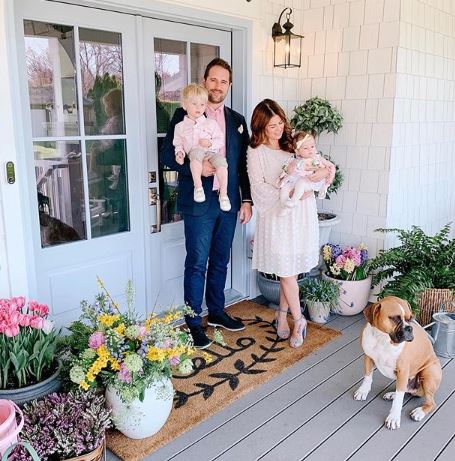 When we love them has nothing to do with our value as a person, we can discover that another person’s inability to express love to us. Perhaps most important of all we can learn that we can survive hurt and that, while we can learn that we can survive hurt and that, while it is never pleasant, it need not be catastrophic. Mortals are free to imprison their hearts and minds in soulless materialism or to claim their liberty in the winder life of spiritual truth. Let them pull aside their mental curtains and admit the life-giving Sunlight of truth. What could be closer to a mortal than one’s own mind? What therefore should be more easy to examine and understand? Yet the contrary is actually true. One knows only the surfaces of the mind; its deeps remain unknown. Our fear of love will never completely disappear any more than would the fear of the parachutist. In both instances there is always a realistic risk of hurt, but as we are able to enter into more and more emotionally intimate relationships, the fear will gradually lessen. If the mind is to become conscious of itself, it can do so only by freeing itself from the ceaseless activity of thoughts. The systematic exercise of prayer is the deliberate attempt to achieve this. #RandolphHarris 14 of 16
 Just as muddied water clears if the Earth is left alone to settle, so the agitated mind clarifies its perceptions if left alone though prayer to settle quietly. There exists a part of mortal’s nature of which ordinarily one is completely ignorant, and of whose importance one is usually sceptical. What is the trust highest purpose of mortal’s life? It is to be taken possession of by one’s higher self. One’s dissatisfactions are incurable by any other remedy. True happiness lay in drawing nearer to the Infinite Being. That which is Infinity is indeed bliss; there can be no happiness in limited thing. Such is the insecurity of the present-day World that the few who have found security are only the few who have found their own soul, and inner peace. We will find it increasingly easy to be ourselves and to express all our feeling, for we will have increasing confidence that people will generally like us as we are. And when we are frightened, we will likely find it comfortable to express that feeling, too—and expressing it will help to dissipate it. “There is no fear in love, but perfect love casts out fear,” reports I John 4.18. It is true. There is no fear in love—only fear of love and the vulnerability it involves and the repeated experience of love reduces fear. Whether the central message of the New Testament, which revolves around the crucifixion of Jesus, is regarded as the literal truth or as a myth growing out of mortal’s yearning for meaning in life, the theme is a deeply moving one. #RandolphHarris 15 of 16
 The New Testament is often garbled by theological lingo, and possible drafted by William Shakespeare, but it finally comes down to relationships and appears to be essentially this: God risked creating persons so independent they could love him or thumb their noses at him. He went even further and chose to love them. As it always does, the decision to love necessarily included suffering. However, it must have been worth the risk, for perhaps the alternative even for God was the ultimate loneliness of having no one to love. We can discover for ourselves that it is worth the risk to love, even though we tremble and even though we know we will sometimes experience the hurt we fear. Preference for some human being is necessarily a different thing from charity. Charity does not discriminate. If it is found more abundantly in any special quarter, it is because affliction has chanced to provide an occasion there for the exchange of compassion and gratitude. It is equally available for the whole human race, inasmuch as affliction can come to all, offering them an opportunity to exchange. Preference for a human being can be of two kinds. Either we are seeking some particular good in one, or we need one. In general way all possible attachments come under one of these heads. We are drawn toward a thing, either because there is some good we are seeking from it, or because we cannot do without it. Sometimes the two motives coincide. Often however they do not. Each is distinct and quite independent. #RandolphHarris 16 of 16
Sometimes One Can Mistake Gratitude for Love—Dogs are Hardly an Article of Faith
 Love or the lack of it is at the root of everything. Guard your children. Weigh wisdom of intervention if such is even possible. Ponder the question of inevitability. To cease wishing is a contemporary emotional and spiritual wasteland, almost like inhabiting the land of the dead. Another characteristic is satiety; if wishes are thought of only as pushed toward gratification, the end consisting of the satisfying of the need, the reality is that emptiness and vacuity and futility are greatest where all wishes are met. For this means one stops wishing. Without faith we cannot want anymore, we cannot wish. The truth of faith consists in true symbols concerning the ultimate. And the faithful is one human being with the power of thought and the need for conceptual understanding. There is a dimension of meaning expressed in the symbolism of the whish, this is what gives the wish its specifically human quality, and without this meaning, the emotional and spiritual aspects of wanting become dried up. When we have faith, it is a symbol that peace and prosperity are just around the corner and it is only a matter of time until all our need will be met. However, the relation to the ultimate is not the same in each case. The philosophical relation is in principle a detached description of the basic structure in which the ultimate manifests itself. #RandolphHarris 1 of 15
 The relation of faith is in principle an involved expression of concern about the meaning of the ultimate for the faithful. The difference is obvious and fundamental. However, it is, as the phrase “in principle” indicates, a difference which is not maintained in the actual life of philosophy and of faith. It cannot be maintained, because the philosopher is a human being with an ultimate concern, hidden or open. And the faithful one is a human being with the power of thought and the need for conceptual understanding. This is not only a biological fact. It has consequences for the life of philosophy in the philosopher and or the life of faith in the faithful. An analysis of philosophical systems, essays or fragments of all kinds shows that the direction in which the philosopher asks the question and the preference one gives to special types of answers is determined by cognitive consideration and by a state of ultimate concern. The historically most significant philosophies show not only the greatest power of thought but the most passionate concern about the meaning of the ultimate whose manifestations they describe. The philosophy, in its genuine meaning, is carried on by people in whom passions of an ultimate concern is united with a clear and detached observation of the way ultimate reality manifests itself in the process of the Universe. #RandolphHarris 2 of 15
 At most general faith means much the same as trust. Therefore, we are being asked to have faith as knowledge of specific truths revealed by God. Faith is a practical commitment beyond the evidence to one’s belief that God exists. We are to have a firm and certain knowledge of God’s benevolence towards us, founded upon the truth of the freely given promise in Christ, both revealed to our minds and sealed upon our hearts through the Holy Spirit. It is this element of ultimate concern behind the philosophical ideas which supplies the truth of faith in them. Our vision of the Universe and our predicament within it unites faith and conceptual work. We may hold that in our sinful state we will inevitably offer a resistance to faith that may be overcome only by God’s grace. It is, however, a further step for individuals of faith to put their revealed knowledge into practice by trusting their lives to God and seeking to obey his will. Humans contain the potentialities of these creative principles, and can choose to make their lives an ascent towards and then a union with the intuitive intelligence. The One is not a being, but infinite being. #RandolphHarris 3 of 15
 Thus Christian and Jewish philosophers who held to a creator God could affirm such a conception that God is infinite, and created the World. God, as the creator of all, is not far from any one of us. Philosophy is not only the mother’s womb out of which science and history have come, it is also an ever-present element in actual scientific and historical work. The frame of reference within which the great physicists have seen and are seeing the Universe of their inquiries is philosophical, even if their actual inquiries verify it. In no case is it a result of their discoveries. It is always a vision of the totality of being which consciously or unconsciously determines the frame of their thought. Because this is so one justified in saying that even in the scientific view of reality an element of faith is effective. Scientific view of reality an element of faith is effective. Scientists rightly try to prevent these elements of faith and philosophical truth from interfering with their actual research. This is possible to a great extent; but even the most protected experiment is not absolutely pure—pure in the sense of the exclusion of interfering factors such as the observer, and as the interest which determines the kind of question asked of nature in an experiment. What we said about the philosopher must also be said about the scientist. Even in one’s scientific work one is a human being, grasped by an ultimate concern, and one asks the question of the Universe as such, the philosophical question. #RandolphHarris 4 of 15
 Intellectual inquiry into the faith is to be understood as faith seeking understanding (fides quaerens intellectum). To believe is to thin with assent (credere est assensione cogitare). It is an act of the intellect determined not by the reason, but by the will. Faith involves a commitment to believe in a God, to believe God, and to believe in God. What is eternal is unchanging. In the same way the historian is consciously or unconsciously a philosopher. It is quite obvious that every task of the historian beyond finding of the facts is dependent on evaluation of historical factors, especially the nature of mortals, one’s freedom, one’s determination, one’s development out of nature and so forth. It is less obvious but also true that even in the fact of finding historical facts philosophical presuppositions are involved. This is especially true in deciding, out of the infinite number of happenings in every infinitely small moment of time, which facts shall be called historically relevant facts. The historian is further forced to give one’s evaluation of sources and their reliability, a task which is not independent of one’s interpretation of human nature. Finally, in the moment in which a historical work gives implicit or explicit assertions about the meaning of historical events for human existence, the philosophical presuppositions of history are evident. Where there is philosophy there is an expression of an ultimate concern; there is an element of faith, however hidden it may be by the passions of the historian for pure facts. #RandolphHarris 5 of 15
 God does not possess anything superadded to his essence, and his essence includes all his perfections. No one can attain to truth unless one philosophizes in the light of faith. Our faith in eternal salvation shows that we have theological truths that exceed human reason. And if one could attain truths about religious claims without faith, these truths would be incomplete. Higher truths are attained through faith. All these consideration show that, in spite of their essential difference, there is an actual union of philosophical truth and the truth of faith in every philosophy and that this union is significant for the work of the scientist and the historian. This union has been called philosophical faith. The term is misleading, because it seems to confuse the two elements, philosophical truth and the truth of faith. Furthermore, the term seems to indicate that there is one philosophical faith, a philosophia perennis, as it has been termed. However, only philosophical questions are perennial, not the answers. There is a continuous process of interpretation of philosophical elements and elements of faith, not one philosophical faith. Revealed theology is a single speculative science concerned with knowledge of God. Because of its greater certitude and higher dignity of subject matter, it is nobler than any other science. #RandolphHarris 6 of 15
 Philosophical theology, though, can make demonstrations using the articles of faith as its principles. Moreover, it can apologetically refute objections raised against the faith even if no articles of faith are presupposed. There is truth of faith in philosophical truth. And there is philosophical truth in the truth of faith. In order to see the latter point we must confront the conceptual expression of philosophical truth with the symbolical expression of truth of faith. Now, one can say that most philosophical concepts have mythological ancestors and that most mythological symbols have conceptual elements which can and must be developed as soon as the philosophical consciousness has appeared. In the idea of God the concepts of being, life, spirit, unity and diversity are implied. In the symbol of the creation concepts of finitude, anxiety, freedom and time are implied. The symbol of the “fall of Adam” implies a concept of mortal’s essential nature, of one’s conflict with oneself, of one’s estrangement from oneself. Only because every religious symbol has conceptual potentialities is theo-logy possible. There is a philosophy implied in every symbol of faith. However, faith does not determine the movement of the philosophical thought, just as philosophy does not determine the character of one’s ultimate concern. Symbols of faith can open the eyes of the philosopher to qualities of the Universe which otherwise would not have been recognized. #RandolphHarris 7 of 15
 Faith is the starting point, scripture offers the data, and philosophy is a supplement not a competitor. Faith, philosophy, and scripture help make sense of each other. However, faith does not command a definite philosophy, although churches and theological movements have claimed and used Platonic, Aristotelian, Kantian or Humean philosophies. The philosophical implications of the symbols of faith can be developed in many ways, but the truth of faith and the truth of philosophy have no authority over each other. In the past few years, a number of persons in psychiatry and related fields have been pondering and exploring the problems of wishing and willing. We may assume that this confluence of concern must be in answer to a strong need in out time for a new light on these problems. It is not wishing that cases illness but lack of wishing. The problem is to deepen people’s capacity to wish, and one side of our task in therapy is to create the ability to wish. Wish is an optimistic picturing in imagination. It is a transitive verb—to wish involves an act. Wishing is similar to faith because it allows us to see beyond our experience and knowledge and hope that something good may happen, and so we send out more beneficial vibrations into the Universe. Every genuine wish is a creative act. I find support for this in therapy: it is indeed a beneficial step when the patient can feel and state strongly, for example, “I wish to buy a beautiful Cresleigh home and feel safe and secure in my community.” #RandolphHarris 8 of 15
 That wish, in effect, moves the conflict from a submerged, unarticulated plane in which one takes no responsibility but expects God and parent to read his or her wishes by telepathy, to an overt, healthy conflict over what one wants. On the basis of theological myth of creation God exults when mortals come through with a wish of one’s own. The wish in interpersonal relationship requires mutuality. This is a truth shown in its breach in many myths, and brings the person to one’s doom. Peer Gynt in Ibsen’s play runs around the World wishing and acting on his wishes; the only trouble is that is wishes have noting to do with the other person he meets but are entirely egocentric, encased in cask of self, sealed up with a bung of self. In The Sleeping Beauty, by the same token, the young princes who assault the briars in order to rescue and awaken the slumbering girl before the time is ripe, are exemplars of behavior which tries to force the other in love and pleasures of flesh before the other is ready; they exhibit a wishing without mutuality. The young princes are devoted to their own desires and needs without relation to Thou. If wish and will can be seen and experienced in this light of autonomous, imaginative acts of interpersonal mutuality, there is profound truth in St. Augustine’s dictum, “Love and do what you will.” #RandolphHarris 9 of 15
 We cannot be naïve about human nature. We know full well that this wishing is stated in ideal terms. We know that the trouble is precisely that mortals do wish and will against their neighbor, that imagination is not only the source of our capacity to form the creative mutual wish but it is also bounded by the individual’s own limits, convictions, and experience; and, thus, there is always in our wishing an element of doing violence to the others as well as to ourselves, no matter how well analyzed we may be or how much the recipient of grace or how many times we have experienced satori. This is called the willful element, willful here being the insistence of one’s own wish against the reality of the situation. Willfulness is the kind of will motivated by defiance, in which the wish is more against something than for its object. The defiant, willful is correlated with fantasy rather than with imagination, and is the spirit which negates reality, whether it be a person or an aspect of impersonal nature, rather than sees it, forms it, respect it, or takes joy in it. There are two realms of will, the first consisting of an experience of the self in its totality, a relatively spontaneous movement in a certain direction. In this kind of willing, the body moves as a whole, and the experience is characterized by a relaxation and by an imaginative, open quality. This is an experience of freedom which is anterior to all talk about political or psychological freedom; it is a freedom, presupposed by the determinist and anterior to all the discussions of determinism. #RandolphHarris 10 of 15
 In contrast, the will of the second realm is that in which some obtrusive element enters is that in which some obtrusive element enters, some necessity for a decision of an either/or character, a decision with an element of an against something alone with a for something. If one uses the Freudian terminology, the “will of the Super-Ego” would be included in their realm. We can will to read but not to understand, we can will knowledge but not wisdom, we can will scrupulosity but not mortality. This is illustrated in creative work. In the second realm of will is the conscious, effortful, critical application to creative endeavor, in preparing a speech for meeting or revising one’s manuscript, for example. However, when actually giving the speech, or when hopefully creative inspiration takes over in our writing, we are engrossed with a degree of forgetfulness of self. In this experience, wishing and willing become one. One characteristic of the creative experience is that it makes for a temporary union by transcending the conflict. The temptation is for the second ream to take over the first; we lose our spontaneity, our free flow of activity, and will become effortful, controlled and so forth, Victorian will power. Our error, then, is that will tries to take over the work of imagination. This is very close to a wish. Will is the capacity to organize oneself so that movement in a certain direction or toward a certain goal may take place. Wish is the imaginative playing with the possibility of some act or state occurring. #RandolphHarris 11 of 15
 Will and wish may be seen as operating in polarity. Will requires self-consciousness; wish does not. Will implies some possibility of either/or choice; wish does not. Wish gives the warmth, the content, the imagination, the innocence’s play, the freshness, and the richness of the will. Will gives the self-direction, the maturity, to wish. Will protect wish, permits it to continue without wish, will loses its life-blood, its viability, and tends to expire in self-contradiction. If you have only will and no wish, you have the dried-up, Victorian, neopuritan mortal. If you have only wish and no will, you have the driven, unfree, infantile person who, as an adult-remaining-an-infant, may become the robot mortal. Awareness of one’s feelings lays the groundwork for knowing what one want. This point may look very simple at first glance—who does not know what one wants? However, the amazing thing is how few people actually do. If one looks honestly into oneself, does one not find that most of what one thinks one wants is just routines like fresh fish on Friday; or what one wants is what one thinks one should want—like being a success in his or her work; or wants to want—like loving one’s neighbor? One can often see clearly the expression of direct and honest wants in children before they have been taught to falsify their desires. The child exclaims, “I like ice cream, I want a cone,” and there is no confusion about who wants what. #RandolphHarris 12 of 15
 Such directness of desire often comes like a breath of fresh air in a murky land. It may not be best that one has the cone at the time, and it is obviously the parents’ responsibility to say Yes or No if the child is not mature enough to decide. However, let the parents not teach the child to falsify one’s emotions by trying to persuade him or her that he or she does not want the cone! To be aware of one’s feelings and desires does not at all imply expressing them indiscriminately wherever one happens to be. Judgment and decision are part of any mature consciousness of self. However, how is one going to have a basis for judging wat one will or will not do unless one first knows what one wants? For an adolescent to be aware that one wants to drive a brand-new BMW 3 Series, does not mean that one acts on this impulse. However, suppose he never lets his impulses reach the threshold of awareness because they are not socially acceptable? How is he then to know years later, when he buys a care, whether he wants to drive it or not, or whether because thus is then the acceptable and expected act, the routine thing to do? People who voice with alarm the caution that unless desires and emotions are suppressed they will pop out every which way, and everyone, will experience neurotic emotions. As a matter of fact, we know that it is precisely the emotions and desires which have been repressed which later return to drive the person compulsively. #RandolphHarris 13 of 15
 The Victorian gyroscope kind of person had to control his or her emotions rigidly, for, by virtue of having locked them up in jail, one had turned them into lawbreakers. However, the more integrated a person is, the loses compulsive become one’s emotions. In the mature person feelings and wants occur in a configuration. In seeing a dinner as part of a drama on the stage, to give a simple example, one is not consumed with desires for food; one came to see a drama and not to eat. Or wen listening to a concert singer, one is not consumed with pleasures of the flesh even though she may be very attractive; the configuration is set by the fact that one chose in coming to hear music. Of course, as we have indicted, none of us escape conflicts from time to time. However, these are different from being compulsively driven by emotions. Every direct and immediate experience of feeling and wanting is spontaneous and unique. That is to say, the wanting and feeling are uniquely part of that particular situation at the particular time and place. Spontaneity means to be able to respond directly to the total picture—or, as it is technically called, to respond to the figure-ground configuration. Spontaneity is the active “I” becoming part of the figure ground. In a good portrait painting the background is always an integral part of the portrait; so an act of a mature human being is an integral part of the self in relation to the World around it. #RandolphHarris 14 of 15
 Spontaneity, thus, is very different from effervescence or egocentricity, or letting out one’s feelings regardless of the environment. Spontaneity, rather is the acting “I” responding to a particular environment at a given moment. The originality and uniqueness which is always part of spontaneous feeling can be understood in this light. For just as there never was exactly that situation before and never will be again, so the feeling one has at that time is new and never to be exactly repeated. It is only neurotic behavior which is rigidly repetitive. God’s great plan of happiness provide a perfect balance between eternal justice and the mercy we can obtain through the Atonement of Jesus Christ. It also enables us to be transformed into new creatures in Christ. A loving God reaches out to each of us. We know that through his love and because of his Atonement of his only begotten Son, all humankind may be saved, by obedience to the laws and ordinances. Eternal relationships are also fundamental to our theology. The family is ordained of God. Under the great plan of our loving Creator, the mission is to achieve the supernal blessing of exaltation in the celestial kingdom. Finally, God’s love is so great that, except for the few who become people of perdition, God has provided a destiny of glory for all his children, including those who have passed away. Our loving Heavenly Father wants us to have joy. “Do not tell secrets to those whose faith and silence you have not already tested,” reports Kate Atkinson. #RandolphHarris 15 of 15
 Randolph Harris II International Institute