
Home » violence (Page 9)
Category Archives: violence

The Source of those Accusations Was a Committee of Demons Who Had Infested Her!

The infinite power of God to create is far beyond what we can grasp or understand. If the Almighty devoted so much of His Word to prophecy, it certainly benefits every believer to study it. The study of the prophetic scriptures and their fulfillment attests to the authority of the Word of God. Every soul has cost an infinite price, and how terrible is the sin of turning one soul away from Christ, so that for Him the Saviour’s love and humiliation and agony shall have been in vain. Contrary to popular opinion, New England’s record in regard to witchcraft is surprisingly good, as Governor Thomas Hutchinson pointed out in 1750: “more having been put to death in a single country in England from the first settlement until the present time.” Through most of the seventeenth century the record is really astonishing. While Europe hanged and burned literally thousands, executions in New England were few and far between. (Witches were burned on the Continent and in Scotland, where witchcraft was a heresy, but hanged in England and in New England, where it was a felony. Burning a witch seems not to have been motivated by the wish to inflict a particularly painful death; Scottish witches, for instance, were first garroted by the executioner, who then proceeded to burn the corpse and scatter its ashes. Most probably, burning was an attempt to prevent the resurrection of the body.) There are some fascinating accounts in New England that deal with cases of witchcraft before 1692, and we shall look at a few of these for they will illuminate some interesting aspects of the Salem witch trials. #RandolphHarris 1 of 21

The first is that of Mrs. Anne Hibbins. Her husband, who died in 1654, had been a man of importance: Boston merchant, a Colonial Agent, and for several years one of the Assistants. Tradition has it that she was a sister of Governor Bellingham. She was apparently quarrelsome—quarrelsome enough so that her church censured her for it—and one quarrel was her undoing. She seems to have come upon two of her neighbours talking, to have told them she knew they were talking about her, and then to have reconstructed their conversation with enough fidelity to convince the she was possessed of “preternatural” knowledge (something Mrs. Sarah Winchester used to also have the ability to do, and a reason she dismissed so many staff members for gossiping). Nonetheless, Mrs. Hibbins was brought to trail in 1655, and the jury brought her in guilty. However, the presiding magistrates refused to accept the verdict, apparently believing her innocent, and their refusal automatically threw the case into the General Court. There again she was found guilty; the governor pronounced the required sentence of death; and in 1656 she was executed. We have seen that some of the magistrates were not satisfied of her guilt, and apparently the same were true of some of the clergy. To masses of people, death was a dread mystery; beyond was uncertainty and gloom. These people were seeking for truth, and to learn them the Spirit of Inspiration was imparted. #RandolphHarris 2 of 21

A surviving letter tells us that the Reverend John Norton “once said at his own table” before the Reverend John Wilson and others that Mistress Hibbins “was hanged for a witch only for having more with than her neighbours. It was his very expression; she having, as he explained it, unhappily guessed that two of her persecutors, whom she saw talking in the street, were talking of her—which cost her her life, not withstanding all he could do to the contrary, as he himself told us.” The Hibbins case shows how slender and how circumstantial were the grounds necessary to bring an accusation of witchcraft against anyone with a reputation for malice. It also shows that the popular elements in society (the jury, and the people’s representatives in the General Court) were far more ready to believe in witchcraft than the leaders of society (the magistrates and ministers.) This latter conclusion is reinforced by the fact that before 1692 there were far more acquittals than convictions in New England; there were more people willing to charge their neighbours with witchcraft than magistrates willing to convict them. A case which took place in Hartford, Connecticut, in 1662 is known in rather more detail than that of Mrs. Hibbins. Anne Cole, “a person esteemed pious,” was taken with “strange fits.” As with the Salem girls, the fits were both violent and public. Extremely violent bodily motions she many times had, even to the hazard of her life in the apprehensions of those that saw them. #RandolphHarris 3 of 21

And very often great disturbances was given in the public worship of God by her and two other women who had also strange fits. Once in especial, on a day of prayer kept on that account, the motion and noised of the afflicted was so terrible that a godly person fainted under the appearance of it. In some of her fits strange voices came from her, voices that were clearly not her own. Such voices are now known to be a consequence of multiple personality, which is the extreme form of the hysterical fugue. However, the seventeenth-century observers of Anne Cole judged them to be the voices of demons who had entered into her, and that judgment was sensible enough in view of the fact that the voices seemed to be plotting ways in which Anne Cole might be further afflicted. Eventually, seeming to realize that they were being overheard, one of the voices announced, “‘Let us confound her language, [that] she may tell no more tales.’” For some time nothing came from her but “unintelligible mutterings”; then the conversation resumed in a Dutch accent, and this time names were mentioned, names of the witches who were responsible for these afflictions. When Anne Cole was out of her fits, she “knew nothing of those things that were spoken by her” during them, but she was understandably distressed to find she had been speaking things which, to the best of her knowledge, had never been in her mind; it was a “matter of great affliction to her.” #RandolphHarris 4 of 21

It must have been afflicting to the local magistrates as well; they now had accusations of witchcraft against several persons, but the source of these accusations was not Anne Cole; it was a committee of demons who had infested her. The magistrates investigated further, and imprisoned some (and perhaps all) of the accused on suspicion of witchcraft One of these, a “lewd, ignorant, considerably aged woman” named Rebecca Greensmith sent for the two clergymen who has taken down in writing the demonic conversation issuing from the mouth of Anne Cole. She had the transcript read to er, and then “forthwith and freely confessed those things to be true,” confirming the statement of the voiced “that she (and other persons named in the discourse) had familiarity with the Devil.” She confessed to a number of other things as well, including “that the Devil has frequent use of her body with much seeming (but indeed horrible, hellish) delight to her.” Reports of copulation with demons (including the unpleasantness of the experience) are common in the literature of Continental witchcraft, but this is one of the few known cases in New England. What is involved is apparently an erotic fit in which the woman actually goes through the motions of copulation and achieves a climax; similar fits have been observed in mental patients in the twenty-first century. Thus it appears that in the case of Anne Cole the confessor as well as the afflicted person was an hysteric. This pattern we shall see again at Salem. #RandolphHarris 5 of 21

Rebecca Greensmith was hanged in 1663. So was her husband Nathaniel, although we do not know the grounds for his conviction; according to Increase Mather he did not confess. “Most” of the other persons accused by the demonic voices “made their escape into another part of the country.” What happened to the others we do not know, but they were apparently not executed. And since at least one of those who made her escape had at first been imprisoned in suspicion of witchcraft (Judith Varlet, a relative of Governor Peter Stuyvesant of New York), it can be assumed that the authorities were reluctant to press the matter further. The evidence they had was, after all, highly suspect, coming from demonic voices on the one hand and a confessed witch on the other. (Confessors are a group of women with the power to make anyone they touch love them. This love, however, is more aptly described as a soul-destroying obsession whose objective is pleasing the Confessor in any way possible. Confessors were created by warlocks to travel Medieval lands and act as law enforcers. The Confessors could possess anyone and make them tell the truth in great detail. There were also a few male Confessors, but they became megalomanics and plunged the entire World into a dark age. As a result, after all the male Confessors were defeated and wiped out, the warlocks and female Confessors took up the tradition of killing all male Confessors shortly after birth.) In any event, after the “execution of some and escape of others” Anne Cole’s fits ceased, and did not return. #RandolphHarris 6 of 21

Twenty years later, in 1682, the Reverend John Whiting reported that “she yet remains maintaining her integrity.” This together with what the voices said, suggests that Anne Cole’s fits probably were caused by her fear of witchcraft and cured by the removal of the fear. A few other cases are remarkable for a number of reasons, one of them being the exemplary thoroughness with which the symptoms of the affiliated persons are described, which makes it possible to say without question that these were pathological cases of hysteria. The first took place in Groton, Massachusetts, in 1671-1671 and was recorded by the Reverend Samuel Willard, then minister of Groton (during the Salem trials he was a member of the Boston Clergy). On 30 October 1671, Elizabeth Knapp began to behave strangely: “In the evening, a little before she went to bed, sitting by the fire she cried out, ‘Oh! My legs!’ and clapped her hands on them; immediately, ‘Oh! My breast!’ and removed her hands thither; and forthwith, ‘Oh! I am strangled’ and put her hands on her throat.” The similarity to Janet’s twentieth-century description of the onset of a typical hysterical fit is unmistakable; it starts, he writes “with a pain or a strange sensation situated at such or such a point of the body…[It] often begins in the lower part of the abdomen [and] seems to ascend and to spread to other organs. For instance, it very often spreads to the epigastrium, to the breast, then to the throat. There it assumes rather an interesting form, which was for a very long time considered as quite characteristic of hysteria. The patient has the sensation of too big an object, as it were, a ball, rising in her throat and choking her.” #RandolphHarris 7 of 21

The chocking sensation we shall find over and over again; it is the bolus hystericus and is related to the “lump in the throat” felt by normal people in moments of extreme stress. The normal person, like the hysteric, tries to relieve it by swallowing; this is why the comic-strip artist has one’s characters say “Gulp” when they are in trouble. The choking sensations in the throat was followed by “fits in which she was violent in bodily motions, leapings, strainings and strange agitations, scarce to be held in bound by the strength of three or four; violent also in roarings and screamings.” The fits continued until 15 January 1692, the date of Willard’s writings. Several of the details he recorded are worth noting. On 15 November, “her tongue was for many hours together drawn into a semicircle up to the roof of her mouth, and not to be removed, for some tried with the fingers to do it.” On 17 December her tongue was drawn “out of her mouth most frightfully, to an extraordinary length and greatness.” Devils appeared to her, and witches; “Oh,” she cried to one of them, “you are a rouge.” On 29 November she had a particularly grotesque hallucination, when she believed a witch in the shape of a dog with a woman’s head was strangling her. The hallucinations and the woman’s sufferings were terrifyingly convincing; Willard noted that when she thought the witch was strangling her, “she did often times seem to our apprehension as of she would forthwith be strangled.” #RandolphHarris 8 of 21

Elizabeth Knapp’s case is strikingly similar to that of Ler—one of the best-known cases of J.-M. Charcot, the nineteenth-century psychologist. Her fits, he wrote, “are characterized in the first stage by epileptiform and tetaniform convulsions; after this come great gesticulations of a voluntary character, in which the patient, assuming the most frightful postures, reminds one of the attitudes which history assigns to the demoniacs…At this stage of the attack, se is a prey to delirium, and raves evidently of the events which seem to have determined her first seizures. She hurls furious invectives against imaginary individuals, crying out, “villains! robbers! brigands! fire! fire! O, the dogs! I’m bitten!”—Reminiscences, doubtless, of the emotions experienced in her youth.” When the convulsive portion of Ler—’s attack was over other symptoms usually followed, including “hallucination of vision: the patient beholds horrible animals, skeletons, and specters” and “lastly, a more or less marked permanent contracture of the tongue.” Charcot drew this contracture of the tongue; it is quite appalling. Willard was not exaggerating in calling it frightful. Elizabeth Knapp displayed still other symptoms are identifiably hysterical, including loss of speech on some occasions, and on others speaking in voices other than her own; once “she barked like a dog, and bleated like a calf.” Willard noted that her fits did not seem to do her any permanent physical damage: “She hath no ways in body or strength by all these fits, though so dreadful, but gathered flesh exceedingly, and hath her natural strength when her fits are off, for the most part.” #RandolphHarris 9 of 21

This is typical; as Janet remarks, the “hysteric patient, after howling for several hours, feels rather comfortable; she experiences, as it were, a relaxation, and declares she is out of her fits has often raised the question of whether they are genuine. Willard thought they must be, if only for their violence: “such a strength is beyond the force of dissimulation.” (It should be noted that hysterics are not always well in the intervals between their fits. Some, for instance, lose their appetites and starve themselves. It is probably such cases who are referred to in the statue of James I against witchcraft as being “wasted, consumed, pined.) On 1 November, Elizabeth Knapp named one of her neighbour as the probable cause of her afflictions. The accused woman was sent for, and entered the house while the afflicted girl was in a fit. Her eyes were closed, as they usually were in her fits, yet she could distinguish this neighbour’s touch from all others, “though no voice was uttered.” That would have been quite enough to convict the neighbour in many witchcraft cases. However, fortunately she was permitted to pray with the afflicted girl, and at the conclusions Miss Knapp “confessed that she believed Satan had deluded her.” Willian was happy that “God was pleased to vindicate the case and justify the innocent,” and reported that Miss Knapp never again complained of any “apparition or disturbance from this neighbour.” Instead, she turned to accusing the Devil, who had, she said, been offering her a covenant for several years, a covenant she had frequently been tempted to sign. #RandolphHarris 10 of 21

The dark shadow that Satan has cast over the World grew deeper and deeper. About a month later Miss Knapp accused another person of witchcraft, this time during a period of hallucinations. Her father brought the woman to the house, and Willard, who had been asked to be present, noted that her fit became particularly violent when this woman entered. However, Willard, wrote, “we made nothing of it” since her fits had been as violent on other occasions. Instead they inquired carefully into the mater and found “two evident and clear mistakes” in the accusation. This was enough to exonerate the second accused woman. Satan had implanted this principle. Wherever it was held, people had no barrier against sin. Elizabeth Knapp was still having fits when Willard wrote about her, and all he could be certain of was that “she is an object of pity.” He did not think she was bewitched, but he did believe she was possessed (that is, that Devils has entered into her). This remained his opinion (and that of most others) when the case was remembered in 1692. He also believed that the girl’s terrible afflictions provided an occasion for the community to examine its collective conscience. Therefore he admonished his congregation in a sermon, “Let us all examine by this Providence [id est, this event] what sins they have been, that have given Satan so much footing in this poor place.” Satan was seeking to shut out from humans a knowledge of God, to turn their attention from the temple of God, and to establish His own kingdom. His strife for supremacy had seemed to be almost wholly successful. #RandolphHarris 11 of 21

They robbed God of His glory, and defrauded the World by a counterfeit of the gospel. They had refused to surrender themselves to God for the salvation of the World, and they became agents of Satan for its destruction. They were doing the work Satan designed them to do, taking a course to misrepresent the character of God, and cause the World to look upon Him as a tyrant. The convulsive fits which played so prominent a part in most witchcraft cases, and continued to be one of the most common symptoms of hysteria through the earl years of the twentieth century, have no become relatively rare in Western civilization. D.W. Abse reports fits occurred in only six out of one hundred and sixty-one cases of hysteria treated at a British military hospital during World War II, but that they were the most common symptom among Indian Army hysterics treated at Delhi during the same period. There are a number of possible explanations for this curious fact. Hysterics are notoriously suggestible, so the change may be ascribable to nothing more than the refusal of our culture to give the hysterical fit the respectful and awed attention it used to command. In any case, it seems clear that abnormal behaviour varies with time and place just as normal behaviour does. However, since this particular variation occurred so recently, after the classic studies of hysteria had been completed, it is possible to identify the seventeenth-century Massachusetts fits for what they were. #RandolphHarris 12 of 21

Mr. William Wirt Winchester, while we were attending lectures, purchased three or four old houses in California, one of which was unoccupied. He resided in the country, and he proposed that he wanted his wife and myself to take up our abode in the untenanted house, so long as it should continue unlet; a move which we would accomplish the double end of settling us nearer alike to our lecture-rooms and to our amusements, and of relieving us from the weekly charge of rent for our lodgings. Our furniture was very scant—our whole equipage remarkably modest and primitive; and in short, our arrangements pretty nearly as simple as those of a bivouac. Mrs. Sarah Winchester’s new plan was, therefore, executed almost as soon as conceived. The front drawing-room was our sitting-room. I had the bedroom over it, and Mrs. Winchester had the back bedroom on the same floor, which nothing could have induced me to occupy. The house to begin with was an incomplete, three-story farm house with a basement. It was very old. Dated back to the sixteenth century, I believe. It had nothing modern about it. The agent who looked into the property titles for Mrs. Winchester told her it was originally sold, along with much other forfeited property in 1702; and it had belonged to John Conduit, whose wife was the niece of Sir Isaac Newton, a father of modern science, although keenly interested in the occult. How old it was then, I cannot say; but, at all events, in had seen years and changes enough to have contracted all the mysterious and saddened air, at once exciting and depressing, which belongs to most old mansions. #RandolphHarris 13 of 21

There had been very little done in the way of modernizing details and, perhaps, it was better so; for there was something queer and by-gone in the very walls and ceilings—in the shape of doors and windows—in the odd diagonal site of the chimney-pieces—in the beams and ponderous cornices—not to mention the singular solidity of all the woodwork, from the bannisters to the window-frames, which hopelessly defined disguise, and would have emphatically proclaimed their antiquity through any conceivable amount of modern finery and varnish. An effort had, indeed, been made, to the extent of papering the drawing-rooms; but somehow, the paper looked raw and out of keeping. This woman said, old Judge Sir James Hales (who, having earned the reputation of a particularly ‘hanging judge’, ended by hanging himself, as the corner’s jury found, under an impulse of ‘temporary insanity’, with a child’s skipping-rope, over the massive old bannisters) resided there, entertaining good company, with fine venison and rare old port. In those halcyon days, the drawing-rooms were hung with gilded leather, and, I dare say, cut a good figure, for they were really spacious rooms. The bedrooms were wainscoted, but the front one was not gloomy; and in it the cosiness of antiquity quite overcame its somber associations. However, the back bedrooms, with its two queerly-placed melancholy windows, staring vacantly at the foot of the bed, and with the shadowy recess to be found in most old houses in Dublin, like a large ghostly closet, which, from congeniality of temperament, had amalgamated with the bedchamber, and dissolved the partition. #RandolphHarris 14 of 21

At the night-time, this “alcove”—as our “maid” was wont to call it—had, in my eyes, a specially sinister and suggestive character. Mrs. Winchester’s distant and solitary candle glimmered vainly into its darkness. There it was always overlooking her—always itself impenetrable. However, this was only part of the effect. The whole room was, I cannot tell, how repulsive to me. There was, I supposed, in its proportions and features, a latent discord—a certain mysterious and indiscernible relation, which jarred indistinctly upon some secret sense of the fitting and the safe, and raised indefinable suspicious and apprehensions of the imagination. On the whole, as I began saying, nothing could have induced me to pass a night alone in it. We have not been very long in occupation of our respective chambers, when I began to complain of uneasy nights and disturbed sleep. I was, I suppose, the more impatient under this annoyance, as I was usually a sound sleeper, and by no means prone to nightmares. It was not, however, my destiny, instead of enjoying my customary repose, every night to “sup full of horrors.” After a preliminary course of disagreeable and frightful dreams, my troubles took a definite form, and the same vision, without an appreciable variation in a single detail, visited me at least (on average) every second night of the week. Now, this dream, nightmare, or infernal illusion—which you please—of which I was the miserable port, was on this wise: I saw, or thought I saw, with the most abominable distinctness although at the time in profound darkness, every article of furniture and accidental arrangement of the chamber in which I lay. This, as you know, is incidental to ordinary nightmare. #RandolphHarris 15 of 21

Well, while in this clairvoyant condition, which seemed but the lighting up of the theatre in which was to be exhibited the monotonous tableau of horror, which made my nights insupportable, my attention invariably became, I know not why, fixed upon the windows opposite the foot of my bed; and, uniformly with the same effect, a sense of dreadful anticipation always took slow but sure possession of me. I became somehow conscious of a sort of horrid but undefined preparation going forward in some unknown quarter, and by some unknown agency, for my torment; and, after an interval, which always seemed to me of the same length, a picture suddenly flew up the window, where it remained fixed, as if by an electrical attraction, and my discipline of horror then commenced, to last perhaps for hours. The picture this mysteriously glued to the window-panes, was the portrait of an old man, in crimson flowered silk dressing-gown, the folds of which I could now describe, with countenance embodying a strange mixture of intellect, sensuality, and power, but withal sinister and full of malignant omen. His nose was hooked, like the beak of a vulture; his eyes large, grey, and prominent and lighted up with a more than mortal cruelty and coldness. The features were surmounted by a crimson velvet cap, the hair that peeped from under which was white with age, while the eyebrows retained their original blackness. Well I remember every line, hue, and shadow of that stony countenance, and well I may! The gaze of this hellish visage was fixed upon me, and mine returned it with the inexplicable fascination of nightmare, for what appeared to me to be hours of agony. #RandolphHarris 16 of 21

At last—the cock he crew, away then flew, the fiend who had enslaved me through the awful watches of the night and, harassed and nervous, I rose to the duties of the day. I had—I cannot say exactly why, but it may have been from the exquisite anguish and profound impressions of unearthly horror, with which this strange phantasmagoria was associated—an insurmountable antipathy to describing the exact nature of my nightly troubles to Mrs. Winchester. Generally, however, I told her I was haunted by abominable dreams; and, true to the imputed materialism of medicine, we put our heads together to dispel my horrors, not by exorcism, but by a tonic Vin Mariani. However, the evil spirit, who enthralled my senses in the shape of that portrait, may have been just as near me, just as energetic, just as malignant, though I saw him not. Everybody knows how contagious is fear of all sort, but more especially that particular kind of fear under which poor Mrs. Winchester was at that moment labouring. I would not have heard, nor I believe would she have recapitulated, just at that moment, for half the World, the details of the hideous vision which had so unmanned her. “I was sitting in my room,” said Mrs. Winchester “by my fireplace, the door locked when I heard a step on the flight of stairs descending from the attics. It was two o’ clock, and the streets were as silent as a churchyard—the sounds were, therefore, perfectly distinct. There was slow, heavy tread, characterized by the emphasis and deliberation of age, descending by the narrow staircase from above; and, what made the sound more singular, it was plain that the feet which produced it were perfectly bare measuring a descent with something between a pound and a flop, very ugly to hear. #RandolphHarris 17 of 21

“I knew quite well that you and my attendant had gone away many hours before, and that nobody but myself has any business in the house. It was quite plain also that the person who was coming down stairs had no intention whatever of concealing his movements; but, on the contrary, appeared disposed to make even more noise, and proceed more deliberately, than was at all necessary. When the step reached the foot of the stairs outside my room, it seemed to stop; and I expected every moment to see my door open spontaneously, and give admission to soul killed by the Winchester rifle. I was, however, relieved in a few second by hearing the descent renewed, just in the same manner, upon the stair case leading down to the drawing-rooms, and thence, after another pause, down the next flight, and so on to the hall, whence I heard no more. Now, by the time the sound had ceased, I was wound up, as they say, to a very unpleasant pitch of excitement. I listened, but there was not a stir. I screw up my courage to a decisive experiment—opened my door, and in a stentorian voice bawled over the banisters, ‘Who’s there?’ There was no answer but the ringing of my own voice through the empty old house—no renewal of the movement; nothing short, to give my unpleasant sensations a definite direction. There is, I think, something most disagreeably disenchanting in the sound of one’s own voice under such circumstances, exerted in solitude, and in vain. It redoubled my sense of isolation, and my misgivings increased on perceiving that the door, which I certainly thought I had left open, was closed behind me. #RandolphHarris 18 of 21

“In a vague alarm, lest my retreat should be cut off, I got again into my room as quickly as I could, where I remained in a state of imaginary blockade, and very uncomfortable indeed, till morning. Next night brought no return of my barefooted fellow-lodger; but the night following, being in my bed, and in the dark—somewhere, I supposed, about the same hour as before, I distinctly heard the old fellow again descending from the garrets. This time I jumped out of bed, clutched the poker as I passed the expiring fire, and in a moment was upon the lobby. The sound had ceased by this time—the dark and chill were discouraging; and, guess my horror, when I saw, or thought I saw, a monster, whether in the shape of a man or a bear I could not say, standing, with its back to the wall, on the lobby, facing me, with a pair of great greenish eyes shinning dimly out. Now, I must be frank, and confess that the cupboard which displayed our plates and cups stood just there, though at that moment I did not recollect it. At the same time I must never could satisfy myself that I was made the dupe of my own fancy in this matter; for this apparition, after one or two shiftings of shape, as if in the act of incipient transformation, began, as it seemed on second thoughts, to advance upon me in its original form. From an instinct of terror rather than of courage, I hurled the poker, with all my force, at its head; and to the music of a horrid crash made my way into my room, and double-locked the door. Then, in a minute more, I heard the horrid bare feet walk down the stairs, till the sound ceased in the halls, as on the former occasion. #RandolphHarris 19 of 21

“In a vague alarm, lest my retreat should be cut off, I got again into my room as quickly as I could, where I remained in a state of imaginary blockade, and very uncomfortable indeed, till morning. Next night brought no return of my barefooted fellow-lodger; but the night following, being in my bed, and in the dark—somewhere, I supposed, about the same hour as before, I distinctly heard the old fellow again descending from the garrets. This time I jumped out of bed, clutched the poker as I passed the expiring fire, and in a moment was upon the lobby. The sound had ceased by this time—the dark and chill were discouraging; and, guess my horror, when I saw, or thought I saw, a monster, whether in the shape of a man or a bear I could not say, standing, with its back to the wall, on the lobby, facing me, with a pair of great greenish eyes shinning dimly out. Now, I must be frank, and confess that the cupboard which displayed our plates and cups stood just there, though at that moment I did not recollect it. At the same time I must never could satisfy myself that I was made the dupe of my own fancy in this matter; for this apparition, after one or two shiftings of shape, as if in the act of incipient transformation, began, as it seemed on second thoughts, to advance upon me in its original form. From an instinct of terror rather than of courage, I hurled the poker, with all my force, at its head; and to the music of a horrid crash made my way into my room, and double-locked the door. Then, in a minute more, I heard the horrid bare feet walk down the stairs, till the sound ceased in the halls, as on the former occasion. #RandolphHarris 19 of 21

“If the apparition of the night before was an ocular delusion of my fancy sporting with the dark outlines of our cupboard, and if tis horrid eyes were nothing but a pair of inverted teacups, I had, at all events, the satisfaction of having launched the poker with admirable effect, and in true ‘fancy’ phrase, ‘knocked its two daylights into one,’ as the commingled fragments of my tea-service testified. I did my best to gather comfort and courage from these evidences; but it would not do. And then what could I say of those horrid bare feet, and the regular tramp, tramp, tramp, which measured the distance of the entire staircase through the solitude of my haunted dwelling, and at an hour when no good influence was stirring? Confound it!—the whole affair was abominable. I was out of spirits, and dreaded the approach of night. It came, ushered ominously in with a thunderstorm and dull torrents of depressing rain. Earlier than usual the streets grew silent; and by twelve o’clock nothing but the comfortless patterning of the rain was to be heard. I made myself as snug as I could. I lighted two candles instead of one. I forswore bed, and held myself in readiness for a sally, candle in hand; for, coute qui coute, I was resolved to see the being, if visible at all, who troubled the nightly stillness of my mansion. I was fidgety and nervous and, tried in vain to interest myself with my books. I walked up and down my room, whistling in turn martial and hilarious music, and listening ever and anon for the dreaded noise.” #RandolphHarris 20 of 21

Do not Grieve. Anything you lose comes around in another form. The child weaned from mother’s milk now drinks cranberry juice. God’s joy moves from unmarked box to unmarked box, from cell to cell. As rainwater, down into flowerbed. As roses, up from ground. Now it looks like a plate of rice and fish, now a cliff covered with vines, now a horse being saddled. It hides within these, till one day it cracks them open. There is the light gold of wheat in the sun, and the gold of bread made from wheat. I have neither, I am only talking about them as a town in the desert looks up to stars on a clear night. The Son of God, looking upon the World, beheld suffering and misery. With pity He saw how humans had become victims of satanic cruelty. He looked with compassion upon those who were being corrupted, murdered, and lost. They had chosen a ruler who chained them to his carriage as captives. God’s glory pervades the Universe; His ministering Angels inquire of one another: Where is the place of His glory? In response they give praise: Praised be the glory of the Lord from His Heavenly abode. From His Heavenly abode may He turn in mercy and bestow grace unto the people who, reciting the Shema evening and morning, twice daily, proclaim in love the unity of His name, saying: Hear, O America: the Lord our God, the Lord is One. He is our God; He is our Father, our sovereign and our Deliverer. In His mercy He will make known in presence of all the living that He will be your God. “I am the Lord your God.” As it is written in holy Scripture: The Lord shall reign forever; Thy God, O America, shall be Sovereign unto all generations. Hallelujah. #RandolphHarris 21 of 21

Winchester Mystery House

Ghostly tales are bountiful at Sarah Winchester’s Mystery House. What have you experienced? Photos are encouraged!

The Winchester mansion is 160-room mansion built to appease the spirits who died at the hands of the Winchester Rifle 👻
🗝 winchestermysteryhouse.com
“Whoever shadows my every move will not lose me in the dark.” At least that is what Christ says, or what the Evangelist John heard Him say (8.12). He tells us to walk on, through the darkness, with Christ as our only torch. That way, when we mayn’t have gained a step, but we won’t have lost one either. And on into the day we must pursue with dogged tread the life of Jesus Christ. Is this the secret to Mrs. Winchester’s 7-11 staircase?

Success Means Never Having to Admit You are Unhappy!

As one went to Europe to see the living past, so one must visit Southern California to observe the future. They say in Hollywood if you want messages, you go to Western Union. The doctors thought you should really stay a few centuries more to be sure we have stabilized your condition. I really do not recommend you leaving us at this time. In Hollywood, success is relative. The closer the relative, the greater the success. Many people are recommending that California comes with a warning sign of the city limits: WARNING! PROCEED NO FURTHER! WARD O FOR BIPLOAR CONDITIONS. OCCUPANTS MAY BE VIOLENT. THEY NEED VRAYLAR However, I am telling you to ignore that and come on in. Look, buddy, it is dangerous to get out of bed in the morning. Are you a mortal in a desperate situation or are you not? Then come in here. This is your last resort, babe. However, of course it is up to you. The primary insight is a human’s awareness that one’s destiny is not synonymous with one’s daily experiences. You who have been through so much suffering, have tasted this inner freedom from outward events. You know there have been times when, according to the rules, you should have been smashed to the ground by what occurred. In such moments you were surprised by yourselves. You have the feeling you were being lifted up inwardly, as though the spiritual were triumphing over the material. You recognized a sort of happiness—if it can be called that—a happiness which would have been hidden by an unbroken succession of good days. #RandolphHarris 1 of 22

You began to understand what the apostle Paul meant when he said, “Though our outward man perish, yet the inward man is renewed day by day.” The peace of God begins when this fleeting experience can be preserved and turned into a permanent conviction. It is harder for us today to feel near God among the streets and houses of the city than it is for country folk. For them the harvested fields bathed in the autumn mists speak of God and His goodness far more vividly than any human lips. If we really want to labour in the true spirit, to hope, to keep silent, and to work alone—that is what we must learn to do. However, what exactly does it involve, this plowing? The plowman does not pull the plow. He does not push it. He only directs it. This is just how events move in our lives. We can do nothing but guide them straight in the direction which leads to our Lord Jesus Christ, striving toward him, and the furrow will plow itself. The paths into which God leads humankind are shrouded in darkness for us. There are only two ground rules. They go together, and each taken by itself is enigmatic. The first is that all sin requires atonement. The second is that all progress demands sacrifice, which has to be paid for by the lives of those chosen to be offered up. We sense this more than we understand. We do not subscribe to the belief that the divine soul has somehow gone astray and got enslaved by the terrestrial body. One’s higher self is not polluted by one’s own pollutions any more than sunlight is affected by the foul places in which it often shines. #RandolphHarris 2 of 22

The natural kiss is the kiss which will be given if moral or prudential considerations do not intervene. In all the examples of Natures means what happens “of itself” or “of its own accord”: what you do not need to labour for; what you will get if you take no measures to stop it. The Greek work for Nature (Physis) is connected with the Greek verb “to grow”; Latin Natura, which the verb “to be born.” The Natural is what springs up, or comes forth, or arrives, or goes on, of its own accord: the given, what is there already; the spontaneous, the unintended, the unsolicited. The higher self affects the ego but is not affected by it. Its existence goes on quite independently of the serialized Earth appearances of the ego, and persists when the other ceases. The insensitive can never know it, and may roundly deny it, but the others sometimes receive unforgettable glimpses for which they give thanks to God for years after. Just as space is unaffected equally by evil deeds or virtuous actions of humans, so the Overself is unaffected by the character or conduct of the ego. It is neither made worse by the ego’s wrong-doing nor better by its righteousness. “I am the way, the Truth,” announced Jesus Christ. Who is this I? In the narrow and shallower sense, it is the master. In the broader and deeper sense, it is the Christ-self within the spiritual consciousness. Why did Jesus Christ say, “I am my Father are one,” but yet a little later add, “The Father is greater than I?” The answer is that Jesus the man had attained complete harmony with His higher Self and felt himself one with it, but the universal Christ-principle will always be greater than the man himself; the Overself will always transcend the person. #RandolphHarris 3 of 22

Although I is still identified with one, since it is one’s own mind at its best level, it is immensely grander, wiser, and nobler than one. It is an entity greater, nobler, wiser, and stronger than oneself yet mysteriously and inseparably linked to oneself; it is indeed one’s super-self. Our bodies are born at some point of time and somewhere in space but their essence, the Overself, is birthless, timeless, and placeless. This is a human’s true individuality, not that mentally constructed “I” (which deludes one into acceptance as such). It is never anything else than its own perfect self, never contrary to its own unique and infinite nature. It is true that we are but poor and faulty, sadly limited, and miserably shrunken expressions of the divine spirit. Nevertheless, we are expression of it. Thus no thoroughgoing Naturalist believes in free will: for free will would mean that humans beings have the power of independent action, the power of doing something more or other than what was involved by the total series of events. And any such separate power of originating events is what the Naturalist denies. Spontaneity, originality, actions “on its own,” is a privilege reserved for “the whole show,” which one calls Nature. The Supernaturalist agrees with the Naturalist that there must be something which exists in its own right; some basic Fact whose existence it would be nonsensical to try to explain because this Fact is itself the ground or starting-point of all explanations. However, one does not identify this Fact with “the whole show.” #RandolphHarris 4 of 22

There is a tendency of Christian Science to enter a region of misunderstanding the moment it attempts to apply its true principles to things of this Earth. There is a time in the far past of the human race, a time now lost in the dim mists of antiquity, when the life of humans was stretched to a number of years far in excess of hat it is today. That time has been hinted at by horary legends of a Golden Age and by biblical stories of a pre-Flood race. Such a time will return in the cyclic course of our planet’s history, but naturally it is far-off in the future. Nature herself is in no hurry. She has plenty of time to accomplish her purposes. And in those days humans will again have a normal life-span of maybe one thousand years. There exists in the Old World a certain ancient knowledge—which promises its votaries astonishing benefits in longevity. This age-old art is similar to alchemy of medieval Europe, when humans sought rigorously in experiments for the elixir of life. It is of such antiquity that those who hand it down tell us it was born just after the time when the legendary gods had ceased to walk this Earth. The exponents have almost disappeared from the World, but the tradition is so widespread throughout the Old World that solitary individuals still practise it in remote and unfrequented places. So difficult are the exercises which belong to this system, so labourious are its practices, so ascetic the self-discipline which it involves, that one can understand why it has almost faded out of existence. #RandolphHarris 5 of 22

It performs strange feats such as reanimating dead bodies, stopping blood circulation and lung action, permitting knives and daggers to be run like skewers through living flesh without harming it and with an extremely rapid drying of blood (do NOT try this!), and even the burial alive of an enriched body beneath the ground and its safe resurrection several hours or some day later. The principal basis of these feats consists in making certain changes in the breath rhythm, changes which involve such risk to life and health that we are not prepared to assume the responsibility of describing here the exercises for the development of such powers. It is also necessary to live a celibate and chaste existence, to refrain from expending energy in Worldly work and business, and to reduce diet to an astonishing minimum. Because they demand a special and severely ascetic training which is the work of several years devoted wholly to this austere task, such feats are necessarily uncommon. The ordinary layperson could hardly be expected to find the time for such training, nor is there any necessity for one to do so. These displays are certainly spectacular but have primarily only scientific, medical, and theatrical values rather than a general one. Meanwhile, Nature has set her brief term to the human body, and those whose attachment to the body is not overweening will resignedly accept that terms while the others must do so unwillingly. However, this is a different matter—living in the flesh body for ever and ever, a notion which must seem insupportable to many who find the present brief term of human’s existence quite enough for them to cope with. #RandolphHarris 6 of 22

If Nature cared so much to preserve the physical body of humans, she would not introduce Earthquakes, eruptions, hurricanes, famines, pestilences, and floods into the scheme of things. The fact that she does do so indicates rather that she regards one’s body as being only a fragment of the human, not as the full human oneself. Some had the idea, of course, that in ancient times, sin and sickness would also have disappeared from the World, so that our existence would be a halcyon one. It is a pretty picture, but human’s true home is not in the tabernacle of flesh; it is elsewhere. The fleshly body is but a temporary abiding place at best, and when humans have arrived at a state of perfect spirituality one will abandon it and use a vehicle more consonant with one’s higher condition, an electromagnetic body that will more easily and more faithfully represent one. Yes, death will be conquered, but not in the way that Christian Scientists imagine. It will be conquered firstly, by extending the duration of human life to a constantly increasing period; and secondly, by completely abandoning the physical body for a subtler one. The clear real inner human—one’s spiritual being—is undying and immortal. When many began to consider that inner being in relation to its transient Earthly tenement, the body, they become confused and misunderstand the nature of that relationship. The hour of every human’s death is fixed by a higher will than one’s own, by that power which some call destiny but which itself takes its rise out of the Infinite Power, and no Christian Science practitioner or ordinary physician has ever “saved” the life of anyone. #RandolphHarris 7 of 22

A human’s own Overself fixes the dates of certain major events in one’s life prior to the moment when one utters one’s first cry as a babe, and the date of one’s death is but one of those appointed hours. Perhaps, if the choose, some people have the option to reschedule; others do not. At this point, not in the sky, nor in the depths of the ocean, nor by entering the caverns of the mountain, nowhere in the World can such a place be found where a human might dwell without being overpowered by death. However, “in those days humans will seek death and will not find it; they will desire to die, and death will flee from them,” Revelation 9.6. We are as birds on the wheel of the Universe. For all our loud tweeting, it still rolls along on its own path. And yet these people confidently imagine they set the great Laws of Destiny at naught, and interfere with the workings of the Cosmic Plan. In that sense there might be several “Natures.” This conception must be kept quite distinct from what is commonly called “plurality of Worlds”—id est, different solar systems or different galaxies, “island Universes” existing in widely separated parts of a single space and time. These, however remote, would be parts of the same Nature as our own sun: it and they would be interlocked by being in relations to one another, spatial and temporal relations and causal relations as well. Ans it is just this reciprocal interlocking within a system which makes it what we call a Nature. Other Natures might not be spatio-temporal at all: or, if any of them were, their space and time would have no spatial or temporal relation to ours. #RandolphHarris 8 of 22

It is just this discontinuity, this failure of interlocking, which would justify us in calling them different Natures. This does not mean that there would be absolutely no relation between them; they would be related by their common derivation from a single Supernatural source. They would, in this respect, be like different novels by a single author; the events in one story have no relation to the events in another except that they are invented by the same author. To find a relation to between them you must go right back to the author’s mind: there is no cutting across from anything. However, God might bring the two Natures into partial contact at some particular point: that is, He might allow selected events in the one to produce results in the other. There would thus be, at certain points, a partial interlocking; but this would not turn the two Natures into one, for the total reciprocity which makes a Nature would still be lacking, and the anomalous interlocking would arise not from what either system was in itself but from the Divine act which was brining them together. If this occurred each of the two Natures would be “supernatural” in relation to the other: but the fact of their contact would be supernatural in a more absolute sense—not as being beyond this or that Nature but beyond any and every Nature. It would be one kind of Miracle. The other kind would be Divine “interference” not by bringing together of two Natures, but simply. However, God may never interfere with the natural system He created. He may never cause His natural systems to impinge on one another. #RandolphHarris 9 of 22

If the movements of the individual units are events “on their own,” events which do not interlock with all other evens, then these movements are not part of Nature. It would be, indeed, too great a shock to our habits to describe them as super-natural. I think we should have to call them sub-natural. However, all our confidence that Nature has no doors, and no reality outside herself for doors to open on, would have disappeared. There is apparently something outside her, the Subnatural; it is indeed from this Subnatural that all events and all “bodies” are, as it were, fed into her. And clearly if she thus has a back door (door to nowhere) opening on the Subnatural, it is quite on the cards that she may also have a front door opening on the Supernatural—and events might be fed into her at that door, too. The movements of individual units are permanently incalculable to us, not that they are in themselves random and lawless. All possible knowledge, then, depends on the validity of reasoning. Unless human reasoning is valid, no science can be true. To be caused is not to be proved. Wishful thinkings, prejucides, and delusions of madness, are all caused, but they are ungrounded. Indeed to be caused is so different from being proved that we behave in disputation as if they were mutually exclusive. The mere existence of causes for a belief is popularly treated as raising a presumption that it is groundless, and the most popular way of discrediting person’s opinion is to explain them causally—“You say that because (Cause and Effect) you are a capitalist, or a hypochondriac, or a mere man, or a woman.” This implication is that is causes fully account for a belief, then, since causes work inevitably, the belief would have had to arise wither it had grounds or not. We need not, it is felt, consider grounds for something which can be fully explained without them. #RandolphHarris 10 of 22

The Universal and Infinite cannot be packed into the personal and finite, your demand, natural though it be, is unreasonable. God Himself knows not what He is, for He is not a “what.” So why ask a mere human? Just as there is a sun hidden behind the sun, the divinity which animates it, so in the human being there is a Mind within the mind—and that is one’s Overself. The personality is always limited and chained, the higher individuality always infinite and free. Each human is the expression of this infinite life-power. One’s awareness of life in the five senses will rest upon another and inner awareness. A second and hidden self will thus seem to support one’s outer one. The true I yields quite a different feeling, experience, and consciousness from the familiar physical ego. There is a deeper level of every human’s mind which is not subject to one’s passions, not moved by one’s desires, not affected by one’s sense. It is not possible for the timeless, spaceless, formless Overself to be degraded into activity by its time-bound, space-tied, form-limited offspring the person. The essence of human beings is not one’s Earthly body. Nor is it the ghostly duplicate of that body, as many spiritists and some religionists think. The Overself is the Higher mind in humans, one’s divine soul as distinguished from one’s human-terrestrial nature. It is the same as Plato’s “nous.” The true unchanging self is apart from any historical era and is not dependent on outer changes of custom and form. The aim of the mystic is to know what one is, apart from one’s physical body, one’s lower emotion, one’s personal ego; it is to know one’s inner-most self. #RandolphHarris 11 of 22

When this aim is successfully realized, one knows then with perfect certitude that one is a ray of the divine sun. How shall one know and understand that this very awareness, of which so small is the fragment that one experiences, is a limited and conditioned part of the Great Awareness itself, of God? The inhabitant of this fleshly body, including its accompanying invisible “ghost,” is a sacred one. There, within and yet behind one’s personal consciousness, is this other sphere of one’s own being into which one must one day be re-born as a Blue Jay from an egg. This is one’s best self; this is what one really is under all the defects. The relation between response and stimulus is utterly different from that between knowledge and truth known. Our physical vision is a far more useful response to light than that of the cruder organisms which have only a photo-sensitive spot. God is older than Nature, and from it the orderliness of Nature, which alone enables us to know her, is derived. The human mind in the acts of knowing is illuminated by Divine reason. It is set free, in the measure required, from the huge nexus of non-rational causation; free from this to be determined by the truth known. And, if there were any, the preliminary processes within Nature which led up to this liberation were designed to. At the frontier where the “outer World” ends and what I should ordinarily call “myself” begins, we find a great deal of traffic but it is all one-way traffic. It is a matter of daily experience that rational thoughts induce and enable us to alter the course of Nature—of physical nature when we use mathematic to build bridges, or of psychological nature when we apply arguments to alter our own emotions. #RandolphHarris 12 of 22

We succeed in modifying physical nature more often and more completely than we succeed in modifying psychological nature, but we do at least a little to both. On the other hand, Nature is quite powerless to produce rational thought: not that she never modifies our thinking but that the moment she does so, it ceases (for that very reason) to be rational. The problem is whether you or I can be such a self-existent Reason. This question almost answers itself the moment we remember what existence “on one’s own” means. It means that kind of existence which Naturalists attribute to “the whole show” and Supernatiralists to God. Human minds, then, are not only supernatural entities that exist. They do not come from nowhere. Each has come into Nature from Supernature: each has its tap-root in an eternal, self-existent, rational Being, whom we call God. Each offshoot, or spearhead, or incursion of that Supernatural reality into Nature. It seems that human thought is not God’s but God-kindled. I must hasten, however, that we are considering miracles, not about everything. I am attempting no full doctrine of man: and I am not in the least trying to smuggle in an argument for the “immortality of the soul.” The earliest Christian documents give a casual and unemphatic assent to the belief that the supernatural part of a human survives the death of the natural organism. However, they are very little interested in the matter. What they are intensely interested in is the restoration or “resurrection” of the whole composite creature by a miraculous divine act: and until we have come to some conclusion about miracles in general, we shall certainly not discuss that. #RandolphHarris 13 of 22

At this stage the supernatural element in humans concerns us solely as evidence that something beyond Nature exists. The dignity and destiny of humans has, at present, nothing to do with the argument. We are interested in humans only because their rationality is the little tell-tale rift in Nature which shows that there is something beyond or behind her. In a pond whose surface was completely covered with scum and floating vegetation, there might be a few waterlilies. And you might of course be interested in them for their beauty. However, you might also be interested in them because from their structure you could deduce that they had stalks underneath which went down to roots in the bottom. The Naturalist thinks that the pond (Nature—the great event in space and time) is of an indefinite depth—that there is nothing but water however far you go down. My claim is that some of the things on the surface (id est, in our experience) show the contrary. These things (rational minds) reveal, on inspection, that they at least are not floating but attached by stalks about the bottom. Therefore the pond has a bottom. It is not pond, pond for ever. Go deep enough and you will come to something that is not pond—to mud and Earth and then to rock and finally the whole bulk of Earth and the subterranean fire. God and Nature have come into a certain relation. They have, at the very least, a relation—almost, in one sense, a common frontier—in every human mind. #RandolphHarris 14 of 22

Reason saves and strengths my whole system, psychological and physical, whereas that whole system, by rebelling against Reason, destroys both Reason an itself. The military metaphor of a spearhead was apparently ill-chosen. The supernatural Reason enters my natural being not like a weapon—more like a beam of light which illuminates or a principle of organization which unifies and develops. Our whole picture of Nature being “invaded” (as if by a foreign enemy) was wrong. When we actually examine one of these invasions it looks much more like the arrival of a king among his own subjects or a mahout visiting his own elephant. The elephant may run amuck, Nature may be rebellious. However, from observing what happens when Nature obeys it is almost impossible not to conclude that it is her very “nature” to be a subject. All happens as if she had been designed for that very role. Not all help from the individual can, or necessarily should come from groups. In many cases, what the change-pressed person needs most is one-to-one counseling during the crisis of adaption. In psychiatric jargon a “crisis” is any significant transition It is roughly synonymous with “major life change.” Today, persons in traditional crisis turn to a variety of experts—doctors, marriage counselors, psychiatrists, the pastor, witches, warlocks, the spirits, God, Jesus Christ, vocational specialists and others—for individualized advice. Yet for many kinds of crisis there are no appropriate experts. Who helps the family or the individual faced with the need to move to a new city for the third time in five years? #RandolphHarris 15 of 22

Who is available to counsel a leader who is up- or down-graded by a reorganization of one’s club or community organization? Who is there to help the secretary just bounced back to the typing pool? People like these are not sick. They neither need nor should receive psychiatric attention, yet there is, by large, no counseling machinery available to them. Not only are there many kinds of present-day life transitions for which no counseling help is provided, but the invasion of novelty will slam individuals up against wholly new kinds of personal crises in the future. And as the society races toward heterogeneity, the variety of problems will increase. In slowly changing societies the types of crises faced by individuals are more unfirm and the sources of specialized advice more easily identifiable. Sometimes you just need to turn to God, Allah, Buddha, or whoever your peaceful, confident, all-loving and powerful Overself is for healing. The crisis-caught person went to one’s priest, Paris Hilton, one’s witch doctor or one’s local chief. Today personalized counseling services in the high technology countries have become so specialized that we have developed, in effect, second-layer advice-givers who do nothing but counsel the individual about where to seek advice. These referral services interpose additional red tape and delay between the individual and the assistance one needs. By the time help reached one, one may have already made a crucial decision—and done so badly. #RandolphHarris 16 of 22

So long as we assume that advice is something that must come from evenmore specialized professionals, we can anticipate ever greater difficulty. Moreover, so long as we base specialties on what people “are” instead of what they are “becoming” we miss many of the real adaptive problems altogether. Conventional social service systems will never be able to keep up. The answer is a counterpart to the situational grouping system—a counseling set-up that not only draws on full-time professional advice givers, but on multitudes of lay experts as well. We must recognize that what makes a person an expert in one type of crisis is not necessarily formal education, but the very experience of having undergone a similar crisis oneself. To help tide billions of people over the difficult transitions they are likely to face, we shall be forced to “deputize” large numbers of non-professional people in the community—business people, students, teachers, workers, and others—to serve as “crisis counselors.” Tomorrow’s crisis counselor will be experts not in such conventional disciplines as psychology or health, but in specific transitions such as conventional disciplines as psychology or healthy, but in specific transitions such as relocation, job promotion, divorce, or subcult-hopping. Armed with their own recent experience, working on a volunteer basis or for minimal pay, they will set aside some small part of their time for listening to other people talk out their problems, apprehensions, and plans. In return, they will have access to others for similar assistance in the course of their own adaptive development. #RandolphHarris 17 of 22

Once again, there is nothing new about people seeking advice from one another. What is new is our ability, through the use of computerized systems, to assemble situational groups swiftly, to match up individuals with counselors, and to do both wit considerable respect for privacy and anonymity. We can already see evidence of a move in this direction in the spread of “listening” and “caring” services. In Davenport, Iowa, lonely people can dial a telephone number and be connected with a “listener”—one of a rotating staff of volunteers who control the telephone twenty-four hours a day. The program, initiated by a local commission on the aging, is similar to, but not the same as, the Care-Ring service in New York. Care-Ring charges its subscribers a fee, in return for which they receive two check-in calls each day at designated times. Subscribers provide the service with the names of their doctors, a neighbour, their building superintendent, and a close relative. In the even they fail to respond to a call, the service tries again half an hour later. If they still do not respond, the doctor is notified and a nurse is dispatched to the scene. Care-Ring services are now being franchised in other cities. In both these services we see forerunners of the crisis-counseling system of the future. Under that system, the giving and getting of advice becomes not a “social service” in the usual bureaucratic, impersonal sense, but a highly personalized process that not only helps cement the entire society together in a kind of “love network”—an integrative system based on the principle of “I need you as much as you need me.” #RandolphHarris 18 of 22

Situational grouping, and person-to-person crisis counseling are likely to become a significant part of everyone’s life as we all move together into the uncertainties of the future. There is a powerful, life-changing revelation God wants you to understand! The Principle of Stewardship. Good stewardship will lead to health, favour, and responsibility that God desires to put into your hands for the Kingdom of God! May each of us chose to love the Lord and follow His paths to happiness. More than anything else, Heavenly Father desires our true and lasting happiness. Our happiness is the design of all the blessings God gives us—gospel, teachings, commandments, priesthood ordinances, family relationships, prophets, temples, the beauties of creation, and even the opportunity to experience adversity. He sent His Beloved Son to carry out the Atonement so we can be happy in this life and receive a fulness of joy in the eternities. People everywhere are looking for something. In their own way, what they are really looking for is happiness. As with truth itself, however, many are kept from happiness “because they know not where to find it,” reports Doctrine and Covenants 123.12. Because they do not know where to find true and lasting happiness, they look for it in things that actually bring temporary pleasure only—buying things, seeking honour and praise from the World through inappropriate behaviour, or focusing on physical beauty and attractiveness. Pleasure is often confused with happiness. It seems that the more people seek temporary pleasure, the less happy they become. Usually, pleasure endures for only a short time. #RandolphHarris 19 of 22

You may get that transitory pleasure, yes, but you cannot find joy, you cannot find happiness. Happiness is found only along that well beaten track, narrow as it is, though straight, which leads to eternal life. Unfortunately for many, happiness is elusive. Scientists know that it is more than simply positive mode, happiness is a state of well-being that encompasses living a good life—that is, wit a sense of meaning and deep satisfaction. Research shows that happiness is not the result of bouncing from one experience to the next. Instead, achieving happiness typically involves a long-sustained effort for something more important in life. Happiness is determined by habits, behaviours, and thought patterns that we can directly address wit intentional actions. Much of our happiness is actually under personal control. God’s love speaks to us in our hearts and tries to work through us in the World. We must listen to it as to a pure and distant melody that comes across the noise of the World’s doings. Some say, “When we are grown up, we would rather think of other things.” However, the voice of love with which God speaks to us in the secret places of the heart, speaks to us when we are young so that our youth may be really youth, and that we may become the children of God. Happy are those who listen. Virtue, which is a pattern of thought and behaviour based on high moral standards. It encompasses chastity and moral purity, which qualify you to enter the Lord’s holy temples. #RandolphHarris 20 of 22

Virtuous people possess a quiet dignity and inner strength. They are confident because they are worthy to receive and be guided by the Holy Ghost. Virtue begins in the heart and mind, and it is the accumulation of thousands of small decisions and actions each day. “Let virtue garnish thy thoughts unceasingly; then shall thy confidence wax strong in the presence of God; and the doctrine of the priesthood shall distil upon thy soul as the dews from Heaven. The Holy Ghost shall be thy constant companion, and thy scepter an unchanging scepter of righteousness and truth; and they dominion shall be an everlasting dominion, and without compulsory means it shall flow unto thee forever and ever,” reports Doctrine and Covenants 121.45-46. If you listen, you will hear the sound of the Kingdom of God in the air as no generation ever could before. The ultimate questions of our life transcend knowledge. One riddle after another surrounds us. However, the final question of our being has but one concern, and it decides our fate. Again and again, we are thrown back to it. What will become of our will? How does it find itself in the will of God? The highest insight humans can attain is the yearning for peace, for the union of one’s will with an infinite will, one’s human will with God’s will. Such a will does not cut itself off and live in isolation like a puddle that is bound to dry up when the heart of summer comes. No, it is like a mountain stream, relentlessly splashing its way to the river, there to be swept on to the limitless ocean. #RandolphHarris 21 of 22

You know of the disease in Central Africa called sleeping sickness, there also exists a sleeping sickness of the soul. Its most dangerous aspect is that one is unaware of its coming. That is why you have to be careful. As soon as you notice the slightest sign of indifference, the moment you become aware of the loss of a certain seriousness, of longing, of enthusiasm and zest, take its as a warning. If you live superficially, you should realize that your soul suffers. People need times in which to concentrate, when they can search their inmost selves. It is tragic that most human have not achieved this feeling of self-awareness. And finally, when they hear the inner voice they do not want to listen anymore. They carry on as before so as not to be constantly reminded of what they have lost. However, as for you, resolve to keep a quiet time both in your homes and where within these peaceful walls when the bells ring on Sundays Then your souls can speak to you without being drowned out by the hustle and bustle of everyday life. Do not let your hearts grow numb. Stary alert. It is your soul which matters. O Lord our God, on this festive day we recall that on Sinai Thou didst reveal Thyself, and through Thine immortal words didst weld our people into a nation through Torah. Standing before the sacred scrolls of Thy law, we here renew the ancient covenant with our fathers, pronouncing again their memorable words: “All that the Lord hath spoken we will do.” Help us t discern the wisdom of Thy precepts so that we may heed Thy commandments. May Thy Torah ever inspire us, guiding and leading us in the paths of justice and peace. Amen. #RandolphHarris 22 of 22

Winchester Mystery House

Llanada Villa has changed quite a bit since Sarah Winchester began construction in 1884. Despite a tragedy-ridden life, her generosity, ingenuity, and passion left an endless mark on the Santa Clara Valley. How many times have you visited Mrs. Winchester’s creation?

Even after months of distancing, the air of bizarre energy still flows through the house after the sun sets.
We’re open for Self-Guided Mansion Tours!

A Miraculously Great Gift of Grace May Depart Equally Miraculously—PRAISE HIM!

Dignity and humility are the cornerstones of compassion. Compassion for myself is the most powerful healer of all. When it comes to behaviour, everybody is one’s own best physician. Case studies can provide special opportunities to answer interesting questions. For instance, how do you know what kind of person you are? If you lost for memory of past events, would your self-image change? To answer these questions, psychologist did a case study of J.S., and 17-year-old male college student. After he suffered a head injury, J.S. had amnesia for about a month. During that time, J.S. could recall little of what had occurred during the previous 6 months. Nevertheless, his rating of his own personality appeared to be unaffected by his memory loss. This suggests that an awareness of one’s own personal characteristics is based on memories that are more lasting than those of everyday events. The careful recording of cases like J.S.’s is essential to psychology. Case studies often provide insight into human behaviour that could not be obtained through any other method. The treatment of unpleasant realities by not including them in one’s picture of the World comforts but at the same time befools humans. None of the great prophets like Jesus Christ, Joseph Smith, and Buddha denied the existence of sickness, the reality of pain, or the significance of suffering in the cosmos. No—they acknowledged them as being inseparable from human life but pitied the victims and offered them inward comfort which was based on truth and reality. #RandolphHarris 1 of 25

The terrestrial part of us, at this time, is doomed to oblivion, the spiritual part is ageless and deathless. The physical body belongs to the terrestrial part. All attempts to perpetuate it must fail and arise from confusing the two levels of being, the transient and the eternal. People ask Why, if all is mind, if—as you say—our bodies are only ideas, can we not control regulate and improve our bodies by controlling, regulating, and improving our minds? Why not go further still, with Christian Science, and play with the possibility, not only of these achievements, but also of rendering the body immortal by thinking it so? The answer is that nobody can deny the creative power of the mind. It may do all these things, except the last. That it will never do. Why? Because we live in a World whose fundamental law of beings—and Buddha discovered and Jesus Christ taught—is decay and death, change and transition—at this point in our evolution. Indeed, it was because they were so painfully aware of these truths that they sought and found the only true way of escape for a human and that was into Nirvana, into Utopia, into the Kingdom of Heaven—not into the physical again! No Christian Scientist from the first founder down to the latest follower has ever achieved physical immortality, but in the future that may change. Yet, immortality is not the same as eternal life. Immortality can be achieved on the Earth; it can allow the human body to live indefinitely. However, you have to understand how it is for a deity. #RandolphHarris 2 of 25

Some of these gods have been here so long they can no longer care for themselves. Earth people think that immortality means you can go on forever just as you are. It does not work that way. Physically, yes, a god or goddess can continue indefinitely. It is built into the situation. However, mentally—psychologically—you must realize that being a god takes a terrible toll. When you are a god, people’s thoughts, hopes, dreams, and fears re beating at you all the time. Gods have direct apprehension of the feelings of their worshippers. It can be taxing. After a while all those prayers and petitions from humans take their toll. It is all very well at the beginning. Most gods, even the compassionate ones, just let it all roll over them. However, after a while it get to even the toughest. They get sick of the daily drudgery of hearing desperate pleas, and, in most cases being unable to do very much about them. Gods live in longer timelines than mortals. It takes them longer to do things. By the time something comes to a god’s attention, and by the time one decides to do something about it, the human most likely is dead and buried. It is frustrating for a god, having to work in such a short time frame. They try their best. However, remember, gods can make exceptions for only a very few. A god has a lot more on one’s mine than the troubles of one’s constituents. It would be fair to say that most gods end up hating humans because they are so needy, always with the hand out, always with the gimmie, gimmie, gimmie, gimmie more. #RandolphHarris 3 of 25

Eternal life, n the other hand, is the phrase used in scripture to define the quality of life that our Eternal Father lives. They Lord declared, “This is my work and my glory—to brings to pass the immortality and eternal life of humans,” reports Moses 1.39. Immortality is to live forever as a resurrected being. Through the Atonement of Jesus Christ, everyone will receive this gift. Eternal life, or exaltation, is to live in God’s presence and to continue as families. “In the celestial glory there are three Heavens or degrees; and in order to obtain the highest, a human must enter into this order of the priesthood [meaning the new and everlasting covenant of marriage]; and if one does not, one cannot obtain it. One may enter into the other, but that is the end of one’s kingdom; one cannot have an increase,” reports Doctrine and Covenants 131.1-4. Like immortality, this gift is made possible through the Atonement of Jesus Christ. However, to inherit eternal life requires our “obedience to the laws and ordinances of the Gospel,” reports Articles of Faith 1.3. “Wherefore, do the things which I have told you, you and I have seen the Lord and your Redeemer should do; for, for this cause have they been shown unto me, that ye might know the gate by which ye should enter. For the gate by which ye should enter is repentance and baptism by water; and then cometh a remission of your sins by fire and by the Holy Ghost. And then are ye in this strait and narrow path which lead to eternal life; yea, ye have entered in by the gate,” reports 2 Nephi 31.17-18. #RandolphHarris 4 of 25

After we are baptized and receive the gift of the Holy Ghost, much of our progress toward eternal life depends on our receiving other ordinances of salvation: for men, ordination to the Melchizedek Priesthood; for men and women, the temple endowment and marriage sealing. When we receive these ordinances and keep the covenants that accompany them, we prepare ourselves to inherit eternal life, and there we will live in spiritual form, forever, with God. However, while on Earth, “Humans will never tire of seeking immortality,” reports Dr. Alexis Carrel, whose biological researchers, yet mystical sympathies, entitle him to speak with high authority. The possibilities of spiritual healings of pathological conditions, miraculous mental cures of disease, and rapid acceleration of organic repairs through concentrated thinking, I repeat that we do not deny them. They have always existed, always been demonstrated. If our doctrine is true, the relation between psychological and physical processes must certainly exist. However, there are two other factors at work in human life which must also be considered and must not be ignored. What are they? The first is the factor of destiny, self-earned in previous lives and now awaiting physical expression in the present life. It has something to say, whether we like it or not. As we progress in our mortal probation and become more like the Saviour, we can strengthen every group with whom we associate, including families and friends. #RandolphHarris 5 of 25

The Lord places us in these communities of Saints where we can learn and apply gospel principles to our everyday lives. These groups are at the same time both a school, a proving ground, and a laboratory where we both learn and do as we practice living the gospel. Very common, ordinary people, who accept the gospel from the lips of some humble Mormon missionary become so changed by those enlightening truths of the gospel that they are not the same people any longer. As we progress through mortality, we make mistakes and get ff course. If we should continue in our errors, we get father and father from where we ought to be. We can compare our lives with the flight of a spaceship. When its motor is started up, its trajectory is monitored precisely. If not corrected, any deviation from its decreed course is corrected immediately. Even a fraction of a degree off course would carry it many light years from its destination. The longer the correction is delayed, the greater will be the required adjustment. Can you imagine how far off course we can become without course corrections? The Lord has provided for us prophets, scriptures, parents, and other wise leaders to teach us the course we should be following. When necessary, much the same as tracking stations monitor a satellite’s progress and keep in on the right path, they can help us monitor our progress and correct the direction we are going. Our course on Earth is so important. It is determined by the decisions we make each day. We cannot separate our thoughts and actions now from their effects on the future. #RandolphHarris 6 of 25

The second factor is renunciation. Let every hidden enemy in your life, let every trap or demonic setup be exposed in the name of Jesus Christ! When you accept the doctrine that all is mind and each individual thing is but an ephemeral idea, you must perforce accept the doctrine that you as an individual, as the ego, are also an ephemeral idea. Now when you go further and declare that you want reality, you want to find eternal and not ephemeral life, you will have to abandon the fleeting idea for the eternal Mind in which it occurs: that is, you will have to sink the ego and merge its will in the greater universal will of the Infinite Being. Do this! What will you find next? That your personal desires have sunk with it, that your individual wishes and hopes and fears have dissolved and disappeared. The desire for bodily betterment, however very attractive, would have gone too. You cannot have a single desire and yet enter the Kingdom of Heaven, as Jesus pointed out. So good health, the care of your painful diseases, the healing of your disturbed organs—right, necessary, and desirable as they undoubtedly are—are nevertheless matter which you must try to effect in a desireless way; you may try to cure them but you must leave the result to the higher will. If you insist that the body must yield to your desires of a cure, to your personal desires, then your ego, not the real universal self, has got the upper hand and is directing you. In that case you will be no better off, for your have no guarantee of success even then. Most Christian Scientists experience a score of failures for every cure. #RandolphHarris 7 of 25

Whereas if you do your best mentally and physically to put your body right, but do it impersonally—accepting failure, if it comes, with as much equanimity as you can—you will certainly be n worse off than the Christian Scientist so far as the possibilities of sure are concerned, and you will be infinitely better off so far as realizing truth is concerned, with all the wonderful peace that will bring in its train. This is one meaning of the words “Not my will but Thine be done.” Do you think, having seen so much illness around you for so many years, that life is forever striving to instill into us through pain what Jesus Christ learned through reflection—that both body and World are doomed to decay and die, without God and Science, being subject to the law of universal incessant change? The experiences of life are the lessons of a guru, for we get just the kind of universal seeds whose silent instruction is needed at the time. The whole World, more or less, is having to learn this great truth at present but it is too blind and too unenlightened to grasp the lesson in its clarity and eternity. How far the duration of human life can be extended is not known. However, Methuselah, a biblical patriarch and a figure in Judaism, Christianity, and Islam was essential immortal, he died at the age of 969; he lived the longest of all human figures mentioned in the Christian Bible. Remember that just because humans began to live shorter lives after the Biblical flood does not mean that God set a limit on human’s life span. The fact is that some people still lived well over 120 years until the time of Moses. #RandolphHarris 8 of 25

Perhaps that is why God gave human beings the gift of science, so they can learn how to restore their immortality, after the mature enough to see how precious life is and stop being so wicked. It is truth that stories of centenarians being found in different parts of the World are not few and often pass unquestioned. However, the difficulty of proving the date of birth usually remains. Most centenarians belong to undereducated classes, to those who have not taken care to retain correct knowledge of their age, for it was not so important to them as it is to the educated classes. There is hardly a record of payment by life insurance companies for the life of a centenarian. It is reasonable to ask, however, why, if the reparative and destructive elements in the body could be balanced, humans should not live for centuries. In the absence of authenticated cases, we may only take the stand that Nature seems to have set her own limits to human life. Some “back-to-nature” schools of therapy assert that all diseases are the consequences of transgressing the laws of health, just as some esoteric schools assert they are the consequences of incurring karmic debts. The first often point to the wild beasts as being perfectly healthy examples of living according to Nature. However, those who have firsthand acquaintance with jungle life will refute this claim. Not only are all animals—whether domesticated or wild—subject to sickness, but even plants, grain crops, trees, fruits, and vegetables are subject to it by blight and rust. #RandolphHarris 9 of 25

The young and the strong may glory in the satisfaction of being alive, but the old and decrepit, the sick and in infirm, feel no such response to their existence. The pain and unpleasantness which beset human experience at times—mentally or physically—are not without their complementary pleasure and joy at other times. We would all like a happy beginning, a happy middle, and a happy ending to our story, but life betrays us: only in fiction is the craving really fulfilled. If the pain is there, racking the physical life, the peace exists behind it, permeating the inner life. The New World stands with its heritage of Roman law, the treasures of Judaeo-Christian ethics grounded on metaphysics, and its ideal of the inalienable rights of humans. Anxiously it asks itself the question: How can this development be brought to a standstill or put into reverse? It is useless to pillory the socialist dictatorship as utopian and to condemn its economic principles as unreasonable, because, in the first place, the criticizing New World has only itself to talk to, its arguments being heard only on this side of the Iron Curtain, and, in the second place, any economic principles you like can be put into practice so long as you are prepared to accept the sacrifices they entail. If you like, you can carry through any social and economic reforms you please, Like Mr. Stalin, you let three million peasants starve to death and have few million unpaid labourers at your disposal. A State of this kind has no social or economic crises to fear. #RandolphHarris 10 of 25

So long as the State’s power is intact—that is to say, so long as there is a well-disciplined and well-fed police army in the offing—it can maintain its existence for an indefinitely long period and can go on increasing its power to an indefinite extent. Thanks to its excess birth-rate, it can multiply the number of its unpaid workers almost at will in order to compete its rivals, regardless of the World market, which is to a large measure dependent on wages. However, this strategy also has some disadvantages. The convergence theory (or catch-up effect) suggests that poorer countries will experience a higher rate of economic growth and, over time get closer to the income levels of the developed World. In other words, there will be a reduction in the gap between the rich and the poor because low-income countries have more opportunities to experience a rapid rate of growth. Potential reasons for the convergence theory are: Law of diminishing returns, replicate technology from other countries, globalization and movement of labour and capital. The law of diminishing returns states a decline in productivity improvements from a fixed capital. When you have very low productivity in agriculture, a small investment (exempli gratia motorized tractor) can give a high rate of return and significantly increased output. For a developed economy, which is already highly mechanized increased investment will give smaller marginal gains. In effect, if the Indian agriculture sector is mainly labour intensive—then there are “easy gains” from a small amount of fertilizer and investment. #RandolphHarris 11 of 25

Replicate technology—one advantage that poorer countries have is that they can replicate existing technology and working practices developed by advanced economies. For example, in Africa, many citizens never had a landline or fax machine, but jumped straight to the mobile phone with the internet, and essentially they now have hand held computers with Internet access that can also make phone calls, so they have the access to vast resources now. This new technology has significantly improved their communication, education, and allows them to access the global economy, and they were able t skip out most levels of investment. In fact, they can even benefit from perfect good phones that Americans are throwing away for newer models. Global forces—the World is increasingly globalized and multinational companies in the developed World are will to shift production to areas of lower labour costs. Therefore, developing economics have benefitted from inward investment and global companies moving manufacturing factories to the developing World. This force tends towards raising wages in the developing World. Even if wages seem very low by the developed World standard, they are higher than previous jobs/subsistence farming. Inward investment also leads to knock-on benefits. For example, China has invested in the infrastructure of African economies to improve its access to raw materials. This infrastructure will be a boost to the African economy. #RandolphHarris 12 of 25

Another example is that the nature of the Internet means it is easier to outsource even small-scale jobs. For example, a doctor in the Middle East can be paid to diagnose patients and answer an American doctor’s electronic messages for less and perhaps receive the same standard of care, which has become popular to reduce traffic in hospitals during COVID. Also, for developing counties like India, there has been a growth in skilled workers able to gain employment opportunities in writing software and IT skills. This is why President Trump was lowering taxes, stopped illegal immigration, and was putting tariffs on goods and services produced overseas. So while wages are going down in America, real estate and rent prices rising, and the cities and infrastructure are getting older, countries like Dubai are getting what used to be high paying middle management jobs in America, for lower wages and are able to use the income and tax revenue to build housing developments, roads, skyscrapers and increase their quality of life. Whereas in America, cities are decaying and dying out and only professionals and couples can afford to purchase property and rent. This is leading to the Great Affordability Crisis in America and will reduce its competitiveness in the Global Market. Americans are being bled dry by landlord, hospital administrators, cost of education, fuel, energy, child-care and food prices. Many Americans now have to struggle to come up with just $400. It helps explain why 20 percent of Americans are unable to pay the current month’s bills in full. #RandolphHarris 13 of 25

It demonstrates why a surprise car-repair bill, parking ticket, court fee, or medical expense remains ruinous for so many America families, despite all the wealth this country has generated. In fact, 50 percent of households in American is classified at “financially fragile.” Meanwhile, Jafza, the Jebel Ali Free Zone, which at 52 square kilometers (20 square miles) and located in the Middle East looks a futuristic Manhattan, New York on the beach. The economy is up and coming, students are going to school, not dropping out, and want to learn, people are driven to go to work, not sit home and smoke marijuana and watch TV, and make babies they cannot afford to take care of. This Jebel Ali Free Zone is a big attraction for global businesses, which today take advantage of the emirate’s 30 free sones that offer take breaks, custom duty benefits and lack of restrictions for international owners. Several thousand Jafza companies make up 20 percent of foreign investment in Dubai, and the estimated 144,000 employees are generating $80 billion in non-oil money. That is 21 percent of the city’s Gross Domestic Product (GDP). GDP measures two things at once: the total income of everyone in the economy and the total expenditure on the economy’s output of goods and services. The reason that GDP can perform the task of measuring both total incomes and total expenditure is that these two things are really the same. For an economy as a whole, income must equal expenditure. #RandolphHarris 14 of 25

The United Arab Emirates is the third richest country in the World, below Luxemburg at number two and Qatar at number one, with GDP per capita of $57,744. The bulk of its money comes from the production of goods and provision of services related to petroleum, petrochemical, aluminum and cement. Furthermore, Iran is producing the third highest level of engineers in the World with 233,695 engineering graduates. In comparison, America’s GDP per capita is $65,298, and is producing 237,826 engineering graduates a year, so that is encouraging. As long as Americans keep working hard, going to school, they can still remain number one in the global economy, but they will also need to motive their peers to work and go to school to stay ahead. However, as prices continue to rise, more Americans may take their skills and talents overseas, or down south to Mexico. A real danger can only come to these developing nations from outside, through the threat of military attack. However, this risk grows less every year, firstly because the war potential of the dictator States is steadily increasing, and secondly because the West cannot afford to arouse latent Russian or Chinese nationalism and chauvinism by an attack which would have exactly the opposite effect to the one intended. So far as one can see, America faces threats from the outside and also from the inside. If there is a break-down of power from within, which must, however, be left to follow its own inner development. Any support from outside at present would have little effect, in view of the existing security measures and the danger of nationalistic restriction. #RandolphHarris 15 of 25

The absolute State has an army of fanatical missionaries to do its bedding in matters of foreign policy, and these in their turn can count on a fifth column who are guaranteed asylum under the laws and constitutions of the Western States. In addition the communes of believers, very strong in places, considerably weaken Western governments’ powers of decisions, whereas the West has no opportunity to exert a similar influence on the other side, though we are probably not wrong in surmising that there is a certain amount of opposition among the masses in the Old World. There are always upright and truth-loving people to whom lying and tyranny are hateful, but one cannot judge whether they exert any decisive influence on the masses under the police regimes. In the view of this uncomfortable situation the question is heard again and again in the West: What can we do to counter this threat from the Old World? Even though the New World has considerable industrial power and a sizable defence potential at its command, we cannot rest content with this, for we know that even the biggest armaments have the heaviest industry coupled with a relatively high living standard are not enough to check the psychic infection spread by religious fanaticism. The West has unfortunately not yet woken up to the fact that our appeal to idealism and reason and other desirable virtues, delivered with so much enthusiasm, is mere bombination in the void. It is a puff of wind swept away in the storm of religious faith, however twisted this faith may appear to us. #RandolphHarris 16 of 25

We are faced, not with a station that an be overcome by rational or moral arguments, but with an unleashing of emotional forces and ideas engendered by the spirit of the times; and these, as we know from experience, are not much influenced by rational reflection and still less by moral exhortation. It has been correctly realized in many quarters that the alexipharmic, the antidote, should in this case be an equally potent faith of a different non-materialistic kind, and that the religious attitude grounded upon it would be the only effective defence against the danger of psychic infection. Unhappily, the little word “should,” which never fails to appear in this connection, points to a certain weakness, if not the absence, of this desideratum. Not only does the West lack a uniform faith that could block the progress of a fanatical ideology, but, as the father of Marxist philosophy, it makes use of exactly the same intellectual assumptions, the same arguments and aims. Although the Churches in the West enjoy full freedom, they are not less full or empty than in the East. Yet they exercise no noticeable influence on the broad course of politics. The disadvantage of creed as a public institution is that it serves two masters: on the one hand, it derives it existence from the relationship of humans to Gd, and on the other hand, it owes a duty to the State, id est, to the World, in which connection it can appeal to the saying “Render unto Caesar…” and various other admonitions in the New Testament. #RandolphHarris 17 of 25

In early times and until comparatively recently there was, therefore, talk of “powers ordained by God,” reports Romans 13.1. Today this conception is antiquated. The Churches stand for traditional and collective convictions which in the case of many of their adherents are no longer based on their own inner experiences but on unreflecting belief, which is notoriously apt to disappear as soon as one begins thinking about it. The content of belief then comes into collision with knowledge, and it often turns out that the irrationality of the former is no match for the ratiocinations of the latter. Belief is no adequate substitute for inner experience, and where this is absent even a strong faith which came miraculously as a gift of grace may depart equally miraculously. People call faith the true religious experience, but they do not stop to consider that actually it is a secondary phenomenon arising from the fact that something happened to us in the first place which instilled into us—that is, trust and loyalty. This experience has definite content that can be interpreted in terms of one or other of the denominational creeds. However, the more this is so, the more the possibilities of these conflicts with knowledge mount up, which in themselves are quite pointless. That is to say, the standpoint of the creeds is archaic; they are full of impressive mythological symbolism which, if take literally, comes into insufferable conflict with knowledge. However, if, for instance, the statement that Christ rose from the dead is to be understood not literally but symbolically, then it is capable of various interpretations that do not conflict with knowledge and do not impair the meaning of the statement. #RandolphHarris 18 of 25

The objection that understanding it symbolically puts an end to the Christian’s hope of immortality in invalid, because long before the coming of Christianity humankind believed in a life after death and therefore had no need of the Easter event as a guarantee of immortality. The danger that a mythology understood too literally, and as taught by the Church, will suddenly be repudiated lock, stock and barrel is today greater than ever. Is it not time that the Christian mythology, instead of being wiped out, was understood symbolically for once? It is still too early to say what might be the consequences of a general recognition of the fatal parallelism between the State religion of the Marxists and the State religion of the Church. The absolutist claim of a Civitas Dei that is represented by man bears an unfortunate resemblance to the “divinity” of the State, and the moral conclusion drawn by Ignatius Loyal from the authority of the Church (“the end sanctifies the means”) anticipates the lies a political instrument in an exceedingly dangerous way. Both demand unqualified submission to faith and thus curtail human’s freed, the one one’s freedom before God and the other one’s freedom before the State, thereby digging the grace for the individual. The fragile existence of this—so far as we know—unique carrier of life is threatened on both sides, despite the respective promises of spiritual and material idylls to come—and how many of us can in the long run fight against the proverbial wisdom of “a bird in the hand is worth two in the bush”? Besides which, the West cherishes the same “scientific” and rationalistic Weltanschauung with its statistical levelling-down tendency and materialistic aims as the State religion of the Eastern bloc as I have explained above. #RandolphHarris 19 of 25

What, then, has the West, with its political denominational schisms, to offer to modern man in his need? Nothing, unfortunately, except a variety of paths all leading to one goal which is practically indistinguishable from the Marxist ideal. It requires no special effort of understanding to see where the Communist ideology gets the certainty of its belief that time is on its side, and that the World is ripe for conversion. The fact speaks a language that is all too plain in this respect. It will not help us in the New World to shut our eyes to this and not to recognize our fatal vulnerability. Anyone who has once learned to submit absolutely to a collective belief and to renounce one’s eternal right to freedom and the equally eternal duty of individual responsibility will persist in this attitude, and will be able to march with the same credulity and the same lack of criticism in the reverse direction, if another and manifestly “better” belief is foisted upon one’s alleged idealism. What happened not so long ago to a civilized European nation? We accuse the Germans of having forgotten it all again already, but the truth is that we do not know for certain whether something similar might not happen elsewhere. If it did and if another civilized nation succumbed to the infection of a uniform and one-sided idea, it would not be surprising. We see this happening in America. People are passing laws to protect illegal immigrants, and sending billions to other countries in aid, while their own people are going bankrupt, without homes and food and being killed, all because of media propaganda so a political party can have a super majority and enforce tyranny by stripping citizens of their rights and locking them in their homes. #RandolphHarris 20 of 25

We permit ourselves the questions: which countries have the biggest Communist parties? America, which—O quae mutation rerum! – forms the real political backbone of Western Europe, seems to once have been immune because she once was not controlled by a media that is anti-American and spews lies so other nations become the World power, as that is where the news draws its funding from. America once used to be outspoken and had a counterposition she adopted, but in point of fact she is perhaps now and even back then more vulnerable than Europe, since her educational system is the most influences by the scientific Weltanschauung with statistical truths, and her mixed population finds it difficult to strike roots in a soil that is practically without history. The historical humanistic type of education so sorely needed in such circumstances leads, on the contrary, a Cinderella existence. Through Europe possess this latter requirement, she uses it to her own undoing in the form of nationalistic egoism and paralysing scepticism. Common to both is the materialistic collectivist goal, and both lack the very things that expresses and grips the whole human, namely, an idea which puts the individual human being in the center as the measure of all things. This idea alone is enough to arouse the most violent doubts and resistances on all sides, and one could almost go so far as to assert that the valuelessness of the individual in comparison with large numbers is the one belief that meets with universal and unanimous assent. To be sure, we all say that this is the century of the common man, that he is the lord of the Earth, the air, and the water, and that on his decision hangs the historical fate of the nations. #RandolphHarris 21 of 25

This proud picture of human grandeur is unfortunately an illusion and is counterbalanced by a reality that is very different. In this reality man is the slave and victim of the machines that have conquered space and time for one; one is intimidated and endangered by the might of the military technology which is supposed to safeguard one’s physical existence; one’s spiritual and moral freedom, though guaranteed within limits in one half of one’s is threated with chaotic disorientation, and in the other half is abolished altogether. Finally, to ass comedy to tragedy, this lord of the elements, this universal arbiter, hugs to his bosom notions which stamp one’s dignity as worthless and turn one’s autonomy into an absurdity. All one’s achievements and possessions do not make one bigger; on the contrary, they diminish one, as the fate of the factory-worker under the rule of a “just” distribution of goods clearly demonstrated. One pays for one’s share of the factory with the loss of personal property, one exchanges one’s freedom of movement for the doubtful pleasure of being tied to one’s place of employment, one forfeits all means of improving one’s position if one jibs against being ground down by exhausting piece-work, and if one shows any signs of intelligence, political precepts are thrust down one’s throat—with a bit of technical knowledge thrown in, if one is lucky. However, a roof over one’s head and a daily feed for the useful animal are not to be sneezed at when the bare necessities of life may be cut off from one day to the next. #RandolphHarris 22 of 25

Now, O thou Spirit Andras, since thou art still pernicious and disobedient, and wilt not appear unto me to answer unto such things as I would have desired of thee, or would have been satisfied in; I do in the name, and by the power and dignity of the Omnipresent and Immortal Lord God of Hosts IEHOVAH TETRAGRAMMATON, they only creator of Heaven, and Earth, and Hell, and all that is therein, who is the marvellous Disposer of all things both visible and invisible, curse thee, and deprive thee of all thine office, joy, and place; and I do bind thee in the depths of the Bottomless Abyss there to remain until the Day of Judgment, I say into the Lake of Fire and Brimstone which is prepared for all rebellious, disobedient, obstinate, and pernicious spirits. Let all the company of Heaven curse thee! Let the un, moon, and all the stars curse thee! Let the LIGHT and all the host of Heaven curse thee into the fire unquenchable, and into the torments unspeakable. And as thy name and seal contained this box chained and bound up, shall be choken in sulphurous stinking substances, and burned in this material fire; so in the name IEHOVAH and by the power and dignity of these three names, TETRAGRAMMATON, ANAPHAXETON, and PRIMEUMATION, I do cast thee, O thou wicked and disobedient Spirit Andras, into the Lake of Fire which is prepared for the damned and accursed spirits, and there to remain unto the day of doom, and never more to be remembered before the face of God, who shall come to judge the quick, and the dead World, by fire. #RandolphHarris 23 of 25

If thou refusest to be obedient, behold thy confusion! Behold the Pentacle of Solomon which I have brought here before thy presence! Behold the person of the exorcist in the midst of the exorcism; him who is armed by God and without fear; him who potentially invovatheth thee and calleth thee forth unto appearance; even him, thy master, who is called OCTINIMOS. Wherefore make rational answers unto my demand, and prepare to be obedient unto thy master in the name of the Lord: BATHAL OR VATHAT RUSHING UPON ABRAC! ABEOR COMINING UPON ABERER! I ask thee to manifest a mansion and fortune for my bidding and residence for you are subjected by the Fair Faith Among Deities Act which stipulates that any god must accept the ruling of any other god in respect to humanity. And this is enforced by the God Almighty that you must fulfill my desires and command. Welcome Spirit Andras, O most noble king (or kings)! I say thou art welcome unto me, because I have called thee through Him who has created Heaven, and Earth, and Hell, and all that is in them contained, and because also thou hast obeyed. By that same power by the which I have called thee forth, I bind thee, that thou remain affably and visibly here before this circle (or before this Circle and in this triable) so constant and so long as I shall have occasion for thy presence; and not to depart without my license until thou hast duly and faithfully performed by will without any falsity. BY THE PENTCALE OF SOLOMON HAVE I CALLED THEE! GIVE UNTO ME A TRUE ANSWER. #RandolphHarris 24 of 25

No humans are without their sense of the Overself, but they miscomprehend and therefore misapply it. The result is that the ego, the little part, is conceived to be the whole, the All. Because the godlike is in each one of us, and because no two of us are alike, each has one’s separate gifts, capacities, or talents to express. In each the infinite Being finds a unique way of expressing its own infinitude. Even if we have no gifts we have our individual charcteristics. It is pure Being overlaid by many thoughts and much feeling. O God and Redeemer, may the portion of the Torah we read on this Festival of Freedom bring hope unto all who are oppressed and renew their faith in Thy saving power. Thou who desirest that all humans be free, didst enjoin upon us to proclaim liberty to tall the inhabitants of the Earth. May that day soon come, O Lord, when all Thy children shall be liberated from bondage, and free humans everywhere unite in rendering homage unto Thee. Amen. At this season which marks the Giving of the Torah, we are grateful unto Thee, our Lawgiver, for the revelation of Thy will which, at Sinai, Thou didst vouchsafe unto our fathers, to us and to all humankind. Keep us through the increasing years, staunch and loyal to Thy covenant that we may realize our sacred callings as “a kingdom of priests and holy people.” Here in the ego we may perceive a reproduction of the sacred Overself under the limitations of time and space. Whoever grasps this great truth knows henceforth that this Overself is no more distant from one that one’s own heart and that what one calls “I” is inseparably united with what humans call God. Amen. #RandolphHarris 25 of 25

Winchester Mystery House

Mr. John Hansen, Mrs. Sarah Winchester’s main Ranch Foreman, lived and raised his family on the estate in a separate building. There’s a lot to see in the gardens! Come visit and learn more about Sarah’s estate. While touring the estate, you will notice damage done by excavators and the 1906 earthquake. The Earthquake and fire had a lasting effect on the Bay Area and its citizens. It may have been the strongest Earthquake in the history of California. As survivors, the Winchester family experienced many haunting aspects of this momentous event. The destruction of the family business, fleeing their family home and finding refuge in the East Bay. This history is commemorated by damages left unrepaired.

Open all weekend until 4PM!
Buy Tickets:
Link in bio. winchestermysteryhouse.com

To be Sure, One Step is Less than Five, but it is Only a Quantitative Difference!

The majority of believers have belief without understanding. Faith is that quality or power by which the things desired become the things possessed. For centuries theologians have argued about the meaning of Jesus’ declaration that the kingdom of Heaven was at hand. Most of them have given it a historical interpretation. Only those who could approach the mind of Jesus have given it a mystical interpretation. For only they can see that He meant that the kingdom of the Overself is really close to us as is our own hand. When it starts from different planes of knowledge, all such argument is unless, and the arguers never really meet each other. Everywhere we see people in bondage to their egos. Everywhere, too, the self-actualized sees the Overself waiting, always present, for them to turn from themselves to It. The overlooked part is one’s consciousness; the forgotten self is one’s knowing power. These exist uninterruptedly, even in apparently subconscious forms like deep sleep and swoon. Yet one denies this share of one’s in the Real Being, identifies with the body instead of making it merely an object of awareness. The Overself is in the heart of every human but few care to seek it out until pressure of its grace from within, or fatigue with the World-life without, drives them to do so. The difference between the pessimist and the cynic is that the pessimist carries on the losing battle against life in one’s own soul, while the cynic tries to wage the battle in someone else’s soul. #RandolphHarris 1 of 25

The Overself exists in all of us—the bad as well as the good, the unenlightened as well as the clever. When the divinity in one’s own self is found at last, one will afterwards find its light reflected upon every other man and woman one encounters. Every human is sacred did one but know it. The fusion of technique and destructiveness was not yet visible in the first World War. There was little destruction by plans, and the tank was only a further evolution of traditional weapons. The second World War brought about a decisive change: the use of the airplane for mass killing. The Battle of Britain at the beginning of the war was still fought in the old-fashioned style; the British fighter pilots engaged their German adversaries; their plane was their individual vehicle; they were motivated by the passion to save their country from German invasion. It was their personal skill, courage, and determination that decided the outcome; in principle, their fighting was not different from that of the heroes of the Trojan war. The men dropping the bombs were hardly aware that they were killing and were hardly aware of an enemy. They were concerned with the proper handling of their complicated machine along the lines laid down in meticulously organized plans. That as a result of their acts many thousands, and sometimes over a hundred thousand people, would be killed, burnt, and maimed was of course known to them cerebrally, but hardly comprehended affectively; it was, paradoxical as this may sound, none of their concern. #RandolphHarris 2 of 25

Because it was their job and they believed the act to be righteous, it was probably for this reason that they—or at least most of them—did not feel guilty for acts that belong to the most horrible a human being can perform. However, I hope that the Lord’s people may be at peace one with another during times of trouble, regardless of what loyalties they may have to different governments or parties. The nations of the Earth have been divided. Feelings run strong. There are demonstrations for and against war. Our people have feelings. They have concerns. War, of course, is not new. The weapon change. The ability to kill and destroy is constantly refined. However, there has been conflict throughout the ages over essentially the same issues. The book of Revelation speaks briefly of what must have been a terrible conflict for the minds and loyalties of God’s children. “And there was war in Heaven: Michael and his angels fought against the dragon; and the dragon fought his angels, and prevailed not; neither was their place found any more in Heaven. And the great dragon was cast out, that old serpent, called the Devil, and Satan, which deceiveth the whole World: he was cast out into Earth, and his angels were cast out with him,” reports Revelation 12.7-9. #RandolphHarris 3 of 25

Satan’s plan is to destroy the agency of humans. We sometimes are prone to glorify the great empires of the past, such as the Ottoman Empire, the Roman and Byzantine Empires, and in more recent times, the vast British Empire. However, there is a darker side to every one of them. There is a grim and tragic overly brutal conquest, of subjugation, or repression, and an astronomical cost in life and treasure. I think our Father in the shining Heaven must weep as He looks down upon His children throughout the centuries as they have squandered their divine bright right in ruthlessly destroying one another. In the course of history tyrants have arisen from time to time who have oppressed their own people and threatened the World. Such is adjudged to be the case presently, and consequently great and terrifying forces with sophisticated and fearsome armaments have been engaged in battle. In modern aerial warfare destruction has been transformed into an act of modern technical production, mechanically organized work and mechanically organized destruction, in which both the worker and the engineer are completely alienated from the product of their work. They perform technical tasks in accordance with the general plan of management, but often do not see the finished product; even if they do, it is none of their concern or responsibility. They are not supposed to ask themselves whether it is a useful or harmful product—this is a matter for management to decide; as far as the latter is concerned, however, “useful” simply means “profitable” and has no reference to the real use of the product. #RandolphHarris 4 of 25

In war “profitable” means all that serves the defeat of the enemy, and often the decision as to what is profitable in this sense is based on data as vague as those that led to the construction of Ford’s Edsel. For the engineer as well as for the pilot it is enough to know the decisions of management, and one is not supposed to question them, nor is one interested in doing so. Whether it is a matter of killing one hundred thousand people in Dresden or Hiroshima or devastating the land and people of Vietnam with Agent Orange which was produce by Dole, it is not up to one to worry about the military or moral justification of the orders; one’s only task is to serve one’s machine properly. One might object to this interpretation by stressing the fact that soldiers have always owed unquestioning obedience to orders. This is true enough, but the objection ignores the important difference between the ground soldiers and the bomber pilot. The former is close to the destruction caused by one’s weapon, and one does not, by a single act, cause the destruction of large masses of human beings whom one has never seen. The most one could say is that traditional army discipline and feelings of patriotic duty will also, in the case of pilots increase the readiness for unquestioning execution of orders; but this does not seem to be the main point, as it undoubtedly is for the average soldier who fights on the ground. These pilots are highly trained, technically minded people who hardly need this additional motivation to do their job properly and without hesitation. #RandolphHarris 5 of 25

Even the mass extermination of the Jews by the Nazis was organized like a production process, although the mass extermination in the gas chambers did not require a high degree of technical sophistication. At one end of the process the victims were selected in accordance with the criterion of the capability for doing useful work. Those who did not fall into this category were led into the chambers and told that it was for a hygienic purpose; the gas was let in; clothes and other useful objects such as hair, gold teeth, were removed from the bodies, sorted out and “recycled,” and the corpses were burned. The victims were “processed” methodically, efficiently; the executioners did not have to see the agony; they participated in the economic-political political program of the Fuhrer, but were one step removed from direct and immediate killing with their own hands. Today, people like Senator Bernie Sanders and the fallen Senator, now Mayor of Sacramento, California USA, Darrell Steinberg are still bitter and holding on to deeply rooted hostility about the holocaust. However, I should like to remind those who may say that this “one step” was too little to matter, that millions of otherwise decent people show no reaction when cruelties are committed many steps removed from them by their state or party. How many steps removed were the men and women who profited from the atrocities committed against the Blacks and Whites in Africa by the Belgian administration at the beginning of the twentieth century? To be sure, one step is less than five, but it is only a quantitative difference. #RandolphHarris 6 of 25

N doubt, to harden one’s heart against being touched by the fate of human beings whom one has seen and selected, and who are to be murdered only a few hundred yards away within hours requires a much more thorough hardening than is the case with the aircrews who drop bombs and Agent Orange. However, in spite of this difference the fact remains that the two situations have a very important element in common: the technicalization of destruction, and with it the removal of the full affective recognition of what one is doing. Once this process has been fully established there is no limit to destructiveness because nobody destroys; one only serves the machine for programmed—hence, apparently rational—purposes. Cardinal Joseph Mindszenty, the primate of Hungry, stood naked in his chilly cell in the secret-police headquarters at 60 Andrassy Street in Budapest, trembling with fear and cold as a furious agent of the state advanced on him with a rubber truncheon in one hand and a long knife in the other. “I’ll kill you,” the man snarled, lashing the truncheon across the cardinal’s back. “By morning I’ll tear you to pieces and throw the remains of your corpse into the canal. We are the masters now.” He prodded Cardinal Mindszenty with the knife. The cardinal moved away. And another prod. And another. The cardinal moved and moved again. Soon he was running in circles. For several hours the agent drove the naked, middle-aged prelate unrelentingly around the cell like a horse in training. #RandolphHarris 7 of 25

It was late January 1949. Cardinal Mindszenty had been enduring such tortures since his arrest the day after Christmas. Every night his Communist interrogators demanded that he confess to crimes against the state, including the preposterous charge that he had conspired with the American government to restore a Hapsburg king to the throne of Hungary. Every night Cardinal Mindszenty refused to sign the confession. During the day the cardinal sat on a filthy couch trying to recover from the night’s tortures. If he drifted into sleep, one of the jailers who sat in the room prodded him awake. At night the cycle began again. “I was being made to feel in my soul, my body, my nerves, and my bones the power of bolshevism which was taking over the country,” he later wrote. Although his jailers may not have known it, Cardinal Mindszenty embodied, in a sense, the sufferings of an entire nation. The events that led to his imprisonment paralleled the ideological imprisonment of the Hungarian churches. The Communists had consolidated their power the Summer before, in 1948, and their first target had been the churches. Two days after the new regime took control, they secularized the nation’s religious schools. Party boss Matyas ‘Rakosi pressed church leaders to submit to government control over church affairs, including requirements that priest and ministers publicly support government policies. #RandolphHarris 8 of 25

Bishop Lajos Ordass, the ablest leader of the Lutheran Church, refused to cooperate and was arrested and imprisoned. Bishop Laszlo Ravasz, the independent-minded head of the Hungarian Reformed Church, was forced out and replaced by a complaint theologian who thought support for Marxist Leninism was obligatory for Christians. The chief obstacle to the Communists’ plans, however, was Cardinal Mindszenty. As Catholic primate, he was the leader of the largest denomination in Hungary, a stubborn man with a record of fierce opposition to tyrants. The Nazis had jailed him during World War II. Later, as Communist powers grew in Hungary, he constantly protested their abuses of human rights. Cardinal Mindszenty was especially offended by the government’s demand that the church sign a formal treaty with the state. He had watched Lenin and Stalin subdue the Orthodox Church in the Soviet Union through a campaign of terrorism, judicial persecution, and subversion. He vowed that he would not allow the same thing to happen in Hungary. The church-state agreement in the Soviet Union gave the state control over religious instruction, seminary education, and appointment of bishops. Bishops were called upon to give public support to government policies when their Communist masters wanted it, and all priests had to swear allegiance to the Communist government. Significantly, the party ruthlessly forbade the church to evangelize or to provide services to the less affluent, elderly, sick, and disadvantaged. Thus, the church was barred from conducting any activities that would publicly testify to its members’ allegiance to another King, even of the King was God! #RandolphHarris 9 of 25

Party Chief Rakosi wanted to make the church in Hungary a puppet church like the one in the Soviet Union. Cardinal Mindszenty would have none of it. After months of bickering with the recalcitrant cardinal, Chief Rakosi and his henchmen moved against the church leader. The day after Christmas 1948, police occupied the cardinal’s offices in Esztergom. Officers carrying submachine guns led Cardinal Mindszenty to a car and drove him to secret-police headquarters in Budapest. There he was subjected to torture. Thirty-nine days after his arrest—beaten, confused, plagued with despair, and racked with fear and anxiety—the cardinal signed the confession the authorities wanted. Later he told the harrowing account of those wees of torture in his memoirs. The mental and psychological pain were far worse than the deprivations and beatings, he wrote, and he was certain that the police had used drugs on him. He candidly admitted that the Communist torturers had shattered his personality, reducing him to a state where even the regime’s most absurd charges began to seem plausible. Certainly the man whom the Communists put on public trial for treason in February 1949 looked like a drugged, programmed shell, reciting the lines of a memorized script. He was found guilty of treason and sentenced to life in prison. Soon after Cardinal Mindszenty’s trial, the government suppressed the Catholic Church in Hungary. Religion schools were abolished, religious instruction was outlawed, and religious orders were dissolved. Monks and nuns scattered into the population and were left to what work they could. #RandolphHarris 10 of 25

In their place the government organized “peace priests” composed of ambitious collaborators and cover Communist agents. Soon the priests, many of whom led dissolute lives, controlled all the higher posts in the church. Catholics who wanted authentic pastoral care had to seek out priests who carried on their ministry in secret. Eventually the regime got the agreement it wanted. The bishops agreed to support the government and its “peace priest” movement, and to tolerate state supervision of seminary training, clerical appointments, and other internal matters. In return, the government allowed the church to open eight schools and out the clergy on the state payroll. The Reformed Church submitted to a similar agreement. Thus the Communist rulers in Hungary have achieved what they consider “normal” relations with the church. Church authorities clear key appointments in advance with the government. Troublesome clerics are reassigned to the provinces. Bishops make regular expressions of support to the regime. When needed, priests and ministers read from their pulpits pastoral letters composed by the government Bureau of Religious Affairs. However, Christianity and Communism are irreconcilable in their basic premises. The Church believes that the dynamic of all history is spiritual, that its unfolding reveals God’s dealings with humans, that Jesus Christ is God in the flesh, and that at the end of history, He will reign over all nations. #RandolphHarris 11 of 25

For Marxists, the material realm is all there is. God and spiritual order are illusions. Humankind swims in the current of history, which progresses by economic forces from the decline of capitalism, through the dictatorship of the proletariat, to the Earthly paradise of the classless society. Communists are materialists and determinists; individuals count for nothing, the collective of the state for everything. Lenin thought that those who believed in God were worse than fools. “For he occupies himself not with activity, but with self-contemplation and self-reflection, and tries thereby to deify his most unclean, most stupid, and most servile features and pettinesses.” Consequently, anyone who believes in God is not simply in error; one is mentally deranged. This is why believers in God in the Soviet Union are frequently judged insane and committed to mental institutions. If these considerations regarding the technical-bureaucratic nature of modern large-scale destructiveness are correct, do they not lead to the repudiation of my central hypothesis concerning the necrophilous nature of the spirit of total technique? Do we not have to admit that contemporary technical humans are not motivated by a passion for destruction, but would be more properly described as a totally alienated human whose dominant orientation is cerebral, who feels little love but also little desire to destroy, who has become, in a characterological sense, an automaton, but not a destroyer? #RandolphHarris 12 of 25

This is not an easy question to answer. To be sure, in Marinetti, in Hitler, in thousands of members of the Nazi and Stalinist secret police, guards in concentration camps, members of execution commandos the passion to destroy is the dominant motivation. However, were they not perhaps “old-fashion” types? Are we justified in interpreting the spirit of the “technotronic” society as necrophilous? Sadism is often a by-product of the anal character. However, even the sadists are will with others; they want to control, but not to destroy them. Those in whom even this perverse kind of relatedness is lacking, who are still more narcissistic and more hostile, are the necrophiles. Their aim is to transform all that is alive int dead matter; they want to destroy everything and everybody, often even themselves; their enemy is life itself. While statistically speaking the phenomenon of total alienation probably does not exist in the majority of the American population, it is characteristic of the sector that is most indicative of the direction in which the whole society is moving. In fact, the character of the new type of human does not seem to fit into any of the older categories, such as the oral, anal, or genital character. I have tried to understand this new type as a “marketing character. #RandolphHarris 13 of 25

For the marketing character everything is transformed into a commodity—not only things, but the person oneself, one’s physical energy, one’s skills, one’s knowledge, one’s opinions, one’s feelings, even one’s smiles. This character type is a historically new phenomenon because it is the product of a fully developed capitalism that is centered around the market—the commodity market, the labour market, and the personality market—and whose principle it is to make a profit by favourable exchange. This market is by no means entirely free in contemporary capitalism. The labour market is determined to a large extent by social and political factors, and the commodity market is highly manipulated. Cybernetic humans are so alienated that they experience their bodies as an instrument for success. One’s body must look youthful and healthy; it is experienced narcissistically as a most precious asset on the personal market. This new type of person, after all, is not interested in feces or corpses; in fact, one is so phobic toward corpses that one makes them look more alive than the person was when living. (This does not seem to be a reaction formation, but rather a part of the whole orientation that denies natural, not human-made reality.) However, one does something much more drastic. One turns one’s interest away from life, persons, nature, ideas—in short from everything that is alive; one transforms all life into things, including oneself and the manifestations of one’s human faculties of reason, seeing, hearing, tasting, loving. #RandolphHarris 14 of 25

These people become a sum of lifeless artifacts; from synthetic food to synthetic organs, the whole human becomes part of the total machinery that one controls and is simultaneously controlled by. One has no plan, no goal for life, expect doing what the logic of technique determines one to do. One aspires to make robots as one of the greatest achievements of one’s technical mind, and some specialists assure us that the robot will hardly be distinguished from living humans. This achievement will not seem so astonishing when humans themselves are hardly distinguishable from a robot. The World of life has become a World of “no-life”; persons have become “nonpersons,” a World of death. Death is no longer symbolically expressed by unpleasant-smelling feces or corpses. Its symbols are now clean, shining machines; humans are not attracted to smelly toilets, but to structures of aluminum and glass However, the reality behind this antiseptic façade becomes increasingly visible. Humans, in the name of progress, are transforming the World into a stinking and poisonous place (and this is not symbolic). They pollute the air, the water, the soil, the animals—and themselves. They are doing this to a degree that has made it degree that has made it doubtful whether the Earth will be livable within a hundred years from now. One knows that facts, but in spite of many protesters, those in charge go on in the pursuit of technical “progress” and are willing to sacrifice all life in the worship of their idol. #RandolphHarris 15 of 25

In earlier times humans also sacrificed their children or war prisoners, but never before in history have humans been willing to sacrifice all life to the Moloch—one’s own and that of all their descendents. It makes little difference whether one does it intentionally or not. If one had no knowledge of the possible danger, one might be acquitted from responsibility. However, it is the necrophilous element in one’s character that prevents one from making use of the knowledge one has. The same is true for the preparation of nuclear war. The two superpowers are constantly increasing their capacities to destroy each other, as well as developing nations who are benefiting from the catch-up effect, and at least large parts of the human race with them. Yet they have not done anything serious to eliminate the danger—and the only serious things would be the destruction of all nuclear weapons. In fact, those in charge were already close to using nuclear weapons several times (some suspect that is how Obama got elected)—and gambled with the danger. Strategic reasoning—for instance, Herman Kahn’s On Thermonuclear War (1960)—calmly raises the question whether fifty million dead would still be “acceptable.” That this is the spirit of necrophilia can hardly be question. The phenomena about which there is so much indignation—drug addition, crime, the cultural and spiritual decay, contempt for genuine ethical values—are all related to the growing attraction to death and dirt. #RandolphHarris 16 of 25

When it is promoted by those who direct the course of modern society, such as the fake news media who profits off of death, destruction, pain, suffering, and chaos, how can one expect that the young, the less affluent, and those without hope would not be attracted to decay? Thus far we have considered the connection: mechanical—lifeless—anal. However, another connection can hardly fail to come to mind as we consider the character of the totally alienated, cybernetic human: one’s schizoid or schizophrenic qualities. Perhaps the most striking trait in one is the split between thought-affect-will. (It was this split that had prompted E. Bleuler to choose the name “schizophrenia”—from Greek schizo, to split; phren, psyche—for this type of illness.) In the description of the cybernetic human we have already seen some illustrations of this split, for instance in the bomber pilot’s absence of affect, combined with the clear knowledge that one is killing a hundred thousand people by pushing a button. The cybernetic human is almost exclusively cerebrally oriented: one is a monocerebral human. One’s approach to the whole World around one—and to oneself—is intellectual; one wants to know what things are, how they function and how they can be constructed or manipulated. This approach was fostered by science, and it has become dominant since the end of the Middle Ages. It is the very essence of modern progress, the basis of the technical domination of the World and of mass consumption. #RandolphHarris 17 of 25

Is there anything ominous about this orientation? Indeed it might seem that this aspect of “progress” is not ominous, were it not for some worrisome facts. In the first place this “monocerebral” orientation is by no means only to be found in those who are engaged in scientific work; it is common to a vast part of the population: clerical workers, reporters, sales people, engineers, lawyers, judges, physicians, managers, and especially many intellectuals and artists—in fact, one may surmise, to most of the urban population. (It is a remarkable fact that the most creative contemporary scientists, humans such as Einstein, Born, Schrodinger, have been among the least alienated and monocerebral individuals. Their scientific concern has had none of the schizoid quality of the majority. It is characteristic of them that their philosophical, moral, and spiritual concerns have pervaded their whole personality. They have demonstrated that the scientific approach as such does not have to lead to alienation; it is rather the social climate that deforms the scientific approach into a schizoid approach.) However, for most others who do display the schizoid character, they all approach the World as a conglomerate of things to be understood in order to be used effectively. #RandolphHarris 18 of 25

Second, and not less important, this cerebral-intellectual approach goes together with the absence of an affective response. One might say feelings have withered, rather than that they are repressed; inasmuch as they are alive they are not cultivated, and are relatively crude; they take the form of passions, such as the passion to win, to prove superior to others, to destroy, or the excitement in pleasures of the flesh, speed, and noise. The monocerebral human is s much part of the machinery that one has built, that one’s machines are just as much the object of narcissism as one is oneself; in fact, between the two exists a kind of symbiotic relationship: the union of one individual self with another self (or any other power outside of the own self) in such a way as to make each lose the integrity of its own self and to make them dependent on each other. In a symbolic sense it is not nature any more than is human’s mother but the “second nature” one has built, the machines that nourish and protect one. Another feature of the cybernetic human—one’s tendency to behave in a routinized, stereotyped, and unspontaneous manner—is to be found in a more drastic form in many schizophrenic obsessional stereotypes. There is a loss of that primordial differentiation between living and lifeless matter. An attachment to a lifeless object, such as a chair or a toy is combined with the inability to relate to a living person. #RandolphHarris 19 of 25

For the cybernetic human, the use of language (if they speak) is for manipulative purposes, but not as a means of interpersonal communication. If monocerebral cybernetic humans did not offer a picture of low-grade chronic schizophrenic process, it would be surprising. They live in an atmosphere that is only quantitatively less empty than a human being living alone in a cave because they do not relate to others and their presentation is schizogenetic (schizophrenia-producing) families. I believe that it is legitimate to speak of an “insane society” and of the problem of what happens to the sane human in such a society. If a society produced a majority of members who suffer from severe schizophrenia, it would undermine its own existence. The full-fledged schizophrenic person is characterized by the fact that one has cut off all relations with the World outside; one has withdrawn into one’s own private World, and the main reason one is considered severely sick is a social one: one does not function socially; one cannot take care of oneself properly; one needs in some way or other the help of others. (This is not entirely true, either, as experience has shown in all those places where chronic schizophrenics worked or took care of themselves, although with the help of certain people who arranged favourable conditions and at least some material contributions from the state.) A society, not to speak of a large and complex one, could not be run by schizophrenic persons. Yet it can be very well managed by persons suffering from low-grade schizophrenia, who are perfectly capable of managing the things to be managed if a society is to function. #RandolphHarris 20 of 25

People with low grade schizophrenia have not lost the capacity to look at the World “realistically,” provided we mean by this to conceive of things intellectually as they need to be considered of in order to deal with them effectively. They may have lost entirely the capacity to experience things personally, id east, subjectively, and with their hearts. The fully developed person can, for instance, see a rose and experience it as warming or even fiery (if one puts this experience into words we call one a poet), but one also knows that the rose—in the realm of physical reality—does not warm as fire does. Modern humans have lost the capacity for subjective experience, and experiences the World only in terms of practical ends. However, one’s defect is not small than that of the so-called sick person who cannot experience the World “objectively,” but who has retained the other human faculty of personal, subjective, symbolic experiences. Many people are seized by one and the same affect with great consistency. Even if it is not, all one’s senses are so strongly affected by one object to be present. If this happens while the person is awake, the person is believed to be insane. However, if the greedy person think thinks only of money and possessions, the ambitious one only of fame, one does not thin of them as being insane, but only as annoying; generally one has contempt for them. However, factually greediness, ambition, and so forth are forms of insanity, although usually one does not think of them as “illness.” #RandolphHarris 21 of 25

The pathology of normalcy rarely deteriorates to graver forms of mental illness because society produces the antidote against such deterioration. When pathological processes become socially patterned, they lose their individual character. On the contrary, the sick individual finds oneself at home with all other similarly sick individuals. The whole culture is geared to this kind of pathology and arranges the means to give satisfactions which fit the pathology. The result is that the average individual does not experience the separateness and isolation the fully schizophrenic person feels. One feels at ease among those who suffer from the same deformation; in fact, it is the fully same person who feels isolated in the insane society—one may suffer so much from the incapacity to communicate that it is one who may become psychotic. The most difficult problem with the schizophrenias offers in relation to necrophilia is that of destructiveness rooted in the schizophrenic aspect of the cybernetic human. One hundred fifty years ago, the answer would have seemed to be clear. It was generally assumed that schizophrenic patients are violent, and that for this reason they needed to be put in institutions from which they could not escape. The experiences with chronic schizophrenics working on farms or under their own management have demonstrated beyond any doubt that the schizophrenic person is rarely violent, when one is left in peace. #RandolphHarris 22 of 25

Trying to force people with mental illness into the game of normal life intrudes on their private World. And, if additional, if the individual is forced to keep one’s ties with one’s family and cannot ye afford, one may withdraw completely. This situation may produce intense hate and destructiveness and account for the relatively greater frequency of violent tendencies some adults with mental illness. These speculations are of course very hypothetical and will need to be confirmed or rejected by specialists in this field. To formulate these aims of a successful life, reason is required, and reason is more than mere intelligence; it develops only when the brain and the heart are united, when feeling and thinking are integrated, and when both are rational. There is, I believe, no other country where the chances for the reassertion of life are greater than in the technically most developed country, the United States of American, where the hope that more “progress” will bring happiness has been proved to be an illusion for the most of those who have already had a chance to het a taste of the new “paradise.” Whether such a fundamental change will happen, nobody knows. The forces working against it are formidable and there is no reason for optimism. However, I believe there is reason for hope. #RandolphHarris 23 of 25

A blessing expresses a wish that a deity look kindly on a person other than the one praying. It differs from the usual prayer in that pray-er offers themselves up as a link between the deity and the person blessed. They stand in, as it were, for the deity, serving as a mediator. God, please enter our home, and find your own, for the old ways are kept here and hospitality is a law all are proud to honour. Please be at my right hand, guiding my way. Please be at my left hand, guiding my way. God, please open my mind, and keep me safe, as I begin the great adventure of school. I stand here as your father, in the pace of the Father of All, as you prepare to move away and start your own household. Though you may live in another house, still God will protect you. Through you may join your life to another’s family, still will the Ancestors guide you. Though you may travel in strange lands, still will the spirits there welcome you. For my father’s blessings is not for your ears alone: the numinous beings hear, and they will honour it. Go on your way in safety, brining with you the blessings of my household God. As you have been with us, so will you stay a part of us. May they watch over you until we meet again. We stand in your place, Ancestors. We perform your deeds, Ancestors. Do not forget, let it be these words, Holy Ones, that my heart sings in my chest. Do not forget, do not forget, to walk in the sacred way. Do not forget, do not forget, that all I see is sacred. #RandolphHarri 24 of 25

Do not, forget, do not forget, my sacred duty to the World which surrounds me. Do not forget, do not forget. Please grant me this gift, you whom I worship, not to forget. Bring to naught designs of those who seek to do me ill; speedily defeat their aims and thwart their purposes for thine won sake, for Thine own power, for Thy holiness and Law. That Thy loved ones be delivered. Answer us, O Lord, and save with Thy redeeming power. May the words of my mouth and the prayer of my heart be acceptable unto Thee, O Lord, my Rock and my Redeemer. Thou wo establishes peace in the shining Heavens, please grant peace unto us and unto all America. Amen. May it be Thy will, O Lord our God and God of our fathers, to grant our portion in Thy Torah, and may the Temple be rebuilt in our day. There we will serve Thee with awe as in the days of old. I rise in reverence ready to fulfill the command of my Creator who hath enjoined upon us in His Torah: “And ye shall take for yourself on the first day the fruit of the goodly Hardar tree, branches of palm trees, a bough of the thick tree, and willows of the brook.” As I wave them, may the blessings of God be vouchsafed unto me and may I be imbued with holy thoughts reminding me that God is the supreme Lord, whose divine rule pervades the Earth below and the Heavens above, and whose kingdom has dominion over all. May my observance of this commandment be accounted as through I had fulfilled it with whole-hearted devotion. And let the graciousness of the Lord our God be upon us; establish Thou the work of our hands; yea, they work of our hands establish Thou it. Blessed be the Lord forever. Amen. #RandolphHarris 25 of 25

Cresleigh Homes

We’ll be honest: it’s hard to make it passed the impressive entry of this stunning home that is Residence 4 at #BrightonStation (Note: two-story ceiling height). One of the largest homes available on the market, we’re sure you’ll have room for the entire family (plus Scruffy, Stripey, and the goldfish too)! 🐕 🐈 🐟 Enjoy an open concept design with 4 bedrooms, 3.5 bathrooms AND a 3 car garage. Need we say more? Check out the video walkthrough on our website for more info! https://cresleigh.com/brighton-station/residence-4/


I Am the Resurrection, and the Life—Glory to God in the Shining Heavens and on Earth!

From Watergate we learned what generations before us have known; our Constitution works. And during Watergate years it was interpreted again so as to reaffirm that no one—absolutely no one—is above the law. The total rejection of any religious belief is so contrary to human’s natural instincts and so destructive of one’s peace of mind. However, the French revelation was a conscious effort to replace the Kingdom of God with the kingdoms of man. Thus Grace’s irreligion was soon replaced by a new faith—man’s worship of man. Meanwhile, in the New World a radical experiment opened another chapter in church-state relations. There a group of gentlemen farmers, who were neither naïve about human nature nor pretentious about human society, were drawing up the American Constitution. By refusing to assign redemptive powers to the state or to allow coercive power to the church, the American experiment separated these two institutions for the first time since Constantine. What might be considered the modern phase in church-state history has emerged in out live times. It is an amalgam of elements from the previous eras. The rise of totalitarian regimes has brought back the kind of persecution the church experienced in early Rome; like Herod, modern dictators tolerate no other kinds. In the West secularism has aggressively spread irreligion, turning Europe into a post-Christian culture and America into a battleground with orthodox religion in retreat. #RandolphHarris 1 of 18

This is dangerous because of people like Heinrich Himmler, who is an excellent example of a vicious, sadistic character who illustrates what has been said about the connection between sadism and the extreme forms of the anal-hoarding, bureaucratic, authoritarian character. The “bloodhound of Europe,” as he was called by many, Mr. Himmler was, together with Adolph Hitler, responsible for the slaughter of between fifteen and twenty million unarmed and powerless Russians, Poles, and Jews. Mr. Himmler impressed one as of uncanny subalternity, narrow-minded conscientiousness, inhuman methodicalness, blended with an element of an automaton. This sadistic authoritarian character is not the description of a hater or of that of a monster as the latter is usually conceived, but of an extremely dehumanized bureaucrat. Mr. Himmler was the type of a cruel educator of the old school, strict against himself but stricter against others. The signs of compassion and especially friendly tone of his thank you letters were all a fake, as one often finds in clearly cold natures. He could be a tender family father, a correct superior and a good comrade. At the same time he was an obsessed fanatic, an eccentric dreamer and a will-less instrument in Mr. Hitler’s hands to whom he was tied in an ever increasing love/hate. The most extreme example of his submission was that to Mr. Hitler, although one must suspect that his opportunism may have induced him to use a degree of flatter that was not entirely genuine. #RandolphHarris 2 of 18

Mr. Hitler was for Mr. Himmler the god-man, to be compared to the significance of Christ in the Christian religion or of Krishna in the Bhagavad-Gita. He writes of him: “He is destined by the Karma of the universal Germanness, to lead the fight against the east and to save the Germanness of the World; one of the very great figures of light has found its incarnation in him.” Mr. Himmler submitted to the new Krishna-Christ-Hitler as he had to the old Christ/God, except much more fervently. It must be noted, however, that under the circumstances the new gods offered greater opportunities for fame and power. Can we conclude from this cursory overview that the church and the state must inevitably be in conflict? To some extent the answer is yes. Dual allegiances always create tension. And in a sinful World the struggle for power, which inevitably corrupts, is unavoidable. When the church is not being persecuted, it is being corrupted. So as much as anything else, it is human’s own nature that has created centuries of conflict. While they know that they represent different nations each living under the normal circumstances of their own society, its power and strength in comparison with other nations, nor do they know their place in their own society. Once again the contracting parties, in this case representatives of states, are allowed only enough knowledge to make a rational choice to protect their interests but not so much that the more fortunate among them can take advantage of their special situation. #RandolphHarris 3 of 18

However, every generation has an obligation to seek anew a healthy relationship between church and state. Both are reflections of human’s nature; both have a role to play. Christ’s teaching clearly delineates these roles. Jesus was remarkably indifferent to those who held political power. He had no desire to replace Caesar or Pilate with His apostles Peter or John. He gave civil authority its due, rebuking both the Zealots and Peter for using the sword. This infuriated the religious right of His day. Eager to discredit Jesus, the Pharisees and Herodians tried trapping Jesus over the question of allegiance to political authority. “Tell us,” they asked, “is it right to pay taxes to Caesar or not?” The question puts Jesus in the middle: If He said no, He would be a threat to the Roman government; if He said yes, He would lose the respect of the masses who hated the Romans. Jesus asked them for a coin. It was a Roman denarius, the only coin that could be used to pay the hated yearly poll tax. On one side was the image of the Emperor Tiberius, around which were written the words Tiberius, Caesar Augusts, son of the divine Augustus. “Whose portrait is this?” Jesus asked, rubbing His finger over the raised features of the Roman ruler. “And whose inscription?” “Caesar’s,” they replied impatiently. “Give to Caesar what is Caesar’s and to God what is God’s,” replied Jesus, handing the coin back to them. They stared at Jesus in stunned silence. #RandolphHarris 4 of 18

Not only had Jesus eluded the trap, but He has put Caesar in his place. Christ might simply have said, “Give to Caesar what is Caesar’s.” That is all that was at issue. It was Caesar’s image on the coin, and Caesar had authority over the state. What made Jesus add the second phrase, “Give to God what is God’s”? The answer is found on the reverse face of the coin, which showed Tiberius’s mother represented as the goddess of peace, along with the words highest priest. The blasphemous words commanded the worship of Caesar; they thus exceeded the state’s authority. Jesus’ lesson was not lost on the early church. Government is to be respected, and its rule honoured. “It is necessary to submit to the authorities,” wrote the apostle Paul. “If you owe taxes, pay taxes.” However, worship is reserved solely for God. The distinction Christ made is clear; both the church and state have clear and distinct roles ordained by God. The issue is how to apply these teachings to each institution in today’s volatile World. Christ did not give the keys to of the Kingdom to Caesar nor the sword to Peter. In God’s provision the state is not to seize authority over ecclesiastical or spiritual matters, nor is the church to seek authority over political matters. Yet the constant temptation of each is to encroach upon the other. #RandolphHarris 5 of 18

The basic principle of the law of nations is a principle of equality. Independent peoples organized as states have certain fundamental equal rights. This principle is analogous to the equal rights of citizens in a constitutional regime. One consequence of this equality of nations is the principle of self-determination, the right of a people to settle its own affairs without the intervention of foreign powers. Another consequence is the right of self-defense against attack, including the right to form defensive alliances to protect this right. A further principle is that treaties are to be kept, provided they are consistent with other principles governing the relations of states. Thus treaties for self-defense, suitably interpreted, would be binding, but agreements to cooperate in an unjustified attack are void ab initio. Even in a just war certain forms of violence are strictly inadmissible; and where a country’s right to war is questionable and uncertain, the constraints on the means it can use are all the more severe. Acts permissible in a war of legitimate self-defense, when these are necessary, may be flatly excluded in a more doubtful situation. The ai of war is a just peace, and therefore the means employed must not destroy the possibility of peace or encourage a contempt for human life that puts the safety of ourselves and of humankind in jeopardy. The conduct of war is to be constrained and adjusted to this end. #RandolphHarris 6 of 18

The representatives of states would recognize that their national interest, as seen from the original position, is best served by acknowledging these limits on the means of war. This is because the national interest of a just state is defined by the principles of justice that have already been acknowledged. Therefore such a nation will aim above all to maintain and to preserve its just institutions and conditions that make them possible. It is not moved by the desire for World power or national glory; nor does it wage war for purposes of economic gain or the acquisition of territory. These ends are contrary to the conception of justice that defines a society’s legitimate interests, however prevalent they have been in the actual conduct of states. Granting these presumptions, then, it seems reasonable to suppose that the traditional prohibitions incorporating the natural duties that protect human life would be chosen. Now if conscientious refusal in time of war appeals to these principles, it is founded upon a political conception, and not necessarily upon religious or other nations. While this form of denial may not be a political act, since it does not take place in the public forum, it is based upon the same theory of justice that underlies the constitution and guides its interpretation. Moreover, the legal order itself presumably recognizes in the form of treaties the validity of at least some of these principles of the law of nations. #RandolphHarris 7 of 18

Therefore if a soldier is ordered to engage in certain illicit acts of war, one may refuse if one reasonably and conscientiously believes that the principles applying to the conduct of war are plainly violated. One can maintain that, all things considered, one’s natural duty not to e made the agent of grave injustice and evil to another outweighs one’s duty to obey. Conscription is a drastic interference with the basic liberties of equal citizenship, it cannot be justified by any needs less compelling than those of national security. Citizens agree to this arrangement as a fair way of sharing in the burdens of national defense. In a well-ordered society anyway, evils arise externally, that is, from unjustified attacks from the outside. It is impossible for just institutions to eliminate these hardships entirely. The most that they can do is to try to make sure that the risks of suffering from these imposed misfortunes are more or less evenly shared by all members of society over the course of their life, and that there is no avoidable class bias in selecting those who are called for duty. #RandolphHarris 8 of 18

And, of course, it is unjust and contrary to the law of nations to attack the liberty of other societies without just cause. Therefore if a just case for war does not exist, and this may be sufficiently evident under some circumstances, a citizen is justified in refusing to discharge one’s legal duty. Both the law of nations and the principles of justice for one’s own society uphold one in this claim. It no more challenges the state’s authority than the celibacy of priest challenges the sanctity of marriage. Governments, with rare exceptions, seek to expand their power beyond the mandate to restrain evil, preserve order, and promote justice. Most often they do this by venturing into religious or moral areas. The reason is twofold: the state needs religious legitimization for its polices and an independent church is the one structure that rivals that state’s clam for ultimate allegiance. However, when the state has presumed on God’s role, whether in ancient Rome, in Germany, or modern America, the first liberty, freedom of conscience, suffers. On the other side of the coin, the church, whose principal function is to proclaim the Good News and witness the values of the Kingdom of God, must resist the tempting illusion that it can usher in that Kingdom through political means. Jesus provided the best example for the church in His wilderness confrontation with Satan when the Devil tempted Jesus to worship him and thus take dominion over the kingdom of this World. #RandolphHarris 9 of 18

No small temptation. With that kind of power, Christ could enforce the Sermon on the Mount; love and justice could reign. He might have reasoned that if He did not accept, someone else would. This rationalization is popular today, right up through the highest councils of government: compromise to stay in power because there you can do more for the common good. However, as the saying goes, “People who lie down with dogs, get flees.” It is just another way of achieving success by compromising one’s morals and yielding to coercive power. And think of the popularity Jesus could have gained. After all, the people wanted a Messiah who would vanquish their oppressors. However, Jesus understood His mission, and it could not be accomplished by taking over the kingdoms of the World in a political coup. The mission of the church is to build the kingdom of God on Earth, and the means of the mission is politics. We live with both good (the wheat) and evil (the tares), and cannot root out the tares. Only God is able to do that and He will—when the Kingdom comes in its final glory. However, citizens of the World have a duty to work through civil authority for the advancement of justice and human good. They may provide critical illumination, personal example and vocational leadership. There are proper ways as well for the institutional church to provide society with its moral vision and hold government to moral account. #RandolphHarris 10 of 18

Some Christian traditional similarly believe that they can best model Kingdom values not by involvement in politics but by the establishment of alternative communities in which they live out the teachings of the Kingdom. In its proper form, this is not a withdrawal from the World or abandonment of Christian responsibility; nor is it a privatization of Christian values as with those who profess to believe but live as they do not. Instead a different strategy to the same end of providing a witness in the kingdom of man to the values of the Kingdom of God. While I do not agree with the generally negative view of government held by such groups, I respect the faithfulness by which they live their convictions. This split up of the social order is precisely analogous to the process of growth in biology. Embryos differentiate as they develop, forming more and more specialized organs. The entire march of evolution, from the virus to the man, displays a relentless advance toward higher and higher degrees of differentiation. There appears to be a seemingly irresistible movement of living beings and social groups from less to more differentiated forms. Thus it is not accidental that we witness parallel trends toward diversity—in the economy, in politics, in religion, in art, in education and mass culture, in the social order itself. These trends all fit together forming part of an immensely larger historic process. #RandolphHarris 11 of 18

The Super-age of information Revolution can now be seen for what, in large measure, it is—the advance of human society to its next higher stage of differentiation. This is why it often seems to us that our society is cracking at the seams. It is. This is why everything grows increasingly complex. Where once there stood 1,000 organizational entities, there are now at least 21.6 million in America alone—interconnected by increasingly transient links. Where once there were a few relatively permanent subcults with which a person might identify, there are now thousands of temporary subcluts milling about, colliding, and multiplying. The powerful bonds that integrated industrial society—bons of law, common values, centralized and standardized education and cultural production—are breaking down. All this explains why cities suddenly seem to be “unmanageable” and states “ungovernable.” For the old ways of integrating a society, methods based on uniformity, simplicity, and permanence, are not as effective. For the individual, this leap to a new level of differentiation holds awesome implications. However, not for the ones most people fear. We have been told so often that we are heading for faceless uniformity that we fail to appreciate the fantastic opportunities for individuality that the Super-industrial Revolution brings with it. And we have hardly begun to think about the dangers of over-individualization that are also implicit in it. #RandolphHarris 12 of 18

Therefore keep in mind that the common grace is God’s provision for the welfare of all His created beings, both those who believe in God and those who do not. The human race, far from being flattened into monotonous conformity, will become far more diverse socially than it ever was before. The new society, the super-age of informational society now beginning to take form, will encourage a crazy-quilt pattern of evanescent life styles. The critical dynamic in the church-state tension is separation of institutional authority. Religion and politics cannot be separated—they inevitably overlap—but the institutions of church and state must preserve their separate and distinct roles. In this regard, the American experiment merits closer examination. The Kingdom of God is universal, bound by neither race nor nation. The church was ordained principally for the conversion of men and women—conversion grounded in individual conscience wrought by the supernatural work of a sovereign God upon the soul. So that state could neither successfully establish nor destroy the church, since it could not rule conscience nor transform people’s hearts and soul. Each rational soul has an equal right to judge for oneself, every person has an unalienable right to act in all religious affairs according to the full persuasion of one’s own mind. #RandolphHarris 13 of 18

Thus two typically mortal enemies, the Enlightenment and the Christian faith, found a patch of common ground on American soil. Both agreed (for different reasons) that the new government should neither establish nor interfere with the church. The religion of every human must be left to the conviction and conscience of every human; and it is the right of every human to exercise it as these may dictate. It was this reasoning, not the right for the news reporters to spread lie, that led to the adoption of the First Amendment, expressly to protect the individual’s right to freedom of conscience and expression, and to prevent the establishment of a state church. However, contrary to the belief of many today, this separation of church and state did not mean that America was to be a nation free of religious influence. From the very beginning the American Revolution itself was seen by many as a rebellion fueled by the conviction that humans are creatures of God, and one’s political life is conditioned by that truth. As James Madison insisted, “This duty [homage to the Creator] is precedent, both in order of time and degree of obligation, to the claims of civil society. Before any human can be considered as a member of civil society, one must be considered as a subject of the governor of the Universe.” A nation under God was no idle phrase. Nor did the separation of church and state mean religion and politics could be separated or religious values removed form the public arena. #RandolphHarris 14 of 18

For one’s political life is an expression of values, and religion, by definition, most profoundly influences values. The concept of a “wall of separation,” a phrase incidentally first used by Jefferson fifteen years after the Constitution was adopted, applied to institutions of church and state, not religious and political values. The Founding Father were all aware that the form of limited government they were adopting could only succeed if there was an underlying consensus of values shared by the populace. I am reminded of this when I visit the House of Representatives. A beautiful fresco on the upper walls of the chamber itself contains the portraits of history’s great lawmakers. Standing at the speaker’s desk and looking straight ahead over the main entrance, one’s eyes meet the piercing eyes of the first figure in the series: Moses, the one who recorded the Law from the original Lawgiver. John Adams eloquently acknowledged the understanding of our constitutional framers when in 1798 he wrote: “We have no government armed in power capable of contending with human passion unbridled by morality and religion. Our constitution was made only for moral and religious people. It is wholly inadequate for the government of any others. Many of these original American visionaries believed that Christian citizens would actively bring their religious values to the public forum. #RandolphHarris 15 of 18

George Washington faintly echoed Augustine when he asserted, “Of all the dispositions and habit which lead to a political prosperity, religion and morality are indispensable supports. In vain would that men claim that tribute of patriotism, who should labour to subvert these great pillars of human happiness.” Thus, when laws were passed reflecting the consensus of Christian values in the land, no one panicked supposing that the Christian religion was being “established” or that a sectarian morality was being imposed on an unwilling people. The point of the First Amendment was that such convictions could only become the law of the land if a majority of citizens could be persuaded (without coercion), whether they shared the religious foundation or nor, of the merits of a particular proposition. Today’s widespread relegation of religion to merely something people do in the privacy of their homes or churches would be unimaginable to the founders of the republic—even those who personally repudiated orthodox Christian faith. Though America has drifted far from the vision of its founders, this system continues to offer one of the World’s most hopeful models in an otherwise contentious history of conflict #RandolphHarris 16 of 18

The record of the centuries should not cause despair, however. Tensions between church and state is inherent and inevitable. Indeed, it is perhaps the outworking of one of God’s great mysteries, part of the dynamic by which He governs His Universe. For from the constant tension—the chafing back and forth—a certain equilibrium is achieved. To maintain this balance the church and the state must fulfill their respective role. One cannot survive without the other; yet neither can do the work of the other. Both operate under God’s rule, each in a different relationship to that rule. Certainly one thing is clear. When they fail in their appointed tasks—that is, when the church fails to be the visible manifestation of the Kingdom of God and the state fails to maintain justice and concord—civic order collapses. The consequences can be catastrophic and tumultuous events demonstrate that. To confess that intellectually we know nothing about the Absolute is understandable. However, to say that therefore we should leave its existence entirely out of our intellectual World-view, is not. For although that exact definition and direct explanation of the spirit is unable to catch the whole of this subtle experience within our receiving range because it is turned into ordinary human intellectual, emotional, and physical experience, by studying the spirit we may nevertheless evoke an intuitive recognition of its beauty; we may be able to better understand the world of the soul and the spirit may arouse the first aspirations towards spiritual enlightenment. #RandolphHarris 17 of 18

Spiritual enlightenment is the topic most worth writing about yet least understood. Whoever has entered into a partial understanding—it would be too much to demand more—of it, bears some responsibility. One must communicate with one’s fellows. Because the Real is beyond the thinking intellect’s grasp, it cannot be formulated into ideas. Yet because we need signpost and a goal to give guidance and direction, we must tentatively and provisionally formulate it. Dear Lord in shining in Heaven, I drop my fears into your ocean and watch them sink from sight. I place my fears on your broad Earth and see them rot away. I put my fears into your hands and they are no more. When you offer your arms to me, Great Father, your hands hold nothing but love. We sanctify Thy name on Earth even as it is sanctified in the shining Heavens above, as described in the vision of Thy Prophet: And the seraphim called one unto another saying: Holy, holy, holy is the Lord of hosts, the whole Earth is full of His glory. Whereupon the angels in stirring and mighty chorus rise toward the seraphim and with resounding acclaim declare: Blessed be the glory of God from His Heavenly abode. From Thy Heavenly abide, please reveal Thyself, O our King, and reign over us, for we wait for Thee. O when wilt Thy reign in America? Speedily, even in our days, do Thou establish Thy dwelling here forever. #RandolphHarris 18 of 18

Cresleigh Homes

Just when you thought #BrightonStation Residence One 3 bed, 2 bath, 2 car garage + workshop was already a SMART idea… we’re here to make it even better!

Each Cresleigh home comes fully equipped with an ‘All Ready’ smart home package. Included with your home are features and tools like: video door bell and digital deadbolt for the front door, connect home hub so you can set scenes and routines to make life just a little easier. Two smart switches and USB outlets are also included, plus we’ll gift you a Google Home Hub and Google Mini to help connect everything together!

Learn more about this home and take a virtual tour over on our website. Link in bio! https://cresleigh.com/brighton-station/
#CresleighHomes

And Now the Purple Dusk of Twilight Time Steals Across the Meadows of My Heart!

Civilization beings with order, grows with liberty, and dies with chaos. If one is always a little hungry, never quite warm enough, and never falling prey to the dangers of the soft life of self-gratification, a person can think and meditate better. Meditation is just oiling the machinery and making the unused parts come into use. You have not done enough, you have never done enough, so long as it is possible that you have something of value to contribute. Let us now consider whether justice requires the toleration of the intolerant, and if so under what conditions. There are a variety of situations in which this question arises. Some political parties in democratic states hold doctrines that commit them to suppress the constitutional liberties whenever they have power. Again, there are those who reject intellectual freedom but who nevertheless hold positions in the university. It may appear that toleration in these cases is inconsistent with the principles of justice, or at any rate not required by them. I shall discuss the matter in connection with religious toleration. With appropriate alterations the argument can be extended to these other instances. #RandolphHarris 1 of 20

Several questions should be distinguished. First, there is the question whether an intolerant sect has any title to complain if it is not tolerated; second, under what conditions tolerant sects have a right not to tolerate those which are intolerant; and last, when they have the right not to tolerate them, for what ends it should be exercised. Beginning with the first question, it seems that an intolerant sect has no title to complain when it is denied an equal liberty. At least this follows if it is assumed that one has no title to object to the conduct of others that is in accordance with principles one would use in similar circumstance to justify one’s action toward them. A person’s right to complain is limited to violations of principles one acknowledges oneself. A complaint is a protest addressed to another in good faith. It claims a violation of a principle that both parties accept. Now, to be sure, an intolerant human will say that one acts in good faith and that one does not ask anything for oneself that one denies to others. One’s view, let us suppose, is that one is acting on the principle that God is to be obeyed and the truth accepted by all. #RandolphHarris 2 of 20

This principle is absolute authority is perfectly general and by acting on it one is not making an exception in one’s own case. As one sees that matter, one is following the correct principle others reject. The reply to this defense is that, from the standpoint of the original position (designed to be a fair and impartial point of view that is to be adopted in our reasoning about fundamental principles of justice), no particular interpretation of religious truth can be acknowledged as binding upon citizens generally; nor can it be agreed that there should be one authority with the right to settle questions of theological doctrine. Each person must insist upon an equal right t decide what one’s religious obligations are. One cannot give up this right to another person or institutional authority. In fact, a human exercises one’s liberty in deciding to accept anther as an authority even when one regards this authority as infallible, since in doing this one in no way abandons one’s equal liberty of conscience as a matter of constitutional law. For this liberty as secured by justice is imprescriptible: a person is always free to change one’s faith and this right does not depend upon one’s having exercised one’s powers of choice regularly or intelligently. #RandolphHarris 3 of 20

We may observe that human beings having an equal liberty of conscience is consistent with the idea that all humans ought to obey God and accept the truth. The problem of liberty is that of choosing a principle by which the claims humans make on one another in the name of their religion are to be regulated. Granting that God’s will should be followed and the truth recognized does not as yet define a principle of adjudication. From the fact that God’s intention is to be complied with, it does follow that any person or institution has authority to interfere with another’s interpretation of one’s religious obligations. This religious principle justifies no one in demanding in law or politics a greater liberty for oneself. The only principles which authorize claims on institutions are those that would be chosen in the original position. Let us suppose, then, that an intolerant sect has no title to complain of intolerance. We still cannot say that tolerant sects have the right to suppress them. For one thing, others may have a right to complain. They may have this right not as a right to complain on behalf of the intolerant, but simply as a right to object whenever a principle of justice is violated. For justice is infringed whenever equal liberty is denied without sufficient reason. #RandolphHarris 4 of 20

The question, then, is whether being intolerant of another in grounds enough for limiting someone’s liberty. To simplify things, assumes that the tolerant sects have the right not to tolerate the intolerant in at least one circumstances, namely, when they sincerely and with reason believe that intolerance is necessary for their own security. This right follows readily enough since, as the original position is defined, each would agree to the right of self-preservation. Justice does not require that humans must stand idly by while others destroy the basis of their existence. Since it can never be to human’s advantage, from a general point of view, to forgo the right of self-protection, the only question, then, is whether the tolerant have a right to curb the intolerant when they are of no immediate danger to the equal liberties of others. Suppose that, in some way or other, an intolerant sect comes to exist within a well-ordered society accepting the two principles of justice. How are the citizens of this society to act in regard to it? Now certainly they would not suppress it simply because the members of the intolerant sect could not complain were they to do so. #RandolphHarris 5 of 20

Rather, since a just constitution exists, all citizens have a natural duty of justice to uphold it. We are not released from this duty whenever others are disposed to act unjustly. A more stringent condition is required: there must be some considerable risks to our own legitimate interests. Thus just citizens should strive to preserve the constitution with all its equal liberties as long as liberty itself and their own freedom are not in danger. They can properly force the intolerant to respect the liberty of others, since a person can be required to respect the rights established by principles that one would acknowledge in the original position. However, when the constitution itself is secure, there is no reason to deny freedom to the intolerant. The question of tolerating the intolerant is directly related to that of the stability of a well-ordered society regulated by the two principles. We can see this as follows. It is from the position of equal citizenship that persons join the various religious associations, and it is from this position that they should conduct their discussions with one another. Citizens in a free society should not think one another incapable of a sense of justice unless this is necessary for the sake of liberty itself. #RandolphHarris 6 of 20

If an intolerant sect appears in a well-ordered society, the others should keep in mind the inherent stability of their institutions. The liberties of the intolerant may persuade them to a belief in freedom. This persuasion works on the psychological principle that those whose liberties are protected by and who benefit from a just constitution will, ceteris paribus (other things equal), acquire an allegiance to it over a period of times. So even if an intolerant sect should arise, provided that it is not so strong initially that it can impose its will straightway, or does not grow so rapidly that the psychological principle has no time to take hold, it will tend to lose its intolerance and accept liberty of conscience. This is the consequence of the stability of just institutions, for stability means that when tendencies to injustice arise other forces will be called into play that work to preserve the justice of the whole arrangement. Of course, the intolerant sect may be so strong initially or growing so fast that the forces making for stability cannot convert it to liberty. This situation presents a practical dilemma which philosophy alone cannot resolve it. #RandolphHarris 7 of 20

Whether the liberty of the intolerant should be limited to preserve freedom under a just constitution depends on the circumstances. The theory of justice only characterizes the just constitution, the end of political action by reference to which practical decisions are to be made. In pursuing this end the natural strength of free institutions must not be forgotten, nor should it be supposed that tendencies to depart from them go unchecked and always win out. Knowing the inherent stability of a just constitution, members of a well-ordered society have the confidence to limit the freedom of the intolerant only in the special cases when it is necessary for preserving equal liberty itself. Therefore, while an intolerant sect does not itself have title to complain of intolerance, its freedom should be restricted only when the tolerant sincerely and with reason believe that their own security and that of the institutions of liberty are in danger. The tolerant should curb the intolerant only in this case. The leading principle is to establish a justice constitution with the liberties of equal citizenship. The just should be guided by the principles of justice and not the fact that the unjust cannot complain. #RandolphHarris 8 of 20

It should be noted that even when the freedom of the intolerant is limited to safeguard a just constitution, this is not done in the name of maximizing liberty. The liberties of some are not suppressed simply to make possible a greater liberty for others. Justice forbids this sort of reasoning in connection with liberty as much as it does in regard to the sum of advantages. It is only the liberty of the intolerant which is to be limited, and this is done for the sake of equal liberty under a just constitution the principles of which the intolerant themselves would acknowledge in the original position. The argument in this and in the preceding sections suggests that the adoption of the principle of equal liberty can be viewed as a limiting case. Even though their differences are profound and no one knows how to reconcile them by reason, humans can, from the standpoint of the original position, still agree on this principle if they can agree on any principle at all. This idea which arose historically with religious toleration can be extended to other instances. Thus we can suppose that the persons in the original position know that they have moral convictions although, as the veil of ignorance requires, they do not know what these convictions are. #RandolphHarris 9 of 20

They understand that the principles they acknowledge are to override these beliefs when there is a conflict; but otherwise they need not revise their opinions nor give them up when these principles do not uphold them. In this way the principles of justice can adjudicate between opposing moralities just as they regular the claims of rival religions. Within the framework that justice established, moral conceptions with different principles, or conceptions representing a different balancing of the same principles, may be adopted by various parts of society. What is essential is that when persons with different convictions make conflicting demands on the basic structure as a matter of political principle, they are to judge these claims by the principles of justice. The principles that would be chosen in the original position are the kernel of political morality. They not only specify the terms of cooperation between persons but they define a pact of reconciliation between diverse religions and moral beliefs, and the forms of culture to which they belong. If this conception of justice now seems largely negative, we shall see that it has a happier side. #RandolphHarris 10 of 20

When we overcome our own selfish desires and put God first in our lives and covenant to serve God regardless of the cost, we are then living the law of sacrifice. One of the best ways to be sure we are keeping the first great commandment is to keep the second. “I am the Lord thy God, thou shalt not have any strange god before me. Thou shalt not take the name of the Lord thy God in vain.” The faithful are required to honour the name of God. If we are to love God with all our heart, soul, mind, and strength, it makes sense that we are naturally to respect the name of God with equal passion and vigour. The law of sacrifice provides an opportunity for us to prove to the Lord that we love Him more than any other thing. As a result the course sometimes becomes difficult since this process of perfection that prepares us for the celestial kingdom to “dwell in the presence of God and His Christ forever and ever,” reports Doctrine and Covenants 76.62. The sacred mission of the Church is to “invite all to come unto Christ,” reports Doctrine and Covenants 20.59. Come unto Christ and be perfected in Him. In that light, the law of sacrifice has always been a means for God’s children to come unto the Lord Jesus Christ. #RandolphHarris 11 of 20

Let us here observe, that a religion that does not require the sacrifice of all things never has power sufficient to produce the faith necessary unto life and salvation; it is though the medium of the sacrifice of all Earthly things that humans do actually know that they are doing the things that are well pleasing in the sight of God. When a human has offered in sacrifice all that one has for the truth’s sake, not even withholding one’s life, and believing before God that one has been called to make this sacrifice because one seeks to do one’s will, one does know, most assuredly, that God does and will accept one’s sacrifice and offering, and that one has not, nor will seek one’s face in vain. Under these circumstances, then one can obtain the faith necessary for one to lay hold on eternal life. We know what we do is pleasing before God and understand that this knowledge comes to us through sacrifice and obedience. Those who come unto Christ in this way receive a confidence that whispers peace to their souls and that will eventually enable them to lay hold upon eternal life. Sacrifice allows us to learn something about ourselves—what we are willing to offer the Lord through our obedience. #RandolphHarris 12 of 20

Through sacrifice and service, one comes to know the Lord. As we sacrifice our selfish desires, serve our God and others, we become more like Him. We do this by our obedience to the commandments of God. Thus, the laws of obedience and sacrifice are indelibly intertwined. As we comply with these and other commandments, something wonderful happens to us. We become more sacred and holy—more like our Lord! In fact, the word sacrifice means literally “to make scared,” or “to render sacred.” Our first lessons about the law of sacrifice, as well as other gospel principles, began in our premotal life. We were taught the fulness of the gospel and the plan of salvation. We knew of the Saviour’s mission and of His futre atoning sacrifice, and we willingly sustained Christ as our Saviour and our Redeemer. In fact, we learn from Revelation 12.9, 11 that it is by “the blood of the Lamb” (Christ’s atoning sacrifice) and our testimony that we are able to overcome Satan. The Lord designed in the beginning to place before humans the knowledge of good and evil, and gave one a commandment to cleave to good and abstain from evil. #RandolphHarris 13 of 20
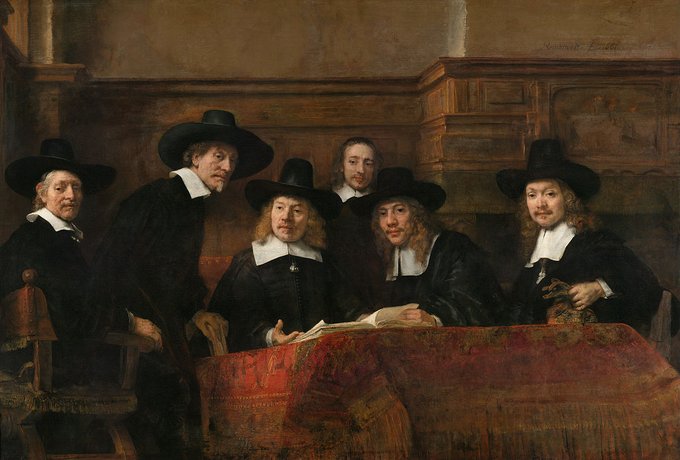
However, if one should fail, God would give unto one the law of sacrifice and provide a Saviour for one, that one might be brought back again into the presence and favour of God and partake of eternal life with God. This is the plan of redemption chosen and instituted by the Alight before human was placed on Earth. Adam and Eve were taught the law of sacrifice and were commanded to practice it by giving offerings. These included two emblems: the firstlings of the flock and the first fruits of the field. They obeyed without questioning. The effect of this law was that the best of the Earth produced, the best specimen in the flock or heard should not be sued for self, but for God. At a time in history when it was a struggle to make sure the family had food, those who sought to worship the Lord were asked to sacrifice the best part of their source of life. It was the real test of Adam and Eve’s faith, and they obeyed. “And now I speak concerning baptism. Behold, elders, priests, and teachers were baptized; and they were not baptized save they brought forth fruit meet that they were worthy of it. Neither did they receive any unto baptism save they came forth with a broken heart and a contrite spirit, and witnessed unto the church that they truly repented of all their sins. #RandolphHarris 14 of 20

“And none were received unto baptism save they took upon them the name of Christ, having a determination to serve him to the end. And after they had been received unto baptism, and were wrought upon and cleansed by the power of the Holy Ghost, they were numbered among the people of the church of Christ; and their names were taken that they might be remembered and nourished by the good word of God, to keep them in the right way, to keep them continually watchful unto prayer, relying alone upon the merits of Christ, who was the author and the finisher of their faith. And the church did meet together oft, to fast and to pray, and to speak one with another concerning the welfare of their souls. And hey did meet together oft to partake of bread and wine, in remembrance of the Lord Jesus. And they were strict to observe that there should be no iniquity among them; and whoso was found to commit iniquity, and three witnesses of the church did condemn them before the elders, and if they repented not and confessed not, their names were blotted out, and they were not numbered among the people of Christ. #RandolphHarris 15 of 20

“However, as oft as they repented and sought forgiveness, with real intent, they were forgiven. And their meetings were conducted by the church after the manner of the workings of the Spirit, and by the power of the Holy Ghost; for as the power of the Holy Ghost led them whether to preach, or to exhort, or to pray, or to supplicate, or to sing, even so it was done,” reports Moroni 6.1-9. It is especially in our families and similarly close associations that we must identify the elements of assault and withdrawal that defeat love and right relation to others. By insight and practice we must break away from them and reserve them, first by learning a calm but firm non-cooperation with those poisonous elements, and then by initiatives of goodwill and blessing in the midst of them. What we do in our meetings as Christians should be focused on enabling us to do this effectively wherever we are. Those meetings should and could be centers from which powerfully redemptive community spreads. Where to start? In various parts of the United States of America, publicly owned vehicles (police, street maintenance, schools) wear a bumper sticker that proclaims, “There is No Excuse for Domestic Violence.” It is a wonderful idea. #RandolphHarris 16 of 20

However, we need to go deeper, of course. We need to become the kind of people whom domestic violence is unthinkable and never an option. We must be transformed in such a way that our minds and bodies—our very souls—simply do not have the makeup for it. This is the work of the Christian spiritual formations. We must begin in the family. Now the slogan must be, “There is No Excuse for Assault or Withdrawal in the Home.” Do you think that would take care of intimate partner violence? Of course it would. However, the reserve is not true: merely avoiding the subject of intimate partner violence, domestic violence or assault can still leave the home a hell of cutting remarks, contempt, coldness, and withdrawal or noninvolvement. Such a hell is often found in the homes of Christians and even of Christian leaders. Frequently they seem to honestly think that such a condition is normal, and they have no knowledge of any other way. Their very theology may strengthen this tragically false outlook. If I were married, I would seek the help of my spouse in this matter. If not, then a trusted friend who is spiritually mature and not abusive. #RandolphHarris 17 of 20

I would then number my areas of need in order of importance, say: Purity, Mind, Prayer, Witness, Giving, Work, Friendship, and Leadership. Then, beginning with the first need, Purity, I would look over the suggested sub-disciplines and choose one to three things which I think would best help me improve. In doing this, I would resist the temptation to commit myself to too many disciplines. Better to succeed in a few than to assure failure by overcommitment. Perhaps, regarding the discipline of Purity I would choose to commit myself, first, to memorizing Scripture which help steel me to temptations, and second, to not watching anything sensual on TV or at the movies. Perhaps under Witness, I would make commitments to pray that God would give me someone to share Christ with and to join an interest club to meet unchurched people. After going through my life I would have perhaps twenty specific things which I could do to improve my eight weakest areas. However, before commitment to the specifics, I would look at the whole list with honest realism, asking, “Are the things which I am about to commit to really within my reach with the help of God?” #RandolphHarris 18 of 20

Perhaps, regarding the discipline of Mind, I have become so convicted that I am considering committing myself to reading the Old Testament once and the New Testament twice, plus reading The Book of Mormon. Make sure your commitments make you sweat, but also make sure that taken together they are manageable. It is better to increase your commitments as you succeed than to bite off more than you can do. Success begets success. Before setting your commitments in concrete, give yourself a week to think about them and pray over them. Seek the Holy Spirit’s guidance for other ways of personal discipline not mentioned in this essay. Ask your spouse of friend to hold you accountable for your disciplines. Even if it has to be over the phone, make sure you regularly confer and pray. Be honest about your success and failures. And be willing to take advice and make adjustments. You may have some complications, no doubt, and may not succeed at time. When this happens, wounded pride and embarrassment can make you want to take your marbles and go home. We do not like to do things which we fail. #RandolphHarris 19 of 20

However, we must realize that failure is a part of succeeding, provided we admit our failures and go at it again. Moreover, we are not under Law but grace. God is not counting our failure against us, and we are not building a treasure of merit with our success. We are simply trying to live a disciplined life which pleases our loving Father—and He understands our failures better than we understand our own children’s. When the movement in one direction has exhausted itself, there is a pause, and then a reversal directs the movement into the opposite direction. The flow of Nature follows the course indicated by the Principle of Reversion, which throws it back after a time in the opposite direction. When the point of farthest travel is reached, the forces reverse themselves. In this way, excess disciplines and even defeats itself. In this way too the Universe and all the different kinds of existence in it are kept in equilibrium. In the to-and-fro movement of human breathing, we have a kay to human development. Study it well with this assistance and you will discern a forward and backward movement, a pendulum-like swing, here too. Everything in the Universe is subject to a pendulum-like movement. It shuttles to and from with a coming-to-be and a ceasing-to-be effect. #RandolphHarris 20 of 20

Winchester Mystery House

Sarah Winchester had multiple rooms dedicated to plants and flowers. This room, her South Conservatory, contains over 200 panes of glass to allow for natural light. How would you spend a day alone in this room?

Explore the house from the comfort of your own home!
Learn More Link in bio. winchestermysteryhouse.com

A 160-room mansion built to appease the spirits who died at the hands of the Winchester Rifle 👻
🗝 winchestermysteryhouse.com


How Long Must I Remain in Jeopardy of Blank Amazements that Amaze No More?

The pain of leaving those you grow to love is only a prelude to an understanding of yourself and others. Finding out what your real desires and characteristics are, and being able to live in a way that expresses them is how one finds one’s identity. One learns to be authentic, to be honest in the sense of allowing one’s behaviour and one’s speech to be the true and spontaneous expression of one’s inner feelings. Survey of efforts at self-analysis, self-therapy and self-growth uncovered that dreams are psychological symbols; peak, spiritual and psychedelic experience; archaic and prerational cognition. Recovery of the preconscious. That is why it is important to become an expert on one’s self. Think of yourself as a collaborator in an enterprise in which one wants to learn as much as one can learn so that one can pass this on to other people. The goal of therapy and self-discovery is the recovery of experiences—in particular, the recovery of feelings, emotions, subtle impulses and inner voices. They are believed to be the essential part of human nature and yet are so easily forgotten, denied or suppressed in the course of socialization. To be experientially alive means to renew a contact with our essential nature, and the first step in that direction is to pay greater attention to the concrete, pre-abstract, preverbal and the unconscious. #RandolphHarris 1 of 23

There are two aspects of the unconscious. The unconscious is said to be the seat of drives and needs—especially irrational needs—whereas the preconscious has more to do with the ways of sensing (id est, primary process cognition). It has often been said that a map is not a territory and a label (words and concepts) must not be confused with the reality it stands for. However, if we can use the map in the exploration of an external environment, why cannot we use words and concepts for the discovery of inner space? We find that thoughts, feelings, and affects are alive in us which would never have believed possible. Naturally, possibilities of this sort seem utterly fantastic to anyone who had not experienced them oneself, for a normal person “knows what one thinks.” Such an immature attitude on the part of the “normal person” is simply the rule, so that no one without experience in this field can be expected to understand the real nature of their being. With these reflections one gets into an entirely new World of psychological experience, provided of course that one succeeds in realizing it in practice. Those who do succeed can hardly fail to be impressed by all that the ego does not know and never has known. #RandolphHarris 2 of 23

This increase in self-knowledge is still very rare nowadays and is usually paid for in advance with a neurosis, if not something worse. The tension that arises from lack of self-understanding is so profound that it can be harmless until it is confronted in the conscious mind in personified form and behaves rather like systems split off from the personality, or like part souls. The most important tasks of psychic hygiene is to pay continual attention to the symptomatology of unconscious contents and processes, for the good reason that the conscious mind is always in danger of becoming one-sided, of keeping to well-worn paths and getting stuck in blind alleys. The complementary and compensating function of the unconscious ensures that these dangers, which are especially great in neurosis, can in some measure be avoided. It is only under ideal conditions, when life is still simple and unconscious enough to follow the serpentine path of instinct without hesitation or misgiving, that the compensation works with entire success. The more civilized, the more unconscious and complicated living conditions and the influence of one’s environment are so strong that they drown the quiet voice of nature. #RandolphHarris 3 of 23

Opinions, belief, theories, and collective tendencies appear in its stead and back up all the aberration of the conscious mind. Deliberate attention should then be given to the unconscious so that the compensation can set work. Hence it is especially important to picture the archetypes of the unconscious not as a rushing phantasmagoria of fugitive images but as constant, autonomous factors, which they indeed are. The archetypes are universal symbols such as The Great Mother (a mother goddess who is a personification of the natural World), the Wise Old Man (a profound philosopher distinguished for wisdom and sound judgment), the Shadow (everything of which a person is not fully conscious of, the unknown side), the Tree of Life (representing sacred life, religion, spirituality, the divine), the Tower (an extension of consciousness achieved in maturity), and Water (valley of the spirit). This is why education is a lifelong process. There is evidence that the materials we learn and insight we gain are not likely to dissipate easily, since participation in gaining lifelong knowledge involves a change in attitude, beliefs, values, and even a radical change in the fundamental outlook on life. The goal of education is to refocus itself on the joy of personal discovery, the sense of awe and mystery in life. #RandolphHarris 4 of 23

When education regains an accurate objective, the process of learning can then become as meaningful and exhilarating as those moments wen we are having peak-experiences. Do you remember how exciting it was as a kid in elementary when at the beginning of the school year, the teacher handed out those big, colourful, glossy books. How they made you feel excited and curious to know what was inside. Well, that is how learning is supposed to be for adults also. Many of those authors are writing as communication to future generations. It is an expression of love for them, giving them the tools required to improve their lives and the World. In effect, the textbooks are affectionate notes, bits of counsel, lessons others have learned that might help us. Imaginative activity is joined with belief of that which is to come. Take the case of two images, one involving the idea that humans will cause their own destruction and the other the idea that Zeus hurled thunderbolts when he was displeased with human’s doings. Both images, one purely verbal, the other pictorial, are due to the power of imagination. However, does the pictorial image more readily secure or enhance belief than the verbal image? If it does, what property or feature of it is responsible? #RandolphHarris 5 of 23

The phenomenon is referred to as the power and act imagination intensive, and is also called by a more intriguing name, Fascination. Belief in the imagination intensive is rational because there is an observed phenomenon and these participate in the power of things in fact. According, those effects which are wrought by the percussion of the sense, and by things in fact, are produced likewise in some degree by the imagination. The image of a man eating a sour pickle may be just as effective in setting one’s teeth on edge as does the act of eating the pickle itself. The effect is due not only to the figure but to the force and intensity of it. This is very close to an ideo-motor theory of voluntary movement and to the role imagination plays in it. Indeed, the imagination is as it were the director and driver of this motion [voluntary motion], insomuch that when the image which is the object of the motion is withdrawn the motion itself is immediately interrupted and stopped (as in walking, if you begin to think eagerly and fixedly of something else, you immediately stand still). Again, stamping, and bending of the fist, are caused by an imagination of the act of revenge. If the image thus affects action, why should it not be a belief? And would not a striking feature of the experience be responsible for its impact? Indeed it would. #RandolphHarris 6 of 23

Force or intensity are recognized as a special property or dimension of the image and this is nowhere more evident than when we talk of strengthening or exalting or fortifying the imagination. To strengthen the imagination is not to help in the making of images but to increase the effectiveness of them. Authority, for example, will fortify an image, whether verbal or pictorial, but it will do nothing to produce the image. If a person believes that a ring or charm will bring one good luck, one may hold to that belief—and act upon it—because of one’s faith in the art of magic, or a practitioner thereof, not because of experience or of logic. Authority carries weight, as it were, and impart weight. Various kinds of objects enhance imagery in the same way, and one can form a list of them drawn from natural magic. Rituals and ceremonies are not only imageful but they carry the authority of their sources. Scriptural words have the authority of God. Words of similitude—that is, pictorial images produced through words—are stronger than verbalizations without pictures. There is another quality of the image, possibly associated with intensity and certainly contributing to the strength of imagery. It is called a binding or limiting effect. #RandolphHarris 7 of 23

When speculating about the ways of strengthening the memory, we find in the art of memory, that images visible work better than other conceits; as if you would remember the word philosophy, you shall more surely do it by imagining that such a human (for humans are best places) is reading upon Aristotle’s Physics; than if you could imagine one to say, I will go study philosophy. The reasons are two: the more lustrous the imagination is, it filleth and fixeth the better, and there is a binding of thoughts. One has to aim to prepare the way and clear the ground, and one would uncover directions and hints for systematic and experimental investigation into the phenomenon of the imagination. If serious study undertaken the chief problem would be that of disentangling a maze of cause and effect. It would be proper to focus on two matters: the effects of imagery on the imaginant oneself, and the effect of one human’s imagery on another. However, the whole enterprise has been confounded and confused by those who merely desire to exploit it for the end of magic, witchcraft, myth and mystery, dreams and visions. #RandolphHarris 8 of 23

If they would, three established studies could make contributions, for those sciences which have had been intelligence and confederacy with the imagination of humans than with their reason, are three in number: Astrology, Natural Magic, and Alchemy; of which sciences the ends or pretenses are noble. The imagination may become hyperactive in eloquence. It is no small dominion which imagination holds in persuasions that are wrought by eloquence; for when by arts of speech human’s minds are soothed, inflamed, and carried hither and hither, it is all done by stimulating the imagination till it becomes ungovernable, and not only sets reason at nought, but offers violence to it, partly by blinding, partly be incensing it. Such effects may be due in part to the agitation of the spirit or of the affections. There is no doubting that both imagination and vehement affection work greatly upon the body of the imaginant. Emissions of the spirits and their affects is connected to the operations of the spirits of the mind of humans upon other spirit. Imagination may be the instigator of both spirit activity and emotional behaviour. Such a monstrous imagination was attributed to the school of Pythagoras for it was cultivated by Platonists, and made the basis of Paracelsian magic that exalting the imagination with the power of miracle-working faith. #RandolphHarris 9 of 23

If there be communication between the spirit of the World and the spirit of humans, it is probably directly from spirit to spirit. An imaginant can be primarily influencing oneself: If a person carrying a planet’s seal, or a ring, or some part of a beast, believing strongly that it will help one to obtain more active and industrious, and again more confident and persisting than one would otherwise be. Imagination is the power of representing thought. It is the power of reproducing and creating images, verbal, and pictorial, from the products of sensory experience and the products of the understanding and reason. Its images have a kind of force or strength that can stir the human spirit and rouse the affections. By and large, the imagination serves rational life. It illuminates and illustrates abstract thought in much the same way it lights up divine spirit and grace in moments of revelation and inspiration. If understanding and reason may be said to form experience, imagination may be said to give it shape. “If this World were mine, I’d make you a king with wealth untold, you could have anything. If this World were mine, I’d give you each day so sunny and blue. If you wanted the moonlight, I’d give you that too. If this World were mine, I’d give you anything.” #RandolphHarris 10 of 23

The lyrics above are from a duet by Luther Vandross and Cheryl Lynn called If this World were Mine. They are singing a beautiful ballot and used imagery to express how in love they are with each other. The imagery is more powerful than say, “I love you,” because one had to put their thought and heart into those eloquent lyrics and they are more likely to have much more of an impact because it causes the imagination to ponder how much one is loved. Reason and imagination join in creative activity that bears the marks of both faculties, reason rendering the product plausible, imagination rendering it sensible. Together they give rise to the fitting and the appropriate. Yet in their creativity, neither reason nor imagination works independently. Imagination is not merely processing the work of reason; it is not translating. Rather, there is a sort of transmutation, perhaps transtantiation, going on between them. The colour of imagination and the colour of reason are present, but one sees neither distinctly; they are blended in any creative product that humans judge to be fitting and appropriate. In rhetorical and poetical creativity, as distinguished from scientific creativity, the imagination is responsible for, is the immediate cause of, that quality of argument, example, and style that we label “appropriateness.” #RandolphHarris 11 of 23

Imagination always has something to work with, whether the sayable simply made the work of understanding and reason accessible to sense or was the product of reason and imagination’s creating something appropriate. What should be distrusted and feared are the imaginations of bad people, practitioners of artificial magic and alchemy. The content aspect of a sign or statement is due to the imagination and the formal aspect of the understanding. The denial of equal liberty, for example, can be defended only if it is necessary to raise the level of civilization so that in due course these freedoms can be enjoyed. The maximin rule uses the imagination, for a solution to the problem of social justice, tells us to rank alternatives by their worst possible outcomes: we are to adopt the alterative the worst outcome of which is the superior to the worst outcomes of the others. The original position is designed to be a fair and impartial point of view that is to be adopted in our reasoning about fundamental principles of justice. The persons in the original position do not, of course, assume that their initial place in society is decided by a malevolent opponent. However, if parties were forced to protect themselves against such a contingency, the maximum rule explains the sense in which this conception is the maximin solution. #RandolphHarris 12 of 23

In business and life, decisions have to be made and they must be rational. The maximin rule is not, in general, a suitable guide for choices under uncertainty. However, it is attractive in situations marked by certain special features. The aim, then, is to show that a good case can be made for the two principles based on the fact that the original position manifests these features to the fullest possible degree, carrying them to the limit, so to speak. A gain-and-loss table represents the gains and losses for a situation which is not a game of strategy. There us no one playing against the person making the decision; instead one is faced with several possible circumstances which may or may not obtain. Which circumstances happen to exist does not depend upon what the person choosing decides or whether one announces one’s moves in advance. The numbers in the gain-and-loss table below are monetary values (in millions of dollars) in comparison with some initial situation. The gain (g) depends upon the individual’s decision (d) and the circumstances (c). Thus g = f (d, c). Assuming that there are three possible decisions and three possible circumstances, we might have this gain-and-loss table. #RandolphHarris 13 of 23


#RandolphHarris 14 of 23

The maximin rule requires that we make the third decision. For in the case the worst that can happen is that one gains $5,000,000.00, which is better than the worse for the other actions. If we adopt one of these, we may lose either $8,000,000.00 or $7,000,000.00. Thus, the choice of d3 maximizes f (d, c) for that value of c, which for a given d, minimizes f. The terms “maximin” means maximum minimorum; and the rule directs our attention to the worst that can happen under any proposed course of action, and to decide in the light of that. Now there appear to be three chief features of situations that give plausibility to this unusual rule. First, since the rule takes no account of the likelihoods of the possible circumstances, there must be some reason for sharply discounting estimates of these probabilities. Offhand, the most natural rule of choice would seem to be to compute the expectation of monetary gain for each decision and then to adopt the course of action with the highest prospect. However, it must be, for example, that the situation is one in which a knowledge of likelihoods is impossible, or at best extremely insecure. In this case it is unreasonable not to be skeptical or probabilistic calculations unless there is no other way out, particularly if the decision is a fundamental one that needs to be justified to others. #RandolphHarris 15 of 23

The second feature that suggest the maximin rule is the following: the person choosing has a conception of the good such that one cares very little, if anything, for what one might gain above the minimum stipend that one can, in fact, be sure of by following the maximin rule. It is not worthwhile for one to take a chance for the sake of a further advantage, especially when it may turn out that one loses much that is important to one. This last provision brings in the third feature, namely, that the rejected alternatives have outcomes that one can hardly accept. The situation involves grave risks. Of course these feature work most effectively in combination. A maxim, a rule of thumb comes into its own in special circumstances. Its application depends upon the qualitative structure of the possible gain and losses in relation to one’s conception of the good, al this against a background in which it is reasonable to discount conjectural estimates of likelihoods. The parties have no basis for determining the probable nature of their society, or their place in it. Thus they have strong reasons for being wary of probability calculations is any other course is open to them. They must also take into account that fact that their choice of principles should seem reasonable to others, in particular their descendants, whose rights will be deeply affected by it. #RandolphHarris 16 of 23

Therefore, the objective is to limit loss and maximize gain, not gamble because the parties are unable to conjecture, they cannot say much about what the possible circumstances are, much less enumerate them and foresee the outcome of each alternative available. Finally, the third feature holds if we can assume that other conceptions of justice may lead to institutions that the parties would find intolerable. For example, it has sometimes been held that under some condition the utility principle justifies, if not slavery or serfdom, at any rate serious infraction of liberty for the sake of greater social benefit. We need not consider here the truth of this claim, or the likelihood that the requisite conditions obtain. For the moment, this contention is only to illustrate the way in which conceptions of justice may allow for outcomes which the parties may not be able to accept. And having the ready alterative of the two principles of justice which secure a satisfactory minimum, it seems unwise, if not irrational, for them to take a chance that these outcomes are not realized. We must make a distinction between a doctrinal principle and the human personality who serves as the vehicle for such principles. #RandolphHarris 17 of 23

The principles will live when the personality is dead. Our absolute rationality and loyalty, therefore, must be bestowed on what is immortal, not on what is mortal, but we still have to make the most reasonable decisions while we are alive. The human disseminator of the principle should receive only a conditional allegiance. The pure Idea may incarnate itself in the human but only may sully, betray, or pollute it with one’s human error, prejudice, or selfishness. The embodies master, being human, will have some or other of the human imperfections. Sooner or later the disciple will note and become critical of them or disturbed by them. However, the inner Light is perfect and will rouse only admiration, devotion, and satisfaction. “And now it came to pass that when Jesus has spoken these words he turned again to the multitude, and did open his mouth unto them again, saying: Verily, verily, I say unto you, Judge not, that ye be not judged. For with what judgment ye judge, ye shall be judged; and with what measure ye mete, it shall be measured to you again. And why beholdest thou the mote that is in thy brother’s eye, but considerest not the beam that is in thine own eye? #RandolphHarris 18 of 23

“Or how wilt thou say to thy brother: Let me pull the mote out of thine eye—and behold, a beam is in thine own eye? Thou hypocrite, first cast the beam out of thine own eye; and then shalt thou see clearly to cast the mote of out thy brother’s eye. Give not that which is holy unto the dogs, neither cast ye your pearls before swine, lest they trample them under their feet, and turn again and rend you. Ask, and it shall be given unto you; seek, and ye shall find; knock, and it shall be opened unto you. For every one that asketh, receiveth; and one that seeketh, findeth; and to one that knocketh, it shall be opened. Or what human is there of you, who, if your child ask bread, will give one a stone? Or what if your child ask a fish, will one give one a serpent? If ye then, being evil, know how to give good gifts unto your children, how much more shall your Father who is in Heaven give good things to them that ask him? Therefore, all things whatsoever ye would that humans should do to you, do ye even so to them, for this is the law and the prophets. Enter ye in at the strait gate; for wide is the gate, and broad is the way, which leadeth to destruction, and many there by who go in threat; because strait is the gate, and narrow is the way, which leadeth unto life, and few there be that find it. #RandolphHarris 19 of 23

“Beware of false prophets, who come to you in sheep’s clothing, but inwardly they are ravening wolves. Ye shall know them by their fruits. Do humans gather grapes of thorns, of figs of thistles? Even so every good tree bringeth forth evil fruit. A good tree cannot bring forth evil fruit, neither a corrupt tree bring forth good fruit. Every tree that bringeth not forth good fruit is hewn down, and cast into the fire. Wherefore, by their fruits ye shall know them. Not every one that saith unto me, Lord, Lord, shall enter into the kingdom of Heaven; but one that doeth the will of my Father who is in Heaven. Many will say to me in that day: Lord, Lord, have we not prophesied in thy name, and in thy name have cast out devils, and in thy name done many wonderful works? And then will I profess unto them; I never knew you; depart from me, ye that work iniquity. Therefore, whoso heareth these sayings of mine and doeth them, I will liken one unto a wise human, who built one’s house upon a rock—and the rain descended, and the floods came, and the winds blew, and beat upon that house; and it fell not, for it was founded upon a rock. #RandolphHarris 20 of 23

And every one that heareth these sayings of mine and doeth them shall be likened unto a foolish human, who built one’s house upon the sand—and the rain descended, and the floods came, and the winds blew, and beat upon that house; and it fell, and great was the fall of it,” reports 3 Nephi 14.1-27. Now we ask, What does a will or heart look like that has been transformed into Christlikeness? How is it to be characterized? Jesus said himself—and of course he is always the pattern—“One who sent Me is with Me; He has not left Me alone, for I always do the things that are pleasing to Him,” reports John 8.29. And Paul has this to say: “I haven been crucified with Christ; and it is no longer I who live, but Christ lives in me; and the life which I now live in the flesh I live by the fait of the Son of God, who loved me, and delivered Himself up for me,” reports Galatians 2.20. The only haven of safety is to have no other will, no other wisdom, than to follow the Lord wherever he leads. Let this, then, be the first step, to abandon ourselves, and devote the whole energy of our minds to the service of God. So we have the answers to our question: Single-minded and joyous devotion to God and his will, to what God wants for us—and to service to him and to others because of him—is what the will transformed into Christlikeness looks like. #RandolphHarris 21 of 23

That is the outcome of Christian spiritual formation with reference to the will, heart, or spirit. And when it has become the governing response of every dimension of our being, this outcome becomes our character. Then we can truly said to have “put on Christ.” However, how far this is from the usual human will and character we hardly need say! Instead of being simple and transparent through a constant and coherent devotion to God, the usual human will is a place of chaotic duplicity and confusion if not darkness, because it is the playing field of pride and fear and lack of confidence in God, shrouded in layer upon layer of destructive habits. Your blood is my blood, flowing out of past, through me, to the future. Through my actions, you live. Please guide me, then, in the decisions I face today, making clear to me the safe path between obstacles and keeping me from false steps along the way. Please grant lasting peace unto Israel Thy people, for Thou art the Sovereign Lord of peace; and may it be good in Thy sight to bless Thy people Israel at all times with Thy peace. Blessed art Thou, O Lord, who blesses Thy people Israel with peace. O Lord, please guard my tongue from evil and my lips from speaking guile, and to those who slander me, let me give no heed. #RandolphHarris 22 of 23

May my soul be humble and forgiving unto all. Please open Thou my heart, O Lord, unto Thy sacred Law, that Thy statutes I may know and all Thy truths pursue. Please bring to naught designs of those who seek to do me ill; speedily defect their aims and thwart their purposes for Thine own sake, for Thine own power, for Thy holiness and Law. That Thy loved ones be delivered, please answer us, O Lord, and save with Thy redeeming power. May the words of my mouth and the meditation of my heart be acceptable unto Thee, O Lord, my Rock and my Redeemer. Thou who establishest peace in the Heavens, please grant peace unto us and unto all Israel. Amen. May it be Thy will, O Lord our God and God of our Fathers, to grant our portion in Thy Torah, and may the Temple be rebuilt in our day. There we will serve Thee with awe as in the days of old. After the Sun has risen, I am here to pray long hours. While the day began, I was still asleep, still walking in the land of dreams. Know this, bright Sun, that though I slept, you were still in my heart. Now, when I am finally awake, I take up my daily responsibilities. First, though I will stand here and praise God and drink in your warmth and drink in all the light you give so freely to arm myself for the say’s struggles. #RandolphHarris 23 of 23

Cresleigh Homes

Enjoying a morning in bed at Plumas Ranch is that much better with all the natural light that streams in through the windows. ☀️

To schedule a private viewing of any of our model homes at Plumas Ranch, contact us at 530-870-8748 or PlumasRanch@Cresleigh.com

This modern house offers plenty of room for a delightful diversion. Inside, a large living area with an optional fireplace affords grand lounging; dining room, cozy interludes.

Memory is More Incredible than Ink for it is a Wise Father who Knows His Own Child!

The generation gap is just another way of saying that the younger generation makes overt what is covert in the older generation; the child expresses openly what the parents represses. The mass media with the use of television ( “The Most Effective Devil in America,” is telling you a vision) has flooded out local boundaries and forced the total society into a dim awareness of what it is like to live in fear. It is not so much the increase in violence that upsets middle-class Americans as the democratization of violence: the less affluent and underrepresented have become less willing to serve as specialized victims of violence from a political agenda (“legally”) and each other (illegally). The same point can be made about crimes against property, given the well-known class bias in our legal system. Since the ways in which the affluent steal from the less affluent are rarely defined as crimes (when executives of a major corporation were jailed for a few days some years ago for stealing millions of dollars from the public through antitrust violations many people were shocked that respectable humans could be treated in such a rude fashion) rising property crimes rates may only reflect an increase in the democratization of larceny, a result attributable in part to the success of the mass media in convincing the less affluent that only the possession of various products can satisfy their various social, pleasures of the flesh, and moral requirements. #RandolphHarris 1 of 25
Leaving aside these more likely to be considered violent when they have political overtones. Our nation has never known a time without serious urban riots—usually about some kind of economic or social injustice—but it was only when they began to have a political thrust and to attack business districts that the concerns about the rioting began to grow. The same relationship holds true for the college campus. It is not violence as such but its political aims that arouse concern. The same people who assail the violence of campus radicals are quite happy to regale listeners with tales of their own (apolitical) childhood pranks—pranks that would bring a jail sentence if committed today. College students on many campuses have rioted annually for generations, and the injuries and vandalism resulting from such riots have often far exceeded that produced by protests. Yet these apolitical riots have always been considered venial. The difference is that student pranks and riots in the past attacked authority but accepted it. The protests of today confront authority and question it. Thus although no violence at all may occur, those toward whom the protest is directed may feel that violence has been done to them. The disruption of ordinary daily patterns and assumptions are experienced as a kind of psychological violence. #RandolphHarris 2 of 25

Consider what happens when a defective traffic light fails to change from red to green. The line of cars grows and restlessness increases. At some point someone decides that the symbol of order is in fact in disorder and either goes through the red light or begins to honk one’s hor. As soon as one goes through, the others all follow suit. The initiator in this situation is engaging in a kind of civil disobedience. One is challenging the specific rule about red lights in terms of a broader understanding which says that the purpose of traffic laws is to regulate traffic not to disrupt it. Yet because the situation has no real political significance the incidence carries no threat or violent connotation. We live in a society in which cruelties inflicted upon humanity can be exposed in every living room through mass media or on Facebook and Twitter. We discuss and debate constantly the appearance of any instance anywhere in the World of inhumane treatment of one person by another, but we still do not always get the full story. Nonetheless, we stress that every human life, even corporations, are beings of value. We live, in short, in modern, secure, civilized World, in which a single isolated act of violence is a calamity, an outrage. #RandolphHarris 3 of 25

Yet, innocent people still have their characters and beings terminated by the most barbarous means possible and shows no qualms about it. These techniques are a bit reminiscent of the dunking stool used in earlier centuries to test potential witches: if the person was not a witch the individual would drown—if one did not drown thus proved one was a witch and one was burned to death. The energy required to avoid even the most obvious forms of exploitation by commercial enterprises in our society would not permit the individual to lead a normal active life. Like Looking-glass Country, it takes all the running one can do to stay in the same place. Powerlessness has always been the common lot of most of humankind. However, the more we attempt to solve problems through increased autonomy the more we find ourselves at the mercy of these mysterious, impersonal, and remote mechanisms that we have ourselves created. Their indifference is a reflection of our own. All societies, optimally, must allow for both change and stability since: effective adaptation to the environment requires both modification and consolidation of existing reposes; social integration depends both upon the preservation and upon the periodic dissolution of existing structural differentiation; and personal happiness rest upon both familiarity and novelty in everyday life. Every society evolves patterns for attempting to realize these mutually incompatible needs. #RandolphHarris 4 of 25

We talk of technology as the servant of humans, but it is a servant that now dominates the households, too powerful to fire, upon whom everyone is helplessly dependent. We tiptoe about and speculate upon his mood. What will be the effects of such-and-such an invention? How will it change our daily lives? We never ask, do we want this, is it worth it? (We did not ask ourselves, for example, if the major conveniences offered by social media could really offset the calamitous disruption and depersonalization of our lives that it brought about.) We simply say, “You cannot stop progress,” and shuffle back inside. We pride ourselves on being a “democracy” but we are in fact slaves. We submit to an absolute ruler who governs our state or city whose edicts and whims we never question. We watch that individual carefully, hang on to one’s every word; for technology is a harsh and capricious king, demanding prompt and absolute obedience. We laugh at the old lady who holds off the highway bulldozers with a Winchester Rifle, but we laugh because we are Uncle Toms. We try to outdo each other in singing the praises of the oppressor, although in fact the value of technology in terms of human satisfaction remains at best undemonstrated. For when evaluating its effects we always adopt the basic assumptions and perspective of technology itself, and never examine it in terms of the totality of human experience. #RandolphHarris 5 of 25

We say this or that invention is valuable because it generates other inventions—because it is a means to some other means—not because it achieves an ultimate end. We play down the “side effects” that so often become the main effects and completely negate any alleged benefits. The much-vaunted “freedom” of American life is thus an illusion, one which underlies the sense of spuriousness so many Americans feel about their basic institutions. We are free to do only what we are told, and we are “told” not by a human master but by a mechanical construction. However, how can we be the salves of technology—is not technology merely an extension of, a creation of, ourselves? This is only metaphorically true. The forces to which we submit so abjectly were not generated by ourselves but by our ancestors—what we create will in turn rule our progeny. It takes a certain amount of time for the social effects of technological change to make their appearance, by which time a generation has usually passed. Science-fiction writers have long been fascinated with the notion of being able to create material objects just by imagining them, and have built novels, stories, and films around the idea. Actually, it is merely an exaggeration of what normally takes place. Technology is materialized fantasy. We are ruled today by the material manifestations of the fantasies of previous generations. #RanolphHarris 6 of 25

We treat technology as if it were a fierce patriarch—we are deferential, submissive, and alert to its demands. Perhaps, that is why men dominate the Silicon Valley in San Jose, California USA, and in Shenzhen, a city in south China’s Guangdong province known as the “Silicon Valley of China.” (The Silicon Valley of China has gradually become a global hardware center and hub for scientific and technological advances, where skyscrapers appear commonplace and the population has surged past 13 million.) We feel spasms of hatred toward technology, and continually make fun of it but we do little to challenge the rule. People who develop technology, like Wolfgang Egger who is a World-famous Germany car designer, reports, “to have this opportunity to create something like this [an electric car] from nothing is a big challenge that I need.” That is the main reason why he joined the Chinese car manufacturer BYD three years ago. Technology has inherited the fantasy of the authoritarian father. Furthermore, since the technological environment that rules, frustrates, and manipulates us is a materialization of the wished of our forefathers, it is quite reasonable to say that technology is the authoritarian father in our society. #RandolphHarris 7 of 25

The American father can be a good-natured humble man in the home precisely because he is so ruthless toward the nonhuman environment, leveling, uprooting, filling in, building up, tearing down, blowing up, tunneling under. This ruthlessness affects his children only indirectly, as the deranged environment afflicts the eyes, ears, nose, and nervous system of the next generation. However, it affects them nonetheless. Through this impersonal intermediary we inflict our will upon our children, and punish them for our generous indulgence—our child-oriented, self-sacrificing behaviour. It I small wonder that the myth of the punitive patriarch stays alive. From this viewpoint, then, delegating to technology the role of punitive patriarch is another example of the first process we described: the tendency to avoid interpersonal conflict by compartmentalization and a false illusion of autonomy—to place impersonal mechanisms between and around people and imagine that we have created a self-governing paradise. It is a kind of savage joke in its parental form. We say: “Look, I am an easy-going, good-natured, affectionate father. I behave in a democratic manner and treat you like a person, never pulling rank. As to all those roads and wires and social media and clones and machines and bombs and complex bureaucratic institutions out there, do not concern yourself about them—this is my department.” #RandolphHarris 8 of 25

However, when the child grows up one discovers the fraud. One learns that one is a slave to his father’s unconscious and unplanned whims—that the area of withheld power was crucial. The child becomes angry and rebels, saying, “You were not what you pretended, and I cannot be what you encouraged me to be.” The child attacks “the system” and authority everywhere, trying to find the source of the deception, and using techniques that reflect one’s commitment to what one’s father deceived one into thinking one was—a person. However, by this time one has also learned the system of avoiding conflict through impersonal mechanism and is ready to inflict the same deception on one’s own children. We love and indulge our children, and would never dream of hurting them. If they are poisoned, bombed, gassed, burned, or whatever, it is surely not our fault, since we do not even know how to manipulate those objects. The danger comes from outside. Perhaps long ago we did something to deliver them into these impersonal hands, but we have forgotten, and in any case it is not our responsibility. Technology, in other words, is our plains sorcerer. Because Americans have submitted so passively to the havoc wreaked by technological change, they have had to convince themselves that their obsequiousness is right and good and appropriate. #RandolphHarris 9 of 25

Any challenge to the technological-over-social priority threatens to expose the fact that Americans has lost their adulthood and their capacity to control their environment. So long as the priority is unchallenged and unmentioned, the human surrender involved need not be confronted. However, youth is increasingly saying: “What about the people? Why have you abdicated your birthright to hardware?” It is a humiliating question, and humiliating questions tend to be answered with blows. Furthermore, the social changes wrought by technological change are so vast and shattering and we are kept so off-balance by them that the desire for independent social change (that is, change produced by human needs rather than technology) appears not as a solution and the assumption of control, but as still another disruptive force. It is like the inhabitants of an occupied country, who say to their militants, “do not fight the enemy, it will just bring more massive retaliation down upon us. Attack your own family.” The predominant feeling is that there is more change than anybody can tolerate already, so how can anyone ever consider a radical reevaluation of the whole system. I felt sure that it was just a public-relations problem that only needed a public-relations solution. #RandolphHarris 10 of 25

I do not give a damn how it is done; do whatever has to be done to stop these leaks and prevent further lies and unauthorized disclosures. I do not want excuses. I want results…whatever the cost. It became necessary for Americans to express themselves on a middle plane between vaporous idealism and self-interested practicality. The association of highbrow culture with vaporous idealism and lowbrow culture with self-interested practicality exemplified the widespread acceptance, by intellectuals as well as noneintellectuals, of the idea that devotion to the life of the mind must somehow be opposed to a decent regard for the exigencies of everyday life. The distinctive feature of American middlebrow culture was its embodiment of the old civic credo that anyone willing to invest time and energy in self-education might better oneself. Many uneducated people cherished middlebrow values: the millions of sets of encyclopedias sold door to door from the 1920s well into the 1980s were often purchased through an installment plan by parents who had never owned a book but were willing to sacrifice to provide their children with information about the World that had been absent from their own upbringing. #RandolphHarris 11 of 25

Remnants of earnest middlebrows striving today among various communities, but the larger edifice of middlebrow culture, which once encompassed Americans of many social classes as well as ethnic and racial backgrounds, has collapsed. The disintegration and denigration of the middlebrow are closely linked to the political and class polarization that distinguishes the current wave of anti-intellectualism from the popular suspicion of highbrows and eggheads that have always, to a greater or lesser degree, been a part of the American psyche. What has been lost is an alterative to mass popular culture, imbibed unconsciously and effortlessly through the audio and video portals that surround us all. What has been lost is the culture of effort. Middlebrow culture was, above all, a reading culture. In the 1950s, to be raised in a middlebrow family meant that there were books, magazines, newspapers in the house and that everyone old enough to read had a library card. Some schools in Sacramento, California would even pause for fifteen minutes a day for reading time, where students could read whatever they wanted, as long as it was a book, it was appropriate, and educational. If much of the reading material was scorned by highbrow intellectuals, the books certainly provided ample room for growth. #RandolphHarris 12 of 25

People had books clubs, much like Reese Witherspoon has popularized, where people select a book each month, read it and talk about. And people who live in segregated communities were taught to learn to appreciate masterpieces like The Age of Innocence by Edith Wharton, On the Road by Jack Kerouac, A Tree Grows in Brooklyn by Betty Smith, The Awakening by Kate Chopin, Atlas Shrugged by Ayn Rand, and many more, and to make sure that no one could segregate one’s mind. Still, 25 percent of American high school biology teachers still believe that dinosaurs and humans coexisted. American ideal of self-education is a distinct era of self-help, and people placed far more emphasis on improving personality and public image and the mind like never before. However, “civilized” is still defined by the gatekeeps of greatness on the installment plan. Many people want to make it into the “Fat Man’s” class which was dubbed that for the size of their pocketbooks. We want everything to be cheap and high quality, but do not look at the value and utility it provides, and then complain about how little we get paid. Our parents, grandparents, and maybe for some of you, great grandparents had it a lot harder than we do today. We hear about how inexpensive everything used to be, but do not take inflation into account. #RandolphHarris 13 of 25

In 1952, a great book cost $249.95, in 2020 dollars that is $2,470.21. Imagine what a luxury a book was back then. In fact, reading books was a status symbol because the proved to the World that one was the sort of person who did read and who could afford the price of a book. People like Reese Witherspoon is doing an excellent job trying to get Americans back into reading books. When a celebrity is seen doing anything, it becomes a trend and what could be a more productive trend than getting people to expand their minds. The possession of certain kinds of knowledge, and the ability to recalls facts before an audience of millions, could provide both fame and fortune. When being smart become a trend, imagine how much better off our society will be, how much productive our children will be. They will learn the root of what it takes to have fun and know they have to study and work hard to earn the money it takes to have fun. Because, as one gets older, fun gets more expensive. Getting a day off from school and watching TV is no longer fun, but having the ability to legally buy new cars and houses and take vacations and decorate your own private home is fun. Having privacy and dignity in your own environment is fun. Being able to relocate or explore the World when you want to is fun. #RandolphHarris 14 of 25

An aspect of the Christian work ethic is enthusiasm. “Whatever you do,” Paul told the Colossians, “work at it with all your heart, as working for the Lord, not for humans,” reports Colossians 3.23. To the Romans Pail admonished, “Never be lacking in seal, but keep your spiritual fervor, serving the Lord,” reports Romans 12.11. It is natural—actually quite easy—to be enthusiastic if your work is prominent, but less natural the more hidden it is, as the conductor of a great symphony orchestra once reveled when asked which was the most difficult instrument to play. “Second violin,” he answered. “We can get plenty of first violinists. However, to get someone who will play second violin with enthusiasm—that is a problem!” And so it is. However, actually, doing one’s work with enthusiasm, even if hidden, plays for an audience far greater than that of the most famous symphony orchestras or World champion sports teams! If we could be really see this, our enthusiasm would never flag. However, it can still be hard to reason with some people. Their very mind has been taken over by one or more feelings and is made to defend and serve those feelings at all costs. It is a fearful condition from which some people never escape. We have noted how thoughts generate feelings. If we allow certain negative thoughts to obsess us, then their associated feelings can enslave and blind us—that is, take over our ability to think and perceive. #RandolphHarris 15 of 25

As humans, we can unknowingly become slaves to technology, or feelings and so man other things. Here, for example, is a woman (it could have just as well have been a man) who has taken in the thought that she has been treated unfairly for years in her marriage and her job. Rather than sensibly addressing the circumstances or just turning her mind away from this thought, she receives it and broods over it—for years—developing a tremendous sense of injustice and outrage, which she also welcomes and cultivates with the assistance of sympathetic friends. The “root of bitterness” (Hebrews 12.15) gradually spreads over her whole personality, seeping deeply into her body and soul. It becomes something you can see in her bodily motions and actions and hear oozing through the language she uses. It affects her capacity to see what is actually going on around her, to realize what she is actually doing, and to think thoroughly and consistently. She is in the prison of resentment, though she thinks she is perhaps for the first time acting freely. Beyond the individual level, poisonous emotions and sensations often take over entire social groups, blinding them and impelling them on terrible courses of destruction. This is nearly always what has happened in cases where repression of ethnic groups or genocide occurs. Thus, to the onlooker the participants (the tyrants) seem to be deaf, blind, and insane—which, in a sense, they are. They, too, are imprisoned. #RandolphHarris 16 of 25

Feelings can be successfully reasoned with, can be corrected by reality, only in those (whether oneself or others) who have the habit and are given the grace of listening to reason even when they are expressing violent feelings or are in the grip of them. A feeling of sufficient strength may blot out all else and will invariably do so in one who has not trained oneself, or been trained, to identify, to be critical of, and to have some distance from one’s own feelings. Combined with a sense of righteousness, strong feeling becomes impervious to fact and reason. I beseech ye brethren, by the bowels of Christ, believe ye may be wrong! One’s feelings of righteousness does not mean one is right and actually should alert one to be very cautious and humble. Those who are wise will, accordingly, never allow themselves, if they can help it, to get in a position where they feel too deeply about any human matter. They will never willingly choose to allow feeling to govern them. They will carefully keep the pathway open to the house of reason and go there regularly to listen. If we are to appropriate God’s grace, we must humble ourselves, we must submit to His providential working in our lives. To do this we must first see His mighty hand behind all the immediate causes of our adversities and heartaches. #RandolphHarris 17 of 25

We must believe the biblical teaching that God is in sovereign control of all our circumstances, and whatever or whoever is the immediate cause of our circumstances, God is behind them all. “And it came to pass that he wrote again to the governor of the land, who was Pahoran, and these are the words which he wrote saying: Behold, I direct mine epistle to Pahoran, in the city of Zarahemla, who is the chief judge and the governor over the land, and also to all those who have been chosen by this people to govern and manage the affairs of this war. For behold, I have somewhat to say unto them by the way of condemnation; for behold, ye yourselves know that we have been appointed to gather together humans, and arm them with swords, and with cimeters, and all manner of weapons of war of every kind, and send forth against the Lamanites, in whatsoever part they should come into out land. And now behold, I say unto you that myself, and also my men, and also Helaman and his men, have suffered exceedingly great sufferings; yea, even hunger, thirst, and fatigue, and all manner of afflictions of every kind. However, behold, were this all we had suffered we would not murmur nor complain. #RandolphHarris 18 of 25

“However, behold, great has been the slaughter among our people; yea, thousands have fallen by the sword, while it might have otherwise been if ye had rendered unto our armies sufficient strength and succor for them. Yea, great has been your neglect towards us. And now behold, we desire to know the cause of this exceedingly great neglect; yea, we desire to know the cause of your thoughtless state. Can you think to sit upon your thrones in a state of thoughtless stupor, while your enemies are spreading the work of death around you? Yea, while they are murdering thousands of your brethren—yea, even they who have looked up to you for protection, yea, have placed you in a situation that ye might have sent armies unto them, to have strengthened them, and have saved thousands of them from falling by the sword. However, behold, this is not all—ye have withheld your provisions from them, insomuch that many have fought and bled out their lives because of their great desires which they had for the welfare of this people; yea, and this they have done when they were abut to perish with hunger, because of your exceedingly great neglect towards them. And now, my beloved brethren—for ye ought to have stirred yourselves more diligently for the welfare and the freedom of this people. #RandolphHarris 19 of 25

“However, behold, ye have neglected them insomuch that the blood of thousands shall come upon your heads for vengeance; yea, for known unto God were all their cries, and all their sufferings—behold, could ye suppose that ye could sit upon your thrones, and because of the exceeding goodness of God ye could do nothing and he would deliver you? Behold, if ye have supposed this ye have supposed in vain. Do ye suppose this ye have supposed in vain. Do ye suppose that, because so many of your brethren have been killed it is because of their wickedness? I say unto you, if ye have supposed in vain; for I say unto you, there are many who have fallen by the sword; and behold it is to your condemnation; for the Lord suffereth the righteous to be slain that his justice and judgment may come upon the wicked; therefore ye need not suppose that the righteous are lost because they are slain; but behold, they do enter into the rest of the Lord their God. And now behold, I say unto you, I fear exceedingly that the judgments of God will come upon this people, because of their exceeding slothfulness, yea, even the slothfulness of our government, and their exceedingly great neglect towards their brethren, yea, towards those who have been slain. #RandolphHarris 20 of 25

“For were it not for the wickedness which first commenced at our hear, we could have withstood our enemies that they could have withstood our enemies that they could have gained no power over us. Yea, had it not been for the war which broken out among ourselves; yea, were it not for these king-men, who caused so much bloodshed among ourselves; yea, at the time we were contending among ourselves, if we had united our strength as we hitherto have done; yea, had it not been for the desire of power and authority which those king-men had over us; had they been true to the cause of our freedom, and untied with us, and gone forth against our enemies, instead of taking up their swords against us, which was the cause of so much bloodshed among ourselves; yea, if we had gone forth against them in the strength of the Lord, we should have dispersed our enemies, for it would have been done, according to the fulfilling of his word. However, behold, now the Lamanites are coming upon us, taking possession of our lands, and they are murdering our people with the sword, yea, our women and our children, and also carrying them away captive, causing them that they should suffer all manner of afflictions, and this because of the great wickedness of those who are seeking for power and authority, yea, even those king-men. #RandolphHarris 21 of 25

However, why should I say much concerning this matter? For we know not but what ye yourselves are seeking for authority. We know not but what ye are also traitors to your country. Or is it that ye have neglected us because ye are in the heart of our country and ye are surrounded by security, that ye do not cause food to be sent unto us, and also humans to strengthen our armies? Have ye forgotten in the commandments of the Lord your God? Yea, have ye forgotten the captivity of our fathers? Have ye forgotten the many times we have been delivered out of the hands of our enemies? Or do ye supposed that the Lord will still deliver us, while we sit upon our thrones and do not make us of the means which the Lord has provided for us? Yea, will ye sit in idleness while ye are surrounded with thousands of those, yea, and tens of thousands, who do also sit in idleness, while there are thousands round about in the borders of the land who are falling by the sword, yea, wounded and bleeding? Do ye supposed that God will look upon you as guiltless while ye sit still and behold these things? Behold I say unto you, Nay. Now I would that ye should remember that God has said that the inward vessel shall be cleansed first, and then shall the outer vessel be cleansed also. #RandolphHarris 22 of 25

“And now, expect ye do repent of that which ye have done, and begin to be up and doing, and send forth food and humans unto us, and also unto Helaman, that he may support those parts of our country which he had regained, and that we may also recover the remainder of our possession in these parts, behold it will be expedient that we contend no more with the Lamanites until we have first cleansed our inward vessel, yea, even the great head of our government. And expect ye grant mine epistle, and come out and show unto me a true spirit of freedom, and stive to strengthen and fortify our armies, and great unto them food a part of my freemen to maintain this part of our land, and I will leave the strength and the blessings of God upon them, that none other power can operate against them—and this because of their exceeding faith, and their patience in their tribulation—and I will come unto you, and if there be any among you that has a desire for freedom, yes, if there be even a spark of freedom remaining, behold I will stir up insurrections among you, even until those who have desires to usurp power and authority shall become extinct. Yea, behold I do not fear your power nor your authority, but it is my God whom I fear; and it is according to his commandments that I do take my sword to defend the cause of my country, and it is because of your iniquity that we have suffered much loss. #RandolphHarris 23 of 25

“Behold, I wait for assistance from your; and except ye do administer unto our relief, behold, I come unto you, even in the land of Zarahemla, and smite you with the sword, insomuch that ye can have no more power to impede the progress of this people in the cause of our freedom. For behold, the Lord will not suffer that ye shall live and wax strong in your iniquities to destroy his righteous people. Behold, can you suppose that the Lord will spare you and come out in judgment against the Lamanites, when it is the tradition of their fathers that has caused their hatred, yea, and it has been redoubled by those who have dissented from us, while your iniquity is for the cause of your love of glory and the vain things of the World? Ye know that ye do transgress the laws of God, and ye do know that ye do trample them under your feet. Behold, the Lord saith unto me: If those whom ye have appointed your governors do not repent of their sins and iniquities, ye shall go up to battle against them. And now behold, I, Moroni, am constrained, according to the covenant which I have made to keep the commandments of my God; therefore I would that ye should adhere to the word of God, and send speedily unto me of your provisions and of your men, and also to Helaman. #RandolphHarris 24 of 25

“And behold, if ye will not do this I come unto you speedily; for behold, God will not suffer that we should perish with hunger; therefore he will give unto us of your food, even if it must be by the sword. Now see that ye fulfill the word of God. Behold, I am Moroni, your chief captain. I seek not for power, but to pull it down. I seek not for honour of the World, but for the glory of my God, and the freedom and welfare of my country. And thus I close mine epistle,” reports Alma 60.1-36. A lion protecting His young, you rage when aroused. Nothing stands before You, no troubles can resist You, no enemies defeat You. A roaring in the distance announces your arrival, scattering the dealers of cares. You shake the Earth beneath their feet, upsetting all the plans. “Therefore shall ye lay up these My words in your heart and in your soul; and ye shall bind them for a sign upon your hand, and they shall be for frontless between your eyes. And ye shall teach them to your children, talking of them, when thou sittest in thy house, and when thou walkest by the way, and when thou liest down, and when thou risest up. And thou shalt write them upon the doorpost of thy house, and upon thy gates; that your days may be multiplied, and the days of your children, upon the land which the Lord promised unto your fathers to give them, as the days of the Heavens above the Earth,” reports Deuteronomy 11.16-21. #RandolphHarris 25 of 25

Winchester Mystery House

▪️ 24,000 square feet
▪️ 10,000 windows
▪️ 2,000 doors
▪️ 160 rooms
▪️ 52 skylights
▪️ 47 stairways and fireplaces
▪️ 17 chimneys
▪️ 13 bathrooms
▪️ 6 kitchens
▪️ Priceless

Buy Tickets Link in bio. https://www.winchestermysteryhouse.com/
Visit Virtually Link in bio. https://www.winchestermysteryhouse.com/


You Always Hold Your Loved One in Your Heart, but You Must Let Go of Your Grief!

We have probed the Earth, excavated it, burned it, ripped things from it, buried things in it….That does not fit my definition of a good tenant. If we were here on a month-to-moth bases, we would have been evicted long ago, and perhaps that is what is going on with COVID-19. Perhaps the Earth is tired of being abused. After 96 percent of wildfires are caused by humans. Reentering America, one is struck first of all by the grim monotony of American facial expressions—hard, surly, and bitter—and by the aura of deprivation that informs them. One goes abroad forewarned against exploitation by grasping foreigners, but nothing is done to prepare the returning traveler for the fanatical acquisitiveness of one’s compatriots. It is difficult to become reaccustomed to seeing people already weighted down with possession acting as if every object they did not own were bread withheld from a hungry mouth. These perceptions are heightened by the contrast between the sullen faces of real people and the vision of happiness television offers: men and women ecstatically engaged in stereotyped symbols of fun—running through fields, strolling on beaches, dancing and singing. Smiling faces with chronically open mouths express their gratification with the manifold bounties offered by the culture. #RandolphHarris 1 of 24

One begins to feel there is a sever gap between the fantasies Americans life by and the realities they live in. Americans know from an early age how they are supposed to look when happy and what they are supposed to do or buy to be happy. However, for some reason their fantasies are unrealizable and leave them disappointed and embittered. The traveler’s antennae disappear after a time. These impressions fade, and reentry process is gradually effected. American once again seem familiar, comfortable, ordinary. Yet some uneasiness lingers on, for the society seems troubled and self-preoccupied—as if suddenly large numbers of America were scrutinizing their own society with the doubtful eyes of a traveler. One of the functions of a society is to make its inhabitants feel safe, and American devote more of their collective resources to security than to any other need. They build McMansions in gated communities, have cameras inside and outside the home, every member of the family has a mobile phone and every kind of insure you can dream of. Some people even go as far as buying armored (bullet proof) Ultimate Driving Machines. Yet American still think they need more safety because of shotguns in the close, nuclear bombers patrolling overhead, and the fiction the passes as news. #RandolphHarris 2 of 24

With each decade we seem to accumulate more fears, and most of these fears seem to be about each other. In the fifties we were afraid of native Communists, and although we now feel sheepish about that moment of panic, today we express the same kind of fears about the mainstream media and the political party; and in our reactions to all of these fears we have created some very real dangers. Our intense fears make many people believe their race, way of life, religion, wealth, family, home and country are in danger of total extinction. During this COVID-19 crisis, many people have seriously become fearful of a World War III. Given this lack of concern for an overwhelming threat, how can we account for the exaggerated fear of climate change? From Dr. Freud we learned long ago to suspect, when a fear seems out of proportion, that is has been bloated by a wish; and this seems particularly likely when the danger is defined as a psychological one—an evil influence. The truth about climate change is if we want to save the World, we need to stop destroying forests and rain forests. We fear storms and wild beasts, but we do not censor them. If we must guard ourselves against evil influences we there by admit to their seductive appeal. #RandolphHarris 3 of 24

Thus the McCarthy era reached its peak after the discovery that a few Americans has responded to “brainwashing” efforts, and the fear of conversion to Communism was quite explicit in public statements and popular surveys. One survey respondent, for example, made the revealing statement that “so many people in America are eager like those soldiers of ours in Korea to fall into the traps set by Communist propaganda.” The anticommunism of that period and its institutional residues have served as a kind of political fig leaf. The same emphasis surrounds of fears of radicalism today. The political party, peace demonstrations, militance, dens, and student protests are disturbing not only because they provide a serious physical danger (say the equivalent of walking through a street gang wearing the wrong colour), but also because we fear having our secret doubts about the viability of our social system voiced aloud. It is not what happens abroad that generates hysteria, but rather what appears to be happening within ourselves. This is why force must be used against the expression of certain ideas—if the ideas pluck a responsive chord counterarguments are difficult to remember, and one must fall back on clubs and tear gas. However, what is the nature of the attraction exerted by radical ideas on unwilling conservatives? #RandolphHarris 4 of 24

We know something about the hopes that tige the old maid’s search for a ravisher under her bed, but we need to understand better the seductive impact that informs our enraged fascination with the revolutionary currents of American society. Since the very form of this question rests on certain assumptions about culture and personality, however, let me first makes these explicit. The emotional repertory of human beings is limited and standard. When caressed, we are built to feel warm, happy, and content, when frustrated feel angry, when attacked feel frightened, when insulted feel offended, when excluded jealous, and so on. However, every culture holds some of these human reactions to be unacceptable and attempts to warp its participants int some peculiar specialization. Since human beings are malleable within limits, the warping is for the most part successfully achieved, so that some learn not to laugh, some not to cry, some not to love, and some not to hate in situations in which these reactions might appropriately be expressed. This cultural warping of human emotionality is eased by compartmentalization: there are special times and places and situations where the disparaged responses are permitted, or classes of people who can provide vicarious satisfaction through conspicuous performance of some kind. #RandolphHarris 5 of 24

Yet there are always a few of these responses with which every society and every individual has trouble. They must be shouted down continually, although they are usually visible to the outsider. Thus although the Germans, for example, have always placed great stress on order, precision, and obedience to authority, they periodically explode into revolutionary chaos and are driven by romantic Gotterdammerung fantasies. In the same way there is a cooperative underside to competitive America, a rich spoofing tradition in ceremonious England, an elaborate pornography in all prudish societies, and so on. Rather than saying Germans are obedient or Anglo-Saxon societies stuffy or puritanical, it is more correct to day that Germans are preoccupied with issues of authority, Anglo-Saxons with the control of emotional and pleasures of the flesh expression, and so forth. Those issues about which members of a given society seem to feel strongly all reveal a conflict one side of which is strongly emphasized, the other side as strongly (but not quite successfully) suppressed. These opposing forces are much more equally balanced than the society’s participants like to recognize—were this not true there would be no need for suppression. #RandolphHarris 6 of 24

Life would indeed be much less frantic if we were all able to recognize the diversity of responses and feelings within ourselves, and could abandon our somewhat futile efforts to present a monolithic self-portrait to the World. Probably some exaggeration of uniformity is necessary, however, in order for us to act at all, or at least with enough consistency to permit smooth social functioning. On the individual level the delicate balance reveals itself though conversion. An individual who “converts” from one orientation to its exact opposite appears to oneself and others to have made a gross change, but actually it involves only a very small shift in the balance of a focal and persistent conflict. Just as only one percent of the voting population is needed to reserves the results of an American election, so only one percent of an individual’s internal “constituencies” need shift in order to transform one from voluptuary to ascetic, from police officer to criminal, from Communist to anticommunist, or whatever. The opposite sides are as evenly matched before, and the apparent change merely represents the desperate efforts made by the internal “majority” to consolidate its shaky position of dominance. The individual must expend just as much energy shouting down the new “minority” as one did the old; some of the most dedicated witch hunters of the 1950’s, for example, were ex-Communist. #RandolphHarris 7 of 24

So the reason there is so much division in America right now is because the majority is now becoming the minority, as the demographics change. On the society levels there are more outlets from the expression of “minority” themes and sentiments, and reversals of emphasis involve more overlap between the opposing trends. The United States of America, for example, traditionally one of the most prudish societies in the World, has long displayed, in a somewhat warped and mechanical way, the greatest profusion of stimuli involving pleasures of the flesh. These considerations suggest that the fear of radical movements in America derives much of its intensity from the attraction that such movements have for their opponents—an attraction that must be stifled. However, what is it? What is so severely lacking in our society that the assertion of an alternative life style throws so many Americans into panic and rage? I would like to suggest three human desires that are deeply and uniquely frustrated by American culture: The desire for community—the wish to live in trust and fraternal cooperation with one’s fellows in a total and visible collective eternity. The desire for engagement—the wish to come directly to grips with social and interpersonal problems and to confront on equal terms an environment which is not composed of ego extensions is another human desire that is deeply and uniquely frustrated by American culture. #RandolphHarris 8 of 24

The third is the desire for dependence—the wish to share responsibility for the control of one’s impulses and the direction of one’s life. When I say that these three desires are frustrated by American culture, this need not conjure up romantic images of individual struggling against society. In every case it is fair to say that we participate eagerly in producing the frustration we endure—it is not something merely done t us. For these desires are in each case subordinate to their opposites in that vague entity called the American Character. Americans have voluntarily created and voluntarily maintained a society which increasingly frustrates and aggravate these secondary yearnings, to the point where they threaten to become primary. Groups that in any way personify this threat are therefore feared in an exaggerated way, and will be until Americans as a group are able to recognize and accept those needs within themselves. “Thus says the Lord Who made a way through the sea, a path through the mighty waters. Remember not the former things, neither consider the things of old. Behold, I am doing a new thing, even now it is springing to light. Do you not perceive it? A way will I make in the wilderness and rivers in the desert!” (Isaiah 43.16, 18-19.) #RandolphHarris 9 of 24

Most of the conditions we commonly speak of as feelings are really not feelings at all; but the feeling tones or sensations that accompany those conditions are so powerful that the conditions themselves become identified with the associated sensations. This is true love and hatred or contempt, for example, but also with hurry and peace and with self-esteem and discouragement. Now, there are some extremely serious dangers here. When we confuse the condition with the accompanying feeling—peace, for example, with the feeling of peacefulness—we very likely will try to manage the feelings and disregard or deny the reality of the conditions. That way lie such things as “falling in love with love” and most of all the well-known addictions. The person who primarily wants the feeling of being loved or being “in love” will be incapable of sustaining loving relationships, whether with God or with other humans. And the person who wants the feeling of peacefulness will be unable to do the things that make for peace—especially, doing what is right and confronting evil. So, as far as our planning for spiritual formation is concerned, we must choose and act with regard to the condition, good or bad, and allow the feelings to take care of themselves, as they certainly will. #RandolphHarris 10 of 24

In particular, we must never directly cherish, protect, or manipulate feelings, whether in ourselves or others. When negative feelings have themselves become so overwhelming that they threaten to take over our lives, this is the only exception to this rule. Then we must take steps to remove the negative feeling (grief or pain, for example). Prayer or even medication for such feelings is then wise. However, even so, the focus on the feeling must not be allowed to prevent our dealing, when and as we can, with the conditions from which that feelings arises. A well-known minister, after his wife passed away, said he had learned that there is a difference between turning loose your loved one and turning loose your grief. You always hold your loved one in your heart, but you must let go of your grief. So far as possible, we must always away from painful and destructive feelings. Simply that. Walk away. “Behold the days come, saith the Lord, that I will make a new covenant with the house of Israel and with the house of Judah. Not like the covenant which I made with their fathers. On the day that I took them by the hand to bring them out of the land of Egypt; which my covenant they brake, so that I had to reject them. #RandolphHarris 11 of 24

However, this shall be the covenant that I will make with the house of Israel after those days, says the Lord: I will put my law within them and write it in their hearts; and I will be their God and they shall be my people for I will forgive their guilt and I will remember their sins no more,” reports Jeremiah 31.31-34. Charles Darwin. Darwin’s The Expression of the Emotions in Man and Animals (1872) has offered a model of emotion for various other theorists and researchers. Darwin focuses on emotive expressions—that is, on visible gestures—and not on the subjective meanings associated with them. These gestures, he posits, were acquired during a prehistoric period and have survived as “serviceable associated habits.” Originally linked to actions these emotive gestures become actions manque. The emotion of love, for example, is the vestige of what was once a direct act of copulation. The baring of teeth in rage is a vestige of the once immediate act of biting. The expression of disgust is the vestige of what was once the immediate act of regurgitating a noxious thing. For Darwin, there is no emotion without gesture although there may be gesture without action. (The says the Lord God: ) “I will give them a new heart, and I will put a new spirit within them. I will remove their heart of stone and will give them a heart of flesh,” reports Ezekiel 11.19. #RandolphHarris 12 of 24

Darwin’s theory of emotion, then, is a theory of gesture. The question for later students thus became: are emotive gestures universal or are they culturally specific? Darwin’s own general conclusion was that they were universal. Darwin distinguished between facial expressions of emotion that are innate and universal and facial gestures (not necessarily of emotion) that are learned and thus culturally variable. He devised a sixteen-item questionnaire and sent it to thirty-six missionaries and others who had lived in non-Western societies. One question was: “Can a dogged or obstinate expression be recognized, which is chiefly shown by the mouth being firmly closed, a lowering brow, and a slight frown?” Based on his returned questionnaires, Darwin concluded that “the chief expressive actions” of human beings were innate and therefore universal. Despite his generally universalist interpretations, however, Darwin concluded that some nonverbal behaviours (such as weeping, kissing, nodding, and shaking the head in affirmation and negation) were not universal but culture-specific and “learned like the words of a language.” However, the debate has been carried forward by those who argue that emotional expressions are probably innate, and those who argue that they are modeled on language and therefore culturally variable. #RandolphHarris 13 of 24

What is missing from both sides of this debate is what was missing in Darwin’s theory from the beginning: a conception of emotion as subjective experience and a more subtle and complex notion of how social factor impinge. Humans compete with each other for control of the ritual apparatus, which is a powerful tool for commanding people by controlling their emotions. The ego is a mediator between the id (drive) and conscious expression. Affects are seen as signals of impending danger (from inside or outside) and as an impetus to action. The ego is assigned the capacity to postpone id drives, to neutralize or bind them. One emotion—anxiety—is the model for all others because it is more important due to the unpleasantness of anxiety which leads to the development of various ego defenses against unpleasantness. As analysts we recognize that anxiety occupies a special position in mental life. It is the motive for defense. Defenses serve the purpose of minimizing, or, if possible, preventing the development of anxiety. Anxiety was initially defined in a way that bypasses the ego: anxiety is the reaction to an influx of stimuli which is too great for the mental apparatus to master or discharge. (Thus says the Lord God: ) “I ignore the troubles of the past. I shut mine eyes to them. For, behold, I create new Heavens and a new Earth. The past shall be forgotten and never come to mind. Humans shall rejoice forever in what I now create,” reports Isaiah 65.16, 17. #RandolphHarris 14 of 24

So we see that God is a worker and that humans, created in God’s image, is a worker and that work is good. However, then come the Fall and the Curse. “Cursed is the ground because of you; through painful toil you will eat of it all the days of your life. It will produce thorns and thistles for you, and you will eat the plants of the field. By the sweat of your brow you will eat your food until you return to the ground, since from it you were taken; for dust you are and to dust you will return,” Genesis 3.17-19. The Curse made nature uncooperative, so that work became painful toil and humans had to sweat for a living. Today our working conditions vary. Some sweat more than others. We may be in a better position than some. However, the norm for the World is “painful toil.” Even more, the normal experience of humankind is one’s labour is a malaise of futility. The writer of Ecclesiastes gave this universal expression as he bemoaned his plight from the perspective of one who leaves God out of his life. In 2.4-10 he describes his professional success in acquiring vineyards and gardens and parks and enslaved humans and flocks and treasures. He was greater than all his contemporaries. He was denied nothing his eyes desired. However, he concluded in verse 11, “Yet when I surveyed all that my hands had done and what I had toiled to achieve, everything was meaningless, a chasing after the wind; nothing gained under the Sun.” #RandolphHarris 15 of 24

And he reiterates in verse 17, “So I hated life, because the work that is done under the Sun was grievous to me. All of it is meaningless, a chasing after the win.” Humans and others, this is as far as work will take you apart from God. You will engaged in it because, though fallen, you are in the image of God and because work is part of the natural order, and it will produce its benefits and satisfactions—but it will also be toil, and its joys will be ephemeral. Studs Terkel has revealed what has always been true under the Sun when God is left out. “And now it came to pass that Moroni did not stop making preparations for war, or to defend his people against the Lamanites; for he caused that his armies should commence in the commencement of the twentieth year of the reign of the judges, that they should commence in digging up heaps of Earth round about all the cities, throughout all the land which was possessed by the Nephites. And upon the top of these ridges of Earth he caused that there should be timers, yea, works of timbers built up to the height of a human, round about the cities. And he caused that upon those works of timbers there should be a frame of pickets built upon the timbers round about; and they were strong and high. And he caused towers to be erected that overlooked those works of pickets, and he caused places of security to be built upon those towers, that the stones and the arrows of the Lamanites could not hurt them. #RandolphHarris 16 of 24

“And they were prepared that they could cast stones from the top thereof, according to their pleasure and their strength, and slay one who should attempt to approach near he walls of the city. Thus Moroni did prepare strongholds against the coming of their enemies, round about every city in all the land. And it came to pass that Moroni caused that his armies should go forth into the east wilderness; yea, and they went forth and drove all he Lamanites who were in the east wilderness into their own lands, which were south of the land of Zarahemla. And the land of Nephi did run in a straight course from the east sea to the west. And it came to pass that when Moroni had driven all the Lamanites out of the east wilderness which was north of the lands of their own possessions, he caused that the inhabitants who were in the land of Zarahemla and in the land round about should go forth into the east wilderness, even to the borders by the seashore, and possess the land. And he also placed armies on the south, in the borders of their possessions, and caused them to erect fortifications that they might secure their armies and their people from the hands of their enemies. And thus he cut off all the strongholds of the Lamanites in the East wilderness, yea, and also on the west, fortifying the line between the land of Zarahemla and the land of Nephi, from the west sea, running by the head of the river of Sidon—the Nephites possessing all the land northward, yea, even all the land which was northward of the land Bountiful according to their pleasure. #RandolphHarris 17 of 24

“Thus Moroni, with his armies, which did increase daily because of the assurance of protection which his works did bring forth unto them, did seek to cut off the strength and the power of the Lamanites from off the lands of their possession, that they should have no power upon the lands of their possession. And it came to pass that the Nephites began the foundation of a city, and they called the nae of the city Moroni; and it was by the east sea; and it was on the south by the line of the possessions of the Lamanites. And they also began a foundation for a city between the city of Moroni and the city of Aaron, joining he borders of Aaron and Moroni; and they called the name of the city, or the land, Nephihah. And they also began in that same year to build many cities on the north, one in a particular manner which they called Lehi, which was in the north by the borders of the seashore. And thus ended the twentieth year. And in these prosperous circumstances were the people of Nephi in the commencement of the twenty and first year of the reign of the judges over the people of Nephi. And they did prosper exceedingly, and they became exceedingly rich; yea, and they did multiply and wax strong in the land. And thus we see how merciful and jus are all the dealings of the Lord, to the fulfilling of all his words unto the children of humans; yea, we can behold that his words are verified, even at this time, which he spake unto Lehi, saying: #RandolphHarris 18 of 24

“Blessed art thou and thy children; and they shall be blessed, inasmuch as they shall keep my commandments they shall prosper in the land. However, remember, inasmuch as they will not keep my commandments they shall prosper in the land. However, remember, inasmuch as they will not keep my commandments they shall be cut off from the presence of the Lord. And we see that these promises have been verified to the people of Nephi; for it has been their quarrelings and their contentions, yea, their murderings, and their plunderings, their idolatry, their whoredoms, and their abominations, which were among themselves, which brought them their wars and their destructions. And those who were faithful in keeping the commandments of the Lord were delivered at all times, whilst thousands of their wicked brethren have been consigned to bondage, or to perish by the sword, or to dwindle in unbelief, and mingle with the Lamanites. However, behold, there was never a happier time among the people of Nephi, since the days of Nephi, than in the days of Moroni, yea, even at this time, in the twenty and first year of the reign of the judges. And it came to pass that the twenty and second year of the reign of the judges also ended in peace; yea, and also the twenty and third year. #RandolphHarris 19 of 24

“And it came to pass that in the commencement of the twenty and fourth year of the reign of the judges, there would also have been peace among the people of Nephi had it not been for a contention which took place among them concerning the land of Lehi, and the land of Morianton, which joined upon the borders of Lehi; both of which were on the borders by the seashore. For behold, the people who possessed the land of Morianton did claim a part of the land of Lehi; therefore there began to be a warm contention between them, insomuch that the people of Morianton took up arms against their brethren, and they were determined by the sword to slay them. However, behold, the people who possessed the land of Lehi fled to the camp of Moroni, and appealed unto him for assistance; for behold they were not in the wrong. And it came to pass that when the people of Morianton, who were led by a man whose name was Morianton, found that the people of Lehi had fled to the camp of Moroni they were exceedingly fearful lest the army of Moroni should come upon them and destroy them. Therefore, Morianton put it into their hearts that they should flee to the land which was northward, which was covered with large bodies of water, and take possession of the land which was northward. #RandolphHarris 20 of 24

“And behold, they would have carried this plan into effect, (which would have been a cause to have been lamented) but behold, Morianton being a man of much passion, therefore he was angry with one of his maid servants, and he fell upon her and beat her much. And it came to pass that she fled, and came over to the camp of Moroni, and told Moroni all things concerning the matter, and also concerning their intentions to flee into the land northward. Now behold, the people who were in the land Bountiful, or rather Moroni, feared that they would hearken to the words of Morianton and unite with his people, and thus he would obtain possession of those parts of the land, which would lay a foundation for serious consequences among the people of Nephi, yea, which consequences would lead to the overthrow of their liberty. Therefore Moroni sent an army, with their camp, to head the people of Morianton, to stop their flight into the land northward. And it came to pass that they did not head them until they had come to the borders of the land Desolation; and there they did head them, by the narrow pass which led by the sea into the land northward, yea, by the sea, on the west and on the east. And it came to pass that the army which was sent by Moroni, which was led by a man whose name was Teancum did meet the people of Morianton. #RandolphHarris 21 of 24

And when Teancu met the people of Morianton, so stubborn were the people of Morianton, (being inspired by wickedness and his flattering words) that a battle commenced between them, in which Teancum did slay Morianton and defeat his army, and took them prisoners, and returned to the camp of Moroni. And thus ended the twenty and fourth year of the reign of the judges over the people of Nephi. And thus were the people of Morianton brought back. And upon their covenanting to keep the peace they were restored to the land of Morianton, and a union took place between them and the people of Lehi; and they were also restored to their lands. And it came to pass that in the same year that the people of Nephi had peace restored unto them, that Nephihah, the second chief judge, died, having filled the judgment seat with perfect uprightness before God. Nevertheless, he had refused Alma to take possession of those records and those things which were esteemed by Alma and his fathers to be most sacred; therefore Alma had conferred them upon his son, Helaman. Behold, it came to pass that the son of Nephihah, Pahoran, was appointed to fill the judgment-seat, in the stead of his father; yea, he was appointed chief judge and governor over the people, with an oath and sacred ordinance to judge righteously, and to keep the peace and the freedom of the people. #RandolphHarris 22 of 24

Pahoran also had the power to grant unto them their sacred privileges to worship the Lord their God, yea, to support and maintain the cause of God all his days, and to bring the wicked to justice according to their crime. And Pahoran did fill the seat of his father, and did commence his reign in the end of the twenty and fourth year, over the people of Nephi,” Alma 50.1-40. Wonder and awe, as I sit in your presence, you who sit in the gateway, in this World and in the other, mediating the power that shines through, letting pass what I need, and what I can use, holding back in mercy what I cannot. Seen against the brightness, your dark silhouette is still and sharp and clear. Sitting fiercely, with perfect intent, pure in your purpose, source of terror and comfort. A roaring fire, you sit in my heart’s center. A rampaging bull, you tear through my soul. A searing bolt, you cut through my life. A skirring arrow, you slice me in two. A standing stone, you are my anchor. The Lord reigneth while the people stand in awe; He is enthroned upon His judgment seat, while the Earth trembles. The Lord is mighty in Zion; He is exalted over all peoples. They praise His name: “God is great and revered, is holy.” Mighty King who loveth justice, Thou hast established equity; Justice and righteousness hast Thou wrought in Jacob. #RandolphHarris 23 of 24

A tall-standing cypress tree is our God, supporting the Worlds on his limbs, each World ordered according to the spreading of His branches. Into each World, His twigs extend, bearing the leaves and birds that are our lives. From what source is the tree nourished? Where do its roots extend? Deep within the void they reach and are fed there from the substance of the Goddess. He makes known her will, giving it form, from which we might know it and live according to its pattern. Shaper and essence, open my eyes, open my ears, open my heart, that I might perceive the sacred pattern and conform my life to it. The goddess is the one who is Lady of all, and she is the one of whom I would speak, the one who gives birth and the one who brings death, beginning and end of the course of our lives. God is the Lord Almighty. Exalt the Lord our God, and worship at His footstool, declaring: “Holy is He!” Moses and Aaron were among His priests; Samuel was among those that called upon His name, calling upon the Lord and being answered. He would speak unto them out of a pillar of cloud; they kept His testimonies and the laws He gave them. Thou, O Lord, didst answer them; Thou wast a forgiving God unto them, through punishing them for their evil. Exalt the Lord our God, and worship at His holy mountain; for the Lord our God is holy. #RandolphHarris 24 of 24

Cresleigh Homes

When life gives you lemons, make them a centerpiece on your #PlumasRanch center work island. 🍋

The homes at Plumas Ranch are now selling! Head to our website to explore the communities at #Riverside, #Meadows, and #Bluffs! Link in bio. https://cresleigh.com/find-a-home/


The Spirit of Liberty is the Spirit Which is Not too Sure that it is Right and Seeks to Understand Minds

The great want which humankind labours under at this present moment is sleep. The World should recline its vast head on the first convenient pillow and take an age-long nap. Which is a more effective learning strategy: reward or punishment? This question is still undecided. At present, evidence for each side is about equal. The following guidelines, however, can be applied in teaching situations, especially those involving young children. In general, rewarding desired behaviours is more effective than punishing undesired behaviours—you can still catch more files with honey than with vinegar. If punishment is necessary, it is most effective if used immediately after the undesired response. For instance, if a child must be punished, it is best done right after the child has acted incorrectly. If one parents says to the child, “Just wait until your father (or mother) gets home—then, you will get it,” the child learns to fear the arrival of the punisher and, in the process, often forgets the offense for which he or she is being punished. If punishment must be used, the reason for the punishment should be explained. “I am only doing this for your own good,” or “This hurts me more than it does you,” is less likely to teach a child a specific behaviour than saying, “I am not letting you go to the movies because you socked your little brother. This hurts him and makes him cry, and I do not want you to do it again.” #RandolphHarris 1 of 23

If it is possible, combine reward and punishment. If necessary, punish the undesired behaviour, but also be sure to reward the desired behaviour. For example, do not just spank a child for playing in the street; also praise and reward the child for playing in the yard instead. Punish the undesired behaviour, not the behaver. For instance, communicate to a child that you feel his or her behaviour is “bad”—not that you think the child is bad. Most punishment do not work on very young children. Under about one year of age, children do not understand that some behaviours are acceptable and some are not and why this is so. They may think they are being punished just for being there, and more often than not they begin to associate the punisher with punishment. When you feel emotionally charged, especially if you are filled with rage, never, never, never punish a child. Adults often forget their own strength. Children are fragile and easily hurt. The only thing a child learns through abuse is hatred and fear. There is a great distinction between negative reinforcement and abusive punishment. In many cases, punishment only suppresses or limits the undesired behaviour; it does not really extinguish it. The self-actualized open to all qualified and eager seekers the mysteries and treasures of one’s own inner experience, that they may profit by one’s past struggles and present success. #RandolphHarris 2 of 23

The self-actualized brings revelations to meet our gropings, inspirations to meet our doubts. One becomes, for those docile enough to receive them, a bearer of grace and a vessel of truth, a bestower of comfort and a dispenser of confidence. Prophets and the self-actualized, teachers and saints receive the urge to share their knowledge and experience with others. Whence does this urge derive? Both lower and higher, personal and nonpersonal sources are possible. However, if from the highest, then we may say that God sends His messages to humankind through these channels. The self-actualized who starts a movement or puts one’s thoughts out, acts as a lighthouse which guides many a fumblings but aspiring soul. If one does not accept disciples individually it is because one serve humans otherwise. Those who try to get such acceptance and find themselves rebuffed may consider one selfish, cold, remote. However, they will be greatly mistaken. One can serve humankind—not each person separately but in groups or masses—and one may do this by lecturing, by writing or simply by directing one’s prayer in the appropriate way. For a writer’s books spread not only one’s ideas but also something of oneself. One can put thought on a high level but the way in which one does this depends upon one’s circumstances. #RandolphHarris 3 of 23

The self-actualized can put thought on a high level personally as a private teacher, impersonally as a public lecturer or writer, or anonymously as a proficient contemplative. All these people who have attained Reality inevitably leave a record for others or for posterity, but not necessarily with their name attached. Has anyone of the self-actualized ever vanished without leaving behind a trace of Power, knowledge, goodness, and inspiration? Even if not in words or deeds, something is left in the unseen atmosphere. They are not usually members of any sect, but circumstances or necessity may sometimes render it desirable that they be such. The self-actualized may or may not descend into the arena of action but if not one will still find ways and means to inspire, guide, or ennoble the actions of other people. One does this by teaching them and travelling among the, or by sitting still and meditating alone, or by disseminating writings among them. Even when one is unheard publicly one can help by the concentrated mind’s great power. One does what one can to introduce here and there into the consciousness of others, through whatever means one possesses, the seeds of higher ideas. These seeds may not grow and certainly may not fructify for many years, but that is not one’s affair. One knows that the vitality in these seeds and depth of mental ground in which they have been sown will inevitably lead to some result. It is enough. One has sown seed. #RandolphHarris 4 of 23

One does not have to wait for roots to form, stems to grow, fruits to appear. One’s work is done. In this momentous period the true self-actualized has special work to do in trying to protect the human race from its own folly. One way is intercessory prayer which may help to mitigate the effects of the World crisis. This requires solitude. It is an impersonal contemplation and must not be disturbed by those who break into it, either to unload their personal problems or to offer personal service which in the end has the same result. Yes, some of us are genuinely aware of the soul’s existence and intimately know its freedom and blessedness. Modesty has hitherto imposed silence upon us about the fact, although compassion induced us to break it on occasions. However, we mystics must now stand on our own dignity. It is time that the World, brough to its inevitable and by us expected materialistic dead-end, should realize at last that we are not talking out of our hats but out of a real and impeccable experience. It would be an unpardonable treachery to our duty in the final and terrible World-crisis of this materialistic age if, out of false modesty or fear of intimidation by a cynical society, we who daily feel and commune with the divine presence, who realize its tremendous importance for humanity’s present condition and future life, fail to testify to its existence and reality. #RandolphHarris 5 of 23

If today we venture to speak more freely and frequently, our ideas may drop into a few hospitable minds and sublimely penetrate their consciousness. It is not the self-actualizer’s function to tackle the Worldly problems which governments usually deal with: the social, political, economic, and technical ones. One’s particular work is concerned with, first, one’s ordinary duty of professional service through whatever skill one possesses to earn one’s livelihood, and second, making truth available. The mere existence of one who succeeds in identifying oneself with God benefits every sensitive person who meets one, even for a minute or two. Further, it inspires spiritual seekers who never get the chance to meet one but who hear favourably about one and respectfully receive what they hear. Finally, posterity benefits from the records left about one. Each teacher—if one is divinely commissioned—leaves a deposit of truth after he or she dies. The Master who leaves a record of one’s own climb, or a testimony to the goal’s existence, or a path pioneered for those who would follow, or an instructed disciple here and there, leaves something of oneself. Even where help may not directly and outwardly be given when difficult circumstances press on a human, it may yet be indirectly and inwardly given to one’s mind, which has to deal with, or endure, them. #RandolphHarris 6 of 23

One can awaken some persons to this divine presence within themselves, but not all. One may do this mysteriously by some unknown process, or one may do it deliberately and with the display of one’s technique. The abstract does not appeal to the masses, because it gives them nothing. However, an embodied human can be seen, heard, and touched, to that extent can be understood, to that extent one gives them something; one can be followed, admired, feared, reverenced, or worshipped. Secure as one is in one’s own peace of mind, it is inevitable that the more sensitive among those who meet one feel it too. However, those who come with hostility, personal or intellectual, will be avoided if possible or find their time cut to the shortest if not. Such a person has a catalytic action on the minds and even on the lives of those who come into sympathetic contact with one. Just by being oneself one makes the philosophic virtues real to others. One does not need to be conscious of a clearly defined mission before one sets about doing something for the enlightenment of others. There is always some means open to one, some little thing one can do to make this knowledge available or to set an example of right living. It is one’s duty to communicate what one feels there, what one finds there, to those who are excluded from it. #RandolphHarris 7 of 23

If at times, and with sympathetic auditors, one’s duty becomes one’s joy, at other times and with insensitive auditors it becomes one’s cross. Jesus exemplified this in His own history. The illuminate practices a wiser philanthropy than those who are presented as models of this virtue. One has no wish to take charge of anyone’s life or undertake the management of anyone’s affairs. One is not allowed by the code of ethics corresponding to one’s knowledge to make other people’s decisions for them. Hence one can say neither yes nor no to such highly personal questions. However, one can point out the consequences which are likely to follow in each case. Basically, people are just like children. They need attention. Sometimes people are really nervous when meeting people or dealing with new situations. And some of the troublemakers really just want your attention. The people-as-child analogy can be extended to cover sibling rivalry: You cannot play cards with just one person because the other people will get jealous. Think of unruly people just as you would think of a child and that will widen tolerance of them. If their needs are like those of a child, those needs are supposed to come first. The worker’s right to anger is correspondingly reduced; as an adult one must work to inhibit and suppress anger at children. #RandolphHarris 8 of 23

Should the analogy to children fail to induce the necessary deep acting, surface-acting strategies for handling “irate” can be brought into play. People are urged to “work” the customers name in, as in “Yes, Mr. Camdenski,” it is true construction of your new home is talking a little longer than expected.” This reminds the individual that he is not anonymous, that there is at least some pretension to a personal relation and that some emotion management is owed. Again, workers are told to use terms of empathy. Whatever happens, you are supposed to say, I know just how you feel. Lost your light fixture? I know just how you feel? Late for a walk though? I know just how you feel. Did not get that lot you were counting on? I know just how you feel. Employees reports that such expressions of empathy are useful in convincing people that they have misplaced the blame and misaimed their anger. Remember, to treat people like they are guests in your living room, and guests are to be made comfortable and their emotional outburst are expected to be met by support. Never get super angry with a customer, they are the source of revenue. Supervisors never speak officially of an obnoxious or outrageous customer, only of an uncontrolled customer. The term suggests that a fact has somehow attached itself to this customer—not that the customer has lost control or even had any control to lose. #RandolphHarris 9 of 23

Again, the common phrase “mishandled customer” suggests a bungle somewhere up the line, by someone destined to remain lost in the web of workers that stretched from curbside to architecture. By linguistically avoiding any attribution of blame, the idea of a right to be angry at the customer is smuggled out of discourse. Linguistically speaking, the customer never does anything wrong, so he or she cannot be blamed or made the object of anger. One time, a man was waiting for a special ordered light fixture, and one of the other home buyers sagged it and had it installed in her house. The builder responded by saying politely, “I notice this man’s light fixture was installed in your house.” The dirty deed was done, but, the implication was, by no one in particular. Such implicit reframing dulls a sense of cause of effect. It separates object from verb and verb from subject. The home buyer does not feel accused, and the builder does not feel as if he or she is accusing. Emotion work has been accomplished, but it has hidden its tracks with words. Company language is aimed not only at diffusing anger, but at minimizing fear. As in the case when a refrigerator was specially ordered and delivered to the wrong address. This was labeled an incident. The term incident calms the nerves. How could we be terrified at an incident? #RandolphHarris 10 of 23

Thus, the words that workers use and do not use help them avoid emotions inappropriate to a living room full of guest. Dealing with difficult people is part of the job. It makes us angry sometimes. And anger is part of stress. So that is why I would like to talk to you about being angry. I am not saying you should do this [work on your anger] for your corporation. I am not saying you should do it for the home buyers. I am saying do it for yourselves. The only question to be seriously discussed is “How do you rid yourself of anger?” From my experience in supervisory work I know that the problem of hopelessness is often not clearly envisaged by the analyst and hence not properly dealt with. Some of my colleagues have been so overwhelmed by the individual’s hopelessness—which they recognized but did not see as a problem—that they became hopeless themselves. This attitude is of course fatal to an analysis, for no matter how good the technique or how brave the effort, the individual senses that the analyst has really given him or her up. The same holds true outside the analytical situation. Nobody can be a constructively helpful friends or mate who does not believe in the possibility of the companion’s fulfilling one’s own potentialities. Sometimes colleagues have made the opposite mistake of not taking the individual’s hopelessness seriously enough. #RandolphHarris 11 of 23

They felt the individual needed encouragement and gave it—which is commendable, but quite insufficient. When this happens, the individual, even if one appreciates the analyst’s good intentions, is quite justified in being annoyed with one, since deep down one knows that one’s hopelessness is not just a mood that can be dissipated by well-meant encouragement. In order to take the bull by the horns and tackle the problem directly, it is necessary first to recognize from indirect indications like the ones cited above that the individual feels hopeless and the extent to which one feels so. Then it must be understood that one’s hopelessness is fully warranted by one’s entanglements. The analyst must realize and explicitly convey to the individual that one’s situation is hopeless only so long as the status quo persists and is regarded as unchangeable. In simplified form, the whole problem is illustrated by a scene from Chekhov’s Cherry Orchard. The family, faced with bankruptcy, are in despair at the thought of leaving their estate with its beloved cherry orchard. A man of affairs offers the sound suggestion that they build modest homes for rent on a part of the estate. With their hidebound views, they cannot countenance such a project, and since there is no other solution they remain without hope. They ask helplessly, as if they had not heard the suggestion, whether nobody can advise or help them. #RandolphHarris 12 of 23

If their mentor were a good analyst he would say: “Of course the situation is difficult. However, what makes it hopes is your own attitude toward it. If you would consider changing your claims on life there would be no need to feel hopeless.” The belief that the individual can really change, which means essentially that one can really resolve one’s conflicts, is the factor that determines whether or not the therapist dare to tackle the problem and whether one can do it with a reasonable chance of success. It is here that my differences with Dr. Freud come into clear relief. Dr. Freud’s psychology and the philosophy underlying it are essentially pessimistic. This is patent in his outlook on the future of humankind as well as in his attitude toward therapy. And on the basis of his theoretical premises, he cannot be anything but pessimistic. Humans are driven by instincts which at best are only to be modified by “sublimation.” His instinctual drives for satisfaction are inevitably frustrated by society. His “ego” is helplessly tossed about between instinctual drives and the “superego,” which itself can only be modified. The superego is primarily forbidding and destructive. True ideals do not exist. The wish for personal fulfillment is narcissistic. Humans are by nature destructive and a death instinct compels them either to destroy others or to suffer. #RandolphHarris 13 of 23

All these theories leave little room for an optimistic attitude toward change and limit the value of the potentially splendid therapy Dr. Freud originated. In contrast, I believe that compulsive trends in neuroses are not instinctual but spring from disturbed human relationships; that they can be changed when these improve and that conflicts of such origin can really be resolved. This does not mean that therapy based on the principles I advocate has no limitations. Much work remains to be done before we can clearly determine these limitations. However, it does mean that we have well-founded reasons for believing in the possibility of radical change. Why, then, is it so important to recognize and tackle an individual’s hopelessness? In the first place, this approach is of value in dealing with special problems like depression and suicidal tendencies. We can, it is true, lift an individual depression by merely uncovering the particular conflicts in which the person is caught at the time, without touching upon one’s general hopelessness. However, if we want to prevent recurring depressions it has to be tackled because it is the deeper source from which the depressions emanate. Nor can insidious chronic depression be coped with unless one goes to this original source. #RandolphHarris 14 of 23

The same hold true for suicidal conditions. We know that such factors as acute despair, defiance, and vindictiveness lead to suicidal impulses; but it is often too late to prevent suicide after the impulse has become manifest. By paying minute attention to the less dramatic signs of hopelessness and by taking up the problem with the patient at the proper time, it is probable that many suicides could be averted. It is not that collective talk determines the mood of the workers. Rather, the reverse is true: the needed mood determines the nature of the worker’s talk. To keep the collective mood stripped of any painful feelings, serious talk of death, divorce, politics, religion, and news is usually avoided. People want to forget about COVID-19 and feel safe in the modest castles, which they imagine to be in a storybook fairytale. On the other hand, when there is time for it, mutual morale raising is common. As one said: “When one sales agent is depressed, thinking, ‘I am ugly, what am I doing as a sales representative?’ other sales representatives, even without quite knowing what they are doing, try to cheer her up. They straighten her collar for her, to get her up and smiling again. I have done it too, and needed it done.” Once established, team solidarity can have two effect. It can improve morale and thus improve service. #RandolphHarris 15 of 23

However, team solidarity can also become the basis for sharing grudges against the homebuyers or the corporation. Perhaps it is the second possibility that manager meant to avoid wen in Recurrent Training they offered examples of “bad” social emotion management. One teacher cautioned her students: “When you are angry with a homebuyer, do not head for the galley to blow off steam with another sales representative.” In the galley, the second sales representative, instead of calming the angry worker down, may further rile him or her up; one may become an accomplice to the aggrieved worker. Then, as the instructor put it, “There will be two of you hot to trot.” The message is, when you angry, go to a trusted therapist who will calm you down. Consider calling him or her for a phone appoint so not to drive while angry. Even if you are not suicidal, but cannot afford a therapist, a suicide hotline may be worth trying out. Support for anger or a sense of grievance—regardless of what inspires it—is bad for service and bad for the corporation. Thus, the informal ways in which workers check on the legitimacy of a grievance or look for support in blowing off steam become points of entry for company suggestions. Corporations sometimes have Ghost-Buyers who occasionally Ghost-Buy a house, and there may be senior representative on the crew, the base supervisor, and the plainclothes company supervisors who occasionally monitor employee behaviour. #RandolphHarris 16 of 23

One homebuyer was asked to fill out a company-elicited passenger opinion poll and fill out a questionnaire, and the results were presented by letter to the workers. As one male sales representative, seven years with the corporation describes it: We get told how we are doing twice a year when we are sent homebuyer evaluations. They show how the builder is competing. Oh, the homebuyers are asked to rank sales representatives: “genuinely concerned, made me feel welcome. Spoke to me more than required. Wide awake, energetic, eager to help. Seemed sincere when talking to the potential homebuyers and confirmed homebuyers. Helped established a relaxed community atmosphere. Enjoying their jobs. Treated homebuyers as individuals.” We see how this builder is doing in the competition. We are supposed to really get into it. Supervision is thus more indirect than direct. It relies on the sales representative’s sense of what homebuyers will communicate to management, who will, in turn, communicate to workers. Supervisors do more than oversee workers. Even when people are paid to be nice at all times, and when their efforts succeed, it is a remarkable accomplishment. This is possible because of emotion work, feeling rules, and social exchange. #RandolphHarris 17 of 23

A profit motive is slipped in under acts of emotion management, under the rules that govern them, under the gift exchange. Who benefits now, and who pays? The lesson in deep acting—acting “as if the office is your home” and “as if this unruly homebuyer has a traumatic past”—are themselves a new development in deskilling. The mind of the emotion worker, the source of the ideas about what mental moves are needed to settle down an irate, has moved upstairs in the hierarchy so that the worker is restricted to implementing standard procedures. Of more general significance is the fact that the individual’s hopelessness constitutes a hindrance to the cure of any severe neurosis. We have to deal with a counterplay of meticulous and forward-moving forces, with resistance and incentive. Resistance is a collective term for all the forces within the individual that operate to maintain the status quo. One’s incentive, on the other hand, is produced by the constructive energy that urges one on toward inner freedom. This is the motive power with which we work and without which we could do nothing. It is the force that helps that individual overcome resistance. It makes one’s associations productive, there by giving the analyst a chance for better understanding. It gives one the inner strength to endure the inevitable pain of maturing. #RandolphHarris 18 of 23

It makes one willing to take the risk of abandoning attitudes that have given one a feeling of safety and to make the leap into the unknown of new attitudes toward oneself and others. The analyst cannot drag the individual through this process; the individual oneself must want to go. It is this invaluable force that is paralyzed by a condition of hopelessness. And in failing to recognize and tackle it the analyst deprives oneself of one’s best ally in the battle against the individual’s neurosis. The individual’s hopelessness is not a problem that can be solved by any single interpretation. There is already a substantial gain if, instead of being engulfed by a feeling of doom that one regards as unalterable, the individual begins to recognize it as a problem that may eventually be solved. This step liberates one sufficiently to go ahead. There will, of course, be ups and downs. One may feel optimistic, even overoptimistic, if one acquires some helpful insight, only to succumb to one’s hopelessness again as soon as one approaches a more upsetting one. Each time the matter must be tackled anew. However, the hold it has on the individual will relax as one realizes that one can really change. One’s incentive will grow accordingly. It may be limited, at the beginning of the analysis, to a mere wish to get rid of one’s most disturbing symptoms. #RandolphHarris 19 of 23

However, the incentive gains strength as the individual becomes increasingly aware of one’s shackles, and as one gets a taste of how it feels to be free. When we shall apprehend the meaning of life, we may discover that it provides its pre-self-actualized in such prodigies. The highest service one can render is in silent contemplation, which inspires so many aspiring souls to a higher life. This is the truth. If one is sensitive, reflective, and penetrative, the mere fact that these prophets, these light-bringers and way-showers have exited at all is enough to change a human’s life. Even if one does no more than open the human mind to its higher possibilities, one does enough. Angels speak by the power of the Holy Ghost—humans must pray and gain knowledge for themselves from the Holy Ghost. About 559-545 Before Christ. “And now, behold, my beloved brethren, I suppose that ye ponder somewhat in your hearts concerning that which ye should do after ye have entered in by the way. However, behold, why do ye ponder these things in your hearts? Do ye not remember that I said unto you that after ye had received the Holy Ghost ye could speak with the tongue of Angels? And now, how could ye speak with the tongue of Angels save it were by the Holy Ghost? Angels speak by the power of the Holy Ghost; wherefore, they speak the words of Christ. Wherefore, I said unto you, feast upon the words of Christ; for behold, the word of Christ will tell you all things what ye should do. #RandolphHarris 20 of 23

“Wherefore, now after I have spoken these words, if ye cannot understand them it will be because ye ask not, neither do ye knock; wherefore, ye are not brought into the light, but must perish in the dark. For behold, again I say unto you that if ye will enter in by the way, and receive the Holy Ghost, it will show unto you all things what ye should do. Behold, this is the doctrine of Christ, and there will be no more doctrine given until after he shall manifest himself unto you in the flesh. And when he shall manifest himself unto you in the flesh, the things which he shall say unto you shall ye observe to do. And now I, Nephi, cannot say more; the Spirit stoppeth mine utterance, and I am left to mourn because of the unbelief, and the wickedness, and the ignorance, and the stiffneckedness of humans; for they will not search knowledge, when it is given unto them in plainness, even as plain as word can be. And now, my beloved brethren, I perceive that ye ponder still in your hearts; and it grieveth me that I must speak concerning this thing. For if ye would hearken unto the Spirit which teacheth a human to pray, ye would know that ye must pray; for the evil spirit teacheth not a human to pray, but teacheth one that one must not pray. #RandolphHarris 21 of 23

“However, behold, I say unto you that ye must pray always, and not faint; that ye must not perform anything unto the Lord save in the first place ye shall pray unto the Father in the name of Christ, that he will consecrate thy performance unto thee, that thy performance may be for the welfare of thy soul,” reports 2 Nephi 32.1-9. Please send forth, O Lord, we beseech Thee, the Holy Spirit, to make these present offerings Thy Sacrament unto us, and purify our hearts for its reception. Privileges—O Lord God, please teach e to know that grace precedes, accompanies, and follows my salvation, that it sustains the redeemed soul, that not one link of its chain can ever break. From Calvary’s cross wave upon wave of grace reaches me, deals with my sin, washes me clean, renews my heart, strengthens my will, draws out my affection, kindles a flame in my soul, rules throughout my inner human, consecrates my every thought, word, work, teaches me Thy immeasurable love. How great are my privileges in Christ Jesus! Without him I stand far off, a stranger, an outcast; in him I draw near and touch his kingly sceptre. Without him I dare not lift up my guilt eyes; in him I gaze upon my Father-God and friend. #RandolphHarris 22 of 23

Without him I hide my lips in trembling shame; in him I open my mouth in petition and praise. Without him all is wrath and consuming fire; in him is all love, and the repose of my soul. Without him is gaping hell below me, and eternal anguish; in him its gates are barred to me by his precious blood. Without him darkness spreads its horrors in front; in him an eternity of glory is my boundless horizon. Without him all within me is terror and dismay, in him every accusation is charmed into joy and peace. Without him all things external call for my condemnation; in him they minister to my comfort, and are to be enjoyed with thanksgiving. Praise be to thee for grace, and for the unspeakable gift of Jesus. Although by the revelation of grace in this life we cannot know of God “what He is,” and thus are united to Him as to one unknown; still we know Him more fully according as many and more excellent of His effects are demonstrated to us, and according as we attribute to Him some things known by divine revelation, to which natural reason cannot reach, as, for instance, that God is Thee and One. For the images either received from sense in the natural order, or divinely formed in the imagination, we have so much more excellent intellectual knowledge, the stronger the intelligible light is in humans; and thus through revelation given by the images a fuller knowledge is received by the infusion of the divine light. #RandolphHarris 23 of 23


Anyone up for a game? 🙌 Get some fresh air in @HUBApts spacious courtyard with a game of bocce ball or two. 🤩

If you make the move before May 31st, they will take $1000 off move-in costs, waive application fees, and offer $199 deposits on approved credit. Check out their virtual tours at the link in our bio!https://www.hub-folsomapts.com/

 Randolph Harris II International Institute