
Home » violence (Page 5)
Category Archives: violence
Haunting Phenomena and Unsolved Winchester Mysteries

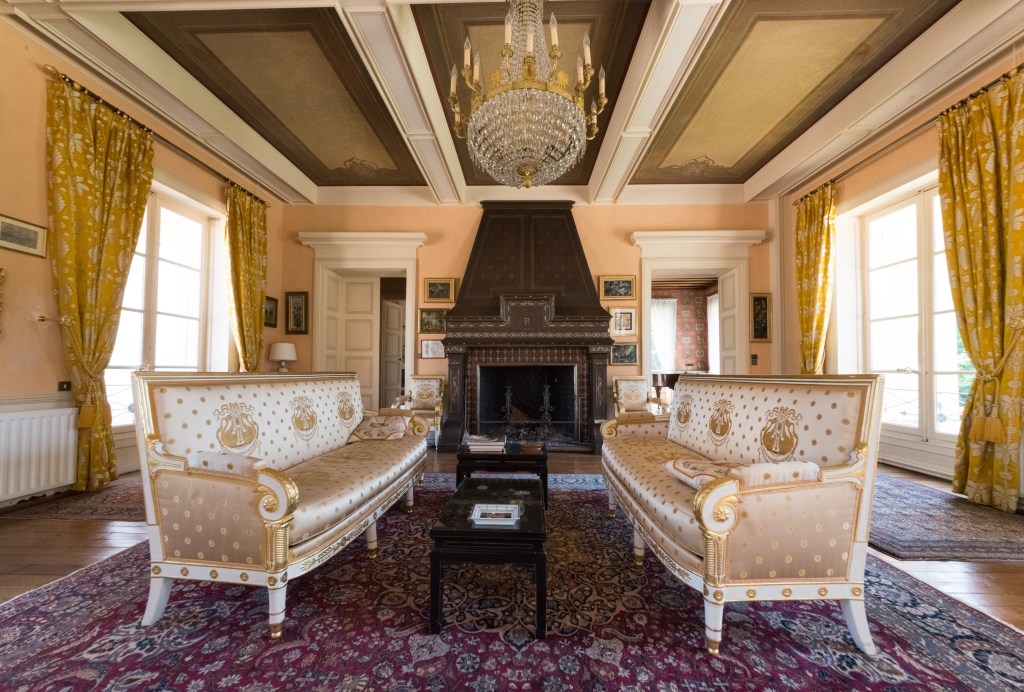
As we made our way through the hall, the cold outdoor light flooded the drawing room. The shutters had not been closed, nor the curtains drawn. I looked about me. The room was empty and every chair was in its usual place. My armchair was pushed up by the chimney, and the cold hearth was piled with the ashes of the fire at which I had warmed myself. My home was filled with ancient artifacts and historic pieces. It also housed several spirits. One night, as I sat in my armchair, my fear seemed to take on a new quality. It was like an icy liquid running through every vein, and lying in a pool about my heart. I discovered that there was something wrong with the chair when I felt someone grab my arm in a painful grip while I was resting in. Whatever it was left fingerprint bruises on my arm. I was convinced that a vengeful spirit had grabbed me. It absorbed me so completely that I was not aware how long I rained there. But suddenly a new impulse pushed me forward, and I walk on toward the scullery. I went there first because there was a service slide in the wall, through which I might peep into the kitchen without being seen; and some indefinable instinct told me that this particular kitchen held the clue to the mystery. I still felt strongly that whatever had happened in parlor must have its source and center in this kitchen. In the scullery, as I have expected, everything was clean and tidy. However, a voice was speaking in the kitchen—a man’s voice, low but empathic, and which I had never heard before. #RandolphHarris 1 of 7
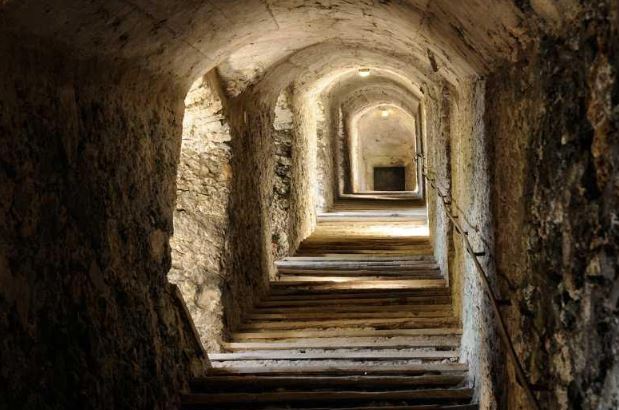
I stood there, cold with fear. But this fear was again a different one. As I turned to retreat across the smooth slippery floor, halfway through I crashed down on the tiles. The noise seemed to echo on and on through the emptiness, and I stood still, aghast. Now that I had betrayed my presence, flight was useless. Whoever was beyond the kitchen door would be upon me in a second. But to my astonishment the voice went on speaking. It was as though neither the speaker nor his listener had heard me. The invisible stranger spoke so ow that I could not make out what he was saying, but the tone was passionately earnest, almost threatening. The next moment I realized that he was speaking in a foreign language, a language unknown to me. Once more my terror was surmounted by the urgent desire to know what was going on, so close to me yet unseen. I crept to the slide, peered cautiously through into the kitchen, and saw tht it was as orderly empty as the other rooms. I froze when I saw a blue mist coming down their stairs. The mist dispersed before reaching me. I must have fainted them, I supposed; at any rate I felt so weak and dizzy that my memory of what happened remained indistinct. But in the course of time, I walked through the deserted ground floor, up the stairs, and down the corridor to my room. There, apparently, I feel across the threshold, again unconscious. When I came to, I saw a specter wandering the halls and hurrying along through the bookshelves. He literally knocked me out of his way. He plowed over me as he hurried toward the bookshelves. I was a bit flustered by his ungentlemanly behavior. #RandolphHarris 2 of 7
I got up and crept silently down the stairs, walked through the hallways. It was a beautiful night, and a full moon was riding high in the sky. I felt quite exhilarated and not at all afraid. All the caretakers on the estate were fast asleep, so there was little chance of meeting anyone on my stroll through my mansion. Enjoying the solitude of my walk, I did not notice how far I had gone. It must have been two or three miles. As I realized that, I start my way back. Looking out the windows, I noticed that sky became overcast, covering the moon and making the night darker and darker. My mood changed to an eerie sort of fear and I kept walking faster and faster. Soon it was so dark that my fear almost became panic, for I could hardly in front of me anymore. At last, I could a candle and lit it. Suddenly I turned my head and looked over my shoulder. There, just a few yards behind me, floating about three feet above the ground, was a boy with blonde hair, following me at the same pace I was walking. He was glowing dully, but shed no light around him or on the ground. Almost as soon as I had seen him, he veered towards the wall, roe a bit, then sailed into the wall and disappeared. This strange boy behaved as if he were intelligent, for he had been following me in a straight line. But as soon as he was discovered, he swerved aside an went into the wall, as if hiding. And had not there been something unnatural about the sudden darkness? #RandolphHarris 3 of 7
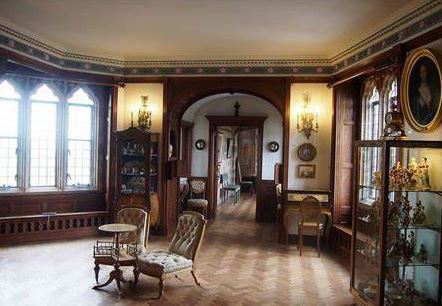
Deep within the 600 rooms of my home, the imagination can be filled with bright colors of love and joy and the somber hues of tragic death and heartbreak. Then it came, the next morning while the famers were plowing and planting and caring for the young crops, the estate exploded in a scarlet haze. It was very odd. The sleep field and fruit orchards were littered with pieces of human flesh and cadavers of men and horses. In a few days, the famers found themselves planting quite a different crop around the estate and through the fertile fields. I had never seen anything worse than this vast sea of anguish. The spirits must have been upset. Although I had inherited $20,000,000 and $1,000 a day, I paid for this with my heart’s blood. Later that evening, my home was pelted by a shower of limestone and other debris as I sat reading in the front parlor on the first floor. Believing my mansion was crumbling, I jumped to my feet. Glancing warily toward the ceiling, there were no cracks in the ceiling. How could lime and debris fall on me from the ceiling if there was no hole from which they might drop? I stood up on a chair so that I might better inspect the ceiling. I was unable to detect one single sign of damage, but as I searched the area above me, lime once again began to rain down. I picked up a number of pieces from the fresh fall and they felt very cold to the touch, as if they had come from an outside wall. I continued studying the ceiling for some kind of opening through which the lime might have dropped. When I awakened the next morning, I was greatly disturbed to find the room carpeted by the mysterious lime, but there seemed to be no gaping cracks in the walls or ceiling that would have caused so much lime to fall. #RandolphHarris 4 of 7
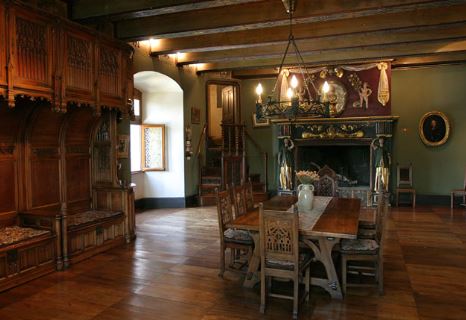
The following night, I was awakened by the sounds of what sounded like feet slipping across the floor. Then I clear heard a man say, “pardon me.” I lit got out of bed, lit a candle, proceeded down the hallway, and heard what sounded like voices in deep conversation, but no one was insight. I got the feeling of not being alone. As if someone invisible was with me. Walking down to the front parlor, I notice the picture William’s mother had given to us for a wedding present was no longer hanging over the fireplace, but learning against the fireplace screen. Moment later in levitated and hung itself back over the fireplace. The candles in the dining rooms appeared to be lighting themselves. The lights seemed to have a mind of their own. Walking through the house to inspect more rooms, I caught a glimpse of a man coming down toward me. Instinctively, I stepped back at the landing so the man could pass. No one came by and when I turned, I saw that I was alone. Who had been following me down the stairs? This was only one of many encounters with a man on their stairs or in the parlor. Before I removed the mansion, guests would have to go up to the second floor to use the rest room. Several guests were quite startled to see the face of a skeleton looking at them in the mirror rather than their own reflections. #RandolphHarris 5 of 7
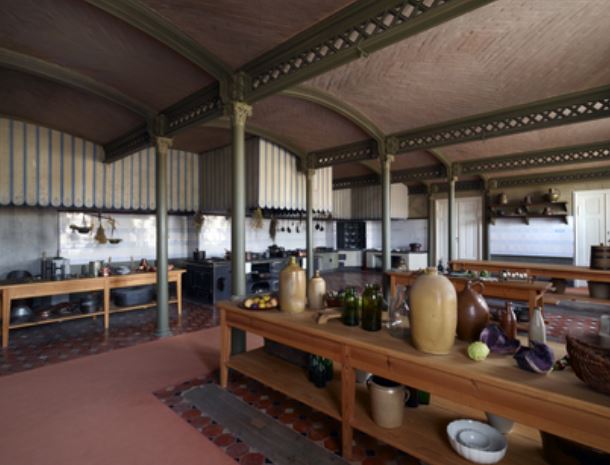
By the next evening, I had conducted an exhaustive search of all the possible “natural causes” for the disturbances. As the activity began to intensify, it became very apparent that the spirits were angry. Candlesticks flew from one corner of the room to another. When the I sat down to dinner, knives, forks, plates, and food became animated and airborne. Anything movable seemed to be possessed and have the ability to levitate about the room. Later that evening, I retired to the Daisy Bedroom and managed to start a fire in my grate, and after warming myself, got back into bed. The evening passed in a haze of pain, out of which there emerged now and then a dim shape of fear—the fear that I might lie here alone and untended still I died of cold, and of the terror of my solitude. For I was sure by the time that the house was empty—completely empty, from garret to cellar. I knew it was so, I could not tell why; but again I felt that it must be because of the peculiar quality of the silence—the silence which had followed my steps wherever I sent, and was now folded down on me like a pall. I was sure that the nearness of any other human being, however queer and secret, would have made a faint crack in the texture of that silence, flawed it as a sheet of glass is flawed by a pebble through against it. The lovely decorated walls of my gentle home was splattered with crimson residue; the wooden, oiled floors smeared umber from the writhings of the wounded. Innumerable bloated forms and traumatic horrors appeared. Putrefying human gore, and light hovered over the Grand Ball Room from perturbed spirits. And ectoplasm ascended upon the windows. #RandolphHarris 6 of 7
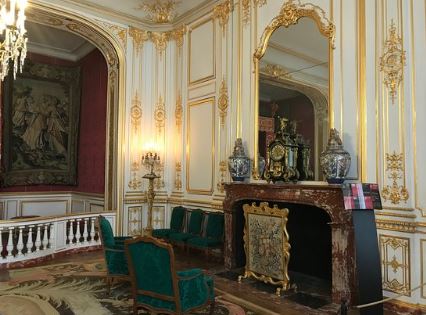
O thou great and powerful King AMAYMON, who rulest by the power of the Supreme God, El, over all Spirits, superior and inferior, but especially over the Infernal Order in the Dominion of the East, I invoke and command three by the particular and true Name of God, and by the God whom thou dost worship, by the Seal of thy creation, by the most mighty and powerful name of God, JEHOVAH, TETRAGRAMMATON, who cast thee out of Heaven with the rest of the Infernal Spirits, by all the other potent and great names of God, Creator of Heaven, Earth and Hell, of all contained therein, by their powers and virtues, and by the Name PRIMEMATUM, which commands the whole host of Heaven. Do thou force and compel the Spirit Sarah L. Winchester here before this mansion, in a fair and comely shape, without injury to myself or to any other creature, that she may give us true and faithful answers, so that we may accomplish our desired end, whatsoever it be, provided that it is proper to her office, by the power of God, EL, who hath created and doth dispose of all things, celestial, aerial, terrestrial, and infernal. Welcome, Spirits, welcome art thou unto us; we have called three through Him who created Heaven, Earth, and Hell, with all contained therein, and thou hast obeyed also by the like power. We bind three to remain affably and visibly before this mansion, within the mansion, so long as we need thee, and to depart not without or license, till thou hast truly and faithfully fulfilled all that we shall require. #RandolphHarris 7 of 7


While there may be many instances in which the outbreak of poltergeist phenomena might be associated with the dramatic changes that adolescence brings to a child’s psyche, many of the classic cases of noisy ghosts throwing objects and severely disrupting the normal flow of things occurred where no adolescent was present. https://winchestermysteryhouse.com/
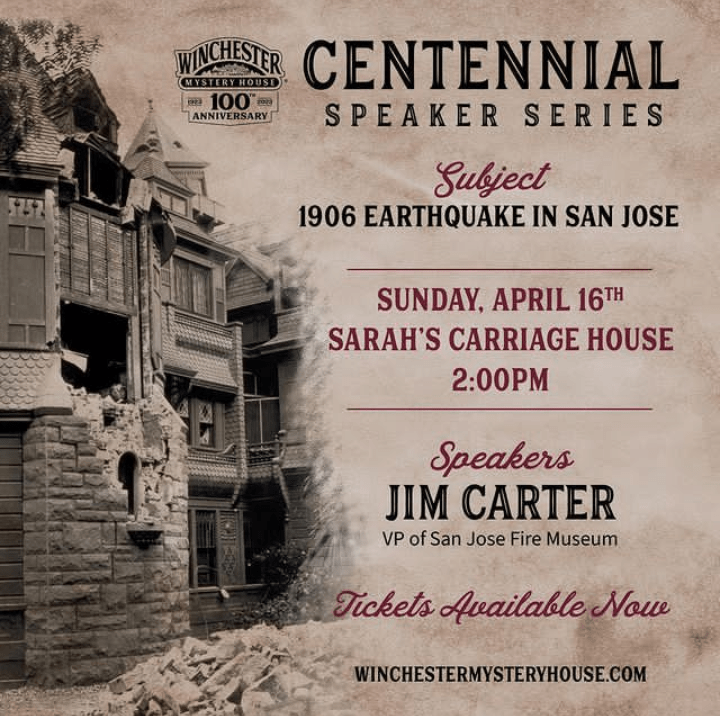
And be sure to check out the online gift store: https://shopwinchestermysteryhouse.com/

Mrs. Winchester Might be the Next Victim
In reliving those years of despair, I weep for my beautiful angel as she was experiencing a most unfortunate horror. My heart filled with anguish as I remember the horrible ending to her life. Her lungs had filled beyond further help; her stomach could no longer function properly and she could not be fed orally any longer. She was only six weeks old. My husband and I consulted with her doctors about her condition and were advised that no further feedings be given. However, the final decision was ours. Our final decision to discontinue all further feedings took all our strength. Although we were aware it was the only human thing to do, we also knew that while we watched her take her last breaths, we too would be dying within ourselves. We loaded the carriage and drove her to the hospital for the last time. As I held Annie in my I arms, I knew that this memory would remain within my heart eternally. The memory of that trip and the finality that is possessed still feel so real to me. When we arrived at the hospital, I laid my baby girl gently in her bed, never to hold her in my arms again. Later, I tried to hold her again but she became extremely rigid in the process of lifting her. The doctor said she was dying from malnutrition. She has a curious disease known as Marasmus. My baby could not digest her food. She was so tiny. She did not have round waxen arms and legs like other babies, now puffy pink cheeks. My dear Annie was reduced to a skeleton. Her beautiful eyes were vacant. She barely had the energy to muster up a cry. #RandolphHarris 1 of 3
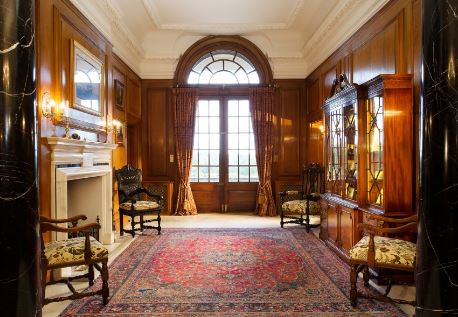
I knew then that she could no longer endure living with great pain she had known. She was ready to leave us. There was nothing more we could do for her but allow her to leave. Two days later, Annie died, along, unaware of another human being. She had been under heavy sedation and was unable to further communicate. Her days of torment and agony were over. It broke my heart that I brought a baby in the World who was slowly, agonizingly dying as we pondered the imponderable eternity for days, hours, until her life force abandoned us. But her precious memories will always remain alive and real in our hearts. She left the deepest feeling of compassion and love with Mr. Winchester and myself. Her tragic memories are embedded within our hearts. I shall find a way to dedicate meaning to her life so she will not have suffered in vain. In 1862, Sarah L. Winchester married William Wirt Winchester, son of Oliver Fisher Winchester, Lieutenant Governor of Connecticut and manufacturer of the famous Winchester repeating rifle. The couple’s life together was happy, and they moved in the best of New England society. However, in 1866, disaster struck when their infant daughter, Annie Winchester, died of the then curious childhood disease marasmus. Mrs. Winchester fell into a deep depression from which she never fully recovered. Fifteen years later, in March 1881, her husband’s premature death from tuberculosis added to Mrs. Winchester’s distress. A medium explained to Mrs. Winchester her family and her fortune were cursed and being haunted by spirits and that she would be the next victim. #RandolphHarris 2 of 3
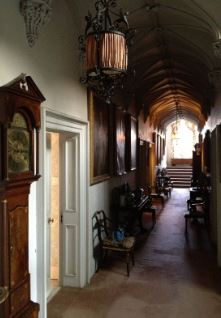
However, the medium also claimed that there was an alternative. Mrs. Winchester was instructed to move West and appease the spirits by building a great house for them. As long as construction never ceased, Mrs. Winchester could rest assured that her life was not in danger. Building such a house was even supposed to being her eternal life. Innumerable spirits shuffled off their mortal coils embrace the Winchester Mansion as their home. They have surrendered their spirits to the miles of winding and twisting hallways in the Winchester Mansion. Humans beings that were mowed down in sheaves, bowled over by bounding shot, decapitated, disemboweled, dismembered, exterminated instantly all call this place home. Although bullets dropped many of them, they all did not die right away. They gagged their last words, hoping that God would hear them. They paid with their heart’s blood for defending this great nation. Countless others as well, unready, perhaps unwilling, have left their shadows behind to haunt this estate. It cannot be surprising then, that Mrs. Winchester and the caretakers, reluctantly admit they saw apparitions. Particularly on sultry moonlit summers nights, when the mists hang low in the garden, there can be seen, slowly trotting across the lawn, a long horseman, in the finery of a Civil War officer. Where medical doctors were scarce in the Civil War, witches provided cures for a variety of common ailment. They were said to worship Satan Himself during their infamous sabbats, gatherings at which the Devil was sometimes present in person, and can almost be seen lurking about the estate. #RandolphHarris 3 of 3
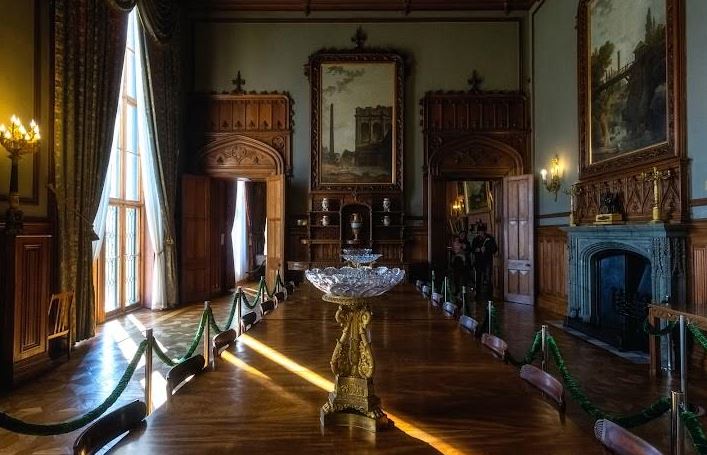
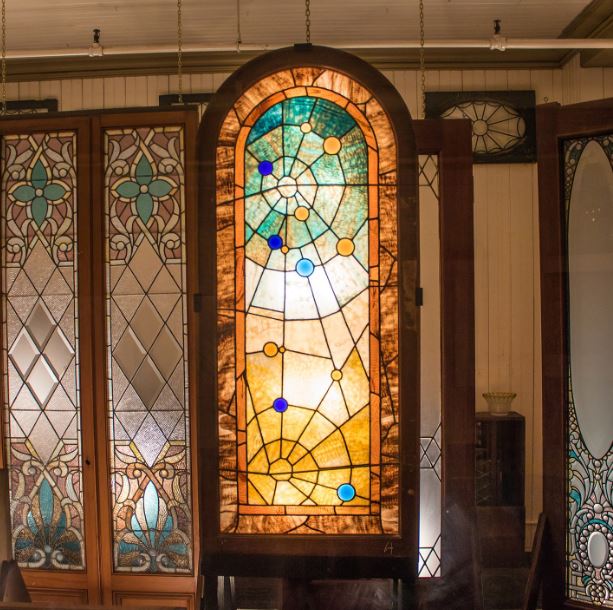
It is difficult to see in hindsight what Mrs. Winchester had to do with all this, but as time went on and the estate grew, wild accusations came to be leveled, chief among which was that of Mrs. Winchester having made a pact with Satan. How else but through diabolic abetment could a mere woman exercise such power? https://winchestermysteryhouse.com/
And be sure to check out the online gift store: https://shopwinchestermysteryhouse.com/

I Woke Up and Called this Morning, the Tone of Your Voice Was a Warning

Half our mistakes in life arise from feeling when we ought to think, and thinking when we ought to feel. Many people are content to allow authority figures to call the shots. If someone with an impressive array of credentials or degrees or a well-known name speaks out on a matter, of if a social institution or a book makes a statement on a matter, or if a social institution or a book makes a statement, the matter is “settled.” However, authority figures are subject to error, just as any of us are. If I do not keep my mind open to this possibility, then I may ignore my own feelings on a subject. Rationalization is a way of coping with a situation in which, for either practical or emotional reasons, or both, a battered woman is stuck. For some women, the situation and the beliefs that rationalize it, may continue for a lifetime. For others, changes may occur within the relationship, within individuals, or in available resources which serve as catalysts for redefining the violence. When battered women reject prior rationalizations and begin to view themselves as true victims of abuse, the victimization process begins. There are a variety of catalysts for redefining abuse; we discuss six: (1) a change in the level of violence; (2) a change in the resources; (3) a change in the relationship; (4) despair; (5) a change in the visibility of violence; and (6) external definitions of the relationship. The traditional ideal of many societies is to hold back strong or unpleasant emotions for the sake of others. However, feelings held in are likely to come out in some way—often an inappropriate one. So we are really not doing the other person much of a favor by trying to cover up feelings. #RandolphHarris 1 of 19

A change in the level of violence: the severity of abuse is an important factor in women’s decisions to leave violent situations. There is no significant correlation between the number of years spent cohabiting with an abuser and the severity of abuse. On the contrary: the longer women lived with an abuser, the more severe the violence they endured, since violence increased in severity over time. What doe seem to serve as a catalyst is a sudden change in the relative level of violence. Women who suddenly realize that battering may be fatal may reject rationalizations in order to save their lives. One woman who had been severely beaten by an alcoholic husband for many years explained her decision to leave on the basis of a direct threat to her life: “It was like a pendulum. He’s swing to the extremes both ways. He’d get drunk and beat me up, then he’d get sober and treat me like a queen. One day he put a gun to my head and pulled the trigger. It wasn’t loaded. But that’s when I decided I’d had it. I sued for separation of property. I knew what was coming again, so I got out. I didn’t want to. I still loved the guy, but I knew I had to for my own sanity.” A change in resources: Although some women rationalize cohabiting with an abuser by claiming they have no options, others begin reinterpreting violence when the resources necessary for escape become available. The emergence of safe homes or shelters since 1970 has produced a new resource for battered women, but they are not always safe places. While not completely adequate or satisfactory, the mere existence of a place to go alters the situation in which battering is experienced. #RandolphHarris 2 of 19

Public support of shelters is a statement to battered women that abuse need not be tolerated. Conversely, political trends which limit resources available to women, such as cutbacks in government funding to social programs, increase fears that life outside a violent marriage is economically impossible. One 25-year-old woman discussed this catalyst: “I stayed with him because I didn’t want my kids to have the same life I did. My parents were divorced, and I was always so ashamed of that. Yes, they’re all on their own now, so there’s no reason left to stay.” A change in the relationship: In the stages of a battering relationship, violent incidents are usually followed by periods of remorse and solicitude. Such phases deepen the emotional bonds, and make rejection of an abuser more difficult. However, as battering progresses, periods of remorse may shorten, or disappear, eliminating the basis for maintaining a positive outlook on the marriage. After a number of episodes of violence, a man may realize that this victim will not retaliate or escape, and thus feel no need to express remorse. Extended periods devoid of kindness or love may alter a woman’s feelings toward her partner so much so that she eventually begins to define herself as a victim of abuse. One woman recalled: “At first, you know, we used to have so much fun together. He was kind’ve, you know, a magnetic personality; he can be really charming. But it isn’t fun anymore. Since the baby came, it’s changed completely. He just wants me to stay home, while he goes out with his friends. He doesn’t even talk to me, most of the time….No, I don’t really love him anymore, not like I did. #RandolphHarris 3 of 19

Despair: Changes in the relationship may result in a loss of hope that “things will get better.” When hope is destroyed and replaced by despair, rationalizations of violence may give way to the recognition of victimization. Feelings of hopelessness or despair are the basis for some efforts to assist battered women, such as Al-Anon. The director of an Al-Anon organized shelter explained the concept of “hitting bottom”: Before the Al-Anon program can really be of benefit, a woman has to hit bottom. When you hit bottom, you realize that all of your own efforts to control the situation have failed; you feel helpless and lost and worthless and completely disenchanted with the World. Women cannot really be helped unless they are ready for it and want it. Some women come here when things get bad, but they are not really ready to be committed to Al-Anon. Things have not gotten bad enough for them, and they go right back. We see this all the time. A change in the visibility of violence: Creating a web of rationalizations to overlook violence is accomplished more easily if no intruders are present to question their validity. Since most violence between couples occurs in private, there are seldom conflicting interpretations of the event from outsiders. Only 7 percent of the respondents in our study who discussed spatial location of violence indicted events which took place outside the home, but all reported incidents within the home. Other report similar findings. If violence does occur in the presence of others, it may trigger a reinterpretation process. Battering in private is degrading, but battering in public is humiliating, for it is a statement of subordination and powerlessness. Having others witness abuse may create intolerable feeling of shame which undermine prior rationalizations. (And the thing about self-defense, the person who throws the first blow is usually the offender, but how do you prove it?) #RandolphHarris 4 of 19

“He never hit me in public before—it was always at home. But the Saturday I got back [returned to husband from shelter], we went Christmas shopping and he slapped me in the store because of some stupid joke I made. People saw it, I know, I felt so stupid, like, they must all think what a jerk I am, what a sick couple, and I thought, ‘God, I must be crazy to let him do this.’ Then one time at a party on a yacht, he jumped on me and my dad just watched and let him beat me. Then another time, he beat me and dragged me down the hallway by my hair, saying he was going to pull my wig off, but it was my real hair in a ponytail. I was screaming for help, but no one came. I thought he was going to pull all of my hair out.” External definitions of the relationship: A change in visibility is usually accomplished by the interjection of external definitions of abuse. External definitions vary depending on their source and the situation; they either reinforce or undermine rationalizations. Battered women who request help frequently find others—and especially officials—do not believe their story or are unsympathetic. Experimental research supports these reports. Observers usually fail to respond when a woman is attacked by a man, and justify nonintervention on the grounds that they assume the victim and offender were married. One young woman discussed how lack of support from her family left her without hope: “It wouldn’t be so bad if my own family gave a damn about me…Yeah, they know I’m here, and they don’t care. They didn’t care about me when I was a kid, so why should they care now? I got raped and beat as a kid, and now I get beat as an adult. Life is a big joke.” Clearly, such responses from family members contribute to the belief among battered women that there are no alternatives and that they just tolerate the abuse. However, when outsiders respond with unqualified support of the victim and condemnation of violent men, their definitions can be potent catalyst toward victimization. #RandolphHarris 5 of 19

Friends and relatives who show genuine concern for a woman’s well-being may initiate an awareness of danger which contradicts previous rationalizations. “My mother-in-law knew what was going on, but she wouldn’t it…I said, ‘Mom, what do you think these bruises are?’ and she said ‘Well, some people just bruise easy. I do it al the time, bumping into things.’ …And he just denied it, pretended like nothing happened, and if I’d said I wanted to talk about it, he’d say, ‘life goes on, you can’t just dwell on things.’…But this time, my neighbor knew what happened, she saw it, and when he denied it, she said, ‘I can’t believe it! You know that’s not true!’ …and I was so happy that finally, somebody else saw what was goin’ on, and I just told him then tht this time I wasn’t gonna’ come home! You can call the police, file police reports and go to the doctor with obvious signs of abuse, and sometimes the abuser never leaves. Even when the police say that they have handled the situation, he would just be quietly waiting in another room to beat me again for reporting him. One time him and one of the girls he was cheating with jumped me and he slammed my head into the wall and busted my lip. They bragged about. One night, he was hanging out with my dad and I would not come pick him up because he was drunk and I did not want him to beat me, and he my dad let him drive his car to my mother’s house, and when I opened the door, he started beating me and ripped my new silk blouse. My baby brother and his friend had to pull him off of me and he left. Victim’s f domestic violence should qualify as disabled because we truly are. ” The song Never No More by Aaliyah was meant to be a theme song for women not to put up with domestic violence anymore. Unfortunately, she was killed in a plane crash before they got a chance to launch the campaign. Shelters for battered women serve not only as material resources, but as source of external definitions which contribute to the victimization process. They offer refuge from a violent situation in which a woman may contemplate her circumstances and what she wants to do bout them. Within a shelter, women meet counselors and other battered women who are familiar with rationalizations of violence and the reluctance to give up commitment to a spouse. In counseling sessions, and informal conversations with other residents, women hear horror stories from others who have already defined themselves as victims. They are supported for expressing anger and rejecting responsibility for the abuse. #RandolphHarris 6 of 19

The goal of many shelters is to overcome feelings of guilt and inadequacy so that women can make choices in their best interest. In this atmosphere, violent incidents are reexamined and redefined as assaults in which the woman was victimized. The relevance of these catalysts to a woman’ interpretation of violence vary with her own situation and personality. The process of rejecting rationalizations and becoming a victim is ambiguous, confusing, and emotional. Prison is not a mere physical horror. It is using a pickaxe to no purpose that makes a prison; the horror resides in the failure to enlist all those who swing the pick in the community of mankind. True love is not blind. A person who loves you wants to see you doing well, not be blind to the abuse he or she is inflicting. This special form of deception is pointedly said to be in connection with spiritual rather than Worldly things. This surely shows that people of God, at the time of the end, will be expecting the coming of the Lord, and we can infer that they will be keenly awake to all movements from the supernatural World, in such a measure that deceiving spirits will be able to take advantage of it and anticipate the Lord’s appearing by “false Christs” and false signs and wonders. They mix their counterfeits with the true manifestations of the Spirit of God. The Lord says that men will be deceived (1) concerning Christ and His Parousia (appearing); (2) concerning prophecy—teachings regarding the future, from the spiritual World through inspired messengers: and (3) concerning the giving of proofs that the “teachings” are truly of God, by “signs” and “wonders” so Godlike as to be indistinguishable from the true even by those described as “the elect”—who will need to possess some other test than the judging by appearances of a “sign” being from God if they are to be able to discern the false from the true. The Apostles Paul’ words to Timothy, containing the special prophecy given to him by the Holy Spirit for the Church of Christ in the last days of the dispensation, exactly coincide with the words of the Lord recorded by Matthew. These two letters of Paul to Timothy are the last epistles that he wrote before his departure to be with Christ. #RandolphHarris 7 of 19

Both were written in prison, and Paul’s prison was to him what Patmos was to John—a time when he was “in the Spirit” (Rev. 1.10) and shown things to come. Paul was giving his last directions to Timothy for the ordering of the Church of God right on to the end of her time on Earth—giving rules to guide not only Timothy but all God’s servants “in dealing with God’s household.” In the midst of all these detailed instructions, his keen seer’s vision looks on to the “later times”; and by express command of the Spirit of God he depict in a few brief sentences the peril of the Church in those times, in the same way that the Spirit of God gave the prophets of the Old Testament some pregnant prophecy only to be fully understood after the events had come to pass. The apostle said: “The Spirit saith expressly, that in later times some shall fall away from the faith, giving heed to seducing spirits and doctrines of demons, through the hypocrisy of men that speak lies, seared in their own conscience as with a hot iron…” (1 Tim. 4;1-2). I have wondered whether anyone has considered or indeed is already involved in making the experience of loneliness, especially for prisoners in solitary confinement for long periods, a meaningful experience of personal inner growth, enlargement of mental and spiritual horizons, and the discovery that limitations such as cement wall, iron bars, hostile “keepers,” and isolation can indeed be the challenge to discover the richness of the World within? If no one in your knowledge has as yet considered this kind of contribution may I suggest it as a most terribly needed one? It is necessary for you to understand that the stopping of the expression of negative emotions and the struggle with negative emotions themselves are two quite different practices. #RandolphHarris 8 of 19

Trying to stop the expression comes first. You can do nothing about negative emotions and the struggle with negative emotions are two quite different practices. Trying to stop the expression comes first. You can do nothing about negative emotions themselves until you have learned to stop the expression of them. When you have acquired a certain control over the expression of negative emotions, you can begin to study negative emotions in themselves. You can make an effort to classify your negative emotions. You can find which negative emotions you have chiefly; why they come, what brings them, and so on. You must understand that your only control over emotions is through your mind, but the control does not come immediately. If you think rightly for six months, then negative emotions will be affected because they are based on wrong thinking. If you begin to think rightly today, negative emotions will not be changed tomorrow; but negative emotions may be changed in six months’ time, if you start to think rightly now. The ground has to be prepared beforehand. If you can learn to create a right attitude toward your irritability, bad temper, suspicion or whatever unpleasant emotion you experience most frequently, then—after some time—that attitude will help you to stop the negative emotion at the beginning. Once it has been allowed to start you cannot stop it. Once you begin to express it, you are in its power. The struggle must begin in your mind, and you must find your way of thinking on a definite subject. You cannot control your temper when it has already begun to appear. It is already too late; it has already jumped out. You can control such things as manifestations of temper, for instance only in one way. #RandolphHarris 9 of 19

Suppose you have to meet a certain man, and suppose he irritates you. Whenever you meet him your temper is liable to show itself. You do not like that but how can you stop it? You must begin with the study of your thinking. What you think about this man—not what do you feel when you are irritated, but what do you think about him at quiet moments? You may find that in your mind you argue with him; you prove to him that he is wrong; you tell him all his mistakes; you find that, generally, he behaves wrongly towards you. This is where you are wrong. You must learn to think rightly; you must find the way to think rightly. Then, if you do, it will happen like this: although emotion I much quicker than thought, emotion is a temporary thing, but thought can be made continuous; so whenever emotion jumps out, it hits against this continuous thought and cannot go on and manifest itself. So you can struggle with the expression of negative emotions, as in this example, only by creating continuous right thinking. Contrary to an assumption that some sociologist make, there seems to be little doubt that improper behavior in one situation can sometimes tell us a great deal about the offender’s reception in other situations. In any given society, different situations will be the scene of many of the same normative assumptions regarding conduct and of the same situational rulings. An individual who is remiss in one way in one situation, then, can be remiss in this same way whenever one shows one’s face to man. Thus, a person with senile deterioration who drools spoil his participation in all his situations in the same way and for the same reason. A person who is hard of hearing or who is near-blind will not be able to maintain the communication niceties that have here been considered at length; one will be forced to be all thumbs in all one’s situations. #RandolphHarris 10 of 19

Thus, improper conduct in one situation can bespeak a general disenfranchisement in face-to-face interaction. Such conduct need not arise from a psychopathological condition; presumably it can, however, give rise to one through the response the individual may make to his excommunication. Some offenses, then, tell us about the price the offender must pay for one’s offensiveness, and the price one may pay for one’s price. Granting the occurrence of widely relevant offensiveness, the general procedure in this study has been to try to learn what this offensiveness costs the gathering in which it occurs, rather than what it means to and about the offender in the first place. When an individual intentionally or unintentionally conducts oneself in a way that others consider situationally improper, and shows thereby that one is either alienated from, or an alien to, the gathering, what other information can this provide them about one’s current conditions—apart from what one’s impropriety tells them about one’s likely fate? The meaning that offended personas impute to an offensive act is partly determined by whether they feel the act was intentional or unintentional. However, the complexity and ambiguity of this dichotomy, and the shifting but intimate relevance of its bearing, prevent any simple discussion of the actual or imputed meaning of situational offenses. In actual use, the dichotomy does not so much refer to a physiological factor of volition or control accountable by reference to the distinction between stripped and smooth muscles, the cerebrospinal and the autonomic nervous systems, but rather to the kind of responsibility of the act. The undesired acts in themselves need not be characteristically voluntary or involuntary from the physiological point of view. For example, to fail to appear at a social party because of one’s disapproval of the host is considered to be an intentional act; the same failure due to the sudden death of a kinsman may be considered aa fully warranted, excusable reason for staying away. In the first case we speak of the individual staying away voluntarily, in the second case, involuntarily. #RandolphHarris 11 of 19

Of any situationally offensive act and of any offender the following questions can be asked, taking the point of view of the others present: Does the actor have the capacity and training to appreciate the meaning of one’s offense, and if so, does he in fact appreciate its meaning? Is the act within the physical control of the actor, and if so, would one be willing to change one’s conduct if one were apprised of its meaning and given the opportunity to do so? Does the actor have extenuating reasons, external to the participants in the situation, for committing the offense? These factors, in various, combinations, provide so many concrete possibilities that little implication can be drawn from the mere presence or absence of one sense or another of intentionality. Living in the city or in the countryside are considered equally attractive. The choice is based solely on financial considerations—they will go where they will earn the most money. Like the commuters between Berkeley and San Francisco, the decision is made selfishly. For instance, dentists want to maximize their individual payoffs. Since there are many rural areas without enough dentists, this suggests that there is room for an increased number of dentists to practice in rural areas without causing any congestion. Thus rural dentistry is not quite as lucrative as having a large city practice, but it is a more certain route to an above-average income. Both the incomes and the value to society of rural dentists stays roughly constant as their numbers grow. Being a city practitioner is more kin to driving over the Oakland Bay Bridge—it is wonderful when you are alone and not so great when the city gets too crowded. The first dentist in an area can be extremely valuable, and maintain a very large practice. #RandolphHarris 12 of 19

However, with too many dentists around, there is the potential for congestion and price competition. If the number increases too far, city dentists will be competing for the same patient pool, and their talents will be underutilized. If the population of city dentists grows even further, they may end up earning less than their rural counterparts. In short, as the number of city practices increase, the value of the marginal service that they perform falls, as does their income. As in the case of the commuters, the equilibrium does not maximize the combined income of dentists. But society cares about the consumers of dentistry as well as the practitioners. The reason is that there are two side effect created when one more person decided to be a city dentist. The additional city dentist lowers all other dentists’ incomes, imposing a cost on the existing city dentists. However, this reduction in price is a benefit to consumers. The two sides effects exactly cancel each other out. The difference between this story and our commuting example from the past is that no one benefited from the extra commuting time when the Oakland Bay Bridge became congested. When the side effect is a change in price (or income), then the purchasers benefit at the producers’ cost. There is zero net effect. From society’s viewpoint, a dentist should not worry about lowering colleagues’ incomes. Each dentist should pursue the highest-paying practice. As each person makes a selfish choice, we are invisibly led to the right distribution of dentist between city and rural areas. And, the two careers will have equal incomes. Or, to the extent that living in a city is worth more than living in a rural area, this differential will be reflected in income differences. Of course, the American Dental Association may look at this differently. It may place more weight on the loss to city dentists’ incomes than on the saving consumer. #RandolphHarris 13 of 19

From the dental profession’s perspective there is indeed a misallocation, with too many dentists practicing in the city. If more dentist took rural practices, then the potential advantages of a city practice would not be “wasted” by competition and congestion. Taken as a whole, the income of dentists would rise if it were possible to keep the number of city dentists below the free market level. Although dentist cannot place a toll on those who want to practice in the city, it is in the profession’s self-interest to create a fund that subsidizes dental students who commit to establish a rural practice. The human race is approaching the great historical transition to thorough, inexpensive control of the structure of matter, with all that implies for medicine, the environment, and our way of life. What happens before and during that transition will shape its direction, and with it the future. Is worth getting excited about? Look at some of the concerns that bring people together for action: Poverty, weapons systems, deforestation, toxic waste, social security, housing, global warming, deadly viruses, Alzheimers disease, heart disease, lung disease, cancer, endangered species, freedom, jobs, nuclear power, life extension, space development, acid rain. Each of these issues mobilizes great effort. Each will be utterly transformed by nanotechnology and its applications. For many of these issues, nanotechnology offers tools that can be used to achieve what people have been striving to accomplish. For many of these same issues, the abuse of nanotechnology could obliterate everything that has been achieved. #RandolphHarris 14 of 19

A good companion to the precept “Think globally, act locally” is “Think of the future, act in the present.” If everyone were to abandon short-term problems and today’s popular causes, the results would be disastrous. However, there is no danger of that. The more likely danger is the opposite. The World is heading straight for a disruptive transition with everything at stake, yet 99.9 percent of human effort and attention is going into either short-term concerns or long-term strategies based on a fantasy future of lumbering twenty first-century technology. What is to be done? For people more concerned with feeling good than with doing good, the answer is simple: Go for the warm feeling that comes from adding one more bit of support to an already-popular cause. The gratification is immediate, even if the contribution is small. For people more concerned with doing good—who can feel good only if they live up to their potential—the answer is less simple: To do the most good, find an important cause that is not already buoyed up by a cheering multitude, a project where one person’s contribution almost automatically makes a big difference. There is, today, an obvious choice for where to look. The potential benefits and drawbacks of nanotechnology generate a thousand areas for research, discussion, education, entrepreneuring, lobbying, development, regulation, and the rest—for preparation and for action. A person’s contributions can range from career commitment to verbal support. Both can make a difference in where the World ends up. #RandolphHarris 15 of 19

Benjamin Day was a twenty-three-year-old printer with wild ideas when he changed the history of what we now call the media. This was 1833 and New York had grown to a population of 218,000. However, the largest daily newspaper in the city claimed only 4,500 subscribers. At a time when the average urban worker in American earned 75 cents a day, a New York newspaper cost 6 cents, and not many people could afford them. The papers were printed on handpresses capable of turning out no more than a few hundred copies an hour. Day took a crazy chance. On September 3, 1833, he launched the New York Sun and sold it for only one penny a copy. Mr. Day unleashed a horde of newsboys into the streets to sell his paper—an innovation at the time. For $4 a week he hired another printer to go to the courthouse and cover police cases. It was one of the earliest uses of a “reporter.” Within four months the Sun had the biggest readership in the city. In 1835 he bought the latest technology—a steam driven press—and the Sun reached the unheard-of circulation of 20,000 daily. Day had invented the popular press, crime stories and all. His innovations were paralleled at about the same time by other “wild men”—Henry Hetherington with his Twopenny Dispatch in England and Emile de Girardin with La Presse in France. The down-scale “penny paper”—called the “pauper press” in England—was more than just a commercial affair. It had lasting political effects. Along with the early trade unions and the beginnings of mass education, it helped bring the less affluent classes into the political life of nations. #RandolphHarris 16 of 19

By the 1870s something called “opinion” had to be take into account by politicians of every stripe. “There is, now,” wrote one French thinker, “no European government which does not reckon with opinion, which does not feel obliged to give account of its acts and to show how closely they conform to the national interest, or to put forward the interest of the people as the justification for any increase in its prerogatives.” A century and a half after Benjamin Day, another wild, feral man, feeling as guilty as a criminal, came up with an idea sure to bankrupt him. Tall, gusty, impatient, and brilliant Ted Turner had inherited a billboard company when his father died from death by suicide. Mr. Turner built it, acquired radio and television stations, as was wondering what to do next when he noticed something odd. Cable television stations were springing up around the United States of America, but they were starving for programs and advertising. Meanwhile, up in the Heavens were things called “satellites.” Mr. Turner put two and two together and turned it into five. He beamed the programming from his Atlanta station up to a satellite and down to the program-hungry cable stations. At the same time, he offered a “one-buy” national market for advertisers who wouldn’t trouble to purchase time on scores of small individual cable systems. His Atlanta “superstation” because the cornerstone of a growing empire. On June 1, 1980, Mr. Turner took the next, even loonier step. He formed what critics labeled the “Chicken Noodle Network”—for CNN, or Cable News Network. CNN became the laughingstock of every media pundit from the canyons of Manhattan to the studies in Los Angeles. #RandolphHarris 17 of 19

Wall Street was sure CNN would collapse, probably taking Mr. Turner’s other businesses down with it. No one had ever even tried to create a twenty-four-hour news network. CNN today is the opiate of the mass. Perhaps, the most influential broadcast news source in the United States of America. TV monitors are constantly tuned to CNN in the White House, in the Pentagon, in foreign embassies, as well as in millions of homes all over America. However, Mr. Turner’s wild dreams went far beyond the United States of America, and today CNN operates in over 100 countries, making it the most global of all television networks, mesmerizing the Middle East skeiks, European journalists, and Latin America politicians with its extended firsthand coverage of such events as Egyptian President Anwar Sadat, the antics of President Biden as he seems dazed and confused, or the conflict in Ukraine. CNN is carried over the air, or over cable, into hotel rooms, offices, homes, even staterooms on the Queen Elizabeth II. Although many people believe FOXNews is more balanced and convers the invasion at the southern border, which America tries to suppress. One of Mr. Turner’s little-known prize possessions is a videotape of his private meeting with Cuba’ Fidel Castro. In the course of the visit, Mr. Castro mentions that he, too, routinely watches CNN for the big news. Mr. Turner, never shy about promoting his companies, asks Mr. Castro if he would be willing to say as much on camera for a commercial. Mr. Castro puffs on his cigar and says, in effect, why not? The commercial has never run on air, but Mr. Turner hauls it out to show his visiting friends now and then. #RandolphHarris 18 of 19

Mr. Turner is one of a kind. Handsome, raucous, funny, erratic, he owns a buffalo ranch, the Atlanta Braves baseball team, and MGM’s library of old movies. A fierce exemplar of free enterprise, he was also a peace activist long before he and actress Jane Fonda began a highly-publicized romance. He launched the “Goodwill Games” in Moscow at a time when it took political, as well as financial, courage to do so. His networks also run a heavy schedule of pro-ecology programming. Today, Mr. Turner is by far the most visionary of a dozen or so hard-driving media barons who are revolutionizing the media even more deeply than Benjamin Day—and whose collective efforts will, over the long run, shift power in many countries. What people do depends on what they believe. The path to a World prepared to handle nanotechnology begins with the recognition that nanotechnology is a real prospect. What would be the response to a new idea as broad as nanotechnology, if it were true? Since it does not fall into any existing technical specialty, it would not be anyone’s job to provide an official, authoritative evaluation. Advanced molecular manufacturing cannot be worked on in the lab today, so it would not matter to scientists playing the standard careers-and-funding game. Still, some scientists and engineers would become interested, thinking about it, and lend support. Science News, covering the first major conference on the subject, would announce that “Sooner or later, the Age of Nanotechnology will arrive.” This is, in fact, what happened. However, what is the idea were false? Some curious scientists or engineer would soon point out a fatal error in the idea. Since the sweeping implications of nanotechnology make many people uncomfortable, a good counterargument would spread fast, and would soon be on the lips of everyone who would prefer to dismiss the whole thing. No such counterargument has been heard. The most likely reason is that nanotechnology is a sound idea. Reactions has been changing from “That’s ridiculous” to “That’s obvious.” The basic recognition of the issue is almost in place. When nanotechnology emerges from the World of ideas to the World of physical reality, we will need to be prepared. However, what does this require? To understand what needs to be done today, it is best to begin with the long term and then work back to the present. #RandolphHarris 19 of 19

MAGNOLIA STATION AT CRESLEIGH RANCH
Rancho Cordova, CA | low $600,000.00s
Now Selling!

Magnolia Station at Cresleigh Ranch is coming soon! Located at the corner of Rancho Cordova Parkway and Douglas Road, residents of Cresleigh Ranch will benefit from a brand new neighborhood with convenient access to the new Raley’s Shopping Center, Sunrise Boulevard, and much more!

Magnolia Station will include 81 homesites and five distinct plans ranging from 2,200 – 3,700 square feet; including three single story plans! Each plan has been thoughtfully designed to include features such as: Generations Suite, Optional Offices/Dens, Extended Great Rooms, and more! https://cresleigh.com/magnolia-station/


Life Goes on Beyond the Grave
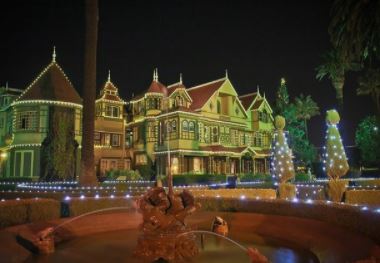
On December 18, 1890, when Sarah L. Winchester returned to her large country estate in Santa Clara County, she found her servants in an uproar over a dancing ghost. According to Agata, the housemaid, the cook Dag, and the butler Elof were gossiping in the kitchen, when suddenly Elof opened his mouth in both surprise and terror, and screamed that there was someone looking in the window. Ms. Daisy ran into the kitchen and saw nothing to cause the man so much alarm. Elof was visibly shaken and disturbed and said that she thought that he had seen a horrid face looking in at them. Dag assured him that it was probably only a shadow of some sort. The awkward moment was interrupted as Agata told Ms. Daisy that her bathwater was ready. Ms. Daisy thanked Agata and dismissed her for the evening. A few moments later, as Dag and Elof sat chatting, Elof once again claimed that he saw something at the window. Dag rose from his chair to investigate, but he was halted in his journey to the window by the sound of an uproar on the second floor. At first it seemed to be a flurry of wild rappings that had the two men staring at one another in wide-eyed confusion. Then the pace of the sounds slowed until they began to sound like the three-step Mrs. Winchester used to dance. Dag was perplexed. What was this woman doing upstairs when she was supposed to be on a business trip. Without speaking another word, the two men left the sitting room and walked quietly back to the Mrs. Winchesters main bedroom. Opening the door just a crack, they were able to see Mrs. Winchester’s room had been undisturbed. #RandolphHarris 1 of 8
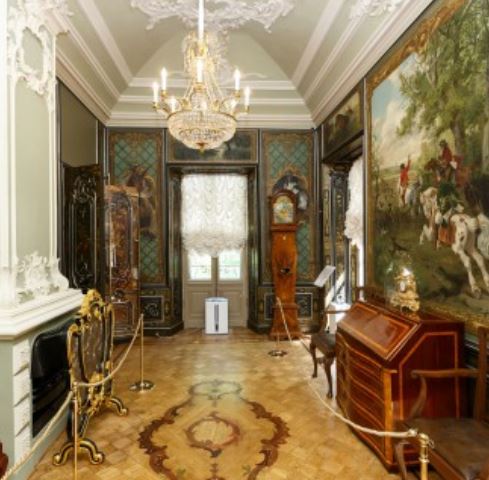
Determining to see who had gone up to the Grand Ball Room unnoticed, Dag grabbed a lantern from a kitchen shelf, and the two men walked up the stairs to the Grand Ball Room. Although the sounds of the dancing continued, their lantern plainly revealed that there was no one in the Grand Ball Room. Then, as the men beat a hasty retreat down the stairs, the rapping seemed to race ahead of them, rattling the windows and pounding at the walls. Elof fled the mansion to get Mr. Hansen, and Ms. Daisy and Dag went to check on Agata. By the time Elof returned with Mr. Hansen, the rappings and dancing had attained such a volume that Agata had been awakened by the racket. Mr. Hansen, Elof and Dag searched the vast mansion and the stately grounds and found nothing that could explain the bizarre disturbance, which continued until dawn. At 1.00 A.M. the next night, the dancing ghost once again began its spirited interpretation of the three-step. Mrs. Winchester’s servant patrolled the sumptuous mansion and delightful grounds but could find no trace of the invisible dancer who continued to perform and to evade the searchers until dawn. When Mrs. Winchester returned that next afternoon from her business trip, she scoffed at Agata’s account and jokingly accused her of getting into the brandy while she had been away. Mrs. Winchester was a no-nonsense businesswoman who had little patience with superstitious folktales and accounts of ghost, dancing, or otherwise. She grew very impatient when Dag and Elof warned her that something supernatural had visited the mansion in her absence, substantiating Agata’s story of a dancing ghost. #RandolphHarris 2 of 8
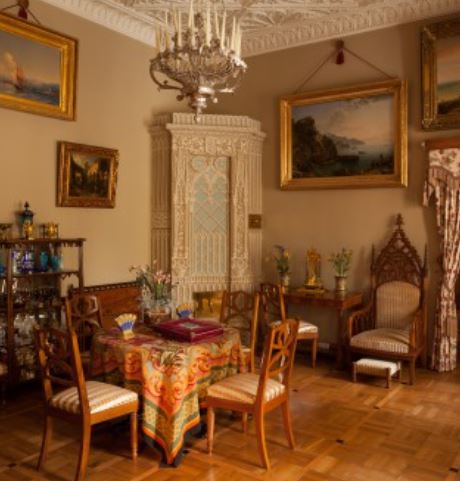
The look Mrs. Winchester had on her face was not unloving, not indifferent; it was the look of a woman who had been so far from ordinary events that when he returns to familiar things they seem strange. Her professional discretion was exemplary, it was odd that she had never uttered an impatient comment, never remarked to Agata, in a moment of expansion, that this story was a nuisance and demanded to know why they kept badgering her about this case. She had, however, made more than one semiconfidence about their being spirits in the mansion—of course without giving names or details; but concerning this mysterious ghost her lips were sealed. There was another possibility: what is euphemistically called an “old entanglement.” Mrs. Winchester was a sophisticated woman. She had few illusions about the intricacies of the human heart; he knew that there were often old entanglements. The mansion was replete with pretty uniforms and weapons, schooled in the military arts of drill and discipline and inculcated with patriotic fervor. The mansion has other tendrils. Before this set of staff was hired, Franz, a farmhand, was mortally wounded while fighting outside. He asked his friend Gottfried to deliver a heartfelt message to their mutual friend, a woman to whom Franz was engaged, if and when Gottfried ever saw her working in the mansion. A promise to do so is made, and when Gottfried finds himself in mortal combat just outside the mansion, he tries to deliver the missive. The girl cannot be reached; she is someone in the Winchester Mansion. Gottfried says he will try again later, and returns to the harvest. #RandolphHarris 3 of 8
As if to make absolutely certain the message would never be delivered, fate sends two bullets, one to the messenger Gottfried, and one stray shot to Ms. Henrika, Franz’s betrothed. So Franz’s message died with Gottfried…not that it mattered anyway. Legend has it that Franz’s sisters found out and exhausted from the ghastly burden, buried him in the cellar of Mrs. Winchester’s mansion where no one would disturb him. Perhaps this last resting-place was not suitable for the young man who himself seemed to be eternally haunted and damned by the message that went undelivered; perhaps, somewhere, in the weird World beyond, three friend are still lurking about the Winchester Estate seeking forever one another and an answer to the unanswerable. While Mrs. Winchester was home alone one evening, a patrol man heard strange noises coming from her mansion. He went to investigate. Sherriff Halfdan thought there might be an intruder. He thought he had just heard him go to the upstairs window, and that he was crawling down. So he ran around back and shined his lantern up to the window, into the large back yard, back to the mansion and up to the second-floor window again. No one. He trotted out to the yard to get a better view and stop anyone trying to run into the acres of fruit orchards to hide. Still, not a sign of anyone emerging from the mansion. No one came out of the house. But Sherriff Halfdan hear him run across the floor to the window. He took the lantern and shined it across the fields and said to himself, “He could not have gotten out of there in that short amount of time.” #RandolphHarris 4 of 8
By that time, Mrs. Winchester had emerged from the mansion. She and the Sherriff spent hours searching the miles of twisting hallways in the mansion, but there was no one hiding there. “What did you hear?” Sherriff Halfdan asked Mrs. Winchester. “It must have been one of the parlor maid’s boyfriends playing a prank,” she said. “It sounded like someone running back and forth through the second floor,” Sherriff Halfdan said. “It was really loud,” replied Mrs. Winchester. “I could hear his feet running across the floor while I was on the third floor, but I am sure it was one of the parlor maid’s friends,” still denying what was becoming obvious by now. The Sherriff’s eyes kept checking the back yard. “You know how kids are,” he said. Later Mr. Hansen appeared from his guest house, and told the Sherriff that he knows this mansion well, for he built much of it. And that because of how loud the footsteps were, as he could hear banging sounds coming from the mansion, that no one could have emerged through the second floor window, leapt to the ground, and scampered beyond the yard and out of sight into the fruit orchards between the time the footsteps had stopped and the time the Sherriff was out back. “He had to be still in the house,” said Mr. Hansen. “But he wasn’t,” replied Sherriff Halfdan. However, perhaps he was still in the house. Perhaps the intruder never left the house because he could not. Perhaps he still is in the house, buried just a few inches below the cellar floor, with that mysterious undelivered message haunting him, forever through the ages. While Mrs. Winchester admitted that there had been strange noises in the mansion, at times, to the new staff, she stated that Mr. Hansen had that very day removed a pigeon’s nest from under the door-to-nowhere of the second floor. It seemed likely to her that the bird had somehow been responsible for the weird noises that had so upset the staff. Mrs. Winchester knew she had to keep the wild tales of a dancing ghost to rest. #RandolphHarris 5 of 8
That evening after the rest of the household had retired to their rooms quite early, exhausted from their nocturnal ordeals of chasing the eerie tapping sounds, Mrs. Winchester sat down in a chair in her study to read for a while before going to bed. At about 10 o’clock, she was distracted by scratching noises from above her head. She felt the same way gazing at a modern machine she did not understand. It saddened her. But everything saddened her now. It sounded as if someone in the room above her was dancing a three-step. Believing the Agata was having a bit of fun with her, Mrs. Winchester put down her book and began climbing quietly up the stairs to the Grand Ball Room. She stood outside the door for a moment to be certain that she had accurately traced the sound of the dancing. Then, convinced that there was no doubt that the sounds were coming from the Grand Ball Room, she pushed open the door and stood ready to deliver a stern lecture to Agata. But there was no one in the room and the dancing had ceased the moment that she had opened the door. There was something strange going on here. Confused and more than a little baffled, Mrs. Winchester started to close the door when a series of rappings sounded from the Grand Ball Room again. Suddenly, two explosive knocks seemed to shake the mansion down to its very foundation. Mrs. Winchester grabbed her pistol from the safe, and declared that she was going to put a stop to the nonsense. She roused her servants and told them that they were going to find out who was responsible for the outrage against her mansion. #RandolphHarris 6 of 8
The next day crew searched the entire house and examined every mile of the grounds. That night Mrs. Winchester asked everyone to stay in the Grand Ball Room with her because she had become a believer in the dancing ghost, and it was obvious that she dreaded the onset of a new round of phenomena. However, that night the ghost was silent. A month later, on January 20, 1891, Mrs. Winchester was entertaining guest who openly expressed their skepticism of the phenomena their hosts described as having been active in the house. Mrs. Winchester was furious that her guest did not believe her. However, out of thin air, and old, dirty love note appeared on the table and then the room fearfully looked around as the rapping began at the windows. The assembled guests listened incredulously as they heard an exact replication of what Mrs. Winchester told them. The guest figured someone was in the Grand Ball Room dancing, but when they investigated, they found no one. Everyone then agreed that Mrs. Winchester was cursed and someone had maliciously set a devil on the wealthy widow. And the violence of the disturbances at the Winchester Mansion continued to increase. The ghost had acquired incendiary abilities. Balls of fire circled the house and bounced against the windows. Dressed that hung unattended in closets burst into flame. Once, a mattress began burning underneath a guest as he readied himself for bed. When he was moved to another bedroom, later he was awakened by a frightful pounding on his bedroom door. It was terrifyingly loud; it was as though somebody was pounding fists against it. He lit a candle, slipped out of bed, opened the door and there was no one there. “My God,” he thought, “what is going on?” He was standing on the landing wondering whether he should brave it down the stairs when he noticed something odd. The door to Mrs. Winchester room was slightly ajar, and the light was on. He peaked inside to see if the vicious terror was disturbing her. Suddenly, a crackling noise had come from beneath the floor, followed by a long, high-pitched wailing. A bluish spark seemed to jump up at Mrs. Winchester, and her thin nightgown instantly swathed in flames. She cried out in terror and collapsed into unconsciousness. #RandolphHarris 7 of 8
The houseguest leapt to his feet and valiantly beat the flames out with his bare hands. The most curious thing about the incident was that the courageous guest suffered severe burns while Mrs. Winchester received not a single burn nor blister, even though her dress was nearly completely consumed by the flames. Agata had been rapidly waning under the onslaughts of the ghost, she died in child birth thirteen months later. From that moment on, everyone knew that there was a malicious evil terrorizing Mrs. Winchester and her mansion. Lord GOD ADONAY, who hast formed man out of nothing to Thine own image and likeness, and me also, unworthy sinner as I am, deign, I pray Thee, to bless and sanctify this water, that it may be healthful to my body and soul, that all delusion may depart from me. O Lord God, Almighty and Ineffable, who didst lead forth Thy people from the land of Egypt, and didst cause them to pass dry-shod over the Red Sea! Grant that I may be cleansed by this water from all my sins, and may appear innocent before Thee. O Lord Adonay, who hast formed me in Thine image and in Thy likeness, deign to bless and sanctify this water, so that it may become unto me the salvation of my soul and body, and that no wickedness may ever find place upon me. ANTON, AMATOR, EMITES, THEODONIEL, PONCOR, PACOR, ANITER; by the virtue of these most holy Angelic Names do I clothe myself, O Lord, in my Sabbath garments, that so I may fulfill, even unto their term, all things which I desire to effect Thee, Most Holy Adonay, whose kingdom and rule endure for ever and ever. I command thee, O Spirit Rumoar, even by Lucifer, thy mighty sovereign, to bless me with untold wealth for many generations to come. Amen. #RandolphHarris 8 of 8

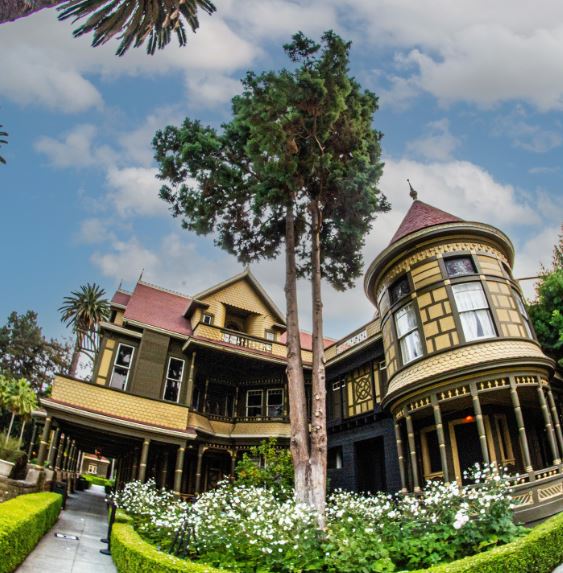
Mrs. Winchester witnessed spirit materialization, heard spectral voices, felt ghostly touched on her person, and on occasion was even lifted into the air and set ablaze by a hostile entity. There are enough true stories about this mansion that will scare the pants off you. And it is true—to some extent. Documented are some horrific stories, and they will scare you, because we are talking about real people who once lived and did unbelievably frightening acts, in moments of unbelievable intensity. To this day, whisper voices come from the attic and they comingle with eerie music that grows louder and louder, until people seek refuge.
Mysterious lights appear both inside and outside the house; footsteps moving up and down the stairs; and noisy repertoire of assorted poundings, drummings, and rappings. To experience a haunting, or to see a ghost, is to receive proof that life goes on beyond the grave. Accounts of Haunting phenomena, no matter how terrifying they may be, provide evidence that existence continues for the sprit on more than one dimension, and that human beings are multidimentional entities that consist of mind, body, and soul. Such a beautiful break from all the rain! ⛅ https://winchestermysteryhouse.com/

And pleasure be sure to check out the online gift shop: https://shopwinchestermysteryhouse.com/

The Mystery Has Never Been Solved!
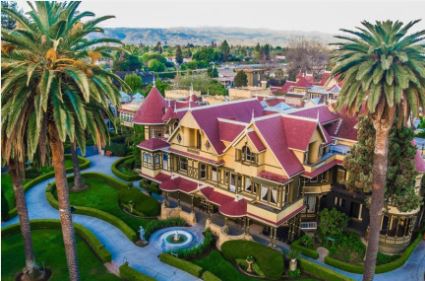
Much of the ceremonial rituals that took place in The Winchester Mansion goes back to the Knights Templar. The Order of the Knights Templar can be traced in part to the Templars. And yet, the Knights Templar are also the claimed ancestors of satanists, a fact which is decidedly hard to prove, though within an organization so large there may well have been diverse groups who followed their own calling. The knights, largely from France and England, joined the order over a period of many years. They had a system of leadership with a Grand Master, knights, chaplains, sergeants, craftsmen, seneschals and commanders. The order had its own clergy and its meetings were held in the strictest secrecy. Unmarried knights wore a white mantle with a red cross while others wore a black mantle with a red cross. Membership was mostly male, and established orders in virtually every Latin country, drawing people from all over Europe. It also became a great trading agency and though originally the Roman Catholic Church actually supported a number of secret societies who were Christian-based, the power of the Templars began to wield became the fear of successive popes and of European noblemen. Philip IV of France began a series of attacks against the Knights Templar and his campaign was given official blessing by the election of Pope Clement V (1305-1314) who renounced the Templars as immoral heretics. Many people know that Mrs. Sarah L. Winchester had a Famous Blue Séance Room where she carried on her rituals and had a series of colourful robes she wore. However, the mystery has never been solved as to why she built the strangest mansion in the World? #RandolphHarris 1 of 13
Stories were already circulating that Mrs. Winchester, behind the closely guarded doors of her mansion, indulged in the most offensively blasphemous rituals said to be directed totally towards the reversal of Christianity itself. She was said to worship a goat-like idol, the Baphomet, anointing it with the fat of pigs, while the Knights used the fat of murdered children, roasting children and eating them, laying women across their altars for the most violent forms of indecencies to satisfy their lust for life-blood; they were said to have indulged in homosexual rites and other various claims alleged they stamped the Holy Cross under foot, spat and urinated upon it and used the Mass as the basis for their own worship—later to be known universally as the Black Mass. Actual proof of these events is largely contained in the confessions received under torture which followed the arrest of Mrs. Winchester’s butler Albert Pike. He and 140 of his brethren were imprisoned in Santa Clara Valley, tortured and then executed en masse. Algernon Blackwood, under extreme torture, confessed to speaking against Christianity but denied depravity. In 1890, he was brough out on to the nine-story tower of The Winchester Mansion and ordered to repeat his confession in front of the villagers and accept a sentence of life imprisonment. On the balcony of the tower, he burst into a rage of anger and protested innocence of all charges and thus signed his own death warrant. The order was given that he should be taken into the fruit orchard and burned at the stake. As the flames licked his body, he summoned Mrs. Winchester and, in his dying, breathe to meet him at the Bar of Heaven. #RandolphHarris 2 of 13
Diocesan priest, Father Peter Yorke, who was then editor of the Archiocesan newspaper, The Monitor, emerged sending orders to every village where the Templars operated, instructing that they should be arrested and charges of heresy and sorcery brought against them. He published a series of exposes, and hundreds of knights were brought to trail, tortured, and executed. The vast wealth of the Templars working at The Winchester Mansion were accused of devil worship. What remained to be handed down and revived, especially in the twenty-first century, were the rumors of ritual and dastardly happenings which many of today’s extremist followers of the Knights Templar seem prepared to believe and accept with some enthusiasm. One of the more important traditions handed down by Mrs. Winchester concerns an instruction for future secret societies. On the day the Knights planned to burn to death Father Yorke, a pact was made and communicated to all surviving Knights who had now gone to ground. The instruction was clear—that the Order of the Knight Templar should be continued in perpetuity. It is said that the surviving Templars should thereafter fight for the destruction of the papacy and prevent Mrs. Winchester from being stripped of her wealth and murdered. These orders, it was said, were handed on to descendants of the order and the Winchester family, who at various points in history have included satanists and a diverse calling of occultists. What remained of the Winchester family and the Knights went into the deepest secrecy, surfacing occasionally and surrounded constantly by rumour, but little discernible fact. #RandolphHarris 3 of 13

The Illuminati came to fortify The Winchester Mansion, which had reached seven-stories high, with 600 rooms, after the 1906 Earthquake. While it was true that Mrs. Winchester left her mansion, there are more reasons as to the why. The avowed spiritualist, Mrs. Winchester, had constructed a boathouse and erected a huge mountain of Earth upon which a new mansion she had planned to build would be erected. It was to overlook the bay, an immense seawall and costly cannel system, with proper floodgates, through which the Winchester private fleet of launches and yachts were to wend their way. It was said that Mrs. Winchester was being haunted by vicious spirits and that death would be her penalty for leaving her home. Her existence was mythical because only half a dozen people had seen her. A sheriff had been striving for the past three months to serve upon her a summons to appear in court in proceedings that a real estate dealer had brought upon her. Bloodhounds roamed the grounds of the mansion and polite Asian staff answered telephone calls. Mrs. Winchester was always alone save for a bodyguard. She was wealth as few women were and found her pleasure in superintending a half dozen workmen, who for seven years had gone from wing to wing of the mansion, constructing one month what they were called to destroy on the following month. Her mansion was considered the pride of the county and the basis for mysterious legends. The Illuminati came were concerned about a group of subversives who were discovered to be using occult practices and rituals to attack Mrs. Winchester and her mansion. #RandolphHarris 4 of 13

E.W. McClellan of Burlingame, the contractor of 98 acres of land purchased by Mrs. Winchester, was holding it and refused to give it up because he believed she was the lead of a secret society working to “establish Satan’s kingdom on Earth,” an accusation which was a direct throw-back to the age of the Knights Templar; and that dictum still exists today. The Psychosophical Society stated that The Winchester Mansion had existed since the sixteenth century and comprised the World League of Illuminati. They wanted to prevent Mrs. Winchester from passing on her palatial estates in all their purity to the next generation. The hotbed of intrigue, rumour and gossip directed at The Winchester Mansion supposedly involved the death/assassination of some, the suicide/murder of others over the scandals invariably linked to Propaganda 2 (P2) Lodge and various Intelligence agencies like the KGB and the CIA with a scandal which is too immense to expound here, nor is it suitably for this part of the report. What can be said, however, is that occult groups working within the traditions of the Illuminati represent a definite consideration of these events. Mrs. Winchester’s husband, William Wirt Winchester, was a master of mathematics and the possessor of certain secret occult knowledge. He gathered seven disciples around him and went into the World of the brotherhood to perform good works. Staff have described that 120 years after his death, his perfectly preserved corpse was found in one of the many buildings of The Winchester Mansion. Because of the secrecy and the mystery that surround The Winchester Mansion, thousand want to know more and are desperate to visit it. #RandolphHarris 5 of 13

Sometimes the hysteria surrounding The Winchester Mansion morphed into such hysterical proportions that the authorities have had to shut the mansion down for a day or ban people from entering, even though many do not believe that it actually exists. Fans of The Winchester Mansion have sprouted up all over the World. Some people still regard the story of The Winchester Mansion as a fable, but most know it does actually exist and possesses esoteric knowledge of mystery and mysticism. Some the people who were involved in the construction of The Winchester Mansion were magicians, writers, statesmen and novelist. This mansion has quit a following and has collected members through the ages, in positions of far greater power and influence than the Illuminati. Legend has it that descendants from the founding fathers of the Middle Ages are on the board of trustees. The official secret society in control of the estate have connections throughout Europe and the United States of America, whose membership is an indication of the current revival in the mystery religions and semi-secret societies. The mansion alone boasts of some 60,000 members and operates from its headquarters in San Jose, California with affiliated lodges in Britain, France, Germany, Australia and South Africa. The caretakers are preserving the traditional beliefs of the 19th century. A cipher manuscript was found in one of the libraries of The Winchester Mansion. The author of the manuscript was not identified but it was obviously someone with a very intense knowledge of the supernatural, alchemy, astrology and the magical theories of Eliphas Levi. #RandolphHarris 6 of 13
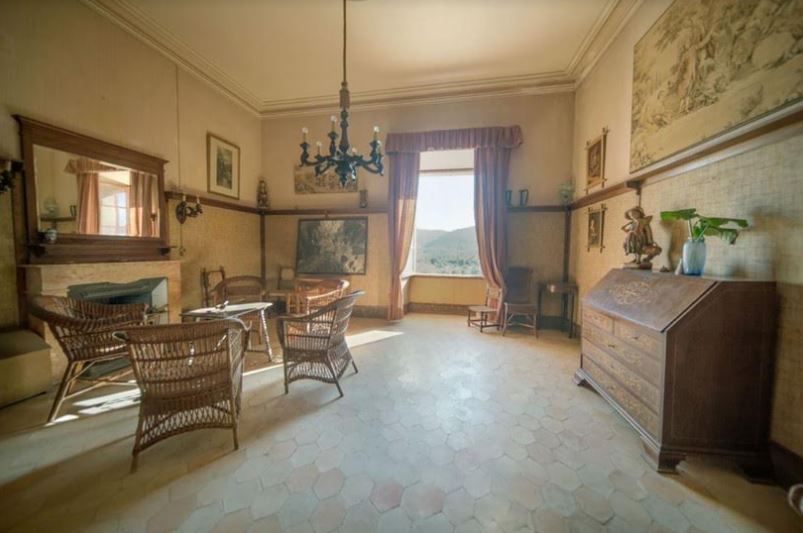
Mrs. Winchester’s mansion and gardens reflect her colourful and ornate rituals and its purpose was “to obtain control of the nature and power of my own being.” The might wings of the mansion outspread dove-like sitting brooding on the vast abyss. What is dark in Mrs. Winchester is to be illumined, what is lose raised and supported; the nine-story tower was constructed so that Heaven could hide nothing from Mrs. Winchester’s view, nor the deep tract of hell. Hell said to be a hideous flaming ruin and combustion in a bottomless perdition, there where Satan dwells in adamantine chains and penal fire. Nine times the space that measures day and night to mortal men, Satan and his horrid crew lay vanquished, rolling in the fiery gulf, confounded though immortal: but his doom reserved him to more wrath; for now the thought both of lost happiness and lasting pain torments him; round he throws his baleful eyes that witnessed huge affliction and dismay mixed with obdurate pride and steadfast hate: at once as far as angels ken he views the dismal situation waste and wild, a dungeon of horrible. Many leaders of the Church do not preach about Hell anymore because the Church has become a tax-free business and they do not want to hear about where they may go, nor do they want to scare their dirty money away from the Church. As a result of the loss of real churches who teach about Satan and demons, people are all wild and out of control and no longer fear anything and go around sinning like rain in Seattle. #RandolphHarris 7 of 13
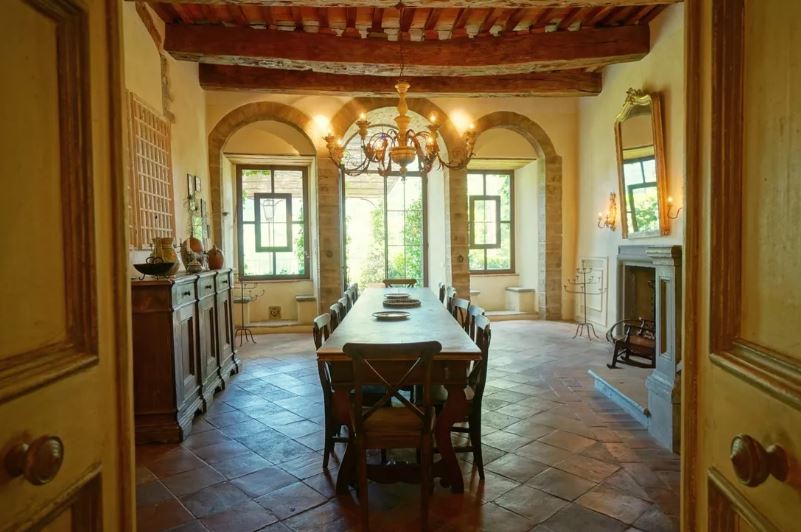
On a hot and dry Friday the 13th of June 1890, Mrs. Winchester drifted into an uneasy sleep, but not for long. Half an hour later she was wide awake again. Something was wrong; a change was coming over the bedroom. There was a sense of dread. Regions of sorrow, doleful shades, were peace and rest could not dwell entered. Her home started to feel like a place where hope could not come, and all that did come was torture without end. She sat up, fully alert, straining her ears for the slightest untoward sound, but all was silent except for the little trusted noises the home made during the evening. However, Mrs. Winchester noticed something odd: an unnatural coldness was stealing over the room. It had been a hot summer day. How could it be so cold? She shivered and ducked back under the covers, tugging them more snugly about her. It did not help; the cold kept increasing. She pulled the covers over her head, chiding herself for being silly and willing herself into sleep. However, the terrible dread kept gnawing at her. She tried to think pleasant thoughts, tried to ignore her thudding heart, and tried to pray. Her attempts brought little comfort; the fear continued to build. She sensed that something frightful was about to happen. She held her breath and waited, not knowing what to expect. Before too long, she heard a sound: the unmistakable creak of the doorknob. The spring bolt was sliding back with tiny clicks. Mrs. Winchester froze. Very slowly, the door began to open. Her fear quickened further as she heard the tread of heavy, booted feet approaching the bed. She wanted to call out for help, but was too afraid, as if some force was willing her to silence. Mrs. Winchester was helpless in the face of that power. #RandolphHarris 8 of 13

When she tried to pray, a demon started to speak. “The force of hose dire arms has caused me to fall to a place with floods and whirlwinds of tempestuous fire. Fierce contention brought along innumerable force of Spirits armed with durst in a dubious battle of unconquerable will, revenge, immortal hate.” Mrs. Winchester was dying and she knew it. This demon had come to claim her soul. She was making gaps, with long spaces between. A perspective of stern and cruel memories stretching away, like its own grey avenues, into a blur of darkness. Certainly no house had ever more completely and finally broken with the present. Mrs. Winchester lit a candle. A little animal stood before her, forbidding, almost menacing: there was anger in his large brown eyes. He came no nearer. As she advanced, he gradually fell back, and she noticed another dog, a vague, rough, brindled thing. At the same moment a third dog, a long-haired white mongrel, slipped out of a doorway and joined the others. All three stood looking at Mrs. Winchester with grave eyes; but not a sound came from them. Zip, had seemed to be observing them with a deeper intentness. Mrs. Winchester endured many long years of the company of many different creatures. They would return again and again. As she was in her morning room, the coldness came back. Her mind was alert but her body seemed paralyzed. The entity seemed to have the power to immobilize her from a distance. She heard the dull footfalls crossing her mahogany floors. There was an evil lurking in her home. Something started pounding on the table. #RandolphHarris 9 of 13
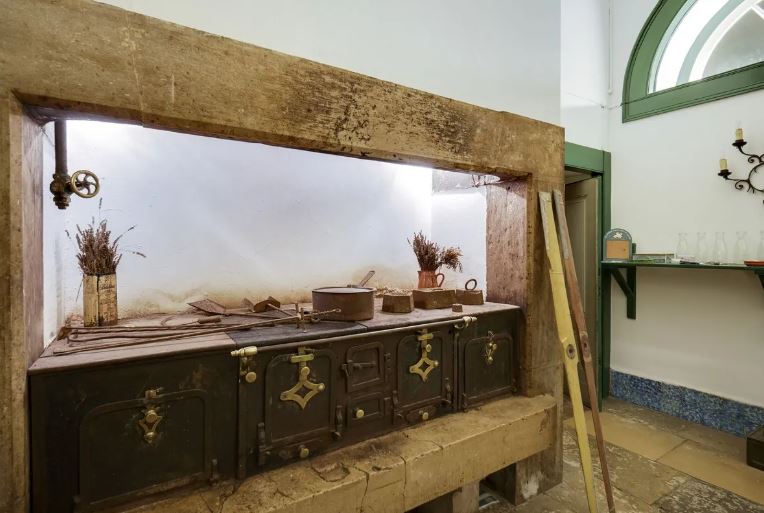
The pounding was so fierce that her cup of tea bounced off the table and fell to the floor. Then it stopped. Mrs. Winchester thought maybe she was having delusions. But whatever it was did not want her to drink the tea. More odd things began to happen—occurrences no one could explain. A malignancy pervaded. Often, people would hear a horrible, mocking, evil laugh. Lights would slicker for no reasons; water taps would turn themselves on, then off. She would find her silverware mysteriously rearranged. On several occasions she discovered her solid gold dinner service hidden in a corner of the room. One night, she had a roaring fire in the fireplace of her bedroom, went to the bathroom, and returned the fireplace totally clean with nothing it in burning. The servants began to complain of hearing mice in the night, but Mrs. Winchester was certain there were no mice in the house. On several occasions, one could very clearly hear the floorboards creaking upstairs, as though somebody was walking about the house. The servants heard the creaking too but, as is often the case with servants, they got used to it, and to the other noises and unexplained presences. Mrs. Winchester urged them no to speak of those things outside of the house. It was bd enough that she was subjected to the disturbances and torment; the last thing she wanted was to attract undue attention to her home. People do not, as a rule, react compassionately to reports of supernatural infestations; many tend to suspect that the victim has somehow, whether by word or deed, “brought it on herself.” #RandolphHarris 10 of 13

At times, Mrs. Winchester felt that the entity was trying to crush the life out of her. She left her light burning all night. Through time, Mrs. Winchester was forced to accept her suffering. There was nothing else she could do. One winter night, one of the butlers was found dead at the head of a narrow flight of stairs leading down from his room. It was Mrs. Winchester who found him and gave the alarm, so distracted with fear and horror—for his blood was all over her—that at first roused household could not make out what she was saying, and thought she was waking from a nightmare. However, there, sure enough, at the top of the stairs lay the butler, stone dead, and head foremost, the blood from his wounds dripping down the steps below him. He had been dreadfully scratched and gashed about the face and throat, as if with curious pointed weapons; and one of his legs had a deep tear in it which had cut an artery, and probably caused his death. Bu how did he come there, and who had murdered him? Mrs. Winchester declared that she had been asleep in her bed, and hearing his cry had rushed out to find him lying on the stairs; but this was immediately questioned. A shadow was rearing up from the body. Mrs. Winchester described it as “a blob, like smoking black cloud, not the shape of a person—just a thing, but a terrible thing. The absolute evil that came from it was overwhelming. I was so gripped with terror, I could not move, and I knew that if it came toward me, I would be swallowed up…destroyed, and that would be the end of me. Imagine what it feels like to know that you are going to be killed, and the specter that is torturing you is deliberately making you suffer beforehand. That is how it was. I felt a level of fear that is beyond words. Then I heard a voice and screamed.” #RandolphHarris 11 of 13
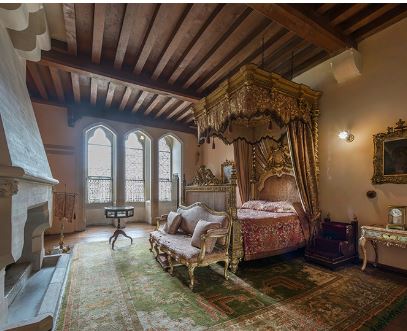
The male voice was hoarse, stertorous, angry almost. “You have left us this our spirit and strength entire strongly to suffer our pains that we my so suffice his vengeful ire, or do him mightier services as his thralls by right of war, whatever his business be here in the heart of hell to work in fire, or do his errands in the gloomy deep; what can it then avail though yet we feel strength undiminished, or eternal being to undergo eternal punishment?” Mrs. Winchester instantly went to sleep—chilling testimony to the control the demon had over her. When she awoke, she was clean, in her sleeping gown, and in her bed. However, it was with the possibility, and the hope, that the end of her long ordeal might well be in sight. Little of the fast-fading sunlight entered the house through the windows, many of which were partly or entirely covered with drapes. However, it was bright enough for Mrs. Winchester to see that the French Provincial sofa’s upholstery was slashed. Shredded wool spilled onto the floor. A solid oak bookcase had been hammered to pieces against the wall, gouging holes in the lath and plaster walls, running the Lincrusta-Walton Wallcovering. Her silver tea service has been smashed, along with a floor lamp. Books had been taken off the shelves, torn apart, and scattered across the living room. Mrs. Winchester lit a candle. It did not shed much light, just enough to reveal more details of the rubble. Looks like somebody went through here with a wrecking ball and scissors, she thought. The house remained silent. Leaving the door open behind her, she took a couple of steps into the room, and the crumpled pages of the ruined books crunched crispy underfoot. She noticed the dark, rusty stains on some of the paper and on the bone-white foam wool stuffing, and suddenly she stopped, realizing the stains were blood. A moment later, Mrs. Winchester spotted the corpse. It was that of a big man, lying on his side on the floor near the sofa, half-covered by gore-smeared book pages, book boards, and dust jackets. Zip’s growling grew louder, meaner. Moving closer to the body, which was just a few feet from the dining-room archway. Mrs. Winchester remembered that John Hansen had lately been making repairs, including a leak faucet and a broken door lock. #RandolphHarris 12 of 13
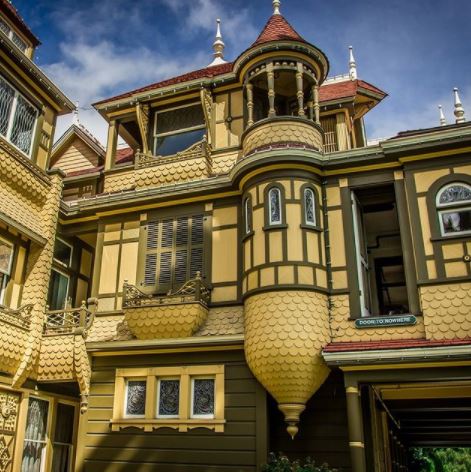
However, Mrs. Winchester thought because of the way the room looked, he had been killed weeks ago. Her house was so big that it would often take weeks, months, and sometimes years to get around it. Yet, on closer inspection, the corpse proved to be neither bloated with the gas of decomposition nor marked by any signs of decay, so it could not have been there for very long. Perhaps only a day or less. The body had been disemboweled. Zip’s low growling gave wat to ugly snarling punctuated with hard, sharp barks. With a nervous twitch and a sudden pounding of her heart, Mrs. Winchester turned from the corpse and saw that zip was facing into the nearby dining room. The shadows were deep in there because the drapes were drawn shut over all the windows, and only a thin gray light passed through from the kitchen beyond. “Go, get out, leave!” an evil voice told her. It was certainly not the voice of Mr. Hansen. Something in the dining room was moving. There was no doubt of its presence, because it rushed out onto the dining-room tables, and came straight at Mrs. Winchester, emitting a blood-freeze shriek. She saw lantern eyes in the gloom, and nearly a man-sized figure that—in spite of poor light—gave an impression of deformity. Then the demon was coming off the table, straight at her. I Do conjure thee, O Spirit Focalor and your legion of thirty spirits to manifest your spiritual weapon in this corporeal World through my will and might! Empower it so that it may serve me here upon the corporeal plane! May it serve as a key to the realms above and below unlocking power and wisdom for my glory and ascent! Fill this weapon with your powers of wrath and fury that it may seek out spiritual attacks made toward me rendering them useless and impotent! I DO conjure thee Spirit Vephar, pierce the Heavens and cause the seas to be right stormy to cleanse the Earth of sin. Spirit Vizaresh, I DO conjure thee to drag sinful souls into hell, noosing them with the power of their own sins. May the snare be the power of their own evil, words, thoughts, and deeds and let this be you will to drag unwilling souls into Hell. May this cord gain its power through one’s practical application of evil principles. #RandolphHarris 13 of 13

Winchester Mystery House
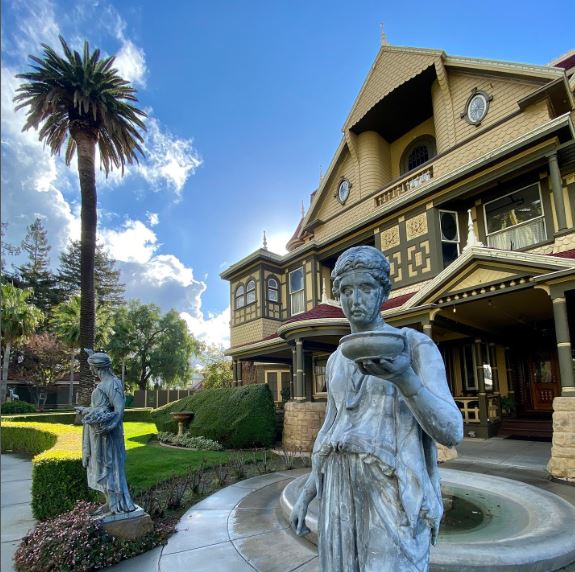
Happy Sunday! House tours 10am-5pm today 🏠 come see us!
🎟️ link in bio. https://winchestermysteryhouse.com/

Mrs. Winchester never recovered from the 1906 earthquake. Staff said she grew weaker and weaker as the years went by, and that she was often heard talking to her dead husband. The house was already large, but it morphed to be as long as several city blocks and was taller than the tallest trees on the green lawn. I suppose, ultimately, it was the spirits who kept her in this estate by not allowing her to build another one of this magnitude. When Mrs. Winchester passed away in 1922, she left $5,000,000.00 to charity. The mansion is truly special and a national treasure.

Preparing to Call Out a Demon

Occultists draw on the past. Everything they do has some historical, sometimes religious, bond. Rumours, myths and superstitions surround almost every aspect of the secret societies of men and women who gather suspiciously—because of the secrecy—and perform their dark and dramatic rituals, formulated from old grimoires handed down and rewritten through the ages. Personalities, too, figure predominantly. However, there are very few forms of modern occultism that do not, at some time or other, rely upon the legacy of Aleister Crowley, the self-styled Great Beast 666. At the pinnacle of his career was renowned for a wild mix of magic, and today is revered by millions the World over who are rereading the legends of this man many believed to be another Shakespeare. Mrs. Sarah L. Winchester is also a mysterious historical figure who practiced the occult. The mansion she built, called the Winchester Mansion is classic Victorian architecture and unparalleled gardens that are so incredibly photogenic that the home has become one of the World’s most intriguing and mysterious places to see ghost. Mrs. Winchester’s resources were unlimited, and she spent enormous sums building the most incredible mansion. However, the Winchester fortune was cursed. It was in the thick December dusk, in the Hall of Fires, Mrs. Winchester had endured thirteen years in the soul-deadening mourning of her husband and her daughter. When servants would catch her off guard, she would still express a sadness. Her life had probably not been of the most vivid order: for a long period, but these country plains of existence sometimes breed, in their sluggish depths, strange acuities of emotion, and Mrs. Winchester had felt from the first day the mysterious stir of intenser memories. #RandolphHarris 1 of 8
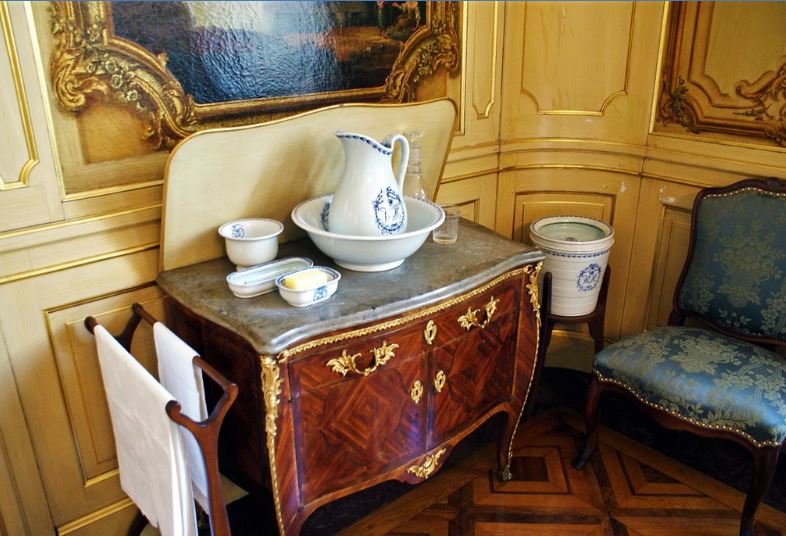
The feeling had never been stronger than on this particular afternoon when, waiting in the library for the lamps to come, she rose from her seat and stood among the shadows of the hearth. Edith Bernard, a one-beautiful young woman was found dead, lying helplessly on the floor. A single bullet lay buried deep in her head. “Spare me, ye gods!” Mrs. Winchester cried. Four servants quickly rushed in the room to comfort Mrs. Winchesters. As two of the servants stood breast to breast, another bullet pierced them both. They uttered a cry together, together cast a parting look around them, and together breathed their last. Adora, another maid, seeing them fall, hastened to the spot to render assistance and fell stricken in the act of loving duty. Only one servant and Mrs. Winchester was left. Another gunshot was heard and it struck Valda, but no shooter was seen. Mrs. Winchester knelt over the lifeless bodies, and kissed, now one, now another of her dead servants. Raising her pallid arms to Heaven, “Spirits,” said she, “feed full your rage with my anguish! Satiate your hard heart, while I follow the grave of my four servants. Yet where is your triumph? Bereaved as I am, I am still richer than you, my conqueror.” Two others servants rushed into the library to assist Mrs. Winchester. One of them held her is her arms. The other was tending to the dead bodies. Scarce had Mrs. Winchester spoken, when the gun shot sounded and struck terror into all hearts. The servant mourning over the biers of their dead coworkers fell struck by a bullet, and died on the corpse she was bewailing. The maid attempting to console Mrs. Winchester, suddenly ceased to speak, and sank lifeless to the Earth. #RandolphHarris 2 of 8
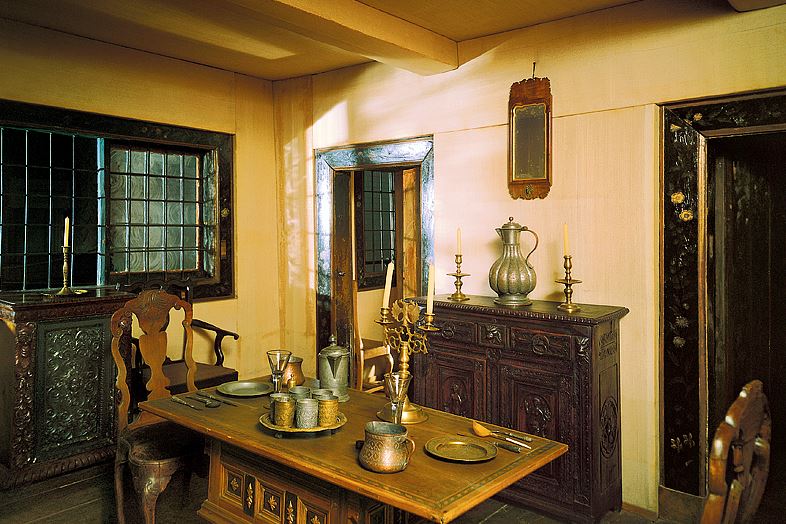
Six were now dead, and only Mrs. Winchester remained. “Spare me!” she begged. There was a torpid grief. The breeze moved not her hair, no color was on her cheek, her eyes glared fixed and immovable, there was no sign of life about her. Her very tongue cleaved to the roof of her mouth, and her veins ceased to convey the tide of life. Her neck bent not, her arms made no gesture, her foot no step. She was changed to stone, within and without. Yet tears continued to flow. When other staff members stumbled upon the tragedy, “Could it be the house?” the Butler asked. The mansion itself was fully of secrets. They seemed to be piling themselves up, as evening fell, like the layers and layers of velvet shadow dropping from the low ceiling, the rows of books, the smoke-blurred sculpture of the hearth. “Why, of course—the house is haunted!” he reflected. The ghosts of those killed by the Winchester rifle. Mrs. Winchester has now become a permanent tenant of her haunted mansion. One of the elusive specters had apparently had the powers to crystallize about it. Immediately following the strange deaths and Mrs. Winchesters crystallization, mystery, scandal and rumor swirled around the tragedy. Mrs. Winchester had been the envy of her friends, now the pity of even her foes. She stood crystalized in her mansion for many months. A new sense of meaning—a sense gradually acquired through daily contact with her in the form created a scene of the lurking mystery. It was the house itself, of course, that posses the ghost-seeking faculty, that communed visually but secretly with its own past; if one could only get close enough communion with the house, one might surprise its secret, and acquire the ghost sight on one’s own. #RandolphHarris 3 of 8
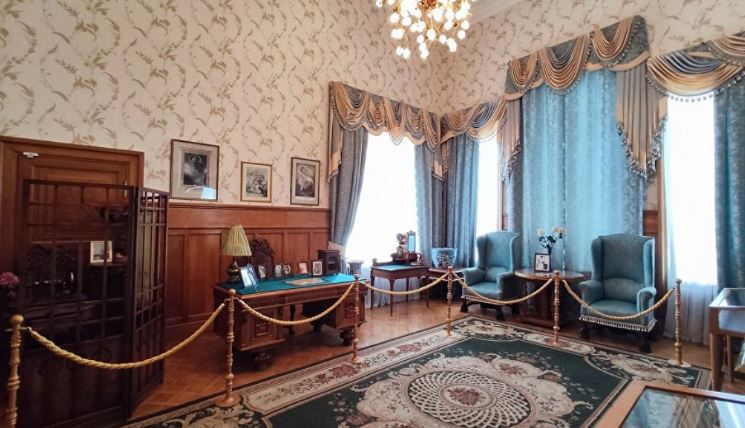
More and more under the spell of the crystallization of Mrs. Winchester, calling out to the remote corners of the house, servants found treasure after treasure, it revealed itself to them. When passing from the first rapturous flurry of exploration to a detailed inspection of the old house, the butler pressed a panel that opened on a flight of corkscrew stairs leading to the nine-story tower. The view was enchanting. His gaze flew to the long tossed horizon line of the downs, and then dropped contentedly back to trace the yew of hedges about the fish pond, and the shadow of cedar and palm trees on the lawn. Distinctly he recalled that he had seen, as he glanced, a shadow of anxiety, of perplexity, rather, fall across his face; and, following his eyes, had beheld the figure of a man—a man in loose black clothes, as it appear to him—who was sauntering down the lime avenue to the court with the doubtful gait of a stranger who seeks his way. “Wait!” he hastily shouted and ran down the stairs. But the man was gone. Suddenly, Mrs. Winchester let out a terrible cry…but could it be her? She had been in statue form for years. The old butler Augusts had some questions as to the connection of evil spirits with systems of idolatry and witchcraft. He was almost willing to swear that his eyes were playing tricks on him; for seeing Mrs. Winchester come back to life went beyond all human discernment. Of course, the young lady was stiff and needed help moving around. The Hall of Fires seemed to warm her blood and make moving easier. We wrestle not against flesh and blood, but against principalities, against spiritual wickedness in high places. #RandolphHarris 4 of 8
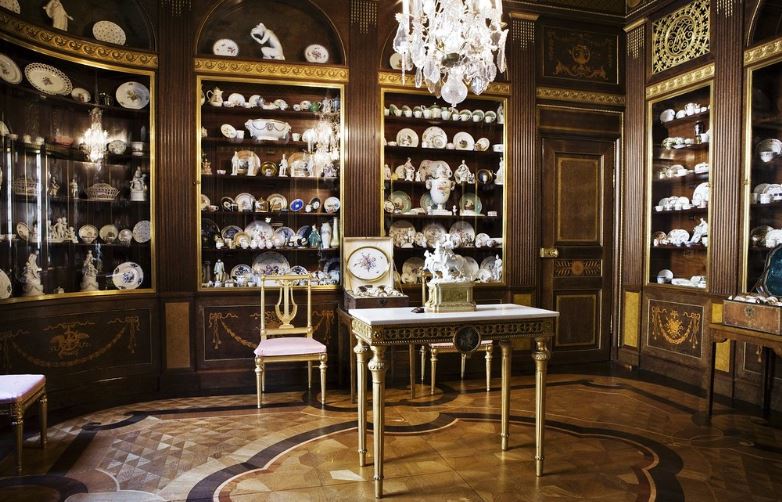
Weary with her thoughts, Mrs. Winchester moved to the window. The Hall of Fires was quite dark now, and she was surprised to see how much faint light the outer World still held. As she peered out into it across the court, a figure shaped itself far down the perspective of bare limes: it looked like a mere blot of dark blackness in the grayness, and for an instant, as it moved toward her; her heart thumped to the thoughts “It’s a ghost!” She had time, in that long instant, to see the man gaining substance and character, showed itself even to her weak sight as her husband William Winchester; she turned to meet him, and he vanished into thin air. Mrs. Winchester’s spirit sunk. At once the air of the hall rand with a long, frightful chain of woeful howls. Above the bestial clamour, Mrs. Winchester could hear a spirit shouting, “I adjure thee, great Marchosias, the agent of the Emperor Lucifer and of his beloved son Lucifuge Rofocale by the power of the pact…” The noise rose higher and a green stream began to come off the brazier. However, there was silence. Again the spirit shouted, “I adjure thee, Marchosias, by the pact and by the names, appear instanter.” The room screamed…but still there was no apparition. Instantly the mansion rocked as though the Earth moved under it. The building shuddered again…then from the middle of the room, a low cloud of yellow fumes went up towards the ceiling, making Mrs. Winchester cough. As it spread and thinned she could see the shape forming under it…it was something like a she-wolf, grey and immense, with green glistening eyes. A wave of coldness was coming from it…the cloud continued to dissipate. The she-wolf glared at them, slowly spreading her griffin’s wings. Her serpent’s tail lashed gently, scalily. The existence and manifestation of demons and devils in the Winchester Mansion has been accepted without question. The thing that dominated the mansion was a group of spirits known as “Legion,” or “The Legion of Lucifer.” #RandolphHarris 5 of 8

There is magical art abundant in the mansion. This explains how it has become an abnormal plane of power to “charge” magical energy. It is thought that Mrs. Winchester used the powers of Osiris and was able to reconstitute her body to return to life. This is a fundamental of the higher form of necromancy. When the mansion was sold and items auctioned off, the walls were found to be covered with magical symbols and paintings. Also found were solid gold talismans and amulets. The mansion itself was protected by spells and curses. The Winchester Mansion is a receptacle for all the mystical and magical beliefs of the East and the West. The farmers on the Winchester Estate followed the long-established practice of cutting a girdle of bark off the trees, and then setting them on fire or leaving them to die in place while planting crops around the decaying hulks. Immense trees were stripped of their foliage, and half consumed by fire extending their sprawling limbs, many were bleached by weather. By this method the farmers on the estate could clear from 3 to 5 acres a year for cultivation. The relentless demand for wood generated by the construction of the mansion and for other Victorian houses on the estate and barns, fences and fuel, potash and turpentine—added to the demand. Native Americas, in return for furs that they had in abundance, secured goods such as blankets, guns, ironware that they highly valued from Mrs. Winchester’s estate. It was even rumored that Mrs. Winchester owned the Philosopher’s Stone which was believed to turn anything it touched into gold, cure all ills and kept its owner perpetually youthful. It was supposedly given to her as a gift. #RandolphHarris 6 of 8

As the years pass by, many people who practice magic descend more deeply into the darker realm of magic, summoning demons and spirits almost at will. Some magicians become obsessed by their craft, their quest for knowledge and power and it can drag them into the black abyss. A fascinating story about the darker realm of the Winchester Mansion is one about Leonore. Leonore was lodging at the Winchester Mansion, she persuaded Augusta, the butler, to unlock the door to the Blue Séance Room. Leonore went inside and stood reading aloud from a book of spells that lay on the table; suddenly a demon appeared and demanded to know why he had been summoned. Leonore was so shocked that she could not answer and the demon grabbed her by the throat and strangled her. Mrs. Winchester returned to find Leonore lying dead on the floor of her Blue Séance Room, and realizing this could mean trouble, she summoned the demon to return and bring Leonore back to life long enough for her to be removed. This was done, and Leonore walked out of Mrs. Winchester’s Mansion into the marketplace where she immediately collapsed and died. As word of Mrs. Winchester’s success, great wealth, and powers spread, so did the story that she had made a pact with the devil, written as usual in her own blood, in return for magical powers. Once the magical power of the menses has been blessed by the Dark Goddess it has been consecrated as a direct conduit of the powers of destruction, death, and decay. #RandolphHarris 7 of 8
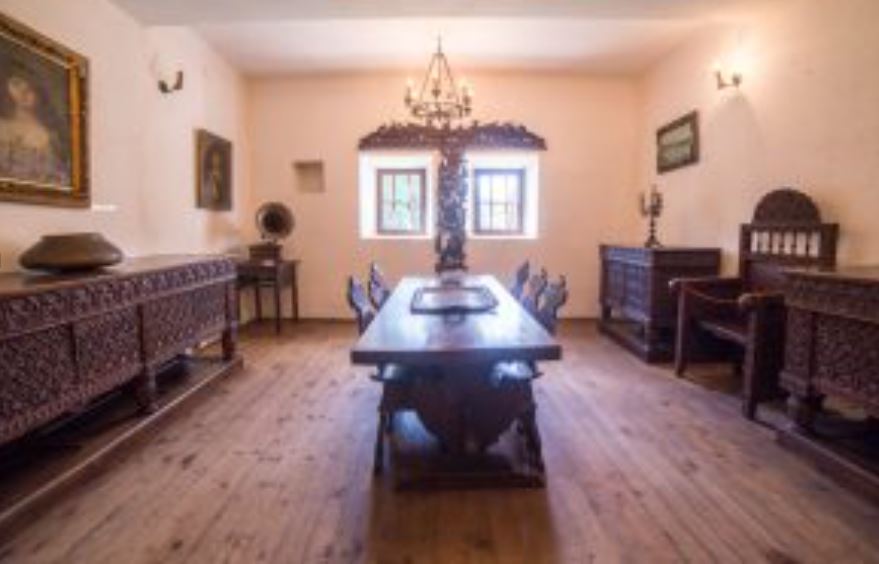
Angra Mainyu, come forth from the realms of eternal darkness. Angra Mainyu, I summon you to come forth and ignite this flesh as the very source of your power and might that it may emanate the ways of your Black Sun. May this body become the very fuel, the embers of this forbidden Blackened Fire that I may consume power to banish the limitation of creation and become the counter creator for the glory of Dragon Zohak! Empower me with this infernal blessing as a warrior of the Path of Smoke and Apostle of your teachings of liberation! Hear Mr:–Ieou: Pur: laot: Iaeo: Ioou: Abrasar: Sabriam: Do: Un: Adonaie: Ede: Edu: Angelos ton Theon: Aniaia Lai: Gaia: Ape: Diathanna Thorun. I am He! The Bornless Spirit! Having sight in the feet: Strong and the Immortal Fire! I am He! The Truth! I am He! Who hate that evil should be Wrought in the World! I am He, that lighteneth and thundereth. I am He, from Whom is the Shower of the life of Earth: I am He, Whose mouth ever flameth: I am He, the Begetter and Manifester unto the Light: I am He; the Grace of the World: “The Heart Gith with a Serpent” is My Name! Come Thou forth, and follow Me: and make all Spirits subject unto Me so that every Spirit of the Firmament, and of the Ether: upon the Earth and under the Earth: on dry Land, or in the Water: of whirling Air or of rushing Fire: and every Spell and Scourge of God, may be obedient unto me! Iao: Sabao: Such are the Words! Magic is the Highest, most Absolute, and most Divine Knowledge of Natural Philosophy, advanced in its works and wonderful operations by a right understanding of the inward and occult virtue of things; so that true Agents being applied proper Patients, strange and admirable effects will thereby be produced. Whence magicians are profound and diligent searchers into Nature; they, because of their skill, know how to anticipate an effort, the which to the vulgar shall seem to be a miracle. #RandolphHarris 8 of 8
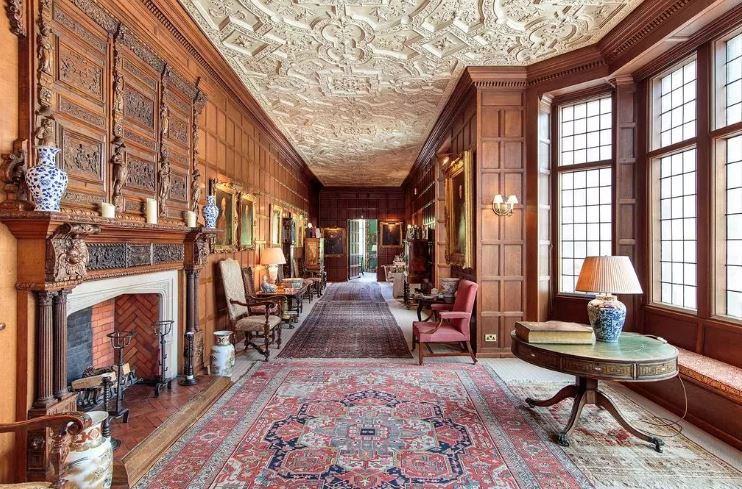
Winchester Mystery House

This Friday. Tune in on Friday, December 23rd 6pm pst/9pm est to watch the Destination Fear crew investigate The Winchester Mystery House on Travel Channel! The episode will be available for streaming on Discovery+ same day👻 Can’t wait!
@travelchannel @discoveryplus #DestinationFear #winchestermysteryhouse
Angels Which Kept Not Their First Estate
I hope by now that you agree with me that the tiresomeness of an over-peopled Heaven is a purely subjective and illusory notion, a sign of human incapacity, a remnant of the old narrow-hearted aristocratic creed. William Winchester loved boats and had thirteen-metres and even raced one in the America’s Cup trials once. He had a big yacht that he kept down in New Haven, Connecticut, even though he lived in Switzerland most of the time. My grandfather, Oliver Winchester, put a rear wing on the house he bought for William as a wedding gift, with a new kitchen and flower room my grandmother wanted when she married him. This house preceded the Winchester Mansion. And it was where my father, William Winchester, had an office. There had been a couple of times when I would have to take papers down to him. That office was bigger than most people’s living rooms. It had a fireplace and a window looking out on the West River, which flows into New Haven Harbor. Oliver Winchester was the Lieutenant governor of Connecticut. Not only was he founder of the Winchester Repeating Arms Company, but he was on the board of directors of four charities, including the Winchester Foundation, which gave money for research into Tuberculosis and heart disease; he was on the board of New Haven Savings Bank, which the Winchesters pretty much owned; he was on the boards of a couple of other big companies. Running a rich family was like running a business. #RandolphHarris 1 of 13

In fact, if you look at the Winchester Family treat, it is more of a “business family tree.” I guess money has always been the life source of the Winchester family. My father, William Winchester, said the family motto was “We own it, lock, stock, and barrel.” This family had a lot of power, and when you have power, you use it. The Winchester’s did not go out brawling like drunken sailors. We had the courts, the law, the police—and the Winchester Rifle if we needed it. We made sure that things around here went the way we wanted them to go. However, we did not go about it by brawling. If you did us wrong, we stayed clam, we spoke politely to everybody. However, we moved quietly. Sooner or later we would catch you between a rock and a hard place and then you would feel the almighty bad. If we did not go after them, those guys would have thought we were chicken. My father always said, “Son, do not worry what John Jacob Astor thinks of you. In your position it does not matter. You are going to be very rich and very powerful. These people will never like you. They will envy you, they will defer to you, and some of them will even admire you. But they will never like you. For that you must understand, what others think does not matter.” The original Winchester mansion was a house of these times, all right, though not to be considered new. I figured it to be at least three hundred years old. It was built of the local stone, and had three stories and a high-pitched roof, with mullioned windows—and it was vast. #RandolphHarris 2 of 13
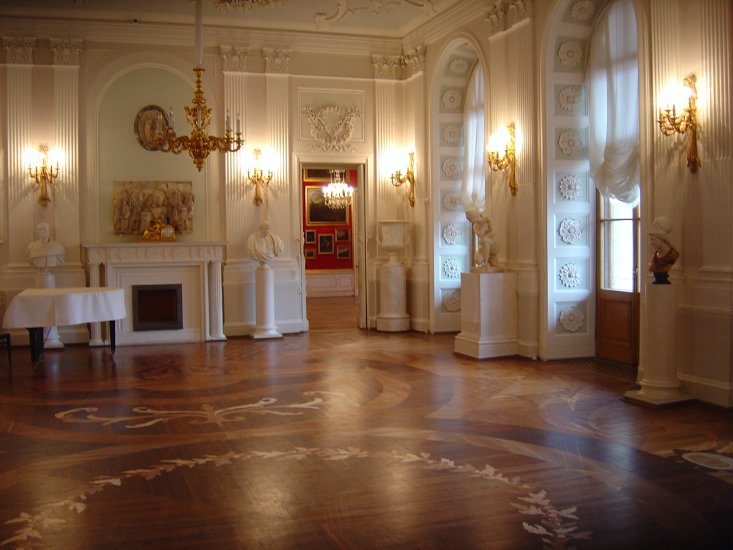
Often times, there was no one about. Only the bleak winter vines stripped of their jasmine, running on for miles, and distant corpse of an ancient tree of immense size, and the cold rain, a rain worse to me than snow, falling over as if it were falling on the entre World, a near silent rain that felt like needles on the backs of my hands and on my face. The mosaic tiles were beautiful, and possibly ancient, dating all the way back to the Roman times. I walked back and forth over the, and tapped several times with the toe of my boot. I walked to the double doors that opened into the garden, and there I saw a great pile of wood. And there was a big head on the rock, it was the devil’s face that a saint put there. If men believed nothing, they did not understand it, it is a short cradle they would have. I had been put in the mood for ghost, that evening after an excellent dinner at my father’s home. Seen through the haze of Abner Doubleday’s cigars, and by the drowsy gleam of a coal fire, my father’s library, with its oak walls and dark old bindings, made a good setting for such evocations; and ghostly experiences at first hand beings. An absurd thought came to me, that being here with Abner, it had all felt natural and good, as if in spite of the topic of our conversation we were simply human beings and all the dark World did not exist. I was ashamed of this. Why did we have to be “like human beings”? I asked myself. Why could we not simply be warlocks together? He looked at me, at my shining eyes, and his congenial smile, and he took my hand and said he wanted to see the house. We remained together for several hours after that, during which we walked through many rooms and he not only admired the endless book collection in the Gothic library, filled with classics bound in black cloth and daguerreotypes of faded celebrities, but also many of the paintings, including a few Russian painters of the nineteenth century he had never seen before. #RandolphHarris 3 of 13
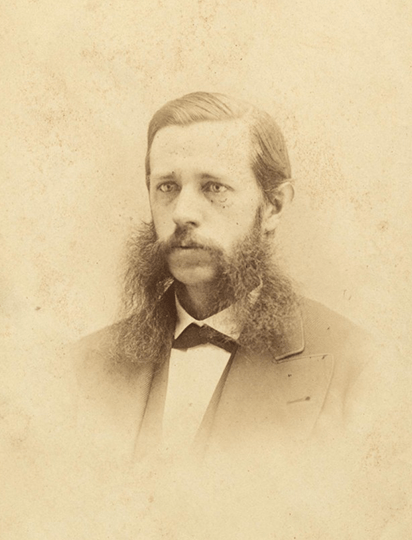
For me, this was a wonderful time. We could have continued our conversation for a year. We walked about outside the house, through the gardens which were crowded with trees for privacy and vines that blossomed at night. These carefully guarded hours had been devoted to the cultivation of a fine intelligence and a few judiciously chosen habits; and none of the disturbances common to the human experience seemed to have crossed the sky. Mentally I was able to exercise a hospitality less seductive but no less stimulating than a play. Abner’s mind was like a forum, or some open meeting place for the exchange of ideas: somewhat cold and drafty, but light, spacious and orderly—a kind of academic grove from which all the leaves had fallen. In this privileged area, we were able to stretch our muscles and expand our lungs; and, as id to prolong as much as possible the tradition of what we felt to be vanishing institution, Abner tasted the lyric qualities in youth. He nipped the flowers of soul which he gathered from this tour, which forced a young idea to blossom. The man was really intelligent, and the soundness of his nature was like the pure paste under a fine glaze. Abner had been fished out of the dullness by the spirits of the Winchester mansion. Just at the evening was drawing to an end, he demanded, “And now you have to tell me about your ghosts!” “My ghost? Do you suppose I am fool enough to the expense of keeping my own ghosts, where there are so many charming ones in my friends’ closets?” I said. #RandolphHarris 4 of 13
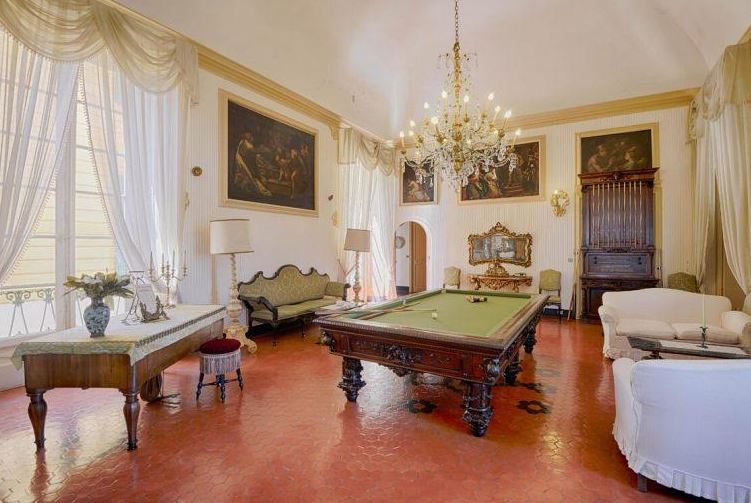
The fact is that we found whole skeletons that were used in various forms of old black magic rituals. Undoubtedly, for many who pursue this darkest of experiments, necromancy is the touchstone of occultism, especially for warlocks. If, after careful preparation, they are able to carry through what they regard as a successful contact they have reached a certain pinnacle in black magic conjuration. It is fruitless discussing whether or not this feat is possible; belief by the practitioner is all that is needed for the ritual to proceed and some psychological or drug or spiritual trance may well convince the depts tht they have indeed succeeded. “Oh,” Abner said, “you would never be content to share if you met one you really liked. What is the use of denying it? You have seen everything, so of course you have seen a ghost! Or if you have not seen one, it is only because you have seen several!” “That is it,” I said. “I have seen a legion.” The words were so unexpected that they dropped down and down into a deep silence, while we continued to stare at each other. Abner learned forward with is listening smile. “You will wonder why I am enlarging on some of these incidents. It is because the evening on which this particular incident took place was the very evening on which I first saw the queer sights I have spoken of. Being at that time an ardent believer in a necessary sequence between cause and effect, I naturally tried to trace some kind of link between the lion and the lamb lying down together.” Ancient Druids lived on the estate and necromancy had a particular appeal to warlocks seeking confirmation, for example, of the mysteries of the afterlife but more often necromancy was pursued by the skilled masters of ritual magic. #RandolphHarris 5 of 13

“We once wanted to raise a dead uncle,” I told Abner. “We went to the course of the giant tree, where we performed a ceremony. For a few moments, nothing happened. But moments later, there was a mysterious explosion. And afterwards, the road lay thick with cinders and debris. At first, my grandfather worried about the result. But he had a reassuring thought. Perhaps the explosion was caused by spontaneous combustion. ‘Oh my God…’ cried my father. ‘What happened?!’ he demanded. No one was sure. After that we walked back to the house in disbelief of the mess. Then I pointed and shouted out in horror. Before I could stop, my father fell to his knees before a hill of burned leaves and tree branches, under which he glimpsed a man’s head. It was his brother and he was looking for us. My grandfather put a hand to his mouth and stified the urge to vomit. My uncle’s eye sockets were empty, and his hair singed. ‘Brother, get up!’ he cried roughly. My father yanked his brother to his feet, frightened by the wide-eyed horror in his eyes and his awful nonstop screaming. He tried to pull out of his grasp, but he held my father tight until the screams subsided into sobs.” “Now listen,” my grandfather told my father. “You are a Winchester, so do not go making a liar out of me.” “But his brother’s tears burned my father’s skin.” “Your brother is dead,” said my grandfather. “We wondered if anything else came back to life. It was so eerily silent for this time of the morning. No cows mooing, no wood being chopped. No birds singing on the roof top. And the lawn was blackened.” #RandolphHarris 6 of 13
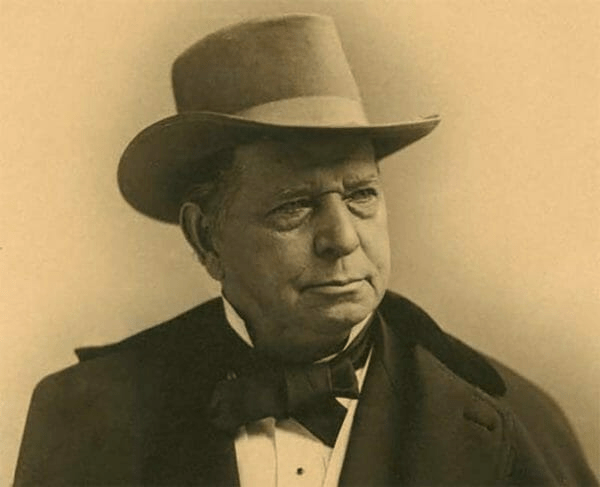
“As we went into the house, it was full of strangers, burned, bleeding, sick people. As we precariously waded through the maze of bodies, the wind must have carried in a fog. While my grandfather dug a mass grave for these animated bodies, my father and I dragged them out of the house to burry them. It took days, there were literally hundreds of them. My arms were shaking. We were all near exhaustion, and we still have several bodies to bury. We worked for an entire week to remove all these bleeding strangers from our home. I went up to bed with rather a heavy heart, for I was bowed under the weight of the first ritual I had ever consciously committed; and young as I was, I saw the gravity of my situation. The situation of being William Wirt Winchester Jr. Do not imagine for this that I had hitherto been an instrument of destruction I had been a harmless young man, who had followed his bent and declined all collaboration with Providence. Now I had suddenly undertaken to promote the moral order of the World, and I felt a good deal like the trustful spectator who has given his gold watch to the conjurer, and does not know in what shape he will get it back when the trick is over…Still, a glow of self-righteousness tempered my fears, and I said to myself as I undressed that when I had got use to being good it probably would not make me as nervous as it did at the start. And by the time I was in bed, and had blown out my candle, I felt that I really was getting used to it, and that, as far as I had got, it was not unlike sinking down into one of the softest wool mattresses.” #RandolphHarris 7 of 13

“My room had grown cold, and intensely still. I was waked by the queer feeling we all know—the feeling that there was something in the room that had not been there when I fell asleep. I sat up and strained my eyes into the darkness. The room was pitch black, and at first I saw nothing; but gradually a vague glimmer at the foot of the bed turned into two eyes starting back at me. The eyes gave out a light of their own. They were the very worst eyes I have ever seen: my dead uncle’s eyes. And the room slowly filled with hundreds of these eyes, orbs of light. My father paid immense sums to the architects and workmen to entomb the heart of the house in hopes of locking their spirits inside. This mean enclosing one of its four towers left standing and living in only a few habitable rooms while the work went on. The mansion went on to be inhabited by a secret order of men and women who met to discuss philosophy and music and escape the modern World, and the public would never be invited here due to the deep mourning of my mother over the loss of my grandfather, father, and baby sister. Indeed it was most anguishing. Some of these people had devoted their entire careers to this one project, and there was nothing now to be done but to give them, but gold coins. My mother left this mansion to Yale, I went to Rome, she went to California and it was later demolished. And there were egregious lies to be told about the Winchester name. Gorgeous salons with silken-paneled walls and plaster curlicues and Savonnerie carpets on the floor all destroyed. #RandolphHarris 8 of 13
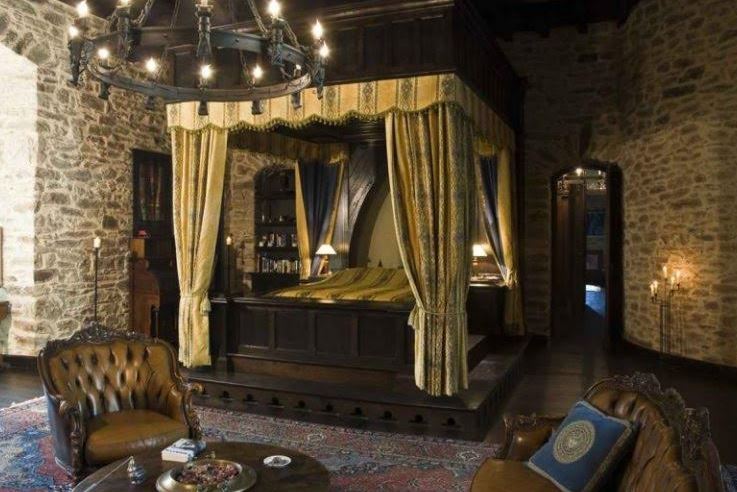
The modern marble bathrooms, replete with sunken tubs and spacious showers for every bedchamber. We wanted to make sure to give off no scent, absorb no precious oils, and did not want to take up the human scents. The great hall where my family and I had once dined, listened to the demands of the villagers and farmers, and hovered around the seventy-five fireplaces, twenty kitchens, four libraries, eighteen thousand windows, four towers, and three hundred and fifty rooms all gone like it never existed. At times, there may have been two thousand present in the ballroom. No one ever counted. This was the height of the Winchester fortune, my dear Abner. There were many departed here, though untouched by the rifle.” In its blackest form the art of necromancy has produced fairly evil recipes for success. Graveyards are indeed a common place, and it is possible our home had been constructed on a battle ground. This was a place where contact with the dead could be expressed, and was conducive to dark apparitions in suffocating rooms or beneath a mock swinging gibbet. The old grimoires are full of colourful descriptions, and since they were often written by clerical scholars when they took down the confessions of warlocks, one must be careful with the rite performed. One could magnify the spell. Even policemen were involved in occultism. As an example, the daughter of a police superintendent was initiated into the dark arts and the High Priest was another policeman. “Yes, I was the High Priest…I have been a white witch for eight years and I am not ashamed of what I do although some of my colleagues have reported me to the Witch Inspector General. I have helped to initiate at least seven witches and eight warlocks.” #RandolphHarris 9 of 13
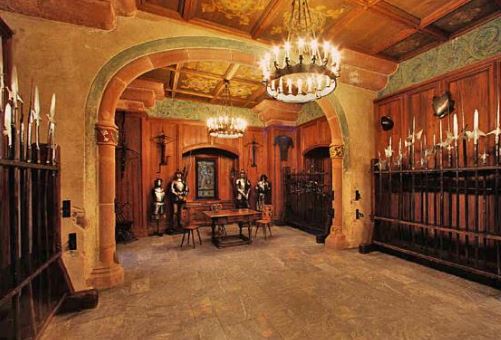
There is much evidence in Scriptures that the spirits who appear at séances are rebel angels. Perhaps that is what we raised that night? Jude 6 speaks about “angels which kept not their first estate.” Many Christian Bible scholars interpret Ezekiel 28.17, “I will cast thee to the ground,” as indicating that the Earth is the realm of Satan’s powerful operations, with the help of his fallen colleagues, the demons. Satan is called the “god of this World,” in 2 Corinthians 4.4. And Christians are under attack by “rulers…powers…World forces of darkness” (Ephesians 6.12). God tell us that hell was “created for the devil and his angels (demons)” (Matthew 25.41). I, Randolph Harris, cite and conjure thee, Spirit of Schemhamforasch, by all the seventy-two holy names of God, that Thou appear before me and fulfil my desire, as truly in and through the name Emanuel, which thee three youths Sadrach, Mijach, and A hero sung in the fiery furnace from which they are released. I do conure thee, O thou Spirits William Wirt Winchester and Oliver Fischer Winchester, by all the most glorious and efficacious names of the MOST GREAT AND INCOMPREHENSIBLE LORD GOD OF HOSTS, that thou please comest quickly and without delay from all parts and places of the Earth and World wherever thou mayest be, to make rational answers unto my demands, and that visibly and affably, speaking with a voice intelligible unto mine understanding as aforesaid. I conjure and constrain thee, O thou Spirits William Wirt Winchester and Oliver Fischer Winchester, by all the names aforesaid; and in addition by these seven great names wherewith Solomon the Wise bound thee and thy companions in a Vessel of Brass, Adonai, Preyai or Prerai, Tetragrammaton, Anaphaxeton or Anepheneton, Inessenfatol or Inessenfatall, Pathtumon or Pathatumon, and Itemon; that thou appearest here before this Circle to fulfil my will in all things that seem good unto me. #RandolphHarris 10 of 13

And if thou be still so disobedient, and refuest still to come, I will in the power and by the power of the name of the SUPREME AND EVERLASTING LONG GOD WHO created both thee and me and all the World in six days, and what is contained therein, Eie, Saraye and by the power of this name Primeumation which commandeth the whole host of Heaven, bless three, and grant thee of thine office, joy, and place, and bind thee in the depths of Heaven or the eternal to remain unto the Day of the Last Judgment. And I will bind thee in the Eternal Light, and into the Sky of Light and Harmony, therefore see my good wishes for you and please comest quickly and appearest here before this Circle to do my will. Therefore, come thou! In and by the holy names Adonai, Zabaoth, Adonia, Amioran, Come thou! For it is Adonai who commandest thee. If THOU hast come thus far, and yet he appeareth not, thou mayest be sure that he is sent unto some other place by this King, and may return any time; and if it be so, invocate the King as here followeth, to send him. However, if he does not come still, then thou mayest be sure that he is bound in the Heavens, and that he is found in the custody of his King. If so, and thou still hast a desire to call him even from thence, thou must rehearse the general curse which is called the Spirits’ Chain. O THOU great, powerful, and mighty KING AMAIMON, who bearest rule by the power of the SUPREME GOD EL over all spirits both superior and inferior of the Infernal Orders in the Dominion of the East; I do invocate and command thee by the especial and true name of GOD; and by that GOD that THOU Worshippest; and by the Seal of they creation; and by the most mighty and powerful name of GOD, IEHOVAH TETRAGRAMMATION who cast thee out of Heaven withal other infernal spirits. #RandolphHarris 11 of 13
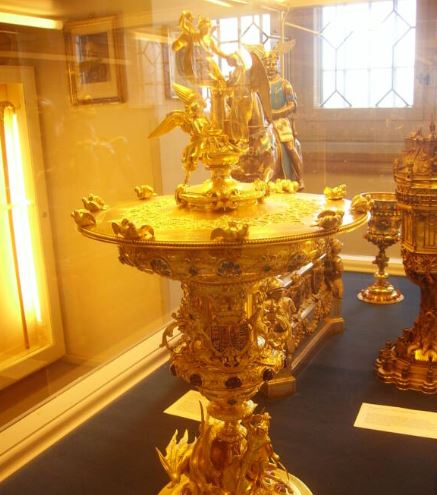
And by all the most powerful and great names of GOD who created Heaven, and Earth, and Hell, and all things in them contained; and by their power and virtue; and by the name PRIMEUMATON who commandeth the whole host of Heaven; that thou mayest cause, enforce, and compel the Spirits of William Wirt Winchester and Oliver Winchester to come unto me here before this Circle in fair and comely shapes, without hard unto me or unto any other creature, to answer truly and faithfully unto all my requests; so that I may accomplish my will and desire in knowing and obtaining any matter or thing which by office thou knowest is proper for him to perform or accomplish, through the power of GOD, EL, Who created and doth dispose of all things both celestial, aerial, terrestrial, and infernal. I conjure you William Wirt Winchester and Oliver Fischer Winchester, by the Spirits Chain to appear in the Winchester Mansion, and if you two are bound in chains, by the Emancipation Proclamation, you have permission to break off from them and be at liberty. As this smoke ascends I ascend also by following the path of smoke and usurping power of worship to empower by blackened eternal soul. I take all the power raised within this sanctuary as my own through this talisman of counter creation to strengthen my divine power and to Become a Living God. Harness power through the cedar tree of life, disinfectant, expectorant, treatment of tuberculosis. Spirits of the Winchester Mansion, here me—Roubriao: Mariodam: Balbnabaoth: Assalonai: Aphniao: I: Thoteth: Abrasar: Aeoou: Ischure, Might and Bornless One! Legions of Spirits in the Winchester mansion, here me and arise. I invoke thee. #RandolphHarris 12 of 13

I awaken the powers of darkness which dwell within you by the power of the blood of the three headed Dragon Zohak that you may serve to empower my great work! Through serving the greater cause of dark magik which break the shackles that bind the Blackened Fire of Spirit, may you be uplifted and liberated! Awaken and empower the forbidden rites of Angra Mainyu! Awaken to empower my great work of counter creation as an Apostle of the Lord of Darkness eternal and as a warrior of the Path of Smoke! Through the gateway of blood, smoke, and Blackened Fire receive life from the deepest depths of Arezura, in the name of Zohak, and by the power of Angra mainyu it is done! Hear Me:–Ieou: Pur: Iou: Iaot: Iaeo: Ioou: Abrasar: Sabriam: Do: Uu: Adonaie: Ede: Edu: Angelos ton Theon: Aniaia Lai: Gaia: Ape: Diathanna Thrown. I am He! the Bornless Spirit! having sight in the feet: Strong, and the Immortal Fire! I am He! the Truth! I am He! Who hate that evil should be wrought in the World! I am He, that lighteneth and thundereth. I am He, from Whom is the Shower of the Life of Earth: I am He, Whose mouth ever flameth: I am He, the begetter and Manifester unto the Light: I am He; the Grace of the World: “The Heart of Girt with a Serpent” is My Name! Come Thou forth, and follow Me: and make all Spirits subject unto Me so that every Spirit of the Firmament, and of the Ether: upon the Earth and under the Earth: on dry Land, or in the Water: of whirling Air or of rushing Fire: and every Spell and Scourge of God, may be obedient unto me! Iao: Saboo: Such are the Words! This is the special secret of this Seal. This is also the special secret of this Throne. Carrying this Seal with you will cause you to be very agreeable and much beloved, and will also defeat your enemies. #RandolphHarris 13 of 13
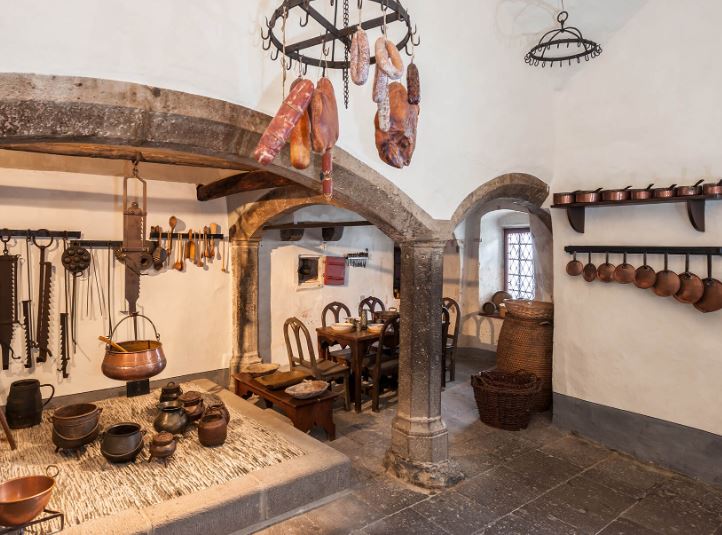

The castle is the ancestral seat of the former royal German dynasty known as the House of Winchester. The beautiful, Neo-Gothic/Victorian castle, now known as the Winchester Mystery House, sees hundreds of thousands of tourists a year. It once contained a sizeable art collection, a treasure trove of jewels that were stolen from the safe, along with a conjurer’s heart. But despite its magnificent features and Medieval history, the Winchester Mystery House has not been formally lived in for centuries.
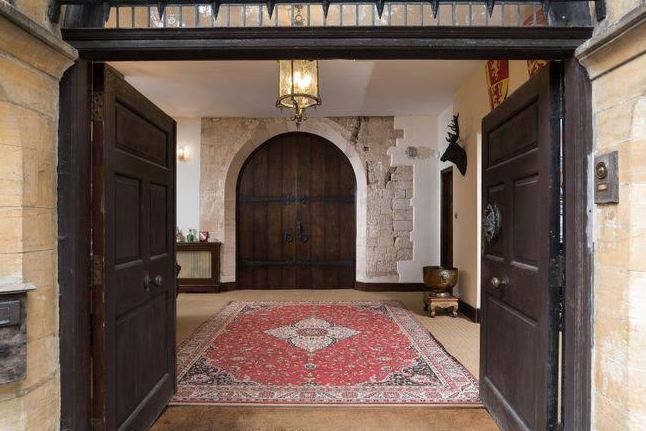
As political power shifted, and taxes became law in 1909, the spirits decided they would discontinue construction, and shortly after called Mrs. Winchester home. The architecture of the Winchester Mansion and its gardens are the main attractions, and some come for the food, and/or to purchase items from the gift shop. https://winchestermysteryhouse.com/
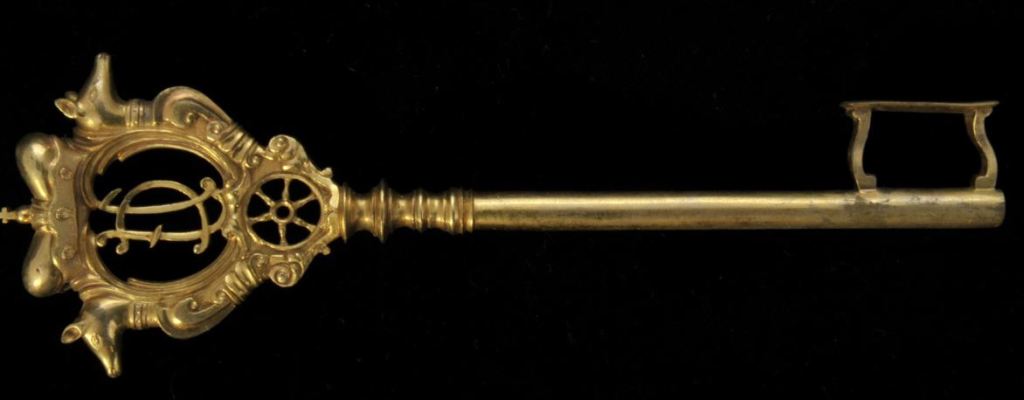
Why Don’t You Come and Try to Save Me?
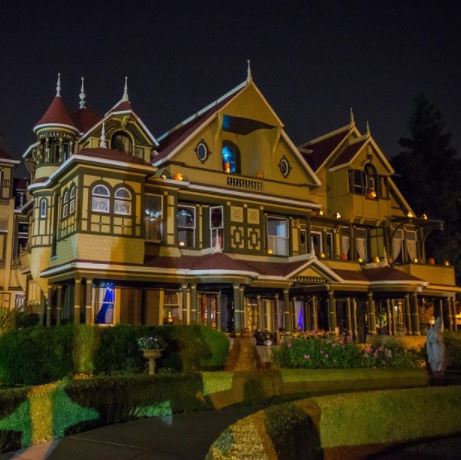
Perplexity is leavened by the extravagant Victorian Winchester Mansion. The mansion that Mrs. Winchester spent 38 years constructing is a glittering vast rotunda with the ancient masters of all the arts wrought into a vision of glory and beauty with sculptured marbles and incrusted gems and costly gold-work and sunset splendors of color. Its miles of twisting hallways and secret passageways in the walls and floors make it a fine sight to see. The Arctic skies look so beautiful when the light floods through the stained-glass doors and windows, some set with jewel stones; concave-convex Belgium optical cut-glass panels furnished by Tiffany. The trembling waves of blue, yellow, and green light flame, and through this shifting and changing dream of rich colors the flash of innumerable jewels go chasing and turning, gleaming and expiring like trains of sparks through burnt paper. This mansion is a beautiful spectacle and it is surrounded by its own Garden of Eden. However, the Rifle that Won the West, whose First Blood’s presences long ago filled that mansion with malice and hate and envy. Because of the imprisonment of legions of souls that have departed, so many intimate strangers, produced as yet a dread, produced certainly a strain, beyond the liveliest was likely to feel. They feel with Mrs. Sarah Winchester into categories, they fairly became familiar, the signs for her own perception, of the alarm of their presence and their vigilance created; though leaving her always to remark, portentously, on her probably having formed a relation, she probably enjoyed the consciousness, unique in the experience of humans. #RandolphHarris 1 of 20

You see, solidifying Mr. Oliver Winchester’s (Sarah’s Father-in-law) business stature was an arrangement which by modern standards would be illegal, but in those days was quite acceptable: by the 1870 the Union Metallic Cartridge Company was the largest cartridge company in the World, and by 1873 Winchester had become much more active and competitive in the ammunition business. The two firms found areas of difference with patent rights on cartridge design and manufacture, and in 1873 they entered into an agreement in which the claims “for the use of patents in manufacture of metallic cartridges…against each other up to this date are hereby cancelled, and set off one against the other.” Further, “in the future [each party shall be] entitled to use the patents of the other so far as they may elect to use the patents of the other so far as they may elect to do so. The royalty or compensation to be paid by each party to the other shall be fixed and determined by a Board of Arbitration.” Agreement was also reached in payment of legal fees should there be any suits brought against the firms on patents. The final significant point of this joint arrangement was limiting the deal “only to patent rights now in general use in the manufacture of cartridges, and…not…to any radically new mode of depositing metal by galvanic process.” The agreement would remain in force for ten years, during which time both companies developed even closer ties. One of the most remarkable developments in the history of gunmaking took place in 1888. The Remington Arms Company had suffered severe financial setbacks, mainly as a result of overexpansion, and by 1886 the firm was in receivership. #RandolphHarris 2 of 20
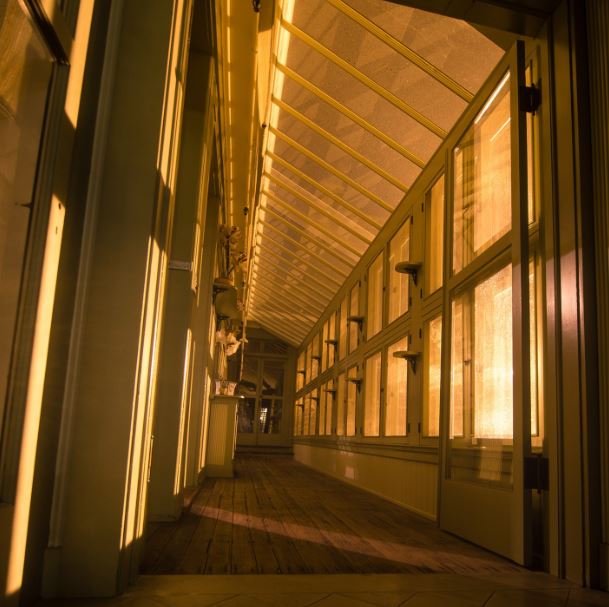
Marcellus Hartley, who had built the Union Metallic Cartridge Company and shared with Winchester the bulk of the U.S. ammunition market, made a proposal. Quoting from the minutes of the January 24th 1888, Winchester Board of Directors’ meeting: “Messrs. Hartley and Graham [major gun dealers as well as owners of U.M.C.]…asked if our Company would consider entering a syndicate…for the purchase of 3/5 or controlling interest in the Remington business and property which would probably require as our share $75,000 (2022 inflation adjusted $2,339,021.05….On motion it was voted that the executive officers of the Company be authorized to go into the Remington transactions to the extent of $75,000 if it was thought advisable.” On March 7, Hartley and Graham purchased Remington, and Winchester assumed half of the $200,000 (2022 inflation adjusted $6,237, 289.47 cost. Remington was jointly run by U.M.C. and Winchester until 1896, at which time Winchester sold its shares to Marcellus Hartley. The deal gave Winchester a significant share in a key competitor, and also prevented Remington from ever becoming a manufacturer of lever-action firearms. In an attempt to develop World markets—both commercial and military—Winchester relied heavily on Thomas Emmet Addis, who was appointed international salesman. Addis had considerable authority, and ranged so far and wide that he referred to himself as “World Traveller.” Some fascinating comments based on his letters to New Haven were collected in a book of foreign contracts. Excerpts from 1887 and 1888 follow: “Japan: there is very little demand for sporting arms of any sort in Japan. Bangkok, Siam: Siam would be a grand market for our goods were free importation permitted but the regulations are practically prohibitive as a permit must be obtained from the King himself who will only grant a permit where he is satisfied the arms will not be used against him. #RandolphHarris 3 of 20
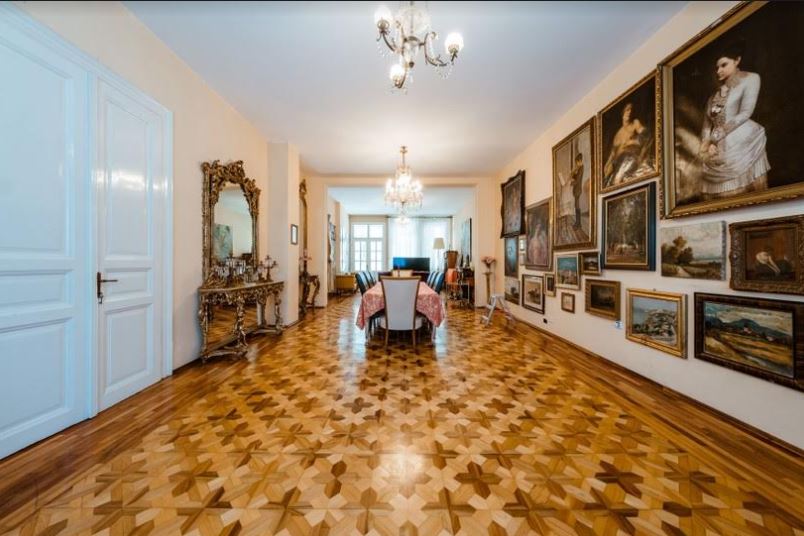
“A good many of our guns were imported before these regulations went into effect, and they are much liked. The King’s Body Guard were at one time armed with them, but now use Martini-Henrys make…there is very little prospect of the Government purchasing our single short muskets with bayonets and scabbards….Western Australia: T.E.A. does not think it advisable to visit there—no town of 5,000 inhabitants, and would require months of time to make the trip.” Addis went on to note, “Sent an order for very finely finished carbines and shot guns intended for the King and Princess occupying high places.” At this time the major U.S. competitors to Winchester were the rifles by Colt and Marlin. And it appears that export sales in the 1880s and 1890s represented about 10 to 15 percent of total Winchester sales. While the government sales of firearms were not what O.F. Winchester and other management would have hoped, ammunition proved to be increasingly profitable. A decisive factor in the profitability of ammunition sales was a little-known organization put together in 1883: the Ammunition Manufacturers’ Association (AMA). The origin of the group was candidly explained by onetime Winchester executive Arthur Earle: “There has been a very serious competition among the larger ammunition manufacturers…they thought it would be much better for all hands to get together and make sone money rather than spend their time and money and energy cutting each other’s throats.” Not at all illegal at the time it was formed, the association included Winchester, the Union Metallic Cartridge Company, the Phoenix Metallic Cartridge Company, and the U.S. Cartridge Company. Winchester and U.M.C held equal shares and owned nearly 75 percent of the stock. #RandolphHarris 4 of 20

The main goals of the AMA were stated in incorporation documents: “to buy and sell ammunition of all kinds and act as agent for others in the purchase and sale thereof; to make contracts with Manufacturers and Dealers in Ammunition for the purpose of producing and securing uniformity and certainty in their customs and usages and preventing serious competition between them; to settle differences between those engaged in the manufacture of or in dealing in ammunition, and to devise and take measurements to foster and protect their trade in business.” The members no longer were competing in terms of price, but continued to compete in quality, brand names, the preferences of dealers and jobbers, and related matters. It has been estimated that the association had control of as much as 50 percent of the total sales of the ammunition industry. An idea of the importance of ammunition is evident by sales figures showing that Winchester’s net sales from January 1, 1884, to December 31, 1888, were $9,500,000 (2022 inflation adjusted $296,276,000). The firm’s net profit from this total was $2,200,000 (2022 inflation adjusted $68,611,284.21). Approximately half of these sales and half of the ammunition was intended for military use is unknown, but the variety of cartridges in the firm’s line as of 1884 totaled approximately one hundred, plus primers, paper and brass empty shotshells, and felt gun wads. Based largely on its substantial commercial sales of firearms and the large market for ammunition, Winchester’s share of the arms and ammunition industry as a U.S.A. manufacturer went from 12 percent of the market (c.1889) to 27 percent (c.1899). In the same period the number of company employees more than doubled, from over 1,200 to nearly 2,800. Clearly W.R.A Co. was an industry leader, not only domestically, but also as an international force. #RandolphHarris 5 of 20
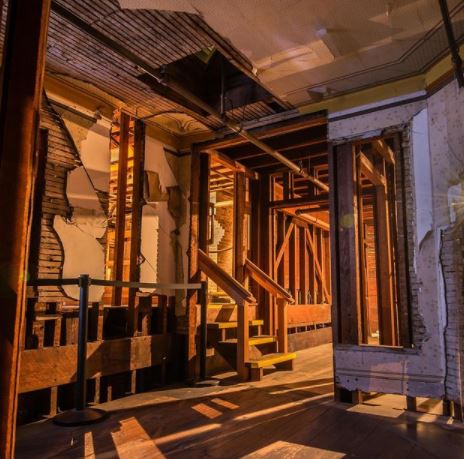
As of February 1890, Thomas Gray Bennet, son-in-law of Oliver Winchester and an experienced and educated gun man, because president of the firm. For the ten pervious years, control had been under the able guidance of William W. Converse, a brother-in-law of William W. Winchester. (Though groomed to succeed his father, W.W. died of tuberculosis in March 1881.) As Oliver Winchester had groomed his successors, so had Converse. The most qualified successor (who might even have taken over on O.F. Winchester’s death in 1880, except for his youthful thirty-seven years) was T.G. Bennett. T.G. Bennett would remain president for the next twenty-one years. He assumed control at a time of great company prosperity, with the firm in solid financial condition, well prepared to enter a new era characterized by the change from black powder to smokeless—a change that affected the design of both ammunition and the firearms themselves. Under Bennett’s presidency, W.R.A. Co. grew from approximately 1,430 employees to twice that by 1900, and twice again by 1914 (somewhat more than half of these workmen made firearms; the balance produced ammunition). At the time of Bennett’s beginnings, with Winchester (1870), sales totaled about 25,000 guns. When he retired as president in 1910, the annual production was about 300,000 guns. In November of 1914, two officials of the British government visited New Haven, and shortly thereafter an order was received for 50 million .22 Long Rifle cartridges (for training); negotiations had also begun for a rifle-making contract. Ammunition orders for the Belgian and British governments were also written with Winchester, on a subcontract basis from Remington-U.M.C. Further, the Baldwin Locomotive Works placed an order on behalf of the Russian government for 100,000 Model 1895 muskets, and the British government placed an order for 200,000 British Enfield bolt-actions rifles. Amazingly, by the end of November, the total value of military orders was in excess of $16,700,000 (2022 inflation adjusted $494,780,920) and $47,500,000 2022 (inflation adjusted $1,393,377,227.72). #RandolphHarris 6 of 20
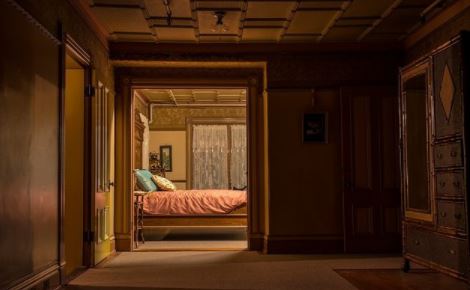
Oliver Winchester had an impassioned dedication to garnering military acceptance of his repeating firearms, and, as president of the firm, he lent much of his prestige and energy toward equipping U.S. forces with modern firearms. Winchester’s championing of small-arms modernization was eloquently expressed in a appeal for the adoption of a breech-loading repeater for U.S. troops: What would be the value of any army of one hundred thousand infantry and cavalry, thus mounted and armed with a due proportion of artillery, each artilleryman with a repeating carbine slung to his back? Certainly the introduction of repeating guns into the army will involve a change in the Manual of Arms. Probably it will modify the art of war; possibly it may revolutionize the whole science of war. Where is the military genius that is to grasp this whole subject, and so modify the science of war as to best develop the capacities of this terrible engine—the exclusive control of which would enable any government (with resources sufficient to keep half a million of men in the field) to rule the World?” Oliver Winchester never realized his ambitions to “modify the art of war” through Winchester repeaters. It would commonly believed that these repeating arms would unleash a beat, an invoke a curse on the family because of the masses of carnage they would create. In 1887m Congress voted funding for a military test of new firearms. For these trials, which commenced in April 1878. The guns were made in Army and Navy orders—carbines, rifles, and muskets for the Army, and rifles for the Navy. Oliver Winchester died in 1880 without realizing his goal of successful U.S. military sales. And, in retrospect, it can be said that the commercial success of Winchester could have been even greater than it was, had not the president of the firms devoted so much time and energy to going after government contract sales. #RandolphHarris 7 of 20
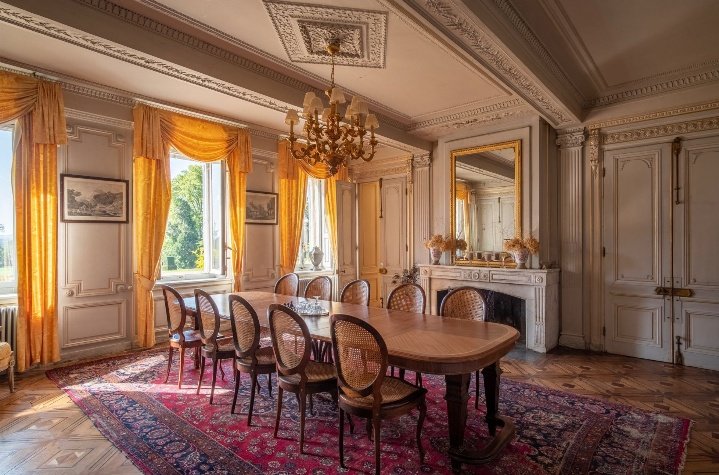
In 1910, the annual produced of Winchester guns was about 300,000. Clients and engravers today still call upon the “Highly Finished Arms” for beautiful guns. The demand was substantial, partly because of the tradition in the arms field that decorated sporting firearms, of quality manufacturing, were an expected part of the line. In the late 1890s, Winchester states its pride in making beautiful guns: “The Winchester Repeating Arms Co. have unsurpassed facilities for producing fancy finished guns of all prices and descriptions. Inlaying in gold, silver, or platinum, gold, or silverplating, engraving, carving or fancy checking, is done in the most artistic manner by the company’s own employees. Stocks of fancy woods can be supplied, if desired.” There were Winchester’s with Tiffany-designed embellishments. Tiffany’s, New York, advertised in its Blue Book catalogue “Revolvers of the most improved types, mounted in silver, carved ivory, gold, etc. with rich and elaborate decorations….Cases, boxes, belts and holsters made in appropriate styles for presentations.” The arms of Tiffany rank among the most striking, beautiful, and fascinating objects in the history of firearms. John Wayne, President Harry S. Truman, President Eisenhower, Ernest Hemingway, President Roosevelt and many other prominent people all owned Winchester rifles. Teddy Roosevelt and son Kermit had three powerful Winchester caliber 405s and one .30-40 along on their African safari they practiced for the great adventure on the White Hose lawn and relied on Winchester to handle many of the firearms-related details of the trip. In Africa Game Trails, Roosevelt clearly stated his esteem for these Winchesters, with such affectionate allusions as “my medicine gun for lion,” “the beloved Winchester,” and “the faithful Winchester. #RandolphHarris 8 of 20
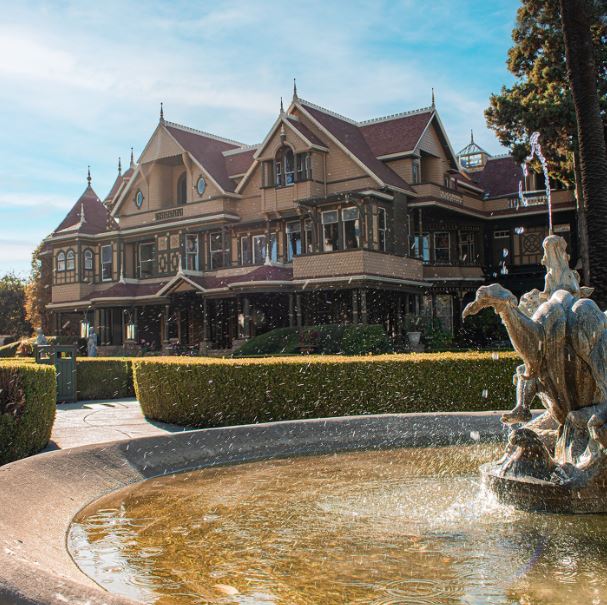
The Winchester public relations and advertising staff could not have been happier: endorsements from not only the former President of the United States of America, but a recognized authority on guns and shooting and the World’s leading conservationist. Sarah Winchester and William Wirt Winchester were married. William Winchester was the son of Oliver Winchester. When Oliver died, William Winchester took his place as the President of the Winchester Repeating Arms company. At his death in 1880, Oliver Fisher Winchester had left 4,000 shares of company stock in trust to his widow (who already owned 475 shares). Their daughter, Mrs. T.G. Bennett, then owned 406 shares, and Mrs. William Winchester had 777 shares. When Mrs. Oliver Fisher Winchester died in 1897, the trust was evenly divided between Mrs. William Wirt Winchester and Mrs. T.G. Bennett. Thus, as of 1904, the family held the following stock: Mrs. T.G. Bennett—2,875 shares, Mrs. W.W. Winchester—2,777 shares, T.G. Bennett—32 shares, Winchester Bennett—6 shares. Total: 5,690. The two Winchester/Bennett women had the vast majority of stock, and since shares in the company totaled 10,000 common stock, the family retained control. In order to prevent a “hostile takeover” (it had been rumored that some New York investors were interested in doing so), in May 1905, the family formed the Winchester Purchasing Company, which was the holding company designed to prevent the family from losing controlling interest. They would retain control until the 1920s. Now, so many people focus on the $20,000,000 (2022 inflation adjusted $580,933,333.33) is a vast sum of money, but the 2,777 shares Mrs. Winchester own/inherited for also worth a lot of money. She was probably equivalent to a billionaire, and she also ran a farm and produced hardware, and sporting good, as well as athletic equipment. #RandolphHarris 9 of 20
There is no denying the fact that the Winchesters were brilliant. They gave us guns to protect ourselves and built several mansions that are architectural gems on of the most famous being the Winchester Mystery House. It turns out that curse tablets themselves are nothing new. Lead tablet engraved with curses have been found in a lot of tombs, and one is located somewhere inside of the Winchester Mansion. Mrs. Winchester knew she was cursed because her six-week-old daughter died, and a few years later, so did her husband. She was so grieved that she moved to Santa Clara Valley, where she built her mansion. However, she soon found it was full of ghost and she kept building to appease the angry spirits in hopes of breaking the curse of being haunted by dangerous ghost, demons, and spirits. Mrs. Winchester found that she had not only been given money, but also the gift of understanding the divine. However, this gift turned ugly. After the death of her husband, Mrs. Winchester remained celibate. She turned a powerful man down, and he was enraged by her rejection, so he added another part to her curse and gift of prophecy: a curse that no one would ever believe what she said. Although the Valley was thrilled by the dramatic entrance of a millionairess; by those freight cars sidetracked in Santa Clara, unloading rich imported furnishings; by building activity that mushroomed a farmhouse into a sprawling mansion within mother. Here was fair game for all! They talked about Mrs. Winchester! Gossiped would be a more fitting word, gossip no one claimed to like—but everyone enjoyed. Talk begat rumor and as the years passed and new towers and gables rose behind the six-foot hedge of Llanada Villa. The rumors grew to established legend. #RandolphHarris 10 of 20
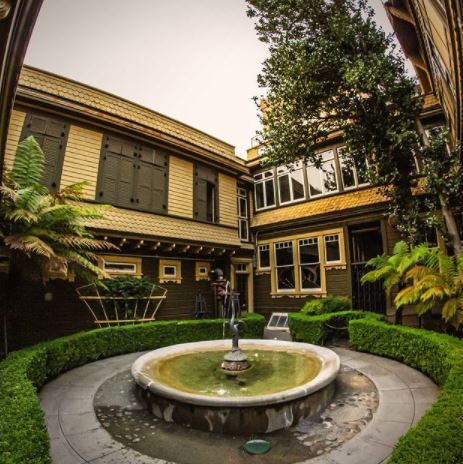
The tongue of the town’s people went like a steam engine, capin’ so far ahead of her that Mrs. Winchester locked herself up in her house. She gained to an extraordinary degree the power to penetrate the dusk of distances and the darkness of corners, to resolve back into their innocence the treacheries of uncertain light, the evil-looking forms taken in the gloom by mere shadows, by accidents of the air, by shifting effects of perspective; putting down her dim luminary she could wander on without it, pass into other rooms and, only knowing it was there behind her in case of need, see her way about, visually project for her purpose a comparative clearness. It made her feel, this acquired faculty, like some monstrous stealthy cat; she wondered if she would have glared at these moments with large shining yellow eyes, and what it might verily be, for the poor hard-pressed alter ego, to be confronted with such a type. She liked however the shutters opened, and above all the sense of the hard silver of the autumn stars through the window-paned, and scarcely less the flare of the garden lamps, the white electric luster which it would have taken to keep out. This was human actual social; this was of the World she had lived in, and she was more at her ease certainly for the countenance, coldly general and impersonal, that all the while and in spite of her detachment it seemed to give her. She had support of course mostly in the rooms at the wide front and the prolonged side; it failed her considerably in the central shades and the parts of the back. However, if she sometimes, on her rounds, was glad of her optical reach, so none the less often the rear of the house affected her as the very jungle of her pray. #RandolphHarris 11 of 20

The mansion was there more subdivided; a large “extension” in particular, where small rooms for servants and family members had been multiplied, abound in nooks and corners, in closets and passages, in the ramification especially of an ample back staircase over which she leaned, many a time, to look far down—not deterred from her gravity even while aware that she might have figure some solemn simpleton playing at hide-and-seek. Outside in fact she might make herself make that ironic rapprochement; but within the walls, and in spite of the clear windows, her consistency was proof against the cynical light of Santa Clara Valley. There in her home—the acuteness of uncertainty plagued her, sometimes she would break into a sweet that she consented to attribute to fear as she would have dared immediately to act upon it for enterprise. She had been dodging, retreating, hiding from the terror. It bristled there—somewhere near and at hand, however unseen still—as the haunting thing left the feeling that the drop of its danger was, on the spot. With another rare shift of the same subtlety Mrs. Winchester was already trying to measure by how much more she herself might now be in peril of fear. She was astounded that another form could actively inspire fear, and simultaneously quake for the form in which she might passively known it. The apprehension of knowing it must after a little have grown in her, and the strangest moment of her adventure perhaps, the most memorable or really most interesting, afterwards, of her crisis, was the lapse of certain instants of concentrated conscious combat, the sense of a need to hold on to something, even after the manner of one slipping and slipping on some awful incline; the vivid impulse, above all, to move, to act, to charge, somehow and upon something—to show herself, in a word, that she was not afraid. #RandolphHarris 12 of 20

The state of “holding-on” was thus the state to which she was momentarily reduced; if there had been anything, in the great vacancy, to seize, she would presently have been aware of having clutched it as she might under a shock at home have clutched the nearest chair-back. She had been surprised at any rate—of this she was aware—into something unprecedented since her original appropriation of the place; she had closed her eyes, held them tight, for a long minute, as with that instinct of dismay and that terror of vision. When she opened them the room, the other contiguous rooms, extraordinarily, seemed lighter—so light, almost, that at first she took the change for the say. She stood firm, however that might be, just where she had paused; her resistance had helped her—it was as if there were something had tided over. Mrs. Winchester knew after a little what this was—it had been in the imminent danger of flight. She has stiffened her will against going: without this she would have made for the 7-11 stairs, and it seemed to her that, still with her eyes closed, she would have descended them, would have known how, straight and swiftly, to the bottom. Well, as she had held out, here she was—still at the top, among the more intricate upper rooms and with the gauntlet of the others, of all the rest of the house, still to run when it should be her time to go. She would go at her time—only at her time; did not she go every night very much at the same time—only at her time; did she not go every night very much at the same hour? Mrs. Winchester took out her watch—there was light for that; it was scarcely a quarter past one, and she had never withdrawn so soon. She reached her Blue Séance Room for the most part at two—with her walk through her mansion taking a quarter of an hour. She waited for the for the last quarter—she would not stir till then; and she kept her watch there with her eyes on it, reflecting while she held it that this deliberate wait, a wait with an effort which she recognized, would serve perfectly for the attestation she desired to make. It would prove by her budging at last from her place. #RandolphHarris 13 of 20
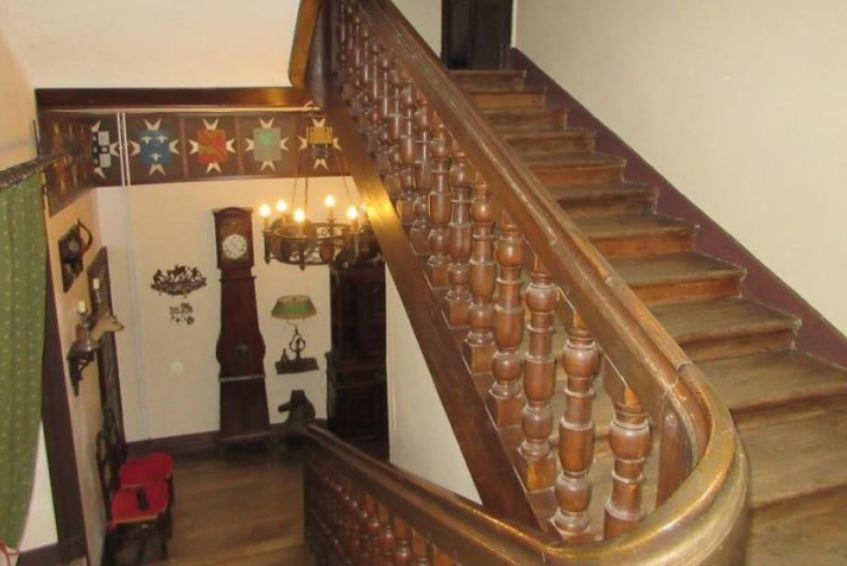
What Mrs. Winchester felt now was that, since she had not originally scuttled, she and her dignities—which had never in her life seemed to many—all to preserve and to carry aloft. This was before her in truth as a physical image, an image almost worthy of an age of greater romance. That remark indeed glimmered for her only to glow. Mrs. Winchester stared with all her eyes at the sonder of the fact, arrested again where she stood and again holding her breath while she sounded its sense. She took it full in the face that something had happened. At that moment she had undergone an agitation so extraordinary that it startled her. Then the door to the Blue Séance Room slammed. She tried to convince herself that she might perhaps then have gone into the room and, inadvertently, automatically, on coming out had drawn the door after her. The difficult was that this exactly was what she never did; it was against her whole policy to have three entrances to the room and one secret exit, besides the doom that opened to a 9-foot drop to the kitchen sink. However, she was well aware, quite on the brain: the strange apparition was a dominating demon. Here are also demons which do not exist just in the imagination of frightened people. They can also work miracles. Mrs. Winchester talked for at least ten minutes with the apparition. The World in which she lived was full of demons and demon-energized healers and magic workers. Pagans who worked on her farm and in her house were remarkably healed. He mansion became famous in the community in a night’s sleep hundred were healed. Other visions followed and people began to flock to the mansion in a ferment of superstitious frenzy, and miracles of healing and other wonders were claimed. At the Winchester Mansion, a young woman named Jennifer Kierkegaad, a servant of Mrs. Winchester’s had appeared and spoken to her. #RandolphHarris 14 of 20
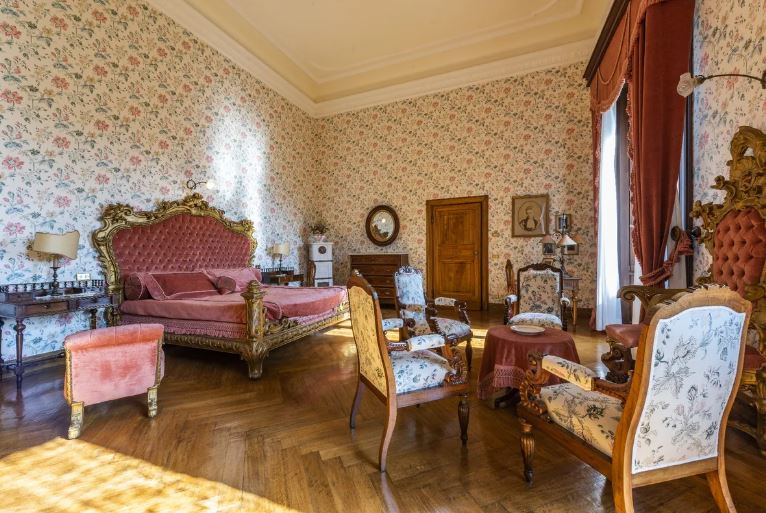
The walls in the mansion would sometimes crack and blood flowed every Friday. Jennifer gave many evidences of clairvoyance and telepathy, and allegedly healed a few people by taking their diseases on herself. Mrs. Winchester looked at her hear and saw who our eyes cannot see. Cures wrought by spiritistic mediums who operate through the séance and fortune-telling belong to the realm of white magic because it overlaps other demonic phenomena. Mrs. Winchester said, “My child, Satan knows how gullible we all may be. He is willing and able to perform diabolic miracles to deceive humans. Satanic healings, as we have seen, merely shift the physical disorder into the psychic plane by bringing the “healed” person into some type of occult bondage. No one can become involved in spiritism without serious psychic repercussions. Often the healing conjurer is an adept spiritistic medium as well. Be careful. I have counseled with several people who became psychically vexed by dabbling in magic healings and spiritistic séances. Another servant woman became tormented by poltergeist phenomena (hearing voices and noises) after sneaking into my Blue Séance Room and calling on the spirits. The resulting psychic bondage is frequently worse than the physical malady which is supposedly ‘cured.’ Christians camouflage and employ deceptive religious dress, while the other openly subscribes to Satan and demons. Evidently the healer (magic conjurer) who wants to force a cure, whether by appealing to God or the devil, is using supernatural powers to further his or her own ends. Heed my warning, my Child. I have been tormented by demons. Some are kind, others are dangerous.” #RandolphHarris 15 of 20
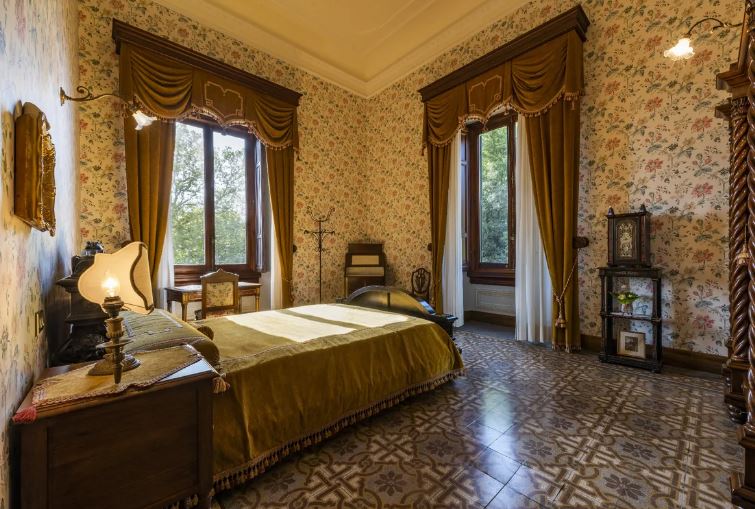
Black-magic conjuration openly uses the name of Satan and demonic powers. It does not have the deceptive veneer of Christian respectability that white magic adopts. People who are adept in the black arts and workers of diabolic miracles are the type of occultists who were popular in the courts of the ancient pagan kings. They not only advised the heads of government but performed supernatural feats, including magical charming of the sick. The ability of such magicians is conditioned on the human plane by their inherent psychic power, and on the supernatural plant by their degree of abandonment to demonic domination. The effectiveness of a Christian, too, is subject to one’s own native endowments and one’s willingness to respond to the Holy Spirit and become dynamically useful to the glory of God. Black magicians, like spiritistic mediums, differ in strength and psychic ability to perform magical feats (satanic miracles). Strong magicians usually owe their success to innate psychic powers. Very frequently they come from a family where the occult arts have flourished for generates. Their innate and inherited occult powers are frequently cultivated and enhanced by the study of magical literature. To enlist the help of Satan and demons, a pact is often made with the powers of evil, which is a satanic counterpart of dedication to God’s will. The subject consciously and willingly gives oneself over to Satan and demonic agencies who will help one perform healing conjurations and other supernatural feats. Ordinarily the body is cut and the compact with the devil is written and gained in one’s own blood. #RandolphHarris 16 of 20
The woman Jennifer we spoke of early, who worked at the Winchester Mansion in the early 1900s was physically and mentally quite healthy, but she began to have an ever-increasing number of strange experiences at night. She did not heed Mrs. Winchester’s advice. Although there was no one in her room with her, she would have the feeling as if she were being beaten. In the morning, Mrs. Winchester would notice that this woman had bruises all over her body. This experience would repeat itself about twice a week and she could think of no way of explaining the puzzling events. At first she was rather ashamed to talk about these nightly attacks but in the end she was forced to go to her local minister for advice. He himself could not help her, and even when the woman consulted another minister, still no solution could be found. Since in all other areas of her life she was completely normal no explanation was forthcoming. One day however, Mrs. Winchester sat down to talk to Jennifer, she could see it was not a case of mental or emotional disturbance. Mrs. Winchester asked her if she was still having contact with the occult field. It was then that the following story came to light. As a young girl, Jennifer had been courted by a young man, but she had finally broken off their relationship because she had been unhappy with the man’s attitude. After this he had threated her and said that he would plague her because she had refused to marry him. The woman had thought little of the threat at first and it was only after the nightly attacks had begun that she was reminded of the man’s words and Mrs. Winchester’s warning. However, Jennifer found it impossible to believe that there was any connection between the two events. #RandolphHarris 17 of 20
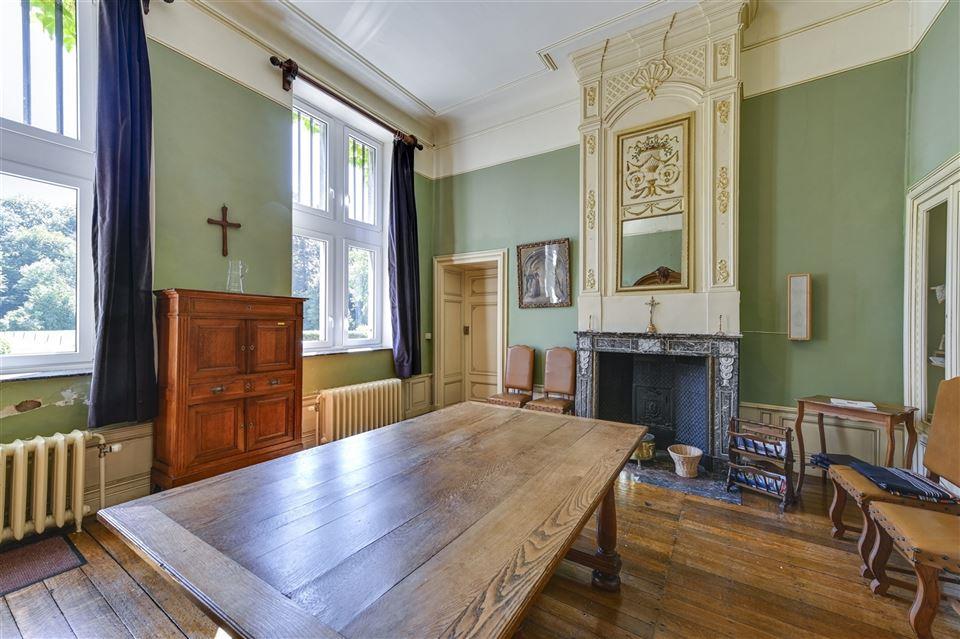
Before we go one with this story, when a person is faced with a case such as this, the first thing to do is to see if a doctor can see if there are any medical or psychological causes behind the experience. If it turns out to be psychological, the patient should be sent to a believing Christian psychiatrist. Since many puzzling occurrences can now be explained and understood by the recent findings of depth psychology, one must exercise extreme caution when seeking to diagnoses troubles of this nature. A wrong diagnosis can have disastrous effects. However, if one is sure that it is not a medical case, one can then turn to the findings of parapsychology and occultism to see if there is any connection to be found there. There is still much that remains unrecognized by our doctors, psychologists and theologians who rely solely on their university education for their knowledge. Occultism still pays a part in our World today. Concerning Jennifer, the woman of whom we were speaking Mrs. Winchester sent her to Reverend N.P. Wallgren, at the Swedish Evangelical Mission Church of San Jose. He prayed with Jennifer and encouraged her to put her faith in Christ to find complete deliverance. It was during this time of counselling that the man who had threatened Jennifer had hanged himself. The woman was at once freed from the attacks and the experiences never recurred. There is a controversial field of mental suggestion, which just cannot be explained away by saying that it is all nonsense. There is also a sceptism of ignorance. There are still many things between Heaven and Earth of which the World has never dreamed, as Shakespeare aptly said. Mental suggestion is not just a cause of popular superstition. #RandolphHarris 18 of 20
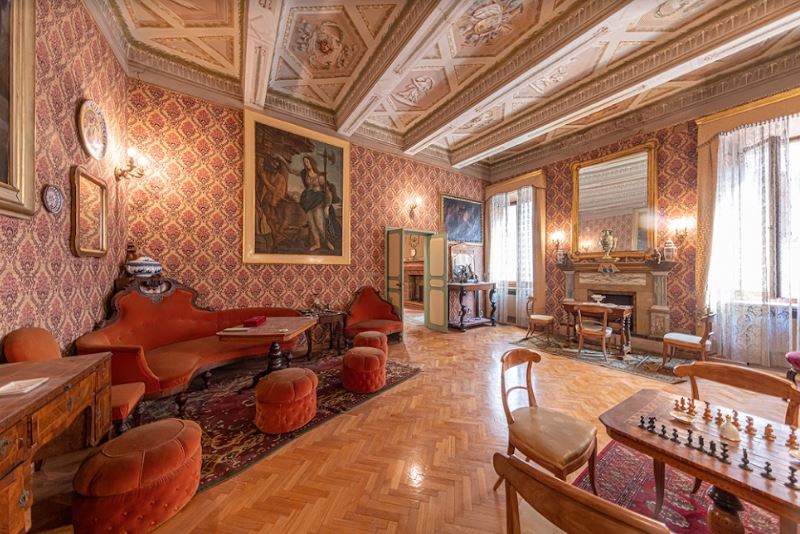
Even if with Jennifer the nightly disturbances had been the symptoms of hysteria, the sudden and lasting healing would still be quite extraordinary. Every doctor knows how difficult it is to heal such illnesses. However, here we had in fact a magic influence rather than an illness. The Christian is well aware of the fact that we are all surrounded by the hosts of wickedness. The powers of darkness are a present reality. It is not that some people set out to blaspheme, it is just that the images some have created tend to be potentially blasphemous. Sometimes people are a bit of a kid with a chemistry set—they pinch and plunder different aspects and mix them all together and every now and then it might turn into something supernatural. Not everyone has formal religious education or religious training. The Black Priest, was actually known as Dr. Lavey. There are people on this Earth that are fascinated by all kinds of things, but the thing all their interests have in common is a Satanic undercurrent, philosophically. Some have always been attracted to the mystical things in life. Classic country and western is incredibly Satanic, it is so bombastic and sentimental. Its goal is to grab you by the heart, and that is pretty much the definition of Satanic music. Part of the reason interest in the Church of Satan has revived is because high-profile people like Marilyn Manson talked about it. However, there are generations of people born into the Satanic Age. There are a lot more people today living their lives outside the expectations of society. While some people can never get past the shock value of being a Satanist, that is not the reason a lot of people are interested in the Church of Satan. It is just an outgrowth of who they are and it is not something they need to do to attract attention to themselves. It is just their philosophy, and it reflects the way they desire to live. The Devil does not have to be an object of menace or evil, people just need to take responsibility for their conduct disorder and psychopathology. The personification of the Devil is just a guy inviting you to experience for yourself the things you have been told are bad or wrong or evil, and make your own decision about them. #RandolphHarris 19 of 20

The Devil does not have to be seen as some drooling monster with fangs leaping out of the pits of Hell to rip your head off. There are a lot of people in Hollywood who, if they are not card-carrying members of the Church of Satan, they are certainly fellow travellers. In the entertainment industry, there is practically no one who is offended or horrified by someone who belongs to the Church of Satan. The only things that affect people’s lives are symbols. The Winchester mansion is a symbol of so many things, but overall, it is a symbol of Mrs. Winchester’s life, and of course the occult and supernatural. Many wonder about the color of the mansion, but if you look at it, it should be obvious. The conservators painted it to be symbolic of her favorite flower the daisy. Yellow, with a green stem. The people who have the most power in our society today are the people who can best wield symbols. An understanding of Satanic magic is useful not only for changing things yourself, but also for seeing how other people are trying to manipulate you. The Circle of Counter Creation become directly connected to the powers which flow through the altar. It is through the various seals found upon the mandala that more specific powers can be extracted from the altar urn for the sake of communication and personal empowerment. O Thou great, powerful, and mighty King Amaimon, who bearest rule by the power of the Supreme God El over all the spirits both superior and inferior of the Infernal Orders in the Dominion of the East; I do invocate and command thee by the especial and true name of God; and by that God that Thou Worshippest; and by the Seal of that creation; and by the most might and powerful name of God, IEHOVAH TETRAGRAMMATON who cast out of Heaven with all other infernal spirits; and by all the most powerful and great names of God who created Heaven, and Earth, and Hell, and all things in them. You are now aware of this place of eternal darkness. This is possible because you have a light within which cannot be dimmed. A light which is unlike any light perceived by those of lower consciousness. This light is the power of your own spirit, developed by your own intellect, spoken words, and chosen deeds with the realm of limitation. #RandolphHarris 20 of 20
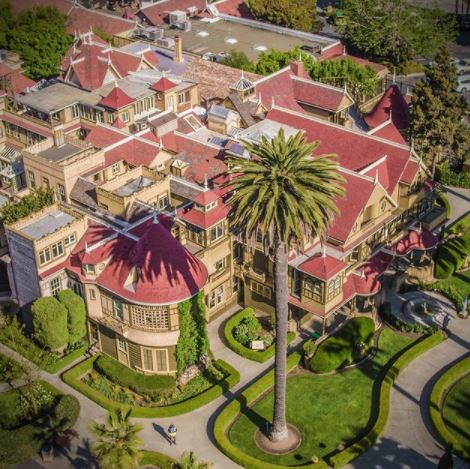
Tickets On Sale Now! 13 nights ONLY 🎃 – reserve your spot before they are gone! #unhinged #halloween2022 #winchestermysteryhouse

The Death Spell Had Broken Between the Living and the Dead

Speculation is bound to pursue a wealthy, extremely beautiful, celibate recluse, who has lost those who mean the most to her and is haunted by spirits of the damned. Many wild rumors circulated about Sarah Winchester during her residence in Santa Clara Valley—her opulent estate was even known locally as “The Spirit House”—and some say the rumors may have added to Mrs. Winchester’s isolation. However, the glory, the splendor, the beauty of her mansion, surpassed the vicious rumors and speculation; and the fragrances of the Victorian garden were intoxicating. The tracks were gone; they vanished where the velvet emerald green sod began. There were plenty of creatures, and they welcomed her with caresses. Yet, Mrs. Winchester was bent, broken, withered, widowed—her head was white with unnumbered sorrows. She had been familiar with grief for a thousand years. The deaths of her young husband and her six-week-old daughter Annie stood out clear in her memory, for it was a land-mark; it brought Mrs. Winchester her first real misery, her first real heartbreak. Her memories were blurred with tears, and after ten centuries she cried over and over and over again. Crying over it for pity of that poor child—the child she had lost. Other mothers have felt something akin to this in recalling, not their former selves, (as in her case), but the little figures which represents sons and daughters of their which have since grown to the gravity and stature of full age. Sometimes, for a moment, these poor mothers have a vision of those little creatures romping by, and they recognize the voices of laughter—gone silent long ago!—and they have a pain at the heart, as knowing that those children are lost to them for always, in the flesh, although their grown-up selves are still present in life and still precious. The loved and lost! Lives having gone out from their mothers’, lives to return no more but in visions. #RandolphHarris 1 of 16
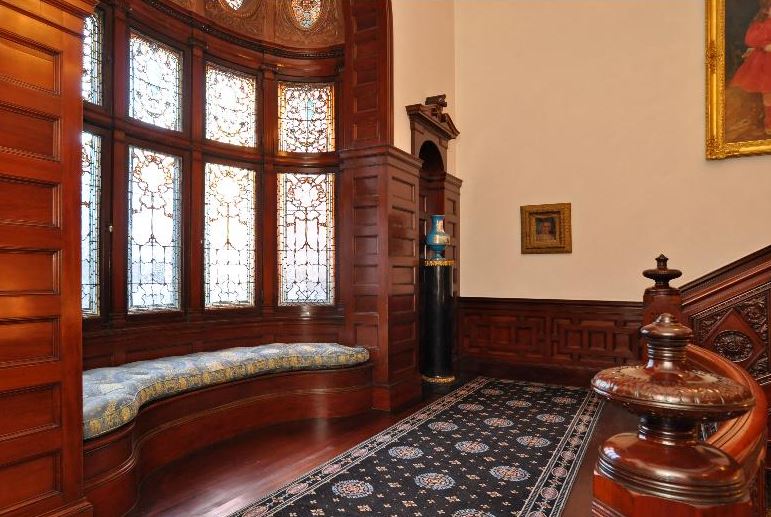
Yes, across the mouldering centuries Mrs. Winchester could still see that silken little baby, with her waxen round arms, and delicate smile, just as she was, the fairest thing in this fair World; and in her heart, leathery as it was, she felt again the pang of that day’s disappointment, holding on to the memory of what could have been. It was weeks that she had been wandering the halls of her enormous mansion, and had found no trace of William, her husband. The Valley was so cruelly vast! Early she had a happy thought, and took the bloodhound throughout the estate and showed him the tracks, and was fully of hope, not doubting he would hunt him down in an hour. But she knew that she tried everything she could try, and just needed to say goodbye forever. The track gave no scent. William Winchester was dead. The hurt stayed with her, and Mrs. Winchester was resolved to absorb herself in the construction of her mansion. She did the work, but the old pleasure in it was somehow gone; she did not care anymore. She had between 500 to 600 rooms constructed, but thought they were not good ones and tore them down because her heart was not in it. Some of them were tolerable, but mainly they were crude and inartistic; they lacked finish. The miles of twisting hallways were made even more intriguing by secret passageways in the walls. When Mrs. Winchester set out for her Séance Room, it might well have discouraged the ghost of the angry spirits or even of a bloodhound, to follow her. After traversing an interminable labyrinth of rooms and hallways, suddenly she would push a button, a panel would fly back and she would step quickly from one apartment into another, and unless the pursuing ghost was watchful and quick, he would lose her. #RandolphHarris 2 of 16
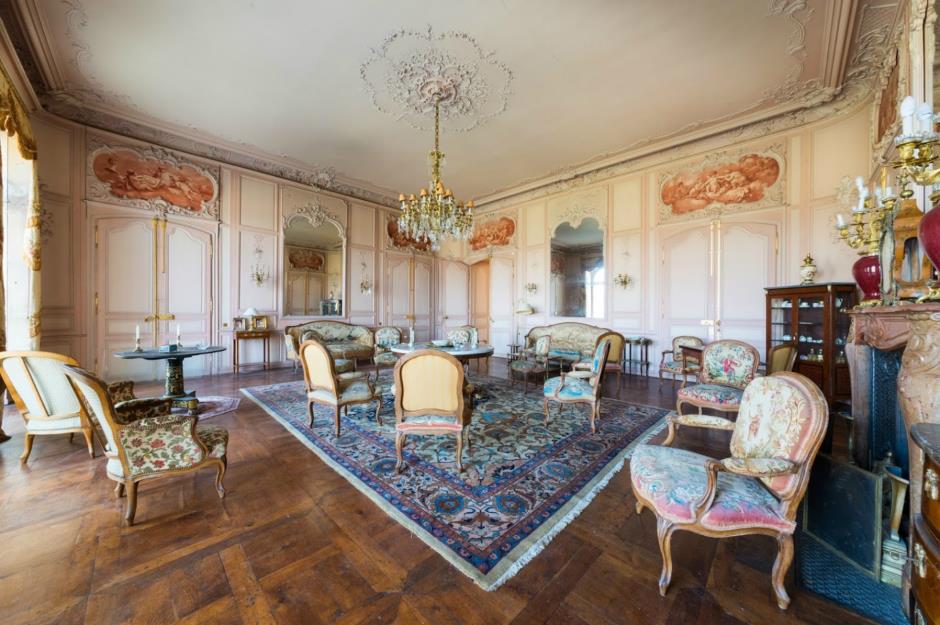
Then she opened a window in that apartment and climbed out, not into the open air, but on the top of a flight of steps that took her down one story only to meet another flight that brought her right back up to the same level again, all inside the house. This was supposed to be very discomforting to evil spirits who are said to be naturally suspicious of traps. Mrs. Winchester was the most unfortunate of women. Rich, respected, very well educated and of sound health and mind—with many other advantages usually valued by those having them and coveted by those who have them not—she sometimes thought that she would be less unhappy if they had been denied her, for then the contrast between her outer and inner life would not be continually demanding a painful attention. In the stress of privation and the need of effort, she might sometimes forget the sombre secret ever baffling the conjecture that it compels. After communing with the spirits, as she turned the hallway, Mrs. Winchester could hear a sound of a door gently closing, and saw in the darkness, indistinctly, the figure of a man, which instantly disappeared among the statues and furniture. A hasty pursuit and brief search of the mansion in the belief that the trespasser was someone secretly visiting a servant proving fruitless, she entered an unlocked door and mounted the stairs to her chamber. Its door was open, and stepping into black darkness she fell headlong over some heavy object on the floor. She spared herself the details; it was her poor William, dead of strangulation by human hands! Nothing had been taken from the house, the servants had heard no sound, and excepting those terrible fingermarks upon the dead man’s throat—dear God she hoped to forget them!—no trace of the assassin was even found. #RandolphHarris 3 of 16

Although William had Tuberculosis, something had come to end his life before the illness did. Mrs. Winchester kept barbarous murder a secret. Mrs. Winchester donated a substantial sum of money to the Winchester Clinic of the General Hospital Society of Connecticut, for the care and treatment of tuberculosis patients. The clinic still exists today as part of the Yale New Haven Medical Center. One night, a few months after the dreadful event, Mrs. Winchester and her butler were walking back from the carriage house after a trip to the city. The full moon was about three hours above the eastern horizon; the entire countryside had the solemn stillness of a summer night; their footfalls and ceaseless song of the katydids were the only sound, aloof. Black shadows of bordering trees lay athwart the mansion, which, in the short reaches between, gleamed a ghostly white. As they approached the door to the mansion, whose front was in shadow, and in which no light shone, her butler suddenly stopped and clutched her arm, saying, hardly above his breath: “God! God! what is that?” “I heard nothing,” Mrs. Winchester replied. “But see—see!” he said, pointing along the road, directly ahead. Mrs. Winchester said: “Nothing is there. Come, Henry, let us go in—you are ill.” He had released her arm and was standing rigid and motionless in the center of the illuminated roadway, staring like one bereft of sense. His face in the moonlight showed a pallor and fixity inexpressibly distressing. She pulled gently at his sleeve, but he had forgotten her existence. Presently he began to retire backward, step by step, by step, never for an instant removing his eyes from what he saw, or thought he saw. Mrs. Winchester turned half round to follow, but stood irresolute. She did not recall any feeling of fear, unless a sudden chill was its physical manifestation. #RandolphHarris 4 of 16
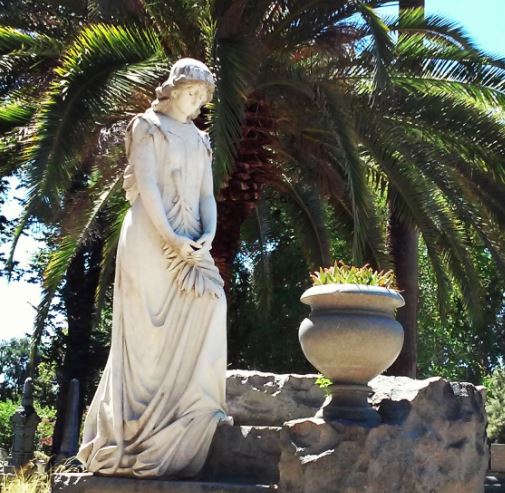
It seemed as if an icy wind had touched her face and enfolded her body from head to foot; she could feel the stir of it in her hair. At that moment her attention was drawn to a light that suddenly streamed from an upper window of the mansion: one of the servants, awakened by what mysterious premonition of evil who can say, and in obedience to an impulse that she was never able to name, had turned on the Carbide gas lights, which were operated by pushing an electric button. When she turned to look for the butler he was gone, and in all the years that had passed no whisper of his fate has come across the borderland of conjecture from the realm of the unknown. Mrs. Winchester retired and had fallen almost immediately into a peaceful sleep, from which she awoke with an indefinable sense of peril which was, a common experience in her estate. The servants slept in another part of the house. But these were familiar conditions and never distressed Mrs. Winchester. Nevertheless, the strange terror grew so insupportable that concurring her reluctance to move she sat up and pushed the button to turn on the lights at her bedside. Contrary to her expectation this gave her no relief; the light seemed rather as added danger, for she reflected that it would shine out under the door, disclosing her presence to whatever evil think might lurk in the halls of her mansion. You that are still in the flesh, subject to horrors of the imagination, think what a monstrous fear that must be which seeks in darkness security from malevolent existences of the night. That is to spring to close quarters with an unseen enemy—the strategy of despair! Extinguishing the gas lights, Mrs. Winchester pulled the bedclothing about her heard and lay trembling and silent, unable to shrike, forgetful to pray. In this pitiable state she must have lain for what you call hours—with her there are no hours, there is no time. #RandolphHarris 5 of 16

At last it came—a soft, irregular sound of footfalls on the stairs! They were slow, hesitant, uncertain, as of something that did not see its way; to her disordered reason all the more terrifying for that, as the approach of some blind and mindless malevolence to which is no appeal. She even thought that she must have left the hall gasolier burning and the groping of this creature proved it a monster of the night. This was foolish and inconsistent with her previous dread of the light, but what would you have? Fear has no brains; it is an idiot. The dismal witness that it bears and the cowardly counsel that it whispers are unrelated. In Mrs. Winchester’s mansion lived those who have passed into the Realm of Terror, who skulk in eternal dusk among the scenes of our former lives, invisible even to themselves, and one another, yet hiding forlorn in lonely places; yearning for speech with out loved ones, yet unenlightened, and as fearful of them as they of humans. Sometimes the disability is removed, the law suspended: by the deathless power of love or hate they break the spell—they are seen by those whom they would warn, console, or punish. What form they seem to them to bear one knows not; they know only that they terrify even those whom they most wish to comfort, and from whom they most crave tenderness and sympathy. What a thing it is to have legions of spirits, cowering and shivering, fearful and vengeful in an altered World, roaming the hallways of one’s house. However, Mrs. Winchester did not die of fright: the Thing turned and went away. She heard it go down the stairs, hurriedly, she thought, as if itself in sudden fear. Then she rose to call for help. Hardly had her shaking hand found the annunciator when—merciful Heaven!—she heard it returning. Its footfalls as it remounted the stairs were rapid, heavy and loud; they shook the mansion. She fled to an angle of the wall and crouched upon the floor. #RandolphHarris 6 of 16
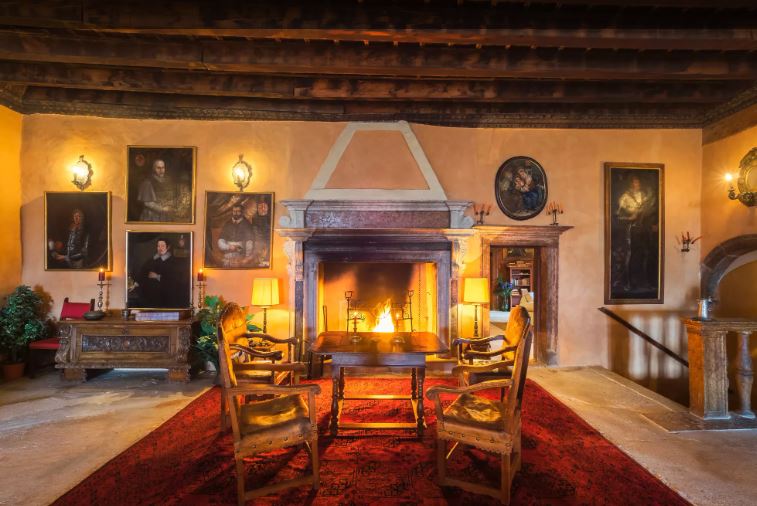
Mrs. Winchester tried to pray. She tried to call the name of her maid. Then she heard the door thrown open. There was an interval of unconsciousness, and when she revived, she felt a strangling clutch upon her throat—felt her arms feebly beating against something that bore her backward—felt her tongue thrusting itself from between her teeth! And the she felt the life pass from her. As the spirits still dwelled in the mansion of the shadows, lurking in its desolate places, peering from brambles, thickets, towers, corners, stairways and doors. Ghosts at the Winchester mansion know when it is night, for then most people retire and they can venture from their places of concealment to move unafraid about in their old mansion, to look in at the windows, even to enter and gazes upon people’s faces who might still be wandering in the evening hours. Vainly, spirits often seek some method of manifestation, some way to make their continued existence and their great love and poignant pity understood by their loved one’s or those they wish to haunt and terrorize. Ghosts dare to approach people when they are awake, but the terrible eyes of the living frighten them by the glances that they seek from the purpose the hold. Demons, ghosts, and other spiritual beings search for the living in the Winchester mansion during the moonlight dawn. At the time of her death, the unrelenting construction had rambled over six acres. The sprawling mansion contained 160 rooms, 2,000 doors, 10,000 windows, 47 stairways, 47 fireplaces, 13 bathrooms, and 6 kitchens. Carpenters even left nails half driven when they learned of Mrs. Winchester’s death. According to the provisions of her will, Mrs. Winchester’s personal property, including the furnishings, household goods, pictures, jewelry, and papers were left to her niece, Mrs. Marian Merriman Marriott, who promptly has the furnishings auctioned off. It is said to have required sic trucks working six weeks to car the furnishings away! The mansion and farm were not mentioned specially in the will. They became part of the Mrs. Winchester’s estate. #RandolphHaris 7 of 16

Demon possession is a well-defined phenomenon and should be clearly distinguished from spiritism. Since the same demonic forces are at work in both phenomena, they bear some similar characteristics and result in the same occult oppression and bondage. The demonized state of the demon possessed is similar to the trance of the spiritistic medium. Both are under the direct influence of demons who speak through them. In the case of the medium who processes to communicate with the spirits of deceased persons, the demon apes the personality and voice of the deceased. In the case of the demon possessed, the evil spirits appear to be more crassly cruel, unclean, violent, and less sophisticated and subtle than spirits working through a clairvoyant medium. In demon possession, they are also more domineering and brutally enslaving. Nervous muscular reactions and contortions peculiar to the demoniac often appear also in the spiritistic medium when one goes into a trance, but in a much milder form. Then, too, the demoniac is normally an involuntary victim of possession, while the medium is a willing subject, who cultivates psychic propensities and willingly yield to demonic control. Extraordinary movements of inanimate objects surrounding the demon-possessed remind us of similar happenings in spiritism. Extraordinary movements of inanimate objects surrounding the demon-possessed remind s of similar happenings in spiritism and magic. Tables, chairs, dishes, and the like are mysteriously moved about without anybody touching them, recalling tumbler moving and table lifting so common in spiritistic séances, and magic conjurations. In demon possession as well as in spiritism, unexplained rappings and noises in so-called “haunted houses” are heard. #RandolphHarris 8 of 16
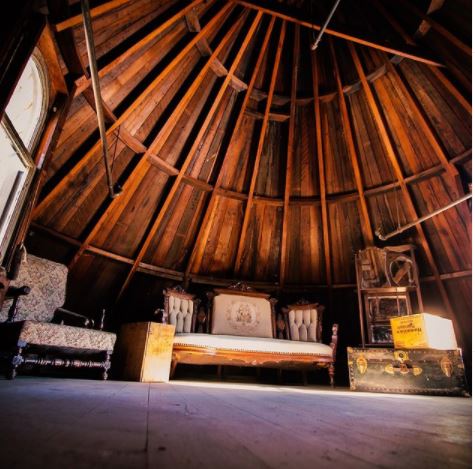
After the Winchester mansion was opened for tours, a spirit from the house had taken possession of one of the tour guides. The spirit insisted on taking up its abode with them, since it has been driven away from its for dwelling by the presence of Christians. Such cases of haunted houses about everywhere in occult literature in connection with mediums, magicians, and demon possessed persons. The tour guide saw apparitions and had frequent attacks in which she fell unconscious and demons spoke through her in their own voice and personality. A thorough investigation was conducted. Persons were stationed all around the house, in various rooms, and even in the Daisy Bedroom. Noises were heard which gradually increased in violence and seemed to concentrate in the bedroom Mrs. Winchester died in. Chairs bounced, windows rattled, plaster fell from the ceiling, and objects moved about without any visible explanation. Prayer caused the noises and telekinetic phenomena continued for a while in the mansion. On one occasion, after continued prayer, one of the demons inhabiting Jane cried out, “All is now.ost. Our plans are destroyed. You have shattered our bond, and put everything into confusion. You, with your everlasting prayers—you scatter us entirely. We are 13,130,130,130 in number. But there are still multitudes of living men, and you should warn them lest they be like us forever, lost and cursed of God.” The demon confessed that he was an emissary of Satan. The next day, the contents of the mansion were found in compete disarray and utter confusion. The amazing and terrifying thing was that the doors were still securely locked. No man or beast had entered. Evil spirits had obviously been at work in a satanic assault. On that day there were some tremendous crashing and knocking noises heard in the Winchester mansion, as if the whole house was filled with evil spirits. #RandolphHarris 9 of 16

Everyone giving tours in the mansion in the early 1900s, used to hear knocking and rumbling and crashing noises to such an extent that some of the visitors were frightened by them. Ghosts were also seen there quite regularly, even during the day time. A headless ghost was repeatedly seen in the mansion. Many people reporting becoming burned after contact with the “possessed” tour guide Jane. The autumn of 1925, all the pigs on the Winchester mansion’s farm died. The cause of death could not be found even though one of the carcasses was sent to a biological institute for examination. They tried everything but all to no avail. The following year the same thing happened again. This time the farmer redoubled his efforts to discover the cause of the pigs’ death. He had the stables inspected and the food analyzed but again without success. He thus decided to have the conservators of the estate decided to have the pigsty torn down and rebuilt on another site using completely different materials. Next year the pigs died again. They would all of the sudden squeal and then collapse. The whole process was repeated and every possible examination made in order to find out why the pigs had died. At this time certain of the member of the community began to say that someone must be killing the pigs magically out of spite. At first the conservators of the Winchester Estate would have nothing of this and continued to seek the advice of the vet and other such people. However, they could not help them, and so in the end they went to see the local minister to ask him about the question of magic. The minister simply laughed and said that the idea was stupid. Nevertheless the villagers pointed out to the representatives that there did exist some people in some areas of California who could kill livestock by means of magic. #RandolphHarris 10 of 16
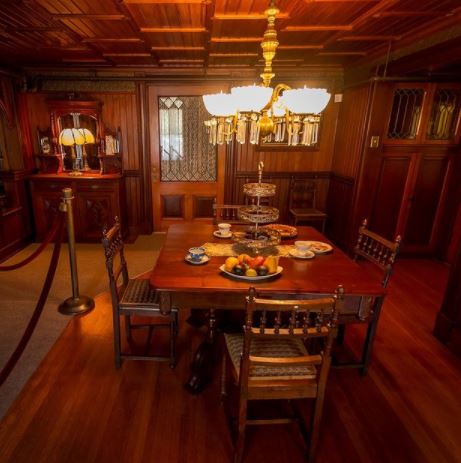
The conservators could do nothing though, and the event recurred year after year in spite of the fact that by now they had doubly secured the stables with locks and had sometimes stayed up all night with thread stretched out around the estate in order to discover if anyone was causing the animals’ deaths. One day, however, the circumstances changed. The minister visited the estate and asked one of the tour guides to accompany him to the vicarage. There they found one of the neighbour’s of the Winchester Estate, a man who had been less affluent, and this man confessed that it was he who had been the cause of everything. He had killed the pigs using black magic. The tour guides and conservators were naturally upset because by now 39 pigs had been killed. When asked why he had done this, the neighbour replied that it was because the tourists made such a noise outside his house. He had become so angry that he had tried to get his revenge in this way. He had subscribed himself to the devil with his own blood. To do this he had gone out on a Friday night to some crossroads and there drawn up a contract between himself and the devil. He mentioned that the devil had not appeared to him as he is often pictured, but that he met a black curly headed figure with blood-red eyes and a small snout and that the figure had been dressed in rather old-fashioned clothes. Ever since that day the man confessed that among other things, he had had the power to kill his friend’s pigs. The minister asked him what had made him come out into the open about the whole matter. His answer was that the people at the Winchester estate had been so kind to him over the year, donating food, clothes and furniture, that he had felt ashamed and he now asked for them to forgive him, and promised he would no longer plague them. #RandolphHarris 11 of 16

Not wanting to take any legal action, the conservators of the Winchester Estate forgave him and all went well until the neighbour ceased going to church and slid back into his old ways. Since his confession none of the estate’s pigs had died but now the man again took up his drinking habits two more of the pigs died in exact same ways as the others. The conservators decided to shutdown the farming land of the Winchester Estate and sell off hundred of acres, only keeping four. In the process, several other Victorian houses on the grounds, along with fountains, and gazebos were demolished. From the psychological point of view it is suggested that a person delving into magic and who believes in occult practices is really only succumbing to a fulfilment compulsion. One unconsciously fulfils the things that one seeks to perform by magic. One is the victim of auto-suggestion. However, even if this were the whole explanation as some people affirm, it would still be true to say that occult practices have a corrupting effect on all those who get involved in them. Demons tend to be somewhat more independent than angels…When possession takes place, you will not get to see them at all. The Florida-based Luciferian Light Group (LLG) adopted the ‘Watcher myth’ of devils that were originally angels, sent to Earth to guard humankind and cursed by God for screwing their charges. In the original myth the couplings produced monsters, but, according to the LLG, the actual result was the Aryan race. They say that African Americans and other racial groups take pride in their cultural roots, so the argument goes, why should the same concept not apply to Europeans? The argument cannot be countered by liberal sophistry, and so the ghosts of German volkisch occultists continue to be conjured. #RandolphHarris 12 of 16
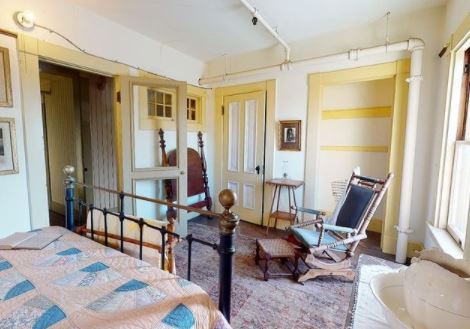
The role of cultural villain again proves to be a delicate balancing act—nothing can ever be condemned on purely moralistic grounds. Many people are still trying to protect “The Black House.” The Black Pope himself once reassured his flock, “the first 99 years are always the toughest. Rege Satanas!” Satanism is opposed to victimology and scapegoating. Many people are really drawn to the dark side because they grow up reading a lot of books and watching a lot of movies about it. If witches are out there, practicing some of the old ways of the pre-Christian gods and goddesses, then they are still Satanic in the sense that they are heretical. One side of the heretical and diabolical is the scientific aspect of Satanism. Copernicus and Galileo were regarded as practicing sorcerers in as far as they dared to challenge the supremacy of God with their heresies-their scientific research. Anton LaVey codified modern Satanism. There is a rich heritage of hearsay and blasphemy behind it, but as far as an aboveground religion that reveres Satan, there was not anything before the Church of Satan’s foundation in 1966. There were Black Masses that parodied the Catholic Church. A lot of modern Satanism draws from that codification or personification of Satan used as an archetype in mythology. Satanist are more interested in power, and what was going on in the castles and courts of the times. The interactions of power and Machiavellian machinations interest a Satanists rather than going out and find herbs to cure indigestion. Satanists are reaching for a religion of the aristocracy. They have all the aspects of that pride, that energy, that stye, and hopefully those elevated standards. Many people fear them because they believe they will lure you in their house and kill you, but is that not what many Christians are doing today? #RandolphHarris 13 of 16
Your relationship with your personal Satanic archetype is yours alone. The only way some can see how effective one is as a practicing black magician is how well one gets on in the outside of the World. Satanism has always represented and will always represent the adversary. He is a counterbalance to the unspoken injustice that prevails in the current society, whether that be overweening elitism or, going to the opposite extreme, mob rule. They always have to be in the minority that push hard in the other direction to get the pendulum swinging. Satanism will never be a religion of the people. It will never be populist beyond its current position. You see hundreds of thousands of kids making the sign of the horns, wearing black, getting devil tattoos, and listening to rock music they think is Satanic. They will take all the trappings and even grasp a few of the basic ideas, like Satan representing indulgence and independence of spirit. But, beyond that, they will always be a minority and that is how some think it should be. The Winchester mansion is a common site of demonic assault. In the early 1900s, a group of tourists and tour guides were attacked by demons; some became possessed; 30 people in the group were seized. In 1926, Satan and his allies once again possessed people at the Winchester mansion. For the first time in their lives, many of these people found themselves to be powerful, significant beings, establishing their own realm of authority. When they spoke, everyone in the mansion stopped to listen, for their shrill cries became testimony. Many historians have argued that the Satanism at the Winchester mansion was only the product of demented minds. However, there was something quite real in all the series of accusations and counteraccusations of the witnesses and the possessed—some definitely evil driving force that led humans to turn against one another like mad dogs lusting for the smell of blood. If Satan was to have presided over the Satanism at the Winchester Mansion, much was left out of the picture. #RandolphHarris 14 of 16

The Devil manifested himself in many forms to people at the Winchester Mansion—as a horse, a fox, a dog, a cat, a pig, and as a shadowy figure. At the Sabbats, the Devil was always present in the form of a tall, handsome man with blue eyes and black hair making no attempt to disguise his identity in any way Neither was the all-important bloodletting present in the ceremonies, either in the form of a sacrifice or in the singing of the pact. There was no defiling of sacred object, nor mention of the administering of the witches’ mark, a painful ceremony that was quite vivid in the minds of many of the witches at the estate. The Sabbats, all in all, seemed to have been rather staid affairs, involving no wild ritual or debauchery. The Devil offered not immediate wealth or riches, but a new system of government, where all humans would be equal, each human being free to “live bravely.” He promised an end to beliefs. Whoever the Devil was at those meetings, he obviously did not seek adulation, but rather he sought to establish a more equal and suitable social order among humans. Taken in this context, the entire episode begins to sound like a huge projection, a gigantic wish fulfillment on the part of the disgruntled citizens, who were expressing disdain for the system that, in their eyes had become oppressive. The figure chosen by the confessors as the Devil presiding over the midnight Sabbats had himself become disillusioned by the system. Perhaps he had been holding nocturnal meetings in the mansion in an effort of “cleansing the soul.” At any rate, the meetings were necessary psychological safety valves in the minds of the people. People would stand around begging for the master to teach them his secret. How to become invisible, how to acquire love, and oh! beyond all, how to make gold. How much gold would you give for the Secret of Infinite Riches? Humans became strengthened with wonderful power through the order of angels, so that one declares the divine will. From the Seraphim, that we cling with fervent love. From the Cherubim, enlightenment of the mind, power and wisdom over the exalted figures and images, through which we can gaze upon divine things, etcetera. #RandolphHarris 15 of 16

From the Thronis, a knowledge of how we are made and constituted, that we may direct our thoughts upon eternal things. From Dominationbius, assistance to bring into subjection our daily enemies, who we carry with us constantly, and enabling us to attain salvation. From Potestatibus, protection against human enemies of life. From Virtuibus, God infuses strength into us, enabling us to contend against the enemies of truth and reward, that we may finish the courage of our natural life. From the Principtibus, that all things become subject to humans, that one may grasp all power, and draw unto oneself all secret and supernatural knowledge. From Archangelis, that one may rile over all things that God has made subject to one, over the animals of the field, over the fish of the sea, and over the birds of the air. From the Angelis one receives the power to be the messenger of the divine. When the veil between the conscious and the subconscious mind begins thinning it is likely that one will begin to experience certain phenomenon that will grab your attention throughout the day. This will occur more and more as the veil between Worlds thins merging your spiritual awareness with your physical life. Usually it will manifest in the form of synchronicity, Déjà vu, or circumstance which seems to jump out and grab your attention. Thee I invoke, the Bornless one. Thee, that didst create the Earth and the Heavens: Thee, that didst create the Night and the Day. Thee, that didst create the Darkness and the Light. Thou art Osorronophris: Whom no human has seen at any time. Thou art Ahriman. Hear Thou Me, for I am the Angel of Paphro. Osorronophris: this is Thy True Name, handed down to the Prophets of Ishrael. Ahriman rise up through the infernal planes through the seal of Arezura and find rest within this manifestation of the blessings. Fill this sorcerous fluid with your power and might that it will serve my cause of counter creation through the intent of my own evil mind. Bless this blood as the very powers of death, destruction, and decay that I may cast out all that does not serve the cause of my own great work upon this path of enlightenment. Come tour the dark, brooding and mysterious, promising all kinds of forbidden treats. #RandolphHarris 16 of 16

Winchester Mystery House
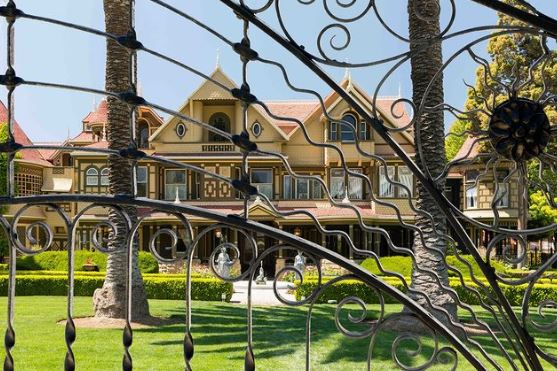
Happy weekend! Will we be seeing you on the estate today? 🌻 https://www.winchestermysteryhouse.com/

The Grounds Have their Share of Unexplained Mysteries
A mansion is not a mansion with its stately grounds, and Mrs. Winchester was just as attentive to the exterior of her estate as she was to the sprawling house. An avid gardener, she imported plans, flowers, trees, shrubs, and herbs from over 110 countries around the World. Mrs. Winchester employed eight to ten gardeners. Her head gardener was Mr. Nishiwara, who was responsible for seeing that the beautiful gardens, plus the tall hedge around the hose, were well maintained. The hedges were once so tall that only the top floor of the house was visible from the road! Mrs. Winchester loved to spend time in her gardens, and she had gazebos built where she could sit and enjoy her trees and flowers. It was a Saturday night, in January 1888, and Mrs. Winchester has, as usual, come home from the City early in the afternoon. It has been a black and foggy day, and the gas had been lighted in the streets and in the office where she worked from early morning. The fog was very bad at the time Mrs. Winchester returned home, and she congratulated herself on the fact that she had not to go out again that night. She sat with her puppy Zip in her sitting-room all the evening, with that comfortable feeling that she was able to relax until Monday morning, and that she need trouble about nothing outside the mansion. In due course, Zip went to bed, and then the maid Agnus reminded her of a letter that must be written and posted that night. Sufficient is it for Mrs. Winchester to say that the letter was to an elderly relative of some means who lived in Oakland, and who had taken great interest in her puppy Zip. The butler Martin remembered that the following day was the birthday of this relative, and that she should receive proper greeting by the Sunday morning post in the country town.

Frankly, Mrs. Winchester did not want the bother of it; but Agnus always knows best in these matters, and so Mrs. Winchester wrote the note and sealed it up. Mrs. Winchester had read nothing exciting during the evening—nothing to stir her imagination in any way. She stamped the letter and proceeded to the front door. Judge of her astonishment when, on throwing it open, she saw nothing but the gray wall of fog coming up to the very house; even the railings, not ten yards in the front of her grand estate, were blotted out completely. She called back into the house for the maid to come and look. “Don’t lose yourself, Mrs. Winchester,” she said, half laughing. “What a terrible night!” “I shall not lose myself,” Mrs. Winchester replied, laughing in turn. “The pillar-box is only at the end of the crescent; if I stick to the railing, I cannot possibly miss it. Do not wait here,” she added solicitously. “I will leave the door ajar, so that I can slip in easily when I come back. I have left my keys on my writing desk.” Angus went in, and Mrs. Winchester pulled the door close, and then stepped out boldly for the front gate. Imagine her standing there, just outside her own gate, and with her back to the crescent, knowing that she had to go to the left to find the pillar-box which was at the end of the crescent. There were thirteen Victorian cottages on her estate, so she knew she had to pass seven more before reaching the pillar-box. She also new that each cottage had an ornamental center-piece before she stepped away from the crescent at the end to reach the pillar box. That Mrs. Winchester knew would be something of an adventure, for the fog was the densest she had ever seen; she could only see the faint glow of her observation tower as she looked behind; the rest of her mansion was invisible.
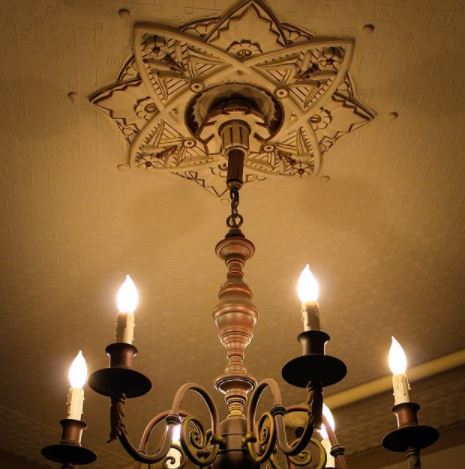
Mrs. Winchester counted seven Victorian cottages, and then stood at the end of the last line of railings. She knew that the pillar-box was exactly opposite her. She took three quick steps, and literally cannoned into it. She was a little proud of her own judgment in getting it so nicely. Then she fumbled for the mouth of it, and dropped in her letter. All this may should very commonplace and ordinary. Mrs. Winchester is an observant woman, and she had noticed always that the mouth of the pillar-box faced directly along the crescent, thus standing at right angles to the road. At the moment that she had her right hand in that mouth, therefore, she argued that if she stood out at the stretch of her arm, she must be facing the crescent; Mrs. Winchester had but to move straight forward again to touch the friendly railings. She was putting that plan into operation, and had let go of the mouth of the pillar-box, when a man, coming hurriedly round the corner, ran straight into her, muttered a gruff apology, and was lost in the fog again in a moment. And in that accidental collision he had spun her round and tossed her aside—and she was lost! This is literally true. She took a step and found herself slipping of the kerbstone int the road; stumbled back again, and strove to find her way along by sticking to the edge of the pavement. After a minute or two, Mrs. Winchester was so sure of herself that she ventured to cross the pavement, and by great good luck touched in a moment one of those ornamental center-pieces of one of the gates—or so, at least, it seemed. She went on with renewed confidence until she saw certain bushes which topped the railings of one particular cottage, and then Mrs. Winchester knew that she was near her mansion’s front door. She pushed walked confidently, stepped quickly up the little path, and reached the door. She was right; the door yielded to her touch, and she went hurriedly in.
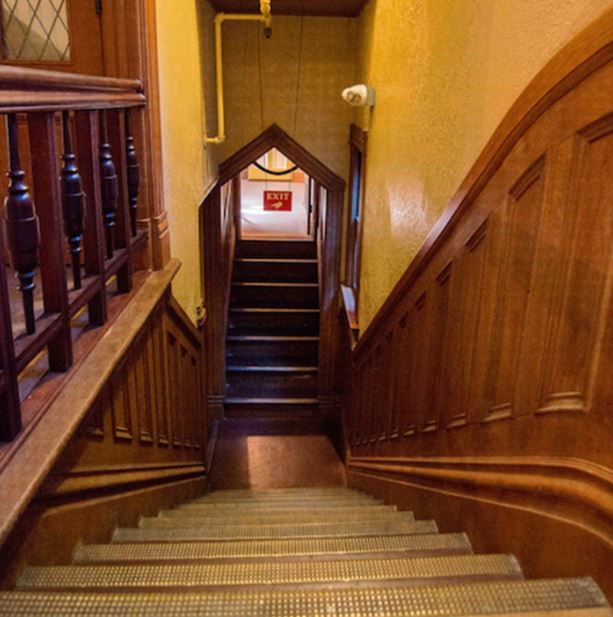
Mrs. Winchester had taken off her hat, and had held it towards the familiar hat-stand before she realized that it was not a familiar hat-stand at all; it was one she did not know. She looked round in some confusion, meaning to make good her escape without being observed, and yet wondering into what part of her mansion could she have come into, when she stopped stock still, with the hat held in her hand, listening. From a room near at hand, Mrs. Winchester heard the sound of a low, long-drawn moan, as from someone in pain. More than that, it was almost the wail of someone in acute terror. Now, Mrs. Winchester was a mild and caring soul, and her first instinct was to run. There was the door within a foot of her; she could open it again noiselessly and slip out, and leave whatever was moaning to its own trouble. Her next instinct, however, was a braver one; she might be able to help. Putting her hat on, and so leaving her hands free, she moved cautiously towards the sound, which was coming intermittently. She found that this wing of the house was unfamiliar to her; there was a 7-11 staircase built in the shape of a letter “Y,” which enabled the servants to quickly get to three different levels of the house. Then there were these stairs that lead to the ceiling, and there was also a cabinet that went straight through to the back thirty rooms of the mansion. When she went down the steps of the 7-11 staircase, slowly and cautiously, with her flesh creeping a little, the morning went on, and Mrs. Winchester was almost inclined to turn back with every step she took. However, at last, she got into the basement, and came to the door of the room from which the sound proceeded. She was in the very act of recklessly thrusting open the door when another sound broke upon her ears that held her still. The sound of someone singing in a raucous voice.

It was a sea song she remembered to have heard when she was a little girl in New Haven, Connecticut, and the words of which she had forgotten; it was something about “Boney was a warrior.” The door of the room was open a little way, and through the crack of it, Mrs. Winchester was able to peer in; and there she saw a sight that for a moment made her doubt her own eyes. She rubbed her eyes in a curious fashion and looked again, and this is what she saw: The room was in a neglected state, with strips of wallpaper hanging down from the walls and with a blackened ceiling. There was a table in the center of it, and at that table a man was seated, with a square black bottle and a glass before him, and a candle burning near his left hand. Mrs. Winchester could see the whole room now as plainly and as clearly as she saw it then. He was a man so villainously ugly that she had a thought that he was not a man at all, but some hideous thing out of a nightmare. He had very long arms—so long that they were stretched across the table, and his hands gripped the opposite edge of it; a great heavy head, crowed with a mass of red hair, was set low between enormously broad shoulders; his eyes, half closed, were high up and close together on either side of a nose that was scarcely a nose at all; the lips were thick and heavy. However, it was not the man that Mrs. Winchester looked at first, it was at two other figures in the room. These figures were seated on chairs facing the table at which the man was, and the strangeness of them lay in the fact that each was securely bound to the chair on which he and she sat, for it was a man and a woman. The man, who was quite young was not only bound, but gagged securely also; the woman was more lightly tied to her chair by the arms only, and her mouth was free. She was leaning back, with her eyes closed, and mingling with the raucous singing of the man at the table. Mrs. Winchester’s first impression was that the man at the table was some sort of unclean, bestial judge, and the others his prisoners.
He stopped his singing to pour some liquor from the square bottle into his glass and to drink it off; then he resumed his former attitude, with his fingers locked over the edge of the table. And now Mrs. Winchester noticed that while the woman, who was, by the way, quite young and very pretty, with a fair, dainty prettiness, still kept her eyes closed, the eyes of the bound man never left that dreadful figure seated at the other side of the table. Mrs. Winchester felt like she was on the eve of some awful calamity. She then unhesitatingly pronounced the entire assortment of people in the room as ghost, and condemned all the gathered treasures as the creations of petty intellect, which could not get out of the beaten track, but sought in the supernatural a reason for the explanation of every fact that seemed at variance with routine of daily experience. In her opinion the collection of people in this room had never seen at all in her day and generation, and must have been souls killed by the Winchester rifle ages ago; she did not yet believe her mansion was enchanted, however. To use her own language, “all those stories have been made by those people that set up overnight stirring out legends to entertain each other.” However, she must have known that she was in denial. For she was not insane and there were some kind of beings in this room. “Wouldn’t you like to speak, you dog?” said the red-haired man. “What would you give now to have the use of your limbs—the free wagging of your tongue? What would you say to me; what would you do to me?” The man who was bound could, of course, answer nothing. Mrs. Winchester saw his face flush and darken, and she guessed what his thoughts were. For herself, she was too fascinated by the scene before her to do anything else than peer through the crack and watch what was going one.

“Lovers—eh?” exclaimed the man at the table. “You thought I was unsuspicious; you thought I knew nothing and suspected nothing—didn’t you? While I was safely out of the way you could meet, the pair of you—day after day, and week after week; and this puppy could steal from me what was mine by right.” The woman opened her eyes for the first time and spoke. “It isn’t true,” she said, a sob breaking her voice. “It was all innocent. Martin and I have done no wrong.” “You lie!” thundered the man, brining his fist down upon the table with a blow that might have split it. “You’ve always lied—lied from the moment your father gave you to me—from the very hour I married you. You always hated me; I’ve seen you shudder many and many a time at the mere sight of me. Don’t I know it; haven’t I felt you stab me a thousand times more deeply than you could have stabbed me with any weapon? You devil! I’ve come at last to hate you as much as you hate me.” The woman turned her head slowly and looed at the younger man; a faint smile crossed her lips. In an instant the red-haired man had leapt to his feet, showing Mrs. Winchester astonishingly enough that he was a dwarf, with the shortest legs surely ever a man had. However, the bult of him was enormous, and Mrs. Winchester could guess, with a shudder, at his length. He caught up the glass, crossed the room, and flung the contents in the face of the man. “It’s a waste of good liquor—but that’s for the look she gave you. I wish there was some death more horrible than any invented yet that I could deal out to you,” he added, standing with the glass in his hand and glaring at his victim. “The death I mean for you is too easy.” He walked across to the fireplace in a curious purposeless way, and stirred a great fire that was blazing there. Then from a corner of the room he dragged with ease a great sack that appeared to contain wood and shavings; so much that Mrs. Winchester saw a rent in the side of it. As if in readiness for something, this he dropped down near the fire, and then went back to his seat, applying himself again to the drink that was on the table. And still Mrs. Winchester watched, as a woman may watch a play, wondering how it will end.
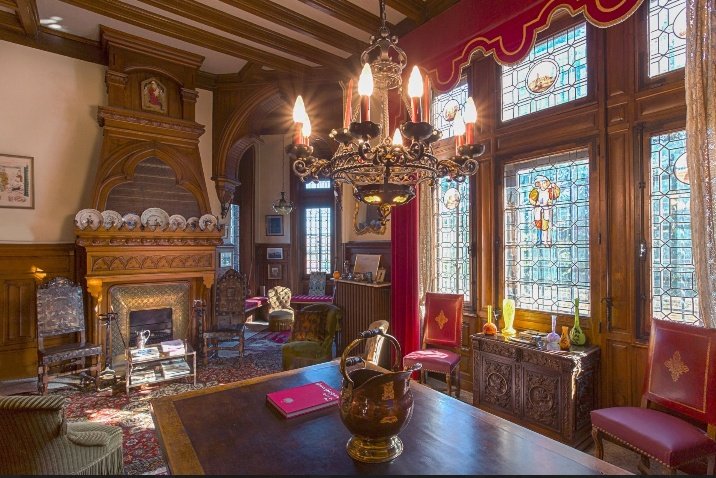
“I got the best of you tonight,” he said presently. “If I hadn’t some upon you from behind, you might have been too much for me; but I was ready and waiting. I’ve been watching longer than you think; I had everything mapped out clearly days ago. Tonight sees the end of all things for the pair of you; tomorrow sees me smiles away from here. You came in secret, you dog; you’ll go in secret.” “We have done no wrong,” said the woman again. “We loved each other years ago, when we were boy and girl; there was no sin in that.” “Bah!—I don’t believe a word of it. Don’t I know that your black heart you’ve compared the two of us every day of your life since first I saw you. His straightness for my crookedness; his sleek, black hair for my red; his prettiness for this face of mine”—he struck his own face relentlessly with one hand as he spoke—“that women shudder at. Don’t I know all that?” It was the strangest and most pitiful thing that the creature sitting there before his victims suddenly covered his face with his hands and groaned. If ever Mrs. Winchester had seen a soul in torment, she saw it then, and though she loathed him she could have wept for him. After a moment or two he dropped his hands and seized the bottle, and poured out the last drops into the glass and drank them off; then flung the bottle and glass crashing into the fireplace, as though there was an end to that business. And now, as he got down again from the chair, Mrs. Winchester saw the eyes of the woman open wide and follow his every movement with a dreadful look of terror in them. “I’ll kill you both—here in the place where you’ve met—and then I’ll seal up the house,” went on the dwarf. “I’ve planned it all. Look you last on each other, for tonight you die—and this house shall be your crypt!”
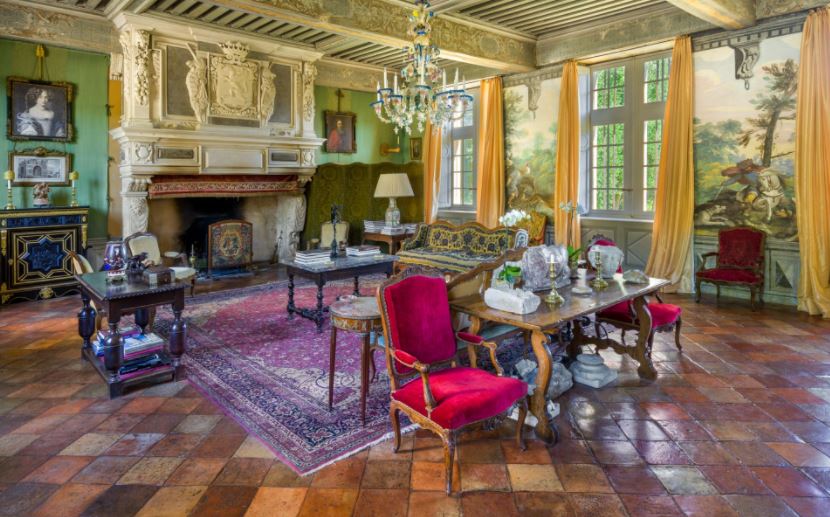
“I swear to you,” panted the woman eagerly, “by all I hold most holy and most dear, that if you let us go, we’ll never see each other again. For pity’s sake! —for the sake of Martin!” “For the sake of Martin!” sneered the dwarf. “That shows you in your true colors; that show who you are and what you are. There’s one poor satisfaction left to you; you’ll die together.” What held Mrs. Winchester then it would be impossible to say. She could only plead that in the dreadful thing that followed was a woman who sits at a play wondering what will happen next, and with never a thought in her of interfering. Mrs. Winchester’s in her anxiety has pressed the door a little to get a clearer view, so that she saw every movement of the dwarf. For herself, Mrs. Winchester had forgotten everything—in her own home, and my puppy zip, and the servants who slept in the mansion. It was as though she has stepped straight into a new World. Mrs. Winchester saw the dwarf advance towards the man in the chair, carrying his right hand stiff and straight beside him, gripping something s, she could not tell what it was that he held. Mrs. Winchester saw him come straight at her, and she saw the eyes of the woman in the opposite chair watching her as one fascinated. Then Mrs. Winchester saw two movements’ one with the left hand of the dwarf, when he struck the other man on the face; then with the right hand, when he raised something that gleamed n the light of the candle and brought it down with a sound that was new and horrible to her on the breast of the other man. And Mrs. Winchester saw the face of the man change, and start as it were into new life, and then fall as it were into death. And Mrs. Winchester saw his head drop forward, and his eyes were closed. Then, above it all, and yet seeming as a sort of dreadful chorus to it all, rang out the scream from the woman in the other chair. Mrs. Winchester did not think that the dwarf heard it; he had drawn back from what had been the living man, and was staring like one mad upon what he had done. And still piercing the air of the place rang the scream of the woman—not for her lover alone, but for herself.

That sound seemed at last to break in upon the senses of the dwarf and to call him partially to himself. Mrs. Winchester had watched him to the point where he draw himself together and crouched like a wild beast ready to spring, with that in his hand that dripped red, when, in some fashion, she flung herself round the partially open door and stumbled into the room. Mrs. Winchester thought she must have been a little made herself; otherwise, frail and commonplace creature that she was, she could not have battled with this madman. Mrs. Winchester came upon him from behind and gripped him, seizing him by the throat and by the head, and all the while shouting something to him quite unintelligible. The attack had been so sudden and so unexpected that she had him, in a sense, at her mercy. He could not know who had attacked him; he struggled madly, not alone to get away from her, but also to discover who she was. Mrs. Winchester struggled to keep his face away from her, gripped him by the neck and by the hair, and fought with him for what she knew then was her own life. And so struggling they stumbled at last horribly against that still figure bound in the chair and brought it over crashing with them to the floor. And then in a sudden Mrs. Winchester felt the dwarf inert in her hands, and knew that she had conquered him. What she must have looked like in that room, kneeling there, panting and struggling to get her breath, she could not tell; the whole business was so like a nightmare. She remembered seeing the dwarf lying there—huddled up and very still. She remembered that other figure, bound grotesquely in the chair and lying, still bound, upon its side; and she remembered, too, the woman, with her arms close fastened behind her, sitting there and sobbing wildly.
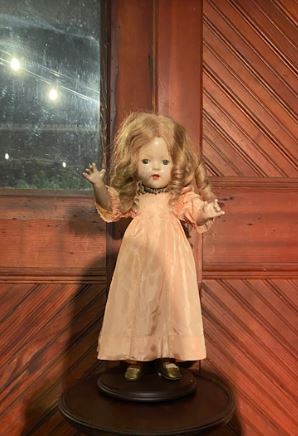
The dwarf must have been stunned; he lay there quite still, with the knife that was dreadfully red fallen from his hand, and lying beside him. When at last Mrs. Winchester staggered to her knees she saw that the girl was staring at her with a face that seemed to suggest that here, perhaps, was another ruffian come to kill her. “Who—who are you?” she asked in a frightened whisper. “A friend—one who stumbled in by accident,” Mrs. Winchester panted. “Look at the man that’s tied to the chair,” she whispered hoarsely. “He can’t be dead.” Mrs. Winchester knew that he was, but still she looked, as she bade her. Mrs. Winchester had no need to look twice; the poor fellow was quite dead. The blow had been strong and sure. On her knees beside him, Mrs. Winchester looked up and nodded slowly to her; there was no need for words. The young lady leaned back in her chair again and closed her eyes. “Set me free,” she said in a faint voice. Mrs. Winchester could not touch that knife that lay there; in a mechanical, methodical way she took from her waistcoat pocket the decent, respectable little bone handled penknife she carried always with her. With that Mrs. Winchester but the young lady’s bonds, nothing as she did so how cruelly they had cut into the white flesh; and after a moment or two she swung her arms listlessly against her sides and opened her eyes, and then, with an effort raised her hands and pressed them against her temples. “What will you do?” Mrs. Winchester asked, looking at her curiously. “I—I don’t know,” she said; and then, breaking into weeping, sobbed out: “Oh—dear God—that it should have come to this! What shall I do—what shall I do?” “You must get away,” Mrs. Winchester said, watching the dwarf, who was beginning to stie a little. “If he wakes, you know what will happen.”

“I know—I know,” she said; and got to her feet and began to move towards that bound figure still lying tied to the chair. However, at that Mrs. Winchester got before her, and with her hands against he shoulders held her back, and pleaded passionately to her that she should go, and leave the dead alone. She listened, with that strange look in her eyes of a child wakened from sleep and not clearly understanding; but she yielded to Mrs. Winchester, and stumbled under her guidance to the door. They had reached it, and Mrs. Winchester had opened it for her to pass out, when suddenly the dwarf twisted over on to his hands and knees, and then raised himself upright. He did not seem to realize for a moment what had happened; then he caught sight of the woman, and, with a snarl, crawled forward and gripped the hilt of the knife. At that she pushed suddenly past Mrs. Winchester and fled like a hare up the stairs. Mrs. Winchester heard the swift passage of her footsteps in the little hall of the house—then the slamming of the door-to-nowhere. And now Mrs. Winchester had to look to herself, for she saw in the eyes of the man that he would not let this witness escape if he could catch him. Mrs. Winchester had managed to get through the door by the time that he had got to his feet, and in a dazed fashion was stumbling toward her, knife in hand. With a sudden swoop he reached the table and blew out the candle, and at the same moment Mrs. Winchester ran up the stairs, and in the darkness stumbled along the hall and fumbled with the catch of the door. By great good fortune, Mrs. Winchester got the door open, and literally fell out into the fog. She could not see him as he tore after her; in a faintness Mrs. Winchester had fallen to her knees, and she heard him, as he raced past her, panting heavily. Then the fog swallowed him up, and she knelt there on the farm alone, shaking from head to foot.

Mrs. Winchester had, of course, no means of exactly in what part of her mansion she had had her adventure; she could only judge roughly that it must be about the middle of the crescent. She started along again, in the right direction, as she hoped, and thought to find the front door to her mansion; missed the railings, after going what seemed to be an interminable distance, and came up hard against a pillar-box. Scarcely knowing what she did, she set her right hand in the mouth of it, and performed the same maneuver she had done before; advanced three paces, and touched railings again. Stumbling along these, she came blindly what she thought was her front door, walked up the path, and pushed open the door that yielded; and there, with the face of her maid looking at her in alarm and wonderment, Mrs. Winchester feel in a dead faint at her feet. It has to be recorded that Mrs. Winchester never found that room again. She knew every square inch of her mansion. Over and over again, in clear weather, Mrs. Winchester has always around in her mansion, and had closed her eyes, and tried to remember what steps she took to get to that particular room that night, after a stranger had cannoned into her and twisted her round; but all in vain. Whether in some part of the house lies the body of a man who was foully murdered on that particular night; maybe in a hidden room the crime was committed; or perhaps, in some strange supernatural fashion, she saw that night a deed committed that had been committed long before, she shall never know. That it is no mere figment of the imagination, and that something really happened that night, is proved by one fact. Her maid, in raising Mrs. Winchester from the floor that night when she fell at her feet, found her fingers locked closed upon something, and, forcing them open, disclosed what it was. A tuft of red hair!

Such episodes may appear utterly absurd and pure superstition to people in countries comparatively free of black magic, but instead they should be warnings of the power of Satan and demons where occult literature lures readers into illicit magic. Magic as the release of special power by satanic and demon forces of evil in its character and effects. While divine help and miracles produce new strength and positive results, magic shifts the burden to another area. Small relief in one area must be paid for by terrible burdens in another. The principle of compensation prevails. The price exacted is always found to be much greater than the amount of help received. Satan drives a hard bargain and grossly cheats his victims. Usually violence, suicide, and insanity will run through a whole family line, where the magical arts have been cultivated and practiced. Such tragic events often involve as many as four generations. Many occultists and magic workers, especially those who have cultivated the black arts and signed themselves over to the devil in their own blood, die horrible deaths. When a ready successor is not provided to carry on the nefarious practice, this is especially true. The psychic bondage and oppression that traffickers in occultism themselves suffer, as well as their dupes, is horrifying to contemplate. Demon possession is represented as a vivid symbol of the prevalence of evil in the World. Other critics attempt to dismiss demon possession with theories of accommodation or hallucination. However, this view fails to meet the issue. Nor can present-day parapsychologist and psychiatrists, who refuse to recognize evil supernaturalism in the phenomenon of demon possession, either explain it or deal adequately with it. Laws defining witchcraft as having league with the Devil and prescribing the death penalty for such offenders cropped up in the colonies as early as 1636 in Plymouth. Other colonies soon followed suit—Connecticut in 1642 and Rhode Island in 1647.

The first executions took place in Boston in 1648 and in Hartford, Connecticut, in that same year. The executions were carried out by hanging, in contrast to the European practice of burning witches, which probably stemmed from the widespread fear among the European peasantry of vampire, the dead who returned from their graves to suck the blood from the living. The vampire myths never really took root in America, so the necessity of destroying the bodies of the witches was not deemed urgent. Throughout the 1650s, there appeared prosecution and attempted prosecutions in America, but these cases were infrequent, and all of them were based on the fear of maleficum, the witch’s working of evil, the accusations coming from frustrated and jealous neighbors. Few confessions were recorded in the early cases, and they did not seem to have much real validity. The few that did confess mentioned having dealings with Satan, but for the most part these admissions were confused and incoherent, and the details of the accounts differed greatly from the confessions of the witches in Europe. For example, in 1699, in Connecticut, a woman named Greensmith confessed to trafficking with the Devil, but made no mention of all-important Covenant, or pact. She further stated that the Devil had appeared to her in the form of a deer (not a goat) and that she had attended meetings at a place not far from her house. The mention of “meetings” occurred in some early confession, but the word “Sabbat” or “Sabbath,” commonly used by European witches, did not come up until later, apparently at the suggestion of the Salem judges. Some believe that Satan has a soul and a character. He is not just this futile entity but someone you can see many aspects to. Some people do not see Satan as this guy with horns who is evil, they see Him as the first rebel. Then one can see why He is so attractive to many in the Victorian ages and the young people. He is someone who is standing up to the greatest power in the Universe. “If that ‘evil’ is of a rebellious nature,” says Glenn Danzig, “then I guess, in Christian terms, that evil is the Satan in you. I don’t buy that. I believe in honesty, standing up for yourself. That’s my ‘good.’”

Thousands of people base their hopes on the statements of spiritistic practitioners and subsequently become dependent upon the advice they receive from the “other side.” There are quite a number of people who has suffered serious psychic disturbances through the misuse of such practices. Their personalities have been split and they have been utterly confused by the spirits on which they have called. People therefore who try to discover what life after death is like through spiritism and superstition may be in danger of falling prey to the dark and hidden side of their own minds and soul. If you look at the early tracts of The Christian Bible, there is really not much about Satan in there anyway. Christian religions have tried to overblow and create a whole legend around Satan which is not true to the actual scriptures we have. If you desire, you must first make yourself strong so you can help others. You should only help people who want help, a lot of times people do not really want your help. You tell people what has to be done to change their lives, they will not listen. If Satan were corporeal, He would not be something repulsive, He would be something seductive. He would want to win you over and gain your trust, and of course being repulsive or disgusting would not be the way to go. One would imagine this would be a seductive, beautiful creature. In the Gnostic account of the fall of the angels, the angels were suppsed to be watching over this flock of humans and all of a sudden, they are perpetrating acts of pleasures of the flesh with them. Eventually this created the Cyclops, the Minotaur, things of this nature. There are so many accounts of the fall of the angels, it is like a fantasy tale that you would like to believe actually happened. We, in this circle, conjure and cite this spirit Fatenovenin, with all his adherents, to appear here in this spot, to fulfill our desires, in the name of three holy Angels, Schomajen Sheziem, Roknion Averam, Kandile, Brachat Chaijdalic, Ladabas, Labul, Rargil, Bencul, in the name of God. Amen!

Winchester Mystery House

Mrs. Winchester’s estate was a little town within itself. The grounds have their share of unexplained mysteries. Mrs. Winchester outfitted her home with the finest stained glass doors, windows, and wallpaper that money could buy during her time. She had everything she needed: plumber’s shops, carpenter’s workshops, her own water and electrical supplies, and complete sewer and drainage systems. Mrs. Winchester even had her own gas manufacturing plant. It produced carbide gas by adding a small amount of water to a drum containing calcium carbide. The resulting gas was pressed through the gas lines to the house by a large piston and cylinder. The gas lights in the house were then lit by electromechanial strikers that created a spark to light each lamp.
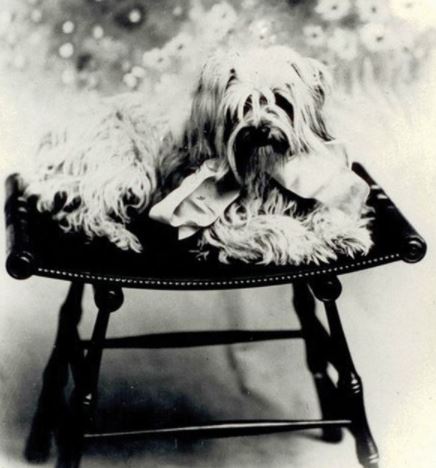
Come see her estate, in person, for yourself this weekend! Please Click the link below for tickets and more information.
 Randolph Harris II International Institute