
Home » violence (Page 11)
Category Archives: violence

Of Course, if the Devil Asks for Your Address, I Will Give it to Him at Once!


Not Only is Everything Subject to Change but Everything Also Exists in Relation to Something Else—Thus Change and Relativity Dominate the World Scene!


Many Take to an Imperfect, Half-Competent or Half-Satisfactory Teaching Because No Better One is Available!


There is an Abyss which No Human Can Cross, a Mystery which Remains Utterly Impenetrable to One—This is Transcendent Godhead!



An Ideal Helps to Hold a Being Back from One’s Weaknesses, a Standard Gives One Indirectly a Kind of Support, as Well as, Directly, Guidance!


The Struggle itself Toward the Heights is Enough to Fill a Being’s Heart—One Must Imagine Beings Happy!
 And think of all the things you did, waking that ancient one Akasha and almost loosing her on humanity. As if we do not have enough monsters created by evolution. And then your adventure with the Body Thief. Coming into the flesh again, having that chance, and rejecting it for what you were before. You know your friend Gretchen is a stain in the jungles, do you not? Well, do not believe what you have read in the papers. Gretchen lost her mind; she is fixed in a state of hysteria and you believe it is your fault. I did not place judgement upon the incident. If we can go back to what I was saying. I was saying that you did everything but ask me to come! You challenged every form of authority; you sought every experience. You have buried yourself alive twice, and once tried to rise into the very Sun to make yourself a cinder. In simple situation neuroses the basic anxiety is lacking. Individuals are constituted by neurotic reactions to actual conflict situations on the part of people whose personal relations are undisturbed. The following may serve as another example of these cases as they frequently occur in a psychotherapeutic practice. A woman of twenty-five complained about heart pounding and anxiety states at night, with profuse perspiration. There were no organic findings, and all the evidence suggested that she was a healthy person. #RandolphHarris 1 of 18


Should I Ever Take Ease Upon a Bed of Leisure, May that Same Moment Mark My End!
 It is a lust again of time and for the future, for the mysteries of the natural World. For being the watcher that I became that long-ago night in Paris, when I was forced into it. I lost my illusions. I lost my favorite lies. You might say I revisited that moment and was reborn to darkness of my own free will. The transition to a study of the negative aspects of bureaucracy is afforded by the application of Veblen’s concept of trained incapacity, Dewey’s notion of occupational psychosis, or Warnotte’s view of professional deformation. Trained incapacity refers to that state of affairs in which one’s abilities function as inadequacies or blind spots. Actions based upon training and skills which have been successfully applied in the past may result in inappropriate responses under changed conditions. An inadequate flexibility in the application of skills, will, inchanging milieu, result in more or less serious maladjustments. Thus, to adopt a barnyard illustration used in this connection by Kenneth Burke, chickens may be readily conditioned to interpret the sound of a bell as a signal for trained chickens to their doom as they are assembled to suffer decapitation. In general, one adopts measures in keeping with one’s past training and, under new conditions which are not recognized as significantly different, the very soundness of this training may lead to the adoption of the wrong procedures. #RandolphHarris 1 of 18


Picture this: ☀️ A beautiful open environment, paseo-fronted home, 🏈 and your kids playing together…This could all be yours, if you act fast!
Only a few homes left at #RocklinTrails! Visit our website at the link in bio today to schedule your tour!

https://cresleigh.com/new-homes-in-rocklin-california-rocklin-trails/residence-one-model/
And Distance Has Come and Taken You Far Away Again, but I Will See You Soon, My Friend!
 I showed my power to understand. Yes, illusions before, I admit it, but the thing I have spoken here are true. Already you despise your son for his love of mortals, his need to be ever near them, his yielding to the violinist. “Lie awake watching you run through my head, I am alone again, but not for long my friend. We face another day and distance has come and taken you far away again, but I will see you soon my friend, and then I will sing you my song. I cannot go home alone again. No I cannot my friend. Until then, eyes, I recognize taking me back familiar to me from some other time or maybe another life. Remember out times, and know who I am. The memory stays, until we can breathe as one again,” Until then by Sully Erna. Power and the sense of significance, I have said, are intertwined. One is the objective form and the other the subjective form of the same experience. While power is typically extrovert, significance may not be extrovert at all but may be shown (and achieved) by prayer or other introvert, subjective methods. It is nevertheless experienced by the person as a sense of power in that it helps one integrate oneself and subsequently makes one more effective in one’s relations with others. Power is always interpersonal; is it is purely personal we call it strength. Power is social and consists of person in groups acting in concert. #RandolphHarris 1 of 13
 This is why the interpersonal view point, the tap root of the cultural school of psychoanalysis, is so important. If one believes the feeling of power in the sense of having influence in interpersonal relations with significant others is crucial for the maintenance of self-esteem and for the process of maturity, when the sense of significance is lost, the individual shift one’s attention to different, and often perverted or neurotic, forms of power to get some substitute for significance. “Here I am, what a nice place to be. I never thought I would see the skies separate for me and here I am. What a nice surprise. If only I had known what life was like on this side. You always bring me light, and you help me find my way. A gentle kiss goodnight is the innocence I crave. Here I am humbled and amazed. This beautiful little miracle of life was gifted to me, and here I am. I never thought I would say, if I could live my life again, I would live it your way. You always brought me life, and you have helped me find my way. I will never waste you time, I will never cause you pain. I will love you all my life, I will love you everyday. Under the light you shine on me, I promise I will be there for you baby. I would never want to leave you anyway, you have become my light. I cross my heart that is in your hands with hope that you will always be my best friend. I promise I will be there until the end,” My Light by Sully Erna. #RandolphHarris 2 of 13
 Our particular problem in America at this point in history is the widespread loss of the sense of individual significance, a loss which is sensed inwardly as impotence. A situation in our day more tragic than the violence about us is that so many people feel they do not and cannot have power, that even self-affirmation is denied them, that they have nothing left to assert, and hence that there is no solution short of a violent explosion. Consider a recurring nightmare from a radical student at Columbia University. In this dream, the student Salvatore, came home from school and rand the bell to his house. He was told by his mother that she did not know him and that he did not belong there. He went to his cousin’s house and they told him the same thing. Finally he walked across the country to his father’s house in California and was told by his father that he did not know him and he did not belong there. The dream ended with him disappearing into the Pacific Ocean. “In separation, we come together. It never ends, change has just begun. Believing as we release the departed to know, what no one else could know. A way, into the unexplained. Redeem my soul into my body. To think my souls have been damned again, and again and again,” The Departed by Sully Erna. #RandolphHarris 3 of 13
 Judging from how often this kind of dream—“My parents did not recognize me; they closed the door in my face,” “I do not belong to any place”—comes up in therapy, it seems to be an important clue to understanding our times. The student who had that dream was a member of the revolutionary movement not by accident. Violence, or acts close to it, gives one a sense of counting, of mattering, of power (whether the feeling be ersatz or not is unimportant at the moment). This in turn gives the individual a sense of significance. No human being can exist for long without some sense of significance. No human being can exist for long without some sense of one’s own significance. Whether one gets it by shooting a haphazard victim on the street, or by constructive work, or by rebellion, or by psychotic demands in a hospital, or by Walter Mitty fantasies, one must be able to feel this I-count-for-something and be able to live out that felt significance. It is the lack of this sense of significance, and the struggles for it, that underlies much violence. Writing in the Report to the Nation Commission on the Causes and Prevention of Violence appointed by the president after the assassination of Robert Kennedy and the Reverend Martin Luther King, Jr., the historian Richard Maxwell Brown makes sobering statements about American violence. #RandolphHarris 4 of 13
 “The first and must obvious conclusion is that there has been a huge amount of it. We have resorted so often to violence that we have long since become a trigger happy people. It is not merely that violence has been mixed with the negative features of our history such as criminal activity, lynch mobs, and family feuds. On the contrary, violence has formed a seamless web with some of the noblest and most constructive chapters of American history.” The aftermath of the 1968 political assassination saw a bevvy of opinions and researches spring up on the causes of violence and its cures, consisting largely of debates between those emphasizing nature, and those emphasizing nurture. The former (stemming back, in the main, to Dr. Freud) held the general viewpoint that aggression is instinctive, part of the genetic equipment of mortals, and human beings are inherently aggressive. According to this view, it is a cross we must bear, an expression of the old Adam inevitably tainting human beings, and the most we can hope for is to control this evil in our hearts or let it out in wars and other culturally approved forms of violence. The other chief view, nurture, claims that aggression is a cultural phenomenon, caused—or at least augmented—by mass communication, faulty education, and especially TV. It is to be attacked and gotten rid of by changing our educational methods and controlling programs on TV. #RandolphHarris 5 of 13
 What all too often is tiresomely ignored is that these two approaches are not mutually exclusive. Aggression is part of the basic equipment of mortals, but it is also culturally formed, exacerbated, and can be, at least in part, redirected. Out culture is not simply a given, but is also us. We “homo called sapiens,” as Edna St. Vincent Millay put it in her sonnet, are the kind of creatures who create a vast TV and other forms of mass communication and, using these means, covertly teach aggression to our children. At the same time we endlessly sermonize against aggression. The contradiction this creates adds to the impotence everyone feels and to the hypocrisy with which we surround the issue of power in our culture. However, the real argument against many of these either/or explanation is that they leave out of the discussion exactly what is most important in the problem—that is, the question of the values, rooted in both nature and nurture, that link the two and are bound up with aggression and violence. #RandolphHarris 6 of 13
 Richard Maxwell Brown concludes his part of the Report to the Commission on Violence by citing two problems which confront us: “One is the problem of self-knowledge…When that is done…we must realize that violence has not been the action only of roughnecks and racists among us but has been the tactic of the must upright and respected of our people. Having gained this self-knowledge, the next problem becomes the ridding of violence, once and for all, from the real (but unacknowledged) American value system.” However, is there not a flagrant contradiction in this? If violence has been part and parcel of “our highest and most idealistic endeavors” and had been the tactic of the “most upright and respected” people, should we not inquire whether these people find something, perhaps unconsciously, in violence that they value? Furthermore, one can never change a value system by willing it changed or by other conscious means, as though plucking weeds from a garden. The roots of values lie deep in the archetypal and unconscious symbols and myths of the society. Changing the values system first of all requires a probing into the questions: What does violence do for the individual? What purposes does one achieve through aggression and violence? #RandolphHarris 7 of 13
 In the utopian aim of removing all power and aggression from human behavior, we run the risk of removing self-assertion, self-affirmation, and even the power to be. If it were successful, it would breed a race of docile, passive eunuchs and would lay the groundwork for an explosion in violence that would dwarf all those that have occurred so far. Thus oversimplifying the issue, we talk as though our choice were only between aggression on the one hand and a race of eunuchs on the other. Caught in the contradiction which this breeds, it is not surprising that we wake up with bad dreams, sensing that the essence of ourselves, the self-affirmation and self-assertion that makes us persons and without which we have no reason for living, is taken from us. What we have failed to see is that aggression has been, on the beneficial side, in the service of those values of life which would, if discarded, leave us bereft, indeed. “How many ways can you break my spirit down…again and how many times have I peeled my face up off the ground…for you. In case that you are starting to think you can run my life…I would think again. Or cripple my faith, when you judge and criticize me…but I am still standing. I do not know if I can say I have lived through everything, but I have walked this Earth with bare feet broken in the snow and my father said to me it never seems to be a simple walk down an icy cold broken road. I will fight with what is inside of me…this warrior spirit inside of me,” Broken Road by Sully Erna. #RandolphHarris 8 of 13
 It has long been my belief that understanding aggression and violence requires that power be seen as basic to the problem. I believe, also, that the data given to us by depth psychology cast an especially revealing light on the springs of human power and on aggression and violence. In my concern with power, I am tying to reach a level below both the nature and nurture theories, below both the instinct and culture arguments. I am seeking the answer to the question: What does individual person achieve through aggression and violence? If the pre-industrial World was in many ways no less insecure than our own, at least work and community life were ordered on a human scale. First of all, most mortals lived in small, tightly knit communities in which the family was the productive unit. Second, the tools that mortals used, the pace of work, the distribution of things that were made—all of those were controlled by human capacities and needs. Perhaps most important, instead of being separated from what we now call leisure activities, work itself—ordinarily some craft—was closely integrated in the total life of individuals and communities. Some call this the World we have lost. #RandolphHarris 9 of 13
 It was by no means an idyllic Word, but time was, and it was all time up to 250 years ago when the whole of life went forward in the family, in a circle of loved, familiar faces, know and fondled objects, all to human size. That time has gone forever. It makes us very different from our ancestors. Different chiefly because of the technological revolution with its transformation of working conditions, the communities in which mortal life, and the whole complex social order that governs our lives. What happened, however, was companying change in human personality or character; and companying change in human personality or character; and it is the characterological revolution which must be understood if we are to determine whether alienation today differs in form and degree from the miseries of which earlier mortals complained. However, like the scientific and political upheavals which is accompanied, this characterological change had no sudden beginning or point in time at which earlier mortals complained. However, like the scientific and political upheavals which it accompanied, this characterological change had n sudden beginning or point in time at which spontaneously modern mortals replaced feudal mortals. History here is inadequate, and our evidence largely intuitive, or derived from literary works with their descriptions of social types, or from language itself. #RandolphHarris 10 of 13
 As much as anything else, one needs personal freedom in this search after truth. Every form of interference and obstruction comes from sources which have acquired only a partial or false insight into truth. However, such freedom is permitted only insofar as one is good enough, wise enough, balanced enough, judicious enough, and discriminating enough to use it properly. Otherwise it leads to non-truth and self-deception. One must learn to think for oneself and to practise discrimination for oneself, if one want to find one’s way to truth. “A veil of sparkling white soothes and bathes me in the light, it feels me with the Suns and visions of the ancient ones. Descend to me, and sooth my disarray, and so it is done—hear my words Avalon. Fields are swaying like dancers in the Moonlight, rivers field with dreams-Unbroken and still promising. Warm inside-open the way in flat into the night—embrace what is to be, Avalon” Avalon by Sully Erna. Avalon is the mythical island, in Arthurian legend. The island’s legendary healing powers were said to restore King Arthur after he was injured in a major battle. His sword, Excalibur, was forged there too. It is a utopian paradise where the legends of English knights and political wholeness unite in a kingdom lost in the mists of time. #RandolphHarris 11 of 13
 If a seeker find no one in one’s surroundings, contacts, or society near enough to one’s level of spiritual interests, then one must accept one’s loneliness, because one has chosen to draw away from the common preoccupation. For in order to be a working philosopher, a mortal must go one’s own way. This demand for individuality requires courage and wisdom. If one lack higher knowledge, intuitional feeling, and intellect—whose combination is wisdom—then one must seek to develop them and this demands works. Meanwhile, one can take help from personal guides and superior books. Without wisdom, or at least genuine efforts to work towards it, one’s course could be wrongly set to arrive at disaster. To withdraw from sectarian community life and walk alone requires qualities that only few possess. There is security, comfort, mortal and Worldly support in it. To be able to abandon these things a mortal must have strong inner urge as well as a continuous clear perception of philosophy’s meaning. “Breathe deep, bracing and strong, coming alive. Take back all that is lost, honour your pride. Time stops, silence is now, moving around hands raised fading to black, fall to the ground. From within, you will begin to feel the rise!” (The Rise by Sully Erna) #RandolphHarris 12 of 13
 The weakling cannot walk this path. A mortal needs strength to follow out what one’s deep intuition tells one to do, especially where it departs from the allegedly rational or the socially conventional. If one’s guided attitude or actions meets with criticism or opposition, what is that to one? One is not answerable for what other people think about one. That is their responsibility. One is answerable only for what one oneself thinks and does. Only the mortal who has a passion to acquire the certainty of truth, who has the courage to hold unorthodox views and come to independent conclusions, who lives in an atmosphere of original thought, and to whom the charge of heresy is no charge at all, is at all likely to find one’s way to the truth. In truth, however, the pure relation can be built up into spatiotemporal continuity only be becoming embodied in the whole stuff of life. It cannot be preserved but only put to the proof in action; it can only be done, poured into life. Mortals can do justice to the relation to God that has been given to one only by actualizing God in the World in accordance with one’s ability and the measure of each day, daily. This is the only genuine guarantee of continuity. “Time is so wasted it wastes away, resurrect me Jesus Christ, I am so lonely for you. Taken away the innocence of live. Deliver me. Deliver me out of this pain and I will live through you again,” Eyes of a Child by Sully Erna. #RandolphHarris 13 of 13
All the Rapture and Pain I Had Known in these Past Month Came Together Inside Me–I Never Promised My Soul to the Devil for this!
 But no matter, only so many children can be made by one in a century. And new offspring will be weak. However, this is not necessarily a bad thing. The rule of the old covens had wisdom in it that strength should come with time. And then again, there is the old truth: you might make titans or imbeciles, no one knows why or how. Whatever will happen will happen, but choose your companions with care. Choose them because you like to look at them and you like the sound of their voices, and they have profound secrets in them that you wish to know. In other words, choose them because you love them. Otherwise you will not be able to bear their company. Make sure before you select a mate that they have some lifetime before you choose them. Never let loneliness drive you to fall in love with someone because their helplessness will be so completely your fault. Remember, beware of that power, and the power you have over those who are dying. Loneliness in us, and that sense of power can be a strong combination. What relation does this pattern of passivity/madness that we have seen in Treasure have to do with the violence in our society, which has become such a critical problem for contemporary men and women? #RandolphHarris 1 of 23
 A friend of mine, not in analysis or psychotic in any way, tells us how it feels to be in a rage after a quarrel with his wife: How close this rage is to a temporary psychosis! As I walk down the street on a sidewalk that seems very far away, I cannot think; I am in a daze. However, it is foggy only externally—inside I am hyperalive, hyperaware of every thought and feeling, as though I am in an illuminated World, everything very real. The only trouble is that this inner illumination has practically no connection with the outside World. I feel slightly ashamed in relation to the outside World—ashamed and defenseless. If people made fun of me or suddenly demanded something important of me (say an accident occurred on the street). I would not be able to respond. Or if I did respond, I would have to get out of my “mad”; it would be broken through. The streets are foreign; they seem empty though people are walking on them just as always. I do not know the streets very well (though I have seen them thousands of times). I walk on as though I am drunk, picking up my feet and self-consciously putting down. I go into a restaurant, Wan Li at Renaissance Beijing Wangfujing Hotel, afraid the cashier girl will not recognize me—I am in a different skin—or she will think something is wrong. (She does recognize me and is friendly as always. #RandolphHarris 2 of 23
 I go to the men’s room ; I read the graffiti over the urinal without any emotion. I am still afraid someone will require something of me, attack me, and I could not defend myself. I come back to my seat, staring out the window at the far end of the restaurant. I feel only a vague relation to the World. Food is brought me; I am not much interested in eating or taste; I go vaguely through the motions. I try to recall the details of our quarrel, without much success—two or three things stand out with great vividness; the rest is a jumble. I eat my favorite cuisine, a little chicken egg foo young, with rice and gravy, and a bit of my shrimp egg roll, as I sipped on a little jasmine tea. A waiter comes up, a middle-aged Chinese gentleman, and he says to me: “I can see you think too much,” he pointed to his forehead. “You got some problem?” I smiled and nodded. He went on: “These days everybody got some problem.” His words were strangely comforting. He went away, shaking his head. This was the first breakthrough of the outside World. It made me laugh to myself, and helped me much more than one would think. I could understand how, when this state is relatively permanent, people do themselves harm, step in front of a motor car for example. They do this mostly out of a lack of awareness of the real World about them. They do it also out of revenge. Or they get a gun and shoot somebody. #RandolphHarris 3 of 23
 The experience of being caught up in such a rage is very close to the historical experience of being “mad.” What, for example, is the meaning of “mad” in such statements as the following made by a young African American man in Harlem: The White cops, they have a damn sadistic nature…We do not need them here in Harlem! They start more violence than any other people start…When we’re dancing on the street because we can’t go home, here comes one cop, he’ll want to chase everyone. And he gets mad. I mean he gets mad! He comes into the neighborhood aggravated and mad. In this statement, this African America man is saying that there is a relationship between the “mad” of the policeman and violence in Harlem. Does the policeman, by inciting a violent reaction, use his own rage as a stimulus to preserve what he feels is law and order? Is this one of the reasons a man would choose to become a police officer in the first place? Does he seize upon a culturally accepted psychosis and use it to ally himself with the status quo, thereby giving himself the right, in line of duty, to carry a club and gun with which to let out his own violence? #RandolphHarris 4 of 23
 In the verbatim reports in Violent Men, by professor of criminology Hans Toch, we can consider these questions in greater detail. Dr. Toch believes, for example, that: The African American and the European American officers and suspects—their pride, their fear, their isolation, their need to prove themselves, above all their demand for respect—are strangely alike: victims both, prisoners of an escalating conflict they did make and cannot control. As shown by their own reports, the policemen feel they have to uphold “law and order,” and they identify this with their own individual self-esteem and masculinity. Time after time it is clear that the policeman is fighting an impotence-potency battle within himself that he expands and projects on the concept of “law and order.” Affronts to themselves the police interpret as affronts to the law of the land. They have to insist, then, that the suspects respect their authority and power. They feel their manhood or womanhood is being challenged and their reputation, on which their self-respect is based, is at stake. However, this is understandable when you look at the record number of police killings in Brazil’s state of Rio de Janerio. #RandolphHarris 5 of 23
 In 2016, out of 46,000 officers, 147 of them were killed and numbers are expected to climb. Majority of the killings happen in the less affluent areas. These figures help to illustrate an institutional failure to protect police, and they highlight the systematic shortcomings in training and the use of lethal force, which has made Brazil’s police a major actor in violence that plagues that country. Some people say that the conflict starts with a culture of physical and psychological torture in Brazil’s military police training, which has also directly impacted the way in which these officers serve society and in turn are treated by society. Military police officers in Brazil are critical of their training regimen, in which physical, psychological, and disciplinary abuses are allegedly committed by their superiors and are thought to be commonplace. “Sometime, it was lunchtime and my superiors would shout at me that I was a monster, a parasite,” Ex-soldier Darlan Menezes Abrantes explains. “It was as if they were training a dog. A soldier is trained to only be afraid of his superiors. The training was just meant to mess with your feelings, so that you leave the barracks as a pit bull, wanting to bite someone.” #RandolphHarris 6 of 23
 “How am I going to serve society being trained like that? It’s ridiculous,” Ex-soldier Darlan Menezes Abrantes adds. “Police have to learn quick thinking, the ability to make decisions. But right now they train police as they would a dog for a street fight. The officers can do anything and the soldiers just have to bow their heads. You are only trained to be afraid of the officers, that’s it. A soldier who sees an officer, even from far off, trembles with fear.” The school of hard knocks is the rule rather than the exception when training military police officers. Courses are concerned with imprinting the military culture on the future soldiers, with little theoretical teaching on topics such as criminal law or human rights. Over 21,000 public security personnel from various federal agencies were interviewed, over 50 percent of whom were military police. Of these officers, 83 percent said they received a full year of training before beginning work; 39 percent said they were victims of physical or psychological torture during training; 64 percent stated they had been humiliated or disrespected by their superiors. However, officers are prohibited from talking about negative experiences, and they have little opportunity to report violations. #RandolphHarris 7 of 23
 The institutionalization of human rights violations within the military police during training has a direct impact on how police interact with the general population. A typical instance of an officer who, responds to a call of a family fight, sees a man sitting in a car who he thinks can tell him something about the altercation: The officer asks the man to step out of the car. The man response, “You can’t do this to me, I’m on private property.” He seemed obnoxious, the officer reported, his “attitude bothered me.” The man eventually got out of the car, but kept his hands in the pocket of his trench coat. This continued to bother the officer, who asked him to take his hands of out his pocket. Meeting with continued refusal, he called another policeman and they forced the hands out. The policeman sees this as an unforgivable defiance of his authority. He must assert police authority at all costs…(“I felt it was imperative that I take the man’s hands out of his pockets…He became abusive as we took hold of him…We arrested him and put him in the back seat of the patrol car, where he threatened to urinate on the seat, kicked and pounded on the glass.”) Police explain that they go out with batons in hand and wearing shorts and military police shirts, so that they can give the population a sense of security. #RandolphHarris 8 of 23
 However, on the streets barbarism prevails: petty theft, harassment, weed-smoking, everything you can imagine. “When we got hold of the suspects, it was only beating, beating, beating, and pepper spray, a lot of pepper spray. That was the first time I came into contact with the torture techniques used by the military police,” says Rodrigo Nogueira Batista—a Navy graduate who is currently serving a 30-year prison sentence for several crimes, including attempted homicide—who had been chosen to participate in a summar operations, two months after joining the military police. The culture of violence is born through the dehumanization of the military police during training. The police are created in order to guarantee a hierarchy and discipline within the community and to create a certain image of the force. Some believe they were not made to protect neither the police nor the population. The man with his hands in his pockets we talked about earlier, saw the police as the arm of the government and the enemy of the people, and he was humiliated. And, indeed, he is right in the sense that the policeman must cow him to preserve his own authority. #RandolphHarris 9 of 23
 Blue Power in this instance is the opposite side of the coin of Power to the people. Each is engaged in protecting one’s own self-image, one’s own sense of being a human being. However, the police man, by virtue of one’s identification with law enforcement and one’s gun and badge, has a special advantage. However, there is also a special morality that police officers must follow even in their private lives. An officer cannot do things that most humans do: drink alcohol, tell a lie, fall into debt. An officer can actually be punished for these things. This creates the image of a superhuman that does not exist. The police are also forbidden from speaking in a foreign language, except when it is required as a function of their roles as an officer. The human rights of police officers are frequently violated with these rules. Yet we want them to respect the rights of the citizens when they do not have their own rights respected. Police cannot publish things on social media about the internal workings of the organization without having to respond to them. Some are under investigation and responding to various inquires for having expressed themselves on social media. Sometimes they are sent to Internal Affairs because of a comment that someone made on a website and it can be boring and embarrassing. The military police cannot question a superior. #RandolphHarris 10 of 23
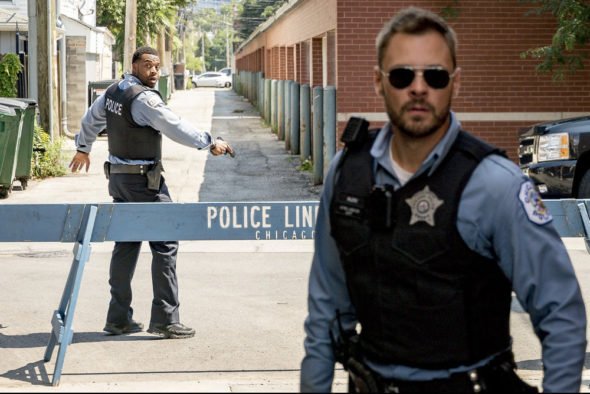 Because of the way the police are trained and the history of the country, suspects regularly feel that the cards are stacked against them, that no matter what they say they are going to jail, will be found guilty or killed. Their opponent in the dual are protected with a badge and gun, and often the suspect will challenge the officer to take off his or her badge and settle differences “man to man.” The placing on of hands, the physical contact, and the other aspect of touching are especially significant. The suspect has to protect the inviolability of their body. The police officer feels he or she has to assert their authority. And when it comes to asking for identification, it is a highly personal thing. Psychologically, demanding identification is like requiring a person to undress physically; it gives a person who has already been told he or she is inferior an added feeling of personal humiliation. To provokes the suspect’s sense of outrage, and the police officers finds that these situations can sometimes be pushed to the brink of a riot over a simple proof of identity. Noteworthy in these events is that often the mortal who ends up in jail was simply trying, through one’s act, to defend one’s self-image or one’s reputation or one’s rights. Both officer and suspect and almost everyone else is struggling to some for or other to build or protect one’s self-esteem, one’s sense of significance as a person. #RandolphHarris 11 of 23
 Both police and suspects are fighting an impotence-potency battle within themselves. Each interprets this in one’s own, though diametrically opposite, way. True, this power battle can be blown up to paranoid proportions, the offense simply being imagined; or it can take the infantile form of bullying or some other deviation. However, in order to see the roots of violence we must go below these psychological dynamics and seek its source in the individual’s struggle to establish and protect one’s self-esteem. This, in essence, a beneficial need—it is potentially constructive. Prisons do not deter criminals. Prisons unman and dehumanize; violence rests on exploitation and exploitativeness, and prison is a power-centered jungle. There seems to be growing evidence that the police and guards on one side and the incarcerated mortals on the other are of the same personality type. Our research indicated that ranks of law enforcement contain their share of violent men and women. The personalities, outlooks and actions of these officers are similar to those of the other people in our lives. They reflect the same fears and insecurities, the same fragile, self-centered perspectives. They display the same bluster and bluff, panic and punitiveness, rancor and revenge, pride and shame as do others. And whereas much police violence springs out of adaptation to police work rather than out of the problems of infancy, the result, in practice, is almost the same. #RandolphHarris 12 of 23
 The need for potency, which is another way of phrasing the struggle for self-esteem, is common to all of us. We see its beneficial form in the rebellion at the Attica, New York, prison, where the leader of the revolting inmates proclaimed: “We don’t want to be treated any longer as statistics, as numbers…We want to be treated as human beings, we will be treated as human beings.” Another inmate, older than the first, took a more realistic view: “If we cannot live as people, we will at least try to die as men.” History records that twenty-eight of them did die several days later when the troopers charged into the prison, shooting. However—such is the strange partnership between guards and prisoners, both being in prison and both being of the same personality types—history records that some prisoner died using their bodies to protect their prison guards from the shots. It seems necessary therefore to distinguish between alienating conditions on the one hand and estranged states on the other, although the distinction may be difficult, there being no question here of a simple stimulus-response situation. It also seems appropriate to limit the term alienation to mean an individual feeling or state of dissociation from self, from others, and from the World at large. Such states, although functions of the conditions that produce them, should not be confused with the conditions themselves. #RandolphHarris 13 of 23
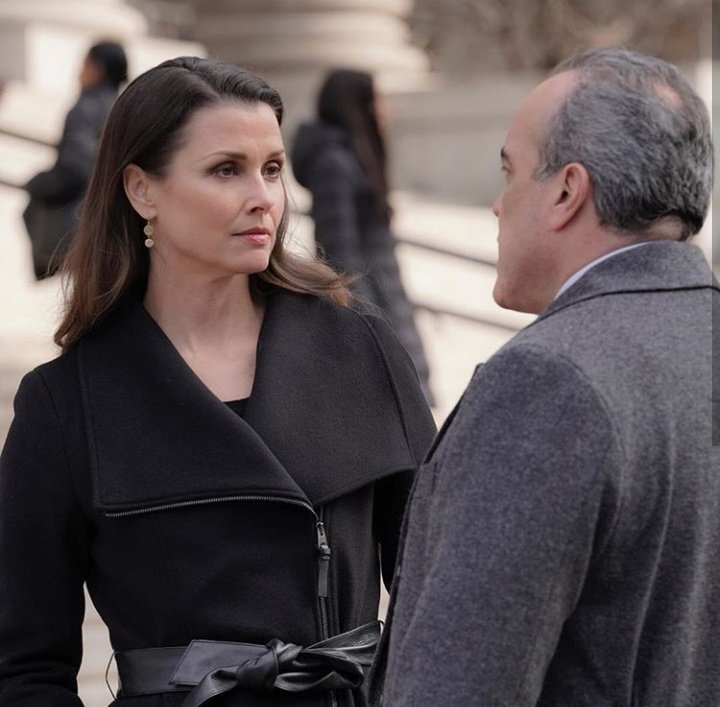 Alienation refers to different kinds of dissociation, break or rupture between human beings and their objects, whether the later be other persons, or the natural World, or their own creations in art, science and society; and subjectively, the corresponding states of disequilibrium, disturbance, strangeness and anxiety. One of the concepts linked with alienation is the idea of anomie to describe the conditions of normlessness, the collapse of rules of conduct. The notion of anomie, like that of alienation itself, has been used to refer to a wide array of social and personal disorders. Anomie is a breakdown in the cultural structure, occurring particularly when there is an acute disjunction between the cultural norms and goals and the capacities of members of the group to act in accord with them. The breakdown of values causes people to respond to this conflict between ends and means in various deviant ways; and of those individual adaptations one in particular—retreat from the struggle to get ahead (as in the case of harlots of addicts)—is worth mentioning here. Anomie is a social condition rather than a psychological state, we can identify it as an important cause of alienation, particularly when the response takes the form of retreat; but we should not confuse it with alienation as a state of mind. #RandolphHarris 14 of 23
 Similar considerations apply to other concepts which are often confused with alienation. For example, social isolation may lead to a state of estrangement, but not all isolates are alienated. Indeed, alienation may result from the social pressures of group, crowd or mass. By the same token alienation should not be confused with social disorganization, since, as we shall see, estrangement may also result in highly organized bureaucracies. Alienation is often associated with loneliness; but again, not all lonely people are estranged. Loneliness can be a creative part of human experience and another form of loneliness is self-rejection which is not really loneliness but anxiety; people who try to overcome or escape loneliness will end only by becoming self-alienated. What we have here are important conditions or correlates of alienation. Any one of these conditions may have different effects on men and women of varying personalities in different social situations, predisposing some more and others less to alienated states. Thus one mortal retreats from life, another rebels; and each of these in turn exhibits many different modes of behavior. Whatever the approach, central to the definition of alienation is that idea that mortals have lost their identity or selfhood. #RandolphHarris 15 of 23
 We acquire a self or identity through interaction with others. However, if one acquires a self by communicating with others, especially through language, then anxiety about or loss of selfhood is a social as well as an individual problem. What this means is that the person who experiences self-alienation is not only cut off from the springs of one’s own creativity, but is thereby also cut off from groups of which one would otherwise be a part; and one who fails to achieve a meaningful relationship with others is deprived of some part of oneself. The self can only be preserved by identification with God, godless mortal’s essential bread at being dominated by an alien power which threatens our dissolution—by which the anxiety that loss of self can be produced is realized. Despair about loss of self is called a sickness unto death. The World dominated by a giant technological and bureaucratic apparatus of one’s own creation has caused much of this alienation. The price we pay for progress is anxiety, a dread of life perhaps unparalleled in its intensity and increasing to such a pitch that the sufferer may feel oneself to be nothing more than a lost point in empty space, inasmuch as all human relationships appear to have no more than a temporary validity. #RandolphHarris 16 of 23
 Alienation is defined as loss of identity and is illustrated by men and women who trouble over the simple yet complex question, “Who am I?” In the Untied States of American today the literature of psychoanalysis is rich in its descriptions of such cases. Alienation is the remoteness of the neurotic from one’s own feelings, wishes, beliefs, and energies. It is the loss of the feeling of being an active, determining force in one’s own life. It is the loss of feeling oneself as an organic whole. Or, the alienated mortal is one who does not experience oneself as the center of one’s World, as the creator of one’s own acts—but one’s act and their consequences have become one’s masters, whom one obeys, or whom one may even worship. The alienated person is out of touch with oneself as one is out of touch with any other person. Implicit in most approaches to alienation is the ideal of an integrated mortal and of a cohesive society in which one will find meaning and satisfaction in one’s own productivity and in one’s relations with others. A person in solidarity society will no longer find the only aim of one’s conduct in oneself and, understanding that one is the instrument of a purpose greater than oneself, one will see that one is not without significance. We may well ask, was there ever such a society? Romantic notions about our own past or about primitive culture do not help us here. #RandolphHarris 17 of 23
 I have an love of spiritual freedom and intellectual independence, and think it is important to keep away from all restrictive, limiting, and narrowing groups, organization, and institutions. I have seen so many lost to the cause of Truth by such constrictions of the mind and heart, so much of its good undone by this harm, that I shrink from the idea of becoming tagged as some one man’s disciple or as a member of some ashram, society, or church. If this man has found the Right, why not let one’s natural expression of it—whether in writing, art, or life—be enough? Why create a myth around one, to befog others and falsify the goal? Why not let well alone? Having no official connection with any group, sect, organization, or church leaves me free to help anyone, anywhere. A strongly individualistic temperament cannot be at ease in the collective membership of an organization where strict and rigid doctrines are set up like the Great Wall of China and where patriotism rejects salvation for those outside. Such a temperament needs the free air of unfettered thinking and uncircumscribed good will. It can sympathize intellectually with many different points of view without losing itself in any one of them, but it can do so only because it belongs to none. #RandolphHarris 18 of 23
 The routine devotions of an institution do not appeal to this type of temperament—sensitive, moody, and independent as it is. The mortal who has seen the light and experienced its warmth will prefer one’s own way of living if it is the consequence of one’s awakening. One’s mind is bound by no religious doctrines, one’s conduct by no prohibitions or commandments. However, this does not mean one is free to do what one pleases. One mortal and one God are all the organizations needed. More is a superfluity. The seeker who cherishes one’s independent path and individual thought cannot comfortably fit into a group where all alike must be pressed into the same shape. It seems historically inevitable that every spiritual movement should sooner or later become organized and institutionalized. In that way it reflects the need and serves the tendency of average human nature. However, where a person is not average and refused to be taken up into it by that means, preferring to keep one’s independence and one’s allegiance, one is just as much entitled to do so. Those who feel tempted to do so, may study the public cults and listen to the public teachers but it would be imprudent to join any of the first or follow any of the second. It would be wiser to remain free and independent or they may be led astray from the philosophical path. #RandolphHarris 19 of 23
 By rejecting the easy way of joining a particular sect, a labeled group, one rejects at the same time the withdrawal of sympathy or understanding from all other groups which usually or often accompanies the joining. If the universal character of truth requires one to keep one’s mind uncorralled, the personal need of strength confirms the requirement. What is it that is eternal: the primal phenomenon, present in the here and now, of what we call revelation? It is mortal’s emerging from the moment of the supreme encounter, being no longer the same as one was when entering into it. The moment of encounter is not a living experience that stirs in the receptive soul and blissfully rounds itself out: something happens to mortals. At times it is like feeling a breath and at times like a wresting match; no matter: something happens. The mortal who steps out of the essential act of pure relation has something More in one’s being, something new has grown there of which one did not know before and for whose origin one lacks any suitable words. Whereever the scientific World orientation in its legitimate desire for a causal chain without gaps may place the origin of what is new here: for us, being concerned with the actual, no subconscious and no other psychic apparatus will do. #RandolphHarris 20 of 23
 Actually, we receive what we did not have before, in such a manner that we know: it has been given to us. In the language of the Bible: “Those who wait for God will receive strength in exchange.” Being faithful one accepts, one does not ask who gives. Mortals receives, and what one receives is not a content but a presence, a presence as strength. This presence and strength includes three elements that are not separate but may nevertheless be contemplated as three. First, the whole abundance of actual reciprocity, of being admitted, of being associated with one is altogether unable to indicate what that is like with which one is associated, nor does association make life any easier for us—it makes life heavier but heavy with meaning. And this is second: the inexpressible confirmation of meaning. It is guaranteed. Nothing, nothing can henceforth be meaningless. Questions about the meaning of life has vanished. However, if it were still there, it would not require an answer. You do not know how to point to or define the meaning, you lack any formula or image for it, and yet it is more certain for you than the sensations of your sense. What could it intend with us, what does it desire from us, being revealed and surreptitious? It does not wish to be interpreted by us—for that we lack the ability—only to be done by us. #RandolphHarris 21 of 23
 It does not wish to be interpreted by us—for that we lack the ability—only to be done by us. This comes third: it is not the meaning of another life, but that of this our life, not that of a beyond but of this our World, and it wants to be demonstrated by us in this life and this World. The meaning can be received but not experienced; it cannot be experienced, but it can be done; and this is what it intends with us. The guarantee does not wish to remain shut up within me, it wants to be born into the World by me. However, even as the meaning itself cannot be transferred or expressed as a universally valid generally acceptable piece of knowledge, putting it to the proof in action cannot be handed on as a valid ought; it is not prescribed, not inscribed on a table that could be put up over everybody’s head. The meaning we receive can be put to the proof in action only by each person in the uniqueness of one’s being and in the uniqueness of one’s life. No prescription can lead us to the encounter, and none leads from it. Only the acceptance of the presence is required to come to it or, in a new sense, to go from it. As we have nothing but a You on our lips that we are released from it into the World. #RandolphHarris 22 of 23
 That before which we live, that in which we live, that out of which an into which we life, the mystery—has remained what it was. It has become present for us, and through its presence it has made itself known to us as salvation; we have known it, but we have no knowledge of it that might diminish or extenuate its mysteriousness. We have come close to God, but no closer to an unriddling, unveiling of being. We have felt salvation but no solution. We cannot go to others with what we have received, saying: This is what needs to be known, this is what needs to be done. We can only go and put to the proof in action. And even this is not what we ought to do: rather we can—we cannot do otherwise. This is the eternal revelation which is present in the here and now. I neither know of nor believe in any revelation that is not the same in its primal phenomenon. I do not believe in God’s naming himself or in God’s defining himself before mortals. The word of revelation is: I am there as whoever I am there. That which reveals is that which reveals. That which has being is there, nothing more. The eternal source of strength flows, the eternal touch is waiting, the eternal voice sounds, nothing more. #RandolphHarris 23 of 23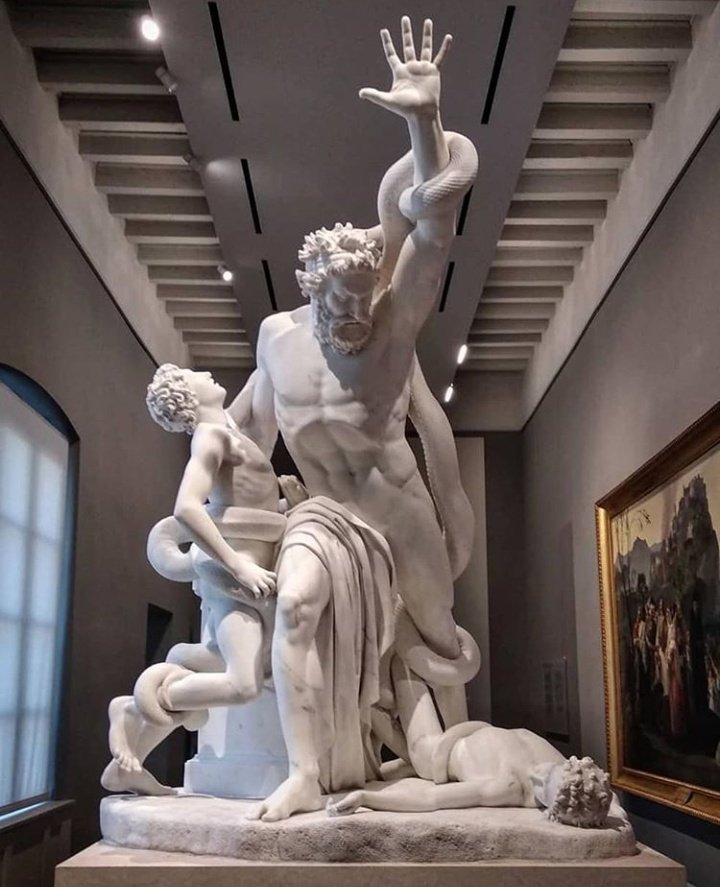
Desire’s Perfect Goal Should Not Disenthrall Thy Soul—Here is a Star, there is a Star, Some Lose Their Way!
 The love that lasts longest is the love that is never returned. Love would conquer all, of course, but one has to know when it is there first. Glaucus was a fisherman. One day he had drawn his nets to land and had taken a great many fishes of various kinds. So he emptied his nets and proceeded to sort the fishes on the grass. The place where he stood was a beautiful island in the river, a solitary spot, uninhabited, and not used for pasturage of cattle, not visited by anyone but himself. On a sudden, the fishes, which had been laid on the grass, began to revive and move their fins as if they were in the water; and while he looked on astonished, they one and all moved off to the water, plunged in, and swam away. He did not know what to make of this, whether some god had done it, or some secret power in the herbage. “What herb has such a power?” he exclaimed; and gathering some of it, he tasted it. Scarce had the juices of the plant reached his palate when he found himself agitated with a longing desire for the water. Glaucus could no longer restrain himself, but bidding farewell to Earth, he plunged into the stream. The gods of the water received him graciously and admitted hi to the honour of their society. They obtained the consent of Oceanus and Tethys, the sovereign of the sea, that all that was mortal in him should be washed away. #RandolphHarris 1 of 10
 A hundred rivers poured their waters over Glaucus and then he lost all sense of his former nature and all consciousness. When he recovered, he found himself changed in form and mind. His hair was sea-green, and trailed behind him on the water; his shoulders grew broad, and what had been thighs and legs assumed the form of a fish’s tail. The sea-gods complimented him on the change of his appearance, and Glaucus fancied himself rather a good-looking personage. One day, Glaucus saw a beautiful maiden Scylla, the favourite of the water-nymphs, rambling on the shore, and when she had found a sheltered nook, laving her limbs on the clear water, he fell in live with her. Glaucus showed himself on the surface, spoke to the maiden, saying such things as he thought most likely to win her to stay; for she turned to run immediately on sight of him, and ran till she had gained a cliff overlooking the sea. Here she stopped and turned round to see whether it was a god or s sea animal, and observed with wonder his shape and colour. Glaucus, partly emerging from the water and supporting himself against a rock, said, “Maiden, I am not monster, nor sea animal, but a god; and neither Proteus nor Triton ranks higher than I. Once I was a mortal, and followed the sea for a living; but now I belong wholly to it.” #RandolphHarris 2 of 10
 Then he told the story of his metamorphosis, and how he had been promoted to his present dignity, and added, “But what avails all this if it fails to move your heart?” Glaucus was going on in this strain, but the maiden, Scylla, turned and hastened away. Glaucus was in despair, but it occurred to him to consult the enchantress, Circe. Accordingly he repaired to her island. After mutual salutations, Glaucus said, “Goddess, I entreat your pity; you alone can relieve the pain I suffer. The power of the herbs I know as well as any one, for it is to them I owe my change of form. I love Scylla. I am ashamed to tell you how I have sued and promised to her, and how scornfully she has treated me. I beseech you to use your incantations, or potent herbs, if they are more prevailing, not to cure me of my love—for that I do not wish—but to make Scylla share it and yield me a like return.” To which Circe replied, for she was not insensible to the attractions of the sea-green deity, “You had better pursue a willing object; you are worthy to be sought, instead of having to seek in vain. Be not different, know your own worth. I protest to you that even I, goddess though I be, and learned in the virtue of plants and spells, should not know how to refuse you. If Scylla scorns you, scorn her; meet one who is ready to meet you half way, and thus make a due return to both at once.” #RandolphHarris 3 of 10
 However, Glaucus replied, “Sooner shall trees grow at the bottom of the ocean, and seaweed on the top of the mountains, than I will cease to love Scylla, and her alone.” The goddess Circe was indignant, but she could not punish him, neither did she wish to do so, for she liked him too well; so she turned all her wrath against her rival, poor Scylla. She took her plants of poisonous powers and mixed them together, with incantations and charms. Then she passed through the crowd of gamboling beasts, the victims of her art, and proceeded to the coast of Sicily, where Scylla lived. There was a little bay on the shore to which Scylla used to resort, in the heat of the day, to breathe their air of the sea, and to bathe in its waters. Here the goddess poured her poisonous mixture, and muttered over it incantations of mighty power. Scylla came as usual and plunged into the water up to her waist. What was her horror to perceive a brood of serpents and barking monsters surrounding her! At first she could not imagine they were a part of herself, and tried to run from them and to drive them away; but as she ran she carried them with her, and when she tried to touch her limbs, she found her hands touch only the yawning jaws of monsters. Scylla remained rooted to the spot. #RandolphHarris 4 of 10
 Scylla’s temper grew as ugly as her form, and she took pleasure in devouring hapless mariners who came within her grasp. Thus she destroyed six of the companions of Ulysses, and tried to wreck the ships of Aeneas, till at least she was turned into a rock, and as such still continues to be a terror to mariners. Mistakes are a deliberately wrong choice in the contest between what is clearly good and what is clearly bad is sin. We all want a partner, but some want one to the point of it being a pathology. Many people knowingly or unknowingly force a relationship due to an addiction of love. If one is honest with oneself, and know that one has nothing in common with their focus of their intertest, such as different goals, different lifestyles, and different hobbies, and the person is not attracted to the individual pursing a relationship, this is a clear indication that they do not like you in a romantic way, much like how Scylla was not in the least bit interested in Glaucus. Yet, Glaucus could not take no for an answer and ended up running her like, and the rage she experienced ruined the lives of others. Absolutely imagine if you had people dragging you into things you did not want to be part of, and you will understand why this is not a healthy thing to do. It is never a healthy thing to do. #RandolphHarris 5 of 10
 People who think they can learn from their mistakes have a different brain reaction to mistake than people who think intelligence is fixed. One major difference between people who think intelligence is malleable and those who think intelligence is fixed is how one responds to mistake. When one makes a mistake, the best thing to do is to try to learn from it and figure it out. Conversely, some people who think they cannot gain intelligence will not take the opportunities to learn from their mistakes, and they usually employ defense mechanisms to justify their behaviour so they do not feel guilt or remourse. Defense mechanisms are psychological maneuvers that operate below the surface of one’s awareness (they are unconscious) to protect one from emotional pain or distress. The most familiar one is probably denial. Denial allows one to dismiss a painful reality so that one can go on acting as if a situation or event is not true—because one does not want to admit it is true. Transgression is different from being overtaken in a fault. Both sins and mistakes can hurt us and both require attention. People who try to force relations, often end up feeling insecure, hurt, and betrayed for no reason. Then these individuals start questioning themselves as to why they are never good enough for the person they are interested in. #RandolphHarris 6 of 10
 There should be no license for sin, but mercy should go hand and hand with reproof. Though it may be hard to admit, there comes a time when one just needs to cut their losses and leave a person alone. The progression of a romantic relationship cannot be formed. It must evolve naturally, over time. Impatient, insecure, or damaged people try to force relationships. Mortal make these kinds of mistakes all the times. However, these things are on an essentially predetermined course. A fool is a person lacking judgment or prudence. The Saviour used the term fool to characterize the lesson in this parable about the rich man who built greater barns to store his abundant fruits and goods and then said to his soul, “Thou hast much goods laid up for many years; take thine ease, eat, drink, and be merry,” reports Luke 12.19. The distinction between sins and mistakes is important to our actions. We have seen some very bitter finger pointing. All of us make mistakes, and some of us very serious ones. Any thoughtful person feels a kind of failure because one’s sins or moral failure. One does not get clean by rolling in the mire. One does not get clean and whole by brooding unduly over the past, although we can certainly learn from our mistake. There is no strength in weakness; there is no strength in sin; and we do not overcome our mistake and our sins by fighting them directly. #RandolphHarris 7 of 10
 If people dwell upon them too much, they may succumb to their sins. The avoidance of guilt can be addictive, too. Guilt-avoidance has become a drug of choice for many people, because it is so pleasurable, almost intoxicating, to think of oneself as morally pure. Those who are addicted to guilt-avoidance are usually a bit inconsistent. They avoid the guilt themselves, but they do not mind imposing a bit of it—maybe even a lot of it—on others. It can be immensely pleasurable to notice the flaws of others while ignoring your own. However, that is a sin, too. All things considered, we are on a safer ground when we focus on our own sins, not those of others. At least this is how we process theologians see things. We believe that when we harm others, or fail to act in ways that prevent them from being harmed, we violated something deep within the nature of nature. We have violated an Eros toward life’s flourishing that is divine. In sinning against others, we sin against God. It takes courage to stand up. The freedom to be different. The freedom to take guilt and make something beautiful of it. Humans have the freedom to turn guilt into love. Few gifts are more desirable than a clear conscience—a soul at peace with itself. Only God can heal a troubled soul. However, if we want God to forgive us, we must follow the procedure he has given to us. #RandolphHarris 8 of 10
 Confession is a necessary requirement for complete forgiveness. It is an indication of true Godly sorrow. It is part of the cleansing process—the starting anew requires a clean page in the diary of our conscience. Confessions should be made to the appropriate person who has been wronged by us and to the Lord also. In addition, the nature of our transgression may be serious enough to require a confession to God in prayer. “Therefore I say unto you, Go; and whoever transgressed against me, him shall you judge according to the sins which he or she has committed; and if he or she confess his or her sins before thee and me, and repents in the sincerity of one’s heart, that person one shall forgive, and I will also forgive that individual,” reports Mosiah 26.29. Remember, it is complete deliverance from the tortures of a guilt-ridden soul that we seek. Repentance is not easy. Godly sorrow brings one to the depth of humility. This is why the gift of forgiveness is so sweet and draws the transgressor so close to the Saviour with a special bond of affection. Full repentance liberates the individual with joy unspeakable. #RandolphHarris 9 of 10
 Any type of open and truthful disclosure reduces stress and helps individuals come to terms with their behaviour. It is not coincidental that some of the most powerful people or institutions in may cultures encourage people to confess their transgressions. And there is strong evidence that writing about upsetting experiences or dark secrets can benefit your mental and physical well-being. Similar to religious confessions, expressive writing encouraged individuals to explore their deepest thoughts and feelings about upsetting experiences. For such emotional purges to work, people must be completely honest with themselves. Putting emotional turmoil into words changes how we think about it. Giving concrete form to secret experiences can help categorize them in new ways. Talking or writing about a disturbing event helps us to understand it better. And things we do not understand cause greater anxiety. Once we are able to express our upheavals, we tend to ruminate about them less, freeing us up to focus on others thing. Dozens of studies have also shown that expression is linked to less stress and improved sleep and cardiovascular function. Also, better sleep is associated with enhanced immune function and better general health—which correlates with better mental health, too. Confession can help people get through difficult times. #RandolphHarris 10 of 10

 Randolph Harris II International Institute