
Home » utah (Page 6)
Category Archives: utah

Hallowed by the Life of Blood

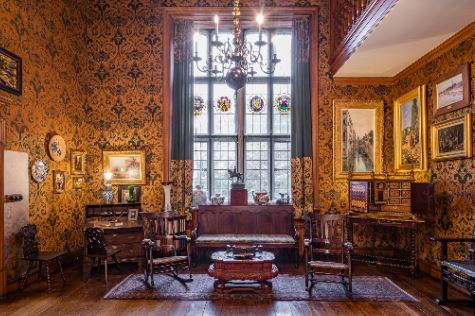
The rain lashed with vindictive fury at the windows of my mansion. My skin was crawling with gooseflesh, listening to the mournful recording crackling with static under the needle of the gramophone as the song grew louder through the rain. There is an eerie undocumented history that simmers below the surface and appears periodically to frighten and confuse people. The last thing I wanted to do is see whatever sight might accompany it. The wind was strong up here on the fourth floor and I could hear rain spatter hard against the sitting-room window. I walked on into the room, past the beckoning Hall of Fires, looking out and down at the night. I could see the dome to the nine-story observation tower through the stir of trees surrounding it. A swath of rain bleared the glass in front of my face and made me blink and recoil slightly. “Hello, Aunt Sarah.” The voice of my niece Daisy. “What I have to say concerns this mansion.” A few items of lovely furniture occupied the room. Two of these were armchairs. Daisy sat in one of them. She had paused, perhaps for effect. “I’m sorry to intrude on you. But there really isn’t a choice. A visitor, strolling along the ground near the fruit orchard, heard wisps of strange tunes. Listening more closely through the dusky evening, he was lured inside of the mansion. And he is now dead.” I took my head into my hands. “Aunt Sarah, I need you. There is no time for prevarication on this.” “Daisy, I will meet you in the Venetian Dining Room this evening,” I replied. I rose from my chair thinking that God had very little to do with anything that ever occurred within the grounds of the walls of my mansion. From wars to executions, to suicides and untimely death from injury, plague, or disease, Victorian mansions are, for all their majesty and splendor, tragic places where death stalked the cold lonely corridors. These are the places of the bloodiest history, whether it be a place raided by the unlawful, or a battle for ownership. With such a history of violence and tragedy, it is little wonder that this mansion is regarded as haunted? #RandolphHarris 1 of 7
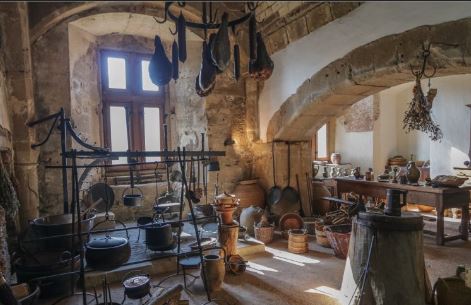
I walked back to the window. It was a quarter to six. Strange noises and an occasional sighting of the larger-than-average soldiers with the oddly pointed hats have been seen roaming the grounds. Any attempt to speak with them or approach them, they simply vanish into the mansion. Odd doors and gated entrances punctuated the length of the mansion. There was a Gothic, deliberate atmosphere about my home, a sepulchral character to the mass of its wooden buttresses andre treats. Geometrical shapes snatched inexplicably at the eyes. And often one could hear laughter, high-pitched with contempt or teasing mockery that made one hurry on, even though it may be rationalized as the cold wind gusting through the elaborate masonry. The wind whistles in the trees and leaves and wisps of thick mist blow across the farmland. With the trotting of horses and constant sounds of construction, the heart is suddenly racing, and one thinks they hear something behind them. After all, this is an ancient land, a house built by spirits, occupied by ghosts, pixies, goblins and all sort of mythical creatures of the night. Anything is likely to happen. Looking around the interior of the estate, one can discern a deep, foreboding blackness that seems to be following one, as if it is alive and in pursuit. Stepping out into the fruit orchard, the wind suddenly drops and one’s senses are heightened. Indeed, one can hear one’s very heart beating in their chest as they continue to canter forward into the night. The mist becomes thicker, darker, and as one glances furtively from side to side, the darkness of shadows of the orchards hides their secrets, but perhaps you are not alone. Sometimes I tell myself that the scraping sounds at the window is simply a branch being blown in the breeze and the footsteps heard in the hallway are old timbers creaking and groaning with a change in the air or weather. #RandolphHarris 2 of 7

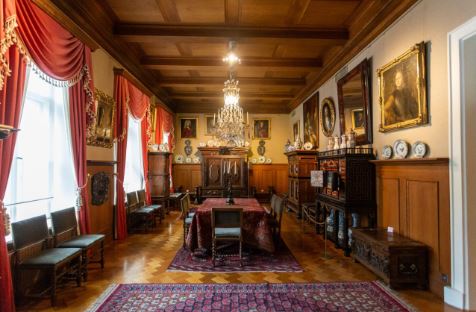
If there was something serious going on, the housekeeper and the butler would try to keep it quiet. They might talk together, but they would be tight-lipped in front of me. The clock struck seven. I met Daisy in the dining room. “Aunt Sarah, we all talked. We weren’t meant to,” Daisy said. “We were all talking about it. We didn’t know what to make of it. The body was found on a cold stone passage, that was said to lead directly into the opulent state rooms where you normally conducted meetings.” Not a moment too soon, five housemaid trooped into the dining room. Taking off their white starched aprons, they formed up in a line. The room, echoing with their footsteps and voices, as in a church. The mahogany floor, almost three thousand square feet of it had to be hand polished. It was an onerous task, one of the housemaids least like doing. Bending down, they placed their tins of wax of the floor. “Daisy, it looks like we will have to continue this conversation later,” I said. “Goodnight, Aunt Sarah,” she replied. The maids stooped on their hands and knees, their long black dresses spread out around them. Working in union, they dabbed their clothes in wax; then they rubbed the floor vigorously in quick tight circle. The observation tower staircase was the place the servants feared most. The observation tower sits ominously over the mansion, along with sever distinctive turrets jutting proudly into the skies. Sweeping down to the Guard Room eight floors below, it was the main thoroughfare in the tower. Family portraits adored its walls. The steps, of bare stone—framed by a wrought-iron balustrade, topped by a mahogany rail—were wide and shallow. “We were all scared of the tower’s stairs,” said Elsa. “I was coming down them one evening, halfway down, I felt somebody push me. They were behind me, trying to push me down the stairs. I turned round, and of course there was no one there.” The Winchester Mansion is a land of appealing features seemingly embedded in the sense of a deep-rooted and permanent history that emanates from almost every corner of the land. It has rustic grounds and quaint gardens, a hulking mansion with many towering features, having been fostered over decades to create a comfortable and pleasing landscape that guests recall like their favorite arm chair. #RandolphHarris 3 of 7

A number of the male servants, skeptical of ghost as they were, had experienced a similar sensation. “I used to keep an eye on the mansion,” Edvin recalled. “I would walk around the dark with the dogs, no lights on, no torches, or anything. One night, I was coming across the first floor of the tower—and I got up to the stairs and felt hot breath on the back of my neck. I turned round. There was nobody there. But the dogs wouldn’t go any further, their hackles went right up. It was ages before I could get them to move.” I often examined the possibility of evil. I had a notion that evil was communicable. Something that can, as it were, contaminate. However, one must not confuse evil with manifestations. My secret rooms, by their very nature, held the servants in thrall. It was an area that they never entered, never saw or ever knew what went on. It was a place of mystery. The rooms were subjects of wild speculations, fueled by the servants’ fear of me, and their knowledge of my eccentric interests. My servants knew I was fascinated by the occult and this played to their fears. They knew the mansion was haunted and I often had the mediums in. However, they never whether any ghosts or sprits were actually summoned. It went on behind closed doors. Of course, they knew of the ancestral curse. It had been cast in the mid-19th century by a coven of witches. The curse had also been cast over future generations; aimed at Winchester heirs; it determined that the children would die before they reached the age of thirteen and those who survived would be haunted by ghosts and demons. For decades, it had seemed to me and my servants that this was a cruse from which the family could never escape. #RandolphHarris 4 of 7

One night, it was shortly before three o’clock in the morning when a shadowy figure, dressed from head to foot in back, crossed the landing of the staircase. The night was cloudless, the moon almost full. There was a blackout and the mansion was shrouded in darkness. The light from the moon set tiny point of balance dancing in the darkened windows. I could hear footsteps moving stealthily across the floor and the occasional cry of an animal from the fields. A headless horseman was riding near the tower. I got out of bed, and turned the corner into a passage in one of the parlors. As the men worked in the hallways, they froze. Coming down the hallway was a pair of green eyes belonging to a child. The eyes were about two or three feet up from the floor, leading me to believe that child was three years old. They eyes simply floated up the hall, and then turned into one of the maid’s room where we lost sight of them. That night I also saw dark shapes. There was a dark shadowy thing flying from the Grand Ball Room to the and down the hallway. Then above the chandelier there were several dark shadowy things. They flew outside, barely illuminating the background of the trees and then were blocked out by an even darker shadow, moving slowly, methodically along the tree line. Meanwhile another shadow ran through the hallway, it was tall. The carpenters looked at each other in suspense. Closing the heavy steel door behind me, I had left the Grand Ball Rom to find my way long the labyrinth passages. A long passage reached into the distance. It was gloomy, lit by only the strip lighting in the display cases that ran along with wall. Ahead was a solid oak door, carved in the Gothic style. Another passage led off to my right, I could see that it branched in two. One end led into a small hall. It was in darkness. “No one goes in there,” a mysterious voice whispered. The spirit gave me a fright. Everyone, it seems, even hardened sceptics and disbelievers, has seen a ghost. For some reason, in the back of their minds, ghosts may be real. Everyone has known the feeling of their heart racing for a second when they see a shadow moving in the corner of their eye or they feel some sort of presence standing over them. Or worse still, a tortured face in a window that paralyses their body and retards their breathing to the point that they can hear the blood pumping around their own body. #RandolphHarris 5 of 7
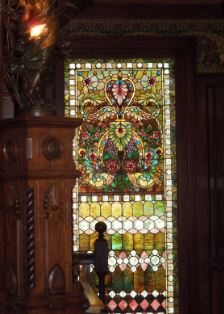
I took the left passage. I went on some distance ahead, there was a kink in the passage. A man emerged from it and started waling me. He was wearing knee breaches and a nineth-century coachman’s jacket. As we drew level, he stopped. “Mrs. Winchester, those rooms are forbidden,” he said, “What are you doing in this part of the house?” Once again, he repeated, “Those rooms are forbidden.” I did not want to stop and talk; I was anxious to get back to my room. I assumed that the servants were being proprietorial. Finally, I had made it to my destination sometime later. The bedroom was not dark, because the bright light of a full moon entered through the window. I had just lain down, ready to go to sleep, when I suddenly noticed that I was not on my own. I heard a rasping breath in the darkness only a few feet away. Right in front of the wardrobe and looking directly at me was a middle-aged man, dressed like a Catholic priest. I rubbed my eyes and pinched my arms to make sure I was fully awake Yes, I most certain was. Was I having hallucinations? The priest was still standing there, looking at me. He was a rather frail man with hollow cheeks. His face showed traces of a hard life and illness. If he had any hair at all, it was covered by his hat. He looked so real, not like a ghost. I was not a bit scared, because he radiated vibrations of utter peace and tranquility. There was nothing to be afraid of, so I decided to talk to him keeping my voice as low as possible. “Hello, Father,” I said. “God bless you.” “And God bless you, my child,” came the priest’s prompt reply. He was well-spoken, his voice was soft. His English accent was not hard to distinguish. After giving me a few personal messages and stressing the point that there is survival after death, he told me who he was. #RandolphHarris 6 of 7
His name was John Ogilvie, and in had lived in Scotland from 1580 to 1615, he wanted hanged at Glasgow Cross for his faith. When I remarked that at the time of his hanging, he was only 36 years old, he confirmed this. After quietly talking about religious matters for a few moments, he bade me farewell and disappeared. It seems that he refused to pledge allegiance to King James, and it was for this crime that the was tried, found guilty and hanged. After his execution, his followed were apprehended and put in jail. If this was not a genuine case of a visit from beyond the grave, what is it? Most of the time, the mansion is benign. Unfortunately, sometimes people find exactly what they are looking for. I had been in bed half an hour when I heard the music playing softly from my sitting room next door. I listened to the same, faintly relentless song. Starting to sweat and grow cold in bed, I recognized the song. Or I thought I did. And it continued. It wavered through the wall and door frame in strained, distended chords, and choruses, swelling and facing, ragged and persistent. The door was to my right. I pulled back the duvet and got out of bed and walked through the door to the sitting room. Where the music was louder. The must persisted, repetitious, frighting me. As I turned the corner, I discovered that Gerhardt hanged himself from the cross beams. Badly wounded, Mr. Hansen carried to the attic to await medical attention, but he died there. Since that time people have claimed that he haunts the attic room. He has been seen and heard there from time to time. Servants have reported hearing the creaking of a rope and the soft thud of a body swaying against the wall. Though they often look for the source of the sound, they never find it. There is a disheveled, aged specter, bound at feet and hands and rattling chains haunting the basement. A journey through my mansion is a passage through history. A real history, one that you can live and breathe, one that you can feel and be part of. You can walk serenely miles through my mansion, it is a place that inspires contemplation and wonderment. It is a living history, of memories as far back as history recalls. It is a place of myth, legend, of ghosts and ghouls, of giants, and dwarves, mermaids, cupid, another other half-remembered, half-whispered-about creatures. #RandolphHarris 7 of 7

If a sudden, horrifying death is what it takes to make the spirit linger, surely, this place—is a candidate. Certainly, where men grappled back and forth, engaged not only in the struggle for their own precious lives, but for the life of their respective countries, where in the balance was the future of the very world, and this place produce the mechanism of defense, if that does not qualify for the lingering-place of souls wondering for eternity the outcome of their struggles, then we cannot name a place. https://winchestermysteryhouse.com/

And please be sure to check out the online gift store: https://shopwinchestermysteryhouse.com/

Los Angeles Will be Two and a Half Hours from Tokyo

Given that burglars are disproportionately young, poor, city-dweller, they tend to have frequent contact with other habitual offenders. There are various structures and processes that go along with the “stolen property system”—the underground market through which in-demand goods are stolen, housed, marketed, and resold on the street of America. Burglary is a crime that is marked by varied levels of social organization. Only on rare occasions do we find burglars who work as loners or within formal organizations. More often, burglars will operate as colleagues—the offender commits the crime along but relies on other members of the criminal subculture to supply him or her with inside information or to assist in converting stolen property into cash. Burglars who take the situation to the next level and enlist help in the actual break-in follow a more peerlike existence. Here, loose partnerships are maintained and invoked when a burglary opportunity presents itself. A primitive example of the peer model would be two or three drug users who randomly stumble upon an unlocked home or unsupervised business and decide to work together to take it down. In some cases, burglary offenders will align themselves in a teamlike format. These offenders invoke a division of labor with each participant serving an owned predetermined role and duties. One person might be assigned to lookout/driver role. Another might serve as the entry specialist, defeating any lock and alarms that are confronted. Still another person can take on the “muscle” role, responsible for doing the heavy lifting. #RandolphHarris 1 of 16

Socialization scripts play an important part in how and why burglars commit their crimes. Interview-based research suggests that novice or occasional burglars often rely on the tutelage of more seasoned offenders as a way of learning the proverbial ropes of burglary. Novices receive advice and instructions on issues such as target selection, how to foster informants, how to defeat burglary countermeasures, and how to best convert stolen goods into cash. This socialization generally takes shape as informal street corner conversations or jailhouse bravado. On paper, burglary appears to receive serious treatment from the criminal justice system. The Model Penal Code classifies burglary as a felony in the third degree. In most jurisdictions, such as offense is subject to 1 to 5 years in prison. If the burglar is armed or threatens or inflicts bodily harm on another while unlawfully within a dwelling, that individual might see the charges elevated to second degree felony. In practice, however, burglary receives mixed levels of formal response from the various components of the criminal justice system. First, let us consider the response of law enforcement authorities. Police agencies were able to effect an arrest for only 13 percent of the nearly 2.1 million burglaries that were reported to them in 2022. No other form of index crime yields such a dismal clearance rate. Some of this slippage can be attributed to the covert nature of the crime—police often have no witnesses and minimal clues to guide the investigation. However, these low clearance rates are also impacted by the fact that many police officers and police agencies afford a low priority to burglary cases. #RandolphHarris 2 of 16

Court data reveal a different trend in terms of the veracity with which burglary cases are adjudicated. U.S.A. courts produced nearly 90,000 felony burglary cases in 2022. This figure represents 10 percent of all felony convictions that year. In fact, 68 percent of the burglary cases that were tried resulted in a conviction for the same offense and only 24 percent avoided some sort of conviction. The researchers found that burglary defendants do not receive a reprieve from the courts when it comes time for sentencing. A full 74 percent of the convicted burglars were sentenced to time behind bars. This rate was surpassed only by murder, robbery, drug trafficking, and driving-related offenses. While the median prison sentence for a convicted burglar was 41 months, nearly 10 percent received sentences in excess of 10 years. Our correctional system does not appear to be particularly forgiving to persons who are convicted of burglary. On average, burglary offenders can expect to serve almost half of their sentence—roughly two years. These time-served figures are on par with those of other property offenses (theft, fraud, and motor vehicle theft) but somewhat lower than that observed for violent (54 percent) and weapon-related offenses (60 percent). Accounts from known burglars clearly suggest that informal social control efforts go as long way to deter and/or displace burglary activity. A minimal amount of vigilance on the part of homeowners can go a long way. Measures designed to combat the relatively small population of high incidence “professional” burglars tends to overemphasize the skill and determination of most burglars. #RandolphHarris 3 of 16

Burglaries are expensive, complex, and require long term commitment at many levels. In fact, most burglars are young, unskilled, and opportunistic. This suggests that emphasis should be directed at such factors as surveillability, occupancy, and accessibility. More specifically, dogs, good locks, and alarm systems deter most burglars. Community-level informal social control can also play an important role in burglary prevention. When it comes to surveillability cues, burglars tend to avoid neighborhoods with a lot of foot traffic or active neighborhood watches. This implies that observant or even nosy neighbors can have a measurable impact on burglary. However, these types of collective efforts are difficult to enact and maintain in the areas that burglars most prefer—urban neighborhoods. If nothing else, tenants of “crime prevention through environmental design” should be considered at a neighborhood level. Simple environmental characteristics such as cul-de-sac street design, high levels of lightening, and well pruned landscaping that minimizes unobservable entry and exit points can have a significant impact on burglary victimization levels in a given community. The aforementioned informal social control efforts represent examples of target hardening strategies aimed at deterring would-be burglars from victimizing a given house or displacing offenders from a given community. Also, measures should be designed that aim to undermine offenders’ strong attachment to street culture. Expanded employment opportunities are one possible, but foreboding avenue to lure offenders out of street life. #RandolphHarris 4 of 16

There exist even more simple and realistic measures that might effect change in this area. For example, a coordinated burglary prevention program that was implemented in a midsize U.S.A. city during the early 1980s. Community activism and community involvement (id est, block meetings, neighborhood cleanups, and raised awareness of vulnerabilities and potential offenders) showed promise for reducing burglary. If community members care about the condition of their neighborhood and are willing to take steps to clean it up and exercise vigilance over problem people and places, there is hope for reducing burglary and other forms of street crime. Most crime occurs during the nighttime. A close examination of NCVS and UCR data suggests that 50 percent to 60 percent of all residential burglaries go unreported. The figure reported here was derived by adding the NCVS data on residential burglaries to an adjusted estimate of nonresidential burglaries that were reported in the UCR—one that factors a 60 percent nonreporting rate. These data must be viewed with caution because 50 to 60 percent of all burglaries go unreported to police and only 14 percent of these lead to arrest. Over time, the crime of burglary has slowly slipped down the list of crime fighting priorities. At present, less than half of all burglaries get reported to police, and only 13 percent of those result in an arrest. What kinds of social and legal factors have contributed to this present level of empathy when it comes to the formal and informal society control of burglary? #RandolphHarris 5 of 16

Adjudication data suggest that accused burglars face a high certainty of being convicted and sentenced to prison. This should send a message to police that burglary is a high priority for our nation’s prosecutors and judges. Still, burglary investigation and arrest efforts remain lukewarm at best. What kinds of factors contribute to police officers’ attitudes and behaviors regarding burglary patrol and enforcement? Considerable evidence suggests that burglars refine strategies and cues that help them identify soft and potentially lucrative targets. Does this mean that burglars are more rational and planful than other types of criminals? The Lord has declared that “no unclean thing can inherit the kingdom of Heaven,” reports Alma 11.37. Our sins make us unclean—unworthy to return and dwell in the presence of our Heavenly Father. They also bring anguish to our soul in this life. Repentance is sometimes a painful process, but it leads to forgiveness and lasting peace. The power of sin is great. To become free from it, we must turn to your Heavenly Father, pray in faith, and act as He asks us to. The Holy Spirit should never become the center and object of thought and worship, place which He Himself does not desire, and which it is not the purpose of the Father in Heaven that He should have or occupy. “He shall not speak from Himself,” reports John 16.13, said that Lod Jesus before Calvary, as He foretold the Spirit’s coming at Pentecost. He would act as Teacher (John 14.26), but teaching the words of Another, not to Himself (John 15.26); He would only glorify Another, not His own; He would bear witness to Another, not Himself (John 16.14); He would only speak what was given Him to spear by Another (John 16.13). #RandolphHarris 6 of 16

The Spirit’s entire work would be to lead souls into union with the Son and give proper knowledge of the Father in Heaven, while He Himself directed and worked in the background. If a man who is untaught in the scriptural statements about the work of the Triune God makes “obeying the Spirit” his supreme purpose, the deceiver will aim to counterfeit the guidance of the Spirit, and even the presence of the Spirit Himself. It is just here that the ignorance of the seeker about the spiritual Word now opened to one, the working of evil powers in that realm, and the conditions upon which God works in and through one, gives the enemy his opportunity. It becomes the time of greatest peril for anyone unless one is instructed and prepared by the Lord, as the disciples were for three whole years. The danger lies in the area of supernatural “guidance,” for one must know the conditions of cooperation with the Holy Spirit in order to discern the cooperation with the Holy Spirit in order to discern the will of God and be able to recognize counterfeit manifestations. The “discerning of spirits” is required to detect the workings of the false angel of light, for he is able to bring about counterfeit gifts of prophecy, tongues, healing, and other spiritual experiences connected with the work of the Holy Ghost. Those who have their eyes opened to the opposing forces of the metaphysical realm understand that very few believers can guarantee that they are obeying God and God only, in directly supernatural guidance, because there are so many factors liable to intervene, such as the believer’s own mind, spirit, or will and the deceptive intrusion of the powers of darkness. #RandolphHarris 7 of 16

Knowledge is essential here. Scripture teaches that there is a God-given gift of “discerning of spirits” (1 Cor. 12.10) which enables one to detect that an unwelcome spirit is at work, but there is also a test of spirits which is doctrinal (1 John 4.1-6). In the former, a believer can discern in his spirit that lying spirits are at work in a meeting, or in a person, but one may not have the understanding needed for testing the doctrines being set forth by the teacher. One needs a level of knowledge in both cases: knowledge to read one’s spirit with assurance in the face of all contrary appearances, that the supernatural workings are not “of God,” and knowledge to detect the subtlety of “teachings” bearing certain infallible indications that they emanate from the pit, even while appearing to be from God. As to personal obedience to God, the believer can detect whether or not one is obeying God in some “command” by judging its fruits, and by being aware of the character of God—such as the truth that God has always a purpose in His commands, and He will give no command out of harmony with His character and Word. Often times people wait for something to happen, for some sure way to nurture oneself, to live from within. Music, art, poetry, hot baths, savory foods, wind, rain—nothing affects them. In the past, within days after a solitary retreat, many had found solace and strength in their loneliness. They had always found a way, at least a beginning that would lead to action and to life with others. #RandolphHarris 8 of 16

However, it is impossible to find what one is looking for, and one is still on a lonely journey, waiting from a spark from within. Because some people feel empty and eroded inside, they avoid all significant communication. More than anything else the interpersonal aspects of living exhaust some and move them to withdraw from real meetings with others. This leaves an individual certain that one does not want to struggle anymore. Doubt, risk and anxiety—inherent elements of faith—can be overcome only by another of its elements, courage. Courage is an ontological concept, the self-affirmation of being in spite of non-being. Faith is the experience of the holy; it is the state of being grasped by the power of being-itself. From this experience flows the power to assert oneself in the face of anxiety. Faith is participation in the object of faith, and yet is the separation from it. In spite of separation, courage expresses participation in the power of being and meaning. This in spite of element is the courage that takes all doubt, risk, and anxiety into itself and overcomes them without removing them. Faith, then, is the basis of courage, and courage is the manifestation of faith. In the extreme situation of a person seized by radical doubt and confronted with the specter of universal meaninglessness, the question arises: Is there such a thing as the courage of despair? Such a courage is entirely possible, for that act of accepting meaninglessness is in itself a meaningful act. #RandolphHarris 9 of 16

The courage of despair enables one, even while in the grip of meaninglessness, to declare one’s situation, and this declaration has meaning. In other words, there cannot be an infinite regression of negatives—in this case, negativity of meaning. At least, one has to admit, negation of meaning is meaningful, or meaninglessness will have lost all meaning. The faith which feeds the courage of despair is called “absolute faith,” for it can have no specific content. Its content is indefinable, since everything defined is dissolved by doubt and meaninglessness. However, certain elements that constitute absolute faith can be discerned. There is an experience of the power of being in the face of nonbeing, an awareness of a hidden meaning within the destruction of meaning. There is the dependence of nonbeing upon being, of meaninglessness upon meaning, of the negative upon the positive. And, lastly, there is the acceptance of the power to accept meaninglessness. Thus, absolute faith is faith which has been deprived by doubt of any concrete content, which nevertheless is faith and the source of the most paradoxical manifestation of the courage to be. Faith is without a special content, yet it is not without content. The content of absolute faith is the “God above God.” When people speak of God, they usually refer to the God of theism. Now theism can mean either a vague, unspecified affirmation of God, or a divine-human encounter of persons, or theological theism which makes God a being beside other beings. However, the God of absolute faith is above and beyond the God of any theism, for the God above God is the power of absolute faith as experience of the God who appears when God has disappeared in the anxiety of doubt. #RandolphHarris 10 of 16

The morning traffic from Oakland to San Francisco across the Bay Bridge gets backed up from 7.30 to 11.00 A.M. Until the jam clears at 11.00, each additional car that enters the traffic makes all those who come later wait just a little longer. The right way to measure this cost is to sum up the additional waiting-times across everyone who is delayed. What is the total waiting-time cost imposed by one additional car that crosses the bridge at 9.00 A.M.? You may be thinking you do not know enough information. A remarkable feature to this problem is that the externality can be calculated based on the little amount you have been told. You do not need to know how long it takes the cars to cross the toll plaza, nor the distribution of cars that arrive after 9.00. The answer is that same whether the length of the traffic jam stays constant or varies widely until it cleans. The trick is to see that all that matters is the sum of the waiting time. We are not concerned with who waits. (In other circumstances, we might want to weigh the waiting times by the monetary value of time for those caught in the jam.) The simplest way to figure out the total extra waiting time is to shuffle around who waits, putting all the burden on one person. Imagine that the extra driver, instead of crossing the bridge at 9.00 A.M., pulls his car over to the side and lets all the other drivers pass. If he passes up his turn in this way, the other drivers are no longer delayed by the extra car. Of course, he has to wait two hours before the traffic clears and the road is clear. #RandolphHarris 11 of 16

However, these two hours exactly equal the total waiting time imposed on all the other drivers if he were to cross the bridge rather than wait on the sidelines. The reason is straightforward. The total waiting time is the time it takes for everyone to cross the bridge. Any solution that involves everyone crossing the bridge gives the same total waiting time, but distributed differently. Looking at the solution in which the extra car does all the extra waiting is the easiest way to add up the new total waiting time. Looming on the horizon is a dangerous de-coupling of the fast economies from the slow, an event that would spark enormous power shifts throughout the so-called South-with big impacts on the planet as a whole. The new wealth-creation system holds the possibility of a far better future for vast populations who are now among the planet’s poor. Unless the leaders of the less developed countries (LCDs) anticipate these changes, however, they will condemn their people to perpetuated misery—and themselves to impotence. For even as Chinese manufacturers wait for their steel, and traditional economies around the World to crawl slowly through their paces, the United States of America, Japan, Europe, and in this case the Soviets, too, are pressing forward with plans to build hypersonic jets capable of moving 250 tons of people and cargo at Mach 5, meaning that cities like New York, Sydney, London, and Los Angeles will be two and a half hours from Tokyo. #RandolphHarris 12 of 16

Jiro Tokuyama, former head of the prestigious Nomura Research Institute, and now a senior adviser to the Mitsui Research Institute, heads a fifteen-nation study of what are called the “three T’s:” telecommunications, transportation, and tourism. Sponsored by the Pacific Economic Cooperation Conference, the study focuses on three key factors likely to accelerate the pace of economic processes in the region still further. According to Tokuyama, Pacific air-passenger traffic is likely to reach 134 million…at the turn of the century. The Society of Japanese Aerospace Companies, Tokuyama adds, estimates that five hundred to one thousand hypersonic jets must be built. Many of these will ply Pacific routes, speeding further the economic development of the region, and promoting faster telecommunications as well. In a paper prepared for the Three T’s study, Tokuyama spells out the commercial, social, and political implications of this development. He also describes a proposal by Taisei, the Japanese construction firm, to build an artificial island five kilometers in length to serve as a “VAA,” or “value added airport,” capable of handling hypersonics and providing an interactional conference center, shops, and other facilities to be linked by high-speed linear trains to a densely populated area. In Texas, meanwhile, billionaire H. Ross Perot is building an airport to be surrounded by advanced manufacturing facilities. As conceived by him, planes could roar in a day and night bearing components for overnight processing or assembly in facilities at the airport. The next morning the jets would carry them to all parts of the World. #RandolphHarris 13 of 16

Simultaneously, on the telecommunications front, the advanced economies are investing billions in the electronic infrastructure essential to operations in the super-fast economy. The spread of extra-intelligence nets is moving swiftly, and there are now proposals afoot to create special higher-speed fiber optic networks linking supercomputer all across the United States of America with thousands of laboratories and research groups. (Existing networks are regarded as too slow. The proposed new nets would send 319 Terabits per second streaming across the country). The new network is needed because the existing slower nets are already choked and overloaded. They argue that the project merits government backing because it would help the United States of America keep ahead of Europe and Japan in a field it now leads. This, however, is only a special case of a more general clamor. In the words of Mitch Kapor, a founder of Lotus Development Corporation, the software giant, “We need to build a national infrastructure that will be the information equivalent of the national highway-building of the ‘50s and ‘60s.” An even more appropriate analogy would compare today’s computerized telecom infrastructures with the rail and road networks needed at the beginning of the industrial revolution. What is happening, therefore, is the emergence of an electronic neural system for the economy—without which any nation, no matter how many smokestacks it has, will be domed to backwardness. #RandolphHarris 14 of 16

In its commercial service trade, in 2021, India trade balance for 2021 USD$-79.19, a 665.96 percent increase from 2020. The United States of America is the largest services exporter in the World. In 2019, U.S.A. exports of service were USD $875.8 billion, up 1.6 percent (USD $13 billion) from 2018. U.S.A. exports of services account for 35 percent of over all U.S.A. exports in 2019. Germany World Development Indicators (WDI) 2020: trade balance in USD$221,534 million. Trade services as a percentage of GDP is 5.82 percent. Trade in services with the United Kingdom (exports and imports) totaled an estimated USD $140.7 billion in 2019. Services exports were USD $78.3 billion; services imports were USD $62.3 billion. The U.S.A. services trade surplus with United Kingdom was USD $16.0 billion in 2019. Trade in services with China (exports and imports) totaled an estimated $56.0 billion in 2020. Services exports were USD $40.4 billion; services imports were USD $15.6 billion. The U.S.A. service trade surplus with China was USD $24.8 billion in 2020. Trade in services with Japan (exports and imports) totaled an estimated USD $68.6 billion in 2020. Services exports were USD $38.0 billion; services imports were USD $30.6 billion. #RandolphHarris 15 of 16

The U.S.A. services trade surplus with Japan was USD $7.4 billion in 2020. Japan was the United States of Americas’ 4th largest goods export market in 2020. As for the services, France exported around USD $303 billion worth of services in 2021, while it imported services for the total value of USD $258.3 billion. Service trade in Italy in 2020, Italy exported $73.1B worth of services. The outsized U.S.A.-Ireland commercial relationship, which exceeded USD $1 trillion in 2021 is significant by international standards and is particularly impressive relative to the country’s population of five million people. In 2021, U.S.A. good exported to Ireland exceeded USD $13.8 billion. The statistics for services from 2012 record the value of U.S.A. service exports to Ireland at $74.8 billion. In 2021, global services exports were valued at USD $6.1 trillion, representing 6.3 percent of total World trade in both goods and services. Overall, as far as the nations’ trade balances are concerned, the picture in the services sector is almost the opposite of the one in the merchandise trade. In services, the West has a significant competitive edge versus China and is in a good position to establish a much wider presence in the Chinese market. #RandolphHarris 16 of 16


The Fear Was Terrible

In was December. The air was ripe with the promise of the new year. The estate was full of life and sound. After the years of supernatural violence and denunciation, it seemed the demons had set their sights elsewhere and, for a while, we were at peace. There were, of course, the usual shadows lurking about. As we walked about the gardens, a boy came running out of the orchards. He was in a state of shock, swallowing his words and talking too fast for me us to hear what he was saying. Ms. Daisy managed to calm him and, with great patience, coax out of the terrified child that there had been massacres. That villages lower down the road had been put to the torch. If old men, women, cut down where they stood. Children, too. I turned cold. “Oh, dear Heavens.” We had no ways of knowing if the report was true. True or false, his testimony would spread panic and alarm. Far better to wait until to verify the stories and then decide what action to take. When I arrived at dinner, everyone was in good spirits. Living as we did, to come together to celebrate, with food enough for everyone and in the warmth, my heart wept at the knowledge that in a matter of hours, all this might be lost. So I sat, knowing what I knew and yet having to conceal it. And all the time, I was watching the door, waiting for my niece, Ms. Daisy. Later I learned she had questioned the boy further and was satisfied that she was telling the truth without embellishment. I instructed the servants to be on alert. My head was spinning with so much information. #RandolphHarris 1 of 7
I instituted a search of the house. I sighed as I sat down in my chair. It was a grueling day. It was the middle of winter and the wind howled down the chimneys. Shuddering, I pulled my chair a bit closer to the fireplace. Listening to the domestic sounds from the kitchen made me smile. I was home and warm for the night. Tomorrow’s problems were not yet to be faced, and the warmth of the fire slowly lulled me to sleep. The sound of knocking at my front door startled me awake. The sounds seemed a bit faint, but they were persistent. I hurried to the door, wondering who could be out on such a bitter evening and what emergency would I find on the other side. I flung open the door and at first thought that no one was there, but then I was shocked to see a thin little girl no more than nine or ten years old, standing just before me. She was woefully underdressed for the blustery night. She wore thin shoes, a tattered dress, and a blue shawl that she had pulled tightly around her tiny shoulders. I wondered how the child stayed upright against the wind that buffeted her. The little girl did not wait for me to speak. “Mrs. Winchester, you must come, my mother’s sick bad and she won’t make it through the night without your help. Hurry!” Something about the wispy child and the intensity of her pleas moved me to action. “Some in my child, come in at once,” I said and shut the door. I quickly gathered my coat and scarf, pulled on my gloves and hat, and grabbed up my bag. #RandolphHarris 2 of 7
We moved swiftly to one of the Victorian cottages on my estate. She ushered me into her home. Her mother was one of the housemaids. She was normally a sassy lass, but now she was reduced to a skinny rack of bones. Her body was woefully undernourished and she was indeed extremely ill. Upon closer examination, she was gravely ill. Indeed, the lass would not last through the night without quick intervention—she was suffering from pneumonia. As I tended the fire, I talked to the woman. I told her that she would be all right and that and that my servants were coming with medicine. I also spoke to her about the brave little girl who had come to fetch me. I inquired as to the child’s whereabouts. The ill woman looked at me with honor. “My daughter died a month ago. Her shoes and shawl are there in the little cupboard.” The woman broke off with a sob. I felt compelled to look in the close. Inside hung the little blue shawl that I seen the little girl clutching earlier. Her shoes lay on the shelf. I reached out to feel them and they were dry. It would have been impossible for those articles to have been worn that same night. I tended to the woman for a bit longer. As soon as the servants arrived, I ordered the cottage searched for the child I had seen. No child was found. I was amazed at the power of human love and the lost child who reached beyond the grave to save her mother from death. #RandolphHarris 3 of 7

I returned home. The evening was nearly over, when I noticed a dark shadow to my left. However, when I focused my eyes directly on the spot, I could see nothing. I decided that perhaps my eyes were undoubtedly becoming tired. It was, after all, nearly midnight. A few moments later, I saw the shadow again. This time it crossed directly in front of me, moving toward the sofa. However, once again, when I focused directly on the thing, I saw nothing but the shadows of the dark room. I shrugged, distracted from the heading to bed. “Are you a ghost?” I asked, speaking toward the area in front of the sofa where I had last seen the shadow. There was no response. I went upstairs to bed. By the morning I had forgotten the entire episode with the mysterious shadow. Several moments later, a peculiar sound caused me to raise from my slumber, and I was surprised to see the shadow again. It crossed in from of my bed, then sat on an arm chair. Sometime between two and four in the morning I was awakened by the sound of artillery firing from the fields. It sounded like cannons firing one-at-a-time. I could hear there reloading between the shots. The fire lasted about ten minutes, then faded out, back into some mysterious fold of Time. Frightened, I did not look outside. I work my niece Ms. Daisy in the middle of the night to ask if she heard it. Unfortunately, she had been sound asleep and did not. However, I did not believe the sounds were figments of my imagination. #RandolphHarris 4 of 7
My mansion served as the venue for a most remarkable connection between the dead and the living which seems to spanned the ages. I tried to sleep, but there was another odd noise that echoed across the fields of my estate. Faint at first, the sound was soon recognizable: drumbeats. I finally fell asleep, never understanding the source of the sound. Once again, I was awakened by bone chilling cold, so cold it sent me running from my room. There was an icy apprehension as I ran forward, as if I was running for my life. I came to a new pathway in my mansion and entered it. I felt the sharp coldness of the air, but I knew I had to keep going. The fear was terrible. As I came around a curve, blood ran through the corridor like water. A strange haze formed. The haze was a visage of a young man with brown hair and a moustache, sideburn in front of his left war, with his eyes gazing to the right. Then a woman walked through the streams of blood, she was moving at a fast walk. She had blonde hair and seemed in a hurry. As I moved down the pathway, she vanished, but there, hanging on the wall, was a shriveled, mummified, human arm. The hand was a contorted claw. I was also astonished to see, floating before my eyes, a white, glowing, disembodied arm pull back and vanish into darkness of the room. The pathway severed never-ending abyss of darkness and horrors than any human being could imagine. A strong hand grabbed me by the shoulder and shook me so violently that I passed out. #RandolphHarris 5 of 7
I forced my eyes open once more, and I saw a pair of wooden clogs. I was lying on the fell, which was covered in blood. I struggled to push myself into a sitting position, dragging my legs round from under me, then tried to stand. “Let me help you,” an apparition said. The ghost’s strong hand was under my elbow, guiding me back to a parlor on the second floor. “Here.” I slumped down and leaned forward, elbows on my knees, waiting for the spinning to stop. I looked around the room. Clearly, it was morning. Everything was bathed in a flat, white light. The fire had burned out, leaving a pyramid of soft, gray ash in the grate. “We were concerned when you did not come down to breakfast, Mrs. Winchester. Why are you covered in blood? Have you been injured,” the butler demanded. “No. I slipped and fell in a puddle of blood in the new pathway recently built,” I said. “But Mrs. Winchester, the entire estate is as clean as we left in yester evening.” I frowned, trying to get the sequence of events clear in my mind. I had taken a bath, come back to the room, and enjoyed a cup of tea. Then I heard a cat in the room. As I looked around the room, there was nothing there. Within a short while, the tea cups started dancing about the table. Extended across the table, just inches from me and draped with what looked like some lacy fabric, was a woman’s arm, from the elbow down, the pale fingers eerily entwined in the tea cups. I screamed. The butler came running and saw the phantom limb. “What is it, devil is it Mrs. Winchester?” “There are forces in this house. Such power does not come from the devil. Do you see those books around you? They are full of stories of such persons, called in one place sorcerer, and in another witch, but what has the devil to do with such things? If you have such powers, what can and can they not do?” #RandolphHarris 6 of 7
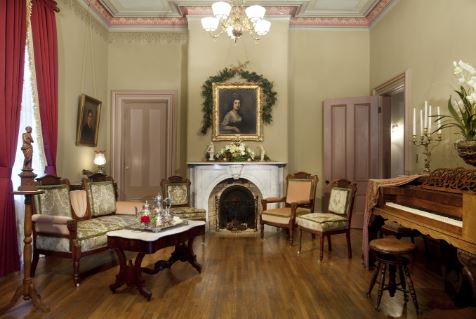
The butler’s eyes grew large but his face was hard. His hands tightened on the arms of the chair and he cocked his head to the left as he looked the room up and down. I saw the look of fear coming to his face. The housemaid whispered: “She is reading our thoughts, Morgan, she can hide her own thoughts from us.” “Morgan,” Mrs. Winchester said, “what you have witnessed is terrible. I can see spirits. I have powers.” Morgan’s face was transformed from cold suspicion to sudden contempt. “Ah, witch!” he cried. “Why did you not tell me? Your house is full of witches! You are an order of Satan. This house is expanding so quickly because you have the power to stop time.” And then as tears poured down his face, I sobbed. He wrapped his arms around me. “We are all damned,” he said, “and you hide here in this mansion where they can’t burn you! Oh, clever, clever witch in the devil’s house!” “Wicked am I? A witch am I? Stopper of time? I will not have you speak to me in that manner!” Mrs. Winchester moved into the very center of the room and looking up and out the window, it seemed to the blue sky, she cried: “Come now Caim and you 30 Legions of Spirits Infernal! I entreat thee to favor me in the adjuration which I address to thy might minister LUCIFUGE ROFOCALE! Come hither to speak with me.” And at once a great dark shadow appeared in the window, as if the spirit upon whom she had called condensed himself to become small and strong within the room. “Damn you into hell, witch. I shall not be your warlock,” Morgan cried, and as the books began to fall around he, he feld the mansion, and the door slammed front doors shut after him and no one could pry it open ever again, try as they might. #RandolphHarris 7 of 7

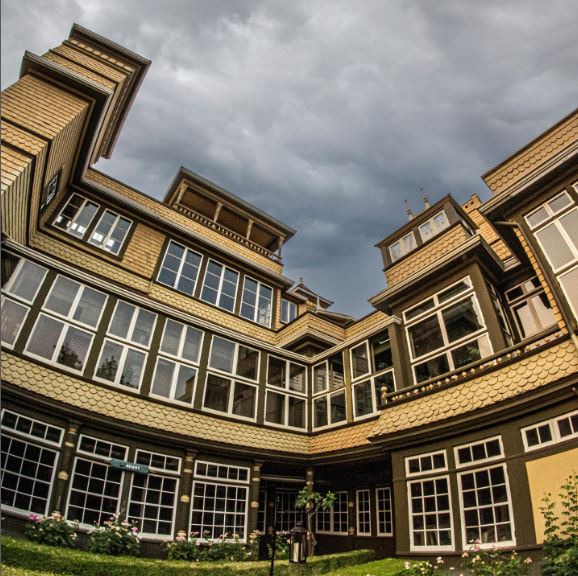
Phantom limbs hovering over us, or playfully touching, or roughly shoving us. What could it be that allows the many manifestations of an active, viable, yet impossible World, sometimes seen, more often unseen, that apparently exists right next to us? What aberration in Time or Physics or Mass or Energy reveals to us this other land, usually unheard and invisible, that seems the dwelling place of the dead? https://winchestermysteryhouse.com/
And please be sure to check out the online gift store: https://shopwinchestermysteryhouse.com/
 Randolph Harris II International Institute