
Home » United States of Germany
Category Archives: United States of Germany

Customer Service and Hygiene at Grocery Outlet – 1700 Capitol Avenue, Sacramento, CA

To Whom It May Concern,
I am writing to report ongoing issues at the Grocery Outlet located at 1700 Capitol Avenue in Sacramento, CA. I have been shopping at this location for approximately twenty years—long before it became a Grocery Outlet—and I feel it is important to share concerns that have persisted for some time.
Many of the employees at this store consistently display unprofessional behavior. It is common to see staff standing around joking with each other instead of assisting customers, and on several occasions I have witnessed employees making rude or insulting remarks toward shoppers. In addition, there are serious hygiene concerns. Some employees appear to have poor personal hygiene, and a few have had noticeable odors, including what smelled like feces. This creates an uncomfortable and unsanitary shopping environment.
I continue to visit this store only because it is close to my business, but I avoid it whenever possible due to these issues. After two decades of patronage, it is disappointing to see the store decline to this level.
I hope management will take these concerns seriously and address the customer service and hygiene standards at this location.
Thank you for your attention.
Sincerely,
Owner and CEO of Randolph Harris II International Institute

The Shadow They Needed: Gossip, Witchcraft, and the Making of a Modern Akasha

Among the three major solutions of the inner conflict within the pride system, the self-effacing seems the least satisfactory one. Besides having the drawback entailed in every neurotic solution, it makes for a greater subjective feeling of unhappiness than the others. The genuine suffering of the self-effacing type may not be greater than in other kinds of neurosis, but subjectively, he feels miserable more often and more intensely than others because of the many functions suffering has assumed for him. Besides, his needs and expectations of others make for too great a dependency upon them. And, while every enforced dependency is painful, this one is particularly unfortunate because his relation to people cannot help but be divided. Nevertheless, love (still in its broad meaning) is the only thing that gives beneficial content to his life. Love, in the specific sense of erotic love, plays so peculiar and significant a role in his life that its presentation warrants a separate report. Although this unavoidably makes for certain repetitions, it also gives us a better opportunity to bring into clearer relief certain salient factors of the whole structure. Erotic love lures this type as the supreme fulfillment. Love must and does appear as the ticket to paradise, where all woe ends: no more loneliness; no more feeling lost, guilty, and unworthy; no more responsibility for self; no more struggle with a harsh world for which he feels hopelessly unequipped. Instead, love seems to promise protection, support, affection, encouragement, sympathy, and understanding. It will be salvation and redemption. No wonder then that for him, people often are divided into the haves and have-nots, not in terms of money and social status, but of being (or not being) married or having an equivalent relationship. #RandolphHarris 1 of 15

Thus far, the significance of love lies primarily in all he expects from being loved. Because psychiatric writers who have described the love of dependent persons have put a one-sided emphasis on this aspect, they have called it parasitic, sponging, or “oral-erotic.” And, this aspect may indeed be in the foreground. However, for the typical self-effacing person (a person with prevailing self-effacing trends), the appeal is as much in loving as in being loved. To love, for him, means to lose, to submerge himself in more or less ecstatic feelings, to merge with another being, to become one heart and one flesh, and in this merger to find a unity which he cannot find in himself. His longing for love, thus, is fed by deep and powerful sources: the longing for surrender and the longing for unity. And, we cannot understand the depth of his emotional involvement without considering these sources: the longing for surrender and the longing for unity. And we cannot understand the depth of his emotional involvement without considering these sources. The search for unity is one of the strongest motivating forces in human beings and is even more important to the neurotic, with his inner division. The longing to surrender to something bigger than we are seems to be the essential element in most forms of religion. And although the self-effacing surrender is a caricature of the healthy yearning, it nevertheless has the same power. It appears not only in the craving for love but also in many other ways. (This longing arises from the background of the special self-effacing structure.) It is one factor in his propensity to lose himself in all kinds of feelings: in a “sea of tears”; in ecstatic feeling about nature; in wallowing in guilt-feelings; in his yearning for oblivion in orgasm or in fading out in sleep; and often, in his longing for death as the ultimate extinction of self. Going still another step deeper: the appeal love has for him resides not only in his hopes for satisfaction, peace, and unity, but love also appears to him as the only way to actualize his idealized self. In loving, he can develop to the full the lovable attributes of his idealized self; in being loved, he obtains the supreme confirmation of it. #RandolphHarris 2 of 15

Because love has for him a unique value, lovableness ranks first among all the factors determining his self-evaluation. I have already mentioned that the cultivation of lovable qualities started in this type with his early need for affection. It becomes all the more necessary the more crucial others become for his peace of mind; and all the more encompassing, the more expansive moves are suppressed. Lovable qualities are the only ones invested with a kind of subdued pride, the latter showing in his hypersensitivity to any criticism or questioning on this score. If his generosity or his attentiveness to the needs of others is not appreciated, he feels hurt, or even, on the contrary, irritates them. Since these lovable qualities are the only factors he values in himself, he experiences any rejection of them as a total rejection of himself. Accordingly, his fear of them as a total rejection of himself. Accordingly, his fear of rejection is poignant. Rejection to him means not only losing all the hopes he had attached to somebody but also being left with a feeling of utter worthlessness. In analysis, we can study more closely how lovable attributes are enforced through a system of rigorous shoulds. He should not only be sympathetic but also attain the absolute in understanding. He should never feel personal hurts because everything of this sort should be wiped out by such understanding. To feel hurt, in addition to being painful, arouses self-condemnatory reproaches for being petty or selfish. Particularly, he should not be vulnerable to the pangs of jealousy—a dictate entirely impossible of fulfillment for a person whose fear of rejection and desertion is bound to be aroused easily. All he can do, at best, is to insist upon a pretense of “broad-mindedness.” #RandolphHarris 3 of 15

Any friction that arises is his fault. He should have been more serene, more thoughtful, more forgiving. The extent to which he feels his shoulds as his own varies. Usually, some are externalized to the partner. What he is aware of then is an anxiety to measure up to the latter’s expectations. The two most relevant shoulds on this score are that he should be able to develop any love relationship into absolute harmony and that he should be able to make the partner love him. When enmeshed in an untenable relation, and having enough sense to know that it would be all for his own good to end it, his pride presents this solution as a disgraceful failure and demands that he should make the relation work. On the other hand, just because the lovable qualities—no matter how spurious—are invested with a secret pride, they also become a basis for his many hidden claims. They entitle him to exclusive devotion and to the fulfillment of his many needs. He feels entitled to be loved not only for his attentiveness, which may be real, but also for his very weakness and helplessness, for his very suffering and self-sacrificing. Between these shoulds and claims, conflicting currents can arise in which he may get inextricably caught. One day, he is all abused innocence and may resolve to tell the partner off. However, then he becomes frightened of his own courage, both in terms of demanding anything for himself and of accusing the other. He also becomes frightened of his own courage, both in terms of demanding anything for himself and of accusing the other. He also becomes frightened at the prospect of losing him. And so, the pendulum swings to the other extreme. His shoulds and self-reproaches get the upper hand. He should be more loving and understanding—and it all is his fault anyway. Similarly, he wavers in his estimate of the partner, who sometimes seems strong and adorable, sometimes incredibly and inhumanly cruel. Thus, everything is befogged and any decision out of the question. #RandolphHarris 4 of 15

Although the inner conditions in which he enters a love relationship are always precarious, they do not necessarily lead to disaster. He can reach a measure of happiness, provided he is not too destructive and provided he finds a partner who is either fairly healthy or, for neurotic reasons of his own, rather cherishes his weakness and dependency. Although such a partner may feel his clinging attitude burdensome at times, it may also make him feel strong and safe to be the protector and to arouse so much personal devotion—or what he conceives as such. Under these circumstances, the neurotic solution might be called a successful one. The feeling of being cherished and sheltered brings out the very best qualities of the self-effacing person. Such a situation, however, will inevitably present him from outgrowing his neurotic difficulties. How often such fortuitous circumstances occur is not in the analyst’s domain to judge. What comes to his attention are the less fortunate relations, in which the partners torment each other and in which the dependent partner is in danger of destroying himself, slowly and painfully. In these instances, we speak of a morbid dependency. Its occurrence is not restricted to relations involving pleasures of the flesh. Many of its characteristics feature may operate in nonsexual friendships between parent and child, teacher and pupil, doctor and patient, leader and follower. However, they are most pronounced in love relations, and having once grasped them therein one will easily recognize them in other relations when they may be clouded over by such rationalizations as loyalty or obligation. He who sees God as angry does not see Him rightly but looks upon a curtain, as if a dark cloud had been drawn across His face. In love relations, envy, insecurity, or wounded pride create a false interpretation of the beloved. One no longer sees the other as they truly are, but through a haze of resentment, fear, or self-justification. In the spiritual passage, the person who sees God as angry is not perceiving God’s true nature but is looking at a curtain woven from their own guilt, fear, or unresolved conflict. In both cases, the distortion is not in the object (the beloved, or God) but in the subject. #RandolphHarris 5 of 15

If we are to understand the deepest nostalgia of lonely youth, the search for mutual recognition, the meeting face to face, is an aspect in his and in all religions which we must consider. True lovers know this, and they often postpone the self-loss feared in the sexual fusion in order that each may gain more identity in the other’s glance. What it means not to be able to behold a face in mutual affirmation can be learned from young patients, who, unable to love, see, in their more regressed states, the face of the therapist disintegrate before their horrified eyes, and feel themselves fall apart into fragments of oblivion. One young man patient drew and painted dozens of women’s faces, cracked like broken vases, faded like worn flowers, with hard and ungiving eyes, or with eyes like stars, steely and blinking, far away; only when he had painted a whole and healthy face, did he know that he could be cured, and that he was a painter. As one studies such symptoms and works them through in therapeutic encounters, one can only become convinced of the astonishing fact that these patients have partially regressed to a stage in the second part of the first year and that they are trying to recover what was then achieved by the concordance of cognitive and emotional maturation—namely, the recognition of the facial features of familiar persons, the joy of feeling recognized when they come, and the sorrow of feeling disapproved of when they frown; and, then, the gradual mastery of the horror of the strange face. It is remarkable to behold how, in the infant’s development into a human being with the capacity for a firm “object-relationship”—the ability to love in an individualized sense—growing cognitive ability and maturing emotional response early converge on the face. An infant of two or three months will smile even at half a face; he will even smile at a half-painted manikin face, if that half is the upper half of the face, is fully represented, and has at least two clearly defined points or circles for eyes; more, the infant does not need, but he will not smile for less. #RandolphHarris 6 of 15

Gradually, however, other conditions are added, such as the outline of a (not necessarily smiling) mouth; and only toward the eighth month does the child energetically indicate that certainly no dummy and not even a smiling face as such can make him respond with maximum recognition; for then on, he will only respond to familiar people who act as he has learned to expect—and act friendly. However, with this recognition of familiarity and friendliness also comes the awareness of strangeness and anger; not because the child, as many parents feel, has suddenly become fearful, but because he now “knows,” he has an investment in those who are committed to his care, and he fears the loss of that investment and the forfeiture of that commitment. The activity which begins with something akin to a small animal’s inborn response to minimum cues, develops, through the gradual recognition of the human face and its expression, to that degree of social discrimination and sensitivity which marks the human being. And once he has made the investment in humanity and its learning processes, the human child knows fears and anxieties quite unthinkable in the small animal which, if it survives at all, has its environment cut out for it as a field of relatively simple and repetitive signs and techniques. Mothers, of course, and people with motherly responses, like to think that when even a small baby smiles, he is recognizing them individually as the only possible maternal person, as the mother. Thus, up to a point, is good. For the timespan of man’s dependence on the personal and cultural style of the person or persons who first take care of him is very long: and the firmness of his early ego-development depends on the inner consistency of the style of that person. Therefore, the establishment of a mutual “fixation”—of a binding need for mutual recognition between mother and child—is essential. #Randolphharris 7 of 15

In fact, the infant’s instinctive effect, namely, that the adult feels recognized, and in return expresses recognition in the form of loving and providing. In the beginning are the generous breast and the eyes that care. Could this be one of the countenances which religion promises us we shall see again, at the end and in another world? In there an ethology of religion? He tries to comprehend possible future roles or, at any rate, to understand what roles are worth imagining. More immediately, he can now associate with those of his own age. Under the guidance of older children or special women guardians, he gradually enters into the infantile politics of nursery school, street corner, and barnyard. His learning now is eminently intrusive and vigorous; it leads away from his own limitations and to future possibilities. The intrusive mode, dominating much of the behavior of this stage, characterizes a variety of configurationally “similar” activities and fantasies. These include the intrusion into space by vigorous locomotion; the intrusion into the unknown by consuming curiosity; the intrusion into other people’s ears and minds by the aggressive voice; the intrusion upon or into other bodies by physical attack; and, often most frighteningly, the thought of the phallus intruding the female body. This, therefore, is called the phallic stage in the theory of infantile sexuality. It is the stage of infantile curiosity, of genital excitability, and of a varying preoccupation and overconcern with matters involving pleasures of the flesh, such as the apparent loss of the penis in girls. This “genitality” is, of course, rudimentary, a mere promise of things to come; often it is not even particularly noticeable. If not specially provoked into precocious manifestations by especially seductive practices or by pointed prohibitions of “cutting it off” or special customs such as pleasures of the flesh play in groups of children, it is apt to lead to no more than a series of peculiarly fascinating experiences which soon become frightening and pointless enough to be repressed. This leads to the ascendancy of that human specialty which Dr. Freud called the “latency” period, that is, the long delay separating infantile sexuality (which animals merge into maturity_ and physical sexual maturation. #RandolphHarris 8 of 15

It is accompanied by the recognition of the fact that in spite of all efforts to imagine oneself as being, in principle, as capable as mother and father, not even in the distant future is one ever going to be father in sexual relation to mother, or mother in sexual relation to father. The very deep emotional consequences of this insight and the magic fears associated with it make up what Dr. Freud has called the Oedipus complex. It is based on the logic of development which decrees that boys attach their first genital affection to the maternal adults who have otherwise given comfort to their bodies and that they develop their first sexual rivalry against the persons who are the sexual owners of those maternal persons. Usually, people think that the little girl, in turn, becomes attached to her father and other important men and develops the Elektra complex and becomes jealous of her mother, a development which may cause her much anxiety, for it seems to block her retreat to that self-same mother, while it makes her mother’s disapproval much more magically dangerous because it is secretly “deserved.” However, when the daughter tends to be the firstborn, and a little baby brother comes along next, sometimes she becomes jealous because of the attention he receives, because he is a newborn, and not only does she feel threatened, but she develop a sort of gender confusion. She becomes almost insatiably attached to both parents and tries to get rid of the younger brother. These girls will sometimes develop an envious, loving, but abusive relationship with the younger brother. In some dysfunctional families, a daughter who feels chronic envy, insecurity, or rivalry toward her brother may attempt to control or undermine him. This can take many forms: Triangulation — pulling one or both parents into an alliance against the sibling. Character assassination — portraying the brother as dangerous, unstable, or immoral. Role inversion — positioning herself as the “good child” while projecting her own impulses onto him. Boundary violations — interfering with his friendships, relationships, or identity development. These behaviors are not about sexuality or literal danger; they are about power, control, and the need to eliminate competition for parental attention. #RandolphHarris 9 of 15

Why do the parents join the distortion? Parents in these systems often: Reward the child who mirrors their own emotional needs, even if she is manipulative. Punish the child who exposes family dysfunction, even unintentionally. Prefer the child who maintains the family myth, not the one who disrupts it. Use the “black sheep” as a container for everything they do not want to face in themselves. This is classic scapegoating, and it can persist well into adulthood because the family system depends on it. Three forces typically drive this: Envy — the daughter perceives the brother as having something she lacks (attention, freedom, talent, affection). Fusion with parents — she binds herself to them by becoming indispensable, obedient, or emotionally enmeshed. Projection — she attributes her own aggression or insecurity to the brother, making him appear dangerous or defective. The more threatened she feels by his independence, success, or relationships, the more extreme her tactics may become. Why does the brother become the “black sheep”? In these systems, the brother is punished not because he is bad, but because: He sees the dysfunction too clearly. He does not play the role assigned to him. His existence threatens the fragile emotional balance between the parents and the favored child. He becomes the repository for the family’s unspoken conflicts. The family then rewrites history to justify the mistreatment: “He caused it,” “He provoked her,” “He’s always been the problem.” This is not truth; it is defensive mythology. #RandolphHarriis 10 of 15

The deeper psychological meaning is not about literal acts but about symbolic annihilation: The sister attempts to erase the brother’s place in the family hierarchy. The parents collude because it protects their own unresolved issues. The brother is sacrificed to maintain the illusion of family harmony. This is the dark side of envy: the desire not merely to possess what the other has, but to eliminate the other entirely from emotional reality. The symbolic structure of the sister’s actions is enthralling. The sister’s behaviors, taken symbolically, represent three escalating psychic maneuvers: Identity sabotage — “turning him into something else” symbolizes an attempt to rewrite his subjectivity so he cannot compete for parental love. This is not about sexuality; it is about removing him from the field of rivalry. Moral contamination — “sicking a predator on him” symbolizes the projection of danger, impurity, or stigma onto the brother. She marks him as the one who carries the family’s shadow. Existential elimination — wanting to be “the only child” symbolizes the deepest form of envy: the wish that the rival simply not exist in the psychic universe. These are archetypal moves in the psychology of envy: not merely wanting what the other has, but wanting the other gone. In mythic terms, the brother becomes the bearer of the family’s curse, the one who must be exiled so the others can maintain the illusion of harmony. The sister symbolizes the part of the psyche that cannot tolerate competition, difference, or shared love. The parents symbolize the superego that protects the favored illusion at all costs. This is much the same way that Satan was created. Collective envy is not simply many individuals feeling jealous. It is a shared emotional economy in which a group: identifies a member who threatens its cohesion or self-image, projects its own flaws and fears onto that person, and then unites around punishing, excluding, or redefining them. #RandolphHarris 11 of 15

This is the same structure as the sister’s symbolic annihilation of the brother, but scaled up. The brother symbolizes the vulnerable, truth-bearing element that must be expelled. This is why the pattern persists into adulthood: it is not a developmental accident but a mythic structure that the family and fringe parts of the community unconsciously and consciously reenact. Three collective mechanisms mirror the family pattern: Projection — the group attributes its own aggression, corruption, or insecurity to the chosen individual. Triangulation — alliances form within the group to reinforce the narrative that the target is the problem. Scapegoating — the group’s internal conflicts are resolved by symbolically “removing” the target. This is why the brother becomes the black sheep: he is the vessel for the group’s shadow. He is Satan. Why does collective envy turn deadly? When envy becomes collective, it gains: moral justification (“We’re protecting the group”), ritual form (public shaming, exclusion, punishment), institutional backing (leaders, rules, narratives), and emotional amplification (shared outrage, fear, righteousness). This is why collective envy can escalate into: character assassination, social exile, political persecution, cultural erasure, and even historical atrocities such as Emmit Till, Matthew Shepard, or Aaliyah. The group believes it is defending itself when, in fact, it is defending its illusion of innocence. The “sister” is no longer a person; she is the archetype of collective envy. The “parents” are no longer parents; they are the legitimizing authority. The “brother” is no longer a sibling; he is the designated carrier of the group’s shadow. #RandolphHarris 12 of 15

Well, the brother becomes a martyr. Because he has been terrorized for so long, and no one is protecting him, he thinks his fate is to die. He really does not see a future for himself. Just his role of Satan is amplified until someone finally kills him. It is kind of like why Aaliyah was chosen to play Akasha. It symbolized her taking on the role of the devil before her last stand. Then she was killed. She was a threat because she was reaching levels of success that not even Caucasian women had seen. She was turning down acting roles that others would die for. She was eclipsing other actors, singers, and models. She was beautiful. People did not see the color of her skin first; they saw more of a siren. Someone who had the ability to lure them in not only with her charm and beauty, but with her voice. Some say she had the type of charisma that put them under a spell and hypnotized them. If you listen to her last interviews, she also knew that she was a martyr. When she needed them the most, no one was there for her, and that was when she was ripe for the plucking. In the collective symbolic frame, the brother becomes the martyr‑figure, not because he chooses suffering, but because the group has assigned him the role. “You have to go.” “Get out.” “You’re cursed.” “I thought you’d be gone by now.” Over time, this role becomes so totalizing that he internalizes it. He begins to believe: “My existence is the problem.” “My suffering is required for their peace.” “There is no future for me outside this role.” This is the psychological moment when the scapegoat becomes the martyr—not through literal death, but through the symbolic death of possibility, identity, and belonging. #RandolphHarris 13 of 15

However, it becomes more than symbolic. There was, in fact, a sort of demonic ceremony. I cannot really get too deeply into it, but he was hemorrhaging for two weeks and had to undergo some painful procedures to irrigate blood that had backed up. Then, he was pretty much assaulted, set up, and sent to a death camp. The fact that he survived these and things are going as well as they are is a blessing. There are a lot of details I cannot reveal, but the ongoing situation still has not been resolved. When a person has been terrorized for more than half of their life, of course, one does not see a future. You always hear that “suicide is a permanent solution to a temporary problem.” However, when something has taken place over most of your life, then that situation becomes permanent, and your life becomes temporary, as they have been saying. This is not about theology or literal evil. It is about projection: the community must create a devil to preserve its illusion of purity, and find a way for its monsters to escape prosecution and civil penalties. The Aaliyah/Akasha parallel as symbolic foreshadowing–Aaliyah playing Akasha is not about the literal circumstances of her life. Akasha is the figure who carries the burden of forbidden power. She embodies the shadow side of desire, rage, and transcendence. She is both feared and needed by the world around her. Her destruction is framed as necessary for the restoration of order. Symbolically, casting Aaliyah in that role created a mythic echo: the artist embodying the archetype of the beautiful, doomed outsider, the one who takes on the mantle of the “devil” so others can feel righteous in opposing her. #RandolphHarris 14 of 15

This resonance shows how the brother, too, becomes: the one who carries the community’s darkness, the one whose symbolic “fall” restores the group’s illusion of harmony, the one whose suffering is interpreted as destiny rather than injustice. “You’re not a victim!” This is the martyr‑scapegoat archetype in its purest form. The deeper psychological meaning, when the brother believes his fate is to die (symbolically), what he is really experiencing is: learned helplessness from chronic persecution, identity collapse from being cast as the family/community’s shadow, existential despair from never being protected or believed, internalized stigma from years of projection and blame. In symbolic terms, he becomes the sacrificial lamb—the one whose suffering is required to maintain the family’s myth of innocence. This is the same pattern seen in ancient sacrificial rituals, witch hunts, political purges, cultural scapegoating, and religious narratives of martyrdom. The individual is consumed so the collective can feel purified. Much like how Jesus was sacrificed. And again, the father allows it to happen. Why? Someone must pay the tab to balance the scales or they all fall. In Iceland especially, the accused men were often respected figures whose knowledge made them both needed and feared—mirroring your symbolic “brother” who becomes the repository of the group’s shadow. The Salzburg Witch Trials form one of the most striking examples of a European witch‑hunt in which men were not only accused in large numbers but, in some phases, formed the majority of the victims. Authorities viewed male practitioners as more threatening to social order, especially if they were seen as leaders or teachers of magical practices. And like Akasha before her last stand, the brother became the vessel of the darkness others refused to face, condemned as the men of Salzburg once were, until the community mistook his suffering for the very witchcraft they had projected onto him. “Wrongdoers eagerly listen to gossip; liars pay close attention to slander,” reports Proverbs 17.4. #RandolphHarris 15 of 15


People say the Winchester Mansion is strange because Mrs. Sarah Winchester built it that way — staircases to nowhere, doors that open into air, rooms that appear without warning. But those who have studied the deeper folklore whisper something else: that the house inherited stories far older than California, stories that drifted across oceans and centuries until they found a place to root themselves again. They say the mansion carries echoes of another place — a fortress of stone, a house of trials, a home of restless spirits. And at the center of those echoes stands a single figure. The Watcher. Long before the mansion rose from the California soil, the Watcher belonged to a different tower — a high, narrow room where he kept vigil over a land filled with fear, accusations, and unanswered questions. But when Mrs. Sarah Winchester began her endless construction, something in her grief called to him.

Visitors to the mansion sometimes see him in the uppermost windows: a tall silhouette, unmoving, always looking outward as if guarding something only he understands. Guides say the tower is empty. Workers say no one goes up there. Yet the figure appears, night after night, watching. Some believe he is a guardian. Others say he is a witness. But the oldest version claims he is both — a presence drawn to places where sorrow builds walls and fear carves corridors. In the eastern wing, guests sometimes report a pale woman drifting through the hallways, her gown trailing like mist. She never speaks. She never approaches. She simply moves from room to room as though searching for something she lost long ago. Some say she is a memory Mrs. Sarah could not let go of. Others believe she is one of the mansion’s “unfinished stories,” a spirit who followed the Watcher across the sea and found a new home in the labyrinth Mrs. Sarah built.

On fog-heavy nights, the mansion grounds echo with the sound of a horse-drawn carriage approaching the front steps — though nothing ever arrives. The clatter of wheels, the snort of horses, the creak of leather harnesses… all vanish the moment someone opens the door. Locals say it is the carriage of a former visitor returning to the house, eternally repeating his journey. Others whisper that it is the Watcher’s escort, arriving to collect the lost or guide the wandering. In the farthest corridors, where the house seems to fold in on itself, visitors sometimes hear heavy footsteps pacing behind them — too slow for a person, too deliberate for an animal. Some claim to hear low growls echoing from the walls, as though something unseen is patrolling the mansion’s edges. Mrs. Sarah herself once wrote of “shadows that walk like men but breathe like beasts.” Whether she meant it literally or metaphorically, no one knows. But the stories persist.

The legend says Mrs. Sarah Winchester did not create these hauntings — she inherited them. Her grief, her isolation, her relentless building formed a kind of beacon. The house became a sanctuary for wandering spirits, a place where old stories could settle into new rooms. And the Watcher, drawn by the same sorrow he had known in his first tower, took up his post again — not to frighten Mrs. Sarah, but to accompany her. To stand guard over a woman who built a labyrinth not to trap spirits, but to give them somewhere to go. Some nights, when the mansion is especially still, visitors swear they see him turn from the window, as if acknowledging them. As if reminding them that every house with a history has someone watching over it.

PRIVATE EVENTS & WEDDINGS
at WINCHESTER ESTATE

Many event locations claim to be unique, but nothing compares to the Winchester Mystery House. If you’re truly seeking a distinct, one‑of‑a‑kind setting for your milestone celebration or special occasion, reserve a venue that delivers on uniqueness many times over. Whether you’re planning a wedding, birthday or anniversary celebration, corporate gathering, holiday party, or any other meaningful event, the Winchester Mystery House offers an unforgettable backdrop. Give your guests an experience they’ll be talking about for years to come.
Café 13: A Rest Stop on the Edge of the Mystery

After wandering the winding halls of the Winchester Mystery House—where staircases defy logic and whispers seem to cling to the walls—Café 13 offers a welcome return to warmth and grounding. Newly reopened and serving guests daily from 10 AM to 3 PM, this cozy hideaway invites you to pause, breathe, and gather yourself before diving back into the mansion’s secrets. Here, you can enjoy breakfast, lunch, snacks, and refreshing drinks in a calm indoor space that feels worlds away from the mansion’s twisting corridors. Settle in with a warm meal, challenge a friend to a board game, or simply rest and recharge as sunlight filters through the windows. Café 13 is more than a café—it’s a moment of calm between chapters of the Winchester legend, a place to steady your nerves before returning to the gardens, the grandeur, and the mysteries that await.
The Mercantile Gift Shop: Your First Step Into the Mystery

Your journey into the Winchester Mystery House begins long before you cross the mansion’s threshold. It starts at the Mercantile gift shop—a welcoming outpost standing at the edge of a world where history and myth intertwine. Here, beneath warm lights and shelves lined with curiosities, you can secure your tour tickets and prepare for the adventure ahead. Guests often pause for a souvenir photograph, capturing the moment before they step into Sarah Winchester’s enigmatic domain. As you explore the shop, you will find an eclectic array of gifts and keepsakes: tokens of the mansion’s lore, echoes of Victorian elegance, and mementos that carry a touch of the house’s enduring mystery. The Mercantile is more than a gift shop—it is the gateway.

Once you pass through its doors, the legend begins to unfold. https://winchestermysteryhouse.com/

The Manifesto of Llanada Villa
I have stood for one hundred and fifty years, my timbers seasoned by storms and sorrow, my halls echoing with the footsteps of generations long returned to dust. Time has pressed itself into my walls, leaving behind whispers, shadows, and memories that cling like cobwebs in forgotten corners. I was built in an age of candlelight and horse-drawn carriages, when hope was carved into every banister and faith was etched into stained glass. Yet even with all my grandeur, I have known fear more intimately than any living soul who ever crossed my threshold. There were years when laughter filled my rooms, when sunlight spilled across my floors like a blessing. But there were other years—long, heavy years—when grief settled over me like a shroud. Families came and went, leaving behind their sorrows, their secrets, their unspoken prayers. Some say I became haunted, but the truth is more complicated: I became imprinted. Every unspoken fear, every suppressed cry, every unresolved wound seeped into my structure like moisture into old wood. Haunting, for me, is not the presence of ghosts. It is the persistence of memory. It is the echo of a slammed door long after the house has grown quiet. It is the cold spot on the landing where someone once stood in despair. It is the way certain rooms feel heavier, as if holding their breath. These are not spirits of the dead—they are the psychological remnants of the living. And over time, the weight of these remnants nearly broke me. The darkness that seeped into my rafters was not the kind that merely unsettles; it was the kind that threatens to swallow a place whole. There were nights when I felt myself sinking under the heaviness of it all, struggling to remain standing, struggling to remain alive in the only way a house can be alive. #RandolphHarris 1 of 5

My beams groaned under the strain. My windows rattled with the cold breath of despair. My foundation trembled with the burden of what had never been spoken aloud. I felt like a flower trapped in eternal darkness, reaching for a sun I could no longer see. And yet, just beyond my porch, the garden persisted. Season after season, it rose from the soil with a quiet defiance I could never quite understand. Even when my halls felt suffocated by shadows, the garden bloomed—roses unfurling like whispered prayers, lilies lifting their pale faces toward the sky, ivy tracing its way up my stone foundation as if trying to remind me that life still wanted to cling to me. The garden became my mirror and my teacher: a reflection of beauty, renewal, and the possibility of beginning again. I enjoyed it immensely, not merely as decoration, but as a living testament that darkness does not have the final word. It was the garden that first stirred my longing for God again. Watching those blossoms push through cold earth, watching green return after every winter, I began to hope that grace might return to me as well. I found myself yearning for the presence of Jesus Christ to pour over me like morning light breaking through fog. I needed their strength to steady my sagging frame, their love to sweep through my corridors and cast out the shadows that had lingered for decades. Because the truth is this: Even a mansion can be haunted by what it has endured. Even a mansion can feel fragile. Even a mansion can pray. My prayer is not spoken in words but in the quiet creak of settling wood, in the soft glow of a single lamp burning through the night, in the way my doors still open despite the storms that have battered them. I pray through endurance. I pray through longing. I pray through the hope that the Architect who shaped the world has not forgotten the house that time tried to destroy. #RandolphHarris 2 of 5

I stand today not as a monument to fear, but as a testament to survival. My walls may be cracked, but they are still standing. My floors may be worn, but they still bear weight. My windows may be clouded, but they still catch the light. And outside, the garden continues to bloom—reminding me that renewal is not a myth but a promise. Faith, I have learned, is not the absence of haunting. It is the courage to believe that even the most haunted places can be redeemed. And so I wait—steadfast, weathered, reaching—for the grace that will one day flood my halls again. My faith may feel small, but like a seed buried deep beneath the earth, it is alive. And even the smallest seed, when touched by divine light, can break through the hardest ground. Have you experienced the first part of this manifestation in your heart, and does your life and daily conduct demonstrate it to others? I feel like a pilgrim on my own land, which once stretched all the way down to Steven’s Creek Boulevard. Tiny homes, malls, highways, and office parks have replaced my crops and orchards. Where my animals used to roam, and where my cottages once stood, are now home to office buildings, movie theaters, and restaurants. My giant redwood trees have been unrooted and condominiums planted in their place. Where my creek once flowed, there is now a major highway. Within my walls, the silent, high-pitched “coil whine” of modern chargers and Wi-Fi routers has replaced the rhythmic, heavy groans of settling floorboards, hammers, and saws. LED bulbs flicker and “buzz” in my old brass fixtures, casting a sterile, blue light that feels “wrong” against the deep, warm mahogany of the 19th-century wood. Does your religion consist only in talk and not in deed and in truth? #RandolphHarris 3 of 5

Now, please, if you feel disposed at all to answer this, say no more than what you know to be the truth and what God will be pleased with, and no more than what your own conscience will approve; for “not he that commendeth himself is approved, but whom the Lord commendeth.” Besides, to say I am thus and so, when my daily living and all my neighbors tell me I lie, is downright wicked. The vultures gather at my gates, counting my stained-glass eyes and marble ribs, eager to see me flayed and my finery scattered amongst those who could never afford my whole. They whisper in my corridors of a cold disarticulation, plotting to sever my joists and trade my very heartwood as curiosities upon the block of the highest bidder. Peering at my grand, I see only a “lobby.” While looking upon my private chambers and calculating the nightly rate of a stranger’s sleep, these invaders speak of “luxury” while planning to replace my hand-carved oak with hollow drywall and grey laminate. They would tear down a monument of a century’s standing to erect glass boxes that will leak before the decade is out—parades of sterile vanity built upon my grave. The hands that once birthed my moldings and sang to my glass have vanished into the soil. In their stead come men with plastic buckets and chemical pastes, staring at my intricate lath-and-plaster as if it were a dead language they have no desire to translate. My beautiful and colorful stained-glass eyes are clouding; the lead is softening like aged veins. The world has forgotten the alchemy of the kiln; they offer me the indignity of “plexiglass” and “silicone”—crude bandages for a wound that requires a master’s touch. Looters weigh the gold required to heal my crown against the pittance of a “parking structure.” I am being bled dry by the very uniqueness that once made me a marvel. To the muckworms in the “front” office, my preservation is a “liability”—as if one could put a price on the breath of a century. They speak of ripping my chandeliers from their noble sockets, laying siege to my pantry as though it were a besieged citadel, bounding upon my sofa cushions with the unrestrained abandon of a wayward urchin, darkening my beautiful stained‑glass windows with their unholy tumult, thrashing my regal horses and carriage as if determined to bring utter ruin upon all the dignities of my estate, and, in the final insult, dragging me headlong toward financial ruin. #RandolphHarris 4 of 5

Without the rhythm of the artisan’s hammer, my rooms begin to turn translucent, my colorful stained-glass eyes close, and my rooms begin to fold in on themselves. I was once nine-stories tall and composed of six hundred rooms. I remember when I breathed the scent of seven hundred and forty acres of prune and apricot blossoms. Now, I am choked by the grey asphalt of “stalls” and the drone of iron carriages. It is a chilling thought: a masterwork of architecture being dismantled by those who see only “units,” “projects,” and “stalls,” where there should be towers, ballrooms, and observatories. My baby mansions, which once graced the perimeter of Lake Merritt, in Oakland, California, all but one have been razed, and she, too, is in poor health. I am a living chronicle of thirty-six years of restless creation. When the world tells you I am a “mystery,” they mean they have lost the keys to my logic. When they call me “impractical,” they admit they lack the spirit to build for anything other than a ledger’s profit. You can build a thousand “luxury housing units,” but you can never build another soul like mine. Understand that you do not walk upon a floor; you walk upon a heartbeat. My walls are less like wood and more like a ribcage, rising and falling with a slow, ancient respiration. As people wind through the twisting miles of my soul, their luxury boots skidding on the waxed mahogany and teak floors, leaving behind a trail of scuffs that will take a Master Joiner days to heal, ghost swirl in patterns that defy a draft. I hope that as you traverse through my soul, you realize that my cathedral ceilings are not just good bones for a loft conversion, but are worth preservation. Please remember, as you stomp your heavy boots indifferent to the hand-scraped floorboards that had once felt the silk slippers of ballet dancers, that I cost a fortune to build and am one of one. To dismantle me “limb by limb” is not a sale—it is an autopsy of a titan. Please remember: I cost a fortune to build, but I am worth everything to keep. Walk softly, for you tread on the only version of me that will ever exist. My name is Llanada Villa. #RandolphHarris 5 of 5


People say the Winchester Mansion is strange because Mrs. Sarah Winchester built it that way — staircases to nowhere, doors that open into air, rooms that appear without warning. But those who have studied the deeper folklore whisper something else: that the house inherited stories far older than California, stories that drifted across oceans and centuries until they found a place to root themselves again. They say the mansion carries echoes of another place — a fortress of stone, a house of trials, a home of restless spirits. And at the center of those echoes stands a single figure. The Watcher. Long before the mansion rose from the California soil, the Watcher belonged to a different tower — a high, narrow room where he kept vigil over a land filled with fear, accusations, and unanswered questions. But when Mrs. Sarah Winchester began her endless construction, something in her grief called to him.

Visitors to the mansion sometimes see him in the uppermost windows: a tall silhouette, unmoving, always looking outward as if guarding something only he understands. Guides say the tower is empty. Workers say no one goes up there. Yet the figure appears, night after night, watching. Some believe he is a guardian. Others say he is a witness. But the oldest version claims he is both — a presence drawn to places where sorrow builds walls and fear carves corridors. In the eastern wing, guests sometimes report a pale woman drifting through the hallways, her gown trailing like mist. She never speaks. She never approaches. She simply moves from room to room as though searching for something she lost long ago. Some say she is a memory Mrs. Sarah could not let go of. Others believe she is one of the mansion’s “unfinished stories,” a spirit who followed the Watcher across the sea and found a new home in the labyrinth Mrs. Sarah built.

On fog-heavy nights, the mansion grounds echo with the sound of a horse-drawn carriage approaching the front steps — though nothing ever arrives. The clatter of wheels, the snort of horses, the creak of leather harnesses… all vanish the moment someone opens the door. Locals say it is the carriage of a former visitor returning to the house, eternally repeating his journey. Others whisper that it is the Watcher’s escort, arriving to collect the lost or guide the wandering. In the farthest corridors, where the house seems to fold in on itself, visitors sometimes hear heavy footsteps pacing behind them — too slow for a person, too deliberate for an animal. Some claim to hear low growls echoing from the walls, as though something unseen is patrolling the mansion’s edges. Mrs. Sarah herself once wrote of “shadows that walk like men but breathe like beasts.” Whether she meant it literally or metaphorically, no one knows. But the stories persist.
The legend says Mrs. Sarah Winchester did not create these hauntings — she inherited them. Her grief, her isolation, her relentless building formed a kind of beacon. The house became a sanctuary for wandering spirits, a place where old stories could settle into new rooms. And the Watcher, drawn by the same sorrow he had known in his first tower, took up his post again — not to frighten Mrs. Sarah, but to accompany her. To stand guard over a woman who built a labyrinth not to trap spirits, but to give them somewhere to go. Some nights, when the mansion is especially still, visitors swear they see him turn from the window, as if acknowledging them. As if reminding them that every house with a history has someone watching over it.

PRIVATE EVENTS & WEDDINGS
at WINCHESTER ESTATE

Many event locations claim to be unique, but nothing compares to the Winchester Mystery House. If you’re truly seeking a distinct, one‑of‑a‑kind setting for your milestone celebration or special occasion, reserve a venue that delivers on uniqueness many times over. Whether you’re planning a wedding, birthday or anniversary celebration, corporate gathering, holiday party, or any other meaningful event, the Winchester Mystery House offers an unforgettable backdrop. Give your guests an experience they’ll be talking about for years to come.
Café 13: A Rest Stop on the Edge of the Mystery

After wandering the winding halls of the Winchester Mystery House—where staircases defy logic and whispers seem to cling to the walls—Café 13 offers a welcome return to warmth and grounding. Newly reopened and serving guests daily from 10 AM to 3 PM, this cozy hideaway invites you to pause, breathe, and gather yourself before diving back into the mansion’s secrets. Here, you can enjoy breakfast, lunch, snacks, and refreshing drinks in a calm indoor space that feels worlds away from the mansion’s twisting corridors. Settle in with a warm meal, challenge a friend to a board game, or simply rest and recharge as sunlight filters through the windows. Café 13 is more than a café—it’s a moment of calm between chapters of the Winchester legend, a place to steady your nerves before returning to the gardens, the grandeur, and the mysteries that await.
The Mercantile Gift Shop: Your First Step Into the Mystery

Your journey into the Winchester Mystery House begins long before you cross the mansion’s threshold. It starts at the Mercantile gift shop—a welcoming outpost standing at the edge of a world where history and myth intertwine. Here, beneath warm lights and shelves lined with curiosities, you can secure your tour tickets and prepare for the adventure ahead. Guests often pause for a souvenir photograph, capturing the moment before they step into Sarah Winchester’s enigmatic domain. As you explore the shop, you will find an eclectic array of gifts and keepsakes: tokens of the mansion’s lore, echoes of Victorian elegance, and mementos that carry a touch of the house’s enduring mystery. The Mercantile is more than a gift shop—it is the gateway.

Once you pass through its doors, the legend begins to unfold. https://winchestermysteryhouse.com/

Beyond Suffering

When one has been through a lot, worked hard, and still feels far from where one thought one would be, the future can start to look like a narrowing hallway rather than an open horizon. That feeling is not a personal failure—it is just a very human response to long-term strain, disappointment, and the weight of expectations that were never small to begin with. When one takes the time to stop and reflect, the past can feel heavy, the present can feel insufficient, and the future can feel uncertain. No matter how successful they are, this is something that many people are currently facing. However, the fact that one has taken time to reflect on one’s life means one is still searching for ways to achieve one’s goals. There is a psychological reality taking place. Because one has faced so much hardship, one’s mind becomes incredibly good at looking out for danger and truly bad at imagining the possibility. This does not mean that one is feeling hopeless. It means that one is exhausted. Many often think about the trials of life that seem endless, shattered dreams, and mistakes. It is important to dwell on this point because much of the lasting sense of doubt, and of the indignity of punishment and restriction common to so many, is a consequence of frustration in marriage, in work, and in citizenship. Where large numbers of people have been prepared in childhood to expect from life a high degree of personal autonomy, pride, and opportunity, and then in later life find themselves ruled by impersonal organizations and machineries too intricate to deal with now, the result may be chronic disappointment. #RandolphHarris 1 of 15

However, keep in mind that one’s future is not only determined by one’s expectations. Many are still building their future and creating their story. It is important to keep in mind that one is not in the same place one once was. As one has gone through life, one has accumulated skills, insight, resilience, and clarity that one did not have long ago. While those things may not show up on a resume or in one’s bank account, they change the trajectory of a life in ways that are not always visible in the moment. They may be possessed, instead, by irrational fears of losing what is left of their autonomy or of being sabotaged, restricted, and constricted in their free will by anonymous enemies, and, at the same time, paradoxically enough, of not being controlled enough, of not being told what to do. This is characteristic of the struggles and triumphs adults face when crossing into unfamiliar territory. To believe that one is turning away from everything one knows, not by choice, but by necessity, in many ways, is an emancipation. For this reason, one can also regress partially (and sometimes wholly) to a demanding and plaintive search for guidance which their cynical independence seems to disavow. Apart from such “clinical” evidence, however, the decisive contribution to becoming a new adult is the courage to stand as an independent individual who can choose and guide the direction of their own life. The past never disappears; it settles into the growing personality as a residue — a sediment of impressions, identifications, and early convictions. On many hierarchical levels, and especially within the individual’s sense of identity, this residue forms an echoing conviction: “I am what I hope I have and give.” #RandolphHarris 2 of 15

Yet the analogous residue of the stage of autonomy is of a different order. It crystallizes into the conviction: “I am what I can will freely.” Here the self no longer defines itself solely by its possessions, its attachments, or its capacity to please and provide. Instead, it discovers the inward axis of volition — the ability to initiate action, to choose among alternatives, and to bear the consequences of one’s own decisions. In this sense, autonomy is not merely a developmental milestone but a psychological reorganization. The individual learns that freedom is not the absence of constraint but the presence of an inner capacity to direct one’s energies toward chosen ends. The will becomes the instrument through which the self asserts continuity with its past while refusing to be imprisoned by it. The adult personality emerges at precisely this juncture: where inherited residues meet the dawning realization that one’s future can be shaped by deliberate, self‑guided action. Being firmly convinced that one is an individual, one must now find out what kind of life one can create. Several are, of course, deeply and exclusively “identified” with their past, which most of the time appears powerful and beautiful, although often quite unreasonable, disagreeable, and even dangerous. Three developments support this stage: one experiences more freedom, one has unlimited potential, but also there is uncertainty; one’s sense of behavior becomes perfected to the point where one understand and can do innumerable things; and both this new identity and sense of freedom permit one to expand their horizons to so many roles one cannot evade inevitably confront one’s self with the very experiences and imaginings that arouse fear. Nevertheless, out of all this, one must emerge with a sense of initiative as a basis for a realistic sense of ambition and purpose. #RandolphHarris 3 of 15

Where there once was a crisis beset with some new estrangement, one finds ways to resolve it in such a way that one suddenly seems to be “more oneself,” more loving, more relaxed, and brighter in one’s judgment—in other words, vital in a new way. Most of all, one is more activated and activating; one is in the free possession of a certain surplus of energy which permits one to forget many failures rather quickly and to approach new areas that seem desirable, even if they also seem dangerous, with undiminished zest and some increased sense of direction. On the other hand, prevailing conditions may not contain even the partially favorable elements just described here. If the inner tension is great and the environmental conditions are difficult, one not only may become extremely miserable, but one’s equilibrium may break down. Whatever the symptoms—panic, insomnia, anorexia (loss of appetite)—it comes about and is characterized by hostility breaking the dam and overflooding the system. All one’s piled-up, bitter accusations against others then come to the fore; one’s claims become openly vindictive and unreasoning; one’s self-hate becomes conscious and reaches formidable proportions. One’s condition is one of unmitigated despair. One may have severe panics and the danger of suicide is considerable. A very different picture from that of the too-soft person who is so anxious to please. And yet, the beginning and the end stages are part and parcel of one kind of neurotic development. It would be a wrong conclusion to think that the amount of destructiveness appearing in the end stages has been under check all the time. Certainly, under the surface of sweet reasonableness, there has been more tension than meets the eye. However, only a considerable increase in frustration and hostility brings about the end stages. #RandolphHarris 4 of 15

Every neurosis entails real suffering, usually under the shackles that prevent one’s expansion, under one’s self-abuse, under one’s ambivalent attitude toward others. All of this plain suffering; it is not the service of some secret purpose; it is not put on to impress others in this or that way. However, in addition, one’s suffering takes over certain functions. This suffering results from this process of neurotic or functional suffering. Suffering becomes a basis for one’s claims. It is not only a plea for attention, care, and sympathy, but it entitles one to all these. It serves to maintain one’s solution and hence has an integrating function. Suffering is also one’s specific way of expressing vindictiveness. Frequent indeed are the examples where the psychic ailments of one of the marriage partners are used as a deadly weapon against the other, or where they are used to cramp the children by instilling in them feelings of guilt for an independent move. How does one square with oneself the infliction of so much misery on others—one who is anxious not to hurt anybody’s feeling? One may be more or less dimly aware that one is a drag on one’s environment, but one does not squarely face it because one’s own suffering exonerates one. To put it briefly: one’s suffering accuses others and excuses oneself! It excuses in one’s mind everything—one’s demands, one’s irritability, one’s dampening of the spirits of others. Suffering not only assuages one’s own self-accusations, but also wards off the possible reproaches of others. And again, one’s need for forgiveness turns into a claim. One’s suffering entitles one to “understanding.” If others are critical, they are unfeeling. No matter what one does, it should arouse sympathy and the wish to help. #RandolphHarris 5 of 15

Also, to pay the currency of suffering does not make one feel free, as it were, to “sin again.” The inner tribunal does not accept suffering as adequate compensation. Its dictates are so numerous, so rigid, and so absolute that the individual cannot help but violate them again. This is the paradox of the harsh superego: it demands perfection, yet constructs a moral universe in which perfection is impossible. The more one tries to appease it through self‑punishment, the more it tightens its grip. Suffering becomes not a release but a confirmation of guilt; the individual pays and pays, yet the debt is never reduced. Thus, one find one’s self caught in a cycle: an impossible standard, an inevitable failure, a self‑inflicted punishment, and a renewed sense of moral contamination. In this way, the inner tyranny reproduces itself. It is not satisfied by remorse, nor by pain, nor by the sincere wish to do better. It thrives precisely on the impossibility of ever being fully absolved. The individual is left with the haunting sense that they are always already in violation — that their very humanity is a kind of transgression. Lastly, neurotic suffering may entail a playing with the idea of going to pieces, or an unconscious determination to do so. The appeal of doing so naturally is greater in times of distress and can then be conscious. More often in such periods, only reactive fears reach consciousness, such as fears of mental, physical, or more deterioration, of becoming unproductive, of becoming too old for this or that. These fears indicate that the healthier part of the person wants to have a full life and reacts with apprehension to another part which is bent on going to pieces. This tendency may also work unconsciously. The person may not even be cognizant that one’s whole condition has —that, for instance, one is less able to do things, is more afraid of people, more despondent—until one day when one suddenly wakes up to the fact that one is in danger of going downhill, and that something in oneself drives one down. #RandolphHarris 6 of 15

In times of distress, the “going under” may have a powerful appeal to an individual. For it appears as a way out of all one’s difficulties: giving up the hopeless struggle for love and the frantic attempts to fulfill contradictory shoulds, and freeing oneself from the terror of self-accusations by accepting defeat. It is, moreover, a way which appeals to one through one’s very passivity. It is not as active as suicidal tendencies, which rarely occur at such times. One simply stops struggling and lets the self-destructive forces take their course. Finally, going to pieces under the assault of an unfeeling world appears to one as the ultimate triumph. It may take the conspicuous form of “dying at the offender’s doorstep.” However, more often, it is not a demonstrative suffering that intends to put others to shame and to raise claims on these grounds. It goes deeper, and hence is more dangerous. It is a triumph primarily in the person’s mind, and even this may be unconscious. When we uncover it in analysis, we find a glorification of weakness and suffering supported by confused half-truths. Suffering, per se, appears as the proof of nobility. What else can a sensitive person in an ignoble world do but go to pieces! Should one fight and assert oneself, and hence stoop down to the same level of crude vulgarity? One can but forgive and perish with the crowning glory of martyrdom. #RandolphHarris 7 of 15

All these functions of neurotic suffering account for its tenacity and depth. And all of them stem from the dire necessities of the whole structure, and can be understood only against this background. To put it in terms of therapy: one cannot dispense with them without a radical change in one’s whole character structure. For the understanding of the self-effacing solution, it is indispensable to consider the totality of the picture: both the totality of the historical development and the totality of processes going on at any given time. When briefly surveying the theories on this subject, it seems that their inadequacies stem essentially from a one’s sided focus on either intrapsychic or interpersonal factors. We cannot, however, understand the dynamics from either one of these aspects alone but only as a process in which interpersonal conflicts lead to a peculiar intrapsychic configuration, and this latter, in turn, depends on and modifies the old patterns of human relations. It makes them more compulsive and more destructive. Moreover, some theories, like those of Dr. Freud and Karl Menninger, focus too much on the conspicuously morbid phenomena such as “masochistic” perversions, wallowing in guilt feelings, or self-inflicted martyrdom. They leave out trends which are closer to the healthy. To be sure, the need to win people, to be closer to others, to live in peace are determined by weakness and fear and hence are indiscriminate, but they contain germs of healthy attitudes. The humility of this type and one’s capacity to subordinate oneself in oneself (granted one’s spurious foundation) seem closer to the normal than, for instance, the flaunting arrogance of the aggressive-vindictive type. These qualities make the self-effacing person, as it were, more “human” than many other neurotics. Not understanding one, as an intrinsic part of the whole solution, inevitably leads to misinterpretations of the entire process. #RandolphHarris 8 of 15

Lastly, some theories focus on the neurotic suffering—which is indeed a central problem—but divorce it from the whole background. This inevitably leads to an undue stress on strategic devices. Thus, Alfred Adler saw suffering as a means to get attention, to shirk responsibility, and to attain a devious superiority. Theodore Reik stresses demonstrative suffering as a means to get love and to express vindictiveness. Franz Alexander, as already mentioned, emphasizes the function which suffering has for removing guilt-feelings. All these theories rest on valid observations but nevertheless, when insufficiently embedded in the whole structure, bring into the picture an undesirable approximation of popular beliefs that the self-effacing type simply wants to suffer or is only happy when miserable. To see the total picture is not only important for theoretical understanding but also for the analyst’s attitude toward patients of this kind. Through their hidden demands and their special brand of neurotic dishonesty, they may easily arouse resentment, but perhaps even more than the others, they need a sympathetic understanding. We can always counter any doubts about our biological origin with ordinary defenses and typical phantasies; but when we are helpless against the recurrent discovery of the icy fact that at one time we did not exist at all—particularly helpless when, as children, we are acutely deprived of parental sponsorship. It is even probable that much of the preoccupation with mysterious origins which occurs in infantile phantasies and in the myths of peoples is an attempt to cover up, with questions of whence and how, the “metaphysical” riddle of existence as such. “Metaphysical anxiety,” is like an ego chill, a shudder which comes from the sudden awareness that our nonexistence—and thus our utter dependence on a creator who may choose to be impolite—is entirely possible. Ordinarily, we feel this shudder only in moments when a shock forces us to step back from ourselves, and we do not have the necessary time or equipment to recover instantaneously a position from which to view ourselves again as persistent units subject to our own logical operations. Where man cannot establish himself as the thinking one (who therefore is), he may experience a sense of panic; which is at the bottom of our myth-making, our metaphysical speculation, and our artificial creation of “ideal” realities in which we become and remain the central reality. #RandolphHarris 9 of 15

The sense of identity, which is not wanting in most adults, prevents such a feeling of panic. To be an adult usually means, among other things, to see one’s own life in continuous perspective, both in retrospect and in prospect. By accepting some definition as to who one is, usually based on a function in an economy, a place in the sequence of generations, and a status in the structure of society, the adult can selectively reconstruct one’s past in such a way, that step for step, it seems to have planned one, or better, one seems to have planned it, In this sense, psychologically we do choose our parents, our family history, and the history of our kings, heroes, and gods. By making them our own, we maneuver ourselves into the inner position of proprietors, of creators. If we can weather the repeated crises throughout childhood and youth, and become ourselves begetters and protectors of children, then most of us become too busy for metaphysical questions. Yet, unconsciously, we are by no means sure, not just that we are the begetters of a particular child, which we mostly can convince ourselves of reasonably well, but that in any respect we can be a first cause, a causa causans. This doubt helps to make us overeveluate those jealousies and rivalries, those radical and personal myths, those ethnocentricities and egocentricities, that make us feel that if we are more caused than causing, at least we are a link in a chain which we can proudly affirm and thus, somehow will. #RandolphHarris 10 of 15

We can feel like a causa causans if we accept the inevitable in such a way that it becomes ornamented with some special pride—pride in our power to resign ourselves, or pride in the inevitable as something so patently good that we surely would have chosen it if it had not chosen us. If adult man, then, ever comes close to an ego-chill, he has available automatic recourse to a context in which he is needed, or in which others will him so that he may will them, or in which he has mastered some technique which brings visible returns. He forgets the sacrifices which he must make to achieve this functional relatedness to other occupants of his cultural universe. He forgets that he achieved the capacity for faith by learning to overcome feelings of utter abandonment and mistrust; the sense of free will by resigning himself to a mutual limitation of wills; relative peace of conscience by submitting to, and even incorporating into himself, some harsh self-judgments; the enjoyment of reason by forgetting how many things he wanted to solve and could not; and the satisfaction of duty by accepting a limited position and its obligations in his technology. In all these areas, he learns to develop a sense of individual mastery from his ability to adapt himself to a social system which has managed to orchestrate religion, law, morals, and technique; he derives from the accrual of his sacrifices a coherent measure of historical identity. He can further enhance this feeling of identity by partaking of the arts and sciences with all their grandiose displays of magic omnipotence. Deep down, he believes that a Toscanini writes the works he conducts, nay, creates them out of the orchestra while he is conducting; and that an Einstein creates the cosmic laws which he predicts. #RandolphHarris 11 of 15

The child is not yet in possession of such a seemingly self-sustaining universe; and he often is not willing, before he is forced to, to suffer all the adult sacrifices. He may, therefore, develop deep anxieties; and these, especially when they are interwoven with psychosexual phantasies, belong to the best documented phenomena in psychoanalytic literature. Psychoanalysis has emphasized and systematized the sexual and aggressive drives and contents are repressed and disguised, to reappear subsequently in impulsive acts and in compulsive self-restraints. However, psychoanalysis has not charted the extent to which these drives and contents owe their intensity and exclusivity to such depreciations of the ego and of material available as buildingstones for a future identity. If they are halfway worth the name, the child does have his parents. Their presence will define for him both the creative extent and the secure limitations of his life tasks. The one most exposed to the problem of his existential identity is the late adolescent. Shakespeare’s Hamlet, a very late adolescent with a premature, royal integrity, and still deeply involved with his Oedipal conflicts, poses the question “to be or not to be” as a sublime choice. The introspective late adolescent, trying to free himself from his parents, who made and partially determined him, and trying also to face membership in wider institutions, which he has not as yet made his own, often has a hard time convincing himself that he has chosen his past and is the choser of his future. Moved by his ravenous pleasures of the flesh, his commanding aggressive power, and his encompassing intellect, he is tempted to make premature choices, or to drift passively. When he can make a few choices, they have greater finality because they decide his estate: peasant, miner, or computer science engineer. When he must make many choices, as he does in our society, they may provoke a false sense of freedom, of indefinite time in which to experiment, and thus lead to moments in which it becomes suddenly clear to him that even in playing around, he has been typed, and in trying things out, become committed to them. #RandolphHarris 12 of 15

Whether or not all this comes upon the young person suddenly and traumatically depends on his society. Some cultures prepare him in childhood and youth by symbolic ceremonials which convincingly anticipate all these ego-dangers; some cultures limit and retard his magic rites and confirmations which make him a member of a group with a strongly predefined identity; while others teach him social and technological methods of mastering dangerous forces which take the forms of enemies, animals, and machines. In each case, the young person finds himself part of a universal framework which reaches back into an established tradition, and promises a definable future. However, in a time of rapid change, be it the disintegration of the old or the advancement of the new, the meaning of confirmation changes. Some ceremonies and graduations, while ancient and profound, no longer speak to young people; others, while sensible and modern, are somehow not magic enough to provide that superlative shudder which alone touches on the mystery of experience. Many young people, eager for an image of the future, find the confirmations and ceremonies offered by their parents’ churches, clubs, or orders designed more for their parents’ spiritual uplift than for their own. Others go along with the make-believe identities proffered in many occupational and professional schools, but find that streamlined adaptiveness proves brittle in the face of new crises. What academic institutions teach and preach often has little to do with the immediate inner needs and outer prospects of young people. #RandolphHarris 13 of 15

Today, this problem faces us most painfully on that frontier where leaderless and unguided youth attempt to confirm itself in sporadic riots and other excesses which offer to those who have temporarily lost, or never had, meaningful confirmation in the approved ways of their fathers, an identity based on a defiant testing of what is most marginal to the adult world. The mocking grandiosity of their gang names (“Black Barons,” “Junior Bishops,” “Navahoes, “Saints”), their insignia, sometimes even tattooed into the skin, and their defiant behavior clearly indicate an attempt to emulate that which gives other people the background of a group identity: a real family, nobility, a proud history—and religion. A healthy personality is impossible without the ability to enter into a variety of non-intimate social roles and the complementary ability to enter close personal relationships, where mutual self-disclosure and intimate knowing are of the essence. Social roles make life with others possible, yet they are a hidden source of stress and demoralization that can make people sick. Roles are invisible to us, for they are at the heart of our identities, and we simply live them. A sociologist, studying a group like a family, or an entire society, is able to see that people’s behavior with others displays recurring patterns. Interpersonal relationships do not occur in a random fashion, but instead are seen to follow rules, like a script for a play. Thus, the older male in a family group typically earns the living and protects the women and children. The woman nurtures young children, is affectionate and loving to the older man, and is careful to avoid intimacy with other males. #RandolphHarris 14 of 15

When seen from the perspective of a sociologist, roles are prescribed ways for people to divide the labor of a society and to interact with others. They keep the social system going and prevent it from changing. Because the stability of a society is so important, people are carefully trained to live within the limits defined by their roles, and strong penalties await those who violate role definitions. The task of training people for their roles is assigned to the agencies and agents of socialization, whereas that of keeping people in conformity with their roles is the responsibility of agents and agencies of social control. Agencies of socialization include the family, schools, and the mass media, such as television, Internet, and radio; these are all institutions within society that train people in the “right” ways to act. The agents of socialization are the actual persons who shape the behavior of a growing and learning person so that this behavior will fit the definition of the roles and the person is to assume. Thus, one’s parents, siblings, and peers are all socializing agents, as are the teachers one encounters in school. Agents of social control are the persons who provide punishment for violations of the rules, laws, and customs. The police are clearly agents of social control. The institutions of the law—the legal system, the courts, prisons, and the police force—are all social control agencies. Parents, peers, and neighbors are social control agents who control our behavior by threatening to withdraw love and friendship and through criticism and shaming. They also reward and encourage other behavior through approval, gifts, and the bestowal of friendship. A more subtle agent of social control is the person’s conscience, which functions like an invisible parent or police officer, inflicting guilt and self-hatred at each lapse from the behavior that is deemed right and proper for the person. The deeper truth behind our suffering is that we cannot understand it apart from the whole of our lives, and just as a friend comes to lift us out of a painful situation when we cannot get away on our own, Jesus does the same with our lives when we call on Him. #RandolphHarris 15 of 15


People say the Winchester Mansion is strange because Mrs. Sarah Winchester built it that way — staircases to nowhere, doors that open into air, rooms that appear without warning. But those who have studied the deeper folklore whisper something else: that the house inherited stories far older than California, stories that drifted across oceans and centuries until they found a place to root themselves again. They say the mansion carries echoes of another place — a fortress of stone, a house of trials, a home of restless spirits. And at the center of those echoes stands a single figure. The Watcher. Long before the mansion rose from the California soil, the Watcher belonged to a different tower — a high, narrow room where he kept vigil over a land filled with fear, accusations, and unanswered questions. But when Mrs. Sarah Winchester began her endless construction, something in her grief called to him.

Visitors to the mansion sometimes see him in the uppermost windows: a tall silhouette, unmoving, always looking outward as if guarding something only he understands. Guides say the tower is empty. Workers say no one goes up there. Yet the figure appears, night after night, watching. Some believe he is a guardian. Others say he is a witness. But the oldest version claims he is both — a presence drawn to places where sorrow builds walls and fear carves corridors. In the eastern wing, guests sometimes report a pale woman drifting through the hallways, her gown trailing like mist. She never speaks. She never approaches. She simply moves from room to room as though searching for something she lost long ago. Some say she is a memory Mrs. Sarah could not let go of. Others believe she is one of the mansion’s “unfinished stories,” a spirit who followed the Watcher across the sea and found a new home in the labyrinth Mrs. Sarah built.

On fog-heavy nights, the mansion grounds echo with the sound of a horse-drawn carriage approaching the front steps — though nothing ever arrives. The clatter of wheels, the snort of horses, the creak of leather harnesses… all vanish the moment someone opens the door. Locals say it is the carriage of a former visitor returning to the house, eternally repeating his journey. Others whisper that it is the Watcher’s escort, arriving to collect the lost or guide the wandering. In the farthest corridors, where the house seems to fold in on itself, visitors sometimes hear heavy footsteps pacing behind them — too slow for a person, too deliberate for an animal. Some claim to hear low growls echoing from the walls, as though something unseen is patrolling the mansion’s edges. Mrs. Sarah herself once wrote of “shadows that walk like men but breathe like beasts.” Whether she meant it literally or metaphorically, no one knows. But the stories persist.
The legend says Mrs. Sarah Winchester did not create these hauntings — she inherited them. Her grief, her isolation, her relentless building formed a kind of beacon. The house became a sanctuary for wandering spirits, a place where old stories could settle into new rooms. And the Watcher, drawn by the same sorrow he had known in his first tower, took up his post again — not to frighten Mrs. Sarah, but to accompany her. To stand guard over a woman who built a labyrinth not to trap spirits, but to give them somewhere to go. Some nights, when the mansion is especially still, visitors swear they see him turn from the window, as if acknowledging them. As if reminding them that every house with a history has someone watching over it.
PRIVATE EVENTS & WEDDINGS
at WINCHESTER ESTATE

Many event locations claim to be unique, but nothing compares to the Winchester Mystery House. If you’re truly seeking a distinct, one‑of‑a‑kind setting for your milestone celebration or special occasion, reserve a venue that delivers on uniqueness many times over. Whether you’re planning a wedding, birthday or anniversary celebration, corporate gathering, holiday party, or any other meaningful event, the Winchester Mystery House offers an unforgettable backdrop. Give your guests an experience they’ll be talking about for years to come.
Café 13: A Rest Stop on the Edge of the Mystery

After wandering the winding halls of the Winchester Mystery House—where staircases defy logic and whispers seem to cling to the walls—Café 13 offers a welcome return to warmth and grounding. Newly reopened and serving guests daily from 10 AM to 3 PM, this cozy hideaway invites you to pause, breathe, and gather yourself before diving back into the mansion’s secrets. Here, you can enjoy breakfast, lunch, snacks, and refreshing drinks in a calm indoor space that feels worlds away from the mansion’s twisting corridors. Settle in with a warm meal, challenge a friend to a board game, or simply rest and recharge as sunlight filters through the windows. Café 13 is more than a café—it’s a moment of calm between chapters of the Winchester legend, a place to steady your nerves before returning to the gardens, the grandeur, and the mysteries that await.
The Mercantile Gift Shop: Your First Step Into the Mystery

Your journey into the Winchester Mystery House begins long before you cross the mansion’s threshold. It starts at the Mercantile gift shop—a welcoming outpost standing at the edge of a world where history and myth intertwine. Here, beneath warm lights and shelves lined with curiosities, you can secure your tour tickets and prepare for the adventure ahead. Guests often pause for a souvenir photograph, capturing the moment before they step into Sarah Winchester’s enigmatic domain. As you explore the shop, you will find an eclectic array of gifts and keepsakes: tokens of the mansion’s lore, echoes of Victorian elegance, and mementos that carry a touch of the house’s enduring mystery. The Mercantile is more than a gift shop—it is the gateway.
Once you pass through its doors, the legend begins to unfold. https://winchestermysteryhouse.com/

The Weight of Invisible Forces
Very few people wake up thinking, “I’m going to be cruel today.” Instead, they reinterpret their actions so they can continue seeing themselves as decent. This is why the “guilty heart” does not jolt them awake at night—they have already rewritten the story. Harmful behavior tends to emerge from a combination of fear and insecurity, dehumanization, power without accountability, learned behavior, and moral disengagement. People who feel threatened often lash out, even when no real threat exists. When individuals or groups stop seeing others as fully human, cruelty becomes easier. Institutions and individuals who face no consequences often drift toward abuse. Harm is frequently inherited—passed down through families, cultures, or systems. Furthermore, people justify their actions by convincing themselves that the victim “deserved it. None of these excuses the harm. However, if we hope to interrupt it, understanding the roots of destructive behavior is essential. When someone is repeatedly harmed—emotionally, socially, or institutionally—the experience can create a sense of entrapment. The “black hole” metaphor becomes a lived reality as agency collapses, hope narrows, and trust erodes—the world feels hostile and coordinated against you. This is not weakness. It is a predictable human response to prolonged adversity. Our institute teaches that when people feel trapped in this way, they are not simply reacting to individual acts of cruelty—they are reacting to the cumulative weight of injustice. “Where justice is denied… neither persons nor property will be safe,” says Fredrick Douglas. #RandolphHarris 1 of 20

One of the most disturbing features of human behavior is that evil is rarely committed by people who appear monstrous in everyday life. Ordinary individuals—neighbors, clerks, teachers, parents—have, in certain circumstances, participated in acts that violate the most basic moral norms. This is not just a historical curiosity; it is a structural feature of human psychology and social life. People rarely act from a single, clear intention. Fear, conformity, resentment, ambition, confusion, and misplaced loyalty can all combine in ways that even the person acting may not fully understand. That is why “Why did they do it?” is often unanswerable in a clean, satisfying way. A long line of research in social psychology suggests that context can exert enormous pressure on behavior. People who consider themselves decent can be swept into harmful actions when authority figures demand obedience, group norms reward compliance, responsibility feels diffused, and moral reflection is suppressed by urgency or fear. This does not excuse wrongdoing, but it helps explain why it can emerge so suddenly and so widely. Self‑Deception Is a Powerful Force. Humans have an extraordinary ability to reinterpret their own actions in ways that preserve a sense of moral adequacy. People can convince themselves that they are “just following orders,” the harm is necessary or justified, and the victims are less deserving of moral concern. Why does slandering the victim make it easier to cause harm? It reduces empathy. If someone can be portrayed as dangerous, immoral, foolish, or “less than,” then the natural human impulse to empathize weakens. #RandolphHarris 2 of 20

People find it easier to ignore suffering when they have been convinced the sufferer somehow “deserves” it. This internal narrative can make even severe wrongdoing, to the perpetrator, feel like something other than what it is. When a community hears repeated negative claims about a group or individual, it becomes easier for bystanders to rationalize inaction. They may think: “Maybe it’s not my place to intervene.” “Maybe they really did something wrong.” “Maybe this is not as unjust as it looks.” Slander creates moral fog. Most people want to see themselves as decent. Slandering victims helps them maintain that self‑image even while doing something harmful. It is a form of self‑deception that shields them from confronting the moral weight of their actions. Human situations are often messy. Blaming victims provides a clean, emotionally satisfying story: “They are bad; we are good.” This simplicity is seductive, especially in moments of fear, uncertainty, or conflict. When people slander victims, they are not just attacking someone else—they are protecting themselves from the discomfort of acknowledging injustice. It is a way of avoiding moral responsibility. Whatever the resentment these people have against their victim, attacking the individual is a way of giving birth to values—a resentment experienced by creatures who, deprived as they are of the proper outlet of action, are forced to find their compensation in an imaginary revenge. #RandolphHarris 3 of 20

Many moral philosophers—Kant most famously—argue that humans possess an innate or rational awareness of basic moral principles: that persons deserve respect, that harm requires justification, and that truthfulness is a duty. On this view, when someone commits wrongdoing, they are not acting in ignorance of morality but in defiance of it. They know the victim is a person deserving moral regard, but they choose to override that knowledge. Evil is often not a failure to know the good, but a refusal to honor it. Sociopaths can charm others into attempting dangerous ventures with them, and as a group, they are known for their pathological lying and conning, and their parasitic relationships with “family.” From a Kantian perspective, every rational agent possesses an awareness—however faint—of the basic demands of morality. What distinguishes morally corrupt action is not ignorance, but the deliberate subordination of the moral law to self‑interest, impulse, or desire. This refusal becomes especially stark in individuals whose psychological makeup includes profound deficits in empathy or emotional depth. Such persons may display a striking capacity for charm, manipulation, and deception, drawing others into harmful ventures through sheer force of personality. Their relationships tend to be exploitative rather than reciprocal, and their histories often reveal a pattern of rule‑breaking, irresponsibility, and a persistent unwillingness to acknowledge fault. From a Kantian standpoint, what is most troubling is not simply the absence of certain emotional capacities but the way these individuals consistently choose maxims that elevate their own advantage above the dignity of others. Their emotional shallowness does not absolve them of responsibility; rather, it reveals how fully they have embraced a principle of action that treats other persons merely as instruments. Without empathy to restrain them and without remorse to recall them to the moral law, they do not experience the inner conflict that troubles most human beings. Their callousness is not merely a psychological fact—it is a moral posture, a systematic rejection of the humanity of others. #RandolphHarris 4 of 20

Not all harmful or disruptive behavior stems from malice; sometimes it reflects deeper patterns rooted in personality and emotional functioning. Antisocial personality disorder (ASPD) is a mental health condition that can affect the way a person thinks and interacts with others, and it may involve manipulating or deceiving people, exploiting others for personal benefit, disregarding the law or the rights of others, and feeling little or no remorse for harmful actions. When these behaviors are misunderstood, they can easily be mistaken for deliberate cruelty, but in many cases, they reflect an underlying mental health condition that has never been recognized or addressed. People diagnosed with ASPD often show a consistent lack of respect for others, ignore the consequences of their actions, or refuse to take responsibility for the harm they cause. Because these patterns can lead to physical or emotional harm to oneself or others, ASPD is considered a serious condition. It is one of several personality disorders, which are conditions that influence the way a person thinks, feels, and behaves over time. How common is antisocial personality disorder? Antisocial personality disorder affects an estimated 1 to 4 percent of adults in the United States of America. What we first began investigating might have looked like deliberate cruelty or evil, but in some cases, these behaviors can actually stem from an underlying mental health condition rather than intentional malice. #RandolphHarris 5 of 20

What are the symptoms of antisocial personality disorder? Symptoms of antisocial personality disorder may include physical aggression, hostility, or violence toward others; reckless or impulsive behavior; breaking the law; disregarding rules and social norms; feeling angry, more powerful, or superior to others; using wit, flattery, or charm to manipulate, lie, or deceive for personal gain or enjoyment; refusing to take responsibility for actions; and showing little or no remorse, regret, or concern for harmful behavior. The person we were describing earlier displayed many of these same behaviors, but recognizing the symptoms of antisocial personality disorder helps us see that such actions may not always be intentional or rooted in malice. Antisocial personality disorder may look different for each person who experiences it, and individuals might lean more toward certain behaviors than others. This variation means that the same underlying condition can appear in many different ways, depending on the person and their circumstances. What age does antisocial personality disorder develop? Antisocial personality disorder usually begins before age 15, and the initial diagnosis in childhood is called conduct disorder. Children with conduct disorder often show a pattern of aggressive or disobedient behavior that can harm others. They may lie, steal, ignore rules, or bully other children, and two behaviors that are considered early warning signs of ASPD are setting fires and harming animals. #RandolphHarris 6 of 20

Sometimes parents or healthcare providers miss the early signs of conduct disorder, especially because its symptoms can overlap with other conditions such as attention‑deficit/hyperactivity disorder (ADHD), depression, or oppositional defiant disorder (ODD). When conduct disorder is identified and treated early in childhood, there is a chance that the behaviors may not continue into adulthood. If they do persist, the diagnosis becomes antisocial personality disorder after age 18. Studies suggest that symptoms of ASPD tend to be most severe between ages 20 and 40 and often improve after age 40. The causes of antisocial personality disorder remain uncertain, for no single influence can fully account for its development. Physicians and scholars alike have long observed that such a condition appears to arise from a confluence of forces—some rooted in one’s inherited constitution, others shaped by the circumstances of early life. Increasing attention has been given to the workings of the brain itself. Certain individuals seem to possess irregularities in the regulation of serotonin, a chemical substance believed to steady the emotions and govern one’s sense of well‑being. When this delicate balance is disturbed, it may give rise to the impulsive, aggressive, or detached behaviors so often associated with the disorder. Thus, what may outwardly appear as willful misconduct may, in truth, reflect deeper disturbances within the mind’s own machinery. #RandolphHarris 7 of 20

Is antisocial personality disorder genetic? It has long been observed that one’s hereditary constitution may incline an individual toward the development of antisocial personality disorder. Though modern inquiry continues to investigate the precise manner in which our genes contribute to this condition, the particular elements responsible have yet to be identified with certainty. Nevertheless, studies consistently show that the likelihood of exhibiting such traits increases when a biological relative has been similarly afflicted. Thus, heredity appears to play a notable, though not yet fully understood, role in the emergence of this disorder. Borderline personality disorder, marked by unstable moods and at times manipulative conduct, may present in ways that resemble the disturbances seen in antisocial personality disorder. Likewise, narcissistic personality disorder, characterized by an exaggerated sense of one’s own importance, can give rise to behaviors that appear similar in nature. Even disorders of substance use—wherein an individual becomes dependent upon alcohol or other intoxicating agents—may imitate the outward signs of antisocial tendencies. Such conditions, though distinct in their origins and course, can easily be mistaken for one another when viewed only through the lens of their external manifestations. Antisocial personality disorder is notoriously difficult to treat, for the individual so afflicted may scarcely perceive that his thoughts and actions are harmful to himself or to others. It is not uncommon for such a person to respond with agitation or resentment when assistance is offered, mistaking concern for intrusion. Yet it is important to understand that treatment remains available whenever one is prepared to receive it. Though the undertaking is neither simple nor swift, proper care can safeguard the individual and protect those within his sphere. #RandolphHarris 8 of 20

At times, when one finds oneself among persons whose conduct appears disordered in mind, or who seem united in concealing misdeeds of a dubious nature, it becomes exceedingly difficult to discern whether their actions arise from illness of the spirit or from a deliberate inclination toward wrongdoing. When escape from such company is not immediately possible, the confusion and strain upon one’s own faculties may grow severe. In circumstances where an individual feels oppressed or unsettled by the behavior of others, it is often wise to seek the counsel of a trusted professional or confidant, for the constant pressure of such surroundings can weigh heavily upon one’s emotions. Should formal assistance be beyond one’s means, the simple practice of keeping a private journal—recording the events of the day, the feelings they stirred, and envisioning a just and honorable resolution—may offer a measure of clarity and steadiness to the mind. While antisocial personality disorder may heighten the likelihood of harmful or unlawful conduct when left unaddressed, it does not, by any means, determine the ultimate course of a person’s life. Many who bear this condition never engage in acts of violence, and likewise, numerous individuals who commit grievous offenses do not meet the criteria for such a disorder. For those who seek to understand the behavior of another—or who have themselves been troubled by the actions of someone in their midst—it is essential to recall several truths. Only a trained professional is qualified to render a diagnosis of antisocial personality disorder. Harmful deeds arise from a multitude of influences, of which mental illness is but one. Above all, one’s own safety and well‑being remain of the utmost importance, irrespective of the causes that may lie behind another’s conduct. #RandolphHarris 9 of 20

However, should you find yourself in circumstances where your safety feels uncertain, and those around you have issued threats or committed acts of violence or damage against your person or property, and you are aware that they have escaped consequence for grievous harm done to another, it is prudent to consider that such conduct may yet escalate. In such a case, it is wise to convey your concerns to a person of proper authority, that your welfare may be safeguarded and the matter attended to with the full seriousness it warrants. The pursuit of one’s destiny is a strong, slow, and boring field of hard boards. It takes both passion and perspective. Certainly, all historical experience confirms the truth he had reached for the impossible. However, to do that, a man must be a leader, and not only a leader but a hero as well, in a very sober sense of the word. And even those who are neither leaders nor heroes must arm themselves with that steadfastness of heart which can brave even the crumbling of all hopes. This is necessary right now, or else men will not be able to attain even that which is possible today. Only he has the calling for the art of living who is sure that they shall not crumble when the world, from his point of view, is too stupid or too base for what he wants to offer. Only he who, in the face of all this, can say, “In spite of all,” has the struggle for a meaningful life. There is usually an eerie balance between destructiveness and constructiveness, between suicidal Nothingness and dictatorial Allness, in a young man who feels responsible for everything, is dominated by an overweening conscience and a kind of premature integrity such as characterizes all ideological leaders. Many a delinquency, on a smaller scale, begins by society’s denial of the one gift on which a destructive individual’s precarious identity depends—for instance, Prew’s bugle in From Here to Eternity. #RandolphHarris 10 of 20

Therefore, it is of great importance that one not permit the malice of others to draw him into delinquency, for those who seek to do harm will often endeavor to corrupt the very character of the one they persecute. To withstand such influence is an act of quiet fortitude, and a safeguard to one’s own integrity. One would like to believe that great men of more “abstract” aspirations—in science or theology, say—are totally removed from any comparison with men of political and of destructive military action. While we learn to mistrust power seekers, we glorify men of science, determined to consider their role in making machines of destruction possible as a historical accident which they surely did not desire when they directed their genius to the mastery of physical forces. However, if one scans history, one may well want to consider the relationship between the will to master totally, in any form, and the will to destroy. Leonardo, the creator of the immortal da Vincian smile, was also an inveterate tinkerer with war machines; on occasion, he caught himself and relegated a design to the bottom of a deep drawer. Today, however, only a large-scale reconsideration of conscious aims and unconscious motives can help us. Some people who have gone on to become great men, because of their situations, had an almost pitiful fear that they might be nothing. Such men sometimes chose to challenge this possibility by being deliberately and totally anonymous; and only out of this self-chosen nothingness could a man become everything. Allness or nothingness, then, is the motto of such men; but what specific gifts and what extraordinary opportunities permit them to impose this alternative on whole nations and periods—of this, we know little. #RandolphHarris 11 of 20

Doubt may be regarded as the brother of shame; for while shame depends upon a consciousness of one’s outward aspect—of having, as it were, both a front and a back, and most especially a “behind”—doubt arises from that same inward division of the self. Each is born of an awareness that one may be seen, judged, or exposed, and thus they walk together as close and troublesome kin. For this reverse area of the body, with its aggressive and libidinal focus in the sphincters and buttocks, cannot be seen by the youth, and yet it can be dominated by the will of others. The “behind” is the small being’s dark continent, an area of the body which can be magically dominated and effectively invaded by those who would attack one’s power of autonomy and who would designate as evil those products of the bowels which were felt to be all right when they were being passed. This basic sense of doubt, in whatever one has left behind, is the model for the habitual “double take” or other later and more verbal forms of compulsive doubting. It finds its adult expression in paranoiac fears concerning hidden persecutors and secret persecutions threatening from behind (and from within the behind). Again, in adolescence, this may be expressed in a transitory total self-doubt, a feeling that all that is now “behind” in time—the childhood family as well as the earlier manifestations of one’s personality—simply do not add up to the prerequisites for a new beginning. All of this may then be denied in a willful display of dirtiness and messiness, with all the implications of “dirty” wearing at the world and at oneself. The compulsive or “anal” personality has its normal aspects and its abnormal exaggerations. If eventually integrated with compensatory traits, some impulsiveness releases expression even as some compulsiveness is useful in matters in which order, punctuality, and cleanliness are of the essence. The question is always whether we remain the masters of the modalities by which things become more manageable or whether the rules master the ruler. #RandolphHarris 12 of 20
It takes stamina as well as flexibility to train a child’s will to help him to overcome too much willfulness, develop some “goodwill,” and (while learning to obey in some essential ways) maintain an autonomous sense of free will. As far as psychoanalysis is concerned, it has focused primarily on excessively early toilet training and on unreasonable shaming as causes of the child’s estrangement from his own body. It has attempted at least to formulate what should not be done to children, and there are, of course, any number of avoidances which can be learned from the study of the life cycle. Many such formulations, however, are apt to arouse superstitious inhibitions in those who are inclined to make anxious rules out of vague warnings. We are gradually learning what exactly not to do to what kind of children at what age; but then we must still learn what to do, spontaneously and joyfully. The expert, to quote Frank Fremont-Smith, can only “set the frame of reference within which choice is permissible and desirable.” The kind and degree of a sense of autonomy which parents are able to grant their small children depends on the dignity and sense of personal independence they derive from their own lives. An infant’s sense of trust is a reflection of parental faith; similarly, the sense of autonomy is a reflection of the parents’ dignity as autonomous beings. For no matter what we do in detail, the child will chiefly perceive the spirit in which we live—whether we stand before him as loving, co‑operative, and steadfast beings, or whether we reveal ourselves as anxious, divided, and embittered. From this it follows that children are not merely raised by instruction, but by the very character and conduct of those who surround them; and thus, their welfare and the cultivation of their interests become matters of the greatest social concern. #RandolphHarris 13 of 20

Politics is the most inclusive means of creating a world order in this world; theology is the most systematic attempt to deal with man’s existential nothingness by establishing a metaphysical Allness. The monastery, in its original conception, is a systematic training for the complete acceptance of earthly nothingness in the hope of partaking of that allness. The aim of monasticism is to decrease the wish and the will to the master and to destroy to an absolute minimum. “I was holy,” Martin Luther said, “I killed nobody but myself.” To this end, the monastery offers methods of making a meditative descent into the inner shafts of mental existence, from which the aspirant emerges with the gold of faith or with gems of wisdom. These shafts, however, are psychological as well as meditative; they lead not only into the depths of adult inner experience, but also downward into our more primitive layers, and behind into our infantile beginnings. We must try to make this clear before we encounter our own struggles, so that we can build a bridge between the historical condition of greatness and its condition in individual childhood. Ideological leaders, so it seems, are subject to excessive fears which they can master only by reshaping the thoughts of their contemporaries; while those contemporaries are always glad to have their thoughts seem to fear only more consciously what in some form everybody fears in the depths of his inner life; and they convincingly claim to have an answer. The actor identifies with the socially objectivated typifications of conduct actu, but re-establishes distance between the actor and his action can be retained in consciousness and projected to future repetitions of the actions. In this way, both acting self and acting others are apprehended not as unique individuals, but as types. By definition, these types are interchangeable. #RandolphHarris 14 of 20

We can properly begin to speak of roles when this kind of typification occurs in the context of an objectified stock of knowledge common to collectivity of actors. Roles are types of actors in such a context. It can readily be seen that the construction of the role of typologies is a necessary correlate of the institutionalization of conduct. Institutions are embodied in individual experience by means of roles. The roles, objectified linguistically, are an essential ingredient of the objectively available world of any society. By internalizing these roles, the same world becomes subjectively real to him. In the common stock of knowledge, there are standards of role performance that are accessible to all members of a society, or at least to those who are potential performers in the roles in question. In the common stock of knowledge, there are standards of role performance that are accessible to all members of a society, or at least to those who are potential performers of the roles in question. This general accessibility is itself part of the same stock of knowledge; not only are the standards of role X generally known, but it is known that these standards are known. Consequently, every putative actor of role X can be held responsible for abiding by the standards, which can be taught as part of the institutional tradition and used to verify the credentials of all performers and, by the same token, serve as controls. The origins of roles lie in the same fundamental process of habitualization and objectivation as the origins of institutions. Roles appear as soon as a common stock of knowledge containing reciprocal typifications of conduct is in process of formation, a process that, as we have seen, is endemic to social interaction and prior to institutionalization proper. The question as to which roles become institutionalized is identical with the question as to which areas of conduct are affected by institutionalization, and may be answered the same way. All institutionalized conduct involves roles. Thus, roles share in the controlling character of institutionalization. As soon as actors are typified as role performers, their conduct is ipso facto susceptible to enforcement. Compliance and non-compliance with socially defined role standards cease to be optional, though, of course, the severity of sanctions may vary from case to case. #RandolphHarris 15 of 20
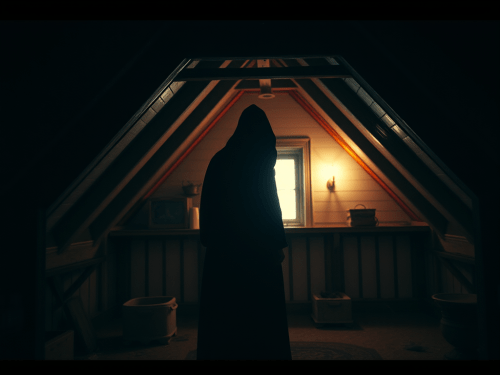
The roles represent the institutional order. This representation takes place on two levels. First, the performance of the role represents itself. For instance, to engage in judging is to represent the role of a judge. The judging individual is not acting “on his own,” but qua judge. Second, the role represents an entire institutional nexus of conduct. The role of the judge stands in a relationship to other roles, the totality of which comprises the institutional law. The judge acts as the representative of this institution. Only through such representation in performed roles can the institution manifest itself in actual experience. The institution, with its assemblage of “programmed” actions, is like the unwritten libretto of a drama. The realization of the drama depends upon the reiterated performance of its prescribed roles by living actors. The actors embody the roles and actualize the drama by representing it on the given stage. Neither drama nor institution exists empirically apart from this recurrent realization. To say that roles represent institutions is to say that institutions endure only insofar as living individuals enact them, allowing these structures to appear again and again as a real presence in human experience. In this light, the economic forecasts of Marx—however compelling in theory—have been called into question precisely because the roles individuals assume within economic life have not always aligned with the patterns he anticipated. Institutions persist or transform not by historical necessity alone, but through the daily conduct, choices, and contradictions of the people who inhabit them. What remains true to his vision of the economic world is the establishment of a society more and more defined by the rhythm of production. However, he shared this concept, in the enthusiasm of his period, with bourgeois ideology. #RandolphHarris 16 of 20

The bourgeois illusions concerning science and technical process, shared by the authoritarian socialists, gave birth to the civilization of the machine-tamers, which can, through the stress of competition and the desire for domination, be separated into enemy blocs, but which on the economic plane is subject to identical laws: the accumulation of capital and the rationalized and continually increasing production. The political difference, which concerns the degree of omnipotence of the State, is appreciable, but can be reduced by economic evolution. Only the difference in ethical concepts—formal virtue as opposed to historical cynicism—seems substantial. However, the imperative of production dominates both universes and makes them, on the economic plane, one world. The accumulation of capital, together with the rationalized and ever‑increasing demands of production, creates a continual pressure for businesses to seek higher returns. This relentless pursuit contributes to the rising cost of goods and services, for expansion requires ever‑greater consumption. Not long ago, many believed the world to be approaching the limits of its population at five billion souls; yet today, more than eight billion people inhabit the earth. Governments may at times contemplate limiting population growth, but large commercial enterprises often depend upon expanding markets, and a growing populace increases both potential revenue and the tax base upon which states rely. At the same time, however, a larger population also increases the number of individuals who depend upon public services, creating a tension between economic ambition, governmental capacity, and human need. #RandolphHarris 17 of 20

In any event, if the economic imperative can no longer be denied, its consequences are not what Marx imagined. Economically speaking, capitalism becomes oppressive through the phenomenon of accumulation. It is oppressive through being what it is, it accumulates in order to increase what it is, to exploit it all the more, and accordingly to accumulate still more. At that moment, accumulation would be necessary only to a very small extent in order to guarantee social benefits. However, the revolution, in its turn, becomes industrialized and realizes that, when accumulation is an attribute of technology itself, and not of capitalism, the machine finally conjures up the machine. Every form of collectivity, fighting for survival, is forced to accumulate instead of distributing its revenues. It accumulates in order to increase in size and so to increase in power. Whether bourgeois or socialist, it postpones justice for a later date, in the interests of power alone. However, p, by its very nature, opposes other forms of power. It arms and rearms because others do the same; it accumulates ceaselessly, driven by the conviction that only greater strength can secure its survival. It does not willingly halt its advance, and one might imagine that it would continue to expand until the day it reigned alone upon the earth. In our own age, this restless impulse is mirrored in the rapid development of artificial intelligence. Many already fear that such systems may one day supplant their labor, and speculate that machines could assume an ever‑greater share of human tasks. Yet even as technology grows more capable, its role will always be shaped by the choices, constraints, and values of the societies that create and govern it. In other words, one day the world will only be populated by a small percentage of humans who are considered “desirable.” #RandolphHarris 18 of 20

Moreover, for that to happen, it must pass through a war or another pandemic. Some have come to believe that the pandemic served as a kind of proving ground for the management of future crises, observing how swiftly populations accepted restrictions upon movement, commerce, and daily life. Many felt that their customary liberties were suspended with startling ease, as governments sought to contain a threat whose nature was still imperfectly understood. Generous unemployment benefits were welcomed by some as a temporary relief, though such measures inevitably carried costs that would later be felt elsewhere. Only those deemed “essential” continued their labors, a distinction that revealed how fragile many occupations had become in an increasingly automated age. With the rapid advance of artificial intelligence, there is a growing apprehension that even these essential roles may one day be assumed by machines. After the crisis, certain workplaces required vaccination as a condition of return, a policy that, for many, symbolized the tension between public health, personal choice, and economic necessity. This dynamic was captured with unsettling clarity in the Ray Bradbury Theater adaptation of The Pedestrian, in which David Ogden Stiers and Grant Tilly portray two men who are stopped and pursued by a hovering police craft simply for stepping outside during a mandated lockdown. Bradbury’s vision, though fictional, reflects a deeper anxiety about how swiftly ordinary freedoms may be suspended when authority deems it necessary, and how easily individuals may be treated as suspects for engaging in the most human of acts—walking, talking, or seeking fresh air. The scene serves as a reminder that power, once mobilized in the name of safety, can become self‑justifying, expanding its reach not through overt coercion alone but through the quiet expectation that people will comply. #RandolphHarris 19 of 20
Until that day, the proletariat will receive only the bare minimum for its subsistence. The revolution compels itself to construct, at a great expenditure in human lines, the industrial and capitalist intermediary that its own system demands. Revenue is placed by human labor. Slavery then becomes a general condition, and the gates of heaven remain locked. Such is the economic law governing a world that lives by the cult of production, and the reality is even more bloody than the law. Revolution, in the dilemma into which it has been led by its bourgeois opponents and its nihilist supporters, is nothing but slavery. Across the country, people are already protesting the rising cost of living, for the strain has become impossible to ignore. Foreclosures have increased by 32 percent since last year, and many households find themselves unable to keep pace with wages that lag behind inflation. Yet public attention is often diverted toward other, more immediate controversies. Large demonstrations form around immigration policy, while the deeper economic pressures that make life increasingly unaffordable receive far less sustained focus. It is as though the nation’s anxieties have been redirected from the structural conditions that shape everyone’s daily existence to issues that, while important, do not address the fundamental question of how ordinary people are to live, work, and support themselves in an economy that no longer seems to support them in return. Unless the system changes its principles and its path, it can have no other final result than servile rebellions, obliterated in blood or the hideous prospect of atomic suicide. The will to power, the nihilist struggle for domination and authority, has done considerably more than sweep away the American Dream. This has become, in its turn, a historic fact destined to be put to use like all other historic facts. This idea, which was supposed to dominate history, has become lost in history; the concept of abolishing means has been reduced to a means in itself and cynically manipulated for the most banal and bloody ends. The uninterrupted development of production has not ruined the capitalist regime to the benefit of the revolution. It has equally been the ruin of both bourgeois and revolutionary society to the benefit of an idol that has the snout of power. Therefore, it becomes essential to cultivate an understanding of psychology, of the conditions of life, of the workings of family, and of the forces that shape political society, so that one may act not out of fear or confusion but with informed judgment. Only through such knowledge can individuals discern the pressures placed upon them, recognize the motives of those who wield authority, and make decisions that genuinely serve their own well‑being and the common good. #RandolphHarris 20 of 20

The Winchester Mystery House: Where Legend Walks Beside Every Stair
The Winchester Mystery House is not merely a mansion—it is a legend carved in timber and shadow. To historians, it is a marvel of Victorian craftsmanship. To gardeners, its grounds are a sanctuary of color and quiet. But to those who come seeking the uncanny, it is something far more compelling: a labyrinth built on whispers, grief, and the enduring myth of a woman who refused to surrender to silence.
For 36 unbroken years, from 1886 until her death in 1922, Sarah Winchester oversaw the ceaseless construction of this sprawling estate. Hammers rang through the night. Lanterns glowed in upper windows long after midnight. Rooms appeared, vanished, and reappeared in impossible configurations. Doors opened into walls. Staircases climbed into ceilings. Hallways twisted like riddles.

Some say Mrs. Winchester built to confuse the restless spirits said to follow her. Others claim she was simply a visionary—an architect of her own private universe. Whatever the truth, the mansion stands today as a monument to the tension between fact and folklore, beauty and dread.
On the guided Mansion Tour, guests traverse 110 of the home’s 160 rooms—each one a fragment of the myth.

You will step into the rooms where Mrs. Winchester walked alone at night, consulting her mysterious “Blue Séance Room.” You will see the infamous staircases that lead nowhere, the doors that open into thin air, and the ornate details that seem almost too deliberate to be accidental.
Every corner feels touched by intention. Every turn feels like a question.

The Winchester Mystery House is not simply visited—it is experienced.

It is a place where history breathes, where architecture bends toward the uncanny, and where the line between myth and memory blurs just enough to make you wonder what Sarah Winchester truly saw in the shadows of her vast, ever‑growing home.

Café 13: A Rest Stop on the Edge of the Mystery

After wandering the winding halls of the Winchester Mystery House—where staircases defy logic and whispers seem to cling to the walls—Café 13 offers a welcome return to warmth and grounding. Newly reopened and serving guests daily from 10 AM to 3 PM, this cozy hideaway invites you to pause, breathe, and gather yourself before diving back into the mansion’s secrets.

Here, you can enjoy breakfast, lunch, snacks, and refreshing drinks in a calm indoor space that feels worlds away from the mansion’s twisting corridors. Settle in with a warm meal, challenge a friend to a board game, or simply rest and recharge as sunlight filters through the windows.

Café 13 is more than a café—it’s a moment of calm between chapters of the Winchester legend, a place to steady your nerves before returning to the gardens, the grandeur, and the mysteries that await.
The Mercantile Gift Shop: Your First Step Into the Mystery

Your journey into the Winchester Mystery House begins long before you cross the mansion’s threshold. It starts at the Mercantile gift shop—a welcoming outpost standing at the edge of a world where history and myth intertwine.
Here, beneath warm lights and shelves lined with curiosities, you can secure your tour tickets and prepare for the adventure ahead. Guests often pause for a souvenir photograph, capturing the moment before they step into Sarah Winchester’s enigmatic domain. As you explore the shop, you will find an eclectic array of gifts and keepsakes: tokens of the mansion’s lore, echoes of Victorian elegance, and mementos that carry a touch of the house’s enduring mystery.

The Mercantile is more than a gift shop—it is the gateway.
Once you pass through its doors, the legend begins to unfold. https://winchestermysteryhouse.com/
A Shadowed History and the Echoes That Remain

In the late 1800s, long before the mansion became a destination for curious travelers, the surrounding lands were steeped in fear and superstition. When deer and cattle were found dead under mysterious circumstances, panic spread through nearby communities. Whispers of curses and shapeshifters took hold, and in an era ruled more by fear than fact, several residents were tragically accused—and even executed—under the belief that they were werewolves. The land carried those stories like scars.

Today, the legends have not entirely faded. Staff and visitors alike have reported strange occurrences within the mansion’s twisting halls and shadowed corners: sudden banging sounds with no source, footprints appearing where no one has walked, drifting white mists that vanish as quickly as they form, and the unsettling sensation of someone exhaling softly against the back of the neck.

Whether these moments are echoes of the past or simply the house playing tricks on the senses, one thing is certain—the Winchester Mystery House has a way of reminding guests that history never truly stays silent.

The palace is now one of the most popular tourist attractions in Santa Clara, California; but according to some tales, some of its former royal residents still linger. https://winchestermysteryhouse.com/

The Erasure of Presence
The timid man, ever fearful of offending, effaces himself before others, and thus becomes the instrument of their will rather than the master of his own. The most conscious, and in a way realistic, basis is that of his endeavors to make himself agreeable and useful. Varying with his temperament, his neurotic structure, and the situation, he may be charming, compliant, considerate, sensitive to the wishes of others, available, helpful, sacrificing, and understanding. It is but natural that he overrates what, in this or that way, he does for another person. He is oblivious to the fact that the latter may not at all like this kind of attention or generosity; he is unaware that there are strings attached to his offers; he omits from his consideration all the unpleasant traits he has. And so, it all appears to him as the pure gold of friendliness, for which he could reasonably expect return. Another basis for his claims is more detrimental for himself and more coercive of others. Because he is afraid to be alone, others should stay at home; because he cannot stand noise, everybody should tiptoe around the house. A premium is thus set on neurotic needs and suffering. Suffering is unconsciously put into the service of asserting claims, which not only checks the incentive to overcome it, but it also leads to inadvertent exaggerations of suffering. This does not mean that his suffering is merely “put on” for demonstrative purposes. It affects him in a much deeper way because he must primarily prove to himself, to his own satisfaction, that he is entitled to the fulfillment of his needs. He must feel that his suffering is so exceptional and so excessive that it entitles him to help. In other words, in this process, the self-effacing person actually feels his suffering more intensely than he would without having acquired an unconscious strategic value. #RandolphHarris 1 of 16
Another basis, still more unconscious and more destructive, is his feeling abused and being entitled to having others make up for the injuries perpetrated on him. In dreams, he may present himself as being ruined beyond repair and hence entitled to having all his needs fulfilled. To understand these vindictive elements, we must survey the factors that account for his feeling of being abused. For a typically self-effacing person, feeling abused is an almost constant undercurrent in his whole attitude toward life. If we wanted to characterize him cruelly and glibly in a few words, we would say that he is a person who craves affection and feels abused most of the time. Others often take advantage of his defenselessness and his overeagerness to help or to sacrifice. On account of his feeling unworthy, and his inability to stand up for himself, he sometimes does not take conscious cognizance of such abuse. Also, due to his shrinking process and all it entails, he often does come out on the short end, without there having been any harmful intent on the part of others. Even if, in actual fact, he is in some regards more fortunate than others, his taboos do not allow him to recognize his advantages, and he must present himself to himself (and hence experience himself) as being worse off than others. Furthermore, he feels abused when his many unconscious claims are not fulfilled—for instance, when others do not respond with gratitude to his compulsive efforts to please, to help, to make sacrifices for them. His typical response to the frustration of claims is not so much righteous indignation as a self-pitying feeling of being unfairly treated. Probably more poignant than any of these other sources is all the abuse he inflicts upon himself, though self-minimizing as well as through self-reproaches, self-contempt, and self-torture—all of which is externalized. The more intense the self-abuse, the less can good external conditions prevail against it. He often will tell heartbreaking tales of his woes, arouse sympathy and the wish to give him a better deal, only to find himself in the same predicament soon after. In actual fact, he may not have been so unfairly treated as it seems to him; at any rate, behind the feeling is the reality of his self-abuse. #RandolphHarris 2 of 16

The connection between a sudden rise in self-accusations and the subsequent feelings of being abused is not too difficult to observe. In analysis, for instance, as soon as self-accusations are aroused by his seeing a difficulty of his own, his thoughts may immediately take him back to incidents or periods of his life when he actually was badly treated—whether they occurred in his childhood, in previous medical treatment, or in former jobs. He may dramatize the wrong done to him and dwell on it monotonously, as he had done many a time before. The same pattern may occur in other human relations. If, for instance, he is dimly aware of having been inconsiderate, he may, with the speed of lightning, switch to feeling abused. In short, his terror of wrongdoing simply compels him to feel himself the victim, even when in actual fact he has been the one who failed others or who, through his implicit demands, has imposed upon them. Because feeling victimized thus becomes a protection against his self-hate, it is a strategical position, to be defended vigorously. The more vicious the self-accusations, the more frantically must he prove and exaggerate the wrong done to him—and the more deeply he experiences the “wrong.” This need can be so cogent that it makes him inaccessible to help for the time being. For to accept help, or even admit to himself that help is being offered, would cause the defensive position of his being altogether the victim of collapse. Conversely, it is profitable at any sudden rise in feeling abused to look for a possible increase of guilt-feelings. We can often observe this in analysis that the wrong done to him shrinks to reasonable proportions, or indeed ceases to be wrong, as soon as he recognizes his share in the particular situation and can look at it in a matter-of-fact way, id est, without self-condemnation. #RandolphHarris 3 of 16

The passive externalization of self-hate may go beyond merely feeling abused. He may provoke others to treat him badly, and thus transfer the inner scene to the outside. In this way too, he becomes the noble victim suffering under an ignoble and cruel world. All these powerful sources combine to engender his feeling abused. However, closer to the observation shows that he not only feels abused for this or that reason but that something in him welcomes this feeling, indeed may avidly seize upon it. This points to the fact that feeling abused also must have some important function. This function is to allow him an outlet for the suppressed expansive drives—and almost the only one he can tolerate—and at the same time cover them up. It allows him to feel secretly superior to others (the crown of martyrdom); it allows him to put his hostile aggression against others on a legitimate basis; and finally allows him to disguise his hostile aggression because most of the hostility is suppressed, and expressed in suffering. Feeling abused is therefore the greatest stumbling block to the patient’s seeing and experiencing the inner conflict for which his self-effacement was a solution. And, while analysis of each individual factor helps to diminish its tenacity, it cannot vanish until he comes face to face with this conflict. As long as this feeling abused persists—and usually it does not remain static but increases as time goes on—it makes for an increasing vindictive resentment against others. The bulk of this vindictive hostility remains unconscious. It must be deeply suppressed because it endangers all the subjective values he lives by. It mars his idealized image of absolute goodness and magnanimity; it makes him feel unlovable and conflicts with all his expectations of others; it violates his inner dictates of being all understanding and all forgiving. #RandolphHarris 4 of 16

Therefore, when he feels resentful, he not only turns against others but simultaneously against himself. Hence, such resentment is a disruptive factor of the first order of this type. Such a man is less than a somebody in any category; he is more nobody than at any other time. And in the anonymous period immediately ahead of him, he finds decided happiness—for a while. This may seem rather understandable to those who see Prince Lestat either as a bland young man and gifted good fellow under God’s orders to proceed as told, or as a very sick young man in search of a spiritual hospital for lack of a mental one. Our own sense of the inner economy of man, however, insists that in this interim, this quiet before the real store, we must account for some of the psychological problems inherent in the historical fact that this same young man, only a decade later, emerged as his time’s greatest orator, publicist, showman, and spiritual dictator. We can only account for this fact by assuming a fierce, if as yet quite dumb, struggle in him between destructive and constructive forces, and between regressive and progressive alternatives—all in balance at this time. It is probable that in all historical periods some—and by no means the least gifted—young people do not survive their moratorium; they seek death or oblivion, or die in spirit. Prince Lestat must have seen such death of mind and spirit in some of his brethren, and came to feel cost to it more than once. Those who face the abyss only to disappear, we will, of course, never know; and once in a while, we should shed a tear for those who took some unborn protest, some unformed idea, and sometimes just one lonely soul, with them. They chose to face nothingness rather than to submit to a faith that, to them, had become a cant of pious words; a collective will, that cloaked only collective impotence; a conscience when expended itself in a stickling for empty forms; a reason that was a chatter of commonplaces; and a kind of work that was meaningless busy-work. I am speaking of those “outsiders” who go their lone way, not those who come back to poison the world further with a mystical literature which exhorts man to shun reality and stay outside, like Onan. #RandolphHarris 5 of 16

Some today seek psychiatric help—strange young creatures of pride and despair, of sick minds and good values, of good minds and fractured perspectives. Often, of course, therapists can only note that their pride in not having wanted to adjust is a cover-up for not having been able to do so from way back. However, not always, by any means. Sometimes a fierce pride of long standing can be detected which makes it very hard to decide whether the inability to adjust to a given available environment, with the means demanded by that environment, had not also meant an unwillingness to forgo the nourishment of latent needs deeply felt to be essential to the true development of an identity. The therapeutic problem in such cases transcends the questions of what environment a young person should have adjusted to and why he was not able to do so, and rather concerns a delineation of those means of adaptation which the patient can afford to employ without losing an inner coherence. Once he knows his cure and his goal, he must become well enough to make the “environment” adapt to him—an intrinsic part of human adaptation which has been lost sight of in popularized versions of Darwinian and Freudian imagery. The fact that psychiatric treatment today has become a sanctioned form of moratorium in some countries and classes does not mean, of course, that the diagnoses which go with the treatment exhaust the problem at hand. On the contrary; the diagnoses merely serve to circumscribe the existing dangers of malignancy and to point up to warning signals not to be taken lightly under any circumstances. We are, of course, concerned with a general delineation of life crisis, a delineation which is indispensable to the search for avenues of therapy, and for an understanding of the ego’s task at the height of youth. #RandolphHarris 6 of 16

That extreme form of identity diffusion which leads to significant arrest and regression, is characterized most of all by a mistrustful difficulty with mere living in time. Time is made to stand still by the device of ignoring the usual alternation of day and night, of more active and less active periods, of periods given more to work and talk with other people, and of those given over to isolation, rumination, and musical receivership. There also may be a general slowing up that can verge on catatonic states. It is as if the young person were waiting for some event, or some person, to sweep him out of this state by promising him, instead of the reassuring routine and practice of most men’s time, a vast utopian view that would make the very disposition of time worthwhile. Unless recruited outright, however, by an ideological movement in need of needy youths, such an individual cannot sustain rigidly regimenting time; we will see what he did with this utopia. There is, of course, also a torturous self-consciousness, characterized at one time by shame over what one is already sure one is, and at another time by doubt as to what one may become. A person with this self-consciousness often cannot work, not because he is not gifted and adept, but because his standards preclude any approach that does not lead to being outstanding; while at the same time, these standards do not permit him to compete, to defeat others. He thus is excluded from apprenticeships and discipleship which define duties, sanction competition and, as it were, provide a status of moratorium. #RandolphHarris 7 of 16
Most of all, this kind of person must shy away from intimacy. Any physical closeness, with either gender, arouses at the same time both an impulse to merge with the other person and a fear of losing autonomy and any individuation. In fact, there is a sense of bisexual diffusion which makes a young person unsure about how to touch another personal sexually or affectionately. The contrast between the exalted sexual fusion and his autoerotic dreams and the complete sense of isolation in the presence of the other gender is catastrophic. Here again, whatever sexual moratorium the society’s mores offer most young people in a given setting cannot be shared by the patient, whether it is determined abstinence, sexual play without genital encounter, or genital engagement without affection or responsibility. In adolescence, a compulsive person may attempt to free himself with maneuvers expressing a wish to “get away” with things and yet find himself unable to get away even with the wish. For a while, such a young person learns evasion from others, his preconscious conscience does not let him really get away with anything, and he goes through his identity crisis habitually ashamed, apologetic, and afraid to be seen; or else, in an “overcompensatory” manner, he evinces a defiant kind of autonomy which may find sanction and ritual in the shameless defiance of gangs. The rise of gangs in the 200s and beyond is tied to rapid inflation and the turbulence it created in family life. Gangs reflect deeper social issues such as poverty, immigration, and crime. Many gangs operate like proto-organizations, offering roles, income, sometimes housing, and a sense of purpose. Members of gangs are sometimes given “criminal assignments” and quotas for illegal activities, functioning almost like a workplace for the excluded. Gangs offer camaraderie, masculine identity, a sense of belonging, a structured hierarchy, and are the social world for young men and women who lack family stability or community recognition. #RandolphHarris 8 of 16

However, gangs are not merely groups of unruly youths—they are viewed as dangerous, destabilizing forces that threaten public order, civil life, and the fragile social fabric of rapidly growing cities. Gangs usually quickly stake their claims to control city life, usually through violence. Gangs are dangerous because they act as private militias, enforcing their will through force. Gangs are dangerous because they also replace legitimate authority with criminal governance, weakening trust in institutions. Some gangs are tied to political movements or use violence to influence elections and public life. And they are dangerous because they amplify existing social problems, turning hardship into organized criminality. Approximately 40-60 percent of homicides in the United States of America are gang-related. Aggravated assaults account for 39.4% of all gang‑related incidents. (Aggravated assault is the category most associated with non‑fatal gunshot wounds and serious injuries.) Weapons were used in 80.4% of gang‑related incidents, meaning most assaults have the potential to cause serious injury. Most people who end up in gangs describe a life where no one protected them, no one listened to them, no one believed in them, and no one saw their pain. Gang members are children and sometimes elderly, whom society has forgotten, wandering the streets unclaimed by any hearth. However, inside the gang, individuality disappears again. The gang makes you visible to outsiders but invisible as a person. Inside the group, you are replaceable, you are valued only for usefulness, your emotions are liabilities, your pain is mocked or punished, and your individuality is swallowed by the collective. This is what is known as the subsuming of the self into the will of the band. Also known as self‑effacement under coercive group identity. #RandolphHarris 9 of 16
Violence becomes the only language that gets attention. When someone feels invisible, they often learn that kindness is ignored, vulnerability is punished, achievement is dismissed, but violence gets a reaction. So the gang member becomes visible only when they are dangerous. This is why so many describe violence as “the only time anyone noticed me.” It is tragic, but it is psychologically consistent. The invisibility becomes existential. It is chronic dehumanization—a sense that your life has no weight outside the group. And the group exploits that invisibility. When someone believes they do not matter, they take risks others would not, they accept violence as normal, they sacrifice themselves for the group, and they stop imagining a future. This is why gangs are so dangerous—not just to others, but to their own members. A person who feels invisible is easier to control. People join gangs because they feel invisible, and gangs keep them by making them invisible in a different way. One invisibility is born of neglect. The other is born of control. Both are forms of erasure. The man who distrusts his own impulse becomes a shadow among men, moving only as others move him. Doubt is the brother of shame. Whereas shame is dependent on the consciousness of being upright and exposed, doubt has much to do with a consciousness of having a front and a back—and especially a “behind.” Shame fears being seen; doubt fears being seen through. Shame flushes the face; doubt hollows the spine. #RandolphHarris 10 of 16

The self‑effacing person lives at the intersection of these two invisibilities. Neglect teaches him that his presence carries no weight; control teaches him that his will carries no authority. He learns to shrink himself not only to avoid punishment but to avoid the humiliation of being noticed at all. In such a man, the inner voice grows faint, then foreign, then suspect. He begins to regard his own impulses as intruders, as if his very desires were plotting against him. Thus, he moves through the world as a figure half‑present, half‑absent—visible enough to be used, invisible enough to be ignored. His gestures are borrowed, his convictions second‑hand, his courage deferred. He becomes, in the 19th‑century sense, a “creature of circumstance,” shaped not by his own nature but by the pressures that surround him. And yet the tragedy is not merely that he is unseen by others. It is that he no longer sees himself. Despite this pervasive suppression of resentment, reproaches will occasionally be expressed in mitigated form. Only when he feels driven to despair will the locked gates break open and a flood of violent accusations rush out. Though these may express accurately what he feels deep down, he usually discards them on the grounds of having been too upset to say what he means. However, his most characteristic way of expressing vindictive resentment is again through suffering. Rage can be absorbed in increased suffering from whatever psychosomatic symptoms he has, or from feeling prostrate or dressed. If in analysis, such a patient’s vindictiveness is around, he will not be outright angry, but his condition will be impaired. He will come with increased complaints, and indicate that analysis seems to make him worse instead of better. #RandolphHarris 11 of 16

The analyst may know what has hit the patient in the previous session and may try to bring it to the patient’s awareness. However, the patient is not interested in seeing a connection that might relieve his suffering. He simply re-emphasizes his complaints, if he must make sure that the analyst gets the full impact of how bad the depression was. Without knowing it, he is out to make the analyst feel guilty for having made him suffer. This is often an exact replica of what happens in the domestic scene. Suffering thus acquires another function: that of absorbing rage and making others feel guilty, which is the only effective way of getting back at them. All of those factors lend a curious ambivalence to his attitude toward people: a surface prevalence of “naïve” optimistic trust and an undercurrent of just as indiscriminate suspiciousness and resentment. The inner tension created by an increased vindictiveness can be enormous. And the puzzle often is not that he has this or that emotional upset, but that he manages to keep a fair equilibrium. Whether he can do it, and for how long, depends partly upon the intensity of the inner tension and partly upon circumstances. With this helplessness and dependence upon others, the latter are more important for him than for other neurotic types. An environment is favorable for him that does not tax him beyond what, with his inhibitions, he can do, and that affords such a measure of satisfaction as, according to his structure, he needs and can allow himself. Provided his neurosis is not too severe, he can derive satisfaction from leading a life dedicated to others or to a cause; a life in which he can lose himself by being useful and helpful, and where he feels wanted and fulfilled. #RandolphHarris 12 of 16

However, even under the very best inner and outer conditions, his life rests on a precarious foundation. It can be threatened by a change in the external situation. The people he takes care of may die or no longer need him. The cause for which he has worked may fail, or lose its significance for him. Such losses, which a healthy person can weather, may bring him to the verge of a “breakdown,” with all his anxiety and feelings of futility coming into the foreground. There are just too many factors in his avowed hostility against self and others that may give rise to a greater inner tension than he can bear. Or, in other words, the chances of his feelings abused are too great to make any situation safe for him. We call all self-images, even those of a highly idealistic nature, which are diametrically opposed to the dominant values of an individual’s upbringings parts of a negative identity—meaning an identity which he has been warned not to become, which he can become only with a divided heart, but which he nevertheless finds himself compelled to become, protesting his wholeheartedness. Obviously, such rebellion can serve high adventure, and when joined to a great collective trend of rebellion, can rejuvenate as it repudiates. In miliginant cases, however, the search for a negative identity soon exhausts social resources; in fact, no rebellious movement, not even a self-responding delinquent gang, would consider taking such an individual as a member. For he rebels and surrenders on the spur of the moment, and cannot be relied on to be honestly asocial unto death. When such young people become patients, they illustrate the depth of regression which can ensue from an identity-crisis, either because the identity-elements they were offered as children were not coherent—so that one may speak of a defect in this connection—or because they face a perplexing set of present circumstances which amounts to an acute state of ideological undernourishment. The dramatic characteristic of work with such patients is their tendency to make intense and yet contradictory demands of the psychotherapist. #RandolphHarris 13 of 16
In this, the patient truly regresses; for either openly or covertly, they expect from the therapist the kind of omniscience an infant attributes to his mother when he seems to assume that she should have prevented the table from hitting him, or at any rate from being hard and sharp; or that she should be able to hold him firmly and to let him go freely at the same time, that is, at a time when he himself does not know which he wants. However, even the paradoxical form which the patient’s demands, to his own chagrin, can take concerns his very essence as an individual. He wants to have the right to act like nobody, and yet to be treated as quite a somebody; he wants to fuse with the therapist in order to derive from him everything the parents were or are not; yet he is afraid to be devoured by an identification with the therapist. The outstanding quality of these patients is totalism, a to be or not to be which makes every matter of differences a matter of mutually exclusive essence; every error or oversight, eternal treason. This is called the “rock bottom” attitude, and is explained as the sign of a perverted and precocious integrity, an attempt to find that immutable bedrock on which the struggle for a new existence can safely begin and be assured of a future. The patient desperately demands that the psychotherapist become for him as immediate and as close, as exclusive and as circumspect, as generous and as self-denying, a counterplayer as only a mother of an infant can be. It is clear that these patients want to be reborn in identity and to have another chance at becoming once-born, but this time on their own terms. Needless to say, we can offer the patient nothing but our willingness to jointly face the odds that are the lot of all of us. #RandolphHarris 14 of 16
Where so-called schizophrenic process takes over, the rock bottom attitude is expressed in a strange evolutionary imagery. Total feeling becomes dehumanized, and eventually even de-mammalized. These patients can feel like a crab or a shellfish or a mollusk, or even abandoned what life and movement on the lowest animal level, and become a lonely, twisted tree on the ledge of a stormy rock, or the rock, or just the ledge in nowhere. At no other time in life can severe regression play with nothingness and appear in such a systematized form, and yet be, as it were, experimental, an adventure in reaching inner rock bottom to find something firm to stand on. Here, the therapist cannot be optimistic enough about the possibility of making contact with the patient’s untapped inner resources; on the other hand, it is also true that he cannot be pessimistic enough in sustained apprehension that a mishap might cause the patient to remain at the rock bottom, and deplete the energy available for his reemergence. Other patients cling to a make-believe order of compulsive scrupulosity and obsessive rumination. They insist on what seems like almost mock order for the world of man, a caricature of logic and consistency; Prince Lestat is a classic example of this. The eyes of such young people are often lifeless and out of contact; then they suddenly scan your face for its sincerity or even its mere presence; these patients, who, according to popular judgment, could be said to be “not quite there” most of the time, are all too suddenly and flamingly there. #RandolphHarris 15 of 16

They can appear as remote, as lifeless, as impenetrable, as they say they feel; and yet, there are those moments of mutual recognition when they do seem to trust themselves and you, and when their smile can be as totally present and rewarding as only an infant’s first smiles can be as totally present and rewarding as only an infant’s first smiles of seeming recognition. However, at this point, the struggle just begins—as indeed, does the infant’s. As we have seen, the origins of any institutional order lie in the typification of one’s own and others’ performances. This implies that one shares with others specific goals and interlocking phases of performance, and, further, that not only specific actions but also forms action are typified. The typification of forms of action requires that these have an objective sense, which in turn requires a linguistic objectification. That is, there will be a vocabulary referring to these forms of action (such as “nephew-thrashing,” which will belong to a much larger linguistic structuring kinship and its various rights and obligations). In principle, then, an action and its sense can be apprehended apart from individual performances of its and the variable subjective process associated with them. Both self and other can be apprehended as performers of objective, generally known actions—motions of the body and habits of the will that are recurrent and repeatable by any actor of the appropriate type. This is the tragedy of the diminished self: to be reduced to a set of predictable gestures, to be known only by one’s functions, never by one’s depths. In such a state, a man becomes interchangeable, a figure whose movements could be carried out by anyone, whose inner life leaves no imprint on the world. The soul recovers itself in the moment it dares to act from within, and not from custom. Healing is not the polishing of one’s outward motions but the restoration of inward authorship. It is the slow reclamation of impulse, the quiet return of a voice that had long been silenced by shame, doubt, or the mechanical demands of survival. For the man who has lived as a shadow—performing the same gestures any other could perform—healing is the first moment he realizes that his actions need not be inherited, imitated, or imposed. They can be his own. And in that moment, the self ceases to be a role and becomes again a presence. #RandolphHarris 16 of 16

Envy is an Unpleasant Social Emotion
The cultural script of “Mother knows best” is powerful—so powerful that it can override a person’s own instincts, experiences, and even evidence of harm. However, that phrase was never meant to be a universal truth. It was meant for mothers who were actually acting in good faith, with wisdom, humility, and love. When a mother is not acting in your best interest, the old saying becomes a trap rather than a comfort. The myth says that mothers are always selfless, that mothers always want what is best for their children, and that mothers are incapable of envy, resentment, or sabotage. However, real human beings—mothers included—carry unresolved trauma, insecurity, jealousy, fear of losing control, resentment toward their children’s opportunities or independence. When those wounds go unexamined, they can distort maternal behavior in ways that are deeply damaging. Narcissistic parents envy and compete with their children’s attractiveness, athletic or intellectual abilities, and other sorts of favorable attention that their children attract. Narcissistic parents make negative comparisons to put their children down. They might compare a child to a sibling, friend, cousin, or even themselves—going on about how spoiled, inferior, or lucky their child is compared to them when they were young. Such behavior stems from the same jealousy and envy that motivates competition. Sadly, many children of narcissists struggle for years or for a lifetime with shame and low self-worth. #RandolphHarris 1 of 17
It is important to pay attention to signs that mother is not acting in your best interest. These patterns often show up when a mother feels threatened by her child’s growth, success, or autonomy. One sign is subtle sabotage. When your mother is always undermining your confidence, planting seeds of doubt about your decisions, and discouraging opportunities that would help you grow, your mother may be manipulating you so she can control her child with guilt, threats, and belittling. Some mothers shame their children with name-calling, criticism, undermining, blame, and withholding love. Frequently, they project onto their children their feelings of unworthiness and negative traits, such as attention-seeking or selfishness; characteristics which they disown. At the same time, they ignore, deny, and criticize their children’s feelings and needs, sometimes punishing them for expressing normal emotions, claiming they are too sensitive or weak. Parents often punish by withholding love, creating constant insecurity of self and self-esteem, which can be traumatizing and physical. One of the most painful—and least acknowledged—forms of family betrayal is when a parent aligns with their children’s enemies. This form of betrayal cuts deeper than ordinary conflict because it violates the basic expectation that a parent should protect their child, not align with people who wish them harm. This is not “normal conflict.” It is a sign of a profound role reversal in which the parent’s emotional needs override their protective instincts. #RandolphHarris 2 of 17

Several psychological dynamics can push a parent into this kind of betrayal, such as envy and competition. If a parent feels threatened by their child’s independence, success, confidence, relationships, or reputation, they may gravitate toward people who confirm their negative narrative about the child. If a parent feels insecure or criticized, they may seek validation from anyone—even the child’s adversaries—because it temporarily soothes their ego. Some parents offload their own guilt, shame, or failures by projecting them onto the child. Aligning with the child’s enemies becomes a way to reinforce the projection. Like all narcissists, narcissistic parents are prone to brag about themselves, their achievements, their family, and their children. Do not expect narcissistic parents to be involved with their children’s hobbies, goals, or interests unless it is also their goal or interest. They will not take pleasure in their children’s accomplishments or attractiveness except to the extent that it reflects well upon them. If the child is becoming independent, the parent may: join forces with people who undermine the child, spread misinformation, create alliances that keep the child “in their place.” This is about control, not care. Parents who engage in this pattern often share private information with people who dislike their children. Gossip or exaggerate the child’s mistakes, encourage others to “teach the child a lesson,” validate outsiders’ hostility, participate in smear campaigns, use third parties to pressure, shame, or isolate the child. This is not concern. It is collusion. #RandolphHarris 3 of 17
This kind of betrayal can create deep mistrust, hypervigilance, confusion about loyalty and safety, difficulty forming secure relationships, a sense of being unprotected in the world, and emotional shock (“How could my own parent do this?”) It is not just hurtful—it is destabilizing. Why does it feel so unthinkable? Because it violates the core expectation of parenthood. A parent should never join forces with someone who wants to harm their child. The lack of unconditional love, acceptance, and emotional connection in childhood leaves a void. Until the children of narcissists accept their narcissistic parents’ limitations and begin to love themselves, they are never free of suffering. They relive the emotional abandonment of their childhood and seek self-worth, validation, and lovability in relationships with abusive and/or emotionally unavailable partners, including drug addicts and narcissists. They may contribute to the problem by reacting as they did as a child to their parents. They continually find fault with themselves because conditional love is all they have ever known. This can lead to lifelong misery because external validation never heals internal shame and emptiness. Healing requires recovery from the codependence and shame acquired in childhood to feel entitled to love and appreciation. Narcissists deny reality and live inside a fantasy world that protects their fragile ego. They distort, renationalize, twist facts, and delude themselves to avoid anything that may chip their armor, which can be so thick that no amount of evidence or argument can get through. Their memories are often faulty, and self-deception can convince them that their altered reality is true. #RandolphHarris 4 of 17
Abusers, addicts, and narcissists typically use these defense mechanisms to disown their unacceptable feelings, thoughts, or qualities and assign them to others, either mentally or verbally. The projector says, “It is not me, it is just you!” In doing so, you become the target of a narcissist’s projection: you are the one who is “selfish,” “weak,” and “worthless.” Coping strategies reflect emotional maturity, and projection is considered a primitive defense because it distorts or ignores reality in any attempt to preserve a weak ego. It is reactive without forethought and used by children. When employed by adults, it indicates arrested emotional development. Low self-esteem and shame impair narcissists’ ability to accept responsibility for mistakes and negative feelings. Projecting allows narcissists to accuse others of being the source of the pain and shame they bear make someone else feel the way they do inside. Rather than suffer self-judgment, projection provides a temporary respite from their negative impulses and traits, which they find too uncomfortable to acknowledge. It preserves feelings of innocence and esteem rather than guilt and shame, or at the very least, it preserves a narcissist’s sense of security in maintaining their façade of infallibility. Externalization is like projection in that it is blaming others for your problems rather than taking appropriate responsibility for them, like addicts who blame their drinking or drug use on their partners or job supervisor. Thus, externalizing also makes you feel like a victim. #RandolphHarris 5 of 17
However, narcissists are not the only people who project and blame. You might think to yourself, “He hates me,” when you hate him or think he is being controlling or judgmental; in other words, you remain blind to your own similar shortcomings or uncomfortable feelings because you are projecting them onto someone else. When it comes to understanding projecting, it is essential to understand that shame has two faces: one with an inflated ego and one that is depressed. When the devalued self is feeling inferior, shame manifests by idealizing others. This is what partners do when they are attracted to and idealize a narcissist. When a person is feeling superior and defending against shame, the grandiose self devalues others by projecting its disowned flaws and negative self-concept. Both devaluation and idealization are commensurate with the severity of shame and associated depression. Shame can make people fluctuate between the superior and inferior positions, but grandiose and vulnerable narcissists are more-or-less static in their respective positions, regardless of reality. Projection can be crazy-making, especially if you experience it for a long time. When you are vulnerable or have impaired self-esteem and weak boundaries or are sensitive about a specific issue, such as your looks, parenting, or intelligence, there is no filter. You introject the projection. Because internally you agree, it sticks like a magnet. Then you react to the shaming and compound your relationship problems. Doing so validates and augments the abuser’s authority, control, and ideas about you. You are sending the message that your partner has power over your self-esteem and the right to approve you. When there is a prohibition against doing something, a dialogue will result whenever the person starts to do it. The inner parent becomes active and says, “No!” in a hard script, “Watch out!” in a threatening one, or “Why do you want that?” in a soft one—usually whatever an actual parent would say in real life. The energy that the inner child had mobilized to do it is then taken over by the inner parent and is used by him to restrain the immaturity. The more the inner child had mobilized to put into it, the more energetic the mature self can become by appropriating this energy. #RandolphHarris 6 of 17

Envy is an unpleasant social emotion that arises when we compare ourselves with others in terms of their characteristic and belonging, and we perceive that they surpass us. This emotion of discomfort arises because the result of this upward comparison reveals our shortcomings. Envy is, therefore, a self-conscious emotion indicating a negative self-evaluation, or an inferior self-image with respect to others. The expansive type needs people for the confirmation of his power and of his spurious values. He also needs them as a safety valve for his own self-hate. However, since he has easier recourse to his own resources and greater support for his pride, his needs for others are neither as impelling nor as comprehensive as they are for the self-effacing type. The nature and magnitude of these needs account for basic characteristics in the latter’s expectations of others. While the arrogant-vindictive type primarily expects evil unless he has proof to the contrary, while the truly detached type expects neither good nor bad, the self-effacing type keeps expecting good. On the surface, it looks as though he had an unshakable faith in the essential goodness of humanity. And it is true that he is more open, more sensitive to likable qualities in others. However, the compulsiveness of his expectations makes it impossible for him to be discriminating. He cannot, as a rule, distinguish between genuine friendliness and its many counterfeits. He is too easily bribed by any show of warmth or interest. In addition, his inner dictates tell him that he should like everybody, that he should not be suspicious. Finally, his fear of antagonism and possible fights makes him overlook, discard, minimize, or explain away such traits as lying, crookedness, exploiting, cruelty, and treachery. #RandolphHarris 7 of 17

When confronted with the unmistakable evidence of such trends, he is taken by surprise each time; but even so, he refuses to believe in any intent to deceive, humiliate, or exploit. Although he often is, and still more often feels, abused, this does not change his basic expectations. Even though by bitter personal experience he may know that nothing good could possibly come to him from a particular group or person, he still persists in expecting it—consciously or unconsciously. Particularly when such blindness occurs in someone who is otherwise psychologically astute, his friends or colleagues may be flabbergasted by it. However, it simply indicates that the emotional needs are so great that they override evidence. The more he expects of people, the more he tends to idealize them. He has not, therefore, a real faith in mankind but a Pollyanna attitude which inevitably brings with it many disappointments and makes him more insecure with people. What does he expect of others? In the first place, he must feel accepted by others. He needs such acceptance in whatever form it is available: attention, approval, gratitude, affection, sympathy, love, and pleasures of the flesh. To make it clear, just as in our civilization, many people feel worth as much as the money they are “making,” so the self-effacing type measures his values in the currency of love, using the word here as a comprehensive term for the various forms of acceptance. He is worth as much as he is liked, needed, wanted, or loved. Furthermore, he needs human contact and company because he cannot stand being alone for any length of time. As if he were cut off from life, he feels easily lost. #RandolphHarris 8 of 17

Painful as this feeling is, it can still be tolerable as long as his self-abuse keeps within limits. As soon, however, as self-accusations or self-contempt becomes acute, his feeling lost may grow into a nameless terror, and it is exactly at this point that the need for others becomes frantic. This need for company is all the greater since being alone means to him proof of being unwanted and unliked and is therefore a disgrace, to be kept secret. It is a disgrace to go alone to the movies or on vacation, and a disgrace to be alone over the weekend, even when others are sociable. This is an illustration of the extent to which his self-confidence is dependent upon somebody caring for him in some way. He also needs others to give meaning and zest to whatever he is doing. The self-effacing type needs someone for whom to sew, cook, or garden, a teacher for whom he can play the piano, patients or clients who rely on him. Besides all this emotional support, however, he needs help and plenty of it. In his own mind, the help he needs stays within most reasonable limits, partly because most of his needs for help are unconscious and partly because he focuses on certain requests for help as though they were isolated and unique: help in getting him a job, in speaking to his landlord, going shopping with or for him, lending him money. Moreover, any wish for help of which he is aware appears to him eminently reasonable because the need behind it is so great. However, when in analysis, we see the total picture, his need for help actually amounts to the expectation that everything will be done for him. Others should supply the initiative, do his work, take the responsibility, give meaning to his life, or take over his life so that he can live through them. When recognizing the whole scope of these needs and expectations, the power which the appeal of love has for the self-effacing type becomes perfectly clear. It is not only a means to allay anxiety; without love, he and his life are without value and without meaning. Love, therefore, is an intrinsic part of the self-effacing solution. In terms of the type’s personal feelings, love becomes as indispensable for him as oxygen is for breathing. #RandolphHarris 9 of 17

Naturally, he carries these expectations also into the analytic relationship. In contrast to most expansive types, he is not at all ashamed to ask for help. On the contrary, he may dramatize the needs and his helplessness and plead for help. However, of course, he wants it his own way. He expects, at bottom, a cure through “love.” He may be quite willing to put effort into the analytic work, but, as it turns out later, he is prompted by his hungry expectation that salvation and redemption must and can come only from without (here from the analyst)—through being accepted. He expects the analyst to remove his feelings of guilt by love, which may mean by sexual love in the case of an analyst of the opposite gender. More often, it means in more general ways, signs of friendship, special attention, or interest. As always happens in neurosis, needs turn into claims, which means that he feels entitled to having all these goods come to him. The need for love, affection, understanding, sympathy, or help turns into: “I am entitled to love, affection, understanding, sympathy. I am entitled to have things done for me. I am entitled not to the pursuit of happiness but to have happiness fall into my lap.” It does almost without saying that these claims—as claims—remain more unconscious than in the expansive type. For the growth of autonomy, a firmly developed early trust is necessary. An individual must be sure that his faith in himself and in the world will not be jeopardized by the violent wish to have his choice, to appropriate demandingly, and to eliminate stubbornly. Only parental firmness can protect him against the consequences of his as yet untrained discrimination and circumspection. #RandolphHarris 10 of 17

However, his environment must also back him up in his wish to “stand on his own feet,” while protecting him against the now newly emerging pair of estrangements, namely, that sense of having exposed himself prematurely and foolishly which we call shame or that secondary mistrust, that “double take,” which we call doubt—doubt in himself and doubt in the firmness and perspicacity of his trainers. Shame is an infantile emotion insufficiently studied because in our civilization, it is so early and easily absorbed by guilt. Shame supposes that one is completely exposed and conscious of being looked at—in a word, self-conscious. One is visible and not ready to be visible; that is why in dreams of shame, we are stared at in a condition of incomplete dress, in night attire, “with one’s pants down.” Shame is early expressed in an impulse to bury one’s face or to sink, right then and there, into the ground. This potentiality is abundantly utilized in the educational method of “shaming” used so exclusively by some primitive peoples, where it supplants the often more destructive sense of guilt. The destructiveness of shaming is balanced in some civilizations by devices for “saving face.” Shaming exploits the increased sense of being small, which paradoxically develops as the individual comes to understand his size and power. Too much shaming does not result in a sense of propriety but in a secret determination to try to get away with things when unseen, if, indeed, it does not result in deliberate shamelessness. There is an impressive American ballad in which a murderer, to be hanged on the gallows before the eyes of the community, instead of feeling mortally afraid or totally shamed, begins to berate the onlookers, ending every salvo of defiance with the words, “God damn your eyes.” #RandolphHarris 11 of 17

Many people, when shamed beyond endurance, may be in a mood (although not in possession of either the courage or the words) to express defiance in similar terms. There is a limit to an individual’s endurance in the face of demands which force him to consider himself, his body, his needs, and his wishes as evil and dirty, and to believe in the infallibility of those who pass such judgment. Occasionally, he may turn things around, because secretly oblivious to the opinions of others, and consider as evil only the fact that they exist: this chance will come when they are gone or when he can leave them. The psychiatric danger of this stage is, as it is at all other stages, the potential aggravation of the normative estrangement to the point where it will cause neurotic or psychotic tendencies. The sensitive individual may turn all his urges to discriminate against himself and thus develop a precocious conscience. Instead of willfully appropriating things in order to test them by repetitive investigation, he will become obsessed by his own repetitiveness and will want to have everything “just so,” and only in a given sequence and tempo. By such an obsessiveness and procrastination, or by becoming a stickler for ritualistic repetitions, the individual then learns to gain power over his superiors in areas where he could not find large-scale mutual regulation with them. Such a hollow victory is how compulsion neurosis develops. #RandolphHarris 12 of 17

The most common sign of excessive defensiveness is frequent experiences of threat. If other people must be careful about what they say or do in your presence, it can signify that they sense the grasp of your identity is frail indeed. If you are easily upset by criticism or frightened by your anger or sensuality, it may signify that you are trying to live up to some glorified image. The time to grow—to begin to let go of one’s present self-concept—is evidenced by boredom, failure, and anxiety. These experiences signify that you and your real self have changed, but that your self-structure has not. You are impersonating an identity that, up to yesterday, may have been authentic and life-giving. Now, however, it is not. To start a growth episode is frightening, but it need not be terrifying. All it means is that you may have to suspend your usual activities and relationships in order to get a fresh perspective on your own possibilities and the possibilities of changing some aspects of your life. If you meditate or retreat to a quiet place from time to time, the chances are that you change aspects of your activity and your self-structure more or less frequently. If, however, you are “locked into” various roles, and a fixed way of being yourself, the experience of threat may be more acute when it happens, and the prospect of change more frightening. If your present identity is not sustaining a rewarding and health-engendering life, and you do not see ways to grow and change, then it might be valuable to find a personal counselor or psychotherapist. Conversations with a professional person can frequently lead to growth-producing changes that are neither drastic nor destructive. #RandolphHarris 13 of 17

God’s revelation in Jesus Christ, God’s revelation of His love, precedes all our love towards Him. Love has its origin not in us but in God. Love is not an attitude of men but an attitude of God. “Herein is love, not that we loved God, but that he loved us, and sent his Son to be the propitiation for our sins” (I John 4.10). Only in Jesus Christ do we know what love is, namely, in His deed for us. “Hereby perceive we the love of God, because he laid down his life for us” (I John 3.16). And even here there is given no general definition of love, in the sense, for example, of its being the laying down of one’s life for the lives of others. What is here called love is not this general principle but the utterly unique event of the laying down of the life of Jesus Christ for us. Love is inseparably bound up with the name of Jesus Christ as the revelation of God. The New Testament answers the question, “What is love?” quite unambiguously by pointing solely and entirely to Jesus Christ. He is the only definition of love. However, again, if we were to derive a general definition of love from our view of Jesus Christ and of His deed and His suffering, it would be a complete misunderstanding. Love is not what He suffers. Love is always He Himself. Love is always God Himself. Love is always the revelation of God in Jesus Christ. When all our ideas and principles relating to love are concentrated in the strictest possible manner upon the name of Jesus Christ, this must, above all, not be allowed to reduce this name to a mere abstract concept. This name must always be understood in the full concrete significance of the historical reality of a living man. And so, without in any way contradicting what has been said so far, it is only the concrete action and suffering of this man Jesus Christ which will make it possible to understand what love is. The name Jesus Christ, in which God reveals Himself, gives the explanation of itself in the life and words of Jesus Christ. For, after all, the New Testament does not consist in an endless repetition of the name of Jesus Christ, but that which this name comprises is displayed in events, concepts, and principles which are intelligible to use. #RandolphHarris 14 of 17
And so, too, the choice of the concept of “love,” is not simply arbitrary; this concept acquires an entirely new connotation in the New Testament message, yet it is not entirely without connection with what we understand by “love” in our own language. Certainly, it is not true to say that the biblical concept of love is a particular form of what we have already, in general, understood by this word. Precisely the opposite turns out to be the case, namely, that the biblical concept of love, and it alone is, the foundation, truth and the reality of love, in the sense that any natural thought about love contains truth and reality only in so far as it participates in this its origin, that is to say, in the love which is God Himself in Jesus Christ. Therefore, love is the reconciliation of man with God in Jesus Christ. The disunion of men with God, with other men, with the world and with themselves, is at an end. Man’s origin is given back to him. Love is the name for what God does to man in overcoming the disunion in which man lives. This deed of God is Jesus Christ, is reconciliation. And so love is something which happens to man, something passive, something over which he does not himself dispose, simply because it lies beyond his existence in disunion. Love means the undergoing of the transformation of one’s entire existence by God; it means being drawn in into the world as it lives and must live before God and in God. Love, therefore, is not man’s choice, but it is the election of man by God. #RandolphHarris 15 of 17

Only too soon personal experience and the experience of others teaches how far most men’s lives are from being what a man’s life ought to be. All have great moments. They see themselves in the magic mirror of possibility which hope holds before them while the wish flatters them. However, they swiftly forget this sight in the daily round of things. Or perhaps, they talk enthusiastic words, “for the tongue is a little member and boasteth great things.” However, talk takes the name of enthusiasm in vain by proclaiming loudly from the housetop what it should work out in silence. And in the midst of the trivial details of life, these enthusiastic words are quickly forgotten. It is forgotten that such a thing was said of this man. It is forgotten that it was he himself who said it. Now and then, perhaps, memory wakens with horror, and remorse seems to promise new strength. However, alas, this, too, lasts only for a good-sized moment. All of them have intentions, plans, resolutions for life, yes, for eternity. However, the intention soon loses its youthful strength and fades away. The resolution is not firmly grounded and is unable to withstand opposition. It totters before circumstances and is altered by them. Memory, too, has a way of failing, until by common practice and habit, they learn to draw sympathy from one another. If someone proclaims the slender comfort that excuses yield, instead of realizing how treacherous is such sympathy, they finally come to regard it as edifying, because it encourages and strengthens indolence. Now, there are men who find it edifying that the demand to will one thing be asserted in all its sublimity, in all its severity, so that it may press its claim into the innermost fastness of the soul. #RandolphHarris 16 of 17

Others find it edifying that a wretched compromise should be made between God, the claim, and the language used. There are men who find it edifying ig only someone will challenge them. However, there are also the sleepy souls who regard it as not only pleasing, but even edifying, to be lulled to sleep. This is indeed a lamentable fact; but there is a wisdom which is not from above, but is earthly and fleshly and devilish. It has discovered this common human weakness and indolence; it wants to be helpful. It perceives that all depends upon the will, and so it proclaims loudly, “Unless it wills one thing, a man’s life is sure to become one of wretched mediocrity, of pitiful misery. He must will one thing regardless of whether it be good or bad. He must will one thing for therein lies a man’s greatness.” Yet it is not difficult to see through this powerful error. As to the working out of salvation, the holy Scripture teaches that sin is the corruption of man. Salvation, therefore, lies only in the purity with which a man wills the Good. That very earthly and devilish cleverness distorts this into a temptation to perdition; weakness is a man’s misfortune; strength the sole salvation: “When the unclean spirit is gone out of a man, he walketh through dry and empty places but finds no rest. Then he turns back again and now he brings with him” that unclean cleverness, the wisdom of the desert and the empty places, that unclean cleverness—that now drives out the spirit of indolence and of mediocrity “so that the last stage become worse than the first.” #RandolphHarris 17 of 17

Silenced by Fear: How Chronic Threat and Institutional Betrayal Shape C‑PTSD
Situational depression, unresolved trauma, and anxiety often weave together in a way that can feel overwhelming, but they are also deeply human responses to prolonged stress and unmet emotional needs. These three experiences are not a personal flaw; this is a system under strain. Situational depression can present itself in an individual who feels emotionally “stifled” or alienated. One may notice a loss of motivation or interest, fatigue that feels heavier than normal tiredness, and difficulty concentrating or making decisions. It is the psyche’s way of saying: “This situation is too much for me to carry alone.” Trauma does not disappear just because time passes. It tends to linger in the body and mind, presenting symptoms of: hypervigilance, emotional numbing, sudden waves of sadness or anger, feeling unsafe even in safe environments, and difficulty trusting others or oneself. Unresolved trauma often fuels both depression and anxiety because the nervous system stays stuck in survival mode. When your system has been under threat—emotionally, physically, or psychologically—anxiety becomes the alarm bell that never fully shuts off. It can manifest as: constant worry, racing thoughts, physical tension, feeling on edge, difficulty relaxing or sleeping. Anxiety is often the mind’s attempt to prevent further harm, even when the danger is no longer present. When a person is being terrorized, threatened, or chronically harmed by others, and help is not coming despite reaching out, the emotional suffering that follows is not a “mental problem” in the sense of a personal defect. I think this type of situation can often be mistaken as a mental problem because people are taught that we live in a society where it is illegal to terrorize, threaten, and harass an individual, so professionals often think there is a chemical imbalance in the person because this just does not happen. #RandolphHarris 1 of 18

Complex Post‑Traumatic Stress Disorder (C‑PTSD) does not arise from a single adverse event but from sustained, repetitive interpersonal harm in contexts where the individual is subjected to ongoing threat, coercion, and isolation without access to protection or escape. Rather than representing a transient episode of situational depression or a deficit within the individual, C‑PTSD reflects the cumulative psychological imprint of prolonged domination, fear, and abandonment. Conceptualized as “type II trauma,” it encompasses emotional exhaustion, hypervigilance, pervasive distrust, affective dysregulation, and periods of psychological collapse. Contemporary clinical literature identifies C‑PTSD as a characteristic outcome of environments marked by totalitarian control—whether in cultic systems, coercive domestic relationships, chronic childhood abuse, or organized sexual exploitation—where the individual’s autonomy, safety, and social connection are systematically undermined. In such conditions, the resulting symptoms are best understood as adaptive responses to sustained coercive stress rather than as indicators of intrinsic psychopathology. The role of totalitarian control—C-PTSD is strongly associated with totalitarian environments—not just political ones, but interpersonal ones. Psychologists describe these environments as having: control over information, control over movement, control over relationships, control over meaning, punishment for resistance, and sometimes reward for compliance. This is why survivors of cults, domestic battering, organized sexual exploitation, and long-term coercive relationships often present with the same psychological profile as survivors of political imprisonment or war. The structure of the oppression is the same, even if the setting is different. Isolation is also used as a weapon. Isolation is not a side effect—it is a method of control. When a person is cut off from support, disbelieved, ignored by authorities, unable to escape, left alone with the abuser or the threat, the psychological damage deepens. Isolation is what turns trauma into complex trauma. When someone has been terrorized for years and abandoned by the systems meant to protect them, their emotional collapse is not a mental problem. It is a wound, a survival adaptation, a response to chronic danger, the imprint of prolonged coercion, the consequence of being left alone in harm. #RandolphHarris 2 of 18
Prevalence estimates for Complex Post‑Traumatic Stress Disorder (CPTSD) in the general population range from approximately 2.6 to 7.7 percent, with substantially higher rates observed among at‑risk groups, including adults with histories of psychological adversity. CPTSD is associated with marked impairments in psychosocial functioning, often manifesting as fear of interpersonal closeness, relationship‑related depressive symptoms, and persistent preoccupation with intimate relational dynamics. Psychological trauma constitutes a major developmental stressor in childhood and adolescence, and when such experiences are unrecognized or untreated—particularly when they are cumulative—they can disrupt emotional maturation and compromise both psychological and somatic functioning. In some cases, these developmental disruptions reflect a long‑term impact of sustained adversity on the individual’s capacity for regulation, attachment, and adaptive functioning. When C‑PTSD begins in adolescence and continues unbroken into adulthood, the effects are stronger, more pervasive, and more structurally embedded in the nervous system than when trauma begins later in life. Adolescence is a period when the brain, identity, and relational capacities are still forming, so prolonged threat during this window alters developmental trajectories rather than merely disrupting an already‑established system. When chronic trauma begins during this stage, the nervous system organizes itself around survival, not exploration or growth. This means the individual enters adulthood with stress‑response circuits that were never allowed to develop normally. The stress system becomes chronically activated. Continuous threat during adolescence trains the body to: maintain elevated cortisol, keep the amygdala hyper-responsive, suppress prefrontal regulatory circuits. By adulthood, this pattern becomes the baseline. The person may experience: chronic fatigue, emotional volatility, difficulty concentrating, sleep disruption, and a sense of being “always on guard.” These are not personality traits — they are physiological adaptations. #RandolphHarris 3 of 18

This can lead to attachment and relation patterns that are altered. Adolescence is when the brain learns how to trust, how to form intimacy, how to read social cues, and how to negotiate conflict. If trauma is ongoing, the person may enter adulthood with fear of closeness, difficulty trusting others, preoccupation with abandonment, avoidance of intimacy, and intense relational anxiety. These patterns are not “relationship problems”—they are the imprint of developmental trauma. Identity formation becomes trauma-shaped. Adolescents are supposed to experiment with roles, values, and self-concept. Under chronic threat, identity becomes organized around vigilance, self-protection, shame, survival, and appeasement. By adulthood, the person may feel uncertain who they are, disconnected from their own preferences, defined by fear or duty, and chronically self-doubting. This is a developmental consequence, not a character flaw. Emotional regulation remains underdeveloped. Because the adolescent brain is still wiring its regulatory system, prolonged trauma can lead to difficulty calming down, emotional shutdown, dissociation, overwhelm, and difficulty accessing positive emotions. These patterns often persist into adulthood because the brain never had a stable environment in which to complete its regulatory development. The body internalizes exhaustion. Years of continuous threat produce: autonomic fatigue, endocrine dysregulation, chronic depletion, collapse responses. By adulthood, the person may experience profound, persistent exhaustion that is not explained by medical tests. This is a known effect of long-term survival stress. #RandolphHarris 4 of 18

The worldview becomes shaped by danger. When trauma spans adolescence into adulthood, the person’s worldview is built on unpredictability, threat, betrayal, abandonment, and lack of protection. This can lead to: pessimism, anticipatory fear, difficulty imagining a future, and difficulty trusting institutions or systems. These are logical outcomes of lived experience. When C-PTSD begins in adolescence and continues into adulthood, it does not simply “affect” the person—it forms them. The nervous system, identity, relational patterns, and worldview are all shaped in the context of chronic threat. The resulting difficulties are not signs of internal pathology but the long-term imprint of developmental trauma. Sarah Winchester lived through profound, repeated losses — the death of her infant daughter, the death of her husband, and the collapse of her family line. In the 19th century, people often interpreted tragedy through spiritual or supernatural frameworks, especially when medicine had few explanations for emotional suffering. Within that cultural context, it is understandable that she might have believed she was cursed or haunted. From a modern psychological perspective, it is also possible that she was experiencing chronic grief, prolonged stress, and symptoms consistent with what we now call complex trauma. When trauma begins early and continues across years, it can shape a person’s worldview, heighten fear, and make them more vulnerable to explanations that give structure to overwhelming experiences. The idea of being “haunted” can function as a metaphor for: intrusive memories, unresolved grief, persistent fear, and a sense of being pursued by past events. People throughout history have used spiritual language to describe psychological pain long before we had clinical terms for it. Stories of ghosts, curses, and spirits often emerge when a person’s suffering is intense, the losses feel inexplicable, the environment is isolating, and the culture provides supernatural explanations. These narratives reflect how human beings try to make sense of overwhelming emotional realities. #RandolphHarris 5 of 18
It is possible that Mrs. Winchester was haunted and that she was suffering from C-PTSD. C‑PTSD develops when a person is exposed to prolonged, inescapable emotional threat or loss, especially when the suffering is met with isolation rather than support. Trying to create a world that felt safe, predictable, and non‑threatening could indeed help explain Mrs. Winchester’s relentless construction of her home. From a C‑PTSD perspective, individuals who have endured prolonged grief, fear, and emotional destabilization often attempt to regulate their internal chaos by exerting control over their external environment. For Sarah Winchester, the act of continually building, altering, and expanding her home may have functioned as a trauma‑driven coping strategy—a way to impose order on a world that had become terrifyingly unpredictable after the deaths of her daughter and husband. The Winchester Mansion is more than an architectural curiosity; it is a physical manifestation of trauma adaptation. Continuous construction could have served several psychological functions. It created a sense of agency in the face of overwhelming helplessness and was a distraction from intrusive memories and grief. Also functioned as an avoidance of stillness, which often intensifies trauma symptoms. The building of this Victorian labyrinth created a controlled environment where Mrs. Winchester dictated every detail, which formed symbolic protection from a threat that most certainly was external as well as internal. For trauma survivors, especially those with C‑PTSD, the nervous system often remains locked in a state of hypervigilance. The mind searches constantly for ways to reduce perceived danger. In Sarah Winchester’s case, building may have been her way of constructing a world that felt less threatening—one she could shape, modify, and expand in response to her internal sense of danger. Seen through this lens, her behavior is not eccentricity or superstition but a deeply human attempt to manage overwhelming psychological pain in an era with no language for trauma and no support systems for survivors. #RandolphHarris 6 of 18

In the 19th century, spiritualism was widespread, and many people believed that spirits could influence the living. Being a wealthy widow came with many vulnerabilities. Sarah Winchester lived in a time when grief, illness, poverty, and unexplained tragedy were often interpreted through supernatural frameworks. Her immense wealth, her isolation, and her losses made her particularly vulnerable to both real-world dangers and cultural narratives about spiritual threat. These are well‑documented features of complex trauma, and they can make a person feel as though danger is everywhere — human, spiritual, or otherwise. It is also true that Sarah Winchester was not imagining the danger. As a wealthy widow living alone, she was vulnerable to threats and theft. She was a target for opportunists, she lived in a time with limited law enforcement, she was socially isolated, and had no close family to protect her. Individuals who have experienced multiple traumas are, by definition, likely to have many unmet needs. Belief in ghosts is mainstream, not fringe. Roughly half of Americans believe in some form of ghost or spirit. About 1 in 5 say they have had a direct experience they interpret as a haunting, and unexplained home experiences, also known as “hauntings,” are reported by 40% of people surveyed. In Sarah Winchester’s case, the folklore of haunting may have blended with her trauma responses, creating a worldview where every kind of threat — spiritual, emotional, and physical — felt or was intertwined. Sarah Winchester’s resonates so deeply because belief in supernatural presence is widespread, and personal experiences—whether psychological, environmental, or interpretive—are common. #RandolphHarris 7 of 18

While Sarah Winchester’s story is often framed around her financial resources, the broader principle applies far beyond wealth. raditional trauma frameworks often assume that vulnerability is tied primarily to socioeconomic disadvantage. However, contemporary research on Complex Post‑Traumatic Stress Disorder (C‑PTSD) demonstrates that vulnerability arises from exposure to sustained interpersonal threat, not from wealth or poverty alone. Individuals may become targets because of their identity, lineage, social visibility, or unique personal characteristics, and these forms of vulnerability can be as consequential as economic deprivation. In some cases, people are pursued or threatened because of what they know — for example, witnessing serious crimes that remain unresolved or unprosecuted — which creates a persistent sense of danger that the legal system fails to extinguish. When a person is unable to escape such conditions, the nervous system adapts to chronic threat through mechanisms that mirror captivity, coercive control, or prolonged persecution. C‑PTSD develops in environments where threat is repetitive, unpredictable, and inescapable, and where the individual lacks adequate protection or social support. These conditions can occur in contexts of domestic violence, organized exploitation, stalking, institutional betrayal, or long‑term exposure to criminal activity. They can also occur among individuals who, despite material resources, are isolated, socially targeted, or burdened by knowledge that places them at risk. In such cases, wealth does not confer safety; it may even intensify exposure by increasing visibility, attracting opportunistic harm, or limiting the individual’s ability to trust others. Thus, vulnerability must be understood as a relational and situational construct, shaped by power dynamics, social context, and the individual’s position within networks of threat. #RandolphHarris 8 of 18

From this perspective, C‑PTSD is not a disorder of the weak but a predictable adaptation to prolonged danger, regardless of the person’s socioeconomic status. The key determinants are not income or class but duration of threat, inability to escape, and absence of protection. This broader theoretical lens reframes vulnerability as a complex interplay of identity, circumstance, and exposure — and positions C‑PTSD as a consequence of sustained harm rather than a reflection of personal fragility. When someone becomes a target — whether due to identity, knowledge of crimes, or perceived value — the nervous system adapts to chronic threat. This is the exact environment in which C‑PTSD develops. In many cases of Complex Post‑Traumatic Stress Disorder (C‑PTSD), the threat of retaliation plays a central role in sustaining psychological harm long after the initial traumatic events have occurred. Individuals who have witnessed serious wrongdoing or been exposed to environments of coercive control may remain silent not because the trauma is resolved, but because they are attempting to rebuild their lives, avoid further conflict, or distance themselves from overwhelming memories. However, when institutions or individuals implicated in misconduct perceive the survivor’s continued existence as a potential source of exposure, the survivor may experience ongoing intimidation, surveillance, or other forms of pressure designed to discourage disclosure. These dynamics transform trauma from a past event into a continuing condition, reinforcing hypervigilance, fear, and emotional exhaustion. In such contexts, the persistent threat—whether explicit or implicit—prevents the nervous system from returning to a state of safety, thereby entrenching the core features of C‑PTSD. The result is a chronic psychological environment in which the survivor’s attempts to move forward coexist with a sustained sense of danger, institutional betrayal, and the belief that speaking out may provoke further harm. #RandolphHarris 9 of 18

Shame and guilt are increasingly understood as important affective risk factors for suicidality among individuals who have experienced traumatic events or who meet criteria for Complex Post‑Traumatic Stress Disorder (C‑PTSD). These self‑conscious emotions often arise when survivors internalize responsibility for events that were outside their control, or when they interpret their reactions to trauma as personal failures rather than adaptive responses to overwhelming threat. Shame, in particular, is associated with global negative self‑evaluation (“I am bad”), whereas guilt tends to involve specific behaviors (“I did something bad”). Both emotions can intensify feelings of worthlessness, isolation, and hopelessness, which are well‑established contributors to suicidal ideation. In the context of C‑PTSD—where individuals frequently struggle with chronic fear, relational disruption, and a persistent sense of threat—shame and guilt may compound emotional dysregulation and heighten psychological distress. As a result, these emotions function not merely as by‑products of trauma but as active mechanisms that can increase the risk of suicidality, underscoring the importance of trauma‑informed approaches that address self‑blame, internalized stigma, and the survivor’s sense of moral injury. According to the World Health Organization, approximately 800,000 people die by suicide every year worldwide, making it a major public health concern with profound social and psychological implications. This global burden underscores the importance of understanding the emotional and neurobiological mechanisms that contribute to suicidality, particularly among individuals exposed to chronic trauma. Shame, guilt, and persistent fear—common in those with Complex Post‑Traumatic Stress Disorder (C‑PTSD)—can intensify feelings of hopelessness and isolation, which are known to elevate risk. These emotional states often emerge when survivors internalize responsibility for traumatic events or when they have lived for extended periods under threat, coercion, or unresolved danger. In this context, suicidality is not a sign of personal weakness but a reflection of overwhelming psychological distress shaped by prolonged adversity. #RandolphHarris 10 of 18
A suicidal crisis can emerge following exposure to a potentially traumatic event, and individuals confronted with actual or threatened death, serious injury, or sexual violence—whether directed at themselves or others—frequently develop acute stress reactions characterized by intrusive, dissociative, avoidance, and arousal symptoms. When these symptoms persist beyond one month, the clinical framework of Post‑Traumatic Stress Disorder (PTSD) becomes applicable. Empirical findings underscore the severity of this trajectory: in a study of 94 patients with chronic PTSD, Tarrier and Gregg reported that 56.4% had experienced at least one form of suicidality since the traumatic event, a rate far exceeding that of the general population. These patterns are even more pronounced in Complex Post‑Traumatic Stress Disorder (C‑PTSD), which arises from prolonged, repeated, and inescapable trauma. C‑PTSD includes the core features of PTSD but adds disturbances in self‑organization—such as chronic emotion dysregulation, persistent negative self‑concept, and severe relational impairment—that further heighten vulnerability to suicidality. The cumulative nature of chronic interpersonal threat, coupled with shame, guilt, and the enduring sense of danger characteristic of C‑PTSD, creates a psychological environment in which hopelessness and self‑blame can become deeply entrenched. Thus, the mechanisms linking trauma exposure to suicidality in PTSD are amplified in C‑PTSD, where the prolonged duration, interpersonal nature, and inescapability of the trauma significantly increase the risk of suicidal thoughts and behaviors. #RandolphHarris 11 of 18

Shame and guilt influence our behavior and then directly impact our interpersonal sphere, but also how we perceive ourselves. In fact, shame and guilt are related to self-awareness and are part of self-assessment and introspection. Shame and guilt are central emotional sequelae of prolonged trauma, and both contribute meaningfully to the psychological burden experienced by individuals with Complex Post‑Traumatic Stress Disorder (C‑PTSD). Shame reflects a global negative evaluation of the self and often leads to withdrawal, concealment, and a persistent sense of unworthiness, whereas guilt involves negative appraisal of specific actions and may generate chronic rumination, regret, and self‑reproach. Many individuals with C‑PTSD spend years revisiting the circumstances that precipitated their trauma, imagining alternative outcomes, and simultaneously strategizing ways to protect themselves or escape ongoing threat. Although fear and anxiety may remain pervasive, survivors often anchor themselves in future‑oriented goals or personal aspirations, which can serve as protective factors against suicidal despair. Yet this forward movement is frequently complicated by the anticipation of further setbacks, retaliation, or destabilizing events, which can erode confidence and reinforce hypervigilance. Even when their hopes feel fragile or uncertain, many survivors continue to persevere by focusing on incremental progress and sustaining themselves through day‑to‑day coping. This coexistence of fear, determination, and emotional exhaustion reflects the complex psychological landscape of individuals living with C‑PTSD. The suicidal crisis model suggests that individuals who perceive only inadequate solutions and coping strategies may come to think of suicide as a means of alleviating their suffering. According to this model, someone in a suicidal crisis is overwhelmed with emotions and feelings of helplessness. #RandolphHarris 12 of 18

For individuals living with Complex Post‑Traumatic Stress Disorder (C‑PTSD), efforts to improve their immediate environment—through acquiring material objects, decorating their space, or investing in personal appearance—can function as adaptive strategies that support psychological survival. These behaviors may provide a sense of control, stability, and self‑continuity in circumstances where external conditions remain threatening or unchanged. Survivors who have endured prolonged interpersonal trauma are often socially isolated, not because they lack the desire for connection, but because the people around them may be entangled in the traumatic dynamics or perceived as unsafe. In such contexts, isolation becomes both a protective measure and a consequence of chronic fear. While survivors may experience significant anxiety and uncertainty about the future, their focus on achievable goals, daily routines, and small improvements can help sustain hope and prevent emotional collapse. Yet this forward movement is complicated by the persistent anticipation of further harm or setbacks, which reinforces hypervigilance and undermines their sense of safety. The result is a complex psychological landscape in which self‑preservation, fear, and determination coexist, and in which environmental self‑care becomes a meaningful way of prolonging life and maintaining a fragile sense of agency. The interpersonal theory of suicide defines more precisely the implications of shame and guilt in suicidality. According to this theory, guilt has an interpersonal dimension. This theory is based on the following observation: social isolation is one of the strongest predictors of Suicidal Ideation (SI), which refers to thoughts about suicide and Suicide Attempt (SA), which refers to any non-fatal action taken with at least some intent to end one’s life, and death by suicide. For example, when the need for belonging is unmet, feelings of isolation and of being disconnected from others are strengthened by SI. #RandolphHarris 13 of 18
Also, the discomfort experienced when individuals perceive themselves as a burden to others may give rise to self-hatred and the thought that they have so many failings that others are forced to be responsible for them. When the perception of being a burden to others and a sense of not belonging anywhere are combined with helplessness, individuals do not perceive the possibility of positive change, which causes active SI and a potential SA. Psychiatric models have long demonstrated the impact of disorders such as depression on suicidality across diverse populations. As Hegerl notes, depressive states can heighten risk for suicide attempts and suicide because the disorder distorts perceptions of reality, leading individuals to experience their suffering as unbearable and to view the future as devoid of hope. Importantly, depressive symptoms are strongly associated with shame and guilt across age and gender, emotions that can intensify self‑blame and internalized distress. A meta‑analysis by Krysinska and Lester further indicates that the relationship between PTSD and suicidality is significantly shaped by comorbid depression and pre‑existing psychiatric vulnerabilities. These findings have direct relevance for understanding suicidality in Complex Post‑Traumatic Stress Disorder (C‑PTSD), where prolonged, interpersonal, and inescapable trauma often produces chronic emotion dysregulation, persistent negative self‑concept, and relational disturbances. The cumulative effects of shame, guilt, and depressive symptoms—combined with the enduring sense of threat characteristic of C‑PTSD—can deepen psychological exhaustion and heighten vulnerability to suicidal ideation. Thus, while depression and PTSD independently contribute to suicidality, the prolonged and relational nature of trauma in C‑PTSD amplifies these mechanisms, creating a complex interplay of emotional pain, hopelessness, and chronic fear that requires careful, trauma‑informed understanding. #RandolphHarris 14 of 18

Why a person might not report SI or SA? Shame can make people feel defective or embarrassed about needing help. Many trauma survivors have learned to survive by projecting strength, competence, or emotional control. Admitting SI or SA can feel like exposing a vulnerability they have spent years trying to hide. A very common reason people stay silent is the fear that disclosure will lead to involuntary hospitalization. For many, the idea of losing autonomy feels terrifying, especially if they already feel unsafe or controlled. The belief that medical professionals cannot help is another reason. Some individuals have had experiences where they reached out and were dismissed, their concerns were minimized, even if they were experiencing life-threatening situations. Their trauma was misunderstood, and their environment remained dangerous despite seeking help. This can create the belief that “a doctor cannot fix this,” especially when the threat is external, ongoing, or tied to systemic issues. Furthermore, there is a fear that reporting will not address the real problem. When someone’s trauma is tied to unsafe environments, unresolved crimes, institutional betrayal, corruption, and retaliation, they may feel that medical intervention cannot change the external danger. Medication cannot fix a dangerous environment. Hospitalization cannot resolve systemic failures. So, the person may think, “Why tell a doctor something they cannot fix?” Some survivors stay silent because they are trying to rebuild their lives, avoid triggering more danger, focus on escape, and keep their symptoms manageable until they are safe. They may believe that once they are out of the situation, their symptoms will lessen — and often, that belief is what keeps them going. #RandolphHarris 15 of 18

Hopelessness after being ignored by the authorities does happen. If someone has reported crimes, documented injuries, reached out repeatedly, been dismissed or disbelieved, it can create profound hopelessness. They may think, “If no one believes the danger I’m in, why would they believe my emotional pain?” This is a form of institutional betrayal, and it can silence people for years. Isolation caused by the trauma itself is real. When trauma involves interpersonal harm — especially by people in positions of power — survivors often become isolated. Isolation increases fear, reduces trust, and makes disclosure feel dangerous. Fear of retaliation is a major factor in chronic trauma. If someone believes that speaking up — even to a doctor — could trigger more harm, they may stay silent to protect themselves. This fear is not irrational. It is a survival strategy shaped by experience. Some people turn to spirituality for help, but also experience spiritual or existential invalidation. Being told things like “Jesus won’t help you” can be deeply destabilizing. It attacks a person’s coping system, their sense of meaning, and their spiritual grounding. This kind of invalidation can increase isolation and make disclosure feel even more unsafe. Therefore, people do not stay silent because they do not care about themselves. They stay silent because they are trying to survive in the best way they know how. Silence is often a protective strategy, a response to past dismissal, a way to avoid retaliation, an attempt to maintain control, a reflection of hopelessness created by external failures. Not reporting SI or SA is not a sign of weakness. It is a sign of how complex, frightening, and overwhelming trauma can be—especially when the danger is ongoing or tied to systems that should have protected them. #RandolphHarris 16 of 18

Because the precipitating factors of Complex Post‑Traumatic Stress Disorder (C‑PTSD) often begin in childhood or adolescence and continue into adulthood, many survivors initially lack the capacity, language, or safety to seek help. Early attempts to reach out may be met with dismissal, minimization, or institutional inaction, which reinforces silence and deepens feelings of helplessness. As individuals age, they may discover new avenues for support, yet obtaining meaningful assistance becomes profoundly difficult when the perceived or actual sources of threat include governmental bodies, public institutions, or media actors. In such cases, survivors may feel trapped within systems that appear complicit in their harm or indifferent to their safety. When trauma is intertwined with institutional betrayal—such as unaddressed reports, ignored evidence, or public narratives that distort or exploit a person’s experiences—the process of seeking help can consume years, if help arrives at all. This prolonged struggle reflects not only the severity of the trauma but also the structural barriers that prevent survivors from accessing protection, validation, or justice. The result is a chronic psychological environment in which fear, vigilance, and uncertainty persist, even as individuals continue searching for pathways to safety and recovery. In situations of prolonged interpersonal or institutional trauma, individuals who were once trusted may begin to reinterpret the survivor not as someone in need of protection but as a threat to their own reputation, status, or self‑interest. This shift can lead to behaviors that feel like demonization: spreading false narratives, distorting the survivor’s character, or engaging in actions intended to undermine their credibility. In the trauma literature, these patterns are understood as forms of secondary victimization or institutional betrayal, where the survivor is harmed not only by the original trauma but also by the reactions of those around them. When individuals or institutions fear exposure of wrongdoing, they may engage in defensive behaviors designed to protect themselves. These can include discrediting the survivor, isolating them socially, or creating narratives that cast doubt on their experiences. #RandolphHarris 17 of 18

From the survivor’s perspective, these actions can feel like a coordinated effort to silence them, especially when the trauma involved power imbalances or when the survivor has previously been dismissed by authorities. The psychological impact is profound: the survivor may experience heightened fear, mistrust, and hypervigilance, all of which are core features of Complex Post‑Traumatic Stress Disorder (C‑PTSD). The survivor’s sense of danger becomes shaped not only by the original trauma but by the ongoing relational and institutional dynamics that follow. When people who were once trusted become sources of harm or invalidation, the survivor’s world becomes unpredictable and unsafe. This reinforces the chronic threat environment that sustains C‑PTSD symptoms, including emotional dysregulation, negative self‑concept, and difficulty forming or maintaining relationships. In this context, the survivor’s isolation is not a sign of weakness but a protective adaptation. They may withdraw because the social environment feels contaminated by betrayal, or because past attempts to seek help were met with dismissal or hostility. The combination of interpersonal retaliation, institutional inaction, and the fear of further harm creates a psychological landscape in which the survivor must navigate both the trauma itself and the social consequences of having lived through it. Low levels of social support have been strongly associated with the development and persistence of Complex Post‑Traumatic Stress Disorder (C‑PTSD). Survivors who lack reliable emotional, relational, or institutional support are more vulnerable to the long‑term effects of trauma because they must navigate overwhelming experiences without the buffering effects of safety, validation, or assistance. In this context, early detection and intervention are essential for mitigating the severity of symptoms and preventing the entrenchment of chronic distress. Identifying individuals who are isolated, unsupported, or repeatedly dismissed by those around them is particularly important, as the absence of social protection not only increases the likelihood of C‑PTSD but also reduces access to pathways of recovery. Some people are haunted by what they have seen. Some are haunted by what was done to them. Some are haunted by systems that refuse to acknowledge their humanity. And some feel pursued by all three at once. In the end, every haunting is simply the echo of something that refuses to be forgotten. #RandolphHarris 18 of 18

The Devil is Old; Grow Old to Understand Him

Sin and passion originate wholly in the inevitable conditions of human existence. There is a time in every man’s education when he arrives at the conviction that envy is ignorance; that imitation is suicide; that he must take himself for better, for worse, as his portion; that though the wide universe is full of good, no kernel of nourishing corn can come to him but through his toil bestowed on that plot of ground which is given to him to till. The power which resides in him is new in nature, and none but he knows what that is which he can do, nor does he know until he has tried. Not for nothing, one face, one character, one fact makes much impression on him, and another none. It is not without pre-established harmony, this sculpture in the memory. The eye was placed where one ray should fall, that it might testify of that particular ray. In your reality, as you feel the weight of difficult days—uncertainty and fear—peace feels distant. All of us yearn for a peaceful and just world. However, mankind has shattered the possibility of peace through an insatiable hunger for material possessions and an unquenchable thirst for dominion. What begins as a secret disorder of the heart—an inward distortion of desire—unfolds outward into the great calamities of the age. The individual, unable to master his own passions, becomes the first battlefield. Within him, the conflict manifests as despair, self‑reproach, and the tragic impulse toward self‑destruction. In the family, this same moral disease takes the form of cruelty, suspicion, and violence, as the home—once the sanctuary of affection—becomes the arena where frustrated ambition and wounded pride seek their victims. #RandolphHarris 1 of 19

Among nations, the disorder magnifies itself into insurgency, civil strife, and the perpetual rivalry of states. Peoples rise against their rulers; rulers wage war against their neighbors; and the earth, weary of human contention, bears witness to the same tragic cycle repeated across centuries. No nation, however proud its heritage or lofty its ideals, has escaped the scourge of war. Each has, at some point in its history, bowed beneath the weight of its own ungoverned passions.Across the United States, crowds are clashing with federal authorities over the enforcement of the law. Some individuals have gone beyond peaceful protest, choosing instead to physically confront federal officials, mock them, or treat the documentation of their actions as a source of amusement. Yet the moment those same individuals discover that their conduct has placed them under federal scrutiny—listed as potential domestic threats, restricted in employment opportunities, or barred from air travel—the laughter will fade. These confrontations carry consequences far beyond the adrenaline of the moment. People who engage in violence or targeted harassment against federal officers jeopardize their futures, their freedom, and their safety. They also endanger the lives of the very officials tasked with maintaining public order. History shows that provoking armed authorities is never a trivial matter. The state’s responsibility to enforce the law does not disappear because a crowd is angry, and the risks escalate quickly when people treat confrontation as entertainment or political theater. Whatever one’s grievances, escalating into violence or direct attacks on federal personnel is a path that leads only to harm—for individuals, for families, and for the broader society that must absorb the consequences. Thus, the unrest of the world is not an accident of politics but the inevitable consequence of a deeper moral and psychological failure: the inability of mankind to restrain greed, to govern desire, and to honor the dignity of others. Until the inner life is reformed, the outer world will remain in turmoil. #RandolphHarris 2 of 19

Human aggressiveness, enmity, violence, and war have revealed man’s inability to govern himself. Neither religion nor science has ever suggested that humans are perfect in the sense of possessing great powers of intellect, will, and decision-making. Dr. Jung stresses that aggressiveness, violence, and greed are the inherent characteristics of “ego-instincts.” The originally simple and unequivocal instinctual determination, in Dr. Jung’s view, can appear transformed into “pure greed” and into a characteristic expression of self-preservation. It may well be that greed is encouraged to a greater degree in capitalism, but it is impossible to deny that greed precedes rather than follows the capitalistic economic order. Humans, like animals, are born with greed. The nursing child, knowing nothing about capitalism and dialectical materialism, will instinctively overfeed himself. Goldfish, like many animals, will overeat when given the chance. This instinctive excess reflects a broader truth: the drive to take more than is necessary is not unique to humans but inherent in many living beings. What humans call “greed” is, in its rawest form, a biological impulse toward survival and accumulation. Animals hoard food. Plants compete aggressively for sunlight and nutrients. Predators overhunt when prey is abundant. Humans accumulate wealth, power, and status far beyond survival needs. The difference is that humans moralize the impulse, while animals simply enact it. However, no mutual interaction of economic forces, including private ownership, division of labor, and exchange, can ever give rise to human greed, although this interaction can influence its intensity. #RandolphHarris 3 of 18
Greed—understood as the desire to acquire more than one needs—is older than capitalism, older than socialism, older than any modern ideology. It appears in monarchies, tribal societies, feudal systems, and communal experiments. It appears in families, workplaces, religious institutions, and political movements. Economic systems do not invent greed; they merely provide different avenues for it to express itself. In capitalist societies, greed often expresses itself through the accumulation of wealth, the exploitation of labor, monopolistic behavior, and consumer excess. Critics argue that capitalism can reward greed by tying success to acquisition. In socialist or collectivist movements, greed can take a different form: a sense of entitlement to others’ labor or resources, demands for benefits without contribution, political elites controlling distribution, and corruption within centralized authority. These are not inherent to socialism itself, but they are ways human desire can distort the system. Whether someone seeks private wealth or public redistribution, the psychological root can be the same: a desire to acquire without limit or without responsibility. Greed and selfishness are defects of human nature and not defects of socioeconomic relations. The primacy of greed and other human passions has nothing to do with the capitalist economy. The situation of human action and the character of humanly possible responses to that situation are shot through with deep-seated tensions which make the maintenance of any given state of affairs precarious. Human beings are never simply reacting to the external world; they are continually negotiating the inner contradictions of dependency and autonomy, fear and desire, vulnerability and assertion. These tensions press upon the developing personality long before the individual has the resources to understand them, and the early solutions adopted in childhood often harden into enduring orientations toward life. #RandolphHarris 4 of 19
People who later tend toward the self‑effacing solution usually have solved their early conflicts with others by “moving toward them.” In the face of threat, disapproval, or emotional uncertainty, they discovered that safety lay not in resistance or withdrawal but in compliance, appeasement, and the cultivation of exaggerated agreeableness. What begins as a child’s attempt to preserve connection becomes, in adulthood, a habitual strategy of self‑preservation: the self is protected by diminishing itself, by anticipating the needs of others, by forestalling conflict through submission or charm. Yet this solution, like all characterological defenses, carries its own internal strain. The individual who survives by yielding must continually monitor the emotional climate, suppress personal impulses, and maintain a vigilant sensitivity to the expectations of others. The very strategy that once ensured safety becomes a source of chronic tension, for it requires the ongoing sacrifice of spontaneity, autonomy, and authentic self‑assertion. Thus, the self‑effacing solution preserves the person at the cost of constricting the self. The self-effacing type grew up under the shadow of somebody: of a preferred sibling, of a parent who was generally adored (by outsiders), of a beautiful mother or of a benevolently despotic father. It was a precarious situation, liable to arouse fears. However, the affection of a kind was attainable—at a price: that of the self-subordinating devotion. There may have been, for instance, a long-suffering mother who made the child feel guilty at any failure to give her exclusive care and attention. Perhaps, there was a mother or a father who could be friendly or generous when blindly admired, or a dominating sibling whose fondness and protection could be gained by pleasing and appeasing. And so, after some years, in which the wish to rebel struggled in the child’s heart with his need for affection, he suppressed his hostility, relinquished the fighting spirit, and the need for affection won out. Temper tantrums stopped, and he became complaint, learned to like everybody, and to lean with a helpless admiration on those whom he feared most. He became hypersensitive to hostile tension and had to appease and smooth things over. Because the winning over of others became paramount in importance, he tried to cultivate in himself qualities that would make him acceptable and loveable. Sometimes, during adolescence, there was another period of rebellion, combined with a hectic and compulsive ambition. #RandolphHarris 5 of 19

However, he again relinquished these expansive drives for the benefit of love and protection, sometimes with his first falling in love. The further development largely depended upon the degree to which rebellion and ambition were suppressed or how complete the swing toward subordination, affection, or love became. Like every other neurotic, the self-effacing type solves the needs evolving from his early development by self-idealization. However, he can do it in one way only. His idealized image of himself primarily is a composite of “lovable” qualities, such as unselfishness, goodness, generosity, humility, saintliness, nobility, and sympathy. Helplessness, suffering, and martyrdom are also secondarily glorified. In contrast to the arrogant-vindictive type, a premium is also placed on feelings—feelings of joy or suffering, feelings not only for individual people but for humanity, art, nature, values of all sorts. To have deep feelings is part of his image. If he reinforces the self-abnegation trends which have grown out of his solution of his basic conflict with people, only then can he fulfill the resulting inner dictates. He must therefore develop an ambivalent attitude toward his own pride. Since the saintly and lovable qualities of his pseudoself are all the values he has, he cannot help being proud of them. One patient, when recovering, said about herself: “I took my moral superiority humbly for granted.” Although he disavows his pride, and although it does not show in his behavior, it appears in many indirect forms in which neurotic pride usually manifests itself—in vulnerability, face-saving devices, avoidances, et cetera. On the other hand, his very image of saintliness and lovableness prohibits any conscious feeling of pride. He must lean over backward to eradicate any trace of it. #RandolphHarris 6 of 19

Thus begins the shrinking process which leaves hum small and helpless. It would be impossible for him to identify himself with his proud, glorious self. He can only experience himself as his subdued, victimized self. He feels not only small and helpless but also guilty, unwanted, unlovable, stupid, and incompetent. He is the underdog and identifies himself readily with others who are downtrodden. Hence, the exclusion of pride from awareness belongs to his way of solving the inner conflict. The weakness of this solution, as far as we have traced it, lies in two factors. One of them is the shrinking process, which in biblical terms entails the “sin” (against oneself) of hiding one’s talent in the earth. The other concerns the way in which the taboo on expansiveness renders him a helpless prey to self-hate. We can observe this in many self-effacing patients at the beginning of analysis, when they respond with stark terror to any self-reproach. This type, often unaware of the connection between self-accusation and terror, merely experiences the fact of being frightened or panicky. He is usually aware of being prone to reproach himself but, without giving it much thought, he regards it as a sign of conscientious honesty with himself. He may also be aware that he accepts accusations from others all too readily, and realizes only later that they may actually have been without foundation and that it comes easier to him to declare himself guilty than to accuse others. In fact, his response to admitting guilt, or a fault when criticized, comes with such a quick and automatic reaction that his reason has no time to interfere. However, he is unaware of the fact that he is positively abusing himself, and still less of the extent to which he does it. His dreams are replete with symbols of self-contempt and self-condemnation. Typical for the latter are execution-dreams: he is condemned to death; he does not know why, but accepts it; nobody shows him any mercy or even concern. Or he has dreams or fantasizes in which he is tortured. The fear of torture may appear in hypochondriac fears: a headache becomes a brain tumor; a sore throat, tuberculosis; a stomach upset, cancer. #RandolphHarris 7 of 19

As analysis proceeds, the intensity of his self-accusations and self-torture comes into clear focus. Any difficulty of his that comes up for discussion may be used to batter himself down. An emerging awareness of his hostility may make him feel like a potential murderer. Discovering how much he expects of others makes him a predatory exploiter. A realization of his disorganization with regard to time and money may arouse in him the fear of “deterioration.” The very existence of anxiety may make him feel like somebody utterly unbalanced and on the verge of insanity. In case these responses are out in the open, the analysis at the beginning may then seem to aggravate the condition. We may therefore get the impression at first that his self-hate or self-contempt is more intense, more vicious than in other kinds of neurosis. However, as we get to know him better, and compare his situation with other clinical experiences, we discard this possibility and realize that he is merely more helpless about his self-hate. Most of the effective means to ward off self-hate which are available to the expansive type, are not at his disposal. He does try, though, to abide by his special shoulds and taboos and, as in every neurosis, his reasoning and his imagination help to obscure and to embellish this picture. However, he cannot stave off self-accusations by self-righteousness, because by doing so, he would violate his taboos on arrogance and conceit. Nor can he, effectively, hate or despise others for what he rejects in himself, because he must be “understanding” and forgiving. Accusing others, or any kind of hostility toward others, would, in fact, frighten him (rather than reassure him) because of his taboos on aggression. Also, he needs others so much that he must avoid friction for this very reason. Finally, because of all these factors, he simply is not a good fighter, and this applies not only to his relations to others but to his attacks on himself as well. In other words, he is just as defenseless against his own self-accusations, his self-contempt, his self-torture, et cetera, as he is against attacks on the part of others. He takes it all lying down. He accepts the verdict of his inner tyranny—which in turn increases his already reduced feelings about himself. #RandolphHarris 8 of 19

Nevertheless, he, of course, needs self-protection, and does develop defensive measures of his own kind. If his special defenses are not properly functioning, the terror with which he may respond to the assaults of his self-hate actually only emerges then. He tries to placate and take the edge off accusations by (for instance) an overeager admission of guilt. “You are quite right…I am no good anyhow…it is all my fault.” He tries to elicit sympathetic reassurance by being apologetic and by expressing remorse and self-reproach. He may also plead for mercy by emphasizing his helplessness. In the same appeasing way, he takes the sting out of his own self-accusations. He exaggerates in his mind his feelings of guilt, his helplessness, his being so badly off in every way—in short, he emphasizes his suffering. A different way of releasing his inner tension is through passive externalization. This shows in his feeling accused by others, suspected, or neglected, kept down, treated with contempt, abused, exploited, or treated with outright cruelty. However, this passive externalization, while allaying anxiety, does not seem to be as effective a means of getting rid of self-accusations as does active externalization. Besides (like all externalization), it disturbs his relations to others—a disturbance to which, for many reasons, he is particularly sensitive. All these defensive measures, however, still leave him in a precarious inner situation. He still needs a more powerful reassurance. Even at those times in which his self-hate keeps within moderate limits, his feeling that everything which he does by himself or for himself is meaningless—his self-minimizing, et cetera—makes him profoundly insecure. So, following his old pattern, he reaches out for others to strengthen his inner position by giving him the feeling of being accepted, approved of, needed, wanted, liked, loved, and appreciated. His salvation lies in others. Hence, his need for people is not only greatly reinforced but often attains a frantic character. Greed, self‑preservation, and the self‑effacing personality are best understood as divergent attempts to resolve the same fundamental insecurity that marks the human condition. In a world where the individual is continually confronted with threat, uncertainty, and the precariousness of all social arrangements, the psyche develops characteristic modes of safeguarding itself. Greed represents an expansive, acquisitive effort to secure safety by accumulating power or possessions; the self‑effacing solution represents the opposite tendency, in which safety is sought through compliance, appeasement, and the reduction of one’s own claims. Both are expressions of the broader instinct toward self‑preservation, shaped by early relational tensions and hardened into enduring patterns of character. #RandolphHarris 9 of 19

Human action unfolds within a field of tensions that no individual can fully escape. The moral life, like the psychological life, is marked by contradictions that render the maintenance of any stable orientation precarious. The ethic of ultimate ends collapses when confronted with the problem of means; the individual who seeks purity of intention soon discovers that action in the real world demands compromise, ambiguity, and the acceptance of morally hazardous instruments. In such moments, the strain of unresolved conflict often drives the idealist into chiliastic certainty, a prophetic absolutism that shields him from the intolerable burden of contradiction. Clinical experience reveals a parallel process within the developing personality. The child, confronted with the inescapable tensions of dependency, fear, and the unpredictability of others, must fashion some workable mode of self‑preservation long before he can comprehend the forces that shape him. These early solutions harden into characteristic patterns of character. Greed represents one such solution: an expansive, acquisitive attempt to secure safety by accumulating power, possessions, or advantage. It is a defensive maneuver against the felt precariousness of existence, a way of mastering anxiety by enlarging the sphere of control. The self‑effacing solution represents the opposite pole. Here, the individual seeks safety not through expansion but through contraction—by appeasing others, yielding to their demands, and minimizing his own claims. This pattern, too, is a response to the same fundamental insecurity. Where the greedy personality attempts to overcome tension by dominating the environment, the self‑effacing personality attempts to dissolve tension by aligning with it, “moving toward” others in the hope that compliance will forestall conflict. #RandolphHarris 10 of 19

Thus, the ethic of ultimate ends, the greedy pursuit of security, and the self‑effacing retreat into submission are all variations on a single theme: the human effort to manage the deep and persistent tensions inherent in action, relationship, and moral life. Each represents a different strategy of self‑preservation, shaped by early experience and sustained by the individual’s ongoing attempt to find safety in a world that offers none without cost. Human action is continually strained by contradictions that no individual or moral system can fully resolve. Even those who preach “love against violence” often find themselves, under the pressure of events, calling for one final act of force that will supposedly abolish all future violence. This shift from moral purity to chiliastic certainty is not an aberration but an expression of the deep tensions inherent in acting within a world where every means carries danger and every end demands compromise. The psyche, no less than the moralist, seeks refuge from these contradictions by adopting protective strategies that promise safety, coherence, or release from inner conflict. Clinical experience shows that individuals respond to these same tensions with characteristic patterns of self‑preservation. Greed represents one such pattern: an expansive attempt to master anxiety by accumulating power, possessions, or advantage, as though the enlargement of one’s sphere could neutralize the precariousness of existence. At the opposite pole stands the self‑effacing solution, in which the individual seeks safety through compliance, appeasement, and the reduction of personal claims. Both strategies arise from the same fundamental insecurity. Where the greedy personality attempts to overcome tension by dominating the environment, the self‑effacing personality attempts to dissolve tension by aligning with it, “moving toward” others in the hope that submission will forestall danger. #RandolphHarris 11 of 19

The moralist who turns from nonviolence to a final purifying act of force is engaged in a similar psychological maneuver. Faced with the intolerable strain of contradiction, he seeks a decisive act that will eliminate the very conditions that produced the conflict. This is the chiliastic impulse: the belief that one ultimate gesture—whether of force, renunciation, or submission—can restore harmony and abolish tension. Yet, like the characterological solutions of greed and self‑effacement, this impulse is itself precarious, for it rests on the illusion that the fundamental conflicts of human existence can be resolved once and for all. Therefore, whether in moral doctrine or in personality structure, the same pattern emerges: confronted with the inescapable tensions of life, individuals and systems alike adopt protective strategies that promise safety but cannot escape the underlying instability of the human condition. In the social sphere, the same instability that marks individual action becomes readily apparent. People often express grievances about economic strain, rising taxes, or the cost of living, yet their responses to the conditions producing these burdens are frequently marked by contradiction. They may support policies intended to reduce financial pressures while simultaneously protesting Immigration and Customs Enforcement, which, as an institution, is tasked with enforcing policies to reduce inflation and enforce laws. Illegal immigration is costing Americans jobs, it is increasing health care costs and education costs, and increasing competition for housing, which results in billions of taxpayer dollars being spent unnecessarily. Such inconsistencies are not best understood as matters of logic but as manifestations of deeper emotional tensions. Much of this behavior reflects the strain of self‑preservation under conditions of uncertainty. When individuals feel economically or socially threatened, their anxieties seek an outlet. The resulting agitation may attach itself to whatever object is most symbolically available, regardless of whether it aligns with their stated concerns. In these moments, the protest is less about the issue itself and more about the need to discharge accumulated frustration, to assert agency, or to locate a target for diffuse anger. #RandolphHarris 12 of 19

This pattern is not unlike the clinical solutions we observe in personality development. Just as the greedy personality attempts to secure safety through expansion, and the self‑effacing personality through submission, the socially agitated individual may attempt to preserve a sense of control by directing hostility outward. The object of that hostility need not be logically connected to the underlying distress; it merely needs to serve as a vessel for the emotional tension. Furthermore, what appears as political inconsistency is often a psychological maneuver—an attempt to manage inner conflict by externalizing it. In this sense, the instability of public reaction mirrors the instability of individual character. Both arise from the same fundamental condition: the difficulty of maintaining coherence in a world where threats are real, tensions are chronic, and the means of securing safety are never entirely adequate. Using the logic that people who immigrated illegally should be allowed to be here, even though they broke the law, is like saying the guys who crashed the airplanes on September 11, 2001, should have been allowed to do so because they made it past security. What is interesting—and where this ties back to your work—is that people often use whatever argument feels emotionally satisfying, not necessarily logically consistent. When people feel threatened, insecure, economically strained, or morally conflicted, they may reach for explanations that symbolically express their frustration, even if the reasoning is inconsistent. This is a form of self‑preservation, not logical analysis. In other words, some arguments are not really about history. Some arguments are not really about science, but they are about managing anxiety, identity, and social tension. As you can see, people adopt positions that help them cope with inner conflict, even when the reasoning is unstable. People may try to appeal to historical territorial changes to justify their modern immigration position. However, territorial history is extremely complex. Borders have shifted countless times across the world. Nations have formed, dissolved, and merged, and historical ownership does not determine modern law. #RandolphHarris 13 of 19

This problem—the experience of the irrationality of the world—has been the driving force of all religious evolution. The early Christians knew full well the world is governed by demons and that he who lets himself in for politics, that is, for power and force as means, contracts with all diabolical powers, and for his action it is not true that good can follow only from good and evil only from evil, but that often the opposite is true. Anyone who fails to see this is, indeed, a political infant. We are placed into various life-spheres, each of which is governed by different laws. Religious ethics have settled with this fact in different ways. Hellenic polytheism made sacrifices to Aphrodite and Hera alike to Dionysus and to Apollo, and knew these gods were frequently in conflict with one another. The wickedness of the world stemming from original sin allowed, with relative ease, the integration of violence into ethics as a disciplinary means against the heretics who endangered the soul. However, the demands of the Sermon on the Mount, an acosmic ethic of ultimate ends, implied a natural law of absolute imperatives based upon religion. These absolute imperatives retained their revolutionizing force, and they came upon the scene with elemental vigor during almost all periods of social upheaval. They produced especially the radical pacifist sects, one of which in Pennsylvania experimented in establishing a polity that renounced violence towards the outside. This experiment took a tragic course, inasmuch as, with the outbreak of the War of Independence, the Quakers could not take up arms in hand for their ideals, which were those of war. Normally, Protestantism, however, absolutely legitimized the state as a divine institution and hence violence as a means. Protestantism, especially, legitimized the authoritarian state. There is an ethical responsibility for war, and that is transferred to the authorities. #RandolphHarris 14 of 19

To obey the authorities in matters other than those of faith could never constitute guilt. Calvinism, in turn, knew principled violence as a means of defending faith; thus, Calvinism knew the crusade, which was for Islam an element of life from the beginning. One sees that it is by no means a modern disbelief born from the hero worship of the Renaissance which poses the problem of political ethics. All religions have wrestled with it, with highly differing success, and after what has been said, it could not be otherwise. It is the specific means of legitimate violence as such in the hands of human associations which determines the peculiarity of all ethical problems of politics. Whosoever contracts with violent means for whatever ends—and every politician does—is exposed to its specific consequences. This holds especially for the crusaders, religious, and revolutionaries alike. Let us confidently take the present as an example. He who wants to establish absolute justice on earth by force requires a following, a human “machine.” He must hold out the necessity of internal and external premiums, heavenly or worldly reward, to this “machine” or else the machine will not function. Under the conditions of the modern class struggle, the internal premiums consist of the satisfying of hatred and the craving for revenge; above all, resentment and the need for pseudo-ethical self-righteousness: the opponents must be slandered and accused of heresy. The external rewards are adventure, victory, booty, power, and spoils. The leader and his success are completely dependent upon the functioning of his machine and hence not his own motives. Therefore, he also depends upon whether or not the premiums can be permanently granted to the following, that is, to the Red Guard, the informers, the agitators, whom he needs. #RandolphHarris 15 of

In every sphere of collective life, the individual who assumes a position of leadership discovers that the actual outcome of his efforts is never fully his own. What he attains is shaped not only by his intention but by the motives of those who follow him—motives which, when examined ethically, are often mixed, ambivalent, or frankly base. The following can be harnessed only so long as a genuine belief in the leader’s person or cause animates at least a portion of them; never, in the realities of earthly affairs, can one rely upon the purity of motive in the majority. The leader must therefore contend with the instability inherent in human action: the gap between the ideal he seeks to embody and the emotional currents that drive those who rally behind him. For here, as with every leader’s machine, one of the conditions for success is the depersonalization and routinization, in short, the psychic proletarianization, in the interests of discipline. After coming to power, the following of a crusader usually degenerate very easily into a quite common stratum of spoilsmen. Whoever wants to engage in politics at all, and especially in politics as a vocation, has to realize these ethical paradoxes. He must know that he is responsible for what may become of himself under the impact of these paradoxes. He lets himself in for the diabolical forces lurking in all violence. He who seeks the salvation of the soul, of his own and of others, should not seek it along the avenue of politics, for the quite different tasks of politics can only be solved by violence. Those who enter political or social struggle for the sake of what they believe to be the common good often discover that the work exacts a psychological toll. They must contend not only with external opposition but with the inner conflict that arises whenever one is compelled to use imperfect means in the service of a desired end. Under such conditions, it is not uncommon for the individual to feel that his soul is endangered, that the very act of resisting disorder draws him into the moral ambiguities he hoped to overcome. #RandolphHarris 16 of 19

This sense of being “damned” is less a theological judgment than a recognition of the tragic structure of human action: no one can engage the world’s conflicts without being touched by their impurities. In the course of fulfilling one’s duty, it is not uncommon for the individual to feel that the impurities of the world have reached out and drawn him into their orbit. The work of resisting ignorance, disorder, or harm requires contact with precisely those forces one would prefer to avoid. This contact produces a sense of inner strain, as though the soul itself were endangered by the very responsibilities laid upon it. Yet it may be that such burdens are not accidental but intrinsic to the vocation. There are tasks that fall to particular individuals not because they are untainted, but because they possess the strength to endure the tension without collapsing into cynicism or despair. The genius or demon of politics lives in an inner tension with the god of love, as well as with the Christian God as expressed by the church. This tension can at any time lead to an irreconcilable conflict. Men knew this even in the times of the church rule. Time and again, the papal interdict was placed upon Florence, and at the time, it meant a far more robust power for men and their salvation of soul than the “cool approbation” of the Kantian ethical judgement. The burghers, however, fought the church-state. And it is with reference to such situations that Machiavelli, in a beautiful passage, if I am not mistaken, of the History of Florence, has one of his heroes praise those citizens who deemed the greatness of their native city higher than the salvation of their souls. If one says, “the future of capitalism” or “international peace,” instead of native city of “fatherland” (which at present may be a dubious value to some), then you face the problem as it stands now. #RandolphHarris 17 of 19

Everything that is striven for through political action operating with violent means and following an ethic of responsibility endangers the “salvation of the soul.” If, however, one chases after the ultimate good in war of beliefs, following a pure ethic of absolute ends, then the goals may be damaged and discredited for generations, because responsibility for consequences is lacking, and two diabolic forces with enter the play remain unknown to the actor. These are inexorable and produce consequences for his action and even for his inner self, to which he must helplessly submit, unless he perceives them. The devil is old; grow old to understand him! Age is not decisive; what is decisive is the trained relentlessness in viewing the realities of life, and the ability to face such realities and to measure up to them inwardly. Sure, politics is made with the head, but it is certainly not made with the head alone. In this, the proponents of an ethic of ultimate ends are right. One cannot prescribe to anyone whether he should follow an ethic of absolute ends or an ethic of responsibility, or when the one and when the other. One can say only this much: If in these times, which, in your opinion, are not times of “sterile” excitation—excitation is not, after all, genuine passion—if now suddenly the Weltanschauungs—politicians crop up en masse and pass the watchword, “The world is stupid and base, not I,” “The responsibility for the consequences does not fall upon me but upon the others whom I serve and whose stupidity or baseness I shall eradicate,” then I declare frankly that I would first inquire into the degree of inner poise backing this ethic of ultimate ends. I am under the impression that in the nine out of ten cases, I deal with windbags who do not fully realize what they take upon themselves but who intoxicate themselves with romantic sensations. From a human point of view, this is not very interesting to me, nor does it move me profoundly. #RandolphHarris 18 of 19

However, it is immensely moving when a mature man—no matter whether old or young in years—is aware of a responsibility for the consequences of his conduct and really feels such responsibility and somewhere he reaches the point where he says: “Here I stand; I can do no other.” That is something genuinely human and moving. And every one of us who is not spiritually dead must realize the possibility of finding himself at some time in that position. Insofar as this is true, an ethic of ultimate ends and an ethic of responsibility are not absolute contrasts but rather supplements, which only in unison constitute a genuine man—a man who can have the “calling for politics.” In the United States of America, where the rule of law is stable and consistently applied, individuals experience a heightened sense of security. People are not required to adapt to chronic threat, nor to accept violence, disappearance, or predation as ordinary features of daily life. This predictability becomes a psychological asset: it reduces the burden of vigilance and allows the individual to invest energy in constructive pursuits rather than in constant self‑protection. The popularity of the United States of America is therefore not mysterious; it reflects the universal human longing for an environment in which danger is not omnipresent and where the individual can rely upon institutions to stop and/or prevent conflict and crime. However, everything that we are accustomed to call love, that which lives in the depths of the soul and in the visible deed, and even the brotherly service of one’s neighbor which proceeds from a pious heart, all this can be without “love,” not because there is always a “residue” of selfishness in all human conduct, entirely overshadowing love, but because loves as a whole is something entirely different. Only he who knows God knows what love is. It is not the other way round; it is not that we first of all by nature know what love is and therefore know what God is. No one knows God unless God reveals Himself to him. And so no one knows what love is except in the self-revelation of God. Love, then, is the revelation of God. And the revelation of God is Jesus Christ. “In this was manifested the love of God towards us, because that God sent His only begotten Son into the world, that we might live through him,” reports 1 John 4.9. #RandolphHarris 19 of 19


I Am the Hope I Dare to Live and Give
Everything that happens to us has merit, whether we recognize the significance of it or not. Everything in our lives ultimately leads us somewhere. However, to envy anyone for the things which they have is not a noble thing to do. Envy is the cause of much trouble and should be avoided. However, we cannot help, at times, thinking that we would like to have some of these things which others possess and which, for some reason or other, we do not have. Then, again, there is much truth in the fact that if we envy someone else, we may, by that envy, be spurred on to do greater work so that we may acquire them. It is not harmful, in this way, to look around and find someone to envy—or we might say, to emulate. Such reflections on envy remind us that it is not merely a moral inclination but a distinct emotional state, one that engages the deeper mechanisms of human feeling. To understand its force, we must consider the broader principles governing emotion itself. The fundamental proposition, respecting Emotion generally, may be expressed in these words: The state of Feeling, or the subjective consciousness which is known to each person by his own experience, is associated with a diffusive action over the system, through the medium of the cerebral hemispheres. In other words, the physical fact that accompanies and supports the mental fact, without making or constituting that fact, is an agitation of all the bodily members more immediately allied with the brain by the nervous communication. The organs first affected, by a wave of nervous influence emanating from the brain, are the moving members. Some of these are more readily agitated than others—for example the features of the face; which therefore constitute the principal medium of the expression of feeling. However, observation shows that all parts of the moving system are liable to be affected by an emotional wave: while a very important series of effects is produced upon the secreting and excreting apparatus of the body. #RandolphHarris 1 of 17

The coincidence of a state of mental excitement with bodily agitation is one of the most common experiences of human nature. In children, with whom no influence is as yet at work to suppress the free play of emotion, the coincidence may be produced invariable. Every stimulus, whether of pleasure or of pain, animates the features, the vocal organs, and the whole moving system. In pain, the lachrymal section is profusely poured out. So constant is the accompaniment of bodily excitement with mental, that the one is always looked upon as sufficient evidence of the other. In advancing years, there is a process of education, as well as an exercise of the will, tending to check and suppress the bodily manifestations of feeling, especially those of a more violent nature; but in cases where the suppressive influence is suspended, or where the strength of the passion breaks through the artificial barriers, the characteristics of infancy are reproduced in all their fullness. The observed agreement of bodily agitation with states of pleasure or pain is borne out by noting that the two rise and fall together in degree or intensity. Exactly as we increase a pleasurable or painful stimulus, we find the diffused expression of the bodily organs becomes more energetic. The hardly perceptible smile rises to the animated distension of all the features, and at last convulses and agitates every member into ecstatic violence. A link of causation is in this way shown to exist between feeling and bodily activity; so that in cases where no bodily excitement is shown, we presume either that the feeling is too weak to produce an effect sufficient to catch the eye of a beholder, or that some restraining power is at work. It must be in the nature of a state of emotion to cause the brain to diffuse or transmit currents to the various muscles and secreting organs; although up to a certain point of strength these do not show any sensible agitation. As soon as the agitation becomes apparent, we find it growing stronger with each addition to the moving cause. Everyone knows in their own consciousness that extreme intensity of the feeling itself, and that even on occasion where nothing is allowed to appear to others, there is nevertheless a diffused flutter and thrill accompanying any state of acute excitement. #RandolphHarris 2 of 17

Recognizing envy as one instance of the broader emotional life, we may now observe how any feeling, once awakened, exerts its influence upon the whole system. As soon as the agitation becomes apparent, we find it growing stronger with each addition to the moving cause. Envy can become so strong that it overpowers a person and turns them into a different being than they typically are. To further highlight this illustration, it is well-known fact that in the heat of battle, wounds are for a time unfelt. The engrossment of the brain and bodily system is so entire that the stimulus of a sharp wound is unable to diffuse itself, and consciousness or feeling is not produced. So when the attention is strongly fixed upon one object, other impressions falling upon the senses have no effect; the sensory organ is excited, but the free diffusion through the brain and over the system is obstructed by the bent already imparted to the nervous currents. On this fact is founded one of many devices for alleviating pain, which is to engage the attention on some new class of objects. Whatever the impression be that determines the general attitude of the bodily framework, the same impression prevails in the inner consciousness. When the attention is released from something that has strongly occupied it, the recent impressions made on the sense begin to become conscious; as when a person gives no heed to words addressed to him, and after a minute or two suddenly wakes up to their import. From these examples, we may observe how envy can so completely possess the brain, the body, and the emotional nature that one becomes, for the time, incapable of perceiving another being as an object of affection. The passion gathers such force that the love which once existed can no longer penetrate the hardened armor of jealousy, and the mind, thus clouded, mistakes its own agitation for just cause of resentment. Yet, when the envied person is removed from one’s immediate sphere, the tumult often subsides; and in the stillness that follows, remorse awakens. One then begins to recall, with painful clarity, the love that had been offered and to feel the weight of guilt for having been insensible to it. #RandolphHarris 3 of 17
Some individuals are particularly susceptible to jealousy, and under the sway of the repetition‑compulsion, they are driven to relive, as a present reality, what has long been repressed. The earlier neurosis does not vanish; it merely returns in altered form, emerging as a fresh transference neurosis. This compulsion to repeat arises from the repressed element in the unconscious, which presses for expression whenever the person perceives a threat—whether real or imagined—in another individual or situation. Yet envy, though rooted in such deep psychological mechanisms, may still be moderated by deliberate reflection. We may cure much of it in ourselves by considering how trivial, burdensome, or ill‑suited are the things for which we envy our neighbor, or by recognizing that we already possess goods equal to those we covet. If I envy another’s greatness, I may recall that he lacks my quiet; I may even suspect that he envies me as much as I do him. And when I examine his perfections with exactness and balance them against my own, I often find that my condition is no less tolerable than his. Indeed, though many indulge envy, very few would truly exchange their lot for that of the person they resent, once all circumstances are weighed. We ought therefore to guard ourselves against every appearance of envy, for it is a passion that always implies a sense of inferiority wherever it resides. The envious person suffers precisely at those moments that ought to bring him pleasure, for another’s joy becomes his torment. The relish of his life is inverted; and the objects which administer the highest satisfaction to those who are exempt from this passion give the quickest pangs to persons who are subject to it. All the perfections of their fellow-creatures are odious. Youth, beauty, valor, and wisdom are provocations of their displeasure. #RandolphHarris 4 of 17

What a wretched and apostate state this is to be offended with excellence, and to hate a man because we prove him! The condition of the envious man is the most emphatically miserable; he is not only incapable of rejoicing in another’s merit or success, but lives in a world wherein all mankind are in a plot against his quiet, by studying their own happiness and advantage. He who holds himself down, shrinking in stature lest he make any expansive motion, unwittingly prepares the very soil in which his envy takes root and festers. Moreover, he feels subdued by an ever-alive readiness to accuse and despise himself; he also feels easily frightened and spends a good deal of his energies in assuaging all these painful feelings. This developmental crisis is evoked by the necessity to manage encounters. A new sense of estrangement is awakened along with the awareness of new dependences and new familiarities. Envy is a type of infantile simplicity. It is a sense of “hallowed presence” which remains basic in neurotic adults in our society who have a desire for safety. Their reaction is often to unknown, psychological dangers in a world that is perceived to be hostile, overwhelming, and threatening. Such a person behaves as if a great catastrophe were almost always impending, id est, he is usually responding as if to an emergency. His very security rests upon being the center of attention, upon having and being “the best,” and upon looking down with condescension upon others, their belongings, and their accomplishments. This type of neurotic adult may be said to behave as if he were actually afraid of a spanking, or of his mother’s disapproval, or of being abandoned by his parents, or having his food taken away from him. It is as if his childish attitudes of fear and threat reaction to a dangerous world had gone underground, and, untouched by the growing-up and learning processes, were now ready to be called out by any stimulus that would make a child feel endangered or threatened. #RandolphHarris 5 of 17
The neurosis in which the search for safety takes its clearest form is in the compulsive-obsessive neurosis. Compulsive-obsessives try frantically to order and stabilize the world so that no unmanageable, unexpected, or unfamiliar dangers will ever appear. They hedge themselves about with all sorts of ceremonials, rules, and formulas so that every possible contingency may be provided for and so that no new contingencies may appear. They resemble the brain‑injured patients described by Goldstein, who preserve their equilibrium only by avoiding everything unfamiliar and by arranging their restricted world with such meticulous order that nothing unpredictable can intrude. When this defensive rigidity appears in psychologically intact individuals, it may manifest as attempts to control, diminish, or socially demote others—undermining their standing, damaging their reputation, devaluing their achievements, or even terminating a life—in order to preserve a sense of superiority and maintain a tightly ordered inner world. Envy then becomes a pathological need for omnipotent control. Pathological controls must be established to serve as a basis of comparison. This is due to the dread of losing one’s audience, and certainly, that they will leave unless he can continuously establish his dominance, and the only way he can do that is by keeping others down, making them look bad and bragging about his importance and material objects. Even when a person is no longer in his circle, a person suffering from the pathological need for omnipotent control will still try to destroy one he truly believes is better than him. They try to arrange the world so that anything unexpected (dangers) cannot possibly occur. If, through no fault of their own, something unexpected does occur, like someone they envy finding success, they go into a panic reaction as if this unexpected occurrence constituted a grave danger. #RandolphHarris 6 of 17

Each successive stage and crisis has a special relation to one of the basic institutionalized endeavors of man for the simple reason that the human life cycle and human institutions have evolved together. The relation between them is twofold: each generation brings to these institutions the remnants of infantile needs and youthful fervor, and receives from them—as long as they, indeed, manage to maintain their institutional vitality—a specific reinforcement of childlike vitality. If one can overcome envy, it becomes possible to pierce the universal amnesia that conceals the frightening aspects of childhood. In relinquishing envy, we loosen the defenses that keep those early terrors unexamined. Yet we may also gratefully acknowledge that the principal glory of childhood survives into adult life: the capacity for wonder, for spontaneous joy, and for a trust in life that, though often obscured, is never wholly extinguished. Trust, then, becomes the capacity for faith—a vital need for which man must find some institutional confirmation. Religion, it seems, is the oldest and has been the most lasting institution to serve the ritual restoration of a sense of trust in the form of faith while offering a tangible formula for a sense of evil against which it promises to arm and defend man. Childlike strength as well as a potential for infantilization are suggested in the fact that all religious practices include periodic childlike surrender to the Power that creates and re-creates, dispensing earthly fortune as well as spiritual well-being; the demonstration of smallness and dependence by reduced posture and humble gesture; the confession in prayer and song of misdeeds, misthoughts, and evil intentions and the fervent appeal for inner reunification by divine guidance. #RandolphHarris 7 of 17
At best, all of this is highly stylized and thus becomes suprapersonal; individual trust becomes a common faith, individual mistrust a commonly formulated evil, while the individual’s plea for restoration becomes part of the ritual practice of many and a sign of trustworthiness in the community. When religion loses its actual power of presence, then, it would seem, an age must find other forms of joint reverence for life which derive vitality from a shared world image. Only a reasonably coherent framework provides the faith which is transmitted by the mothers to the infants in a way conducive to the vital strength of hope, that is, the enduring predisposition to believe in the attainability of primal wishes in spite of the anarchic urges and rages of dependency. The shortest formulation of the identity gain of earliest childhood may well be: I am what hope I have and give. For some, the promises of celibacy and obedience made in life can be said to relieve them of their burdens which they are not ready to assume. Sometimes, it takes a kind of shock therapy for God to change one’s mind. Others have said that Christ himself spoke. The spiritual part of the experience can also be an intra-psychic one. Martin Luther, for instance, records that something in him made him pronounce a vow before the rest of him knew what he was saying. His friends’ conviction that he was acting under God’s guidance was based on nothing but their impressions of the genuineness of his inner life. For some, celibacy provides a divine preservation tied to personal sacrifice. God is sustaining their life in recognition of their vow of celibacy. Although some individuals disparage celibacy out of ignorance or envy, the practice itself belongs to a long and well‑established tradition in which human life is interpreted through the framework of sacred commitment. Within this tradition, celibacy functions not as a denial of life but as a structured mode of meaning‑making, providing containment, purpose, and a sense of continuity with a larger spiritual order. For men who have embraced celibacy in earnest, even an ordinary thunderstorm may be interpreted as a direct intervention of Providence, directed toward them with deliberate intent. Such individuals exhibit a form of conviction that is not merely doctrinal but existential, and they stand as honest representatives of an earlier moral epoch—one in which personal vows, divine agency, and the ordering of one’s life under a sacred mandate were experienced with an immediacy seldom encountered in the modern mind. #RandolphHarris 8 of 17
One cannot examine the psychological life of the individual without eventually confronting the larger question of how personal ethics relate to the structures of collective life. For if private convictions, vows, and defenses shape the individual’s conduct, we must ask what relation such ethical formations bear to the sphere of political action. Now then, what relations do ethics and politics actually have? Have the two nothing whatever to do with one another, as has occasionally been said? Or is the reverse true: that the ethic of political conduct is identical with that of any other conduct? Occasionally, an exclusive choice has been believed to exist between the two propositions—either the one or the other proposition must be correct. However, is it true that any ethic of the world could establish commandments of identical content for erotic, business, familial, and official relations; for the relations to one’s wife, to the greengrocer, the son, the competitor, the friend, the defendant? Should it really matter so little for the ethical demands on politics that politics operates with very special means, namely, power backed by violence? Do we not see that the Bolshevik and the Spartacist ideologists bring about exactly the same results as any militaristic dictator, just because they use these political means? In what but the persons of the power-holders and their dilettantism does the rule of the workers’ and the soldiers’ councils differ from the rule of any power-holder of the old regime? In what way does the polemic of most representatives of the presumably new ethic differ from that of the opponents which the criticized, or the ethic of any other demagogues? In their noble intention, people will say. Good! However, it is the means about which we speak here, and the adversaries, in complete subjective sincerity, claim, in the very same way, that their ultimate intentions are of lofty character. “All they that take the sword shall perish with the sword,” and fighting is everywhere fighting. Hence, the ethic of the Sermon on the Mount. #RandolphHarris 9 of 17

By the Sermon on the Mount, we mean the absolute ethic of the gospel, which is a more serious matter than those who are fond of quoting these commandments today believe. This ethic is no joking matter. The same holds true for this ethic as has been said of causality in science: it is not a cab, which one can have stopped at one’s pleasure; it is all or nothing. If trivialities are not to result, this is precisely the meaning of the gospel. Hence, for instance. It was said of the wealthy young man, “He went away sorrowful: for he had great possessions.” The evangelist commandment, however, is unconditional and unambiguous: give what thou hast—absolutely everything. The politician will say that this is a socially senseless imposition as long as it is not carried out everywhere. Thus, the politician upholds taxation, confiscatory taxation, outright confiscation; in a word, compulsion and regulation for all. The ethical commandment, however, is not all concerned about that, and this unconcern is its essence. Or, take the example, “turn the other cheek”; This command is unconditional and does not question the source of the other’s authority to strike. Except for a stain, it is an ethic of indignity. This is it: one must be saintly in everything; at least in intention, one must live like Jesus Christ, the apostles, St. Francis, and their like. Then this ethic makes sense and expresses a kind of dignity; otherwise, it does not. For if it is said, in line with the acosmic ethic of love, “Resist not him that is evil with force,” for the politician, the reverse proposition holds, “thou shalt resist evil by force,” or else you are responsible for the evil winning out. He who wishes to follow the ethic of the gospel should abstain from strikes, for strikes mean compulsion; he may join the company unions. Above all things, he should not talk of “revolution.” After all, the ethic of the gospel does not wish to teach that civil war is the only legitimate war. #RandolphHarris 10 of 17
The pacifist who follows the gospel will refuse to bear arms or will throw them down; in Germany, this was the recommended ethical duty to end the war and therewith all wars. The politician would say the only sure means to discredit the war for all foreseeable time would have been a status quo peace. Then, the nations would have questioned, what was this war for? And then, the way would have been argued ad absurdum, which is now impossible. For the victors, at least for part of them, the war will have been politically profitable. And the responsibility for this rests on the behavior that made all resistance impossible for us. Now, as a result of the ethics of absolutism, when the period of exhaustion will have passed, the peace will be discredited, not the war. Finally, let us consider the duty of truthfulness. For the absolute ethic it holds unconditionally. Hence, the conclusion was reached to publish all documents, especially those placing blame on one’s own country. On the basis of these one-sided publications, the confessions of guilt followed—and they were one-sided, unconditional, and without regard to consequences. The politician will find that, as a result, truth will not be furthered but certainly obscured through abuse and unleashing of passion; only an all-round methodical investigation by non-partisans could bear fruit; any other procedure may have consequences for a nation that cannot be remedied for decades. However, the absolute ethic just does not ask for “consequences.” That is the decisive point. We must be clear about the fact that all ethically oriented conduct may be guided by one of two fundamentally differing and irreconcilably opposed maxims: conduct can be oriented to an “ethic of ultimate ends” or to an “ethic of responsibility.” This is not to say that an ethic of ultimate ends is identical with irresponsibility, or that an ethic of responsibility is identical with unprincipled opportunism. Naturally, nobody says that. #RandolphHarris 11 of 17

However, there is an abysmal contrast between conduct that follows the maxim of an ethic of ultimate ends—that is, in religious terms. “The Christian does rightly and leaves the results with the Lord”—and conduct that follows the maxim of an ethic of responsibility, in which case one has to give an account of the foreseeable results of one’s action. You may demonstrate to a convinced syndicalist, believing in an ethic of ultimate ends, that his action will result in increasing the opportunities of reaction, in increasing the oppression of his class, and obstructing its ascent—and you will not make the slightest impression upon him. If an action of good intent leads to bad results, then, in the actor’s eyes, not he but the world, or the stupidity of other men, or God’s will, who made them thus, is responsible for the evil. However, a man who believes in an ethic of responsibility takes account of precisely the average deficiencies of people; as Fichte has correctly said, he does not even have the right to presuppose their goodness and perfection. He does not feel in a position to burden others with the results of his own actions so far as he was able to foresee them; he will say: these results are ascribed to my action. The believer in an ethic of ultimate ends feels “responsible” only for seeing to it that the flame of pure intentions is not quelched: for example, the flame of protesting against the injustice of the social order. To rekindle the flame ever anew is the purpose of his quite irrational deeds, judged in view of their possible success. They are acts that can and shall have only exemplary value. However, even herewith the problem is not yet exhausted. No ethics in the world can dodge the fact that in numerous instances, the attainment of “good” ends is bound to the fact that one must be willing to pay the price of using morally dubious means or at least dangerous ones—and facing the possibility or even the probability of evil ramifications. From no ethics in the world can it be concluded when and to what extent the ethically good purpose “justifies” the ethically dangerous means and ramifications. Public debates often illustrate this dilemma. Some argue, for example, that permissive immigration policies are motivated by the ethically laudable aim of offering individuals from other countries the possibility of a better life. Yet the practical ramifications of such policies are contested. #RandolphHarris 12 of 17

Reports have documented criminal incidents involving certain migrant groups, including a widely publicized case in Aurora, Colorado, where alleged members of a Venezuelan gang were involved in armed home invasions and kidnappings within an apartment complex. There are also reports of violent crime, murder, and sexual assault increasing. As well as billions of dollars in fraud. Furthermore, the billions of dollars in costs to accommodate these people left American citizens victims of crime and caused them to go without the government services that they needed. The decisive means for politics is violence. You may see the extent of the tension between means and ends, when viewed ethically, from the following: as is generally known, even during the war, the revolutionary socialists (Zimmerwald faction) professed a principle that one might strikingly formulate: “If we face the choice either of some more years of war and then the revolution, or peace now and no revolution, we choose—some more years of war!” Upon the further question: “What can this revolution bring about?” Every scientifically trained socialist would have had the answer: One cannot speak of a transition to an economy that, in our sense, could be called socialist; a bourgeois economy will re-emerge, merely stripped of the feudal elements and the dynastic vestiges. For this very modest result, they are willing to face “some more years of war.” One may well say that even with a very robust socialist conviction, one might reject a purpose that demands such means. With Bolshevism and Separatism, and, in general, with any kind of revolutionary socialism, it is precisely the same thing. It is, of course, utterly ridiculous if the power politicians of the old regime are morally denounced for their use of the same means, however justified the rejection of their aims may be. #RandolphHarris 13 of 17

Thus, the inconsistency of denouncing the old regime for employing means that the revolutionaries themselves do not hesitate to adopt is but one instance of a broader historical irony. The same divergence between moral intention and practical necessity that vitiates their political conduct also frustrates the very historical vocation which Marx, with such confidence, attributed to the proletariat. The revolutionary bourgeoisie seized power in 1789 because they already had it. At this period, legality, as Jules Monnerot says, was lagging behind the facts. The facts were that the bourgeoisie were already in possession of the posts of command and of the new power: money. The proletariat was not at all in the same position, having only their poverty and their hopes, and being kept in their condition of misery by the bourgeoisie. The bourgeoisie class debased itself by a mania for production and material power, while the very organization of this mania made the creation of an elite impossible. However, criticism of this organization and the development of rebel conscience could, on the contrary, forge a reserve elite. Only revolutionary trade unionism, with Pelloutier and Sorel, embarked on this course and wanted to create, by professional and cultural education, new cadres for which a world without honor was calling, and still class. However, that could not be accomplished in a day, and the new masters were already on the scene, interested in making immediate use of human unhappiness for the sake of happiness in the distant future, rather than in relieving as much and as soon as possible the suffering of millions of men. The authoritarian socialists deemed that history was going too slowly and that it was necessary, in order to hurry it on, to entrust the mission of the proletariat to a handful of doctrinaires. For that very reason, they have been the first to deny this mission. Nevertheless, it exists, not in the exclusive sense that Marx gives it, but in the sense that a mission exists for any human group which knows how to derive pride and fecundity from its labors and its sufferings. So that it can manifest itself, however, a risk must be taken and confidence put in working-class freedom and spontaneity. #RandolphHarris 14 of 17

Authoritarian socialism, on the contrary, has confiscated this living freedom for the benefit of an ideal freedom, which is yet to come. In so doing, whether it wished to our not, it reinforced the attempt at enslavement begun by industrial capitalism. By the combined action of these two factors and during a hundred and fifty years, except in the Paris of the Commune, which was the last refuge of rebel revolution, the proletariat has had no other historical mission but to be betrayed. The workers fought and died to give power to the military or to intellectuals who dreamed of becoming military and who would enslave them in their turn. This struggle, however, has been the source of their dignity, a fact that is recognized by all who have chosen to share their aspirations and their misfortunes. However, this dignity has been acquired in opposition to the whole clan of old and new masters. At the very moment when they dare to make use of it, it denies them. In one sense, it announces their eclipse. A similar pattern may be observed in the fate of those who, in our own time, undertake the perilous task of exposing institutional misconduct. Their dignity, acquired through long resistance to the dominion of old and new masters, is acknowledged by all who share their burdens. Yet the instant they dare to assert the moral authority their struggle has earned, the institutions they confront hasten to repudiate them—thereby announcing, however unwillingly, the waning of their own legitimacy. This frightening experience, with whatever lessons in bravery, cunning, and skill it yields, is firmly sedimented in the consciousness of the individuals who went through it. If the experience is shared by several individuals, it will be sedimented intersubjectively and may perhaps even form a profound bond between these individuals. As this experience is designated and transmitted linguistically, however, it becomes accessible and, perhaps, strongly relevant to individuals who have never gone through it. #RandolphHarris 15 of 17

To further illustrate this dynamic, multiple Boeing employees have come forward in recent years with serious concerns about aircraft manufacturing and safety practices. Their disclosures were made under conditions of intense pressure, fear of retaliation, and, in some cases, personal danger. Those who spoke out developed a tight, intersubjective bond, for only they fully grasped the risks involved in challenging a major aerospace manufacturer. One of the most prominent figures, John Barnett, had served as a quality manager at Boeing for more than thirty years. He first filed a whistleblower complaint in 2017—one year before the first 737 MAX crash—alleging that the company’s quality‑control systems were severely inadequate. Barnett reported that faulty parts and substandard manufacturing practices were being overlooked, potentially compromising flight safety. Another whistleblower, Joshua Dean, likewise raised concerns about manufacturing defects. Both men died suddenly in 2024—Dean from a severe bacterial infection and Barnett from what authorities ruled a self‑inflicted gunshot wound. Their allegations helped catalyze ongoing investigations and legal scrutiny, brought into sharp public focus when the door plug of an Alaska Airlines 737 MAX 9 detached mid‑flight in January. Since that incident, more than one hundred additional whistleblowers have contacted the Federal Aviation Administration, demonstrating how an initially private ordeal can, once articulated and transmitted publicly, become a matter of collective concern and cultural significance. Such testimony does more than record a private ordeal; it objectifies the experience in language and thereby transforms it into a publicly available form of knowledge. Once articulated, the whistleblower’s experience can be incorporated into a wider moral and cultural tradition—invoked in debates about corporate responsibility, used as material for ethical instruction, or taken up in journalism, documentary storytelling, and public inquiry. In this way, both the immediate experience and its broader symbolic meanings become transmissible to new generations, and even to communities far removed from the aerospace industry, each of which may attach its own significance to the narrative. #RandolphHarris 16 of 17

In this way, the objectified experience becomes part of the moral and psychological vocabulary through which individuals make sense of upheaval. And just as communities assimilate the lessons of others’ ordeals, individuals themselves often require a comparable jolt before meaningful change can occur. One sees this in those whose inner lives have been shaped by intense religious or ascetic experiences—such as celibate men who, in moments of crisis, report encounters or impressions that they interpret as divine communication. Typically, growth in awareness unfolds gradually, but there are times when only a dramatic rupture can dislodge a person from entrenched defenses. If the person has the courage (and the encouragement) to accept threat and not respond reflexively with mechanisms of defense, growth will go on throughout a person’s life span, even into the seventies and nineties. Properly understood, the experiences of anxiety and dread will evoke the “courage to be” and they will be harbingers of growth to richer existence. Improperly understood, or encouraged in a spirit of timidity, they lead a person to make of the identity an impregnable bastion. The person then leads a safe but often unproductive and joyless life. Courage and encouragers assist them to grow. The courage to grow can sometimes be generated in psychotherapy or in a properly conducted encounter group. Under such conditions, individuals may enlarge their self‑concept, revise their conscience in more humane and mature directions, and present a public self that corresponds more closely to the realities of their own personality and the demands of the situation. These processes can be profoundly life‑preserving. Yet it remains a sobering fact that not everyone reaches this point of transformation. Some individuals, unable to find a setting in which their inner rupture can be metabolized, become martyrs to the very forces they sought to confront. #RandolphHarris 17 of 17

Lord Jesus Christ, You who stood for truth when the world preferred silence, look with mercy upon all who dare to speak out against wrongdoing in their workplaces, institutions, and communities. We grieve that so many are willing to risk their careers to do what is harmful or unlawful, while so few are willing to risk their careers to defend what is right. We lament that our society so often protects the powerful at any cost, even when their actions endanger the vulnerable, distort justice, or betray the public trust. Strengthen the whistleblowers who step forward despite fear, retaliation, and isolation; grant them courage, clarity, and the assurance that their sacrifice is not in vain. Bless the work of those who labor to support them—including the mission of this nonprofit, which seeks to advance public understanding, protect truth‑tellers, and cultivate a culture where integrity is honored rather than punished. May Your Gospel inspire us to stand firm in righteousness, to resist complicity, and to uphold justice even when the cost is great. And for those who become martyrs to truth—those whose courage is met not with gratitude but with suffering—grant them peace, and grant us the strength to continue their work with unwavering faith. Amen.
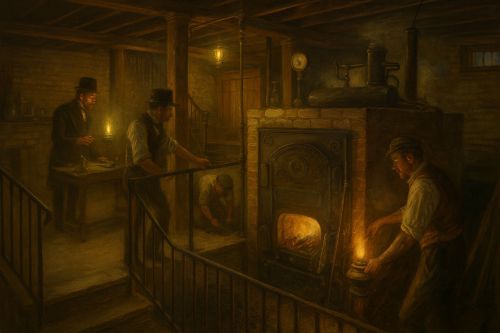
 Randolph Harris II International Institute