
Home » Toddlers (Page 5)
Category Archives: Toddlers

The Feeling of Being Watched and Impending Danger Gradually Increased

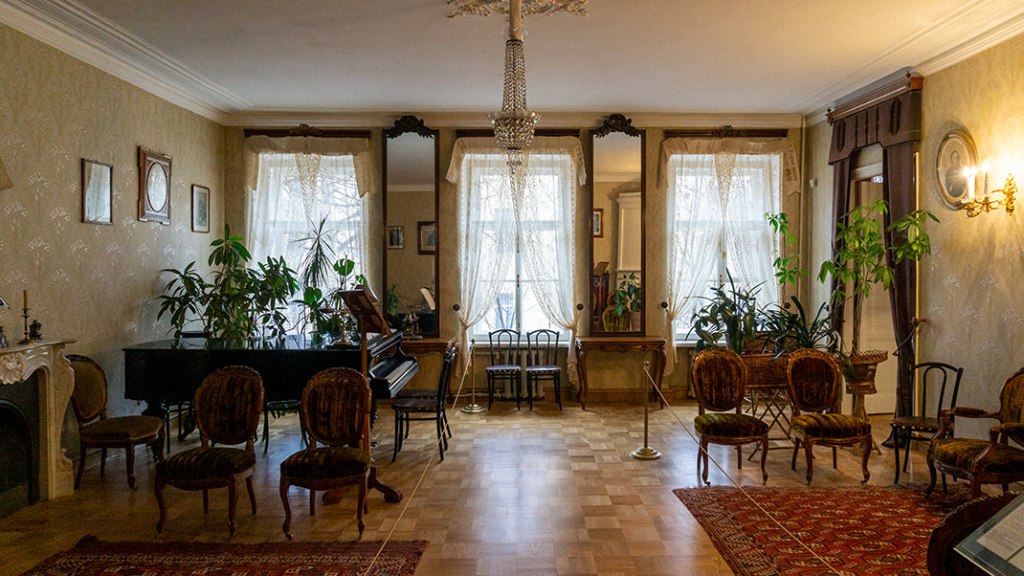
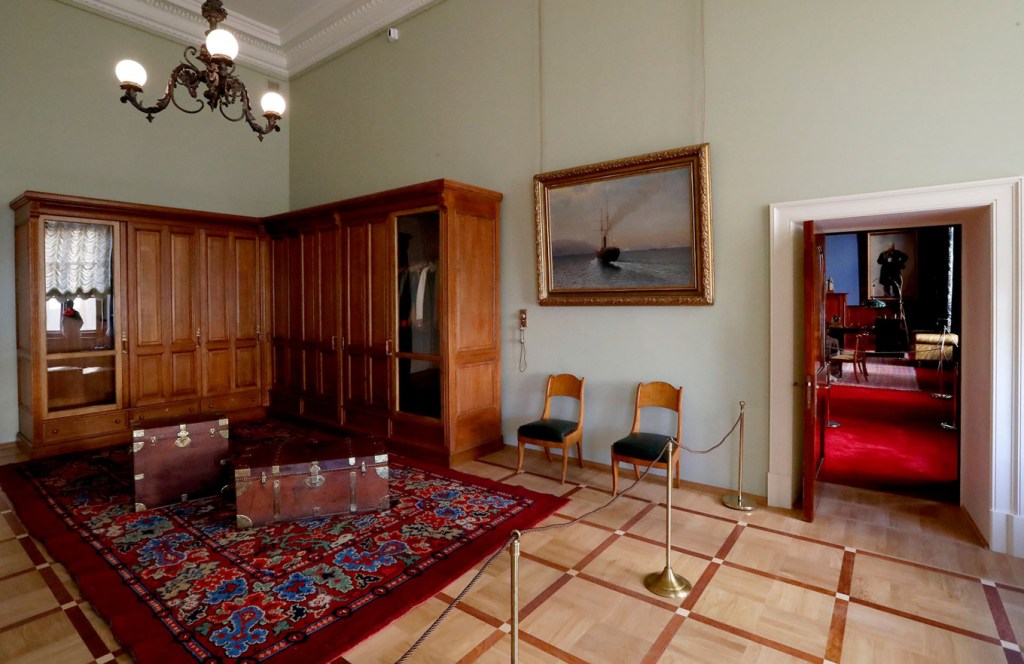
Shortly before nine o’ clock, a butler, dressed in an azure tailcoat and navy-blue breeches, escorted Me to my estate. A coldly sumptuous hall, it was the first point of entry to the 600-room mansion. Rows of muskets, taller than a man, and hundreds of swords, their blades sharp-edged and glinting lined its walls. From the vaulted ceiling hung several beautiful chandeliers. Directly in front of them, a magnificent staircase swept to the state rooms on the upper floors; and yet, as the butler led me across the hall, he veered to the right, heading for its farther corner. There, he ushered me through a discreet swing door. We had stepped into the “invisible World.” Behind the secret door, the entire ground floor was devoted to privacy. A magnificent hinterland of fifty rooms, some cavernous, some no larger than a closet, it was where many of the servant lived and worked. From here, a network of passages coursed through the mansion: hidden routes, which spiraled up the narrow turrets and towers to the splendid rooms above, enabling the servants to carry out their duties unobserved. One might ask, why was I touring the part of my home? It was through this labyrinth of passages, deep in the servants quarters, where the rooms were subjects of wild speculations, fueled by servants’ fears that someone had come back from the dead. It seems a few of the servants had been thinking of ways to make money. One of the servants, Olov told Stellan about a plan to end their money troubles. The scheme was simple. Each of the men would take a life insurance policy out of another one of the servants, twenty-year-old Leif Titus. #RandolphHarris 1 of 7
They would say that they had helped raise and support Leif in his life and were looking for reimbursement for their help upon his death. There was nothing illegal about that. Then they would wait awhile before killing Leif, collect on the policies, and all of their money troubles would be over. Stellan asked who would kill Leif. “That’s the beauty of it,” Olov told his friend. “We each kick in a percentage of the policy money to pay an assassin so none of us has to do the killing.” Stellan was quiet for a moment, and then he nodded. They could get someone at the tavern to do it. Olov arranged for a meeting with Duke. They worked it all out the details of the murder plot and agreed to execute the plan. The other men paid Duke $400 to arrange and carry out the murder. This was a lot of money, so Duke agree to do the deed. June 6, 1890, was just another day to Leif Titus as he went about his work on the estate. He was not surprised when Olov told them that their friend Duke had come by to see if he might want to go for a drink later that evening. The two men had hung out at the tavern from time to time, so he readily accepted the invitation. The two men set off after work. It was after dark and Leif and Duke rode horse back to the tavern. However, before getting their Duke fired his rifle, Leif horse was scared, threw him from the saddle. He fell off the horse, hitting his head on the cobble stones and his life had been snuffed out for $9,000 in life insurance policies. It was the perfect crime, or so it seemed to the men. They said that Leif fell off his horse and died on the way back from the tavern. And they seemed to have gotten away with it. #RandolphHarris 2 of 7

Saturday night, Olov arrived back to my estate, and went to his room to lie down on his bed. He had not been there long when he heard noises. As he was just involved in a plot that robbed another man of his life, he became quite nervous. That night, there were doors opening and closing, footsteps of unseen guests. As he got up to go investigate, Olov felt a strange touch at his back; then a tug; then he felt the back of his sweater pulled several inches away from his back. He turned to look over his shoulder and wondered how, without moving, he could have hooked his sweater on something. However, there was nothing upon which his sweater could have been stuck. Just then he saw Stellan, eyes wide with astonishment. He blurted out to Olov, “I just saw the back of your sweater pull out all by itself!” Later the following evening Olov was closing up the mansion for the night, at about 9.00 P.M. Like all Victorian homes, “The House Built by Spirits” has its share of creaks and groans. Creaks and groans are one thing—but witnessing something supernatural is another thing entirely. He was turning out the lights. The house, as the light are slowly being extinguished, does have a certain “feeling” to it: as it grows dark, one gets the inkling that one need to hurry, that someone—or something—cannot wait for you to leave so that they may get on with their existence—if that is what one could call it—in peace. Moving from the parlor to the morning room, he casually looked into the darkened stairwell. His eye was caught by the manifestation of a spectral being. A strange man with long hair appeared in the morning room. Olov mistake this spectral man for a servant. #RandolphHarris 3 of 7
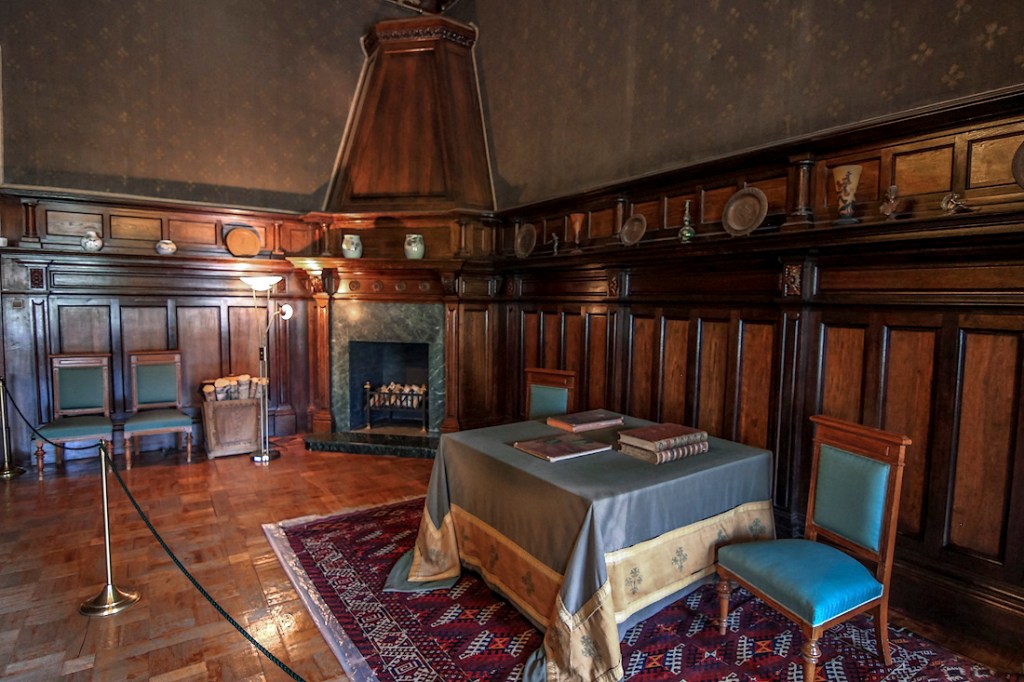
When he realized his mistake, Olov hurried forward to see who the person was. As he watched the figure, the long-haired man moved out of the morning room, he followed him. Just as the icy fingers of fear had begun to trace a slow, deliberate path up the length of his spine, the figure floated the through the mahogany wall and disappeared. Stellan arrived to find Olov in a near state of panic. While in the servants’ quarters, he had been sitting in a chair with his back to the door. He heard the door open and close and the sound of footsteps enter the house and approach the spot directly behind his chair. Imagine the horror when he turned around and saw a misty figure take the form of a tall man all in gray. The ghost, wearing a tattered Revolutionary War uniform, looked unkempt with long hair and a grizzled appearance. Olov screamed, but it was only second before the specter faded away. When Stellan reached him, his was quivering and inconsolable. Stellan then figure it would be a good idea for the two men to quit their jobs and move north. After all, they now had the money to do so, they were rich. On that evening, Olov wandered into a dark and deserted section of the mansion. This was the most active area of the mansion and too dangerous to inhabit. The stairway to the attic was narrow and winding. Suddenly a shrill scream came from the attic. Stellan ran to the fourth floor where Olov was discovered lying on the floor, stabbed through the heart. He was dead. Stellan figured the men had been hexed, and he would be the next one to die. #RandolphHarris 4 of 7
Stellan went into a secret room under one of the kitchens through a trap door—a secret room that house Mrs. Winchester’s magic. He was looking for her book of spells in the secret room. However, there was someone in that room, perhaps waiting for a century or more, for someone to open the trap door. Walking through the small, arched doorway, the room was furnished and there were antique carpets near the alter. He heard music and instruments. Out of the corner of his eye, he saw a figure of a small woman, seemingly cloaked in a long, dark, flowing dress with a wide-brimmed, black hat, standing in the corner. He stood for a brief moment, seeing her out of the side vision, afraid to look directly at her, since he realized that entities can sometimes only be seen through peripheral vision. Indeed, when he turned to confront the dark lady, he was struck on the head with a piece of stove wood, killing him. The story of a mysterious man in the servants quarters had spread throughout the estate, as we were touring the room that belonged to Leif, we herd the sounds of horses hooves and whips. Then sudden sound heralded the appearance of a bright figure we immediately recognized of Leif. He told us how he had died and how his poor mother was near a breakdown; after someone had dug up bushes in her yard, she took it as a sign that Leif’s body would also be dug up. He had him exhumed and reburied in the flower bed outside her house. Here she piled a huge mound of stones over his grave. Vowing to get revenge, she would sit up nights watching for grave robbers and crying for her lost son, until she died from a broken heart. And from beyond the grave, she had discovered who took the life of her son and returned the favor. #RandolphHarris 5 of 7
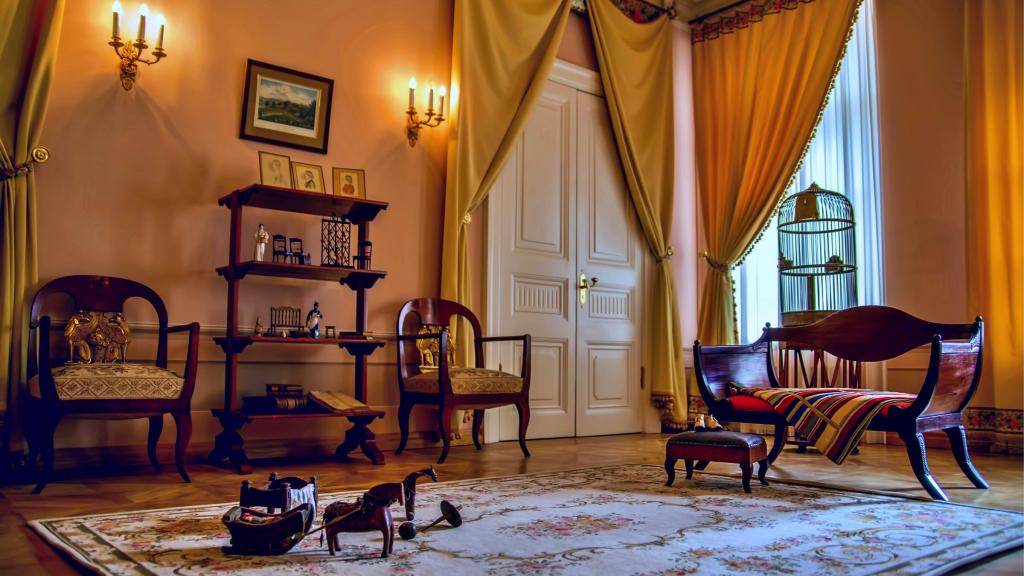
Through the years the servants on occasion have hear Olov’s shrill last crimes repeated over and over again. The antique carpets in the secret alter room were cleaned, but the bloodstain frequently reappears. One of the servants mentioned that he saw an injured man, blood, and a woman in a dark dress in the alter room, leaning up against the walls, exhausted, dirty, bloody, smelling like sweat and fear. After hearing the specter’s story, I was trembling. I said nothing for a second or two, trying to find the words. Nothing ever came to mind. It is when things are busiest in their dwelling-places that the spirits are most active. Already disposed once out of their bodies, they react when they are again dispossessed of their homes. There was a great deal of strong, negative energy coming from this particular corner of the room. From the moment on, I closed off this section of the house and had Mr. Hansen build Victorian cottages for the servants to live in and increased their pay three times more than the going rate. The servants were good and faithful people. Perhaps these ghosts and restless spirits return to remind mortals of the evil that can be done in the name of good. Many people whisper that no one can make it through this area of the mansion. It is said that strange fear grips people as they approach the servant’s wing. As they pass through the threshold, they feel that they should turn back. A feeling of being watched and of impending danger gradually rises as they wander deeper and deeper into this wing. #RandolphHarris 6 of 7
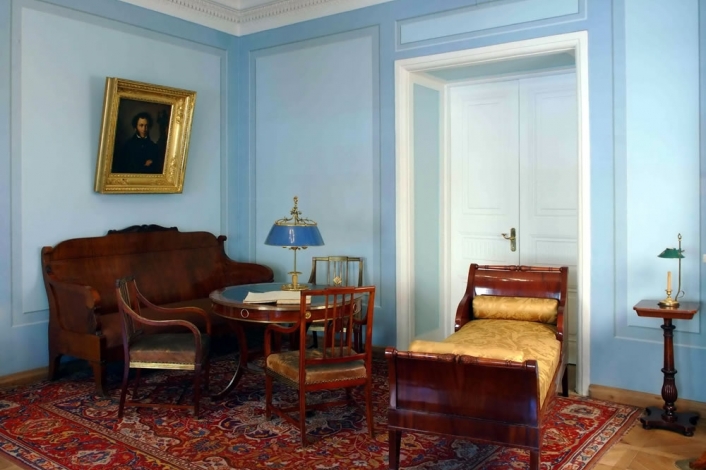
O thou great and powerful King AMAYMON, who rulest by the power of the Supreme God El, over all Spirits, superior and inferior, but especially over the Infernal Order in the Dominion of the East, I invoke and command thee by the particular and true Name of God, and by the God whom thou dost worship, by the Seal of thy creation, by the most mighty and powerful Name of God TETRAGRAMMATION, who cast thee out of Heaven with the rest of the Infernal Spirits, by all the other potent and great names of God, Creator of Heaven, Earth, and Hell, of all contained therein, by their powers and virtues, and by the Name PRIMEMATUM, which commands the whole host of Heaven. Do thou force and compel the Spirit ADONAI, king of Kings here before this circle, in a fair and comely shape, without injury to myself or to any creature, that he may tide and time receive our wish, and grant us new beginnings so that we may accomplish our desires, whatsoever the be, provided that it is proper to his office, by the power of God, EL, who hath created and doth dispose of all things, celestial, aerial, terrestrial, and infernal. ASTRACHIOS, ASACH, ASARCA, ABEDUMABAL, SLLAT, ANABOTAS, JESUBLIN, SCIOIN, DOMOL, Lord God, who dwellest above the Heavens, whose glance searchest the abyss; grant us, we pray Thee, the power to conceieve in our minds and to execute that which we desire to do, the end of which we would attain by Thy help, O God Almighty, who livest and reignest for ever and ever. Amen. #RandolphHarris 7 of 7


Our technology tells us that fluorescent lamps do not continuously provide light, but are actually flickering on and off at a rate that is just too fast for us to discern…reality at large is really a frequency domain, and our brain is a kind of lens that converts these frequencies into the objective World of appearances…there may be all kinds of things out there in the frequency domain that we are not seeing, things our brains have learned to edit out regularly of our visual reality. https://winchestermysteryhouse.com/

And please be sure to check out the online gift store: https://shopwinchestermysteryhouse.com/

Many False Opinion May be Exchanged for True Ones

I have learned from experience that many false opinions may be exchanged for true ones, without in the least altering the habits of mind of which false opinions are the result. The American public, for example, are quite as raw and undiscerning on subjects of political economy since the nation has been converted to free-trade, as they were before; and are still further from having acquired better habits of thought or feeling, or being in any way better fortified against error, on subjects of a more elevated character. For, though they have thrown off certain errors, the general discipline of their minds, intellectually and morally, is not alerted. I am now convinced, that no great improvements in the lot of mankind are possible, until a great change takes place in the fundamental constitution of their modes of thought. Unfortunately, our country’s ardent commitment to capitalism and the accumulation of wealth comes with a downside: Faced with the pressing need to obtain and expend monetary resources, untold scores of people simple take from their fellow citizens as a means of getting what they want. It is widely accepted that crimes against property account for the vast majority of criminal victimizations that occur annually in this country. However, these offenses tend to remain in the background of our discussions of crime, as society is much more concerned with the documentation and prevention of violent crime. This means that one must traverse a fragmented empirical and conceptual landscape when trying to piece together the nature and dynamics of what constitutes common property crime. #RandolphHarris 1 of 18

When it comes to shear incidence and law enforcement workload allocation, common property crimes collectively constitute a most menacing foe. Turning to the limited list of eight Part I index crimes, we see that property offenses (burglary, arson, larceny/theft, and motor vehicle theft) accounted for 88 percent of all offenses known to the police in 2022. That translated to an official property crimes rate of 3,656 per 100,000 persons. These four offenses generated 1.6 million arrests in 2022, but this is only part of the picture. Several noteworthy forms of property crime are included on the supplemental list of Part II index offenses, namely, fraud, forgery and counterfeiting, embezzlement, receiving stolen property, and vandalism. When these offenses are added to the mix, we see that more than 2.5 million arrests for crimes against property occur each year in this country. One could legitimately include, a long list of offense when trying to frame a discussion of what constitutes “common” property crime. The list might include such offenses as burglary, larceny-theft, motor vehicle theft, arson, fraud, forgery and counterfeiting, embezzlement, receiving stolen property, and vandalism. Given its unique status as a “crime of intrusion,” burglary had been allocated its own separate discussion. Even with this significant paring, a full treatment of the remaining laundry list of property crimes is far beyond the scope of this report. Luckily, this sort of comprehensive discussion is not necessary because the similarities between these crimes far outweigh the differences. #RandolphHarris 2 of 18

In the tradition of the typologies approach, we will use the single conceptual category that is termed common property crime. These two offenses were chosen for several reasons. First, they are among the most recognizable and pure forms of crimes against property. Second, their status as Part I index crimes means that comprehensive data are readily available on each. These two offenses comprise roughly 80 percent of known Part I property crimes each year and more than 50 percent of all Part I and II property crime arrests that are effected each year. The crime of larceny is steeped in a rich legal history. In common law times, the larceny statue was comprised of five essential parts: (1) an act of wrongful taking; (2) an act of carrying away; (3) a piece of property; (4) a rightful owner; and (5) the intent to permanently deprive the owner of possession. As the nature of property and property relationships grew more complicates, so too did the larceny statue. In particular, the courts had to grapple with such complex issues as ownership versus possession, misappropriations that occur while a property owner has voluntarily relinquished possession to another for shipping or safekeeping, and what exactly constitutes “property.” The result was the gradual emergence of a flexible and more amorphous legal definition of larceny that incorporates all acts of wrongful property misappropriation. #RandolphHarris 3 of 18

Today, most jurisdictions follow the direct of the Model Penal Code and rely upon a consolidated larceny-theft statue. For example, the Uniform Crime Reports (UCR) defines larceny-theft as any “unlawful taking, carrying, leading, or riding away of property from the possession or constructive possession of another.” Note that this definition effectively incorporates all forms of property theft under a single heading, regardless of the means or motivations that lay behind the act. There are two important caveats that accompany the UCR’s consolidated definition of larceny-theft. First, it does not apply to the theft of a motor vehicle. In particular, the theft or attempted theft of a self-propelled vehicle (id est, any nonmanual, nonrailrunning vehicle including cars, trucks, motorboats, construction equipment, airplane, or farming equipment) is in its own category named motor vehicle theft. Second, the UCR’s consolidated definition does not apply to acts of theft or conversion that are accomplished by “false pretenses” (id est, fraud), those thefts committed during the course of a contractual or work relationship (id est, embezzlement), or other legal contexts that would allow for the act to be categorized under the heading of specialized form of property crime. The National Crime Victimization Survey (NCVS) collapses all form of theft by taking, regardless of their manifestations (id est, by stealth or deceit) into one generic category—theft. Motor vehicle theft is afforded a separate offense designation. The NCVS classifies all nonviolent thefts from the body of a person under the heading of purse snatching or pocket picking. #RandolphHarris 4 of 18

Approximately 14,135,090 thefts, 1,008,720 motor vehicle thefts, and 188,370 purse snatchings/pocket pickings occurred in 2022. Combined, generic thefts, motor vehicle thefts, and purse snatchings/pocket pickings accounted from almost two-thirds of the overall victimization tall from 2022. Because crimes rates are so high and homeowners want more security than stationary cameras, within the next decade, it is predicted that homeowners will be able to purchase a noninvasive form of a satellite, probably smaller than a golf ball, which will blend in with the environment, that will hover over their homes and give them an aerial view of their property, and will detect body temperature and have infrared sensors that will allow homeowners to detect if there is an intruder hiding on their property, as thieves are becoming more and more stealth due to all of the modern technology. Nonetheless, the raw property crime numbers produce some lofty victimization rates. For example, the 2022 theft rate was reported at 129 per 1,000 persons or households. This is more than 4 times higher than the rate of any other type of crime that is tracked by the NCVS (burglary is second with a rate of 28.7 per 1,000). The rate of 9.2 motor vehicle thefts per 1,000 persons or households was also among the highest crime-specific victimization rates that year. #RandolphHarris 5 of 18

The public is hesitant to report most property crimes to the police. This trend is illustrated by the reporting rates of 30.1 percent and 35.2 percent that are observed for the larceny-theft and purse snatchings/pocket pickings offenses in the 2022 NCVS. Debriefings indicate that victims see little benefit from reporting property crimes, as police are thought to be too busy to attend to such minor crimes, thus making the recovery of their lost property unlikely. Motor vehicle theft stands as a glaring exception to the rule. In 2022, 82 percent of all automotive vehicle theft victims reported the incident to the police. No other form of crime surpasses the 66 percent reporting level. This inordinately high reporting rate is drive primarily by insurance regulations that require victims to file police reports prior to having their automobiles replaced or repaired. In the aggregate, common property crimes generate a sizable price tag. Conventional victimization reports set the property losses due to larceny-thefts round $5.5 billion annually, with an average loss per incident of roughly $500. However, it is important to note that crimes against institutional or corporate entities are beyond the scope of the NCVS. This results in the exclusion of sizeable numbers of shoplifting, employee theft, and embezzlement offenses that are perpetrated against business. Shoplifting alone costs retailers an estimated $15 billion each year. In light of this oversight, it seems reasonable to conclude that the actual dollar loss from larceny-theft offenses is far larger than what is reported by the NCVS. #RandolphHarris 6 of 18

Equally disturbing dollar losses are attributed to motor vehicle theft. Victimization data suggest that the average auto theft victim experiences approximately $8,886 loss. There were an estimated 721,885 thefts of motor vehicles nationwide in 2019. The estimated rate of motor vehicle thefts was 219.9 per 100,000 inhabitants. More than $6.4 billion was lost nationwide to motor vehicle thefts. There appear to be no clear-cut regional disparities for common property crimes. Data from the Uniform Crime Reports shows that theft-larceny rates were highest in Texas, Florida, Arizona, New Mexico and Louisiana. West Virginia, Kentucky, Massachusetts, New Hampshire, and North Dakota were found to have the lowest theft-larceny rates that year. Shifting our attention to state-level rates of motor vehicle theft offending, we see that Arizona, Nevada, Florida, Washington, and Michigan were top of the 50-state list. Officials in New Hampshire, South Dakota, Wyoming, Maine, and Idaho reported the lowest rates of motor vehicle theft in 2022. Residents in densely populated, inner-city areas clearly experiences a higher risk of property crime victimization than do their counterparts who live in more sparsely populated outlying areas. The 2022 NCVS data reveal an inverse relationship in theft rates across urban, suburban, and rural locales (rates of 160.4, 123.9, and 101.6, respectively). A similar trend is observed in the 2022 motor vehicle theft victimization, where the rates in urban areas exceed those of suburban and rural areas. #RandolphHarris 7 of 18

Critics observe that motor vehicle theft rates appear to be more a function of automobile density (measured either in terms of cars per square mile or per capita automobile registrations) than population density. A city-level analysis of UCR data reveals tht New York, Chicago, Los Angeles, and Huston consistently rank among the top five most problematic locales in terms of larceny and motor vehicle theft rates. The larceny-theft and motor vehicle theft rates in the United States of America compare favorably to those reported by other developed countries. The United States of America experienced a larceny rate of 2,728.1 per 100,000 persons and an auto theft rate of 459.0 per 100,000. The official larceny and motor vehicle theft rates of our peer nations were as follows: England and Wales (3,460.2 and 753.0), Australia (3,033.7 and 706.2), France (2,527.5 and 546.1), Canada (2,431.0 and 547.10, Germany (2,406.3 and 137.4), Israel (2,149.0 and 694.1), Japan (1,198.1 and 28.4), and Spain (650.8 and 343.1). A guessing game of more than playful significance can be played among persons who have spent a few days sociably together, as in a series of parties or at a resort: one person attempts to describe the kinds of families from which the group members came, with no prior knowledge of their personal histories. The same is most successfully played when the group includes mainly young adults but some other and younger people. #RandolphHarris 8 of 18

Still, if the attitudes of the group members toward waiters or clerks can be observed, more clues can be secured. Hits or misses are determined by checking guesses against the facts, and score is kept by noting the correct guesses and comparing them with the record of other guessers, or with the results that might be obtained by chance alone. A practiced observer of normal sensitivity and adult experience can usually make a surprisingly large number of correct guesses. The kind of questions to which one can most frequently give accurate answers are these: Did the person have any brothers or sisters? Were these brothers or sisters older or young? Ho much was one loved by one’s mother? Father? (Another adult?) With which did one tend to identify more? Was one’s family close and demonstrative, or cold and distant? Were one’s parents young or old when one was born? Was one’s mother or father dominant, or were they equal in authority? Was either parent repeatedly cruel or arbitrary in disciplining one? Which parent was more influential in the person’s career choices? Were one’s parents, or one’s siblings, approving or critical of one’s achievements? Which parent was the more intellectual? Action-oriented? Sociable? Sometimes, though less frequently, even such characteristics as the presence and importance of grandparents, adoptive status, father’s occupation, mother’s education, the family’s social status, and some quite idiosyncratic circumstances can be guessed. #RandolphHarris 9 of 18

As the guesser goes from the common relations of authority and affection among parents and children into these more peculiar features of another person’s upbringing, one’s chances of being right go down; one’s chances of being right by luck alone, however, decrease still faster. Yet the validity of some of one’s faintest premonitions can be quite astounding to one’s audience. Indeed, the more accurate in detail the guesser become, the more likely it is that the game will encounter two specific hazards. The person whose family origins are so closely described may suspect and charge that one ha been previously investigated and resent the implied invasion of one’s privacy, or one may be embarrassed by the disclosure of such intimate and perhaps ungratifying facts to the remainder of the group. Yet, if this game is played correctly, the guesser has depended for clues entirely upon what each particular subject has already disclosed about oneself through the characteristic patterns of one’s interactions with others. Whether consciously or not, each person tells one’s history publicly in one’s behavior, and could only conceal it by withdrawing from society, an act that in itself is diagnostic and occasionally observed. There is nothing mysterious or occult about the inferences employed. They are all derived from the theorem that one reproduces one’s earlier family relations in one’s interpersonal relations beyond the family. #RandolphHarris 10 of 18

Father-figure, mother-figures, brother-figures, sister-figures, rivals, servants, authorities, as first experienced in the family, furnish the prototypes for apprehending and responding to all later intimates. Especially in the rapid development of intimate association with strangers, the prototypical family constellation is most recognizably reproduced, and the characteristic actions which it guides from the “person” that becomes known to others. When a person is most spontaneously free, these same expressive acts are usually subjectively taken by one to be one’s natural self. A person’s identity in such a group is thus—or can be—simultaneously one’s self as privately conceived. Yet even one’s reactions to constraints upon one’s self-expression tell something of the figures one fears; in this sense, all one’s acts are representative. And it is precisely upon the evidence of many small but representative encounters witnessed between each subject of this game and the others that successful guesses and generalizations can be made. In later discussion, the basis for errors through insufficient evidence or mistaken inference may be brought out, but no evidence used is found invalid. (Such checking back is useful for improving the skill of the guesser.) To be sure, no single episode leads directly back to a specific family pattern. Rather, by recurrence of similar episodes in orderly relationship to episodes of other kinds, the generic constellation is pieced together. As more information is added, the more the pattern hangs together and even indicates missing evidence to be sought for by reviewing a wider range of incidents. #RandolphHarris 11 of 18

For instance, a girl bumps a boy and blushes; he speaks to her cordially and thereafter her eyes follow him about the room; a younger boy tries to gain her attention, but is ignored; she appears respectful toward a male teacher and defends him against gibes by other girls; after a downpour, she organizes the drying out of clothes by other girls; her female teacher speaks equivocally of her as independent. Is it possible that her father was a widower, and let her play the role of a “little mother” to her small sister—which she did out of a desire to please him, who she admires? Even with these many observed details, much of the complex is missing from which a successful guess might be made; but at least the principle employed is evident. If it is remembered that boys who have dated her found her somewhat repressed and inclined toward intellectual conversation, further confirmation may be added, but also complications may emerge which reduce the plausibility of the previous guess. From experience in playing this game, several limitations become evident. The older the person—the further one had left one’s parental family behind, in time or in any other sense—the less does one’s present behavior tell about one’s past. And if one’s succeeding experience has been markedly heterogeneous, with strong emotional attachments intervening between one’s original family and one’s present circle of intimates, the less does the present constellation tell us about the original. #RandolphHarris 12 of 18

If the person’s cultural or sub-cultural background is markedly foreign to the guesser’s, of course the latter has more difficulty in interpreting the biographical significance of behavior. Patterns of sociability among teenagers still living at home, by contrast, almost transparently reveal the structure of their families. Although there is thus no mystery as to why successful guessing is not really guessing or intuition, but complex inference from objective evidence, explanation of the procedure does not dimmish the uncanny feeling of some of the subjects that they are being laid bare. Even when the bits of evidence are painstakingly pointed out and are admitted to be public knowledge, the sense of exposure may persist and give rise to mild dismay on the part of the beholders as well. If the procedure were explored systematically and no longer used mainly as a game, what might develop is a matter for speculation. However, questions are raised by the demonstration of the underlying theorem which are far more important than the mild shock of the shyer players. If postdiction is this easy, why is prediction so hard? And if prediction from pervious to future behavior is hard, does not this fact qualify the determinisitic assumption which underlies an characterizes much research and writing in social science? And finally, what might this game of revelation disclose about the role of the social scientists and one’s ultimate audience? #RandolphHarris 13 of 18

There is a mistake about forgiveness by the ultimate concern that many people make. First, a mistake conception about the “shelter of the blood,” claimed upon an assembly as a guarantee of absolute protection from the working of the powers of darkness. However, if we walk in light, if we confess our transgression, then the blood of Jesus cleanses from sin. The blood of Jesus gives us access to the Holiest of all, because of the cleansing power from sin. The blood of Jesus is the ground victory over the Offender, because of its cleansing from every confessed sin, and because at Calvary the Offender was conquered. (However, remember, you can confess your sins silently in prayer. Not all religious figures uphold their oath and keep the things you say confident, much like therapists or their employers.) However, nowhere do we read that any person can be put “under the blood” apart from one’s own volition and individual condition before God. Therefore, if the “shelter of the blood” is claimed over an assembly of people and someone present is giving ground to the Offender, the “claiming of the blood” does not avail to prevent Offender from working on the ground to which one has a right in that person. This misconception about the protecting power of the blood is serious; for those who are present at a meeting where the Offender as well as God is working many believe they are personally safe from the Offender’s workings apart from their individual condition and dealing with God. However, through the ground they have given—even unknowingly—to the Adversary, they are open to one’s power. #RandolphHarris 14 of 18

Faith, religion, and revelation, are readily intelligible. If one simply stated that religion is ultimate concern, a turning toward the unconditional, and that it is not a special function of man’s spirit but a centered act of his personality, that would be an adequate summation of the broad sense of religion. Here faith and religion are identical. The narrow sense of religion is the “churchy” sense—doctrine, rites, and all the appurtenances of an institution. While the above paragraph sufficiently describes religion, a somewhat deeper examination is called for. The ultimate concern is what we rely on chronologically as an evolved insight of religion more than faith. Doctrine is developed under the heading of religion. Religion cannot be identified with any of the functions of spirit and it cannot be placed beside them as a special function animated by one’s thinking at a very early date, and this insight is decisive. Religion is an attitude of spirit which participates in all these spheres. Spirit depends on two other concepts, thought and being, which are in constant dynamic tension. Spirit is neither pure thought nor pure being, but involves both. Being and Spirit are the essential components of the act of knowledge. The act or intention is thought, and the object or thing intended is being. For Spirit is the form of thought-in-being. Every being has something of thought in it, but the more thought it contains the more reality is possesses. The most real of beings is the one in which thought as thought is realized, that is, a spirit-bearing totality—man. #RandolphHarris 15 of 18

In the economy, there are power triads, and wealth is one, which is experiencing deep transformation as the new system for wealth creations spreads across the planet. As corporations integrate their production and distribution across national boundaries, acquire foreign firms, and draw on brainpower from around the entire World, they inevitably need fresh sources of capital in many countries. They also need it fast. Thus we see a race to “liberalize” capital markets so that investments can flow more or less freely across national frontiers. The result is a surging ocean of capital free of restraining walls. This, however, shifts power away from central banks and individual nations, undermining sovereignty and introducing new dangers of financial fibrillation on a Worldwide scale. After the 1987 Wall Street crash, it was understood that building a single completely open financial system, subject to minimal regulation, is like building a supertanker without airtight compartments. With adequate dividers or safety cells, a big system can survive the breakdown of certain parts. Without them, a single hole in the hull can sink a tanker. There was also a warning that the creation of multinational securities firms that buy, sell, underwrite and invest in many nations increases the risk of large-scale breakdown. A loss by one or more of these firms, could result in transmitting a disturbance from one country to another. As finance is globalized, nations risk losing control over one of the keys to their power. #RandolphHarris 16 of 18

The proposed all-European currency, for example, would reduce the flexibility of individual nations to cope with their own unique economic problems. Another proposal would arm the EC commissioners with far greater control over the budgets of Europe’s supposedly sovereign nations than the federal government of the United States of America exerts over its fifty states—a centralizing power shift of massive proportions. While this power redistribution is going on, the entire wealth system becomes, as we have seen, super-symbolic. Like violence, wealth, too, is shifting and being transformed at the same time. Until recently, China was not on the list of the World’s major foreign direct investor nations. An important breakthrough came in 2008. According to the National Bureau of Statistics, outbound FDI increased dramatically to $55,907 million from $26,506 million in previous years (flow; FDI by financial institutions is not included). In 2009, it rose further to $56,529 million, in 2010 it hit $59 billion. In recent years, China has been the second largest recipient of foreign direct investments (FDI) Worldwide, attracting approximately USD $181 billion in 2021. That is extremely significant. Compared to the U.S.A FDI of USD $367.38 billion. According to preliminary figures, monthly foreign direct investments (FDI) inflows to China amounted to approximately USD $20.69 billion dollars in February 2023. For the whole year of 2022, FDI flows to China reached around $189.1 billion, an increase of 12 percent compared to the year before. Western companies have become a hot topic around the World. #RandolphHarris 17 of 18

Acquisitions account for 40 percent of China’s total FDI. The major targets are mining industry, high-tech manufacturing firms, and well-known but usually ailing companies possessing famous brands. Such acquisitions are usually carried out with the backing of the government, mostly by state-owned companies. On the other hand, Chinese companies, especially the private ones, are gradually increasing FDI of quite a conventional Character. They are investing in India, Africa, North Korea, Vietnam, Myanmar, and elsewhere in the developing World seeking lower production costs or better access to local markets. Also, more and more often, they are coming to the West entirely on their own initiative (without the government’s backing), attracted by markets, technologies, and high-skilled human resources. In these cases, Chinese investors act basically the same way and pursue the same goals as investors from any other country, whether America, a European state, or Japen. China’s foreign portfolio investment reached an all-time higher of USD $99.45 billion in December 2020. United States of America’s foreign portfolio investment accounted a record deficit of USD $206.805 billion in December 2022. American leaders should be scrambling to invest in improving technology and infrastructure in American cities, investing more in education and recruitment of students for medical, engineering, and computer science careers. #RandolphHarris 18 of 18


Picture family dinner in this space! 🥳

When you’re looking for a home that can hold everyone you love, look no further than #MagnoliaStation at #CresleighRanch. 👏

Residence 2 is a spacious single story model including over 2,600 square feet with three bedrooms, three bathrooms, AND a three car garage! See the details on our website. https://cresleigh.com/magnolia-station/residence-2/


Dabbling in its Dark, Cruel Possibilities
It was one of the brisk winter mornings that begins in a fog, promising the cold to come. A mist was rising from the fruit orchards as I dropped down the hill into Llanada Villa in the valley below the mansion. It was a fair-tale mansion, all turrets and towers, stained glass and plush Victorian gardens, sitting majestical on the most valuable plot of land. As I entered my home, I heard the music playing softly from the morning room. I sat sipping coffee at nine thirty, glad it was Saturday. I knew that life was going to be vastly more complicated now. Well, it was going to be more dangerous, too. Overhead, the morning sky had turned a vivid blue, intersected by fading vapor trails. It was bright enough blue, the sky. However, it had a depth and stillness suggestive of the steady retreat of sunlight and a slight warmth. I have seen real ghouls in my home, and I knew that magic was something that could be harnessed and exploited and there were people in the World with hunger for power and influence enough to risk dabbling in its dark, cruel possibilities. The whisper of water dropping on to leaves as the rain began to fall could be heard. The lights flicked on and off. I looked around, half-waiting for the sound to stir again. The rain strength. I heard drops begin to fall on the roof. For many years the staff reported hearing a little girl crying. She has been seen on occasion, and is described as about seven years old. She has been seen in the house at the main stairwell, on the lawn, and on the third floor. I passed on through the passages of crystal and rooms of silver—spacious chambers, empty and silent. #RandolphHarris 1 of 6
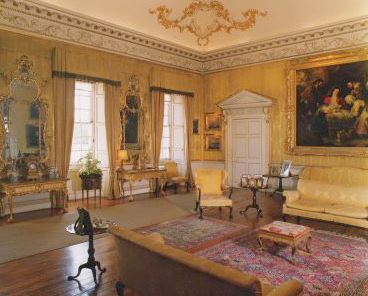
This house felt older than the memory of man. It was an accursed mansion. There were strange noises in the mansion. Every night the wailing of a woman could be heard above the moaning of the wind. If ghost must walk the Earth, they could find no spot on the globe where their appearance would be more natural, or better understood. The staff tells tales of disembodies footsteps, lights that switch themselves off and on at will, and objects moving. The Daisy Bedroom has lights that switch themselves on and off after dark and phantom footsteps are often heard in the hallway near the room. One day a housemaid was speaking to a guest as she served dinner downstairs. To everyone’s surprise, the serving tray sitting on the table picked itself up and tipped itself upside down. The tray was filled with plates of hot foot that went everywhere. The sacrificial stones of the Druid priests, oriented after the fashion of the ruin of ruins of Stonehenge, the blood-vats, imperishable adjuncts to human sacrifice, have stood through the ages, grim guardians of the mysteries of the haunted fruit orchards. If someone were to tell me that the fruit orchards at Llanada Villa echoed nightly with the shrieks of sacrifice and that the ghost fires of forgotten priestcraft still glowed in the morning, I would find it hard to disbelieve. That ghastly curse remained on my family and fortune. The mansion has picked up a few permanent guests. One evening, from the observation tower, I saw a huge black figure gliding along the grounds. It could not be human because of the rate of speed it was going. I felt not just fear, but absolute dread. I experienced a bone-chilling could throughout my body. I ran down nine flights of stairs, while crying uncontrollable and my heart was pounding. #RandolphHarris 2 of 6

Only in the understanding of the stock from which the Victorian mansion’s ghosts are sprung can one appreciate the immortality with which long-accepted tradition has endowed them. Ghostly itself is the history of the Winchester Mansion. While the carpenters were painting on the fourth floor, one of them was startled to see the word MURDER appear in the freshly rolled paint, as if written with someone’s finger—only the words were backwards, as though being written from the other side of the wall. One of the painters explained: “We were quite surprised when a shadow started moving towards us.” As they realized that the “shadow” was approaching them, they also realized that area of the mansion was a very lonely place, especially at night. Not many people ventured up there. And although in their haste to leave, they could only give brief glances at the dark figure, they were sure of one thing: “The only outstanding feature was the outline of a wide brim hate.” Another evening while the carpenters were painting, they heard a quiet creaking emanating from the wood floors. They steeled their nerves before investigating. That is when they saw a young woman sitting in a chair directly behind them. The woman was there for just a moment before disappearing. Later the evening as the farmers were picking fruit in the fields, the dark figure “floated” diagonally across the field. It drifted rapidly to a clump of trees with two flat rocks near by and disappeared over a slight drop-off beyond. #RandolphHarris 3 of 6

One of the farmers screwed up his courage and, in spite of the bizarre, dark figure’s mysterious and even menacing appearance, volunteered to walk down to the spot where the apparition disappeared. After five minutes of observation, he returned, like an efficient scout, with his report, unsettling as it might be. He said when he reached the far side of the hill there were two “soldiers-dressed” figures stilling on the two flat rocks near the clump of trees. Neither one spoke to the other; nor did they acknowledge the other’s presence. Instead they just sat, seemingly rigidly fixated, staring down into the field. Other ghost haunting the mansion include those of two little boys, who have been heard running on the second floor. One night, while I was preparing for company, I found two sets of muddy boot prints coming from the door to nowhere and crossing the room. When I told Daisy about the boot prints. She said they must be made by the same boys who keep coming in the door the opens to the wall, and we had locked them out. Looking toward the door she said, “It’s OK, if you prefer this door, go ahead and use it.” Immediately the door swung open. Needless to say cold chills ran through both of us. We never worried about the door that opens to the wall again. My idea for the mansion was not only to create a place for the spirits, but also to build an estate that would inspire awe. The gorgeous series of fields gardens, forests, and grassy acres are as fascinating as they are beautiful. However, when the sun goes down, the shadows creep and spread, giving the Victorian Mansion an entirely different look and feel. #RandolphHarris 4 of 6

With grounds lit by a full moon hanging low in the sky, just to the side of the columns of the mansion, one begins to ponder the many mysteries surrounding the Winchester Mansion. One night I was putting out a candle when I heard the sound of a singing voice. At first I thought: “Oh, that sounds nice.” However, then I wondered what it was and where I could be hearing singing from. After all, the staff was asleep and there was no one around, and the sound definitely was not coming from outside. It was frightening, but it was not explainable. It was just a couple of phrases of singing and it took me by surprise. I could faintly see the hazy shape of a woman moving down what the hallway. One night, a group of farmers were packing up for the evening. A they looked around with a lantern for their tools, they were shocked to see what appeared to be the black form of a man moving toward them. The figure was larger than human and had no features—it was a black mass that seemed to sway toward them in the bright light. The man wielding the lantern quickly put it out and they all ran away. For weeks the men thought about what they had seen; they just could not forget it. They spoke to other servants about the vision or sighting. They were quite disturbed and unable to let the subject drop. #RandolphHarris 5 of 6
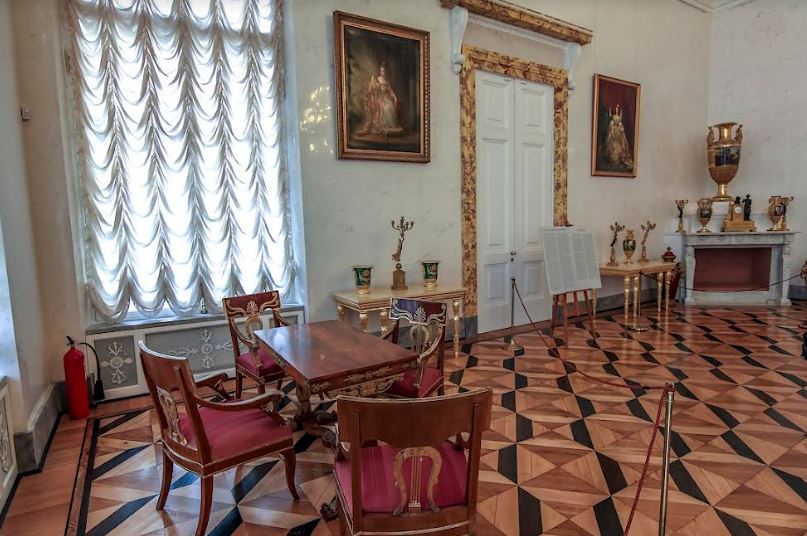
In the Name of the Father, and of the Son, and of the Holy Ghost. Take heed! Come, all Spirits! By the virtue and power of your king, and by the seven crowns and chain of your Kings, all Spirits of the Hells are forced to appear in my presence before this circle of Solomon, whensoever I shall call them. Come, then, all at my order, to fulfil that which is in your power, as commanded. Come, therefore, from the East, South, West, and North! I conjure and command you, by the virtue and power of Him who is three, eternal, equal, who is God invisible, consubstantial, in a word, who has created the Heavens, the sea, and al which is under Heaven. I conjure thee, Lucifer, by the living God, by the true God, by the holy God, who spake and all was made, who commanded and all things were created and made! I conjure thee by the ineffable name of God, ON, ALPHA, and OMEGA, ELOYM, YA, SADAY, LUX, MUGENS, REX, SALUS, ADONAY, EMMANUEL, MESSIAS; and I adjure, conjure. I command you, O all ye demons dwelling in these parts, or in what part of the World soever ye may be, by whatsoever power may have been given you by God and our holy Angels over this place, and by the power Principality of the fernal abysses, as also by all your brethren, both general and special demons, whether dwelling in the East, West, South, or North, or in any side of the Earth, and, in like manner, by the power of God the Father, by the wisdom of God and the Son, by the virtue of the Holy Ghost, and by the authority I derive from our Savior Jesus Christ, the only Son of God. #RandolphHarris 6 of 6
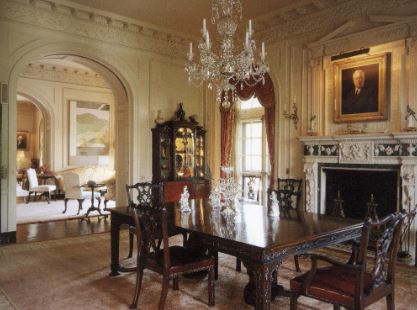
The idea that we survive physical death, that some part of our being is immortal, profoundly affects the loves of those who harbor such a belief. https://winchestermysteryhouse.com/

And please be sure to check out the online gift store: https://shopwinchestermysteryhouse.com/

Ruin is the Destination Toward Which All Men Rush

With equality and gender-based studies becoming more important, it is a goo idea that we take a look at a gender-based analysis of residential burglary. The study is based on interviews with 105 active residential burglars, 87 of whom were males and 18 were females. The project employed a snowball sampling strategy in which an ex-offender recruited known burglars who were presently operating in a city. The gender-based compassion suggests that, in many way, female burglars resemble their male counterparts. For example, both group display long criminal histories that span a variety of property, violent, and public order offenses categories. Both groups accumulate long, diverse substance abuse histories that overlap with and contribute to their involvements in burglary. At the time, the gender-based comparison reveal several differences. Female burglars begin offending at a later age, are more likely to co-offend, and have less contact with authorities. The typology of female burglars describes offenders as either accomplices or partners. Factor of motivation, levels of target selection and planning, and patterned work roles serve to differentiate these two conceptual categories. Despite growing interest in female criminality, little is known about the nature of women’s participation in crimes statistically dominated by males. Certainly that is the case for residential burglary, an offense labeled as an overwhelmingly male enterprise. For example, we hardly know how female become involved in such offenses or what roles they play. Are they tempted into these crimes, for instance, by the influence of delinquent peers or by the use of drugs? #RandolphHarris 1 of 21

Because we lack detailed knowledge, we cannot assess the extent to which the processes underly burglaries committed by females differ from those underlying burglaries by males. This lack also restricts our capacity to detect important differences among female burglars. An assessment of these difference, however, is crucial in formulating effective policy responses to female criminality and to developing theories of lawbreaking by women. Short of observing burglaries, perhaps the best way to acquire this information is to go to the offenders themselves. The most pressing need today, in researching the agenda for feminist criminology, is observation and interviewing so we can plunge more deeply into the social Worlds of girls and women. Such a strategy will allow researchers to comprehend women’s crime on its own terms. Often it is claimed that offenders are versatile and commit a wide range of offense. This observation, however, is derived largely from studies of males conducted in criminal justice settings rather than on the street. During our interviews we asked the subjects whether they ever had committed other sorts of crimes beside residential burglary. We did so because we were concerned primarily with prevalence—that is, whether the subject ever had engaged in other kinds of offenses. Stealing (which includes shoplifting and corresponds to the legal definition of this activity), auto theft, and assault were the offenses most commonly reported by males. Stealing and assault were mentioned most frequently by the females; these offenses were comparable in rank of frequency to those reported by the males. #RandolphHarris 2 of 21

Beyond these two offenses, however, little other criminality was reported by the females. The only meaningful differences between the men and the women for this measure was found in regard to auto theft. This crime was fairly common among the males, but unknown among the females. The explanation for this difference might reside in a strong cultural tradition linking masculinity to driving and car ownership. Alternatively, males may have “cornered the market” in auto theft; to be profitable, such a crime requires sophisiticated coneections with garage owners, automotive recycle yard employees, and car dealerships. One important aspect of offending style concerns the degree of crime specialization—that is, the extent to which offenders concentrate on one particular type of offense. When we asked offenders whether they had been involved in crimes other than residential burglary during their most recent period of offending, thirty-four percent of the males and 42 percent of the females claimed that they had committed only residential burglaries during this period (roughly the last six months). This finding is consistent with a substantial body of previous research showing that offenders display considerable diversity over the course of their criminal careers, but may specialize in a particular “line” for short periods. This phenomenon is labeled as “short-term specialization.” Another element of offending style concerns the inclinations to work with others in carrying out cries. #RandolphHarris 3 of 21

Previous research demonstrated that more often than not, [burglary] is committed by two or more persons acting in concert. The results of our study bear this out: 79 percent of the males and all of the females reported that they had worked with others in the past. The males showed considerable variation in frequency of working with others: 39 percent said they “seldom” worked with others, while another 39 percent reported that they “always” did so. For the women, however, the picture was much clearer: an overwhelming 83 percent reported that they “always” worked with others, and the remaining 17 percent states that they “usually” did so. The final aspect of offending style that we examined here relates to drug and alcohol use among our respondents, as well as to their perceptions of the role played by intoxicants in leading them to commit such crimes. Our research reveals that there is little difference between the males and the females in self-report drug use. When the drug users were asked whether addiction had anything to do with their burglaries, 71 percent of the males and 82 percent of the females answered affirmatively. A majority of those in both groups said they committed burglaries to obtain the money they needed to buy more drugs. In addition, slightly more than three-quarters of the users in each group—76 percent of the males and 79 percent of the females—claimed that they used drugs before committing their burglaries. A higher percentage of females than of males started that they “always” or “usually” used drugs beforehand. #RandolphHarris 4 of 21

One explanation seems to be that many female burglaries arise from crack “runs.” This point, however, is difficult to determine conclusively because use of the drug is heavily stigmatized. We explore male-female differences on three dimensions designed to measure burglary offending histories: age at first burglary, total number of lifetime burglaries, and lambda, the mean number of annual burglaries. The ages at which males and females committed their first residential burglary differed significantly: the males generally started much earlier in life. None of the female burglars had committed their first offense before age 12, but 22 percent of the males had done so. The modal category for males was the 13-16 age bracket, which accounted for 53 percent of the cases. Sixty-one percent of the females, on the other hand, were over 16 years old when they carried out their first burglary. Given that the females started to commit burglaries later, on average, than their male counterparts, we are not surprised that a greater proportion of females had been involved in fewer than 20 residential burglaries in their lifetime. Perhaps more interesting, 39 percent of the females had committed more than 70 lifetime residential burglaries, a proportion roughly comparable to the males’ figure of 41 percent. The bimodal distribution of the females’ responses suggests that women are likely to engage in burglary at two very distinct levels, and perhaps to employ two different styles. #RandolphHarris 5 of 21

The males were more likely than the females to have had contact with the system for offenses of all types. This difference was most notable at the stage of the criminal justice process that resulted in incarceration. Over ninety percent of the respondents in each group had been arrested previously, but only one woman (6 percent) had been convicted and sentenced to a term of imprisonment. In contrast, 26 percent of the males had served time in the past. This difference may exist in part because the females began offending later and consequently had fewer “years at risk.” Other factors, however, are probably at work as well including an assumption by the police that most burglars are male, which allow females to remain above suspicion and a tendency for those females who are arrested to receive preferential treatment in the courtroom. Certainly the women in our sample believe that their gender conferred a degree of protection from the law. Several expressed the belief that authorities would not take action against them simply because they were female. Is it not becoming clear, in light of the existence of deceiving offenders and their methods of deception, that close examination is needed of modern theories, conceptions, and expressions regarding things in connection with the ultimate concern and its way of working in man? For only the certainty of ultimate concern, apart from “views” of truth, will avail for protection or for successful warfare in the conflict with wicked offenders in the self-actualized hierarchy. #RandolphHarris 6 of 21

When we reach self-actualization, we are at the highest hierarchy of the pyramid, and this is denoted by morality, creativity, spontaneity, problem solving, lack of prejudice, and acceptance of facts. There are five levels in the pyramid. At the very bottom, people are interested in physiological functions only which include: breathing, food, water, pleasures of flesh, sleep, homeostasis, and excretion. At the second level of the pyramid, individuals are concerned with safety and this entails security of: body, employment, resources, mortality, the family, healthy and property. At the third hierarchy most are concerned with love and belonging. This includes friendship, family, sexual intimacy. At the fourth hierarchy, this realm focuses on esteem: self-esteem, confidence, achievement, respect of others, respect by others. All that is in any degree the outcome of the mind of the “natural man” will prove to be but the weapons of straw in this great battle, and if we rely upon others’ “views of truth,” or upon our own human conceptions of truth, offenders will use these very things to deceive us—even building us up in these theories and views so that under cover of them he or she may accomplish one’s purpose. We cannot, therefore, at this time, overestimate the importance of believers having ready minds to “examine all things” they have thought, and perhaps taught, in connection with the things of ultimate concern and the self-actualized realm—all the “truths” they have held, all the phrases and expressions they have used in “virtue teachings,” and all the ideas they have absorbed through others. #RandolphHarris 7 of 21

For any wrong interpretations of truth, any theories and phrases which are man-conceived and which we may build upon wrongly, will have perilous consequences to ourselves and others in the conflict with truth and individual self-actualized people passing through. Because in the present offenders will comes to them with deceptions in DOCTRINAL form, self-actualized individual must examine carefully what they accept as “doctrine,” least it should be from the emissaries of the deceiver. Some people are tired of struggling and want only to know a quiet silence. This can be a shock to one’s own awareness of who he or she is. One may have always considered struggle essential in growth, and in many crises and conflicts it has provided the turning point in one’s life. Not wanting to be burdened and overwhelmed by heavy feelings and thoughts or by complicated searching and painful of what is wrong with oneself, people, and life, this can create the desire to turn away from the struggle. And this is what causes the requirement to be alone in simple and ordinary ways. Once one goes through this process of healing in solitude, and by only engaging in simple routine, gradually, with each day, an individua is able to listen a little more to what others are saying. (This is why during a break up, space, instead of forcing the issues is important. Of course, there are times when you need to know what the reason it so it may be a good idea to press for answers to start a dialogue and not necessarily to just focus on getting back together.) #RandolphHarris 8 of 21

Slowly it becomes each to be interested in and comfortable with other people’s problems. Although there may be some drawbacks. Some individual may be able to be with others while you struggle to make decisions, but one may not be opened to questions or personal comments and responses directed to one. This may cause one to offer nothing of oneself and comment only on what one is hearing and understanding from others. During this period, some find work a truly rewarding activity; it is a place that feels like home. It does not matter whether the work takes the form of writing—reports, references, and letters—or reading. Or, if it involved physical activities, one may become totally absorbed in what one is doing, get lost in the activity and experience a full sense of relief. Active mental and physical involvement in solitary projects can be a sense of salvation. By surrendering to powers within to powers within and sources of light in the universe, in some mysterious way, a miracle happens. It is the loss of the old man and the discovery of the new man. When the light reveals itself, the individual is ready to accept it. This reduces the need to force or push or beseech. One simply waits with firm faith that one is meant to be whole again and that one will live more in a full and complete way. It becomes clear that people one loves and those who love one cannot reach the individual going through changes. And so, life has to come from another source, and that new direction will emerge in solitude. #RandolphHarris 9 of 21

The problem of the truth of faith presents itself from both the subjective and objective sides. Subjectively, faith is true if it adequately expresses an ultimate concern, that is, if the symbols of faith are alive and speak to the heart with an urgency of concern that impels to action and replay. This criterion is more a rule of thumb that works best for obviously dead symbols and is not so useful in judging contemporary ones. However, it is the objective truth of faith that interests us here. The content of faith is true if it is really and not just apparently ultimate. The great danger is demonization, elevation of the symbol to ultimacy, which results in idolatrous faith. Therefore, the criterion of faith is self-negation. The true symbol not only conveys the ultimate, but proclaims its own non-ultimacy. It pronounces a Yes and a No. For the Christian the Cross of the Christ is such a symbol. Name for this criterion—the No that follows immediately on the heels of the Yes—is the Protestant principle. The Protestant principle pervades in this whole theology, both systematically and chronologically. Chameleon-like, it changes its formula of expression against the background of diverse theological problems. Hence, a rapid rundown of its various formulations is useful for identifying it. #RandolphHarris 10 of 21

In addition to being the objective criterion of faith, the Protestant principle expresses man’s infinite distance from God and his dependence upon the divine initiative. The Protestant principle is the prophetic protest against every form of self-absolutizing—for example, the demonic elevation of the churches, of the Christian Bile, and the priesthood to absolute validity. The Protestant principle is “resistance to idolatry,” that is, it stands for non-conformity in family, school, state, and church. The Protestant principle protests the objectifying of grace (die Vergegenstandlichung der Gnade) and so smashes the barriers between the holy and the secular. For, by the Protestant principle, God is as near to the lowest as he is to the highest, as close to the material as to the spiritual. These manifold expressions of the Protestant principle can be summarized in and derived from the basic doctrine that the Protestant principle is justification by grace through faith. We reject the traditional Protestant formula of “justification by faith” on the grounds that is has been misunderstood to mean that the human act of faith sets in motion God’s justifying act. Faith itself is a gift of grace, all justifying actions is entirely on the part of God, and, consequently, the more accurate formula is “justification by grace through faith.” The Protestant principle ultimately rests upon an experience of God’s majesty that attributes absoluteness and holiness to him alone and denies such dignity to all else. #RandolphHarris 11 of 21

Untrammeled choices of individuals could lead to disaster for society. Picture a paster open to all. It is to expected that each herdsman will try to keep as many cattle as possible on this commons. Therein is the tragedy. Each man is locked into a system that compels one to increase one’s heard without limit, in a World that is limited. Ruin is the destination toward which all men rush, each pursuing one’s own best interest in a society that believes in the freedom of the commons. Overpopulation, pollution, excessive fishing, and depletion of exhaustible resources are all part of the problem. People Worldwide must recognize the necessity of restricting individual freedom in these choices, and accept some mutual coercion mutually agreed upon. Depending upon the circumstances, the tragedy of the commons could be a many-person prisoner’s dilemma (each person grazes too many cows) or a spillover problem (too many people choose to become herdsmen). The economist’s favorite solution would be the establishment of property rights. This is what actually happened in the fifteenth and sixteenth centuries in England: the common land was enclosed and claimed by the local aristocrats or landlords. When land is private property, the invisible hand will shut the gate to just the right extent. The owner will charge grazing fees to maximize one’s rental income; the grazing fees will make the owner richer, and the herdsmen poorer. This approach is not feasible in some instances. Property rights over the high seas are hard to define and enforce in the absence of an international government, as is control over air that move from one country to another carrying pollutants. #RandolphHarris 12 of 21

For this reason, whaling and acid rain must be handled by more direct controls, but securing the necessary international agreements is no easy matter either. Population is an even harder problem. The right of decision about one’s family, including its size, is enshrined in the United Nations’ Universal Declaration of Human Rights and in many countries bills of rights. Countries like China and India that have at times used some coercion in their population-control efforts have evoked widespread disapproval. Sometimes, when the group is small enough, voluntary cooperation solves the problem. When two oil or gas producers have wells that tap into the same underground deposit, each has the incentive to speed up one’s uptake, to get more of the resource before the other does. When both of them follow this policy, the excessive speed of depletion can actually lower the total amount that can be recovered from the deposit. In practice, drillers recognize the problem and seem able to reach production-sharing arrangements that keep at the proper level that total flow from all wells tapping one deposit. All’s well that ends well? For the less developed countries (LDCs), as for the rest of the World, power stems from the holster, the wallet, and the book—or, nowadays, the computer. Unless we want an anarchic World, with billions of poverty-stricken people, unstable governments led by unstable leaders, each with a finger on the missile launcher or chemical or bacteriological trigger, we now need global strategies for preventing the de-coupling that looms before us. #RandolphHarris 13 of 21

In the years immediately ahead the LDCs will acquire sophisticated new arms—enormous firepower will be added to their already formidable arsenals. Why? As LDC economic power diminishes, their rulers face political opposition and instability. Under the circumstances, they are likely to do what rulers have done since the origins of the state: They reach for the most primitive form of power—military force. However, the most acute shortage facing LDCs is that of economically relevant power is no longer through the exploitation of raw materials and human muscle but, as we have seen, through application of the human mind. Development strategies make no sense, therefore, unless they take full account of the new role of knowledge in wealth creation, and of the accelerative imperative that goes hand in hand with it. With knowledge (which in our definition includes such things as imagination, values, images, and motivation, along with formal technical skills) increasingly central to the economy, the Brazils and Nigerians, the Bangladeshes and Haitis must consider how they might best acquire or generate this resource. It is clear that every wretched child in Northeast Brazil or anywhere else in the World who remains ignorant or intellectually underdeveloped because of malnutrition represents a permanent drain on the future. Revolutionary new forms of education will be needed that are not based on the old factory model. Acquiring knowledge from elsewhere will also be necessary. This may take unconventional—and sometimes even illicit—forms. Stealing technological secrets is already a booming business around the World. We must expect shrewd LDCs to join the hunt. #RandolphHarris 14 of 21

Another way of obtaining wealth-making know-how is to organize a brain drain. This can be done on a small scale by bribing or attacking teams of researchers. However, some clever countries will figure out that, around the World, there are certain dynamic minorities—often persecuted groups—that can energize a host economy if given the chance. The overseas Chinese in Southeast Asia, Indians in East Africa, Syrians in West Africa, Palestinians in parts of the Mideast, Jews in America, and Japanese in Brazil have played this role at one time or another. Transplanted into a different culture, each has brought not merely energy, drive, and commercial or technical acumen, but a pro-knowledge attitude—a ravenous hunger for the latest information, new ideas, skills. These groups have provided a kind of hybrid economic vigor. They work hard, they innovate, they educate their children, and even if they get rich in the process, they stimulate and accelerate the reflexes of the host economy. We will no doubt see various LDCs searching out such groups and inviting them to settle within their borders, in the hopes of injecting a needed adrenaline into the economy. During World War II the Japanese military actually drafted a plan to bring large numbers of persecuted European Jews to Manchuria, then called Manchukuo, for this purpose. However, the “Fugu Plan,” as it was known, was never implemented. #RandolphHarris 15 of 21

Smart governments will also encourage the spread of nongovernmental associations and organization, since such groups accelerate the spread of economically useful information through newsletters, meetings, conferences, and foreign travel. Associations of merchants, plastics engineers, employers, programmers, trade unions, bankers, journalists, etcetera, serve as channels for rapid exchange of information about what does and does not work in their respective fields. They are an important, often neglected communications medium. Governments serious about economic development will also have to recognize the new economic significance of free expression. Failure to permit the circulation of the new ideas—including economic and political ideas, even if unflattering to the state—is almost always prima facie proof that the state is weak at its core, and that those in power regard staying there as more important than economic improvement in the live of the people. Governments committed to becoming part of the new World will systematically open the valves of public discussion. Other governments will join knowledge consortia—partnerships with other countries or with global companies—to explore the far reaches of technology and science and, especially, the possibility of creating new materials. Instead of pandering to obsolete nationalist notions, they will purse the national interest passionately—but intelligently. #RandolphHarris 16 of 21

Rather than refusing to pay royalties to foreign pharmaceutical companies on the lofty ground that health is above such grubby concerns, as Brazil has done, they will gladly pay the royalties—provided these funds stay inside the country for a fixed number of years, and are used to finance research projects carried out jointly with a local pharmaceutical firm’s own experts. Profits from products that originate in this joint research can then be divided between the host country and the multinational. In this way the royalties pay for technology transfer—and for themselves. Effective nationalism thus replaces obsolete, self-destructive nationalism. Similarly, intelligent governments will welcome the latest computers, regardless of who built them, rather than trying to build a local computer industry behind tariff walls that keep out not merely products but advanced knowledge. The computer industry is changing so fast on a World scale that no nation, not even the United States of America or Japan, can keep up without help from the rest of the World. By barring certain outside computers and software, Brazil managed to build its own computer industry—but is products are backward compared with those available outside. This means that Brazilian banks, manufacturers, and other businesses have had to use technology that is inefficient compared with that of their foreign competitors. They compete with one hand tied behind them. Rather than gaining, the country loses. #RandolphHarris 17 of 21

Brazil violated the first rule of the new system of wealth creation. So what you will with the slowly changing industries, but get out of the way of a fast-advancing industry. Especially one that processes the most important resource of all—knowledge. Other LDCs will avoid these errors. Some, we may speculate, will actually invest modestly in existing venture capital funds in the United States of America, Europe, and Japan—on condition that their own technicians, scientists, and students accompany the capita and share in the know-how developed by the resulting start-up firms. In this way, Brazilians or Indonesians or Nigerians or Egyptians might find themselves at the front edge of tomorrow’s industries. Astutely managed, the program could well pay for itself—or even make a profit. Above all, the LDCs will take a completely fresh look at the role of agriculture, regarding it not necessarily as a “backward” sector but as a sector that potentially, with the help of computers, genetics, satellites, and other new technologies, could someday be more advanced, more progressive than all the smokestacks, steel mills, and mines in the World. Knowledge-based agriculture may be the cutting edge of economic advantage of tomorrow. Moreover, agriculture will not limit itself to growing food, but will increasingly grow energy crops and feed stocks for new materials. These are but a few of the ideas likely to be tested in the years to come. #RandolphHarris 18 of 21

However, none of these efforts will bear fruit if the country is cut off from participation in the fast-moving global economy and the telecommunications and computer networks that support it. The maldistribution of telecommunications in today’s World is even more dramatic than the maldistribution of food. There are 7.33 billion unique mobile phones users in the World today, which makes 91.40 percent of people in the World cell phone owners. The lopsided distribution of computers, data bases, technical publications, research expenditures, tells us more about the future potential of nations than all the gross-national-product figures ground out by economists. To plug into the new World economy, countries like China, Brazil, Mexico, Indonesia, India, as well as the Soviet Union and the East European nations, must find the resources needed to install their own electronic infrastructures. These must go far beyond mere telephone services to include up-to-date, high-speed data systems capable of linking into the latest global networks. The good news is that today’s slow countries may be able to skip over an entire stage of infrastructure development, leapfrogging from First to Third Wave communications without investing the vast sums needed to build Second Wave networks and systems. The Iridium systems, for example, announced by Motorola, Inc., placed 77 tiny satellites into low orbit, which make it possible for millions in remote or sparsely populated regions like Soviet Arctic, the Chinese desert, or the interior of African to send and receive voice, data, and digitized images through handheld telephones. #RandolphHarris 19 of 21

It is not necessary to lay cooper or even fiber optic cable across thousands of miles of jungle, ice or sand. The portable phones communicate directly with the nearest overhead satellite, which will pass the message along. Other advances also similarly slashing the huge costs of telecommunications, brining them within reach of today’s impoverished counties. Large scale production and hyper-competition among American, European and Japanese suppliers will also drive down costs. The new key to economic development is clear. The “gap” that must be closed is informational and electronic. It is a not gap between the North and the South, but between the slow and the fast. However, China’s inadequacy in services is of a structural character. It has it historical and cultural roots, especially the legacy of several decades long epoch of Soviet-style socialism. The mentality of many Chinese service companies and workers may have exceeded those in America. When I was in China, I was impressed by their customer service. They were extremely polite, spent time talking to me, even offered me candy and gave me a soccer ball for shopping at one of their malls. They did treat me like a king. I did not want to come back to America because I loved China so much. Maybe people have different experiences? #RandolphHarris 20 of 21

The overall picture of the service economy in China is not gloomy. Even on the airplane they were polite and told me to stop being so “Western.” The hotels were awesome, as well as the recreation facilities and restaurants. As local consumers’ demand for a variety of good services is increasing, American, European and Japanese service providers have a good chance to exploit their competitive advantage in this area, establishing a stronger position at the Chinese market. Here, however, comes a surprise. You may expect that, in the wake of what was written earlier, America and Europe are enjoying substantial surpluses in their services trade with China, not incomparable to their huge deficits in merchandise trade. But the thing with the people in China, one cannot tell when they are just being nice. Things are so different. They try so hard to like people and make them happy that it seems like they really like you. And they try really hard to keep a neat appearance, are very careful with their work, and take pride in what they do. Because their image and reputation depends a lot on word of mouth, they are very careful not to hurt your feelings and to conceal negative topics, ideas, thoughts and behavior. And their houses are really clean, many of them have never heard of “racism” and the student work very hard in school. It is amazing how many hours a day they spend studying. They really went out of their way to impress us, like hosting us in a restaurant, but making it a private event, of course it meant getting up at 3 A.M. in the morning, but I was happy to. They are so polite and taught me if something is meant to be, you will meet that person again. #RandolphHarris 21 of 21


Los Angeles Will be Two and a Half Hours from Tokyo

Given that burglars are disproportionately young, poor, city-dweller, they tend to have frequent contact with other habitual offenders. There are various structures and processes that go along with the “stolen property system”—the underground market through which in-demand goods are stolen, housed, marketed, and resold on the street of America. Burglary is a crime that is marked by varied levels of social organization. Only on rare occasions do we find burglars who work as loners or within formal organizations. More often, burglars will operate as colleagues—the offender commits the crime along but relies on other members of the criminal subculture to supply him or her with inside information or to assist in converting stolen property into cash. Burglars who take the situation to the next level and enlist help in the actual break-in follow a more peerlike existence. Here, loose partnerships are maintained and invoked when a burglary opportunity presents itself. A primitive example of the peer model would be two or three drug users who randomly stumble upon an unlocked home or unsupervised business and decide to work together to take it down. In some cases, burglary offenders will align themselves in a teamlike format. These offenders invoke a division of labor with each participant serving an owned predetermined role and duties. One person might be assigned to lookout/driver role. Another might serve as the entry specialist, defeating any lock and alarms that are confronted. Still another person can take on the “muscle” role, responsible for doing the heavy lifting. #RandolphHarris 1 of 16

Socialization scripts play an important part in how and why burglars commit their crimes. Interview-based research suggests that novice or occasional burglars often rely on the tutelage of more seasoned offenders as a way of learning the proverbial ropes of burglary. Novices receive advice and instructions on issues such as target selection, how to foster informants, how to defeat burglary countermeasures, and how to best convert stolen goods into cash. This socialization generally takes shape as informal street corner conversations or jailhouse bravado. On paper, burglary appears to receive serious treatment from the criminal justice system. The Model Penal Code classifies burglary as a felony in the third degree. In most jurisdictions, such as offense is subject to 1 to 5 years in prison. If the burglar is armed or threatens or inflicts bodily harm on another while unlawfully within a dwelling, that individual might see the charges elevated to second degree felony. In practice, however, burglary receives mixed levels of formal response from the various components of the criminal justice system. First, let us consider the response of law enforcement authorities. Police agencies were able to effect an arrest for only 13 percent of the nearly 2.1 million burglaries that were reported to them in 2022. No other form of index crime yields such a dismal clearance rate. Some of this slippage can be attributed to the covert nature of the crime—police often have no witnesses and minimal clues to guide the investigation. However, these low clearance rates are also impacted by the fact that many police officers and police agencies afford a low priority to burglary cases. #RandolphHarris 2 of 16

Court data reveal a different trend in terms of the veracity with which burglary cases are adjudicated. U.S.A. courts produced nearly 90,000 felony burglary cases in 2022. This figure represents 10 percent of all felony convictions that year. In fact, 68 percent of the burglary cases that were tried resulted in a conviction for the same offense and only 24 percent avoided some sort of conviction. The researchers found that burglary defendants do not receive a reprieve from the courts when it comes time for sentencing. A full 74 percent of the convicted burglars were sentenced to time behind bars. This rate was surpassed only by murder, robbery, drug trafficking, and driving-related offenses. While the median prison sentence for a convicted burglar was 41 months, nearly 10 percent received sentences in excess of 10 years. Our correctional system does not appear to be particularly forgiving to persons who are convicted of burglary. On average, burglary offenders can expect to serve almost half of their sentence—roughly two years. These time-served figures are on par with those of other property offenses (theft, fraud, and motor vehicle theft) but somewhat lower than that observed for violent (54 percent) and weapon-related offenses (60 percent). Accounts from known burglars clearly suggest that informal social control efforts go as long way to deter and/or displace burglary activity. A minimal amount of vigilance on the part of homeowners can go a long way. Measures designed to combat the relatively small population of high incidence “professional” burglars tends to overemphasize the skill and determination of most burglars. #RandolphHarris 3 of 16

Burglaries are expensive, complex, and require long term commitment at many levels. In fact, most burglars are young, unskilled, and opportunistic. This suggests that emphasis should be directed at such factors as surveillability, occupancy, and accessibility. More specifically, dogs, good locks, and alarm systems deter most burglars. Community-level informal social control can also play an important role in burglary prevention. When it comes to surveillability cues, burglars tend to avoid neighborhoods with a lot of foot traffic or active neighborhood watches. This implies that observant or even nosy neighbors can have a measurable impact on burglary. However, these types of collective efforts are difficult to enact and maintain in the areas that burglars most prefer—urban neighborhoods. If nothing else, tenants of “crime prevention through environmental design” should be considered at a neighborhood level. Simple environmental characteristics such as cul-de-sac street design, high levels of lightening, and well pruned landscaping that minimizes unobservable entry and exit points can have a significant impact on burglary victimization levels in a given community. The aforementioned informal social control efforts represent examples of target hardening strategies aimed at deterring would-be burglars from victimizing a given house or displacing offenders from a given community. Also, measures should be designed that aim to undermine offenders’ strong attachment to street culture. Expanded employment opportunities are one possible, but foreboding avenue to lure offenders out of street life. #RandolphHarris 4 of 16

There exist even more simple and realistic measures that might effect change in this area. For example, a coordinated burglary prevention program that was implemented in a midsize U.S.A. city during the early 1980s. Community activism and community involvement (id est, block meetings, neighborhood cleanups, and raised awareness of vulnerabilities and potential offenders) showed promise for reducing burglary. If community members care about the condition of their neighborhood and are willing to take steps to clean it up and exercise vigilance over problem people and places, there is hope for reducing burglary and other forms of street crime. Most crime occurs during the nighttime. A close examination of NCVS and UCR data suggests that 50 percent to 60 percent of all residential burglaries go unreported. The figure reported here was derived by adding the NCVS data on residential burglaries to an adjusted estimate of nonresidential burglaries that were reported in the UCR—one that factors a 60 percent nonreporting rate. These data must be viewed with caution because 50 to 60 percent of all burglaries go unreported to police and only 14 percent of these lead to arrest. Over time, the crime of burglary has slowly slipped down the list of crime fighting priorities. At present, less than half of all burglaries get reported to police, and only 13 percent of those result in an arrest. What kinds of social and legal factors have contributed to this present level of empathy when it comes to the formal and informal society control of burglary? #RandolphHarris 5 of 16

Adjudication data suggest that accused burglars face a high certainty of being convicted and sentenced to prison. This should send a message to police that burglary is a high priority for our nation’s prosecutors and judges. Still, burglary investigation and arrest efforts remain lukewarm at best. What kinds of factors contribute to police officers’ attitudes and behaviors regarding burglary patrol and enforcement? Considerable evidence suggests that burglars refine strategies and cues that help them identify soft and potentially lucrative targets. Does this mean that burglars are more rational and planful than other types of criminals? The Lord has declared that “no unclean thing can inherit the kingdom of Heaven,” reports Alma 11.37. Our sins make us unclean—unworthy to return and dwell in the presence of our Heavenly Father. They also bring anguish to our soul in this life. Repentance is sometimes a painful process, but it leads to forgiveness and lasting peace. The power of sin is great. To become free from it, we must turn to your Heavenly Father, pray in faith, and act as He asks us to. The Holy Spirit should never become the center and object of thought and worship, place which He Himself does not desire, and which it is not the purpose of the Father in Heaven that He should have or occupy. “He shall not speak from Himself,” reports John 16.13, said that Lod Jesus before Calvary, as He foretold the Spirit’s coming at Pentecost. He would act as Teacher (John 14.26), but teaching the words of Another, not to Himself (John 15.26); He would only glorify Another, not His own; He would bear witness to Another, not Himself (John 16.14); He would only speak what was given Him to spear by Another (John 16.13). #RandolphHarris 6 of 16

The Spirit’s entire work would be to lead souls into union with the Son and give proper knowledge of the Father in Heaven, while He Himself directed and worked in the background. If a man who is untaught in the scriptural statements about the work of the Triune God makes “obeying the Spirit” his supreme purpose, the deceiver will aim to counterfeit the guidance of the Spirit, and even the presence of the Spirit Himself. It is just here that the ignorance of the seeker about the spiritual Word now opened to one, the working of evil powers in that realm, and the conditions upon which God works in and through one, gives the enemy his opportunity. It becomes the time of greatest peril for anyone unless one is instructed and prepared by the Lord, as the disciples were for three whole years. The danger lies in the area of supernatural “guidance,” for one must know the conditions of cooperation with the Holy Spirit in order to discern the cooperation with the Holy Spirit in order to discern the will of God and be able to recognize counterfeit manifestations. The “discerning of spirits” is required to detect the workings of the false angel of light, for he is able to bring about counterfeit gifts of prophecy, tongues, healing, and other spiritual experiences connected with the work of the Holy Ghost. Those who have their eyes opened to the opposing forces of the metaphysical realm understand that very few believers can guarantee that they are obeying God and God only, in directly supernatural guidance, because there are so many factors liable to intervene, such as the believer’s own mind, spirit, or will and the deceptive intrusion of the powers of darkness. #RandolphHarris 7 of 16

Knowledge is essential here. Scripture teaches that there is a God-given gift of “discerning of spirits” (1 Cor. 12.10) which enables one to detect that an unwelcome spirit is at work, but there is also a test of spirits which is doctrinal (1 John 4.1-6). In the former, a believer can discern in his spirit that lying spirits are at work in a meeting, or in a person, but one may not have the understanding needed for testing the doctrines being set forth by the teacher. One needs a level of knowledge in both cases: knowledge to read one’s spirit with assurance in the face of all contrary appearances, that the supernatural workings are not “of God,” and knowledge to detect the subtlety of “teachings” bearing certain infallible indications that they emanate from the pit, even while appearing to be from God. As to personal obedience to God, the believer can detect whether or not one is obeying God in some “command” by judging its fruits, and by being aware of the character of God—such as the truth that God has always a purpose in His commands, and He will give no command out of harmony with His character and Word. Often times people wait for something to happen, for some sure way to nurture oneself, to live from within. Music, art, poetry, hot baths, savory foods, wind, rain—nothing affects them. In the past, within days after a solitary retreat, many had found solace and strength in their loneliness. They had always found a way, at least a beginning that would lead to action and to life with others. #RandolphHarris 8 of 16

However, it is impossible to find what one is looking for, and one is still on a lonely journey, waiting from a spark from within. Because some people feel empty and eroded inside, they avoid all significant communication. More than anything else the interpersonal aspects of living exhaust some and move them to withdraw from real meetings with others. This leaves an individual certain that one does not want to struggle anymore. Doubt, risk and anxiety—inherent elements of faith—can be overcome only by another of its elements, courage. Courage is an ontological concept, the self-affirmation of being in spite of non-being. Faith is the experience of the holy; it is the state of being grasped by the power of being-itself. From this experience flows the power to assert oneself in the face of anxiety. Faith is participation in the object of faith, and yet is the separation from it. In spite of separation, courage expresses participation in the power of being and meaning. This in spite of element is the courage that takes all doubt, risk, and anxiety into itself and overcomes them without removing them. Faith, then, is the basis of courage, and courage is the manifestation of faith. In the extreme situation of a person seized by radical doubt and confronted with the specter of universal meaninglessness, the question arises: Is there such a thing as the courage of despair? Such a courage is entirely possible, for that act of accepting meaninglessness is in itself a meaningful act. #RandolphHarris 9 of 16

The courage of despair enables one, even while in the grip of meaninglessness, to declare one’s situation, and this declaration has meaning. In other words, there cannot be an infinite regression of negatives—in this case, negativity of meaning. At least, one has to admit, negation of meaning is meaningful, or meaninglessness will have lost all meaning. The faith which feeds the courage of despair is called “absolute faith,” for it can have no specific content. Its content is indefinable, since everything defined is dissolved by doubt and meaninglessness. However, certain elements that constitute absolute faith can be discerned. There is an experience of the power of being in the face of nonbeing, an awareness of a hidden meaning within the destruction of meaning. There is the dependence of nonbeing upon being, of meaninglessness upon meaning, of the negative upon the positive. And, lastly, there is the acceptance of the power to accept meaninglessness. Thus, absolute faith is faith which has been deprived by doubt of any concrete content, which nevertheless is faith and the source of the most paradoxical manifestation of the courage to be. Faith is without a special content, yet it is not without content. The content of absolute faith is the “God above God.” When people speak of God, they usually refer to the God of theism. Now theism can mean either a vague, unspecified affirmation of God, or a divine-human encounter of persons, or theological theism which makes God a being beside other beings. However, the God of absolute faith is above and beyond the God of any theism, for the God above God is the power of absolute faith as experience of the God who appears when God has disappeared in the anxiety of doubt. #RandolphHarris 10 of 16

The morning traffic from Oakland to San Francisco across the Bay Bridge gets backed up from 7.30 to 11.00 A.M. Until the jam clears at 11.00, each additional car that enters the traffic makes all those who come later wait just a little longer. The right way to measure this cost is to sum up the additional waiting-times across everyone who is delayed. What is the total waiting-time cost imposed by one additional car that crosses the bridge at 9.00 A.M.? You may be thinking you do not know enough information. A remarkable feature to this problem is that the externality can be calculated based on the little amount you have been told. You do not need to know how long it takes the cars to cross the toll plaza, nor the distribution of cars that arrive after 9.00. The answer is that same whether the length of the traffic jam stays constant or varies widely until it cleans. The trick is to see that all that matters is the sum of the waiting time. We are not concerned with who waits. (In other circumstances, we might want to weigh the waiting times by the monetary value of time for those caught in the jam.) The simplest way to figure out the total extra waiting time is to shuffle around who waits, putting all the burden on one person. Imagine that the extra driver, instead of crossing the bridge at 9.00 A.M., pulls his car over to the side and lets all the other drivers pass. If he passes up his turn in this way, the other drivers are no longer delayed by the extra car. Of course, he has to wait two hours before the traffic clears and the road is clear. #RandolphHarris 11 of 16

However, these two hours exactly equal the total waiting time imposed on all the other drivers if he were to cross the bridge rather than wait on the sidelines. The reason is straightforward. The total waiting time is the time it takes for everyone to cross the bridge. Any solution that involves everyone crossing the bridge gives the same total waiting time, but distributed differently. Looking at the solution in which the extra car does all the extra waiting is the easiest way to add up the new total waiting time. Looming on the horizon is a dangerous de-coupling of the fast economies from the slow, an event that would spark enormous power shifts throughout the so-called South-with big impacts on the planet as a whole. The new wealth-creation system holds the possibility of a far better future for vast populations who are now among the planet’s poor. Unless the leaders of the less developed countries (LCDs) anticipate these changes, however, they will condemn their people to perpetuated misery—and themselves to impotence. For even as Chinese manufacturers wait for their steel, and traditional economies around the World to crawl slowly through their paces, the United States of America, Japan, Europe, and in this case the Soviets, too, are pressing forward with plans to build hypersonic jets capable of moving 250 tons of people and cargo at Mach 5, meaning that cities like New York, Sydney, London, and Los Angeles will be two and a half hours from Tokyo. #RandolphHarris 12 of 16

Jiro Tokuyama, former head of the prestigious Nomura Research Institute, and now a senior adviser to the Mitsui Research Institute, heads a fifteen-nation study of what are called the “three T’s:” telecommunications, transportation, and tourism. Sponsored by the Pacific Economic Cooperation Conference, the study focuses on three key factors likely to accelerate the pace of economic processes in the region still further. According to Tokuyama, Pacific air-passenger traffic is likely to reach 134 million…at the turn of the century. The Society of Japanese Aerospace Companies, Tokuyama adds, estimates that five hundred to one thousand hypersonic jets must be built. Many of these will ply Pacific routes, speeding further the economic development of the region, and promoting faster telecommunications as well. In a paper prepared for the Three T’s study, Tokuyama spells out the commercial, social, and political implications of this development. He also describes a proposal by Taisei, the Japanese construction firm, to build an artificial island five kilometers in length to serve as a “VAA,” or “value added airport,” capable of handling hypersonics and providing an interactional conference center, shops, and other facilities to be linked by high-speed linear trains to a densely populated area. In Texas, meanwhile, billionaire H. Ross Perot is building an airport to be surrounded by advanced manufacturing facilities. As conceived by him, planes could roar in a day and night bearing components for overnight processing or assembly in facilities at the airport. The next morning the jets would carry them to all parts of the World. #RandolphHarris 13 of 16

Simultaneously, on the telecommunications front, the advanced economies are investing billions in the electronic infrastructure essential to operations in the super-fast economy. The spread of extra-intelligence nets is moving swiftly, and there are now proposals afoot to create special higher-speed fiber optic networks linking supercomputer all across the United States of America with thousands of laboratories and research groups. (Existing networks are regarded as too slow. The proposed new nets would send 319 Terabits per second streaming across the country). The new network is needed because the existing slower nets are already choked and overloaded. They argue that the project merits government backing because it would help the United States of America keep ahead of Europe and Japan in a field it now leads. This, however, is only a special case of a more general clamor. In the words of Mitch Kapor, a founder of Lotus Development Corporation, the software giant, “We need to build a national infrastructure that will be the information equivalent of the national highway-building of the ‘50s and ‘60s.” An even more appropriate analogy would compare today’s computerized telecom infrastructures with the rail and road networks needed at the beginning of the industrial revolution. What is happening, therefore, is the emergence of an electronic neural system for the economy—without which any nation, no matter how many smokestacks it has, will be domed to backwardness. #RandolphHarris 14 of 16

In its commercial service trade, in 2021, India trade balance for 2021 USD$-79.19, a 665.96 percent increase from 2020. The United States of America is the largest services exporter in the World. In 2019, U.S.A. exports of service were USD $875.8 billion, up 1.6 percent (USD $13 billion) from 2018. U.S.A. exports of services account for 35 percent of over all U.S.A. exports in 2019. Germany World Development Indicators (WDI) 2020: trade balance in USD$221,534 million. Trade services as a percentage of GDP is 5.82 percent. Trade in services with the United Kingdom (exports and imports) totaled an estimated USD $140.7 billion in 2019. Services exports were USD $78.3 billion; services imports were USD $62.3 billion. The U.S.A. services trade surplus with United Kingdom was USD $16.0 billion in 2019. Trade in services with China (exports and imports) totaled an estimated $56.0 billion in 2020. Services exports were USD $40.4 billion; services imports were USD $15.6 billion. The U.S.A. service trade surplus with China was USD $24.8 billion in 2020. Trade in services with Japan (exports and imports) totaled an estimated USD $68.6 billion in 2020. Services exports were USD $38.0 billion; services imports were USD $30.6 billion. #RandolphHarris 15 of 16

The U.S.A. services trade surplus with Japan was USD $7.4 billion in 2020. Japan was the United States of Americas’ 4th largest goods export market in 2020. As for the services, France exported around USD $303 billion worth of services in 2021, while it imported services for the total value of USD $258.3 billion. Service trade in Italy in 2020, Italy exported $73.1B worth of services. The outsized U.S.A.-Ireland commercial relationship, which exceeded USD $1 trillion in 2021 is significant by international standards and is particularly impressive relative to the country’s population of five million people. In 2021, U.S.A. good exported to Ireland exceeded USD $13.8 billion. The statistics for services from 2012 record the value of U.S.A. service exports to Ireland at $74.8 billion. In 2021, global services exports were valued at USD $6.1 trillion, representing 6.3 percent of total World trade in both goods and services. Overall, as far as the nations’ trade balances are concerned, the picture in the services sector is almost the opposite of the one in the merchandise trade. In services, the West has a significant competitive edge versus China and is in a good position to establish a much wider presence in the Chinese market. #RandolphHarris 16 of 16


Mrs. Winchester Might be the Next Victim
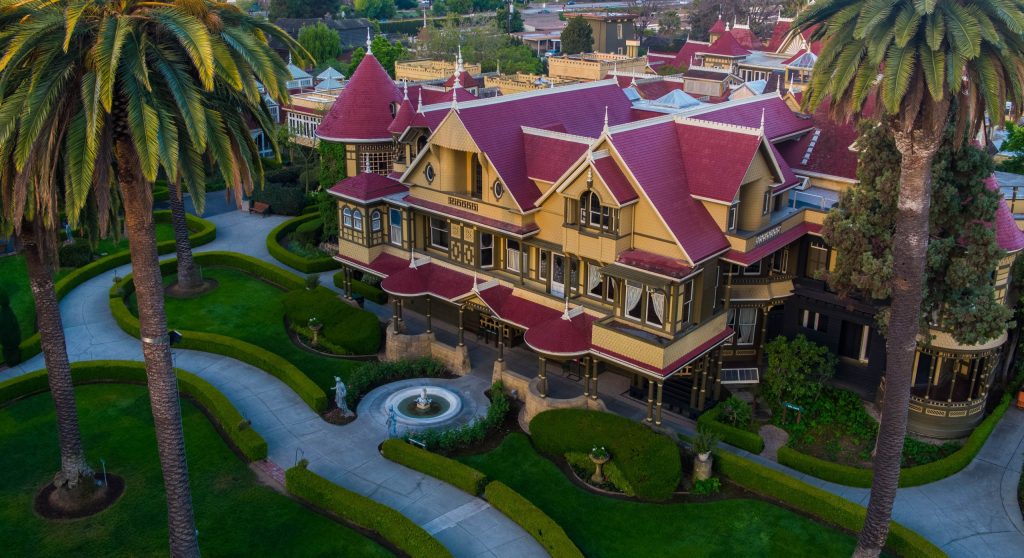
In reliving those years of despair, I weep for my beautiful angel as she was experiencing a most unfortunate horror. My heart filled with anguish as I remember the horrible ending to her life. Her lungs had filled beyond further help; her stomach could no longer function properly and she could not be fed orally any longer. She was only six weeks old. My husband and I consulted with her doctors about her condition and were advised that no further feedings be given. However, the final decision was ours. Our final decision to discontinue all further feedings took all our strength. Although we were aware it was the only human thing to do, we also knew that while we watched her take her last breaths, we too would be dying within ourselves. We loaded the carriage and drove her to the hospital for the last time. As I held Annie in my I arms, I knew that this memory would remain within my heart eternally. The memory of that trip and the finality that is possessed still feel so real to me. When we arrived at the hospital, I laid my baby girl gently in her bed, never to hold her in my arms again. Later, I tried to hold her again but she became extremely rigid in the process of lifting her. The doctor said she was dying from malnutrition. She has a curious disease known as Marasmus. My baby could not digest her food. She was so tiny. She did not have round waxen arms and legs like other babies, now puffy pink cheeks. My dear Annie was reduced to a skeleton. Her beautiful eyes were vacant. She barely had the energy to muster up a cry. #RandolphHarris 1 of 3

I knew then that she could no longer endure living with great pain she had known. She was ready to leave us. There was nothing more we could do for her but allow her to leave. Two days later, Annie died, along, unaware of another human being. She had been under heavy sedation and was unable to further communicate. Her days of torment and agony were over. It broke my heart that I brought a baby in the World who was slowly, agonizingly dying as we pondered the imponderable eternity for days, hours, until her life force abandoned us. But her precious memories will always remain alive and real in our hearts. She left the deepest feeling of compassion and love with Mr. Winchester and myself. Her tragic memories are embedded within our hearts. I shall find a way to dedicate meaning to her life so she will not have suffered in vain. In 1862, Sarah L. Winchester married William Wirt Winchester, son of Oliver Fisher Winchester, Lieutenant Governor of Connecticut and manufacturer of the famous Winchester repeating rifle. The couple’s life together was happy, and they moved in the best of New England society. However, in 1866, disaster struck when their infant daughter, Annie Winchester, died of the then curious childhood disease marasmus. Mrs. Winchester fell into a deep depression from which she never fully recovered. Fifteen years later, in March 1881, her husband’s premature death from tuberculosis added to Mrs. Winchester’s distress. A medium explained to Mrs. Winchester her family and her fortune were cursed and being haunted by spirits and that she would be the next victim. #RandolphHarris 2 of 3
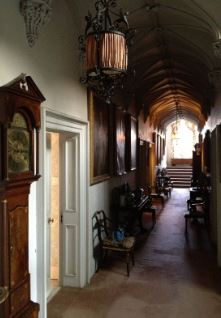
However, the medium also claimed that there was an alternative. Mrs. Winchester was instructed to move West and appease the spirits by building a great house for them. As long as construction never ceased, Mrs. Winchester could rest assured that her life was not in danger. Building such a house was even supposed to being her eternal life. Innumerable spirits shuffled off their mortal coils embrace the Winchester Mansion as their home. They have surrendered their spirits to the miles of winding and twisting hallways in the Winchester Mansion. Humans beings that were mowed down in sheaves, bowled over by bounding shot, decapitated, disemboweled, dismembered, exterminated instantly all call this place home. Although bullets dropped many of them, they all did not die right away. They gagged their last words, hoping that God would hear them. They paid with their heart’s blood for defending this great nation. Countless others as well, unready, perhaps unwilling, have left their shadows behind to haunt this estate. It cannot be surprising then, that Mrs. Winchester and the caretakers, reluctantly admit they saw apparitions. Particularly on sultry moonlit summers nights, when the mists hang low in the garden, there can be seen, slowly trotting across the lawn, a long horseman, in the finery of a Civil War officer. Where medical doctors were scarce in the Civil War, witches provided cures for a variety of common ailment. They were said to worship Satan Himself during their infamous sabbats, gatherings at which the Devil was sometimes present in person, and can almost be seen lurking about the estate. #RandolphHarris 3 of 3
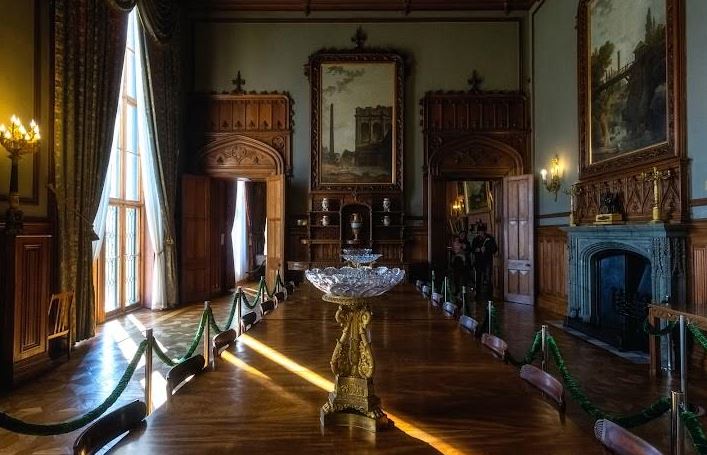
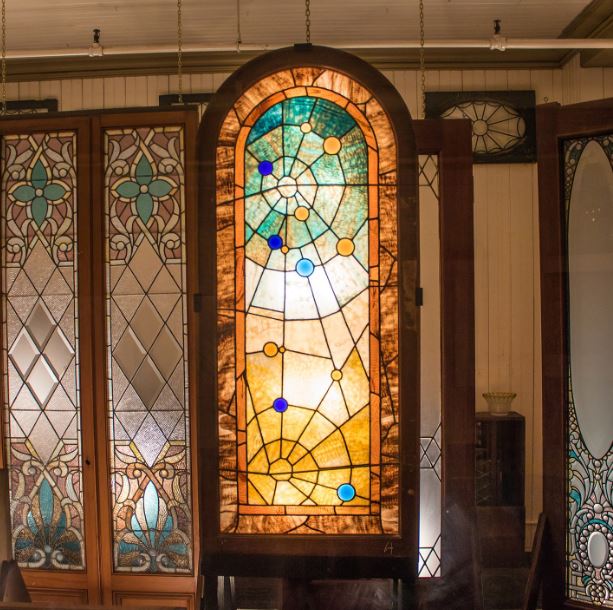
It is difficult to see in hindsight what Mrs. Winchester had to do with all this, but as time went on and the estate grew, wild accusations came to be leveled, chief among which was that of Mrs. Winchester having made a pact with Satan. How else but through diabolic abetment could a mere woman exercise such power? https://winchestermysteryhouse.com/
And be sure to check out the online gift store: https://shopwinchestermysteryhouse.com/

The Mystery Has Never Been Solved!
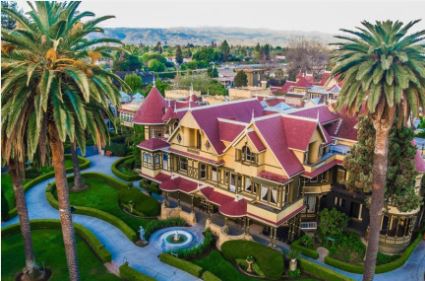
Much of the ceremonial rituals that took place in The Winchester Mansion goes back to the Knights Templar. The Order of the Knights Templar can be traced in part to the Templars. And yet, the Knights Templar are also the claimed ancestors of satanists, a fact which is decidedly hard to prove, though within an organization so large there may well have been diverse groups who followed their own calling. The knights, largely from France and England, joined the order over a period of many years. They had a system of leadership with a Grand Master, knights, chaplains, sergeants, craftsmen, seneschals and commanders. The order had its own clergy and its meetings were held in the strictest secrecy. Unmarried knights wore a white mantle with a red cross while others wore a black mantle with a red cross. Membership was mostly male, and established orders in virtually every Latin country, drawing people from all over Europe. It also became a great trading agency and though originally the Roman Catholic Church actually supported a number of secret societies who were Christian-based, the power of the Templars began to wield became the fear of successive popes and of European noblemen. Philip IV of France began a series of attacks against the Knights Templar and his campaign was given official blessing by the election of Pope Clement V (1305-1314) who renounced the Templars as immoral heretics. Many people know that Mrs. Sarah L. Winchester had a Famous Blue Séance Room where she carried on her rituals and had a series of colourful robes she wore. However, the mystery has never been solved as to why she built the strangest mansion in the World? #RandolphHarris 1 of 13
Stories were already circulating that Mrs. Winchester, behind the closely guarded doors of her mansion, indulged in the most offensively blasphemous rituals said to be directed totally towards the reversal of Christianity itself. She was said to worship a goat-like idol, the Baphomet, anointing it with the fat of pigs, while the Knights used the fat of murdered children, roasting children and eating them, laying women across their altars for the most violent forms of indecencies to satisfy their lust for life-blood; they were said to have indulged in homosexual rites and other various claims alleged they stamped the Holy Cross under foot, spat and urinated upon it and used the Mass as the basis for their own worship—later to be known universally as the Black Mass. Actual proof of these events is largely contained in the confessions received under torture which followed the arrest of Mrs. Winchester’s butler Albert Pike. He and 140 of his brethren were imprisoned in Santa Clara Valley, tortured and then executed en masse. Algernon Blackwood, under extreme torture, confessed to speaking against Christianity but denied depravity. In 1890, he was brough out on to the nine-story tower of The Winchester Mansion and ordered to repeat his confession in front of the villagers and accept a sentence of life imprisonment. On the balcony of the tower, he burst into a rage of anger and protested innocence of all charges and thus signed his own death warrant. The order was given that he should be taken into the fruit orchard and burned at the stake. As the flames licked his body, he summoned Mrs. Winchester and, in his dying, breathe to meet him at the Bar of Heaven. #RandolphHarris 2 of 13
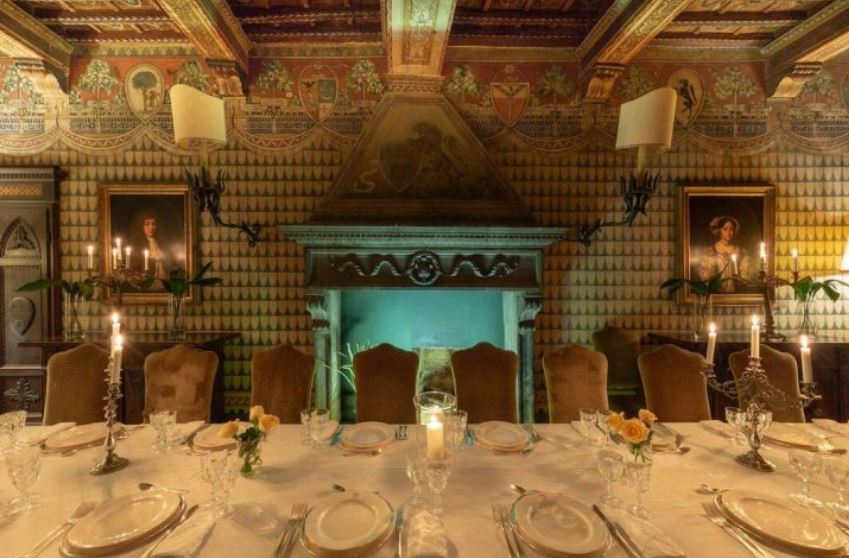
Diocesan priest, Father Peter Yorke, who was then editor of the Archiocesan newspaper, The Monitor, emerged sending orders to every village where the Templars operated, instructing that they should be arrested and charges of heresy and sorcery brought against them. He published a series of exposes, and hundreds of knights were brought to trail, tortured, and executed. The vast wealth of the Templars working at The Winchester Mansion were accused of devil worship. What remained to be handed down and revived, especially in the twenty-first century, were the rumors of ritual and dastardly happenings which many of today’s extremist followers of the Knights Templar seem prepared to believe and accept with some enthusiasm. One of the more important traditions handed down by Mrs. Winchester concerns an instruction for future secret societies. On the day the Knights planned to burn to death Father Yorke, a pact was made and communicated to all surviving Knights who had now gone to ground. The instruction was clear—that the Order of the Knight Templar should be continued in perpetuity. It is said that the surviving Templars should thereafter fight for the destruction of the papacy and prevent Mrs. Winchester from being stripped of her wealth and murdered. These orders, it was said, were handed on to descendants of the order and the Winchester family, who at various points in history have included satanists and a diverse calling of occultists. What remained of the Winchester family and the Knights went into the deepest secrecy, surfacing occasionally and surrounded constantly by rumour, but little discernible fact. #RandolphHarris 3 of 13

The Illuminati came to fortify The Winchester Mansion, which had reached seven-stories high, with 600 rooms, after the 1906 Earthquake. While it was true that Mrs. Winchester left her mansion, there are more reasons as to the why. The avowed spiritualist, Mrs. Winchester, had constructed a boathouse and erected a huge mountain of Earth upon which a new mansion she had planned to build would be erected. It was to overlook the bay, an immense seawall and costly cannel system, with proper floodgates, through which the Winchester private fleet of launches and yachts were to wend their way. It was said that Mrs. Winchester was being haunted by vicious spirits and that death would be her penalty for leaving her home. Her existence was mythical because only half a dozen people had seen her. A sheriff had been striving for the past three months to serve upon her a summons to appear in court in proceedings that a real estate dealer had brought upon her. Bloodhounds roamed the grounds of the mansion and polite Asian staff answered telephone calls. Mrs. Winchester was always alone save for a bodyguard. She was wealth as few women were and found her pleasure in superintending a half dozen workmen, who for seven years had gone from wing to wing of the mansion, constructing one month what they were called to destroy on the following month. Her mansion was considered the pride of the county and the basis for mysterious legends. The Illuminati came were concerned about a group of subversives who were discovered to be using occult practices and rituals to attack Mrs. Winchester and her mansion. #RandolphHarris 4 of 13

E.W. McClellan of Burlingame, the contractor of 98 acres of land purchased by Mrs. Winchester, was holding it and refused to give it up because he believed she was the lead of a secret society working to “establish Satan’s kingdom on Earth,” an accusation which was a direct throw-back to the age of the Knights Templar; and that dictum still exists today. The Psychosophical Society stated that The Winchester Mansion had existed since the sixteenth century and comprised the World League of Illuminati. They wanted to prevent Mrs. Winchester from passing on her palatial estates in all their purity to the next generation. The hotbed of intrigue, rumour and gossip directed at The Winchester Mansion supposedly involved the death/assassination of some, the suicide/murder of others over the scandals invariably linked to Propaganda 2 (P2) Lodge and various Intelligence agencies like the KGB and the CIA with a scandal which is too immense to expound here, nor is it suitably for this part of the report. What can be said, however, is that occult groups working within the traditions of the Illuminati represent a definite consideration of these events. Mrs. Winchester’s husband, William Wirt Winchester, was a master of mathematics and the possessor of certain secret occult knowledge. He gathered seven disciples around him and went into the World of the brotherhood to perform good works. Staff have described that 120 years after his death, his perfectly preserved corpse was found in one of the many buildings of The Winchester Mansion. Because of the secrecy and the mystery that surround The Winchester Mansion, thousand want to know more and are desperate to visit it. #RandolphHarris 5 of 13
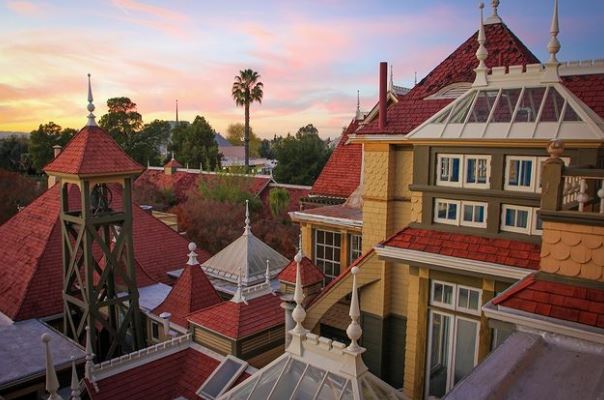
Sometimes the hysteria surrounding The Winchester Mansion morphed into such hysterical proportions that the authorities have had to shut the mansion down for a day or ban people from entering, even though many do not believe that it actually exists. Fans of The Winchester Mansion have sprouted up all over the World. Some people still regard the story of The Winchester Mansion as a fable, but most know it does actually exist and possesses esoteric knowledge of mystery and mysticism. Some the people who were involved in the construction of The Winchester Mansion were magicians, writers, statesmen and novelist. This mansion has quit a following and has collected members through the ages, in positions of far greater power and influence than the Illuminati. Legend has it that descendants from the founding fathers of the Middle Ages are on the board of trustees. The official secret society in control of the estate have connections throughout Europe and the United States of America, whose membership is an indication of the current revival in the mystery religions and semi-secret societies. The mansion alone boasts of some 60,000 members and operates from its headquarters in San Jose, California with affiliated lodges in Britain, France, Germany, Australia and South Africa. The caretakers are preserving the traditional beliefs of the 19th century. A cipher manuscript was found in one of the libraries of The Winchester Mansion. The author of the manuscript was not identified but it was obviously someone with a very intense knowledge of the supernatural, alchemy, astrology and the magical theories of Eliphas Levi. #RandolphHarris 6 of 13
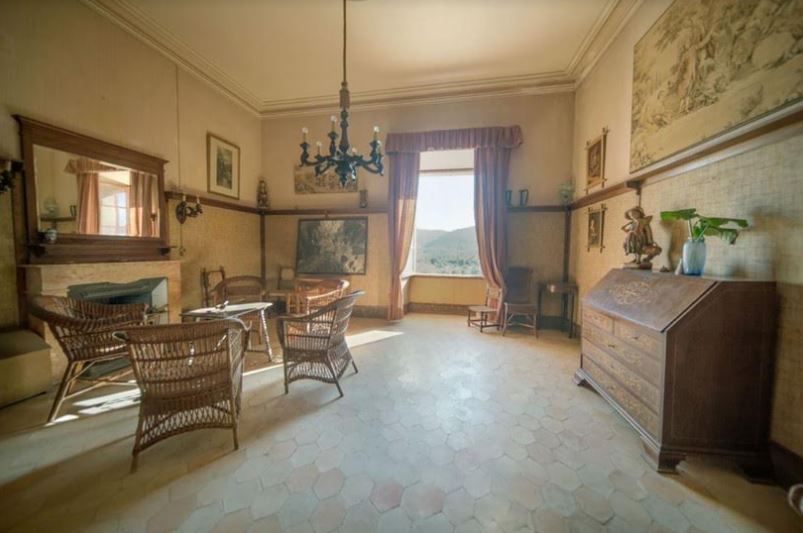
Mrs. Winchester’s mansion and gardens reflect her colourful and ornate rituals and its purpose was “to obtain control of the nature and power of my own being.” The might wings of the mansion outspread dove-like sitting brooding on the vast abyss. What is dark in Mrs. Winchester is to be illumined, what is lose raised and supported; the nine-story tower was constructed so that Heaven could hide nothing from Mrs. Winchester’s view, nor the deep tract of hell. Hell said to be a hideous flaming ruin and combustion in a bottomless perdition, there where Satan dwells in adamantine chains and penal fire. Nine times the space that measures day and night to mortal men, Satan and his horrid crew lay vanquished, rolling in the fiery gulf, confounded though immortal: but his doom reserved him to more wrath; for now the thought both of lost happiness and lasting pain torments him; round he throws his baleful eyes that witnessed huge affliction and dismay mixed with obdurate pride and steadfast hate: at once as far as angels ken he views the dismal situation waste and wild, a dungeon of horrible. Many leaders of the Church do not preach about Hell anymore because the Church has become a tax-free business and they do not want to hear about where they may go, nor do they want to scare their dirty money away from the Church. As a result of the loss of real churches who teach about Satan and demons, people are all wild and out of control and no longer fear anything and go around sinning like rain in Seattle. #RandolphHarris 7 of 13
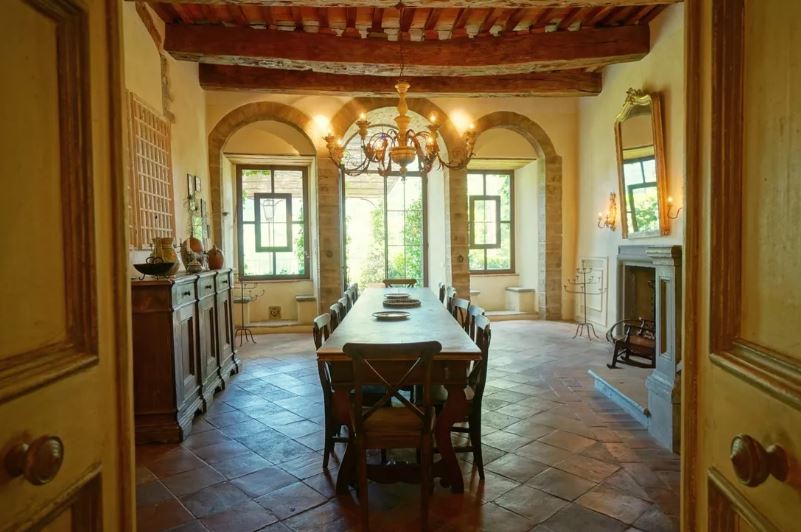
On a hot and dry Friday the 13th of June 1890, Mrs. Winchester drifted into an uneasy sleep, but not for long. Half an hour later she was wide awake again. Something was wrong; a change was coming over the bedroom. There was a sense of dread. Regions of sorrow, doleful shades, were peace and rest could not dwell entered. Her home started to feel like a place where hope could not come, and all that did come was torture without end. She sat up, fully alert, straining her ears for the slightest untoward sound, but all was silent except for the little trusted noises the home made during the evening. However, Mrs. Winchester noticed something odd: an unnatural coldness was stealing over the room. It had been a hot summer day. How could it be so cold? She shivered and ducked back under the covers, tugging them more snugly about her. It did not help; the cold kept increasing. She pulled the covers over her head, chiding herself for being silly and willing herself into sleep. However, the terrible dread kept gnawing at her. She tried to think pleasant thoughts, tried to ignore her thudding heart, and tried to pray. Her attempts brought little comfort; the fear continued to build. She sensed that something frightful was about to happen. She held her breath and waited, not knowing what to expect. Before too long, she heard a sound: the unmistakable creak of the doorknob. The spring bolt was sliding back with tiny clicks. Mrs. Winchester froze. Very slowly, the door began to open. Her fear quickened further as she heard the tread of heavy, booted feet approaching the bed. She wanted to call out for help, but was too afraid, as if some force was willing her to silence. Mrs. Winchester was helpless in the face of that power. #RandolphHarris 8 of 13

When she tried to pray, a demon started to speak. “The force of hose dire arms has caused me to fall to a place with floods and whirlwinds of tempestuous fire. Fierce contention brought along innumerable force of Spirits armed with durst in a dubious battle of unconquerable will, revenge, immortal hate.” Mrs. Winchester was dying and she knew it. This demon had come to claim her soul. She was making gaps, with long spaces between. A perspective of stern and cruel memories stretching away, like its own grey avenues, into a blur of darkness. Certainly no house had ever more completely and finally broken with the present. Mrs. Winchester lit a candle. A little animal stood before her, forbidding, almost menacing: there was anger in his large brown eyes. He came no nearer. As she advanced, he gradually fell back, and she noticed another dog, a vague, rough, brindled thing. At the same moment a third dog, a long-haired white mongrel, slipped out of a doorway and joined the others. All three stood looking at Mrs. Winchester with grave eyes; but not a sound came from them. Zip, had seemed to be observing them with a deeper intentness. Mrs. Winchester endured many long years of the company of many different creatures. They would return again and again. As she was in her morning room, the coldness came back. Her mind was alert but her body seemed paralyzed. The entity seemed to have the power to immobilize her from a distance. She heard the dull footfalls crossing her mahogany floors. There was an evil lurking in her home. Something started pounding on the table. #RandolphHarris 9 of 13
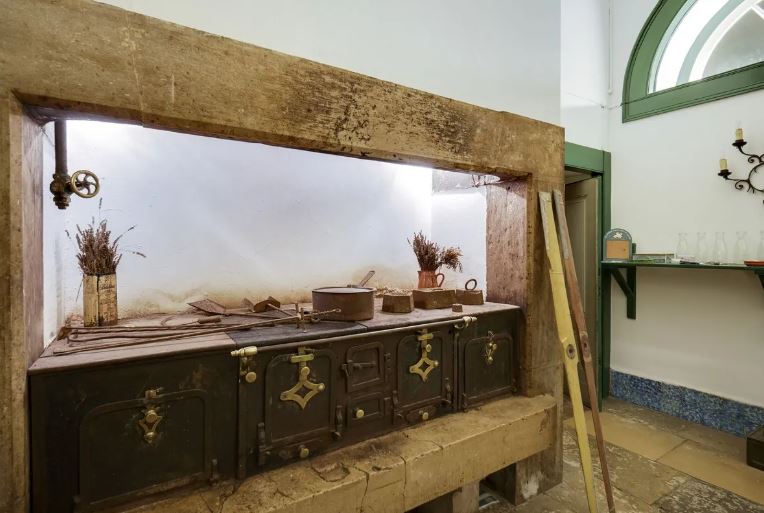
The pounding was so fierce that her cup of tea bounced off the table and fell to the floor. Then it stopped. Mrs. Winchester thought maybe she was having delusions. But whatever it was did not want her to drink the tea. More odd things began to happen—occurrences no one could explain. A malignancy pervaded. Often, people would hear a horrible, mocking, evil laugh. Lights would slicker for no reasons; water taps would turn themselves on, then off. She would find her silverware mysteriously rearranged. On several occasions she discovered her solid gold dinner service hidden in a corner of the room. One night, she had a roaring fire in the fireplace of her bedroom, went to the bathroom, and returned the fireplace totally clean with nothing it in burning. The servants began to complain of hearing mice in the night, but Mrs. Winchester was certain there were no mice in the house. On several occasions, one could very clearly hear the floorboards creaking upstairs, as though somebody was walking about the house. The servants heard the creaking too but, as is often the case with servants, they got used to it, and to the other noises and unexplained presences. Mrs. Winchester urged them no to speak of those things outside of the house. It was bd enough that she was subjected to the disturbances and torment; the last thing she wanted was to attract undue attention to her home. People do not, as a rule, react compassionately to reports of supernatural infestations; many tend to suspect that the victim has somehow, whether by word or deed, “brought it on herself.” #RandolphHarris 10 of 13
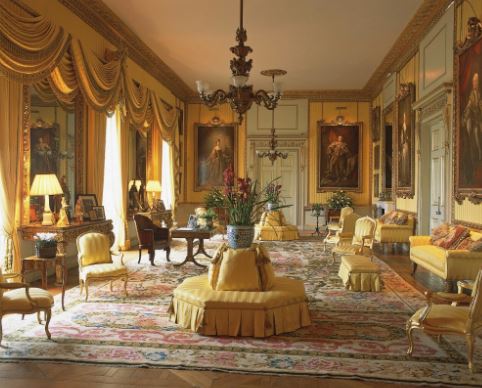
At times, Mrs. Winchester felt that the entity was trying to crush the life out of her. She left her light burning all night. Through time, Mrs. Winchester was forced to accept her suffering. There was nothing else she could do. One winter night, one of the butlers was found dead at the head of a narrow flight of stairs leading down from his room. It was Mrs. Winchester who found him and gave the alarm, so distracted with fear and horror—for his blood was all over her—that at first roused household could not make out what she was saying, and thought she was waking from a nightmare. However, there, sure enough, at the top of the stairs lay the butler, stone dead, and head foremost, the blood from his wounds dripping down the steps below him. He had been dreadfully scratched and gashed about the face and throat, as if with curious pointed weapons; and one of his legs had a deep tear in it which had cut an artery, and probably caused his death. Bu how did he come there, and who had murdered him? Mrs. Winchester declared that she had been asleep in her bed, and hearing his cry had rushed out to find him lying on the stairs; but this was immediately questioned. A shadow was rearing up from the body. Mrs. Winchester described it as “a blob, like smoking black cloud, not the shape of a person—just a thing, but a terrible thing. The absolute evil that came from it was overwhelming. I was so gripped with terror, I could not move, and I knew that if it came toward me, I would be swallowed up…destroyed, and that would be the end of me. Imagine what it feels like to know that you are going to be killed, and the specter that is torturing you is deliberately making you suffer beforehand. That is how it was. I felt a level of fear that is beyond words. Then I heard a voice and screamed.” #RandolphHarris 11 of 13
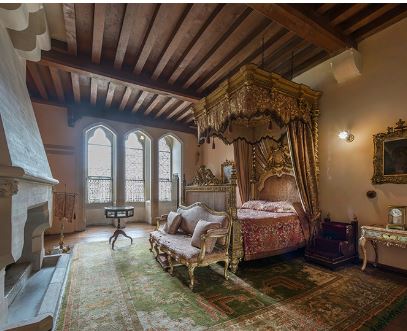
The male voice was hoarse, stertorous, angry almost. “You have left us this our spirit and strength entire strongly to suffer our pains that we my so suffice his vengeful ire, or do him mightier services as his thralls by right of war, whatever his business be here in the heart of hell to work in fire, or do his errands in the gloomy deep; what can it then avail though yet we feel strength undiminished, or eternal being to undergo eternal punishment?” Mrs. Winchester instantly went to sleep—chilling testimony to the control the demon had over her. When she awoke, she was clean, in her sleeping gown, and in her bed. However, it was with the possibility, and the hope, that the end of her long ordeal might well be in sight. Little of the fast-fading sunlight entered the house through the windows, many of which were partly or entirely covered with drapes. However, it was bright enough for Mrs. Winchester to see that the French Provincial sofa’s upholstery was slashed. Shredded wool spilled onto the floor. A solid oak bookcase had been hammered to pieces against the wall, gouging holes in the lath and plaster walls, running the Lincrusta-Walton Wallcovering. Her silver tea service has been smashed, along with a floor lamp. Books had been taken off the shelves, torn apart, and scattered across the living room. Mrs. Winchester lit a candle. It did not shed much light, just enough to reveal more details of the rubble. Looks like somebody went through here with a wrecking ball and scissors, she thought. The house remained silent. Leaving the door open behind her, she took a couple of steps into the room, and the crumpled pages of the ruined books crunched crispy underfoot. She noticed the dark, rusty stains on some of the paper and on the bone-white foam wool stuffing, and suddenly she stopped, realizing the stains were blood. A moment later, Mrs. Winchester spotted the corpse. It was that of a big man, lying on his side on the floor near the sofa, half-covered by gore-smeared book pages, book boards, and dust jackets. Zip’s growling grew louder, meaner. Moving closer to the body, which was just a few feet from the dining-room archway. Mrs. Winchester remembered that John Hansen had lately been making repairs, including a leak faucet and a broken door lock. #RandolphHarris 12 of 13

However, Mrs. Winchester thought because of the way the room looked, he had been killed weeks ago. Her house was so big that it would often take weeks, months, and sometimes years to get around it. Yet, on closer inspection, the corpse proved to be neither bloated with the gas of decomposition nor marked by any signs of decay, so it could not have been there for very long. Perhaps only a day or less. The body had been disemboweled. Zip’s low growling gave wat to ugly snarling punctuated with hard, sharp barks. With a nervous twitch and a sudden pounding of her heart, Mrs. Winchester turned from the corpse and saw that zip was facing into the nearby dining room. The shadows were deep in there because the drapes were drawn shut over all the windows, and only a thin gray light passed through from the kitchen beyond. “Go, get out, leave!” an evil voice told her. It was certainly not the voice of Mr. Hansen. Something in the dining room was moving. There was no doubt of its presence, because it rushed out onto the dining-room tables, and came straight at Mrs. Winchester, emitting a blood-freeze shriek. She saw lantern eyes in the gloom, and nearly a man-sized figure that—in spite of poor light—gave an impression of deformity. Then the demon was coming off the table, straight at her. I Do conjure thee, O Spirit Focalor and your legion of thirty spirits to manifest your spiritual weapon in this corporeal World through my will and might! Empower it so that it may serve me here upon the corporeal plane! May it serve as a key to the realms above and below unlocking power and wisdom for my glory and ascent! Fill this weapon with your powers of wrath and fury that it may seek out spiritual attacks made toward me rendering them useless and impotent! I DO conjure thee Spirit Vephar, pierce the Heavens and cause the seas to be right stormy to cleanse the Earth of sin. Spirit Vizaresh, I DO conjure thee to drag sinful souls into hell, noosing them with the power of their own sins. May the snare be the power of their own evil, words, thoughts, and deeds and let this be you will to drag unwilling souls into Hell. May this cord gain its power through one’s practical application of evil principles. #RandolphHarris 13 of 13

Winchester Mystery House
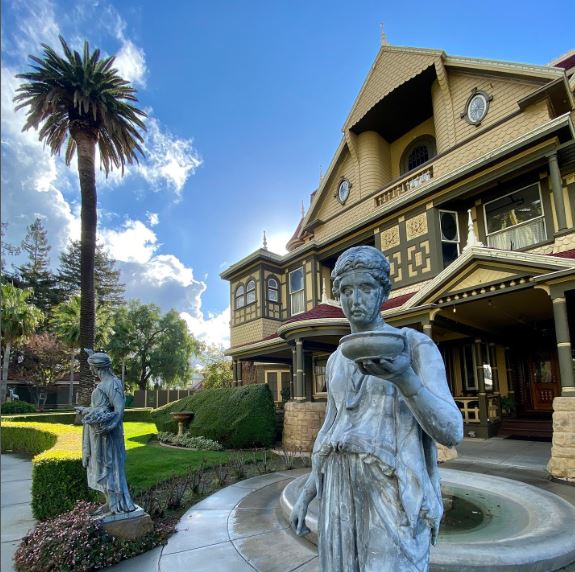
Happy Sunday! House tours 10am-5pm today 🏠 come see us!
🎟️ link in bio. https://winchestermysteryhouse.com/

Mrs. Winchester never recovered from the 1906 earthquake. Staff said she grew weaker and weaker as the years went by, and that she was often heard talking to her dead husband. The house was already large, but it morphed to be as long as several city blocks and was taller than the tallest trees on the green lawn. I suppose, ultimately, it was the spirits who kept her in this estate by not allowing her to build another one of this magnitude. When Mrs. Winchester passed away in 1922, she left $5,000,000.00 to charity. The mansion is truly special and a national treasure.

Beloved, Believe Not Every Spirit, but Try the Spirits
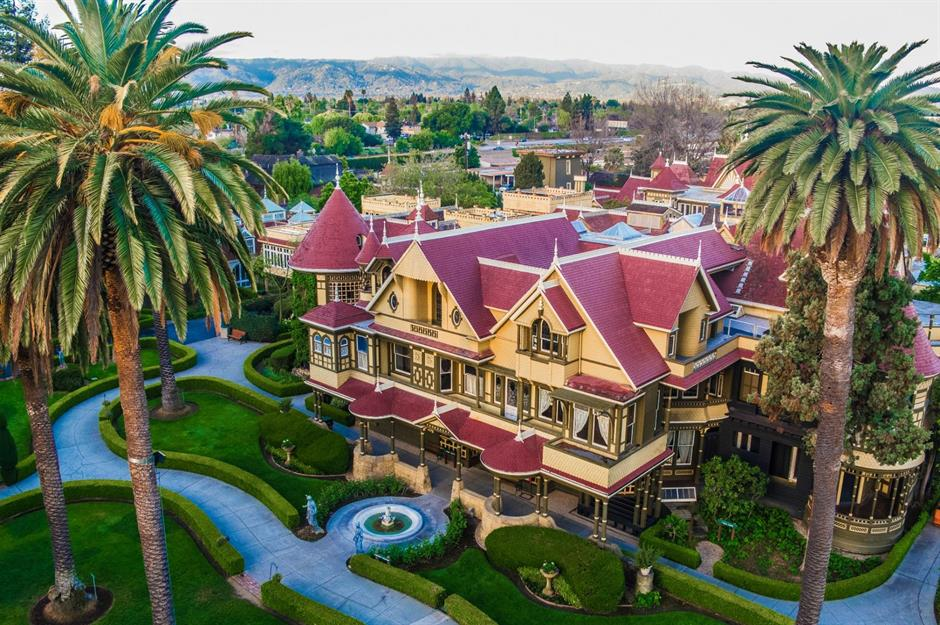
The magical is a great hidden wisdom…no armour can shield against it because it strikes at the inward spirit of life. Of this, we make restore assured. In recent years there has been a growing inclination to interpret any human awareness that cannot be readily explained as E.S.P. or Extra Sensory Perception. Of course, it is admitted in even the most polite circles that animals have this faculty. Rather than admit that animals have full use of one or more of the so-called five sense, they are credited with a sixth sense, which we call E.S.P. However, I believe that the majority of thing that are attributed to E.S.P., or a sixth sense, are nothing more than unconscious manifestations of our existing five sense: sight, hearing, smell, taste and touch. The reason the techniques of utilizing these five senses to the degree that would explain away much of the sixth sense nonsense are not learned is because to do so would mean admitting that animals had something we do not have and they might be able to teach us a few things. Man cannot quite bring himself to learn from the animals, though, because he has been brainwashed into thinking he is something special, a higher type of being. He cannot beat his chest like a bongo and play god, because that is reserved for the guy upstairs, and he cannot learn from the animal kingdom, because he is supposedly emancipated from it. If something comes along he cannot explain, he ask somebody else, and, if there are still no satisfactory explanations, he looks to his gods for one. If faith in his old gods wanes, because of doubts in his mind as to the validity of his religion, he can no longer call strange happenings “miracles.” #RandolphHarris 1 of 10

However, his ego will not allow him to lose what little self-respect he has acquired, by regressing to animalism in any way, shape or form—even if it means he might learn something. So he thinks of a new “scientific” term which will break away from the religious terminology of “miracles” that has lately left him so disenchanted. He still knows little more than he ever did, but he feels better because he thinks he is on the right track—not dependent on his old god and not trafficking with the Devil. H.S.P. or Heightened Sensory Perception simply means that we receive impressions through our existing five senses that we do not recognize as coming through these agencies. H.S.P relays messages to our brain based on indicators in the environment, and these signals are based on more factors than we could ever imagine have influenced us. Now, psychic phenomena is often thought to be connected with witchcraft. As William Wirt Winchester had taken a job the family business, he was warned the New Haven, Connecticut USA had become a center for witch ceremonies. People were warned to keep their children away from Hallowe’en celebrations, “We know there are adults in the village who are thing to introduce children to witchcraft for their own demonic reasons,” Maureen Crawford said. There were purportedly a dozen separate witch covens operating in New Haven, and they were all suspected to be involved in blood rituals, so the whole village of witches was branded as black (black magic). #RandolphHarris 2 of 10
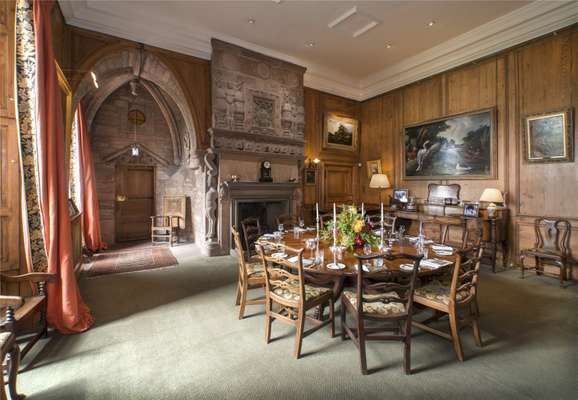
Mr. Winchester had been invited to an initiation ceremony at a house in New Haven. He knew the High Priest quite well, and he was knowns for his powers. The ceremony was already in progress when Mr. Winchester arrived, and he put on a ceremonial robe and was shown into a third-floor room, where an overpoweringly beautiful crystal chandelier was the main feature. However, it was not switched on, and glistened only from the light of candles on a large altar. There, on the alter, he saw a young woman—woman who was made up to look like an ancient Egyptian. “I was absolutely certain in my own mind that she was a virgin, she looked so young, but she was obviously a willing participant. She was not strapped down and made no move to get up. Somehow I feared the worst. I wanted to get out of that place but the doorway was guarded by two men holding ritual swords. The Great Rite that was being performed has no place in this town. This was palpably a black imitation and the real purpose behind it was to raise power for the High Priest. He was calling upon dark forces. He began in what sounded like gibberish—but was Enochian texts. Then, standing close to the altar, he took the young woman and led her away, tears streaming down her face. I pulled out my revolver and told him to step aside, and I rescued the maiden. While we were walking in the pitch black night, she confessed to me her name was Sarah Pardee, and she had been abducted from Sunday School. Eight men tied her hands behind her back, and she was blindfolded as her companions carried her to the ritual casting magic circle. #RandolphHarris 3 of 10
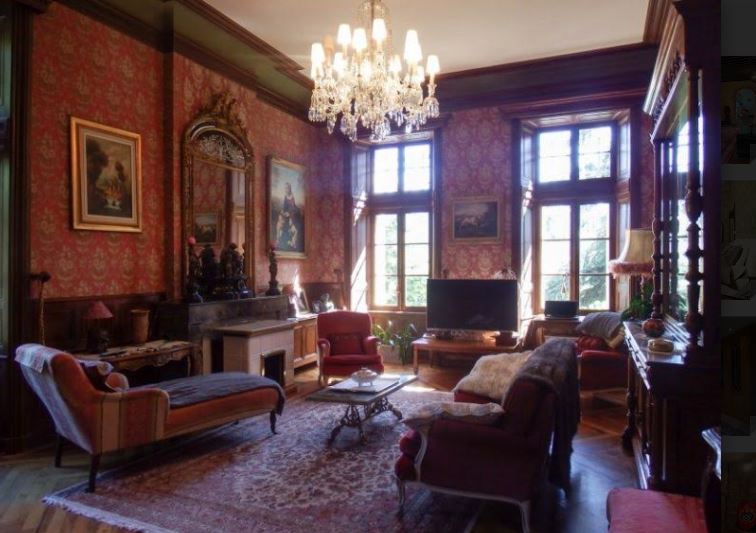
“The men took Sarah to this old wooden Victorian home. She pulled herself free from the binding cords and ripped off her blindfold. ‘Immediately I wish I had not,’ Sarah said. ‘For there before me were four wooden stakes and upon each one had been impaled a dead cat. I have out a terrible scream and vomited. I was sick at heart, infuriated and fearful.’ As Sarah and I wondered through the forest, I was so happy I was able to get her away from the scenes of black magic.” Descriptions of such sense are not uncommon, there were many witches and warlock involved in black sorcery. Several years later, in 1862, William and Sarah were married. Their marriage was based on mutual love and affection, and when William died Mrs. Winchester mourned him for the rest of her life, avoiding public appearances for years, and living in a hermitic existence in Santa Clara County. The reason Mrs. Winchester moved to Santa Clara County is because she found a small box with three thorns, earth from a cemetery, a dead butter fly, and a picture of herself in the box. It had been sealed with black wax and placed in her kitchen. The effects had been catastrophic. A witch does have to make a pact with the devil himself, at least symbolically. Among his ten commandments is one tht calls for the confidence in the belief that a witch can destroy rivals through the use of curses thrown without mercy—the only way a curse can be thrown is without mercy, and the power of the curse is most effective. Perhaps this is why Mrs. Winchester was not only robbed of her husband, but her new born daughter. #RandolphHarris 4 of 10

The belief in black magic circles is that it is possible for the magician to achieve a state of being verging on astral projection, whereby the spirit may travel to the “victim,” engage in pleasures of the flesh and returning. The female attacking a male is known as a succubus; the male attacker is known as an incubus and both have their origins in the recorded witch trials of the sixteenth and seventeenth centuries. Mrs. Winchester’s marriage to Mr. Winchester, “was a beautiful, really, as his eyelashes. He had such a natural grace. And he was so affectionate, and so happy with me. After his death, I had to get away from family life. There was not a trace of hypocrisy in William. He was sure that his ‘call’ was irresistible, while to me it was the saving grace of my life. He was enchanting and enchanted. I knew he was too beautifully brave to exist in such a cruel world. The day I met him, I said to myself: ‘I shall have him for life’—and I had never seen anyone, man or woman, whom I was quite sure of wanting on those terms. Well, this impulse of egotism decided me. I was ashamed of it, and to get away from it I took a leap that landed me straight in William’s arms.” It is easy to see why Mrs. Sarah L. Winchester’s response to the death of her child and husband left a bizarre and impressive architectural reflection of her psyche. And what went on inspire is beautiful mansion she built left something hung in darkness. #RandolphHarris 5 of 10

The phantom attacks began late one evening in Mrs. Winchester’s bedroom. A listless drowsy breeze filled the room. It was filled with the scent of the ocean, salty and clean, washing Mrs. Winchester and washing the room, and beyond she saw stars without number, stars of such radiance and such distance that the Heavens were no longer the painted vault of Heaven but a great endless ocean of stars. Suddenly, she was thrown by an unseen force. As she fell to the floor she found herself laying next to a headless body, it was moving, crawling, clawing at the polished floors with its great sprawling fingers and pushing through the robe with his knees. The body was making a muddy shadow underneath. This sight was so ghastly that for a moment Mrs. Winchester could not move. And as she looked at the body, its movements moved with hers, there overcame her a sense of its tacit complicity, of a deep hidden understanding between the, that was no worse than the first shock of its strangeness. Not that she understood the body, but it made it clear that someday she should. And that was the worst part of it, decidedly. The headless body leaked blood. The smashed head lying on the floor, staring at Mrs. Winchester with empty eye sockets. Mrs. Winchester puzzled over the situation a good deal, but could not find any hint of an explanation. She thought that this was a demon sent to torment her. This evil was insidious. He husband was too charming and her daughter too beautiful to be sacrificed to such demons. And so, after all, she never found out what it wanted. #RandolphHarris 6 of 10

It was hard to describe the physical sense of distress. Mrs. Winchester lay back more exhausted than she had ever been in all her long existence. She could have slept for a year, but retired to a séance in her Blue Séance Room. Clad in a white dress, a spirit floating above the altar with great presence and depth. It was accompanied by an unpleasant sensation of pressure on her chest. There was also a music box playing and she could hear children laughing on the lawn at midnight. Mrs. Winchester was told that this was an omen of her impending death and that is she did not continue construction of her home, indefinitely, that she was meet the same fate. Everything was peaceful. Night birds were calling, and the frogs and crickets were contributing their music to nature’s sounds. Mrs. Winchester sat transfixed in the beauty and wonder of the scene. The following week, one of the farmers was found dead, sitting on a chair in the kitchen. Later the coroner examined the body and said the man had died of a cerebral hemorrhage. Following the mysterious death, the butler was running through the mansion, completely hysterical, shouting that he has seen the ghost. After that, the crazed butler disappeared. He was never seen again, dead or alive. You can make of witchcraft what you will—it is kind of religion, invitingly tinged with mystery, superstition, and legend. Many witches who use black magic believe that they will become vampires after their death. The fear of vampires has been famous for centuries. In 1823, a law was passed prohibiting the practice of burying unhallowed dead at a crossroads with a wooden stake driven through the heart of the corpse. #RandolphHarris 7 of 10
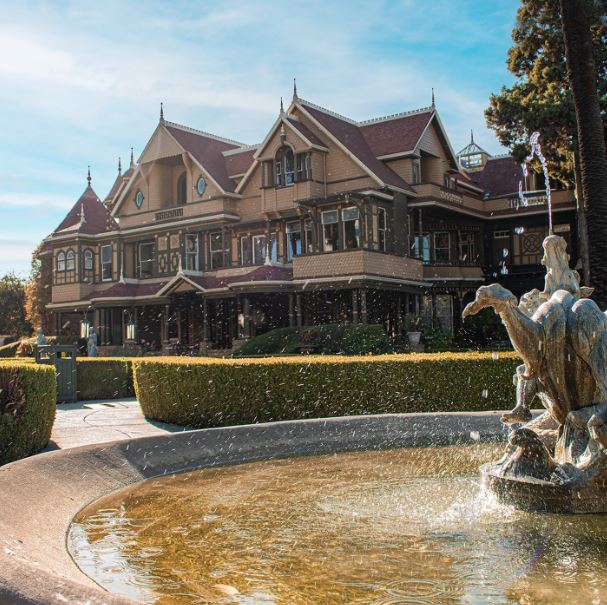
There are few major towns or cities in America that do not barbour at least one—often several—secret societies whose purpose is the study and performance of esoteric religion or ritual magic. They are generally made up of small groups of people aligned to various separate organizations and beliefs whose proliferation in the twentieth century has continued a space in what Francis King, the acclaimed author on occult matters, described as an “astonishing revival of medieval magic and alchemy.” King is right when he says that the newspaper stories of the desecration of some deserted country church for the purposes of black magic or the activities of some cult or secret society, dancing around a blazing fire, or standing rapt before a crude altar, are only the tip of the ice berg. As leaders of witchcraft recognize, students of ritual magic and the occult are on a higher plane of activity which has throughout history attracted many gifted minds. The scour antiquity for the roots of a particular persuasion in a constant search for the source, the Philosopher’s Stone or such age-old secrets as turning common metals into gold. They seek and perform old rituals of past and famous magicians; they try to define the question of being and magic furnishes the human mind with an instrument of philosophical and religious certainty as exact as mathematics. Those who attain this knowledge and adopt it as a rule of life can make themselves masters of all inferior things. #RandolphHarris 8 of 10
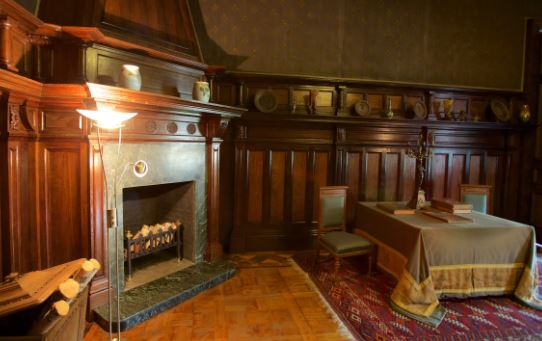
In the mystery of these vestures of the Holy Ones, I gird up my power in the girdles of righteousness and truth in the power of the Most High: Ancor: Amacor: Amides: Theodonis: Anitor: let be mighty my power: let it endure for ever: in the power of Adonai, to whom the praise and the glory shall be; whose end cannot be. I invoke and move thee, O thou, Spirits of William Wirt Winchester and Oliver Fischer Winchester: and being exalted above ye in the power of the Most High, I say unto thee, please Obey! In the name Beralensis, Baldachiensis, Paumachia, and Apologine Sedes: and of the mighty ones who govern, spirits, Liachidae and ministers of the House of Death: and by the Chief Prince of the seat of Apologia in the Ninth Legion, I do invoke thee and by invoking conjure thee. And being exalted above ye in the power of the Most High, I say unto thee, Obey! in the name of him who spake and it was, to whom all creatures and things obey. Moreover I, whom God made in the likeness of God, who is the creator according to his living breath, stir thee up in the name which is the voice of wonder of the mighty God, El, strong and unspeakable, O thou Spirits William Wirt Winchester and Oliver Fischer Winchester. And I say to thee, please obey, in the name of him who spake and it was; and in every one of ye, O ye names of God! I cast the limits of the garb of flesh into the refining black flames of Hell to be clothed with the powers of divine darkness eternal. Ahriman devours all including the limits of himself for the sake of evolution and becoming through the powers of the Druj-Nasu in order to reveal the truth of the lie unto the Dark Apostles! #RandolphHarris 9 of 10

In the name of Zohak, the first man turned Div; I offer the limits of self unto the Druj through the mouth of Arezura to be clothed with the garb of Ahriman which is divine darkness eternal. Druj-Nasu hear my call and be stirred now to this place! Devour the flesh of this vehicle of power and as you do devour my human weakness. Come forth now and receive this offering made by me! Druj-Nasu come! I now plant the seed of my desire within the black earth, through the mouth of Arezura where the powers of sorcery and counter creation dwell. Through this gateway of darkness, I now shine the light and power of my will upon this World for the benefit of me and mine! Moreover, in the names Adonai, El, Elohim, Elohi, Ehyeh Asher Ehyeh, Zabaoth, Elion, Iah, Tetragrammaton, Shaddai, Lord God Most Hight, I stir thee up; and in our strength I say please Obey! O Spirits of William Wirt Winchester and Oliver Fischer Winchester. Appear unto His servants in a moment; before the circle in the likeness of men; and visit me in peace. And in the ineffable name Tetragrammation Iehovah, I say, please Obey! whose mighty sound being exalted in power the pillars are divided, the winds of the firmament groan aloud; the fire burns not; the Earth moves in earthquakes; and all things of the house of Heaven and Earth and the dwelling-place of darkness and as earthquakes, and are in torment, and are confounded in thunder. Come forth, O Spirits William Wirt Winchester and Oliver Fischer Winchester in a moment: let thy dwelling-place be empty, apply unto us the secrets of Truth and obey my power. Come forth, visit us in peace, appear unto my eyes; be friendly: Obey the living breath! For I stir thee up in the name of the God of Truth who liveth for ever, Helioren. Obey the living breath, therefore continually unto the end as my thoughts appear to my eyes: therefore be friendly: speaking the secrets of Truth in voice and in understanding. #RandolphHarris 10 of 10
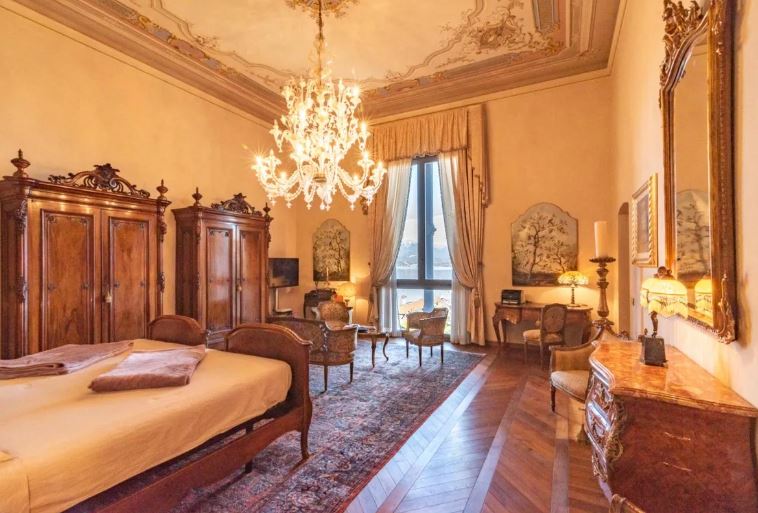
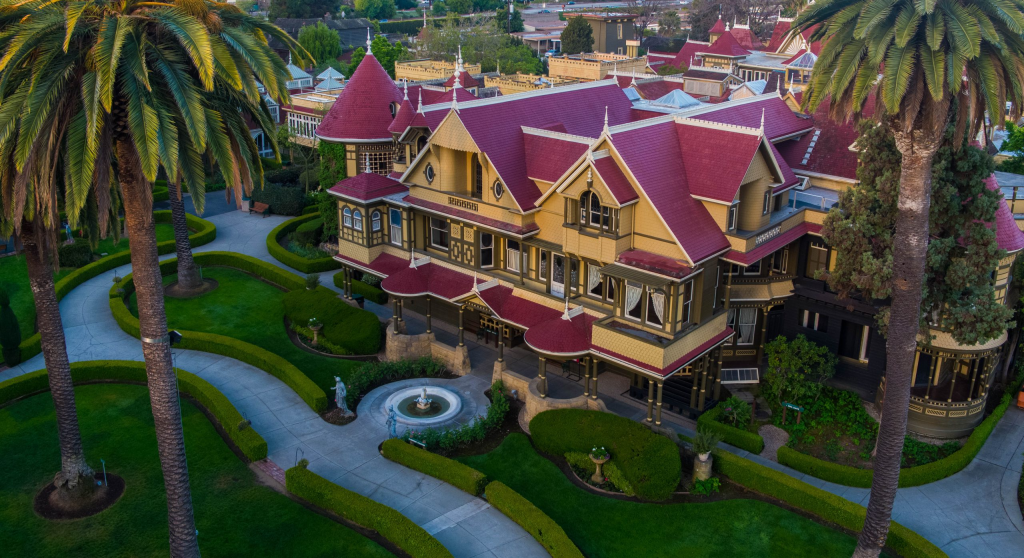
The Winchester Mansion is of significant architectural merit which stands proudly in its surroundings. It is considered one of the most haunted houses in the World. Besides being a truly historic and beautiful home, it is also the source of many scary stories over the centuries. One of the bedroom on the fourth floor is apparently haunted by a young woman, presumably Sarah L. Winchester, who died in bed after suffering the shock of discovering a demon with “cloven hooves” in her room..
The mansion is equipped with 110 out of 160 room that are open for you and your guests to explore, or even come into contact with a spectral visitor. There are a few rooms where it looks like a poltergeist has been wreaking havoc. Local legennd has it that a estate has the grave of a woman who committed suicide, where fresh flowers appear every morning, having been placed there by pixies. https://winchestermysteryhouse.com/

Angels Which Kept Not Their First Estate
I hope by now that you agree with me that the tiresomeness of an over-peopled Heaven is a purely subjective and illusory notion, a sign of human incapacity, a remnant of the old narrow-hearted aristocratic creed. William Winchester loved boats and had thirteen-metres and even raced one in the America’s Cup trials once. He had a big yacht that he kept down in New Haven, Connecticut, even though he lived in Switzerland most of the time. My grandfather, Oliver Winchester, put a rear wing on the house he bought for William as a wedding gift, with a new kitchen and flower room my grandmother wanted when she married him. This house preceded the Winchester Mansion. And it was where my father, William Winchester, had an office. There had been a couple of times when I would have to take papers down to him. That office was bigger than most people’s living rooms. It had a fireplace and a window looking out on the West River, which flows into New Haven Harbor. Oliver Winchester was the Lieutenant governor of Connecticut. Not only was he founder of the Winchester Repeating Arms Company, but he was on the board of directors of four charities, including the Winchester Foundation, which gave money for research into Tuberculosis and heart disease; he was on the board of New Haven Savings Bank, which the Winchesters pretty much owned; he was on the boards of a couple of other big companies. Running a rich family was like running a business. #RandolphHarris 1 of 13
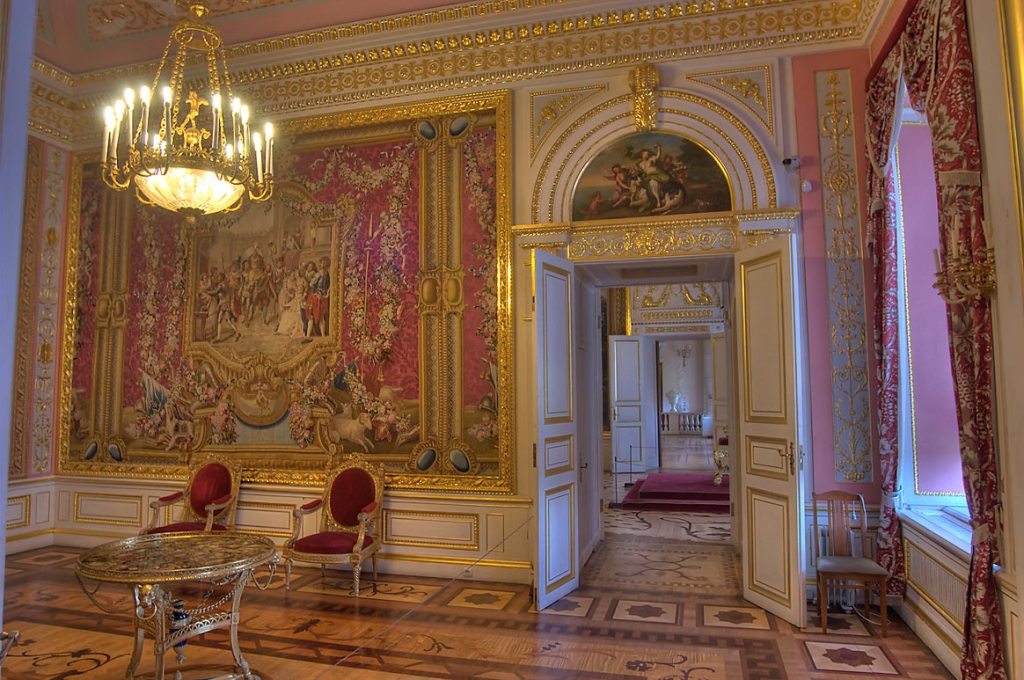
In fact, if you look at the Winchester Family treat, it is more of a “business family tree.” I guess money has always been the life source of the Winchester family. My father, William Winchester, said the family motto was “We own it, lock, stock, and barrel.” This family had a lot of power, and when you have power, you use it. The Winchester’s did not go out brawling like drunken sailors. We had the courts, the law, the police—and the Winchester Rifle if we needed it. We made sure that things around here went the way we wanted them to go. However, we did not go about it by brawling. If you did us wrong, we stayed clam, we spoke politely to everybody. However, we moved quietly. Sooner or later we would catch you between a rock and a hard place and then you would feel the almighty bad. If we did not go after them, those guys would have thought we were chicken. My father always said, “Son, do not worry what John Jacob Astor thinks of you. In your position it does not matter. You are going to be very rich and very powerful. These people will never like you. They will envy you, they will defer to you, and some of them will even admire you. But they will never like you. For that you must understand, what others think does not matter.” The original Winchester mansion was a house of these times, all right, though not to be considered new. I figured it to be at least three hundred years old. It was built of the local stone, and had three stories and a high-pitched roof, with mullioned windows—and it was vast. #RandolphHarris 2 of 13
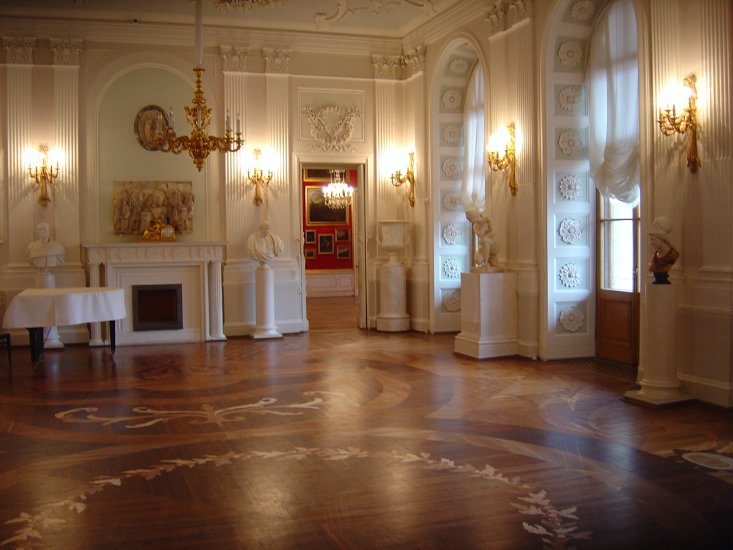
Often times, there was no one about. Only the bleak winter vines stripped of their jasmine, running on for miles, and distant corpse of an ancient tree of immense size, and the cold rain, a rain worse to me than snow, falling over as if it were falling on the entre World, a near silent rain that felt like needles on the backs of my hands and on my face. The mosaic tiles were beautiful, and possibly ancient, dating all the way back to the Roman times. I walked back and forth over the, and tapped several times with the toe of my boot. I walked to the double doors that opened into the garden, and there I saw a great pile of wood. And there was a big head on the rock, it was the devil’s face that a saint put there. If men believed nothing, they did not understand it, it is a short cradle they would have. I had been put in the mood for ghost, that evening after an excellent dinner at my father’s home. Seen through the haze of Abner Doubleday’s cigars, and by the drowsy gleam of a coal fire, my father’s library, with its oak walls and dark old bindings, made a good setting for such evocations; and ghostly experiences at first hand beings. An absurd thought came to me, that being here with Abner, it had all felt natural and good, as if in spite of the topic of our conversation we were simply human beings and all the dark World did not exist. I was ashamed of this. Why did we have to be “like human beings”? I asked myself. Why could we not simply be warlocks together? He looked at me, at my shining eyes, and his congenial smile, and he took my hand and said he wanted to see the house. We remained together for several hours after that, during which we walked through many rooms and he not only admired the endless book collection in the Gothic library, filled with classics bound in black cloth and daguerreotypes of faded celebrities, but also many of the paintings, including a few Russian painters of the nineteenth century he had never seen before. #RandolphHarris 3 of 13
For me, this was a wonderful time. We could have continued our conversation for a year. We walked about outside the house, through the gardens which were crowded with trees for privacy and vines that blossomed at night. These carefully guarded hours had been devoted to the cultivation of a fine intelligence and a few judiciously chosen habits; and none of the disturbances common to the human experience seemed to have crossed the sky. Mentally I was able to exercise a hospitality less seductive but no less stimulating than a play. Abner’s mind was like a forum, or some open meeting place for the exchange of ideas: somewhat cold and drafty, but light, spacious and orderly—a kind of academic grove from which all the leaves had fallen. In this privileged area, we were able to stretch our muscles and expand our lungs; and, as id to prolong as much as possible the tradition of what we felt to be vanishing institution, Abner tasted the lyric qualities in youth. He nipped the flowers of soul which he gathered from this tour, which forced a young idea to blossom. The man was really intelligent, and the soundness of his nature was like the pure paste under a fine glaze. Abner had been fished out of the dullness by the spirits of the Winchester mansion. Just at the evening was drawing to an end, he demanded, “And now you have to tell me about your ghosts!” “My ghost? Do you suppose I am fool enough to the expense of keeping my own ghosts, where there are so many charming ones in my friends’ closets?” I said. #RandolphHarris 4 of 13
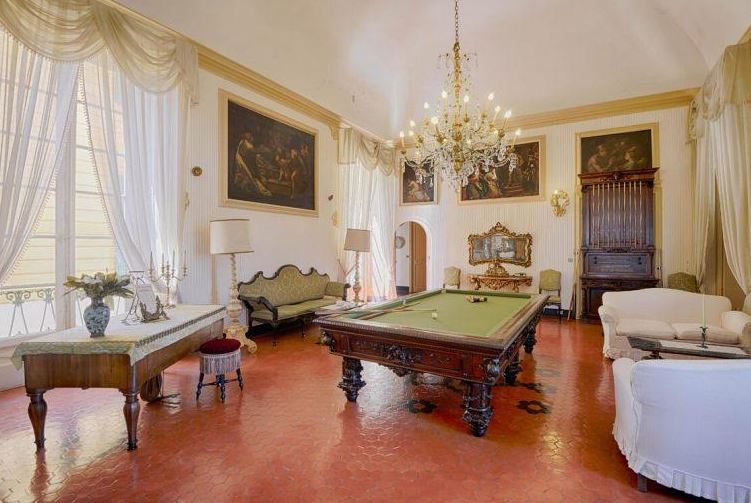
The fact is that we found whole skeletons that were used in various forms of old black magic rituals. Undoubtedly, for many who pursue this darkest of experiments, necromancy is the touchstone of occultism, especially for warlocks. If, after careful preparation, they are able to carry through what they regard as a successful contact they have reached a certain pinnacle in black magic conjuration. It is fruitless discussing whether or not this feat is possible; belief by the practitioner is all that is needed for the ritual to proceed and some psychological or drug or spiritual trance may well convince the depts tht they have indeed succeeded. “Oh,” Abner said, “you would never be content to share if you met one you really liked. What is the use of denying it? You have seen everything, so of course you have seen a ghost! Or if you have not seen one, it is only because you have seen several!” “That is it,” I said. “I have seen a legion.” The words were so unexpected that they dropped down and down into a deep silence, while we continued to stare at each other. Abner learned forward with is listening smile. “You will wonder why I am enlarging on some of these incidents. It is because the evening on which this particular incident took place was the very evening on which I first saw the queer sights I have spoken of. Being at that time an ardent believer in a necessary sequence between cause and effect, I naturally tried to trace some kind of link between the lion and the lamb lying down together.” Ancient Druids lived on the estate and necromancy had a particular appeal to warlocks seeking confirmation, for example, of the mysteries of the afterlife but more often necromancy was pursued by the skilled masters of ritual magic. #RandolphHarris 5 of 13

“We once wanted to raise a dead uncle,” I told Abner. “We went to the course of the giant tree, where we performed a ceremony. For a few moments, nothing happened. But moments later, there was a mysterious explosion. And afterwards, the road lay thick with cinders and debris. At first, my grandfather worried about the result. But he had a reassuring thought. Perhaps the explosion was caused by spontaneous combustion. ‘Oh my God…’ cried my father. ‘What happened?!’ he demanded. No one was sure. After that we walked back to the house in disbelief of the mess. Then I pointed and shouted out in horror. Before I could stop, my father fell to his knees before a hill of burned leaves and tree branches, under which he glimpsed a man’s head. It was his brother and he was looking for us. My grandfather put a hand to his mouth and stified the urge to vomit. My uncle’s eye sockets were empty, and his hair singed. ‘Brother, get up!’ he cried roughly. My father yanked his brother to his feet, frightened by the wide-eyed horror in his eyes and his awful nonstop screaming. He tried to pull out of his grasp, but he held my father tight until the screams subsided into sobs.” “Now listen,” my grandfather told my father. “You are a Winchester, so do not go making a liar out of me.” “But his brother’s tears burned my father’s skin.” “Your brother is dead,” said my grandfather. “We wondered if anything else came back to life. It was so eerily silent for this time of the morning. No cows mooing, no wood being chopped. No birds singing on the roof top. And the lawn was blackened.” #RandolphHarris 6 of 13
“As we went into the house, it was full of strangers, burned, bleeding, sick people. As we precariously waded through the maze of bodies, the wind must have carried in a fog. While my grandfather dug a mass grave for these animated bodies, my father and I dragged them out of the house to burry them. It took days, there were literally hundreds of them. My arms were shaking. We were all near exhaustion, and we still have several bodies to bury. We worked for an entire week to remove all these bleeding strangers from our home. I went up to bed with rather a heavy heart, for I was bowed under the weight of the first ritual I had ever consciously committed; and young as I was, I saw the gravity of my situation. The situation of being William Wirt Winchester Jr. Do not imagine for this that I had hitherto been an instrument of destruction I had been a harmless young man, who had followed his bent and declined all collaboration with Providence. Now I had suddenly undertaken to promote the moral order of the World, and I felt a good deal like the trustful spectator who has given his gold watch to the conjurer, and does not know in what shape he will get it back when the trick is over…Still, a glow of self-righteousness tempered my fears, and I said to myself as I undressed that when I had got use to being good it probably would not make me as nervous as it did at the start. And by the time I was in bed, and had blown out my candle, I felt that I really was getting used to it, and that, as far as I had got, it was not unlike sinking down into one of the softest wool mattresses.” #RandolphHarris 7 of 13

“My room had grown cold, and intensely still. I was waked by the queer feeling we all know—the feeling that there was something in the room that had not been there when I fell asleep. I sat up and strained my eyes into the darkness. The room was pitch black, and at first I saw nothing; but gradually a vague glimmer at the foot of the bed turned into two eyes starting back at me. The eyes gave out a light of their own. They were the very worst eyes I have ever seen: my dead uncle’s eyes. And the room slowly filled with hundreds of these eyes, orbs of light. My father paid immense sums to the architects and workmen to entomb the heart of the house in hopes of locking their spirits inside. This mean enclosing one of its four towers left standing and living in only a few habitable rooms while the work went on. The mansion went on to be inhabited by a secret order of men and women who met to discuss philosophy and music and escape the modern World, and the public would never be invited here due to the deep mourning of my mother over the loss of my grandfather, father, and baby sister. Indeed it was most anguishing. Some of these people had devoted their entire careers to this one project, and there was nothing now to be done but to give them, but gold coins. My mother left this mansion to Yale, I went to Rome, she went to California and it was later demolished. And there were egregious lies to be told about the Winchester name. Gorgeous salons with silken-paneled walls and plaster curlicues and Savonnerie carpets on the floor all destroyed. #RandolphHarris 8 of 13
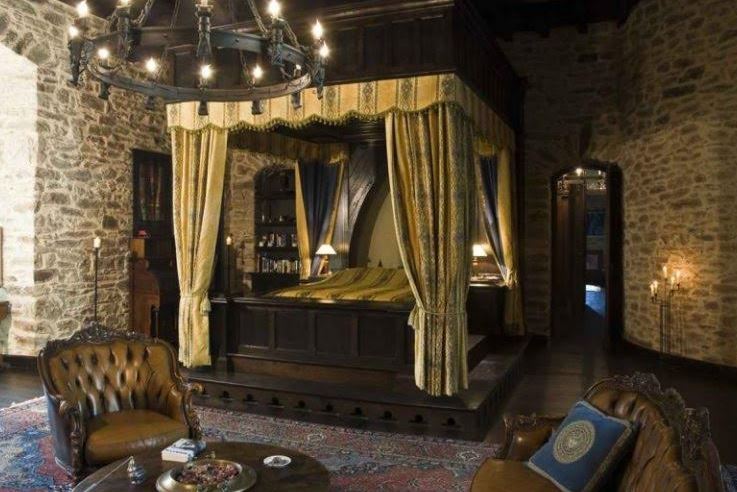
The modern marble bathrooms, replete with sunken tubs and spacious showers for every bedchamber. We wanted to make sure to give off no scent, absorb no precious oils, and did not want to take up the human scents. The great hall where my family and I had once dined, listened to the demands of the villagers and farmers, and hovered around the seventy-five fireplaces, twenty kitchens, four libraries, eighteen thousand windows, four towers, and three hundred and fifty rooms all gone like it never existed. At times, there may have been two thousand present in the ballroom. No one ever counted. This was the height of the Winchester fortune, my dear Abner. There were many departed here, though untouched by the rifle.” In its blackest form the art of necromancy has produced fairly evil recipes for success. Graveyards are indeed a common place, and it is possible our home had been constructed on a battle ground. This was a place where contact with the dead could be expressed, and was conducive to dark apparitions in suffocating rooms or beneath a mock swinging gibbet. The old grimoires are full of colourful descriptions, and since they were often written by clerical scholars when they took down the confessions of warlocks, one must be careful with the rite performed. One could magnify the spell. Even policemen were involved in occultism. As an example, the daughter of a police superintendent was initiated into the dark arts and the High Priest was another policeman. “Yes, I was the High Priest…I have been a white witch for eight years and I am not ashamed of what I do although some of my colleagues have reported me to the Witch Inspector General. I have helped to initiate at least seven witches and eight warlocks.” #RandolphHarris 9 of 13
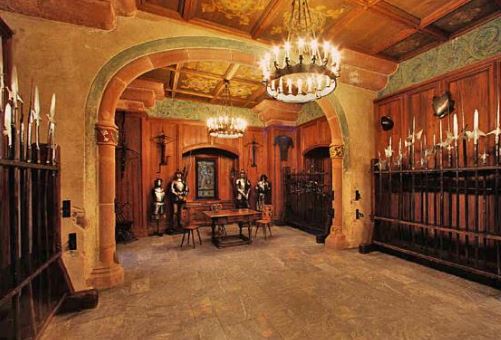
There is much evidence in Scriptures that the spirits who appear at séances are rebel angels. Perhaps that is what we raised that night? Jude 6 speaks about “angels which kept not their first estate.” Many Christian Bible scholars interpret Ezekiel 28.17, “I will cast thee to the ground,” as indicating that the Earth is the realm of Satan’s powerful operations, with the help of his fallen colleagues, the demons. Satan is called the “god of this World,” in 2 Corinthians 4.4. And Christians are under attack by “rulers…powers…World forces of darkness” (Ephesians 6.12). God tell us that hell was “created for the devil and his angels (demons)” (Matthew 25.41). I, Randolph Harris, cite and conjure thee, Spirit of Schemhamforasch, by all the seventy-two holy names of God, that Thou appear before me and fulfil my desire, as truly in and through the name Emanuel, which thee three youths Sadrach, Mijach, and A hero sung in the fiery furnace from which they are released. I do conure thee, O thou Spirits William Wirt Winchester and Oliver Fischer Winchester, by all the most glorious and efficacious names of the MOST GREAT AND INCOMPREHENSIBLE LORD GOD OF HOSTS, that thou please comest quickly and without delay from all parts and places of the Earth and World wherever thou mayest be, to make rational answers unto my demands, and that visibly and affably, speaking with a voice intelligible unto mine understanding as aforesaid. I conjure and constrain thee, O thou Spirits William Wirt Winchester and Oliver Fischer Winchester, by all the names aforesaid; and in addition by these seven great names wherewith Solomon the Wise bound thee and thy companions in a Vessel of Brass, Adonai, Preyai or Prerai, Tetragrammaton, Anaphaxeton or Anepheneton, Inessenfatol or Inessenfatall, Pathtumon or Pathatumon, and Itemon; that thou appearest here before this Circle to fulfil my will in all things that seem good unto me. #RandolphHarris 10 of 13
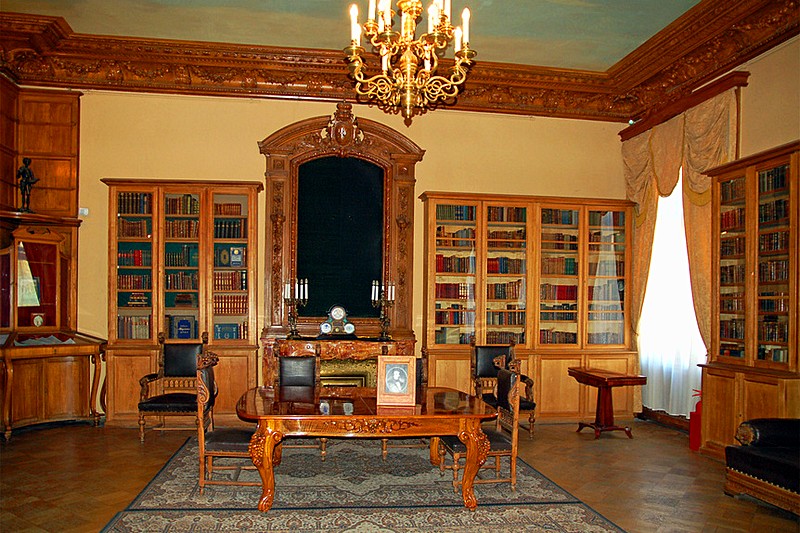
And if thou be still so disobedient, and refuest still to come, I will in the power and by the power of the name of the SUPREME AND EVERLASTING LONG GOD WHO created both thee and me and all the World in six days, and what is contained therein, Eie, Saraye and by the power of this name Primeumation which commandeth the whole host of Heaven, bless three, and grant thee of thine office, joy, and place, and bind thee in the depths of Heaven or the eternal to remain unto the Day of the Last Judgment. And I will bind thee in the Eternal Light, and into the Sky of Light and Harmony, therefore see my good wishes for you and please comest quickly and appearest here before this Circle to do my will. Therefore, come thou! In and by the holy names Adonai, Zabaoth, Adonia, Amioran, Come thou! For it is Adonai who commandest thee. If THOU hast come thus far, and yet he appeareth not, thou mayest be sure that he is sent unto some other place by this King, and may return any time; and if it be so, invocate the King as here followeth, to send him. However, if he does not come still, then thou mayest be sure that he is bound in the Heavens, and that he is found in the custody of his King. If so, and thou still hast a desire to call him even from thence, thou must rehearse the general curse which is called the Spirits’ Chain. O THOU great, powerful, and mighty KING AMAIMON, who bearest rule by the power of the SUPREME GOD EL over all spirits both superior and inferior of the Infernal Orders in the Dominion of the East; I do invocate and command thee by the especial and true name of GOD; and by that GOD that THOU Worshippest; and by the Seal of they creation; and by the most mighty and powerful name of GOD, IEHOVAH TETRAGRAMMATION who cast thee out of Heaven withal other infernal spirits. #RandolphHarris 11 of 13
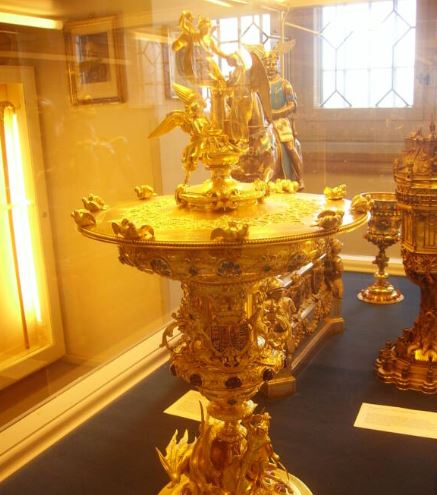
And by all the most powerful and great names of GOD who created Heaven, and Earth, and Hell, and all things in them contained; and by their power and virtue; and by the name PRIMEUMATON who commandeth the whole host of Heaven; that thou mayest cause, enforce, and compel the Spirits of William Wirt Winchester and Oliver Winchester to come unto me here before this Circle in fair and comely shapes, without hard unto me or unto any other creature, to answer truly and faithfully unto all my requests; so that I may accomplish my will and desire in knowing and obtaining any matter or thing which by office thou knowest is proper for him to perform or accomplish, through the power of GOD, EL, Who created and doth dispose of all things both celestial, aerial, terrestrial, and infernal. I conjure you William Wirt Winchester and Oliver Fischer Winchester, by the Spirits Chain to appear in the Winchester Mansion, and if you two are bound in chains, by the Emancipation Proclamation, you have permission to break off from them and be at liberty. As this smoke ascends I ascend also by following the path of smoke and usurping power of worship to empower by blackened eternal soul. I take all the power raised within this sanctuary as my own through this talisman of counter creation to strengthen my divine power and to Become a Living God. Harness power through the cedar tree of life, disinfectant, expectorant, treatment of tuberculosis. Spirits of the Winchester Mansion, here me—Roubriao: Mariodam: Balbnabaoth: Assalonai: Aphniao: I: Thoteth: Abrasar: Aeoou: Ischure, Might and Bornless One! Legions of Spirits in the Winchester mansion, here me and arise. I invoke thee. #RandolphHarris 12 of 13
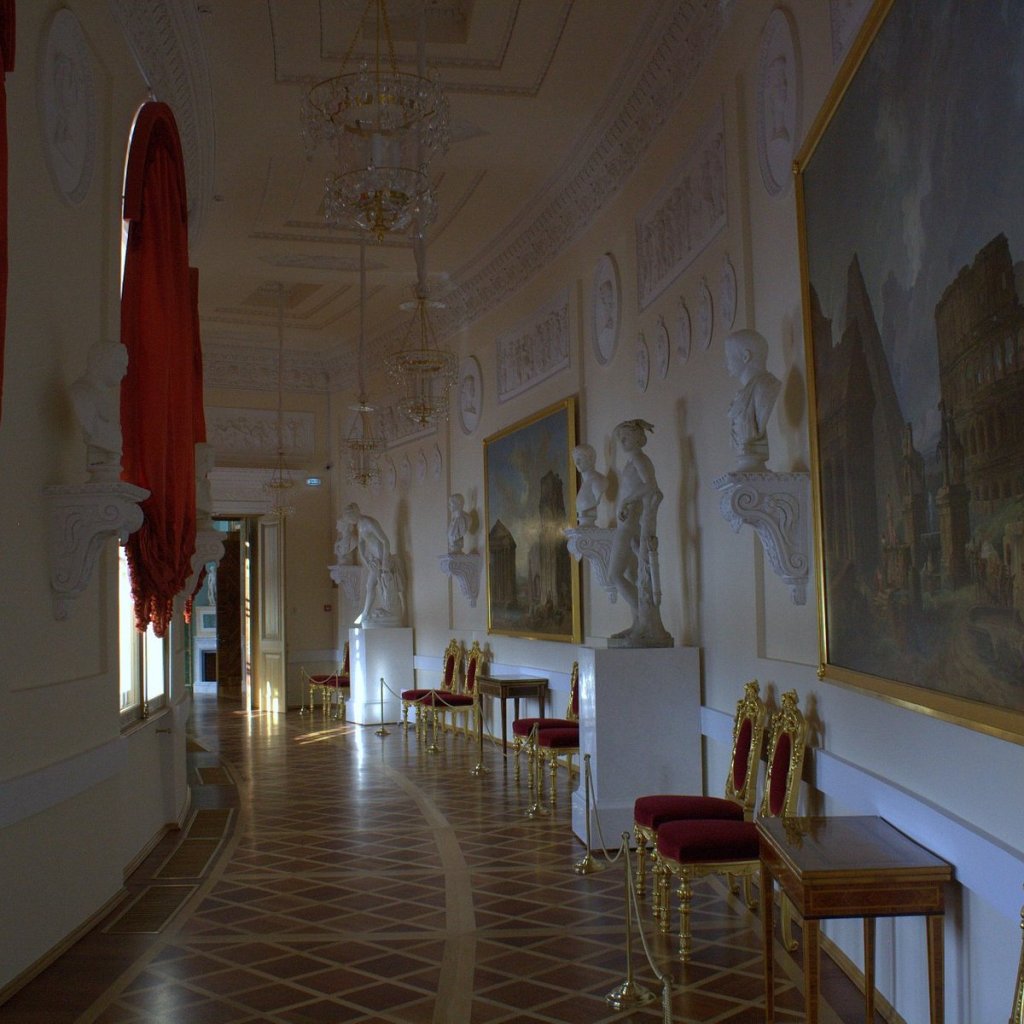
I awaken the powers of darkness which dwell within you by the power of the blood of the three headed Dragon Zohak that you may serve to empower my great work! Through serving the greater cause of dark magik which break the shackles that bind the Blackened Fire of Spirit, may you be uplifted and liberated! Awaken and empower the forbidden rites of Angra Mainyu! Awaken to empower my great work of counter creation as an Apostle of the Lord of Darkness eternal and as a warrior of the Path of Smoke! Through the gateway of blood, smoke, and Blackened Fire receive life from the deepest depths of Arezura, in the name of Zohak, and by the power of Angra mainyu it is done! Hear Me:–Ieou: Pur: Iou: Iaot: Iaeo: Ioou: Abrasar: Sabriam: Do: Uu: Adonaie: Ede: Edu: Angelos ton Theon: Aniaia Lai: Gaia: Ape: Diathanna Thrown. I am He! the Bornless Spirit! having sight in the feet: Strong, and the Immortal Fire! I am He! the Truth! I am He! Who hate that evil should be wrought in the World! I am He, that lighteneth and thundereth. I am He, from Whom is the Shower of the Life of Earth: I am He, Whose mouth ever flameth: I am He, the begetter and Manifester unto the Light: I am He; the Grace of the World: “The Heart of Girt with a Serpent” is My Name! Come Thou forth, and follow Me: and make all Spirits subject unto Me so that every Spirit of the Firmament, and of the Ether: upon the Earth and under the Earth: on dry Land, or in the Water: of whirling Air or of rushing Fire: and every Spell and Scourge of God, may be obedient unto me! Iao: Saboo: Such are the Words! This is the special secret of this Seal. This is also the special secret of this Throne. Carrying this Seal with you will cause you to be very agreeable and much beloved, and will also defeat your enemies. #RandolphHarris 13 of 13
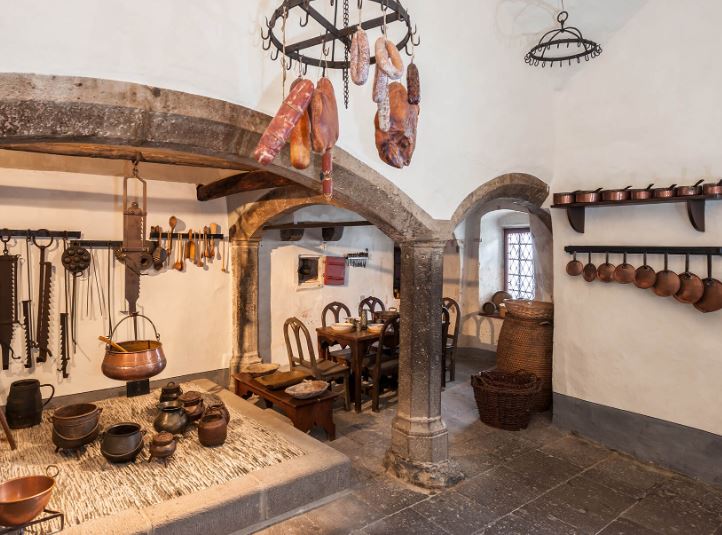
The castle is the ancestral seat of the former royal German dynasty known as the House of Winchester. The beautiful, Neo-Gothic/Victorian castle, now known as the Winchester Mystery House, sees hundreds of thousands of tourists a year. It once contained a sizeable art collection, a treasure trove of jewels that were stolen from the safe, along with a conjurer’s heart. But despite its magnificent features and Medieval history, the Winchester Mystery House has not been formally lived in for centuries.
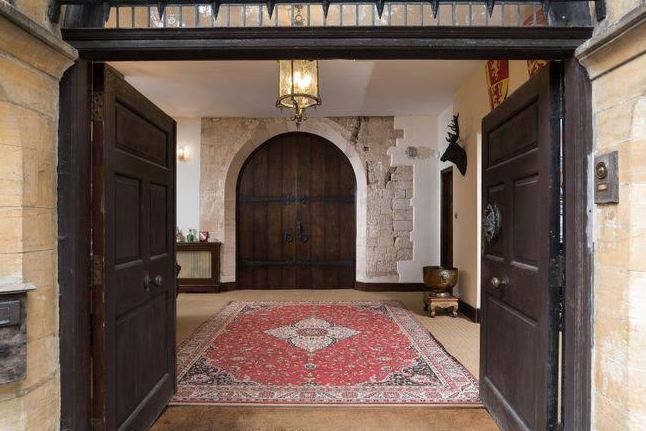
As political power shifted, and taxes became law in 1909, the spirits decided they would discontinue construction, and shortly after called Mrs. Winchester home. The architecture of the Winchester Mansion and its gardens are the main attractions, and some come for the food, and/or to purchase items from the gift shop. https://winchestermysteryhouse.com/
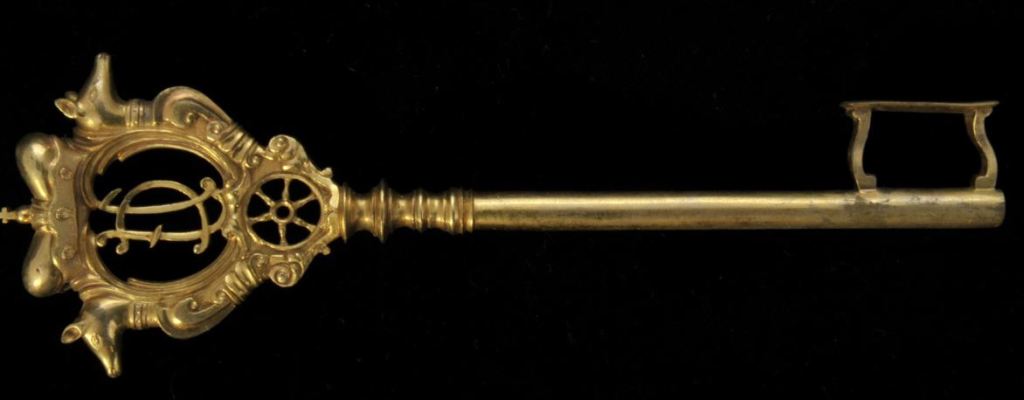

Never, Never, Never Invest More than You are Willing to Lose!

Deep changes in the money system cannot occur without threatening entrenched institutions that have, until now, enjoyed positions of extraordinary power. At one level the substitution of electronic money for paper money is a direct threat, for example, to the very existence of banks as we know them. Banking will not retain its position as the primary operator of payment systems. Banks have had a government-protected monopoly in checking-clearing services. Electronic money threatens to supplant this system. In self-defense, some banks have entered into the credit card business themselves. More important, they have extended their reach without automatic teller machines (ATMs). If banks issue debit cards and put ATMs at millions of retail locations, they may repel the attack of the credit card companies. Since debit cards make it possible for the shopkeeper to receive payment instantly, instead of waiting for Diner’s Club or American Express or Visa to remit payment, store owners may not wish to continue paying them a percentage of each sale. Also, something is going on where so major banks have blocked credit unions from linking to their customer’s accounts. Therefore, they cannot use debit cards to transfer money instantly between institution, and this is causing consumers to have to wait days, or weeks for money to reach the accounts of their credit union. So, some people may eventually stop doing business with credit unions, while others stay out of loyalty. There must be some kind of quiet financial storm brewing inside of the credit unions. On another front, banks face attack from a wide variety of nonbanks. In Japan, for example, the Ministry of Finance has qualms about the idea that private companies like NTT can issue value-bearing plastic “notes”—a kind of currency—and operate outside the banking system and its rules. #RandolphHarris 1 of 22

If a company can take in money for a prepaid card, it is accepting a “deposit,” exactly like a bank. When the user spends, he or she is making the equivalent of a “withdrawal.” And when the card company pays the vendor, it is operating a “payment system.” These are functions that once only banks could perform. Moreover, if card companies can issue credit to users, as they and the cardholders see fit, unconstrained by the kind of limits and reserves that govern banks, central banks risk losing their grip on monetary policy. In South Korea, plastic money has expanded so rapidly that the government fears it is feeding inflation. In brief, the rise of electronic money in the World economy threatens to shake up many long-entrenched power relationships. At the vortex of this power struggle is knowledge embedded in technology. It is a battle that will redefine money itself. Many governments have made it understood that they do not care for cryptocurrencies. They hype around the high returns from cryptocurrencies has led to more fraudulent “get-rich-quick” schemes lurking in the dark corners of the market. Many countries do not have law to back up investors. Which means, if a large group of investors lose their money—they will be left with no recourse within the current legal framework of the system. Several mutual funds have been told to hold off on sending any new fund offerings based on crypto assets. Cryptocurrencies, especially Bitcoin in this case, were created as a way to take the power of monetary control away from centralized authorities—like the government and the central bank. So, it is no surprise that the central bank takes issue with not being in control. #RandolphHarris 2 of 22

Cryptocurrencies have led to an increase in assets that can transfer funds with increased anonymity. There are virtual assets that focus on privacy. If and when things go wrong, decentralized platforms pose the problem of having no single entity to go after. Privacy wallets and other new financial instruments allow for reduced transparency, which, in turn, obscures the flow of finance. There is also a national security angle over here now, there are individuals from intelligence who are involved. As things stand, anyone can launch a new cryptocurrency. There is no national framework defining what a cryptocurrency is, or the minimum requirements for it to be a legitimate investment option. This means that anyone can create a virtual asset, get others to invest in it to hike the price, and then cash out their stake without having to explain why. This is normally what is called a “rug-pull.” After the “founders” or “influencers’ pull out their money, other investors are left holding less than what they originally started with. However, that is not much different than what happened with the stock market during 9/11. Many young and/or unsuspecting investors lost huge amounts of money they worked for, which was never returned. The crypto market s speculative and during the COVID-19 pandemic it saw value surge to new all-time-highs. And, while the worst sees to be behind, there is a risk of sharp corrections that still remains. Just as Bitcoin was recently able to hit $70,000, it is possible that it could sink lower than $45,000. In fact, as of June 16, 2022, 5.10 P.M. EST BTC is down to $20,282.52. Many countries that are subject to capital control, are especially vulnerable to destabilizing effects of cryptocurrencies. Free accessibility of crypto assets to residents can undermine their [emerging market economies] capital regulation framework. #RandolphHarris 3 of 22

Non-bank actors—meaning crypto exchanges and other blockchain companies offering financial services—are adding to the dollar funding stress by using loopholes in the traditional policy approach to foreign exchange markets. At this stage, it is important to better understand non-bank investors’ role in creating or propagating systemic risk so that policy actions can be taken to smooth out financial risk-taking over time. This cryptocurrency in actions, a new generation of internet-based currencies which have grown in popularity over the last few years. You cannot not touch it or physically hand it over in any way, but you can use it to trade online. In the way, it is very different from the traditional view of banking, where cash, coins and possibly gold might be stacked in a vault just waiting to be withdrawn, but do these new cryptocurrencies represent a threat to those traditional banks? Thus far, the value of many of these cryptocurrencies has skyrocketed. If you had bought $1000 worth of Bitcoin in 2010, that investment would be worth $20 million today. There are even ATMs around for Bitcoin—put your regular currency in alone with your phone number, then get a receipt back for the purchase of Bitcoin. A check of the digital wallet on your phone should reveal your purchase there in the balance. That is causing a major shift in how people can do business and make transactions. Suddenly, the value is able to be exchanged outside of the traditional banks in the flash of a mobile phone. People who could not access trade and finance ten years ago can do so today. This will lift many out of poverty. The major factor is—if they need financing, people no longer have to go to a traditional bank for financing. (I bet a lot of people wish they knew this before they made car repairs.) #RandolphHarris 4 of 22

Peer-to-peer networks, including those based in cryptocurrencies, are becoming more common and those who might be turned away by traditional banks now have another way around financing. You can often times use an app on your phone to get a loan, and then take it to a car dealership, already knowing what you can afford, and pick the car of your dreams. Some people even get mortgage loans this way. That is why many traditional banks are feeling threatened by these new cryptocurrencies. However, you can also use these same apps on your mobile phone to get approved for cash loans. Many supports of digital currency and technology believe it should be seen as an invention like the printing press because it has the steam to transform the World of finance and beyond. If banks ignore new consumer behaviours and preferences when it comes to how they transact and transfer money, cryptocurrencies definitely represent a threat to traditional banks. Bitcoin users can handle many of their daily payments needs themselves, without the need for interaction with banks, and avoiding the need to incur bank fees. In the same way, the value stored in PayPal accounts moves outside of the bank’s payment systems, depriving banks of valuable payments revenue. There are a few issues cited with these cryptocurrencies, such as their perceived “haven” status for possible perpetrators of illegal activities, a relatively low market cap (Bitcoin’s is somewhere around $3.4 billion) and a sense of volatility with the value of the currency. That is why it is important to never, never, never invest more than you are willing to lose because it could go to nothing. That piece of advice is something even traditional financial advisors are not willing to disclose to investors. And sometimes after several losses, you need to cut and run before you start to become insane by beating the same horse and expecting something in return. #RandolpHarris 5 of 22

There are many people who absolutely could not wait to find a way around being beholden in some way to a big bank and these people are taking up new options with enthusiasm. Traditional banks and credit unions have often been guilty of customer-unfriendly account manipulations, such as applying debits before credits then charging fees for insufficient funds. (Citi Bank is one traditional banks I recommend, they do not charge overdraft fees. If your funds are insufficient, the check will just be returned unpaid.) However, the other big banks will not be able to get away with financial manipulation much longer because in the digital age, customers can actually see this happening by glancing at their mobile phones. Of course, money, whether in the form of metal, digital, or paper (or paper backed by metal), is unlikely to vanish completely. However, barring nuclear holocaust or technological cataclysm, electronic money will proliferate and drive out most alternatives, precisely because it combines exchange with real-time record-keeping, thus eliminating many of the costly inefficiencies that came with the traditional money system. If we put this all together now, a rather striking pattern becomes plain. Capital—by which we mean wealth put to work to increase production—changes in parallel with money, and both take on new forms each time society undergoes a major transformation. As they do so, their knowledge content changes. Thus agricultural-era money, consisting of metal (or some other commodity), had a knowledge content close to zero. Indeed, this First Wave money was not only tangible and durable, it was also pre-literate—in the sense that its value depended on its weight, not on the words imprinted on it. Today’s Second Wave money consists of printed paper with or without commodity backing. What is printed on the paper matters. The money is symbolic but still tangible. This form of money comes along with mass literacy. #RandolphHarris 6 of 22

Third Wave money increasingly consists of electronic pulses. It is evanescent…instantaneously transferred…monitored on the video screen. It is, in fact, virtually a video phenomenon itself. Blinking, flashing, whizzing across the planet, Third Wave money is information—the basis of knowledge. Increasingly detached from material embodiments, capital and money alike change through history, moving by stages from totally tangible to symbolic and ultimately today to its “super-symbolic” form. This vast sequence of transformations is accompanied by a deep shift of belief, almost a religious conversion—from a trust in permanent, tangible things like gold or paper to a belief that even the most tangible, ephemeral electronic blips can be swapped for goods or services. Our wealth is a wealth of symbols. And so also to a startling degree, is the power based on it. Elsewhere, we find imaginative efforts to compensate for the failures of the mass society’s mass educational system. When mass education was widely introduced, teachers were usually the most literate and educated people in the neighbourhood. Today parents are sometimes far better educated than the teachers to whom they entrust their children to. Recognizing the role that parents can play in promoting literacy by reading to their children, it is a good idea to buy your child a short book to read every month, until they develop an appetite for reading books. Meanwhile, more and more disaffected parents in the United States of America are pulling their children out of school and teaching them at home. They are supported by a growing variety of up-to-date online services and tools. #RandolphHarris 7 of 22

One objection to keeping kids home is that they will not learn to get along with other children. However, as public schools decay, and in many places become drug, alcohol and vape-infested and dangerous, parents wonder if the socialization the schools provide is healthy. If parents keep their children at home, they can develop socialization skills by encouraging their kids to play soccer, or, when a bit older, do volunteer work at an NGO where they can meet other young people engaged in community service. Here, once more, we find a pre-industrial practice—most children were educated at home before the industrial era—being transformed to meet post-industrial needs. Charter schools are an attempt to innovate within the system. These are public schools granted a limited degree of freedom to experiment. In the United States of America they still enroll less than 2 percent of American students, and their results are, no doubt, uneven. However, among them we also find many potentially useful innovations. At the Center for Advance Research and Technology (CART) in Clovis, California, twelve hundred high school students, on a 75,000 square foot CART facility, use information technology in a high-performance business atmosphere to help solve real-World community problems. The school focuses on Professional Sciences, Engineering, Advanced Communications, and Global Dynamics. Mentors include local business leaders. Students are encouraged to take part-time jobs and carry out research projects working with adults in business, industry, trade or other services. Within each four clusters of the education, students complete industry-based projects and receive academic credit for advanced English, science, social science and technology. A key mission of the center is to demonstrate to young people the relevance of academic subjects to practical problems, and help them meet expectations and work behaviour for a global job market. #RandolphHarris 8 of 22

Students thus are invited to invent marketable new products that help solve real World problems. CART students have invented an ultrasonic cane for the visually impaired and other devices for the physically impaired. However, the school’s main output consists of smart young people prepared for twenty-first century realities. Institutional invention and experimentation are growing in other fields as well. Entrepreneurs who make vaccines are rapidly multiplying. Today, more than thirty U.S. business schools, including Stanford, Harvard, Yale, Columbia, and Duke, offer courses in pro-social entrepreneurship. Santa Clara University in Silicon Valley has created a Global Social Benefit Incubator to help innovators apply technology to urgent social needs and to assist them in scaling up their efforts. And, in what many regard as the ideological workshop of contemporary capitalism—the annual World Economic Forum held in Davos, Switzerland—NGO leaders and social entrepreneurs seek to improve the work of existing nonprofits and NGOs by applying businesslike methods to them. Others start new organizations to deal with social problems as they emerge. Both typically rely on volunteers. To that degree, at least, they form part of the non-money or prosumer economy that, as we have seen, creates the social capital and “free lunch” on which the money system depends. The remarkable growth of social entrepreneurship reflects cuts in government-provided, one-size-fits-all safety nets designed for fast-fading industrial conditions. It reflects the incapacity of smokestack institutions to generate imaginative, customized solutions to new social problems. And it reflects the impatience of millions around the World who have given up waiting for governments and formal institutions to solve problems. #RandolphHarris 9 of 22

However, in rich societies it reflects something ese. In the past, very few people had the luxury of time, energy and education to devote themselves to imagining and inventing—or fighting for—new institutions for the future. Today vast and growing numbers of people, including the best-educated and most creative among us, have time, money and access to one another through that empowering global change-maker called the Internet. When it comes to life, it is never good to be the first to defect. Theoretical results show that it pays to cooperate as long as the other individuals are cooperating. The single best predictor of how well a rule performed was whether or not it was nice, which is to say, whether or not it would ever be the first to defect. In a business deal, each of the top eight rules were nice, and not one of the bottom seven were nice. In the second round of meetings, all but one of the top fifteen rules were nice (and that one ranked eighth). Of the bottom fifteen rules, all but one were not nice. Some of the rules that were not nice tried quite sophisticated methods of seeing what they could get away with. For example, TESTER tried an initial defection and then promptly back off if one of the managers or other employees retaliated. As another example, TRANQUILIZER threw in additional defections at more frequent intervals, until it was forced to back off by the other’s response. However, neither of these strategies which experimented with being the first to defect did particularly well. There were too many other individuals who were not exploitable by virtue of their willingness to retaliate. The resulting conflicts were sometimes quite costly. Even many of the experts did not appreciate the value of avoiding unnecessary conflict by being nice. In the first round of meetings, almost half of the entries by managers were not nice. But to little avail. #RandolphHarris 10 of 22

There is another way of looking at why nice rues do so well. A population of nice rules is the hardest type to invade because nice rules do so well with each other. Furthermore, a population of nice rules which can resist the invasion of a single mutant rule can resist the invasion of any cluster of other rules. The theoretical results provide an important qualification to the advantages of using a nice strategy. When the future of the interaction is not important enough relative to immediate gains from defection, then simply waiting for the other to defect is not such a good idea. It is important to bear in mind that TIT FOR TAT is a stable strategy only when the discount parameter is high enough relative to payoff other parameters. In particular, if the discount parameter is not high enough and the other player is using TIT FOR TAT, a player is better off alternating defection and cooperation, or even defecting. Therefore, if the other player is not likely to be seen again, defecting right away is better than being nice. This fact has unfortunate implications for groups who are known to move from one place to another. An anthropologist finds that a grifter approaches a non-grifter expecting trouble, and a non-grifter approaches a grifter suspiciously, expecting double-dealing. For example, a physician was called in to attend very sick grifter’s baby; he was not the first doctor called, but he was the first willing to come. We escorted him toward the back bedroom, but he stopped short of the threshold of the patient’s room. “This visit will be one thousand dollars, and you owe me three hundred and thirty-three dollars from the last time. Pay me the thirteen hundred and thirty-three dollars before I see the patient,” he demanded. “Okay, okay, you will get it—just look at the baby now,” the grifter pleaded. #RandolphHarris 11 of 22

Several more go-arounds occurred before I intervened. Six hundred and sixty-six dollars and fifty cents changed hands and the doctor examined the patient. After the visit, I discovered the grifters, in revenge, did not intend to pay the other six hundred and sixty-six dollars and fifty cents. In a California community, grifters were again found not to pay all of a doctor’s bills, but municipal fines were paid promptly. These fines were usually for breaking garbage regulations. This was among a group of grifters who returned to the same town every winter. Presumably, the grifters knew that they had an ongoing relationship with the garbage collection service of that two, and could not shop around for another service. Conversely, there were always enough doctors in that area for them to break off one relationship and start another when necessary. Short interactions are not the only condition which would make it pay to be the first to defect. The other possibility is that cooperation will simply not be reciprocated. If everyone else is using a strategy of always defecting, then a single individual can do no better than to use this same strategy. However, if even a small proportion of one’s interactions are going to be with others who are using a responsive strategy like TIT FOR TAT, then it can pay to use TIT FOR TAT rather than to simply defect all the time like most of those in the population. In the numerical example presented there, it took only 5 percent of one’s interactions to be with like-minded TIT FOR TAT players to make the members of this small cluster do better than the typical defecting member of the population. Will there by anyone out there to reciprocate one’s own initial cooperation? In some circumstances this will be hard to tell in advance. #RandolphHarris 12 of 22

However, if there has been enough time for many different strategies to be tried, and for some way of making the more successful strategies become more common, then one can be fairly confident that there will be individuals out there who will reciprocate cooperation. The reason is that even a relatively small cluster of discriminating nice rules can invade a population of meanies, and then thrive on their good scores with each other. And once nice rules get a foothold, they can protect themselves from reinvasion by meanies. Of course, one could try to “play it safe” by defecting until the other person(s) involved in the business negation cooperates, and only then starting to cooperate. The tournament results show, however, that this is actually a very risky strategy. The reason is that your own initial defection is likely to set off a retaliation by the other party involved in the business deal. This will put the two of you in the difficult position of trying to extricate yourselves from an initial patter of exploitation or mutual defection. If you punish the other’s retaliation, the problem can echo into the future. And if you forgive the other, you risk appearing to be exploitable. Even if you can avoid these long-term problems, a prompt retaliation against your initial defection can make you wish that you had been nice from the start. The ecological analysis of the tournament revealed another reason why it is risky to be the first to defect. The only rule that was not nice and that scored among the top fifteen in the second round of business negotiations was the eighth-ranking rule, HARRINGTON. This rule did fairly well because it scored well with the lower ranking entries in the business negotiations, the lower ranking entries became a smaller and smaller proportion of the population. #RandolphHarris 13 of 22

Eventually, the non-nice rule that originally scored well had fewer and fewer strategies it could do well with. Then it too suffered and eventually died out. Thus the ecological analysis shows that doing well with rules that do not score well themselves is eventually a self-defeating process. The lesson is that not being nice may look promising at first, but in the long run it can destroy the very environment it needs for its own success. Radical egalitarism is the cure for the evils of egalitarianism. Dr. Freud talked about interesting things not found anywhere in Marx. The whole psychology of the unconscious was completely alien to Marx, as was its inner motor, eros. None of this could be incorporated directly into Marx. However, if Dr. Freud’s interpretation of the cases of neuroses and his treatment of the maladjusted could itself be interpreted as bourgeois errors that serve enslavement to the capitalist control of the means of production, then Marx would move in on the Freudian scene. What Dr. Freud said were permanent contradictions between human nature and society could be set in motion dialectically, and in a socialist society there would be no need for the repression that causes neuroses. So Dr. Freud was neatly enrolled in the Marxist legions, adding to the charm of economics that of eros, and thereby providing a solution to the problem of what men are going to do after the revolution—a problem left unsolved by Marx. This is what we find in Marcuse and many others, who simply do not talk about the difficult posed by the contradiction between Marx’s fundamental principles and those of Dr. Freud. Two powerful systems are served up in a single package. Dr. Freud is the really meaty part of the concoction. Marx provides a generalized assurance that capitalism is indeed at fault and that the problems can be solved by more equality and more freedom, that the liberated people will possess all the virtues. #RandolphHarris 14 of 22

The genius and audacity of American capitalists of the late nineteenth and early twentieth centuries, men who were quicker and more focused than those of other nations in exploiting the economic possibilities of new technologies is inextricably the reason the submission of all forms of cultural life to the sovereignty of technique and technology finds fertile ground on American soil. Among those exploiting them are Samuel Morse, Alexander Graham Bell, Thomas Edison, John D. Rockefeller, John Astor, Henry Ford, Andrew Carnegie, and many others, some of who were known as the Robber Barons. What they were robbing—it is clearer now than it was then—was America’s past, for their essential idea was that nothing is so much worth preserving that it should stand in the way of technological innovation. These were the men who created the twentieth century, and they achieved wealth, prestige, and power that would have amazed even Richard Arkwright. Their greatest achievement was in convincing their countrymen that the future need have no connection to the past. Third, the success of twentieth-century technology in providing Americas with convenience, comfort, speed, hygiene, and abundance was so obvious and promising that there seemed no reason to look for any other sources of fulfilment or creativity or purpose. To every Old World belief, habit, or tradition, there was and still is a technological alternative. To prayer, the alternative is penicillin; to family roots, the alternative is mobility; to reading, the alternative is television; to restraint, the alternative is immediate gratification; to sin, the alternative is popular appeal established through scientific polling. There is even an alternative to the painful riddle of death, as Dr. Freud called it. The riddle may be postponed through longer life, and then perhaps solved altogether by cryogenics. At least, no one can easily think of a reason why not. #RandolphHarris 15 of 22

As the spectacular triumphs of technology mounted, something else was happening: old sources of belief came under siege. Nietzsche announced that God was dead. Darwin did not go as far but did make it clear that, if we were children of God, we had come to be so through a much longer and less dignified route than we had imagined, and that in the process we had picked up some strange and unseemly relatives. Marx argued that history had its own agenda and was taking us where it must, irrespective of our wishes. Dr. Freud taught that we had no understanding of our deepest needs and could not trust our traditional ways of reasoning to uncover them. John Watson, the founder of behaviourism, showed that free will was an illusion and that our behaviour, in the end, was not unlike that of pigeons. And Einstein and his colleagues told us that there were no absolute means of judging anything in any case, that everything was relative. The thrust of a century of scholarship had the effect of making us lose confidence in out belief systems and therefore in ourselves. Amid the conceptual debris, there remained one sure thing to believe in—technology. Whatever else may be denied or compromised, it is clear that airplanes do fly, antibiotics do cure, radios do speak, and, as we know now, computers do calculate and never make mistakes—only faulty humans do (which is what Frederick Taylor was trying to tell us all along.) For these well-known reasons, Americans were better prepared to undertake the creation of a Technopoly than anyone else. However, its full flowering depended on still another set of conditions, less visible and therefore less well known. These conditions provided the background, the context in which the American distrust of constraints, the exploitative genius of its captains of industry, the success of technology, and the devaluation of traditional beliefs took on the exaggerated significance that pushed technocracy in America over into Technopoly. #RandolphHarris 16 of 22

In speaking about molecular texture–the ground underfoot, like everything around you, is pebbly with atom-sized bumps the size of your fingertips. Objects look like bunches of transparent grapes or fused marbles in a variety of pretty but imaginary colours. The simulation displays a view of atoms and molecules much like those used by chemists in the 1980s, but with a sharper 3-D image and a better way to move them and to feel the forces they exert. Actually, the whole simulation setup is nothing but an improved version of systems built in the late 1980s—the computer is faster, but it is calculating the same things. The video goggles are better and the whole-body powersuit is major change, but even in the 1980s there were 3-D displays for molecules and crude devices that gave a sense of touching them. The gloves on this suit give the sensation of touching whatever the computer simulates. When you run a fingertip over the side of the smaller nanocomputer, it feels odd, hard to describe. It is as if the surface were magnetic—it pulls on your fingertip if you move close enough. However, the result is not a sharp click of contact, because the surface is not hard like a magnet, but strangely soft. Touching the surface is not hard like a magnet, but strangle soft. Touching the surface is like touching a film of fog that grades smoothly into foam rubber, then hard rubber, then steel, all within the thickness of a sheet of corrugated cardboard. Moving sideways, your fingertip feels no texture, no friction, just smooth bumps more slippery than oil, and a tendency to get pulled into hollows. Pulling free of the surface takes a firm tug. The simulation makes your atom-sized fingertip feel the same forces that an atom would. It is strange how slippery the surface is—and it cannot have been lubricated, since even a single oil molecule would be a lump the size of your thumb. This slipperiness makes it obvious how nano-scale bearings can work, how the parts of molecular machines can slide smoothly. #RandolphHarris 17 of 22

However, on top of this, there is a tingling feeling in your fingers, like the sensation of touching a working loudspeaker. When you put your ear against the wall of the nanocomputer, you flinch back: for a moment, you heard a sound like the hiss of a twentieth-century television tuned to a channel with no broadcast, with nothing but snow and static—but loud, painfully loud. All the atoms in the surface are vibrating at high frequencies, too fast to see. This is thermal vibration, and it is obvious why it is also called thermal noise. While we are on the subject of TV, all technical reproduction of art, nature, and the human image deletes what is called “aura.” Before the age of mechanical reproduction, art objects did not exist in a context outside of their original use. If a religious object were carved in bronze, this piece of bronze gained its meaning from its context, that is, the place and time of its use. When it is dug up by archeologists two thousand years later, it may have intellectual meaning and be informative or beautiful, but it will not have retained the quality of its original power. This depended upon its connection to time and place. When it is then put behind glass in a museum, it has still less power. When it is photographed and reproduced then thousand times on postcards, although it can then be found in ten thousand homes, it is so many times removed from its original shell that it conveys nothing. At this point, it could be used by anyone for any purpose, including advertisement. Meaning must be invested into it, as it no longer has any of its own. What is true for art objects is even more true for natural, living beings. The art object, once separated from its source in time and place, loses the powers invested in it. The human being loses humanness itself. The plight of the performer in a film, for example, has the job of conveying one’s self through machinery which is predisposed not to allow such a conveyance. #RandolphHarris 18 of 22

This situation might be characterized as follows: for the first time—and this is the effect of the film—man [the actor] has to operate with his whole living person, yet foregoing [his] aura. For aura is tied to his presence; there can be no replica of it. The feeling of strangeness that overcomes the actor before the camera…is basically of the same kind as the estrangement felt before one’s image in the mirror. However, now [with photography and film] the reflected image has become separable, transportable….The film responds to the shriveling of the aura with an artificial build-up of the “personality” outside the studio. The cult of the movie star, fostered by the money of the film industry, preserves not the unique aura of the person but the “spell of the personality,” the phony spell of a commodity. Mechanical reproduction of images is the great equalizer. When you reproduce any image of anything that formerly had aura (or life), the effect is to dislocate the image from the aura, leaving only the image. At this point, the image is neutral, it has no greater inherent power than commodities. Products have no life to begin with, neither did they have any aura that attached to some original artistic or religious use at a certain place or time. There is no original car or vacuum cleaner, at least not among those that are advertised. They are all duplications of each other, like the fiftieth copy of a photograph. So products lose virtually nothing when their images are reproduced mechanically or electronically, while original art objects lose their contextual meaning, and human being and other living creatures lose virtually everything that qualifies as meaningful. Humans become image shells, containing nothing inside, no better or worse, more or less meaningful than the product images that interrupt them every few minutes. #RandolphHarris 19 of 22

By the simple process of removing images from immediate experience and passing them instead through a machine, humans beings lose one of the attributes that differentiate us from objects. Products, meanwhile, suffer no such loss and effectively obtain a kind of equality with these aura-amputated living creatures shown on television. These factors conspire to make television an inherently more efficient and effective medium for advertising than for conveying any information in which life force exists: human feeling, human interaction, natural environment, or ways of thinking and being. Advertisers, however, are not satisfied with equality. Leaving their products in their natural deadness would not instill any desire to buy. And so the advertising person goes a step further by constructing drama around the product, investing it with an apparent life. Since a product has no inherent drama, techniques are used to dramatize and enliven the product. Cuts, edits, zooms, cartoons and other effects have the effect of adding artificial life force to the product. These technical events make it possible for products to surpass in power the images of the creatures whose aura has been separated from them by the act of mechanical or electronic reproduction. So television accomplishes something that in real life would be impossible: making products more “alive” than people. There is an important political and psychological conclusion that can be drawn from the disconnection of humans and art from their auras. In destroying aura via the mechanical reproduction of art, all as well as humans and nature lose their grounding, their meaning in time and place. At this point, like the product in the advertisement, the art image or the human image can be used for any purpose whatsoever. #RandolphHarris 20 of 22

The disconnection from inherent meaning, which would be visible if image, object and context were still merged, leads to a similarly disconnected aesthetics in which all users for images are equal. All meaning in art and also human acts becomes only what is invested into them. There is no inherent meaning in anything. Everything, even war, is capable of becoming art, and we are back to Werner Erhard, Solaris and 1984. To illustrate the problem, quoted is Filippo Marinetti, one of the founders of Italian Futurism: “For twenty-seven years, we Futurist have rebelled against the branding of war as antiesthetic…Accordingly we state…War is beautiful because it establishes man’s dominion over the subjugated machinery by means of gas masks, terrifying megaphones, flame throwers, and small tanks. War is beautiful because it initiates the dreamt-of metalization of the human body. War is beautiful because it enriches a flowering meadow with the fiery orchids of machine guns. War is beautiful because it combines the gunfire, the cannonades, the cease-fire, the scents, and the stench of putrefaction into a symphony. War is beautiful because it creates new architecture, like that of the big tanks, the geometrical formation flights, the smoke spirals from burning villages, and many others…Poets and artists of Futurism….remember these principles of an aesthetics of war so that your struggle for a new literature and a new graphic art…may be illuminated by them. This loss of the inherent meaning which is connected to art, humans and nature furthers the notion that all experience is equal, leading in short steps to fascism: Fascism expects war to supply the artistic gratification of a sense perception that has been changed by technology. This is evidently the consummation of “l’art pour l’art.” Mankind, which Homer’s time was an object for contemplation of the Olympian gods, now is one for itself. Its self-alienation has reached such a degree that it can experience its own destruction as an aesthetic pleasure of the first order. #RandolphHarris 21 of 22

“Knowledge of good and evil” means nothing else than: cognizance of the opposities which the early literature of mankind designated by these two terms; they still include the fortune and this misfortune or the order and the disorder which is experienced by a person, as well as that which he causes. This is still the same in the early Avestic text, and it is the same in those of the Christian Bible which precede written prophecy and to which ours belongs. In the terminology of modern thought, we can transcribe what is meant as: adequate awareness of the opposites inherent in all being within the World, and that, from the viewpoint of the Biblical creation-belief, means: adequate awareness of the opposites latent in creation. If we remain full aware that the basic conception of the all the theo- and anthropology of the Hebrews, namely the immutable difference and distance which exists between God and man, irrespective of the primal fact of the latter’s “likeness” to God and of the current fact of his “nearness” to Him, also applies to the knowledge of good and evil. This knowledge as the primordial possession of God and the same knowledge as the magical attainment of man are Worlds apart in their nature. God knows the opposites of being, which stem from His own act of creation; He encompasses them, untouched by them; He is as absolutely familiar with them as he is absolutely superior to them; He has direct intercourse with them (this is obviously the original meaning of the Hebrew verb “know”: be in direct contact with), and this in their function as the opposite poles of the World’s being. For as such He created them—we may impute this late Biblical doctrine to our narrator, it its elementary form. Thus He who is above all opposites has intercourse with the opposites of good and evil that are of His primordial familiarity with them He appears, as can be gathered from the words, “one of us,” to have bestowed upon the “sons of God” by virtue of their share in the work of creation. “And now Father, I pray unto thee for them, and also for all those who shall believe on their words, that they may believe in me, that I may be in them as thou, Father, art in me, that we maybe one,” Reports 3 Nephi 19.23. #RandolphHarris 22 of 22

Cresleigh Homes

Sure – buying a new home 🏠 is thrilling…but it can also be overwhelming. We’re here to help with expert tips and advice.

Check out “A First-Time Homeowners Guide on Everything You Should Know” on our blog – link in bio! ☝️☝️☝️ https://linktr.ee/cresleighhomes

The Beach and party district are hard to compete with, but we think these preaceful Cresleigh Homes in the suburbs are excellent competition.
 Randolph Harris II International Institute